Archive for the ‘F1’ Category

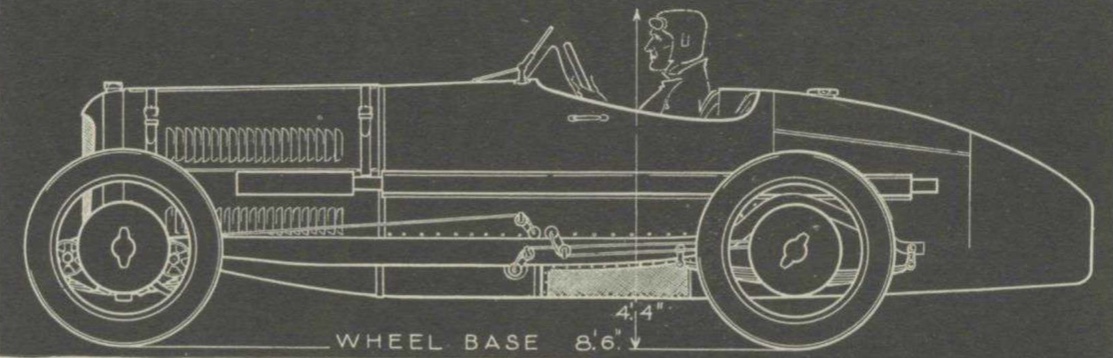
Brian Hatton’s beautiful cutaway rendering of the 1927 Grand Prix Fiat 806…

Fiat’s impact on Grand Prix racing in the twenties was hugely significant, then they departed almost as quickly as they arrived in 1924, reappeared in 1927 with this radical 806, won and then disappeared from GP racing forever inclusive of destroying this jewel of a car, it’s parts and drawings…

One of the greatest of grand marques FIAT (Fiat after 1906) – ‘Fabbrica Italiana di Automobili Torino’ was founded on 11 July 1899, the marque first appears on the race winners lists in 1900 with Felice Nazzaro’s win in the 28 April Torino-Asti race the beginning of many aboard a Fiat 6HP. Vincenzo Lancia won again later that year in the Padua-Vicenza-Bassano-Treviso-Padua event on a simllar car. Other winning marques that year included Panhard, Riker Electric, Peugeot, Benz, Daimler, Mors and Bolide.

Lets have a brief look at Fiat’s contribution in the Edwardian Age of automotive leviathans through to its defining GP cars of the early to mid twenties- the 801, 804 and 805, the circumstances of their sudden withdrawal from racing after the 1924 French GP and the equally surprising re-appearance on the grid at Monza in 1927 only to tease the enthusiasts of the day before ‘bolting out the Monza garage door’ for the very last time but for a few races in the US in 1925.

In 1901 Nazzaro won the Piombino-Grosseto event in the FIAT 12HP Corsa four-cylinder engine car owned by Conte Camillo Della Gherardesca setting a record of 1:49.54 despite the local tram service being maintained whilst the contest took place!
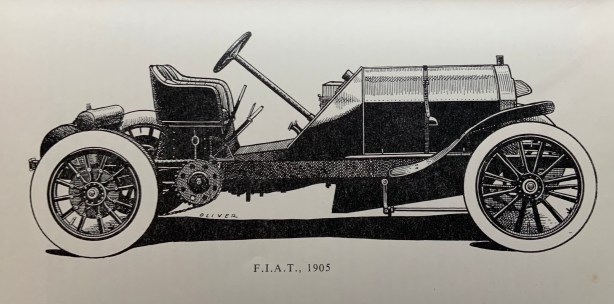
(GA Oliver)

Two races in 1904 fell to Lancia in the 75HP- the Susa-Montecenisio Hillclimb, and the Coppa Florio, by 1905 the FIAT four cylinder machine was of 16.2 litres in capacity.

The 1905 Fiat (above) whilst ‘built in admiration of the Mercedes’ wrote Cecil Clutton, incorporated a major engineering advance by placing both inlet and exhaust valves in a hemispherical cylinder head, the valves, inclined at 45 degrees were operated by pushrods. The 180 x 160mm bore/stroke engine developed 120bhp at no more than 1100rpm.

Fiat won three events in 1907, the second Grand Prix racing season- noting that the 1906 French GP is considered the first grand prix, when Felice Nazzaro won Targa (28/40HP) the Kaiserpreis (‘Taunus’ 8 litre) and the six and three quarters of an hour ACF French GP in the 135hp 16.2 litre car at an average speed of 70.5 miles per hour- very much making him ‘Driver of The Year’.

In 1908 Nazzaro won the Coppa Florio in Bologna and Louis Wagner the American Grand Prize at Savannah, Georgia. Aftrr the abstention of manufacturers from racing in 1909 and 1910, in 1911 Victor Hemery won the French Grand Prix at Le Mans and David Bruce Brown the American Grand Prize- Caleb Bragg won the American race again in 1913 aboard a 10 litre 120hp Fiat S74.
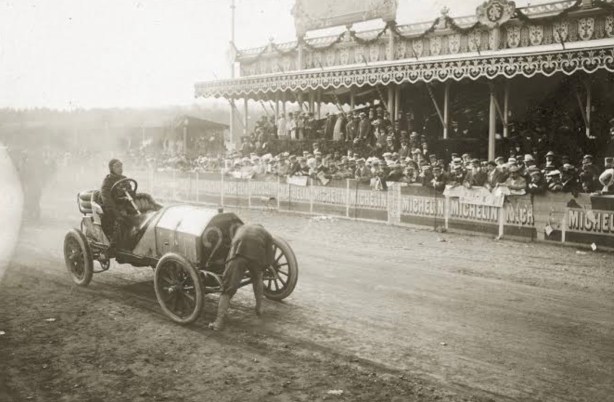
Aldo Weilschott, Fiat 2C starting, DNF accident, French GP 1906. Ferenc Scisz won in a Renault (unattributed)
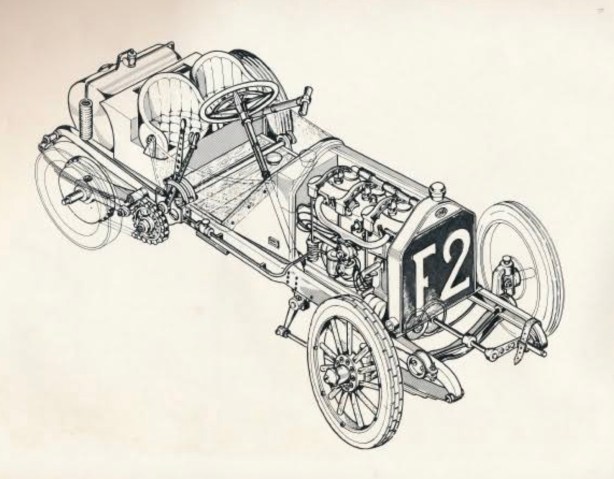
 

1907 Fiat 130HP- Felice Nazzaro’s winning 1907 French GP machine (unattributed)
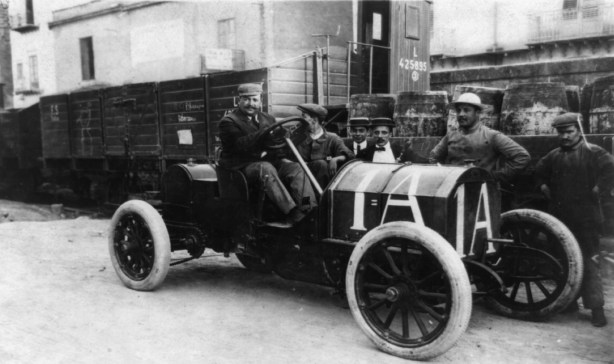
 

Vincenzo Lancia, Fiat 50HP, Targa Florio 1908- 2nd after unnecessarily pitting for tyres whilst in the lead, Vincenzo Trucco won in an Isotta Fraschini (unattributed)

One hundred years ago two races were held in 1919 of stature, the Indianapolis 500 and Targa Florio but the very first post-war race in Europe was a beach sprint at Fano Island on Denmark’s west coast on 24 August- Nando Minoia won aboard a Fiat Tipo S57A, a 4.9 litre SOHC, two valve machine first raced (S57 4.5 litre) in the 1914 French GP.

Europe was devastated by the impacts of The Great War and was slowly starting the process of rebuilding as peace settled. For a while at least.

With remarkable pace, given the circumstances, international motor racing recovered. In 1920 the AIACR, the ‘Association Internationale des Automobile Clubs Reconnus’, the precursor to the FIA, announced a GP formula of 3 litres in capacity and 1.4 litres for Voiturettes. That years events included the Formula Libre Circuito de Mugello and Voiturette GP de’l UMF and Coupe des Voiturettes at Le Mans as well as Indy and Targa.

In 1921 the French and Italian GP’s were run for the first time post-war and won by Jimmy Murphy’s Duesenberg and Jules Goux’ Ballot 3L respectively.

Importantly the 3 litre straight-eight Fiat 801, credited to Carlo Cavalli and Giulio Cesare Cappa was designed and raced that season, the last year of the 3 litre Formula.

There was also a 3 litre four cylinder variant the 801/401, the eight cylinder engine, conceived by Tranquillo Zerbi was designated Tipo 801/402, in most texts the 801 appellation is applied without distinguishing between the different engine/chassis, but in some cases the eight-cylinder machine is named the 802.

The correct designations are the four cylinder Tipo 401 powered Tipo 801 and eight-cylinder Tipo 402 powered 802. ‘Cavalli and Cappa were assisted by Vincenzo Bertarione and Vittorio Jano…as designers’ wrote Robert Dick who makes no mention of Zerbi’s involvement. The risk in these exercises of ‘information assemblage’ like mine, not going back to source documents, is repeating the mistakes/interpretations of others…

Both four and eight cyinder engines were composed of steel cylinders with welded up ports, the cylinders were enclosed by sheet steel jackets. This practice was pioneered by Mercedes and used extensively by Fiat in its wartime aviation engines. The DOHC eight had a bore/stroke of 65 x 112mm, used two large valves at an included angle of 96 degrees per cylinder, ten roller main bearings and roller big ends. The dry-sumped engine produced between 115-120bhp @ 4400-4600rpm.

The machine had a four speed gearbox driving a torque tube rear end. Fiat’s Aviazzione department, under Chief Engineer Rosatelli, was responsible for the cars shape which included time in the wind tunnel, the car was distinctive for its clean underside from front to back and flat-sided, wedge-shaped tapering tail.

The lighter 810 kg Tipo 401 four cylinder car was designed with the Targa Florio and lower speed courses in mind whilst the more potent 920kg Tipo 402 eight was tasked for more open road courses and speedways.

Whilst the cars were not successful upon debut in the September 1921 Italian GP on a 17.3km course at Brescia due to a variety of problems, Bordino set the fastest race lap and led until a puncture and then oil pump failure stopped him, Fiat were emboldened to proceed down the design path they explored with this short-lived, due to the formula change, path.
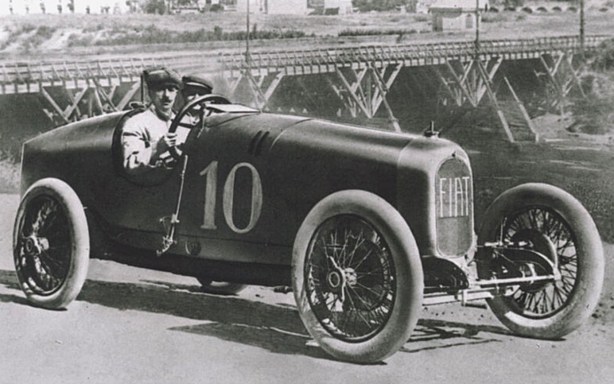
Ugo Sivocci, Fiat 802 3 litre straight-eight, Italian GP, Brescia 1921. DNF after 18 laps engine, Jules Goux won in a Ballot 3L (unattributed)

Lets pause for a moment at look at the array of management and engineering talent before proceeding further with the cars.

Giovanni Agnelli was one of the nine initial investors in Fiat in 1899, a Board Member and was appointed head of the company circa 1906, by which time they had built 1149 cars, the company was publicly listed on the Milan stock exchange in this period.

The combination of automotive and aviation products within the group attracted and allowed assembly of an amazing array of engineering talent, these folks developed a reputation from the start for creativity and innovation, under the Chief of the Technical Office, Guido Fornaca.

Fornaca is often described as Chief Engineer but his talent seems more policy direction of a commercial type with the company technical direction and leadership provided by Carlo Cavalli ‘trained as a lawyer but inclined to engineering’. Extremely versatile he applied himself to the first shaft-drive cars, aero, airship and marine engines, tractors and racing cars. He was appointed as Technical Head of Fiat in 1919 having joined in 1905.

Design engineers included Luigi Bazzi, Walter Becchia, Vincenzo Bertarione, Giulio Cesare Cappa, Alberto Massimino and Tranquillo Zerbi (who replaced Cavalli as technical head upon his retirement due to ill-health in 1928) ‘while in charge of racing car preparation and team administration was Vittorio Jano’.

Within the early twenties all but Cavalli and Zerbi left- Bertarione and Becchia to Sunbeam-Tabot-Darracq, Bazzi and Jano to Alfa Romeo, Cappa left and so too Massimino. The brain drain was not applied exclusively to racing cars- Jano and Bazzi at Ferrari, Massimino to Maserati, Becchia to Lago Talbot and Bertarione to Hotchkiss examples.

It was with this amazingly talented, well led group of men that Fiat designed, built and raced very influential racing cars, the 801/802, 803, 804 and 805 and as a consequence set the trend for racing car design generally in the immediate future and specifically in terms of engine characteristics through until 1951.
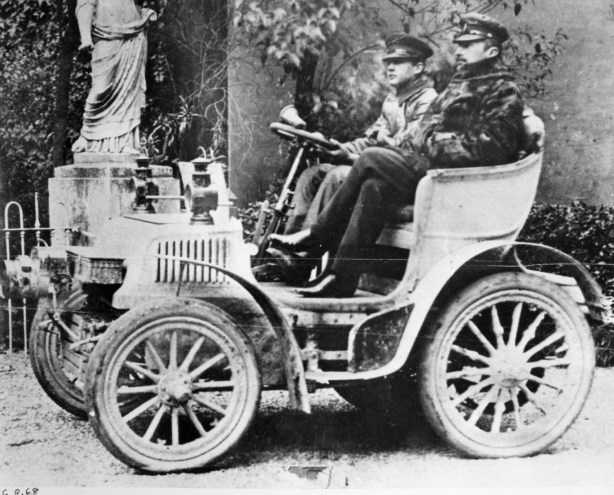
Felice Nazzaro at 19 was both Senator Giovanni Agnelli’s chauffeur and a factory racer- both here in a 1901 Fiat 8 (CSF)
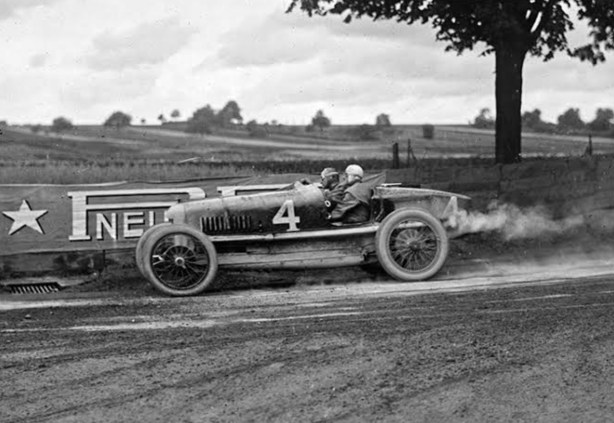
 

Felice Nazzaro on the way to winning the 1922 French GP, Strasbourg aboard a Fiat 804 2 litre six (unattributed)
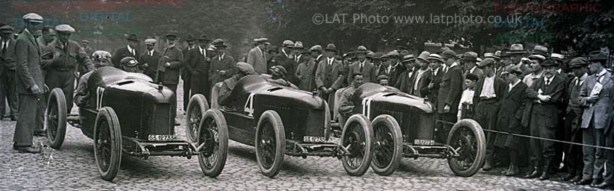
 

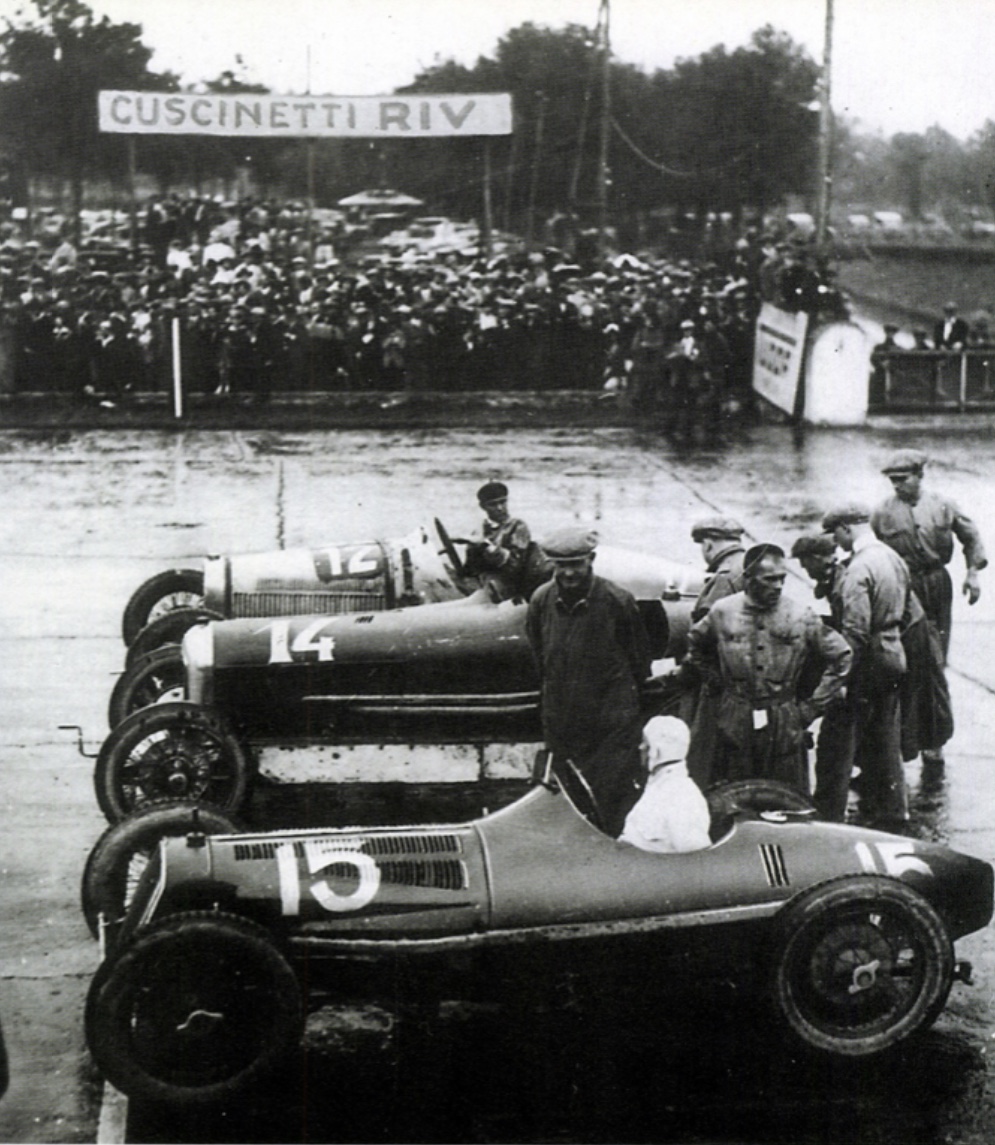
The Fiat 804 lineup in France, 1922- #17 the ill-fated Biagio Nazzaro, #4 Felice Nazzaro and Pietro Bordino
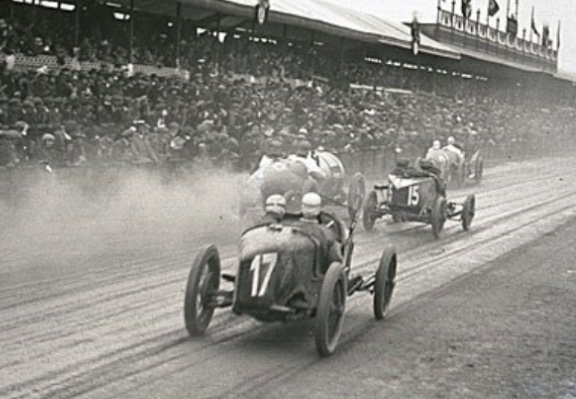
 

Biagio Nazzaro and #15 Louis Zborowski, Aston Martin GP Strasbourg French GP 1922 (LAT)
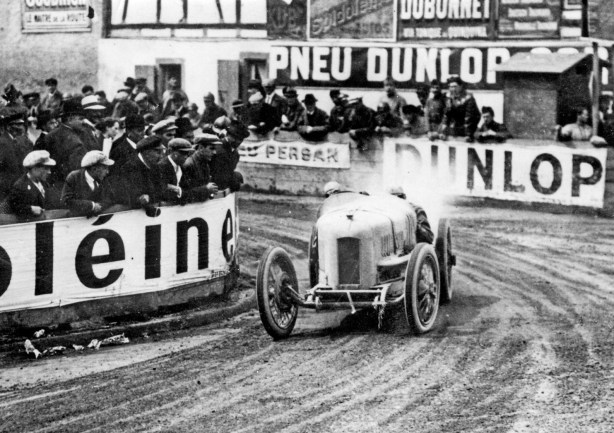
 

Bordino, Strasbourg 1922, Fiat 804 (CSF)

In 1922 the GP formula changed to an engine capacity limit of 2 litres and a weight of no less than 650kg- the Fiat 804, a new six cylinder two valve machine was effectively two cylinders lopped of the end of the 3 litre straight-eight.

Credit for this design is attributed to Cappa, Cavalli, Bertarione and Becchia under the direction of Fornaca with Vittorio Jano in charge of preparation according to Cyril Posthumus.

The general specifications of the engine- timing gears at the back, cylinders built from steel forgings with welded on water jackets, wide angle valves and all roller bearing engine was all familiar to the previous types ‘and the choice of six cylinders seems primarily to have been dictated by convenience and not by belief in the superiority of this number as compared to eight cylinders in a line’ Lawrence Pomeroy wrote.

Fiat retained the 65mm bore of the 3 litre engine and reduced the stroke from 112 to 100mm thereby giving a capacity a smidge under the 2 litre limit. The engines developed about 92bhp @ 4500rpm fed by a single Fiat updraught carburettor set low on the offside, sparks were provided by a Scintilla magneto. Power was transmitted by a multi-disc clutch to a four speed gearbox attached to the engine, for the first time in racing Fiat used an enclosed prop-shaft which transmitted its power to the rear axle fabricated from light steel pressings.

The compact chassis turned inwards at the rear ro follow the lines of the tail, Cappa fixed upon a tubular front axle given the stresses imposed by the cars brakes which were servo assisted aluminium drums. Hartford friction shocks were used.

Fiat’s aviation team again shaped the body, with the mechanics seat sharply staggered back by about 8 inches, Fiat riveted the exhaust collector to the body, thus using siad item to stiffen the latter, the dimensions of the car were very small- wheelbase 250cm, track 120cm, and the weight at 660kg was close to the miniumum required by the regs. Pirelli tyres were specified af 760 x 90 at the front and 765 x 105 at the rear.

‘The Fiat immediately outdated all its contemporaries’ wrote Posthumus putting the impact of the car with precision.

The 804’s won both the blue riband 1922 events- Felice Nazzaro took the French GP at Strasbourg and Pietro Bordino the Italian GP at brand new Monza- the stunning autodromo in the park of the Villa Reale was completed in 110 days between May and August 1922.

Nazzaro’s win at Strasbourg was bitter/sweet in that his nephew Biagio Nazzaro lost his life when his 804 crashed after the failure of a thin gauge pressed metal welded axle flange at the wheel end, losing the wheel causing the promising young driver to crash to his death. Bordino’s car lost a wheel too but he was able to bring the car to a safe halt, Felice’s rear tyres were changed as a precaution, the great driver learned of Biagio’s death after the race.

There were six other GP’s plus Targa and the Tourist Trophy that 1922 season.

Into 1923 there were still just the two Grands Epreuves- this time won by Henry Segrave’s Sunbeam and Carlo Salamano’s Fiat 805- the French and Italian/European GP’s respectively.

Lets focus on Fiat for a moment and the exit of talent to the opposition, it is one of the reasons proffered by observers as the reason Agnelli ‘pulled the pin’ on racing after the 1924 French GP.

Luigi Bazzi had been enticed from Fiat to Alfa by Enzo Ferrari after a difference of opinion with his boss, Fornaca after the 1923 French GP at Tours- the new Fiat 805’s Type 405 supercharged 2 litre (60 x 87.5mm) 130bhp @ 5500 rpm straight-eight engine’s Wittig vane type blower was unscreened which caused the ingestion of roadside detritus and failure. Bazzi, its said, remonstrated with the boss over this.
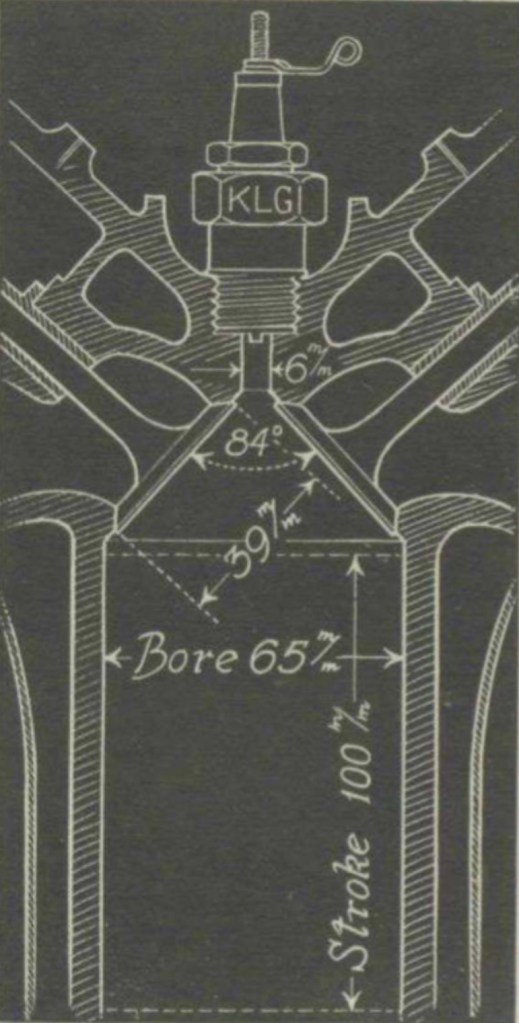
Tipo 404 2 litre six cross section. In similar fashion to Mercedes the cylinders were built up from steel forgings with welded on water jackets (Motorsport)
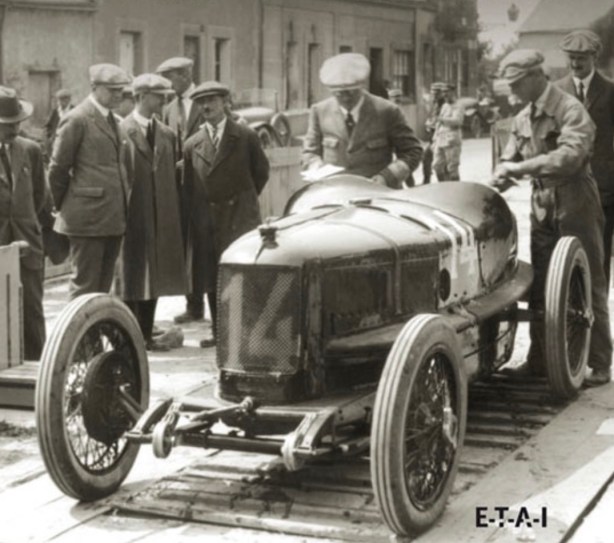
 

Carlo Salamano’s 805 straight-eight s/c, Tours 1923 DNF engine (Fiat en GP)
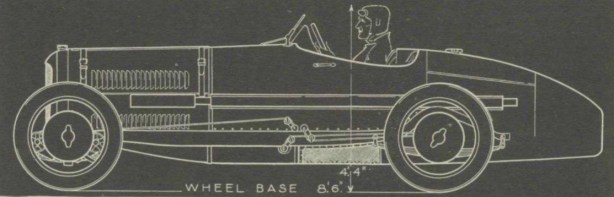
 

1923 Sunbeam GP 2 litre straight-eight Fiat clone (Motorsport)

Fiat’s 1923 Tipo 805 was of course derivative of the cars which went before.

The block was still composed of steel cylinders grouped in two blocks of four with a bore/stroke of 60 x 87.5mm. The two piece crank ran in nine roller bearings with the diameter of the crank pins and main journals increased from 40 to 44mm from Tipo 404 to 405, reflective of the increased stresses of the supercharged motor. The conrods were of chrome nickel steel shortened to 165mm.

The big advance in the design was incorporation of a Wittig vane type blower which was mounted to the nose of the crank running at engine speed and blew compressed air into a single Memini carb- the beautiful motor produced 135bhp @ 5500rpm and was surprisingly lighter than the Tipo 404 six- 170kg for the oldie and 170kg for the 1923 motor.

At 262cm the wheelbase was a bit longer than the 804 whereas the track was the same at 120cm, the total weight was 700kg versus the 660kg of the 1922 car.

The 2 July French GP was on a triangular course near Tours- 35 laps of a 23km for a total of 799km, Fiat entered three 805’s for Bordino, Salamano and Enrico Giaccone with riding mechanics Bruno, Ferretti and Carignano. Pietro had his eye in having done a few laps in a 2 litre 804- the new cars rumbled in by truck via the Alps and arrived on 20 June.

Bordino did the quickest practice lap of 9 min 56 seconds and romped into the lead at the start and after 5 laps was ahead of Kenelm Lee Guinness Sunbeam ‘Green Fiat’…

Sunbeam boss Louis Coatalen had dispensed with the services of Ernest Henry given the lack of speed of his 2 litre four-cylinder car the year before and employed Vincenzo Bertarione (Bertarione was happy to join the company after his request for a pay rise was denied, he brought with him Walter Cecchia for good measure) for whom he designed and built a ‘Fiat clone’.

Working in both Wolverhampton and Suresnes the pair designed and built a car which was almost identical to the 1922 Fiat 804 except that 2mm was added to the bore and 6mm taken from the stroke. The exhaust valve was made larger than the inlets, the valve angle reduced from the Tipo 404’s 102 degrees to 96 and the gearbox had three rather than four speeds but the car was ‘very Fiat like’ the single Solex carbed engine developed circa 108bhp @ 5000rpm.
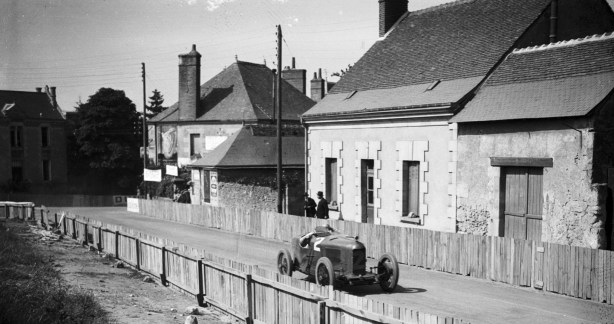
Kenelm Lee Guinness, Sunbeam GP 2 litre straight-eight, 1923 French GP, Tours (unattributed)
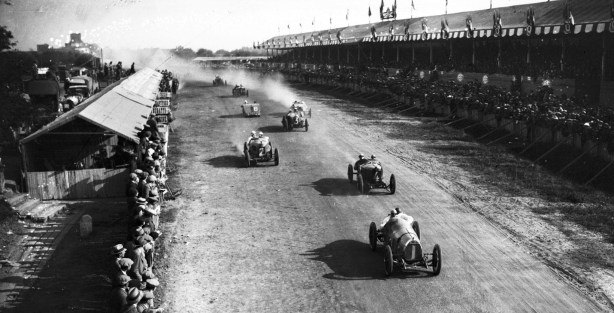
 

Rene Thomas, Delage 2LCV leads Bordino, Fiat 805 from pole, then #2 Kenelm Lee Guiness Sunbeam #3 Albert Guyot Rolland-Pilain and the #6 Ernest Friderich Bugatti T32 ‘Tank’, Tours French GP 1923 (unattributed)
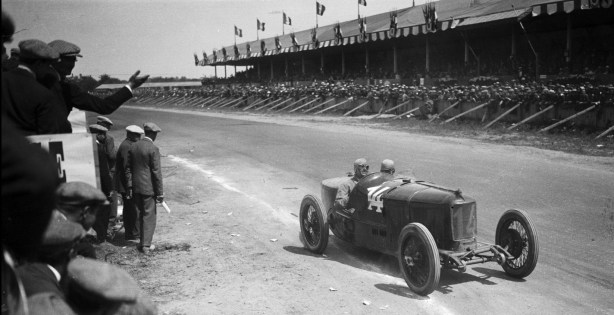
 

Salamano sets off from the pits, 805, DNF engine (unattributed)

Back to Tours- The road surface broke up though, and as a consequence on lap 8 a stone wrecked the crankcase of Pietro’s Fiat, when KLG pitted Giaccone and Salamano took first and second.

Giaccone pitted on lap 17 for fuel, plugs and tyres- he stopped again for attention to the Memini carburettor but the 805 refused to start and was retired with a broken exhaust valve.

On lap 33 Salamano ground to a halt one kilometre from the pits, mechanic Ferretti ran to the pits for fuel but the 805 did not restart- Henry Segrave and Albert Divo were first and second for Sunbeam- or Fiat depending upon your perspective of design parentage…

Lets focus the exit of talent from Fiat to the opposition for a bit, it is one of the reasons proffered by observers as the catalyst for Agnelli ‘pulling the pin’ on racing after the 1924 French GP.

Its said that Luigi Bazzi was enticed from Fiat to Alfa Romeo by Enzo Ferrari after a difference of opinion between Luigi and his boss, Guido Fornaca at the conclusion of the 1923 French GP at Tours- the new Fiat engine’s Wittig vane type blower was unscreened which caused the ingestion of roadside detritus and failure. Bazzi, its said, remonstrated with the boss over this.

At Monza, the Italian Grand Prix was held on 9 September, the Wittig blowers had been replaced by Roots type instruments, the engine now gave about 146bhp @ 5500rpm.

The cars again showed their true speed and on this occasion, their endurance- Bordino led to half distance, a somewhat herculean effort as he broke his arm in practice and drove the race single-handed with the mechanic changing gear. It was a huge mind management tour de force as the crash that broke his arm the day before killed his riding mechanic, Giaccone.

Bordino was forced to retire by virtue of exhaustion whereupon Carlo Salamano took the lead and won at a speed of 91.6mph from Nazzaro and an unblown Miller driven by Jimmy Murphy third.

Pomeroy wrote that ‘it was the first race won by a supercharged car, and since that time (he was writing in November 1942) only one International GP has been won by an un-supercharged type, except on occasions when supercharging has been proscribed by the regulations.’

After the Fiat 805’s success at the 1923 Italian GP at Monza ‘In all significant respects Fiat had fixed the type of racing car for the next ten years: and not least important of their contribution was the use of the supercharger…and thereafter supercharged cars were exclusively successful in Grands Prix of major standing’ Leonard Setright wrote.

Most of you will recall Froilan Gonzalez’ victory in the 1951 British Grand Prix at Silverstone when the normally aspirated 4.5 litre Ferrari 375 triumphed over the hitherto dominant Alfa Romeo Alfetta 159, the latest in a long line of supercharged GP winners begat by the 1923 Fiat 805.
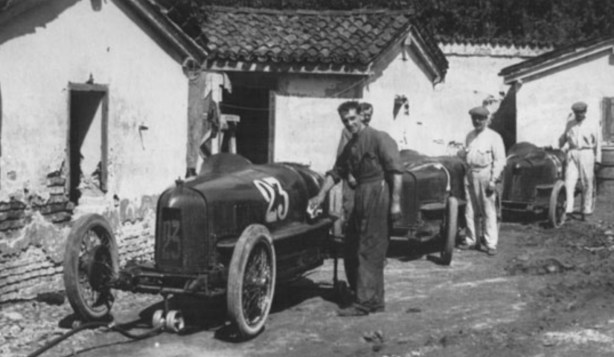
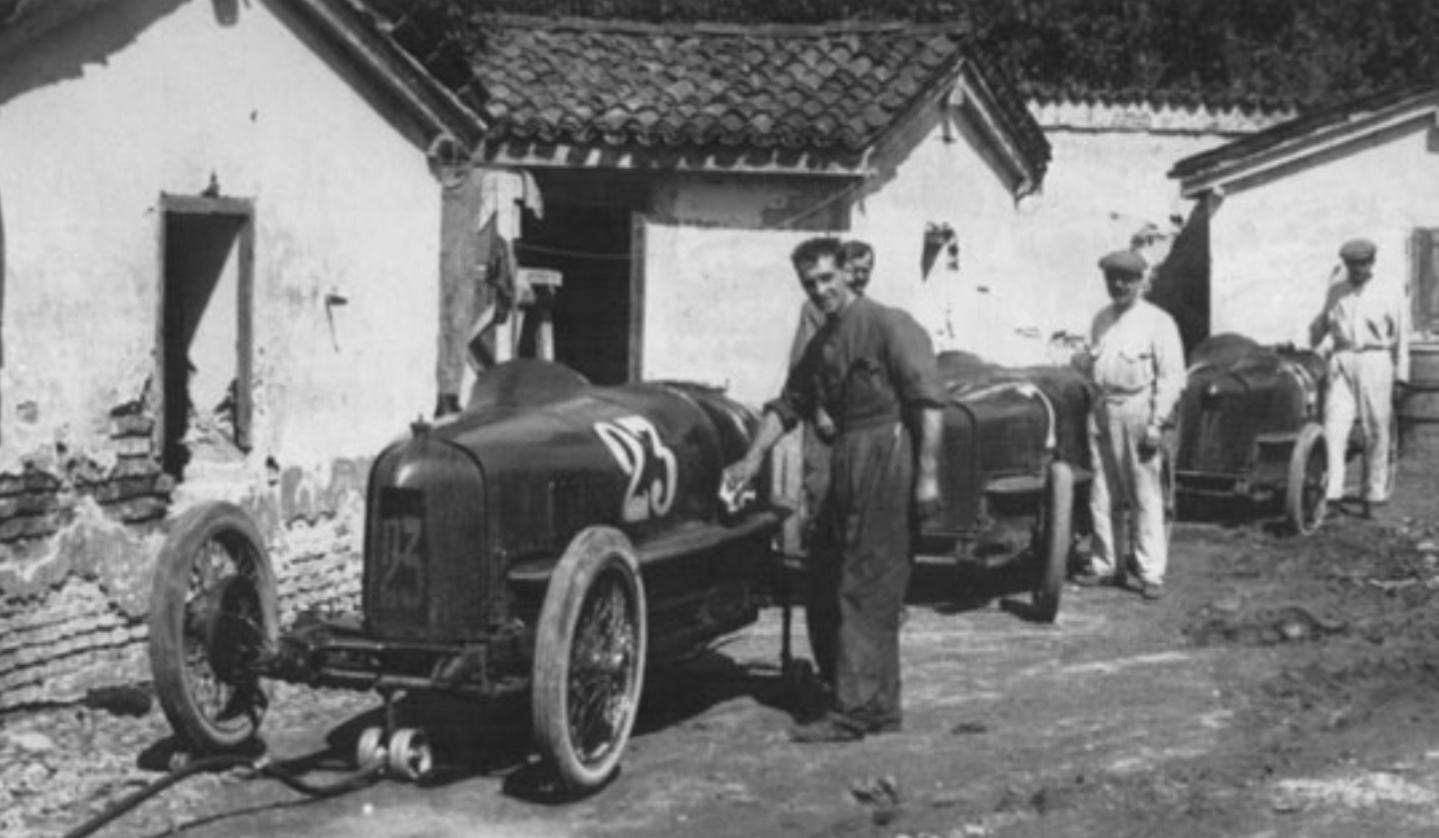
1922 Gran Premio Vetturette, Monza, three of the four Fiat 803’s in shot- #23 is Carlo Salamano’s. Engine Tipo 403 1.5-four normally aspirated (supercharged in 1923)  (unattributed)

In fact whilst the 805 usually gets the twin accolades of first win by a supercharged car and first Grand Prix win so equipped, in more recent times those records are accorded the Fiat 803.

This car, powered by a normally aspirated 1.5 litre engine won the 375 mile Italian Small Car race at Monza in late 1922. In 1923, by then powered by a Tipo 403 1.5 litre, DOHC, Wittig-blown four cylinder engine an 803 won the 29 June 1923 Voiturette Grand Prix at Brescia, Alessandro Cagno was the driver.

As a consequence we now say the 803 was the first car to win an event supercharged, and the first to win a Grand Prix so powered, both achievements took place at Brescia on 29 June with Cagno the driver.

The first supercharged car to win a Grand Epreuve was the Fiat 805 raced by Carlo Salamano at Monza on 9 September 1923.

Rather than get sidetracked now, more details on the little 803 are provided in the ‘Etcetera’ section towards this pieces end.

The other significant achievement by Fiat and its band of designers, engineers, mechanics and drivers between 1921 to 1923 was to ‘institutionalise’ the DOHC, two-valve, supercharged engine approach as orthodoxy for a good many years.

Ernest Henry’s DOHC, four valve mantra was established in the 1912 and 1913 Peugeot’s as most of you well know- here, only a decade later it was challenged and turned over in part.

The twin-overhead cam bit survived with the four valve layout de rigour from the time Cosworth Engineering adopted it in the Ford Cosworth DFV- and the FVA four which appeared a little earlier. Coventry Climax and Ferrari experimented towards the end of the 1.5 litre formula in their mid-sixties V8 and flat-twelve but the path was far from clear ‘BC’- ‘Before Cosworth’.
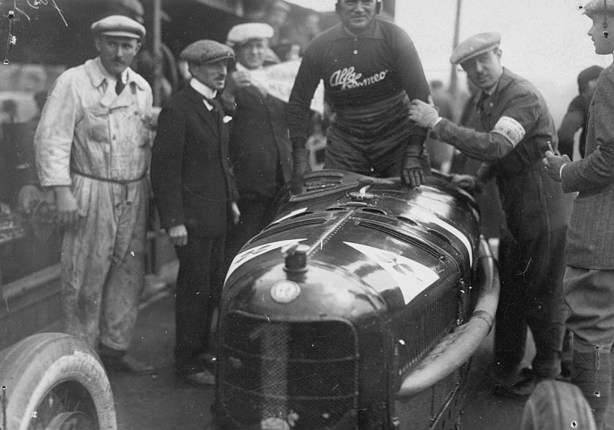
Jano, Antonio Ascari, Alfa Corse team and Alfa Romeo P2 2 litre straight-eight s/c at Monza during his winning 1924 Italian GP weekend (unattributed)
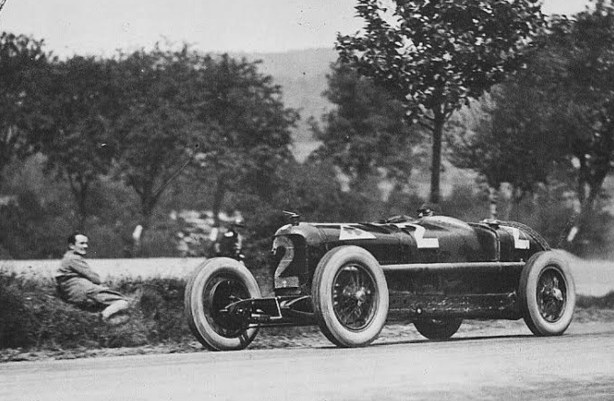
 

Ascari on the way to winning the 1925 Belgian GP at Spa, Alfa Romeo P2 (unattributed)

The Fiat 805 raced on into 1924, revised to give 145bhp @ 5500rpm, so too did the Green Fiat Sunbeam, now supercharged to give circa 138bhp but both cars had a rival from Portello.

The Alfa Romeo P2 design, construction and development was supervised by Vittorio Jano, another Fiat departee whose exit to Alfa Romeo was advised by Bazzi and implemented by Enzo Ferrari.

Its supercharged straight-eight was assembled in blocks of two rather than the four of the Fiat to avoid thermal distortion. Bore/stroke was 61 x 85mm, it had a two piece crank which ran in ten bronze caged roller bearings and big ends in two piece rollers. The twin-cams were driven by a train of spur gears off the back of the engine, each camshaft ran in ten roller bearings and operated two 35.5mm valves per cylinder which were inclined at 52 degrees to the cylinder axis.

Jano brought all of his Fiat experience to bare but there was plenty of refinement, one example was the use of three concentric valve springs, a weak pint in the Fiat which could not exceed 5500rpm and used to break a lot of them in races of 800km. The Alfa sprngs were higher and of larger section wire resulting in lighter spring loading- and a rev limit of 6500rpm.

Fed by a single Memini carb it produced 134bhp @ 5200rpm when it first appeared at Monza on 4 June, and won, at Cremona, driven by Antonio Ascari partnered by Luigi Bazzi on 9 June 1924. The P2 power output was less than the Tipo 805 eight Jano left behind but of course rather more would come from it and whole families of engines by Jano’s hand at Alfa…
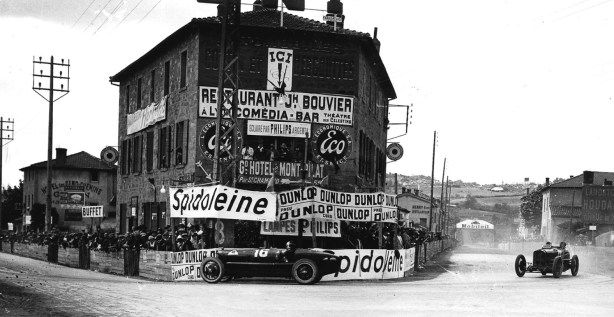
Alfa Romeo P2- Louis Wagners 4th placed car from the #14 Dario Resta Sunbeam ‘flagged off’ in 10th France 1924 (LAT)
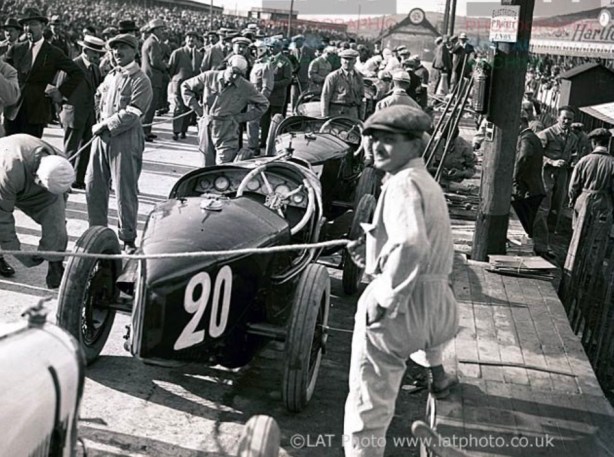
 

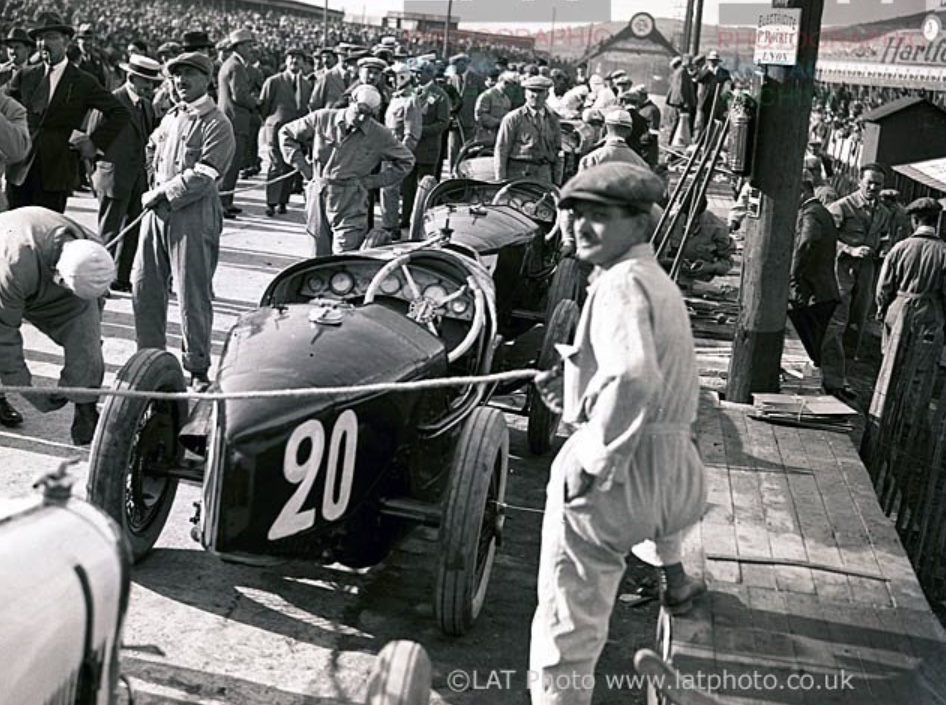
Lyon prior to the start of the 1924 French GP. Cesare Pastore Fiat 805 first in the team line up
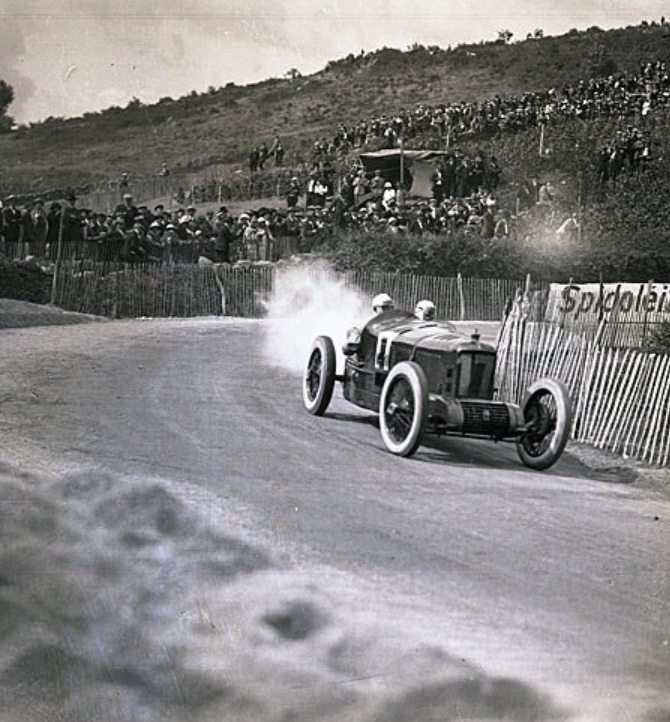
 

Onesino Marchieso, Fiat 805 2 litre S8 s/c (LAT)
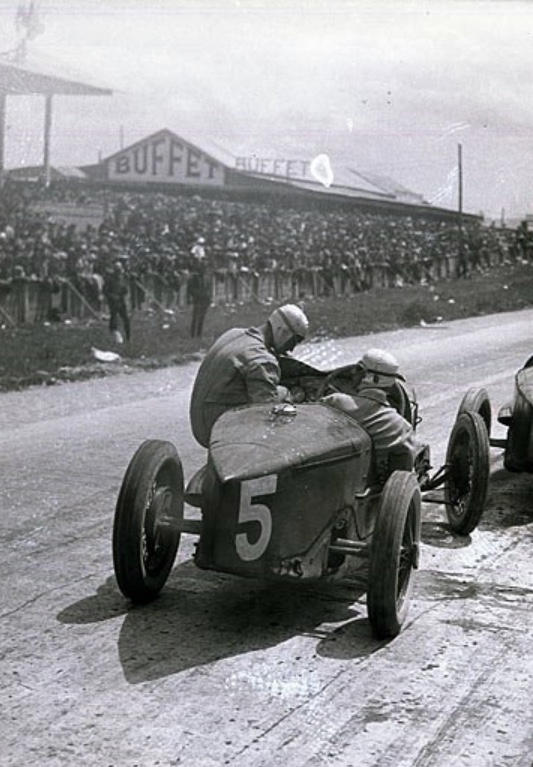
 

Back into the fray, Felice Nazzaro, Fiat 805, it paid for the driver and mechanic to be at the compact end of the human sprectrum (LAT)
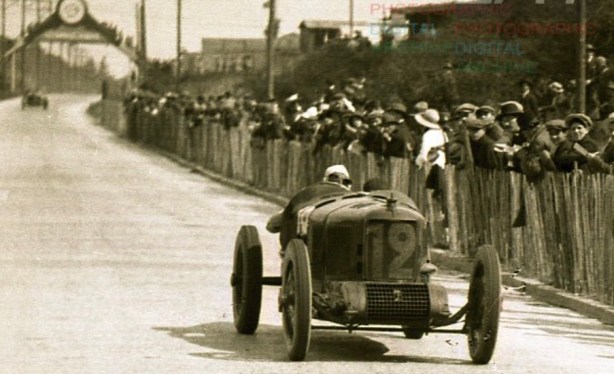
 

Pietro Bordino, Fiat 805, DNF brakes (LAT)
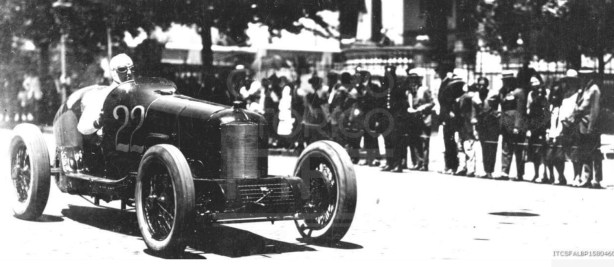
 

Bordino in the US in 1925, Fiat 805, where though folks? (unattributed)

Bordino crashed his 805 in practice at Lyon for the French Grand Prix, the car was trucked back to Turin for repair.

Four Fiat’s started the 3 August race crewed by Nazzaro/Carignano, Bodino/Bruno, Pastore/Mauro and Marchisio/Lorenzo.

Bordino led between laps 4 and 10 before being forced out with failing brakes, Nazzaro had the same affliction, he too withdrew. Onesimo Marchisio suffered engine trouble and Cesare Pastore left the road to end a miserable Fiat weekend.

Worse was that the Jano penned P2 driven by Giuseppe Campari won, ex-Fiat engineer Bertarione’s ‘Green Fiat’ Sunbeam GP was the quicker car but had problems with its Bosch magneto.

Alfa Romeo won again at Monza, on this occasion Alberto Ascari drove the winning P2.

The number of events in Europe started to ‘explode’ with seventeen Grand Epreuves and Grands’ Prix in addition to Targa- that year, coincidentally, Enzo Ferrari won three of these events at Savio, Ravenna and Polesine, Rovigo in an Alfa RLSS and the Coppa Acerbo, Pescara in an RLTF.

The racing history of the Fiat 805’s finished in the United States.

One chassis was rebodied as a monoposto, Bordino contested a 250 miler at Culver City in December 1924 starting from pole, and again in March 1925 for sixth, another race of the same distance at Charlotte in May for DNF rear axle and the Indy 500 in which he was tenth, the winning car was Peter DePaulo’s Duesenberg.

Alfa Romeo forged ahead for in the coming years whilst Fiat withdrew from motor racing as the company focused its energies in the air rather than on the road.

Lets have a brief look at that without getting completely side-tracked.
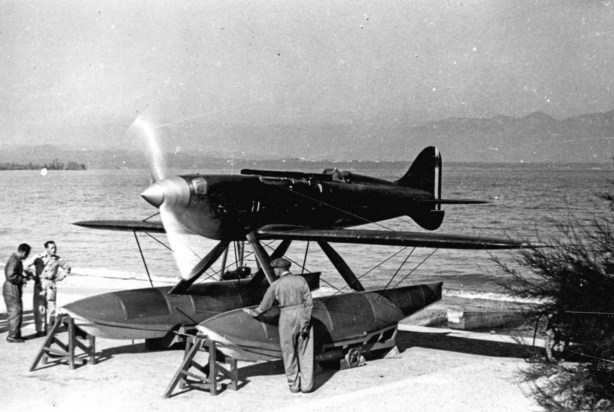
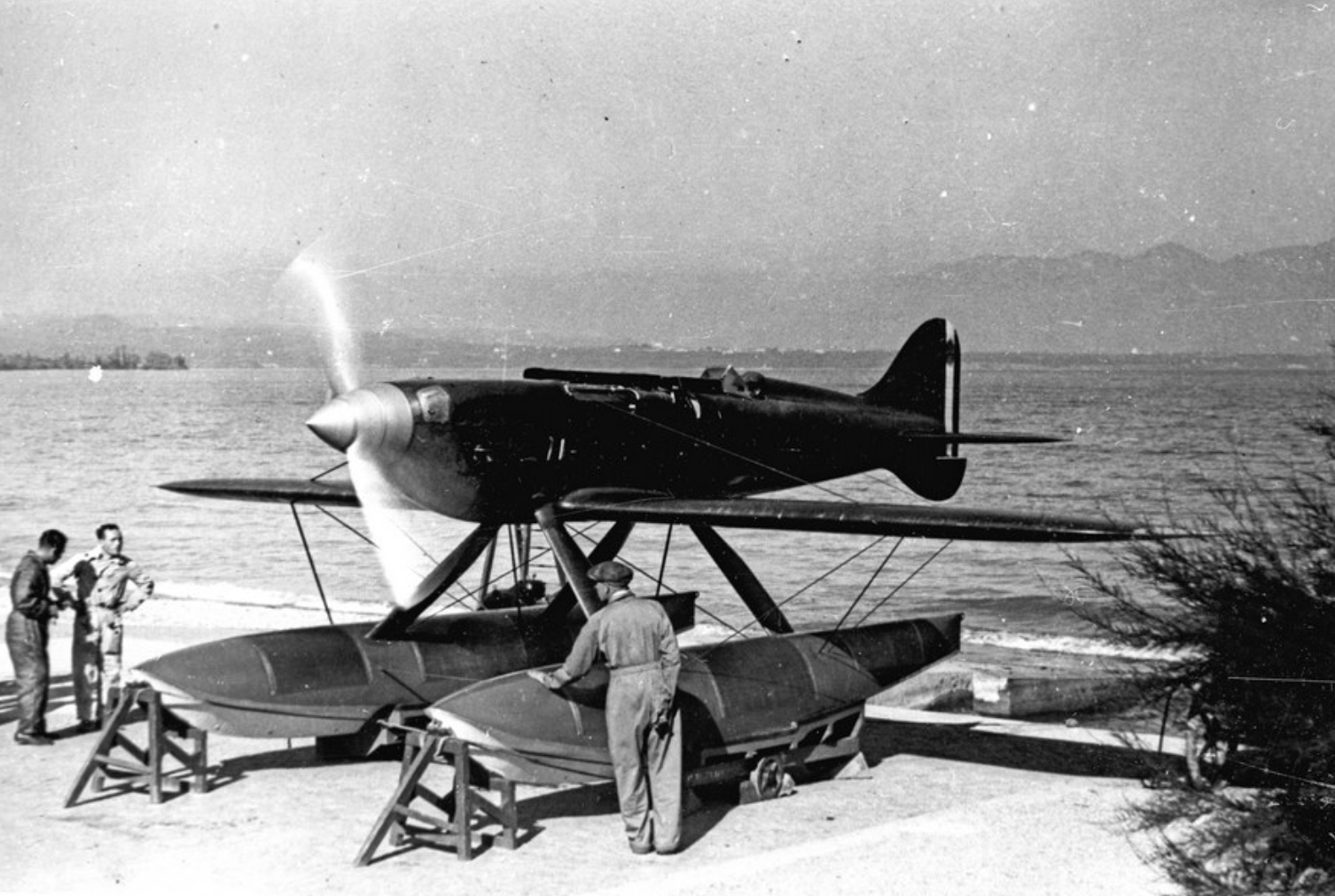
Macchi Castoldi M.C.72, the worlds fastest piston-powered seaplane in 1931 at Lake Garda. Powered by two of Zerbi’s Fiat AS-6 V12’s coupled in tandem. The engines were connected by double reduction gears and concentric shafts to two contrarotating duralumin propellers. These were good for 2800hp or 3100 in short bursts (unattributed)

Bill Boddy sheets home the blame for Fiat’s motor racing withdrawal at Benito Mussolini’s door. He saw the promotional value of racing, like Hitler, but also wanted victory in the Schneider Cup, contested by the fastest float-planes on the planet.

Engineer Tarquilo Zerbi was therefore tasked to develop winning aero engines rather than Fiat’s next GP contender.

In 1920 and 1921 in Venice the Italian Macchi’s won the cup albeit in 1920 no other nation entered and in 1921 they finished first to third noting that the French entry did not start.

In 1926 at Hampton Roads, in the US, Major de Barnardi’s Mario Castoldi designed Macchi M39 won- the low wing monoplane was powered by Tranquillo Zerbi’s 882 horsepower Fiat A.S.2 liquid-cooled V12, he  took first place with an average speed of 246.497mph despite having to climb to 600 feet to cool his overheating engine.

It’s said that soon after crossing the line the exultant pilot sent a telegram to Mussolini announcing ‘Your orders to win at all costs have been carried out’.

Two days later de Bernardi used another of the aircraft to achieve a new world speed record of 258.497mph over a 3km course at Hampton Downs.

It wasn’t so flash for ones favourite, short, well dressed Italian Fascist after that however.
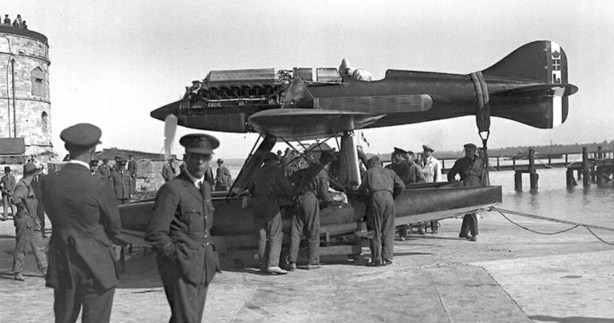
Macchi M52 in Venice, Schneider Cup 1927. Powered by Fiat high compression AS3 1000hp V24 engine’s (unattributed)

In the 1927 Venice event all three Macchi’s retired, British Flt Lt Webster won in a Supermarine S5 Napier Lion, in 1929 the contest, bi-annual by then went to a Supermarine S6 Rolls Royce R-type, Flt Officer Waghorn was the pilot at Calshott- the Macchi by then was powered by a 1000hp Fiat AS-3 engine.

Worthy of mention, to say the least, is the 1931 Macchi Castoldi M.C.72, the worlds fastest piston-engined seaplane.

It was powered by two of Zerbi’s Fiat AS-6 supercharged V12’s coupled in tandem resulting in a 50 litre 24 cylinder engine. The two motors, mounted back to back were connected by double reduction gears and concentric shafts to two contrarotating duralumin propellors. These were good for 2800hp or 3100hp in short bursts. The plane took the Air Speed Record in 1934 at 440.681mph.

Five aircraft were to be built for the 1931 Schneider, three were completed but the first crashed, killing the pilot, Giovanni Monti. The Italians petitioned for the race to be postponed but the British refused, effectively eliminating both Italy and France- whose entry was not ready either.
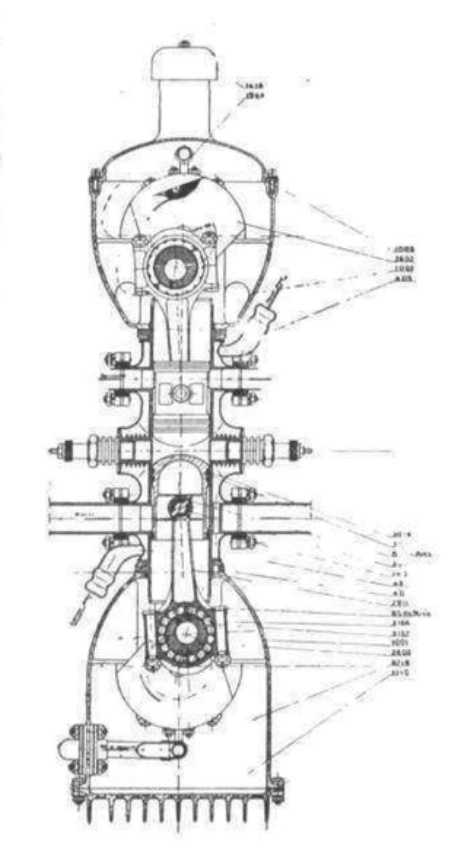
 

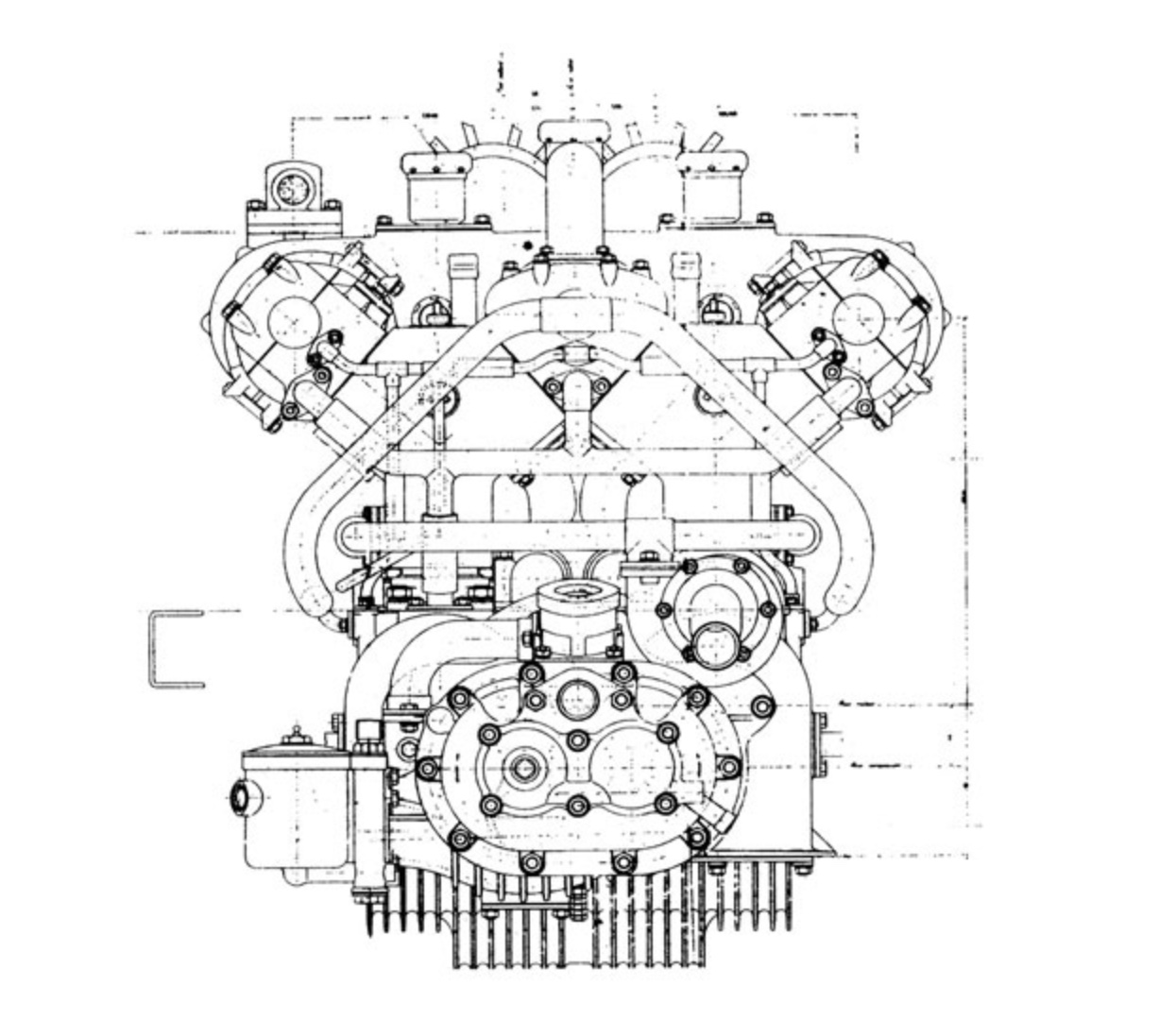
Sectional view of the opposed piston two-stroke Fiat Tipo 451 engine, ‘scrappy’ but still worth including

Meanwhile, back in Grand Prix racing…

In 1925 Alfa Romeo’s P2 was the dominant GP car taking wins at Spa and Monza in the hands of Antonio Ascari and Gastone Brilli-Peri- the other non-Indy Grand Epreuvewas won by a Delage 2LCV shared by Robert Benoist and Albert Divo at Montlhery.

At the seasons end, having won the World Championship, Alfa Corse withdrew from racing leaving the way clear for Bugatti’s T39 2 litre straight-eight in 1926.

Jules Goux won at Miramas, France, and Lasarte San Sebastian/European GP with Louis Chauvel the winner at Monza- all races won by Bugatti T39’s. The exception was the British GP at Brooklands which was taken by a Delage 15 S8 shared by Robert Senechal and Louis Wagner. Bugatti won the World Manufacturers Championship.

Meanwhile back in Turin, amongst his aviation work Tranquilo Zerbi amused himself with two racing car projects for the 1926-1927 1.5 litre GP formula.

The first, the Tipo 451, designed by Zerbi with the assistance of Giuseppe Sola and Scipone Treves was a two-stroke opposed piston six (52 x 58.5mm bore/stroke) with geared crankshafts.

Roots provided the blower, whilst extensively bench tested to around 152bhp the engines consumption of fuel was matched only by its appetite for pistons. The metallurgy of the time simply could not cope with the enormous heat produced on the exhaust side so the motor never found its way into a car.

His ‘more conservative’ four-stroke offering did, however.


Pietro Bordino and riding mechanic during the 1922 French GP meeting, Fiat 804 2 litre six (unattributed)

Fiat’s return to elite level racing was as impactful as its designs had been several years before and was perhaps born of Agnelli’s simple desire to redress the balance- assert just who was the most innovative, successful motor car manufacturer of the day.

The engineers were tasked to lead the project and came up with revolutionary approaches in terms of chassis, engine and riding mechanic- or rather lack thereof.

Riding mechanics were banned in Grand Prix racing from the start of 1925, in 1927 two seat cars still required two seats but single-seaters were allowed provided the seat was at least 80cm wide and 25cm high- the Fiat engineers very much minimised and optimised the space.

The thinking extended to the chassis in that the team decided to broaden the distance between the two longitudinal members to allow the engine to be mounted lower by placing the engine in the middle of the lumps of steel rather than on top of them- the car was noticeably lower and narrower than its rivals. The steering wheel was flattened top and bottom to provide the driver with the requisite space to control the machine.

The Type 806 frame had a wheelbase of 240cm and a track of 130cm, the front semi-elliptic springs slid between rollers rather than shackles at their outer ends.
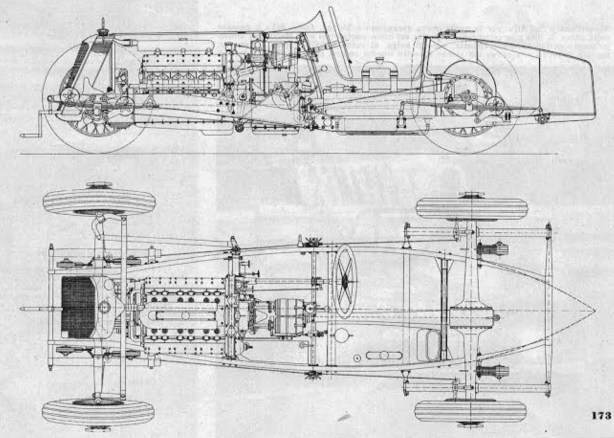
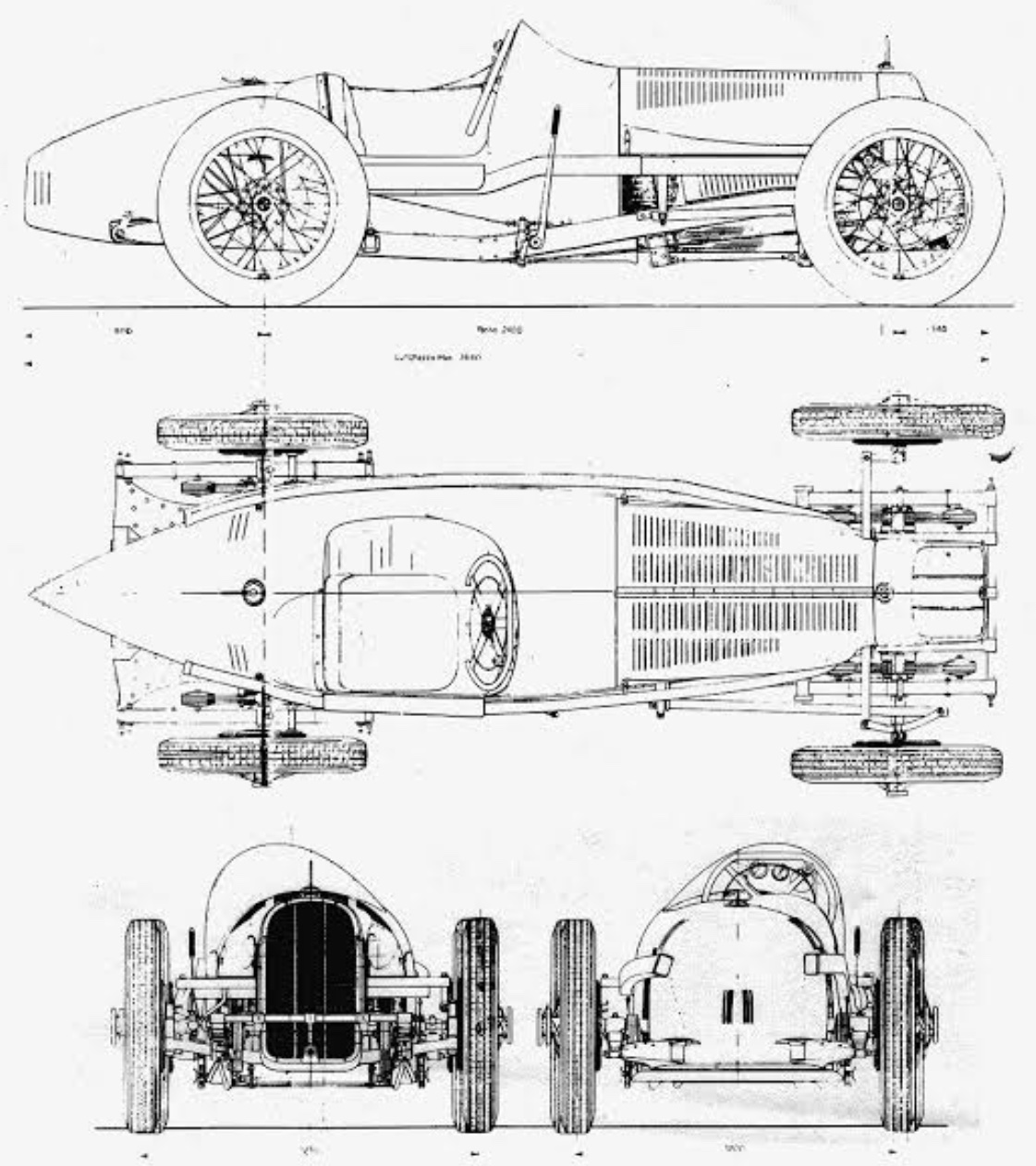
Fiat 806 cutaway drawing (bitmodeller.com)
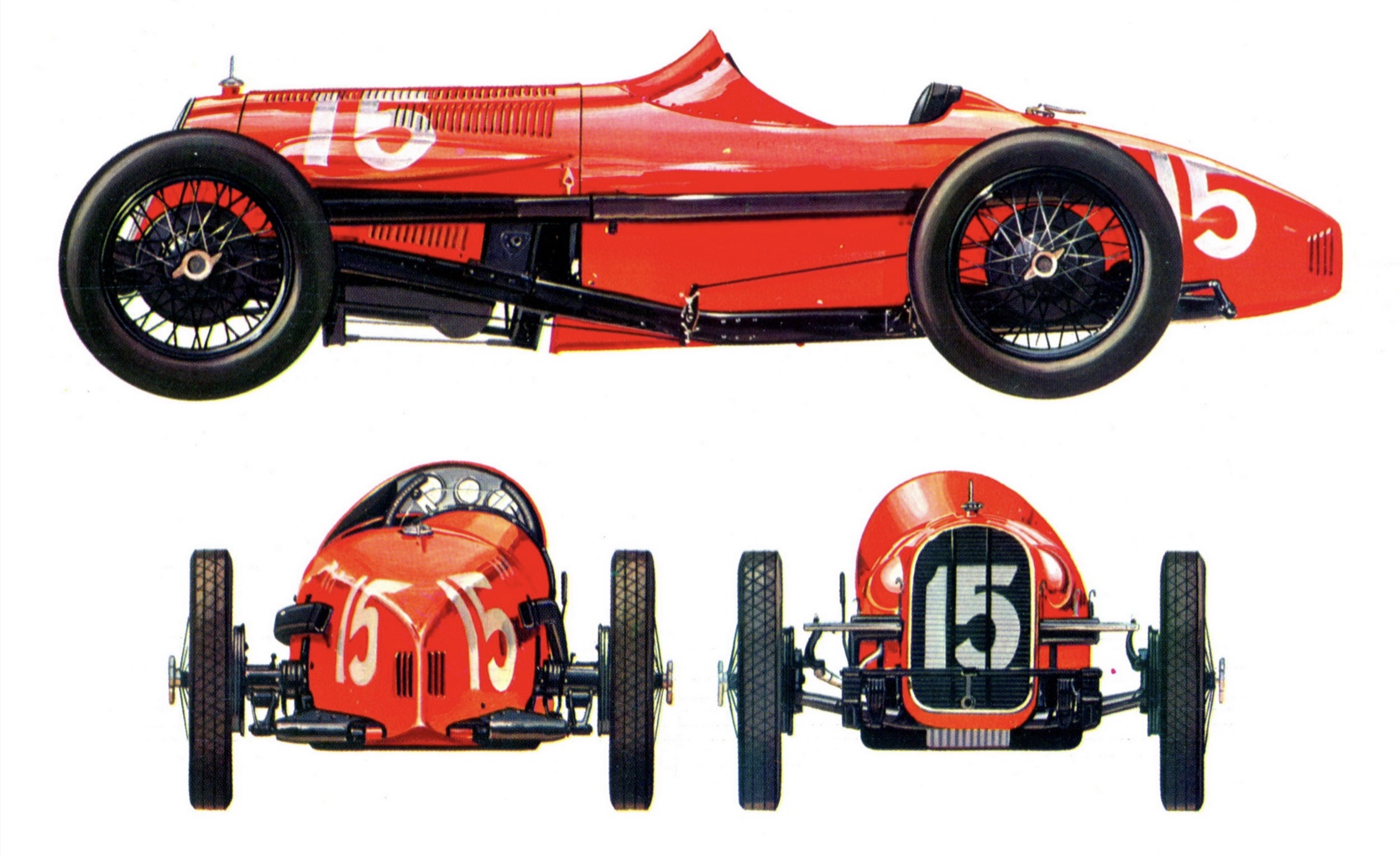
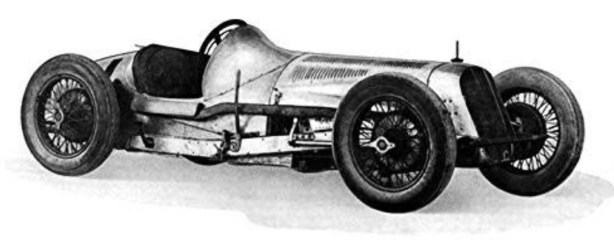


(unattributed)

Zerbi’s Tipo Fiat 406 engine was one of extraordinary extravagance of expression and innovation.

An amazing piece of engineering, it was a twelve-cylinder unit comprised of two inline-sixes mounted side by side on a common crankcase with the cranks geared together. The banks of exhaust valves were placed on the outer flanks of the cylinder heads whilst the inlets were adjacent and operable by a single camshaft with twelve lobes.

The cranks were built up using ‘Hirth principles of crankpins mating with webs by radial serrationsand locked together by throughbolts’ LJKS wrote. Their were eight main-bearings of plain journal type- a departure for Fiat who had hitherto used rollers, a tradition they established. Connecting rods were one-piece with plain bearings, three camshafts and a single Roots blower. All up weight of the engine was 170kg to which was attached a four speed gearbox.

The quest was piston area- the bore was 50mm and stroke 63mm, at the time this was a lower bore/stroke ratio than only the Bugatti T39. Fiat achieved fitting larger valves into smaller cylinders.
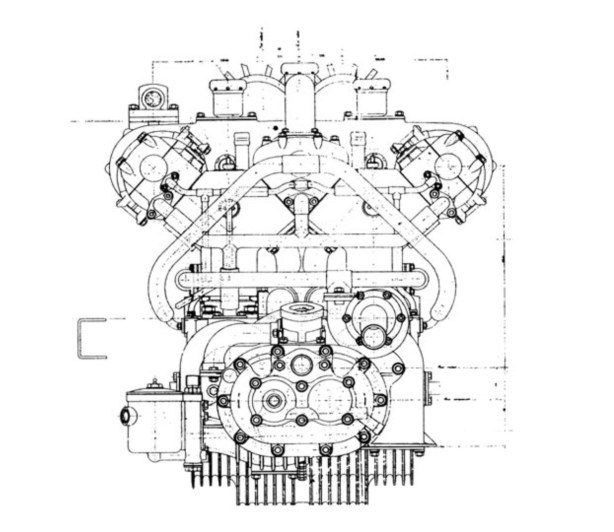
(unattributed)
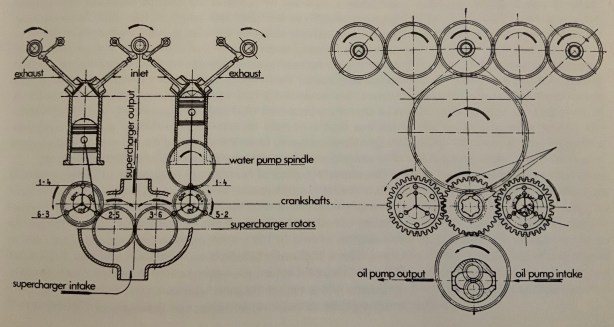
 

(Setright)

Whilst Setright asserts the ‘Type 406 engine could run happily run at 8000 rev/min’ at which it gave about 175bhp (187bhp @8500), it seems that state of happiness was not for prolonged periods as testing by Bordino at Monza in the summer of 1927 showed.

Mind you, the car was fast- reportedly four seconds a lap quicker at Monza than the 1925 lap record held by Peter Kreis. Boddy wrote that development work on aero engines impeded progress on the new GP car too so the thing clearly had huge potential.

The low, slender monoposto weighed 700kg dry and was, on paper, the most powerful and fastest car built to the 1.5 litre formula.

In the meantime the 1927 season was well underway with the Delage 15 S-8 proving very competitive with an early win in the GP de l’Ouverture at Monthlery in mid-March and then a championship win at the same circuit in early July.

At the end of the month he won again, this time at Lasarte near San Sebastian, the site of the Spanish GP which that year was one of five Grand Epreuves.

As the European GP at Monza drew closer, Hans Etzrodt wrote that Fiat suddenly withdrew their entry from the race, despite assuring the organisers they would compete if the event were postponed from 4 to 18 September.

The reason given for their withdrawal was supposed tyre problems but it was assumed the new Fiats were not yet ready- that is they were not sufficiently developed to complete a GP of 500km in distance.

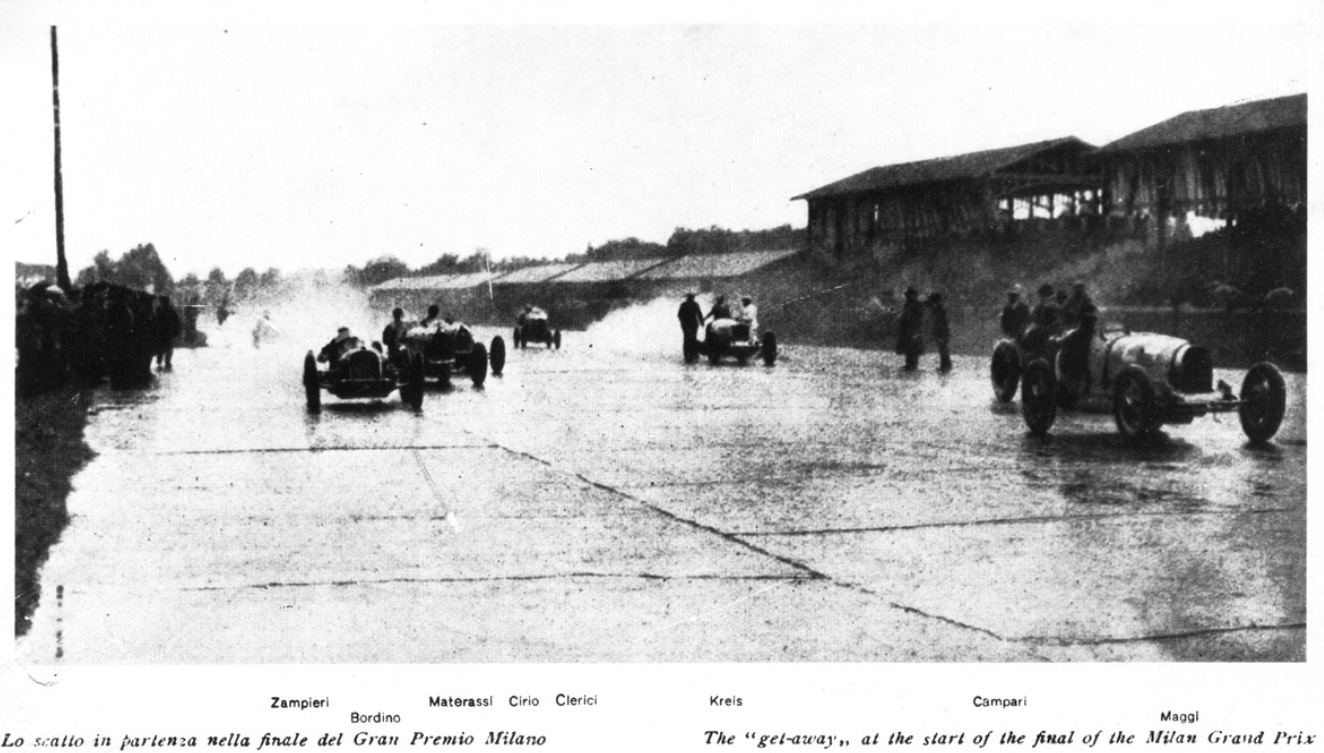
As a consequence of Fiat’s concern about the experimental engine’s life- in fact it is said Agnelli himself intervened, whilst the ‘big boys’ contested the 500km European Grand Prix (also the Italian GP) at Monza on 4 September Bordino raced in the 50km Milan GP support event winning his rain soaked heat at 92.88mph and a similarly sodden final at 94.57mph from Giuseppe Campari’s aged 2 litre Alfa Romeo P2.

The victory was not without pain as an engine failed in practice requiring an ‘all nighter’ to have the sole 806 chassis race-ready.

The feature race, poorly supported with only six starters, was won again by Robert Benoist’s Delage 15 1.5 S8, from Giuseppe Morandi, OM 8C GP 1.5 S8 and the Cooper-Miller Special 1.5 S8 shared by Earl Cooper and Peter Kreis.

The Manufacturers World Championship was effectively decided after this race in favour of Delage as neither Miller or Duesenberg could best their points advantage by winning the remaining championship event, the British GP on 1 October.
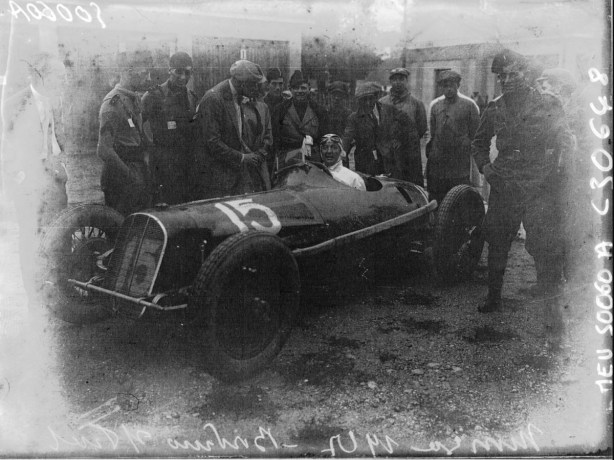
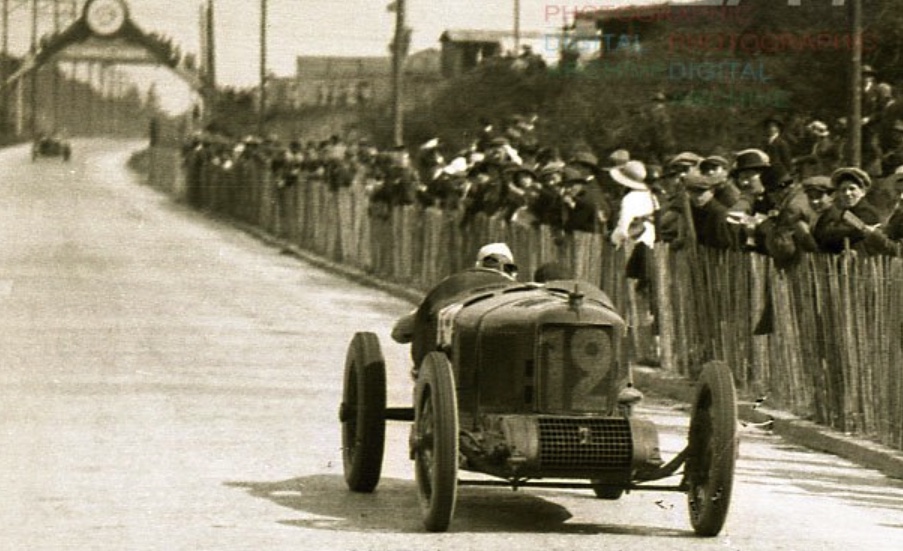
Bordino, Fiat 806, Monza (unattributed)
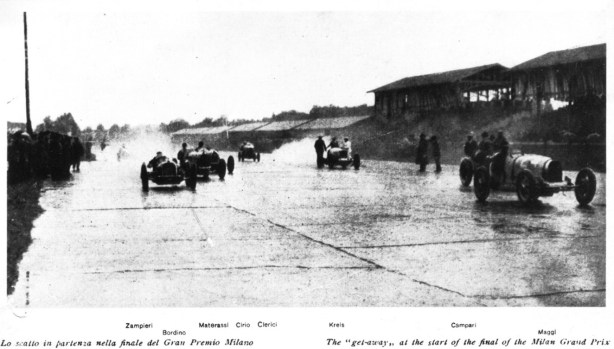
 

Alfonso Zampieri Amilcar 1.1 S6, Bordino Fiat 806 1.5 12, Emilio Materassi Bugatti T35C 2.0 S8, Nino Cirio Bugatti T37A 1.5 S4, Abele Clerici Salmson 1.1, Peter Kreis Cooper Miller Spl 1.5 S8, Giuseppe Campari, Alfa Romeo P2 2.0 S8, Aymo Maggi Bugatti T35C 2.0 S8
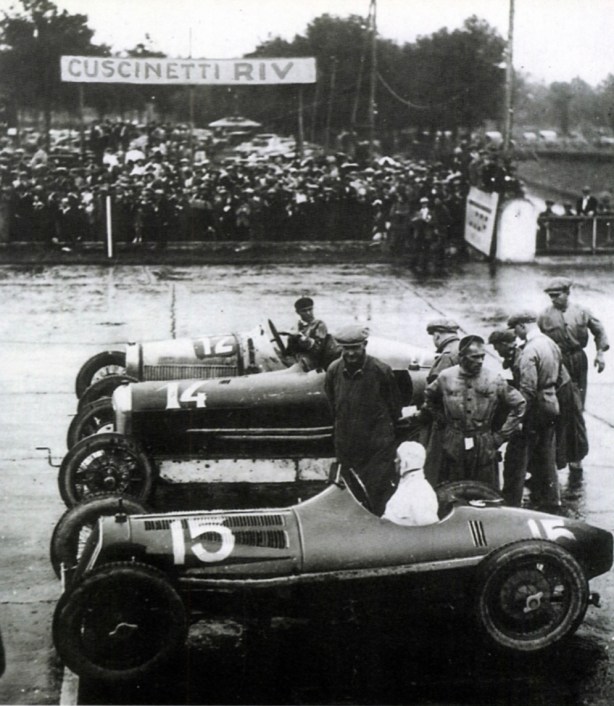
 

Felice Nazzaro, who was the starter, talking to Bordino on the Milan GP heat 2 grid- Fiat 806. #14 is Robert Serboli, Ciribili 12/16 and #12 Nino Cirio, Bugatti T37A. Bordino won from Cirio and Serboli  (unattributed)

A full team of 806’s was entered for the RAC GP at Brooklands with Nazzaro, Bordino and Salamano nominated as drivers but the cars did not appear, Schneider Trophy priorities were cited as the reason for the no-show.

And with that Fiat withdrew completely from GP racing…finally to reappear as owners of Ferrari in 1969.

There are a variety of theories as to the reasons for Fiats withdrawal from racing whilst noting Boddy’s observations about a focus on aircraft racing earlier.

Dick Ploeg in his review of Sebastien de Coulanges ‘Fiat en Grand Prix’ in velocetoday.com attributes Giovanni Agnelli’s sudden withdrawal to the loss of too many of his star drivers- Evasio Lampiano, Biagio Nazzaro, Enrico Giaccone, Ugo Sivocci and Onesimo Marchisio had all been killed.

The death of Pietro Bordino testing a Bugatti seems to have been the last straw, and with that he ordered the destruction of all FIAT racing cars by the end of the 1927 season.

Cyril Posthumus wrote in ‘The Roaring Twenties’ ‘Benoist in the 1500 Delage had entered for the Milan Grand Prix but elected not to run. That way Delage avoided possible defeat. Only one car was actually built, and legend, unconfirmed, has it that Fiat chief Agnelli, returning from a long American tour, was furious at the work being put into the racing car at a time when the economic recession was already being felt, and ordered it to be broken up, together with all spares and patterns…’ Note that Fiat constructed a factory in Poughkeepsie, New York in 1910 so Agnelli’s knowledge of economic conditions in a key market would have been very much current.

Doug Nye on ‘The Nostalgia Forum’ in 2003 wrote that ‘…I was schooled by Cyril Posthumus (my editor at “Motor Racing” magazine in the mid-sixties) to understand that Agnelli pulled out of racing primarily because he was outraged at the manner in which Bertarione had gone off to Sunbeam and produced a Fiat in green paint which won in France at Fiat’s expense, and Becchia went to Talbot and performed similarly and above all when Jano and Bazzi went to Alfa Romeo and really kicked the coal bucket all over Fiat’s lounge carpet…each of these engineers having been- in Agnelli’s view- expensively Fiat trained.’

Doug Nye, again, adds to the theses in his ‘Motor Racing Mavericks’. He wrote, ‘In Fiats experimental shop the prototype 806 lay under wraps until the new year, and on 14 January Guido Fornaca- Fiat’s very pro-motor racing managing director died. As a new regime took over under Agnelli so racing fell from favour, and then came the inexplicable order to destroy the last Grand Prix car, to destroy its engines and all existing parts, and even its detail drawings. This orgy of destruction spelled the end to Fiat’s noble Grand Prix career, and their ultimate racing car just became so much molten metal, bubbling in a cauldron in a Fiat foundry.’

A variety of historians, a variety of views and perhaps all are partially true- the sum total a decision by Agnelli to withdraw from racing.
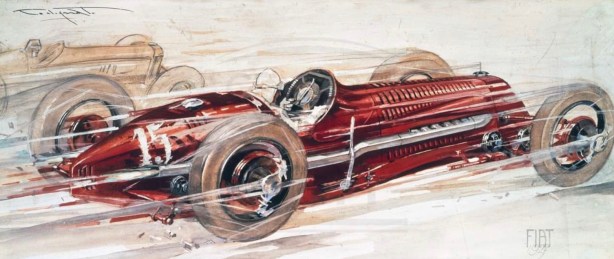
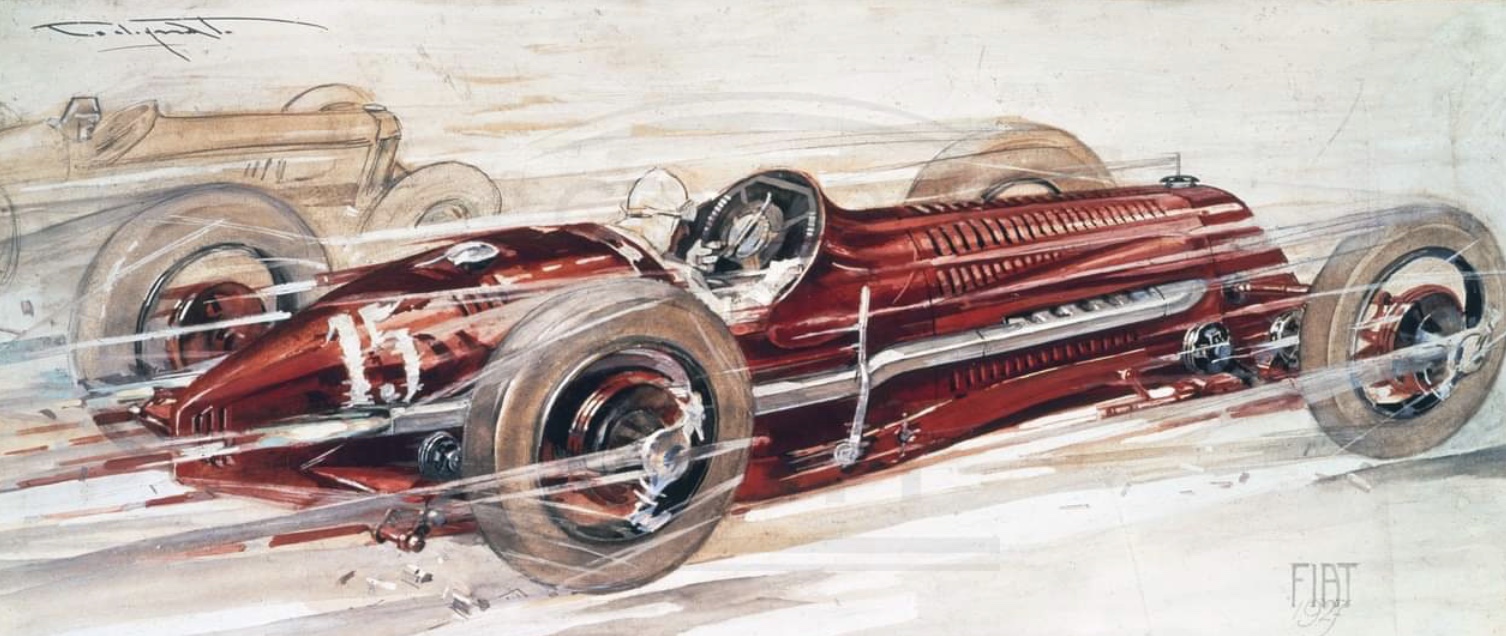
Bordino, Fiat 806, Monza lovely impressionist piece (P Codognato)

At this point Setright’s observations about the state of Grand Prix racing are interesting.

‘This final abstention of Fiat from racing at the end of 1927 marked the beginning of a period in which, from the engineering point of view, Grand Prix racing went into a period of decline, so that in the next six years only one development of any technical value- the transmission of the 1932 type B Alfa Romeo- caused any stir amid the general stagnation.’

‘The period was also one in which the administration of the sport fell into disorder, the governing body finding itself powerless to control the active participants. Indeed it was this very dissention that contributed to the obstruction of technical progress.’

‘Whether paradoxically or as a direct consequence of this, the sport enjoyed a rise in popularity ‘qua’ sport, and the frequency in which races were held increased markedly in 1928 and 1929. In the first of these years it had been intended that a new set of regulations would supplant the 1 1/2 litre formula which, in its brief two years of life, had demonstrated fairly conclusively that any attempt to limit increases in performance by imposing more severe limitations on engine size would only lead to intensive development of more complex and highly tuned engines so that racing would not become necessarily any slower, nor essentially any safer, but inexorably more costly.’

‘It was therefore proposed that engine capacity should be unrestricted, but that it should be related to a sliding scale of minimum weights ranging from 550-750kg for the empty vehicle, and that races should be over a distance of at least 600km.’

In reality what actually happened was races run to Formula Libre from 1928 to 1934 when the 750kg formula started and a period of both innovation and intensive development of existing paradigms set in motion by the departed Fiat…
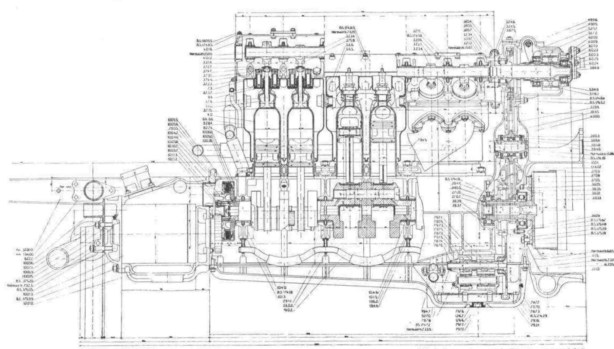
(Antique Automobile)

Tipo 406 Engine Detail…

There is not a heap of information about this engine or the car which carried it given the short life of all of the constituent parts, so I have reproduced the material about the motor published in the January 1951 issue of Motorsport. The writer, Bill Boddy, credits ‘Motor Italia’ as the source and ‘Antique Automobile’ for the translation.

‘The bore and stroke were 50mm by 63mm and the cylinder structure as before with a single crankcase for each row of three blocks of two. The inclined overhead valves were of 30mm overall, 27mm face diameter and had a lift of 7mm. Each had three guided springs. Valve operation was by three overhead camshafts, the centre one actuating the inlet valves of each bank, the pouter ones the exhaust valves, via fingers in each instance as in the other FIAT engines.The camshafts, running in plain bearings, were driven from the rear of the crankshaft, via Oldham couplings, by one very large and five small spur gears on anti-friction bearings.’

‘A Roots supercharger was mounted centrally at the front of the engine and driven from the right-hand crankshaft by a pinion meshing with one of the actual rotor gears via a multi-plate clutch. Three pinions united the two crankshafts, which were of built up type by Hirth, running each in four plain bearings. Normal plain big ends were used. The main and big end journals were 40mm in diameter, the former 30mm long, except for the front bearing, which was 32mm long, the latter 41mm. the connecting rods were 5.118 inches long, or over 2 times stroke.’

‘The pistons were again supported by their rings, of which there were two per groove, in three grooves per piston; 18mm sparking plugs extended well into the hemispherical conbustion chambers. The oil pump, at the back of the engine, ran at less than engine speed.’

‘Vaglienti had a hand in the design of this remarkable engine. It weighed 381 lb. and the model 806 car in which it was installed turned the scales at just over 13 cwt. Maximum speed quoted as 149mph. The engine developed 173bhp at 7500rpm and 187bhp at 8500rpm, figures that are truly remarkable. A test in July 1027 shows, shows 160bhp, at 8000rpm at a manifold pressure of 12.52psi, the temperature of the compressed mix 162 degrees fahrenheit (72 degrees C)’

‘This was an experimental engine and it is confidently stated that the aforementioned 187bhp, equal to a power/weight ratio of over 1hp per Kg, was subsequently attained. Compared with the present day 1 1/2 litre engine with two-stage supercharging which gives 300-400bhp on special fuels, the output of this 1927 twelve cylinder FIAT unit still ranks as exceedingly noteworthy’.
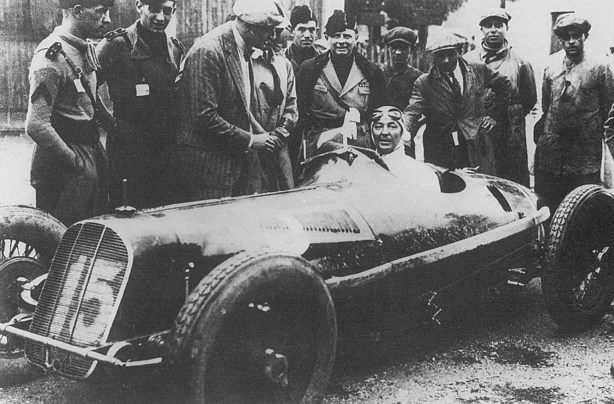
Same Monza shot as above but all tidied up with a Fascist or three in attendance (unattributed)


Etcetera…
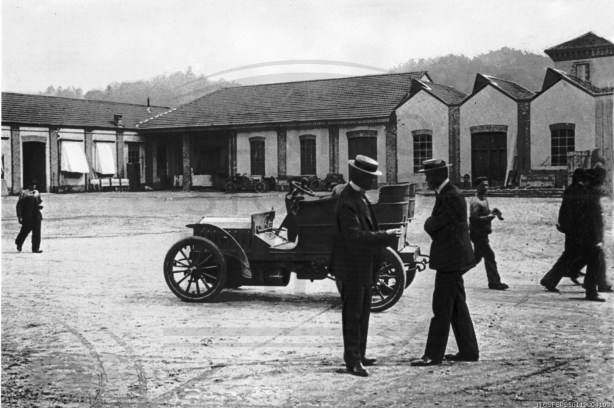
 

(CSF)

Fiat’s first factory at Corso Dante, Turin in 1902.
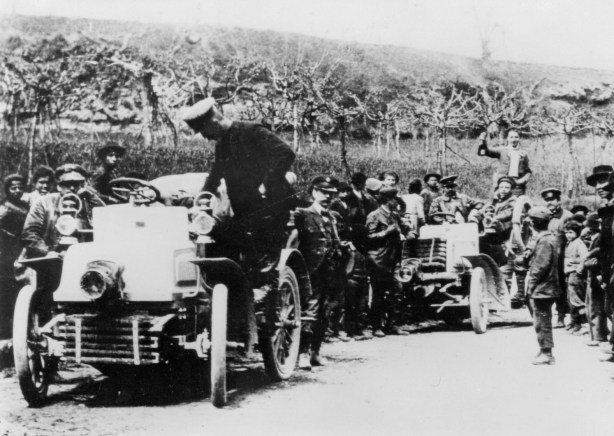
 

(CSF)

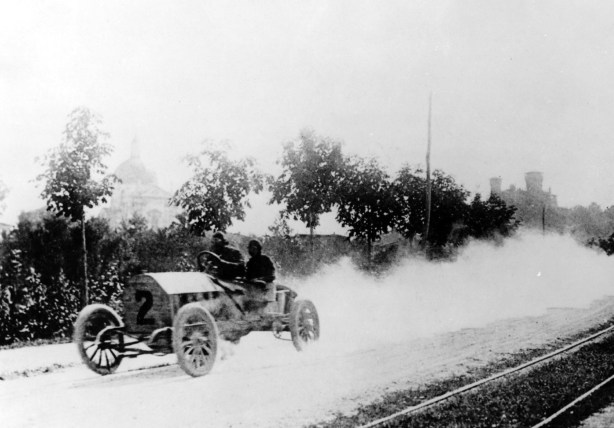
The first Fiat to participate in low level competition was the 1901 8HP road machine but it was quickly replaced by the 12HP four-cylinder car in the same year, both cars are shown in the photo above of the 1901 Giro d’Italia Automobile.

The 8HP in front has a tube radiator whereas the four cylinder behind is fitted with a honeycomb unit and was Fiat’s first purpose built racer- Count Carlo Biscaretti di Ruffia was the driver.
(CSF)

The Gordon Bennett Cup started in 1900, it was run until 1905 when the Automobile Club of France, international race organisers themselves, formed their own championship, the first for Grand Prix cars.

In the fifth Cup race in 1904 Vincenzo Lancia (above) won the Brescia-Cremona and Mantua-Brescia sections, the latter at an amazing 71.8mph in his big 75HP Corsa and for this won the Italian Cup, Graham Gauld wrote. The outright winner was Leon Thery in a Richard-Brasier.
(CSF)

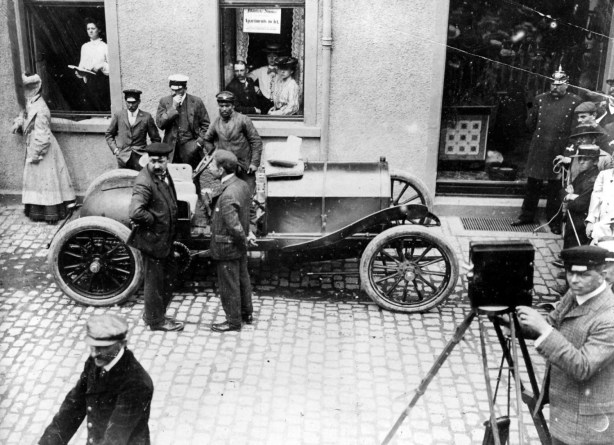
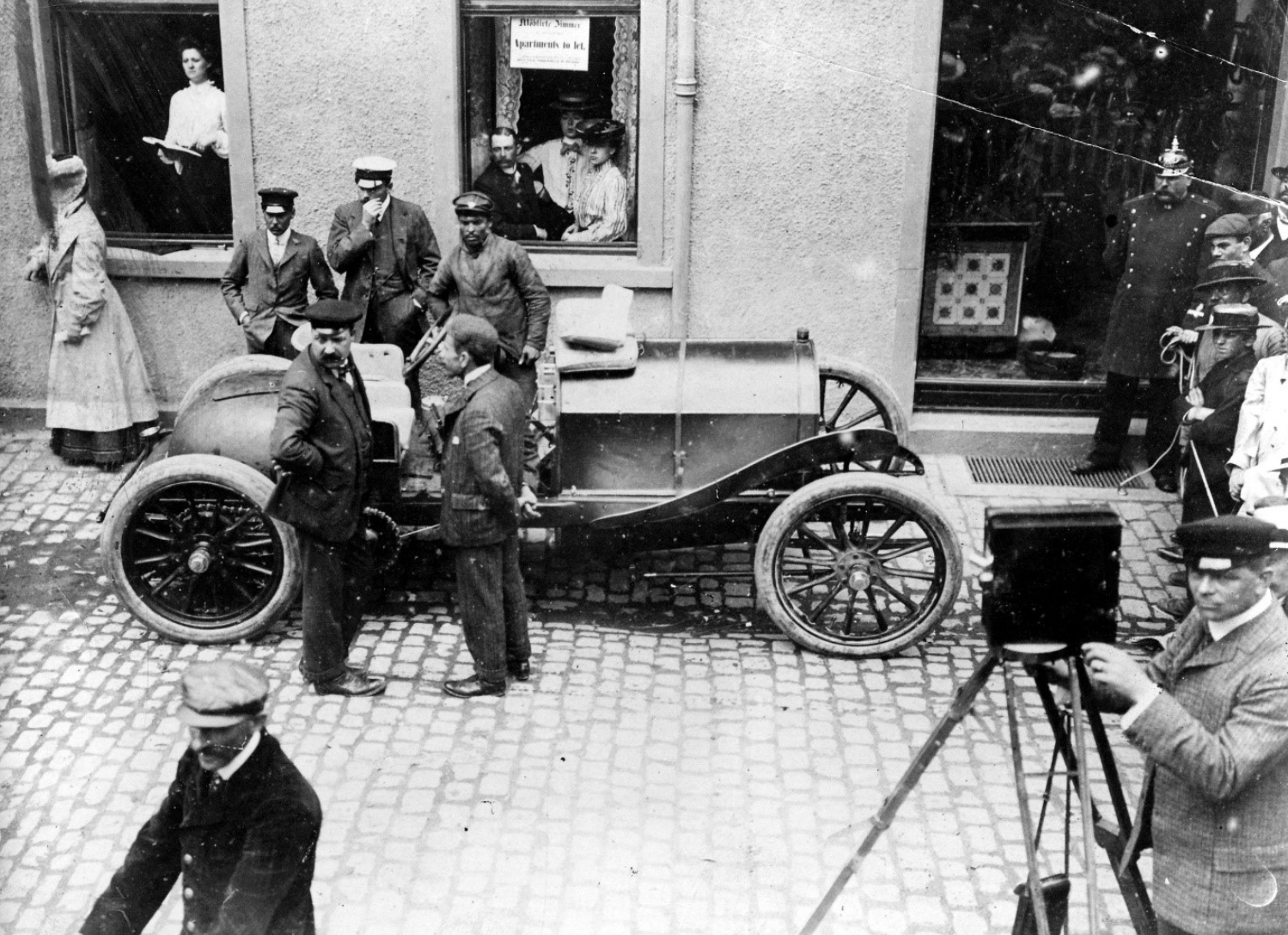
Alessandro Cagno (tenth) in front of his 75HP Gordon Bennett Fiat- five were built. Wonderful atmosphere of the times, Event held on the Homburg Circuit, four laps of a 79 1/2 mile course through the Taunus Forest near Bad Homburg, Germany in June 1904.
 

(CSF)

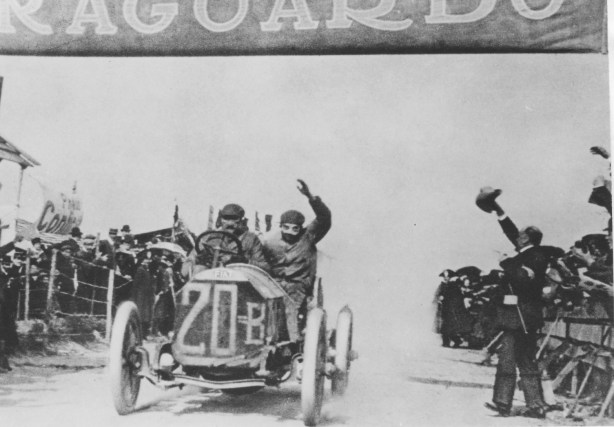
Felice Nazzaro’s great win (above) in the 1907 Targa Florio, teammate Vincenzo Lancia followed his home, they both raced Fiat 28-40 Corsa- 7.3 litre eight cylinder machines ‘with two four cylinder engines in two pairs’ wrote Graham Gauld.
(CSF)

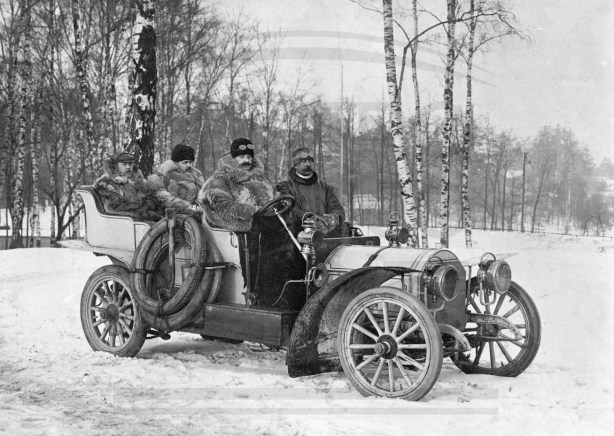
Emile Salmson after winning the 1907 Winter Cup- 322 miles from Gothenburg to Stockholm, over 23 1/2 hours over snow and ice coveered roads,  Fiat 60HP.
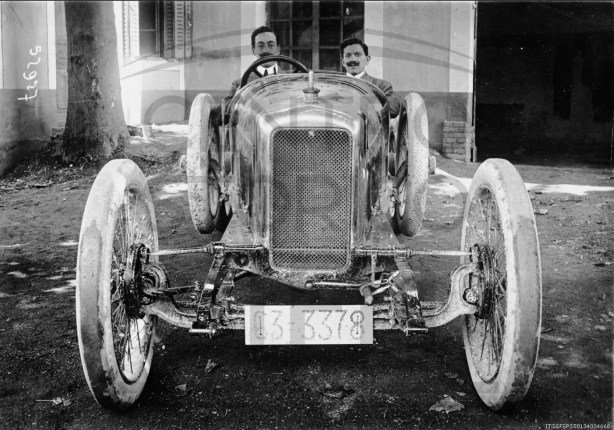
(CSF)

Cagno at the wheel of a 1914 Fiat S57/14B Corsa.
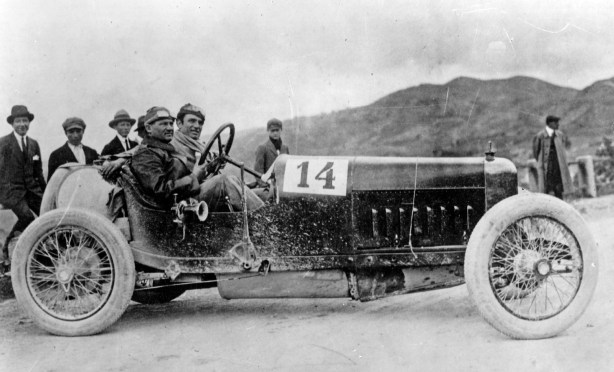
(CSF)

Post World War One Italy re-entered motorsport with the 50.9km Parma-Poggio di Berceto hillclimb in October 1919.

The factory entered a 1914 S57A/14B Corsa they had raced at Lyons that year but fitted with an enlarged 4.8 litre engine. When they withdrew Antonio Ascari (above) acquired the car and won the race, beginning the family legend. Another legend got underway in thatsame event- Enzo Ferrari contested his first race in the same event finishing fifth in class aboard a CMN 2.3 litre car.

Three weeks later Ascari won again in the Coppa della Consuma, a 16km hillclimb east of Florence, he then contested Targa, he led after 31km but crashed out at Caltavuturo after 58km, overturning and landing in a ditch. Enzo Ferrari was there too- in an Isotta Fraschini, he also retired.
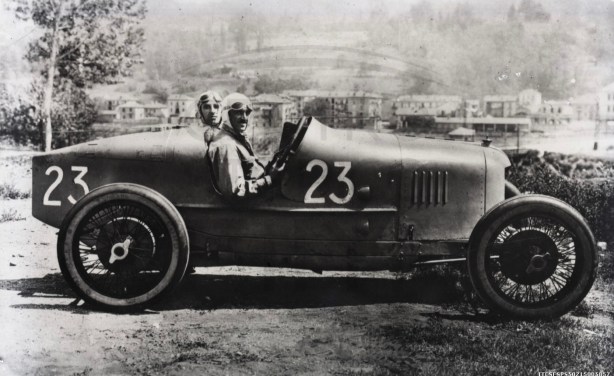
Carlo Salamano in a Fiat 803 1.5 litre S-4 unsupercahrged, 1922 Gran Premio d’Italia Vetturette (CSF)

You probably did a number count earlier on and wondered what had become of the Tipo 803- indeed there was such a car.

Quite a significant one given its credits of first supercharged formula car win and first to win a GP.

During 1922 design on the new Voiturrette got underway, the chassis was similar to the other race Fiats of the period with front springs passing through the axle. Initially the Tipo 403 engine was a 65 x 112mm bore/stroke normally aspirated twin-cam, two valve four which produced 60bhp.

So engined, a team of cars entered the late 1922 Italian Small Car Race at Monza, Bordino won from Giaccone, Lampiano and Salamano. These 1.5 litre road racers were the fastest cars of their type in the world at the time and almost as quick as their 2 litre brothers.

A further development of the car was to incorporate a Wittig supercharger into the specification, in this 80bhp form the 1.5 litre, supercharged Tipo 403 four cylinder engined machine raced in two events in 1923.
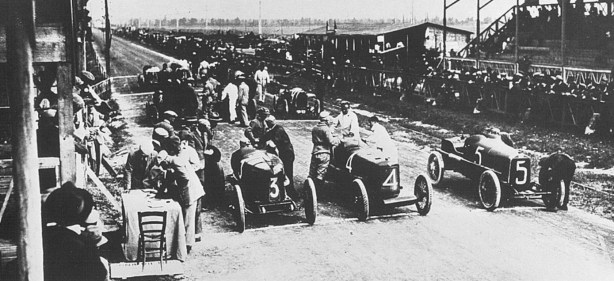
(unattributed)

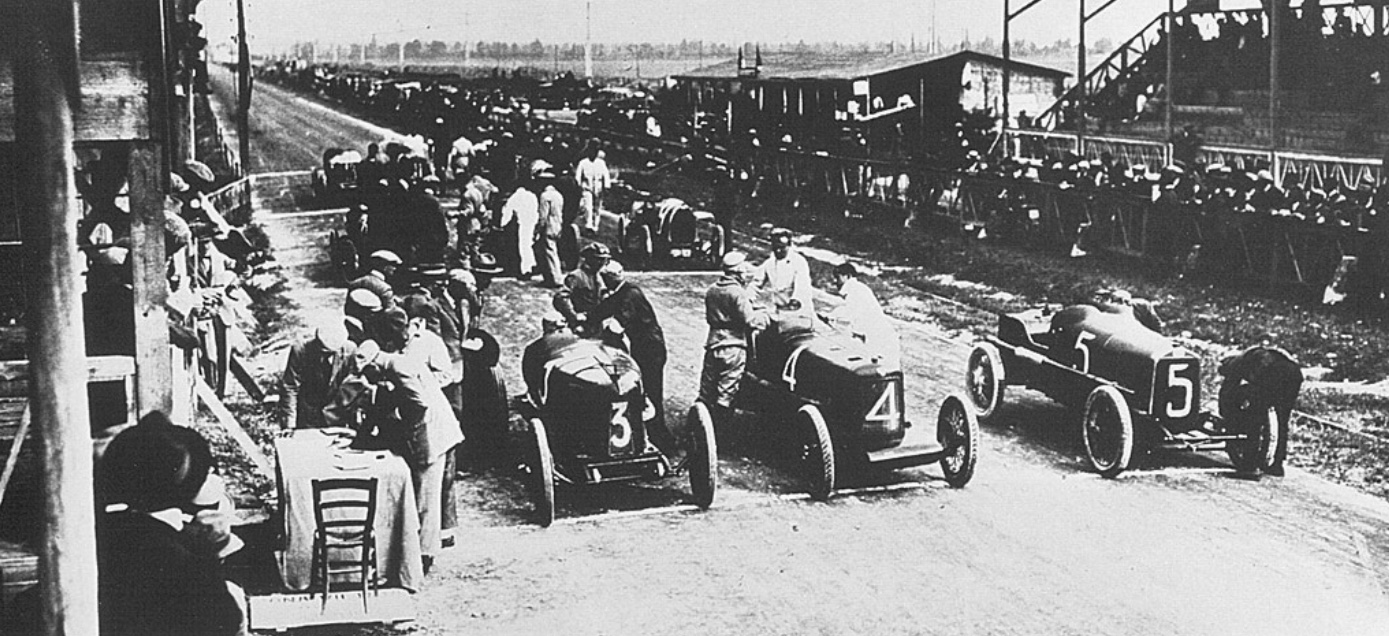
The photo above shows the grid of the ‘Third Gran Premio delle Vette’ or 1923 GP Voiturette held at Brescia on 29 June 1923.

The 522km race, 30 laps of a 17.4km course, was won by the Alessandro Cagno’s Fiat 803 from Renzo Lenti, Bugatti T22 and Alete Marconcini in a Chiribiri 12/16. Please let me know if you can identify the cars/drivers.

Two 803’s also contested the October 1923 JCC 200 mile race at Brooklands, both Salamano and Malcolm Campbell failed to finish.
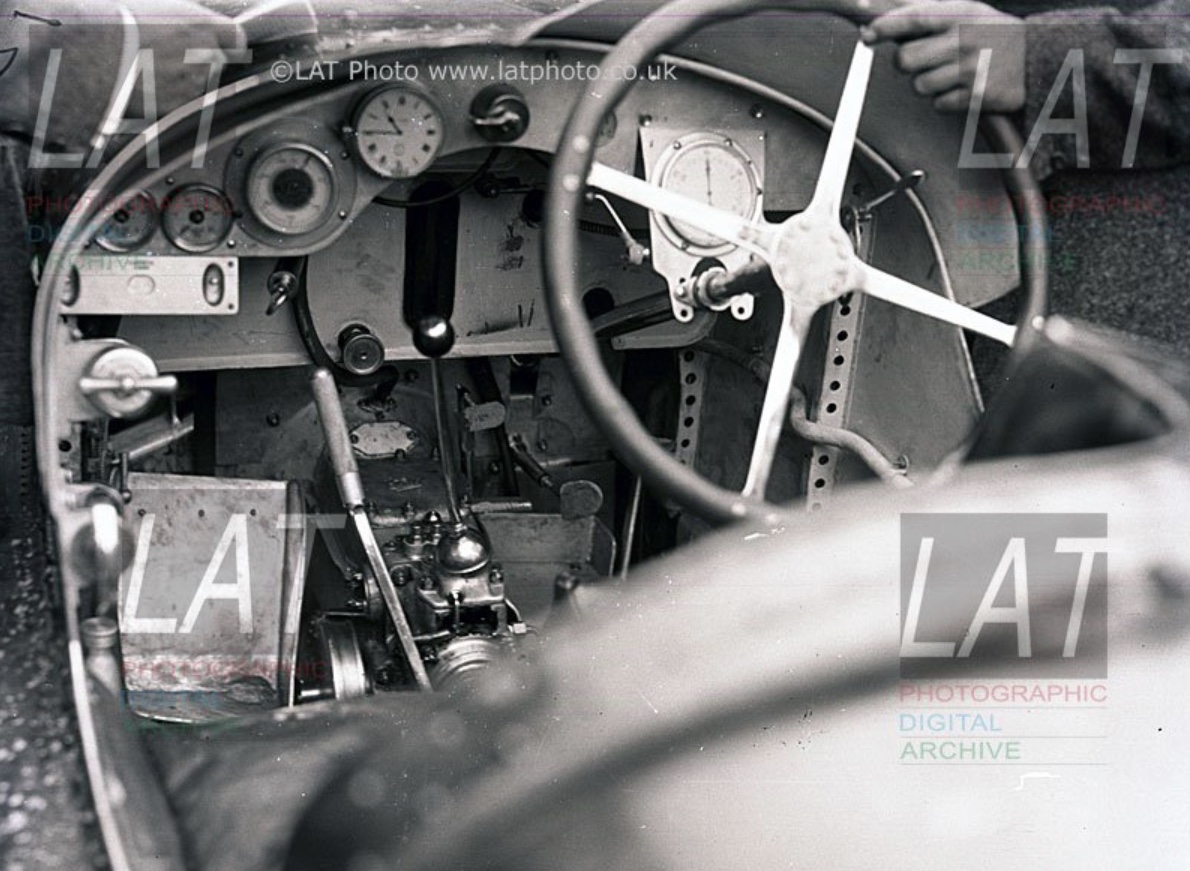
Fiat 804 cockpit during the 1922 French GP weekend. Plenty of instruments to keep the mechanic occupied and not a lot of space. A clock is an unusual fitment in a modern GP car. Fuel tap at far left, four speed ‘box. Wonderful.
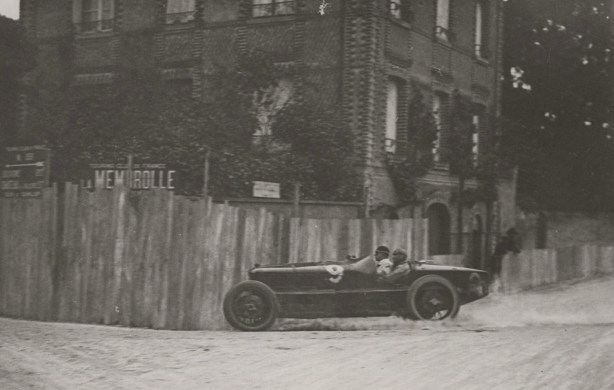
 

(unattributed)

Enrico Giaccone Fiat 805 during the 1923 French GP, Tours. DNF engine after finishing 32 of 35 laps.
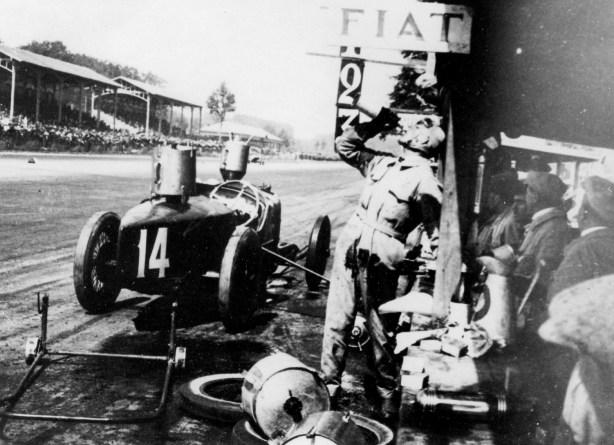
 

(CSF)

Carlo Salamano refuels the body whilst his 805 is attended to during the 1923 Italian GP at Monza, a race he won.
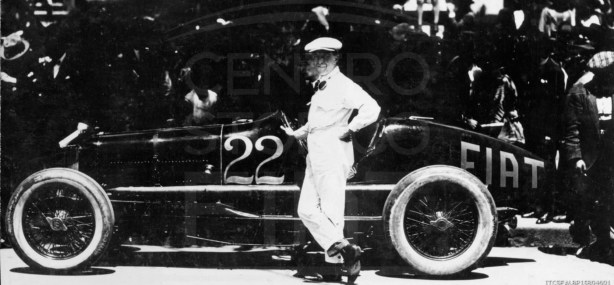
 

(CSF)

Pietro Bordino with the 805 monoposto in the United States in 1925, circuit unknown but possibly Indianapolis.
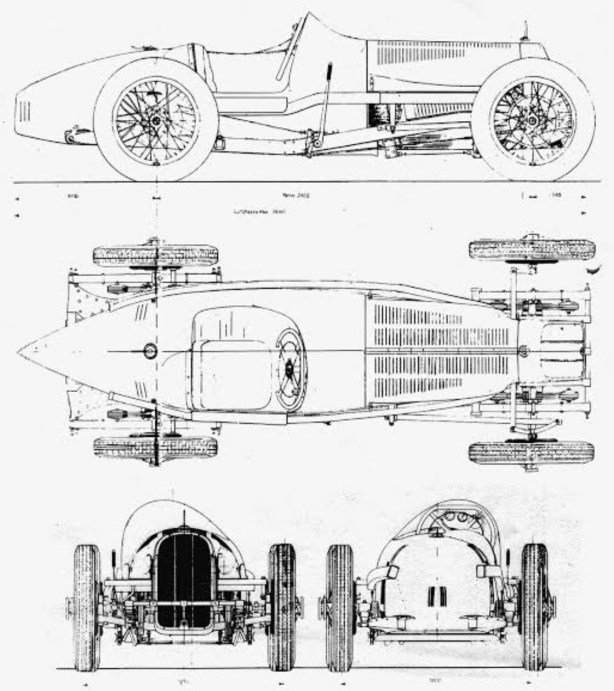
 

Fiat 806 cutaway drawing (Blueprints)

Art and Photo Credits…

Brian Hatton, Giulio Betti, britmodeller.com, Blueprints, ‘CSF’- Centro Storico Fiat, George A Oliver, Plinio Codognato

Bibliography…

‘The Grand Prix’ LJK Setright, Motorsport January 1951, Dick Ploeg article in VeloceToday.com published 14 December 2011, Hans Etzrodt race reports of the GP D’Europa and GP Milano on kolumbus.fi, ‘Motor Racing Mavericks’ Doug Nye, ‘The Roaring Twenties’ Cyril Posthumus, ‘Aviation History: Schneider Trophy Race’ Historynet.com, ‘Auto Racing Comes of Age’ Robert Dick, ‘Racing Car Evolution Part 3 1922-1925’ Laurence Pomeroy Motorsport November 1942, ‘The Racing Car Development and Design’ Cecil Clutton, Cyril Posthumus and Denis Jenkinson

Tailpiece…
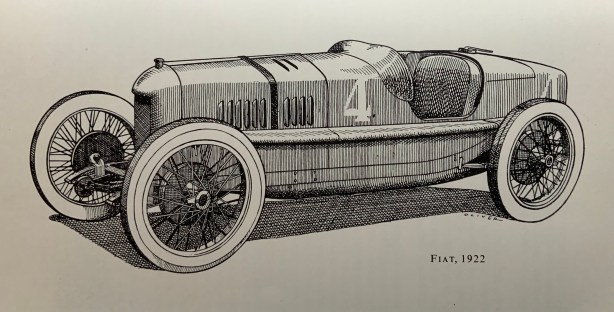
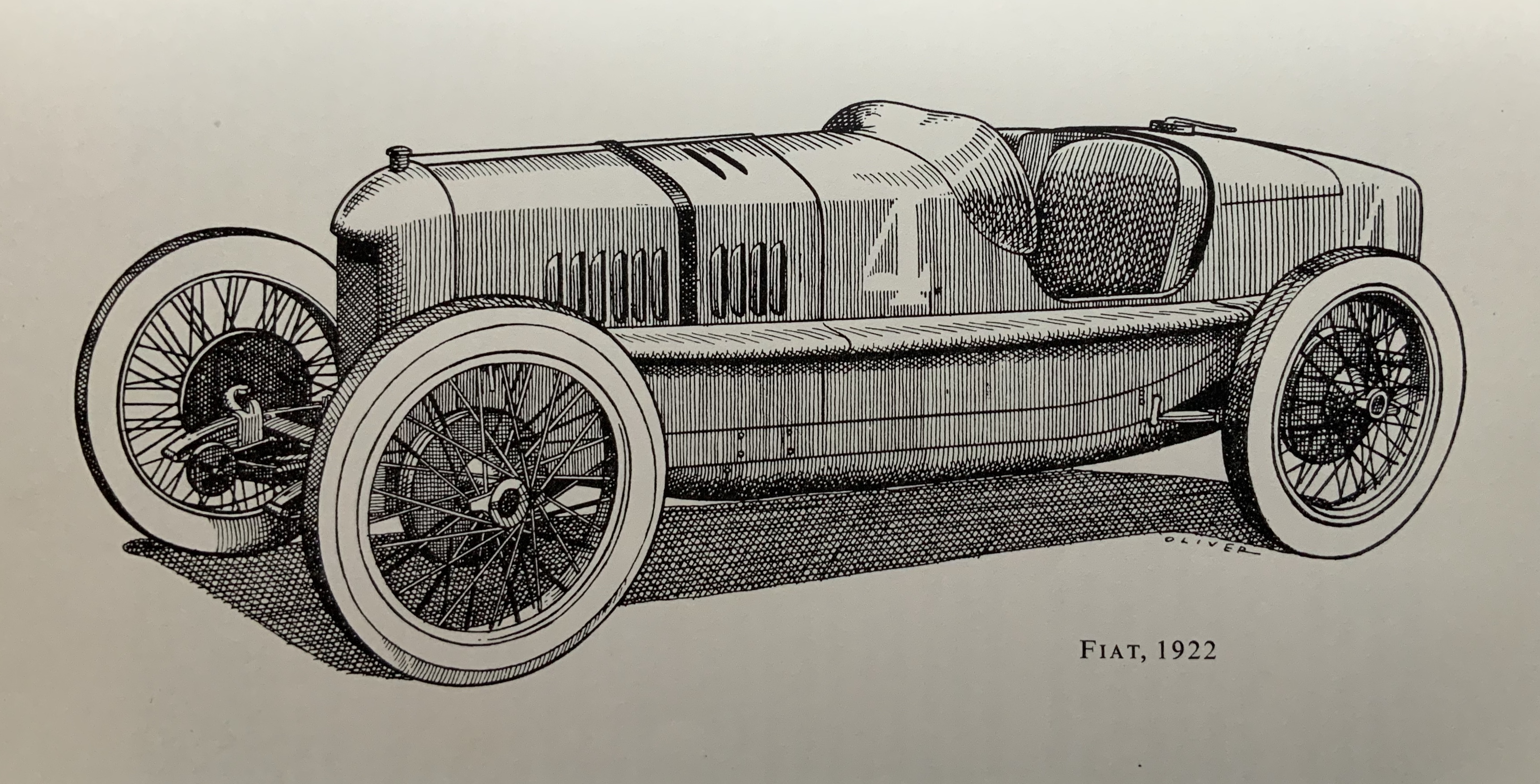
(GA Oliver)

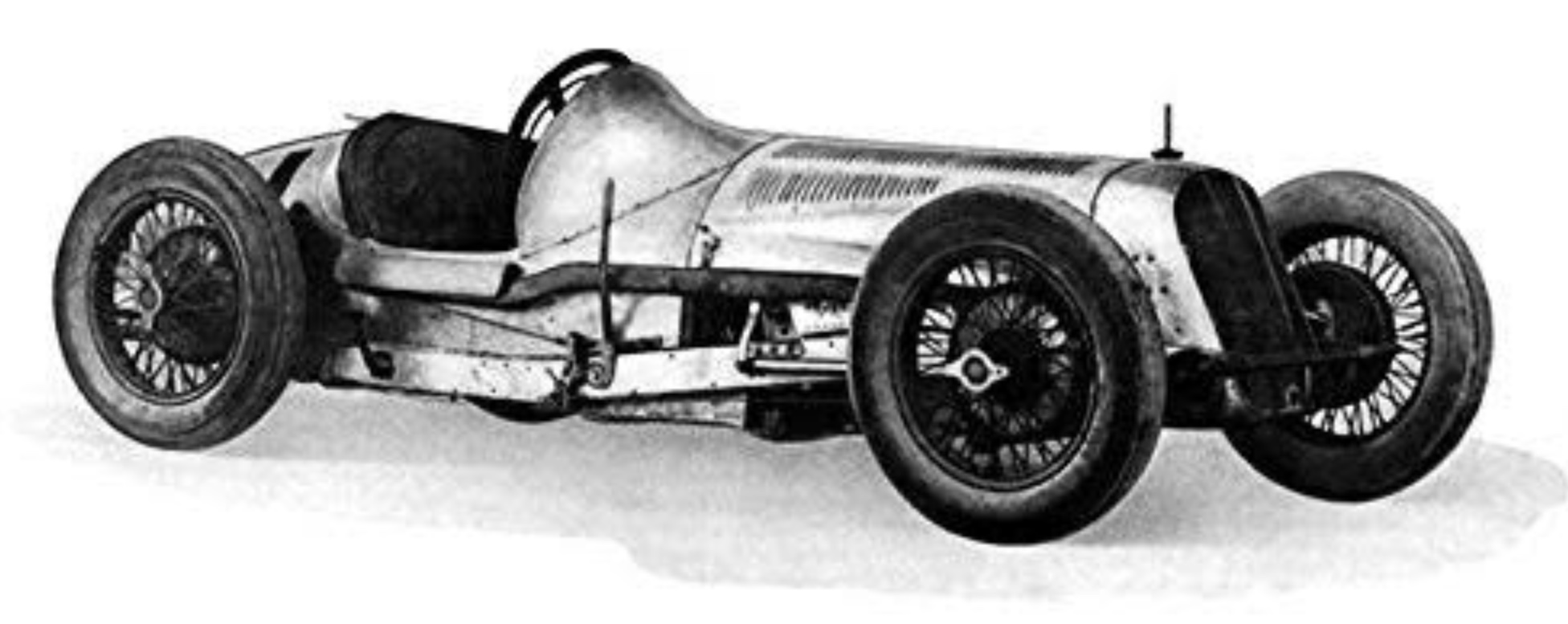
The 2 litre Fiat 804 straight-eight raced by Felice Nazzaro to victory in the 1922 French Grand Prix at Strasbourg. ‘With its low, compact build and six cylinder, roller-bearing engine, it set new design fashions’ wrote Clutton, Posthumus and Jenkinson.

The beautiful drawing of an equally attractive racing car is by George A Oliver.

Finito…

(VC Browne)

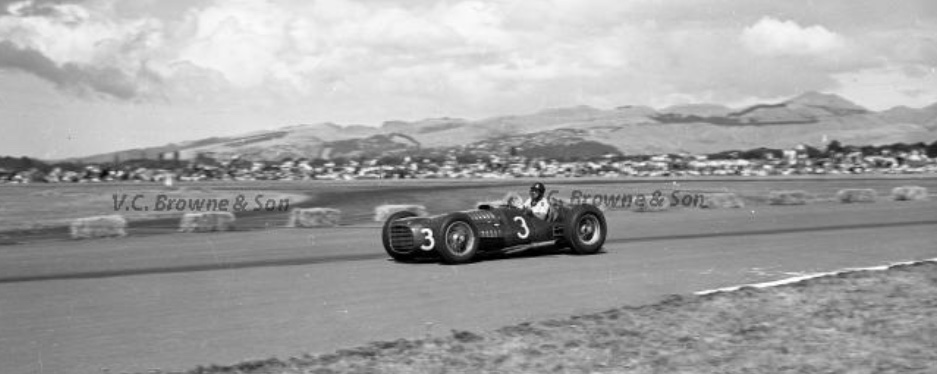
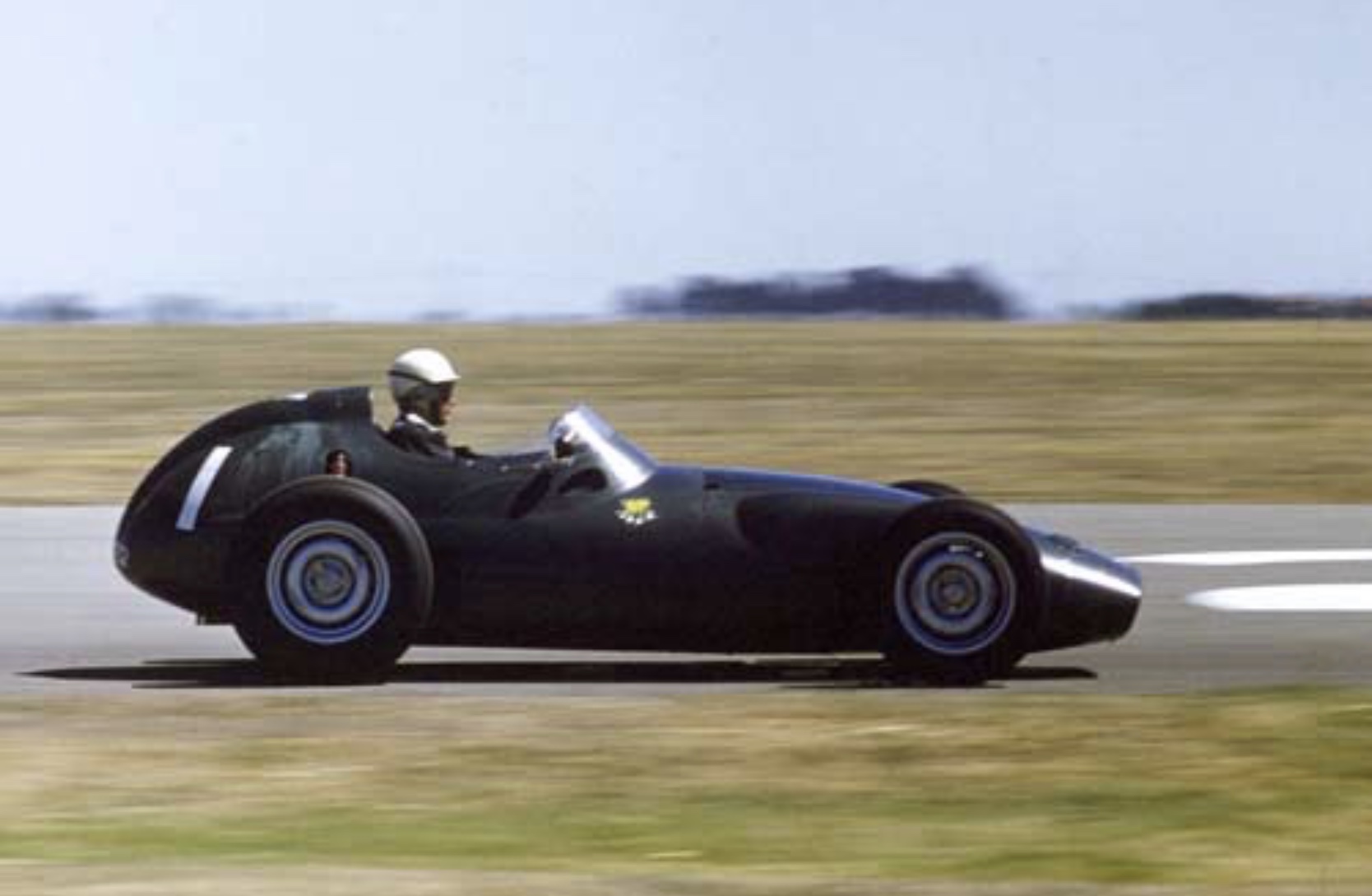
Ken Wharton, BRM P15 V16 during the 1954 Lady Wigram Trophy…

Alfred Owen started what became a long commitment to race his BRM’s in Australasia to further the Owen Organisations commercial interests with a trip by the stupendous, stunning and thoroughly nutty P15 V16 to New Zealand in 1954.

Its fair to say the car underperformed as it usually did, but the impact it made on all who saw and heard the marvellous machine at both Ardmore for the NZ GP and Wigram has endured for far longer than a more reliable but less memorable beast.

Wigram (VC Browne)

Such free and easy days- Wharton warms the car up before the NZ GP start at Ardmore (J Short)

The 1954 New Zealand International Grand Prix was the second in the history of the race, the first was won by local, John McMillan’s Ford V8 engined Jackson Special in 1950.

The Kiwi organisers leapt over their Australian neighbours across the ditch in attracting an international field to their Formula Libre race including Wharton, Peter Whitehead’s Ferrari 125, Horace Gould in a Cooper Mk23 Bristol as well as Jack Brabham’s similar car, Tony Gaze, HWM Alta, Stan Jones in Maybach 1- the eventual winner, Lex Davison’s ex-Moss/Gaze HWM and others.

Wharton had the race won in P15 chassis ‘2’ but suffered complete front brake failure- vaporised brake fluid streamed from the front brake cylinders coming down the main straight so Wharton slowed and came into the pits.

Repairs were impossible so the front brake pipes were disconnected with Stan Jones in Maybach 1 winning the race, and subsequent protests about lap-scoring. Stan had more than his share of those post-race contests over the years but he won this one, perhaps at Gould’s expense.

Wharton was second ‘…in what must have been one of the greatest drives of his career to bring the BRM home and to complete the longest race in the cars history’ wrote Doug Nye- Tony Gaze was third, Horace Gould fourth, Ron Roycroft fifth in an Alfa Romeo P3 and Jack Brabham sixth.

Wharton’s problems were caused by a bit of circuit grit lodging in one of the calipers preventing a piston returning fully and causing the brakes to overheat through constant friction, eventually popping off a brake hose union and releasing fluid onto the scorching disc.

(CAN)

At Wigram (above) Wharton again started from pole from Peter Whitehead’s Ferrari, Tony Gaze’s HWM Alta and Fred Zambucka in a pre-war Maserati 8CM.

Whitehead won from Gaze and Wharton, then John McMillan in an Alfa Romeo Tipo B the first local home. Wharton bagged the fastest lap and lap record- as he had at Ardmore.

The BRM had a fresh engine installed between the meetings the car exceeding 150mph on the back straight- shrieking and bellowing in the most audio-erotic fashion in all of motor racing.

(M Hanna)

‘Wharton more or less had the race under control until he had to pit around lap 42 and took on a gallon of oil, the car eventually quit short of the finish line, Wharton pushed it across the line home for third place’ wrote Bob Homewood.

‘The long-distance venture had not proved to be the prestigious demonstration Owen Racing Organisation had hoped…The car was shipped home on the SS Karamea…Ken Wharton flew home via Hawaii…while (mechanic) Gordon Newman decided that New Zealand was such a pleasant country he eventually settled there’ Doug Nye wrote in ‘BRM 1’.

(BRM 1)

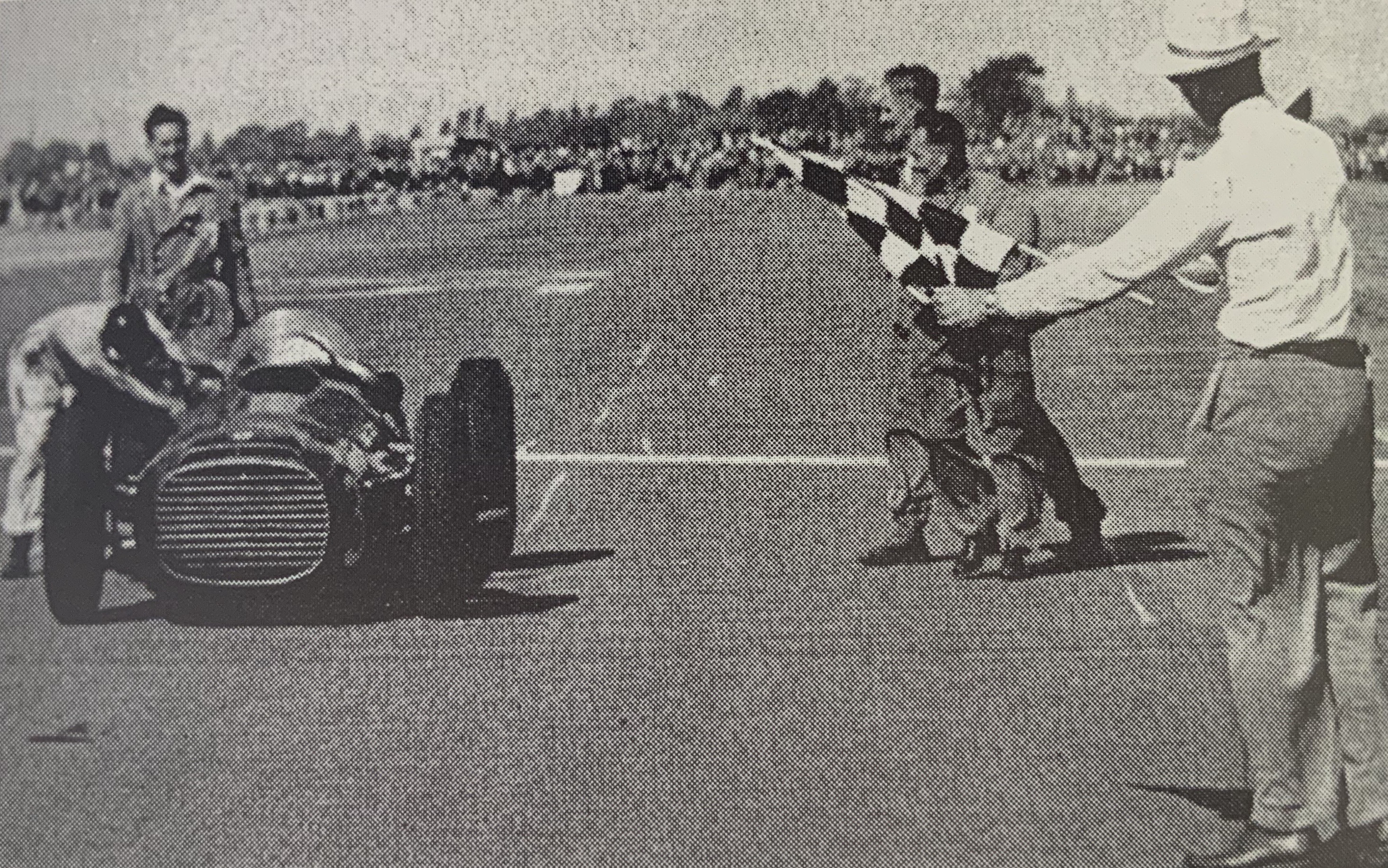
Ken Wharton pushed the big, beefy BRM a quarter of a mile over the line just as fourth placed man McMillan’s Alfa Romeo P3 commenced its last lap, encouraged by the BRM mechanics.

(B Homewood)

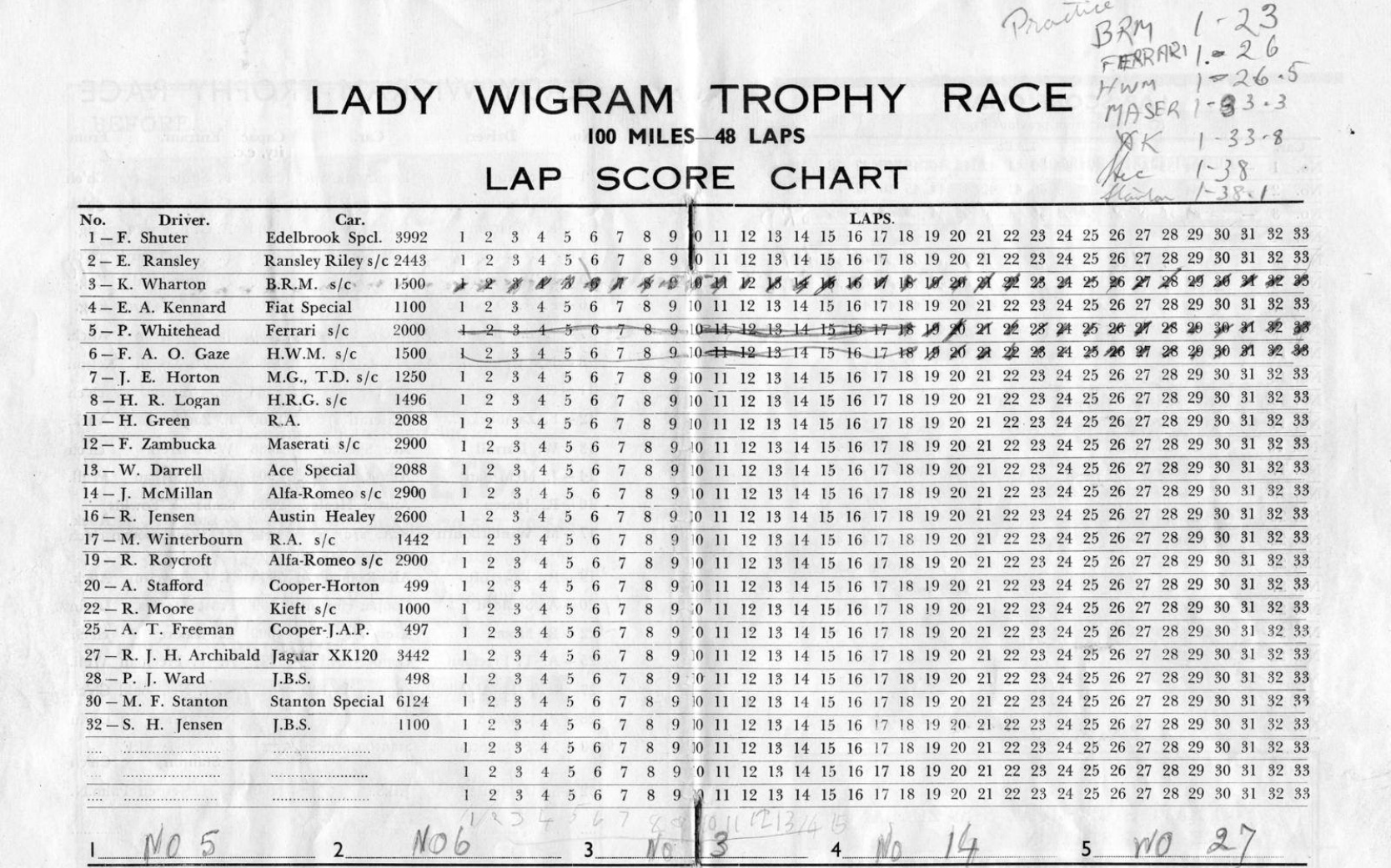
Gold dust- a Lap Chart from Bob Homewood’s collection ‘…from my BRM in NZ stuff, I make no claim that the pencil lap times are correct’ he quips.
Whilst the Mk2 P15 returned to the UK the team would return many times to Australasia, on the next occasion with a Type 25 for Ron Flockhart in 1959, shown below at Wigram- he won the prestigious Lady Wigram Trophy from Brabham and McLaren’s Cooper T45 Climaxes that day, a story for another time…

(CAN)

Credits…

VC Browne & Son, Classic Auto News, Bob Homewood Collection, Winton Bristow via Roger Dowding, Merv Hanna Collection, ‘BRM 1’ Doug Nye, sergent.com

Etcetera…

(BRM 1)

Jack and Ken at Ardmore.

Brabham in the cap looks across as Wharton sets off for some screaming but sonorous 1.5 litre V16 supercharged practice laps, Cooper T23 Bristol ‘Redex Spl’ looking suitably modest alongside its more aristocratic but far less successful countryman.

(BRM 1)

Lotsa plugs and lotsa plug changes…Newman and Southcott set to it, which of the two airfield circuits is unclear.

(unattributed)

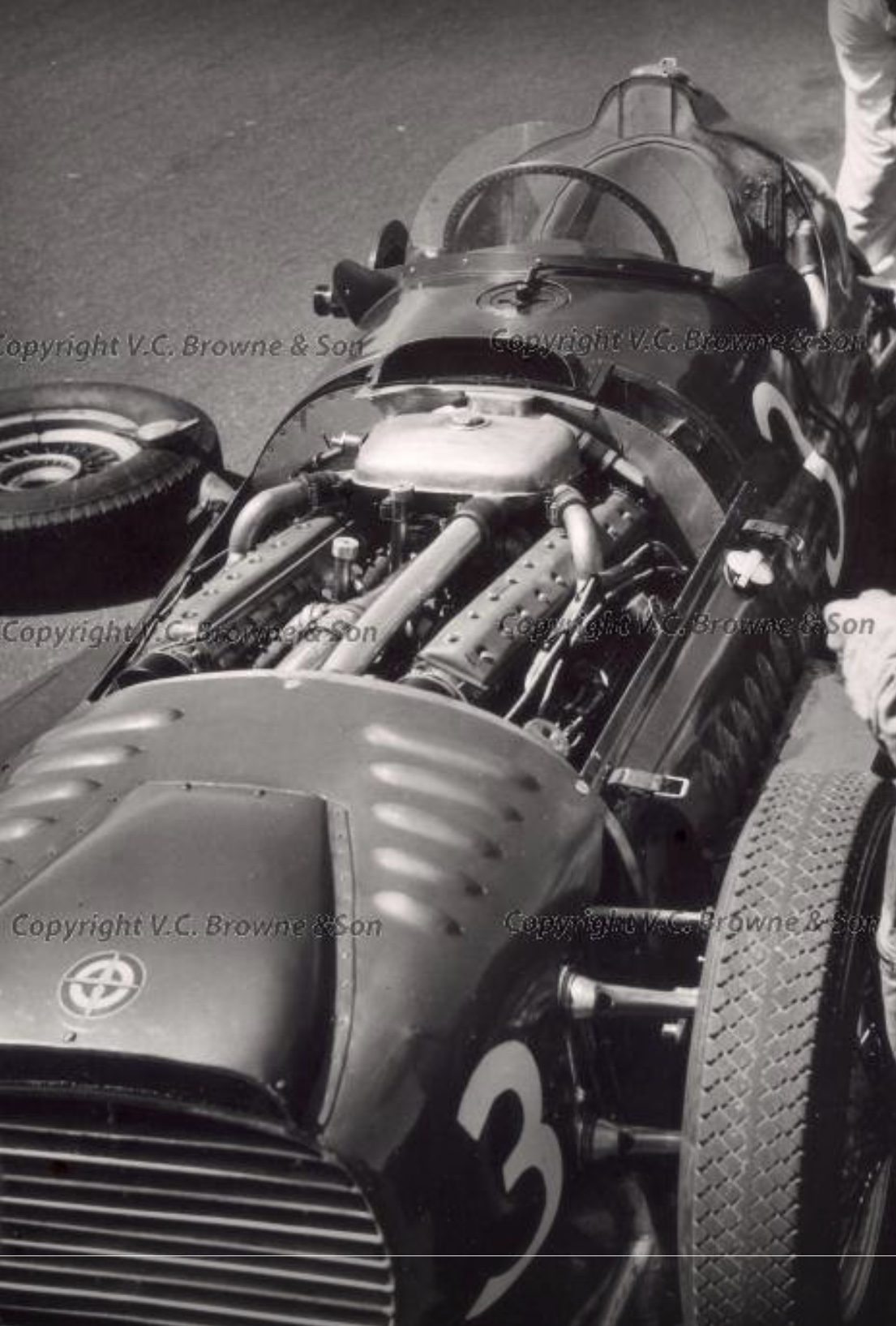
Beast at rest in the Wigram pits

(W Bristow)

Roger Dowding wrote ‘…sketch by Winton Bristow…I have about eight of them, some finished some not (love to see ’em!) but interesting cars, I have Win’s notes too. Win was a car enthusiast…’. Luvvit!

Pity the long distance travelling race mechanic in 1954, read Nye’s account of Gordon Newman and Willie Southcott’s trip from Lincolnshire to the other end of the world in December 1953.

’…the adventure began at 8am in Bourne, when they caught the bus to Peterborough.

This was followed by a train to King’s Cross, London to report to KLM’s Sloane Street office at noon, a bus to Heathrow and then a 5pm flight to Amsterdam, thence to Auckland via Sydney, Australia.

They had a worldwide Letter of Credit with them, value £130, comprising 50% of 15 weeks wages (£60), expenses at £3 a week (£45) and an extra £25 for contingencies. The NZ GP was…run on January 9 and…Wigram…in the South Island on February 7 with sundry exhibition dates in between.’

No rest for the wicked…

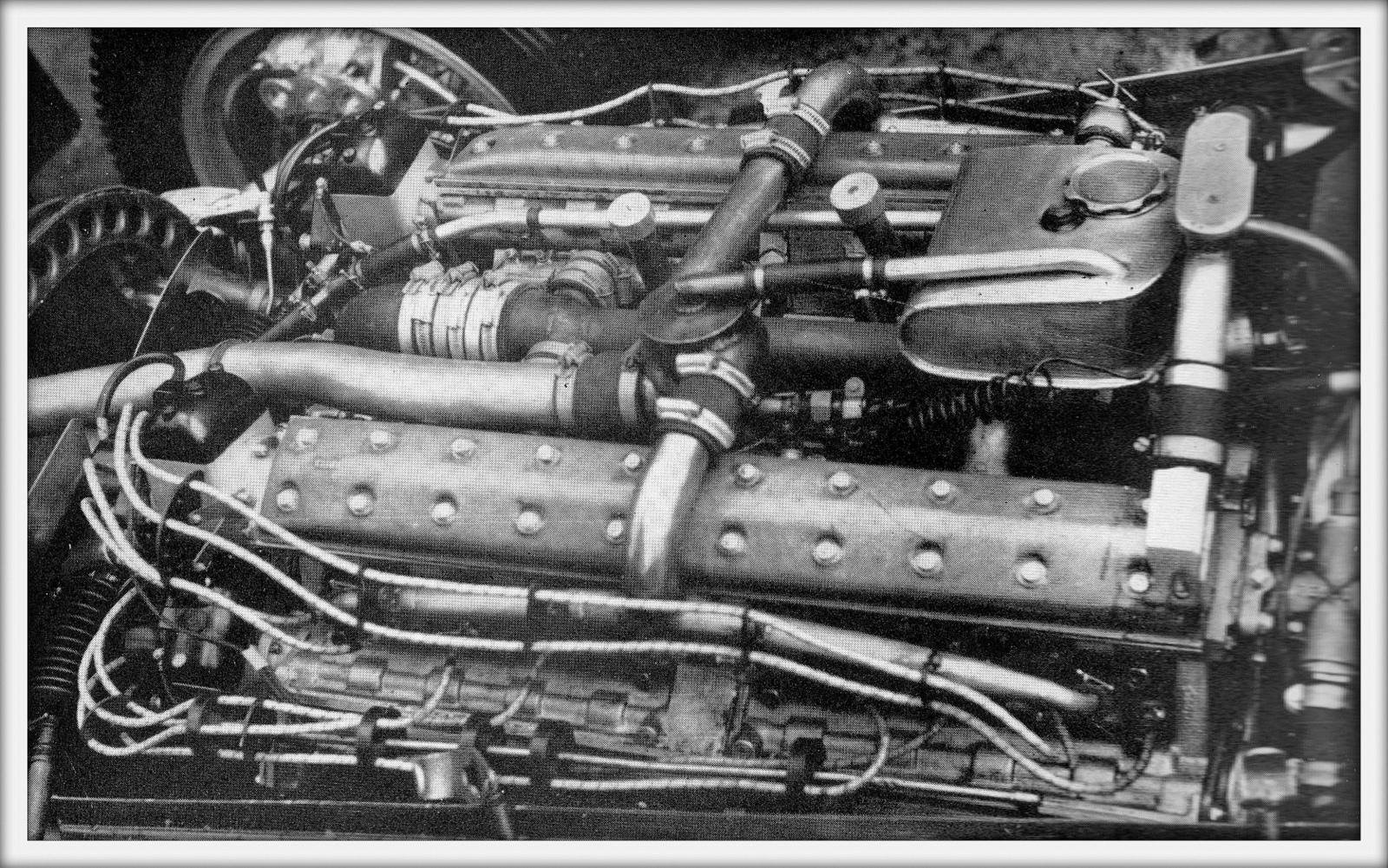
The mighty supercharged 1.5 litre V16 engine (Vic Berris)

Wigram again (unattributed)

Tailpiece: Wharton, Wigram 1954- not exactly a light car, just ask Ken…

Finito…

Grand Prix cars; Ferrari 156/63 F1 1963, red Lotus Climax FPF, at left a Lotus 18 Climax FPF and Lotus 33 Climax FWMV (M Bisset)

The Ferrari 156/63 holds centre-stage at the Musee National de l’Automobile, Mulhouse, France in July 2019…

When I saw it I didn’t recognise the car at all.
The 156 went from 1961 World Champ to 1962 World Chump. Then, to me, along came Ferrari’s ‘Aero-framed’ semi-monocoque 1.5-litre V8 engined 158 with which John Surtees won the 1964 championship in a great battle with Jim Clark’s Lotus 15/33 Climax and Graham Hill’s BRM P261.

Not so fast. Between the 156 and 158 were the T56, 156, 156/62P, 156/63, 156 F1-63 and Aero 156 depending upon your source as to model names, the 156/63 is one of those cars.

Ferrari raced on with the 156 largely unchanged in 1962 given their sudden paucity of team leaders. Mr Ferrari had a mass-departure of top executives, including 156 designer, Carlo Chiti, that winter. Their exodus to Automobili Turismo e Sport (ATS) was an unmitigated disaster, that story is here; ‘Automobili Turismo e Sport’ : A.T.S. F1… | primotipo…

But Ferrari had depth in the ranks, young engineer, Mauro Forghieri set to work on a series of cars more akin to British chassis design orthodoxy, and ultimate success in 1964.

Forghieri (born 13 January 1935) joined Ferrari in 1960 after completing an engineering degree at Bologna University the year before.

The key team which took the Scuderia forward included engineers Rocchi, assisted by Bellei  – with oversight provided by Vittorio Jano – on the new V8 (1964). Ing Salvarini looked after gearboxes and suspension with Bussi doing dyno engine testing and development.

The Flat-12 (1964-65) design was Forghieri’s, as was the at circuit role and liasion between the race-team and technical group. In short, he was team-leader.

John Surtees, Ferrari 156/63, 1963 US GP at Watkins Glen. Grid three and DNF valve failure was his haul that weekend (MotorSport)

With time short that winter, there was little time to develop the existing 156s. Before Chiti left, V6 developments included a two-valver with twin-plugs, a two-valver with three-plugs, a three-valver with two-plugs and a four-valver with one-plug (!), for which 210bhp @ 10,000rpm was claimed.

Chassis changes involved a move towards a lower polar moment of inertia which was achieved by moving the masses within the a wheelbase. A new 6-speed gearbox was also available. It could be mounted conventionally, overhung behind the rear axle, or within the wheelbase, albeit the former was preferred.

That year Forghieri tried wide track 156s, but lost top-speed wasn’t exceeded by greater cornering ability. In effect, Ferrari had a stand-still year as Forghieri developed a more competitive ’63 car and established the foundations for mid-term success.

Mauro’s early cars, the spaceframe 1962 156/62P and 1963 156/63, and semi-monocoque 156 Aero, were still powered by the trusty Tipo 178 1.5-litre, twelve-valve V6, by then Bosch direct fuel injected.

This engine was well trumped by the British Coventry Climax FWMV and BRM P56 V8s in 1962, but Forghieri’s chassis’ were much nicer modern affairs than the 1961 156. Gradually Ferrari bridged the opposition’s gap in 1962-63 setting up its driver and manufacturer titles in 1964.

Lorenzo Bandini in Forghieri’s new Ferrari 156/62P #0008 during the German GP, Nurburgring August 1962 (MotorSport)

Ferrari 156/62P…

Ferrari had built nine 156s by the end of 1961, they built another three in 1962; #0007, #0008 and #0009. #0007 was a new 156 of evolved design as mentioned above, while #0008 and #0009 were Forghieri’s new 156/62P experimental machines.

These two cars were smaller, neater small-tube spaceframes with rear suspension practice and geometry akin to the British opposition, albeit the archaic, heavy, and beautiful Borrani wire wheels were retained.

Bandini’s 156/62P in the Nurburgring paddock. Behind him are Phil Hill’s #1, and Giancarlo Baghetti’s #2 normale 156s (MotorSport)

Forghieri’s 156/62P #0008 was finally ready and raced by Lorenzo Bandini in the German GP that August, he qualified 18th but was out after an accident on lap five.

Mauro Forghieri was further empowered late season when John Surtees joined the Scuderia. His engineering knowledge and interest, and fierce determination to effectively use Ferrari’s vast resources ensured significant progress was made that winter and into 1963.

Willy Mairesse at Monza during the 1962 Italian GP weekend in 156/62P #0008. He did well, fourth place. Note the changes to the rear bodywork in the shot below compared with the car as appeared at the  Nurburgring a month earlier

Willy Mairesse was given the car at Monza. He qualified 10th, finished fourth and was the best placed of the 156 Dinos on the grid and in terms of race results. Clearly progress was being made.

That weekend Willy also tested #0009, it had only just been completed with its beautiful hand formed aluminium body still unpainted (below)

Apart from differences in the nose of the car compared with its 156/62P sibling #0008, the rear suspension of this car is completely different. Gone is the top link and wide-based lower wishbone, in its place is a multi-link set up more akin to contemporary British practice, viz; single top link, inverted lower wishbone and two radius rods, adjustable roll bar and coil spring/Koni dampers.

Big Ferrari news for 1963 was Surtees recruitment, latterly of the Bowmaker Lola Team. During this period of change, Surtees tested at Modena, including a drive of what appears to be 156/62P #0009, above.

The photograph is dated November 26, 1962 (Getty Images’ dating of shots is often wrong). Note that the rear suspension of the car at this time is different to that over the Italian GP weekend when Mairesse tested it.

Ludovico Scarfiotti, Ferrari 156/63 at Zandvoort, 1963 Dutch Grand Prix. The young Italian was sixth in his first championship GP (MotorSport)

Ferrari 156/63…

Forghieri worked over the winter on the 156/63, another neat multi-tubular spaceframe car of small gauge tubes. An evolution of the existing V6 was bolted to a new six-speed gearbox with lightweight, magnesium alloy Campagnolo wheels part of an attractive package. As stated Mauro was greatly empowered by Surtees arrival, progress was enhanced.

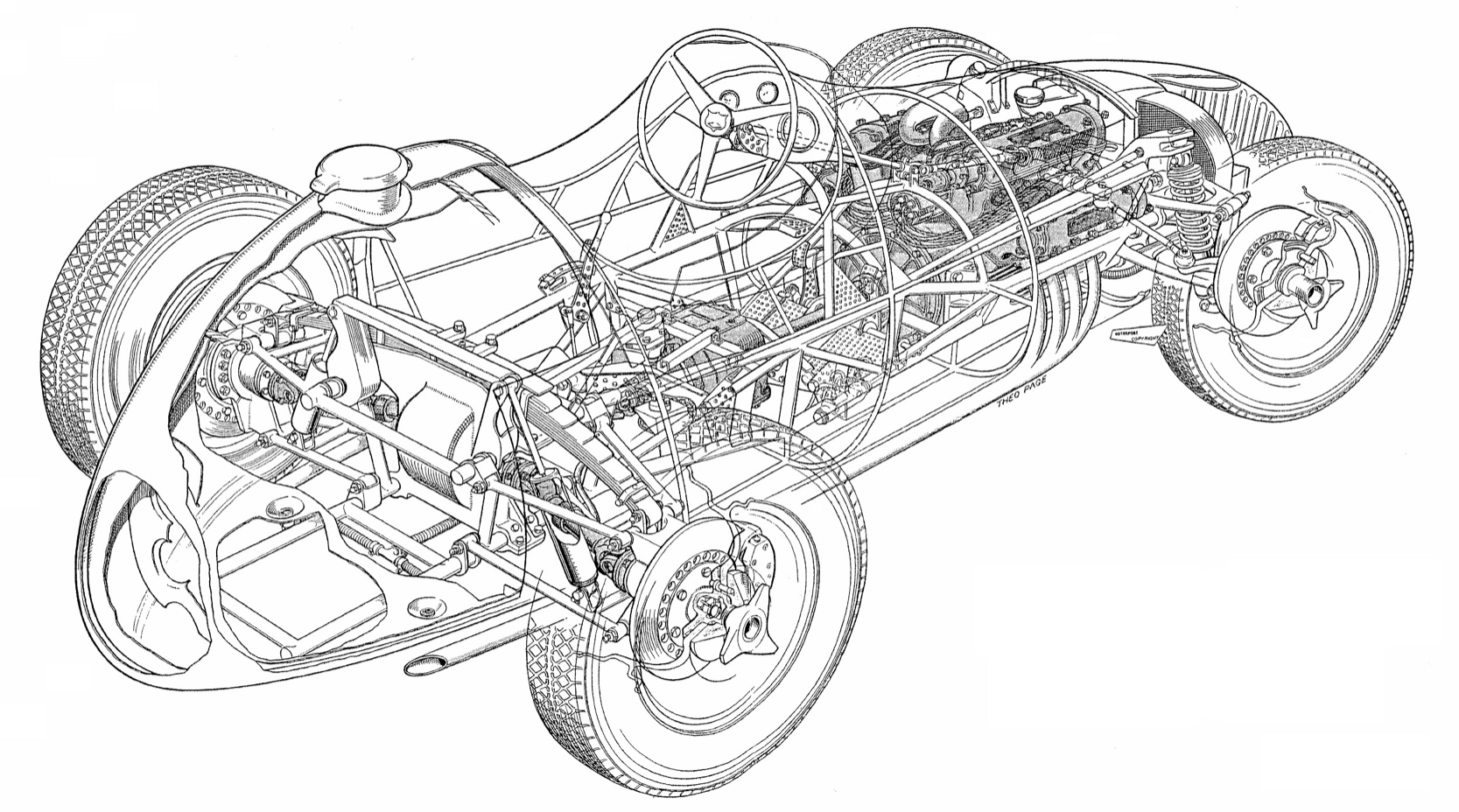
Ferrari 156/63 cutaway, technical specifications as per text (Vic Berris)

Willy Mairesse displaying the beautiful lines of his new Ferrari 156/63 at Monte Carlo in May (MotorSport)

Business end of a 156/63 (MotorSport)

In 1963 spec the two-valve, fuel injected DOHC V6 gave a claimed 205/210bhp. Michael May adapted Bosch direct fuel injection to the motor.

Noteworthy is that by the end of 1963 F1-was-fuel-injected by Lucas and Bosch. There were still downdraft Webers to be seen on customer V8s, but up at front fuel injection was the go.

The gearbox had six speeds, front suspension the usual outboard fare of upper and lower wishbones and coil spring/shocks. At the rear the regime was again period typical, single upper link, a lower inverted wishbone and twin radius rods with coil spring/Koni shocks and adjustable roll bars front and rear. Steering was rack and pinion with Campagnolo magnesium alloy wheels finally replacing the Borrani wires. Brakes were Dunlop disc, inboard at the rear.

Three 156/63 machines were built; chassis #0001, #0002 and #0003, the team missed early season non-championship races to focus on testing at Modena and Monza.

Surtees started the season strongly in Monaco, qualifying third and finishing fourth, Mairesse was Q7 and DNF with a final drive failure. Up front Graham Hill won for BRM.

At Spa Mairesse qualified third at home but failed to finish with fuel injection problems. Surtees qualified 10th, he too had fuel injection problems, a faulty pipe. Jim Clark won and commenced an amazing run in his Lotus 25 Climax which saw him take his first World Championship.

At Zandvoort Surtees was a great third from Q5, and Scarfiotti sixth from Q11. At Reims John was out with a split fuel pipe failure from Q4, a good effort after fuel injection problems in practice which were sorted by Bosch technicians. Scarfiotti didn’t start after a practice crash.

At Silverstone for the British Grand Prix, Surtees qualified fifth and finished in the same spot while Scarfiotti wasn’t entered. Up front, it was Clark’s Lotus all the way.

(MotorSport)

On that most challenging of tracks, the Nurburgring, the teams hard work was vindicated with a dominant win from Surtees from grid two (above), while Willy Mairesse was out with an accident.

A fortnight after the German GP, Ferrari contested the non-championship GP del Mediterraneo at Enna where Surtees took a pole to flag victory.

Then, tails-up, it was off to Monza in September where the Tifosi were ecstatic with anticipation after Surtees plonked his new 156 Aero on pole, sadly he was out with engine failure during the race. Bandini started sixth in a 156/63 but was outted with gearbox failure, Clark’s Lotus 25 won again.

Let’s deal with the specifications of the 156 Aero – an interim model put together with great attention to detail due to the 158’s V8 engine running late – in a little bit.

Surtees shows the massive 1963 Monza crowd his new Ferrari 156 Aero in September 1963, the ultimate expression of the 156 type, or family of cars first tested throughout 1960 (MotorSport)

Beautiful 156 Aero at Monza, key elements as per text but note entirely paradigm rear suspension, injected V6, inboard brakes and long-overhang 6-speed transaxle (MotorSport)

Butt-shot of Surtees’ 156/63 at Watkins Glen (MotorSport)

At Watkins Glen, Surtees qualified a strong third aboard a 156/63 on the fast, challenging Watkins Glen course but had valve failure in the race. Bandini started ninth and finished fifth. In Mexico Surtees 156 Aero was disqualified after receiving outside assistance from grid two, while Bandini had engine failure from seventh on the grid.

John Surtees’ consistently strong performances yielded 22 points, placing him fourth in the 1963 drivers championship behind Clark’s Lotus 25 Climax, then Hill G and Richie Ginther aboard BRM P57s. The Surtees/Scuderia Ferrari combination approached 1964 with plenty of optimism and two new cars, the 158 and 1512.

Bandini on the way to victory on the Zeltweg Airfield circuit, Austrian GP, Ferrari 156 Aero in August 1964. He is passing Trevor Taylor’s abandoned BRP Mk1 BRM, broken suspension. It was the only GP win for the Italian and the 156 Aero Ferrari (MotorSport)

Ferrari 156 Aero…

Despite the arrival of the Aero semi-monocoque chassis 158 and 1512 the venerable 156 still played an important role in 1964.

As we have seen, with development of the new V8 behind schedule, a 120-degree V6 was adapted to Forghieri’s new Type 579 chassis to allow its debut at Monza in September 1963.

The chassis was based on a simple un-triangulated tubular internal frame to which were riveted stress bearing aluminium skins. This hybrid monocoque was unlike that pioneered by Len Terry and Colin Chapman at Lotus, but served Ferrari very well for nearly two decades.

“Two parallel fuel tank pontoons, each of which was fabricated and riveted aircraft style over a sketchy framework of two tube longerons staggered slightly in the vertical plane” wrote Doug Nye.

“These tubes doubled as water and oil feeds between engine and coolers. The completed pontoons were then united laterally throughout their length by a stressed floor panel with angle stiffening plates, and at each end were riveted to transverse bulkheads.”

“That at the front was doubled to sandwich inboard coil spring damper units operated by top rocker arms like Lotus’s, while the entire hybrid monocoque terminated behind the cockpit in a hefty fabricated rear bulkhead.”

Look carefully at Surtees’ 156 Aero chassis at Monza in 1963. You can see the rivet lines where the aluminium skin is attached to the tubes underneath. Visible also is the boom extension to the tub on this side to support the engine, it also carried the V8 which was never a fully stressed part of the chassis as Forghieri originally intended. Note the the twin-plugs and Bosch injection with the metering unit between the Vee, also the inboard Dunlop calipers rotor/disc, and six-speed transaxle (MotorSport)

Ferrari 156 Aero cutaway. It’s not so easy to quickly pick the spaceframe 156 from the semi-monocoque Aero. The most obvious difference in addition to the chassis, is top rocker front suspension on this car as against the wishbones of the earlier 156/63 (James Allington)
156 Aero front detail at Monza in 1963. Top rocker and hat of coil spring/Koni, note the bulkheads on which the rocker pivots, water radiator/cap and oil tank behind, master cylinders for brakes times two, and clutch. Under these is the steering rack and arm attached to a cast magnesium upright.

The design of the V8 and Flat-12 engines was radical in that their blocks were cast to allow them to form stress bearing components of the car, rather than the engine being attached to pontoons or an A-frame in the more traditional manner. That is, the motors bolted to the rear chassis bulkhead and accepted suspension loads.

Using the engine structurally then was rare. Vittorio Jano designed his 2.5-litre, quad-cam V8 as a stress bearing member of his front-engined Lancia D50 in 1954. BRM achieved it with Big-Bertha, the 1966 BRM P83 H16, so too did the similarly engined Lotus 43.

Forghieri and Ferrari team did so in 1964 with their Flat-12 Ferrari 1512. They didn’t persevered long enough with the V8 crankcase/block design to achieve the feat with the 158.  Jano was retained by Ferrari as a consultant during this period, this path was perhaps a suggestion he made to Forghieri and the design team?

The new V8 was running late in its development, so, as related, the V6 was adapted to allow testing and racing the Aero chassis.

Support trusses were added to its rear to carry the V6, which had not of course been designed to be a stressed member. Mind you, some references have it as “partially stressed”. The Aero’s front and rear suspension was contemporary standard British design practice.

Lorenzo Bandini aboard his 156 Aero in the Brands Hatch paddock during the 1964 British GP weekend. Note the different wheels to ’63. #1 is Jim Clark’s winning Lotus 25 Climax, #24 is Peter Revson’s Lotus 24 BRM (MotorSport)

The 156 Aero raced into 1964 in Bandini’s hands as the definitive 158 was made competitive and reliable by Surtees and Forghieri. Until then the 156 was reasonably kind to him.

While ‘Il Grande John’ won the German GP in a 158, Bandini popped a 156 Aero on the outside of the front row and finished third. He went two better at Zeltweg winning the race run on the rough-as-guts broken concrete airfield surface as other cars, including Surtees’ 158, were shaken to bits!

It was the last win for a V6 engine in F1 until the turbo-charged Renault V6s a decade or so hence. It was rather a nice last hurrah for engines which had delivered so much for so long since 1957.

Not that it was over yet for this family of Ferrari engines. An engine adapted for the 3-litre F1 Formula, the 246 raced in Bandini’s hands in 1966. Not to forget the 246 Tasman Formula engines for Chris Amon, Derek Bell and Graeme Lawrence fitted in multiple different specifications to 246T chassis from 1968 to 1971…

Chassis numbers…

Doug Nye provided the following explanation of the chassis numbers attributed to the 156/62P, 156/63 and 156 Aero.

“According to the hand-written chassis allocation record which Mr Ferrari’s Lieutenant Dr Franco Gozzi sent me in 1978 when I was compiling the ‘Dino book’ the chassis numbers are as follows.”

“1962 German GP – Bandini – chassis ‘0008’ – which was a number identifying the prototype ‘Sharknose’ chassis in which Baghetti had won at Syracuse and Naples in 1961, then crashed by him in the British GP and quite badly damaged. It was then – by inference – rebuilt into the ‘P’ form (156/62P) in time to reappear at the Nurburgring in 1962.”

“1962 Italian GP – Bandini drove chassis ‘0006’ – which was another 1961-series ‘Sharknose’ serial first identifying the car which Ricard Rodriguez drove in the ’61 Italian GP. Into 1962 it became Willy Mairesse’s Brussels GP winning chassis, then Bandini placed it fifth at Pau and second at Naples. Ricardo Rodriguez was then sixth in the German GP before Lorenzo raced it at Monza…There, ‘Wild Willy’ drove the rebuilt ‘0008’ – or at least a car entered under that identity.  Remember this is as prepared from the Ferrari records supplied to me back in ’78.”

“Incidentally, the ‘0008’ serial derives from the preceding front-engined Dino 246 F1/156 F2 family of chassis IDs.  They ran from ‘0001’ to ‘0007’ front-engined, with the rear-engined 246MP (‘Motore Posteriore‘) given its sole F1 outing by Ginther at Monaco in 1960, then being converted to 156 F2 form to be raced by Trips, winning the 1960 Solitude GP before finishing fifth overall and as F2 winner in the dual-class 1960 Italian GP at Monza.”

“I believe it is highly likely that the ‘0008’ prototype F1 which ran at the Nurburgring 1962 was a different and brand-new entity probably exploiting the team’s existing old Customs carnet so far as the serial ID is concerned.”

“The 1963 cars launched a whole new chassis number sequence, three 156/63s being built serialled ‘0001’-2-3 (surprisingly enough).  The prototype 156/63 ‘Aero’ was given the same-series chassis ID ‘0004’ promptly qualifying on pole at Monza.”

“For the US GP Ferrari works records indicate that Surtees raced ‘0004’.  Without checking further I don’t think that’s right. A wishbone mount pulled out of the chassis in practice and John raced the spaceframe car instead (Doug’s conclusion is consistent with race photographs). This was perhaps ‘0003’ rebuilt after Willy’s Ring crash, or entirely replaced under the same serial.” 

“In the following 1963 Mexican GP both John and Bandini drove ‘Aero’-chassised cars, with John listed by the works as having been in ‘0003’ and Bandini in ‘0001’.  I would lay good money on them having simply used the old spaceframe-series chassis numbers – and Carnets – for those cars, and for this having been dutifully entered in the factory records by the pen-pusher responsible.”

Etcetera: 1963 Ferrari 156/63…

Giulio Borsari tops up the Ferrari 156/63 125-litre fuel tank, with a dose of Shell’s finest Avgas at Monaco in 1963. Oh to have a pair of those overalls!

It looks like Surtees’ car, #21, he was fourth in the race won by Graham Hill’s BRM P57. Note the leather bound steering wheel and chassis cockpit bracing tubes. What sort of Dunlop in 1963, R5 perhaps?

(G Goddard/GP Library)

Graham Hill chasing John Surtees at Monaco in 1963 aboard a Ferrari 156/63 and BRM P57 or P578 depending upon your preference. Graham won from Richie Ginther in the other Owen Racing Organisation entry from Bruce McLaren’s Cooper T66 Climax, then Surtees.

They are such pretty little cars these 1.5-litre GP machines, mighty fast of course.

(unattributed)

Surtees’ 156/63 failed to finish with an inert fuel-pump, perhaps he is seeking to diagnose or rectify the problem, concentration not so easy on this high speed part of Reims.

Clark won from Tony Maggs and Graham Hill aboard Lotus 25 Climax, Cooper T66 Climax and BRM P61.

(LAT)

At first glance I thought it was Surtees at the Nürburgring in 1963. But it’s 1964, he’s aboard a Ferrari 158, he won the German GP in both years. It’s a Cooper T73 Climax behind, either Bruce McLaren or Phil Hill. Surtees won from pole ahead of Graham Hill’s BRM P261, with Lorenzo Bandini’s Ferrari 156 Aero a splendid third. See here for a short piece on the Ferrari 158; N.A.R.T. Ferrari 158’s… | primotipo…

Photo and reference credits…

Getty Images, Sutton Images, GP Library, LAT, Bernard Cahier, Ferrari website, grandprix.com, racing-reference.info, James Allington, ‘The History of The Grand Prix Car’ Doug Nye – special thanks to Doug for his note on the chassis number details

Tailpiece…

(unattributed)

Pretty as a picture at Silverstone, British GP 1963. The driver looks to sit quite far forward, or is it an optical trick?

Surtees’ 156/63 among the Silverstone fields with perhaps not quite the mumbo to really challenge Clark’s winning Lotus 25 Climax. The BRM duo of Graham Hill and Richie Ginther completed John’s V8 sandwich, in P56 V8 engined P57s.

Finito…

(D Cooper)

Antipodian enthusiasts can argue the toss but I think the 1968 Tasman was about as good as it ever got…

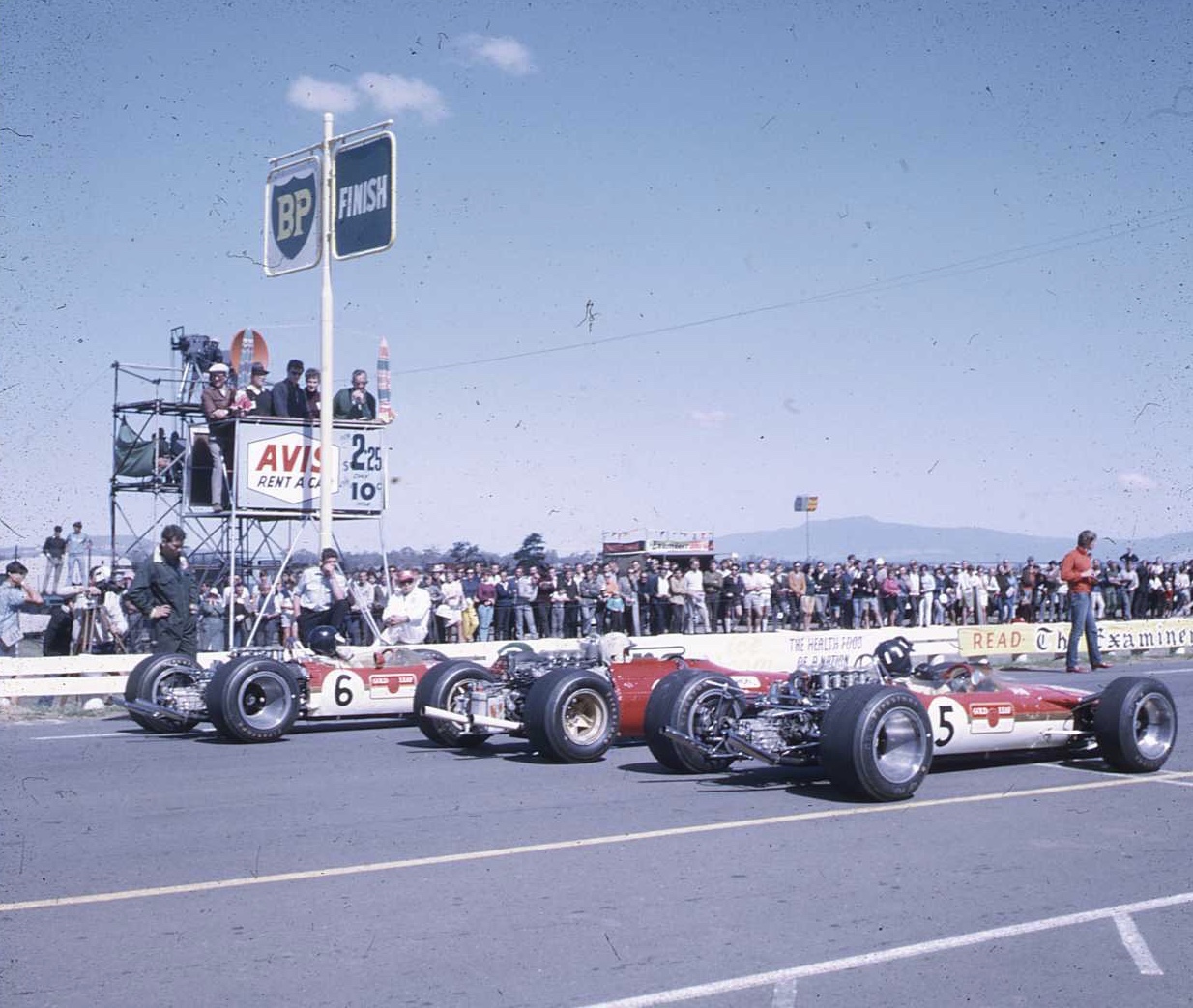
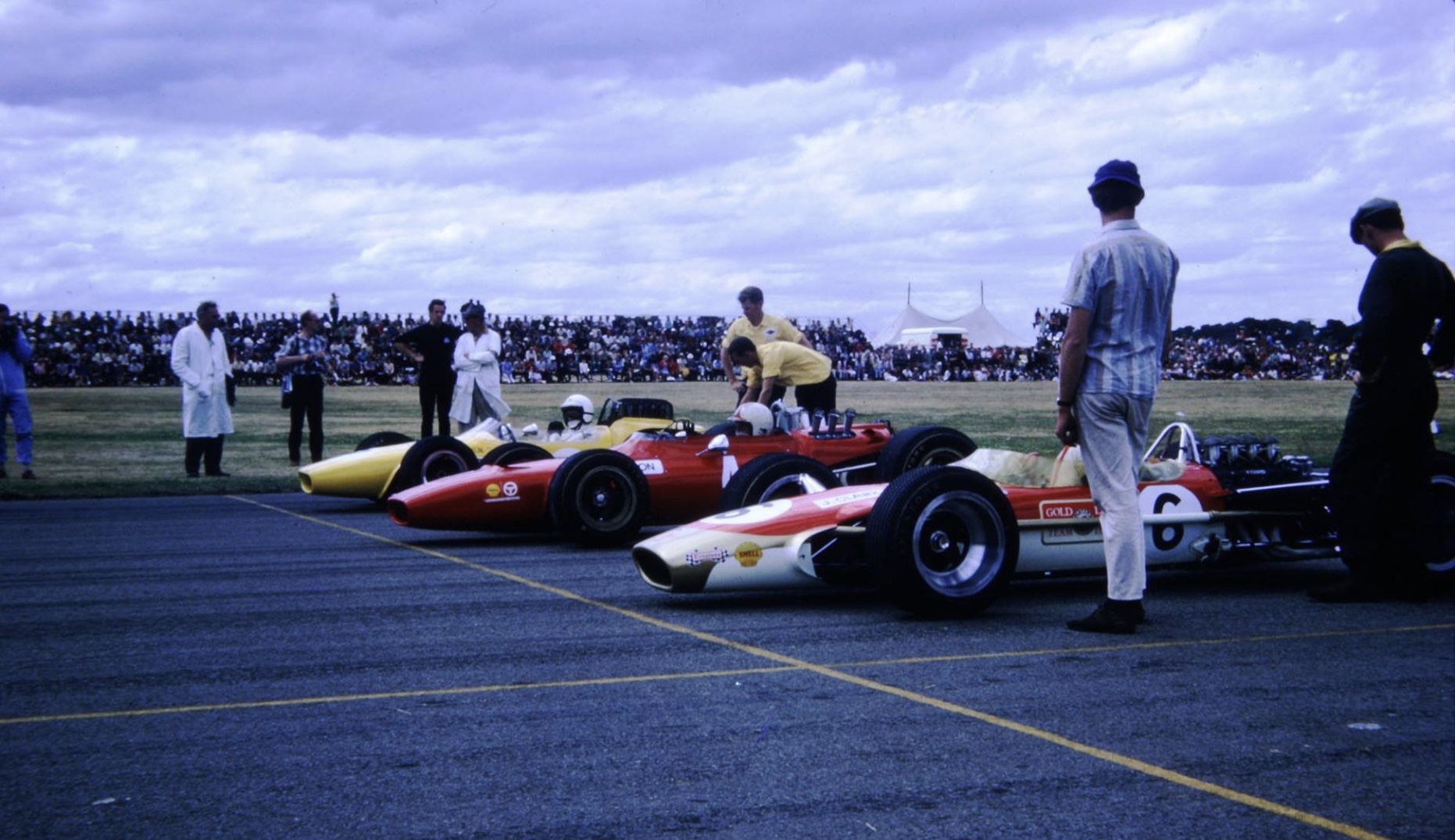
Here Clark, Amon and Hill- Lotus 49 Ford DFW, Ferrari Dino 246T and 49. Two Cosworth V8’s and a Maranello V6. There were a swag of Repco V8’s of different configurations, BRM V8’s and V12’s- Len Terry’s new P126 was blooded in the Tasman in advance of the F1 season, Alec Mildren’s Brabham BT23D Alfa Romeo using a 2.5 litre variant of the Tipo 33 sports prototype V8, plus cars using the good ole Coventry Climax four cylinder FPF.

As good as it gets in terms of variety of cars and drivers- in addition to the fellas on the front row of the dry, preliminary, Saturday race we had Jack Brabham, Denny Hulme, Bruce McLaren (in NZ), Frank Gardner, Pedro Rodriguez, Piers Courage, Richard Attwood…apart from the local hotshots.

Clark and Hill raced 49’s ‘R2’ and ‘R1’ during their 1968 tour down south.

Hill had mainly raced ‘R1’ since the 49’s race debut at Zandvoort on 4 June 1967. He joined Team Lotus in Australia whereas Jim did the full eight weeks and had almost exclusively raced ‘R2’ from his first up win in the chassis amongst the Dutch dunes. Motors fitted for the Tasman were Cosworth’s 2.5 litre variant of the 3 litre Ford DFV dubbed ‘DFW’.

(D Cooper)

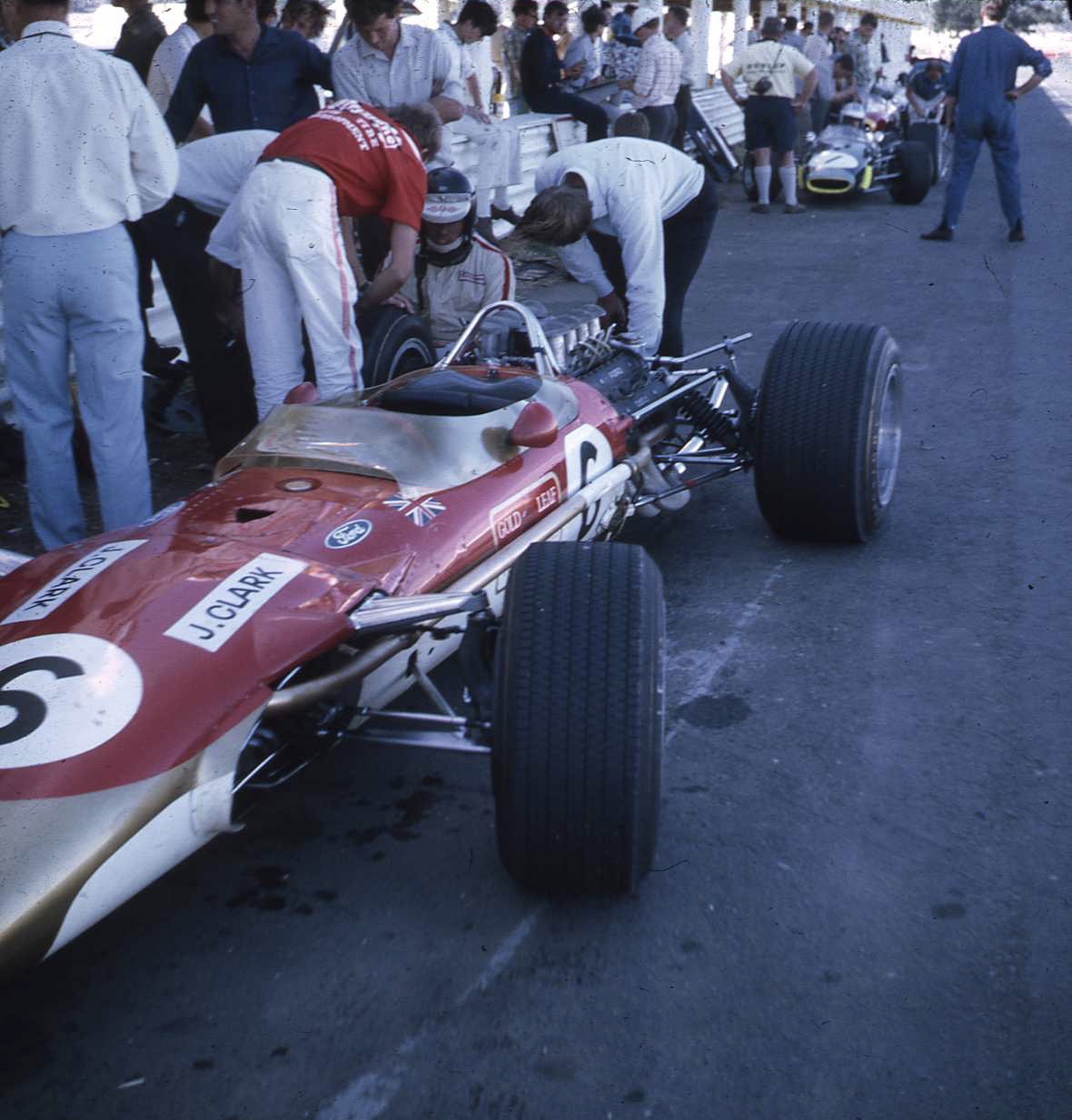
Jimmy has a tyre issue he is sorting with the Firestone man.

The fag packet Gold Leaf Players livery is new- the cars were green and gold at Pukekohe and Levin and red, white and gold at Wigram only a month or so before Longford, as shown in the Wigram front row photograph below. That’s Denny’s F2 Brabham BT23 Ford FVA behind Jim in the Longford pitlane.

(B Wilson)

Clark has won his last championship GP by this stage, the South African at Kyalami on New Years Day, 1 January 1968, he won at Sandown the week before Longford on 25 February taking the Australian Grand Prix, his last, from Chris in a ‘thriller-driller’ of a race which could have gone either way right to the finish line.

Racing’s tectonic plates shifted with his Lotus 48 Ford FVA F2 death in Hockenheim only months hence.

(D Cooper)

In a tour de force of leadership Graham Hill picked up Team Lotus lock, stock and barrel and drove the team forward as Colin Chapman regained his composure and focus after the death of his great colleague and friend.

No seatbelt in Graham’s car above, there would be by seasons end.

No wings either, there would be by mid-season, 1968 was a year of change in so many ways.

Wings here; https://primotipo.com/2015/07/12/wings-clipped-lotus-49-monaco-grand-prix-1969/, and in more detail, here; https://primotipo.com/2016/08/19/angle-on-the-dangle/

Chris loads up in the Longford paddock. That’s Denny’s Brabham BT23 Ford FVA F2 atop the Alec Mildren Racing transporter behind (D Cooper)

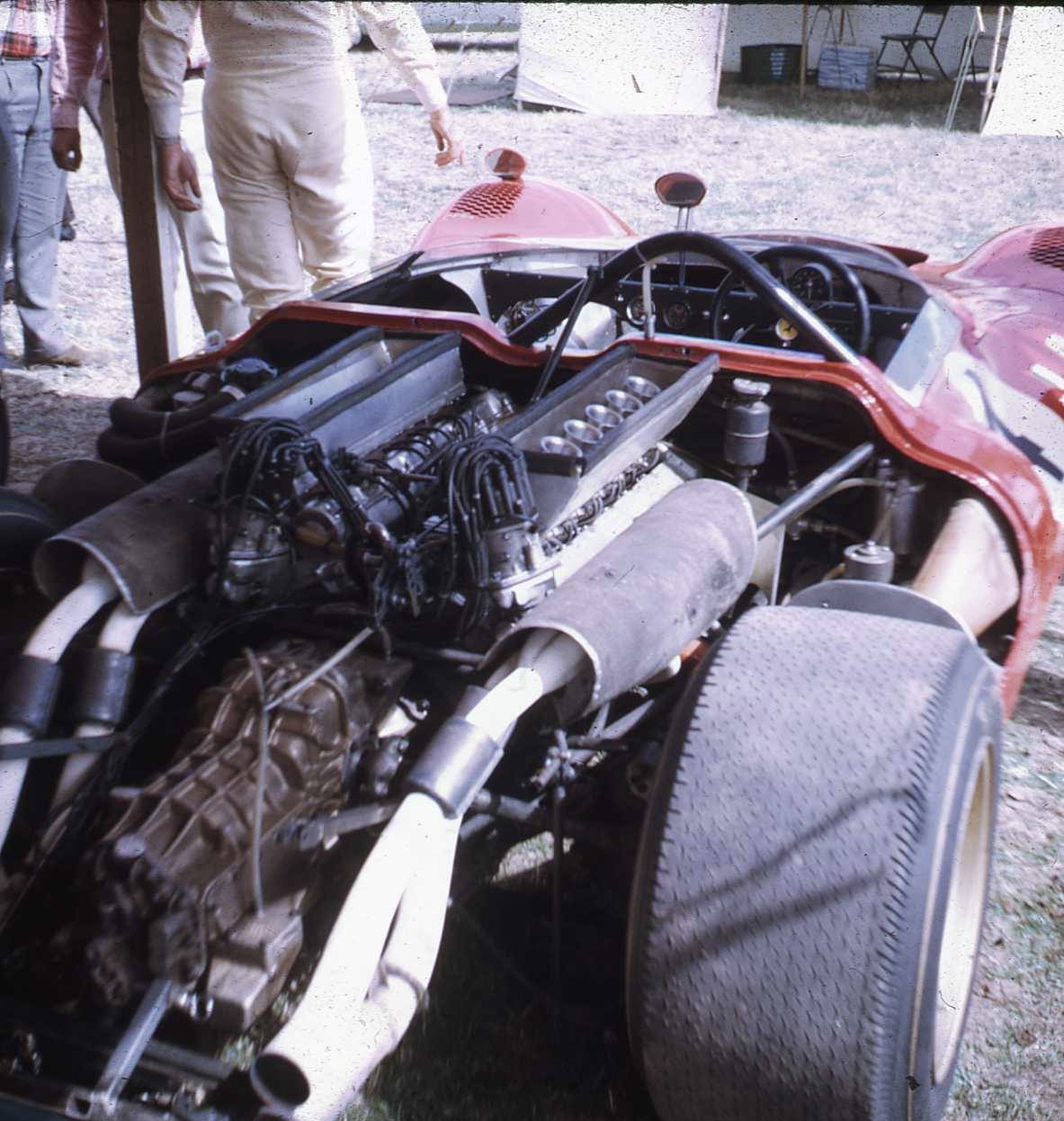
The Scuderia Ferrari presence, or more precisely Chris Amon’s single Ferrari 246T raced under his own banner raised enormous interest, the great Kiwi did not disappoint either- and of course came back the following year with a two car squad and won.

In Australia we got a double 1968 whammy in that David McKay acquired one of the P4/Can-Am 350 Group 7 cars for Chris to drive in the sports car support races.

Frank Matich served it up to him big-time in one of his Matich SR3 Repco 4.4 litre V8’s, disappointingly Matich did not cross Bass Straight for this meeting so Chris set the fastest ever lap of Longford despite not being pushed by the oh-so-fast Sydneysider.

(D Cooper)

The gleaming Ferrari Can-Am 350 Scuderia Veloce raced all too briefly throughout Australia in 1968 by Chris Amon, and Bill Brown upon the Kiwis departure back to Italy and all points beyond.

(D Cooper)

Auto-erotica.

With the 1967 Manufacturers Championship over Ferrari modified two of the P4’s, this car, chassis ‘0858’ and ‘0860’ to better compete in the Can-Am Championship and naming them ‘350 Can-Am’ to contest the prestigious series in their most important market.

The cars were lightened considerably becoming curvaceous Spiders instead of even more curvaceous Coupes! Weight was reduced from 792Kg wet to 700Kg wet, engine capacity was increased to 4176cc raising the engines power to 480bhp @ 8500rpm.

It wasn’t enough to compete with the McLaren M6A Chevs of Bruce and Denny, that story is told in this article about the Ferrari P4/Can-Am 350 and ‘0858’ specifically; https://primotipo.com/2015/04/02/ferrari-p4canam-350-0858/

Credits…

Dennis Cooper, Historic Racing Car Club of Tasmania, Bruce Wilson

Tailpiece: Look at the crowd…

(D Cooper)

Talk about missing out…

Finito…

(D Simpson)

Ken Cox’ Cooper T53 Ford at Hume Weir’s ‘New Year’ meeting on 29 December 1968…

The wise owls of The Nostalgia Forum have determined this Cooper ‘Lowline’ as either #F1-4-61, the ex Yeoman Credit/Reg Parnell Racing 1961 Intercontinental Formula car raced by John Surtees and then Roy Salvadori in Australasia, or #F1-7-61 the ex-Rob Walker car raced by Stirling Moss in F1 and the Australasian Internationals in 1962. Perhaps the latter is more likely Allen Brown surmises on his excellent oldracingcars.com, see the link at the end of this piece. The car still exists in the hands of the Banister Family in Sydney.

Whatever the case isn’t it a fantastic looking car? Dick Simpson has captured it and Ken’s style marvellously!

I can feel and hear the rumble of the 289 Ford small-block bent-eight. Its not Australia’s ‘first F5000’ mind you, that honour goes to Austin Miller’s Geoff Smedley built Cooper T51 Chev which set an Australian Land Speed Record at Bakers Beach in Tasmania in 1961 at 163.94mph or thereabouts.

Cox from Bob Minogue, Elfin Mono Ford, Hume Weir circa 1969 (C Baron)
And again out of Scrub- who and what is the third car I wonder (C Baron)

The essentials of the Cox Cooper are as follows, sourced from a ‘Motor Racing Australia’ story written by Ray Bell in September 2001.

Cox raced anything and everything- speedway, dirt tracks and bitumen from the forties onwards. One of his main supporters was a timber-cutter named John Cierpicki, he acquired the Cooper in a sale of Stan Jones’ assets after Stan got into terrible strife off the back of the 1961 Australian recession- the car was extricated from an old chook-shed in Camberwell, Melbourne circa 1966. As a former long time Camberwell resident I am fascinated to know the whereabouts of said chook-shed…

Norm Beechey’s engine man, Claude Morton with assistance from Kerry Luckins at Paul England Engineering in Moonee Ponds soon had a 179 Holden six-cylinder ‘Red Motor’ race-prepped and inserted into the rear of the T53. It’s said only one frame tube had to be removed in this process, the tube was returned when the Ford engine went in.

The car raced with the Holden engine for a few years, the Colotti gearbox was rebuilt by Claude Morton and adapted to the Holden-six with a bell-housing made by someone long since forgotten. The 289 had modified heads and a cam, it was fed by a four-barrel carb with ‘the exhausts made by Alan King’s Panel Shop over a dozen VB’s’. Later a 302 bottom end went in and a mismatched installation of 351 heads.

The car first raced in V8 engined form at Hume Weir on the 30 November- 1 December 1968 weekend which makes this meeting surely its second outing? The machine raced at the Weir, Winton, Calder and Phillip Island and ‘took on some minor kind of prominence at a time when the argument was raging about whether or not Australia should adopt F5000,’ Bell observes.

Bryan Thomson raced the car at Winton in 1970, Bob Minogue owned it for a bit, then Des Lascelles with the car even contesting an F5000 race – the Motor Show Trophy meeting at Warwick Farm in September 1972 – it no doubt looked a bit out of place in amongst the T300 Lolas, Elfin MR5s and McLaren M10s…

Click here for Allen Browns piece on Cooper T53’s- all you wanted to know but were afraid to ask;

https://www.oldracingcars.com/cooper/t53

(C Baron)
(C Baron)

Doesn’t it look like a great, race long dice between the nimble, light Elfin and big, booming Cooper- Minogue was that impressed, or needing the challenge he bought the car.

Credits…

Dick Simpson, oldracingcars.com, The Nostalgia Forum, Ray Bell, Charles Baron

Finito…

(CAN)

Nup. But Leslie Marr’s Connaught B Type Jaguar at the Dunedin Wharves, New Zealand during the ‘Fourth Dunedin Road Race’ meeting on 28 January 1956…

Marr is now 97 years old, (born 14 August 1922), I wonder if this image could make its way to his door the artist would paint this scene? Perfect world is an impressionist work without the fellas in front of the car and with the cranes at full height.

Isn’t it an extraordinary photo? Drink it all in.

You just cannot compare the race photography of today with, say, pre-1970. The topography in which we race and therefore the environment in which the ‘snappers have to work is just so different; a statement of the obvious, one of my strengths.

I wrote about this meeting in the context of an article on Aston Martin DP155 and the growth of Kiwi racing post-war not so long ago, so lets not go over old ground; https://primotipo.com/2019/09/05/the-gp-aston-martin-dp155/

The car alongside is Peter Whitehead’s Ferrari 500/750S, his buddy Tony Gaze won in his identical car from Reg Parnell, Aston Martin DP155 and Syd Jensen’s Cooper Mk9 Norton. Leslie ‘cracked the shits’ over the nature of the course, especially the 100 metres or so gravel section, so he did a lap to collect his start money and retired thereafter- a pity as he performed so well on that tour.

Love the ‘hatted’ gent aft of the Connaught. The bloke at far right looks like a driver but I have no idea who, the dude in black with his back to us could be Leslie?, just guessing. Do get in touch if you can fill us in a bit more Kiwis. Unbelievable.

(GP Library)

Connaught B-Type…

Leslie enters the Goodwood paddock in ‘B3’ during 1955, I can’t see a race entry for him at Goodwood so perhaps he is testing prior to the July British GP meeting, Q19 and DNF brakes in the race won by Stirling Moss, Mercedes W196. This chassis is in normal Alta engined specification at this stage.

Connaught B-Type cockpit during 1955 British GP weekend. It looks like Ken McAlpine’s car fitted with ‘slipper’ or ‘Syracuse’ body.

The standard of presentation and finish of these cars is outstanding, ‘tool room’ quality in the vernacular of the day. Big array of instruments, pre-selector change quadrant and natty tartan seat cushion grab the eye.

B Type Connaught laid bare (J Ross)

Rodney Clarke and one of his mechanics prove both the bulk and light weight of the aluminium Streamliner body. I wonder what the difference in top speed of the cars so equipped was relative to the normal open-wheel configuration?

This amazing body was the result of studies in Connaught’s own wind tunnel- this Ford V8 powered facility was the very first owned by an F1 Team. Visually, light-weight Dunlop wheels set off a very attractive, edgy looking machine.

The Alta DOHC, twin-cam, two-valve 2470cc engine was good for about 240bhp @ 6400rpm as prepared by Mike Oliver at Connaughts Send HQ, but not reliably so. The engine variously used SU and Connaught fuel injection, both were problematic, in the end Webers were the solution.

The chassis of the B Type was a simple twin-tube arrangement with twin wishbones and coil springs up front and de Dion rear located by a radius rod on each side, a compound lateral linkage with torsion bars provided the spring mechanism. A Wilson type five speed pre-selector box, also used in the A Type was fitted.

’B1’ made its debut at Goodwood on Easter Monday 1955 with Tony Rolt at the wheel- this chassis’ most famous victory was in young Tony Brooks hands, he won the Syracuse GP in front of the works Maserati 250F’s of Musso, Schell and Villoresi, on home turf in October 1955. It was the first all British GP win since Segrave’s San Sebastián Sunbeam win in 1924.

Seven Type B’s were built, what a lovely thing to own.

Alta engine as per text (J Ross)
(J Ross)

Leslie Marr, admirers, and his Connaught, then with its normal body, during the 1954 Aintree 200 meeting.

Etcetera…

(T Adams)

A couple of photographs of Marr during the Lady Wigram Trophy weekend on the airfield circuit. The colour photograph truly is Rocking Horse Shit in terms of rarity whereas the Godfrey Paape shot is the best action shot of the car I’ve seen. Leslie was out of grid slot 2 and finished third behind the Peter Whitehead and Tony Gaze Ferrari 500/625 3 litre machines, 21 January 1956.

(G Paape)
Cockpit shot with floor, seat and exhaust secondaries and pipes removed. Access difficulty given the body obvious

Marr’s Streamliner clearly caught the eye of the Australia Motor Sports Editor at Ardmore, here on the cover of the February 1956 issue of the much respected magazine.

Credits…

Classic Auto News, LC Cresswell, Theo Page, John Ross Archive, Godfrey Paape, Tony Adams

Tailpiece…

B Type cutaway, car shown fitted with ‘slipper’ body (T Page)

Finito…

image

(Klemantaski)

Coke! and it seems Giuseppe Farina agrees…

He is in the Monza pits all ready to ‘load up’, exact date and meeting uncertain but the Pirelli overalls suggests maybe his 1950 Alfa Romeo 158 Alfetta championship season or ‘praps the year after.

All correspondence entered into…

(unattributed)

And here in the Silverstone pits aboard his Alfa Romeo 158 ‘Alfetta’ during the 1950 British Grand Prix weekend- the very first round of the inaugural FIA’s World Championship for Drivers in the fourth year of Formula 1.

Farina won three of the seven rounds- at Silverstone, Bremgarten and Monza in his works Alfa Romeo from teammate JM Fangio who also won three rounds, but fell three points short of the Italians total of 30 points.

The Indy 500, one of the seven rounds back them, was won by Johnnie Parsons in a Kurtis Kraft Offenhauser.

Credit…

Klemantaski Collection

image

(Klemantaski)

Finito…


(Theo Page)

The Cooper Mark 1 (later referred to as T41) was the Surbiton marques prototype or first mid-engined F2 car…

Note that there were also Mk1, 2, 3 etc air-cooled Coopers, the T41 was typically fitted with a Coventry Climax 1.5 litre FWB SOHC, two-valve engine.

This article was spawned by Theo Page’s Type 41 cutaway above. I thought ‘that would be nice to add to an existing article on the Paul England/Austin Miller car’ and then I came upon T45, multiple T51 drawings as well as the ‘Lowline’ T53 so the idea of a piece on the early water-cooled mid engined Coopers popped into my head.

I knew the John Ross and Dave Friedman archives had some great workshop/circuit photographs of the cars engineering detail but that was going to create too much visual clutter so the article is in two parts.

The first bit is the overall story- Who, What, Where and When if you like, the second is more around the design and engineering of the cars with photographs providing great visual support. An ‘eyeful is better than an earful’ and all that.

In terms of photographs I’ve already written a lot of Cooper articles, often ‘quickies’ with all of the best Australian photographs I could find contained therein- rather than re-use these, key ‘Cooper Climax’ and ‘Cooper Maserati’ into the search spot on the upper left primo home page and you can check them out at your leisure, I have sought photos hopefully many of you have never seen before- other than a few Kiwis anyway!

Off we go.

Wally Baker Cooper Mk8 Norton, South Canterbury Hillclimb circa 1960. ‘Clellands Zig Zag’, near Cave, on the east of NZ’s South Island. The road is tarmac these days (CAN)


1949 Cooper Mk3 JAP (Getty)

If John and Charles Cooper’s first mid-engined Coopers of 1948 set the company on a path to change the face of motor racing, the T41 hastened the onslaught on the long established (Auto Union pre-war duly noted) front engine motor racing paradigm.

Lets not forget the performance of the Cooper Bristols Mk1 and Mk II or T20 and T23 which were born as F2 machines and became Grand Prix cars with the adoption of F2 to determine the drivers and manufacturers championships in 1952 and 1953.

Those cars ‘launched the careers’ of a swag of top line pilots not least two World Champions in Mike Hawthorn and Jack Brabham.

The performance of the T39 ‘Bobtail’ and T40 Bristol which Jack ‘knocked together from the Cooper parts bin’, and in which he made his F1 Championship debut at Aintree in 1955- and aboard which he won the Australian Grand Prix at Port Wakefield later that year, emboldened human dynamo John Cooper to build a mid-engined car for the new 1.5 litre F2 which took effect from 1 January 1957.

Jack Brabham in his famous ‘REDeX Special’ Cooper T23 Bristol in the backyard of his parents house in Hurstville, Sydney circa 1953 (HRCCT)


Cooper Mk1 or T20 Bristol (Vic Berris)


Reg Hunt’s Len Lukey driven Cooper T23 Bristol during the 1956 AGP weekend at Albert Park. Doncha think blokes look at racing cars in the same way they check out chicks- with absolute focus, totally oblivious of anything else going on in the immediate environs? Ninth in the race won by the Moss works Maserati 250F (G Smedley)


Colvin Algie, Normac/AC Special about to be lapped by Brian Pescott, Cooper T23 Bristol and Angus Hyslop, Jag D during the 1959 Ahuriri Road Races- Port Ahuriri, Napier, NZ North Island. JW Lawton Cooper 2 litre won from DC Hulme Cooper T45 FPF 2 litre and Pescott (CAN)


Brabham in his 1955 British GP debut/AGP Port Wakefield winning Cooper T40 Bristol, here at Mount Druitt, Sydney, probably also 1955 (Uni Newcastle)

In the UK six F2 races were held between the 14 July Silverstone British GP support race won by Roy Salvadori’s works T41 Climax FWB and the 14 October BRSCC Brands Hatch race won by the RRC Walker Racing T41 similarly engined car. The new T41’s won five of the six races, Salvadori four and Brooks one. Colin Chapman won at Brands on 9 September in a Lotus 11 FWB sportscar, an occasion where the T41’s were absent.

Finally the Brits had, in Coventry Climax, a manufacturer of modern, competitive engines which were available to all who could stump up the readies. During 1957 the SOHC, two-valve FWB was supplemented by the twin-cam, two valve FPF putting in place the family of engines which carted away two F1 titles in 1959/60.

Similarly, Cooper built cars for all.

There is other ‘confluential’ stuff which contributed to Cooper’s rise and rise too;

Jack Brabham arrived at Cooper in 1954 with his unique blend of driving, testing, mechanical and engineering skills. The energy of Jack and John Cooper must have been a truly awesome thing to watch- I’m not so sure I would have wanted to work for them but to view it all from the sidelines would have been quite something.

RRC Walker racing ‘attached themselves’ to the lads from Surbiton, specifically the contributions of Walker RRC, Moss S, and Francis A were mega, as we will see.

Not to forget the son and father combination of John Cooper, a racer to the core, and Charles Cooper who kept the business alive and well. As anyone who has run a small business well knows keeping an enterprise afloat is not easy especially in the fickle ‘only as good as yer last race’ world of motor racing. Cooper Cars was highly profitable throughout with John selling at ‘the right time’ a decade hence not too long after Charles died.

Where were we?- back to the Mark 1, or make that, for me, T41!

John Cooper and Owen Maddock produced a car which was strongly based on the T39 albeit the machine was ‘slipper bodied’ rather than having the all-enveloping body of the other car. Similarly it had independent suspension front and rear using top transverse leaf springs and wishbones at the bottom.

Jack, T41 Climax at Caversham during the 1957 F Libre AGP. Modern as tomorrow Cooper a contrast with the partial nose of the Fred Coxon Amilcar Holden Spl behind (K Devine)


Brabham, T41 FWB on his way to third in the 1957 AGP behind the Ferrari 500 3 litre of Lex Davison/Bill Patterson and Stan Jones Maserati 250F (D Van Dal)


Lady Wigram Trophy 1957. They are off, F Libre- Brabham in T41 FWB against the ‘Big Red Cars’- Reg Parnell and Peter Whitehead Ferrari 555/860 and Ron Roycroft in the light coloured Ferrari 375. D Type is Bob Gibbons, Syd Jensen, Cooper T41 Climax and Horace Gould, Maser 250F #2 on row 2. Look at the size of the Brabham and Jensen Coopers in relation to the Ferrari’s (CAN)


Austin Miller, Cooper T41 Climax leads Bill Patterson, Cooper T39 Bobtail Climax off Long Bridge, Longford during the 1958 Gold Star round won by Ted Gray’s big, booming Tornado 2 Chev. Both of these fellas progressed to T51’s, Patto won the 1961 Gold Star in one of his. He owned more Coopers in Australia than anyone?- perhaps Stillwell and Jones count was similar. Paul England raced Austin’s T41 in the 1957 German GP- DNF distributor after 4 laps

The production 1957 Mark II (T43) was settled upon that winter and put into build at Hollyfield Road.

It had a longer wheelbase that the Mk1 and bulkier bodywork to accommodate two pannier fuel tanks rather than the scuttle tank of the Mark 1- the suspension was the same as the earlier car, the drooped nose was a means of distinguishing between Coopers very latest offering and its predecessor.

Brabham debuted the Coventry Climax FPF engine- it took its bow at the 1956 London Motor Show, in the first race of the year, the Lavant Cup at Goodwood on 22 April finishing second to Tony Brooks Walker T41 FWB. Initially the 1475cc engine developed 141bhp @ 7300rpm and most importantly a swag of torque from 4000rpm- it’s peak was 108.5 lb-ft @ 6500rpm. The pint sized package weighed only 225 pounds.

It was a year of F2 dominance for the marque- in sixteen national and international races  Brabham won five, Tony Marsh, George Wicken and Roy Salvadori two apiece and Tony Brooks and Ronnie Moore one. Tom Dickson won at Snetterton in May aboard a Lotus 11 FWA when no T41/43 was present, Maurice Trintignant was victorious at Reims in a Ferrari 156 and Edgar Barth in a Porsche 550RS at the Nürburgring but otherwise it was all Cooper.

Pescara GP 1957. Jack in front and Roy Salvadori behind, Cooper T43 FPF 2 litre- 7th and DNF from Q16 and 15. Moss won aboard a Vanwall VW (57)


Dunedin International Road Race 1958. McLaren, T43 Climax #47, Syd Jensen, Cooper MkX Norton with #51 Geoff Mardon, VA Vanguard and Merv Neil in another T43 alongside. You can just see the Frank Cantwell Tojeiro Jag at left rear. Ross Jensen Maser 250F won from McLaren and Syd Jensen (CAN)

Meanwhile in Europe privateers were racing the cars in non-championship Grands Prix. George Wicken took his T43 FPF to Siracusa in early April DNF, Brabham was fourth in the Glover Trophy at Goodwood behind two F1 Connaught B Types and a BRM P25. Salvadori was second at the GP de Caen in July behind Behra’s BRM P25 but ahead of four Maserati 250F’s, a car Roy knew rather well.

In the BRDC International Trophy Innes Ireland’s T43 was sixth in his heat and Brabham second in his. Fourteen Cooper T41/43’s contested this race, the best placed was Salvadori in eighth behind BRM P25’s and Maserati 250F.

With a 2 litre FPF available Cooper ran a limited World Championship campaign that year, the best results were Salvadori’s fifth at Aintree and Brabham’s sixth at Monaco. Doug Nye explained how the 2 litre variant came about.

Early in 1957 Roy Salvadori tested Rob Walker’s F2 T41 and F1 Connaught Type B on the same day at Goodwood. He quickly realised the potential pace of a water cooled mid-engined Cooper and floated the idea of increasing the capacity of the FPF enough to tackle GP racing.

Soon, with Walkers financial backing- Rob ordered a chassis and 2 litre engine, the project was underway. Climax’ changes involved increasing the bore and stroke which required new pistons, liners and crank- the result, with only two days fettling was an astonishing 176bhp @ 6500rpm. Brabham used the engine at Monaco and ran as high as third before pushing the car over the line in sixth after fuel pump failure.

At the end of Jack’s European season he came home for the summer commencing his race campaign with the Australian Grand Prix at Caversham, an ex-airbase circuit out of Perth.

His T41 qualfied and finished third behind the Formula Libre 3 litre Ferrari 500 of Lex Davison/Bill Patterson and Stan Jones’ Maserati 250F.

The 1958 Mark III (T45) added significant refinement in that the front suspension was changed to use coil springs and both upper and lower wishbones. At the rear the transverse leaf remained with upper lateral links added which released the spring to do just that, relieved of its additional wheel locational function.

Coventry Climax chief Leonard Lee had endorsed a further increase in the capacity of the FPF to 2.2 litres, the maximum the original block could accommodate. Production of these engines was geared around resourcing two car Cooper and Rob Walker Cooper entries.

The F2 Index lists twenty F2 races in 1958 with Cooper T43/45 victory honours shared widely. Brabham and Bruce McLaren- Jack brought Bruce to Europe that year after Bruce had much Cooper success at home, had three wins each, Moss and Ian Burgess two, with one each to Stuart Lewis-Evans, Kiwi, Syd Jensen, Maurice Trintignant, Henry Taylor, Tim Parnell and Jim Russell.

The big news of course was Stirling Moss’ win aboard Rob Walker’s T43 in the Argentinian Grand Prix.

The car was fitted that day with one of the 1960cc FPF’s. Continental tyres contributed too, he ran on them from start to finish in place of his usual Dunlops. Vanwall, to whom Moss was contracted in F1 that year chose not to travel to Argentina given its cost, distance and because Tony Vandervell’s engines were not quite running well enough on Avgas just yet- there were new fuel regulations in place from 1 January.

So Walker and Moss decided to have a crack at the race- and won! Use of Continentals was Rob Walker firing a shot across Dunlop’s bows ‘because they weren’t being very helpful on tyres at the time’ Doug Nye quoted Walker as saying in ‘The History of The Grand Prix Car’. The Conti’s were were worn through to the canvas at the end of the race- Ferrari fell for the ruse of a prospective tyre change when Alf Francis and another mechanic paraded with wheels and jacks in the pitlane for a stop which was never planned to happen.

In non-championship GP’s Moss won the Aintree BARC 200 in April and the GP de Caen, on both occasions aboard a Cooper T45.

In Australia we were all excited by Cooper pace watching Moss and Brabham face-off in the Melbourne Grand Prix at Albert Park, the last race at the Park until the modern era, won in searing heat by the Walker/Moss T45.

Roy Salvadori leads the marauding pack into the first turn at Monaco in 1958. He is followed by #6 Jean Behra, BRM P25, Tony Brooks Vanwall with #28 Stirling Moss, Vanwall. Brabham is to the right out of shot. Maurice Trintignant won in Walkers Cooper T45 with a bit of luck in a race full of DNF’s and clever strategy. Brabham Q3 and 4th, Roy Q4 and DNF gearbox (Getty)


Equipe Lukey during the 1959 AGP weekend at Longford, Cooper T45 2 litre FPF Climax. With a 2.5 FPF Len Lukey would have won in his ex-Brabham machine, but Stan Jones prevailed in a close tussle in his Maser 250F by 2 seconds (Walkem)


Bruce’ works T45 in the Ardmore NZ GP paddock 1960- Jim Palmer’s Lotus 15 Climax and Pat Hoare, Ferrari 256 behind. Brabham’s works T51 first- then Bruce and Stillwell and Stan Jones in T51’s (CAN)

At championship level Cooper enjoyed considerable success in addition to the Walker/Moss Argentine win.

Salvadori was second at the Nürburgring, third in Britain and fourth at Zandvoort whereas Jack was fourth at Monaco.

The 2.2 litre FPF made its debut at Monaco in the Salvadori/Brabham works cars. There, Maurice Trintignant ran a Walker T45 with an interim 2015cc engine and centre lock detachable Borrani wire wheels and in a crazy race of attrition, he won- two races on the trot for the RRC Walker Racing new-fangled Coopers!

In the more open faster races of the season the Coopers were simply giving away too much capacity but that would be remedied in 1959.

T51 Climax (T Matthews)

The 1959 Mark IV (T51) was identical in terms of chassis and suspension to the Mark III- the technical details of which are dealt with in the second part of this article.

It was one of the great customer racing cars of all time in that so many were sold (28 orders according to period factory records but the actual number of chassis built was far greater than this) and so many used it to win for two or three years hence in all corners of the globe.

Interesting insights by Cooper historian Doug Nye are voluminous and fascinating not least the fact that Coopers weren’t all factory constructed by Cooper staff. Some were, but others were built up by customer team mechanics at Cooper or using a ‘kit of parts’ provided by Cooper and built up elsewhere. The ‘kits’ could be complete or otherwise which is reflected in the many different details between cars which are nominally of the same model type.

The British Racing Partnership/Yeoman Credit take on a Cooper T51 Climax at Monaco in 1960- Tony Brooks Q3 and 4th-Moss won in a Walker Lotus 18. Compare the bodywork and detail of this car with the ‘factory standard’ car of Noel Hall below (D Friedman)


Noel Hall’s Cooper T51 Climax at Lowood, Qld in 1959. Probably during one of the two Lowood Gold Star rounds (unattributed)

Whilst, as noted above, the T51 chassis and related componentry inclusive of the gearbox was carried over from the T45, the critical aspect of the package essential for ultimate success was redesign of the FPF to the maximum allowable F1 capacity limit of 2.5 litres unsupercharged.

The 2.2’s of 1958 were fragile at the margin, the block and crankcase had been weakened in the process of taking the engine from its original 1.5 litres to a smidge over 2.2. The crank counter-weights could not be enlarged and as a consequence the motor vibrated and ran roughly- its life was usually short if over-revved.

Walter Hassan’s redesign started as late as 1 December 1958.

A new block was made by Birmal in light alloy integrating both the block and crankcase and extended from 3 1/2 inches below the crankshaft to 8 5/32 inches above it, Nye wrote. The bore/stroke was 94mm x 89.9mm for a capacity of 2495cc. Cast iron wet liners were used and a five main bearing crank. Beneath the crank was a jackshaft which carried three oil pumps- one pressure and two scavenge. The engine was ‘cross-bolted’- eight studs each side of the block screwed into the main caps.

The two valve, DOHC engine, as before, had its cams driven by a train of gears. The Mk1 2.5 litre heads had 1 1/2 inch bore ports feeding 1.937 inch inlet valves and 1.687 exhausts. Nye notes the engine was ‘under-valved’ initially in case of structural deficiency elsewhere. Fitted with twin-Weber 58 DCO carbs the engine revved happily to 7000rpm developing circa 240bhp @ 6750rpm and ‘pulled like a train from as little as 4000rpm’. Remember that the 2207cc unit produced 194bhp.

Brabham would have well and truly noticed the weight gain mind you- the 1.5 FPF weighed 225lb, the new 2.5 290lb.

Doncha hate thoughtless crops! Headless Repco technician, probably Michael Gasking, with an FPF bottom end in the Repco Engine Lab, Richmond circa 1963 which means its probably one of Jack’s 2.7 ‘Indy’ spec engines used in the NZ/Oz pre-Tasman F Libre days. Note the beefy steel Laystall crank, deep block as per text and row of holes ‘at the top’ for the cross-bolt studs. It’s a story in itself but Repco were licensed or approved by Climax to look after the FPF’s which extended to manufacture of rings, bearings and pistons with CC providing block and head castings which were machined by Repco. Brabham was the first ‘customer’ (M Gasking)

Cooper’s factory drivers changed in 1959 as Roy Salvadori, for years a contracted Aston Martin driver, committed himself to David Brown’s old-school front-engined cars in F1 as well as their sportscar program.

It was a remarkably loyal call by Roy but one not readily understood given his back to back test of Rob Walker’s old and new cars only twelve months or so ago. Roy was very much the quicker of he and Jack in 1958 and really was in the box seat with all of the knowledge about what was coming down the Cooper pike…A Le Mans win together with Carroll Shelby that summer was some compensation for the Aston Martin DBR4 which was ‘too little too late’ without getting lost in that tangent.

John Cooper therefore recruited Masten Gregory and promoted Bruce to the F1 squad with Jack’s unique contribution in and out of the car ongoing.

Vanwall withdrew from Grand Prix racing, and soon altogether, so Stirling Moss raced Rob Walker’s Coopers. The primary difference in specification between the works cars and Walker’s were that John Cooper didn’t provide his you-beaut modified ERSA gearboxes. Walker was left to his one devices, contracting Valerio Colotti to build transmissions, which it transpired failed repeatedly.

In some ways it could be said 1959-1960 were the years of the gearboxes. Moss would have won in 1959 had the Colotti’s held together in the Walker 51 and a Lotus 18, ‘the car of 1960’ would perhaps have won in 1960 were it not for the unreliability of Colin Chapman’s sequential ‘Queerboxes’.

Having said that Cooper created their own luck by building modified versions of the Citroen-ERSA boxes in 1959 and the Owen Maddock designed, Jack Knight built ‘Cooper-Knight CS5’ transaxle in 1960.

Ifs, buts and maybes mean nothing in motor racing- but they are interesting all the same!

Chassis #F2-16-59 , Noel Hall’s T51 was a new car ex-factory, fitted with a 2.2 litre FPF, here outside his garage business- where was that? (J Ellacott)

Jack Brabham won the 1959 title with 31 points from Tony Brooks, Ferrari Dino 246 and Vanwall on 27, Moss 25 1/2 and Phil Hill, Ferrari Dino 246 on 20 points.

The season was open in that Brabham, Brooks and Moss won two races apiece- Monaco and Aintree for Jack, Nürburgring and Reims for Tony and Monsanto and Monza fell to Stirling.

Moss lost the Monaco and Zandvoort leads- and was out early at Monza due to Colotti failure. But the works-boxes were marginal too and Jack nursed them, there is little doubt he had greater mechanical sympathy than Moss- and most other drivers for that matter. One does often make ones own luck in all forms of human endeavour.

2.2 Coventry Climax engine detail and ‘curvaceous’ Maddock frame (J Ellacott)

Both Jo Bonnier and Bruce McLaren took their first Championship Grand Prix wins that year- at Zandvoort (also his last) and Sebring aboard BRM P25 and Cooper T51 respectively.

Five non-championship events were held in 1959 and there, too the Coopers were dominant- T51’s took the Glover Trophy at Goodwood- Moss from Brabham powered by their brand new Coventry Climax 2.5 litre FPF’s, the International Gold Cup at Oulton Park went to the Moss/Walker Cooper and Jack bagged the BRDC International Trophy at Silverstone.

Front-engined non-champ victories went to Jean Behra’s Ferrari Dino 246 at Aintree- the BARC 200 and to Ron Flockhart’s BRM P25 at Snetterton in October- the Silver City Trophy.

This is one of my favourite Cooper shots- Harry Schell in a delicate, high speed Yeoman Credit T51 Madgwick drift at Goodwood during the April 1960 Glover Trophy. DNF engine after 20 laps. Ireland’s Lotus 18 won from the T51’s of Moss and Chris Bristow (Getty)


Jack with T51 in the Longford paddock 1960. Is that Alec Mildren in the striped shirt? Jack won in ‘F2-4-59’?) from Mildren’s T51 Maserati and Bib Stillwell, T51 Climax. Lovely atmo shot! Big, hungry DCO mouths (R Lambert)

Cooper were more dominant in Formula 2 where Coopers T43, T45 and T51 ‘cleaned up’.

The most successful combination of the year was Moss at the wheel of Rob Walker’s Borgward engined T43 and T45 with four wins. Tim Parnell and Chris Bristow took three apiece, Brabham two and one each for a lengthy rollcall- Jim Russell, Henry Taylor, Jack Lewis, Maurice Trintignant, Roy Salvadori, Harry Schell, Stan Hart, Trevor Taylor, Ron Carter and Tony Marsh. Amazing really, Cooper built and sold a lotta motor cars!

Moss’ Walker T51 Climax in the Ardmore paddock, NZ GP 1960. Moss DNF clutch after 27 laps- Brabham T51 won from McLaren T45 and Stillwell T51, Bib’s 2.2 the other two fellas 2.5’s (LibNZ)

At the European seasons end Moss, Brabham and McLaren headed south to the Antipodes for what would become an annual trip to race hard in the sun and play hard in the sun…

The NZ GP at Ardmore was won by Jack’s T51 as was the Longford Trophy in early March.

The Surbiton boys received a rude awakening when they fronted up in Argentina on 7 February with their T51’s to be comprehensively blown off by Innes Ireland’s new Lotus 18 Climax- Chapman’s first crack at a mid-engine design was a rather successful one in FJ, F2 and F1…

Bruce won the race after the Lotus failed but Jack DNF’d with heat-treating failure in his ERSA gearbox.

Suitably chastened the Cooper crew famously began the design of what became the Cooper T53 ‘Lowline’ on the long haul flights back to the UK. Doug Nye records that they landed in Heathrow on 17 March with the 14 May Silverstone International Trophy the deadline for completion of new cars.

Mike Barney preparing Jack and Bruce #18 T53 Climax in the Reims paddock in 1960- first and third, Jack won from pole. Technical details as per second part of the article but note the ‘bungy’ retained huge ally fuel tanks and relative height of T53 compared with T45/51

A head start was provided by Owen Maddock’s Cooper-Knight CS5 gearbox- it was just entering limited volume production in Knight’s workshops. McLaren’s College drawing skills were deployed to assist Maddock with Jack providing thought leadership and sketching whilst John chased suppliers for parts.

In essence the T53 was longer, sleeker, lower and lighter with a new, reliable gearbox able to take the loads of the more powerful FPF 2.5- itself mounted a smidge lower in the stronger in torsional stiffness by 25% (over the T51) Lowline frame- in the final year of the long-lived, very successful and interesting 2.5 litre F1.

The second half of the article covers the T53 technical advances in plenty of detail.

Cooper T53 ‘Lowline’ (Brian Hatton)

Innes Ireland won the Glover Trophy at Goodwood in April and the International Trophy at Silverstone in May- Jack’s T53 was second.

Moss could see the Lotus writing on the wall so Rob Walker acquired an 18 prior to Monaco- Stirling promptly won the race albeit Jack led until lap 41 when he spun on  a wet patch and clobbered the Ste Devote wall- the damaged frame was repaired in time for Zandvoort where he won- the Lowline’s first win was on the board.

At Spa the cars were jets- Jack was 2.5 seconds quicker than the nearest pursuer in practice. He won easily with Bruce second after others fell by the wayside- Nye notes Bruce’ car topped 180mph.

By Reims the T53’s were fitted with larger capacity oil pumps to prolong crown-wheel and pinion life. Jack started from pole and won again after a great long duel with Phil Hill’s potent Ferrari Dino 246.

Jack won again in Britain after Graham Hill’s BRM brakes faltered and he spun 6 laps from home, Bruce was fourth, adrift of the two Lotus 18’s of Surtees and Ireland.

This photo and the one below are to illustrate the size and shape differences between the 1959 T51- here Lance Reventlow’s works car and the 1960 T53- Bruce’ #2 car at Silverstone during the British GP weekend- up the road is one of the BRM P48’s. Brabham’s T53 won from the Surtees and Ireland Lotus 18’s. Bruce was 4th and Lance’s car was raced by (his Scarab fellow driver) Chuck Daigh- DNF overheating from Q19 after 56 laps


The shot from the rear is during the 1960 French GP at Reims- Olivier Gendebien T51, 2nd at left with Bruce’ T53 at right, 3rd. Jack won. Great effort by Gendebien in the BRP Cooper

Fortune again favoured the team at Oporto with another one-two whilst in non-championship events Ireland continued to win- the cars had the speed to win shorter events but not the reliability to win Grands Prix. He won the Lombank Trophy at Snetterton in September and Moss the Oulton Park Gold Cup in Walker’s Lotus later the same month.

The Italian organisers engineered a Ferrari win at Monza by running their race on the banked circuit and Moss- well and truly back after his terrible Spa crash on that deathly weekend early in the season, the victor in the US GP at Riverside in the Walker 18.

In Formula 2 Cooper did not have it all their own way in 1960 as they had the year before- of 26 races Cooper won twelve, the Lotus 18 six, Porsche 718 five and Ferrari 156 three- the latter car ‘a dry run’ for their 1961 World Championship winning cars. Of the Cooper brigade Brabham and Jack Lewis won three races, Mike McKee two and George Lawton, Roy Salvadori, Maurice Trintignant, and Klaas Twisk one apiece.

Bruce works T53 FPF 2.5 Lowline at a very soggy Wigram 1961. Bruce was fourth behind Brabham, Moss and Angus Hyslop- Cooper T53, Lotus 18 and Cooper T45, all Climax FPF powered (CAN)


Technical…

T43..


In a Motorsport Gordon Murray appreciation piece about the Cooper T51/53 he wrote that when he went to Brabham (in 1972/3) he inherited Pete Beddings and his Dad who made all of the early Cooper shells ‘…but I don’t know who styled them. Whoever it was obviously had an eye, because they were very pretty and quite effective aerodynamically. I suspect it was John saying “its a bit like this”.’

‘I still love to see a little Cooper at Goodwood: they still stir the blood just the same as a Ferrari or a Lotus. They were also well made for the period- if you look at, say, a Ferrari of the time, the frame technology is pretty basic: the rear engined Coopers were at least multi-tubular. Not pure spaceframes like Chapman moved on to later (I think he was well and truly there already Gordon!), but they were clever-simple for reliability.’

The T43 chassis was made of the usual Cooper 1 1/2 inch steel tube. The Mark 1 tall frame hoop encircled the seat back bulkhead and was unbraced whereas here (below) it was unbraced but the top chassis longerons each side of the engine bay were braced against the lower longerons by a three piece ‘Y member’.

What about those Cooper chassis’ which have always offended the purists- a true multi-tubulars spaceframe chassis should use straight tubes only, each stressed in either compression or tension.

Famously, after laying out several straight tube designs for the Mark 8, and in John’s absence having them rejected by Charles Cooper, Owen Maddocks decided to take the piss and presented an option in which every tube was bent- to his surprise it was embraced by Charles, a good intuitive Engineer.

Doug Nye recounts Owens account of the discussion about the approach when John Cooper returned.

’Curving the top frame rails down to meet the bottom ones reduced wracking through the frame. You could run curved tubes where they wouldn’t interfere with fuel tanks and suchlike. One of our very good welders always told me he preferred simple joints- with just one tube jointed into another- to multiple joints with with three or four tubes involved. We didn’t like weld overlapping weld and so tried to arrange things to avoid that. With curved tubes we could follow the body lines more closely, so we didn’t need the old strip -steel frame to support the body panels. What had started as a joke began to look quite logical, and very practical…’

The F2 Coventry Climax 1475cc gave circa 141bhp @ 7000rpm in its first evolution and drove through a Citroen-ERSA transaxle, which coped pretty well with the demands put upon it at that stage. Note the change linkages and beautiful rear suspension detail- traditional transverse leaf and wishbones Cooper design.

Coopers curvy frame shown to good effect.

In 1956/7 wire-wheels were still very much the norm in motor racing, Coopers progressive inclination was reflected on the magnesium alloys specified on their cars pretty much from the start. Objects of beauty, lower unsprung weight and strength were amongst the favourable properties.

Crystal clear John Ross shot- not quite close enough to checkout the chassis number however! I wonder who was the steering wheel provider of choice.

Note the gear lever and linkages to the left- the weak link of the higher powered T45 and T51’s covered in this article were the gearboxes, a solution was finally arrived at for all in the form of Mike Hewland’s concern in the early sixties when a racing gearbox finally ‘became a spacer between the engine and rear of the chassis.’

Smiths instruments of course- I wonder if one of those to the lower left is for gearbox oil temperature?

The engine progression in 1957 goes something like this.

F2 Coventry Climax FPF 1500cc 141 bhp was the ‘standard engine’ for F2 T43’s.

In F1 Jack Brabham raced at Monaco with a 1960cc FPF for the first time and later in the season, as outlined earlier in the article, 2.2 litre engines were approved by Leonard Lee late in the year and made available to the works and Rob Walker teams in 1958- and others later.

The T41’s side panels wrapped tightly around the chassis hoops whereas the T43’s were bulged to clear the fuel tanks either side of the driver- sufficient tankage was incorporated for a race of 200 miles duration. The bulged body panels were carried clear of the frame on light-guage outriggers.

See the bungees retaining the fuel tanks above. Brakes in standard form as here, were Lockheed 10 inch x 1 3/4 inch drums but Girling discs were an option and commonly specified. Shock absorbers were Armstong and uprights, I think, fabricated in-house.

Very slippery.

Lean, lithe, light and uber-responsive given the low polar moment of inertia.

Not for the faint of heart and not everybody familiar with a front-engined racer could successfully make the switch- mind you, by 1956 a generation of racers had cut their teeth on air-cooled, mid-engined Coopers so they were rather used to the handling properties of the little beetle-backed machines.


T45…


This group of photographs are all of an F2 T45 FPF 1.5 but the technical elements of the F2 and F1 T45’s are the same with the exception of engine capacity of course.

The Mk3/T45 F2 and F1 and 1959 Championship winning Mk4/T51 F2 and F1 cars are virtually identical so lets take a deepish dive into the T45 and the changes over the previous T43.

This chassis is fitted with an F2 1475cc FPF- T45’s were also fitted with 1960cc, 2015cc and 2207cc FPF’s in 1958.

The bore/stroke at the latter capacity was 3.5 inches- this ‘square’ configuration was only made possible by slipping a ‘sandwich plate’ between the block and the head to get the required stroke height. On Avgas this motor produced 194bhp @ 6250rpm.

The shot above provides just a glimpse of the rear transverse leaf spring aft of the chassis cross tube.

Its lateral location was now provided by a short link pivoted on the left side frame trunnion and bolted to a centre clamp (you can just see the inner end) retaining the leaves in the middle of the spring.

Front to rear weight balance of most Coopers was about 44-56%- quite similar to the best front engined cars with a rear mounted fuel tank.

The T45 chassis was  1/2 inches lower than the T43- at the front it now incorporated upper and lower wishbones and coil spring/Armstong shocks rather than the transverse leaf used by Coopers from the start.

Ain’t she sweet.

Note the Alford and Alder forged front uprights, these wonderful bits of kit, then fitted to the Standard 8 and Triumph TR3 Road cars, were installed in F1 Brabhams up to and including the 1966 World Championship winning BT19 Repco- and Formula Fords well into the late seventies and beyond. One of motor racings most ubiquitous components, surely?

The front wishbones were of the welded tubular type and included a Chorlton ball joint at their outer end. The uprights lower threaded trunnion was coated with cadminium plating setting the finished product off nicely. Roll bars were housed within the bottom frame cross-member.

The photograph below shows (apart from the very obvious) the top leaf outer end, Armstrong shock and inboard mount for the lower wishbone. The wishbones were more widely based at both the top and bottom than on the Mk2/T43. The outboard mount for the Armstrongs was stiffened- it was on a crossbrace welded between the wishbone legs. Note the fuel filter, starter motor and height of the gearbox.

On the earlier cars the height of the engine in the frame was determined by the Citroen based gearbox as its input shaft from clutch to gearbox passed high above the inner driveshafts.

In the early Mk2’s the engine was canted 18 degrees to the right and inclined downwards at the front by 5 degrees to lower the centre of gravity.

Jack Brabham’s ongoing contribution to design elements of Coopers in addition to set up and on circuit tuning is well established and recognised. Brabham maintained ongoing correspondence with Ron Tauranac back in Sydney. It was Ron’s suggestion to use ‘drop gears’- spur gears inside the gearbox bell-housing which allowed the engine/gearbox to be lowered a full 2 1/2 inches within the chassis frame.

Cooper worked with ERSA in Paris, the gearbox manufacturer and Jack Knight’s specialist shop in Balham, to effect those changes. A bonus was incorporation of a quick-change final drive ratio feature.

Jack famously visited ERSA in early 1958 and had six gearboxes cast with extra strengthening ribs. He laid out all the patterns on the bench and added Plasticene here and scraping a core there- the trick cases were just man enough to handle the power of the 2.2 engines in 1958 and 2.5’s in 1959. ZF slippery diffs were added too- a side trip for Jack whilst in Germany, back at Surbiton ‘…John covered his tracks so Charlie would not hear of the extra expense’ Nye wrote.

‘All Cooper chassis pickups…had been provided by drilled triangular welded-on brackets known as “Bradnack Lugs”, and on the Mark 3 frame those anchoring the inboard pivots of the lower wishbones were aligned above the bottom frame rails instead of below them. Both top and bottom frame longerons were more widely spaced than on the preceding Mark 2’s with less pronounced tube curvature’ Doug Nye wrote.


Whilst noting Cooper’s mid-engine approach itself was at the time revolutionary, the evolution of the cars from T43 to T45/51 was more evolutionary in nature addressing design/performance weaknesses or strengthening componentry based on hard won experience.

Charlie, John and Jack were all racers…and supreme pragmatists.

They were not after the great leap forward- they had that conceptually, beyond that they sought performance advantage and reliability whilst Charles, with a ready eye on the family fortunes, ensured the whole kit and caboodle could be sold at a profit and repaired and maintained cost-effectively back at Hollyfield Road or by a customer in the paddock at Gnoo Blas.

Doug Nye is at pains to point out in HAGP that the specification of these cars is not fixed or hard and fast given so many of them, as we covered earlier, were built in the factory by the teams running them or using kits of parts supplied. The ultimate detail and personal tweaks applied means that individual chassis differed from one another almost as a matter of course.

Take your pick of artists in terms of T51 cutaway drawings!

The one earlier in the article is Tony Matthews, above is James Allingtons’ and the one below is Brian Hatton’s so every angle and detail must be well and truly covered!


T53 ‘Lowline’..


(D Friedman)

As mentioned earlier the threat of the Lotus 18 meant that a ‘clean sheet’ approach was needed- a Cooper-esque clean sheet in any event! Every part of the T51 was quickly scrutinised through lenses of lightness, simplicity, strength and efficiency.

Fundamental design tenets were laying the driver down to aid aerodynamic efficiency, a coil sprung rear end (Charles Cooper fought a pitched battle on this score Nye records by insisting that a transverse leaf rear also be designed should the coils fail), greater torsional stiffness and an improvement in performance around the T51 ‘weak tracks’ which included fast places like Reims and the Avus.

(D Friedman)

The chassis was still essentially a four-tuber of 1 1/2 inch 18 gauge thick top rails and 19 gauge bottoms. Diagonals braced the frame bays ahead of the cockpit but that area was un-braced ‘other than small tube ties welded across the joint apices’.

The long rear bays were unbraced on both sides, when the engine and gearbox were fitted- the latter ‘CS5’ had five mount points frame stiffness was of course enhanced. There were two diagonals in each side with a common apex halfway along the bottom chassis rail.

The engine mounts were welded onto curved tubes to reduce the length of the mounts, both of which were welded to the middle of the main frame members, this ‘would have been heresy to an accomplished stress man like Colin Chapman’ Doug notes.

(D Friedman)

The engine was lowered another inch over the T51 by reducing centre-offset between the step-up gears in the gearbox and allowing the driveshafts to rake upwards to the hubs rather than being parallel with the ground when static.

The steering column was lengthened and moved from behind the front axle line to ahead of it- thus the pedals could go forward and the steering wheel rake made more vertical all allowing the driver to adopt a more laid-down pose aiding aero on those fast courses.

The oil tank capacity was the same but its shape was changed- it was lower and wider, still behind the radiator but pushed forward to reduce nose height.

(D Friedman)

Suspension wishbones were wider and stronger.

The ‘CS5’ transaxle was a lovely bit of kit. It was remote sumped in its gearbox section with splash-feed to the final drive and ZF diff. The unit placed its gears above the oil level so only a pressure pump was needed.

The gearbox ‘…proved essentially trouble free…Jack Knight recalled the vast amount of machining required…its cost to Cooper was around 1000 pounds a box which was virtually prohibitive. John Cooper managed to hush it up, telling his father they cost around 400 pounds each- and The Old Man was livid even then!’ Nye wrote.

No doubt Chapman would have been keen to get hold of a couple of these boxes half way through 1960, fitted thus he had a championship winning car.

Note the CS5 gearbox and pressure pump on the outside casing, oil filler neck and upper and lower rear suspension wishbone mounts (D Friedman)

The prototype Lowline was completed at around 9 am on Friday 6 May 1960 and taken to Silverstone, where after a few shakedown laps, Brabham drove faster and faster- within 10 laps he was 2 seconds under the lap record. Then Bruce jumped in and went quicker still.

Cooper were well and truly back in the game!


Bruno Betti’s take on the Cooper T53 ‘Lowline’

So where does this series of cars fit in the pantheon of racing cars and motor racing history?

Gordon Murray was rather eloquent about that aspect.

‘When I think back to GP milestones , its pretty obvious really, the first rear-engined F1 Cooper. Not so much from a technical point of view even though it was so simple and so effective compared to the other more complex cars of the time but because it brought with it probably the most significant change in Grand Prix cars…’

‘Who else can lay claim to such an impact. And i’m including pre-war cars like Auto Unions because they were such bad examples of rear-engined cars…The real pioneers were Charles and John Cooper, first with the 500 F3 cars and then having the bottle as a small concern to go ahead and do a GP car.’

‘Really the Cooper was more significant, more forward looking even than the Lotus 25 because it meant a fundamental change in packaging, weight distribution, frontal area, in philosophy. And it was an ultra simple car as well, easy to run easy to work on. I always tried to build my GP cars at both Brabham and McLaren to be as simple and easy to work on as possible, and therefore get reliability, and the Cooper was such a good car from that angle. And that Climax was a very under-rated engine because it was built by a very small company. So, the whole package was pretty radical. John probably hasn’t had the credit he should have overall.’

‘All kinds of things appeal to me about it: firstly it was a great little family business, two bright guys and then the giant killing aspect…I just love that aspect. And these guys did two titles back to back…’

Finally, Gordon concluded ‘As a designer i’d have loved to have been the first to say “hang on that’s a  bit cranky having the engine in the front”, with that weight distribution, that frontal area, the prop-shaft losses, compared to the extra traction, better braking- everything gets better with the engine behind. You can’t help saying “Why didn’t somebody think of this before”…

1961 February Teretonga International, NZ. L>R Tony Shelly, Cooper T45 Climax, Pat Hoare, Ferrari 256 (in essence a Dino 246 with 3 litre Testa Rossa V12) Denny Hulme Cooper T51 2.5 FPF leased off Yeoman Credit and Jo Bonnier Yeoman Credit Cooper T51 Climax- to the right is Malcolm Gill in the silver Lycoming, a very successful, iconic Kiwi aero-engine special. No less than Jim Clark was impressed with a drive of this car! Bonnier won from Roy Salvadori, Lotus 18 off the back of the grid, Hulme and Hoare (CAN)

Etcetera: Cooper Mark and Type Numbers…

Allen Brown advises that the ‘T type’ descriptor started at Cooper in 1963. It was applied both prospectively and retrospectively. Stephen Dalton ‘tangibilises’ this in that after extensive research, he can see Cooper using a ‘T number’ for the first time in an October 1962 issue of Autosport where Cooper are quoted about ‘the new Cooper Monaco, the Type 61’

Doug Nye wrote more broadly about the timing of the detailed way in which racing cars commenced to be identified (that is, for example, when a Cooper or Cooper Climax became a Cooper T51 Climax) ‘When it comes to a type numbering system- as in so many things Cooper- don’t rely on published references to same…I have seen all types of T scrawls on some drawing copies.’

‘When I publicised manufacturer type classifications in a “Motor Racing” magazine article reviewing the 1 litre F2 seasons 1964-5 that was the first detailed references that many people had seen to some model classifications which are now used as common terms. I was not the first- but I think at least amongst the first- to present such nerdy detail.’

‘Race reporters had seldom used even Brabham BT classification before then…Brian Jordan had previously produced a little booklet essentially for model makers which included type number detail. I also seem to recall Paul Watson freelance writer/entry fixer of the 1960’s having on a few prior occasions cited a type number’ Doug concluded.

Renwick 50, in the very north of New Zealand North Island, November 1961. Flagman at the bottom of his downward arc on the podium at right! Preliminary heat on the one off rectangular circuit which used the main street. Bob Eade, on pole Maserati 250F, Tony Shelly, Cooper T45 FPF 2 litre. Pat Hoare (won the main race in his Ferrari 256 V12) on row 2 then the Bob Eade 250F and the rest including Chris Amon- in front of the sportscar on the right perhaps? (CAN)

Credits…

Special thanks to the fantastic John Ross Motor Racing Archive and Dave Friedman Archive, Theo Page, Brian Hatton, University of Newcastle, The Nostalgia Forum, ‘CAN’-Classic Auto News- Allan Dick, Milan Fistonic, Geoff Smedley, David Van Dal, oldracephotos.com.au, Getty Images- Bernard Cahier and GP Library, John Ellacott, Ron Lambert, Tony Matthews, James Allington, Bruno Betti, Ken Devine Collection

Bibliography…

‘History of The Grand Prix Car’ Doug Nye, grandprix.com, oldracingcars.com, F2Index-Fastlane, Motorsport ‘Cooper T51/53’ interview with Gordon Murray in June 2000

Tailpiece…

Jack at his happiest and most creative.

‘Jack Brabham…was always working with the cars, looking at them, thinking about them…’Owen Maddock fondly observed of Jack to Doug Nye.

Its a posed shot above no doubt but it illustrates the point all the same…

Finito…


Catchy name for a martini?

The cutaway is a conceptual illustration of the 1958 Russian Kharkov Type 6…

The car was positioned as a potential F1 competitor, in the specification above it would have been an evolution of the Type 6 record-breaker shown below.

As depicted the machine is of ‘advanced paradigm specification’ for the day- powered by a DOHC, twin plug, fuel injected six with rear mounted transaxle in unit with de Dion, coil spring/shock rear suspension and twin wishbones up the front. The body is a nod at the Mercedes W196 Streamliner, the chassis is advanced too- two solid lower longitudinal members but multi-tubular spaceframe in design. Drum brakes were to be used by the look of it.

The car broke cover as shown in the article and photograph below published in ‘Sports Illustrated’ and other newspapers in early 1958.

The ‘1956 Type 6 Monoposto Record Car’ was driven in land speed record attempts by the cars designer/builder Vladimir Nikitin, also variously first-named Konstantin and Vassili.

The cars specification incorporated a Pobeda Agregate (a large Russian car of the forties to seventies) four cylinder, two-valve, single and later two-stage ‘Popieda M20’ supercharged 1970cc (79x100mm bore/stroke) engine which produced circa 200bhp @ 6000rpm. Fitted with a three speed gearbox, all up weight was about 1000kg.

The potent little package achieved a two-way average top speed of 280.156 km/h on 10 December 1953 using the Simpheropol-Djankoy public road in Crimea.

Sports Illustrated February 1958


Nikitin centre-stage on this page of the Khadi34 website

Vladimir Konstantinovich Nikitin (1911-1992) was an engineer who developed the successful Kharkov 3 record breaker, the ‘6’ was a development of the earlier car- these were only two of an amazing man’s many creations.

In 1953 Nikitin was one of the founders of the Laboratory of High Speed Automobiles (LSA KhADI), its purpose was to ‘create the fastest cars in the world’. It appears the Kharkov 6 was developed outside this enterprise which begs the question of where it was built- probably the Kharkov Road Engineering Institute. Click here for the achievements of LSA KhADI; http://khadi34.blogspot.com/search?q=nikitin

There was some talk of an F1 car in 1958 but whether that was Russian hype or newspaper ‘puff’ is unclear- nonetheless ‘The Daily Express’ brought the President of the Moscow Automobile Club to the 1958 Silverstone International Trophy meeting- i wonder what the man thought of the racing?

Nikitin’s take on an F1 car would have been interesting, and to a large extent his perspective was a very informed one.

The story of thirteen of Auto Union’s racers making their way from Zwickau to Russia during the autumn of 1945 is reasonably well known. They ended up at the ‘NAMI’ Central Scientific Research Automobile and Automotive Engines Institute, with most then ‘spread to the winds’ to factories and institutions for further research.

During the 1980’s and 1990’s when Russian Americans Paul and Barbara Karassik were pursuing the missing AU’s in Russia- they were ultimately successful in acquiring the remains of several cars, who should they meet via a chain of coincidences (or brilliant patient detective work) but Nikitin.

He explained that two or three of the Auto Unions had been through his hands at a Technical Institute in Kharkov. Eventually, having won Nikitin’s trust over a number of visits the engineer told them about the two or three Auto Unions he had become familiar with at the Kharkov Institute. Several visits later he admitted he knew where there was another car- in the corner of an old brickworks was an unsalvageable body but a complete chassis, engine, gearbox and many suspension parts all of which the Karassiks acquired via a convoluted process.

Nikitin featured in a Russian film about ‘young people captured by speed and Russia’s oldest racing driver’. Check it out here, my Russian is not too flash but I still enjoyed it..https://www.net-film.eu/film-7575/

One might have thought that Nikitin, with his public success may have been lauded in mother Russia but what the Karassic’s came upon was a man much decorated for his achievements but living in penury…


Kharkov Type 6

Etcetera…

Nikitin, khADI 7 in 1967 (Getty)


Credits…

The Nostalgia Forum especially contributors Tom West, ‘Flicker’, Marc Ceulemans, Mike Lawrence

Tailpieces…

(Khadi34)

Nikitin and colleagues around KhADI 7, a helicopter engined machine which exceeded 400km/h in an airport close to Kharkiv in 1968- his next project upped the ante by the use of an aircraft engine from a MIG 19, the only limiting factor was the lack of tyres and a track in the USSR long enough, invitations from the US to run there were unsuccessful…

I have no idea at all but it does have a touch of the Auto Unions about it does it not?!

Finito…

(R Dalwood)

Frank Matich, Brabham BT7A Climax leads Jim Clark’s works Lotus 32B Climax into Pub Corner at Longford in March 1965. A take-your-breath-away shot, composition and execution by Reg Dalwood is something special…

I suspect this is lap 2 with the leading trio of McLaren, Brabham and Hill further up the road. Behind Jim are Bib Stillwell and Frank Gardner in Brabham BT11As, Jim Palmer in a BT7A and then at the rear of the group is Phil Hill, Cooper T70 Climax.

Bruce McLaren won this race, the Australian Grand Prix in his Cooper T79 Climax from Brabham’s BT11A and Phil Hill in the other Bruce McLaren Motor Racing entry – the updated T70 Cooper driven by Bruce and the late Tim Mayer in 1964.

(HAGP)

Bruce wheels his Cooper T79 around Warwick Farm in 1965 hiking his inside right wheel.

These Cooper T70/79 cars are acknowledged now as the ‘first McLarens’ designed and built as they were at Coopers by Bruce and mechanic/technician Wally Willmott. The story of them is here; https://primotipo.com/2016/11/18/tim-mayer-what-might-have-been/

Ron McKinnon gives McLaren and Clark a ride in the sponsors Spitty at the end of the race (B Short)

Hill at left, white car McLaren with Jack and Jim in the next row of two (B Short)

McLaren started the race from pole with Brabham, Graham Hill, Clark, Gardner and Matich behind.

Very sadly, this was the race in which Rocky Tresise died after losing control of the Ecurie Australie Cooper T62 Climax. As most of you know, this was a double disaster for the Davison family as Lex died of a heart attack at Sandown whilst practicing his Brabham BT4 the weekend prior. The Rocky story is here; https://primotipo.com/2016/05/20/bruce-lex-and-rockys-cooper-t62-climax/

I’ve a feature brewing on this race so won’t go into all the detail just now, but rather make use of some of the many images of this AGP floating around on the internet, too many for one article.

In some ways Longford 1965 marked ‘the end of the beginning’ of the Tasman Series in that 1965 was the last year of the dominance of the long-lived Coventry Climax FPF engine.

The world championship winning engines of 1959-60 had pretty much ruled supreme in Australia from 1959 through to the end of Formula Libre in December 1963, and to the commencement of the Tasman 2.5 Formula from 1 January 1964.

In 1966 the BRM V8s made their successful Tasman debut and at the end of the series – Sandown and Longford – the first of the Repco RB620 2.5 V8’s took their bow in Jack’s BT19.

(B Short)

Two nut-brown Aussie summer kids, and the equally well-tanned Oz Lotus works mechanic Ray Parsons push Jim Clark’s Lotus 32B Climax through the Longford paddock.

The Clark/Lotus combo were the class of 1965. Jim’s four of seven Tasman round victories was a precursor to a season which included an Indianapolis 500 win aboard a Lotus 38 Ford, and his second world title in Chapman’s Lotus 33 Climax. Not a bad year really!

Click here for an article on the 1965 Tasman Series; https://primotipo.com/2017/11/02/levin-international-new-zealand-1965/

(K Drage)

Kevin Drage’s shot of the front row of the Longford grid; McLaren, Cooper T79 Climax, Brabham and Hill both in Brabham BT11A Climax’.

KD has an amusing anecdote about Bib Stillwell, Matich’s big rival, and his reaction to FM’s speed that weekend.

“One story I remember from this meeting is Bib’s frustration in not being able to match Frank Matich’s lap times during practice. I was helping Gerry Brown to pit crew for Bib at this meeting, and Bib was even wondering if Frank had slotted in the 2.7 engine from his (Cooper Monaco) sportscar into the Brabham, just for practice to give everyone a bit of a stir up. He even asked me to see if I could manage to go over to the Matich pits to checkout the engine number.”

(unattributed)

Matich during the parade lap at Warwick Farm before the 1965 Tasman round.

FM started the Warwick Farm 100 from pole – in front of Hill, Clark, Brabham, McLaren and Gardner, which rather puts the Sydneysider’s pace into context. He led most of the first lap, ultimately finishing third behind Clark and Brabham.

(oldracephotos.com.au)

Brabham in the Longford paddock getting his BT11A race ready.

Ron and Jack’s Intercontinental Brabhams were supreme racing cars in conception, design and execution. Drivers of the BT4, BT7A and BT11A of varying ability won plenty of motor races in these cars right through towards the end of the sixties. Click here for a piece on them; https://primotipo.com/2018/07/20/matich-stillwell-brabhams-warwick-farm-sydney-december-1963/

Clark in the Longford paddock, Lotus 32B Climax

Credits…

Reg Dalwood on the Historic Racing Car Club of Tasmania website, oldracingcars.com.au, Kevin Drage, Ben Short, HAGP- ‘History of The Australian Grand Prix’ Graham Howard and others, Stephen Dalton Collection, Perry Drury, Ian Smith Collection

Etcetera…

(oldracephotos.com/JEllis)

Brabham, Hill and Clark enter the circuit, the crowd big enough for raceday. Looking back down the road 500 metres or so are the distinctive big pine trees of Mountford Corner. Brabham BT11A by two, and Lotus 32B.

(oldracephotos.com.au)

It may not have been the latest bit of kit, but, continuously modified by Matich and his team his year old car was well and truly as quick as the latest BT11A or anything else on the grid.

Small crowd above suggests ‘IC-1-63’ is being pushed onto the track for practice or the preliminary on Saturday. Graham Matich is steering, it’s Geoff Smedley with his head down at left, who is the other fella I wonder?

(B Short)

The Touring Car grid ready to start, Le Mans style with the ignition key handed from mechanic to driver, can anybody help with car/driver ID.

Check out the crowd above the pits, access bridge and all the fun of the fair.

(I Smith Collection)

The intense concentration is there but otherwise Jack looks relaxed in the cockpit, key to feeling what the BT11A is doing of course.

Shot is taken from atop The Viaduct, a classic shot from this locale. This one has been executed beautifully and shows both Brabham’s form as well as the lines and simple, period-typical suspension of this oh-so-successful series of Intercontinental Brabhams.

All of the shots of this car in the article are a different hue of green, I wonder which is closest to the real McCoy?

Tailpiece…

It’s a butt shot isn’t it.

From the left is the beautifully formed derrière of the lady, such a shame to miss out on the rest of her with a thoughtless crop. Then there is the rear of the FC Holden Wagon and the old bloke standing behind it.

The racer is Jack’s Brabham BT11A Climax ‘IC-5-64’ resting in the paddock after it’s hard won second place.

And finally the rear of an EJ Holden Panel Van.

Atmospheric isn’t it?

(P Drury)

Same scene, same time, same place, while Perry Drury was taking this shot, Ben Short was standing opposite him taking the one above. Jack’s Brabham, Jim’s Lotus and the EJ Wagon…

Finito…