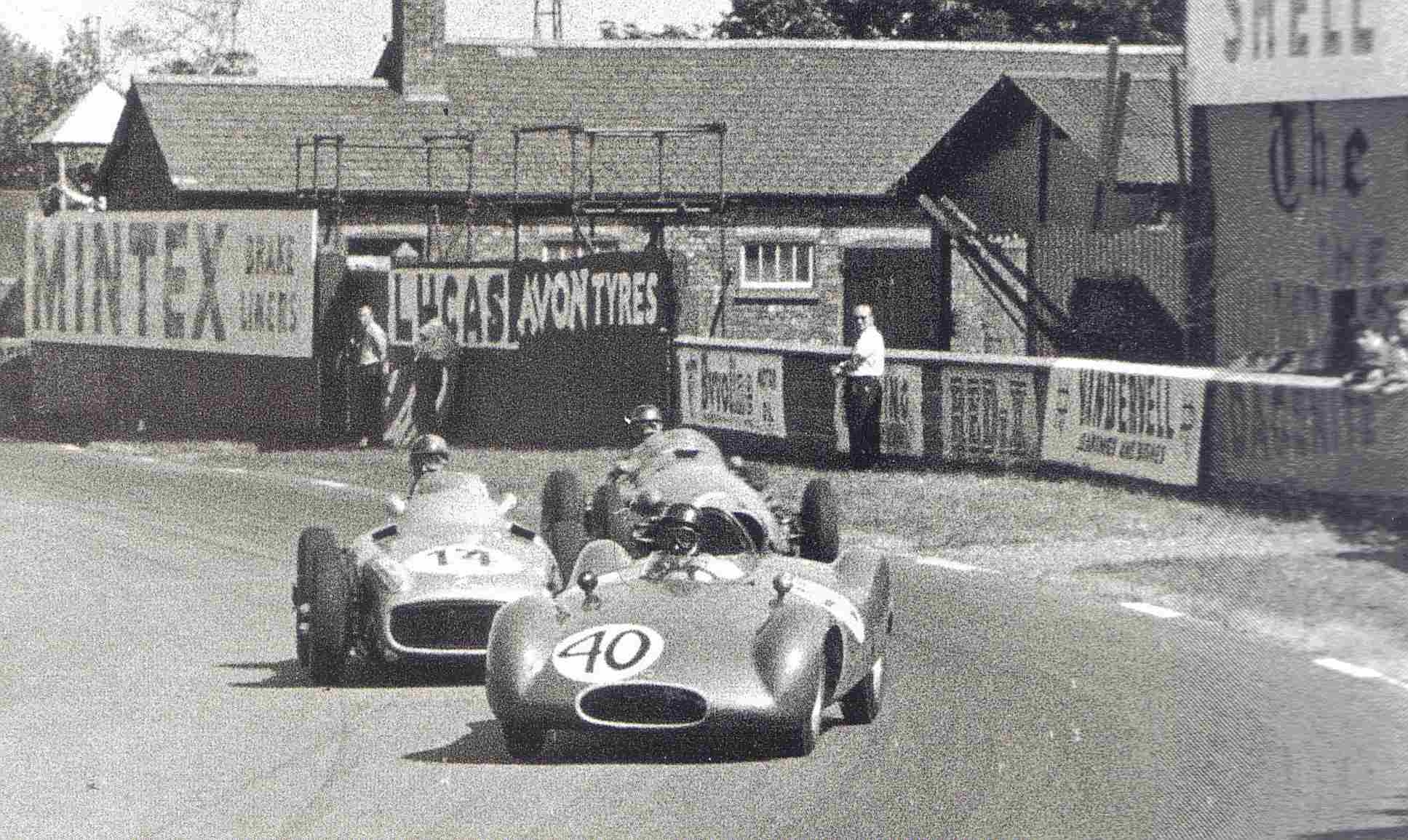
Alfonso de Portago practices his Ferrari 625 prior to the 1955 Pau Grand Prix, a race won by Jean Behra’s factory Maser 250F…
These superb images are from the Jesse Alexander Archive. The factory Maserati’s of #14 Behra, #16 Roberto Mieres and #18 Luigi Musso are in line astern in the Pau paddock, Saturday 10 April 1955.
(Jesse Alexander)
Jean won the race from Eugenio Castellotti in a Lancia D50 and teammate Roberto Mieres in third. de Portago was 8th and the best placed Ferrari, no factory cars were entered by the Scuderia after a poor showing at Turin a fortnight before.
Ascari had the race in hand after a great dice with Behra early but with 20 laps to go had braking problems, the Lancia mechanics did a work around which gave him brakes on the front and allowed him to finish, Jean taking a lucky win.
Eugenio’s Lancia being warmed up by the team, you can feel the staccato-blast of that lovely basso-profundo 2.5 litre V8!? (Jesse Alexander)
The nose of Lancia Team Leader Alberto Ascari’s Lancia D50. Pau 1955, he was 5th. Alberto died only 6weeks later at Monza in a tragic testing accident. (Jesse Alexander)
(Jesse Alexander)
No sign of the admiring duck this time but again its de Portago in his Ferrari, not sure who it is behind, factory Ferrari GP drives would come his way in time.
Sensational shots of a great track, and thankfully still in use.
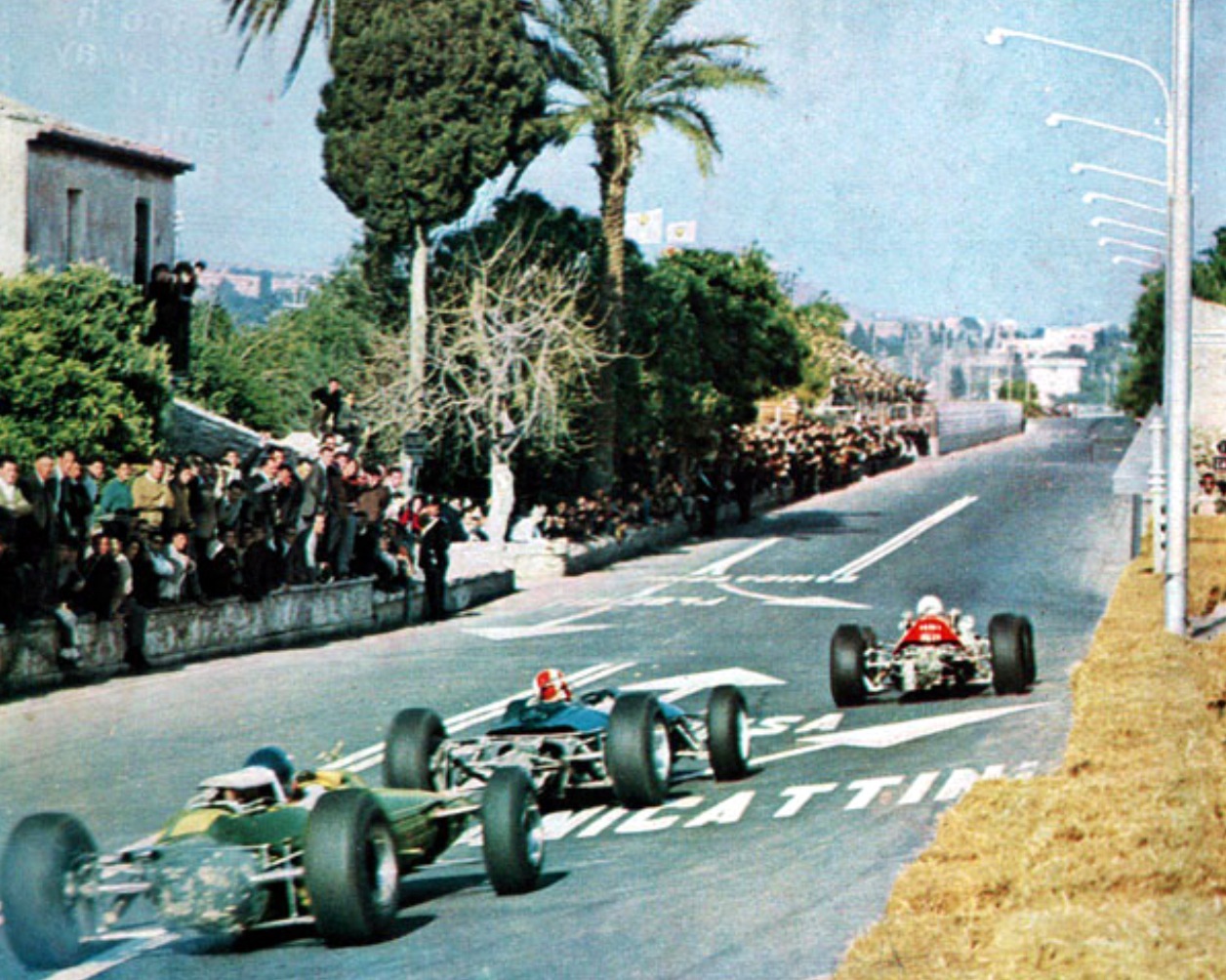
John Surtees Ferrari 158 leads Jo Siffert and Jim Clark, Brabham BT11 BRM and Lotus 33 Climax at the start of the 1965 Syracuse GP, Sicily April 4 1965…
Clark won the race from Surtees and Lorenzo Bandini in another Ferrari 158. A solid entry contested this non-championship GP including Mike Spence Lotus 33 Climax, Masten Gregory BRM P57 and Mike Hailwood and Innes Ireland in Lotus 25 BRM’s. What a fabulous track this must have been.
Clark was well into his very successful 1965 season, he finished a successful Australasian summer in March winning the Tasman Series in a Lotus 32B Climax, took the ‘Indy 500 in the Lotus 38 Ford in May and won the world title, his second in the Lotus 33…apart from whatever F2, touring car and sports car victories he took that year!
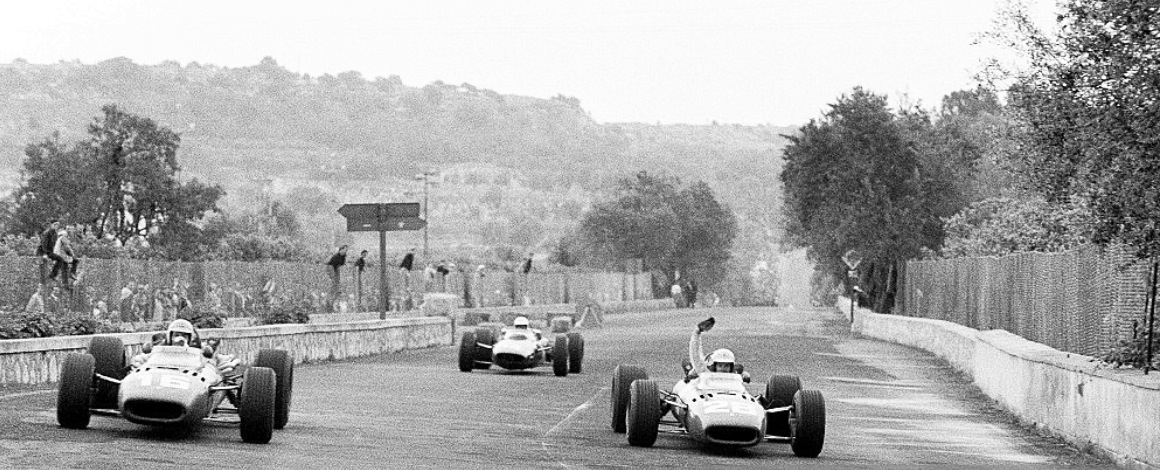
The event was held on a road course in Syracuse, right in the corner of the southeast of Sicily. The GP was first and last held in 1951 and 1967, the events won by Ferraris’; Luigi Villoresi’s Ferrari 375 in 1951 and Mike Parkes AND Ludovico Scarfiotti’s Ferrari 312’s dead-heating in honor of their recently killed teammate Lorenzo Bandini, who died at Monaco in 1967.
Those 400bhp cars must have been awfully quick around that track in 1967…
Mike Parkes #28 and Ludovico Scarfiotti #16, Ferrari 312’s stage their dead-heat in the 16th and last Syracuse GP on 21 May 1967 in honour of their just killed teammate, Lorenzo Bandini at the ’67 Monaco GP. A wonderful gesture of respect. (Getty Images)
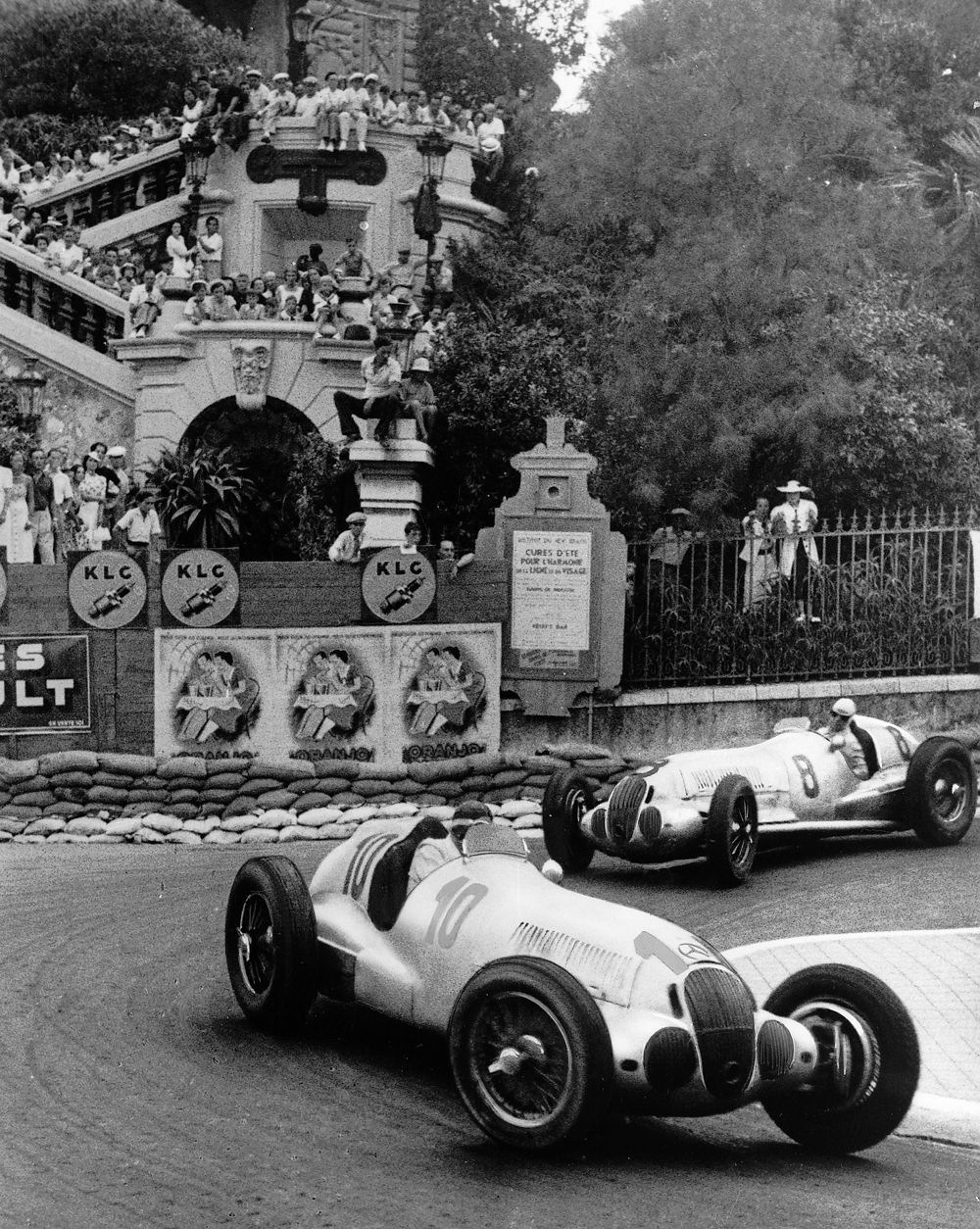
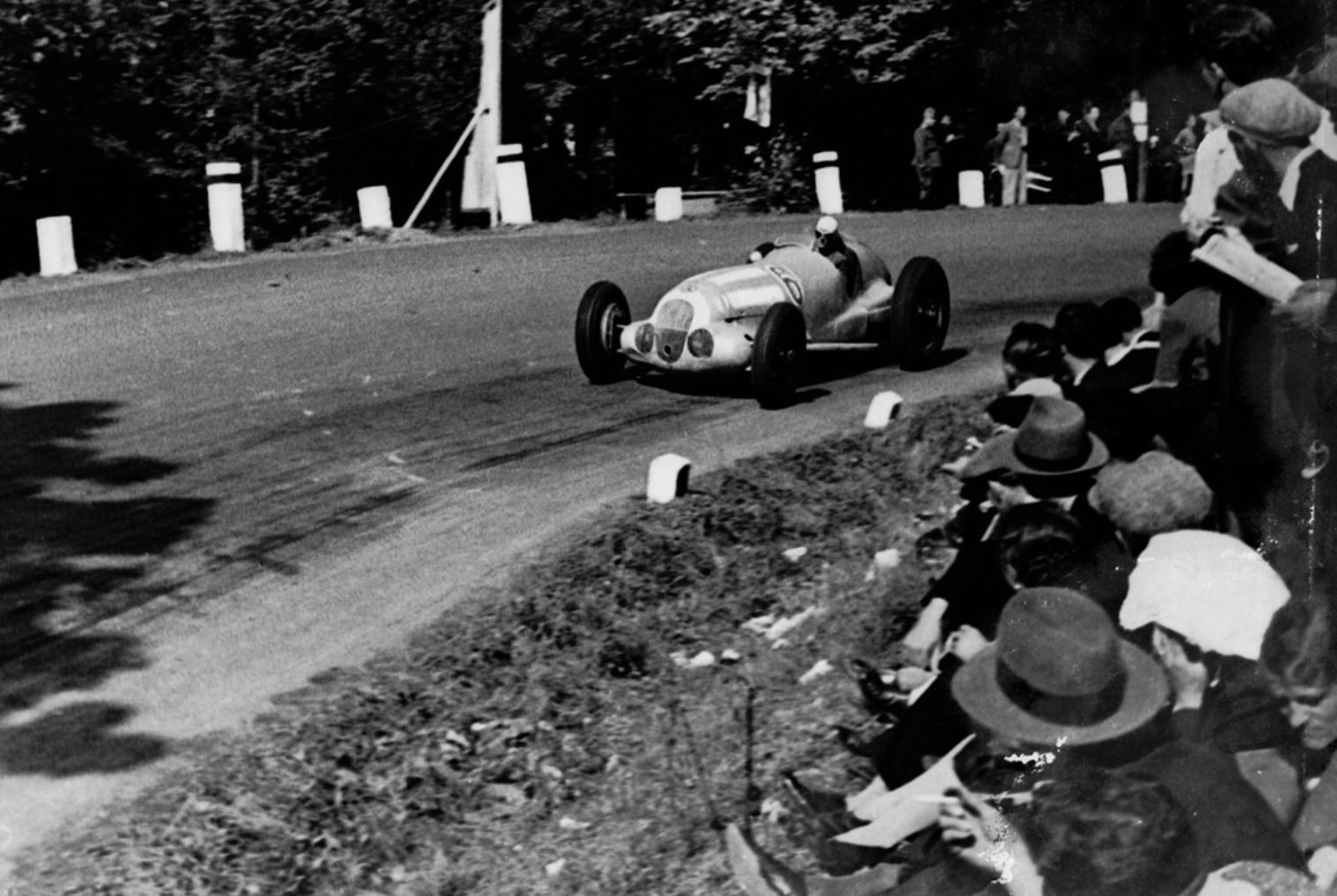
Manfred von Brauchitsch,winner, Rudy Caracciola 2nd 1937 Monaco GP, held that year on 8 August. Loews Hairpin. These 2 were 2 laps in front of 3rd placed Christian Kautz in another Mercedes W125. (unattributed)
Mercedes Benz’ 1937 Grand Prix car was famously the most powerful racing car until the 7-8 litre Can Am aluminium Chev V8’s deployed in the early 1970’s finally exceeded its output of circa 645 bhp. It took the 1.5 litre turbo-cars of the late 1970’s for a Grand Prix car to best those numbers of 1937…
The 750 Kg formula of 1934 to 1937 created an ‘unlimited formula’ of the type only replicated by the Can Am Series of the mid-sixties to mid-seventies. The class was minimum weight based which meant the German teams of Auto Union and Mercedes Benz, bouyed by Government subsidies and rapidly advancing military technology were able to build very light and powerful cars…far more powerful than the regulators had imagined or intended!
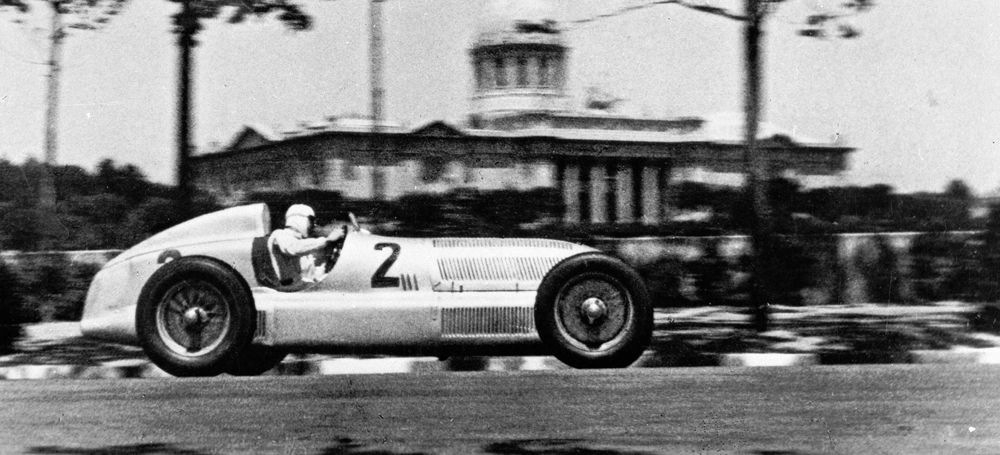
Mercedes GP contender in 1929, prior to the ‘serious program’ of the 1930’s. Rudy Caracciola wrestling the big SSK, sports car around Monaco to 3rd place. Race won by the ‘W Williams’ Bugatti T35B. Supercharged SOHC 6.8 litre straight 6, circa 250bhp. (unattributed)
In search of, and finding an apex! Luigi Fagioli in his Mercedes Benz W25 at the Coppa Acerbo, Pescara on 15 August 1934. Nuvolari and Brivio 2nd and 3rd in Maser 8CM and Bugatti T59 respectively. (unattributed)
The mid-engined, radical Auto Union ‘P wagen’ was launched in late 1933 to critical acclaim. Mercedes approach was more conventional, the W25 a front-engined car powered by a DOHC supercharged straight-eight which initially developed circa 315bhp @ 5800rpm. Suspension was all independent by wishbones and coil springs at the front and swing axles and reversed quarter elliptic springs at the rear. Hydraulic drum brakes were used. The cars won 4 Grands’ Prix and 2 Hillclimbs in 1934.
In 1935 the W25 was further developed, Rudy Caracciola won the reinstated European Championship. Tazio Nuvolari’s famous 1935 German GP win aboard his Alfa Romeo P3 the only non-German car to win a Championship GP from 1935 to 1939.
Rudy Caracciola in his Mercedes W25B, Montjuic Park, Barcelona on 30 June 1935. Teammate Luigi Fagioli won the Penya Rhin Grand Prix with Rudi 2nd and Tazio Nuvolari 3rd in an Alfa P3. Carac won the European Drivers Title that year. (unattributed)
The capacity of the W25, initially 3.4 litres increased to over 4 litres developing over 400bhp. The M25 straight-8 became unreliable when enlarged to 4.7 litres and 490bhp. A 5.6 litre, 600bhp V12 was tested but the cars, the chassis shortened (becoming so small Caracciola couldn’t fit comfortably in it) and lightened became uncompetitive with reliability, engine and handling dramas, Auto Union winning many races.
Mercedes team at the foresters lodge ‘ Sankt Hubertus’ prior to the 1936 GP at the Nurburgring. Mercedes W25’s entered for Caracciola, von Brauchitsch,Lang, Fagioli and Louis Chiron. Best placed was the Fagioli/Caracciola car in 5th, Rosemeyer won in an Auto Union. (unattributed)
After the 1936 German Grand Prix, a catastrophic home race for the team, the best placed Mercedes-Benz in 5th position, it was clear that radical changes had to be made to the Mercedes sporting organization.
Management started by looking at the structure of their racing departments, the same issues of lack of nimbleness, communication and decisiveness which have dogged bigger companies such as Ferrari and Renault in recent decades are not new.
The organization used by Mercedes in 1936 had its roots before the First World War. After the death of Hans Nibel in 1934 the central design office was managed by ex-driver Max Sailer. Under him Albert Heess and Otto Schilling were engine design chiefs with Max Wagner the chassis supremo.
Construction, assembly and testing of the cars were handled by the experimental department led by Fritz Nallinger. Jacob Krauss managed chassis construction and Otto Weber engine assembly while George Scheerer, in charge of the dynamometer section, was responsible for engine testing.
Over the years communication between the experimental department and the sporting department led by Alfred Neubauer had begun to fail. ‘Too many cooks’ springs to mind…
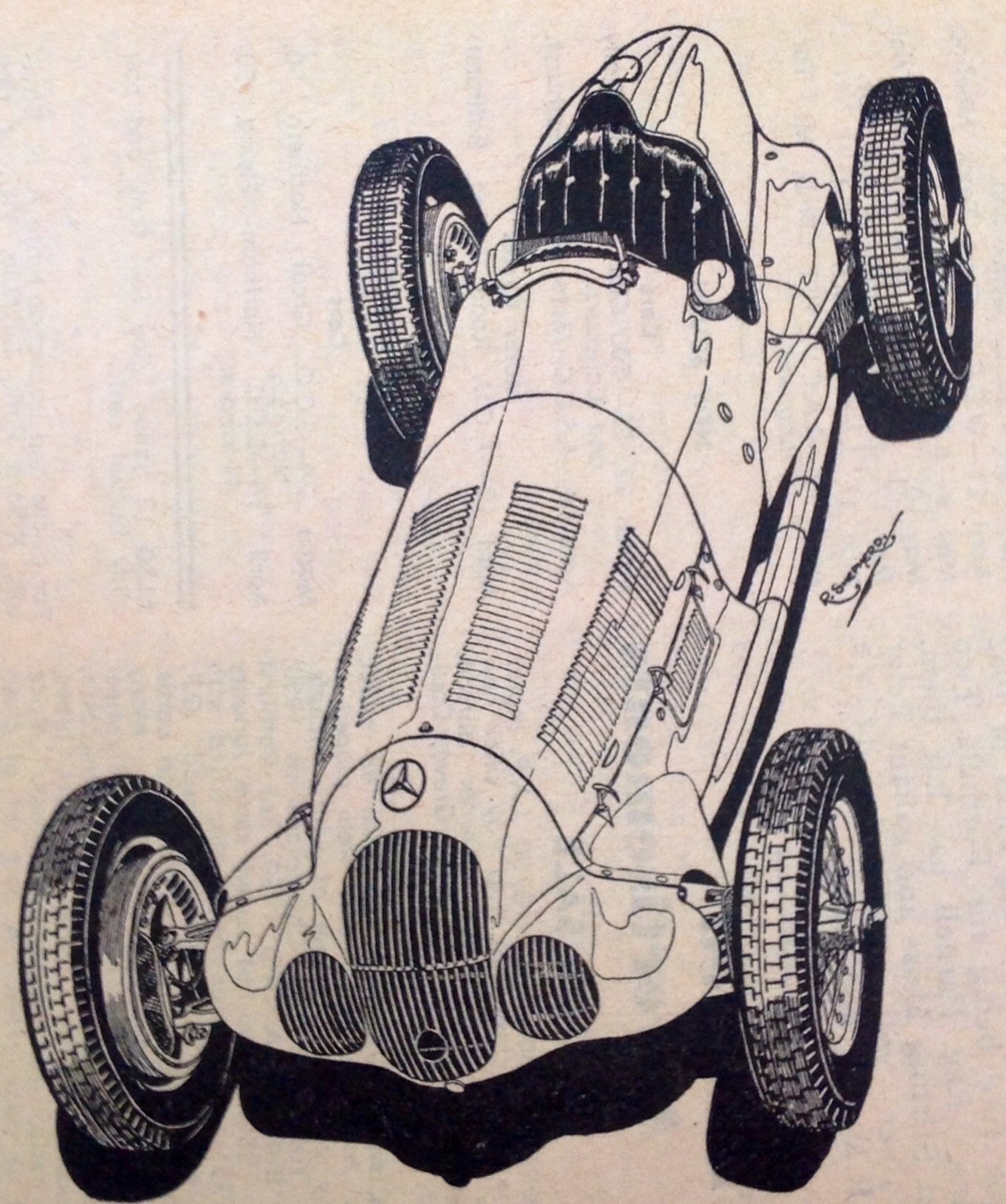
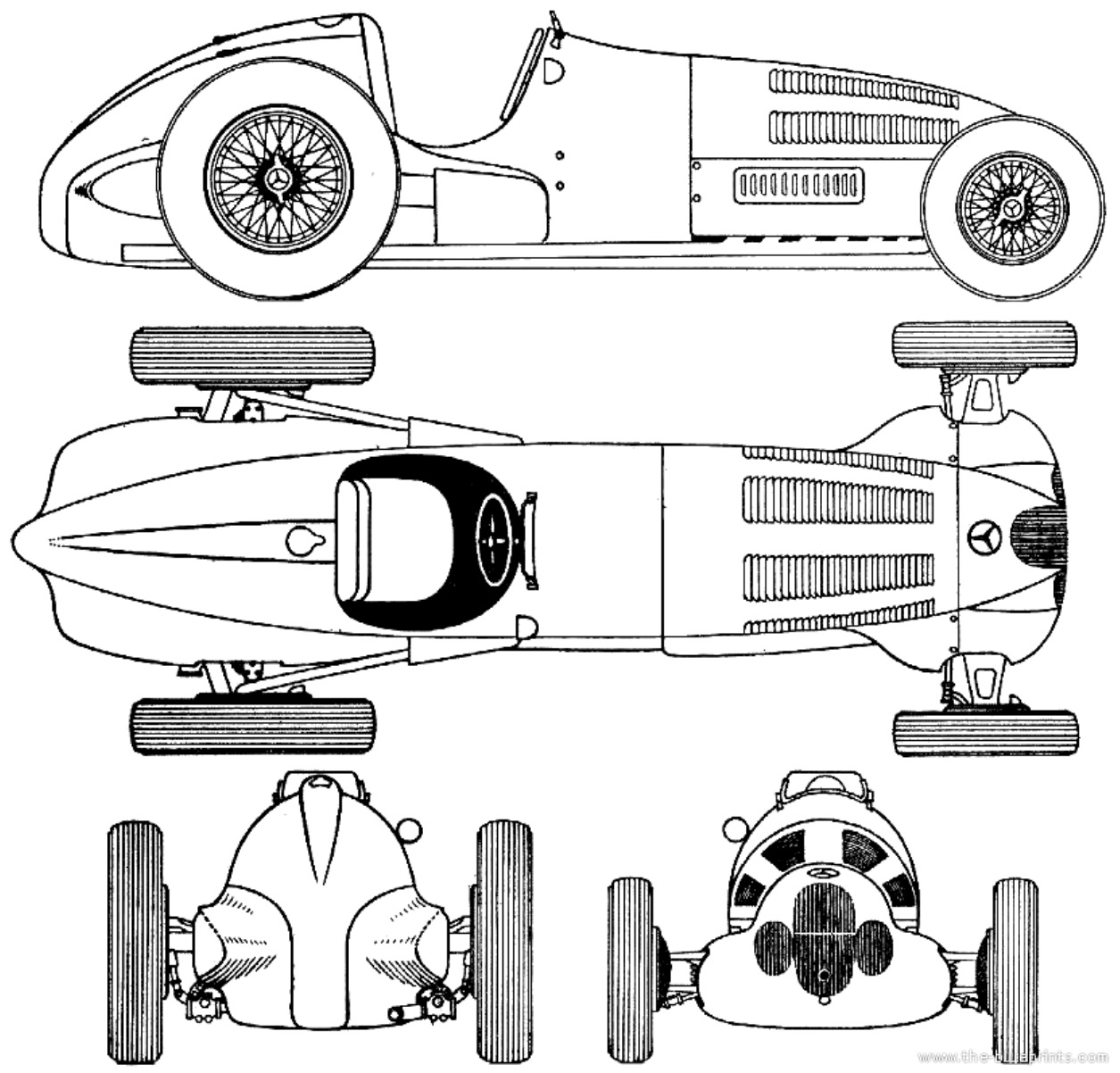
Bob Shepherd line drawing of the Mercedes Benz W125. (Australian Motor Sports)
A new technical department between the design office and the racing team was created in 1936.The Rennabteilung (racing department) took over the assembly and testing of the racing cars from the experimental department. In charge of the new department was gifted young engineer, Rudolf Uhlenhaut. He was born in London on 15 July 1906, (died 8 May 1989) his father German, his mother English. He joined Mercedes Benz in 1931 as a Munich University graduate, until 1936 Uhlenhaut had worked on passenger cars not on any of the racers.
Rudy Uhlenhaut testing a Mercedes W154 GP car at Monza in early 1938. Uhlenhaut was a race fast, analytical driver. He was entered as potential relief driver in the Le Mans campaign of 1955. W154 in early form, radiator treatment different on the cars as raced and obviously sans bonnet here. 1938 was a 3 litre supercharged/4.5 litre unsupercharged formula. Chassis essentially an SWB version of the W125 frame made possible by the use of the smaller/shorter 3 litre supercharged DOHC, 4 valve V12. Power 425-475bhp. Car dominant in 1938, Caracciola again European Champion. (Mercedes Benz)
On 12th of August 1936 the Rennabteilung tested one rebuilt 1935 car and two 1936 cars at the Nurburgring with Caracciola and Manfred von Brauchitsch the drivers. Tests included different tyres and shock absorbers. A 60kg lead weight was placed over the front suspension in an attempt to get more front grip. After two days the drivers decamped and Uhlenhaut drove the cars himself.
Rudy had never driven a racer before, even though he was used to testing road cars at high speed on the famous circuit. However, he soon settled in and proved to be an exceptionally gifted driver.Famously it has been rumoured that Uhlenhaut once went faster than Fangio at the ‘Ring during a test in the mid 50s. Whatever the case, Rudy was a talented tester and potentially a gifted racer had he the chance to strut his stuff, his wife and corporate commitments barriers to a racing career.
Uhlenhaut concluded as follows in relation to the W25’s he drove; toe-in changes caused by the old steering geometry were too big whilst suspension travel was too little making the springs bottom. The chassis was bending during braking. The experimental department had tried to solve the problems by using both hydraulic and friction dampers and harder and harder springs exacerbating the handling problems and violent kickback to the steering wheel. At the rear the attachment point for the De Dion axle could bend as much as 7-10cm during braking. Because the suspension was so stiff the wheels couldn’t follow the road. Again, famously, once during Uhlenhaut’s tests a wheel came off at high speed yet the car continued on three wheels as if nothing had happened.
After the 1936 Swiss GP ended in emphatic victory for Auto Union Uhlenhaut suggested further racing that year was pointless. So Mercedes retired from the season to focus their efforts on the 1937 car, the W125.
Tubular frame of chrome molybdenum, double wishbone and coil spring suspension at the front, De-Dion tube and coil springs located by radius rods at the rear. Supercharged 5662cc 645bhp straight 8. 4 speed rear mounted’ box with ZF slippery diff. (Yoshihiro Inomoto)
Uhlenhaut’s assessment of the changes required resulted in a long wheelbase car with reduced polar moment of inertia. The chassis frame was much stiffer. The front suspension was new with greater travel and much softer springs.The car had hydraulic dampers only. The gearbox was changed to a constant mesh type improving reliabilty. During the season a new suction-type supercharger that proved superior to its precursor was also fitted.
The W125 was the first of the MB GP cars to have a tubular frame; of oval section nickel chrome-molybdenum steel of 1.5mm section. 5 cross tubes braced the frame.
The independent front suspension was again by way of unequal length wishbones, 8.45 inches and 10.59 inches in size upper and lower. Coil springs were used. Both hydraulic and friction shocks were used at the front, sometimes hydraulic shocks only.
Rear suspension was De Dion tube, the 2 end halves forged and machined from a single piece of nickel chrome-molybdenum steel. Two channel section radius rods provided fore and aft location with torsion bars, 33.2 inches long and 0.67 inch wide, providing the spring medium.
This shot of 3rd placed Christian Kautz shows the rear end treatment of the Mercedes W125, Monaco 1937. (unattributed)
Lockheed hydraulic brakes were used, they were of 2 leading shoe type, had Iurid linings with alloy shoes and drums, the latter had steel liners shrunk in.
It is perhaps indicative of preoccupations of the time with engines that about half the ‘Australian Motor Sports’ article which provided the basis of the cars technical specifications, is about the M125 straight-eight engine!
The engine, in typical MB practice was made up of 2 blocks of 4 cylinders, with a bore and stroke of 94x102mm, the engine undersquare, as was the practice of the time, giving a total capacity of 5662cc. The engine developed 645bhp at 5800rpm, the supercharger ran at twice engine speed and was pressurised at 12-14lb per inch.
Manfred Von Brauchitsch in his Mercedes W125 during the 1937 Coppa Acerbo, Pescara. He was 2nd, the race won by Bernd Rosemeyer’s Auto Union Type C. (unattributed)
In terms of the cars detailed engine design and construction;
The blocks comprised steel forged cylinders with water jackets and ports welded thereto in sheet steel. The cylinders were spigotted into the alloy, barrell shaped crankcase. The crank ran in 9 main bearings of split roller type made by SKF. Big ends were also of this type.
Pistons were provided by Mahle, conrods fully machined ‘H section’ made of nickel-chrome steel and had plain bronze bush gudgeon pins. Lubrication was by way of dry sump with a battery of gear type oil pumps and a front mounted oil radiator.
Lovely profile shot of Caracciola and the W125. Swiss GP, Bremgarten in August 1937. Rudy won the race from Herman Lang and Von Brauchitsch, also W125 mounted. (Mercedes Benz)
The cylinder head featured hemispherical combustion chambers with 2 inlet and 2 exhaust valves per cylinder at an included angle of 60 degrees. The exhaust valves were mercury filled for cooling. Two gear driven overhead camshafts were used, 1 plug per cylinder was fired by magneto. The heads were not detachable.
A Roots type supercharger originally blew air, in established Mercedes fashion into the carburettor but later in 1937, the blower was reconfigured to deliver the mixture in the more usual way. A twin-choke carb was used, the fuel mix a heady brew of 86% methyl alcohol, 4.4% nitro-benzol, 8.8% acetone and 0.8% sulphuric ether…who said fuel alchemy started in the 1980’s!?
A single plate dry clutch was mounted to the engine flywheel, the 4 speed gearbox, with ZF ‘slippery diff’ and final drive unit mounted to the rear crossmember.
The cars wheelbase was 9ft 2 ins and track 4ft 10ins, the W125 weighed 16.4 cwt.
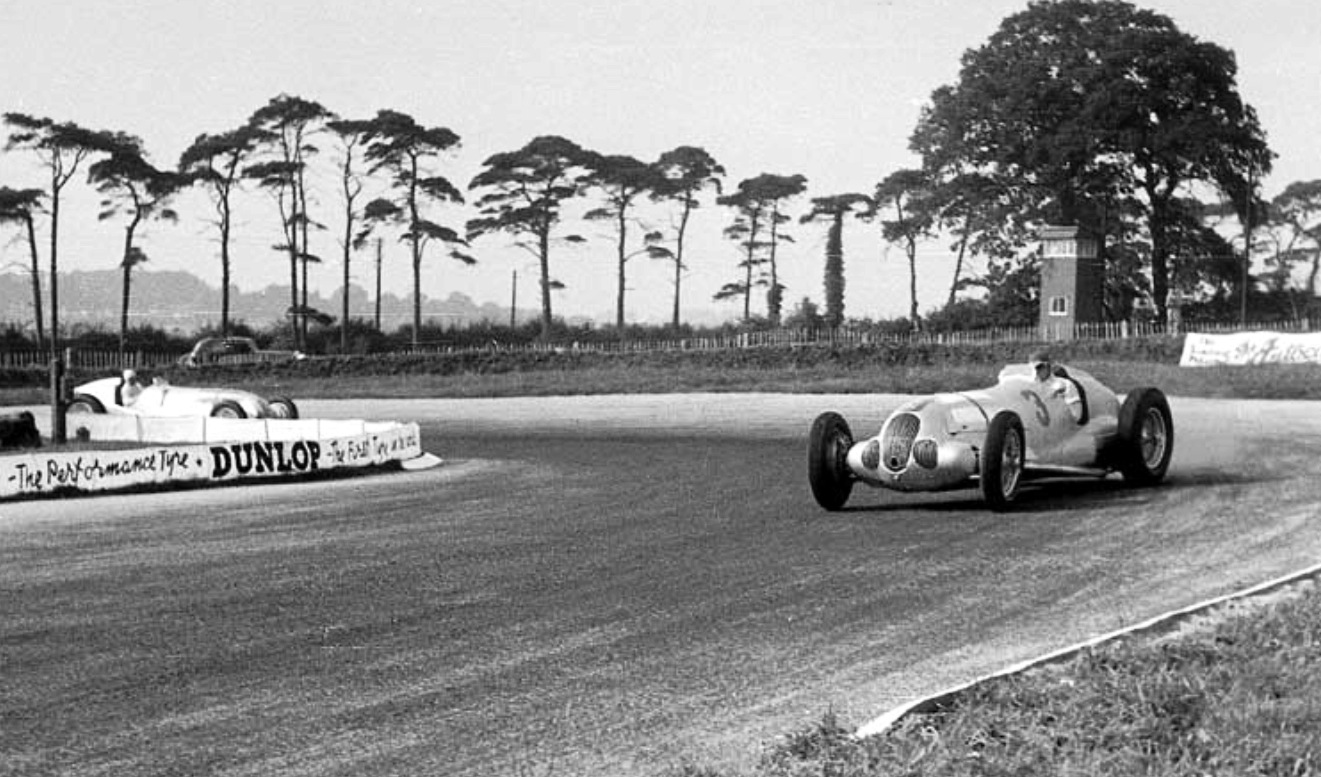
1937 Donington GP. Manfred von Brauchitsch from Rudy Caracciola, Mercedes W125. Rosemeyer won in his Auto Union from Manfred and Rudy. (unattributed)
The W125 proved a winner, Caracciola victorious at the German, Swiss, Italian and Hungarian Grands’ Prix giving him his second European Championship whilst Herman Lang won at Tripoli and von Brauchitsch at Monaco. The W125 was put to one side at the end of 1937, in an attempt to slow the cars down, there is nothing new in this!, the authorities mandated a 3 litre supercharged/4.5 litre unsupercharged formula for 1938/9. The chassis of the W125 evolved into that of the 1938 season W154, that car powered by a 3 litre supercharged V12 and similarly dominant.
A story for another time…
Start of the Swiss GP at Bremgarten in 1937. #14 and winner Caracciola W125 with #10 and #8 Hans Stuck and Bernd Rosemeyer both Auto Union Type C mounted. (unattributed)
Etcetera…
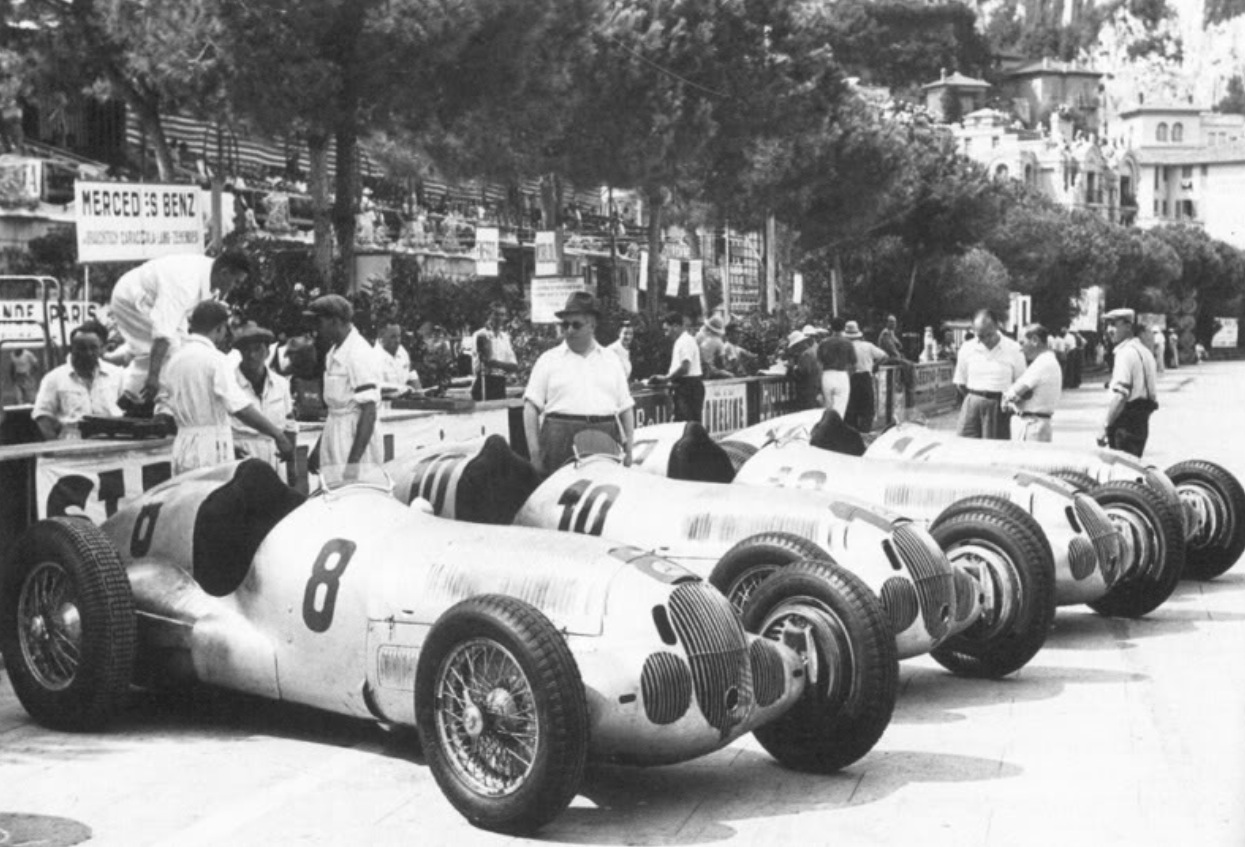
Mercedes team lineup of W125’s at Monaco 1937. #8 Caracciola 2nd, #10 Von Brauchitsch 1st, #12 Christian Kautz 3rd and #14 Goffredo Zehender 5th. Rosemeyer, the best placed Auto Union was 3 laps behind Von Brauchitsch! (unattributed)
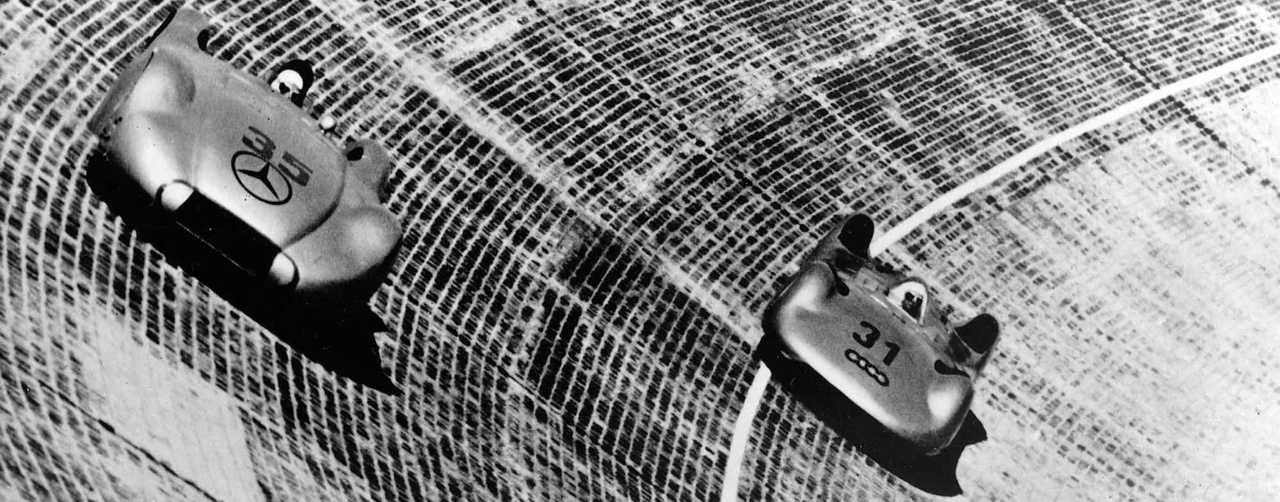
Streamliners at Avus in 1937. #35 Caracciola Benz W125 overtakes # 31 Rosemeyer Auto Union Type C in the Nordcurve. Rudy won the first race, Von Brauchitsch the second in another W125. (Mercedes Benz)
Dick Seaman in his Mercedes W125 during the Masaryk Grand Prix, Brno September 1937. He was 4th. Caracciola won from Von Brauchitsch in another W125 and Herman Muller in a Auto Union Type C. (unattributed)
Mercedes Benz W125 drawing. (unattributed)
Rudy Uhlenhaut in 1955 at a Hockenheim test session beside the ‘Blue Wonder’ Mercedes high speed transporter with a W154 GP car on ze back. (unattributed)
A truly wild road car for any era; Uhlenhaut and his road legal Mercedes 300SLR racer. (Mercedes Benz)
Bibliography and Credits…
‘Australian Motor Sports’ March 1952 article by Bob Shepherd
forix.com article on Rudy Uhlenhaut by Leif Snellman, Mercedes Benz
Keke Rosberg tips his Williams FW10 Honda into Stag Corner, so named after the hotel behind him, for the long run down Rundle Road and onto Dequetteville Terrace. Adelaide GP 1985. The Stag Hotel is still there and a much nicer place to eat and drink than then! (unattributed)
‘Rossi Kekberg is on pole!’ our host Ralph announced as we pulled up at what would become our regular annual digs for the Adelaide Grand Prix for the next 10 years…
I was the designated driver for the second half of the long drive from Melbourne, but the rest of my mates were well pissed, so it was a relief to see our host similarly inebriated when we pulled up in leafy Tusmore, Adelaide. Ralph and Jill’s backyard provided our cheap accommodation only 1 km from the Victoria Park road circuit for years. Wonderful people they were and are.
Ralph was no racing enthusiast, he always struggled with the furrin’ drivers names, but his zeal for the race typified the way the average Adelaide citizen felt about the eventdespite the interruptions to normal traffic flows and all the rest. Adelaide is a small town which embraced the race in a way Melburnians never really have. The ‘Save Albert Park’ mob are still vocal despite the GP having support from both sides of politics.
There had been mumblings about Australia having an F1 GP on and off for decades, the lack of an F1 event was not such an issue in the 1960s when we had the Tasman Series which was effectively four Grands Prix in four States in four weeks! And four races in New Zealand before the ‘circus’ arrived in Oz.
The Tasman was a 2.5-litre formula dominated in the early days by ex-F1 2.5 litre Coventry Climax four cylinder FPF engined cars. Later on bored-out 1.5-litre F1 engines were used and at the very end of the category, 2.5 litre versions of current F1 engines were built by Cosworth and BRM, in addition to the bespoke Tasman engines of Repco and Alfa Romeo. Magic it surely was!
Geoff Smedley’s shot captures all that was great about the Tasman Cup. Here at Longford, Tasmania in 1968: Clark from Hill, Amon and Gardner in yellow. Lotus 49 DFW times two, Ferrari 246T obscured and Gardner’s Brabham BT23D Alfa Romeo. This is the preliminary race, the main very wet event was won by Piers Courage in a McLaren M4A Ford FVA F2 car, a famous victory for the young Brit (G Smedley)
Later Bob Jane perhaps came close to an F1 event, his early 1980s Formula Pacific Grands Prix were intended to be replaced by an F1 event but Calder, love it as I do, is a bit of a shithole. It lacks any sort of visual appeal from a Teev viewpoint, nor does it represent a challenge to the best drivers in the world. It’s a great club, point and squirt kinda place.
Sandown looked best placed, the round a horse racing track circuit was increased to GP length to host a 1984 World Endurance Championship round but the Light Car Club emasculated a great circuit with the Mickey-Mouse stop go additions to the circuits infield to get the track to the requisite length. The financial returns, or lack of them destroyed the oldest racing club in the country as well.
AGP Calder 1984. F1 drivers in F Pacific cars, Ralt RT4/85 Ford’s. Rosberg, second on the inside, Lauda, DNF prang, on the outside. Roberto Moreno won the race in another RT4, his third AGP win (History of The AGP)
And so, pretty much outta the blue, with the support of the local business community, racer/business man Bill O’Gorman having pitched the idea to the committee set up to celebrate SA’s Sesquicentennial Year in 1986, South Australian Premier, John Bannon did a deal with Sir Bernie The Unbelievable to stage a race on the outskirts of Adelaide’s CBD.
Part of the circuit defines the cities eastern boundary, so it was a race in the city centre. Critically from an SA perspective, the Formula One Constructors Association wanted a street race, Calder and Sandown are not street circuits.
Sydney is Australia’s beautiful world city. The place doesn’t have to work hard to attract tourists who are drawn to all of its visual, cultural and sporting splendour. She is the ‘hot sister’ her sibling cities are the ‘fuglies’ in relative terms, they have to work a lot harder to get tourists into their towns.
Melbourne’s approach to combat that, is an event a month strategy, the very same Ron Walker behind the Melbourne GP was one of the founders of Melbourne Major Events, the body set up decades ago to identify global events or develop local initiatives to get folks to come here. John Bannon grabbed an event the Victorians wanted and in fact the Victorians stole it from the South Aussies some years later.
Derek Warwick Renault RE60, turning into Stag Corner, with the fruit markets in the background, Adelaide 1985. The building is still there (unattributed)
Most of us hadn’t seen contemporary F1 cars.
I hadn’t done the ‘big European trip’ at that point, the visits of Guy Edwards in a Fittipaldi to Sandown, and the Theodore Team to the ’79 Rothmans Series with an Ensign MN05 and Wolf WR4, all Ford Cosworth powered, whetted the appetite, but none were current cars when they visited and by 1985 we were in the middle of the 1.5-litre Turbo Era.
The sight and sound of those cars around the wide open expanses of Adelaide’s Victoria Park was something to relish. It was, and still is a street circuit, but the GP circuit – the V8 Supercars use a truncated version of the track – was fast and flowing with the full gamut of corners, if not gradient changes to provide a technical track for drivers to master.
Once we separated ourselves from Ralph, his enthusiasm for ‘Rossi Kekberg’ undiminished, we went to the circuit, being unfamiliar with the city and were simply blown away by Victoria Park’s scale, the circuit itself and the standard of organisation. The event won awards from the start to the end of the period in which the races were held there. Little Adelaide had something to prove both within Australia and globally, and delivered in spades.
Typical of AGPs is a chock-a-block program of events. That year the supports included F Pacific, F Ford, Group A Touring Cars (Gerhard Berger drove a BMW 635 CSI in the taxi races), Historic Cars. The ‘what the FAAAAARK’ moment was provided on that Thursday, when, unannounced, an RAAF General Dynamics F18 Hornet fighter did a treetops high, fast pass, with all of us in Victoria Park hitting the deck and realising what it would have been like to kiss your arse goodbye if one of these things was flying with aggressive intent…
Alain Prost nips a front brake, his carbon brakes gave him troubles as they did other cars similarly equipped, but a blown turbo wastegate put him out on lap 26. He won his first drivers title in 1985 (P Aynsley)
By the time the circus arrived in town Alain Prost had won his first F1 Drivers Championship with victories in Brazil, Monaco, Britain, Austria and Italy. He lost a win at Imola when his car was found to be underweight.
The McLaren MP4/2 TAGs were the class of the 1984 field, they were fast, reliable, handled well and were driven superbly by Niki Lauda, who took the title that year, and by Alain Prost who joined the team from Renault. The McLarens took their advantage into 1985 but the year was made technically interesting by Williams first carbon-fibre monocoque and the emergence of Nigel Mansell, signed by Williams that season, as a force particularly in the seasons second half.
Patrick Head’s first carbon-composite Williams, the FW10 Honda was a superbly integrated design, the car of the second half of the ’85 season. Honda had also got the power delivery of its potent twin-turbo V6 more progressive than in 1984. Keke Rosberg here (P Aynsley)
Patrick Head, Williams designer was conservative and cost-effective in his approach to such large design changes
He was also concerned about the new carbon-composite materials. Head was impressed about the way his aluminium-honeycomb monocoques had withstood big impacts: Jones at Watkins Glen (FW06) in 1978 and Reutemann at Silverstone (FW07) in 1980.
Head determined to control the carbon-composite program in-house. Williams built nine carbon-composite FW10 chassis during the season, and gems of cars they were, right out of the box. Rosberg won in Detroit and Adelaide, Mansell at Brands Hatch and Kyalami.
In the early part of the season the cars were powered by ’84 D-spec Honda engines but by the time they arrived in Adelaide E-spec engines giving a reputed 1000/1250 bhp qualifying capability and a six speed, rather than five speed Hewland gearbox to harness the power was fitted.
Williams FW10 and its Honda RA163E engine; 80 degree DOHC, four valve 1494cc twin IHI turbo V6. Upwards of 800bhp @ 12000rpm depending upon boost. Carbon fibre chassis, lower wishbone and rocker/ coil spring/dampers suspension. Hewland six speed gearbox. Brakes in this shot carbon, but cast iron brakes in Adelaide were an important factor in the Williams win. 520Kg. (unattributed)
Qualifying was held on a beautiful, hot day
30000 punters turned up to see Ayrton Senna do an absolute blinder of a lap, you could see and feel the effort being expended by the Brazilian on track and on the plentiful video screens around the circuit, to set pole 7/10 of a second from Mansell, Rosberg, Prost and Alboreto.
So; Lotus, Williams, Williams, McLaren and Ferrari were the top five. Alan Jones had returned to F1 but was well back in 19th, the Lola Hart was not the fastest combination in the field.
Alan Jones ponders his chances on the grid. Strategy was to go for it knowing the car probably would not last. It didn’t! He stalled on the grid but recovered to be seventh by lap 18, when the engines timing caused his retirement. Team Chief, ex-McLaren owner, Teddy Mayer beside the wing. Lola THL1 Hart. (P Aynsley)
We were well pleased with the first three days of entertainment, I was suitably jealous of a couple of mates who were part of the show, participants in the Formula Ford race and wishing I was part of history, as all the competitors in that year were. It was surely the most significant motor race in Australia’s racing history?!
Muzza and Keke. Murray Walker had the same cult following in this part of the world as elsewhere, deservedly so! He is getting the goss on the grid from Rosberg before the start (P Aynsley)
We plodded into town and found a nice Italian joint to have dinner, as it happened, La Trattoria, which is still in King William Street, still owned by the same family and still employs the same waiters, became a restaurant of choice for the drivers, especially the Italians.
We had not even ordered a Spag Marinara when Patrese and De Cesaris arrived with wives/friends, we were blown away to have stumbled on the place by luck; because we were first, and ate there every night, every year a table was kept for us. It was fantastic to live vicariously and get the occasional autograph without intruding too much on the drivers. Adelaide was and is a small place, this was a good example of the access the locals had, their simply were few places to stay, so it wasn’t hard to find the stars of the show.
Grid departs on its parade lap. Mansell, Senna, Rosberg by the fence, then Prost and Alboreto. Adelaide Hills in the distance, gum trees and a full-house. Circa 105,000 people on raceday/ (P Aynsley)
The Race
Poverty tickets in that first year weren’t a smart purchase, practice crowd numbers meant we had a very early start to bag our viewing positions. Outside the turn 1 chicane, a top spot on lap 1 but also throughout the race with a video screen to follow the event, was our choice after much debate. Being early was key, over 105,000 attended on raceday.
Ralph was keen for ‘Rossi’ to win the race, and so it was, Keke won, and after three pit stops!
Senna awaits the start from pole. Lotus 97T Renault. Blinder of a lap to get pole, but his race performance was a bit erratic (P Aynsley)Lap 1 turn 1 Chicane; Mansell from Senna, Rosberg, Alboreto (Ferrari) Prost, Boutsen (Arrows BMW), Surer (Brabham BMW) on his outside and Warwick (Renault). Senna gave Mansell a tap which took him out of the race into the right hander at Wakefield Road (unattributed)
Mansell won the start but Senna carved him in half at the third turn, putting Noige outta the race. Rosberg then led for 41 laps with Senna at a distance until his tyres went off.
Senna moved back towards Keke, having given his tyres a rest and regained some grip, he then made a mistake clipping a chicane on the entrance to Brabham Straight, giving Rosberg some breathing space. But crazily, Senna had another moment and boofed Rosberg’s Williams up the chuff as Keke went into the pits for a scheduled tyre change. Senna had to pit for both tyres and a new nose cone.
Niki Lauda in the cockpit of his McLaren MP4/2B TAG during practice. We saw him twice in Oz, in ’85 he was a real chance but like so many others his carbon brakes were not up to the rigours of a hot race which went for the maximum possible time allowed for a GP of 2 hours. ‘Twas said the race was about 12 laps too long. In 1984 he raced a Ralt RT4 Ford F Pacific car in the last non-F1 AGP at Calder Park. Niki retired at the end of the ’85 Adelaide race (P Aynsley)
Rosberg was in the lead but Niki Lauda, in his last GP was looking a possibility in second. At this point the heat of the day was telling for those with carbon-brakes, which were failing, those with steel brakes faring much better.
Keke’s tyres had gone off, he lean’t on them too soon so he pitted again, then a wheel nut jammed so he entered the track 45 seconds behind Senna and Lauda.
Rosberg frying the Goodyears of his Williams on the hot day, you can clearly see the graining. (Phil Aynsley)
Senna fried his tyres giving the lead to Lauda, a career ending win a possibility, but his carbon brakes failed and he was into a wall. Rosberg, with cast iron brakes was looking good, Senna with carbon not so much, then a piston failed in his Honda engine so Ayrton was out.
Rosberg from Senna during their long and interesting battle. Ayrton DNF with piston failure brought an end to it, but the Brazilian’s carbon brakes would not have lasted the distance in any event. Shot captures the essence of the track, the view from this point, in the Victoria Park section of the circuit, on Pit Straight is pretty much the same 30 years later (unattributed)
Rosberg had the race won with 21 laps to go. Last lap entertainment was provided by the Ligiers (Ligier JS25 Renault) with Jacques Laffitte and Phillipe Steiff managing to run into one another, the unfortunate Streiff misunderstanding a Laffitte waving arms gesture which meant ‘don’t pass’ rather than ‘do pass’ as Phillippe interpreted! Ivan Capelli, Tyrrell 014 Renault Stefan Johannsson Ferrari 156 and Gerhard Berger Arrows A8 BMW rounded out the top six.
The cars blast down Wakefield Road heading into town and into the East Terrace section of the track. Proximity of Adelaide CBD and treed nature of the Victoria Park section of the track clear. A Renault chasing a Tyrrell (P Aynsley)Victory ceremony L>R Laffitte, Frank Williams with his hands on the cup, Rosberg, Streiff and in the suit John Bannon, SA’s Premier who brought the event to Australia. Williams was shortly to suffer the accident which made him wheelchair bound only several months later. Mitsubishi a welcome global and local sponsor. At the time, its now long since closed, Mitsubishi manufactured cars at Tonsley Park, a southern outer Adelaide suburb (unattributed)
What a memorable race and event it was. The last for Lauda, Renault as a team for a while, Alfa Romeo as a team and it was the first of many F1 Grands Prix for Australia…and yes Ralph did master ‘Rossi’s’ correct name but it took him another year to do so…
Etcetera…
(P Aynsley)
Derek Warwick, Renault RE60 and Senna Lotus 97T Renault, a bit cocked up, coping with tyres fried by heat and the pressure he is applying to them. End of Brabham Straight perhaps
(unattributed)
Unusual Adelaide GP circuit angle and shot. Keke’s Williams FW10 has gone through the fast left/right Banana Bend kink, he is on the outside of the circuit, the Adelaide Fruit Markets to his left, by the look of it he is under brakes and plucking second gear for the right hander at Stag Corner, to head east out of town along Rundle Road. The fruit market buildings are still there, but are now retail and residential space, Vern Schuppan lives in one of the penthouses.
(P Aynsley)
Michele Alboreto Ferrari 156, DNF transmission, ahead of Riccardo Patrese, Alfa Romeo 185T, DNF exhaust.
(P Aynsley)
Red 5, Noige at the hairpin onto Pit Straight. Mansell a popular figure in Oz, Senna drove a nutty race, twould have been very interesting to see what Mansell would have done without Senna’s assault on him. Two wins in the previous two races, the ‘form combination’ coming into Adelaide. Williams FW10 Honda.
Bibliography and Photo Credits…
‘Autocourse 50 Years of The World Championship’ Alan Henry, ‘History of The Australian Grand Prix’ Graham Howard, Phil Aynsley, Geoff Smedley, ‘History of The AGP’ Graham Howard
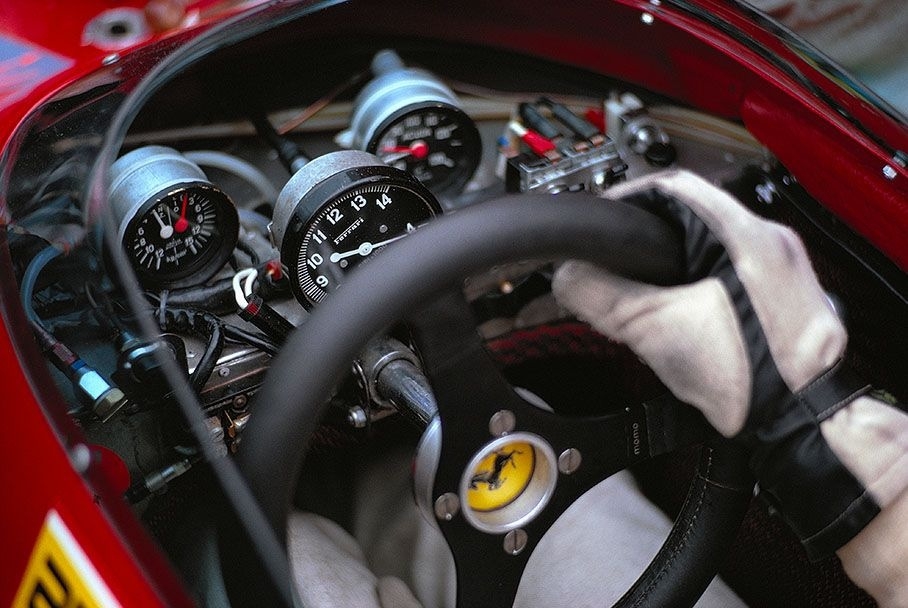
Nelson Piquet’s Momo equipped Brabham BT53 BMW in 1984 (unattributed)
Momo was founded in 1964 by Gianpiero Moretti. He commissioned a local craftsman to produce a custom steering wheel for his racer, this first Momo steering wheel had a superior, thicker grip compared to other racing steering wheels of the day.
Other drivers quickly noticed Moretti’s new ’tiller’ and wanted one, so it started to gain fame within the racing community. The new Momo steering wheel caught the attention of Ferrari driver, John Surtees, who wanted one for his Ferrari 158 GP car, the car in which he won the world title in 1964. https://primotipo.com/2014/11/30/john-surtees-world-champion-50-years-ago/
Mauro Forghieri and John Surtees with the Momo equipped 1964 F1 Championship winning Ferrari 158. (unattributed)
Moretti created the company ‘Momo’ short for ‘Moretti Monza’ to make steering wheels commercially. Initially his focus was on racing but in the 1970s, the company developed new product lines.
Momo started production of light alloy wheels and steering wheels for road cars, both for the aftermarket sector and supplying car manufacturers, initially Ferrari but others followed including Aston Martin, Fiat, Honda, Mazda, Mitsubishi, Nissan, Opel, Porsche, Peugeot, Renault, Subaru and others.
I reckon the first Momo i saw was in a cockpit shot of an F1 Ferrari 312B. Wow, it looked good! I was a secondary student at the time, it took me a few years to buy a road car, there were not too many other Cortina GT’s in the Monash University carpark with a Momo steering wheel. As one of my mates said the Momo was worth more then the ‘maroon rocket’ itself, which was an accurate call! Three Momo’s over time graced a succession of Alfa’s, a BMW 325is and a Carrera 3.2. My Van Diemen RF86 Formula Ford is fitted with one ex-factory. Things of beauty aren’t they? And function.
Whilst a Momo fan i never knew anything about the company’s history, despite being aware of Moretti’s racing exploits to an extent, its been interesting to do some simple research.
Momo equipped Ferrari 312B in 1971. Clay Regazzoni. (unattributed)
Momo continued its involvement in motor racing with success; in 1983 Brabham won the F1 World Championship, their car Momo equipped with light alloy wheels as well as a suede steering wheel as depicted in the first photo above. In 1998, Moretti won the Rolex 24 Hours of Daytona, the 12 Hours of Sebring, and the 6 Hours Watkins Glen driving a Ferrari 333 SP.
Mario Andretti, Ayrton Senna, Nigel Mansell, Nelson Piquet, Michele Alboreto, Michael Schumacher and earlier, Niki Lauda, Jackie Stewart and Clay Regazzoni won races with Momo steering wheels.
In 1993 ‘Momo Corse’ offering specialized fireproof clothing.
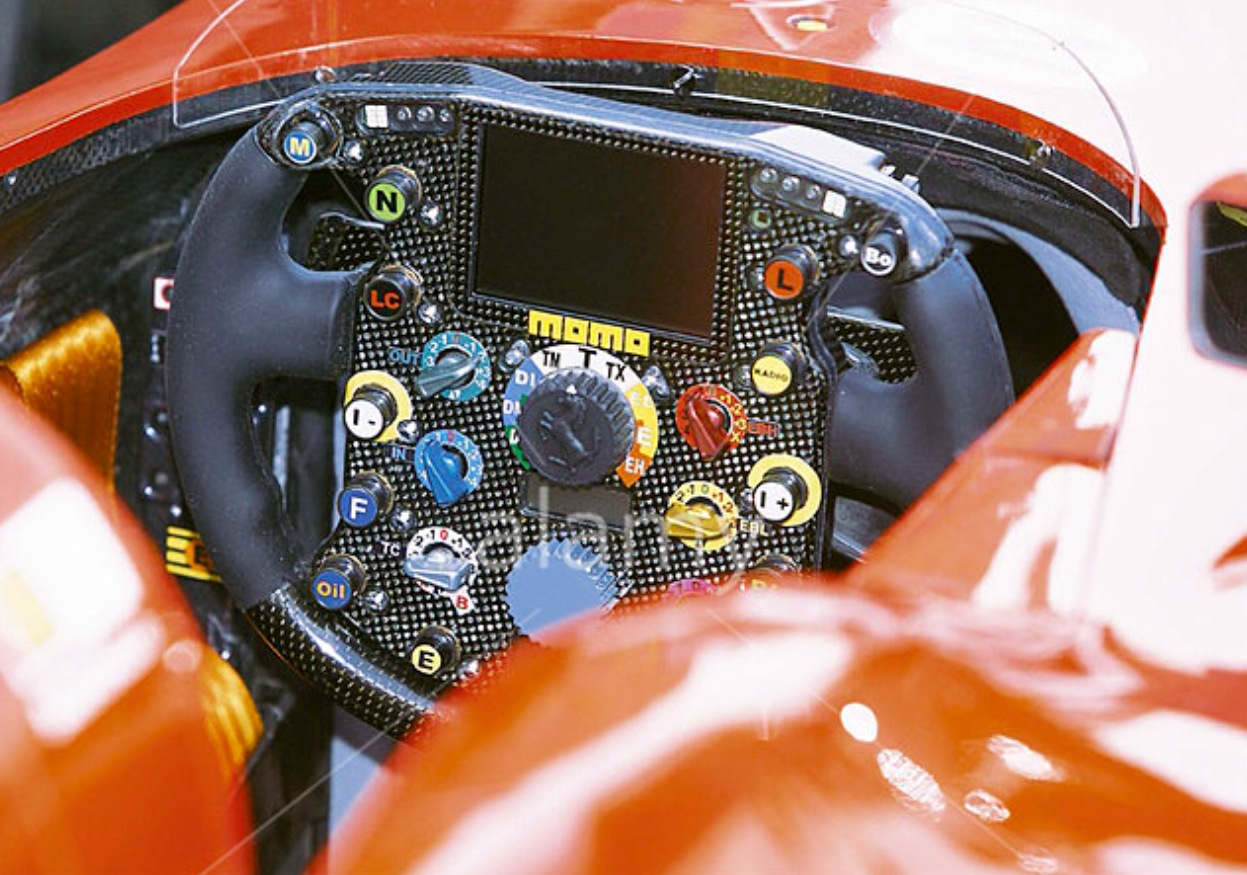
The complexity of the Ferrari F2002 steering wheel is a nice contrast with the simplicity of the decades before…(alamy)
In 1995 Gianpiero Moretti sold Momo to Breed Technologies, an American industrial group which produced airbag systems and steering wheels. Breed Technologies, in turn was acquired by the Carlyle Management Group, a private equity fund. Recently, ‘Momo was bought by a group of investors with a passion for the brand, its heritage and its products and a desire to grow the company back to its roots’, the company website says.
Momo is still focused on light alloy road wheels, but has also continued to develop racing products, an example the supply of steering wheels for the GP2 Championships in Europe and Asia.
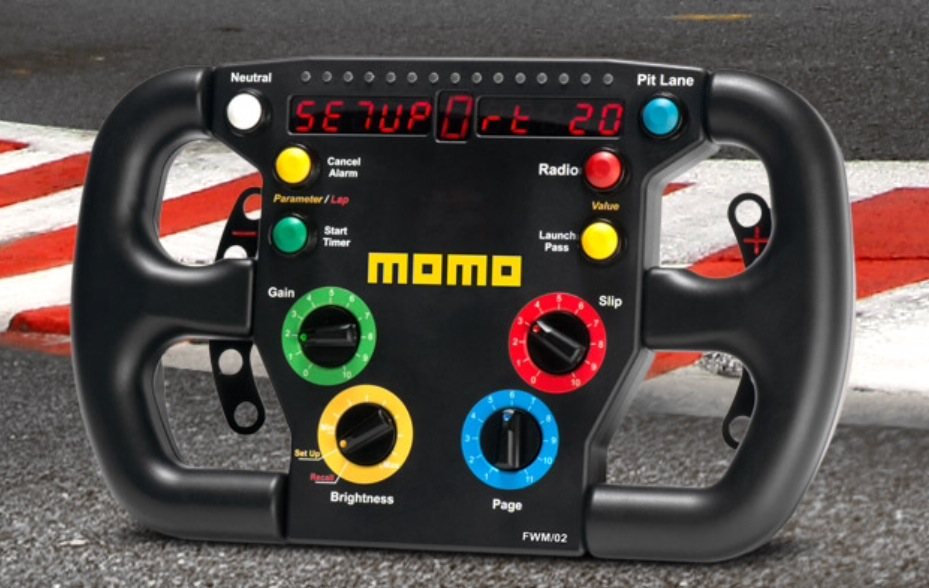
Momo’s current FWM/02 pro customer steering wheel. (Momo)
Gianpiero Moretti died in 2012 at the age of 71, too young, but the company he founded still makes beautifully designed contemporary products which show the companies ‘racing DNA’…
Gianpiero Moretti and Piero Lardi Ferrari. (unattributed)
Baptism at Aintree – Karl Kling’s Mercedes W196 & Roberto Mieres’ Maserati 250F push Jack at his 1st World Championship F1 event. Cooper T40 Bristol. 1955 British GP. (Jack Brabham Story)
Sixty years ago today, Jack Brabham made his Formula 1 GP debut at Aintree, but first he had to build the car…
The first half of 1955 was full of many goings on for Jack Brabham. With encouragement from the UK RAC motor sporting administrator, Dean Delamont, Jack was convinced to head over to the UK for some motor racing. Little did anyone know the success this would bring – although it was hardly immediate.
It the pages of the February 1955 ‘Australian Motor Sports’ there’s a brief piece on Jack and his trip to the Continent and it rumours that he had ordered a Cooper-Altaand might have a trial drive with Mercedes Benz. To finance such a trip he had to sell his highly developed & successful ‘RedeX Special’ – aka Cooper-Bristol. Stan Jones, having wrecked his Maybach II at the 1954 Australian GP purchased it. Just prior to selling though, Jack had his last race in the ‘RedeX’ at the January 31, 1955 Gnoo Blas meeting. This was a big meeting for the country NSW circuit with international drivers’ Peter Whitehead and Prince Bira running Ferrari & Maserati respectively. For Jack another part of financing the UK journey also meant selling his lathe and some other equipment – all to his later lament.
The unloved ex-Whitehead Cooper-Alta at Ibsley. (Jack Brabham Story)
Flying to the UK, meant initially leaving his wife, Betty and young son, Geoffrey in Australia. Soon after arriving Jack took delivery of the ex Peter Whitehead Cooper-Alta. In fact he originally set up camp at Whitehead’s Chalfont St Peter’s race garage before a slightly later move to Bob Chase’s RJC Motors operation at Saltdean. His racing activities in the UK, began with the Cooper-Alta at the April 11, 1955 Goodwood Easter Monday meeting. The same meeting Cooper Cars debuted their petite 1100cc Coventry-Climax T39 ‘bobtail’ sports car. Their first foray into what would become a successful ‘Climax’ engine relationship.
Brabham’s brand new, self built Cooper T40 Bristol, Aintree, British GP 1955. Car and driver victorious in the 1955 Australian GP, Port Wakefield later in the year. (unattributed)
History tells us that Jack Brabham never said much, he let his ability do the talking, whether by his driving or engineering skills. But he knew how to get what he wanted.Neither Charles, nor John Cooper ever officially interviewed Jack for a job at Cooper’s Surbiton works. He just hung around often enough until he was one of them.
Despite its Cooper heritage, Jack’s lack of enthusiasm remained for the Cooper-Alta. Even after an engine blow-up at the April 30 Ibsley meeting on the old RAF base, saw him convert it to Bristol power. Meaning he was never going to be satisfied continuing to race that car.
So having gained his new friendship with the likeable John Cooper, Jack was allowed use of Cooper’s Surbiton facilities to knock together what would be his own interpretation of Cooper’s new T39 ‘bobtail’ – shoehorning a big engine into a small sports car. One could even say this was an early incarnation of what would evolve into the Can Am style cars of the mid 60s and onwards.
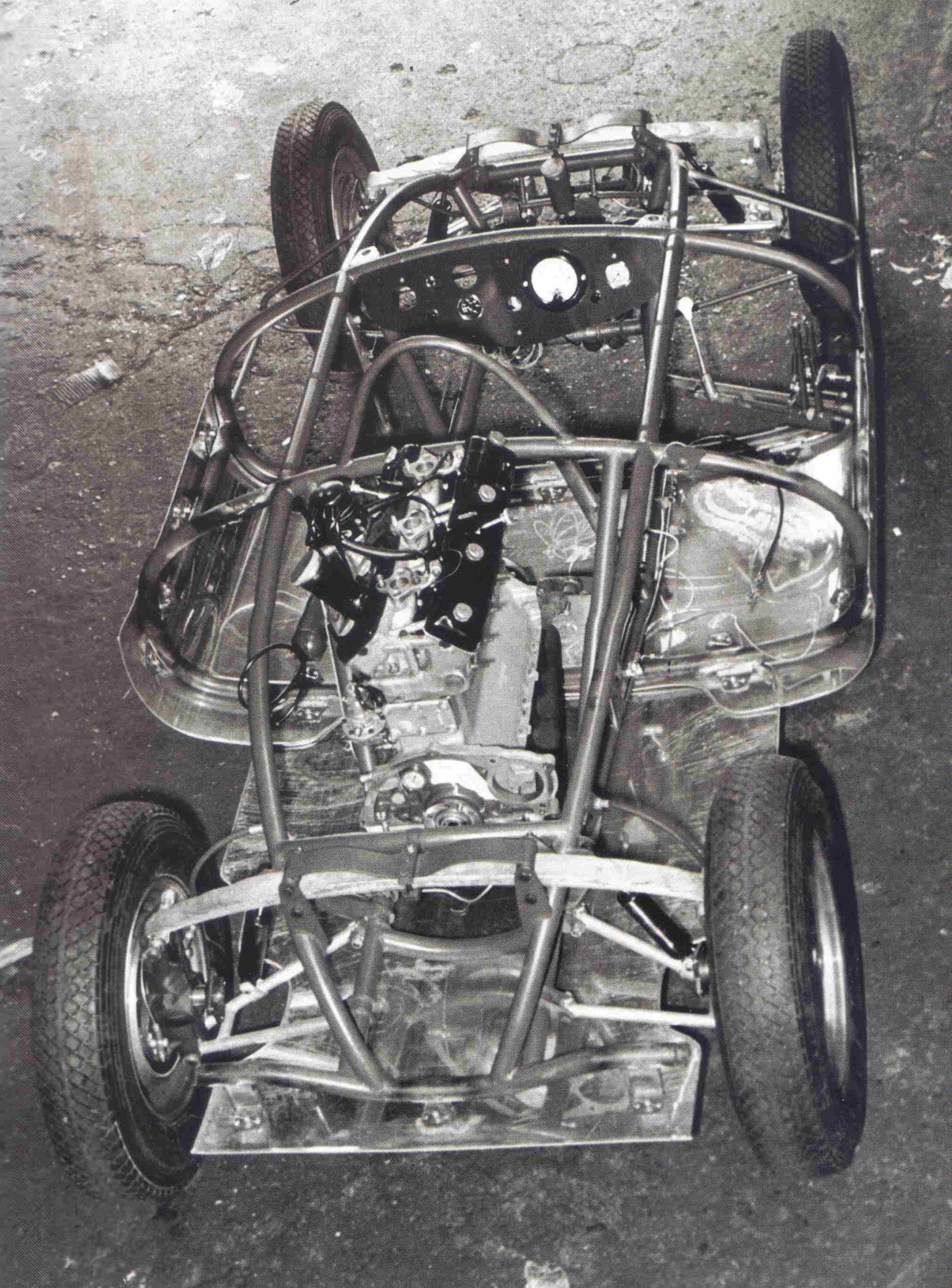
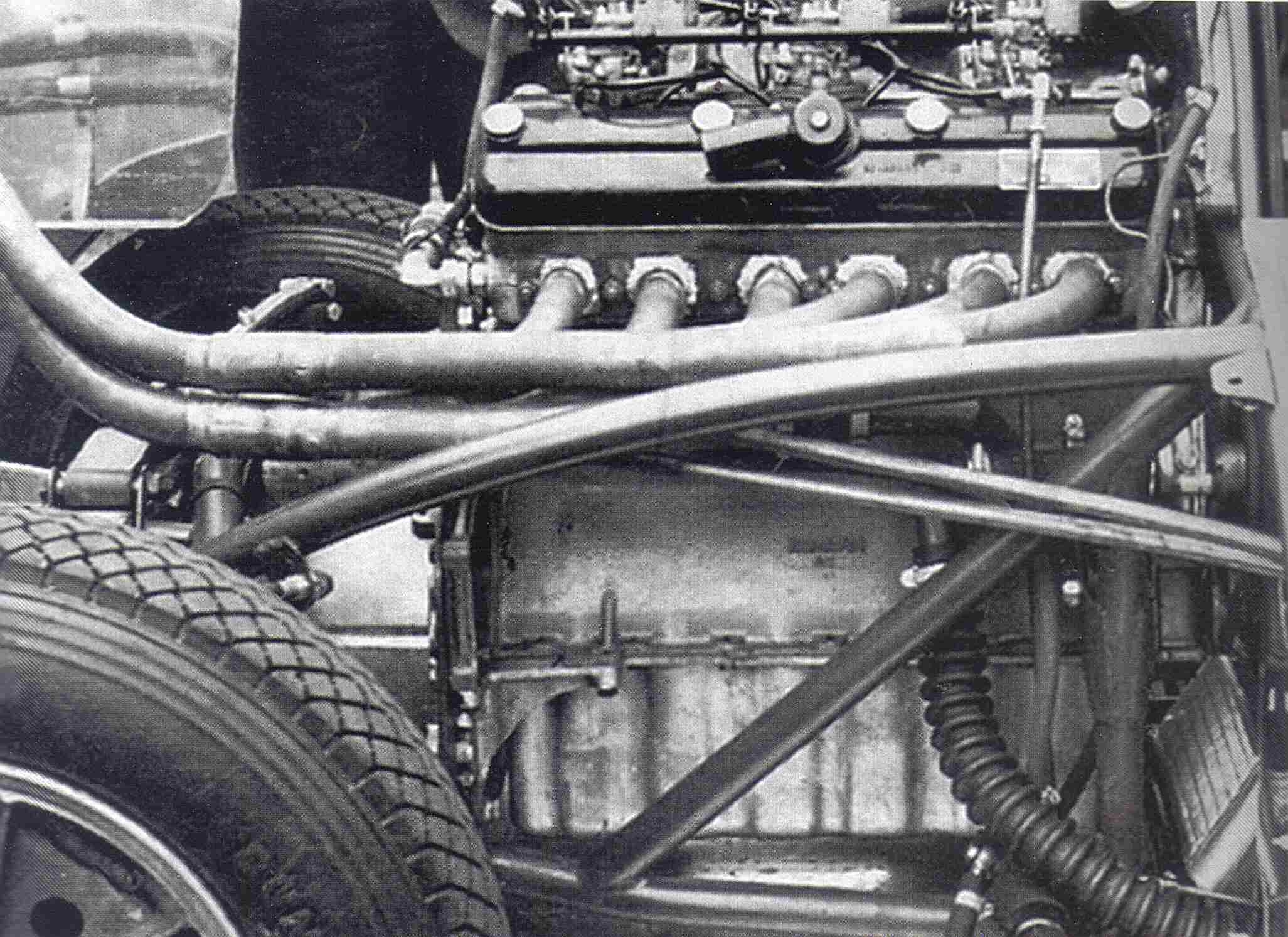
The bare bones of the Cooper T40 Bristol under construction. Tubular ‘curvy in the usual Cooper way’ chassis frame. Front and rear suspension upper transverse leaf spring and lower wishbones with Arnstrong shocks, drum brakes, 2 litre Bristol 6 cylinder engine.(Jack Brabham Story)
Part of Jack building his ‘streamliner’ F1 car, involved adding 50mm to the chassis’ wheelbase to accommodate the familiar to him, 2 litre Bristol 6 cylinder lump – in place of the 1100 Climax 4. Both built with the engine behind the driver. Worth noting is that in some official entry lists the car is claimed to have a 2.2 litre Bristol. Apparently that was the intent, but not reality. It was also built devoid of lights and anything that would add unwarranted weight.
The Bristol 2 litre 6 cylinder in the rear of the T40. (Jack Brabham Story)
This project later tagged as T40 in the Cooper genealogy stakes – with 2 constructed. One Jack would use himself, this car was allocated chassis number CB/1/55 and another that Bob Chase’s RJC Motors would briefly run for Mike Keen. I say briefly, because unfortunately a crash at the August 20, 1955 Goodwood 9 hour took Mike’s life and the ever present problem of fire destroyed the car.
Jack Brabham’s UK presence hadn’t gone unnoticed by the UK specialist motoring press, gaining a few comments in race reports. Autosport magazine even showed off the incomplete T40 in their pages the day before its first race. Admittedly the photo would have been taken sometime before that, but it was a brand new car when it hit the circuit – with no test time.
Autosport 15 July 1955 Cooper/Brabham announcement.
Liverpool’s Aintree circuit was the venue for the running of the July 16, 1955 British GP meeting. This meeting became Jack’s F1 debut race. The programme even mentions ‘The Cooper Grand Prix entry is a prototype of a full team to be built to race in 1956.’ A slightly premature comment as it turned out and the only F1 Grand Prix the T40 would take part. The car’s haste to complete meant new car sorting was lacking and a rear of grid start. Having liberated the Harley Davidson clutch setup from his Australian ‘RedeX’ C-B before sale, with some irony it was this part that let Jack down at Aintree making for an early retirement at 30 of the intended 90 laps the outcome. The dominant Mercedes Benz W196 team that included Juan Manuel Fangio, Karl Kling and Stirling Moss, saw Stirling taking race honours.
Jack Brabham’s Cooper T40 Bristol from Ken Wharton Vanwall VW55 equal 9th, with victor Stirling Moss about to round them up in his Mercedes W196. (Bill Henderson)
Despite the niggling start Jack had more faith in the T40 than the Cooper-Alta. What followed over the ensuing month were national events at July 30 Crystal Palace & August 1 Brands Hatch with further retirements at both. Then crossing over the Scottish border his luck with the T40 began to change at the August 6 Charterhall meeting. Finally two 4th placed finishes in his Heat and Final. Continuing into the following week’s damp August 13 Snetterton. At that meeting Jack was able to mix it amongst some of the motor racing luminaries. Such as Harry Schell & Ken Wharton in Vanwall’s, Stirling Moss in his privately entered Maserati 250F and Roy Salvadori 250F. That being the finishing order for Snetterton’s RedeX Trophy race with Jack slotting in between Stirling and Roy for another 4th place. Had he not spun during his tussle with Moss it may well have been a 3rd place greeting him. This race alone was enough to convince Jack he would return to the UK in 1956 as he was about to send the Cooper T40 home to Australia. Jack and Betty then set to return to Sydney in late September to catch up with their son and more motor racing.
Jacks thoroughly modern mid engined, ‘central seat sports derived F1 car’ ahead of the over the hill Ferrari 625 of Mike Hawthorn, monstering the little Cooper. MH finished equal 6th in the race with Fazz teammate Eugenio Castellotti. Things got better for Ferrari, the Lancia D50 ‘gifts’ were not too far away! (unattributed)
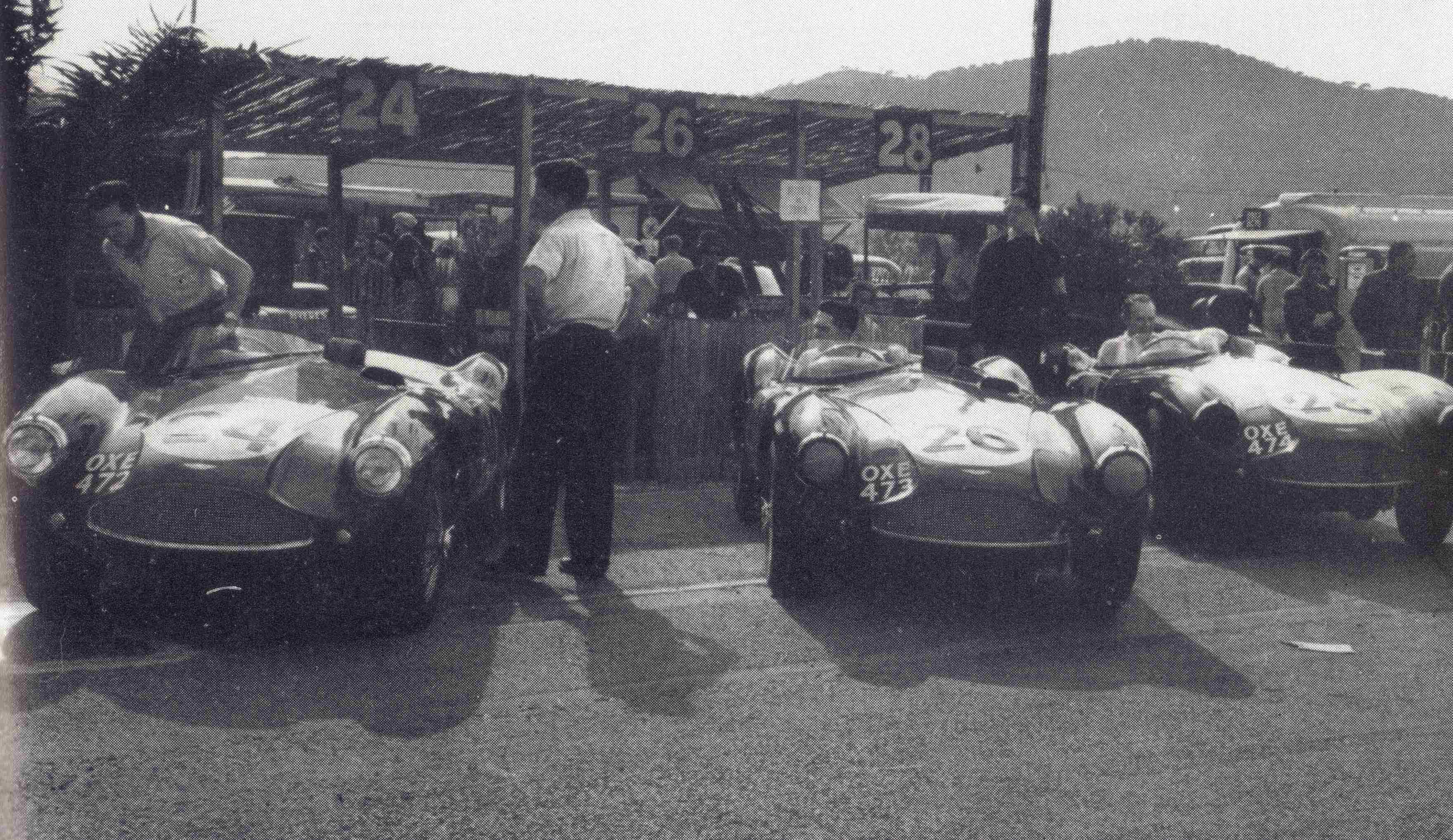
The year of 1955 was also a period whereby other Aussies had made the trip to England for a racing holiday. Orders had been placed with Aston Martin for 3 of their DB3S racing sports cars. The ‘Kangaroo Stable’ as it was so named with members being Tony Gaze, David McKay, Les Cosh, Dick Cobden, Tom Sulman & Jack Brabham. Circumstances played against them though. Late delivery of the cars didn’t help, but it was the June 11-12, 1955 running of Le Mans that put the skids on racing soon afterwards with a number of events cancelled as a result to the Pierre Levegh Mercedes going into the crowd at Le Mans.
‘Kangaroo Stable’ Aston Martin DB3S at the Hyeres 12 Hour, France 29 May 1955. L>R Gaze, McKay, Brabham, Cosh and Cobden standing near the post. Only Tom Sulman is missing from the shot. Race won by Canonica/Munaron Ferrari 750 Monza, then came the Kangaroo Stable trio; Gaze/McKay 2nd, Cosh/Cobden 3rd and Sulman/Brabham 4th. (David McKay ‘Behind The Wheel’)
Jack Brabham was present at the famous French road course that year, but as a reserve driver for the Bristol team. He got to qualify, but never received the call up to put his helmet on for the race. That may well have been one of several omens Jack was granted in 1955 and over his outstanding career.
Cooper Cars Ltd also had a presence at Le Mans with the John Brown/Edgar Wadsworth Cooper T39 1100 and the Whitehead Brothers Cooper-Jaguar that year, but it was the infancy of Jack and John’s friendship, hence no involvement with the Surbiton marque’s effort
Another instance of Brabham luck was just before he headed for home. September 17 was the Dundrod RAC Tourist Trophy meeting in Ireland, with Jack there to share the Michael O’Shea owned Cooper T39 with London driver, Jim Mayers. An inexperienced French driver, Vicomte Henri de Barry created annoyance for several drivers as he baulked their progress, with those drivers’ having to take risks to get past to further their race on the testing Irish road course. Unfortunately the situation ended as badly as it could with a fiery crash at Deer’s Leap involving several cars. Jim was one of 2 drivers to die at that crash scene – the Cooper scattered to oblivion. This event would also claim another driver, elsewhere around the course. Although not knowing otherwise, Dean Delamont had sought out Betty Brabham, thinking it was Jack involved in the main crash – only to find him in the pit. Jim and Jack had flipped a coin to decide who did the first stint. We know who won…
Together in the UK, Betty Brabham followed Jack mid-year. While their son, Geoffrey stayed with his grandparents in Sydney. Cooper T40 Bristol. (Jack Brabham Story)
So as can be seen there were a few familiar names that helped establish Jack Brabham in those early days in the UK – Whitehead, Chase, Cooper & Delamont.The Bristol marque also played its part with their engine and the Le Mans reserve driver gig. Through them, Jack Brabham, Jim Mayers & Mike Keen are also entwined with their 1955 Le Mans Bristol team involvement. Taking out 7th (Mayers), 8th (Keen) & 9th places behind Jaguar’s Mike Hawthorn, Ivor Bueb winning entry. It was all a taste of the next 15 years Jack would encounter in the highest levels of motor racing, including building more racing cars.
Etcetera…
Jack shipped the Cooper Bristol home to Australia at the end of 1955, and in the saltbush country of the new Port Wakefield circuit, 100Km from Adelaide, won the 1955 Australian Grand Prix on 10 October. A lucky win from Reg Hunt’s ailing Maserati A6GCM and Doug Whiteford’s Talbot-Lago T26C. The first mid-engined AGP win. (unattributed)
Bibliography and Photo Credits…
‘The Jack Brabham Story’ Jack Brabham and Doug Nye, ‘Behind The Wheel’ David McKay, Bill Henderson
About 15 years ago, I got a phone call from my father, telling me that his brother, my Uncle Henry had passed away at his home in Derbyshire, UK…
I remember Henry from the early 1960s, my dad’s dashing brother, who never married, but whenever he visited, arrived on or in interesting machinery. My first ride on a bike was on his Vincent Comet and then on a legendary Black Shadow. A Mini Cooper was thrilling, even more so, a Cooper S.
We moved to Australia, but news came occasionally of the succession of Lotus, Porsche and latterly turbocharged Nissans of the Silvia and Skyline variety.
BRM V16, Ken Richardson, Folkingham 15 December 1949. (Marcus Clayton Collection)
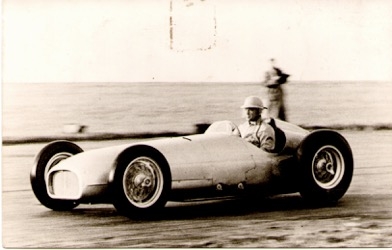
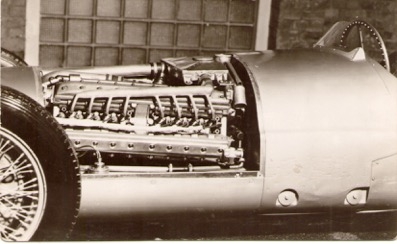
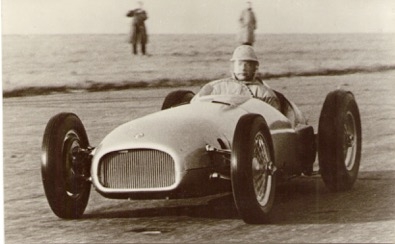
I was pleased to receive, as part of a modest inheritance from Henry, a packet of photos, reproduced here.They are obviously very early BRM shots, which I had never seen before. I thought they may have been taken by him as a young man, but 2 of them appear elsewhere on the interweb, so I can only assume they are part of a postcard pack, or press pack. I would date them around 1950/51.
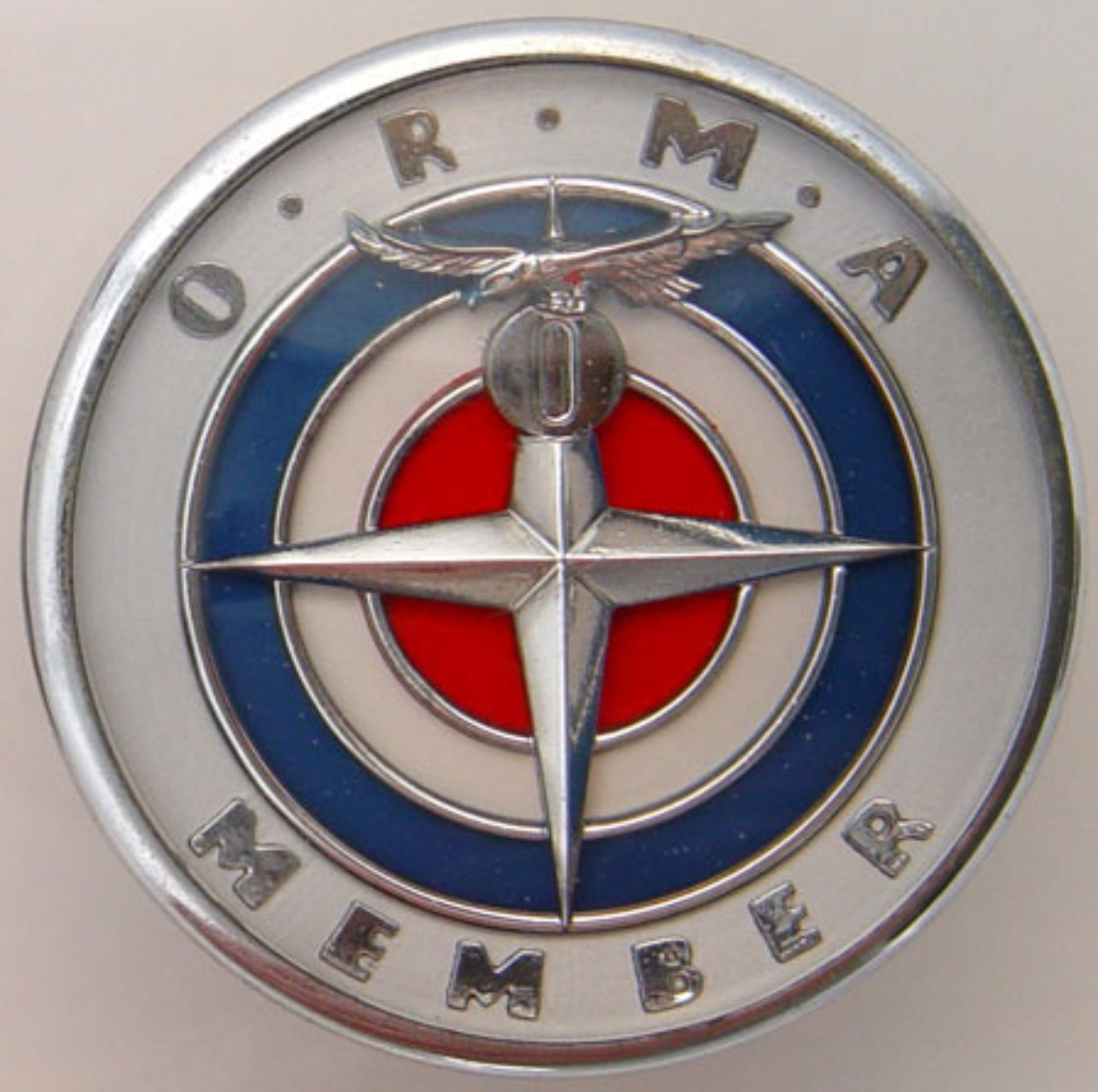
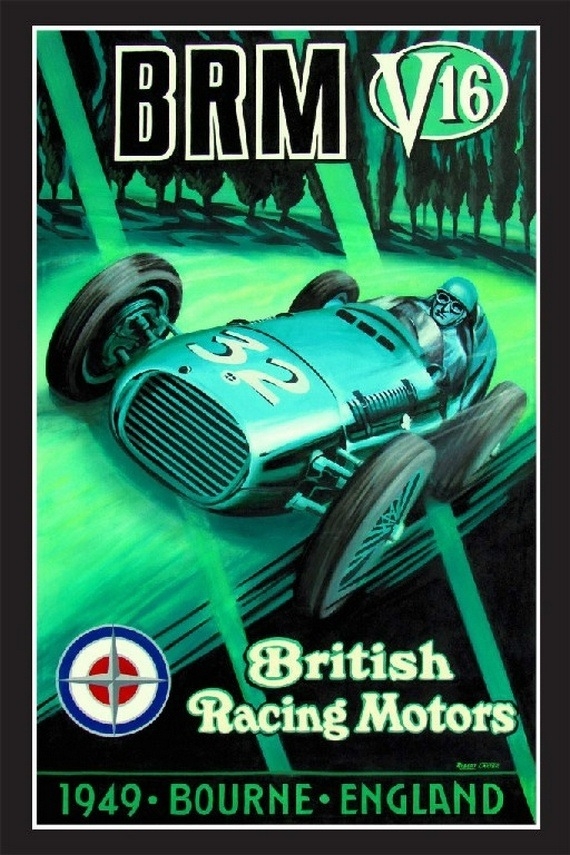
(Contributor/Historian Stepen Dalton advises the photos are BRM Press Kit shots, the cars launch was at Folkingham on December 15 1949, Stephen suspects Henry may have been a ‘BRMA’ or ‘ORMA’ member, the BRM supporters groups. The members of those groups were perhaps provided with copies of the shots. See membership badges below. Stephen has also indicated the likely dates of the track sessions and drivers, i have changed the captions accordingly.)
I have always had a fascination with the BRM.It has been written about extensively, so I can only add my personal take on this machine.
Mark Hales described it as like ‘The Victorians trying to build a moon rocket, and they very nearly succeeded’.
16 cylinders, each of less than 100cc, highly supercharged, spinning at 12,000 rpm, air suspension, disc brakes, with all this componentry, supplied by dozens of different companies, motivated to show ‘Johnny Foreigner’ that British engineering was still the best in the world. Inevitably, when there are so many suppliers involved, with so many radical parts, the project was delayed, time and time again, until the great day when the car had its first race start. It travelled about 3 feet, after breaking an axle at the start.
Chassis was tubular comprising double-tube side members, 4 cross members, aluminium body. Suspension at front by Porsche type trailing arms and Lockheed air struts, de Dion rear axle located by a single radius rod each side and Lockheed air struts. Brakes Girling 3 shoe drums,(Mk 2 had discs) Wheels Dunlop centre lock wires with 5.25 inch wide x18 inch diameter wheels at front and 7 inch x17 inch diameter at the rear. BRM 5 speed gearbox with ZF ‘slippery diff, gearchange on RHS, transmission angled to pass to the left of the driver. Engine specifications with engine cutaway drawing below. Weight at the start line circa 862Kg. (Tony Matthews)
The cars were extensively sorted over 3 years before they became reliable. Exhausts changed from full length, to in front of rear wheels, to stubs behind the front wheels. Radiator intakes increased and decreased, oil cooling and filtration revised, nearly every part was altered and changed.
When some cars were being properly restored during the 90s, the original dyno shed was discovered, and on the walls were all the different firing orders tried. I don’t know that the final order used was ever identified.
Of course there is the sound.
I don’t know if it is the greatest sound in the automotive world, but it has to be in the running. I played a recording of the BRM to an engineering colleague, who makes drag racing engines. He thought the BRM sounded like an extremely angry Funny Car, and took some persuading to be convinced that all that fury came from only 1500 cc.
BRM V16, Folkingham, Ken Richardson 15 December 1949. (Marcus Clayton Collection)
None of the drivers really liked the car, as it was unreliable and difficult.
‘The V16 was a thoroughly nasty car,’ said Moss. ‘The brakes were OK, the acceleration was incredible – until you broke traction – but everything else I hated, particularly the steering and the driving position. Handling? I don’t remember it having any…’
Raymond Mays, (Who I think is driving in the photos) ‘Before we went to Albi in ’53, I drove Fangio’s car at Folkingham Aerodrome and I had it up to 190mph on the 2000-yard runway. It was quite frightening, because you could re-spin the wheels at 9800 in fourth gear. I reached 11,800, with a high gear in…’
Ray Mays, BRM V16, Daily Express Int Trophy Meeting, Silverstone 26 August 1950 (J Wilds)
Mays again ‘By the end of that lap, though, Fangio detected a misfire, and, as Mays admitted, ‘When you got a misfire on the V16, it could have been 1001 things… We worked through the night, and at 3.30am it was decided that I would test the car. At that time of the day – early dawn – there were horses and carts about, farmers coming out of gates, but on this long straight road I had the thing up to 180, and I scared myself stiff.’ How wide was the road? I asked. ‘Narrow’. said Mays. ‘Narrow.’
So the cars were ultimately irrelevant, only winning races in Formula Libre after time ran out for them when F1 changed to the unsupercharged 2 litre formula.
Handsome side profile undeniable.(Marcus Clayton Collection/Louis Klemantaski)
The world is a better and more interesting place for the BRMs having been made. It would be unlikely to happen today, as the risks were far too high, but they were, like so many of the automotive and other objects that we so treasure, a delightful folly.
The recording is of Nick Mason’s BRM in 1998, driven by Mark Hales, from ‘Into the Red’.
BRM V16 Folkingham. Perhaps Ray Mays on the cars first trial run, 3 December 1949. (Marcus Clayton Collection)
Restoration and Maintenance of This Car, Type 15 Chassis #1 Owned by the British National Motor Museum…
Another shot at what appears to the be the launch of the BRM Type 15. (Marcus Clayton Collection/Louis Klemantaski)
Raymond Mays at right doing a bit of ‘stakeholder management’.R>L: Mays leaning, behind him Peter Berthon. Beside Peter, publicist Walter Hill, to his left Bob Henderson Tate from the Ministry of Supply. Standing, still going R>L are members of the ‘British Motor Racing Research Trust’ Bernard Scott and Denis Flather of Lucas, Alfred Owen far left. Seated in front of the table is administrator and later company secretary of BRM James Sandercombe. The meeting is in the study at Eastgate House, Mays family home in 1948. (photo unattributed but caption details ‘BRM Vol1’ Doug Nye)
135 degree all alloy, 1488cc V16 with cast-iron wet liners. 10 bearing crank. DOHC 2 valves per cylinder, Rolls Royce 2 stage centrifugal supercharger fed by 2 SU carbs. Ignition by Lucas coil and 4 Lucas magnetos.Mk 1 Type 15 power 330bhp@10250rpm 1950-460bhp@11000rpm 1951.(unattributed)
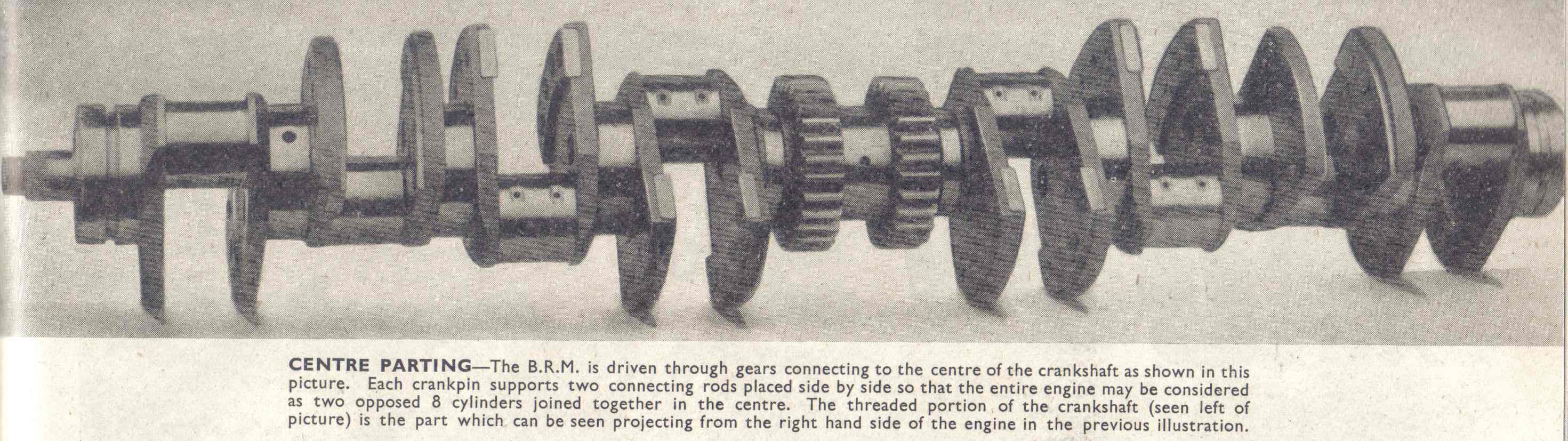
BRM crankshaft, centre power take-off clear. (Stephen Dalton Collection from the ‘BRM Ambassador for Britain Booklet’)
(Stephen Dalton Collection from the ‘BRM Ambassador for Britain Booklet’.)
‘Owen Racing Motor Association’badge.
Scratchy ‘BRM Association’ lapel badge.
Photo and Other Credits…
Tony Matthews cutaway, Motorsport magazine, Stephen Dalton Collection, J Wilds, ‘BRM Vol 1’ Doug Nye
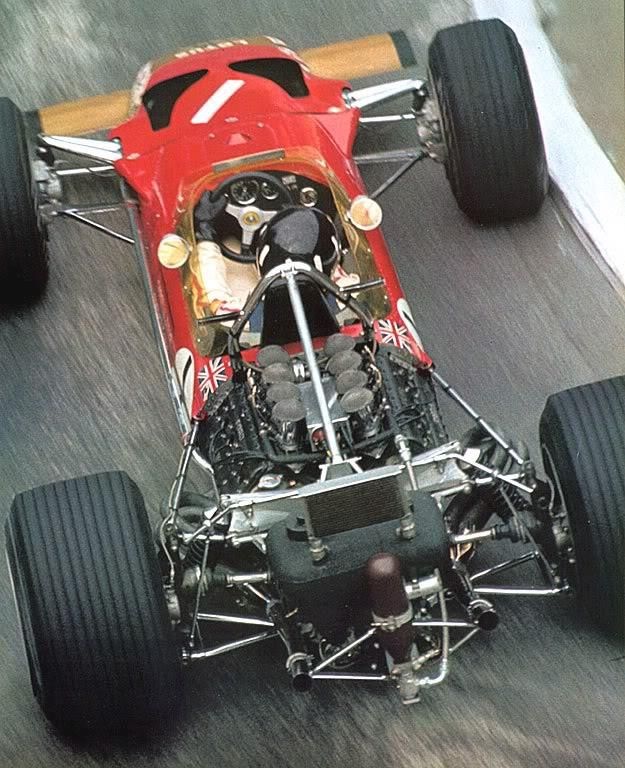
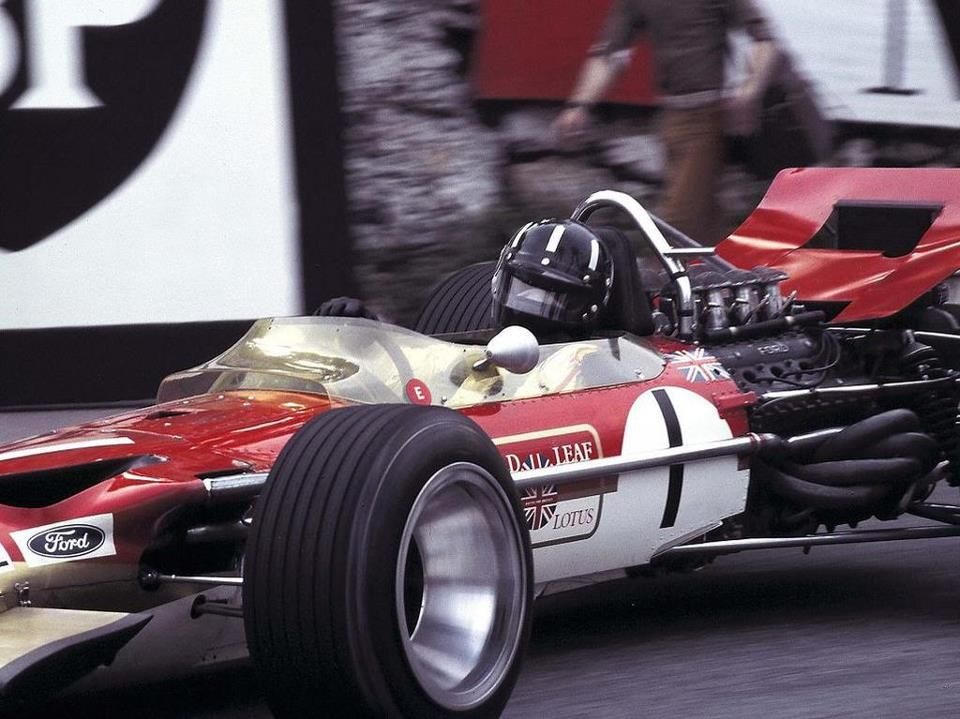
Graham Hill in his hi-winged Lotus 49 during practice for the 1969 Monaco Grand Prix, he went on to win the last of his five Monaco victories on Sunday May 18 1969…
‘Twas his last Grand Prix win as well but his competitiveness was still there, wins were to come in F2 and in endurance racing. His ’72 Le Mans Matra victory with Henri Pescarolo made him unique in our sport as the only winner of ‘Motor Racing’s Triple Crown’; victories in the Drivers World Championship, (BRM 1962 Lotus 1968) Indy (Lola 1966) and Le Mans.
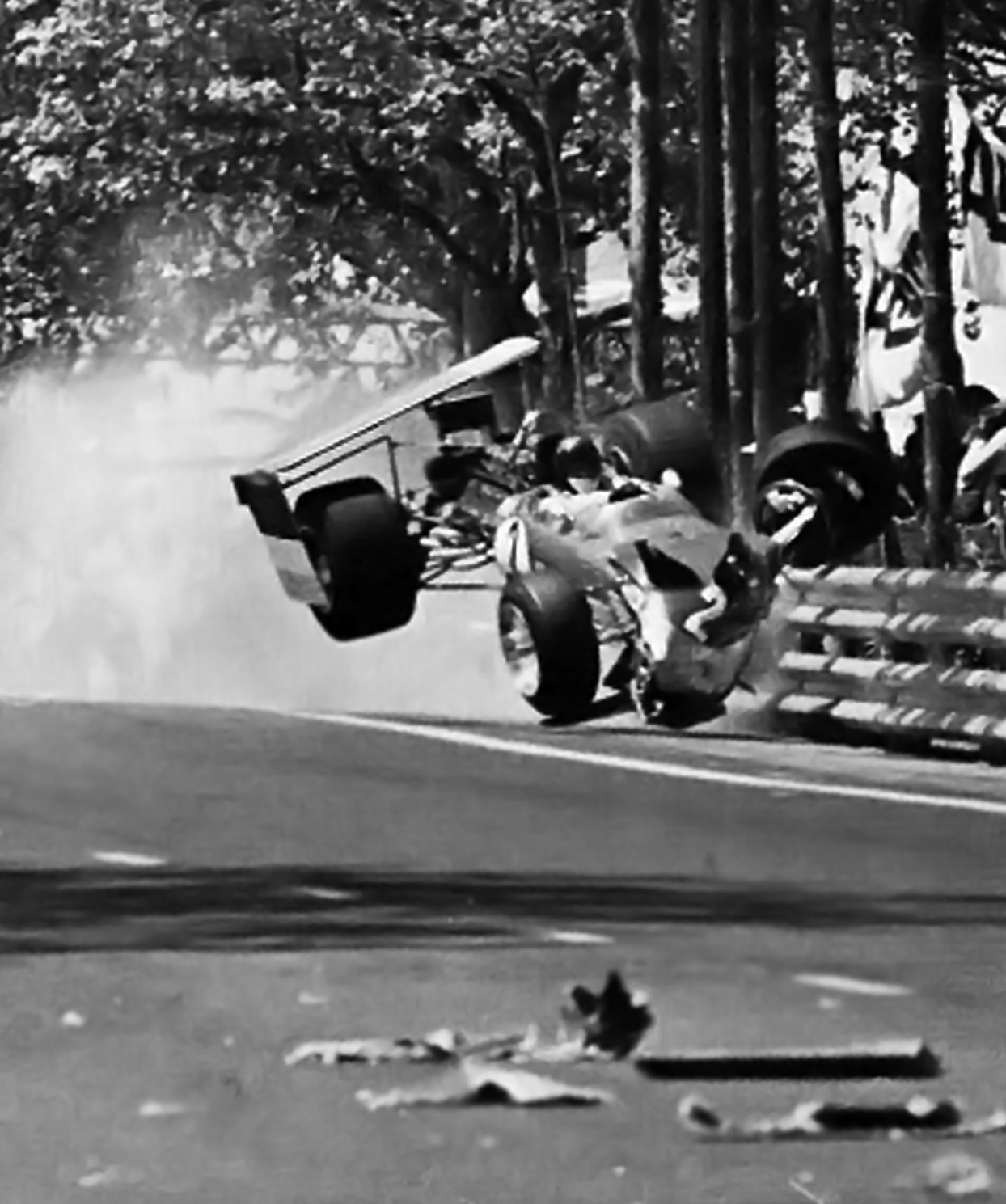
The story of the weekend was all about wings. There had been some big failures as engineers battled with forces they did not fully understand, notably the collisions, fortunately without serious injury to both Hill and Jochen Rindt at Barcelona on May 4, the race before Monaco.
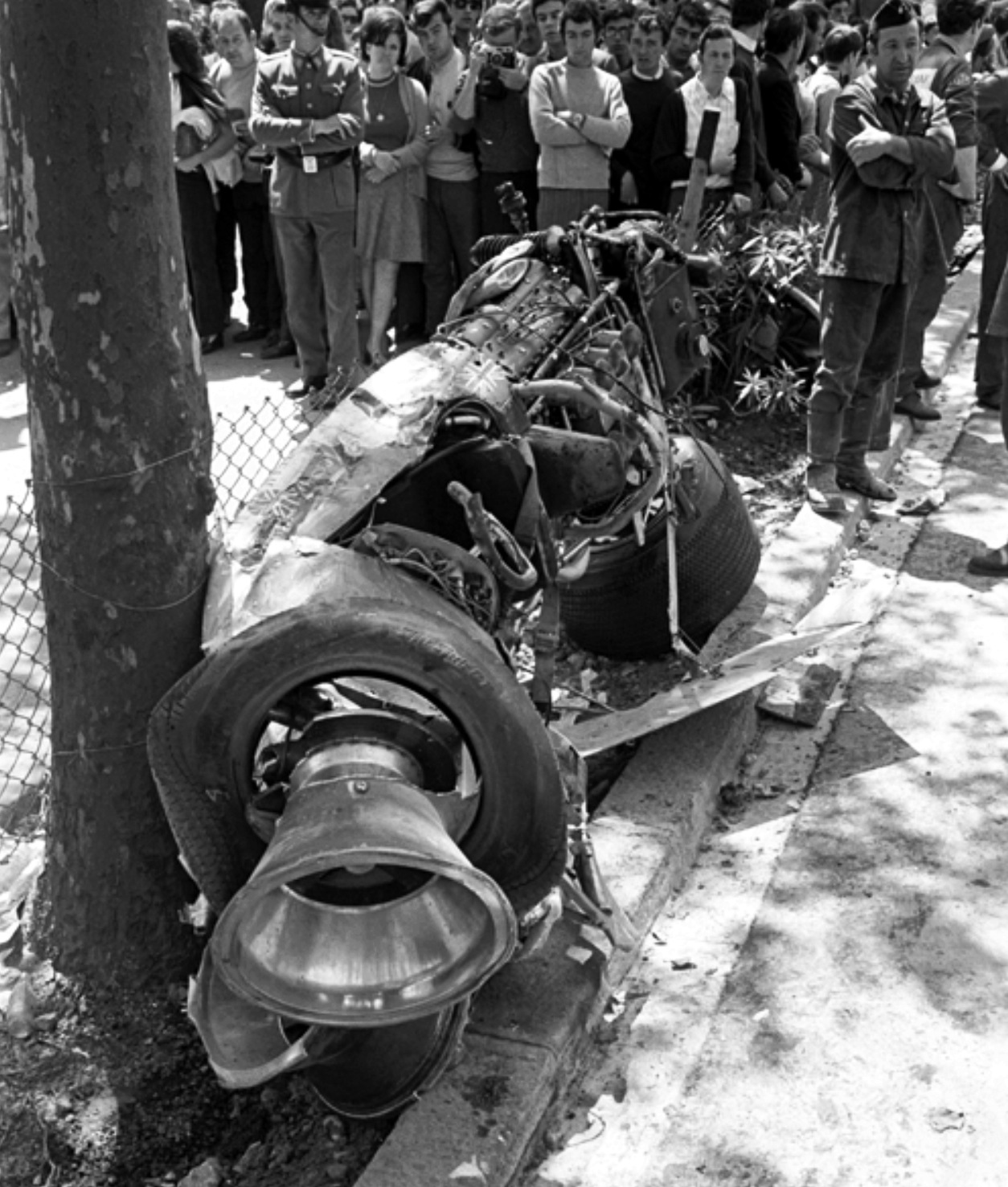
Hill’s rear wing failed on lap 9 as he crested the rise after the Montjuic Park pits, he crashed heavily but was uninjured. Eleven laps later Rindt’s leading Lotus 49 suffered the same failure, collided with Hill’s abandoned car and overturned. He emerged with cuts, bruises and a broken nose. The wing on Ickx’ Brabham BT26 fell apart during the race as well.
There had been other failures in the recent past, the authorities needed to act before someone was killed.
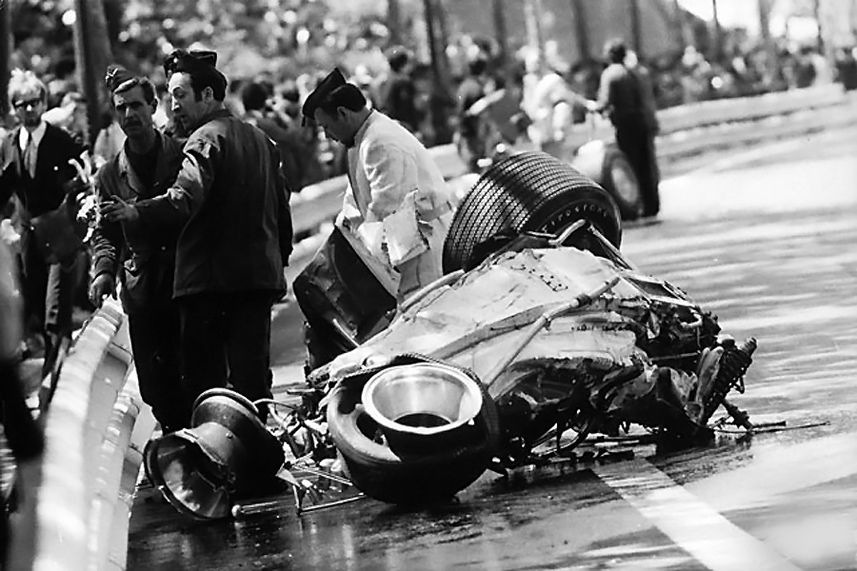
Rindt’s rooted Lotus 49, Montjuic Park Barcelona 1969. Jochen was a very lucky boy to escape withour serious injury after a wing support failure, Hill’s car into which Rindt collided is just down the road. (unattributed)
The CSI met in Monaco and acted after first practice by banning high wings forthwith, times were scrapped and the process of qualifying recommenced.
The sport was made safer as a consequence, some remain of the view that wings should have been banned then. Full stop.
Wonderful overhead shot of Hill in qualifying post the wing ban; Chapman chose to keep the front wings, meanwhile the tin-snips were being put to work…3 litre Ford Cosworh DFV, big rear oil tank, external extinguisher the first thing to leave the car in the event of a major rear impact (handy for the driver in need of foam!), and Aeroquip brakelines running along the radius rods all clear to see. You can just about read the Smiths tach and chassis plate! (Automobile Year 16)
Stewart took an early lead from Amon’s Ferrari 312 in the race, Hill moved into third shortly after the start and after differential failures to both Amon and Stewart’s Matra MS80 Ford gained the lead he never lost. He took victory from Piers Courage’ Brabham BT26 Ford and Jo Siffert’s Lotus 49B.
By the time of the race’ start Chapman and his team had fashioned this neat spoiler…not as nice as the 49 used at Monaco in ’68 but that was built at the factory, this was not bad overnight and ‘ in the field’. (unattributed)
Winners are grinners, Hill ‘The Mayor of Monaco’ was always a popular victor in the Principality…
Hill victorious in Lotus 49 ‘R10′, first debut’ by Jochen Rindt at Wigram NZ in January 1969. Victories in the Tasman Warwick Farm 100 in Rind’ts hands and Hill at Monaco. 49’s much raced by many drivers this chassis also raced by John Miles. Alex Soler-Roig and Emerson Fittipladi, Emmo raced it in its final GP, Austria in August 1970. Car still exists in the UK. (unattributed)
Etcetera…
All those hi-wings in the Montjuic dummy grid, soon to be a thing of the past. #7 Jackie Stewart with teammate Jean Pierre-Beltoise behind, both Matra MS80 Ford, Graham Hill Lotus 49 Ford beside Stewart, #6 Bruce McLaren McLaren M7A Ford, #15 Chris Amons Ferrari 312 and #4 Jacky Ickx Brabham BT26A Ford (unattributed)
Rindt’s Lotus 49B and its broken wing supports clear in this shot of the ‘unguided missile’. Spectators and Rindt fortunate. Montjuic Park 1969. (unattributed)
49 ‘R9’ decidedly second-hand, Jochen was so lucky to ‘walk away’ from this accident (Getty Images)
Rindt’s 9 May 1969 letter post Spanish prang to Chapman is widely circulated and a classic! Prophetic sadly. (Jochen Rindt Archive)
Credits…
oldracingcars.com chassis research, Automobile Year 16, Getty Images
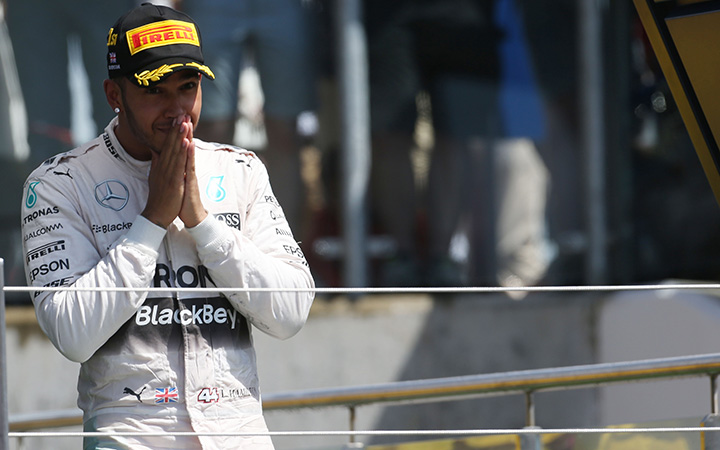
Lewis Hamilton from Nico Rosberg. Mercedes Benz F1 W06. (Motorsport/LAT)
Mark Hughes report of the race for Motorsport…
‘It was a time for keeping your nerve, when the British weather was holding the crowd’s race-leading favourite Lewis Hamilton hostage to fortune. The rain had arrived on around lap 35 of the 52-lap race – after Mercedes’ raw pace had got Hamilton ahead of the faster-starting Williams that ran much of the first stint in a tense, internally stressed 1-2 with the Mercs tight in their wake – but awkwardly it was only falling at selected parts of the track…Was Hamilton lucky in the timing of a new, heavier rainfall just as he had pitted to avoid being devoured by Rosberg? With the whole track suddenly wet just as he’d stopped, leaving Rosberg consigned to a slow in-lap on slicks, it was the winning of the race for Hamilton. Just as the weather had put what would otherwise have been an assured victory in jeopardy, so it ultimately rescued him from the dilemma it had created.’
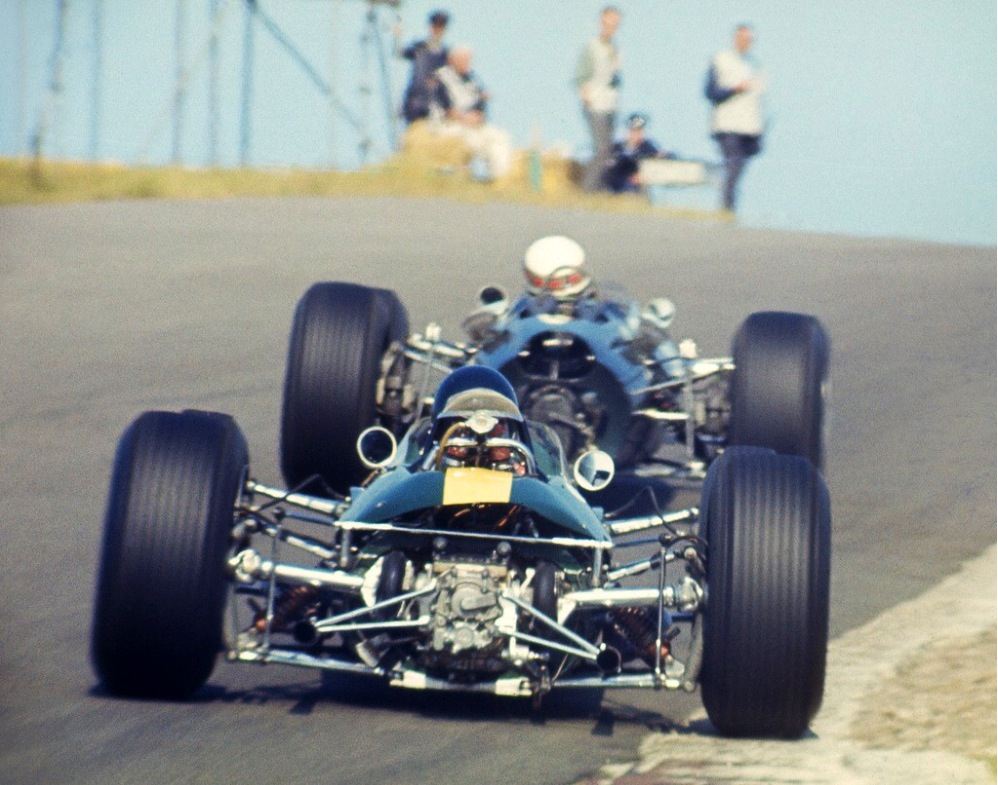
Jim Clarks’ Lotus 33 Climax chasing Jackie Stewarts’ BRM P261 through the Dutch sand-dunes…
Jackie had his first F1 drive with Lotus in the non-championship, late 1964 Rand Grand Prix in South Africa, but made the intelligent decision to join BRM for 1965 where he felt he would have the support and time to develop as a driver. Lotus would have been tougher, Clark was the established ace, and Chapmans track record with ‘number 2’s wasn’t good.
Stewart had great relationships with both his countryman Clark and his teammate Graham Hill who mentored and guided him well, that and Stewarts’ natural ability saw him take his first win in Italy later in 1965.
One of racings great ‘mighta beens’ are the potential duels between he and Clark as JYS matured as a driver and finally got a competitive F1 car with the Matras he drove from 1968…
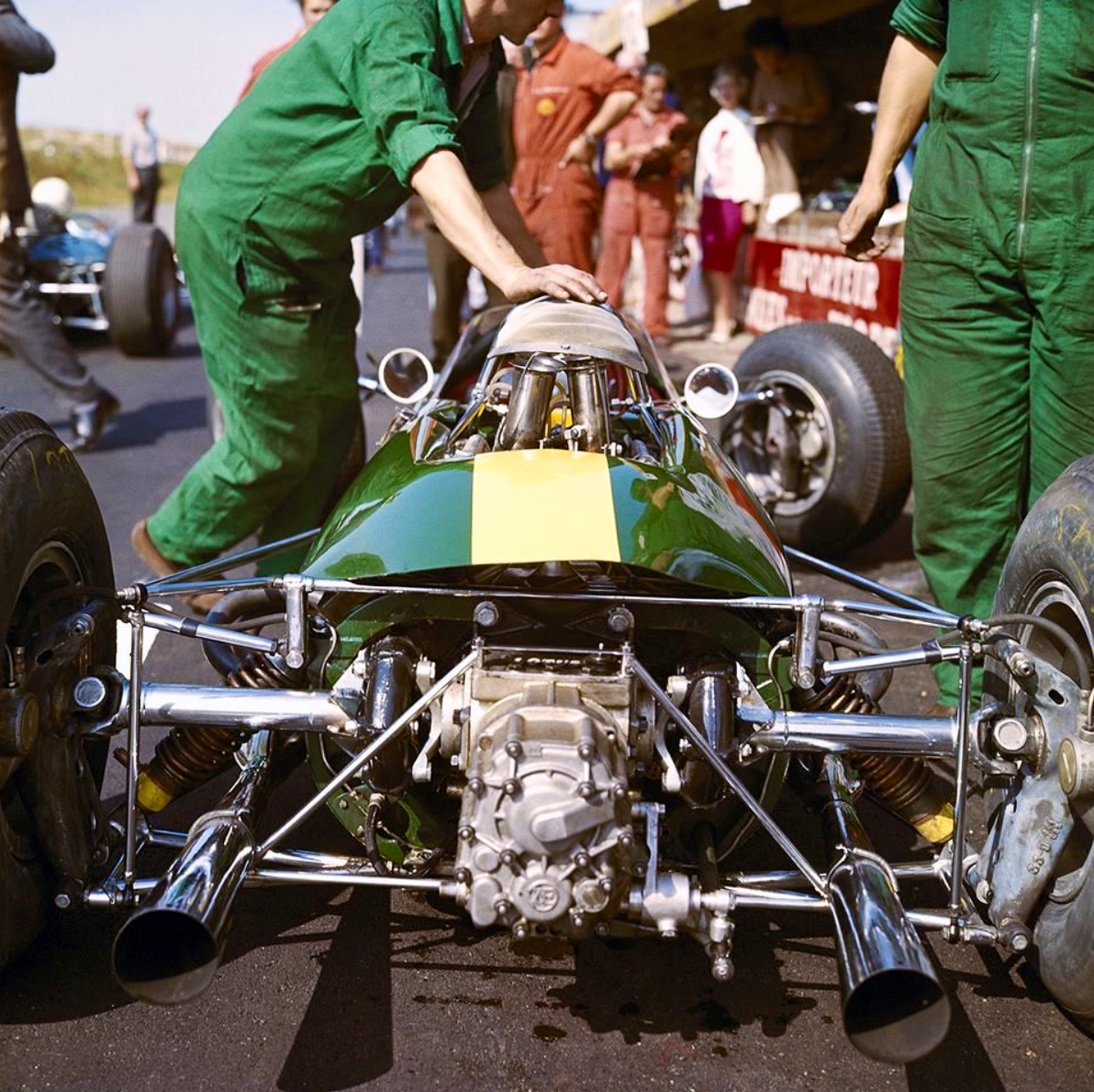
The Lotus 33 rear view…is an interesting study in suspension design and aerodynamics of the mid ’60s GP car. Fully faired cigar shaped body of the BRM in contrast with the naked Lotus. The clutter of the outboard rear suspension and its impact on the airsteam is marked relative to the rocker arm, inboard approach at the front…
Lotus 33 Climax, Dutch Grand Prix 1965. Close up…ZF gearbox, later series 32 valve Coventry Climax FWMV 1.5 V8, rubber donuts on driveshaft, suspension single top link, inverted lower wishbone, twin radius rods for location fore and aft, cast magnesium uprights, coil spring/damper units and adjustable sway bar, oh so period and gorgeous! (unattributed)



























 primotipo...