Archive for the ‘F1’ Category

lauda mclaren mp4 cockpit

Niki Lauda at rest and awaiting qualifying set-up tweaks, staying ahead of ‘Frenchy’ Alain Prost the challenge of the year…

Experience, cunning, speed and consistency won him his third and final title with McLaren in 1984 but Alain prevailed in 1985, Nikis’ last season of racing and Prosts’ first title.

Click on this link for an interesting, short visual comparison of the evolution of McLaren steering wheels down the decades, as good as any an indicator of ‘progess’! http://www.motorsportretro.com/2014/11/mclaren-f1-steering-wheels/

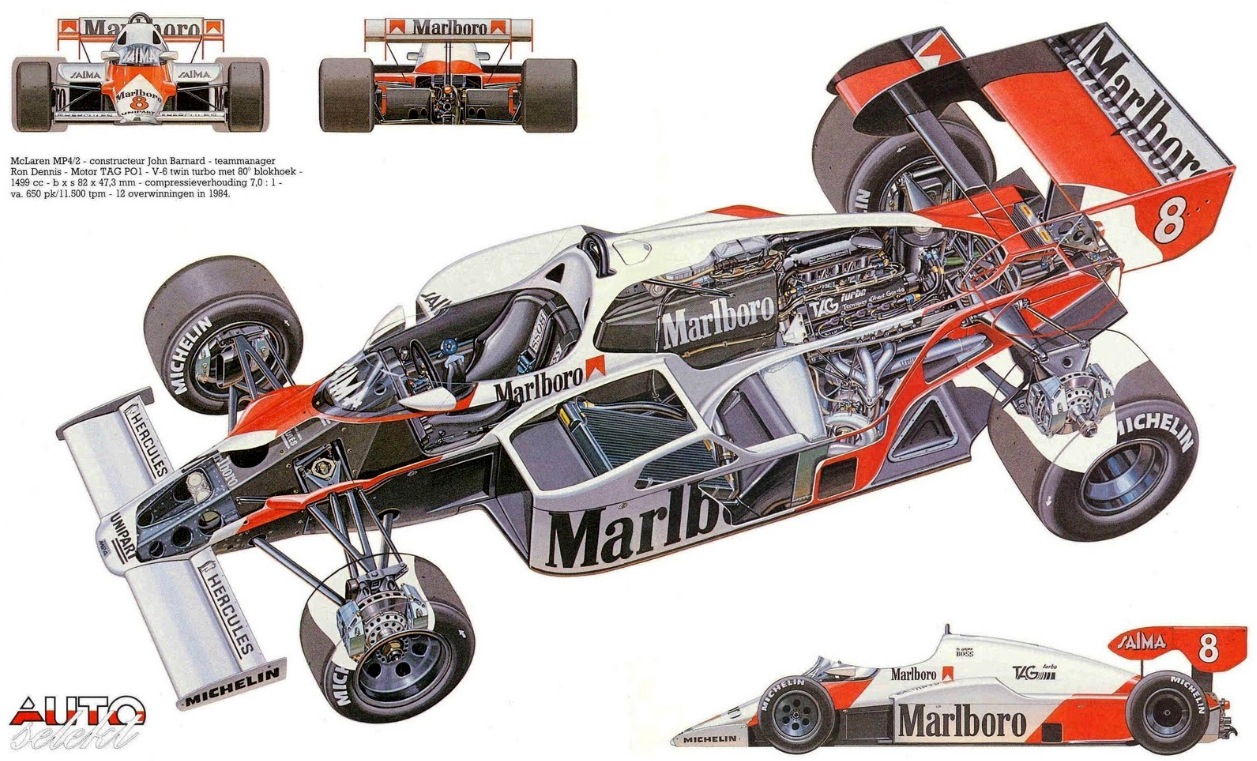
mclaren mp4 2 cutaway

1984 McLaren MP4/2 Porsche: carbon fibre honeycomb chassis, double wishbones and pushrod suspension front and rear, carbon fibre brakes, 540Kg. TAG/Porsche 1499cc DOHC twin turbo V6, circa 750bhp in ’84 spec. McLaren/Hewland FGB 5 speed transaxle

(Unattributed)

Red Bull Ring, Spielberg, Austria. Sunday 21 June 2015. Sebastian Vettel, Ferrari SF-15T, leads Felipe Massa, Williams FW37 Mercedes. World Copyright: Alastair Staley/LAT Photographic. ref: Digital Image _R6T5991

Red Bull Ring, Spielberg, Austria.
Sunday 21 June 2015.
Sebastian Vettel, Ferrari SF-15T, leads Felipe Massa, Williams FW37 Mercedes.
World Copyright: Alastair Staley/LAT Photographic. 

Lewis Hamilton did one lap all weekend that was quicker than Nico Rosberg – that which secured him pole. Other than that, Rosberg was just slightly quicker and better over the three days. Even his start was superior – and that made his race. From there it was just a matter of converting his superior pace into the result, and that’s how it unfolded’.

Read on for Mark Hughes’ race report;

http://www.motorsportmagazine.com/f1/reports/2015-austrian-gp-report/

Red Bull Ring, Spielberg, Austria. Sunday 21 June 2015. The Safety Car leads the field as Marshals clear the scene of the crash between Kimi Raikkonen, Ferrari SF-15T, and Fernando Alonso, McLaren MP4-30 Honda. World Copyright: Alastair Staley/LAT Photographic. ref: Digital Image _R6T5880

Red Bull Ring, Spielberg, Austria.
Sunday 21 June 2015.
The Safety Car leads the field as Marshals clear the scene of the crash between Kimi Raikkonen, Ferrari SF-15T, and Fernando Alonso, McLaren MP4-30 Honda.
World Copyright: Alastair Staley/LAT Photographic. 

lago in servo (nat library oz)

Doug Whiteford was one of Australia’s racing greats, he won the Australian Grand  Prix thrice- in 1950 aboard ‘Black Bess’ his Ford Spl and in 1952/53 in this Talbot-Lago T26C ‘110007’ here on the forecourt of his ‘BP Servo’, 200 Burwood Road, Hawthorn, Melbourne in 1957…

I tripped over the photograph in the National Library of Australia archive, it’s clearly a BP promotional shot, the ‘Snapper’ was Wolfgang Sievers. ‘COR’, the other brand on the pump, is the acronym of the ‘Commonwealth Oil Refineries’, which was acquired by BP some years before, the pumps were co-branded for a while as part of the evolution of one brand to the other.

These establishments are all of an age aren’t they? The owner operated service station with generalist mechanics working on all makes and models is sadly a thing of the past. The ‘counter jumper’ in the average ‘Mega Servo’, if you can make yourself understood at all, is unlikely to know a dipsticks location let alone anything of real use.

The shot didn’t make sense actually.

By 1957 Doug had well before sold this car to Owen Bailey who owned and raced it at the time, Doug had acquired an older, but more advanced in specification T26C, chassis ‘110002’.

Owen’s son Rob is a fellow racer/Alfista, he and Stephen Dalton have helped with the facts or a theory anyway… we think the car is at Doug’s ‘Temple of Speed’ for fettling, Whiteford was the expert on these cars in this part of the world.

‘110007’ is in BC Ecclestones’ collection, ‘110002’ still in Oz. I am beavering away on an article about these two fabulous Lagos which should be finished soon…

whiteford lago

(Clem Smith via Ray Bell)

Doug Whiteford’s T-L ‘110007′ leads Stan Jone’s Maybach onto the main straight at Woodside, the Adelaide Hills road circuit in October 1951, Whiteford won the race with Stan second.

Just look at the nature of the place- ‘Stobie’ telephone poles, fence posts, railway crossing etc. A tragic accident in a motor-cycle handicap race where an early starter completed his first lap before the scratchmen had gotten away and killed two people in the starting area gave rise to police and State Government concern causing the imposition of a ban on racing on public roads in South Australia.

owen bailey fishos 1958

Owen Bailey, Lago Talbot T26C ‘110007’, Fishermans Bend, Melbourne 1958. (autopics)

Etcetera…

I wrote an article about Whitefords’ Black Bess Spl: https://primotipo.com/2015/05/05/doug-whiteford-black-bess-woodside-south-australia-1949/

Credits…

Wolfgang Sievers, autopics.com.au, Clem Smith/Ray Bell. Stephen Dalton and Rob Bailey for research assistance

SNE20652

Mark Hughes ‘MotorSport’ coverage of Grands’ Prix is my favourite, ’twas not the greatest of contests, victory for Lewis Hamilton’s Mercedes…

Hughes…’Long straights, slow corners, the tiny rear discs of the hybrid cars, degrading rubber that cannot be pushed for the full distance, the absence of safety cars giving no margin on fuel and brakes: on this occasion these things combined to neuter one of the calendar’s traditional highlights’.

Click on this link for Mark Hughes’ race report; http://www.motorsportmagazine.com/f1/reports/2015-canadian-gp-report/

X0W6816

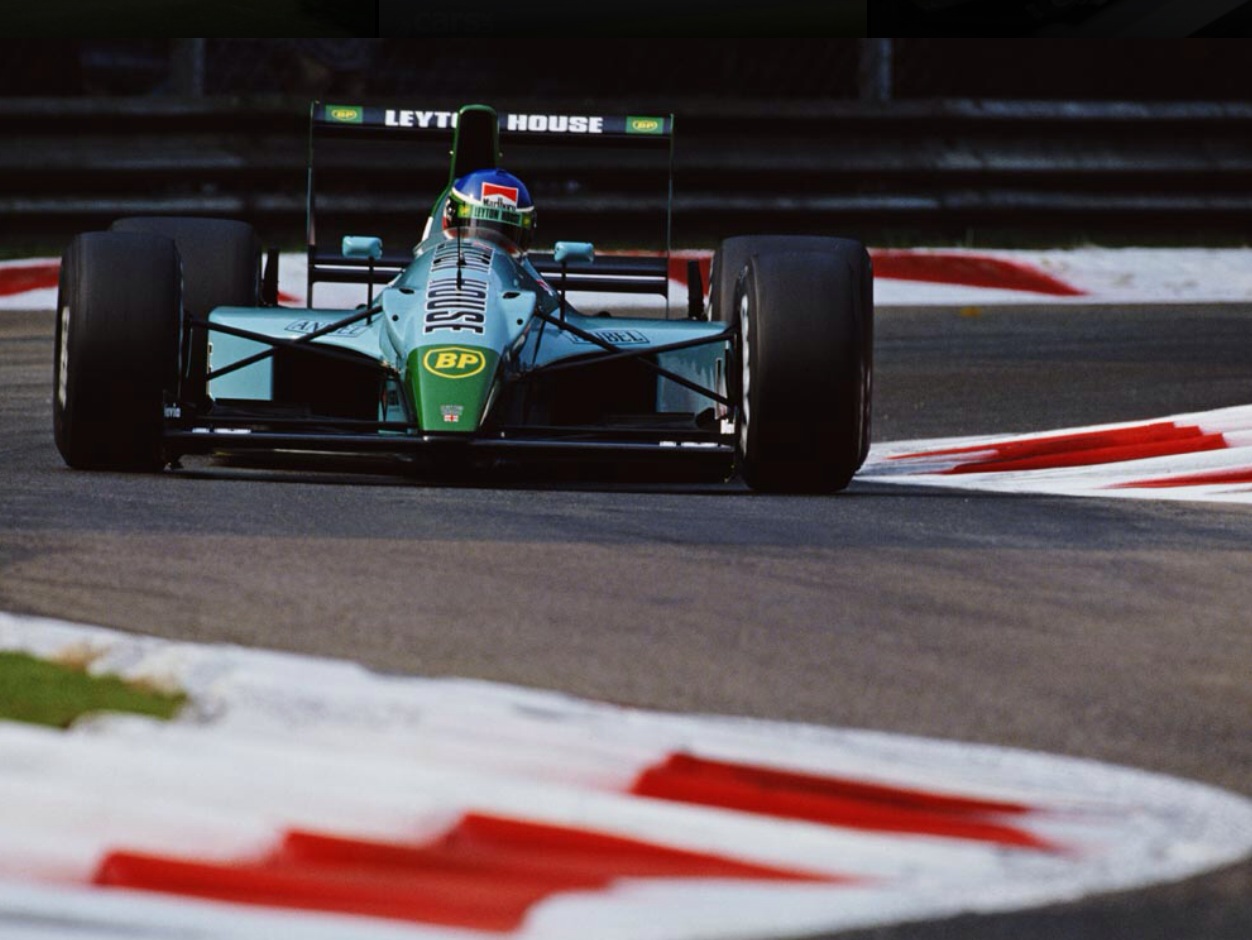
capelli cg 901 LH

Ivan Capelli in his Leyton House CG901 Judd, 1990…

It’s been interesting to learn about and admire the careers of the sports’ outstanding contemporary engineer/designers and those of the decades which pre-date my interest in the sport.

It’s the ones who have enjoyed enduring success I have been most drawn to. Janos’ and Chapmans’ contributions over 30 years truly amazing.

Dr Porsche, Vittorio Jano and Jim Hall predate my period of interest but Colin Chapman, Mauro Forghieri, Gordon Murray, John Barnard and Adrian Newey i have followed since 1972.

image

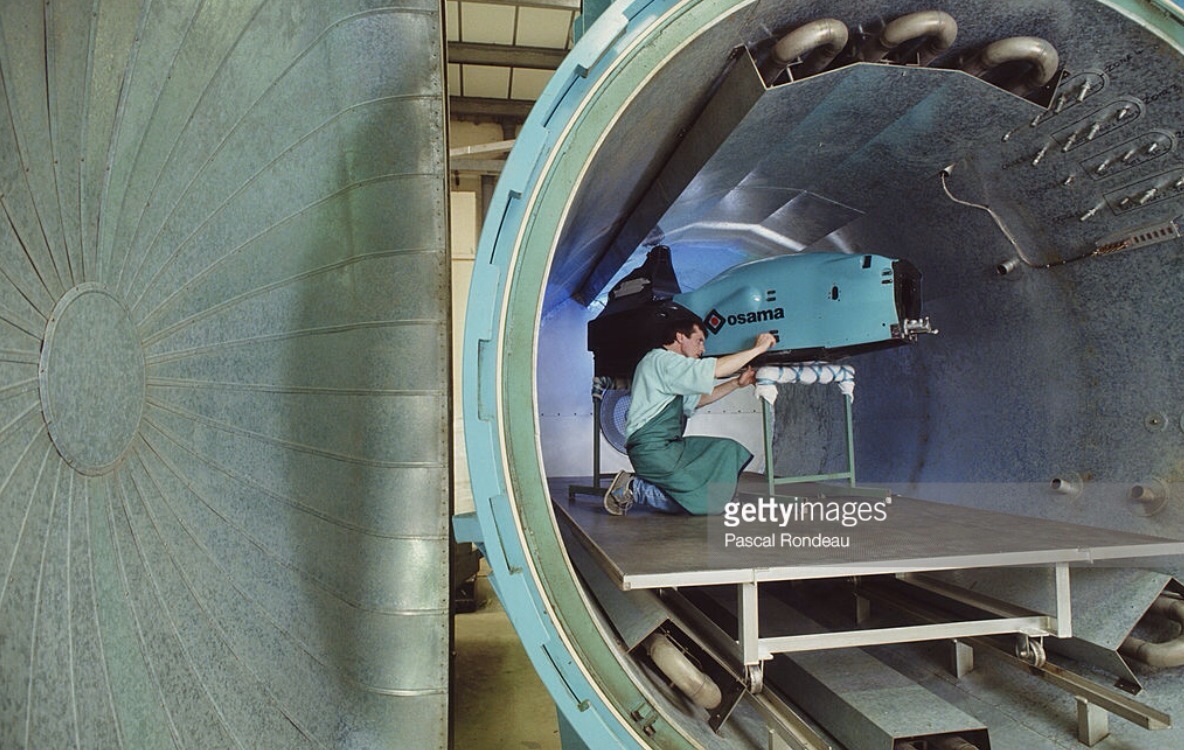
CG901 monocoque inside the teams autoclave, Bicester 1990 (Pascal Rondeau)

Newey has been ‘the man’ in F1 for the better part of 25 years with ten constuctors titles for three teams; Williams, McLaren and presently Red Bull.

Like the others he is degree trained and his practical experience is rooted in time spent as a race engineer. He is different though, in that his primary degree is in Aeronautics and Astronautics. It was the application of the science of aerodynamics, increasingly important in the overall F1 design package as regulations progressively became more restrictive in other areas, at March nee Leyton House in 1988-1991 which first brought him to the attention of Patrick Head, Frank Williams and others.

image

Race prep of 3 CG901 chassis in June 1990 (Pascal Rondeau)

The overall pace of the March 881 and it’s successors top speeds at different circuits made it clear they slid through the air rather nicely, better than many other cars with the same engine or considerably more grunt.

That the cars ‘batted above their weight’ made it clear he could do more with greater resources, as has been proven the case.

The 1988 March 881, powered by John Judds’ 3.5 litre V8 finished 6th in the constructors championship, in 1989 the March 891 Judd  finished 12th, drivers Mauricio Gugelmin and Ivan Capelli retiring from most of the races.

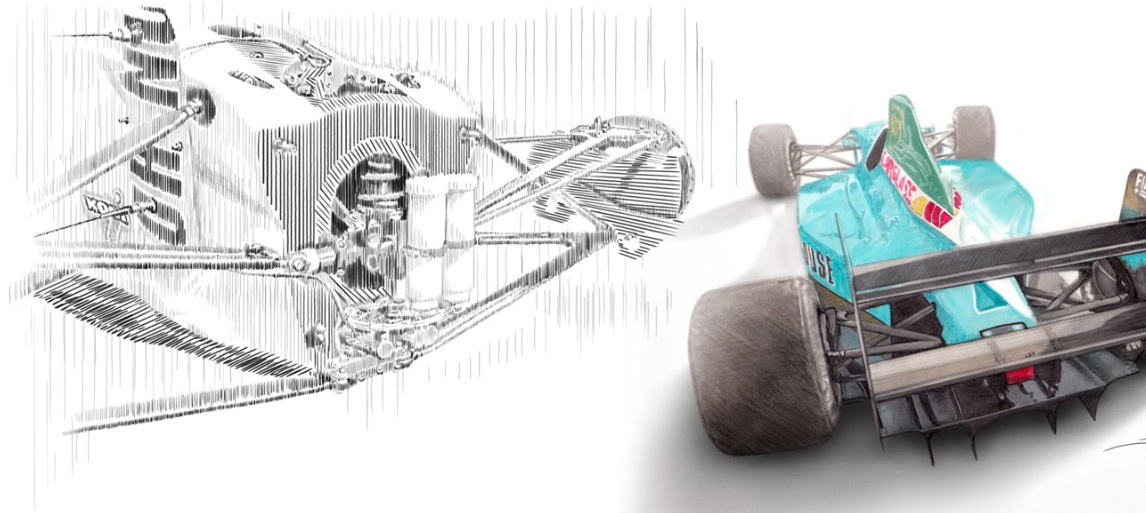
hutton cg901 LH cutaway

Drawing of the LH CG901 Judd…engine 3.5 litre V8 not 3 litre…(Peter Hutton)

In 1990 March F1 morphed into ‘Leyton House’…the Japanese company acquired the team it had previously sponsored. Neweys’ Leyton House CG901 Judd was quick in the hands of its two drivers after a mid year update of the aero package to correct ‘erroneous wind tunnel data’. Capelli lead the French Grand Prix for many laps before being passed by race winner Alain Prost. The team finished 7th in the Constructors Championship, Newey was fired and quickly hired by Williams all the same.

And the rest, as they say, is history. The 1991/2 Williams FW14 Renault, Neweys’ first Williams won 17 Grands’ Prix and Leyton House, amid allegations of financial misdemeanours and the arrest of its CEO disappeared without trace in early 1993 having changed it’s name back to March F1 for the 1992 season…

capelli from prost

Ivan Capelli LH CG 901 Judd leads Alain Prosts’ Ferrari 641 during the 1990 French GP. Wonderful 2nd place for the Italian ahead of victor Prost. (Unattributed)

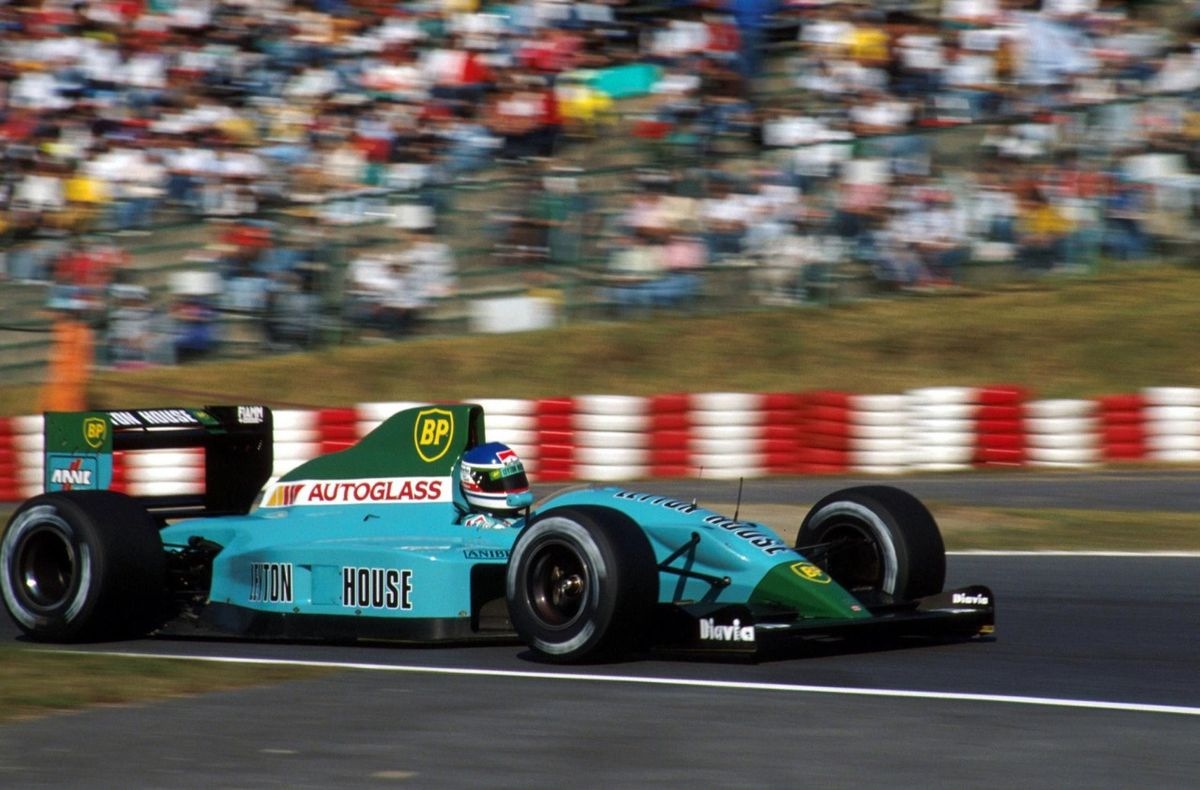
capelli Lh suzuka 1990

The gorgeous lines of Capellis’ LH CG901 at Suzuka, Japanese GP 1990. Q13, DNF with ignition dramas on L16. (Unattributed)

image

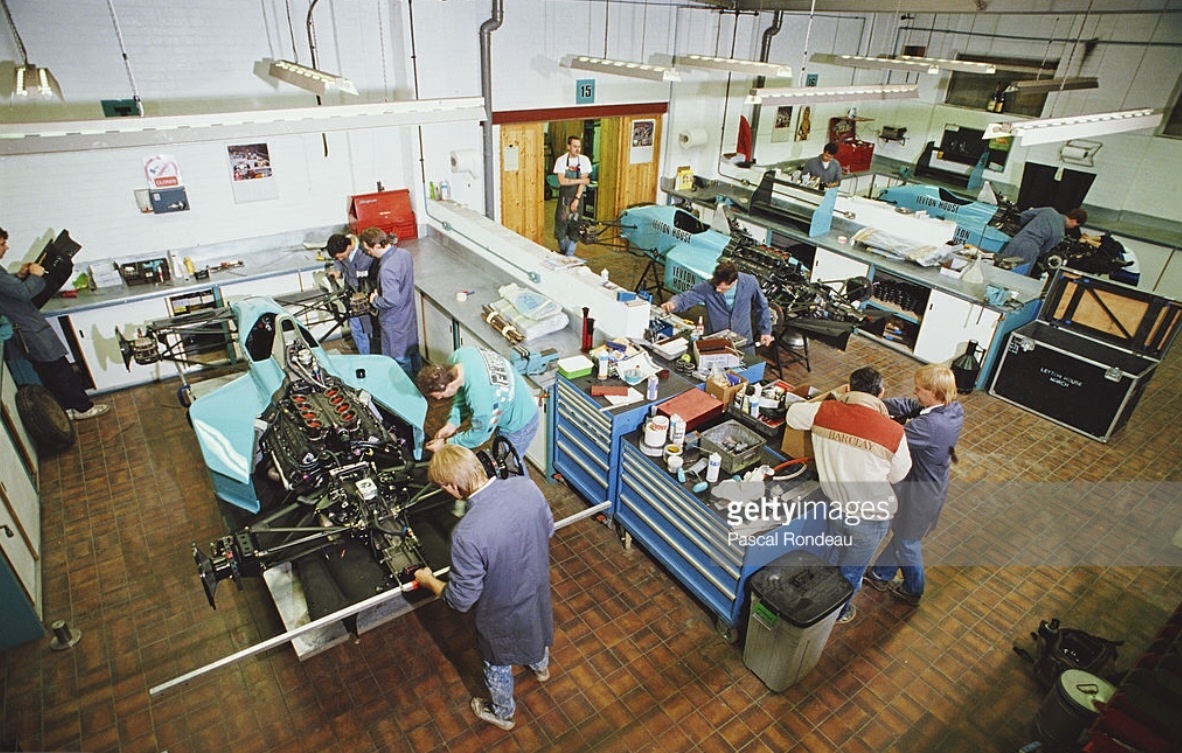
Leyton House workshops in June 1990 (Pascal Rondeau)

cg 901 designey stuff

LH CG901 design elements. Carbon fibre chassis, suspension double wishbones, pushrod and rocker actuated coil spring/dampers front and rear. Judd EV 3496cc 76 degree DOHC 4 valve N/A V8, 660bhp. March 6 speed manual transaxle. carbon ceramic brakes. 520Kg. (Unattributed)

image

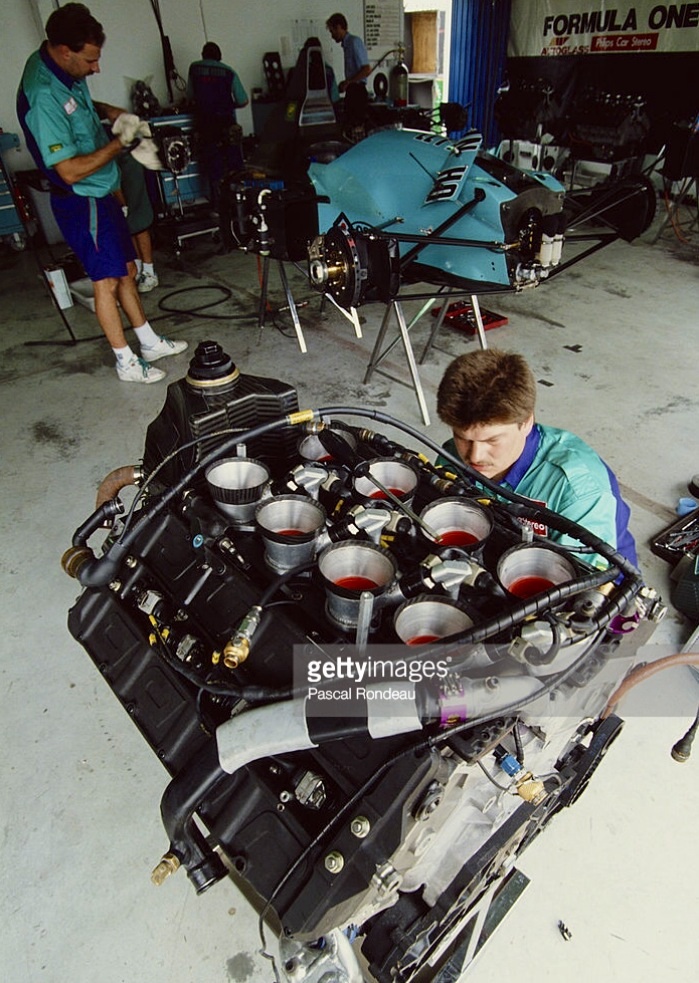
Estoril 21 September 1990, a practice Judd V8 engine change during the Portuguese GP weekend (Pascal Rondeau)

Credits…

Peter Hutton, Pascal Rondeau

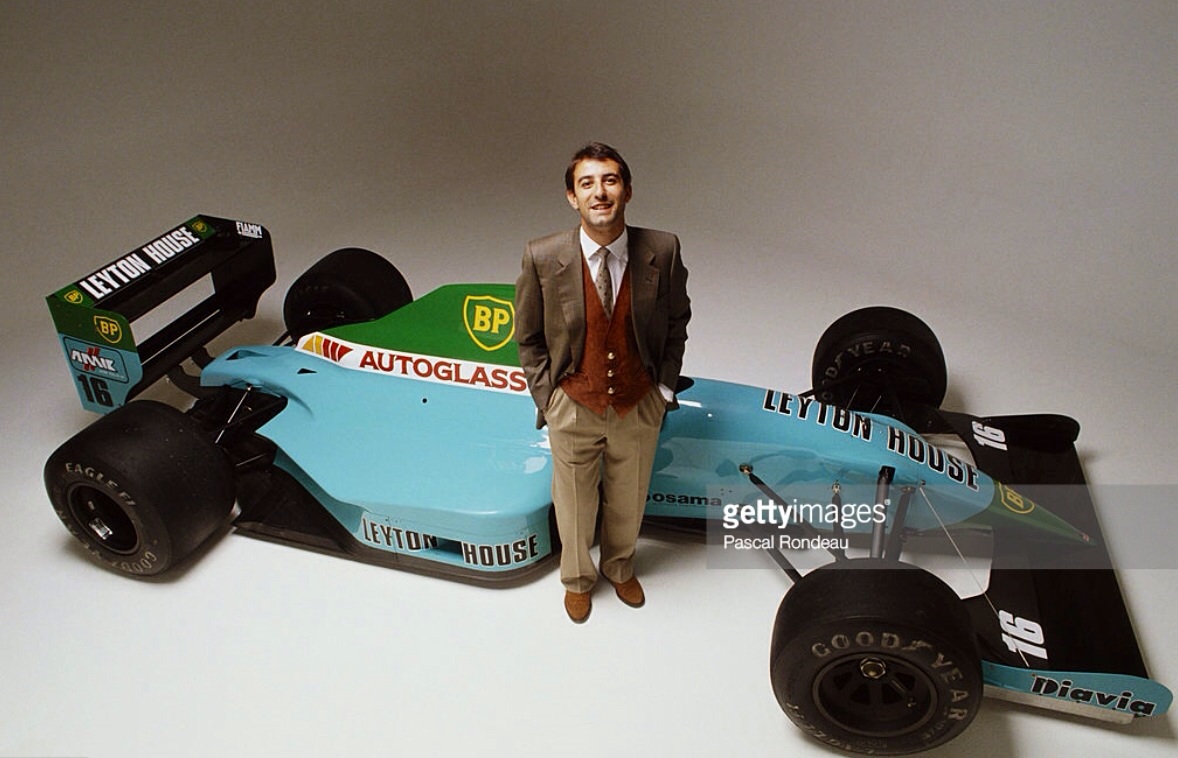
Tailpiece: Ivan Capelli, Leyton House CG901 Judd at the Allsport Studios on 15 May 1990…

image


Jim Clark Room 01

The name Jim Clark is synonymous as one of motor racing’s greats, whether dancing a Border Reivers D Type in his early career through to the brilliance soon established with Colin Chapman’s Team Lotus. Tasting success with the marque’s many facets of motor racing – be it Elite, Elan, Lotus Cortina, Formula Junior, Tasman, Indy and Formula One & Two.

This man was born to race, despite his humble Scottish farming background and quiet demeanour. His talents took him racing all over the world be it for Formula 1 or Tasman Series in far off New Zealand or Australia during his own northern hemisphere’s cold and miserable winter period. It all came to a very abrupt ending on April 7, 1968 when despite the known dangers of the sport, the unthinkable became reality that Jim Clark was dead.

A huge talent lost at 32 years of age. News Services weren’t as instantaneous as they now are. So it took a little while to filter the news of his passing around the motor racing globe. It would have been a shock to a young enthusiast listening to a transistor radio or one of Jim’s contemporary drivers’ having a News Service thrust a microphone in front of them for a comment on his passing for their news broadcast.

Jim Clark Room 02

The modest Duns building home of ‘The Jim Clark Room’

Testimony to Jim’s greatness is that despite the passage of 47 years he’s still remembered so fondly. Not least in Duns, in the Berwickshire district of Scotland where ‘The Jim Clark Room’ displays many trophies, photos and memorabilia of the district’s World Champion farmer…

Scarily it is approaching 21 years since I made the journey to Duns to pay homage to the great Jim Clark. It was late August 1994 and with the growth of technology you can do a virtual viewing of the room here. http://www.itv.com/news/border/update/2015-05-15/celebrating-the-life-of-racing-legend-jim-clark/
With there being Jim Clark celebrations in Duns, over the weekend of May 16 and 17 2015.

See this footage of the event including Jackie Stewart and Alan McNish comments.  http://www.itv.com/news/border/update/2015-05-17/remembering-jim-clark/

However in the olden days of 1994 I took some photos. The gent who was minding Jim’s treasures that day was keen to show me that another great of the sport had been to Duns to pay his respects. That great, was fellow F1 World Champion, Ayrton Senna. Who had at that time of my visit, been killed just under 4 months earlier at Imola.

Maybe just a bit too ironic…

Jim Clark Room 03

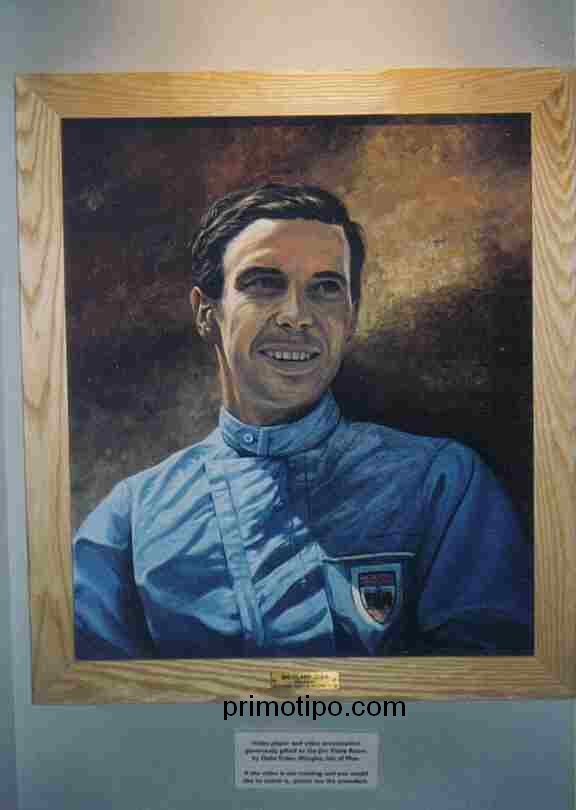
Artwork of a great motor racing champion

Jim Clark Room 04

A selection of photos and trophies depicting Jim’s many successes adorn the walls and cabinets within the room

Jim Clark Room 05

The JCR vistors’ book – Ayrton Senna visited on February 23, 1991

Jim Clark Room 06

Credits…

Article written by and photos from the collection of Stephen Dalton

baghetti lotus 49

Giancarlo Baghetti relaxes during the Italian Grand Prix weekend, he had a ‘one off’ drive of the Team Lotus spare ’49, backing up Jim Clark and Graham Hill…

He qualified well back on the grid, 17th, and retired on lap 50 whilst running 6th with an engine failure. John Surtees took a fabulous last corner win from Jack Brabham, winning Hondas’ first Grand Prix since Ginthers’ victory in the last race of the 1.5 Litre Formula in Mexico, 1965.

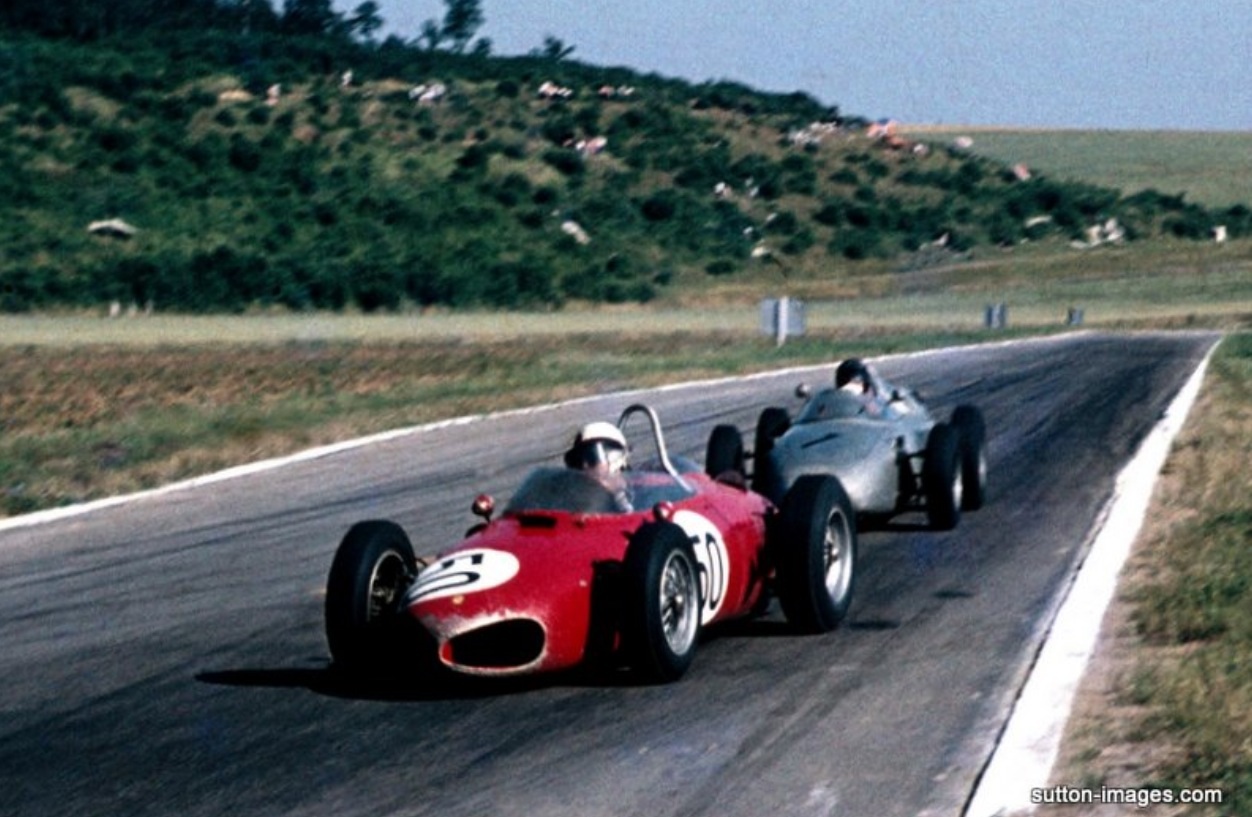
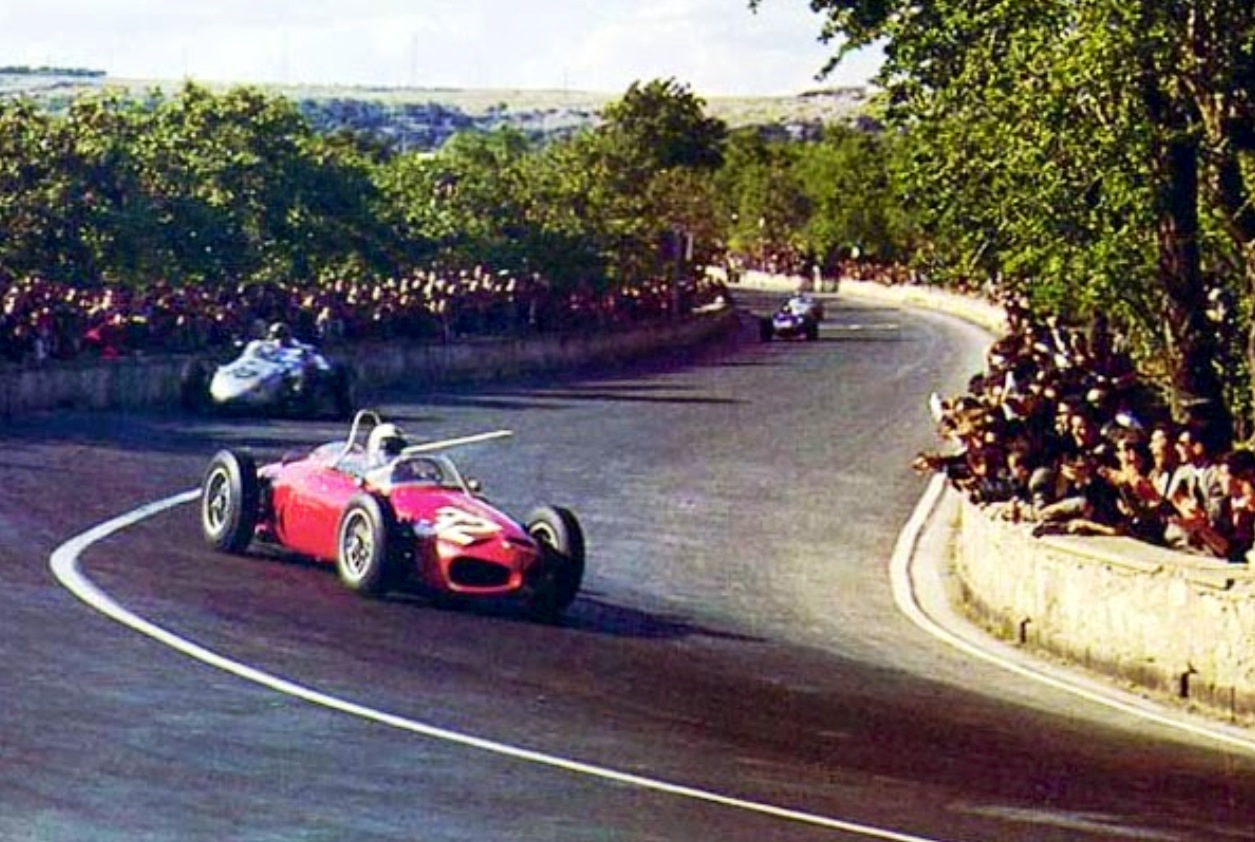
Baghettis’ career started with immense promise, famously winning his first championship Grand Prix, the French in a great dice with Dan Gurney (Porsche) in a Ferrari 156 in 1961….

Baghetti French GP 1961

The stone chips on the nose of Baghettis’ 156 bear witness to the closeness of the race, third place went to Jim Clarks’ Lotus 21 Climax. (sutton images)

French GP finish 1961

Toto Roche waves the chequered flag for Baghetti, winning a famous victory over Dan Gurneys’ Porsche 718, French GP Reims 1961, his championship race debut. (Unattributed)

Baghetti started racing in 1956 in an Alfa Romeo 1900Ti and built a solid reputation as he moved into Formula Junior in 1959. In early 1961 he was selected to drive for the Italian FISA team, an organization formed to promote young Italian drivers by entering them in Non-Championship Grands’ Prix.

FISA struck a deal with Scuderia Ferrari to run a 1960 F2 Ferrari Dino 156 (in effect the prototype of the 1961 F1 car) in the first non-championship races of 1961. The results were amazing, Baghetti, not necessarily the best credentialled candidate won on his GP debut in Syracuse in front of Gurney, Surtees, G Hill, Brabham, Moss, Salvadori, Ireland and Bandini.

syracuse GP baghetti

Giancarlo Baghetti ahead of Dan Gurney Syracuse GP April 1961. Ferrari Dino 156 from Porsche 718. The first of Giancarlos’ wins against stong opposition. (Unattributed)

He followed up with another win in the Napoli GP in May beating Ashmore, Lotus 18 Climax and Bandini Cooper T53 Maserati 2nd and 3rd as well as Roy Salvadori, Andre Pilette and Tim Parnell.

FISA persuaded Ferrari to hire them a 1961 ‘Shark Nose’ for their driver to make his championship GP debut at Reims, he was allocated the car which was to be driven by Equipe National Belge driver Olivier Gendebien, the car quickly repainted from yellow to red.

Phil Hill took pole from Ferrari teammates Von Trips and Ginther, Baghetti 12th fastest. The 3 works Ferrari’s disappeared at the start, only Moss managed to stay near them. Even a quick spin by Ginther dropped him behind the Lotus, but he was soon able to re-pass Moss such was the Ferraris’ power advantage.

Baghetti had made his way to the front of the chasing pack. When Moss was forced to pit with brake problems, the four Ferrari’s lead, this didn’t last as Von Trip’s engine died in the heat.

Hill spun on the melting road surface. The American lost over 2 laps as he tried to restart his hot engine. This left Ginther in the lead with Baghetti fighting the Porsches of Dan Gurney and Jo Bonnier to hold on to second place, a battle that became even more significant a couple of laps later as Ginther pulled off the track with no oil pressure.

Baghetti recounts the last laps …’It was a very hard race. It was hot. The asphalt was melting, the radiator was blocking up and I saw the temperature starting to soar. Luckily I was behind the two Porsches of Gurney and Bonnier and relied on getting a tow along the straights. What you must remember is that this was my first Grand Prix and both Gurney and Bonnier were trying to frighten me by running on either side of me, but I thought that if they could do things like that and get away with it, then I could do it too.

Three laps from the end Gurney and I were fighting for the lead and I realized that to finish first I needed to be in the perfect position to slipstream. Going into the last corner I was right behind Gurney so that as we came out I was on his tail. He sat right in the middle of the track because he obviously knew what I was going to try to do. I waited and when I saw him glance in his mirror when I was on his left, I quickly switched to the right and got past him to win the race.’

Giancarlo Baghetti became the first man in history to win his debut World Championship Grand Prix.

ferrari 156 cutaway

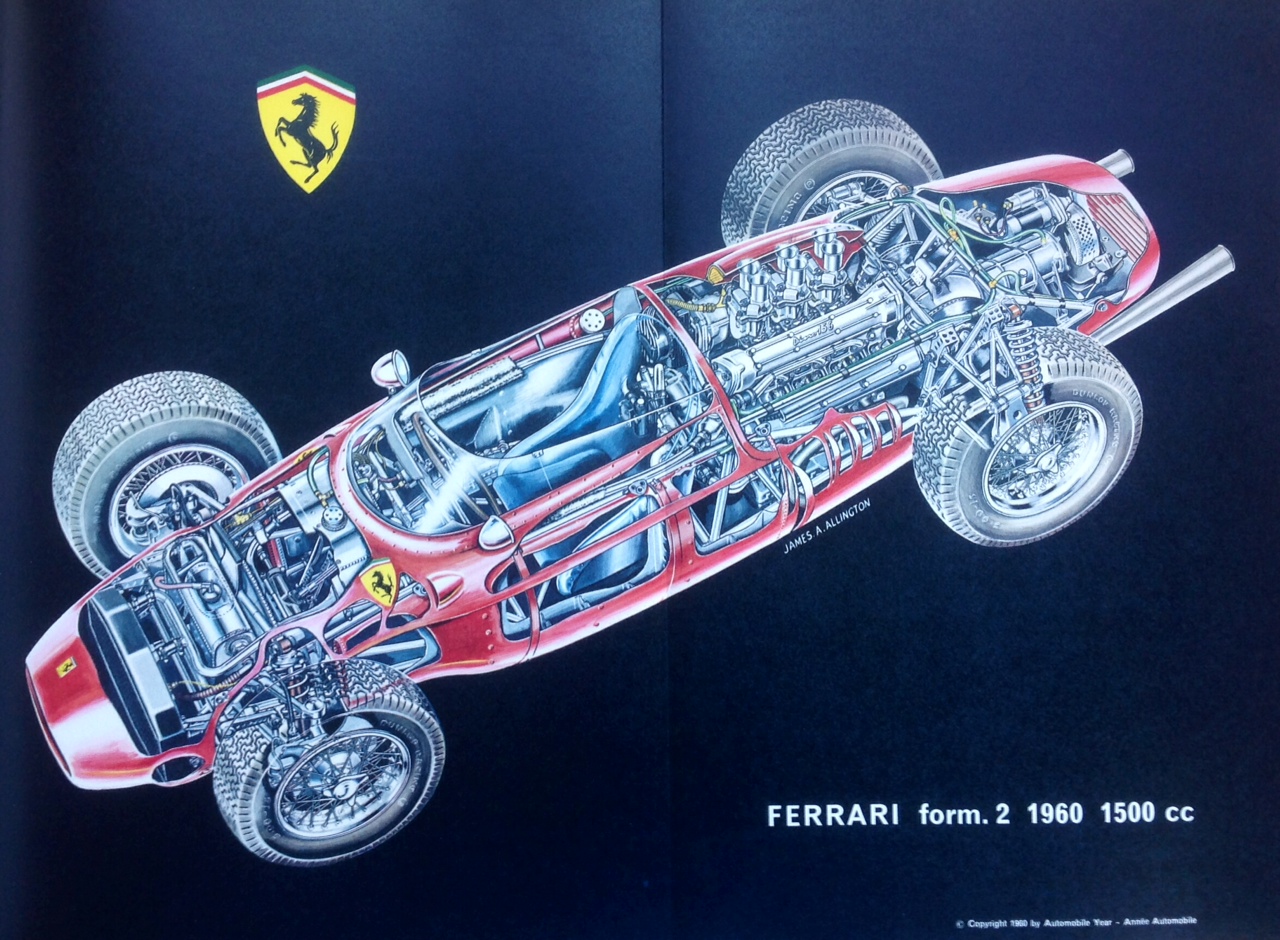
James Allingtons’ cutaway drawing of the 1960 Ferrari 156 F2 car, chassis ‘008’ the car used by Baghetti at Syracuse and Naples was the prototype 1960 car fitted with ’61 ‘Sharknose’ body. Multi-tubular spaceframe chassis, suspension by upper and lower wishbones front and rear. 1476cc 65 degree DOHC 2 valve Weber carbed V6, 185bhp@9200rpm. 5 speed ‘box. Later spec ’61 cars had the 120 degree V6 190bhp@9500rpm. (James Allington)

Baghetti qualified mid-grid for the British GP, spinning off the wet Aintree circuit during the race. For his home GP at Monza he qualified 6th, the other four Ferrari’s were faster. This was the day that von Trips was expected to win the world title, but it was not to be, ‘Taffy’ crashed to his death after contact with Clarks’ Lotus 21, the car flew into the crowd killing 11 spectators on lap two. Baghetti raced at the front until his engine blew on lap 14 and Phil Hill won the race to seal the first World Championship for an American driver. Giancarlo set the fastest lap.

His season ended with his 4th and last GP win, he took victory in a little known event to decide the ‘Prima Coppa Italia’ (Italian Championship for Drivers) at Vallelunga, Baghetti won the 2 heats in a Porsche 718 when his Ferrari was not available for the event. Lorenzo Bandini and Baghetti were tied for the Championship , this event was organised to decide the winner.

What a debut GP season!

ferrari 156 drawing

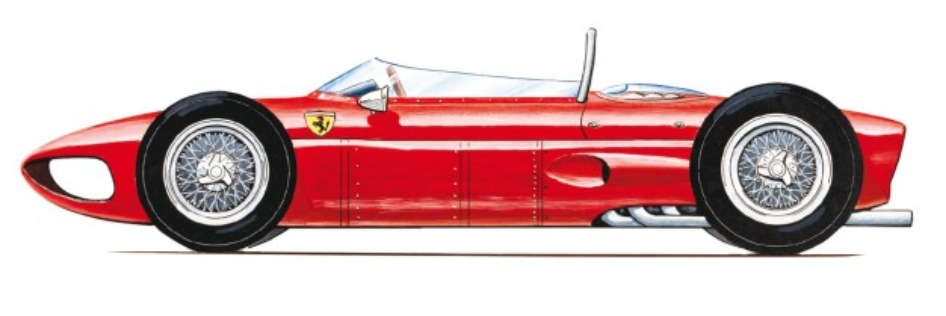
1961 spec Ferrari 156. (Scuderia Ferrari)

For 1962 Baghetti joined Phil Hill, the ’61 champion in the works Ferrari team (Rodriguez driving a third car occasionally). Enzo rested on his laurels thinking that the 156’s didn’t require evolution to continue their dominance but the Brits had caught up.

BRM, Lotus and Cooper produced cars to beat the Ferrari’s. Lotus debuted the epochal monocoque chassis Lotus 25 at Zandvoort and Coventry Climax produced their FWMV 1.5 V8 in quantities, the BRM team also built a V8, the Type 56 available to customers as well as the ‘works’ BRM P57’s. The British teams shortcomings in 1961 were their engines, the relatively old 1.5 litre variant of the Climax FPF not ‘man enough’ for Ferrari’s powerful V6. It was different in 1962 when their engine power was equivalent to their chassis mastery…

Baghetti scored points at Zandvoort and Monza, but Ferrari was in total turmoil and for 1963 he joined Hill in the mass exodus to Carlo Chiti’s ATS team, an unmitigated disaster for all involved, it effectively destroyed his F1 career. Baghetti drove Centro Sud’s old BRM P57 in 1964, he returned to race in F2, F3 and sports and touring cars, also making an annual apperance at the Italian GP, his last in the Lotus 49 in 1967.

baghetti spa

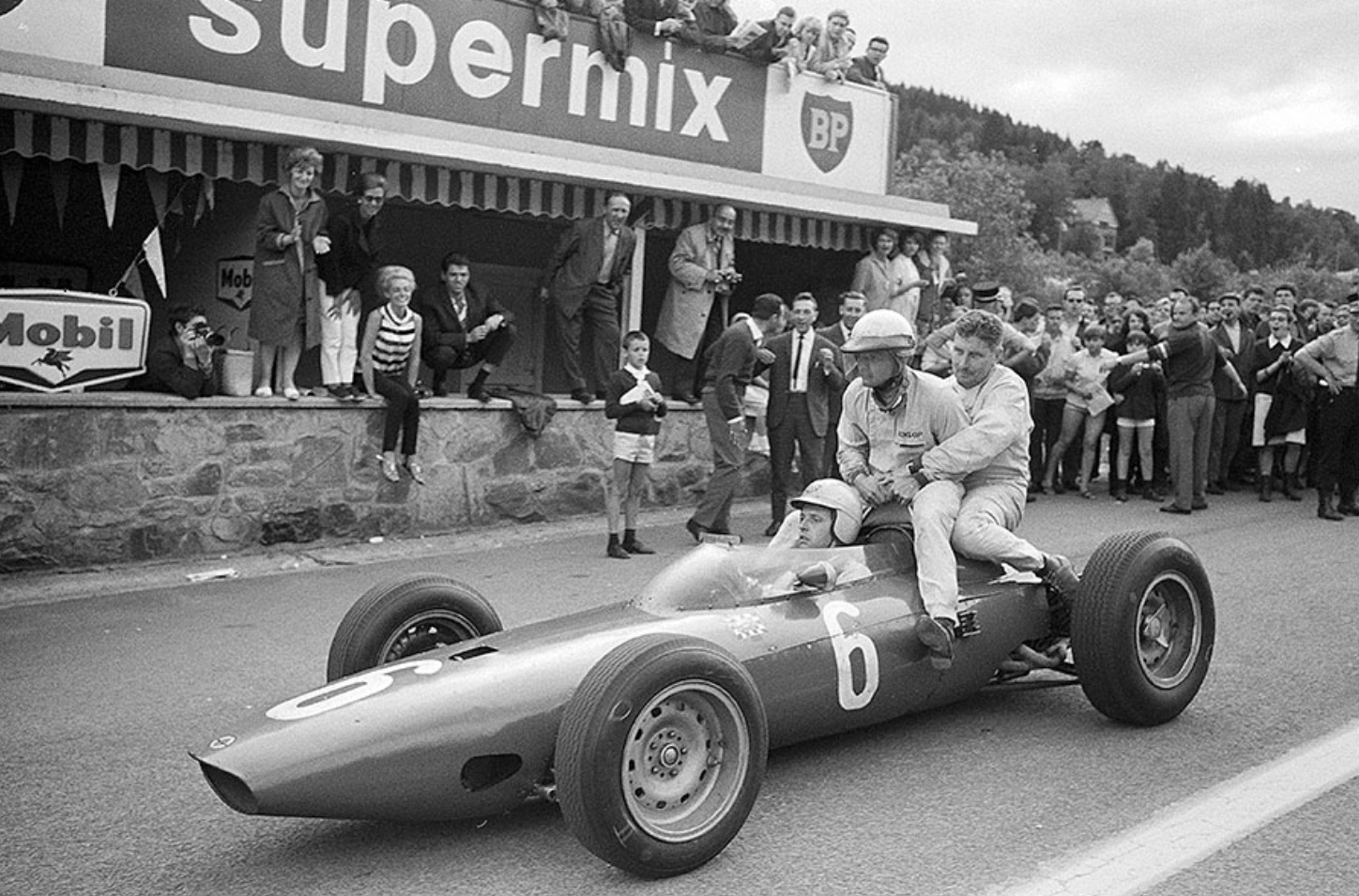
‘Hitchin a ride’: Baghettis’ BRM P57 gives Phil Hill and Bob Anderson a lift at the end of the 1964 Belgian GP, Spa. Giancarlo was 8th in the race won by Clarks’ Lotus 25 Climax. Hill raced a Cooper T73 Climax and Anderson a Brabham BT11 Climax (G Clayton)

baghetti brabham 65 italian

Brabham entered a third car for Giancarlo at the 1965 Italian GP. He qualified the BT7 Climax poorly in 19th, the engine failed on lap 12 in the race won by Stewarts’ BRM P261. (Unattributed)

baghetti targa 1965

Baghetti at the wheel of a factory Ferrari 275 P2 during Targa 1965, DNF with Jean Guichet. (Unattributed)

After a huge accident at Monza in a Ferrari Dino 166 F2 car in the ‘Monza Lottery GP’ in June 1968 he retired from driving, working as journalist and photographer. He succumbed to cancer in 1995 age 60.

No-one has ever repeated the feat…a quasi factory Ferrari drive on the results of a ‘journeyman’, won his first 3 GP’s, 4 for the year, one of them a championship event and then so rapidly disappeared from sight…

baghetti italian gp 1966

Baghetti at the wheel of a Ferrari Dino 246, Monza, Italian GP 1966. Q16, raced Spences’ Lotus for 5th until the car failed in the race won by Scarfiottis’ Ferrari 312. Car was lent to him by Scuderia after his Parnell  Lotus BRM failed in practice. (Unattributed)

Baghetti Ferrari 156 1962

Giancarlo Baghetti, Ferrari 156 1962. The class of the field in 1961 were at best also-rans in 1962. He is smiling so it must be at the seasons commencement… (Unattributed)

Photo and other Credits…

Mel Turbutt, motorsportretro.com, Sutton Images, James Allington, Scuderia Ferrari, The Auto Channel

Finito…

berger busstop chicane belgianm 1989 fazz 640

Gerhard Berger pings his Ferrari 640 through the ‘Bus-Stop’ chicane, Spa 1989…

He spun off on lap 9, the race won by Ayrton Senna from teammate Alain Prost in McLaren MP/5 Hondas’ and Nigel Mansell in the other Ferrari 640.

ferrari 640 cockpit

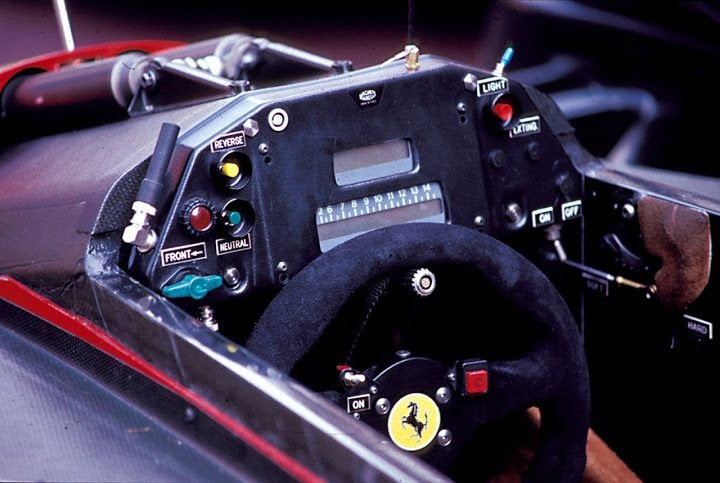
The nub of the cars innovation, its electro-hydraulic 7 speed gearbox and steering wheel mounted operation; faster gearchanges, greater reliability by eliminating ‘muffed’ up and especially downchanges, two hands on the wheel at all times giving greater control and speed. (Unattributed)

Ferrari 640 and Innovation…

The new single-seater was known colloquially as the 640 after its design number, but was officially F1-89.

Nigel Mansell joined the team, Gerhard Berger was his teammate. Ferrari took three wins and was third in the Constructors’ Championship with 59 points.

The F1-89 hailed the return of the normally aspirated 12-cylinder engine and in a major first for Formula 1, also had a gear change bar mounted behind the steering wheel.

Ferrari have never been noted for innovation but this was a ‘game changer’ which all other teams and formulae followed.

Nigel Mansell won his debut race at Interlagos and then headed the pack across the line again at Budapest. The Scuderia’s third season win came from  Gerhard Berger at Estoril. McLaren took both titles that year with Alain Prost winning the Drivers’ Title for them.

The semi-automatic gearbox was Barnard’s solution to the problem of the long manual actuation mechanism. Barnard interviwed by ‘MotorSport’ in 2005 said ‘The project started because I wanted to make the monocoque really narrow. In those days we had to fit a gearshift run through the monocoque alongside the engine and back to the gearbox. It was a real pain to find a route for this and make room in the cockpit for the selector and the driver’s hand. I thought, ‘Surely, instead of a gear lever, I can have a switch.’ So it was a packaging imperative. The gear linkage affected lots of things, and of course the driver was taking his hand off the wheel during changes. The time-saving advantage came afterwards. Vittorio Ghidella, running Ferrari post-Enzo, was terrified of the ‘box failing and had a manual version built; Mansell tested it and said ‘forget it’. But the effort was a danger to the project.’

Originally intended to appear in ’88 on the 639, the electrohydraulic ‘box and normally aspirated V12 were held back until the following season once it was clear that the equivalency rules for ’88 made it vital to run a turbo to be competitive. When it did at last race in ’89 the new transmission was initially unreliable but it eventually became clear to everyone in the pitlane that here was a technology they would all have to copy.

Ferrari say that ‘the new gearbox and communications difficulties with Barnard who was working from England dragged out the car’s development’. However, when it finally did emerge, it was seen by the other constructors as a shining example of superb engineering and aerodynamics, the latter thanks to its extremely clean-looking form’

Boy, it was and is a stunning looking car, perhaps the last really sexy F1 car?

ferrari 640 cutaway

Technical Specifications…

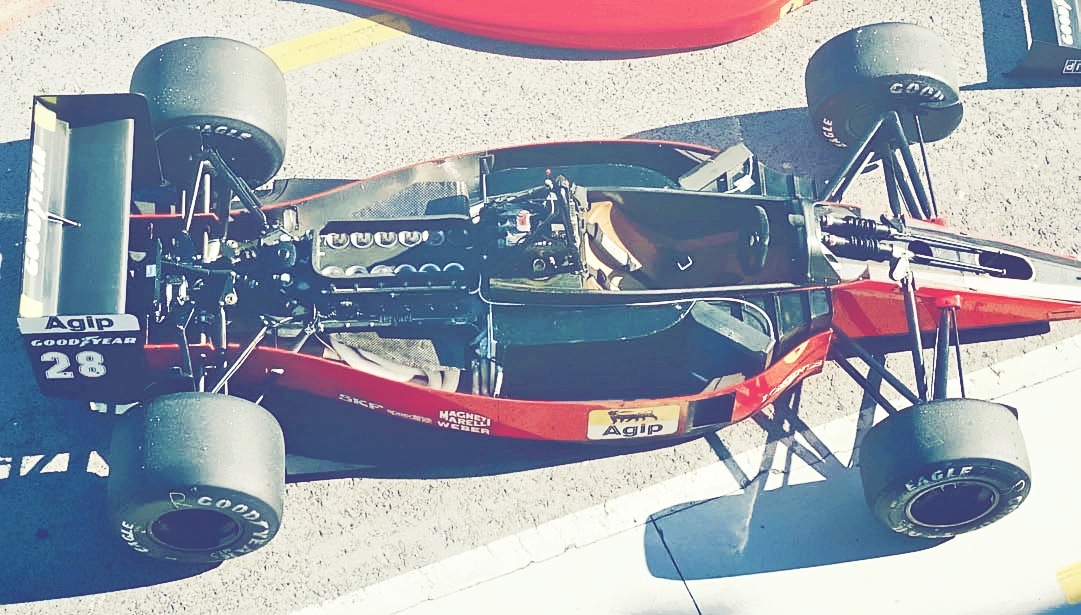
With the banning of turbo-charged engines from the end of 1988, as stated above, Ferrari returned to a normally aspirated 65° V12 Bore/stroke 84 x 52.6 mm displacing 3497.96 cc. The  block was cast iron as a result of Barnard driving Ferrari hard on engine length and to get the crank as low as possible. He also influenced the 4 bolt pick ups for the engine, which differed from the way Ferrari hung their engines from the tub before.

Compression ratio was 11.5 : 1, maximum power 441 kW (600 hp) at 12,500 rpm. Valve actuation was DOHC per bank, five valves per cylinder, Fuel feed by Weber-Marelli electronic indirect injection, Ignition electronic, single spark plug per cylinder, lubrication dry sump. Clutch multi-plate with a 7 speed electro-hydraulic gearbox.

The chassis was designed by Barnard and his team at Ferraris’ Guildford Technical Office in the UK. When Barnard joined the team Ferrari had not won a race since 1985 so he was able to name his terms, inclusive of not working at the factory in Maranello! Ferrari agreed to the establishment of a design office near Barnards’ home in the UK.

The chassis was typical of the period, a Kevlar and carbon-fibre composite monocoque, its distinctive pannier shape a function of the large volumes of fuel, 220-230 litres carried at the time..

Barnard commented about the cars suspension ‘The 639 had conventional spring/damper units on top of the chassis, but because the 640 monocoque was so narrow I drew up a torsion-bar arrangement instead which started the short-torsion-bar fashion that continues today. It kept the installation as compact as possible and also I didn’t like coil-over dampers. The springs were never well enough made to avoid side loads on the damper rods and consequently added friction. I designed a lower friction package with the torsion bar, which ran on ball bearings. It was a really good solution’.

Front suspension comprised independent push-rod, torsion bar springs, telescopic shock absorbers and anti-roll bar. Rear suspension independent push-rod, twin wishbones, coil springs over horizontally-mounted telescopic shock absorbers. Brakes were steel discs. Steering rack-and-pinion. Fuel tank capacity 192 litres and Front tyres 25.0-10.0-13 and Rear tyres 26.0-15.0-13.

ferrari 640 naked

The beautiful symmetry and packaging of the car, a Barnard strength is seen to good effect in this shot from above. (Unattributed)

Apart from Mansells debut win at Interlagos in Brazil the gearbox gave early season troubles, both drivers having DNF’s in all subsequent races until the French GP, the ‘box the cause of many of them.

John Barnard again comments and sets the record straight ‘The semi-auto gearbox was slagged off early on for being unreliable, but that was unwarranted. A lot of the retirements in early 1989 listed as gearbox failures weren’t at all, they were due to loss of power to the ‘box. The alternator was driven by a belt from the crank and this kept falling off. It took a long time to find out why, using high-speed photography on the dyno. At this time the V12 only had a four-bearing crank which started to whip at certain revs, causing the front pulley to shed the belt. The alternator would stop and so would the gearbox electronics. We didn’t have any fundamental problems with the ‘box itself. It was pretty reliable. It was mostly standard inside and the hydraulic system was simple and robust.’

After these problems were sorted the advantages of the gearbox were clear…Barnard had instigated the second technical innovation of his career, the first the carbon-composite chassis…

Check out this article on John Barnards’ McLaren MP4/1 Ford…

McLaren MP4 Ford: 1981 The first Carbon-Composite Car…John Barnards’ Brilliance

1989 brazilian gp start

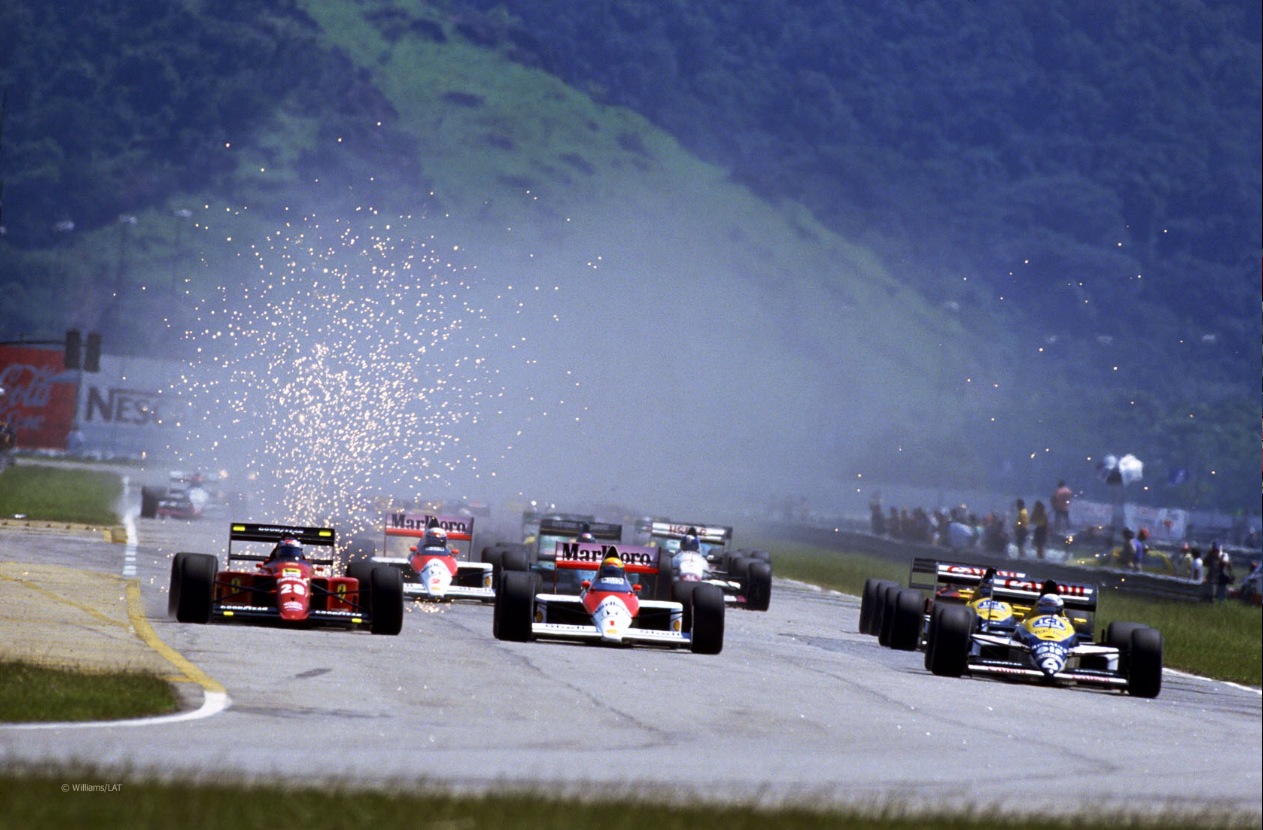
Start of the 1989 Brazilian GP with L>R Berger, Prost, Senna, Patrese and Boutsen behind him…Ferrari 640, McLaren MP4/5 Honda x2 and Williams FW12C Renault x2. Winner Mansell is not to be seen, he won from Prost and Mauricio Gugelmins’ March CG891 Judd. (Unattributed)

Etcetera…

mansell onaco fazz 640

Nigel Mansell at Monaco in his 640 1989. He retired with gearbox failure, Senna won in his McLaren. (Unattributed)

Credits…

Scuderia Ferrari, MotorSport June 2005


duetto champs

(Bruce Thomas)

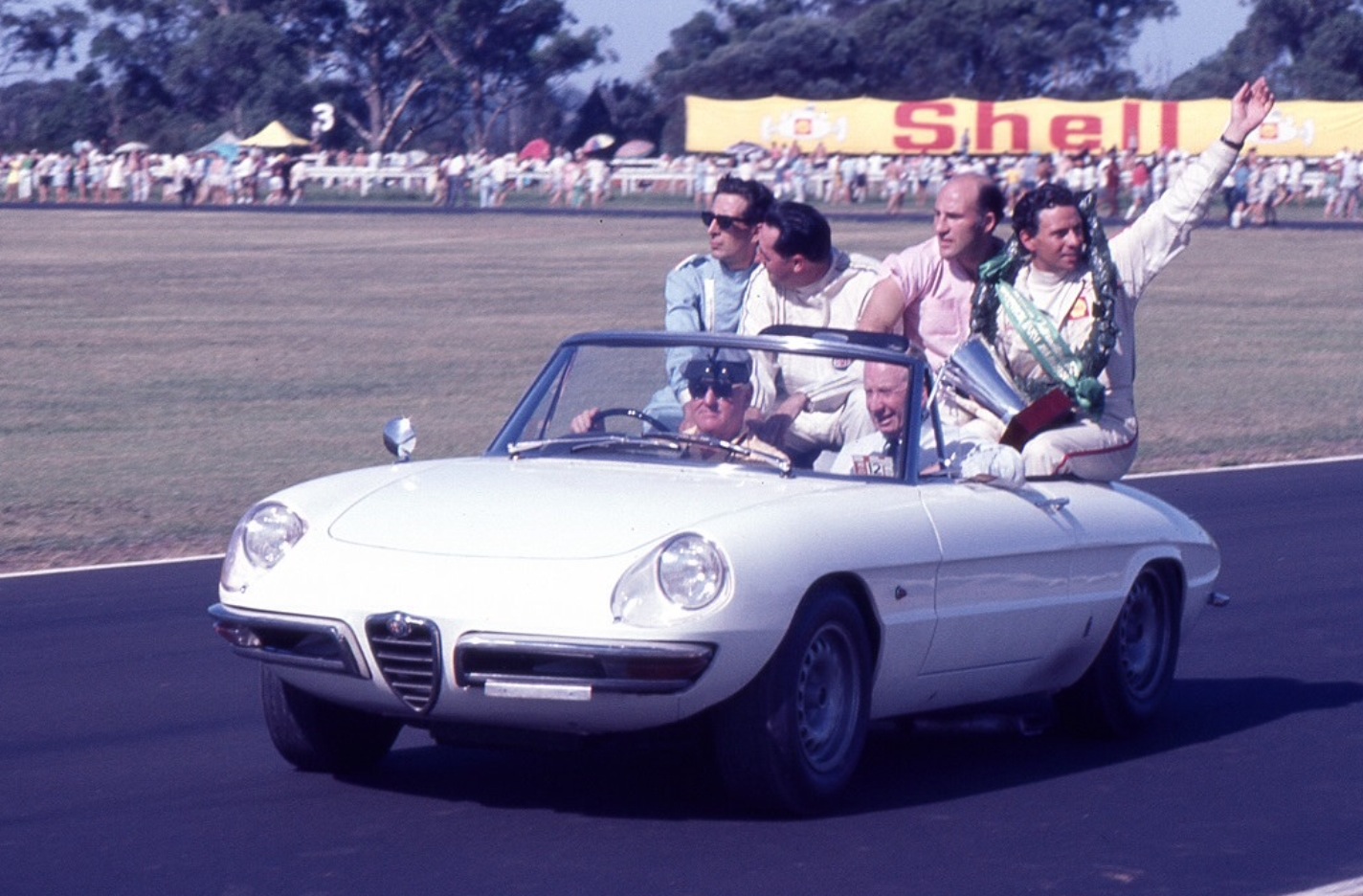
The little Alfa Duetto’s DOHC 1570cc would have struggled ferrying this lot, even for a lap…

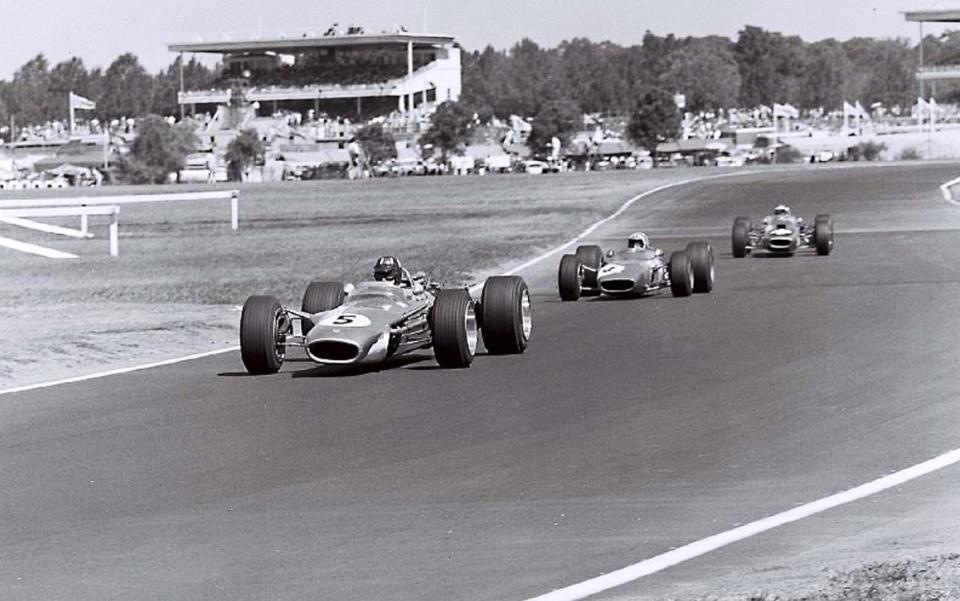
It’s the victory parade after the 1968 ‘Warwick Farm 100′ won by Jim Clarks’ Lotus 49 Ford DFW from teammate G Hill, with Piers Courage third in his little McLaren M4A Ford FVA.

What driving talent aplenty in this car!

Driving the car is 1960 Australian Gold Star Champion Alec Mildren, Mildren also an Alfa Dealer and incredibly successful and generous race team owner of the 1960-1970 period, the Dutto immaculate in white and wearing a set of ex-GTA wheels, I wonder who owns it now?

Behind Alec is a youthful Alfredo Costanzo, first local home in an Elfin Mono Ford 1.5 and later to be very successful in Australia’s latter F5000 days and the Formula Pacific era in cars owned by Porsche Cars Australia’s Alan Hamilton, another very generous benefactor of the sport.

Brabham, Moss and Clark needing no introduction…

Clark won the race, the Lotus 49 was the F1 standard from its 1967 Dutch GP launch, reliability cost Lotus the titles that year- the light, nimble beautiful handling Brabham BT24’s did the trick, Denny Hulme pipping Jack for the Drivers Championship and Brabham Repco winning the Constructors laurels.

In 2.5 litre ‘DFW’ spec the Ford Cosworth powered cars were formidable Tasman weapons, Clark won the 1968 title and Jochen Rindt was the fastest man of the series in 1969, if not the most reliable.

clark wf

Jim Clark, Lotus 49 DFW, WF 1968. (Peter Windsor)

The Tasman Cup entries in 1968 were as interesting and diverse as ever

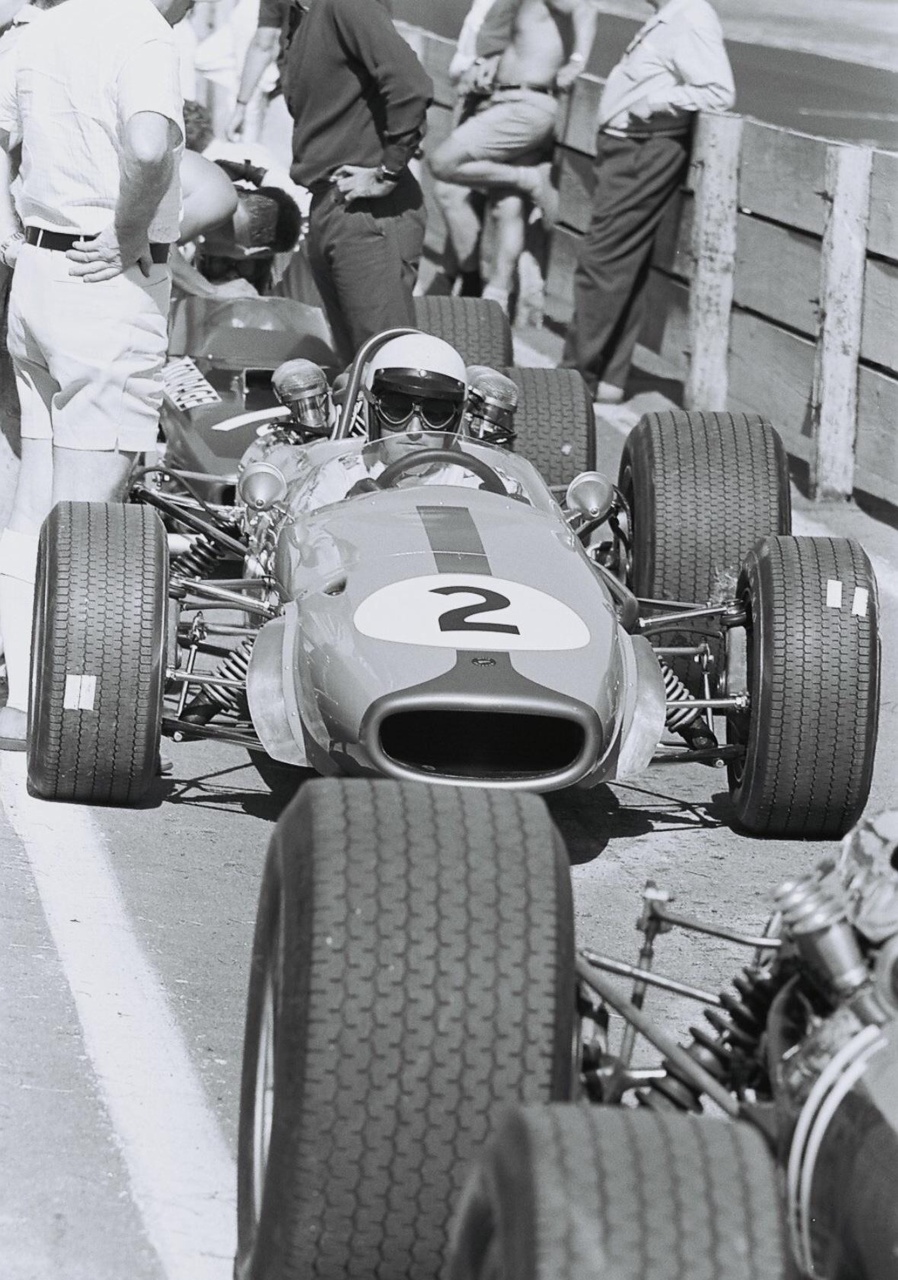
Moreso than previous years in fact- the interesting shot below was taken as the cars lined up for practice in Warwick Farm’s pit lane and shows the business end of the new Len Terry designed 2.5 litre V12 BRM P126. Its Hewland DG300 gearbox is just visible behind the Lucas fuel pump mounted to the rear of the ‘box, the Shell ‘el cheapo’ oil catch tank is a nice ‘in the field’ touch! Richard Attwood in the hotseat retired from the race with gearbox dramas.

Two of the P126’s were entered in the Tasman, Bruce McLaren raced a car in the New Zealand rounds and took a win at Teretonga, the cars were in the Southern Hemisphere to be race proven, after the abortive H16 program, before the European F1 season but there was always a scramble to drive the old, light, nimble and reliable 2.1 litre V8 P261.Pedro Rodriguez raced it at WF finishing sixth in a car which had so much Tasman success, Jackie Stewart took the title in a P261 in 1966.

In front of the BRM is Frank Gardner’s Alec Mildren Racing, one off, Brabham BT23D Alfa. This magic little car was powered by a 2.5 litre V8 developed via Alfas’ endurance racing Tipo 33 program. Its twin vertically mounted distributors fired two plugs per cylinder- a distinctive visual element of the little DOHC, two valve, injected engine. Later in 1968 the car won the Australian Drivers Championship in Kevin Bartlett’s capable, quick hands.

Forward of Frank is Piers Courage’ McLaren M4A Ford FVA- he came to Australasia with this car and two engines and did incredibly well, perhaps its not unfair to say he re-launched his career with this self funded Tasman effort. Numerous podium placings were surpassed by an heroic win in hopelessly wet conditions on one of the ‘biggest balls’ circuits of the world, Longford a fortnight after his strong third at WF ahead of many more powerful and equally nimble cars as his little F2 McLaren.

This McLaren stayed in Australia after the Tasman being bought by Niel Allen, and was also raced successfully by Warwick Brown in the formative stages of his career.

WF pitlane

WF pitlane Tasman Series 1968. (Brian McInerney)


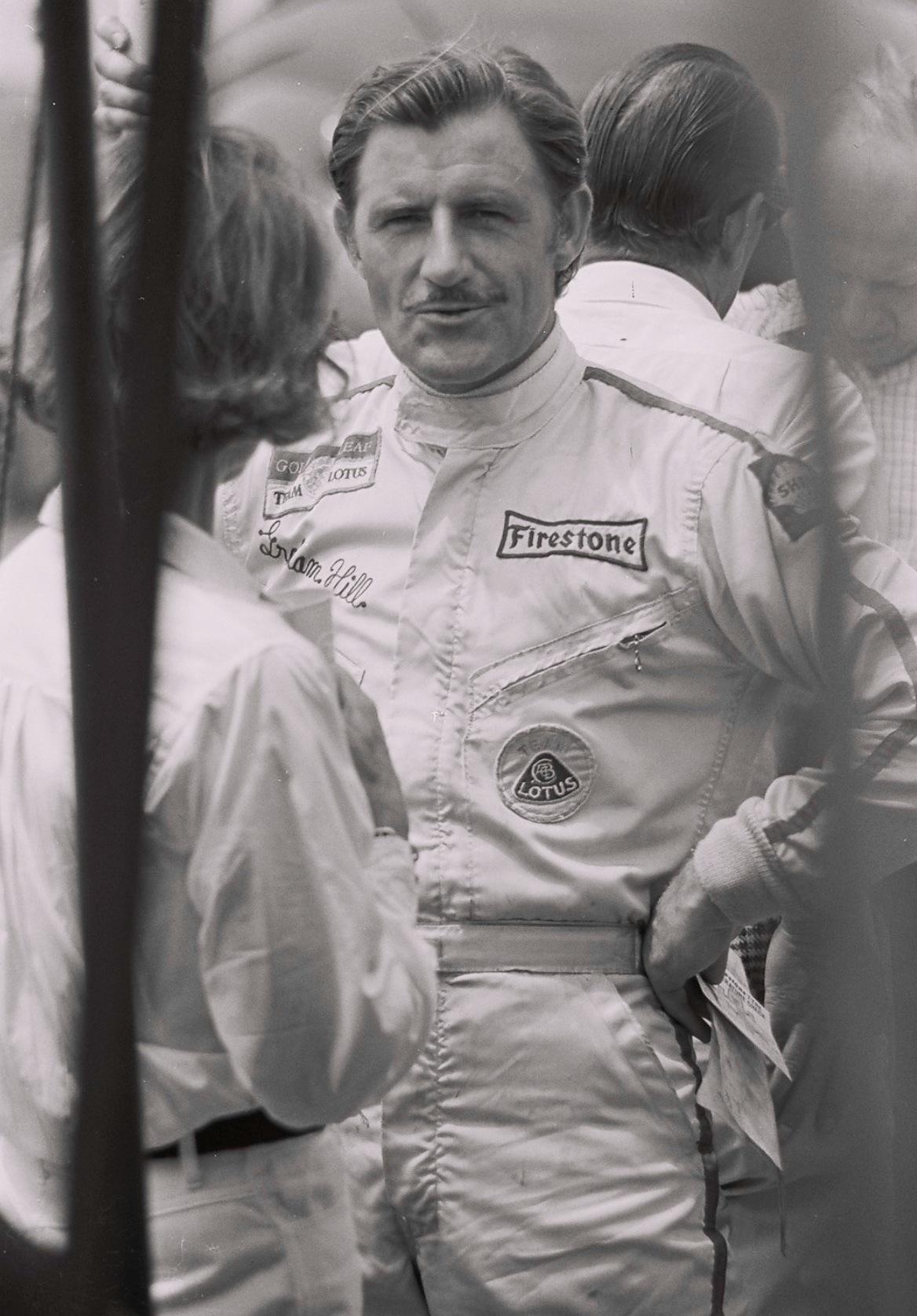
gh pitlane

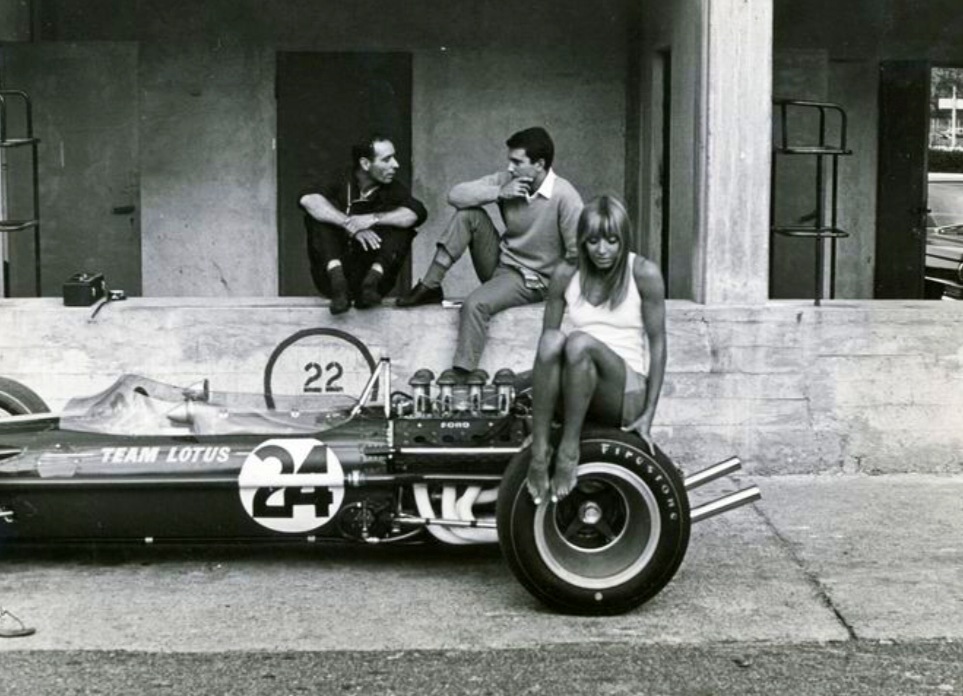
Graham Hill and friends, Warwick Farm paddock 1968. (Brian McInerney)

Graham Hill was perhaps not as focussed on a win as teammate Clark…get your hands off that young woman you bounder!

Was there ever a bloke from ‘central casting’ who looked more like a dashing, debonair driver than G Hill? He did not have the absolute pace of teammates Clark, Stewart or Rindt but was a driver of incredible ability, the only winner of motor racings World F1 Title/LeMans/Indy ‘Triple Crown’ of course.

His greatest moments were to come in 1968 when he picked Team Lotus up by the scruff of the neck, despite the loss of his good friend Jim Clark, providing the leadership the team needed whilst Colin Chapman recovered from his own grief at losing his driver, friend and colloborator in April, only months after this race meeting.

Lotus’ wins in the Drivers and Constructors Titles in 1968 owe a lot to Hill’s character as well as his determination and speed.

hill amon courage wf

Hill from Amon and Courage. Lotus 49 DFW, Ferrari Dino 246T, and McLaren M4A FVA. 2nd, 4th and 3rd respectively. WF 1968, the majesty of the place clear in this shot. (Unattributed)

 Jack Brabham had a short 1968 Tasman.

His Brabham BT23E was powered by Repco’s latest 740 Series SOHC V8 and competed in only the Warwick Farm and Sandown rounds.

In fact Repco, for all their F1 success didn’t ever have much Tasman glory in their own backyeard…to be fair the primary reponsibility of the Repco Tasman program each year was to sort out the engines for the coming Grand Prix season, but all the same, a few local wins should have been achieved given the resources deployed?

This fabulous car stayed in Australia, acquired by Bob Jane at the Tasmans’ duration, it was raced for him by John Harvey who was always fast in it, but also unlucky, surviving a high speed accident at Bathurst after a component failure, the low point for the team.

jb wf pilane

Brabhams BT23E Repco all ready to qualify with a fresh set of Goodyears. Car in front is the BRM P261 V8 of Rodriguez, Courages’ McLaren body on the deck behind Jack. WF pitlane 1968. (Brian McInerney)


moss Wf 1968

Stirling Moss tells Clark about the fast way around ‘The Farm, both drivers loved the place and won there. ‘Lucas Opus’ spark-box prominent between the Vee of the Cossie DFW. Ford DFV famous as a load bearing member of the car, this shot showing the suspension componentry and its attachment to the engine and ZF ‘box. Suspension itself conventional for the day; inverted lower wishbone, single top link, twin radius rods and coil spring/damper, adjustable roll bar. Front suspension inboard; top rocker visible. Nice. WF Tasman 1968. (Brian McInerney)

The Eyes Have It.

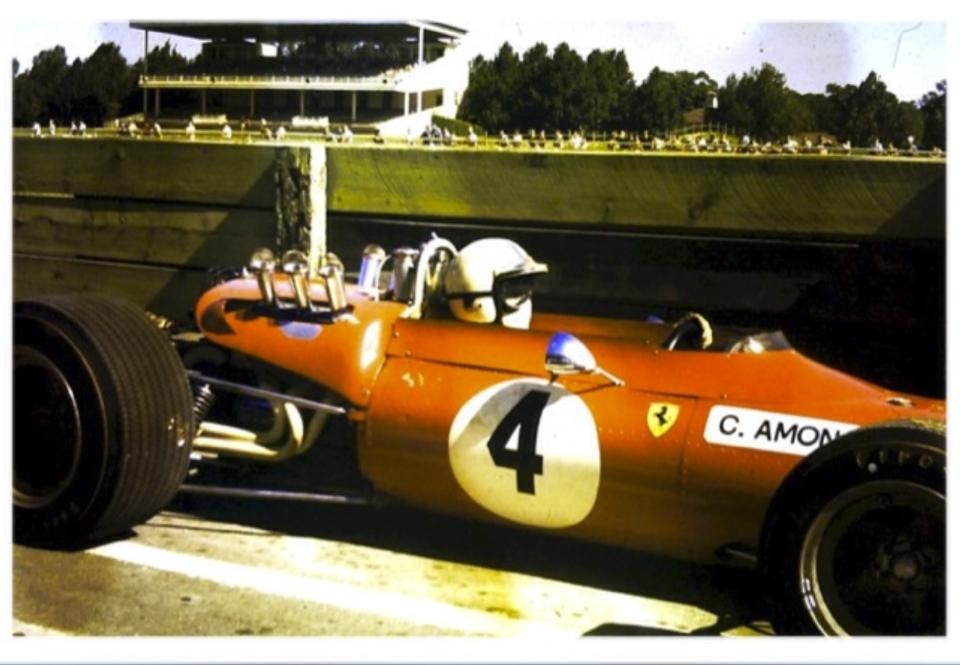
Chris Amon (below) absolutely focussed on the task at hand. He came back with another two Dinos he ran with the assistance of David McKay’s Scuderia Veloce in 1969, lifting the title in a tremendous and very popular fashion.

In 1968 he was very competitive, winning the first two Kiwi rounds at Pukekohe and Levin but did not ultimately have the speed of the Lotuses of Clark and Hill. The car was a Ferrari 166 F2 (1.6 litre formula at the time) to which was fitted the 2.4 litre DOHC, two valve, injected V6 engine from the cars used at the start of the 3 litre Formula 1 in early 1966.

In the 1968 Australian Tasman Rounds Amon mixed the racing of the Dino single seater with McKay’s P4/CanAm 350 Ferrari i wrote about a week or so back.

Ferrari P4/Can Am 350 #0858…

amon eyes

Chris Amon, Ferrari Dino 246T, WF, Tasman Series 1968. (Brian McInerney)

 This shot captures the atmosphere of the Tasman Series generally and Warwick Farm specifically…

There is no hassle of the drivers by the appreciative crowd and vice-versa, there would be uproar these days of course.

Piers Courage is looking relaxed and happy about his third behind the Lotuses of Clark and Hill, and Amon fourth, is still figuring he could take the title with two rounds remaining at Melbourne’s Sandown and Tasmania’s Longford- ultimately he fell short of Clark by 8 points, Amon taking two wins to Clark’s four.

tasman 68 warm down

Piers Courage and Chris Amon on the WF warmdown lap. McLaren M4A FVA and Ferrari Dino 246T. Australian summer male ‘fashion’ of the day on full display. (Bruce Thomas)

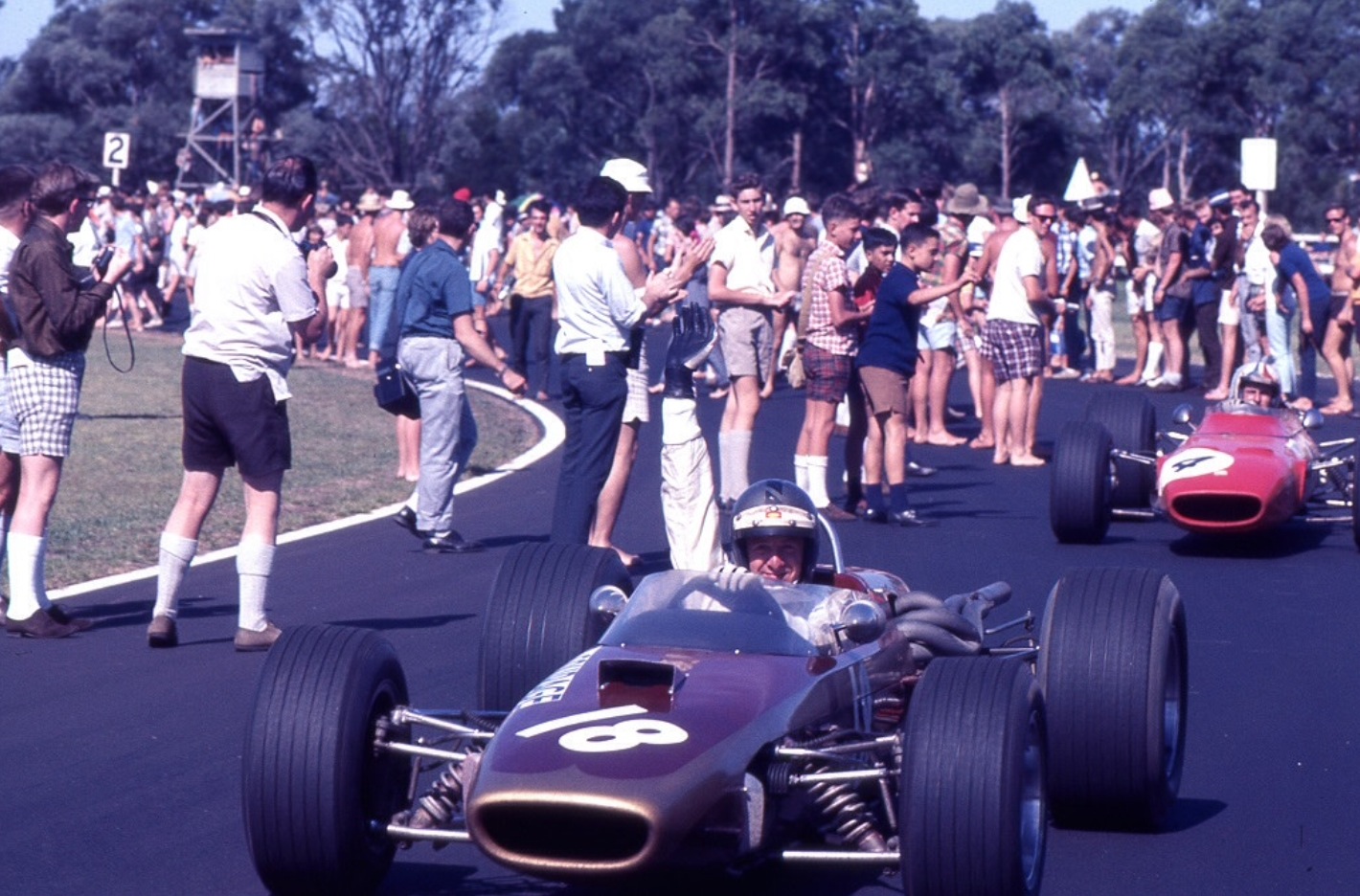
Jim Clark savouring the plaudits of the crowd and one of his last wins, Lotus 49 Ford DFW, 18 February 1968…

jim clark wf lotus 49 1968

Jim Clark, Lotus 49 WF 1968. (wirra)

Grid and Results…

RCN 68 WF Tasman 01

Etcetera…

(B Jackson)

Get a move on chaps…

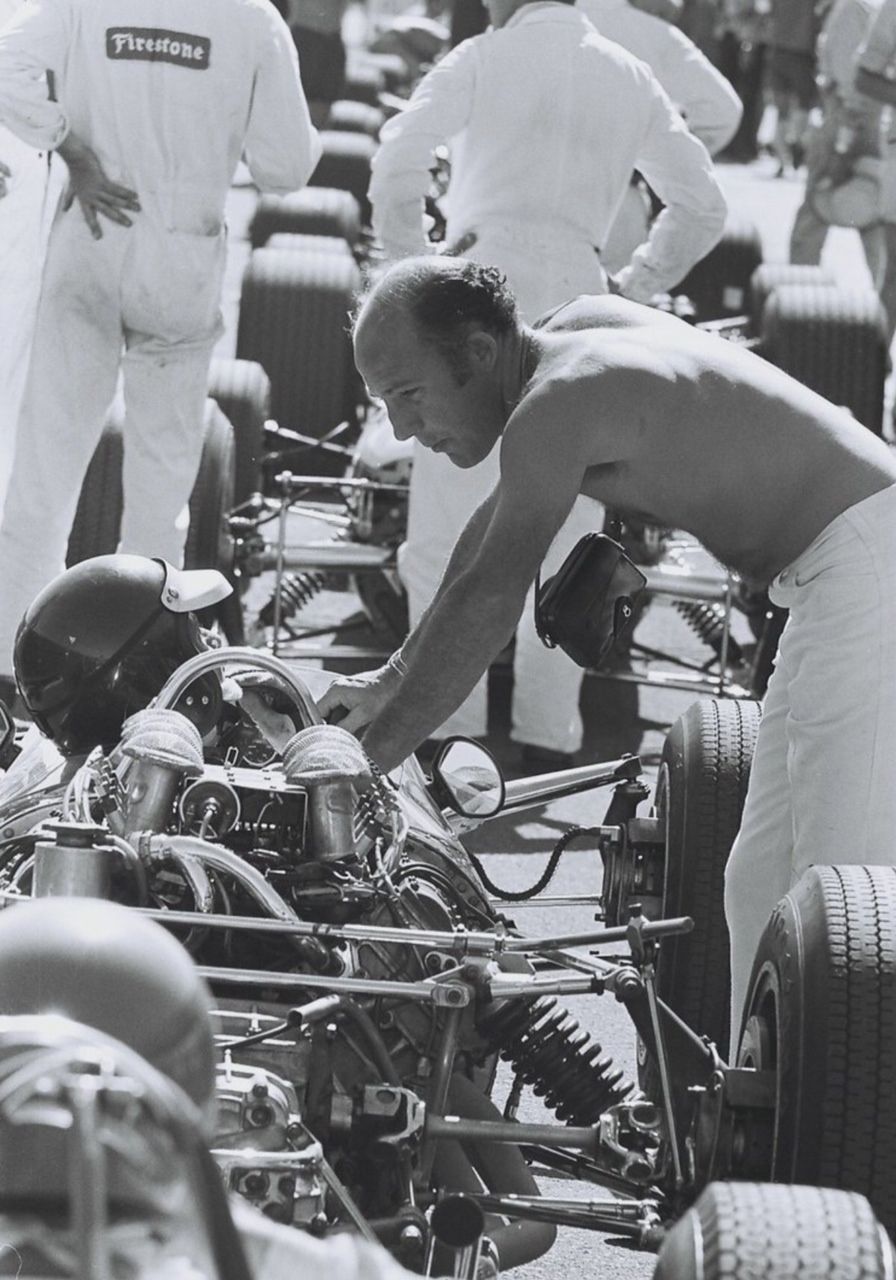
And things go better with Coke it seems- brake bleed in process. Note the solid front rotor on Graham’s Lotus 49 rather than the vented ones first used in 1967. Nice shot of the front bulkhead and inboard front suspension mounting treatment.

amn pilane

(Peter Windsor)

Chris Amon in the Warwick Farm pitlane, Ferrari Dino 246T, 1968 was a useful exploratory season for the successful two car assault in 1969.

(Brian Jackson)

Piers Courage alights his McLaren M4A Ford FVA as Ray Parsons, in ‘Australian summer mechanic’s clobber’ awaits instructions for the next round of tweaks before the next session, one of which is to increase the size of the nose mounted duct to get a bit more cool air into the cockpit.

fg wf 68

(John Ellacott)

Superb John Ellacott shot of Frank Gardner in the one-off Alec Mildren Racing Brabham BT23D Alfa Romeo Tipo 33 2.5 V8- she is puffing a bit of blue smoke in best Alfa tradition!

gh wf 68

(Brian McInerney)

‘See you after the race then?’ Hill G dealing with another admirer of the feminine type.

1968 WF Tasman cover


(Brian Jackson)

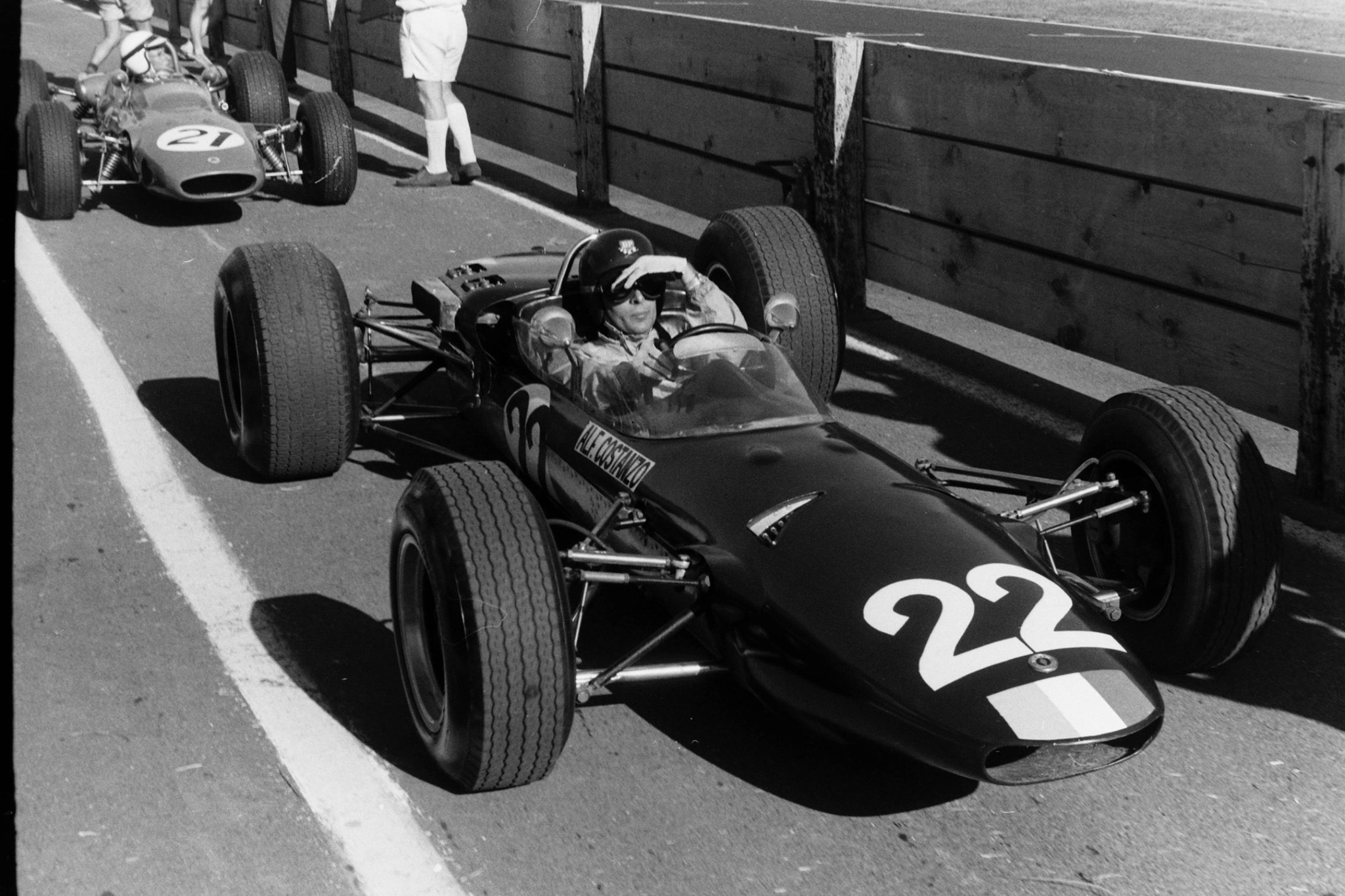
First local driver home was Alfie Constanzo in his Elfin Mono Mk2B Ford twin-cam in eighth place, here shielding his eyes from the late afternoon sun- that’s Ian Fergusson in a Lotus 27 Ford twin-cam behind Alf, both of these cars are ANF 1.5s.

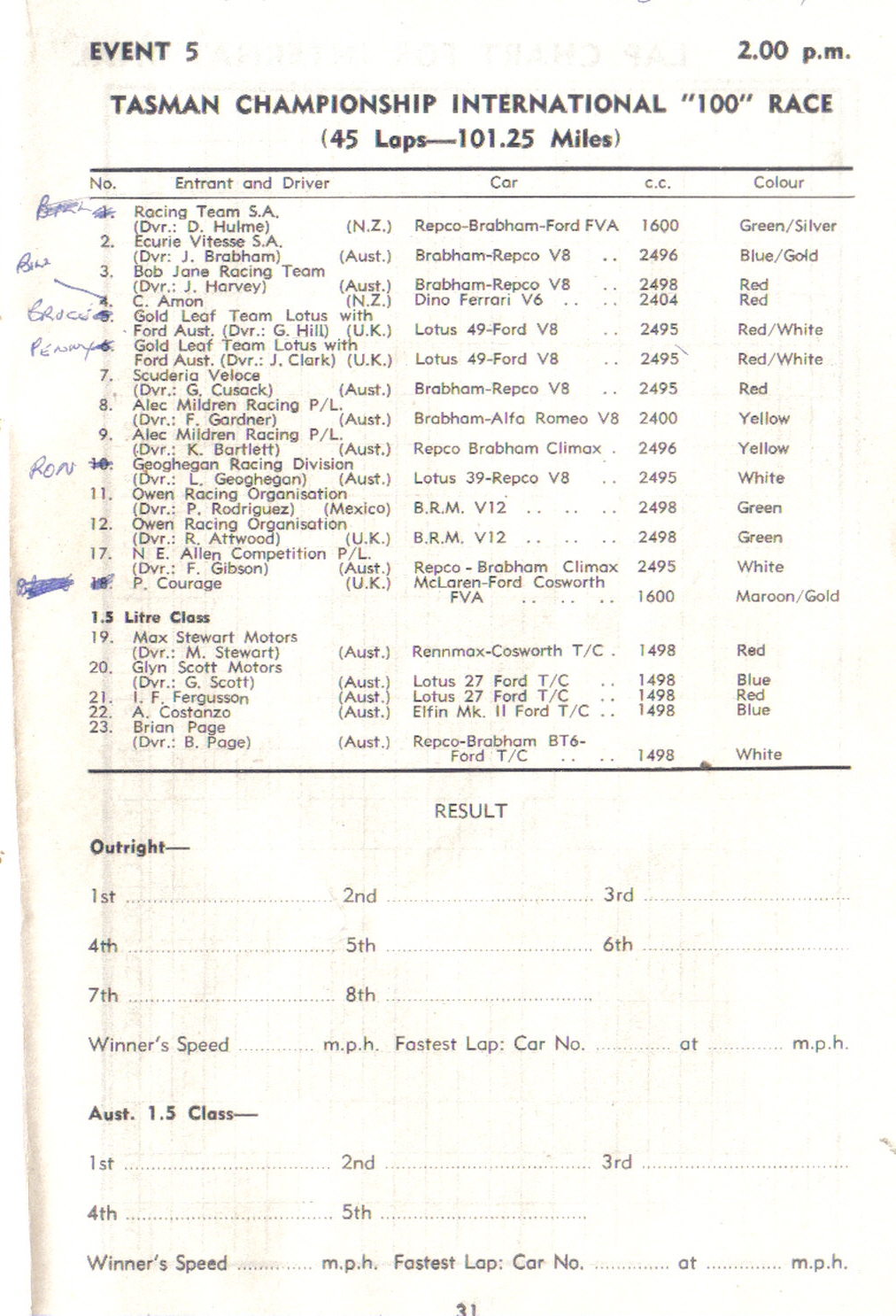
1968 WF Tasman event 5

Photo and Other Credits…

Bruce Thomas, Peter Windsor, Brian McInerney, Wirra, John Ellacott, Brian Jackson

Stephen Dalton for the race program and ‘Racing Car News’ material

Finito…

image

Phil Hill, Ferrari Dino 246, Italian GP Monza 1958. His debut GP for Ferrari

Phil Hill looking fairly relaxed on the occasion of his Ferrari Grand Prix debut…

Hill had been part of Ferraris’ sports car squad since 1955 and ‘shamed’ the chief into promoting him by making his Grand Prix debut in the French GP in Jo Bonniers’ Maserati 250F.

He justified Ferrari’s faith in him placing 3rd in his Dino 246. Tony Brooks Vanwall won the race.

Love Hill’s natty race safety attire! Check, short sleeved blue shirt his first line of defence against fire, mind you the prevailing wisdom of the day was to be thrown clear of the car in the event of a ‘big one’.

It’s interesting to reflect on how far safety advanced in the following ten years- in cars advances included monocoque chassis, roll bars, six-point harnesses and fire extinguishers. In terms of driver safety ‘Nomex’ fire retardant ‘suits with Bell introducing the first ‘Star’ full face helmet in 1968 spring to mind.

Mind you the cars were far faster over that decade, the GP field was ‘winged by the end of 1968 with another leap in performance as a consequence. The circuits hadn’t kept pace though, the Jackie Stewart led Grand Prix Drivers Association crusade to improve circuit standards and safety was just underway, he was a pariah in the views of some traditionalists but many drivers lives were saved as a result.

We lost some of the visual splendour of classic circuits and Phils’ striped blue shirts…

enzo

Enzo Ferrari & Phil Hill Monza 1958- ‘just do as i say and you will be fine…'(Jesse Alexander)


italian

1958 Italian GP Start…# 28 Tony Brooks & # 30 Stuart Lewis-Evans, both in Vanwall VW57’s & Mike Hawthorns’ Ferrari Dino 246. Brooks the winner of the race from Hawthorn & Hill. Lewis-Evans DNF. (Unattributed)


phil 2

Phil Hill Ferrari Dino 246 Italian GP Monza 1958- that steering wheel is so ‘period’! (Jesse Alexander)

Etcetera…

Phil looking very youthful, 25 years of age, at Torrey Pines, California in July 1952, car is a Ferrari 212 Export- a win it seems!

Photo Credit…

Jesse Alexander

Finito…