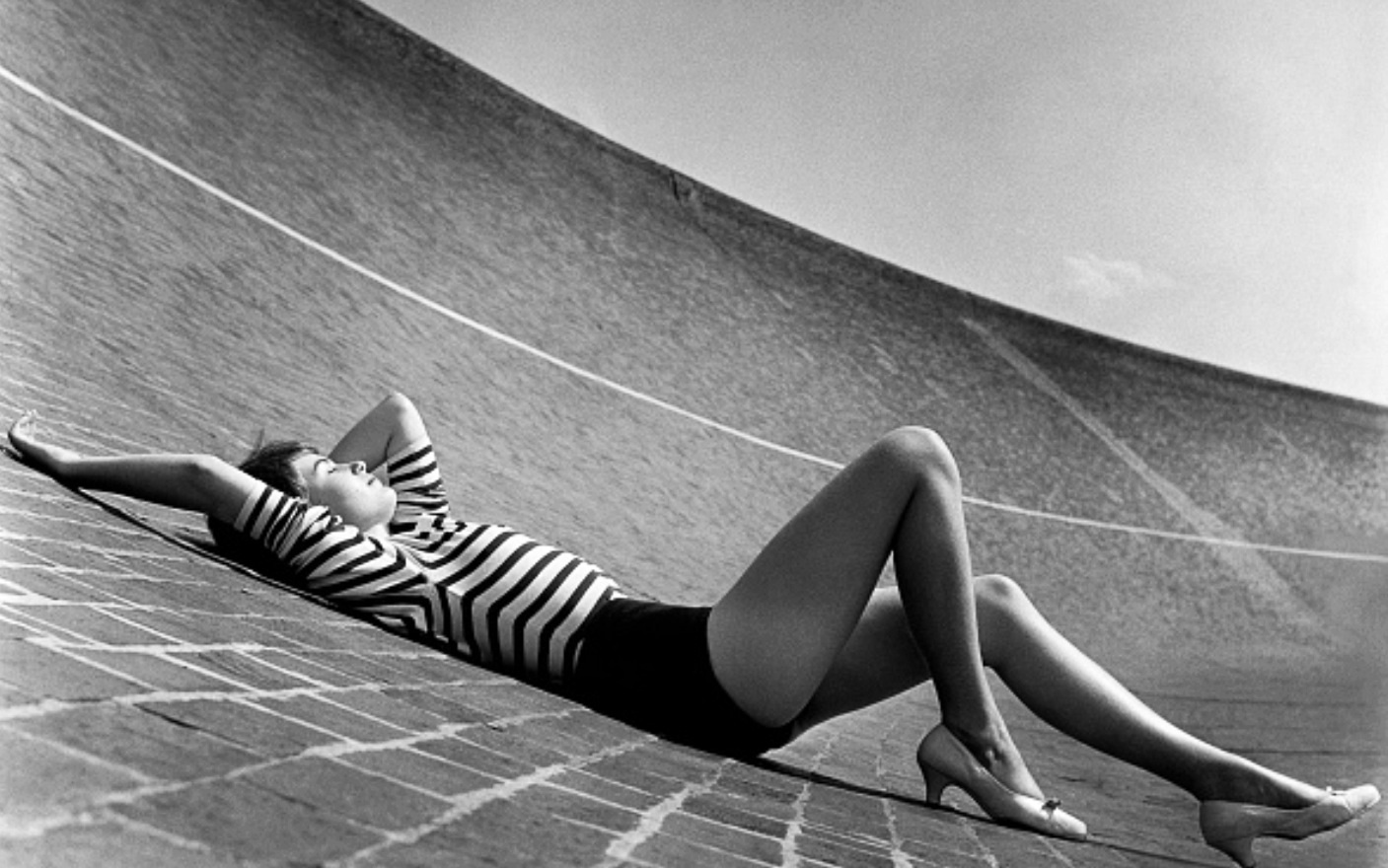
It doesn’t look very comfy, and the young gal lacks ‘padding’ for Avus’ rough surface, but ’tis rather a becoming shot…
Credit…
Gert Kreutschmann
 | Peter Finlay on Harry Galloway’s Racing… |
 | markbisset on Photography : Stephen Fry… |
 | Rob on Photography : Stephen Fry… |
 | Rod Callaghan on Mount Martha Hillclimb… |
 | robert king on Mount Martha Hillclimb… |
It doesn’t look very comfy, and the young gal lacks ‘padding’ for Avus’ rough surface, but ’tis rather a becoming shot…
Credit…
Gert Kreutschmann
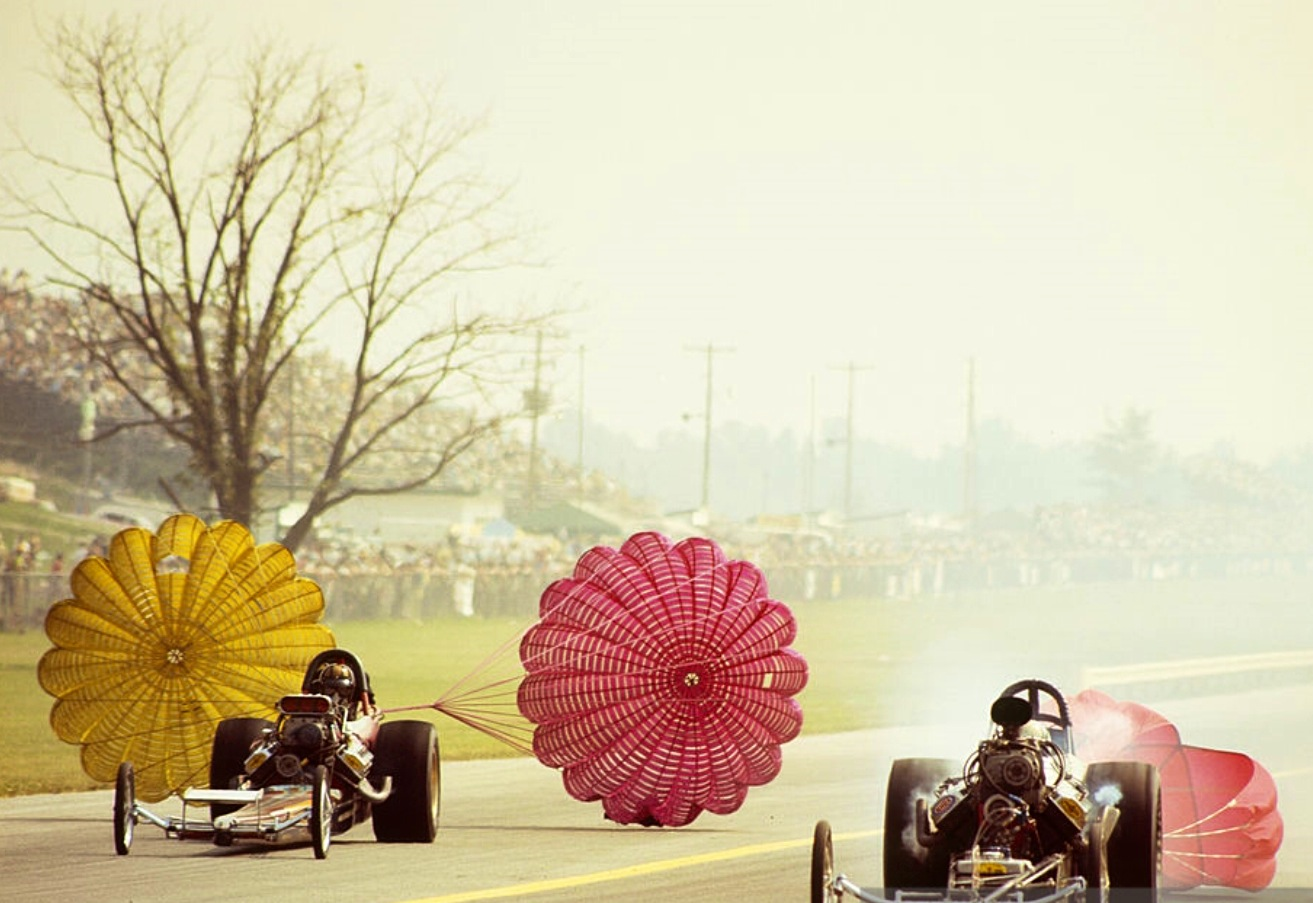
The beautiful soft light contrasts with the sheer other worldly ferocity of these awesome ‘Top Fuel’ Rails during the 15th National Hotrod Association Nationals at Indianapolis on 3 September 1969…
There are no details on the captions of the cars and drivers, so interested to hear from any drag racing enthusiasts who may know who is who!

Checkout the YouTube footage of the meeting…Its an interesting period piece documentary in itself.

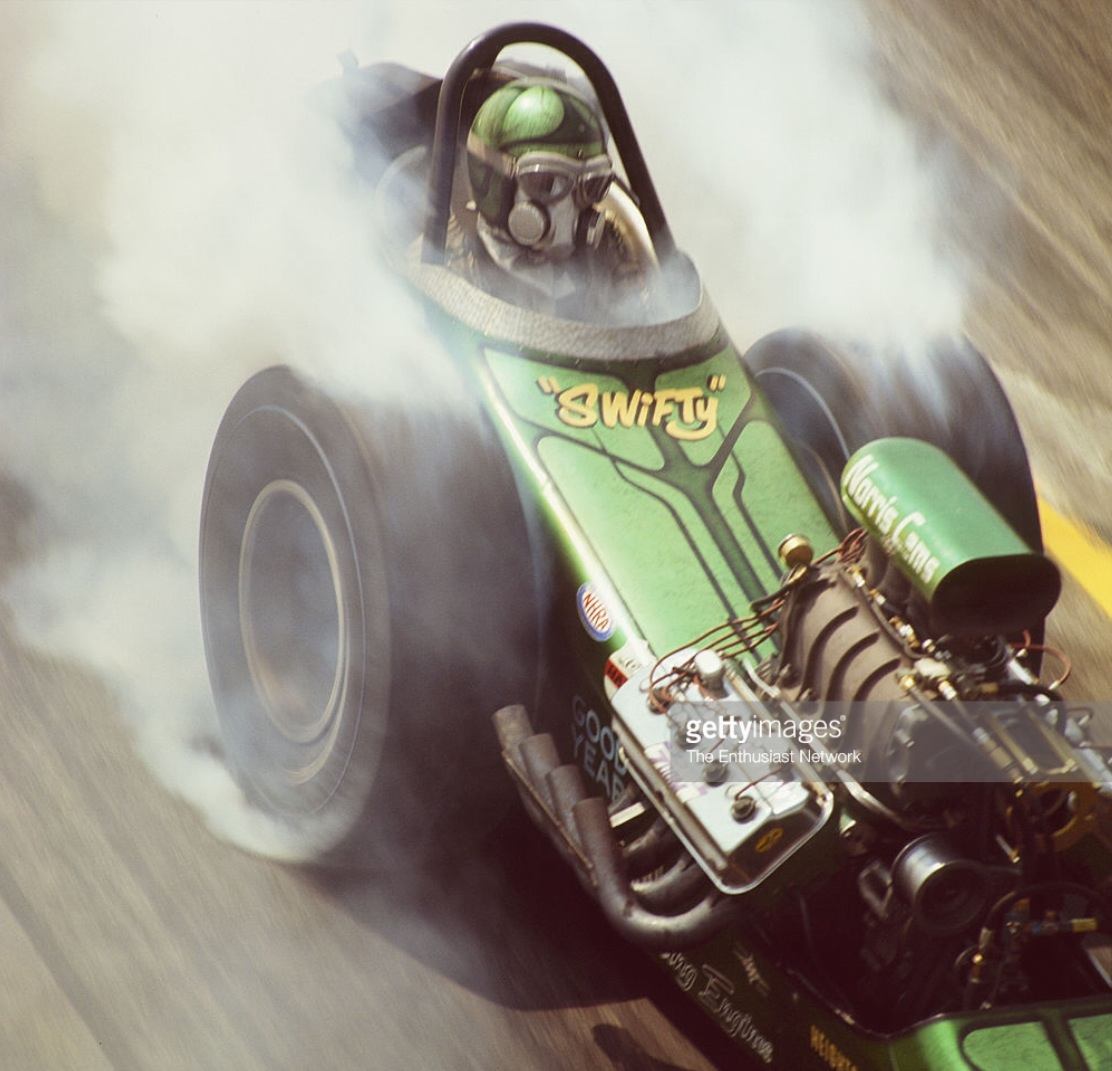
The happy dude is Danny Ongais, later CART/Indycar and several times F1 racer, he raced a Mickey Thomson entered Ford Mustang ‘Funny Car’ (The Enthusiast Network)
Credits…
The Enthusiast Network
Tailpiece…

Some say this is the best view of modern Grand Prix cars, it’s not only ‘crusty curmudgeons’ who are subscribers to that theory either…
Personally the cars of every era appeal to me, mind you the technology of the current crop is beyond my ‘non physics’ brain! It’s the sound of the things, or lack thereof which gives me the shits! There is, or was, nothing on the planet like the visceral, primeval scream of an F1 engine in anger. Till the present. When the sounds of the cars in a GP weekend’s supporting races or demos surpass that of the main event you know things are ‘Daffy Ducked’!
The artistic shots are of the Lotus Team, Pastor Maldonado above and Romain Grosjean below during Abu Dhabi qualifying at Yas Marina during the November 2015 GP weekend.
The Lotus E23 Mercedes were Q 15 and 13 respectively with Grosjean 8th in the race won by Nico Rosberg’s Mercedes F1 WO6, Maldonado DNF.

Credits…
Mark Thomson

The 1950 Isle of Man meeting on June 10 was a mix of the new and old…
New was Geoff Duke, signed by Norton to compete in the Junior and Senior events after winning both the Clubman’s TT and Manx Grand Prix the year before.
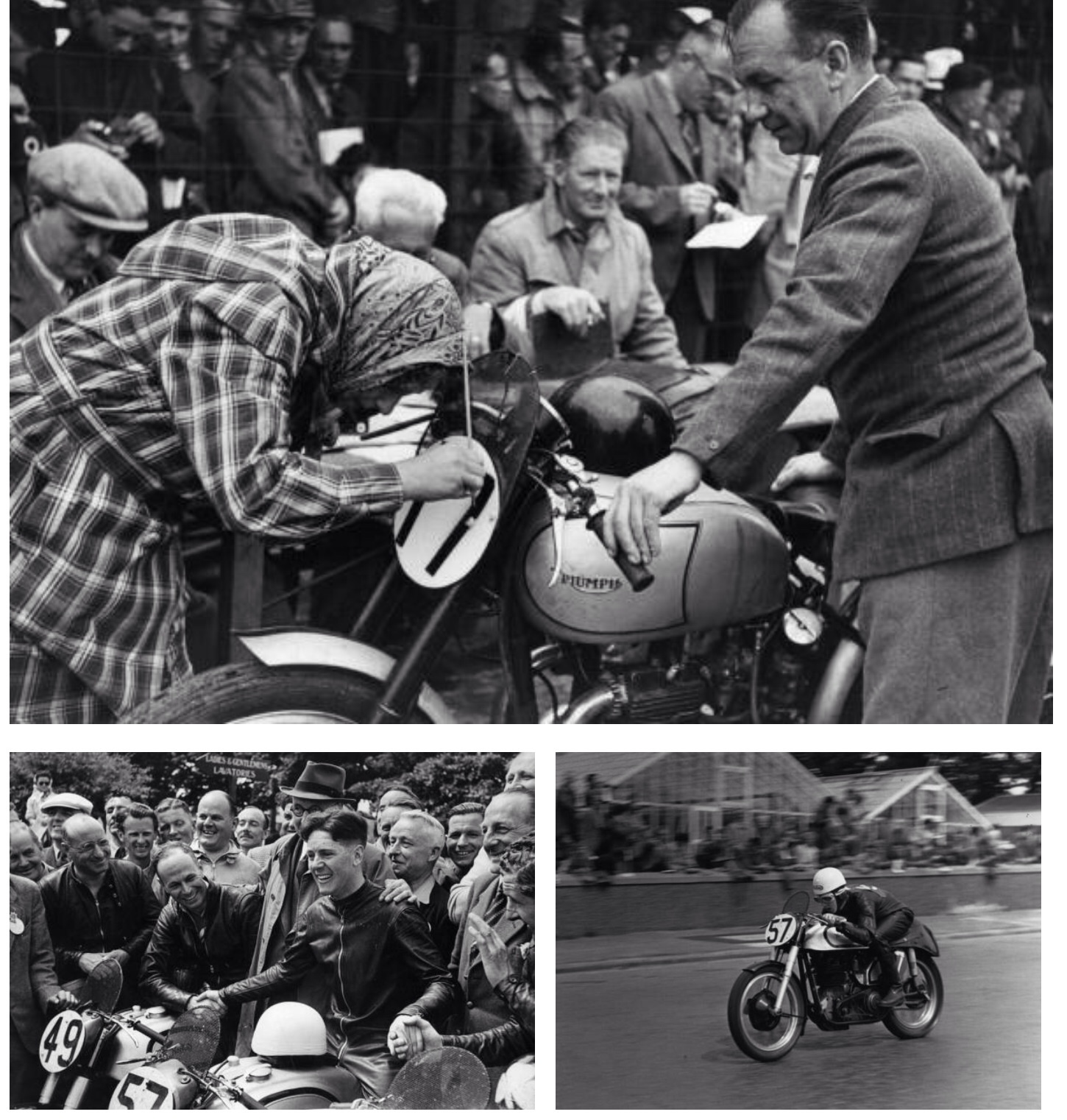
Number being painted on W Hall’s Triumph 500, Bottom left the 3 Norton teammates , # 57 Geoff Duke
Norton also introduced the new ‘Featherbed’ frame, developed by the McCandless brothers, the combination of Duke and the Featherbed were instantly competitive. The light, trim, all welded (rather than lug and tube) frame lowered the bikes centre of gravity and had a shorter wheelbase which suited the challenging TT course.

The TT said goodbye to pool petrol, and its was immediately celebrated by record laps in all three classes.
Duke’s debut in the seven-lap Senior was amazing. Riding the new Norton, he led from start to finish, smashing both race and lap records, winning in 2 hours 51 minutes 45.8 seconds.
Artie Bell’s Norton took the Junior honours with Duke runner-up as Harold Daniell filled the last podium place in his final TT. It was at the Junior prize-giving ceremony that Daniell commented ‘the new Norton was so comfortable that you could sleep on it-rather like being on a feather bed’, so creating the frames name.
Whilst Norton’s success in both Junior and Senior TT’s was clear, the Lightweight produced one of the closest finishes of all time. Just 0.2 of a second separated Italian Dario Ambrosini’s Benelli and Maurice Cann’s Moto Guzzi after 264 nail-biting miles!
Race Build Up…

Spectators check out H Daniell’s works Norton 500 prior to the Senior TT
The development of the Norton frame is an interesting story about advancing technology. In 1949 racer and self taught Belfast motorcycle engineer Rex McCandless began working on a new type of frame which used a welding process developed during the war. ‘Sif bronze welding’ used an alloy that melted at lower temperatures but had high tensile strength and can be built into fillets.
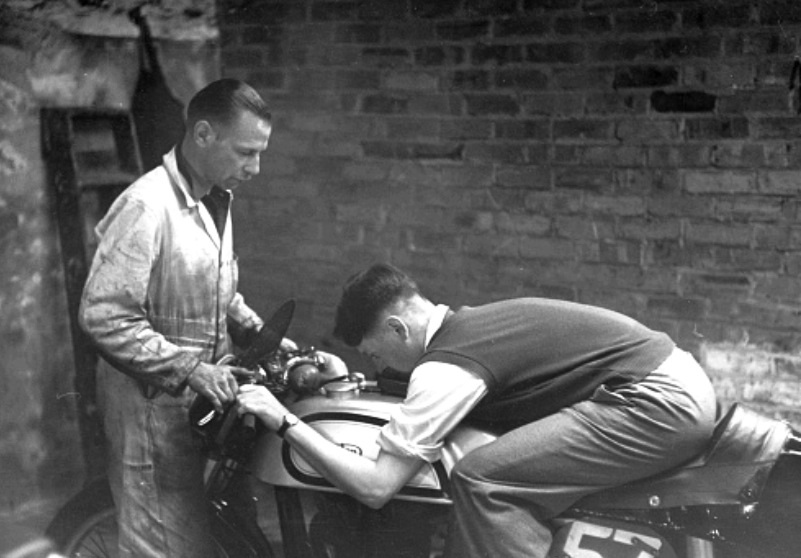
Mechanics fettle Duke’s Norton pre-race
A works 500 engine was mounted into the frame which was lighter and stronger than Nortons ‘garden gate’ frame. Tested at the IOM by Bell against a standard frame bike ridden by Duke, it was much quicker, further tests at Montlery near Paris, proved its speed.
In January 1950 McCandless and Norton’s Edgar Franks took the frame and the McCandless jigs to the Reynolds Tube Company who built the frames from their famed 16 gauge ‘531’ high tensile steel tube on their own jig adapted from the Norton approved McCandless one.
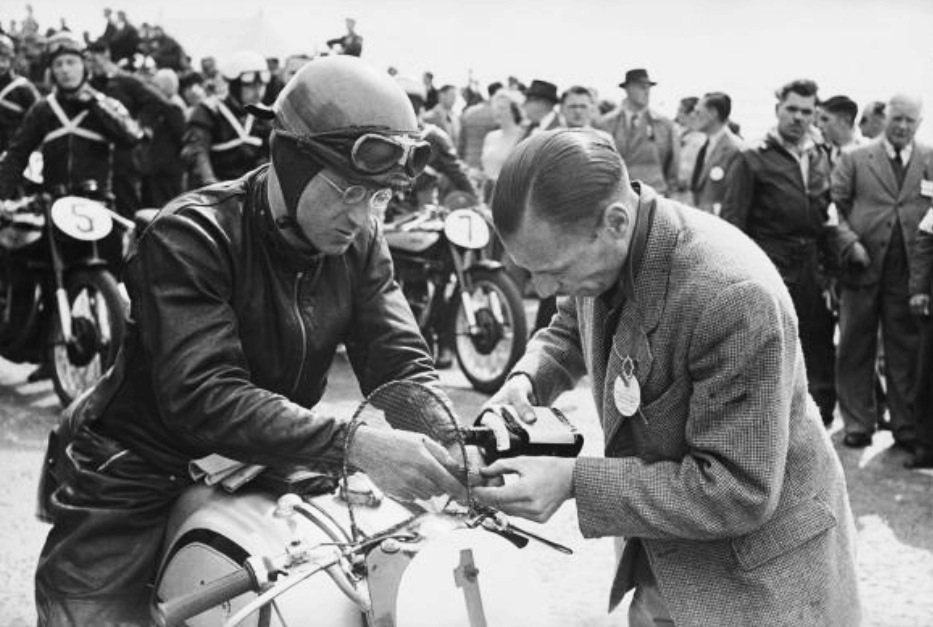

Reynolds were to keep quiet the fact that they built the frames, rather than Norton themselves, but of course their origin soon became widely known. In a great example of ‘racing improves the breed’ the ‘Featherbed’ found its way into Norton’s production bikes in concept if not street frames actually made from ‘531’ tube.

Nice side on shot of Duke’s new ‘Featherbed’ Manx. Reynolds 531 alloy steel frame either made by the McCandless Bros or by Reynolds on the McCandless jig depending on the reference. Either way a great step forward, Nortons frame design until the mid-sixties ‘Isostatic’

Duke and his Norton teammates before the off
Whilst the IOM Official website is quite useful i haven’t been able to find a competitor list with numbers to identify the bikes, other than those which had captions which i have reproduced. If you can help with any of the captions please get in touch. Once again, the photography of ‘Picture Post’s’ Bert Hardy inspired this article. So, whilst it may lack a little of the detail hopefully Bert’s fantastic, evocative shots make up for it!
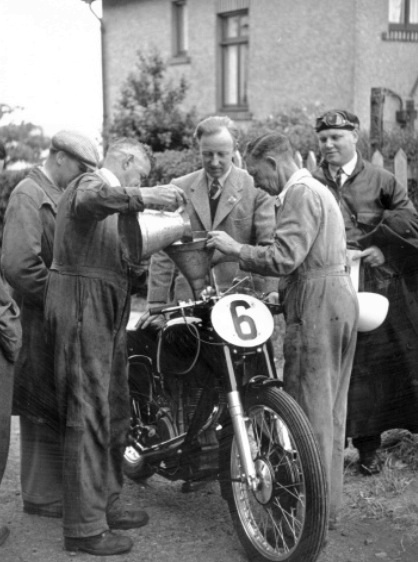

Senior TT Race…

Senior TT competitors commence the race

C Horn, Norton

R St J Lockett, Norton 500
Finish…

Geoff Duke #57 and Artie Bell both on wworks Manx Norton ‘Featherbed’ 500’s race for the finishing line

Norton teammates Harold Daniell, Geoff Duke and Artie Bell, Isle of Man Senior TT 1950
Photo Credits…
All photos by Bert Hardy
References…
iomtt.com, nortonownersclub.org
Tailpiece…


Gilbert Klecan won the first post-war ‘All American Soap Box Derby’ by covering his machine and himself in graphite, his ‘Unfair Advantage’, Akron, Ohio on 9 August 1946…
This shot gave me a chuckle, reminding me of my own ‘billy-cart’ days. The tight ’46 finish is shown below, the wonderful tradition of these events continues to this day.
Credit…
Racing One


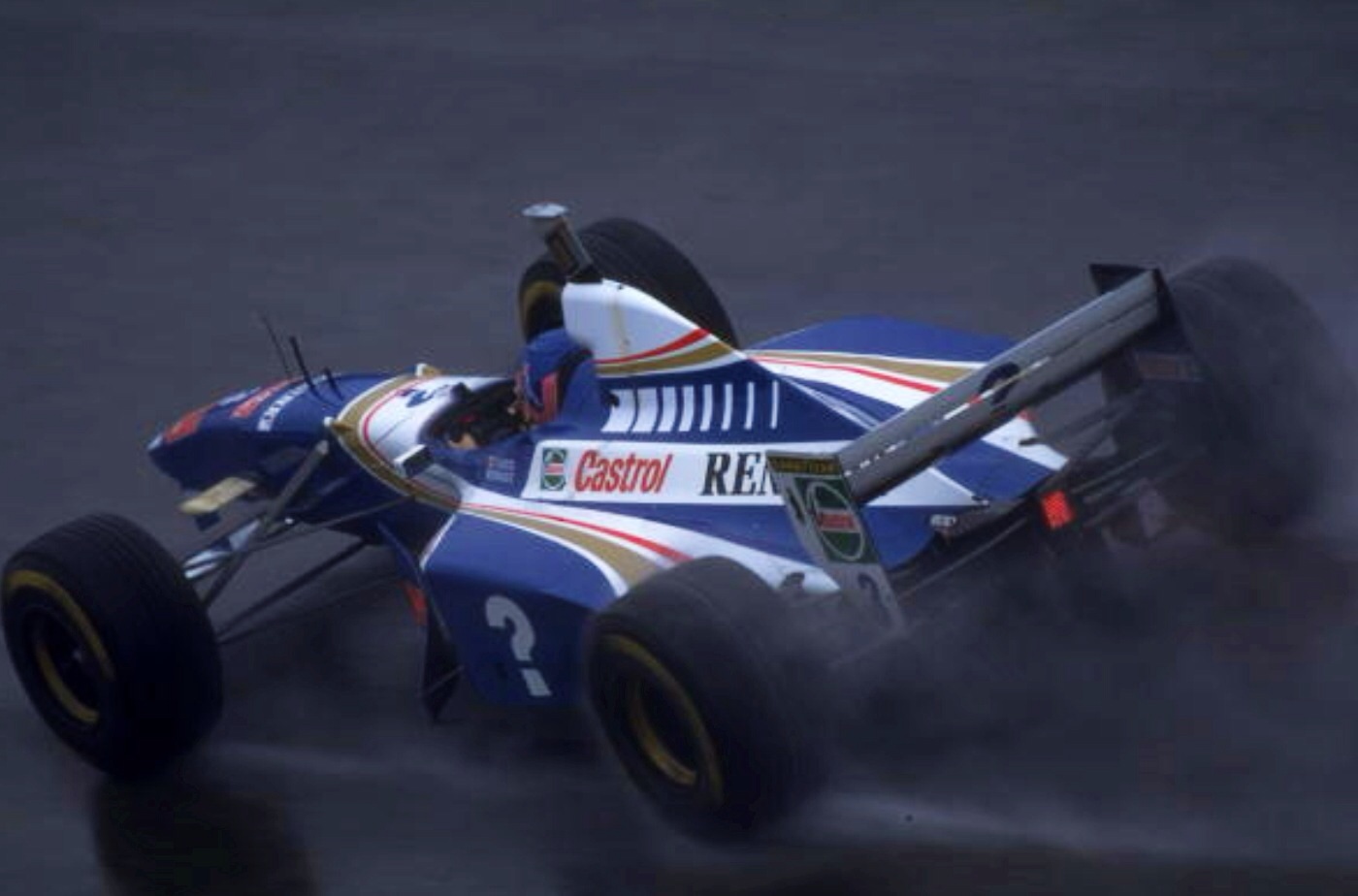
A few images from the French Grand Prix with the focus on Jacques Villeneuve…
It was a Schumacher race but a Jacques season win, his second in F1. He won 7 events and the title in his Williams FW19 Renault, Frentzen a distant 2nd in the drivers chase in the other Williams.
It was the season in which Schumacher was disqualified from the Drivers Championship for one ‘attempted homicide’ on another driver too many, the FIA proved they weren’t completely pissweak after all. Schumacher collided with Villeneuve in the season ending European GP at Jerez, the assault upon Jacques an attempt to win the title in accord with the ‘whatever it takes’ mantra of Senna and Schumacher.

At Magny Cours Jacques qualified and finished 4th, Schumacher Q1 and 1st in the race in his Ferrari F310B from Heinz Harald Frentzen and Eddie Irvine in the other Fazz. It was the days of the 3 litre Formula, all of the cars mentioned powered by V10’s, marvellous cars…
Credits…
Michael Cooper all images

Harry Schell on the limit of adhesion in his ‘Yeoman Credit’ Cooper T51 Climax at Madgwick Corner, Goodwood…
Harry Schell was a press-on kinda driver wasn’t he? Here the Franco-American is delighting the ‘Glover Trophy’ spectators with some delicious Cooper T51 drifts…
The 1960 event was held on Easter Monday, 18 April. Harry was bang on the pace too, equal 2nd quickest in practice with Stirling Moss in a similar car. Chris Bristow demonstrated his undeniable pace though, he was on pole by a couple of tenths and finished 3rd in the race behind Moss, the winner Innes Ireland in his factory Lotus 18 Climax, the quickest of 1960’s GP grid. Harry’s engine popped on lap 20 of the 62 lap 162 Km race…
Credit…
GP Library, National Motor Museum
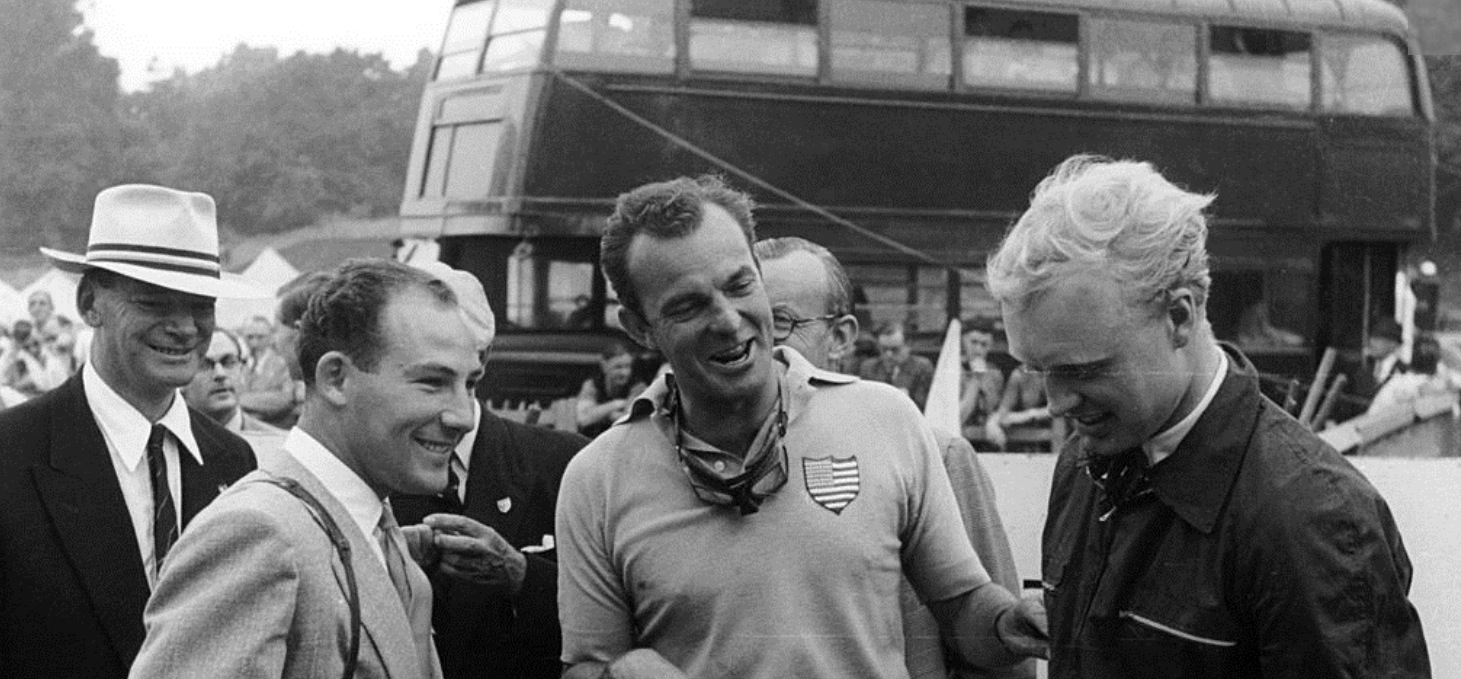
Tailpiece: Harry telling a naughty joke by the look of it, Crystal Place, July 1955…
Stirling Moss, Schell and Mike Hawthorn during the ‘London Trophy’ meeting which Mike won the feature race in a Maserati 250F from Harry’s Vanwall.
(National Motor Museum)
Mike won his heat in the Moss’ family 250F chassis #2508, Harry his in Vanwall ‘VW2’ and Mike the final. Moss was contracted to Mercedes Benz that year, this non-championship 30 July event not one in which Benz entered their W196’s.

(oldracephotos.com)
John Goss races his new Matich A53 Repco for the very first time, the ‘Oran Park 100’ Gold Star round on 4 August 1974…
‘007’ was the last and best F5000 the Matich team built, arguably it’s the best F5000 built in Oz. The story of Frank Matich and his cars I chronicled in a long treatise a while back, have a read if you haven’t seen it;
Goss extended himself, buying the car and some spares. Later he also bought A51 ‘005’ which he converted to A53 spec, racing both cars for years inclusive of the ’76 AGP win at Sandown, check this article out on Gossy;
John Goss: Bathurst 1000 and Australian Grand Prix Winner…
This short piece is inspired by these photos posted on social media for the first time this month. They are ‘mouth-watering’ for me as i’ve always loved this car especially in its Matich original ‘mellow yellow’ Repco livery. Its just the nicest, oh-so-fast bit of beautifully integrated kit.

Grant O’Neill at the back, he looked after John’s cars right thru from this point ex-Matich as he was. Peter Hughes in red and Repco’s Ken Symes at the right. John Davison in Matich A50 ‘004’ behind Oran Park, Gold Star, August 1974 (Neil Stratton)
To have seen FM race it in the US L&M Series in 1974 would have been really something, the A53 showed it could run and beat the best of the Lola T330/2’s in Goss’ hands in Oz. Frank would definitely have given a few folks some curry with all of the teams learnings from its unsuccessful 1973 American campaign.

In the Oran Park form up area with Kevin Bartlett’s Lola T332 Chev behind (autopics.com)

John Goss, Tornado Ford at Catalina Park, Katoomba in Sydney’s Blue Mountains, 1970 (oldracephotos.com)
As a young enthusiast I thought F5000 was a big step up for JG, a mere ‘touring car driver’ in my mind. I was ignorant of his pedigree in real cars though, whilst he started in tourers he quickly progressed to a largely self built, potent Falcon in-line 6 cylinder mid-engined sportscar, the ‘Tornado Ford’.
It was in that he made his name in his adopted Tasmania and later when he moved to the big smoke, Sydney, and Ford Falcon GTHO ‘Series Production’ fame. In F5000 Gossy was ‘on it’ from the start, giving the established aces plenty, he was as ‘quick as his mouth’, legend that he was for saying so little in so many, many words!
What a driver and what a car.

Goss in the McLeod Ford, Falcon GTHO Ph3 at Amaroo Park 1972 (oldracephotos.com)
Credits…
oldracephotos.com, Neil Stratton
Tailpiece…

Goss at Oran Park again in ‘007’, this time the ’75 Tasman round in February 1975, DNF with electrical problems. The first of many livery and body ‘evolutions’ over the years John raced the two A51/3 cars…
Finito…

Family watching the ‘Del Monte Trophy’ Pebble Beach, California road racing in October 1954…
I was going to crop out the rug etc but then noticed the ‘six’packs’ of Coke and Miller. I imagine its a quintessential American scene of the day which no doubt is the composition photographer Robert Lachenbach sought.
No details on car or driver but ’tis a top shot?! Love the period casual clothes of the ‘well-heeled’ local patrons.
Credit…
Robert Lackenbach

Victoria Morris’ swoopy Kieft De Soto at rest in Piper Street, Kyneton, Victoria on a very balmy Anzac Day 25 April 2016…
Everything was going nicely until Victoria shattered the peace and quiet of our long, languid ‘Mr Carsisi’ middle-eastern lunch. Thoroughly recommended by the way.
We were out to atone for minor, alleged misdemeanors on my part. Me ‘an the little sabre-toothed tigress were just knocking back the second pinot and tucking into tasty mains as a big, loudish V8 ‘snap, crackle ‘n popped’ its way down quiet Piper Street in the beautiful Macedon Ranges village, 90 Km north of Melbourne.
I couldn’t help myself of course, I just had to see what it was there and then!

Too slow to see the driver exit the slinky light green beast, I was quick enough to beat the swarm of ‘rubber-necks’ soon checking out this ‘one of a kind’ car. Patrizia was not a ‘happy camper’, the photo and drool session took a good 40 minutes.

This article is long on photos, all of the ‘touristy shots’ are of Piper Street, Kyneton and its immediate surrounds unless otherwise stated.


Campaspe River, Kyneton
The delicacy of the Kieft’s styling is deceptive I reckon…
It looks lithe and ‘Coventry Climax FWA’ light but totes a big, heavy cast iron De Soto 4.5 litre V8 and has the performance to match. I have spotted the car once or twice at race meetings before, what was great was to see it being used on the road, no doubt driven with considerable brio too!

Bill Morris, Terry Cornelius and Greg Snape and the Kieft De Soto in Terry’s Corowa workshop in April 2009 (The Border Mail)
The Kieft is an intensely interesting project. It was the realisation of the dream of its late owner, historic racer Bill Morris and two talented Australian artisans who brought it to life, body builder Terry Cornelius and mechanic/engineer Greg Snape, who did the rest inclusive of project management. Cornelius’ business is in Corowa on the mighty Murray River and Snape’s in Yass, in New South Wales Southern Tablelands.


Greg Snape picks up the Kieft story and Morris’ passion for two rather special cars…
‘The Erwin Goldschmidt De Soto engined sportscar was built alongside the Grand Prix car in early 1954’. Goldschmidt was a wealthy insurance broker and champion owner/driver in early/mid-fifties American racing’.
The Grand Prix car is the Kieft ‘GP1’, the chassis’ of which was completed in 1954 but was never completed and raced due to the ‘stillborn’ nature of the Coventry Climax 2.5 litre FPE V8 engine intended to power it.
Nearly 50 years later the car was completed with its correct engine by the Morris/Snape team in the UK in 2002.

Kieft GP1; Coventry Climax ‘Godiva’ FPE 2.5 litre, DOHC, 2 valve, twin plug V8 fed by 4 Weber DCNL carbs. On methanol the engine produces circa 260bhp @ 8500rpm. Gearbox is an Armstrong Siddeley ‘pre-selector’ type with specially made close ratios, AP racing clutch (Bisset)
Greg; ‘I had a business in Deniliquin, NSW which I was getting bored with and decided to sell it to move to the UK to get a job in F1 for a change of scene and pace. I rang John Diamond (the late owner of Penrite Oil in Melbourne) to get a reference, told him what I planned to do, he told me historic racer/engineer Bill Morris was in his office and handed the phone over! He had lots of contacts, offered to help me and after I sent him my CV said you will always have job with me if all else fails in the UK’

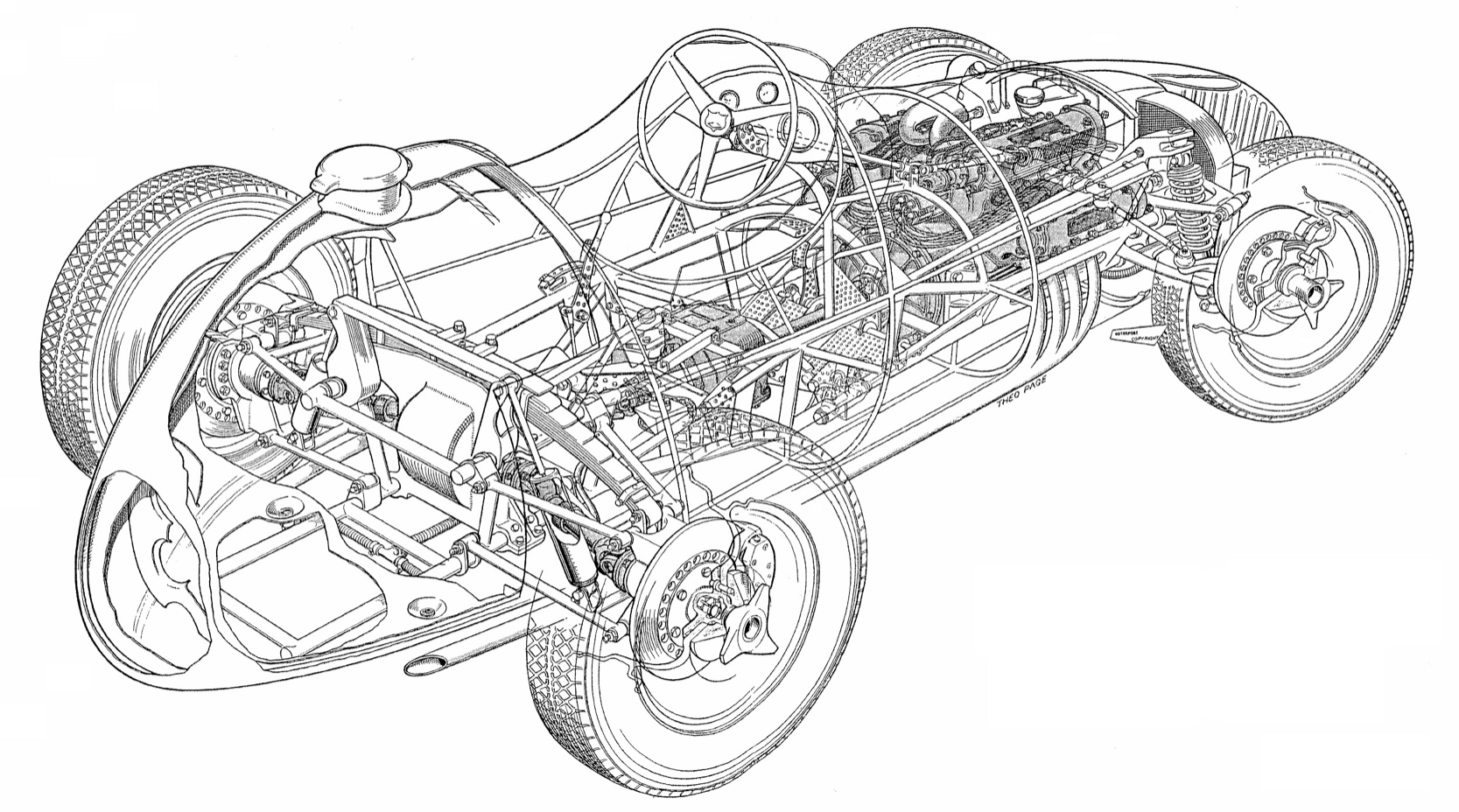
The GP car was designed by Gordon Bedson, the chassis a ‘semi spaceframe’ that is, not fully triangulated but with deep side elements tapering towards the front to clear the wide engine. A thin tube structure carries the body. Here Greg Snape races ‘GP1’ at a dry! (is it a pretty car or what?) Winton Historic Meeting in May 2007 (Bisset)
‘So, I packed up the wife and kids and off we went, from Deniliquin to Oxfordshire in late 1996. I worked for Bill for a few months, then did a season with Alan Docking Racing’s F3 team as Mark Webber’s #2 mechanic in 1997. I returned to Bill for a couple of years in 1998, then went to the JSM Alfa 147 BTCC Team in 2001 as #1 mechanic on Tim Harvey’s car and finally the Castrol Hyundai WRC team in 2002 as #1 transmission tech’

Kieft GP1 Climax; Front suspension comprises unequal length upper and lower tubular wishbones, coil springs, Spax shocks and a roll bar. Hubs are ‘wartime’ Ford V8 to which new fabricated steering arms were bolted. Rack and pinion steering mechanism and wood-rim wheel are of Kieft manufacture. Rear suspension is independent by upper and lower unequal length wishbones, transverse leaf spring and Spax shocks. The diff is a proprietary ENV unit as fitted to Jags in period mounted in the original magnesium Kieft housing incorporating a ZF ‘slippery mechanism. Winton paddock 2007 (Bisset)
‘Bill ended up with the Kieft F1 car and bits via a friendship he had with Gordon Chapman who he had known for years via their mutual ERA ownership. Unfortunately Gordon died. Bill tried to sell all the bits on behalf of Guy’s widow Jeanie but eventually decided to take it on himself. He asked me to work on the project, the deal was that I spent half my time rebuilding pre-selector gearboxes for Bill’s clients and half the time building up the Kieft F1 car, it’s a whole fabulous story for another time’.

Radical for its day, Dunlop disc brakes as used on the Jag XKC were specified. Wheels are new cast magnesium to the original Dunlop patterns, 5/5.5 inches wide front/rear and 16 inches in diameter. Lago Talbot T26C alongside the Kieft GP1, Winton May 2007 (Bisset)
‘Throughout the process of building the Kieft GP car we were in regular touch with Cyril (Kieft) who was both helpful and really keen to see the finished car. During this process he told Bill about the sportscar.
Essentially the car was built in the UK, sent to the US where it was hillclimbed and damaged. It was rebuilt but then stolen in the 1980’s and an insurance payout made. It was all said to be a bit ‘suss’ but over the years even though some people claimed to know where components were Bill couldn’t track anything down nor has anyone ever claimed to have the remnants of the car’.
‘So Bill decided to build a ‘reconstruction’ of the Kieft De Soto using components from the spare original chassis he bought with the F1 project’.
‘Kieft built three sets of parts for the GP cars in period and two chassis. The first car is the one we know and love (‘GP1′) the second incomplete chassis comprising the main structural tubes with magnesium front bulkhead attached was hanging on rafters in Bills workshop and ultimately sold together with GP1 when Bill auctioned it.’
(T Page)
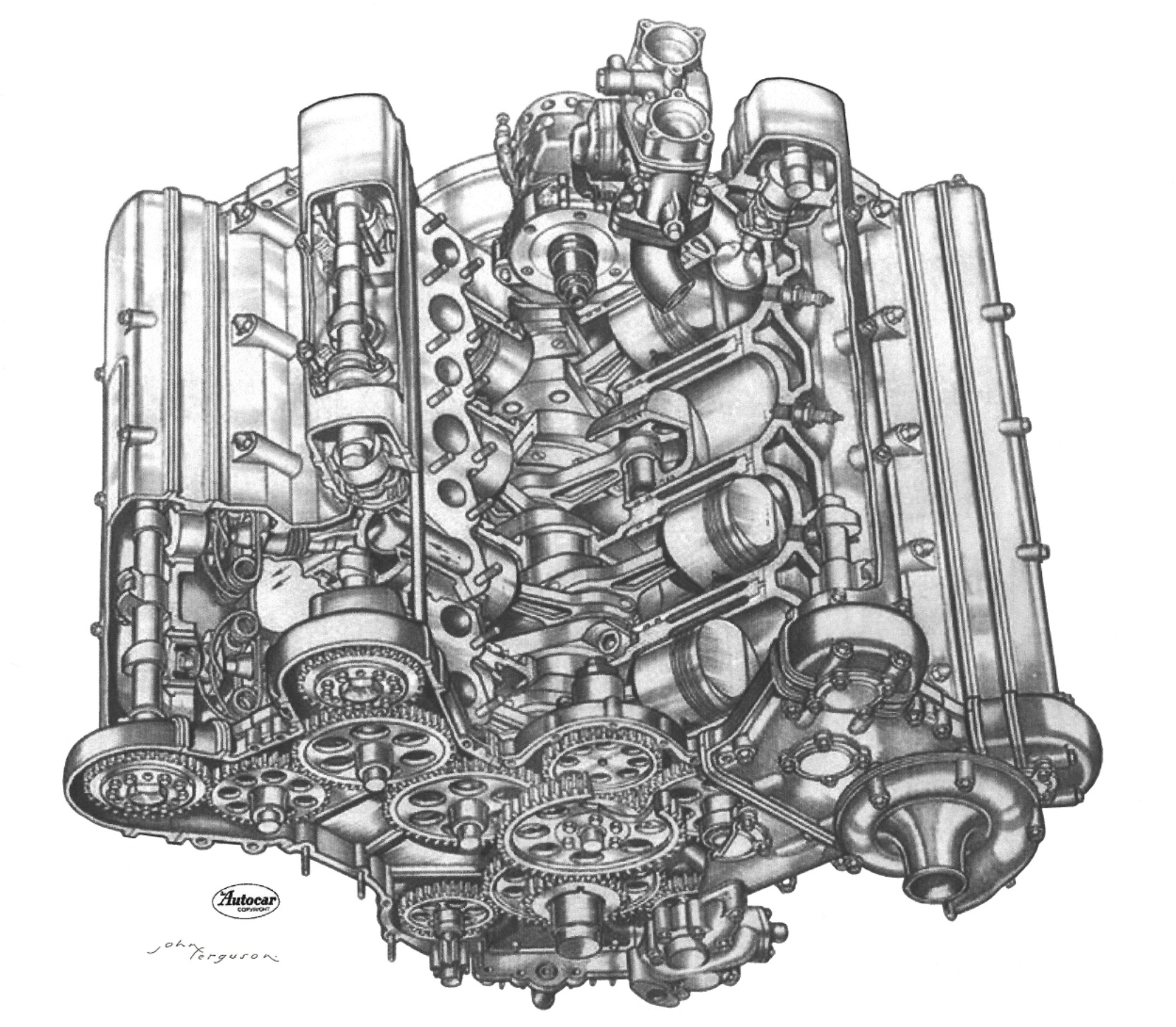
Coventry Climax FWE 2.5 litre V8
‘We used the components that came with the second GP car chassis to recreate the sporty.
Really the sports car chassis was completely different to the F1 car but the suspension bits; hubs and uprights, magnesium diff housing were the same. The F1 car has Dunlop disc brakes, the same components which went on the Jag C Type, it stops incredibly well, the brakes on the sportscar are drums, a 13 inch standard Girling size on the front and 12inch Jag components on the back’.

(The Border Mail)
The original bodies of both GP1 and sportscar were built by EW Humphries Ltd in Wolverhampton, the sportscar then fitted out at Kieft’s Derry Street, Wolverhampton works, painted white and exported to the US. Here Terry Cornelius (above) checks his reference material in his Corowa workshop during the cars build.
‘The sportscar was installed with a De Soto ‘Fiedome’ 4.5 litre V8, a Jaguar ‘Moss’ gearbox with close ratios, and same as the GP car, an ENV rear axle in a Kieft housing’.
‘The chassis wasn’t straight forward other than the two main frame longerons but Duncan Rabagliati of the GP Library had some original photos which were invaluable. Whilst the F1 car was in Australia in 2006/7 I stripped it down and made a jig which, with the photos, allowed us to get the chassis and suspension pick-up points and therefore the geometry spot-on. We knew that it would be great as the F1 car handled so sweetly and progressively’.

Original Kieft chassis frame main tubes clear clear as is ‘Superleggera’ construction method, what else does Cornelius have in his Corowa shop? (The Border Mail)
‘Terry Cornelius did a sensational job with the body which was all done by looking at photos and building accordingly. Its easy to say but much harder to do! Bills health at this stage was holding up pretty well, he eventually died from a degenerative disease which gradually destroyed his central nervous system’.
‘Bill and his wife had a place at Lancefield in country Victoria as well as in the UK, they lived 6 months in each, so he was able to help with direction of the project. Funnily enough, in a tragic kind of a way, when he saw the body for the last time before going back to the UK where he died, he ‘looked at’ the body largely by feel. He said to Terry,‘I think the body will crack here’, near an intersection of curves at the front of the rear wing, sure enough that’s exactly what happened 12 months later! Terry has chosen not to repair the crack as a tribute to Bill’s great knowledge of all things automotive.’

De Soto 276cid V8, ‘Moss’ box and bellhousing ready for installation in the car. Note beautifully fabricated extractors and single 2 barrel Rochester carb (Peter Delaney)
The heart of a car is its engine of course. Goldschmidt specified and provided a new 276 cid/4.5 litre, cast iron OHV V8 from De Soto’s new for 1952 ‘Firedome’ family sedan for Kieft to fit his new car. It was De Soto’s first such engine since 1931. The oversquare 3.5/3.344 inch bore/stroke engine, fitted with hemispherical combustion chamber cylinder heads was ‘state of the art’, an ‘engine with high performance characteristics’ as Motor Trend magazine put it.
Modern though it was, in production form developing circa 160bhp, it was heavy ‘the engine weighs a ton, I don’t know how much but I reckon the heads alone weigh as much as an A-Series BMC engine!’ quips Greg.
The relatively lightweight ‘Small Block’ Chev and Ford V8’s with their thin-wall casting techniques changed the world of motor racing but they were still a few years away in 1954. But there were plenty of sportscars in the burgeoning US scene using a range of heavy but powerful V8’s that pushed Ferrari and Maserati to build cars with progressively bigger engines throughout the 1950’s.

Degree of difficulty in building the body from little reference material clear, note the light tubes to which the hand formed and rolled aluminium sheets are attached (Cornelius)

Lots of compound curves, workmanship superb (Cornelius)
‘The engine fitted is a 276cid De Soto Firedome exactly the same as the original car before it left the UK. Its been only lightly modified as was the case with the original, we needed to go that way to be eligible for FIA papers and Bill and Victoria wanted a car they could use on both road and track’.
‘It has a set of fabricated extractors, been bored out 40 thou, has 11:1 compression ratio and a mild high lift cam. High comp pistons, light rods, oil pump and oversize valves are from ‘Hemi Hot Heads’ in the US.’
‘Fed by a 2 barrell Rochester carb it develops around 350bhp at only 4800rpm, not high but its under-carbed, the thing has heaps of torque, its got a big, fat torque curve from 2000-4500rpm, bags of grunt and it doesn’t weigh much’.

Terry Cornelius left and Greg Snape proudly show off their superb creativity and workmanship, KD-S nearly complete early in 2009 (Cornelius)

Greg Snape samples the Kieft De Soto’s power upon its race debut at Winton Historics in May 2009 (unattributed)
‘I phoned Bill one night not long before he passed away, started it up and gave it a few revs over the phone. Victoria said he looked as happy as a kid in a sweet shop! Unfortunately whilst Cyril saw and sat in the F1 car he didn’t get to see the De Soto Kieft either’.
‘Bill passed away just before Terry and I finished the car about a week before its race debut at Historic Winton in 2009. Victoria was keen to fulfil Bill’s dream to reunite the two Kiefts at the Goodwood Revival in the UK, she shipped the car to the UK and I raced it at Donington Park and at the Goodwood Revival Meeting in September 2009′.

Snape contests the ‘Freddie March Memorial Trophy’ in 2009, KDS looks beautifully balanced and putting its power down nicely on turn-in (unattributed)
‘Its really quick in a straight line, capable of 150mph and clocked at 132mph at Goodwood but the suspension needed more sorting. No big deal just spring/shock settings, the sort of stuff which would have been got right if the car was to be a racer rather than a roadie which occasionally does a meeting. It holds the road well. The brakes aren’t as good as the discs on the F1 car and also needed sorting in terms of balance and pad material, I think we were probably off its potential by around 5 seconds a lap.’

Snape in the Kieft, Eastern Creek, New South Wales (Bruce Moxon)
‘When the car came back to Australia we ran it at an HSRCA meeting at Eastern Creek, out to Sydney’s west.
It was a stinking hot weekend and the car started overheating after a few laps, it was a case of keeping an eye on the gauges and driving it accordingly’.
When I looked at the Kieft in Kyneton I was struck by the high standard of finish for a one-off, the leather seats were made by Greg’s wife Glenda. It has a full set of matching Smiths instruments for example. ‘Bill was apprenticed to Smiths originally so knew exactly what instruments were needed for the period inclusive of the lovely chronometric tach.’
‘For most of the project he was well enough to have lots of input into all of this detail stuff. The overall result is sensational to look at and even better to drive!, something which Victoria does often’, including regular drives from Lancefield to Kyneton as she did on the day I was lucky enough to see and hear the car…


Kieft Cars…
Click on this link for a great summary of the creativity of Cyril Kieft;
http://www.500race.org/web/Marques/Kieft.htm


Winery, Tylden
Etcetera…


Tylden

Kyneton Avenue of Honour shot on Anzac Day, ‘Lest We Forget’, 25 April 2016
Photo and other Credits…
Mark Bisset, Terry Cornelius, ‘The Border Mail’ newspaper, Bruce Moxon, Peter Delaney, Theo Page, John Ferguson
Special thanks to Greg Snape for the generosity of his time
Tailpieces…


 primotipo...