‘One of the most classic racing engines of all time – and unquestionably the most widely copied – was the 1913 3-litre four cylinder Peugeot conceived jointly by Georges Boillot, Jules Goux and Paolo Zuccarelli whose ideas were interpreted by the brilliant draftsman Ernest Henry’ ; Harry Mundy in Automobile Year #10…
The team first expounded the advantages of twin overhead camshafts, four valves per cylinder and compact combustion chambers.
Jules Goux fourth and Robert Peugeot at the 1914 French GP. Goux winner at Indy in 1913 in a Peugeot L56. Mercedes Christian Lautenschlager won the race, Boillot was well in the lead before a spate of Dunlop tyre problems. 4 July 1914, less than a week after the assassination of Archduke Franz Ferdinand and the imminent start of WW1 (unattributed)
‘The Three Charlatans’; driver/technicians Goux, Boillot and Zuccarelli, the latter the most important in terms of his conceptual ideas, as they became known within Peugeot HQ, put a proposal to M Robert Peugeot to develop, outside the factory a team of cars for the 1912 French GP. The race was being revived that year, and two 3-litre cars for the Coup l’Auto at a cost of 4000 pounds for each car.
The 1912 GP engine of 7602cc was estimated to develop 140bhp@2200rpm, the car very successful as covered in the contemporary magazine articles included at the end of this piece.
‘Overhead camshafts had been used earlier by Mercedes and Clement-Bayard…The technical contribution of the Peugeot engine was in the use of the hemispherical combustion chamber, four valves per cylinder operated directly by twin overhead camshafts and a central sparking plug. In other words, Zuccarelli, from whom this conception emanated, appreciated the virtues of a compact combustion chamber, large effective valve area and low valve stresses’.
‘A stirrup-type valve tappet guided top and bottom ad having its own return spring was used and the entire mechanism was fully enclosed and lubricated; the valves and springs were exposed to assist cooling…The one piece cylinder block and head was bolted to a two piece crankcase split on the horizontal centre line of the five main bearings’ said Mundy.
Boillot won the 1912 French GP at Dieppe by 13 minutes from the closest Fiat at an average speed of 68.5 mph. The Fiats, to demonstrate the efficiency of the Peugeot engine were of 14143cc.
Georges Boillot, Peugeot L3, Coup l’Auto 1913 (Getty Images)
The 3-litre Peugeot engine produced for the 1913 Coupe de l’Auto race run concurrently with the French GP, was the more important in its technical influence as its efficiency and light chassis was more than a match for the 1912/13 GP cars built for an unlimited formula and having in some cases twice the capacity.
Many features of the 3-litre were common with its bigger brother but other key elements copiously copied were;
.A train of spur gears contained in a separate and easily detachable casing which replaced the former bevel gear and shaft drive to the camshafts
.The heavy stirrup type of valve tappet was discarded in favour of a finger interposed between the cam and valve stem
Boillot on the way to Peugeot L3 victory on the Amiens 31.6 km road course used only once for the French GP, in 1913. Zuccarelli was killed when he hit a cart before the race; five fatalities at the place in two months (unattributed)
.A novel construction was introduced for the crankcase and the three main bearing crank, made of the highest quality BND/Derihon steel. The latter was made in two halves and bolted at the centre, at which point a double row ball bearing was used; a single row roller bearing was used for the front and rear mains. This type of construction permitted the use of a one-piece crankcase casting, the two end bearings for the crankshaft being contained in a separate housing.
Ernest Henry at his drawing board, year unknown. Hiss exact contribution to the design of the Peugeot’s and the engine still the subject of debate after 100 years; a key member of the team whichever way you cut it (unattributed)
.It was also the first engine to use dry-sump lubrication; better cooling with full pressurisation to all bearings and also allowing engines to be placed lower in the chassis.
The influence of the engine was also profound in the sense that it lead to the adoption of a capacity limitation from 1914, a principle adopted for most subsequent formulae. From 1914 onwards there was no effective alternative to the overhead camshaft as stroke to bore ratios were reduced and rotational speeds increased, two basic requirements of increased performance…
‘The Three Charlatans’ circa 1912; Paolo Zuccarelli, Jules Goux and Georges Boillot (TNF)
Contemporary ‘The Automobile’ articles on the 1912/1913 Peugeots…
1912 L76 7.6-litre.
1913 L3 3-litre.
Bibliography and Credits…
Automobile Year #10 article by Harry Mundy on Grand Prix engines, ‘The Automobile’ 26 September 1912 and February 1914 articles via theoldmotor.com, The Nostalgia Forum Peugeot GP thread, Jacques Henri-Lartigue
Tailpiece: Boillot, winner on Peugeot L3. French GP, Amiens 12 July 1913…
Terry Marshall’s shots capture the zesty, attacking style which made Keke Rosberg a crowd favourite throughout his career. Here in his Chevron B39 Ford at Pukekohe during the New Zealand Grand Prix on January 7 1978…
The Kiwi’s changed their national formula from F5000 to Formula Atlantic/Pacific from the 1977 International Series whilst we Aussies persevered with the big V8’s.
Rosberg won the 1977 Series in a Fred Opert Chevron B34 from American Tom Gloy in a Tui BH2 and Aussie Grovewood Award Winner, Bruce Allison’s Ralt RT1.
He returned again in an Opert Chevron B39 in 1978 and took that championship as well; 6 wins of 10 races, 1 at Bay Park, both NZ GP rounds at Pukekohe and 1 apiece at Manfield, Teretonga and Wigram.
Aussie ex-F1 driver Larry Perkins was 2nd in a ‘Scuderia Veloce’ Ralt RT1, Bobby Rahal was 3rd in the other Opert Chevron entry and Danny Sullivan 4th in a ‘March Cars’ March 77B.
The fields were of great depth and included Kiwi Internationals Ken Smith March 76B, Brett Riley March 77B, Steve Millen Chevron B42 and David McMillan Ralt RT1.
Later in 1978 Rosberg contested many European F2 rounds in another Opert Chevron, a B42 Hart 420R 2 litre and critically his Grand Prix career commenced…
His first race was the South African Grand Prix in a Theodore TR01 Ford on March 4, he qualified 24th of 30 entrants and retired with a range of maladies.
The car was a clunker (an F2 Ralt acquired by Yip into which a Ford Cosworth DFV was bolted) with many non-prequalifications to follow later in the season, but things came together nicely a fortnight after Kyalami for his first F1 win, a stunning wet weather drive in the non-championship ‘BRDC International Trophy’ at Silverstone on 19 March.
Whilst many fell off in the streaming conditions Keke drove a fast, consistent race to win from from Emerson Fittipaldi in one of his own Fittipaldi F5A Ford’s and Tony Trimmer, McLaren M23 Ford. The field included Peterson, Andretti, Ickx, Hunt, Regazzoni, Lauda, Depailler, Mass and Arnoux.
Rosberg winning the ‘International trophy’ at Silverstone in March 1978. Theodore TR01 Ford. (unattributed)
Later in the season he had some drives in Wolfs’ WR3 and WR4 acquired by Teddy Yip given the lack of pace of their own Theodore. 10th in the German GP at Hockenheim in one of these cars was his best result of the year.
He also drove an ATS Ford in 5 events and whilst still not a competitive car he showed what he could do, and the rest as they say is history, Keke achieved ‘ a toehold in F1’ with Fittipaldi in 1980!
For sure his Antipodean Formula Pacific wins against strong competition enhanced his reputation by beating his peers in equivalent cars and made him ‘race fit’ by the time he returned to Europe.
Rosberg on the Wigram grid, 29 January 1978. Chevron B39. (Terry Marshall/The Roaring Season)
Terry Marshall said of this shot; ‘Keke Rosberg what a star, always goofing around.
Here on the grid at Wigram. He had just pulled me down into the cockpit to tell me if i came to Germany with him he would jack me up a job as a magazine photographer there. I had a lovely wife and two kids, so i had to say no.’
Rosberg, Chevron B39 Ford, Bay Park, NZ. 2 January 1978. 1st place. (Terry Marshall/ The Roaring Season)
Rosberg relaxing in the Teretonga paddock, 22 January 1978. ‘Motoring News’ maybe?! Beautiful all enveloping body of the B39 helped it slip thru the air nicely. (Kevin Thomson Collection/The Roaring Season)
Chevron B39 Ford and Formula Atlantic/Pacific…
The Chevron B39 was Derek Bennett’s 1977 Formula Atlantic car, 11 were built, Keke’s Fred Opert Racing (the US importer of the cars) chassis was # ’39-77-08′.
Typical of the period, we are just before the ‘ground effects’ era remember, the car used an aluminium monocoque chassis, independent front suspension with upper and lower wishbones and coil spring/Koni shocks. Adjustable roll bars were fitted front and rear. Rear suspension comprised a single upper link, two lower links, two radius rods for lateral location, and coil spring/Koni shocks.
Steering was rack and pinion and brakes disc all round, inboard at the rear beside the ubiquitous Hewland 5 speed FT200 transaxle.
Rosberg’s B39 being prepared for the Bay Park round of the series on January 2 1978. (Mike Feisst Collection/The Roaring Season)
The engine was the Ford Cosworth BDA, originally homologated for rally use in Ford’s Escort RS1600 to replace the ageing Lotus Twin Cam, which was also based on a Ford block. Other engines were eligible for Formula Atlantic, the class ‘morphed’ out of the SCCA’s 1600 Formula B which commenced in 1965, but the BDA soon became the engine of choice. Formula Atlantic/Pacific soon became a truly global class which was contested in North America, UK, Australasia and South Africa.
Ford Cosworth BDA engine cutaway. Engine designed by Mike Hall, the original 1969 variant spawned engines successful in Rallies, F2, F Atlantic/Pacific and much more. (unattributed)
The ‘BDA’ had many variants, all were successful, the Formula Atlantic kit was called the ‘BDD’ and like many of the ‘BDA’s was based on the Ford Cortina/Formula Ford ‘711M’, 5 bearing cast iron block.
The head was DOHC the 4 valves per cylinder driven by a toothed rubber belt, one of the the first race engines to do so and one of the first production engines so specified as well. The engine was fed, as mandated by the class rules, by carburettors, usually 48DCOE Webers. The 1590cc BDD developed a reliable 205bhp plus @9000 rpm, one of lifes true pleasures is to drive one of these cars powered by this engine.
Rosberg’s performances were meritorius as, arguably, the B39 was not quite as quick a car as the contemporary Ralt RT1 or March 76/77B, but the dude behind the wheel more than made up for whatever the chassis gave away.
(Peter Brennan Collection)
Credits…
Terry Marshall, Kevin Thomson, Mike Feisst/The Roaring Season. Click on this link to take you into TRS, all three collections are well worth trawling through for all sots of cars.
Mercedes Benz returned to Grand Prix racing with a vengeance at Reims in 1954, here Fangio leads Karl Kling in the W196 Streamliners…
Mercedes had a habit of re-entering racing in the French Grand Prix every twenty odd years, when doing so bringing new standards of engineering excellence with them.
In 1914 the four cylinder, SOHC 4483cc engined Mercedes 18/100 of Sailer, Lautenschlager, Salzer, Pilette, and Wagner crushed the opposition at Lyon just before The Great War. The course was 37.6 Km long, 20 laps of it took the winner Christian Lautenschlager 7hr 8 min!
Three of the 1914 French GP winning Mercedes team cars at Unterturkheim post event. L>R #28 Lautenschlager first, #39 Salzer third, #40 Wagner second. (unattributed)
In 1934 Auto Union and Mercedes came to Monthlery with cars which would largely sweep the board until war again intervened.
Although on that day an Alfa Romeo triumphed – Louis Chiron won in a Scuderia Ferrari Alfa P3 from Achille Varzi similarly mounted – the three 2.9-litre supercharged straight-eight Mercedes W25s of Rudi Caracciola, Manfred von Brauchitsch and Luigi Fagioli retiring with a variety of maladies.
1934 French GP, Montlhery. Rudy Caracciola Mercedes W25 DNF, from Avhille Varzi Alfa P3/Tipo B, second (unattributed)
And so it was that Mercedes returned to racing after a break of fifteen years at Reims on the weekend of July 4th 1954 – 40 years after Lyon and 20 after Monthlery – with the W 196 R, as the car is designated internally…
JM Fangio, Mercedes Benz W196, Reims victor 1954 (Jesse Alexander Archive)(Mercedes Benz)
The W196R was a triumph of complex engineering, the 2.5-litre straight eight cylinder car had a swag of new features.
Direct injection (Bosch) of fuel into the M196R’s cylinders (76×68.8mm) for more precise ignition of the incoming fuel charge was the first of many, the engine lay on its side 53 degrees from the horizontal to the right to allow a lower bonnet line and the driveshaft to pass beside the driver rather than have him sitting on it. Desmodromic, or mechanical operation of the valves allowed higher rpm than the valve springs of the day could handle.
Downstairs, in traditional Mercedes fashion, there were/are two blocks of four cylinders with welded on cooling water jackets. The Hirth type crankshaft was supported by 10 roller-bearings, with central power take-off. Mercedes quoted 256bhp @ 8260rpm with maximum potential revs 9500. The transaxle is 5-speed and mounted behind the rear axle.
M196R 2.5-litre straight-eight (Mercedes Benz)W196R chassis, inboard brake drums and 5-speed transaxle. Rear suspension is swing axle, tubular dampers and longitudinally mounted torsion bars, hidden in this shot (Mercedes Benz)
The chassis is a multi-tubular spaceframe with upper and lower wishbones, telescopic shocks and torsion bars. At the rear there is a single-joint swing axle, longitudinal torsion bars and again telescopic shock absorbers. Inboard drum brakes front and rear (350/275mm in diameter) to lower unsprung weight and a streamlined all enveloping body helped the car to be quicker thru the air. Steering was worm and sector, wheel/tyres 6-inch and 7-inch wide and 10-inch diameter
The very experienced pre-war engineering team of Dr Fritz Nallinger and Rudy Uhlenhaut were in control of the conception, design, development and testing of the new car.
Reims 1954 paddock shot. #18 Fangio and #22 Hans Hermann Mercedes W196 Streamliners being prepared for the race. Open bodies were used from Nurburgring 1954 onwards, Streamliner body about 60 pounds heavier than the ‘Nurburg’ slipper/open wheeler bodies (unattributed)
The purpose of this article is not to write in detail about a car which has had everything written about it, rather the words are a support to the wonderful painting and cutaways originally published in that splendid annual, Automobile Year, in this case in the 1955 edition.
(Automobile Year)
In his Automobile Year technical review of the 1954 season noted journalist/Le Mans Winner/GP driver Paul Frereexplains in great detail the technical advances of the car, but also makes clear that in his view all of the Benz victories that season were scored by Fangio, in that the car’s speed was in large part a factor of Fangio’s dominance as a driver rather than it being a function of the cars outright pace; JMF and Alberto Ascari were the standout drivers at the time.
The W196 won four of five 1954 races entered, impressive with a new car, Frere also makes it clear that the development potential of the car was obvious, that point subsequently reinforced in their 1955 season!
French GP Start; #18 Fangio, #20 Kling Benz W196, #10 Alberto Ascari Maser 250F #2 Gonzalez Ferrari 553, #12 Marimon Maser 250F, #46 Prince Bira Maser 250F, #22 Hans Hermann Benz W196, #6 Hawthorn Ferrari 553, #4 Maurice Trintignant Ferrari 625, #34 Robert Manzon Ferrari 625, #14 Luigi Villoresi Maser 250F (unattributed)
At Reims Fangio was on pole with his young German teammate Karl Kling alongside and Alberto Ascari in a factory Maserati 250F.
Alberto and Onofre Marimon were ‘loaned’ to Maserati by Gianni Lancia given his new D50 GP car was still not raceworthy and the drivers were otherwise unemployed for the weekend.
Ascari’s race was over on lap 1 due to either gearbox or engine failure depending upon the report you read, this left Fangio and Kling to run away with the race. Hawthorn and Marimon scrapped for third before the Argentinian stopped for a plug change and dropped to the back of the field.
Fangio left, and Kling Mercedes W196 well clear of Ascari’s Maser 250F shortly after the start (unattributed)
Pre-war Thai driver Prince Bira drove a great race in a customer 250F dropping from third to fourth having run out of fuel and losing time switching to his auxiliary tank, so Robert Manzon was third in a Ferrari 625.
Hans Herrman in the other W196 took fastest lap early in the race before over-revving the engine and leaving its telltale at 9100rpm!
So, a dominant Mercedes start to a run which sadly only lasted until the end of the 1955 season before their modern era return and the dominance of 2014/5…
Front row prior to the Reims start. Fangio and Kling taking a sideways glance, and Ascari’s new but somehow antiquated looking 250F in the company of the Mercedes Streamliners whilst Hawthorn fiddles with his goggles on row three.
(Mercedes Benz)
M 196 R – Mercedes Benz when publishing the car and engine type use the spacing shown, albeit short-form will do me – engine being dyno tested Unterkükheim in 1954. From the left, Engineers Karlheinz Göschel and Heinz Lemm, Werner Wolf and Eckstein.
(Automobile Year)
Fangio’s car being ministered to between sessions. What stands out is the quality of the Streamliner’s build and finish and the enormous inboard brake drums both front and rear – JMF’s seat has been removed allowing a peek at the rear units.
The straight-eight Type 32 Gordini was the last Grand Prix car fitted with an engine of this layout, but the W196 was the last successful one. The compact nature of Vittorio Jano’s 2.5-litre V8 engined 1954-55 Lancia D50 was a reminder of the advantages of engines in Vee formation and was highly influential as such.
(Mercedes Benz)(Automobile Year)
Nice cross section of the W196 cylinder head showing the operation of its desmodromic valve gear.
(Mercedes Benz)
Another detail front end shot sans radiator; the hollow bars either side of the drums are the ends of the torsion bars, note also the short upper suspension links.
Tailpiece…
(unattributed)
Majestic and atmospheric Reims as JMF takes his position on the grid.
Credits…
Max Staub, Automobile Year, Jesse Alexander Archive, Getty Images-Maurice Jarnoux, Mercedes Benz Archive
I was trawling the internet, as I do, looking for photos which inspire the articles I write, one of the reasons why this blog is so nuttily diverse is to do with that approach.
I found this shot, unattributed as most of them are, but identified as ‘Monaco 1966’ which it most definitely is not!
Its one of those the more you look, the more you see shots; the steam train, four nurses sitting together, the working port, none of your fancy-schmancy big yachts of today and of course the car itself!
That’s the tricky bit. It’s not sharp in focus but I thought it might, just might be, Luigi Musso’s #34 Ferrari Dino 246 in the 1958 race.
GP debutant Richie Ginther on his way to fifth place in the Ferrari Dino 246P 0008′, Monaco 1960 (unattributed)
After I posted this shot, reader Grant Perkins did some research and confirmed the photo as Richie Ginther at Monaco in 1960 in the Ferrari Dino 246P…
Stirling Moss won the race in Rob Walker’s Lotus 18 Climax – Colin Chapman’s first championship win as a manufacturer – from Bruce McLaren’s Cooper T53 Climax and Phil Hill’s Ferrari Dino 246.
The shot is historically significant. Ginther made his GP debut that weekend and his mount, the Ferrari 246P, the Scuderia’s first mid-engined racing car, competed for the first time.
Monaco that year is also significant for the long awaited, but far too late appearance of Lance Reventlow’s Scarabs. These superbly engineered, but heavy, unwieldy front-engined cars entered GP racing just as Ferrari, the last team by then racing a front-engined car experimented with its mid-engined replacement. A tangent too far for this article, but see here; Better Late than Never… | primotipo….
Monaco 1960. #46 Chuck Daigh and #48 Lance Reventlow Scarabs. #34 Ginther’s Ferrari 246P (Dave Friedman Collection)
Ferrari built the 246P in secret. It was tested at Modena by Hill, Ginther and factory tester Martino Severi on 22 May. The design was perceived by its drivers to have too much weight at the rear causing excessive nose lift under acceleration.
Despite Stirling Moss’ Cooper win in the 1958 Argentine GP Grand Prix, and Jack Brabham’s Cooper win in the 1959 World Championship – firsts mid-engined cars – Carlo Chiti had to fight hard to build a mid-engined Ferrari prototype.
The Scuderia’s conservatism was proven time and again over the years. They were not often innovators or early adopters. Examples include the change from drum to disc brakes, wire wheels to alloys, carburettors to fuel injection, ladder frame to spaceframe chassis, spaceframe chassis to monocoques and so on.
Fortunately 246-0008 showed enough promise to race at Monaco on 29 May. By the end of the year the chassis had morphed from a prototype 2.5-litre F1 car into a 1960 1.5-litre F2 156. It then morphed into an an F1 156 with the GP rule change from 2.5 to 1.5-litre engines with effect 1 January 1961.
0008 became Giancarlo Baghetti’s race chassis for 1961, part of the amazing start to his F1 career. The Italian famously won his first three GPs; Syracuse, Naples and finally the French GP. In so doing Giancarlo became the only man to ever win his first championship GP.
So, 0008 won the first of many GPs the 156 design took in 1961 on the way to dual world titles; the drivers for Phil Hill, and manufacturers for Ferrari in 1961.
There wasn’t a happy ending for the chassis though. Giancarlo spun out of the wet British GP at Aintree a week after his Reims win doing enough damage to 0008 that it was scrapped. Mind you, Ferrari famously destroyed all of the 156s at the end of 1962 when the cars were as uncompetitive as they had been fast the year before.
From mid-engined 2.5-litre F1 prototype at Monaco on May 6 1960 to 1.5-litre F1 winner at Syracusa on 25 April 1961, 0008’s story is a short but historically significant, interesting one.
Enzo Ferrari and the Ferrari 246P designer, Carlo Chiti, watch Martino Severi testing their first mid-engined car 246-0008 at Modena May 1960 (unattributed)
Phil Hill testing the Ferrari 246P at Modena 1960, the suburb oh-so-close to the circuit! Compare the body of 0008 here with its Italian GP spec the same year (unattributed)
1960 Monaco Grand Prix…
Ginther qualified the new car ninth, between the front engined Dinos of Von Trips eighth, and Phil Hill 10th. In the race Hill was third, Richie sixth with Von Trips eighth but not running at the finish.
29 year old Richie Ginther makes his GP debut at Monaco 1960. Ferrari 246P (Dave Friedman Collection)
Ginther’s new prototype mid-engined Ferrari Dino 246P-0008 #34 beside the conventional front-engined, third placed Dino 246 of Phil Hill at Monaco in 1960. The difference in size is not that great at this stage. Some sources say Ferrari acquired a Cooper to understand that car’s packaging and suspension geometry tricks (unattributed)
Ferrari 246P in the Zandvoort pitlane 1960 (unattributed)
The team then took the 246P to Zandvoort for the following Dutch GP, however, the engine, which had not been rebuilt was burning and blowing so much oil that it was unraced.
Ginther therefore ran a conventional front-engined Dino as did his teammates. They were comprehensively blown off by large numbers of Lotuses and Coopers. Ginther’s 12th was the quickest Ferrari qualifier, with Von Trips fifth, Ginther sixth, while Phil Hill retired with engine failure on lap 13.
The race was won by Jack Brabham’s Cooper T53 Climax on the way to his second title on the trot.
Cars being marshalled before the start of the Dutch GP on June 6, 1960. #3 Ginthers Ferrari Dino 246, #5 Alan Stacey, Lotus 18 Climax DNF, #12 Bruce McLaren Cooper T53 Climax DNF, #9 Tony Brooks’ Cooper T51 Climax DNF, #6 Jim Clark Lotus 18 Climax DNF (unattributed)
Ferrari Dino 246P technical specifications…
While 0008 car didn’t race at Zandvoort, photographer George Phillips took some rare shots of a Ferrari too little has been written about, the car practiced with the number 3T.
(George Phillips)
246P’s front suspension by upper and lower wishbones, coil spring/Koni dampers and roll bar. Dunlop disc brakes.
(George Phillips)
Chassis Tipo 543, of welded tubular steel was described as Cooper in style if not in the quality of the welding! Borrani wire wheels were 15-inches diameter, Dunlop tyres 5.25/6.5 inches wide front/rear. The wheelbase was 2300mm and track 1200mm front and rear. Fuel capacity 150-litres, while the car’s weight, wet was 452kg.
(George Phillips)
Engine Tipo 171 was derived from the Tipo 134 65-degree, all alloy, DOHC, two valve V6. Bore/stroke 85 X 71mm, capacity 2,417cc. three Weber 42 DCN carburettors with twin plugs fired by Marelli magneto. Dry sumped, the unit developed a claimed 265bhp @ 8,300rpm.
(George Phillips)
246-0008’s rear suspension comprised upper and lower wishbones, coil spring/Koni dampers and roll bar. The Tipo 543 transaxle had five speed and reverse and an LSD. Note also the clutch location at the back of the ‘box, you can just see the top of the inboard brake rotor beside the chassis member.
Development of the 246P and its evolution into the 156…
Ferrari decided to abandon further development of the 246P as a 2.5-litre GP car. They focused their attention on the front-engined Dinos for the balance of the season, and the future 1.5 Litre GP car for the new Formula 1.
The basis of the new 1.5-litre F1 engine was the Vittorio Jano designed 1.5-litre Dino V6 already used in Ferrari’s front engined F2 cars which first raced in 1957. Von Trips won the 1960 F2 season opening Syracuse GP in March aboard one of these cars ahead of two Coopers.
Taffy von Trips Dino 156 winning the Syracuse GP, 19 March 1960. He won from the Cooper Climaxes of Trintignant and Gendebien (George Phillips)
Chiti progressively modified the engine, initially retaining the 65-degree angle but then changed it to 120 degrees.
The wide Vee angle has/had the benefit of a very low centre of gravity and rear bodywork which was as much a styling signature of the 1961 156 as its Sharknose. Definitive-spec 1961 156s raced with the 120 degree engine, but the 65 degree was also used; 0008 was always fitted with the 65-degree spec unit.
Taffy von Trips at Solitude in 0008 in 1960. The 246P/156 left front wheel is off the deck in a victorious run over the Porsches (unattributed)
The test bed for the new engine was the 246P 0008
After the car was fitted with a revised bodywork and 1.5-litre V6, it was tested at Modena and then entered at the Tenth Solitude F2 GP, Germany on 24 July. There, Taffy von Trips belted the Porsche 718/2s, a great F2 car, on their home ground, the aristocrat lead home Hans Hermann, Jo Bonnier, Graham Hill and Dan Gurney, all aboard factory Porsches.
Further testing and development of 0008 followed. With many of the British teams punting on the Intercontinental Formula for 1961, Ferrari were developing a formidable weapon for the new 1.5 F1, the implementation of which was confirmed, much to the Brits chagrin, as they wouldn’t have competititive engines until 1962.
At the Italian Grand Prix at Monza in September, Ferrari raced 0008 in what was getting close to the 156’s definitive 1961 specification.
0008 in 1.5 litre F2 form was raced by Taffy Von Trips to fifth place fitted with an auxiliary fuel tank among the 2.5-litre GP cars.
At the Italian GP in September 1960 Ferrari ran Taffy von Trips in 246P/156 0008. Both this and the shot below show how much more svelte the car became compared its May Monaco spec. It was not as small as the best of the British cars mind you, but in 1961 the Brits were hamstrung by lack of suitable, competitive engines (Archie Smith)
Von Trips had the 1.5-litre F2 class to himself outrunning Hermann’s Porsche 718/2 by a full lap. Phil Hill won the race, it was the final GP victory for a front-engined car but it was somewhat of a hollow one.
The sneaky Italians decided race on the combined Monza road course and banking to maximise the chances of the old-tech Ferraris winning. Power was Ferrari’s only advantage over the four cylinder Coventry Climax FPF and BRM engined cars. The Brits then told the organisers to jam-it on safety grounds with most boycotting the event.
Von Trips 246P/156 0008 in the 1960 Monza paddock. Note how much different the rear bodywork is compared with its 246P Monaco spec (Archie Smith)
Phil Hill’s winning Ferrari Dino 246/60 0007 #20 is pushed onto the 1960 Monza grid ahead of Von Trips’ Ferrari Dino 246P – or by then – 156 0008 (Archie Smith)
Von Trips ready for the off, Monza 1960, Ferrari Dino 156 (Archie Smith)
VI Gran Premio di Modena F2 1960…
0008’s final 1960 race was Ferrari’s home event at Modena on 2 October.
In the same way that Ferrari beat the Porsche’s at Solitude in July, so it was that Jo Bonnier’s Porsche beat Richie Ginther in the front-engined 156 from Taffy von Trips in the new 156 suffering from fading brakes.
Hans Hermann was fourth and Edgar Barth fifth, both also driving 718/2 Porsches.
1960 Modena F2 GP. Jo Bonnier’s Porsche 718/2 leads #26 Ginther’s front engined Ferrari Dino 156 from Von Trips’ mid engined 246P/156 (unattributed)
Von Trips Ferrari 246P/156 F2, #10 Edgar Barth Porsche 718/2, #28 Hans Hermann Porsche 718/2. Modena GP 1960 grid (unattributed)
Taffy von Trips, Ferrari Dino 246P/156 0008 F2, Modena GP 1960 (unattributed)
The brilliant, portly Tuscan engineer and 246P/156 designer, Carlo Chiti explains to Von Trips how to get the best from his car. Italian GP, Monza 1960 (Archie Smith)
1961 Beckons…
All of this development work on the new-fangled mid-engined concept was very successful, the 156 was the dominant GP car of 1961.
It took the Constructors Championship for Ferrari and Drivers title for Phil Hill. Let’s not forget the role 246P/156 0008 and Chiti’s development skills and prodigious work output made in that remarkable transition from the back to the front of the grid in less than 12 months.
Cutaway drawing of the Ferrari 156 F2 car 0008 in 1960 trim. Spaceframe chassis, double wishbone and coil spring/damper suspension front and rear. Tipo 188 1.5-litre 65 degree, DOHC, two valve, dual triple -choked Weber carbed V6 giving circa 180bhp in 1960 spec. Five speed gearbox, Dunlop disc brakes (James Allington)
Etcetera…
(Archie Smith)
More detail, Von Trips Dino 246P/156 Monza 1960.
(Archie Smith)
Ferrari Dino 246P/156 butt shot at Monza, Italian GP 1960. The fairing of the chassis by Fantuzzi’s gorgeous bodywork provided both visual splendour and aero advantage.
(Archie Smith)
Willy Mairesse’ 2.5-litre GP Ferrari Dino 246 tows Von Trips’ 1.5-litre F2 156 to a good time in the little car, Monza banking, Italian GP 1960.
(Archie Smith)
The boss at Monza sussing his new car and the opposition. Enzo Ferrari 1960. The car is Barth’s factory Porsche 718/2 F2.
Etcetera, first 246 test…
Here are a series of photos from Getty Archives of the first test day at Modena in May 1960.
Mr Ferrari is present as is Carlo Chiti, the driver in all of these shots is factory test driver Martino Severi. The car is unpainted, perhaps Ginther was not present on day one.
Ferrari, Severi, Chiti (Getty)
(Getty)
The 246SP lines are clear in this shot, in short front-engined styling on a mid-engined car! Ferrari with his back to the camera looks on with a tad more paternal interest than usual.
(Getty)
(Getty)
Fantuzzi’s hand formed aluminium panels of the prototype clear as are Borrani knock-ons and Dunlop disc brakes.
The boss looks on and contemplates this big change in the design of his cars, the Scuderia got the hang of it quickly enough! (Getty)
The boss looks on and contemplates the new design of his cars, certainly as big a change in direction as the famous marque ever made. They got the hang of it quickly enough too!
Rauno Aaltonen and Henry Liddon head for victory in the Monte snow and ice, Mini Cooper S, January 14-20th 1967…
They won the alpine classic from the Ove Andersson/John Davenport Lancia Fulvia and Vic Elford/David Stone Porsche 911S.
By 1967 the Mini Cooper S was long established as a race and rally winner; in the Monte the cars won in 1964, 1965 and 1966, the cars driven by Paddy Hopkirk/Henry Liddon, Timo Makinen/Paul Easter and in ’66 Makinen, Aaltonen and Hopkirk dominated the event.
They finished in that order only to have French officialdom throw them out, and Roger Clark’s 4th placed Lotus Cortina, advancing Finnish Citroen driver Pauli Toivonen to a hollow win.
The cars ‘were excluded for having iodine vapour, single filament bulbs in their standard headlamps instead of double-filament dipping bulbs’, this was a bit of French bullshit which allowed a Citroen win…
The Mini’s advantage was rammed home in 1967 when Rauno Aaltonen and Henry Liddon won the event one last time, the age of the Mini was coming to an end, the ‘rally reign’ of the Ford Escort Twin-Cam/RS1600 and other more powerful specialised cars was about to begin…
The works Morris Cooper S #144 Timo Makinen/Paul Easter 41st and #178 Simo Lampinen/M Wood Plane is the Douglas DC4 based ATL-98 Carvair. (unattributed)
Rauno Aaltonen was born on January 7, 1938 his teenaged ‘need for speed’ initially satisfied competing in speedboats and later motor bikes on speedways, motocross and in road racing becoming the first Finn to win a TT event in 1956 at Hedemora, Sweden.
He started rallying at 18 after deciding that ‘bikes were a bit too hazardous after several racing accidents’ competing in both Mercedes Benz 170S sedan and Saab 93B, a ‘real rally car’.
He competed in the World Rally Championship throughout the 1970s and was a factory driver for BMC, Ford, Lancia, BMW and Datsun over the decades. Prior to the WRC’s formation he won the European Rally Championship championship in 1965 and the Finnish Rally Championship in 1961 and 1965.
He was victorious in the following events; the ’61 Warsaw Rally and Rally of 1000 Lakes both in Mercedes 220SE, the 1964 Liege-Sofia-Liege in a Healey 3000 Britains’ RAC, the Polish, Munich-Vienna-Budapest and Czechoslovakian Rallies, all in 1965 in Minis. He won the 1966 Tulip, Vltava and Czechoslavakian Rallies, the Monte as described here in 1967 and Australia’s Southern Cross Rally in 1977 in a Datsun Violet 710.
In circuit racing he contested the Spa 24 Hour in a BMW in 1958, the ’65 Sebring 12 Hour, Targa Florio and Le Mans 24 Hours in factory Austin Healey Sprites, also doing some of these enduro’s for BMC in 1966-68.
In 1966 he partnered Bob Holden to a Bathurst 500 win in a Cooper S at Mount Panorama and in a nice bit of symmetry also raced the event in 1991 in a Toyota Corolla with Holden.
Mini; unitary construction, 1275cc pushrod OHV engine fed by 2 SU carbs. 4 speed box, slippery diff, disc front and drum rear brakes. (Jiro Yamada)
Aaltonen related his 1967 Monte win to Sympatico.caAutos…
In 1962, Aaltonen crashed his Mini at Monte Carlo: ‘I was stuck in the burning car. I could see pastel colors, you know, and I was hearing classical music. Then I could hear my co-driver calling me to climb out, but the seatbelts were already melted, so I had to wiggle out.’
‘We run the col de Turini twice, both directions. It’s very difficult: cliffs, rocks, narrow roads…”
‘We arrived at the beginning of the last stage leading by 12 seconds. Vic Elford was second in a Porsche 911, but he was in front of the road, starting ahead. We listened to that six-cylinder, the feeling of power! He disappeared down the road.
‘It was our turn. The man with the flag counts down from 10, but he stops at four. There’s an accident on the hill, the ambulance rushes up. Then a snowstorm starts. You could see the snowflakes floating down. In theory, it could be beautiful. For us, it was hell. The spikes in our tires don’t work in the snow and we couldn’t see the road – everything was white.’
The winning Cooper S of Aaltonen/Liddon. (unattributed)
Today, the marshals cancel special stages for less serious incidents. Back then, the show just went on and the countdown resumed.
‘First gear. Wheelspin. 8,000 rpm, hardly moving. Second gear. Wheelspin. We couldn’t get any grip. Henry Liddon, my co-driver from Bristol, England, has a dry sense of humor. He says when we get to the top of the hill, ‘two and a half minutes down’. No way – but in rally, you never give up.’
What Aaltonen, and Liddon for that matter, didn’t know is that this joke would become reality in the most spectacular way.
‘We drove back down the mountain really fast: third gear, 140 km/h. The spikes were working better now. Suddenly, under the snow there was a patch of ice. We started sliding, rocks on the inside of the turn, cliffs on the outside. I saw that there are these concrete blocks that would be safe to hit: they would stop the car from going over.’
Any sane man would have done the same. Going down a cliff at the Col de Turini is something you simply don’t want to do even if they paid you a million dollars.
Aaltonen wasn’t paid that much, but he made an almost suicidal decision: ‘You never give up. So I aimed between the concrete blocks. I knew it wasn’t a sheer drop, maybe 45 degrees and with trees.’
Ah, no problem there, then…
Battery of lights legal in 1967… (unattributed)
‘We were flying in the air. It looked like we were in a fairytale. These boulders looked like giants.’
Amazingly, the Mini and its crew survived the drop: ‘We landed on soft snow between trees and huge boulders. This was purely good luck, as one cannot steer the car while airborn. Had we already left the road, there was no point in stopping as the Mini would instantly sink deep.’
He admits that they had no idea where they were going.
‘Once we had found a road and noticed it was the special stage, we understood how lucky we had been. Nobody could purposely find that kind of route between the trees and boulders – yet, in fact, it shortened the route.’
The accident worked to Aaltonen’s advantage: ‘We won by five seconds. It was a huge shortcut. That was not skill, it was good luck’, he concedes. ‘I told my co-driver to shut-up his mouth and don’t tell anything.’ It’s something Aaltonen revealed only after 20 years.
Their was perhaps some Karma in all of this given the bureaucratic nonsense the year before…
Aaltonen and Henry Liddon still in the car at the Monte’s end. (unattributed)
Hero’s welcome for the victors back in the UK. (unattributed)
Credits…
Team Dan Rally archive, aaltonenmotorsport.com, sympatico.ca Autos
British multiple world champion Geoff Duke on his way to second place aboard his Manx Norton 500 at Assen in 1952, winner Umberto Masetti, Gilera 500/4…
Duke was world champion six times with 33 GP wins and dominated 1950’s racing. He won three of his titles on Nortons (1950/51/52). His pace was critical to Norton who were fighting to maintain competitiveness as their ‘singles’ struggled against the more advanced, powerful multi-cylinder engines of the Italians and AJS at home.
Norton’s ‘Featherbed’ racing frame was at the cutting edge though. Isle of Man TT racer Harold Daniell was quoted as saying that it was like ‘riding on a featherbed’ compared to conventional racing frames- the frame featured a lower centre of gravity and shorter wheelbase, combined with careful engine placement to maximise handling.
Duke more successful in 1952 350cc GP at Assen, victorious on a Norton (unattributed)
In 1953, being underpaid by Norton he moved to Gilera, the pay deal was sweetened by inclusion of a new Lancia B20 as part of his package. He repaid Gilera’s faith in him winning three 500 championships ‘on the trot’, from 1953-5.
Duke also dabbled in cars, securing a podium finish in the 1952 Goodwood Easter handicap in a works Aston Martin DB3 behind 2 Jaguar XK120’s. Aston Martin Team Manager John Wyer, wrote of Duke’s immediate pace in his autobiography; ‘Duke really was sensational right from the start. The car was one of the lightweight DB2’s and he asked me not to time him during the first session as he was just going to go out and get the feel of the car. In fact i did time him, just for my own interest and in that first spell he was only a second slower than the best time any of our drivers had done on that track. In the very next session he lapped faster than any of our team drivers had ever done-i promptly signed him up!’
Reg Parnell in DB2 #14 with Duke immediately behind him at the start of sports car race at the 1952 Berne GP meeting. Benz SL300’s, Lancia B20, Ferrari et al (Vantage)
In May 1952 he and Reg Parnell contested a sports car race at Berne during the Swiss GP meeting, Duke was fourth in an Aston DB2 behind three factory Mercedes Benz 300SL’s, after qualifying fifth but starting at the rear of the grid, having used his teammate Reg Parnell’s car in qualifying. Duke’s machine was the only car not lapped by the Mercs’ until his car lapsed onto five cylinders for the last 2 laps of the race. Alfred Neubauer was so impressed he offered Geoff a Mercedes test drive on the spot, two years before the same offer was made to Stirling Moss. In a demonstration of his virtuosity Duke also won the 350cc Berne GP for bikes aboard his Manx Norton on the same weekend.
A youthful Geoff Duke and hirsute Stirling Moss at the ‘British Empire Trophy’ meeting IOM 1952. Moss drove Frazer Nash Le Mnas Rep DNF. Handicap race won by Pat Griffith in a Lester MG (unattributed)
Duke was to win the Isle of Man TT six times, his circuit knowledge was put to good effect by Astons’ who entered him in a DB3 in the British Empire Trophy race in late May 1952. His car, DB3/1 was the 2.6 litre engined prototype which had already done considerable miles at Montlhery. Duke led for most of the race and set the fastest lap but retired with a broken crankshaft- ‘Motorsport’ magazine observed that ‘His run was a fine introduction to long distance motor racing’.
He also led the 1953 Sebring 12 Hour in another DB3 until crashing the car he shared with Peter Collins, the two young Brits retired on lap 52. Duke recalled that ‘Peter was a very fine driver, he drove the first stint and built up a commanding lead, which i then managed to maintain. Unfortunately i went for a gap on the inside of an MG on a slower corner when i really should have waited and powered by on the next straight…anyway i drifted into a collision with the MG and then spun into a concrete filled oil drum which broke the suspension.’
Geoff Duke, Aston Martin DB3, ‘British Empire Trophy’, Isle of Man 1952 (unattributed)
When the next race at Silverstone ended in disappointment and frustration after clutch problems, the atmosphere in the team was also tense as the ‘mere motorbike rider’ was the subject of some resentment from the established drivers and ‘starlet’ Peter Collins. Duke decided to quit cars and focus on a lucrative ‘bikes only’ deal with Gilera, as related above, Geoff then won three 500cc titles for the Italians on the trot. The Gilera deal meant he never did take up the Mercedes test drive offer…
Duke at the wheel with Peter Collins testing or demonstrating a DB3 Aston. Despite the frivolity their was tension in the team between ‘newbee’ motorcyclist Duke and some of the drivers, including, according to Duke, Collins who was also recruited in 1952 (Vantage)
His 1955 world title with Gilera was his last, he led a riders strike over the levels of privateers pay from circuit promoters and was then banned from racing for 6 months. Injuries and Gilera’s withdrawal from racing interfered with the following seasons, he finally retired from ‘bikes in 1959 returning to cars one last time contesting several 1960 Formula Junior events in a Chequered Flag entered, front engined Gemini Mk2 Ford.
His best result was seventh in the International Trophy meeting at Silverstone in May, Jim Clark won in his Lotus 18. It was a good run, future GP drivers, Jim Clark, John Surtees, Peter Arundell and Mike Spence were in front of him in mid-engined cars. Duke also contested the Monaco GP FJ curtain raiser in May but spun on the first lap. He qualified tenth, those in front of him included Henry Taylor, Trevor Taylor, Jim Clark, Peter Arundell and Colin Davis.
Monaco GP, FJ pits. #102 Graham Warner 15th # 98 Geoff Duke DNF spin Gemini Mk 2 Fords. Thats Duke in the driving suit to the right of his car. #60 Kurt Lincoln Cooper T52BMC 5th (Brad Ward)
Duke also raced a Reg Parnell Racing Lotus 18 Climax in several later 1960 F2 events at Aintree, Snetterton and Brands Hatch in August for DNF’s in all events. His final race was also Duke’s only F1 race. He was entered in the Fred Tuck owned, outdated Cooper T45 Climax in the 1961 non-championship ‘Kanonloppet’ at Karlskoga, Sweden on 20 August. The cars gearbox locked on lap 10 causing a huge crash which damaged his ribs, broke a collar bone, cracked his pelvis as well as causing a collapsed lung and trauma to the heart muscle.
It was a sad end to a great racing career by any measure.
The schoolboy idol at the start of an Ulster GP year uncertain. Manx Norton. Duke was ‘British Sportsman of The Year’ in 1951, a ‘Superstar’ before the term was invented. (Vantage)
From a car racing viewpoint- hindsight being a wonderful thing, Duke was 37 when he returned to four wheels. He should have focused on sports cars or if hell bent on single-seaters, on them given the promise he showed in the outmoded front-engined Gemini in 1960. Then do done another year in a Lotus 20 FJ and used any success as a launchpad into a decent GP car, racing an ‘old nail’ Cooper in F1 was not a smart thing to do- hindsight of course as i say…
The last word on Duke’s potential in a car is from Astons’/JW Automotive’s John Wyer; ‘The generally accepted judgement is that Duke was a very great motorcyclist who failed to make the transition to cars. But i maintain that i had more opportunity to evaluate him than anyone else and i am convinced he had great potential. I will always regard his early retirement from the Aston Martin team as a real loss to motor racing’.
Duke aboard one of his beloved Gilera fours at The IOM. (unattributed)
Duke ran his own motor cycle racing team in 1963, ‘Scuderia Duke’ ran John Hartle and Derek Minter on old Gilera’s. He ran one of his old bikes in a demonstration at Oulton Park and was immediately quick on modern tyres. Hartle took a 500cc win at Assen but only after Mike Hailwood retired his dominant MV. It was a brave season and was largely funded by Duke when promised backers withdrew.
Geoff then focused successfully on a number of business interests mainly centred on The Isle of Man, where he lived, including hotels, shipping and the Duke Video company which was run by his son.
He died on 1 May 2015, born 29 March 1923.
Duke in Aston Martin racing ‘clobber’ 1952. (unattributed)
Click on this link to a tribute to Geoff Duke…
Etcetera…
(unattributed)
Duke and his Gilera company car, a Lancia B20 (unattributed)
Credits…
Russell Burrows, selvedgeyard.com, Brad Ward, ‘Vantage’ magazine, Patrick Ryan Collection, John Wyer ‘The Certain Sound’
Manfred von Brauchitsch,winner, Rudy Caracciola 2nd 1937 Monaco GP, held that year on 8 August. Loews Hairpin. These 2 were 2 laps in front of 3rd placed Christian Kautz in another Mercedes W125. (unattributed)
Mercedes Benz’ 1937 Grand Prix car was famously the most powerful racing car until the 7-8 litre Can Am aluminium Chev V8’s deployed in the early 1970’s finally exceeded its output of circa 645 bhp. It took the 1.5 litre turbo-cars of the late 1970’s for a Grand Prix car to best those numbers of 1937…
The 750 Kg formula of 1934 to 1937 created an ‘unlimited formula’ of the type only replicated by the Can Am Series of the mid-sixties to mid-seventies. The class was minimum weight based which meant the German teams of Auto Union and Mercedes Benz, bouyed by Government subsidies and rapidly advancing military technology were able to build very light and powerful cars…far more powerful than the regulators had imagined or intended!
Mercedes GP contender in 1929, prior to the ‘serious program’ of the 1930’s. Rudy Caracciola wrestling the big SSK, sports car around Monaco to 3rd place. Race won by the ‘W Williams’ Bugatti T35B. Supercharged SOHC 6.8 litre straight 6, circa 250bhp. (unattributed)
In search of, and finding an apex! Luigi Fagioli in his Mercedes Benz W25 at the Coppa Acerbo, Pescara on 15 August 1934. Nuvolari and Brivio 2nd and 3rd in Maser 8CM and Bugatti T59 respectively. (unattributed)
The mid-engined, radical Auto Union ‘P wagen’ was launched in late 1933 to critical acclaim. Mercedes approach was more conventional, the W25 a front-engined car powered by a DOHC supercharged straight-eight which initially developed circa 315bhp @ 5800rpm. Suspension was all independent by wishbones and coil springs at the front and swing axles and reversed quarter elliptic springs at the rear. Hydraulic drum brakes were used. The cars won 4 Grands’ Prix and 2 Hillclimbs in 1934.
In 1935 the W25 was further developed, Rudy Caracciola won the reinstated European Championship. Tazio Nuvolari’s famous 1935 German GP win aboard his Alfa Romeo P3 the only non-German car to win a Championship GP from 1935 to 1939.
Rudy Caracciola in his Mercedes W25B, Montjuic Park, Barcelona on 30 June 1935. Teammate Luigi Fagioli won the Penya Rhin Grand Prix with Rudi 2nd and Tazio Nuvolari 3rd in an Alfa P3. Carac won the European Drivers Title that year. (unattributed)
The capacity of the W25, initially 3.4 litres increased to over 4 litres developing over 400bhp. The M25 straight-8 became unreliable when enlarged to 4.7 litres and 490bhp. A 5.6 litre, 600bhp V12 was tested but the cars, the chassis shortened (becoming so small Caracciola couldn’t fit comfortably in it) and lightened became uncompetitive with reliability, engine and handling dramas, Auto Union winning many races.
Mercedes team at the foresters lodge ‘ Sankt Hubertus’ prior to the 1936 GP at the Nurburgring. Mercedes W25’s entered for Caracciola, von Brauchitsch,Lang, Fagioli and Louis Chiron. Best placed was the Fagioli/Caracciola car in 5th, Rosemeyer won in an Auto Union. (unattributed)
After the 1936 German Grand Prix, a catastrophic home race for the team, the best placed Mercedes-Benz in 5th position, it was clear that radical changes had to be made to the Mercedes sporting organization.
Management started by looking at the structure of their racing departments, the same issues of lack of nimbleness, communication and decisiveness which have dogged bigger companies such as Ferrari and Renault in recent decades are not new.
The organization used by Mercedes in 1936 had its roots before the First World War. After the death of Hans Nibel in 1934 the central design office was managed by ex-driver Max Sailer. Under him Albert Heess and Otto Schilling were engine design chiefs with Max Wagner the chassis supremo.
Construction, assembly and testing of the cars were handled by the experimental department led by Fritz Nallinger. Jacob Krauss managed chassis construction and Otto Weber engine assembly while George Scheerer, in charge of the dynamometer section, was responsible for engine testing.
Over the years communication between the experimental department and the sporting department led by Alfred Neubauer had begun to fail. ‘Too many cooks’ springs to mind…
Bob Shepherd line drawing of the Mercedes Benz W125. (Australian Motor Sports)
A new technical department between the design office and the racing team was created in 1936.The Rennabteilung (racing department) took over the assembly and testing of the racing cars from the experimental department. In charge of the new department was gifted young engineer, Rudolf Uhlenhaut. He was born in London on 15 July 1906, (died 8 May 1989) his father German, his mother English. He joined Mercedes Benz in 1931 as a Munich University graduate, until 1936 Uhlenhaut had worked on passenger cars not on any of the racers.
Rudy Uhlenhaut testing a Mercedes W154 GP car at Monza in early 1938. Uhlenhaut was a race fast, analytical driver. He was entered as potential relief driver in the Le Mans campaign of 1955. W154 in early form, radiator treatment different on the cars as raced and obviously sans bonnet here. 1938 was a 3 litre supercharged/4.5 litre unsupercharged formula. Chassis essentially an SWB version of the W125 frame made possible by the use of the smaller/shorter 3 litre supercharged DOHC, 4 valve V12. Power 425-475bhp. Car dominant in 1938, Caracciola again European Champion. (Mercedes Benz)
On 12th of August 1936 the Rennabteilung tested one rebuilt 1935 car and two 1936 cars at the Nurburgring with Caracciola and Manfred von Brauchitsch the drivers. Tests included different tyres and shock absorbers. A 60kg lead weight was placed over the front suspension in an attempt to get more front grip. After two days the drivers decamped and Uhlenhaut drove the cars himself.
Rudy had never driven a racer before, even though he was used to testing road cars at high speed on the famous circuit. However, he soon settled in and proved to be an exceptionally gifted driver.Famously it has been rumoured that Uhlenhaut once went faster than Fangio at the ‘Ring during a test in the mid 50s. Whatever the case, Rudy was a talented tester and potentially a gifted racer had he the chance to strut his stuff, his wife and corporate commitments barriers to a racing career.
Uhlenhaut concluded as follows in relation to the W25’s he drove; toe-in changes caused by the old steering geometry were too big whilst suspension travel was too little making the springs bottom. The chassis was bending during braking. The experimental department had tried to solve the problems by using both hydraulic and friction dampers and harder and harder springs exacerbating the handling problems and violent kickback to the steering wheel. At the rear the attachment point for the De Dion axle could bend as much as 7-10cm during braking. Because the suspension was so stiff the wheels couldn’t follow the road. Again, famously, once during Uhlenhaut’s tests a wheel came off at high speed yet the car continued on three wheels as if nothing had happened.
After the 1936 Swiss GP ended in emphatic victory for Auto Union Uhlenhaut suggested further racing that year was pointless. So Mercedes retired from the season to focus their efforts on the 1937 car, the W125.
Tubular frame of chrome molybdenum, double wishbone and coil spring suspension at the front, De-Dion tube and coil springs located by radius rods at the rear. Supercharged 5662cc 645bhp straight 8. 4 speed rear mounted’ box with ZF slippery diff. (Yoshihiro Inomoto)
Uhlenhaut’s assessment of the changes required resulted in a long wheelbase car with reduced polar moment of inertia. The chassis frame was much stiffer. The front suspension was new with greater travel and much softer springs.The car had hydraulic dampers only. The gearbox was changed to a constant mesh type improving reliabilty. During the season a new suction-type supercharger that proved superior to its precursor was also fitted.
The W125 was the first of the MB GP cars to have a tubular frame; of oval section nickel chrome-molybdenum steel of 1.5mm section. 5 cross tubes braced the frame.
The independent front suspension was again by way of unequal length wishbones, 8.45 inches and 10.59 inches in size upper and lower. Coil springs were used. Both hydraulic and friction shocks were used at the front, sometimes hydraulic shocks only.
Rear suspension was De Dion tube, the 2 end halves forged and machined from a single piece of nickel chrome-molybdenum steel. Two channel section radius rods provided fore and aft location with torsion bars, 33.2 inches long and 0.67 inch wide, providing the spring medium.
This shot of 3rd placed Christian Kautz shows the rear end treatment of the Mercedes W125, Monaco 1937. (unattributed)
Lockheed hydraulic brakes were used, they were of 2 leading shoe type, had Iurid linings with alloy shoes and drums, the latter had steel liners shrunk in.
It is perhaps indicative of preoccupations of the time with engines that about half the ‘Australian Motor Sports’ article which provided the basis of the cars technical specifications, is about the M125 straight-eight engine!
The engine, in typical MB practice was made up of 2 blocks of 4 cylinders, with a bore and stroke of 94x102mm, the engine undersquare, as was the practice of the time, giving a total capacity of 5662cc. The engine developed 645bhp at 5800rpm, the supercharger ran at twice engine speed and was pressurised at 12-14lb per inch.
Manfred Von Brauchitsch in his Mercedes W125 during the 1937 Coppa Acerbo, Pescara. He was 2nd, the race won by Bernd Rosemeyer’s Auto Union Type C. (unattributed)
In terms of the cars detailed engine design and construction;
The blocks comprised steel forged cylinders with water jackets and ports welded thereto in sheet steel. The cylinders were spigotted into the alloy, barrell shaped crankcase. The crank ran in 9 main bearings of split roller type made by SKF. Big ends were also of this type.
Pistons were provided by Mahle, conrods fully machined ‘H section’ made of nickel-chrome steel and had plain bronze bush gudgeon pins. Lubrication was by way of dry sump with a battery of gear type oil pumps and a front mounted oil radiator.
Lovely profile shot of Caracciola and the W125. Swiss GP, Bremgarten in August 1937. Rudy won the race from Herman Lang and Von Brauchitsch, also W125 mounted. (Mercedes Benz)
The cylinder head featured hemispherical combustion chambers with 2 inlet and 2 exhaust valves per cylinder at an included angle of 60 degrees. The exhaust valves were mercury filled for cooling. Two gear driven overhead camshafts were used, 1 plug per cylinder was fired by magneto. The heads were not detachable.
A Roots type supercharger originally blew air, in established Mercedes fashion into the carburettor but later in 1937, the blower was reconfigured to deliver the mixture in the more usual way. A twin-choke carb was used, the fuel mix a heady brew of 86% methyl alcohol, 4.4% nitro-benzol, 8.8% acetone and 0.8% sulphuric ether…who said fuel alchemy started in the 1980’s!?
A single plate dry clutch was mounted to the engine flywheel, the 4 speed gearbox, with ZF ‘slippery diff’ and final drive unit mounted to the rear crossmember.
The cars wheelbase was 9ft 2 ins and track 4ft 10ins, the W125 weighed 16.4 cwt.
1937 Donington GP. Manfred von Brauchitsch from Rudy Caracciola, Mercedes W125. Rosemeyer won in his Auto Union from Manfred and Rudy. (unattributed)
The W125 proved a winner, Caracciola victorious at the German, Swiss, Italian and Hungarian Grands’ Prix giving him his second European Championship whilst Herman Lang won at Tripoli and von Brauchitsch at Monaco. The W125 was put to one side at the end of 1937, in an attempt to slow the cars down, there is nothing new in this!, the authorities mandated a 3 litre supercharged/4.5 litre unsupercharged formula for 1938/9. The chassis of the W125 evolved into that of the 1938 season W154, that car powered by a 3 litre supercharged V12 and similarly dominant.
A story for another time…
Start of the Swiss GP at Bremgarten in 1937. #14 and winner Caracciola W125 with #10 and #8 Hans Stuck and Bernd Rosemeyer both Auto Union Type C mounted. (unattributed)
Etcetera…
Mercedes team lineup of W125’s at Monaco 1937. #8 Caracciola 2nd, #10 Von Brauchitsch 1st, #12 Christian Kautz 3rd and #14 Goffredo Zehender 5th. Rosemeyer, the best placed Auto Union was 3 laps behind Von Brauchitsch! (unattributed)
Streamliners at Avus in 1937. #35 Caracciola Benz W125 overtakes # 31 Rosemeyer Auto Union Type C in the Nordcurve. Rudy won the first race, Von Brauchitsch the second in another W125. (Mercedes Benz)
Dick Seaman in his Mercedes W125 during the Masaryk Grand Prix, Brno September 1937. He was 4th. Caracciola won from Von Brauchitsch in another W125 and Herman Muller in a Auto Union Type C. (unattributed)
Mercedes Benz W125 drawing. (unattributed)
Rudy Uhlenhaut in 1955 at a Hockenheim test session beside the ‘Blue Wonder’ Mercedes high speed transporter with a W154 GP car on ze back. (unattributed)
A truly wild road car for any era; Uhlenhaut and his road legal Mercedes 300SLR racer. (Mercedes Benz)
Bibliography and Credits…
‘Australian Motor Sports’ March 1952 article by Bob Shepherd
forix.com article on Rudy Uhlenhaut by Leif Snellman, Mercedes Benz
Jim Hawker launches the Chamberlain 8 off the start at Rob Roy, 17 June 1946, the car enveloped in a haze of acrid, blue, two-stroke smoke, spectators ears ringing with the sound of the ‘banzai’ engine at 7000rpm…
Introduction…
As you will see from this article, the Chamberlain 8 is a remarkable car built by equally amazing men, Bob Chamberlain and his brother Bill Chamberlain with later support of some of Australia’s most talented engineers.
This long piece is in two parts with several subsections;
The first is a reproduction of an article about the car written by John Medley published in a marvellous magazine, Barry Lake’s ‘Car’s and Drivers’way back in 1977.
John is one of Australia’s best known Racing Historians having written for numerous publications in Australia and overseas for years. He is also a racer and author of two books; ‘Bathurst Cradle of Australian Motor Racing’ and ‘John Snow Classic Motor Racer’. In addition he contributed 3 chapters to Graham Howard’s seminal ‘History of The Australian Grand Prix’.
A subsequent ‘Letter to The Editor’ of ‘Cars and Drivers’ by John Cummins, who worked on the car at Chamberlains’ post war is included as Part 1B to add more detail.
A summary of the cars history post war is written by me (Mark Bisset) based on John Hazelden’sbook ‘The Chamberlain: An Australian Story’, John owned the car after the Chamberlain brothers deaths, the book chronicles the ‘Beetles’ full history inclusive of every event in which it participated. This subsection is Part 1C of the article.
The second part draws from a book written about Bob Chamberlain, ‘Chamberlain Australian Innovator’and his significant engineering and business achievements which were so much a part of the first century of automotive engineering in Australia. The book was was written by Bruce Lindsay.
Part 1.by John Medley…
That which hath been is that which shall be; and that which hath been done is that which shall be done; and there is no new thing under the sun. Is there a thing whereof men say ‘See, this is new?’ It hath been already in the ages that were before us’- Ecclesiastes…
The Chamberlain Special ‘The Beetle’ with the Indian motorcycle engine in 1929. The light, multi-tubular, triangulated, spaceframe chassis is clear in this shot. 1929 remember! (The Chamberlain)
Australian motor sporting history has seen some quite remarkable instances of original thinking-the V6 1.5 litre Clisby engine, the Waggott four-cylinder engine, Eldred Norman’s Eclipse Zephyr Special, Jim Hawker’s Peugeot V8 engine, the Offenhauser copy based on Salmson engine, to name but a few.
Perhaps the most remarkable of them all, however, was a car created almost 50 years ago in Melbourne. It was (and is) living proof that there is little new under the sun. The mind boggles at the time, patience effort, and skill that went into its construction.
Bob Chamberlains original layouts of the ‘Beetle’ done under candlelight whilst Bob worked in the Mallee, rural Victoria. (The Chamberlain)
Imagine, if you can, a one off special built almost 50 years ago (now 90) and having the following features;
1. A 4 cylinder stepped bore, 8 piston, vertically opposed, supercharged, 2-stroke engine with 2 crankshafts one of which runs through the skirt of the top pistons.
2. An engine which runs to 8000rpm.
3. Twin plugs per cylinder producing 64000 sparks per minute (from 8 coils) at 8000rpm.
4. Front wheel drive with inboard brakes.
5. Four wheel independent suspension.
6. A space frame chassis of small diameter tubes, much of it triangulated.
7. An 1100cc 85+ BHP motor.
8. Virtually the whole car built in Australia.
Any one of these features would have been remarkable and distinctive in 1929 when the car itself was built, or in the early 1930’s when the present engine was inserted. In combination the assemblage of features makes for one of the most amazing cars the world has seen. That it was constructed by a small group of enthusiasts rather than a large and experienced factory makes it all the more remarkable.
Bob Chamberlain at the wheel of the Chamberlain ‘Beetle’. Circa 1929, car in its original motor cycle engined form.(Chamberlain Australian Innovator)
The car is the ear-splitting Chamberlain Special and its builders are Alan (Bob) and Howard (Bill) Chamberlain(with a little help from their friends). Bob built the original car while Bill built the 8-cylinder, 2-stroke engine.
The Chamberlain last appeared when entered for the Historic racing events at Sandown in 1973. In the early 1950’s it had been put away in a corner of the Chamberlain workshop and more or less forgotten-except when a bit was needed for some project or other, when it was robbed of parts. When it was decided to run the car again in 1973 the Chamberlains found one of the coils, a collection of sprockets, a 2 inch Vacturi carburettor and a large number of racing spark plugs were missing. Replacements had to be found before the car could be enticed from its lair.
It started at the second try after lying idle for about 20 years! The car ran well in private practice on the Thursday before Sandown (mainly practice for Bob Chamberlain who hadn’t raced for 40 years!) A water leak from a corroded engine cover plate was fixed and the car returned to Calder the following day. After an uneventful session Bob stopped and then promptly everything locked solid. At the time they thought it was the clutch but after some dismantling they realised that the problem was the engine bearings. Castrol ‘R’, the vegetable based racing oil which had been in the engine for 20 years had oxidised and gummed up the crankshaft bearings. Castrol supplied a solvent in an attempt to dissolve the mess although they weren’t very confident of its success and, in fact, it didn’t work.
The job of dismantling the complicated engine was just too great in the time available so the car did not race at Sandown, although it was brought along as a static display-a bitter disappointment to its owners and to those who had come to experience the sight and sound of this remarkable car.
Bob Chamberlain in later years with his recreation of the Napier L48 racer. (‘Chamberlain Australian Innovator’)
Bob Chamberlain built the car in 1929, all except the engine being virtually as it is today. The car’s first engine was a big-valve Daytone Indian motor cycle unit. In this form, the road registered car covered thousands of miles but trouble was experienced with the valve gear. A slightly smaller capacity four cam Altoona Indian motorcycle engine was installed, proving more reliable. To increase the capacity and the performance, Norton barrels were fitted to the Indian crankcase. The car now became quite competitive, particularly in sprint events, easily holding the Wheelers Hill (in outer Eastern Melbourne) record for example. It ran in the numerous sprint events run by the Light Car Club of Australia, Junior Car Club and the Royal Automobile Club in Victoria during the period, as well as circuit races at Aspendale (inner Melbourne bayside suburb) and Safety Beach (holiday destination on Melbourne’s Port Phillip Bay).
The innovative nature of the car was widely recognised at the time, in this case ‘The West Australian’ 30 October 1930.
Entered 3 times for the AGP at Phillip Island, the car was not successful. At the first attempt a piston seized due to the alloy being unsatisfactory. By the following year the Chamberlains had made their own pistons from ‘Y’ alloy and the car completed practice without any troubles. In the race it only lasted 3 laps, when a crankpin broke.
Bob had trouble recalling a third attempt at the Island but checked his records and found that the car was indeed entered and listed as supercharged, although he is sure the car did not actually race in this form. Bob says that the blower was fitted to the Indian motorcycle engine and the compression lowered in the hope of improving big-end bearing life. It didn’t work out that well but this 2 cylinder supercharged engine powered the car at several meetings at Mebourne’s Aspendale Speedway as well as a number of hillclimbs, with some success.
Then, in 1934, in Bob Chamberlain’s first attempt at Mount Tarrengower, the car crashed not too far from the site of Peter Holinger’s 1977 accident. It has been said of Mount Tarrengower that if you make a mistake you have to fight for airspace with the pigeons. Bob Chamberlain was saved from that battle by a stout tree, which he scored at top speed just beyond the finishing line.
This photo ‘was taken at the second or third Sprint Meeting held by the Australian Motor Sports Club (quite illegally) on the Old Geelong Road, which ran into the back of the Point Cook Air Base (site of the 1948 AGP) . The pits were on the deep verge on either side of the road so ‘The Law’ couldn’t see the line up of cars from the New Geelong Road. You can easily see in this photo a deep crease on the radiator shell. This is the result when Jim Hawker and George Wightman (who was riding passenger) discovered the hard way at the first sprint meeting that a strand of barbed wire across the road was the demarkation of Air Force property and public road. The deep scuttle served to save them from decapitation-only the car bore the scars to tell the tale.(!) John Cummins. (Cars and Drivers)
Shortly after this Bob Chamberlain went overseas, handing the car over to brother Bill, who built and fitted the engine which is in the car now.Even on the plugs specially made in the UK for the car, oiling up was a problem and the Chamberlain did not appear often in the late 1930’s. Significant advances in spark plug design in World War 2 and the deeper involvement of Jim Hawker gave the car a new lease of life in the early post-war years. Once again hillclimbs and sprints echoed to the high-pitched scream of the Chamberlain.
The 4 cylinder, 8 piston 2 stroke engine being fitted to the Chamberlain in 1934. (The Chamberlain)
The engine resembled a design by W Jamieson(not to confused with the famous Murray Jamieson who designed the twin-cam Austin 7 engine and later the ERA engine) which was publicised in the early 1930’s. To the Chamberlains to build one for fun ‘seemed like a good idea at the time’.
The layout, though similar to the Jamieson design, used stronger parts. A Henderson motorcycle crankcase casting, suitably machined, formed the basis. This, rather like the Morris Mini motor, uses unit construction so that crankshaft, clutch, flywheel and gearbox all live in the same oil. On top of this was the block, a very complex casting (which was to cause problems later on). A multi plate cork insert clutch was built and the bottom crankshaft was machined from a 6.5 inch solid steel billet. Fully counterbalanced, this crankshaft runs in three roller main bearings. The bottom pistons have a bore of 62.5mm and a stroke of 75mm, giving the lower pistons a swept volume of 968cc while the upper, opposing, pistons have a swept volume of 100cc giving a total of capacity of 1068cc.
The main crankshaft with one rod and piston. The power is taken off this crankshaft while the top crankshaft operates the small top pistons to give favourable port openings. (Cars and Drivers)
The top part of the bore is narrower, at 35mm, with intake ports at the top and exhaust ports at the bottom. The small piston which moves up and down to open and close the intake ports is of unusual shape, being bottle shaped. The ‘neck’ slides in the bore, exposing and closing the ports. The ‘body’ of the bottle are two holes, one small hole for the gudgeon pin and one large hole through which the top crankshaft (linked to the gudgeon pin by a little 1.5 inches long conrod) passes. This top crankshaft spins in five main bearings and is linked to the bottom crankshaft by chain.
The two pistons per cylinder design allows quite independent timing of the inlet and exhaust ports-thereby overcoming one of the inherent shortcomings of a normal one piston per cylinder two stroke design. The top crankshaft is actually timed 27.5 degrees behind the lower crankshaft. This allows the intake ports to remain open after the exhaust closes, to take advantage of the higher blower pressure-which then can actually pressurise the ingoing gases in the cylinder.
An upper and lower piston. The very short throw upper crank passes thru the centre of the top piston to the gudgeon pin seen at the top via a very short connecting rod. The projecting parts where the 2 pistons meet are bosses to facilitate machining-are later taken off. JM. (The Chamberlain)
The distinctive feature of the engine is the short inverted top connecting rod. With this design feature the great angularity of the conrod produces very much greater movement of the piston near outer dead centre (port opening position ie: when the opposing pistons are furthest apart) than near inner dead centre (firing position when the pistons are closest together) for any particular crank angle. This enables a much greater port area to be obtained for a particular timing.
A snag, though, proved to be the complicated casting of the block. Because of this, the ports were not all in line, so it was necessary to alter the height of every piston in order to get the port timing correct for each cylinder. Then, to maintain the right compression ratio for each cylinder, the shape of the head of each piston had to be machined differently and the pistons were therefore not interchangeable. Once all this was done, by trial and error, educated guesswork and continued experimentation, the engine ran well.
After much experimentation, electrics were supplied by eight coils, one for each plug. The pre-war mica-insulated plugs with thick copper electrodes were a continual source of worry; aluminium oxide insulated plugs developed during WW2 solved this.
Jim Hawker, Chamberlain 8, 16th Rob Roy 1948. (George Thomas)
Carburetion is by a huge device of SU design but built entirely in Australia. A 1/2 inch diameter fuel line feeds pure alcohol via huge float needles and huge jets and needles to this hungry motor. Getting the needle taper correct and mixtures right over the whole range required an immense amount of patience and hard work. A large Rootes-type supercharger sometimes running at 28lbs boost, is driven by chain from the top crankshaft.
Firing order is 1-2-3-4 and the engine runs anti-clockwise when viewed from the front. For reasons of balance the 90 degree angle between the crankpins is made at the centre bearing so that crankpins 1 and 2 are opposite one another, likewise 3 and 4.
No true power figures are available. Apparently the engine has been dynoed’ once, showing 84bhp at 5800rpm, although this was with the engine running on standard petrol, with low compression (6:1) pistons fitted and with only 12lbs boost from the supercharger. The ultimate power output was probably quite a bit higher than this figure.
A chain transmits power from a bevel drive on the front of the bottom crankshaft to a 3 speed ‘crash’ gearbox (also built by the Chamberlains).
Front shot shows FWD, CV joints made by the Chamberlains. IFS by transverse top leaf spring with locating ‘radius rod’, lower wide based wishbones, Hartford friction dampers not fitted in this shot. Gearbox and chain drive clear as is the tiny nature of the car. Brakes inboard drums. ‘Less is more’ ignoring the complexity of the engine! Car here in its early motor-cycle engined form. (The Chamberlain)
The tubular space frame chassis is very light and strong, having been lengthened by 4.5 inches to accommodate the present engine. Rear suspension is by transverse leaf spring and swing axles. Front suspension is also by transverse leaf spring and lower wishbones. Typically vintage Hartford shock absorbers provide damping. Front drum brakes (cable operated) are inboard to reduce unsprung weight. Chamberlain designed constant velocity joints are used to transmit the drive.
The radiator is in 2 halves, the top half above the axle, the lower half in front of the axle. The large radiator core thus permitted does not spoil the frontal appearance.
The narrow body is typically late twenties in appearance, with the passengers seat staggered back from the drivers. Only a little over 2 feet wide at its widest, the body was built to accommodate the 9 stone Bob Chamberlain in 1929, plus riding mechanic. Now, nearly 50 years later the car has only enough room for 14 stone of Bob!
At a mere 11 cwt, the Chamberlain is very light for a car of its period, and possesses healthy acceleration even now.
It is, without doubt an astonishing car, a monument to the enthusiasm, dedication and sheer mechanical ingenuity of a small group of enthusiasts ‘because it seemed like a good idea at the time’.
Let us hope that we once again will be able to hear the ear-splitting scream and see the tyre destroying acceleration and characteristic cloud of dense blue, 2-stroke smoke of the inimitable Chamberlain 8.
Cutaway drawing of the Chamberlain done by RMIT Engineering students. Car in its definitive 2 stroke, 4 cylinder form. (The Chamberlain)
Part 1B.by John Cummins…
Australian Racer John Cummins worked for the Chamberlains and wrote a letter to the editor of ‘Cars and Drivers’ #3 to recount his experiences having read John Medley’s article above.
These are truncated excerpts from that letter…
‘I was very interested in the article on the Chamberlain 8 as it formed the basis for most of my early motorsport experiences in the workshop and at the few hillclimbs and events held in the immediate post war period. I was apprenticed to the Chamberlain’s organisation from 1946 to 1950 and this was the time when the ‘Beetle’ as it was known inside the factory was rebuilt and developed’.
The team involved in the car comprised most of the brains in Australian automotive engineering.There was Bill Bargarnie, representative at the 1936 Isle of Man Motorcycle races, speedcar builder/driver…Allan Ashton of AF Hollins who used to look after Alf Barrett’s Alfa Monza, BWA builder and also prepared the cars of Lex Davison, Reg Hunt and others…Phil Irving…Len Sidney responsible for the invincible Mussett Velocettes of the period and Co-Founder of the 500cc Car Club in Australia…Jim Hawker who at the time had only trials experience…was involved in many projects including building a V8 Peugeot engine from ‘two fours’.’
‘Some additional background material to John Medley’s excellent article…It took Grimwade castings 32 tries before they were able to cast a block that was usable and was not completely porous’.
‘After the post-war period it had so much power that the Henderson crown wheel and pinion wouldn’t stand the torque, pushing the crown wheel away from the pinion. Being front wheel drive, it was necessary to strip the engine down to the bare crankcase before a complicated machining job could be done with the Kearns horizontal borer, which allowed enough room to fit a very thin, but large diameter thrust race between the crown wheel and the inside of the gearbox casing.’
‘The conrods in the engine were from an A-Model Ford and the SU carburettor,which was later replaced by a Vacturi, was of 2.5 inch diameter and was brought to Australia by Bill Bargarnie before the war as partly machined castings-Alan Ashton and Bill making the rest of the parts in the Chamberlain factory.’
‘Jim Hawker tried all over the world to get the correct type of spark plugs for the engine before finally giving up and making them himself. The centres were obtained from Olympic and the body and locknuts came from Pyrox Australia. Templates were made for each heat range, special drills ground for the correct internal shape of the plug body and a large number of grinding wheels of the aluminium oxide type were ordered. With 8 plugs to a set plus spares in each number of the heat ranges, a formidable total number had to be made. Jim set up a turrett lathe with the hexagon bar and started producing the outer bodies. Yours truly had the job of rough grinding the centres by hand on a pedestal grinder. The bodies were then heat treated and the spark plugs assembled. The pattern maker made a beautiful wooden box in which to hold this enormous range of hand-made plugs.’
‘The reason behind all this effort, of course, was that the correct mixture and the correct heat range of plugs were essential as a holed piston in that complex engine meant hundreds of hours of stripping and rebuilding’.
Rear cutaway. (The Chamberlain)
Jim Hawker and George Wightman, Chamberlain 8, Mt Tarrengower, April 1947. (The Chamberlain)
Part 1C.Chamberlain 8 Post-War: A Summary…
As the War was finally over the minds of enthusiasts turned again to motor racing. Engineer and 1934 Isle of Man competitor Bill Balgarnie worked for Chamberlain Industries during the war, he prepared the car for the first event in Victoria post-war, a Hillclimb at Greensborough, in Melbourne’s outer north-east in November 1945.
As usual, the car misfired. Bill was convinced the engine was starved of fuel and set about machining an SU type carburettor of around 2 inches in diameter from castings he acquired in the UK pre-war. He also made changes to the ignition system.
Bill Chamberlain took over the car when Balgarnie went to WA to work on the Chamberlain tractor manufacturing project. Chamberlain only raced it once at Rob Roy before he too moved to WA, giving the car to his cousin Jim Hawker to develop after he was demobbed from the RAAF.
Hawkers two fundamental changes were to make higher compression pistons to suit the better post-war racing fuel and making his own spark plugs, as related by John Cummins above.
These used local ‘Olympic’ aluminium oxide insulators, Jim forming by hand, a range of ‘hot ends’ to make a range of ‘cold’ plugs. A quick test run down Salmon Street, Port Melbourne was successful, Hawker entered the Mount Tarrengower, Easter 1947 meeting winning its class. Pakenham Airstrip in May followed, then the Geelong Road illegal, as in unauthorised by the authorities, sprints in June resulted in FTD. Rob Roy in November was also entered.
George Wightman checking the cars tyre pressures. Geelong Road sprints, September 1947. (The Chamberlain)
There were still ignition problems so Jim came up with a solution; 8 coils, 1 for each plug, 4 contact breakers, 4 complete double ignition systems , 64000 sparks per minute. The result 96bhp @ 7000 plus rpm. The new ignition system passed with flying colors, no problems at all with a sprint at Killara Park, the home of Lex and Diana Davison near Lilydale.
Having got the car running really well Hawker then sought more power. He made some higher compressions pistons, about 10.5:1 and increased the speed of the blower to run at above engine speed, this produced 15 pounds of blower pressure, previously this was 12 pounds. He increased it further to 18 pounds .
An event at Rob Roy in May 1948 convinced Jim, when he failed to better his previous Rob Roy time that 15 pounds was the optimum. ‘Rootes type superchargers were notoriously inefficient above 15 pounds pressure, and to obtain 18 pounds pressure I was running at about 7500 rpm and losing out by the increased power required to drive the blower’ said Hawker.
Rob Roy 1948 was to be the last race for Jim although he did do a demonstration at Rob Roy 47 years later!
The Beetle was parked at the back of the workshop in Salmon Street and Jim concentrated on marriage, his role as factory foreman and his role in taking new Chamberlain Industries products to market
And so, the Chamberlain was moved around the workshop, contributed the odd part to other cars until 1973, when as John Medley’s article explains the car was entered at Sandown 1973, missing this meeting as a competitor it was present as a static display which aroused enormous interest from those who knew about it and young ones like me who were gobsmacked at its specification and significance.
Bob Chamberlain and Eric Price rounding Heaven Corner, on the original Phillip Island road circuit during the 50th Anniversary AGP Celebrations in March 1978. Car cornering hard, shot shows how well the cars all independent suspension geometry works! (The Chamberlain)
The car was again prepared to run at the 1978 50 Year anniversary of the first Australian GP at Phillip Island.
The engine and supercharger were overhauled by Bill, with some modifications to the clutch, the addition of an electric Bendix fuel pump to replace the hand operated one, some paint touch-ups and removal of Hawkers dent in the radiator shell caused by the Geelong Road mishap all those years before…
The car set off on the touring assembly but overheated, then the supercharger seized on Sunday, upon inspection post event the nut screwing the rotor to the shaft of the supercharger had unscrewed and jammed against the cover. But the car had at least run again!
Bob Chamberlain blasts away at the Mount Tarrengower start, October 1989. (The Chamberlain)
The old car then raced occasionally at Historic Events; Sandown September 1978, Mount Tarrengower November 1980, Geelong Speed Trials, along Eastern Beach in 1982 and 1984, 1984 and 1986 Mount Tarrengower misbehaving at most of these events.
Bill, left and Bob Chamberlain, Geelong Sprints November 1986. (The Chamberlain)
Geelong 1986 was the wonderful cars final event with the Chamberlains, Bill fell seriously ill and died, with Bob passing way in 1992.
Bill Chamberlain’s children inherited the car after Bob’s death. After consultation with Jeff Dutton, local auctioneer and purveyor of fine cars the Beetle was auctioned… and bought by Dutton who planned to pop it on his wall as a static exhibit in his fine Church Street, Richmond, Melbourne premises.
Historic Winton 1995. Chamberlain 8 and L>R Jim Hawker, George Wightman, John Cummins and then owner John Hazelden. (The Chamberlain)
The car was a static exhibit at a function to launch the reopening of Rob Roy Hillclimb by the MG Car Club. John Hazelden, a Melbourne enthusiast with diverse car interests, and passionate about the Chamberlain 8 did a deal with Dutton, the car was his, to be used as the Chamberlains intended, the deal done in March 1993.
The scope of this article does not extend into the the modern era, Hazelden used the car…and enlisted Jim Hawkers help to prepare it competing at Geelong, Winton, Mount Tarrengower, Rob Roy, the Adelaide Grand Prix and at the Albert Park Grand Prix carnival…in more recent times the car has changed hands, the engine is being rebuilt, the car at the time of writing is the star exhibit at the ‘Shifting Gear: Design, Innovation and The Australian Car’ exhibition at Federation Square, Melbourne.
What follows is Bruce Lindsay’s synopsis of his book, reproduced in full, as it is a summary of Bob Chamberlain’s life and achievements.
‘CHAMBERLAIN – Australian Innovator
Alan Hawker (Bob) Chamberlain inherited a legacy of engineering innovation. His maternal uncle was one of Australia’s most outstanding pioneer aviators, Harry Hawker. His father had established an engineering business in suburban Melbourne, which later led to the incorporation of the Australian Ball-Bearing Company Pty Ltd which survived to 1969.
He was born on 16th July, 1908. Raised in an environment where inventiveness and lateral thinking supplanted textbook designs, he graduated in Mechanical Engineering and joined the family firm. The Australian Ball-Bearing Company spread its activities very much more widely than may be assumed from its name. Commencing with the reconditioning of roller bearings, at a time when imported bearings were almost impossible to obtain, the company was incorporated on 4th October, 1922. It augmented its strong market position by expanding into the design and manufacture of kerbside petrol dispensing equipment, general engineering applications, and construction of major industrial plant such as factories and fuel depots. In all such ventures the young Bob Chamberlain was deeply involved.
From his late teens he was captivated by motor racing, and was fired to enter competitive events. In 1929, barely 20 years old, he designed and built a purpose-built hillclimb racing car, notable for its all-welded triangulated steel tube space frame, front wheel drive, and independent suspension on all four wheels. He raced this car with some success, but the modified motorcycle engines used in the car were so highly stressed by racing conditions that they frequently expired due to piston failure. His brother, HF Bill Chamberlain, built a revolutionary 4-cylinder, opposed piston, supercharged two-stroke engine for the car in 1934, in which form it survives in racing condition in private ownership in Melbourne.
Motivated by the necessity of producing replacements for their racing car, the family company embarked on the manufacture of pistons for internal combustion engines, Bob negotiated the rights for the aluminium-and-copper alloy patented by Rolls-Royce Motors in England, and the family established in April, 1937 the Rolloy Piston Company. From humble beginnings, this company grew to be the principal supplier of pistons to manufacturers including General Motors-Holden and the Ford Motor Company, in the 1950s producing 90% of original equipment pistons for the Australian motor industry, and 100% of pistons required by all Holden vehicles up to and including the FC model.
As early as 1931, Bob designed and patented a revolutionary hydraulic transmission, some years before General Motors first marketed their “Hydramatic” hydraulic gearbox. It was known in the works as “Bob’s oil gear”. Bob continued to be active in the design and patenting of a range of mechanical applications, including wheel suspension, novel transmissions and pistons. As late as 1955, the income from royalties paid on his patented designs was yielding more than £49,000 per annum.
Bob at the wheel of his 1937-8 prototype car chassis, under its own power for the first time in Port Melbourne. The car was much later fitted with a body by Jim Hawker, completed by Alan Hawker, and survives in the York Motor Museum in Western Australia.(Chamberlain Australian Innovator)
Late in the 1930s, the Federal Government sought actively to encourage the development of Australian secondary industries, as the nation emerged from its agricultural heritage into a world demanding self-sufficiency in manufactured goods. The Government of the day elected to encourage such development through a series of legislative inducements, offering “bounties” for the local production of manufactured items ranging from barbed wire to traction engines. Bob Chamberlain responded to the Engine Bounty Act and the Tractor Bounty Act of 1938 by designing and constructing novel prototypes.
His motor vehicle displayed once again his original and lateral thinking, utilising a tubular space frame, independent four wheel suspension, and a mid-mounted engine driving the rear wheels. This was at a time when conventional designs employed a heavy cruciform or ladder chassis frame, seldom were even the front wheels independently sprung, and heavy motors were almost invariably located above the steered wheels. Two prototypes were laid down, one survives at the York Motor Museum in Western Australia. Events such as the Second World War and the decision by General Motors-Holden to start local production killed off the venture.
The Chamberlain 8 with the first of the Chamberlain tractors, also designed and built by the Chamberlains, in 1946. JM. (Cars and Drivers)
In response to the tractor bounties being offered, Bob designed revolutionary prototypes, in Melbourne, of a new type of tractor specially suited to the conditions of Australian broadacre farming. A growing national population needed more food, and State Governments hastened the opening of marginal lands. In Western Australia, for example, the minimum size for an economically viable wheat farm in such lands was in 1950 deemed to be 2000 acres. Parts for the prototypes of the tractor were constructed at Port Melbourne as early as 1943, but War interrupted the development of a promising design.
Bob Chamberlain was then commissioned to work with local and American designers on War machines, at the express direction of the Rt Hon R G Menzies, then Prime Minister of Australia. He utilised the experience gained in the USA to contribute to the Australian Tank Project, intended to supply the Australian Army with a medium-weight tank in such quantities as would serve to repel the expected invasion of northern Australia by the Japanese armed forces. The Australian Cruiser AC1 tank incorporated much of his conceptual, design and engineering work, even though for political reasons it never saw quantity production. He worked on a range of significant wartime projects as part of the Directorate of Ordnance Production until 1943.
Drawing upon his experience in the remanufacture of ball bearings, he was required to plan and equip a roller bearing manufacturing facility intended to serve the War effort, and which was to be located in Echuca in northern Victoria as part of the Commonwealth Government’s decentralisation program. Although hostilities ended before this facility saw full production, it remained operational to serve the needs of an emerging industrial and manufacturing infrastructure.
Immediately following the end of the War, the need for expanded agricultural production was made more pressing by the return to Australia of servicemen and servicewomen requiring to be absorbed into the workforce, many of whom were to be resettled on the land. Imported tractors were scarce by virtue of their high cost, and their subjection to rigorous quotas because of tight restrictions on foreign exchange. So there was renewed Government interest in Bob’s prototype tractor.
Remarkable for its audacity and its dimension, a plan was in 1946 agreed between the Federal Government (who made available a new but unused munitions factory in outer suburban Perth, sold now-unwanted munitions and associated machinery to the new venture at 50% of new price, and assured Loan Council approval for the provision of funds to the West Australian Government to establish a new tractor manufacturing industry); the West Australian Government (which agreed to establish a high-powered Government Committee to oversight the project, and deputed senior bureaucrats to assist at every stage of its development); the State-Government-controlled Rural & Industries Bank of Western Australia (which supplied an overdraft facility upon which Chamberlain Industries may draw in order to develop their manufacturing facility, and which by 1954 had reached the staggering amount of £3.5 million – representing more than 60% of the Bank’s total capitalisation); and the new company.
The first Chamberlain tractor – the 40K – built in Welshpool WA and displayed in 1946. (Chamberlain Australian Innovator)
Although the first tractor was not completed until three years after announcement of the “WA Tractor Project” – in 1949 – it was immediately evident that its large size and weight giving outstanding traction in rough country; its ability to haul large implements to more quickly prepare large acreages and to similarly harvest their product; its ability to travel at relatively high road speeds between distant land holdings; its competence to run on cheap and available kerosene during times of petrol restrictions; and its ruggedly simple design requiring minimal attention beyond routine maintenance, made the new design instantly successful. The “40K” model as that first tractor was known remains operational in sizeable numbers, fifty years after they were built, supported by a cult following amongst the enthusiasts of agricultural machinery.
With an eye to lifting the profile of his new designs, Bob produced in 1955 a one-off version of his new medium tractor capable of high road speeds. This tractor followed the highly publicised “Redex” (and later “Mobilgas”) Around Australia Trials. Images of the 110 kph-tractor were flashed around the world, as “Tail End Charlie” mopped up a field of bedraggled, bogged, broken and expired vehicles between Perth and Darwin (initially), and later along the entire route. Its performance was a promotional coup for the company, and the original vehicle remains on exhibit in Perth.
Bob continued to design new and evolutionary tractors and farm implements suited to attachment to the new style of large tractor, working from Melbourne, while his brother FH managed the Perth operation and designed a highly successful version of the “stump jump” plough. Bob saw the need for a smaller tractor, adaptable to industrial applications and specialist roles in the growing of crops such as grapevines, cotton and sugar cane. His “intermediate” tractor – dubbed the “Champion” – was introduced in 1956 and, like its predecessor, was an immediate success despite its extended gestation period. Bob had assumed the role of Managing Director of the company in 1954, when Chamberlain Industries faced growing financial difficulties, leading to the exclusion of the Chamberlain family in 1956.
Bob Chamberlain designed his prototype touring car in 1938, later passing it to Jim Hawker for completion. Jim in turn passed the car to his cousin, Alan Hawker, seen here with the car known as the ‘Hawker 8’ outside the Hawker-DeHavilland headquarters in Sydney. (Chamberlain Australian Innovator)
Returning to Melbourne, Bob continued work on the design of yet another tractor, this time a small machine capable of competing with products of the smaller imported brands like Ferguson, Massey-Harris and Fiat. He built two prototypes, of which one survives in Melbourne’s Scienceworks Museum. It was intended to be powered by either a sophisticated (and imported) German M.A.N. air-cooled diesel engine, or the ubiquitous Holden motor car engine, in which latter form the survivor exists.
It was always his intention to franchise rights to manufacture the small tractor, for which purpose he formally registered its design in 1959. Approaches to a number of farm machinery implement manufacturers unfortunately came to nothing, probably because the landscape of tractor design and sales had changed markedly between 1946 and 1959, and competing makes were already well established.
He continued to work for his family companies, developing the motor car oil filter system containing magnetic elements to extract metal particles from lubricating oils. This design was in 1942 taken up by the firm which to this day manufactures oil filters under the Ryco brand name.
In 1969 the Chamberlain family elected to sell their interests in both the Australian Ball Bearing Company and the Rolloy Piston Company to Repco Holdings Pty Ltd, itself an iconic Australian motor engineering company, against which Rolloy had for some time been operating in direct competition.
Undeterred, Bob in 1970 registered a new company under the name of Alan Chamberlain Engineering Pty Ltd, operating from premises within easy walking distance of the former Chamberlain headquarters, in Dow Street, Port Melbourne. This company’s stated purpose was to involve itself in “marine engineering”. Bob had for many years shown a passionate interest in powered boats, and now applied his engineering skills to the development of new products in that field. He took with him two long-serving and very highly skilled staffers – Alan Morgan as a machinist, and Vic Gray as a pattern-maker.
He designed, built and then manufactured a “vertical starter motor” for use with inboard-engined power boats. For this invention he was awarded a Prize of the National Safety Council for 1974. On the premise that inboard-engined boats utilised motor car engines, he observed that their electric starter-motors were located at the bottom of the engines. This placed them dangerously close to the boat’s bilge, which all-too-frequently contained surplus petrol drained from the fuel system above. The sparks generated by the starting procedure regularly ignited the petrol-doused bilge water, resulting in explosions and fires.
The prototype Chamberlain Ace 4 cylinder twin overhead cam 4 stroke outboard motor. (Chamberlain Australian Innovator)
He also designed and built a form of cushioned vee-drive for inboard powered boats, which was markedly commercially successful. His intended triumph – a brand new four-stroke outboard boat motor, the “Chamberlain Ace” – was like his small tractor probably too late into a market developing rapidly, and whose tide he was sadly too slow to catch. His design parameters called for an economical, 4-stroke motor which would produce 40 hp from a sophisticated design utilising four cylinders and 2 gear-driven overhead camshafts. He laid down parts for eight such motors, but it would appear that only one was built, which failed to reach its designed output, and caught fire on test. The sad reality was that, while under development by such a tiny company, the engine was outstripped in output by motors which were readily commercially available, before it could reach the market.
Bob then turned his attention to the reconstruction of highly significant sporting and racing cars which had come into his possession since 1945. Two of these were 1910-built “Prince Henry” Benz sporting cars; and another was the highly significant 1904-built Napier L34 “Samson”.
In the case of the Benz sporting cars, Bob used all of his considerable ingenuity to rebuild these cars from wrecks to driving condition, under the envying eye of the original manufacturers. The Napier L34 had been built in 1904, and had held the World Land Speed Record amongst its pantheon of racing achievements. Although the car was broken up in 1911, its remarkable engine found its way to Australia, and into the racing power boat “Nautilus”. After being campaigned in this form for many years, the motor had lain idle in a factory workshop in Brunswick, Melbourne, from where Bob rescued it.
Bob Chamberlain with his re-creation of the L48 Racing Napier. (Chamberlain Australian Innovator)
Finding that the original detailed plans for the car’s construction survived in London, he travelled to England and copied sufficient material to enable him and his tiny team to construct a faithful replica of the original car, which he first drove on the road in 1982, and which he shipped to England for the Jubilee of the Brooklands racetrack in 1983. This most significant motor car survives in the Fremantle Motor Museum in Perth, Western Australia.
He continued to work on his historic motor vehicles, and lecture on his life’s work, right up to within weeks of his death in 1992. During his unusually productive life, he had been an important part of the transition of Australia from an agricultural to an industrial economy, charting a path through the hazardous shoals of new experience in the innovative application of engineering principles to industrial design.
This book seeks to catalogue his achievements in the evolution of the new industrial order in Australia, in a way not previously attempted. It uses source documents which include Bob Chamberlain’s comprehensive personal diaries, Government records, patent documents, Federal and State Government Hansard, personal accounts from staffers and customers, and the recollections of his family, friends and employees. It also offers to enthusiasts of his products detailed technical descriptions of his output, a collection of data not previously attempted. While the inclusion of such data in a biography may be seen as being unusual, in this case the engineering output is inseparable from the man, and his biography would be sadly incomplete without it.
The book chronicles the man’s legacy in terms of the respect in which his designs are still held, and the efforts which are being maintained to keep alive his memory.’
Bruce Lindsay.
Etcetera…
Bill Chamberlain Engine.
Cutaway of Bill Chamberlain’s 2 stroke, 4 cylinder, 8 piston, 2 crankshaft, supercharged engine (The Chamberlain)
A summary of the engines salient features is as follows; ‘The Chamberlain engine is a water cooled, vertical, inline, 4 cylinder 2 stroke with 2 pistons per cylinder. Supercharged.
The bottom pistons have a bore of 62.5mm and a stroke of 80mm. These bottom pistons control the exhaust ports while the top pistons are much smaller, having a bore of 35mm and a stroke of 25mm. These small pistons control the inlet ports and are of a peculiar shape.
The large hole in the base of the piston allows the small crankshaft to pass through with the gudgeon pin secured at the opposite end to the head. The small crank has 5 main bearings, the conrods are only 1.5 inches long. the bottom crank is much heavier, was machined from solid and has 3 main bearings. The throws are such that the 4 cylinders fire each revolution of the engine. The 2 cranks are coupled together by chain.
With this 2 piston per cylinder design, considerable overlap can be achieved, which is impossible with the single piston 2 stroke design. In this engine the inlet ports are open for 25 degrees of crankshaft rotation after the exhaust ports have closed and, with the inlet ports mounted in the top of the head and the exhaust ports at the bottom of the cylinder wall, better scavenging is possible. The lower connecting rods are from an A Model Ford.
Each cylinder has a sparkplug mounted on either side of the block. (you can see from the overhead photo below the exhaust layout). Two Bosch aero magnetos were obtained in the hope they would cope with the high engine revolutions’, (The Chamberlain)
Rare overhead shot shows the basic layout and symmetry of the design. (The Chamberlain)
Pre War.
Bob Chamberlain attacks the first corner of Arthurs Seat Hillclimb, Dromana, Mornington Peninsula in 1933. Car motor cycle engined at this stage. Chamberlain. (The Chamberlain)
1935, trialling the car, now in 2 stroke form, note water tank on the front. (The Chamberlain)
February 1936 testing the car on the backroads near Keilor, close to where Calder Raceway now is. (The Chamberlain)
Bill Chamberlain’s wooden model of the engine, made in 1:1 scale, it was used to demonstrate the engines operation and complexities, and to help assess the impact of proposed tuning changes. (The Chamberlain)
Post War.
Chamberlain at Calder Raceway 1973, the first time the car had run in over 20 years. (The Chamberlain)
Bob Chamberlain and Eric Price, Phillip Island 1978. 50th AGP Anniversary. But for the ‘Hawaiian’ shirt it could be 1935…(The Chamberlain)
Two shots of the Chamberlain 8 at Queensland’s ‘The Speed on Tweed’ in recent years.
John Hazelden’s excellent, and out of print, book. ‘The Chamberlain: An Australian Story’
Bibliography and Credits…
John Medley, special thanks for allowing his 1977 ‘Cars and Drivers’ article to be reproduced. ‘Cars and Drivers’ magazine, wonderful brainchild of the late, talented Barry Lake, Number 2 1977.
Martin Stubbs for the research assistance and encouragement
‘The Chamberlain An Australian Story’ John Hazelden
Nelson Piquet’s Momo equipped Brabham BT53 BMW in 1984 (unattributed)
Momo was founded in 1964 by Gianpiero Moretti. He commissioned a local craftsman to produce a custom steering wheel for his racer, this first Momo steering wheel had a superior, thicker grip compared to other racing steering wheels of the day.
Other drivers quickly noticed Moretti’s new ’tiller’ and wanted one, so it started to gain fame within the racing community. The new Momo steering wheel caught the attention of Ferrari driver, John Surtees, who wanted one for his Ferrari 158 GP car, the car in which he won the world title in 1964. https://primotipo.com/2014/11/30/john-surtees-world-champion-50-years-ago/
Mauro Forghieri and John Surtees with the Momo equipped 1964 F1 Championship winning Ferrari 158. (unattributed)
Moretti created the company ‘Momo’ short for ‘Moretti Monza’ to make steering wheels commercially. Initially his focus was on racing but in the 1970s, the company developed new product lines.
Momo started production of light alloy wheels and steering wheels for road cars, both for the aftermarket sector and supplying car manufacturers, initially Ferrari but others followed including Aston Martin, Fiat, Honda, Mazda, Mitsubishi, Nissan, Opel, Porsche, Peugeot, Renault, Subaru and others.
I reckon the first Momo i saw was in a cockpit shot of an F1 Ferrari 312B. Wow, it looked good! I was a secondary student at the time, it took me a few years to buy a road car, there were not too many other Cortina GT’s in the Monash University carpark with a Momo steering wheel. As one of my mates said the Momo was worth more then the ‘maroon rocket’ itself, which was an accurate call! Three Momo’s over time graced a succession of Alfa’s, a BMW 325is and a Carrera 3.2. My Van Diemen RF86 Formula Ford is fitted with one ex-factory. Things of beauty aren’t they? And function.
Whilst a Momo fan i never knew anything about the company’s history, despite being aware of Moretti’s racing exploits to an extent, its been interesting to do some simple research.
Momo equipped Ferrari 312B in 1971. Clay Regazzoni. (unattributed)
Momo continued its involvement in motor racing with success; in 1983 Brabham won the F1 World Championship, their car Momo equipped with light alloy wheels as well as a suede steering wheel as depicted in the first photo above. In 1998, Moretti won the Rolex 24 Hours of Daytona, the 12 Hours of Sebring, and the 6 Hours Watkins Glen driving a Ferrari 333 SP.
Mario Andretti, Ayrton Senna, Nigel Mansell, Nelson Piquet, Michele Alboreto, Michael Schumacher and earlier, Niki Lauda, Jackie Stewart and Clay Regazzoni won races with Momo steering wheels.
In 1993 ‘Momo Corse’ offering specialized fireproof clothing.
The complexity of the Ferrari F2002 steering wheel is a nice contrast with the simplicity of the decades before…(alamy)
In 1995 Gianpiero Moretti sold Momo to Breed Technologies, an American industrial group which produced airbag systems and steering wheels. Breed Technologies, in turn was acquired by the Carlyle Management Group, a private equity fund. Recently, ‘Momo was bought by a group of investors with a passion for the brand, its heritage and its products and a desire to grow the company back to its roots’, the company website says.
Momo is still focused on light alloy road wheels, but has also continued to develop racing products, an example the supply of steering wheels for the GP2 Championships in Europe and Asia.
Momo’s current FWM/02 pro customer steering wheel. (Momo)
Gianpiero Moretti died in 2012 at the age of 71, too young, but the company he founded still makes beautifully designed contemporary products which show the companies ‘racing DNA’…
Gianpiero Moretti and Piero Lardi Ferrari. (unattributed)
Baptism at Aintree – Karl Kling’s Mercedes W196 & Roberto Mieres’ Maserati 250F push Jack at his 1st World Championship F1 event. Cooper T40 Bristol. 1955 British GP. (Jack Brabham Story)
Sixty years ago today, Jack Brabham made his Formula 1 GP debut at Aintree, but first he had to build the car…
The first half of 1955 was full of many goings on for Jack Brabham. With encouragement from the UK RAC motor sporting administrator, Dean Delamont, Jack was convinced to head over to the UK for some motor racing. Little did anyone know the success this would bring – although it was hardly immediate.
It the pages of the February 1955 ‘Australian Motor Sports’ there’s a brief piece on Jack and his trip to the Continent and it rumours that he had ordered a Cooper-Altaand might have a trial drive with Mercedes Benz. To finance such a trip he had to sell his highly developed & successful ‘RedeX Special’ – aka Cooper-Bristol. Stan Jones, having wrecked his Maybach II at the 1954 Australian GP purchased it. Just prior to selling though, Jack had his last race in the ‘RedeX’ at the January 31, 1955 Gnoo Blas meeting. This was a big meeting for the country NSW circuit with international drivers’ Peter Whitehead and Prince Bira running Ferrari & Maserati respectively. For Jack another part of financing the UK journey also meant selling his lathe and some other equipment – all to his later lament.
The unloved ex-Whitehead Cooper-Alta at Ibsley. (Jack Brabham Story)
Flying to the UK, meant initially leaving his wife, Betty and young son, Geoffrey in Australia. Soon after arriving Jack took delivery of the ex Peter Whitehead Cooper-Alta. In fact he originally set up camp at Whitehead’s Chalfont St Peter’s race garage before a slightly later move to Bob Chase’s RJC Motors operation at Saltdean. His racing activities in the UK, began with the Cooper-Alta at the April 11, 1955 Goodwood Easter Monday meeting. The same meeting Cooper Cars debuted their petite 1100cc Coventry-Climax T39 ‘bobtail’ sports car. Their first foray into what would become a successful ‘Climax’ engine relationship.
Brabham’s brand new, self built Cooper T40 Bristol, Aintree, British GP 1955. Car and driver victorious in the 1955 Australian GP, Port Wakefield later in the year. (unattributed)
History tells us that Jack Brabham never said much, he let his ability do the talking, whether by his driving or engineering skills. But he knew how to get what he wanted.Neither Charles, nor John Cooper ever officially interviewed Jack for a job at Cooper’s Surbiton works. He just hung around often enough until he was one of them.
Despite its Cooper heritage, Jack’s lack of enthusiasm remained for the Cooper-Alta. Even after an engine blow-up at the April 30 Ibsley meeting on the old RAF base, saw him convert it to Bristol power. Meaning he was never going to be satisfied continuing to race that car.
So having gained his new friendship with the likeable John Cooper, Jack was allowed use of Cooper’s Surbiton facilities to knock together what would be his own interpretation of Cooper’s new T39 ‘bobtail’ – shoehorning a big engine into a small sports car. One could even say this was an early incarnation of what would evolve into the Can Am style cars of the mid 60s and onwards.
The bare bones of the Cooper T40 Bristol under construction. Tubular ‘curvy in the usual Cooper way’ chassis frame. Front and rear suspension upper transverse leaf spring and lower wishbones with Arnstrong shocks, drum brakes, 2 litre Bristol 6 cylinder engine.(Jack Brabham Story)
Part of Jack building his ‘streamliner’ F1 car, involved adding 50mm to the chassis’ wheelbase to accommodate the familiar to him, 2 litre Bristol 6 cylinder lump – in place of the 1100 Climax 4. Both built with the engine behind the driver. Worth noting is that in some official entry lists the car is claimed to have a 2.2 litre Bristol. Apparently that was the intent, but not reality. It was also built devoid of lights and anything that would add unwarranted weight.
The Bristol 2 litre 6 cylinder in the rear of the T40. (Jack Brabham Story)
This project later tagged as T40 in the Cooper genealogy stakes – with 2 constructed. One Jack would use himself, this car was allocated chassis number CB/1/55 and another that Bob Chase’s RJC Motors would briefly run for Mike Keen. I say briefly, because unfortunately a crash at the August 20, 1955 Goodwood 9 hour took Mike’s life and the ever present problem of fire destroyed the car.
Jack Brabham’s UK presence hadn’t gone unnoticed by the UK specialist motoring press, gaining a few comments in race reports. Autosport magazine even showed off the incomplete T40 in their pages the day before its first race. Admittedly the photo would have been taken sometime before that, but it was a brand new car when it hit the circuit – with no test time.
Autosport 15 July 1955 Cooper/Brabham announcement.
Liverpool’s Aintree circuit was the venue for the running of the July 16, 1955 British GP meeting. This meeting became Jack’s F1 debut race. The programme even mentions ‘The Cooper Grand Prix entry is a prototype of a full team to be built to race in 1956.’ A slightly premature comment as it turned out and the only F1 Grand Prix the T40 would take part. The car’s haste to complete meant new car sorting was lacking and a rear of grid start. Having liberated the Harley Davidson clutch setup from his Australian ‘RedeX’ C-B before sale, with some irony it was this part that let Jack down at Aintree making for an early retirement at 30 of the intended 90 laps the outcome. The dominant Mercedes Benz W196 team that included Juan Manuel Fangio, Karl Kling and Stirling Moss, saw Stirling taking race honours.
Jack Brabham’s Cooper T40 Bristol from Ken Wharton Vanwall VW55 equal 9th, with victor Stirling Moss about to round them up in his Mercedes W196. (Bill Henderson)
Despite the niggling start Jack had more faith in the T40 than the Cooper-Alta. What followed over the ensuing month were national events at July 30 Crystal Palace & August 1 Brands Hatch with further retirements at both. Then crossing over the Scottish border his luck with the T40 began to change at the August 6 Charterhall meeting. Finally two 4th placed finishes in his Heat and Final. Continuing into the following week’s damp August 13 Snetterton. At that meeting Jack was able to mix it amongst some of the motor racing luminaries. Such as Harry Schell & Ken Wharton in Vanwall’s, Stirling Moss in his privately entered Maserati 250F and Roy Salvadori 250F. That being the finishing order for Snetterton’s RedeX Trophy race with Jack slotting in between Stirling and Roy for another 4th place. Had he not spun during his tussle with Moss it may well have been a 3rd place greeting him. This race alone was enough to convince Jack he would return to the UK in 1956 as he was about to send the Cooper T40 home to Australia. Jack and Betty then set to return to Sydney in late September to catch up with their son and more motor racing.
Jacks thoroughly modern mid engined, ‘central seat sports derived F1 car’ ahead of the over the hill Ferrari 625 of Mike Hawthorn, monstering the little Cooper. MH finished equal 6th in the race with Fazz teammate Eugenio Castellotti. Things got better for Ferrari, the Lancia D50 ‘gifts’ were not too far away! (unattributed)
The year of 1955 was also a period whereby other Aussies had made the trip to England for a racing holiday. Orders had been placed with Aston Martin for 3 of their DB3S racing sports cars. The ‘Kangaroo Stable’ as it was so named with members being Tony Gaze, David McKay, Les Cosh, Dick Cobden, Tom Sulman & Jack Brabham. Circumstances played against them though. Late delivery of the cars didn’t help, but it was the June 11-12, 1955 running of Le Mans that put the skids on racing soon afterwards with a number of events cancelled as a result to the Pierre Levegh Mercedes going into the crowd at Le Mans.
‘Kangaroo Stable’ Aston Martin DB3S at the Hyeres 12 Hour, France 29 May 1955. L>R Gaze, McKay, Brabham, Cosh and Cobden standing near the post. Only Tom Sulman is missing from the shot. Race won by Canonica/Munaron Ferrari 750 Monza, then came the Kangaroo Stable trio; Gaze/McKay 2nd, Cosh/Cobden 3rd and Sulman/Brabham 4th. (David McKay ‘Behind The Wheel’)
Jack Brabham was present at the famous French road course that year, but as a reserve driver for the Bristol team. He got to qualify, but never received the call up to put his helmet on for the race. That may well have been one of several omens Jack was granted in 1955 and over his outstanding career.
Cooper Cars Ltd also had a presence at Le Mans with the John Brown/Edgar Wadsworth Cooper T39 1100 and the Whitehead Brothers Cooper-Jaguar that year, but it was the infancy of Jack and John’s friendship, hence no involvement with the Surbiton marque’s effort
Another instance of Brabham luck was just before he headed for home. September 17 was the Dundrod RAC Tourist Trophy meeting in Ireland, with Jack there to share the Michael O’Shea owned Cooper T39 with London driver, Jim Mayers. An inexperienced French driver, Vicomte Henri de Barry created annoyance for several drivers as he baulked their progress, with those drivers’ having to take risks to get past to further their race on the testing Irish road course. Unfortunately the situation ended as badly as it could with a fiery crash at Deer’s Leap involving several cars. Jim was one of 2 drivers to die at that crash scene – the Cooper scattered to oblivion. This event would also claim another driver, elsewhere around the course. Although not knowing otherwise, Dean Delamont had sought out Betty Brabham, thinking it was Jack involved in the main crash – only to find him in the pit. Jim and Jack had flipped a coin to decide who did the first stint. We know who won…
Together in the UK, Betty Brabham followed Jack mid-year. While their son, Geoffrey stayed with his grandparents in Sydney. Cooper T40 Bristol. (Jack Brabham Story)
So as can be seen there were a few familiar names that helped establish Jack Brabham in those early days in the UK – Whitehead, Chase, Cooper & Delamont.The Bristol marque also played its part with their engine and the Le Mans reserve driver gig. Through them, Jack Brabham, Jim Mayers & Mike Keen are also entwined with their 1955 Le Mans Bristol team involvement. Taking out 7th (Mayers), 8th (Keen) & 9th places behind Jaguar’s Mike Hawthorn, Ivor Bueb winning entry. It was all a taste of the next 15 years Jack would encounter in the highest levels of motor racing, including building more racing cars.
Etcetera…
Jack shipped the Cooper Bristol home to Australia at the end of 1955, and in the saltbush country of the new Port Wakefield circuit, 100Km from Adelaide, won the 1955 Australian Grand Prix on 10 October. A lucky win from Reg Hunt’s ailing Maserati A6GCM and Doug Whiteford’s Talbot-Lago T26C. The first mid-engined AGP win. (unattributed)
Bibliography and Photo Credits…
‘The Jack Brabham Story’ Jack Brabham and Doug Nye, ‘Behind The Wheel’ David McKay, Bill Henderson


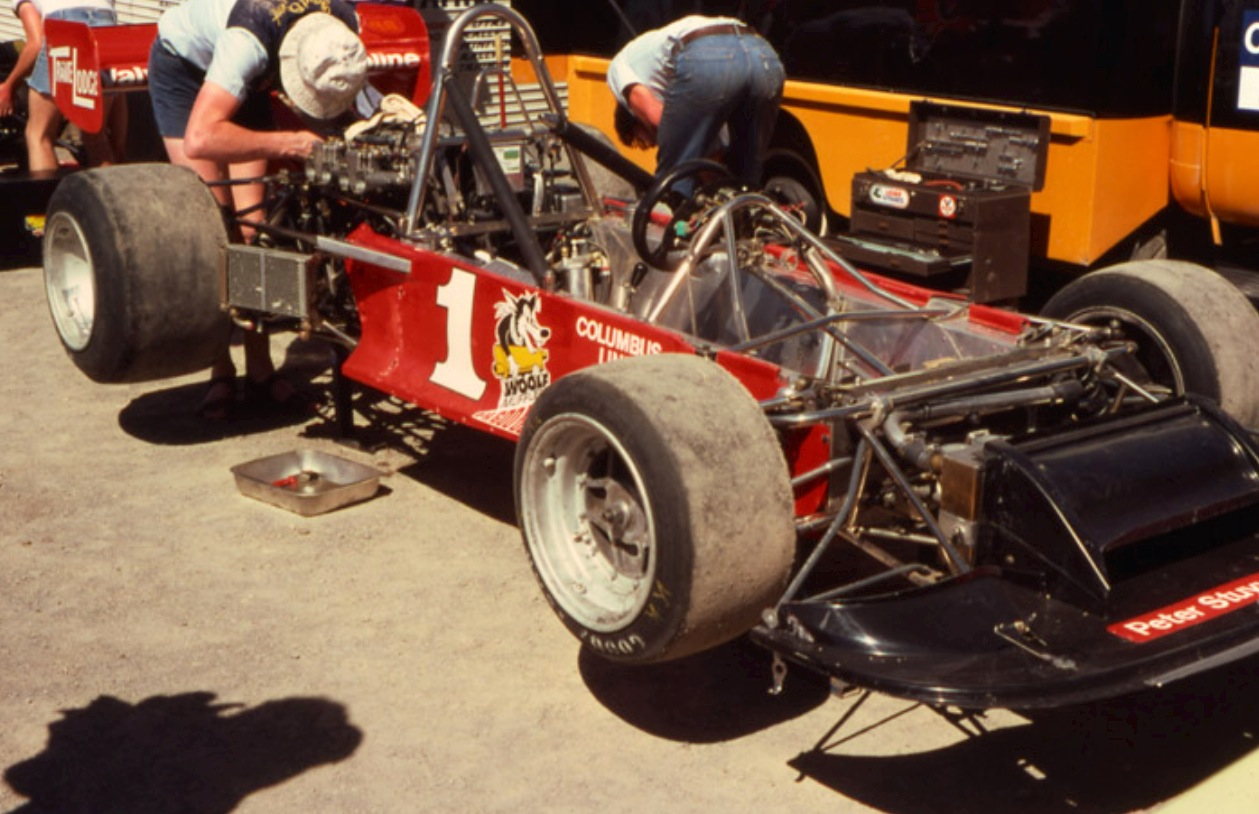


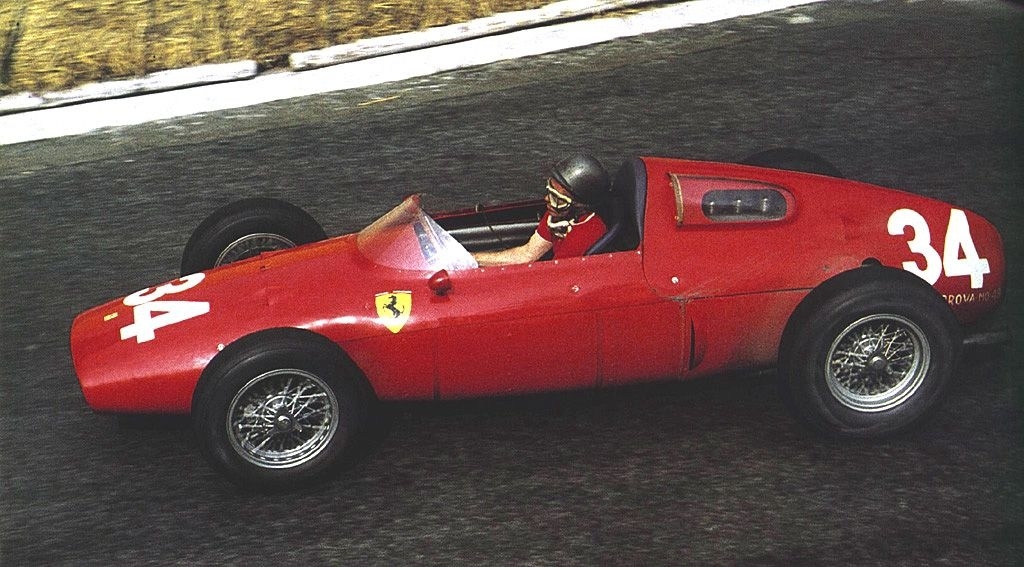


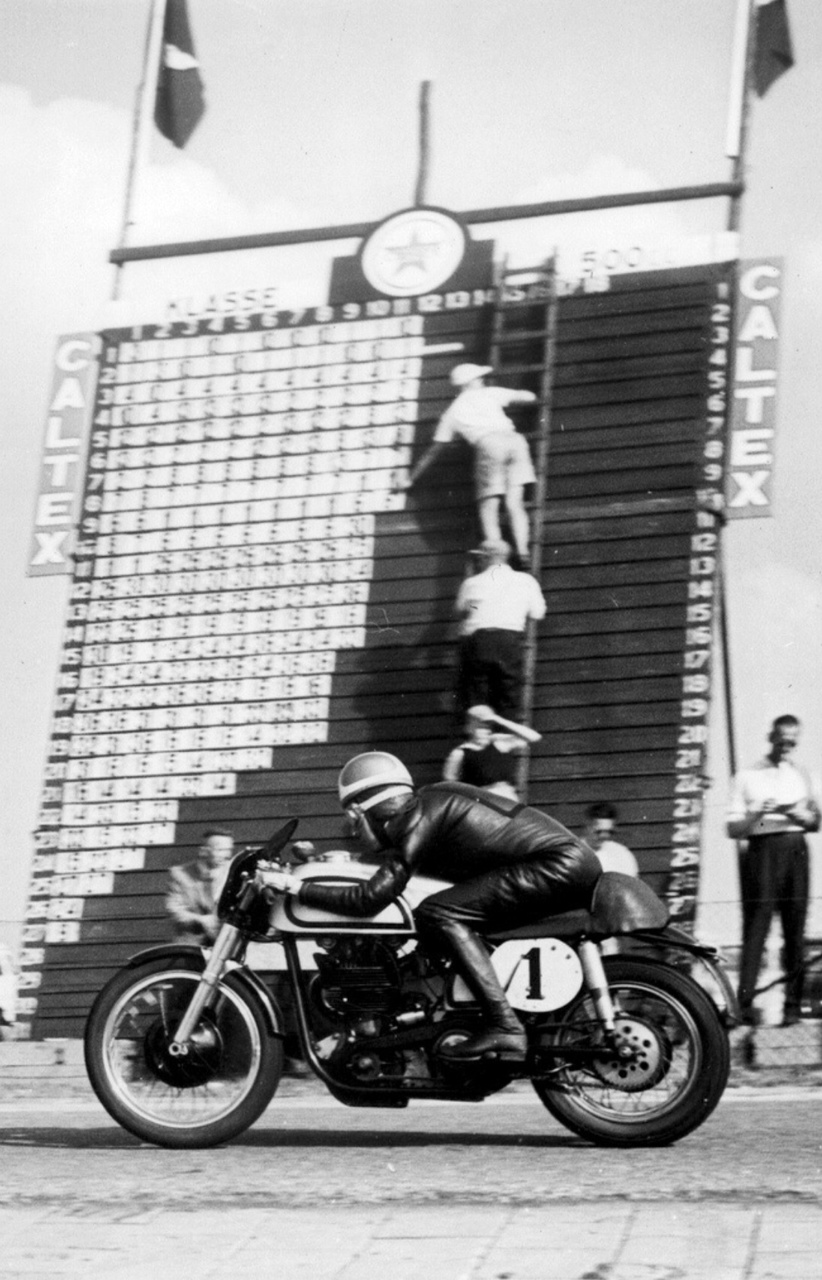
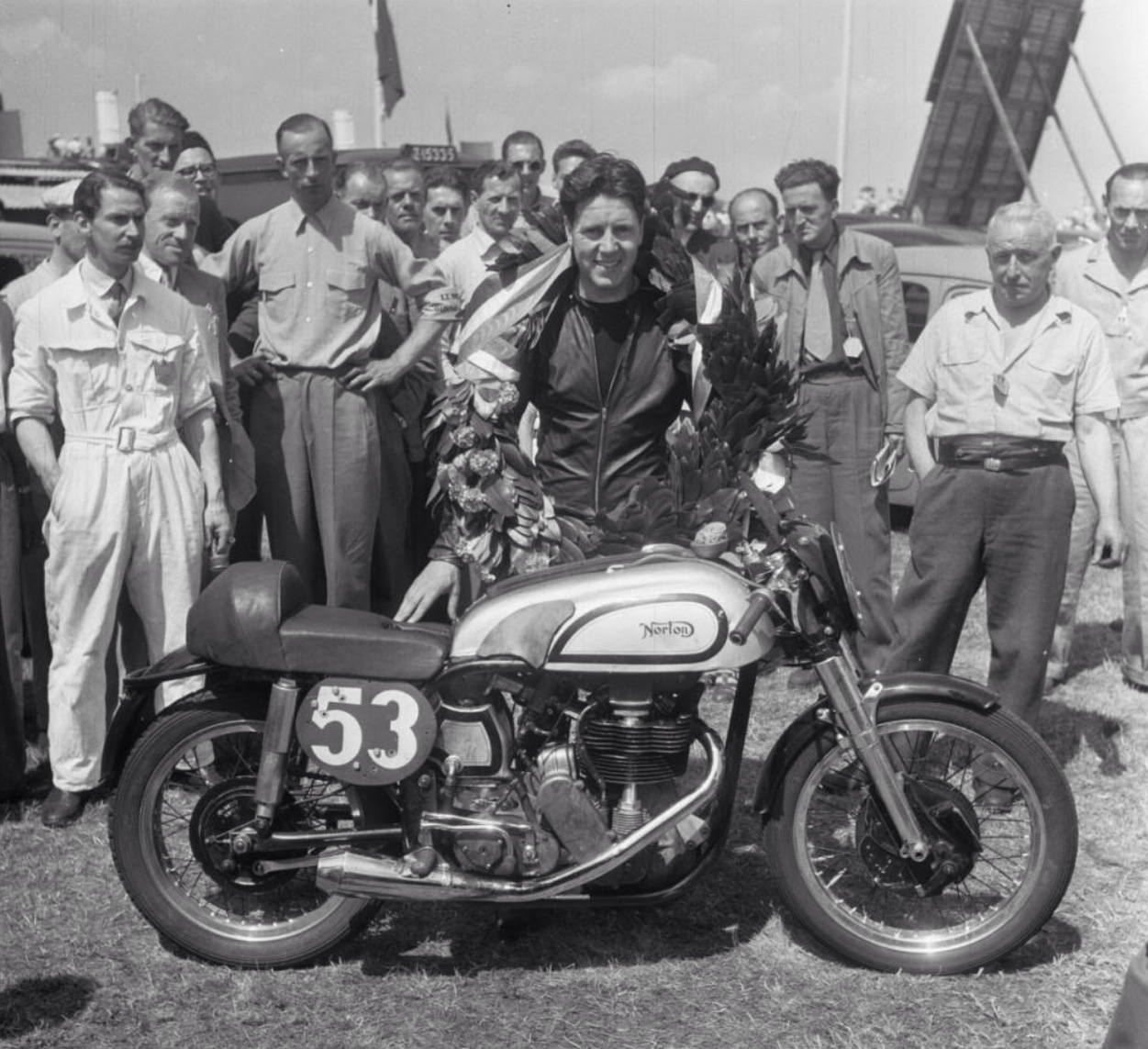
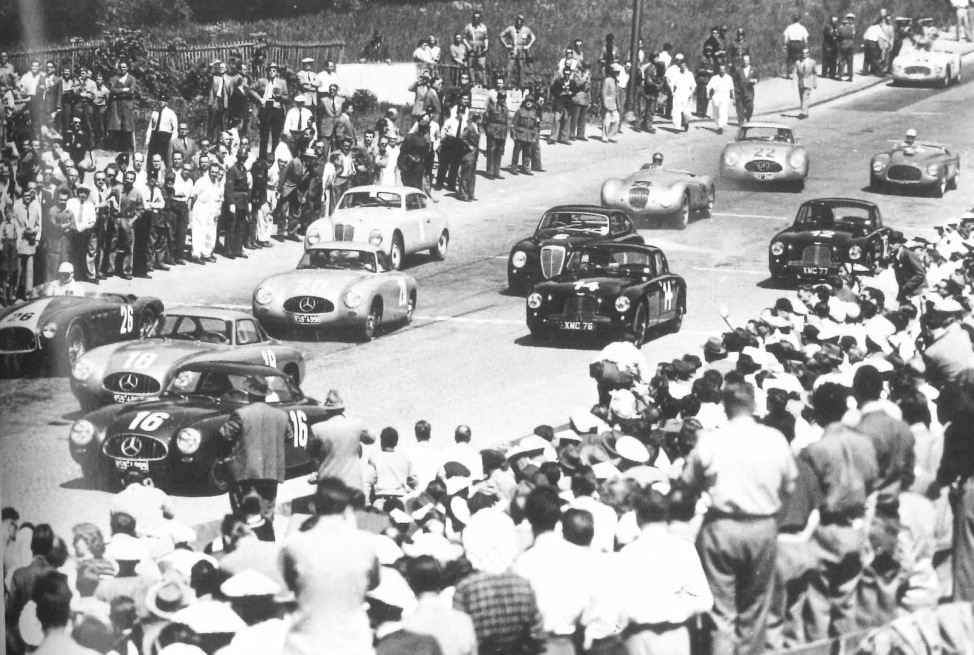
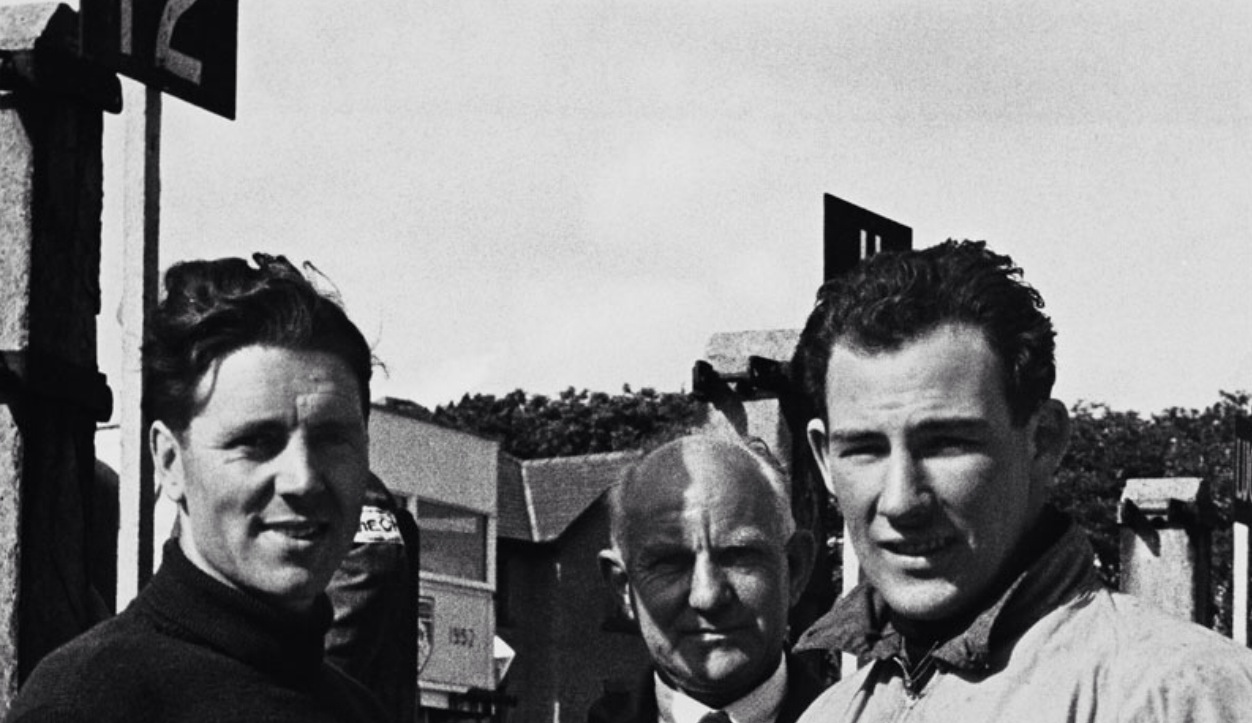


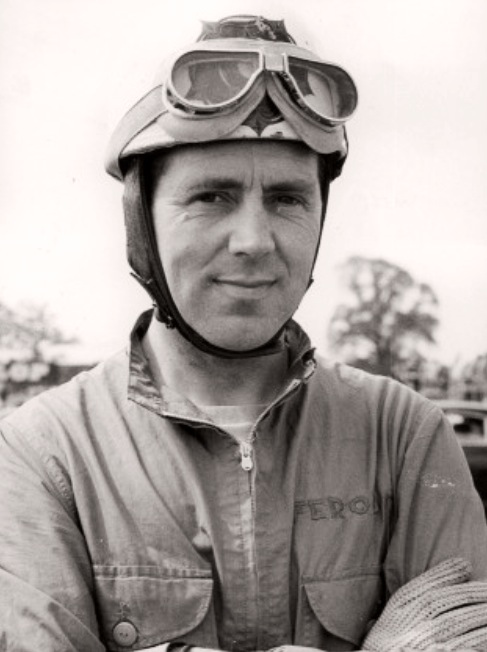
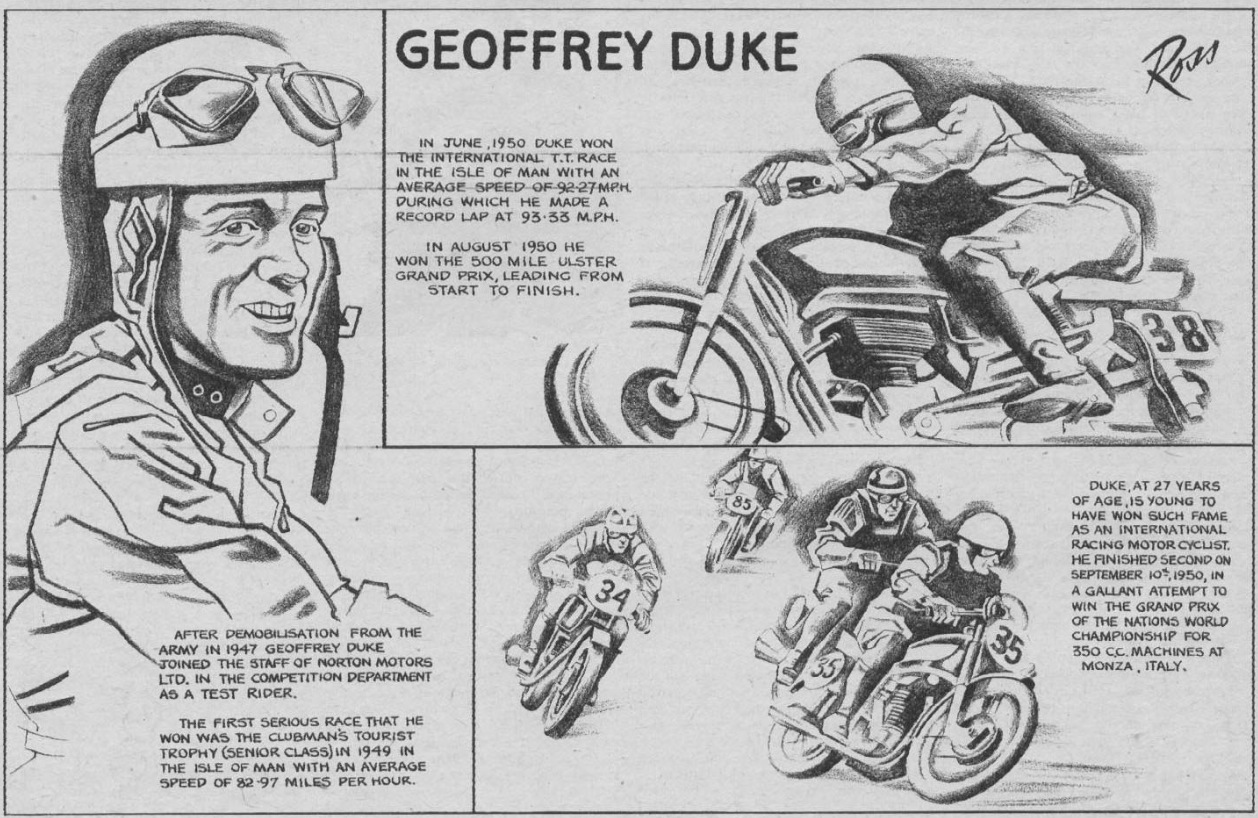

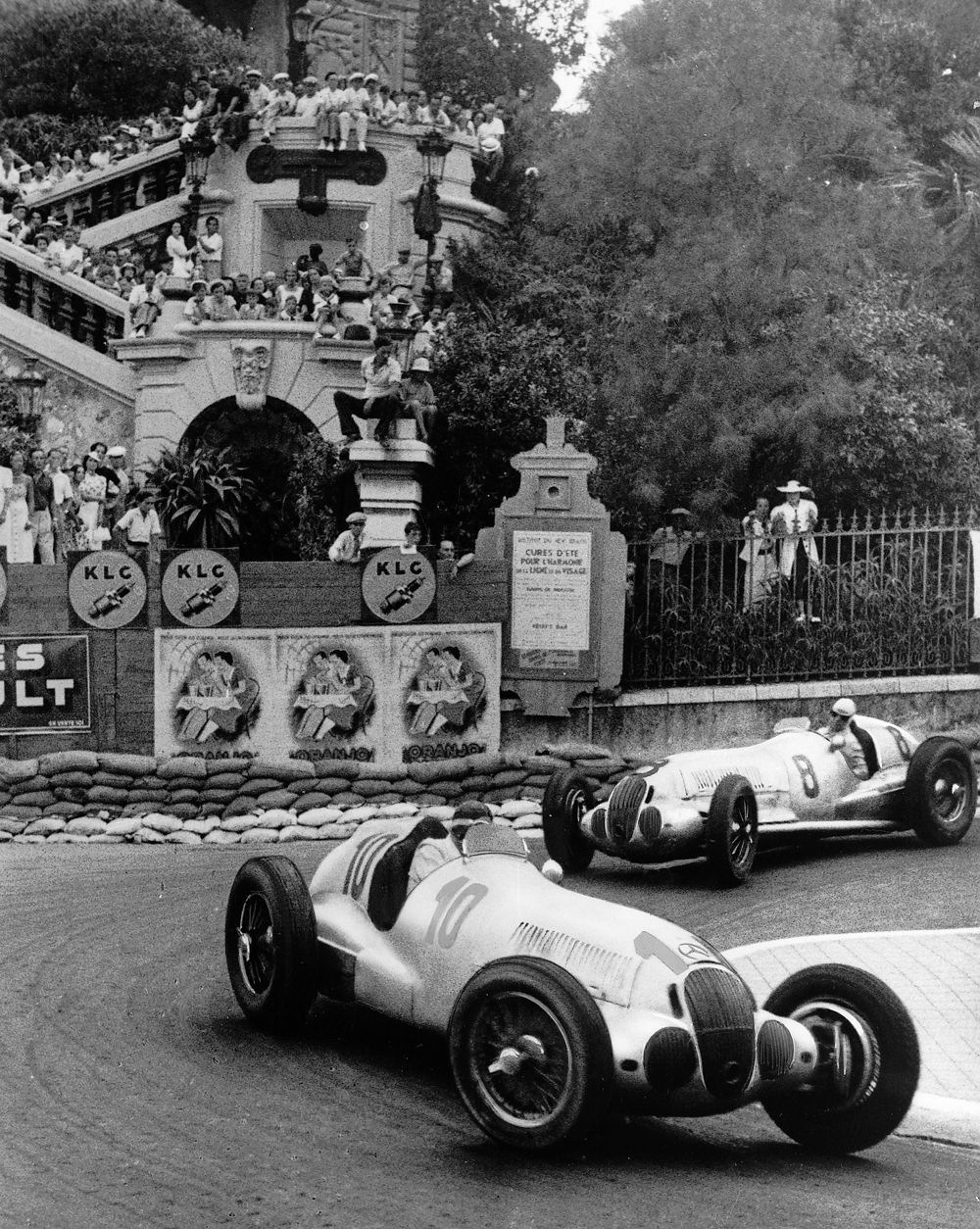


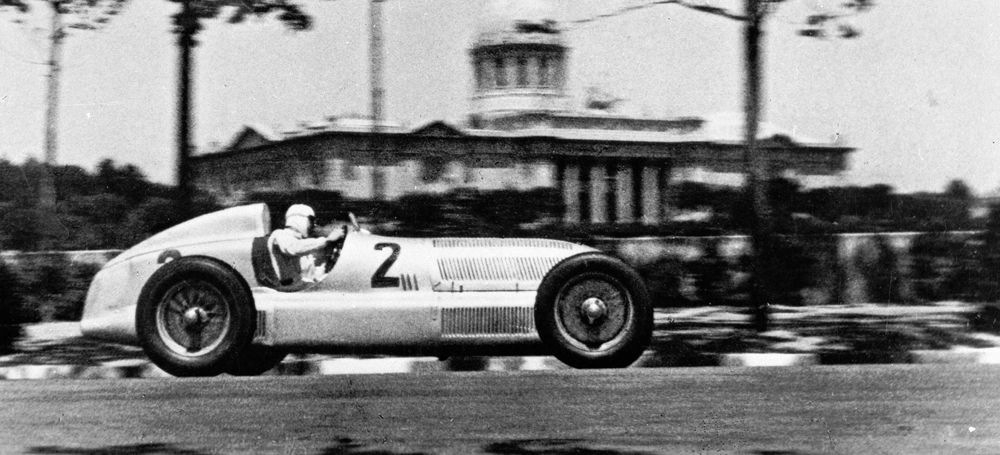

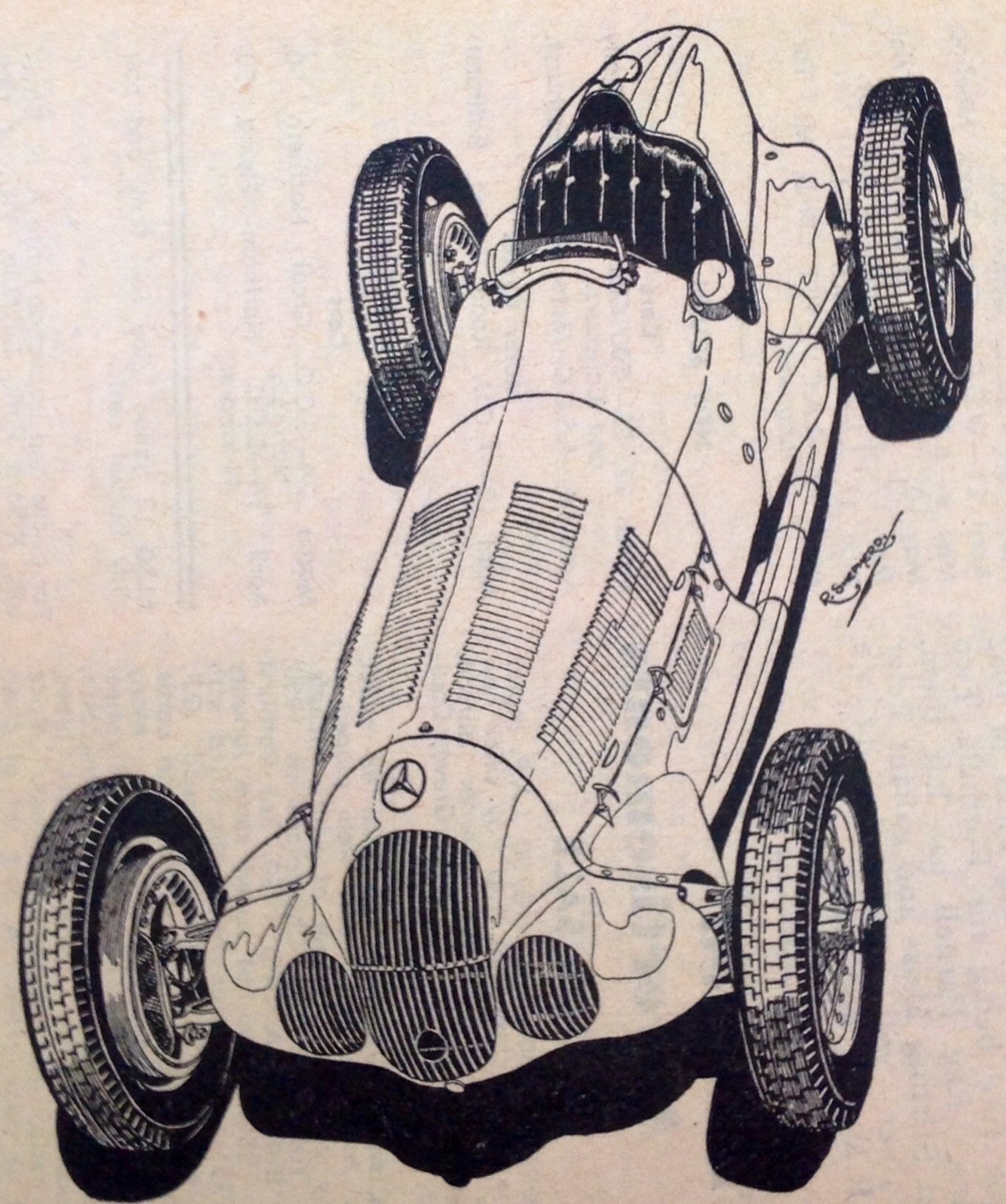


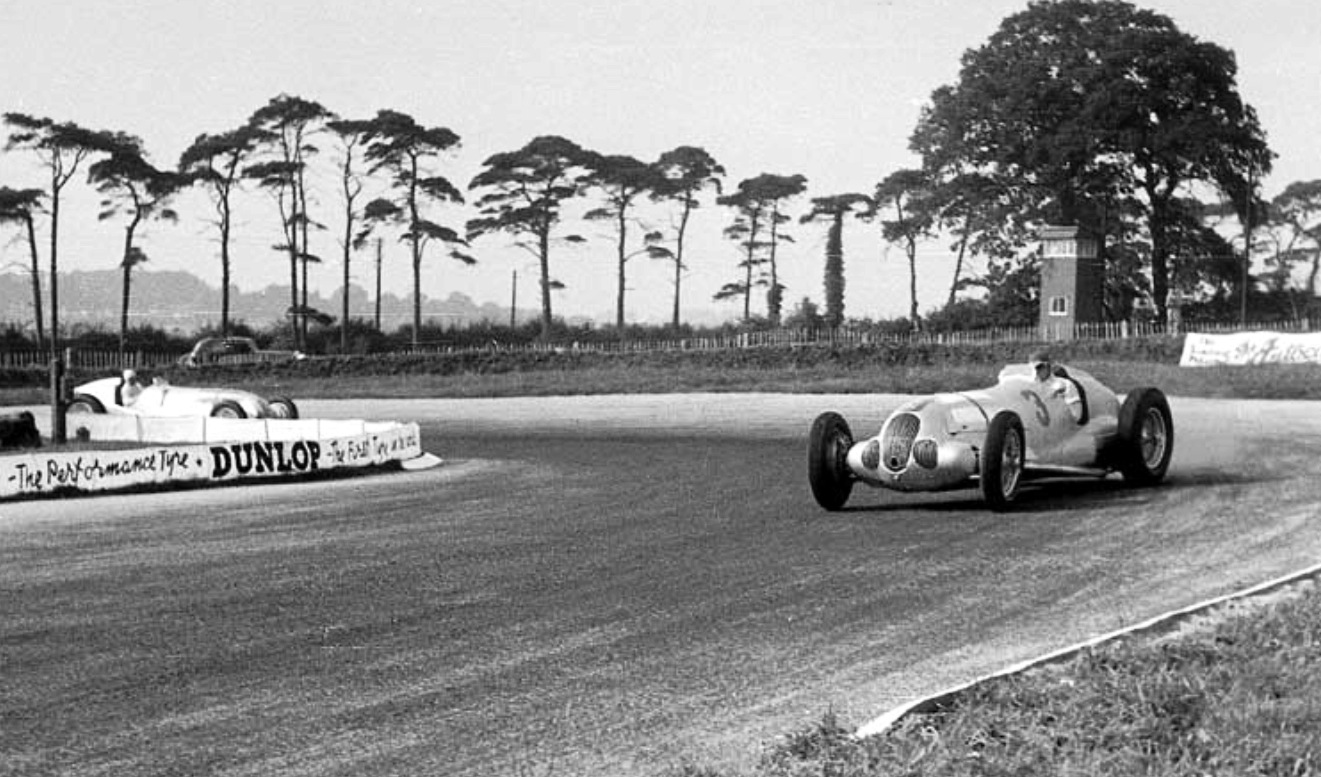

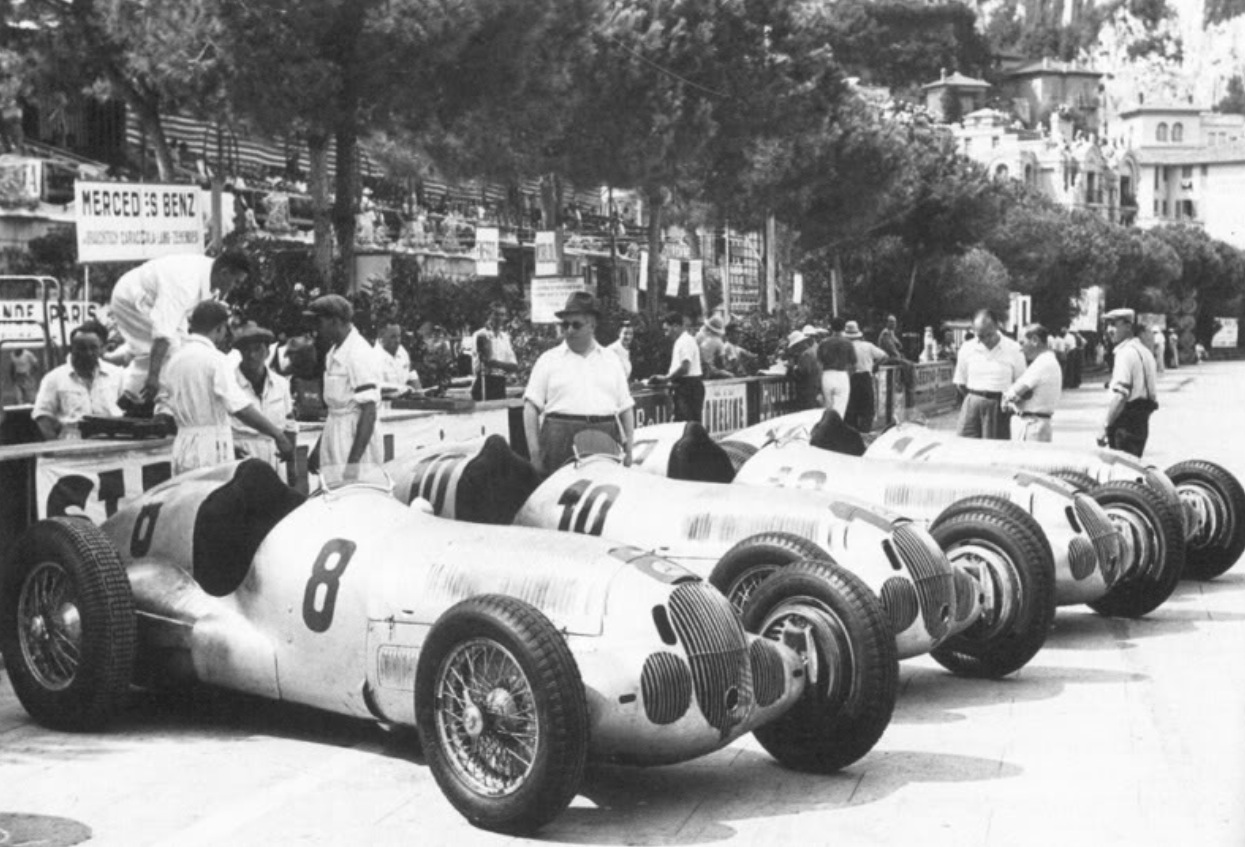
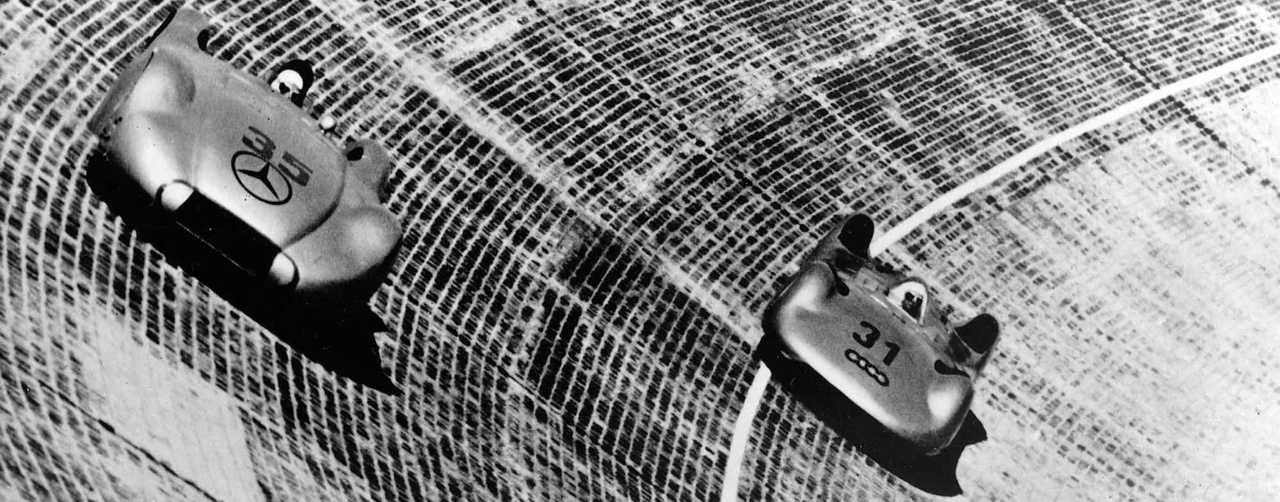
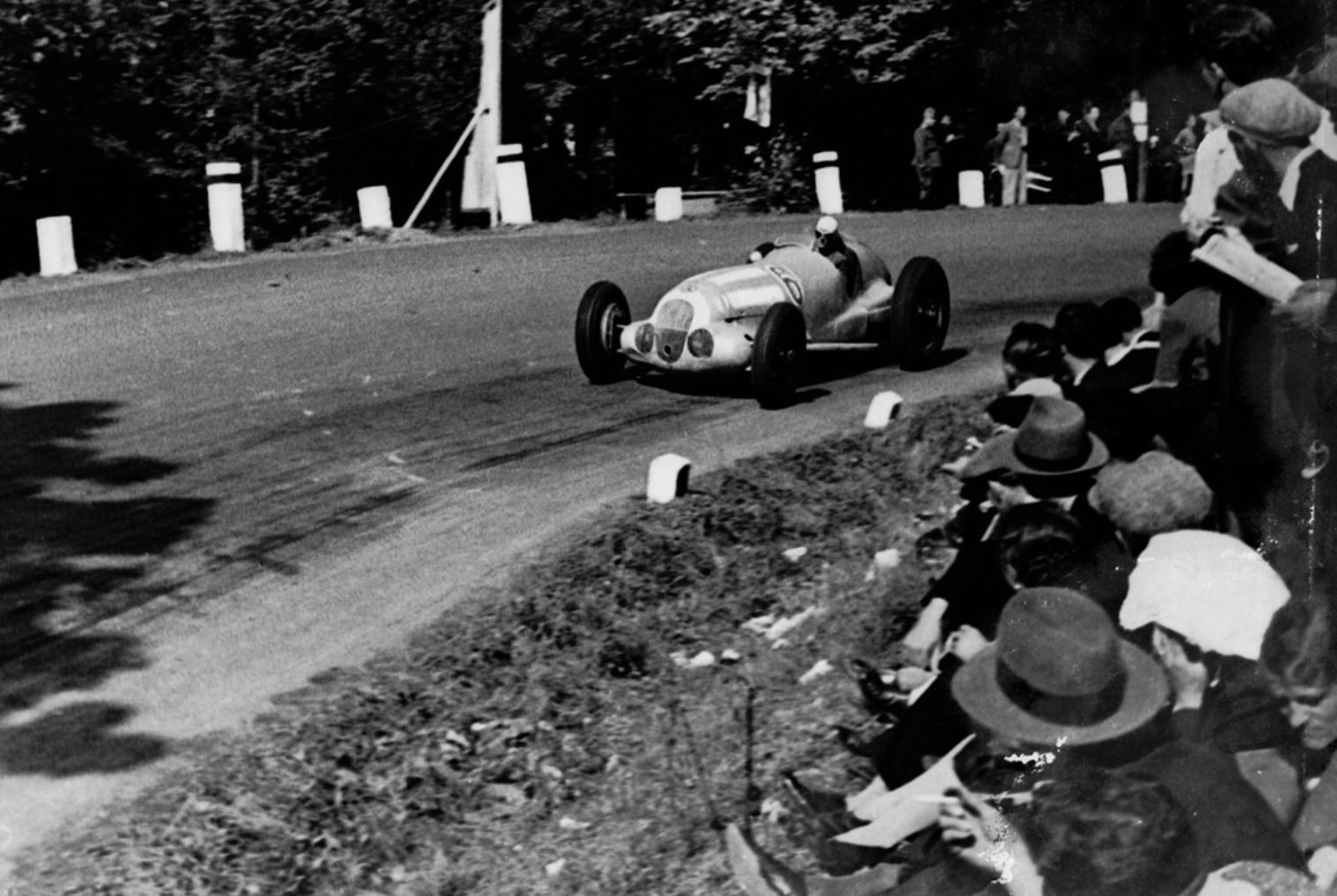
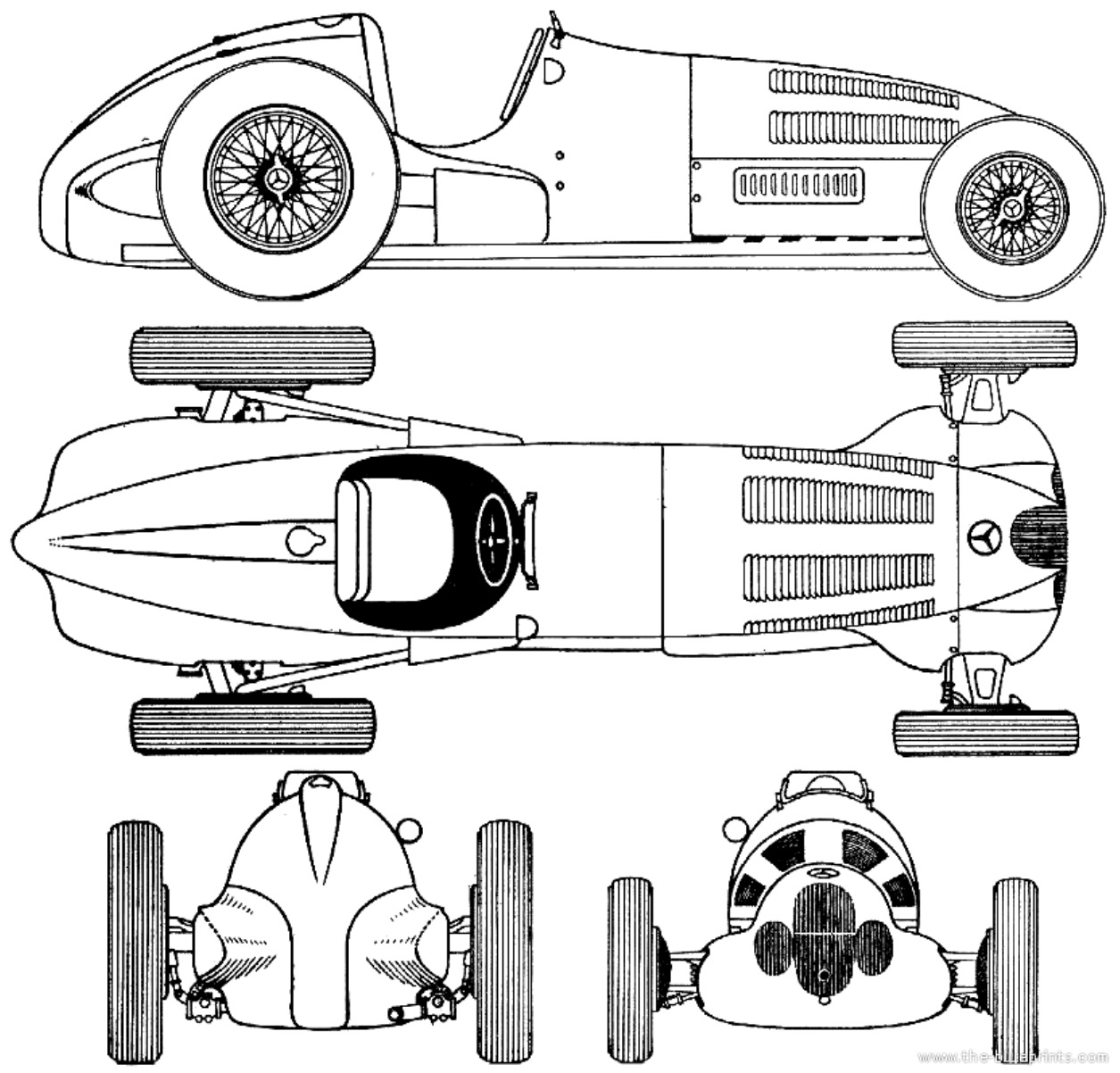


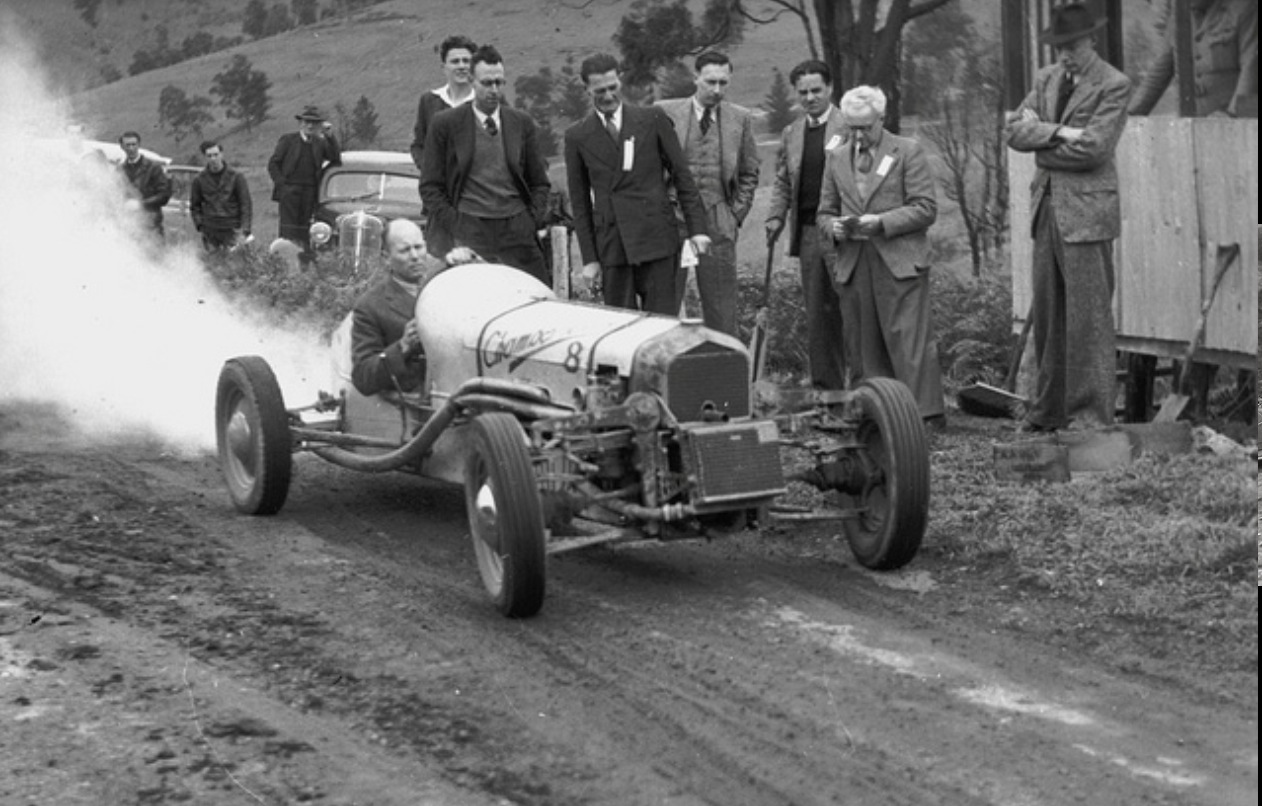
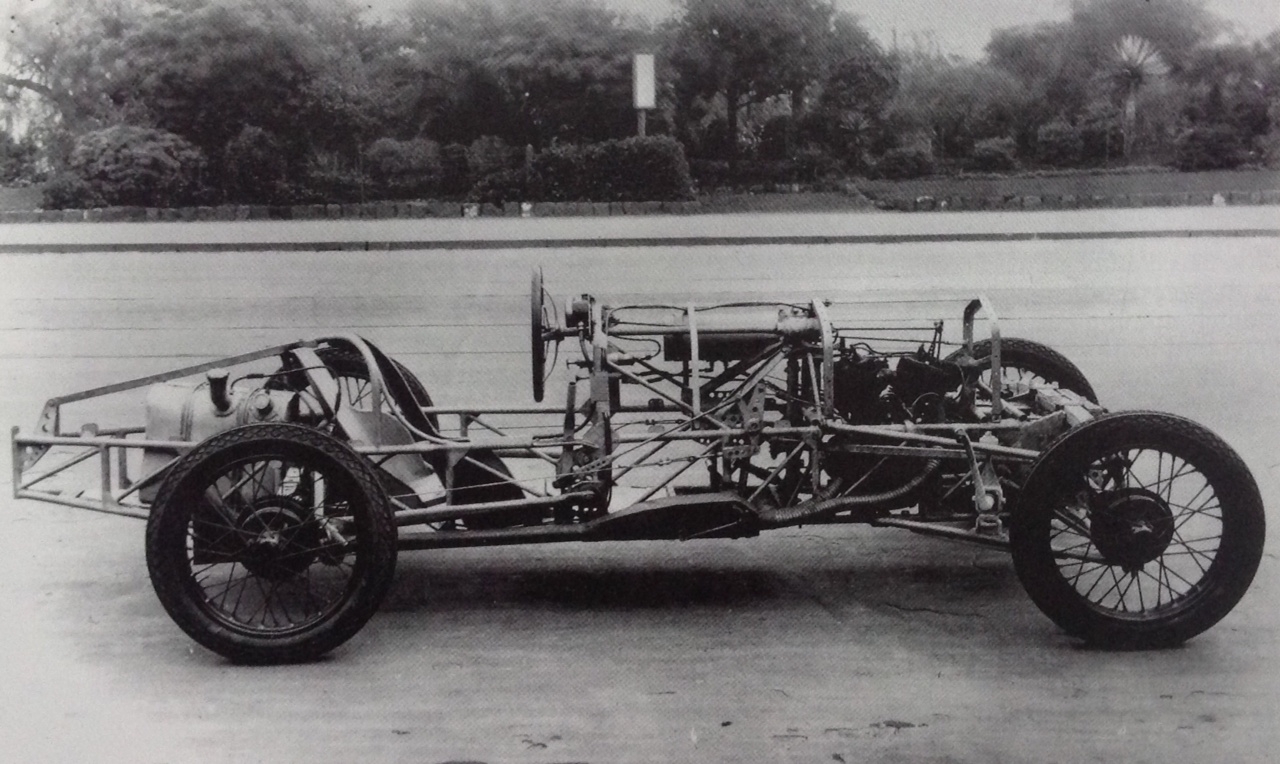

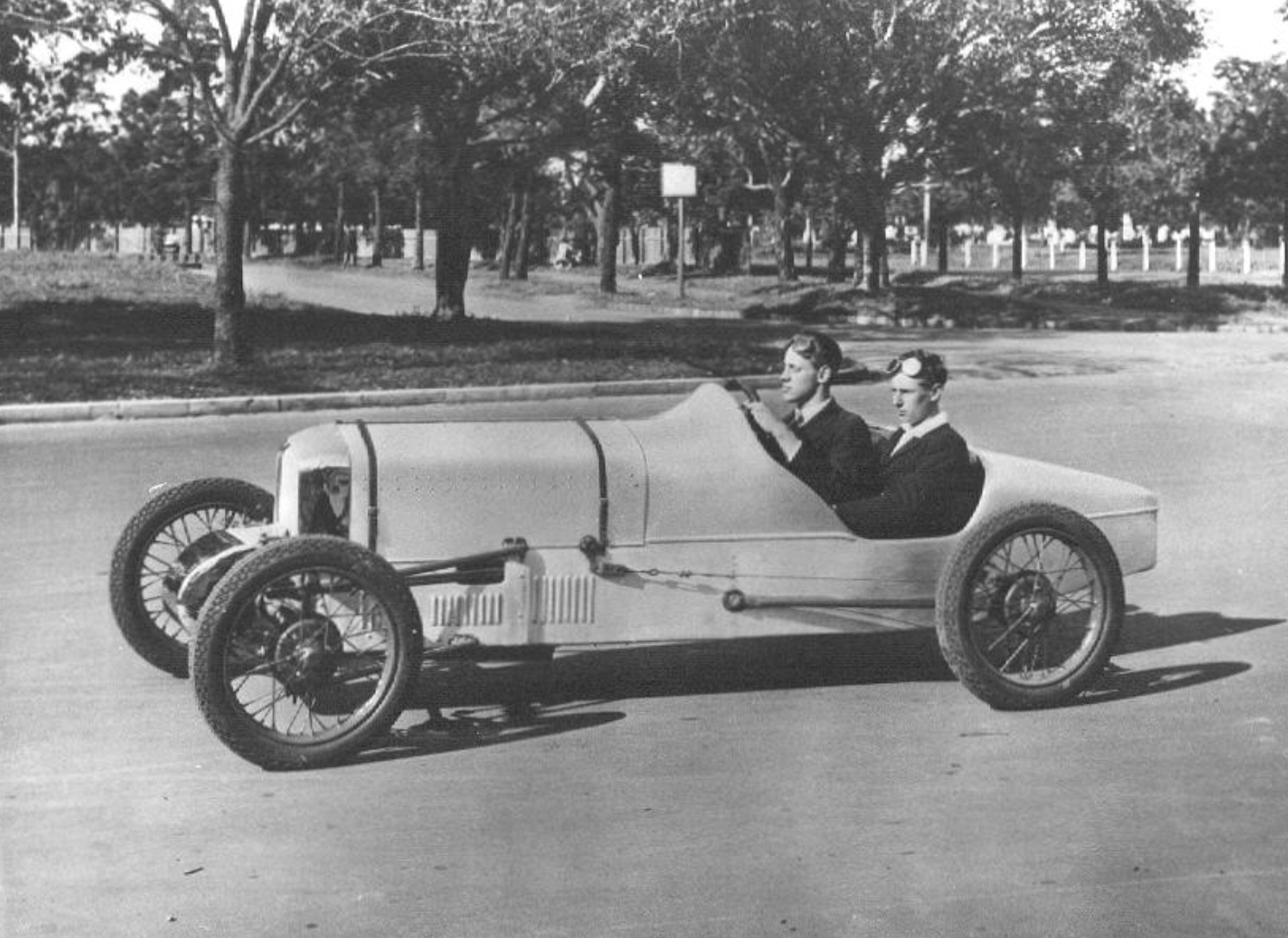


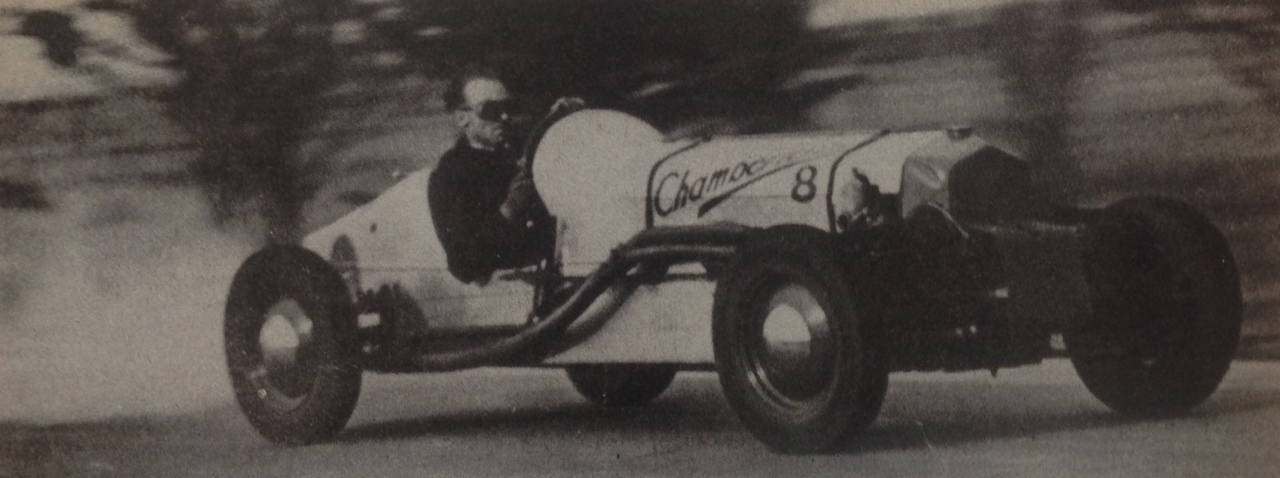
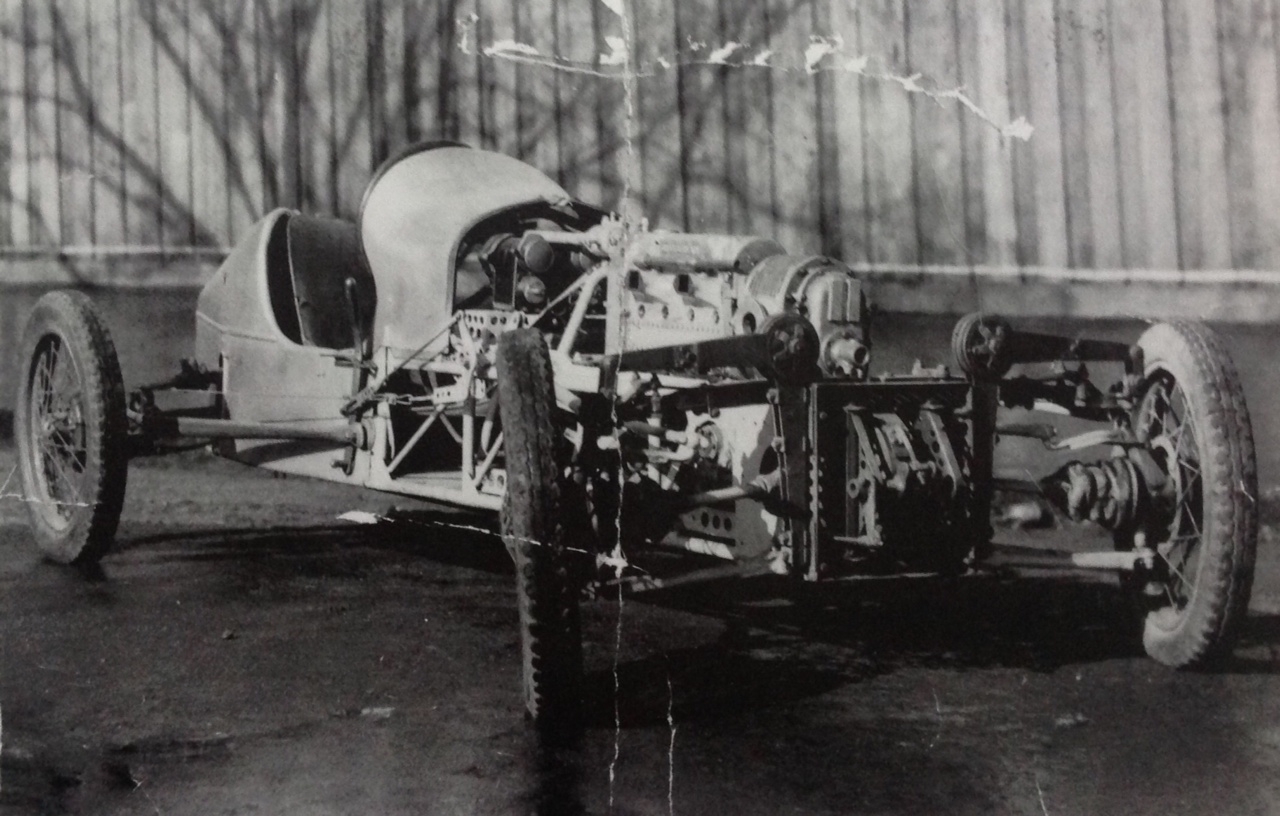
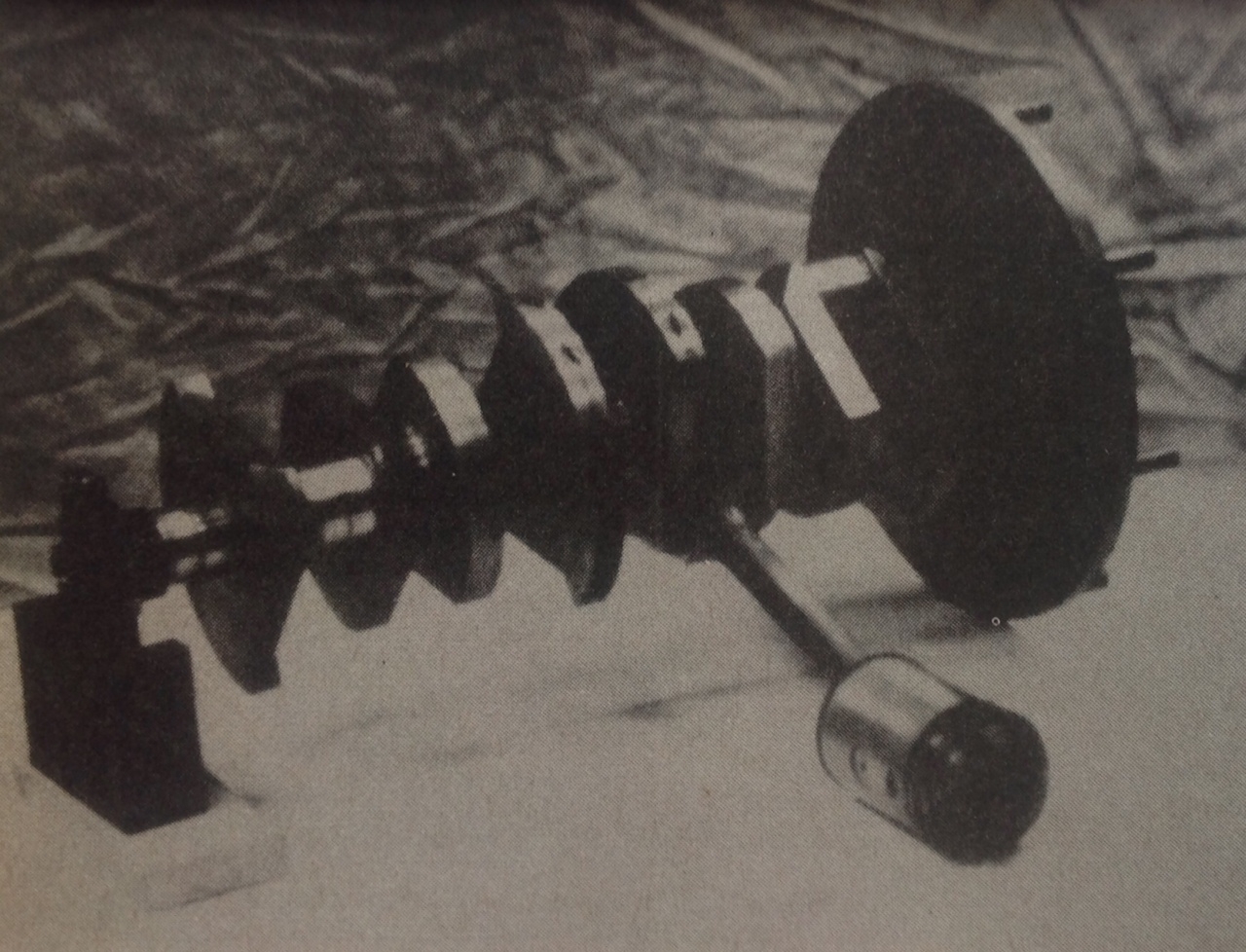
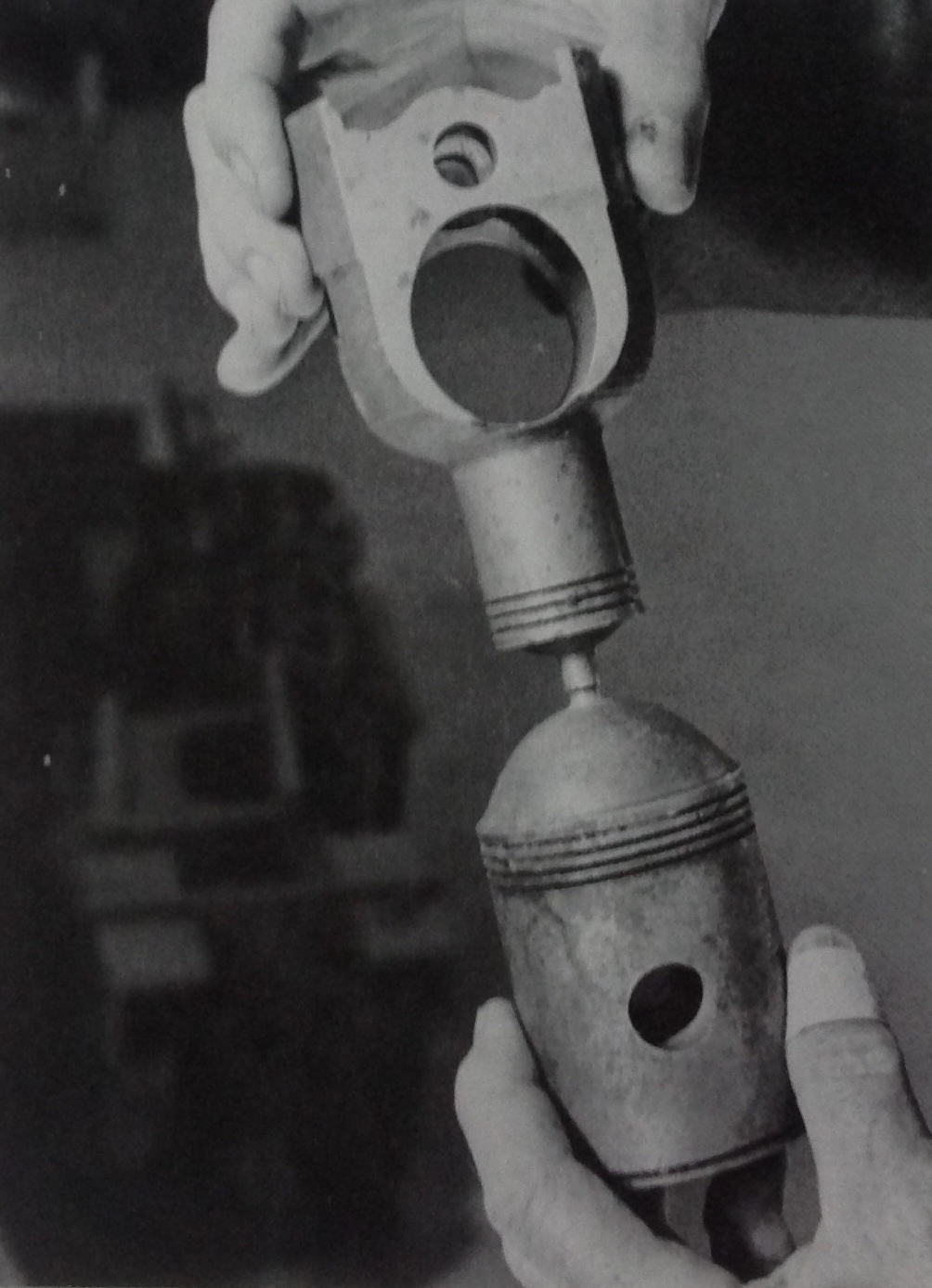
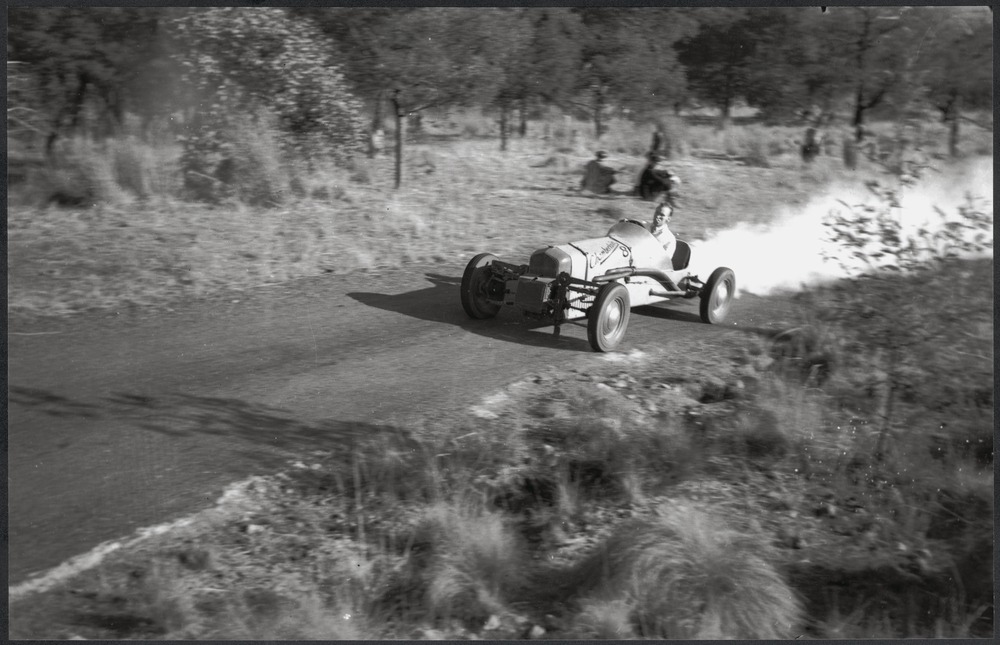
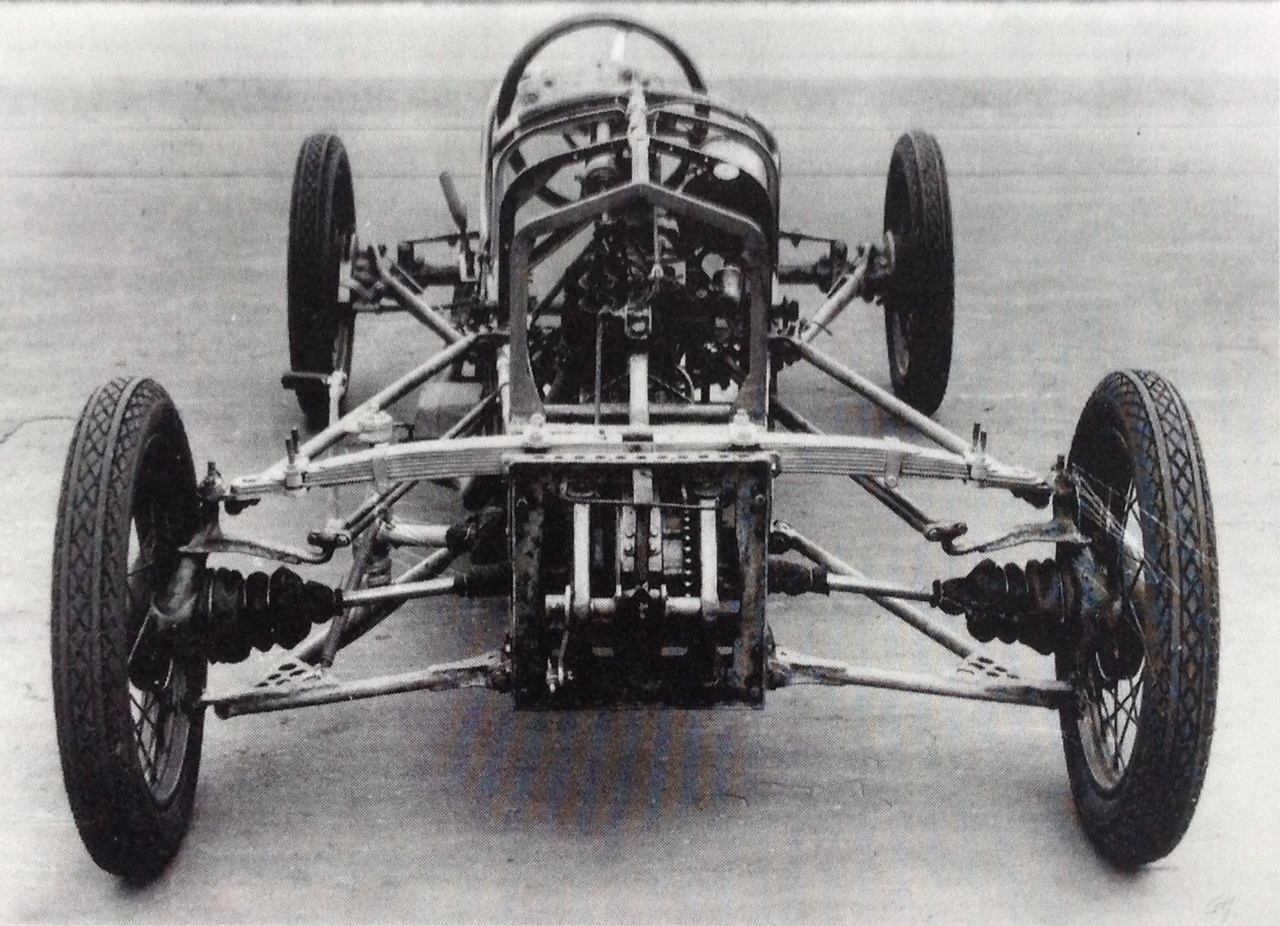
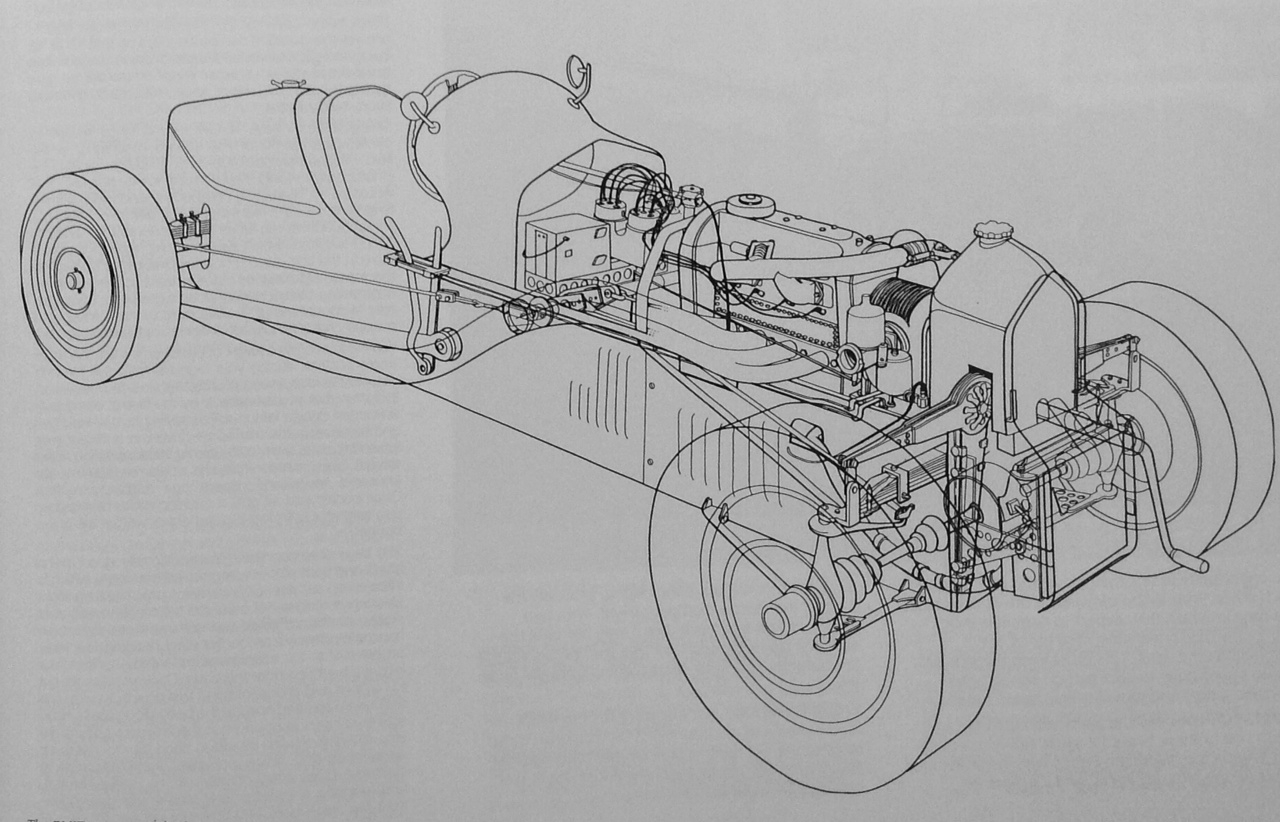
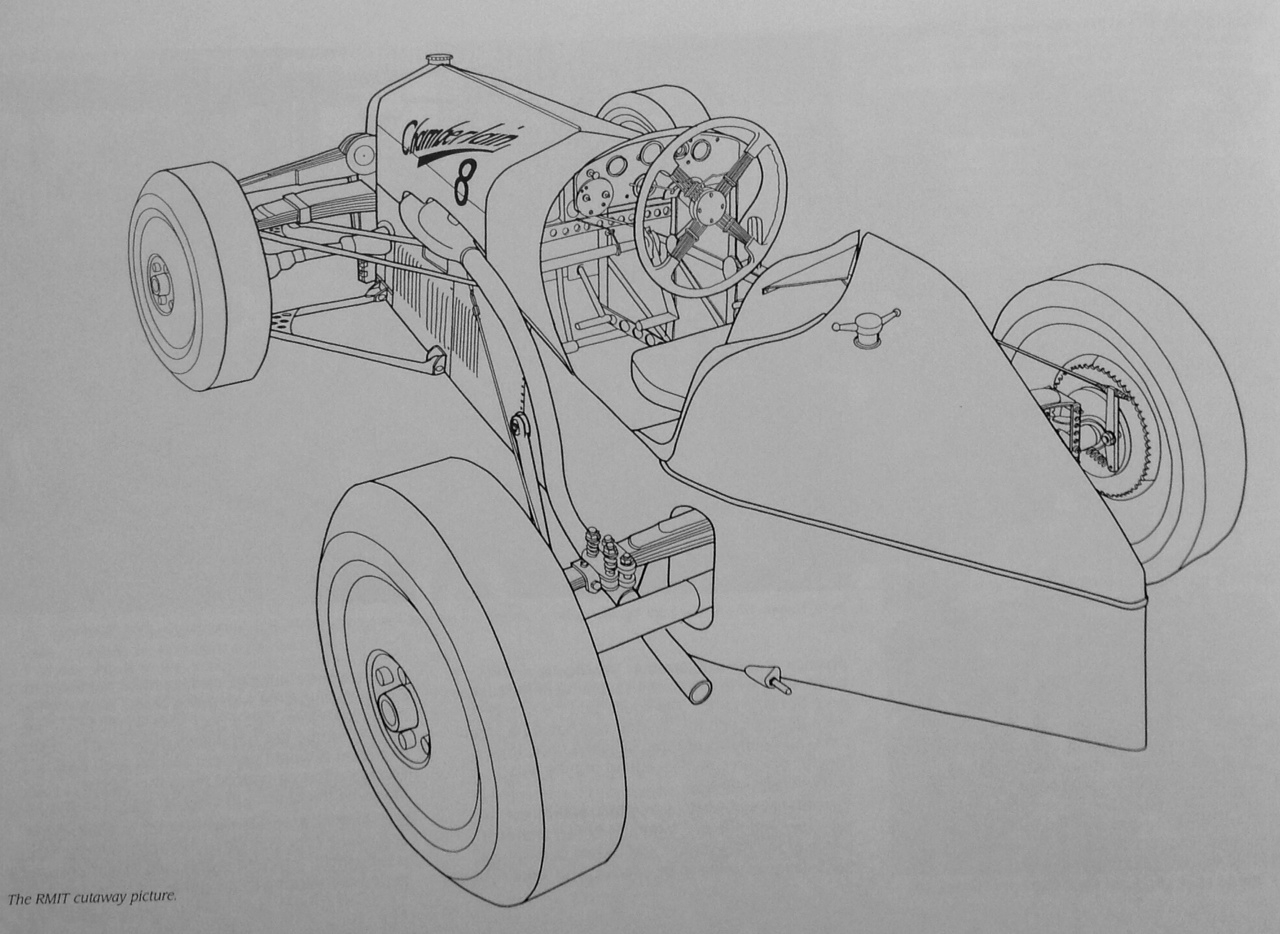
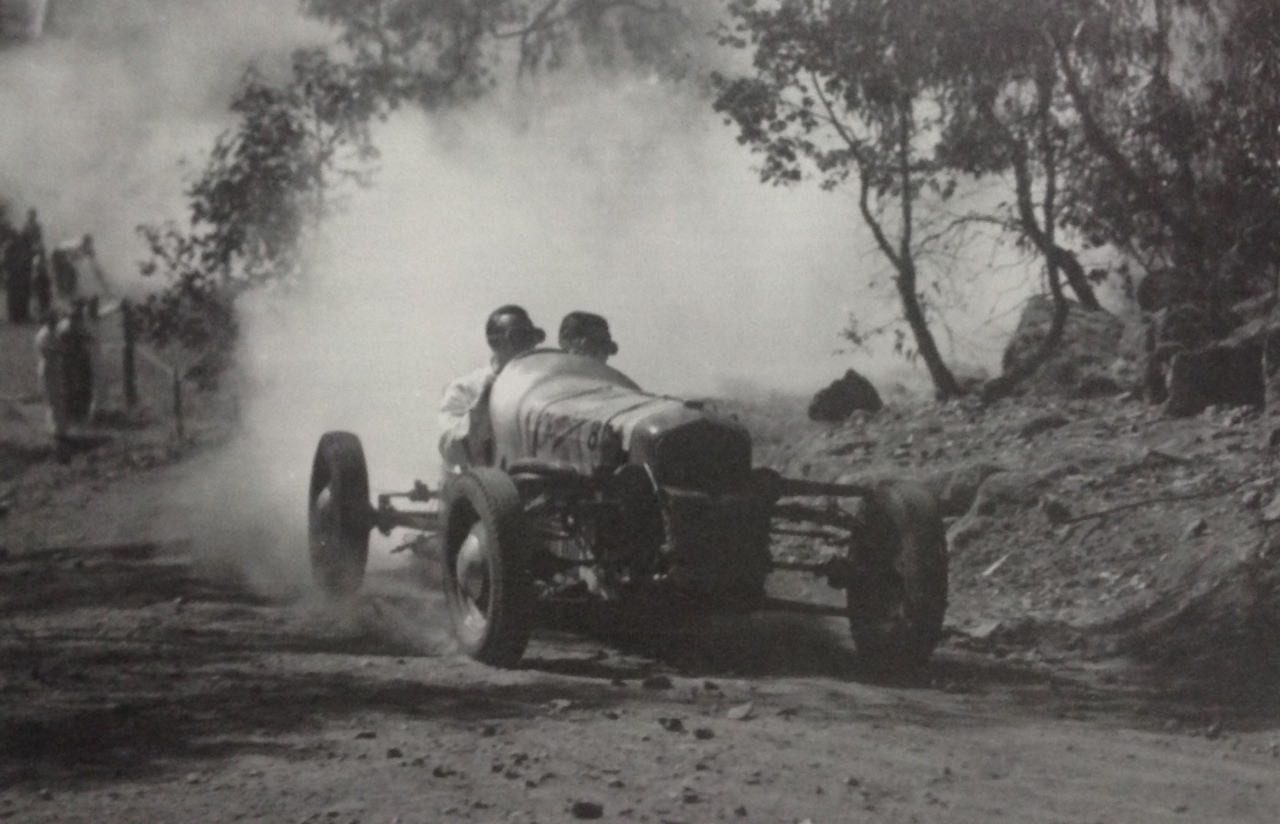


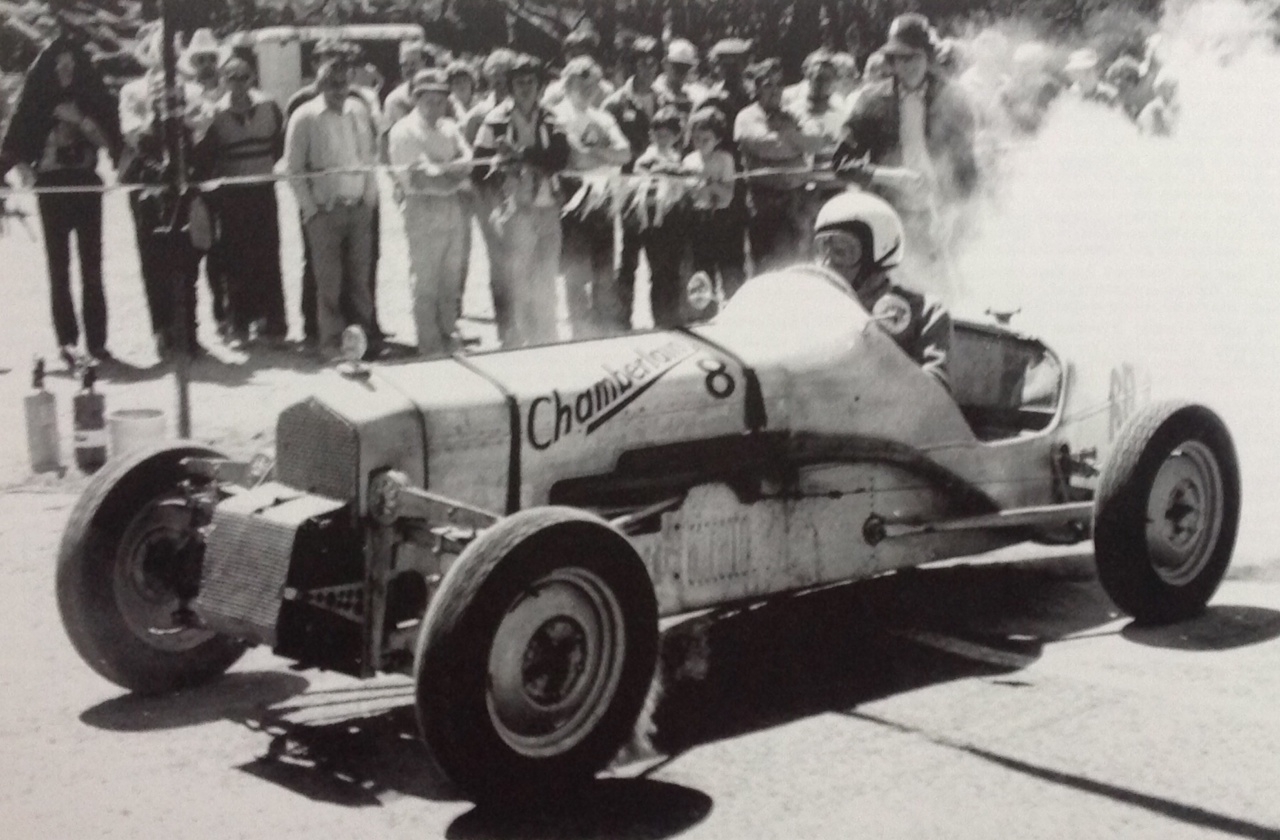

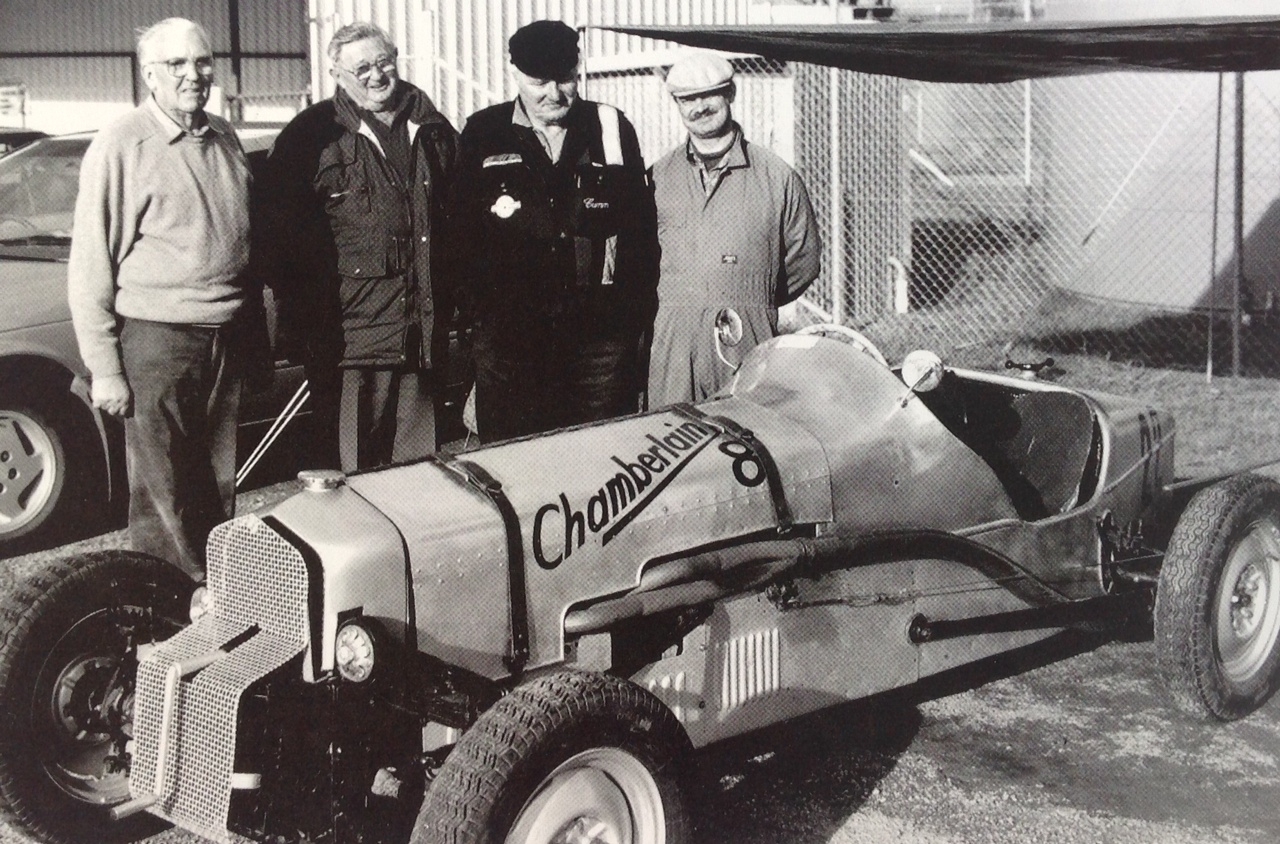
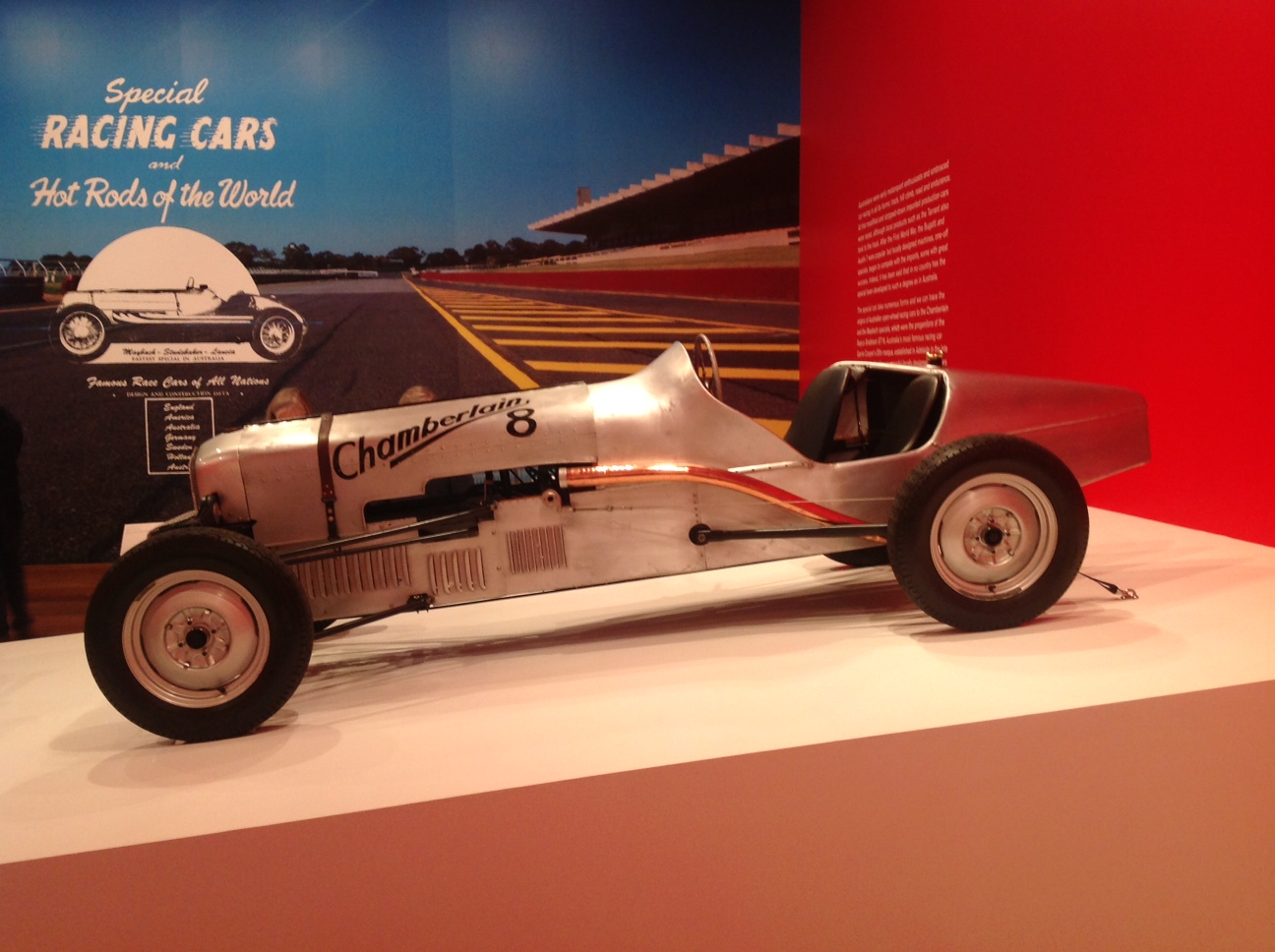
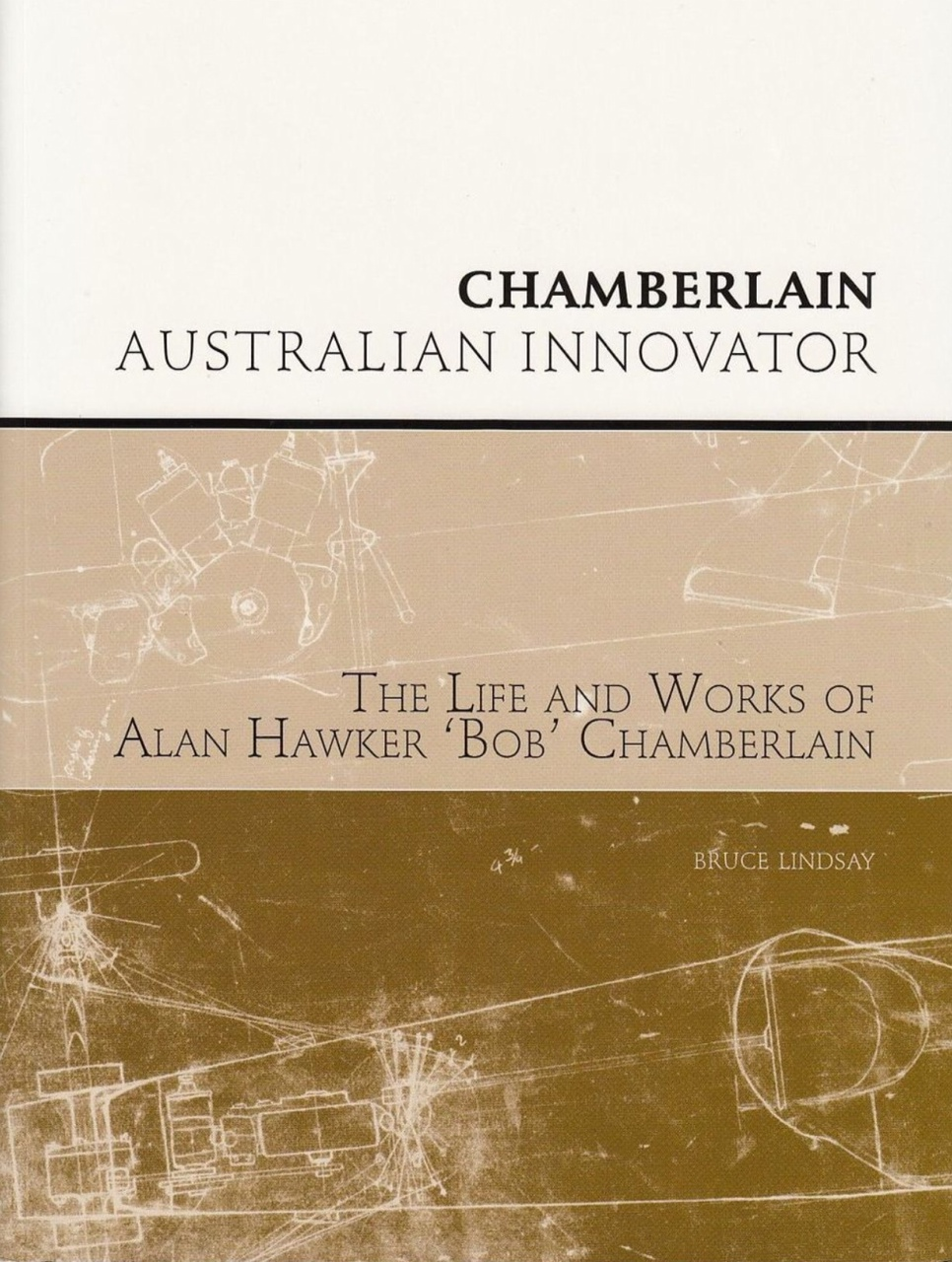

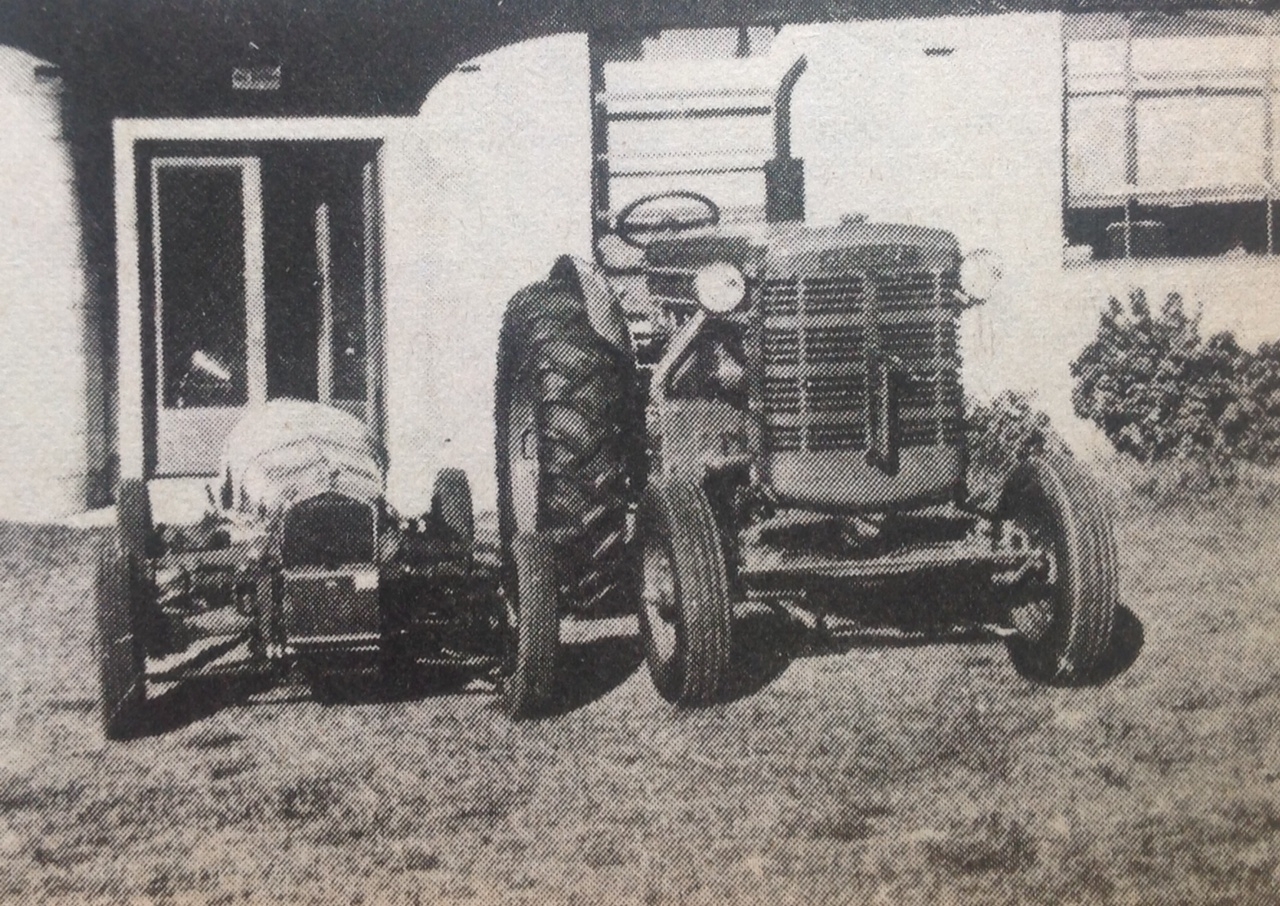


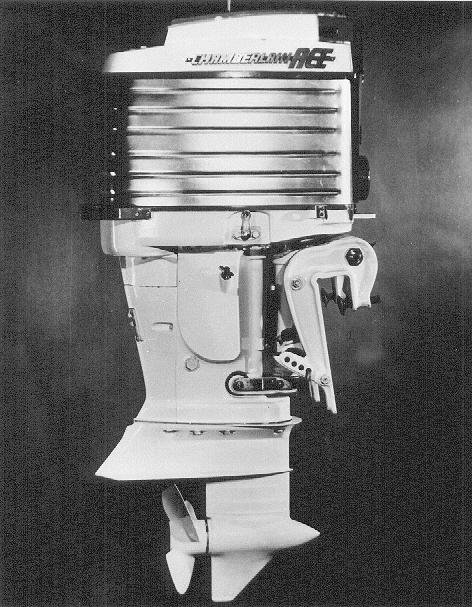
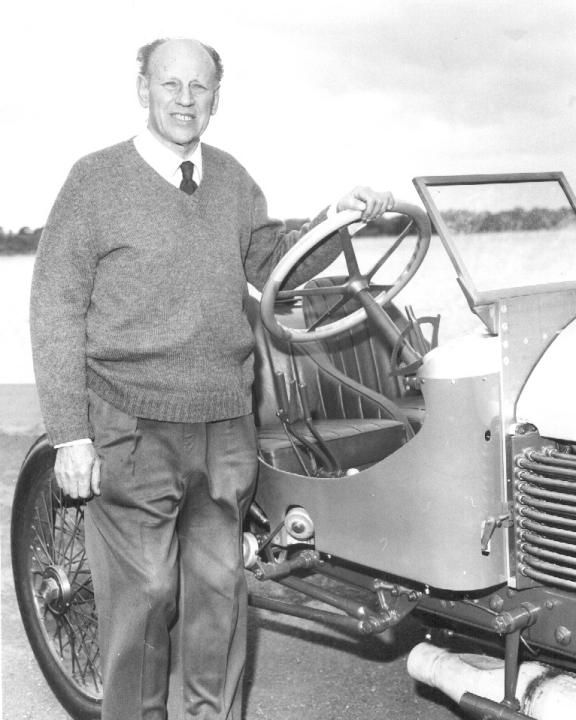
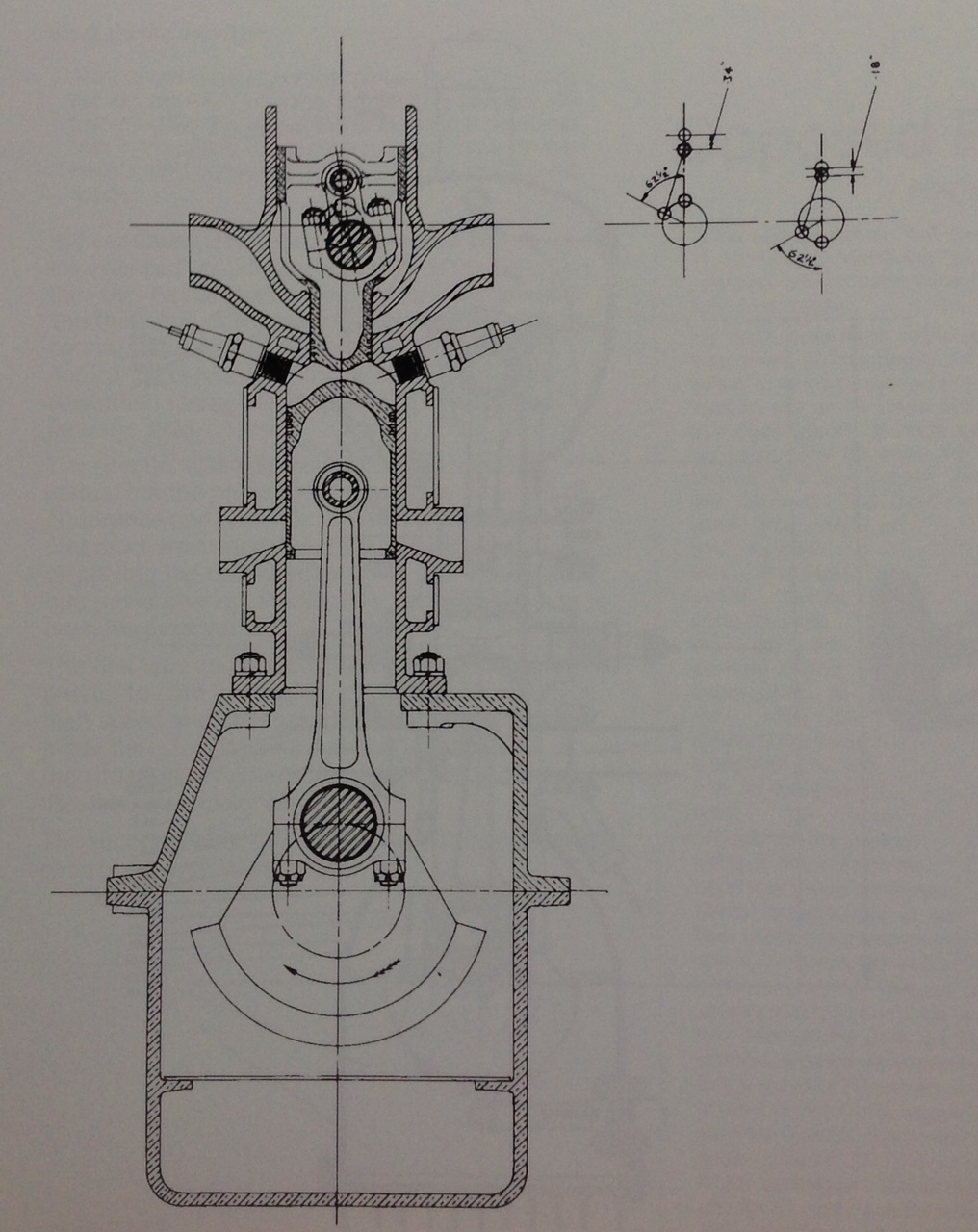
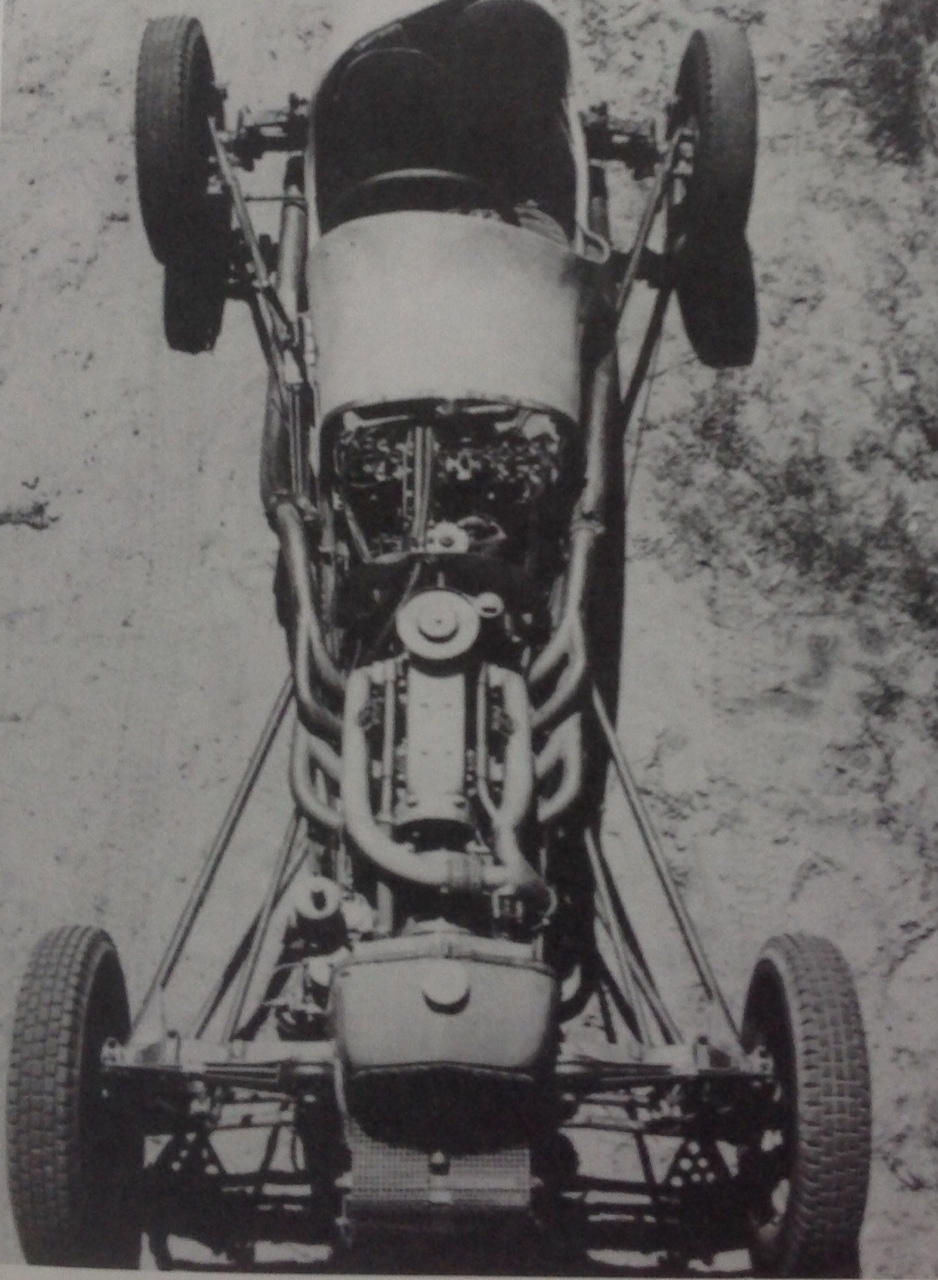
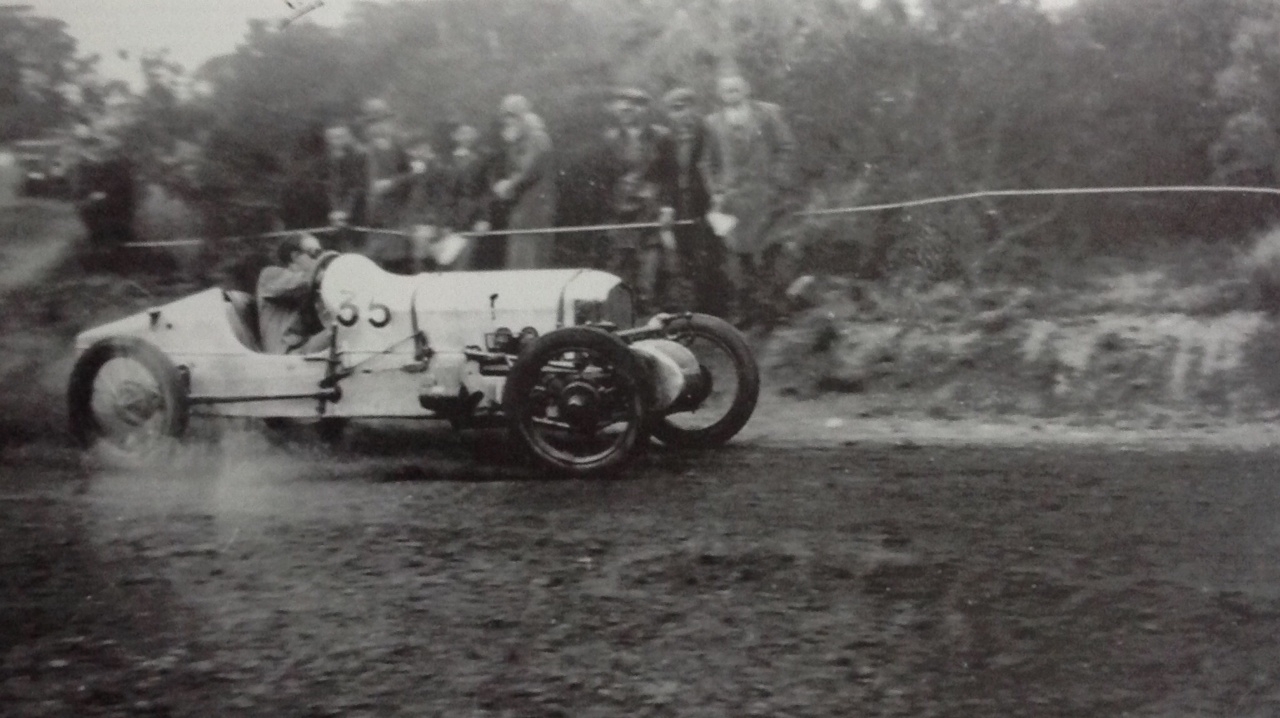
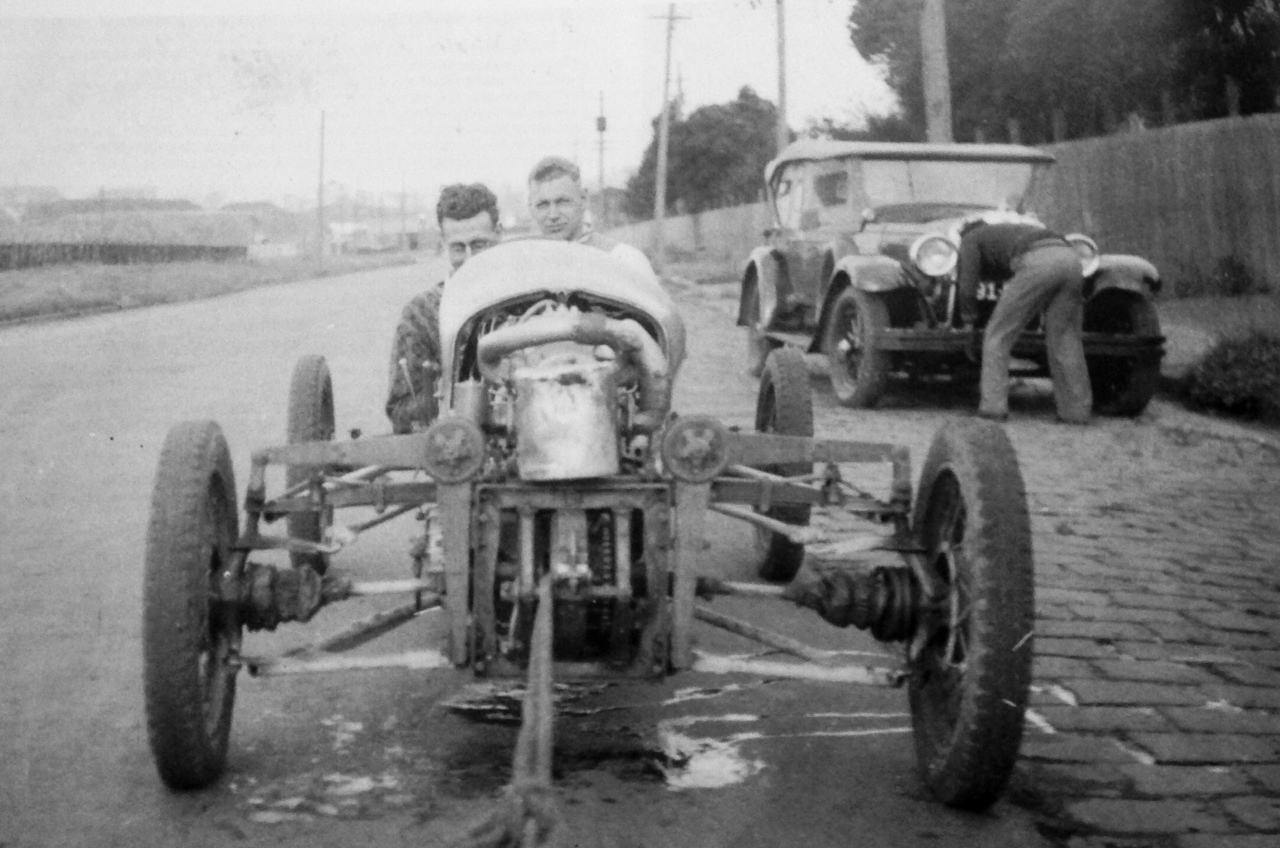
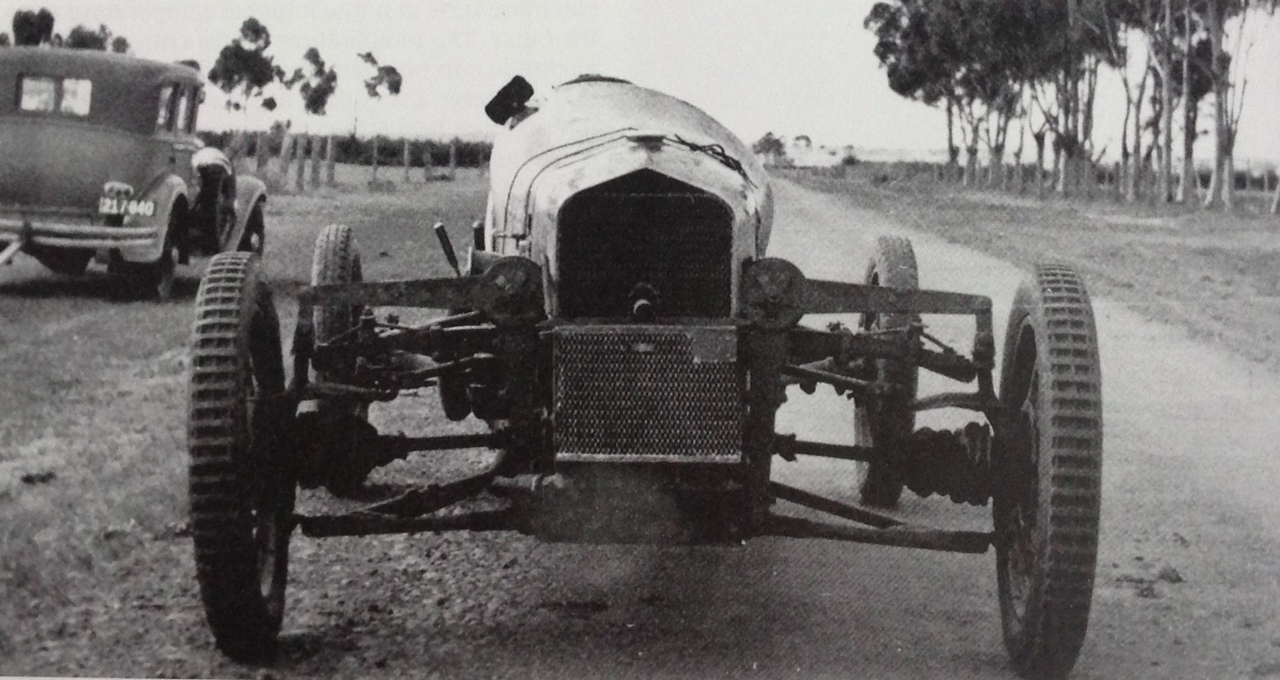
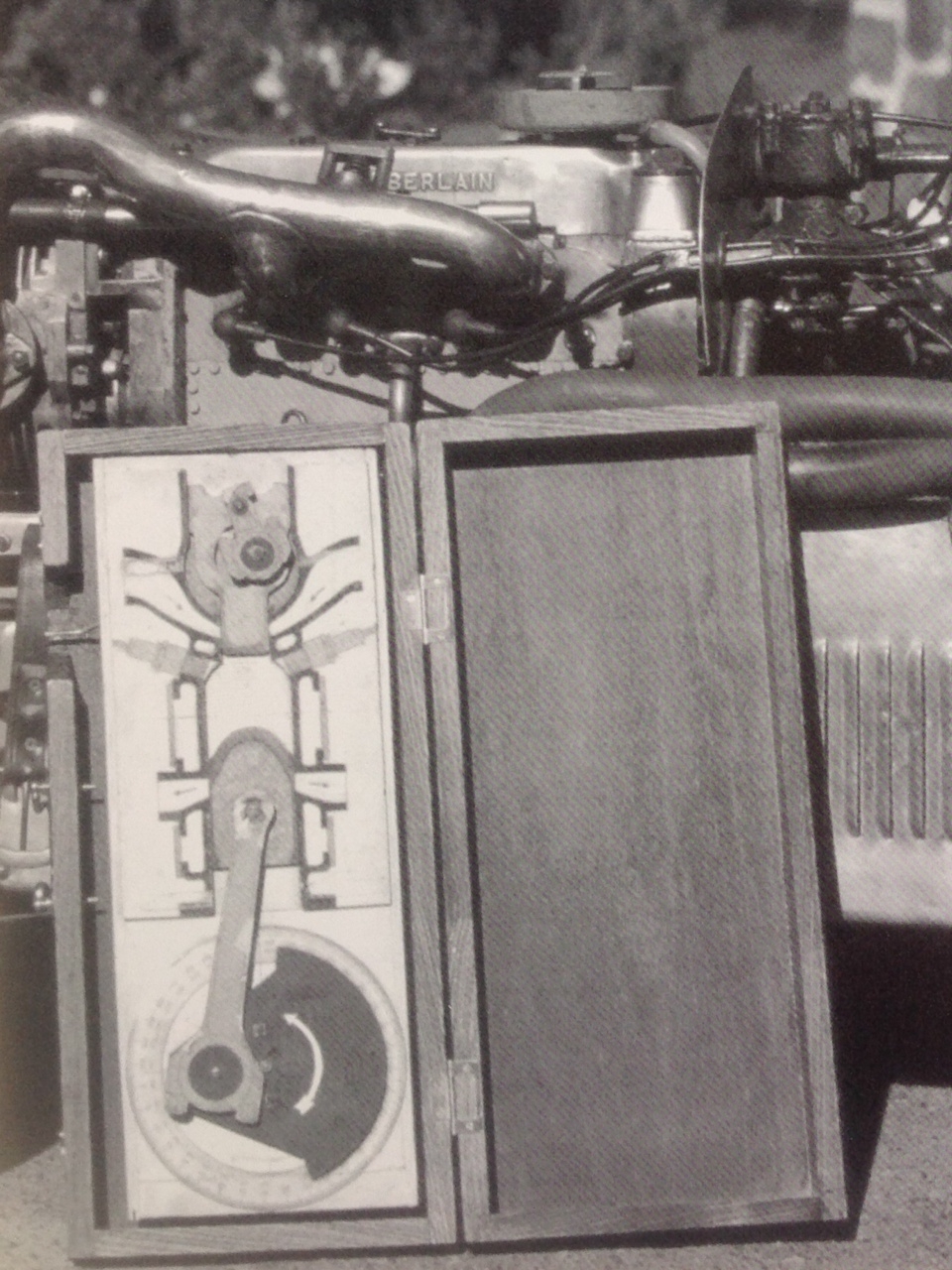
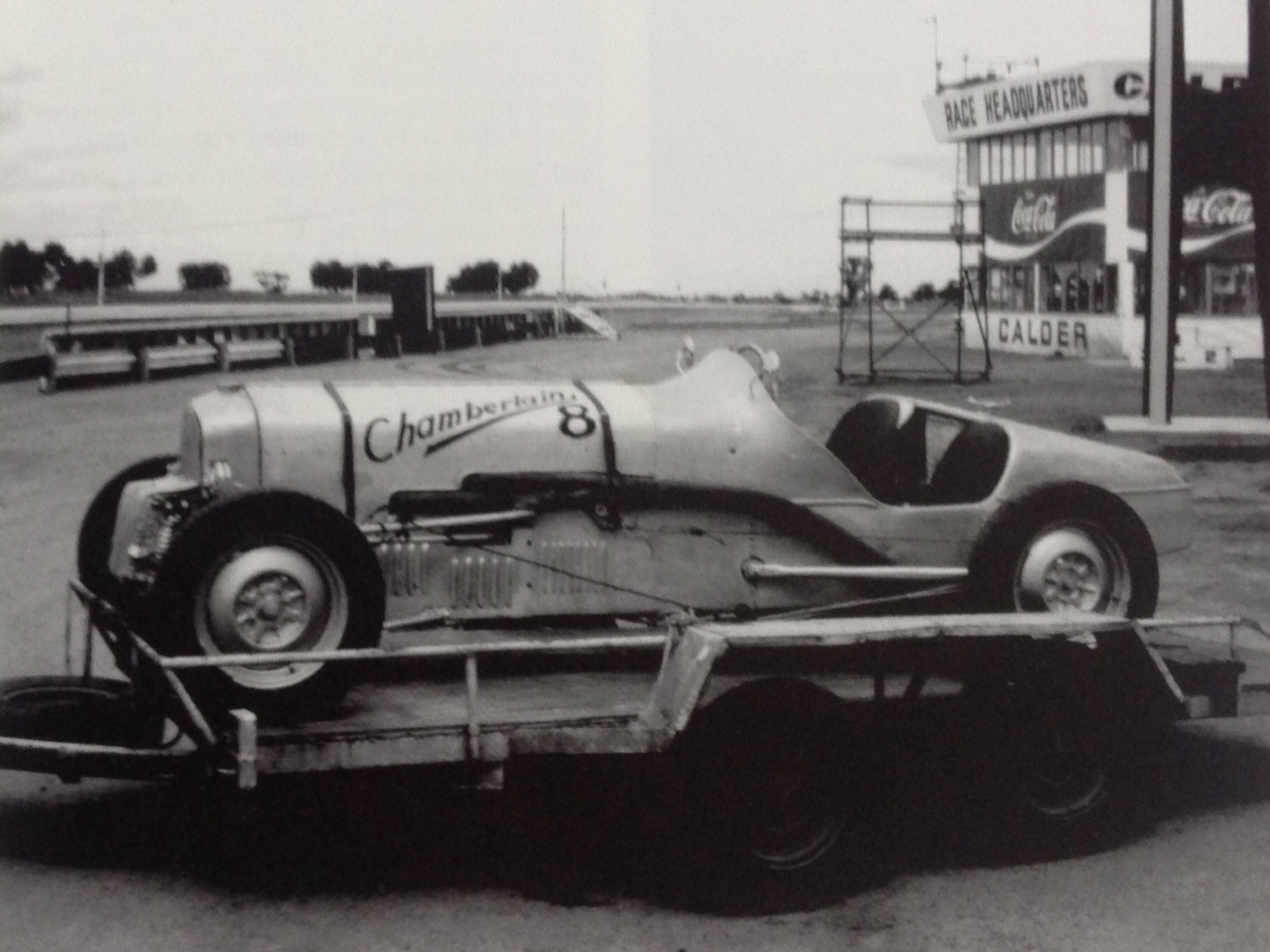
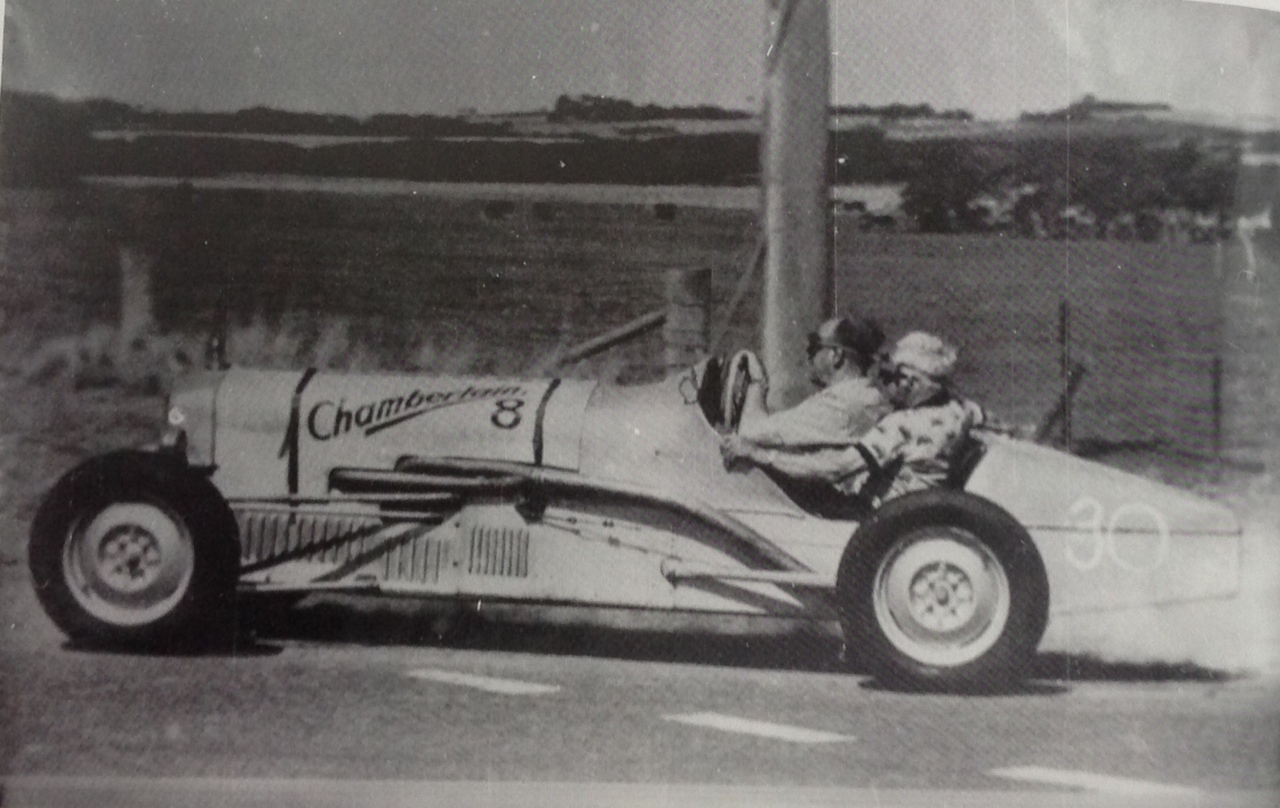

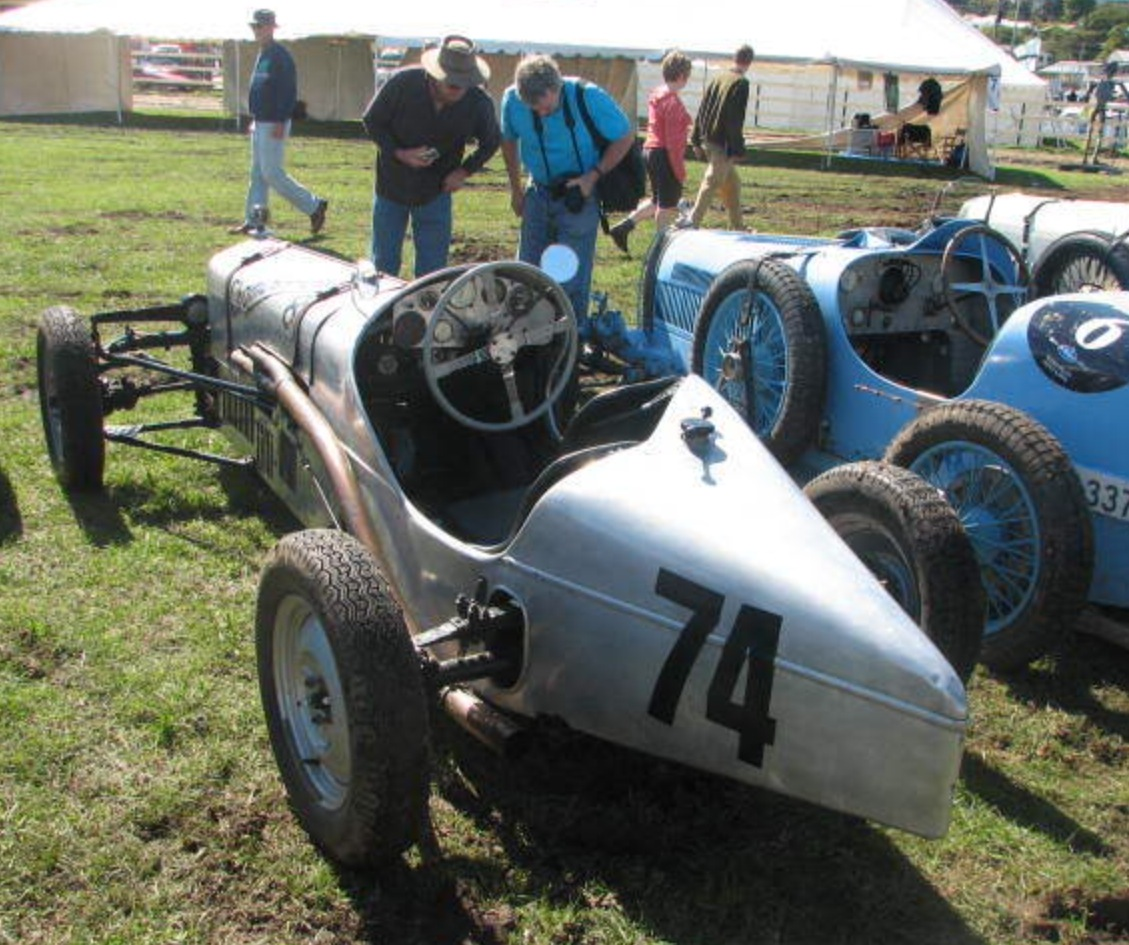



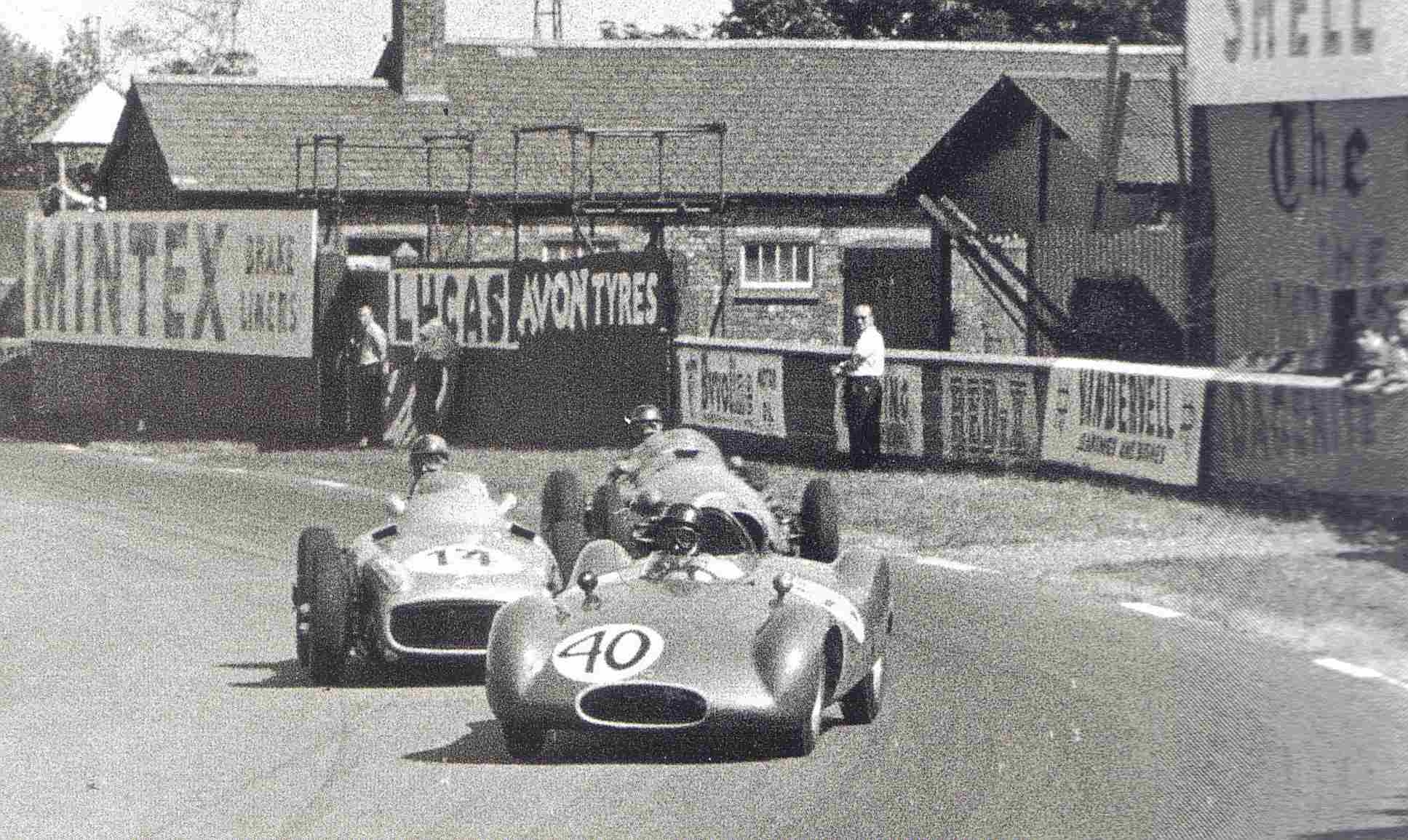


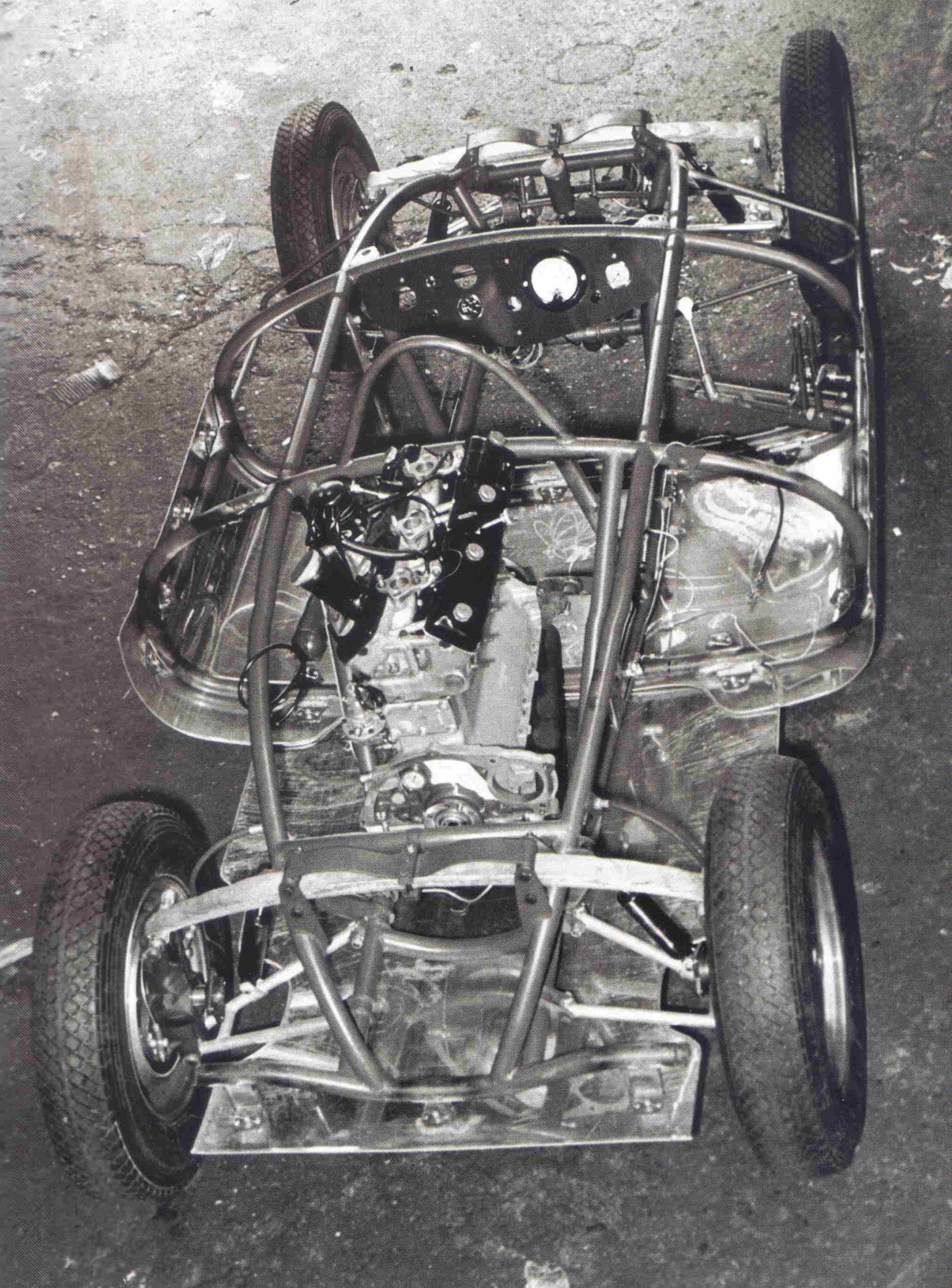
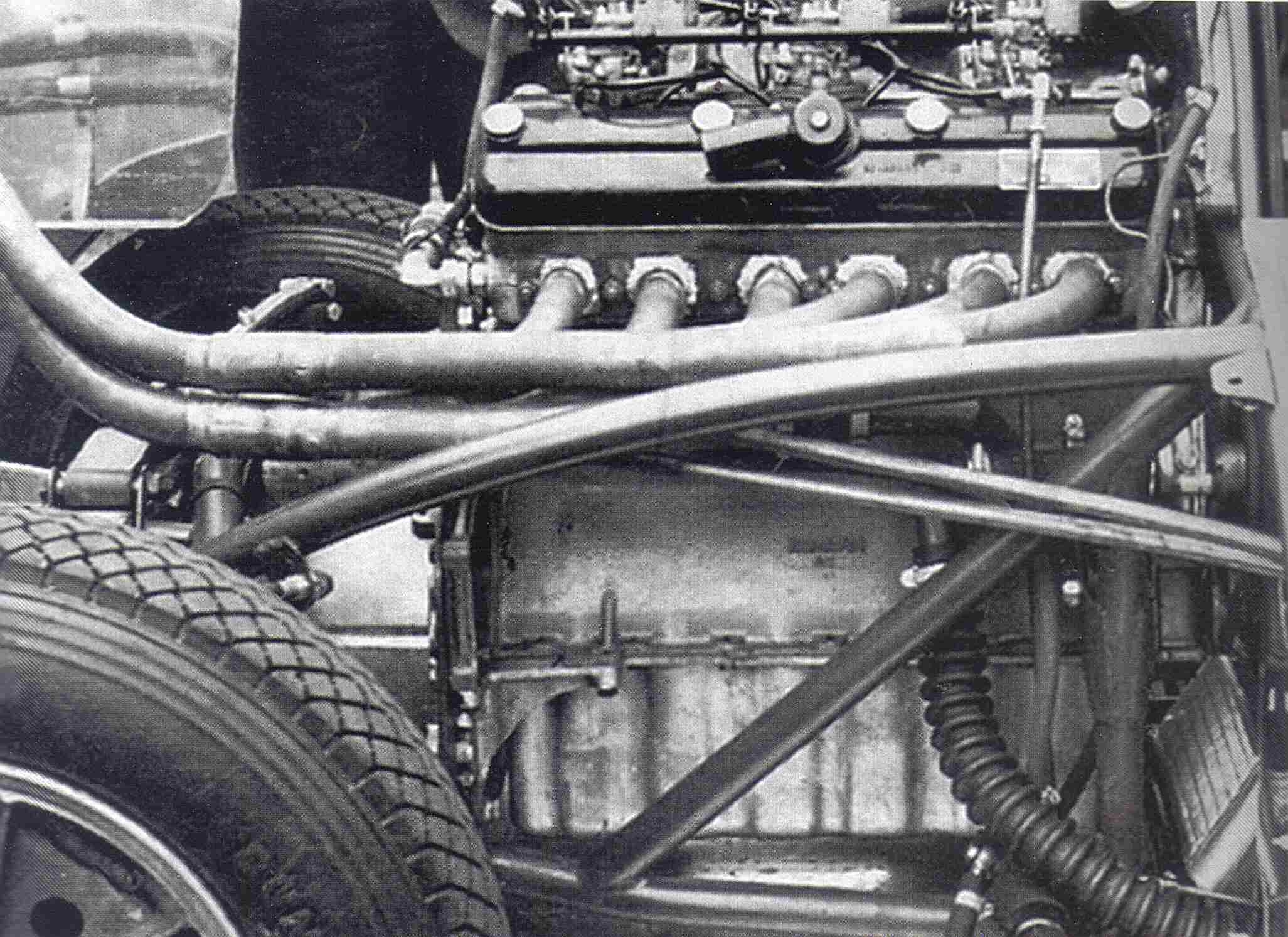


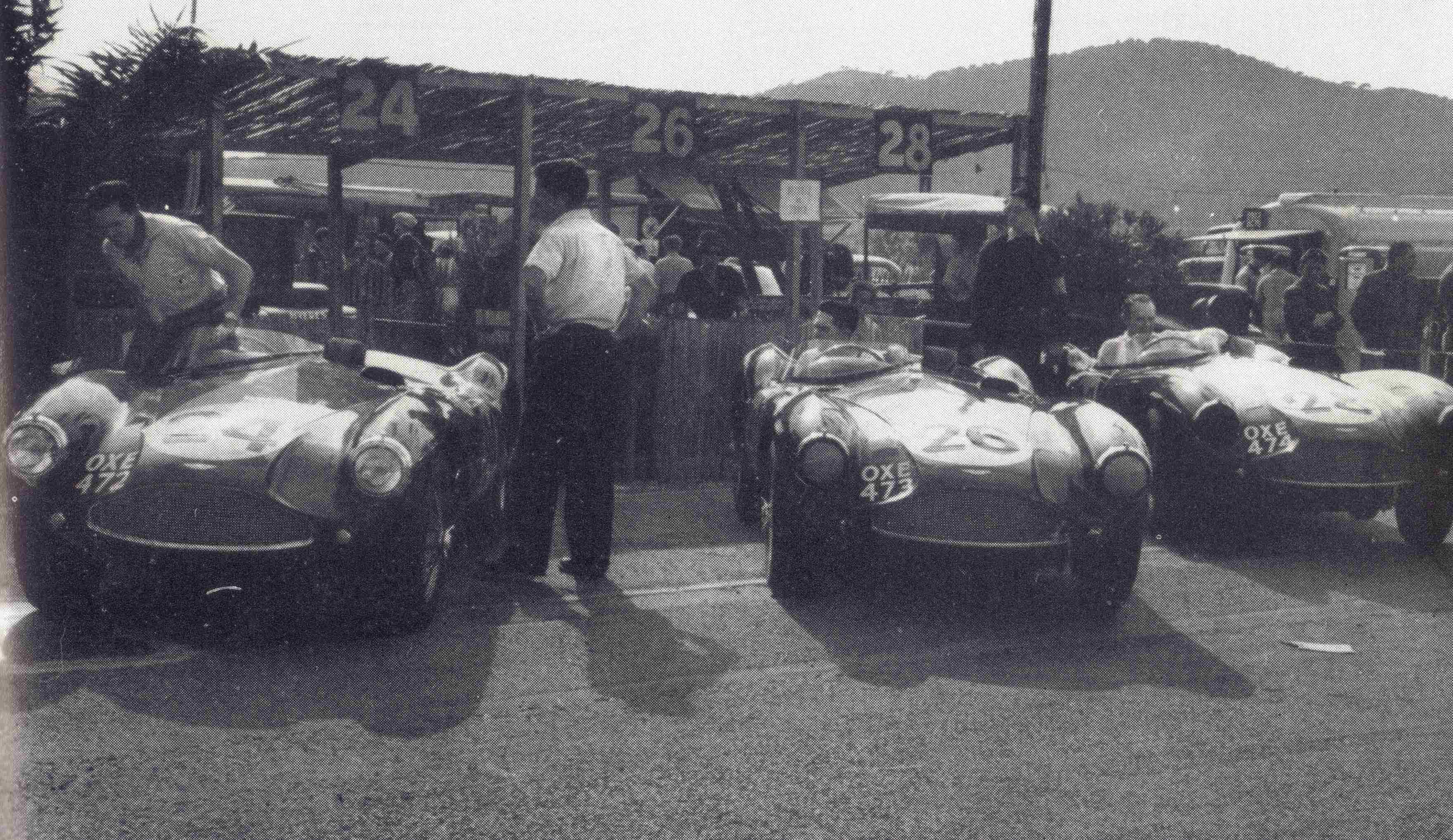


 primotipo...