(Fistonic)
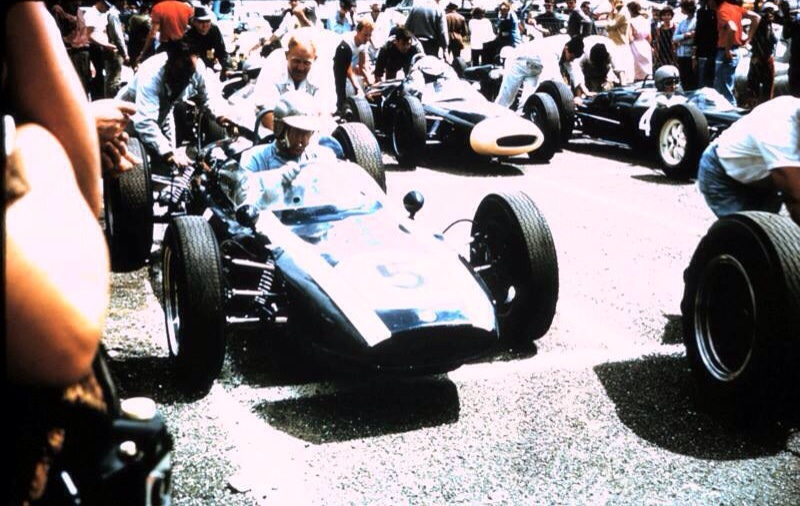
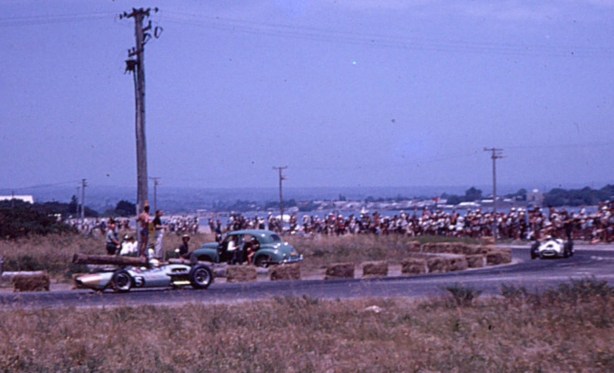
Frank Matich’s Brabham BT7A Climax leading Jim Palmer’s Cooper T53 Climax around the 2.897 Km Mount Maunganui road circuit, New Zealand, 28 December 1963…
Mount Maunganui is a beach town at the southern end of Tauranga Harbour in The Bay of Plenty in the north of New Zealands North Island. Only two ‘Bay of Plenty Premier Road Race’ meetings using public roads around the towns wharf area were held, in 1962 and 1963. The circuit was oblong in shape, the startline was in Totara Road and ran down Hewletts Road, onto Tasman Quay and then Hull Road. The creation of the permanent Bay Park circuit in the area supplanted the road course which was created by Joseph and Graham Pierce and Feo Stanton. To create the track they had to tar-seal a section over a railway line and then remove it after the weekends racing to allow the trains to operate the following morning!
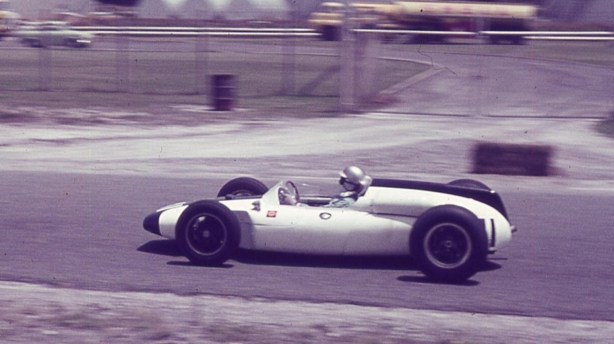
Race winner Jim Palmer, Cooper T53 Climax, Mt Maunganui 1963 (Fistonic)
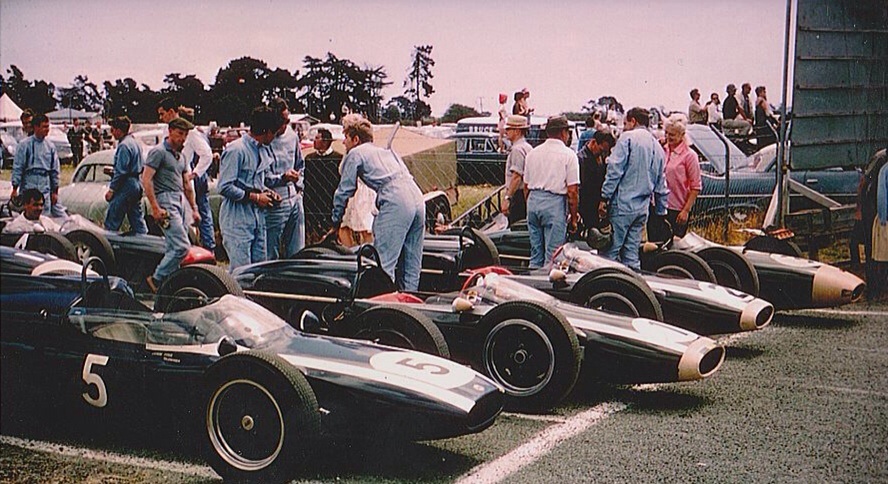
The 1963 event was won by Jim Palmer from John Youl’s Cooper T55 Climax and Tony Shelly’s Lotus 18/21 Climax. Both of the Australians, John Youl and Frank Matich used the meeting as a ‘warm-up’ for the 1964 Tasman series which started at Levin, the following weekend, on 4 January 1964.
Grid positions for the 15 lap final were determined by the results of two heats; Matich comfortably led his until encountering timing problems with his Coventry Climax engine, Palmer took the win with John Youl victorious in the other heat.
In the championship race, Palmer started well and lead Shelly, Matich- off the back of the grid, quickly passing the smaller engined cars and Youl but Shelly soon led, and Matich grabbed 3rd as Youl spun. Matich set a lap record of 1:10.4 as he moved the very latest ‘Intercontinental’ Brabham BT7A into 2nd behind Shelly. He took the lead on the next lap whilst Youl closed on Palmer. Shelly was passed by Palmer with 3 laps to go with Matich left out on the circuit with an inoperative throttle, and John Youl also passing Shelly. Palmer won from Youl, Shelly then Rex Flowers Lotus 20B Ford, Roly Levis’ Lotus 22 Ford and Neil Whittaker’s Cooper T43 Climax.

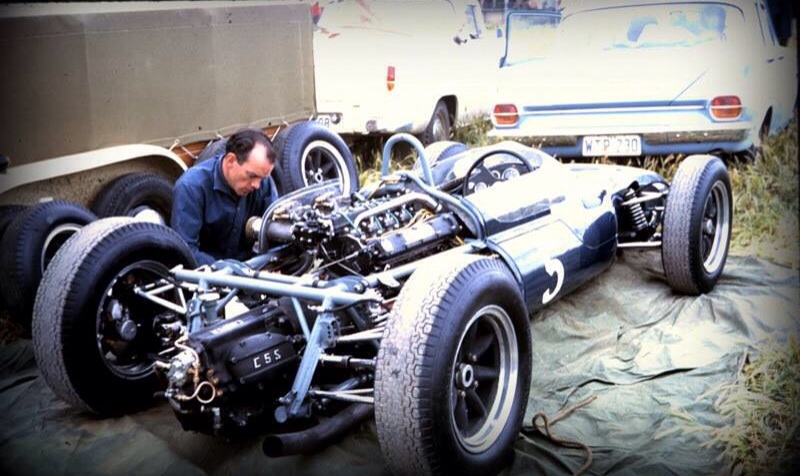
John Youl, Cooper T55 Climax (Fistonic)
In fact the race was very much a portent of the Tasman Series (won by Bruce McLaren’s Cooper T70 Climax) with all four of Matich, Palmer, Shelly and Youl being competitive with Matich having a swag of mechanical problems only finishing one of the 5 rounds he started, at Longford, in 3rd place.
In the NZ Tasman races Palmer, Shelly and Youl all contested they drove extremely well, almost as a group in their outdated cars- Cooper T53, Lotus 18/21 and Cooper T55 behind the leading bunch of Australasian Internationals- Brabham, Hulme, McLaren and American Tim Mayer.
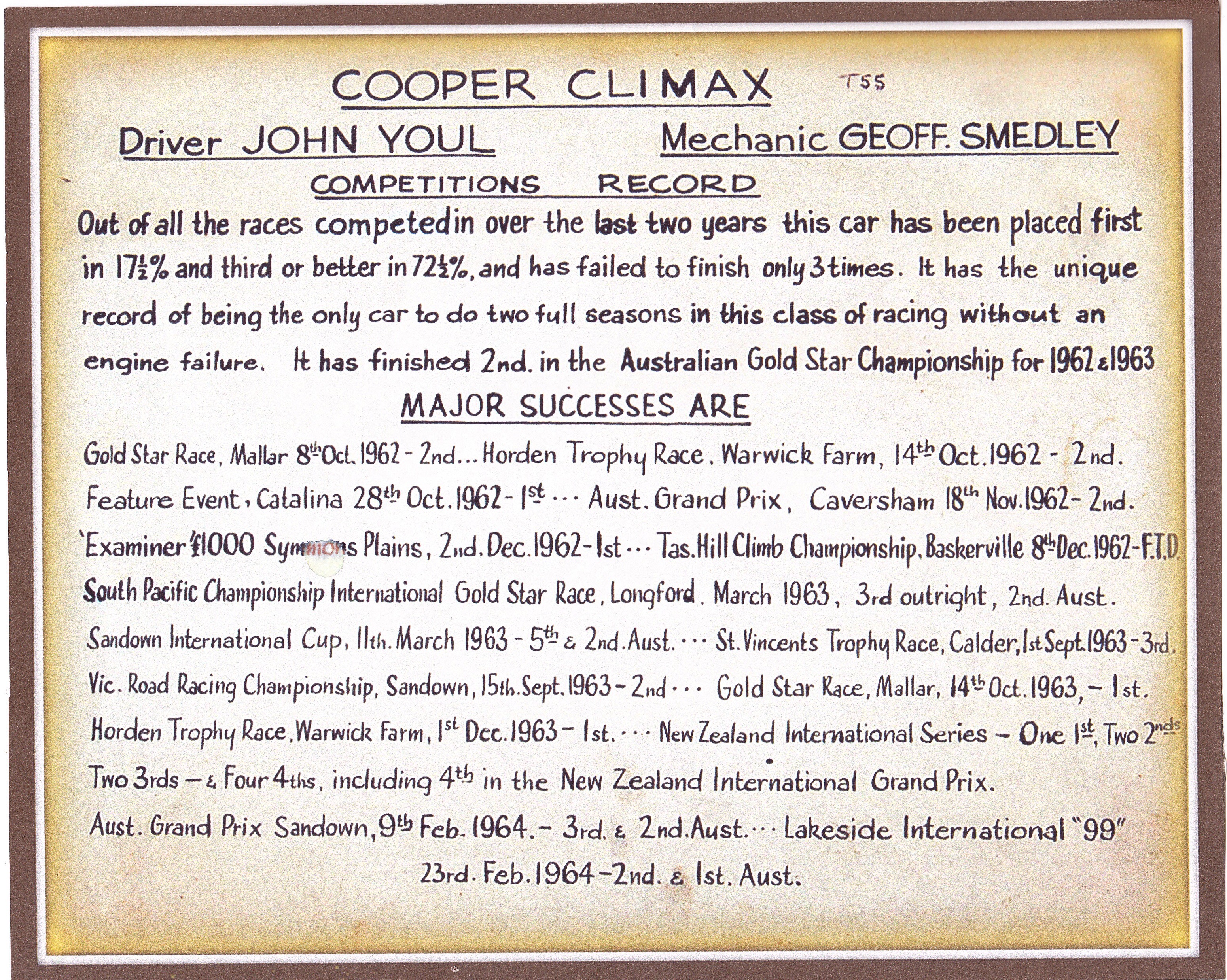
Youl was 4th in the first 3 NZ rounds and then travelled back to Australia before Teretonga to prepare for the first Australian round at Sandown where he finished 3rd. His beautifully prepared 1961 (ex-F1 and then Brabham’s car for the Australasian Internationals in 1962) Cooper T55 with its innovative Geoff Smedley designed and built twin-plug Coventry Climax FPF head had done 5 meetings with routine maintenance but no rebuild. His 3rd at the AGP was followed by a DNF at Warwick Farm with crown wheel and pinion problems. He then had a great 2nd at Lakeside and was 5th at Longford, his home race in a strong finish to the series.
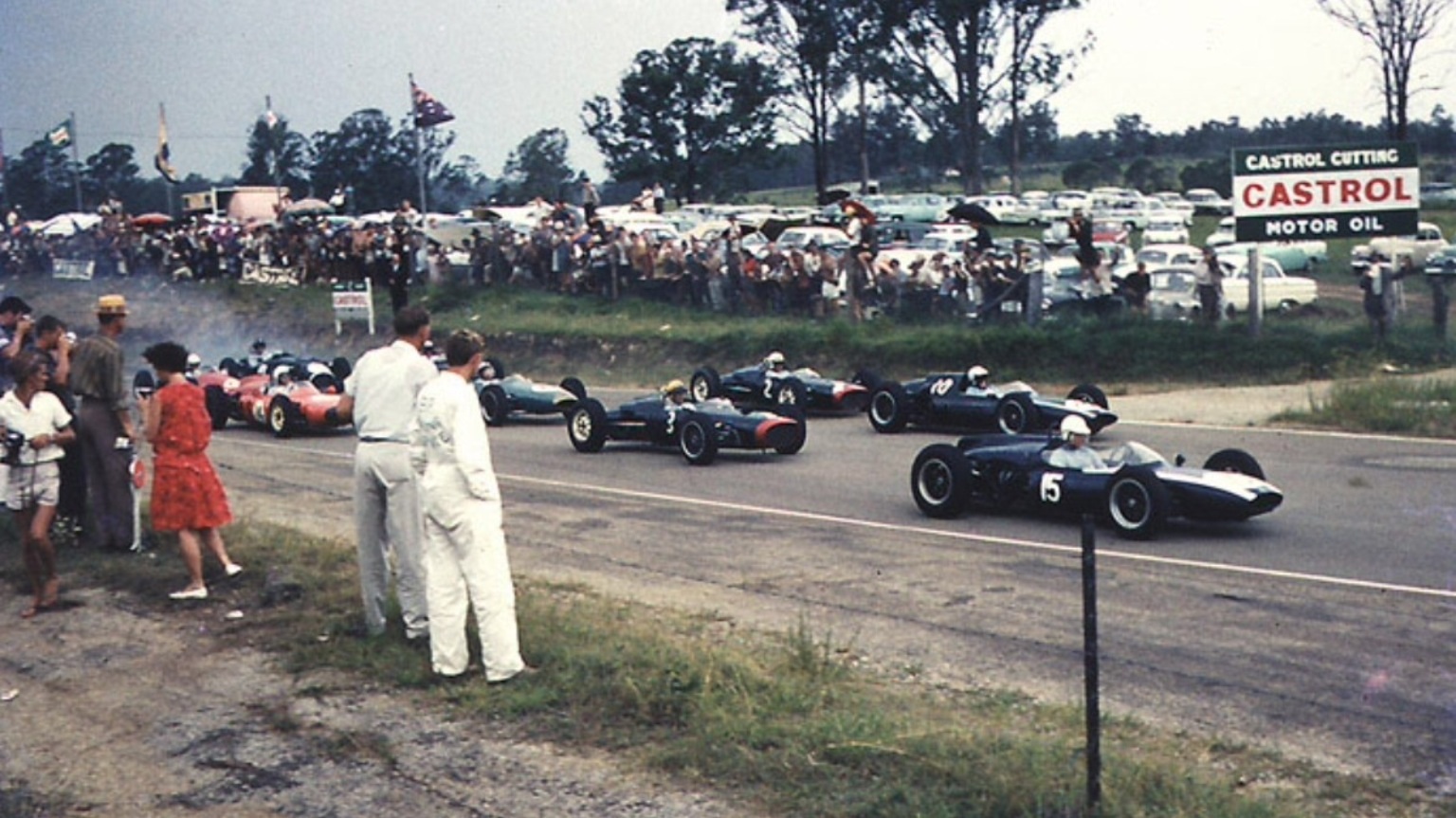
In fact Youl was very much the ‘form driver’ of this group having finished 2nd and then taking 2 wins in the final three rounds of the Australian Gold Star series in the later months of 1963, at Sandown, Mallala and Warwick Farm. Noteworthy is that these performances were against Lex Davison, Bib Stillwell and David McKay all of whom were aboard much more modern equipment than Youl. He was second in the Gold Star to Stillwell’s Brabham BT4 Climax in 1963 as he was in 1962.
Palmer, later multiple NZ Gold Star winner and ex-F1 driver Shelly had virtually identical results in the four NZ Tasman races, and finished all of them which is admirable at a time the 2.5 FPF’s were notoriously brittle being pushed to the limits as they were.
Without doubt Frank Matich had the pace of the Internationals in the ’64 Tasman but he had no chance of success without better preparation/luck/greater mechanical sympathy- Geoff Smedley joined him not so long after Youl’s unfortunate retirement from the sport at the end of 1964. Grazier Youl was one very fine driver who deserved a ‘factory’ drive such was his pace in the ex-Brabham Cooper T55 to fully realise his potential. I don’t know enough about the man to place him in the pantheon of Australian single-seater pilots but for sure he was very handy behind the wheel…
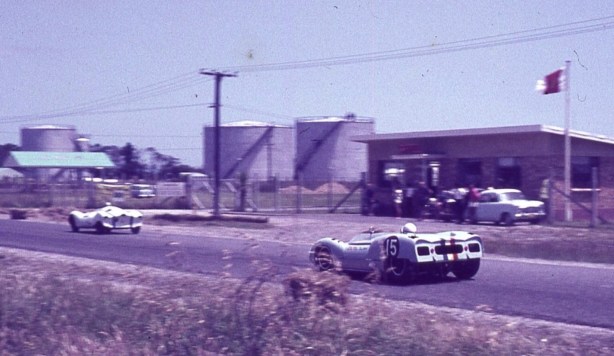
Matich chasing Colin Ngan, Cooper Bobtail in the sportscar race won by FM- love these industrial background shots (Fistonic)
Matich in his Lotus 19B Climax…
Frank Matich above blasting his very highly developed Lotus around the Mounts working wharves, such a distinctive background!
Frank’s Lotus was far and away the quickest sportscar that weekend, he won the race from the Lotus 15 Climax of Barry Porter and the Lola Climax driven by J Riley. The Matich 19B was destroyed at Lakeside in 1965, hospitalising the Sydneysider in the process. Out of those ashes was born the Elfin 400 Olds or Traco Olds as FM called it, and Matich SR3 and SR4 programs, all great cars.
In the same way that the Lotus 18, Chapman’s first mid-engined design (F1/FJ) redefined the sophistication of the path the Coopers had blazed so well, so too did the 19 amongst sportscar grids. The car used much of the 18 hardware albeit adapted to comply with sportscar rules- FIA Group C. Chapman detailed the car with Len Terry also playing a role in its design.
The cars spaceframe chassis was made of 1 inch and ¾ inch steel tube of 16 and 18 guage, there was a scuttle hoop of perforated sheet steel to provide further cross-sectional bracing. The first car, chassis ‘950’, was initially fitted with an aluminium body with subsequent cars using bodies made of fibreglass. The front and rear body sections were hinged for ease of access with two horizontal doors for driver and passenger! access and egress. Wheels were Lotus 15 inch ‘wobbly-webs’, disc brakes were 10.5 inch and 9.5 inches in diameter front / rear.
Dimensions; 141 inch long, 65” wide, a height of 31/32 “, the wheelbase was 7’ 6”, front track 49” and rear track 47.5 “. The cars weight was quoted at 1232-1250 pounds less driver but with 8 gallons of fuel. Said girth was dependent upon the engine fitted, over time this included the FPF’s around which the car was designed and also various American small-block V8’s. Similarly, whilst the Lotus sequential, 5 speed ‘Queerbox’ was specified the cars were also fitted with Colotti and Hewland gearboxes ‘in period’.
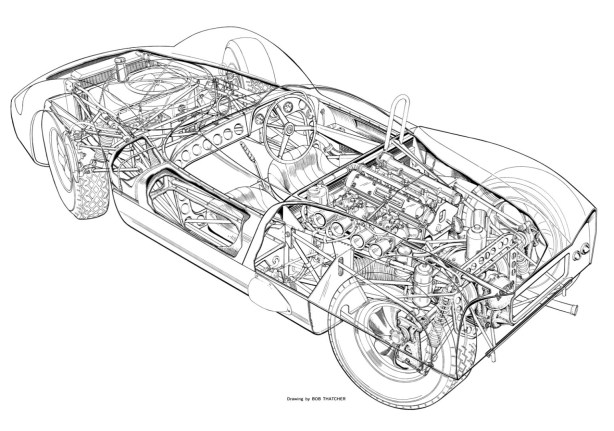
Lotus 19 Climax cutaway, technical specifications as per text (Thatcher)
When completed chassis ‘#950’ was tested by both Moss and Chapman, Moss had been racing Cooper Monaco’s amongst the swag of cars he competed in at the time, his opinion of the 19 relative to the Monaco, a design several years older would be interesting. Its said that the 19 was the first car Stirling drove after recovery from his 1960 Spa Lotus 18 accident.
Only 16 or 17 of the cars were built, the limiting factor for build numbers was the supply of Coventry Climax FPF engines which were of course the engine de jour for the British F1 ‘garagistes’ at the time.
The seminal research over the last decade or so on the fate of the various Lotus 19 chassis was carried out by enthusiasts/experts/journalists/engineers/drivers on ‘The Nostalgia Forum’ (TNF). What follows is based upon the contents of that highly interactive forum, with the ability of so many knowledgeable people to test evidence, the summary of ownership and changes in specification over time. The contributions of Ray Bell and Bryan Miller are specifically acknowledged.
Frank Matich raced two Lotus 19’s; the ex-UDT Laystall 19 chassis ‘950’ raced by Stirling Moss which was destroyed in a testing accident at Warwick Farm in 1963 and a replacement 19B which was delivered by Lotus Components sans chassis number. It was also destroyed, again in a testing, or more specifically an accident during a practice/qualifying session at Lakeside on 24 July 1965.
I have written tangentially about these cars in an article about FM’s rivalry with Bib Stillwell’s Cooper Monaco and other articles on Frank Matich, and very specifically about the 19B, Matich’s accident in it at Lakeside and its role in relation to the design/conception of Garrie Coopers Elfin 400, the first delivered of which was raced by Matich. I don’t propose to cover that all again, click on the links at this articles conclusion to read what I’ve already been written.
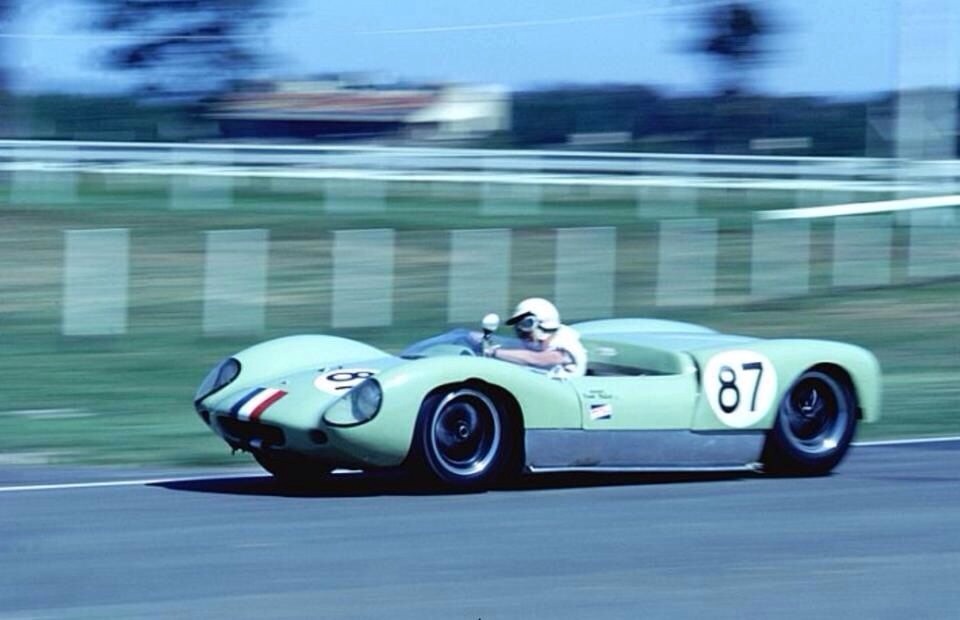
The first Matich Lotus 19 Climax, chassis ‘950’ shot at Homestead Corner Warwick Farm in 1962, compare the photo with the similar one of the 19B at the same corner below (Ellacott)
Caveat Emptor…
When Frank Matich was looking for a replacement for his oh-so-successful Lotus 15 Climax it was immediately obvious to him that the car to have was a 19 given the success of Moss, Ireland, Gurney and others in the cars on both sides of the Atlantic.
His ex-Leaton Motors mechanic Bruce Richardson, working in the UK for Reg Parnell Racing at the time, contacted UDT Laystall in England on FM’s behalf to determine if they were interested in selling one of their three 19’s. Frank knew Moss having met him on the great Brits previous trips to Australia. Shortly after Richardson’s contact Matich ‘…discussed with Stirling buying the (UDT Laystall) car (#950) Stirling was racing in the USA…who advised Frank, who wished to have the car shipped directly from the States to Australia that the car was pretty tired and it would be best for the car to return to the UK for a full rebuild and then be sent out from the UK. The car duly arrived in late 1961 and Frank was not happy with the state of preparation and he called Stirling to intervene’ Bryan Miller wrote.
Matich had been shafted by UDT Laystall, far from the first time we poor Colonials had been short-sheeted by less than honest operators who relied upon 12000 miles of Ocean to get away with sins of omission or commission! Moss, not involved in the commercial aspects of the deal at all, righted the wrongs with a financial adjustment in favour of the Sydneysider. The story goes something like this.
Rather than rebuild the car the UDT folks used the opportunity to bolt some of the shit bits they had lying around the workshop they didn’t want from their three cars to good ‘ole ‘950’ and shove it on a ship at Southhampton for Sydney!
Matich ordered the car with the Colotti box fitted to ‘950’, they sent him a ‘Queerbox’, very much not the better alternative although Matich said later to Bell ‘they weren’t a bad box as long as you set them up well’. Frank specified a regular windscreen, they sent a high one, ‘The crankshaft was obviously carrying a very old crack, it was very unlikely that it hadn’t been previously detected’ according to Frank, Ray Bell wrote. ‘There was a lot of that sort of thing about the car, so its clear Moss went into bat for Frank’. Moss drove the car whilst in Australia for the International series of races that summer (he raced Rob Walker owned Cooper T53 Climax and Lotus 21 Climax in NZ and Australia in January/February 1962) and was able to see for himself the state of the car as delivered from the UK. ‘Onya Stirling!
Having overcome those obstacles the 19 very rapidly became the fastest sportscar in the country, indeed, one of the fastest cars in the Australia- his dices with Bib Stillwell’s older but very well prepared, sorted and driven Cooper Monaco wonderful spectator drawcards across the continent.
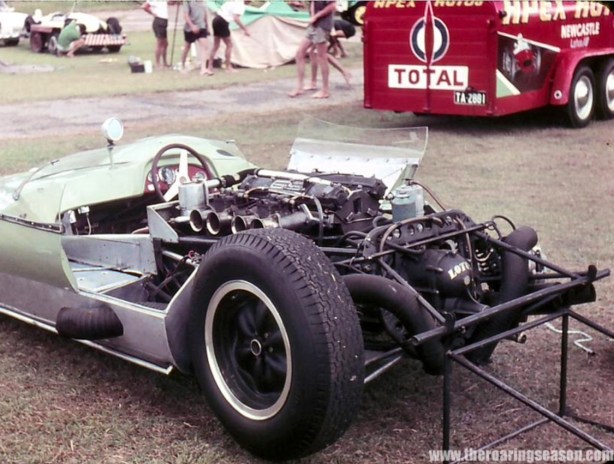
Lotus 19 Climax ‘950’ in the Lakeside paddock probably during the International meeting in early 1963. Coventry Cliamx FPF engine and Lotus ‘Queerbox’ clear as is copious ducting for brake cooling (Mellor)
#950’s demise occurred during a test session at Warwick Farm…
Matich’s backyard was Warwick Farm from the time the circuit opened at the wonderful Liverpool horseracing facility. He did all of his serious testing there, it was close to his various bases on Sydney’s North Shore, and he was always developing his cars with tweaks major and minor. This process of continuous development of bits for all of his cars, factory built or otherwise, was sustained right to the end of his career in early 1974. By then he was building world-beating Formula 5000 cars, indeed no-one did more miles around the Western Sydney outskirts circuit than FM.
In 1963 he raced the Lotus and works Elfins- a Clubman, Formula Junior and an ANF 1.5 variant of the FJ with which he contested the AGP, at, you guessed it, Warwick Farm. He was 8th in the race won by Jack Brabham’s Brabham BT4 Climax. On one of these test days Bell records that ‘The very reason for its (950’s) demise…was the fitting of new uprights (from Lotus)…Matich had come in from testing saying it felt funny and asked Bruce (Richardson, by then back from the UK and FM’s chief mechanic) to go out and drive the 19 while he followed him in the Elfin openwheeler. The upright broke and he went into the fence’. The fence was the very solid and unyielding WF Pit Straight fence which comprised 2 inch thick planks of wood bolted to railway sleepers. The chassis was rooted, it was too badly damaged to be repaired so a replacement was ordered from Lotus Components.
‘The original 19 chassis (950) went to Ray Hopwood, a friend of Franks. I think it was he who buried it under his house after deciding he wasn’t able to use it, which had been his intention’ wrote Bell.
Bell then speculates about the commercial arrangements between Lotus and Matich about the new 19 frame given the demise of ‘950’ was as a result of the failure of a new Lotus upright which was too thin. What is clear, whether Chapman gave him a special price or otherwise is that wealthy Sydney businessman Laurie O’Neill paid for the chassis either in whole or in part. Bruce Richardson confirms the chassis was acquired from Lotus, and therefore is not one of the unaccounted for Lotus 19 chassis- there are about four of these chassis on the TNF list. For sure some components from ‘950’, all possible, would have been retained to bolt to the new frame which Miller reports ‘Frank did not think his car (19B) ever carried a chassis plate, he held no memory of ever seeing one on the car but at that time it was of no importance’.
In late 1963 Matich imported a brand new Brabham BT7A to contest the annual Australasian International Series (from 1964 The Tasman Championship) and local Gold Star, Australian Drivers Championship events.
Almost immediately he became the quickest local openwheeler driver- and one who gave nothing away to the visiting Internationals either. Given the weakness of the Lotus sequential ‘box, Bell ‘…Frank regarded the crownwheel and pinion as marginal…referring to easy starts to protect it…and he often lost the start to Stillwell in their 19 to Monaco clashes…’ Matich fitted the 19B with a Hewland HD5 ‘box given the experience others had of it in cars like it in the BT7A and being well aware of the shortcomings of the Queerbox. By then he had both the support of O’Neill and Total so had an adequate budget to do things properly. The cars chassis was adapted to suit the ‘box at the rear. During the short period the 19B raced it was evolved, beside the BT7A, with various Brabham bits. There appears to be no definitive list of the modifications but brakes, wheels, some suspension parts and other Brabham ‘bits and pieces’ are cited as modifications from standard Lotus 19 spec. Equally there is no neat list of bits which were transferred from the first Matich 19 ‘950’ to the 19B, albeit the ex-Moss chassis was definitely buried under a house, this fact attested by several sources including Richardson, Bell and Miller- none of whom have a vested interest in the opinion they proffer.

Not the Australian Tourist Trophy but the 19B late in its life in early 1965 after a change of Total livery, from light blue to white, here, again at Homestead Corner, Warwick Farm (Ellacott)
Australian Tourist Trophy 1965…
Frank Matich was a professional racing driver, the family Weeties were provided by race and related commercial success, to win the 1965 ATT was therefore important to him. He won the race the year before at Longford in the 19B but for 1965 the field had greater depth.
Ken Miles was coming from the US to race a factory Shelby AC Cobra, Frank Gardner was returning home to race Alec Mildren’s Mildren Maserati, a Birdcage Maserati engine fitted to a chassis built by Bob Britton- a Lotus 19 clone!, the Lotus 23 lookalike built on Britton’s Lotus 19 jig. There were also some pesky Lotus/Ford Twin-Cam engined Lotus 23’s which were quick enough to win should the big guys run into trouble. In fact the latter is what occurred, Pete Geoghegan won the race in a Lotus 23 after the retirement of others.
Matich took the 19B to the Gold Star round at Lakeside in July, his primary focus that weekend was racing his Brabham. Spencer Martin won the Gold Star round in the Scuderia Veloce Brabham BT11A. But the Lotus shared the Matich transporter with the Brabham on the journey north to fettle the car in preparation for the ATT in November. It was during practice that FM lost the car in the fast right hander behind the pits at over 120mph when the throttle jammed, destroying the car and hospitalising him with burns to his hands and back. Damage to the car was to its front, especially the left front. Various sources suggest (not Bell or Miller) that the car may have been damaged further after the accident for insurance purposes.
The accident was the catalyst for Total to end the relationship with Matich. Boral Ltd acquired Total’s business in Australia and they did not want to be involved in motor-racing. The remains of the 19B, owned by O’Neill remember, were then used as a point of dimensional reference during the build of the Elfin 400 Traco Olsmobile at Elfin’s Conmurra Road, Edwardstown, South Australia factory in late 1965. The 19B donated its gearbox and some other minor components to the Elfin build. Even though the remains of the 19B were seen by various people at Elfins over the years the remains of the chassis have never seen the light of day and were probably, at some clearout, disposed of. The future value of these cars was not foreseen then of course!
Despite all of the foregoing, that is, the total destruction of both cars as racing entities, the ex-Moss/Matich Lotus 19 #950 races on, reconstructed around a replacement chassis built in the 1980’s. So far, surprisingly, the 19B has not been rebuilt/reconstructed/resurrected despite Peter Brennan noticing, whilst looking at a Lotus 18 very recently and concluding that the pedals in his Elfin 400 are probably from the 19B…go for it PB, cars worth $750K have commenced reconstruction with far less of the original car than that!…
Etcetera…
(B Caldersmith)
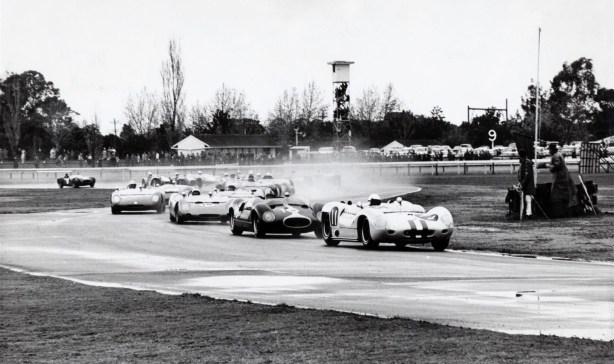
Matich leading Bib Stillwell’s Cooper Monaco and a gaggle of Lotus 23s at Warwick Farm in 1963.
Bibliography…
‘The Nostalgia Forum’ Lotus 19 thread particularly the contributions of Michael Oliver, Ray Bell and Bryan Miller, Graham Vercoe, sergent.com, Bob Homewood, Glenn Ducey
Photo Credits…
Milan Fistonic and Peter Mellor- The Roaring Season, John Ellacott, Bob Thatcher, Brian Caldersmith
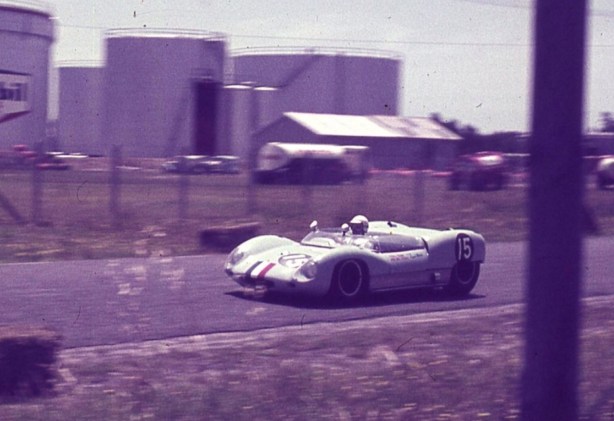
Lovely frontal shot of Frank Matich, Lotus 19B Climax, this car probably the most highly developed of its type in the world-V8 variants excepted. Car developed by FM and his team in Sydney, building upon his first 19 which was written off in a Warwick Farm testing accident. Plenty of Brabham bits inclusive of wheels fitted to this car (Fistonic)
Finito…