Archive for the ‘Sports Racers’ Category

(R MacKenzie)

Pedro Rogriguez BRM P126 V12 howling its way around Surfers Paradise in the summer of 1968, behind is Dick Atwood’s sister car…

This shot is by Rod MacKenzie, loved his work, especially the more creative stuff of which there is heaps- he died last year sadly, see here for some of his work; https://primotipo.com/2018/09/27/oz-racing-books/ and here for the BRM P126; https://primotipo.com/2018/01/25/richard-attwood-brm-p126-longford-1968/


(oldracephotos.com.au/King)

Bob Jane from Allan Moffat in Lotus Cortinas at Mountford Corner, Longford in March 1965.

Didn’t these two characters go at with considerable ferocity for a couple of decades, who won the encounters on this weekend? Click here for the Lotus Cortina; https://primotipo.com/2014/11/16/jim-clark-lotus-cortina-sebring-1964/ and here for Moff’s more formative career years; https://primotipo.com/2020/03/06/moffats-shelby-brabham-elfin-and-trans-am/


(I Smith)

Feel the earth move under your feet- Formula 5000 at Sandown was what hooked me into the sport.

McRae, McRae GM3 Chev, Costanzo, Lola T332C Chev and Kevin Bartlett’s partially obscured Brabham BT43 Chev, another three T332s and the rest on the run down from The Rise down into Dandy Road- Sandown Park Cup, Rothmans International Series, February 1978.

Warwick Brown won from Garrie Cooper and John Cannon- Lola T333/T332C Chev, Elfin MR8-C Chev and March 73A/751 Chev, McRae, Costanzo and Bartlett were all DNFs.

Piece on Graham McRae here; https://primotipo.com/2018/09/06/amons-talon-mcraes-gm2/


(S Jek)

Stan Jones, Maserati 250F during the 1956 Australian Grand Prix.

Taken from the spectator foot bridge on Pit Straight, Stan was fifth in the race won by Moss’ works 250F, see here; https://primotipo.com/2018/01/16/james-linehams-1956-agp-albert-park/


(unattributed)

The Corkscrew, Laguna Seca Can-Am 15 October 1967.

Skip Scott, McLaren M1C Chev from Frank Matich, Matich SR3 Repco ‘620’ 4.4 V8 and Chris Amon, Ferrari 350 Can-Am V12 with a Lola T70 up top.

Bruce McLaren won that day in his M6A Chev- the first of the long series of dominant orange Can-Am Big Macs.

For Matich, his 1967 tour was a toe in the water exercise, but he never did go back with a sportscar, the SR4 chassis and Repco 5 litre 760 engine were both hopelessly late, in the event he used a sledge hammer to crack a nut in torching the local opposition in the 1969 Australian Sportscar Championship- see here; https://primotipo.com/2016/07/15/matich-sr4-repco-by-nigel-tait-and-mark-bisset/


(Peter Weaver Motorsports Photography)

John Smith, Ralt RT21 Holden, Formula Holden, Phillip Island during the opening 1990 Gold Star round in March 1990.

Schmiddy put Dave Mawer’s immaculate car second on the grid but had a mother and father of a prang during the pre-race morning warm up comprehensively destroying the car after a high speed off at Lukey Heights.

I became a Smith devotee in his Bowin P4A Formula Ford days where his dazzling car control was Bartlett-esque, he carried that pace into the Galloway ANF2 and then the ex-Scuderia Veloce/Larry Perkins Ralt RT1 he raced with both pushrod Ford and BDA Ford engines in both ANF2 and Formula Pacific- nifty that, I always thought.

The thinking drivers of that F Pac period were Alf Costanzo and John Bowe- the ‘maddies’ perhaps Andrew Miedecke, Lucio Cesario and Smith- with the latter two probably or possibly the quickest of the five over a given lap and Costanzo and JB more often victorious. Alan Jones duly noted of course.

Alf should have gone to Europe in 1969 (or did he? and returned), Smith in 1979 and Bowe and Cesario in 1981- man there was talent aplenty amongst that lot.

John boofed a few cars mind you- the RT1 was retubbed at least once, ditto one of the RT4s, ditto this RT21 but he was always ‘on it’ in a very European kinda way as was Lucio, and let’s not forget the latter was a Lancia LC2 Ferrari Group C works driver for a season or so- I really must write that story.

John’s Ralt RT4 looking a tad second hand after a difference of opinion with the Adelaide International real estate before the first Gold Star round in 1982 (SLSA)


(T Parkinson)

Bunbury ‘Round The Houses’ down south as the Perthies refer to Margs (Margaret River) and its surrounds.

The real 100S Austin Healey deal ‘AHS3909’ which Tony Parkinson identifies as driven by Perth disc-jockey Mike O’Rourke during the 1963 New Year weekend.

See here for more about these West Australian town venues; https://primotipo.com/2017/03/23/bunbury-flying-50-allan-tomlinson-ferrari-500-et-al/


(Govt Singapore)

John Walker’s Elfin 600B Ford twin-cam leads winner Graeme Lawrence, Brabham BT29 Ford FVC through the tropical jungle alongside the Thompson Road track, Singapore GP 1971.

This piece is about the Singapore GP generally but with a focus on the 1972 event; https://primotipo.com/2016/11/24/singapore-sling-with-an-elfin-twist/


(J Ellacott)

Beautiful John Ellacott shot at Mount Druitt in July 1957.

The two Johns, Ellacott and Medley identify the entrants as the #81 George Websdale MG TC, #9 Howard Hunt MG TA/TC Spl s/c, Jim Johnson MG TC Spl, #20 Don Wright, Citroen Spl and Gordon Stewart in the mid-engined Wheeler MG Spl s/c, and on the second row Ray Walmsley, Alfa Romeo P3 Alvis, unknown, the George Pearse Cooper MG and maybe Ken Bennett’s Austin Healey 100-4, Medley notes in the background the red Jack Robinson Jaguar in the background.

A piece on Mount Druitt is here; https://primotipo.com/?s=mount+druitt


(A Doney)

Soap Box Derby in Bendigo.

Nineteen-forties d’yer reckon? All of us with a billy-cart or three in our past can relate to this wonderful shot. More on billy-carts; https://primotipo.com/2019/02/10/spitty/


Poignant.

The I’ll-fated Rocky Tresise Ecurie Australie Cooper T62 Climax is pushed onto the grid at Longford in March 1965.

Warwick Cumming at the rear, Lou Russo up front- two of the AF Hollins crew who always looked after Lex Davison’s cars.

A rather sad story, a ‘Greek Tragedy’ as some have described it, here; https://primotipo.com/2016/05/20/bruce-lex-and-rockys-cooper-t62-climax/


(Peter Weaver Motor Sport Photography)

Bap Romano, Kaditcha Ford Cosworth DFL, Winton, 1983.

Bap won both heats of the Australian Sportscar Championship that day- I was there and still remember the raucous, sharp exhaust note of Barry Lock’s marvellous car.

It needed a bit of work from ex-Alan Jones Williams mechanic, Wayne Eckersley to get the structure and aero right but it was a jet once they got the thing sorted.

I went to several meetings just to see and hear this car.


(I Nicholls)

Tiger In Your Tank indeed.

Ray Parsons and Jim Clark watched by a fascinated Sandown Park crowd during the 1966 Tasman meeting.

Clark’s Lotus 39 Climax was the least competitive of all of his Tasman mounts, the two BRM P261s were the class of the field that year with Jackie Stewart taking the title convincingly.

See here for an epic on this car which was driven so well for so long after acquired by Leo Geoghegan after the Longford round which followed this Sandown event; https://primotipo.com/2016/02/12/jim-clark-and-leo-geoghegans-lotus-39/


(N Macleod)

Aussie Abroad.

Warwick Brown in Jack McCormack’s Talon MR1A Chev at Mosport during the 1975 US F5000 Championship.

He gave Mario Andretti a surprise that weekend pushing him hard in the heat, in the final he was third behind Mario and Brian Redman’s Lola T332 Chevs.

A bit about Warwick here; https://primotipo.com/2017/03/09/wb-for-73/


(D Simpson)

The old and the new.

There are not too many shots of Bob Jane’s second and third Mustangs together on track together as here during the 1969 Australian Touring Car Championship round at Mallala.

Bob in the 1968 Shelby built Trans-Am leads John Harvey in the GT390 with Terry Allen’s Chev Camaro in shot too.

Pete Geoghegan won the race in his Mustang from Alan Hamilton’s Porsche 911, Bob retired mid-race, not sure about Harves and Terry Allan, I don’t have my ATCC book to hand- folks?

1969 ATCC article here; https://primotipo.com/2018/02/01/1969-australian-touring-car-championship/


(J Ellacott)

Stunning John Ellacott work- look closely, there is so much going on in this magnificent photograph taken during the 1962 Warwick Farm 100 weekend.

Moss practiced this Lotus 21 Climax but preferred Rob Walker’s Cooper T53 so won in that from Bruce McLaren and Bib Stillwell in similar cars.

Read about the Lotus 21 here; https://primotipo.com/2016/04/08/ole-935/


(M Terry)

Aspendale Park 1929.

James Crooke built a race track inside his horse racing course in 1905, the first race meeting was held on 29 January 1906 making it the ‘world’s first purpose built racing circuit.’

I am intrigued as to the cars and drivers above identification folks?

See here a great piece on this Melbourne bayside motorsport 1905 to 1951 race venue, Melburnians who want to check the location should pop Albany Crescent, Aspendale into Google Maps and drive along it- it once was the track’s back-straight.

See here; https://www.hyperracer.com/history


(R Lambert or D Mills)

Surely Garrie Cooper was the most multi-talented man in Australian motor racing apart from Jack Brabham?

Designer, engineer, constructor of production racing cars in some scale for a couple of decades and a bit, small business owner and employer and elite level racing driver- not at the  apex of the latter of course.

Nobody has a bad thing to see about the bloke either, he was a decent, honest man of his word in a sea filled with no shortage of white-pointers.

Here he is aboard his superb Elfin 600C Repco ‘830’ 2.5 V8 during the JAF Japanese Grand Prix weekend in 1969 in this race won by

Per head of population the Elfin 600 was one of the most successful production racing cars ever built- the only model missing from the Edwardstown concerns line up was a Formula Vee variant!

Craig Sparks, Elfin 792 VW inside Bob Prendergast’s Cheetah Mk7 , Winton March 1981


Winton ANF2 championship round in March 1981. John Bowe, Elfin GE225 VW from Ricahed Davison’s Hardman Ford, Russell Norden’s March ‘Aryben’ 793 VW and Peter Macrow, Cheetah Mk7 Toyota. JB wrote of this car ‘Loved that car, would have liked to run it for a bit longer but my sponsor wanted to go Atlantic racing straight away which meant Ralt. I’m sure Garrie could have built an awesome Atlantic car but the time frame was crucial’

I remember looking at John Bowe’s works Elfin 792 VW car at the Winton ANF2 championship round in 1979 and going simultaneously ‘woweee’ and ‘ya missed the boat Gazza’ when first glimpsing the gleaming Ansett sponsored car, it was the year ‘all’ the production racing car manufacturers had a crack at a ground-effect car, ‘black art’ that it was at the time.

The 792 wasn’t a GE car but the GE225 VW F2 which followed it was- and was a quick machine, John Bowe rated it and then Chris Leach, his sponsor, wanted to go Formula Pacific so the car was sold sooner than ideal, so too was the MR9 Chev F5000 but it’s developmental opportunities were not at an end when Garrie died suddenly in early 1982.

I’ve often wondered what he would have achieved had he continued on, for sure the historic restoration work he had commenced would have provided valuable cash-flow as the market for production racing cars got tougher especially as the carbon-fibre era began.

The cars designed and built by Don Elliot, Tony Edmondson and Jon Porter were the real Elfin deal mind you, god bless ‘em for taking the torch forward as they did.

R.IP. GC Cooper- see here for the 792; https://primotipo.com/2016/06/10/elfin-light-aircraft/


Bib Stillwell at Mount Panorama aboard his Cooper T51 Climax in October 1960.

Bib owned and raced more cars than you and I have had hot dinners- the Coopers he had in this period alone takes a bit of reckoning.

This one ‘F2-18-59’ is the car he leased to Lex Davison and in which, despite its 2.2 litre Coventry Climax FPF engine, compared to the oppositions 2.5s, Lex won the 1961 Australian Grand Prix at Mallala, click here for that story; https://primotipo.com/2018/03/29/the-naughty-corner-renta-gp-winner/


(HRCCTas)

Alan Hamilton’s Porsche 904 leads a gaggle of cars into the Viaduct at Longford during the 1966 Australian Tourist Trophy.

Behind him is Lionel Ayers, MRC Lotus 23B Ford, Spencer Martin in the Scuderia Veloce Ferrari 250LM- Frank Matich is up front in his new Elfin 400 Olds and took the win.

Here is a piece on Hamilton’s sportsracer Porsches of this period; https://primotipo.com/2015/08/20/alan-hamilton-his-porsche-9048-and-two-906s/


(Brabham Automotive)

‘Orf with his head!’

Arise Sir Jack, Sir Zelman Cowen, Australia’s Governor General completes the Knighthood ritual in Canberra, 1979.

And rather well deserved too.


(unattributed)

Aussies Abroad, for quite a while the case of these blokes…

Brian Muir, BMW 3 litre CSL chases Frank Gardner, Chev Camaro ZL-1 7 litre at Brands Hatch during a British Saloon Car Championship round in 1973.

Frank left Australia as a sportscar pilot and forged a great career in those things as well as single-seaters and tourers whilst Brian left Sydney as a touring car driver and mixed that in Europe with sportscar drives.

Frank returned to Oz in late 1974 whilst Brian died suddenly in England on 11 September 1983.


(unattributed)

The raucous bellow of the XK Jaguar engine bellows and echoes off the surrounding gums as Ron Phillips’ Cooper T38 exits Kings Bridge during the 1959 Australian Grand Prix at Longford…

Phillips, son of Wangaratta between the wars top racer Jack Phillips didn’t win that day but he won the event at Lowood in 1959.

I’ve an article largely completed on that ex-Whitehead/Jones car and tangentially the driver, I really must get on with it Ian McDonald!


(Castrol)

Bathurst 1000, 2019: Lee Holdsworth, Tickford Racing Ford Mustang GT…

The Mustangs brought a great new shape to V8 Supercars in 2019 with the DJR Scott McLaughlin car taking the title from Shane van Gisbergen and Jamie Whincup.

Holdsworth was ninth at Mount Panorama sharing with Thomas Randle and finished tenth in the overall seasons point score with a best placing for the year third at Sandown.


(P Cross)

Phil West at the wheel of the Scuderia Veloce ex-Gardner Ferrari 275GTB during the 1968 Surfers Paradise 12 Hours.

He finished ninth sharing the car with George Reynolds and – the race was won by the SV Ferrari 250LM driven by the Brothers Geoghegan.

Whilst the 275GTB are somewhat iconic Phil wasn’t impressed at all, his thoughts about it are here; https://primotipo.com/2019/10/24/franks-fazz/


(R Watson)

Bob Jane at Calder aboard his Brabham BT23E Repco circa 1968.

Janey raced single-seaters regularly circa 1964-1966, he had an Elfin Mono Ford ANF1.5 and at that stage more or less switched to touring cars but not exclusively so, when he felt like it he had a whirl in his Elfin 400 Repco, and here aboard his ex-Jack 1968 Tasman machine usually piloted by John Harvey.

This car is covered in this piece here; https://primotipo.com/2015/12/22/jack-brabham-brabham-bt23e-oran-park-1968/

Bob Jane, Elfin Type 100 Ford twin-cam ANF 1.5, Warwick Farm Tasman meeting 1966 (autopics.com)

Photo and other Credits…

Roderick MacKenzie, Sharaz Jek, oldracephotos.com, Peter Weaver Motorsport Photography, Tony Parkinson, John Ellacott, Allan Doney, Ian Nicholls, Norm Macleod, Dick Simpson, Michael Terry, Historic Racing Car Club of Tasmania, Brabham Automotive, Castrol, Richard Watson, hyperracer.com, autopics.com, S5000 Facebook

Tailpiece: Surfs Up…

(S5000 FB)

Tim Macrow testing the prototype S5000 Ligier at Phillip Island on 19 September 2019.

Lovely shot by Peter Weaver, who said all modern circuits are ugly? Weaver is the master at the Island, his work there is exceptional.

This was one of several test days at the circuit before the new categories first race at Sandown several weeks hence, click here for a feature on the class; https://primotipo.com/2019/10/26/progress/

Finito…

(T Johns Collection)

Tony Johns well rugged up for the chills of Winton in 1965, Austin 7 Spl…

When I completed University my student earnings were all blown on a Venom Mk2 Formula Vee in March 1979, i entered the ‘real workforce’ and bought my first racer in the same week. Formula Vee was the way to go for the impecunious enthusiast with a hankering for single seater cars then, but a generation before in the late fifties/early sixties the path was a little more difficult without so many ‘factory’ cars about.

Tony Johns’ story of Austin 7 competition in the day is an interesting first-hand account of how it was for enthusiasts with a hankering for competition in those times- many Australian enthusiasts will be familiar with him as a racer, purveyor of fine motorbooks or co-author of ‘Vintage Bentleys in Australia’.

‘I was fortunate to grow up with very tolerant parents who accepted my love of old cars. Starting when I was a young boy with an Austin 7-owning great aunt which generated my passion for these wonderful cars. In my final years at school long before any of us were old enough to hold a driving license, two of my class mates already owned A7s, and soon after a third purchased a Chummy six months before me which he still owns to this day.’

John’s first Austin Chummy. ‘In the early 1960s the A7 Club held their annual beach run on the Mornington Peninsula at what was then a quiet peaceful beach at Shoreham, not far from Flinders. Never to waste an opportunity once the tide went out, the sticks were soon in place for a slalom event. If you look closely (very Tony!) under my armpit you can see Neil Johannesen’s Mooris 850 ex-1961 Armstrong 500’. Bugeye Sprite at right (David Lowe-T Johns Collection)

TJ and Chummy ascending Rob Roy in the early sixties (A Tracey)

‘As a teenager in the 1950’s I convinced my parents to take me to a race meeting at the Fisherman’s Bend airstrip circuit and the race meetings at Albert Park, mind you I had to wear my school uniform and cap!

Still months away from being old enough to have a driving license, I purchased my first Austin 7, a 1928 magneto-engined Chummy that was my entry card to join the Victorian Austin 7 Club in 1960.

In the beginning I competed in Gymkhanas and Navigation Trials but always wanted to build and compete in my own racing Austin 7. I started going to race meetings with Nigel Tait and got to know all the other drivers, observing what to do and what not to do. In those days everybody was very helpful and at race meeting, drivers would share spare parts if somebody needed help.’

Minimalism defined! ‘The gymkhana chassis, which, together with the body from Allan Tyrrell’s racing car which became my first racing Austin in 1965’ (T Johns)

Lakeland Hillclimb in the mid-sixties, still in short-sleeves but with secondhand Dunlop racing tyres and fifteen inch wheels (D Lowe)

‘John Fleming’s Merri Bridge Motors was the place to go for Austin 7 specials in the 1960s’ (T Johns Collection)

‘John Whitehouse and Dale Shaw were the front-runners when I had built my racing 7. My first race meeting as a driver was the Easter weekend in South Australia back in 1965, it comprised a hillclimb at Collingrove and races at Mallala. By then John Fleming and John Bowring had retired and sold their cars to new owners.

It took nearly a year to build with a lot of help from fellow Austin 7 club member Geoff Taylor, yet another A7 member who ended up as an engineer with General Motors. Geoff was still around when we built the two new Austins for the ‘1981 Raid’ to the UK- this time, as the Chief Brake Engineer for GMH. He used his contacts at PBR to supply all the new brake fittings, no going back to the wreckers!

Starting with a lowered chassis which had been modified to use in gymkhanas, I converted the original cable brakes to hydraulic operation using new alloy backing plates manufactured and sold by John Fleming (see advertisement) and Lockheed cylinders from a side valve Morris Minor obtained from the local wrecker.

Fortunately for me, Allan Tyrrell, due to both work commitments and a young family had decided to give up circuit racing and instead use his Austin to compete in an occasional hill climb. Having removed the alloy body to save weight he then agreed to sell it to me, however it took several years to get to own the inlet and exhaust manifolds but he loaned them to me for many years.

During these early years I had various manifold and SU carby setups hence the various power bulges and cutouts in the bonnet. Bill Sheehan came to my rescue on more than one occasion shaping the alloy transmission tunnel around my parents Hills Hoist.

The 1965 Easter weekend was the first of many all night sessions in order to get ready for a race meeting. Another Mallala story, one year at scrutineering the scrutineer eyes were focused on my front shock absorbers and nothing else. When I queried if there was a problem his reply was ‘Where did you get them?’- once again they were a gift from Geoff Taylor, my GMH friend, they were a pair of very special, fully adjustable Munro shocks used in the development of the Holden Torana and never available to the general public. Once that was all settled I sailed through scrutineering.’

Mallala 1965 shot which oozes atmosphere. TJ leads Trevor Cole’s ex-Fleming Austin through ‘Woodroffes Corner’ (T Johns Collection)

(T Johns Collection)

Easter Mallala 1967. Doug Jarvis on pole in the ex-Davison Alfa Romeo P3, #11 Ron Brownrigg Riley and #9 Peter Brady ex-Bira MG K3. On row 2 Bill Potts or son Douglas at left MG TA and an obscured Tony Johns #98 Austin 7. Johns observes ‘This is what it was like at the start of Vintage and Historic Racing in the sixties- no roll bars and short sleeved shirts and we are still here today’ (T Johns Collection)

Same event as above but the flag has dropped, ‘Ron Brownrigg making his usual fast getaway in the Riley Imp, in view behind the Austin is John Jarvis driving his father’s Alfa Romeo 8C2300. Digby Thomas at the rear in his SS100 #72. The same race had an embarrassing end for me. In practice I drove around the outside of the Smith Darracq-Talbot on what used to be called Castrol Corner, nowadays BP. During the race, with youthful experience, I attempted the same passing move, only this time he was going much faster and the end result was that I rolled over several times and was thrown out…a roll bar and seat belt were fitted to the Austin soon after!’ (T Johns Collection)

(T Johns)

‘Back in the 1960’s there were several books published in the UK on how to build an Austin 7 Special. In fact two of them were the first books published by authors Patrick Stephens and John Haynes who both became very successful publishers, anybody interested in reading about the subject was well catered for.

After a decade of racing in this form my good friend and special builder David Lowe decided my Austin needed a birthday, so it lived in his Toorak garage where he removed the pop rivets which held the body to the frame and then set about welding up a new steel tube frame complete with built-in roll bar using only the scuttle panel and top and bottom of the tail on the newly rebuilt car. A twin brake master cylinder conversion was added at this time.

The next major change to the car happened just in time for the 1978 AGP 50th Anniversary celebrations at Phillip Island when yet another Austin 7 Club member, Ross Stewart, offered to fit a supercharger to my car.

He designed, cast and machined all the alloy castings in the style used by the Austin factory back in the 1920s in order to comply with CAMS rules. Using a tooth belt to drive a supercharger was no longer allowed. Once again it was an all night session and Ross arrived with my car at the PI race circuit very late on Saturday afternoon with no time for practice. I continued to race this car for a further two years before building my Raid car to comply with UK VSCC rules- story coming soon on this adventure to the UK.

To quote Charles Dickens- ‘It was the best of times, it was the worst of times’.

During my thirty plus years of racing an Austin 7 the scene has progressed from Austin 7 Formula racing in the 1960s when we raced with the air cooled 500cc cars competing in Division 3 or 4 races at country circuits such as Hume Weir and Winton.’

Sandown pits 1965 ‘My racing car arriving on the Saturday morning after being towed from Brighton behind Bill Morling’s homemade A7 Ute- there are no hills on the route so we thought it would be good to upset the Bugatti owners etc with their Rice Trailers and Ford Mainline Utes!’ (Bill Morling-T Johns Collection)

Winton dummy grid in late 1968. An interesting shot in the context of Johns’ comment about the evolution of A7 racers and competition rules. #92 Nigel Tait with Neil Johannsen partially obscured behind him, then Johns in upright A7, #95 John Whitehouse in the Whitmor referred to in the text below, #93 Trevor Cole, #89 Maggie Rowe (D Lowe)

A Boxing Day meeting at Hume Weir in the mid seventies, Maggie Lowe chasing TJ (T Johns Collection)

‘Not long after, new very fast wedge-shaped Austins started appearing led by John Whitehouse in his Whitmor and Nigel Tait in his new car. These cars incorporated Triumph Herald front uprights together with coil spring shock absorbers, rack and pinion steering and 13 inch alloy wheel centres with spun rims. There was not much of a chance of an upright Austin 7 fitted with a beam front axle to first to great the chequered flag.

Vintage car racing in Australia began to flourish and the opportunity to be a front runner was there again. Another change to the rules for the A7 Formula was that engines other than the side valve Austin 7 could be used- Renault 750 and Hillman Imp motors were popular choices.

It was this period which included races at Warwick Farm, Historic Amaroo, Oran Park, Sandown Park and Historic Winton that were certainly ‘the best of times’ and when my engine seized a piston on the second lap at Mallory Park in the UK in 1981 during the 750 Motor Club Intercontinental Challenge and I retired, that was ‘the worst of times’.

It is sad to report that Austin 7s are now rarely seen on Historic Meeting race grids, these days the later 1930s cars are so much faster and the Austins now compete in Regularity events, Hill Climbs or Sprints.’

Etcetera…

(T Johns Collection)

Equipe Johns in the Sandown paddock, September 1965.

The Chummy he acquired whilst still a student and the A7 racer he ran from 1965 to 1980.

(T Johns Collection)

Easter Mallala sandwich-the Johns’ A7 sandwiched between Gavin Sandford-Morgan’s Jaguar C Type with Gavin Sala’s Darracq closes in.

(T Johns Collection)

Austin 7 Club stand at the Royal Exhibition Building in Carlton, Melbourne during one of the Racing Car Shows promoted by Jim Abbott and John Whitehouse in 1969 or 1970.

From left, beside the pole is Nigel Tait’s then new Formula Austin, then the Whitmor’s engine, the restored Ulster chassis owned by Doug Head and in the foreground is new spaceframe car designed to compete on Observed Section Trials. In the background is Alan Esmore’s 7 with a locally built Ace two-seater body and Johns’ racing 7 on the right.

(T Johns Collection)

Lakeland Hillclimb near Lilydale, Melbourne in the mid-sixties before installation of the first roll-bar.

(D Lowe-T Johns Collection)

Another shot above showing the evolution of racing A7s.

Lachie Sharp at Mallala during the Easter 1966 meeting aboard the John Whitehouse built ‘The Carrot’- the name a function of the car’s colour. It was built in 1961 with help from Dale Shaw and body builder Barry Hudson- the shark-nose was completed prior to its adoption by Carlo Chiti in Maranello for his 1961 World Championship winning 156 V6 machines.

The original setup included a split front axle and leaf spring, later on John Whitehouse made the conversion to fully independent suspension as the car is shown here.

Austin 7 Formula in Australia…

See this interesting article on the evolution of Austin 7 based racing cars which was published in the ‘Australian Motor Sports Review’ 1958-1959.

See ‘The Nostalgia Forum’ Austin 7 Racing in Australia thread…

This great thread has heaps of snippets, photographs and stories by Tony Johns and Stephen Dalton about the racing of Sevens since the 1930s- it is ever evolving and growing so keep an eye on it.

https://forums.autosport.com/topic/215085-austin-seven-racing-in-australia-from-1928/

Credits…

Tony Johns- many thanks for the article and pictures

David Lowe, Ashley Tracey, Bill Morling, Australian Motor Sports Review 1958-1959

Tailpiece…

(T Johns Collection)

Tony Johns in front of Nigel Tait at Winton in 1965- wonderful times, simpler times where it was about sport and fun.

Finito…

Alex Strachan was the first to import a Lotus into Australia, and as a consequence he was appointed by Colin Chapman the first of many Lotus concessionaires over the years in this country…

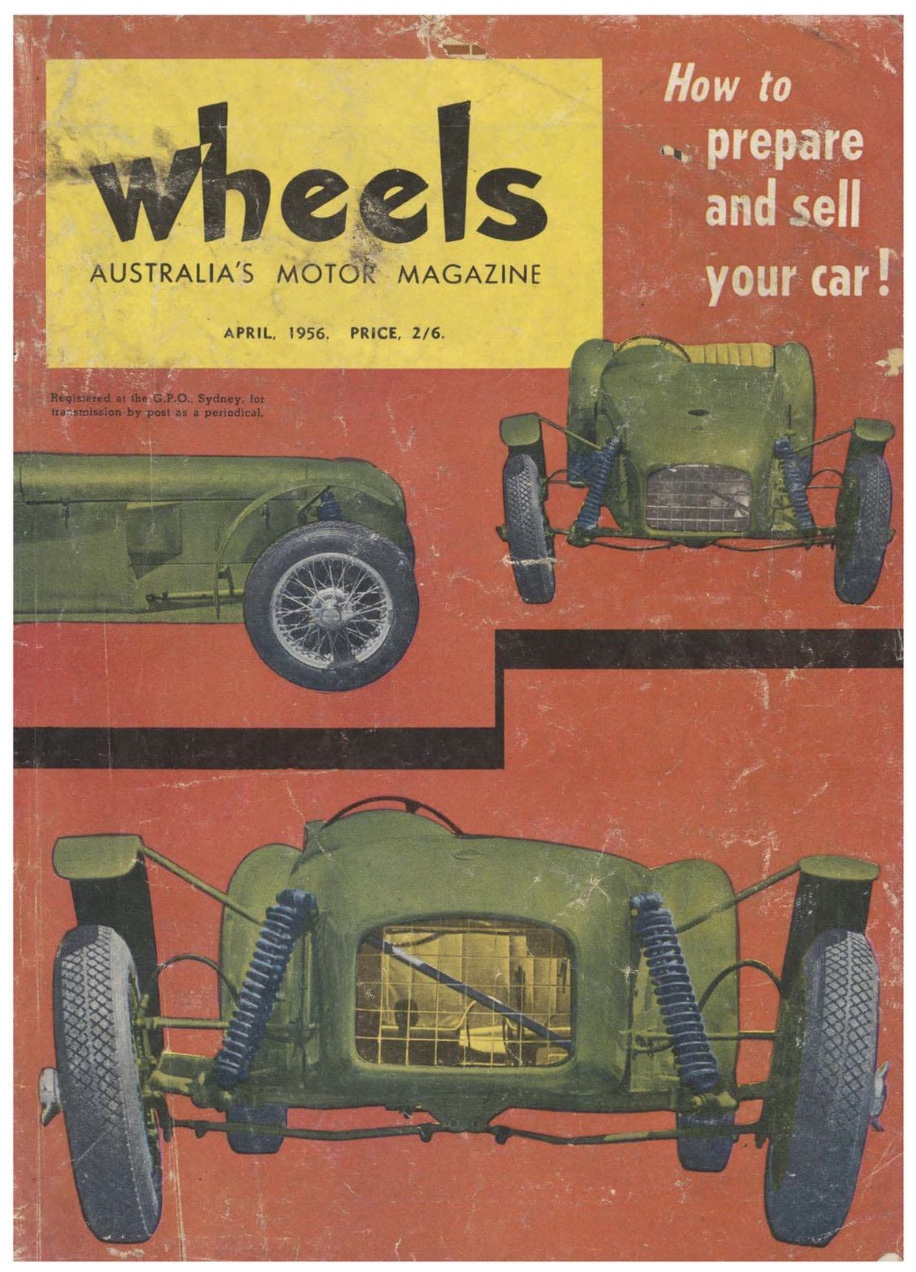
The car was significant enough to make the cover of Wheels magazine, Alec’s race exploits in the car commenced the long run of success Lotus had on the circuits of Australia- the marque won an Australian Grand Prix- the 1968 race at Sandown in which Jim Clark’s Lotus 49 Ford DFW was victorious with one Gold Star Championship hard won by Leo Geoghegan, Lotus 59B Waggott TC-4V 2 litre in 1970.

Wheels reported that Alex Strachan was the President of the New South Wales North Shore Sporting Car Club and quoted the car’s vital statistics as 72bhp from the 1100cc Coventry Climax FWA four cylinder engine, 8 cwt in weight and a top speed of 110mph.

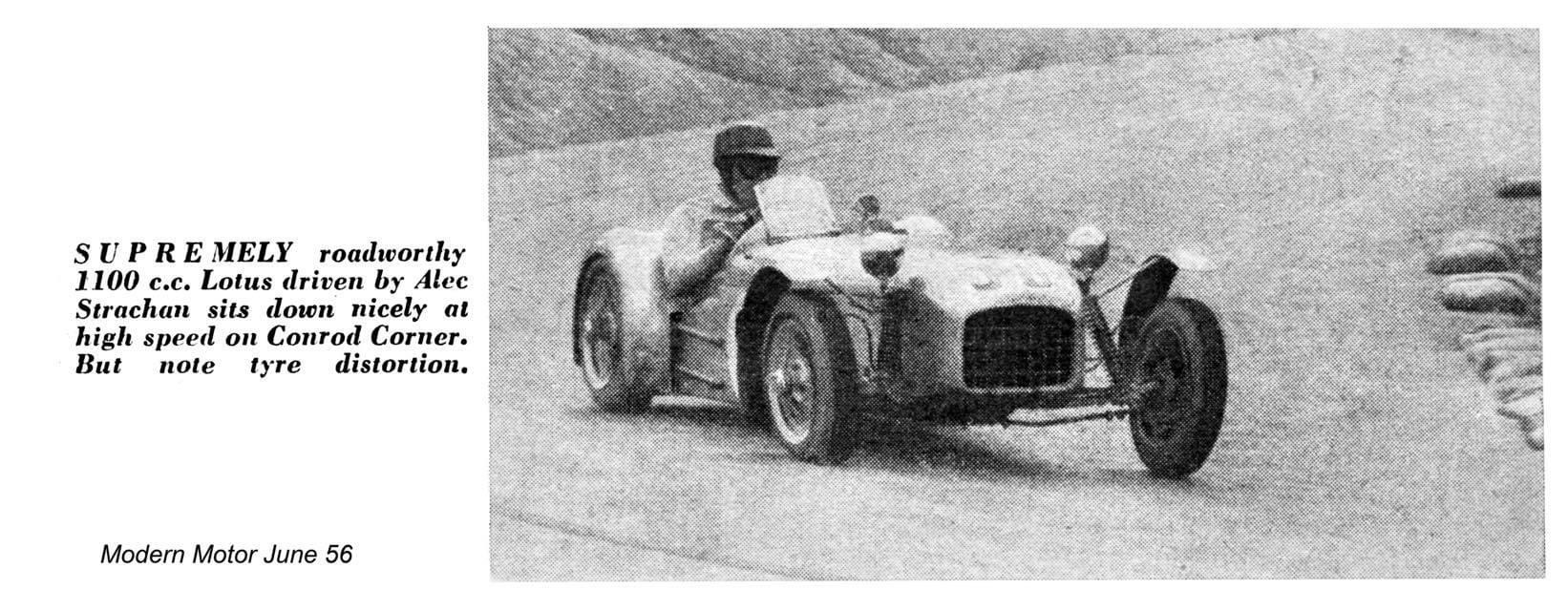
Doug Chivas was the lucky driver given the opportunity to race the new machine, these two photographs, I love the one below with the cravat blowing in the breeze, were taken at Mount Druitt on 24 April 1956- the cars debut meeting i wonder?

Australian racer/restorer/historian, the late Graham Howard later owned this Lotus 6 for decades and wrote about it on ‘The Nostalgia Forum’ during November 2004 ‘…the story in brief is this. Stan Brown who had spent some time with Williams & Pritchard before emigrating (from England to Australia), told me he built the replacement chassis for the Strachan Six after about three race meetings because the factory chassis repeatedly cracked- Strachan felt he could not sell Lotuses in Australia if his ‘demonstrator’ kept cracking its chassis.’

‘The locally built chassis used 2 inch bottom tubes because 1 7/8 inches as original was not available, likewise Stan used paired 1 inch square for the cross-member under the bellhousing and in certain places behind the seats because 2 inch by 1 inch was not available. The original panels fitted without drama and the swap was not publicised.’

‘The replacement chassis was far heavier, but it didn’t break (it twisted but didn’t break). The car therefore had most of its Strachan and subsequent history with the locally built chassis. The de Dion was production Mk 9 and in part of Strachan’s paperwork from the factory the car was actually described as a Mk 9.’

‘The original chassis was once owned by Paul Collins, was bought from him and built up into a race car by Eric Beatty, and is still running…The Viva (Vauxhall) powered car used one of Stan Brown’s own-Lotus like chassis and was completed by Bill someone from around Willoughby.’

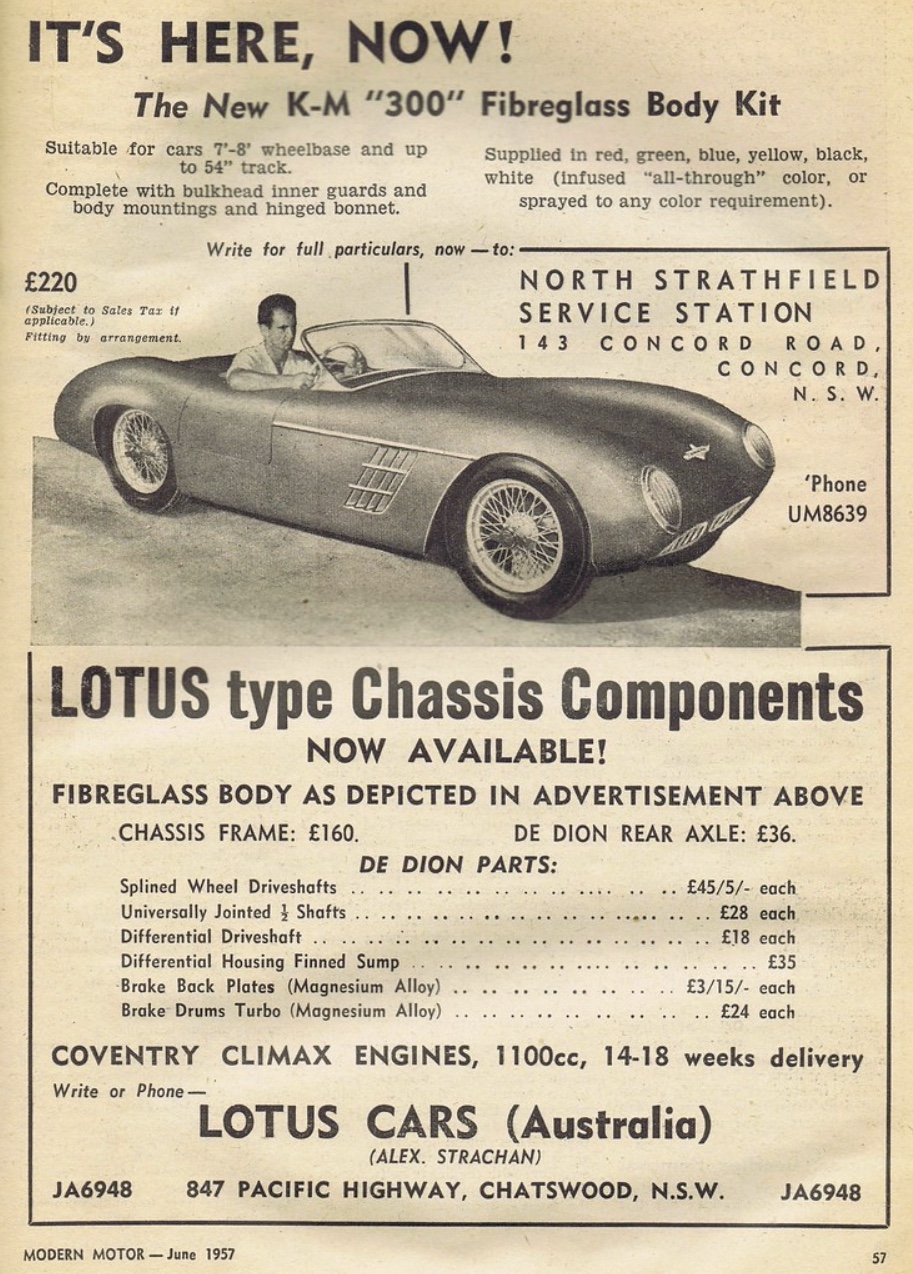
’Stan built an unknown number and variations of these, some of them as “Slotuses” for Strachan to sell (i doubt that was in accordance with Alex’s agreement with Chappers!). They were longer and had fewer tubes. At least two of them have since become genuine Lotus Sixes. Strachan also had patterns made for the final drive case, the de Dion hubs and spiky-finned brakes and front and rear backplates, and castings were made and sold’ as per the June 1957 advertisement above.

Etcetera…

Credits…

Wheels magazine, Graham Howard, Stephen Dalton, AMHF Archives

Tailpiece…

(S Dalton)

Photograph of the ex-Strachan car during the March 2020 Australian Grand Prix carnival after Thursday afternoon’s historic demonstration, Paul O’Connor the current custodian, and cars at this particular event on the move were a very rare thing, Stephen Dalton was lucky enough to be there…

Finito…

(B King Collection)

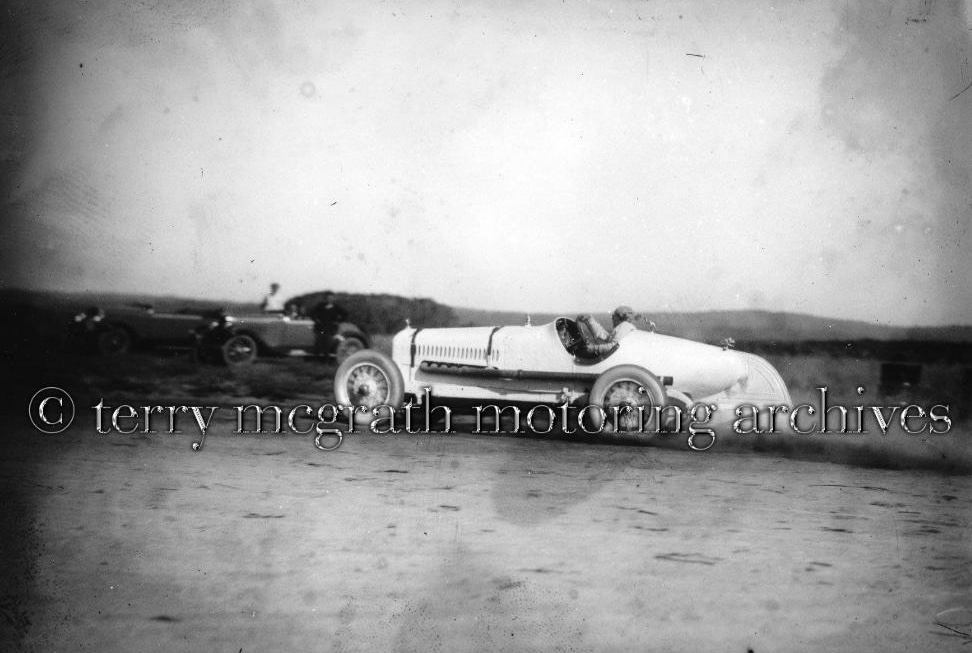
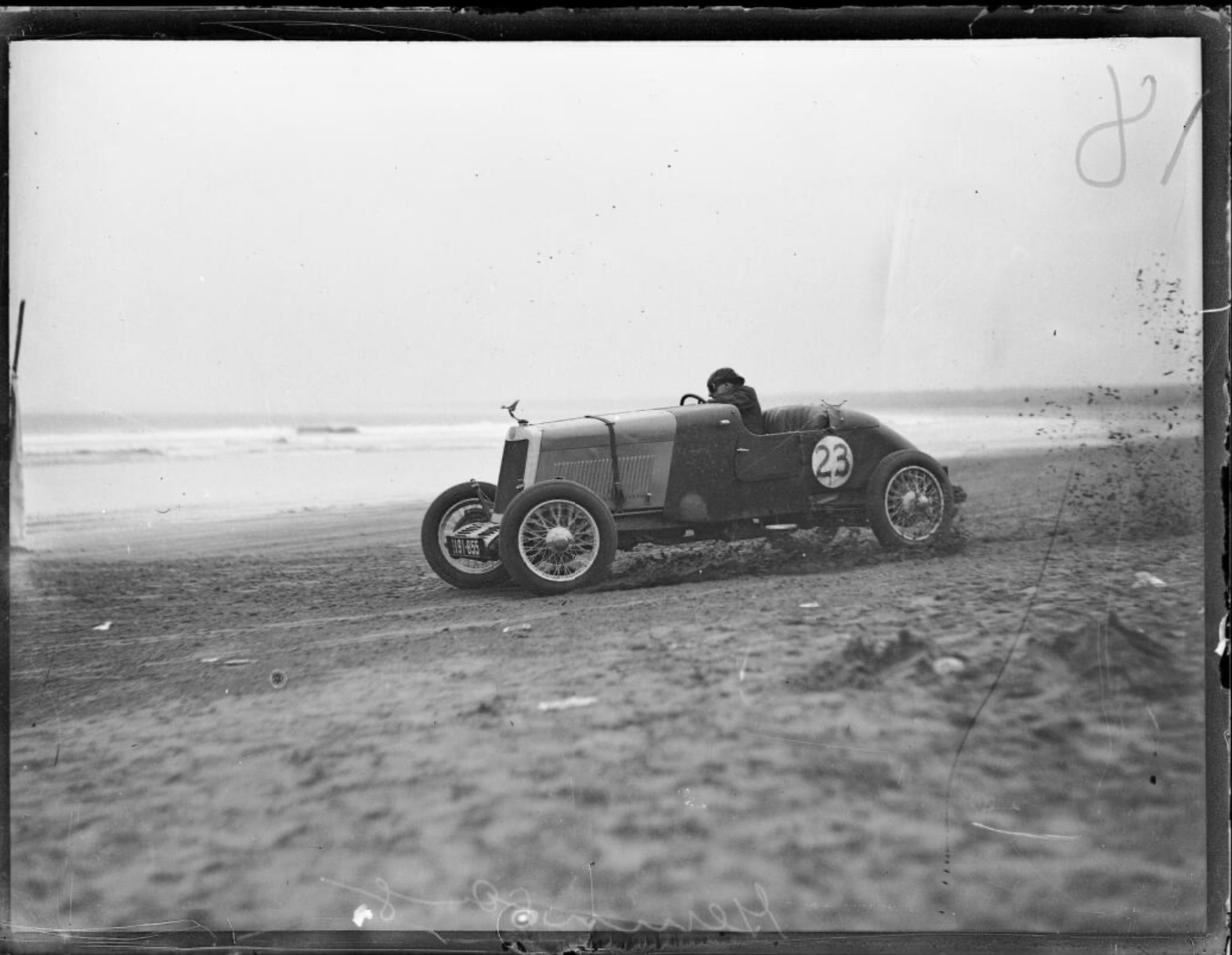
A C ‘Mick’ Carlton and passenger aboard his Lea-Francis Hyper 1.5 s/c, chassis number #14041 during the sprint meeting at Safety Beach, Dromana on Melbourne’s Mornington Peninsula, Saturday 7 December 1929…

It’s amusing to think that a century ago motorsport took place on land upon which at least two of our Victorian readers have weekenders. Let’s deal with the events at Safety Beach first and come back to Mick and Lea-Francis further on.

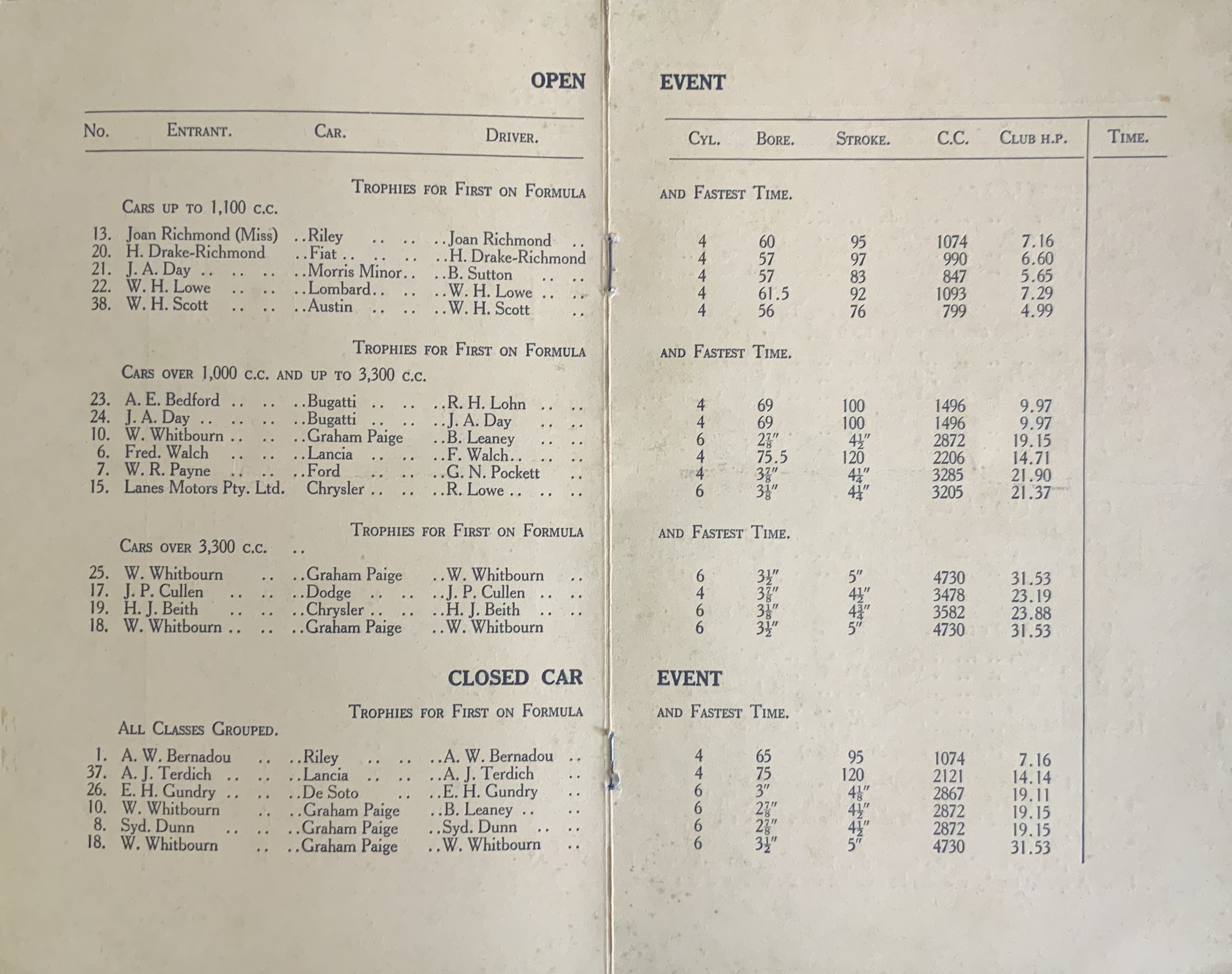
The Royal Automobile Club of Victoria first ran ‘a long series of motor car contests’ at Safety Beach the year before, Saturday 2 December 1928 on a two mile rectangular, sandy gravel course on the ‘Safety Beach Estate between Mount Martha and Dromana’. Cursory research indicates the venue was used from 1928 to 1932.

About 1,000 spectators attended that day making the long journey by car or steamer from Melbourne to Dromana. No doubt the nascent sport was shown to best effect as the chosen course, held on private property – motor racing on public roads was illegal in most states including Victoria – was placed in a natural ampitheatre of hills including Arthurs Seat and Mount Martha towards which the photograph below was taken.

(Rose)

A familiar view to Victorians from Arthurs Seat across Port Phillip Bay and down towards Dromana and it’s pier – the area to the right before the land starts to rise at Mount Martha is Safety Beach. The settlement in the distance is Mornington – its apex is Snapper Point.

The course was 2 miles 173 yards in length, a nice lap with ‘tests for acceleration over a short run’ and ‘for speed around the full circuit’, more than fifty cars entered.

Prominent competitors included Joan Richmond, Riley, and Arthur Terdich in the Bugatti T40 in which he was so quick in the 1928 100 Miles Road Race (The Australian Grand Prix) at Phillip Island in March. Other Phillip Island racers entered included WA Terdich – variously called Bill or Ab – Senechal, Harold Drake-Richmond in the Maurice Shmith owned Fiat 509 and Jack Day’s Bugatti T37 which had been very fast in the latter stages of that first road race in Australia.

Other cars of interest/racers of later prominence included AW Bernadou, Riley, Maurice Shmith in a Bugatti, Herb Beith aboard a Chrysler and Arthur Terdich’s Lancia Lambda, perhaps running his road car in addition his Bugatti.

Ground level’ish view looking from near ‘Anthony’s Nose’, the Point between Dromana and McRae towards the Dromana Pier with a Steamer in attendance, and on towards Safety Beach beyond. The Nepean Highway, then Arthur’s Seat Road, is that ‘quiet little track’ in the foreground (Rose)
Harry Cooper’s 4.8-litre Ballot 5/8 LC. Safety Beach, 2 December 1928 (E Adamson photo published in ‘The Argus’ 4 December 1928 via Terry McGrath)

The final event of the day was a five lapper, about 10.5 miles, between the fastest car of the day, Harold Cooper’s 4.8-litre straight-eight 1919 Ballot 5/8 LC  ‘Indycar’, which covered the course at an average speed of 59.96 mph, ‘a remarkable performance, in view of the fact that the course was practically a rectangle with four almost right angle turns’, and an aircraft piloted by Keith Farmer.

‘Cooper sped the 10.5 miles, up till the last lap the plane gave the appearance of not been fully extended, but in the run home it speeded up and won. The contest created considerable excitement among the spectators’ The Argus writer concluded.

Other snippets about the meeting were that the serious boys were down the weekend before to test further improvements made in the final week by ‘gravelling and oiling the course’ – shades of Phillip Island final preparations between 1928 and 1935.

That ‘Speedboat racing will be another feature of the programme’ suggests the road was parallel with and very close to the Safety Beach foreshore. The ‘Dromana Progress Association’ looked after the ‘special catering arrangements’ but I doubt ice-cold ‘frothies’ were on the menu.

Noted future Aussie International Joan Richmond made the dailies the following year, 1929, when she overturned her Riley 9 during practice, ‘the car was smashed, but the driver, whilst concussed, and passenger escaped serious injury. Miss Richmond is known as a capable and daring driver.’

Joan Richmond and Mollie Shaw with the Riley 9 Brooklands (the ‘Young Riley’ in Joan-speak) during the 1931 AGP weekend at Phillip Island, fifth outright and second in the 1500cc class. ‘We had to part our hair in the middle to get our helmets on’ Joan quipped. The car was a Riley 9 chassis with ‘a light fabric body made by Mr Thomas of the Elite Motor Body Works’ (unattributed)

Despite the onset of the Great Depression, 3,000 spectators attended Safety Beach again in 1929, the crowd was perhaps bouyed by the two successful Australian Grands Prix held not too far away at the Island in March 1928 and 1929.

Whilst Hope Bartlett’s 2-litre Grand Prix Sunbeam was not entered at Safety Beach, a long way from his Nowra base, there was no shortage of ‘French blue’ exotic racing machines including Alan Cooper’s big, booming Ballot driven so well by brother Harry, as well as the Terdich, Junker, Jenkins, Bedford and Day Bugattis plus Clarrie May’s Austin 7 s/c and Harry Beith’s very quick Chrysler.

By any measure it was a strong entry of cars for the rapidly growing number of racing enthusiasts. The meeting was also a gala social occasion, by the end of the hot summers day the lovely, long cream dresses of the ladies took on the light brownish hue of the dust created by the cars which was readily picked up by the strong onshore breeze. Once may well have been enough for many of the ladies!

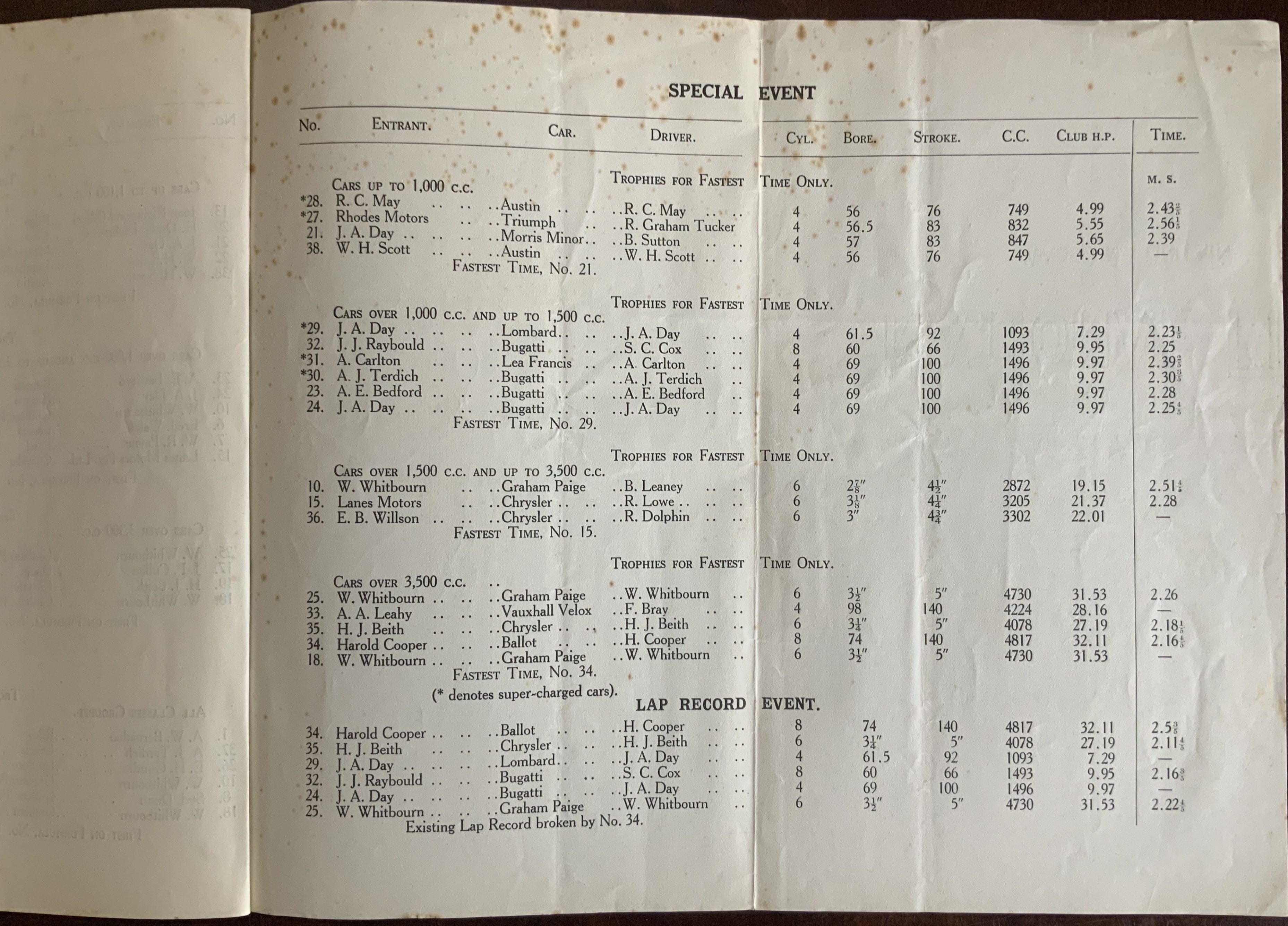
The ‘feature event’ late in the day was a lap record contest for the six cars which made the fastest time of the day, who then ran off to attempt to lower the existing lap record of 2: 6.5 seconds.

The Herald’s advance coverage of the race speculated that the final six drivers/cars may include Cooper, Jack Day’s Lombard s/c (not entered), Arthur Terdich’s Bugatti T37A and Harry Beith’s Chrysler Special.

Cooper, in a repeat of his pace the year before won again aboard the ex-Louis Wagner 1919 Indianapolis Ballot doing a time of 2 minutes 5 3/5 seconds, then came Beith’s Chrysler and Sydney Cox’ Bugatti. Contrary to some reports it appears this event was not a massed start but rather one machine at a time with each getting a ‘flying start of 20 chains’.

The Melbourne Herald put the day in context, ‘In view of the existing ban (which seems to have applied everywhere in Victoria other than the Peoples Republic of Phillip Island, where, bless ’em, the local shire/council basically said up-yours to Spring Street – the Victorian State Government), and the police suppression of events held on public roads, special interest attaches to the speed contest for motorcars…’

In other words a good clean, problem free event would advance the cause of the sport.

By that stage, as noted above, there had been two Grands Prix on Phillip Island’s 6.5 mile rectangular gravel course, at the time its certainty as a venue was far from guaranteed given the absolute constitutional power of the Victoria Government’s  sovereignty over and above that the said Peoples Republic of Phillip Island.

I love the local shire’s up-yours-cocko attitude to State law but the Light Car Club and the Shire of Woolamai (aka the PR of P Island) would have been in a pickle, to say the least, had a vexatious litigant had a crack at ’em in the event something went horribly wrong- an errant car killing some punters in the crowd or some such.

Discussions with racers/restorers/historians/authors Tony Johns and Bob King reveal quite a large, and still growing number of Mornington Peninsula venues being identified including the Balcombe Army Camp between Mornington and Mount Eliza and Safety Beach as sprint venues. Frankston, the Moondah Estate in Grices Road (now Kunyung Road) Mount Eliza, Arthur’s Seat, Cape Schanck and Dromana all held hillclimbs.

Who can add to this list?

Dromana Hotel on what is now the Nepean Highway, grand accomodation for the competitors (Rose)

The bountiful land, streams and blue waters of the bay were the home and playground of Australia’s indigenous people for sixty-thousand years before we whiteys rocked up, it didn’t take too long for entrepeneurship, money and steam power to open up the bay.

Steamer services extending to Frankston, Mornington, Dromana, Sorrento, Queenscliff and other places in addition to railway lines to Frankston, Mornington and Geelong opened the new colony in the 1880s.

In days of yore before car ownership became commonplace post-war (WW2) people stayed in hotels and guest houses on their holidays in country and coastal locales such as those listed above. This is the reason we have still large numbers of grand, if often run-down hotels and guest houses in places like Mornington, Sorrento, Queenscliff, Lorne, Port Fairy, Daylesford, Healesville, Mount Beauty and other places, to stick with Victorian examples.

Many such properties were torched in ‘Jewish Stocktakes’ (as my dad in the politically correct (sic) fashion of the day described) in the fifties and sixties as burgeoning car ownership extended the reach of the average citizens holiday horizons beyond many of the towns listed. Many establishments in these places were no longer viable so a surruptitious phone call to ‘Louie da Torch’ and a brown paper bag full of pound notes was not uncommon with insurance assessors not having the forensic services to hand as a defence to the obvious the way they do now. My great-grandfather’s guest house, ‘Montpellier’ in Healesville went up in smoke thanks to Louie’s intervention a decade or so after the family sold it.

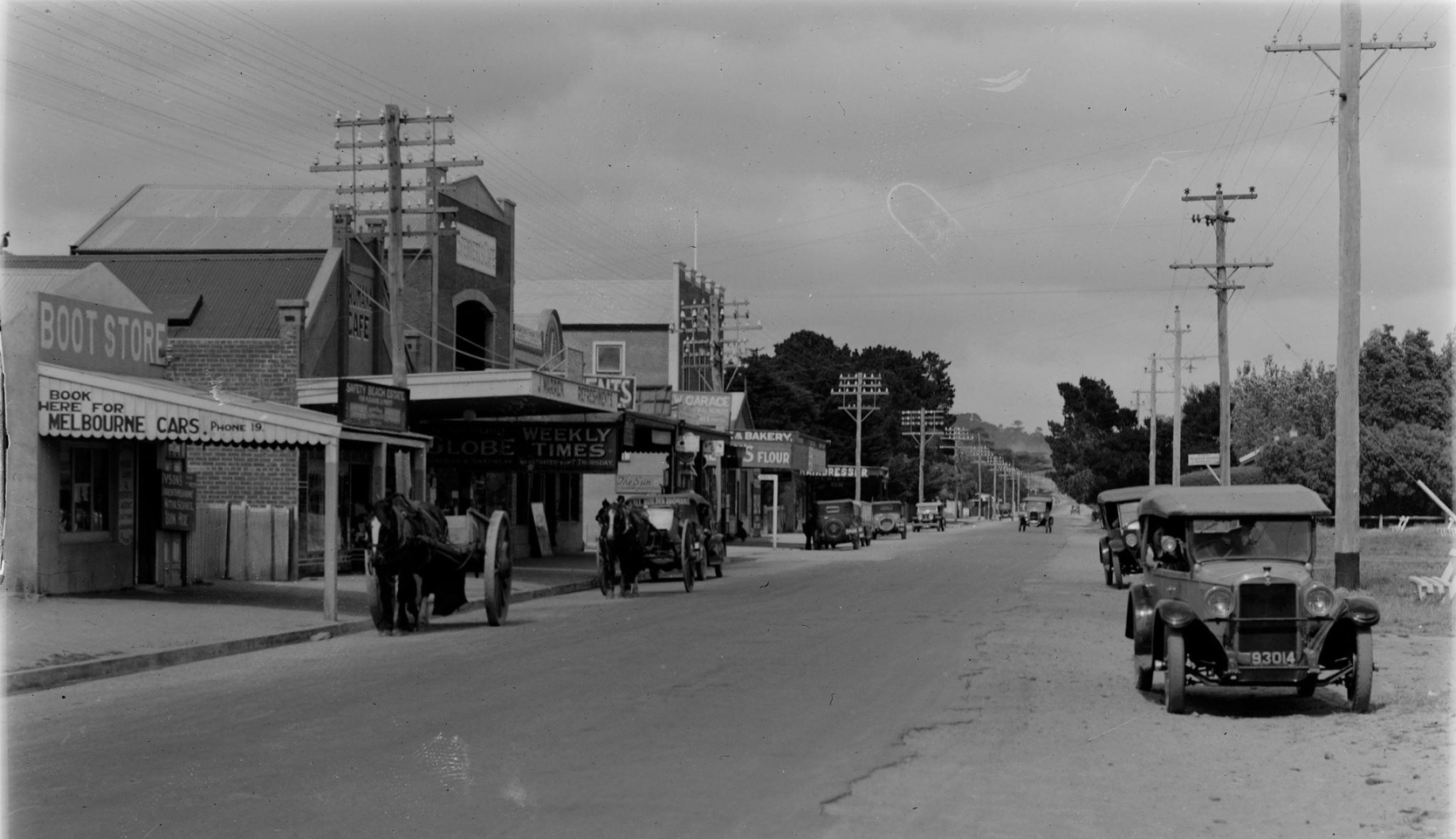
Nepean Highway at Dromana looking west towards McRae/Portsea- makes and model folks (unattributed)

The Herald’s December 1929 event coverage very kindly summarises the Supp Regs which are interesting, the deft hand of officialdom was as prevalent then as now – not quite as bad as now perhaps!

There were five classes- stock standard (aka Group E ‘Series Production’!), open, closed car, special and lap record.

The stock standard event was open to any financial member of the club (RACV) whether connected with the trade or not, but sports model cars were ineligible. ‘A stock standard car is one regularly supplied to the public in the usual way of the trade and fitted with standard type body, hoods and guards. The windscreen can be removed and the carburettor and magneto timing adjustments altered.’

‘In the open event, sports models are eligible, but super-sports models, special cars and supercharged cars are ineligible…cars must run in complete touring condition with proper body guards, hood, lamps, efficient silencer and carry a spare wheel, or spare rim with tyre attached.’

‘Women will not be permitted to drive in the event unless they are the bona-fide owner of the entered car.’ In a an interesting twist of logic ‘For the closed car event sports models are prohibited, but women are allowed to drive’ – which i guess means if ‘the wife’ drives the family machine down to the shops to Domain Road they can have a crack at the race.

‘The special event is open to any financial member, and cars can compete fitted with superchargers and stripped of guards, screens, hoods, batteries and spares. Lady drivers are ineligible’. Given the differentiation between ‘women’ and ‘ladies’ i wonder if ‘women’ could compete in the special event that ‘ladies’ were specifically excluded from. Hmmm, one for the lawyers.

Whilst the Victorian Light Car Club limited its Australian Grand Prix to cars of a maximum of 2-litres supercharged or otherwise, this event was divided into 850cc, 1100cc, 2200cc, 3300cc and over 3300cc classes, hence the great variety of cars.

Etcetera…

(B King Collection)

It’s funny how stuff sometimes happens.

I was over at Bob King’s place raiding his photo archive to do the 1928 Australian Grand Prix magnum-opus a few weeks ago. At the end of that exercise we were talking gobshite and going through some other stuff- Herald-Sun shots Bob rescued from the ‘to be chucked out’ pile.

The Mick Carlton Lea Francis shot, marked ‘Safety Beach 1928’ caught my eye – ‘WTF is that Bob? I’ll have that one please!?’ ‘Safety Beach, well bugger me!’, in the words of the great George Pell, I thought.

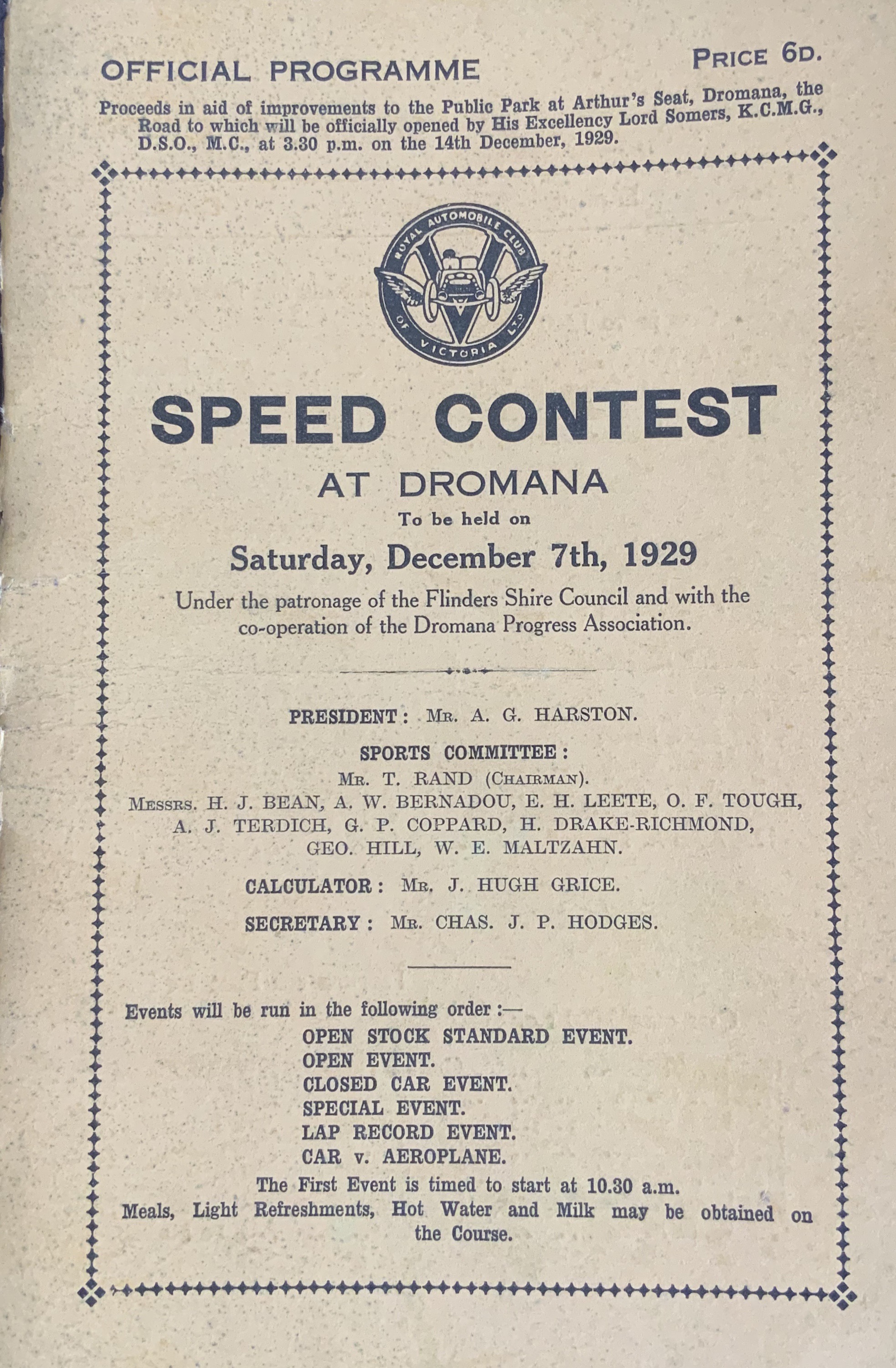
So off I go – Trove away and learn some new stuff, happy days and draft most of this piece. Then I went back to Bob’s for another Covid 19 friendly play-date last week and lo and behold, in amongst a relatively small number of old ‘programmes’, was the program for the meeting- and the results sheet! Sometimes, ya just get lucky.

(B King Collection)
(B King Collection)
(B King Collection)
(B King Collection)
(B King Collection)
(B King Collection)
(B King Collection)

Peoples Republic of Phillip Island Postscript…

I really have been enjoying my ‘Peoples Republic of Phillip Island’ jokes, even if it they were becoming a bit thin.

A quick glance of John Blanden’s ‘A History of Australian Grand Prix 1928-1939’ 1929 race chapter reveals that constitutional matters were finally in hand and that succession of the smallish island in Westernport from the Commonwealth of Australia was finally rendered unnecessary- the battalion of Lee Enfield 303 toting sheep famers could be stood down.

‘At the (1929 AGP results prize-giving) presentation smoke-night at the RACV Hall in June , Arthur Terdich was presented with first prize, a cutlery cabinet. In addition Wally Robertson received a clock, Noel Langton a silver cup, Reg Brearley a knife chest, Harry Jenkins a pair of binoculars, Jack McCutcheon a manicure set and John Bernadou the RACV trophy.’

Of all the class place-getters only poor old Cyril Dickason and Bill Lowe didn’t get gifts- what a bummer, mind you, given the offerings perhaps they considered themselves the fortunate ones!

To matters more germane.

‘Mr Daly of Phillip Island Council, speaking on behalf of the residents, announced that after negotiations with Brigadier-General Blamey, the Country Roads Board and the Public Works Department, a Bill was to be passed through State Parliament to enable racing to be held on twelve days a year.’

‘Until this time the events had technically been held illegally. However, the authorities had acknowledged the benefits to the island and so the bill had been drafted’ Blanden wrote.

All of the two-bit constitutional lawyers amongst you will advise your clients that a bill does not become law until it passes the two houses of the Victorian State (Tammany Hall) Parliament and gains royal assent – that is the State Governor signs the bill over a gin and tonic or three.

Lets assume though, that the process above was all hunky-dory by 24 March 1930 which makes the 1930 AGP the first held at Phillip Island which was held legally. I Luvvit given all of the ‘Pillars of The Establishment’ involved…

A.C. ‘Mick’ or ‘Mike’ Carlton…

I started this article with a shot of Carlton’s Lea-Francis Hyper, remember?

He was a Melbourne Herald ‘muttering rotter’ in the words of the great Australian motoring writer Romsey Quints aka Bill Tuckey (motoring writer). John Blanden records Mick as a journalist with RVA Automobile & General News Service, whatever the case he was a motoring writer.

Carlton used the car from at least 1929 to 1931 extensively in trials, hillclimbs, reliability events, speed events such as Safety Beach and an Australian Grand Prix. He rode with Harry Jenkins to fourth place in a Bugatti T30 at Phillip Island in the 1929 AGP and then jumped to the other side of a car in 1930 – aboard the Lea-Francis. In its pre-event publicity The Herald wrote that Carlton ‘had in this car one of most formidable British entries, in its new very low built form it should prove extremely fast, while it’s strength and comfort should both prove helpful in the long race’ of 200 miles.

Come raceday the little car failed to finish after Mick left the road at ‘Young and Jacksons’ corner on lap 2 where he ploughed through a hedge and damaged a wheel which he replaced with the spare. He restarted but withdrew as the rear axle was damaged in the off, the race was won by Bill Thompson’s Bugatti T37A.

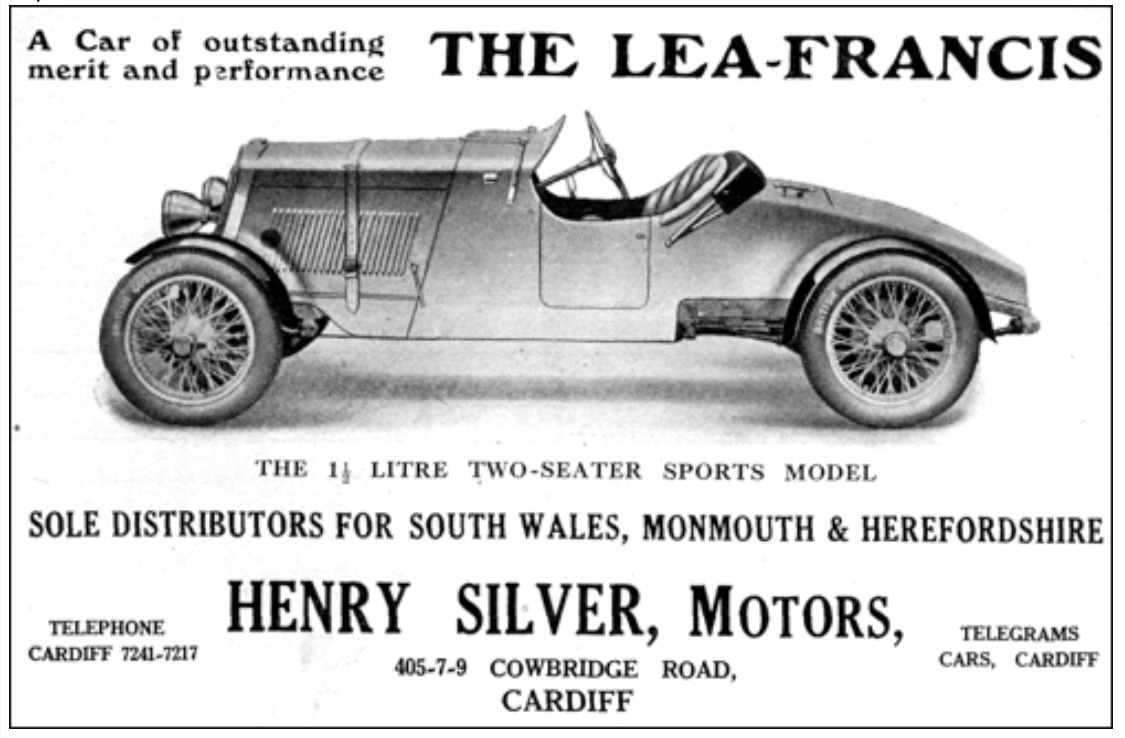
These little Cozette supercharged 1496cc, pushrod OHV Meadows four cylinder powered two-seater ‘Leafs’ would have been a really cost effective ‘all round’ machine for Australian motorsport at the time. The car below is chassis #14099, this Hyper was owned and raced by Mrs JAS Jones and other drivers on her behalf in New South Wales. Ian Goldingham advises ‘the story of the Australian Hypers is steadily gaining momentum…with at least six, maybe seven Lea-Francis S Type Hypers’ delivered to Australia ‘in period’.

Beach racing of another kind. Mr RG Potts in the JAS Jones owned Hyper on Gerringong’s Seven Mile Beach, NSW on 10 May 1930 (Fairfax)
Vida Jones in her Hyper, date and place unknown (A Patterson)
None of them look happy, a bitter Melbourne winters night during, or perhaps at the start of a trial, Mick Carlton is the guy with the peaked cap looking sideways third from the right. The Lea-Francis was fitted for this event with its touring body (I Goldingham Collection)
Shot as above uncropped – both Hyper and Lancia Lambda are Carlton’s cars. The ‘Metropolitan Ice & Fresh Food Co Pty. Ltd’ was located in North Melbourne and had a ‘storage capacity of 60,000 mutton carcasses’, handy to know – the location is outside their front door it seems. The spot has the feel of an event starting point about it with competitors very well rugged up. Checkout the guy second from left at the back – he looks like a crook from central casting – one of Squizzy Taylor’s gang maybe! (I Goldingham Collection)

After publication Kiwi Lea-Francis owner/restorer/historian/enthusiast Ian Goldingham made contact and provided additional photographs and this information from Max Gregory’s ‘Lea-Francis in Australia’.

‘In Victoria both A Charlton and R Whiting used their Hypers competitively, former Bugatti conductor, Mick Carlton being the most notable.’

‘He was a thoroughly dedicated competitor who left nothing to chance in his preparations and had bought the car in chassis form, for which he obtained two bodies, a tourer and a racing monoposto, which were alternated as use dictated.’

‘Mr Phil Smith recalled how he and some Robinsons mechanics served as Carlton’s pit crew for the 1930 Grand Prix at Phillip Island. Unfortunately Mick lost time with an unscheduled pitstop and was attempting to make up ground when raised dust from a spin-out at Young and Jackson’s caused him to take to the ti-tree scrub, bending his axles.’

‘Mr Smith also remembered Carlton entering a fuel economy test sponsored by Commonwealth Oil Refineries (now BP) and his preparations went as far as removing the supercharger and some piston rings and replacing wheel bearing grease with oil. A great deal of fine tuning was done as the car was driven round and round the Albert Park Lake and all to good effect as the car was a clear winner.’

‘A more appropriate victor for the Hyper which came to mind was the climb at Wheelers Hill in 1931. Mr Smith retains a vivid memory of Carlton cresting the hill at a speed of 83 mph from a standing start. Bob Chamberlain also has a keen memory of that day when the existing record was broken three times, as not only did the Hyper make fastest time of the day but the Chamberlain Special, first time out with Norton barrels on the Indian crankcase, and a Bugatti also beat the old record. Mick Carlton late the motoring news for the Herald newspaper in Melbourne’ Max Gregory concluded.

Mick Carlton ‘in the cockpit of his locally bodied car of which we know very little’ wrote Ian Goldingham (I Goldingham Collection)

Utterly Irrelevant and Pointless…

(B Gaica)

Lea Francis of a different sort.

Have I flagrantly glorified the fabulous female form in publishing this beautiful photograph? Yep, guilty as charged, but only in the name of art of course.

The Sydney Dance Company performed Louis Falco’s ‘Black and Blue’, a fabulously vibrant work to the music of Harry Nilsson in 1994. I’m getting there, the connection is coming my friends.

The stars of that show were Alfred Taahi…and…da dum – Lea Francis! And I have to say that ‘Leaf’ looked even better in the flesh, every single cell. Just like the Lea-Francis Hyper…

Reminds me, Nilsson Schmilsson was such a good album, ‘wannit?

Credits and references…

Bob King Collection, The Herald 12 May 1924, The Daily Telegraph Sydney, 14 November 1925, JJ Maher in the Sporting Globe 27 April 1927, Melbourne The Argus 3 December 1928, The Herald 13 November 1929, Rose Postcards, Dromana Historical Society, ‘Skilful Skidder’ aritcle by Harry Miller in the 2 December 1928 Sporting Globe, Sporting Globe Melbourne 29 December 1928, Smiths Weekly 23 August 1947, Fairfax Corporation, Branco Gaica, Terry McGrath Motoring Archives, Ian Goldingham Collection including an excerpt from Max Gregory’s ‘Lea-Francis in Australia’, Adrian Patterson

Tailpiece…

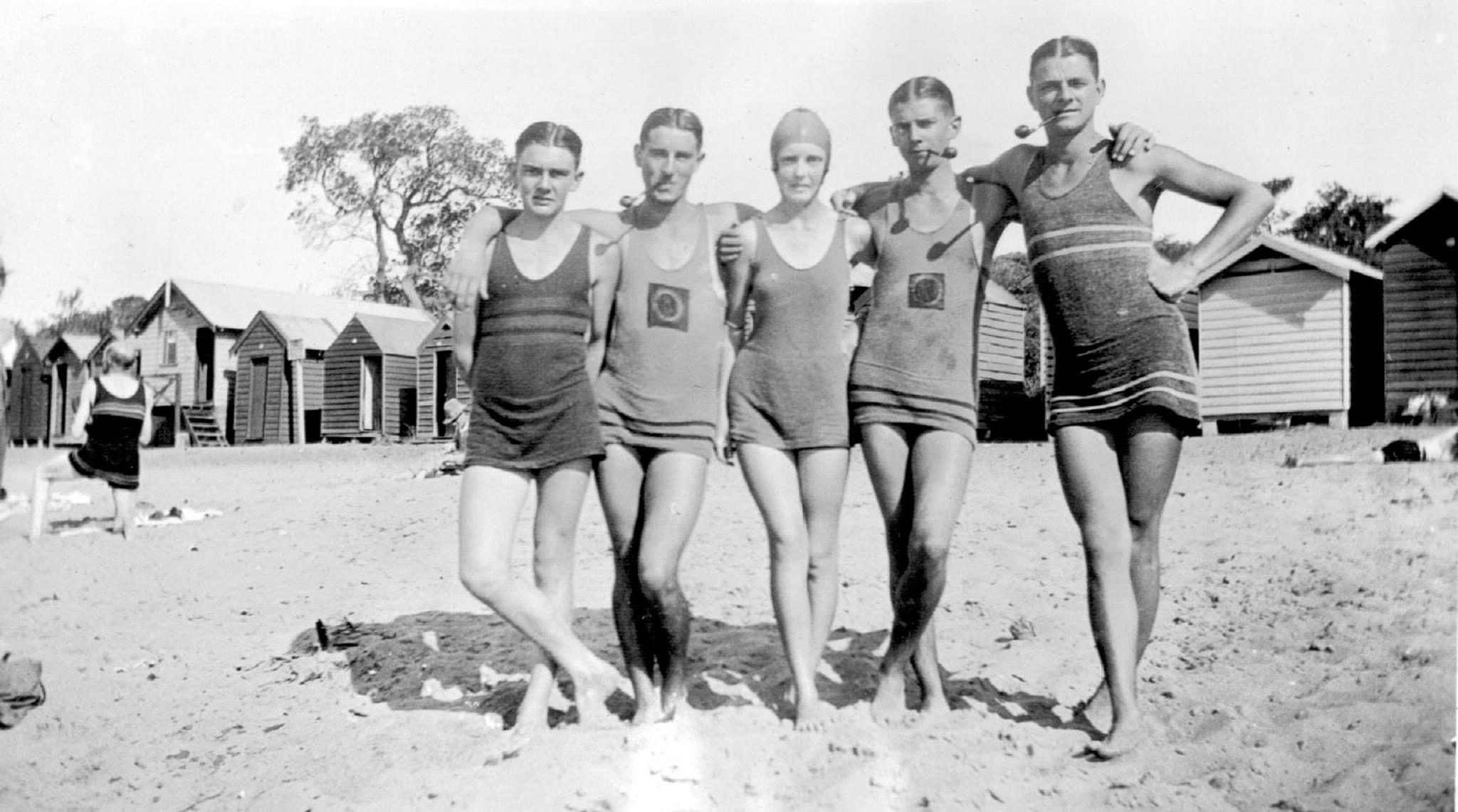
(unattributed)

I’m not so sure the pipes would ‘slay the babes’ these days but it is a fun Dromana shot all the same, and yes, there are still heaps of bathing boxes today all gayly painted in vivid colours.

Finito…

(SLNSW)

Its amazing the interesting stuff ya trip over sometimes…

I’ve written abut the racing career of Wangaratta’s Ted Gray favourably but tangentially in two pieces- in one about his Alfa Romeo Ford V8 and the other about the Lou Abrahams owned Tornado V8s- they are here; https://primotipo.com/2018/02/15/mrs-jas-jones-alfa-6c-1750-ss-zagato/ and here; https://primotipo.com/2015/11/27/the-longford-trophy-1958-the-tornados-ted-gray/

The shot above shows him in his ex-Mrs JAS Jones Alfa Romeo 6C 1750 Zagato Ford V8 in front of Frank Kleinig, Kleinig Hudson Special during the handicap 1946 New South Wales Grand Prix at Bathurst. Ted was fourth and Kleinig DNF in the race won by Alf Najar MG TB Monoposto- article here; https://primotipo.com/2019/11/15/1946-new-south-wales-grand-prix/

I was researching another Wangaratta driver, Ron Phillips when I came upon this gem about Ted’s legendary Wangaratta to Melbourne record breaking run in his race Alfa in a blog by KB Hill…

‘What about the celebrated record attempt, undertaken in the late forties by two Wangaratta personalities, Ted Gray and North Eastern Car Club President, Jack Cox. Here’s a condensed version of the story that Jeff Whitten recounts in one of his publications:

A group of men had been chatting in a local hotel when the conversation turned to how fast a car could travel from Wangaratta to Melbourne (145 miles). Ted Gray drained the last drop of ale from his glass, planted it on the bar and told the small group in a confident tone: “I’ll do it in less than two hours.”

A boast became a bet, and hundreds of pounds changed hands during the next few days. Speculation raged around town. On the day (in April 1946 according to Tony Parkinson) of the attempt Wangaratta’s taxi fleet did a roaring trade, shuttling people to the ‘S’ Bend just south of Glenrowan, for 2 shillings a time. Many spectators thought the Alfa Romeo may fail to negotiate the sharp turn over the railway line. Visions of a wrecked car, hurtling over and over, were probably foremost in the minds of those who were waiting there.

That evening, more than 1,000 people lined Murphy Street as Gray, the Australian Land Speed Record Holder, and his passenger Jack Cox, a Faithfull Street engineer, sat waiting in the Alfa Romeo. The moment the Post Office clock struck 5.30 the Alfa’s engine roared and the pair took off, accompanied by the cheering of the crowd. All along the route, thousands stood in the darkness, shuddering with cold, and expectation.

Telephones ran hot, as people sought updates. In many places the Alfa, with Gray at the wheel, exceeded 110 miles per hour, while Cox hung on for dear life. The car clipped the railing on the sharp bridge over the river at Seymour, but sped on and recorded 112mph over Pretty Sally (Hill).

The railway-gate keeper at Tallarook had been bribed, to make sure that he kept the gates open at a certain time.

With misty rain falling, Gray spent much of the trip peering over the top of the windscreen, ensuring he wouldn’t tangle with cars and transports that hadn’t yet turned on their tail-lights. It enabled him to reach Bell Street, Coburg, in record time.

The trip from Bell Street to the Melbourne GPO took six and a quarter minutes. The pair pulled up in front of the Post Office exactly one hour and 59 minutes after leaving Wangaratta.

Jack Cox climbed out of the car, knees still shaking, while Ted Gray acknowledged the cheers of the crowd…’

Ian Virgo in the Alfa Romeo V8 from Tom Stevens MG TC Spl at Port Wakefield in the mid-fifties , date folks?- the Ford V8 engines Alfa Romeo 6C 1750 SS Zaato was by this stage was owned by Broken Hill’s Bob Jervies (T Stevens)


(J Cox Family)

Postcript…

The power of the internet.

Racer/restorer/historian Tony Parkinson got in touch with the fabulous material below, he wrote ‘I found references to the Alfa Romeo sent to me by John Cox, son of Jack Cox, riding mechanic on the infamous Wangaratta to Melboune run, also shots at Fishermans Bend pus Jack Cox (with blindfold) and Pat O’Keefe, the Alfa front on in Murphy Street Wangaratta, a glorious shot of the Cox & Gray garage and a very young John Cox on a trike in Roy Street Wangaratta with the 6C1750 V8 up the drive.’

Just wonderful stuff, in addition there are various newspaper reports, if anyone can help with the date of the run in April 1946 that would be the candle atop the cake!

(J Cox Family)

Jack Cox and Pat O’Keefe aboard the Alfa Romeo and hamming it up for the local press.


(J Cox Family)

The old beast still looked pretty good in 1946 despite a very active competition life from the time it arrived in Australia- here in Murphy Street, Wangaratta with road equipment- well lights anyway!

Late 1950’s report or retrospective on the run probably from the Melbourne ‘Herald’ at a guess (J Cox Family)


Big sister looks after John Cox whilst his Dad, Jack Cox and Ted Gray’s big V8 engined racer is at rest up the drive.

Imagine the drives possible from there- Wang to Corryong, Wang to Mansfield via the King Valley, Wang to Echuca and so on…apart from the car’s racing of course.


(J Cox Family)

There was obviously plenty of consternation after the veracity of the elapsed time given plenty of money wagered on the outcome- a close run thing it seems!


(J Cox Family)


(J Cox Family)

The two shots of the Alfa at Fishermans Bend- be great to know the date and have the identities of other cars and drivers.

(J Cox Family)

Credits…

Excerpt of an article by KB Hill ‘A Lifetime Passion for Motor Sport’, December 2019 in kbonreflection.wordpress.com, State Library of New South Wales, Australian Motor Sports Tom Stevens Collection via Tony Parkinson, Jack Cox Family Collection via John Cox and Tony Parkinson

Tailpiece…

(J Cox Family)

Jack Cox and Ted Gray’s ‘Hume Garage’ in Wangaratta.

His pre and post war speedway and road racing career across the country was conducted using Wang as a base- was his move to Melbourne from the time he started to race Tornado 1 Ford with Lou Abrahams circa 1954?

You need luck in motor racing of course, Lex Davison made his own with great preparation of his cars by AF Hollins (and others early on), Ted Gray was keeping Lex’ Ferrari 500/625 and Stan Jones Maserati 250F at bay at Bathurst in October 1958, he really, coulda-shoulda-woulda won the Australian Grand Prix that year, cracked suspension mountings caused his retirement.

An under-rated driver i reckon…

Jones, Gray and Davison, Hell Corner, Mount Panorama during the 1958 AGP (AMS)

Finito…

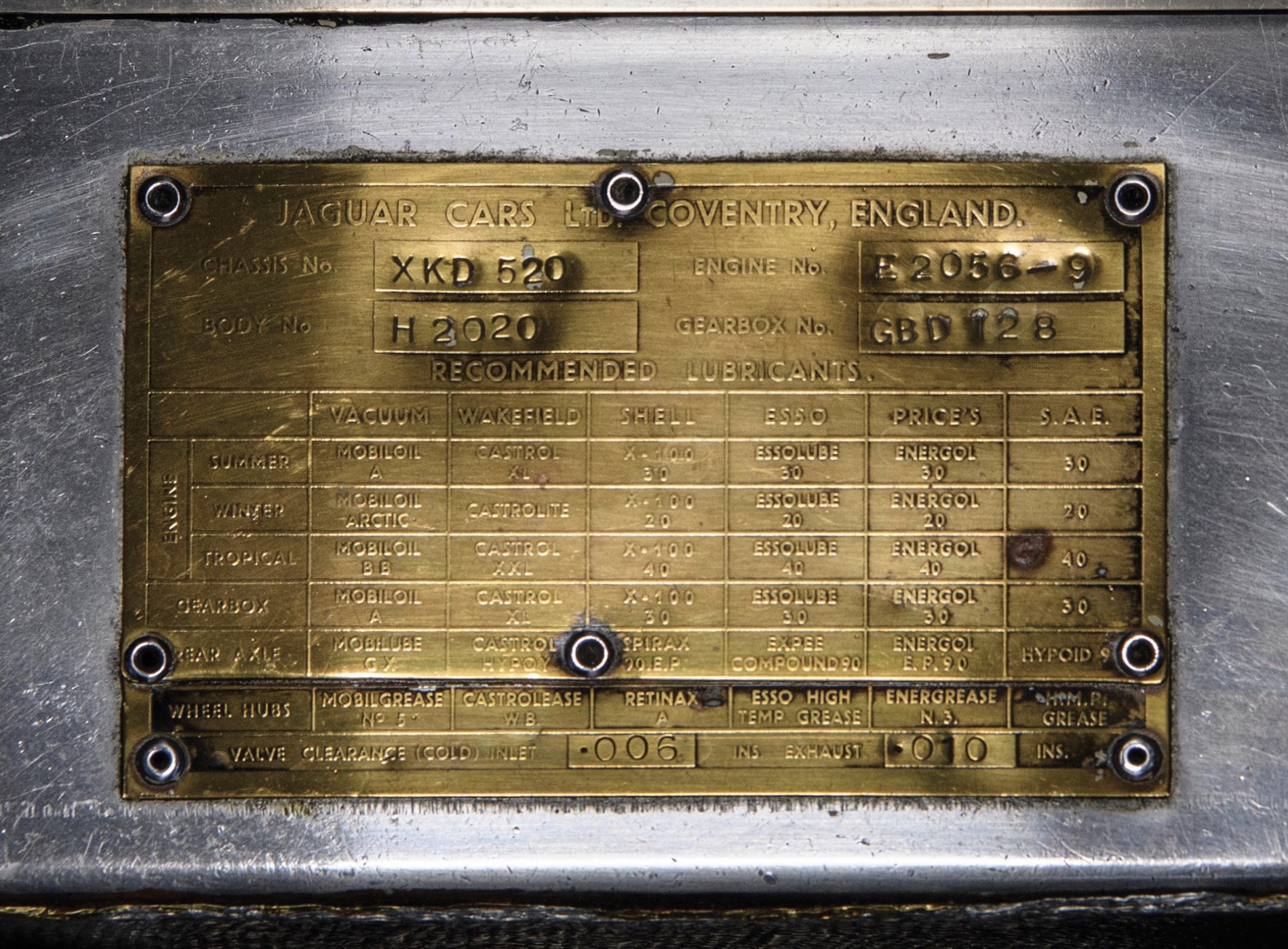
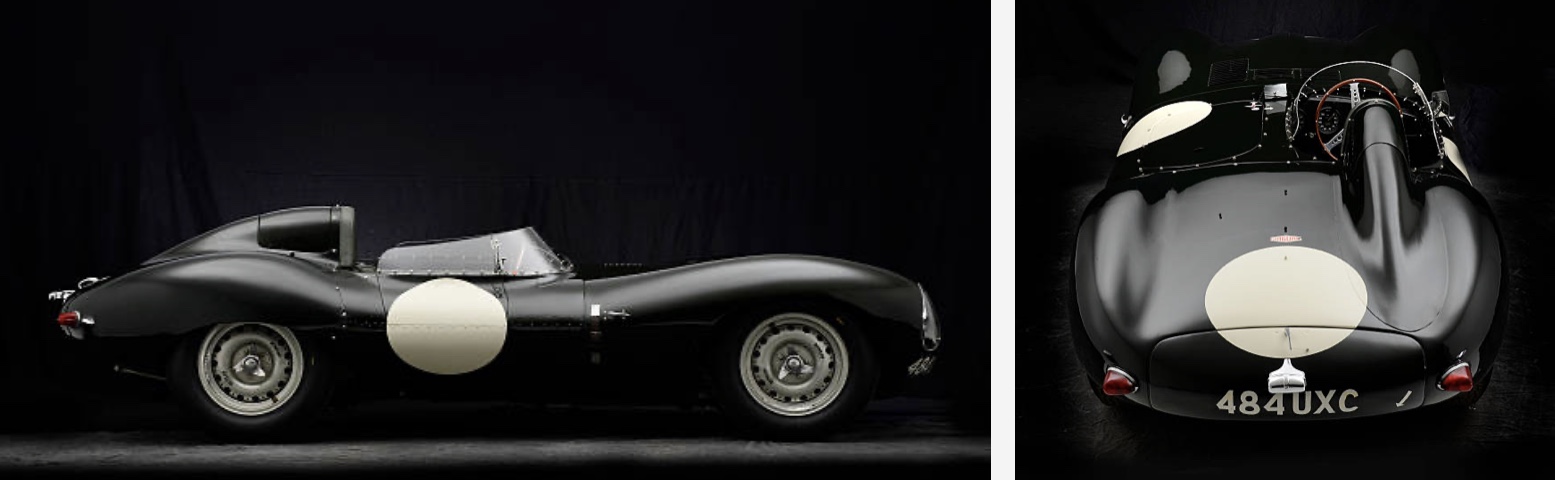
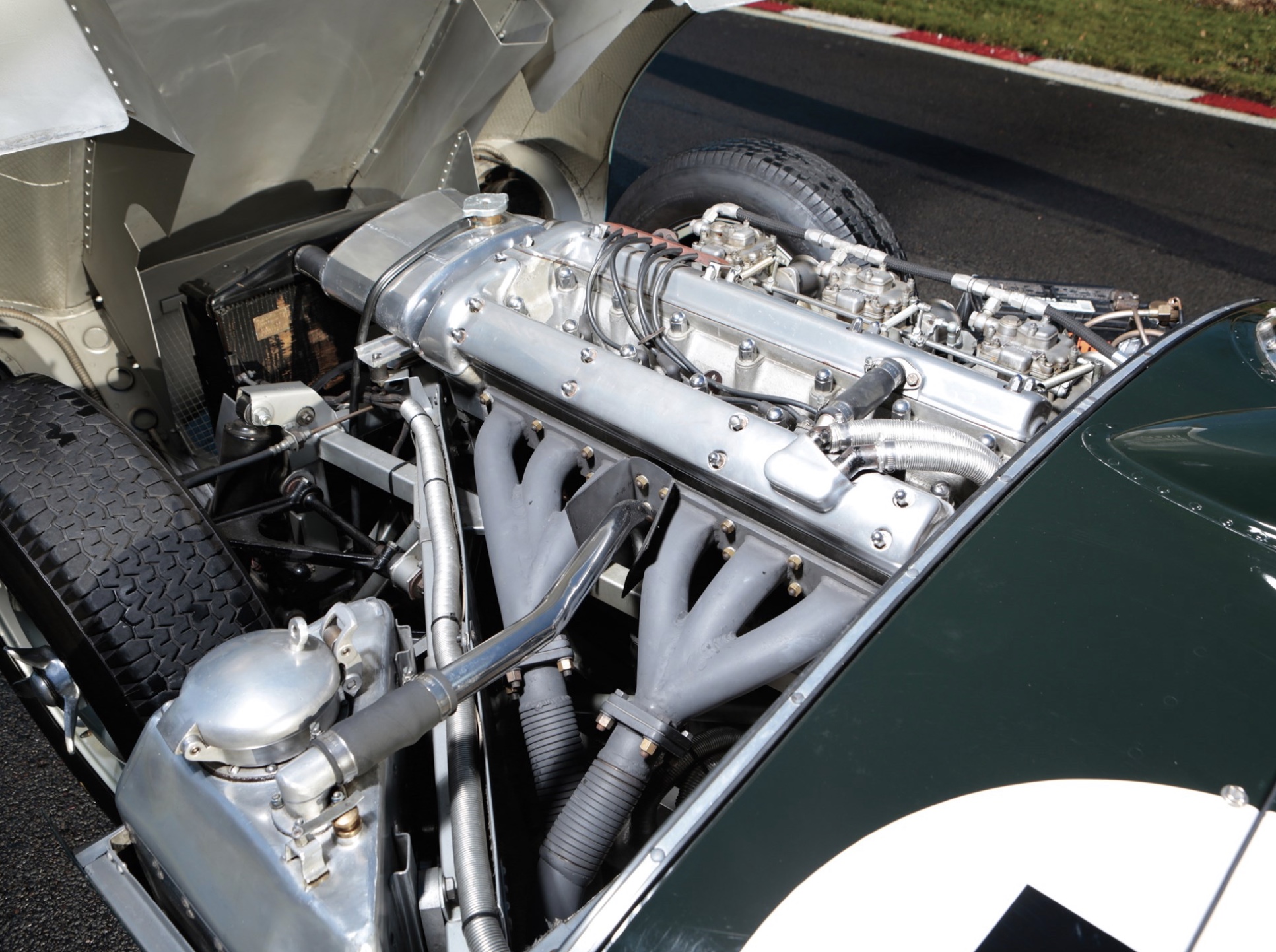
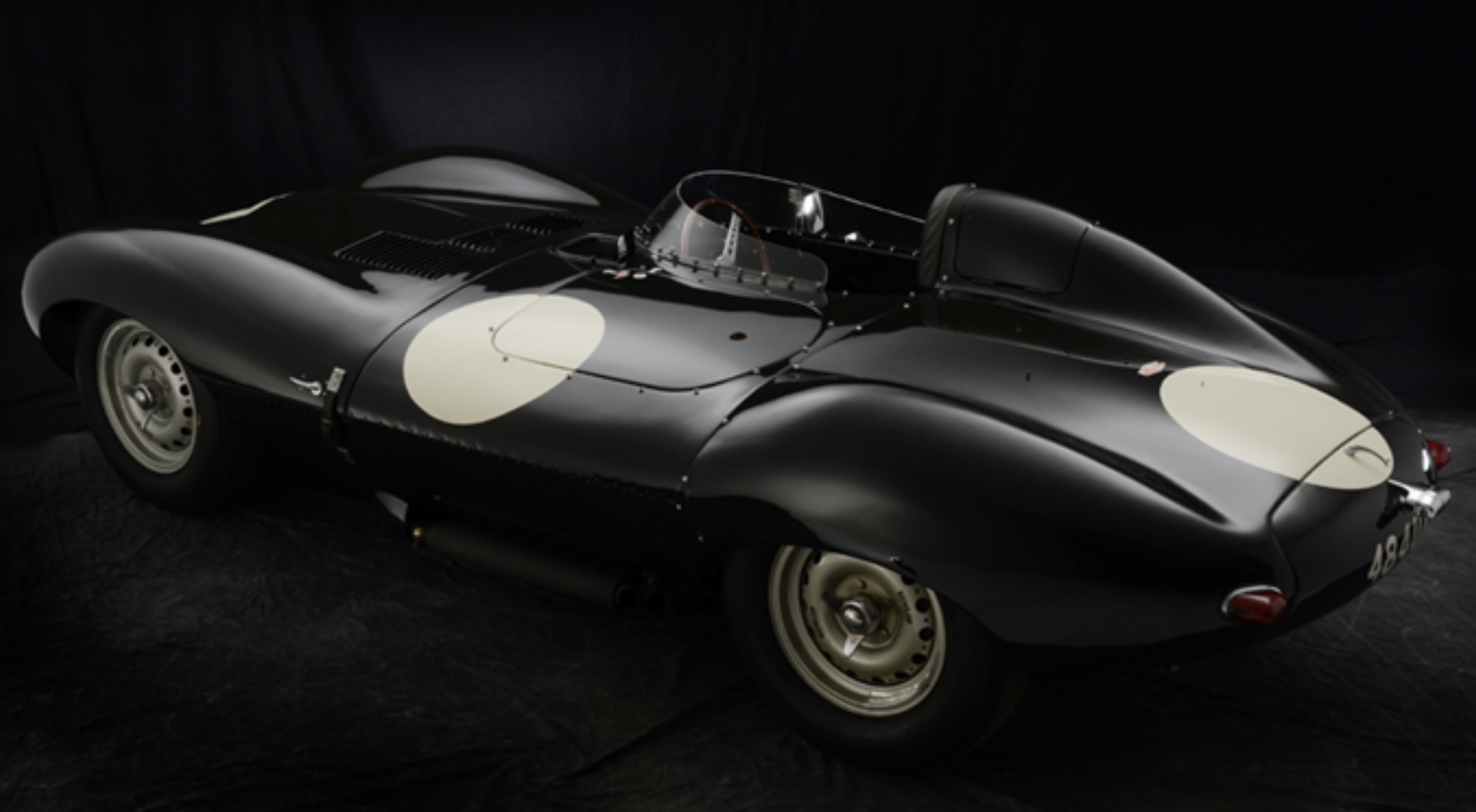
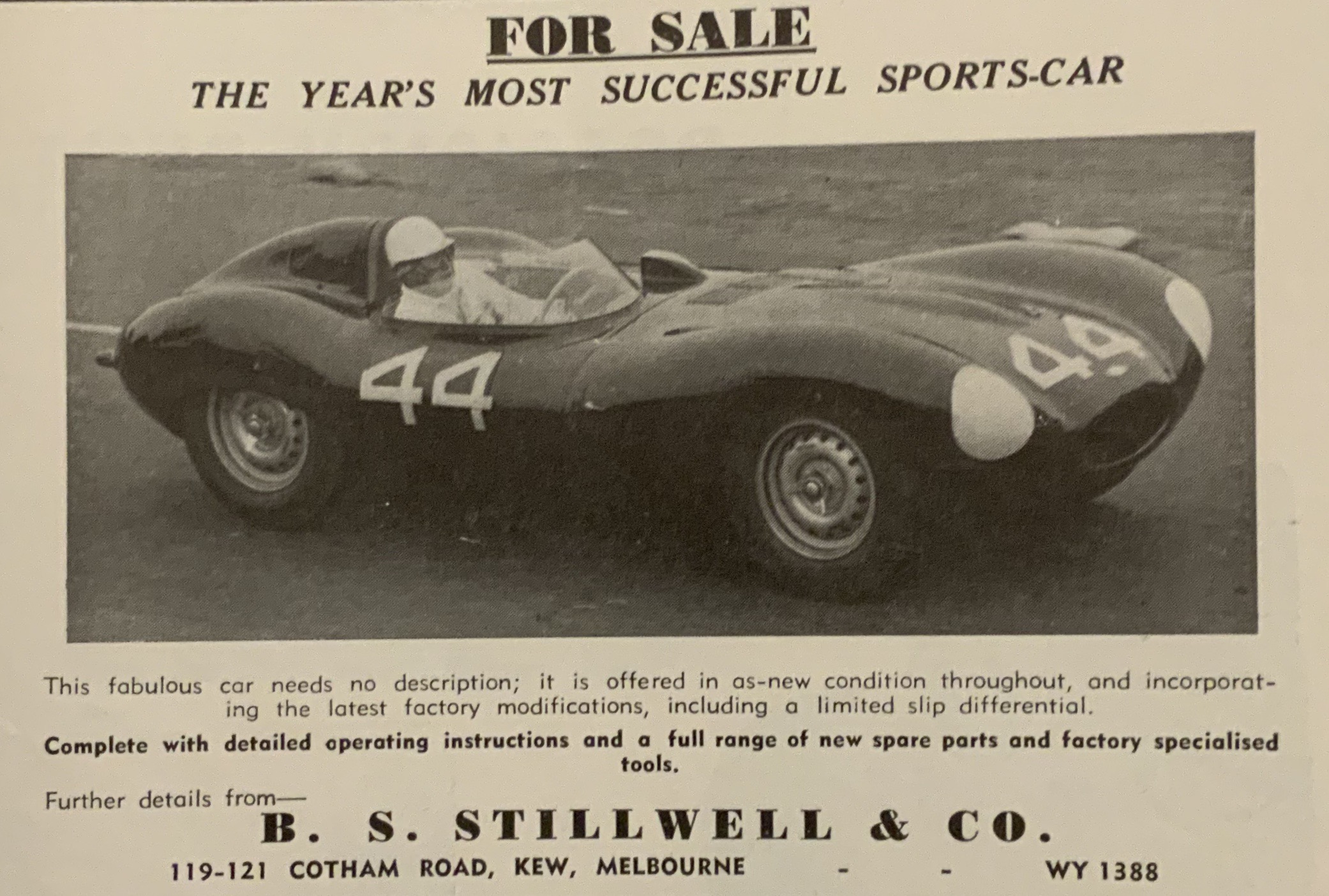
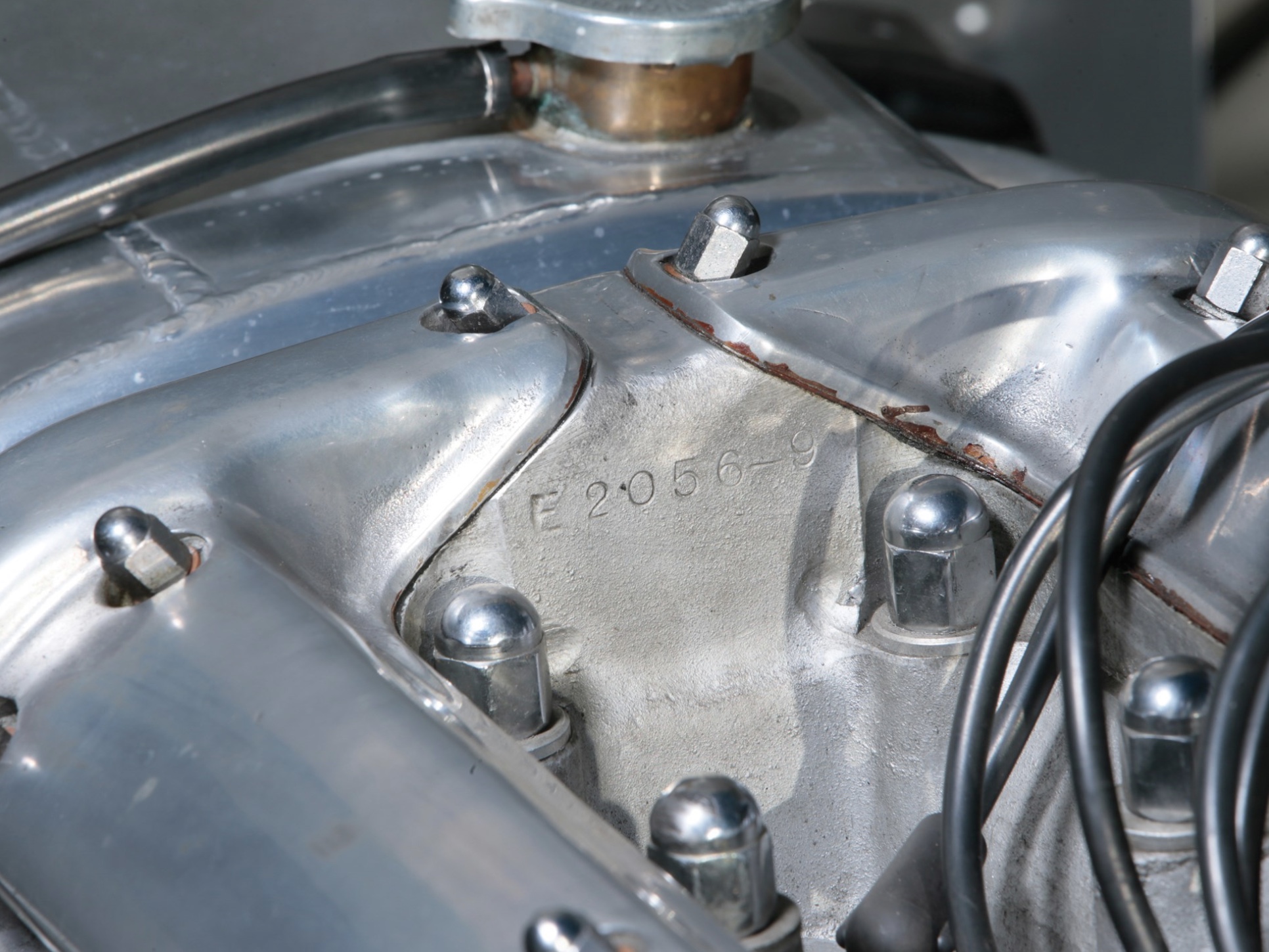
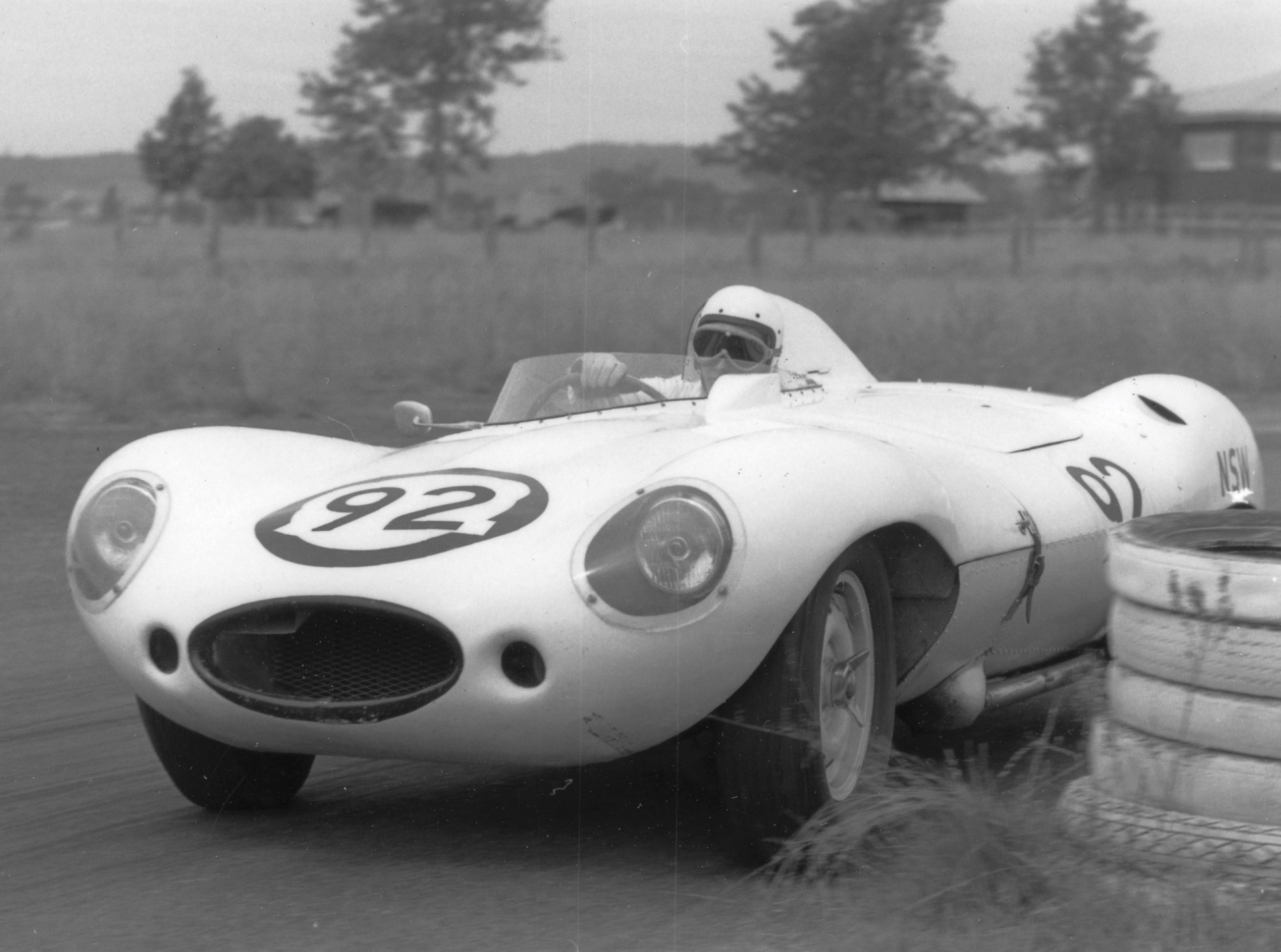
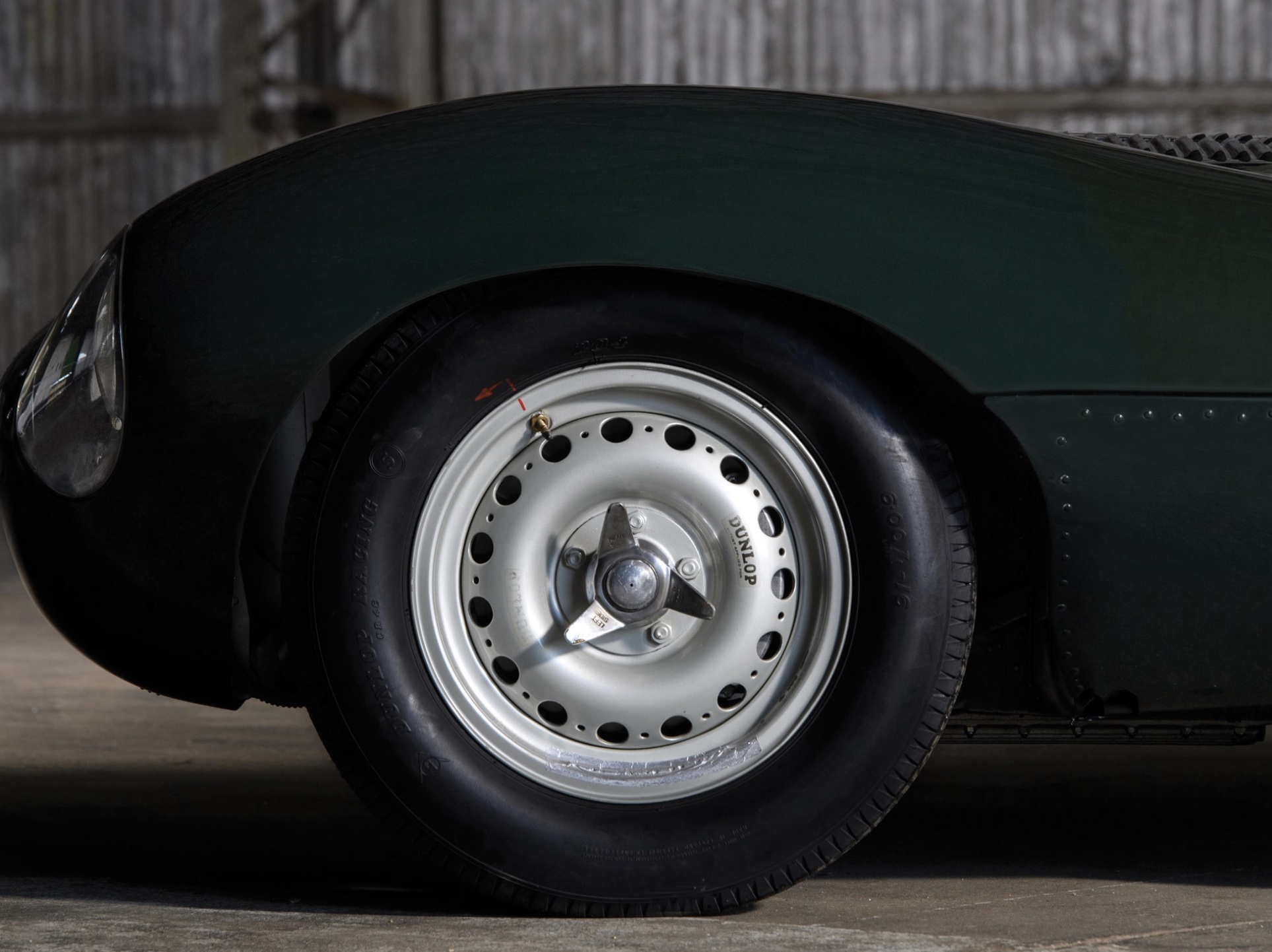
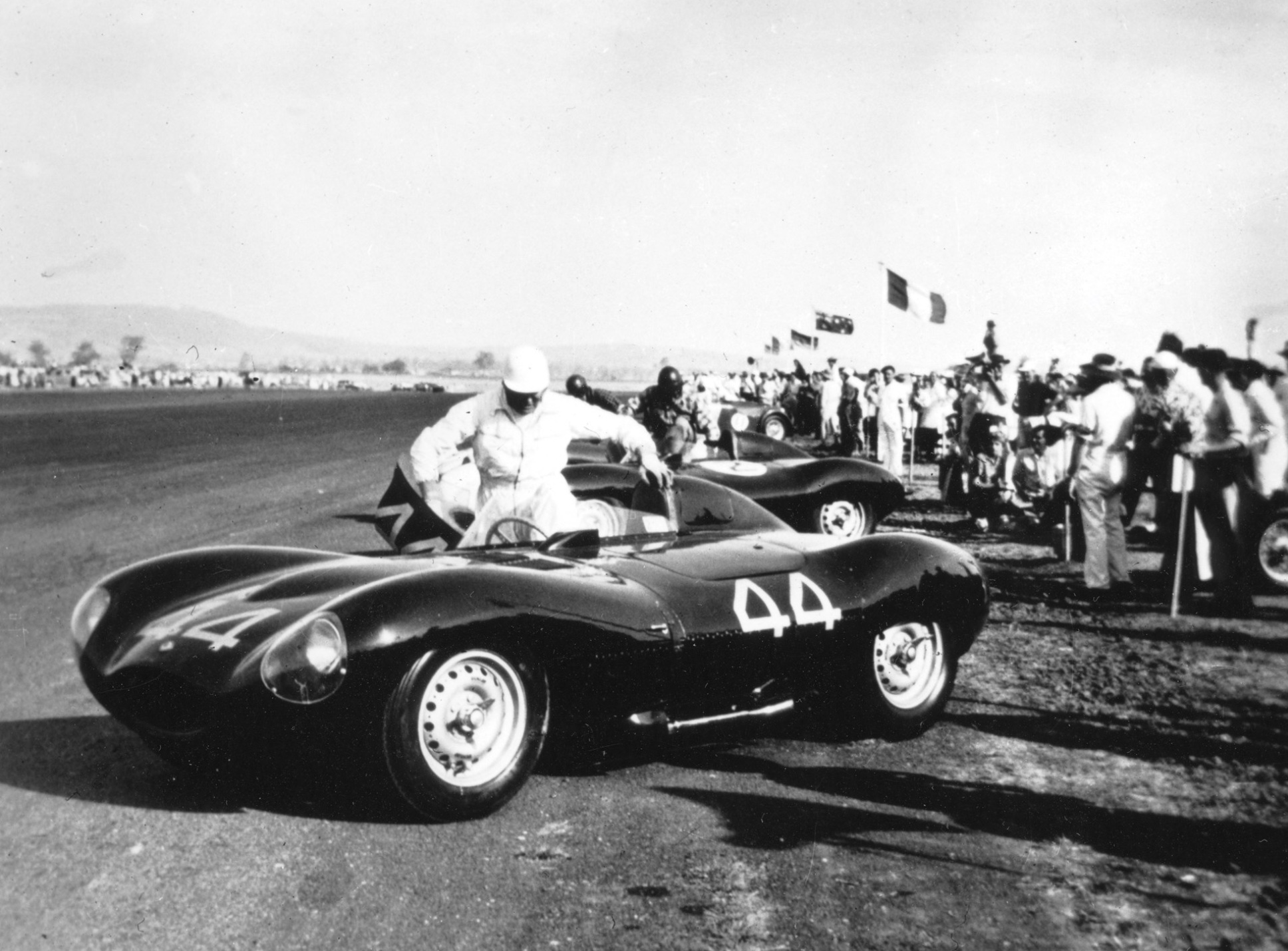
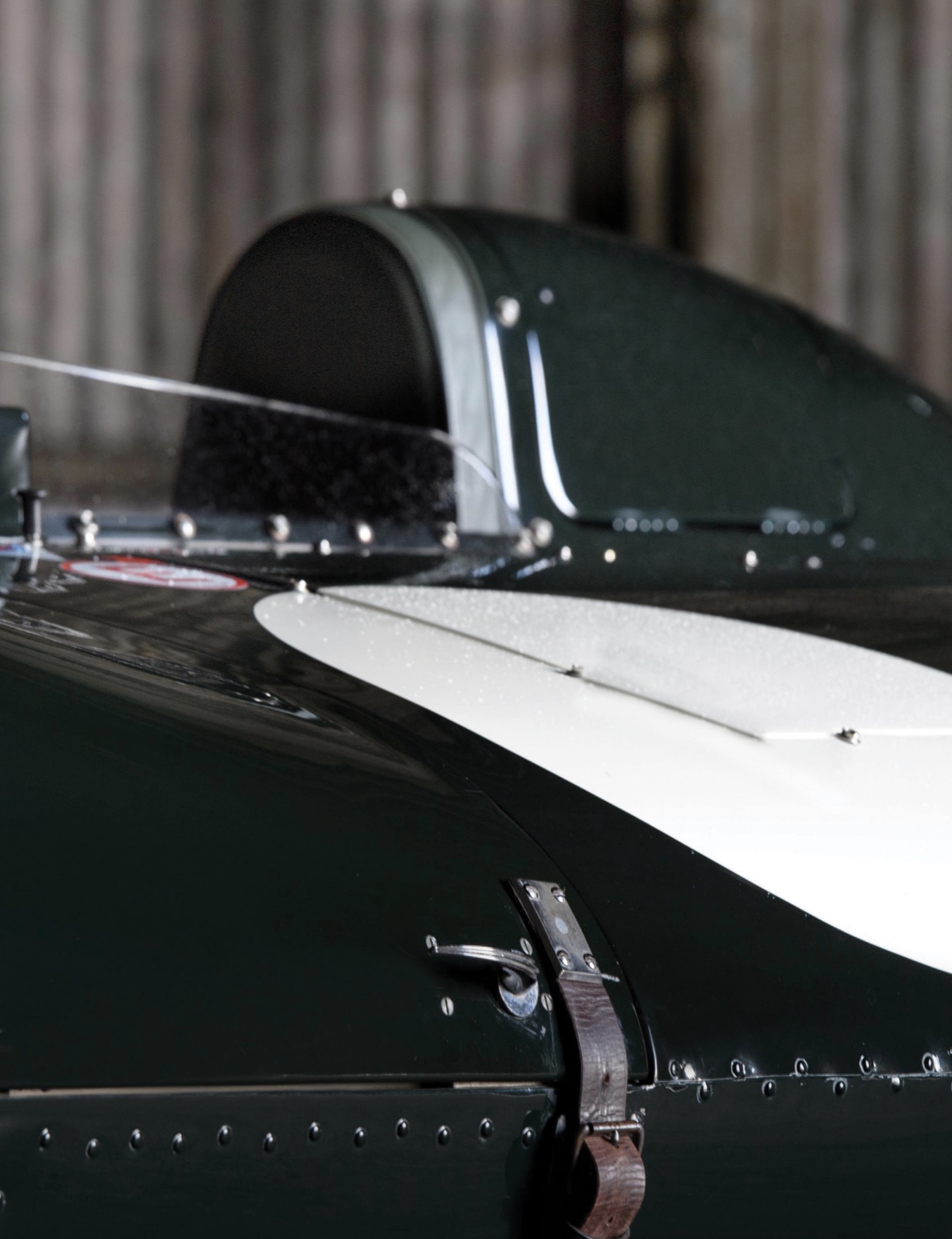
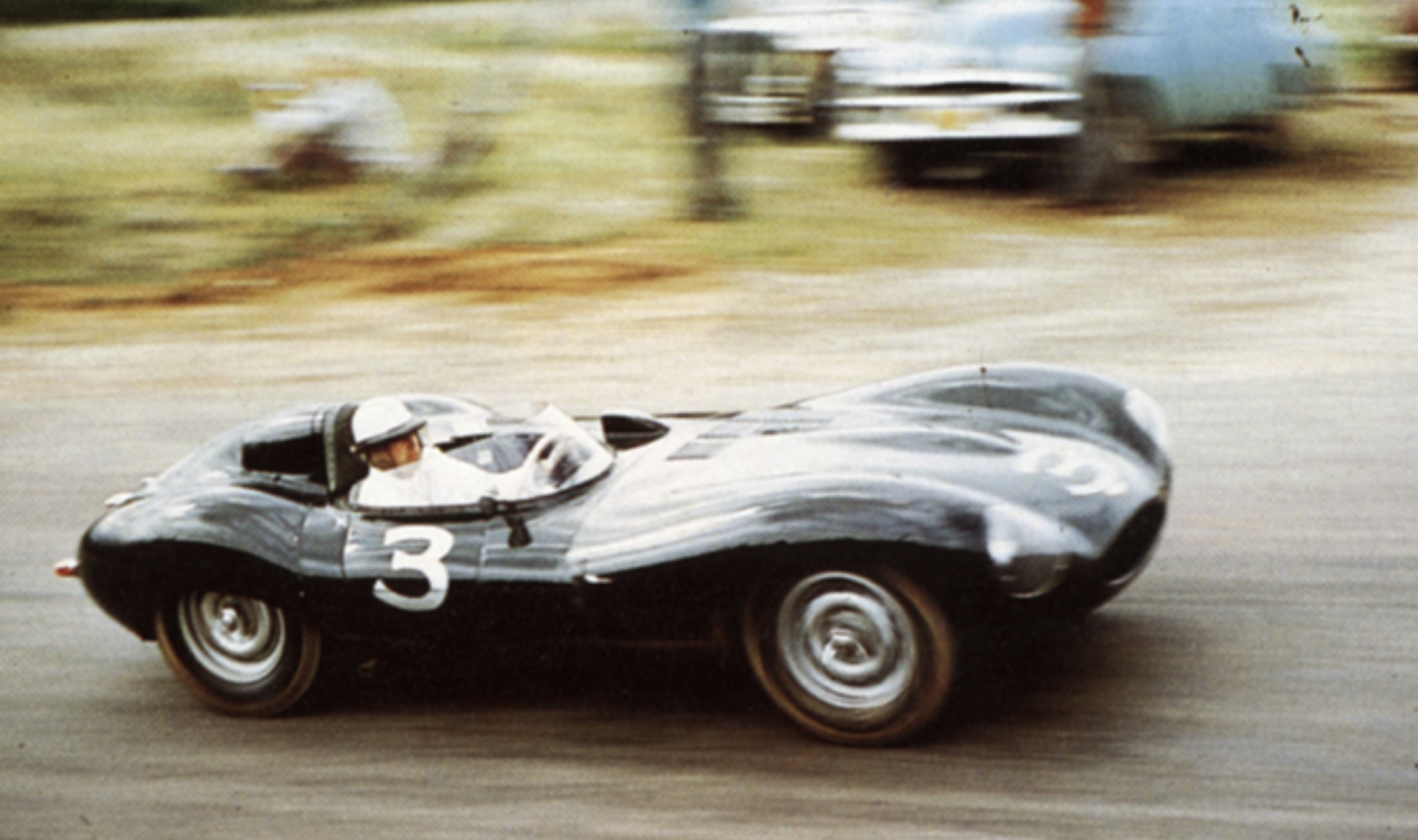
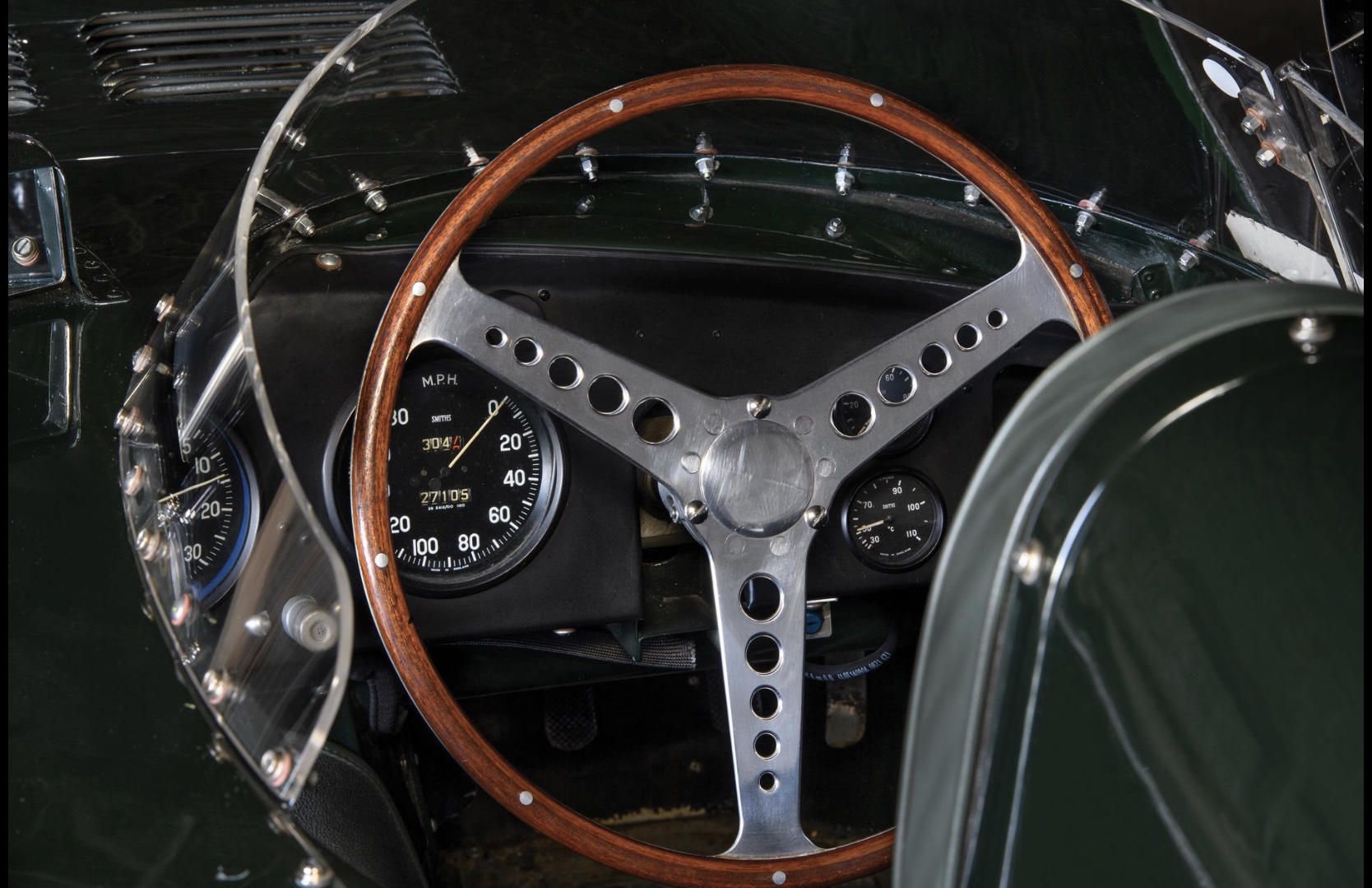
‘XKD520’ was the seventh production D-type, it was ordered through the ‘Brysons’ Bridge Road, Richmond, Melbourne Jaguar dealership- the two storey glass sided showrooms housed lots of lovely curvaceous Jags and was well known to several generations of Melbourne enthusiasts…

The building is still there but houses ‘Dan Murphy’s’, a national booze outfit these days. The order for the racer was placed in June 1955 by Kew driver/dealer Bib Stillwell, who later recalled: ‘I purchased the car new from Jaguar and it arrived in Melbourne, Australia in January 1956. I competed with the car for two seasons and had numerous successes with it. Click here for a short but fascinating bio on Jack Bryson, the man who brought Jaguar to Australia; ‘http://www.johnbryson.net/memoirs/jack-bryson-an-uneducated-man

In the later stages of his racing career Stillwell developed into a driver of world class who was competitive with the generation of internationals who raced in Australasia during the immediate pre-Tasman and Tasman Cup (commenced 1964) years- he was the winner of Australia’s Gold Star, the national drivers championship for four years on the trot from 1962 to 1965 in Coopers and Brabhams. After retiring from racing his local and global business career in car retailing and aviation was even more successful, click here for a bit on the amazing Bib; https://primotipo.com/2015/03/10/bib-stillwell-cooper-t49-monaco-warwick-farm-sydney-december-1961/

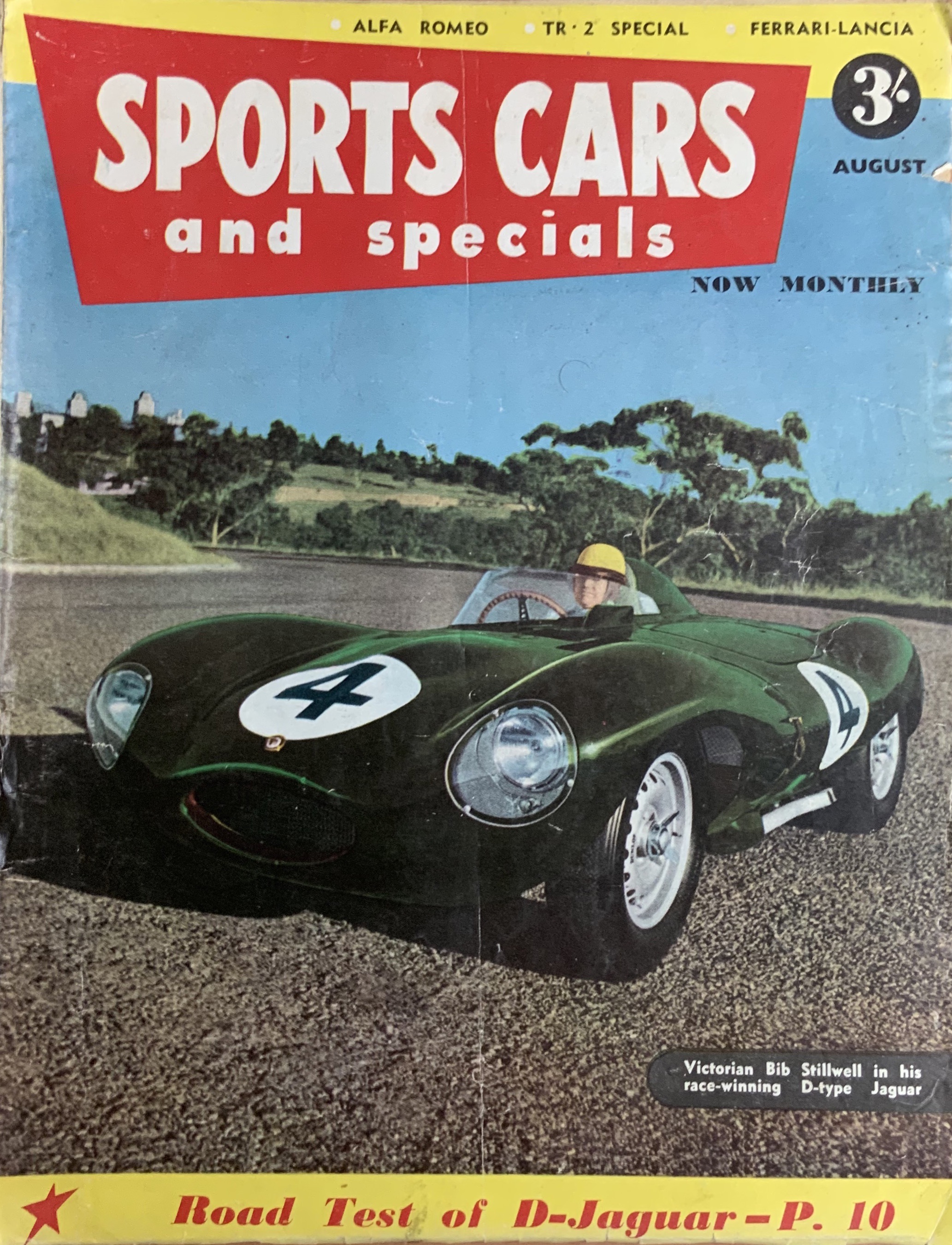
Citizens of Melbourne’s leafy eastern suburbs will easily pick the location of the ‘Sports Cars and Specials’ (good magazine by the way, haven’t got many of ‘em but wish I had more) shot of Bib and his new car as on Kew Boulevard not too far from the Chandler Highway intersection- that’s Willsmere ‘nut house’ as my Dad useter delicately call the local mental health facility, in the distance. That stretch of road does not look that much different sixty-five years later.

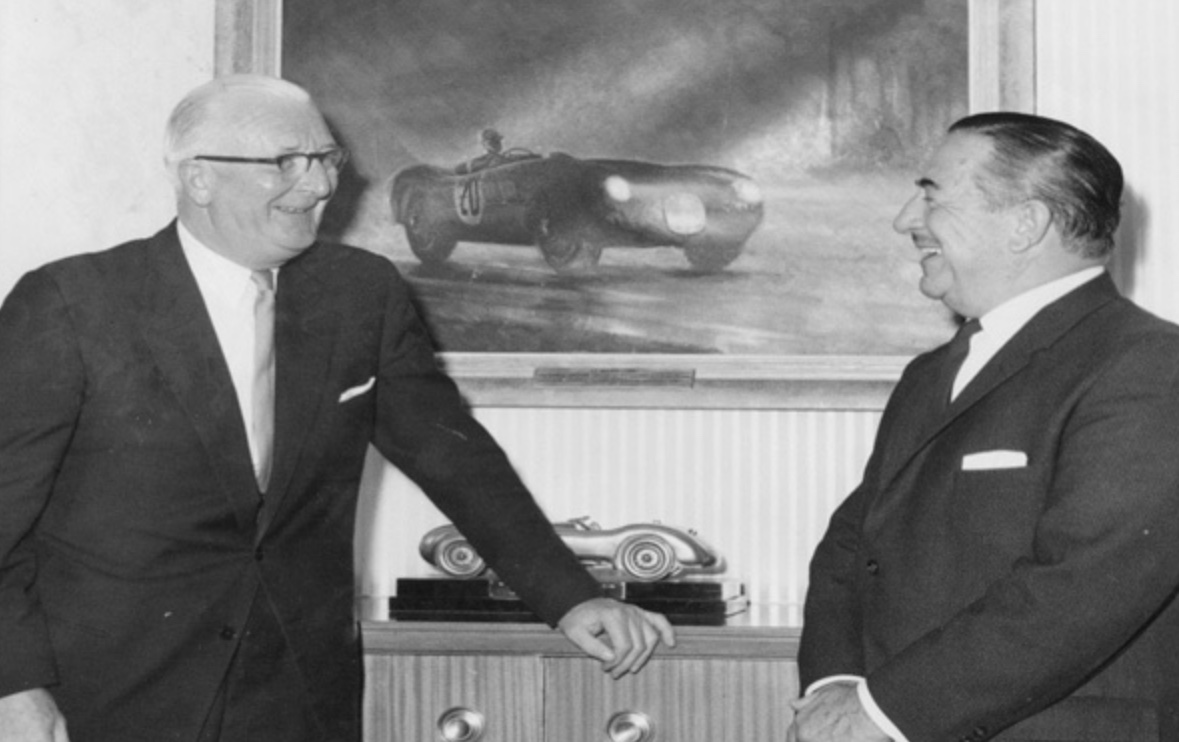
Sir William Lyons and Jack Bryson, date and place unknown, mid fifties perhaps (J Bryson)


Stillwell slices into Longford’s Viaduct on the way to second place in the 1963 South Pacific Championship race- Brabham BT4 Climax 2.7 FPF, the winner was Bruce McLaren, Cooper T62 Climax (K Devine)


Bib Stillwell and Australian Jaguar concessionaire, Jack Bryson during XKD520’s debut weekend, Albert Park Moomba meeting March 1956 (unattributed)

The car was signed off for delivery by Jaguar’s famous test driver Norman Dewis as ok for delivery on 15 November 1955, it’s build was completed in September.

Australia’s ‘wharfies’ or waterside workers, were renowned for their militance, when the car arrived from the UK it was during one of their infamous occasional strikes, only a great deal of sweet talking by Bib ensured the precious cargo was unloaded and processed to make its planned local debut at Albert Park during the March Labour Day, Moomba long weekend, Reg Hunt’s Maserati 250F was on the same ship, perhaps they put together a fund to appease the burly toilers to do the right thing…

There, he did very well, finishing second to Tony Gaze’ HWM Jaguar in the Moomba Tourist Trophy and on the second weekend of the carnival, gearbox dramas sorted, took the machine to victory in the Argus Cup in front of Stan Jones’ Cooper T38 Jaguar in a classy field- over 100,000 spectators are quoted as attending on each of the two days of this meeting.

(T Scott)


Jones, Cooper Jaguar, Stillwell, Jaguar D Type and Tony Gaze at right in his HWM Jaguar, Albert Park Moomba meeting, March 1956- beautiful atmo shot, note the man with the king-sized Oz flag(unattributed)


Jones driving with all the brio for which he was famous, Cooper T38 Jaguar only 12 months old itself, pushing Bib’s ‘spankers’ D Type hard at the Park, March 1956 (Ed Steet)

At the Easter Bathurst meeting the three recently acquired ‘outright cars’ new to the daunting circuit were the Hunt and Stillwell machines plus Lex Davison’s Ferrari 500/625 he had acquired from good mate Tony Gaze after the end of the New Zealand internationals that summer- and so it was that the feature race, the Bathurst 100, was won by Davison from Hunt and Stillwell- Bib stopped the timing clocks on Conrod at 148.6mph.


Bib chasing the Brabham Cooper T39 Bobtail Climax during the 1956 ATT at Albert Park- heading through Jaguar Corner. Moss won the race- Bib was second behind Pitt in the ‘resident Australians’ classification and Jack was first in the under 1500cc class (unattributed)


Stillwell’s Jag being fuelled at Albert Park during the November/December 1956 AGP meeting (B Hickson)


Stillwell’s D Type at Bathurst on its first appearance at Mount Panorama, Easter 1956- lapping the J Martin MG Spl during the Bathurst 100 in which he was third (unattributed)


Bib, Bathurst Easter 1956, who is that alongside? (unattributed)


Shortly after Bathurst, on April 29, Bib set a new open class record at outer Melbourne’s Rob Roy Hillclimb ‘with his Jaguar D Type which can hardly be classed as an ideal hill-climb machine. His time of 27.48 seconds was exceptionally fast’ AMS reported.

Stillwell and his crew took the car to Port Wakefield, north of Adelaide and had an easier time of it than his closest competitors in the Formula Libre 30 lap South Australian Trophy- the race was held in wet conditions and as such his mudguards made it easier to see!, he won from Stan Jones’ Maserati 250F and Eldred Norman’s stunning Zephyr Special s/c.

AMS in its August issue noted that ‘Bib Stillwell should find the D Jaguar a better behaved car on its next outing, as the factory, impressed with his many wins, have sent him out the latest type rear-end assembly. He will be closer now than ever to the GP machinery!’

Stillwell raced the car at Port Wakefield again in early October and had success- third in an A Grade Scratch race which was won by Ted Gray’s Tornado 2 Chev, a win in the 20 lap Sportscar feature- the main event on the card, and fourth in the Racing Car Handicap.

Then it was back to the team’s longtime Kew headquarters in Cotham Road to prepare for the Fishermans Bend meeting in mid-October. This short trip yielded a win in the Sports and Saloon 8 lap event from Paul England’s Ausca Holden and Doug Whiteford in an Austin Healey 100S.

Travelling much further afield near Toowoomba, north of Brisbane, Stillwell took on Bill Pitt’s D Type on home ground at Lowood in the Queensland Tourist Trophy held over 1 hour on November 4. Pitt won the 76 mile race from Bib who had expected the Geordie Anderson owned car to retire after it experienced gearbox problems earlier in the day, this was only rectified moments before the race commenced.


Port Wakefield, October 1956- Bib, another car and white Austin Healey 100S of Ron Phillips (unattributed)


Stillwell on the front row at Phillip Island in December 1956 alongside the G Baillieu Triumph, Derek Jolly, Decca Mk2 Climax and Paul England, Ausca Holden


Australian Tourist Trophy 1956, Albert Park- a row back from the leading Maserati 300S of Moss and Behra are the Stillwell, at left and Bill Pitt D Type Jaguars, with part of Brabham’s Cooper Bobtail at far left, then the Phillips AH 100S and Tom Sulman’s Aston Martin DB3S (unattributed)


Back at Albert Park in November for the 1956 AGP ‘Olympic Meetings’ he was fifth in the Australian Tourist Trophy behind the factory Maserati 300S’ of Stirling Moss and Jean Behra, then came Ken Wharton aboard the Ferrari 750 Monza he would roll to his death in New Zealand a couple of months hence, and Pitt’s D Type.

Bib determined that his next logical racing step was into an outright Formula Libre single-seater and at the end of the meeting it was reported he had agreed to buy Reg Parnell’s Ferrari 555 Super Squalo. Reg raced the car in Australia and then the New Zealand internationals throughout the summer of 1957 before heading back to England and a new job, having retired from the cockpit, as Aston Martin’s Team Manager.

The deal fell over, but Bibs path was set, the near new Jaguar was advertised for sale in AMS, and before too long Bib bought Reg Hunt’s Maserati 250F when that mighty fine driver retired way too early to focus on his Melbourne motor dealerships through which he amassed a fortune- he is still with us too.

Stillwell raced the Maserati for the first time in New Zealand- DNF in the NZ GP after 50 laps, the race was won by the very car Bib was purported to be buying- Parnell’s Super Squalo- his racing of the 250F is a tangent I will leave for another time.

Bib’s last run in the D Type was at the Phillip Island opening meeting on 15 December 1956, he was second in the Bill Thompson Memorial Trophy 12 lap feature, thirty seconds adrift of Jack Brabham- home for some summer Australasian racing in a Cooper T41 Climax, and fourth in the Formula Libre race also won by Jack.


AMS January 1957

At the end of the year ‘XKD 520’ was sold via dealer and former AGP winner John Crouch to the Ampol Oil Company for Jack Davey, a colourful and immensely popular radio personality for over thirty years.

John Andrew Davey was a Kiwi, after education at Kings College, Auckland he came to Sydney in 1931 and performed as a crooner with two radio stations- he was soon employed as an announcer on another network, possessed of a quick wit and a mellifluous voice Davey was away; click here for a summary of a marvellous life; http://adb.anu.edu.au/biography/davey-john-andrew-jack-9905

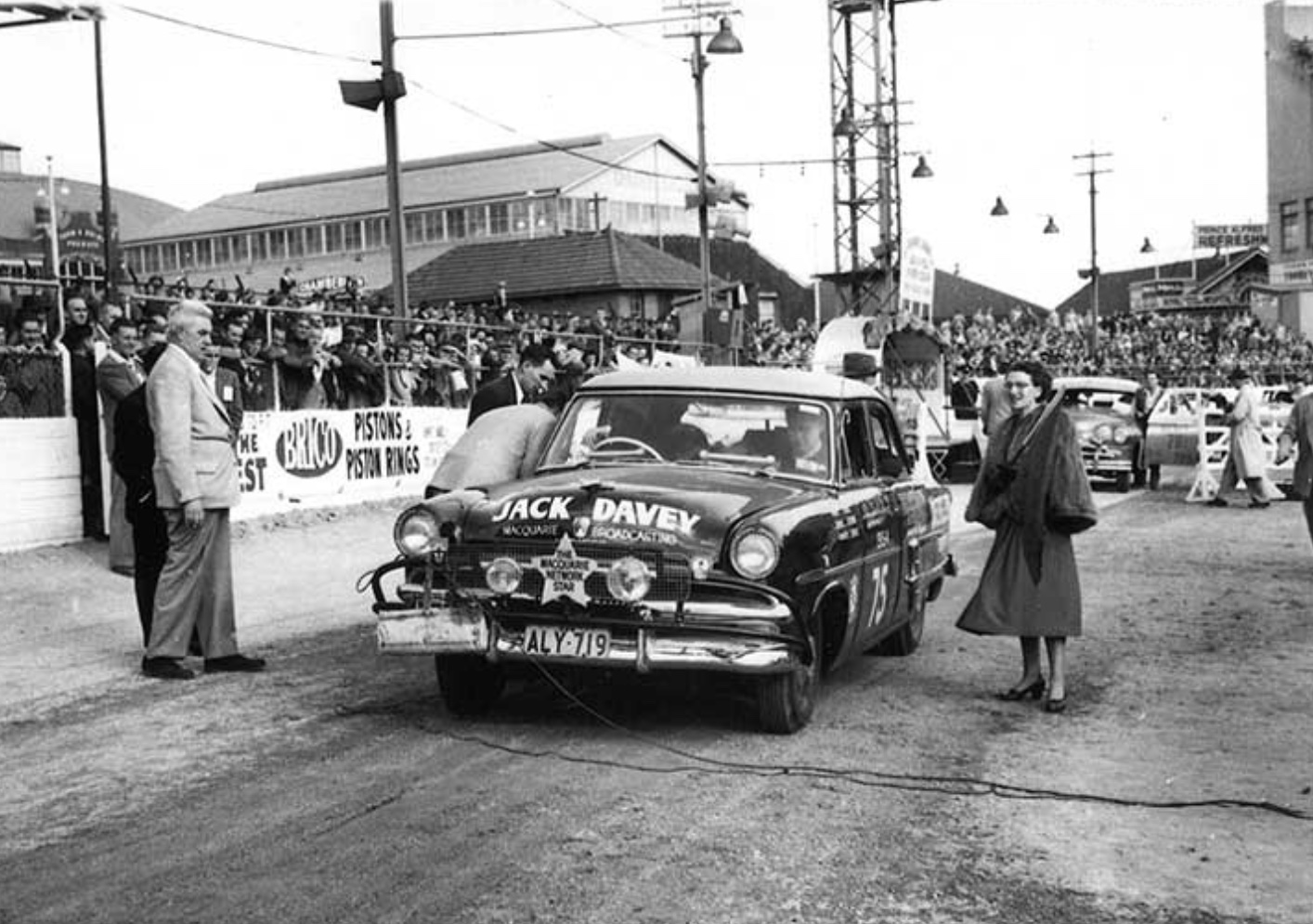
He was a lifelong car enthusiast who contested the first Redex Reliability Trial around Australia in 1953 in a Ford Customline with co-driver Lou Moss, finishing 91st.

Jack’s health was in decline, despite family and friends not wanting him to compete he again ran in 1954, but it was too much for him, he collapsed and was admitted to St Lukes Hospital not long after the event. Whilst his doctors, no doubt supported by friends and his commercial associates, ‘banned him’ from the 1955 event he did run in 1956 in another Customline and in 1957 and 1958 in Chryslers- in ’58 he achieved his best result, eighth in the Ampol Trial sharing the Chrysler Royal AP1 V8 with Eric Nelson and Bill Murison.

When Davey took delivery of XKD520 he had it repainted red, using it as a roadie and for promotional purposes, a passenger windscreen was also fitted. The D-type was left in the care of Bill Murray, whilst he was driving the car back to Sydney probably for use as part of the 1957 Ampol Round Australia Trial pre-promotion, the 1947 AGP winner lost control at high speed not too far from the Harwood Ferry which crossed (until 1966) the Clarence River on the Pacific Highway 650km from Sydney, and smashed into the back of a timber laden semi-trailer- both the D-type and Murray were badly hurt, this was in June 1957. The car was written off for insurance purposes, Murray, even after a long recovery process had ongoing health problems.

Jack Davey’s radio career went all the way to his untimely death from cancer at St Vincents Hospital in Darlinghurst, Sydney in October 1959. Such was his following that somewhere between 100,000-150,000 people stood in pouring rain outside St Andrews Cathedral to pay their respects.


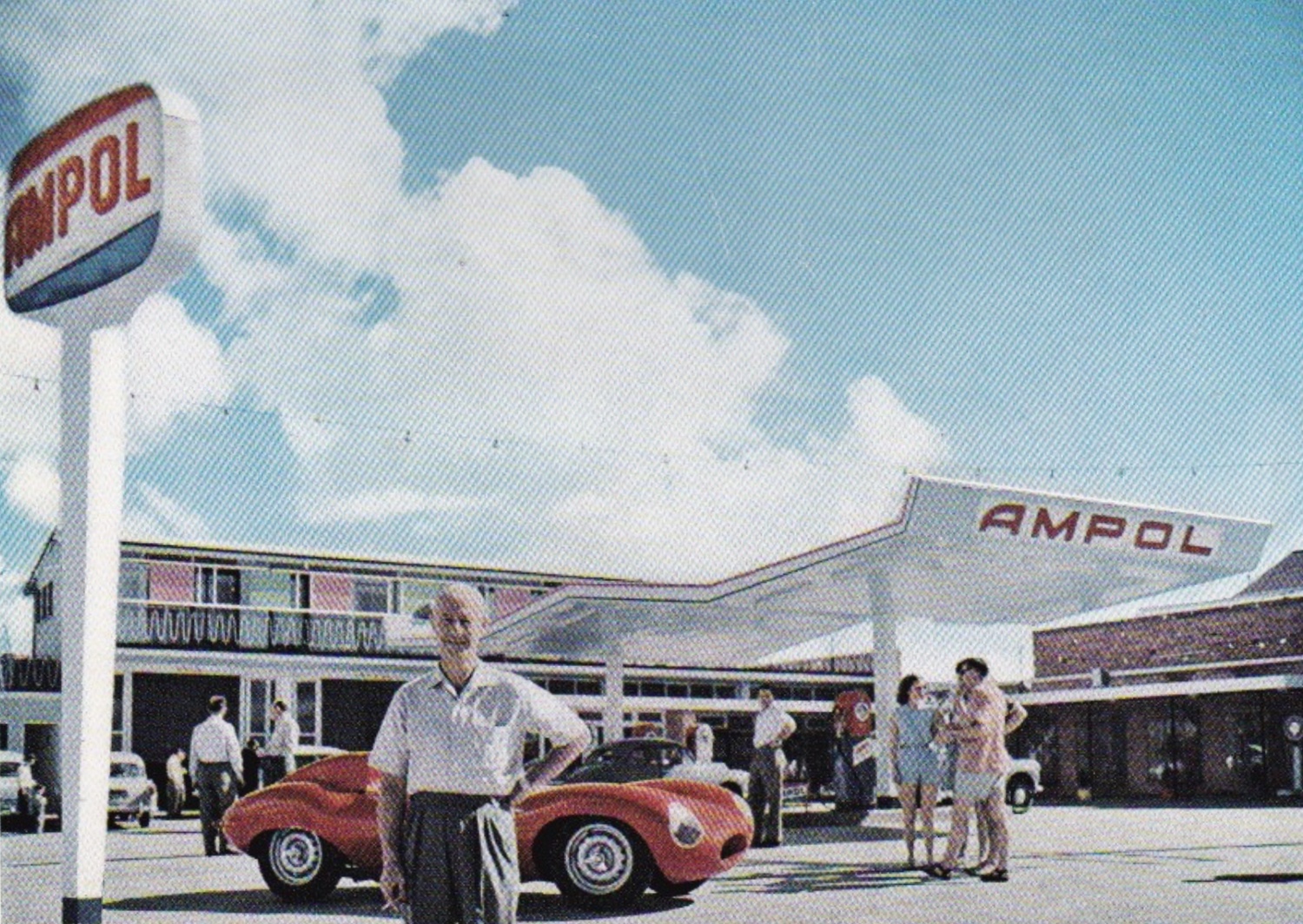
Jack Davey with his D Type out front of his Gold Coast Ampol Servo- Davey had diverse business interests, this dovetailed nicely with Ampol support of various of his radio shows. Address folks?


Jack Davey and team at the Sydney Showgrounds start of the 1954 Redex Round Australia Trial DNF (unattributed)


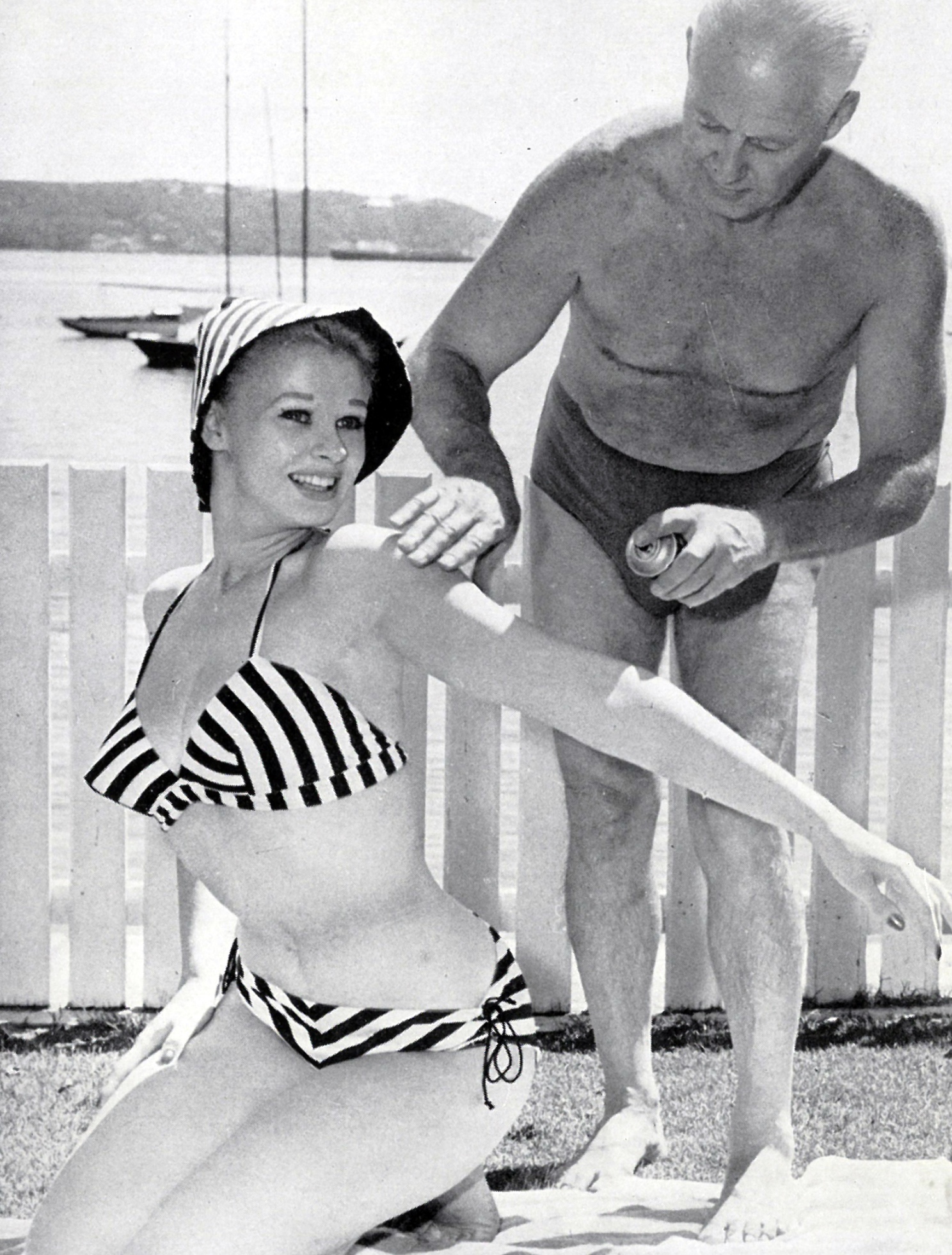
Jack Davey applying suntan lotion to the lovely Sabrina’s chassis, doin the mutual celebrity thing in 1958. That teeny-weeny striped bikini seems to have no ‘rear suspension’, the wonders of photoshop in those days. Those 42 inch titties were insured against shrinkage for 100,000 pounds apparently- a drop to a petite 38 inches, if maintained for two months secured the businesswoman a payout of 5000 pounds, every inch lost after that paid another 2500 pounds.  The process of assessment in relation thereto would have been an interesting and enjoyable task. She was in Australia in 1958-9, Davey organised digs for her in Point Piper. Where else but primotipo could you learn useless shit like this? (nylon.net)


Frank Gardner across the top of the mountain, Bathurst, Easter 1956, 6 lap sportscar scratch. ‘On new disc pads, the Jaguar was at times almost brakeless and finished second (behind David McKay’s Aston DB3S). Frank obviously hadn’t read his 1970s book of advice to budding racing drivers!’ wrote John Medley. He won the last race of the weekend- the 6 lap sedan and sports handicap (unattributed)


Gardner and XKD520 looking all very nice, Mount Druitt, Sydney 23 May 1958. John Ellacott recalls FG did a 14.57 standing quarter in this sprint event (J Ellacott)


In the Bathurst paddock, Easter 1958 with FG looking across to David McKay, helmet on just about to jump aboard his Aston Martin DB3S- who is the slim driver in between? (unattributed)


FG is of that professional generation of drivers who started with an MG T Type, a TA his Uncle Hope Bartlett lent him at 17 to run at Marsden Park, NSW in 1949 and finished in ‘serious stuff’ with Lolas in the early seventies- a couple of races in the T330 in 1972 were his last events in single-seaters. What a vast ‘progression of technology’ he was a part of, noting his touring car career went for a number of years after that in Australia. He is aboard an F5000 Lola T300 here (unattributed)


Following the theme above, FG testing the Lola T260 Chev Can-Am car raced by Jackie Stewart as a Carl Haas works entry in 1971- no doubt the 7 litre Chev engined beastie felt somewhat different to XKD520 but it was part of what he called his ‘Big Cars’ progression. JYS would have preferred far more testing of this car before it jetted to the US BTW, an M8F McLaren it wasn’t…(D Phipps)


Lynton Hemer has captured FG beautifully on The Causeway during the Warwick Farm 100 Tasman round in 1972. This is Frank and Lola’s Bob Marston’s whoosh-bonk F5000- take a T240 F2 tub- give the FVA and FT200 the arse, then bolt in a Chev and DG300 where they were, pop the radiators where they will fit, put some swoopy bodywork over the top, hey-presto T300- and instantaneously create a successful car- and one of the sexiest of the decade. It wasn’t quite that simple but you get the drift (L Hemer)

In mid-1957 ‘XKD 520’ was sold to the up and coming Frank Gardner via his friend Bill Graber who was in the insurance industry- there will be a ring to this to some of you as FG’s C Type Jaguar had also been involved in a bad (fatal) accident, and was then written off before rescue by Gardner and resurrection as a very competitive mount.

The D Type was restored to sparkling good health at the Sydneysider’s Whale Beach Service Station at Avalon on Sydney’s Northern Beaches- several of Frank’s mates were involved in the process including Jack Myers who worked on the chassis, Clive Adams the body, and Alan Standfield who built a new bonnet to the latest D Type long-nose style. Click here for a link to an article about FG’s C Type; https://primotipo.com/2014/08/05/gnoo-who-gnoo-blas-circuit-jaguar-xkc-type-xkc037/

Gardner raced the car continuously from his first meeting at at Schofields, NSW in March 1958 where he won- the car was painted white, just like the C Type and had its engine sleeved to 3.8 litres.

Frank added further laurels to ‘XKD 520’s history including a second at Easter Bathurst, first at Mt. Druitt, and third in both heats at Gnoo Blas, Orange, NSW- in a MotorSport interview with Simon Taylor FG claimed 25 wins out of 26 starts for his two Jags.

He sold the car to David Finch after deciding to leave Australia to race in Europe, selling a five year lease on the Avalon garage- that was his time frame to make it or not in search of fame and fortune- which he very much achieved until returning home to race for several more years in late 1974.

Finch is a Sydney fellow who had cut his racing teeth in an MG TF throughout 1955 and then progressed to an Austin Healey 100-4 he ran at Mt Druitt and Bathurst in 1956-1958, before taking the big step up from a production sportscar to one of the fastest racing cars of the day- handling the more demanding machine with considerable skill.


This group of three photographs are of David Finch in ‘XKD520’ during the Gnoo Blas, February 1960 meeting. Lovely family scene, it could almost be a BP advertising shot! (Kelsey)


Huge grid for the sportscar feature. Derek Jolly, Lotus 15 Climax, Frank Matich in the ex-Gardner Leaton Motors Jaguar C Type, Finch in ‘XKD520’, on row two the ex-Kangaroo Stable Aston martin DB3S of Warren Blomfield #122 and Tom Sulman and the rest (D Finch)


Gnoo Blas as above (Kelsey)


Beautiful shot of David Finch on the way to a win in the 1961 Queensland Tourist Trophy at Lowood (unattributed)

Finch raced the D Type for the next three years, eventually fitting a factory-supplied 3.8-litre block after the original 3.4-litre ‘added its expiration to the fitting name of Bathurst’s engine-testing Con Rod Straight’ wrote the Fisken copywriter- in fact a piston collapsed and a rod punched two nice holes in the block.

He won the 1961 Queensland Tourist Trophy at Lowood with the new engine, ‘an encounter with a fence at Warwick Farm (September 1961) exceeded the ductility’ of the original bonnet and local aluminium ace Alan Standfield, again stepped in, and created a distinctively-shaped version of Jaguar’s long nose bonnet.

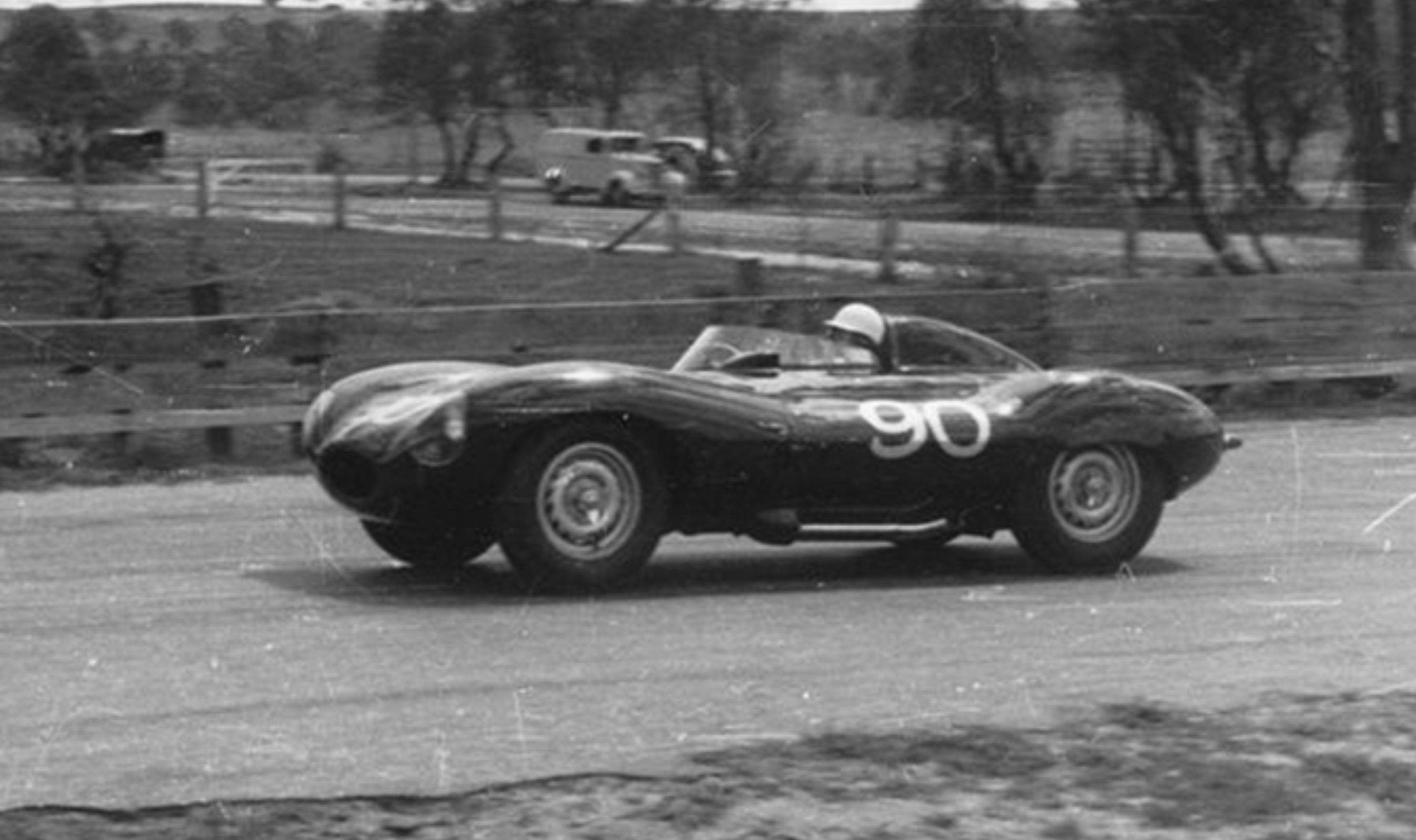
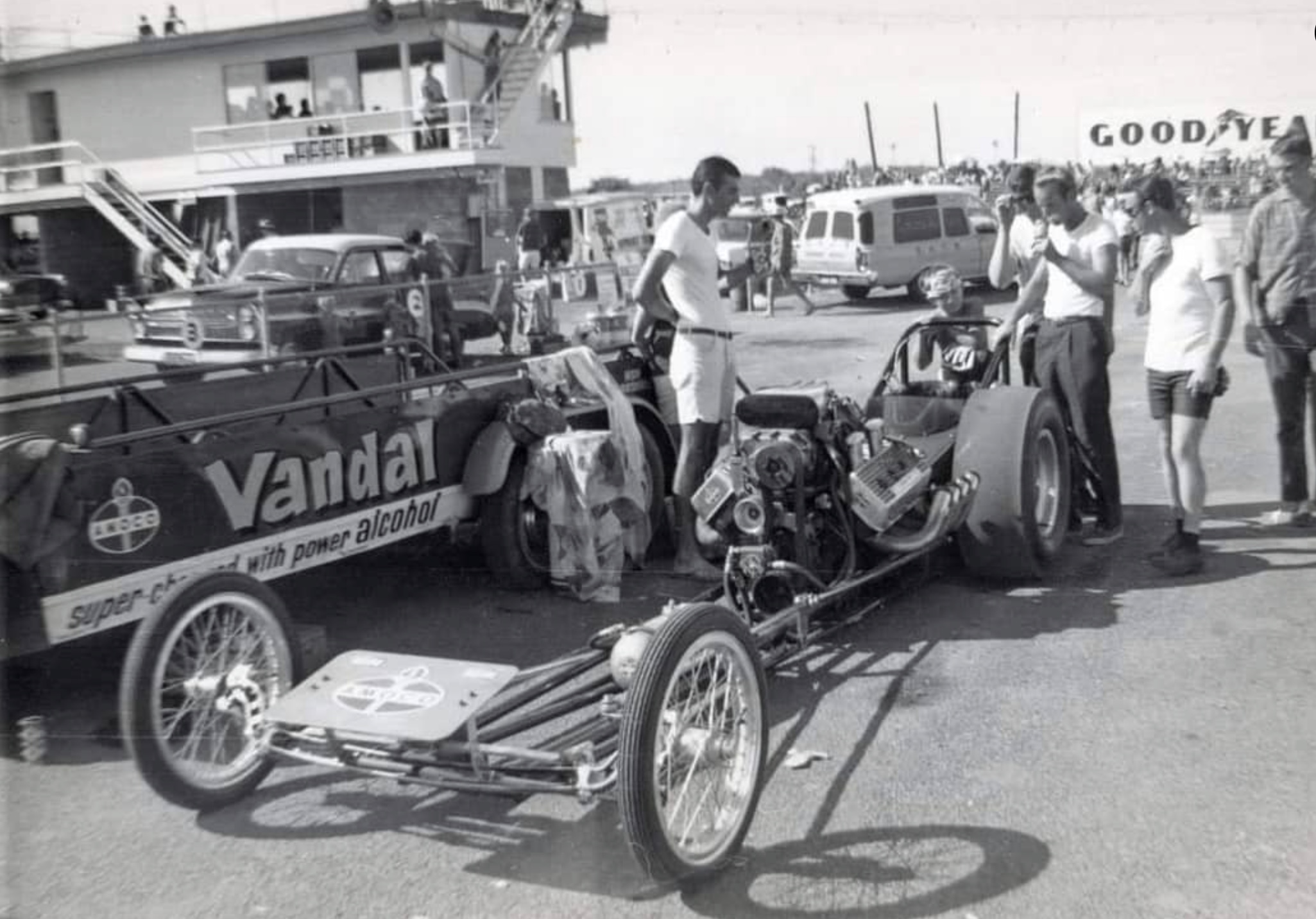
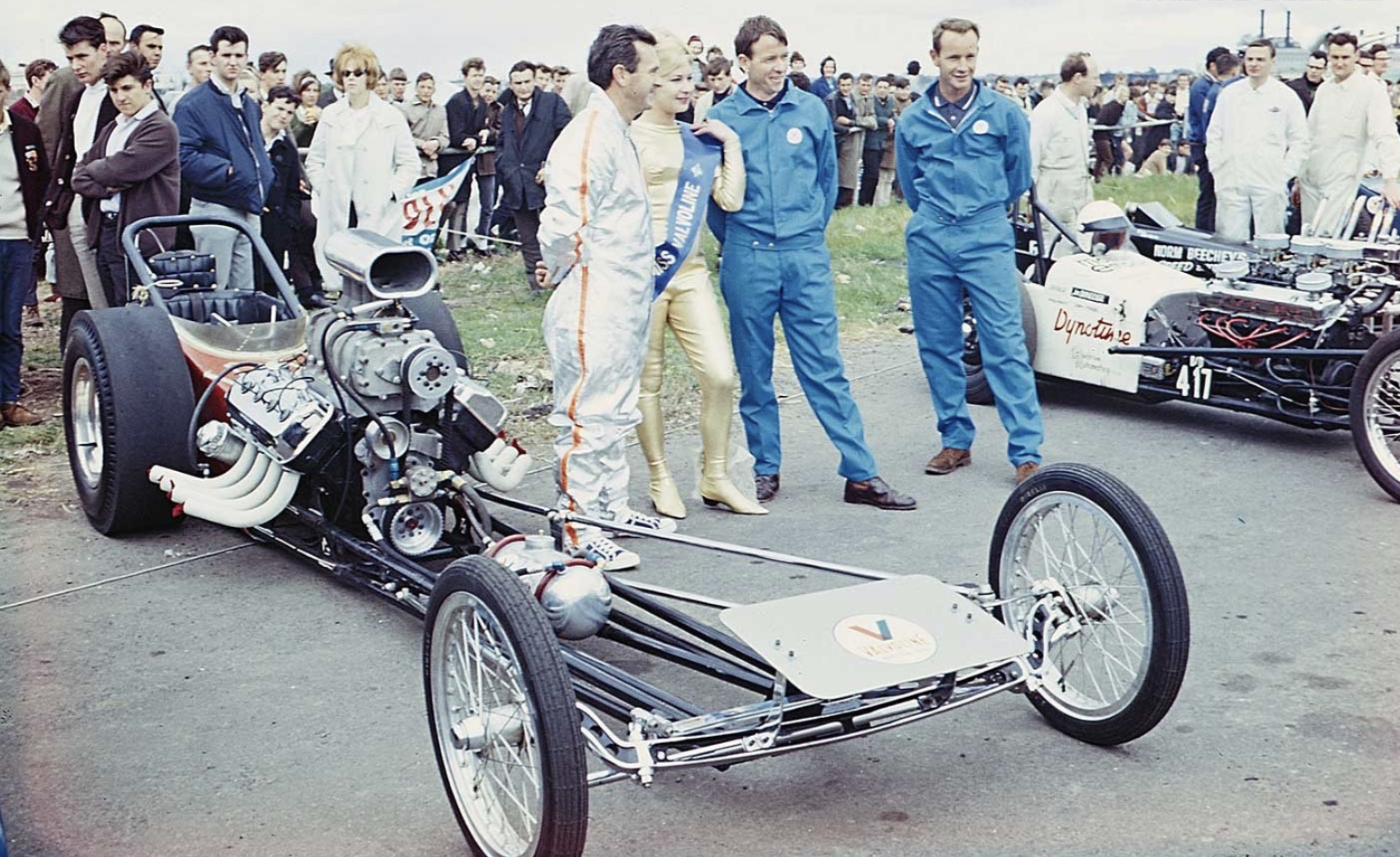
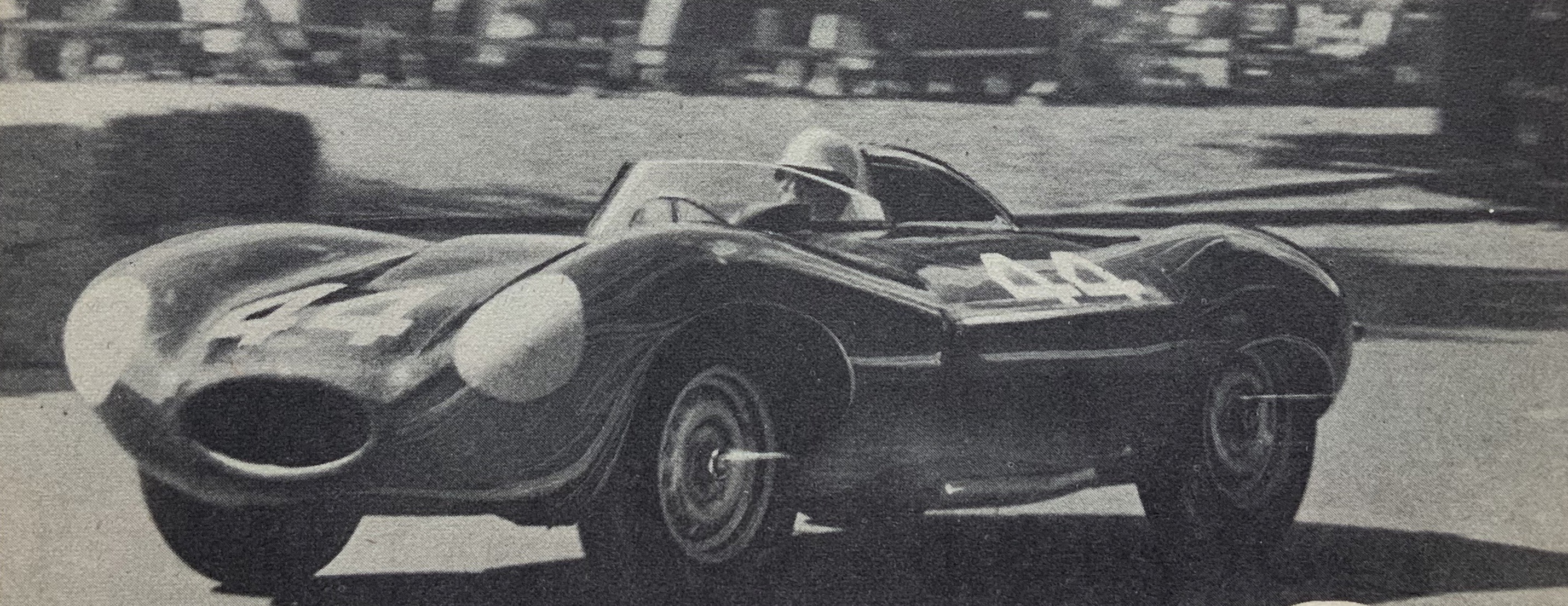
Australian drag racing pioneer and purveyor of ‘luxury’ American sedans, Ash Marshall was the next owner of ‘XKD 520’ from May 1962.

‘Flash Ash’ had come through speedway sedans, a sprintcar, rallying and raced on the circuits for a bit before a business trip to the US exposed him to Drag Racing for the first time- his key contact, Bob Fuerhelm took him along to a meeting and organised a ride in a super stocker which went 11.7 seconds over the quarter mile, he went for it hook, line and sinker.

Marshall imported two Plymouth super-stockers (’63 Plymouth Savoy Max and ’64 Plymouth Belvedere), first racing these at Castlereagh in November 1964, he then ‘doubled up’ by bringing in an outdated Rail called ‘The Vandal’- a short 137 inch wheelbase, full-length body, dropped l-beam front axle with transverse spring  American dragster.

Marshall was immediately a ‘headliner’ and very quickly applied his commercial skills to the business of motor racing, doing very well on and off the track for the balance of the decade, other cars- ‘The Scorcher’ and rear-engined ‘Soapy Sales’ followed Vandal.

Marshall was the first to break 200mph in Australia in February 1969 at Castlereagh and the first to go into the 6 second bracket- he did 6.98 seconds in 1972 at Castlereagh but the run was disputed and eventually disallowed.

Ash was involved in Pyramid Selling Schemes in Australia and the UK before moving to the US- in each country being one step in front of the authorities as such practices were made illegal, he settled in the US and ‘returned to his roots’ as a motor trader buying and selling exotics for high-flyers. He became involved again in the sport as the nostalgia scene developed in the nineties and died in January 2019.

Back to the D Type, when Ash and his team turned their attention to the Jaguar, they embarked upon a plush restoration complete with chromed accessories, XKSS style side exhaust and heat shield, plenty of polished aluminum, a carpeted interior and ‘a glass-like finish’ as described in Sports Car World‘, the car carried NSW registration ‘ASH 222’- Stan Brown worked on the body and Clive Adams painted it.

(T Scott)


Marshall loads up in front of a fascinated crowd at Riverside, during the first Nationals in October 1965. Vandal was the only USA ‘Top Fuel’ dragster in Australia at the time- troubles with the Chrysler Hemi intervened that weekend (D Cook)


Eddie Thomas’ Chrysler powered rail alongside Vandal in the fire-up road at Riverside during the ‘first’ nationals- there are claims by two events at Riverside in 1964, in October 1965. This pair never raced when Ash’ problems occurred (Street Machine)


Ash Marshall in the Vandal, this side and Jack ‘Fizzball’ Collins ‘Road Runner’ at Riverside, Fishermans Bend, October 1965 (moondog.net.au)


Later owners of XKD520 in Australia include Peter Bradley and Richard Parkinson who advertised it for sale in the September 1966 issue of Racing Car News magazine. Frank Gardner and Paul Hawkins contemplated purchase during their visit to Australia to race in the Surfers Paradise 12 Hour but decided against it when they became aware that Richard Attwood wanted to buy it.

In 1967 ‘XKD 520’ moved to the UK, bought by the former Jaguar apprentice, Grand Prix driver and future 1970 Le Mans 24 Hours winner. He had it worked on by Jaguar’s Brown’s Lane facility and then displayed it in his Wolverhampton Mercedes-Benz showroom for many years before selling it in 1977- since then it has had numerous owners.

There was considerable passionate discussion between the Author and Art Director as to the layout of this piece- whether to mix and match the new photographs of XKD520 with the old or separate them. So heated was the exchange that The Editor intervened to avoid a most unpleasant fracas- such are the pressures of a small office in Covid 19 times like these- photo credits for the modern ‘XKD520’ material are to Fisken and Sotheby’s unless otherwise attributed.


David Finch closest, and Jack Murray. D Types by two at Mount Panorama in October 1960 (unattributed)


Etcetera…


Jaguar D Type cutaway published in AMS (HG Molloy)


(D Finch)

David Finch testing on Mount Druitt airstrip in 1958- a good reason to smile!


(unattributed)

Stillwell jumps aboard ‘XKD520’ at Lowood, alongside is Bill Pitt’s D Type, ‘XKD526’ which won this 1956 Queensland Tourist Trophy event, complete with Le Mans start.


(D Finch)

Jack Murray in the silver Jack Parker owned D Type ahead of David Finch heading through Murrays Corner at Mount Panorama in October 1960- the NSW Sports Car Championship race won by Frank Matich in the Leaton Motors Lotus 15 Climax. Murray was fifth, Finch unplaced.

By Easter 1961 David had the rhythm of the car, he was on the front row of the Bathurst sportscar grids alongside Frank Matich’ Lotus 15 and John Ampt in the ex-everybody Cooper T38 Jaguar finishing fourth in the 3 lapper and third in the 10 lap main sportscar race- progress indeed.


(unattributed)

Stillwell heading up Mount Panorama during the 1956 Easter meeting.


(HG Molloy)


David Finch at Lowood, on the weekend in which he won the Queensland Tourist Trophy in 1961.


Bib at the Phillip Island opening meeting on 15 December 1956- only Jack Brabham’s presence ruined his party. Touch of the opposites, not sure exactly where he is on a circuit I know rather well.


(unattributed)

Bib at Bathurst in October 1956.

He contested the 13 lap NSW Road Racing Championship for sportscars, a handicap event in the manner of the day, finishing sixth but did the fastest race time. He was unplaced in the sedan and sportscar handicap at the end of the weekend’s proceedings but again did the fastest race time.

Bathurst had a great tradition of a parade lap of competitors sans helmet at slow speeds- below are Stillwell and Bill Pitt leading this group in their beautiful D Types- other cars and drivers folks?

(unattributed)


Arcane with no semblance of relevance…

Hot rodding started in Australia just as it did in the US, in the depression years, when young men without any money created ‘specials’ from the amalgamation of parts of different makes- more often than not cast off bits and pieces. Sometimes V8s provided the power, into the 1940s American Hot Rod magazines started to jump the Pacific, this had an impact on hotting-up Holdens- doubtless the Repco Hi-Power cylinder head for the Holden Grey was a commercial response to that demand.

Street racing was a reality of course in Australia as elsewhere with ‘The Brickies’ on the present site of the Olympic sports precinct at Homebush Bay, the Mad Mile at Deadman’s Creek outside Liverpool and in Melbourne, Newlands Road, Coburg and Doherty’s Road, Altona North well known spots for ‘da boys’ in the day- each state had their favourite spots too- it was far from just an East Coast thing.

Getting these activities off the public roads was important of course, the Penrith Emergency Airstrip (west of Sydney, Penrith Speedway was a hallowed racing site between the wars) had been used for sprint racing pre-war and it was there during the 1959 NSW Sprint Championships that Ray Walmsley, of, amongst other things Alfa Romeo P3 GMC fame, first ran a Dragster in Australia- his Corvette powered ‘rail’ did a 14.04 second quarter mile pass.

Ash Marshall in his ’64 Plymouth Belvedere against a hot-rod at Castlereagh in July 1965, ‘known locally as Ramchargers, this and his ’63 Plymouth were way ahead of anything else with doors when they landed at the end of 1964’ (Street Machine)


Vandal at Surfers Paradise in 1966, note the commercialism disallowed on the circuits at the time (D Hill)


Marshall, crew, Miss Valvoline and Vandal at Riverside in 1965- see chassis and front suspension detail (Street Machine)

In Victoria the use of Pakenham Airstrip made things a tad more kosher from 1958 but the big step forward, with Victoria Police support, was the use of another former racing venue- Fishermans Bend, for drag racing from 1962, very quickly ‘Riverside Dragway’ became the first home for the sport in Australia with Eddie Thomas setting a local record of 10.07 seconds.

Riverside hosted the first nationals on October 2 and 3 1965, Ash Marshall’s Vandal made its first public appearance that day but ended up a fizzer when engine maladies intervened, ‘Top Eliminator’ was Jack ‘Fireball’ Collins ‘Road Runner’ over Eddie Thomas’ machine- the speed shop impresario a story himself.

Penrith, taken over by the NSW Hot Rod Association in 1965 and re-named Castlereagh International Dragway soon replaced Riverside as the home of drag racing in Australia, with Calder its ‘Victorian base’.

‘Eddie Thomas deploys the laundry in his first Greg Goddard built car at Riverside in 1965- Australia’s first parachute’ wrote Street Machine. Its interesting to look at Riverside, Lorimer Street Fishermans Bend and reflect upon its close proximity to the Melbourne’s CBD, and the houses closeby in Garden City for that matter- not something yerd see these days! (Street Machine)

Bibliography…

Sports Cars and Specials August 1956, various issues of Australian Motor Sports magazine from 1956-1960, ‘Historic Racing Cars in Australia’ John Blanden, ‘Bathurst: Cradle of Australian Motor Racing’ John Medley, Street Machine article on Ash Marshall

Photo Credits…

Kelsey Collection, Barry Hickson, The David Finch Collection, John Ellacott, Fisken, Sotheby’s, Tony Scott, Street Machine, moondog.com.au, D Cook, nylon.net, Lynton Hemer

Technical drawings/cutaway by HG Molloy in AMS June 1956

(unattributed)

Finish where we started, a photograph of Bib Stillwell upon XKD520’s first race at Albert Park’s Moomba meeting in March 1956- the raucous straight-six singing along Pit Straight with plenty of spectators in attendance.

Tailpiece…

Whilst it is a photograph it looks like a drawing- unattributed crop from a KLG sparkplug ad- it, too, is during Bib’s victorious Argus Trophy run during the 1956 Moomba meeting at Albert Park. Nice I think.

Finito…

(R Dalwood)

This shot at Baskerville, Tasmania on 4 December 1966 gave me a chuckle…

The race bike and it’s ‘Gunter-Wagen’ tow car frames John Goss’ brand new Tornado Ford, still without its rather attractive self built bodywork in the scrutineering bay.

One wag questioned whether the Beetle was towing the Suzuki or whether the 50cc two-stroke was pushing Wolfsburg’s finest.

I have written about the car which launched JG onto the mainland and subsequent fame in tourers and F5000 a couple of times before, checkout the link here; https://primotipo.com/2018/06/19/john-goss-tornado-ford-longford-1968/ , and here; https://primotipo.com/2018/07/17/1967-tasmanian-sportscar-championship/

(R Dalwood)

What a youngster! At 24 years of age Goss has constructed a very clever sports racer which became a competitive car and as fast as all but the big-buck cars at the very front of the fields- those raced by Matich, Allen, Jane, Hamilton and co.

(R Dalwood)

Look closely, the photo above shows the Tornado Ford’s initial VW front end which evolved to a more sophisticated wishbone set-up in the years to come.

(R Dalwood)

Gossy going around the inside of Allan Robertson’s Peugeot 203 that December weekend. One of the reasons I love these photos is because of the relaxed nature of a race meeting at a venue I’ve not been to.

Wonderful aren’t they?

(R Dalwood)

The crowd below are looking at the new Tornado Ford- it is the same group of people clustered around the car shown in the opening photograph but from a different angle.

(R Dalwood)

It would be interesting to know the intrepid pilot’s impressions of his handiwork after the first weekend of competition. I’m betting the little racer felt like a precise jet compared with the Customline and FJ Holden which preceded it- a mighty fine driver of Big Cars did John Goss become.

(R Dalwood)

Credits…

Historic Racing Car Club of Tasmania- Reg Dalwood Collection

Tailpiece…

(R Dalwood)

The way it was…

Finito…

(J Manhire)

Tony Gaze in his HWM Jaguar VPA9 at Ryal Bush in New Zealand’s South Island on 11 February 1956…

Isn’t John Manhire’s photograph a fantastic one? He has captured the car, the physicality of hustling these machines around a road circuit, and of course the crowd so well to add some drama and perspective. It’s a beauty of a shot which inspired this article.

Later in the day Tony was second in the first Southland Road Race run over 41 5.87km laps of a course laid out around the hamlet of Ryal Bush 20km north of Invercargill, at the very south of New Zealand’s South Island. He drove his ex-Ascari Ferrari 500 powered by a 3-litre 750S sportscar engine, in front of him was Peter Whitehead in a similar car.

By 1956 Australia’s first Formula 1 driver was a committed HWM pilot having first raced an ex-Moss 2-litre HWM Alta F2 car in Grands Prix during 1952 with good results given the nature of his privateer campaign. This chassis was later acquired by Lex Davison, fitted with a Jaguar XK engine it won the 1954 Australian Grand Prix at Southport on Queensland’s Gold Coast, it’s still in Australia in sportscar form but very original, in the loving hands of the Hough family.

Tony aboard his HWM Alta at Charterhall in October 1952- the ‘Newcastle Journal Trophy’. DNF in the race won by Dennis Poore, Connaught A Type. Gaze’ last race in the car as it transpired.

Tony was despatched to New Zealand by John Heath and George Abecassis together with the supercharged GP HWM Alta 2-litre in the Antipodian summer of 1954 with a brief to win a race or three and then sell the Formula Libre car before returning home. Whilst he didn’t win any races he did well and also fulfilled the second part of his brief, the lucky Kiwi’s had the machine for the rest of its in-period racing life. Click here to read a story about that tour and background information about HWM; https://primotipo.com/2019/12/13/tony-gaze-hwm-alta-new-zealand-1954/

Sportscar racing, make that every type of racing, exploded in England as the shackles of war were progressively cast aside with grids of Jaguar, Aston Martin, Lotus, Cooper, Lister, HWM and other marques making sportscar grids every bit as large and competitive as the single-seater categories.

Faced with the difficulty of finding a competitive car for the 1953 GP season – reliability of the Alta engine was a major concern for Gaze – Enzo Ferrari would sell Tony a Ferrari 500, but without works support that would have been a very expensive proposition, so he looked to sportscars for the next phase of his career.

Gaze was invited to be part of a pre-Le Mans 24 hour test of the Aston Martin DB3 at Monza, in the snow, at the end of which he and Graham Whitehead were offered cars. Tony recalled that ‘Wyer stitched us up. We were promised that Aston Martin wasn’t going to come out with something new to make us obsolete the moment we got these things. So the first race meeting I go to Reg Parnell turns up in a works DB3S which was a lot lighter and more powerful!’

Tony Gaze, Aston Martin DB3 at Dundrod during the 1953 TT, an excellent fourth place sharing Graham Whitehead’s car. The Collins/Griffith and Parnell/Thompson Aston Martin DB3S were first and second (Gaze)
Tony and Kay Gaze with Tony’s new Aston Martin DB3, looking immaculate, before the off at Oporto, Portugal (Gaze)
Gaze’s Aston Martin DB3 chassis #9, or the charred remains of it, in an Oporto Street after his high speed contretemps with a Ferrari and a stout tree. A lucky escape during the 1953 Portuguese GP (D Coelho)

He first raced his car, chassis DB3/9, one of ten DB3s built, at the Silverstone International Trophy meeting in May finishing fourth in his class. He then took it to the Cote d’Azur for the Hyeres 12 Hours in June, that race was held on the Iles d’Or 7km road course, sharing his car with Graham Whitehead the pair ran fifth in the pouring rain but retired after two hours with a broken timing chain.

His small equipe then headed south to take in the Portuguese Grand Prix which was held on 21 June on the 7.4km Boavista street circuit in Oporto. The race started badly for the UK contingent when on the very first lap Duncan Hamilton’s Jaguar C-Type ‘was punted off by an amateur driver who was apparently banned for life’ but got considerably worse when Gaze came close to losing his life in DB3/9.

Italian sportscar specialist, Pietro Palmieri’s Ferrari 250MM collided with the Aston on lap three catapulting it into a tree, at which point it broke in half and burst into flames leaving our former fighter-pilot ace semi-conscious in the middle of the road ten metres from the remains of his machine,’ which was completely destroyed. Absolutely rooted, it was written off, and somewhat surprisingly has not been re-birthed all these decades later. Palmieri’s Ferrari lasted until he had completed seven laps when engine failure intervened, the three hour, 60 lap race was won by Jose Nogueira Pinto in a Ferrari 250MM Vignale Spyder. Click here for a piece on the DB3; https://primotipo.com/2018/01/19/1952-goodwood-9-hours-and-aston-db3/

After his recovery, Tony sought to buy a works Aston from Wyer who refused to sell. After attempts by the insurance company to purchase a second hand DB3 to replace the destroyed car failed, and he received his money, Tony then tried to buy a Jaguar from Lofty England but couldn’t agree terms. So he approached his buddies at HWM who had just built a Jaguar engined car for company co-owner George Abecassis to race. The racer was immediately quick, with Heath’s triple-Weber fed Jaguar engines and Indianapolis style quick change Halibrand spur-gears to allow easy change of gear ratios to suit the demands of different circuits, both competitive aspects of the cars overall design.

Tony in HWM1 during the very wet May 1954 Aintree Daily Telegraph International meeting heading for fourth behind Duncan Hamilton, Jaguar C-Type, Carroll Shelby’s Aston DB3S and Jimmy Stewart’s C- Type (Gaze)
Tony Gaze during the 1953 Hyeres 12 Hours in HWM1- shared with George Abecassis (S Lewis)
Tony in VPA9 during the British GP sportscar support race, Silverstone, July 1954. DNF with the Collins, Salvadori and Shelby Aston DB3S up front of the 118km race (Gaze)

Whilst VPA9 (the first registration number of HWM sporties is generally the number by which they are recognised) took a while to be built so Tony raced Abecassis’ HWM1 at the Aintree opening meeting in May where he was fourth in the sportscar ten lapper, Duncan Hamilton’s C Type won.

In the Hyeres 12 Hours in early June he co-drove with George, they ran second until pinged and disqualified for a minor pit infringement by Abecassis. Trintignant/Piotti won in a Ferrari 250 Monza.

VPA9 – chassis #105′ is the number attributed to the car by John Blanden and some other sources online – is the third HWM Jaguar built, the first was built by Oscar Moore who converted his Alta engined HWM by fitment of a 3.4 litre, then later a 3.8 litre Jaguar engine. The package was mighty quick, he managed to stay in front of Abecassis’ works Aston Martin  in the Jersey International Road Race until the engine broke. Gaze’s car was finally delivered to him in June 1954 just prior to the Reims 12 Hour, which he contested with Graham Whitehead as co-driver.

Powered by a works Jaguar 3.4 litre XK experimental engine, the pair finished seventh in the 270bhp machine ‘despite extremely poor handling’ which was finally diagnosed twelve months hence as front shock absorbers which were fading, the problem was cured by adding some friction dampers. Up front the Peter Whitehead/Ken Wharton Jaguar D-Type won, it was an historic day as it was the first of many wins for Jaguar’s most famous racer.

In July, Tony’s car, which was always entered by HW Motors, was twenty-second in the British GP sportscar support race at Silverstone with various problems, up front of this 25 lapper which concluded the day’s proceedings was a trio of Aston Martin DB3S, Peter Collins won from Roy Salvadori and Carroll Shelby.

In a very busy August Tony won at Crystal Palace from pole, but he missed a gear leaving the tell-tale at 6900rpm. VPA9 crossed the channel to Zandvoort on 15 August where Tony failed to finish after a huge spin at Hugenholtzbocht behind the pits. He then took a shortcut to the other side but the grass was so wet the car became bogged, when he stopped he could see Duncan Hamilton in the pits overcome with laughter at his plight. Ninian Sanderson’s C-Type won that day with three other C-Types in line astern.

On 22 August Gaze took VPA9 to the French Southern Brittany seaside resort town of La Baule to contest the sportscar handicap race finishing sixth. Two D.B. Panhards were up front, then Jacques Peron’s 1350cc Osca MT4 with Duncan Hamilton fourth in his Jaguar C-Type then Jean Lucas in a small D.B. Renault with Tony next best of the big-cars.

After about an hour, with nine laps completed of the demanding 11 September RAC TT at Dundrod – sharing the car with John Riseley-Pritchard – VPA9’s engine dropped a valve, with nowhere to exit the circuit, surrounded as it was by slab walls the engine was fairly rooted by the time Tony came upon a cross road to exit the track. Mike Hawthorn and Maurice Trintignant won in a works Ferrari 750 Monza, and Piero Taruffi/JM Fangio Lancia D24 were second in this 1000km World Sportscar Championship round.

Tony oversees the preparation of his Ferrari 500/625 – #500-05 or as re-numbered by the factory when modified as Formula Libre machines GP.0480 – in Australasia during 1955-56. Gaze’s car, when fitted with a 750S engine later in 1955 had a flat spot which was not cured until Alan Ashton (at right) made some new jets for the Weber carburettors during the early period of Lex Davison’s ownership circa late 1956. Reg Hunt at left-top (MotorSport)
Tony in the Oulton Park paddock prior to the British Empire Trophy sportscar practice in May 1955. #44 is the Bertie Bradnack Cooper T33 Jaguar and the car behind that is George Abecassis in HWM1. Archie Scott-Brown won in a Lister Bristol (Alamy)
Tony Gaze in the Aston Martin DB3S he shared with David McKay to second place in the May 1955 Hyeres 12 Hours. With DB3S/102 he also contested the 1955 Circuito do Porto, Monsanto, Charterhall International, Snetterton International, Goodwood 9 Hour and Tourist Trophy meetings that year (Gaze)

It was time for an engine rebuild back at Browns Lane and whilst a replacement was provided Tony never did get back the trick engine, the motor he used at Goodwood during the BARC Autumn 25 September meeting ‘was not the original but Jaguar’s worst old engine’.

The team asked Tony to race the HWM 54 Jaguar GP car instead, this was the Alta engined car Lance Macklin raced in the July 1954 French Grand Prix, DNF after 10 laps on the day Mercedes Benz arrived back in Grand Prix racing in rather emphatic fashion. Gaze was to race in the Formula Libre Woodcote Cup,after some confusion with the pedals in practice (which were clutch/throttle/brake rather than the clutch/brake/throttle of his sportscar) or a mechanical failure, got to the bottom of Lavant Straight into Woodcote and the car wouldn’t stop, ‘Whatever the reason it wasn’t going to stop so I spun it down the escape road and hit the eight feet high dirt wall and got tossed over the top of it and ended up in the crowd,’ Tony recalled. Peter Collins won the race in one of Tony Vandervell’s Thinwall Ferraris whilst MotorSport observed that ‘Practice was notable for Tony Gaze ground-looping the HWM Jaguar when going too fast into Woodcote Corner, thereby bruising himself, and incidentally providing Fairman with another drive’.

‘The car was a write-off. There was a bit of a joke about the car because they salvaged what they could of it – the engine and things – and put the rest of it up against the factory wall ready to try and straighten it and sell it to some unfortunate bloke. But the scrap metal man arrived and took it without asking!’

Jack Fairman raced VPA9 whilst Tony was recovering from his Goodwood shunt, a week later John Riseley-Pritchard used it at Aintree, committed to other race commitments in 1955, primarily his ex-Ascari Ferrari 500-625 F Libre/GP car in the early months of the year, and Kangaroo Stable Aston Martin DB3S races (a story for another time), VPA9 didn’t race in Europe again. Tony’s final entry in it, at Oulton Park, for the British Empire Trophy meeting in April 1955 met with mechanical failure in practice which precluded racing.

‘John Heath had found a cheaper way of doing up Jaguar gearboxes…George Abecassis had a problem in practice with HWM1 and had changed the box, using the team’s only spare’ so when Tony changed down to third for Old Hall corner…everything locked up. He thought the engine had seized and let the clutch out which didn’t make the slightest difference and then found himself spinning around and around about five times. The corner marshall didn’t know which flag to wave so much was happening…the gearbox had slipped into two gears at once and solidly locked up…’ Gaze recalled.

Tony and Peter Whitehead raced their twin-Ferrari 500/625s in New Zealand with great success in early 1956, by then the cars were fitted with 3-litre 750S sportscar engines. Both took two-seaters along for the ride to use in the support events and to raise some cash at the end of the tour by selling them, Tony took VPA9 and Peter the very first Cooper T38 Jaguar (CJ-1-55) he and his half-brother Graham raced at Le Mans in 1955. Using VPA9, at Ardmore Gaze was third and took a win at Christchurch during the Lady Wigram Trophy meeting at the RNZAF airfield the following weekend. (happy to hear from any of you Kiwis who may be able to fill in the gaps of the HWM’s placings in other events that summer)

The tale of this tour is told here; https://primotipo.com/2019/09/05/the-gp-aston-martin-dp155/

NZ GP, Ardmore Airfield, Auckland 8 January 1955. That’s Bira in the #1 Maserati 250F 2504/2509 on the way to a victory with Lex up front in his ex-Moss/Gaze HWM now Jaguar powered, with Tony in his ex-Ascari Ferrari 500 and soon to be Lex’s in March 1956. Bira won from Peter Whitehead and Tony in their identical Ferraris. Lex must have been eternally grateful to his great mate Tony as three of his four AGP wins were courtesy of cars Tony sold him; 1954 at Southport in the HWM Jag and 1957 Caversham and 1958 Bathurst in the Ferrari. Mind you, that HWM Jag was in many ways quite a different machine to the rolling chassis Tony sold to him in early 1953 (unattributed)
Tony Gaze applying a touch of opposite lock at Albert Park in March 1956, this meeting his final one in VPA9. He was a big tall bugger! I only ever saw him as an older man – and a mighty imposing bloke he appeared – he had a real presence about him, he always looked friendly enough but I was never game to say gedday. I’ve always reserved my awe for real heroes and that he most certainly was. That shitty background is hessian trying to stop free-loading Melburnians checking out the action without paying but nicely stuffs up the background (G McKaige)

At the end of the NZ Internationals Gaze shipped his two cars across the Tasman Sea to Port Melbourne to contest the Moomba Meeting at Albert Park over the March Labour Day long weekend, winning the 48 lap 150 mile Tourist Trophy event from Bib Stillwell’s Jaguar D-Type and Ron Phillips’ Austin Healey 100S.

He was third in the Argus Cup, also at the park, a week later behind Stillwell’s D and Stan Jones ex-Whitehead Cooper T38 Jaguar. Before this meeting Lex had acquired both the Ferrari and HWM from his great mate, Lex’ first meeting in the Ferrari was this weekend.

Graham Howard wrote that Tony’s only condition upon sale of the cars was that ‘he urged Lex to have Alan Ashton, from AF Hollins, (A.F. Hollins Pty. Ltd. were motor engineers with a workshop at 694 High Street, Armadale, the building still exists not too far from the Orrong Road corner) who had been preparing Tony’s Australian racing cars since the 1940s and who had been looking after the Ferrari in New Zealand. The combination of Lex, Alan Ashton and the Ferrari was to become one of the great partnerships of Australian racing.’ Lex placed second twice in the Ferrari to Reg Hunt’s Maserati 250F that weekend.

Davison was a busy boy in 1956 racing the Ferrari, contesting the Mobilgas Round Australia Trial with Peter Ward in a Peugeot 403, racing his Phil Irving fettled Cooper-Vincent at Collingrove Hillclimb and at Part Wakefield, Templestowe and at Mount Panorama where he defeated Bruce Walton to win his second Australian Hillclimb Championship. Then there was the small matter of the AGP being organised by the Light Car Club of Australia, of which he had just been elected President, his Paragon Shoes business to run and a large family!

Lex raced VPA9 to seventh in the 32 lap Australian Tourist Trophy at Albert Park in the November/December 1956 Olympic Meetings, a wonderful fortnight of racing in which Stirling Moss won both the Australian Grand Prix in a Maserati 250F and the Australian Tourist Trophy in a 300S.

During it’s lay-off the HWM had been modified by fitment of a fibreglass Ausca body bought from Paul England in place of the aluminium alloy original in an endeavour to make it a tad lighter and more slippery.

Davo got caught up in the avoidance of Bill Patterson’s Cooper Climax’ attack upon the Park’s straw bales finishing the first lap in fourteenth place. Lex did well from that position finishing third of the local residents and lapping a couple of seconds quicker than Tony had in March, but the two D-Types of Bill Pitt and Bib Stillwell were two laps ahead of the HWM at race end. Moss won from Jean Behra, both in 300S Maseratis from the ill-fated Ken Wharton’s Ferrari Monza, then Pitt, Stillwell and Davison.

‘The HWM was the only racing sportscar Lex ever owned, and it was becoming more outdated with each passing day, he ran it just a few times more, its best performance being a class record 27.08 seconds at Templestowe in mid-1957,’ Howard wrote.

Lex aboard VPA9 in the Caversham paddock during the 1957 AGP weekend. Note the fibreglass Ausca body, the styling of which was heavily influenced by, if not a direct copy of the Maserati A6GCS body (K Miles)
Caversham AGP sportscar support race. #10 Ron Phillips Austin Healey gets the jump from Davison #30 HWM VPA9 and Derek Jolly, Decca Mk1 Climax, #24 Austin Healey is raced by Syd Anderson (austinhealey100s.com)

Davison took both the Ferrari and HWM across the Nullarbor to contest the March 1957, Caversham, WA AGP. Lex won his second AGP, sharing his Ferrari 500/625 with Bill Patterson on a scorching hot summers day, and after a lap-scoring dispute with Stan Jones who had taken the chequered flag having driven solo in his 250F fitted that weekend with his spare 3-litre (300S) engine.

The HWM finished well back in the Saturday support sportscar race but looked the goods for the 40 lapper on the Monday when the temperature was over 100 degrees Fahrenheit in the shade by the time the event started in the early afternoon.

‘Lex had only a ten second lead when he bought the HWM into the pits after 15 laps, the car overheating so badly onlookers said the engine was almost visible through the bodywork. Unscrewing the radiator cap released a geyser of steam’, and Patterson (his relief driver in this race too) rejoined the contest and very soon retired.

Not long after returning to Melbourne the car was damaged in an accident on the way back to town when driven by one of the mechanics from Templestowe Hillclimb. Taken to Lyndon Duckett’s workshop in Toorak the car’s body was removed, where the remains, ‘including the bent front end, suspension and buckled wheels’ stayed until acquired by Gavin Sala in 1974.

Sala started the process of acquiring the missing bits, the project progressed through the hands of Simon Ramsay, Noel Robson and Julian Phillips in Perth who engaged Cliff Byfield to finish the project. The car created great interest when it made its public debut in the inaugural F1 AGP at Albert Park in 1996. In 1998 VPA9 left our shores for the UK where it makes regular appearances in historic events inclusive of a demonstration by Tony Gaze in the Goodwood reopening meeting in September 1998.

Technical…

(S Dalton)
(S Dalton)

John Bolster puts the first HWM Jaguar HWM1 to the test for Autosport magazine in April 1955.

Of conventional construction, the chassis was a twin-tube affair with independent front suspension by upper and lower wishbone, coil spring/dampers with a de Dion rear axle, again suspended by coils and coaxial shock absorbers. Engines were all Jaguar XK of varying capacity as was the gearbox which used C-Type ratios, Bolster gives a comprehensive explanation of the quick-change-diff. Girling provided the brake drum componentry, Borrani the wire wheels and the somewhat slab-sided body – all of the HWMs were drawn and styled by the talented Abecassis – were constructed in aluminium.

(J Ross)
(Autosport via S Dalton)

HWM Jaguar awaits its body in the factory at Walton-on-Thames factory. A second series car, perhaps Heath’s HWM1 1956 ill-fated Mille Miglia car, which was the second time the plate was used.

Simon Taylor said that a total of nineteen HWM’s were built of which six were sportscars, four First Series machines, the Gaze car is one, and two Second Series cars styled by Abecassis along Aston Martin DB3S lines.

(J Ross)

De Dion axle housing being fettled in the machine shop with what appears to be the remains of a transmission in the container under the Webster & Bennett turning and boring machine. Any ideas as to the technician?

(J Ross)

I wonder if it’s some type of press occasion or John Ross was there taking his shots and interrupting the troops.

Perhaps John Heath at left and George Abecassis well rugged up behind what I think is the new chassis of HWM1, the completed car is Abecassis’ XPE2, given the front air intake as shown in the photograph below. It evolved from the car’s first meeting in May 1955, this group of shots were taken in early 1956, most certainly it’s winter!

I really must buy Mr Taylor’s two volume book set, if any of you have a copy, assistance with chassis numbers would be considered very favourably by The Editor, a complete list would be wonderful.

XPE2 displaying its lissom lines outside the Hersham and Walton Motors Ltd Aston Martin Dealership and workshops, the company is still a very successful Astons dealership having first taken on the concession in 1951.

(J Ross)

Do watch this interview of Simon Taylor by Steve Cropley about HWM generally as part of the promotion of his two volume tome ‘John, George and the HWM’s’ on the marque, a couple of years back. Held at Brooklands, the thing runs for one and a half hours but stick with it, it’s very entertaining and chockers with facts and anecdotes Taylor is a natural story-teller.

Australian’s of a certain age will remember Steve Cropley as one of the Sports Car World magazine guys which helped get us interested in cars, his career has been very much in the UK since the late 1970s mind you.

Etcetera…

(S Wills)

Another ropey background shot at Albert Park during the 1956 Moomba meeting with the Southern Command Army HQ in the background. It’s still a nice angle of the car, is it that the HWM is very low or Tony very tall, or both!?

Arcane and sorta relevant…

An afterthought really but too good a colorised Gaze photograph to waste! Tony Gaze #6 (chassis ‘F2/1’ according to his book) and Gordon Watson’s Alta F2 cars in the sunny Silverstone paddock during the 5 May 1951 BRDC Daily Express International Trophy weekend.

Not a good time for the Alta boys as Tony DNS and Gordon DNF in the race won by Reg Parnell in one of Tony Vandervell’s Thinwall Ferraris, in fact it was Gaze’s first race in the car, the start of his season.

The shot is included to show the car Tony raced throughout 1951, his results in brief were as follows; 5/5/1951 Silverstone Intl Trophy F Libre 13th in heat two – DNS final, 13/5 GP di Monza 12th, 20/5 GP Centenario Colombiano- Genoa eighth, 3/6 Eifelrennen Nurburgring eighth, 10/6 GP di Roma- Circuito Caracella Roma DNF, 24/6 GP di Napoli- Posillipo Naples 16th and DNF, 1/7 AVUS-Rennen AVUS 17th and DNF where the engine threw a rod, punching a nice big hole in the block.

The DNFs appear as Tony’s short, two month season moves on and the equipment was perhaps getting a tad tired. Gaze’s book records that the Avus blow up was at the end of his season as the two HWM Altas of Stirling Moss and Lance Macklin also had broken cranks and they were further up the Geoffrey Taylor repair queue than Gaze…

The class of the F2 fields, whenever they appeared, was generally the Ferrari 166F2/50, then Alberto Ascari raced the Ferrari 500 for the first time at Modena in late September and the die was cast for the next two years!

Beautiful cars, the very keen eyed will spot the Light Car Club of Australia badge on the lower edge of the grille of Tony’s Alta – a little bit of Oz onboard far from home – see below for a better shot. Luvvit, but despite trawling through Tony’s results I can’t work out where the photograph below is, assistance welcome. Look how far he sits outta that cockpit, gotta be a 500rpm penalty on every straight!

(unattributed)

Bibliography…

‘Historic Racing Cars in Australia’ John Blanden, ‘Glory Days Albert Park 1953-1958’ Barry Green, ‘Almost Unknown: Tony Gaze’ Stewart Wilson, ‘Lex Davison: Larger Than Life’ Graham Howard, Supercar Nostalgia, F2 Index, oldracingcars.com, MotorSport, racingsportscars.com, John Ross Motor Racing Archive

Photo Credits…

John Manhire, Tony Gaze Collection, George McKaige from his book ‘Beyond The Lens’, Spencer Wills, Ken Miles Collection, Duarte Coelho, austinhealey100S.com, MotorSport, Classic Auto News- ‘CAN’, Adam Gawliczek

Tailpiece…

(CAN)

Kids just wanna have fun. Just offloaded from a ship, the racing cars get plenty of attention in a Wellington, New Zealand back street in January 1956.

Gaze’s VPA9 is at left alongside Peter Whitehead’s Cooper T38 Jaguar, David McKay’s first Aston Martin DB3S and Stirling Moss’ 1956 NZ GP winning Maserati 250F.

The Cooper Jag is the first T38 built, chassis CJ-1-55, it was raced by Peter and his half-brother Graham at Le Mans as a Cooper works entry during 1955, and was sold to Stan Jones who quickly moved it on after not too many drives. Ron Phillips and John Ampt did well with it in-period, beautifully restored by Ian McDonald in the 1980s it is still in Australia but rarely seen.

The Aston is the car raced by Gaze and Gaze/McKay in 1955, chassis DB3S-102 before being acquired in full by McKay for use in Australia and New Zealand; see this story for details of the racer/Scuderia Veloce supremo/journalists two DB3S; https://primotipo.com/2017/09/28/david-mckays-aston-martin-db3ss/

The Moss Maserati is the family 250F #2508, the performances in which throughout 1954 won him his spot beside Fangio at Mercedes Benz in 1955, the car was sold in New Zealand after his Ardmore win.

Finito…

(P Maslen)

Paul Hawkins’ Lola T70 Mk3 Chev rounds Repco Hill bend during the 1967 Surfers Paradise 12 Hour enduro on 3 September…

‘Hawkeye’ shared the 5 litre Chev V8 engined car with its owner, Jackie Epstein, to third place behind the victorious Greg Cusack/Bill Brown Scuderia Veloce Ferrari 250LM and Alan Hamilton/Glynn Scott Porsche 906.

I did a quickie on this race a while back but it’s now a 3800 word feature thanks to the upload of many photographs on social media by Peter Maslen and Lindsay Ross (http://www.oldracephotos.com/content/home/) and discovery amongst my magazine collection of the September 1967 issue of ‘Racing Car News’, which has a beautifully written race report by Des White- click here to read it; https://primotipo.com/2018/08/28/1967-surfers-paradise-6-hour/

Credit…

Peter Maslen

image

Allan Moffat finesses his Shelby Mustang around the Daytona banking during the 1968 running of the endurance classic on 4 February…

The first two World Sportscar Championship rounds in 1968- at Daytona and Sebring were also the first rounds of the Sports Car Club of America’s Trans-Am Championship which had very quickly become an important ‘Win on Sunday, Sell on Monday’ contest for the major manufacturers and importers of cars into the US since it’s inception in 1966- the ‘Pony Cars’ so many of us know and love are a by-product of the Trans-Am, more to the point, they provided the homologation foundation upon which the race winners were built.

Shelby Racing Company entered two new ‘tunnel port’ 305cid V8 Mustangs at Daytona crewed by Jerry Titus and ex-F1 driver Ronnie Bucknum and another raced by Allan Moffat and Austrian/Australian/American Horst Kwech- they qualified Q22 and Q23 respectively.

image

Siffert/Hermann Porsche 907 second placed car (the pair also shared the winning #54 car!) in front of Moffat/Kwech/Follmer Daytona 1968 (D Friedman)

Whilst the Porsche 907, Alfa Romeo T33, Ford GT40 and Lola T70 slugged it out at the front of the field- that battle was settled in favour of the Vic Elford/Jochen Neerpasch/Rolf Stommelen Porsche 907 with 673 laps from the Jo Siffert/Hans Hermann 907 in second, Ford were fourth outright courtesy of the Titus/Bucknum combination who  covered 629 laps- the Moffat car failed to finish when a spring tower failed. Ford were fortunate in that Roger Penske’s Chev Camaros had been ahead of the Mustangs, but they too did not finish.

image

Daytona 1968 pre-race prep for the two ’67 rebuilt Shelbys, Titus car in front of Moffat’s (D Friedman)

Moffat from the Kleinpeter/Mummery/ Hollander Shelby 350 DNF- the blaze of lights getting Moff’s attention is the Wonder/Cuomo Ford GT40 DNF (unattributed)

image

Thaddl be during the long night- car DNF after 176 laps (D Friedman)

Whilst Allan Moffat is a household name in Australia, he may not be quite so well known to some international readers so a potted history follows, noting the focus of this article is two years or so of his long, successful career- 1967 through to the middle of 1969.

Despite the articles narrowness in time it’s 13,594 words in length which is insane really, my longest ever, and about Touring Cars FFS! but I got more and more interested and chased increasingly many tangents as I explored. Grab three ‘Frothies’, here goes…

Allan George Moffat was born in Saskatoon, Saskatchewan Canada on November 10, 1939. His father’s career progression took the family to South Africa in the early 1950s. Moffat’s  high school education spanned 1953 to 1958- he attended General Smuts High School in Vereeniging, near Johannesburg.

Keen on cars from the start, he bought a 1935 Ford V8 aged sixteen then stripped and rebuilt it over two years before he was able to drive on the roads, the first circuit he visited was Grand Central track- what became Kyalami, a ‘citadel’ of racing. Allan’s father moved the family to Melbourne, Australia in 1961 where he became a cadet with Volkswagen and attended night-school at Taylor’s Business College with the aim of being admitted into university.

Sandown’s first international meeting was held on 12 March1962, he blagged a his way into a gopher role with the Rob Walker camp helping look after Stirling Moss’s pit- the great Brit was third in a Lotus 21 Climax 2.7 FPF in the race won by Jack Brabham’s Cooper T55 Climax.

Early days on the Victorian circuits- Moffat, Calder, Triumph TR3A 1963

Moffat and Jim McKeown go at it during the 1966 South Australian Touring Car Championship at Mallala- Jim was disqualified for receiving outside assistance after a spin whilst Moffat blew a tyre on the last lap. Clem Smith won in his Valiant RV1 (unattributed)

Shortly thereafter the budding racer bought a Triumph TR3A on hire purchase and commenced his competition career at Calder and the country circuits of the day as time and money allowed. He raced a hot VW while studying at Monash University and working with Volkswagen. After failing at Monash he followed his family back to Canada where he made a living selling Canadian cookware door-to door.

If it was ever in doubt, Indianapolis 1964 was the event which decided the young, focused and very determined Moffat that his future was in racing. He travelled from Toronto to Watkins Glen to see Team Lotus race their Lotus Cortinas to try and get a job with the team. He sought out Australian Ray Parsons all weekend about helping the team but failed so, ever persistent, followed them 2900 kilometres away to Des Moines- the next event where he met Parsons who took him on without pay- by the next meeting at Washington he was accepted into the team albeit on an unpaid basis.

At the seasons end the Cortinas were advertised for sale at $4500 each including spares- Allan asked his father to lend him the $3000 shortfall in excess of his savings to buy one, he reluctantly agreed. The deal was done and the car quickly shipped to Australia where he contested the 1964 Sandown Six-Hour race, a high profile international event with all of the local touring car stars of the day and internationals Roberto Businello, Paddy Hopkirk, John Fitzpatrick, Rodger Ward, Timo Makinen, Rauno Aaltonen, Jackie Stewart and Jim Palmer. After twenty laps Moffat had lapped Bob Jane and was leading the race but boofed the fence at Peters Corner, eventually finishing fourth- it was a magnificent debut all the same. The race was won by Businello and Ralph Sach in Alec Mildren’s Alfa Romeo Giulia Ti Super.

Allan Moffat two-wheeling Shell Corner in best Lotus Cortina style during the November 1964 Sandown 6 Hour- he and Jon Leighton were fourth in the race won by Roberto Businello and Ralph Sach in Alec Mildren’s Alfa Romeo Giulia Super TI (unattributed)

Moff checks the tyres of his FJ Holden Panel Van with Lotus Cortina on the back circa 1965. This servo- the pumps were soon to go, became AM’s workshop from the mid-sixties until 2015, 711 Malvern Road, Toorak is well known to eastern suburban racing nutbags. The locale is much the same now- those houses abut Beatty Avenue are still there. What is different, sadly is that Allan sold the site circa 2015, it is now a several story block of apartments named ‘Mandeville Lane’. Moffat lived in Toorak forever and was a regular in ‘Romeos’ and ‘Topo Gigio’ restaurants in Toorak Road, both are still there, where he was often wining and dining contacts, sponsors etc (AMC)

Moffat, Lotus Cortina, Green Valley 4 Hour Trans-Am April 1967, 18th with Gurney’s Cougar the winner (J Melton)

Moffat raced his car to a win in the Victorian Short Circuit Championship at Hume Weir a month after Sandown and was part of a posse of well over 20 drivers who ‘put the Ford Falcon on the map’ in Australia and dispelled concerns about the marques quality and durability by staging a 70,000 Mile Reliability Trial over nine days in late April 1965.

Ford America still had two unsold Lotus Cortinas so the competition manager, Peter Quenet asked Moffat to come back to prepare and race one of the cars throughout 1965, he returned to the US in time for the Indy 500 and was famously Jim Clark’s ‘water boy’ during the Scot’s historic Lotus 38 Ford victory. He raced the Cortinas in the Detroit area doing consistently well at Waterford Hills, his ‘home track’ but later in the year he raced at Mosport- running a distant third to Sir John Whitmore in a Team Lotus car.

He returned to Melbourne in November 1965 for the six-hour race and was holding second place with his BRM tweaked twin-cam engine when the rear axle failed two laps from the finish- Kiwi open-wheeler ace Jim Palmer co-drove that year.

In early March 1966 Peter Quenet rang again and offered Moffat a drive in Cortinas fitted with a ducks-guts BRM-prepared twin-cams, quick as a flash he was back across the Pacific again. The main competition were the Alan Mann Racing Cortinas whose driving roster included such luminaries as Frank Gardner, Sir John Whitmore and young thrusters Jacky Ickx and Hubert Hahne, in addition the grid that year included about fifteen alloy-bodied Alfa GTAs.

The Alan Mann Racing team manager was Howard Marsden, later to take over management responsibilities of Team Matich in Sydney and shortly thereafter Ford Australia’s racing team which was based in an unprepossessing ‘skunkworks’ in Mahoneys Road, Broadmeadows. In a splendid performance Moffat won the third ever Trans-Am race at Bryar, New Hampshire using U.S. Goodyear tyres, specially developed for his car and in the process his 1.6 litre Cortina defeated heavy metal including Frank Gardner, and John Whitmore Lotus Cortinas Horst Kwech Alfa GTA and ‘heavy metal including the Bruce Jennings Plymouth Barracuda, Yeager/Johnston and Lake/Barber Mustangs, Bob Tullius’ Dodge Dart and others.

Ray Parsons, both a mechanic and a racer, joined Moffat later in the year to build and run another Cortina with Harry Firth and Jon Leighton brought over from Australia as co-drivers for the longer races. At that time Harry Firth was ‘the competition arm’ of FoMoCo Australia preparing both rally and series production racing cars out of his small, famous workshop in Queens Avenue, Auburn. Moffat and Firth- and Parsons and Leighton contested both the Green Valley 6 Hour and the Riverside 4 Hour season ender in mid-September 1966 for ninth/seventh and seventh/thirteenth (both Ray Parsons and Moffat did Riverside solo, the latter when Harry Firth was laid low with flu) outright respectively.

A small historic sidebar is that Ray Parsons was a Tasman Series regular looking after Jim Clark’s Lotuses in the Australasian summers, after he returned to Australia- having tended to Piers Courage’ McLaren M4A Ford FVA in throughout the Etonian’s very successful 1968 Tasman Tour- he joined another ex-Lotus colleague, Engineer John Joyce in Sydney to build the very first Bowin- Glynn Scott’s P3 which just happened to be powered by Pier’s spare FVA. What became of Ray Parsons folks?

Becoming more and more entreprenueurial, Moffat asked Quenet for a budget to take over and race the two Alan Mann cars for the opening race of the 1967 season at Daytona- the Daytona 300. In a deal that involved Moffat agreeing not to race in Australia in 1967- and with assistance from Shell, the very powerful 180bhp twin-cam engine from Jim McKeown’s Shell-Neptune Lotus Cortina was shipped to America and installed in one of the Mann cars- McKeown was Moffat’s co-driver.

The Canadian got the class pole and led the first half hour before the flywheel parted company with the crank- with that ended any chance of a Ford works deal for 1967 but an agreement was reached whereby Moffat was given the cars, spares, equipment and transporter- and received $300 for each car which started a Trans-Am race.

In order to make the deal financially viable he took on pay drivers who were somewhat rough on the cars. It got to the stage where the other cars were cannibalised to keep his own machine racing- Moff’s results were appalling- Daytona 300 DNF, Sebring 4 Hour DNF, Green Valley 4 Hour eighteenth, Lime Rock DNF, Mid Ohio DISQ, Marlboro U2 litre with Adams DNF and then, bingo, a strong second sharing a Mustang with Milt Minter behind the Donohue/Fisher Roger Penske Chev Camaro Z28 and ahead of other notables in a smallish field in the Marlboro Double 300 at Marlboro Park Speedway in Washington DC.

The one off drive came about when Moffat was asked to take over the drive of a Mustang owned by George Kirksey, a Texan former sports writer and businessman at Mid Ohio- it was a great opportunity which Moffat capitalised upon- the Moffat/Minter pair were third outright at the end of the 500km race albeit they were later disqualified for refuelling whilst the engine was running- an error not Moffat’s. (I can make no sense of this in the ‘Racing Sports Cars’ results of the 11/6/67 Mid Ohio Trans-Am)

Kirksey then invited Moffat to do a non-championship Manufacturers Round at Watkins Glen where the major opposition was the Penske Camaro- Allan put the car on pole, recorded the fastest race lap and were elevated to first place after the winning car was disqualified for running a ‘fat’ engine.

Moffat in front of Dan Gurney’s Mercury Cougars- he would drive one later in the season, here during the March 1967 Sebring 4 Hour, both guys DNF in the race won by Jerry Titus’ Mustang (unattributed)

Moffat, works Bud Moore Mercury Cougar- note Allan Moffat Racing Ltd on the guard, maybe the deal was that AM’s team looked after the car on race weekends? Circuit unknown, help needed(unattributed)

Mercury Cougar test session at Riverside 8-14 January 1967- Bud Moore, Dan Gurney and Al Turner with Fran Hernandez with his back to us. Al Turner came to Australia a year or so later and ‘captained’ Ford Total Performance’ in Australia, bless him (F Hernandez)

AM in his Brabham BT15 Ford twin-cam, Road America, Wisconsin 1967 (B Nelson)

For the final four Trans-Am races he was given one of the Bud Moore Mercury Cougars and was up there racing with the big boys, a drive Allan credits to Peter Quenet…

His results weren’t flash mind you- his first race was at Modesto on 10 September for a DNF after 9 laps, then a Riverside prang after 41 laps, then in Las Vegasm as a support during the Can-Am round, DNF after 76 laps and then finally in the last race of the year at Kent where he was fifth.

Moffat said of his results ‘In my view it wasn’t my finest hour, but others differed. The DNF’s, two of them not my fault, and an out of points finish in the final race were the sum of my contribution. On paper it didn’t look good, but in that last race i’d actually achieved the team’s objective. I’d been sent out to block, to deliberately spoil the field. And it seemed i’d been successful’ Ford Mustang won the title by two points from Mercury with Chevrolet outclassed.

The young Canadian was very much a ‘coming man’, but he was ‘skint’ so set about selling the Cortinas ‘as well as a Brabham BT15 open wheeler in which i’d had one run and one win at Waterford Hills using a Cortina engine…’

Around about then, in December 1967, Moffat met Kar-Kraft’s Roy Lunn who offered him a job as a development driver. It was during that year (1968) that Moffat either reinforced or established his close links with the various Ford people who would help his career when he returned to Australia- this is about where we came in at Daytona 1968…Shelby, Kar-Kraft and Moffat- a bit player but becoming more significant.

Ford well and truly put a Trans-Am toe in the water by engaging Shelby American to build two Mustang Coupes for the 1967 championship after being successful the year before- Fastbacks could not be used as the SCCA classified them as sportscars at the time- and were therefore ineligible. Kar-Kraft provided valuable engineering assistance to Shelby- in particular making changes to the upper ball-joint mount to provide greater tyre/guard clearance and developing a stronger front axle (spindle). The two Coupes they developed won the ’67 Trans-Am.

Separate to Fran Hernandez’ Mustang program, he also oversaw the the running of (Lincoln Mercury division of Ford) two Bud Moore Mercury Cougars in 1967, one of which was raced by Moffat later in the season as we have just covered. In fact the Cougars almost upset Fords’s championship, falling short by only two points but finishing ahead of the Camaros. According to Lee Dykstra, Bud Moore based the Cougars racers on Shelby Mustang specifications- but they (the Cougars) did not use Kar-Kraft parts.

For 1968 Ford decided to move the Trans-Am Mustang engineering program from Shelby Engineering, based in California to Kar-Kraft just down the road in Dearborn- still with Fran Hernandez as leader. For those of us who are not Americans lets have a look at this short-lived (1964 to 1970) but hugely influential and successful 1960’s race organisation.

Smokey Yunick’s car out front of Kar-Kraft’s Haggerty Street Dearborn facility- building still exists, now used by a shipping company  (unattributed)

Kar-Kraft was an independently owned racing organisation started by Nick Hartman (although other sources say it was a wholly owned subsidiary of FoMoCo) with only one client- Ford. It was born of a group of young Ford engineers who quickly brought together Lee Iacocca’s mid-engined Mustang 1 concept and build- Roy Lunn was also part of that program and it was that small group who were central to Lunn’s plan for a nimble specialist group to take Ford’s various race programs forward.

Ford Advanced Vehicles in England was Lunn’s responsibility, when he became frustrated with the lack of success/progress of the Eric Broadley designed, FAV/John Wyer built and managed Ford GT40 in 1964 (Colotti gearbox reliability, aerodynamics, outright pace etc) he wanted greater FoMoCo Detroit control and therefore reorganised the GT40 program by tasking FAV to build the chassis/cars in Slough with the race program/development work under the wing of Jacque Passino, Ford’s global motorsport manager- and in turn Kar-Kraft in Dearborn.

Hartman, Ed Hull and Chuck Mountain knew each other as local SCCA racers, Hartman started K-K upstairs of his father’s machine shop in Dearborn- in the beginning the K-K designers and mechanics were moonlighting from Ford Research with management’s permission.

After a short stay at the Hartman workshop on Telegraph Road, Dearborn, K-K moved to 1066 Haggerty Street where the group was expanded to a team of about four engineers, four designers and ten mechanics and fabricators- flexing in size up and down, who worked for the following six years to make Ford’s products winners.

K-K had a ‘Special Vehicles Activity’ whose brief, described in an undated Ford document was to ‘…engineer, build, test, develop, prototype and manufacture a complete vehicle, or any system or component thereof. It (further) has the ability to generate complete product proposals and coordinate the total program with respect to manufacturing. In addition to offices at Engineering Building 3 and Ford Division General Office, Special Vehicles activities utilises Kar-Kraft Inc, contracted solely to Ford Motor Company…’

In short K-K had a brief broad enough to build one car or a limited production line such they did to construct the Boss 429 Mustangs when Bunkie Knudsen tasked them to do so. Crucially, they formed the link between the race teams (such as Shelby and Bud Moore in a Trans-Am context) and divisions back at Ford. In this way the race teams got access and input from the Ford departments which looked after engines, gearboxes, suspension, aerodynamics, computers and electronics.

Mustang 1

Ford GT40 race debut, FAV Slough built, Nurburgring 1000km 31 May 1964 Bruce McLaren (up) and Phil Hill. John Wyer behind the car head down taking notes

Ford GT Mk2, Ford Proving Ground Detroit June 1966 (Getty)

By the time K-K were given the 1968 and onwards Mustang programs their Ford Mk2 and Mark 4’s had won Le Mans in 1966 and 1967- the J-Car program was not so successful. K-K’s first job, which they did rather successfully was to marry the GT40 chassis and componentry with the 427 ‘Big Block, NASCAR engine and in the process developing the K-K transaxle, stuffed with heavy-duty ‘Top Loader’ gearsets, together with Pete Weismann and relentless testing by K-K and Ken Miles and Phil Remington from Shelby, they soon had a race winner. The Mark 2 first won at Daytona in early 1965 and of course triumphed in the famous 1-2-3 form finish at Le Mans in 1966.

In fact one of the reasons K-K ‘copped’ the Mustang program is that with a stroke of the rule-makers pen 7 litre cars were banned from the International Championship of Makes with effect 1 January 1968, so K-K’s primary race programs were at an end, they had resources available. And so it was with the death of the big-beasts, that the ‘original’ GT40 5 litre finally, long in the tooth, had its place in the Le Mans sun in 1968 and 1969 with John Wyer’s JW Automotive the most successful team to race these cars, two wins on the trot at the Sarthe using chassis ‘1075’.

During 1968 Allan Moffat got his chance with K-K ‘I was sitting in the Ford cafeteria with Peter Quenet, when Roy Lunn came over and said “What are you doing?”, and I said “starving to death”, so he said why don’t I go and work for Kar-Kraft. It was really one of those very fortuitous, fateful lunch meetings that happen to people from time to time. I worked right through Christmas, but their first cheque didn’t arrive until March. It was for $5000 and I think it all went straight to American Express’ Auto Action recorded.

Moffat worked on the Mach 2 Mustang- a mid-engine Corvette beater with IRS and a fibreglass body (which ultimately became the Ford engined De Tomaso Mangusta) the 1968 Trans-Am Mustang developments and the 1969 Trans-Am.

When K-K took over the Mustang program they built two new 1968 Coupes which Shelby developed and raced- the two cars raced at Daytona and Sebring were modified 1967 Shelbys. Moffat got his opportunities with Shelby early in the season given his involvement with K-K albeit the Shelby Racing Co staff would have been well aware of his race record in recent years.

Where I am going with all of this is Moffat’s journey from Lotus Cortinas in 1964 to the first meeting at Sandown in May 1969 when he raced his Kar-Kraft/Bud Moore Trans-Am, so a look-see at the 1968 Kar-Kraft/Shelby cars, given the carryover of some key components to the ’69 Trans-Am is relevant to the car we all came to know and love in Australia. And there is a Bob Jane Shelby twist in all of this too as many of you know.

The primary differences between the 1967 and 1968 Mustang notchback racers may have appeared minor, just sheetmetal, but the ’68 racers were mechanically much closer to the ’69 Boss cars than they were their ’67 notchback predecessors, that was in part due to rule changes between the 1967 and 1968 seasons.

The 1968 rules allowed greater freedoms than the Trans-Am’s first two years. For over 2 litre cars, a maximum engine capacity of 305cid was allowed regardless of the size of the original engine fitted. Wheels could be 8-inches wide and arches flared to accommodate them. Full interiors were no longer mandated- and most cars used roll cages to increase the vehicles torsional rigidity with obvious performance dividends. Pieces were removed, trimmed or drilled to reduce weight- this search for weight reduction eventually led to acid-dipping chassis as well as the parts attached to them- this became an epidemic really and is a story in itself, but not for now- the minimum weight was 2800 pounds.

Four-wheel disc brakes were allowed even though no such option was available on the specification sheet from any US manufacturer of a production car. Kar-Kraft used massive Lincoln calipers and rotors on the front whilst Kelsey-Hayes four-piston calipers (used on the 1965-1966-1967 Shelbys) were used at the rear. k-K special hubs allowed the rear ends to be fully-floated and suspensions employed K-K Watts linkages, narrowed rear springs were used and double-adjustable Koni shocks. Fuel cells were made mandatory from May 1968 with special refuelling rigs deployed- Penske’s team were aces at using trick rigs to speed up pitwork and forced other factory teams to follow.

Two ‘Shelby Racing Co’ cars were entered for each event, a total of four team cars were used during the year- two were new cars based on 1968 Mustangs and two were rebuilt 1967 Shelby team cars, the latter pair were the duo of cars raced at Daytona and Sebring as covered above. For the sake of completeness another new chassis was set aside for Shelby’ use but was not built up as a racer, however it was eventually assembled as such some years later.

Jerry Titus 1967 Shelby Mustang notchback during the Mission Bell 250 at Riverside in September. Not quite as ‘butch’ as the ’68 cars with more tyre and ‘flare’ (J Christy)

The dreaded 1968 302 Tunnel Port engine- cylinder head (unattributed)

Riverside late 1968 season engine test, one of the ’68 Shelbys at Riverside (F Hernandez)

The ‘famous’ late 1968 engine test is the 1969 shootout between the Tunnel Port, Gurney-Weslake and Boss 302 engines fitted in a ’68 Shelby- but look closely and it appears a bunch of Webers smiling at us. Charlie Henry’s book says that K-K tested a G-W manifold with Webers (exactly as used on the JW GT40’s with a bulge to give the carbs breathing space- in long distance 24 hour spec, fitted in a GT40 the engines in period gave a smidge under 500bhp. ‘Whilst the carbs provided data they were illegal in SCCA Trans-Am’ but legal in Oz where Webers were Moffat’s instruments of choice (F Hernandez)

As related earlier, Jerry Titus won the first 1968 Trans-Am round at Daytona run in conjunction with the Daytona 24 Hour, he finished fourth behind three long-tailed Porsche 907 Lang-Hecks.

The engines used at Daytona were Shelby Racing Co built Tunnel Port V8s. From race four of the Trans-Am, the Lime Rock round and onwards, Ford decided that all engines for Shelby would be supplied directly from Ford’s engine foundry- that is, engines assembled and built by ‘Ford Engine Engineering Special Vehicles’ were shipped in crates to Shelby for installation into the cars.

After each race they were removed and shipped back to Ford for disassembly, inspection and evaluation- this proved a disastrous decision which cost Ford any chance of winning the 1968 championship. So frustrated was number one driver Jerry Titus, that he formed his own team to race Pontiac Firebirds starting with effect the final Riverside round.

FoMoCo’s new 302 ‘Tunnel-Port’ engine was the secret weapon which would bring a third Trans-Am Championship on the trot, they hoped. A refinement of the 289 Hi-Performance V8, the primary change was to the cylinder head design. The 289 heads tended to be restrictive and only so much extra performance could be gained through porting and polishing- the new design was based on Ford’s NASCAR 427 heads.

The intake ports were straight instead of snaking around the pushrods- the pushrods went through the centre of the ports, giving rise to the name ‘Tunnel-Port’. This also allowed larger valves to be used, an extra eighth of an inch of piston travel was included, bringing the total displacement to 302 cubic inches. The block was strengthened and used lovely four-bolt main bearing caps, the whole lot was topped off with an aluminium dual quad carburettor intake. Shelby dyno sheets showed power outputs of 440 to 450bhp albeit this was produced very high in the rev range which became the cause of great, consistent reliability problems- apart from being power and torque curve characteristics unsuited to the demands of road racing.

Oiling problems plagued the engines the entire season- hardly a race weekend went by without one, usually more engines turning themselves into scrap metal. Some races were described as ‘six engine weekends’ because two engines would blow in practice and the race. At one point Shelby asked Ford if the team could go back to building their own engines- Ford’s answer was a succinct ‘No’. For the record, Shelby engines won two out of the four races in which they built the engines- Daytona and Riverside whereas Ford’s score was one from nine- Watkins Glen.

(L Galanos)

A month or so after Daytona (where this long piece started) the Shelby team headed from California in the direction of Florida, Sebring for the second race of the season on the 23 March weekend.

There, Moffat again shared the car with Horst Kwech where they qualified Q22, the Titus/Bucknum duo Q16 with the pair of Penske Camaros of Donohue/Fisher Q13 and Fisher/Welch/Johnson Q17.

Up front the race was won by the Siffert/Hermann 2.2 litre, flat-8 Porsche 907 from the sister car of Elford/Neerpasch whilst third outright was the Donohue Camaro from the Fisher machine, then the Titus/Bucknum Mustang with Allan and Horst one of the many tunnel-port’ engine DNF’s for the year.

Louis Galanos commented about his photo above ‘I can’t help but smile seeing this…photo…from the Sebring 12 Hour…After the Le Mans style start cars are coming down the front straight  three and four abreast. David Hobbs in a Gulf GT40, Ludovico Scarfiotti in a factory Porsche 907, Allan Moffat in a Shelby Mustang , Scooter Patrick in the Lola and so on…’

Checkout the amazing sequence of photographs below which shows just how quick away Jo Siffert was on pole and Allan Moffat down in Q22- Usain Bolt twitch fibres and all that, and no seat belt buckle done up I guess.

(D Friedman)

Drivers all in a pack, Moffat does appear to be making ground here, wherever he is, he comments in his autobiography written with John Smailes about his lack of training down the decades so we was not an elite level runner.

(D Friedman)

Siffert and Moffat- surely both have ignored belts, and critically their engines have answered the starter button immediately on call.

(D Friedman)

Jo is gone- out of shot whilst Moff is about to be swamped.

(unattributed)

From the off you can see how Moffat takes the Mustang wide knowing the zippy mid-engine rockets are going to cannon in his direction with the #11 Lola T70 Mk3B Chev of Mike de Udy (above and below) nearly driving him right into the wall- did he have a rear view mirror after that I wonder?

#28 Ickx/Redman and #29 Hawkins/Hobbs are the JW GT40’s #51 is the Ludovico Scarfiotti Porsche 907, #56 is the Foitec/Lins Porsche 910 and #42 the Bianchi/Grandsire Alpine A211 Renault and the rest.

(L Galanos)

(unattributed)

Titus and Bucknum made a strong showing at Sebring where they finished third in the Trans-Am class, behind the two Penske Camaros despite thirteen pit stops. The cars used Shelby prepared Tunnel Port V8s and cast iron Ford top-loader four-speed close ratio gearboxes, after this race aluminum Borg Warner T-10s were used.

Moffat all loaded up before the race, Titus machine alongside- ‘Shelby Racing Company’ decal on the B-pillar- and in action at Sebring below

Context for being given the Daytona and Sebring drives are Moffat’s performances in the previous two years and in particular the late 1967 Mustang and Mercury drives together with the KK testing role ‘…I was in the Ford fold, totally visible’ Moffat related to Smailes.

Allan was competing for the second seat in the Shelby team against Kwech- Titus was the number one and Bucknum had indicated he didn’t want the drive for the year.

At Daytona ‘In the race for the Shelby Ford works seat, score one for H Kwech. You never want to be at the wheel of the car when it breaks and he’d neatly handballed that honour to me. A month later at Sebring I broke my golden rule. When the flag dropped I was away, leading (the class) for the first hour until I was overhauled by Mark Donohue…When I handed the car back to Horst it was perfect, but, with one lap remaining of his long stint, the engine blew. At least he hadn’t been able to get me back behind the wheel before it broke.’

In due course the two Shelby sprint Trans-Am drives for 1968 went to Titus and Kwech.

Allan Moffat would return to Sebring a few years later at BMW’s invitation.

He joined Hans Stuck, Same Posey and Brian Redman in a BMW 3 litre CSL to victory in the March 1975 running of the classic from the Dyer/Bienvenue Porsche Carrera RSR and the Graves/O’Steen/Helmick similar car.

(unattributed)

After the conclusion of the two big international races in the US at the outset of the 1968 season Moffat was at a loose end- he still had his K-K testing gig but all the Mustang Trans-Am race seats were taken, Ford had lost interest in the under 2 litre class and in any event the Porsche 911s (admitted by the CSI as Group 2 touring cars) were dominant. More Cortina racing wasn’t going to take Allan forward, the Mercury program was at an end too- Ford would not make the mistake of splitting its resources and racing against itself again. As Charlie Henry wryly observed ‘Cougar never gained admittance to the Ford Motor Company “racing clique”. Ford wanted a performance oriented Ford to win, not a division with a luxury car reputation.’

The balance of the 1968 Trans-Am season unfolded like this.

Parnelli Jones joined Shelby at War Bonnet for the third Trans-Am round, qualifying on pole, but by the lap 7 Donohue’s Camaro was firmly in control up front- Jones was third with Titus out on lap 46 with a popped Tunnel Port V8. At Lime Rock, over the Memorial Day long weekend, Titus was second with the ‘guest car’ driven by NASCAR stockcar racer David Pearson, he retired on lap 22 after being black-flagged for leaking oil onto the track, the engine was consuming the slippery stuff faster than the crew could pour it during pit stops

shelbytransam wrote that ‘Things went from bad to worse for the Shelby team after that. Roger Penske’s Sunoco Camaro, driven by Mark Donohue, continued to run like a freight train while the Shelby cars faltered at every turn. Titus finished second at Mid-Ohio but teammate Horst Kwech, in #2 car blew the engine on the first lap. At Bridgehampton, the team’s semi-tractor trailer was involved in an accident on the way to the track and crushed the roofs of both cars. They were repaired as soon as they arrived but Kwech blew during the Sunday morning warm up before the race started and Titus went out with a broken suspension. At Meadowdale, in Illinois, Kwech finished eighth and Titus came in eleventh. Titus finished fifteenth at St. Jovite in Canada whilst Kwech blew his engine. At Bryar, in New Hampshire, Titus finished tenth and Kwech again blew an engine. Donohue won that race…effectively clinching the championship right there.’

Whilst all of this race excitement was going on, Moffat still had his Kar-Kraft testing duties but he was of course frustrated about not racing but his career was about to change direction again- in a pivot back to Australia.

Entrepreneur/racer Bob Jane’s first 1965 Mustang met its maker in an accident at Catalina Park in New South Wales’ Blue Mountains that November, he was lucky to walk away from the accident which is covered in this article here; https://primotipo.com/2020/01/03/jano/

Undeterred, he soon acquired a 1967 Mustang GT390 which was progressively modified, inclusive of the use of a small block V8 to get a car which handled as well as Pete Geoghegan’s locally developed (by John Sheppard) Mustang GTA- but it didn’t matter what the boys in his Brunswick HQ did, he still could not catch Big Pete. In fact the shortfall was Jane’s capabilities behind the wheel- Bob was no slouch of course, but he, like the rest of the competitor set were not on the same planet as the big, beefy Sydney motor dealer.

Bob despatched his long-time Team Manager, John Sawyer to the ‘States to find some goodies and know-how to try and bridge the performance gap between his and Geogheagan’s cars mid-year prior to the one race Australian Touring Car Championship to be held in Pete’s backyard- Warwick Farm, on September 8 1968.

John knew Allan, looked him up in Detroit and sussed him as to who to talk to and contact in relation to all the trick Ford bits, Allan helped out with introductions, explaining who John and Bob Jane were and how they fitted in, and assisted in getting all the components they needed, and then some.

Allan also set up the contacts with Shelby to acquire an ex-works 1968 car for Jane to use in 1969 and beyond- lets come back to that in a little bit.

Sawyer and Moffat spent plenty of time together, John soon got to understand Allan’s plight- race drive unavailabilty and all the rest of it. John contacted Jane about Moffat’s plight and soon he was offered a job with the Bob Jane Racing , acting as a go-between for the Mustang purchase project. Although nothing was documented, Allan understood that, in return, he would get to drive the older Mustang ‘GT390’  when the new car arrived in Australia.

Happy days indeed! Or so it seemed.

Bob Jane in the GT390 early days @ Warwick Farm in 1967 (unattributed)

Horst Kwech, Shelby Mustang, Riverside, on the way to a win in late 1968- this chassis was soon to become Bob Jane’s car (unattributed)

Bob Jane, Mustang, Hume Weir, circa 1970 (D Simpson)

Jerry Titus finally broke Donohue’s winning Trans-Am streak at Watkins Glen in August 1968 when the Camaro lost its brakes three-quarters of the way through the race. Dan Gurney was guesting in the other Shelby Mustang and retired with a blown engine. Donohue came back at Continental Divide Raceway in Colorado, finishing back in front- Titus and Gurney were both out with blown engines- this was the meeting after which Jerry announced that the next race, Riverside, would be his last in a Mustang, then he was off to campaign his own Pontiac Firebirds- Shelby were very sad to see him go of course.

By September 8, with both Donohue and Titus out at Riverside and Horst Kwech a Shelby Mustang race-winner, his car fitted with a Shelby pepped Tunnel Port, Allan Moffat was back in Australia, racing of all things Bob Jane’s Tasman 2.5 litre single-seater over the 15 September weekend…

On Horst’s race-winning weekend Bob Jane contested the ATCC race at Warwick Farm. Geoghegan started the race from pole and won after Beechey and Jane touched on the first lap- Bob retired with Geoghegan winning from Darrell King’s Morris Cooper S and Alan Hamilton’s brand new, just arrived in Oz, Porsche 911S/T.

Bob Jane Racing had a swag of drivers on its books by this stage of 1968.

John Harvey came very close to meeting his maker after a rear-upright failure in Bob’s new- just bought off Jack Brabham, Brabham BT23E Repco V8 dumped him amongst the scenery at Mount Panorama during the traditional Easter Bathurst Gold Star round. Harves was incapacitated with a long convalescence for the rest of the year whilst the shagged Brabham was repaired by Bob Britton in Sydney.

With Harvey indisposed, a three car team (Brabham, Mustang and Elfin 400 Repco sports-racer) and contractual commitments to Shell, Jane contracted two young Melbourne up-and-comers- Ian Cook and Bevan Gibson to  have some drives, the story of the Elfin and these two are told in this article; https://primotipo.com/2018/04/06/belle-of-the-ball/

So, by the time Moffat arrived in Melbourne Sawyer and Jane had four drivers and three cars.

Ian Cook, with a solid background in ANF1.5 single-seaters, raced the repaired BT23E to fourth in the Gold Star round at Lakeside in late July during Kevin Bartlett’s dominant 1968 Gold Star year aboard Alec Mildren’s Brabham BT23D Alfa Romeo Tipo 33 2.5- the team missed the following Surfers Paradise round in late August with Moffat having a run at Sandown.

Whilst Moffat now had heaps of touring car experience- including ‘Big Car’ stuff as Frank Gardner liked to call them, his exposure to the more rarefied world of single-seaters was limited to a race or two in a Brabham BT15 Ford twin-cam in the US in 1967.

Sawyer and Moffat set off across Melbourne from Jane’s race base in Brunswick to Sandown Park- a circuit on which Moffat had always been quick, but his weekend was over almost before it started after an accident when a rear tyre parted company with its rim as he accelerated up the back straight. Game over before it had even begun.

Towards the end of the year, on 24 November he drove the Elfin 400 Repco ‘620’ 4.4 V8 sports car (below) to two wins in the Victorian road Racing Championships meeting at Phillip Island.

This shot and the one below are of AM and John Sawyer in the backlane behind Bob Jane Racing HQ in Brunswick, Melbourne just before heading off for Sandown in 1968. Brabham BT23E Repco ‘740’ 2.5 litre V8 ‘Tasman Formula’ car (B Nelson)

(B Nelson)

Moffat in the Jane Elfin 400 Repco ‘620’ 4.4 V8, Phillip Island, November 1968 (R Bartholomaeus)

Horst Kwech’s Riverside Mustang win was the team’s third victory of the year, the last race of the season, at Kent, Washington saw Donohue win while Kwech and Peter Revson both failed to finish. Revson’s engine blew and Kwech crashed on the tenth lap. Titus seemed to console himself by talking pole in his new Firebird although he retired with engine problems on the lap 43.

Moffat’s work was very well done- Jane  bought the car raced by Horst to victory at Riverside- VIN#8RO1J118XXX was the very last of the 1968 K-K/Shelby cars built and had only raced three times in the hands of Dan Gurney, Peter Revson and Horst- happily for both Jane and Moffat it was soon on its way to Australia with our man expecting to race the hand-me-down GT390 in 1969 whilst his team-owner raced the near new car, on the face of it the pair were a strong combination for the ensuing year.

David Hassall wrote that the association with Jane nearly resulted in Allan’s first drive in the Bathurst 500- at one stage in 1968 it appeared that Jane would enter the race in an Alfa 1750 GTV with Moffat as co-driver, but it didn’t eventuate.

Allan stuck it out at Jane’s until one day in January 1969 when Bob went through the workshops- the Bob Jane Corporation headquarters was in North Melbourne several suburbs away from the race workshops in Brunswick, so Jane- running an empire at that stage involving new and used car dealerships, a car wholesale auction business and Bob Jane T Marts, a national franchise- would not have seen Moffat regularly in the normal course of running his large enterprise.

Bob said he didn’t think things were working out too well, suggesting they call it quits. Allan was thinking of leaving anyway, so that was it. He certainly wasn’t sorry to leave Bob, but he was also fired up with strong feelings about the way things had gone.

For the umpteenth time in his career, Moffat had no money or income or a drive.

At that point, with a new season underway, Moffat played the best card he had- he write to the most senior Ford executive he knew from his years in the states, he related to John Smailes ‘I wrote directly to Jacque Passino, the head of all motor sport for Ford. Like most of the Ford top brass at the time, Passino was a dyed-in-the-wool car guy, but not necessarily a motor racing enthusiast.’

‘The…motor racing brief was another step on Passino’s career ladder and he intended to carry it out well. The thing is, he had the authority to keep his promise. I just thought I had to have a go. My letter to him got through to his secretary, a feat in itself, and I was granted an appointment. I guess I had some credibility, being the outright winner of the third-ever Trans-Am race in one of his products must have stood for something, and backing up as a driver in his works team as well as a Kar-Kraft test pilot maybe put me on his radar. But I seriously doubted it.’

‘My grandfather always taught me never to sit down in anyone’s office unless they invited you. Passino was a fearsome guy, beautifully dressed, with prematurely greying hair and strong steel glasses. He didn’t ask me to sit. I explained my case. I was a Ford man through and through. I had unfinished business in Australia – to win the national title – and a Cortina was no longer going to do it for me. I concluded by asking: “Are you able to help with a car?”

‘He said: “I don’t know where the cars are. Give me a couple of days and I will see what I can dig up for you.” He asked me where I was staying – a motel down the road, which he passed every day on the way to the office. It was only when I left his office that I reviewed what he’d said; “I’ll see what I can dig up for you.” Not just “I’ll see what’s available”, but “for you”. Those were the two key words.’

‘I hightailed it back to the motel and briefed the front desk guy. “Sometime, I don’t know when, I am expecting a visitor or a phone call. I won’t be leaving my room until then”. I arranged for room service for all meals – not exactly a feature of the house. And I waited.’

‘On the fourth day, the longest four of my life, the phone rang. It was Passino himself: “Have you got enough money to get to Spartansburg (Bud Moore’s workshop)?” I said, “Only just”. He said, “There’s a car waiting for you”.

‘There was no mention of payment, but I figured that was to come. For the 1969 Trans-Am series Ford was having a big go. Through Kar Kraft they had built seven incredibly special Ford Mustangs, the Boss 302s. Three each were to go to Ford’s two works teams – Carroll Shelby and Bud Moore. The seventh would go to Smokey Yunick’s NASCAR team. Their value was incalculable.’

‘I had no expectation even of touching those cars. My goal had been to see if I could buy, at the cheapest possible price, one of the now-redundant 1968 cars. I was at Bud Moore’s workshop the next day and he wouldn’t look me in the eye. I thought, Who are you to be upset? I’ve come to buy used stock. He walked me into the workshop and there, sitting abreast, were three new Trans-Am Boss 302s, each still in their grey undercoats.’

“The middle one is yours,” he said.’

‘Jacque Passino had done what probably nobody else in Ford could do, with the possible exception of Henry II. With one word, he’s made one of the magnificent seven mine. At no cost. No cost at all. I didn’t know why then and I don’t know why now. There are theories. Ford Australia was a favoured outpost of Dearborn. Maybe a favour was being offered way beyond me. Maybe, simply, it’s because I asked and someone liked me.’

Moffat’s car as he first saw it at Bud Moore’s Spartanburg workshop in South Carolina late 1968. The thing that is not clear, despite plenty of research and I suspect differs, is the degree of completion of each of the Trans-Ams at Kar-Kraft before handover to the race teams (AMC)

Moffat taking some lucky punters- members of the press no doubt for a whirl of Sandown, probably on the Thursday prior to the May 1969 Southern 60. Note the Fairmont Wagon alongside, a good family bus of the time (AMC)

Moffat’s primary job when he returned to Australia with the Mustang was as Ford’s #1 driver of Series Production (Bathurst) cars- here he is during the 1972 Phillip Island 400km aboard an XY Ford Falcon GTHO Ph 3- he won from Brock’s XU1 and Gibson’s HO. In the background is one of the two works Datsun 1200’s of Evans or Roxburgh/Leighton (I Smith)

‘When I returned to Australia that year I was immediately drafted into Ford’s series production touring car team and became Number One. So perhaps there was a grand plan in which the Mustang was the best incentive ever. I don’t think I’ll ever know. A lot was happening in Australian motor racing.’

‘For the first time the Australian champion would be decided in a series of five rounds. Two rounds of the championship would have already been held by the time of my return, one won by Pete Geoghegan and the other by Bob Jane, both in Mustangs. Even if I won the last three races, if Pete came second, he would still take the title on accumulated points. The second major change in motor racing was the emergence of sponsorship on cars. The Mustang may have been free but I needed money, lots of it, to run it and this was the opportunity to provide a big-name sponsor with exposure in a brand-new medium. Coca-Cola was interested. My proposal had gone to Victoria and landed on the desk of its visionary marketing manager, David Maxwell. My Coke backing was, in the context of the company’s other involvements, a pretty cheap sponsorship. I had two reasons to be grateful to him. The other was Pauline Dean’- who was to become Allan’s first wife.

But lets not get ahead of ourselves, whilst the specifications of Moff’s iconic car can almost be cited by Australian enthusiasts- even open-wheeler nutters like me verbatim, some of you may not be quite so familiar with these seven, in particular six special racing cars…

Lets not forget before we embark on these 1969 Trans-Am cars that the 1968-1970 Mustang chassis were similar enough that suspension components, chassis strengthening, engine packaging, fuel, cooling and exhaust system learnings of the previous two years were carried over into 1969.

These included but were not limited to heavy duty front axles (spindles), the floating rear axle, brakes and Watts linkage- the 1969 car was not ‘clean sheet’, the 1968 program generated useful aerodynamic information and late in the year more reliable engines, but even with the upgrades the 1969 Mustangs were still working to improve brakes, low RPM response, tyres and weight- by 1970 the machine’s shortcomings were resolved and the Trans-Am championship went to Mustang.

Prototype K-K 302 Trans-Am towards completion- the hood scoop didn’t make it onto the race or road variants, date unknown (F Hernanadez)

Stunning image of ‘the recently completed 1969 Kar Kraft prototype’ VIN unknown, this batch of photos were in an envelope Fran dated 14 December 1969. It’s a racing car but note the standard of finish- panel fit for example. Blue cars suggests its destined for Shelby. Wheels are American Racing ‘Torq Thrust’. Stunning motorcar (F Hernandez)

At the commencement of the Boss 302 race program, K-K built two prototype Trans-Ams for evaluation by the Shelby Racing and Bud Moore Engineering race teams. In mid August 1968, shortly after commencement of 1969 Mustang production, and with race homologation in place, an internal factory order was placed for two ’69 428 Cobra Jet fastbacks, less paint, sealant or sound deadener. The cars were delivered to the K-K’ workshop Haggerty Street ‘shop, from Ford’s River Rouge Complex and then completely stripped and rebuilt to Trans-Am race specifications under the supervision of K-K chief designer/engineer Lee Dykstra.

After completion, with conversion taking three weeks, one of the cars was given to Bud Moore whilst the other was retained by K-K.

Initial testing of the first prototype was carried out by K-K at Michigan International, after that the car was sent to Engine Engineering at the Dearborn Proving Grounds. That group used it to develop a fix for an oil starvation problem in the front-sump oil pan- a K-K design ended up as the oil pan of choice. Ford engineers, working closely with the Shelby and Moore race teams used these prototypes to conduct intensive race track engine evaluation (see engine specs) and chassis development work over several months.

During the engine selection tests at Riverside in late 1968 the engineers, technicians and drivers also worked on spoilers, ride height, springs, roll bars and other suspension components. A Shelby fabricated adjustable rear spoiler allowed the group to assess downforce/drag trade-offs- a front air dam assisted in getting the front to rear balance right.

The Trans-Am did find its way into the wind tunnel but not until July 7 to 18th 1969 when Lee Dyksta and Mitch Marchi tested a 3/8 scale model of the car in the University of Maryland tunnel- full scale tests were subsequently done in the Martin-Marietta wind tunnel in Marietta, Georgia.

When the specification for the racers was finalised, another internal order was placed at Ford’s Dearborn plant in December ’68 for seven more ’69 Mustang fastbacks to be assembled minus paint, seam sealer and sound deadener for Trans-Am race duties. Unlike the two KK-built prototypes which started out as R-code big block Cobra Jets, the seven new cars were no frills M-code (carrying sequential VIN numbers from 9F02M148623 to 9F02M148629) 351 V8s with four speed transmissions. Allan Moffat’s Trans-Am started as one of the cars in this special batch, carrying VIN No. 9F02M148624.

K-K picked the cars up at The Rouge and drove them the 5km to Haggerty Street.

After stripping, building and preparing the cars for racing the technicians installed the production parts removed from the cars earlier in the process, in essence each car was its own parts bin. One car was retained by Kar-Kraft, three were shipped to Shelby Racing Company and three to Bud Moore Engineering – Moffat’s car was one of the Bud Moore cars as related above. The sole fastback kept by K-K was a unique hand-built racer finished in a black with gold stripe paint scheme, for tuning legend Smokey Yunick to run in NASCAR’s ‘Baby Grand’ stock car series. The other six cars were built to Trans-Am specifications by the two race teams based on Kar-Kraft’s chassis design blueprints.

During a span of two years 15-18 cars came off the K-K surface plate, Charlie Henry wrote.

Alex Gabbard interviewed Fran Hernandez in the late eighties about the Mustang program, Fran recalled ‘I was officed at Kar-Kraft and running the program when we were doing all that (Trans-Am) racing. I had Bud Moore, Carroll Shelby and Bill Stroppe doing some racing for me, and also the independents. Ed Hull was the principal designer behind all my work as well as the design work behind the Mark 4 Ford that we ran at Le Mans (which won the race in 1967)’

‘Ed was a very prominent person overall in our racing program, body and chassis. He assisted me in designing my suspension system for the Trans-Am cars. Had we (Ford) stayed with racing in 1970, as progressive as we were, and well ahead of everybody else, 1970 would have been more of a “no-contest” than it was because we actually built no more chassis in 1970. ’69’s were the last cars we used. We were out of the picture. 1969 was our last big effort in racing. 1970 was when Ford got out of racing completely, the Le Mans effort shut-down, the Kar-Kraft effort went away, and our racing was gone.’

(AMC)

Chassis

FoMoCo were not going to be out homologated in 1969 as they had been in 1968 by Penske/General Motors.

The specialised design and fabrication which went into the six racers amounted to a very liberal interpretation of the Trans-Am regs- made possible by the ambiguous wording of the SCCA rule book, allowed Trans-Am race engineers a lot of creative freedom.

The first step in Kar Kraft’s chassis preparation was minimising weight.

Minimum weight of the 5 litre Group 2 cars in 1969 was 2900 lbs (1315 kgs). The aim was to build the cars as light as possible- and then bring them up to the minimum weight limit by positioning lead or steel ballast down low at chosen chassis points to move the car’s standard 55.9% front to 44.1% rear weight distribution nearer a 50/50 split.

The battery was moved from the engine bay to the boot, the engine was lowered discretely by around 50mm and moved back as far as the firewall would allow- this had the effect of lowering the car’s centre of gravity. The fuel tank was made out of two flanged halves (ie upper and lower shells) but a Boss 302 racer featured a much deeper bottom section than standard to drop the fuel load as close as possible to the road. This idea was replicated in the Bathurst ‘drop tanks’ used on the Holden Torana L34 and A9X racers of the mid 1970s.

The Mustang bodyshells were built without any weather sealing or sound deadening. K-K then removed any brackets not required for competition and either drilled holes in any remaining component or re-made it in aluminium right down to the internal window winding mechanisms which even had shorter crank handles to save weight.

Acid dipping was strictly outlawed but the practice was widespread in Trans-Am. It involved ‘drowning’ a metal component in an acid bath for a period of time to eat away a small amount of excess metal. Too much time in the acid vat left some components dangerously weak, hence the SCCA ban. It is not clear how much, if any, acid dipping the ’69 racers were subjected to. ‘Dipped’ or not, the fat farm program for the Boss 302 racers was effective and included significantly thinner window glass and bolt-on panels (bonnets, boot lids, door skins, guards etc) stamped from thin gauge sheet metal.

Technicians doing Trans-Am chassis structure work in the Kar-Kraft Merriman facility (F Hernandez)

Early’ish shot of Moffat’s car, probably Surfers Paradise in 1969, wearing Minilites by this stage- note in particular the guard flares as per text (unattributed)

Lessons learned from sedans at 200mph on NASCAR super speedways and Kar-Kraft’s own GT40 program made clear the performance gains to be made from good air penetration. This was prevalent in sedans with wedge-shaped silhouettes, Kar Kraft took things a step further by trimming 25mm from the height of the radiator support panel- the engine bay inner guards were then tapered down from the firewall on each side to match, this substantially lowered the front aerodynamic profile of a Boss 302 racer.

Hammer and dolly work created a flare for front guard to tyre clearance- technicians just pulled out, rolled over and flattened the inner lip of the guards. The inner halves of the rear wheel housings were also discretely moved inboard about 75mm on each side to provide adequate clearance for the 12-inch wide Goodyears- minimal flaring of the external wheel arch lips was permitted, this was achieved with the use a stamped metal panel, shaped as a flare which was fitted after cutting out a section of the rear guard- the stamped flare panel replaced the original metal.

To maximise torsional rigidity the shell was seam-welded and two sturdy braces were connected to the front suspension towers- one spanned across the engine bay between the two towers (which Moffat didn’t use) and another braced the towers rigidly to the firewall. The base of the towers used the substantial reinforcing plates fitted to the road going Boss 302.

Inside the cabin was a welded tubular steel roll cage ‘which blessed the Trans-Am Mustangs with the strength of armoured tanks’. Although the K-K cage designs of the Shelby and Moore teams differed in detail, they were fundamentally similar in that they extended beyond the cabin front and rear to integrate each suspension mounting point into the overall cage structure. This lack of chassis flex ensured accurate and consistent suspension tuning for optimal performance.

Rear suspension of Moffat car in recent times, note the oil coolers, Koni shock and roll bar beside the leaf spring on the right and the lower ‘Rose jointed’ lower end between the tyre and spring AMC)

Watts linkage and cooler (AMC)

(AMC)

Suspension

The front suspension subframe was notched about 20mm on each side where it bolted to the chassis, this had the effect of raising the sub-frame further into the car permitting a lower static front ride height. This left only 25mm of belly clearance above the road and was another gain in lowering the centre of gravity. It also explains why (in combination with the tapered front sheetmetal) a standard 1969 Mustang looks so high at the front compared to Moffat’s Trans-Am version!

Front suspension was based on the architecture of the road car but was considerably beefed up. Forged steel stub axles on thick cast uprights were mounted between strengthened upper and lower swinging arms, with revised pick-up points for geometry best suited to the lower ride height and the camber change characteristics of racing rubber. Adjustable rose joints and solid metal bushings featured with stiffer coil springs, adjustable Koni shocks, an adjustable anti-roll bar and a quick-ratio 16:1 steering box.

Rear suspension rules required the road car’s live axle/leaf spring arrangement be retained. As a result, Kar-Kraft’s superb ‘full floater’ nine-inch rear axle assembly (ie a full floater design ensured a broken axle would not result in a wheel parting company at speed) was located by race-tuned leaf springs and a pair of traction bars sitting directly above the springs and parallel to the road. These eliminated spring wind-up/axle tramp under hard acceleration and also served as rigid trailing arms for positive fore and aft axle location.

Lateral control of the rear axle assembly was assured by K-K’s beautifully fabricated panhard rod. Like the front end, the rear suspension was equipped with adjustable Koni shocks and an anti-roll bar. The static rear suspension ride height was around 90mm which, when matched to the 25mm front ride height explains why Kar Kraft’s Boss 302 racers looked like they were literally being pulled down onto the track surface by magnetic force!

The net result was a superbly balanced and responsive chassis.

Ford received so many enquires about modifications to Mustangs to Trans-Am spec they took the step of commissioning this booklet from K-K and offered it via the dealer network for $2 per copy- Google away, it’s online. Many of the goodies to modify the cars could be bought from dealers

Brakes, Wheels and tyres

Manufacturers were allowed to upgrade the braking system provided the components were sourced from the parent company or its divisions. The Kar-Kraft engineers used the same brake package as deployed in 1968. Ford Lincoln luxury, huge 11.96-inch diameter ventilated rotors and four-spot Kelsey-Hayes calipers. The road car’s rear drums were removed and upgraded with the standard road car’s 11.3-inch front disc brakes. External adjustment of front to rear brake bias was via a proportioning unit mounted under the floor adjacent to the rear axle.

The combination of Lincoln front brakes and Ford rears resulted in different wheel stud patterns front and rear- under Australian racing rules all four wheels had to be interchangeable, Moffat therefore had to re-drill his wheel centres so that they could be bolted to either end.

Trans-Am rules specified a maximum wheel width of eight inches, the Boss 302 racers rolled on a set of lightweight magnesium wheels, either the ‘American Racing’ rims on which Moffat’s car was delivered, later UK-built ‘Minilites’ he used and later again South Australian made ROH wheels. Tyres were 5.00 x 11.30 front and 6.00 x 12.30 rear.

Moffat’s car was delivered with a tunnel port 302- later Allan had two dry deck Boss 302’s- this is one, both engines exist and are with the car. Moffat used 7500rpm, 485bhp quoted with the Weber setup used in Oz (AMC)

Engine

The Boss 302 Mustang big breathing, high revving 5.0 litre small block V8 was one of the toughest small block pushrod production V8 ever to come out of Detroit.

It evolved from the failure of the Tunnel Port 302 in 1968, in any event Ford never proved to the SCCA that it had produced the 1000 engines required for homologation so the temptation to make the thing (Tunnel port) work still had a legislative wrinkle or two to sort.

Ford’s Engine and Foundry engineers were faced with the challenge of cost effectively using existing ‘regular production’ engine components to meet the homologation challenge. After plenty of testing it was discovered that the cylinder heads from the new ‘Cleveland’ 351ci (5.8 litre) small block V8- to become such an important part of Australian motor racing- featured the same bolt pattern and bore spacing as the four-bolt main ‘Windsor’ cylinder block on the Tunnel Port 302, the mass-produced Cleveland heads were well suited to high performance applications and in many ways were superior to the Tunnel Port heads.

They featured a canted valve design (ie inlet and exhaust valves inclined towards the combustion chamber from opposite directions) which ensured unimpeded gas flow due to an excellent configuration of the inlet/exhaust porting. The huge 2.23-inch intake and 1.71-inch exhaust valves- larger than the exotic Tunnel Port, and semi-hemispherical combustion chambers further evidenced the Cleveland’s competition breeding. Some of the water jacket passages needed to be slightly modified to suit, but the 351 Cleveland heads/302 Windsor block combination became the basis of a Trans-Am winner.

In late 1968 the engine was track tested at Riverside against two others under consideration (as we have already covered)- the unloved Tunnel Port 302 and the more exotic Gurney-Weslake headed 302 which prevailed at Le Mans in 1968 and 1969 in the JW GT40’s. Although the Gurney-Weslake motor, with its all-alloy casting and integral inlet manifold proved the fastest of the three- followed by the Boss and the Tunnel Port, the Boss version was chosen given its use of existing production componentry and therefore the ease and cost of producing it.

The Boss 302 was produced in road and full race specifications- 110 special race versions were cast featuring four-bolt bottom ends, ‘dry-deck’ head sealing (ie crushable o-rings that seated in grooves at the top of each cylinder bore as opposed to conventional head gaskets) and a different oil system design to suit the Cleveland heads. These were equipped with lightweight valves, stronger valve springs, screw-in rocker studs, steel guide plates for the solid lifter pushrods, 1.73:1 aluminium roller rockers and improved top end oiling.

The induction system comprised two 1050cfm (or 1235cfm) Holley Dominator four-barrel carburettors mounted on a short runner, single plane alloy inlet manifold. A special offset distributor was needed to clear the front carb, they were fed cool, dense air via a fully enclosed airbox connected to twin inlet pipes mounted behind the grille. The Boss 302 roadie was fitted with a single 780cfm Holley.

A variety of induction systems were trialled during the Boss race engine’s development, including four twin-choke downdraught 48mm IDA Weber carburettors which proved very successful on Moffat’s car- those carbs were enlarged to 51mm chokes.

The crankshaft was made of forged steel, was cross-drilled with an anti-frothing windage tray, high volume oil pump with triple pick-ups and a big capacity baffled sump to combat oil surge. Connecting rods had much meatier big end supports were attached to 12:1 forged alloy pistons (road versions used 10.5:1 compression ratio).

Large diameter, equal length tubular steel exhaust headers dumped the spent gases through huge side pipes, a large capacity aluminium radiator and oil cooler were used.

In 1969, Ford claimed 470bhp (350kW) by mid season and it was good for 8000rpm in short bursts, drivers complained that the Boss 302 had the Tunnel Port’s lack of low and mid-range torque but it also had formidable top-end punch.

Ford’s official power ratings for the factory rev-limited Boss 302 road car were a modest 290bhp (216kW) @ 5800rpm. These quoted figures were aimed at keeping the insurance companies happy, in reality a street Boss was good for circa 350bhp (260kW) with the 6150rpm factory rev limiter disconnected.

Transmission and drivetrain

Two variants of the Ford Top Loader four speed gearbox were available in the road car- a wide-ratio version (2.78 1st gear) was standard and a close-ratio (2.32 1st gear) unit was optional. Top Loaders with a variety of ratios were available for the racers.

Boss Mustangs were equipped with a nodular iron cased nine-inch differential assembly and indestructible 31-spline axle shafts, the standard rear axle ratio was 3.50:1 with optional 3.91 and super short 4.30 gear sets to choice. A remote oil cooler and Traction-Lok limited-slip diff were factory options. The racers were fitted with a pair of diff oil coolers located under the car in front of the rear axle.

Cockpit

For Trans-Am duty, all the standard carpet, seating and interior trim were removed except the dash-pad which had a purpose-built instrument panel. A deeply dished sports steering wheel, competition seat with a padded head rest attached to the roll cage and a multi-point harness were used.

There was also an auxilliary switch box on the tunnel and an on-board fire extinguisher system. The rear edge of the driver’s door was secured internally by additional bonnet pin-style clips top and bottom, to ensure the door would not spring open due to impact damage in the heat of battle.

The interior of Moffat’s car after restoration- very much as it left Bud Moore’s (AMC)

‘I entered the 1969 Southern 60 at Sandown and booked passage for myself and the Mustang on a part-passenger, part-cargo aircraft out of New York. The drama started in the air. I’d hopped a plane to make it to JFK International to supervise the loading of the car but we got stuck in a massive mid-air holding pattern. We advanced to fourth landing slot when the pilot came on and said we were low on fuel, and had no option but to divert to Washington.’

‘I arrived in New York late that night to be told the Mustang had already been loaded and would I please take my own seat. I finally persuaded a steward to peep in the hold. He did and reported that there was a big grey car back there that looked like it was going faster than the plane.’

(AMC)

Moffat and crew at ‘711’, Mustang early days (AMC)

In Australia..

‘The Trans-Am was delivered to a holding yard and my only way of moving it to the earthern-floor workshop at 711 Malvern Road in a timely fashion was by towing it. I hitched a rope to the front of the world’s most valuable race car and flat towed it behind my Econoline van.

At ‘711’ we examined this beautiful gift for the first time. It was not a Mustang at all. For a start it had been made lightweight by a process of elimination that had stood the test of time throughout race-car development. Fuel tanks were dropped lower and the engine was discretely sunk in its bay to provide a better centre of gravity and even better handling.

We didn’t start the car in the workshop. We’d save that for Sandown.

Peter Thorn painted the Mustang red. Most people assumed it was Coca-Cola’s corporate colours but we weren’t that sophisticated and neither were they. We thought the car looked so good we wanted to paint it Ferrari red.

We arrived at Sandown and our first hit out and the car wouldn’t go. It started with a magnificent crackle and I drove out of the pits, heading for the back straight, when it stuttered and stalled. Back in the pits we went over everything. The electric fuel pump was not getting fuel through to the engine.

That’s when I chased the line all the way from the front to the rear and found under my driver’s seat a surplus of rubber fuel tube tied tightly in a knot. We undid it and shortened it. Fuel flowed and we were away.’

Moffat crew sort the fuel feed problem during those first laps at Sandown- note the TV crew and proximity of the houses. We are on the old pit straight just past the pitlane exit/paddock entry. Moff has his back to us and Peters Corner (AMC)

Problem sorted- off we go, no mirror @ this stage, note Coke sponsorship from day 1 (AMC)

‘To say the car created immense interest was an understatement. A guy from Ford arrived and placed a huge blue Ford decal on the car. I politely removed it and replaced it with a discrete white one that I’d brought from the States. A person from Ampol put a sticker on and I left it there because I assumed money or kind would follow. It didn’t.’

‘At its first race meeting, the Mustang won three races out of three. It was going to be something to write home about’, Moffat won the Southern 60 from Terry Allan’s Chev Camaro, Jim McKeown, Lotus Cortina Mk2 and Peter Manton, Morris Cooper S. ‘Mallala, my first round of the ATCC, was a disaster and it was a forebear of the season. The new engine flown in from the States put me on the front row of the grid alongside Jane and Geoghegan. But two laps later it blew when I was challenging Jane for second. When we pulled the engine down we found it to be bog standard. I’d not been sent a racing engine but a completely stock unit’ Moffat related to Smailes.

Sex on wheels- too good to race! In the Sandown paddock on that first May 1969 weekend (SS Auto Memorabilia)

Moffat opens the 302’s taps through the kink on Sandown’s back straight looking quite bucolic. Pete Geoghegan at right alongside Terry Allan’s Camaro and Jim McKeown’s Mk2 Lotus Cortina back a bit (unattributed)

‘There’s one word to describe the Mustang’s first season and that’s ‘harrowing’. Seasons two, three and four were better but the Mustang never did win the ATCC, and that’s a cause of immense disappointment to me. In 1969 it never even got on the board, never even scored a point. It even suffered humiliating DNFs and DNS (did not start) in some of the non-championship races. From 1970 to 1972 it cemented its position as one of the most successful and admired cars in the country.’ Checkout this piece on the 1969 ATCC; https://primotipo.com/2018/02/01/1969-australian-touring-car-championship/

‘In the 23 ATCC races it contested until its forced retirement at the end of the 1972 season, it won 10, finished on the podium another four times, claimed 14 pole positions and set four lap records. It figured in some of the most controversial incidents in the championship, starred in front of the biggest crowd ever at Oran Park and played a lead role in the touring car battle regarded as the best of all times. (Bathurst ATCC round Easter 1972) Yes in the annual title fight, the best it could manage was a second and a third.’

In the US, despite a two team approach Ford was again beaten by Penske in 1969 despite the Mustangs being the quickest cars in the early rounds- they took the first four races. Some of the 302 Trans-Ams were destroyed during the year which dissipated what had been a good start. Ford was said to have cut its Trans-Am budget by as much as 75% in 1970 but Bud Moore’s two car entry of mildly updated 1969 cars finally did the trick- before Ford pulled the pin altogether.

Geoghegan from Moffat, Sandown, May 1969- in front but not the way they finished (R Davies)

As I wrote at the outset, this article is about a small period of a long and vastly successful career.

Allan is an icon, a guy we all saw occasionally until quite recently at the circuits keeping an eye on his sons racing career.

He lived close by- it always amused me and warmed my heart to occasionally see him pushing a shopping trolley affectionately around Woolies in Toorak Village behind wife number two, Susan!

In the last couple of years Moff’s battle with Altzheimers Disease and family squabbles over the loot has been made public which is terribly sad, and common though it is, its not the way a lion of the circuits somehow deserves to see out his days.

In that sense John Smailes’ book ‘Climbing The Mountain’, an autobiography he wrote together with Allan ended up being incredibly timely, first published as it in September 2017. He has managed to package up an incredibly interesting and beautifully written story which would simply be impossible now. Do buy it, I bought it in the last week to check some facts and can see how great swags of it have been lifted from it in the sources I found.

Special Vehicles Activity, Advanced Concepts Engineering Activity, Kar-Kraft…

The material below should be the subject of an article on its own titled something like ‘Ford Total Performance: Motor Racing’- a mammoth topic.

For the moment included are some undated Ford Motor Company documents which provide immensely valuable snippets of information about how the FoMoCo organised its ‘Advanced Concepts Engineering’ from a corporate structural perspective.

Whilst the document is undated the models of cars referred to puts it into the early seventies. Clearly the material is internally focussed- it’s the sort of document one puts together at budget and business plan submission time or when seeking to get a company to invest funds in a new activity or direction.

All of the material in this part of the article is from the Fran Hernandez Archive, now deceased, given his senior positions within Ford, the foregoing may well be correct or ‘thereabouts’.

(F Hernandez)

Great shot of Fran and Thunderbird outside Edelbrock- he was Vic Edelbrock’s Machine Shop Foreman circa 1955.

Interesting also is this corporate structure document below as it relates to entities which orbit around Kar-Kraft- more interesting would be the overall Ford organisational structure and the way ‘Special Vehicles Activity’ fitted in. If you can enlighten me please do so.

All of these entities were on Ford’s Rouge Complex with Kar-Kraft close by- all of which makes eminent sense for all the obvious reasons. K-K were still in business as late as 1984 when Jack Mountain owned it according to Doug McLean, ‘at that time the workshop was busy with projects for Renault-Elf, AMC, Pontiac, Oldsmobile, Plymouth. Chevy, Chrysler and…Ford.’

In the Ford heyday the K-K sites comprised the following; Haggerty, Dearborn 10,000 sq ft including the engineering department, component prototyping, engine build shop- Brighton, Michigan a complete automotive assembly line of 65,000 sq ft spread over 11 acres- the Trans-Am 429s were built on this site. Glenmore, at Glenmore Street and Grand River was (and the plant still is) in Redford, comprised 18,000 sq ft, its focus was the construction and modification of special test and show vehicles. Merriman in Glendale, Livonia was a new factory of 24,000 sq ft housing the vehicle engineering department, it too still exists. Tireman was an engine build and engine engineering facility- this older plant at 8020 Tireman Street, Detroit is still extant also.

The Ford ‘Experimental and Sports Prototype Vehicles’ family tree as at 1967, possibly a part of the earlier document but  perhaps not given the difference in end-dates.

Etcetera…

(AMC)

Moffat- second from the right at the rear, Chapman, Clark, the rest of the boys and Lotus 38 Ford after the Indianapolis triumph of 1965.

(AMC)

Victory lap for Moffat, left, at Waterford Hills date uncertain.

(FoMoCo)

Mercury Cougar key team members gather around one of the cars in early 1967- Parnelli Jones, Fran Hernandez, Dan Gurney and Bud Moore.

Allan Moffat and fellow Aussie touring car star Jim McKeown at Daytona in early 1967- they ran a Lotus Cortina with ‘Jim’s most powerful twin-cam in the world’ fitted- the mechanic is Vince Woodfield (Allan Moffat)

Daytona 1968..

Sebring 1968..

It can’t be that bad, surely?

Moffat was a pro-racer at a time in Australia where he was competing against racer/businessmen to whom competition was a weekend sport whereas for Moffat it was his business and his demeanour always reflected that- he was easily cast in Australia as the foreign ‘baddie’ given his intense focus on the task at hand- success, to put ‘bread on the table’. He took Australian Citizenship in the early 2000’s.

(D Friedman)

The two Shelby cars in line astern, and below Horst Kwech looking as happy about things as Moffat looks displeased. He forged a great career in the US after cutting his racing teeth in Australia- he grew up in Cooma, in the foothills of the New South Wales alpine country.

The Moffat/Kwech car alongside the Thompson/DeLorenzo Chev Corvette DNF- what a marvellous mixed grid both Daytona and Sebring had that year even if the closing speed differences between some of the cars was most alarming. Still that aspect has never changed in all of these endurance classics.

(F Hernandez)

This image and the three below were taken by Fran Hernandez at the same time as the one posted earlier of the ‘302 Trans-Am prototype’ in December 1969

(F Hernandez)

(F Hernandez)

(F Hernandez)

Compare and contrast Boss 302 race and road 5 litre V8s

(AMC)

Moffat on the move- Sandown ‘Southern 60’ weekend in May 1969. Many enthusiasts will remember this novel shaped red and white coloured ‘Coke Tent’, he was certainly still using it when I went to my first race meeting- the 1972 Sandown Tasman meeting.

(T Marshall)

At the end of its ‘in period’ life the Trans-Am raced as a sports-sedan but to Moffat’s credit he never butchered the car by relocating the engine/transmission or making changes to its suspension or body structure to give it greater pace – here he and Jim Richards are whistling around Wigram at about 140mph circa 1974- this is a good angle as the ‘Brut 33’ signage cannot be seen, be thankful you cannot smell that pong which I have always likened to ‘Eau de Pine-O-Kleen’ either…

Bibliography…

Milan Fistonic summary of AM career on ‘The Nostalgia Forum’, shelbytransam.com, ‘The Making of a Legend’ David Hassall, Boss Registry summary of the 302 Trans-Am technical specifications, ‘Kar-Kraft: Race Cars, Prototypes & Muscle Cars of Ford’s Specialty Vehicles’, ‘Hot Rod’ magazine article ‘The Story Behind Ford’s Ill-Fated 1968 Tunnel Port 302’, ‘Fast Mustangs’ Alex Gabbard, ‘Allan Moffat: Climbing The Mountain’ Allan Moffat and John Smailes, Auto-Action article ‘Allan Moffat- The Love of a Liftime’

Photo Credits…

Getty Images, ‘AMC’-Allan Moffat Collection, Barry Nelson, Jerry Melton, sebringrace.com, Fran Hernandez Facebook page, Fran Hernandez Collection courtesy of ‘The Roaring Season’, Terry Marshall, Rob Bartholomaeus, Louis Galanos, Dave Friedman Archive, SS Auto Memorabilia

Tailpiece: Monza, Daytona 1975…

Let’s finish where we started- high on the Daytona banking.

Here Moffat is ahead of one of the BMW CSL’s during the final IMSA 1975 series round on 30 November, DNF after just 15 laps.

In late August that year he raced one of Horst Kwech and Lee Dykstra’s Dekon Engineering Monza’s for the first time, co-driving with Kwech in a 500 mile race at Mid-Ohio. Despite mechanical dramas causing a DNF Moff was impressed. He returned to the US in November, after the Sandown and Bathurst endures to run in the IMSA final round using the same chassis he raced at Mid-Ohio- he qualified third but was outted again, this time with fuel injection dramas.

‘No result but it was an eye-opener, it was, Moffat noted of the long banked stretches, the fastest he had ever gone on a race track- the Monza topping out at a mammoth 329kmh!’

‘It was interesting to note how Moffat fared against top Americans, especially those in ostensibly identical DeKon Monzas. Against the likes of Al Holbert, Al Unser Snr and a host of other top American and European aces, and on a banked oval course of which he would have had not much experience, (that bit is not perhaps correct- he did have some experience as we have seen) Moffat looked right at home. When the injection issue halted the car, he had been comfortably ahead of the BMW 3.0 CSL’s and only had the winning Corvette ahead of him’ Auto Action wrote.

Satisfied, Moffat put down his money to acquire this car, chassis #1005, the fifth to roll out of Dekon’s, Libertyville, Illinois ‘shop. He was now the proud owner of a DeKon Monza, by then it was December so the Monza was flown to New Zealand for its first races in the southern hemisphere in Kiwi ‘sports-sedan’ racing that January/February of 1976. The Monza story is one for another time.

Finito…