Archive for the ‘Sports Racers’ Category

bruce

Bruce McLaren poses for this studio shot on 26 April 1967…

He was the all-rounder; tester, driver, designer, engineer, company director…and male model! I bet Teddy Mayer had to twist his arm for this job tho. ‘Daily Express’ shot so it was possibly to go with a feature on the multi-talented Kiwi Champion.

A good year, the team took its first Can Am title, Bruce winning in the M6A Chev he co-designed with Robin Herd. He raced a factory Ford GT40 Mk4, in sports car events, one of Dan Gurney’s Eagle T1G’s whilst his own GP car was made race-ready, then of course there were the Elva built customer cars to consider and sponsors to look after. And a company to run…

Credit: McKeown/Getty Images, Dave Friedman Archive, The Enthusiast Network

image

McLaren and his M6A Chev at the 1967 Road America Can Am, Denny Hulme won this round. Look closely and you can see the ‘McLaren Engines Flower Power’ decal on the 6 litre, injected, ‘Heavy-Chevys’ rocker cover! (Dave Friedman)

image

Bruce McLaren, Road America September 1967. DNF with an oil leak from grid 1. Hulme in the other M6A took the win  (Dave Friedman)


Tailpiece: Las Vegas sunset, Stardust Raceway, Bruce McLaren and M6A Chev, 14 November 1967…

image

Not a good race weekend for Bruce as he blew an engine from grid 1, but he did win the ’67 championship! Surtees took the round win in his Lola T70 Mk3B Chev (The Enthusiast Network)


image

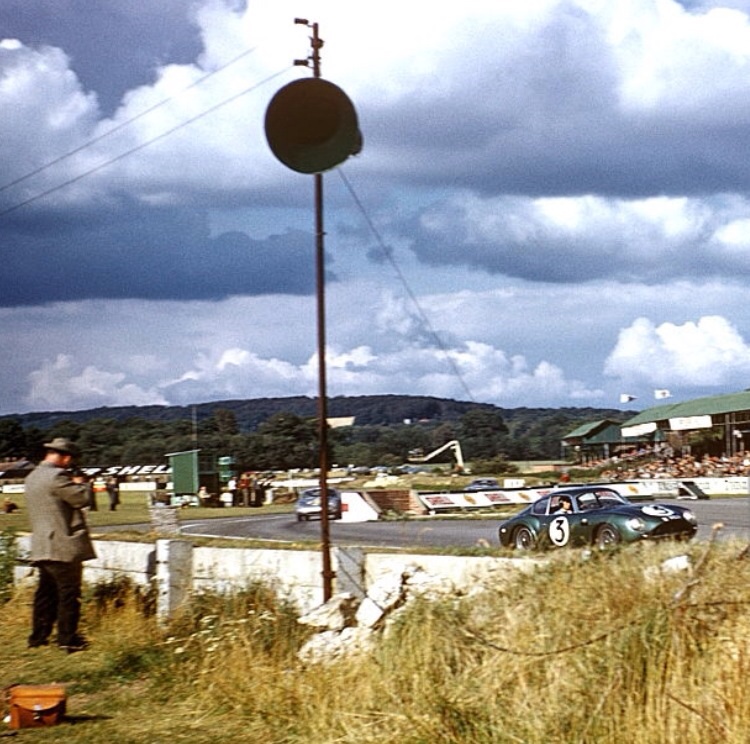
Jim Clark’s Aston Martin DB4GT Zagato ‘2 VEV’ exits the chicane during the Tourist Trophy at Goodwood on 19 August 1961…

I wrote an article about this car a while back, click here to read it, wonderful evocative shot isn’t it!;

Aston Martin DB4GT Zagato ‘2 VEV’: Lex Davison and Bib Stillwell…

image

Jim Clark circa 1962 (Getty)

Credit…

GP Library, Getty Images, Nicholas Watts

Tailpiece: Clark from the Moss and Mike Parkes Ferrari 250SWB’s…

image

(Nicholas Watts)

Finito…

bentley speed 8 tarra warra

Bentley’s Le Mans winning Speed 8 at Tarra Warra Winery in Victoria’s Yarra Valley in 2006…

I did the biggest double-take of all time when I saw this shot. Its of the 2003 Le Mans winning Bentley Speed 8 I wrote about not so long ago, click here to read the article;

Bentley Speed 8: Le Mans Winner 2003…

I know Tarra Warra winery and its contemporary art gallery well. Me an’ the ‘little Sabre-Toothed Tigress’ swing past the joint reasonably often; she gets to look at some art, both of us quite like a ‘shandy on a hot summers afternoon’ and I enjoy the drive. She doesn’t of course, at a slower speed she would but that kinda defeats the primary object of the exercise?!

Its well worth a visit for Melburnians or visitors alike. The Yarra Valley is both a beautiful place and a fine wine region, it takes about an hour from Melbourne’s CBD. Tarra Warra is nestled in the green rolling hills between Yarra Glen and Healesville.

Anyway, when I spotted the shot I thought it a ‘Photoshop concoction’ no way was the car there! Not so, there was a launch of a new Bentley at the winery in 2006 and this photo was taken then. I am rather taken by the Speed 8 and the whole Bentley/Le Mans heritage, I woulda cadged an invite somehow had I known the racer was in the country…

Photo Credit…

Uncertain

lowood jag

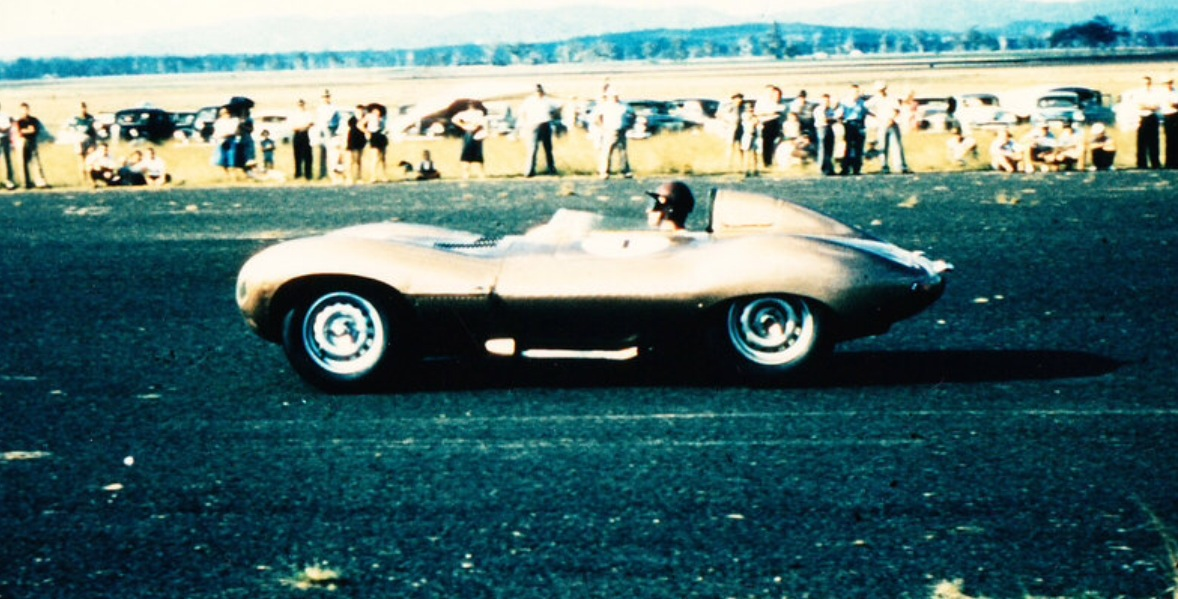
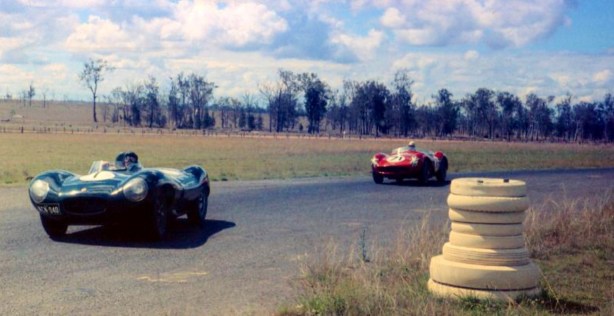
Evocative shot of Bill Pitts’s Jaguar D Type leading David McKay’s Aston Martin DB3S at Queensland airfield circuit, Lowood in 1957…

The January 1958 edition of ‘Australian Motor Sports’ covered ‘The Courier Mail’ Tourist Trophy Race Meeting in detail, the event held in typically hot Queensland November weather.

There were events for motor cycles as well as cars, open-wheelers both under and over 1500cc, touring cars and of course sports cars.

Star entries for the TT were the 2 Aston Martin DB3S’ of David McKay and Tom Sulman both back from Europe having campaigned Astons there. Bill Pitt was entered in the D Type Jaguar owned by local Jaguar dealers, Cyril and Geordie Anderson the balance of the entry Porsches, Triumph TR2 and TR3 and a large number of MG’s, for so many years the ‘backbone’ of Australian Motor Racing entries.

The TT was of 30 minutes duration with a compulsory pitstop to add interest and confuse spectators in this pre-digital sign age, with a Le Mans start.

McKay took an early lead from Pitt and Sulman but McKay spun twice in the first half of the race, once at ‘Mobilgas’ and once on the fast right hand elbow out of the same turn’…McKay foolishly tried to pass the D type here and once again misjudged and spun badly to the outside of the corner. He ended up only feet off the outside fence.

Pitt held the lead from McKay both taking their compulsory pitstop on Lap 9, David’s stop was the better of the two, McKay regained the lead from Pitt and Sulman he held to the end ‘Pitt drove impeccably but the gap was too great to bridge…McKay was lucky to win and undoubtedly the pitstop was the deciding factor. However it was part of the race conditions and the best car and driver team won’ AMS reported.

I will write about the Aston Martin DB3S’ in Australia soon.

As is so often when i start researching a topic i find bits and pieces which alters my original intent!, in this case a lot of information about Bill Pitt, a driver i was aware of but knew nothing about. This article is therefore in three parts;

.Short history of ‘XKD526’

.Reproduction of an article, slightly truncated, about Bill Pitt written by Les Hughes, which was originally published in the ‘Australian Jaguar Magazine’ in July 1987

.Short piece on the Lowood circuit.
d type

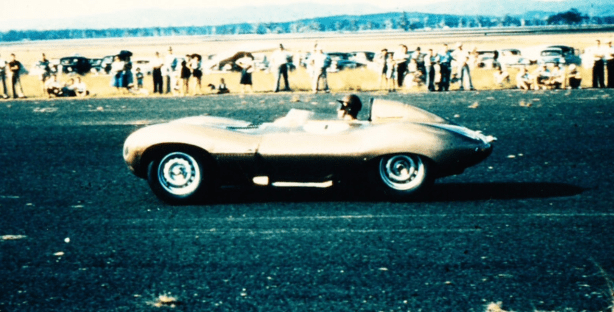
Bill Pitt at Lowood in 1957, car repainted bronze after its 1956 Albert Park accident. (Dick Willis)

Pitts Jaguar ‘XKD526’ was bought new by Cyril and ‘Geordie’ Anderson, longtime Jaguar enthusiast, occasional racing driver. It was a 1955 customer car, arriving in Australia in early 1956, Pitt chosen as the driver.

The D was very successful over the next 4 years including finishing 2nd in the 1957 Victorian Tourist Trophy at Albert Park and in the hands of Frank Matich when sold by the Andersons.
pitt

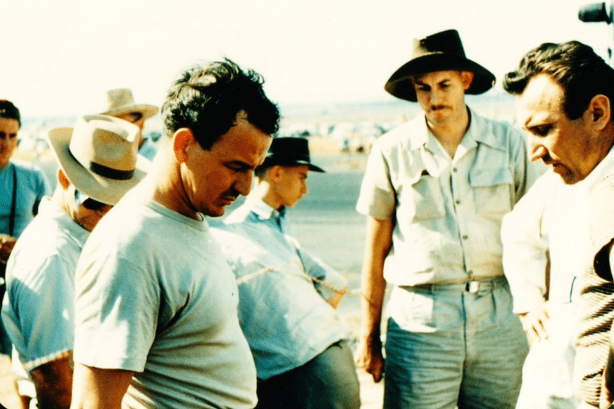
Bill Pitt, left, pondering the Jags performance at Lowood in 1957. (Dick Willis)

A summary of its race history is as follows; December 1955 car arrived in Australia; 30/1/56, Strathpine, Mrs Anderson, clocked at 120mph over flying quarter, still in 3nd gear!; 19/2/56, Leyburn sprints, Mrs Anderson, clocked 135.2mph over flying quarter, setting a state record.

March, Strathpine; Bill Pitt became the cars regular and very successful driver; 1956 race meeting at Lowood; gearbox problems precluded competition for 5 months; August, Lowood; New South Wales Road Racing Championships, Bathurst, 2nd to Stan Jones driving a 250F Maserati; Lowood TT, 1st.

Australian TT, Albert Park Olympic meeting, Melbourne, 4th. At the Argus Cup meeting at Albert Park the following weekend, the meeting a ‘double header’, Pitt rolled car and was thrown out. The D was badly damaged and trailered back to Brisbane being completely rebuilt, painted bronze, with squared-off mouth and air vents in the bonnet. Its first race post repair was back at Albert Park in March 1957 for the  Victorian TT, finishing 2nd.

XKD526 was repainted BRG; raced at Lowood and Bathurst, in 1958 it raced at Orange, Lowood, Bathurst and Albert Park and in 1959 raced at Bathurst and Lowood before being sold in late 1959 to Leaton Motors, a sports and performance car dealership in Sydney.
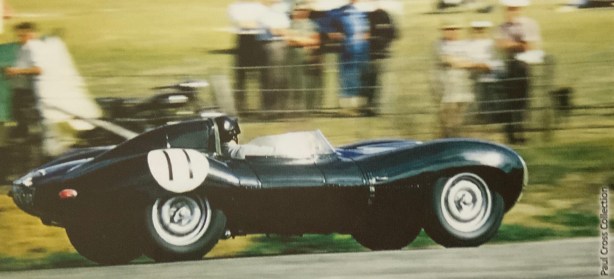
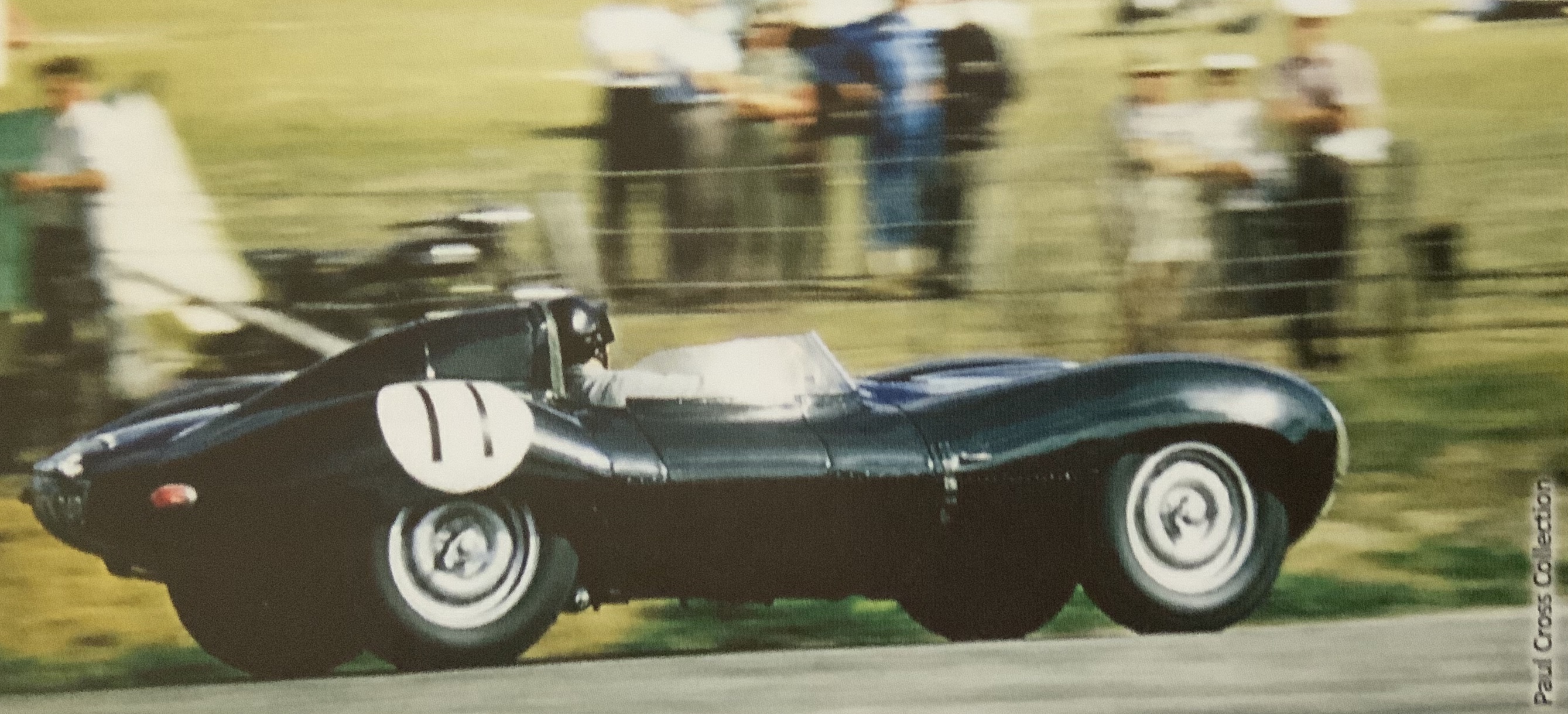
Bill Pitt negotiates Hell Corner, Mount Panorama, date unknown (P Cross)

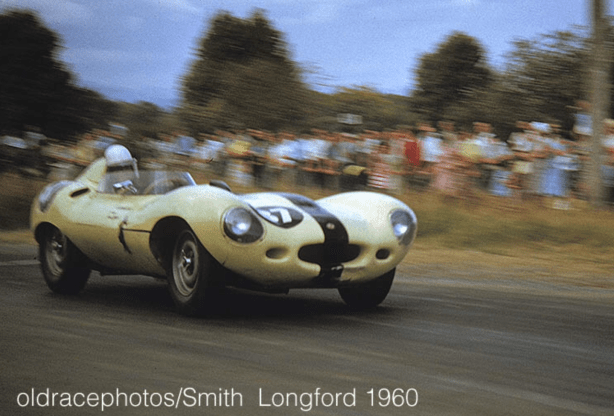
The car was repainted yellow with black stripe and driven initially by Frank Matich and later by Doug Chivas. In 1961 it was fitted with an aluminum fastback hardtop to enable it to compete in GT racing. Matich competed in June at Catalina Park, he contested in July the Australian GT Championships at Warwick Farm finishing 1st. In October he won the NSW Championship.  Doug Chivas raced the car at Warwick Farm in November, by that stage Matich was driving Leaton’s just imported Lotus 15 Climax.

The car was sold to Barry Topen who competed in the March 1962 Warwick Farm International Meeting before racing in Sandown Park’s  inaugural meeting, crashed it and damaging it. The D Type remained in a damaged state for some time and was sold around 1965 to Keith Russell (Sydney), who rebuilt it and raced occasionally during 1966 at Catalina Park, Warwick Farm, Hume Weir and Oran Park.

In 1967 Russell sold to it to Keith Berryman. The hardtop was removed and stored, Keith raced the car occasionally until 1970. In the mid-seventies he loaned it to lan Cummins to assist with his rebuild of ‘XKD510’. ‘XKD526’ was rebuilt by Cummins/Classic Autocraft at the same time, work included re-skinning the monocoque and making a new front frame. In 1982 the rebuild was complete, Berryman retained the car until it was sold at auction in 2015, at which point, the car, its whole history in Australia, left our shores.
matich on grid

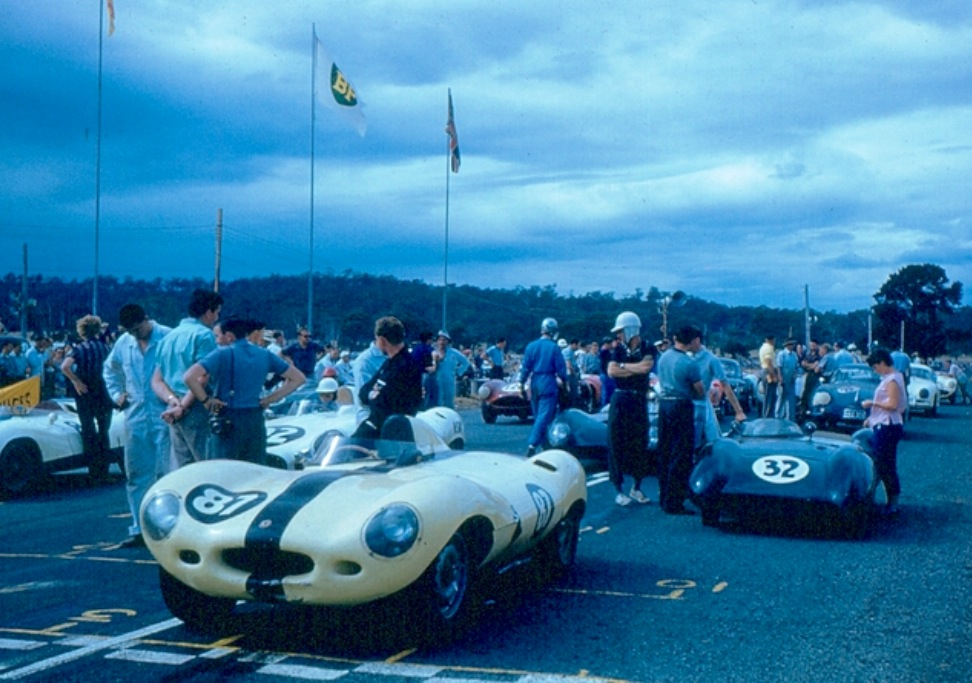
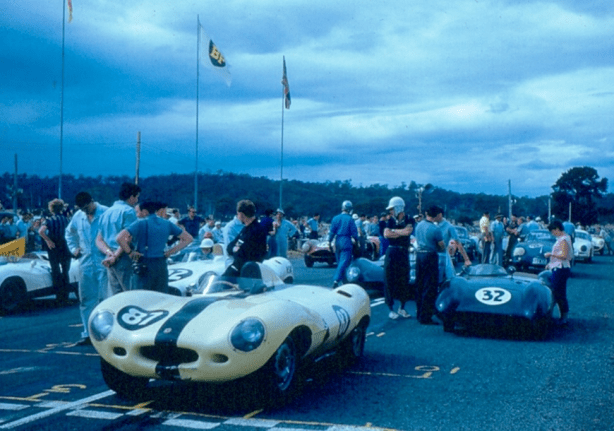
Matich leaniang against the back of the car, Australian TT, Longford Tasman meeting March 1960. #32 John Ampt, Decca and Derek Jolly’s Lotus 15 Cliimax to his left and back. (Kevin Drage)

One of the most surreal sights I can recall was after buying a Ralt RT4 (the ex-Moreno Calder AGP winning RT4 ‘261’) off Keith Berryman some years back and travelling from Melbourne to a tiny little hamlet called Stockinbingal in the South Western Slopes area of NSW.

The place is a very small farming community, the nearest large town Gundagai 80 kilometres away. Having done the deal on the Ralt I asked to see the D Type.

We walked through some parched, brown paddocks amongst the sheep near the farmhouse to an unprepossessing run down concrete shed of uncertain vintage.

Keith threw open the door and there, sitting on axle stands inside a ‘huge plastic humidicrib’ an electric motor quietly humming as it circulated clean, fresh air around ‘the baby’, was the fabulous, immaculate, curvaceous flanks of a British Racing Green Jaguar D Type.

To say that it looked out of place does not do justice to the bizarre, surreal scene!

The car lived in country NSW for a long time, Keith a passionate owner for decades…hopefully it will come back to visit one day…
matich d type

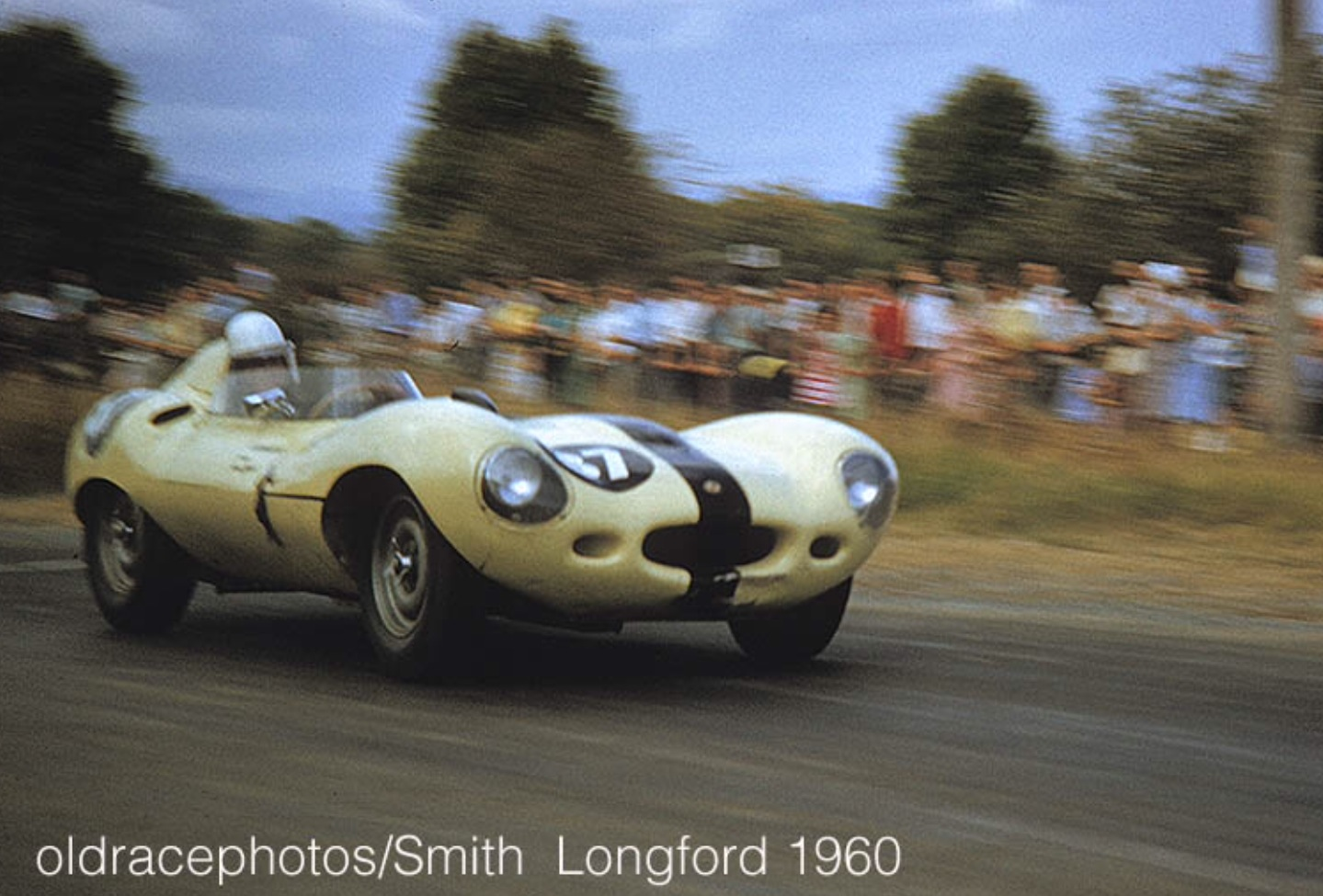
Matich in the 1960 ATT Meeting at Longford. (oldracephotos.com)

Bill Pitt: by Les Hughes ‘Australian Jaguar Magazine’ 1987…

Born in Brisbane, Bill served in the Australian Navy during the Second World war, his first contact with motor racing was as a timekeeper during the Australian Grand Prix meeting at the Queensland Leyburn track in 1948.

From the Leyburn meeting on, all forms of motor sport became a passion for Bill, his friends and later his family. He became a competitor with increasing success and played a vital part in the direction of motor sport both in his Queensland base, and later on a national level. His friend Charlie Swinburn and several other MG drivers formed an active group and later Bill, Charlie and Ray Lewis had a motor garage called LPS Motors where their cars and other racing machinery were prepared.

Pitt’s first competition car was a humble 1938 Morris 12 Roadster, which provided his first trials win. Next came a serious racing car in the form of one of the revolutionary rear-engined Coopers. The Cooper had been recently imported by Les Taylor who had just stunned the motoring world by running his brand new XK120 from Darwin to Alice Springs in under 11 hours. Actual travelling time for the 954 miles was completed at over 100 mph, the final corrected speed was 90.62 mph which allowed for stops for fuel, kangaroos and other wildlife. Taylor sold some of his property, one of the items for sale was the Cooper which Bill bought, fitting it with a Manx Norton Engine.

The engine which Bill bought came via the Queensland Manx Norton distributor, Cyril Anderson, a former international dirt bike racer. Cyril’s other business interests included Mack Trucks, Western Transport and several motor car distribution networks, including Jaguar cars which sold under his Westco Motors banner. Cyril’s wife Doris – better known as ‘Geordie’ – made a name for herself by racing their aluminium bodied XK120 (chassis no 11).

The Anderson XK120.

That first contact through the purchase of the Manx Norton engine led to Cyril’s inviting Bill and Charlie Swinburn to partner Geordie in their XK120 Fixed Head Coupe (their earlier aluminium XK120 had been destroyed in a workshop fire) which he had entered in the first, and only, 24 hour race in Australia, to be held at Sydney’s Mt Druitt circuit (31-Jan-1954).

Despite having to replace a cracked carburettor with one from a spectator’s car, their XK120 won the race against  entries including a Jaguar C-Type, Aston Martin DB2, aluminium XK120, Bristol 400, Alfa Romeo 6C. This win gained an enormous amount of publicity for Jaguar, Westco Motors and the three drivers.

Bill was then working for the Queensland Nuffield distributors, Howard Motors, and had married Sherry.

Bill and Charlie then set up the running of the 1954 Australian Grand Prix through the streets of Southport on the Gold Coast. Bill entered his second Cooper, bought from Jack Brabham. The race contenders were Stan Jones, Maybach, Lex Davison’s HWM Jaguar, Rex Taylor’s Lago Talbot and several Ferraris.

For this race Cyril Anderson had stripped the body of a black XK120, shortened the chassis, over which he then placed an aluminium body. Known as the Anderson Special, he entered the car for himself, whilst Geordie was to drive the XK120 FHC in a support race.

Saturday practice proved to be very bad indeed. Bill blew the engine of the Cooper, Cyril was very slow and uncertain of the Jaguar Special, and Geordie had an accident, hit a tree and the FHC burst into flames! As a result Cyril asked Bill to take over the Jaguar Special for the Sunday race.

Bill readily accepted, but as he sat on the grid he was trying to become familiar with a car he had never sat in before – not the most comforting way to begin a Grand Prix. After spearing off  at over 100 mph at the end of the straight, rejoining only to have to stop and replace a deflating tyre, he was classified 12th. Lex Davison’s HWM Jaguar won.

Bill’s employer, Howard Motors, used his sporting talents also, and for the 1955 Redex Trial they entered a Morris Oxford for Bill, Dick Howard and Bill Anderson.

D Type ‘XKD526’

The major decision for Bill and Charlie Swinburn in 1955 though, was whether or not to take up the offer from Cyril Anderson to become partners in ownership of a brand new D-Type.

In Melbourne, Bib Stillwell, racer and Jaguar dealer, had placed an order for one through Jack Bryson. After long and careful deliberation, Bill remembers he and Charlie parted with 2,000 pounds each for the car. As it turned out, Charlie never drove the D-Type, and Geordie did only briefly. Virtually all of the competition was done by Bill. He recalls the friendly rivalry between he and Stillwell, they stayed at each other’s homes when interstate.

Bill rolled the D-Type in Melbourne at the 1956 Olympic Games meeting at the very fast Albert Park Circuit. The ‘greats’, included Stirling Moss, Jean Behra and Ken Wharton, were out from Europe with their latest machinery.

Bill Pitt in XKD526 – Albert Park, Melbourne 1956

For Bill Pitt the competition was fierce against Bib Stillwell, and in that near fatal race, Stillwell got the jump at the start and lead Bill into the fast, first left-hand corner. He recalls how he closed quickly under braking into Melford Corner before realising he had gone into it far too fast. The car was still under control, and as he continued the power slide and concentrated on the short burst into the next corner, suddenly it was all over before he knew what had happened. As the D-Type slid wide, and the power was applied, the back wheel touched the stone curbing and at those speeds the car simply twisted into the air and slammed down on its back.

As the beautiful green D-Type lay upside down the scattered hay bales caught fire and quickly spread to the car. The marshals were convinced that Bill was squashed under the car, but couldn’t right it till the fire was out. When that was done, and the car was back on its wheels, they were shocked to find the cockpit empty. Bill was thrown out while the car was in mid air, and in a state of shock, and worry about Jack Brabham’s Cooper which was following, he jumped a six foot wall of hay bales unseen by officials.

The damaged D-Type was returned to Brisbane for a rebuild which was completed in time to return to Melbourne for a meeting in February the following year, this time painted bronze (only for a short while).

In the pits. Albert Park 1957. Painted bronze after the rebuild following crash the previous year. (Ian Richardson).

 Leading a 300S Maserati around Golf Course Corner, Albert Park, 1957.(Ian Richardson)

The D-Type was sold in 1959 to Leaton Motors, the history of the car from that point outlined above.

Keith Berryman (and family) with XKD526 at the 1988 Gold Coast Jaguar Rally, together with the excellent replica built by Classic Autocraft for Don Biggar (now owned by Frank Moore)

Jaguar Mk VIII Rally Car.

Bill was approached by Anderson to drive a Jaguar Mk VIII automatic in the 1957 Mobilgas Round Australia Trial. Geordie would partner him, and so too Jimmy Abercrombie, workshop foreman at Westco.

The big cream and grey Jaguar was shipped to Melbourne for the start on August 21, 1957. A field of 94 entrants competed in this, the last of the major round-Australia trials of the era. The toughest opposition came from the all conquering Volkswagens of previous winners, Eddie Perkins, (Larry Perkins father) Laurie Whithead and Greg Cusack, whilst Porsche entered three cars. An automatic had never finished the event, let alone a Jaguar, or even a car as big as the Mk VIII.

The Volkswagen of Laurie Whitehead was the victor ahead of five more Volkswagens, but sensationally, next came the huge Jaguar automatic in seventh place outright, making what Bill Pitt still believes is one of Jaguars greatest competition triumphs, but which outside Australia, was virtually unrecognised. Of the 94 starters, 52 cars finished. Geordie was awarded the Woman’s Prize, and the Jaguar was first in Class D (over 2500 cc), giving the team the total prize money of 760 pounds.

Touring Car Racing.

Lofty England dissuaded the Brisbane team from buying a Lister Jaguar, suggesting to them that he would build a ‘works’ specification Mk 1 3.4 saloon. When Bill and Cyril ordered the 3.4 they didn’t know that David McKay was having an identical car built to replace the less modified ‘Grey Pussy’.

By the time both had their new cars, Ron Hodgson had bought the first McKay machine. Crowds flocked to see the Aussie Holdens take on the best of British, firstly the Jaguars, then the Mini Coopers and the Lotus Cortinas, and that set the scene which was later taken over by the Ford versus Holden halcyon days of touring car racing in Australia.

Bill Pitt and the British Racing Green ‘Mk 1’ were star attractions everywhere they went, and soon the Geoghans bought the Hodgson ‘Mk 1’. Hodgson built a brand new Mk 2 and then Bob Jane arrived with his famous white Mk 2. Bill won many titles and important races, his second place to David McKay in the very first Australian Touting Car Championship, and then his own victory in the second title (1961) were the highlights.

The life of the saloons was much shorter than the old D-Type, however, and with the arrival of the big US V8’s, Bill could see the writing on the wall and in 1962 the car was sold.

Bill’s racing career was over, although he continued to work within CAMS, and for Westco Motors until 1965.

Confederation of Australian Motor Sport.

Bill Pitt was involved in many facets of  motor sport from the outset, and as Queensland delegate to the Confederation of Australian Motor Sport (CAMS) he put a lot of time into the betterment of the sport.

Retirement.

It was not until Lofty England’s first visit to Australia in 1981 that the two met for the first time, despite the many phone calls and letters exchanged during their racing and business contacts. Bill and his wife Sherry now live on the Sunshine Coast, north of Brisbane. Australian motor sport, and the Jaguar marque in particular, owe a great deal to this quiet, unassuming and very pleasant man.

Bill and Geordie meet again – March 1993

 Bill Pitt at Queensland Raceway GTP Nations Cup Race meeting. 22nd July 2001.

Celebrating 40 years of the Jaguar E-Type and 40 years since his Touring Car Title.
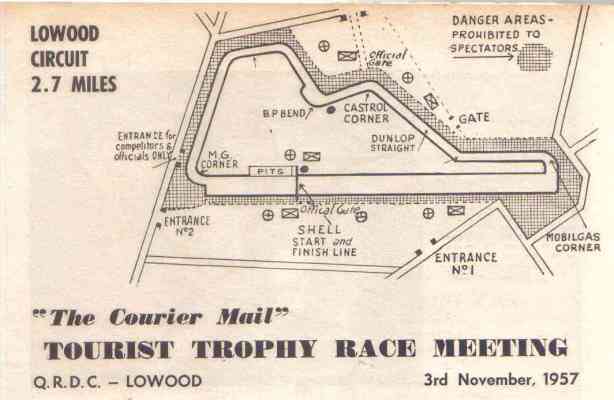
 

Lowood curcuit map

Lowoood Airfield was built on 620 acres 43 miles from Brisbane, construction commenced in September 1941

Australian and American Squadrons operating Tiger Moths, Kittyhawks, Avro Ansons, P39 Aerocobras and Beauforts operated from there from 1942 to late 1945.

Lowood’s use from motor racing commenced after the war but continued pressure from local religious groups lead to its disuse on Sundays…despite this many meetings were held from 1948-52, in late 1956 the Queensland Racing Drivers Club acquired the land.

The QRDC sold the track in 1966 moving its operations to Lakeside, the area was then subdivided into small farms, what was the main runway is now a local road!
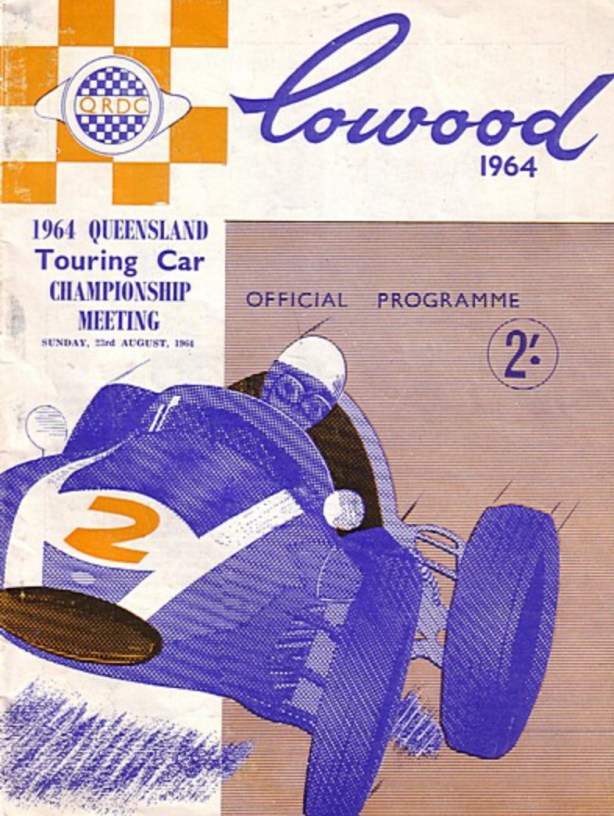
lowood brochure

D Type: the Drivers Perspective…

http://www.motorsportmagazine.com/archive/article/june-2004/50/d-type-cast

Bibliography…

Peter Dunns ‘Australia at War’  ‘Australian Motor Sports’ January 1958, Article by Les Hughes in the July 1987 issue of ‘Australian Jaguar Magazine’, Stephen Dalton for the research and archival material

Photo Credits…

Heinz Federbusch Archive via Dick Simpson and The Nostalgia Forum, Kevin Drage, oldracephotos.com, Dick Willis, Ian Richardson, Paul Cross

Finito…

mille miglia 1957

(Allan Fearnley)

Piero Taruffi’s Ferrari 315S leads the Richard Steed/John Hall Cooper Jaguar and ill-fated Ferrari 335S of Fon de Portago and Ed Nelson. Taruffi victorious in the 335S Ferrari powered 315…

Click here for my article about this race;

Peter Collins: Mille Miglia 1957: Ferrari 335S…

Credit…

Allan Fearnley

Finito…

image

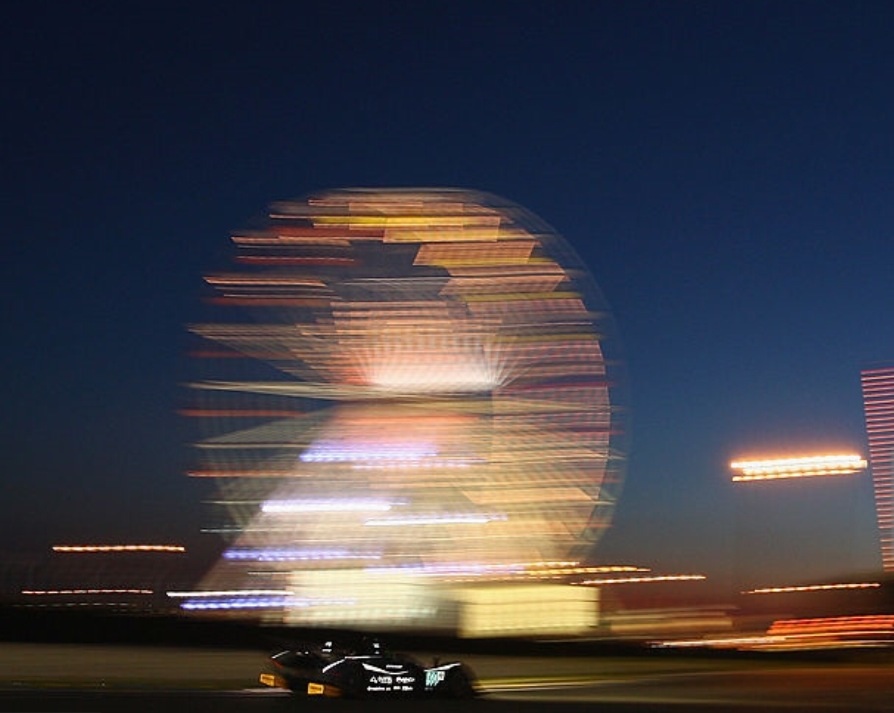
‘The Track Is My Canvas’ could be the title? The Pedro Lamy/Stephhane Sarrazin Aston Martin DBR9 during practice for the Petit Le Mans round at Road Atlanta, Georgia on 26 September 2006…

Credit…

Darrell Ingham

image

Norman Dewis, famous as Jaguar’s test and development driver was often entered as a relief driver but until 1955 had not raced a Jag…

Here he is in the factory ‘D Type’ during the 1955, horrific Le Mans event. He co-drove Don Beauman’s car the pair failed to finish when Beauman ‘beached the car atop the sand dunes’ at Arnage. Mike Hawthorn and Ivor Bueb scored a hollow win in ‘XKD 505’.

image

Umberto Maglioli’s head in his Ferrari 118 LM ahead of the Beauman, Hawthorn and Jacques Swaters D Types during the early laps of the 1955 Le Mans 24 Hours (Klemantaski)

Before he joined Jaguar, as the 500cc F3 movement grew, and with a fellow LeaF employee Dewis designed and built a neat Rudge-powered F3 car, the DNC. In its first race at Silverstone in July 1950, he qualified on pole and led for two laps before engine failure. It was rebuilt to do more races in 1951, in October that year Dewis joined Jaguar.

As noted Dewis had been a Jag reserve driver before, but the 1955 Le Mans was his only race/works drive for his Browns Lane employers. He had done most of the D development work, the result, the long-nose 1955 car.

Jaguar’s works 1955 Le Mans entries were for Hawthorn/Jimmy Stewart, Tony Rolt/Duncan Hamilton and Don Beauman/Desmond Titterington. Beauman, an old friend of Hawthorn’s was hired after a test under Lofty England’s watchful eye.

Two weeks before Le Mans Titterington and Stewart crashed their Ecosse D’s during the Eifelrennen at the Nurburgring. Stewart decided to retire and Des was hospitalised. So, days before the race Ivor Bueb was slotted into Hawthorn’s car and Dewis into Beauman’s. Their car ‘XKD508’ ran as high as 4th before the Mercedes team withdrew their 300 SLR’s but on lap 106 Beauman ‘parked it’ at Arnage and retired it unable to free it from the sand.

Click here to read an interesting interview with Norman Dewis in MotorSport about his life;

Lunch with… Norman Dewis

Credit…

Getty Images, Klemantaski Collection, Nicholas Watts

Tailpiece: Hawthorn’s D  from #12 Dreyfus/Lucas Ferrari 750 Monza and Fangio’s Benz 300SLR during the first torrid stint by both Mike and J-MF…

image

(Nicholas Watts)


image
(The Enthusiast Network)

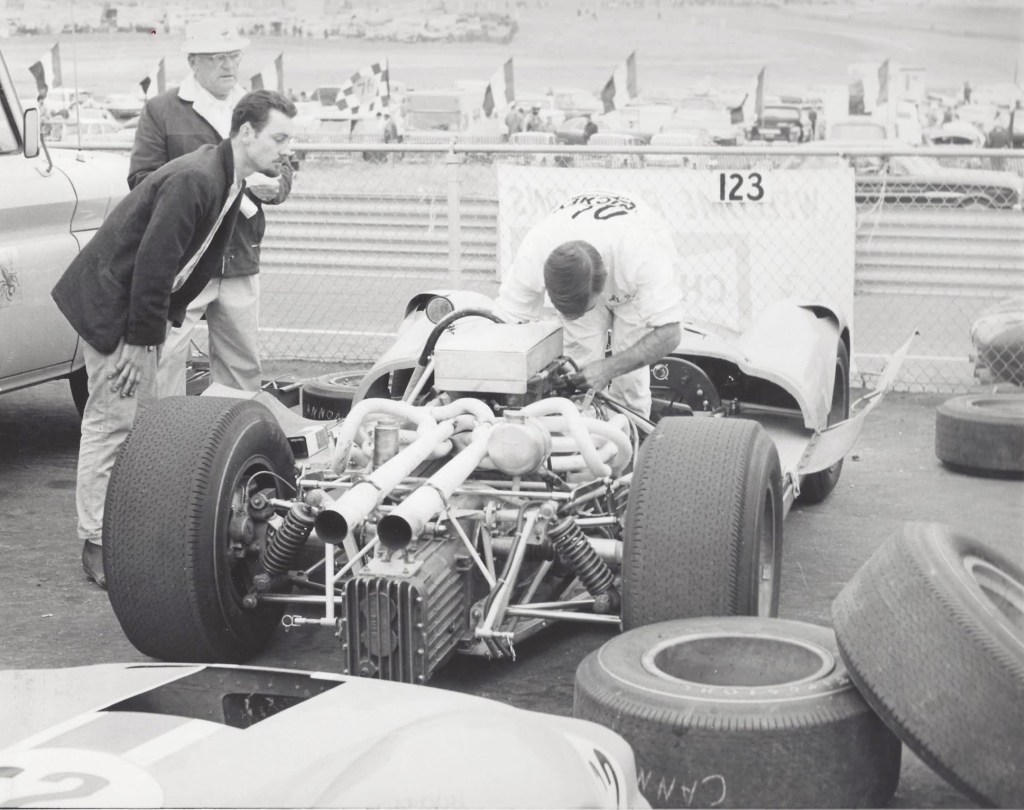
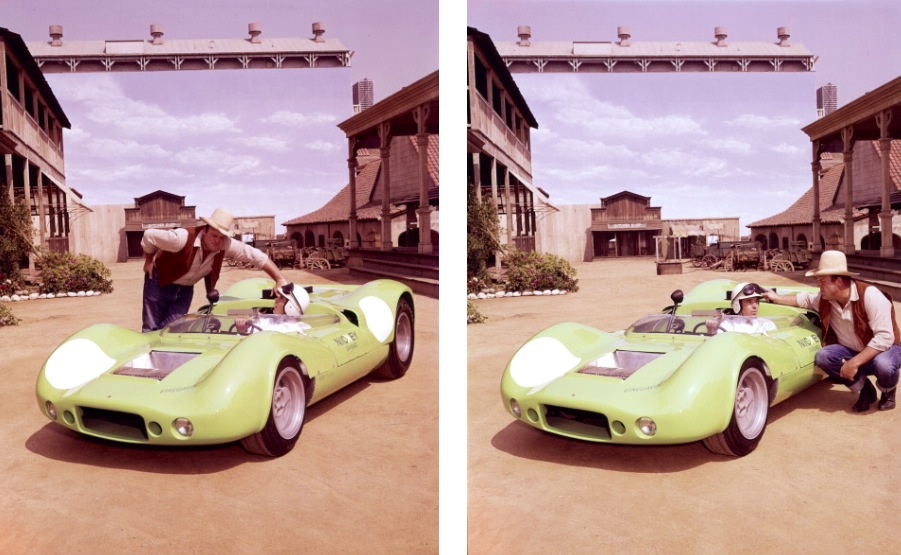
Hoss Cartwright checks out his new Can-Am Genie Mk10B Traco-Olds with driver John Cannon…

As a 1960s Aussie kid i grew up on a diet of fantastic American TV, our own tele/movie industry wasn’t what it is today. I have wonderful memories of ‘Flipper’, ‘Gilligans Island’, ‘The Jetsons’, Freddy Flintstone, ‘The Munsters’, ‘The Addams Family’, ‘McHales Navy’, ‘Batman’, ‘Hogans Heroes’, ‘Get Smart’ of course and ‘Bonanza’, all of which explains how i turned out i guess!

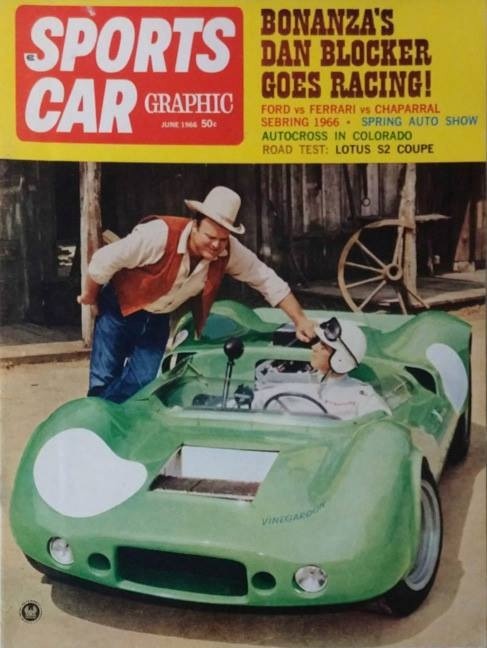
‘Bonanza’ was a Western the whole family sat down to watch. Dan Blocker, the Genie’s owner played Hoss Cartwright in the popular show which ran from 1959-73, shite thats a long time! This publicity shot was taken on 3 February 1966 on ‘The Western Street’ set, Paramount Studios, Los Angeles.

image
(The Enthusiast Network)

Genie Mk10B Traco Olds…

Blocker, a motor racing enthusiast acquired the car from Ray Huffaker its constructor. Nickey Chevrolet provided some sponsorship with British born Canadian ex-RAF pilot, John Cannon engaged as driver.

Cannon contested the 1965 and 1966 USRRC seasons, he finished second in the 1965 Nassau Tourist Trophy and won the USRRC race at Stardust Raceway, Las Vegas in April 1965.

In 1966 John won the first USRRC round at Stardust on 24 April and retired at Riverside, Laguna and Bridghampton in May. After another retirement due to an accident at Watkins Glen in June, Cannon left the team and bought a McLaren-Elva Mk2 finishing second at Kent on 31 July.

image
Times Grand Prix, Riverside 31 October 1965: John Cannon’s Genie Mk10B Olds eighth ahead of Chris Amon in the Ford GT40-X1 5th. Hap Sharp’s Chaparral 2A Chev won from Jim Clark’s Lotus 40 Ford and Bruce McLaren’s McLaren Elva Mk2 Olds. It was a great performance from Cannon in a car not as quick as many, the field also included McCluskey, Pabst, Follmer, Dick Thompson, Revson, Parsons, Titus, Hobbs, Bondurant, Ginther, Hill, Gurney, Grant and Hansgen! Quite a field (The Enthusiast Network)
image
The Genie at Bridghampton in 1966 (Frederic Strauss)

In the first, 1966, Can Am series, stunt driver Bob Harris took over the Genie, fifteenth at St Jovite and elevnth at Stardust his best results, the series was won by John Surtees works-Lola T70 Chev.

The Genie passed through various hands but is still extant and is run in historic racing by Tom Stephani, son of Jack Stephani who co-owned Nicky Chevrolet, the Genie’s sponsor when Cannon raced it.

image
Genie Mk10 as raced by Bob Harris in the ’66 CanAm (Larry Fulhorst)

Paul Stephani, Tom’s son picks up the story; ‘My grandfather owned Nickey Chevrolet in Chicago (with his brother Ed and sister Jean). Jack was a big racing enthusiast and used Nickey as an excuse to go racing’.

‘It doesn’t stop there as Michael Cannon (son of John cannon) married a close friend of our family and has driven the Vinegaroon to the car show from Road America to Elkhart Lake a few years back. Michael is the head engineer on Conor Daly’s IndyCar entry this year. Here’s how the Blocker/Nickey/Cannon combination went their separate ways after the ’66 CanAm round at Watkins Glen! : https://www.youtube.com/watch?v=cxClHhH4xto

Tom Stephani recalls how Dan Blocker and his father Jack Stephani came to create a race team together; ‘Basically, my Dad met Blocker at the West Coast races in the fall of 1965. Dad saw a natural connection between the two. Both loved racing, Nickey had a fairly substantial racing team and budget, and Blocker could provide a promotional opportunity for Nickey Chevrolet. ‘Bonanza’ was sponsored by Chevrolet so the tie-in really worked well. His personal appearance at the Nickey Dealership in February 1966 drew at least 5,000 people. Shut the whole place down for a couple of days!’

Joe Huffaker started building racing specials and Formula Junior’s. He switched to sportscars as the greater market opportunity became clear. The first Genie Mk4 was a ‘G Modified’ car powered by a BMC 1100cc engine.

image
Jack Stephani co-owner of Nickey Chevrolet in the glasses behind the toolbox, Dan Blocker and John Cannon at the USRRC Bridghampton round in May 1966 (The Enthusiast Network)
genie1
The Genie M10B as it is today owned by Tom Stephani, the son of original Nickey Chev/Genie sponsor Jack Stephani (Paul Stephani)

Technical Specifications…

The Genie Mk10 was an improvement on or evolution of his Mk8, his first big-banger USRRC series car.

It comprised (see below) a multi-tubular spaceframe chassis which accommodated a range of American V8s and utilised the ‘usual’ 1960s suspension mix of wishbones and coil spring/dampers at the front and inverted wishbone, single top link, coil spring/dampers and radius rods at the rear. Brakes were Dunlop calipers with outboard discs all round, the whole lot clad in a curvy fibreglass body.

The Blocker Mk10B was powered by a Traco-Olds 300cid/5-litre engine fed by four 48IDA Weber carbs, the transaxle was a BMCD Huffaker unit.

The team’s Chief Mechanic was ex-F1 UDT/BRP guy John Harris who extensively modified the car during the winter of 1965/6, the car was christened the ‘Vinegaroon’ from then. 

The Genie Mk10 retailed at around US$9500 winning a few races, but was soon left behind by Chaparral, McLaren-Elva and Lola.

(R Wright)
image
(The Enthusiast Network)

John Cannon…

Of Canadian nationality, but born in London on 21 June 1933, John Cannon initially raced a $750 Morgan at St Eugene in 1959. A Canadian newspaper report dates his emigration to Canada from the UK as 1957 so i am not sure that some earlier races in the US attributed to him in some sources are correct.

In any event he progressed racing an Elva Courier in 1959, 1960 and into 1961. He also raced a Jag  D Type and the Dailu Mk1, results in that car brought him to the attention of NART who teamed him with NASCAR star ‘Fireball Roberts’ in a Ferrari 250 GTO in the 1963 Daytona 3 Hour (fifteenth) and Jo Bonnier at the Sebring 12 Hour (thirteenth).

image
Jim Parkinson/Jack Flaherty MGB DNF follows the NART Ferrari GTO of Bonnier/Cannon 13th at Sebring in 1963 (Bill Stowe)
image
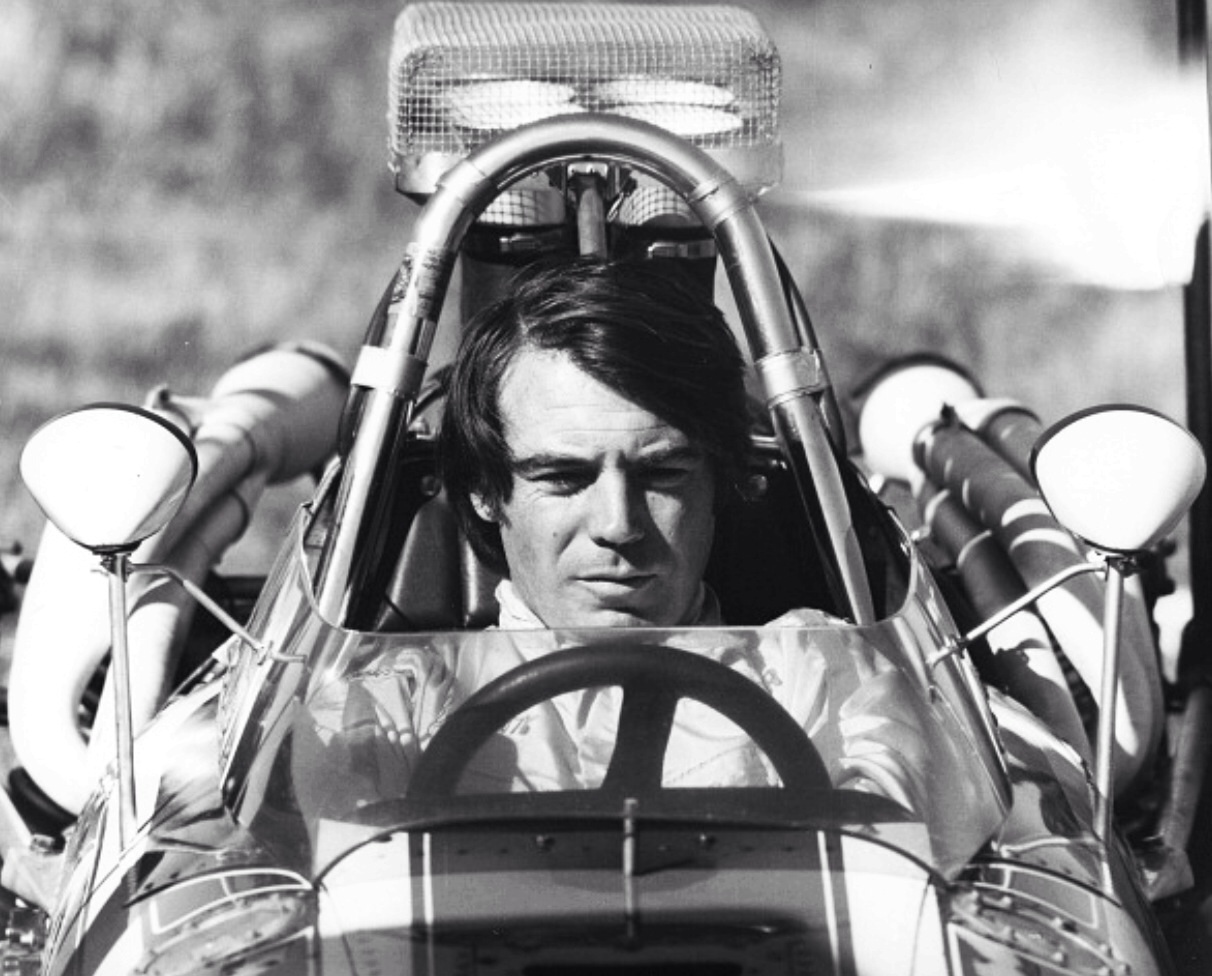
John Cannon circa 1970 (mclaren.com)

In later 1963/4 Cannon raced a great variety of cars, proving his versatility including the Dailu Mk2/3, Lola Mk1, Comstock EXP, Fiat Abarth, Chev Corvette and Elvas Mk 3/7- for John Mecom he raced the teams Lotus 19, Scarab Mk4/5 and Lola T70.

He progressed through to the Blocker drive and then became a McLaren Can-Am customer and ‘foot soldier’ as the McLaren website puts it! Mind you, whilst they claim him as ‘their own’ he raced many cars other than McLarens after 1965! Whilst never a member of the works team John’s achievements both as a privateer and driving for independent teams earned him a worthy place in McLaren’s Top 50 drivers ranking- listed as thirty-eighth.

He took a superbly opportunistic victory in the rain-soaked Laguna Seca Can-Am round in 1968 that pushed his career along. Driving an aged M1B Olds, Cannon kept his cool when others were slip-sliding in all directions and finished ahead of Denny Hulme’s works M8A at the chequered flag.

image
Press launch with John Cannon left beside Jack Saunders in the Mecom Lola T70 before Sebring in 1965. DNF (Lola Heritage)
image
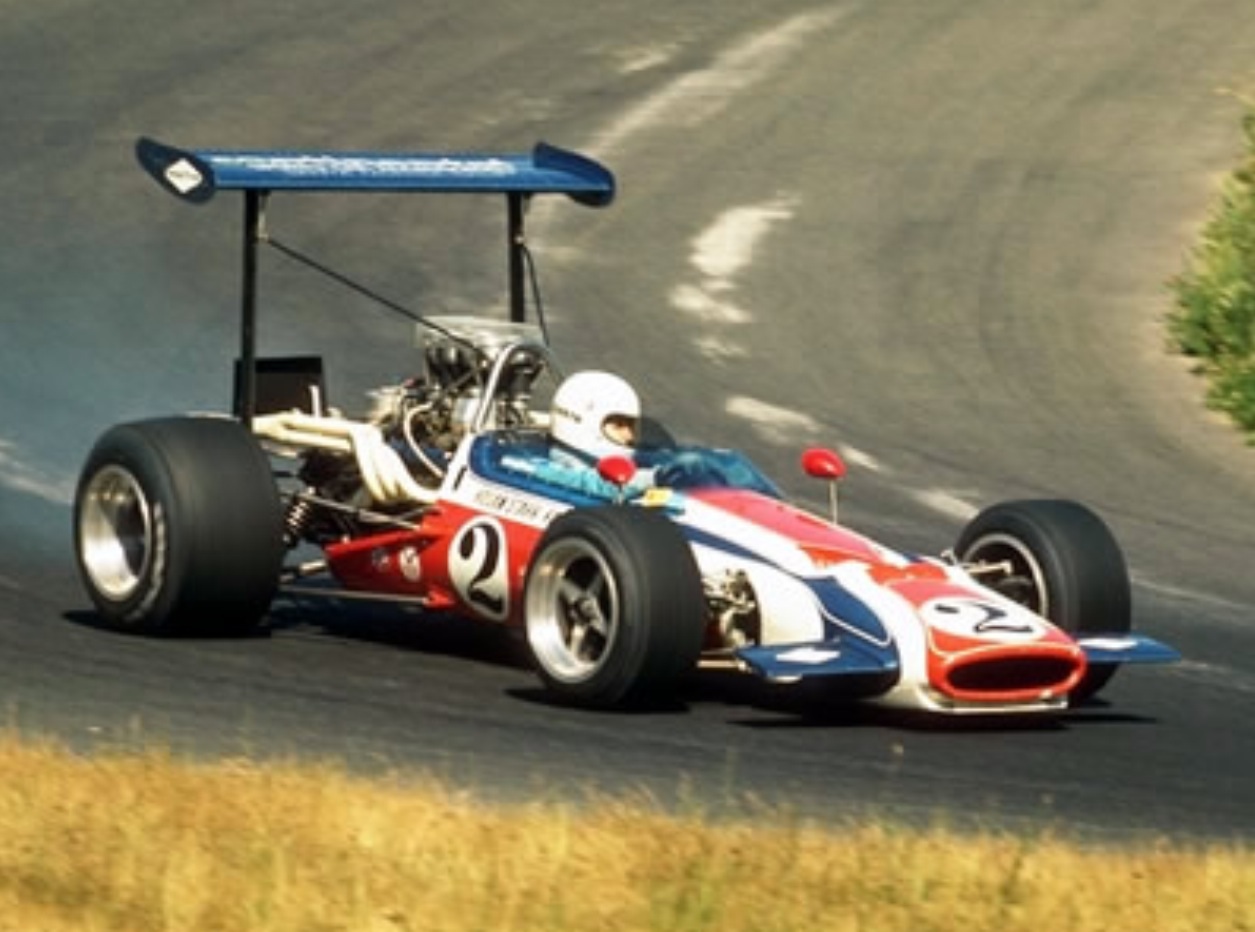
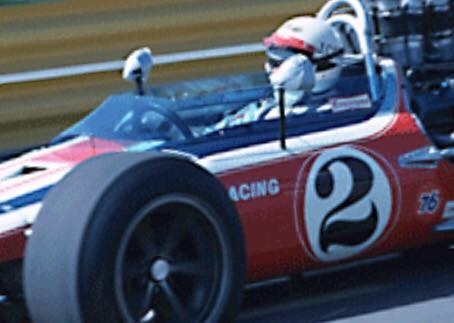
Cannon aboard his F5000 Eagle Mk5 Chev in 1969, Michael Cannon quipped ‘this shot is early in the season as they added an extension to the roll-hoop before the first round at Riverside’. JC won the Riverside and Mosport rounds, finishing the series 5th, Tony Adamowicz won it in another Eagle (Racing One)

In 1969 and 1970 he moved into single seaters as well as Can-Am, he raced a Can-Am McLaren M6B in 1968 and Ford G7 in 1969, contesting the prestigious L&M Continental F5000 series, winning it in 1970 driving a McLaren M10B Chev for  St Louis trucking magnate Carl Hogan’s ‘Hogan-Starr’ operation.

Cannon used this success as a springboard to establish his racing reputation in Europe, raising funds to lease a semi-works March 712M in the European F2 championship in which Ronnie Peterson, Carlos Reutemann and Francois Cevert  were leading lights. In this company Cannon performed very respectably, well enough to be invited to drive as a member of the five-car BRM squad in the 1971 US GP at Watkins Glen- he finished fourteenth in a P153.

image
John Cannon in the first production McLaren M10B Chev ‘400-01’ the car in which he won the 1970 US Championship, when this shot was taken, and the 1971 Tasman Championship (oldracingcars.com)

An interesting insight into this part (1970-1) of John Cannon’s career was provided by his son John M Cannon on ‘The Nostalgia Forum’ in 2007, he wrote/posted;

‘After the 1970 F5000 season, my dad went down to do the Tasman Series. He already had an agreement with Carl Hogan to do the 1971 US series and wanted to stay sharp by racing the winter series. At Sandown, he crashed the McLaren M10B beyond repair and was offered Chris Amon’s Granatelli Lotus Cosworth F1 for the last round at Surfer’s. (in fact he raced a Granatelli F5000 Lotus 70 Ford at Surfers to seventh place but probably had a steer of an F1 March 701 raced mainly by Chris Amon during the series in practice somewhere, that car was powered by the ‘Tasman’ Ford Cosworth DFV variant, the 2.5 litre ‘DFW’ engine) Well this car was a total revelation for him – he loved the nimble handling of the F1 car and decided then and there that he would do everything possible to pursue a ride in F1.’

image
John Cannon’s March 701 DFV in the 1971 Questor GP, Ontario Motor Speedway 28 March 1971. This was a combined F5000/F1 race won by Mario Andretti’s Ferrari 312B, Cannon DNF on lap 29 (MotorSport)

‘He was able to run an STP backed March F1 car at the Questor GP and this only whetted his appetite further. He broke off his agreement with Hogan (who was one of the nicest and fairest people you’d ever have wanted to meet by all accounts), grabbed every dollar he had and headed off to Europe to do F2. At the age of 38, he was a rookie in what was probably the most fiercely competitive series in the world!

The early season stuff went fairly well as was able to buy what he called a ‘stonking great (Ford FVA F2) motor’ from Jackie Stewart. However, once that motor blew and money began to get tight, things got tougher. He effectively ran out of money late in the season and I don’t know that he even finished the series.’

image
John Cannon cruisin’ his year old BRM P153 thru the Watkins Glen paddock, US GP 3 October 1971, the race was won by Francois Cevert’s Tyrrell 002 Ford from Jo Sifferts BRM P160 and Ronnie Peterson’s March 711 Ford (Chris Kennedy)

‘That autumn, (1971) he did the USGP in the fifth BRM. It was a bit of an old nail and the ‘qualifying engine’ was 500 rpm down from his practice motor… Anyway, he did finish the race and the team kept in touch, offering him a ride for 1972. He wouldn’t get paid but he would get a share the prize money. Now my dad had been earning his living as a driver for many years and thought this to be a ridiculous offer-if he wasn’t paid, he wasn’t going to do it. That was the last time F1 came calling…’

image
Cannons P153 running very soft roll bars! ahead of Siffert’s second placed BRM P160 Watkins Glen 1971, BRM entered 5 cars. Cannon Q24, finished 14th. Amongst the other ‘guest/one off drivers’ Posey Surtees Q17 and Revson Tyrrell Q19 were quicker but so were their cars. Cannon was faster than regulars such as De Adamich. It would have been interesting to see how he would have fared with a regular BRM drive in 1972 but BRM was a ‘bear pit’ in the sense of running too many cars for too many drivers all fairly poorly! Beltoise’ P160 ’72 Monaco win duly noted. (Norm MacLeod)

In a varied and long career Cannon also contested 15 USAC events between 1968 and 1974, his best result a second at Mont Tremblant in 1968. He had two cracks at Indy in 1970/4, failing to make the cut on both occasions.

image
Riverside Can-Am 28 October 1973: Bob Nagel’s #17 Lola T260 Chev fourth with Cannon’s #96 McLaren M20 Chev Turbo DNF up his chuff and boxed in by #64 Bob Peckham’s McLaren M8C Chev sixth. #11 Steve Durst McLaren M8F Chev eighth, #34 Tom Dutton’s McLaren M8R Chev seventh. Race won by Mark Donohue’s Porsche 917/30 Turbo (Schlegelmilch)
image
Cannon in his McLaren M10B Chev during the Warwick Farm 100 14 Feb 1971 Tasman round. Cannon was seventh on this technically challenging circuit, where locals always have an advantage! Gardner won in his Lola T192 Chev (Lynton Hemer)

John Cannon was a popular, fast Tasman Cup competitor…

He contested the ’71 Tasman in NZ and Australia and the Rothmans F5000 International Series in Australia (The Kiwis went F Atlantic/Pacific from ’76) in 1976 and 1978. His 1978 Rothmans appearances were essentially his last races.

He raced his Hogan-Starr US Championship winning McLaren M10B Chev in 1970 his best results two fifths at Levin and the Pukekohe NZGP rounds. He retired at Wigram, Teretonga and didn’t start the Sandown round as noted above. At Warwick Farm he was seventh and in the Lotus 70 Ford, seventh again at Surfers Paradise.

image
Getting settled into Carl Hogan’s McLaren M10B before the off at Levin, NZ 1971. That oil cooler? duct would have cost a few RPM (Ian Peak Collection/The Roaring Season)

The Tasman was very strong in its early F5000 years, perhaps more so than the US Champion expected! In well developed McLaren M10B’s were Graham McRae, Frank Matich, Niel Allen and Teddy Pilette. Frank Gardner raced his works Lola T192, other top-drivers somewhat hamstrung by poor/under-powered equipment included Graeme Lawrence Ferrari Dino 246T, Kevin Bartlett Mildren Chev, Max Stewart Mildren Waggott. Chris Amon, at the peak of his career- the STP March 701 DFW and Lotus 70 Ford were inferior amongst such tough competition. Graham McRae won the first of his Tasman Cups in 1971.

image
John Cannon’s one-off March F2 722 based F5000, the March 725 Olds at Silverstone in 1972 (oldracingcars.com)

March were led into F5000 by John Cannon, notes Allen Brown on his definitive race history website oldracingcars.com.

‘Cannon won the 1970 F5000 US series before becoming a March customer in F2 in 1971. For 1972, Cannon ordered a new 722 F2 tub to be fitted with a Race Engine Services Oldsmobile V8 for F5000. The car was called the ‘725’.

Brown; ‘Cannon missed the first four rounds of the UK championship but then took a surprise pole in his debut at Nivelles, Belgium the fifth round, some 1.3s ahead of McRae’s Leda/McRae. He was pushed back to fifth on the grid at Silverstone but qualified second at Mondello Park in 30 April, where he finished fifth. He then took the car to North America for the lucrative L&M championship where he took pole position at Watkins Glen in June but was let down by reliability problems.

He returned to the UK in time for the race at Silverstone in early August where he finished second. He had time to rush back to the US for the Riverside race at the end of September before returning again to England for the last few races of the season’. The 725 never appears to have raced again but Cannons attraction to the marque was well established!

image
Cannon’s March 73A/751 Chev in the Sandown Park pitlane during Saturday practice, 1976. I watched the final laps of the race from the pit counter here, hoping with each lap that the ‘falling off’ airbox wouldn’t ruin a great run/dice and cause a black flag, fortunately it didn’t and John scored a very popular win! (Stupix)

Cannon returned to Australia in 1976 with the car he had been racing in the US which was a blend of March 73A F5000 and March 751 F1 components.

In the US the car’s best results were a fourth and eighth at Riverside in 1975 and 1976 respectively. It was a great looking car and fast amongst the highly developed local Lola T332/400’s, Elfin MR8′ s and Matich’s.

The series that year had depth, contestants included David Purley, Vern Schuppan, Kiwis Graeme Lawrence and Ken Smith and Australians John Goss, Kevin Bartlett, Bruce Allison, John Leffler, Max Stewart and John McCormack. Schuppan’s Theodore Racing Lola T332 won the series.

image
Cannon’s March sets off after David Purley’s Lola T330 Chev at Adelaide International in Feb 1976. Not a soul to be seen, Friday practice i suspect. Ken Smith’s Lola T330 won, Cannon 13th 16 laps down with dramas, Purley crashed on lap 28 (Kym)
can sandown start
Sandown Rothmans start 1976; L>R Bruce Allison’s black Lola T332 Chev, JC March, John Walker orange Lola T332 Repco and John Leffler white Lola T400 Chev on the inside fence (unattributed)
can book
‘Great Australian Motor Racing Pictures’ with a Canadian on the cover, go figure! JC leading on the Rothmans ’76 first lap into Dandenong Rd corner. Following are Allison, Leffler, John Goss in the blue Matich A51/3 Repco and John Walker (Bryan Hanrahan)

He took a fantastic Sandown win by less than a half a second from Vern Schuppan’s Theodore Racing Lola T332 Chev, I can clearly remember the car’s airbox coming loose and hoping the ‘underdog’ wouldn’t be black-flagged in the last couple of exciting laps! In NSW he retired from the Oran Park round with electrical problems and was well back, thirteenth in Adelaide. At the end of the Rothmans he shipped the March to the UK and did several early rounds of the ’76 Shellsport F5000/F1/Libre Series without much success.

image
Cannon, Sandown, 1978, March 73A/751 Chev. An attractive car, relatively narrow track compared with the Lola’s, quick in a straight line. Pretty circuits ‘double life’ for horse racing clear in the background grass and fencing (Robert Davies)

In 1978 he returned to Australia with the same March to again contest the ‘Rothmans’, like so many of the F5000’s by that stage the March was getting a tad long in the tooth.

1978 contestants included Warwick Brown, Keith Holland, Derek Bell, Alfredo Costanzo, John Walker, Kevin Bartlett, Vern Schuppan, John Goss, Graham McRae and John McCormack. Brown took the series in his new VDS Racing Lola T333/332C.

Cannon had a good run at Sandown again, 3rd in the race won by Warwick Brown’s Lola T333/332C Chev but had mechanical dramas elsewhere. Driveshaft flange/circlip problems in Adelaide and Surfers respectively and falling oil pressure in his Chevy engine at the final Oran Park round.

can sandown paddock
JC cruises thru the Sandown paddock in 1978 (Chris Parker)
image
Sandown Rothmans 1978: Cannon’s March 73A/751 Chev 3rd turning into ‘Shell’ or turn 1, ahead of John Goss’ Matich A51 Repco sixth. Race won by Brown’s Lola T333/332C (Anthony Loxley Collection)

John Cannon, then 45 ended his racing career and focussed on  his businesss life which included an LA Ferrari distributorship. His son Michael followed in his racing footsteps has been one of the most respected race engineers in Indycar racing for over fifteen years.

Ever the ‘thrillseeker’, John very sadly died as a result of injuries sustained when he crashed an ultralite ‘plane in New Mexico on 18 October 1999.

Etcetera…

image
(Sports Car Graphic June 1966 cover courtesy of Thomas Voehringer)
image
Cannon’s Eagle Mk5 Chev in 1969, note the lip addition to the roll bat compared to the earlier shot (Eric Haga via Michael Cannon)
image
(unattributed)

Shit that thing is fast! John Cannon is thinkin’!? of Matich’s M10B Repco L>R Aussie driver Don O’Sullivan, Cannon and Frank Matich during the 1971 Tasman, not sure where. JC probably thought his car would be quicker than it was in the ’71 Tasman but McRae’s M10B developed in Europe and Matich’s Repco engined M10B/C were mighty quick conveyances not to mention the Frank Gardner, Niel Allen and Teddy Pilette driven bolides…

(Simon Stubbs)

Cannon crashed his McLaren M10B at Sandown in the second last 1971 Tasman round. He did a deal to run the STP owned Lotus 70 Ford raced by David Oxton and Chris Amon throughout that series at Surfers Paradise, the final race, finishing a distant seventh in the unloved car (#70-02). Here he is getting the cockpit comfy during practice.

image
image

Photo Credits…

The Enthusiast Network, Rainer Schlegelmilch, Lynton Hemer, Robert Davies, Stupix, Kym, Ian Peak Collection/The Roaring Season, MotorSport, Bill Stowe, Norn MacLeod, Randy Wright, Anthony Loxley, Paul Stephani, Larry Fulhorst, Frederic Strauss, Racing One, Eric Haga, Chris Parker, Simon Stubbs

Bibliography…

‘Montreal Gazette’ 3/4/63, Daniel Vaughan, Don Capps, mclaren.com, Allen Brown and his  oldracingcars.com, Sports Car Graphic cover courtesy Thomas Voehringer. Special thanks for Paul and Tom Stephani’s recollections and photos

Tailpiece…

image
(The Enthusiast Network)

C’mon John just let me do a lap of the set, the horses will be ok and we will be done before anybody gets wind of it?!…

Finito…

image

(Daniel Kalisz)

Shane van Gisbergen’s winning McLaren 650S GT3 dives into The Esses during its victorious run on 6/7 February 2016…

The McLaren won the Bathurst 12 Hour endurance race held at the classic Mount Panorama circuit last weekend from the Chiyo/Kelly/Strauss Nissan GT-R GT3 and Bell/Karel/Smith Bentley Continental GT3. The McLaren won the race by 1.2 seconds, the Nissan the 2015 defending champion.

image

Florian Strauss in the 2nd placed Nissan GT-R ahead of the 3rd placed Bentley Continental GT3, Griffins Bend. The bucolic beauty of Bathurst and elevation of Mount Panorama clear in this shot looking down Mountain Straight (Daniel Kalisz)

The event was first held in 1991 and has evolved from a competition between ‘Series Production’ cars to an international race comprising GT3 (Class A) GT3 Porsche Cup Cars (Class B) GT4 (Class C) and Invitational. This year the race was the first round of the ‘Intercontinental GT Challenge’ which includes the Sepang 12 Hours and Spa 24 Hours and is sanctioned/organised by the Stephane Patel Organisation.

37000 punters drove to Bathurst, a magnificent 1850’s ‘Gold Rush’ era town in NSW’s Central Tablelands 200 Km from Sydney (the October V8 Supercar Classic achieves 200000 folks over 4 days) to see an interesting variety of cars race from Saturday evening to Sunday morning.

image

Top left Klark Quinn McLaren 650S, top right and bottom Shane van Gisbergen McLaren 650S (Daniel Kalisz)

The field included a strong entry of V8 Supercar drivers and Internationals including Marcus Winkelhock, Guy Smith and ex-F1 drivers Mika Salo, Bernd Schneider and Andrea Montermini.

The lead of the race changed over 30 times, the winning McLaren prevailed despite 13 pitstops and a drive-thru penalty. The variety of the field is reinforced by the 4th placed Audi R8 LMS and 5th placed Mercedes SLS AMG GT3; five marques in the first five places.

Time to go and see this race!

image

1,2 seconds separated the winning McLaren 650S from 2nd placed Nissan GT-R at the race’ conclusion (Daniel Kalisz)


bat podium

2016 Bathurst 12 Hour podium ceremony with drivers of the first 3 cars as per the text; Gisbergen, Webb and Parente the winning crew (Daniel Kalisz)

Photo Credit…

Daniel Kalisz, Getty Images

Tailpiece…

bat bent

Guy Smith in the 3rd placed Bentley Continental GT3 (Daniel Kalisz)

Jaguar Ad Circa 1953…

Posted: February 14, 2016 in Fotos, Sports Racers
Tags:

jaguar ad