Archive for the ‘Touring Cars’ Category

rs2600

The 3rd placed ‘Kent International’ Ford Capri RS2600 of Klaus Fritzinger and Jean-Claude Franck awaits the start of European Touring Car Championship, Nurburgring round. A very seventies scene…

Perhaps one of you can identify the ‘snapper’ and driver? The race was won by the BMW 2800CS of John Fitzpatrick, Hans Heyer and Rolf Stommelen with Jochen Mass and Gerard Larrousse the best placed RS2600 in 2nd.

I wrote this article on Fords’ Cologne Capris’ a while back, click here to read about the history of these cars; https://primotipo.com/2015/04/09/australias-cologne-capris/

Photo Credit…unattributed

image

(wirra)

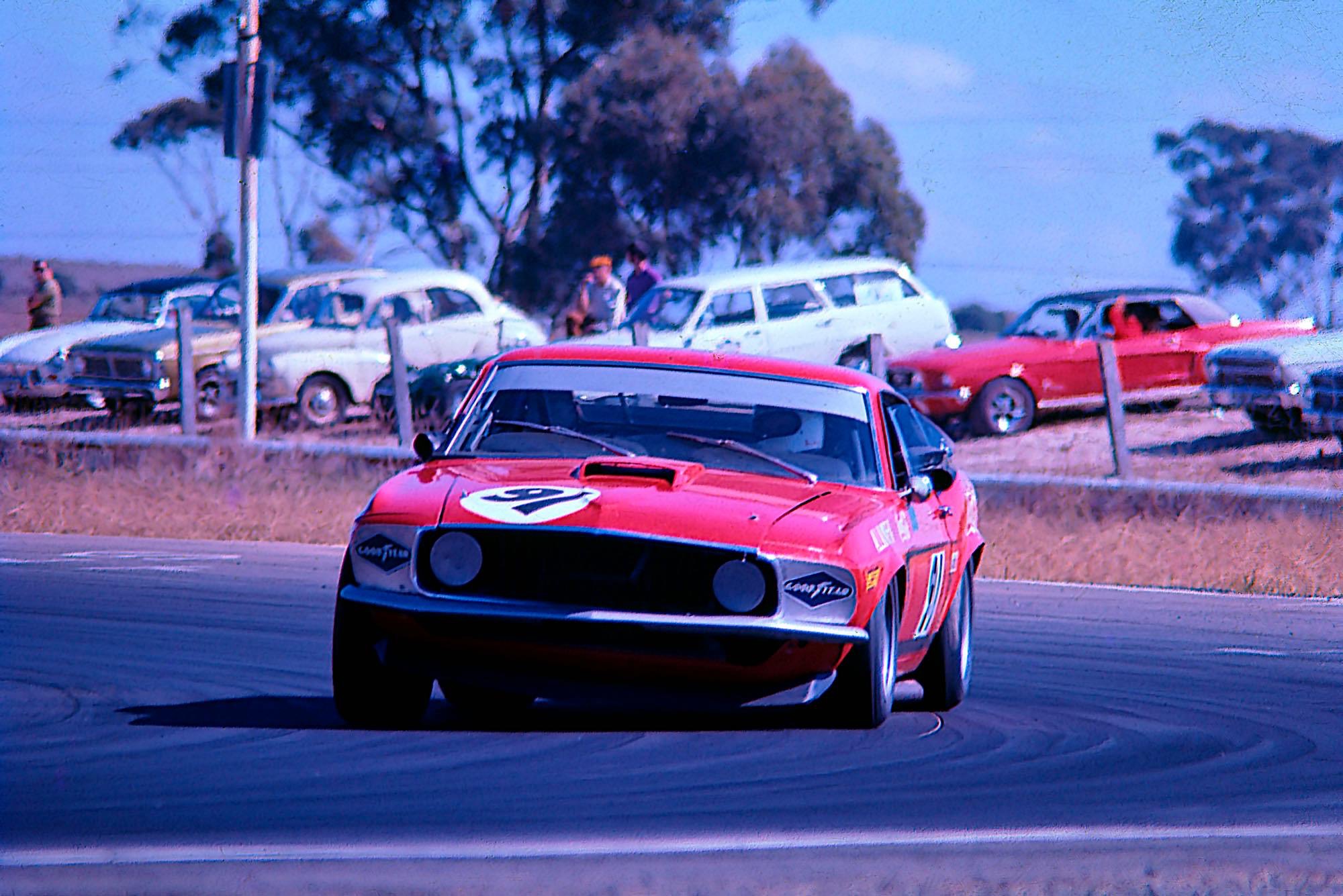
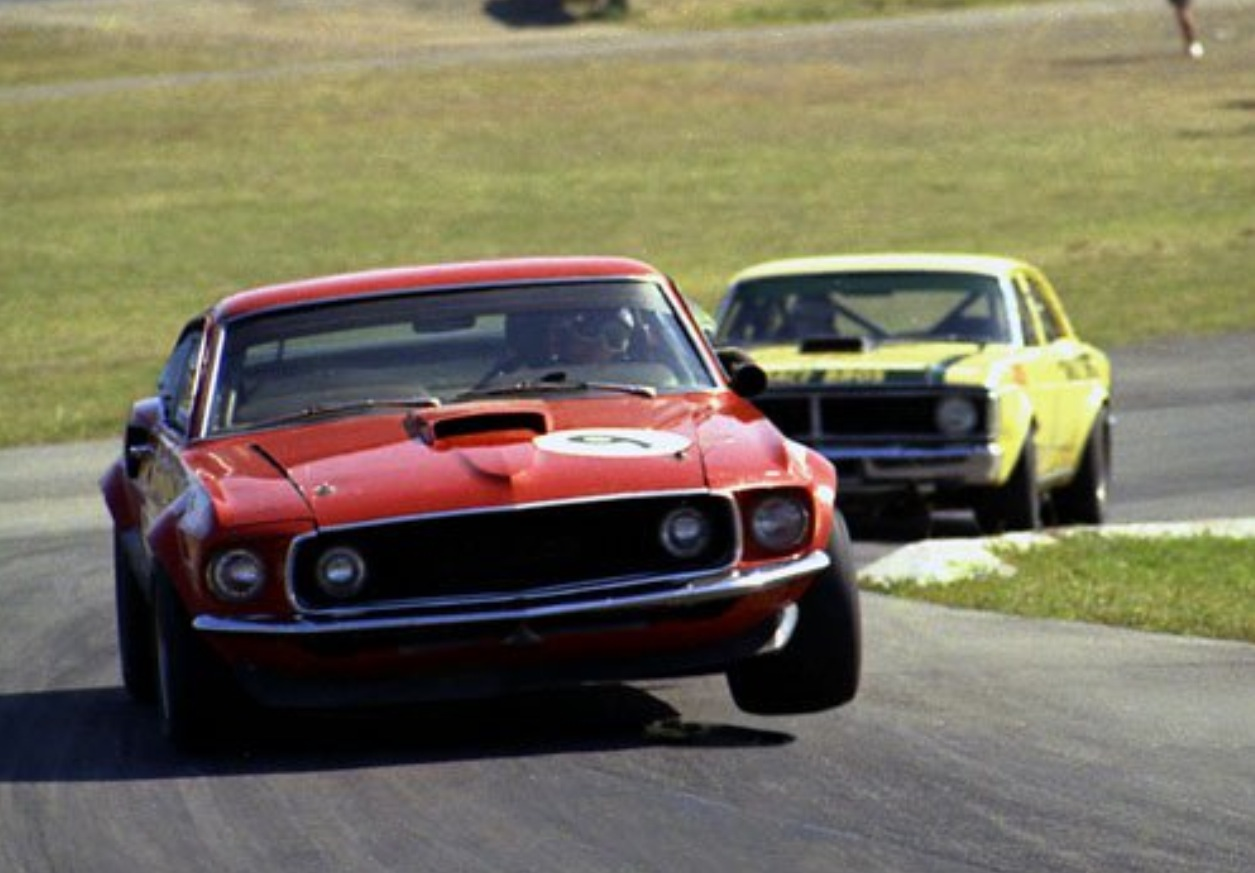
Allan Moffat’s Mustang on Warwick Farms ‘Northern Crossing’, 30 April 1972…

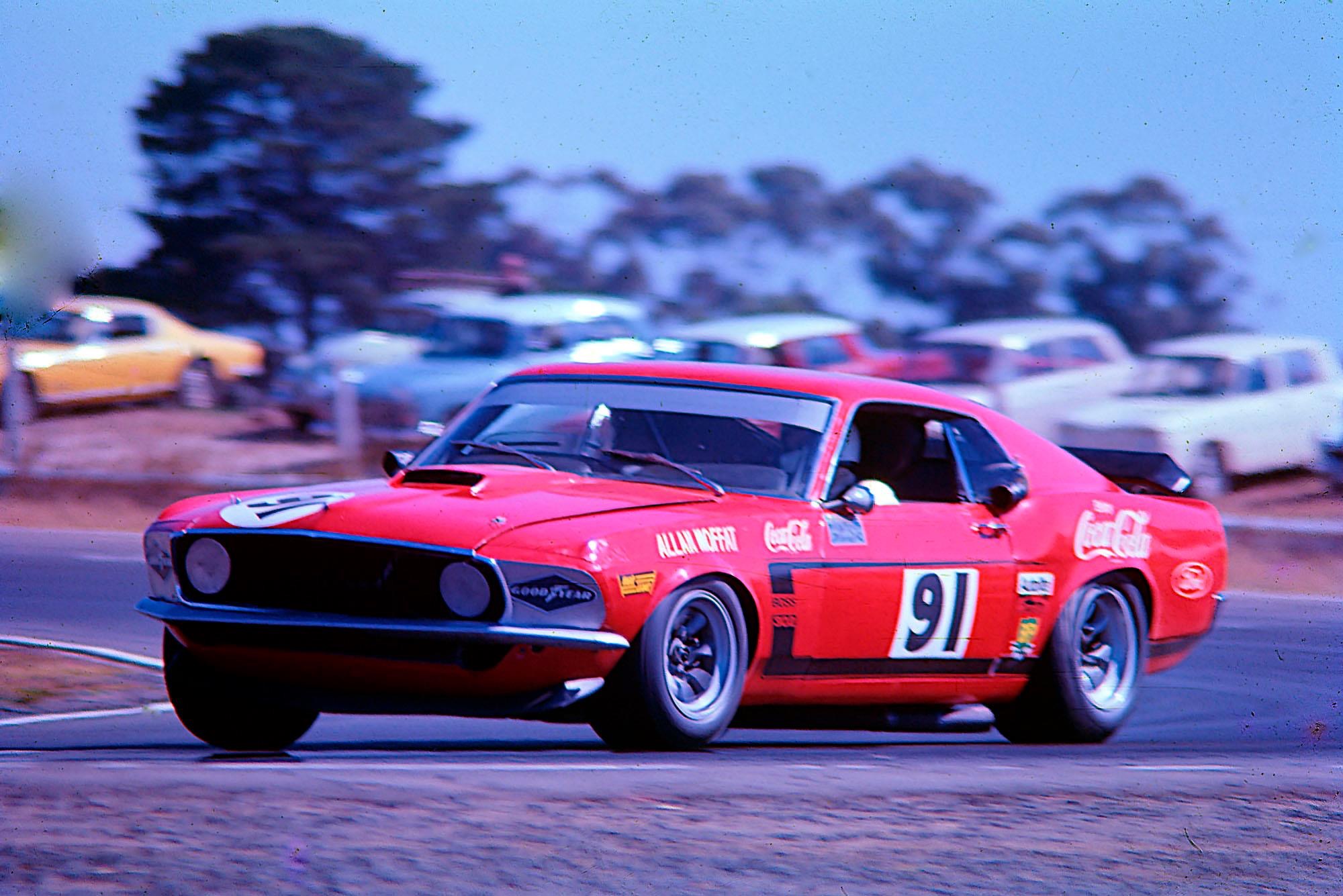
In a country obsessed with touring cars this is one of, if not the most revered of all, even though it never won the Australian Touring Car Championship.

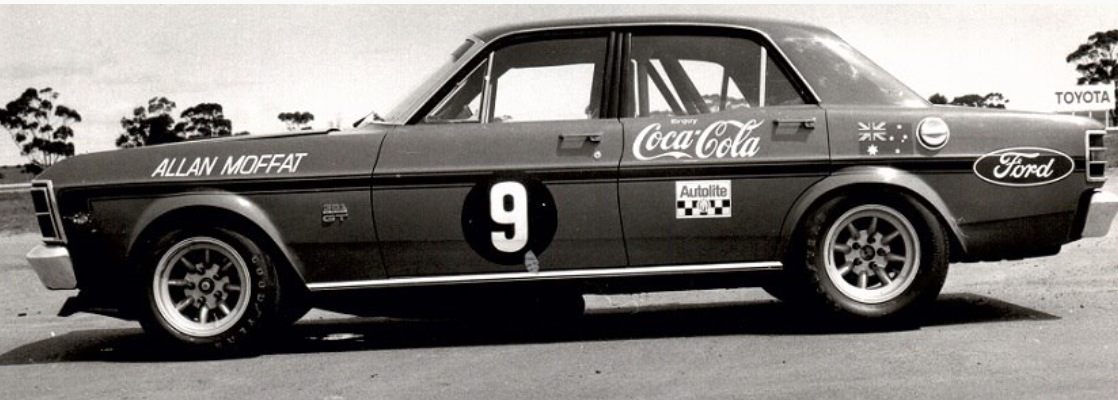
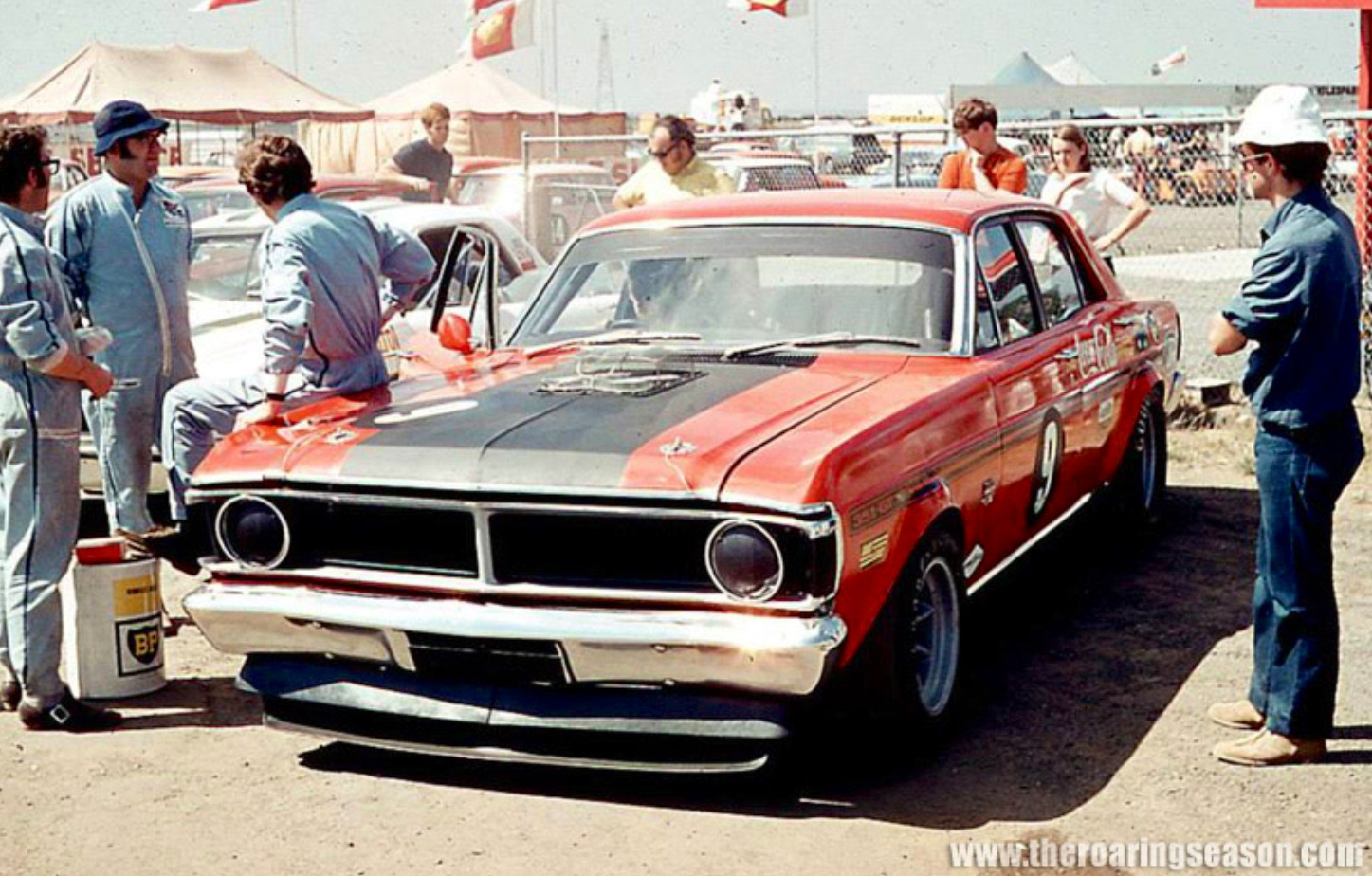
A rare beast, it is one of only seven ‘factory’ Kar-Kraft built cars for the 1969 Trans-Am Championship Moffat commenced racing in Australia at Sandown on 5 May 1969.

I am not a ‘taxi racing’ guy but this car is on my ‘ten racing cars I would love to own’ list, its still in Australia thank goodness, in the tender loving hands of David Bowden. This excellent article was written for ‘Australian Muscle Car’ magazine by Mark Oastler and is ‘definitive’, the best i have read on this great car.

Allan Moffat’s 1969 Trans-Am Mustang

moffat wf

(lyntonh)

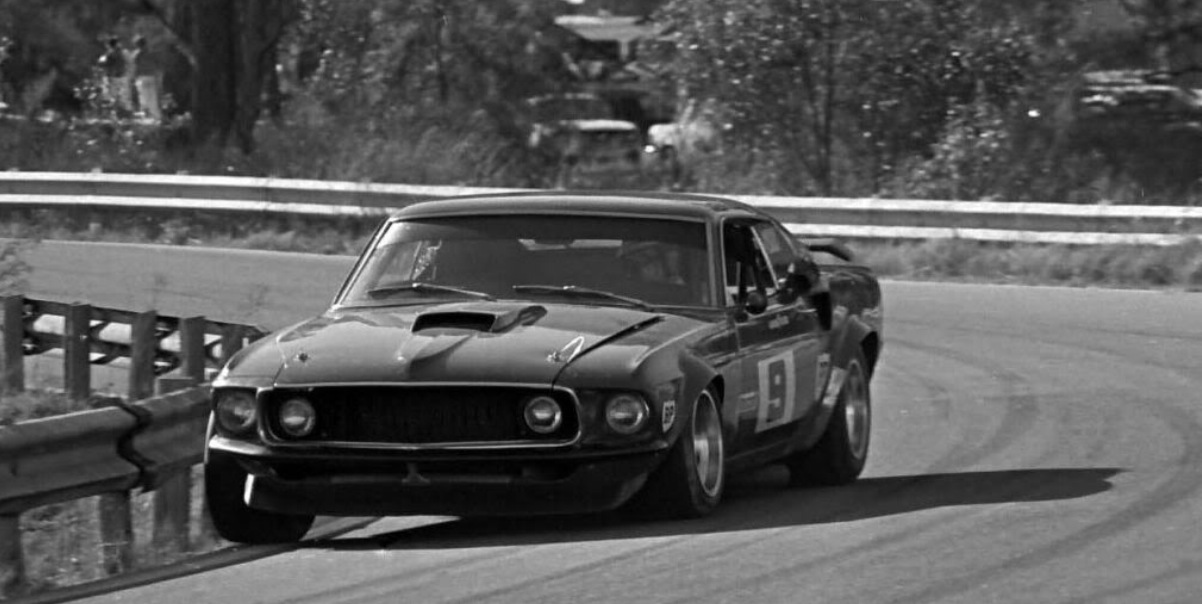
Moffat in search of an apex, one he has well and truly nailed! Warwick Farm, Sydney, 9 July 1972.

Etcetera…

Moffat Sandown

One of the more significant days in Australian touring car racing was the first race appearance of the machine which was at the Sandown Park ‘Southern 60’ meeting, Melbourne on 4 May 1969.

The first photograph is on the main straight as I suspect is the second.


(SS Memorabilia)

Here is the car ‘mid-career’, again at Sandown and ahead of arch-rival Bob Jane’s 7 litre Chev Camaro ZL1, very much as trick a device complete with aluminium big-block V8 as Moffat’s 1969 Kar-Kraft/Bud Moore 5 litre Trans-Am. Dandenong Road corner during the 1971 February Tasman Series meeting.

(AMC)

Moffat Calder

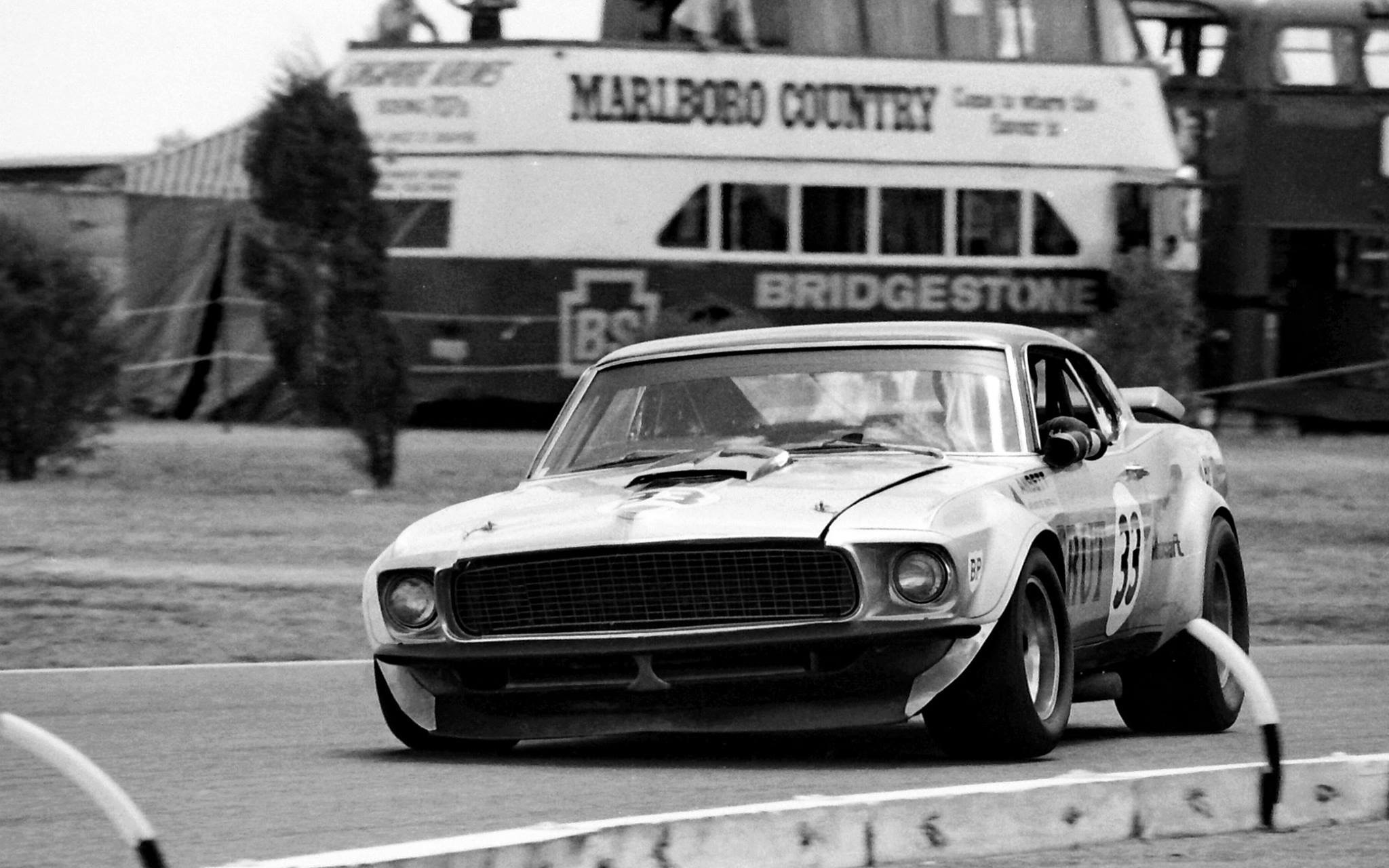
The cars twilight years were raced in 1973-1975 as a Sports Sedan, to Allan’s eternal credit he didn’t butcher the thing but rather replaced it in 1976 with the Ford ‘Cologne Capri’ RS3100 Cosworth when the years finally caught up with her.

The shot below is of Moff tickling the car into a beautiful third-gear slide through Sandown’s Shell Corner on the entry to the old Pit Straight, 1974, marvellous, even in Brut-33 livery!

(I Smith)

Credits…

wirra, lyntonh both via The Nostalgia Forum, Stephen Dalton Collection, SS Memorabilia, Neville Starr Collection, Allan Moffat Collection, Ian Smith

Tailpiece…

(N Starr)

That gorgeous red paint must have been ‘Dulon’- the Trans-Am even made the cover of a panel beating industry journal, the photo was taken at that initial meeting in May 1969.

Finito…


john goss

John Goss and pit crew 1974, Amaroo Park. Aunger Wheels, a Goss sponsor photo shoot. Car is Ford Falcon XA GT351 Coupe ‘Sports Sedan’.(unattributed)

Australia has had quite a few drivers who have been stars in both open-wheelers and touring cars at the elite level; Kevin Bartlett, John Bowe, Mark Skaife, Craig Lowndes and John Goss spring to mind…

Gossy left his adopted Tasmania with guts, determination, self built Tornado Ford sportscar and made his way to Sydney. Before long his speed and ‘gift of the gab’ secured support from Rockdale, Ford dealer Max McLeod. This took him all the way to the top of Australian motor racing, he and Kevin Bartlett won the Bathurst 1000 in 1974 in a Ford Falcon XA GT. Goss also won the F5000 Australian Grand Prix at Sandown in 1976.

He is the only man to have won both events.

davies matich sandown 1975

John Goss, Matich A53 Repco, Sandown Tasman 1975 . Goss won the race from John McCormack Elfin MR6 Holden and Max Stewart Lola T330 Chev. Fencing behind destroyed by the lap 1 crash of John Walkers Lola T332. (Robert Davies)

Three Vignettes of John Goss, all at Sandown Park stick in my mind…

The first was at the Sandown Tasman meeting, my very first motor race in January 1972. I was there for the F5000’s the ‘Taxis’ of no great interest to me but i happened upon John Goss near his Falcon GTHO Series Production car in the paddock, he was holding fort with a group of supporters or sponsors.

They were enthralled by his experiences. At 14 i was  amazed at the atrocities he performed on the Queens English, it would have been impossible to use more words to describe the simplest of things, all delivered with the most nasal-‘strine accent. Imagine Paul Hogan on steroids, but more nasal and you have nailed the Gossy accent! As one wag put it after a JG Bathurst win; his victory speech was longer than the race itself!

He won the South Pacific Touring Car Championship, the touring car series support of the 1972 Australian Tasman Rounds, the plucky privateer beat the works teams. Takeouts; he was quick and gifted on the commercial side of the sport.

goss ho

Goss doing his thing in the Phase 3 ‘XY’ Falcon GTHO with its brand new for Bathurst 1972 ‘Globe’ alloy wheels. Oran Park 1972. No front spoiler. (Vic Hughes)

The second was at the same meeting the following year when he blazed a trail with the Ford Falcon XA GT ‘Superbird’ or 2 door coupe variant of Fords new series of cars.

Pretty much everyone else stuck with the previous model, ‘XY’ Falcon GTHO’s for one more year, including the Broadmeadows factory until the Manufacturers Championship in the second half of the year. Ford and Holden, the latter with their Torana V8 SLR5000 and L34, had big oil surge problems with their engines; a function of greater grip with the wider tyres allowed and inadequate wet sump arrangements. (dry sumps stupidly not allowed by the regs).

Goss’ big yellow fat tyred car looked and sounded sensational. He was showing the way with it and getting lots of publicity, but he and long-suffering mechanics were up to their armpits in alligators with mechanical mayhem. Takeouts; he was prepared to make his own calls and not follow ‘the herd’ and had good developmental and mechanical skills.

The final impression was of his absolute competitiveness as a driver, his win in the 1976 AGP at Sandown.

I was one of 38000 people enthralled by his battle with Vern Schuppan in Garrie Cooper’s latest Elfin MR8 Chev. Vern broke a valve spring early in the race, John was in one of two Matich’s he acquired when Frank Matich retired from the sport in 1974. John’s A53 was actually the older of the two cars he bought, an updated A51 chassis # ‘005’, the car Lella Lombardi raced in two Gold Star rounds in 1974, Goss acquired it in 1975.

The car wasn’t in the first flush of youth by then, Goss drove superbly to take the win by half a second from Schuppan, then a driver of world class. In my mind Vern’s slightly down on power engine was compensation of JG not having the latest of equipment.

goss '76 agp

Goss in his Matich A51/53 ‘005’ Repco during his wonderful 1976 AGP winning drive at Sandown. He is turning into ‘Dandenong Road’, Marlboro Hill in the background. (unattributed)

Many saw Goss, born in the South Eastern Melbourne suburb of Glen Iris on 2 May 1943 as a Touring car driver. Whilst he started his career after qualifying as a mechanical engineer, in the Island state, he moved to Tasmania whilst a child, in a Holden FJ and Ford Customline he soon progressed to the self built Tornado Ford sportscar.

The car was powered by a Ford Falcon 170cid 6 cylinder engine which was harnessed via a VW gearbox. oldracephotos Lindsay Ross recalls ‘A Falcon XL sedan provided the motor, triple Webers were fitted in 1967, the steering wheel was fashioned out of a yacht centreboard. The Lotus 32B wheels were purchased from the Sternbergs who ran the ex Clark car in Tasmania in 68-69’.

goss tornado baskerville 1966 (david keep oldracephotos)

John Goss makes the race debut of his Tornado Ford, Baskerville, Tasmania 1966. Car sans the attractive body which came later, Ford straight 6 on single carb, steel wheels. Natty race-suit doubled as post race pub attire! (David Keep/oldracephotos.com)

‘First outing for the Tornado was at Baskerville in 1966. One of my first motorsport memories is a handicap race there in 1967 which only had 2 cars start. Goss in the Tornado off scratch and Lyn Archer in the Elfin Catalina 1.5 pushrod. Both drivers absolutely flat stick from the start over 6 laps and less than half a car length across the line at the finish with Goss just ahead. Great stuff from two very good drivers.’

goss longford 1968

John Goss in his Tornado Ford, Longford 1968. Proudly Tasmanian by the look of the decal on the cars rear…despite being born in Melbourne! Probably the Monday and coming down from the Water Tower. (Stephen Dalton Collection)

Hoping to progress in racing Goss took the Tornado to Sydney, with some success scoring points in the Australian Sports Car Championship in 1969 and 1970 (10th in both years).

He sought support from various sponsors Max Mcleod initially provided some money to help run the Tornado, Goss convinced McLeod to enter Series Production racing in 1969, this class exploding in public consciousness at the time with some phenomenal road cars built by Holden, Ford and Chrysler.

Goss made his Bathurst 500 debut in 1969 driving a Ford Falcon GTHO, co-driver Dennis Cribbin crashed the Falcon at Forrest Elbow. In 1970 Goss set the fastest lap during the event in his XW Falcon GTHO Phase II.

The following year he won two rounds of the Toby Lee Series at Oran Park against strong opposition such as Colin Bond and Fred Gibson.

goss bathurst 1973

Goss exiting Murray’s Corner Bathurst 500 1973. His Ford Falcon XA GT, shared with Kevin Bartlett is about to swallow the Leo Leonard/Gary Sprague Valiant Charger. (Vic Hughes)

John gained open-wheeler experience in 1971 at the wheel of the very first Birrana. Tony Alcock returned from a stint in Europe and designed and built the first Birrana, the F71 Formula Ford in Sydney and enlisted John’s help to develop and race the car.

Later Alcock moved to Adelaide and built over 25 cars in partnership with Malcolm Ramsay which won multiple championships in FF and F2, a story for another time.

29

John Goss in the very first Birrana, the F71 FF ahead of 2 Bowin P4a FF’s, Oran Park 1971. (lyntonh)

Goss won the 1972 South Pacific Touring Car Series and the 1972 Sandown 250 endurance race, both in Series Production Ford XY Falcon GTHO Phase III’s. He also put his Falcon on the front row of the grid at the 1972 Hardie-Ferodo 500, qualifying second fastest behind the Works GTHO of Allan Moffat. Engine failure after splashing around for 24 wet laps ended his race

1972BATHURSTJOHNGOSSETALHELLCORNER

Goss in his Ford Falcon XY GTHO Ph3, Hell Corner Bathurst 1972. Peter Brock won that year in a Holden Torana LJ XU-1. (Rod MacKenzie)

The Series Production class was replaced by Group C for 1973, it allowed greater modifications than before. Commercially, Goss had ongoing sponsorship from Shell, Max McLeod as well as factory assistance from Ford Australia who provided purpose-built XA racing chassis’.

As noted above, Goss was the first to race the XA Hardtop in the 1973 ATCC, before the Works team who used a modified Phase III GTHO during the Australian Touring Car Championship which Allan Moffat won for them. They switched to the Hardtop for the Endurance races, the ‘Manufacturers Championship’ later in the year.

Goss and open-wheeler/touring car ace Kevin Bartlett teamed up for the 1973 Bathurst and qualified on pole. Goss started and built up a good lead which was kept until he was involved in a crash, not of his making, at The Cutting, damaging the front end and causing radiator damage which finished their race.

The pair returned to Bathurst for the 1974 Hardie-Ferodo 1000 in the same car, repainted blue after losing Shell sponsorship winning a race marred by driving rain. To celebrate the victory, Ford Australia released a limited edition XB Falcon Hardtop in 1975 called the ‘John Goss Special’. Around 250 cars were built.

goss bartlett

Goss/Kevin Bartlett victorious Ford Falcon XA GT. Bathurst 1974. (unattributed)

Goss surprised the racing world when he snaffled the best of Frank Matich’s F5000 equipe when he retired at the end of the 1974 Tasman Series. FM had been badly hurt in a boating incident in which he was electrocuted, he decided it was time to quit to focus on his family and business interests which then comprised the distribution of Goodyear race tyres and Bell helmets in Australia. His cars were advertised in the May edition of ‘Racing Car News’.

Goss gained some support from ‘Scotch’ brand adhesives and was immediately competitive in the Matich A53 Repco, the last and best of Matich’s world class designs. His first race was at the Oran Park 1974 Gold Star round on 4 August.

Over the coming years Goss, chief mechanic Grant O’Neill and their small team continued to develop the two chassis ‘A51 005’ and ‘A53 007’ remaining competitive against the best the world had to offer in the F5000 categories peak period.

1976 agp

1976 AGP finish at Sandown. Goss from Vern Schuppan by 5/10 second. Matich A51/53 Repco and Elfin MR8 Chev. (Graham ‘Howard History of The Australian GP’)

1974 Gold Star Series…

The first series Goss contested was the domestic single seater championship the then very prestigious ‘Gold Star’.

For most of its life the Championship lacked quantity but not quality. The costs of fielding an ANF1 car, whatever the formula has been, has always been high. Australia’s obsession with Touring Cars has meant that funds have generally not been flush in open-wheeler racing, the early years of Formula Pacific, 1981-2 arguably the exception.

In 1974 Gossy faced Australian Champions Kevin Bartlett, Max Stewart and John McCormack in Lola T332, T330 and Elfin MR5 respectively. Later champions John Walker and Warwick Brown also contested the series in their Lola T332’s albeit Warwick took in some races in the US in his Pat Burke owned car, the very first production T332.

Frank Matich, whose last and best car Goss owned had retired. This created an opportunity for the rest of the field as Matich was arguably the ‘first among equals’ as a driver and the best funded, courtesy of Repco and Goodyear. I always figured ‘Cranky Franky’ had an actual and psychological advantage over the competition; he pounded around Warwick Farm getting his cars to a fine pitch and was always well prepared whenever he arrived at a meeting, his actual advantage. The psychological advantage was the fact his fellow competitors knew that he was well prepared! Whereas they, without similar fiscal support were not as much so.

Brittle things F5000’s; the Hewland DG300 box was originally designed for Gurney’s 400bhp F1 Eagle, not a 500bhp Chev. Crown wheel and pinions needed to be in the full flush of youth to be problem free. Engines too, with all drivers chasing the edge, were far from reliable especially if the engine-builders maintenance cycles were not followed, a temptation if you were not flush with cash. Despite the big corporate names which adorned the Matich cockpit over the years JG was not well-funded, in common with most of his fellow local competitors.

John’s first meeting was at one of his home tracks, Oran Park on 4 August, finishing 4th for the weekend. He was 9th at Surfers, 4th in the first heat and had an accident in the second. He didn’t contest the Calder and Sandown rounds in Victoria but was back for the AGP at Oran Park although by this stage Max Stewart had the ‘Gold Star’ in the bag. John had his tail up, he and Kevin Bartlett won the Bathurst 1000 in October the pair driving brilliantly to win the race held in difficult conditions that year.

The AGP field was buoyed by the addition of Internationals Graeme Lawrence, the former Tasman Champ Lola T332 mounted and Signorina Lella Lombardi. ‘A Sheila in a F5000’ got the tabloids interested in the race, which was good as only nine cars started, she drove a Matich A51 (the car Goss was to later acquire as noted above) very well, scoring equal second fastest race lap, despite the unfamiliar car. The car she drove in Europe which brought her to the local promoters attention, her Lola T330 (HU18) is owned by Peter Brennan in Australia, it’s restoration well covered in primotipo.

Gossy ran a bearing so didn’t start the race, Brown cantered off into the distance, quickly mastering Oran Park’s new layout, Stewart took the win when Warwick retired on lap 49 with a harmonic balancer kaput.

goss op

Goss in his Matich A53 Repco ‘007’. Oran park during practice for the opening 1975 Australian Tasman round, the ‘Oran Park 100’. Car just painted but devoid of sponsors decals. Jon Davison looking for divine inspiration in the background, his car an earlier Matich A50 Repco ‘004’. Warwick Brown won the race in his Lola T332 Chev, Goss DNF with electrical maladies. (Andrew Lynch)

The 1975 Tasman Series started in New Zealand on January 5 at Levin but John’s funding didn’t allow him to contest the four Kiwi rounds, he was up against opposition which had already had four consecutive weekends to get their cars to a fine pitch.

In addition to the leading drivers covered above, other frontliners in the series that year were Kiwis Graham McRae in his McRae GM2 and Chris Amon in the Talon MR1, an identical car to the GM2, the design acquired from GM by American Jack McCormack, the cars built in the ‘States. Another Kiwi was Ken Smith in an ex-Brian Redman Lola T332.

goss and bartlett

Oran Park Handling Lesson; Goss’ mildly understeering Matich A53 Repco being given a bit of hurry up by Kevin Bartlett’s new and somewhat recalcitrant, grass cutting oversteering Lola T400 Chev. (unattributed)

He had a DNF the at Oran Park with electrical failure, was 3rd the following weekend at Surfers, had another DNF at Adelaide, a water hose came loose on lap 3 and then things all came together at Sandown in the final round.

I have covered this meeting in another story, click on the link here;

The Mother and Father of Lucky Escapes…John Walker, Sandown Tasman 1975…

Suffice it to say, depending upon results, any of Lola drivers, Brown, Lawrence or Walker could take the title…Walker crashed on lap 1, Lawrence retired with fuel metering unit failure late in the race, Brown got the necessary point and Goss won the race in a fast, controlled drive. A strong win against opposition of depth.

matich sandown

Goss eases his Matich A53 ‘007’ through Torana Corner Sandown on the way to his first F5000 victory in the Tasman round ‘Sandown Park Cup’ on 23 February 1975. (unattributed)

By the time Goss commenced his 1975 Gold Star campaign he also owned the earlier Matich A51 Repco which was updated to later A53 specs.

JG continued his good form in the ‘Toby Lee’ sponsored F5000 Series held over 6 rounds, 5 at Oran Park and 1 at Sandown. Max Stewart won the series in his new for Tasman ’75, Lola T400. Goss took 4 of the 12 heats which comprised the series before being ‘pinged’ by CAMS for a black flag incident which almost cost him his AGP start.

Bruce Allison also starred in the Series, the 22 year old jumped out of his Birrana 274 F2 car and took to the ex-Bartlett Lola T332, prepared and guided by the very experienced Peter Molloy, like a ‘duck to water’.

And ducks they needed to be at Surfers Paradise Gold Star season opener held in torrential conditions. The AGP was the first round of the Gold Star that year, Goss matched local boy, Bruce Allison’s pole time but withdrew from the race early with a rough engine and visibility problems. Max Stewart had a lucky win when John Leffler, leading well and as comfortably as you can be devoid of vision!, in the radical, under-developed,tricky to drive but utterly wonderful Bowin P8 Chev, slowed with drowning electrics.

At Sandown he was 6th and then didn’t start at Oran Park, Calder and Phillip Island.

By 1976 the Tasman Series was over, the Kiwis had the ‘Peter Stuyvesant Series’ and we ‘Skips’ the ‘Rothmans Series’, still 4 rounds each. Internationals for the Australian Rounds were Aussie Vern Schuppan and the UK’s David Purley, Lola’s T332/T330 mounted and American John Cannon adding some interest with a March 73A/751 Chev.

At the ‘Oran Park 100′ Goss was 5th, in Adelaide he crashed, at Sandown he was 3rd in the race won by Cannons’ March, the final round at Surfers was washed out. As in the circuit was under the flooded Nerang River, Schuppan took the trophy, the presentation in waist deep water, the promoters gaining a shot for the tabloids despite the lack of a race!

agp 76 start

Ian Smith’s great shot of the start of the 1976 AGP at Sandown. Taken from the outside of Shell Corner, turn 1. L>R; Max Stewart Lola T400 Chev, Vern Schuppan Elfin MR8 Chev and Goss to the right, Matich A5153 Repco. (Ian Smith)

Goss’ domestic 1976 Gold Star campaign started well with his AGP win at Sandown in September, he didn’t finish at Oran Park with gearbox failure, at Calder he had an exhaust problem and didn’t contest the one off ‘Rose City 10000’ at Winton nor the final Phillip Island Gold Star round. John Leffler took the title in a new Lola T400 Chev, consistent finishes but no wins bagged the Championship.

agp 77

There was nothing quite like seeing F5000’s raced by top line Pro’s and look at the Oran Park 1977 AGP crowd! Front running group; Goss, Gethin, Schuppan and Bartlett. Matich A51/3 Repco ‘005’, Chevron B37 Chev, Elfin MR8 Chev and Lola T332 Chev. (‘History of the AGP’)

The 1977 Rothmans International Series of 4 races in Australia had good prizemoney, Count Rudy Van der Straten’s Team made a welcome return to Australia with a Lola T430 and Chevron B37 for Warwick Brown and Peter Gethin respectively, nuts from a spares point of view but both interesting cars, and critically not more Lola T332’s, wonderful devices that they are.

Alan Jones returned to Oz, to race a Teddy Yip, Theodore Racing Lola T332C, he was ‘on the rise’ well and truly by this stage, he drove for the Surtees F1 team in ’76, and took his first F1 win in Austria later in the year.

The development of the Lola T332 was ongoing, the T430 and Chevron B37 were new designs, Garrie Cooper’s Elfin MR8 was also the state of the art. In that context John Goss’ grid place (4th) and strong race performance in the season opening AGP at Oran Park, he ran in 2nd and 3rd for much of the race, in a car which dated to 1974 and an engine which had no development, Repco having withdrawn from racing in 1974, very creditable.

Jones jumped the start, depriving the spectators a duel at the front but all eyes were on him as he sought to make up the 1 minute penalty incurred. Brown won the race with teammate Gethin 2nd and Goss 3rd.

surfers 77

‘Surfers Paradise 100’ Rothmans Series 1977. L>R In the distance Alan Jones in Kevin Bartlett’s loaned Lola T332 Chev, Jones boofed his in practice. Warwick Brown Lola T430 Chev, Peter Gethin in the lead, Chevron B37 Chev, John Leffler in the white Lola T400 Chev and on the outside Goss, Matich A53 Repco. Finishing order, Brown, Gethin, Leffler and Goss. (Bill Forsyth)

Brown and Gethin repeated the performance at Surfers the following weekend, Goss 4th. Max Stewart won in his Lola T400 at Sandown, his last race win before his tragic death at Calder in the one off Kleber 40000 race at Calder. Goss DNF with engine failure.

goss sandown 77

‘Sandown Park Cup’ February 1977. Goss leads from Garrie Cooper Elfin MR8 Chev 3rd and Alf Costanzo Lola T332 Chev 2nd. Goss had an engine failure, the race was won by Max Stewart’s Lola T400 Chev. (Ian Smith)

In Adelaide, the last Series Round he was 4th and lapped as was the rest of the field, Jones dominant in his Lola T332. Brown took the Series win in the VDS Lola T430 Chev, both T430 chassis’ owned by VDS were sold to Alan Hamilton at the series end and would be an important part of the F5000 scene going forward in both Hamilton’s and especially Alfredo Costanzo’s hands.

mat ford

Gossy having his mirrors fitted in the clearly just finished Matich A53/55 Ford ‘007’. Thats Grant O’Neill doing the adjusting, Sandown paddock, 1978. Ford engine of note! (Ian Smith)

Goss’ had been developing a Ford F5000 engine based on the 302, cross bolted ‘Boss’ block, fitted to his newer Matich chassis ‘007’ it was entered in the first 3 Rothmans rounds but failed to appear in any of them.

Development of the Ford engine made sense given his Ford connections and whilst there were some Ford engines in the category in its formative years, he and his small team were giving away decades of development to the small block Chev. A smarter move, hindsight a brilliant thing, would have been a more up to date chassis…and a strong Chev engine.

The Matich Ford, the engine comprised a 4 main bearing bolt Windsor ‘Boss’ block with Cleveland heads, the latter to address the shortcomings of the Windsors ports, was tested but it does not appear to have ever been raced. He qualified the Ford car at the Sandown 1978 Rothmans with a 64.6 second lap but raced the Repco chassis. At Oran Park he practiced the Ford engined chassis on Friday and Saturday but again elected to race ‘old faithful’ A51/53 Repco ‘005’.

During this period the team were developing the Ford engine, Goss raced his other, earlier chassis with Repco power; A51/53 ‘005’, the chassis he used to win the AGP.

sandown maticj ford

Chris Jewell’s shot of the Matich A53/55 Ford ‘007’ at Sandown 1978. Car practiced but not raced. Same tub as 1974, in fact the chassis were to the same 1971 design for all 6 chassis’ built. (Chris Jewell)

Goss didn’t contest the 1977 Gold Star Series but ran Bathurst Teammate Henri Pescarolo in the one off ‘Kleber 40000’ event referred to above on 20 March, Alf Costanzo won the 2 heat event.

henri

Henri Pescarolo cruising the Calder paddock in Goss’ Matich A51/3 Repco ‘005’ during the February 1977 ‘Kleber 40000’ meeting. (oldracephotos.com)

JG reappeared in the Matich for the 1978 Rothmans, Warwick Brown was dominant winning all 4 rounds of the series in his Lola T333/332.

Goss was 6th at Sandown and in Adelaide and 5th at Oran Park. He tested the Ford engined chassis ‘007’ at Oran Park but chose to race his usual Repco engined car ‘005’.

matich ford

Goss testing his Matich A53/55 Ford at Oran Park during the Rothmans series in February 1978. Neat evolution of the A53 ‘007’ tub. Ferrari 312T-esque front wing, neat deformable structure and rear ‘flush’ mounted’ radiators, no airbox. Neat. (Doug Eagar)

At Surfers he failed to finish with oil scavenge pump problems.

With the costs of F5000 rising, and the Formula Pacific push for ANF1 underway Goss wound down his F5000 activities and sold both cars; the much raced A51/53 ‘005’ to touring car star Jim Richards who contested the ’79 Rothmans Series in it and A53 ‘007’ to Mel McEwin who converted it back to Repco form, and raced it towards the end of the category in Australia. Both cars still exist.

sandown 1978

John Cannon 3rd ahead of John Goss 6th ,1978 ‘Sandown Park Cup’. March 73A/751 Chev and Matich A51/53 Repco. (Anthony Loxley)

Formula 1 Ensign MN05 Ford Cosworth…

With interest in F5000 waning in the late 1970’s the ‘Rothmans Series’ rules were changed to allow F1 cars to compete in the 1979 Internationals. The F1’s were ‘brought back to the field’ by the hard Goodyears they were mandated to run. All the same the cars were great to watch, for many of us the first modern GP cars we had seen and heard.

Goss was keen to have a drive, Theodore Racing had 3 cars; 2 Wolf WR4 Ford’s  and an Ensign MN05 raced by Scot David Kennedy and Brit, Geoff Lees. Keen to run a car at Oran Park, Goss wasn’t so happy to stump up the $10K for the weekend but late on the Saturday the team gave him a run in the Ensign anyway.

He did 7 laps, brushed the wall on the out lap keeping out of the way of another car which moved over on him, he managed a 1:10.4 compared with Warwick Browns Lola T332 Chev pole of 1:5.4. It was not enough time for John to find the limits of the car , sadly he didnt race it. An interesting ‘mighta been’ had he raced the car.

john goss ensign mn05 oran park

John Goss, Oran Park 1979. Theodore Racing F1 Ensign MN05 Ford. A few laps in practice, no race sadly. (Dick Simpson)

In 1980 Goss began campaigning a V12 Jaguar XJS at Bathurst. His 3 previous Bathurst starts with Henri Pescarolo in Falcons were all DNF’s.

He started essentially a standard Jag from 58th on the grid, but lasted only 14 laps before retiring with gearbox failure. In 1981, he teamed with 1965 winner Barry Seton and after an improved qualifying effort (19th), they weren’t classified as finishers of the crash shortened race.

Goss returned with a better prepared effort in 1982, sharing the drive with American IMSA Jaguar sports car driver/team owner Bob Tullius who also assisted with technical info for the car and engine. Goss qualified 14th but after a strong run, once again the big cat failed to finish following suspension failure on lap 119.

Goss missed the 1983 James Hardie 1000, but returned in 1984 for the last year of Australia’s Group C racing sharing a drive with Tom Walkinshaw. Walkinshaw ran three factory backed Group A XJS’ in the ETCC, won that title in 1984, and added a lot of technical assistance to Goss’ team with revised suspension and the use of one of TWR’s V12 engines.

Despite trouble in qualifying with no suitable rear tyres arriving in time to use, the Scot qualified the car 8th before falling to 10th in the Hardies Heroes top ten run-off . Walkinshaw also started the race but never left the line.

The Jags clutch had gone leaving Walkinshaw stranded with his arm out the window warning other drivers he was stationary. Unfortunately in the dust kicked up off the start, the Kevin Bartlett owned Chevrolet Camaro of John Tesoriero was coming through at speed and could not avoid the Jag, a multiple crash ensued.

Goss-Jaguar

Goss/ Armin Hahne Jaguar XJS. Bathurst winner in 1985. (unattributed)

Australian Touring Car racing changed to International Group A rules in 1985, and Goss scored his second and last outright Bathurst win with West German co-driver Armin Hahne in one of a three-car assault by Tom Walkinshaw’s TWR team using the 1984 ETCC-winning V12 Jaguar XJS’

Goss, installed by Walkinshaw as lead driver of the team’s third car, qualified fastest going into Hardies Heroes, giving lie to those who believed he was past his best as a driver. He ended up 6th in the Top Ten run-off after mistakes on both laps.

Goss made a good start and for the opening laps was in a dice for 2nd with Allan Grice (Commodore), Robbie Francevic (Volvo), Dick Johnson (Ford Mustang), Jim Richards (BMW 635 CSi) and Peter Brock (Commodore). First Francevic, then Goss, broke free of the dice. Goss chased down the Volvo in less than 10 laps, giving Jaguar a 1-2 on the road for the first time since the early laps before the team’s second car driven by Jeff Allam retired with engine failure. From then on, the Goss/Hahne Jaguar was in second place for most of the race behind the Walkinshaw/Win Percy car.

Goss and Hahne’s job was made more difficult by the driver’s seat of their car having completely broken at the base of the back. The car took the lead on about lap 120 following a split oil line on the Walkinshaw/Percy car with both Peter Brock and Roberto Ravaglia (BMW) closing the gap to within 30 seconds.

The chase effectively ended with Brock’s engine allowing Goss to back off over the last 3 laps. Walkinshaw finished third with Win Percy, the pair crossing the finish line together.

After Jaguar Rover Australia declined to help fund a return effort by TWR in 1986 Goss returned with his own privately entered XJ-S backed by Citibank Australia and co-driven by veteran Bob Muir. Electrical troubles in the race resulting in a flat battery saw them complete 140 laps and finish 24th outright.

Goss missed the 1987 World Touring Car Championship round as well as the 1988 race but returned to drive for Glenn Seton Racing in 1989 in a Ford Sierra RS500. He paired with Seton for a fourth placed finish at the Sandown 500. At Bathurst Goss was teamed with Tony Noske in the second car, they were joined during the race by Seton after his own car failed. After a troubled run the trio went finished 20th outright.

Goss’ final Bathurst 1000 came in 1990 when he paired with fellow Sydney based veteran Phil Ward in Ward’s Mercedes-Benz 190E to finish 12th outright and a Division 2 class win after starting 38th.

Where Does Goss fit in the Pantheon of Australian Drivers…

Former Racing Car News journalist, Ray Bell saw most of Goss’ big races and had this to say on ‘The Nostalgia Forum some years back…’But to return to the main question, the reality of his ability, let’s just look at his AGP win, which was one of very few wins he had in F5000.

He diced through that race with Vern Schuppan, who was acknowledged as a F5000 pilot world wide at that time. John drove the three year old Matich A53, based on the 5 year old A50. Vern was in the almost new MR8. John’s car was no longer a ‘work in progress’, its designer had retired. Vern’s was under the care of Garrie Cooper who raced that model himself.

I think you would have to say that he demonstrated in that race all the qualities that are necessary, the skill to do the job; the determination to be there, overcoming whatever hurdles might have been put in his way along the path he followed; the recognition of openwheelers as the pinnacle, despite having already won the biggest race in Australia. And Sandown was never a place for the limp of wrist or small of heart in these cars…’

In retirement Goss is a businessman and maintains a couple of yachts for wealthy owners…

Etcetera…

The following images are from Graham Howard’s ‘History of The Australian Grand Prix’, and describe Frank Matich’s F5000 cars generally and John Goss’ pair specifically.

mat 1

mat 2

mat 3

mat 4

mc leod ford ad

Bibliography…

Graham Howard ‘History of The Australian Grand Prix, Wikipedia for touring car stuff, The Nostalgia Forum, Facebook Australian F5000 Group, Stephen Dalton Collection

Photo Credits…

oldracephotos.com, David Keep, Lyntonh, Dick Simpson, Rod MacKenzie, Robert Davies, Vic Hughes, Andrew Lynch, Ian Smith, Bill Forsyth, Chris Jewell, Doug Eagar, Anthony Loxley

Finito…


charger 1

(Robert Davies)

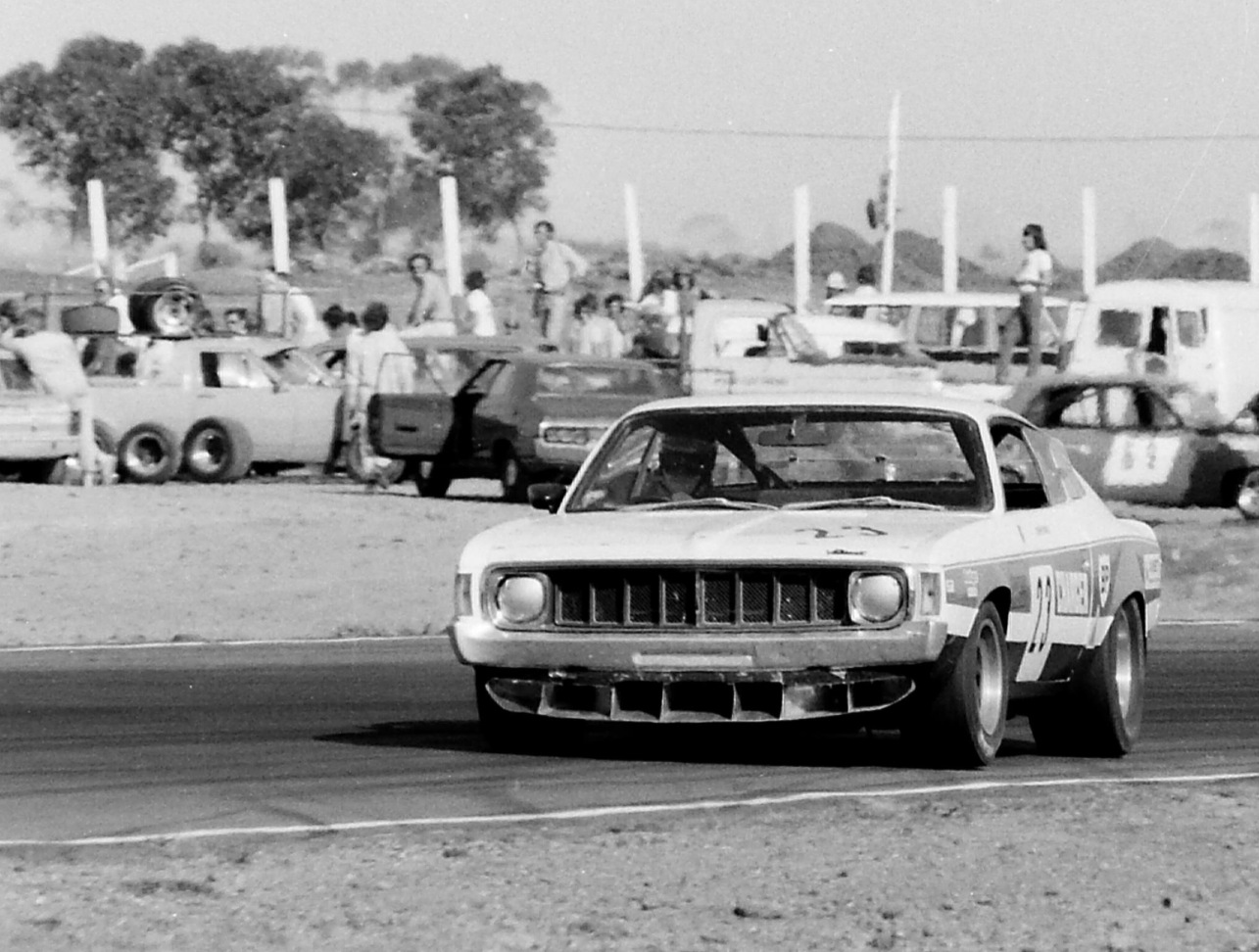
John McCormack wrestles his big, powerful but relatively nimble Valiant Charger Repco around the tight Calder, Melbourne confines in 1974…

Robert Davies shots have inspired two other articles, this is the third about a car which set a new paradigm in local Oz Sports Sedan racing in the mid-seventies.

In 1970 Touring Car Racing in Australia comprised ‘Series Production’ for essentially standard cars, contesting the Bathurst 500 and the like. ‘Improved Touring’ were more highly modified cars, the Australian Touring Car Championship was run to these regs, and ‘Sports Racing Closed’ or ‘Sports Sedans’ was an ‘anything goes’ type of category.

Sports Sedans were often the province of the more impecunious, owner driver, engineering types who created some incredibly quick Minis, Holdens of all descriptions and the occasional bit of ‘heavy metal’ V8’s from Oz or the US.

sharp

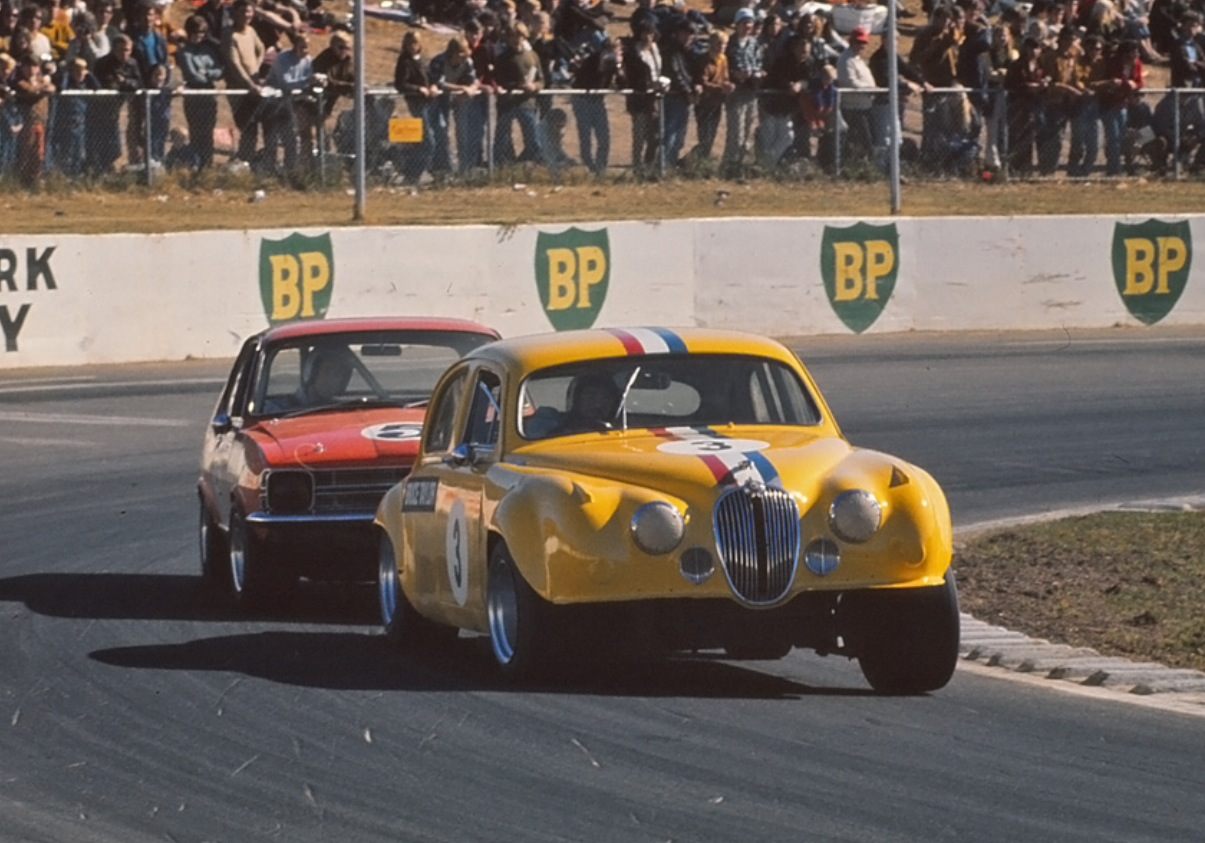
The Spirit of Sports Sedans in 1971; full spectator mounds, here at Sydney’s Oran Park. Bruce Taylor’s ex-Sharp Jag Mk2 Ford V8 ahead of Barry Seton’s ‘LC’ Holden Torana GTR XU1- old and new. (Vic Hughes)

Australian race fans liked Sedans, they were easier to understand and more spectacular to watch than most open-wheelers and the punters could relate to cars they either drove or saw on the road.

Other than during the Tasman Series, in most years our domestic single seater championship, the prestigious ‘Gold Star’ fields were thinnish. Scarce sponsorship dollars progressively found its way to Touring Cars fanning the open wheeler problem. Promoters were keen to give spectators what they wanted to fill their venues, and so, over time the dominance of Touring Cars in Australia occurred. And continues today. Sadly for open-wheeler nutters like me.

Castrol, for example, sponsors of Bob Jane Racing, one of our bigger teams encouraged Jane to get out of racers and more into touring cars in 1971. The Brabham and Bowin single seaters and McLaren sporty were progressively put to one side, replaced by a Holden Monaro Improved Tourer and Holden Torana Repco V8 Sports Sedan.

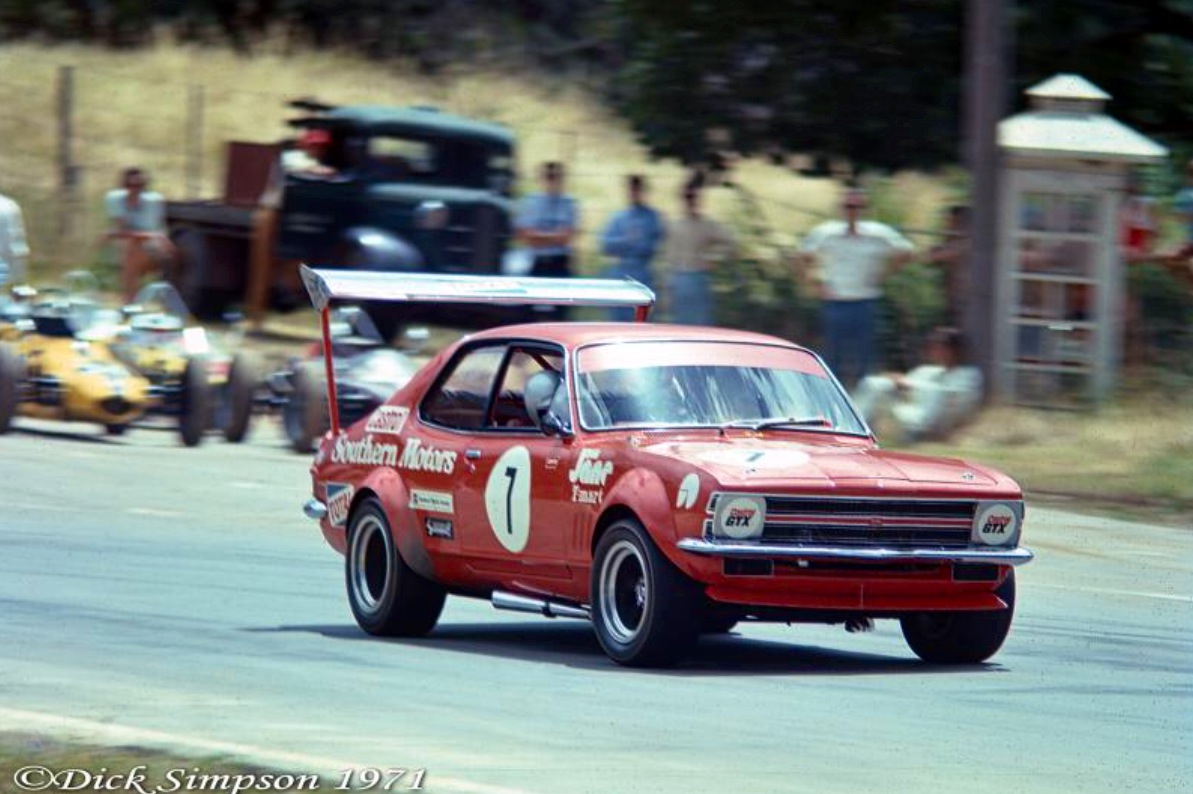
jano

Bob Jane’s Holden Torana ‘LC’ GTR XU1 Repco. Hume Weir, Boxing Day 1971. John Sheppard built and prepared superb cars, this is one of his best, its first iteration here was not that highly modified, engine and Borg Warner ‘box excepted. Phase 2 in its life was when Frank Gardner returned to Oz and raced the car for Jane in 1975; an F5000 Chev replaced the Repco, the suspension also modified substantially in addition to the car being lightened considerably. Jane reputedly said to Gardner when he saw it ‘What have you done to my beautiful car…?’. Car still exists. (Dick Simpson)

There had been other ‘clever’ Sports Sedans, Harry Lefoe’s Hillman Imp Ford V8, an example but Bob Jane’s John Sheppard built Torana, which married a lightweight but still fully trimmed LC Torana with the Repco 4.4 Litre ‘620 Series’ V8 Bob had sitting in his Brunswick Race HQ took things to another level.

The alloy Repco developed 400 bhp but at 360 pounds weighed less than the cast iron 3 litre ‘186cid’ straight 6 fitted to the car in production form. Bob and John Harvey won many races in this car.

The ‘professionalisation’ of Sports Sedans was underway.

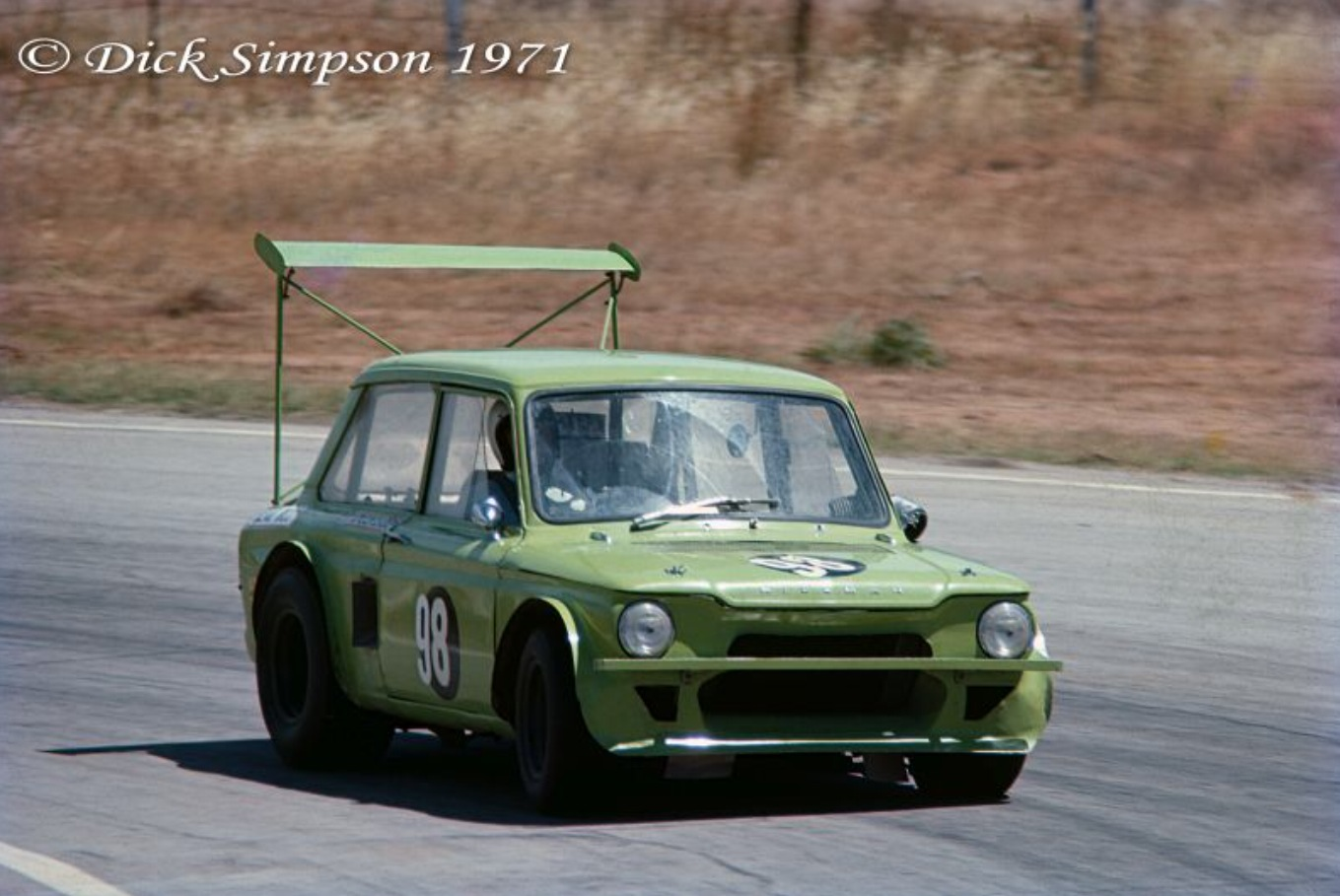
imp

Harry Lefoe in his Hillman Imp Ford at Hume Weir, Albury, NSW on Boxing Day 1971, Dick Simpson took this shot and the one above of Bob Jane in the same race. Car had a 450bhp plus Ford ‘Windsor’ shoved in the back seat, Lefoe had balls of steel to drive the thing, twas usually sideways, considerably so! Its life ended with a big accident at Sandown in the late 70’s. Extremely short wheelbase clear, big wing, engine put out slightly more power and was slightly heavier than the 1 litre alloy standard engine…(Dick Simpson)

Another trend setting Sports Sedan was the Valiant Charger Repco built by Elfin and John McCormack’s team in 1973. Macs background is covered in the article about his McLaren M23 I wrote 12 months ago, you can read it here, I won’t repeat it.

Mac’s McLaren: Peter Revson, Dave Charlton and John McCormack’s McLaren M23/2…

John was an open-wheeler man, he won the Gold Star in 1973 in his Elfin MR5 Repco F5000, but he was also a professional driver who needed to chase dollars. Oran Park promoter Allan Horsley agreed appearance money with McCormack if he ran a Sports Sedan in his ‘Toby Lee (shirts) Series’ in 1974, that was the impetus McCormack needed.

McCormack and Elfin boss Garrie Cooper (who ran 2 Elfin MR5 F5000 cars as Ansett Team Elfin in the Gold Star and Tasman Series at the time) toyed with the idea of a mid-engined Chev Corvair but commercially a deal with Chrysler made more sense.

In those far away days Ford, GM (Holden), Chrysler (Valiant) and British Motor Corporation all made cars in Australia, with others VW included assembling them here. Now only Ford, Holden and Toyota (who changed from assembly to construction of their cars progressively after 1970) remain but have announced plans to withdraw as manufacturers.

The economic and social policy as well as wider societal implications of this are beyond the scope of this article. Suffice it to say the death of the Automotive Industry in Australia is sad, wrong and was avoidable with a mix of better management, cooperation from the global headquarters of Ford, GM and Toyota and politicians who are not fuckwits. An oxymoron i grant you.

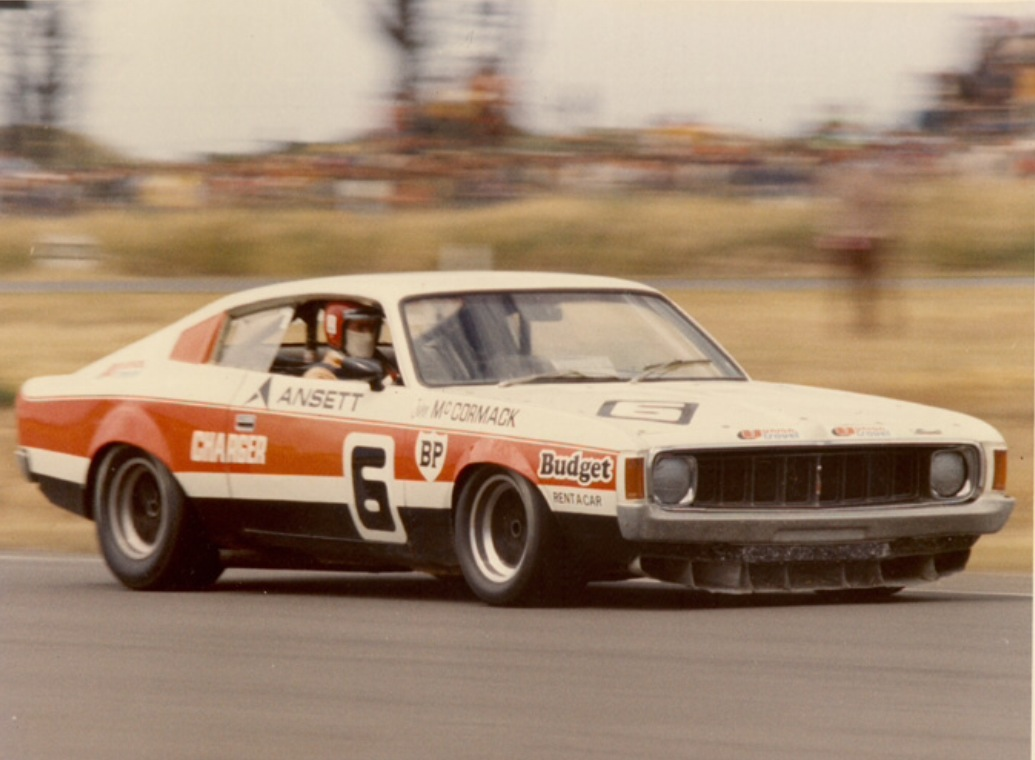
mc cormack

McCormack during his NZ Tour with the Charger in 1975, circuit unknown. Beautifully proportioned racing car, the external appearance matched the unseen clever and well executed engineering. Elfin 10 inch wide wheels, that width mandated then, not much to put 495 energetic ponies to the road. But spectacular! (The Roaring Season)

Elfin were based in Edwardstown, a southern Adelaide suburb, the Valiant factory was at Tonsley Park, not so far down the road. Valiant lost the promotional value of motor racing when they ceased building and racing their performance ‘Chargers’ and were receptive to the idea of a Sports Sedan Charger to go some way to matching Ford and GM who were still actively involved in racing and exploiting its promotional benefits in the competitive local market.

In one day McCormack and Ansett Elfin’s John Lanyon negotiated a deal which gave them cash, a truck to transport the racer, support and a Charger which made its debut after much surgery and modification in early 1974.

Cooper’s Conmurra Avenue shop was ‘chockers’ building Elfins so McCormack set up a workshop just around the corner in Coongie Road where the Charger was built. He took two Elfin employees in the process, Dale Koenneke and Harry Aust which did not go down well with Cooper, way too decent a man to be mixed up in professional motor racing…

The Charger was the result of the design ideas of McCormack and Cooper but was always Macs project, Garries priorities were production racing cars and his own racing program which was always fitted in around his customers needs. Elfin built 11 cars in 1973, 14 in 1974, a lot from the small facility.

McCormack and his team ran and prepared the car with the income derived going to Mac, but Ansett and Ansett Team Elfin received the promotional value of winning races in a growing part of the sport.

charger 2

Rare cockpit shot of the McCormack Charger. Clearly cylinder head or valve gear problems during this Calder meeting in 1974. Mid-mounted Repco F5000 engine sans Lucas injection in this shot. Standard Valiant style steering wheel and column a nod to the donor car. Smiths chronometric tach, instruments and Hewland DG300 ‘box, the alloy case of which you can see aft of the engine all ‘standard F5000’ kit. RH gearchange outta sight, the pedal box was off the Elfin shelf as well, Mac felt right at home. (Robert Davies)

The trend setting bit referred to above was the decision to use as many F5000 bits as possible and to locate the 495 BHP Repco Holden F5000 engine amidships beside the driver, the car was in essence mid-engined albeit the engine was in front of the centre-line of the car rather than to its rear.

The car was completely gutted of all interior trim and surplus metal, an integral roll cage designed by Cooper adding considerable torsional rigidity to the standard sheet metal shell.

Elfin uprights and wheels were used front and rear, upper and lower wishbone’s and coil spring damper units were used at the front and single top link, twin parallel lower links, coil spring dampers, radius rods providing fore and aft location at the rear. Roll bars were of course adjustable. An Elfin steering rack was used as were Lockheed brake calipers.

The transmission was standard F5000 issue, a 5 speed Hewland DG300 transaxle, located aft of the engine. There were two though, the front one contained the gears and the rear DG300 case the differential. Mac placed the gearchange lever to the right of the very low mounted drivers seat so he would feel pretty much at home, the driving position akin to the single-seaters from whence he came.

repco F5000

Phil Irving’s adaptation of General Motors’ Holdens then new ‘308’ V8 as an F5000 engine in 1970 created a very effective racing engine. Lucas fuel injection was one of the few non-Repco manufactured parts. 495bhp@7500 rpm is the quoted figure but the few flat-plane crank engines of 1973/4 produced closer to 525. It didn’t matter, the engine had greater mid-range punch than most Chevs, the blend of power/torque won it championships. (Repco)

The Charger had its first race at Adelaide International in early 1974, the Elfin MR6 Leyland F5000 made its debut on the same day, by the end of it the Chrysler executives present were far happier than the Leyland guys, the race variant of that engine always somewhat of a ‘hand grenade’ as covered in the McLaren article referred to above…the Charger cantered away and won its races.

The intelligent beast was immediately successful, Mac getting $2500 appearance money each time he ran in the ‘Toby Lee Series’ at Oran Park and carted away a good share of the prize money in 1974, he won the series from Jim McKeown’s Porsche and Frank Ure’s Holden Torana V8.

The car was also raced around the country with similar success.

He raced the car into 1975 selling it eventually to Tony Edmonson who was also successful in it.

McCormack re-focussed on single seaters with his ultimately successful McLaren M23 Leyland program and was just coming back into sports sedans, having built a Jaguar XJS at the time of the untimely road accident in which he was a passenger, ended his racing career.

Their were many very clever Sports Sedans which followed the McCormack/Cooper Charger but arguably it was the first…

thommo

Bryan Thomson VW Fastback being chased by John McCormack’ Charger at Sandown’s, you guessed it, Torana Corner in November 1974. They are about to unleash 500’ish Chev and Repco Holden horses up Sandowns’ long back straight. Great circuit for these cars. Two clever cars from 1974; both F5000 based, both ‘mid-engined’ the VW at the mid-rear and Charger in the mid-front. (Paul Van Den Akker)

PostScript…

Frank Gardner got around to building a Chev Corvair, the car well engineered (see etcetera below) as you would expect and largely built around Lola F5000 componentry. He essentially ‘killed the category’ such was the dominance of the car until the regs were changed to effectively ban it (the Corvairs engine and gearbox in standard form, were located Porsche 911 style, with the engine behind the gearbox, the legislators would allow a Corvair to race in that format but not the layout Gardner had with the classic ‘box behind the engine layout).

gardner

Frank Gardner in the Chev Corvair ahead of Red Dawson’s Chev Monza, Bay Park, NZ 1976. (The Roaring Season)

Etcetera…

vw

Other ‘Class of ’74 Cars’; Bryan Thomson’s ‘Volksrolet’ was a marriage of VW Fastback and an ex-Hamilton/Brown McLaren M10B F5000, but it never worked as well as Frank Gardner’s Corvair variation on the same theme despite the prowess of Thommo and his engineer Peter Fowler. But a massive crowd-pleaser. Behind is Peter Brock in the Holden Dealer Teams ‘Beast’. From memory an ex-rallycross LC Torana chassis into which was shoehorned a Repco Holden F5000 engine mated to a Borg Warner T10 ‘box. Ok in ’73 but the game had moved on by 1974, let alone the cars to come. Sandown Park November 1974. (Robert Davies)

mac

Baskerville, Tasmania 1975. McCormack ahead of Jim Richard’s Kiwi built, old tech but superbly driven Ford Mustang 351 and Allan Moffat’s Ford RS3100 ‘Cologne Capri’. Moffat won the Australian Sports Sedan Championship in 1976 using this car and a Chev Monza. (oldracephotos.com/Leigh Stephens)

corvair

Frank Gardner’s Corvair as raced by Allan Grice after Gardner stepped outta the driving seat. Circa 1977. Nose of Grice’ Group A Commodore to the right. FG raised the Sports Sedan bar  again with the Corvair, the bottom shot clearly shows the car for what it was conceptually; a Lola T332 F5000 albeit with a spaceframe chassis and a roof! Brilliant device, even the 6 litre cars couldn’t keep up with it, put its power down so well. (The Nostalgia Forum)

Bibliography and Photo Credits…

‘Australia’s Elfin Sports and Racing Cars’ John Blanden and Barry Catford, ‘Maybach to Holden’ Malcolm Preston

Robert Davies, Dick Simpson, Vic Hughes, Dick Simpson, Paul Van Den Akker, The Roaring Season, The Nostalgia Forum, oldracephotos.com/Leigh Stephens, Bruce Keys

Tailpiece: McCormack, Charger Repco Holden, Calder, December 1974…

(B Keys)

Finito…

mustangs catalina park

Photographer John Ellacott; ‘The three Mustangs of Pete Geoghegan, Norm Beechey and Bob Jane racing against each other for the first time, Catalina Park, Katoomba in Sydney’s Blue Mountains on 7 November 1965’…

And so commenced a wonderful period of Touring Car Racing in Australia. Between them these blokes won the Australian Touring Car Championship on 11 occasions; Bob Jane 1962/3 Jaguar Mk2, 1971/2 Chev Camaro ZL-1. Pete Geoghegan 1964 in a Ford Cortina GT, 1966-9 Ford Mustang and Norm Beechey, 1965 in a Ford Mustang and 1970 in a Holden Monaro GTS350.

For those with an interest in these Mustangs’ click on this link to read a detailed article by Australian historian/writer/commentator Mark Oastler, the login process is simple.

http://www.shannons.com.au/club/news/beechey-geoghegan-jane-the-racing-mustangs-of-1965/

Photo Credit…John Ellacott, The Nostalgia Forum


moffat capri sandown
(R Davies)

Robert Davies captures Alan Moffat is his Ford ‘Cologne Capri’ RS3100, exiting Dandy Road upon its Australian debut at the Sandown Tasman meeting in February 1975…

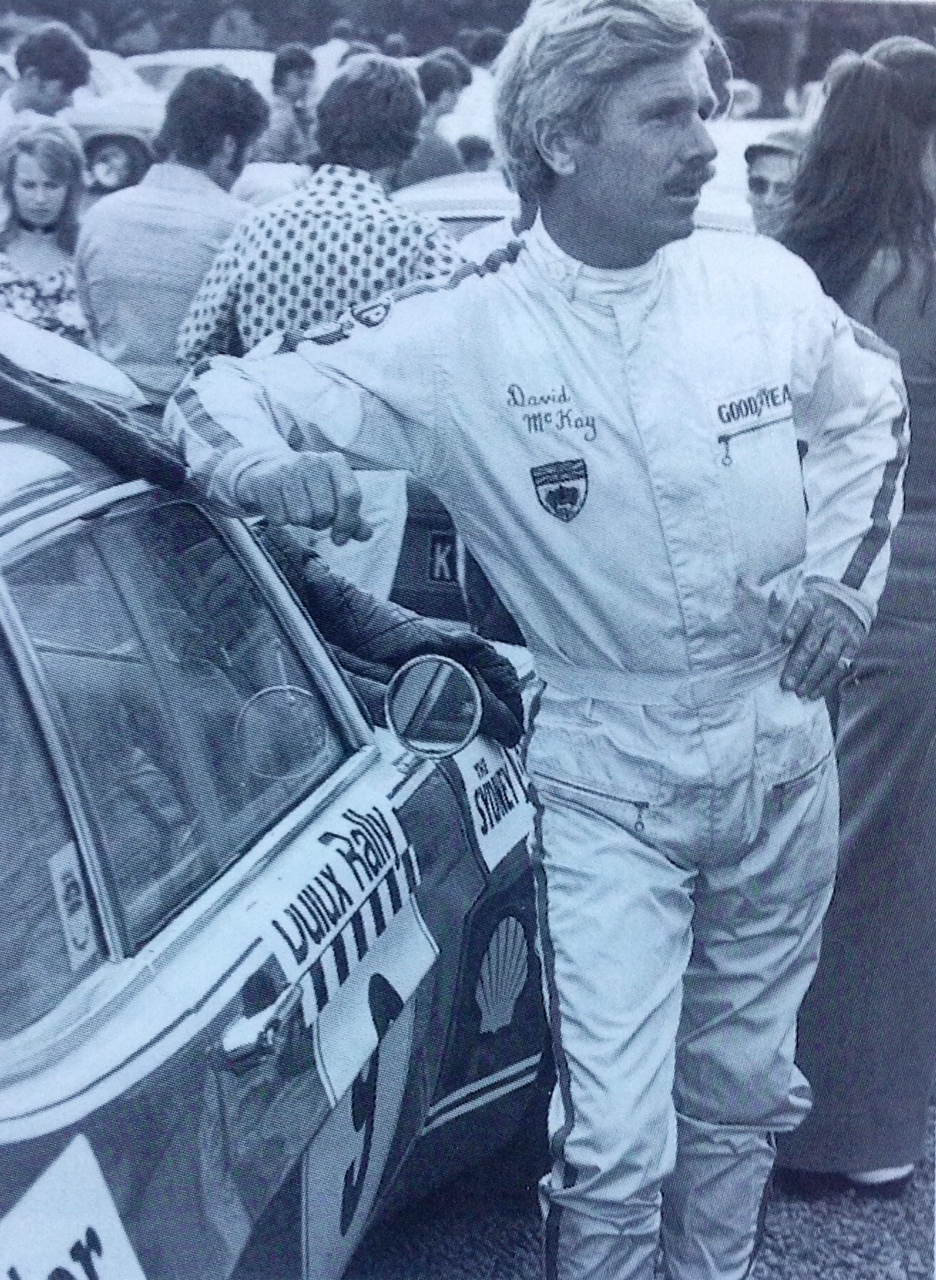
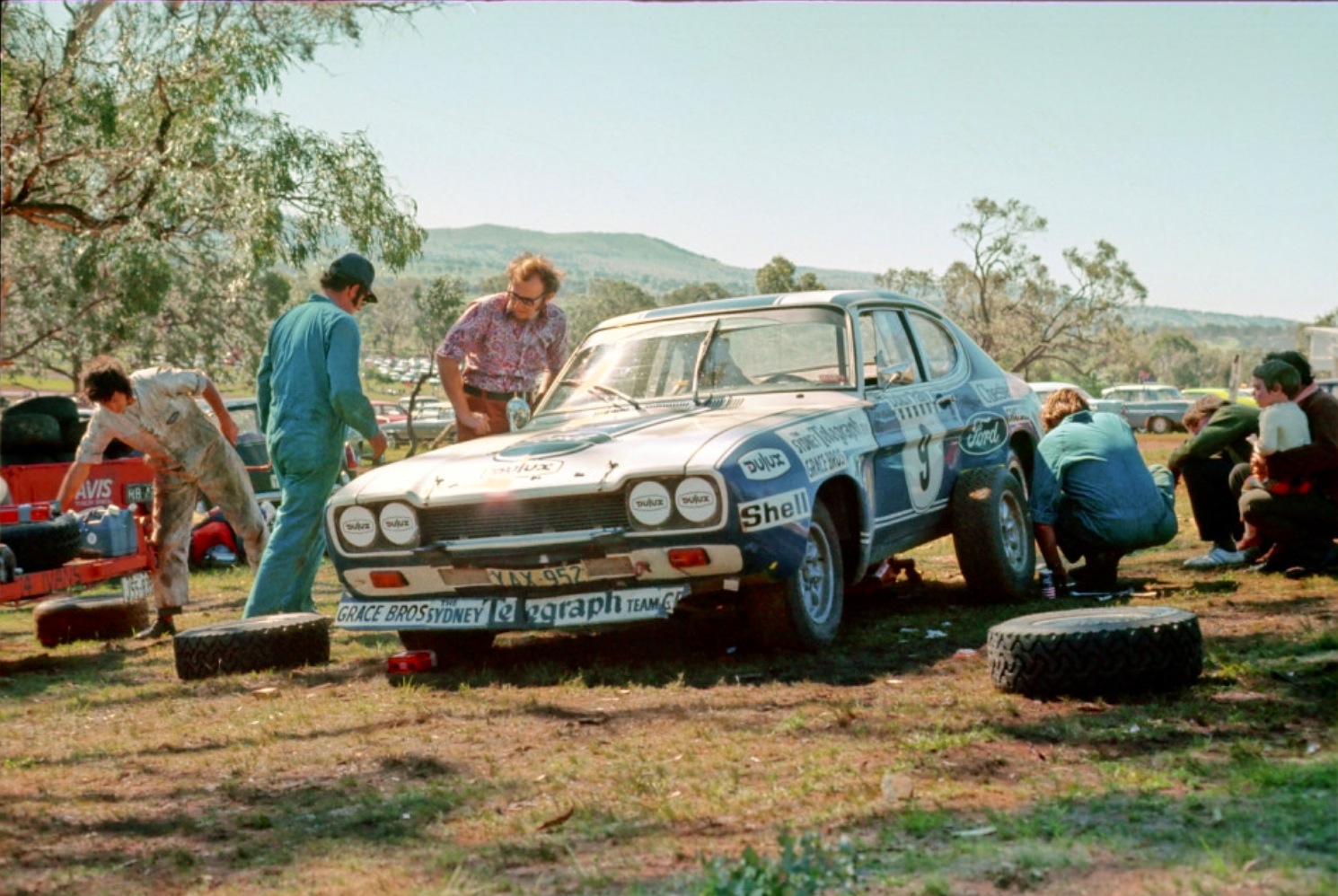
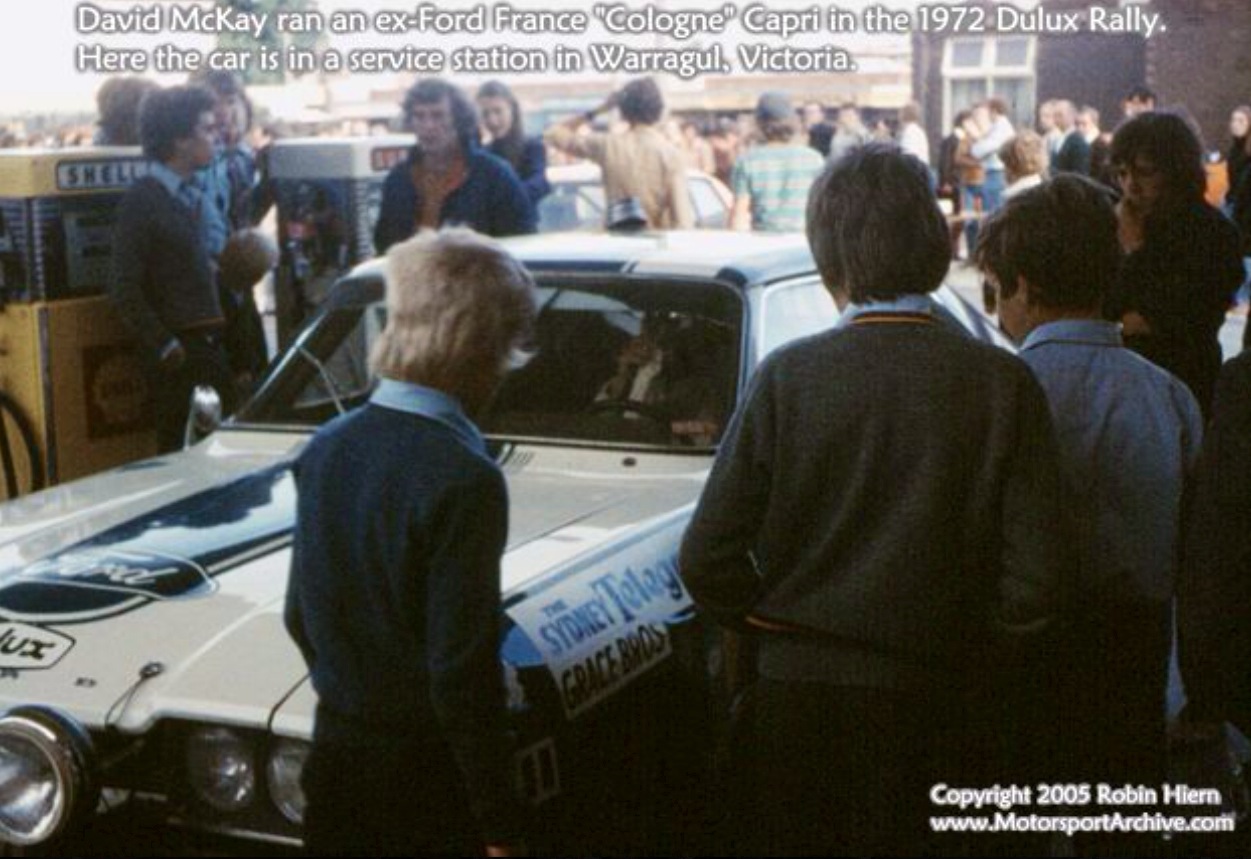
Whilst Alan Moffats’ car is well known by most Australian enthusiasts, the factory RS2600 campaigned by David Mckay in the 1972 Dulux Rally is a bit more obscure, we will come back to Moffat’s car, McKays’ was the first to appear.

mc kay 2 finish of dulux

David McKay was an ex-racer of world class, the most influential Australian motoring journalist of his time and boss of Scuderia Veloce, retailer of Ferraris and other exotica and a team which ran some of Australia’s best cars and drivers. https://primotipo.com/2014/07/03/pete-geoghegan-ferrari-250lm-6321-bathurst-easter-68/ and https://primotipo.com/2015/04/02/ferrari-p4canam-350-0858/

The Dulux Rally was a unique event in the World, whilst influenced by the Tour de France was different in that competitors faced both the challenges of dirt rallying and circuit racing. The Rally only lasted 2 years, such was the cost of running an event over two weeks commencing in Queensland and finishing in distant Victoria.

The Dulux was promoted and run by the Sydney based Australian Sporting Car Club and worked commercially due to the support of ICI Australia, whose research showed the most effective way to promote the name change of ‘Balm Paints’ to ‘Dulux’ to the trade in 1971 was via motorsport. Re-finishers, panel and paint shop proprietors were interested in motorsport, so the key commercial support to get quite a radical event off the ground was made.

dulux rally route

McKay very successfully ran an Alfa 1750 GTV powered by the 2-litre race engine out of his friend Brian Foley’s ex-factory GTAm circuit racer, a veritable 210bhp wolf in sheep’s clothing in 1971. McKay finished second to Colin Bonds’ factory Holden Torana LC GTR-XU1. No mean feat, as Bond was one of Australia’s most versatile drivers: a winner in open wheelers, on the dirt and on the circuits as both multiple Australian Rally Champion and a winner of the Bathurst 500 and many other circuit races.

mc kay hume weir

For 1972 McKay was keen on a more competitive mount, the nature of the various hats he wore and his capabilities meant he was attractive to all of the local manufacturers/importers. McKay was invited to breakfast with Ford’s CEO Australia, Bill Bourke, on his departure from Australia who asked if there was anything he could do for McKay in his new appointment elsewhere in the Ford empire.

McKay recalled ‘Ford were running V6 Capris in European Rallies and perhaps Bill Bourke could collar one which wouldn’t be missed in time for the ’72 Dulux? This he did together with a mechanic to look after a car which had been run by Ford France. Howard Marsden (head of Fords racing program in Australia) was enthused and turned on his Ford works crew’.

rs 2600 cutaway
hermann mt mc ginn 240z

The 1972 Dulux entry was not large at 27 carsbut included International, Edgar Herrmann, in a factory Datsun 240Z, Colin Bond and Peter Brock in factory Torana GTR XU1’s both of whom were equally at home on tar or dirt, Australian Rally Champion Bob Watson in a Renault 8 Gordini, Stewart McLeod, XU-1 and Bruce Hodgson, Ford Escort Twin Cam and many other top drivers.

The rally commenced after a run from Brisbane to Grafton at Surfers Paradise Raceway.

The Capri had a high speed miss which cost power, McKay finished third on a track tailor made for the car. Due in Sydney on the second night, David organised the SV Team to be on hand to rectify the problem, there, out of the rain which had accompanied the rally since it’s start, a condenser was identified as the cause of the misfire and fixed.

With full power the car won the Silverdale Hillclimb and night racing at Oran Park, then a circuit on Sydney’s Western outskirts. This put a smile on Ford fans faces and gave General Motors Holden and their Torana’s cause for concern…

McKay also won the Dapto Hillclimb, having time to divert to visit his ailing mother in Bowral Hospital enroute to Canberra!

mc kay mt mc ginn stage
brock from hermann

McKay ‘passed’ as he put it on the Mount Ginn event, spitting the dummy over the condition of the track surface, even protesting the organisers conducting the Mt Ginn activity at all…he could do so as the Capri was comfortably in the lead at the time.

Based in Albury, on the New South Wales/Victorian border for several nights the car won the circuit events at Hume Weir, another lost circuit, and several nights of rallying. ‘The Capri was very quick on dirt surprising both (navigator) Garry Connelly who was doing the navigating and myself but it wasn’t to last’.

‘Apparently the wide Goodyear Ultragrips should have been fitted with tubes to give some protection against deflation over the rocky outcrops and we had tyre problems on one section. On another a rear coil spring became detached from its mountings and pierced a tyre. The final blow was hitting a rocky ridge in the middle of the dirt road with the front cross member and pushing the lot back out of alignment. ‘

‘No-one else had noticed the ridge, all driven safely over it as we had expected to do. In our jubilation after the wins at Hume Weir earlier in the day we had inadvertently forgotten to reset the ride height, consequently we were rallying with race track settings and it took the Ford boys a long time to straighten out the mess’.

rs 2600 warragul

The Toranas therefore skipped off into the distance. On the final leg towards Melbourne the Capri won a 20 lapper at Phillip Island, lapping the Toranas, McKay finally able to use its ‘moonshot-fifth gear’ on the Island’s long main straight.

The event finished at Melbourne’s Dallas Brooks Hall, the two works Holden Torana LJ XU-1s first and second from Stewart McLeod third, McKay and Connelly seventh in the exotic Cologne Capri.

The car does not seem to have been rallied again but passed into the hands of Melbourne’s Graham ‘Tubby’ Ritter, a noted engineer/driver who mated the car with donor parts from the March 751 F5000 left in Australia by John Cannon; engine, gearbox, suspension, and brakes all used in the cars conversion to a Sports Sedan, the March tub was attached to a VW transmission and sent to New Zealand to deal with the import duty issue which otherwise arose…

If memory serves the cars injected 5-litre Chev was later twin-turboed, if any reader knows of this RS2600’s ultimate destiny I am intrigued to know.

big_6184_N_Ritt_77


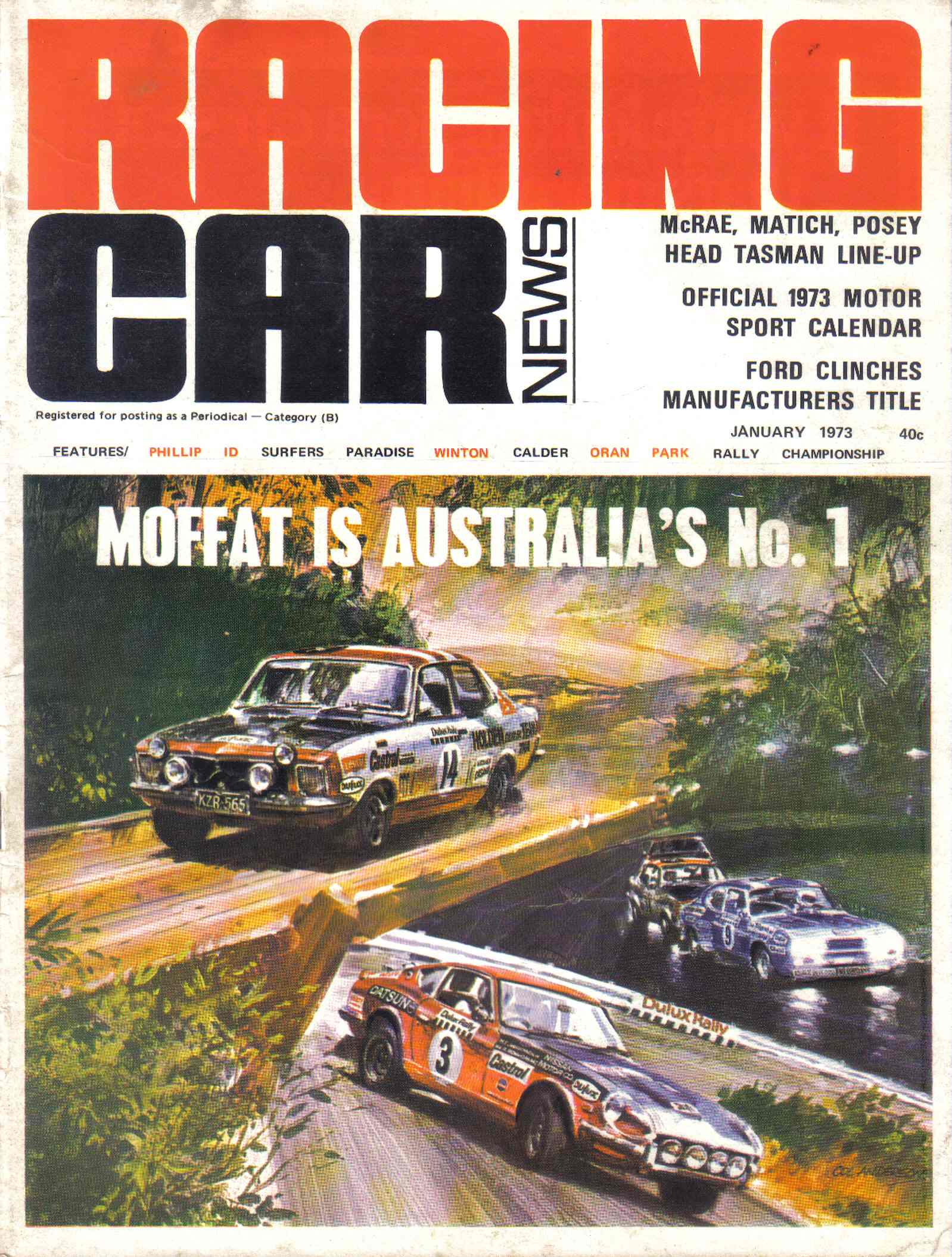
1973 RCN cover

Moffat’s RS3100…

Allan Moffat made his name in Australia as one of our greatest touring car drivers but was born in Canada and emigrated to Australia with his father who was posted here for career reasons in the early 1960s.

Moffat commenced racing in Australia in a Triumph TR3A and progressed to a Lotus Cortina bought from Team Lotus at the end of 1964, Moffat having worked with the team in the United States.

His racing of the Cortinas in both Australia and in the US is a story in itself, suffice it to say that at the end of 1967 he was competitive enough to be invited to join Ford’s KarKraft as a development driver.

moffat lotus cortina texas

Ford was fully committed to the Trans Am Series to promote its image. It was a hotbed of competition with Shelby American representing Ford. Allan co-drove the first two rounds (Daytona 24-Hours, Sebring 12-Hours) of the 1968 Trans Am, with Horst Kwech, the car did not finish either race.

He returned to Australia to work for Bob Jane after Jane purchased a genuine 1968 ex-Shelby Trans Am Mustang, Allan returned to Detroit in early 1969 and met with Jack Passino, Ford Racing Director who organised a brand new 1969 Trans-Am Boss Mustang.

Moffat brought the car to Australia and with support from Coca-Cola in one of the first commercial deals of its type here, and raced the car as a professional becoming one of the most iconic car/driver combinations in Australia.

Moffat and the Trans Am won 101 of its 157 starts but ironically not the coveted Australian Touring Car Championship for which it was intended. ATCC rule changes forced the Mustang into the Sports Sedan category in 1973. The Mustang was competitive but with new rule freedoms during 1974 wins became fewer against the mid engined cars now being developed. Moffat, to his eternal credit chose not to ‘hack the car about’, one of only seven genuine factory 1969 Trans Ams…but he needed a competitive mount to replace the famous car. His immaculate Ford connections secured one of the works Capri RS3100s at the end of Fords successful 1974 European Touring car championship campaign…

moffat mustang

This is a slightly truncated version of Mark Oastlers tremendous article about the car in ‘Shannons’ magazine…if you have a hankering for Touring Cars its worth signing up to the Shannons site just to get access to Oastlers’ excellent articles, http://www.shannons.com.au/club/

Why Ford built the ultimate RS

‘The catalyst for creation of the RS 3100 was the 1973 ETCC, when BMW fended off a gallant season-long challenge by Ford’s less powerful RS 2600 Capris to win the prestigious title.

BMW had caught Ford by surprise that year by equipping its 3.5 litre CSL coupe with a huge boot-mounted inverted rear wing, made even more effective by a full-width scoop mounted along the rear edge of the roof to feed it clean air flow for maximum downforce. Not surprisingly, the big CSL coupe soon earned the nickname ‘Batmobile’!

Ford rightly figured that to overcome the CSL challenge in 1974, the Capri would firstly require more power. However, the RS 2600’s German 2.6 litre V6 engine, which had already been bored out to 2.9 litres capacity and was producing around 320 bhp, had reached the peak of its development.

By comparison, the capacity of BMW’s potent 3.0 litre in-line six had been increased to 3.5 litres under the FIA’s liberal Group 2 rules, providing a big power advantage over the Fords. The obvious answer was a switch to the larger capacity 3.1 litre British-built Essex V6 as used in UK-built Capris.

The CSL’s inverted rear wing also provided a considerable edge in traction and high speed stability so Ford had no choice but to join the aero wars with a large rear spoiler of its own. Wind tunnel and track testing of various designs proved how effective a large ducktail spoiler could be.

As a result, Ford committed to production of a ‘homologation special’ called the RS 3100 that would serve as the road-going production basis for its full-house Group 2 competition cars for the 1974 ETCC attack.

Built in a batch of 250 (the minimum number required for FIA homologation) the British-built RS 3100 came with front and rear spoilers and the 3091cc Essex V6. Use of this engine of course would allow the 1974 race car to increase its engine capacity to 3.5 litres to match the BMW.

The small batch of RS 3100 road cars went on public sale in November 1973 with FIA homologation approved on January 1, 1974. Surprisingly perhaps, these rare homologation cars proved hard to sell. Evidence of that fact is that 50 of the 250 built were shipped to Australia as late as June 1974 where they were eventually sold through selected Ford dealers.

ford gaa v6

Cosworth to the rescue

Michael Kranefuss was the man in charge of Ford’s ETCC program. Given Ford’s long and successful association with Cosworth, in particular its 3.0 litre V8 DFV Formula One engine, he approached the Northhampton firm to design the new RS 3100 race engine. Initial discussions between Ford and Cosworth about this engine had started back in 1972.

The Group 2 rules required use of the manufacturer’s standard cylinder block, but a timely change that allowed use of alternative cylinder heads for 1974 left Cosworth with the task of designing new aluminium heads with dual overhead camshafts, four valves per cylinder and an initial power target of 400-plus bhp.

The Cosworth GAA-V6 was designed by Keith Duckworth and Mike Hall, featuring cast aluminium heads that could be used on either bank. The four overhead camshafts operating 24 tiny valves were belt driven by toothed pulleys at the front of the engine, with one spark plug per cylinder and Lucas mechanical fuel injection.

Cosworth needed to increase the cylinder bore size of the Essex block, but wayward casting tolerances meant that few of these mass produced blocks survived the machining process. They settled on 3412cc as the safe limit. Cosworth also beefed up the bottom end with rugged four-bolt main bearing caps.

In-house dyno testing of the new 3.4 litre GAA-V6 began late in 1973 and it produced 420 bhp straight up, instantly meeting Ford’s 400 bhp plus target. With on-going development these engines reached 450 bhp at a spine-tingling 8750 rpm.

The RS2600’s five-speed ZF gearbox was carried over and matched with a rugged Borg & Beck triple-plate clutch in a feather-weight magnesium bell housing.

gaa v6

The RS 3100 Cologne Capris were built with a win-at-all-costs approach at Ford’s German competitions department in Cologne, under chief engineer Thomas Amerschlaeger. The exotic materials, quality of workmanship and attention to detail evident in the construction of these factory race cars was beyond belief.

The emphasis was on minimising weight, as the lightweight fiberglass doors, bonnets and boot lids used on the RS 2600 were no longer allowed and the new Essex V6 was slightly heavier than the German engine. This resulted in a 50 kg weight increase in the new cars, which would be offset somewhat by the more powerful 3.4 litre Cosworth engine.

They started with standard LHD steel body shells taken from the production line which were rumoured to have spent time in an acid bath to remove some excess metal before they arrived at the workshop.

Large aerodynamically shaped fiberglass wheel arch flares were installed at each corner to shroud huge wheels and tyres and lightweight laminated window glass was fitted throughout the cabin. The large front and rear spoilers, which under Group 2 rules had grown considerably from the road car versions on which they were based, were fitted front and rear.

The increased weight of the Essex V6 altered the car’s critical front to rear weight distribution, which Amerschlaeger’s team addressed by mounting the engine’s dry-sump lubrication oil tank and fuel injection pumps inside the boot area, where the battery and huge 120-litre long distance fuel tank also resided.

Oil cooling radiators for the gearbox and rear axle were also moved to the tail end and mounted directly behind the rear wheels, with oil circulation controlled by a pump driven directly by the tailshaft via a toothed belt and pulley arrangement. The engine oil cooling unit was mounted in the nose where it was fed fresh air through the grille.

The engineers also experimented with a rear-mounted engine radiator but found that there wasn’t sufficient air flow available because of the effectiveness of the huge front spoiler in stopping air from flowing under the car. Amerschlaeger eventually opted for twin side-mounted engine radiators mounted just ahead of the rear wheels.

sandown

The standard dashboard pad and door trims had to be retained but the rest of the interior was stripped bare, leaving a full set of competition gauges, remote switch panels, massive roll cage, on-board fire extinguisher system plumbed to every corner of the car and lightweight Nomex covered driver’s seat.

To minimise weight, many suspension components were made from aluminium or magnesium.

Under Group 2, a touring car’s suspension had to keep its original ‘architecture’ so the RS 3100 was equipped with strengthened front suspension towers, Bilstein aluminium McPherson struts with gas-filled adjustable dampers, a wrist-thick anti-roll bar, magnesium hub carriers and solid aluminium replacing rubber in all suspension bushes.

Likewise the Capri’s live rear axle and leaf spring design had to be retained, but Ford got very creative in its rule interpretation. It complied by fitting leaf springs, but they were made from lightweight composite materials and had no springing function at all.

This was performed instead by big coil springs and adjustable gas-filled Bilstein shocks. Ford’s homologation paperwork stated that these coils were simply ‘additional springs’ and the FIA duly agreed!

The rear axle was located fore and aft by upper and lower trailing arms and laterally via a Watts linkage that also allowed adjustment of the car’s rear roll centre.

The brakes were huge with four wheel discs permitted under Group 2, even though the road car had rear drums. The ventilated front rotors measured 12 inches (305mm) in diameter and more more than 1.0-inch thick, clamped by powerful servo-assisted calipers.

The front brakes were also fitted with an automatic water cooling system connected to a large tank in the cockpit which could spray a fine mist onto the disc rotors to cool them down each time the brake pedal was pushed. The rear discs were slightly smaller 10.5 inch diameter units.

The racing wheels and tyres were enormous given the size and weight of the car, capable of generating such huge cornering forces that the works Capris were often seen in the ETCC cornering with their two inside wheels clear off the deck.

German BBS composite rims (magnesium centres with aluminium rims) were secured by a single central locking nut and fitted with tailor-made Dunlop tyres that measured a staggering 16 inches (405mm) wide at the rear and 12 inches (305mm) on the front.

With top shelf drivers the calibre of Niki Lauda, Jochen Mass, Toine Hezemans and Dieter Glemser on the team, Ford was ready for all-out war.

capri sandown

The 1974 ETCC

‘Unfortunately, the timing could not have been worse for what promised to be the battle of all battles for the ETCC crown between Ford’s new RS 3100 Capris and BMW’s mighty CSL ‘Batmobiles’.

The world’s worsening energy crisis, which had been triggered by the Arab-Israel war, forced car companies to quickly change priorities in their marketing and product development strategies. Motor racing programs were hit particularly hard during this time, including Australia where Ford withdrew its factory support in January 1974.

Sadly BMW also began to scale down its racing activities during the ETCC which left easy wins to the new Capris at several rounds. Even so, despite these outright victories and the vast sums of money spent designing, building and developing the new RS 3100s, it was the German Zakspeed-prepared RS 1600 Ford Escorts which ended up winning the manufacturer’s title for Ford due to a points system that was heavily weighted in favour of smaller capacity cars.

The last time an RS 3100 Cologne Capri competed in full works guise was when Jochen Mass and Toine Hezemans were sent to Kyalami in South Africa to compete in a gruelling non-championship 9-Hour endurance race as part of the Springbok series that featured many sports cars. The Capri was fast and faultless again, winning the touring car class and finishing an outstanding fifth outright.

The same car – chassis number GA ECPY19999 – would not return to Germany after the race, though, as it was destined for a very different life in Australia.’

motor racing oz

The Moffat era

‘In late February 1975, GA ECPY19999 arrived at Allan Moffat Racing in Melbourne after being shipped directly from its last race as a works car in South Africa.

Although the stunning European thoroughbred won first time out at Sandown it soon became apparent that the Capri, which was built for long distance racing on high speed European tracks, was going to be doing it hard against lighter and more powerful V8 competition on Australia’s tighter tracks in short sprint races.

Its V6 engine just couldn’t match the explosive power and torque outputs of rival V8s. And it was restricted to the local maximum wheel width of 10 inches, which was a substantial drop in traction given the car was designed to race on massive 16-inch wide rears and 12-inch fronts in Europe.

It was also comparatively heavy given its touring car racing origins, competing against increasingly sophisticated purpose-built local designs that featured mid-mounted V8 engines, space-frame chassis, Formula 5000 suspension and featherweight composite body panels.

Moffat had his sights set on winning the inaugural Australian Sports Sedan Championship (ASSC) in 1976, so when it became clear he would need V8 power to do it he sourced a state-of-the-art DeKon Chevrolet Monza from the US. With 6 litre Chevrolet V8 power, it was immediately more than a match for the best sports sedans in the land.

Even so, the RS 3100 Capri still had an important role to play as the controversial Monza was sidelined midway during the ASSC due to questions over its eligibility. So while that was being sorted, Moffat dusted off the Capri for two crucial rounds at Wanneroo in Perth (which he won) and A.I.R in Adelaide (where he came second). The Capri proved it was still highly competitive, effectively sealing the title for Moffat and finishing its Australian career on a high note.’

Moffat retained the car, as he did the Mustang for decades before finally selling it to a lucky collector in New Zealand.

gaa v6 2

The Kiwi Connection…

For the sake of completeness there were only two other, I think, ‘Cologne Capris’ which raced in Australia, both originated from the ‘other side of the ditch’, the colloquial name we Australasians give to the Tasman Sea, which separates Australia and New Zealand.

Grant Walker raced the ex-works RS2600 imported into New Zealand by Paul Fahey which won the NZ Touring Car Championship in 1975 converted to Cossie GAA power.

Don Halliday raced the GAA powered car he and his equally talented brother built up in NZ with many factory parts as well as local ingenuity.

Both scored points in the 1976 Australian Sports Sedan Championship, ironically won by Allan Moffat in the Chev Monza which replaced his Capri. As Mark Oastler points out above the Capri did play a vital role in that series victory.

The story of these cars is well told by Steven Holmes on his ‘The Roaring Season’, click on this link for an interesting read: http://www.theroaringseason.com/showthread.php?1274-Article-Recreating-The-Halliday-Capri

Etcetera…

1975 Sandown Capri

Bunch of three photographs of David McKay in his RS2600 during the 1972 Dulux- I don’t know the venues though, assistance appreciated. Colin Bond’s Holden Dealer Team Torana GTR-XU1 lined up beside him in the shot below.

The last shot is the same car but has none other than Kevin Bartlett at the wheel, date and place unknown.

Credits…

Robert Davies, Jerry Melton, autopics.com, spooky21, Green Machine, Bruno Betti, oldracephotos, David McKay’s ‘Scuderia Veloce’ autobiography, Mark Oastler/Shannons for the RS3100 article, snooksmotorsport.com, The Roaring Season, Stephen Dalton for the research assistance and material

Finito…

bartlett
Mildren ‘LHD’ GTA, Kevin Bartlett, Lakeside, Queensland 1966 (J Stanley)

Kevin Bartlett explores and exploits the laws of physics in the Alec Mildren Racing Alfa Romeo GTA , Lakeside, Queensland, Australia circa 1966…

Some years later American F5000 driver, Sam Posey while competing in the Tasman Series and observing KB’s Lola  at close quarters described Bartlett as the ‘master of opposite lock’. It was an aspect of his driving which worked for him and we spectators throughout his career regardless of the cars he drove – sedans, sports cars or single seaters.

mildren 2
Team Mildren Warwick Farm 1966, not 1967 I think…big professional team 60’s Style! Cars are Mildren LHD GTA, TZ2 and  the Brabham BT2/6 Ford raced by Bartlett at that stage. WF Tasman Meeting 13 February 1966 (Allegerita)

Alec Mildren Racing and Kevin Bartlett…

AMR was one of Australia’s first professional teams, the basis of the team was formed around a nucleus of talented people who fettled Alec Mildren’s cars during his own single seater campaigns. He won the Australian Gold Star Championship and Australian Grand Prix in a Cooper T51 Maserati in 1960.

Shortly thereafter Mildren retired from driving to concentrate on his business interests which primarily involved the retail car trade. He was the first Alfa Romeo dealer/distributor in New South Wales and his race team employed great drivers including Frank Gardner, Kevin Bartlett and Max Stewart.

Mildren’s passion was single-seaters but the team also raced Alfas, notably two GTAs, a TZ2 and later 105 Series coupes of various capacities in Series Production events as those grew in stature in the late 1960s.

team mildren
Alec Mildren Racing and the laid back nature of the Tasman series circa 1967. Bartlett is sitting on the wheel of his Brabham BT11A Climax 2.5 Tasman car. The Alfa is the prototype TZ2 referred to in the shot above. The smiley chap at right rear is young Fred Gibson, then racing a Lotus Elan 26R. Warwick Farm, New South Wales (P Windsor)

Kevin Bartlett started racing in his mother’s Morris Minor and very quickly the young mechanic made a name for himself as a fast driver with strong mechnical knowledge and sympathy. By 1965 he was driving an Elfin Imp FJ owned by the McGuire family and an Austin Healey Sprite and TVR for others. He recalls that ‘Alec and Glenn Abbey (Mildren’s engineer/mechanic) were always on the lookout for talent, Ralph Sach and Charles Smith who drove for them at the time were getting older and I performed well against them in cars with much less capacity. They also took into account that I could drive different types of cars and do as well as I could’.

‘ I got to race the Alfas’ and then the little Brabham BT2/6 which was powered by a pushrod Ford engine, and in mid-1965 the Mildren Maserati, which was the first really powerful car I drove, racing it at Lowood and then winning the 1965 Victorian Sportscar Championship in it at Sandown’.

The Mildren Maserati was built by Bob Britton of Rennmax Engineering, essentially a Lotus 19 clone, it used some of the running gear from Alec Mildren’s 1960 Gold Star Championship winning Cooper T51 Maserati, particularly the gearbox and 2.9-litre 250S Maser engine.

KB made his presence felt in that ’65 Victorian championship race beating Bib Stillwell’s Cooper Monaco Buick V8 and Spencer Martin’s Scuderia Veloce Ferrari 250LM amongst others. He had well and truly arrived…

viaduct
Bartlett in ‘LHD’ entering the Viaduct at Longford leading Allan Moffat’s Lotus Cortina in March 1966 (E French)

Mildren GTAs…

There were two, first a LHD and later a RHD car, Bartlett drove both in their competitive heyday and both ended up racing in Western Australia.

leger
Bartlett at it again…Leger Corner , Warwick Farm 1966 ‘RHD’ Mildren GTA (autopics)
autodelta works
The Autodelta factory, Milan circa 1967, car is a GTA Stradale – road spec GTA (Pinterest)

Autodelta…

The original step-front Alfa Giulia Sprint GT was penned by Giorgetto Giugiaro at Bertone and has to be one of the most beautifully balanced, delicate designs of the 1960s.

Autodelta was the factory Alfa racing subsidiary formed by famed ex-Ferrari engineer, Carlo Chiti, and Ludovico Chizzola in 1963 after the closure of ATS, the Grand Prix team formed by ex-Ferrari staff after a purge by the Commendatore in 1961. In 1964 Alfa acquired Autodelta and moved it to Milan, near its HQ.

The Giulia sedan was race developed and did well in Australia winning the Sandown 6 Hour in 1964, but it was too heavy against the Lotus Cortinas so development started on the Giulia Sprint GT coupe in 1964.

This ‘GTA’ was built to compete in sedan racing globally, in Group 2 under FIA rules, which boomed in the 60s. On 18 February 1965 the first Giulia Sprint GTA was unveiled at the Autosalon in Amsterdam, it was followed by the GTA Junior 1300 in 1968 and later the 1750/2000 GTAm.

interior
Interior of Australian owned GTA Stradale (M Bisset)

GTA 1600 Tipo 105.32 specifications…

The car featured lightweight bodies utilising Peraluman 25, a light alloy comprising aluminium, magnesium, manganese, copper and zinc. The superstructure remained steel, including the sill panels. The roof, bonnet, boot lid, rear inner support panel and spare wheel well, dash, parcel shelf support panels and rear seat support were all made from P25. The lightening continued with minimal sound deadening, Perspex side and rear windows on Corsa (race) cars. The GTA lost 205kg compared to the Giulia Sprint GT, for a total weight of 820kg.

Alfa had to build 1000 cars to qualify for the FIA’s Group 2 Touring Car regulations, the Stradale (road) version helped, being built on Alfa’s normal, Arese production line. Race prepared cars were taken after completion at Arese, to Autodelta, the exact specifications of each car was built customer order.

The car’s engine was a twin-plug, highly tuned version of Alfa’s famous DOHC engine. The head was ported and polished, higher compression pistons, high lift cams and lightened flywheel were fitted. All reciprocating parts were balanced,  increasing power to in excess of 175bhp. An oil cooler and deeper sump aided reliability.

donk
The engine/bay of the ‘RHD Mildren GTA’ as restored, Philip Island 2013 (Flickr)

A limited slip diff and sliding-block rear axle locating system was fitted. The standard five-speed gearbox had a greater range of ratio choices, similarly the diff ratio was to choice from homologated alternatives. The front suspension was modified with adjustable top arms to allow negative camber to driver’s choice.

The cars were immediately and immensely successful winning the first round of the European Touring Car Challenge in March 1966. Andrea de Adamich won the Division 2 Drivers Title and Alfa the European Manufacturers title. In the US, Jochen Rindt won the SCCA Trans American Sedan Championship race at Sebring, many championships followed throughout the world. The GTAm won Alfa’s last championship for the 105, the ETCC Manufacturers Championship in 1971, the cars were competitive for a long time with ongoing development.

Arnaldo Tonti, Autodela mechanic attributed the success of the car in Octane magazine to ‘… a perfect balance between a very good chassis, with a very low centre of gravity, and a very strong, powerful and reliable engine. The Autodelta sliding block for the rear suspension was a work of art lowering the car and making it quicker and more stable through the corners and giving its characteristic raised front wheel. The engines were capable of 6800/7000rpm…’

aug
Bruce Wells’ shot of Kevin Bartlett at Warwick Farm in 1966, in LHD Mildren GTA

In Australia Mildren’s LHD car landed in mid-1965…

The car was raced in the Sandown 6 Hour race in November 1965 by Alfa factory driver Roberto Businello and Ralph Sach. Businello tested the car at Balacco before it was shipped to Australia, it was a trick-GTA, very light having the aluminium floor relatively few had.

It led at Sandown until lap 99, with victory going to Bartlett and Gardner in the Mildren Giulia Super Ti which was also victorious the year before.

Businello Sandown 1965
Businello in the GTA, Sandown 6 Hour 1965 (cooper997collection)

Gardner and Bartlett then raced it in supporting events during the 1966 Tasman Series, Gardner winning outright at Warwick Farm and Sandown with Bartlett first in class at Longford.

‘It was a pleasant car to drive, KB recalled recently. We ran the car at Bathurst, had a win there against Bob Janes’ Mustang on that power circuit. I preferred the LHD car (to the RHD car) as it had the right-hand change which was what I was most familiar with given the sports-car and single-seaters I was racing. There was not much difference in the performance of the two cars, although the LHD was a semi-works spec car. We could knock off the big cars at Warwick Farm but it was much harder at Sandown and the like’.

‘The under 1600cc closest competitors to the GTA were the Mini Coopers who were giving away capacity to us, they were great handling and very quick with the right guys such as Brian Foley and Peter Manton at the wheel. The LHD was sold as it was getting a little long in the tooth in terms of miles, Alec sold it to a guy named Stephenson in WA.’

longford 2
Kevin Bartlett coming off Long Bridge, Longford in early 1966 (E French)

Used mainly in State level events the car also contested the one-race Australian Touring Car Championship in 1966. Held at the Easter Bathurst meeting, Bartlett did well to finish third to the big V8s of Pete Geoghegan and Norm Beechey aboard Ford Mustang and Chevy Nova respectively. Run over 20 laps – 75 miles – of Mount Panorama, what the GTA lacked in top speed up and down the mountain was largely made up across the top and under brakes.

KB was victorious at Warwick Farm in May and that month also won the Queensland Production Touring Car Championship at Surfers Paradise. He took a race win at Lowood, Queensland in June before  the car was sold to Frank Cecchele, a Perth Alfa dealer and raced for him by Gordon Stephenson. It was rolled at Caversham in 1967.

caversham 2
Wonderful, evocative Caversham shot in 1968. Stephenson in the ‘LHD Mildren GTA’, gridding up with Kitz Kohout and Jeff Dunkerton in Porsche 911S and Mini Cooper S respectively, the rest of the field are moving forward and out of shot. This was the last year for Caversham before it was closed for racing (P Boxsell)

‘LHD’ competed regularly in WA state events and the annual 6 Hour race held at Caversham ; ’67 DNF Stephenson, ’68 DNF Stephenson, and at Wanneroo Park ’69 DNF Stephenson/ Cooper,  ’70 seventh Ricciardello/Zampatti, ’71 DNF and finally in 1972 fourth outright and first in the 1600 class for Ricciardello/Cooper.

The car was all but destroyed at Mt Brown Hillclimb, from the remains, Ricciardello built a V8 engined sports sedan, initially Ford 302, and later Chev 350 powered. Cooper bought the ‘RHD’ Mildren Alfa, which he later owned in partnership with Ricciardello. Current ownership is unknown.

hillclimb
‘LHD’ in 1966 at Mount Brown hillclimb out of York where it was in later years all but written off, this was the end of the car in its original form (Allegerita)
cavers1
LHD at Caversham in 1967 when raced by Gordon Stephenson (Allegerita)
fg
Brian Foley’s Cooper S chasing Frank Gardner’s new ‘RHD’ Mildren GTA at Warwick Farm in early 1967. Foley acquired the car six years later. This shot a wonderful example of oversteer and understeer respectively! (B Wells)
surgers
RHD in the Surfers Paradise 12 Hours in 1967. DNF, KB driving with Doug Chivas, KB has passed the Munyard/Crawford/Calvert Holden 48-215!, at rear the winning Scuderia Veloce Ferrari 250LM of Bill Brown/Greg Cusack approaches (R Bell)

The Mildren RHD GTA, chassis # 752 561…

The LHD chassis number is lost in the mists of time, but RHD was built in July 1965 and first raced by Gardner at Warwick Farm in December 1966. He then raced the car in numerous ’67 Tasman supporting events, winning at Warwick Farm and Longford. Bartlett then took the car over and had wins at Bathurst and Surfers Paradise.

Bartlett again contested the ATCC, this time a one race event held at Lakeside, another power circuit in 1967. Pete Geoghegan’s Mustang won again, this time second and third places were secured by the Cooper S’ of Brian Foley and Peter Manton.

The car was sold to John French in Queensland in 1968 who raced the car and continued to develop it until it was bought by Brian Foley in 1972.

atcc
Bartlett fourth in the 1967 ATCC held at Lakeside, Pete Geoghegan was victorious in the one race event (Graham Howard History of the ATCC)
ad
Racing Car News ad for the sale of the RHD GTA, March 1968 edition. The Brabham Intercontinental is a Brabham BT11A Climax, the prices are right! (Racing Car News)
french
The Mildren RHD GTA was further developed by John French in terms of wheel/tyres, roll bar and engine (unattributed)

Foley had raced an Alfa GTAm in 1971 in the ATCC and in 1972 as a sports sedan.He converted the car from LHD to RHD and fitted with an Alfa Tipo 33 2.5 litre V8 into the engine bay which had previously housed the 2-litre, twin-plug DOHC, Lucas injected four cylinder engine fitted by the factory.

The T33 V8 was left-over from Mildren’s Brabham and Mildren ‘Yellow Submarine’ single seater program raced by Gardner and Bartlett. I will write about the GTAm separately. The GTAm was a pork-chop compared with the GTA, as it lacked the earlier cars aluminium panels, it was around 200kg heavier.

Foley, a Sydney Alfa dealer reasoned that a more competitive 1973 mount would be a lightened and modified GTA, so off to Bowin Designs in Brookvale, Sydney the car went for major surgery by John Joyce to its suspension, structure, brakes, engine mounting etc. When completed, the car was powered by a 16-valve 2-litre Alfa engine developing 225bhp and weighed 636kg.

See the Bowin Website for P9 the Foley GTA Project; http://www.bowincars.org/mediawiki-1.6.12/index.php?title=%28P9%29

GTA Lwt at Oran Park circa 1973 with Foley watching the action at far right (unattributed)
bowin
Brian Foley in the RHD Mildren GTA – now further developed and lightened by Bowin Designs – and raced as a Sports Sedan in 1973. It’s very easy to confuse this car with Foley’s GTAm which raced in the same livery, and was converted from LHD to RHD when the Tipo 33 2.5 V8 was fitted. The eight injection trumpets protruding through a hole in the bonnet is an easy way to pick the two cars apart (autopics)

The car was fast but V8s were coming into the category in increasing numbers, so after a prang at Oran Park in late 1973 the car was sold to Peter Brown in Canberra. Foley essentially retired from racing after a fine career.

Brown, an Alfa racer from way back, fitted a Mazda Rotary engine then sold it to Neville Cooper in Western Australia, where all exotic Alfas seem to end up! The ‘LHD’ Mildren GTA having been damaged too much in race accidents to continue. A Ford V8 was fitted, then the car was sold to Peter Gillon who raced it for two years before being acquired by Ricciardello and Cooper in partnership.

It was raced very successfully including a win by Cooper in the 1979 Wanneroo 300km race, the car was always competitive in WA Sports Sedan competition during this period.

cooper 2

Ultimately the much raced GTA was acquired by a Sydney enthusiast who had owned GTAs before and was aware of the car’s provenance, a long restoration followed, the car is now a regular entry in historic events across Australia.

p island

For the Sake of Completeness…

It appears there were two other GTAs which raced in Australia in period. The ‘MW Motors GTA’ was raced by Syd Fisher and Frank Porter for MW who were the Victorian Alfa distributor and Melbourne dealer. Sold to Mario Marasco, he raced the car as a Sports Sedan and wrote it off at Hume Weir, it is presumed lost.

The ‘Gulson RHD GTA’ chassis #75247 was restored from a fire-wreck in Western Australia, Vin Sharp, long time Alfisti and owner of the ex-Foley GTAm last had contact with the owner in Scotland about ten years ago.

The MW Motors GTA in the Longford paddock 1968, Alan Hamilton raced it that weekend. It reappeared, restored in 2019 after a ‘barn find’ (P Drury)
porter
Frank Porter driving the MW Motors GTA at Sandown, Melbourne for a successful challenge on a 12 hour national record attempt in 1968 (Allegerita)

homologation
Copy of the first page of the long homologation papers for the GTA (Allegerita)

Etcetera…

cutaway
autu
Autodelta factory 1965, GTAs and a Giulia Super Ti on the line. Completed cars were delivered from Alfa’s Arese production line and then modified to customer order (Pinterest)
balacco
Alfa’s test track at Balacco, circa 1966. TZ2s and GTAs, drivers unknown (Pinterest)

Etcetera ‘LHD’…

busy
Roberto Businello in Pit Straight Sandown in November 1965. The car led the Sandown 6 Hour for 2.5 hours, retiring at 99 laps (Allegerita)
longford 5
The start at Longford 1966. Pete Geoghegan Mustang, Bartlett in ‘LHD’ and Allan Moffat in the Lotus Cortina (E French)
cavers
‘LHD’ at Caversham, WA 1967 (Allegerita)

Etcetera ‘RHD’…

bartlett wf rod mackenzie
Kevin Bartlett in ‘RHD’, Warwick Farm 1966 (Roderick MacKenzie)
sandown
‘RHD’ in Mildren ownership, the old Sandown Paddock circa 1967 (Flickr)
french 2
John French at Lakeside early in his ownership in 1968 (unattributed)
lakeside 1
John French in ‘RHD’, Lakeside 1970 sandwiched by two Torana GTR XU1s, Dick Johnson in his formative Holden days on the nearside (Alfa Bulletin Board)
oran park
Brian Foley in ‘RHD’, Oran Park 1973. This is post the Bowin modifications, car has later single headlight 1.6 Junior front clip rather than early Stepfront. Very easy to confuse the car with the ex-Foley GTAm which by this stage was in Perth (Dale Harvey)
cooper
‘RHD’ in Neville Cooper’s hands, WA (Wells/Neville Cooper)
autodelta lolgo

Special thanks to Kevin Bartlett

For his recollections of the two cars

Sources and Photo Credits…

The Nostalgia Forum, Alfa Bulletin Board, John Stanley, autopics, Bruce Wells Collection, The Roaring Season, Howard/Wilson ‘History of The ATCC’, peterwindsor.com, Paul Boxsell, Roderick MacKenzie, Neville Cooper Collection, Yen Yoshikawa cutaway, Dale Harvey, Ellis French, Ray Bell, ‘Allegerita’ by Tony Adriaensens, Vin Sharp, Perry Drury

Finito…


image

Jim Clark explores the limits of adhesion of his Cortina during the Sebring 3 Hour Enduro in March 1964, he finished first in class…

MotorSport magazine road test of the car from January 1964, this Bill Boddy road test of the car ‘in period’ well worth the read.

‘A £1,100 competition saloon which is also a very practical road car, possessing extremely usable acceleration, very powerful Girling brakes, a top speed of over 100 m.p.h. and good handling qualities.

Soon after that man Chapman had been signed on by British Ford, Dagenham announced the Lotus-Cortina, which was to have a 1 1/2-litre twin-cam 105 b.h.p. engine in a Consul Cortina 2-door saloon body-shell using light-alloy doors, bonnet top and boot-lid, a close-ratio gearbox, modified suspension with a properly-located back axle with aluminium differential housing sprung on Chapman coil-spring struts, Corsair-size servo-assisted front disc brakes, larger tyres and other modifications to improve performance and handling. This Lotus-Cortina was announced enthusiastically in Motor Sport last February, when I remarked that it sounded like the most exciting British car since the Jaguar E-type.

Team Lotus were to run a trio of these Fords in saloon-car races, but the project was a long time coming to fruition, probably because the twin-cam engines were needed for Lotus Elans before they found a place in Cortina body-shells. And competition work with these exciting new cars, for which a top speed of 115 m.p.h. and 0-100 m.p.h. in around 30 sec. is still hinted at in Ford publicity material, was not possible until they had been homologated, which meant that at least 1,000 had to be built. Ford Dealers, promised these fast Cortinas, grew restive, the Ford Board wrathful, but gradually these outwardly normal-looking Cortinas with the colour-flash along the bodyside began to appear on the roads and, occasionally, by the date of Oulton Park’s Gold Cup meeting, on the circuits, while Henry Taylor drove one in the recent R.A.C. Rally.

image

(James Allington)

At last, late in November, a test car was placed at our disposal for a brief period, and let me say right away that we were not disappointed! The Lotus-Cortina is a very commendable all-round car of truly excellent performance, the acceleration being an outstanding feature, very usable from the low speeds at which the average motorist drives, and going on and on most impressively as upward gear changes are made, so that overtaking is rendered not only safe but a positive pleasure!

This Ford is not a 100 m.p.h. car in the sense that the “ton” can be attained almost anywhere, but it achieves an easy 85-90 m.p.h. on give-and-take roads and certainly has a three-figure top speed. Such performance will leave behind, say, a Porsche 1600 Super or Mini-Cooper S or Alfa Romeo Giulia T1, and it is accomplished without sense of fuss or stress, merely that nice “hard” sound of busy but efficient machinery associated with a twin o.h.e. engine. However, although the r.p.m. limit is set between 6,500 and 8,000 r.p.m., the engine in the test car would not go beyond the first of these figures.

Road-holding is another strong feature of Colin Chapman’s modified Cortina, the standard being extremely satisfactory, remembering that the basis of the exercise is a low-priced family saloon. The back suspension creaks a bit but the combination of coil springs, tying up the axle and reducing its weight has transformed the mediocre handling of the bread and margarine Cortina.

Cornering is mainly neutral, with a tendency to understeer. probably accentuated by the small-diameter wood-rimmed steering wheel, which makes the steering ratio seem rather low geared on acute corners; in fact, the wheel calls for 3 1/2 turns, lock-to-lock, including some sponge not noticeable when on the move. On normal bends the gearing feels just right and the steering very accurate and positive. Roll on fast corners is very moderate. The front-end feels softly sprung if sudden changes of direction or a heavy application of the brakes are made, when the weight of the twin-cam engine tends to be noticeable, but even over bad surfaces the front wheels retain firm adhesion with the road and the ride is comfortable. Even at 80 m.p.h. over a bad road the ride is very reasonable and the car in full control. At high speed there is a slight weaving action, accentuated by rough going, as if the back axle resents the restraint Colin Chapman has wisely put on it, but this does not develop into anything serious. Round fast, wide-radius bends the Lotus-Cortina holds the desired line most commendably, even with the inner wheels running along a rough verge, while the car goes exactly where it is directed when tucking in quickly after overtaking. There is some lost movement in the transmission, probably another product of restricting rear axle movement, just as the absence of a propeller shaft accentuates harshness of take-up in rear-engined cars. Had Chapman been allowed to instal i.r.s. this tendency to weave, and transmission of noise from the road wheels, might have been eliminated. As it is, there is very little judder through the rigid Cortina body shell but the axle does build up some shudder or mild vibration, which releases a number of body rattles. Reverberations from the engine can be cured by using the two lower gears when pulling away from low speeds.

image

The clutch of the Lotus-Cortina is extremely heavy, but engages progressively. The short remote gear lever is splendidly placed, and has a neat wooden knob. It controls a gearbox with the most commendably closely spaced and high ratios I have used for a long time, bottom gear being as high as 9.75 to 1. Chapman has clearly designed this gearbox for enthusiasts and doesn’t intend you to use a Lotus-Cortina for towing a caravan up Porlock.

The gear change is very quick and positive but the action is notchy and the synchromesh can be beaten if very rapid changes are attempted or the clutch not fully depressed. I rate this a good but not a superlative gear change. Reverse is easily engaged by lifting the lever beyond the 2nd gear position and the gears are quiet, but at certain speeds the lever rattles. The synchromesh bottom gear is as easy to engage as the rest of those in the box, which enables quick use to be made of the lowest ratio to keep the revs. up on sharp corners and steep hills.

The Girling brakes, 9 1/2 in. disc at the front, 9 in. drums at the back, with a suction servo on the n/s of the engine, are just the job for a car with Lotus-Cortina urge. They are light to apply, yet not too light and never sudden, and stop the car very powerfully and progressively with no vices, except for a tendency to pull to the right under heavy applications, on the test car. The hand brake is a normal Ford pull-out and twist affair. The combination of speed, acceleration particularly, road-clinging and powerful retardation possessed by this remarkable Ford enables 60 m.p.h. averages to be achieved on British roads effortlessly and safely, the Lotus-Cortina being easy to drive, no special techniques being called for, while its only notable disadvantages are some rather tiring engine noise and an uncomfortable back seat.

However, the outstanding impression imparted by this excellent saloon car is of willing, purposeful acceleration, which goes on and on with no trace of hesitation or flat-spot. For this I feel quite certain the two twin-choke, side draught Weber 40DCOE18 Carburetters deserve most of the credit. The performance does not come up to the publicity estimates, as our figures show, but even so the Lotus-Cortina is a very rapid vehicle by 1.6-litre standards, quite apart from the fact that it is a 4-seater saloon! Because bottom gear can be held to nearly 50 m.p.h. and because acceleration commences to be really effective from around 3,000 r.p.m., a snick into 2nd gear produces extremely useful acceleration that leaves loiterers far and cleanly behind! Especially when it is realised that the rev.-counter needle only just touches the red mark at 70 m.p.h. in this gear, or at over 90 in 3rd gear!

clark, lotus at the wheel

The ‘light hands’ of Jim Clark at the wheel of a Lotus Cortina (unattributed)

In spite of its racing-type engine this Ford is perfectly docile in traffic, although if you motor through the thick of the rush-hour it is seemly to use 1st and 2nd more frequently than the 3rd and top gears, the water temperature will rise to 90˚ C but will stay at that, and your clutch leg may get rather tired. Starting from cold presents no problems.

I have dealt with the performance and controllability aspects of the Lotus-Cortina first, instead of commencing, as I do usually, with details of controls, instruments and decor. This is because anyone contemplating this particular and so very acceptable version of the popular Ford Consul Cortina sill regard these aspects as of major importance, and also because in general layout the car is like the normal, staid Cortina.

The separate front seats are comfortable and offer good support; they adjust in two planes, forward and upwards, in one movement. Upholstery is in matt black p.v.c., with a light roof lining. The dials are on a neat hooded panel before the driver, as on the latest Cortina GT models, but the instruments are better contrived, and in this case the background simulates metal instead of grained wood. The 110 m.p.h. speedometer has trip with decimal and total milometers, the tachometer is marked in red between 6,500 and 8,000 r.p.m., although the engine peaks at 5,500 r.p.m. The small fuel gauge is properly calibrated but shows a very definite zero some 30 miles or more before the 8-gallon tank empties. There is a combined oil-pressure gauge and water thermometer matching the fuel gauge in size; the oil pressure reading shows barely 40 lb./sq. in. at normal engine speeds, and falls to a depressing 5 lb./sq. in. at idling revs., although the green warning light does not show. In view of the fact that the twin-cans Harry Mundy-designed head has been grafted onto a standard Ford engine-base, this low pressure may prove disturbing to sensitive-minded engineers. No doubt proprietory oil-coolers will soon be offered to owners of these cars! Normal water temperature is 80˚ C. The two main dials are notable for steady-reading needles, white against a black background and moving in the same plane, which, with the steady-reading small dials and black interior trim, imparts an air of luxury, not found in lesser Fords. The usual Ford fixed r.h. stalk carries lamps and winker switches, the lamps control faired off, unlike that on other Cortina models. This makes it even less easy to use. That no lamps flasher is fitted is a serious omission; the horn push on the wheel, which is inoperative, might well be employed as such, enabling the push on the stalk-extremity to be used as a lamps-flasher.

image

On this Ford the screen-washers knob is adjacent to the starter-key, and the wipers knob, on the other side of the dash, pulls out to start the single-speed wipers. There is the usual choke knob. The bonnet is opened from outside the car and has to be propped up, although the self-locking boot-lid is self-supporting. The bonnet opens to reveal the neat twin-cam engine, with those big Webers on the o/s and a 4-branch exhaust system dropping away efficiently on the n/s. The ignition distributor is inaccessible beneath the carburetters. The latter have a cold air box led through a flexible pipe from a filter in the grille. The dip-stick is close to the dynamo bracket, but accessible. Blue cam-box covers signify the 105 b.h.p. version of this 1,558 c.c. Ford engine, but for competition purposes the “red” 140 b.h.p. engine is available.

This “blue” engine has a 9.5-to-1 c.r., so 100 octane petrol is called for. On a last run from Hampshire to Somerset and back this was consumed at the rate of exactly 25 m.p.g. The absolute range on a tankful, which holds within 1/20th of a gallon what the makers specify, was 200 miles. The horizontal filler pipe is unsuited to refuelling from a can.

The Lucas 60/45 watt sealed-beam headlamps enable most of the Lotus-Cortina’s performance to be used after dark and the illumination provided in the dipped position is to be highly commended. There is nothing else to mention that distinguishes the car from its less powerful brethren, except that the spare wheel lies on the boot floor, the battery and two strengthening struts are found in the boot, the boss or the 15 in. racing-type steering wheel and the gear-lever knob are endowed with Lotus badges, which are repeated on the radiator grille and on each rear quarter of the body, and that the 6 in.-section Dunlop tyres look imposing.

We obtained the following performance figures, two-up, using an electric speedometer on the test track (average of several runs, best time in parenthesis, best Cortina GT acceleration times within square brackets):—

If these figures disappoint anyone, there is the Cheshunt-built 140 h.h.p. race-tuned 1,594 c.c. Lotus-Cortina to bring smiles of satisfaction – if you can afford £1,725 or get your hands on one of the 30 to be constructed! But for all practical purposes the ordinary Ford Lotus-Cortina (or the 125 b.h.p. Special Equipment version) should provide amply sufficient speed and acceleration and, with its good road manners, will soon be giving joy and rapid travel to many discerning sportsmen. It is a much better car than I had dared to hope and there is something very pleasing in the knowledge that Lotus racing “know-how” has been handed on to this outwardly sober Ford saloon, which goes so well, is such great fun and so safe to drive, and which enjoys the widespread Ford spares and servicing facilities. Under the circumstances this Ford Lotus-Cortina is a good car to buy for £1,100 3s. 1d., or £9 10s. extra if front-seat safety belts are specified. (Other extras are a 4.1 to 1 back axle and a reversing light).

Time will show just how reliable this combination of Ford and Lotus components proves but in 600 hard-driven miles the only failures were the Smiths tachometer, which just couldn’t believe the engines high rev.-limit, and a loose bolt holding the carburetters intake box in place. The rubber fell off the clutch pedal. Twin-cam engines are sometimes thought to consume oil but none was used by the Lotus power unit in 600 miles.

In conclusion, I approve very strongly of Colin Chapman’s idea of a British Giulietta, which Ford sells at a price poor men can afford! As for the race-tuned version…!! – W. B.’

Melburnian Peter Coffey brought the first Lotus Cortina to Australia, after a secondment at Ford, Dagenham, in July 1963. The car was soon sold to Victorian Jim McKeown who turned it, over the following years into one of the worlds fastest Lotus Cortina racers

Credits…

James Allington, MotorSport January 1964

Finito…


1962 Longford touring cars

Start of the 1962 Championship race held during the Longford Tasman Series meeting, an all Jaguar  front row. Bob Jane Mk 2, Bill Pitt and Bill Burns in Mk 1’s from left to right…

The race was close fought with Jane winning from Pitt and Burns. Jaguar dominated the early years of the ATCC, winning the championship in its first four years. In those far away days the event was decided in one race!, a huge difference to the contemporary ‘V8 Supercars’ title which is decided over fourteen rounds, using three different race formats in Australia and New Zealand.

longford

Fantastic and unusual shot of Bob Jane in the winning Jag Mk2 entering ‘The Viaduct’ at Longford. Hay bales and the ‘stout’ (its still there) brick structure encouraging purity of line and application of power on entry! (Geoff Smedley)

jane

Bob Jane Mk2 ahead of Pete Geoghegan Mk1, 3.8 and 3.4 respectively in the Monday, Longford touring car race, Mountford Corner. Jane won, Pete DNF after leaving the road near The Viaduct. (Keverell Thomson Collection)

The inaugural championship was held at Gnoo Blas, Orange NSW, with victory going to David McKay’s Mk1, Bill Pitt prevailed at Lowood, Qld in 1961, similarly mounted and Bob Jane at Longford and Mallala, SA Mk2 in 1962/3.

1969 was the first year the title was decided over multiple rounds in five states, ‘Pete’ Geoghegan winning in his famous, second Ford Mustang.

Touring cars are not my thing, but these shots well and truly capture the ‘fun of the fair’ and a sense of Longford which is spoken about in reverential terms, if also in awe of its danger and technical difficulty by those lucky enough to have been or raced there.

As a postcript, Bill Burns very luckily survived a high speed multiple rollover in those pre-seat belt and rollbar days, two years later, 1964 at the end of the ‘Flying Mile’ just before Mountford Corner.

Burns Jag Longford 1964

Longford map

Photo Credits…

Unattributed shots via Ellis French, Geoff Smedley, Keverell Thomson Collection