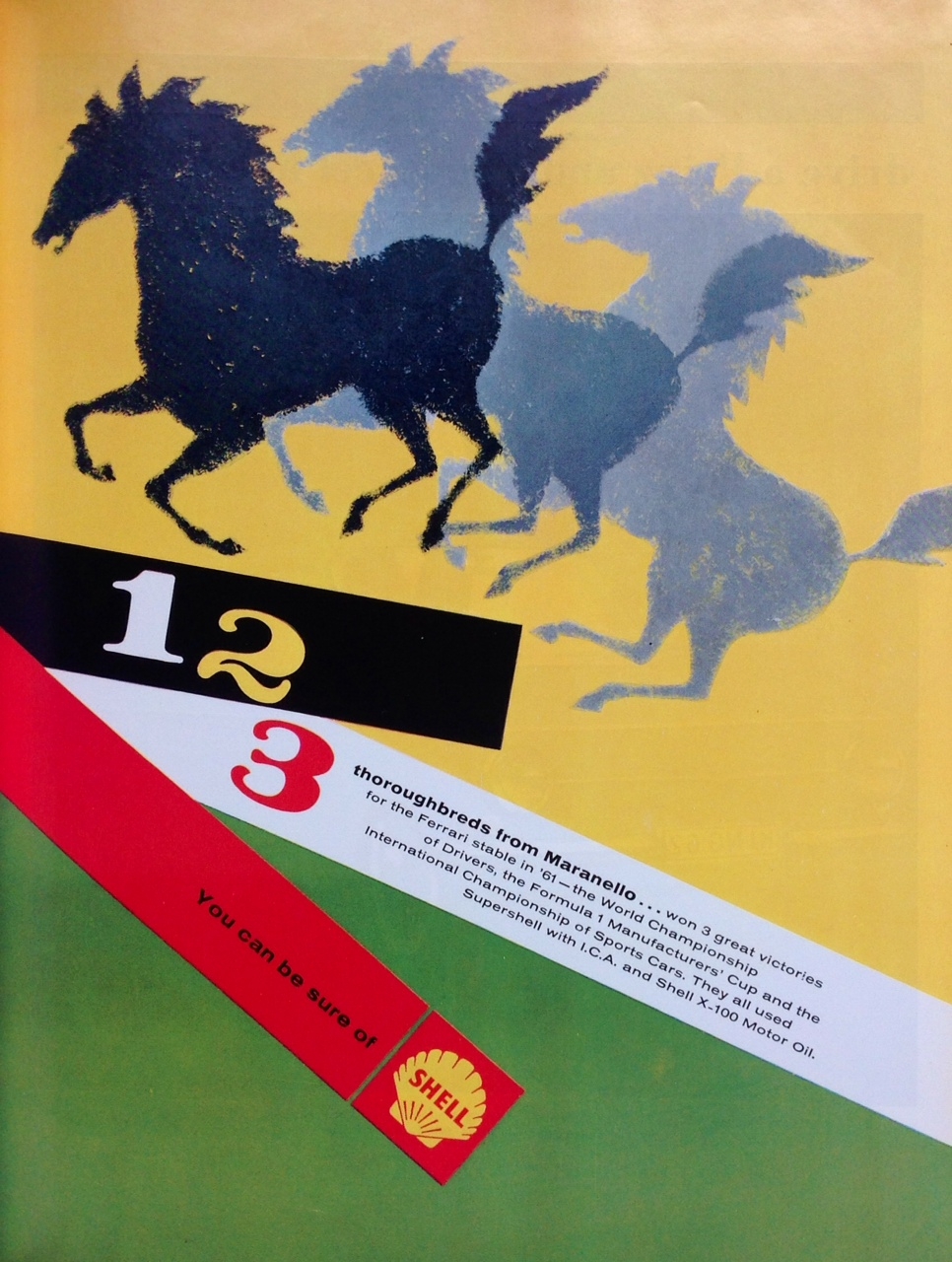
Often the more subtle ads are the most effective? From Automobile Year #10…
 | peterfinlay07 on Top Shot: Rileys at Gnoo … |
 | markbisset on Top Shot: Rileys at Gnoo … |
 | grahamedney on Top Shot: Rileys at Gnoo … |
 | Wayne Giles on Top Shot: Rileys at Gnoo … |
Often the more subtle ads are the most effective? From Automobile Year #10…

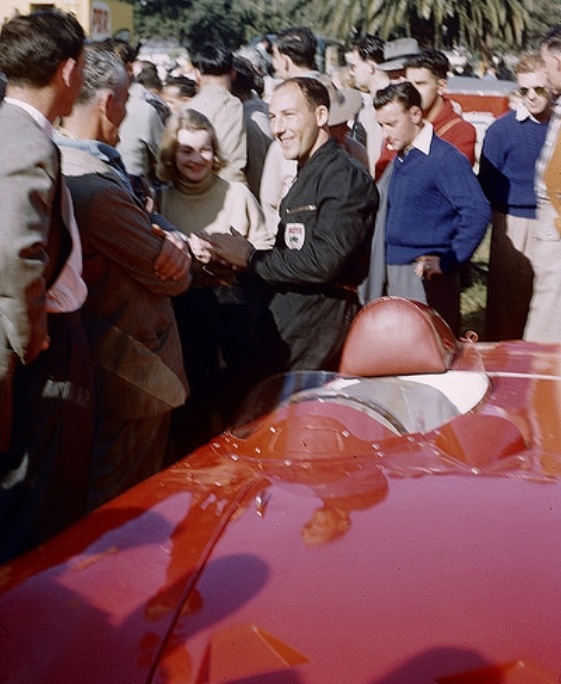
Stirling Moss cruises his works Maserati 300S chassis #3059 through the Albert Park paddock prior to winning the Australian Tourist Trophy on 25 November 1956, he repeated the dose in a 250F in the following weekends Australian Grand Prix…
One of the wonderful things about this internet thingy is the number of unseen photos of our sport which pop up from time to time giving people like me something to write about. And so it is that Sharaz Jek recently posted photos his father took as a paying-punter at the Australian Grand Prix carnival at Albert Park held during the Olympic Games.
It would have been more considerate had he posted them six months ago when i first wrote about the two Maser sportscars brought to Australia as part of a five car team by Officine Maserati!. But hey, it gives me a chance to write about the ATT specifically, click here to read the earlier article, i won’t repeat the background or destiny of the two 300S’ which stayed in Oz post event;
Bob Jane: Maserati 300S: Albert Park 1958…

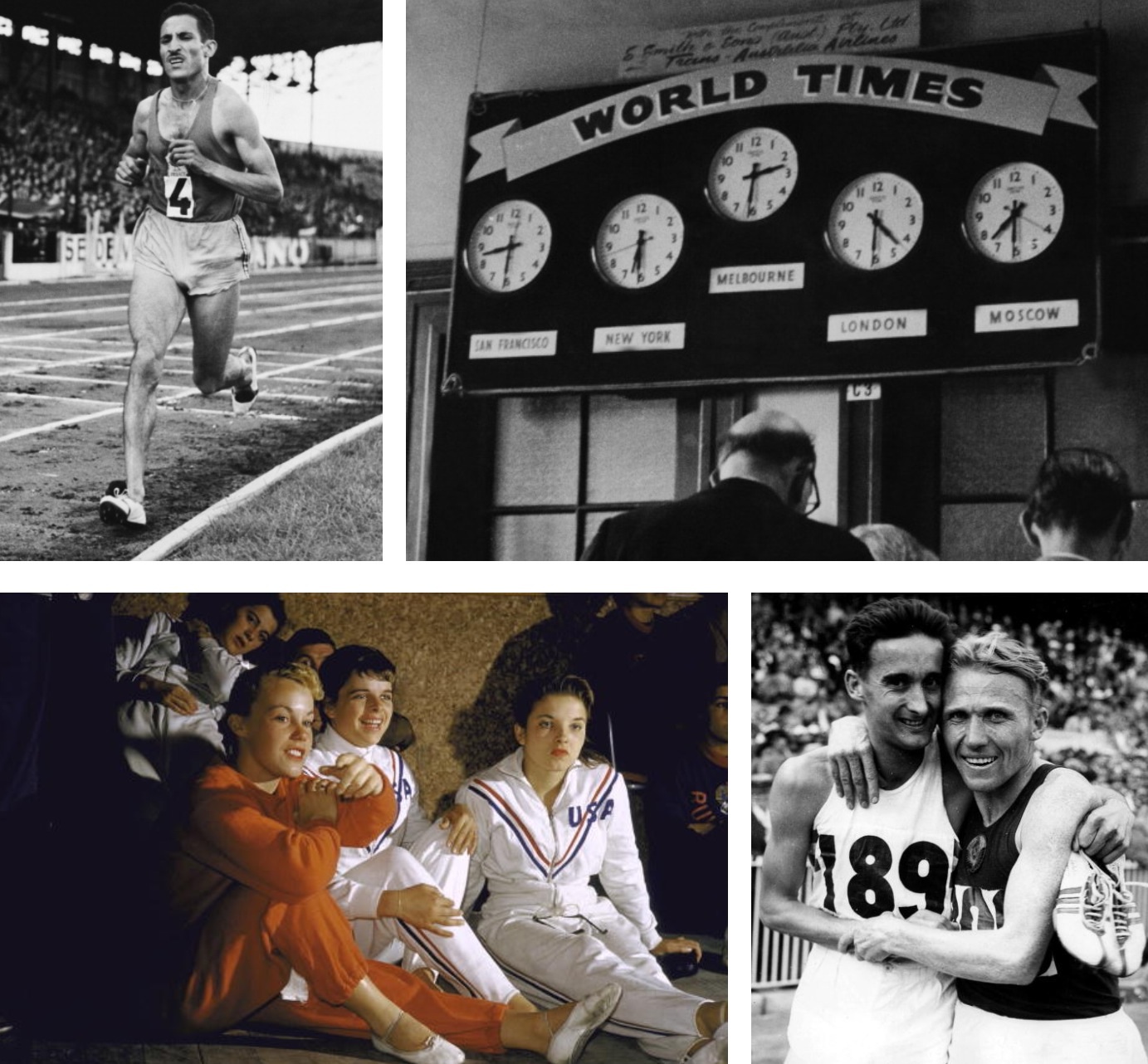
Melbourne in 1956…
I wasn’t born in 1956 but its fair to say i was more than a twinkle in my parents eyes, so i didn’t attend the mid-fifties Albert Park meetings which older enthusiasts speak so fondly about. Running around the lake last weekend i reflected on how little Albert Park had changed but also how much Melbourne had, the skyline of the city a short 2 Km away.
In 1956 Melbourne’s population was circa 1.5 million people, now it’s 4.7 million, the war ended only a decade before and with it successive Australian Governments established an aggressive migration program which provided, and continues to provide us with the wonderful, peaceful mix of people and their cultures which makes this such a special country and city in which to live. Disgraceful offshore detention centres notwithstanding!
The ’56 Olympic Games, held from 22 November to 8 December was an important part of opening our society to other cultures and equally allowed us to showcase our country, city and capabilities to the world.
The same can be said about the 1956 Albert Park International race meetings and their impact on Australian motor-racing; Barry Green in his wonderful book ‘Albert Park: Glory Days’ said; ‘The weekend was the proverbial moment which changed the face of motor racing in this country. Here for the first time we had a current works sports car and F1 team and other leading international drivers in ex-factory cars; their presence prompting the best of the locals to upgrade their machinery, spend even more and charge harder. A world class field deserved a world class venue and world class crowd. And in the picturesque Albert Park and thousands of international visitors filling Melbourne to overflowing for the first Olympic Games to be held south of the equator, it had just that’.

So, to put you in the zone of the times before reading this piece I have added some photos of Melbourne in 1956 to give you the ‘feel of the joint’ and flavour of the times six decades ago, the racing stuff is after that if you wish to cut to the chase…




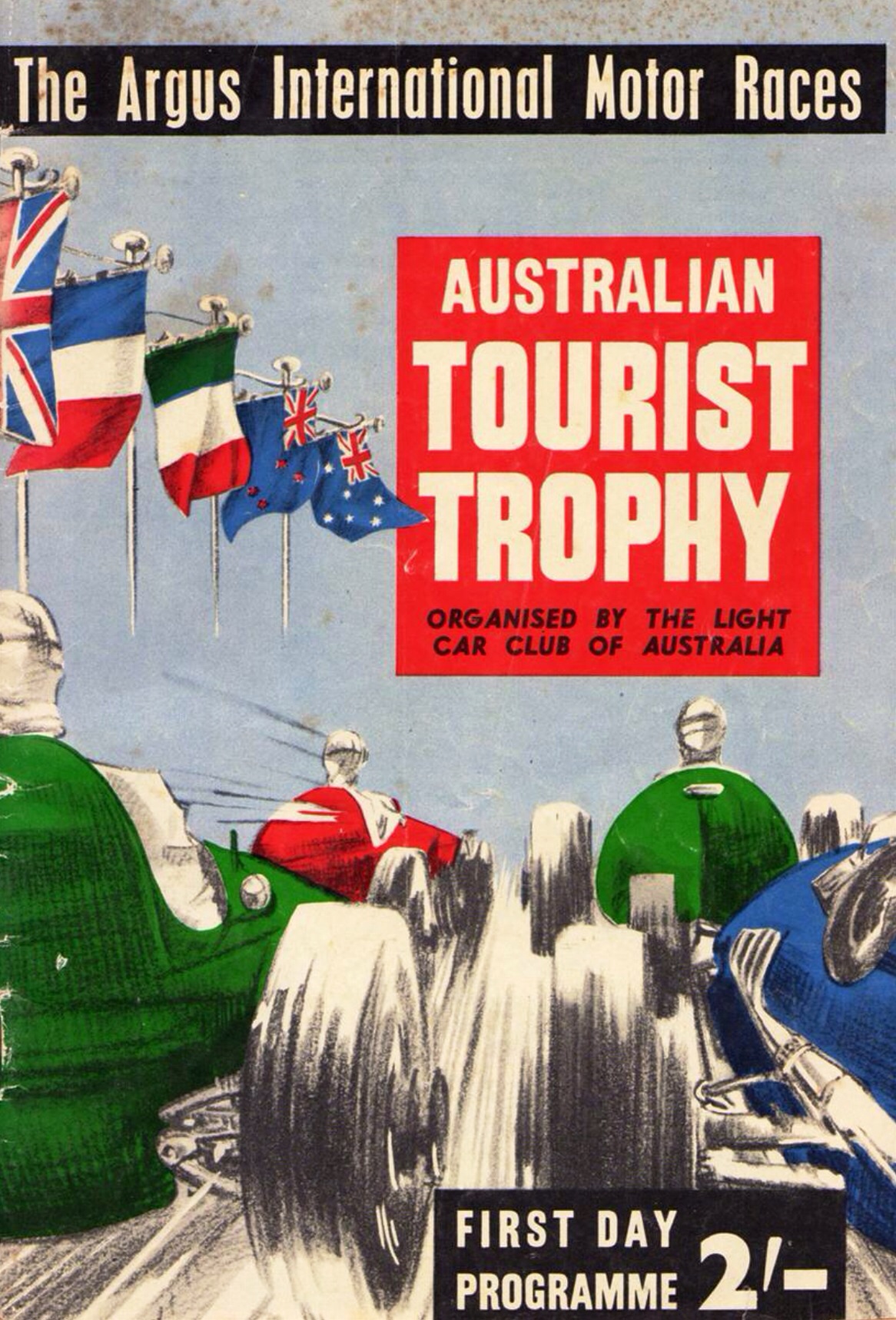
The first weekend of the two week AGP carnival comprised four events, the feature the Australian Tourist Trophy for Sports Cars was held on 25 November…
A convoy of Maserati mechanics drove the 250F and 300S, the 5km from Australian International and 250F driver Reg Hunt’s Elsternwick Holden Dealership, where the cars were maintained each day to Albert Park, on the Nepean Highway and St Kilda Road. Not too much of a problem then but guaranteed to boil a Maserati 300S sans radiator fan these days!

Most of the drivers stayed close by in the ‘Espy’, the Esplanade Hotel in St Kilda, it’s still there if you want a ‘bevvy’ during the AGP carnival and is well known to Australians as the home of the ‘RocKwiz’ music quiz show.
Fitzroy Street St Kilda felt exotic and buzzed with thousands of visitors from all over the world eager to explore the local delights of the bayside suburbs restaurants and bars. They were full of people including recent European migrants eager to get a touch of home for a few hours at least. The Espy and Tolarno’s were ‘chockers’ and no doubt the proprietors of the areas ‘red light’ precinct did good trade.


In ’57 the factory 300S’ were campaigned by Moss, Behra and Piero Taruffi taking wins at Silverstone, Nassau, the Nurburgring, Rouen and Buenos Aires; the works allocated # 3055 to Behra and # 3059, the ‘featured car’ here to Moss. Stirling was in sparkling form having won the Venezuelan Grand Prix in Caracas a fortnight before arriving in Melbourne, Behra also contested the race.
There was a strong entry for the ATT of around 36 cars; Peter Whitehead returned to Australia hoping to repeat the success of his 1938 tour which culminated in an ERA Bathurst Australian Grand Prix win for him.
His entry in the ATT was a Ferrari Monza, similar cars were entered by Brit Peter Wharton and local motor dealer Stan Coffey. The Whitehead and Wharton Ferrari’s were garaged at AP Hollins in Malvern where Lex Davison’s mechanic/engineer Alan Ashton, well familiar with 4 cylinder Ferrari’s (Davison raced the ex-Ascari Tipo 500/625) could keep a close eye on them.
Lex, already the winner of one of his four AGP’s in 1954, entered his HWM Jaguar, his Ferrari was raced in the AGP won by Moss’ 250F the following weekend.

Jaguar D Types were entered for Kew motor dealer and later multiple Australian Gold Star champion Bib Stillwell and Queensland’s Bill Pitt driving the Mrs Anderson owned car.
Jack Brabham returned from Europe where he was establishing a strong reputation to drive a Cooper T39 ‘Bobtail’ Climax with future Gold Star Champion Bill Patterson, another Melbourne, Ringwood, Ford dealer in a similar car.

Veteran Tom Sulman raced his ‘Kangaroo Stable’ Aston Martin DB3S, the quicker entries rounded out by Austin Healey 100S’ for multiple AGP winner Doug Whiteford and Ron Phillips.


A fantastic crowd of 150,000 people gathered to watch the days racing which was marred by the critical injury and subsequent death of Peter Catlin in the first race of the day after he lost control of his Bugatti at Melford corner.
This dominated the tabloids coverage of the race but ‘The Argus’ noted Moss’ lap record of 1:55.8 ‘set in a sportscar, the record previously held by a racing car’ and ‘one of the finest exhibitions of race driving seen in Melbourne’.
To the surprise of many Behra put his car on pole and lead from the start of the 100 mile race with Patterson flipping his Cooper at Melford Corner without too much damage to him or the car on the first lap.

Behra lead the other 35 competitors at the end of lap 1 from Moss, Stillwell’s D Type, the two Monza’s of Wharton and Whitehead, Brabham’s Cooper T39, Bill Pitt’s D type and Paul England’s beautifully designed Ausca. The car was built by England in his spare time at Repco, was powered by the first Holden/Repco Hi-Power cylinder head engine.
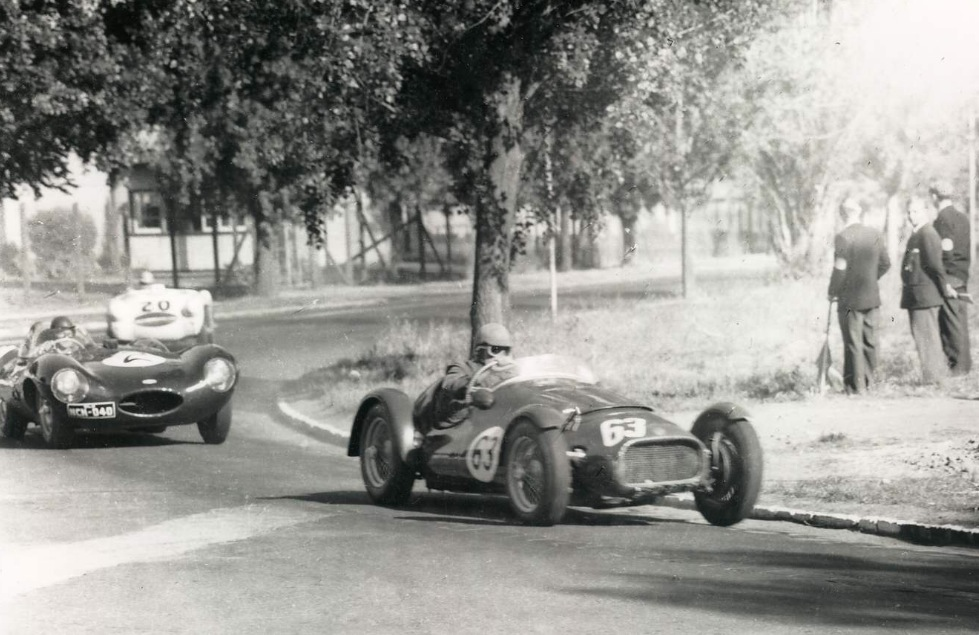
On lap 2 Moss gave his French teammate a blast on his Masers ‘Fiamms’ at Jaguar Corner to let him through, and an even bigger one when he did so, team orders not new in motor racing! At the front Wharton and Brabham slipped past Stillwell with Bill Pitt getting progressively quicker in his XKD and closer to the shapely tail of Whitehead’s Monza.
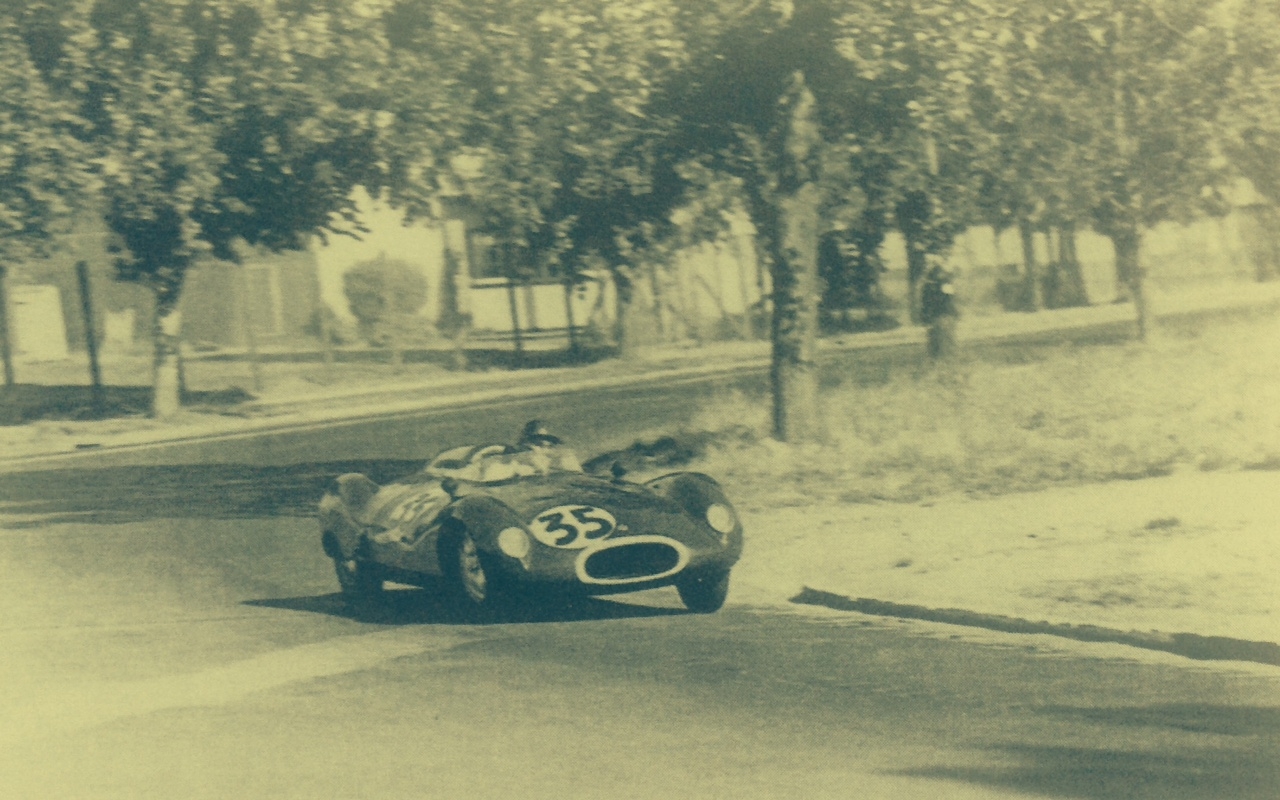
Moss had a lead of 20 seconds from Behra, Stillwell spun giving Pitt ‘a sniff’ at him as Moss set fastest lap on the 27th tour, passing lots of slower traffic in the process.
By the race’s end only Jean Behra was on the same lap as Moss, the Brit took the flag from Behra, Wharton, Pitt a great 4th and first local home, Stillwell, Whitehead, Lex Davison’s HWM Jaguar and Kiwi Ross Jenson in an Austin Healey 100S and the rest.

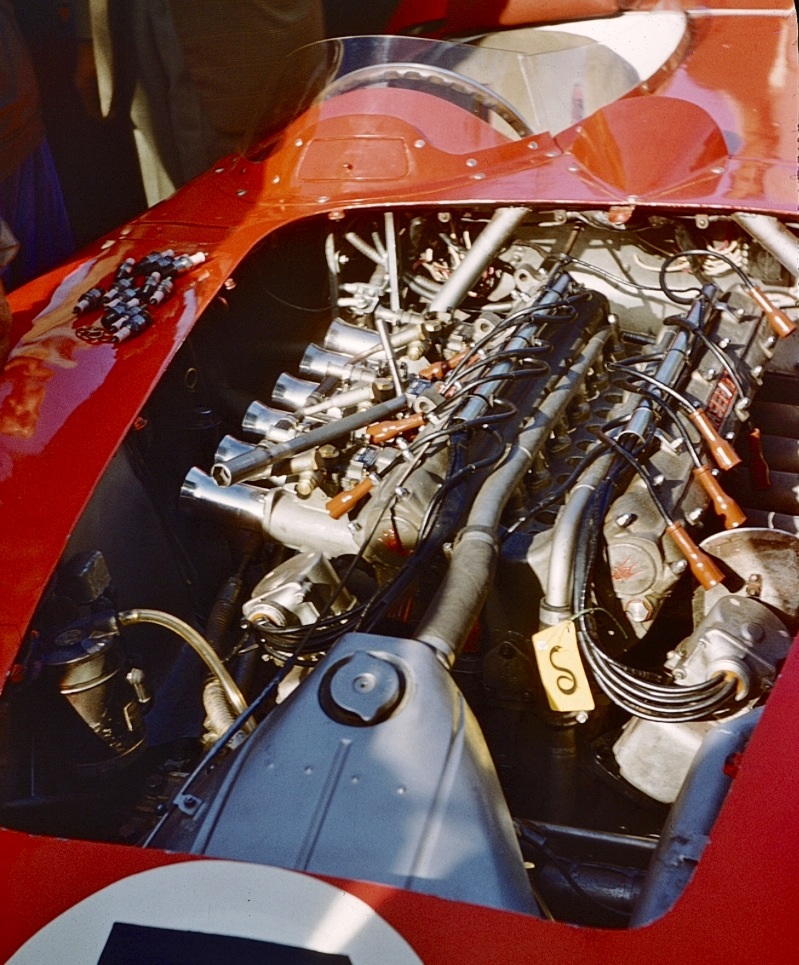
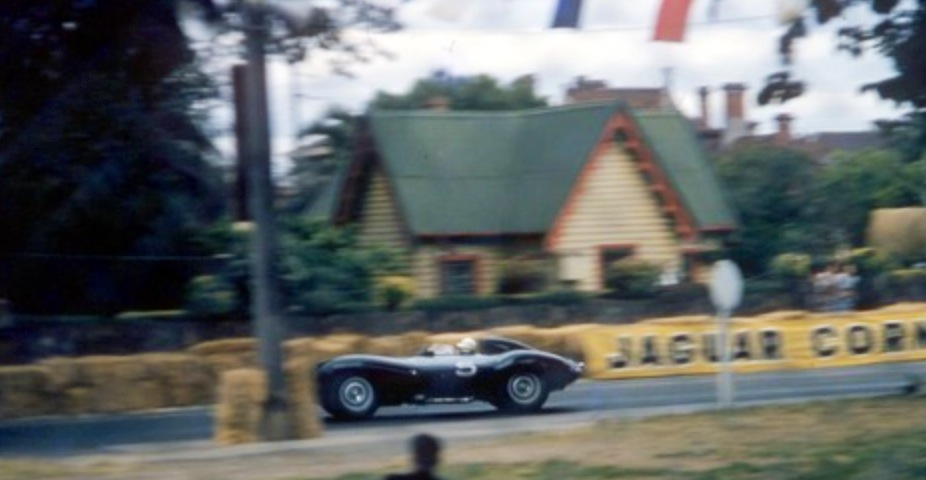
Other ATT Meeting Photos…

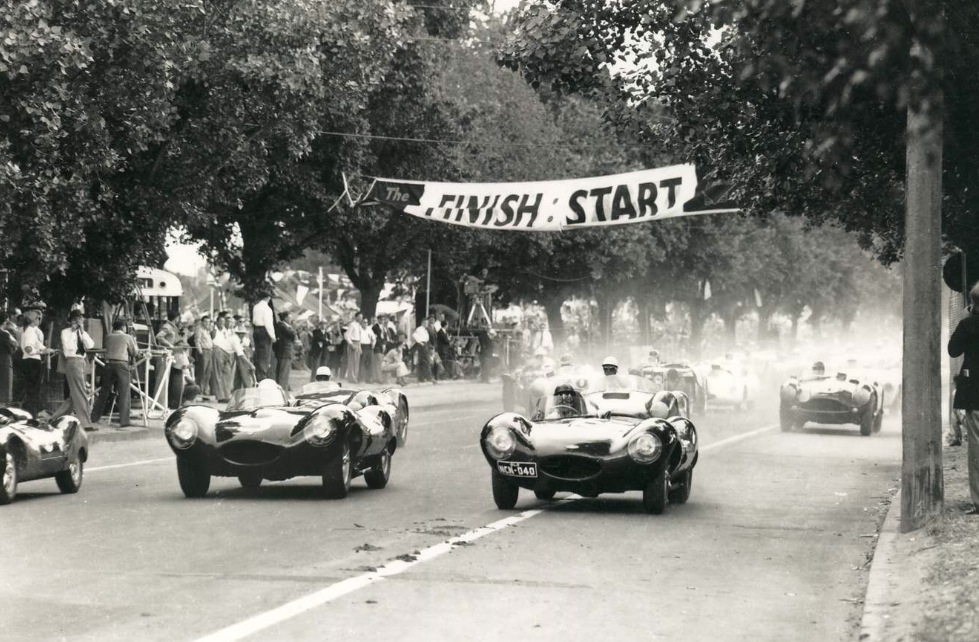


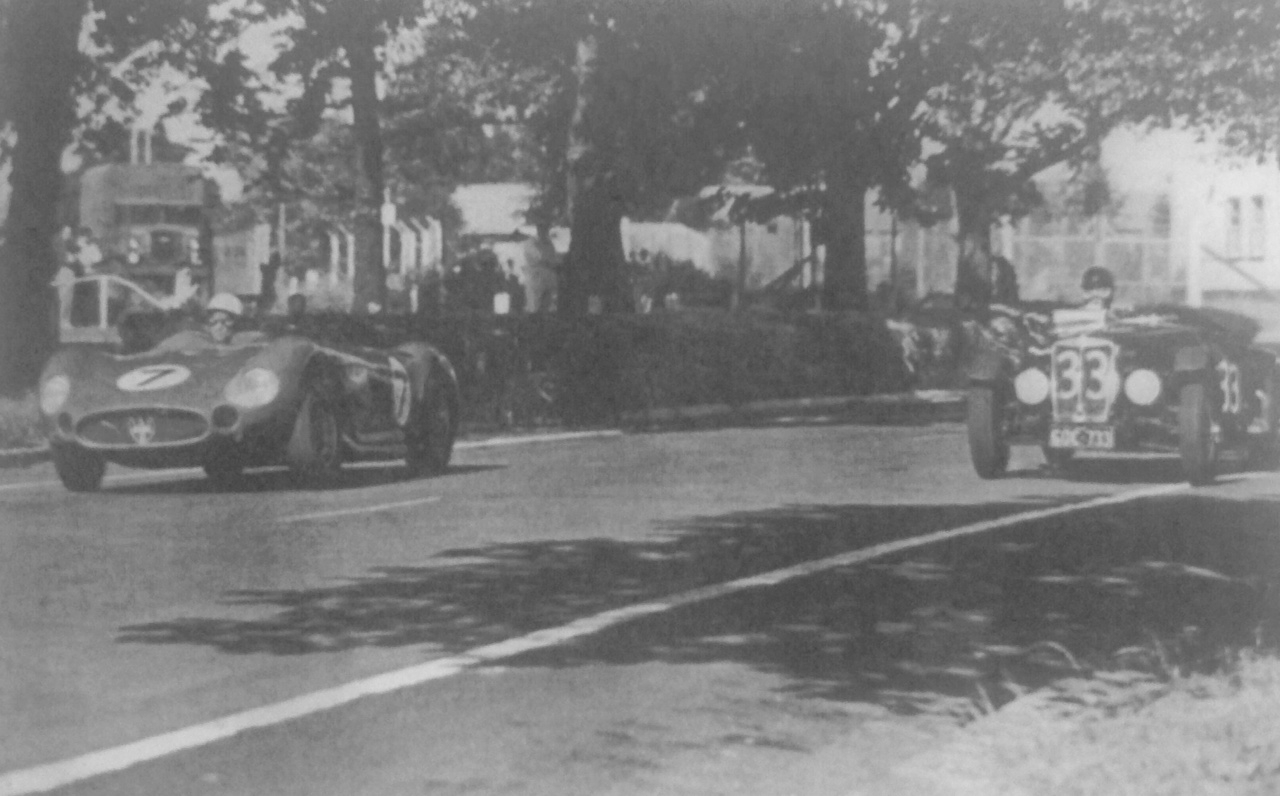


Etcetera…

Bibliography…
Barry Green ‘Albert Park: Glory Years’
Photo Credits…
Sharaz Jek especially for the shots which inspired the article, Getty Images for all of the Melbourne ‘atmo’ 1956 shots, Arnold Terdich, Eileen Richards, John Blanden, Philip Skelton, Graham Hoinville, autopics.com
Tailpiece: She is MY daughter Stirl don’t even think about it!…
Finito…

(Racing One)
Chuck Daigh rumbles his big Ford Thunderbird across Daytona Beach during the February 1956 Speed Trials…
Born in Long Beach, California on 29 November 1923 he commenced fiddling with cars at his fathers garage business. Whilst still at High School, he ‘ran’ a Union Oil garage in Long Beach close to his home in Paramount. Both he and his older brother were typical ‘hot-rodders’, prior to WW II they ran at the Dry Lakes, one of the cars the marriage of an A-Model Ford chassis and Alfa Romeo engine.
Purple Heart Winner…
Prior to enlisting in the Army he worked for Morrison-Knudsen to build the Long Beach breakwater.
He served as a paratrooper in the ‘517th Regiment/82nd Airborne’ during WW II seeing action in France, Belgium and Germany, including fighting in ‘The Battle of the Bulge’ in the Ardennes Forest where he was later to race a Scarab at Spa-Francorchamps in 1960.
He was a remarkable leader and brave soldier awarded a Silver Star, Bronze Medal and a Purple Heart for heroic acts in 1944, he was shot in Luxembourg and ‘mustered out’ of the army in 1945.

Chuck Daigh in his Scarab F1 car during the teams fraught 1960 GP season, very wet! place and date unrecorded. Check out the ‘Reventlow Automobiles Inc’ logo on the cars scuttle (Popperfoto)
Post war he worked for Bill Stroppe preparing the Bob Estes entered Lincolns for the Carrera Panamerica Mexican road race. He was the co-driver on three occasions, in 1952 and 1953 with Walt Faulkner, finishing 8th in 1953, and with Chuck Stevenson in 1954 when they didn’t finish.
By this stage Daigh’s engineering capabilities were widely known and highly respected, Carroll Shelby remarked; ‘There are only two people i can think of who can sit down, take a welding torch, build their own chassis, go out and test it and then win races with it. They are Jack Brabham and Chuck Daigh. I put Chuck in the same category as Jack.’ Shelby was well placed to judge, he engaged Daigh as Shelby American’s carburetion expert on its ongoing Ford GT40 campaign in both North America and in Europe after Chuck’s driving days were over in the early-mid sixties.
He started road racing in the mid-fifties, his first sportscar race was at Moffet Field, California in 1953 driving Jim Lowe’s Frazer Nash. He ran a modified Kurtis 500S Lincoln special owned by Frank Kurtis, winning the Willow Springs and Santa Barbara sports car races in 1954. He also won races at Paramount Ranch and Santa Barbara driving the Troutman-Barnes Ford powered sports car.
In the early SCCA days drivers were suspended for racing professionally. Chuck occasionally raced in USAC pro stock car events as ‘Charles George’ to avoid the SCCA’s wrath, setting a lap record in the USAC 250 Mile Stock Car Race in September 1957 on the Milwaukee Mile at 90.614 mph.
He joined Pete DePaolo Engineering, chosen in 1957 by Ford for an assault on the Daytona Beach Speed Week Trials in February. Chuck managed the works supported Ford stock car team and helped build the 4 special Thunderbirds nicknamed ‘Battlebirds’ achieving better than 200mph in one of the T-Birds, the first to do so.

RAI’s race shop in Culver City, LA October 1958, 2 Scarab Mk2 Chevs being fettled. Note superb standard of workmanship. Spaceframe chassis and bracing from drivers back bulkhead via the roll bar to the rear unusual for the day, huge finned brake drums, front wishbone IFS, you can just see the end of the de Dion tube @ rear and its locating linkages. Beautiful, huge ally fuel tank. Angle of steering wheel naff! and uncomfortable no doubt. Halibrand alloy wheels on the floor (Bill Bridges)
Later he worked for the Rathmann Chevrolet NASCAR stock car team until its demise then joining Lance Reventlow, on the Scarab Sports Car and Formula One projects. Chuck was engaged as number 1 driver and chief mechanic/engineer.
The FIA announced a 3-litre limit for the World Sports Car Championship from the start of 1958 so the Chevrolet-engined sports car had to run in SCCA races rather than internationally as originally planned by Reventlow in 1957.
The Scarabs were all superbly built and prepared and dominated the opposition in ‘B Modified’. Daigh beat Phil Hill’s Ferrari at Riverside and also won the Governor’s Cup, beating Hansgen’s Lister, and the Nassau Trophy sharing the drive with Reventlow in 1958.
The purpose of this article is Daigh’s career not the fabulous Scarab’s of which Daigh played a key roll, albeit i get a bit carried away with the Scarab RE later in the article. The Scarab’s are topics for another time.

Daigh #5 and Reventlow #3 back to camera in blue helmet, ‘saddle up’ their Scarab Mk2 Chevs prior to Chucks 1958 Riverside LA Times GP win. Spaceframe chassis, Chev injected V8’s of varying capacities, wishbone front IFS and de Dion rear suspension with Watts linkage, huge finned drum brakes, Borg Warner 4 speed ‘box all clad in the sexiest body this side of Northern Italy (unattributed)

Daigh, Scarab Mk2 Chev, LA Times GP Riverside 1958, he looks lonely out there! (Dave Friedman)

Celebrating his 1958 Riverside LA Times US GP Sportscars win in October 1958 with his children. Guy at left is the promoter and famous entrant JC Agajanian (The Enthusiast Network)
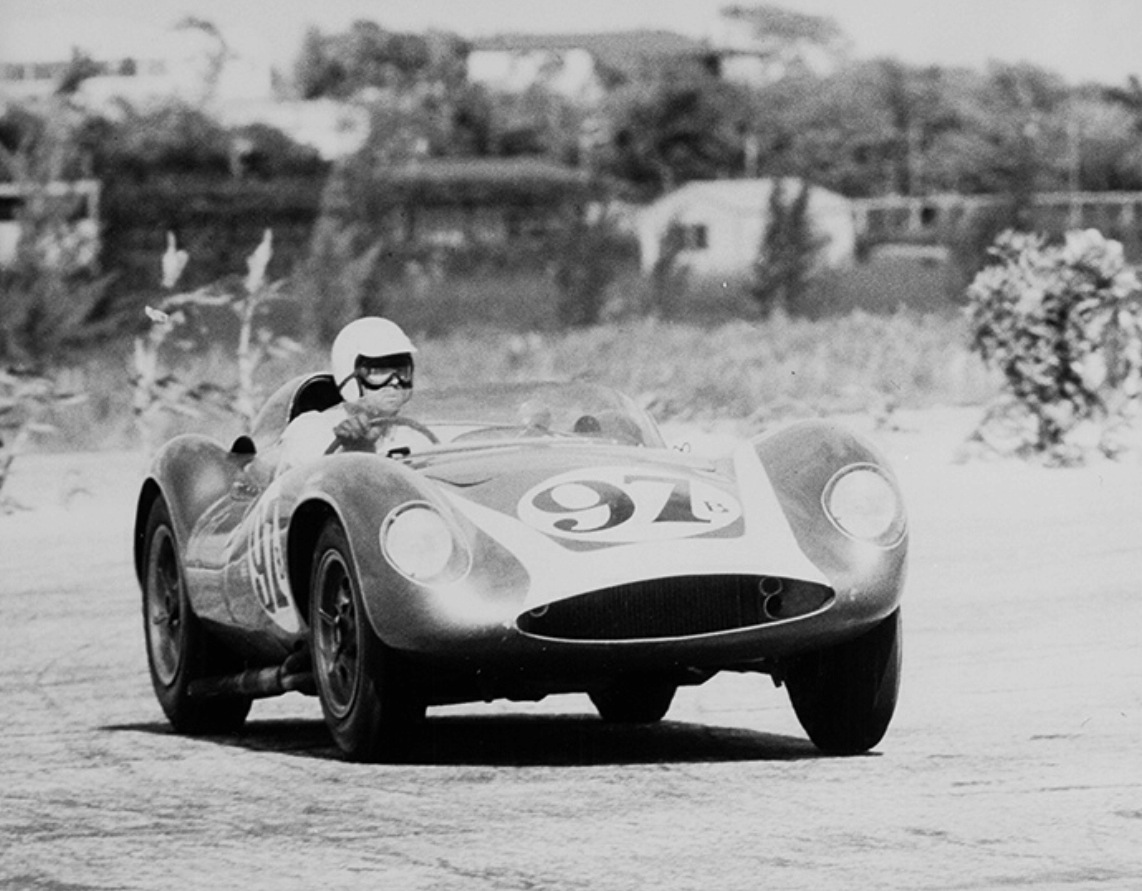
Daigh in the Scarab Mk2 Chev during the Nassau Speedweek in early December 1958, Lance Reventlow had the luck at this meeting, but Chuck shared Lance’s car after his car, this one retired with driveshaft failure to win the ‘Nassau Trophy’. Superb lines of the car obvious, Scarab derivative of everything at the time in terms of its styling but individual with it (Dave Friedman)
In 1959 he co-drove the winning Ferrari 250 Testa Rossa/59 at Sebring sharing the factory car with Dan Gurney, Phil Hill and Olivier Gendebien. Gurney said of Daigh; ‘ Chuck was not only a good engineer, but he could also drive the wheels off a car. When i got into racing, i soon found out who the real heavyweights were, in those days Chuck was like a god to us.’

Gurney/P Hill/Gendebien/Daigh factory Ferrari 250TR winning the 1959 Sebring 12 Hour (Dave Friedman)
He also attempted to qualify for the the Indianapolis 500 in 1959, in fact he had three qualification attempts, never contesting the event with inferior equipment the problem. In July he drove a Maserati 250F at Lime Rock in July, finishing 2nd in the 60 lap final having posted two 3rd’s in the heats.

Nassau Speedweek 1958, Daigh facing this way, Reventlow left smiling and winning the ‘Governors Trophy’ and ‘Nassau Trophy’, the latter with Daigh sharing the drive in a Scarab Mk2 Chev. Carroll Shelby to the right of the fella with the hat, drove a Maser 450S in the ‘Nassau Trophy’ DNF. They all look fairly ‘chillaxed’! (Dave Friedman)
By the time the front-engined Scarab F1 car appeared at Monaco in 1960 it was obsolete, the first rear-engined Cooper Climax GP victory was in the 1958 Argentinian Grand Prix.
Quite why Reventlow thought a front-engined car was ‘the go’ by then is a topic to explore separately in some articles about the fabulous Scarabs themselves; Lance raced for most of 1957 in the UK including a number of F2 events in a Cooper T43 Climax so had a first-hand experience of the new generation of mid-engined single-seaters. The ‘writing was surely on the wall’ by the time the key decisions about the conceptual design of the Scarab GP car were determined…mind you no less than Colin Chapman built the front-engined Lotus 16 in 1959 i guess! Hindsight is a wonderful thing.

Reventlow racing a Cooper T43 Climax FWB at an F2 event at Crystal Palace, and signing a few autographs on 10 June 1957. 6th in the ‘London Trophy’ won by Brabham’s works T43 FPF. Having raced a mid-engined car how could you not build your F1 car in the same configuration?! (Ron Burton)
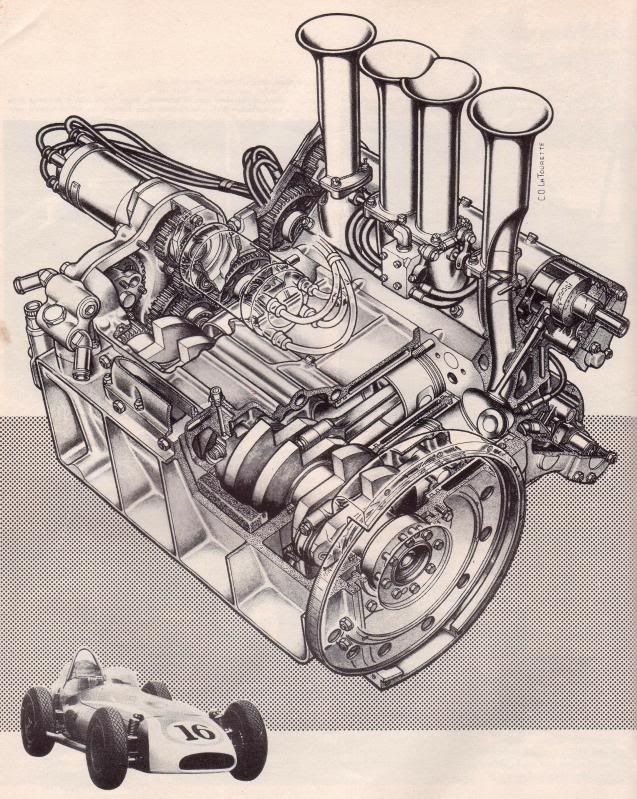
Scarab GP; spaceframe chassis, IFS front by wishbones and coil spring/dampers, IFS rear suspension with wide based lower wishbone and coil spring/dampers, drum brakes all round, 4 cylinder DOHC, injected Offenhauser built engine, circa 220bhp@7500rpm, Borg Warner 4 speed ‘box (unattributed)

(B Thatcher)
Both Reventlow and Daigh struggled, the GP car was withdrawn before the seasons end but raced in the US GP at Riverside to keep the faith with local fans. Daigh drove the third works Cooper T51 at the British GP in 1960, having proved the quicker of he and Reventlow who also tested the car, qualifying 19th and retiring on lap 3 with an overheating engine.
Daigh showed enough promise in very difficult circumstances to have a decent GP drive in 1961, its a shame that did not occur.
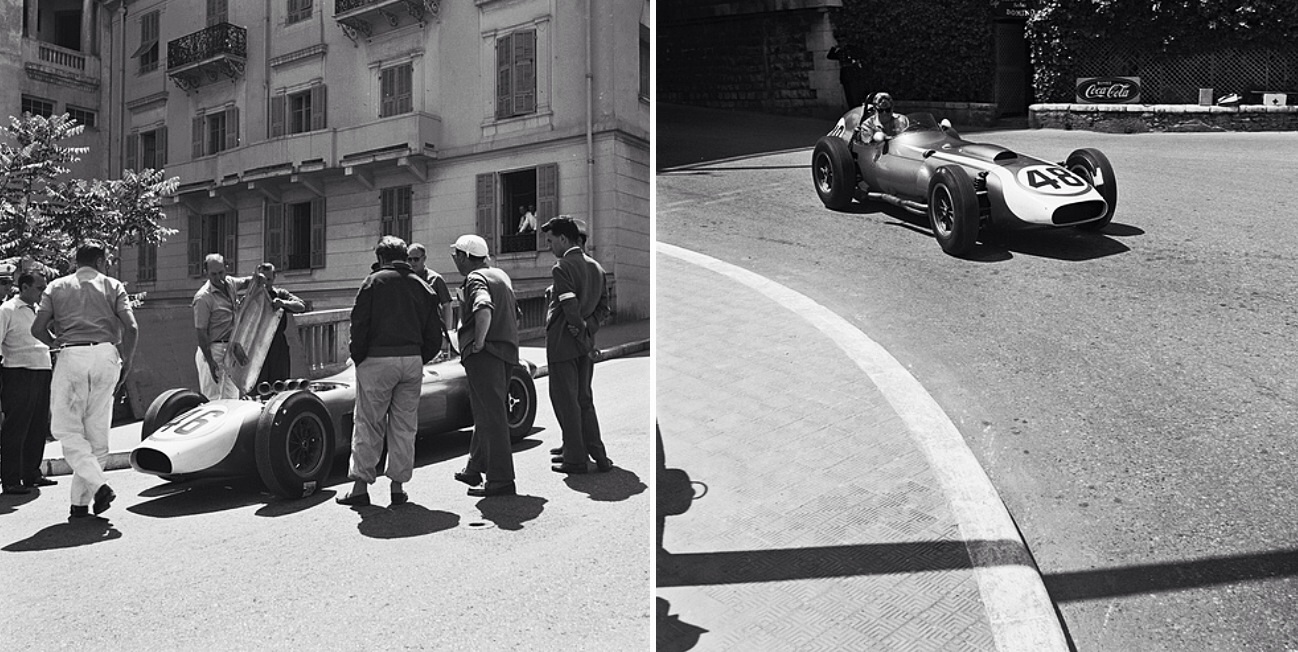
Monaco GP 1960, the Scarabs race debut. #46 Reventlow, #48 Daigh. The 2.5 litre DOHC, fuel injected 4 cylinder/spaceframe chassis cars impressed all with their build quality and finish if not their weight and speed. Indicative of the paradigm shift was Ferrari racing their first mid-engined car, the 246P at this meeting; even the most conservative of manufacturers were testing the waters with a view to change, the Scarab’s were at least 2 years too late (Dave Friedman)

Daigh Monaco 1960. Both cars DNQ, Stirling Moss also did some laps of the Scarab in practice to give his opinions of the car. The difference between his light, nimble mid-engined Lotus 18 Climax and heavy front engined Scarab complete… (Dave Friedman)

Daigh at Monaco, nice profile shot of the big Scarab (Dave Friedman)

Zandvoort, Scarab Dutch GP 1960, Daigh here in practice. The Scarabs didn’t race after a squabble with the organisers over start money resulted in 4 cars electing not to take the grid (unattributed)

Richie Ginther and Daigh at Zandvoort (Dave Friedman)

Spa, Belgian GP 1960. Daigh Q17 and retired his Scarab on lap 16 with engine failure. RHF wheel off the deck on this fast, daunting circuit (unattributed)

Riverside, November 1960 USGP. Daigh Q18, 10th in the cars only GP finish having missed the French, German, Italian and Portuguese GP’s. Reventlow quickly realised they were ‘on a hiding to nothing’, the paradigm had moved on but the car raced for the American fans in California, RAI’s base in Venice Beach, LA (unattributed)
In 1960 Daigh also raced Lucky Casner’s ‘Camoradi’ Maserati Tipo 61 ‘Streamliner’ at Le Mans with Masten Gregory. In practice the car topped 170 mph on the Mulsanne, 10 mph faster than the next quickest.
Gregory couldn’t get the car underway, finally departing in 24th place. By the end of the Mulsanne Straight he was in the lead! At the first driver change the starter motor failed, an hour later Chuck returned to the track. Over the next four hours they took two laps back from the leader but on lap 82 retired officially with ‘electrical problems’, although it appears that Gregory was driving when the engine failed. Olivier Gendebien and Phil Hill won the race in a Ferrari 250TR59/60.

Gregory/Daigh Maserati Tipo 61, Le Mans 1960 (Klemantaski)
In 1961 the Scarab F1 contested the European InterContinental Formula, a class created to allow the 2.5 litre GP cars to race, the class’ upper limit was 3 litres.
Chuck finished 8th at Goodwood in the Lavant Cup and 7th in the wet International Trophy Silverstone race. In practice for the British Empire Trophy at Silverstone he crashed sustaining a cracked pelvis in a bad accident. And that was that as far as the GP car was concerned, RAI raced it no more.

Chuck Daigh, Scarab, Lavant Cup, Intercontinental Formula race, Goodwood 1961 (unattributed)
Daigh recovered from his Silverstone shunt and raced Jim Hall’s Chaparral 1 at Sebring in 1962, the Chev engined car strongly derivative of, and developed with the knowledge gained by the Troutman/Barnes duo on the earlier Scarab sportscar program. It was co-driven by Daigh, Hap Sharp, Ronnie Hissom and of course Jim Hall to 6th place, the race won by the Bonnier/Bianchi Ferrari 250TR/61.

The Sharp/Hall/Hissom/Daigh Chaparral 1 Chev at Sebring in 1962 (unattributed)
‘Formula 366’ was being explored as a single-seater class at the time and was a precursor to Formula A in proposing cars with a mix of stock-block 5 litre and 3 litre racing engines.
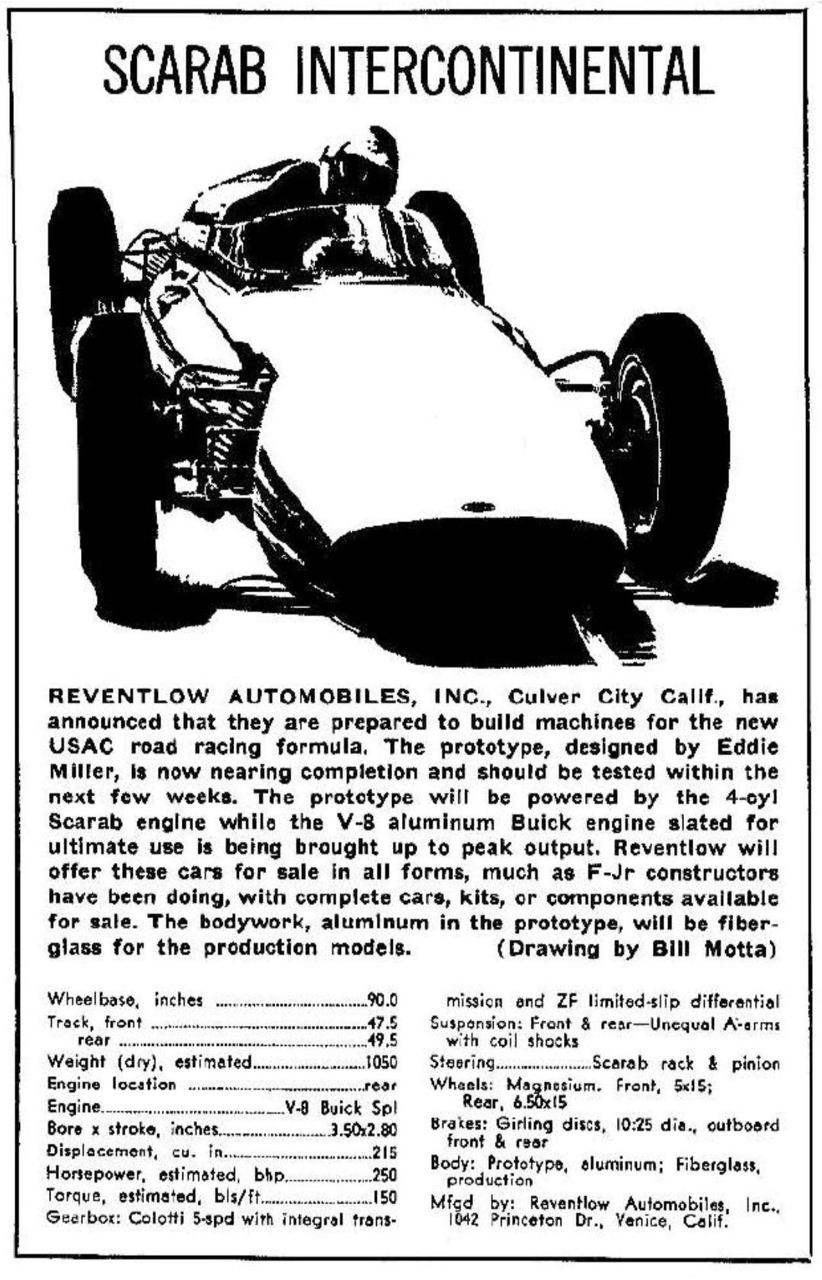
The proposed/possible class was well suited to Reventlow Automobiles knowledge of stock-block V8’s, so they built a spaceframe chassis, mid-engined car powered by the then new, light aluminium Buick V8, a Colotti 5 speed transaxle the other key component. The Scarab RE Buick with its Travers/Coons modified 3.9 litre V8 was shipped out of LA, RAI’s base at 1042 Princeton Drive, Venice on Culver City’s ‘Speed Alley’ and set off for Australia to race. Lance wanted to build cars commercially, to sell the cars he needed to demonstrate the strength of his product so a one-off race in far away Australia with Daigh strutting its stuff against a world class field made sense. He was punting on ‘Formula 366’ getting up but then again money was no object!
In those Pre-Tasman 2.5 litre formula days Australian National Formula 1 was Formula Libre. The promoters of brand new Sandown Park were happy to assist Lance Reventlow’s booming V8 Scarab to attend the circuits opening meeting in amongst the mainly 4-cylinder Coventry Climax engined hordes on 12 March 1962.
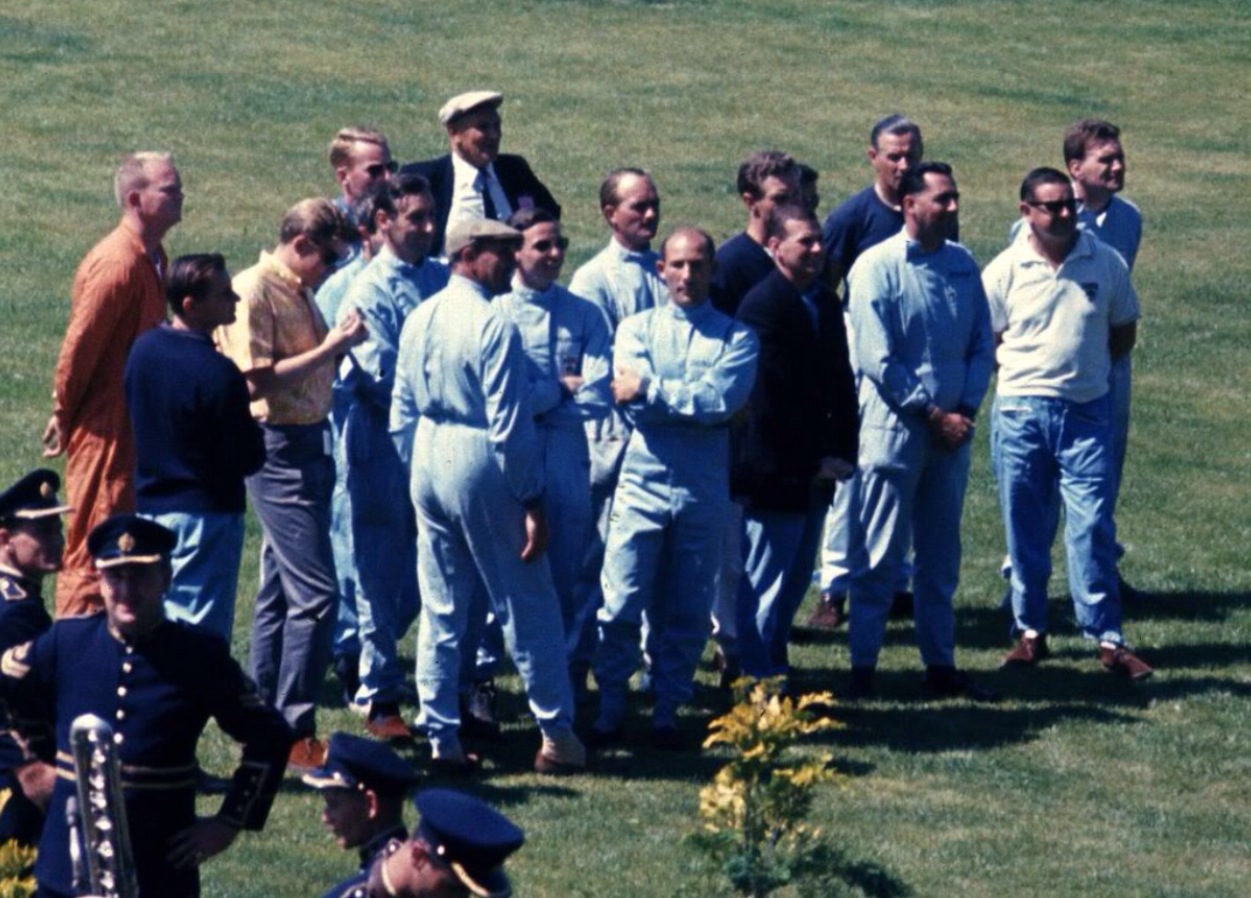
Drivers gather before the start of the 1962 ‘Sandown International’, the dudes in uniforms are members of the band. L>R; orange clad Daigh, dark blue jumpered McLaren, nattily dressed Reventlow, light haired John Youl at rear, with a flat-cap official type chap. Roy Salvadori in front of Youl, Lex Davison in the light colored flat-cap. To his right Jim Clark, a balding Angus Hyslop beside and behind Jimmy, the similarly hirsute Stirling Moss in front of Hyslop, obscured Ron Flockhart, (shortly thereafter in April to die 25Km away in the Dandenong Ranges when his Mustang P51 ex-fighter crashed shortly after take off on a record breaking attempt to Europe) sports-blazered Bib Stillwell, then Doug Whiteford behind Jack Brabham, Bill Patterson and far right Austin Miller (John Ellacott)
Other entrants included Jack Brabham, John Surtees, Bruce McLaren, Stirling Moss, Jim Clark, Roy Salvadori, Ron Flockhart and others.
Jill St John was Reventlow’s wife at the time, sleepy Melbourne was abuzz with the attendance of a Woolworth’s Heir and his glamorous actress wife to the suburban wilds of Sandown Park. The ‘Movie Star’ was all great stuff for the local tabloids so there were plenty of ‘bums on seats’ during the race weekend pleasing the Light Car Club of Australia, the promoters, no end.

(John Ellacott)
Jack won the ‘Sandown Park International’ in a Cooper T55 from Surtees and McLaren in Cooper T53’s all three cars powered by 2.7 litre Coventry Climax ‘Indy’ 2.7 litre engines. Daigh gave a very good account of himself, the brand new car qualifying on the front-row of the grid alongside Brabham and John Surtees. The cars straight-line grunt was impressive and exhaust note despite running rudimentary mufflers outstanding, its performance under brakes, into and through corners was inferior to the well-developed Cooper hordes; Chuck was 4 th, with the cars potential clear.

Sandown International grid; Surtees on the outside (left), Daigh’s Scarab the meat in a Cooper sandwich, Jack on the inside on pole (autopics.com)

#5 Daigh’s 3.9 litre V8 Scarab RE Buick at Sandown, attractive, effective first attempt at a mid-engined car. It looks long but isn’t, wheelbase at 91 inches 1 inch longer than a T51 Cooper. Yellow Cooper Austin Millers T51 Chev engined car DNF and #9 Bill Patterson’s Cooper T51 Climax 7th (John Ellacott)
In the wider scheme of things in terms of the machinations of the CSI’s decisions making about future racing classes, Formula 366 didn’t eventuate, Sandown was the RE’s only race although the learnings of a mid-engined V8 racer were applied by RAI to its successful Mk4 Scarab Sportscar.

‘Sports Car World’ clipping, date wrong. Daigh, ‘Sandown Park International’ 1962

Historically significant photo; Jack Brabham is taking a close look at the Scarab RE’s 3.9 litre aluminium Buick V8, the first time he had seen one. The sister engine to this, the ‘Oldsmobile F85’ was the basis of Brabham’s Repco Brabham ‘RB620’ 1966 World Championship winning 3 Litre GP engine (Jack Brabham by Doug Nye)
Chuck worked for Frank Arciero in 1963. He rebuilt their Lotus 19’s Coventry Climax FPF engine and won the Player’s 200 at Mosport beating a class field including Graham Hill, Parnelli Jones and Roger Penske.
Outside racing…
Chuck married in 1950 and had two children, Denise and Daniel. His interests extended outside car motor-racing to offshore ocean boat racing having a successful career in ‘Thunderball’ and other powerful craft.
One of his last projects was construction of a Flat-Head Ford ‘Lakester’ to try to break the class land speed record. he didn’t complete it passing away at Hoag Hospital in Newport Beach, California after suffering a brief heart and respiratory illness, on 29 April 2008 at 84.
A remarkable man and World Class soldier, engineer and driver.
Etcetera: Scarab RE Buick ‘Intercontinental’ Sales Promotional Brochure…
Bibliography/Photo Credits…
historicracing.com, racing.nimmo.com, Dave Friedman Archive, Getty Image, Bill Bridges, Popperfoto, The Enthusiast Network, Ron Burton, John Ellacot, Klemantaski Collection, autopics.com, B Thatcher
Tailpiece: Chuck Daigh cruisin’ the dusty Sandown Paddock in the Scarab RE Buick and its wonderful 3.9 litre Coons/Travers built V8…

(John Ellacott)
Finito…
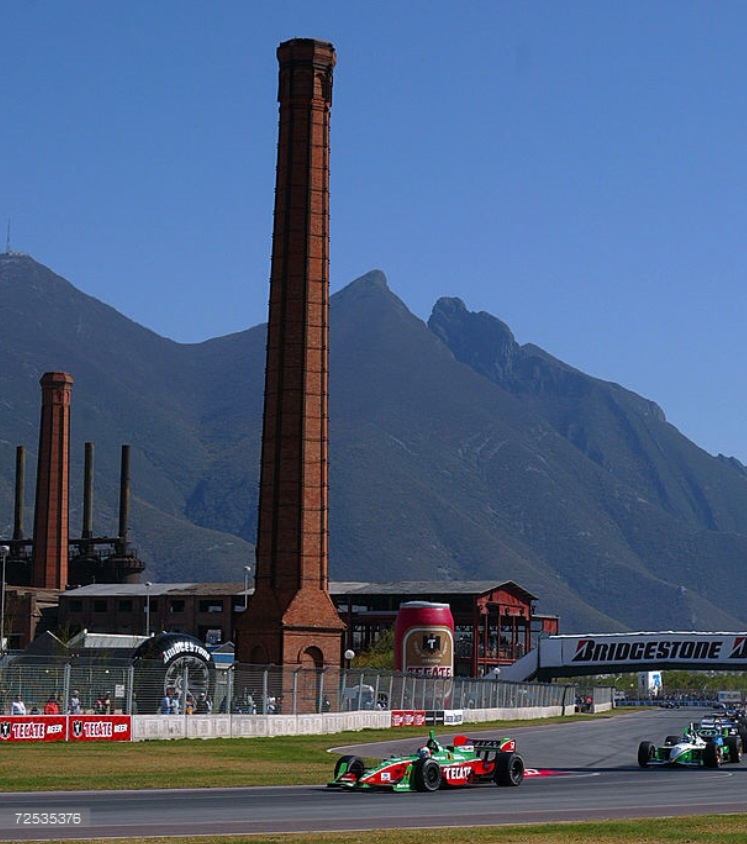
Adrian Fernandez slices his Lola B2/00 Honda into the lead of the Monterrey Grand Prix from pole, behind is Dario Franchitti’s Reynard 02i Honda the first round of the 2002 CART Series on 10 March…
Such a picturesque location, the circuit used for this event between 2001 and 2006 was located at Fundidora Park, Monterrey the capital and largest city in the state of Nuevo León in the foothills of the Sierre Madre Oriental mountains, Mexico. The old buildings in shot are those of a disused steel mill which is both a nod to the past and indicator of the city as a current industrial centre.
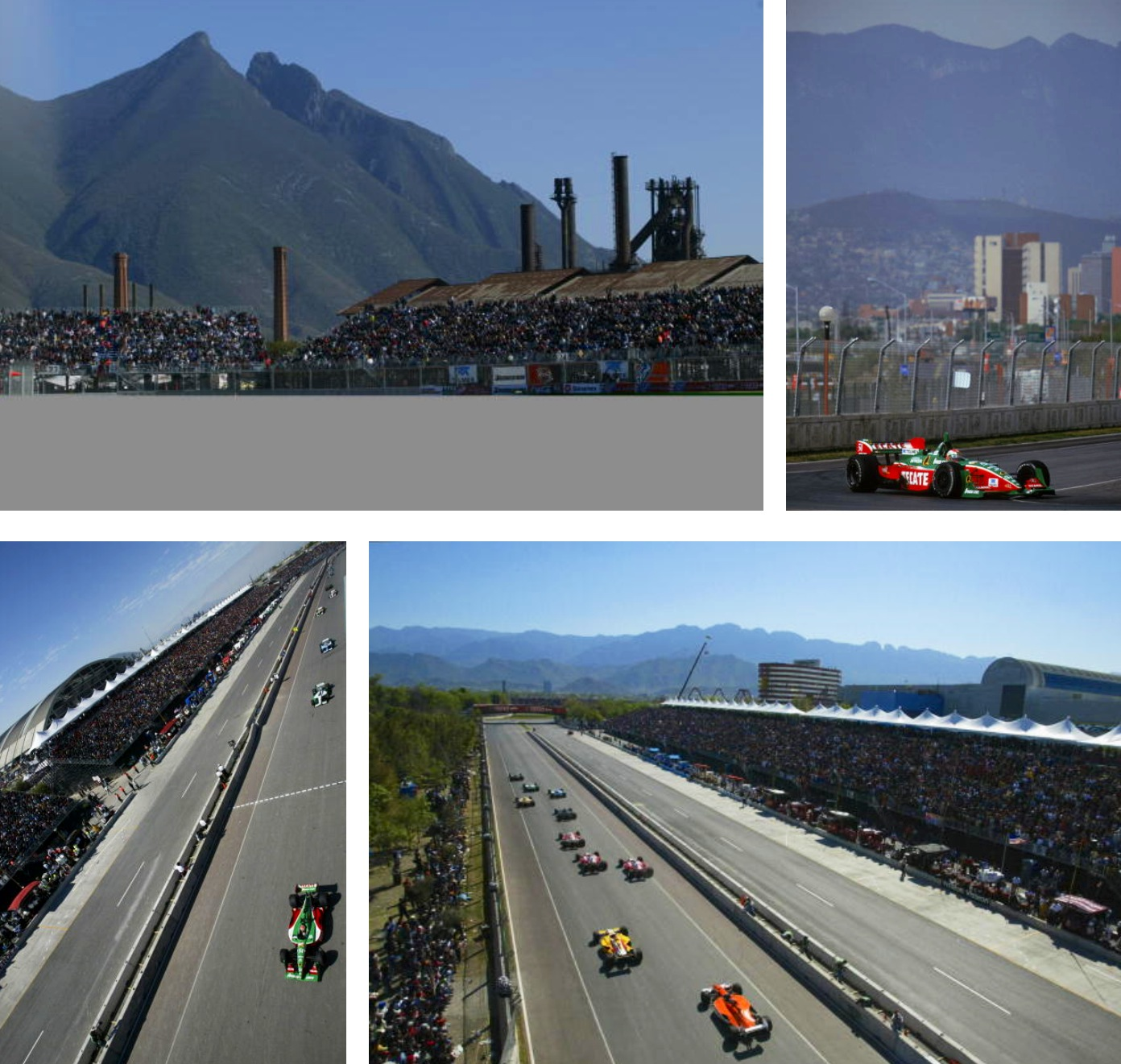
Fundidora Park panorama, Fernandez is the green/red Lola B2/00 Honda
2002 was ‘the start’ of the demise of CART, Penske Racing defected to the rival Indy Racing League at the end of 2001, starting a trend the net result of which was to weaken single seater racing in the US. A great shame as CART to me at the time was as interesting and exciting a category as F1 if not superior in its variety of circuits, circuit type (road, circuit, short and long speedways), chassis and engines. A story for another time.
The engine regs continued to mandate a 2.65 litre, single turbo-charged V8 for 2002, squabbling over the future engine specifications one of a myriad of issues causing the ‘stampede’ of teams and engine manufacturers from CART.
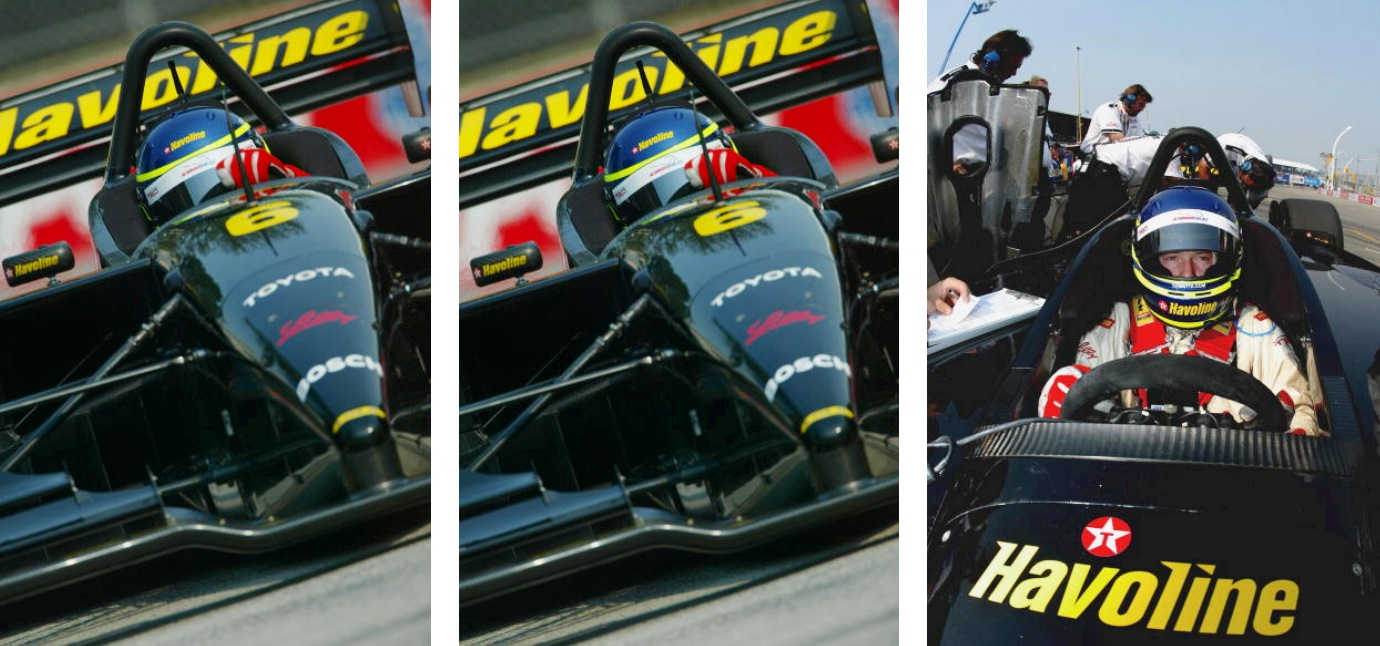
Christiano da Matta, Lola B2/00 Toyota
The 2002 CART championship was won by Christiano da Matta in a factory Newman/Haas Lola B2/00 Toyota, he also won this race. Fernandez finished 13th, Dario Franchitti was 2nd in a Reynard 02i Honda and Christan Fittipaldi 3rd in the other Newman/Haas Lola B2/00 Toyota.
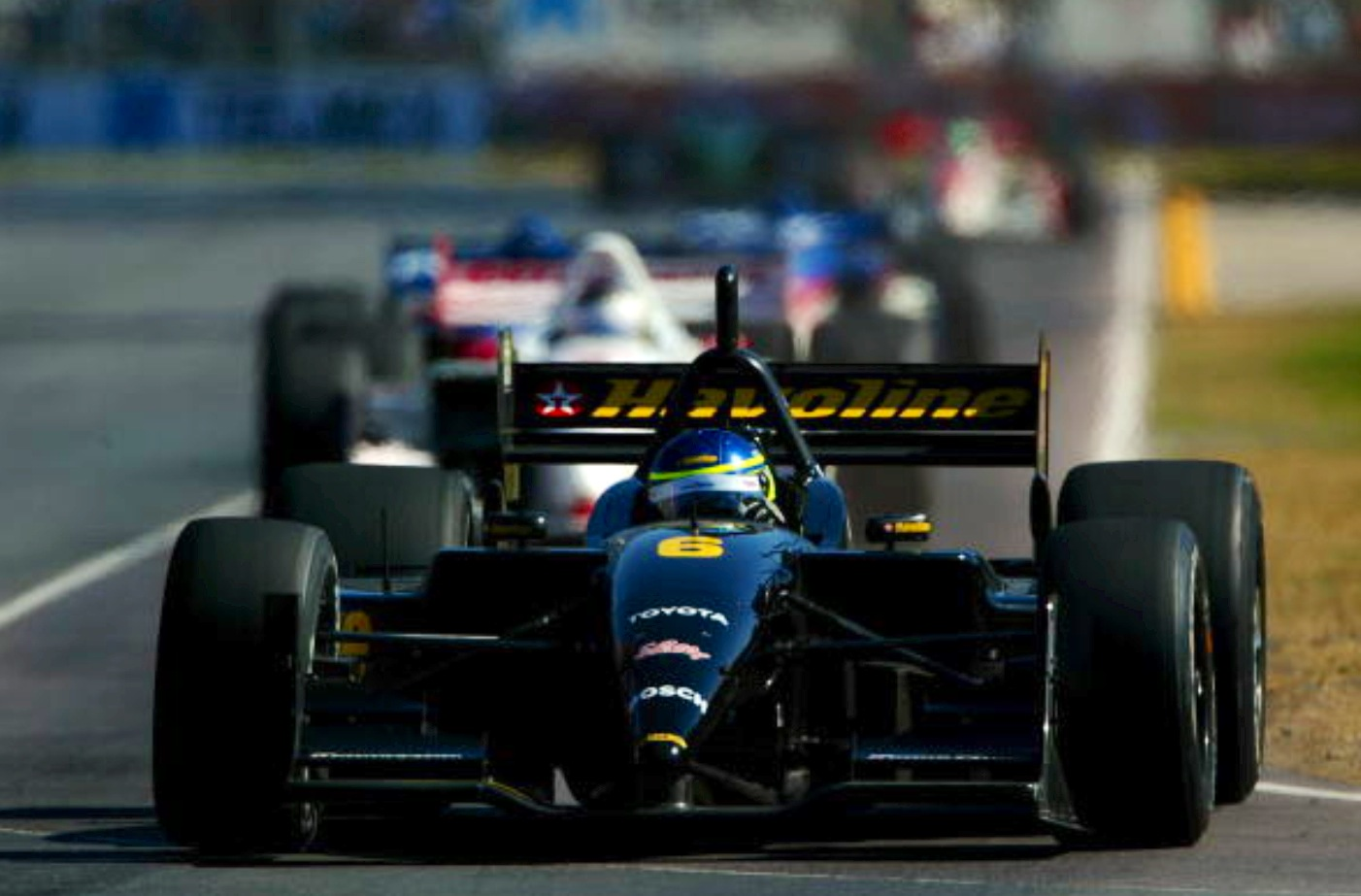
da Matta Lola B2/00 Toyota, Monterrey 2002, he was on a journey which took him to F1 with Toyota
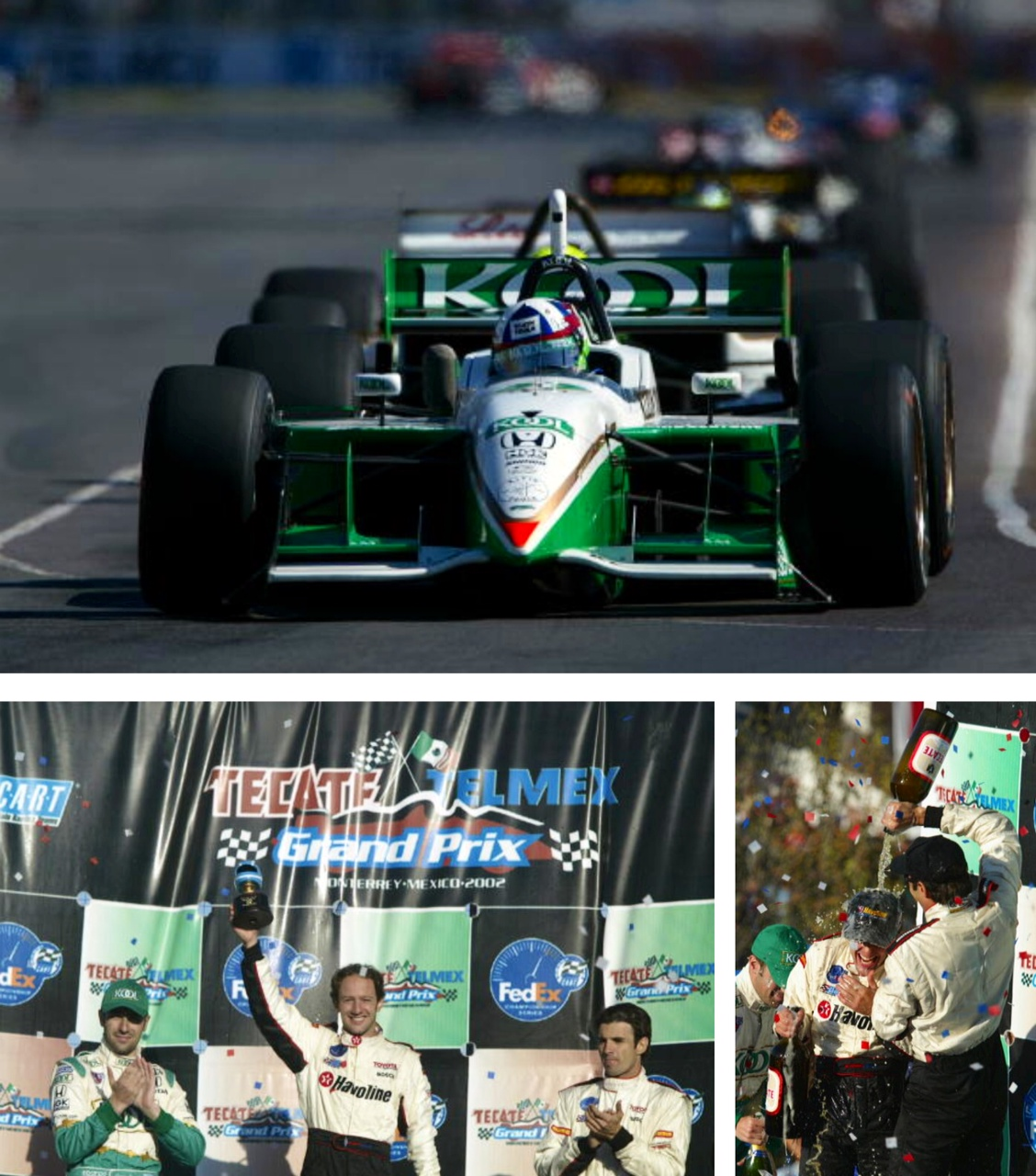
Top shot Dario Franchitti’s Reynard 02i Honda. Podium ceremony L>R 2nd Franchitti, winner da Matta and 3rd Christian Fittipaldi
All Photo Credits…
Robert Laberge
Tailpiece…


This fine George Thomas shot of Lex Davisons’ Alfa Romeo P3 ‘50003’ is undated but is in the mid-fifties, its become exposed over time which adds to its patina and drama of the occasion…
This wonderful Grand Prix car had to ‘sing for its supper’ in Australia, events were few and far between in the early post-war years. Davison was a keen competitor who raced his cars far and wide in trials, rallies, circuit races and hillclimbs like this one at the ‘Christmas Hills’ in Melbourne’s outer east.
The venue is still used by the MG Car Club, perhaps one of their historians can help date the shot.
Photo Credit…
George Thomas

Jean Redele’s Dieppe ‘Alpine’ workshops evolved into Renault’s competition arm from the early 1950’s and were absorbed by the Regie in 1973. The F3 A360 had a spaceframe chassis, Renault R16 based pushrod OHV engine giving circa 120-125 bhp breathing thru the mandatory F3 air restrictor. Gearbox 5 speed Hewland Mk8 (Mike Fairholme)
Patrick Depailler slices through the Thruxton chicane in his Alpine A360 Renault on 19 September 1971 during his victorious French F3 season…
At last really! He had been thrashing around in F3 since 1967; he was 5th in the ’67 French Championship won by Henri Pescarolo, 6th in the ’68 title won by Francois Cevert and 4th in ’69 when Francois Mazet won.

1968 Monaco GP winner Jean Pierrer Jaussaud smiles at camera before the off, he won in a Tecno 68 Ford, Depailler sits on the tyre of his Alpine A330 Renault (DNF crash) and Ronnie Peterson is in the yellow Tecno 68 Ford 3rd. # 57 is Charlie Lucas’ Titan Mk3 Ford DNF. Ronnie won the race in ’69 and PD in 1972. Jaussaud very fast in single seaters and victorious at Le Mans twice; in a Renault Alpine in ’78 with Didi Pironi and a Rondeau Ford with Jean Rondeau in 1980 (Schlegelmilch)
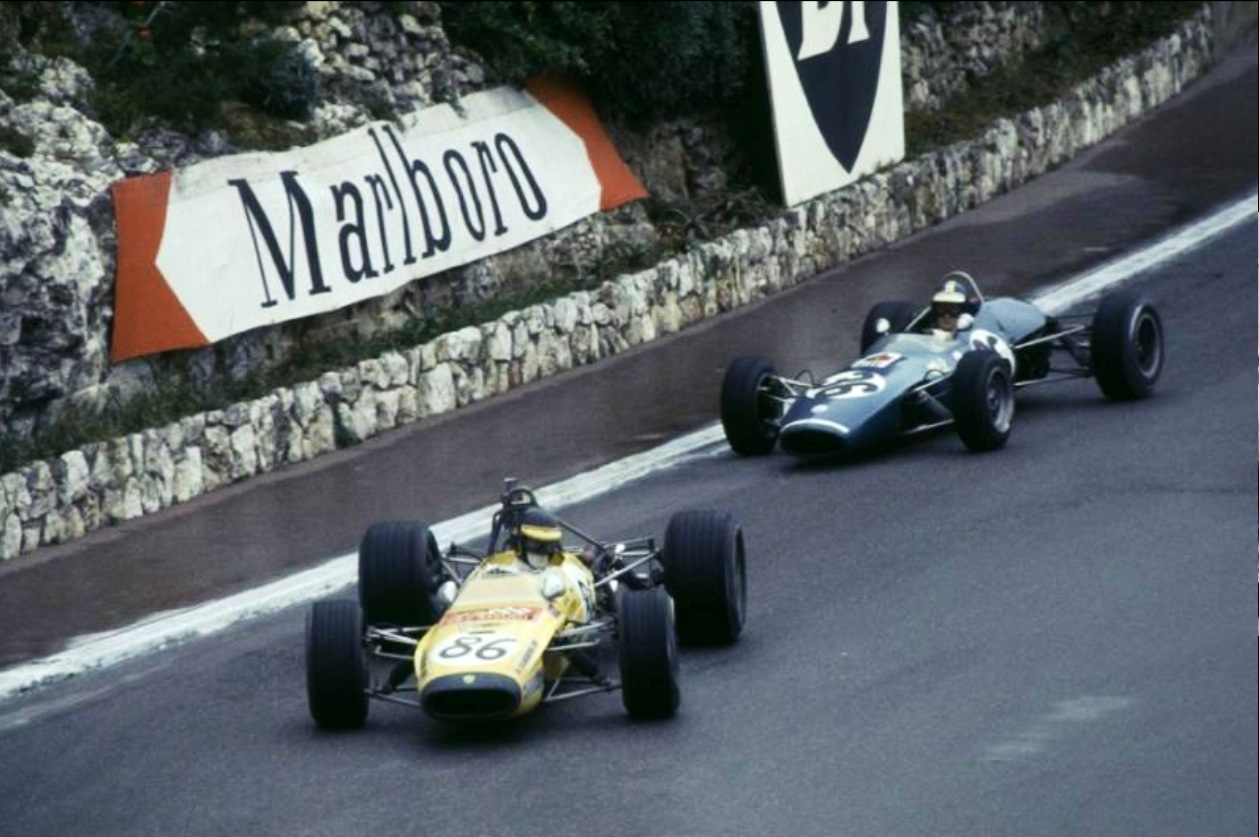
Monaco F3 GP 1968, Peterson’s Tecno in front of Depailler’s Alpine, chassis as per pic above (unattributed)
In 1970 Depailler did some F2 events in a Pygmee and Tecno and then stepped back to F3 in 1971 taking the French title from Jean-Pierre Jabouille also Alpine A360 mounted.
Just look at that roll call of French drivers at the time fuelled by a mix of the Volant Shell drivers program, Elf, Matra funding and talent!

European F2 championship1970, here at Rouen in Pygmee MDB15 Ford FVA, DNQ in the race won by Jo Siffert’s BMW 270 (unattributed)

F2 Pygmee MDB15 Ford with PD left of cockpit. Marius Dal Bo (MDB) built around 42 F3 and F2 cars from 1965 to 1973 in Annecy, France, initially to provide more competitive cars for his son Patrick. 4 MDB15 F2 cars were built in 1970, the cars aluminium monocoques of the day using the circa 215bhp 1.6 Ford FVA engine and Hewland FT200 gearbox (unattributed)
The F3 event pictured at the articles outset is a team one ‘The European F3 Cup’ held at Thruxton won by a French Team comprising Pierre-Francois Rousselot, Jacques Coulon and Jean-Louis Lafosse. Depailler was in the second placed team along with Jean-Pierre Jabouille. Other future F1 drivers contesting the event representing their respective countries included Alan Jones, Vern Schuppan, James Hunt, Roger Williamson, Jochen Mass and Conny Andersson.
The individual finishing order of the talent filled Thruxton race was Rousselot in a Brabham BT35 Ford from Depailler with Brit Barrie Maskell third in a Chevron B18 Ford.
I tripped over the shot of PD researching an article on Dave Walker, an F3 contemporary of Patricks who took a similar length of time to break free from the F3 ruck, what a tough school of talent it then was. And has always been I guess.
Walker perhaps peaked in F3, noting the twice badly broken arm which impacted him from ’73 whereas perhaps PD never really peaked, he improved as time went on right until that fateful day at Hockenheim in 1981? James Hunt was another who was ‘thereabouts’ in F3 and peaked in F1. Conversely Jan Magnussen an example of unfulfilled F3 promise in F1 from a more recent era.

Depailler contested the Hockenheim, Thruxton, Pau and Nurburgring (here) rounds of the 1971 Euro F2 Championship in a Tecno TF71 Ford, he was classified 21st having retired with a loss of oil pressure, Francois Cevert won in another Tecno TF71. Ronnie Peterson took the title that year, the last of the 1.6 Litre F2 in a factory March 712M Ford FVA (Schlegelmilch)
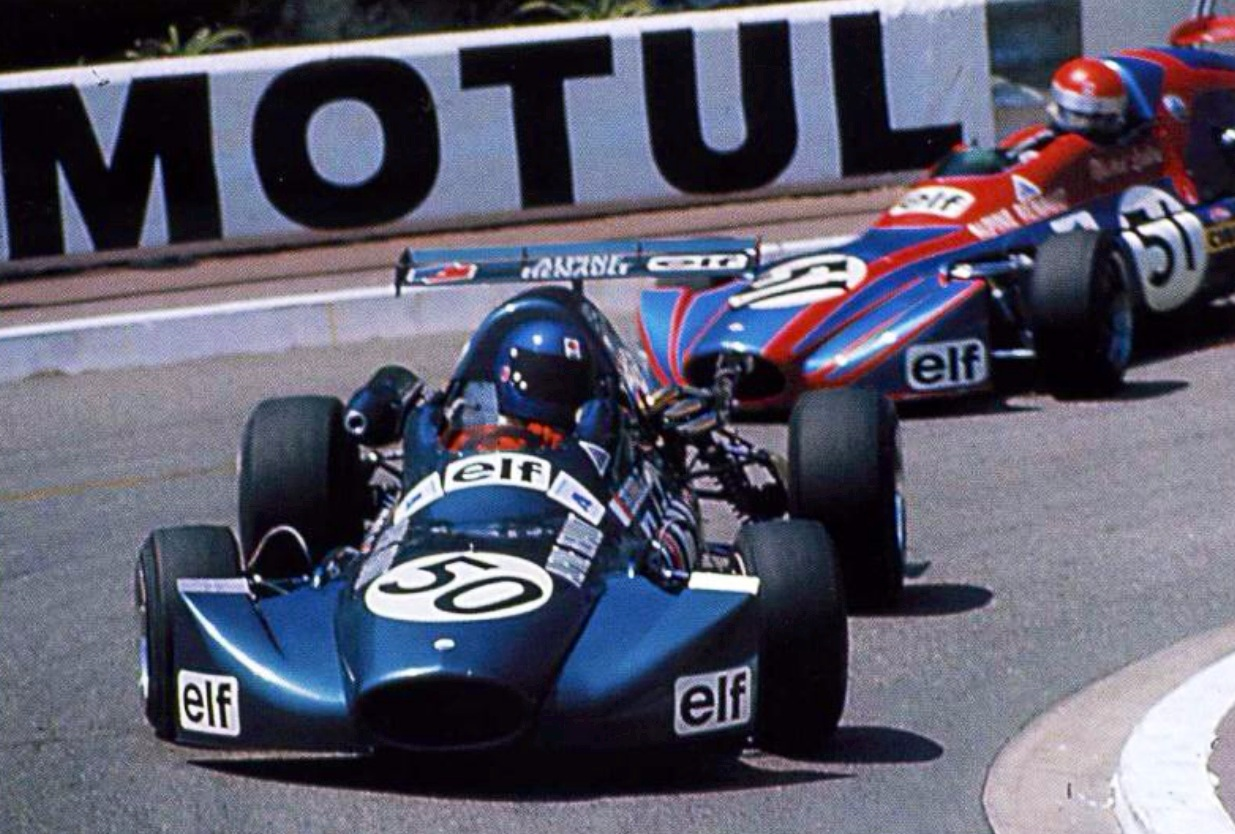
PD on his way to winning the Monaco F3 GP in 1972, he is ahead of Michel Leclere (6th) here, both in Alpine A364 Renaults. (unattributed)
In 1972 Depailler contested the European F2 Championship finishing 3rd in a March 722 Ford, winning the Enna round. Mike Hailwood won that year in a Surtees TS10 Ford…but not completely done with F3 stepped back into an Alpine and won the Monaco F3 GP, the F3 race which matters beyond all others.
He also made his F1 debut with Tyrrell in the French Grand Prix at Clermont Ferrand in July.
He qualified the Tyrrell 004 16th of 24 starters and was non-classified with mechanical problems. It was a strong debut with Patrick invited to drive a third car for Tyrrell again at the season ending US GP at Watkins Glen, he finished 7th having qualified 11th with teammates Jackie Stewart and Francois Cevert 1st and 2nd in a great day for the team, the Tyrrell regulars in the later 005/006 chassis.

F1 Tyrrell oo4 Ford test for PD prior to French GP, circuit unknown, interested to know if anyone does (unattributed)

Depailler contested the 1973 Euro F2 Championship in an Elf2/Alpine A367 Ford finishing 3rd in the title won by Jean-Pierre Jarier’s factory March 732 BMW. Here PD #9 on pole for the 5 May 1973 Pau GP, alongside is Tino Brambilla’s March 732 BMW, DNF. Winner Francois Cevert is behind PD in the other John Coombs entered Elf2/Alpine A367. Alongside Cevert is Roger Williamson’s white GRD 372 Ford 7th, the red car is Jarier’s 2nd placed STP March 732 BMW and the other orange Beta March 732 behind Jarier is Vittoria Brambilla, DNF (unattributed)
Patrick stepped up to F1 full time in 1974 together with Jody Scheckter joining Tyrrell taking the seats vacated by Jackie Stewart’s retirement and Francois Cevert’s sad death at Watkins Glen in late 1973. An article about his F1 career is for another time.
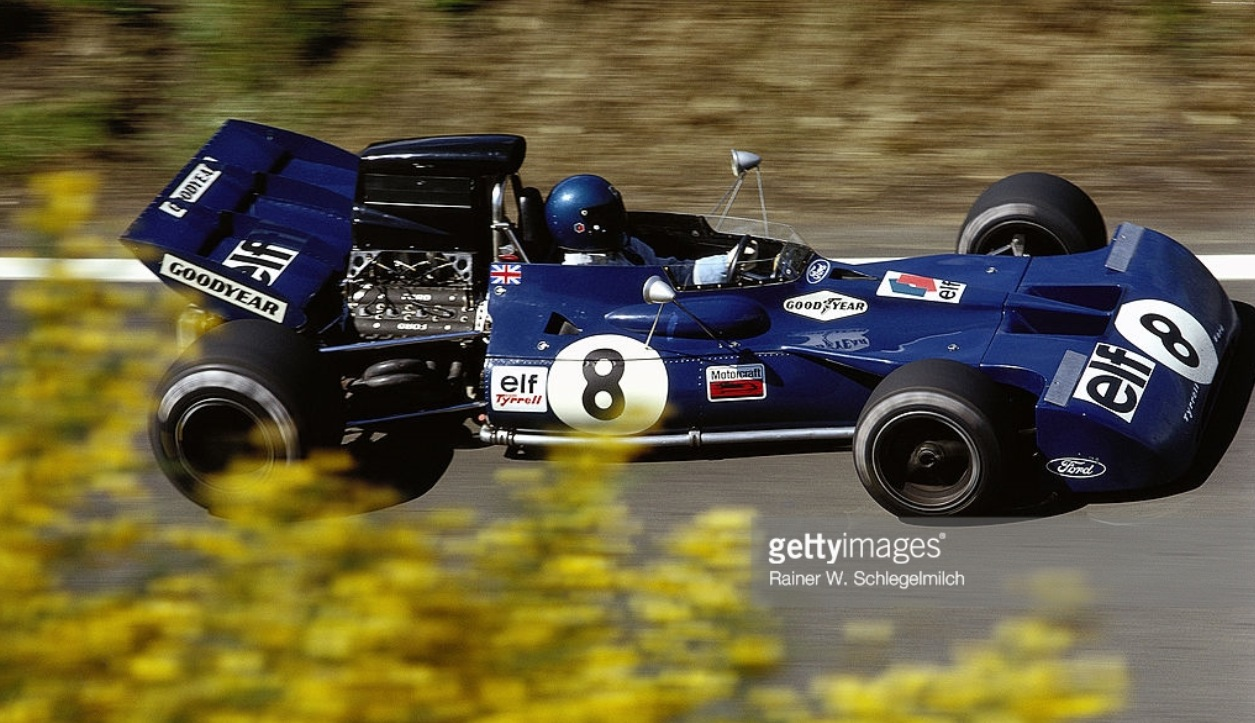
Above and below photos, PD Tyrrell 004 Ford, French GP, Clermont Ferrand 2 July 1972. GP debut (Schlegelmilch)

As well as a full season of Grand Prix racing he scored one of the two prized works March F2 seats in 1974 having finished third in 1973 in an Elf 2/Alpine A367 Hart.
He and Hans Stuck in the other works March 742 BMW slugged it out all year with Hans taking the first two wins of the season and Patrick the better results from then on winning at Pau, Mugello, Karlskoga, Hockemheim, Vallelunga and with it the title.

PD March 742 BMW, Rouen Euro F2 round 30 June 1974, 7th in the race won by teammate Hans Stuck (unattributed)
Patrick Depailler was a personal favourite of the era; he was one of those guys who loved racing for its own sake, raced for the love of it, if championships came along then well and good but it was all about being a professional driver, racing and enjoying life with all of its elements.
Ken Tyrrell had this to say of the Frenchman;’ In a lot of ways Patrick was like a little boy all of his life. He was always wanting to go skiing or motorcycling or hang gliding. And he had this trusting belief in the end that everything would be alright; when he was driving for me full-time i had it written into his contract that he had to keep away from dangerous toys.’
A driver of another era perhaps, an incredibly talented and charismatic one at that…

Depailler at Rouen in the cockpit of his March 742 BMW in June 1974. BMW engine guru, designer of the 2 litre, 4 valve 290 bhp M12 engine powering the March, Paul Rosche taking the notes (unattributed)
Etcetera: Tyrrell 007 Ford, Nurburgring 1976…

(Getty)
Credits…
Mike Fairholme, Rainer Schlegelmilch
Tailpiece: Renault Alpine Ad circa 1969


Sue Steele Thomas sharing ‘her unique visions of nature and automobiles with the piece ‘Alfa Romeo Through the Shafta Daisies’ which views a 1938 Alfa Romeo 8C 2900B Speciale Le Mans Touring through a bright botanical overlay’…
Only one of these cars was built for Le Mans 1938; the car driven by Clemente Biondetti and Raymond Somner had the most commanding lead at La Sarthe ever, 11 laps/1 hour or 100 miles depending upon your way of expressing it.

The stunning looking, very aerodynamic 8C2900B during its long run in the lead of its only race, Le Mans 1938 (unattributed)
A succession of mechanical maladies cost victory; a tyre blew on the Mulsanne, Sommner bringing the car to a halt but the tyre destroyed the mudguard. Biondetti went back out but the car retired shortly thereafter with either valve or gearbox failure.

Le Mans 1938. Compare and contrast the aerodynamic treatment and styling of the winning, left, Chaboud/Tremoulet and 2nd placed Serraud/Cabantous Delahaye 135CS with the 8C2900B (unattributed)
The race was won by the Eugene Chaboud/Jean Tremoulet Delahaye 135CS from the similar car of Gaston Serraud and Yves Giraud-Cabantous with Jean Prenant and Andre Morel in a Talbot T150SS Coupe. The Alfa 8C 2900B completed 219 laps, more than the 4th placed car.

The leading Alfa after its valve or gearbox failure whilst well in the lead. The passing car is the Talbot T150SS of Jean Prenant/Andre Morel, 3rd (unattributed)
Five 8C 2900B chassis were modified for racing early in 1938, and whilst offered for customer sale the cars were road going versions of Alfa’s GP cars, very much in the best tradition of the Monza Series of cars. The cars were nearly identical to the 8C 2900A’s which won Le Mans in 1936 and 1937.
The 2.9 litre straight-8, boosted by two superchargers developed 220bhp in race trim and was the ultimate road going version of the 8C2300 originally built in 1931, click here for my article on the Alfa Monzas’ which covers the design detail of the cars;
Antonio Brivio: Targa Florio 1933: Alfa Romeo 8C2300 ‘Monza’…
Unlike the earlier Monza’s the cars gearbox was in unit with its differential shifting weight to the rear.

Routine pitstop during the 1938 Le Mans for the 8C2900B (unattributed)
Bodies of all five cars were built by Touring with open bodies for the Mille Miglia for which four cars were entered, the Alfas finishing 1-3 with Biondetti and Ado Stefani crewing the winning car from the Pintacuda/Mambelli and 8C 2300A of Dusio/Boninsegni.
The Le Mans car, chassis #412033 had its Spider body removed to be replaced by a futuristic, slippery coupe designed by Touring’s Carlo Anderloni. The panels aft of the front wheels could be removed to allow access to Vittorio Jano’s mechanical marvels.
#412033 was repaired but not raced again, sold to a Roman it ‘disappeared’ but was found by collectors in the late sixties, passing through several hands before being re-acquired by Alfa where it is a popular exhibit at Museo Storico, and attractive to artists such as Sue Steele Thomas…
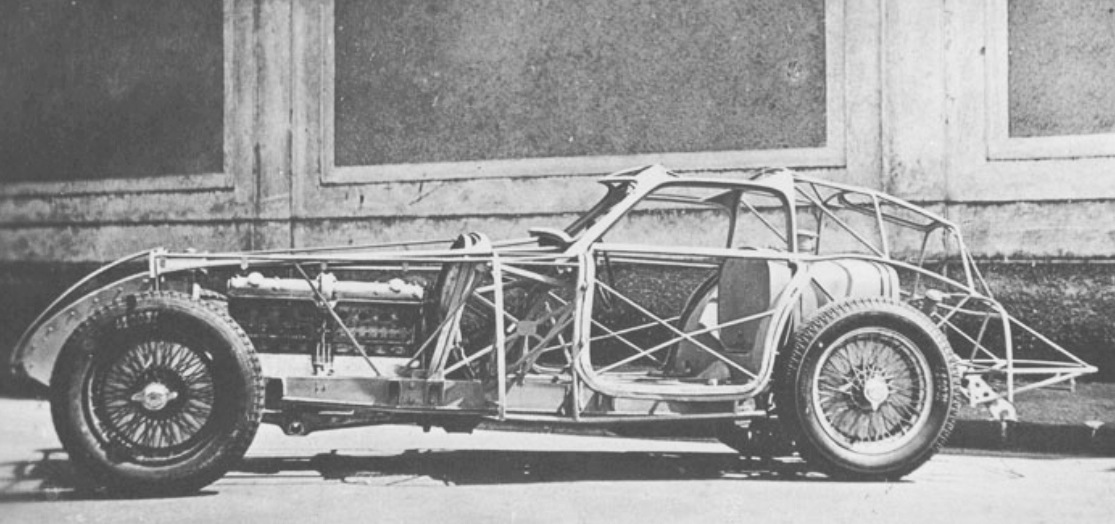
Car during its construction at Touring’s workshop. Typical boxed steel chassis, Jano’s engine clear as is light alloy tubing to accept the aluminium body. Big fuel tank prevents view of the rear mounted gearbox/diff unit (unattributed)
Specifications…
Chassis of light gauge box section steel. Front suspension; trailing arms coil spring/tubular shocks. Rear suspension; swing axles located by radius rods, semi-elliptic leaf springs and tubular shocks. Steering, worm and sector. Brakes drums all round. Weight circa 1100Kg.
Engine; DOHC, 2 valve, all alloy straight-8 of 2905cc, bore/stroke 68mm/100mm. Two Roots type superchargers fed by two Weber carbs giving circa 220bhp@5800rpm.
Gearbox 4 speed mounted at the rear in unit with differential
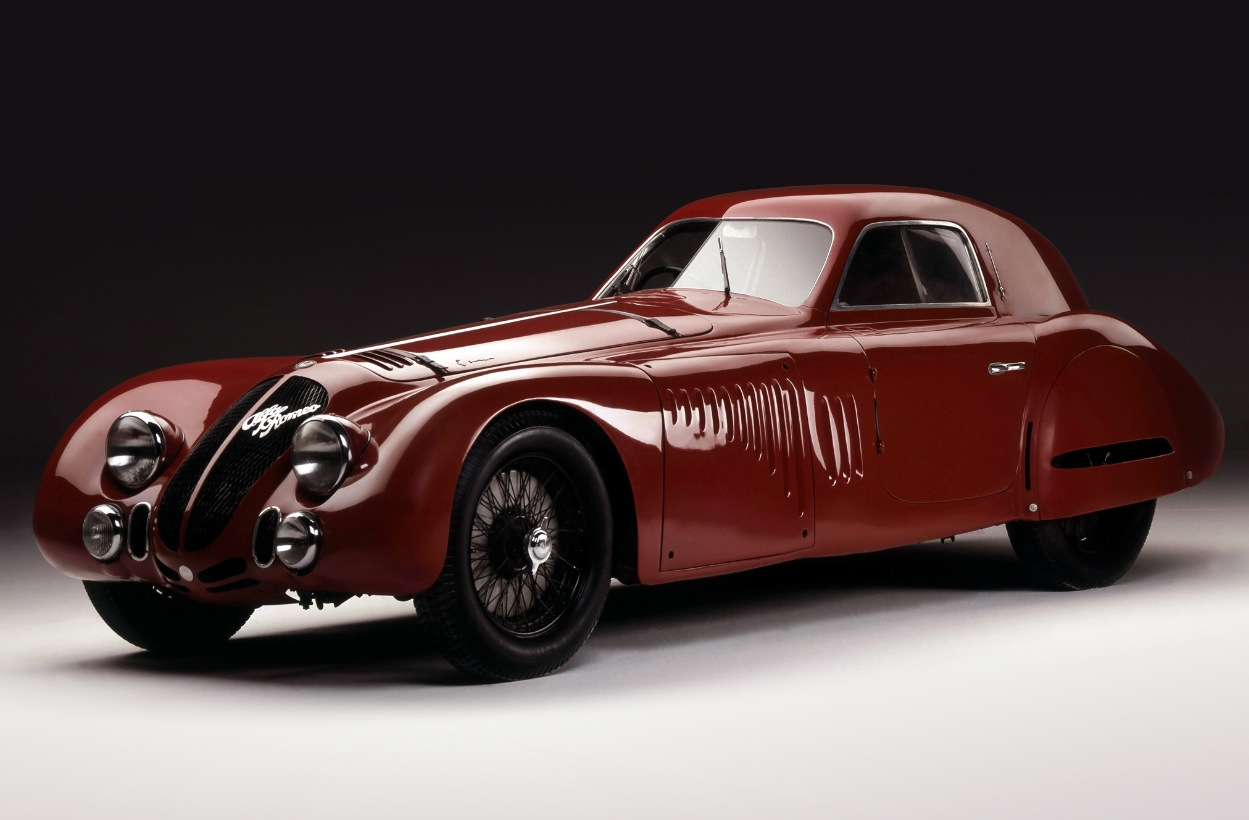
Stunning car for its time, stunning full stop! Studio shot of the 8C 2900B Le Mans after its restoration by Alfa Romeo. Side access panel referred to in the text clear, skilful aero treatment at a time when exposed guards the norm (unattributed)
Credit…
Sue Steele Thomas, conceptcarz.com
Tailpiece…
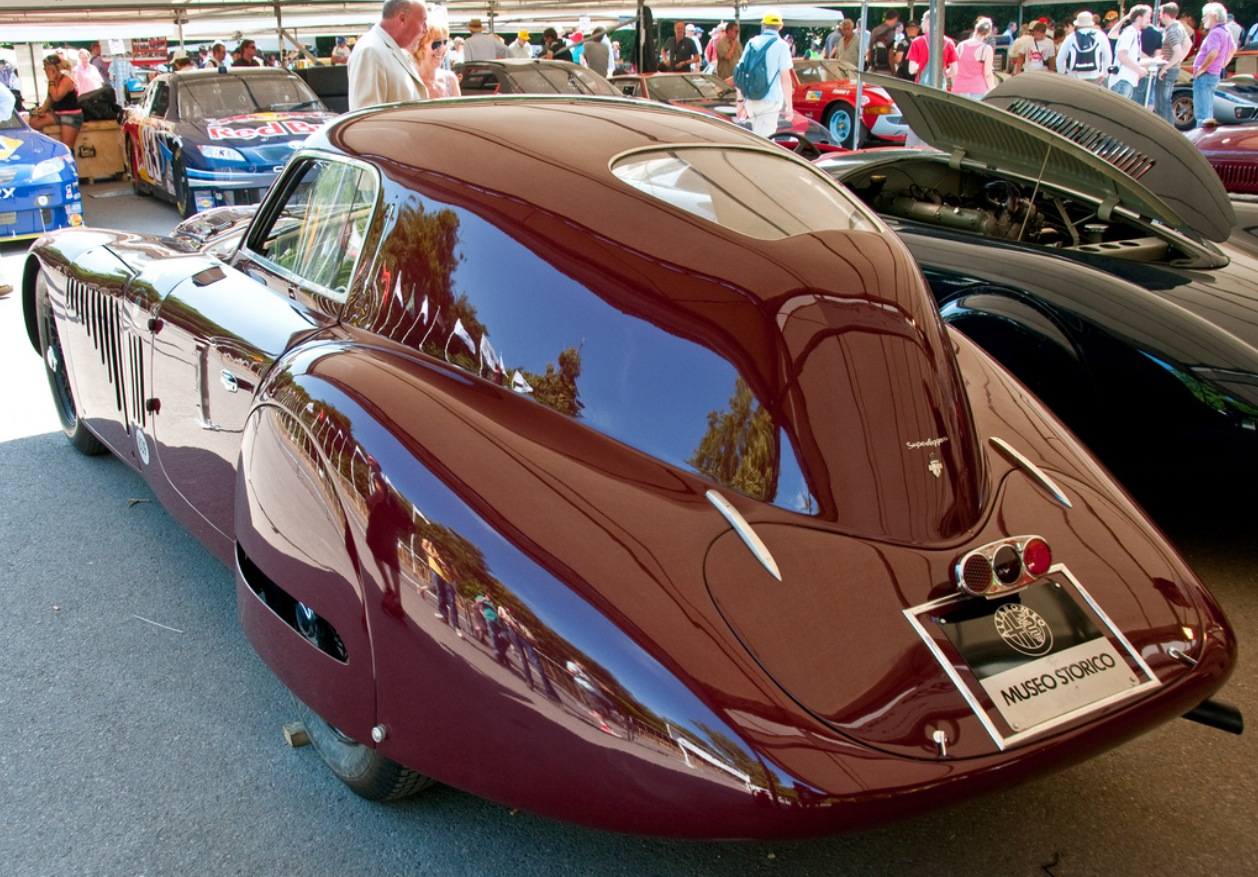
8C 2900B Le Mans butt shot at the Goodwood Festival of Speed in 2010 (unattributed)
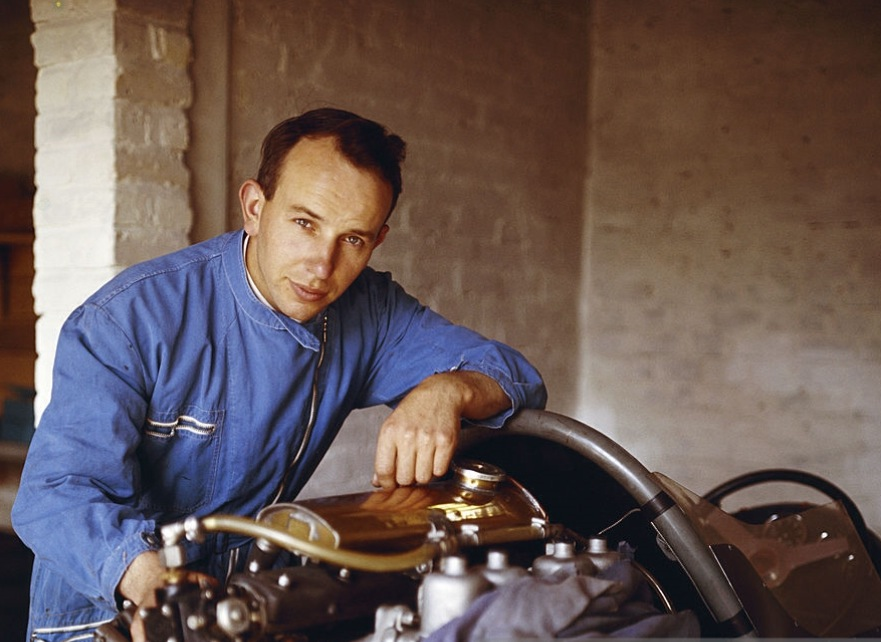
(Getty)
John Surtees smiles for the cameras with his Ken Tyrrell Racing Cooper T51 Climax in April 1960…
The much anticipated switch of the British multiple bike champion to four wheels took place when he contested the Formula Junior races at the ‘BARC Members Meeting’ at Goodwood on 19 March 1960.
Ken Tyrrell entered him in a Cooper T52 BMC, the ‘novice’ raced into second between the Team Lotus duo of Jim Clark and Trevor Taylor both mounted in Lotus 18 Fords, more competitive cars. The field also included other later GP drivers Peter Arundell and Mike Spence.

John Surtees, Cooper T52 BMC FJ, Goodwood, 19 March 1960 (Getty)
It was a great debut so why not jump into the deep end?
The Non-Championship F1 ‘Oulton Park Trophy’ took place at the Cheshire circuit on 2 April, with limited testing the talented Brit took on a field of some depth, starting the race from pole and again finishing second. Innes Ireland took the win in a Team Lotus 18 Climax with the very experienced Roy Salvadori third in another Cooper T51 Climax. The field also included Harry Schell and Chris Bristow.
Surtees had arrived in cars! He mixed racing two wheels and four in 1960 but focussed on cars from 1961…
Photo Credits…
Getty Images
Tailpiece…

Surtees winning the Isle of Man Senior TT in 1956. MV Agusta 500 (Getty)
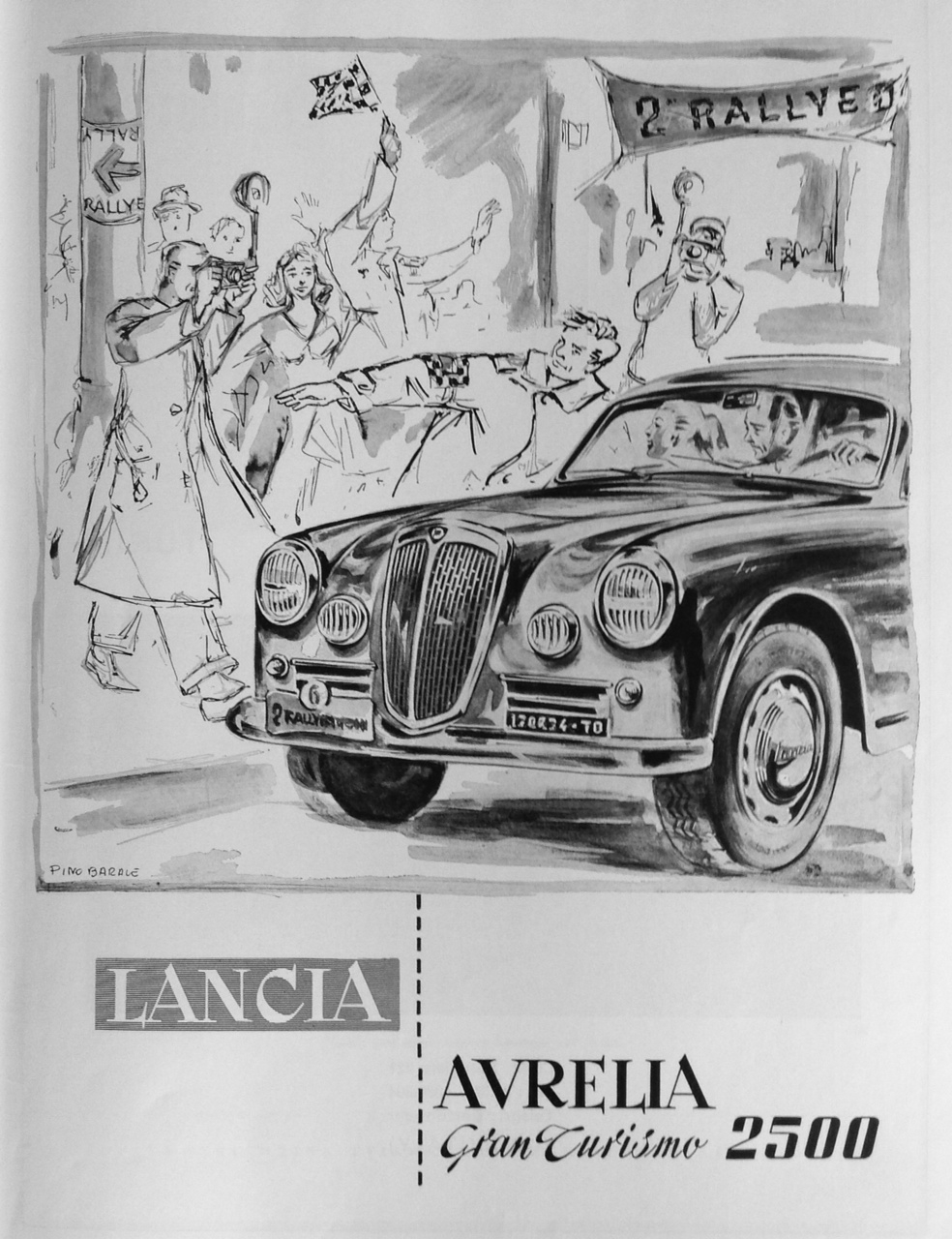
Anything designed by Vittorio Jano works for me…
Unitary chassis construction, 2451cc OHV V6, Weber twin throat carb, circa 118bhp @ 5000rpm. 115mph. 4 speed box but the transaxle was innovatively located at the rear as are inboard mounted drum brakes.
Front suspension sliding pillar, semi trailing arms at rear, De Dion tube on fourth series cars.
The car was remarkably advanced for its time, one of a series of stunning Lancia’s designed by Jano, the ‘apex of which’ was the D50 GP car which first raced at Barcelona in the 1954 Spanish Grand Prix.
B20 Coupe body Ghia designed and Pininfarina built, Francesco de Virgilio the senior member of Jano’s design team.

These cars also useful competition tools; here is the Johnny Lurani/Sambuynd Gatta GT2500 during the 1953 French Rallye des Alpes on the Passo Pordoi. (Mailander)
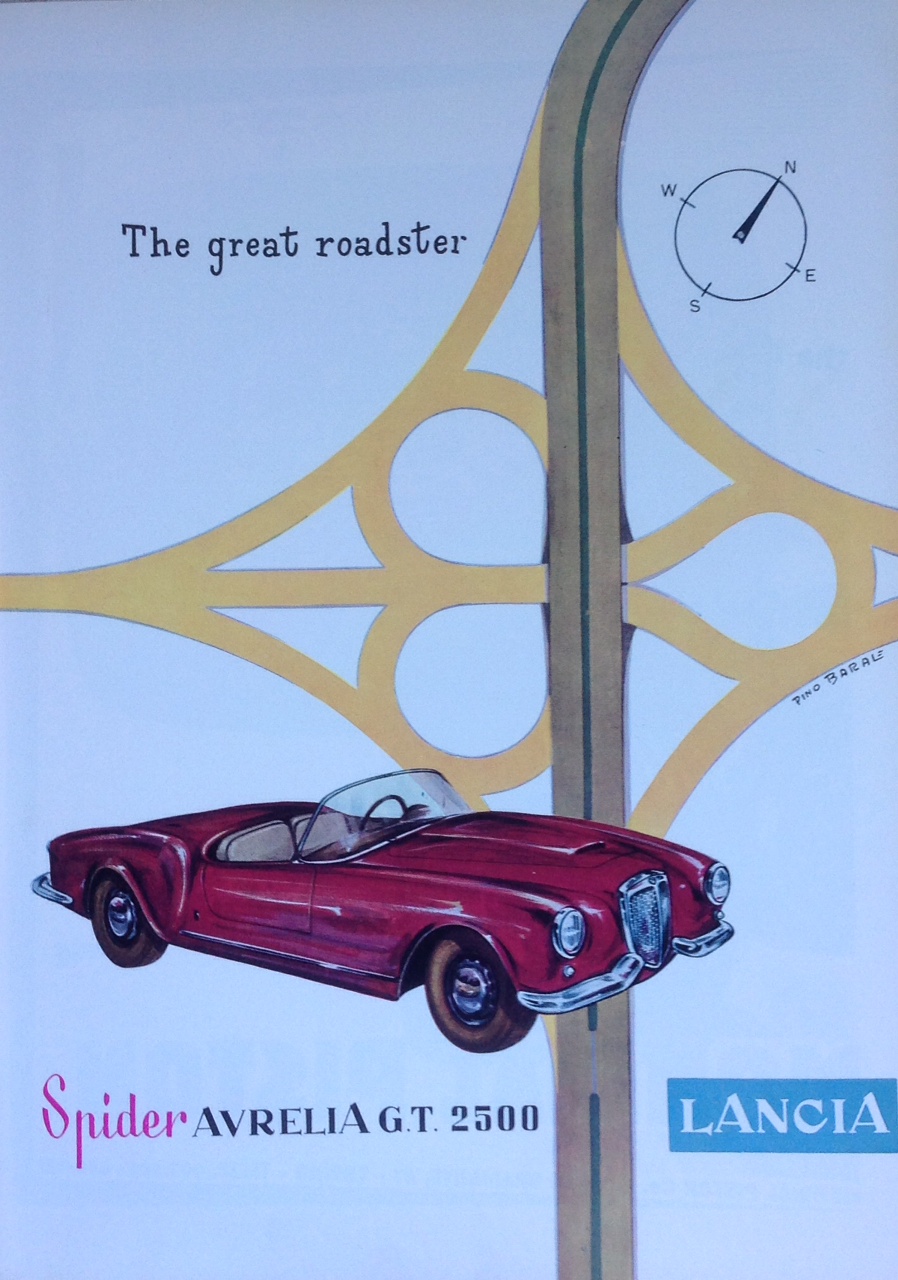
Credit…Automobile Year

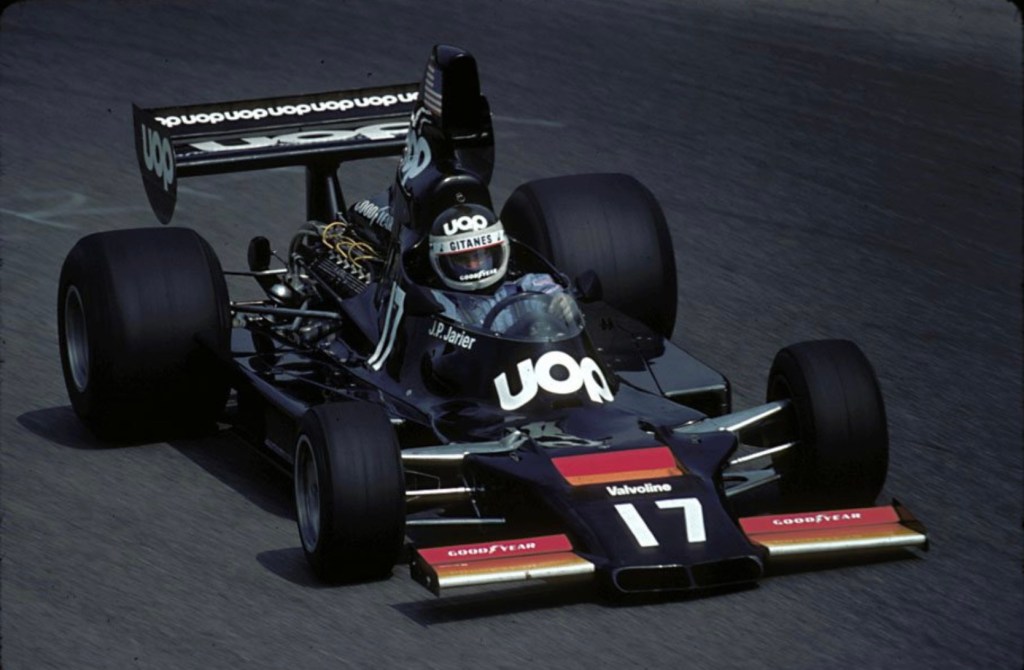
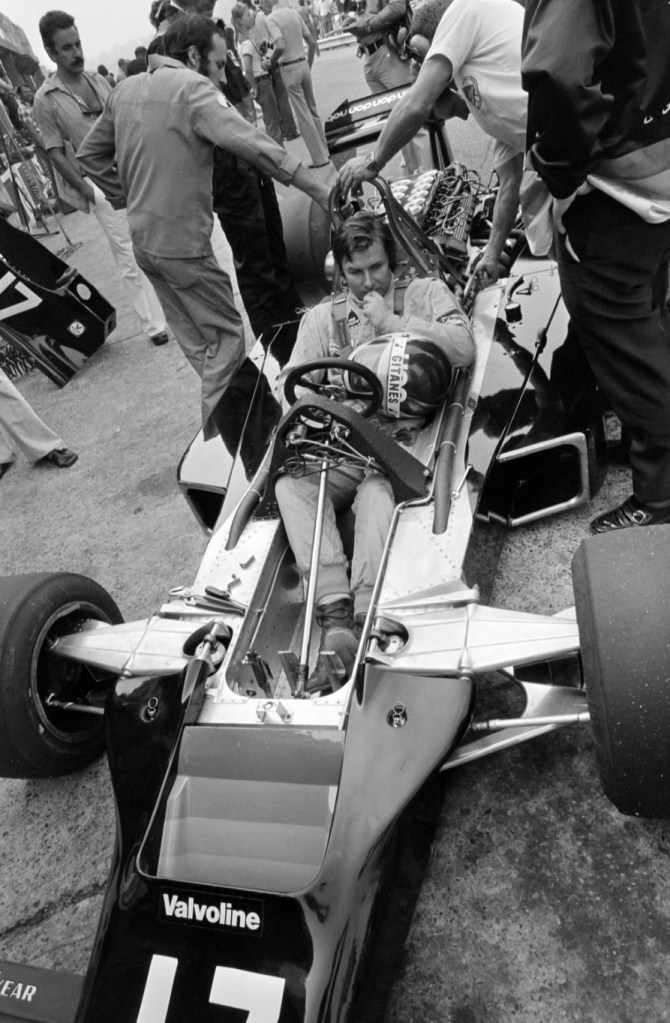
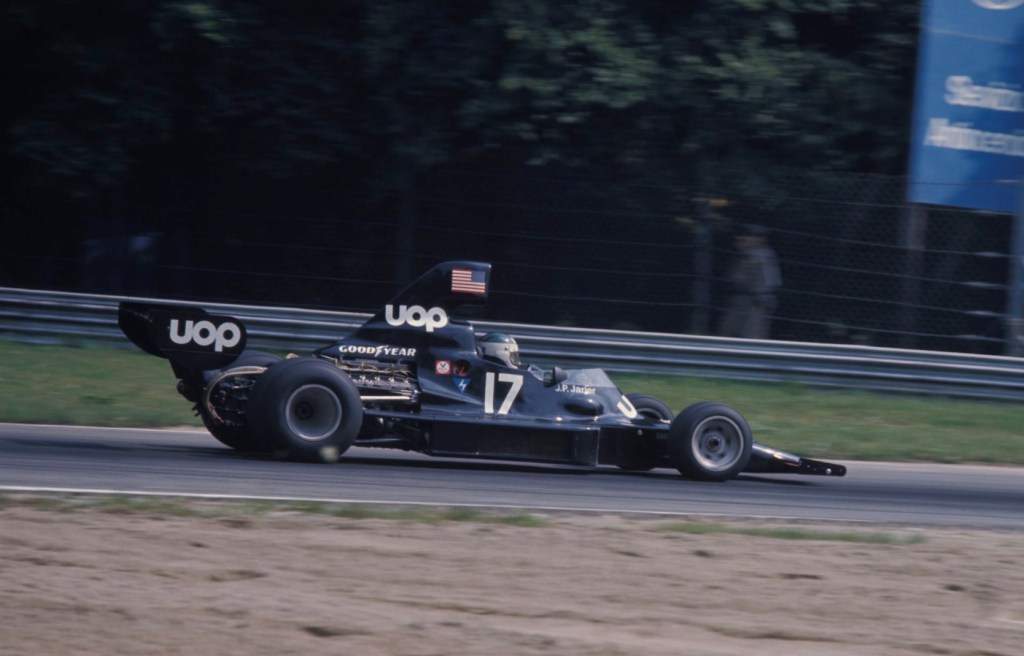
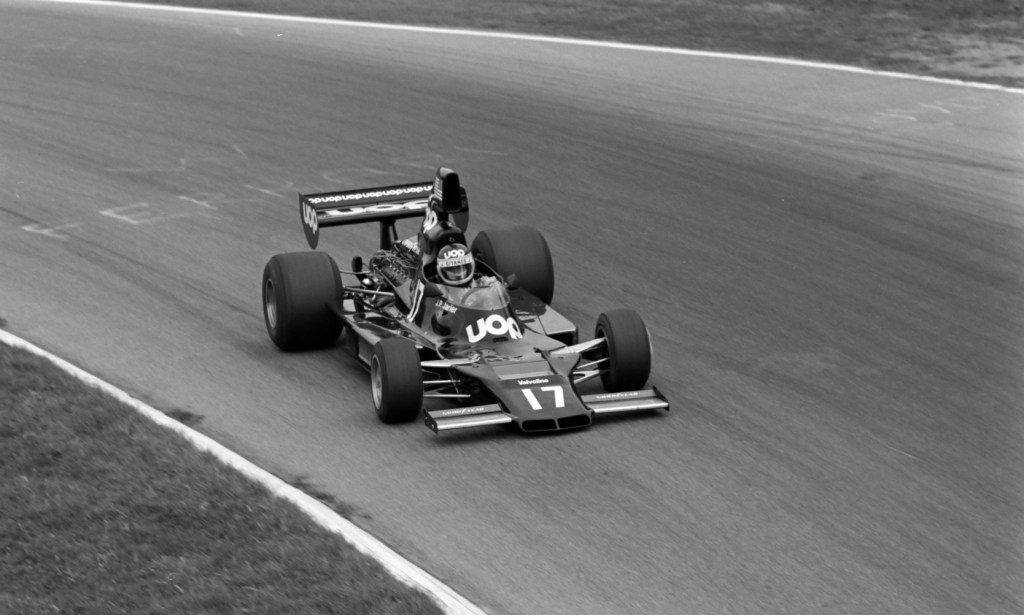
Jean Pierre Jarier nips a front brake during qualifying for the 1975 Italian Grand Prix, pushing his Shadow DN7 Matra ever so hard…
One of the revelations of the early 1975 GP season was the speed of the new Shadow DN5 Ford, an evolution of the 1973/4 DN1 and DN3 designs penned by Tony Southgate. Frenchie Jean Pierre Jarier rocked the socks off the established aces setting a time eight-tenths/second clear of the rest of the season opening Argentinian GP grid.
There were mutterings of Shadow getting development Cosworth engines but the truth was an aero tweak which is indicative of the importance of aerodynamics over the coming years.
Tony Southgate, ‘ I spent half my life doing aero at Imperial College and DN5 was the first to use the new rolling road wind tunnel, as far as i know, the first in the world. What we discovered was a massive split, front to back, in downforce. People always thought they had about 30-40% on the front. In fact it was no more than 20. And only we knew.’
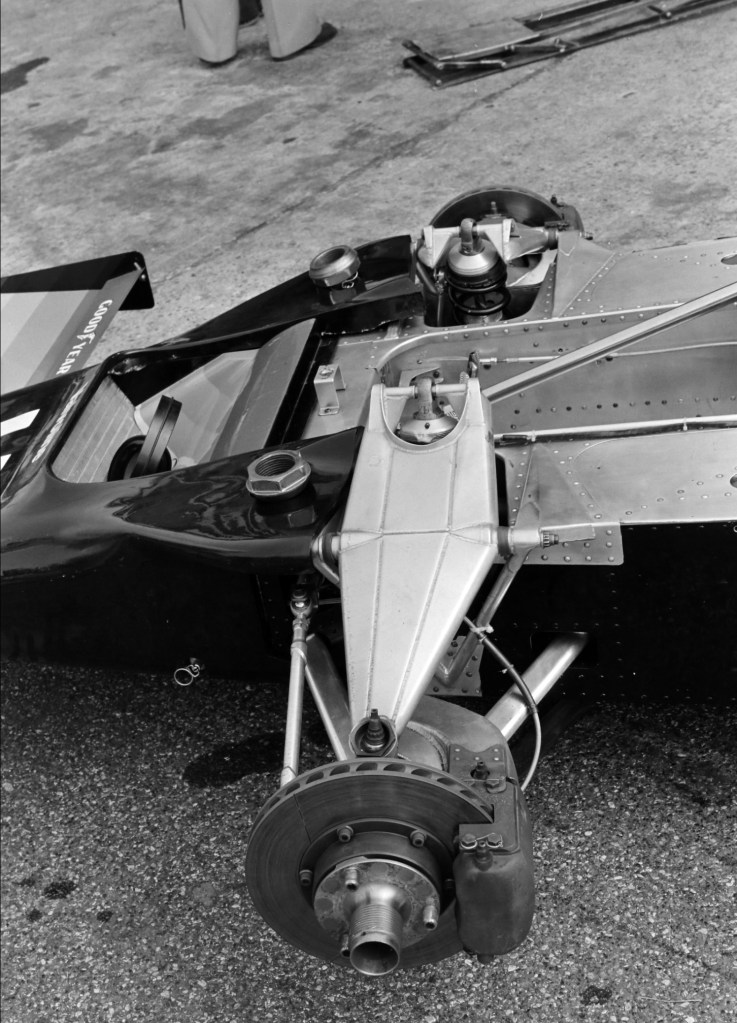
Southgate moved the driver forward 2.5 inches within a longer wheelbase (with removable spacer between engine and gearbox), developed deeper nose fins and placed the front springs and dampers inboard.
‘The car was an aero jump. We matched downforce to its static weight distribution-about 35/65% front/rear – and the spacer allowed us to tune the chassis to different circuits; we would find 1.25 seconds at Silverstone just by removing it. Immediately it was clear that our car had more downforce than the others and was very well balanced. In its short chassis specification Jarier was taking the fast bend after the pits at Interlagos, Brazil without lifting…’
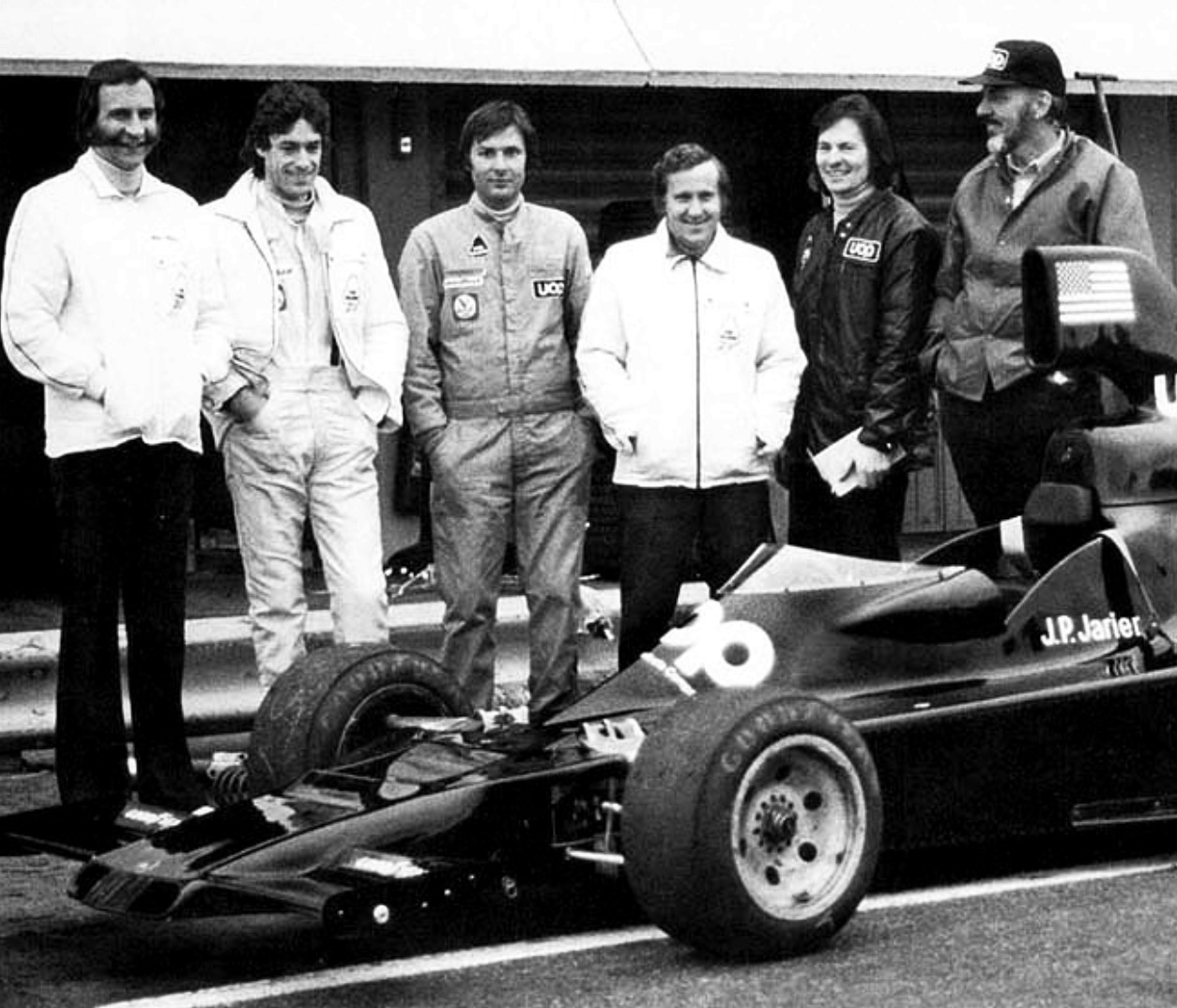
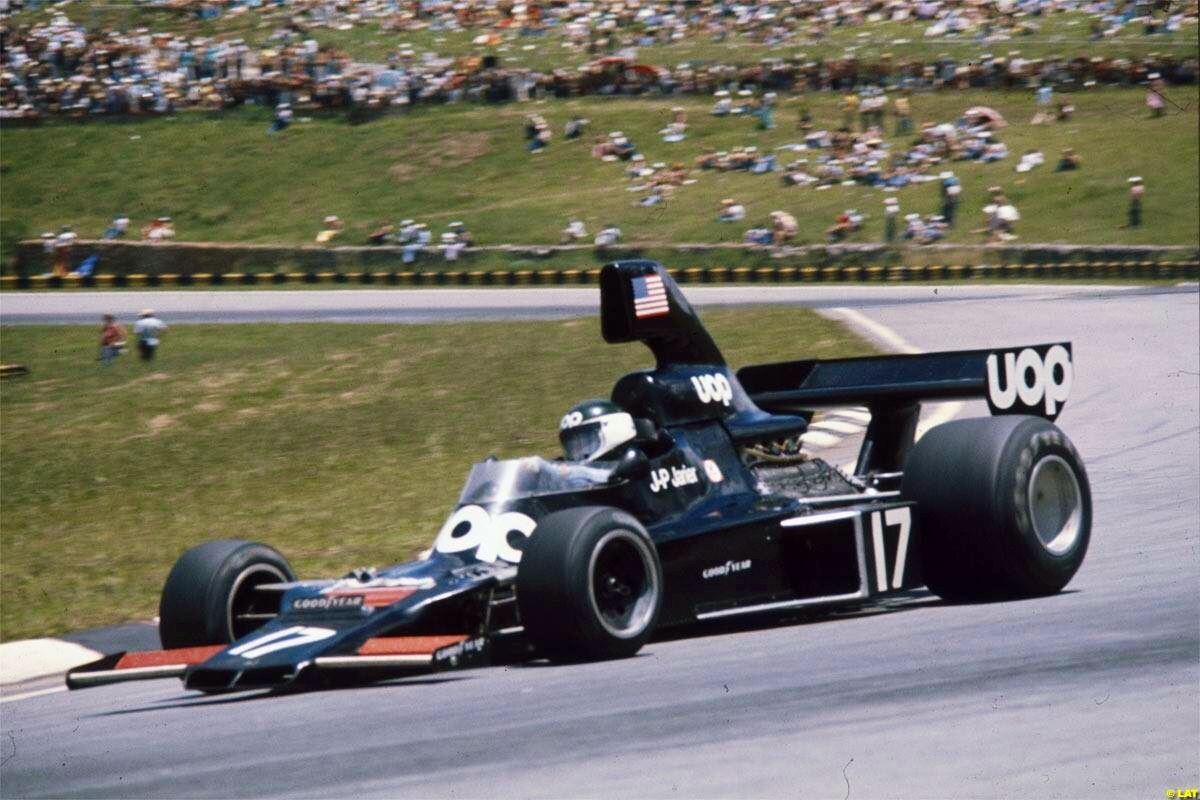
Despite being on pole in Argentina, raceday was a disaster with a crown wheel and pinion failing on the warm-up lap. ‘I had been pursuaded to use Hewland’s latest TL200 gearbox instead of the FGA400, I think we and Copersucar did so. It was meant to be more reliable, with helical gears 20% stronger and more bearings in the pinion shaft, improper heat treatment was blamed for the failure’.
In Brazil Jarier was running away with the race from pole when the metering arm of the Lucas injection unit seized. In fact JPJ’s season was a mix of spins and mechanical failures, teammate Tom Pryce getting the better results with a win in the non-championship Race of Champions at Brands Hatch and third in the Austrian GP after qualifying on pole for the British GP before retiring from the lead.
Southgate; ‘Our budget was tight and there was little development left of the car. It wasn’t good on fast circuits where we had to unbolt downforce so we weren’t swamped on the straights. Plus better funded teams cottoned onto what we were doing and were ringing Imperial College to ask if they could use its wind tunnel.’
‘Shadow’s Grand Prix results for 1975 were very disappointing, especially in view of the competitiveness of the DN5. Our finishing record was simply poor. The cars either broke down or crashed. Jarier only finished two Grands Prix for the year. Pryce’s statistics were better, but he still only finished six GP’s…I often think that, if the DN5 had been prepared and raced by one of the top teams it would have won the Championship.’ said Southgate in his autobiography.

The Ford Cosworth DFV and alternative engines…
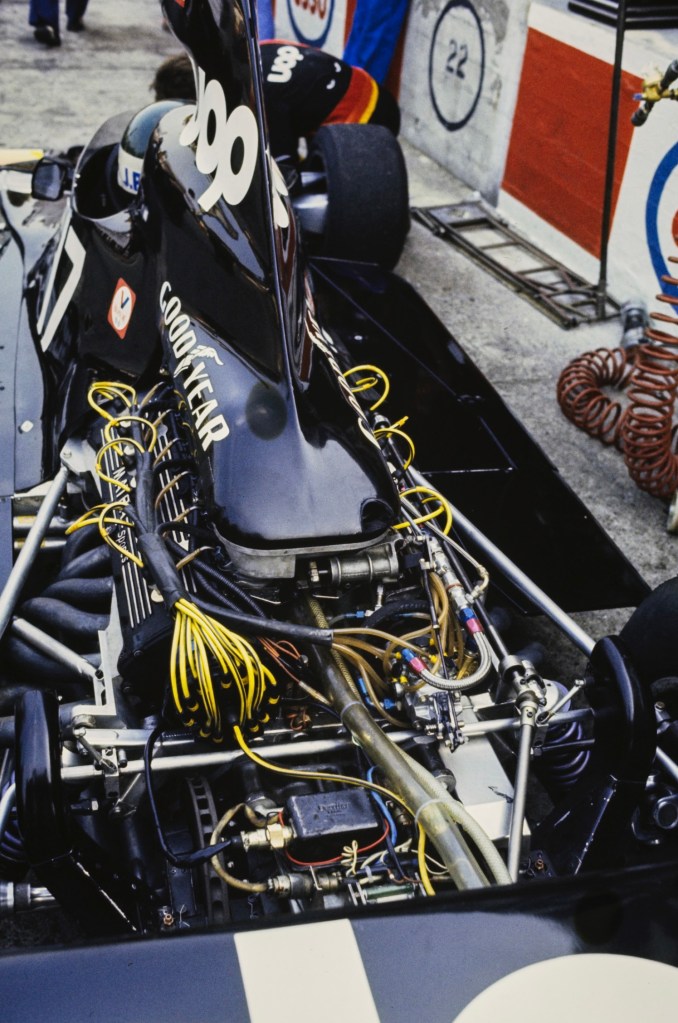
The diligence of team owner, Don Nichols’ designer had given the team the ‘unfair advantage’ of which Mark Donohue spoke so eloquently, with a car whose origins dated back to Shadow’s first year in GP racing in 1973. Whilst Southgate pursued this aero approach Nichols eventually concluded discussions with Matra to use its glorious V12 in a modified DN5 chassis christened the DN7.
The Ford Cosworth DFV 3 litre V8 was the dominant engine of the 3-litre formula, by the end of 1974 it had taken drivers titles in 1968/9 and 1970-4 but Ferrari’s speed in 1974 gave pause for many team managers – Cosworth users – to find an alternative which allowed them to leap clear of the garagiste pack as Enzo Ferrari christened the British Cosworth/Hewland hordes! The DFV was a tough proposition to beat given its blend of power, packaging, weight, economy, reliability, price and Cosworth’s servicing backup.
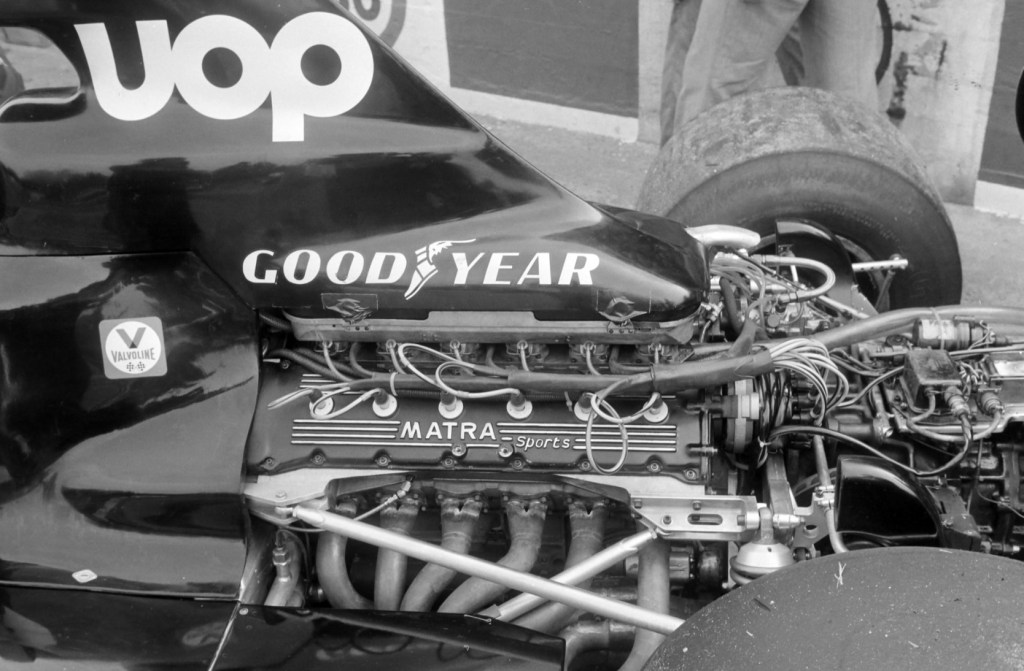
The obvious alternatives were the Matra V12 and Alfa Romeo Flat-12, both 3-litre endurance engines, and the venerable BRM V12. The latter was easily ruled out as being way past its prime, the BRM P207 was a sad joke in 1974/5 for all concerned. The Matra and Alfa were successful endurance engines. In the event BC Eccclestone, then Brabham’s owner, did a deal to use Alfa engines from 1976 whilst Nichols pursued the Matra option.
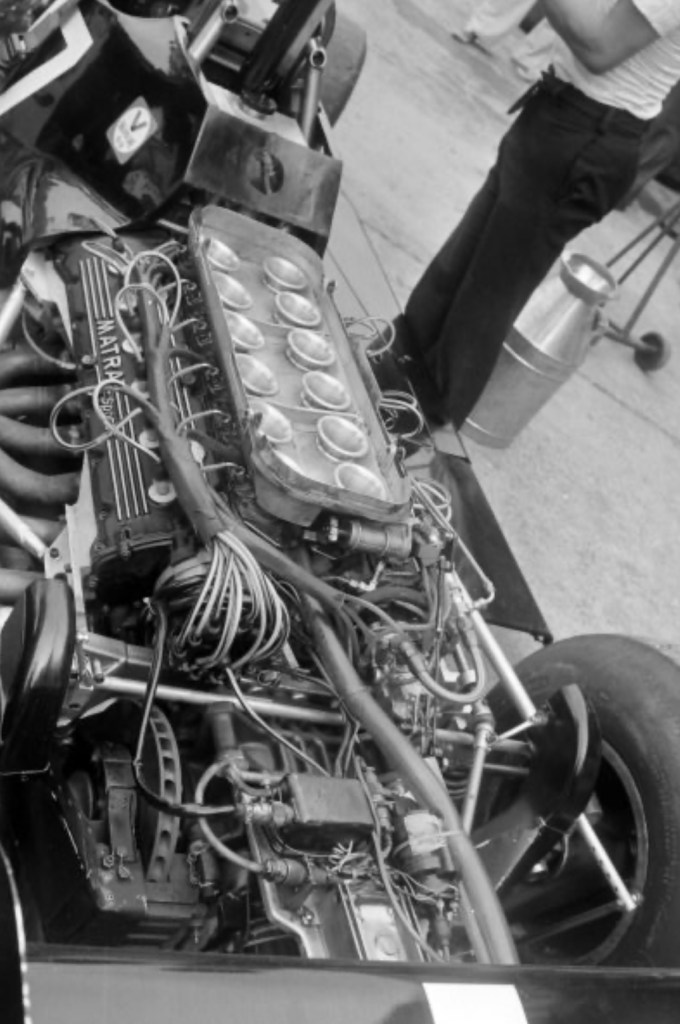
While the French V12 last appeared in GP racing in Matra MS120s driven by Chris Amon in 1972, the engine had been continually developed as an endurance unit. Given Matra’s Le Mans wins from 1972-74 and a whole swag of other endurance events; so it was not too difficult to adapt Matra’s learnings to a sprint-spec of the engine, from whence it originated in any event way back in 1968.

Evolving the DN5 Ford into the DN7 Matra…
Whilst commercial negotiations dragged on between Nichols and Matra, Southgate and his team focussed on keeping the DN5 competitive while concepting the DN7, which was essentially a DN5 adapted to fit the longer, heavier, thirstier but more powerful V12.
Major differences were increased fuel tankage and a longer wheelbase, otherwise the key elements of both cars – chassis, body, aero and inboard front suspension by rockers, conventional outboard rear suspension and Hewland TL200 gearbox were the same. This gearbox was developed by Hewland for endurance purposes and was used by Matra in their MS670 sports cars.
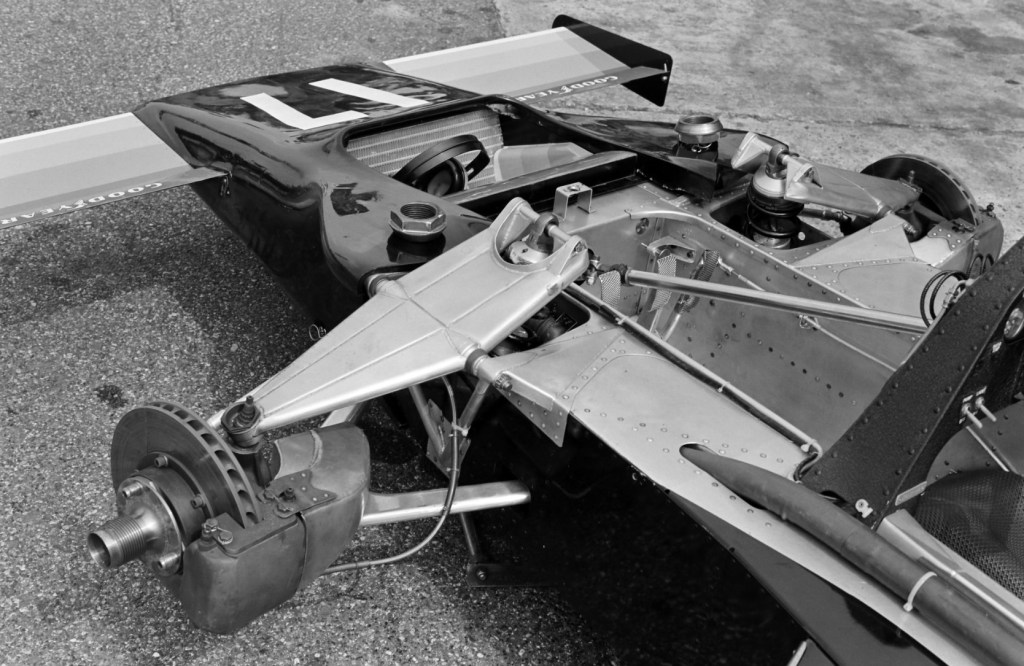
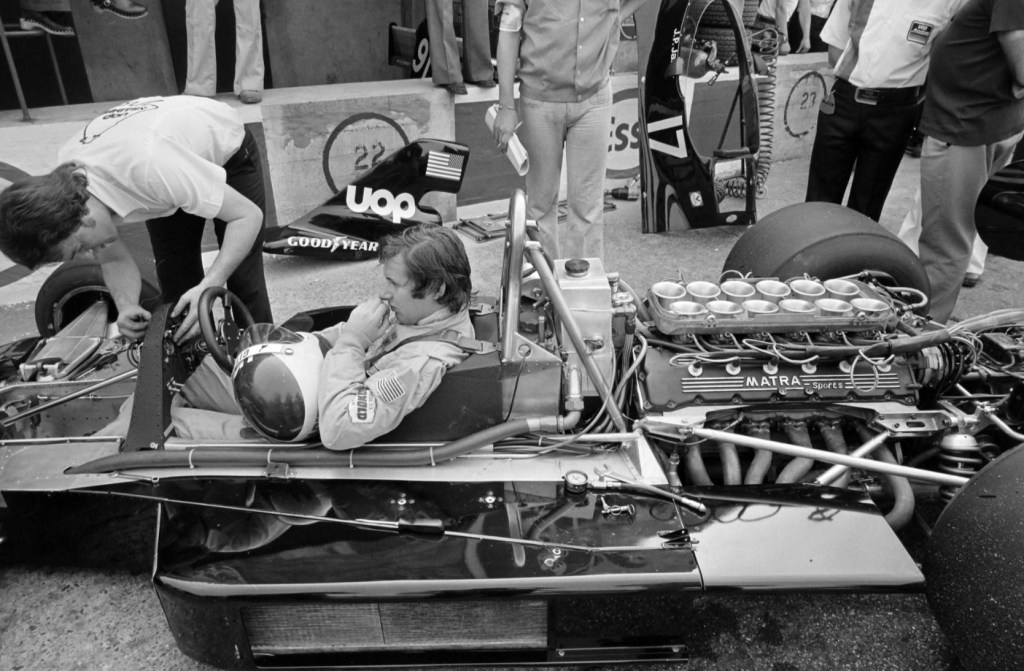
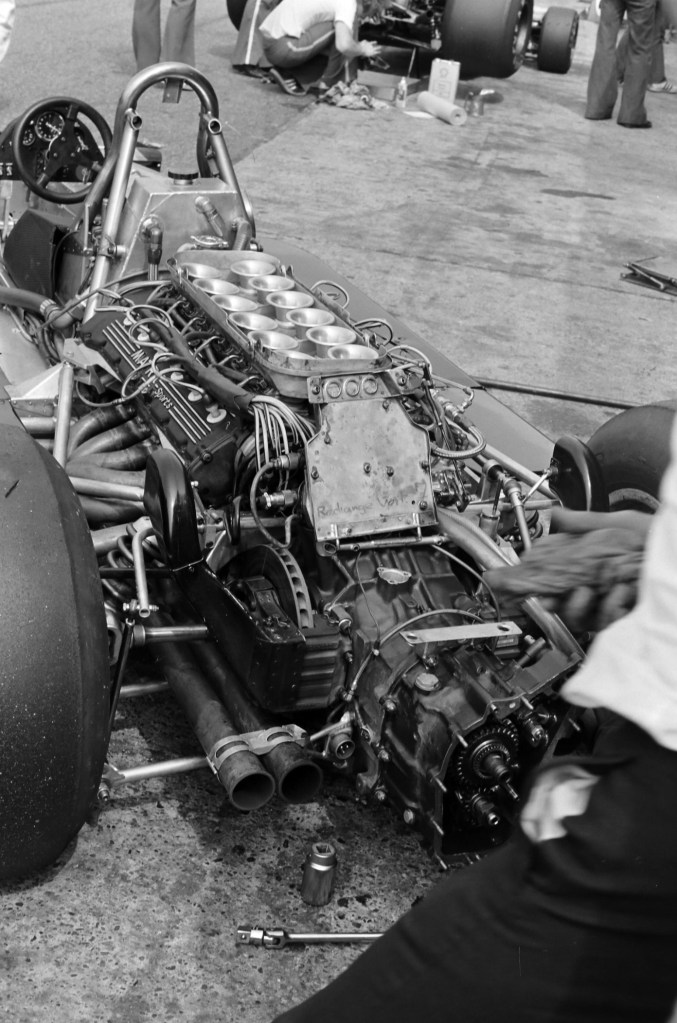
Tony Southgate spoke of the challenges of adapting the Matra engine to the DN5 in his autobiography.
‘In view of my V12 experience with Eagle and BRM the powers that be most likely thought I was a bit of a V12 expert and that I might be able to resurrect the old Matra engine and get it to the front of the grid. Fitting the Matra engine was not that straightforward and of course the V12 engine required a lot more fuel cell capacity. The engine ran at 12000rpm, about 30% more than the DFV, so extra tanks were fitted into the sides of the car alongside the existing seat tank.’
‘Due to the extra engine RPM and horsepower the cooling system needed to be increased in size, so I fitted larger side pods and set the water radiators further forwards to maintain the weight distribution of the Cosworth engined DN5. The V12 was longer than the DFV, of course, so the wheelbase was increased a little’.
‘The end result was a longer, heavier but more powerful DN5 which we called the DN7. I thought that it would do about the same lap times as the DN5 and that proved to be the case’.
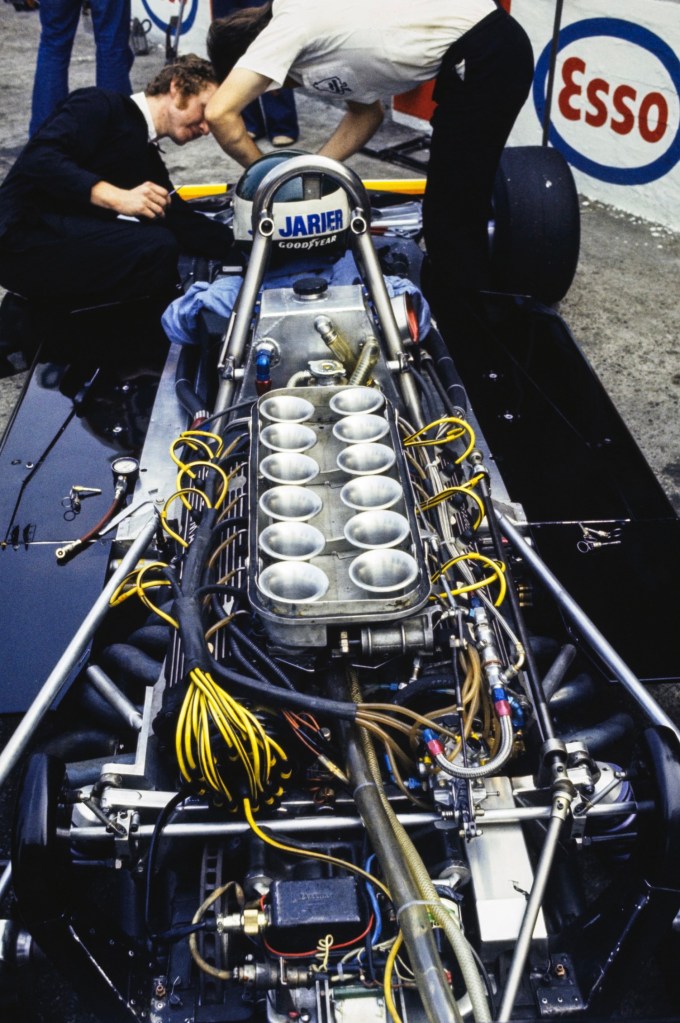
When finally completed the car was tested by ‘Jumper’ at Silverstone in July and made its race debut in practice for the Austrian GP on 17 August.
Tom Pryce drove his usual Ford engined DN5 and offered a direct comparison, both drivers being more or less equivalently FAST. The car was heavier than the DN5, it wasn’t bespoke, but still provided the team and of course Matra a sense of competitiveness of the package.
The Austrian GP was a horrible weekend, Mark Donohue crashed his Penske March 751 in practice as a result of a Goodyear tyre failure, dying in a Graz hospital several days later of brain injuries sustained in the high speed crash. Half points were awarded to finishers of the rain shortened race won by Vittorio Brambilla’s works March 751 Ford, that teams first, long overdue win.
Denis Jenkinson in MotorSport had this to say about the re-appearance of Matra in GP racing; ‘Another welcome return was made by the Matra V12 engine, this time in the back of a UOP Shadow DN7, but somehow it seems to have lost that car-splitting scream that it used to have in the days of Beltoise and Pescarolo in the blue cars from Velizy. Perhaps the Ferrari and Cosworth engines have caught it up on the decibel scale, for they certainly have on bhp output. None-the-less it was nice to see and hear a Matra V12 in Grand Prix racing again’.
‘Particularly pleasing was to see the enthusiasm with which JPJ was tackling the job of driving the DN7. It was not a half-hearted attempt, with one eye cocked over the Cosworth powered DN5 standing in the paddock, or a dickering between the two cars. As far as Jarier was concerned there was only one car for him and that was the DN7. With that approach in the cockpit the Shadow Matra V12 project could get somewhere. It certainly started well by being ahead on the grid of Pryce in the Shadow Cosworth V8, even if it was only 0.2 sec ahead’
Jarier qualified the DN7 13th, one grid slot in front of Pryce, Tom had a great race finishing third while the Matras fuel injection system malfunctioned causing JP’s retirement on lap 10. It was an ok start for a car with limited testing, the Shadow boys prepared the same mix of cars for the Italian GP held on 7 September.
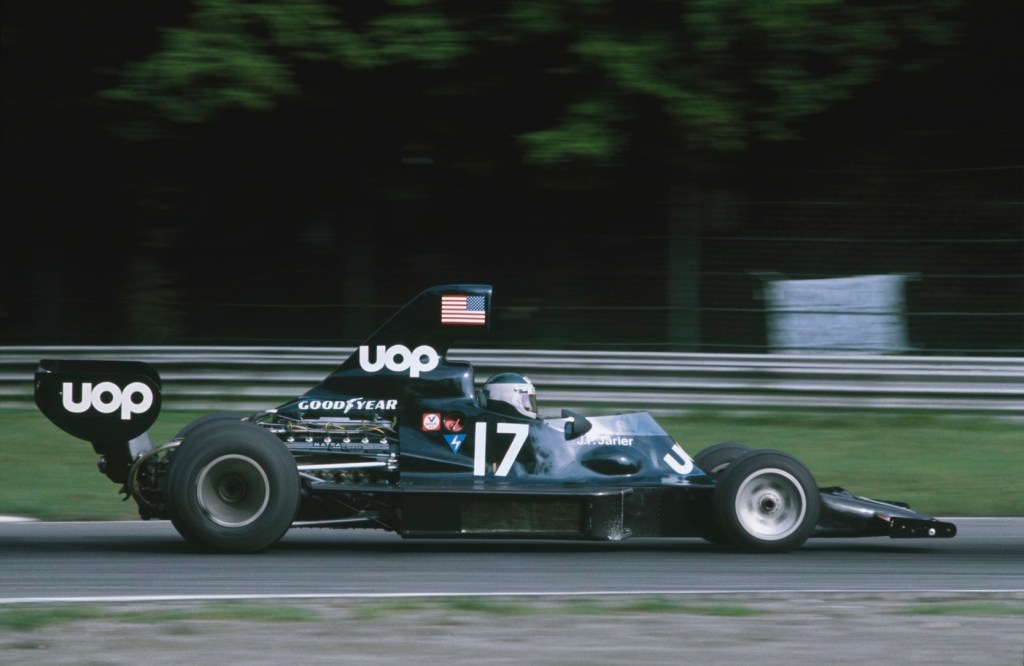

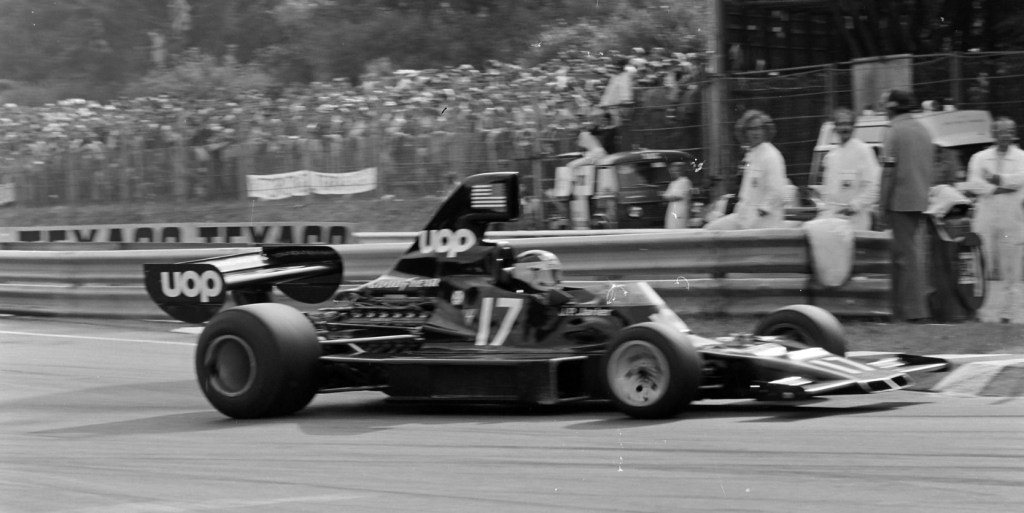
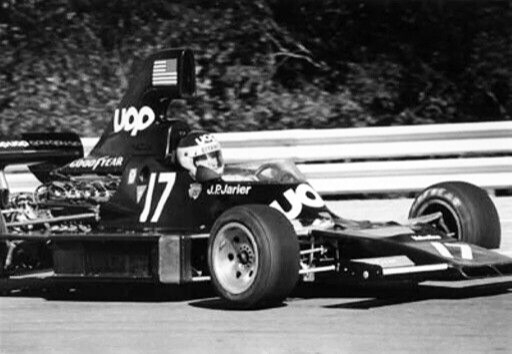
In between the Osterreichring and Monza the non-championship Swiss Grand Prix was held at Dijon, France, there being no circuits in Switzerland, with Jarier putting his Shadow on pole. He led the first 23 laps until retirement with gearbox trouble; but he was back in his Ford engined DN5 while the DN7, the team only built one chassis – #DN7/1A – was readied for Monza. Clay Regazzoni won the event in his Ferrari 312T and then doubled up also driving to victory at Monza.
The Shadows qualified in Italy exactly as they had at the Osterreichring, the results similar as well; ‘Jumpers’ Matra failed, this time with fuel pump failure and Pryce was sixth after a good mid race battle with James Hunts Hesketh. Niki Lauda won his first drivers championship, his third place in his Ferrari 312T assuring him of the championship.

At the season ending Watkins Glen race both Shadows were very fast; Q4 for Jarier and Q7 for Pryce but both were in DN5s, the Matra experiment was, sadly for the sport, over.
‘Jean-Pierre Jarier was fighting hard with the Shadow V12 during the first session, a revised fuel system and some titanium exhausts from the sports car endowed it with appreciably improved performance at the top end of its rev band. Alas, Jarier’s enthusiasm would be channeled into the Cosworth powered DN5 after it was calculated that the engine would consume fuel at the rate of 4mpg under racing conditions, and the French engined car was sadly pushed away for the remainder of the weeekend’ (therefore the car would not hold sufficient fuel to complete the race without a stop) said Denis Jenkinson in his MotorSport race report.
It may be that that was the case, or simply that Don Nichols had learned that Matra engines would be used exclusively by the new Ligier team for 1976 and simply put the car to one side to focus on the quicker DN5 Cosworths.
Lauda won the race, both Shadows well down the field despite qualifying times which showed just how quick a package the car was on a circuit which was a great test of a car’s medium to high speed handling characteristics.
Both Nichols and Ligier wanted exclusivity in terms of engine supply, from a France Inc perspective the choice of the well connected former rugby international’s team made more sense than the American owned British based concern; French car, team and driver.
From Matra’s viewpoint it makes more sense to me, given the aerospace conglomerates immense resources, to supply two teams in 1976 especially given Shadow’s speed, if not reliability in 1975.
Ligier were an unknown 1976 quantity, Shadow were. Both Shadow drivers had shown prodigious speed in 1974-75, one was French and Southgate did a neat job integrating the Matra V12 into an existing chassis designed for a different engine. His bespoke 1976 Matra chassis would have been lighter overall and designed around the engine architecture rather than an adaptation of what he had based on the Ford Cosworth.
Ligier were to be a one car entry in 1976 so Matra very much had all their eggs in one basket. Ligier’s JS5 1976 car was a horrible looking, bulky thing, mind you it delivered the goods in a a way Shadow did not that year. Jacques Laffitte was eighth in the drivers championship, Pryce 12th and poor Jarier didn’t score a point in the lightly updated 1976 Shadow DN5Bs and new DN8. Matra finally achieved a GP win when Laffitte won the 1977 Swedish Grand Prix in his Ligier JS7, the whole paddock were delighted for him, Ligier and Matra.
Don Nichols retained ownership of Shadow, but his company, United Oil Products, was no longer the team’s major sponsor and the slippery slope of progressive loss in competitiveness began, whilst noting Alan Jones’ lucky 1977 DN8 Ford, Austrian GP win.
If only Nichols had jagged the Matra deal or the Velizy concern supplied both teams he may have stayed more involved and we would have had the chance of seeing Tony Southgate designed, bespoke, Matra engined cars driven by two of the fastest chargers around at the time. It’s an interesting ‘mighta been’ I reckon?!…
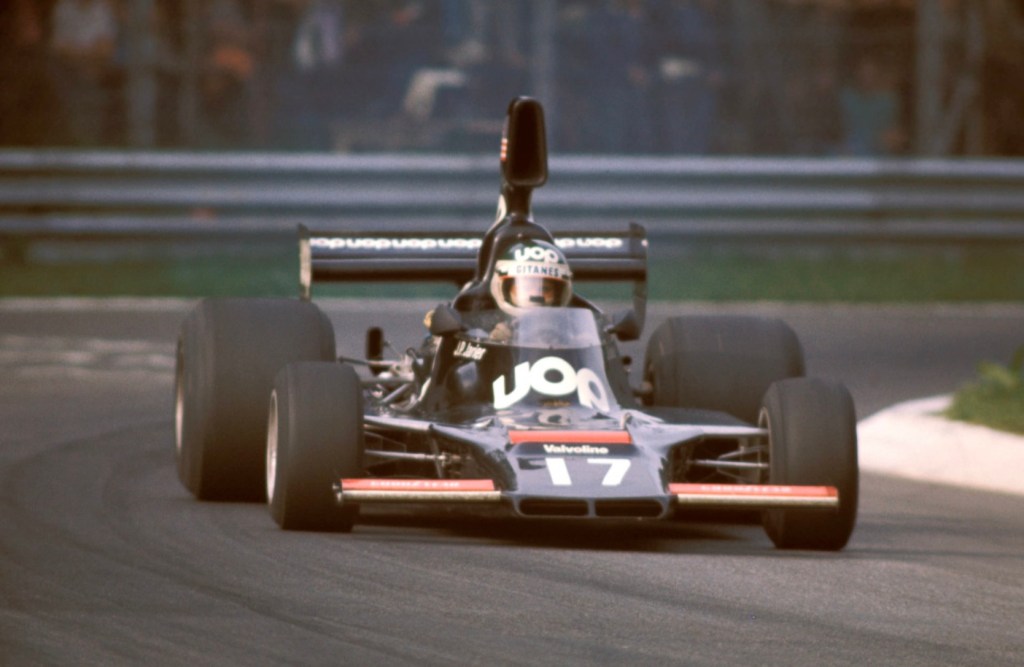
Shadow DN7 Matra Technical Specifications…
Chassis; aluminium monocoque using the Matra MS73 V12 as a fully stressed member. Front suspension by lower wishbone and top rocker actuating inboard mounted coil spring/damper units. Rear suspension twin parallel lower links, single top link, coil spring/damper units and twin radius rods. Adjustable roll bars front and rear. Wheelbase 2667mm, front and rear tracks 1473/1549mm. Weight 612Kg.
Front and rear disc brakes, inboard at the rear. Rack and pinion steering. Wheel sizes front/rear 9.2/20 13 inch in diameter, 16.2/26/13 inches.
Engine; Matra MS73 3-litre, DOHC, four valve, Lucas fuel injected, all aluminium 60 degree V12. 2993cc, bore/stroke 79.7/50mm, circa 500bhp @ 11600rpm. Gearbox; Hewland TL200 five speed transaxle
Etcetera…
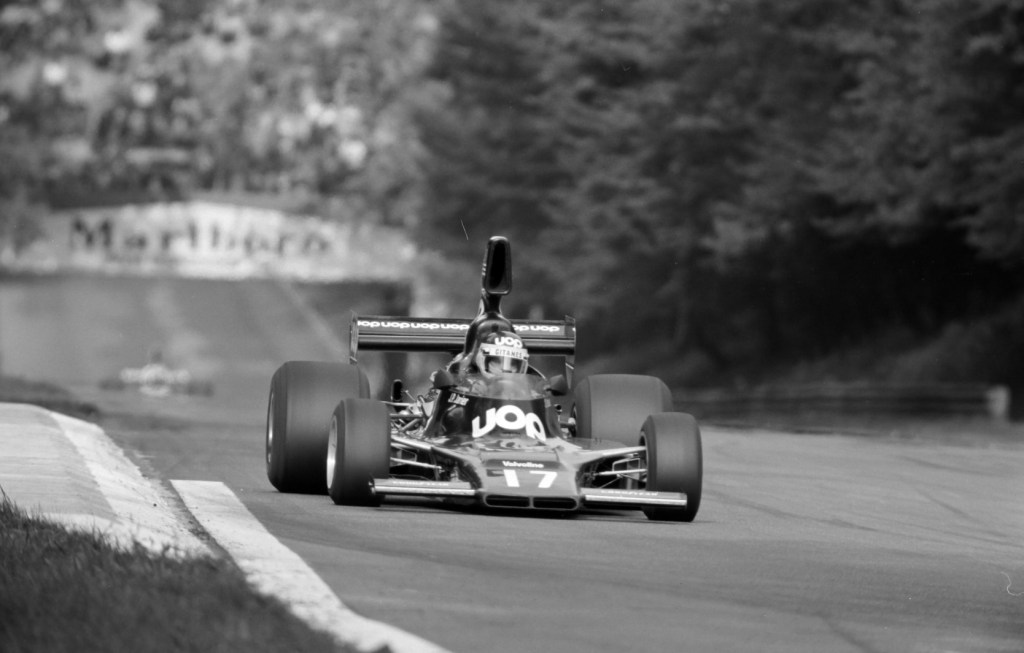
More shots at Monza in 1975, probably too much of a good thing…
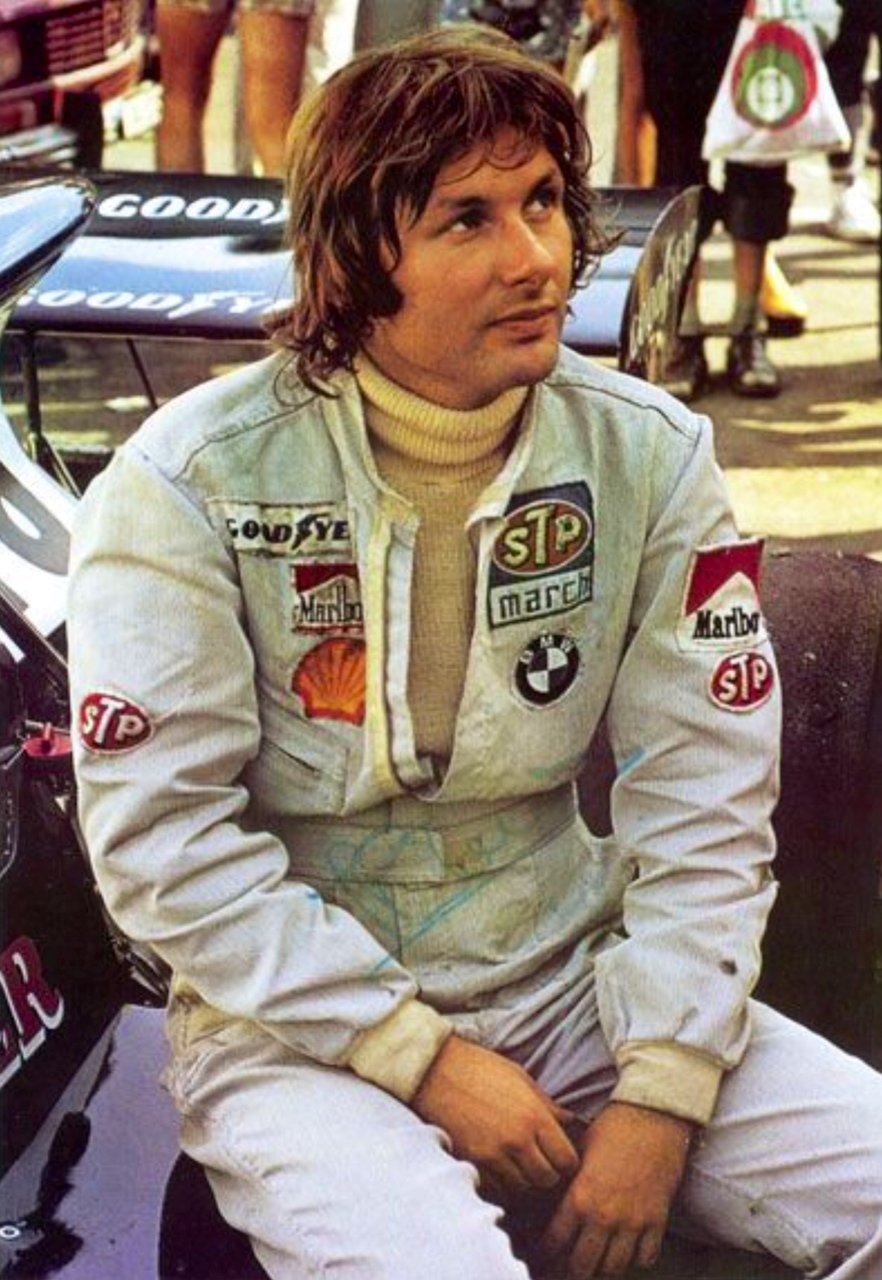
Tony Southgate on ‘Jumper’ Jarier in ‘MotorSport’…
‘He had such fantastic car control and speed but just didn’t have the commitment. I’m sure he could have been World Champion if only he could have been bothered. Jean-Pierre got bored very easily and in practice or testing he would adapt himself to the car and do the same times after you had made adjustments. He was a typical French driver in that he was more interested in going out of an evening, eating a good meal and chasing the ladies. It soon became clear that he wouldn’t go on to the next level’.
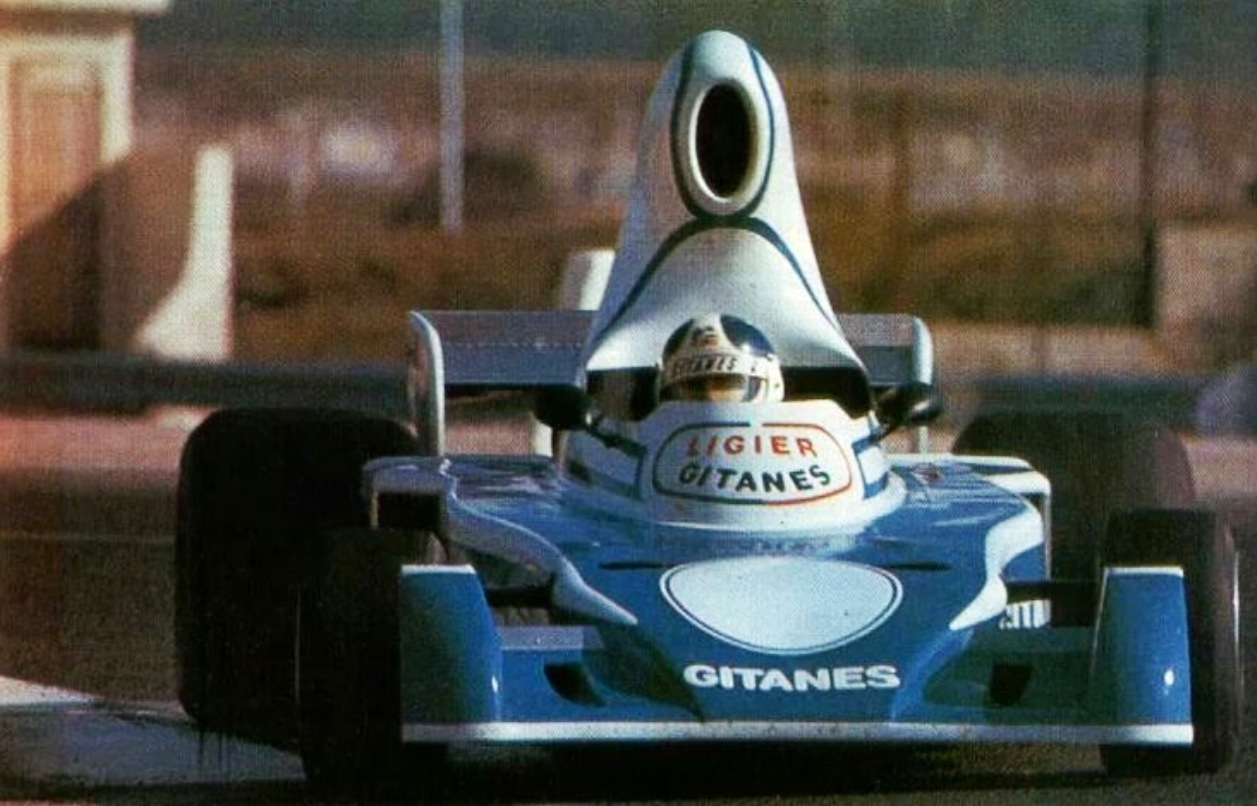
1976 Ligier JS5 Matra…
The Ligier JS5 Matra was a sinfully ugly car, it had the looks only a mother could love but its ‘fugliness’ was only skin deep!
Gerard Ducarouge and his team had the aero spot on, the enormous airbox which led to the car’s nickname The Flying Teapot chanelled air beautifully over the car and smoothed it onto the rear wing. Eighth in the drivers title for Laffitte and sixth for Ligier in the constructors race in a one car team entry was an exceptional first year performance.
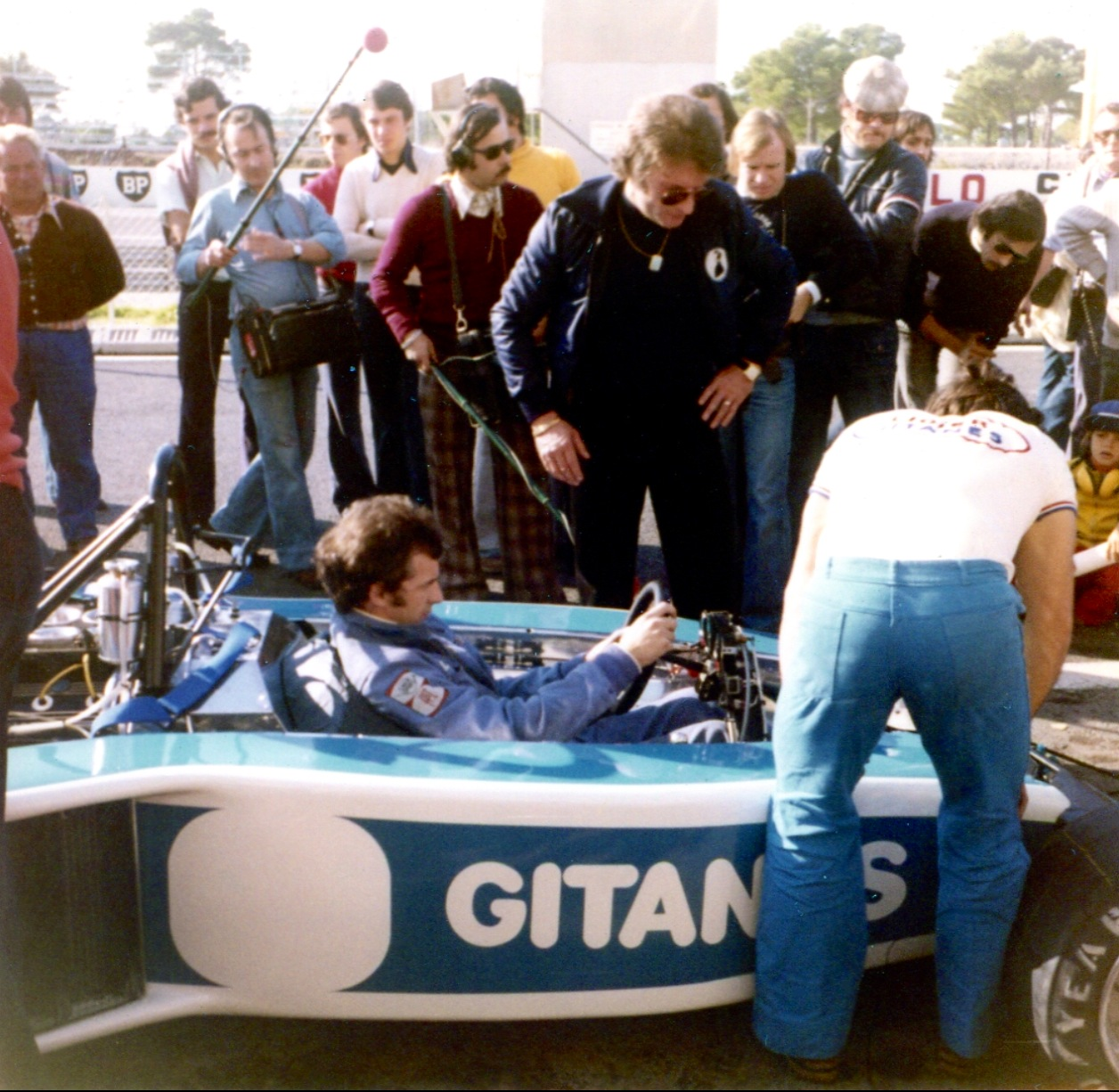
The pictures are of the JS5’s first test at Paul Ricard in December 1975 with Jean Pierre Beltoise up. JPB had been announced as the driver, perhaps via sponsor Gitanes, but Guy Ligier was not convinced and organised a driver test over two days. Jacques Lafitte the quicker of the two in a car which had been tweaked by JPB who tested on the first day.
There was disquiet in France in some quarters over the choice of Laffitte, JPB at the time was France’s only contemporary GP winner, but Ligier’s choice was sound. Jacques in Frank Williams’ Ford engined Williams FW04 and Martini Mk16 Euro F2 crown ahead of the March BMW hordes in 1975 made it fairly clear that he was the better choice. JPB, fine driver that he was, ‘ultimate speed’ had been shown over the years to be not in the Ace category whereas Jacques’ potential, relative novice that he was, was pretty clear. It was an astute choice if not an entirely popular one.
Bibliography…
MotorSport January 2015, Denis Jenkinsons MotorSport Austrian and US GP reports 1975, GP Encyclopaedia, Tony Southgate ‘From Drawing Board to Chequered Flag’
Photo Credits…
MotorSport Images, LAT, Car Blueprints, Alejandro Saldutto
Tailpiece…
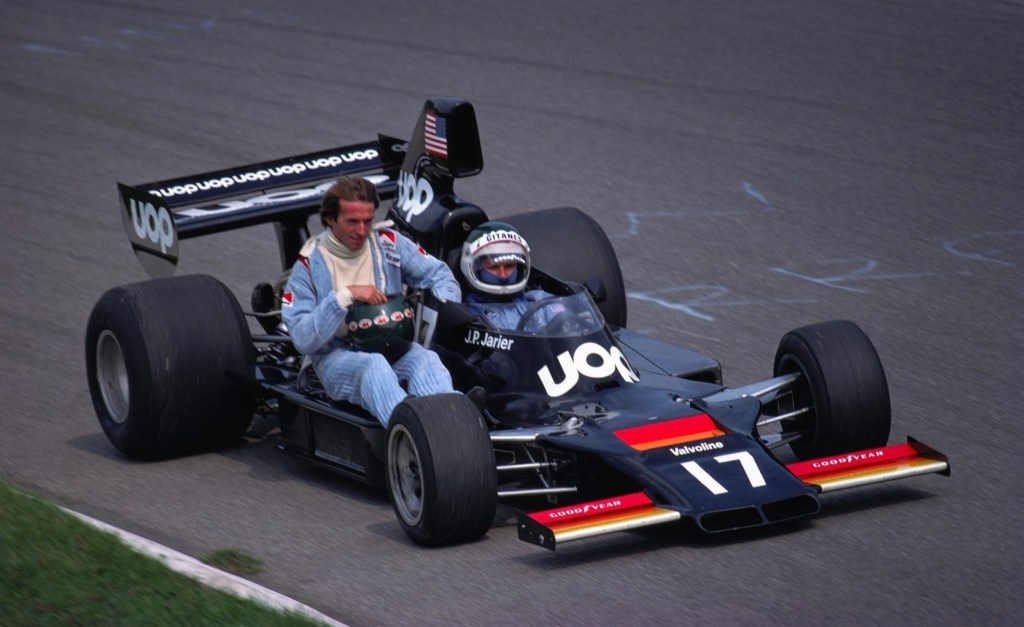
‘So waddya think of the engine Jean-Pierre? is perhaps the question Jacques Lafitte is asking JPJ on their way back to the Monza paddock’? He knew full well of course as an ex-Matra sportscar driver…
Finito…

