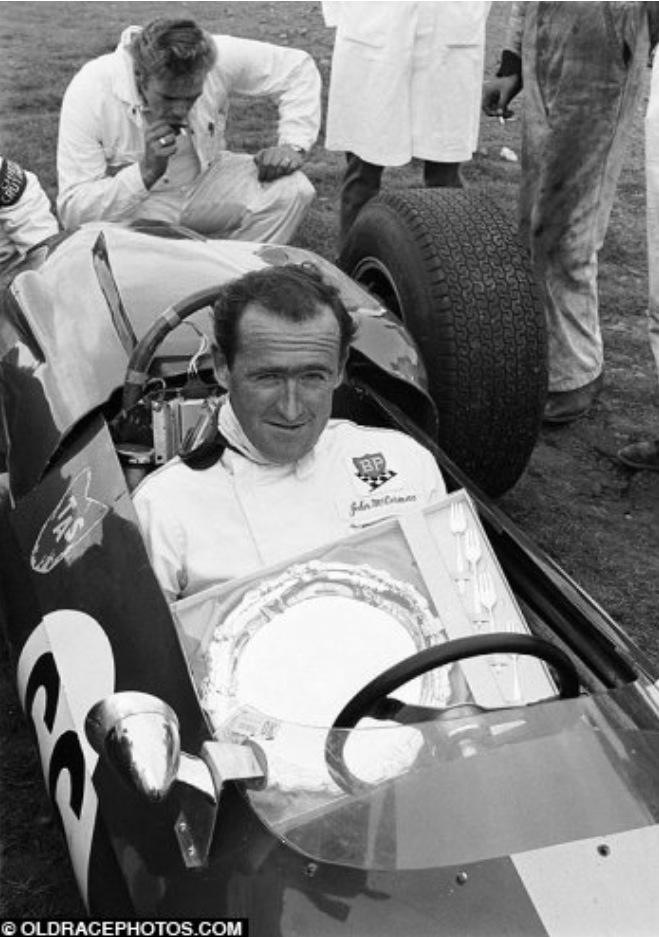
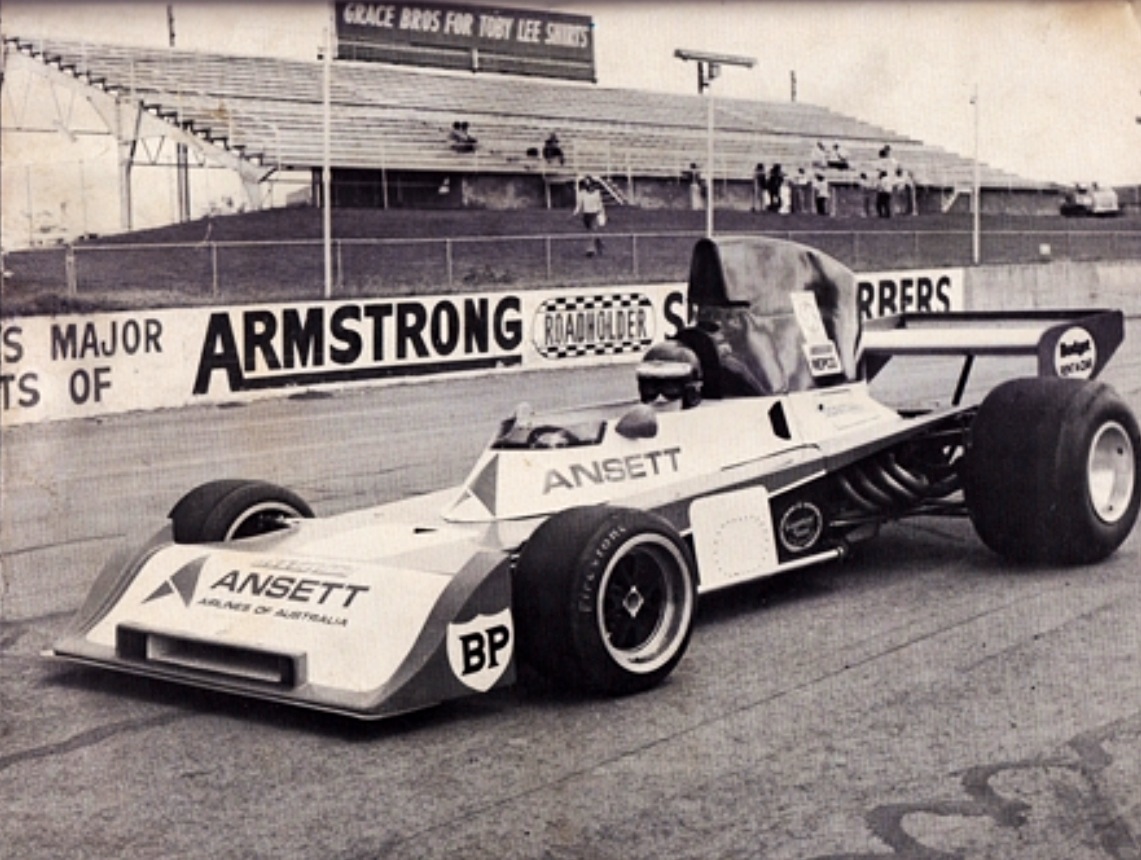
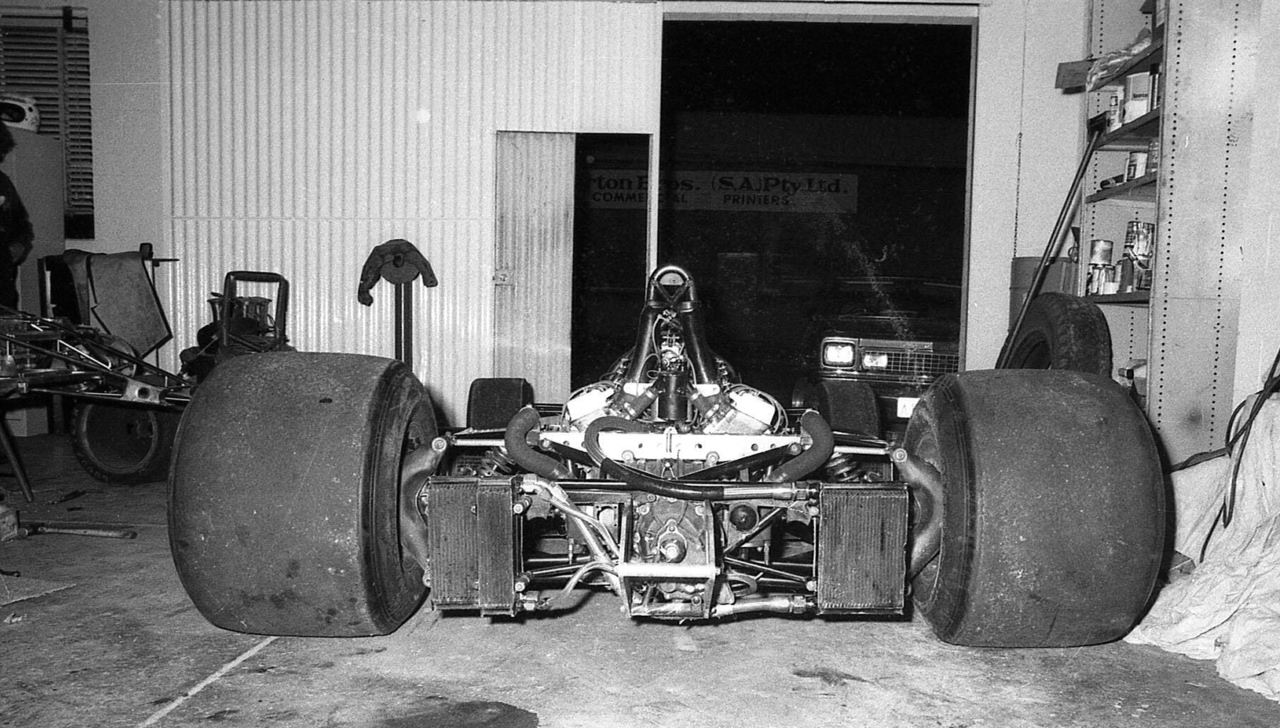
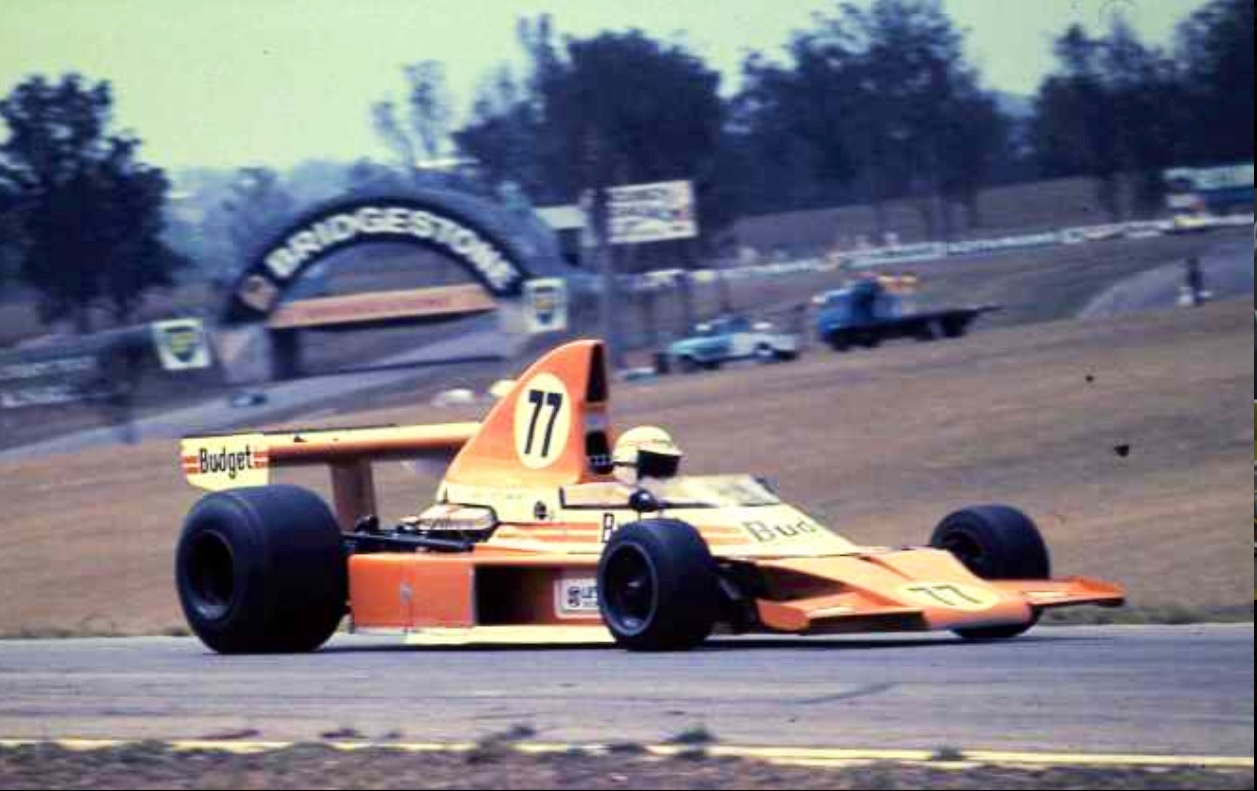
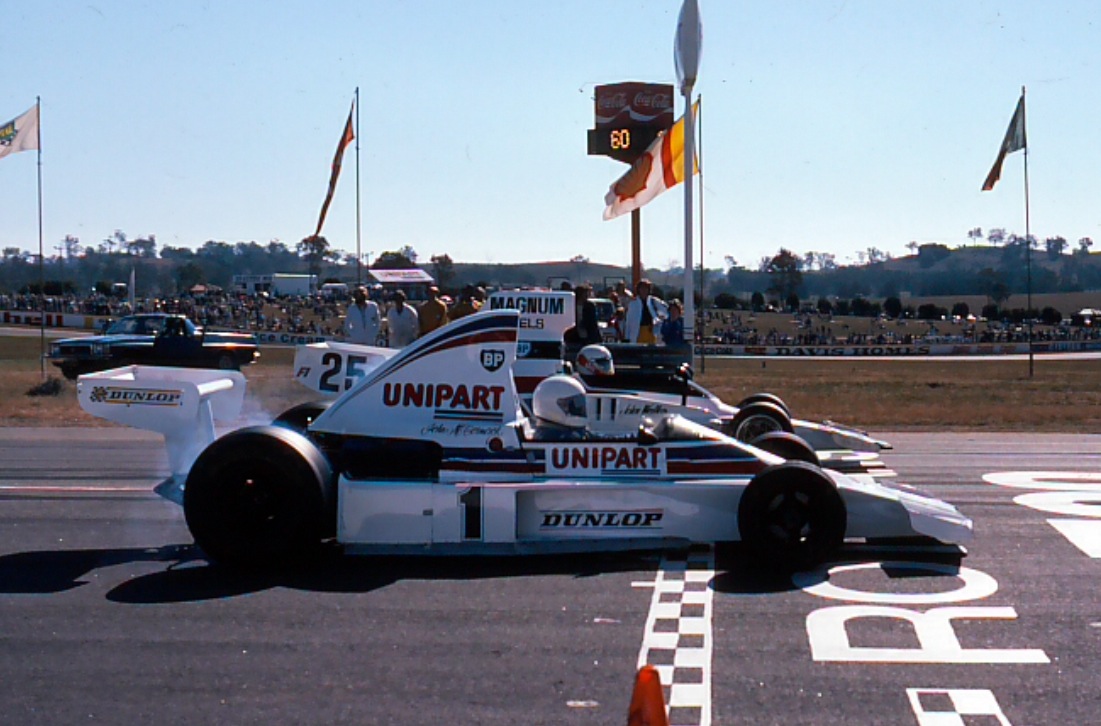
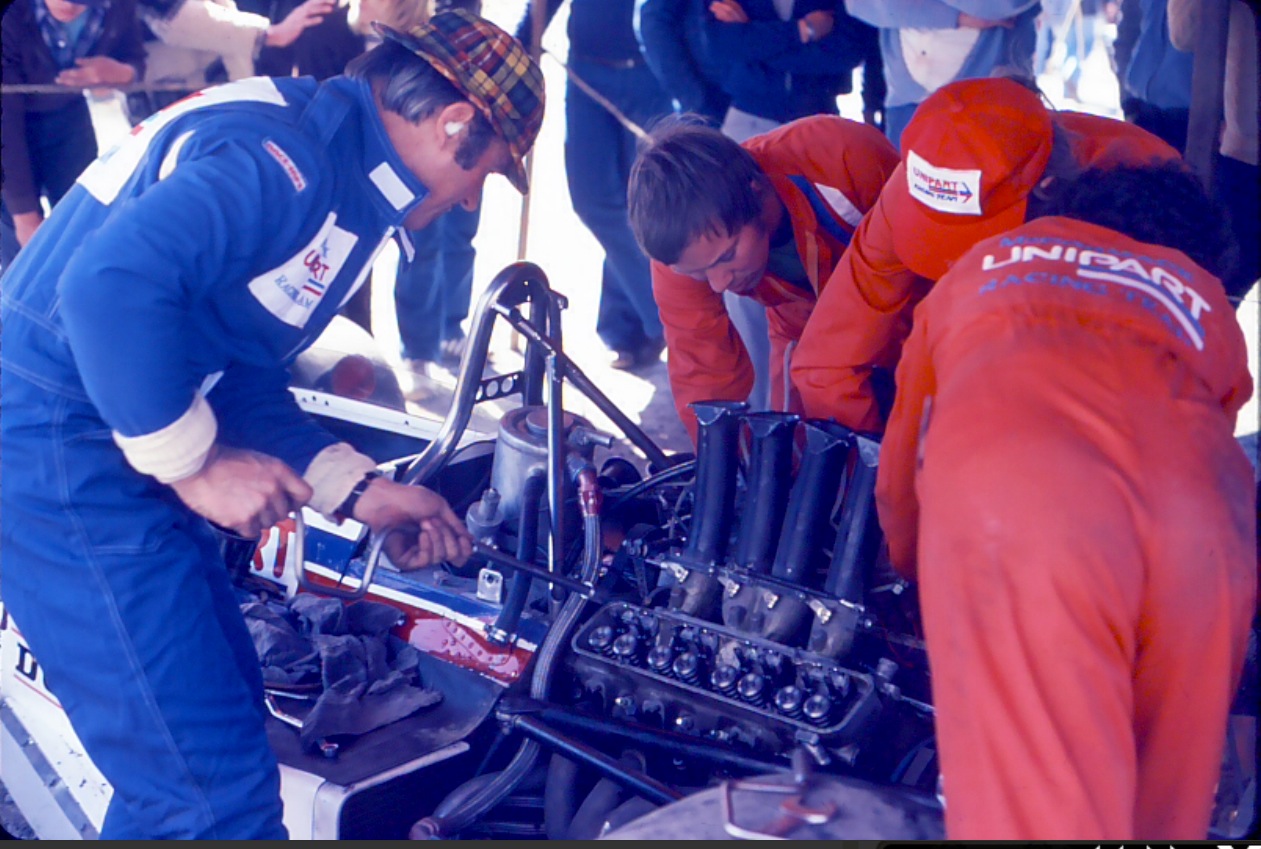
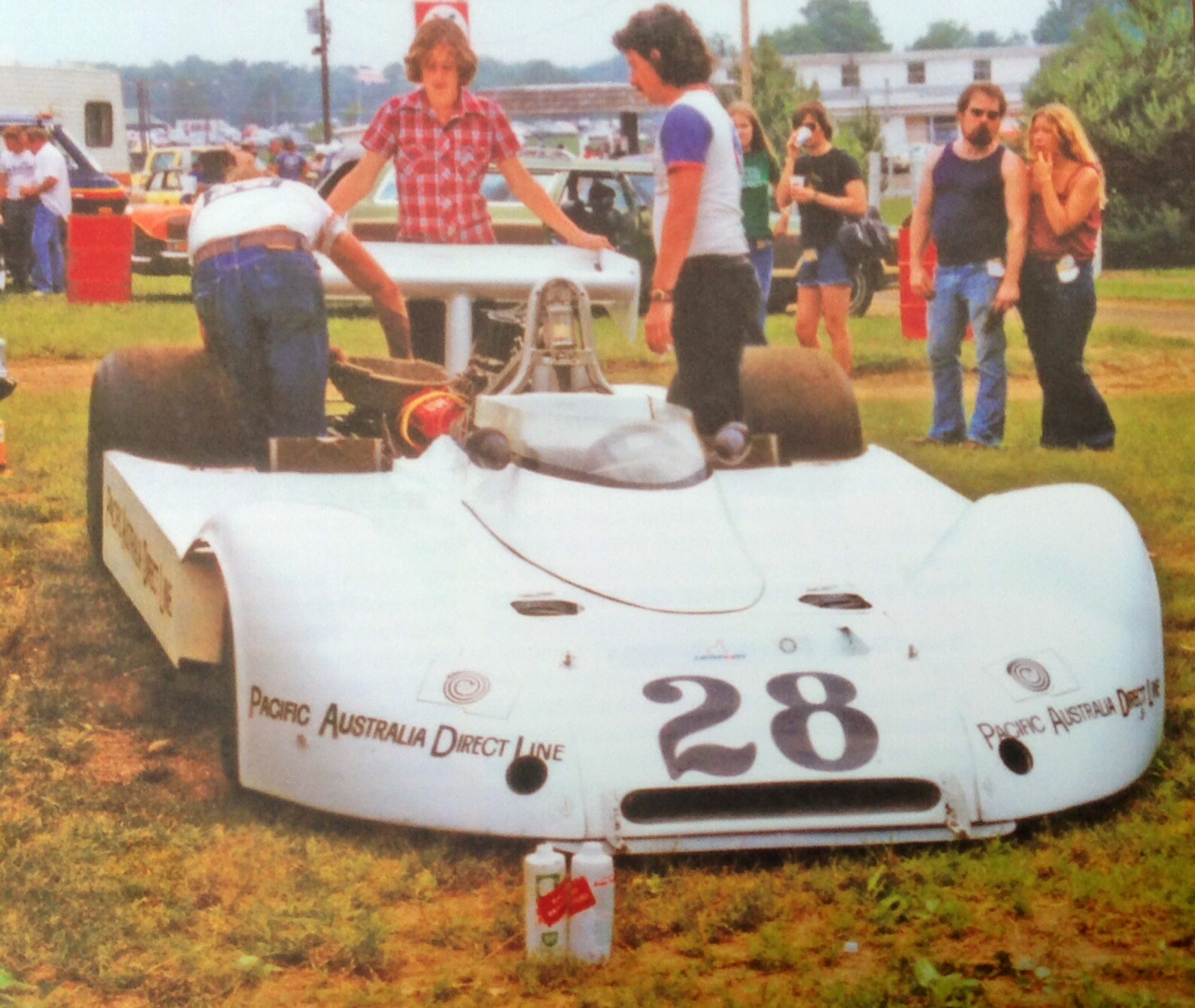
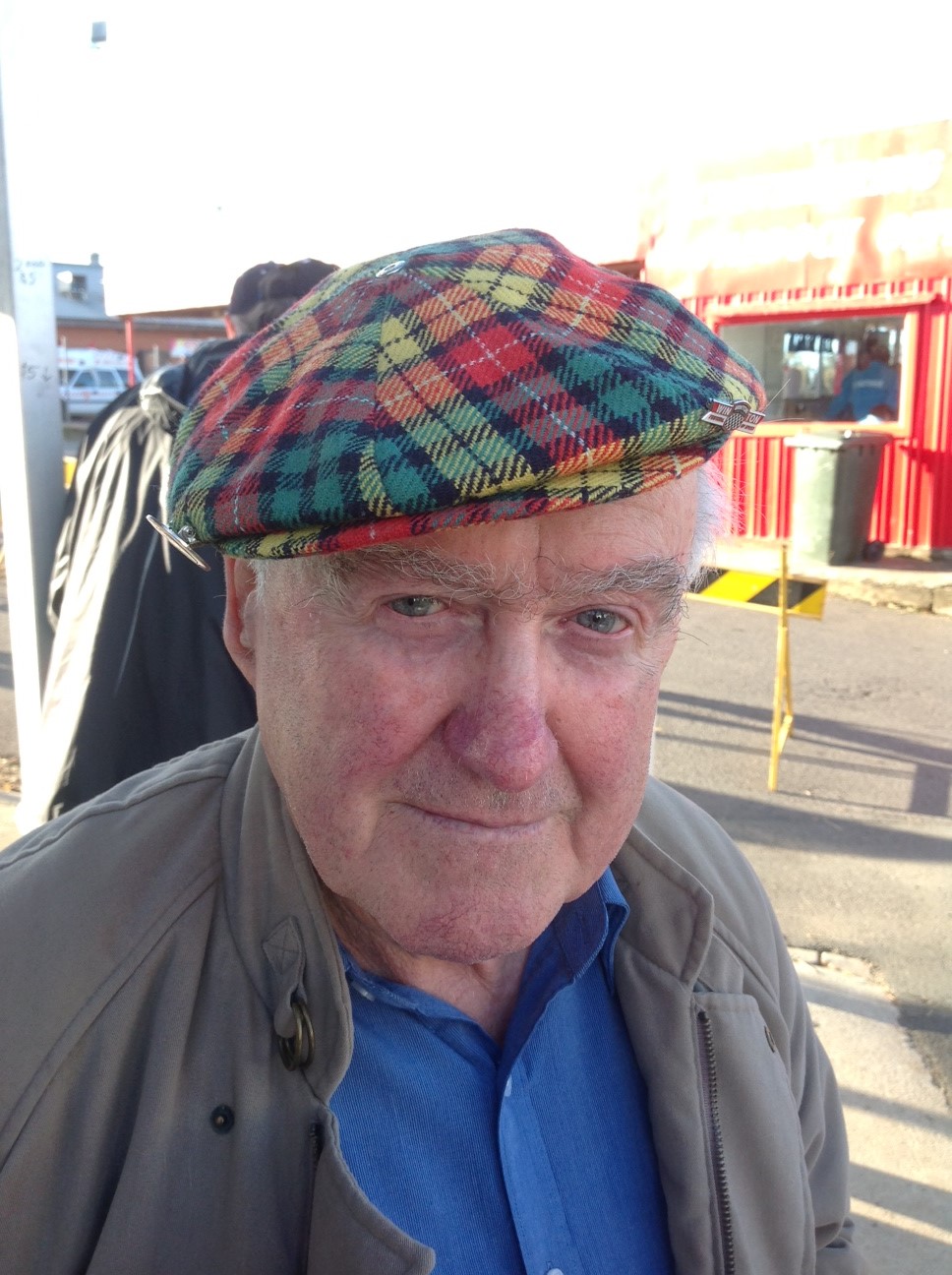
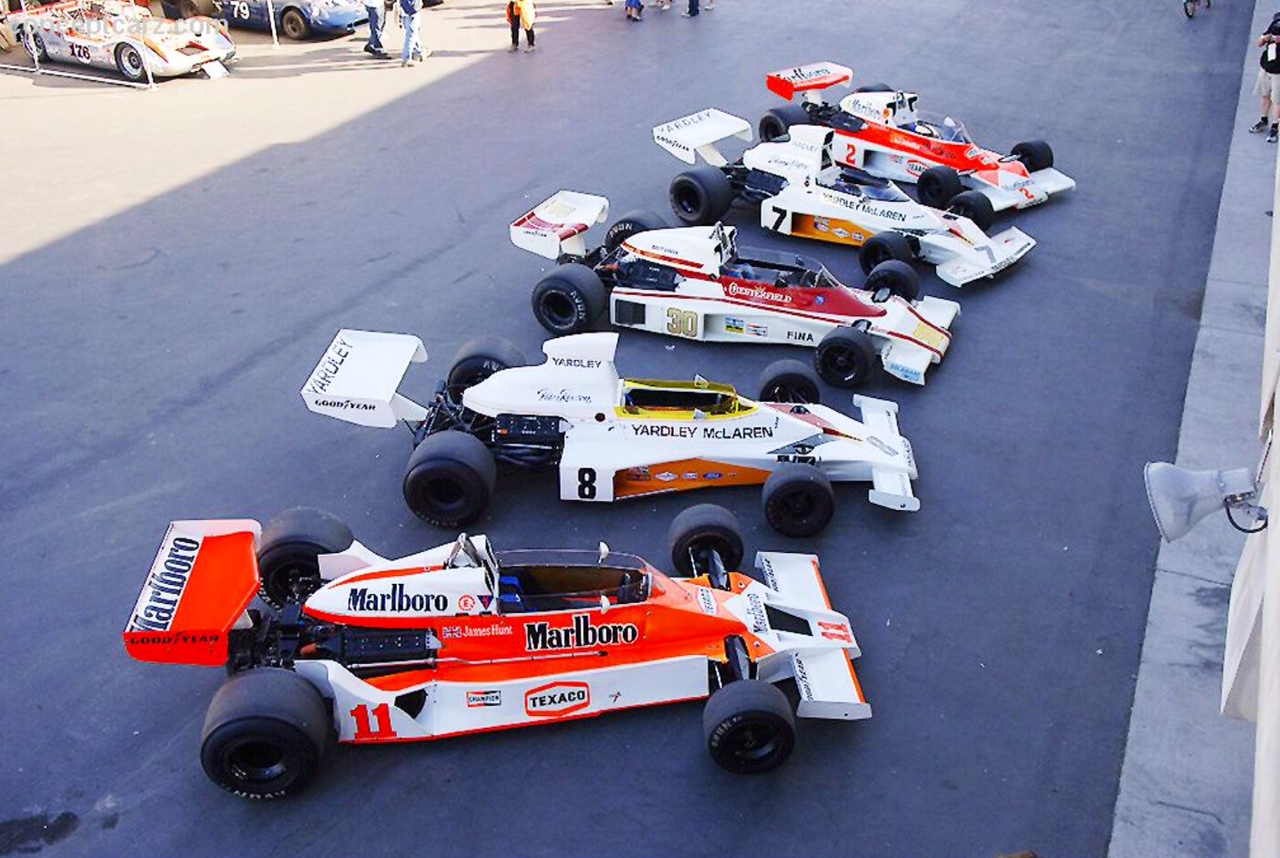
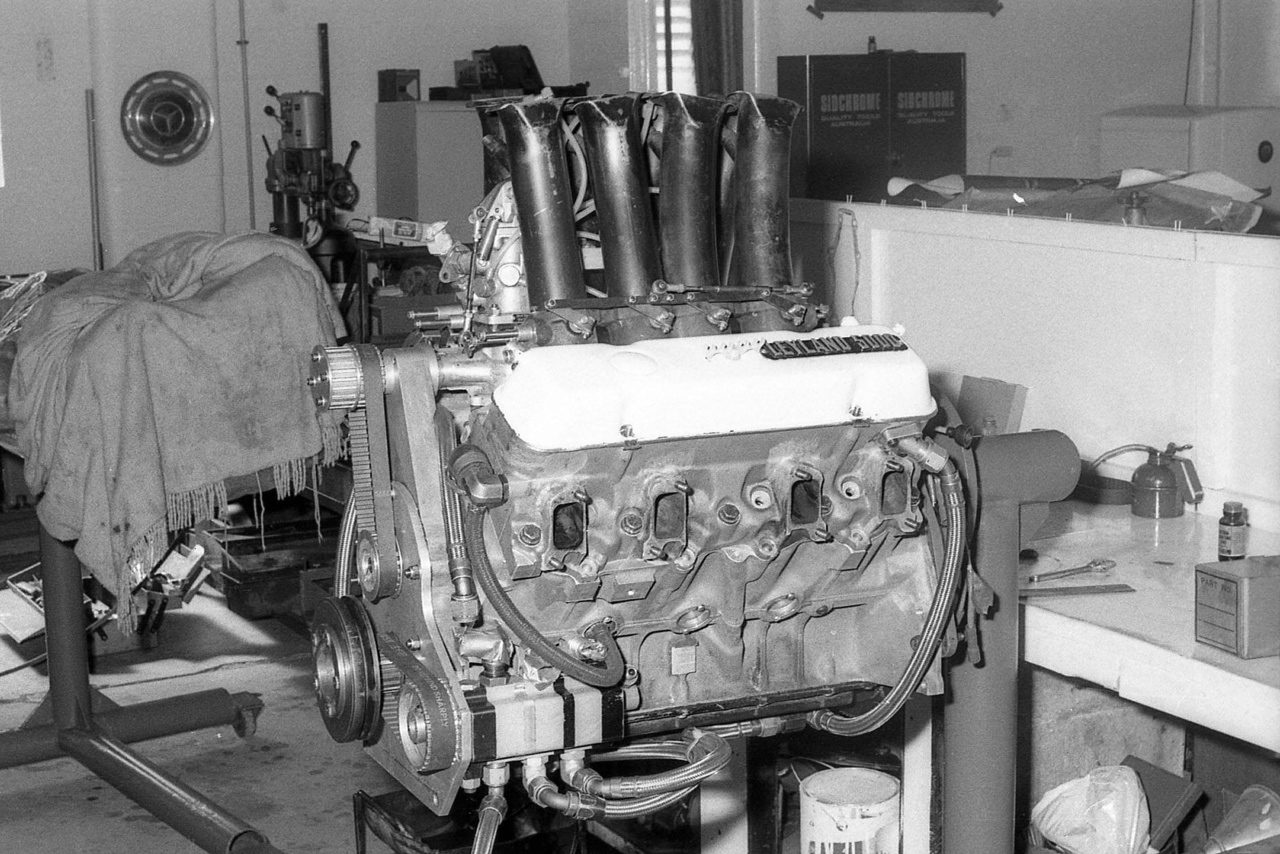
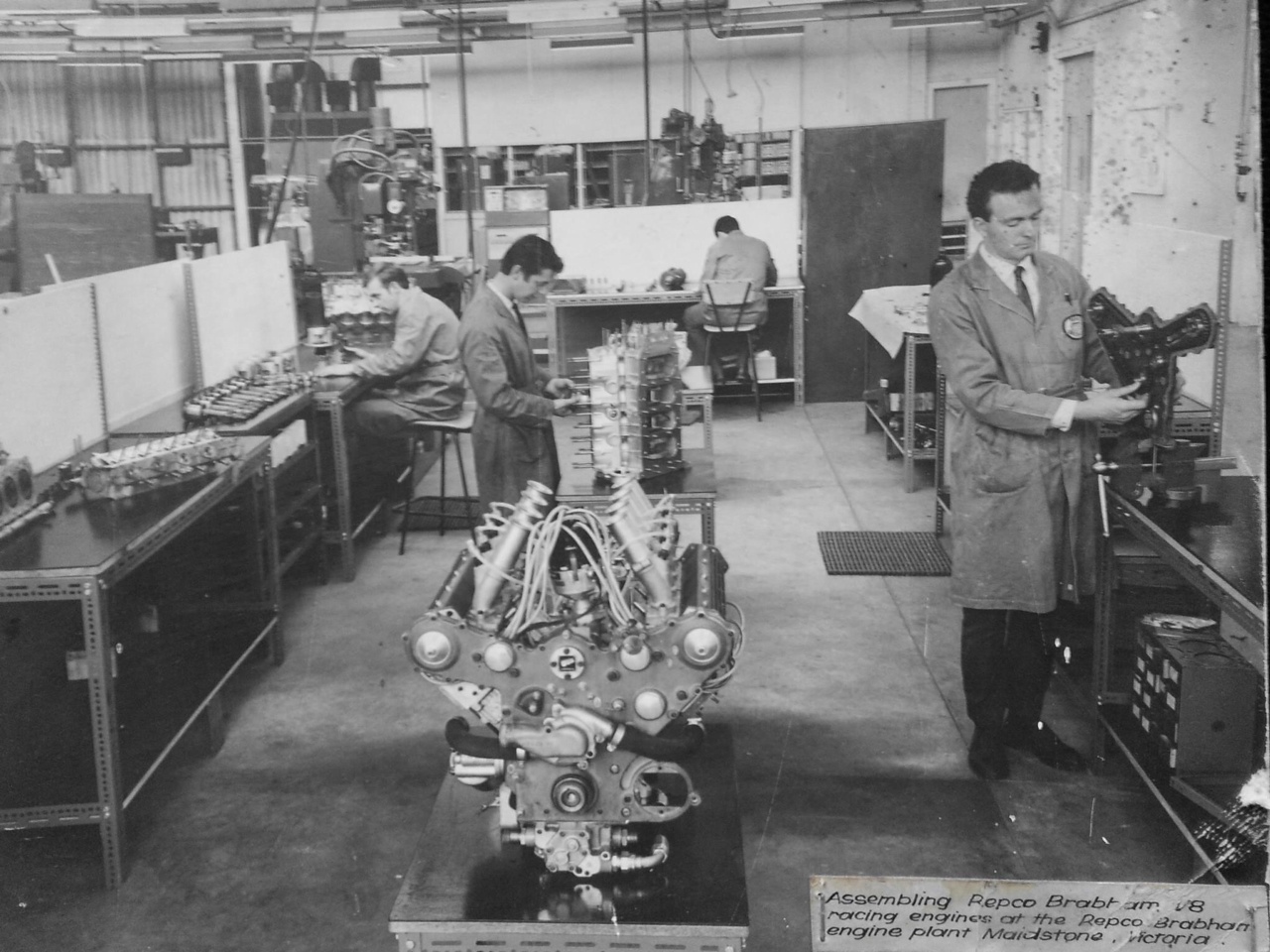
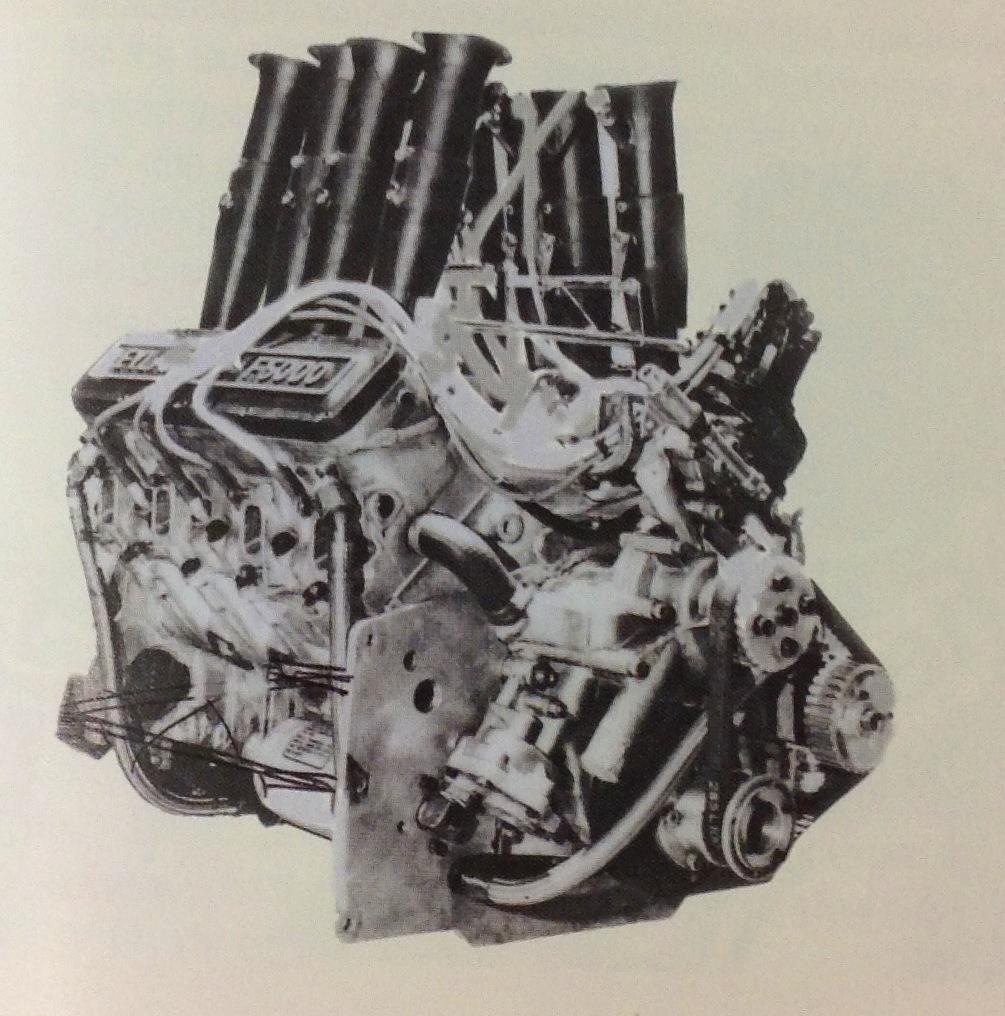
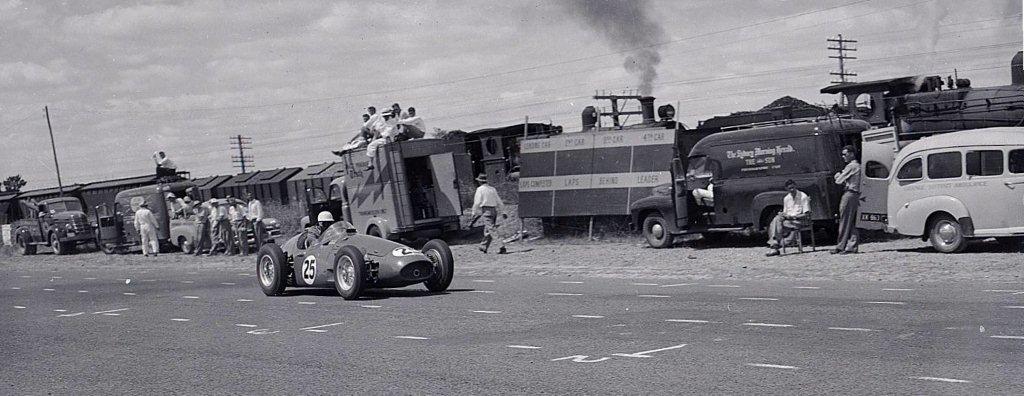
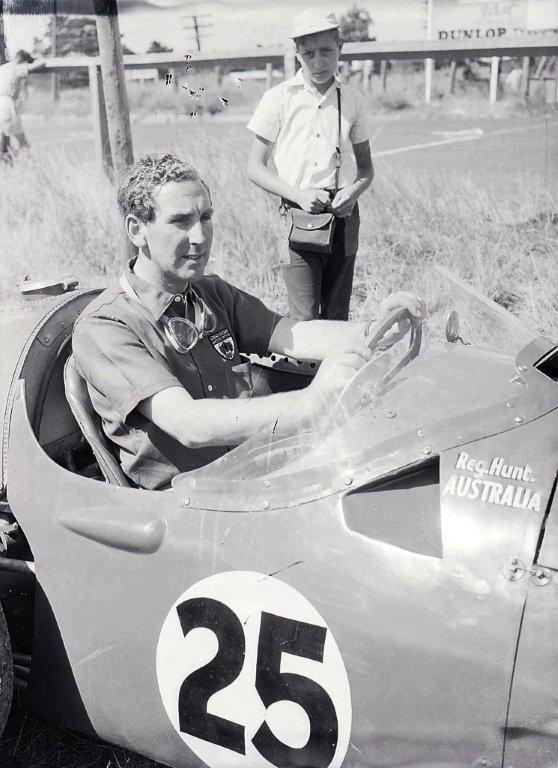
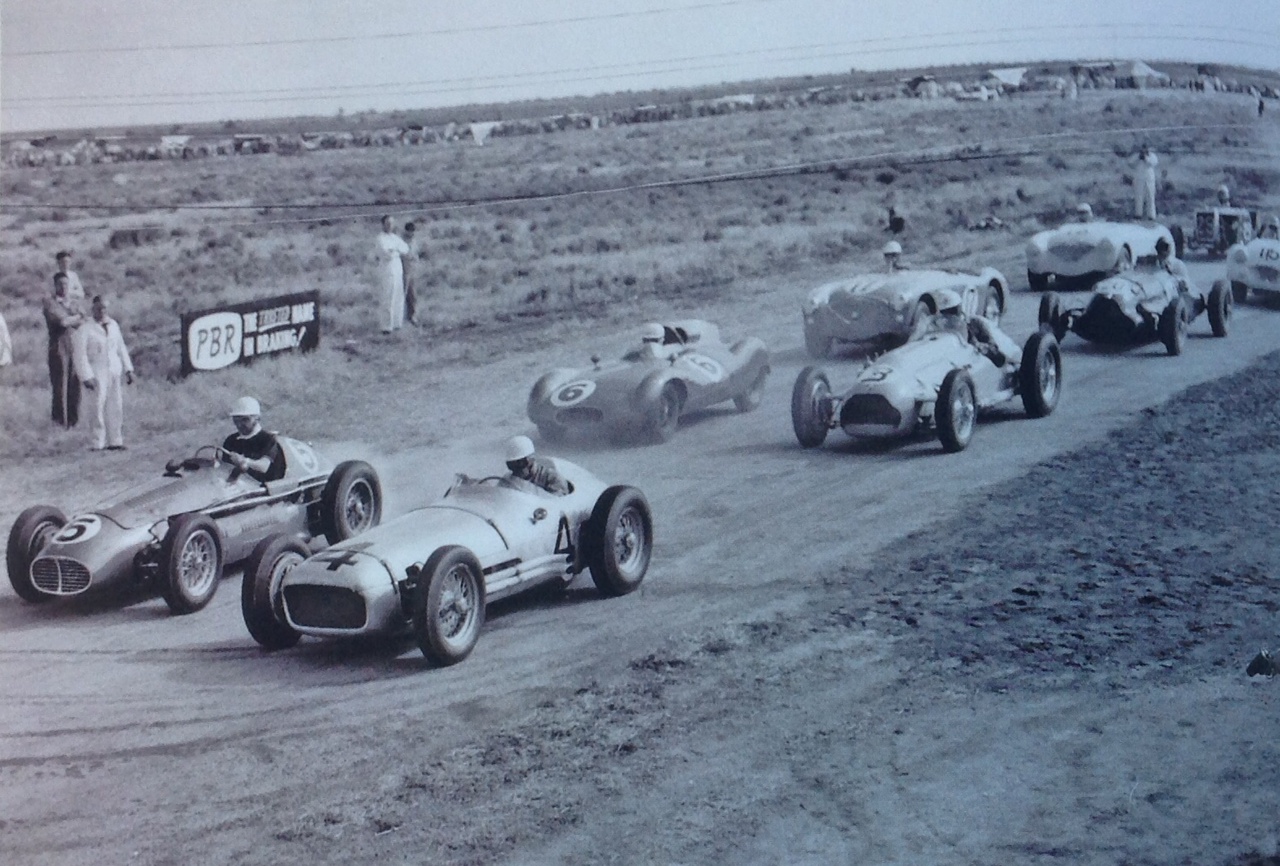
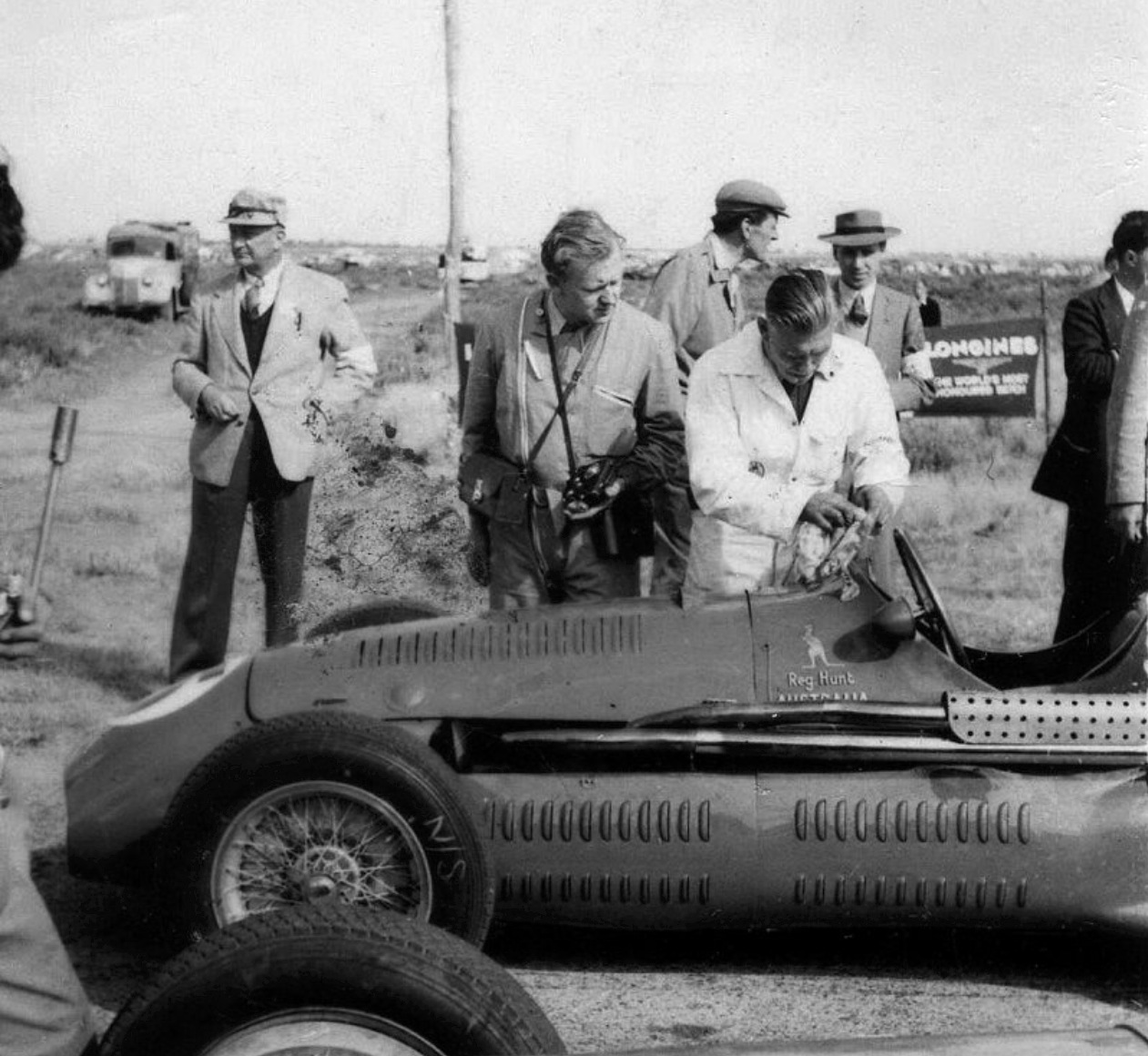
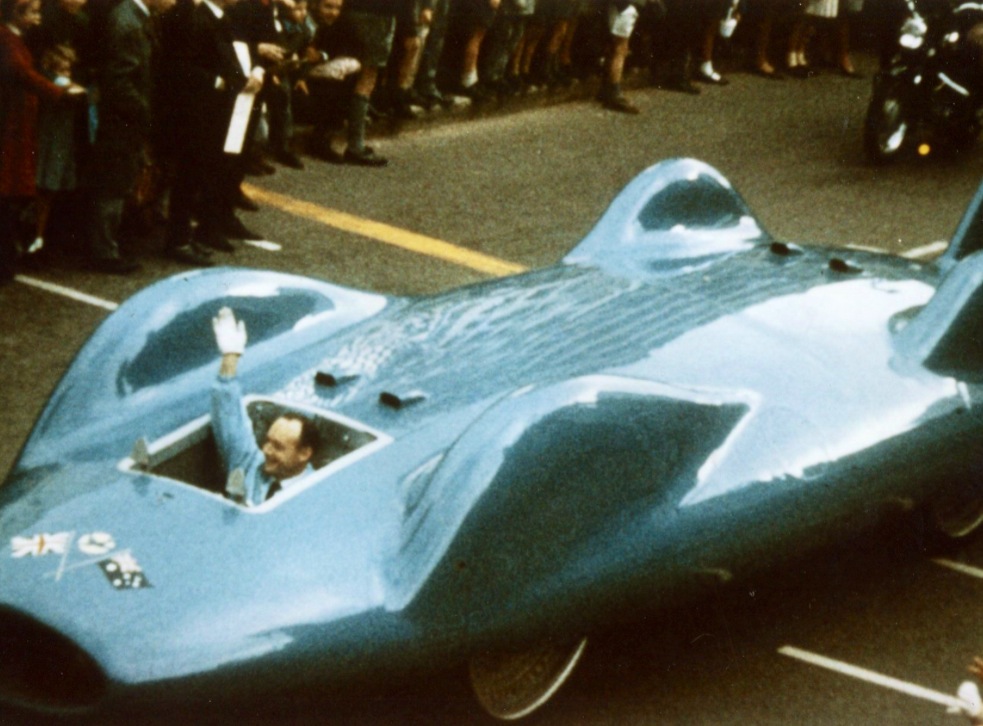
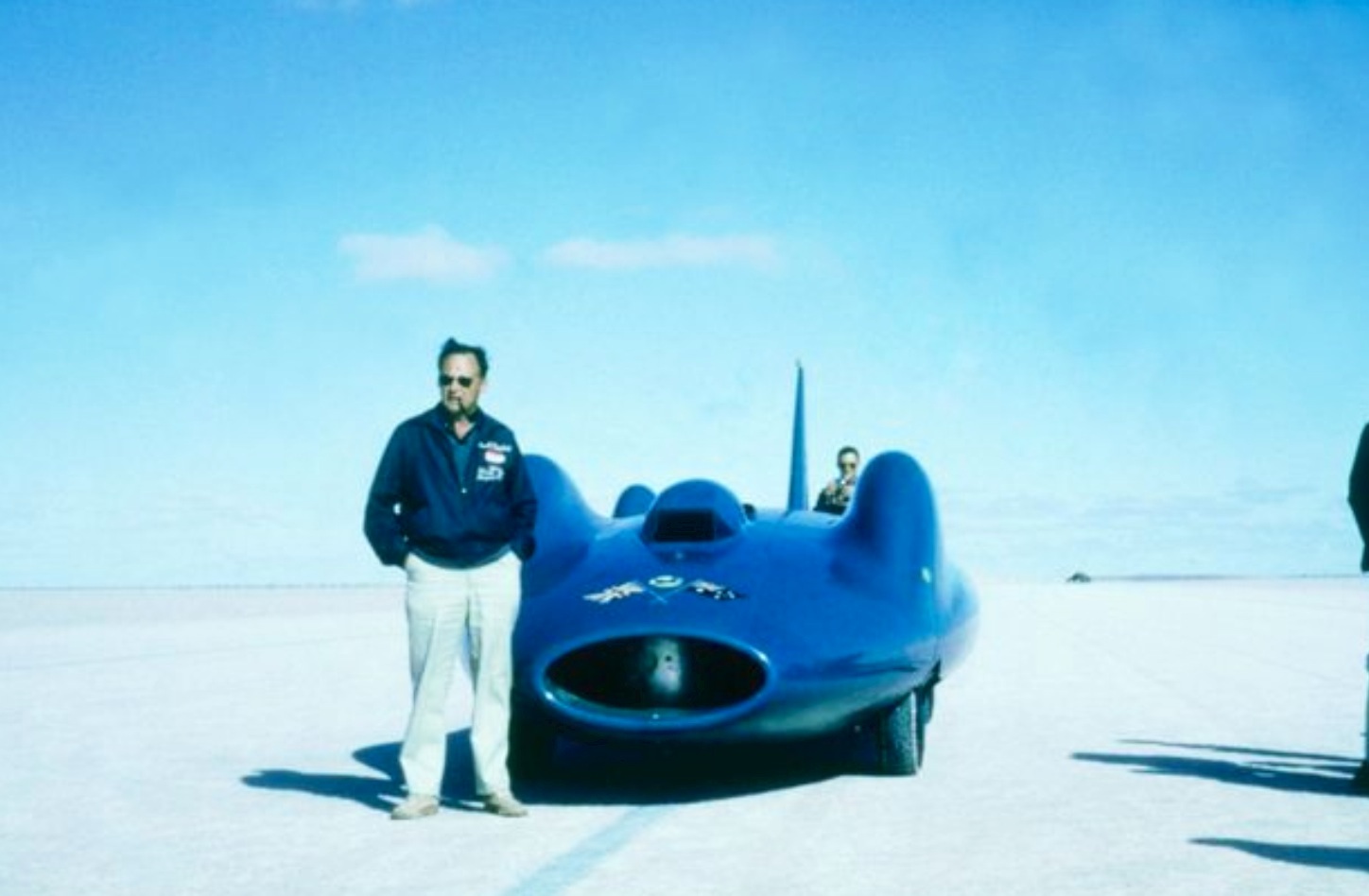
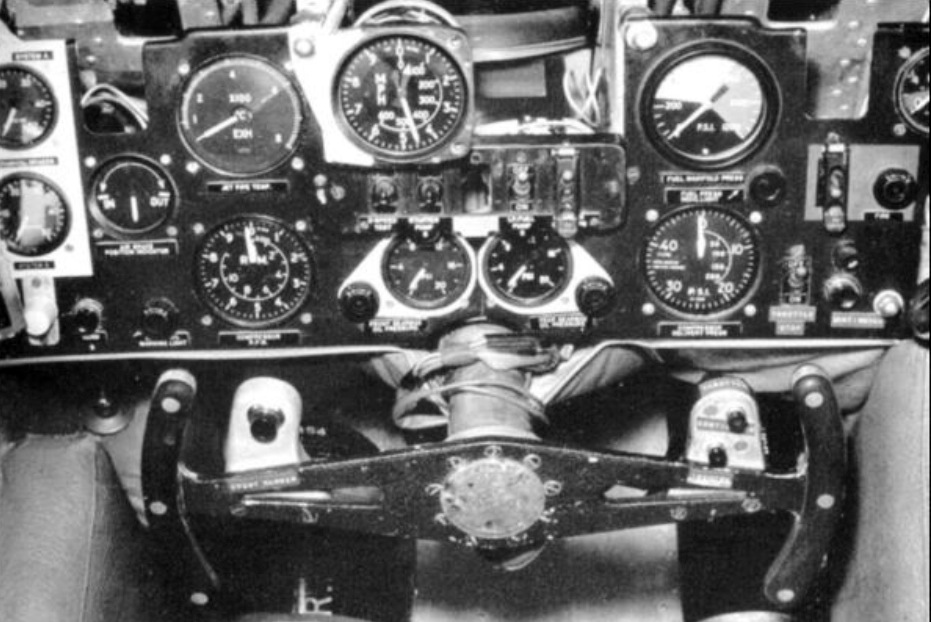
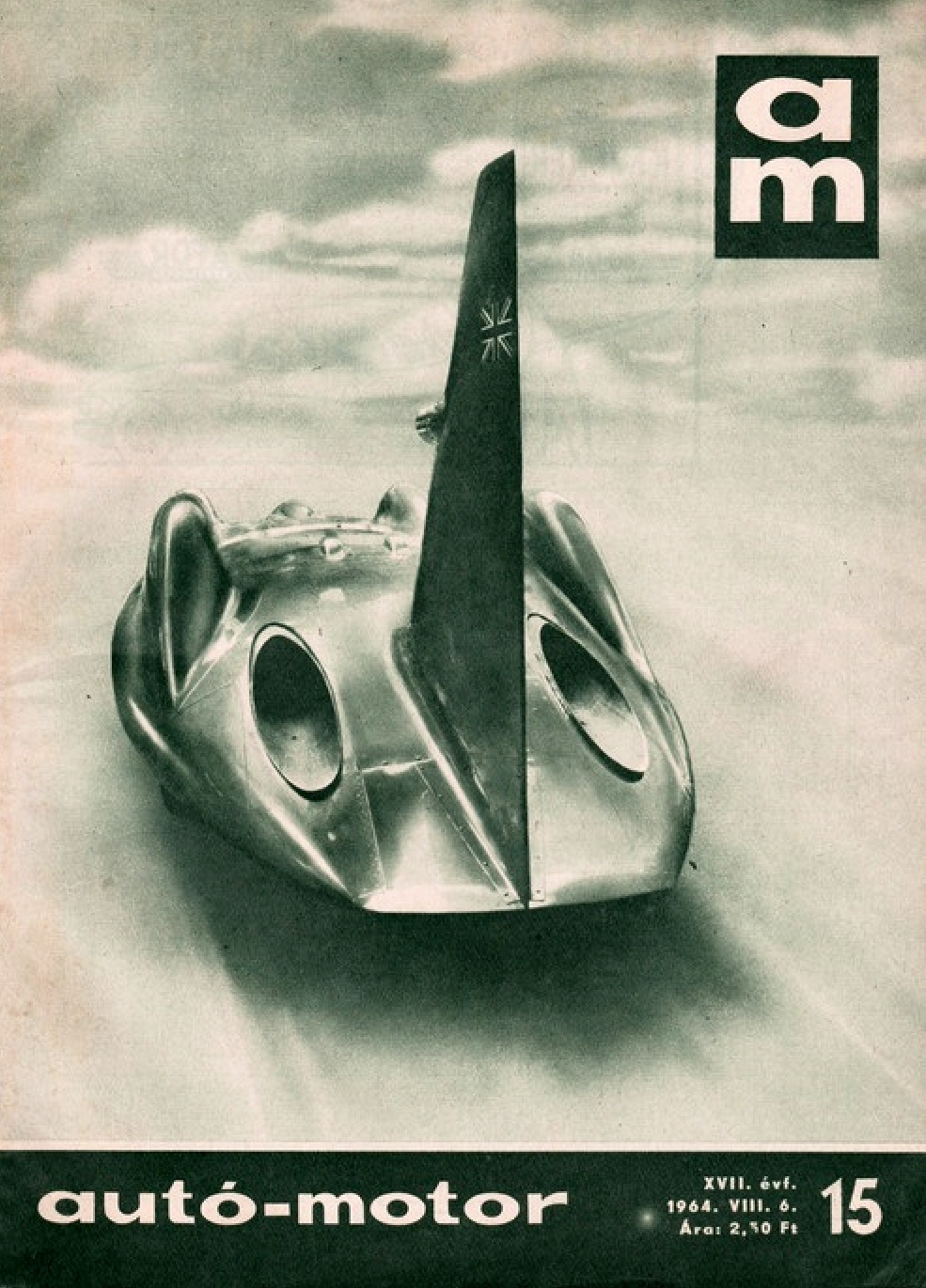
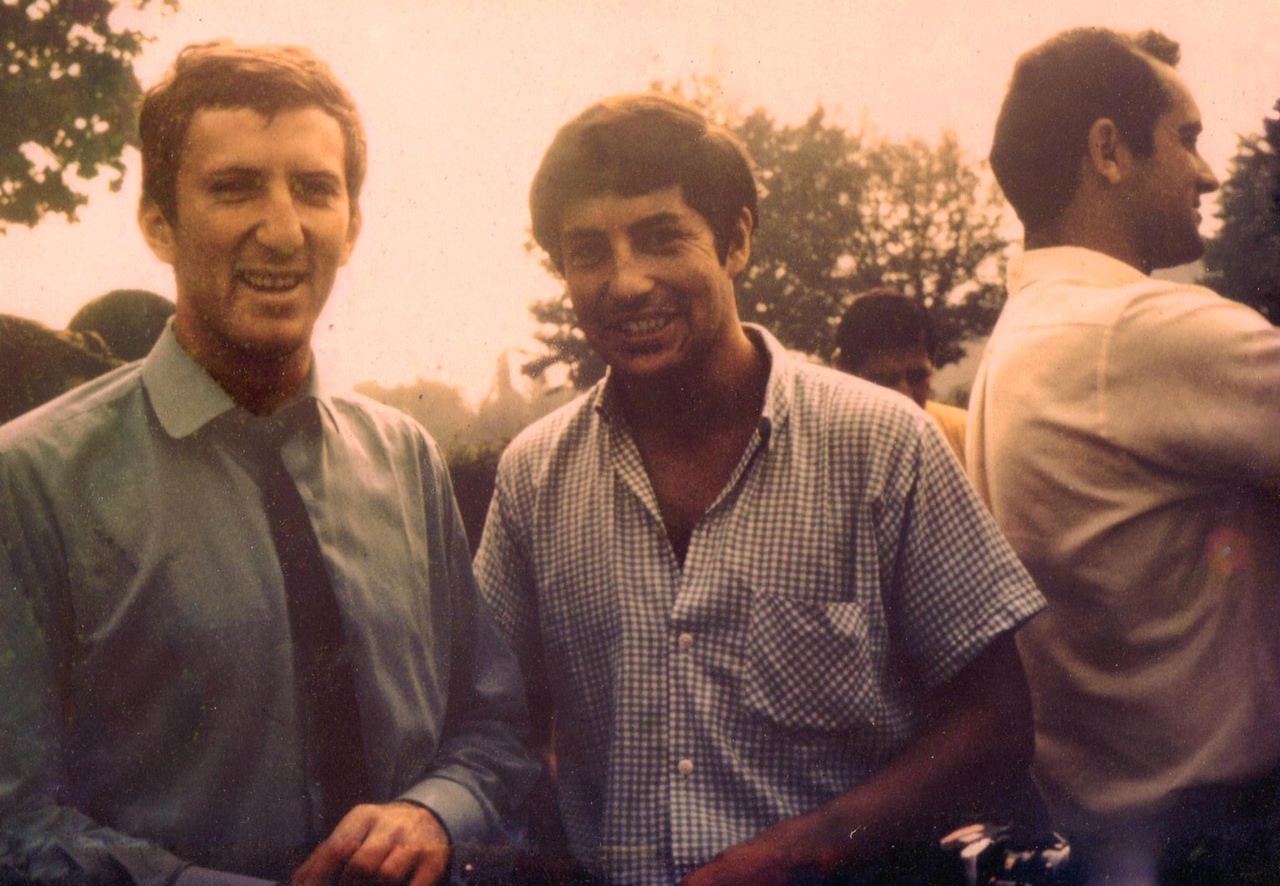
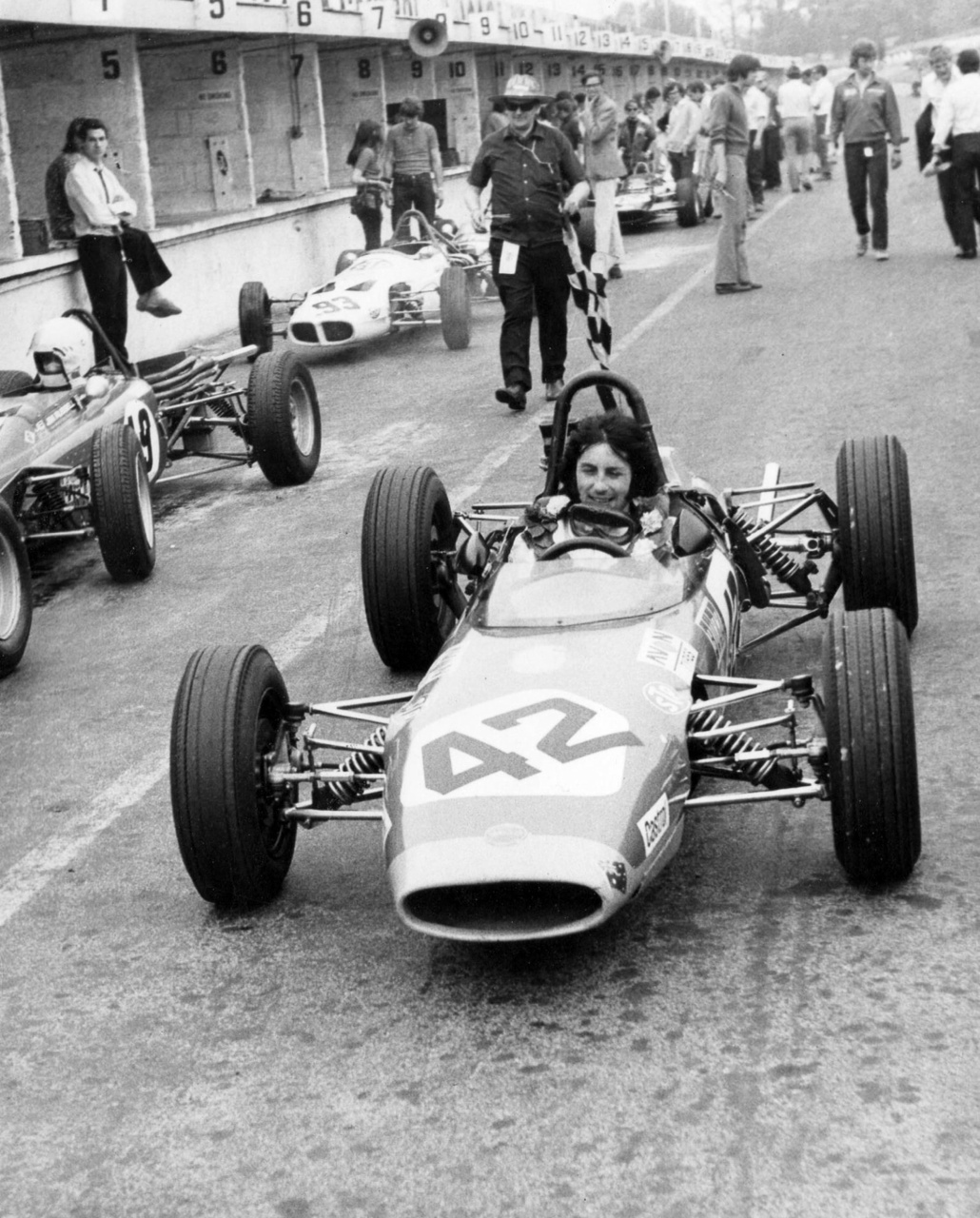
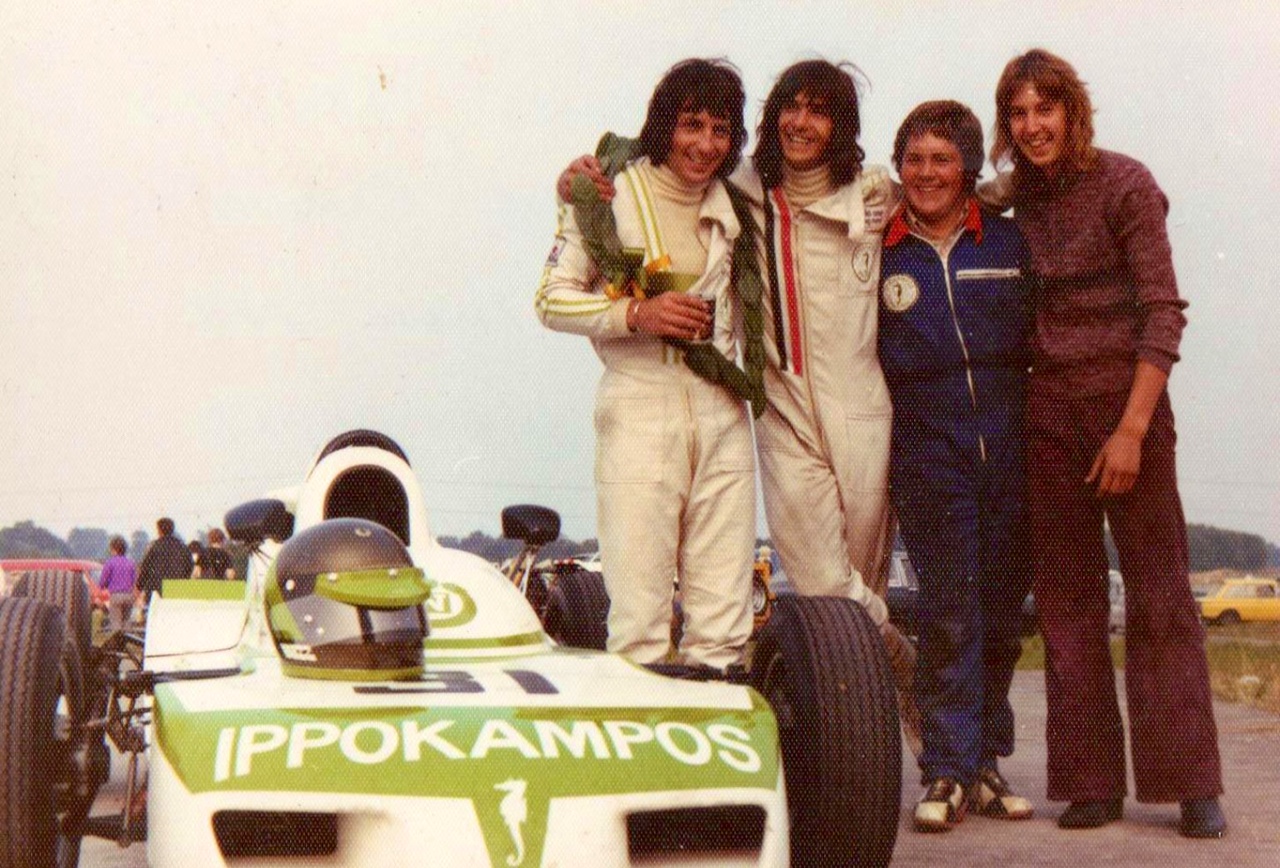
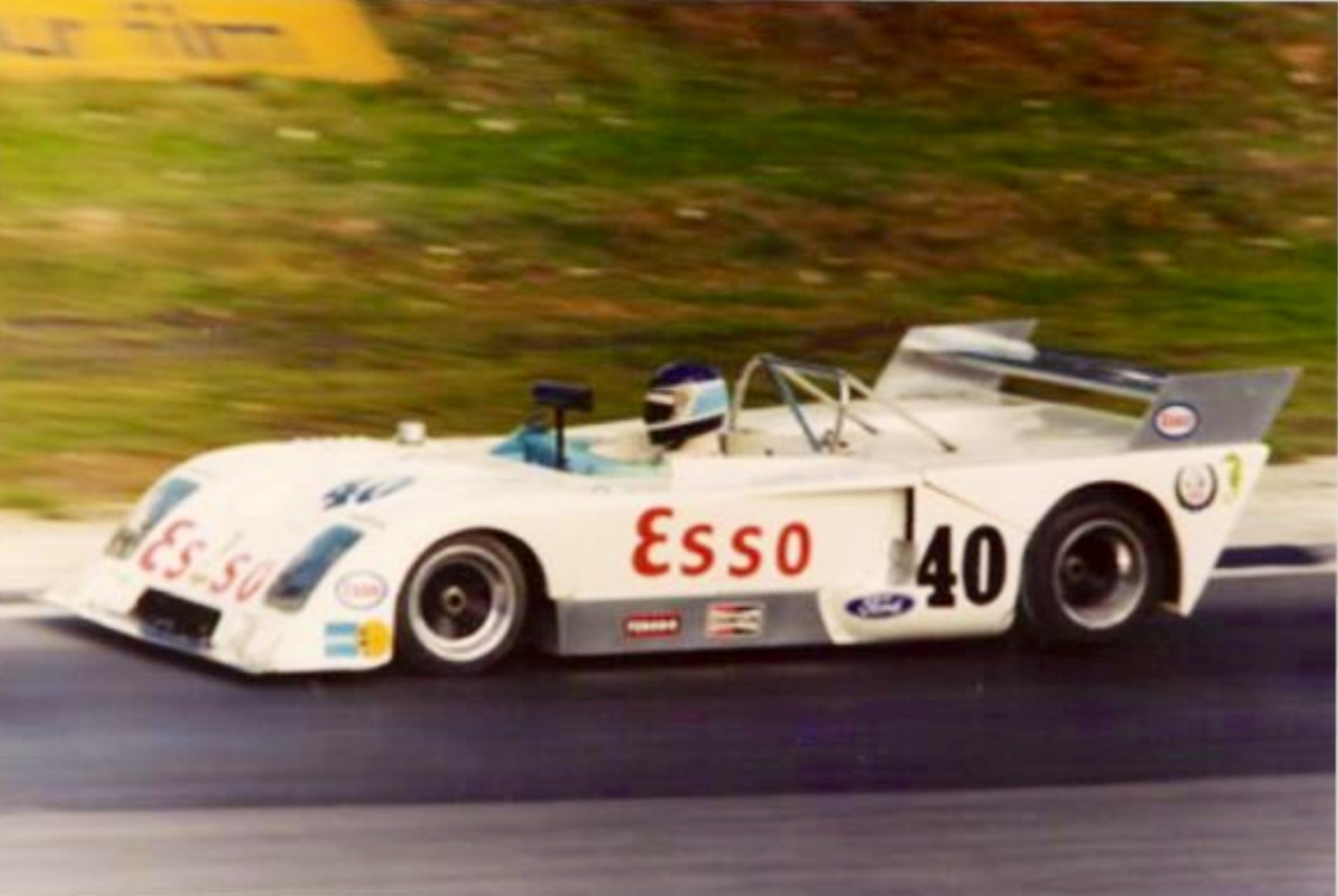
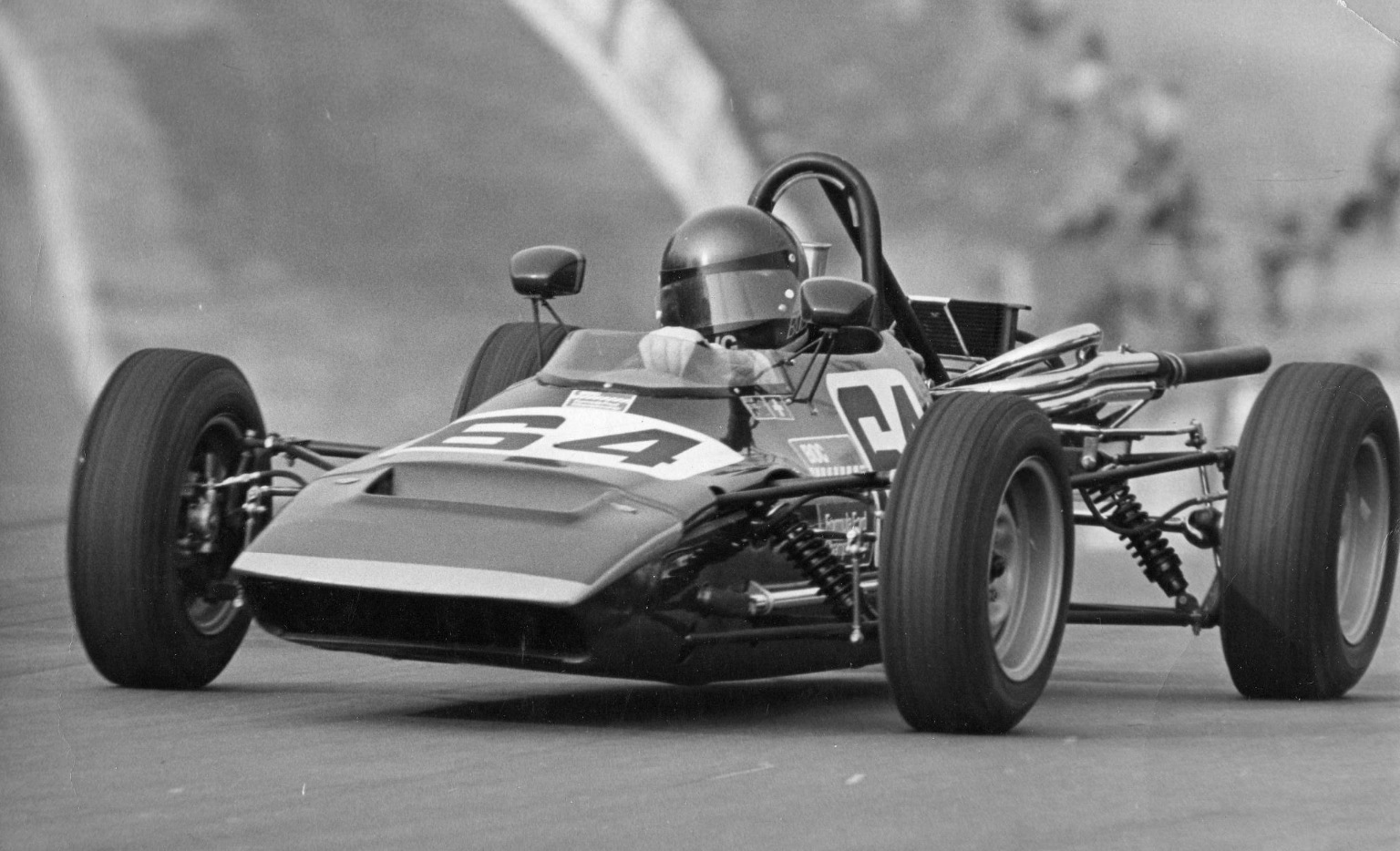
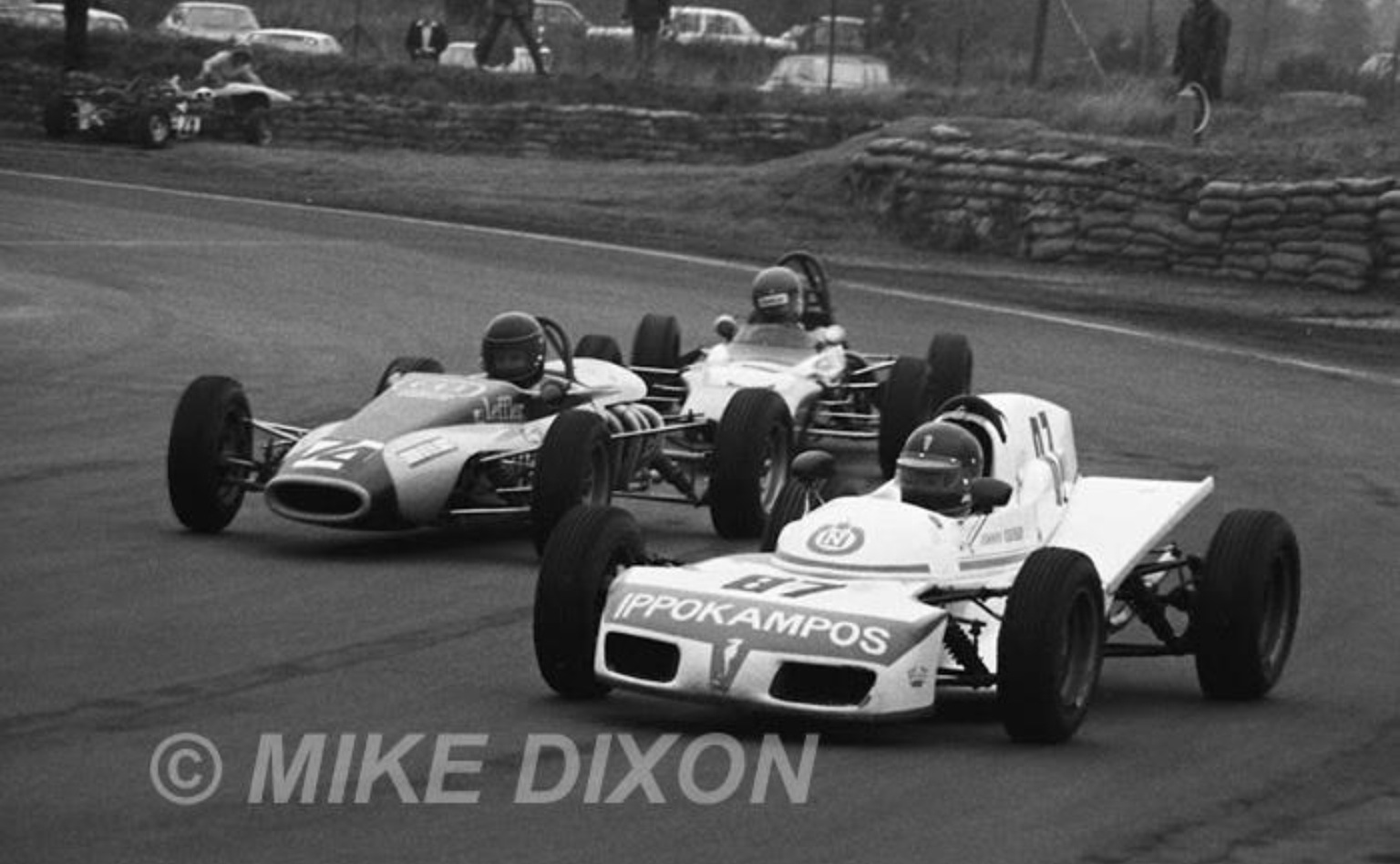
This is the first Repco brochure about the RB project which fired my imagination to become a part of the project and off to Melbourne i went (Repco)
Mechanical Childhood…
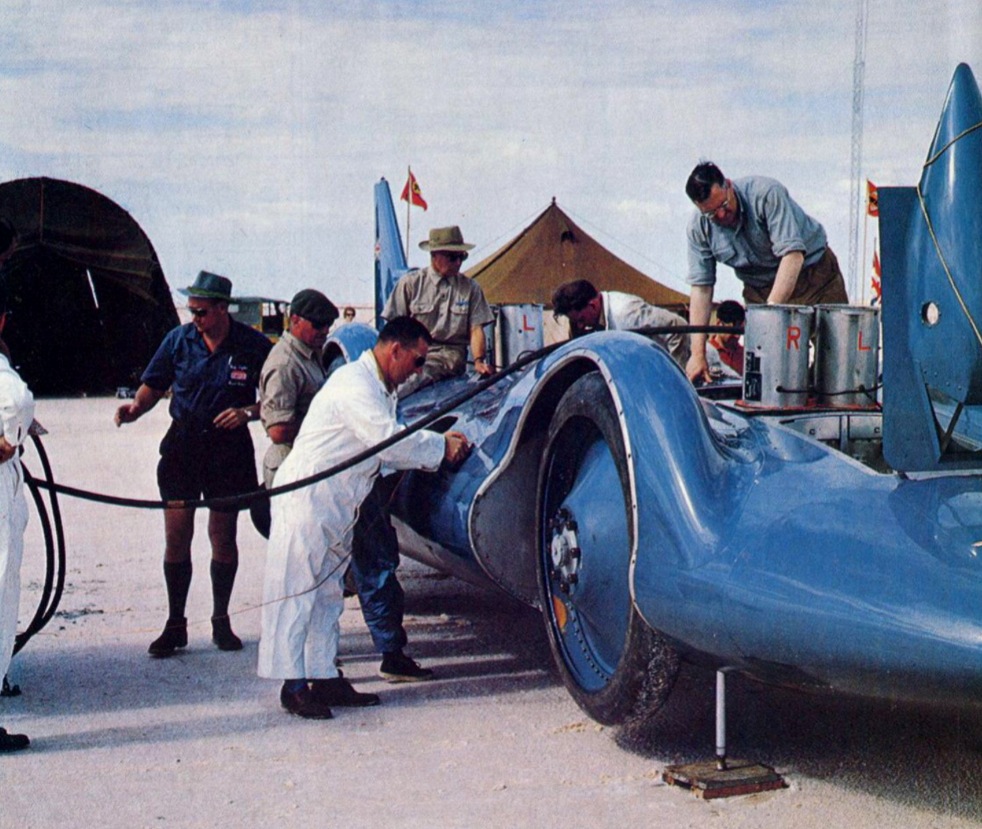
I was born in Melbournes’ Kew and moved to Traralgon, in Victorias La Trobe Valley a long time ago! I suppose I can blame my lifelong interest in all things mechanical on my grandfathers as they were both blacksmiths. I have never been keen on horses and so I am possibly lucky that I was born after the motor car.
From a young age I was fascinated by anything with wheels or gears that whizzed around . My dad bought a new Ford Consul when I was 9, I studied it closely and learnt all I could. It was one of the first production cars with independent front suspension , dad would pull up in the main street and people would come up and push the mudguards up and down to show their mates how it worked, he used to get so annoyed!
He was a civil engineer and had 400 guys working for him at the local paper mill. In the early 1950’s he bought a derelict farm 10 km out of town. He loved farming but wasn’t very practical and he stayed at the paper mill and gradually improved the property on weekends.
In 1954 when I was 11 he bought a new Fordson diesel tractor. There were not many diesel’s on local farms, it was our pride and joy. I still have and use it! I learnt a huge amount from it. I remember when dad was at work I removed the Simms injector pump and pulled the governor apart and various pieces, Dad was due home so I stuck it all back together and went to start it, it wouldn’t! I hurriedly checked everything and figured out that because the injector pump had a small block coupling it could be put back 180’ degrees out of timing so I quickly removed all the pipes and refitted the pump and just managed to start the engine as dad drove up the driveway.
The Consul developed a bad flat spot when you accelerated . I reckoned it was a challenge , I pulled the downdraught Zenith carbie to pieces. It had this funny looking thing held on with three screws on the side of the carbie and the book called it an economiser. I pulled that apart and the small rubber diaphragm had a hole in it. I put it all back together and during the week got another diaphragm from the Ford dealer. I fitted it on the following weekend and the Consul ran perfectly.
Dad told the whole world what a great mechanic I was, repairing something that the paper mills top mechanic could not etc, that was my first mechanical victory!
Dads Ford Consul taught me a lot and the independent front suspension was a Traralgon novelty (Wolfe)
Over the next few years I had a Bedford truck given to me which I loved and knew every nut and bolt on as well. Dad bought me another ‘problem’ , in the mill workshop they had a small machine called a Calfdozer. Its a baby bulldozer built in England by Aveling Barford. The mechanics couldn’t start the engine, a Dorman single cylinder petrol unit. Dad bought it for me for 40 pounds, $80 now, and we lugged it home we could only unload it at a gravel pit we had so every bit of spare time I had was at the gravel pit trying to start this weird machine. It has a Zenith carbie as well, I first tested for spark of course and it had a wonderful big orange spark, after much fiddling with the magneto, timing and points it finally had a nice small blue spark and the thing duly burst into life. I still also have the Calfdozer and give it a run on occasion.
This Bedford truck , bought by my Dad was one of a range of vehicles which taught me basic mechanics (Wolfe)
Motor Apprentice & Repco Rep…
All of this ‘fettling’ of machinery made my career path clear , dad agreed to me leaving school which I disliked very much! , but on the strict condition that I completed a motor mechanics course with RMIT by correspondence, which I did over 4 years, completing the practical elements some years later. I was encouraged to read books, no TV in those days but it was starting in the cities. I read all the motor magazines I could including ‘Wheels’ and ‘Modern Motor’, writing letters asking advice about my various farm engines. Phil Irving and Charlie Dean were my heroes, I read all I could about their projects including the Repco Cross-Flow head for the Holden ‘Grey’ motor.
I became interested in motor sport and bought the first Mini Cooper to be sold in East Gippsland, entering many hill climbs and usually winning the up to 1000 cc class. The first Coopers were 997cc ,only later did the 1275cc ‘S’ arrive . A few of us formed a new club, the Latrobe Valley Motor Sports Club’, its now known as the Gippsland Car Club .
In 1963 I read a local paper advert for employees required by Repco , they were opening an automotive workshop and parts store in Traralgon, I had since married and needed a better income than that derived on the farm . They didn’t offer me the manager’s job much to my disappointment but instead a drivers job distributing parts, engines and parcels . A new EJ Holden ute was mine, I did a huge amount of miles ,in those days, travelling up and down the Latrobe Valley in Gippsland Victoria sometimes twice in the one day. It taught me how to drive as things were totally different to today . The highways were pretty much free for all and there was no speed limit but if you exceeded 60MPH you had to prove in the case of an accident or incident that you were driving within your ability and safely. To give you an idea, the local police station in Traralgon had one car, a Ford Anglia with a top speed of about 70 MPH.
I enjoyed the job immensely and learnt lots of stuff in the workshop. Crankshaft grinding and cylinder head surfacing, clutch rebuilding etc. and of course engine assembly. I was lucky to work with the grandson of the Chairman of Repco’s Board, Sir Charles McGrath.
Mr David McGrath (brother of Sir Charles) was the managing director of our parts company and his son David junior was spending time in our particular branch learning the internal operations, he became a good mate and through him I learned a great deal about the parent company.
Repco owned ‘Brenco’ in Moonee Ponds Victoria , a machine tooling company,’ Warren and Brown’ in Footscray, a hand tool company and ‘PBR Brakes’ in Moorabbin and so the list went on. Each entity had a director on the Repco Board ,i was to learn a lot more of the politics of Repco as time went on.
On the road to Repco Brabham Engines…
One of my tasks was to organise brochures etc, to be packed in each parcel we consigned. One day I received a bundle of these telling of the proposed development of a Repco Brabham Formula One engine. I read every word and decided that was what I wanted to do!
The following week the Melbourne Motor Show was on, I took the long train ride Melbourne for the show. Pride of place on the Repco stand was the prototype RB engine. There was a young fellow in a suit looking after the display , I asked him a few questions. He couldn’t really answer me and told me he was a student draughtsman helping Phil Irving in the drawing Office. That was enough for me, if this guy worked there so could !
I got him to divulge where the engine was being built, out in Maidstone near Footscray to Melbourne’s inner West. The following day, Monday, I took a ‘sickie’, hired a taxi and ventured out to Maidstone. After a lot of driving and walking around I found a small group of factories. They were ACL factories (Automotive Components Limited). ACL was operating under licence to an American Company , they manufactured in Australia, ‘Perfect Circle Piston Rings’, ‘Glacier Bearings’ and ‘Polson Pistons’. In the prior year the American company made moves to take over ACL, as this would have been a disaster for Repco, it was decided by Repco to buy ACL. So I arrived at these 3 factories, one of the empty ones had been assigned for the RB project.
I banged on the door , a guy answered but no way was he going to let me in. He explained that it was a special project and not open to the public. I gave him my whole story, he seemed to be happy that I was already a Repco employee. Finally Kevin ,let me in , I could see about 8 machines and 6 guys working making various components. I explained to Kevin that I would love a job there.
He was a bit taken back ,he told me these are Repco’s top guys and very special operators. I was young and confident and told him I would sweep the floor or anything if he would consider me. We stood and watched a guy turning something in a lathe, as I stood there an older guy wandered across to talk to the lathe operator. It suddenly struck me that this was the legendary Phil Irving standing beside me. In person, I could not believe it!
I took up the subject of a job again and he asked if I would like to look over a piston ring factory ? Anything to please Kevin as by this time I learned he was the works superintendent. He took me into the adjacent factory and introduced me to the manager, saying he would see me later and off I went , the Manager was good ,he stopped the machines, mainly operated by women , to show me what they were doing and held up various production lines to show the finished products . I now know that Kevin had arranged the factory inspection to have a second opinion on me.
I went back to Kevin and he said’ look we have decided to give you 3 weeks trial, but you will have to accept a lesser wage than you are presently getting in the country’. That didn’t worry me to work for Phil Irving, I would have worked there for nothing ! So I had to go home and tell my poor young wife that we were moving to Melbourne. I did not have a clue where to, all I knew was I had my job at Repco Brabham Engine Co and I was happy!
And so, an incredibly challenging but successful part of my life commenced…
Fabulous shot of the Mike Spence/Phil Hill Chaparral 2F Chev at La Source hairpin, Spa-Francorchamps, May 1967.
The cars automatic gearbox failed in a race won by the Ickx/Thompson/Rees Mirage M1 Ford. 1967 was the last year of the 7-litre ‘monsters’, the CSI mandated a 5-litre limit from ’68.
Ford started the ’67 season with their new Ford GT MkIV and then left the scene having won Le Mans twice on the trot. ‘Mission accomplished’ in a sense. Ferrari won the championship from Porsche by two points in a season of grids comprising Ferrari P3/4, Porsche 910, Lola T70 , Ford GT40’s , Alfa Romeo T33 , Mirage M1 and Matra M630- truly a sportscar season to savour.
As Mike Spence buckles up his seatbelt in the Chaparral 2F Chev, second on the grid, he is surrounded by FoMoCo vehicles; #1 the victorious Gurney/Foyt, #3 Bianchi/Andretti and Hulme/Ruby Mk4’s, and the #5 Gardner/McCluskey and Schlesser/Ligier Mk2’s…not a Ferrari close by! (Unattributed)
The 2F was consistently quick throughout the season but often the transmission main drive-bearing failed. Both Hill and Spence were popular Chaparral team members. Of Hill, Jim Hall said ‘Phil was a great guy with a lot of talent and really fun to work with because he understood a lot of what was going on.’
“I think he was probably as good as anybody at making the car finish. He’d put many cars together himself and knew how everything was made and how to take care of it. He was a great endurance driver for other reasons, but for that reason too. When we got near the Can-Am season in 1966 we decided we’d offer Phil a drive. He was a great guy to have on your team – he pulled for you and worked for you. And in the endurance races he was our man. I think Phil enjoyed driving for us, we just had a good relationship.”
Phil Hill never raced again after his ’67 Brands 6 Hour victory, a great way to bow out after such a career of achievement. ‘It was absolutely satisfying to win that race at Brands Hatch…in retrospect there couldn’t be a better way to finish a career could there?’ he said.
Phil Hill pondering 2F transmission dramas at Le Mans 1967. Mike Spence sans helmet behind him. (Dave Friedman)
Hall also had great respect for Spence, who was killed at Indianapolis in May 1968 in a Lotus 56. “I really thought a lot of Mike. He was an awfully talented driver, very quick and a smart guy who worked hard. He was a good fit for Chaparral too. It takes the right kind of person to be on your team who fits in with your people and how they work and Mike fitted us well and was a joy to work with.”
Designer/Driver/Engineer Jim Hall’s cars bristled with innovation. The winged, 7-litre Chevrolet engined, fibreglass monocoque, auto ‘tranny Chaparrals thrilled European spectators and finally won a ’67 race, the Brands Hatch 6 Hour event in July before returning to their Midland, Texas base and the US Can-Am Championship from whence they came.
2F at rest, Spa pits 1967. Hill talks about set-up with Jim Hall. Note the front lip or splitter. Spence put the car on pole at 3:31:5, quick enough for sixth on the GP grid that June…in a car designed for 24 hour events. OK its 7-litres, but remarkable all the same. (Unattributed)
Innovative Chaparral 2F Chev…
The 2F was a massive departure from previous Chaparrals’ even by their standards.
This drawing neatly shows the Chap 2F key aero elements; cars shape, front spring loaded flap, you can just see the chin lip spoiler used on some tracks at the front. Rear mounted rads and beautiful ducting in and out and the movable high rear wing, to alter between download and neutral positions. (Brian Hatton)
The car featured hip mounted radiators to better position weight, this had the bi-product of keeping the cockpit cooler. The 5-year old 2A chassis had special mouldings bonded to it to create the square sided shape, the transformations were such that they were effectively new. To provide bodywork strength, sections were laid up in female moulds with 4-oz cloth and epoxy resin and ¼ in PVC foam. In areas where strength wasn’t required the fibreglass was very thin. Firestone developed wider tyres for ’67 which required wider bodywork. The actual chassis was covered by flat panels on either side, these were ‘skins’ with empty space between them and the old chassis.
Externally, only the central cab section looked the same. A new body profile was evolved in the form of a wedge to generate downforce. At the rear the body tapered away to a ‘spindle shape’ with a ‘chopped off tail’.
To balance downforce at the front a similar type of high mounted wing as was used on the ’66 2E Can-Am car was used, mounted directly to the rear uprights. The wing was connected to a foot pedal, and via hydraulics allowed the driver to have feathered ‘lo-drag’ or maximum downforce modes. Should anything go wrong with the feathering mechanism, or the driver needed his left foot for the brakes, the car went to fail safe maximum downforce, understeer mode.
The front opening contained a spring-loaded flap or duct that opened against air pressure when speeds exceeded 120mph, this helped balance aerodynamic loads front to rear.
The body floated free on its springs devoid of practically any downforce which was applied directly to the uprights by the monster rear wing. As the nose of the car pitched forward more front downforce was generated, at 150mph the nose compressed the front suspension, the trapdoor or flap opened progressively at 120-140mph at which point the car would then settle to its appropriate ride height front/rear.
2F naked at Le Mans for its transmission repair. Big wing and its mount direct to rear suspension uprights, note forward facing support strut. Mid mounted radiators, seat belt in the cockpit, radiator header tank, bell mouths of Chev/Weber carbs, spare wheel housing, exhaust ducting. ‘Le Mans’ number lights, 12X16 inch Chap alloys and big, wide Firestones. (Albert Bochroch)
Chaparral modelled both aluminium Chev 327CID and 427CID engines- different car weight limits were applicable under the regulations. They considered the existing Can-Am aluminium chassis with 5-litre engine, and a fibreglass chassis car with the bigger 7-litre ‘lump’. The 5.4-litre engine could have been ‘de-stroked’. Simulations showed the latest staggered valve ‘porcupine’ 7-litre Chev, cast in aluminium was the faster option. It weighed 85lbs more then the ‘smallblock’ but gave around 100bhp more. The engine used Weber style 58 IDM carburetors built by Chev and gave circa 575bhp @ 7500 rpm.
The Chaparral’s GM automatic transaxle was upgraded to three speeds but the ‘box was at its limits. The increased power and torque proved the gearbox was the packages weak link- this was feared by Chaparral from the start of the 2F program. GM simply did not want to build a new transmission and hoped internal changes could cope with the 7- litres greater torque, but this was not the case.
There is a lot of mystique about the transmission. Pete Lyons, in his ‘Profile Publications’ article on the Chaparral ‘Glassfibre Cars’ described it as follows, “It was laid out much like a Hewland with 2 speeds and later 3 and an hydraulic coupling, a torque convertor instead of a clutch.”
“The gears were simple straight-cut spurs engaged by sliding dog clutches; every second dog was cut back a little to assist the clutchless changes. The changes were all done manually, the driver easing his throttle foot to unload the dogs and snatching the gear as quickly as he could. It therefore wasn’t really an automatic transmission, it was a fluid clutch transmission. The engine was always started with a gear engaged, the driver preventing a lunge forward by firm pressure with his left foot. At…5000rpm the coupling was designed to lock up rigidly to prevent further slip and power loss. Sensitive drivers could feel this happening.”
The advantages of the ‘box were better modulation of braking, on down changes the fluid coupling lessened any tendency of the rear wheels to lock, finally the fluid coupling absorbed many shock loads such as a ‘yump’ landing, common at the time.
Superb James Allington cutaway of the 2F showing all of its innovations : fibreglass monocoque, wing, automatic transmission, 7-litre aluminium block Chev…1967 remember. Simply superb innovative design and execution by Jim Hall and his Texas Team (James Allington)
Jim Hall’s attention to weight saving was fanatical, the car weighed 1750lbs wet, 600lbs less! than the Ford MkIV. This was due to the fibreglass chassis, aluminium rather than (Ford) iron block engine. The batteries were of very expensive cadmium from the aerospace industry.
The body was made of a sandwich of 1/4 inch thick PVC foam between thin skins of ‘4oz cloth’ impregnated with Shell epoxy resin which was formed to shape in a vacuum bag apparatus and then cured at room temperature. Sylvania made new quartz iodide lights using hand made bulbs in Marchal reflectors.
The whole car was built to exceptionally high aerospace standards of quality and finish.
Jim Hall in his 1967 Can-Am challenger, the Chaparral 2G Chev at Bridgehampton. DNF chassis failure. The McLaren M6 Chevs were dominant that year, Robin Herd, the M6 designer freely acknowledged the effect Halls’ designs, especially the 2E, the first car with the high wing had on him. Hulme won the race in his M6A. (Pete Lyons)
Jim Hall and Aerodynamics…
Gordon Kirby interviewed Jim Hall in 2008, he published these comments by Hall about his seminal aerodynamic work in the mid-sixties.
“We calibrated the suspension by just rolling the car out and putting weights on it so we knew what load it took to move the car up and down. We had a cable drive that drove a pencil and a roll of paper that was run by a little motor so you could set your zero point. You would go out and make a run and push a button and make a mark across the paper so we knew what the front and rear downforce was. You could run a couple of different speeds and then you could put it on a graph. You knew that it was increasing as the square of the speed so you knew what the curve looked like and you pretty much had the downforce over a speed range. That was pretty simple to do.”
Hall’s method of measuring the air pressure or downforce on the surface of his car’s wings or bodywork was equally simple in concept. “The other thing we did was when we needed to change the surface we had a manometer that was just a bunch of u-tubes made out of tigon tubing and full of coloured water,” Hall related. “If you were in a sportscar you put it in the seat beside you and then went out and tapped a bunch of holes in the paper. You ran these to one side of the tubes and ran the other one to a pitot tube so you could get the dynamic air pressure on the surface.”
“I originally did it with a Polaroid camera. I had a Polaroid camera mounted on the dash and the manometer mounted on the seat back beside me. I didn’t even have a pitot tube for a static pressure source. I read in a book somewhere that a guy in WWI thought about doing this. The way he thought about doing it was you took a thermos bottle and put a piece of tubing in it and right before you made the test you opened it up then closed it so you had static air pressure in it. Then you went out to make your run and compared it to the pressures you got, then opened it and made sure it didn’t change. In a matter of about twenty minutes that thermos bottle would maintain an even enough temperature that the pressure wouldn’t change much. So you had some static pressure while you were sitting in the pit and you also had static pressure when you were going down the straightaway. It’s simple-minded, but pretty tricky! And that’s the way we started.”
“Then we bought a light airplane pitot tube and mounted it out front of the car. We found a static pressure place where we could run that pitot tube that matched the thermos. Then we had a static pressure source all the time.’
Thus began the serious science of racing car aerodynamics. Of course, Hall had no idea about the depth of the pandora’s box he was opening but he is without doubt the father of the modern aerodynamically-driven racing car.
This overhead shot is of the 2F at Targa 1967, drivers Hill and Hap Sharp. The angle is interesting; you can see the contours of the car, radical for the time. Front flap exit above the number, mid-ships mounted rads and exit venting, the row of 3 circular vents in the rear panel to relieve air pressure and the ever present driver adjustable rear wing, max downforce for 90% of the time in Sicily I imagine. (Unattributed)Chaparral 2F Chev ‘butt shot’ in the Le Mans parc ferme. The radically different aerodynamic treatment in terms of both the cars shape and rear wing apparent. Road registered to boot…The car qualfied 2nd in the hands of Mike Spence and Phil Hill, they retired on lap 225 with transmission oil seal failure. The sister Jennings/Johnson 2F failed after 91 laps with starter and battery dramas. The race was won by the Gurney/Foyt Ford MkIV. (Unattributed)The 1967 Chaparral 2F’s predecessor in endurance racing was the 1966 2D, here in Jo Bonnier’s hands in the Karussel at the Nurburgring where he and Phil Hill won on the cars European debut. The 2D also used a fibreglass monocoque chassis, had a 2 rather than 3 speed box of the 2F and was powered by a Chev 327cid/5360cc ‘small block’ Chev giving circa 475 bhp @ 7000 rpm. Like the 2F, its race record was littered with DNF’s, 6 from 7 starts. (Unattributed)
Chaparral 2F: Eight race history…
One of the things which strikes you about this big car when you look at its speed during 1967 is its pace on all types of circuits. It was on pole at Monza, Spa, and the Nurburgring, started from grid position two at Sebring and Le Mans, and grid three at Brands.
The challenges of the Daytona bowl are vastly different to the swoops and curves of Targa or the ‘Ring let alone the high speed challenge of Le Mans. It was clearly a complete-car, an excellent all around package- the best car, Phil Hill was quoted as saying, that he ever drove.
At Daytona 2F ran with its wing fixed in position, but still only just missed pole. Hill lead, took the fastest race lap and was pulling away from the Ferrari P4s until the fourth hour, falling off on marbles after a pitstop and hitting a wall. Hill was a little miffed that teammate Mike Spence, with whom he had a great working relationship, had not warned him about the hazard, their race ended on lap 93, Bandini and Amon took a Ferrari P4 win.
Mike Spence here, and Jim Hall raced the 2F at Sebring. Fastest race lap but again DNF with ‘box troubles. (Nigel Smuckatelli)
At Sebring Hill was forced to retire from the meeting having acute appendicitis, so Jim Hall stepped into the car with Spence, he was second on the grid but had trouble starting. The car retired on lap 145 with differential failure, the car car trailed smoke for several laps in advance of retirement, victory went to the McLaren/Andretti Ford MkIV.
In Europe the cars were based in Frankfurt, the Monza event was the first on the continent. Spence put the car on pole, using the second 2D chassis converted to 2F spec, and from the flag diced with the P4s but a universal joint failure eliminated the car before the end of the first hour. Bandini/Amon won in a P4.
At Spa a week later, the car had a small trim tab added at the wings trailing edge, the tab made it easier to adjust the wings settings at high speed. Hill put the car on pole by 3.5 seconds but rain fell on Sunday. ‘Rainmaster’ and local boy Jacky Ickx “ate us alive” Hill said. Spence ran in fifth until a fuel stop after which the car refused to start. At half distance it was eighth but another blown transmission seal caused its retirement. Ickx and Thomson won in a Mirage M1.
Phil Hill in his ‘outta this world’ futuristic Chaparral juxtaposed with the ancient Sicilian landscape…and the oh-so-conventional, if gorgeous Ferrari P4s for that matter. But Porsche prevailed, as they so often did at Targa. (Yves Debraine)
Mike Spence had other commitments so Hap Sharp stepped in with Phil Hill at the Little Madonie. The 575 bhp ‘roller skate’ was a challenge around the mountainside of the famous Targa course.
Local boy, Nino Vaccarella was faster in practice than the 2F by 1.5 minutes, the car not entirely happy over the bumps but was still up to fourth, 9.5 minutes behind the leading Porsche when a tyre went flat at Collesano. Paul Hawkins and Rolf Stommelen took the win in a factory Porsche 910.
Lookout! Phlegmatic Siciliani…Targa 1967. Ride height up for this event, front splitter replete with an empty pasta packet clear. Phil Hill/ Hap Sharp Chap 2F. (Unattributed)
At the ‘Ring Spence took five seconds from the old sportscar lap record and set the first over 100mph lap by a sporty. John Surtees was seven seconds adrift in his Lola T70. Hill put on his harness after the Le Mans start so came around in sixth, by lap eight he moved into the lead, but at about the 1.5 hour mark, on lap 10, the cars transmission again failed. Schutz/Buzzeta won in a Porsche 910.
Phil Hill is back in the pack on lap 1 of the Nurburgring 1000Km, having carefully put on his ‘belt. Amongst the class cars are a Ford GT40 in front of him, you can also see the nose of the Surtees/David Hobbs Lola T70Mk3 Aston Martin behind and to the side, DNF with rear suspension failure. That wing will have given cars being pursued no doubt as to the car behind! (Automobile Year)
Le Mans was and still is all important, two Chaparrals ran. Hill/Spence missed pole by only 0.3 of a second from a Ford MkIV. Johnson/Jennings in the other 2F were 24th. Both 2F’s got away well, by the end of the first hour Spence was fourth and by the second he was 2nd, then the wing actuation mechanism broke, the car went into high downforce, safe mode, knocking around 40 mph off the top speed.
Inevitably the transmsision gave trouble but the car was still in third when an heroic three hour rebuild of the transmission was commenced by the crew, all to no avail as the car was withdrawn. The other 2F retired earlier with electrical failure. The race was famously won by the All American Boys, AJ Foyt and Dan Gurney in a Ford MkIV.
The long three hour, crowd pleasing, crowd appreciating transmission rebuild is underway. Le-Mans 1967. Franz Weis and Karl Schmid start the process by stripping the rear of the car to gain ‘box access, no mean feat in itself given the careful integration of the overall package. (Karl Ludvigsen)
The inaugural Brands Hatch 500 Miles was the last championship race of the season. The Brabham/Hulme LolaT70 was on pole, Spence/Hill were 0.8 second adrift in third. Hulme took the lead but retired with rocker failure, letting the 2F into the lead. A long mid-race pitstop dropped them back to third but consistent laps taking two seconds per lap from the Ferrari in front saw the wonderful car displace the Stewart/Amon Ferrari P4. A winner, finally!
Motor racing is full of ‘ifs, buts and maybes’.
As the great, late and laconic Frank Gardner said ‘If Yer Aunty had Balls She’d be Yer Uncle’.
One wonders what this seminal, defining, brilliant car would have achieved had the ‘oh-so-clever’ ‘automatic gearbox’ which was such a big part of most of the Chaparral 2 program, had the re-engineered gearbox it so badly needed and deserved.
In a sad sequel, Jim Hall was preparing for another season with a 7-litre car for 1968 when the FIA announced a 3- litre limit for prototypes from 1968 and limited sportscars to 5-litres in capacity- 25 examples of which had to be built for homologation. The big Fords and Chaparrals were out, racing was the poorer for it.
It was not over for Chaparral of course, but after 1967 they focused on their domestic Can-Am Championship with equally radical cars, and many years later a victorious assault on the Indy 500, both stories for another time.
Mike Spence in the 2F at Brands Hatch headingfor victory and running ahead of the factory Ferrari P4 of Ludovico Scarfiotti and Peter Sutcliffe, 5th. (Louis Klemantaski)
Tailpiece…
Its hard to know which of Jim Hall’s cars was the wildest, perhaps the ’69 Can-Am 2H, a very unsuccessful one i will write about soon. He doubled his bets with the 1970 2J, the famous ‘ground effect sucker’ car being so quick officialdom banned it and with it the whole ethos that made the Can-Am the great ‘Formula Libre’ Series that it was. Here at Riverside, sportscar ace Vic Elford in the 2J Chev leads Peter Gethin in the championship winning McLaren M8D Chev. Hulme won the race in the other M8D, Gethin DNF engine on lap 21 and Elford DNF engine on lap2. (Unattributed)
Etcetera…
Jim Hall, left and Phil Hill CanAm 1966. (Unattributed)Chaparral 2F drawing, car depicted as it raced at Targa 1967. (Unattributed)Sebring engine change showing the girth of the aluminium 7-litre ‘big block’ Chev and the housing of the famous GM ‘automatic’ transaxle. I wonder how long the change it took from start to finish? (Unattributed)Targa 2F butt shot, aero treatment of the car nicely contrasts with the Sicilian ‘roadies’. Wing in maximum downforce mode. Note the rear devoid of tail panel, compared with the earlier Le-Mans rear shot. (Bernard Cahier)Phil Hill aviating the 2F at the Nurburgring despite the Chaparral wing in full downforce mode! Lightening fast, the 1000Km another race the car should have won on a circuit one would not necessarily have thought it were suited. A versatile car the 2F, quick pretty much everywhere. (Unattributed)The ‘Chaparral Family Tree’…(Unattributed)
Credits…
Pete Lyons ‘The Chaparral 2,2D,2F The Glassfibre Series’ Profile Publications, Cutaway drawing- James Allington, Jim Hall quotes from a Gordon Kirby ‘MotorSport’ articles in November 2008 and January 2011, Dave Friedman, Bill Wagenblatt ‘Track Thoughts’, Albert Bochroch, Nigel Smuckatelli, Karl Ludvigsen, Bernard Cahier, Louis Klemantaski, Brian Hatton
See this link for some great information on Jim Halls fabulous cars…
Lola’s F5000 domination started with the ’72 model T300, the process completed by the ’73 T330, and 332, 332C, single seat Can Am T333 variants of the car built over a decade.It is one of the most successful competition cars ever in terms of race wins and longevity, if not THE most successful.
Eric Broadley’s evolution of the T300 produced an extremely competitive car for one of F5000′ s most competitive seasons, the cars aluminium monocoque ‘dressed’ in curvaceous bodywork executed by Specialised Mouldings. If ever an F5000 looked right this was it.
The 1973 season and those which followed proved that beauty was far from skin deep.
T330 ‘HU18’…
T330 ‘HU18’ was sold in March to Jackie Epstein Racing for the ’73 European F5000 championship. Epstein was a long time race entrant of sports cars before changing to F5000 after the death of his business partner, racer Paul Hawkins.
The Radio Luxembourg # 208 sponsorship was iconic at a time when the BBC had a monopoly on the radio airwaves in the UK. Radio Luxembourg, on frequency 208 medium wave were an offshore broadcaster of popular shows into the UK.
The car’s driver for 1973 was ’71 Le Mans and ’72 British F5000 Champion Gijs Van Lennep. His best results a 2nd at Snetterton and 3rds at Mondello Park and Jyllands-Ringen. Whilst Gijs was away on sports car duties Tony Trimmer, Clive Santo and Ray Allen also raced the car, albeit without success.
Teddy Pilette won the 1973 title with a demonstration of consistent speed in his Chevron B24.
Into 1974 Epstein signed Lella Lombardi, she had come through Italian racing and European F3 and immediately impressed with her handling of HU18. Her best results 4ths at Brands, Monza, Oulton Park and Mallory Park. In ’74 the title was won by Bob Evans in a T332.
Lombardi raced in F1 for March in ’76, HU18 was sold by Epstein to John Turner, the car also driven by Keith Holland and Richard Scott that year. Hollands 4th at Brands was the best result.
From Europe to Obscurity in the US for 34 Years and into Peter Brennan’s TLC…
Peter Brennan picks up the story, ‘Allen Karlberg was an American working in the UK at the time and was commissioned by countryman Jim Burnett to acquire a car for conversion to a central seat Can Am spec, F5000 having morphed into Can Am in an attempt to improve crowd numbers. The car was shipped to Portland, Oregon in 1977 where it remained for 36 years’
‘It was disassembled and some work done, for example the DG300 had a new crown wheel and pinion but essentially it was untouched, the only thing preventing considerable damage to the car was the fact it was in parts and the bits and pieces far enough away from a workshop fire which melted the right-front corner of the tub some time in the ’90’s.’
‘Burnett died several years ago and his Executors approached Karlberg to sell the car, I was cruisin’ the internet as I do. I was looking for another F5000 to restore and spotted a small ad in a club magazine which said something like ‘fire damaged F5000 for sale, major project’.
‘Whilst their was a lot of junk in the workshop around the bones of the car I could make out what it was and also see that the factory chassis plate was on it. I agreed to buy it and with a little research from the pictures he sent me, the front brake ducts and oil tank, for example, I was confident it was HU18 even before he called me to advise the plates details !’
‘Even though the car had been in bits forever it had remained in the same place so the tub, ‘box, 4 complete corners, wheels and spares, exhaust, radiators, fuel cells, swirl pots etc, etc were all there. Shipping it out of Portland was a pain in the arse but Kevin Bailey’s ‘Cheetah Imports’ always helps me and it finally arrived, then the real work began’.
Our intrepid racer has owned and restored Elfins, Matich and Lola F5000’s, everything but a Chevron. HU18, as the most lightly raced of the surviving T330’s, most of which were converted to T332 spec, is something special.
Peter is the ‘real deal’ as a racer enthusiast ‘…the main reason I do this is that I love the challenge, meeting and making new friends, it’s not all about the racing. It’s a real journey, going to all parts of the world in pursuit of parts and information’.
We look forward to sharing the journey with you PB.
Next month, the mammoth task of resurrection begins.
First photo of the tub allowed Brennan to identify it as probable T330, RHF tub melted away readily visible.
Front suspension in need of a crack-test…
‘HU18’ tub as it arrived in Australia
‘HU18’ as it arrived out of the container in Port Melbourne, despite 34 years of neglect, and the fire, most of the critical parts had remained in the workshop in Portland close to the car
Hewland DG300, oil tank, wheels and discs
Original Lola wheels, calipers and rear uprights, nose-cone support, suspension componentry, second hand Mota-lita steering wheel,and much-much more
lotsa stuff…
‘Racers Retreat’ just arrived’, Peter Brennans workshop in suburban Melbourne…’HU18′ tub, Arrows A1, a Ralt RT4 or 2, Cosworth BDD head and sundry other bits of interest..always an intriguing place to have a beer
Steve McQueen , the ‘King of Cool’ to a couple of generations fettles his Jaguar XKSS on the set of ‘Wanted : Dead or Alive’…
McQueens movie exploits included such classics as ‘The Magnificent Seven’, ’The Great Escape’, ’The Thomas Crown Affair’, ’Papillon’, and in an automotive sense ‘Bullitt’ and the iconic racing movie ‘Le Mans’, ‘up there’ with ‘Grand Prix’ and now ‘Rush’ perhaps as THE racing movie.
‘Wanted : Dead or Alive’ ran as a tele-series in the US from 1958 to 1961 McQueen playing the role of bounty hunter Josh Randall, it essentially made his career, he was the first TV star to cross over to equivalent movie success.
He was a car, ‘bike and motor racing fanatic competing early in his career until the studios said ‘its racing or us, your choice!’.
Amongst the cars he owned were Cooper T62 Formula Junior, Lotus 11 Le Mans, Austin Healey (Sebring) Sprite, Porsche 1600 Super, AC Cobra and perhaps most famously the Porsche 908 he placed second in the 1970 Sebring 12 Hour race, one of the Blue Riband endurance events then as now.
Revvie and McQueen being interviewed by Chris Economaki at the end of Sebring 1970. Revson looks fresh enough to do another race! Revson on the cusp of greatness at the time. (Dave Friedman)
Sebring 12 Hour ’70…
In those days Grand Prix Drivers also competed in the World Endurance Championship, McQueens co-driver Peter Revson, a Lola Can Am racer in 1970 ,and later a Grand Prix winner with Mclaren drove the greater number of laps but McQueen who raced in a plaster cast as a consequence of a broken ankle in a motorbike accident several weeks before was no slouch in a field which included Mario Andretti, Jacky Ickx ,Pedro Rodriguez, Jo Siffert and many more. The race was won by Andretti, Ignazio Giunti and Nino Vaccarella in a works Ferrari 512S.
McQueens own company ,Solar Productions, made ‘Le Mans’ , ‘his cars owned cv’ therefore includes the cars used in making the film ; Ferrari 512S, Porsche 917, LolaT70, Ford GT40, Chevron B16 and so on…some of the best sports cars of all time.
XKSS…
The Jaguar XKSS is the roadgoing variant of Jaguars ‘50s endurance winner the XK’D’ Type which won Le Mans 3 years on the trot , 1955-57. McQueens car is chassis number # 713, construction of the cars ending with the awful fire which all but destroyed Jags’ Browns Lane, Coventry factory in February 1957. 16 were built and later that year 2 more D Types were converted to full XKSS specs, but retaining their XKD chassis plates.
The division between the seats of the ‘D’ were cut away, headrest removed, and a windscreen fitted. The spartan interior was trimmed, a ‘pack rack’ mounted on the boot, hood and sidescreens fabricated.
Most of the cars went to the ‘States and all retained their D Type mechanical specifications making them amongst the fastest road cars of their day…3.4 litre DOHC straight 6, 3 X 45 DCO3 Webers , 4 speed box, independent front suspension, live rear axle, Dunlop disk brakes, circa 250 BHP and good for between 124 and 166 miles per hour dependent upon the final drive ratio specified.
The automotive tastes and talent of the ‘King of Cool’ were great, McQueen died of cancer, aged 50 on November 7 1980
This superb shot is of Ronnie Peterson at La Source hairpin, Spa 1970 aboard privateer Colin Crabbe’s Antique Automobiles March 701 Ford.
In the good ‘ole days one could, if one had the readies, buy a car, pay the entry fees and race in Grands Prix.
Perhaps the greatest in modern times was Rob Walker’s Team (he of the whisky company) which scored the first championship victories for Cooper and Lotus (in Stirling Moss’ hands) and the last victory for a privateer team when Jo Siffert triumphed in Walker’s Lotus 49 in the 1968 British GP.
Since the early 1980s the FIA have mandated that F1 entrants own the intellectual rights to the chassis they enter, in essence this means that the entrant builds the car and races it, ending the long tradition of private entrants buying and racing cars built by others in the sport’s highest echelons.
Crabbe’s Antique Automobiles business entered Vic Elford in a Mclaren M7 in 1969. March’s Max Moseley offered Crabbe/Peterson a 701, all Colin needed to provide were the engine and ‘box both of which he happened to have from the previous years campaign with Elford. And the readies of course which he was confident of securing through trade support.
Peterson jumped from the F3 ruck in 1969 winning the European F3 Championship, including the Monaco F3 GP race in a Tecno. At the end of the the year he raced the very first March, the 693 F3 car which James Hunt also raced that winter.
The Birth of March…
Due to unusual circumstances March’s first year in the sport resulted in them supplying customer F1 701 cars to the reigning world champion Team Tyrrell who were unable to run Matras with a Ford Cosworth engine as they had in the previous two years. The French concern wanted their own V12 to be used exclusively in their cars.
Jackie Stewart tested the MS120 but was convinced the DFV remained the superior engine. Lotus and Brabham were not prepared to sell Tyrrell cars, so off to Bicester Ken went; no pressure on designer Robin Herd in designing a car for the reigning world champ!
Matra never won a GP with their own V12 engined car, despite going very close with their single car Chris Amon entries in 1971-72, that Matra honour going later to Ligier with Jacques Laffite’s first GP win in Sweden in 1977.
That Tyrrell couldn’t buy a competitive car was the reason he became a manufacturer rather than a privateer, he set designer Derek Gardner to work on the first Tyrrell which appeared in late 1970.
But I digress. March also sold a privateer 701 which was driven occasionally by Mario Andretti in addition to the March works cars for Chris Amon and Jo Siffert, a remarkable roll call of drivers in a constructors first year, not the full list either!
Aussie rival, friend and 1972 Ferrari 312P sports car teammate, Tim Schenken nicknamed Peterson Mad Ronald, observing up close one of the sport’s automotive acrobats sublime car control, tail out balls-to-the-wall style in the mould of Nuvolari, Rindt and Gilles Villeneuve.
The 701 wasn’t the ‘cream of the 1970 crop but it was good enough to win the Spanish GP in Stewart’s hands plus non-championship events in Stewart and Amons hands.
Ronnie did well in his car #701-08 justifying March’s faith in him and the rest, as they say, is history. Petersen won nine Grands Prix for Lotus as well as March’s only factory team win, their prodigal son returned in mid 1976 frustrated by the uncompetitiveness of his Lotus 76 and took the Italian GP in a March 761 Ford.
Peterson, racing a Lotus 78 was an innocent victim of an accident at the start of the 1978 Italian Grand Prix and died of his injuries the following day.
March 701-08 cutaway drawing.
Aluminium monocoque chassis, Ford DFV 3-litre V8, Hewland DG300 gearbox, classic and very effective ‘British F1 Kit Car’ of the period. Ronnie’s car first raced at Monaco in May 1970.
This group of photographs were taken at Silverstone on February 6, 1970 at what appears to be the press launch of the 701, you will note the presence of both works and Ken Tyrrell cars.
(LAT)
John Bolster, notebook in hand, takes in Robin Herd’s new design. Chris Amon’s chassis 701-01.
(LAT)
This shot of Chris Amon’s second placed car at Spa on June 7, 1970 is out of sequence with the rest. It shows the elegant simplicity of the design, which simply, given the number of orders in hand, had to work right outta the box. Its biggest shortcoming was perhaps its weight.
(LAT)
Jackie Stewart’s Ken Tyrrell March 701-02.
(LAT)(LAT)(LAT)
A journalist about to go for a whirl in Amon’s car, I wonder who?
(LAT)
Photo Credits…
Rainer Schlegelmilch, The Cahier Archive, oldracingcars.com, LAT Images
Tailpiece…
(LAT)
“Vrooom, vrooooom. I’m only a little bloke, maybe they won’t see me and I can do a touring lap!?”
Denis Jenkinson tries Chris Amon’s car for size at Kyalami during the 1970 South African GP weekend.
Australian Sportscar Championship, the ‘Endeavour Cup’, Phillip Island 1975…
One of the stranger public relations exercises in 1975 was Alfa Romeo Australia’s entry of a Motor-Show Circuit-Queen in the Australian Sports Car Championship.
The one race Endeavour Cup – 30 laps 143km – held at Phillip Island on 30 November attracted a strong field of 40 or so of Group A or Can-Am type open sportscars, Production Sports and Clubman cars.
Elfin’s Garrie Cooper built a new car to contest sportscar racing in 1974, his MS7 was powered by one of his F5000 Repco-Holden engines, and was designed using all of the experience Ansett Team Elfin had gained in running 5-litre single-seater cars since 1971. The Elfin would offer the Alfa’s major competition.
Tipo 33/3 ‘75080-005’ Coupe…
The superb looking Alfa Tipo 33/3 had been on the show circuit for some years, including an appearance at the Melbourne Motor Show in early 1975.
Alfa’s Tipo 33 in various forms was Autodelta’s entry in the World Sports Car Championship or Championship of Makes for over ten years with Alfa winning the championship in 1975 and 1977 using flat-12, circa 500-530bhp 33TT12 and 33SC12 machines.
‘Our’ Tipo 33/3 Coupe was built in 1969. The accepted history is that the car was updated by Autodelta in 1971 and is possibly chassis #75080-005.
The consensus is that the car is the machine raced by Nino Vaccarella at Hockenheim in July 1969. He popped the swoopy-coupe on pole at the Solituderennen and finished third behind Hans Hermann in David Piper’s Lola T70 Mk3B Chev, and Gerhard Koch in a Porsche 908/02. A month later in Sicily, he won the Coppa Citta di Enna against modest opposition. The rest is a bit uncertain, but at some point, perhaps 1971, a 4-litre DOHC, four-valve, circa 510bhp V8 replaced the 3-litre circa 400bhp four-valve unit originally fitted when raced by the Sicilian.
The 4-litre unit was developed for Can-Am series use. Chassis T33/3 75080-023 was raced by the Otto Zipper team with both 3 and 4-litre motors fitted. It was driven by Scooter Patrick without much success in the famous Group 7 series in 1970 and 1971. The results are hardly surprising given the 7-litre papaya coloured monsters (McLaren M8D/F Chev et al) running up front.
Zipper’s “4-litre car, a T33/3 was often referred to as a T33/4” according to Collins and McDonough. In the same way that T33/2s which raced with 2.5-litre V8s did not become T33/2.5s when so fitted, so too, our subject car when fitted with its 4-litre V8 did not become a T33/4.
Both the Zipper and subject car, are Tipo 33/3s. These are type, or model numbers, not engine capacities. To differentiate both cars (Zipper and the subject car) from T33/3s fitted with the usual 3-litre V8, the correct description is Tipo 33/3 4-litre. If evidence can be produced of Autodelta or Alfa Romeo using the T33/4 model designation in period, I will stand corrected.
In addition to the engine change, the T33/3 4-litre’s curvaceous original nose (see photos) was replaced by one to later 1971 specifications, which is as it raced in Australia. No photographs have come to light of the car competing in this later form elsewhere in the world.
The Alfa is a marked contrast visually with Cooper’s Elfin which was aerodynamically influenced by the all-conquering 1972-73 Can-Am Porsche 917/10-30.
By 1972 the Alfa T33/3 4-litre was being used as a promotional tool by Alfa Romeo globally in car shows, some poor quality photographs online show it in Beijing that year in the form shown below.
The Race…
The exotic Alfa Romeo created a lot of interest at Phillip Island but it wasn’t race prepared, and was fitted with unsuitable gear ratios. It smoked its way around the ‘Island for three days, Fred Gibson did a great job bringing the gorgeous, misfiring car home in third place.
Fred was in Alfa Romeo’s touring car squad at the time running 105 Series 2000 GTVs, but his pedigree included a potent Brabham BT16 Climax Tasman 2.5 single seater and a 5 litre-Elfin 400/R&T Chev sports car. His considerable engineering prowess and mechanical sympathy brought her home and gave we spectators the chance to see the fabulous car race in Australia for its one and only appearance. A lesser driver would not have been able to stroke the thing home.
Garrie Cooper ran away with the event, his sprint car was far quicker than the heavy endurance racer, unprepared as it was. Henry Michell was second in the Elfin 360 Repco 2.5 in which he won the Australian Sports Car Championship in 1974 (a four race series). Fourth was Paul Gibson in a Rennmax Repco 2.5 and fifth, Stuart Kostera in an ex-Frank Matich, Matich SR3A.
The shrill note of the 2.5-litre Repco Tasman V8s and muscular note of the Alfa, also running a single plane crankshaft was in marked contrast to the basso-profundo bellow of the Chev and Repco Holden production based V8s; that long straight and open nature of Phillip Island was, and still is an aural and visual feast.
I was there for the weekend which also featured the final round of the Australian Formula 2 Championship. Geoff Brabham won that race and title in a Birrana 274 Hart-Ford, then headed off to Europe to pursue F3 and subsequent fame and fortune.
The ordinary black and white paddock shots were the best I could manage with my little Olympus Trip 35 but show the car’s lines well. Call it Alfa’s 917 or 512S in looks without quite the success rate!
Retirement…
The Tipo 33/3 was sold to Melbourne Alfista Ern Stock for a nominal sum, and the cost of outstanding Customs duties, it was just an old racing car after all!
Stock was more of an old-car-guy than a racer. The car appeared at an Alfa Romeo Owners Club day at Winton driven by Col Goldie once. It also did a few laps of a Canberra Motel carpark at an Alfesta – the annual Easter gathering of the Australian Alfa Romeo clubs – one morning in the early 1980s. The poor old Canberra pollies had not heard such excitement since the Petrov Affair!
Eventually the car was Hoovered up by an American dealer as cars of its ilk became global Automotive Monets.
Only Alfa would have done the nutty thing they did, but god bless ’em for doing so, the car was worth travelling a long way to see and hear. It only ran in Australia, just once!
The scrappy photos above and below show the car being driven in anger. While perhaps not as pretty as in its original 1969 guise the machine has a muscular beauty all of its own – quite Ferrari 512S like.
It does make you wonder how it could have fared had it raced at 4-litres in 1970 or 1971 in endurance events. I’m not suggesting it would have knocked off the Ferrari or dominant Porsche 917 mind you, but in 1971 the T33/3 3-litre prototypes were quicker and more reliable than hitherto, taking wins at Brands Hatch, Targa and Watkins Glen thereby giving Alfa Romeo/Autodelta a very well deserved second placing behind Porsche, in the International Championship of Makes; a 4-litre Coupe in the mix is an interesting mighta-been?
Fred Gibson, Phillip Island 1975
(M Bisset)
Butt shot at Phillip Island 1975. With the addition of fresh rubber and attention to coolant, lubricants and brake fluid, a safety check and a wheel alignment it was off-we-go-with-what-we-have, superb opportunism by Alfa Australia really.
With a fresh engine and suitable ratios the car would have been competitive, but would not have knocked off Cooper’s Elfin. Melbourne Alfista and historian, Vin Sharp, recalls that Ern Stock bought a second engine with the car. Presumably the spares’ health was unknown otherwise the team could have swapped engines overnight at the Island to address the weekend long misfire.
(M Bisset)
Bullshit…
conceptcarz.com wrote in an article about the ‘1970 Tipo 33/4 Tasman Coupe’, and that the T33 was ‘Driven by Pescarolo and De Adamich in three liter form in Europe, it was later run with a 4 liter V8 in Europe’s InterSeries (in blue livery) driven by Teodoro Zeccoli. Later sent to Australia, at the request of Sig Tadini of Alfa-Romeo, Australia, the car was campaigned in the Tasman Cup, since it was already fitted with the larger V-8. It was driven by Graham Lawrence. It was brought to the United States in 1988’ our star writer/researcher wrote. Richard Cranium is his name I suspect.
I can be accused of slavishly following, what has on occasion turned out to be the utter crap written by others, but this nonsense is a total crock-of-shit.
The T33/3 Coupe was never, ever, referred to as a ‘1970 Tipo 33/4 Tasman Coupe’ in period – in any period, not at least until it became a beauty princess in the USA.
The 1970 Tasman Series was a championship of seven races in New Zealand and Australia that January/February for Tasman 2.5 (and under) and Formula 5000 single-seater racing cars. Not 3-litre or 4-litre or sportscars of any sort. The 1970 Tasman was won by Graeme (not Graham) Lawrence, a Kiwi, in an ex-Chris Amon Ferrari Dino 246T, a little, itty-bitty, red, cigar shaped cutey-car which bares little similarity to a big, red, butch 1969 Alfa Romeo T33/3 Coupe or a ‘1970 Alfa Romeo T33/4 Tasman Coupe’, whatever that is.
Lets raise a glass to utter Disney-esque, fanciful bullshit…
Etcetera…
Another shot of Col Goldie?, Amaroo Park ‘Tribute to Alfa Romeo’ meeting in the eighties.
The car when owned by Ern Stock during an Alfesta in Canberra, 1982.
Dick Willis and Colin Bond (left) with the Tipo 33/3 4-litre during the launch of the Alfa 33 road car at Dick’s Coffs Harbour Alfa Romeo/Datsun dealership in 1984.
Bondy was racing Alfa’s amongst other things by that stage, and was present as an ‘Alfa Ambassadore’ as Dick put it.
Smile kid. ‘Walter Anker’ and our star car date and place unknown.
Photo and other Credits…
Autopix, Alfa Bulletin Board, Vin Sharp, Autodelta, Mark Bisset, Conceptcarz.com, ‘World Sports Racing Prototypes’- wsrp.cz, racingsportscars.com, Claudy Schmitz, Dick Willis, Tim Bartsch, ‘Alfa Romeo Tipo 33:The development & racing history’ Peter Collins & Ed McDonough, Auto Action December 4, 1975
No ‘Tom Toms’ in those days! Superb PR shot shows the beautiful lines to great effect…
Not too many of the 1954-1957 1400 cars didn’t end up in the US , the cars of Sophia Loren & Pablo Picasso exceptions.
The road going variant of Rudi Uhlenhaut’s 1952 Le Mans winning 300SL was the most advanced road car of its day. Its features included a spaceframe chassis, the gull-wing doors necessary to clear the frame side members, front and rear independent rear suspension and a dry-sumped, fuel injected 240bhp 3-litre straight-six cylinder engine which made it the fastest road going car of its day as well…and one of the sexiest.
A bit like Sophia Loren really.
(Mercedes Benz)
Factory SLR build shot shows off the cars spaceframe chassis, engine, front and rear suspension and big drum brakes to good effect