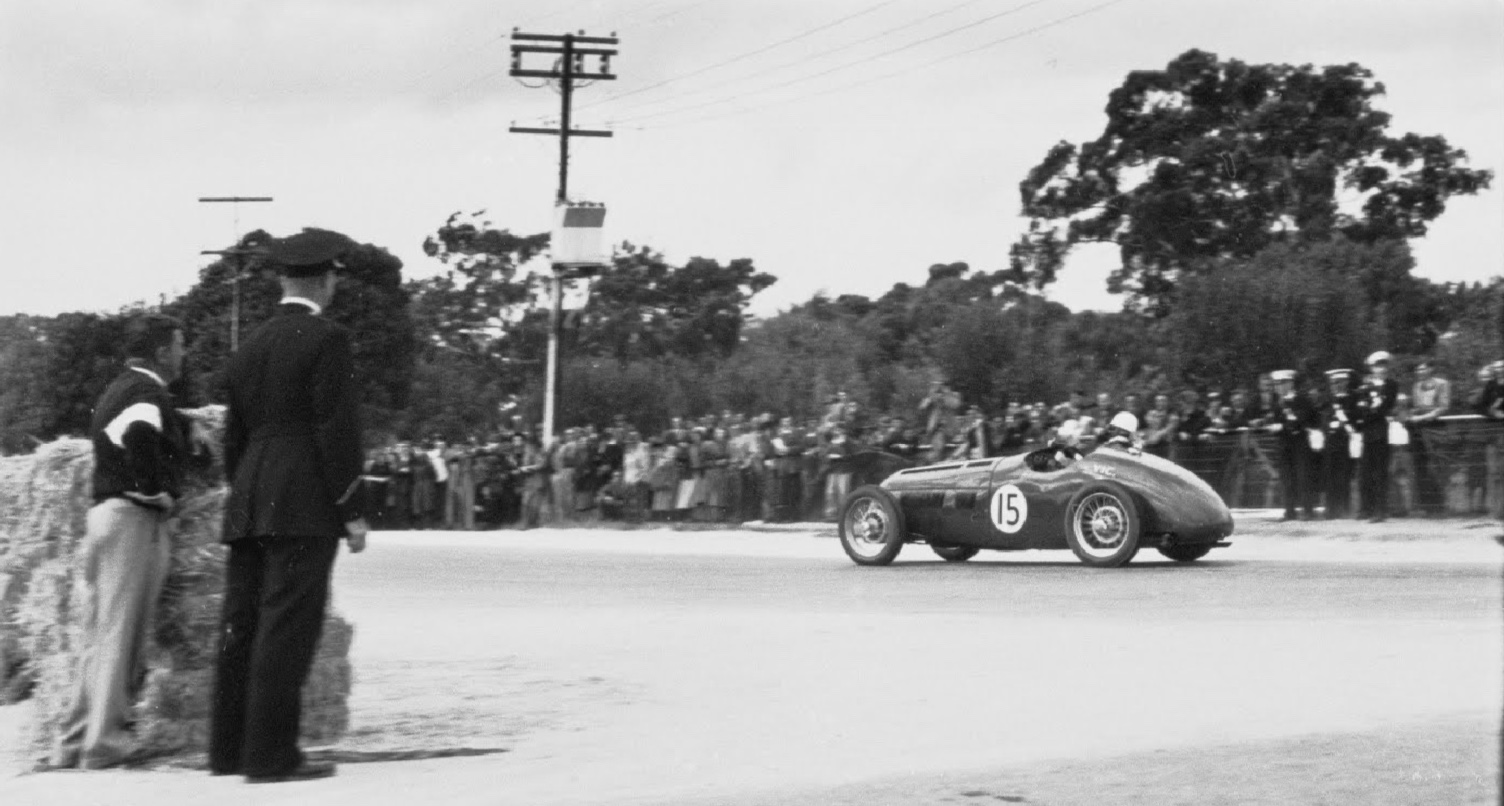
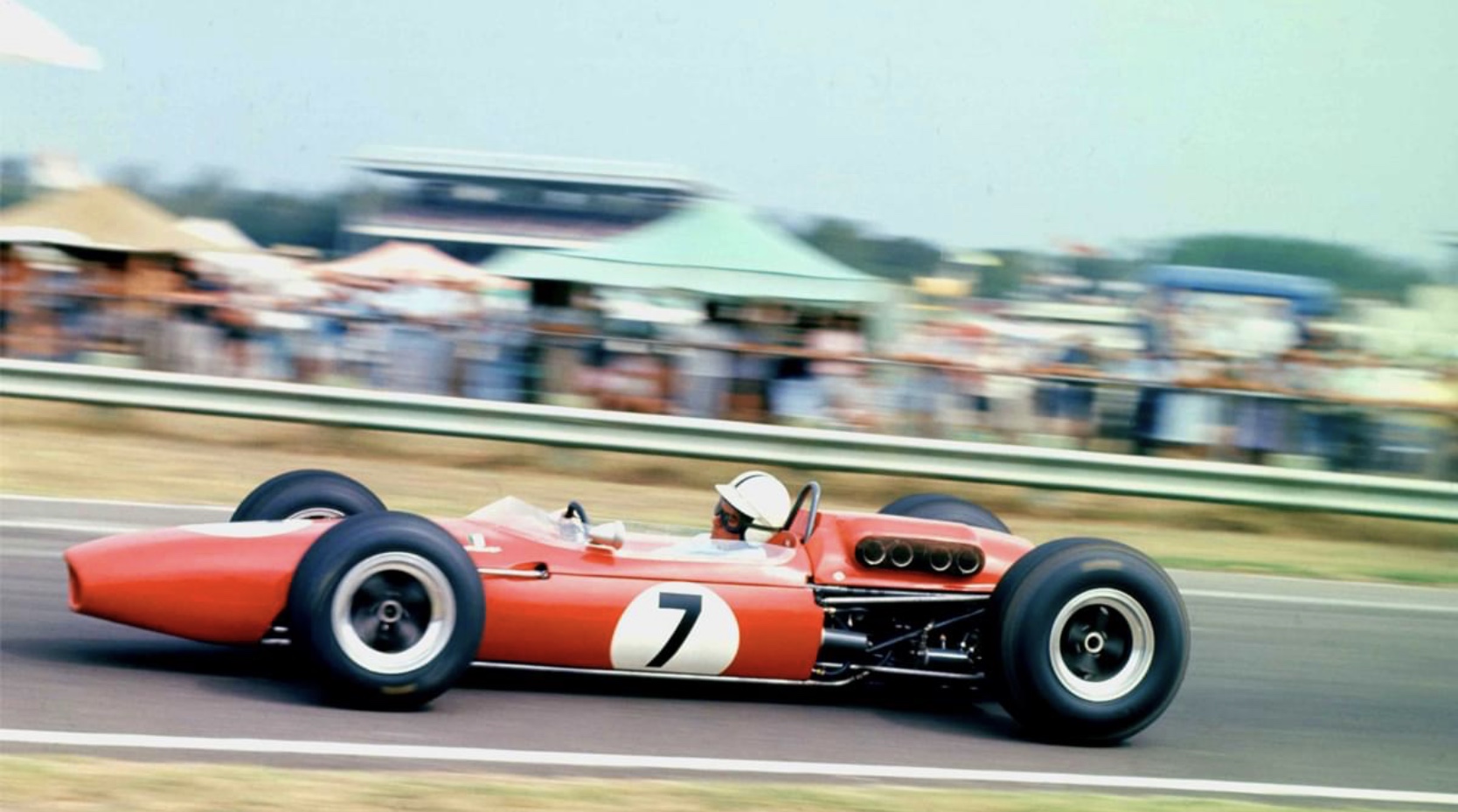
Posts Tagged ‘Alan Jones’

(LAT)

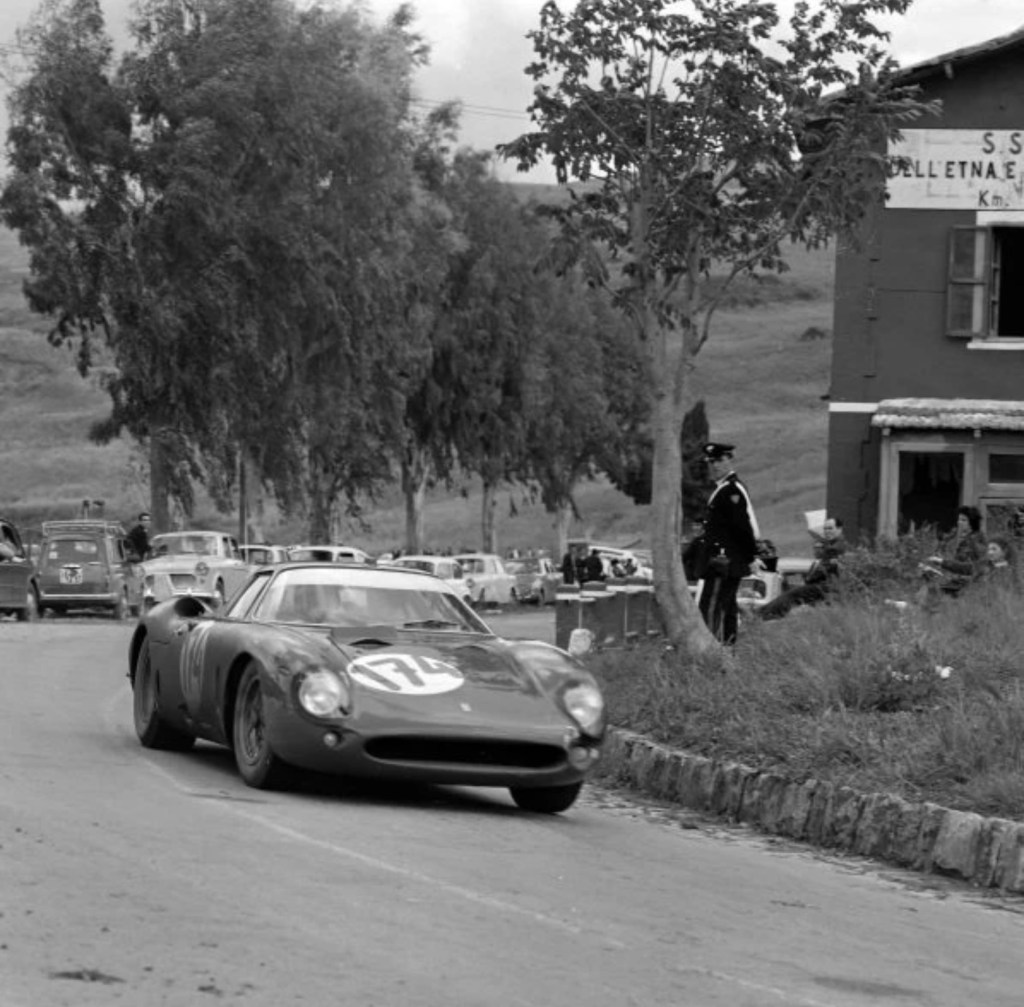
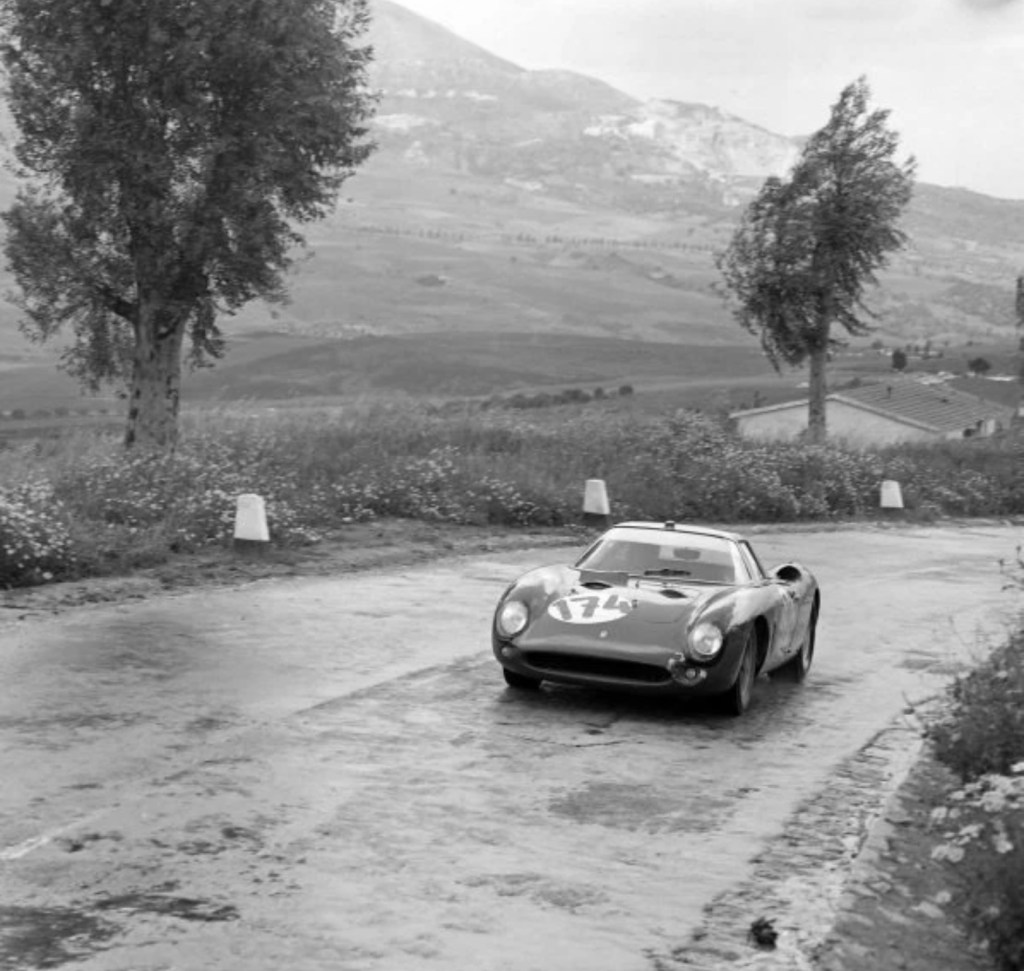
Paul Hawkins shared Jackie Epstein’s Ferrari 250LM in the 1966 Targa Florio. They were 30th in the race won by the Willy Mairesse/Muller works-Porsche 906.

More about Epstein here: http://www.motorsportmemorial.org/LWFWIW/focusLWFWIW.php?db=LWF&db2=ms&n=951

(LAT)

Its funny where I’m finding photos, which give me the ideas for articles, in recent times. Ebay facilitates sales of lotsa things, including motor racing photos. So, Googling, ‘Paul Hawkins Ferrari’ up popped the two Ebay ad shots. Punters put the shots up at just about a sharp enough resolution to use. So there you have it, the photo credits here are all Ebay unless identified otherwise. And yes, the sellers rarely credit the original photographer, albeit I recognise many as LAT/MotorSport Images material…so I’ve just slapped LAT on the lot.

(LAT)

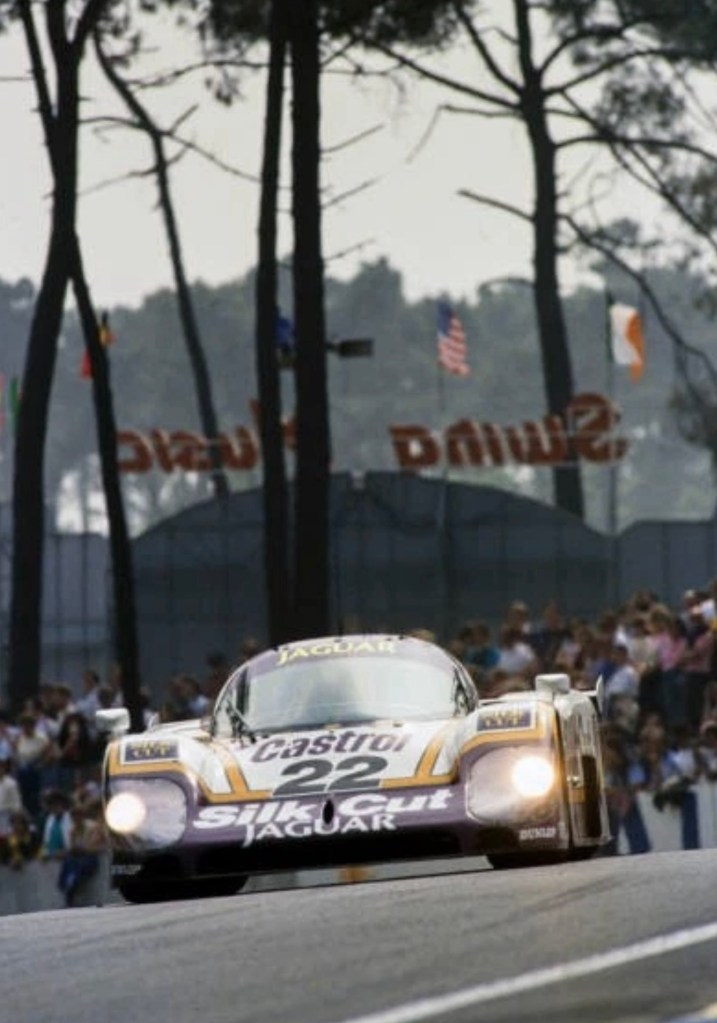
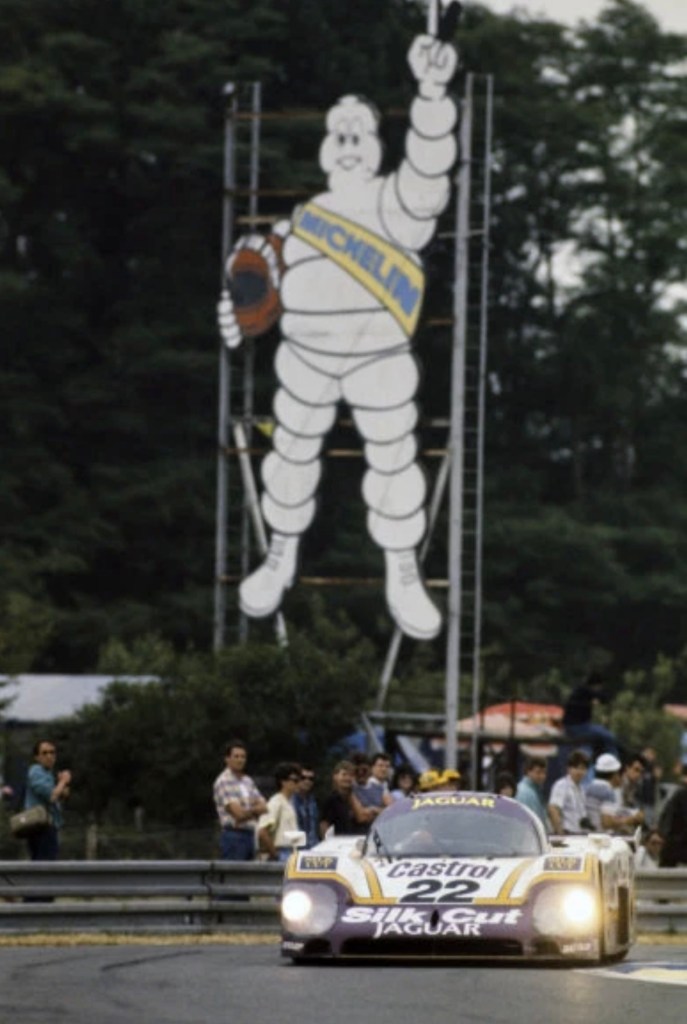
The Larry Perkins/Kevin Kogan/Derek Daly fourth placed TWR Jaguar XJR-9 V12 at Le Mans in 1988.

Jaguar’s 1988 Le Mans victory was an endurance racing defining moment, marking Jaguar’s return to the top after decades of Porsche dominance; they last won Le Mans in 1957: D-Type Ron Flockhart/Ivor Bueb.

Their weapon of war was Tony Southgate’s, TWR-built, carbon fibre XJR-9 7-litre V12. Jan Lammers, Johnny Dumfries and Andy Wallace won while Larry was fourth, his purple and white machine shared with Irishman Derek Daly and American Kevin Cogan.

The race was a long, tense Jaguar-Porsche duel with a light rain adding to the late race drama, allowing Hans Stuck’s 962 to close the gap. Jaguar’s lead remained intact despite a gearbox failure in the final hour. Jan Lammers kept the car in fourth gear for the balance, nursing the XJR-9 to victory and delirious joy from the army of Jag enthusiasts present.

Larry was an easy choice for Tom Walkinshaw. Both were on the slippery slope of the intensely competitive European scene in the early 1970s; Tom watched Larry rise to the top. F1. Not to forget that they had jumped into bed together via Holden Special Vehicles in Australia in 1988; Perkins Engineering were contracted to run Holden’s race program.

(LAT)

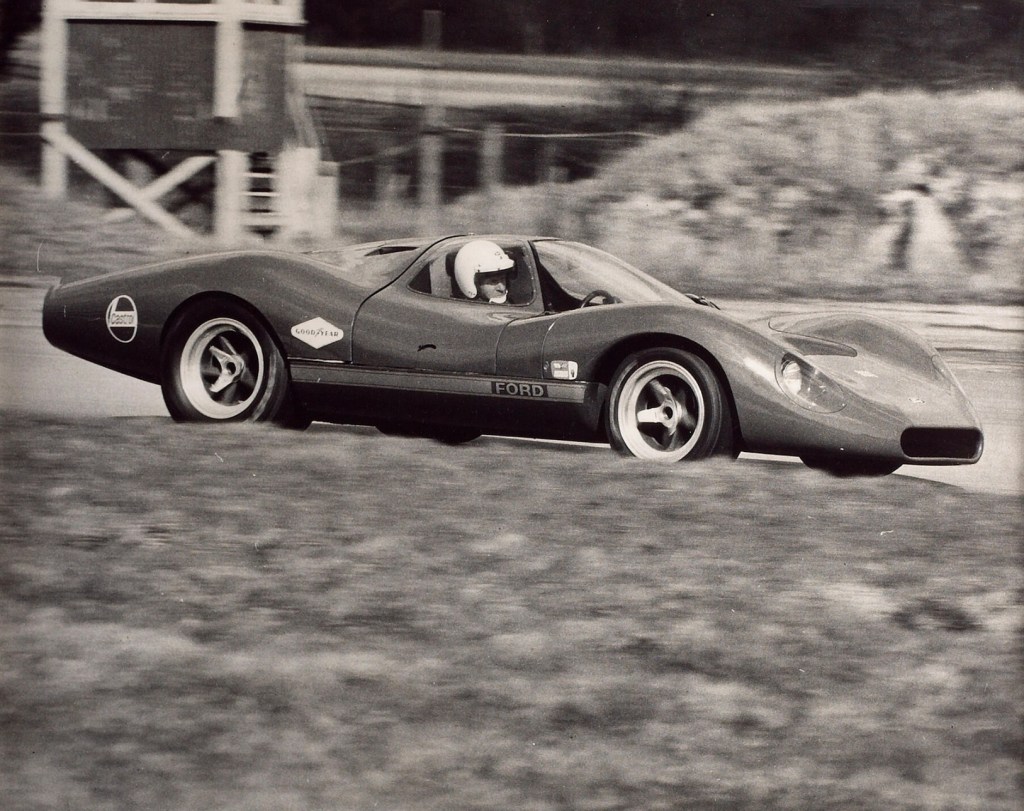
Frank Gardner testing the Ford F3L/P68 at Goodwood in 1968, date folks?

The red beauty flattered to deceive but FG got the very best from it, buckle up for this rather lengthy treatise: https://primotipo.com/2018/06/21/skin-deep-beauty/ and Alan Mann Racing here:https://alanmann.co.uk

Meanwhile, Alan Mann gets the lowdown from Bruce McLaren below. 3-litre Ford Cosworth DFV in clear sight, Hewland DG300 gearbox not so. The engine, which was designed to be used as a stressed member, wasn’t, and that’s about where the problems started…

(LAT)

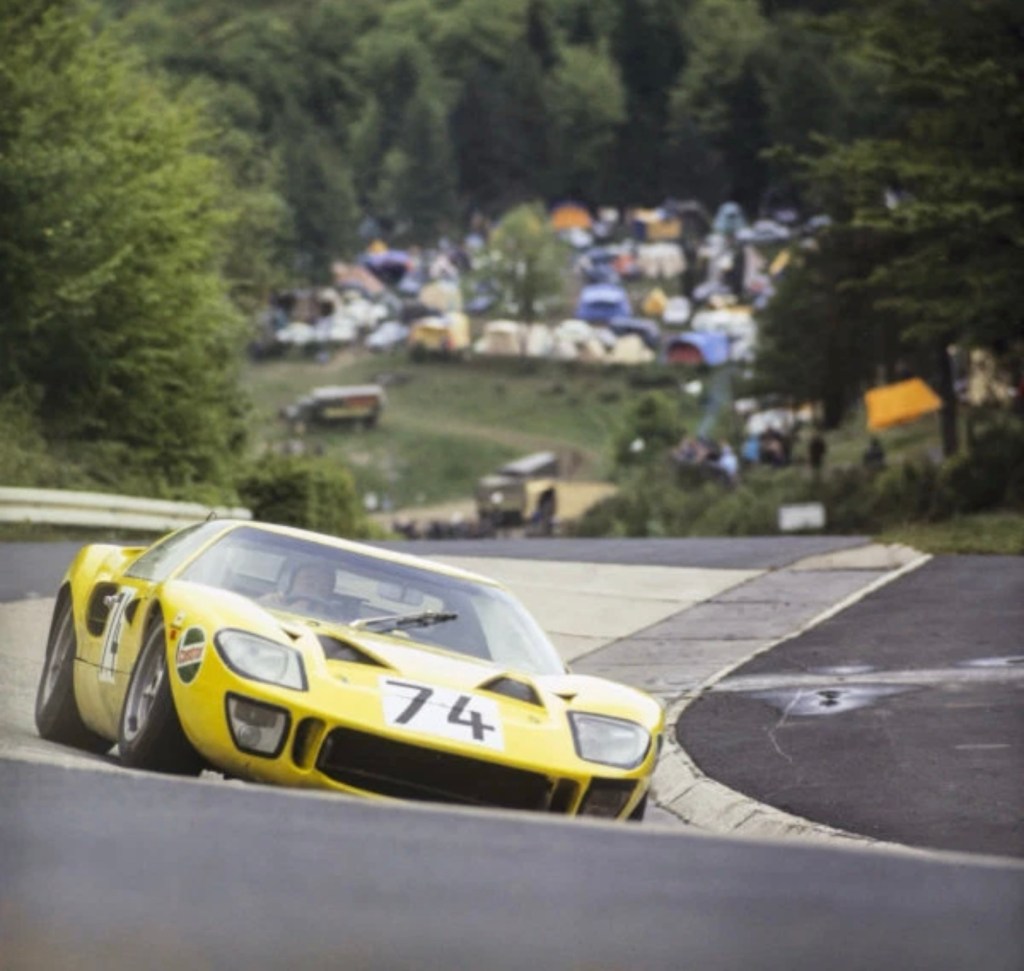
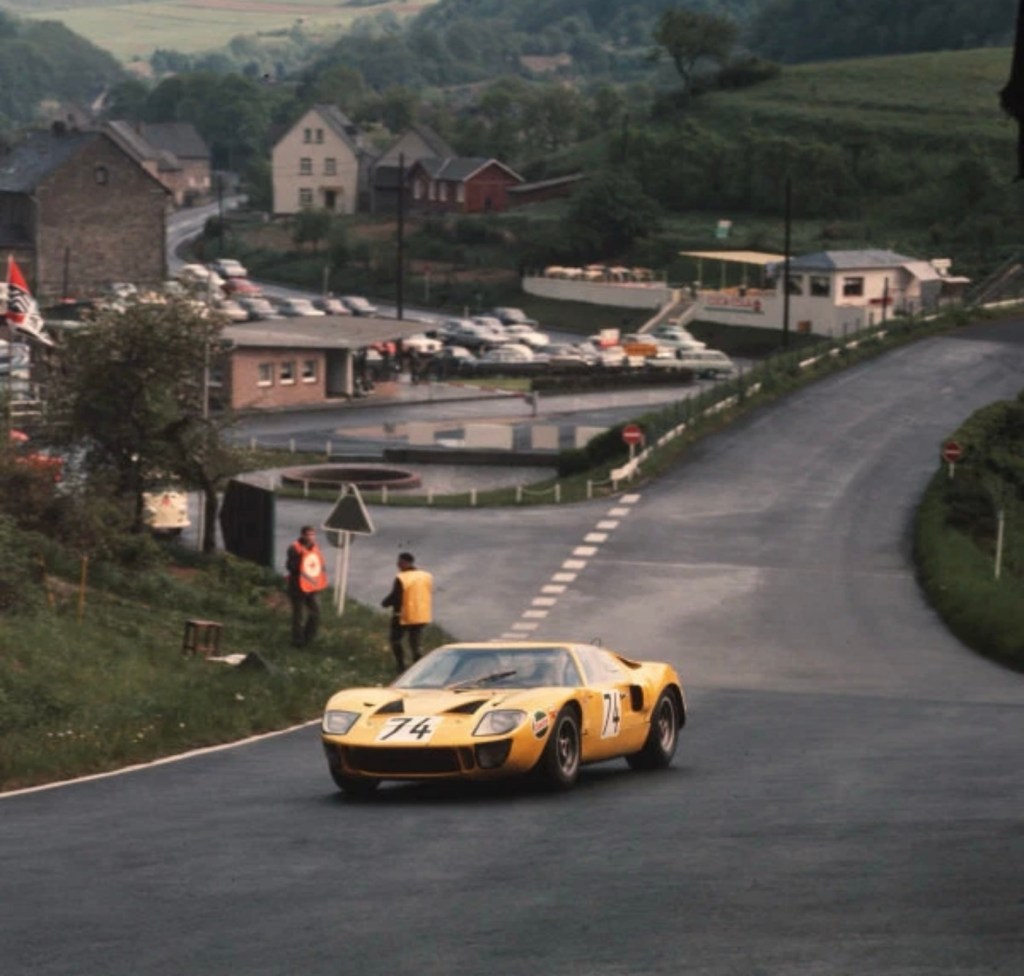
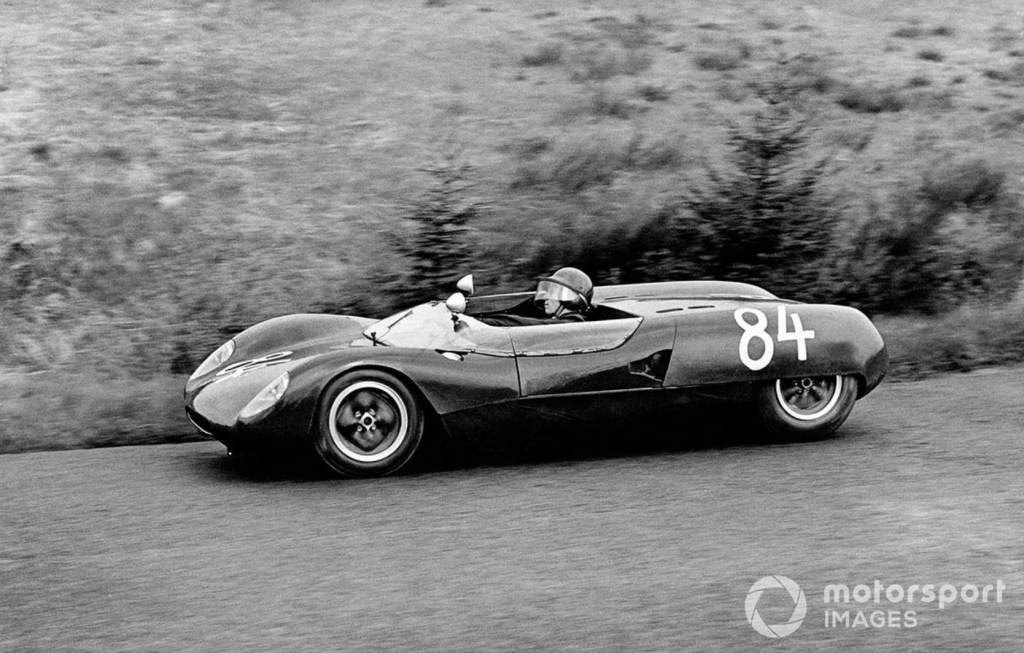
The John Raeburn/Nicholas Granville-Smith Ford GT40 during the 1968 Nurburgring 1000 km.

Melbourne-born John Raeburn raced sports cars briefly in Europe in the mid-1960s before retiring at the ripe old age of 32 at the end of ’68. 

John raced Holdens and then made his name with his consistent winning pace in a Buchanan Holden from April 1960 to July 1961. Into the mix were drives in Jaywood Motors Appendix J Holden Humpy and FC.

He competed in the 1960-64 Armstrong 500 at Phillip Island and Bathurst, sharing a Singer Gazelle with Harry Firth in 1960, and then Firth’s works Ford Cortina GT, Zephyr MkIII and Falcon.

He took on the big-car challenge in 1965, finishing fifth in the one-race Australian Touring Car Championship at Sandown. His mount was the 7-litre Ford Galaxie left in Australia after the ’64 Sandown International by Sir Gawaine Baillie. He jumped on a ship for Europe with the intention of racing the car in the UK, but Baillie sold it before he got there. 

Undeterred, he started working for Graham Warner’s Chequered Flag Motors in 1966, driving their Shelby Cobra in the 500 Zeltweg 500 km.

He raced Mike de Udy’s Porsche 906 with Roy Pike in the Reims 12 Hours in 1967, and took part in several 1968 World Sportscar Championship rounds at Monza, Spa-Francorchamps and Nürburgring. His car was a yellow Ford GT40, chassis #1001, owned by Andy Cox, ‘who had won money on the football pools and bought himself a GT40,’ wrote Doug Nye.

Among his driving partners were Nicholas Granville-Smith and another Australian tyro who did a stint at The Chequered Flag, Tim Schenken. 

Reaburn reported his exploits back home via Racing Car News. Raeburn tested a Formula 3 car at Brands Hatch in 1966, matching Tony Lanfranchi’s times, and a works F2 Lotus 48 Ford FVA at Hethel in 1967, but, being a tall unit, decided to concentrate on sports car racing. 

He quit racing at the end of 1968, aged 32. In recent years John lived in retirement with his wife in Mooroolbark, Victoria. He passed away from a stroke, on Saturday, 26 November 2016, aged 80.

Keep an eye out for a feature coming up on John thanks to my mate Gregory Smith…

(LAT)
(LAT)

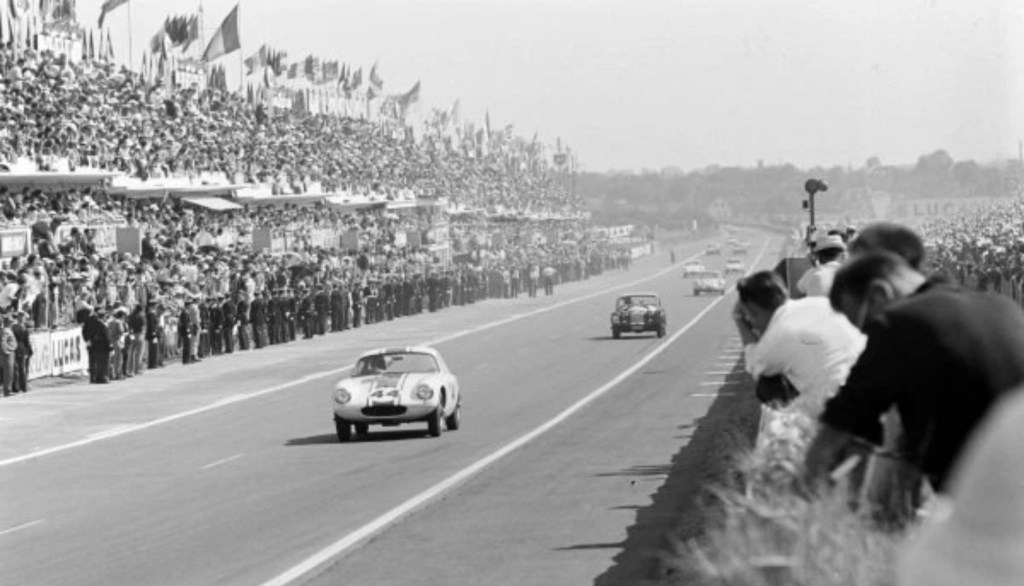
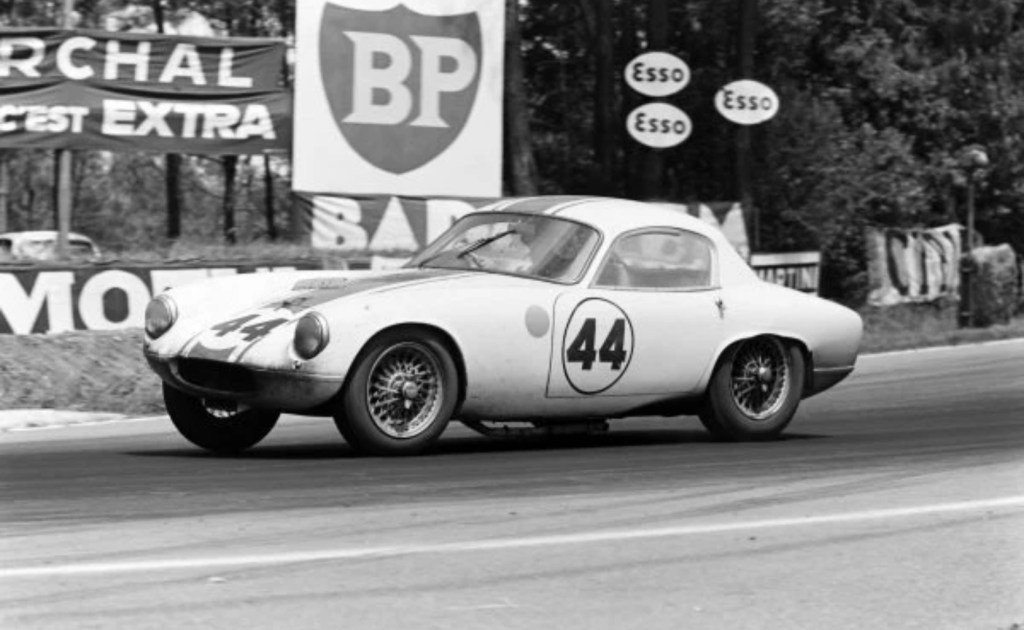
The Frank Gardner/David Hobbs Lotus Elite during the 23-24 June 1962 Le Mans 24 Hours.

Team Elite entered two cars, Hobbs/Gardner shared the #44 (chassis 1678) and Clive Hunt-Jesse Wyllie #45 (chassis 1792). #44 car finished eighth and #45 11th. That was again a win in the 1151-1300 cc class. There was also a double finish (first and third) in the Index of Thermal Efficiency. The #45 car  finished eleventh.

This Le Mans is remembered for the clash of the titans, Colin Chapman and the ACO. Chapman entered his new Lotus 23 Lotus-Ford twin-cam 1.5 in the Experimental class.

Jim Clark wowed the pundits with a staggering Lotus 23 performance in front of the V6 and V12 engines in the May 27 1000 km Nürburgring before problems intervened.

Clark/Taylor Lotus 23 Lotus-Ford twin-cam 1.5 DNF Nurburgring 1000 km 1962 after 11 of the winners 44 laps. Jim at the wheel

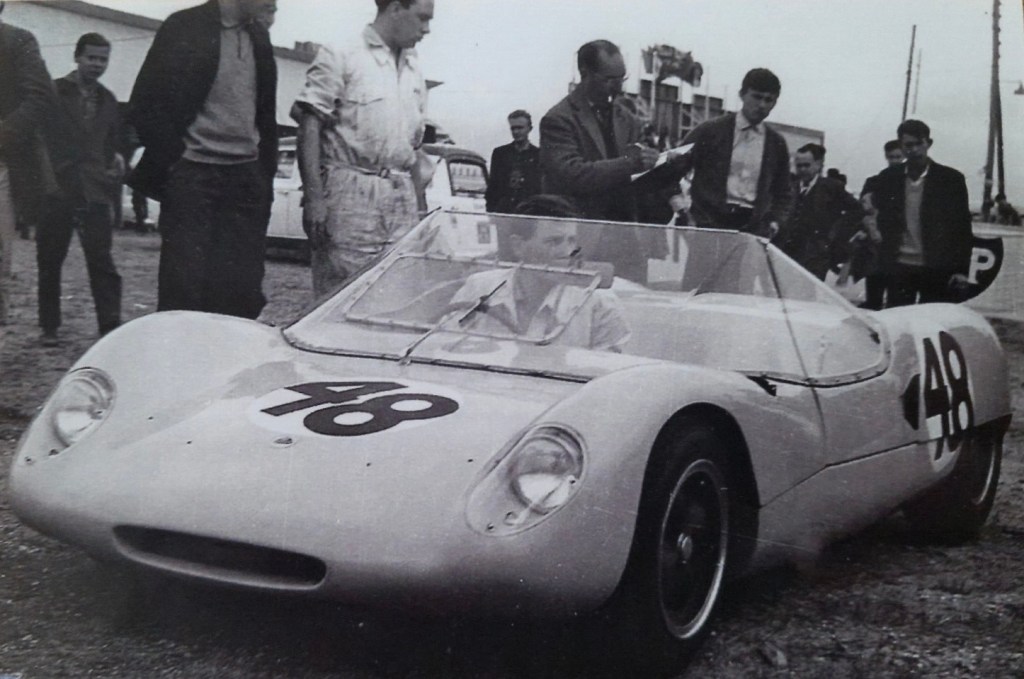
The #47 Lotus 23 was fitted with a 997cc Ford Cosworth MAE twin-cam engine as a potential Index of Performance winner in the hands of works F1 drivers Clark and Trevor Taylor. The other #48 Lotus 23 (below) was a UDT Laystall entry for Les Leston and Tony Shelly.

The Les Leston/Tony Shelly UDT Laystall Lotus 23 Coventry Climax FWM 747cc. ‘Refusé au pesage’ by the ACO (unattributed)

Both cars looked odd because of the required front window dimensions, but they weren’t allowed to be scrutineered due to insufficient ground clearance, an illegally oversized fuel cell and non-conventional fixation of the wheels (four bolts in the front and six at the back).

Chapman flew Frank Costin from London to plead his case that a four-bolt wheel affixation sufficed; the team made the change in the paddock. He offered a stress test, but the scrutineers still said no, so the two Lotus 23s couldn’t take part! Chapman was incandescent with rage, swearing that never again would a works Lotus race at Le Mans. 

(LAT)
(LAT)

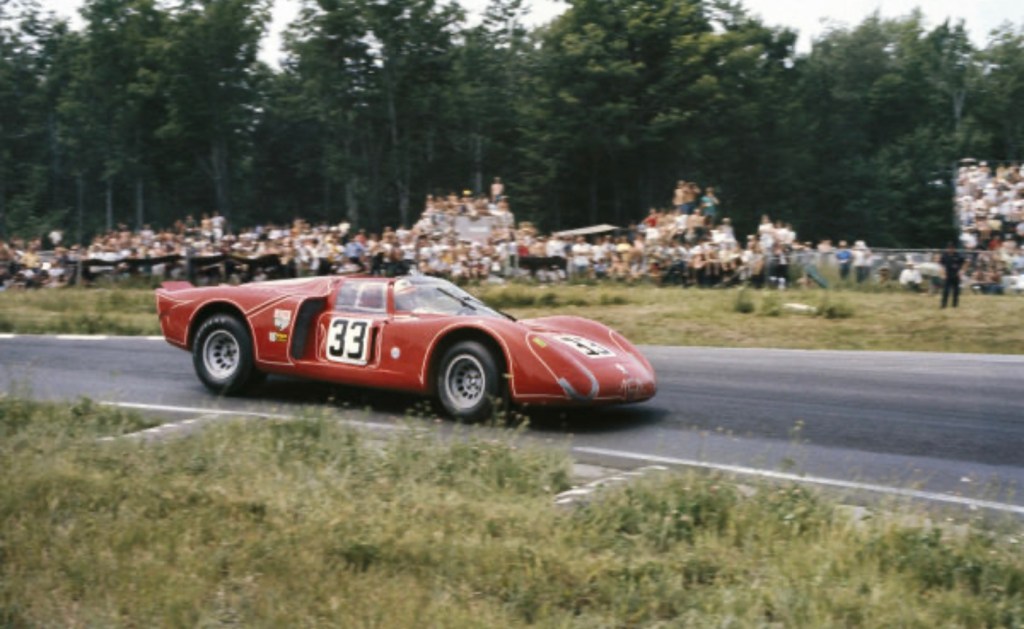
Horst Kwech in the Alfa Romeo T33/2 he shared with John Martino in the July 14, 1968 Watkins Glen 6 Hour.

Ok, Horst was born in Austria, lived in Cooma during his formative years and spent most of his adult life in the US, but he always wore a ‘Roo on his helmet, so we’ll claim him…

The then Alfa GTA Trans-Am star was out after only 17 of the winner’s 286 laps (Lucien Bianchi/Jacky Ickx JW Ford GT40), having qualified the car 11th, he got up to 10th before the engine cried enough. The best placed 2-litre car, the fourth placed Frank/Trieschman Porsche 906.

More on the T33/3 here:https://primotipo.com/2023/07/10/alfa-romeo-tipo-33-tt-3-and-siblings/

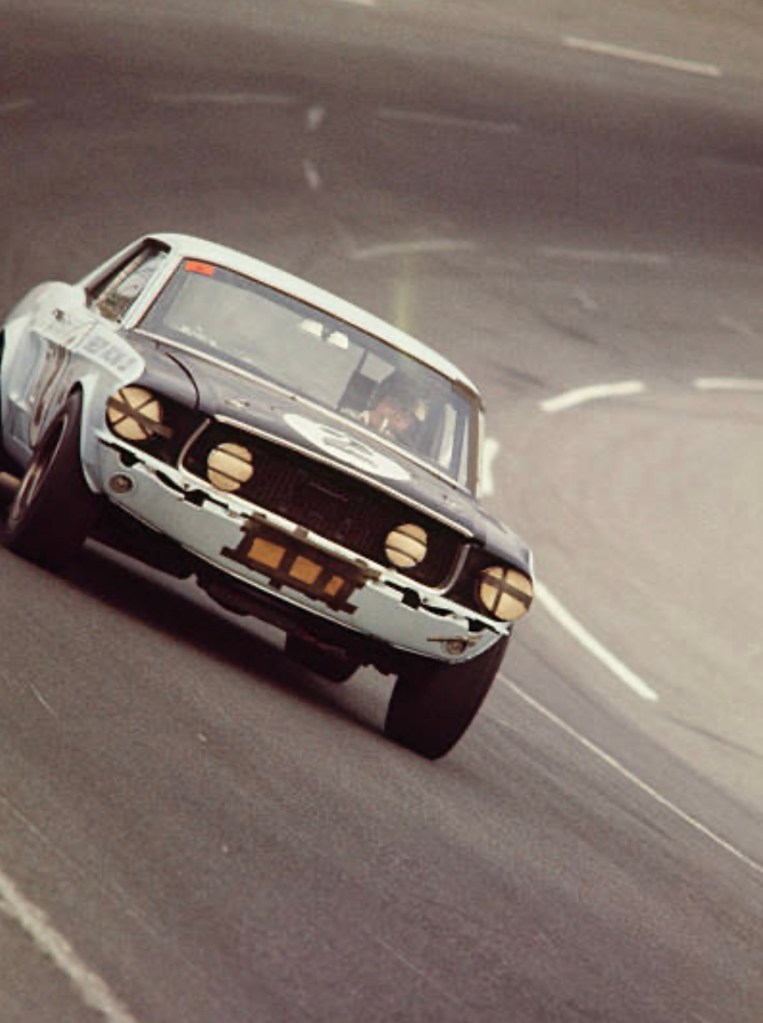
Earlier in the year, Kwech shared a Shelby-prepared Ford Mustang in the Daytona 24 Hour with then US-based Allan Moffat. We’ll claim that Canadian too!

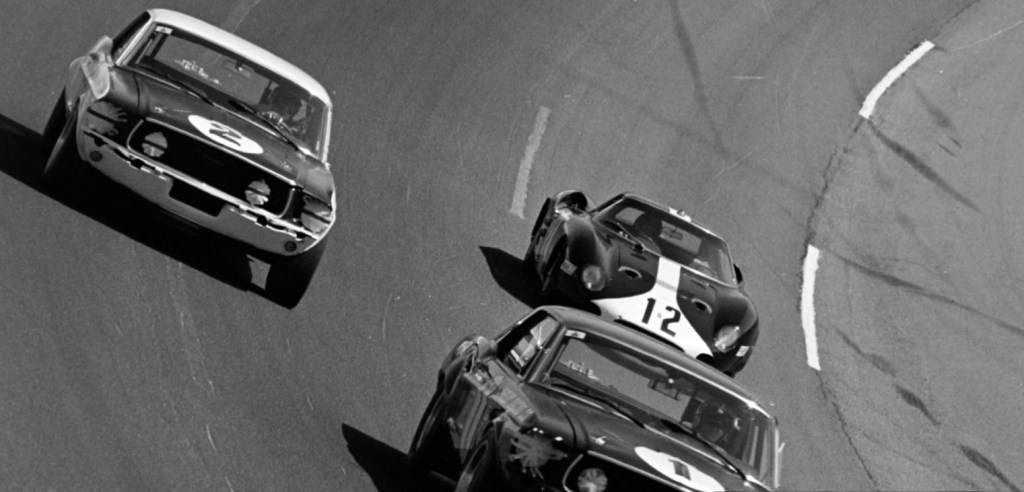
The shot below shows Kwech on the outside of the Paul Vestey/Roy Pike Ferrari 250LM. Car #1 is the fourth placed! Jerry Titus/Ronnie Bucknum Shelby Mustang. Horst and Allan were out after 176 of the winners 673 with a rear suspension problem. Up fromt was two 2.2-litre Porsche 906s: driven by Vic Elford/Jochen Neerpasch/Rolf Stommelen/Jo Siffert/Hans Herrman! and Siffert/Hermann.

The colour shot below is of Moffat. More about Moff’s US Racing Phase here:https://primotipo.com/2020/03/06/moffats-shelby-brabham-elfin-and-trans-am/

(LAT)
(Getty)
(LAT)

The works-Porsche 910 Paul Hawkins shared with Gerard Koch to second place in the May 28, 1967 Nurburgring 1000 km is about to be monstered by the 7-litre Chev powered Chaparral 2F driven by Phil Hill and Mike Spence, DNF.

The race was won by the Udo Schutz/Joe Buzzetta works-910. See here:https://primotipo.com/2020/09/25/hawkeye/ and another perspective here:https://primotipo.com/2017/10/12/lola-t70-aston-martin/

(LAT)

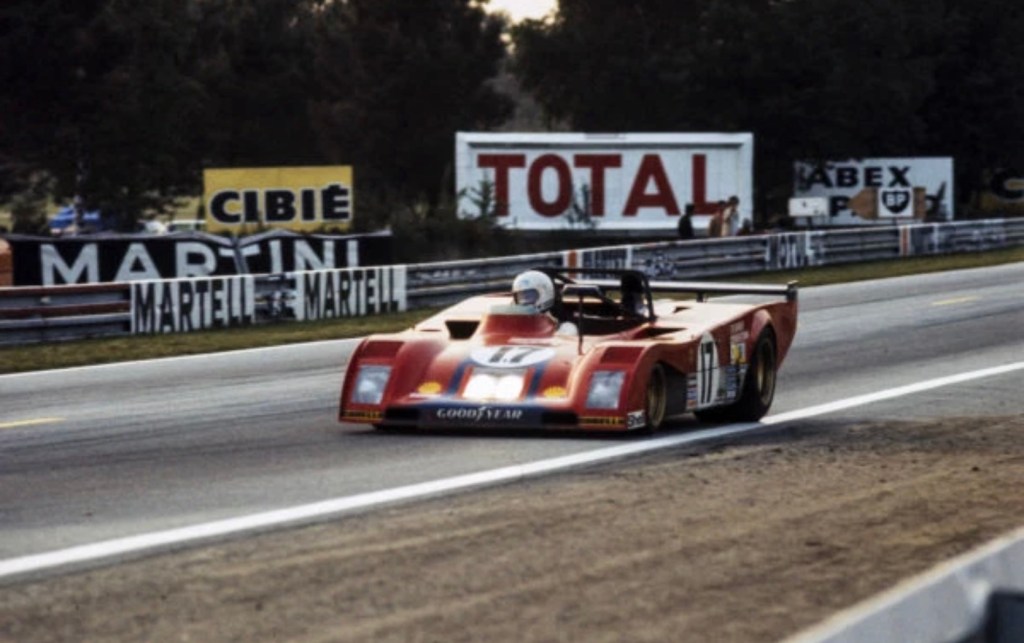
Tim Schenken aboard the Ferrari 312PB 3-litre flat-12 he shared with Carlos Reutemann at Le Mans in 1973

Tim had a big year with Surtees in F1 in 1972 and did the full endurance season with Scuderia Ferrari, usually sharing his Ferrari 312PB with good mate Ronnie Peterson. They won the 1000 Km Buenos Aires and the Nurburgring 1000 km and were second at Daytona, Sebring, Brands Hatch and Watkins Glen and third in the Monza 1000 km in a solid contribution to the points haul that won Ferrari the Munufacturers Championship 160 points to Alfa Romeo, 85, and Porsche, 66.

More about Schenken here:https://primotipo.com/2019/01/02/tim-schenken/

(LAT)

Tim returned to Ferrari the following year, but the Matra MS670/670B had bridged the performance gapso his best results were two second places in the car he shared with Carlos Reutemann at the Vallelunga 6 Hour and Monza 1000 km.

At Le Mans, the pair were out in the 12th hour with engine troubles; the Ickx/Redman machine followed suit in the final hour, leaving the Art Merzario/Carlos Pace 312PB second, but six laps adrift of the victorious Henri Pescarolo/Gerard Larrousse Matra-Simca MS670B. More about the Matra here:https://primotipo.com/2023/09/19/matra-random/

(LAT)
(LAT)

The only other Australian works-Ferrari driver was Paul Hawkins who shared a Ferrari P4 with Jonathan Williams in the 1968 Brands Hatch 6 Hour. Sadly, it was Paul’s only Scuderia Ferrari drive, but far from his last drive of a Ferrari! More about the 1967 ‘World Sportscar Championship’ and the Ferrari P4 here:https://primotipo.com/2015/04/02/ferrari-p4canam-350-0858/

The Donald Healey Motor Company, Lola, Porsche, Ford and Ferrari isn’t a bad list of works outfits to have raced for!

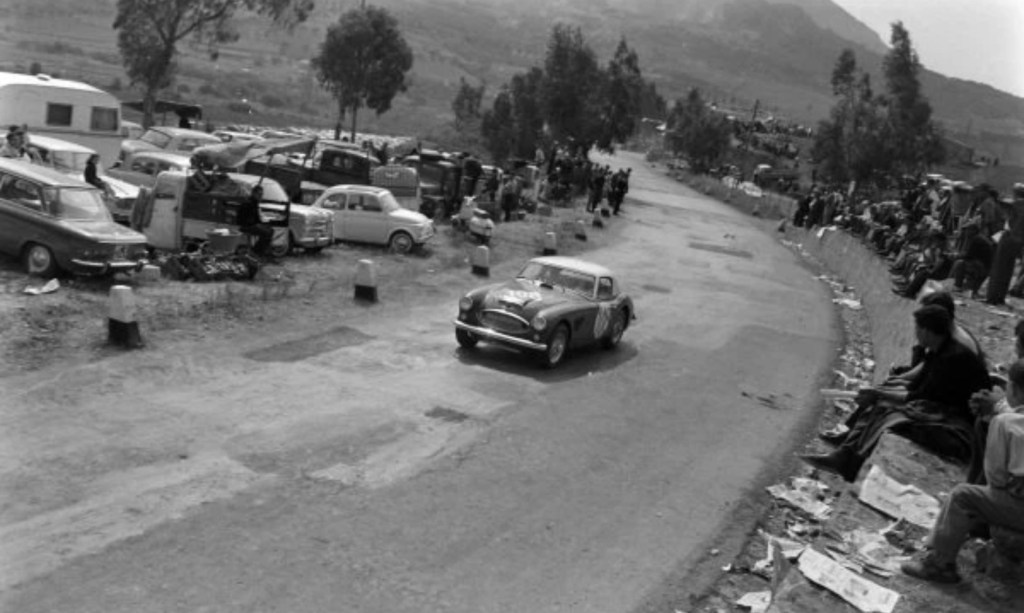
Speaking of the DHMC, here are some shots of the Hawkins/Timo Makinen Austin Healey Mk3 during the 1965 Targa Florio with Hawkeye at the right, ready to jump aboard. The pair were 21st in the race won by Nino Vaccarella and Lorenzo Bandini’s works-Ferrari 275 P2.

(LAT)
(LAT)
(LAT)

Brian Muir co-drove this Allan Mann Racing Ford GT Mk2 with Graham Hill at Le Mans in 1966

In 1966 Muir did a full season in a Willment Racing Ford Galaxie in the British Touring Car Championship. At the Norisring-Rennen in Germany, he won the GT race in Willment’s AC Daytona Cobra and finished third in the sportscar race in the team’s Lotus 30-Climax, setting the fastest lap.

Given his pace, Muir was signed to steer the Ford MkII with Hill. During the race, the pair ran in the top six before the front suspension broke during the eighth hour. More about Muir here:https://primotipo.com/2022/09/03/brian-muir/

I think the only other Le Mans entry Graham Hill shared with an Australian was with Derek Jolly in a Lotus Engineering 2-litre Lotus 15 Coventry Climax FPF in 1959.

That ended in tears with a Queerbox-induced engine failure. See this lengthy piece on Derek and his pair of Lotus 15s here:https://primotipo.com/2017/11/09/dereks-deccas-and-lotus-15s/

(LAT)
(LAT)

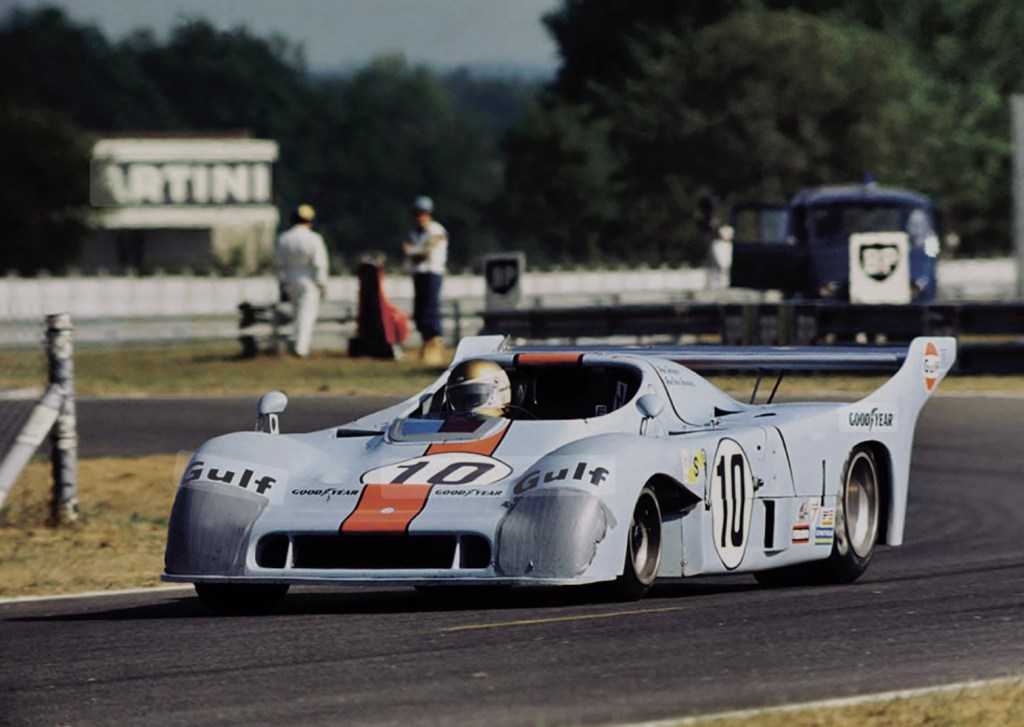
Vern Schuppan in the Gulf Mirage GR8 Ford Cosworth DFV he shared with Jean-Pierre Jaussaud to finish third at Le Mans in 1975.

Up front was the other team car driven by Derek Bell and Jacky Ickx, in second was the similarly powered Ligier JS2 crewed by Jean-Louis Lafosse and Guy Chasseuil.

Nearly a decade later, Vern shared a Kremer Racing Porsche 956B with Alan Jones; the pair finished sixth in the race won by the Joest 956B raced by Henri Pescarolo and Klaus Ludwig.

I’ve done a few pieces about Vern, try this one:https://primotipo.com/2022/01/17/vern-schuppan-3/

(LAT)
(L Roberts)

Vern in a sports car of a completely different type, an Elfin MR8C Chev F5000 converted into a central seat Can-Am machine, here at Riverside in 1977, resplendent in brand new John Webb aluminium bodywork. I’ve prattled on about this car before, see here: https://primotipo.com/2018/10/02/hit-with-the-fugly-stick/

Credits…

Ebay-LAT-MotorSport Images, Larry Roberts, Gardner Lotus Elite-History Racing Pedia, F2Index-Fastlane, Getty Images, Racing Sports Cars

Finito…

Alan Jones, Surtees TS19 Ford during the US GP West at Long Beach on March 28, 1976.

What caught my eye was John Surtees’ Franger-Mobile without the ads for Durex’ finest. Too much for American sensibilities or something? The BBC cracked-it too didn’t they, refused to cover F1 that season?

Anyway, having randomly lobbed on this photo, I kept going through the amazing Getty Images archive, this Jones homage is the result.

John Surtees in Jones’ car during the May 30 Monaco GP weekend; bleeding the brakes or dreaming about earlier times? See here: https://primotipo.com/2019/11/09/ferrari-156-63-and-156-aero/

It seemed to me rather a cohesive design from the pens of Big John and Ken Sears, but its looks flattered to deceive a bit. Sadly.

Jones, Monaco Q19 and first lap collision, DNF

Jones’ best result in 16 races with the car was a brilliant second behind James Hunt’s McLaren M23 Ford in the non-championship Race of Champions at Brands Hatch in March. In Grands Prix he was fourth in the season-ending Japanese GP where Hunt won the title, and bagged a pair of fifths at Zolder and Brands Hatch.

After Alan decided he would rather race in the US than saddle up again with former World Champ Surtees, his countrymen, Larry Perkins and Vern Schuppan had a crack or two in TS19s in 1977 but they didn’t like the cars much either although.

Vittorio Brambilla’s best TS19 results in 1977 almost exactly matched Jones’ the year before, but by then Jones had returned to F1 with Shadow after the horrific death of Tom Pryce during the ’77 South African Grand Prix.

AJ found the Shadow DN8 Ford much more to his liking than the TS19, bagging points in six races including a first breakthrough F1 win at the Osterreichring, and third place at Monza.

TS19 in the pits at Long Beach in March 1976, where Alan was unclassified.

The pyramid type aluminium monocoque has more than a nod to Gordon Murray’s Brabham BT42-44s but has two angles to it. Front mounted radiators, pull-rod actuation of the front spring, fuel carried centrally aft of the driver, the usual Ford Cosworth DFV-Hewland FGA400 combo, rear springs are torsion bars (?), single top-links and wide based lower wishbones and one radius rod assisting fore-aft locational duties on each side. Interesting.

Race of Champions, Brands Hatch paddock in March 1976 where the Jones boy is catching up with what’s happening in Australia, Chequered Flag was a good publication at the time.

Jones, Lola T332 Chev ahead of Peter Gethin’s VDS Chevron B37 Chev on the run down to Dandenong Road during the February 1977 Sandown Park Cup. DNF for both, Max Stewart won in his Lola T400 Chev (I Smith)

He raced at home that summer for the first time since leaving for the UK circa-1968 – after the September 1968 Sandown Three Hour in which he co-drove a Holden Monaro HK GTS327 to second place – doing all four rounds of the February 1977 Rothmans International Series.

He brained everybody with his speed in the Sid Taylor/Theodore Racing Lola T332C Chev, taking one win, jumped the start of the AGP and got pinged at Oran Park, then boofed the car during practice at Surfers. Third place overall with his raw pace riveting to watch…

A couple of classic Nurburgring shots during the July 31, 1976 German GP weekend, above aviating at the Flugplatz and below the Karussel photograph shows the attractive lines of the TS19 to good effect.

AJ was tenth from Q14 of 26 on the disastrous weekend in which Niki Lauda came close to losing his life aboard a Ferrari 312 T2.

There is that double angle tub on display, doesn’t the bodywork enhance the flow of air onto the wing? Alternative front nose being tried during practice at the Nurburgring below.

Jones on the hop at Watkins Glen in October 1978, Williams FW06 Ford and looking on-it in the damp pitlane at the Osterreichring in August 1978 below.

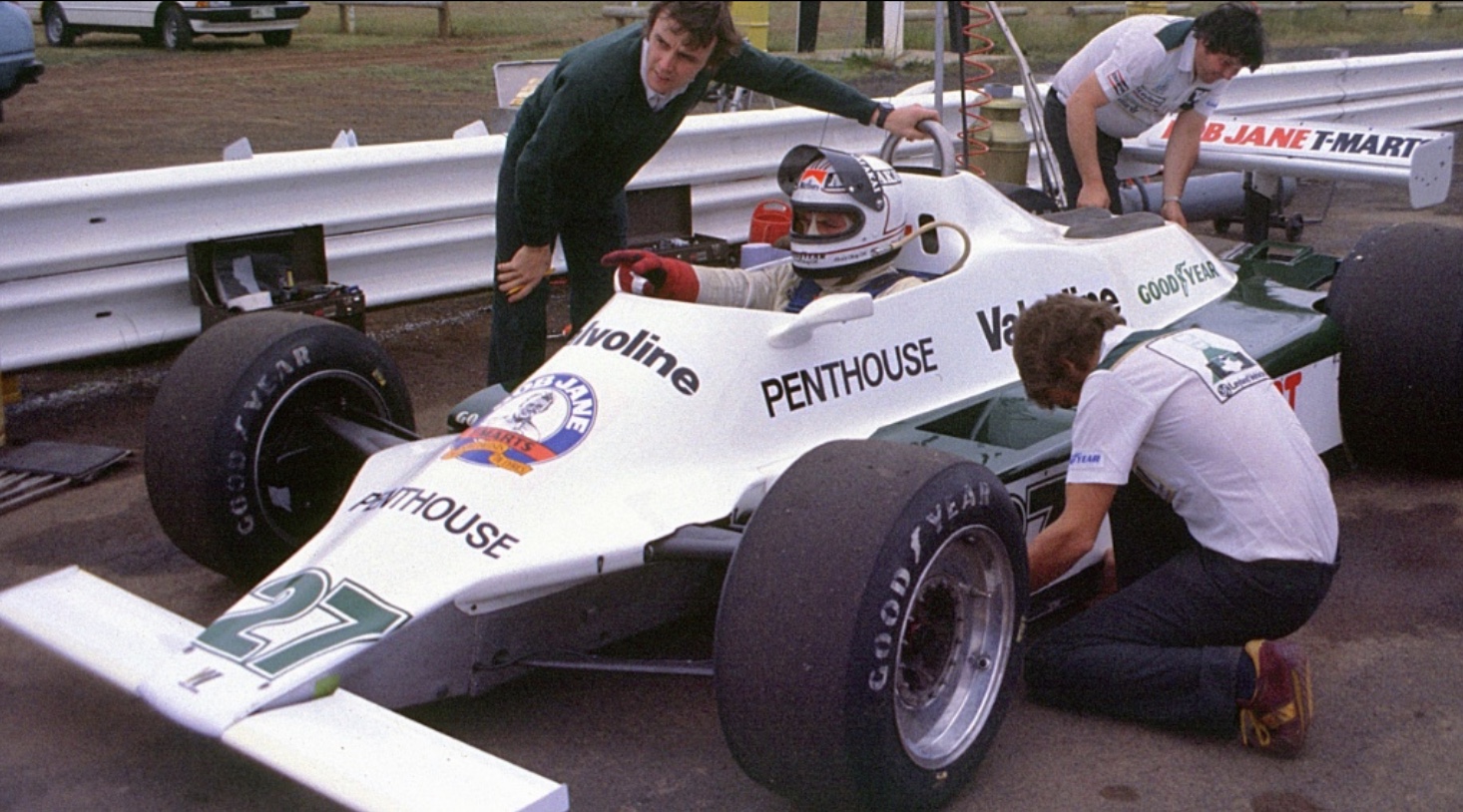
When Jones joined Williams for a one-car attack in 1978 it didn’t necessarily look the best of moves, but Patrick Head’s first F1 car, the FW06 proved an excellent design which was well prepared as FW had an adequate budget for the very first time. Jones made the Saudi Airlines sponsored car fizz, finishing 9 of the 16 races he started with second, fourth and fifth his best results in the US, South Africa and France respectively.

With Frank Williams and the FW06 at Long Beach during the 1979 US GP West in October below.

‘The best’ of the non-ground effect cars in 1978, the FW06 was off the pace in 1979 amongst a more competitive grid, arguably, Jones would have won the 1979 title had the FW07 appeared earlier than it did; Woulda-coulda-shoulda…

(D Phipps)

Amongst the fastest ground-effect machines of the early 1980s was the Williams FW07 Ford in its various iterations, here with Jones in front one of one of the Renaults at the Osterreichring in August 1980 where he finished second in an FW07B.

Great shots of the fully extended sliding skirts of the FW07Bs of Carlos Reutemann #28 and Jones in the Watkins Glen paddock in October 1980, and below of the tunnel support structure at Hockenheim in 1979 where AJ won.

The FW07 was first raced at Jarama in April 1979 with Clay Regazzoni taking its first race win in the British Grand Prix at Silverstone in July, then Jones won four of the last six races that year as the FW07 hit its straps, and took the title in 1980 with victories in Argentina, France, Britain, Canada and the US.

Overhead shot at Monza in 1979 shows the critical elements of the car: inboard front suspension offering a clear flow of air into the ground-effect tunnels, the size of which is enhanced by a very slim aluminium honeycomb chassis, and centrally mounted fuel cell. Not to forget the 3-litre Ford Cosworth DFV engine.

Jones as snug as a bug in a rug at Brands Hatch in 1980.

I can’t quite read the FW07B chassis plate, but Allen Brown’s oldracingcars.com tells me he used FW07B/7 and FW07B/8 in practice, winning the race aboard FW07B/7.

Adelaide GP meeting in November 1991 aboard the BMW M3 Evolution he raced to fourth place in the Australian Touring Car Championship. Adelaide wasn’t part of the ATCC.

Credits…

Getty Images, Ian Smith

Tailpiece…

AJ during practice for the one and only Grand Prix Masters race at Kyalami on November 11-13 2005. His mount is a Reynard/Delta 2KI Cosworth XB.

The naturally aspirated 3.5-litre 80-degree V8s were built by Nicholson-McLaren and tuned to give 650bhp @10,400rpm and 320lb/ft of torque at 7,800rpm.

Jones practiced but didn’t start the race with neck soreness, Nigel Mansell won from Emerson Fittipaldi and Riccardo Patrese.

Sorta a great idea but there is a difference between old pro-golfers having a hit and old pro-racing drivers ‘having a hit’…the story is well told here: https://en.wikipedia.org/wiki/Grand_Prix_Masters

Finito…

The only timing device missing from the Jones Boy’s dash is a grandfather clock! Alan awaits the off in his Lola THL2 Ford at San Marino in 1986.

That weekend AJ was Q21 and DNF overheating after 28 laps in the race won by Alain Prost’s McLaren MP4/2C TAG-Porsche. The Frenchman won four of the 16 rounds and the drivers title by two points from Nigel Mansell’s Williams FW11 Honda, albeit Williams took the constructors championship by a country mile – 45 – points from McLaren. Lola Ford finished eighth.

(MotorSport)

Jones above during the 1985 AGP weekend in Adelaide where his results were again disappointing, Q19 and DNF with electrical failure after completing on 20 laps in the Lola THL1 Hart. Keke Rosberg won the race in his Williams FW10B Honda. We’ve been there before with these Hart four-cylinder and Ford V6 1.5-turbo F1 machines, see here; https://primotipo.com/2016/10/21/hart-attack/

Jones’ Lola THL2 Ford overhead, Hungaroring August 1986. Ford Cosworth GBA 1.5-litre V6 twin-turbo
(SMH)

Jones had far more success in the AGP at Calder, west of Melbourne, in 1980 where he raced his Williams FW07B Ford to a dominant win from Bruno Giacomelli’s wailing V12 Alfa Romeo 179B in a mixed field of GP cars (two) and F5000 machines.

There was a neat bit of symmetry that weekend as Alan joined his father Stan as an AGP winner, Jones senior won the race at Longford aboard a Maserati 250F in 1959. See here; https://primotipo.com/2014/12/26/stan-jones-australian-and-new-zealand-grand-prix-and-gold-star-winner/

Williams FW07 Ford DFV drawing 1979 (G Piola)

Credits…

McLarenF1.com, MotorSport Images, Sydney Morning Herald, Getty Images, Giorgio Piola/MotorSport Images

Tailpiece…

Plenty for the driver to look at and do in those pre-digital, manual gearbox days! Another August 10, 1986 Hungarian GP weekend shot. Lola THL2 Ford.

Finito…

In Australia at least, there has never been anything quite like the sphincter-puckering blend of excitement and fear as a 10,000bhp grid of 20 5-litre, fuel injected, thundering V8 missiles are launched by their intrepid pilots.

Many thanks to Michael Strudwick for his photographic artistry.

Warwick Brown, Racing Team VDS Lola T430 Chev gets the jump from pole here at the Surfers Paradise, Rothmans International Series round in February 1977. Quite where Peter Gethin and Vern Schuppan – second and third on the grid – are out of shot I’m intrigued to know. John Leffler is in the white Lola T400 Chev with the partially obscured Alfredo Costanzo’s red Lola T332 Chev behind him. The white helmeted dude behind Brown is Alan Jones aboard Kevin Bartlett’s T332. The Jones boy had crashed and written-off his newish Sid Taylor-Teddy Yip Lola T332C in practice so the pair did a lease-deal to allow AJ to race KB’s car. The blue machine to the right of Jones and back is John Goss’ Matich A51/A53 Repco-Holden.

Alan Jones blasts down Surfers main straight in Kevin Bartlett’s Lola T332 Chev HU22, fifth place (M Strudwick)
Goss’ fourth placed Matich A51/A53 Repco Holden. #005 is one of the two A51s FM took to the US in 1973, and later updated by Goss and Grant O’Neill to A53 side-radiator – and the rest – specifications. This is Goss’ ’76 AGP winning chassis (M Strudwick)
Duulling T332s; great Kiwi Graeme Lawrence HU28 in blue, tenth place, and great Italian/Australian Alfie Costanzo’s ex-Bob Evans HU36 in red, DNF engine. Lola perves will note the 332C factory engine cover come air intake on Alf’s car compared with the very neat one produced by Graeme and his crew in NZ – always distinctive on this car (M Strudwick)

Brown won the race from pole, Peter Gethin’s VDS Chevron B37 Chev was second – the budget required to maintain adequate spares for two different makes within the one team doesn’t bare thinking about – then Leffler, Goss and Jones.

It was a great Rothmans International Series, the three big international Aussies at the time were Jones, Brown and Vern Schuppan, who raced a works Elfin MR8C Chev. The strongest locals were Goss, reigning Australian GP winner, the Lolas of Bartlett, Leffler, Costanzo and Max Stewart, plus John McCormack’s fast but brittle ex-F1 McLaren M23 Leyland.

Brown won two races, Surfers and the AGP at Oran Park, the opening round on February 6. Jones – on the front row alongside poleman Brown – jumped the start at Oran Park by a fortnight, so was pinged a one-minute penalty which he could not make up, so the AGP went to Brown, from Gethin, Goss, Jones and Schuppan.

Karma ruled in that WB got the AGP win he should have had in 1974 at Oran Park, and Jones got his at Calder in 1980. That day he disappeared into the distance in the Formula Libre event aboard one of his works Williams FW07 Fords.

John McCormack tips his one-of-a-kind ex-F1 McLaren M23 #2 Repco-Irving-McCormack Leyland into the harry-flatters-in-top big-balls right hander under Dunlop Bridge Last man standing in an open-face helmet at this level. The integration of the Leyland P76 aluminium V8 into the space usually occupied by a Cosworth DFV was superbly done, without butchery to the chassis. No matter what they did to that motor, new heads and all, it was always a Hail Mary jobbie by the mechanics as they waved J-Mac onto the circuit. He was 12th and last at Surfers. Still, he won the 1977 Gold Star with it (M Strudwick)
The business end of Max Stewart’s Lola T400 Chev, HU3. DNF dropped valve. MS probably won more races than anyone else on the planet in a T400, including the 1975 AGP – at Surfers – in HU2. Max got better and better as he aged, but died in this car at Calder a month later, March 16. The saddest day I’ve ever had at a race track (M Strudwick)
John Leffler in the gorgeous Grace Bros (chain of NSW department stores) liveried Lola T400 Chev HU15, third place. Won the 1976 Gold Star in it (M Strudwick)

Surfers was the second round, the circus then travelled 1,750km south to Sandown Park in Melbourne’s southern suburbs from the Gold Coast. During that week Sid Taylor brought a replacement T332 to Australia for Jones, who put it third on the grid behind Gethin and Schuppan. Brown shoved the nose of his Lola under the Dandenong Road fence during the warm-up lap, so the man in grid-slot four couldn’t take the start.

Jones jumped Gethin and Schuppan at the drop of the flag – remember those? – but one-by-one, in turn, each of Alan, Peter and Vern retired with overheating, fuel pressure and engine failure respectively. Max Stewart took a popular win from Costanzo, Garrie Cooper in the Elfin chief’s MR8C Chev, Dave Powell in the very first Matich A50 Repco-Holden and McCormack’s McLaren, seven laps adrift.

Off to Adelaide for the final round on February 27, Jones finally won the round he had been threatening to do from the off. He was awesome to watch in these cars, thrilling.

Other than those who had last seen him compete at Sandown in the 3-Hour Production Touring Car race in 1968 (second in a Holden Monaro GTS327 shared with Clive Millis), it was the first time Australian fans had the chance to see him in action. He had been paying his dues in the UK and Europe climbing the greasy-pole in the interim. As a kid, Jones was a silver-spoon-special but by the time he embarked on his racing career, father Stan’s money was long- gone. Jones did it the hard way.

Jones was on pole at Adelaide International, from Brown’s repaired Lola T430 by a half-second, and won the hot race from Brown, Goss, Gethin and Stewart.

Brown won the 1977 Rothmans International Series with 24 points from his team-mate Peter Gethin’s 15, and Alan Jones, third on 14 points.

Peter Gethin in the VDS Chevron B37 Chev #37-76-01, second place. Some of you may have seen it raced by Gethin and Pilette in the US, some by Gethin in Australia and some by Bruce Allison in Australia and in the UK in the 1977 UK Group 8 Championship. Bruce did so well that year he won the premier Grovewood Award (M Strudwick)
The one-off Jaime Gard built Gardos OR2 Repco Holden was built for Perth entrepreneur Don O’Sullivan. Here, Chev powered, it’s being fettled for Adelaide driver Chris Milton (M Strudwick)
Garrie Cooper, Elfin MR8C Chev #8761. Pretty much the equal of the best F5000s, the three MR8s were raced with success by Vern Schuppan, John Bowe, Larry Perkins and James Hunt (M Strudwick)

Formula 5000 was at a crossroads when it was shot in the head at the end of 1976 by the Americans. They wanted Can-Am type crowds, so they ditched F5000-Formula Lola and created…central-seat sportcar-Formula Lola. The Lola T332 had been the star of the show since 1974, and the T332 decked out in a less attractive frock remained the star of the show – as the T332CS/T333CS – into the late 1970’s.

Those other countries who had F5000 as a premier/key category therefore had decisions to make, car constructors would react accordingly and change their focus as the biggest market changed direction.

In our neck of the Tasman-woods the Kiwis jumped with Formula Atlantic as their national premier class, while Australia stuck with F5000 for waaaay too long. New Zealand got the very best of Formula Atlantic chassis diversity and young thruster drivers from the US and Europe, by the time Australia really committed to Formula Atlantic/Pacific, the chassis interest was gone, it had become Formula RT4 (Ralt).

Tasmanian racer David Powell aboard the very first F5000 Matich, A50 #001 Repco Holden. FM’s 1971 AGP and 1972 Gold Star winner (M Strudwick)
American racer Ed Polley’s Polley EP1 #76-13, Lola T332 copy. Polley had a background in big bore sports cars and sprint cars before graduating to F5000 in the US (M Strudwick)
Goss, A51/A53. Relatively light car, the flat plane crank Repco’s gave 520bhp without loss of their legendary flat-fat torque curve. Repco Engine Developments exited Australian motor racing in July 1974 so development of this engine, and then new Repco Leyland V8, stopped then. Phil Irving/John McCormack later evolution of the Leyland unit duly noted (M Strudwick)

Credits…

Michael Strudwick, oldracingcars.com

Tailpiece…

(M Strudwick)

Warwick Brown’s VDS Lola T430 Chev #HU2 in the Surfers Paradise pitlane.

VDS bought two new T430s for the 1976 US F5000 Championship. Brown raced this car twice in the US, then throughout the ’77 Rothmans before HU1 and HU2 were acquired by Australian Porsche importer/racer/team owner – and thoroughly great bloke – Alan Hamilton at the end of the series.

‘Hammo’ raced HU2 for the balance of 1977 and into 1978 – Derek Bell’s drive at Oran Park in the ’78 Rothmans round duly noted – until nearly killing himself in it in a high speed accident at Sandown’s Causeway during the ’78 AGP. While Hamilton survived, HU2 was broken in two.

HU1 (below) was then built up by the Porsche Cars Australia crew led by Jim Hardman, and raced by Alf Costanzo to many race wins, and one Gold Star for Hamilton (1980) in a long relationship which also achieved much success with a McLaren M26 Chev and several Tiga Formula Pacific chassis.

The Hamilton/Costanzo T430 HU1 being tended to at Calder circa 1979-80 (M Strudwick)

Lola returned to the brew which started their F5000 run of success when they married an F2 T240 chassis with a 5-litre Chev V8 and Hewland DG300 transaxle to create the T300 raced by Frank Gardner in later 1971. Gardner, then Lola’s development driver/engineer and works driver, and Lola’s Bob Marston concepted the T242 prototype, and T300 production models.

The 1976 T430 – nicknamed The Flying Bracket by VDS mechanics – was a blend of T360 Formula Atlantic chassis, 520bhp’ish 5-litre Chev and DG300.

The Americans were very attached to their T332s, even moreso after the initial lack of speed of Lola’s 1975 variable rate suspension T400, so they stuck with, or bought new T332/T332Cs rather than the T430, only three of which were sold – to VDS and Carl Haas. Lola’s T400 update kit worked, the two VDS cars were quick in Europe, as were Max Stewart’s and John Leffler’s in Australia, but the Americans weren’t convinced.

All three T430s are extant in New Zealand, where HU2 was reconstructed around its chassis plate which for many years was on the pinboard in Hamiltons’ Church Street Richmond office!

More F5000 to keep you going for an hour or so; Which was the quicker, F5000 or F1? https://primotipo.com/2020/09/15/which-was-quicker-f1-or-f5000/ the ex-Revson/Charlton John McCormack McLaren M23 Leyland https://primotipo.com/2014/07/24/macs-mclaren-peter-revson-dave-charlton-and-john-mccormacks-mclaren-m232/ Frank Matich’ A50-A53 F5000 cars https://primotipo.com/2015/09/11/frank-matich-matich-f5000-cars-etcetera/ Garrie Cooper’s Elfin MR8s https://primotipo.com/2014/10/15/james-hunt-rose-city-10000-winton-raceway-australia1978-elfin-mr8-chev/ and Vern Schuppan’s Elfin MR8 Can-Am https://primotipo.com/2018/10/02/hit-with-the-fugly-stick/ not to forget the Lola T300 https://primotipo.com/2021/05/15/angus-and-cootes-lola-t300s/. Then there is Warwick Brown https://primotipo.com/2017/03/09/wb-for-73/ and a bit on Max Stewart https://primotipo.com/2017/10/24/maxwells-silver-hammer/

Finito…

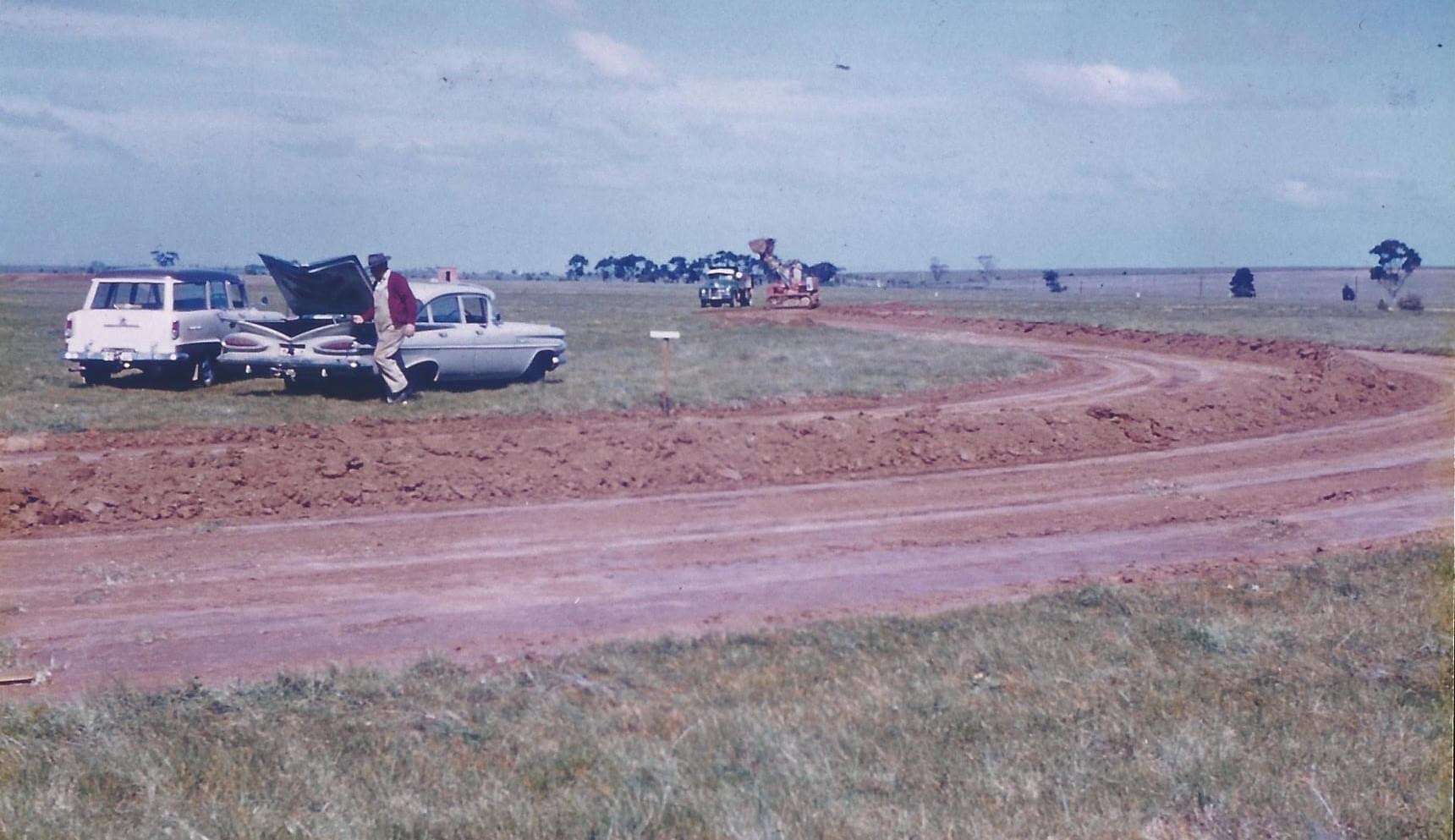
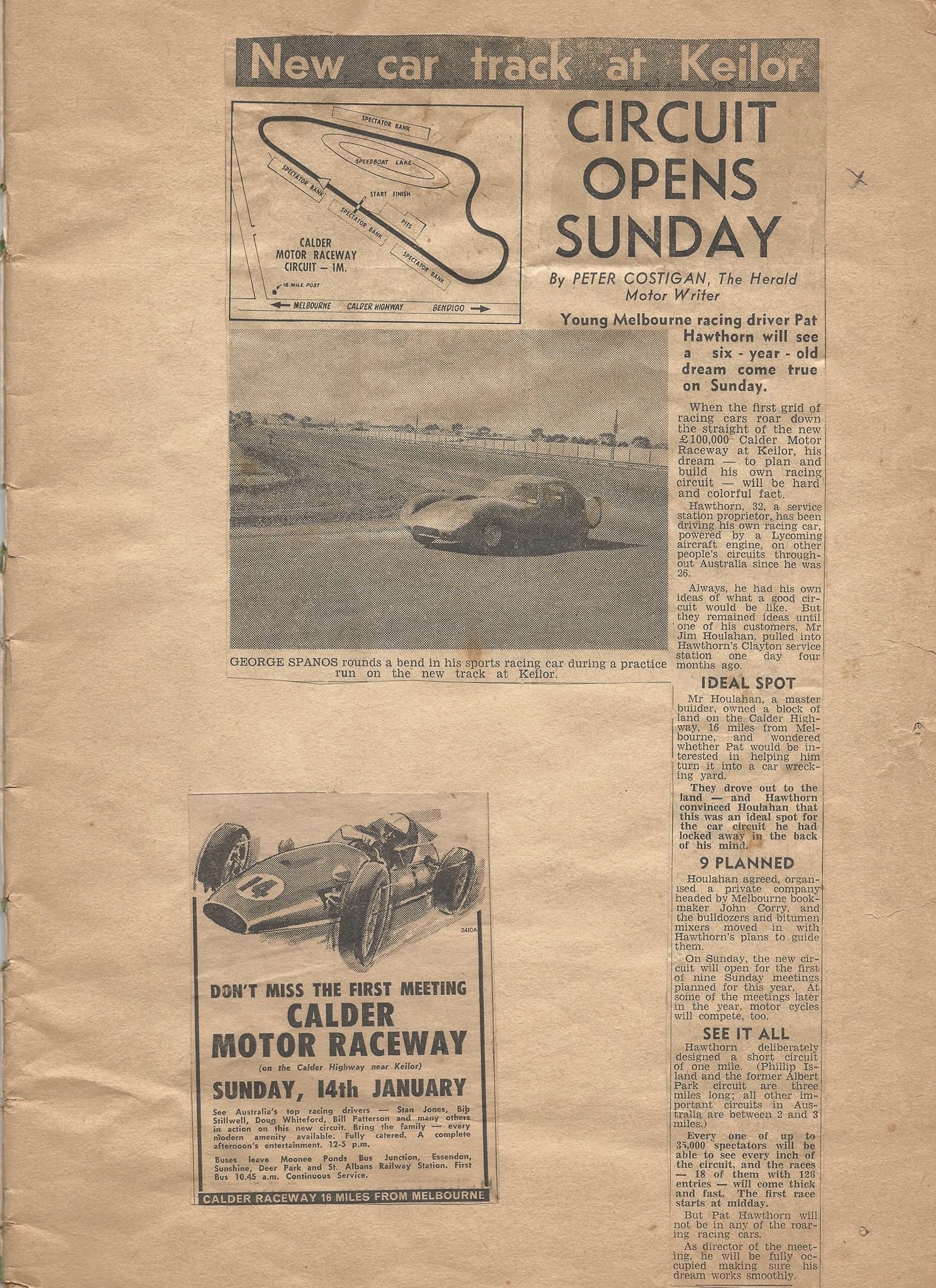
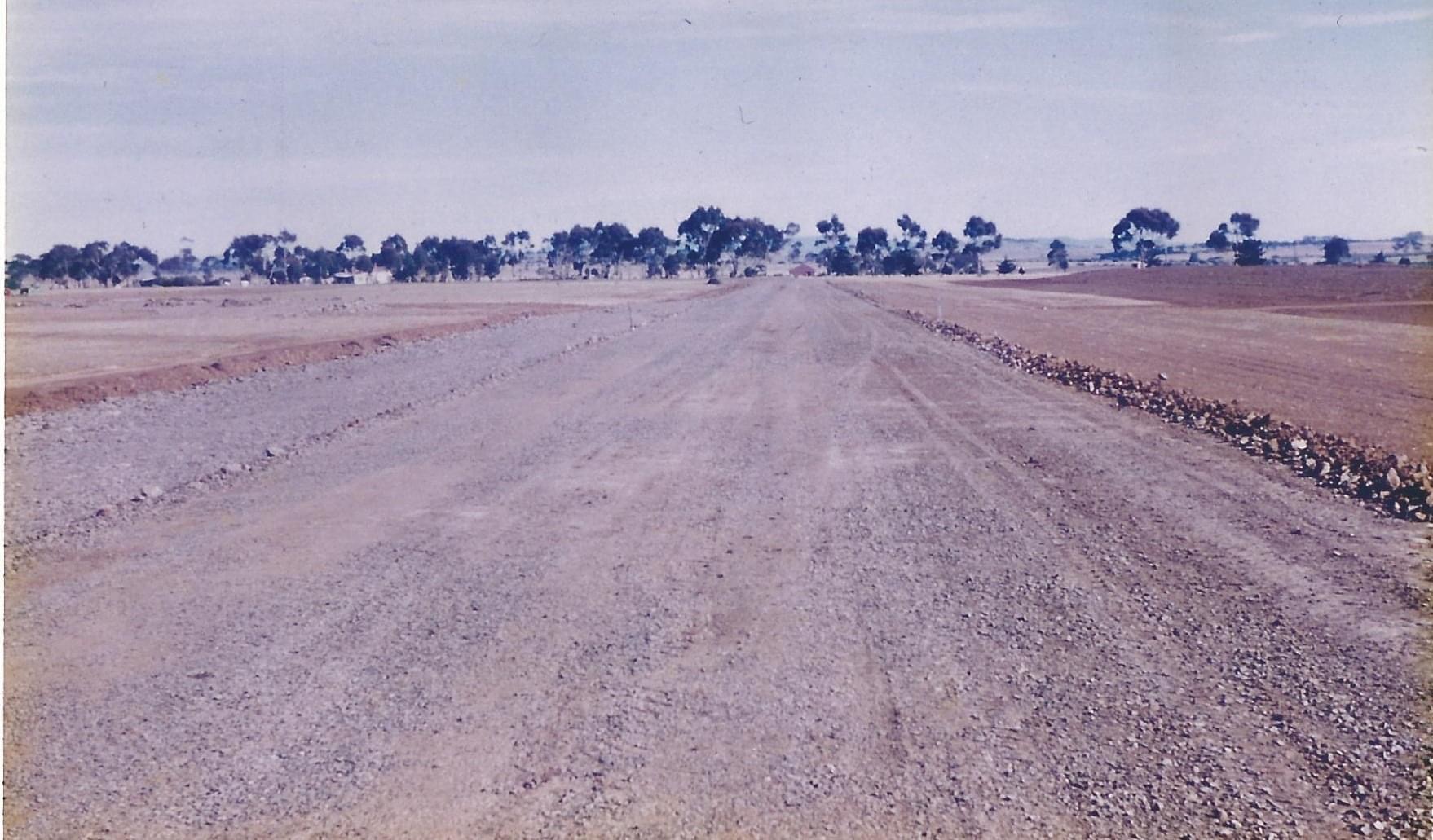
Calder Raceway underway in 1961, Pat Hawthorn’s Holden and Jim Houlahan’s Chev on site (Hawthorn Family

Pat Hawthorn’s team turn the first sods of soil to create Calder Raceway, 30km west of Melbourne later in 1961…

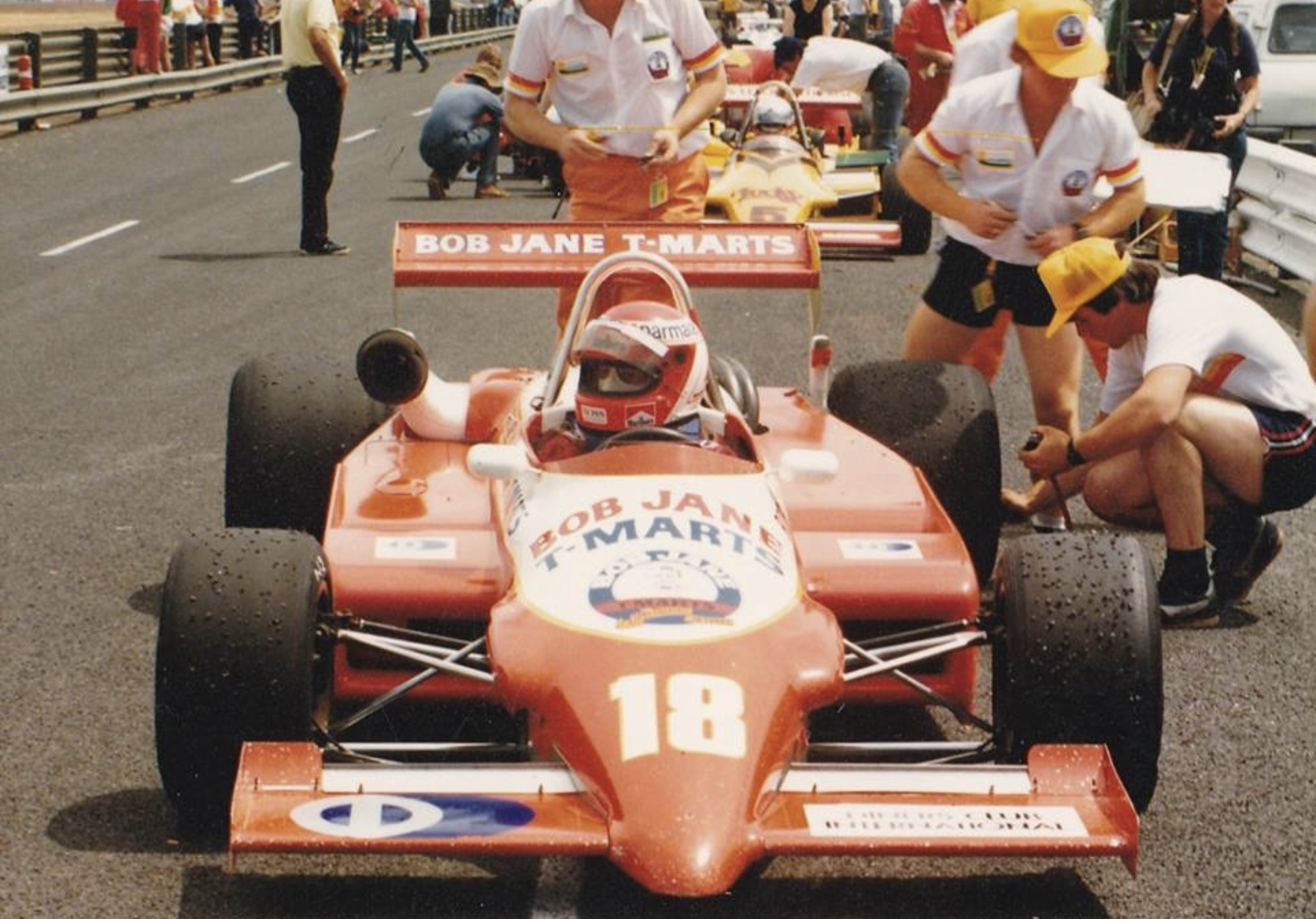
I’ve always had a bit of a love-hate relationship with the place. On one hand it’s the first place I drove a racing car – an Elfin 620B Formula Ford at the Jane-Gardner Race Driving School in mid 1975 – but on the other I’ve always thought the flat, featureless hot n’ dusty or freezin’ and wet joint a bit of a shit-hole. Gimme Sandown, the Island, Winton, Eastern Creek, Wakefield or Mallala.

But it’s close to Melbourne, I’ve probably done more laps there than anywhere else despite it being closed forever. While the layout has always been simple (Thunderdome challenges duly noted) the challenge of doing a great time are there given ya have so few corners to work with.

I thought Keilor farmer Jim Pascoe built it, then Bob Jane bought it in the early seventies, several years after Pascoe died. The Jane Estate still owns it, how wrong about the early days I was though.

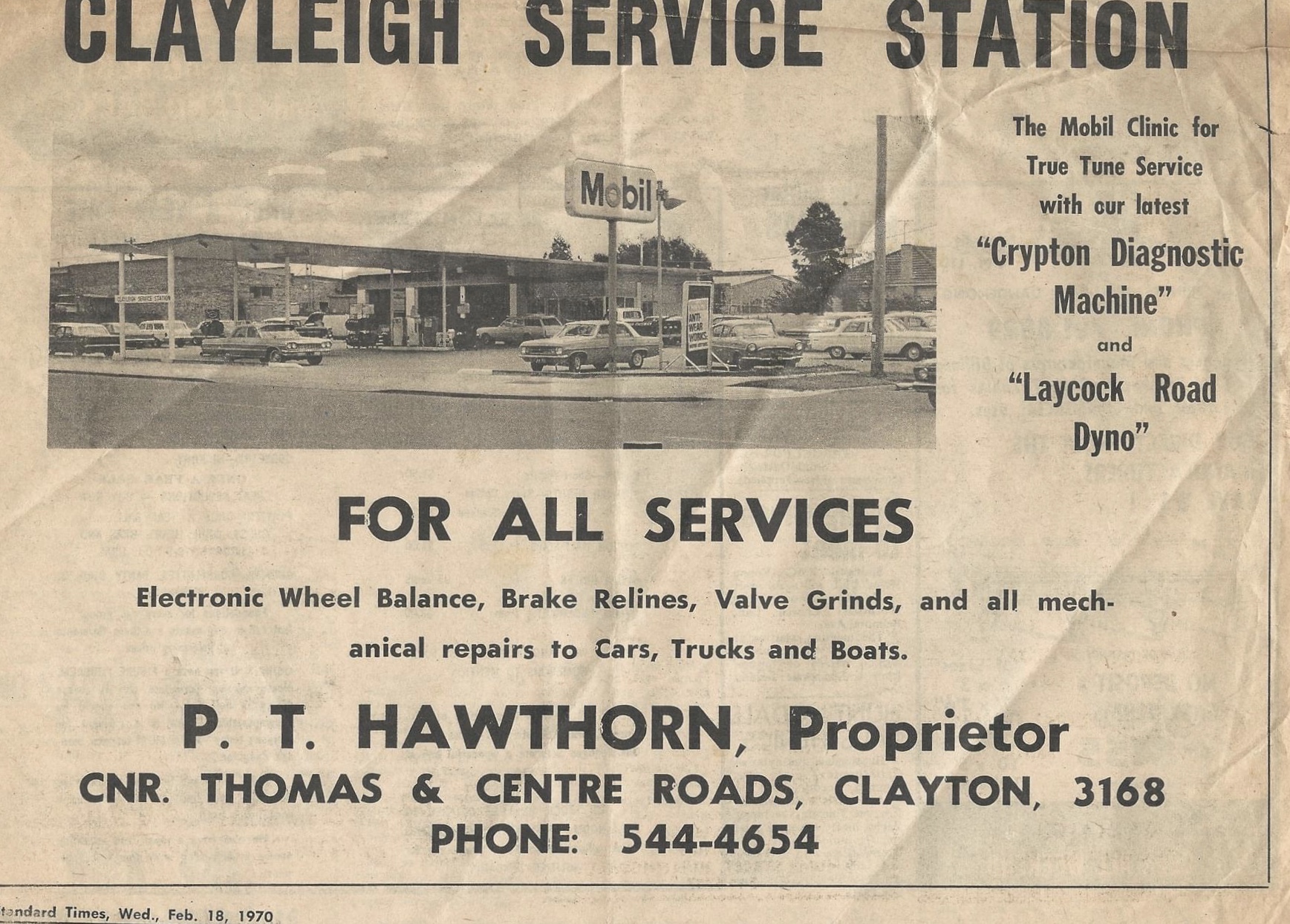
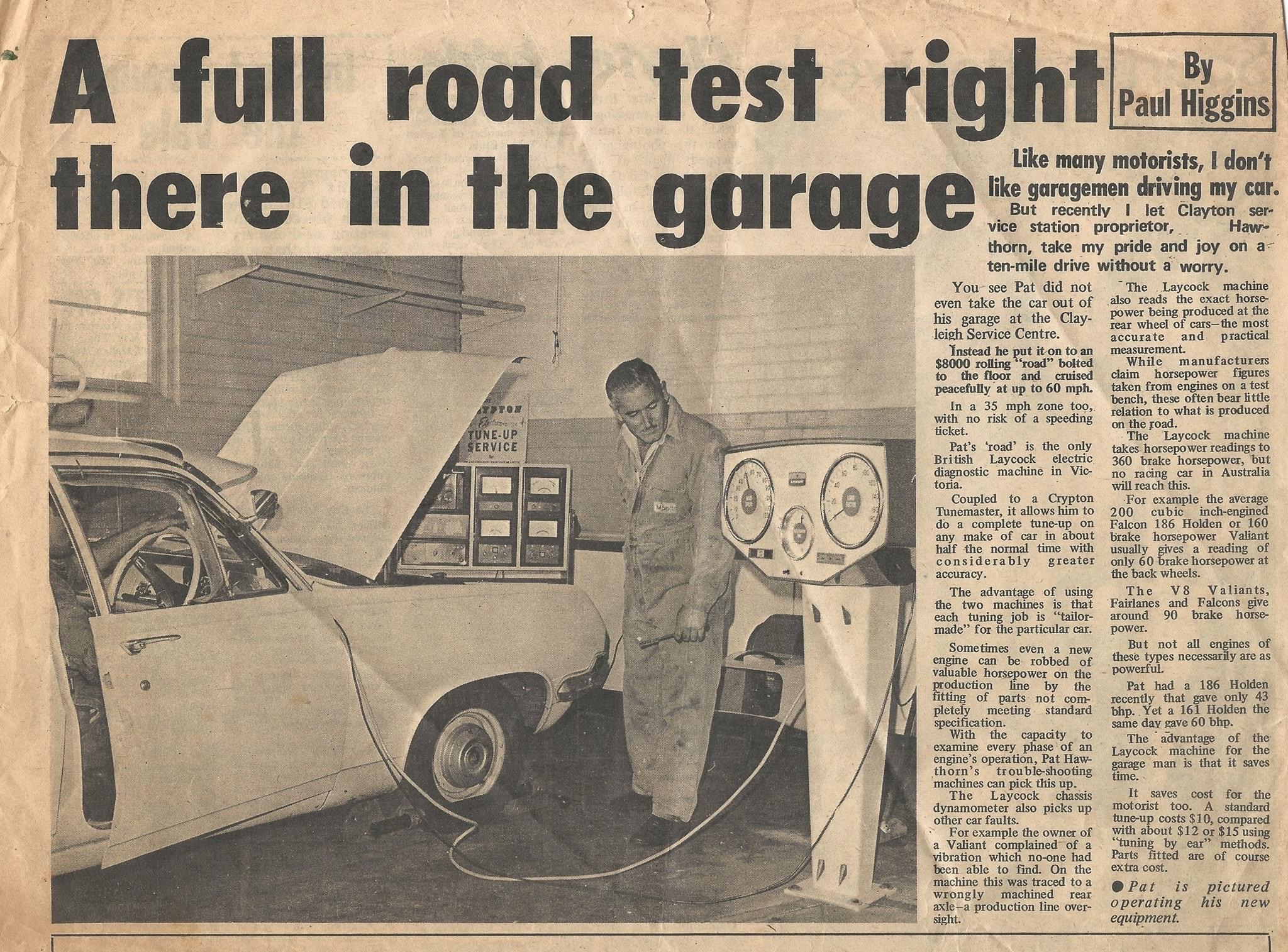
Pat Hawthorn aboard his ex-works/Davison Aston Martin DBR4/250 3-litre F1/F Libre car at his servo in Clayton, on the corner of Thomas and Centre Roads. While there wouldn’t have been another Aston Martin resident in that part of the world, for some time, new AMs were retailed from a showroom in Springvale Road, Springvale – right ‘on’ the railway line near Sandown. A most unlikely place as well, the good residents of Toorak struggle to go further east than Glenferrie Road let alone Burke Road (Hawthorn)
The Spanos sportscar is an Elfin Streamliner Coupe, a car George owned all of his life, and still retained by his family I think
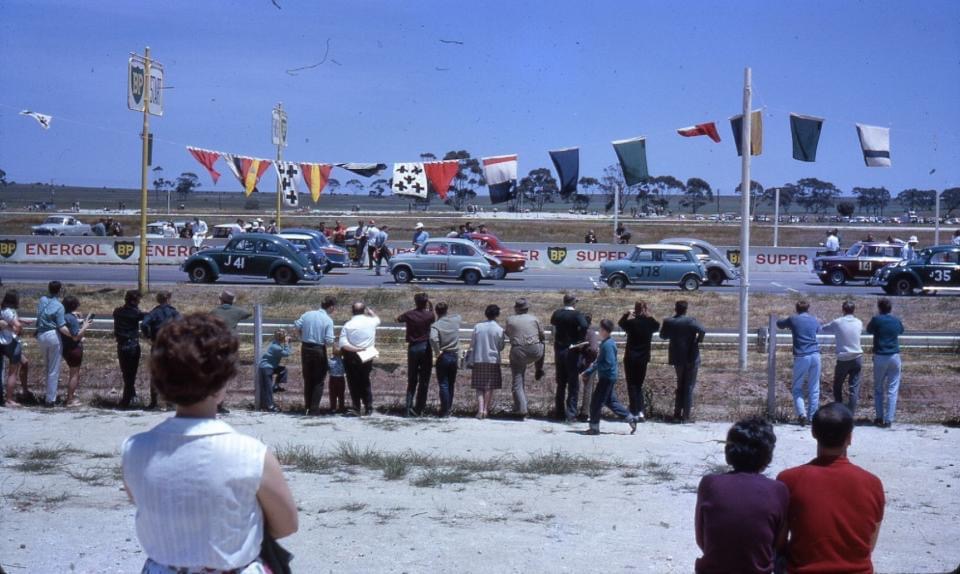
1962 meeting at Calder, advice welcome on whom is whom (O Campion)

It turns out that racer/garage proprietor Pat Hawthorn is the man we should all thank for the original entrepreneurship.

For some years Pat had a servo in Clayton. One of his regular customers, Jim Houlahan had land on the Calder Highway, he wondered if Pat would be interested in helping develop it for use as a wreckers yard.

Pat thought the location was ideal for a race track, a dream he had for a while. Soon a company was incorporated with funds provided by Melbourne bookie (bookmaker) John Corry and Jim Pascoe. His business interests spanned several fields including Drive-In-Theatres (very much a sixties and seventies thing) and race-horse training.

A simple layout to Pat’s design provided the track layout, a fundamental element of which was that spectators be able to see most of the action.

Australia had a shortage of racetracks from the beginning of time. With a global economy that was booming, a strongly growing Australian population thanks to post-war immigration, and plenty of young men with money in their pockets resulted in an epidemic of circuit construction. Within a short space of time circuits popped up across the country; Lakeside, Warwick Farm, Catalina Park, Oran Park, Hume Weir, Winton, Sandown, Calder and Mallala were all built over a span of four or so years.

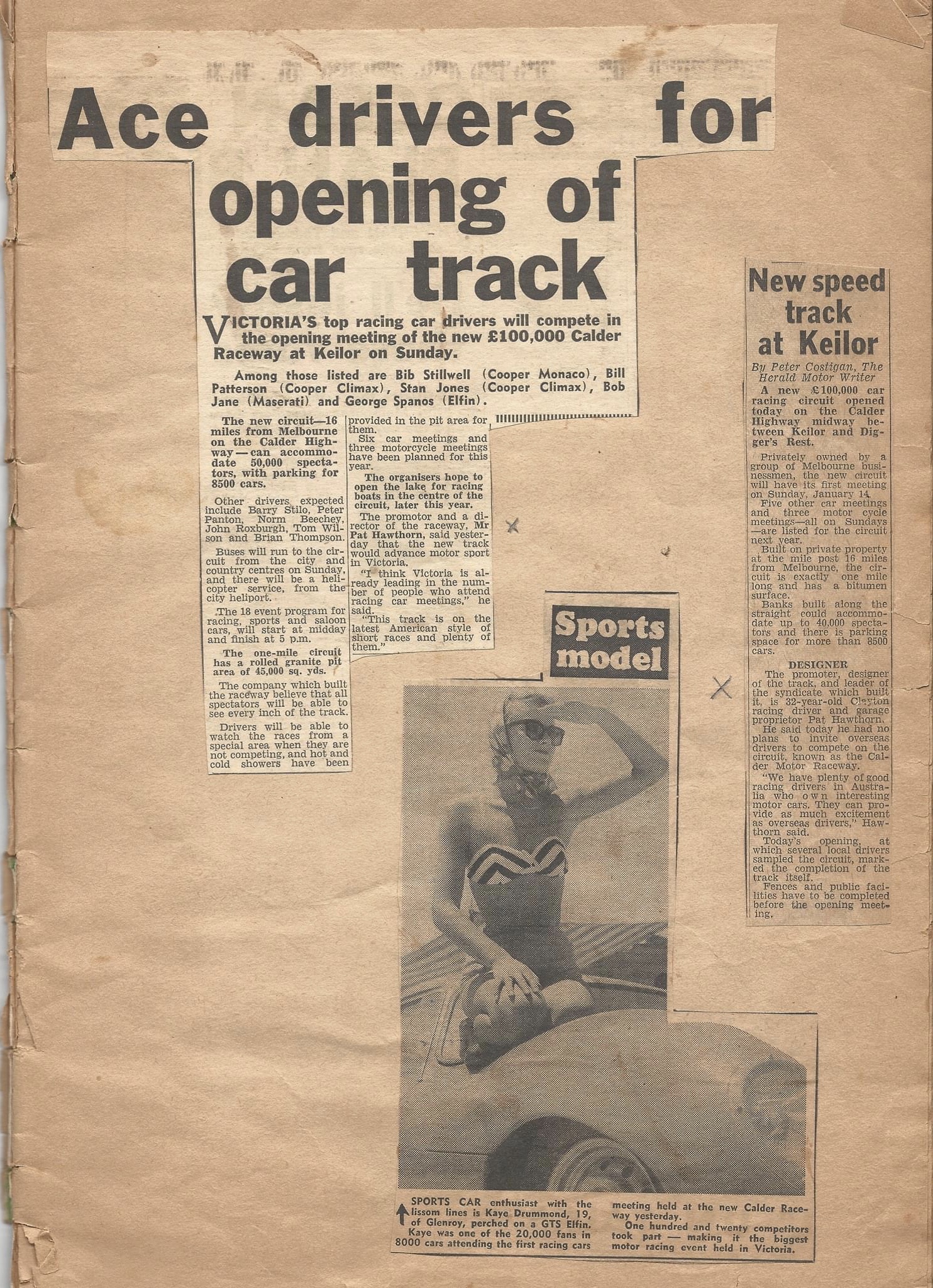
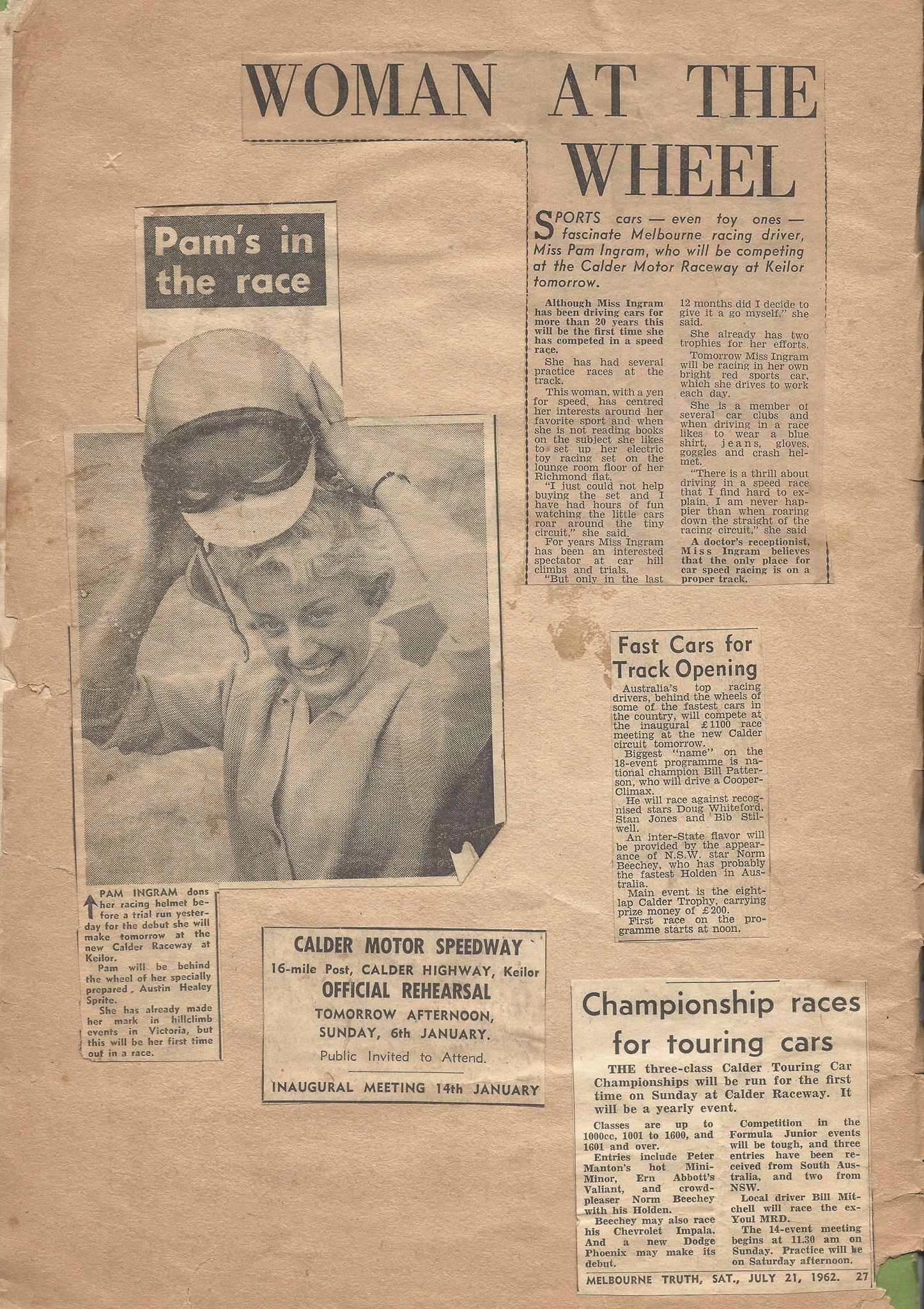
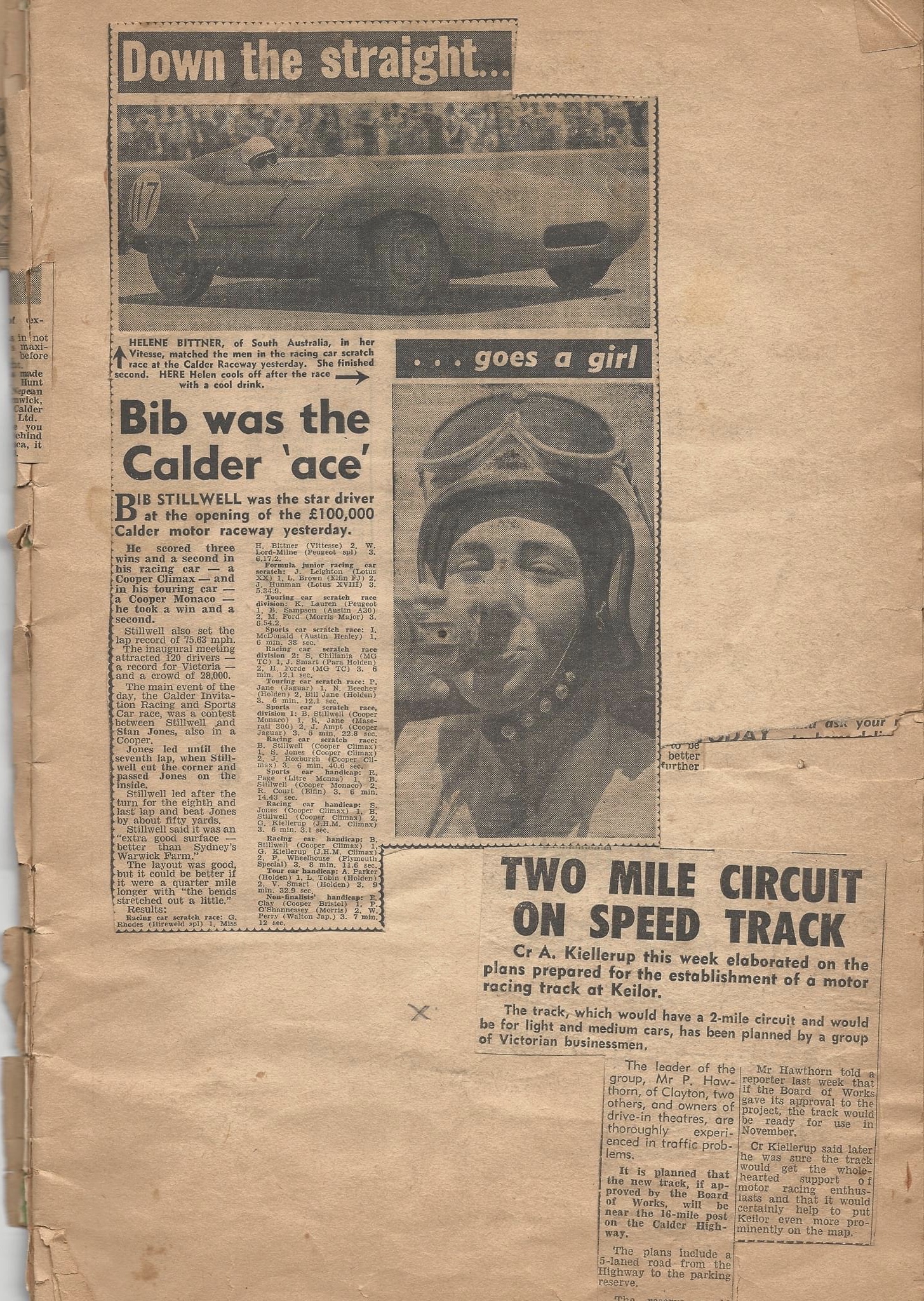
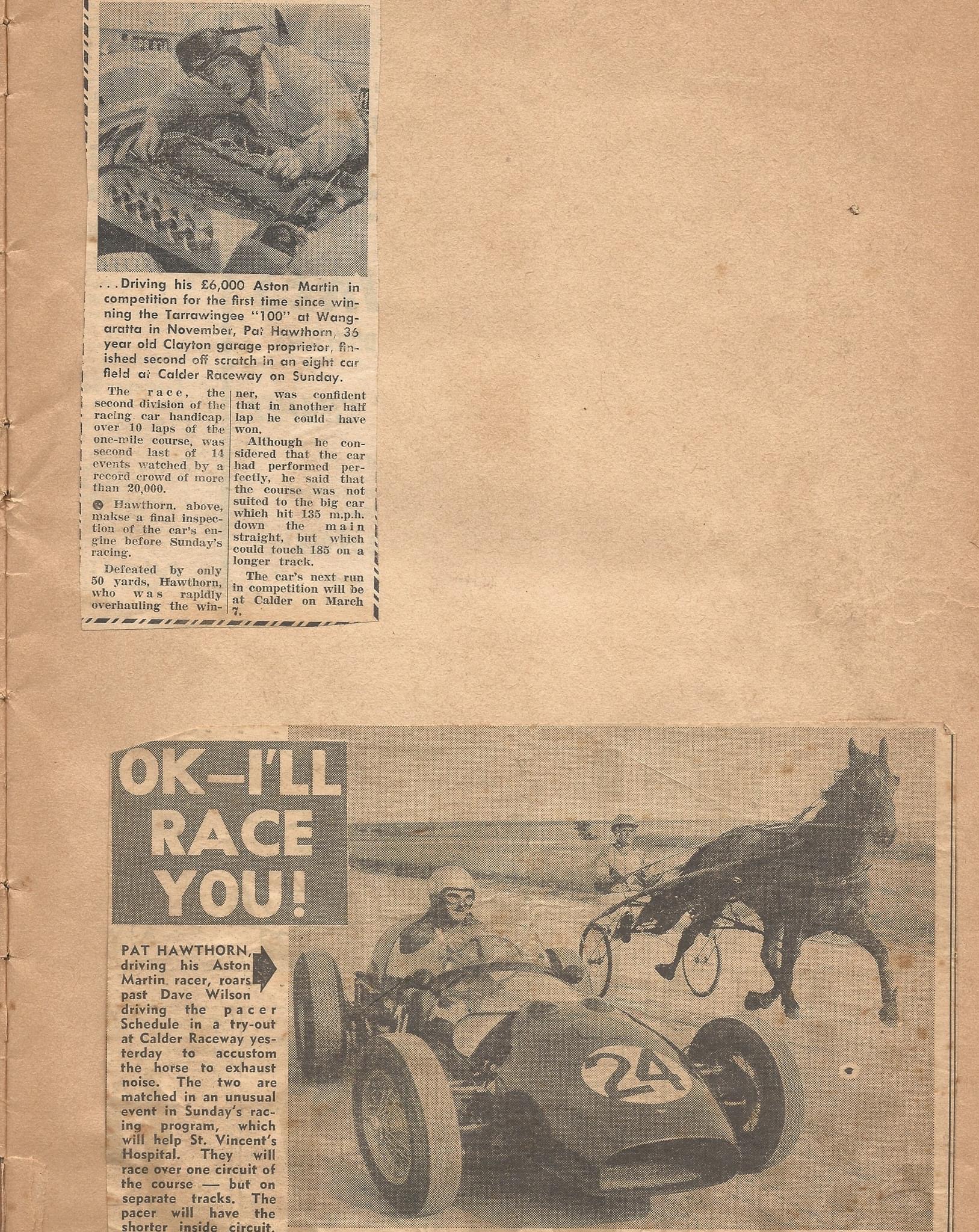
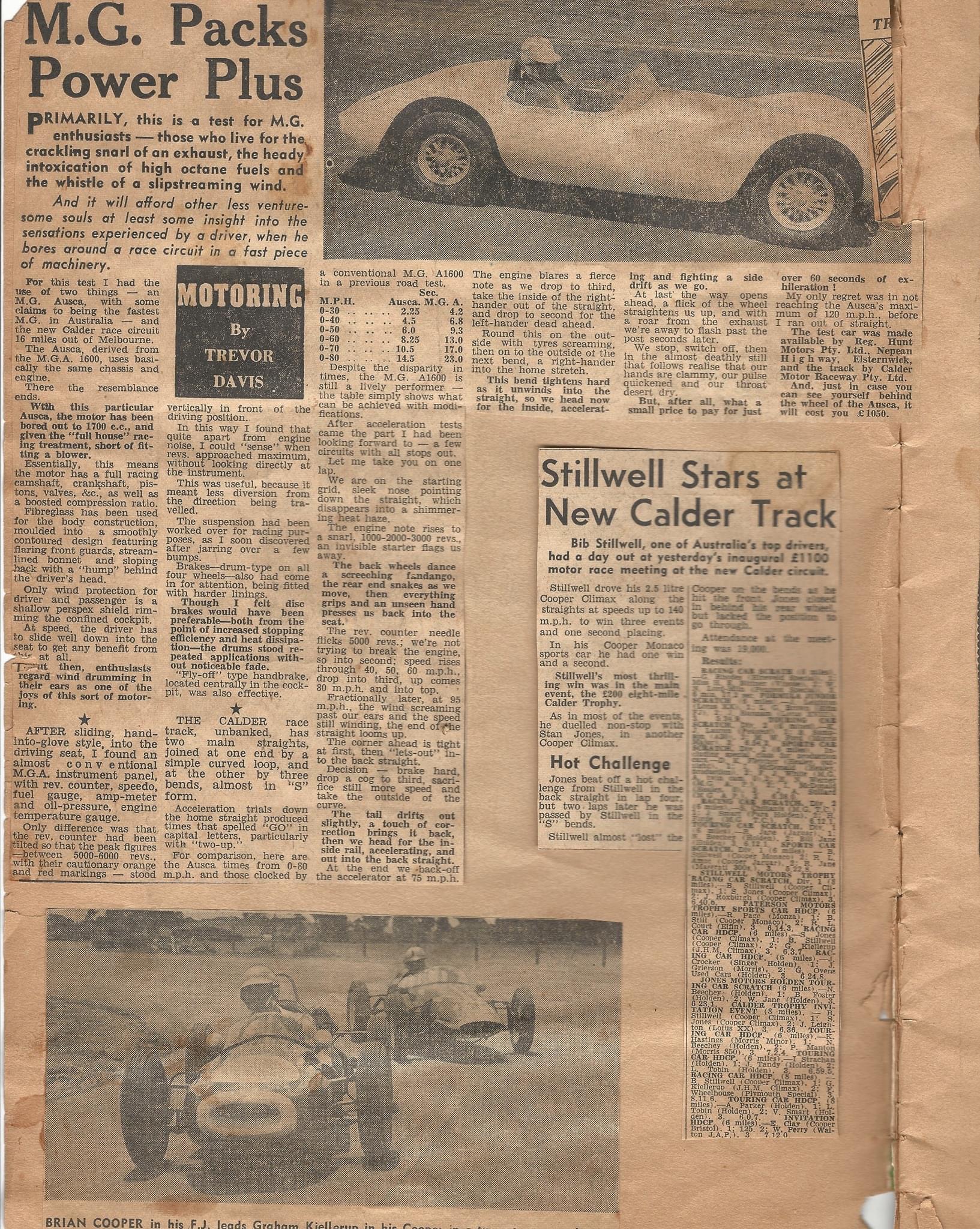
I don’t propose to write the history of Calder, but rather to put on-the-record some wonderful pages of the late Pat Hawthorn’s scrap-book posted on Bob Williamson’s Australian Motor Racing Photographs Facebook page.

While Pat Hawthorn died some years ago, we have his son Russell Hawthorn to thank for sharing these invaluable records for preservation. Click here for a piece on the Aston Martin DBR4 Grand Prix cars, including Pat Hawthorn’s; Lex’ Aston Martin DBR4/250s… | primotipo…

Back Straight, one turns right at the end  (Hawthorn)

As the newspaper articles tell us, the star of the first meeting held on Sunday 14 January, 1962 – the public were invited to the rehearsal on 6 January (a freebie I wonder?) – was Bib Stillwell who had wins in both his Cooper T53 Climax Formula Libre single-seater and Cooper Monaco sportscar.

A quick glance at the results shows many of the names-of-the-day supported the opening meeting including Stan Jones, Jon Leighton, Jack Hunnam, Brian Sampson, Ian McDonald, Harry Forde, Norm Beechey, Bill and Bob Jane, John Ampt, John Roxburgh and Bob Page.

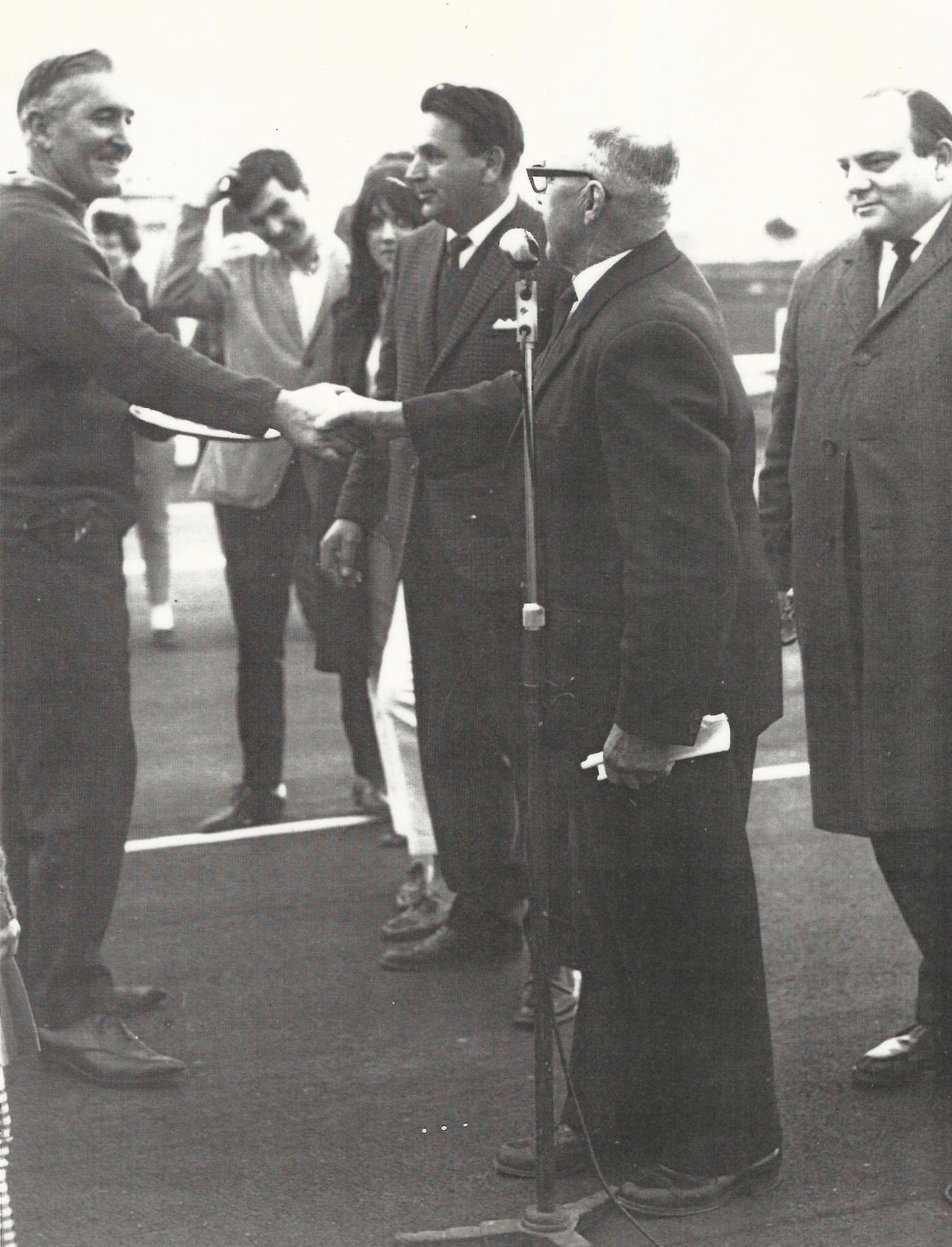
Pat Hawthorn receiving a trophy at Calder from the then Victorian Government Minster for Sport. The man in the suit behind the microphone is Jim Pascoe- both part-owners and directors at the time, date uncertain (Hawthorn Family)

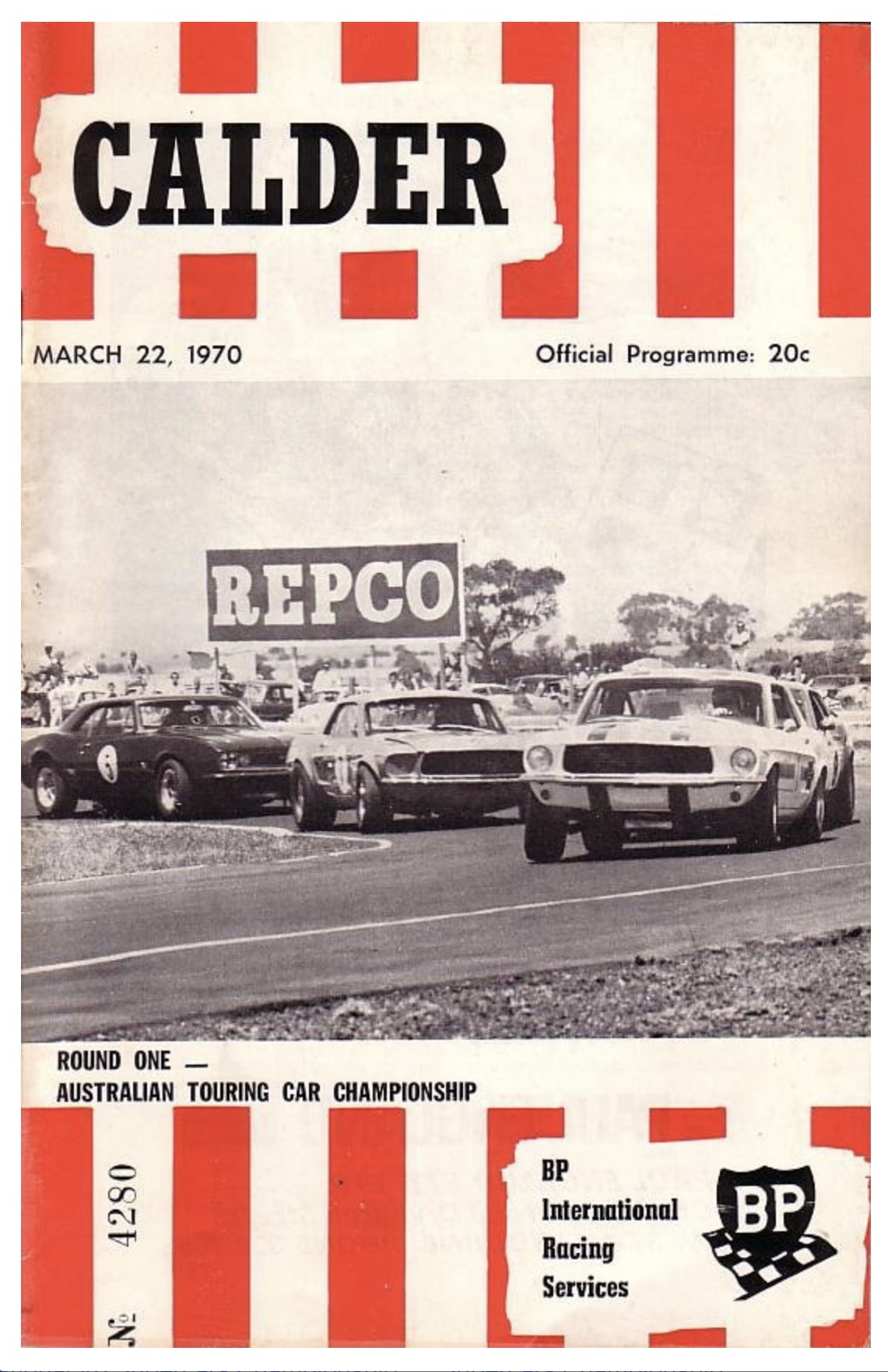
Before too long the ownership of the business changed from the syndicate of businessman to Jim Pascoe solo. While Warwick Farm and Sandown were the blue-blood Tasman Cup venues, shorter tracks like Oran Park and Calder also thrived. Calder held a round of the Australian Touring Car Championship for the first time in 1969, that was symbolic of the venue’s rise in the tracks-of-Oz pecking order.

Geoghegan, Moffat, Jane and Thomson (?) at Calder in late 1969

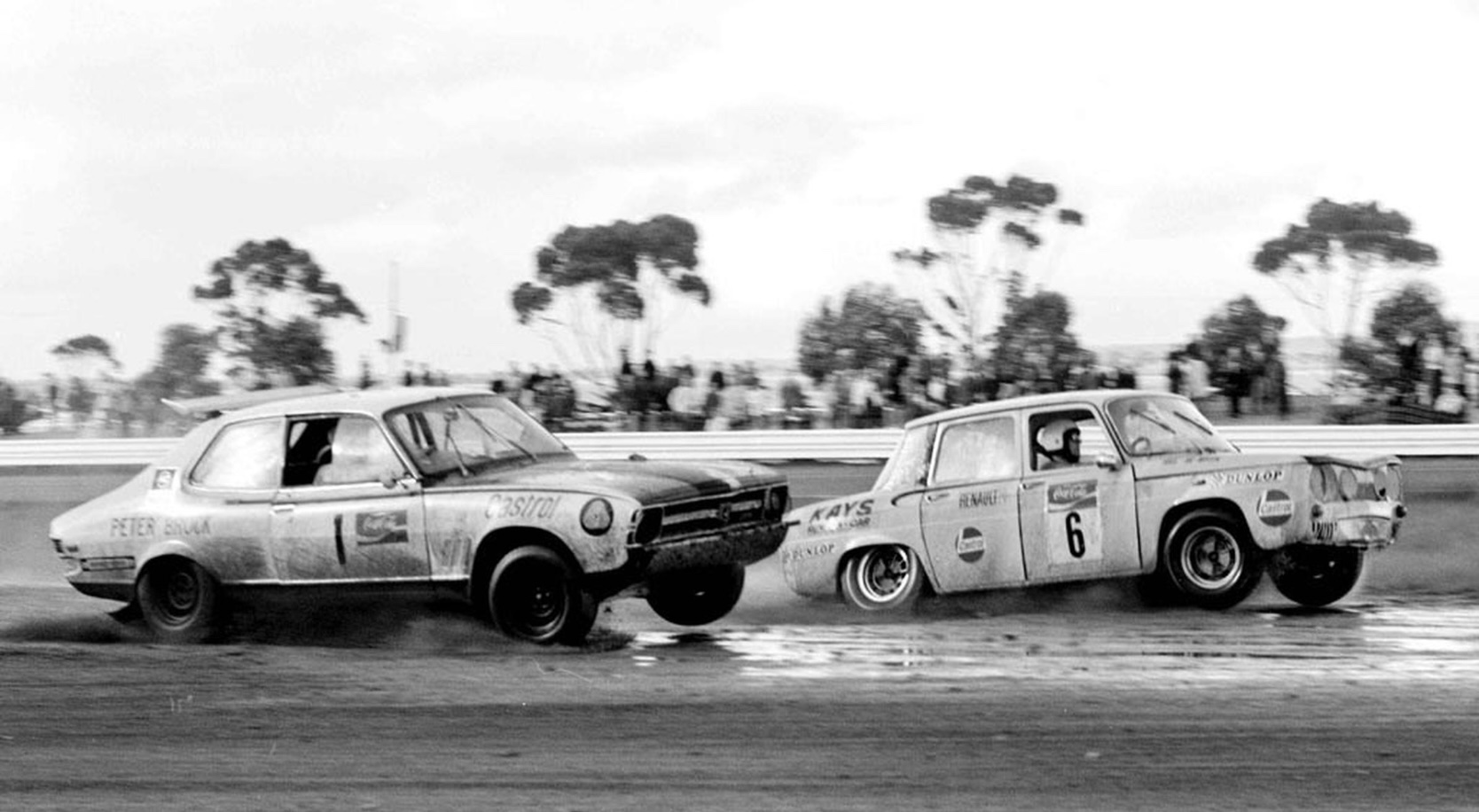
Peter Brock and 1970 Australian Rally Champion, Bob Watson during a 1970 Calder rallycross event. HDT LC Holden Torana GTR XU1 and works-Renault R10 Gordini (I Smith)

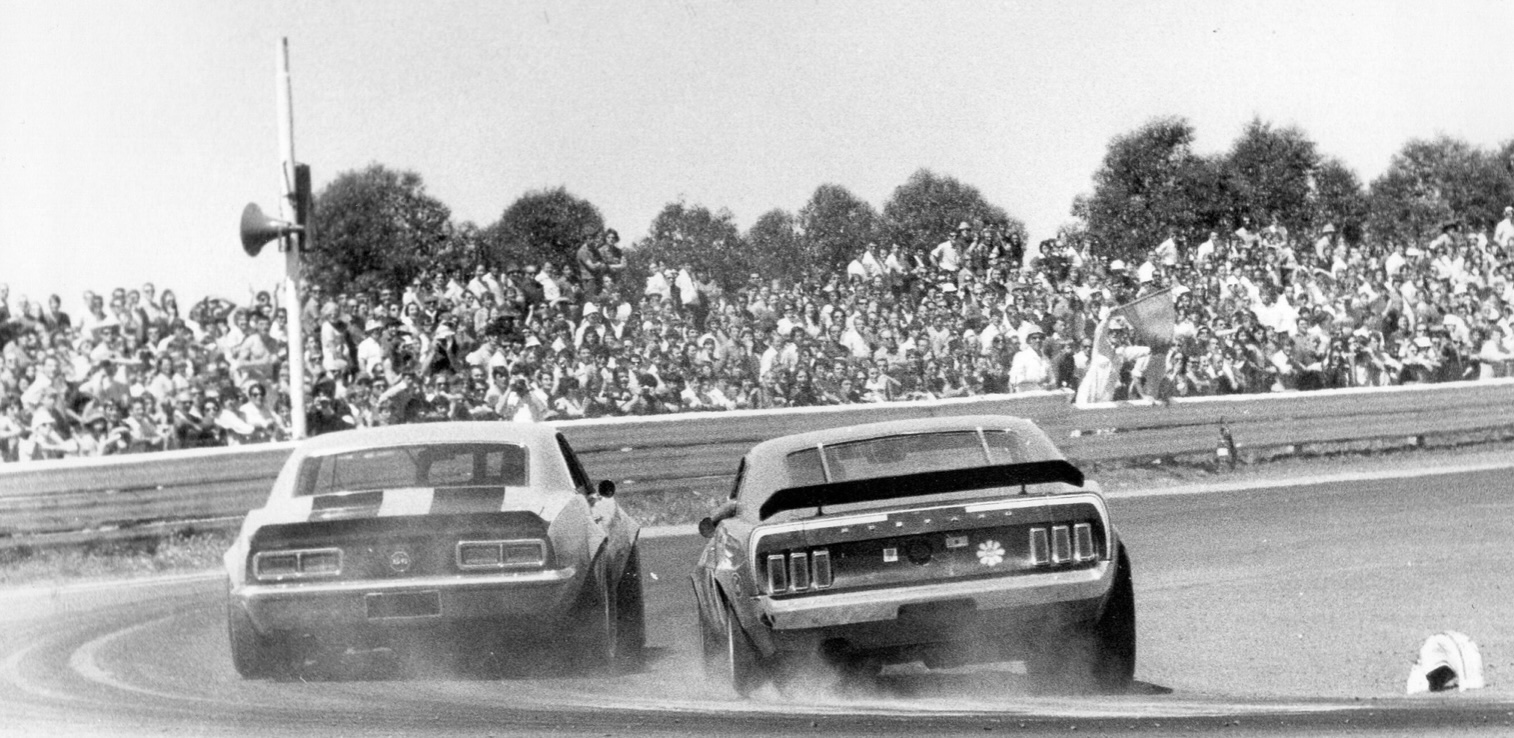
Look at that crowd! Bryan Thomson’s Chev Camaro SS outside Allan Moffat’s immortal Trans Am Mustang as they blast onto the main straight in 1970 (R Davies)

Kevin Bartlett’s Lola T300 Chev during one of the Repco Birthday meetings in 1972. ‘Grandstand dreaming’ as per text below (I Smith)

Later, when Bob Jane bought the place it was subjected to constant change, development and improvement.

I can remember going to a meeting as a teenager with my father in the early seventies. At one stage Bob was standing at the very top of the new, but not quite opened grandstand at the start of the main straight, he was staring into the distance, all alone and dreaming of what might be. Perhaps he had aspirations of the Thunderdome even then?

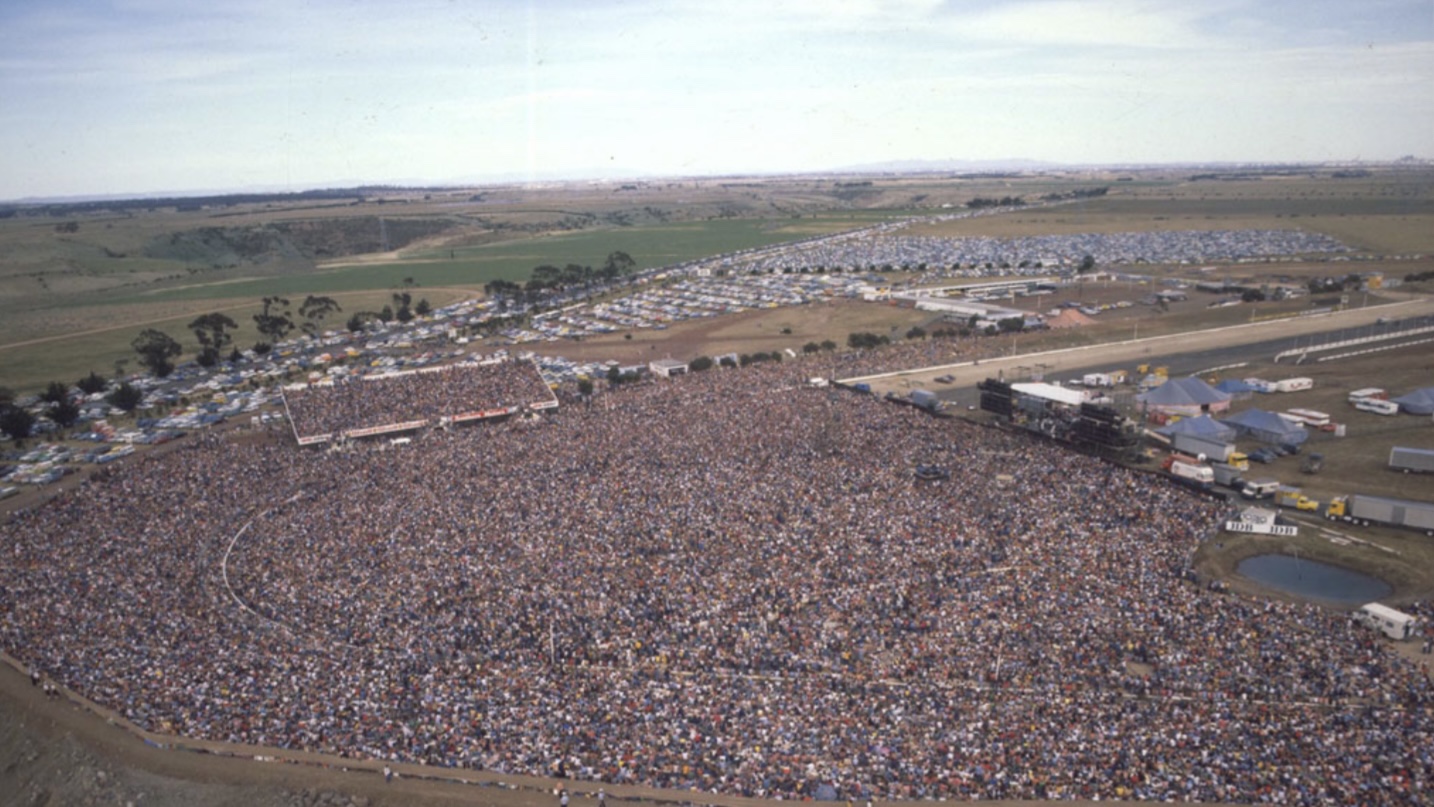
At various times the venue hosted many international rock concerts (I couldn’t think of a worse place to see a band) and became a wonderful rallycross track, you could see all of the action, such was the compact nature of the place.

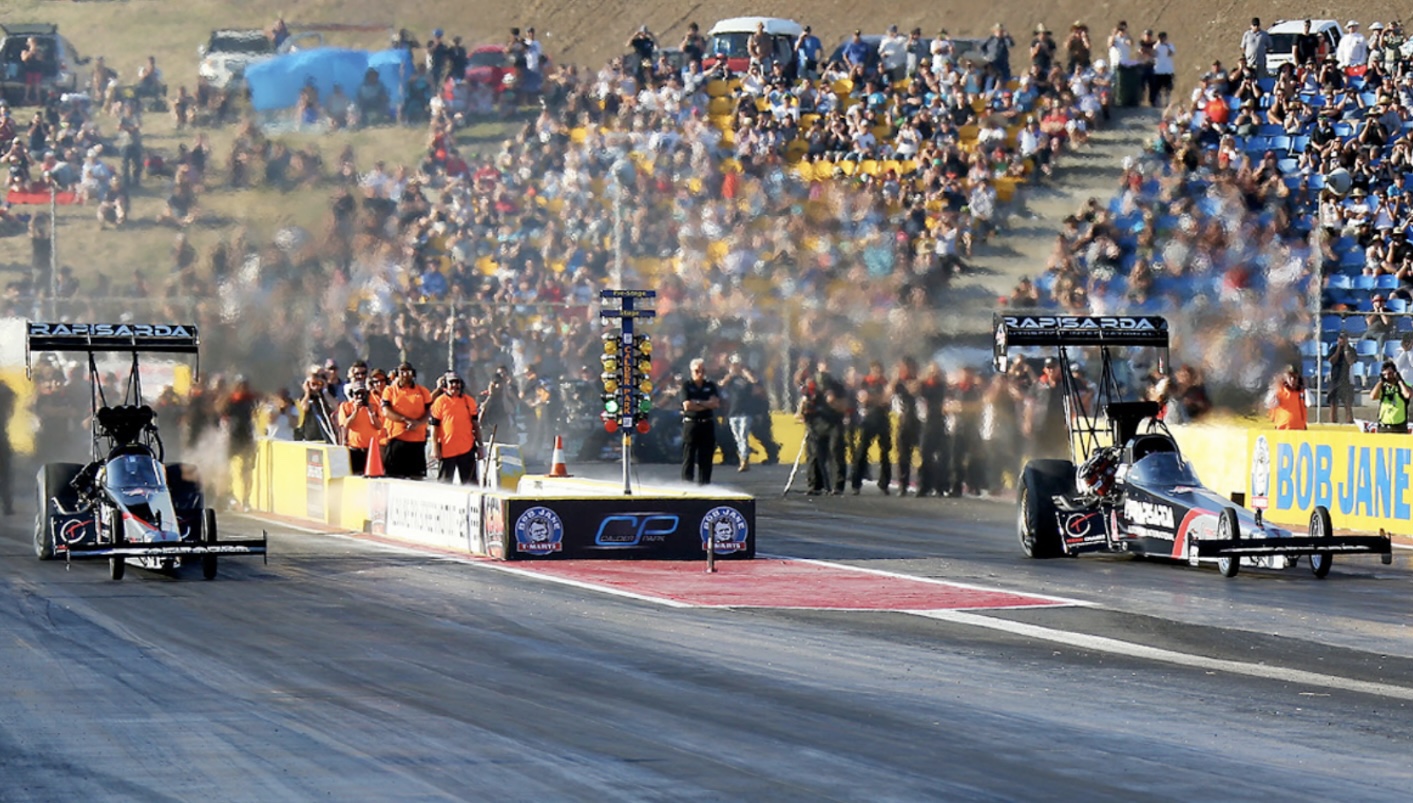
For decades the place was the capital of drag racing in Victoria, if not Australia. To see a pair of Top-Fuel dragsters do five-second (or whatever it was) passes is indelibly etched in my mind, that evening is the only day of race spectating where I felt I ‘tasted’ the cars. It was such a visceral, tactile assault on all of ‘yer senses.

Alan Jones on the way to winning the 1980 AGP at Calder, Williams FW07 Ford (unattributed)
Niki Lauda, Ralt RT4 Ford BDA (and below) during the 1984 AGP won by Roberto Moreno in another RT4 (C Jewell)

Recent drag racing action, advice as to chassis/drivers/date welcome (calderparkdragracing.com.au)

Whilst Calder never held an F1 AGP, as Bob hoped, the 1980 Formula Libre AGP at Calder, and the 1981 to 1984 Formula Pacific AGPs were important steps in the direction Adelaide eventually seized.

I always thought ‘If only Bob owned Phillip Island instead of Calder’ his great acts of promotion could have played out on a vastly more impressive stage, but hey let’s be thankful for a venue so close to home.

It must be fifteen years since I last had a gallop there, in the last VHRR’s Summer Test Days they ran annually. I’m a regular traveller up the Calder Highway, it’s sad to drive past that huge wasted resource and think of the clusterfuck of family and CAMS disputation dramas that stopped the joint dead in its tracks, pun intended.

Mind you, the tom-toms are rattling a little at the moment, it might not be all over, after-all…

‘Rockarena’ at Calder in November 1977. Fleetwood Mac headlined and were supported by Santana, Little River Band, Kevin Borich Express and Creation (jpjaudio.com.au)

Etcetera…

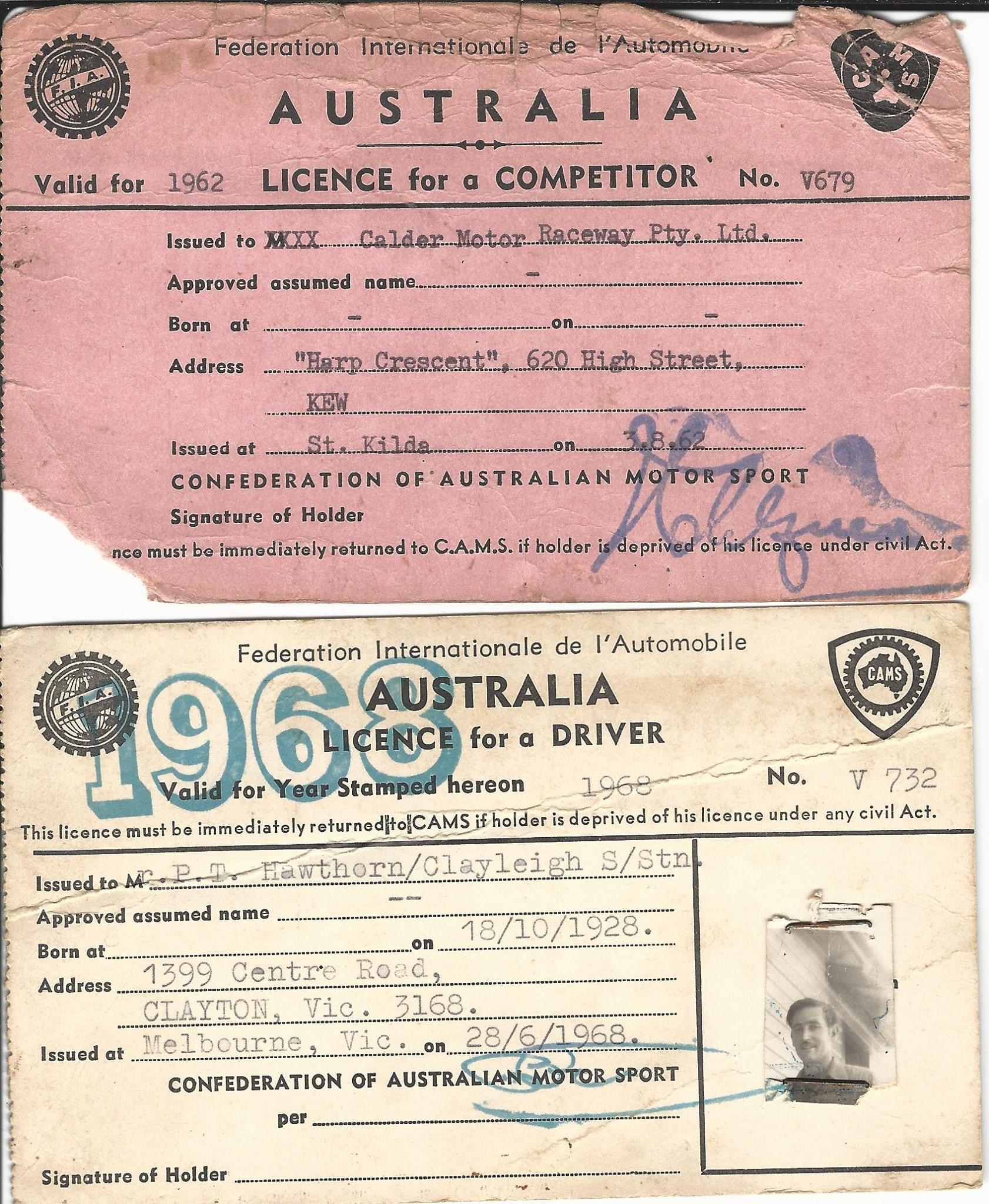
I love improvisation, it seems CAMS didn’t have a Track Licence form so they adapted a Competitor Licence and issued that to Pat and his partners – ‘Calder Motor Raceway Pty. Ltd’, that registered address is at Kew Junction, a drop kick from Bib Stillwells’ then Holden dealership.

Bob Jane in his period of ownership tried plenty of great ideas as a promoter, but a race between Pat Hawthorn’s Aston and a trotter is very much on the innovative side!

Credits…

Pat Hawthorn Collection via Russell Hawthorn, Chris Jewell, Ian Smith, Ollie Campion, Robert Davies, jpjaudio.com.au, calderparkdragracing.com.au

Tailpiece…

Finito…

Alan Jones with his Teddy Yip Ralt RT1 Ford BDA, Macau 1977 (S Weaver)

Sue Weaver worked inside motor racing for decades. In the process she developed a friendship with Teddy Yip which yielded many fun times and trips to the Portuguese colony on China’s doorstep.

On each of those trips she took a swag of photographs. This article features some of them, an ‘Australian contingent mix’, with a focus on the November 20, 1977 weekend.

The Formula Atlantic race was won by young thruster, Riccardo Patrese in the Chevron B40 Ford later purchased and raced with success by Kiwi legend Ken Smith- later still Adelaide’s Peter Whelan restored it, historic-raced it for some years before its acquisition as a Macau Museum exhibit.

Riccardo Patrese during practice, Chevron B40 Ford BDA. It is in this part of the track that Jones spun and was hit by Riccardo during the race
Teddy Yip and Vern Schuppan, Macau. What year folks? Didn’t these fellas have some fun and success in F1, F5000, Indycars and F Atlantic/Pacific? The most important of the South Aussies patrons/sponsors, BRM leg-up duly noted (S Weaver)

That year Patrese and Alan Jones were Shadow F1 teammates. Riccardo was entered in Macau by Bob Harper, Jones by Teddy Yip, both these fellows were the region’s traditional monied entrant protagonists.

Jones ‘tore the place apart’ the year before in the Yip March 722 raced often by Vern Schuppan – he constantly broke the lap record after an early engine cut-out. Jones then fired the engine up, carved his way back through the field, only to have the engine again fail- Vern Schuppan won a Ralt RT1 Ford.

In 1977 Patrese popped his Chevron on pole by a couple of seconds from Jones with Vern Schuppan third in John McDonald’s Ralt RT1. Kiwis Steve Millen, Chevron B35, and Graeme Lawrence, March 76B were fourth and sixth on the grid, Masahiro Hasemi was fifth in a Chevron B40 Nissan, with Kevin Bartlett, March and Andrew Miedecke, March 763/76B seventh and eighth.

1977 Macau GP grid. Patrese, Chevron B40 left on pole, Jones, Ralt RT1 #2 then the nose of Schuppan’s Ralt RT1. #19 Millen, Chevron B35 and #5 Masahiro Hasemi, Chevron B40 Nissan. Row three Graeme Lawrence, March 76B with Bartlett’s red March (?), then Andrew Miedecke #4 March 763/76B. Car #23 is Albert Poon, Chevron B40, with Nakajima’s #7 Nova Honda alongside. And the rest, engines Ford BDA unless specified otherwise (unattributed)

The Jones boy blasted away from the front row, but his lead was short-lived after another engine cut-out resulted in his Ralt spinning into Patrese’s path.

Riccardo vaulted over the hapless Jones, damaging a rear wheel – he pulled into the pits for inspection and was sent on his way. Concerned officials popped out a black-flag, but this was withdrawn after entreaties from the Harper pit that the wheel, whilst bent a tad, would be AOK.

Graeme Lawrence, March 76B Ford BDA (Getty)
Kevin Bartlett and Howden Ganley. Year folks? (S Weaver)

Hasemi then led from Schuppan, just as Vern seemed set to pass his fuel metering belt broke. Millen then led from Bartlett, the 1969 winner, and Lawrence, but Patrese was on a charge and led by lap 15. He drove off into the distance.

Millen, then Bartlett were second for a bit but, but Bartlett and Lawrence both retired with mechanical dramas – Millen was second, Miedecke third and future Lotus F1 driver, Satoru Nakajima fourth in an Nova Honda.

Satoru Nakajima, Nova Honda, ’77 Macau GP
Jones and one of the Yip crew, probably 1978 (S Weaver)

Etcetera…

(S Weaver)

KB tries to decipher the mandarin on the nose of Jones’ Yip March 782 Ford BDA during the 1978 race weekend. Bartlett raced a Chevron, what model KB?

Kevin Cogan’s Flying Tigers Ralt RT1 alongside? Who is the big unit talking to Jones? Yip at far right. Driver in front of the RT1 in the posh Linea-Sport overalls?

Jones started from pole and led until a spark-plug failed. Derek Daly then had a comfortable lead from Keke Rosberg and Patrese, but pitted for tyres, Patrese inherited a lead he kept to the end.

The Formula Pacific Macau GP era was marvellous…

(S Weaver)

Jones again during the ‘78 weekend above, with British broadcaster, Dickie Davies.

The shot below is during Schuppan’s Rothmans Porsche years, so early eighties- the West End beer logo should assist you detectives as to the year.

Teddy Yip mechanic/helper Ashok Vadgama at left, KB and Vern.

(S Weaver)
(S Weaver)

AJ looks pretty well-nourished here, so perhaps it’s a tad after his single-seater days, with wife Bev and Yip.

And below, KB slightly peeved at Weaver interrupting his choice of main course.

(S Weaver)

Credits…

Susan Weaver, Getty Images, Riccardo Patrese web-page, ‘Colour and Noise: 40 Years of the Macau Grand Prix 1993’ Philip Newsome

Tailpiece…

(S Weaver)

Jones about to mount before the off in 1977, Ralt RT1 Ford BDA- John Chatterton at right, and Julian Randles leaning into the cockpit. Car #71 is the Ian Grey Chevron B20, the Rothmans car behind is Graeme Lawrence’ March 76B.

Finito…

(Wheels)

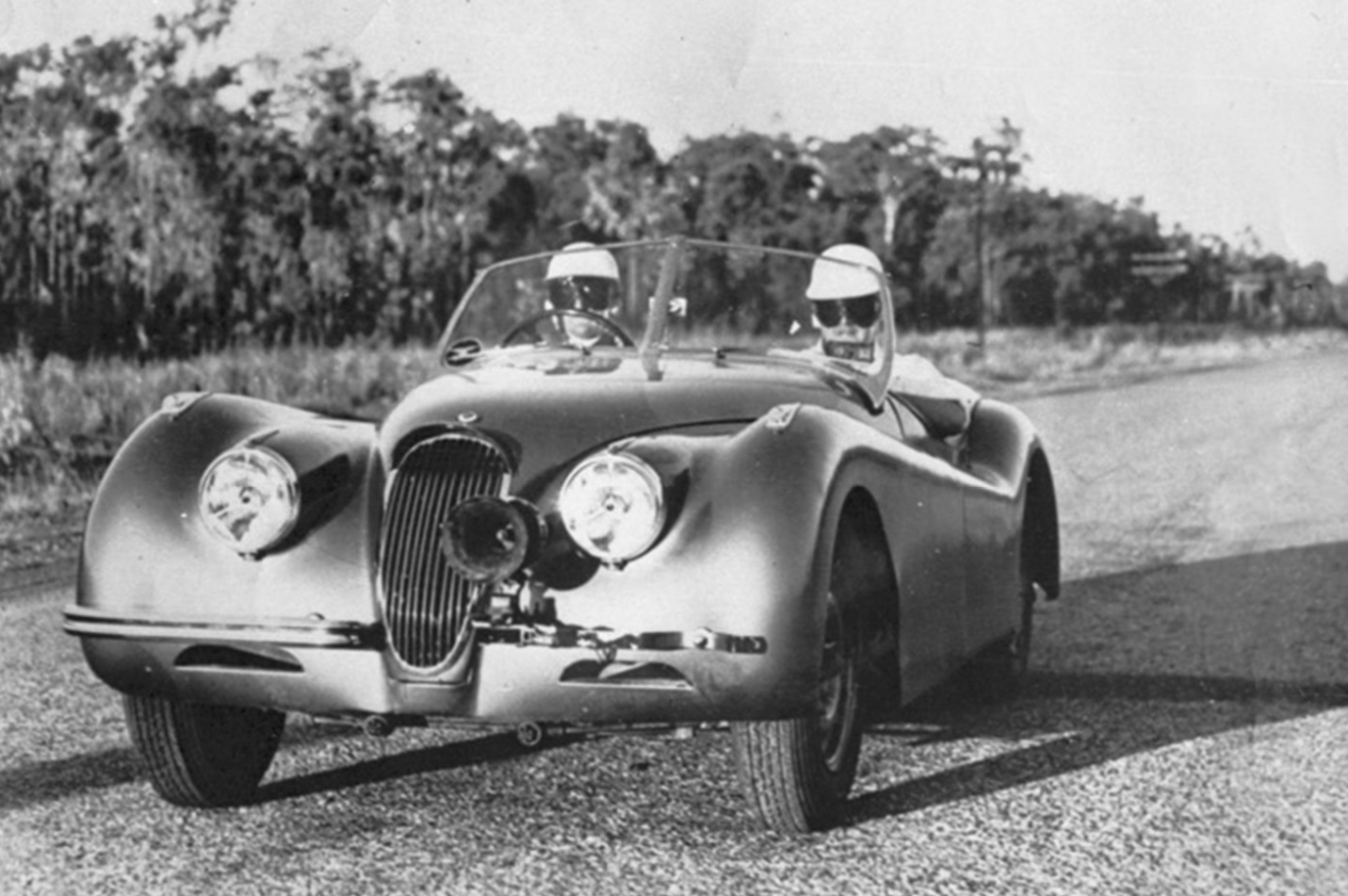
Whilst Darwin’s ‘Northern Standard’ reported that the attempt on the Darwin to Alice Springs record by Brisbane racer/motorcycle dealer Les Taylor and his salesman, ex-Spitfire pilot Dick Rendle’s Jaguar XK120 was a ‘well kept secret’, news of it soon spread.

So much so that when the duo arrived in the Alice 10 hours and 32 minutes after leaving Darwin they were greeted by the local ‘Wallopers’ who slapped Taylor in the local nick and charged him with four offences.

The pair set off at 6.30 am on Thursday 2 August 1951, arriving at 5.02 pm after covering 954 miles- an average of 90.5 mph. Plentiful telegrams of the interested enroute made the job for the police easy! The previous record was set by Jack Day in his Day Special (Bugatti T39 Ford V6 Spl) at 16 hours in 1950.

Excitement along the way was provided by cattle on the road between Pine Creek and Katherine, and a horse close to Barrow Creek, fortunately the svelte lines of Coventry’s finest remained intact. See the full story in Wheels here; https://www.whichcar.com.au/features/classic-wheels/vanishing-point

(Wheels)


(unattributed)

Our earliest motoring heroes, household names, were the drivers who set innumerable north, south, east and west intercity records between all sorts of weird and wonderful places, but that all became a bit dangerous so the practice was made illegal in 1930, hence the intervention of the gendarmes above. See here for a piece on these pioneers;

It begs the question as to who was first to cross the country by car, that honour, from north to south goes to Horace Aunger and Henry Dutton aboard a Talbot in 1908 above.

The pair left Adelaide in Dutton’s Talbot on 25 November 1907 travelling through country which could only be tackled by a modern 4WD but the cars crown wheel pinion failed south of Tennant Creek, with the wet season moving in  the intrepid duo travelled by horse to the railway line at Oodnadatta and made their way home.

The second bite at the cherry commenced on 30 June 1908, with a more powerful Talbot. Ern Allchurch joined them at Alice Springs, after repairing the damaged car at Tennant Creek the two cars drove in convoy to Pine Creek where the ‘disgraced’ Talbot was sent by train to Darwin, the trio reached Darwin on 20 August.

This car is at Birdwood in the Adelaide Hills- another reason to visit this great museum. A piece on Transcontinental competition here; https://primotipo.com/2018/12/21/city-to-city-record-breaking-and-car-trials/


(Driving & Life)

What a thrill it was to see Alan Jones win the 1980 Australian Grand Prix at Calder in his Williams FW07 Ford and match his fathers similar feat achieved aboard a Maserati 250F at Longford in 1959.

The Calder event was for F5000 and F1 cars- specifically Jones’ machine and the sensational Alfa Romeo 179 3 litre V12, my abiding memory of that weekend forty years on is the sound of the Alfa as Bruno Giacomelli worked the fabulous screaming twelve up- and particularly down the six speed ‘box.

(unattributed)


(An1images.com)

Peter Brock exits Dandenong Road during the September 1977 Sandown 400K.

Brock won from Allan Grice’s similar Holden Torana A9X in a year of slim pickings for the Fisherman’s Bend mob- it was twelve months of Carroll Smith/Moffat/Bond domination of Group C touring car sprint and endurance racing- a welcome change of fortunes for those of us with no marque based bias.


(unattributed)

Tom Bradey and Charlie Sheppard, Singer 9 Bantam on the way to winning the first Australian Touring Car Championship aka the ‘Australian Stock Car Championship’ at Lobethal in 1939.

Rewrite the record book folks, the first ATCC was run and won at Lobethal in 1939, not Gnoo Blas in 1960, see here; https://primotipo.com/2018/10/04/first-australian-touring-car-championship-lobethal-1939/


(J Ellacott)

One of John Ellacott’s signature Homestead Corner shots at Warwick Farm, circa 1963.

Its Charlie Smith in the ex-works/Frank Matich works Elfin WR275 ‘Catalina’ Cosworth Ford 1.5, he looks pretty relaxed in his short-sleeved shirt too. Below at Mount Panorama.

Matich had a pair of these cars at his disposal in Sydney in addition to a Clubman and did much to enhance the Elfin name in the important Sydney market. See here; https://primotipo.com/2019/04/12/elfin-fj-catalina-250-275-375-wr/

(T Sullivan Collection)


(VW)

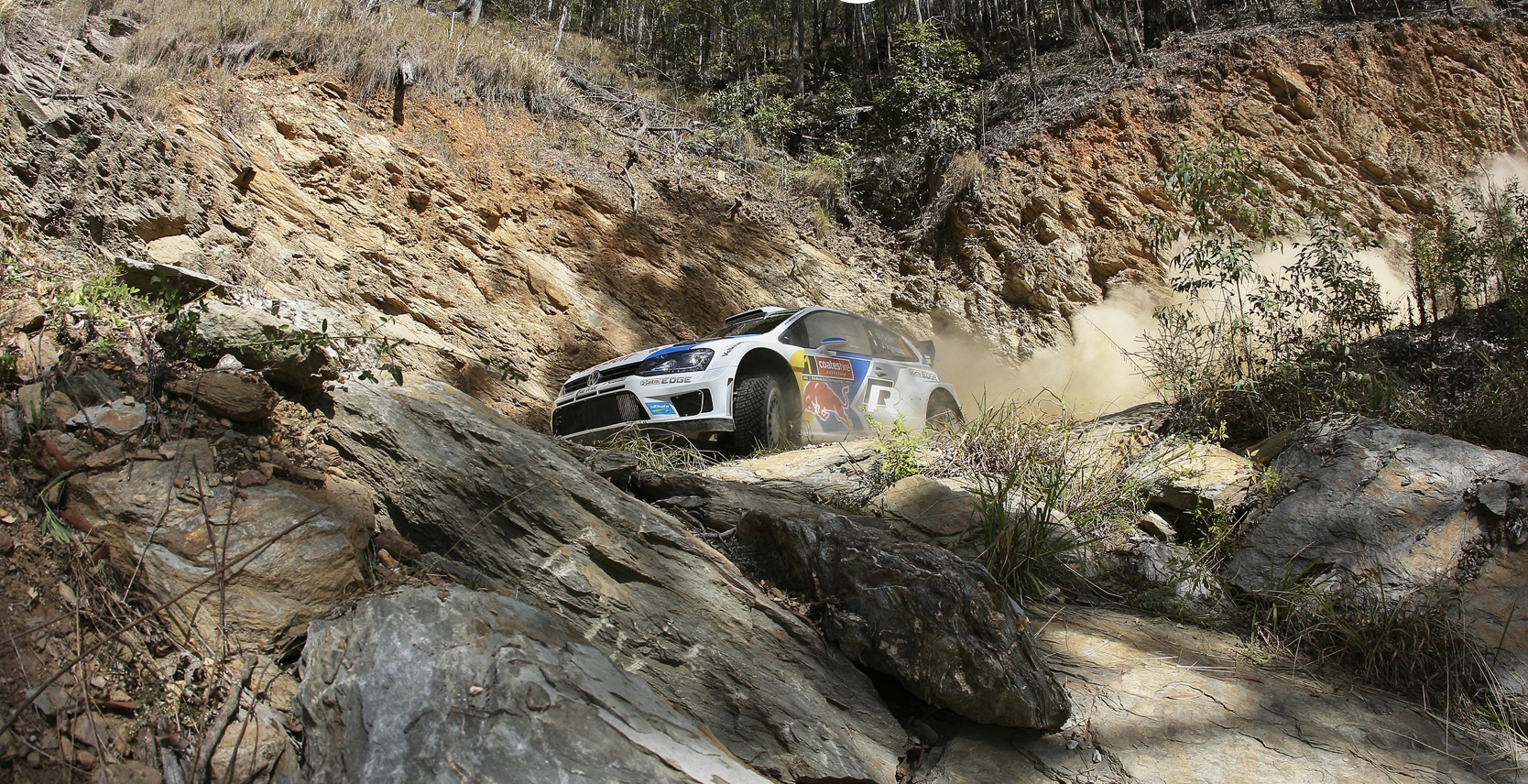
The Sebastien Ogier/Julien Ingrassia VW Polo WRC successfully defended their driver/co-driver titles in Spain having already retained the manufacturers title in Australia in 2015- for the third time on the trot.

Rally Australia was run from September 10 to 13 out of Coffs Harbour, the champs finished ahead of teammates Jari-Matti Latvala and Anttila Miika and then the Citroen DS3 WRC crewed by Kris Meeke and Paul Nagle.

(VW)


(D Foster)

The Prad Healey at Lakeside in 1961, surely it’s the best looking Healey 100/6 ever built?

This unique car was modified not long after it was acquired new by Queenslander, Doug Cavill in January 1958.

The engine was modified extensively so by racer/engineer Bill Reynolds and the body by the vastly experienced and talented Sydney ‘Prad’ boys, Barry PRyor and Clive ADams in Sydney. A fast, stunning machine was the result, the car still exists but the beauty has been stripped of her party clothes, almost criminal really, see here; https://primotipo.com/?s=prad+healey


(An1images.com)

Scott Dixon, Reynard 92D Holden leads the 1998 Sandown Gold Star round at Sandown.

He won four of the twelve races on the way to the title, including this one. In a season of great consistency he finished every race and placed second on five occasions, winning the title from Todd Kelly also aboard a 92D by 43 points with Mark Noske a further 8 points adrift in a Reynard 95D.


(D Williams)

This bunch of shots by David Williams took my eye- they were taken at Hume Weir long after the last meeting had been held at the hugely popular Albury-Wodonga border-town circuit.

Club sprints and the like were held long after the final open meeting, see here; https://primotipo.com/2016/05/06/hume-weir/

David’s camera caught some wonderful Lukey Mufflers signage, the 1959 Gold Star Champion was always a friend of motor racing throughout his life, most notably as the owner of Phillip Island for a couple of decades

(D Williams )


(unattributed)

Max Patterson’s ex-Mal Ramsay Elfin 300C chassis ‘SS67-6’ Ford during the 1973 Macau Grand Prix.

Amongst the sweetest of all of Garrie Cooper’s cars.

The Melbourne car dealer qualified the car on the second last row amongst the other sportscars but was out early in the race won by The Monaco King of the era- John Macdonald’s Brabham BT40 Ford. Piece on the Macau GP here; https://primotipo.com/2019/09/20/macau-grand-prix/


(B Williamson Collection)

A couple of Caversham shots.

Look at the crowd above- I suspect it’s after the 1957 AGP won by Lex Davison and Bill Patterson aboard Lex’ Ferrari 500/625.

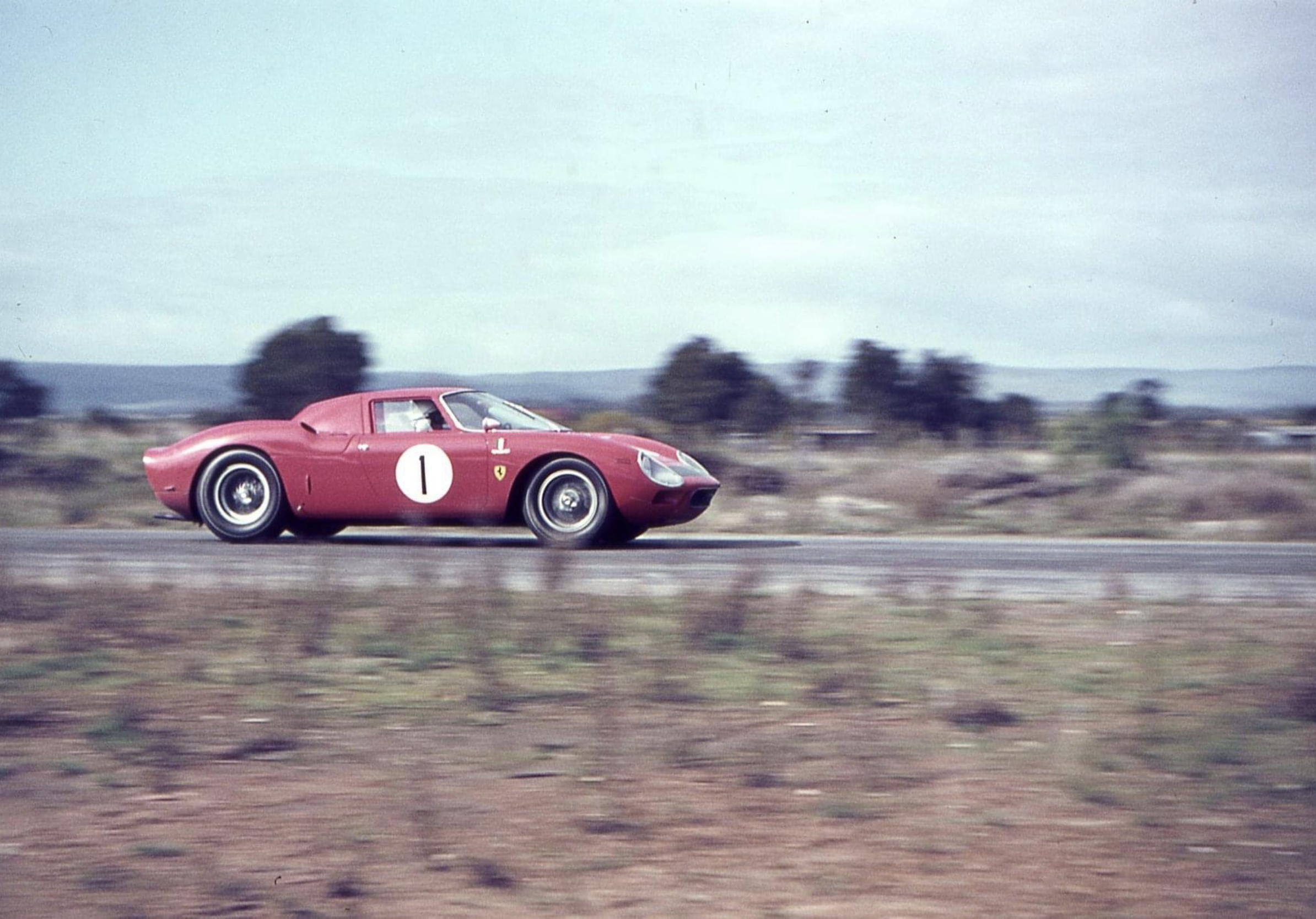
The shot of the Scuderia Veloce Ferrari 250LM could only be in Australia- superb bush backdrop to a sensational car being driven to a win of the ‘Six Hour Le Mans’ by Spencer Martin and David McKay on 7 June 1965. Feature on the car here; https://primotipo.com/2014/07/03/pete-geoghegan-ferrari-250lm-6321-bathurst-easter-68/

(K Devine Collection)


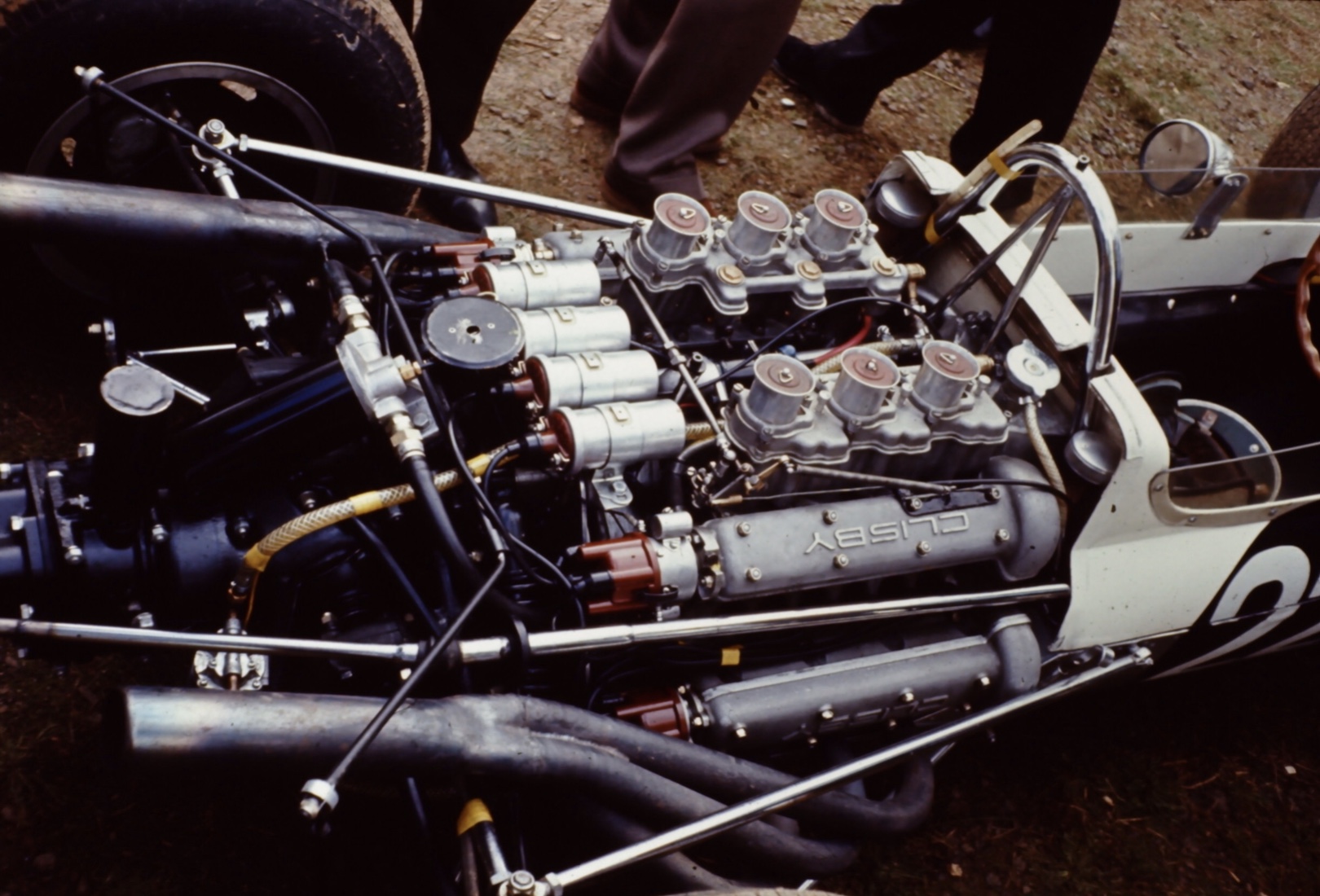
One of the most ambitious and audacious acts in Australian motor racing was Harold Clisby’s design and construction of a 1.5 litre V6 F1 engine.

At the time the engine was designed and built from 1960 to its first run on the test bench in 1964 the headcount of Clisby Industries was seventeen people. And they built almost all of it in-house. They being Harold, Project Engineer, Kevin Drage and Machinist, Alec Bailey.

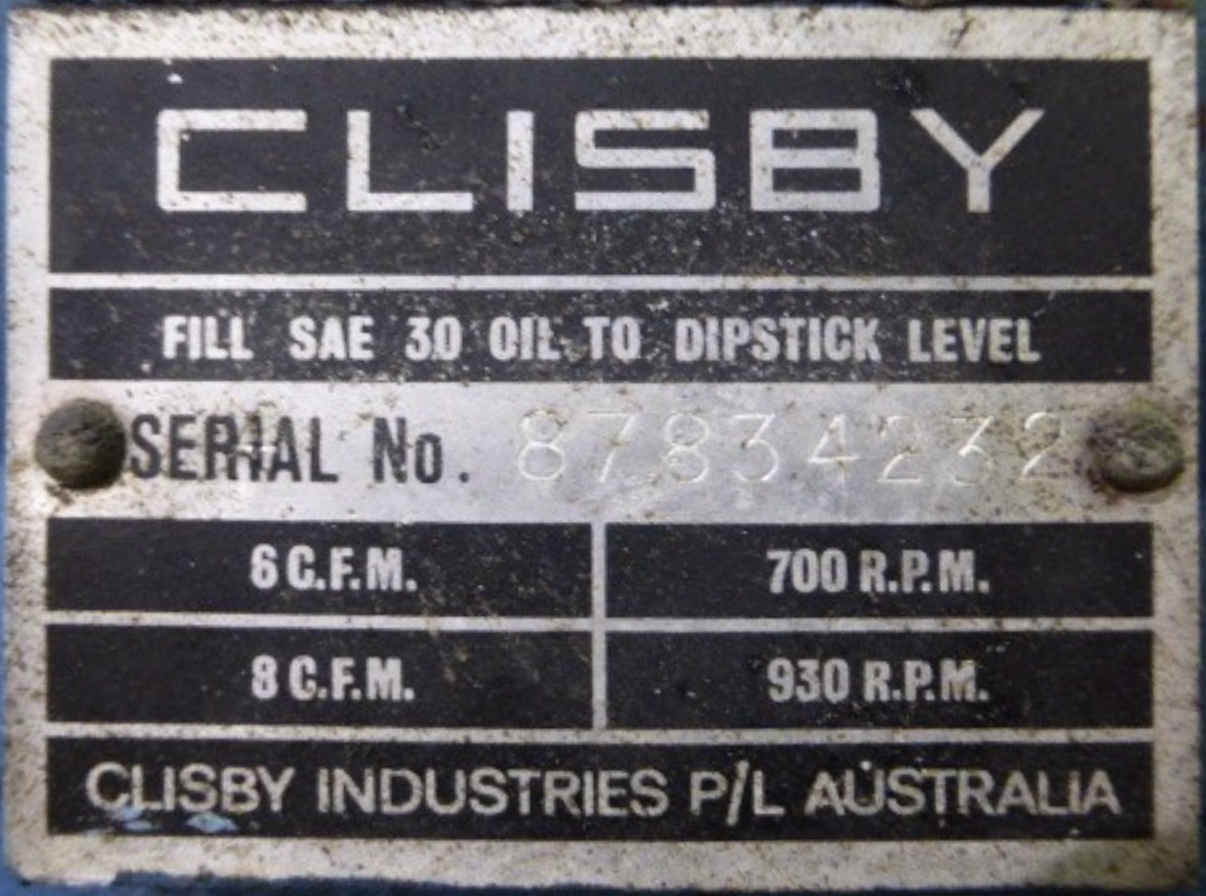
I cheated with the chassis plate by the way- its ‘orf a Clisby air-compressor.

(D Lupton)

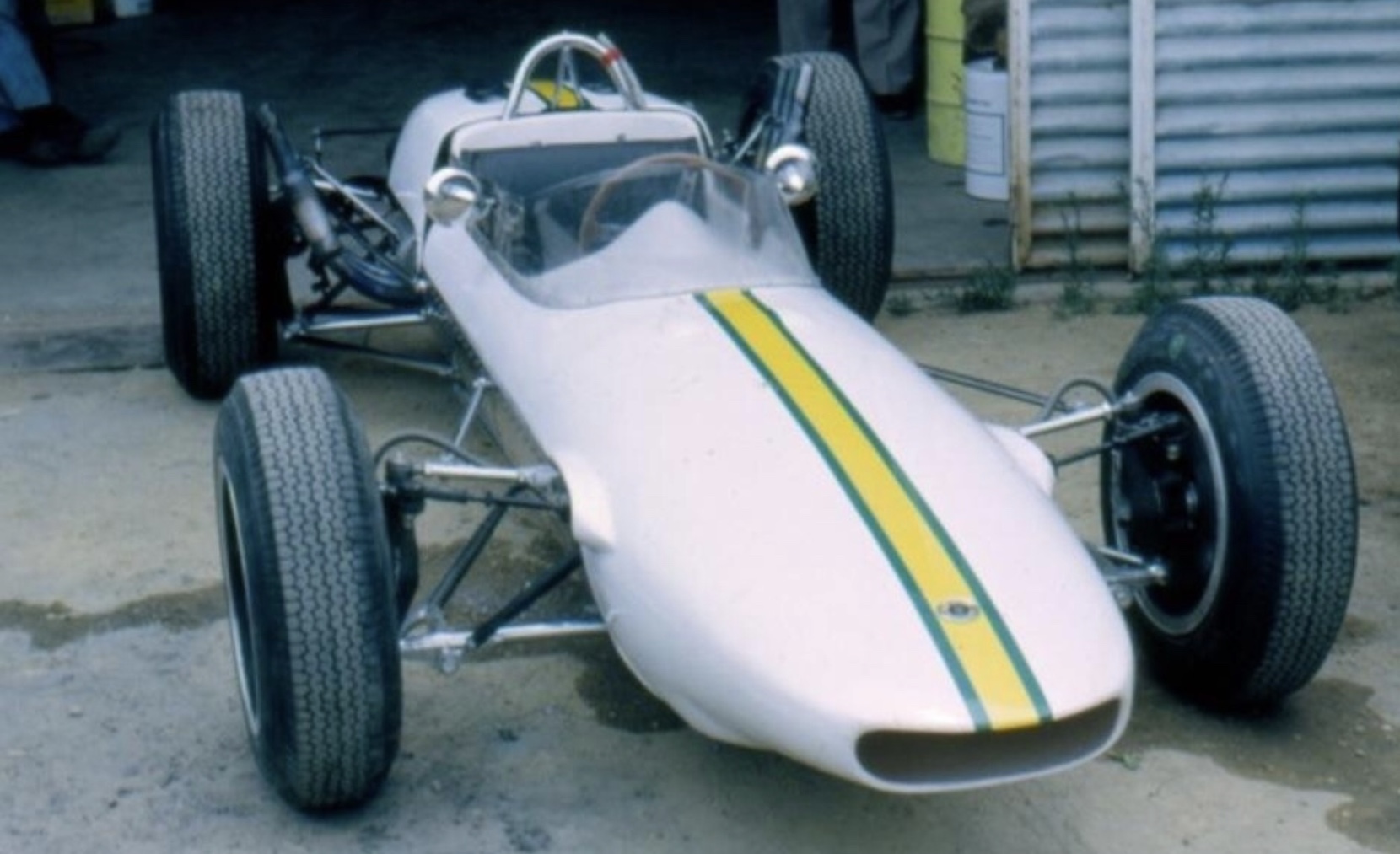
The 1.5 litre 120 degree, DOHC, two-valve, twin-Clisby triple-choke carb fed V6 was tested at Mallala for the first time, fitted to an Elfin Type 100 ‘Mono’ in March 1965.

It raced only four times before being put to one side whilst Clisby made hovercraft, steam trains, a castle and much, much more. Surely our countries greatest mighta-been? See here; https://primotipo.com/2019/03/22/elfin-mono-clisby-mallala-april-1965/

(K Drage)


(HTSA)

Bill Patterson enters Penrice Road, Nuriootpa during the Barossa Vintage Festival meeting in April 1949.

His MG TC Spl s/c is almost brand new and took two wins that weekend including the feature  event. Here it is below on its competition debut weekend at Rob Roy in January 1949. See here for the Nuriootpa weekend; https://primotipo.com/2020/08/27/barossa-vintage-festival-meeting-nuriootpa-1949/

(R Townley Collection)


(D Lupton)

Bob Jane’s Equipe was pretty impressive right from his earliest days.

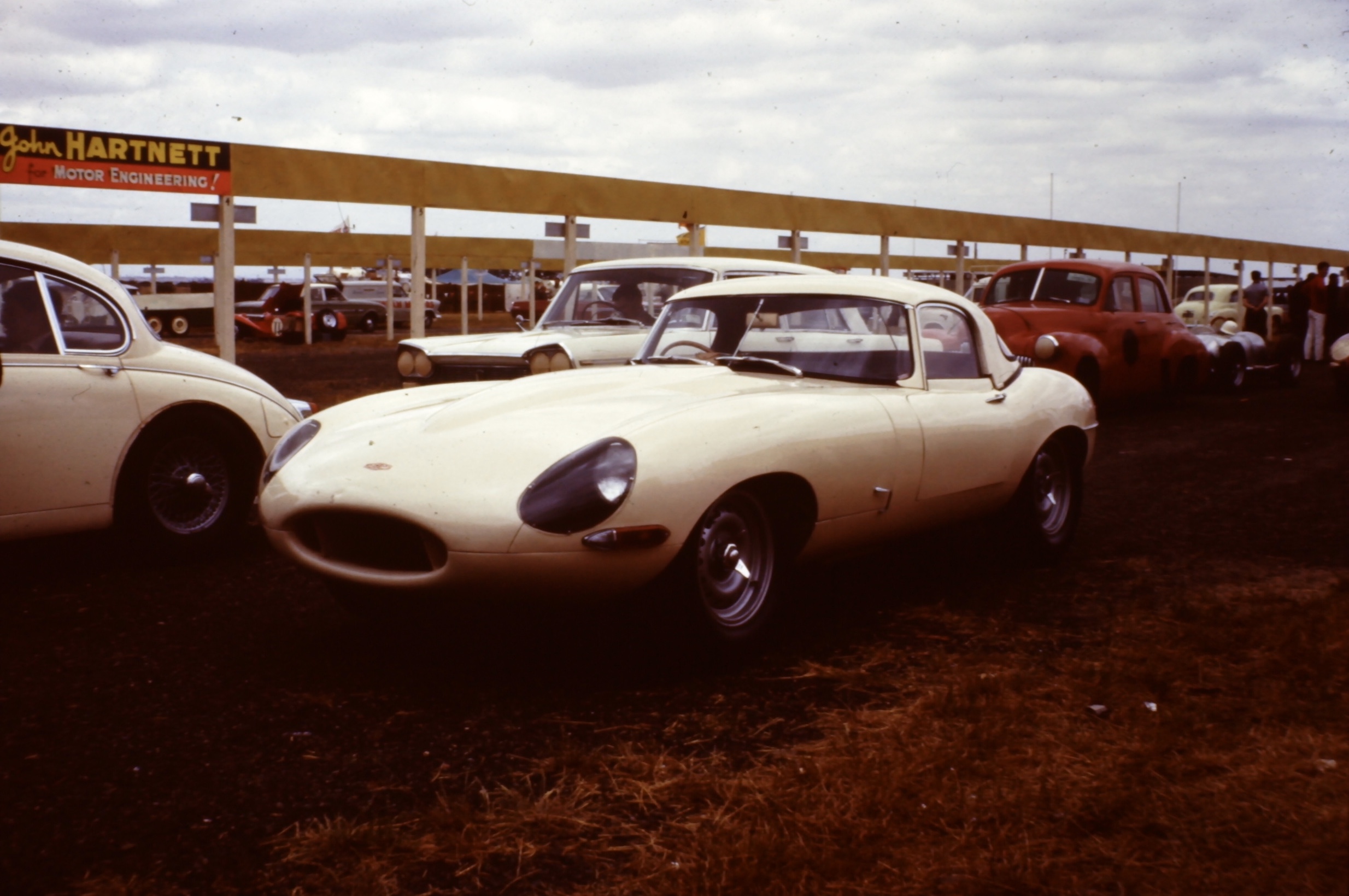
Here at Calder in 1963 are the two Jaguars- Mk2 and Lightweight E Type, the interloper is a Fiat 2300.

Stephen Dalton suggests its probably the weekend of the December 8 Australian GT Championship meeting. Click here for a piece on Bob’s cars; https://primotipo.com/2020/01/03/jano/

(D Lupton)


(I Smith)

JM Fangio and Jack Brabham aboard Lance Dixon’s 8C Alfa Romeo during the ‘Fangio Meeting’ at Sandown in 1978.

What a meeting that was! It was pinch yourself all weekend, it is such a treasured motor racing moment for all of us that saw it, let alone had a chance to be on the bill. Not that i remember the AGP or the taxi race!


(I Smith)

Magic moments- as clear now in my mind as then was JMF teasing the big booming 3 litre straight-eight (SLR engine fitted) out of third gear Shell Corner, into a big slide and holding it, with the whole of the pitlane and those perched on the pit counter roaring in approval. And delight. He did it again and again too.

Marvellous it was. See here; https://primotipo.com/2018/08/21/juan-manuel-fangios-sandown-park/

(I Smith)

Some beautiful shots by Ian Smith here.

Jack telling the press or assembled masses at the Light Car Club how hard he had driven BT19 Repco ‘620’ his 1966 F1 Championship winning tool to stay in front of the 1954/5 Mercedes W196. That’s Kerry Luckins, LCCA President at rear.

(I Smith)


(P Townsend)

John Leffler being tended by Paul and Steve Knott at Oran Park during June 1974, Bowin P8 Hart-Ford 416-B ANF2 car.

John Joyce’s Bowin P8s were amongst the most sophisticated, advanced racing cars ever built in Australia. With wedge shape, hip radiators and variable or ‘rising’ rate suspension the car picked up some of the Lotus 72’s design cues.

Leffler was the only driver to really take the fight to the tussling Birrana pilots Leo Geoghegan and Bob Muir in the 1974 Australian F2 Championship, had the car’s suspension been sorted by Leffler and Joyce earlier in the season perhaps Leffo’s yield would have been greater than one win!

This was a seriously fast racing car, John raced it everywhere in 1974 including some Gold Star rounds where he made the tail of the 5 litre cars look decidedly average. I’ll have this car in my collection please. A bit about the car here; https://primotipo.com/2018/09/20/brabs-gets-the-jump/


Leffo and Bob Muir collided at Lakeside in December causing them both to retire- that left front is punctured


Peter Brennan Collection

Repco luminaries Nigel Tait, Rodway Wolfe and Aaron Lewis were musing a couple of weeks ago about how many Repco-Brabham ‘760’ 4.2 litre, quad cam, 32 valve ‘Indy’ V8s were built for Brabham Racing Organisation’s 1968 and 1969 Indy 500 assaults. The answer is three.

My Repco history has not yet given the 3 litre 860 and 4.2/4.8/5 litre 760 a real go, but i did wonder who paid for the Indy engines. Repco’s ad in the 1968 Longford program provides the answer- Goodyear. I’d love to know how much they paid?

Peter Revson got the best results out of the 760 engined Brabham BT25s in drives which changed the direction of his driving career. He finished a great fifth at Indy in 1969 and won the two heat Indy Racing Park 200 against a field a great depth that July and proved there was nothing wrong with Repco’s quad-cam, four-valver that development could not solve.

There is some information about the four-can engines in this ridiculously long epic; https://primotipo.com/2019/02/22/rbe-by-the-numbers/

Repco-Brabham Engines Pty. Ltd. ‘RBE’ ‘760 Series’ 4.2 litre, gear-driven four cam, four valve, Lucas fuel injected V8 (Repco)


(oldracephotos.com/King)

Alan Hamilton’s Porsche 906 Spyder on the hop at at Longford in March 1967.

In the feature race he finished third behind the Matich and Jane Elfin 400s, the new car having made its race debut at Sandown the week before. See here for a piece on Hammos’ 906s, i had a looong wonderful chat to him a couple on months ago which i really must turn into words, note to self! See here in the meantime; https://primotipo.com/2015/08/20/alan-hamilton-his-porsche-9048-and-two-906s/

Bibliography…

TwistedHistory.net.au, Wheels magazine

Photo Credits…

Wheels, Russell Garth, John Ellacott, Darren Foster, David Williams, AN1images.com, Bob Williamson Collection, Ken Devine Collection, Denis Lupton, Kevin Drage, Richard Townley Collection, Ian Smith, Chris Griffiths, ‘Driving and Life’, Peter Townsend, Repco, Yogi Weller, oldracephotos.com, Terry Sullivan Collection

Tailpiece…

(autopics.com.au)

Spencer Martin aboard the Scuderia Veloce Brabham BT11A Coventry Climax during the 1966 Warwick Farm 100 Tasman Cup meeting.

His battles in this car, by then owned by Bob Jane, with Kevin Bartlett’s matching Alec Mildren owned car were the toast of racing in 1966-1967, the two mates and young professionals racing hard, fast and fair.

Martin won two Gold Stars in those years and then retired, too early in the minds of many but at precisely the right time for the man himself. See here; https://primotipo.com/2015/04/30/spencer-martin-australian-gold-star-champion-19667/

Finito…

(S Jones)

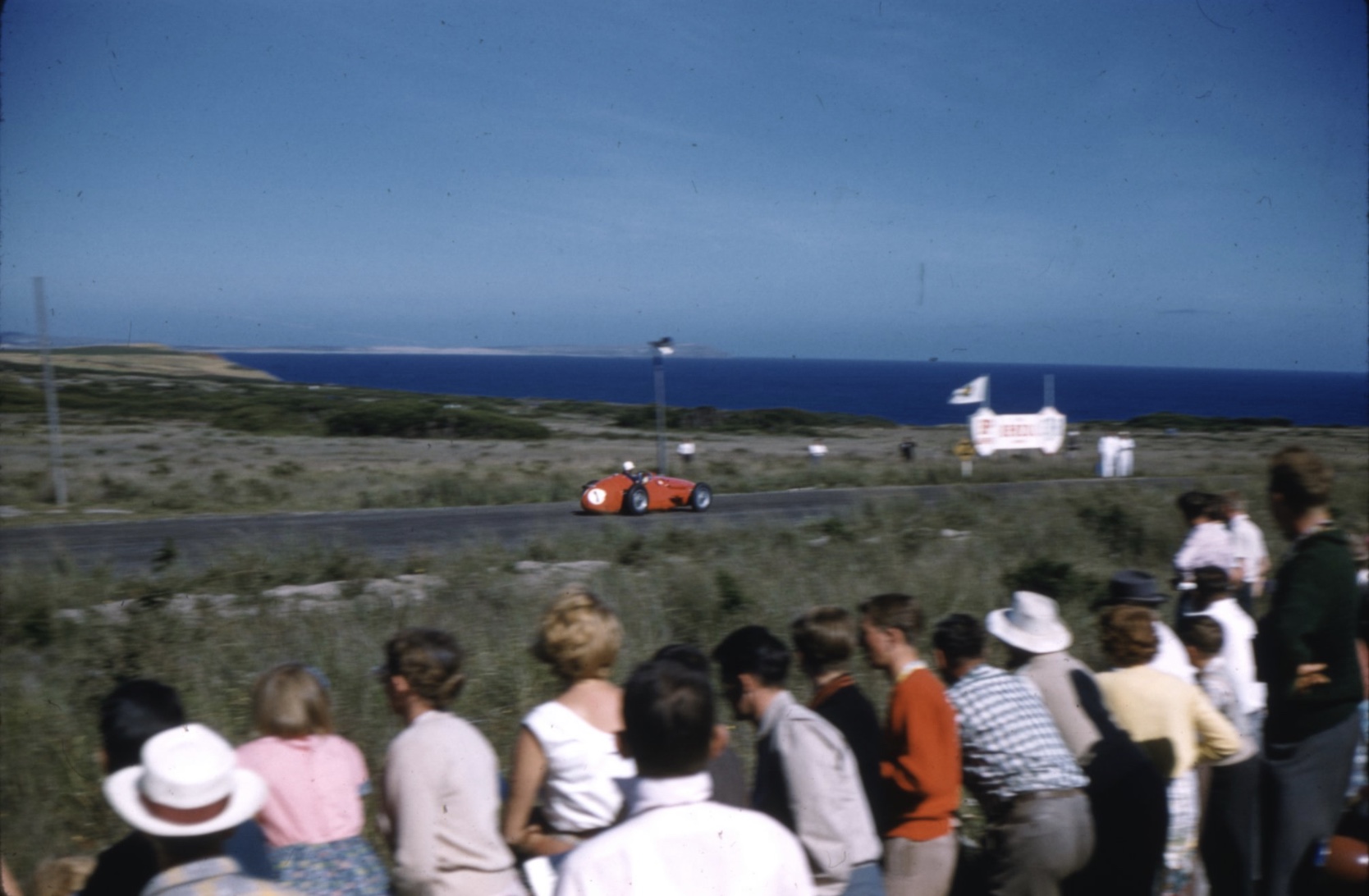
Lots of shots are great, I’m accumulating way too many for an article apiece so this is the first in an ongoing series of ‘dumping ground’ of photographs most of which first saw the communal light of day on Bob Williamson’s Australian Motor Racing Photographs Facebook page. I will keep adding these ‘Oz Racing Random’ over time- about thirty in each article seems a nice number of shots…

The first one is of Stan Jones whistling along Phillip Island’s front straight in his Maserati 250F- its a tad outta focus but still wonderful with the magic blue sky and sea vista across Bass Straight and the crowd enjoying the early summer sun.

As to the date, probably the Phillip Island Trophy 26 December 1958 Gold Star round won by the local boy, their is plenty about Stan in this piece; https://primotipo.com/2014/12/26/stan-jones-australian-and-new-zealand-grand-prix-and-gold-star-winner/

(Sparks Family)

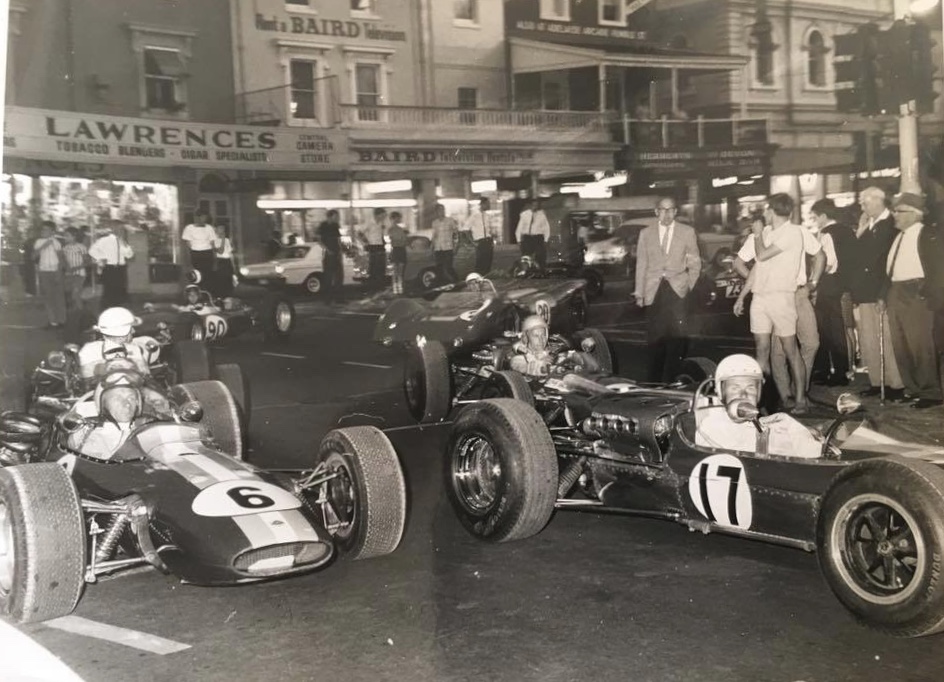
The film ‘Grand Prix’ created a huge hit wherever it was released, in Adelaide the film promoters organised an evening parade of racing cars throughout the city streets.

The #6 Lotus is Mel McEwin’s ex-Jim Clark 32B Climax, alongside is Stan Keen, Elfin Mono Ford with future Australian Grand Prix winner and Gold Star champion John Walker in his Elfin Mono Ford behind, the sportscar at rear on the right is Malcolm Ramsay, he of Birrana and much more fame, Elfin 300 Ford, whilst car #90 is Helene Bittner, Rebelle Ford 1500.

The cars are turning from King William Road into Hindley Street for you locals.


(J Strickland)

Wentworth Park in Sydney’s Glebe 1920s, these days it’s a trotting track.

Wentworth Speedway was used as a test and race venue from 21 April 1928 to 28 November 1936, a planned December meeting that summer was cancelled because of damage to the track surface and noise.

The venue was first used by bikes, then cars as well, all of the stars of the day competed there, close as it was- very, to Sydney’s CBD.

Anybody ever give the Kleinig Products Mist-Master a whirl?

All you want to know about one of Australia’s greatest drivers pre and post-war is here; https://primotipo.com/2019/12/06/frank-kleinig-kleinig-hudson-special/


(S Jones)


(S Jones)

Tornado 2 Chev at Collingrove, Angaston, South Australia circa 1961 when it was owned by Mel McEwin but it’s still in its first owner/co-constructor Lou Abrahams’ colours.

The car was an incredibly competitive tool in the hands of Ted Gray- with a bit more luck he could have been the winner of the 1958 AGP at Bathurst. He was a consistent front runner from the time Tornado 1 Ford begat Tornado 2 Ford and in its final Chev 283cid iteration set an Australian Land Speed record of 157.57mph average at Coonabarabran on 29 September 1957- apart from his many race wins.

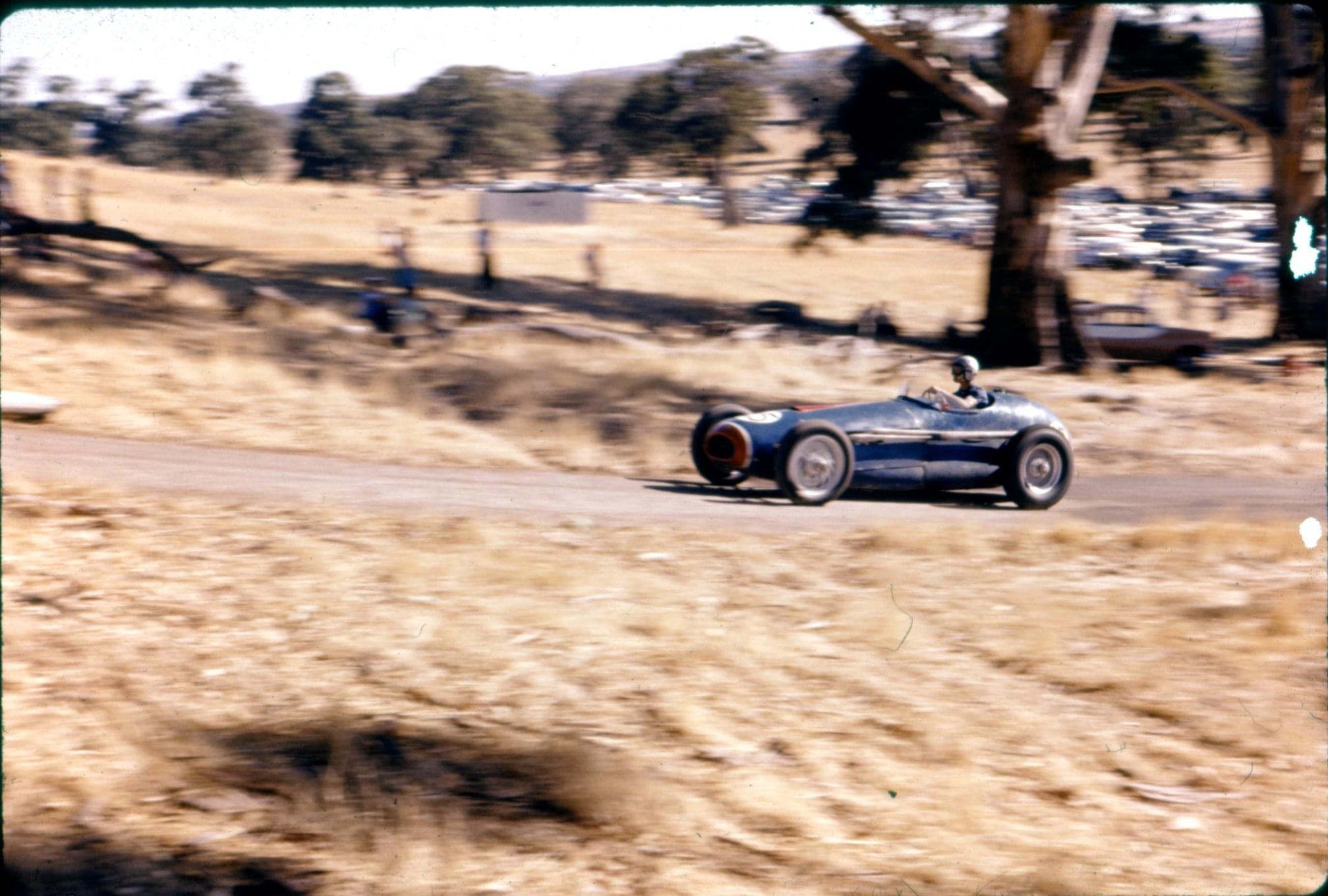
Mel McEwin attempted to better Gray’s land speed record mark at Lake Eyre, South Australia in July 1960, his best in difficult conditions and with an engine not running properly was 151.101 mph- soon thereafter the car reverted to normal race mode and contested the 1961 Australian Grand Prix at Mallala where Mel was classified ninth amongst the mid-engine hordes led home by Lex Davison in one of Bib Stillwell’s Cooper T51s- it was the last time Tornado started an AGP.

The big beast didn’t have a great AGP finishing record, sadly, with DNFs for Ted Gray at Albert Park in 1956, Bathurst in 1958, Longford in 1959, the car’s two best results were ninth at Lowood in 1960 and Mallala in 1961 with Mel at the wheel but in both cases she was classified ninth and not running at the finish…

Click here for a piece on one of my favourite Australian Specials; https://primotipo.com/2015/11/27/the-longford-trophy-1958-the-tornados-ted-gray/

Postscript.

The ‘Victor Harbour Times’ 7 July 1961 records that whilst the then Casterton, Victoria domiciled 23 year old farmer McEwin ‘…failed by 9 mph when he averaged 148 mph (for the Australian Land Speed Record) he smashed a 23 year old record for the flying mile when he averaged 151.101 mph.’

Da Boys.

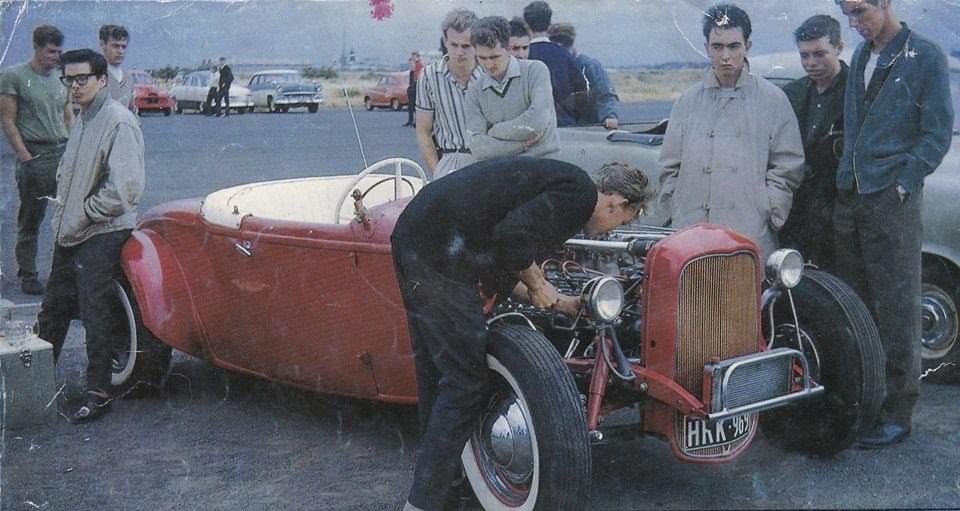
Riverside Drags at Fishermans Bend circa 1960.

Once the road circuit ceased to be used the growing hot rod and drag racing scene found a good use for the perfectly flat vacant ex-runways- cool photograph of some cool dudes; https://primotipo.com/2016/04/15/fishermans-bend-melbourne/


(B Jackson)


(B Jackson)

I wonder if Brian Jackson went stalking competitors in the 1966 12 Hour at Surfers Paradise or just happened upon the Mildren Racing Team Alfa Romeo TZ2 whilst looking for a decent bar?

Kevin Bartlett and Doug Chivas raced the car to third place behind the winning Jackie Stewart/Andy Buchanan Scuderia Veloce Ferrari 250LM and Frank Matich/Andy Sutcliffe Ford GT40.

I betcha the Coral Court Motel isn’t still there, click here for a piece on Surfers Paradise opening Speedweek carnival in 1966; https://primotipo.com/2015/02/13/jackie-stewart-at-surfers-paradise-speed-week-1966-brabham-bt11a-climax-and-ferrari-250lm/


(A Howard)

Spencer Martin in the Scuderia Veloce Ferrari 250LM at Mount Panorama in its first year of competition- 1965.

Now that would have been a sight- and especially sound on that particular racetrack, click here for an article on this car and 250LMs generally; https://primotipo.com/2014/07/03/pete-geoghegan-ferrari-250lm-6321-bathurst-easter-68/


Bevan Kaine’s Morris Minor first up (A Morris)


(M Jenner)

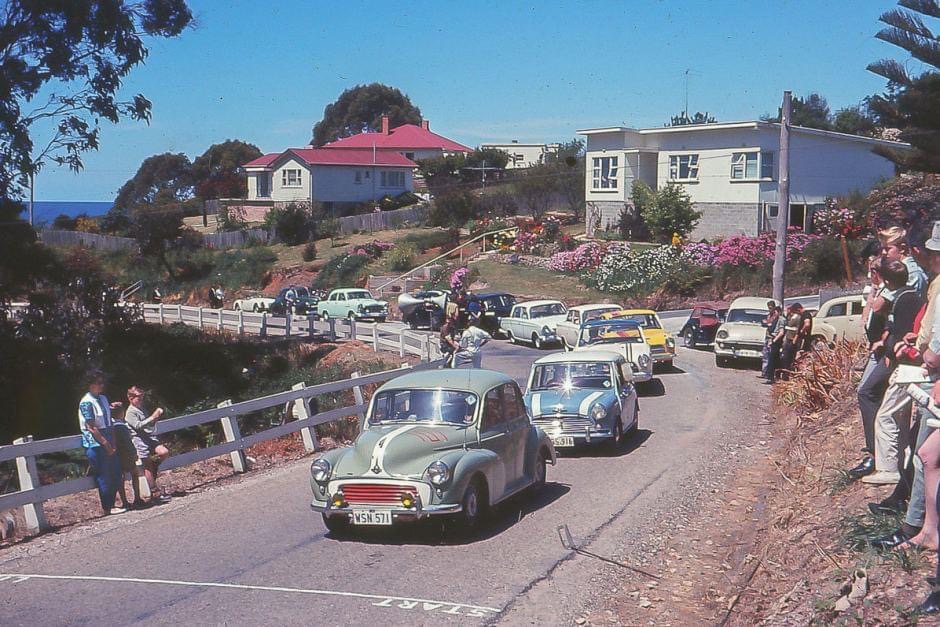
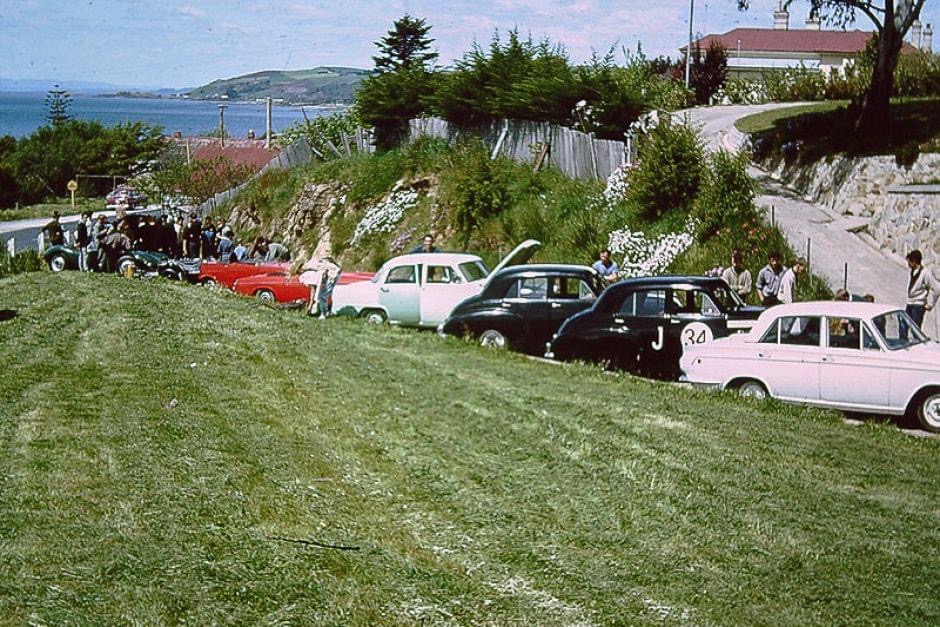
Competitors line up at Penguin Hillclimb, Tasmania 1964.

The tiny north-west coastal Tasmanian town, 130km from Launceston, hosted the Tasmanian Hillclimb Championship from 1955 to 1971- the 1100 metre climb ran along Deviation Road starting just above Walton Street.

The organising club was the North West Car Club, the annual event was held just after Longford to ‘capture’ some of the interstaters whilst on the Island- FTD in 1955 went to Tom Hawkes’ Allard.

Local bloke, Stephen Mott is publishing a book about the place later in 2020, keep an eye out for it.


(R Moppett)

Longford control tower and Launceston Tram ‘nerve centre’- the pit complex and bridge are still a year or so away.

I’ve a million articles on Longford as regulars are well aware, lets link this one as instructive for those new to the place; https://primotipo.com/2018/07/05/longford-lap/


(R Simmonds)


(R Simmonds)


(R Simmonds)

Everybody has to start somewhere, these shots by Ron Simmonds are of 1980 World Champ Alan Jones at Melbourne’s Templestowe Hillclimb not too far from the Jones abode in Ivanhoe, probably during 1964, meeting date folks?

The first shot is rounding ‘The Hole’, the second is the first corner and in the last he is running wide at ‘Barons’.

The Mini 850 was built up by Brian Sampson’s guys- was he trading as Motor Improvements then?

It begs the question as to when was the very first time the Jones boy competed? I’ve got Keith Botsford’s book somewhere, there is no shortage of conflicting material online about his early career, this machine was from a repossession yard recalls AJ. It is a far cry from a Williams FW07 Ford of course.


Terry Kelly, Ryleford at Hume Weir circa 1962-1963.

Who can tell us a bit about this special? Hume Weir, down the decades is here; https://primotipo.com/2016/05/06/hume-weir/


(D Wilson)

Amazing Panorama to Katoomba from Catalina Park.

This is one track I would love to have competed at ‘in the day’. Peter Finlay commented that he didn’t realise you could see the village as the place was so often shrouded in fog- that’s the Carrington Hotel smoking- where ‘everybody’ stayed.

Appendix J grid competitor names courtesy Rob Bartholomaeus- Bert Needham #6 Studebaker, with Spencer Martin in a Humpy Holden and Bruce McPhee, Holden FE on row one- then #40 Norm Beechey and Des West on row two with #53 Midge Bosworth all in Humpys and rounding out an all-star cast.

(R Martin)


(R Martin)


(R Martin)

On a clear summers day at Phillip Island you can see forever…

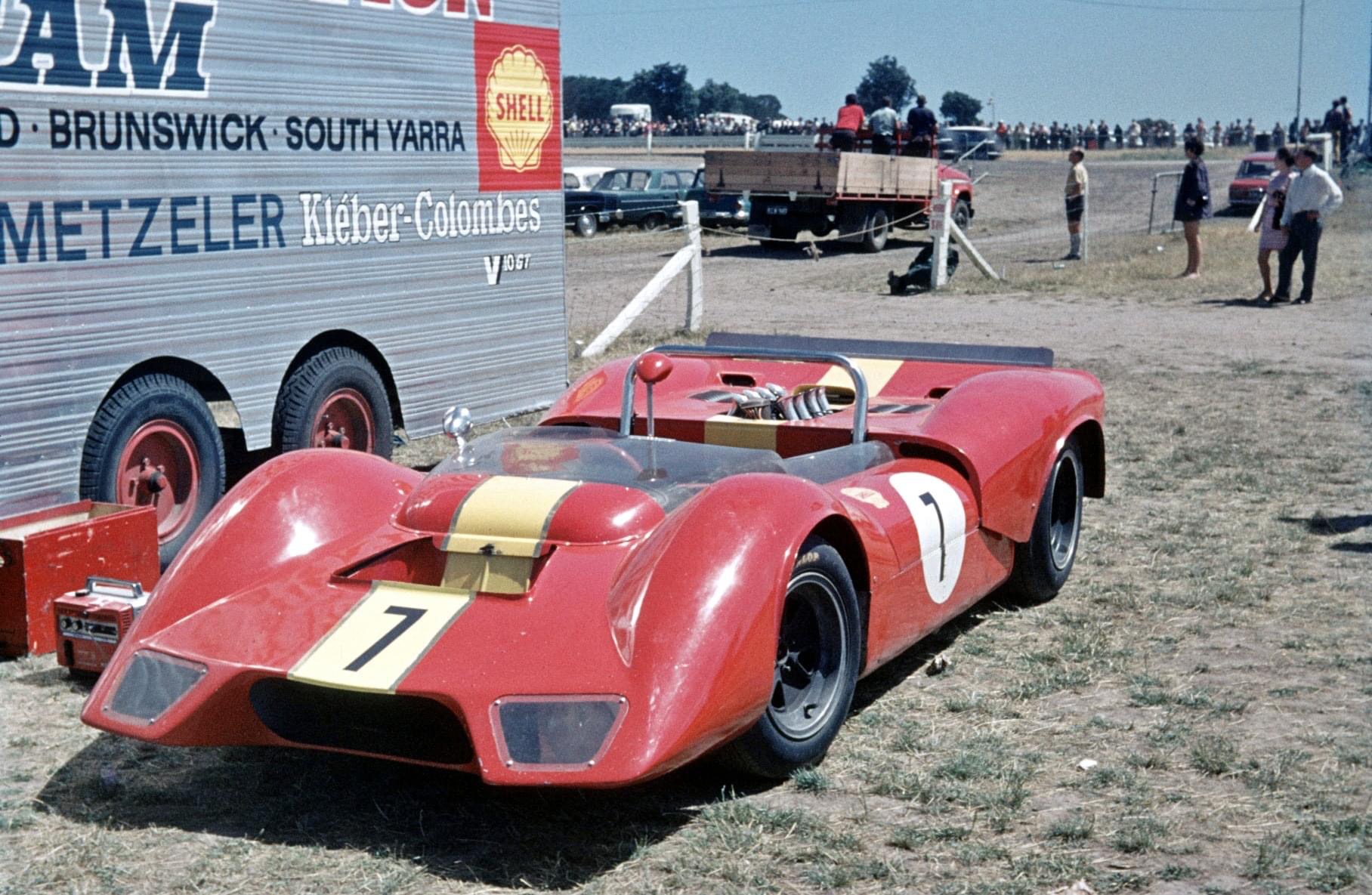
Here Bob Jane Racing are running in the January 1969 meeting- Bob in his second Mustang, the ‘GT390’ and Bevan Gibson who was driving the Elfin 400 Repco that weekend.

Click here for the Elfin 400; https://primotipo.com/2018/04/06/belle-of-the-ball/

and here for some other of Bob’s cars including the Mustang(s); https://primotipo.com/2020/01/03/jano/


1972 Dulux Rally Phillip Island stage- David McKay is about to disappear into the distance.

The Holden Dealer Team Torana GTR-XU1 of either Peter Brock or Colin Bond is alongside and the other is on row two- on the far side obscured by the Torana is Paul Older’s BMW 2002ti with the works Datsun 240Z of Edgar Hermann on the third row.

McKay won the 20 lapper aided by a very top fifth gear he had not used in a competitive stage to that point- click here for a piece on Australia’s Cologne Capris and the 1972 Dulux; https://primotipo.com/2015/04/09/australias-cologne-capris/


(I Smith)

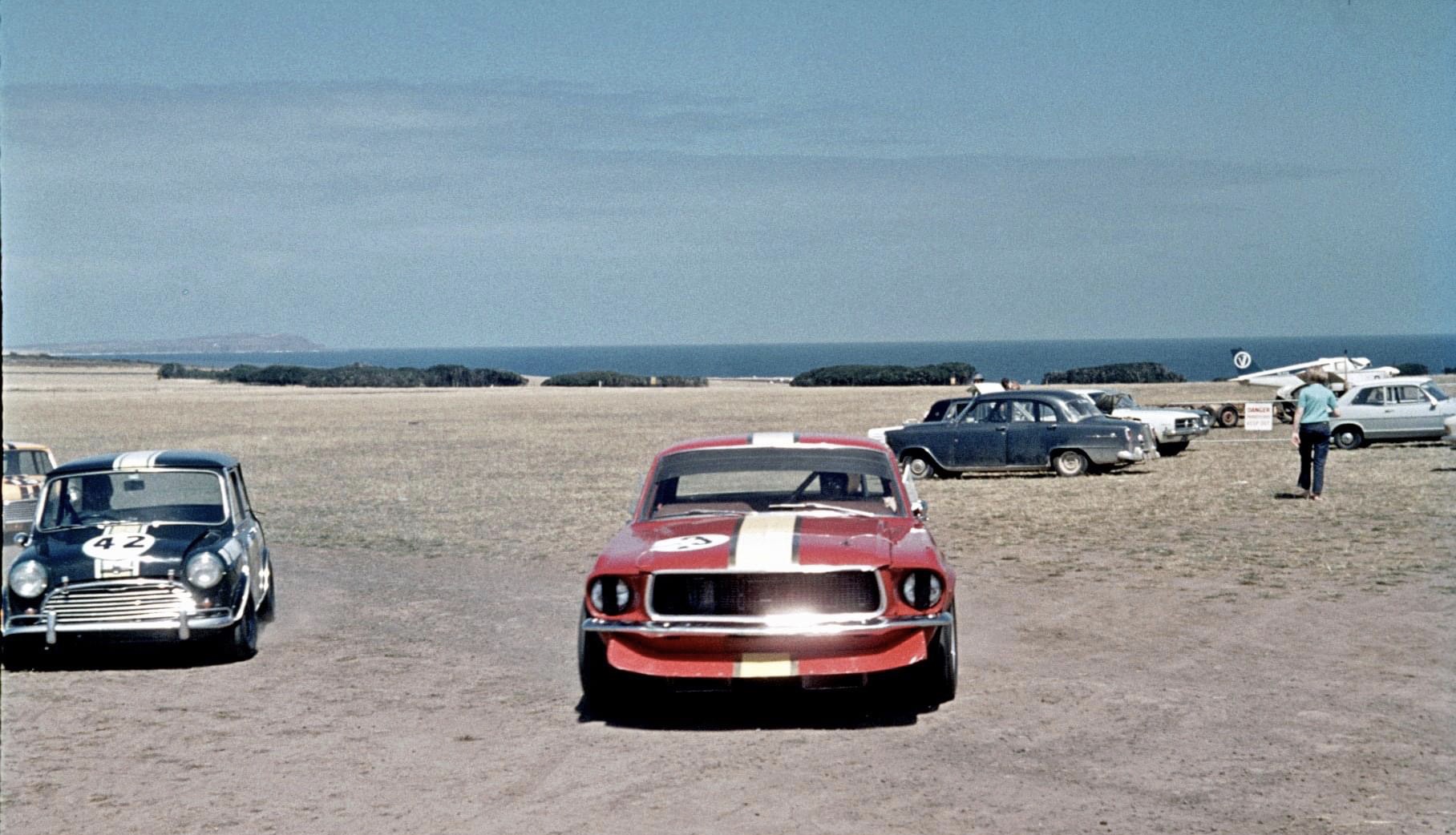
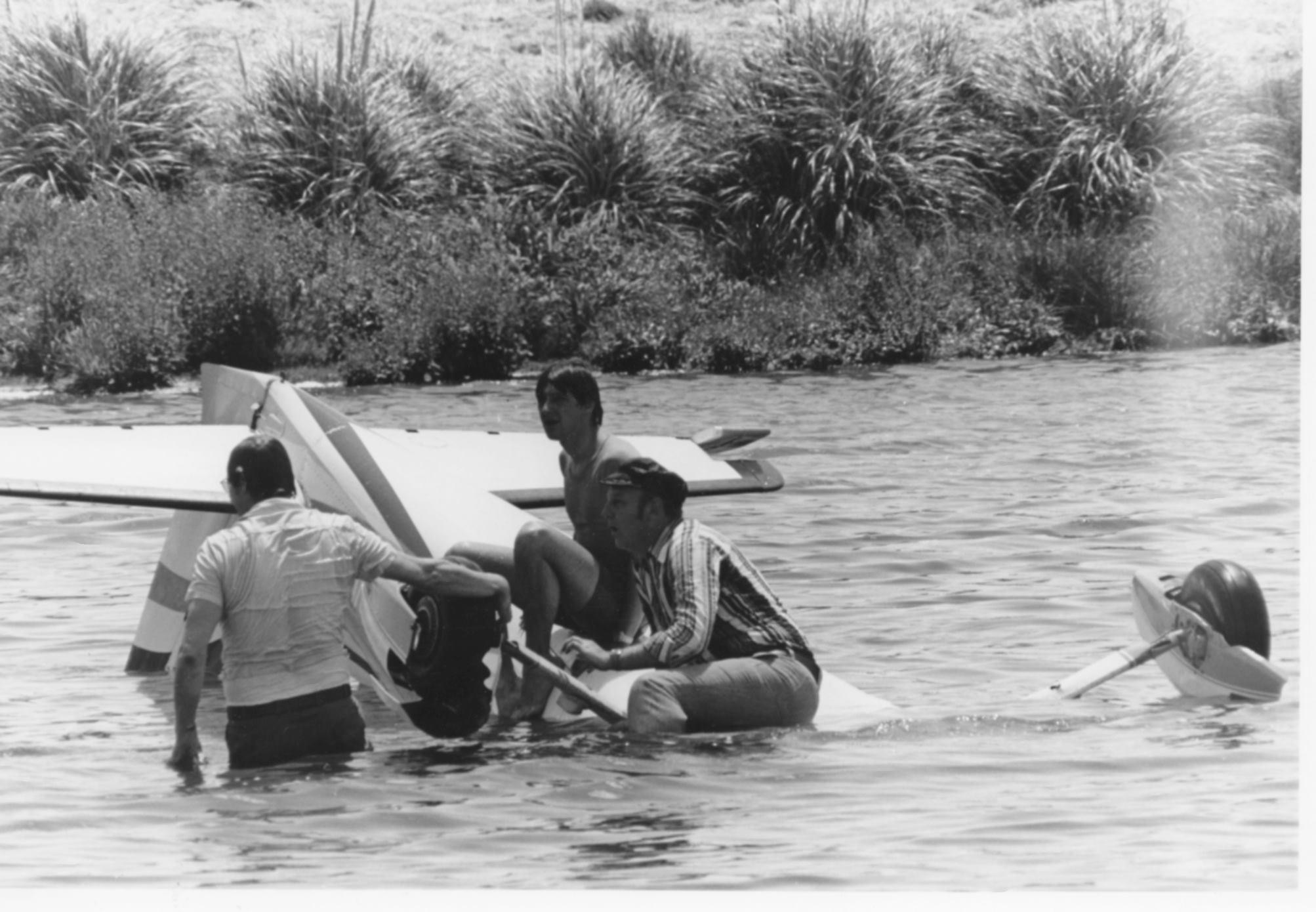
Ian Smith was quick on the scene, and on the shutter when a group of Mazda executives got more excitement on the trip to the 1973’ish Phillip Island 500km than in the race itself.

The track had an airstrip then, ‘the pilot tried landing from the ocean side with a tail wind overshot, Grant Steers from the Holden Dealer Team jumped in to assist…no injuries.’


(D Willis)

Dick Willis, forever young racer, with the JWF Milano Holden 179 in Grafton Street, Coffs Harbour he has just built in 1965.

Bruce Polain is writing a book about these wonderful cars, which will be one to add to the shelves.

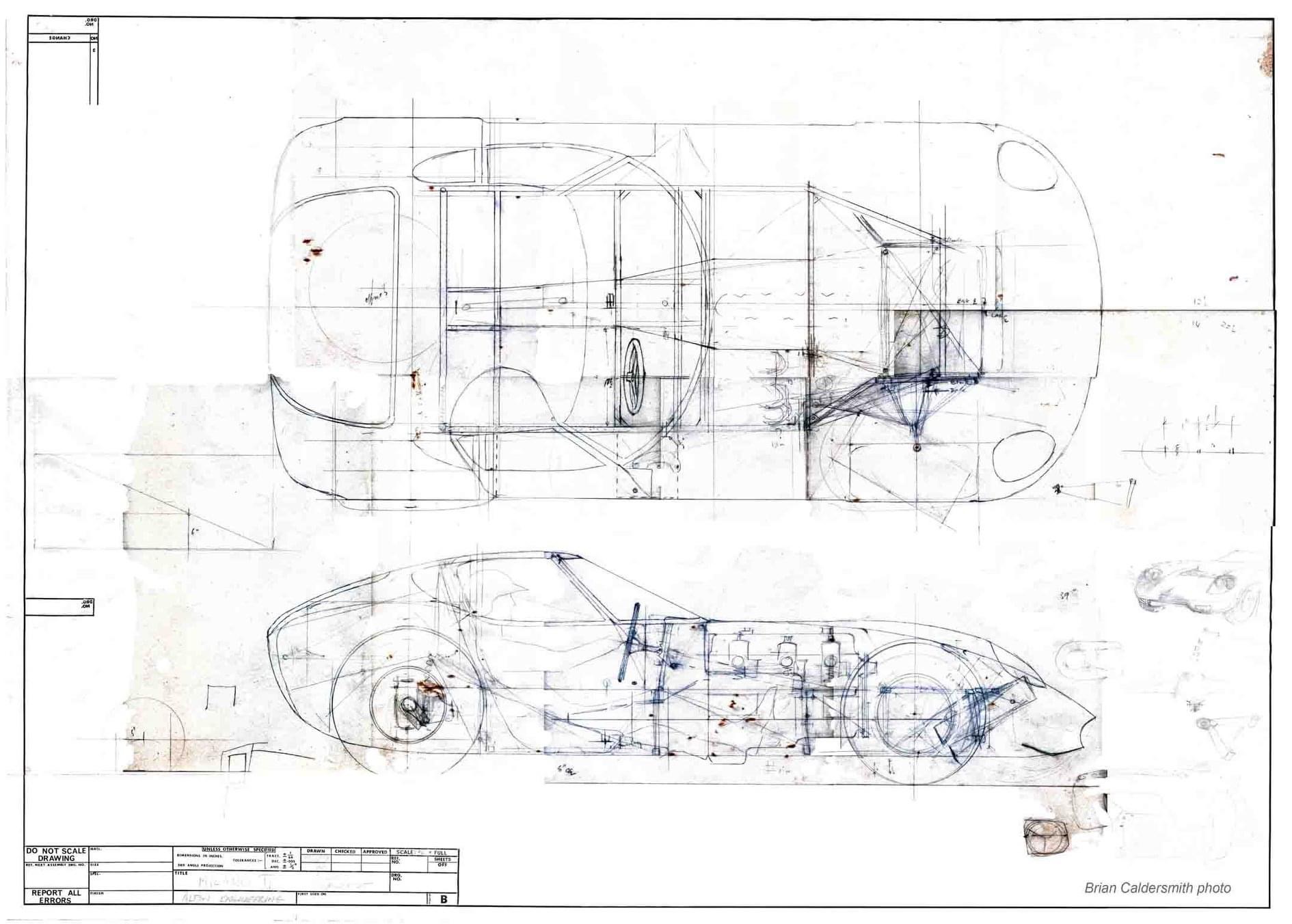
Brian Caldersmith, who took the shot wrote ‘This image is a very rough assembly from smaller segments of the drawing of the GT2 done by Tony Caldersmith in April 1969 (B Caldersmith)


(Via Neil Stratton)

Its a riot.

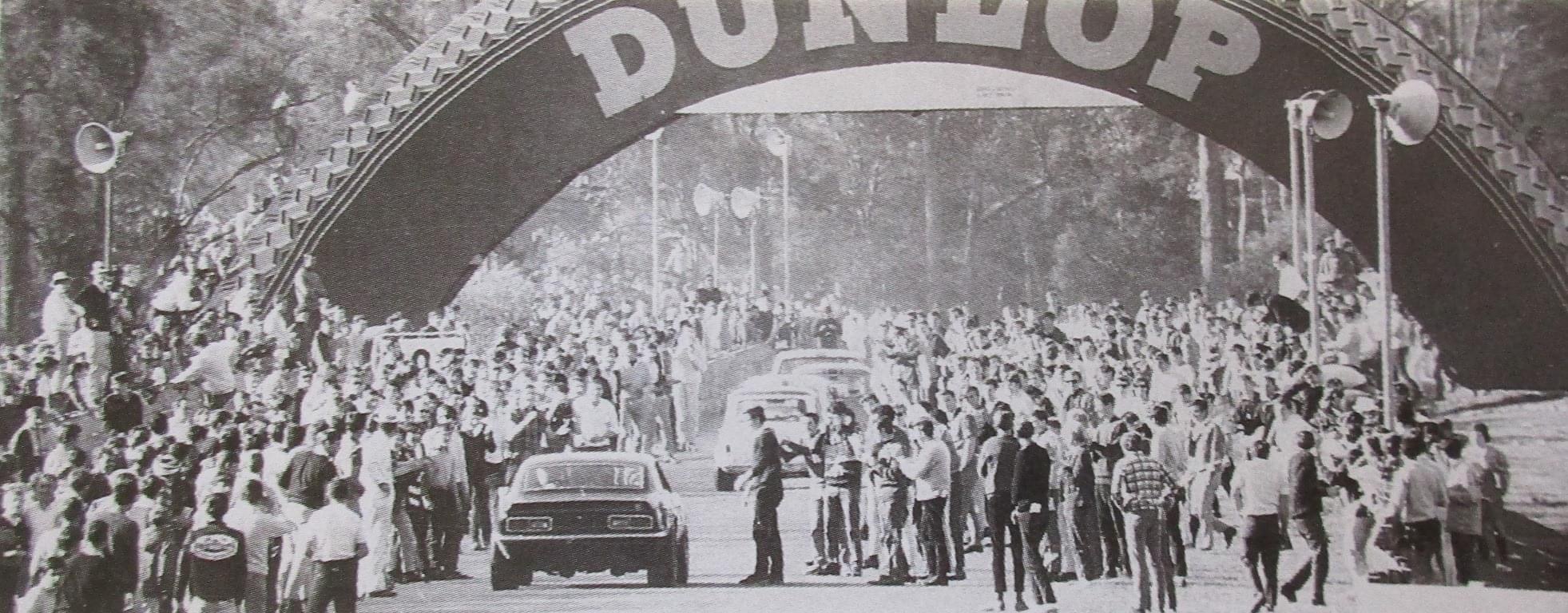
Well almost, crowd scene after the one race Australian Touring Car Championship at Warwick Farm in September 1968.

Norm Beechey’s Chev Camaro SS awaits a tow after the finish- Pete Geoghegan’s Ford Mustang won from Darrell King, Morris Cooper S and Alan Hamilton’s Porsche 911S/T- d’yer reckon Aussies like Taxis or what?!


(unattributed)

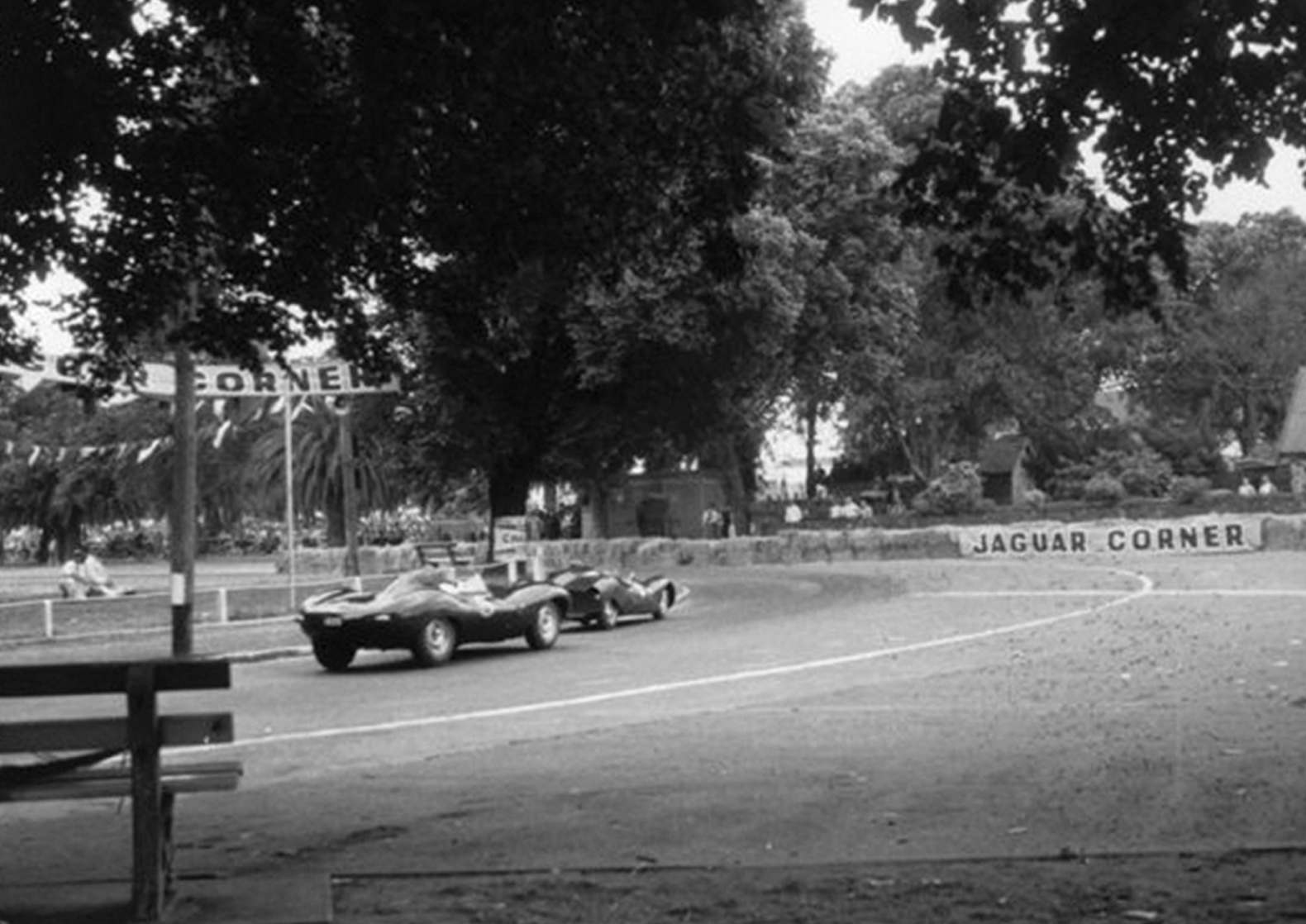
Jaguar in Jaguar Corner.

Bib Stillwell’s D Type chasing Jack Brabham’s Cooper Bobtail Climax during the Australian Tourist Trophy, Albert Park, November 1956, I wrote an article about this car not so long ago; https://primotipo.com/2020/04/17/stillwells-d-type/


(K Devine)

It could only be Longford’s Viaduct.

Mini ace Peter Manton’s Morris Cooper S on the turn in, guessing 1965- how’d he go folks?

See here for Manton; https://primotipo.com/2017/11/29/mini-king-peter-manton/

Credits…

Steve Jones, Reg & Craig Sparks Collection, James Strickland, Brian Jackson, Alan Howard, Australian Broadcasting Corporation, Rohan Moppett, Ron Simmonds, Paul Kelly, David Wilson, Russell Martin, Dick Willis, Ian Smith, Neil Stratton Collection, Ken Devine Collection, Brian Caldersmith, Victor Harbour Times 7 July 1961, Rob Bartholomaeus

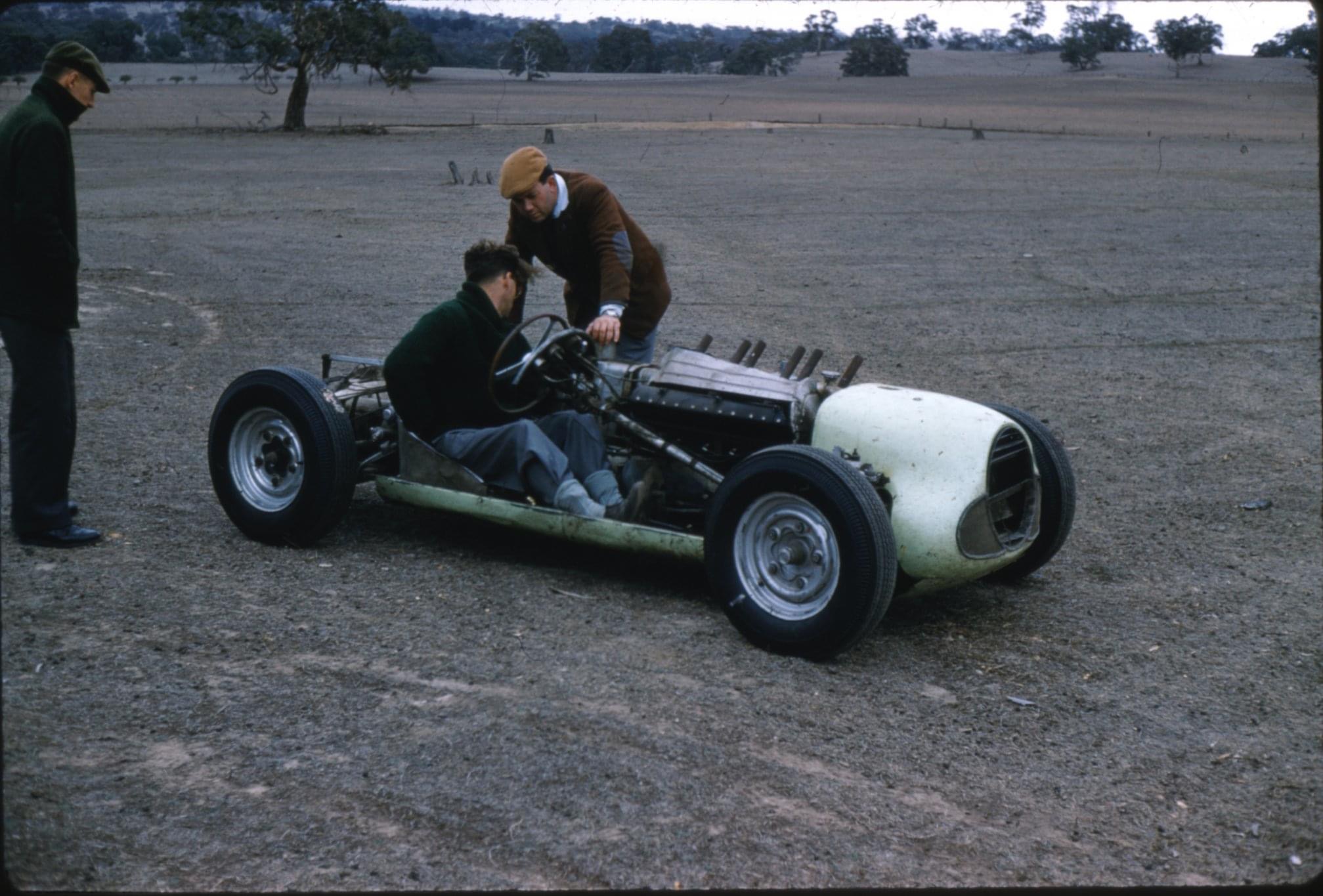
Tailpiece: Eclipse Zephyr Spl s/c…

(S Jones)

Whilst not the prettiest of things, agricultural is a word which may be applied to its physical appearance, all of Eldred Norman’s masterpieces bristled with innovation and speed.

Famously constructed in only ten weeks in the lead up to the 1955 Australian Grand Prix at Port Wakefield, the proud South Aussie needed a car to contest the event- its speedy construction belied the insights of its engineering.

The engine and gearbox were stressed components and, together with the Holden front crossmember formed a very stiff structure. Suspension was independent front and rear, the driver was offset, he snuggled the fuel tank as you can see and the Ford Zephyr six-cylinder engine was supercharged.

Here, circa 1960, Keith Rilstone, very quick in the car, prepares for a run up Collingrove Hillclimb- gotta do an article on this thing…

(S Jones)

Finito…
 

image

1981 Williams FW07D Ford (P D’Alessio)

I’d forgotten about the speed of Patrick Head’s Williams 6-wheelers and what a serious attempt they were to address the teams position in 1981/82. And the rule changes to ban them such was their apparent speed…
Williams couldaa-wouldaa-shouldaa won World Titles in 1979 and 1981 to go with the ‘Jones Boys’ win in 1980.

In ’79 the ground-effect FW07 arrived late and took a while to find the reliability to go with its speed apparent from the start. In 1981 team orders and more ‘cooperation’ between Jones and Reutemann would have secured a title for one of them instead of ‘none’ of them.

The two ‘numero-unos’ caper seldom works does it? I am a Buddhist in some ways but I still love the way ole AJ totally crushed Lole at Vegas in that last round ’81 championship showdown. Sheer force of will and balls. Attributes the ebullient, combative Balwyn Boy had in spades.

By late 1981 the turbo teams were finding reliability to go with their speed. Renault only missed out on the ’81 title because of unreliability, Ferrari were new to the turbo game but the engine was great even if the chassis was not. Brabham had formed a partnership with BMW. The best of the Cosworth runners was the McLaren MP4, which, with the very first carbon-fibre chassis was putting to the road all the venerable DFV had to offer. Maranello unsurprisingly knocked back William’s request for a customer Ferrari V6 turbo.

What to do was the question the Didcot hierachy faced as the FW07 series of cars were at the end of their development cycle?

image

Alan Jones, Wlliams FW07D Ford, referred to as FW07E also, Donington Park, November 1981 (Sutton)

To make things worse, Alan Jones made a very late call to quit GP racing and become a farmer. He bought a property at Glenburn, in the Kinglake/Yea area of Victoria forcing the Williams team to shop around on the second-hand driver market. The population difference of 250 people in Glenburn and greater London’s many millions is a change in domicile of some scale! Frank and Patrick eventually signed Keke Rosberg to partner Carlos Reutemann. It turned out to be rather a good choice.

Patrick Head set upon two design paths in parallel; the FW07 replacement ‘FW08’ and a six-wheeler project. By mixing the two projects, Head accounted for the six-wheeled concept in the FW08 design. The FW08’s wheelbase was kept short to accommodate the addition of four-wheel-rear-drive, its short wheelbase is partially the explanation of FW08’s stubby looks.

What follows is a truncated version of a great 8W: Forix article on six-wheelers, click on the link at the end of this article for an excellent summary of six-wheelers starting with the 1948 Pat Clancy Special and finishing with the 1982 Williams FW08D. In addition I have drawn on the recollections of the Williams six-wheeler designer, Frank Dernie in a MotorSport article.

The Williams six-wheel configuration would be four smaller driven wheels at the back in a direct effort to improve straightline speed by getting rid of the big aerodynamically inefficient rear tyres and improve traction out of corners due to the increased rubber contact. A bonus was to allow the free flow of air along the sidepods all the way to the rear axle of the car.

‘As ground effects were permitted within the wheelbase of the car, Head cunningly interpreted this rule as being from front axle to the most rearward axle! In Head’s mind, these would be ground effects perfection. The leading rear axle was placed four inches ahead of its original place, with the driveshafts angled to cope. The most rearward axle was driven by an additional final drive added on the back of the transmission. Hewland provided assistance on the gearbox, using vital experience gained from Roy Lane’s March 2-4-0 hillclimber’ which you will recall was also two wheels up front and four down the back.

Jones briefly tested the car at Donington Park in November 1981 shortly after winning at Las Vegas, but still decided against continuing his GP career. Its said the weather was so cold in Leicestershire that day that Jones had to pour hot water on his Jaguar door locks to get into his car. It’s not that the concept of the six-wheeler was poor, simply that AJ needed a break.

He returned to Australia to race Formula Pacific and Sportscars but was back to Grand Prix racing soon enough, his decision to opt for the bucolic pleasures of country life in Australia was premature.

‘In November 1981, at a cool but sunny Paul Ricard Keke Rosberg climbed aboard the six-wheeled FW07 hack, which for reference purposes we shall call the FW07E, as its reported name (‘FW07D’) later became the designation for the regular 1982 FW07.

Reports in Autosprint magazine led everyone to believe that Keke’s times at Ricard were unusually fast indeed, although many warned not to read too much into winter testing times. However, Alain Prost’s lap record of 1.04.5 had been set on October 26, just two weeks before Keke and his FW07D/E lowered it to 1.04.3 on November 7.

Jonathan Palmer also tested the car at Croix-en-Ternois in the North of France to see what its performance would be like on a tight and twisty track, and matched the times set by the regular FW07C.

Eventually though, the FW07D/E wasn’t used in racing as the team found a major obstacle to its ‘perfect’ ground effects – the lower wishbones of the rear suspension.

So Head decided on incorporating this dilemma into the design of the FW08, which as stated above was predesigned to accommodate six wheels. The FW08 solution used fixed-length driveshafts that would be used as lateral lower location members as well, thus freeing the underwing tunnels from any obstruction’.

image

Williams FW08 Ford 1982: Aluminium honeycomb monocoque chassis, wishbone and rocker pullrod suspension at front and wisbones and rockers at rear, coil spring dampers, Ford Cosworth 3 litre DFV V8- about 490 bhp @ 10750 rpm in ’82 spec, Hewland FGA400 5 speed box (P D’Alessio)

1982 Season…
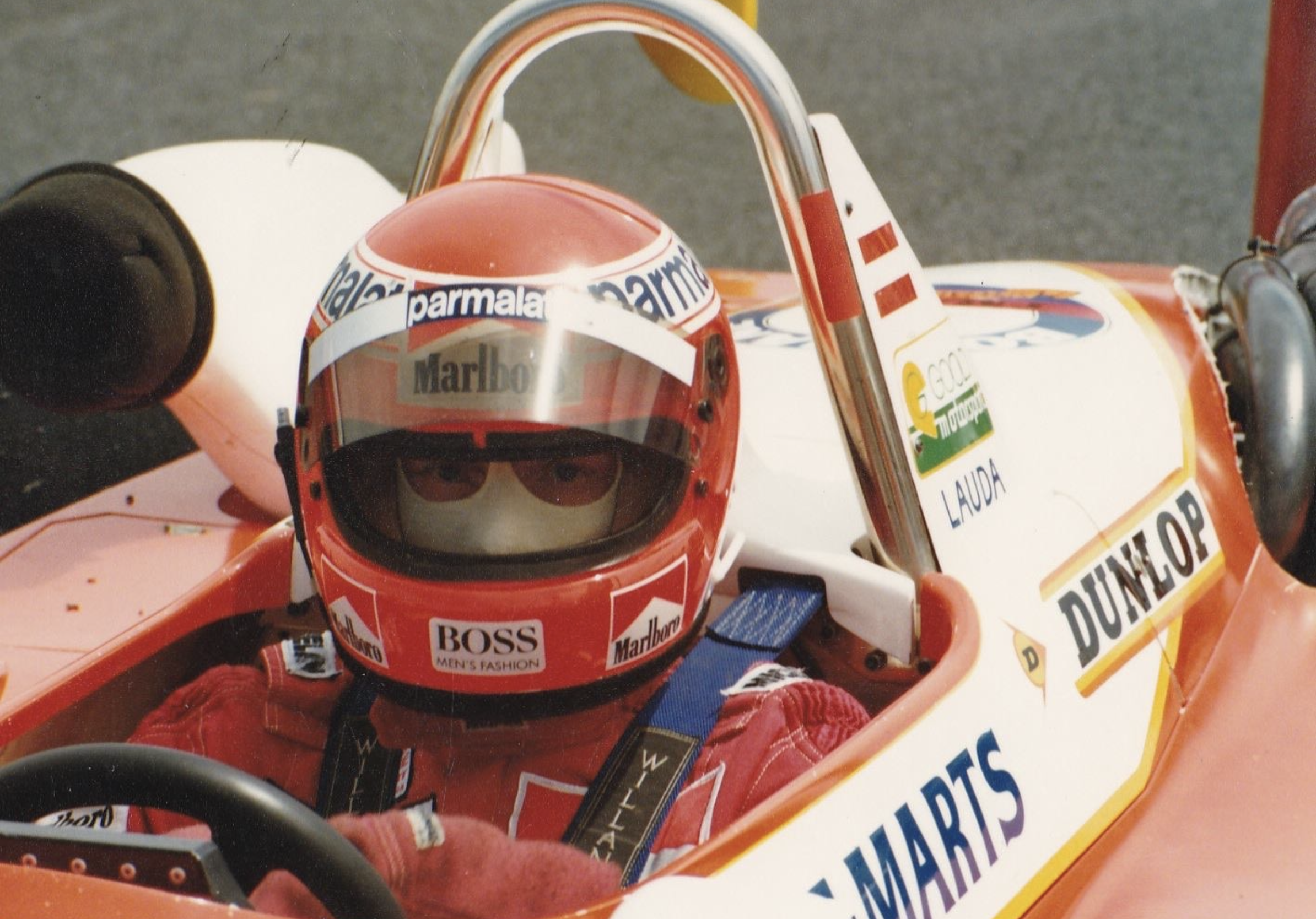
‘Buoyed by the performance of the latest FW07 regular development, the FW07D, the team started the season with this car, ‘Lole’ immediately taking second after the super-license affair at Kyalami, with Rosberg fifth.

While the politics continued unabated in Brazil, Williams were confronted by Reutemann’s shock retirement from racing but lifted by Rosberg’s strong second place at Long Beach, yet still behind Niki Lauda in McLaren’s miracle chassis.

The Imola boycott allowed the team to prepare two FW08s for Zolder where there was more drama in store for the Grand Prix community. With the Renaults faltering yet again, Keke grabbed another second place, this time following home John Watson in the other MP4/1’.

‘In the following races Rosberg and new team mate Derek Daly continued to be beaten by the McLaren and the Brabham BT49D, while the turbo-engined Brabham won its first race.

image

Williams Team FW08’s in the Detroit paddock June 1982 Derek Daly 5th behind his car. Rosberg was 4th, the race won by the carbon-fibre McLaren MP4 Ford of John Watson (unattributed)

In France, turbos finished one-two-three-four.

Obviously unaware of the final Championship result, the Williams team then pressed on with its six-wheeler project and during the summer of 1982 a new car surfaced.

This time an adapted FW08-01 codenamed FW08D, hit the Donington Park track. Its four wheel drive times were stunning. In fact, they were so good that the FIA issued their 1983 regulations including a clause that outlawed six-wheelers and four-wheel drive’.

Frank Dernie spoke of his FW08 six-wheeler design in MotorSport.

‘The biggest problem with traditional ground-effect cars is that the downforce is generated a very long  way forward so you need a draggy rear wing to balance it. The big plus with the six-wheeler was that its side-pods ran comfortably inside the narrow rear tyres, right to the back.’

‘I managed a sufficiently rearward centre of pressure, without too much loss of the underbody, to do away with wings; the car had a slotted-flap type underbody, part of it around the exhaust, part of it in the normal place. I couldn’t have done that with a four-wheeled car. When skirts have to stop ahead of the rear tyres, you’re knackered’.

‘The lift to drag ratio of FW08 was 8.2, and the FW08B six-wheeler was not much more…But the final quarter scale model of the six-wheeler that would have gone into production had a lift to drag of 13 point something’. With neither front nor rear wing, any necessary trimming was to be supplied by a Gurney type flap at the bodywork’s rear’.

image

Keke Rosberg aboard FW08D in 1982 (LAT)

Keke Rosberg, Jacques Laffitte, Jonathon Palmer and Tony Trimmer all tested FW08B as late as October 1982.

‘It was quite progressive’ said Palmer. ‘It was great fun to throw around, to get a bit sideways, because instead of one wheel losing grip, and, therefore losing 50% of your grip, if one wheel lost grip you still had three others giving you some grip’. The car showed promise on all types of track from the high speed sweeps of Silverstone to the twists of Croix en-Ternois.

Dernie again ‘Patrick was sure that the only limitation would be, with four driven wheels pointing straight ahead, masses of power understeer. But after only a few laps of ‘Croix, Laffitte admitted he had forgotten it was a six-wheeler’.

image

Jolly Jacques aboard FW08D at Crois en-Ternois in 1982 (unattributed)

‘If you get the weight distribution right for the tyres and make sure the aero is consistent, there is no reason why it wouldn’t feel like any normal racing car. To get the ultimate from it, though, tyres  specific to the rear would have been required. At that time however, we were just running six fronts’.

In a busy time for Williams GP Engineering Dernie was actively assessing active suspension, Rosberg was stringing together a consistent run in one of F1 nuttiest seasons, FW was courting Honda as an engine provider and as a result the six-wheeler slipped down the priority list.

‘We didn’t expect it to be banned. Though we thought that maybe it would be after everyone saw how quick it was’.

‘We didn’t have sufficient time or money to bring it to fruition. We only had one Hewland gearbox, for example. Its casing was completely different because the suspension mounts were different. The gear linkage was unique too. We would have to have made lots of new bits before racing it, and inevitably it was going to be a heavier than a normal car’.

image

Sibling similarity between four and six wheelers clear in this Monaco 1982 shot of Rosberg’s FW08, DNF collision. Ricardo Patrese won in a Brabham BT49 Ford (unattributed)

Williams’ efforts had come to nought. And with Keke suddenly picking up one useful placing after the other – outpacing the unreliable McLarens in the process – and taking his debut win at Dijon, the Didcot team stopped having reasons for arguing too strongly with the FIA. And they had their negotiations with Honda going on anyway.

8W:Forix ‘Joining them – as Lotus had done, as McLaren would ultimately do – instead of beating them became the new motto for the new Formula 1 era. It had no place for six-wheelers, just as it refused four-wheel driven turbine cars. Many years later, at the 1995 Festival of Speed, the Williams FW08D turned out one more time in the hands of Jonathan Palmer. On the hill at Goodwood it showed why it was outlawed before it got the chance to show it was a winner. The doctor comfortably set an FTD that was only narrowly beaten by Nick Heidfeld four years later, in a pukka 1998 McLaren’.

‘Today the answer to the question is simple again. ‘What does a racing car look like?’ It’s got four wheels and a steering wheel, with the engine in the back driving the rear wheels. Apparently, the 21st century is no time for playing around in another ballpark. Or it must be in The Thunderbirds.’

The last sentence says everything that is wrong about modern F1 of course- the sameness of the cars as a consequence of rules which are way too prescriptive.

image

FW08D, Paul Ricard 1982- four driven wheels. This shot shows just how long and far back those ground effect tunnels extend! (unattributed)

Bibliography…

http://www.forix.com/8w/sixwheelers.html

MotorSport March 2017

 Photo Credits…

Paulo D’Alessio, Sutton, Pinterest, LAT, F1 Fanatic

Etcetera: Williams FW08D Ford Goodwood 2012…

image

Top rear, rear! suspension shot- beautiful magnesium upright, lower wishbone, top rocker, G/E tunnel, fixed skirt, wonderful (F1 Fanatic)

Tailpiece: Williams FW08B Ford 1982- F1’s last six-wheeler, last 4WD…


image

Jones in the Lola THL1 Hart, Monaco 1986, Q18 and DNF after a collision on lap 2. Patrick Tambay’s performance was perhaps more indicative of the cars speed, Q8 but again DNF after an accident. Prost won in a McLaren MP4/2C TAG Porsche (Getty)

Alan Jones in his Lola THL1 Hart at Monaco during practice on May 10 1986…

Just looking these pictures, note the Ford logo on the side of the cockpit, reminded me of the vexed, too soon launched Ford Cosworth GBA 1.5 V6 twin-turbo.

Jones and Tambay didn’t race the Ford engine in ’86, they contested the title with Brian Hart’s Hart 415T, 4 cylinder engine whilst GBA development continued at Cosworths. Best results for the year were a 4th and 5th in Austria in a sea of DNF’s. The Haas team then withdrew from F1, the GBA program torch carried forward by Benetton but not for too long…

image

The tiny Ford Cosworth GBA; 1497cc, 120 degree DOHC, 4 valve V6 twin-KKK-turbo, circa 750bhp, depending on month and spec, engine during the British GP weekend, Brands Hatch 1986 (Schlegelmilch)

That Brian Hart built an F1 engine is an accident of history. It was an evolution of the relationship he had with the Toleman Team who won the European F2 Championship in 1980 (Brian Henton won the drivers title) with his superb 2 litre 420R 4 cylinder engine (below) in the back of Rory Byrne’s TG280 ground effects chassis.

image

The 420R engine cutaway, note belt driven camshafts, engine extremely compact and beautifully packaged, an evolution of his FVA and BDA knowledge including his design/development of the alloy 2 litre BDG block (John Way)


The 420R engine has a bore/stroke of 93.5 mm x 72.6 mm, a capacity of 1994 cc and was the result of a long development path starting with Hart’s race preparation of FVA’s in 1969. Designed in house, blocks and heads came from Stirling Metals with the machining done at Harts. Gordon Allen produced the cranks, Hart did his own cams and developed the pistons with Mahle in Germany. Lucas provided the fuel injection. The engine developed 305 bhp @ 9,500 rpm with safe bursts to just over 10,000 rpm.

image

Toleman TG280 Hart cutaway, 1980 Euro F2 championship winner in Brian Henton’s hands with Derek Warwick fidhting him all the way in the sister car. Aluminium ground effects monocoque chassis, Hart 420R engine, Hewland FT200 5 speed transaxle. In 1981 Lola built customer versions of this design (Alenso)

Ted Toleman’s wealth derived  from building up the UK’s largest car transport business, his ambition extended to graduation from F2 to F1. Rory Byrne designed what became the TG181 chassis which team manager Alex Hawkridge told Brian would either carry a turbo-charged version of the 420R or Lancia’s turbo 1.4 which was doing service in their sports-racer at the time. So Brian set to with the challenge!

image

Brian Hart shows journalist Maurice Hamilton his handiwork in March 1982. Early test of the turbo-charged 415T engine. Look at that early turbo/inlet manifold (Hamilton)

‘I had never even seen a turbocharger,’ Hart claims, ‘and I didn’t understand intercooling’. His engine was the first British turbo Fl engine and the TG181 was as ‘big and butch’ as the TG280 was ‘nimble and slinky’. Packaging of these early turbo-cars was a big challenge even with the resources of Ferrari whose 1981 126CK was no picture of elegance either.

The first beautifully integrated turbo was John Barnard’s 1984 McLaren MP4/2 TAG Porsche largely because he prescribed very thoroughly the packaging of his engine spec to Porsche to ensure the needs of his chassis, particularly its aerodynamic effectiveness were not compromised by the engine and its ancillaries inclusive of radiators and intercoolers.

image

Monobloc all alloy Hart 415T, note belt driven cam drive and atypical Holset turbo, spec of engine as per text (John Way)

The first iteration of the 415T had a bore and stroke of 89.2mm X 60mm and a capacity of 1499cc. With a compression ratio of 6.7:1 and single KKK turbo-charger the engine developed circa 557bhp at 9500rpm compared to its competitors; normally aspirated Cosworth DFV circa 500bhp and Matra V12 510. The turbos were the Renault V6 540, Ferrari V6 560 and BMW in-line 4 557bhp.

The 415T engine was down on power and prone to head-gasket failure, drivers Brian Henton and Derek Warwick who had enjoyed so much Hart F2 success in 1980 repeatedly failed to qualify.

Hart was under lots of pressure and there was heavy tension between him and Byrne noting the shortcomings of the latters chassis. Derek Warwick later observed that Brian was a great engineer, a great person and always under-financed. And a pretty handy driver in his day…

image

Works Lotus F2 driver in 1964, here at Montlhery, Lotus 32 Ford Cosworth SCA. Brian was 4th behind Brabham, Stewart in the other Ron Harris entry and Jo Schlesser. Grand Prix de L’ile de France, 27 September 1964. Equal 13th in the Euro F2 Championship that year (Viollet)

Brian Hart raced with success, he dominated the 1172cc Clubmans formula and later raced in FJ, its successor F3 and in F2 during its most competitive period with grids full of ‘graded’, moonlighting GP drivers.

He raced the brilliant Mike Costin designed Protos 16 powered by a Hart prepped Cosworth FVA, a highlight setting fastest lap and finishing second to Frank Gardner’s works Brabham BT23 FVA in the slip-streaming blast title qualifier at Hockenheim in 1967. He was 11th in the Euro F2 Championship that year and 14th in 1968 driving a Merlyn Mk12 and Brabham BT23C both FVA powered .

image

Kurt Ahrens ahead of teammate Brian Hart in sensational timber monocoque Protos 16 Ford FVA F2 cars during the ’67 German GP won by Denny Hulme’s Brabham BT24 Repco. Brian finished the race but was unclassified, F2 class won by Jack Oliver’s Lotus 48 FVA (unattributed)

He gradually phased from driving into building and developing race engines forming Brian Hart Engines in Harlow, Essex in 1969 gaining much success preparing and tuning FVA’s for racing and BDA’s for rallying. Ronnie Peterson won the Euro F2 championship in 1971 with a Hart prepared FVA (March 711M) and Mike Hailwood in 1972 with an 1850cc BDA. (Surtees TS10)

Brian originally trained at De Havilland Aircraft, then worked for Cosworths when they were building/developing the 1600cc Ford FVA F2 engine, the precursor to the great DFV in the initial 1966/7 partnership between Cosworth and Ford.

A turning point with the 415T was when Hart decided to build the engine as a monobloc, that is no separate head joint to be sealed against coolant, boost pressure and combustion leaks; ‘I decided to cast the head and block as one and in about a fortnight we gained 130bhp. Hart also used British Holset turbo-chargers and benefitted from their flexibility and willingness to develop their products to suit the engine. ‘And the new car (1982 TG183) was 90 per cent better’ Hart quipped.

The much improved TG183B scored 10 championship points in ’83. In ’84 F1 novice Ayrton Senna almost won at Monaco in the quicker TG184. Hart recalled working with the young champion ‘He was astonishing. No man until Schumacher could motivate a team like Ayrton. I asked him to remember the boost reading on one corner per lap, and he came back after a single lap with all the readings for every corner in his head. It was a new level of participation.’

image

Ayrton Senna in the dry during Monaco 1984 practice, this overhead shot shows the innovative aero approach of Rory Byrne. Car a bit fugly but fast albeit not reliable enough, Toleman TG183B. The famous race was wet, it started 45 minutes late, the two Renaults collided thru no fault of their own on lap 1 giving Patrick Tambay a broken leg, setting the tone of the race. The chequered flag was waved early by (factory Porsche 956 driver) Clerk of Course Jacky Ickx, without consulting the Race Stewards, on lap 31 giving the Porsche powered Prost a win in his McLaren MP4/2 TAG from Senna who was chasing him down. Behind him Stefan Bellof was catching Ayrton hand over fist in his Tyrrell, having started the only normally aspirated car in the race from the back of the grid.To this day enthusiasts debate the race outcome had it gone a few more laps let alone the full distance, 76 laps. A collision between Senna and Prost giving Stefan the win or a collision between Senna and Bellof giving Prost the win my two potential outcomes! Bellof’s podium was taken off him later in the season as the Tyrrell was found to be underweight by the FIA. Read a report of this event, the twists and turns from Martin Brundle’s practice crash to Tyrrell’s exclusion months later amazing. The race was notable for the fine delicacy of control these two tigers (Senna and Bellof) exhibited in such difficult conditions on the most unforgiving circuit so early in their careers, greatness apparent to say the least, unfulfilled, sadly, in Bellof’s case of course (unattributed)

In 1985 development was hamstrung early in the year when the team could not test as they had no tyre contract, this problem was solved when they bought the Spirit teams contract when they withdrew from F1. By this stage with Holset turbo, Hart/ERA digital engine management and Marelli fuel injection at 2.5 atmospheres of boost the engine developed about 740bhp at 10,500rpm.

A fantastic moment was when the car qualified on pole in the German GP after second session times were impacted by rain. The engine was estimated to be giving about 825bhp in qualifying spec with about 730 in race spec but reliability to a large extent had been lost.

image

Teo Fabi at Brands Hatch in the Toleman TG185 Hart during the ’85 British GP, DNF transmission from grid 9. Prost won in a McLaren MP4/2B TAG Porsche. Look at how neat the packaging of this car is compared with the earlier Tolemans, Rory Byrne and Brian Hart made great strides in development of both chassis and engines. The great shame is that none of Hart’s customers were ‘flush enough’ to fund a development program of Hart’s 415T to get the mix of power/reliability needed. Hart probably also shot himself in the foot by taking on more teams than he really had the resources to service properly. As you can see hindsight is a great strength of mine! (Fosh)

The Toleman team was acquired by Benetton later in 1985, who used BMW engines. It was a relief for Hart who struggled with small budgets and too many customers (Spirit, RAM and Beatrice-Lola) ‘I had my arm twisted to do other teams. Toleman simply couldn’t fund the development. I once told Paul Rosche (BMW’s engine guru) what we had to spend, and he said they spent that on blocks alone’ Hart recalled in a MotorSport interview.

Hart 415T; aluminium 4 cylinder monobloc weighing about 140Kg. Belt driven DOHC, 4 valve, fuel injected, intercooled and single Holset turbocharger 1459cc (bore/stroke 88X61.55mm). Between 650-825bhp at 10500 rpm depending upon spec and year.

image

Bennetton B187 Ford GBA 1.5 V6 twin-turbo (unattributed)

Going back to the Ford GBA engine early in the article, Benetton raced the ‘works’ Ford GBA’s with a modicum more success in 1987, 5th in the constructors championship won by Williams Honda the best result that year a 3rd in Adelaide for Thierry Boutsen at the seasons end.

Into 1988 and rule changes tipped the balance a little more in favour of normally aspirated engines so Benetton raced the B188 powered by the 3.5 litre V8 Ford Cosworth DFR finishing 3rd in the manufacturers championship behind McLaren and Ferrari; Ford competitiveness was returning and the GBA was placed on the shelf a victim of rule changes and being a little too late to the turbo-party…

Credits…

MotorSport, Doug Nye ‘History of The Grand Prix Car’, Maurice Hamilton, Anthony Fosh, Rainer Schlegelmilch, Pascal Rondeau, John Way, 8W Forix, Alenso, Roger Viollet

Tailpiece: Brian Hart with his 830 V8 engine, it was fitted to the Footwork chassis’, 1996 Spanish Grand Prix…

image

After working on the development of the Ford Cosworth  DFR in the early 1990’s Hart built the 72 degree 3.5 litre V10 ‘1035’ which was used by Jordan with successful results in 1993. For the 3 litre formula in 1995 he ‘chopped a couple of cylinders off’, maintaining the 72 degree Vee angle to create the ultra compact ‘830’ V8.

Known fondly as ‘Jam Tart’, this immensely popular member of the F1 paddock died too young at 77 in 2014.

Finito…