Posts Tagged ‘Australian Motor Racing History’

(P Houston)

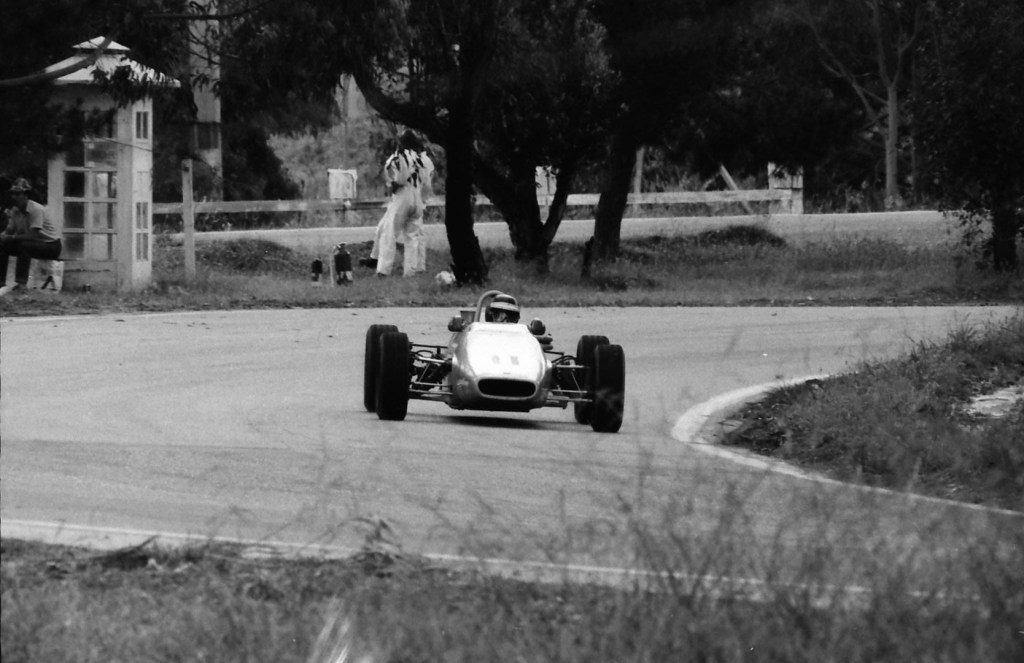
This Dr Who-esque shot was taken by Peter Houston at Hume Weir on the 1971 Boxing Day weekend.

It’s later F2 front runner Enno Buesselmann in his Formula Ford days, an Elfin 600. Click here for more on Australian FF formative days.

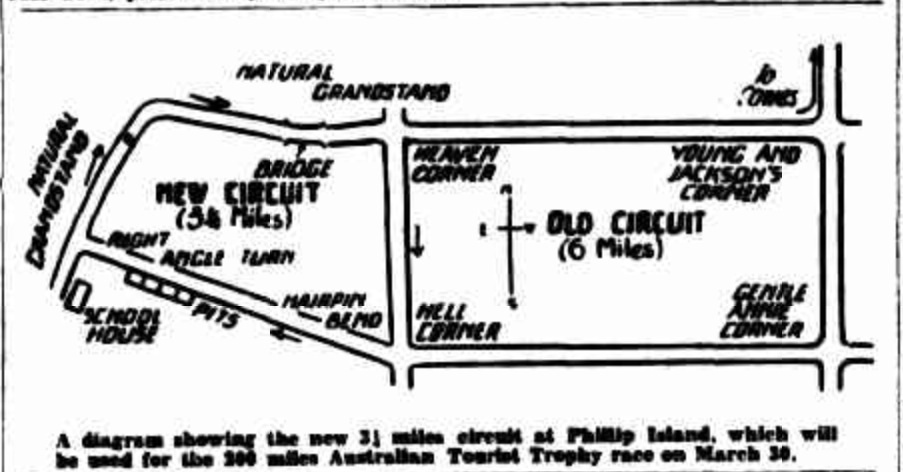
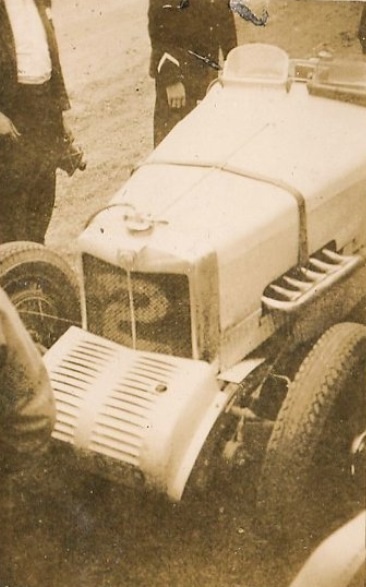
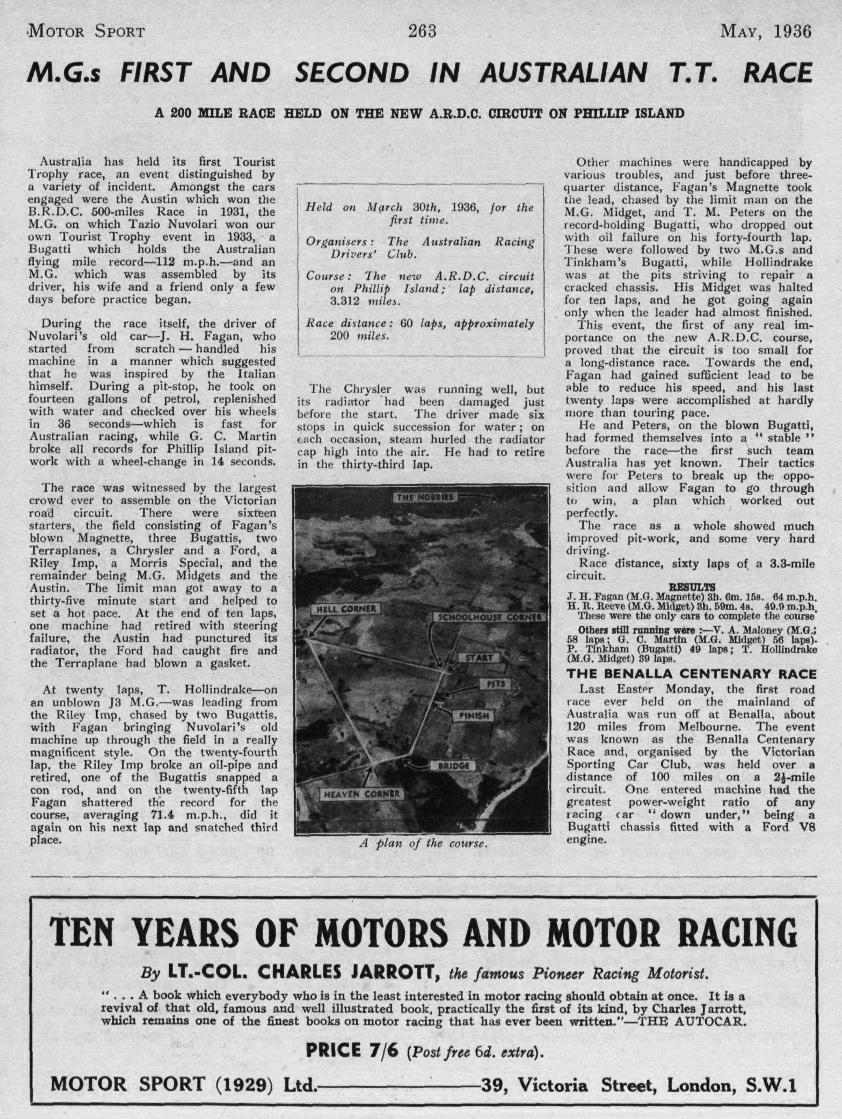
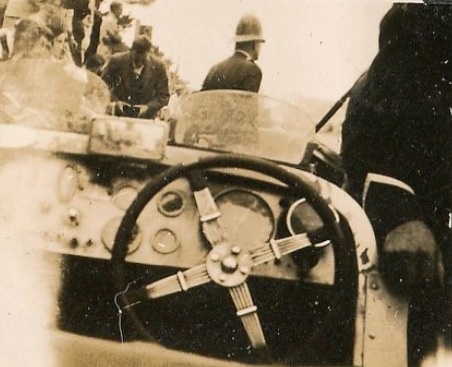
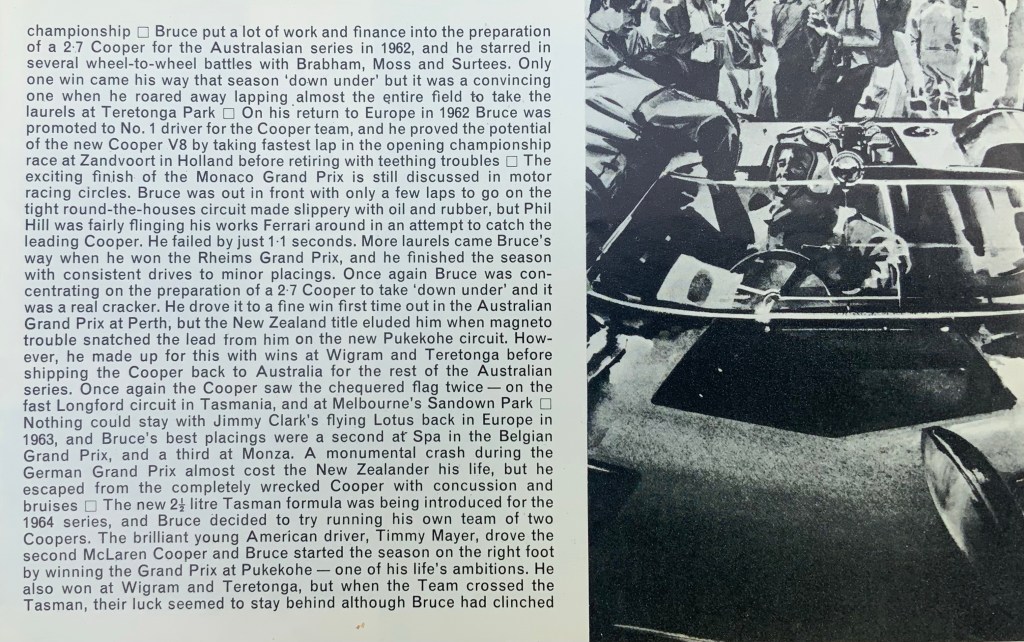
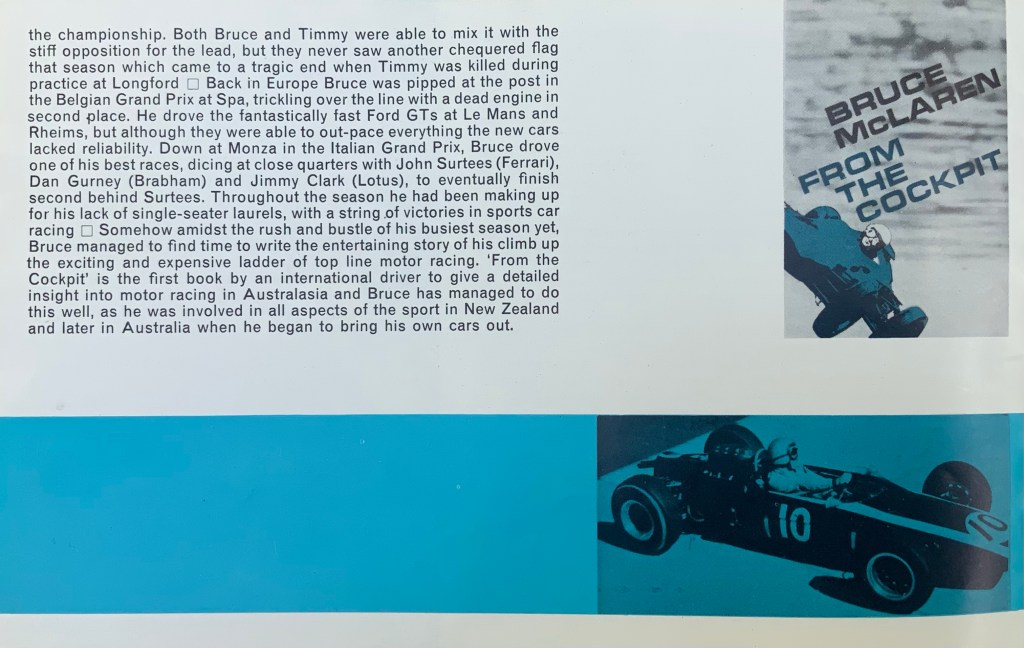
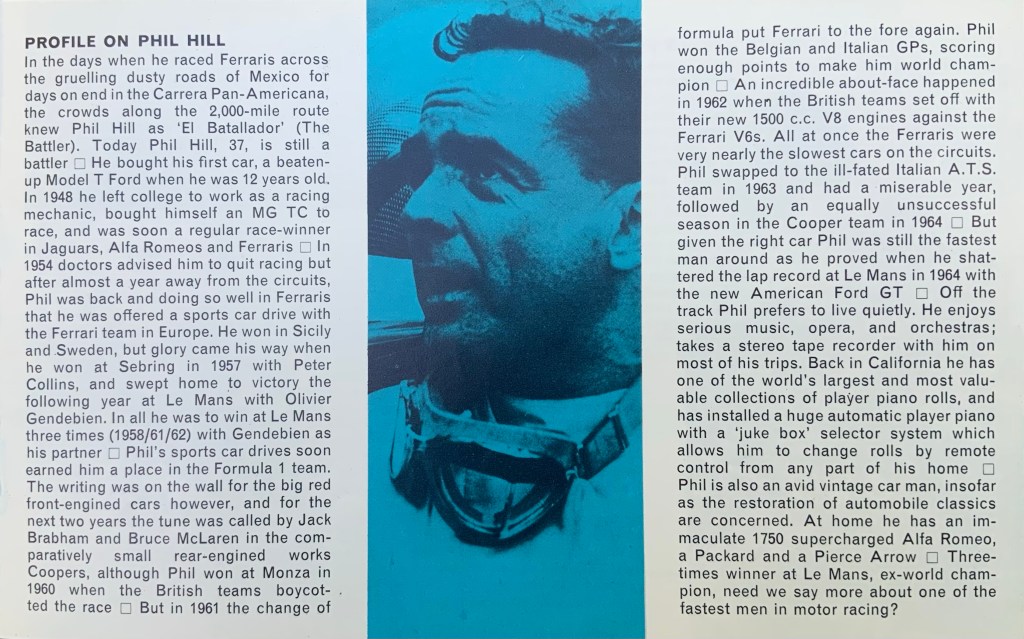
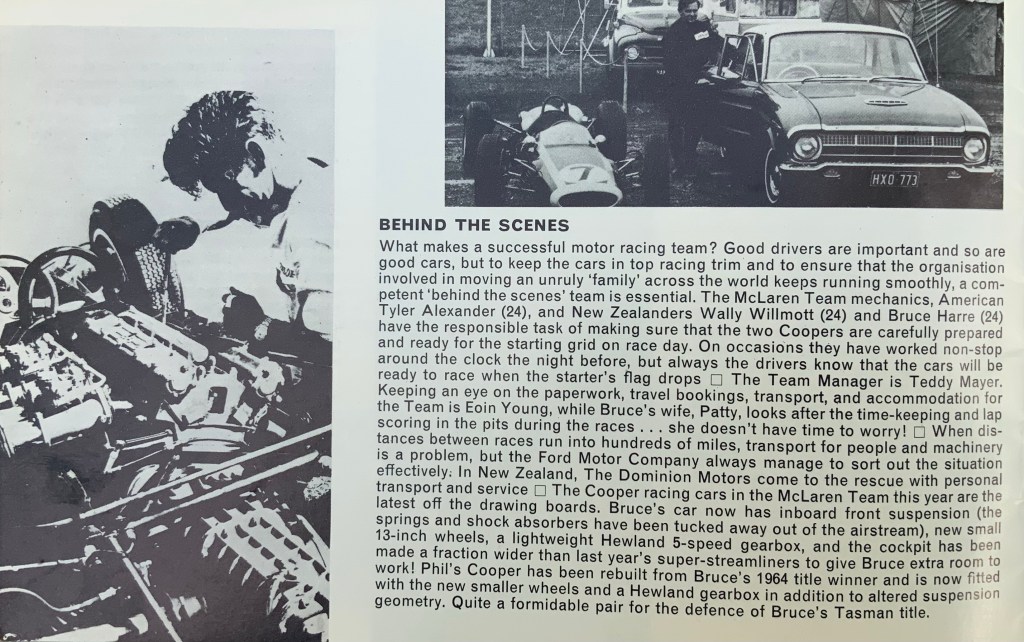
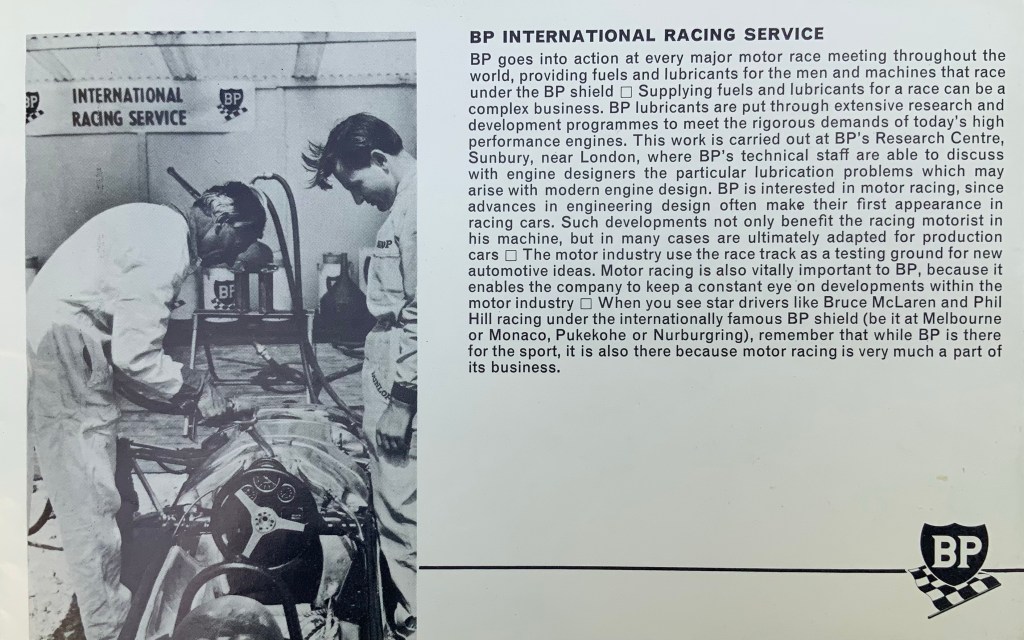
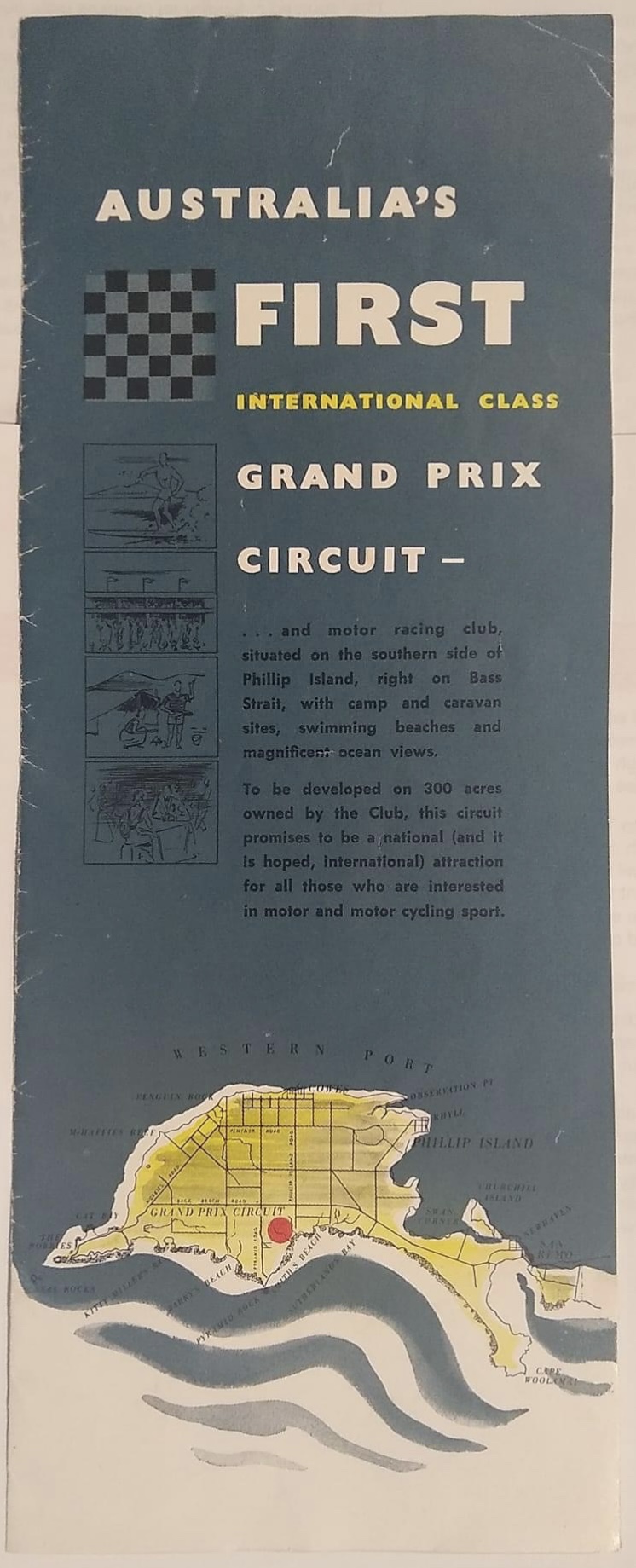
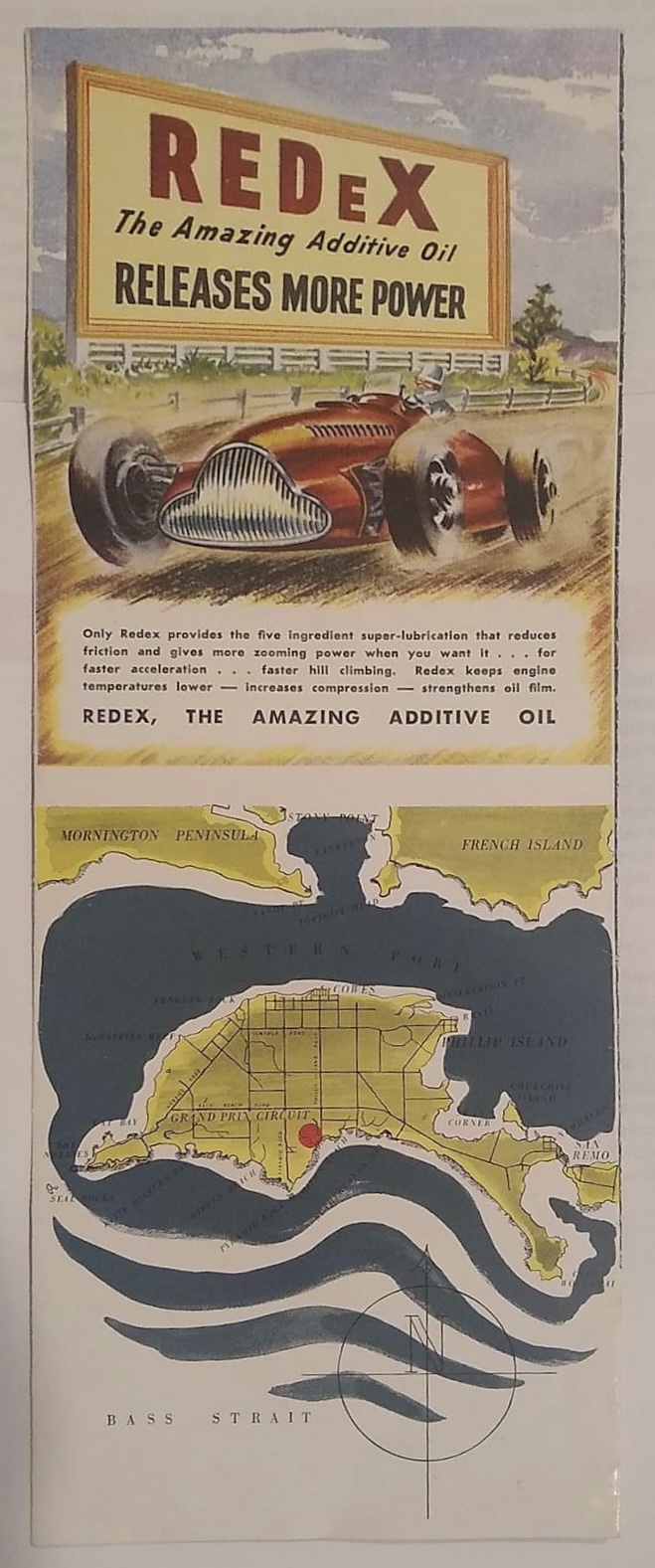
These couple of pages from a mid-1950s brochure about the Phillip Island circuit have me intrigued.

Is it a Claytons-prospectus touting for capital to build the place or part of a promotional document created after its completion? Dunno, but I’d like to know.

(P Mahon Collection)

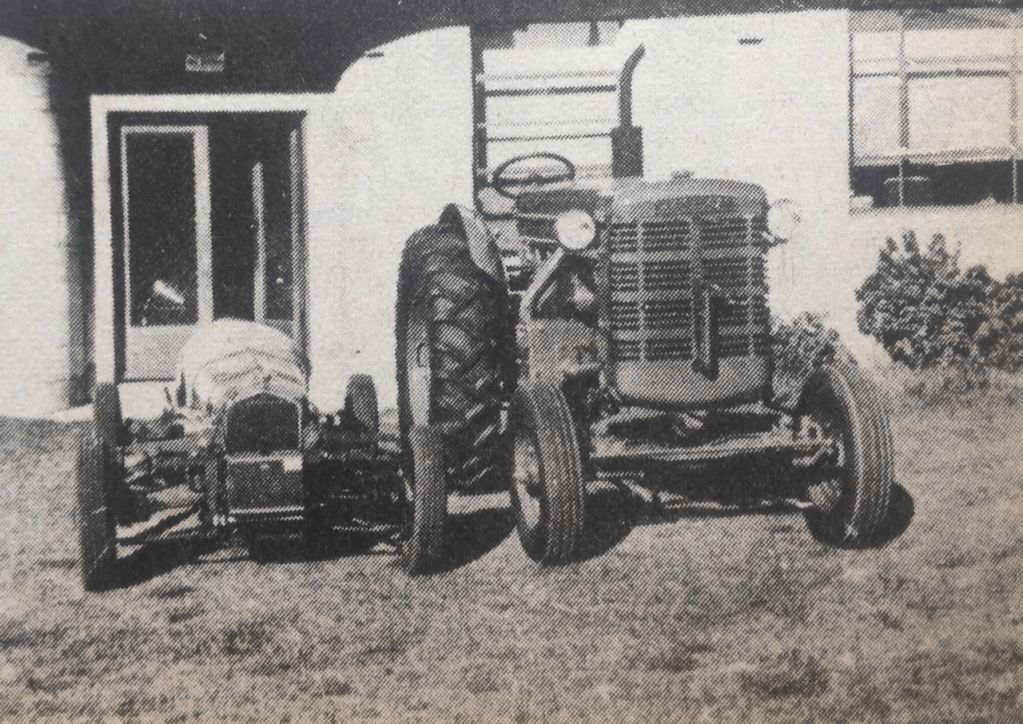
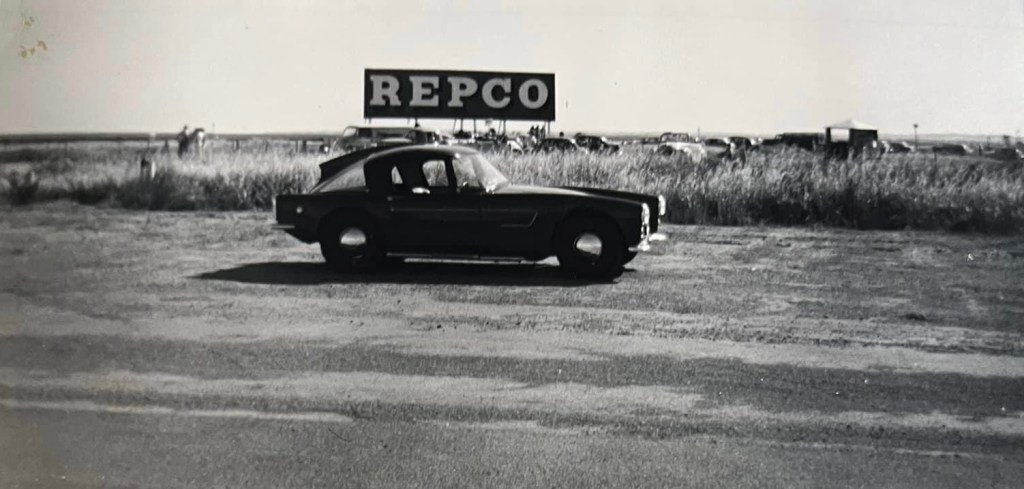
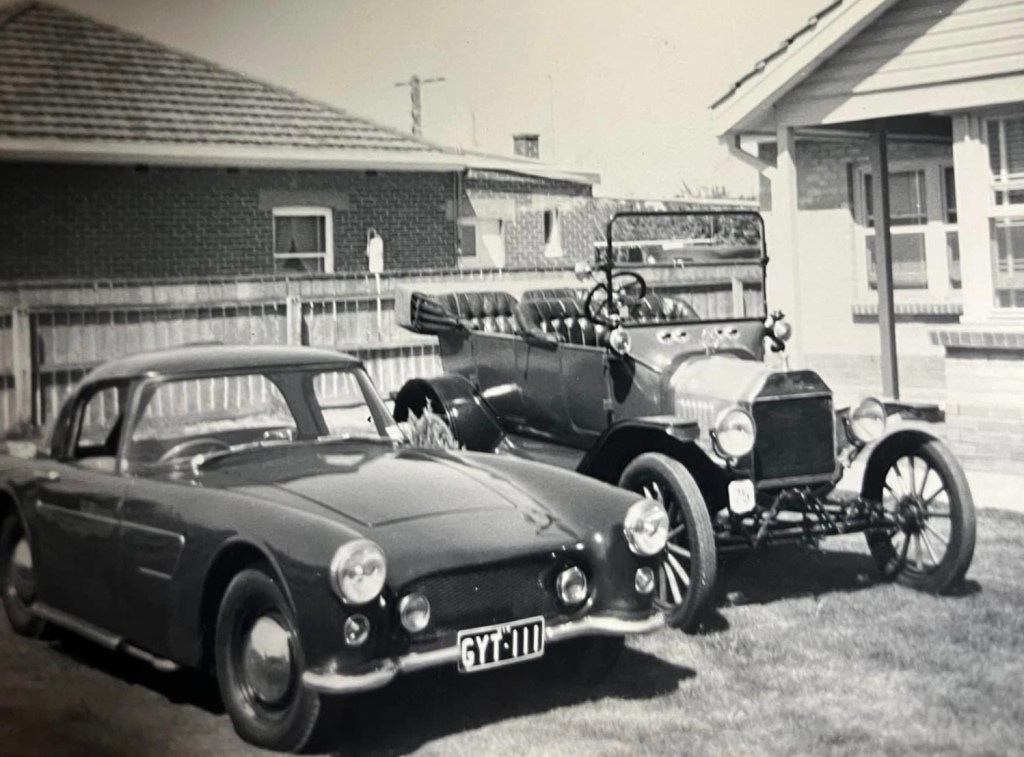
The Repco Record is shown above at Port Wakefield circuit in South Australia in the late-1950s.

The Holden Hi-power six-cylinder engined R&D and display car was in Phil’s father’s care while away from its Repco Research home near Dandenong, Victoria.

The shot below is of the car in the family front-yard together with a Ford T-model they still own. Nice!

More on the Repco Record here; ‘Repco Record’ Car and Repco ‘Hi-Power’ Head… | primotipo…

(P Mahon Collection)
(Rewind media)

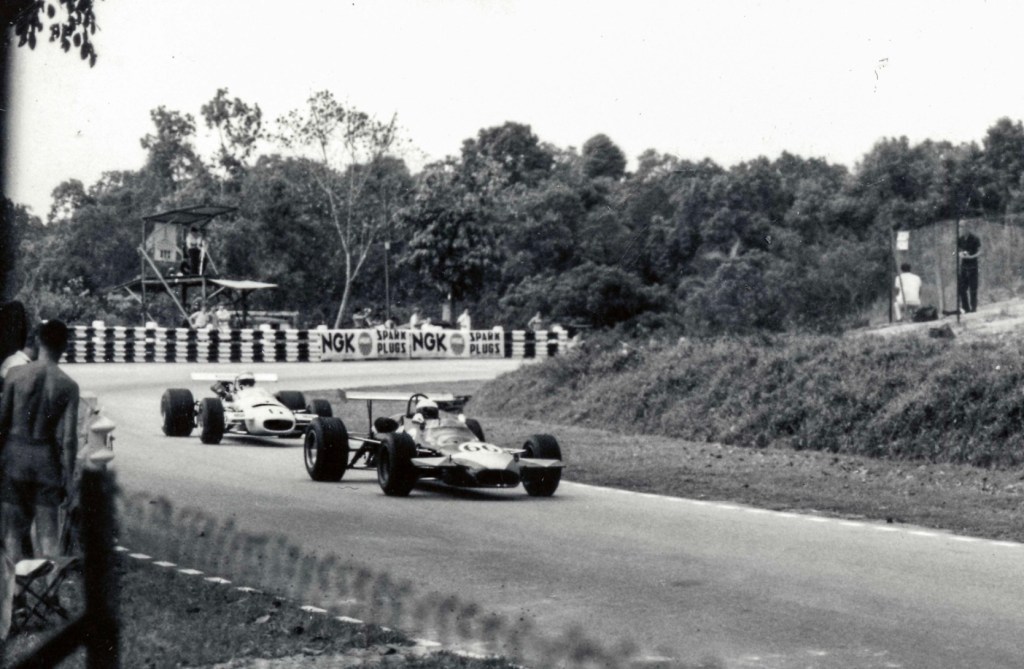
Max Stewart, Mildren Ford, winner of the 1972 Singapore Grand Prix, chases Albert Poon’s Brabham BT30 Ford.

They are clearing Peak Bend on the challenging Thompson Road circuit. Click here for more on this race; Singapore Sling with an Elfin Twist… | primotipo…

(LAT)

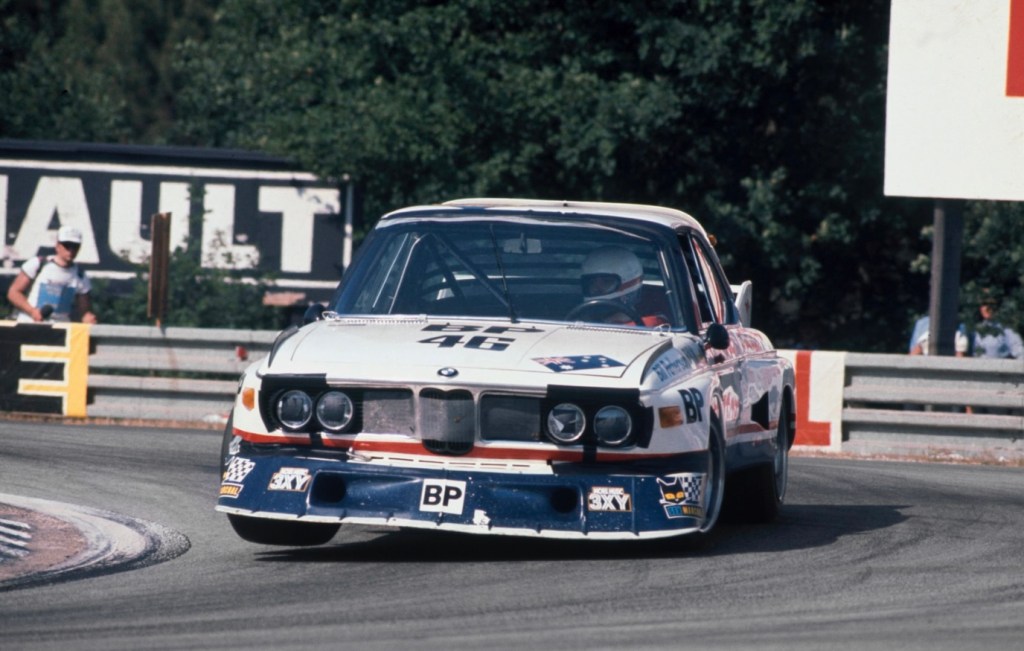
Brocky, brocky, brocky oi, oi, oi…

Mind you, it might be Brian Muir or Jean-Claude Aubriet, his co-drivers at the wheel. Doubtless the taxi-perves among you can set me straight on that particular helmet. Their Team Brock BMW 3.5 CSL, was out with gearbox failure after completing 156 laps, in the 19th hour, Le Mans in 1976.

The race was won by the Jacky Ickx/Gijs van Lennep Porsche 936, the Group 5 class-winner was the works Porsche 935 crewed by Rolf Stommelen/Manfred Schurti, Brock returned to Le Mans of course.

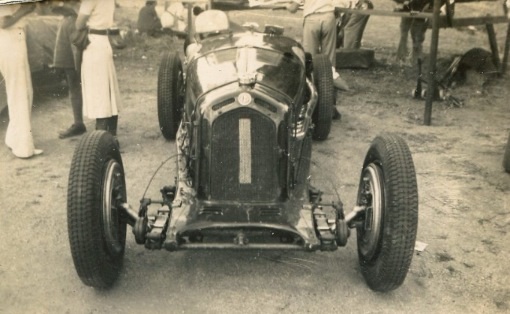
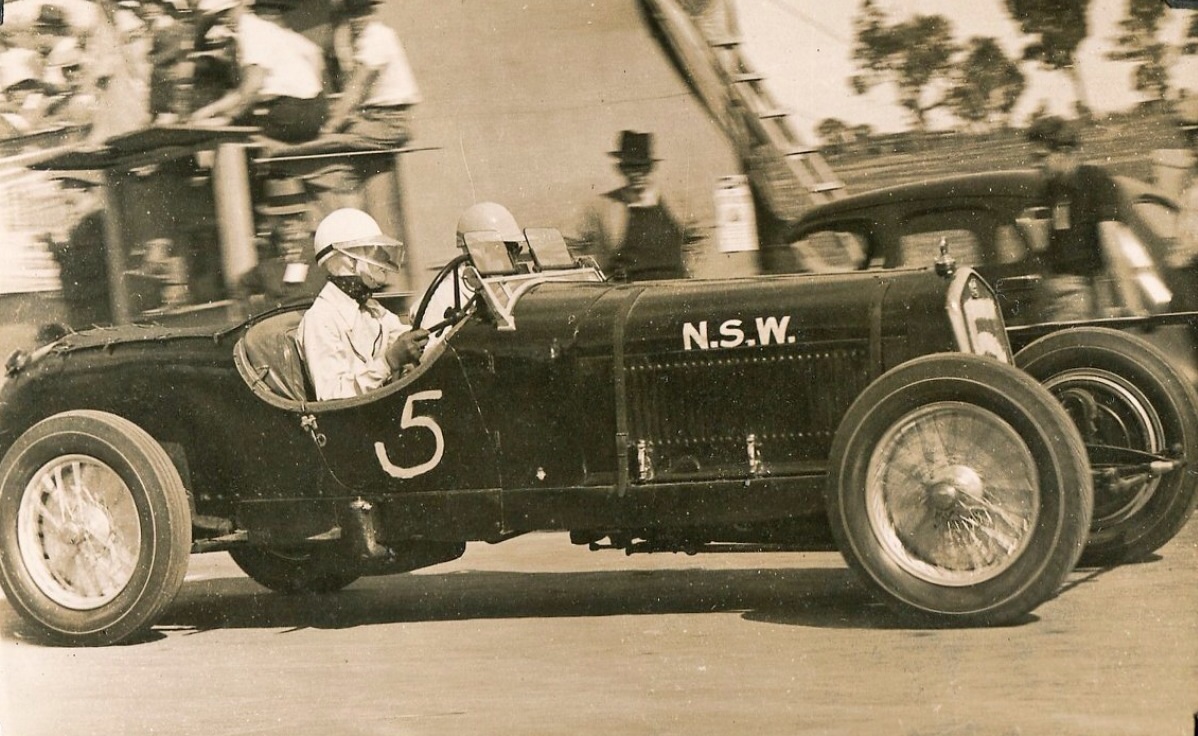
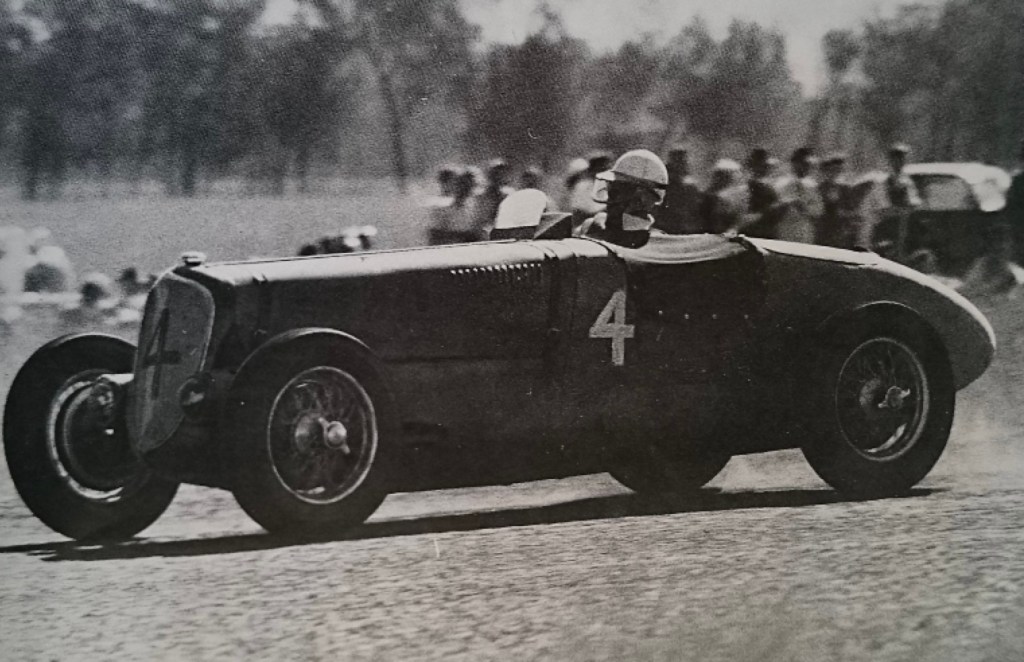
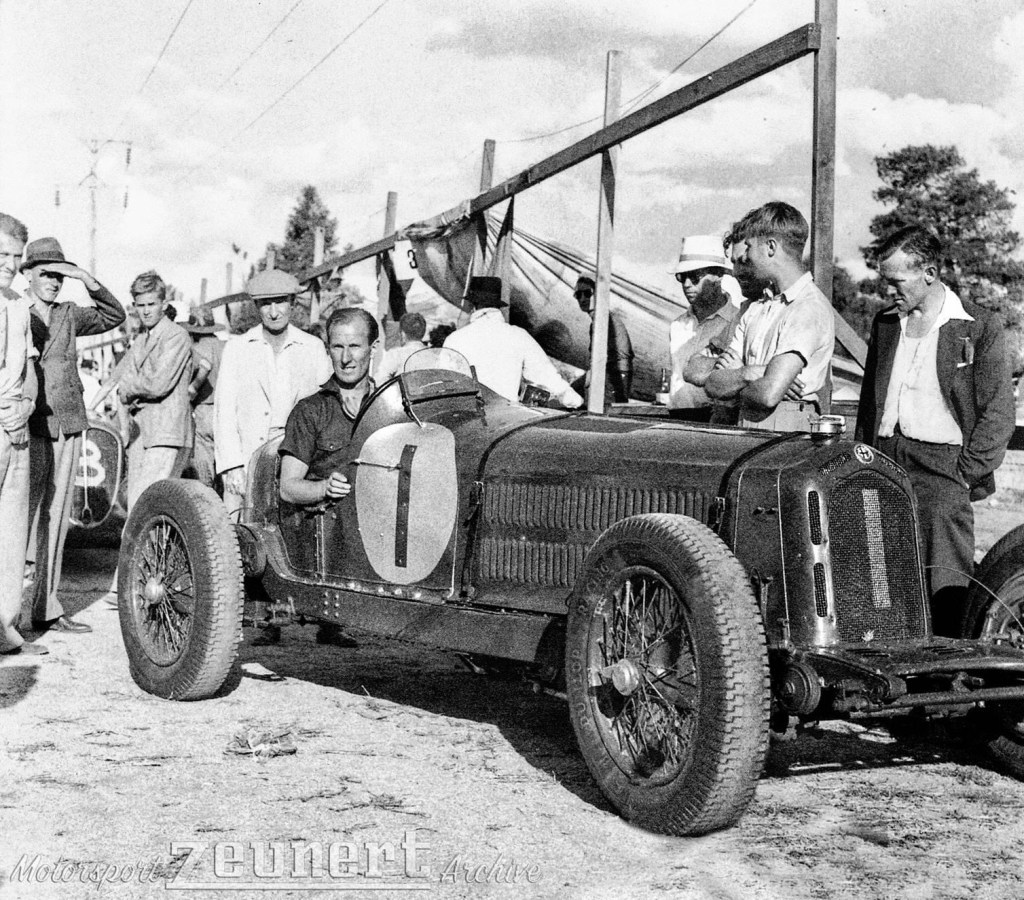
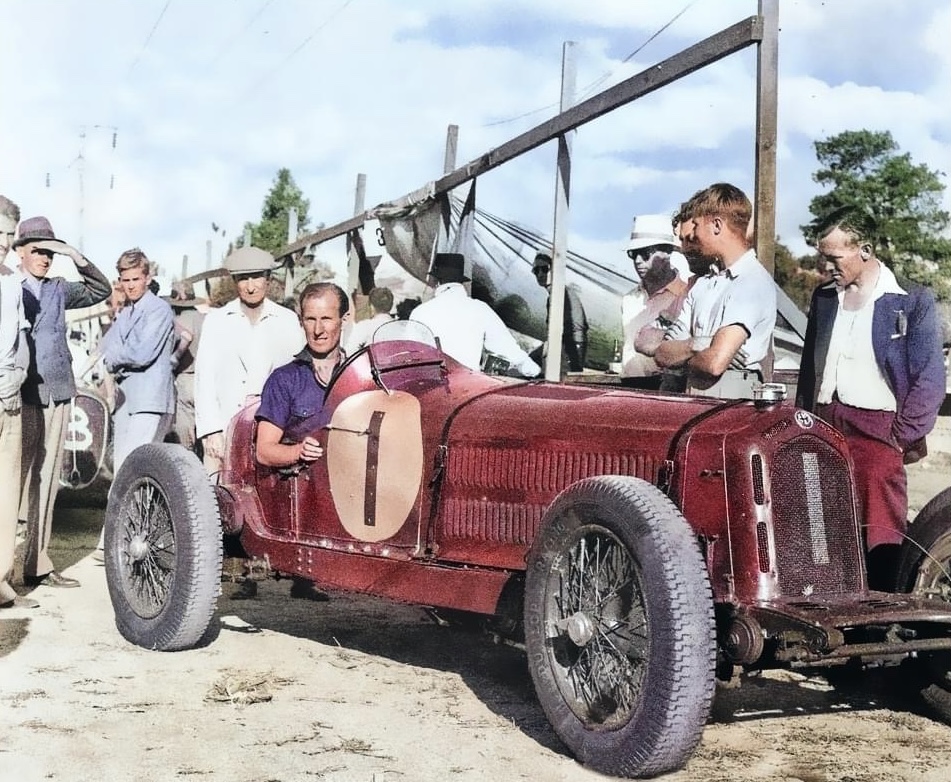
The most formidable combination in Australia immediately before, and after the war, Alf Barrett and his Alfa Romeo Monza

And the same shot, at Mount Panorama, below colourised by Nathan Tasca, the muted tones are much to my liking. See here for an epic on car and driver; Alf Barrett, ‘The Maestro’, Alfa Romeo 8C2300 Monza… | primotipo…

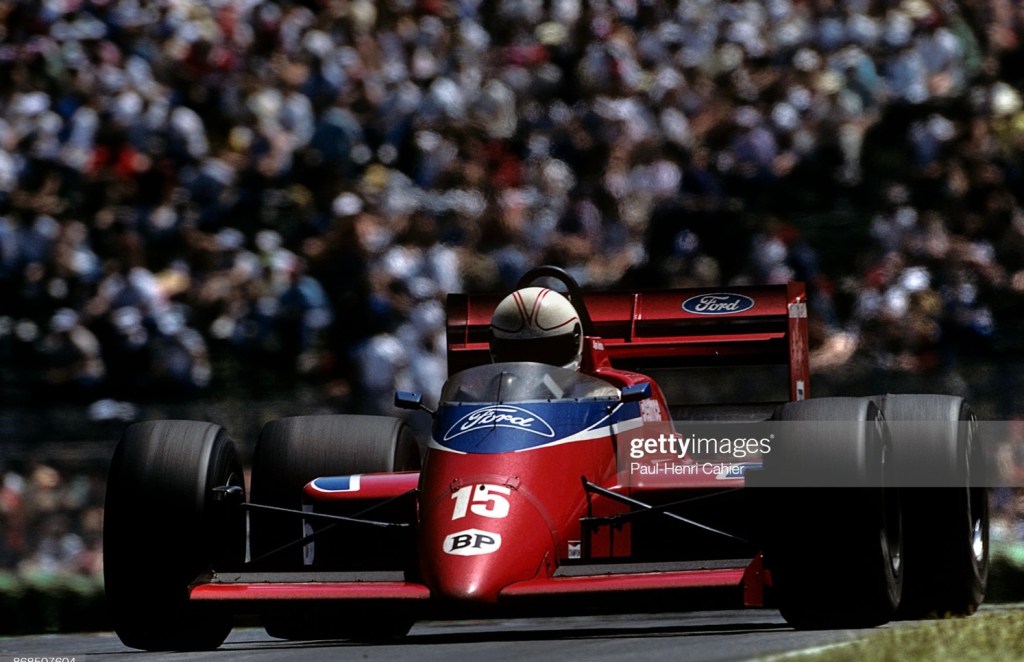
Alan Jones, Lola THL2 Ford during the 1986 Canadian GP on the 2.74 mile Ile Notre-Dame track in Montreal, Quebec.

All the ingredients for success were in this mix but the ultimate pace of the car, in large part due to a lack of power from the Cosworth 1.5-litre, twin-turbo V6, meant it never achieved much despite the best efforts on The Jones Boy and Patrick Tambay. See here for a piece on the car; Lola THL2 Ford | primotipo…

Jones finished 10th, five laps adrift of Nigel Mansell’s winning Williams FW11 Honda.

(rewindmedia.com)

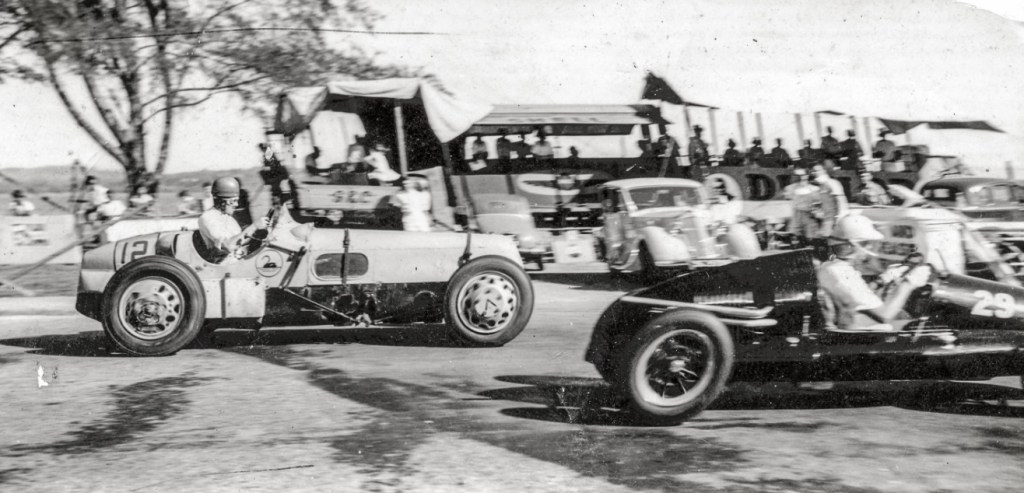
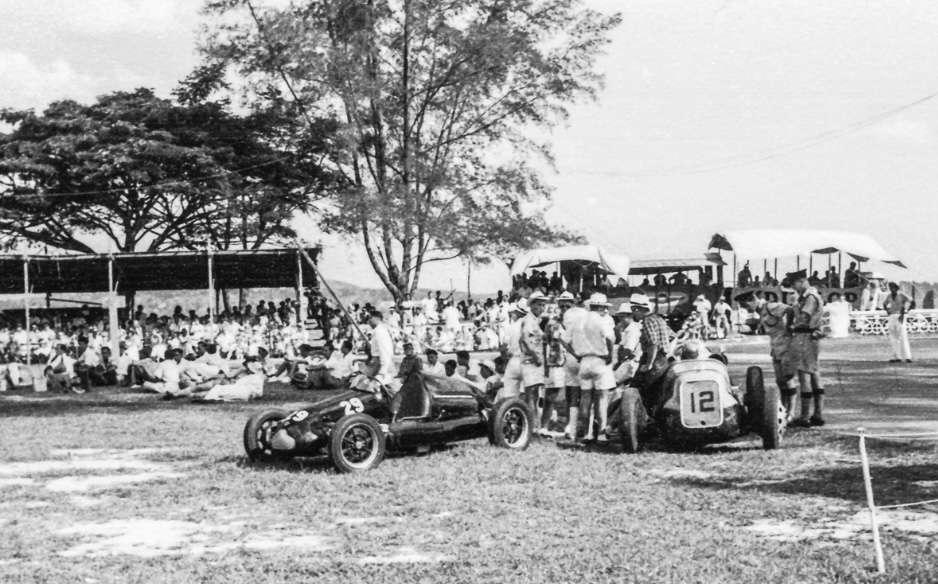
Perth’s Syd Anderson, Double Ford V8, and LC Chan’s Cooper 1100 at the start of the August 2, 1953 Johore Grand Prix in Malaya.

Anderson led for the first 19 laps of the race held on the Thomson Road course, but was out with engine and clutch problems. The incredible twin-Ford V8 engined beastie was as famous for its unreliability as its speed. Chan did the fastest lap at 63.25mph but he too failed to finish with engine problems.

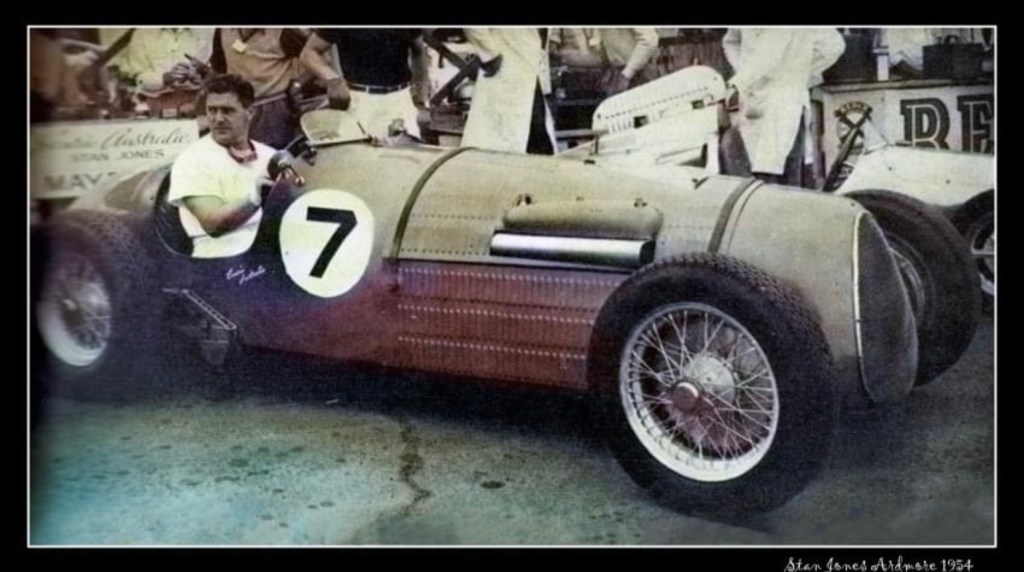
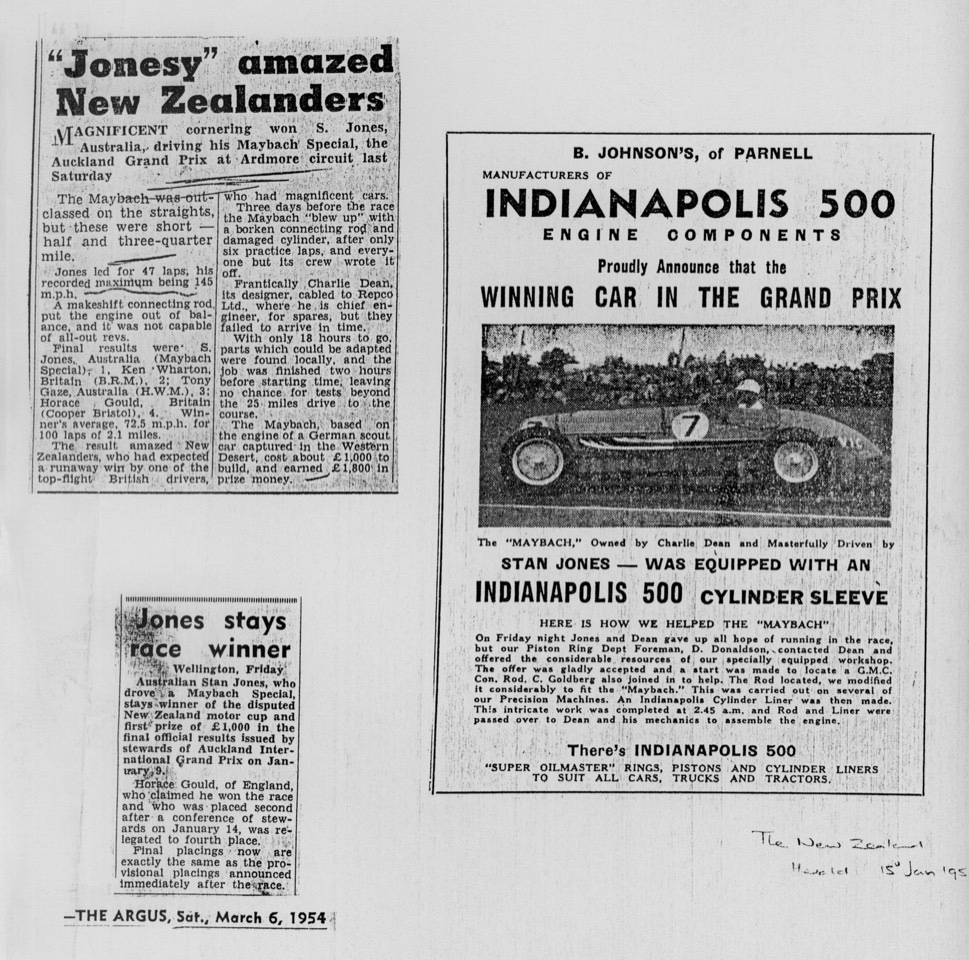
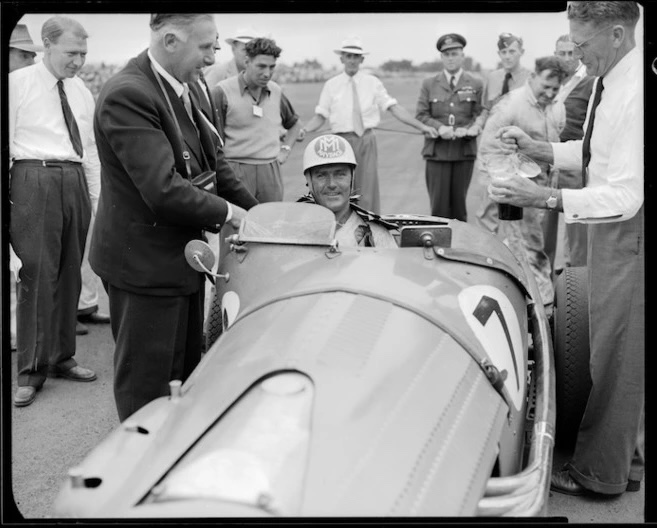
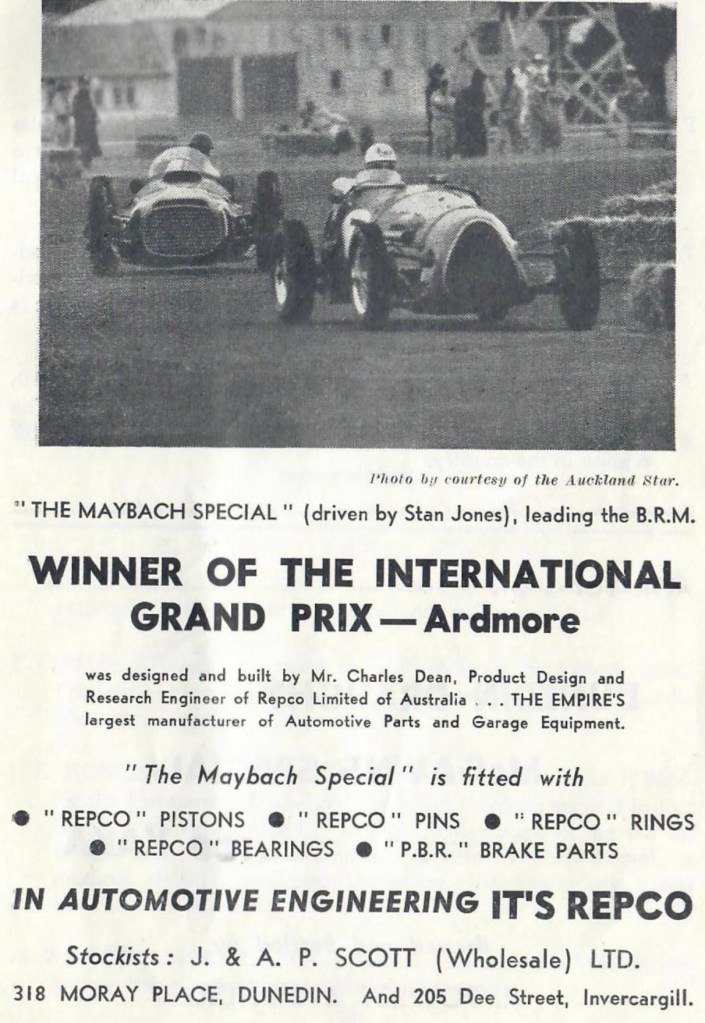
I wonder if another Australian Special competed overseas before this? Stan Jones won the 1954 New Zealand Grand Prix at Ardmore aboard Maybach 1 of course. Click here for more on the Double Eight here; 1950 Australian Grand Prix: Nuriootpa, South Australia… | primotipo… and within this piece; Sellicks Beach, Adelaide… | primotipo…

(rewindmedia.com)
(K Wright Collection)

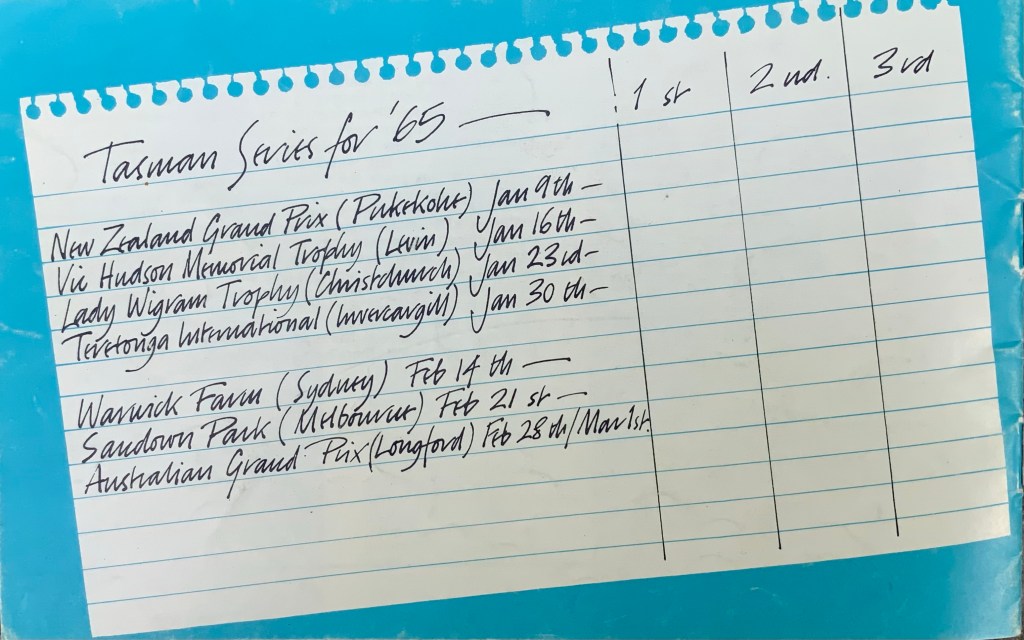
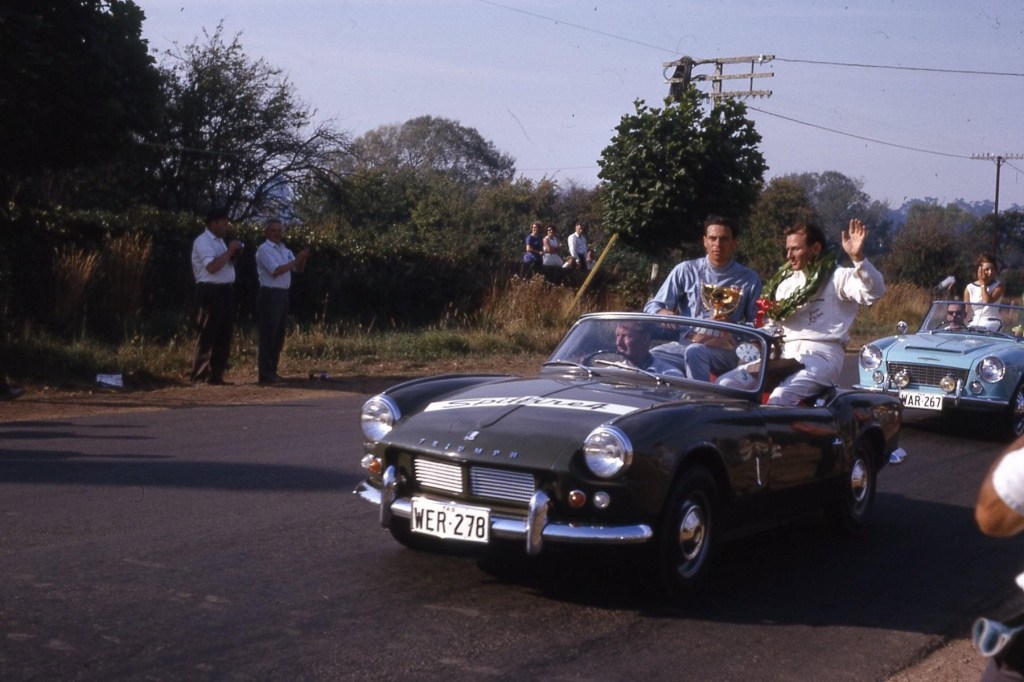
Bruce McLaren, winner of the 1965 Australian GP at Longford on his lap of honour.

McLaren won aboard one of his ‘first McLarens’, a Cooper T70 Climax. Jim Clark holds the Tasman Cup he has just won, he was victorious in four of the seven rounds in a works Lotus 32B Climax. See here for an article on this race; Longford 1965… | primotipo… and Cooper T70; ‘Levin International’ New Zealand 1965… | primotipo…

The Triumph Spitfire’s pilot is the Longford Motor Racing Association supremo, Ron MacKinnon.

(M Fistonic)

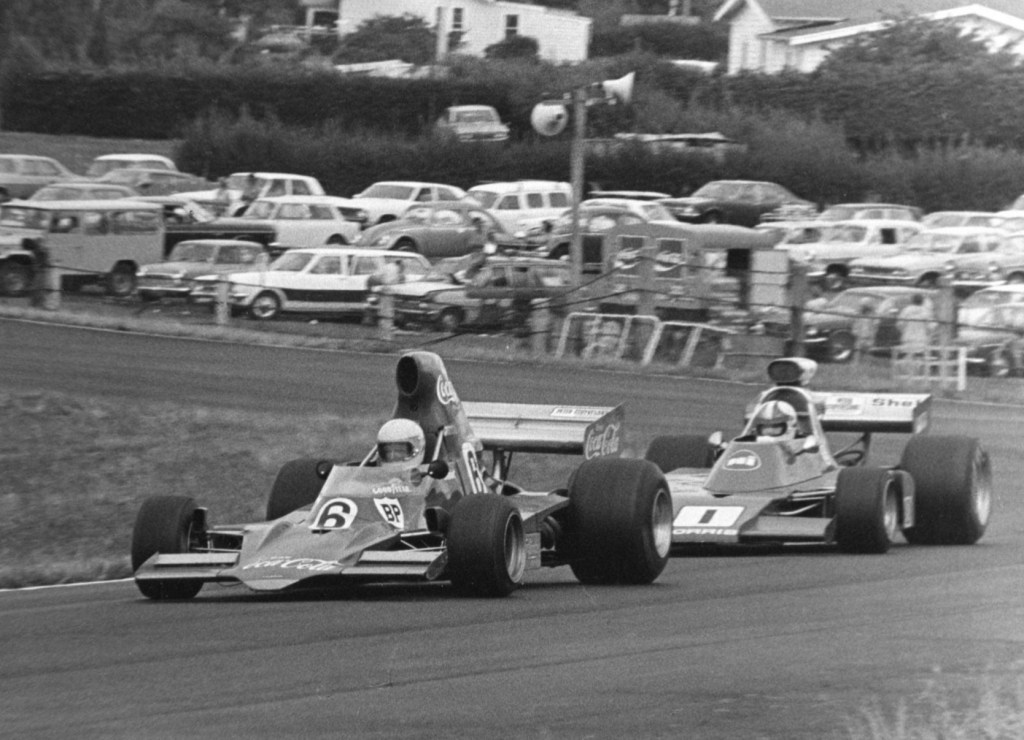
Max Stewart’s Lola T400 Chev ahead of Chris Amon’s Talon MR1 Chev at Pukekohe during the 1975 NZ GP.

They finished seventh and eighth with Chris in front. Amon was consistently quick throughout the ‘75 Tasman Series – won by Warwick Brown’s Lola T332 Chev – winning the Teretonga round. Stewart was held back by the Lola T400 which at that stage of its development was inferior to his old T330. Brown won the NZ GP. More on the McRae GM2/Talon MR1 here; Amon’s Talon, McRae’s GM2… | primotipo…

(B Williamson Collection)

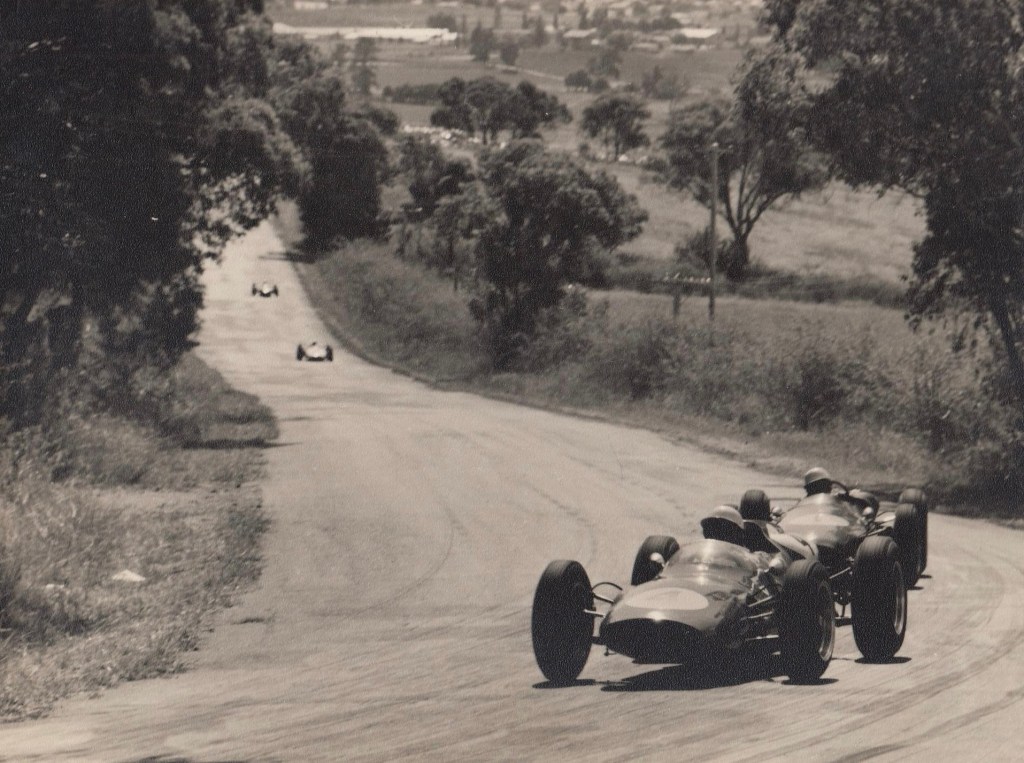
Lex Davison, Cooper T62 Climax FPF 2.7 ahead of David McKay, Brabham BT4 Climax FPF 2.7 during the April 1963 Easter Bathurst Gold Star round.

Davison won the Bathurst 100 from pole with Kiwi, Tony Shelly second aboard Davison’s Cooper T53, and Charlie Smith’s Elfin Junior 1.5 Ford third. McKay was out after only 9 of the 26 laps with overheating.

Bib Stillwell won the Gold Star that year aboard a Brabham BT4 Climax from John Youl, Cooper T55 Climax and McKay. More on the Brabham BT4 here; For Sale, everything for sale… | primotipo… and Cooper T62 here; Bruce’, Lex’ and Rocky’s Cooper T62 Climax… | primotipo…

(Cummins Family Collection)

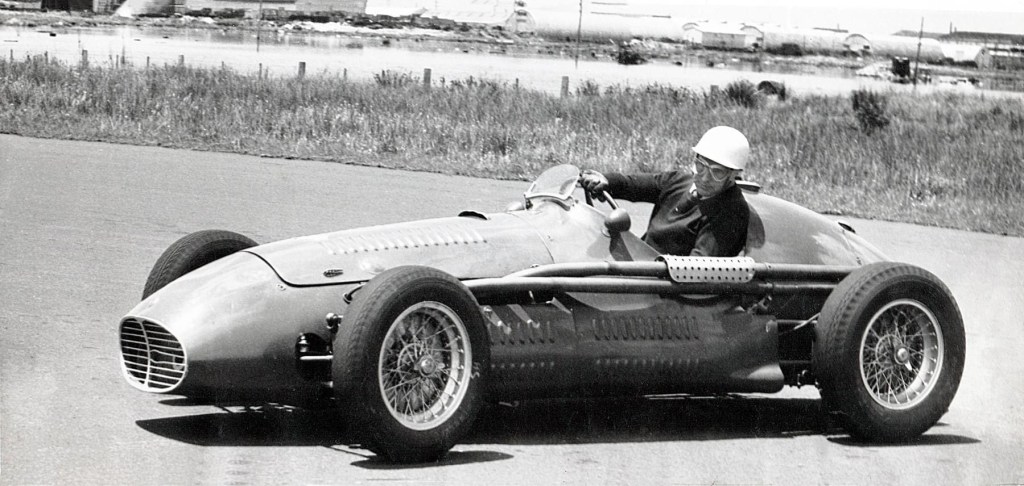
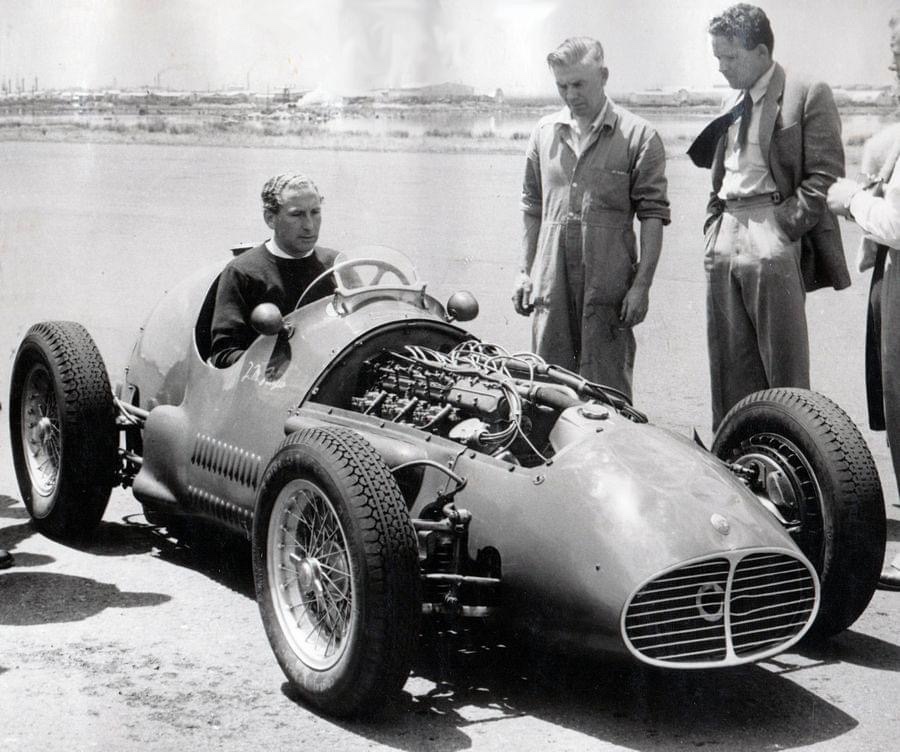
Reg Hunt during the first test of his just arrived Maserati A6GCM at Fishermans Bend in December 1954.

This was the car – only just superseded by the 250F – which reset the competitive bar in Australia. To run at the front of scratch races, rather than the hitherto usual handicaps, elite level Formula Libre competitors had to have a modern, Italian! car.

Hunt died at 99, not to far from the-ton, due to Covid related complications on August 22, 2022. Click here; Reg Hunt: Australian Ace of the 1950’s… | primotipo… and here on the A6GCM; Hunt’s GP Maser A6GCM ‘2038’… | primotipo…

Racer/engineer Otto Stone in the overalls (Cummins Family Collection)
(Porsche.com)

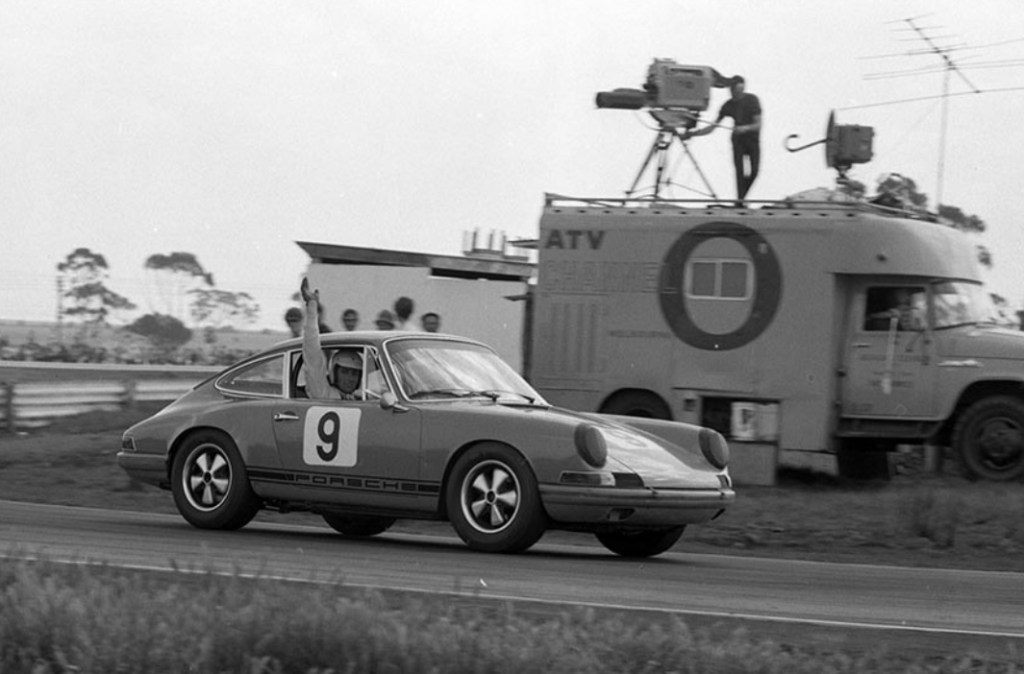
Alan Hamilton waves to the Calder Raceway crowd after the first round of the 1969 Australian Touring Car Championship in March.

He finished third aboard his Porsche 911T/R behind the Ford Mustangs of Bob Jane and Pete Geoghegan. See here for a feature on that series; 1969 Australian Touring Car Championship… | primotipo… and on some of Alan’s cars; Alan Hamilton, Australian Champion: His Porsche 904/8 and two 906s… | primotipo…

Love the ATV Channel-O outside broadcast van on the inside of Tin Shed corner, do you think they covered the meeting with one camera?

(AGP Corp)

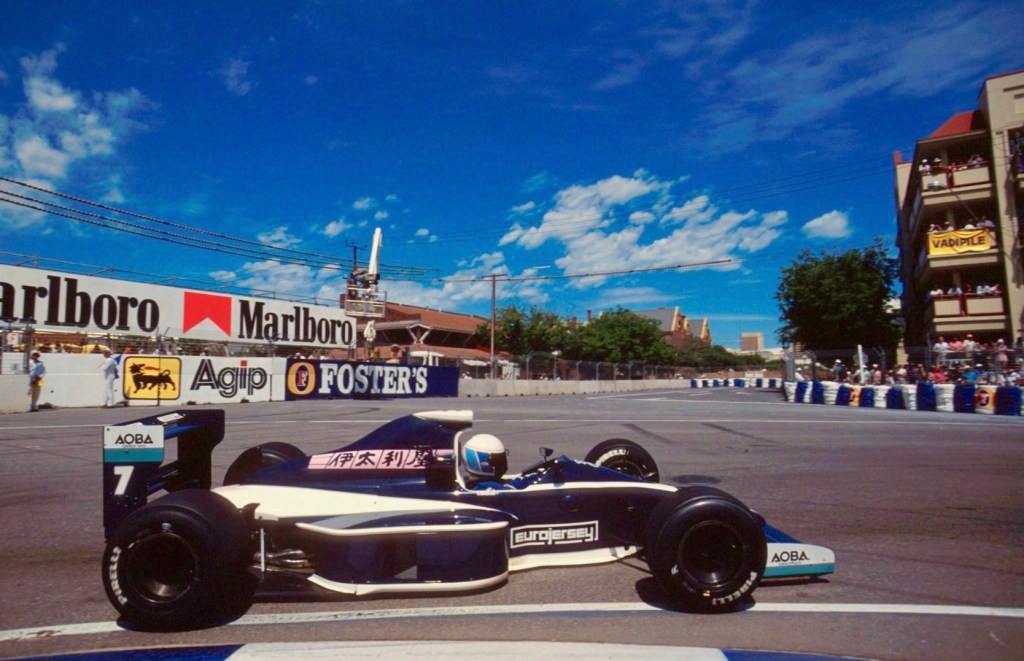
David Brabham on the East Terrace section of the Adelaide street circuit in 1990.

He qualified his Brabham BT59 Judd 25th but spun and couldn’t get going after 19 laps of the race won by Nelson Piquet’s Benetton B190 Ford. More about David here; Brabhams and Adelaide… | primotipo…

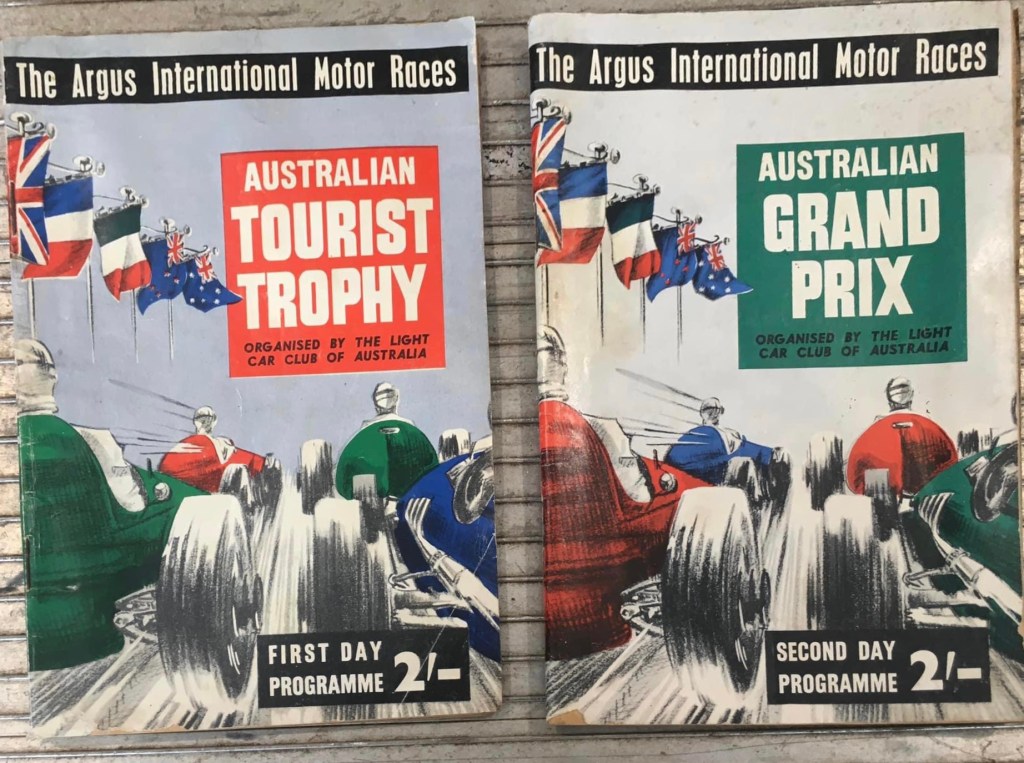
What a double header! The Australian Tourist Trophy and Australian Grand Prix were held at Albert Park a week apart on the weekends of November 26, and December 2, 1956.

Both events were works-Officine Alfieri Maserati/Stirling Moss benefits. He won the TT in a 300S sportscar and the GP aboard one of the greatest of all Grand Prix cars, the 250F. Click here; 1956 Australian Tourist Trophy, Albert Park… | primotipo… and here; Moss at Albert Park… | primotipo…

(J Cox)

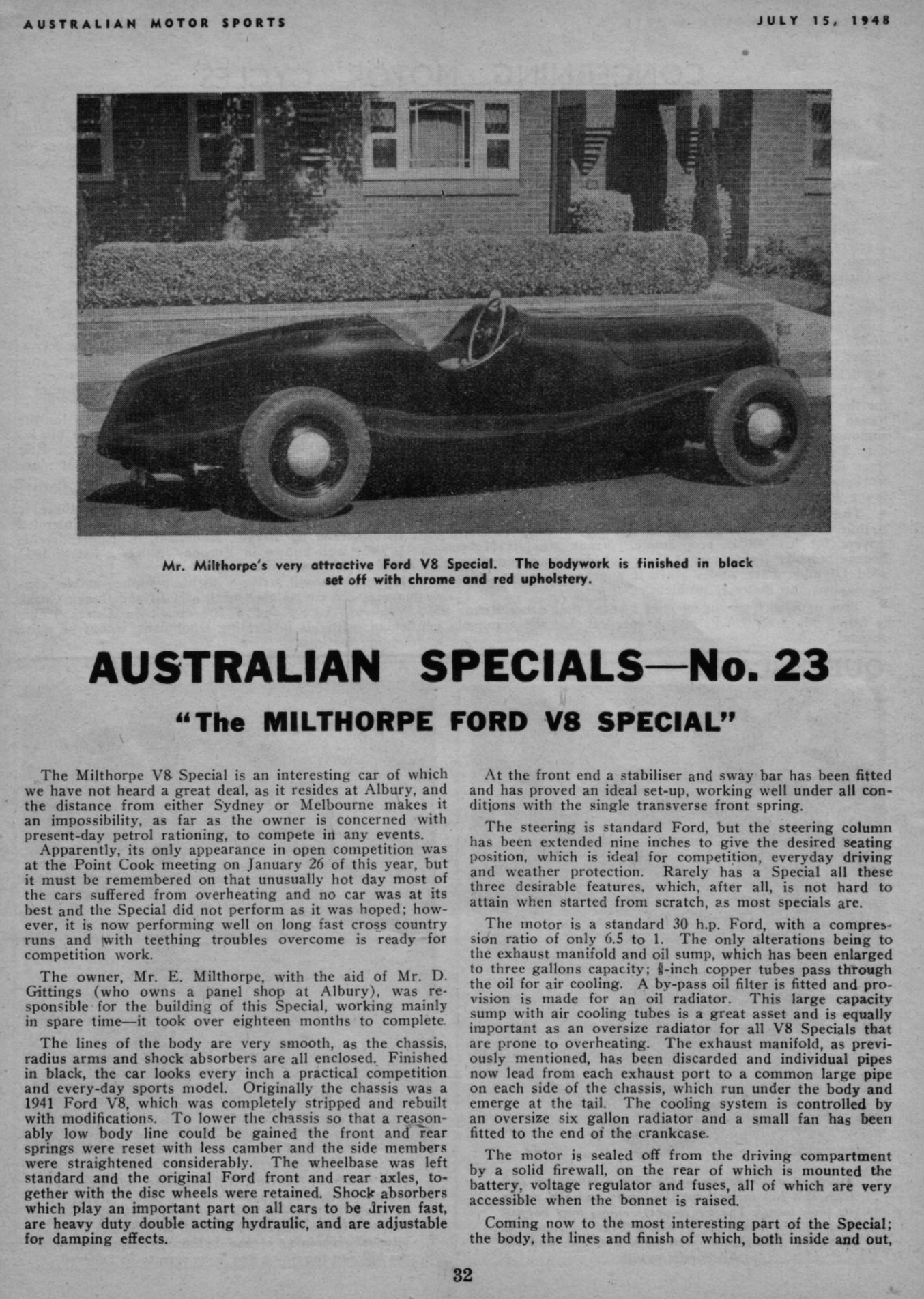
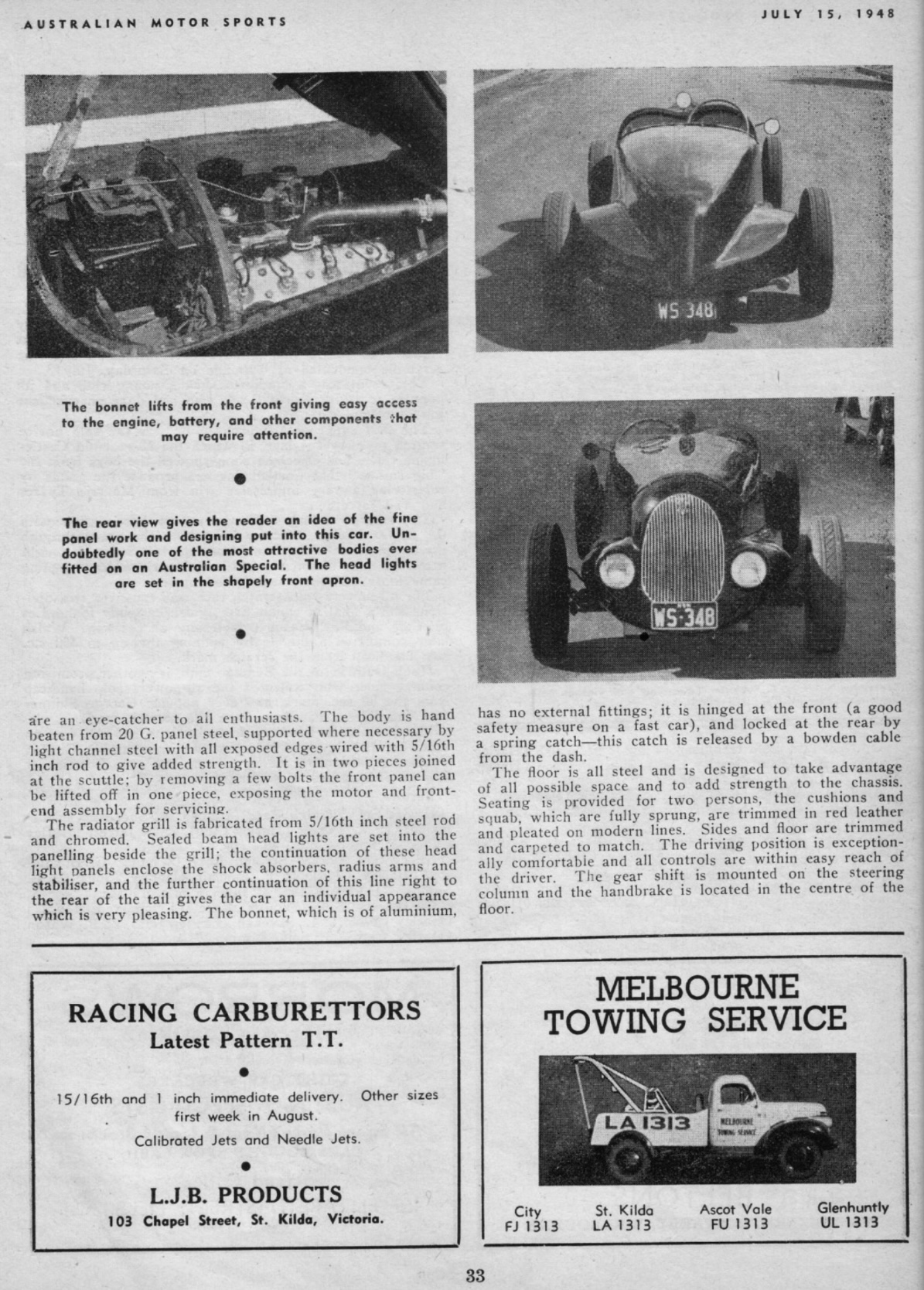
Jack Hedley on the Milthorpe Special at Albert Park in 1956.

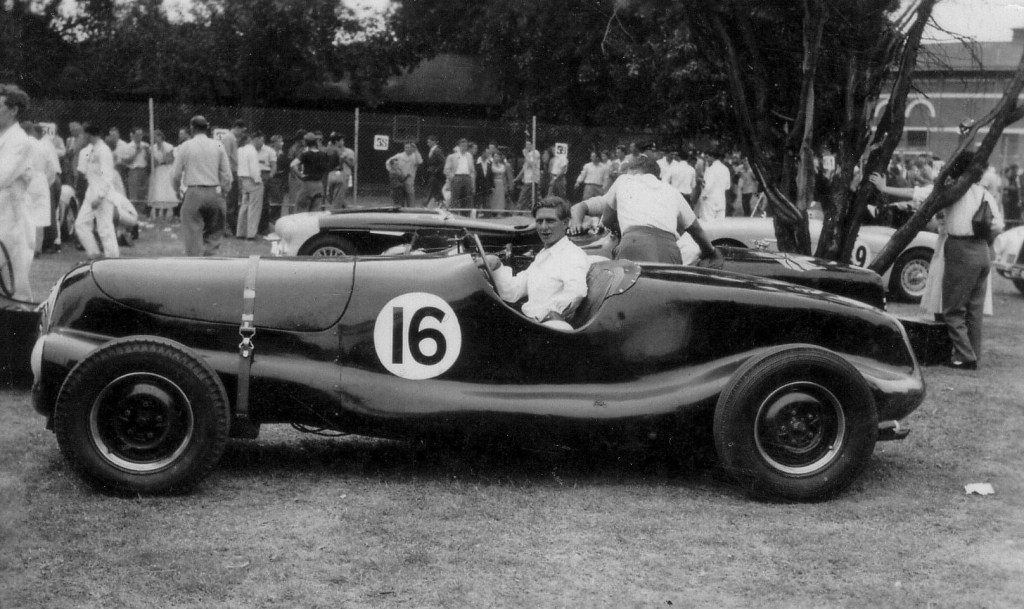
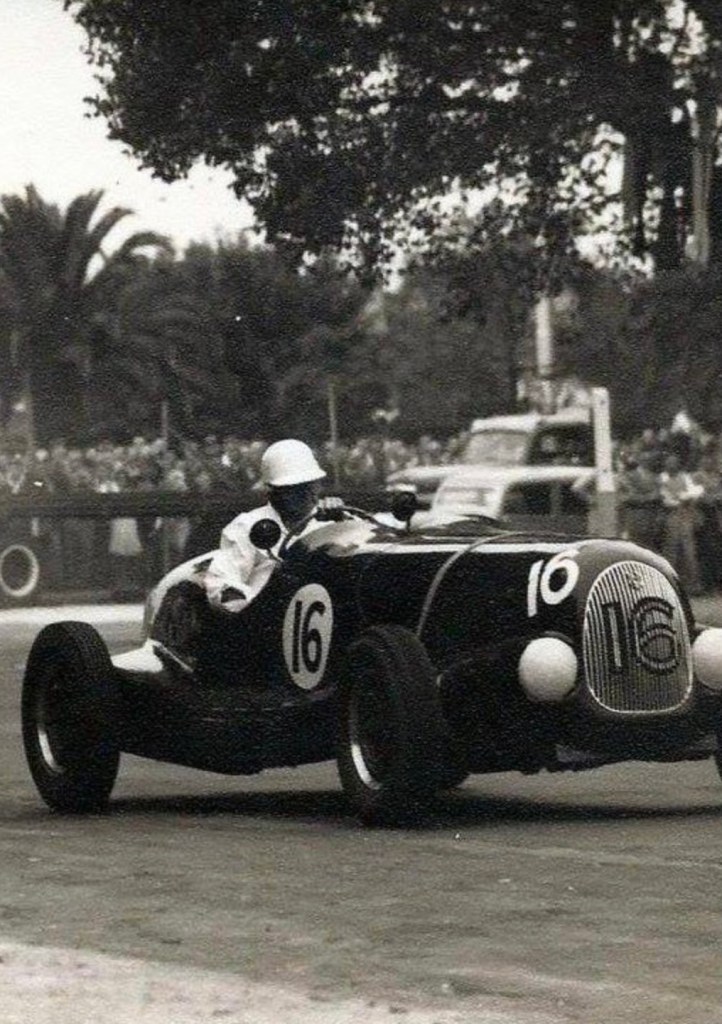
Built by Albury man, Charlie Milthorpe in 1947-48, the car was based on an ex-army 1941 Ford ute chassis and fitted with an amalgam of FoMoCo bits; ’39 gearbox, ’40 front axle, ’35 rear end and a ’51 side-valve V8 fitted with a Stromberg 97 carb, brakes were Customline.

(unattributed)
(Draper Family Collection)

Here showing the ravages of a busy racing campaign in the hands of – probably, thanks John Medley – John Spanbroek, giving it plenty of welly at Hume Weir circa 1961.

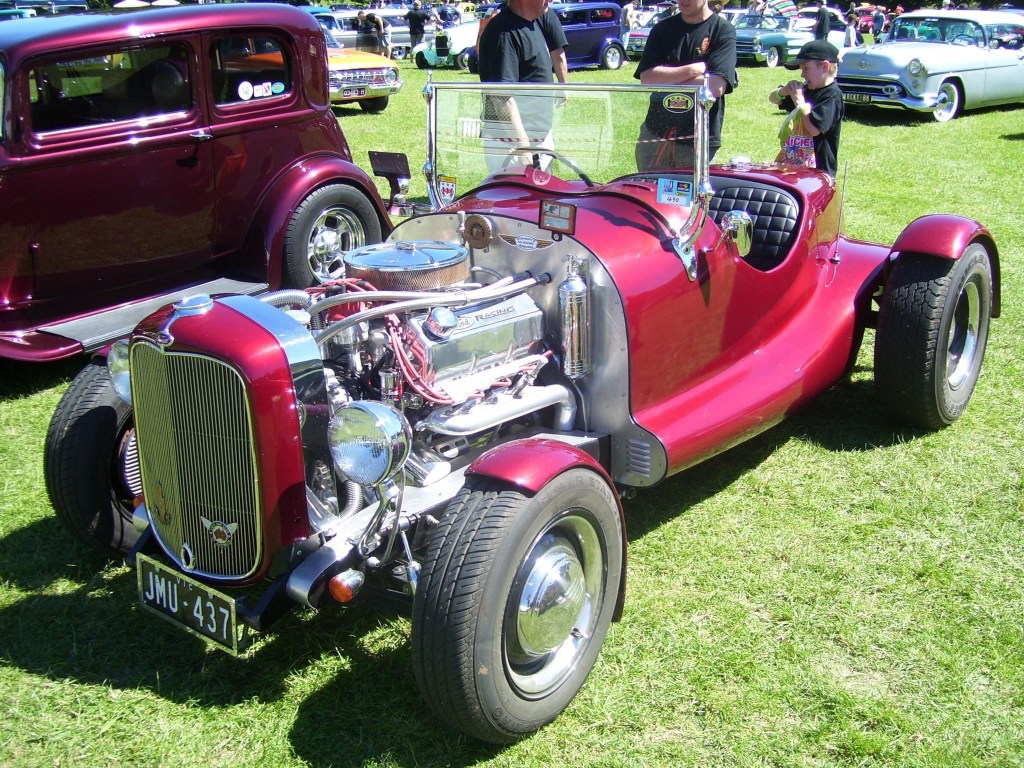
These days the attractive racer is an ugly hot rod which resides in Tasmania, but an attractive replica racer has also been built.

(J Cox)
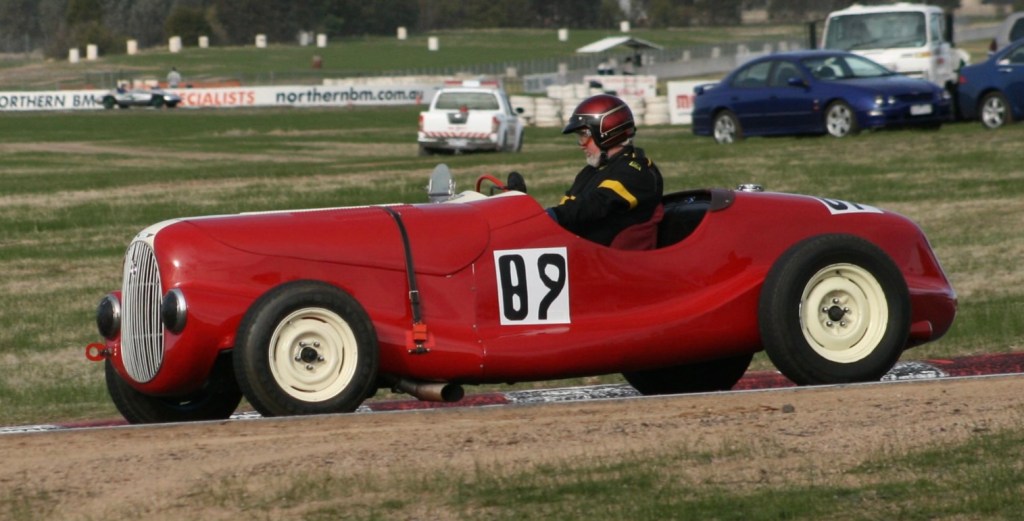
Milthorpe Ford Replica at Winton in recent years. Meeting date and driver folks? (Jason Pratt)
(B Williamson Collection)

Spencer Martin from Bib Stillwell both aboard Brabham BT11A Climaxes during the Mallala Gold Star round in October 1965.

Stillwell won from Martin in a season where Bib won three of the six Gold Star rounds. It was his final of four on-the-trot Gold Stars before retiring to a stellar – or rather continuing – business career, not to forget his return to historic competition for the final decade or so of his life.

Martin won the 1966-67 Gold Stars in fantastic scraps with Kevin Bartlett, both aboard Brabham BT11As. Click here; Matich & Stillwell: Brabhams, Warwick Farm, Sydney December 1963… | primotipo… and here; Spencer Martin: Australian ‘Gold Star’ Champion 1966/7… | primotipo…

(MotorSport Images)

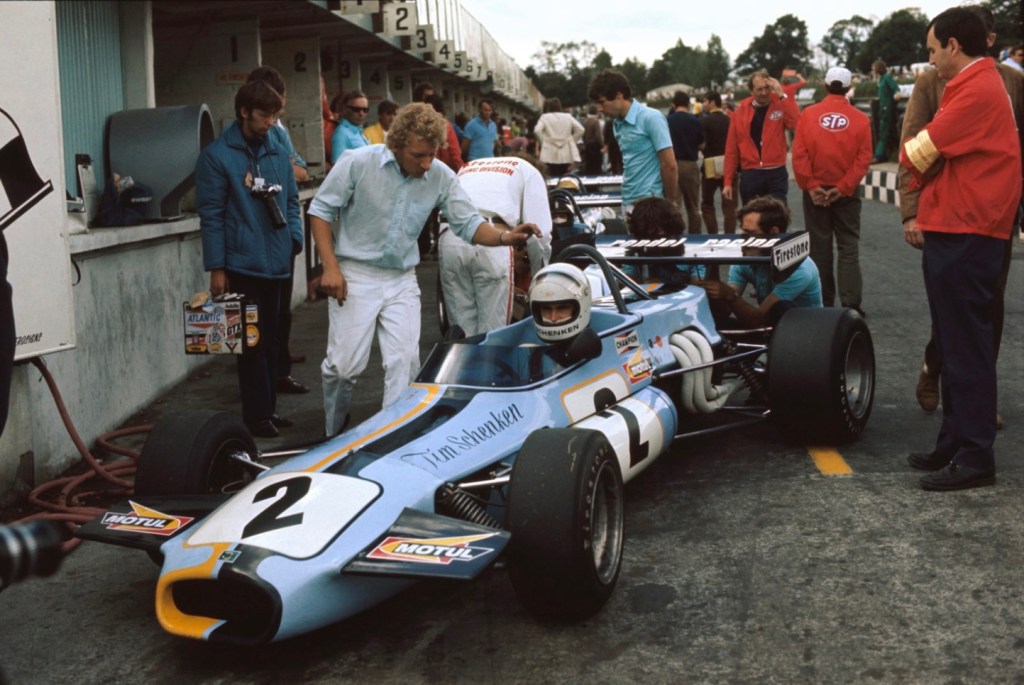
Tim Schenken in the Rondel Racing Brabham BT36 Ford during the Rothmans International Trophy meeting at Brands Hatch in August 1971.

Tim’s race was over early, he had fuel metering unit failure after only three laps. He did a full F2 Championship season, winning at Crystal Palace and placing second at Mantorp Park and Albi. He was fourth in the championship won by his mate, Ronnie Peterson’s March 712M Ford, Ronnie won at Brands that day too. More on Tim here; Tim Schenken… | primotipo…

(gnooblas)

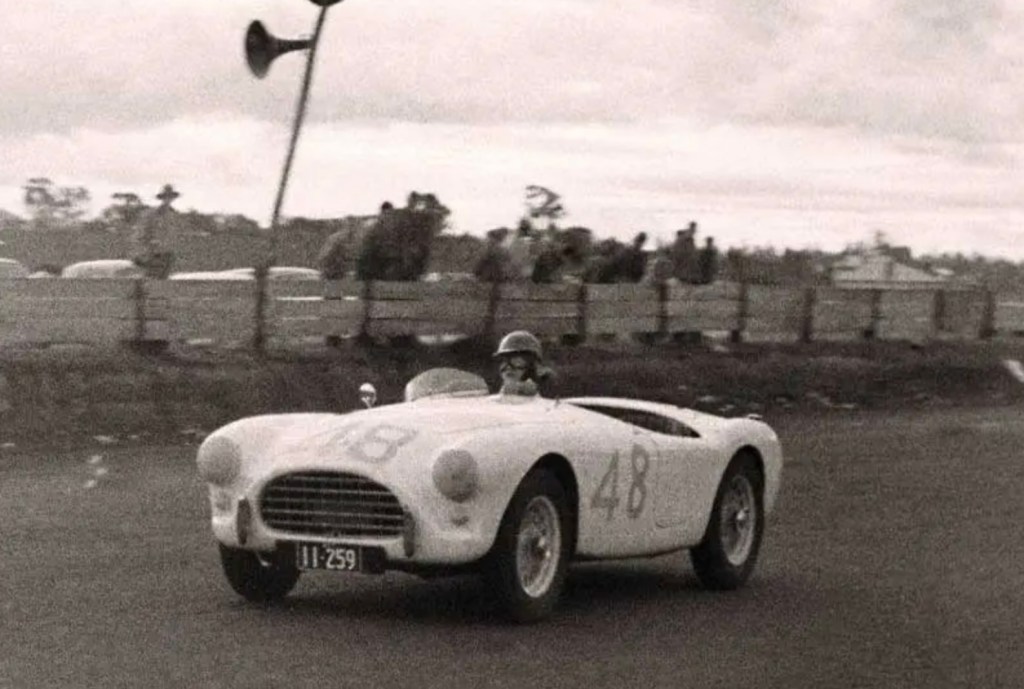
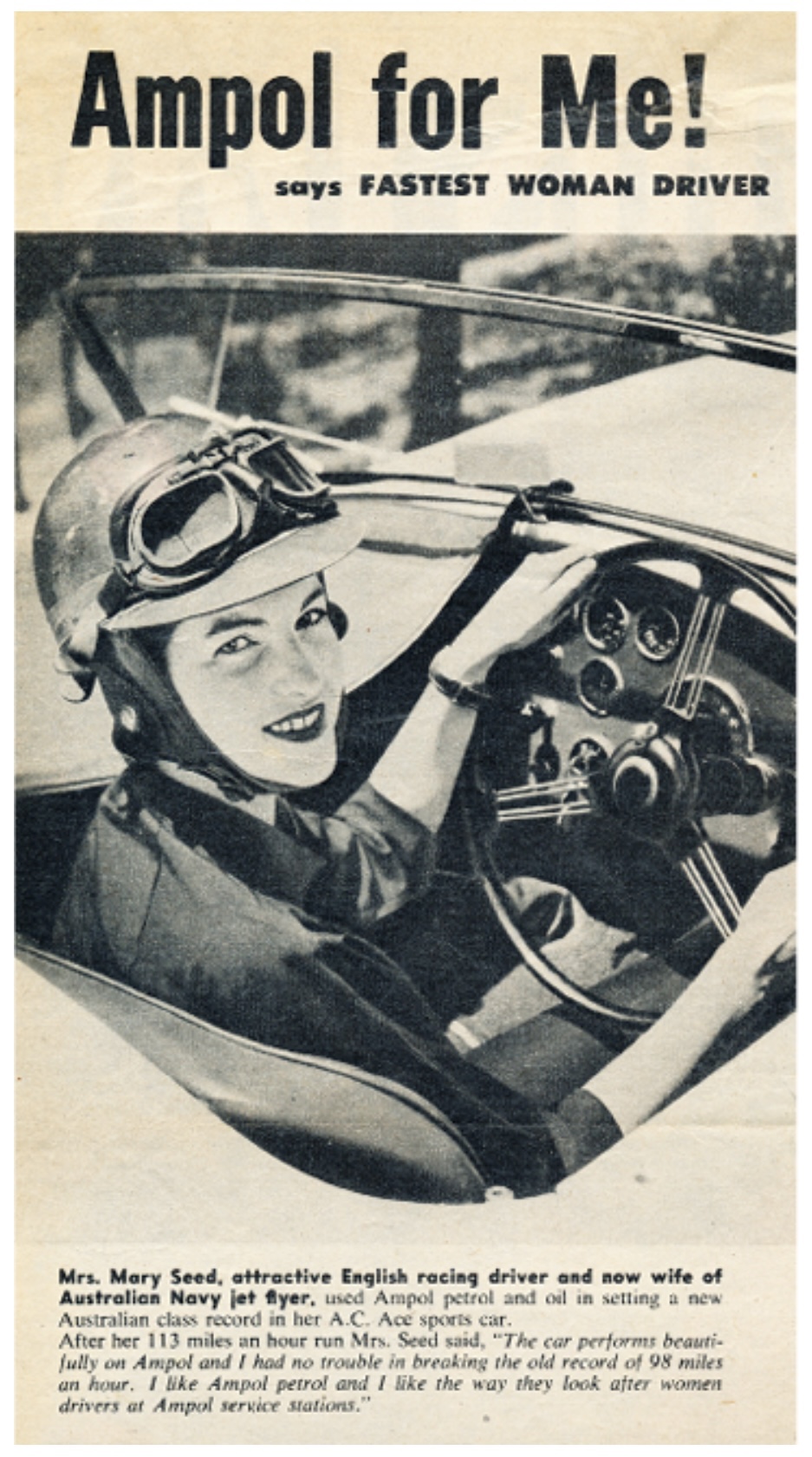
Mary Seed, AC Ace Bristol at Gnoo Blas in June 1958.

The young British socialite had met and married HMAS Melbourne Venom Squadron Leader Lieutenant-Commander Peter Seed in the UK. He gave his bride (née Morton) the car as a wedding gift, before coming to Australia in 1956.

Seed had raced an Austin Healey in the UK in 1955 and raced the AC in Australia from 1956 to 1959, including setting an Australian Land Speed Record for women at 113.3mph at Carrathool in 1957.

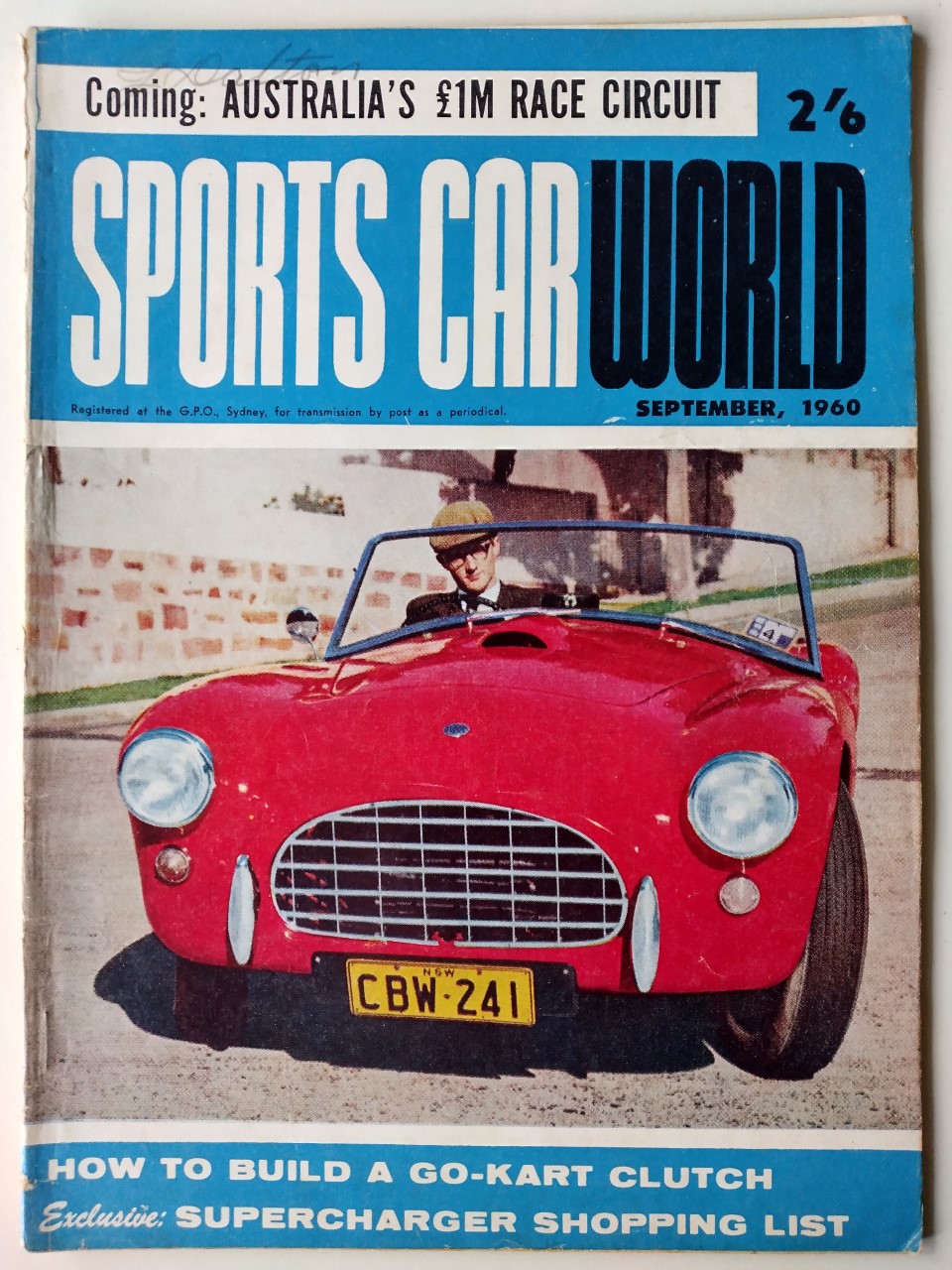
When the couple returned to the UK, the car, chassis #BE167, stayed in Australia, and was then raced by Ray Hogwood and Ron Marshall until 1962. Restored by Geoff Dowdle in the early 1980s, hopefully it’s still in Australia.

Doug Blain road testing the ex-Seed AC Ace Bristol BE167 for SCW (B King Collection)

Credits…

Peter Houston, Phil Mahon Collection, LAT, Zeunert Motorsport Archive, rewindmedia.com, Getty Images, John Cox, Bob Williamson Collection, MotorSport Images, Cummins Family Collection, gnooblas.com, Ken Starkey, Bob King Collection, Jason Pratt, Draper Family Collection

Tailpiece…

(K Starkey)

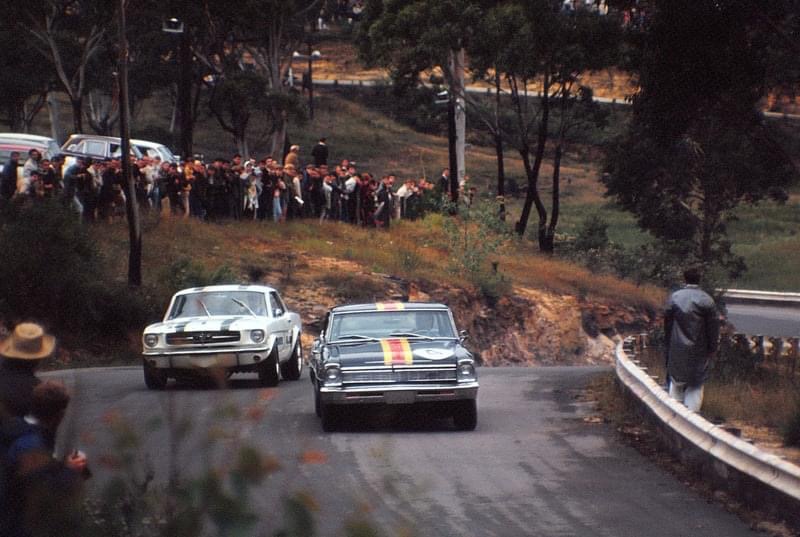
Norm Beechey, Chev Nova from Pete Geoghegan, Ford Mustang at Catalina Park in the Blue Mountains, perhaps, Neil Stratton thinks, during the January 1967 meeting. See here for a bit more; Norm, Jim and Pete… | primotipo…

Finito…

(A Ramsay)

Malcom Ramsay and Tony Alcock built a swag of championship/race winning Formula Ford, F3, F2 and Formula Atlantic single-seaters from 1971 to 1978.

And this mid-engined, supercharged VW powered speedcar.

The project was funded by Bob and Marj Brown, a successful Adelaide business-couple who aided and abetted the careers of Birrana pilots Enno Buesselmann and Bob Muir from 1973-76.

Alcock’s revolutionary spaceframe design was tested by Ramsay on the dirt at Rowley Park, and at Adelaide International’s half-mile, banked, bitumen oval in 1974, it was immediately quick.

It was a step way too far for the conservative controlling body who suggested that “You circuit racing wally-woofdas can take your changes elsewhere!” Or as Ann-Maree Ramsay put it more delicately, the car “was banned due to perceived different handling characteristics compared with the front-engined Sesco and Offy cars of the time.”

The VW engine was a supercharged 1.6-litre flat-four mated to a Holinger modified VW transaxle.

By 1975 the Browns were in England chasing Formula Atlantic fame together with Muir and a pair of modified Birrana 273s.

Ramsay advertised the car in Auto Action, outlining that the S74 was the only car of its type “permitted to race for 18-months on a bitumen-oval, in this very restricted form of the sport.”

Yes, I know it’s a shit-photo, but it seems to be the only one there is, let’s record our history anyway. If you have a better one, please send it to me. The shot is out front of the Ramsay home in Adelaide. If memory serves, it now resides in the Holmes Collection in Brisbane.

Leo Geoghegan and Enno Buesselmann in Birrana 273 Hart-Fords during the 1973 ANF2 Adelaide International round

Credits…

Ann-Maree Ramsay

Finito…

harves red

(autopics.com.au-R Austin)

John Harvey’s 2.5-litre Repco V8 powered Brabham BT11A shrieks it’s way around Warwick Farm on 18 February 1968…

Looks a treat doesn’t it? Nose up out of Leger Corner onto Pit Straight, it was first meeting for the car with its Repco engine.

By 1968 IC-4-64 was an old-girl, albeit a very successful one. It was raced by Graham Hill in the 1965 Tasman Series for David McKay’s Scuderia Veloce, winning the 1965 NZ GP at Pukekohe on its race debut.

hill Hill won the ’65 NZGP at Pukekohe on 9 January 1965 from Frank Gardner’s similar BT11A and Jim Palmer’s earlier model BT7A, all 2.5 Coventry Climax FPF powered (sergent.com)

It then passed into the capable hands of Spencer Martin, initially driving for McKay, and then Bob Jane for whom Spencer won two Gold Stars in 1966 and 1967. Click here for an article on Martin and his exploits in this car; https://primotipo.com/2015/04/30/spencer-martin-australian-gold-star-champion-19667/

The 2.5-litre Coventry Climax FPF four cylinder engine was struggling against the V8’s by then, so Bob bought a 740 Series Repco 2.5-litre V8 to plonk in the back of the BT11A.

John Harvey, Martin’s successor at Bob Jane Racing, contested the Australian rounds of the 1968 Tasman Series so powered. Jim Clark’s works Lotus 49 Ford DFW won the Tasman that year, it was the final championship he won before his untimely death at Hockenheim that April.

harves engine 740 Series Repco 2.5 Tasman V8 engine. 700 Series Repco block and 40 Series ‘between the Vee’ heads’, the ’67 World Championship winning SOHC, two-valve engine in 2.5-litre Tasman spec as against its 3-litre F1 capacity.  Repco claimed 275bhp @ 8,500rpm for the 2.5, and 330bhp @ 8,400 rpm for the 3-litre variant. Lucas injection trumpets, Bosch distributor and plenty of chrome and cadminium plating in shot (P Houston)
image Harvey in the BT11A Repco at Longford, 1968. The attention Bob Jane placed on the presentation of his cars is clear. Note the seatbelt, six-point? (oldracephotos.com-H Ellis)

Harves’ did three Australian rounds, only finishing the wet, final Longford event. By the start of the Gold Star series he slipped into Jane’s new Brabham BT23E which had been Jack’s 1968 Tasman mount.

Harvey raced the final round of the 1967 Gold Star Series in IC-4-64 after Martin announced his retirement. He was already well familiar with Repco power, the 740 Series Repco had been shoe-horned into his Ron Phillips owned BT14 F2 Brabham.

Third place at Sandown was his only finish in the car. John commented in a Facebook exchange about this car “…On handling, Peter Molloy and I were still developing the chassis setup, however in the Diamond Trophy race in 1967 (pictured below) at Oran Park I set a new outright record on the last lap”, so they were improving the car.

The engine and Hewland ‘box was removed from the BT14 which Jane acquired, and popped into the BT11A which it was figured would better cope with the power than the BT14 F2 frame and related hardware.

IC-4-64 is still alive and well, as part of the Bob Jane Estate, in FPF engined form.

harves wf pitlane Harvey in the WF pitlane, Tasman meeting ’68. The BT11A has a vestigial spoiler and a few ducts the it didn’t have when CC FPF powered. Jewels of things these ‘Intercontinental’ Brabhams, very successful ones at that (B Williamson)
harves wf from inside At the Warwick Farm Tasman meeting again (J Stanley)
harvey repco Competitor view of the BT11A and its luvverly Repco RB 740 2.5-litre 275 bhp V8 (P Houston)

Credits…

autopics.com.au-Richard Austin, John Stanley, Peter Houston, sergent.com, Bob Williamson, oldracephotos.com-Dick Simpson, Harold Ellis and Harrisson, oldracingcars.com, Stephen Dalton Collection

harvey repco (P Houston)

Brabham BT14 FL-1-65 Repco, Angus & Coote Diamond Trophy, 27 September 1967…

The shot of Harvey in the Ron Phillips owned Brabham referred to above, on the way to victory in the Diamond Trophy at Oran Park.

John made his name in speedway and transitioned into road racing in an Austin/Morris Cooper S, and then into open-wheelers in this ex-Bib Stillwell car. The Brabham received progressively bigger Lotus-Ford twin-cams, with Harvey going quicker and quicker, before the machine copped its Repco V8 Birthday between the 1967 Tasman and Gold Star Series. Rennmax’ Bob Britton performed the surgery to pop the Repco into the BT14 frame, creating a BT14 jig in the process.

It wasn’t that successful in Repco form; DNF/DNS at Lakeside, Surfers, Mallala and Symmons Plains, third place in the Sandown Gold Star round in September was the car’s best, behind Leo Geoghegan’s Lotus 39 Repco and Spencer Martin aboard BT11A IC-4-64.

Harvey during the Diamond Trophy meeting at Oran Park (oldracephotos.com-Dick Simpson)

Harvey’s Bob Jane drive commenced aboard IC-4-64 in the final Gold Star round, the Hordern Trophy, at Warwick Farm in December 1967.

So…Harvey in 12 or 14 months drove quite a few different Brabham/engine combinations! BT 14 Ford, BT14 Repco, BT11A Climax, BT11A Repco, and then BT23E Repco for the ’68 Gold Star Series. Mind you he missed the ’68 Gold Star.

The ‘noice new Brabham crashed after a rear suspension upright failed in practice for the opening Bathurst round. Harvey’s big accident and subsequent recovery kept him away from racing for the rest of the year.

Harvey aboard the Jane Racing Brabham BT23E Repco 830, during the Symmons Plains Gold Star round in March 1970, at the end of its competitive life. He won the race from Leo Geoghegan’s Lotus 39 Repco and Kevin Bartlett’s Mildren Waggott (oldracephotos.com-Harrisson)

Tailpiece…

(S Dalton Collection)

The July 1965 Oran Park meeting program shows Harvey’s Austin Cooper S ahead of George Garth’s Ford Cortina GT during the OP May 1965 meeting.

Finito…

(MotorSport)

Brian Muir in an Alpina BMW 3-litre CSL during the May 1973 Spa 1,000km.

He shared the car with Hans Stuck, the pair finished second in class, eighth outright, immediately behind the sister Alpina machine raced by Niki Lauda – and Hans Stuck! The race was won by the Mirage M6 Ford prototype crewed by Derek Bell and Mike Hailwood.

Muir is too often forgotten in conversations between enthusiasts in Australia about successful internationals. He was a much respected figure in touring cars and sportscars in the UK/Europe for the better part of 30 years after leaving Australia for the UK for the second time, as winner of the ‘Smiths Industries Driver to Europe Prize’ in late 1964.

Click here for a good summary of his life/career; Motorsport Memorial – Brian Muir

Brian Muir chasing David Hobbs at Silverstone during the July 1968 BSCC round, Falcon Super Sprints. They finished the Duckhams Q Trophy in this order, there was nothing in it, both were credited with the same fastest lap (LAT)
Brian Muir aboard the works Lotus 62 Vauxhall he shared with John Miles, chases the Helmut Kelleners/Reinhold Jost Ford GT40 during the April 1969 Brands Hatch 6 Hours. The Lotus pair were 13th outright and first in the 2-litre prototype class, the GT40 was 16th. Race won by the Jo Siffert/Brian Redman Porsche 908/02 (MotorSport)
Muir aboard the winning Ford GT40 during the April 1968 Barcelona 6 Hours at Montjuic Park. He was co-driven by Francisco Godia-Sales (J Vinals)

Brian had a terrific year in 1973, he raced Alpina tuned BMW CSLs in both the British Saloon Car Championship and the European Touring Car Championship.

In the UK the battle for outright honours was fought between Frank Gardner’s legendary SCA European Freight Services Chev Camaro Z28 and fellow Sydneysider, Muir.

Gardner won the title with wins in six of the eight rounds he contested, Muir won at Silverstone and Brands Hatch to finish fifth overall behind better performing smaller-capacity class cars.

Oopsie, two Sydneysiders at play at Silverstone. Frank Gardner’s Chev Camaro Z28 copping a bit of TLC from Muir’s BMW CSL during the April 1973 International Trophy BSCC round (A Cooper)
Brian Muir three-wheeling in his chase of Frank Gardner at Brands Hatch in August ’73. BMW’s homologation goodies for the year included a nice-fat 3.5-litre engine and aero pack including the iconic Batmobile wing. Gardner won the race while Brian DNF with oil pump failure in his 3303cc engine (MotorSport)
Muir aboard the Alpina 3-litre CSL he shared to victory with Niki Lauda at the ETCC season opener, Monza 4 Hours, March 1973 (Alpina Automobiles)

Things were better in Europe though.

Brian and Niki Lauda won the first ETCC round at Monza – the Monza 4 Hours – in March leaving four Ford Capril RS2600s in their wake.

Muir was second at the 4-Hour Austria Trophy at the Salzburgring sharing with Toine Hezemans, and again at the following round, the 500km of Mantorp Park, Sweden. Ford Capri RS2600s won both races crewed by Dieter Glemser/John Fitzpatrick and Glemser/Jochen Mass respectively.

Paired with Alain Peitier, Muir’s car failed at the Nurburgring’s Grosser Preis der Tourenwagen with bearing trouble while running the just homologated 3.5-litre engine. It was the first of many bearing problems that year.

In a race – make that series – chock-full of GP drivers, Stuck and Chris Amon shared the winning 3303cc BMW 3.0 CSL from the similarly engined works car of Hezemans/Quester/Harald Menzel, then the 3498cc Alpina entry shared by Lauda/Hans-Peter Joisten.

Muir pulls to a stop with Niki Lauda all set to jump aboard during their successful Monza run at left. Who is the driver near the BMW’s boot? (Automobilsport)
Lift off at the Thruxton BSCC round in May 1973. Muir, Gardner and Dave Matthews Ford Capri RS2600 on the front row, Gardner won from Muir and Matthews (MotorSport)
Brian Muir aboard the ill-fated 3.3-litre CSL he shared with Hans-Peter Joisten in the early stages of the July ’73 24 Hours of Spa-Francorchamps (unattributed)

Then it was off to Belgium for the classic 24 Hours of Spa Francorchamps.

There, Brian popped the car on the front row – sharing with German racer Joisten – between the works cars of Stuck/Amon and Hezemans/Quester.

Tragedy struck Joisten during the race when he passed two Alfa Romeo 2000 GTVs of Roger Dubos and Claude Ballot-Lena. Travelling too fast, Hans-Peter touched the barriers and was pinged back onto the track, where Dubos saw him and started to brake before being simultaneously rammed by Ballot-Lena, crashing into Joisten’s car. Both Joisten and Dubos were killed instantly in this freak accident.

Hezemans/Quester won from the factory Capri RS2600 of Mass/Fitzpatrick.

The next round was in the Dutch sand dunes at Zandvoort in mid-August. At the end of four hours the Zandvoort Trophy was held aloft by Hezemans and Quester who won from Muir and James Hunt in the Jagermeister Alpina entry. In third and fourth places were two RS2600 Capris led by the Fitzpatrick/Gerard Larrousse machine.

Brian Muir goes around the outside of Ivor Goodwin’s Hillman Imp at Silverstone during the July 1973 BSCC round, DNFs for both, with again, Gardner up front (MotorSport)
The other main 1973 ETCC protagonist, the fabulous 325bhp/970kg Ford Capri RS2600. This is the Fitzpatrick/Gerry Birrell car during the Monza 4 Hours in March, DNF (MotorSport)
Brian at Spa during the 1,000km meeting, ain’t she sweet? (MotorSport)

Three weeks later the ETCC circus raced at Le Castellet, contesting the 6 Hours of Paul Ricard.

With the RS2600 at the limit of homologated tricks – lookout for the 3.4-litre Cosworth GAA powered RS3100 in 1974 – the BMWs were again on the front row and finished in first to fourth places, a race of complete dominance.

Hezemans/Quester won from Ickx/Hunt, Stuck/Amon and Walter Brun/Cox Cocher. The best of the Capris – the Mass/Jackie Stewart machine – was fifth but 11 laps adrift of the winning car. Brian Muir and John Miles qualified eighth, but their 3.5-litre engine had head gasket failure after water loss.

The final round of the series was the RAC Tourist Trophy, it comprised two heats of two hours each at Silverstone on September 23.

The cat-among-the-pigeons was Gardner’s Camaro, although his speed was handicapped by tyre problems throughout. Harald Ertl’s Alpina CSL won the first heat from the Capris of Mass and Fitzpatrick with Muir a distant ninth having lost his front spoiler early in the race. Second place in the second heat behind Derek Bell’s Alpina machine was better; Brian was third overall behind Bell/Ertl and Mass’ Capri.

Toine Hezemans’ speed and consistency throughout the season paid off, he won the ETCC with 105 points from 42 years old Brian Muir on 77, and Dieter Quester on 75. BMW demolished Ford in the manufacturer’s title, 120 points to 97.

BMW E9 3.0 CSL – Coupe Sport Licht – Group 2 1973…

(B Betti)

A few summary points on salient technical features of this great road and track machine.

The unitary steel chassis had aluminium door, bonnet and boot panels, these and other mods reduced weight by about 200kg to a total of circa 1050kg.

BMW M30 cast iron, aluminium block SOHC, two-valve Bosch injected straight-six engine. 3003cc 324bhp @ 7000rpm, 3340cc 355bhp @ 7600 rpm, and 3498cc engine 370bhp @ 8000 rpm.

ZF worm and roller steering, ZF or Getrag five-speed, or Getrag four speed box. 10.7 inch disc brakes all around, 12.5 inches X 16 and 15.75 X 16 wheels

Credits…

MotorSport Images, LAT, touringcarracing.net, Jordi Vinals, Alan Cooper, Alpina Automobiles, Automobilsport, Bruno Betti

Tailpiece…

(unattributed)

Brian Muir aboard his Scuderia Veloce Holden EH S4 during the one-race Australian Touring Car Championship at Lakeside, Queensland on July 26, 1964.

Note the ‘Nomex’ Polo-Shirt. Brian led the event late in its 50 laps but a pit stop to replace a tyre ruined his day, he was seventh in the race won by Pete Geoghegan’s Ford Cortina GT.

Click on the link for an account of this race; Lakeside early days… | primotipo…

Finito…

Calder Raceway underway in 1961, Pat Hawthorn’s Holden and Jim Houlahan’s Chev on site (Hawthorn Family

Pat Hawthorn’s team turn the first sods of soil to create Calder Raceway, 30km west of Melbourne later in 1961…

I’ve always had a bit of a love-hate relationship with the place. On one hand it’s the first place I drove a racing car – an Elfin 620B Formula Ford at the Jane-Gardner Race Driving School in mid 1975 – but on the other I’ve always thought the flat, featureless hot n’ dusty or freezin’ and wet joint a bit of a shit-hole. Gimme Sandown, the Island, Winton, Eastern Creek, Wakefield or Mallala.

But it’s close to Melbourne, I’ve probably done more laps there than anywhere else despite it being closed forever. While the layout has always been simple (Thunderdome challenges duly noted) the challenge of doing a great time are there given ya have so few corners to work with.

I thought Keilor farmer Jim Pascoe built it, then Bob Jane bought it in the early seventies, several years after Pascoe died. The Jane Estate still owns it, how wrong about the early days I was though.

Pat Hawthorn aboard his ex-works/Davison Aston Martin DBR4/250 3-litre F1/F Libre car at his servo in Clayton, on the corner of Thomas and Centre Roads. While there wouldn’t have been another Aston Martin resident in that part of the world, for some time, new AMs were retailed from a showroom in Springvale Road, Springvale – right ‘on’ the railway line near Sandown. A most unlikely place as well, the good residents of Toorak struggle to go further east than Glenferrie Road let alone Burke Road (Hawthorn)
The Spanos sportscar is an Elfin Streamliner Coupe, a car George owned all of his life, and still retained by his family I think
1962 meeting at Calder, advice welcome on whom is whom (O Campion)

It turns out that racer/garage proprietor Pat Hawthorn is the man we should all thank for the original entrepreneurship.

For some years Pat had a servo in Clayton. One of his regular customers, Jim Houlahan had land on the Calder Highway, he wondered if Pat would be interested in helping develop it for use as a wreckers yard.

Pat thought the location was ideal for a race track, a dream he had for a while. Soon a company was incorporated with funds provided by Melbourne bookie (bookmaker) John Corry and Jim Pascoe. His business interests spanned several fields including Drive-In-Theatres (very much a sixties and seventies thing) and race-horse training.

A simple layout to Pat’s design provided the track layout, a fundamental element of which was that spectators be able to see most of the action.

Australia had a shortage of racetracks from the beginning of time. With a global economy that was booming, a strongly growing Australian population thanks to post-war immigration, and plenty of young men with money in their pockets resulted in an epidemic of circuit construction. Within a short space of time circuits popped up across the country; Lakeside, Warwick Farm, Catalina Park, Oran Park, Hume Weir, Winton, Sandown, Calder and Mallala were all built over a span of four or so years.

I don’t propose to write the history of Calder, but rather to put on-the-record some wonderful pages of the late Pat Hawthorn’s scrap-book posted on Bob Williamson’s Australian Motor Racing Photographs Facebook page.

While Pat Hawthorn died some years ago, we have his son Russell Hawthorn to thank for sharing these invaluable records for preservation. Click here for a piece on the Aston Martin DBR4 Grand Prix cars, including Pat Hawthorn’s; Lex’ Aston Martin DBR4/250s… | primotipo…

Back Straight, one turns right at the end  (Hawthorn)

As the newspaper articles tell us, the star of the first meeting held on Sunday 14 January, 1962 – the public were invited to the rehearsal on 6 January (a freebie I wonder?) – was Bib Stillwell who had wins in both his Cooper T53 Climax Formula Libre single-seater and Cooper Monaco sportscar.

A quick glance at the results shows many of the names-of-the-day supported the opening meeting including Stan Jones, Jon Leighton, Jack Hunnam, Brian Sampson, Ian McDonald, Harry Forde, Norm Beechey, Bill and Bob Jane, John Ampt, John Roxburgh and Bob Page.

Pat Hawthorn receiving a trophy at Calder from the then Victorian Government Minster for Sport. The man in the suit behind the microphone is Jim Pascoe- both part-owners and directors at the time, date uncertain (Hawthorn Family)

Before too long the ownership of the business changed from the syndicate of businessman to Jim Pascoe solo. While Warwick Farm and Sandown were the blue-blood Tasman Cup venues, shorter tracks like Oran Park and Calder also thrived. Calder held a round of the Australian Touring Car Championship for the first time in 1969, that was symbolic of the venue’s rise in the tracks-of-Oz pecking order.

Geoghegan, Moffat, Jane and Thomson (?) at Calder in late 1969

Peter Brock and 1970 Australian Rally Champion, Bob Watson during a 1970 Calder rallycross event. HDT LC Holden Torana GTR XU1 and works-Renault R10 Gordini (I Smith)

Look at that crowd! Bryan Thomson’s Chev Camaro SS outside Allan Moffat’s immortal Trans Am Mustang as they blast onto the main straight in 1970 (R Davies)

Kevin Bartlett’s Lola T300 Chev during one of the Repco Birthday meetings in 1972. ‘Grandstand dreaming’ as per text below (I Smith)

Later, when Bob Jane bought the place it was subjected to constant change, development and improvement.

I can remember going to a meeting as a teenager with my father in the early seventies. At one stage Bob was standing at the very top of the new, but not quite opened grandstand at the start of the main straight, he was staring into the distance, all alone and dreaming of what might be. Perhaps he had aspirations of the Thunderdome even then?

At various times the venue hosted many international rock concerts (I couldn’t think of a worse place to see a band) and became a wonderful rallycross track, you could see all of the action, such was the compact nature of the place.

For decades the place was the capital of drag racing in Victoria, if not Australia. To see a pair of Top-Fuel dragsters do five-second (or whatever it was) passes is indelibly etched in my mind, that evening is the only day of race spectating where I felt I ‘tasted’ the cars. It was such a visceral, tactile assault on all of ‘yer senses.

Alan Jones on the way to winning the 1980 AGP at Calder, Williams FW07 Ford (unattributed)
Niki Lauda, Ralt RT4 Ford BDA (and below) during the 1984 AGP won by Roberto Moreno in another RT4 (C Jewell)

Recent drag racing action, advice as to chassis/drivers/date welcome (calderparkdragracing.com.au)

Whilst Calder never held an F1 AGP, as Bob hoped, the 1980 Formula Libre AGP at Calder, and the 1981 to 1984 Formula Pacific AGPs were important steps in the direction Adelaide eventually seized.

I always thought ‘If only Bob owned Phillip Island instead of Calder’ his great acts of promotion could have played out on a vastly more impressive stage, but hey let’s be thankful for a venue so close to home.

It must be fifteen years since I last had a gallop there, in the last VHRR’s Summer Test Days they ran annually. I’m a regular traveller up the Calder Highway, it’s sad to drive past that huge wasted resource and think of the clusterfuck of family and CAMS disputation dramas that stopped the joint dead in its tracks, pun intended.

Mind you, the tom-toms are rattling a little at the moment, it might not be all over, after-all…

‘Rockarena’ at Calder in November 1977. Fleetwood Mac headlined and were supported by Santana, Little River Band, Kevin Borich Express and Creation (jpjaudio.com.au)

Etcetera…

I love improvisation, it seems CAMS didn’t have a Track Licence form so they adapted a Competitor Licence and issued that to Pat and his partners – ‘Calder Motor Raceway Pty. Ltd’, that registered address is at Kew Junction, a drop kick from Bib Stillwells’ then Holden dealership.

Bob Jane in his period of ownership tried plenty of great ideas as a promoter, but a race between Pat Hawthorn’s Aston and a trotter is very much on the innovative side!

Credits…

Pat Hawthorn Collection via Russell Hawthorn, Chris Jewell, Ian Smith, Ollie Campion, Robert Davies, jpjaudio.com.au, calderparkdragracing.com.au

Tailpiece…

Finito…
(unattributed)

Man, what a shot!

A steam loco probably doing the Hobart to Launceston milk-run – from the south of Tasmania to its north – blasts its way over the Longford Viaduct circa 1930. Points for the train and car make/model/year folks?

The challenge of course was then to come up with a monochrome photograph of a racing car from exactly the same angle.

(R Edgerton Collection)

This one of Stan Jones’ Maserati 250F is the best I can do. It’s during a good meeting for Stan, he won the Australian Grand Prix that March 1959 Labour Day long-weekend. See here; Stan Jones, AGP, Longford: Gold Star Series 1959… | primotipo…

Credits…

Ron Edgerton Collection. As to the first shot, the fella who posted it on Facebook disappeared with his shot as quickly as he arrived. Happy to attribute whoever you are/were.

(unattributed)

Tailpiece…

Longford’s Viaduct and Railway Bridge close by to it are popular places for train-spotters.

The lattice-truss, wrought iron and steel bridge which spans the South Esk River was the equal longest bridge in Australia for a decade or so after the Welsh built structure was commissioned in 1870.

Those lovely pillars were removed during the 1960s – where were the Builders Labourers Federation when you needed them – there is a gofundme.com program to raise the $A80k required to replace the four pillars, two at each end of the bridge, an important bit of our industrial heritage.

More trains, planes and automobiles; Context and progress: Trains, planes and racing cars… | primotipo…

Finito…
(L Stringer)

After Jack Brabham won his second World Championship on-the-trot at Boavista, Portugal in late August 1960 he returned to Australia between the Italian and US Grands Prix (Riverside that year) to contest the Craven A International, a one-off race sponsored by a cigarette company, at Mount Panorama on October 2.

The great one raced a Cooper T51 Climax 2.5 (perhaps chassis #F2-4-59) to a convincing win from the similar cars of Bill Patterson and Bib Stillwell, albeit their cars were powered by 2.4-litre and 2.2-litre Climaxes respectively.

Jack takes his slot on the dummy grid, car #10 is John Roxburgh’s Cooper T45 Climax, DNF accident (L Stringer)
Brabham in Cooper T51 #1, #2 is Mildren’s Maserati engined T51 and #4 is Stan Jones’ T51 Climax, DNF accident (L Stringer)

Brabham started from pole and won by 36 seconds. Coopers occupied the first five places of nine finishers in a field which included such pre-War ancients as Tom Sulman’s Maserati 4CM and Frank Elkins Holden engined Bugatti Type 37.

Australian motor racing was still in transition – very quickly – to the modern mid-engined era.

(L Stringer)
Brabham takes the plaudits of the crowd and ‘snappers. Jumper, or perhaps a cardigan over the top of his overalls indicates a chilly Spring Bathurst day! (L Stringer)

These photographs posted by Leigh Stringer on social media this week beautifully capture the vibe and feel of that long ago weekend at Bathurst.

The Gold Star (Australian Drivers Championship) had been won by Alec Mildren’s Cooper T51 Maserati that year, he won four of the seven championship rounds. This Bathurst event wasn’t a title round, but it didn’t stop 28 cars starting the race, and even more entering it, such was the attraction of racing on the same grid as our Champ!

Credits…

Leigh Stringer, oldracingcars.com

Tailpiece…

(L Stringer)

No shortage of Esso capped assistance for Brabham, perhaps Tom Sulman’s Aston Martin DB3S behind? Where is John Medley’s Bathurst Bible when you need it, not here with me in the UK at the moment?!

The end of this story has information on the Cooper T51s in Australia, it draws together the results of 15 years of research by several marque experts; The Naughty Corner ‘Renta’ GP Winner… | primotipo… and this one may be of tangential interest, Coopers Type 41-51; Cooper T41/43/45/51/53… | primotipo…

Finito…
Bill Downie, HRG, Caversham, Western Australia circa 1960 (K Devine)

Ignorance is bliss! Until now I’d assumed Brabham’s 1966-1968 Repco F1 V8 engine rebuilds/freshen-ups were done back at RBE’s Maidstone, Melbourne base, but that’s not the case

“When we started to use the Repco Brabham V8s (the very first race for the new engine was the January 1, 1966, non-championship South African Grand Prix) it was clear to Jack that sending them back to Melbourne for rebuilds wasn’t going to work given the time it would have taken,” recalls Bob Ilich.

The Australian mechanic/technician worked for Jack Brabham Conversions, Motor Racing Developments (MRD-constructors of Brabham cars) and the Brabham Racing Organisation (BRO-Jack’s race team) during the 1965-1967 glory years.

“There just wasn’t the time between race meetings to fly engines backwards and forwards between England and Australia, the logistics just didn’t work.”

In 1966 BRO contested nine championship GPs and four non-championship events (remember those!), and in 1967 11 championship GPs and five non-championship races; Race of Champions at Brands, Spring Cup and International Gold Cup at Oulton Park, the BRDC International Trophy at Silverstone and the Spanish GP. This intense program yielded world drivers championships for Brabham and Hulme, and manufacturers titles for MRD/Brabham Repco in 1966-67.

In short, the season was very full from early January until the Mexican GP in late October.

Jack had a ready-made machining solution when the H.R.G. Engineering Co Ltd – founded by Major Edward Halford, Guy Robins and Henry Ronald Godfrey in 1935 – ceased trading in 1966.

HRG built 241 sports and racing cars in addition to their core general engineering work. In 1956 they stopped building cars, their engineering clients included Cooper, and later Brabham.

“When Jack moved BRO from the Canal Yard, Byfleet Road, New Haw Surrey premises (which had been shared with Motor Racing Developments) to Guildford in early 1966, ex-HRG machinist Ron Cousins and his equipment, lathe, milling machines etc were already there doing work for Jack Brabham Conversions which operated from an Esso Service Station in Woking.”

“Conversions did general service and tuning work, fitted Coventry Climax engines to Triumphs and Austin Healeys, made performance modifications, and later did the development work on the Brabham Vauxhall Viva/Torana.”

“The Guildford premises had administration offices upstairs including a drawing office for John Judd, who was back at BRO after his stint with RBE in Maidstone. He was in constant touch liasing with Norman Wilson, RBE’s Chief Engineer in Melbourne.”

“Downstairs was the Brabham Conversions Parts Department, a large workshop where the racing cars were prepared and the transporter parked, Ron Cousins’ machine shop and an engine rebuilding workshop for Jack and myself,” Bob recalled.

“After the first couple of runs in South Africa and testing in England, the engines had oil leaks Jack said we needed to fix. The first rebuilds were to address this, over time of course we did freshen-ups as required.”

Bob Ilich with gasket kit at BRO, New Haw circa March-April 1966. Brabham BT17 sportscar coming together behind him and Holden EH abroad (unattributed)

“All the components we needed were sent from Australia including the new for 1967 700 Series blocks. I remember replacing three 600 Series blocks with the much stronger Repco 700 block, the three Olds F85 based blocks were still in a corner of the workshop when I left. If anything needed machining, Ron Cousins did it,” Bob recalls.

“By the end of the 1967 racing season the only thing we hadn’t mastered was the timing chain cover which still leaked a bit, but those 740 engines were otherwise bullet proof.”

“None of the engines were ever sent back to us for rebuilds,” confirms Michael Gasking, long-time RBE, Maidstone, Melbourne engine fitter and chief dyno test pilot.

“We sent engines and components over as they were needed, Jack and Frank (Hallam, RBE General Manager) were on the ‘phone all the time discussing updates and problems discovered at the track we needed to fix or enhance.”

So, there you have it, a little tidbit of RBE history not in Repco press releases or the history books.

Thanks Bob Ilich, I’m not sure quite how it popped into our conversation, but very much appreciated!

 Etcetera…

HRG

Among HRG’s products/enterprises were the original UK import rights for Weber carburettors, twin-cam HRG (Singer) engines, the Stuart Proctor designed crossflow cylinder head, inlet manifolds and rocker covers for BMC B-Series engines (usually marketed by VW Derrington rather than HRG themselves) and overhead-cam Ford 105E conversions.

HRG originally operated from Tolworth, Surrey and later Oakcroft Road, Chessington, also located in Surrey.

The then HRG director/shareholders, having reached retirement age closed their solvent, profitable business in 1966. Derringtons took over the drawings, patterns and moulds to manufacture cylinder heads and Jack Brabham acquired or absorbed the machine shop equipment and Ron Cousin into his group…

The main-man out front of Jack Brabham Motors, Hook Road, Chessington (unattributed)

Brabham Premises

There is plenty of interest in Brabham, Jack Brabham, Ron Tauranac and Repco Brabham Engines at quite a granular level.

With an imminent trip to the UK, I’ve a couple of Brabham Sacred Sites at which I’m going to pay homage, with that in mind here is a list fellow Brabham Tourists may find of interest.

Please treat it as work in progress, I’m keen to hear from any of you with additional information to add, or corrections which should be made to this list.

United Kingdom

.Jack Brabham (Motors) Ltd : 248 Hook Road (cnr Hook Road and Somerset Avenue, Chessington, Surrey.

Established circa 1959, ESSO garage, Rootes Group dealership. Phil Kerr ran the business, until his departure to McLaren. Ron Tauranac lived in a Bed-Sit in these premises when he first arrived from Australia and built the MRD (the first Brabham Formula Junior machine ) in a lock-up downstairs.

.Repco UK : Victoria Road, Surbiton, Surrey.

Circa 1957 at the Earls Court motor show. Repco’s marketing division and warehousing facility which sold garage and wheel balancing equipment, and later engine rebuilding, reconditioning and balancing equipment etc.

Space was sub-let to MRD to build Brabhams. The MRD, and Brabhams until when?, were constructed at these premises.

.Motor Racing Developments Ltd (MRD) : Canal Yard, Byfleet Road, New Haw, Weybridge, Surrey.

Circa 1962, manufacturer of Brabham cars and later Ralt cars

Shop floor at Motor Racing Developments circa 1966 (Repco)
Brabham Racing Organisation in 1970, Guildford. Jack’s F1 Brabham BT33 Ford being prepared (D Phipps/MotorSport)

.Jack Brabham Conversions Ltd : 131-139 Goldsworth Road, Woking, Surrey.

ESSO service station, modifications to Sunbeam Rapiers and other cars inclusive of fitment of Coventry Climax FWE engines to Triumph Herald, Austin Healey Sprites etc

.Brabham Racing Organisation Ltd (BRO) :

Initially co-located with MRD.

In early 1966 BRO moved to Weyford House, Woodbridge Meadows, Guildford, Surrey as outlined in this article.

High Performance Exhaust Systems Ltd (Directors Len Lukey and Brabham) sold and fitted Lukey Mufflers for cars, trucks and tractors from this location

BRO moved – partially – back to New Haw (MRD) circa 1968. Allan Ould recalls building the BT25 Indycars in the BRO workshop at MRD that year.

The F1 car prep and machining ‘shops remained at Guildford.

Jack Brabham (Worster Park) Ltd : 33-51 Central Road, Worster Park, London.

Vauxhall dealership in the-day, redeveloped in more recent times as the residential ‘Brabham Court’.

Jack Brabham Ltd : 23 Stoneleigh Broadway, Epsom, Surrey.

?

Jack Brabham (Ewell) Ltd : 5 Ruxley Lane, Ewell, Epsom, Surrey.

Circa 1965. Appears to have been the site of another car dealership?

Engine Developments Ltd (Judd Power) : Leigh Road, Swift Valley, Rugby.

Partnership of John Judd and Jack Brabham which commenced in 1971.

.Brabham family home.

3 Ashcombe Avenue, Surbiton, Surrey, from 1965 Greater London, below.

(P Stockden)
Repco Brabham Engines, Mitchell Street, Maidstone premises early 1967 during the Tasman Series (Repco)

Australia

Repco Brabham Engines Pty. Ltd.

This entity was the Repco subsidiary incorporated circa 1965 to design and construct the Repco Brabham race engines

A small team was initially located in a small part (the engine laboratory) of Russell Manufacturing Pty Ltd at 85-91 Burney Street, and 26-34 Doonside Street, Richmond. The first V8s were built there.

Nigel Tait picks up the story, “The engine lab that was at the back of Russell Manufacturing (Doonside Street, Richmond) was to service the then current Repco factories producing engine parts.”

“Once the Repco Brabham project started to outgrow that small lab, a decision was made to relocate it over to the Maidstone site that had been purchased from the original Automotive Components Limited company some years earlier. One of the four or five factories on that site was cleaned out and early in 1966 the manufacture and assembly of the RB engines was progressively transferred from Richmond.”

“The new company, Repco Brabham Engines Pty Ltd was incorporated, the Repco Ltd (parent company) Director responsible was Bob Brown, the General Manager was Frank Hallam.”

“Eventually a new test centre was built out the back, it was very sophisticated and state of the art with two dynamometers compared to what we had in Richmond.”

Michael Gasking testing RBE620-E2 2.5 V8 on the Heenan & Froude GB4 dyno in the old Myers garage – corrugated iron tin-shed – Doonside Street Richmond Engine Lab. The distinctive long-inlet trumpets allows easy identification of this engine as that used by Jack at the 1966 Sandown and Longford Tasman rounds. Mike is testing it either before the Sandown round, or immediately after it. The engine suffered oil pump failure and had to be quickly rebuilt before being sent to Longford…so it’s either mid-February or 28-29 February 1966 (Repco)
More sumptuous surrounds at Maidstone circa 1967. Very well equipped, RBE were set up to build engines with great precision in numbers. That two axis Cincinatti Vertical Acramatic milling machine (in the middle of the photo) is claimed by the man who sold it to Repco to be the first numerically controlled machine tool sold in Australia. The timing cover case lying flat this side of the vertical tape reader (the light coloured cabinet) was made on this machine (Repco)

“So, from about mid to late 1966 (the move started during the Xmas summer break of 1965-66) the whole of the racing engine project was at Maidstone and the engine lab in Richmond continued to service the Repco engine division.”

“Later, the same dynamometer set up was used for the (1969-1974) Repco Holden F5000 project.”

“In the meantime Repco started to move some of the piston and ring manufacturing plant over to the Maidstone site and for a while both sites operated as Repco Engine Parts – Richmond Plant and Maidstone Plant.”

“Then in 1986 Repco sold off the Engine Division to a management buyout and the same products continued to be made at the two plants though eventually all were consolidated at the Maidstone site, Richmond having been sold.”

“The management buyout company didn’t have a name and Repco kindly allowed it to be called Automotive Components Limited (ACL), so the wheel turned full circle,” Nigel Tait recalled.

The Richmond (art deco) buildings are extant, Maidstone became a housing estate close to a decade ago, below.

(N Tait Collection)
(N Tait Collection)

“The memorial at Maidstone was the brainchild and project of a local councillor about 2015. We had Michael Gasking and (now the late) Don Halpin (above) to cut the cake at the unveiling ceremony,” Tait recalled.

“Michael was at Richmond when I joined Repco as a cadet engineer, and I was assigned to work with him as his assistant on Repco Brabham with engine assembly and running the engines on our dynamometer (Heenan and Froude GB4).”

“Michael was (is) a good man, very skilled, a good teacher and very thorough. The engines he built won the 1966 championship and probably half of 1967 (Denny) as well.”

“Don, sadly now gone, was an amazing engine builder, worked in my team after Repco Brabham and the F5000 Repco Holden days on alternative fuel projects for the government, and post retirement built customer racing engines until the end. I miss Don…” recalls Nigel of his colleagues and friends.

Credits…

Bob Ilich, Nigel Tait, Ken Devine Collection, Paul Stockden

Tailpiece…

Yeah, yeah, yeah, of course there are Jack’s businesses in Australia too (both before he went to the UK and after he left to return home) in the automotive, aviation and rural sectors but my focus is just those of the Repco-Period.

If we widened the lens we would be going for weeks I suspect…

Finito…
(The Age)

Doug Whiteford is as pleased-as-punch after winning the 1953 Australian Grand Prix at Albert Park aboard his self-prepared Talbot Lago T26C (Course).

It was too good to be true, he had won his second AGP at Bathurst 17 months before aboard the same machine. He took victory in the 250 miler in the park from Curley Brydon’s MG TC Spl s/c and Andy Brown’s MG K3. The dude with the fag at the far-left is Bill Wilcox who retired his Ford V8 Spl after 37 of the 64 laps.

I’ve written about this race before, the appearance of this high-resolution shot from The Age/Fairfax archive stimulated this reprise. 1953 Australian Grand Prix, Albert Park… | primotipo…

The photograph is so sharp you can see the instruments, quadrant for the four-speed Wilson pre-selector gearbox, chassis plate and front suspension.

#110007 was part of Paul Vallee’s Ecurie France team between 1948-1950 before being sold, via Henry and Peter Dale, to Geelong’s Tom Hawkes in 1950 and shortly thereafter to Whiteford. See Bob King’s article on the Dales and their contribution to the number of European racers which came to Australia; ‘Words from Werrangourt’ 1, by Bob King… | primotipo…

Louis Chiron jumps away from the rest of the field at the start of the April 1949 Jersey Road Race at St Helier aboard 110007. From the left, Raymond Mays’ ERA B-Type, Peter Whitehead’s Ferrari 125, and the Maserati 4CLT-48s of Gigi Villoresi, Bira and Emmanuel de Graffenried. Gerard won from De Graffenried and Mays Chiron DNF brakes (MotorSport)
110007 in the Silverstone pitlane during the July 1949 British GP meeting. Q15 and DNF universal joint for Chiron, up front De Graffenreid’s Maser 4CLT-48 won from Bob Gerard’s ERA B-Type and Louis Rosier’s T26C (MotorSport)

Strong results for 110007 before coming to Australia was Louis Chiron’s 1949 French GP victory and Harry Schell’s second place at the Coupe du Salon at Montlhery that October.

The car had chassis rails derived directly from Talbot sports car pattern. Front independent suspension was by lower transverse leaf spring and upper pressed steel rockers while at the rear a simple rigid axle was suspended by semi-elliptic leaf springs. Friction and hydraulic shocks were fitted as were Bendix cable operated brakes. A Wilson pre-selector gearbox was used.

The arrival of this modern straight-six cylinder 4482cc, 210bhp @ 4500rpm triple Zenith/Stromberg fed F1 car (4.5-litres unsupercharged, 1.5-litres supercharged) heralded the need for topline Australian competitors to have cars capable of outright wins as the sport evolved away from handicap events in our premier class.

Doug Whiteford passes the abandoned Jack O’Dea MG Spl aboard 110007 during his victorious ’53 AGP run at Albert Park (The Age)
1949 Talbot Lago T26C cutaway by Leslie Cresswell

Technical Specifications…

The head and block of Walter Vecchia’s 4482cc six were of aluminium alloy. The engine was considerably undersquare with a bore/stroke of 93x110mm. Its two camshafts were located halfway up the block with short pushrods operating two valves per cylinder, the cost-effective design had some of the advantages of a more traditional twin-cam layout.

It produced circa 240bhp @ 4700rpm in the early stages of development, rising to 280bhp @ 5000rpm in 1950 when fitted with a twin-plug, twin-magneto cylinder head.

Carburation was by triple downdraught Zenith-Strombergs with two rocker covers proclaiming the name Talbot-Lago. A Scintilla magneto provided the spark, initially to one centrally located plug per cylinder.

Engine shot of Yves Giraud-Cabantous T26C #110006 in the 1949 Silverstone paddock. That motor swallowed a piston after 39 of the 100 laps (MotorSport)

A Wilson preselector gearbox was used, while heavy it was reliable and favoured by the drivers. The prop-shaft was offset to the right to allow a low seating position.

Front independent suspension incorporated top rockers, a lower transverse leaf spring and friction shock absorbers. The rear axle was suspended by good old fashioned semi-elliptic leaf springs, funds didn’t allow development of an independent design; the T26 was the last GP car to use semi-elliptic cart-springs.

Chiron watches while his car is readied at Silverstone in 1949 (MotorSport)

Credits…

The Age/Fairfax Archive, Peter Valentine’s Old Melbourne Town FB page, oldracingcars.com, Leslie Cresswell, Adam Gawliczek

Tailpieces…

(MotorSport)

A swarm of Talbot Lago T26Cs during the 1949 British GP.

‘Our’ 110007 in Chiron’s hands is at left, #17 is Yves Giraud-Cabantous machine (110006), DNF piston and Louis Rosier’s third placed machine #110001 at right.

In mid 1954 Whiteford sold the car after updating to the twin-plug headed T26C #110003. The car was raced by Rex Taylor, Ken Richardson, Owen Bailey and Barry Collerson in-period before becoming a historic racer. Bernard Charles Ecclestone has owned it since the early 1980s.

Whiteford heading up Mount Panorama on the way to victory in the 1952 AGP

Finito…
(S Dalton Collection)

Bluebird Proteus CN7 and its little brother, Elfin Catalina Ford chassis #6313 during the 1963 unsuccessful attempt to set the Land Speed Record at Lake Eyre, South Australia…
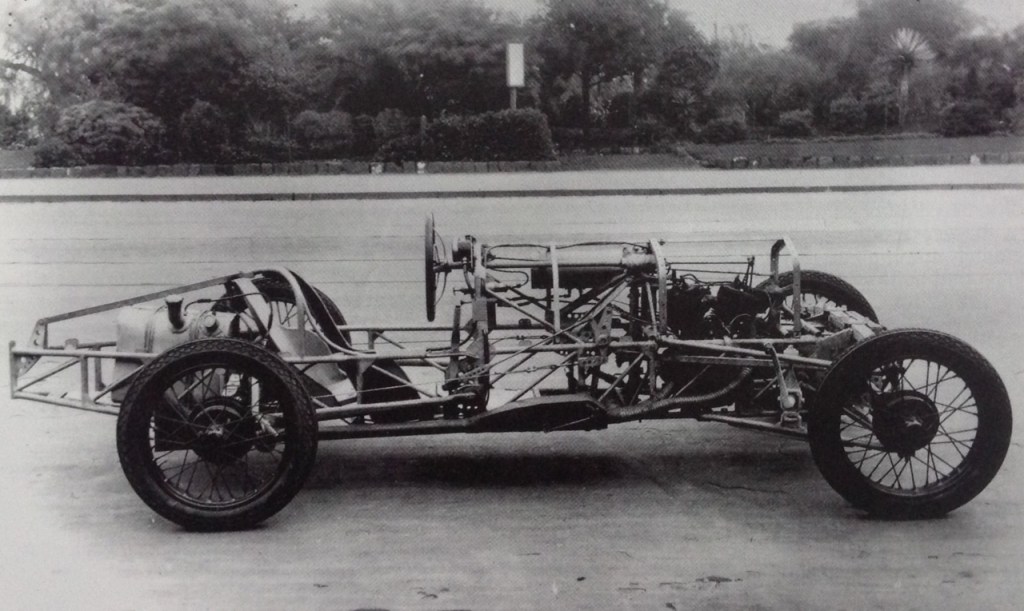
The driver of the Elfin Catalina is Ted Townsend, a Dunlop tyre fitter. The car was built by Garrie Cooper and his artisans at Edwardstown, an Adelaide suburb for Dunlop Tyres to use on the Lake Eyre salt to assist in determining certain characteristics of the tyres fitted to Donald Campbell’s Bluebird during 1963/4.

The Elfin Catalina’s normal use was in Formula Junior or 1.5-litre road racing events. In LSR test application it was fitted with miniature Bluebird tyres and driven over the salt to determine factors such as the coefficient of friction and adhesion using a Tapley meter.

“The Tapley Brake Test Meter is a scientific instrument of very high accuracy, still used today. It consists of a finely balanced pendulum free to respond to any changes in speed or angle, working through a quadrant gear train to rotate a needle round a dial. The vehicle is then driven along a level road at about 20 miles per hour, and the brakes fully applied. When the vehicle has stopped the brake efficiency reading can be taken from the figure shown by the recording needle on the inner brake scale, whilst stopping distance readings are taken from the outer scale figures.”

It’s generally thought the Elfin was running a (relatively) normal pushrod 1500cc Cortina engine with a Cosworth A3 cam and Weber DCOE carburettors for the Bluebird support runs.

And yes, the number of Elfin’s chassis was 6313. Was Donald Campbell aware of this? Certainly that could explain to the deeply superstitious man how on earth torrential rain came to this vast, dry place where rain had not fallen in the previous 20 years.

Dunlop’s Ted Townsend aboard the company Elfin Catalina. Car fitted with 13 inch versions of the 52 inch Bluebird wheels and tyres. Photo at Muloorina Station perhaps (Dunlop)
(S Dalton Collection)

Australian motoring/racing journalist, racer and rally driver Evan Green project managed the successful July 1964 record attempt on behalf of Oz oil company Ampol, who were by then Bluebird’s major sponsor. He wrote a stunning account of his experience that winter on the Lake Eyre salt which was first published in Wheels April 1981 issue.

His account of Andrew Mustard and his teams contribution to the project is interesting and ultimately controversial from Campbell’s perspective.

Andrew was Dunlop’s representative during the 1963 Lake Eyre campaign, he returned in 1964 as a contractor with the very large responsibility for the tyre preparation and maintenance of the circa 22 km long salt track.

Green describes the incredibly harsh conditions under which the team worked “…Mustard…spent weeks with his men on the salt, working in the sort of reflected heat that few people could imagine let alone tolerate…Men frozen at dawn were burned black at midday. Lips were cracked and refused to heal. Faces set in leathery masks, creased by the wrinkles of perpetual squints.”

Evan Green picks up the challenges the track team faced, “The maddest thing is what’s being done to the track,” said Lofty Taylor, the gangling leader of the refuelling team. Lofty worked for Ampol, and I’d known him since the Ampol Trial days. l had enormous respect for his opinion. He was practical, versatile, prepared to move mountains if asked and yet able to detect the faintest whiff of cant at long distance.

He admitted he knew nothing about grading salt but pointed out that neither did anyone else, for the science of building record tracks on salt lakes was in its infancy. And he reckoned he knew as much about it as anyone else.

“They’ve been cutting salt off the top all the time,” he said. “All that grading and cutting is weakening it, and bringing moisture to the top.”

“What would you do, Lofty?” “Leave it alone for a while. Let the crust heal and harden.”

The track squad was ruffled. The problem, they said, was due to the constant interruptions to their work. They couldn’t get the surface right with the car (Bluebird) running every other day and cutting grooves in the salt. So runs were suspended. Andrew Mustard’s team would pursue their theories and have a clear week to try to bring the track up to record standard. Donald took some of the crew to Adelaide, for a few days break and all seemed calm. In fact, a major storm was brewing.

Massive 52 inch wheels and Dunlop tyres, the weight was huge, note the neat hydraulic lift to allow their fitment (unattributed)
(F Radman Collection)
Andrew Mustard aboard the Elfin on the salt- note Catalina’s rear drum brakes (Catalina Park)

“Mustard had brought an Elfin racing car to the lake. It was fitted with tyres that had scaled-down versions of the tread being used on Bluebird. He drove it to test such things as tread temperature and the coefficient of friction of the salt surface at different times of the day.

He usually drove the little single-seater down the strip before Campbell made a test run. On one occasion, he was driving the Elfin up the strip when Campbell was driving the Bluebird down the strip and the world’s highest speed head-on collision was avoided by a whisker, with a sheepish Mustard – spotting the rooster tail of white salt spray bearing down on him – spinning off the track.”

“One day during the lull, Ken Norris (Bluebird’s designer) and I went to the lake to see how the track work was progressing. To our astonishment, we found the CAMS (Confederation of Australian Motor Sport) timekeepers and stewards assembled at their record posts,” wrote Green.

“Andrew’s going for his records,” one of them said, and, seeing our bewilderment, gave us that ‘don’t tell me you don’t know about it look’. It seemed there had been an application made for attempts on various Australian class records for categories suiting the Elfin. Neither Ken nor I knew anything of it. Nor, it seemed, did Campbell, and when he returned that night there was an eruption. The track squad was sacked and Lofty Taylor given the job of preparing the strip.”

“What do you suggest?” I asked Lofty. “We should all go away for a couple of weeks and let the salt alone.”

Enjoy Greens full story of this remarkable endeavour of human achievement, via the link at the end of the article, but lets come back to Mustard and the Elfin, he wasn’t finished with it yet!

When the 1964 Bluebird record attempts were completed, Mustard, of North Brighton in Adelaide bought the Elfin from Dunlop.

It was in poor condition as a result of its work on the Lake Eyre salt, with the magnesium based uprights quite corroded. It was repaired over the end of 1963-64 and a single Norman supercharger fitted.

The car was then raced at Mallala race and for 1500cc record attempts in 1964 using the access road alongside the main hangars at Edinburgh Airfield (Weapons Research Establishment) at Salisbury, South Australia. The northern gates of the airfield were opened by the Australian Federal Police to give extra stopping distance. By then the specifications of the Norman supercharged Elfin included;

• a single air-cooled Norman supercharger driven by v-belts developing around 14psi. The v-belts were short lived, burning out in around thirty seconds,

• four exhaust stubs, with the middle two siamesed,

• twin Amal carburettors,

• a heavily modified head by Alexander Rowe (a Speedway legend and co-founder of the Ramsay-Rowe Special midget) running around 5:1 compression and a solid copper head gasket/decompression plate. The head had been worked within an inch of it’s life and shone like a mirror. The head gasket on the other hand was a weak spot, lasting only twenty seconds before failing. As runs had to be performed back-to-back within an hour, the team became very good at removing the head, annealing the copper gasket with an oxy torch and buttoning it all up again inside thirty minutes.

The Norman supercharged Elfin, operated by Mustard and Michael McInerney set the following Australian national records during it’s Salisbury runs on October 11, 1964:

• the flying start kilometre record (16.21s, 138mph),

• the flying start mile record (26.32s, 137mph), and

• the standing start mile record (34.03s, 106mph).

This was not 6313’s only association with Norman superchargers. The Elfin was later modified to have:

• dual air-cooled Norman superchargers (identical to the single Norman used earlier), mounted over the gearbox. The superchargers were run in parallel, with a chain drive. The chain drive was driven by a sprocket on the crank, running up to a slave shaft that ran across to the back of the gearbox to drive the first supercharger, then down to drive the second. The boost pressure in this configuration had risen to 29psi,

• two 2″ SU carburettors (with four fuel bowls) jetted for methanol by Peter Dodd (another Australian Speedway legend and owner of Auto Carburettor Services),

• a straight cut first gear in a VW gearbox. The clutch struggled to keep up with the torque being put out by the Norman blown Elfin, and was replaced with a 9” grinding disk, splined in the centre and fitted with brass buttons, it was either all in, or all out!

In twin Norman supercharged guise the racer was driven by McInerney to pursue the standing ¼ mile, standing 400m and flying kilometre records in October 1965. Sadly, the twin-Norman blown Elfin no longer holds those records, as the ¼ mile and flying kilometre (together with a few more records) were set at this time by Alex Smith in a Valano Special.

The day after the 1965 speed record trials (Labour Day October 1965), McInerney raced the twin-Norman supercharged Elfin at Mallala in Formule Libre as there was insufficient time to revert the engine back to Formula II specifications. The photo above shows McInerney at Mallala.

The car was used for training South Australian Police Force driving instructors in advanced handling techniques, and was regularly used at Mallala and other venues (closed meetings for the Austin 7 club, etc).

It was sold by Mustard to racer/rally driver Dean Rainsford in 1966, by then without the Norman supercharger it ran a mildly tuned Cortina engine. In the ensuing 26 years it passed through nine more owners before Rainsford re-acquired it in 1993. After many years of fossicking he found the original 1965 Mustard/McInerney supercharged engine but sadly without it’s Norman supercharger.

The Elfin is retained by Rainsford and is often on display in his Adelaide office. The car made a rare public appearance at Melbourne’s 2014 Motorclassica to celebrate the 50-year anniversary of Campbell’s land and water speed records set in Australia. The car was amongst other Campbell memorabilia.

Evan Green: ‘How Donald Campbell Broke The World LSR on Lake Eyre’…
https://www.whichcar.com.au/features/classic-wheels/classic-wheels-donald-campbell-and-his-bluebird-car-world-speed-record

Etcetera…

Credits…

Article by Evan Green originally published in Wheels magazine April 1981, Andrew Mustard thread on The Nostalgia Forum particularly the contributions of Stephen Dalton, Fred Radman, Theotherharv and Mark Dibben. Stephen Dalton, Fred Radman and Catalina Park Photo Collections, Dunlop

Tailpiece: Elfin Catalina Ford ‘6313’, Motorclassica 2014…

(Pinterest)

Finito…