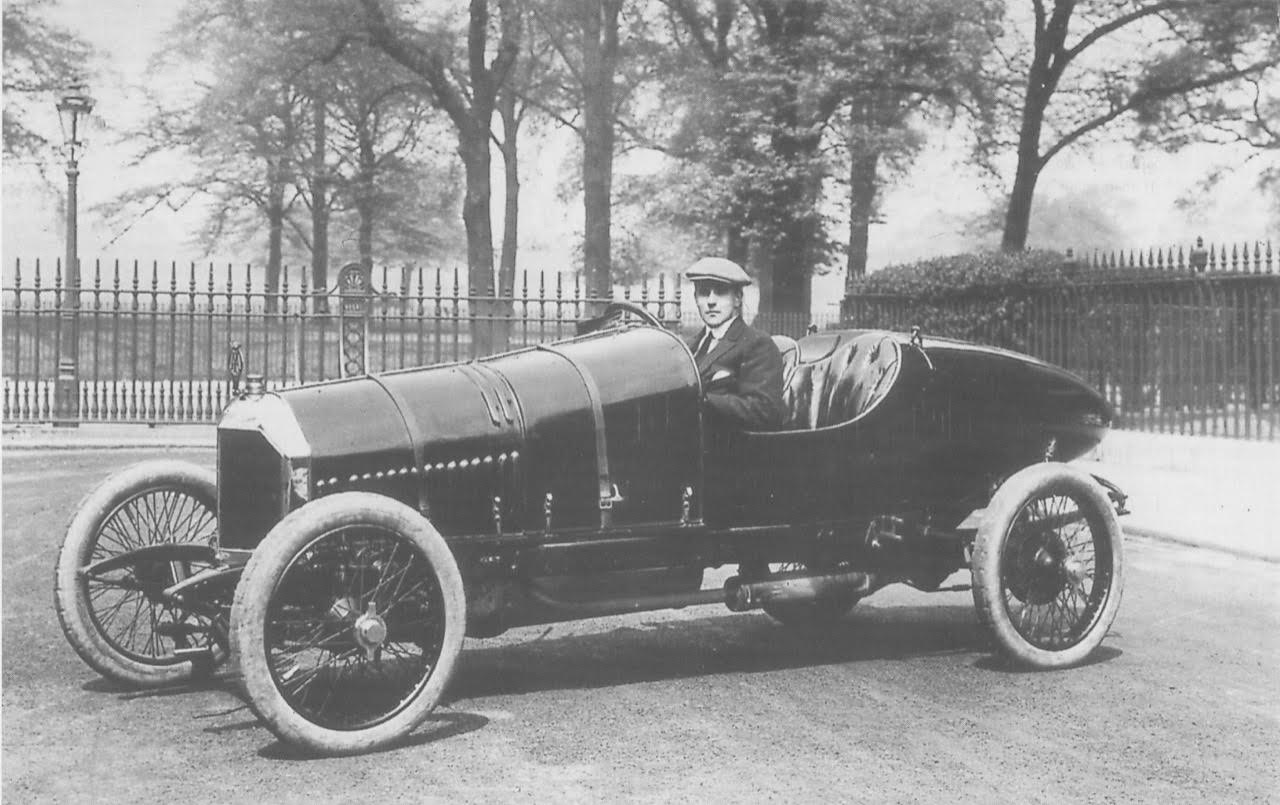
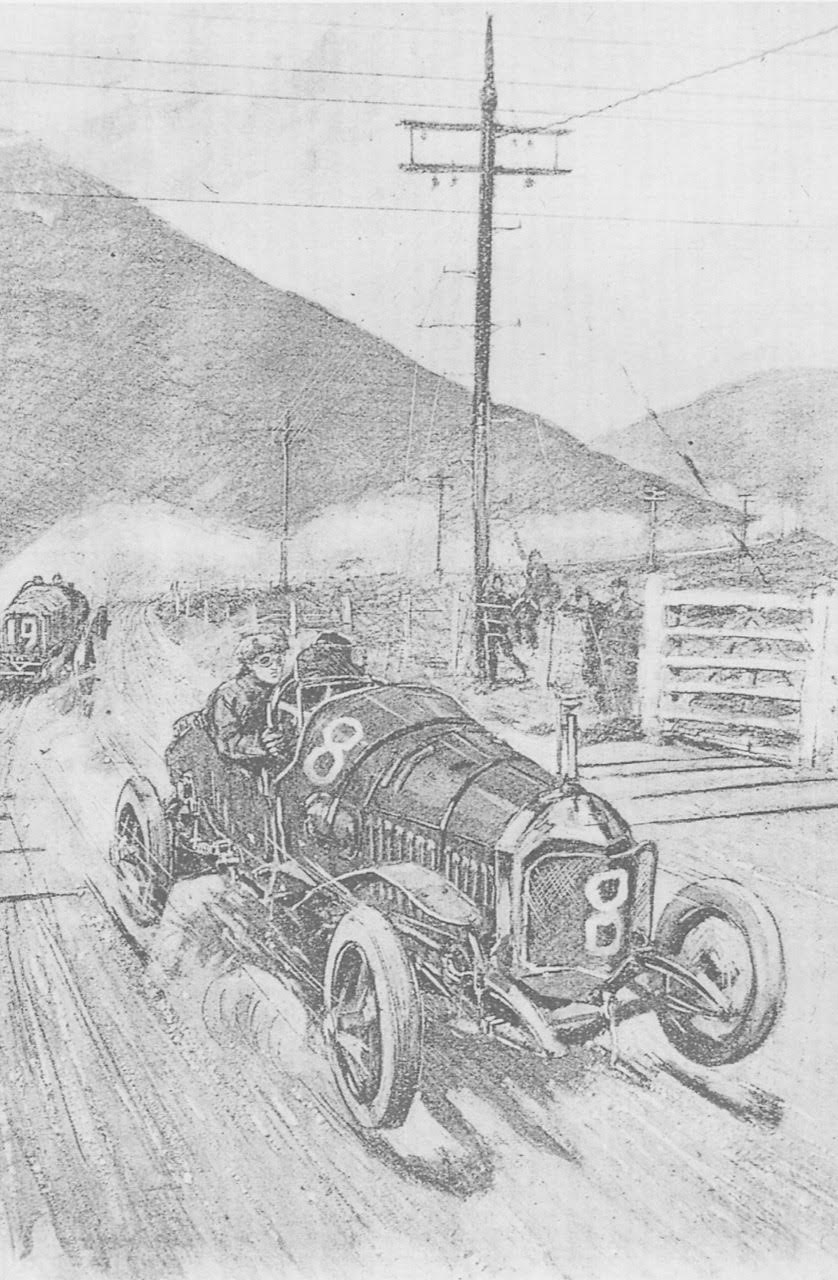
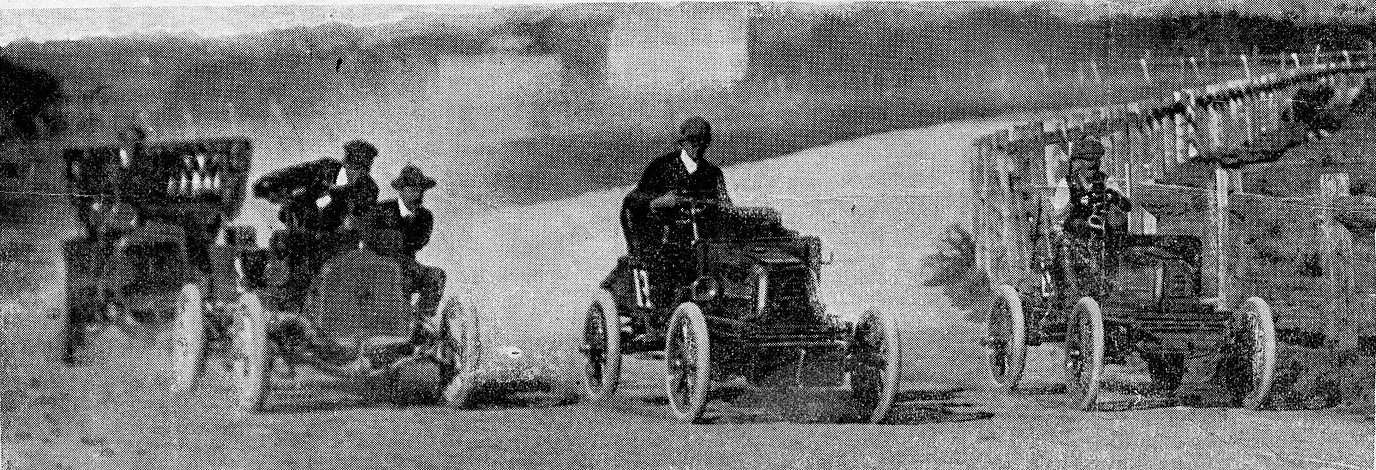
Posts Tagged ‘Australian Motor Racing History’

(G Smedley)

Love Geoff Smedley’s caption to the photograph of he and Austin Miller at Bakers Beach, Tasmania, “Now just lean on the loud pedal and you could become famous.”

The car is Aussie’s Smedley modified Cooper T51 Chev, that morning on Monday November 20, 1961 they did indeed set a new Australian Land Speed record at 163.94mph. Click here for a feature on this amazing achievement by a small team of talented men; Aussie’s Land Speed Record… | primotipo…

(D Harvey)

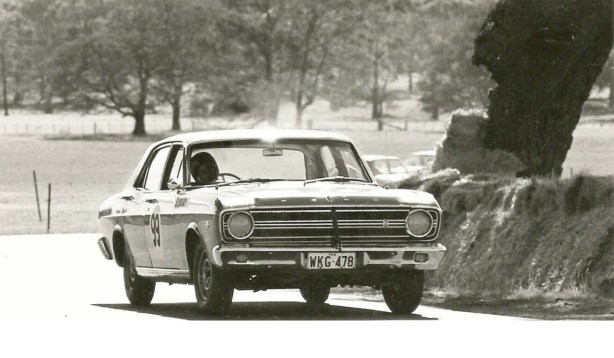
Lets stay at the beach for a minute, above is John Hicks’ Holden FJ, at King Edward Park Hillclimb, Newcastle in 1967 with the Pacific Ocean as a backdrop.
(B Edmunds)

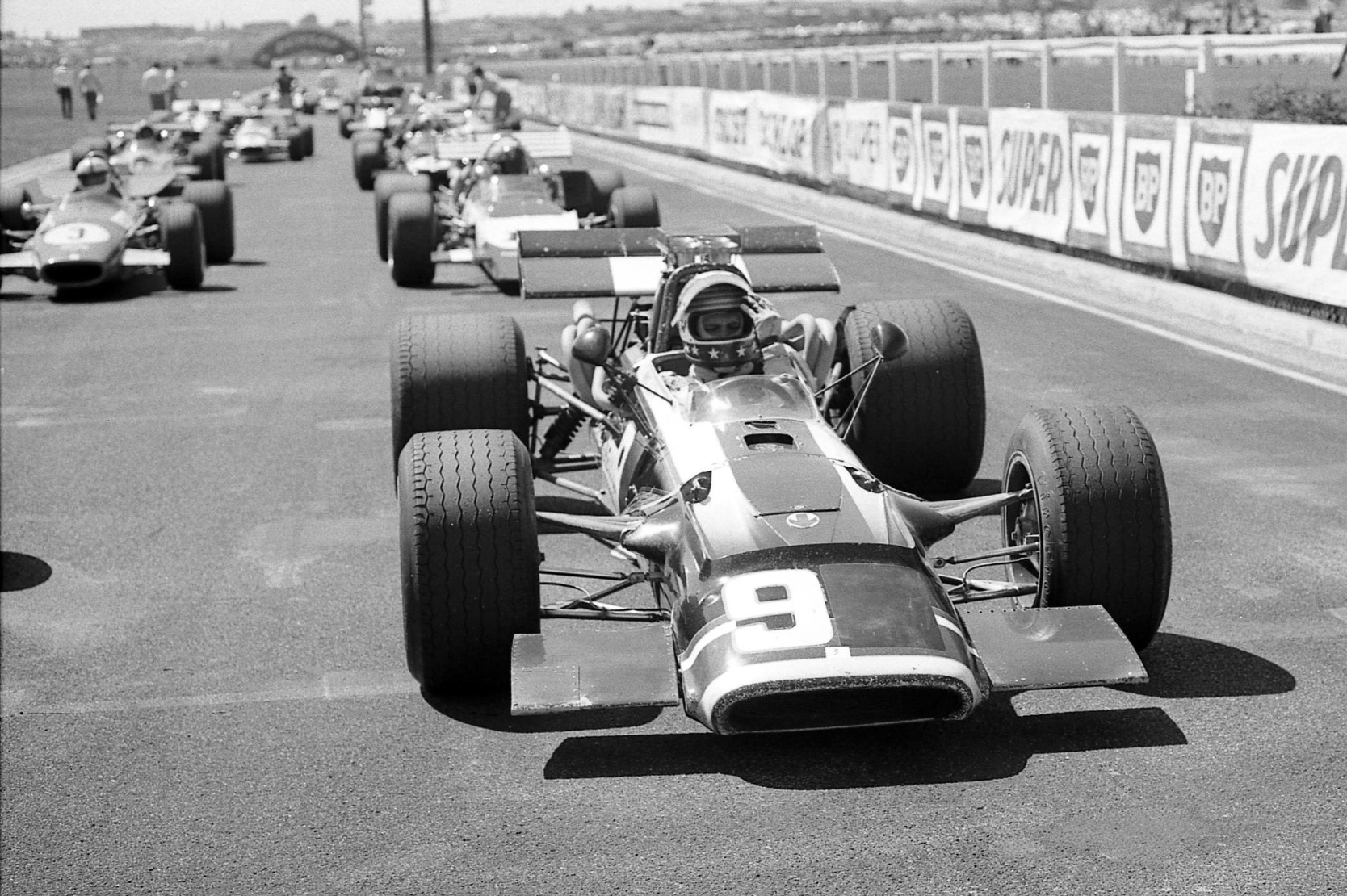
I never thought Mike Goth’s rebodied Surtees TS5 Chev was the most attractive of cars but Barry Edmunds, the photographer and lifelong Alfista, has captured the machine nicely on the Sandown International grid in 1970.

Behind him is Ron Grable’s shovel-nosed McLaren M10B Chev, and to the left John Harvey in Bob Jane’s Brabham BT23E Repco, the race was won by Niel Allen’s M10B, all three of the other cars mentioned were DNFs.

(J McKeown Collection)

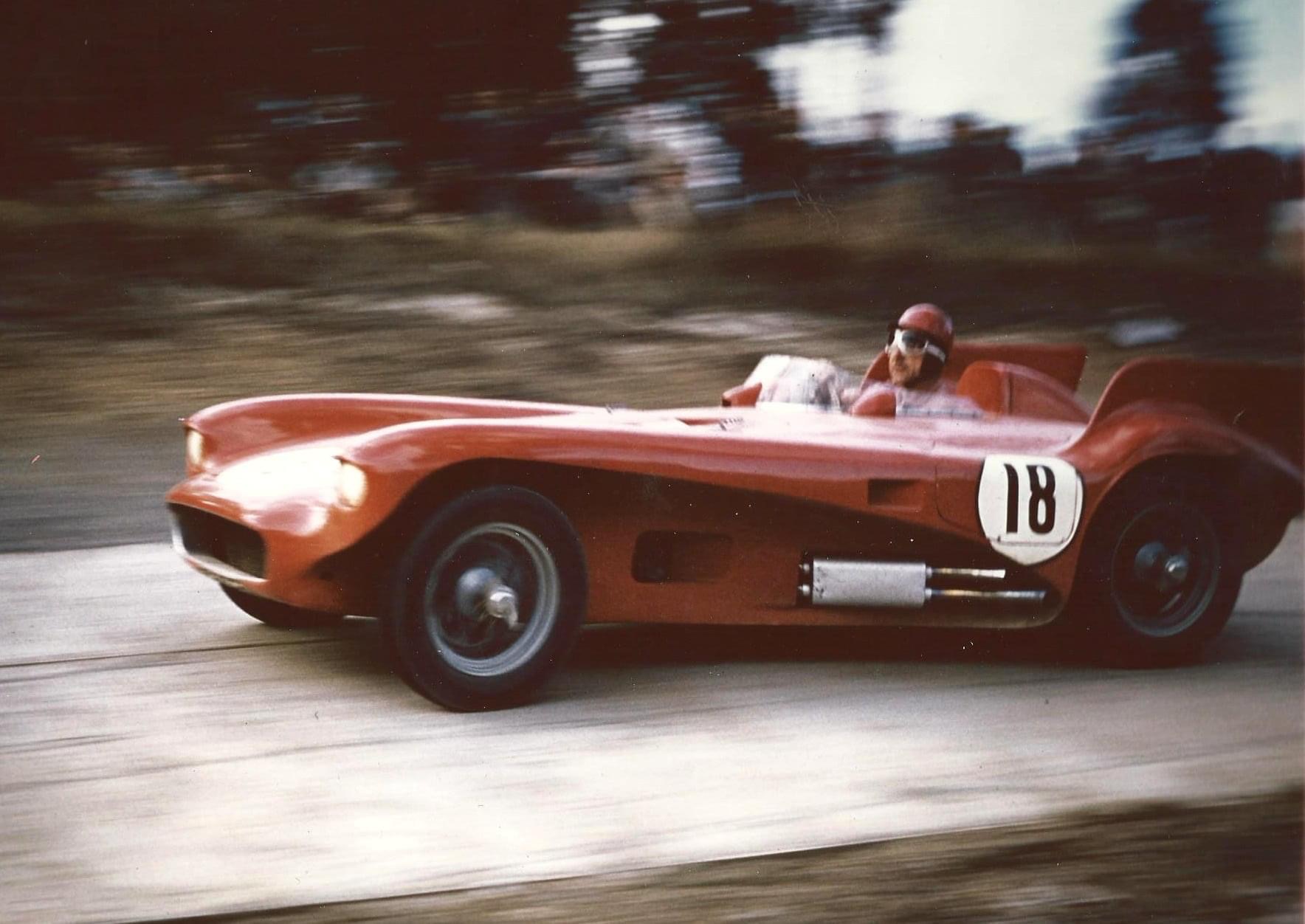
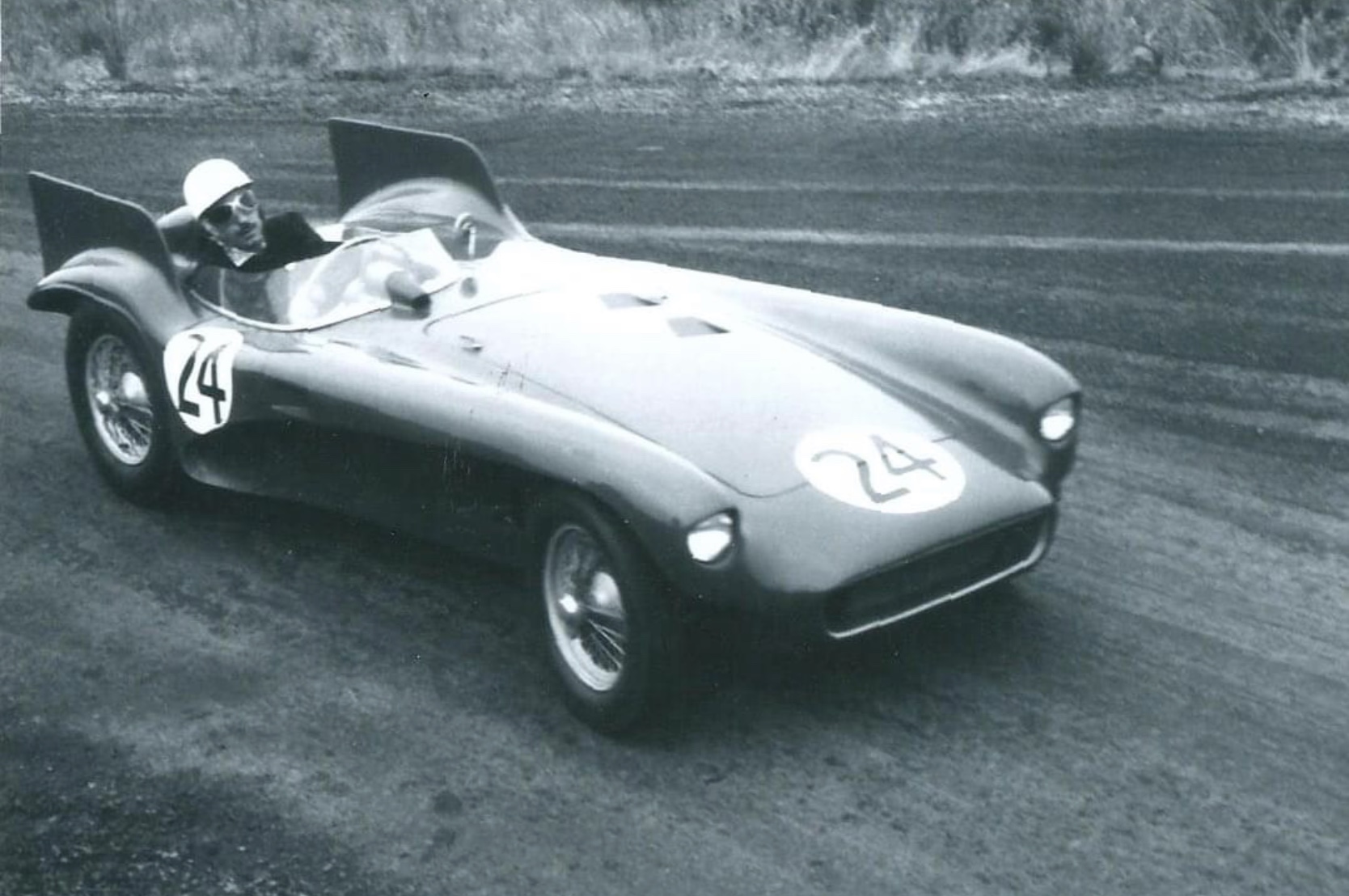
Lou Molina bags-em-up at Templestowe Hillclimb in 1959.

The Molina Monza Special was fitted with a supercharged Repco-Hi Power headed Holden Grey-six so it didn’t lack low end grunt!

I love the avant garde Brian Burnett styled and built body, he was a man of great talent. One of these days I’ll get around to writing about this fabulous car, which is extant.
Templestowe 1958 (J McKeown Collection)
Lou at Phillip Island in 1959 (Jim McKeown Collection)
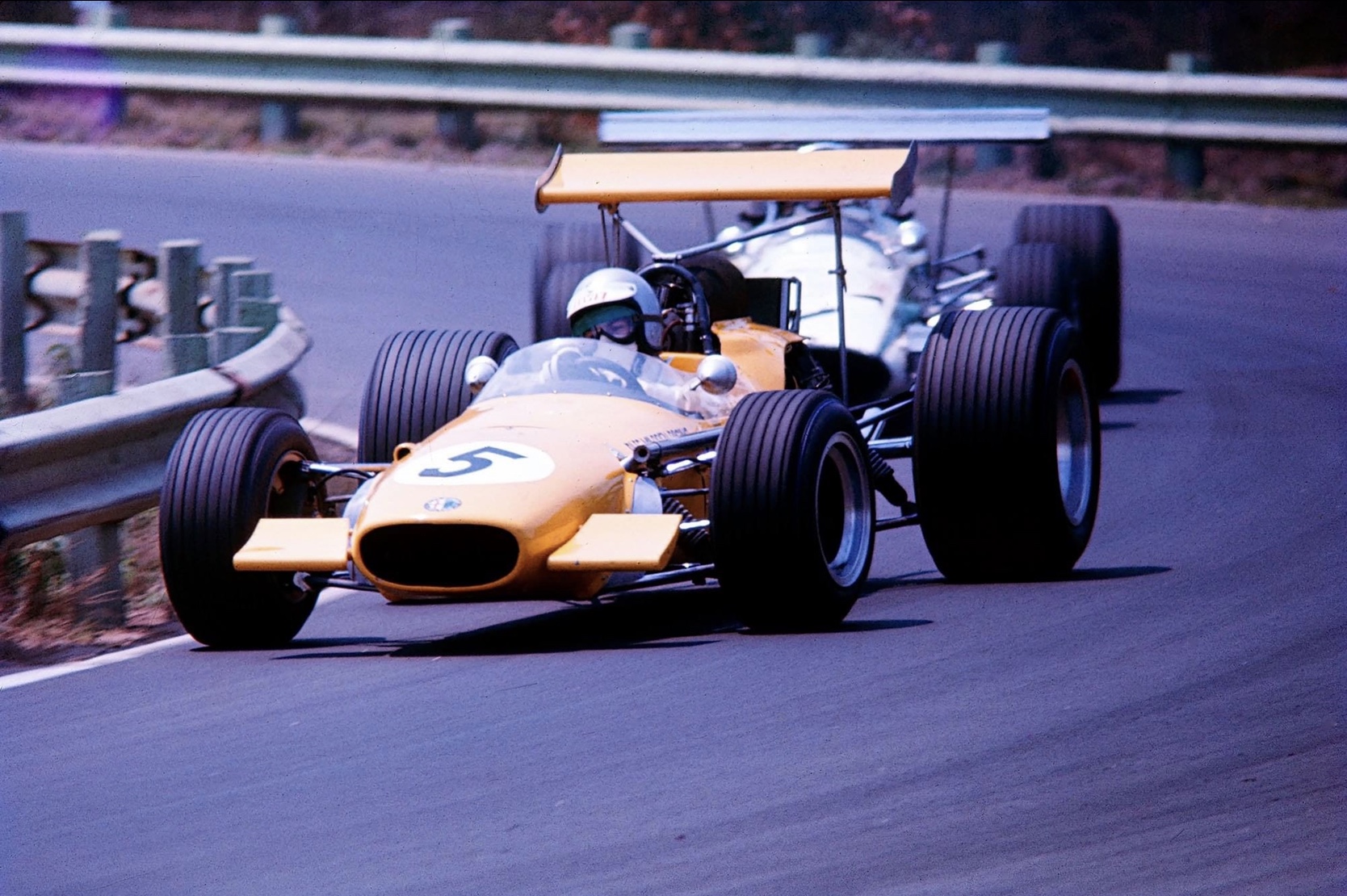
(D Simpson)

Kevin Bartlett leads Leo Geoghegan through the Warwick Farm Esses during the Hordern Trophy Gold Star round in December 1968, Brabham BT23D Alfa Romeo T33 V8 and Lotus 39 Repco.

KB won the race from pole with Phil West, Brabham BT23A Repco second. Leo retired with head gasket failure. See here for a feature on the Brabham; Mellow Yellow… | primotipo… and here for one on the Lotus 39; Jim Clark and Leo Geoghegan’s Lotus 39… | primotipo…
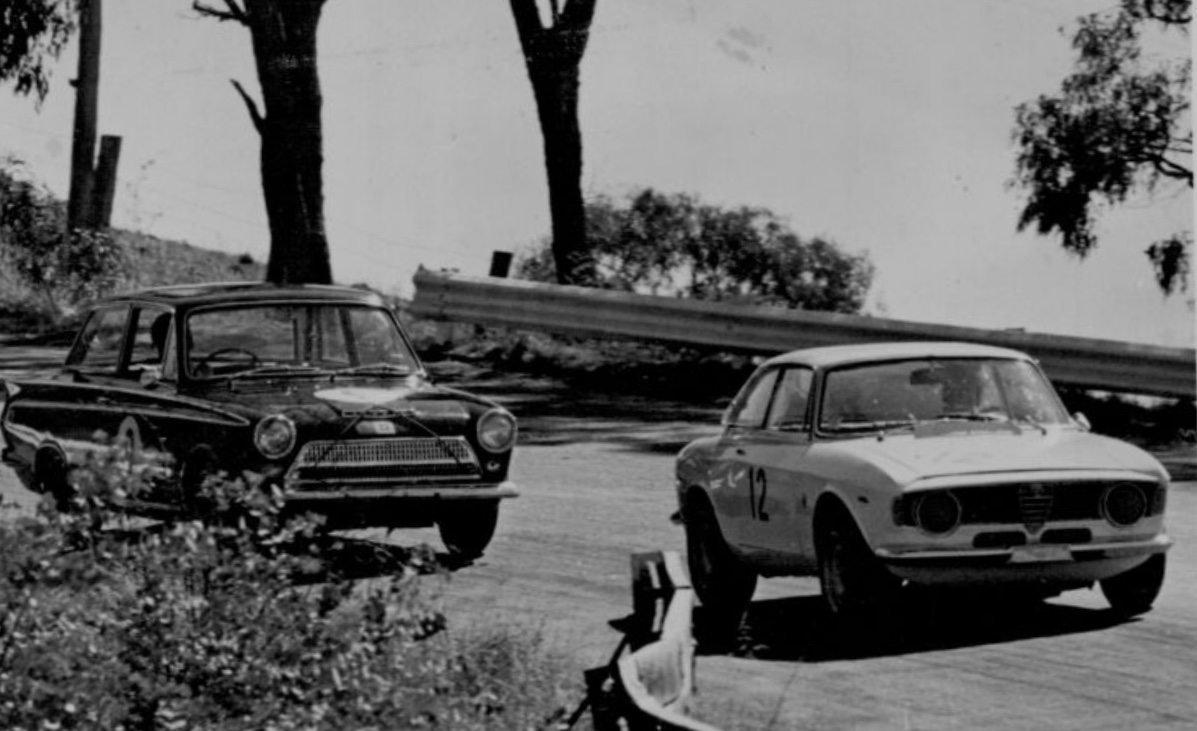
(Getty Images)

Another one of Bartlett, this time in Alec Mildren’s second Alfa Romeo GTA ‘LHD’ coming down the mountain at Mount Panorama circa 1967, with George Garth’s Ford Cortina GT in close attendance. Click here for an epic on the Mildren GTAs; The Master of Opposite Lock: Kevin Bartlett: Alfa Romeo GTA… | primotipo…

Looks like a Covid 19 Australian Grand Prix win for Max Stewart at Oran Park in November 1974, hardly a soul to be seen from this angle, but there was a big crowd in attendance.

He won in his Lola T330 Chev from John McCormack’s Elfin MR5 Repco and Graeme Lawrence, Lola T332 Chev, see here for a report on the race; 1974 Australian GP, Oran Park… | primotipo…

(A Polley)

This one made me laugh, it’s Ed Polley’s crew travelling across the Great Brown Land during the summer of ’77.

It looks pretty dry too- I’m not sure where the long paddock is. Polley raced his Polley EP1/Lola T332 Chev in two Rothmans rounds, 11th at Surfers Paradise was his best result.
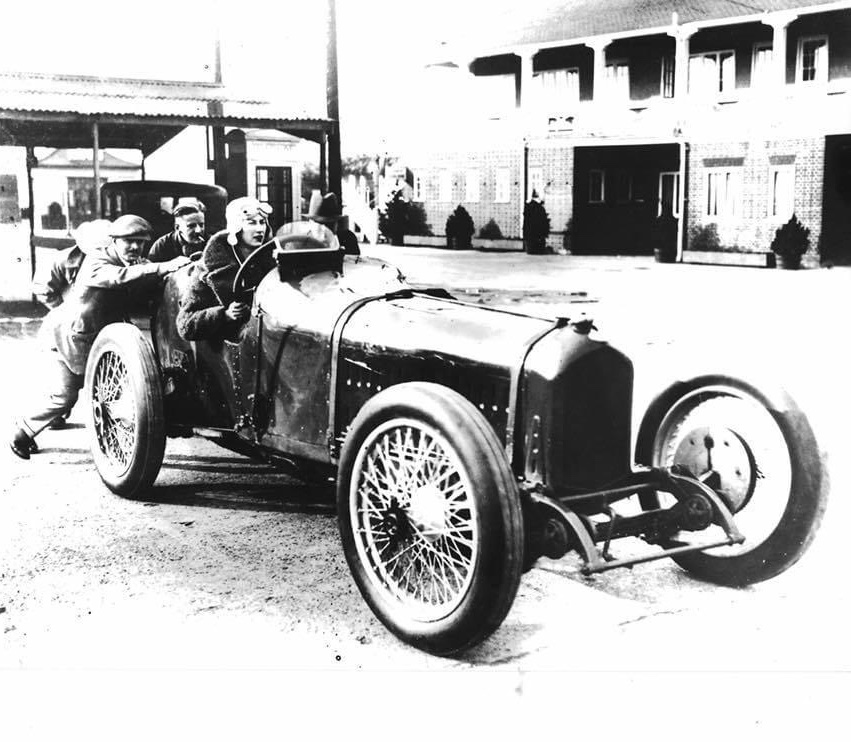
(D Smallacombe)

Amazing shot of Joan Richmond aboard her 1920 Ballot 3/8 LC at Brooklands during 1934.

This 3-litre straight-eight machine was second at Indianapolis in 1920 with Rene Thomas at the wheel. The following year Jules Goux won the 1921 Italian Grand Prix in it before it was raced by Sir Malcolm Campbell, and then Jack Dunfee from 1923.

Richmond bought the car from Dunfee, racing it throughout 1934, she matched Campbell’s times of years before but a lack of charity from the handicapper meant she never won outright. The engine threw a rod later in the season at which point she sold the car. There is a bit about Joan here; Werrangourt Archive 6: Safety Beach, Dromana Speed Contest… | primotipo…
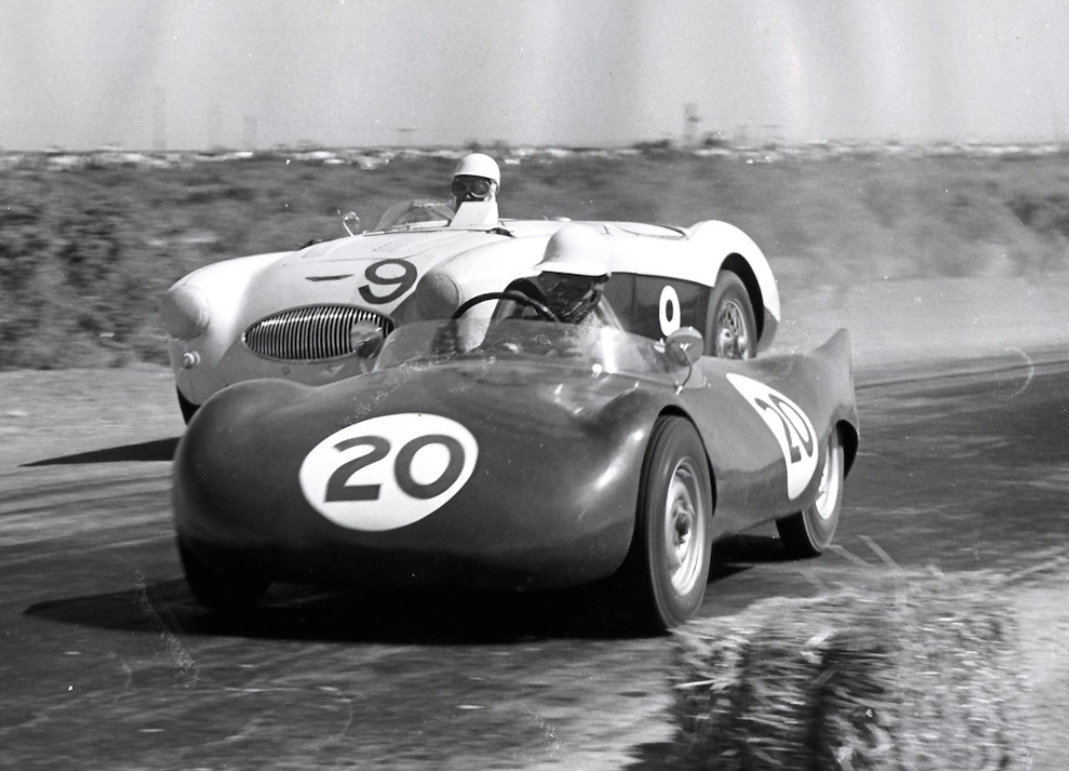
The Jim Goldfinch Austin Healey 100S lining up an outside pass on John Taylor’s attractive Taylor-JAP at Port Wakefield in 1958.

100S #AHS3906 had some handy steerers in its day including Stan Jones, Ron Phillips and Goldfinch. Suss Tony Parkinson’s wonderful website on this car; AHS 3906 1955 – Austin Healey 100S
(MotorSport)

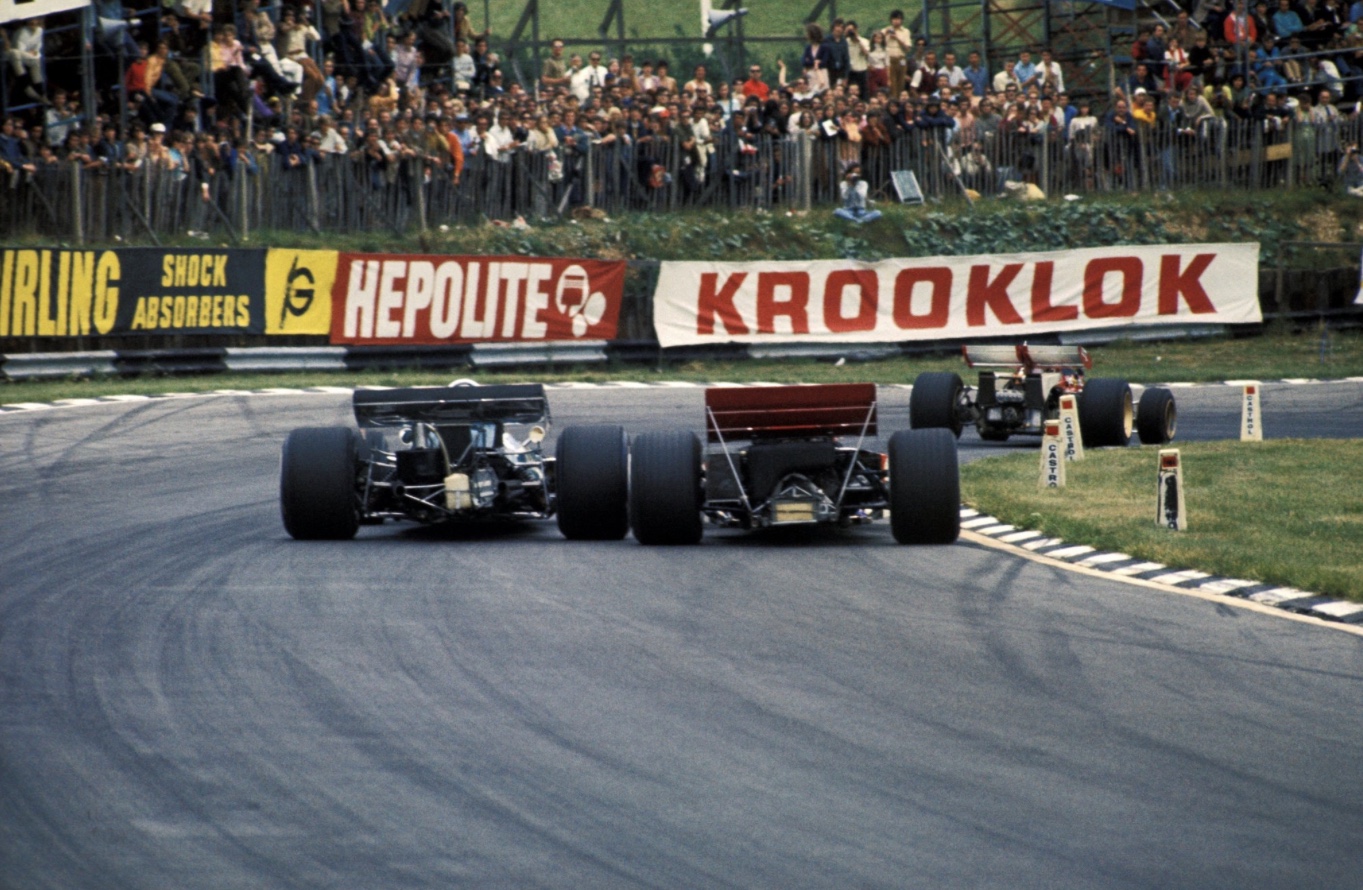
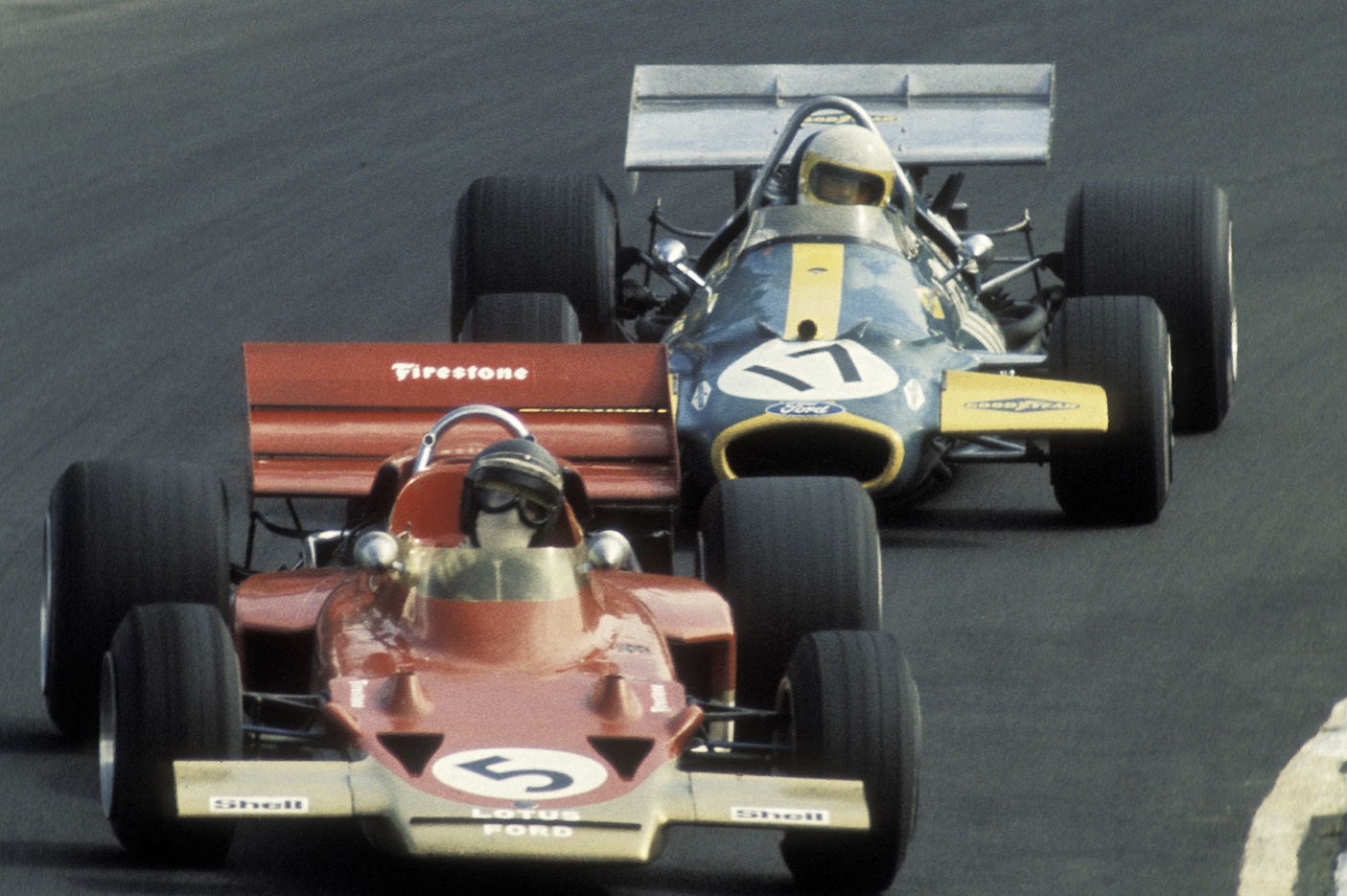
Jack Brabham and Jochen Rindt up close and personal at Brands Hatch during the 1970 British Grand Prix.

It’s Paddock, with Jochen making a move up the inside of Jack – absolute trust and respect between these two fellas – Brabham had his measure that day too, passing and then driving away from him until the last lap, last corner hiccoughs due to lack of fuel.

A costly error by Nick Goozee, who had left the fuel mixture on rich after the engine was warmed up, rather than the usual race setting resulted in excessive fuel consumption. See here for a dissection of the cars and race; Jack’s BT33 Trumped by Chunky’s 72… | primotipo…
(MotorSport)
(S Scholes)

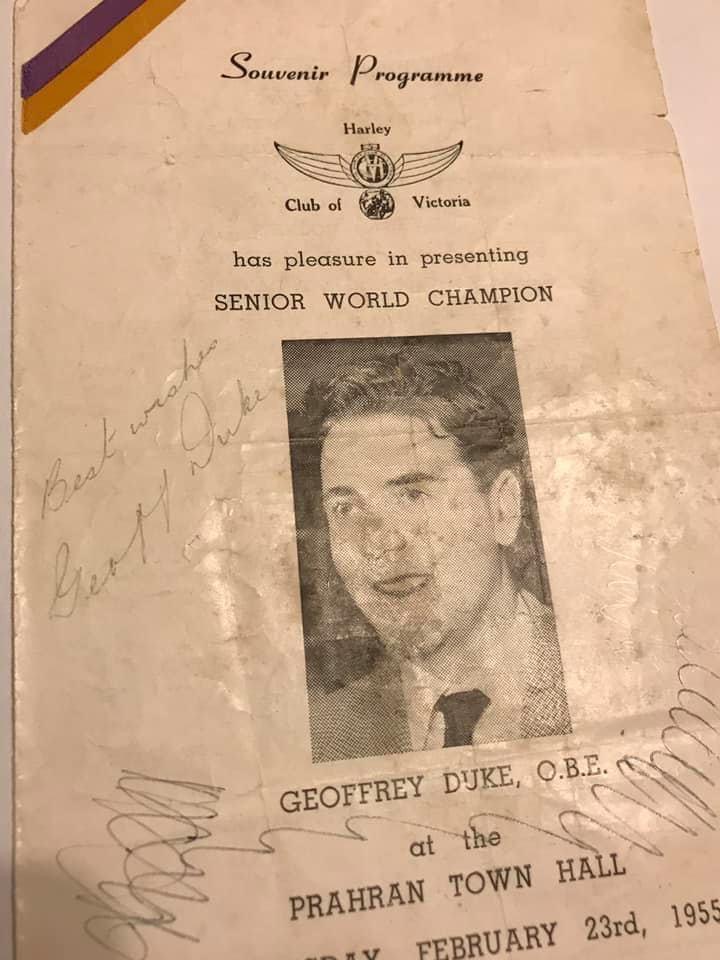
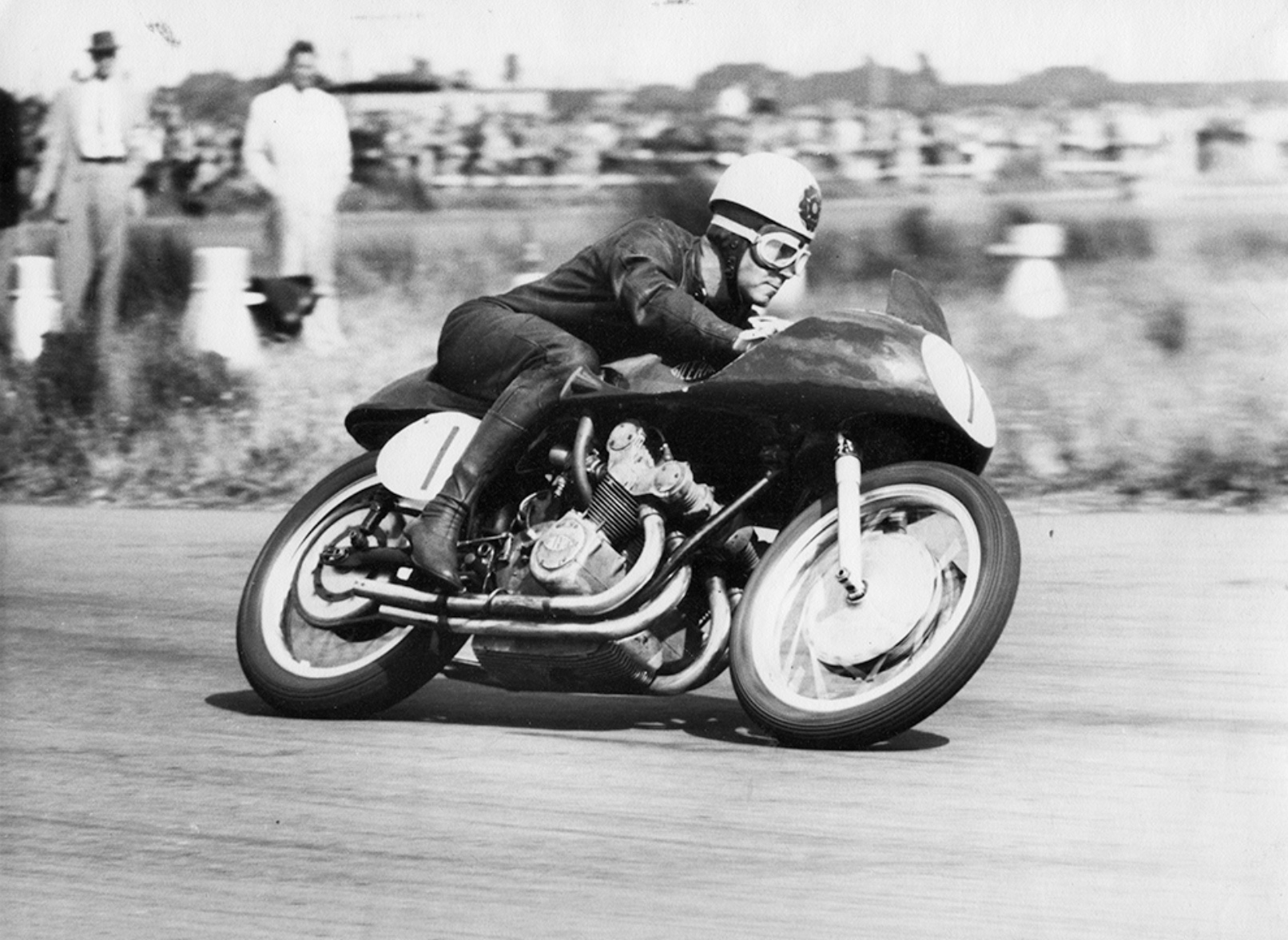
Pretty amazing Fishermans Bend shot during the February 1955 meeting in which multiple World Motorcycle Champion Geoff Duke blew the crowd away with the sight, sound and speed of his Gilera 500-4.
Perhaps here he is leading Harry Hinton. The shot below is at Bandiana Army base near Albury in late January and shows the lines of the handsome machine to great effect.
(AMCN)
(J Jarick)

In each of the cities Duke raced he spoke to packed meetings of motor cycle fans, the cover of the program above is for one of those events in Chapel Street, Prahran, in Melbourne’s inner south. See here for a couple of pieces on Geoff, bikes; Geoff Duke, Gilera 500/4, Australia 1954… | primotipo… and cars; Geoff Duke: Norton, Dutch GP, Assen 1952… | primotipo…

Elfins abroad.

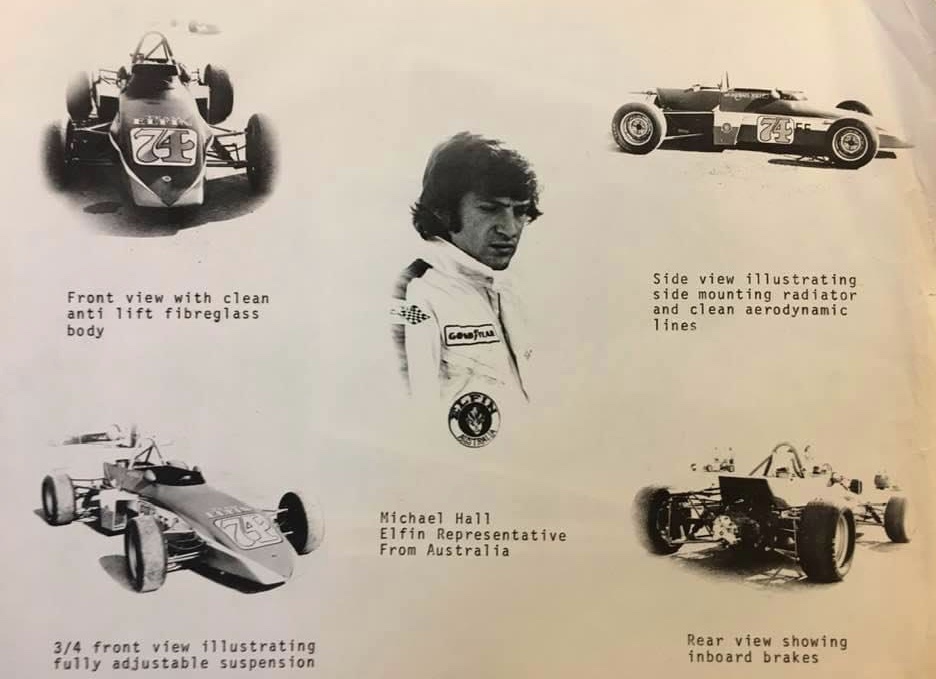
The car above is Henri le Roux’s Elfin Mallala Ford in South Africa during 1964, circuit unknown. The montage below is of Australian, Mike Hall and his Elfin 620 Formula Ford in the United States during 1974. See here for a piece on Elfin exports; African Elfins… | primotipo…
(Classic Cars Rhodesia)

Paul Hawkins on the way to a Rhodesian GP win on December 1, 1968. He won the 20 lap race for sportscars in his Ferrari 350 Can Am #0858.

Hawkins bought the Ferrari P4 – converted to Can-Am specifications in later 1967 – from David McKay’s Scuderia Veloce in late 1968 and had a very successful African tour with it in late 1968 and early 1969. See here; Ferrari P4/Can-Am 350 ‘0858’… | primotipo…

(J Ebrey)

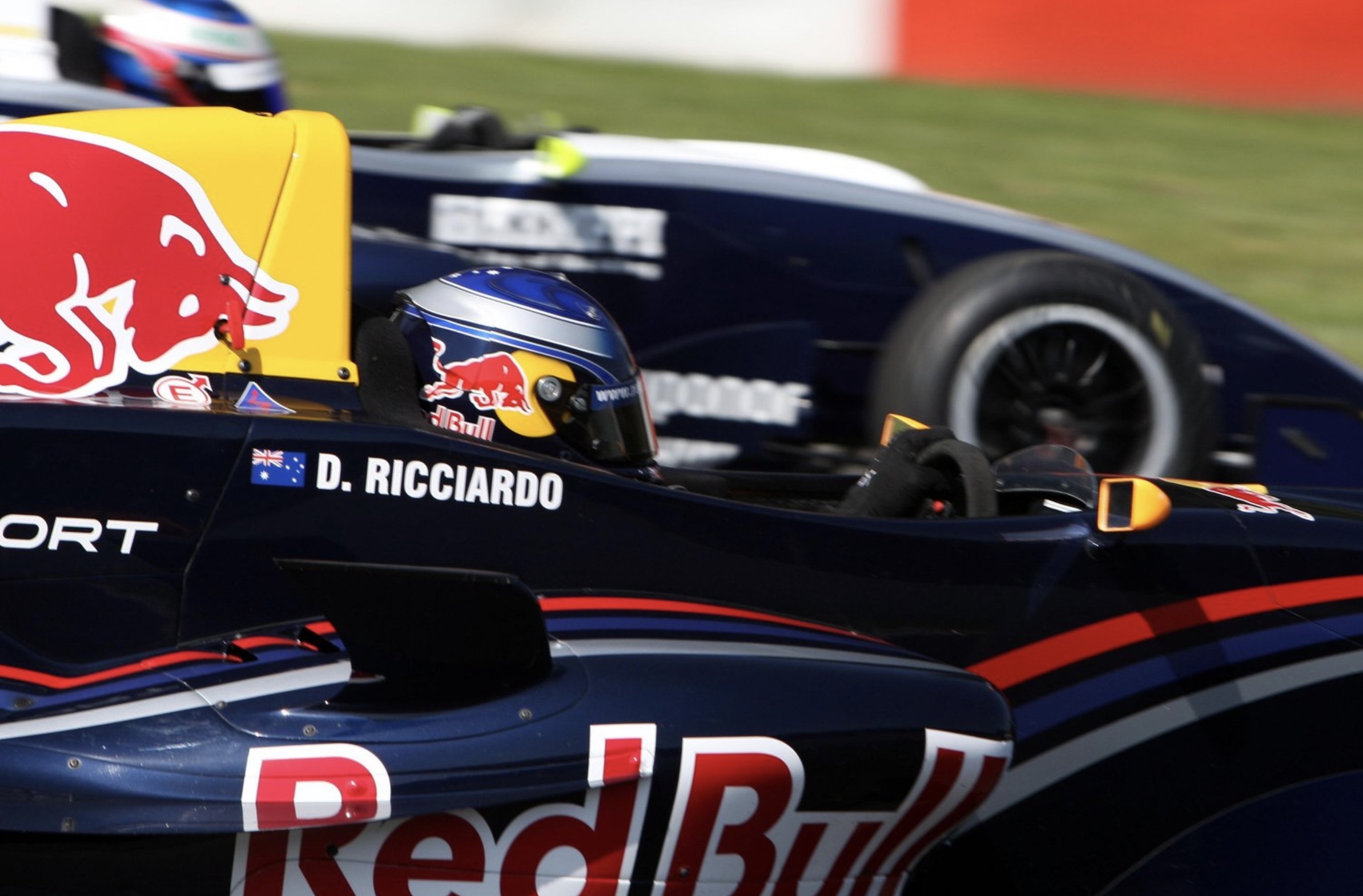
Dan Ricciardo on the way to winning the first round of the 2009 British F3 Championship at Oulton Park aboard his Dallara F309 VW on 13 April.

He won both races that afternoon and others at Silvertone, Spa and Brands Hatch that season to win the title by nearly 90 points from Walter Grubmuller’s Dallara F309 Mercedes. Formula Renault 3.5 beckoned on a fast climb to F1 with HRT in 2011.
(Red Bull)
(HMRPR)

Munro Abroad.

I hate vinyl roofs, surely the ultimate Lygon Street woggerisation accessory of the 1970s? Here Dirk Marais puts one to good use at Kyalami, South Africa in 1970. His Holden Monaro GTS350 ran in the Star Production Cars class, assistance welcome Peter Ellenbogen!

(G Smedley)

Grass track racing at the Elphin Showgrounds, Launceston, Tasmania in the 1950s.

The late Geoff Smedley commented, “It was always fun to have a race on the show ground arena after the main cattle parade but a winner could never be picked thanks to all the bullshit!” Geoff’s mount, liberally sprayed with said shit, is a Triumph TR2, I think.

(G Smedley)
(Road Rave)

Fred Foster’s Holden Grey twin-cam dates to late 1952.

Two engines were built, both were used in boats, only this one survives. Fred Foster was a Brisbane engineer, “a self taught and fulltime metallurgical genius”, the design was “based on some $5 plans chalked on his factory floor.”

There were separate castings for each cam cover, another front cover hides the chain driven camshafts underneath, and auxiliary drives. Road Rave wrote that “The two head castings were modelled on the Norton Manx layout, the engine’s capacity was 132.5 square inches and gave 140 bhp with mild camshafts having 270 degrees duration.”

With six carbs, the skiff ‘Fossey’ took the American 135 cubic inch records from the V8/60 Flattie Ford V8s. Oh yes, he made a 132.5cid V12 from scratch, the alloy block and heads of which survive!
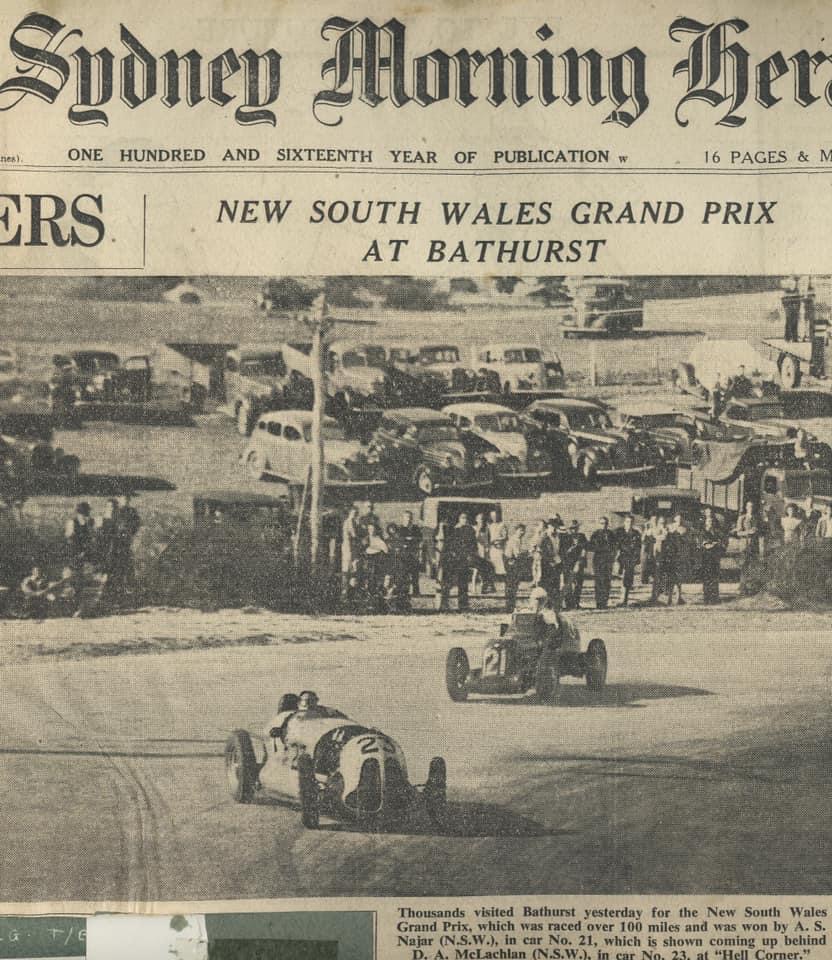
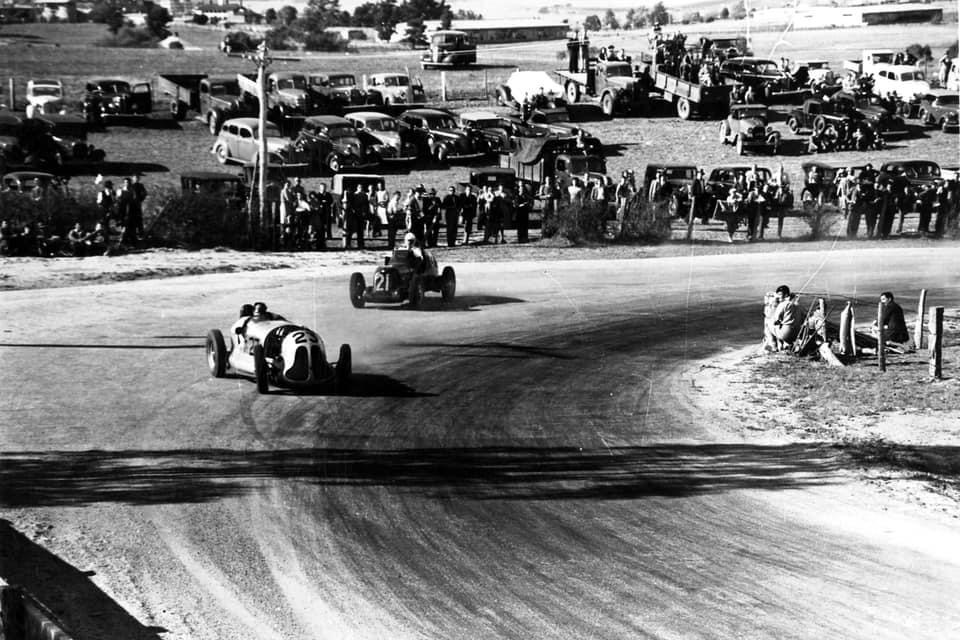
Doug McLachlan leads the winner of the 1946 New South Wales Grand Prix at Mount Panorama, Alf Najar.

The machines are MG TA  and  MG TB specials, Hell Corner appears to be covered in lubricant, hence the very wide line taken by the drivers to find some grip. See here for a feature on this October 11 handicap race; 1946 New South Wales Grand Prix | primotipo…
Alf Najar accepts the plaudits of his team after a job well done. The 25 lap race was dominated by MGs, Jack Nind’s TB Special was second and Alby Johnson’s TC third.

(unattributed)

Alan Jones at a soggy Snetterton during his 1973 breakthrough year in British F3, 13 April.

The car is a GRD 373 Ford-Vegantune, he was 11th that day in a race won by Tony Brise’ similar car. AJ finished second in the 1973 British F3 Championship, two points adrift of Brise. Jones had raced in the class since 1970, progressively working to the front of the hard fought proving ground.

The breaks fell his way from that point in Formula Atlantic and in F1 when ex-racer, dual British F3 champion, Harry Stiller, ran a Hesketh 308B Ford for Jones in 1975.

Jones contested the mid-April non-F1 championship BRDC International Trophy at Silverstone before racing in the Spanish, Monaco, Belgian and Swedish Grands Prix with fourth place in the crash shortened race at Montjuïc Parc, Barcelona his best finish.

At that point of the season Graham Hill picked him up. Jones raced the Hill GH1 Ford in Holland, France, Great Britain and Germany, his best placing was a fifth at the Nurburgring.

He later ruefully observed that the two World Champions for whom he raced, Hill and John Surtees were also the two most difficult people for whom he raced, both knew better on car set up than the bloke behind the wheel…

Motor Manual promotional, pre 1956 Albert Park Grand Prix cover with an all Italian front row.

It’s the start on the Moomba weekend Argus Trophy with Reg Hunt, Kevin Neal and Lex Davison up front in #2 Maserati 250F, Maserati A6GCM 2.5 and Ferrari 500/625, Hunt won from Davison and Neal.

Photo Credits…

Geoff Smedley, Dale Harvey, Barry Edmunds, Jim McKeown Collection, Dick Simpson, Getty Images, Adam Polley, David Smallacombe, Stephen Scholes, Joe Jarick Collection, Mike Hall, Classic Cars in Rhodesia, Jakob Ebrey, ‘HMRPR’-Historic Motor Racing Photos and Research, Road Rave, Chris Jewell, AMCN- Australian Motor Cycle News, Tony Parkinson Collection

Tailpiece…
(C Jewell)

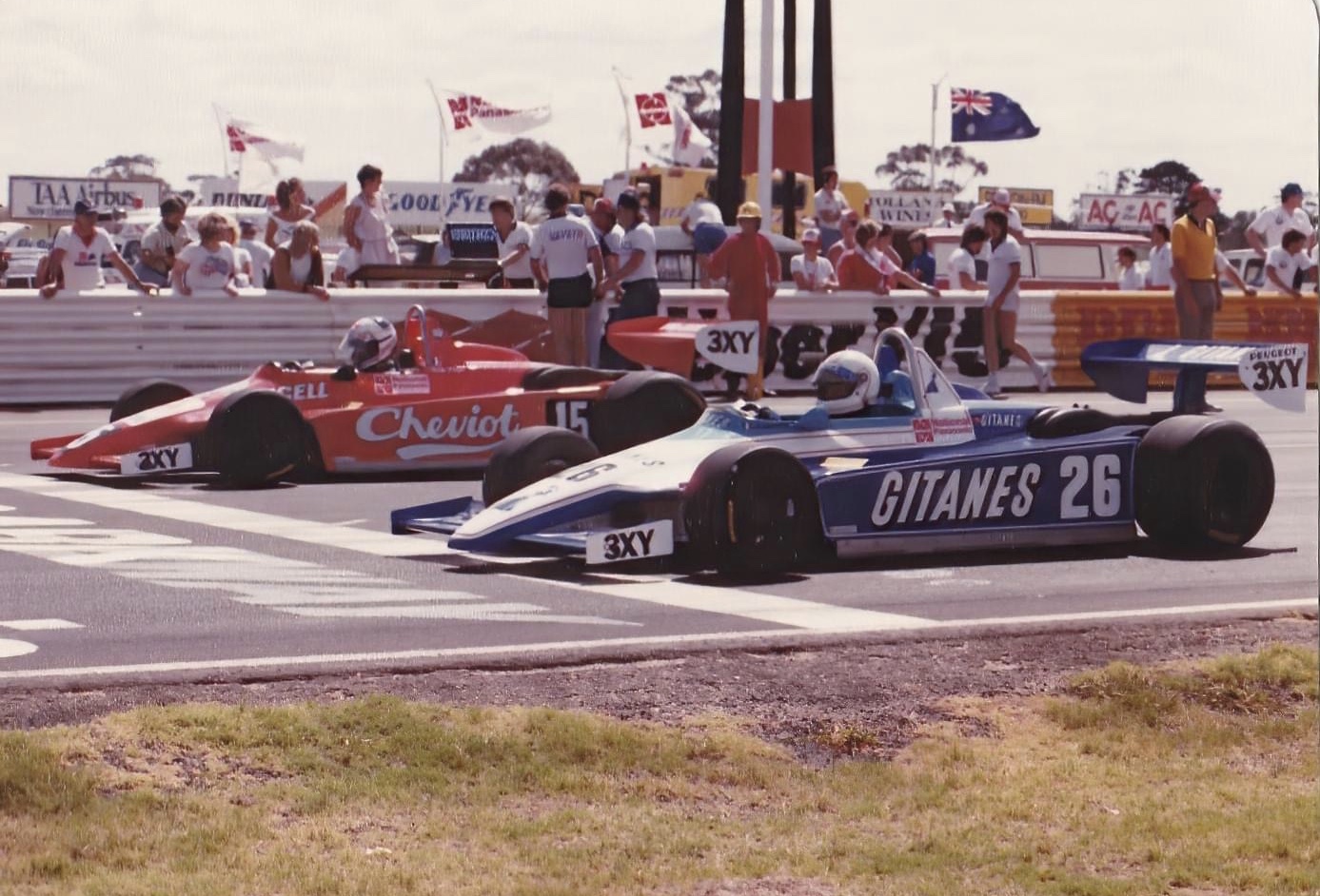
Frenchies. Alain Prost and Jacques Lafitte on the front row of the grid, 1982 Australian Grand Prix at Calder. Pole and second on the grid, 100 laps later they finished in that order aboard Bob Janes Ralt RT4 Ford BDAs, Roberto Moreno was third in another RT4.

That year the other internationals were Nelson Piquet, Alan Jones, Paul Radisich and Neil Crang. The Australian Aces of the day were Alf Costanzo, John Bowe and John Smith.

Finito…

Braydan Willmington’s S5000 data-gathering laps at Mount Panorama over Easter 2021, whetted many appetites with anticipation (D Kalisz)

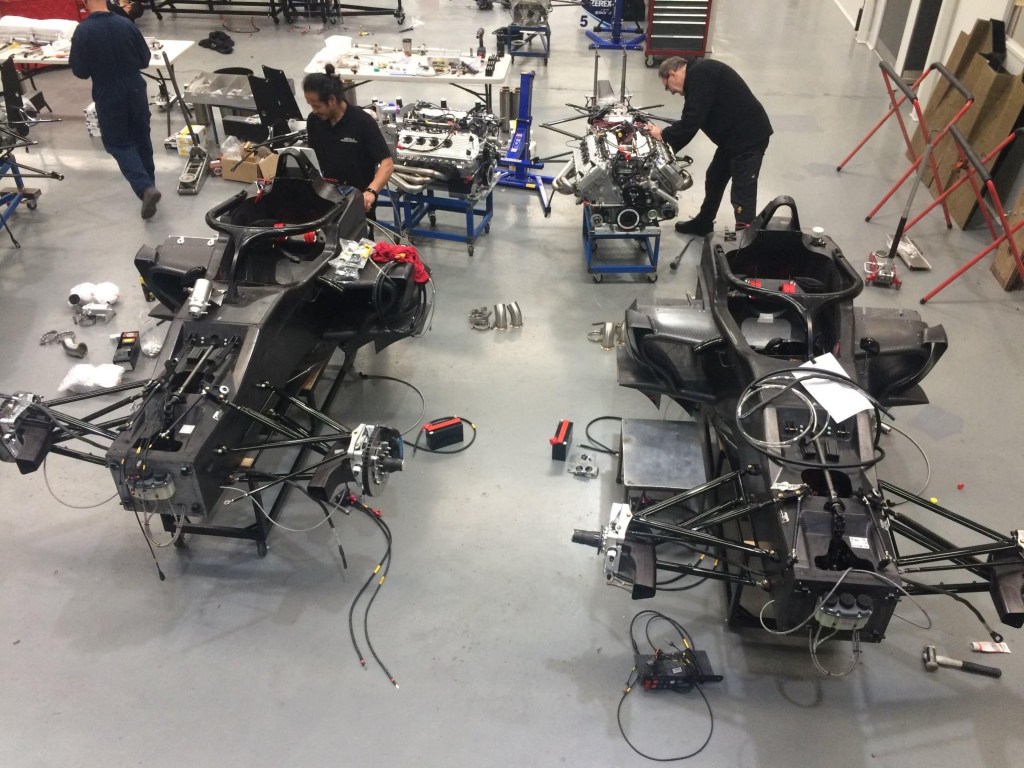
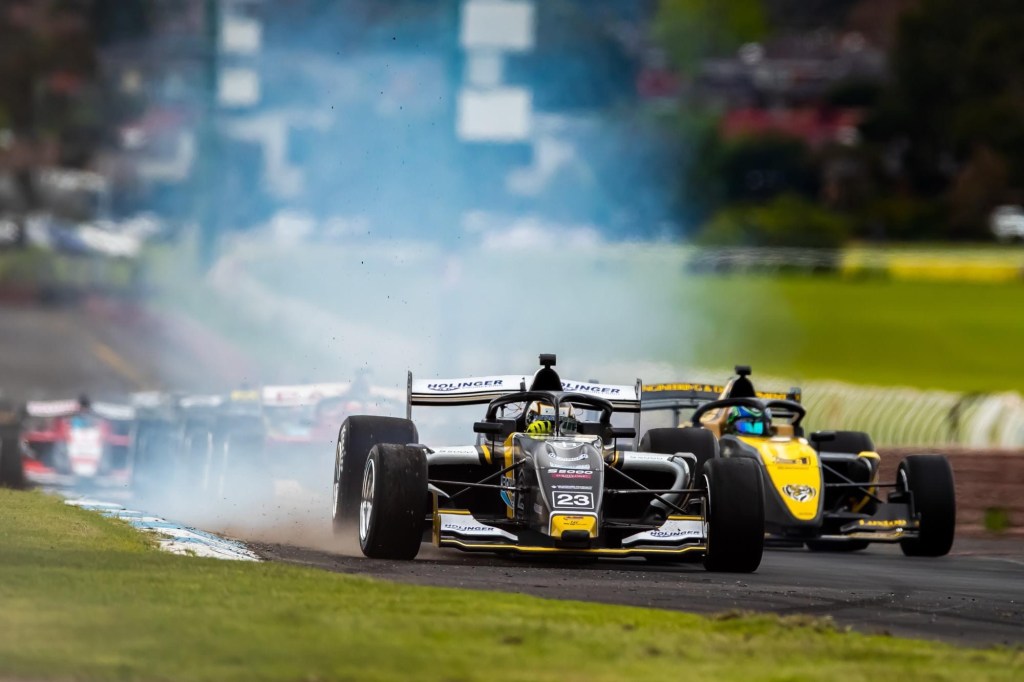
Australia has been starved of top level single-seater racing for years.

After a difficult birth, a full-field of Ligier JS F3-S5000 Ford 5.2-litre V8s faced the starter at Sandown in September 2019. Background to that point is provided in this article; Progress… | primotipo… More here too; Tasman Cup 2021… | primotipo… Not to forget this of course; Ligier JS F3-S5000 with Matich A50 F5000 Twist… | primotipo…

Covid 19 destroyed the 2020 season, but the category owners, Australian Racing Group ran a well supported four round (Symmons Plains, Phillip Island, Sandown and Sydney Motorsport Park), 12 race Gold Star (the Australian Drivers championship) between January and May 2021.

Rubens Barrichello testing at Phillip Island in advance of his participation in the first race at Sandown Park, in early September 2019. His opinion of the cars, free of the usual PR-crap, would be interesting (D Kalisz)
James Golding in his GRM S5000 at Baskerville in January 2021. This chassis raced, or rather demo’d sans mufflers on the Saturday – the music was awesome! (D Kalisz)

The very talented Joey Mawson was a worthy and popular winner with three race victories in a Garry Rogers Motorsport entry from dual Gold Star winner, Tim Macrow’s self-engineered and prepared car. Tom Randle and James Golding were third and fourth in other GRM cars.

Plans were announced later in the year for a three round Tasman Cup, reviving a revered competition won by some of the sport’s great names, for 2.5-litre and F5000 cars, from 1964-1975.

After the Covid induced cancellation of the Gold Coast 500 on the Surfers Paradise road course, the championship was contested over two rounds, at Sydney Motorsport Park and Mount Panorama.

There were three race winners at SMP, Tim Macrow, Roberto Merhi and Aaron Cameron.

Two French-American Onroak-Ligier built Ligier JS F3-S5000 chassis about to be mated to Ford Coyote V8s at Garry Rogers Motorsport in late 2019. In recent times, three years after creation of the class, ARG decided the completed assemblage of bits shall be referred to officially as the Rogers AF01/V8 Ford. Catchy ‘innit (S5000)
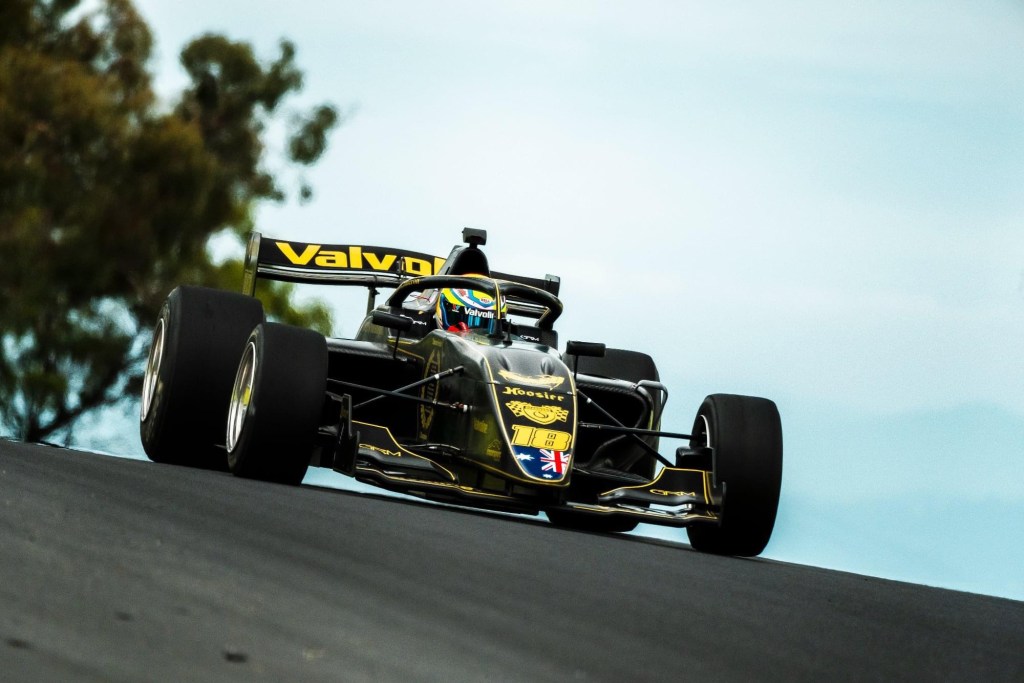
The versatile and very fast Aaron Cameron dives down The Mountain during his Tattslotto/Dodgem-car Bathurst weekend (D Kalisz)

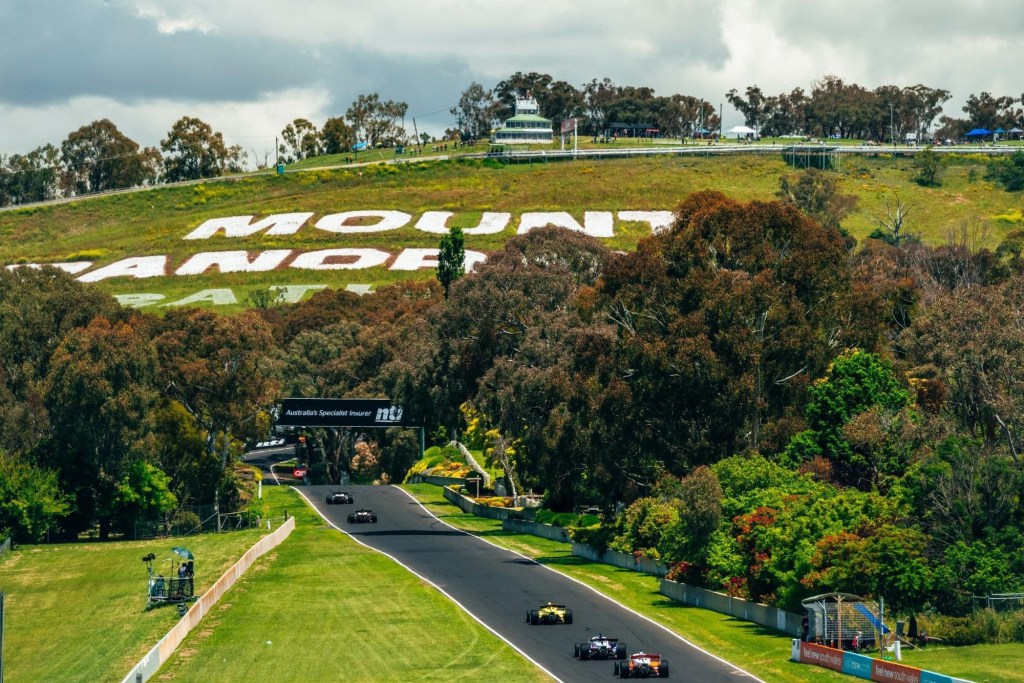
A fortnight later the teams arrived at Mount Panorama for four races from November 30 to December 4. The last time a 5-litre V8 single seater raced at Bathurst was when Niel Allen’s McLaren M10B Chev F5000 set a longstanding lap record during the Easter 1970 weekend.

Open wheeler enthusiasts relished the prospect of Australia’s fastest racing cars – with their power reduced for the weekend by 85bhp to an FIA mandated 470bhp to meet the requirements of the circuit licence – doing battle on the ultimate road racing track.

Unfortunately, the large number of driver induced high speed accidents did little but prove the sound engineering of their racing/dodgem cars. At the end of the three-race-clusterfuck – the fourth and final race was abandoned – Aaron Cameron was presented with the Tasman Cup in a Lotto-type result devoid of karma.

Tim Macrow is a fabulous blend of speed and finesse to watch in these demanding cars. Here in his self-run, Chris Lambden owned Ligier at Phillip Island in March 2021. He won a round, together with Joey Mawson and Tom Randle that weekend (D Kalisz)
Mountain Straight freight train at Bathurst 2021 (D Kalisz)

Other names etched into that cup are Bruce McLaren, Jim Clark (three wins), Jackie Stewart, Chris Amon, Graeme Lawrence, Graham McRae (three wins), Peter Gethin and Warwick Brown.

The 2022 Gold Star is being held over six rounds between February and September, the Tasman Series comprises three rounds in October-November. In 2023 a Tasman round is planned for New Zealand, this is great to justify requisition of a revered name for a race series which was contested on both sides of The-Ditch (Tasman Sea).

I was lucky enough to see these fantastic cars race at Symmons Plains and perform demonstrations at Baskerville the week later, twelve months ago. In a perfect world there would be a set of rules and a mix of chassis and engine manufacturers, but as the Covid Alchemists continually prove, the world isn’t perfect. So, a mix of 15 or so identical 5.2-litre DOHC, four-valve, fuel injected Ford V8 powered, Ligier JS F3 chassis shakes the ground quite nicely for me.

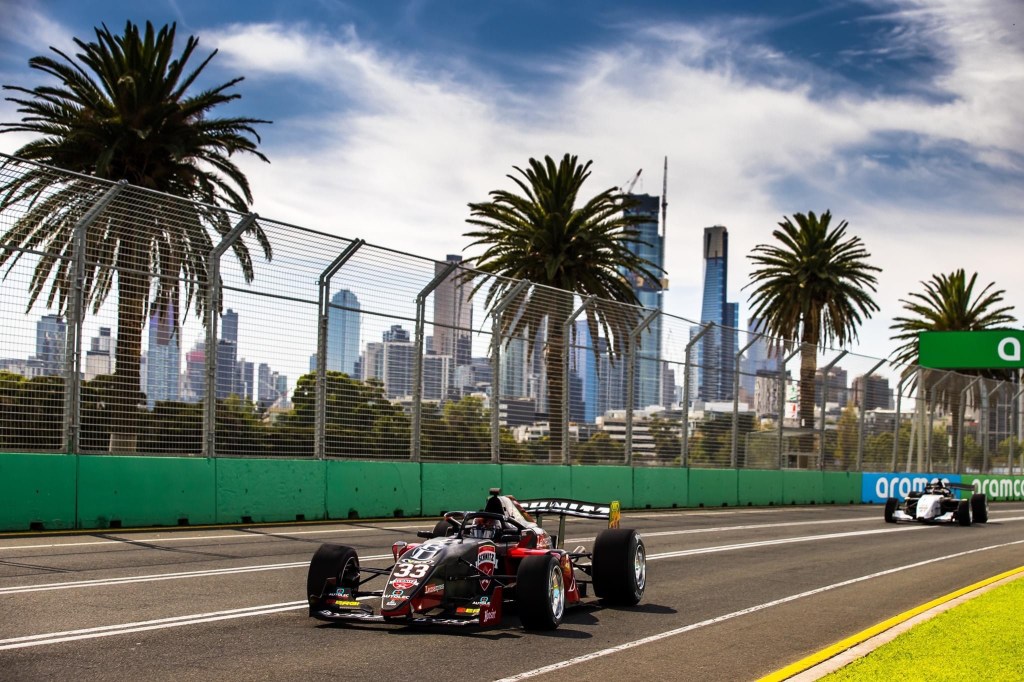
Australian international, James Davison, Albert Park 2020 before the Covid plug was pulled (D Kalisz)
Tim Macrow about to exit stage left at Sandown’s first turn, September 2019. Tim won a heat, John Martin the other, Macrow won the meeting overall. Yellow nose is James Golding’s GRM machine (D Kalisz)

ARG are to be congratulated for the media coverage, Supercar Maxi-Taxis suck the life out of all other race categories in Oz, but S5000 got a fair crack of the whip.

The media includes photography by Daniel Kalisz, a mighty-talented young ‘snapper whose work is posted onto the S5000 Facebook page. This article is a tribute to his creativity, remember that name. Buy his work. I chose shots with panoramic backdrops devoid of grubby advertisers hoardings, Kalisz proves it can still be done, at some circuits anyway!

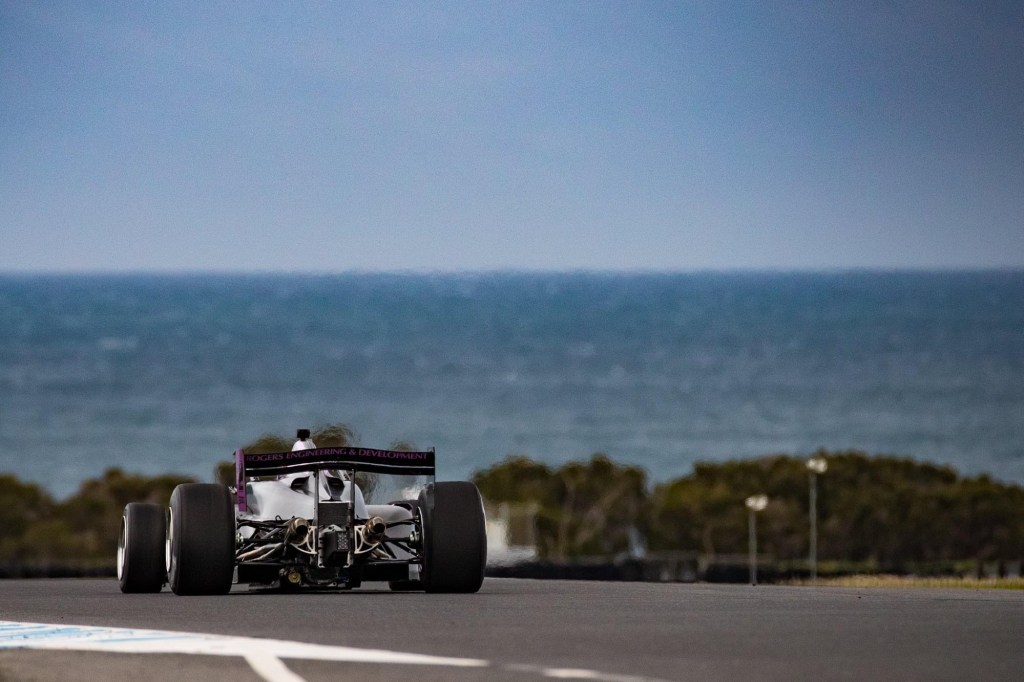
Southern Loop at Phillip Island must be a sphincter-puckering experience in these missiles. Bass Straight is the backdrop, next stop Tasmania, or perhaps King Island (D Kalisz)

Credits…

S5000 Group Facebook page

Tailpiece…

(D Kalisz)

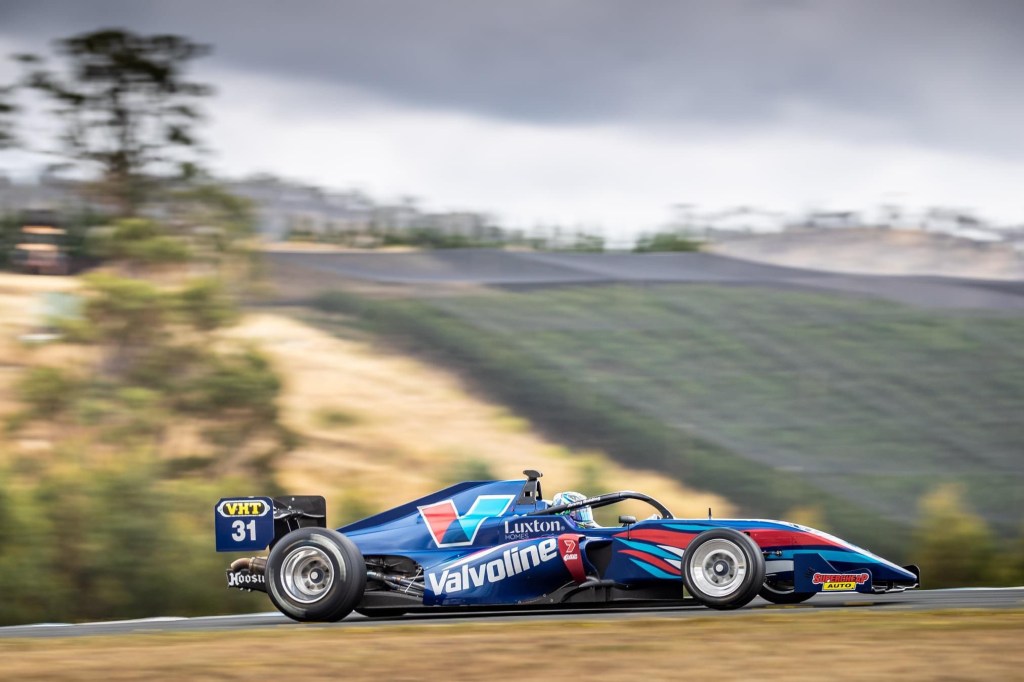
On man, this shot by Kalisz! The wow factor when I saw and published it early in 2021 was mega. It is a beautifully composed and executed shot of Tom Randle at Baskerville, a stunning natural amphitheater just north of Hobart, Tasmania. My Oz shot of the year…

Finito…

(R Schlegelmilch)

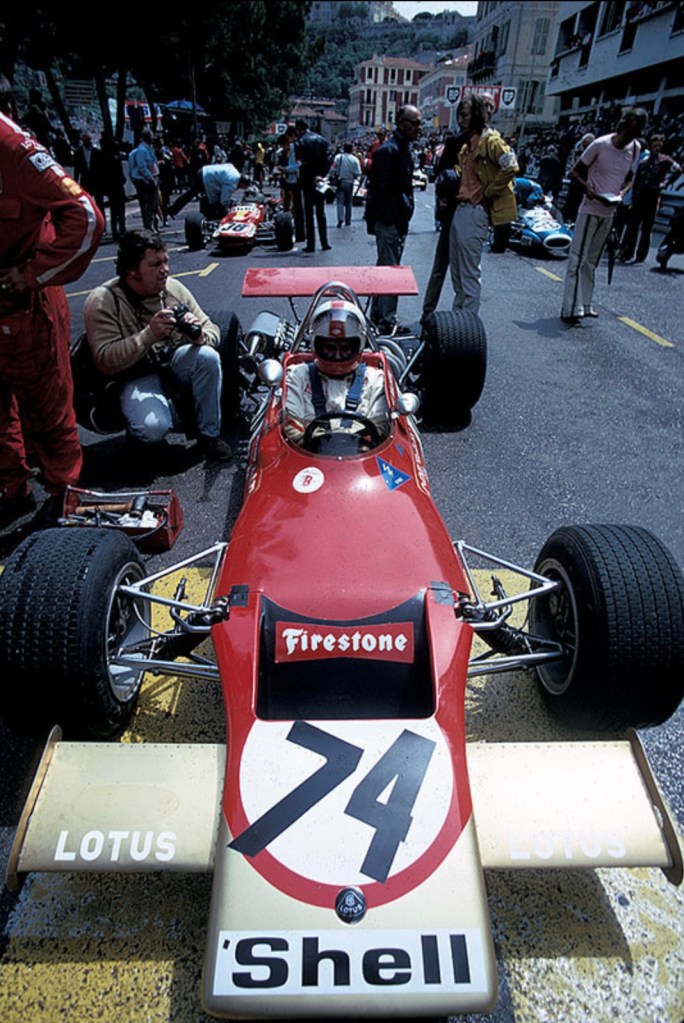
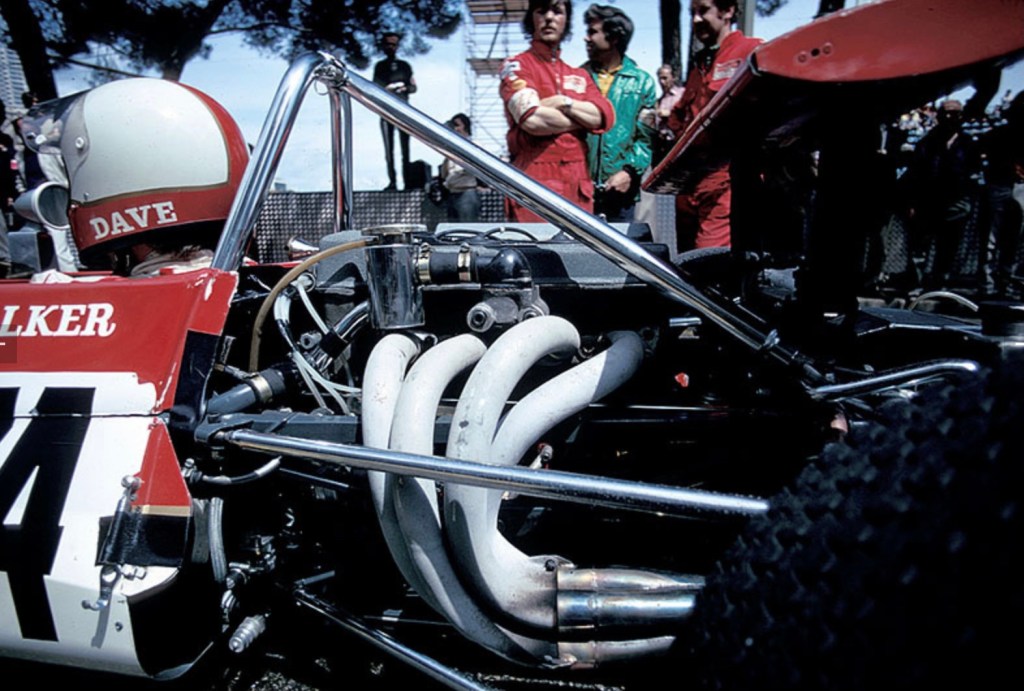
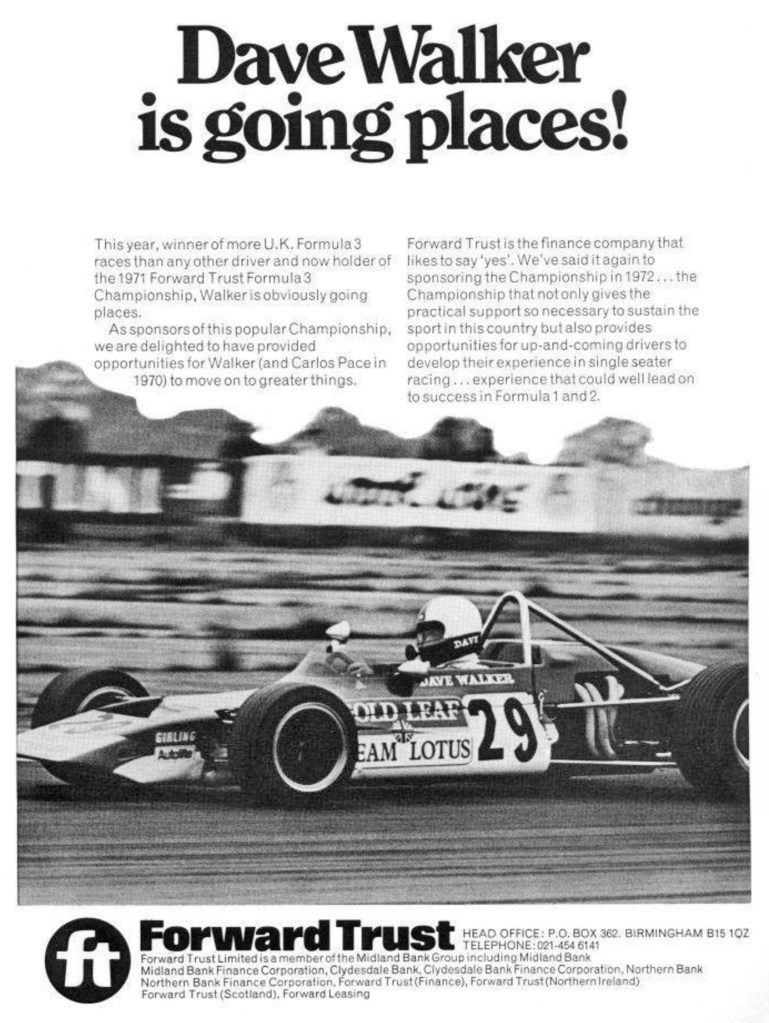
David Walker lined up for the final of the Monaco F3 GP, May 22, 1971.

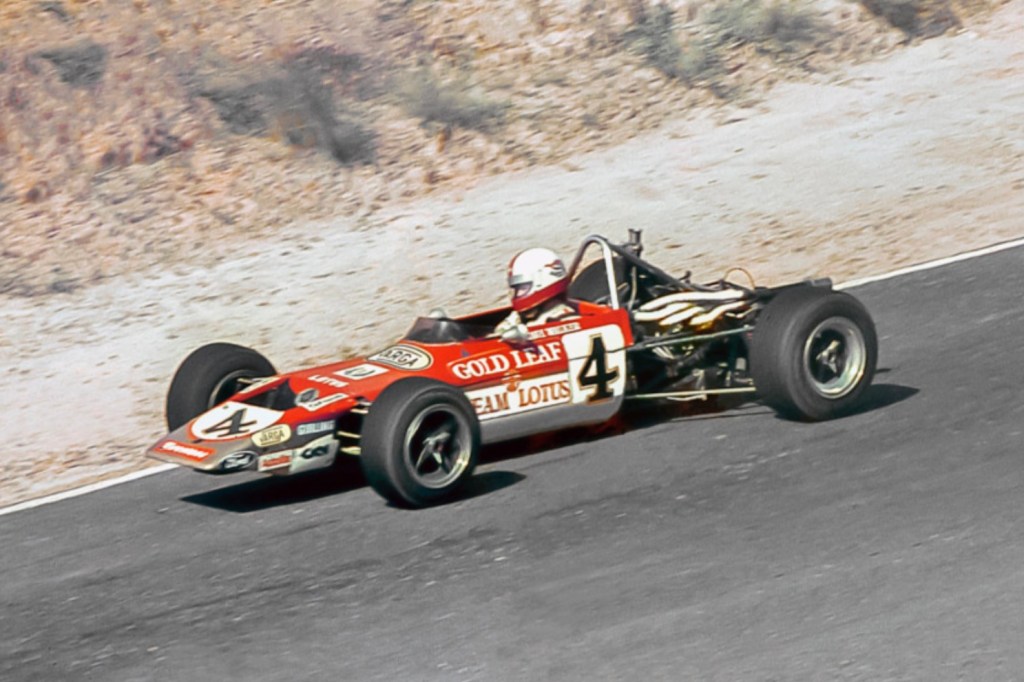
He won his heat and the final in a race which was something of a metaphor of an incredible season aboard his works Lotus 69 Novamotor-Ford 1.6. Giancarlo Naddeo, Tecno 69 Ford was second, and Patrick Depailler’s Alpine A360 Renault, third.

The grid that year also included Steve Thompson, Jean-Pierre Jabouille, Roger Williamson, Rikki Von Opel, David Purley, Bob Evans and Francois Migault.

Walker’s F3 year included wins at Silverstone and Cadwell Park in April, Brands Hatch, Zandvoort (Dutch GP F3 race) and Oulton Park in May, and Silverstone in June. Early July brought victory in the French Grand Prix support race at Paul Ricard. That month got better with a win at Croft which ensured the Sydneysider was razor-sharp over the British GP weekend at Silverstone, Walker also won that blue-riband support event.

But there was no break for the team, the following day he won the the Cadwell Park BARC British F3 Championship round. August yielded wins at Thruxton and Croft, while Mallory Park fell to Walker in September and Snetterton in October.

Dave Baldwin’s F3 Lotus 69 design (there were also F2, FB and FF 69s) had a spaceframe chassis based on his Lotus 59, disguised with the bodywork and beefed up front suspension of the 69 F2 car. 1.6-litre Novamotor Lotus Ford twin-cam, Kugelfischer injected via air restrictor Walker again at Monaco (R Schlegelmilch)
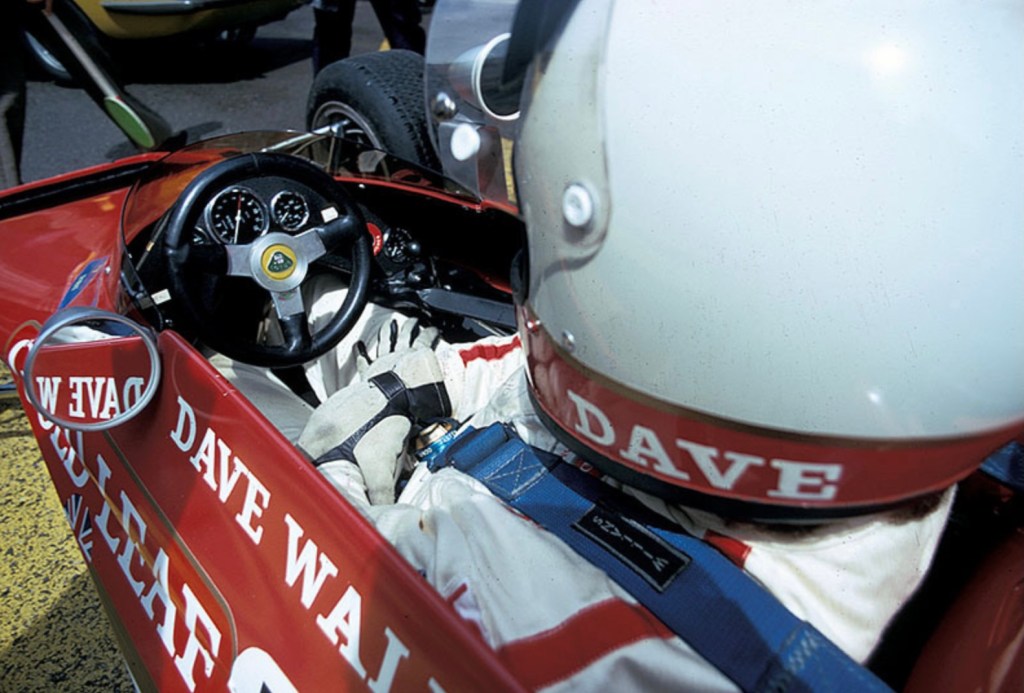
Oh-so-period cockpit! Leather bound wheel and a dash full of Smiths instruments. Wonderful. Monaco (R Schlegelmilch)

In one of the most dominant ever seasons of F3 racing Walker won most of the big races and two of the three British F3 Championships – the BRSCC/MCD and BARC – with Roger Williamson taking the other, the BRSCC/MCD Lombard.

For the sake of completeness, Walker’s season commenced with the ‘Torneio Internacional de Formula 3 do Brasil’ (Brazilian F3 championship) run at Interlagos and Taruma during January.

Dave raced his (1970) works Lotus 59A Ford to third, second, 12th and first in the four round series, placing third overall behind Wilson Fittipaldi and Giovanni Salvati in Lotus 59A, and Tecno TF70 respectively.

Walker, Lotus 59A Holbay Ford, (1-litre 100bhp ‘screamer’) Interlagos, Brazil, January (FL Viviani)

Walker was the most successful of the 1971 Gold Leaf Team Lotus drivers, Emerson Fittipaldi and Reine Wisell had a lean year in Grand Prix racing, Lotus failed to win a GP for the first time in over a decade.

F1 proved a much harder nut for Walker to crack, and that story is a good deal more nuanced than most pundits would have you believe…one for another time.

Walker during a much tougher 1972

Credits…

Rainer Schlegelmilch, Fabio Luiz Viviani https://www.flickr.com/photos/146683351@N05/, F2 Index, Allen Brown in Oldracingcars.com

Tailpiece…

Finito…

(S Van den Bergh )

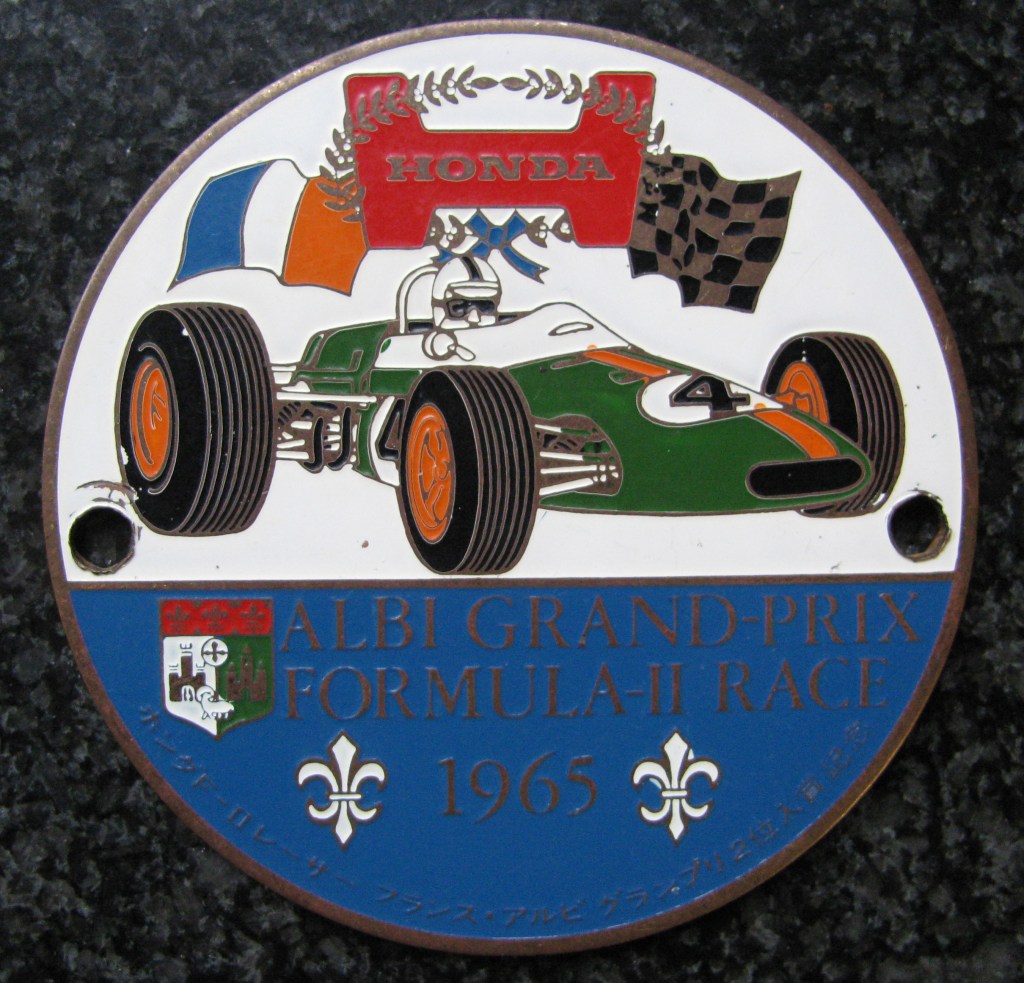
It’s an interesting car badge, don’t you reckon?

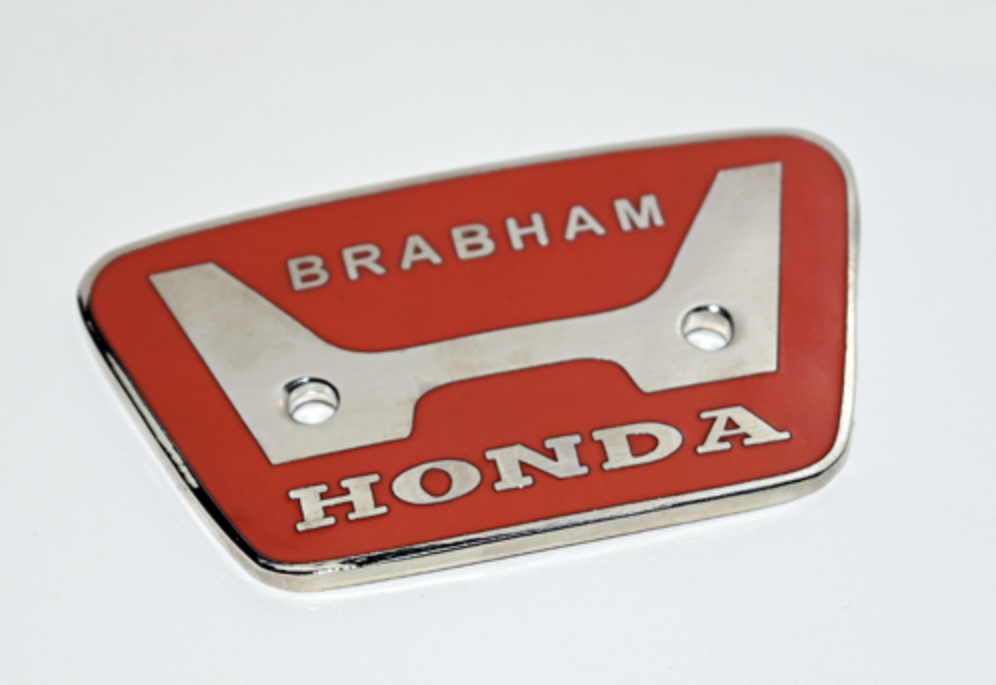
One of our friends in Belgium, Stef Van den Bergh, bought it recently and wants to know more about it. ” I am curious who made it. I suppose it was Honda since Brabham isn’t even mentioned on the badge. How many were made and were they sold, or given as a present?”

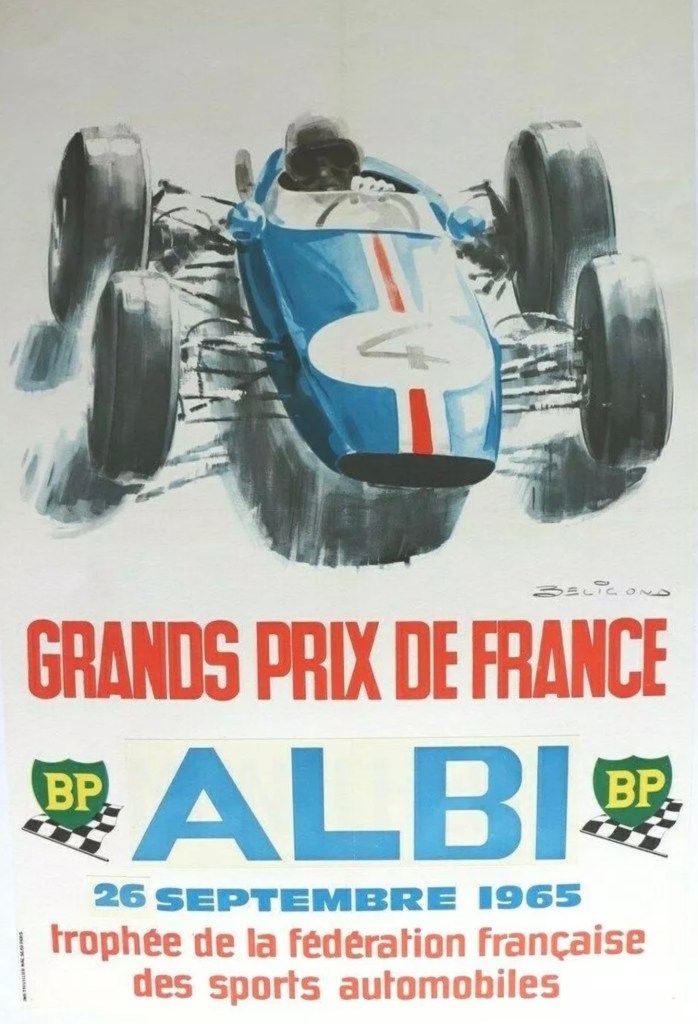
So there is the challenge folks. Was it made by Honda, the Albi GP organisers or their merchandise people, or perhaps a ‘renegade’ wanting to cash in on Honda’s presence in F2 as well as Grand Prix racing?

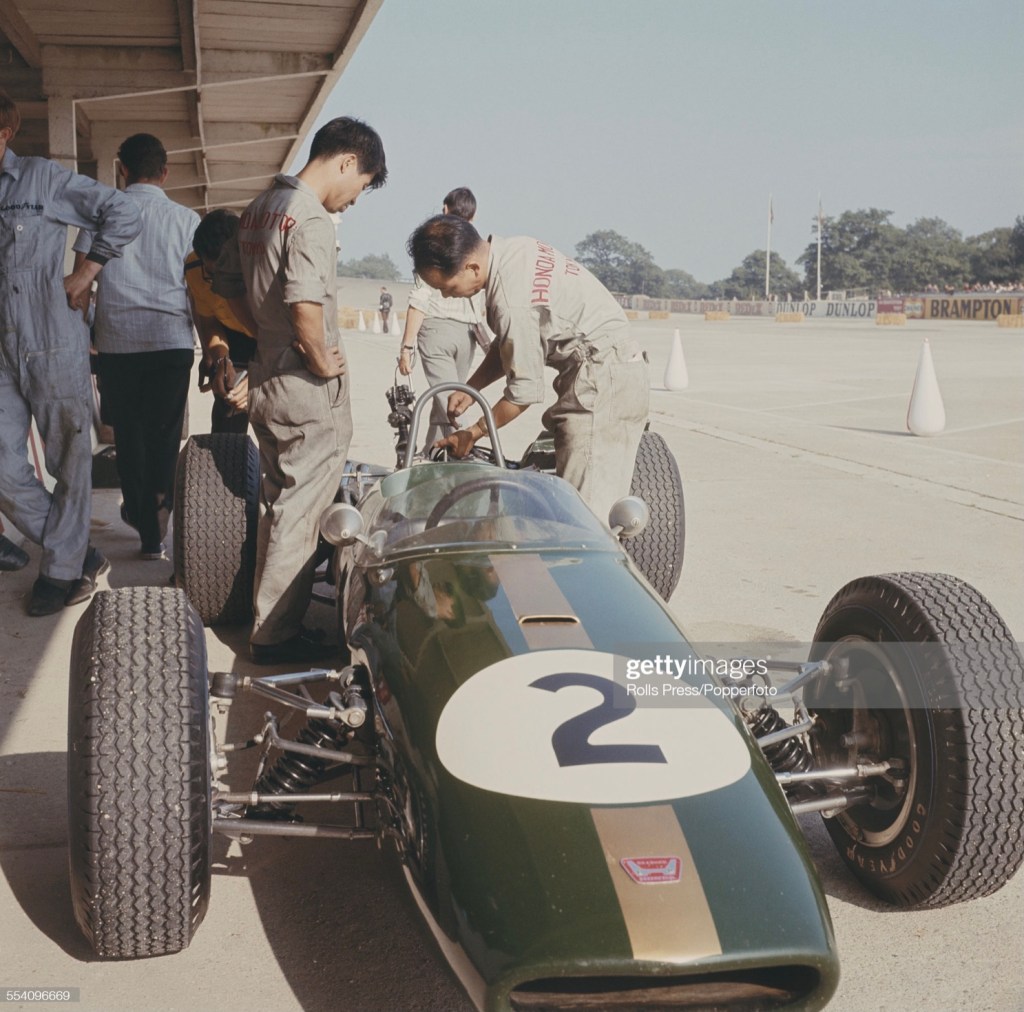
The real McCoy – and below fitted to the nose of Denny Hulme’s Brabham BT18 at Montlhery in September 1966. That weekend Jack Brabham won from Jim Clark’s Lotus 44 Cosworth SCA with Denny third, having started from pole. That season, many races were Brabham-Hulme one-two’s

When Richie Ginther won the 1965 season – and 1.5-litre formula – ending Mexican Grand Prix, Honda bagged it’s first of many F1 successes.

Honda entered F2 with Brabham that year, see here for an earlier piece I wrote about this topic; ‘XXXII Grand Prix de Reims’ F2 3 July 1966: 1 Litre Brabham Honda’s… | primotipo…

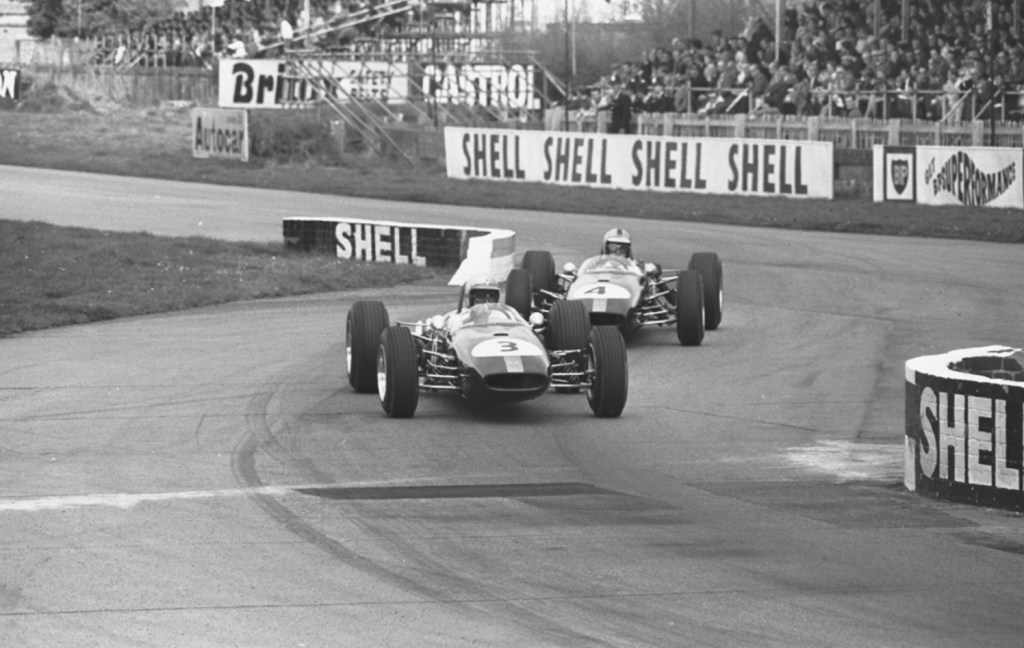
Brabham raced a BT16 powered by S800 Honda engines at four meetings in March and April 1965; Silverstone, Oulton Park, Snetterton and at Pau with poor results. Honda set to work to produce an engine which wasn’t so peaky from May to August, then Brabham reappeared at the Oulton Park Gold Cup and the GP Albi later in September. He retired with clutch dramas at Oulton but was right on the pace at Albi, finishing second to Clark’s Lotus 35 Cosworth SCA by six-tenths of a second after nearly two-hours, and 309km of racing…Honda were in town!

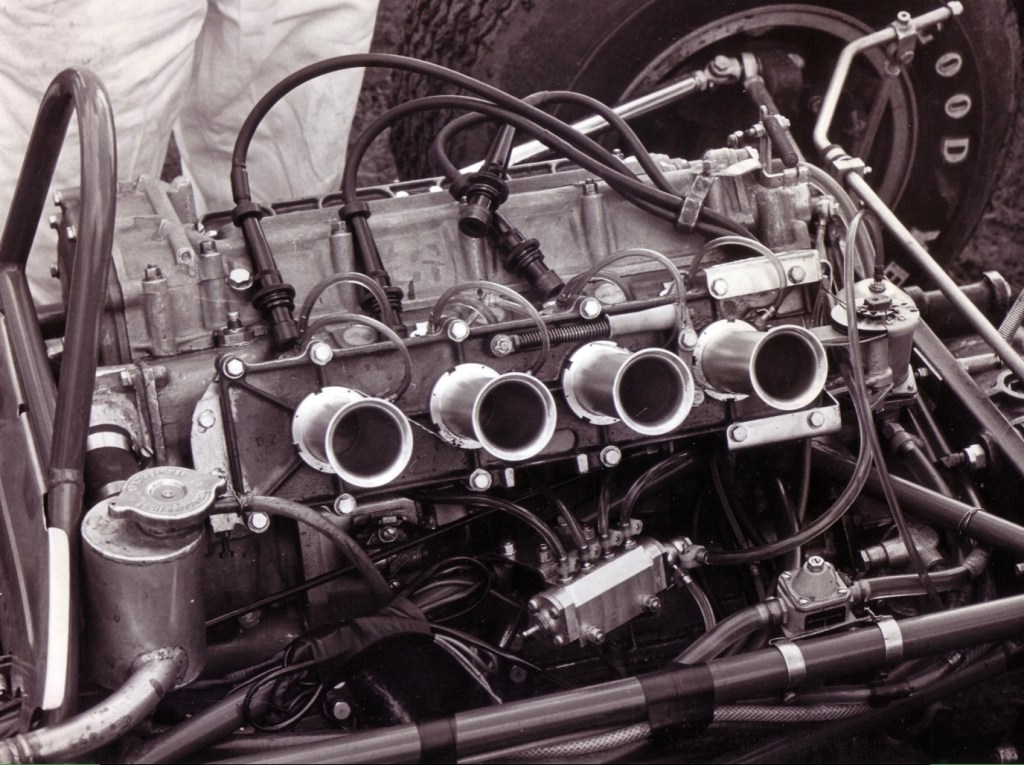
1965 Honda RA300E F2 engine in a Brabham BT16 chassis : 1-litre (72×61.2mm – 996cc) all alloy, DOHC, four-valve, fuel injected circa 135bhp @ 10000rpm (1965 RA302E 150bhp @ 11000rpm) four cylinder engine. Weight 145kg (Brabham Family Archive)
Jack from Denny at Goodwood during the Sunday Mirror Trophy on April 11, 1966. Brabham BT18 Hondas one-two (Honda Racing)

The calibre and depth of F2 grids then is shown by looking at the Albi field, in order of finishing (or not); Jim Clark, Jack Brabham, Denny Hulme, Jochen Rindt, Alan Rees, Mike Spence, Frank Gardner, Bob Bondurant, Jo Schlesser, Jean Vinatier, Brian Hart, Trevor Taylor, Silvio Moser, Guy Ligier, Mike Beckwith, Graham Hill, Geki Russo, Peter Revson, Henry Grandshire, Eric Offenstadt, Ludovico Scarfiotti, Paul Hawkins and Richard Attwood. Five world champs, a couple of Indy winners, three Le Mans victors and two Can-Am Cup champions.

Ron Tauranac and Jack Brabham had plenty of balls in the air during 1965, apart from the usual manufacture of production racing cars and the running of works teams (Motor Racing Developments and Brabham Racing Organisation) in F2 and F1. They had nascent engine programs with Honda (F2) and Repco Brabham Engines (Tasman and F1), and in addition were helping Goodyear develop tyres which were critical to Brabham, MRD, BRO and RBE’s two 1966 F1 championship wins; the manufacturers and drivers championships.

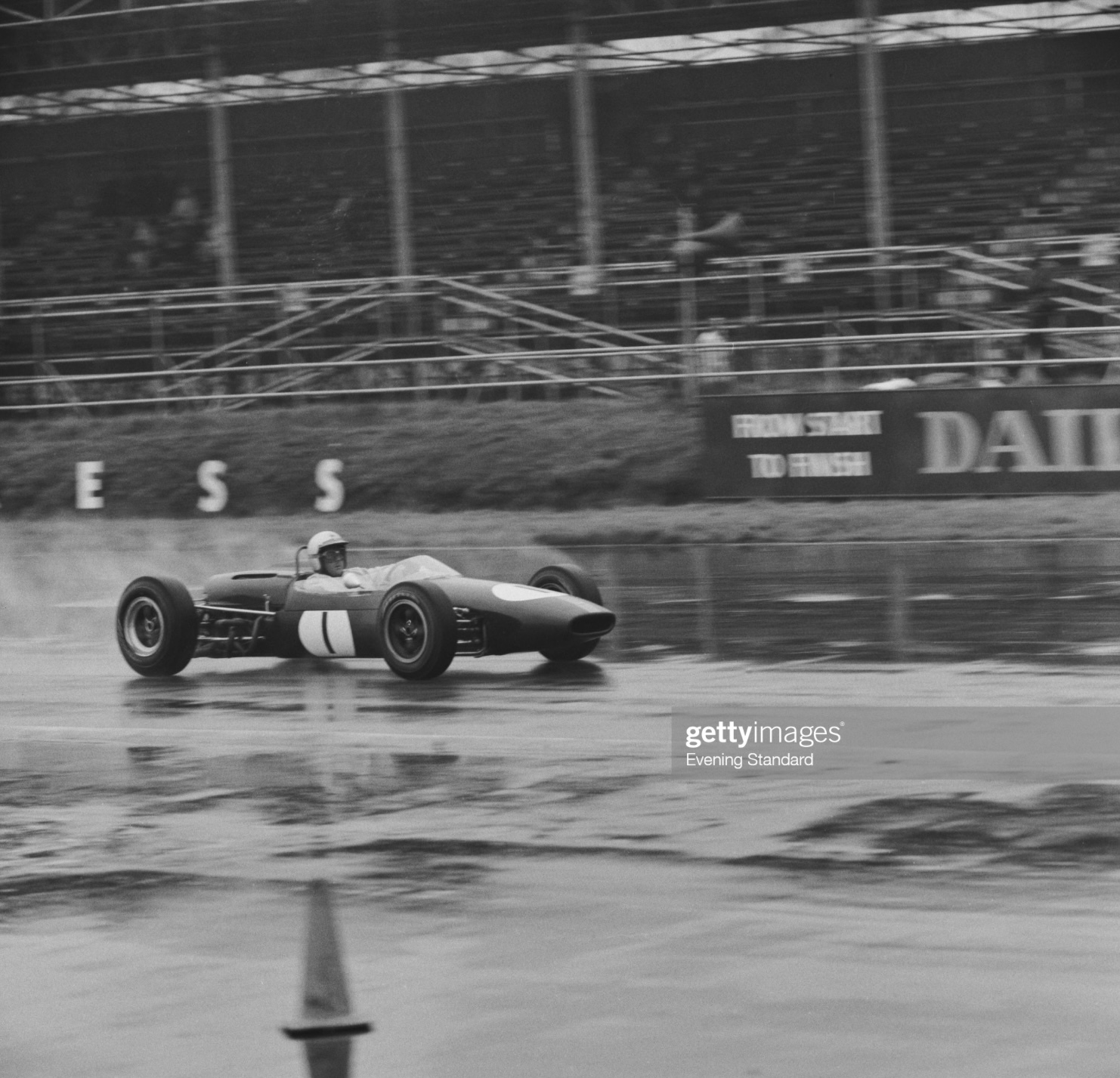
Jack Brabham, Brabham BT16 Honda during practice for the cancelled BARC Senior Service Trophy at Silverstone on March 20, 1965. The race was cancelled due to excessive amounts of water – visible – on the circuit
Ron Tauranac at left with stopwatch board, and Jack attend to changes during practice at Montlhery during the September 11, 1966 weekend. Brabham BT21 Honda. Brabham won by three seconds from Jim Clark’s Lotus 44 Ford SCA with Hulme two seconds behind Jim

The European F2 Championship commenced in 1967, the first year of the 1.6-litre F2. Despite the lack of a title in 1966 (although Brabham won the six round French F2 Championship) Brabham Honda were absolutely dominant. Of 16 major races held in Europe, Brabham won 10; Goodwood, Pau GP, GP Barcelona, GP Limborg, the London Trophy at Crystal Palace, GP Reims, the Kanonloppet at Karlskoga, Finland GP, GP de L’ille France at Montlhery, and the GP Albi. Six of these events were Brabham Honda one-twos, with Denny bringing his car home behind his team-leader. Hulme won two races as well, the GP Rouen and Trophee Craven A on the Le Mans, Bugatti circuit.

Credits…

Stef Van den Bergh, F2 Index, Getty Images, Brabham Family Archive, Honda Racing, MotorSport

Tailpiece…

(MotorSport)

A couple of happy-chappies after the conclusion of the Pau GP on April 17, 1966. Jack and Denny finished in line astern aboard Brabham BT18 Hondas, with five-tenths of a second between them. Back in third, nearly 1 1/2 minutes adrift was Graham Hill in John Coombs’ Brabham BT16 BRM P80. Brabhams filled six of the top ten placings.

Finito…
(B Daley)

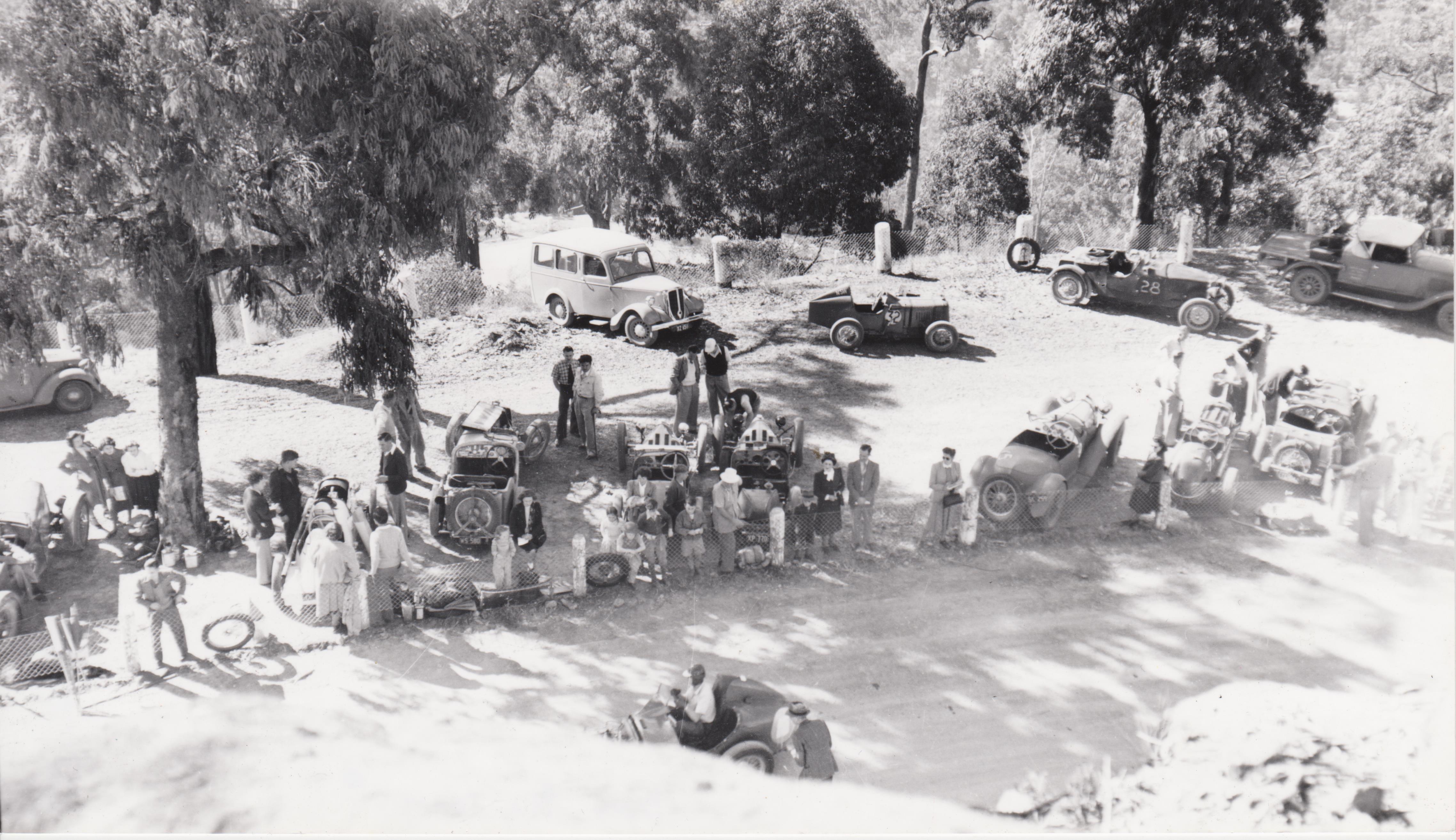
A Bill Daley photograph of Hawkesbury hill climb, circa 1948.

How many of these cars ran in an Australian Grand Prix, is the question which pops into my mind?

In the absence of a programme for the event, this classic study of racing cars taken at Hawkesbury Hillclimb has left the experts unable to identify all the cars; we call on our readers to fill the gaps.

The photograph came from the VSCCA (NSW) collection, per favore of Richard Walton. Note the spectating ladies with their handbags; they look as though they may have come straight from church.

Surprisingly, the owner of the Jowett Bradford van has been identified. John Medley says it belonged to Bob Pritchett – familiar to many of us as the ‘RBP’ of ‘Spotlight’ in Australian Motor Sports (R. Beal Pritchett). Kent Patrick describes the van as: “The bronchial Jowett Bradford – (which will) roll over with its engine stopped”. Within coughing distance to the right of the van is the unmistakeable shape of the Sulman Singer (#32) as it appeared pre-war in Tom Sulman’s hands. Kent speculates that the Riley, next in line (#28), might be Len Masser’s Lynx Sprite. I guess the next is a ubiquitous Ford A ute.

The nearest line of cars, backed up to the fence, pose some real problems. The car to the left of the tree is a mystery; the one to the right has an external exhaust on the left side – what is it? We then have the ex-Bill Thompson K3 MG (with bonnet open) – Kent suggests it might have been owned by Ken Tubman around this time. Ken was a graduate of Fort St School, a pharmacist, and is best remembered for winning the first Redex Round Australia Trial in a Peugeot 203. He still had the K3 in the sixties; we recall him bringing it to the Geelong Speed Trials as a spectator.

The first Grand Prix Bugatti with the folded full width windscreen is probably the Type 37 of Frank Lyell, chassis number 37160. This car had been discovered abandoned in a shed behind the Federal Hotel in Narromine a few short years before – it changed hands for 10 pounds! To its right is Type 37, chassis number 37209 owned by Irwin ‘Bud’ Luke, who was very competitive in the car; he finished seventh in the Australian Grand Prix at Leyburn in 1947. Kent thinks it might be Bud attending to the front wheel with his partner Ida at the rear of the car.

The touring bodied Bugatti bears elegant coachwork by Carrosserie Profilée and is chassis number 4264. It was probably owned by Doug Helsham and likely powered by a Chrysler Six. ‘Gelignite’ Jack Murray’s Day Special is next (second car from the right), a Ford V8 powered Type 39 Bugatti, chassis number 4607, which won the 1931 Australian Grand Prix driven by Carl Junker. The last parked car appears to be an Austin ‘7’ special, possibly Frank Lyell’s car. Of course, the car leaving the starting line (partially obscured at the bottom) is Frank Kleinig in his eponymous special.

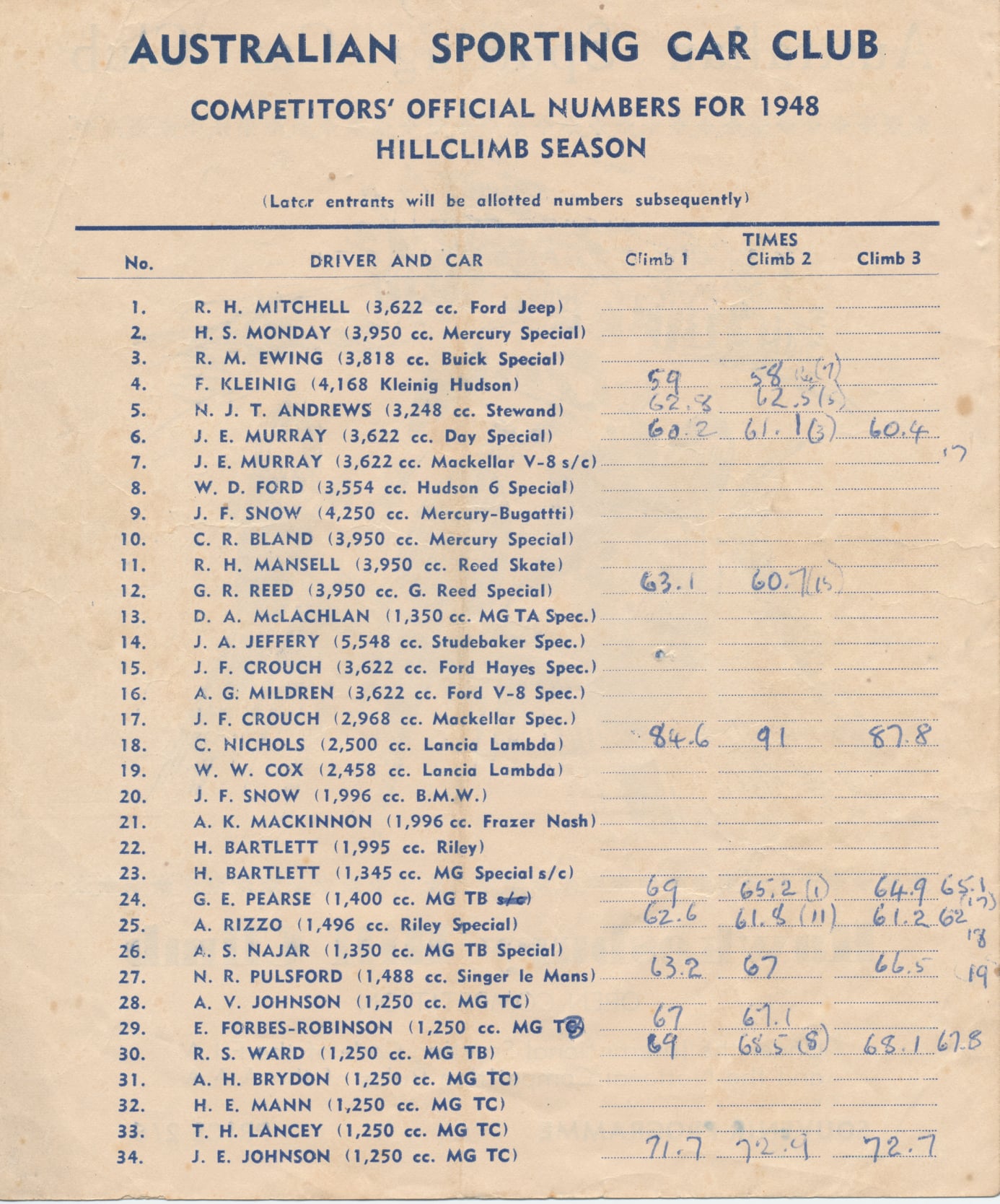
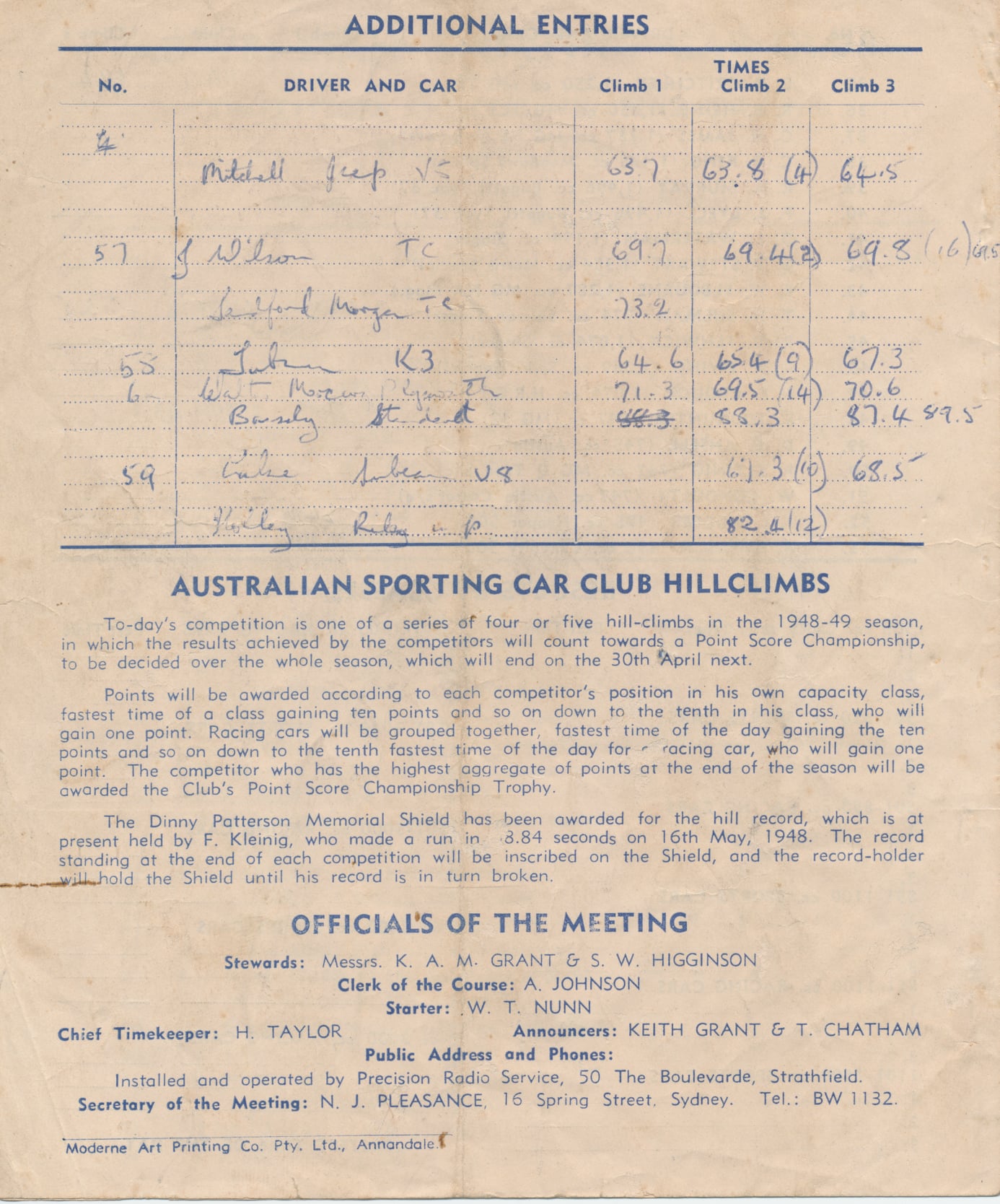
Since writing this, Cummins Archive (Paul Cummins) have posted on Facebook a 1948 programme for Hawkesbury hillclimb. It is not ‘our event’ as the numbers on recognizable cars differ – viz. Sulman Singer 32 in the photo and 44 in the published programme. This programme might help with the identification of some of the other cars – could Riley number 28 be the Rizzo Riley and the last car, which appears to be an Austin ‘7’ special be that of Ted Ansell? The list of competitors, which is a virtual Who’s Who of immediately post-war NSW racing drivers, appears to confirm Kent Patrick’s suggestion that the K3 MG is that of Tubman – see his listing under ‘Additional Entries’.

(Cummins Archive)
(Cummins Archive)
(Cummins Archive)
(Cummins Archive)

Credits…

Bob King Collection, Cummins Archive via Paul Cummins

Finito…

(L Hemer)

If a 5-litre 500bhp McLaren M10B Chev F5000 is a Big Mac – it is – then a liddl’ 1.6-litre 210bhp F2 McLaren must be a Little Mac.

“Niel Allen in the perfect little McLaren M4A FVA, the sweetest sound I ever heard…in The Esses at Warwick Farm on Saturday afternoon, December 6, 1969,” and so say all of us Lynton Hemer!

Niel qualified fourth in this meeting, the final 1969 WF Gold Star round, and finished third behind the Bartlett/Stewart Alec Mildren Racing speedsters.

Chassis M4A/2 is a famous little jigger, driven with great success in the 1968 Tasman Series by Piers Courage. His giant-killing performances against the 2.5-litre cars – including a win at the Longford final round – pretty much re-launched a career which had stalled a bit; by the end of 1969 he had vaulted into the F1 Top Ten.

Niel Allen bought the M4A after Piers returned to Europe, doing well with it but also having a huge, high speed crash at Lakeside. Re-tubbed by John Joyce at Bowin Cars it also provided the platform for Warwick Brown to strut his stuff before he stepped up into…a Big Mac!

Some further reading, here on Courage at Longford; Longford Tasman: ‘South Pacific Trophy’ 4 March 1968 and Piers Courage… | primotipo… and here on the M4A in Euro F2 in 1967 The Wills ‘BARC 200’, F2 Silverstone, March 1967… | primotipo…

Credit…

Lynton Hemer

(L Hemer)

Finito…

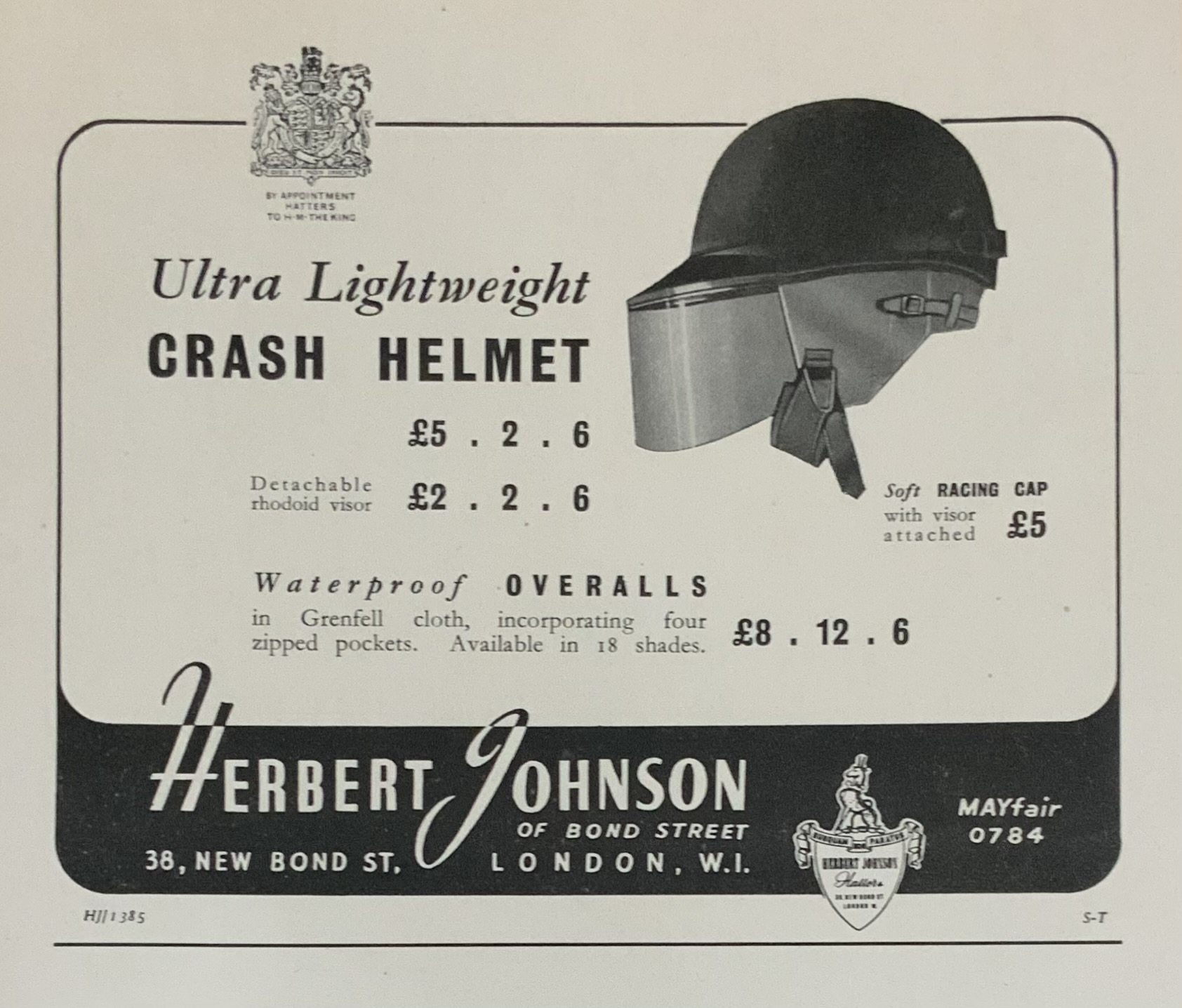
Herbert Johnson were one of the preferred purveyors of bash-hats to racing’s elite in the pre-Buco, pre-Bell early-mid 1960’s era.

The company, founded in 1889, made its name for its silk-velvet top-hats. By the outbreak of World War 1 its output was dominated by the demands of the military. Goldie Gardner was the first racer to commission a ‘protective hat’ from then proprietor, Geoffrey Glazier. Stirling Moss was a later customer as demand for the firm’s race products grew.

(K Devine)

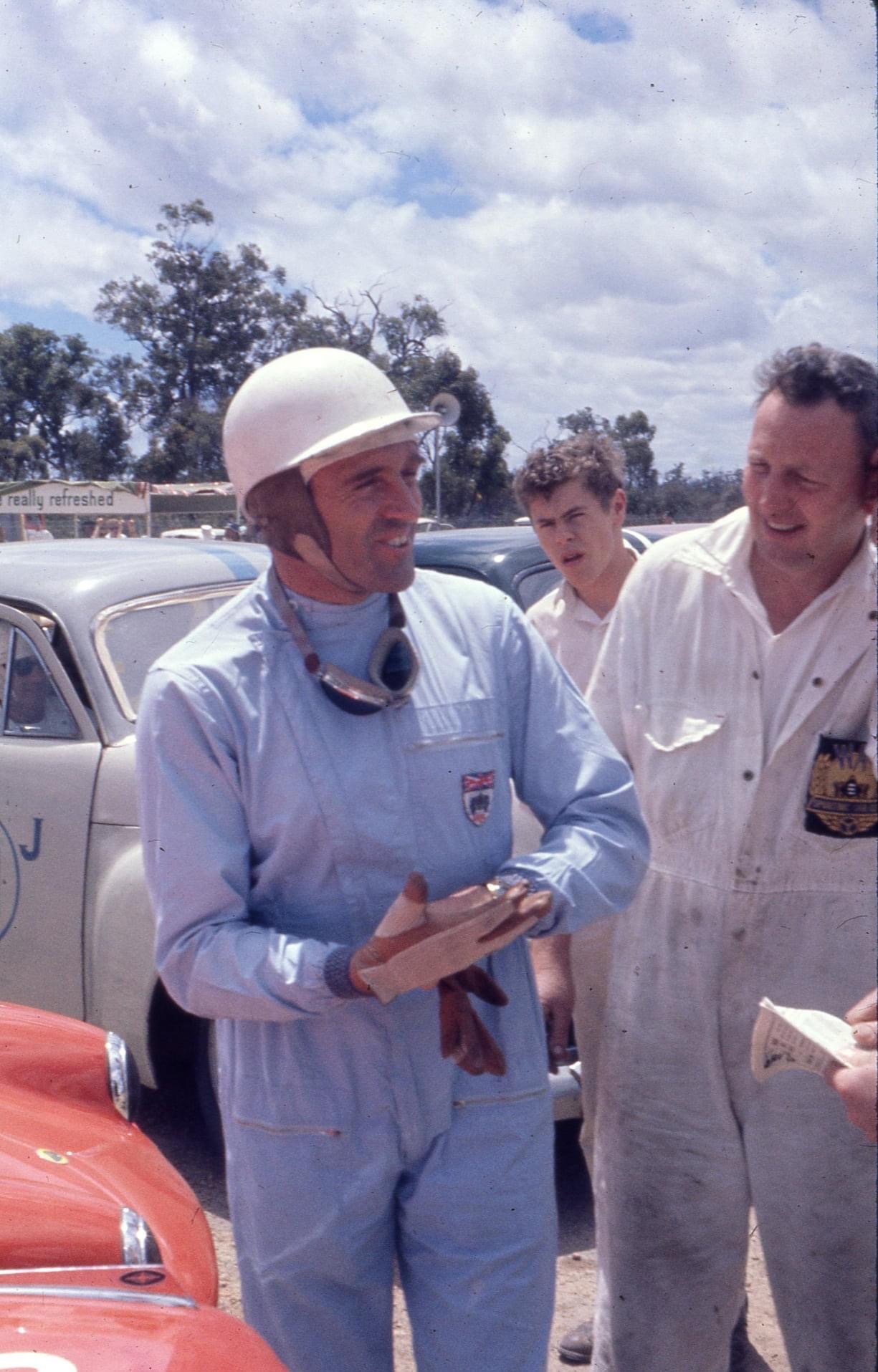
Lex Davison is shown so equipped at Caversham, near Perth in November 1962. It’s the Australian Grand Prix meeting, the four-times AGP winner is shown on the dummy-grid – looking very pucka in Herbie Johnson with British Racing Drivers Club badge on his overalls – about to jump aboard Len Lukey’s Ford Galaxie in a mixed touring/sportscar support race. The nose of the Elite belongs to Anthony Osborne.

Credits…

Ad from Motor Racing 1948-1949 BRDC Yearbook, Ken Devine

Tailpiece…

‘If yerv’ got a $10 head wear a $10 helmet’ was Bell’s compelling mid-sixties tagline. A mix of technology and innovation, quality, marketing and a great distribution network ensured the Bell Corporation did their bit to improve the safety of our sport. Dan Gurney’s Eagle depicted is his 1966-68 F1 Mk1 Weslake V12

Finito…
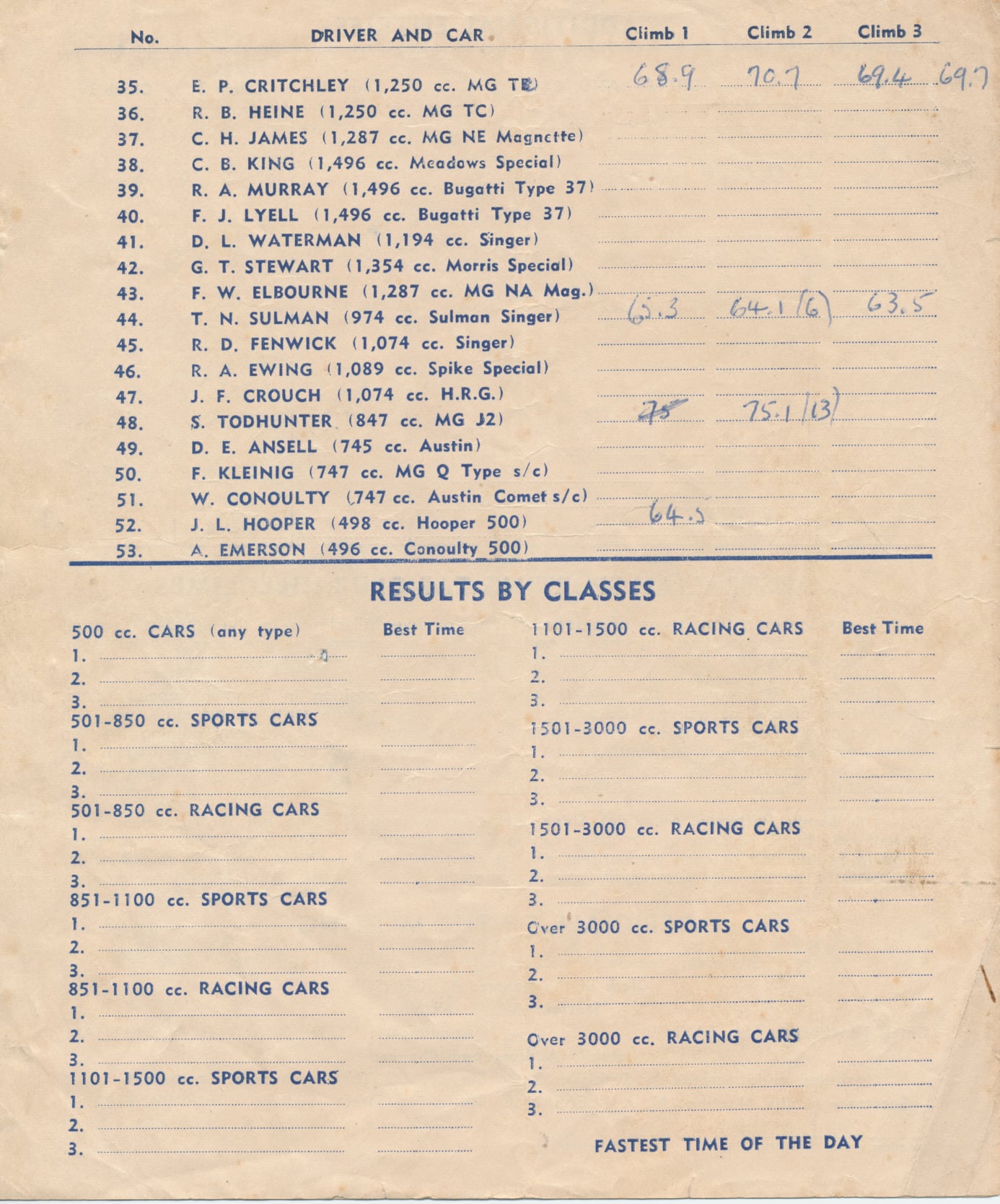
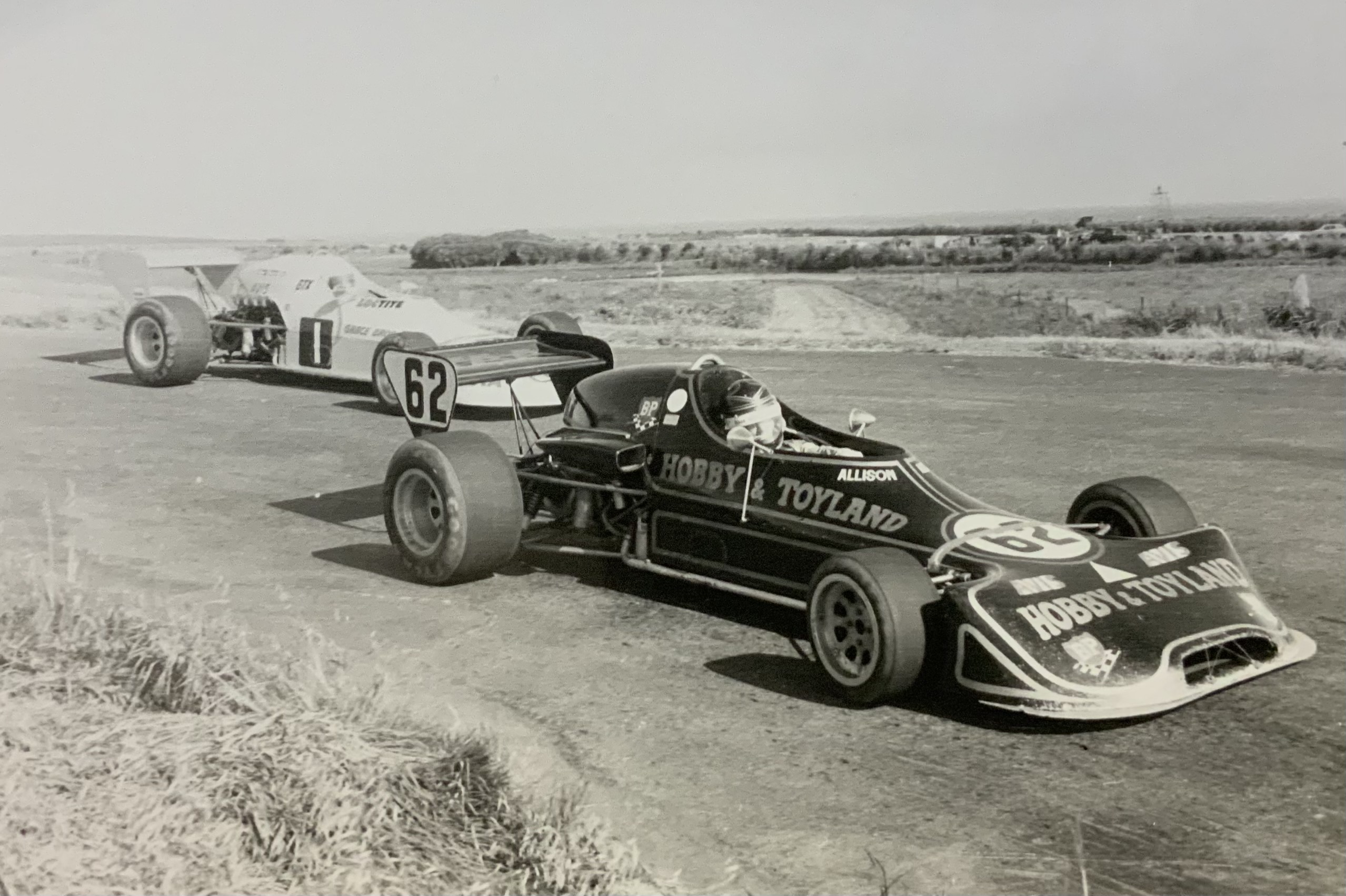
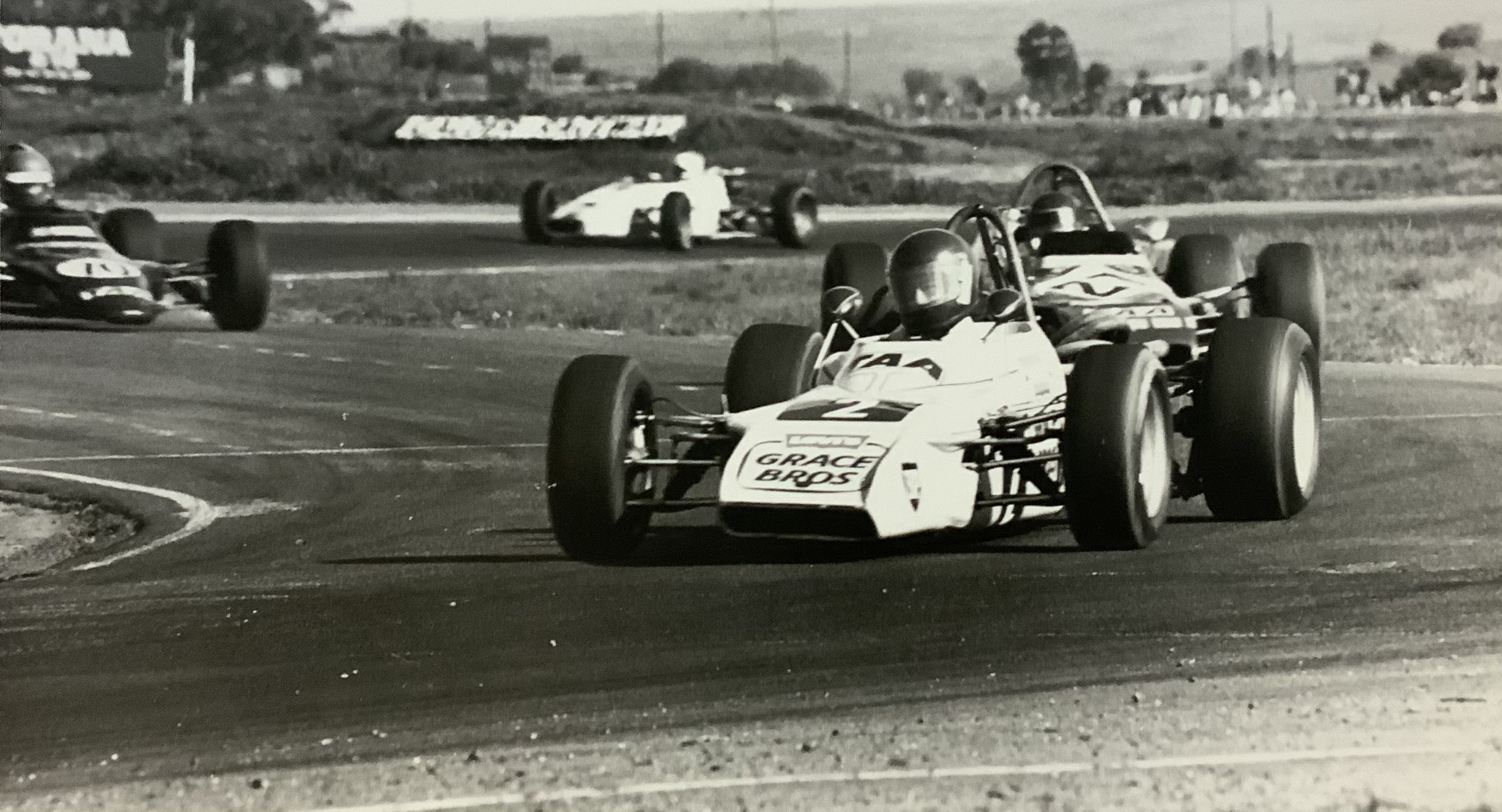
Birrana 274 Hart-Ford ANF2 cars at MG Corner, Phillip Island in late 1974: Bruce Allison inside Leo Geoghegan – Oz F2 Champ in Birranas in 1973-4 (Auto Action Archive)

Modern enthusiasts probably know of Birrana Racing as an outfit which won multiple Gold Stars running Reynard Formula Holdens. But for some of us, the most exciting period of Malcolm Ramsay’s lifetime passionate commitment to motor racing was the 1971-1974’ish period when he and his business partner, Tony Alcock, and their small crew at Logan Street, Adelaide built 20 or so jewels of championship winning FF, F3, F2 and Formula Atlantic single seaters. Oh yes, there was a VW powered mid-engined speedway Speedcar too, which rather shows they were not lacking innovation!

At the end of 1974, they ceased volume production, building racing cars simply wasn’t profitable. Mal constructed a few more racers in the ensuing years. Tony Alcock, the designer/fabricator, ran Bob Muir in British Formula Atlantic in 1975. Adelaide entrepreneurs Bob and Marj Brown took their two updated Birrana 273s to England for a season. Bob did well with several thirds and a fourth place in the two year old car among hotshots like Tony Brise, Jim Crawford, Brian Henton and Gunnar Nilsson.

Like Tony Brise, Tony Alcock joined Graham Hill’s Embassy Racing F1 team. Similarly, he was at the fateful Embassy Hill GH2 Ford Paul Ricard test on November 29, and subsequent Piper Aztec flight back to Elstree Airfield, England. Graham Hill crashed the aircraft in thick fog at Arkley Golf Club killing all aboard; Alcock, Hill, Brise, designer Andy Smallman and mechanic Terry Richards.

It was a monumental tragedy, to say the least.

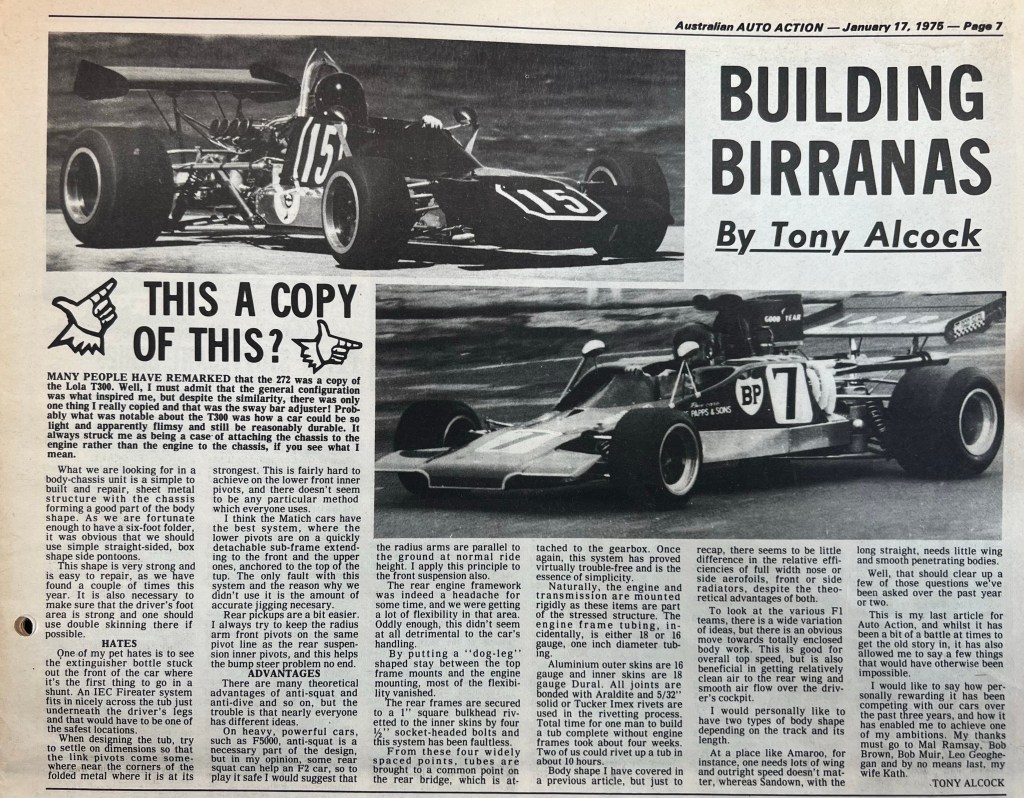
What might have been for all of them, not least Tony Alcock? During 1974 he wrote a regular Auto Action column. This May piece is about Birrana’s design process. I found it interesting, and reproduce it for that reason, and also to put on electronic record the members of Birrana Cars during that golden 1972-1974 era.

“I always liken designers, fabricators and mechanics as the racing equivalent of a TV production team. We know that the actors get most of the recognition, but of course the truth of the matter is that without the script writer, producer, director, film crew and so on, then the actor would be nowhere. Now although the modern race driver is an important part of the final product, it is the men behind him, the fabricators, welders, machinists, fibreglass men, painters, platers etc who make up the initial 80% of the total effort.”

“It is our job, Malcolm Ramsay and myself, at Birrana Cars to assemble all these tradesmen in the correct sequence to present a product such as the 2/374 range of cars. Basically, our respective roles are something like this.”

Tony Alcock circa 1974. Anybody got a better shot? (unattributed)
1974 Oz FF Driver to Europe Series, Tin Shed, Calder: Andrew Miedecke, Birrana F73, Peter Finlay, Palliser WDF2 – not long back from success in this car in the UK/Europe – and the nose of Paul Bernasconi’s Mawer 004 (Geoff Selton)

“Starting with the previous years car, we decide on the areas which we feel need improvement and together with experiments which we have tried in some form or another during the year, we begin to formulate some sort of basic outline for our new model. At this stage I usually work at home so that the work can be achieved without interruption enabling the car to be drawn up as quickly as possible.”

“Whilst I do most of the basic design work, I reckon that two heads are better than one, so there is constant communication between Mal and myself. At the same time as the drawings start coming through, he is organising a supply of raw materials, radiator suppliers, rack and pinon assemblies, pattern makers etc.”

“From the basic chassis drawings, which comprise an overall side and top elevation, there are detailed ones of each bulkhead and suspension pickups, rear frames, suspension systems, body shape etc. From these more detailed drawings, Brian Farquhar, our welder, constructs the chassis and suspension jigs and from these the bulkheads and wishbones. Mike Lobanof machines the chassis and suspension bushes, discs, wheels, castings and so on. John Porter, our ‘March-immigre’ specialises in detail fabrication such as wing brackets, radius arms, parallel link brackets, headers, tanks, etc. I usually fold-up the tubs and Mal and I both attack the body mock-up prior to him doing the moulds. Our other man, Peter Nightingale, can usually be found stripping and rebuilding our existing cars as well as maintaining our Hart engines and Hewland gearboxes.”

“All of this is an over-simplification of the effort and just plain hard-yakka, which often means an all-nighter or two, but it is the general scene, which goes on at Elfin or Bowin or many other manufacturers.”

“As you can see it really isn’t very exciting or glamorous, all this back-room work, but to us it’s all worth it as the frustrations and heartaches suddenly vanish when our sparkling new creation is wheeled out to the start line ready for its first race.”

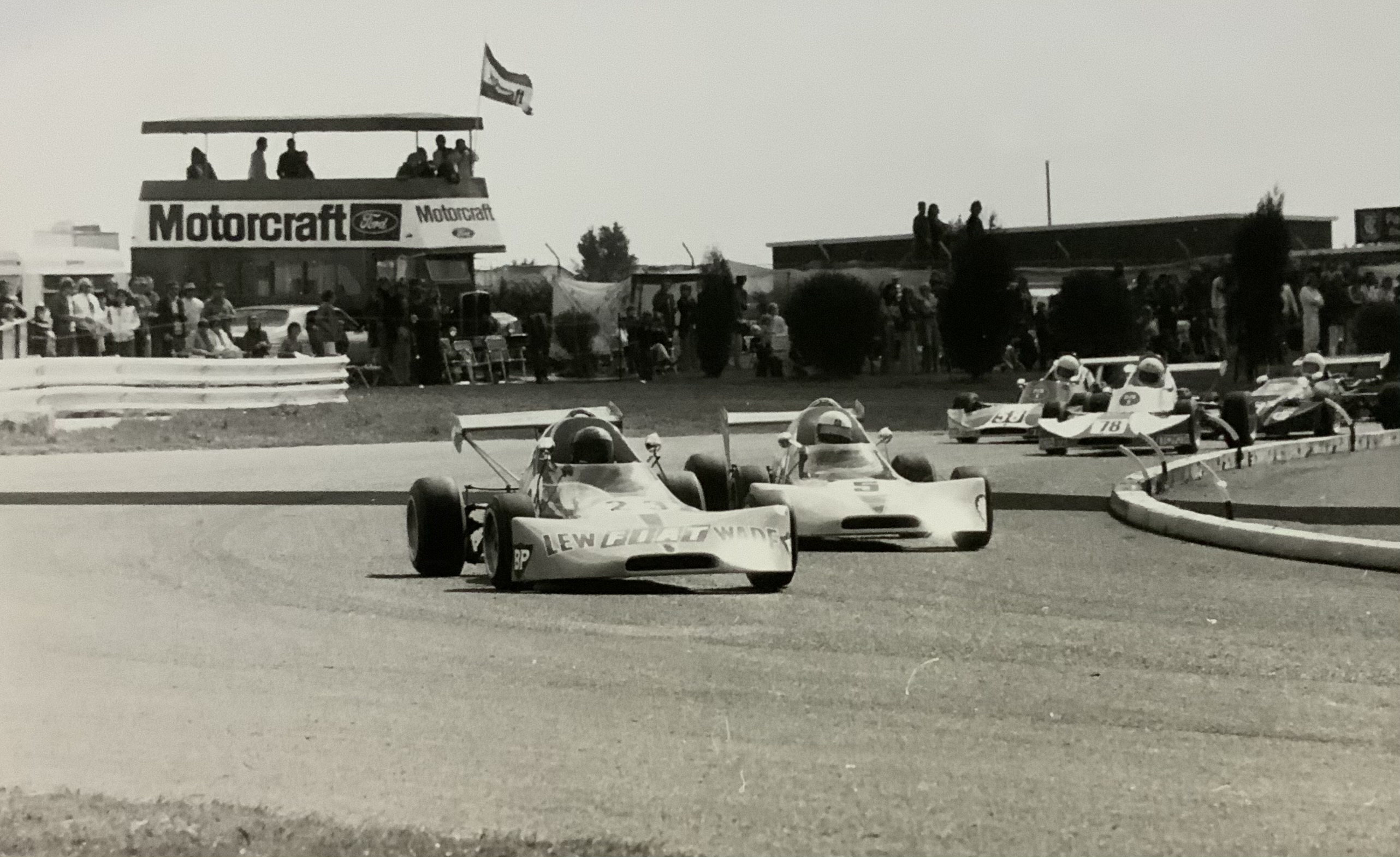
Sandown ANF3 race 1974, Shell Corner: Paul King and Dean Hosking in Birrana 374 Toyotas ahead of the Brian Sampson and Brian Shead Cheetah Mk5 Toyotas (Auto Action Archive)
(Auto Action 1975)

I SUPPOSE I MUST HAVE RECEIVED a least a dozen letters over the last couple of months from people asking me about the cars.

Questions such as: “How do I go about designing a racing car?” “Or what determines where you put the roll centres?” Or “I am building a model, could you supply me with all the necessary dimensions?” and so on.

What I propose to try and do now is to give a brief run down in this and the next article on my method of designing and building a (reasonably) successful formula 2 car.

I hope I don’t make it sound too easy because it sure isn’t.

Bear in mind that I am starting right from scratch because that is precisely what I had to do with the first F.F. and the 272.

Looking through every motor magazine over the previous two years, I was able to get an average of what the wheelbase and front and rear track should be, I added two inches to these measurements because that was the way things were heading and all things being equal is the obvious way for stability and ease of driving.

I arrived at a 94” wheelbase and 57½” rear and 56″ front tracks, I increased this to 58½” and 58″‘ respectively in the 273 while the wheelbase stayed at 94″‘

There was a tremendous amount of research into the front and rear upright and brake assemblies too detailed to go into here.

Roughly, the front upright was based on the Triumph Herald upright pivot point dimensions.

However that has a king pin inclination of around 9 degrees which was too much, ao I settled for 5 degrees K.P.I.

This gives less change of camber on turns.

LIVE STUBS

Also, I wanted to use the live front stub axle, being a more rigid item and giving less offset from the upright pivot points to the centre of the contact patch.

A lighter steering effort results the closer these points are. So that a compromise is gained between lightness and feel, I settled on roughly 2½” which ties in nicely with the axle and disc brake set up.

Right, now we have a centre-line of the tyre, a tyre size, an axle centreline, two outer pivot points on the upright and a track,

What roll centre to use? From 15 years experience I settled on 2½”, in other words an educated guess. This has been raised progressively in subsequent models.

Now we come to a dimension called the virtual swing arm length. This is usually 2 to 3 times the track.

From here on, we have to start using a drawing board and the following details relate to a frontal view of the car. I try to work full size where possible for accuracy, but a scale drawing is acceptable.

LINE

Draw a line from the centre of the contact patch, through the roll centre until you reach a vertical line which indicates the length of the virtual swing arm length. Where these lines cut, draw back two more lines to the upright pick up points.

These are now the angles on which the front suspension links will be.

The lengths of these links can only be determined by using all different combinations of lengths until in conjunction with the wheel movement traversing 3″‘ either side of normal ride height, a satisfactory amount of camber change is achieved.

Our cars usually have about 2½ degree to 3 degree total camber change but this varies a lot from designer to designer.

Of course it doesn’t end there by any means. You must be sure that the tyre does not move too much laterally, in other words give a lot of track change.

From normal ride height to full bump our car moves about 1/8″‘. The next detail is to try and limit the roll centre rising and falling too much as the wheels move up and down.

This is very important for predictable handling. Our roll centres move about ½” in total.

Now that you have arrived at a whole lot of satisfactory figures in the vertical plane, the car must be subjected to degrees of roll. I do my drawings at l degree, 2 degree, and 2 1/2 degrees keeping an eye on all the variables such as camber change (try to avoid excessive positive camber readings here) track change (shouldn’t go over 1/16″ from normal ride to full bump) and roll centre (should stay close to what it does in the vertical plane).

GOOD GEOMETRY

When all this has been achieved, you would have fairly good suspension geometry, so now onto the rear.

This method would be the same as the front except that a suitable rear upright must be used or designed.

I’ll make no secret of the fact that the dimensions of an Elfin upright provided me with a starting point here although there is no similarity at all now.

Set your rear roll centre about a third as high again as the front. Most rear suspensions have the upper link appreciably shorter than the bot-tom. More camber change is desirable at the back and it is most important to make sure that there is virtually nil camber change from normal ride height to full droop.

Camber change here will give a rear steering effect under brakes as the tail tends to rise.

Well, there it is, the “Basic Design your own racing car kit” — just in time for Xmas!

I started off doing the first Formula Ford. I adapted the geometry considerably to suit the 272 and I would say that the whole effort regarding the suspension took about three weeks of fairly solid effort.

There are easier ways, using trignometry and computers and so on, but I’m afraid I am personally not much or a mathematician.

I think there are two ways to design cars successfully. One is to be a Colin Chapman, and have that certain something which puts him at the forefront of innovation and design, or to gain knowledge through read-ing, observing and building up ideas through practical experience.

Most of us have to resort to the latter, and I am glad to say that this method has so far worked for me.

Credits…

Tony Alcock in his Auto Action columns, the first on May 17, 1974. Thanks to Bruce Williams, Auto Action publisher/owner, Geoff Selton

Finito…
(oldracephotos.com)

Barry Cassidy’s Ford Falcon XR GT ahead of Bill Brown’s Ferrari 350 Can-Am, Newry Corner, Longford 1968…

Series Production or showroom stock racing was hugely popular in Australia during a golden period to the end of 1972 when the Supercar Scare forced the rule-makers to change tack – a story in itself! Actually there is about it in the middle of this Holden Torana XU-1 V8 epic here; Holden Torana GTR XU1 V8… | primotipo…

Here, local lad and long time racer Cassidy is practicing for his event during the Tasman weekend in his brand new, straight off the showroom floor, 289cid V8 powered Australian pony-car. It was the first in an amazing series of road legal and oh-so-fast Fords built from the late sixties to the late seventies. Most of them won the Bathurst 500/1000 classic including the XR GT which triumphed at Mount Panorama in the hands of Harry Firth and Fred Gibson in 1967.

Cassidy showing delicacy of touch exiting Mountford, Longford 1968 (oldracephotos.com)

Cassidy had a top speed of 120mph or thereabouts, Brown about 170, and is about to swallow him on the uphill run to the right, then to the left onto the Flying Mile. He recalls that Brown was “probably not too impressed about being passed under brakes by the XR GT and signalled his thoughts about it as he blasted past on the Flying Mile!”

Cassidy raced the car for a bit, and was later at the vanguard of ‘Formula’ HQ Racing, a series for lightly modified Holden HQ Kingswood/Belmont of the early seventies, a hugely popular cost effective way to get into, and stay in motor racing. He is still racing too.

Cassidy chasing Graham Parsons’ Cortina GT and Darryl Wilcox’ Humpy Holden through Newry Corner. Barry was off a low grid position after being pinged by scrutineers for having a spare tyre not of identical section width as the four on the car! (HRCCT)

Credits…

oldracephotos.com, Historic Racing Car Club of Tasmania

Finito…

(B King Collection)

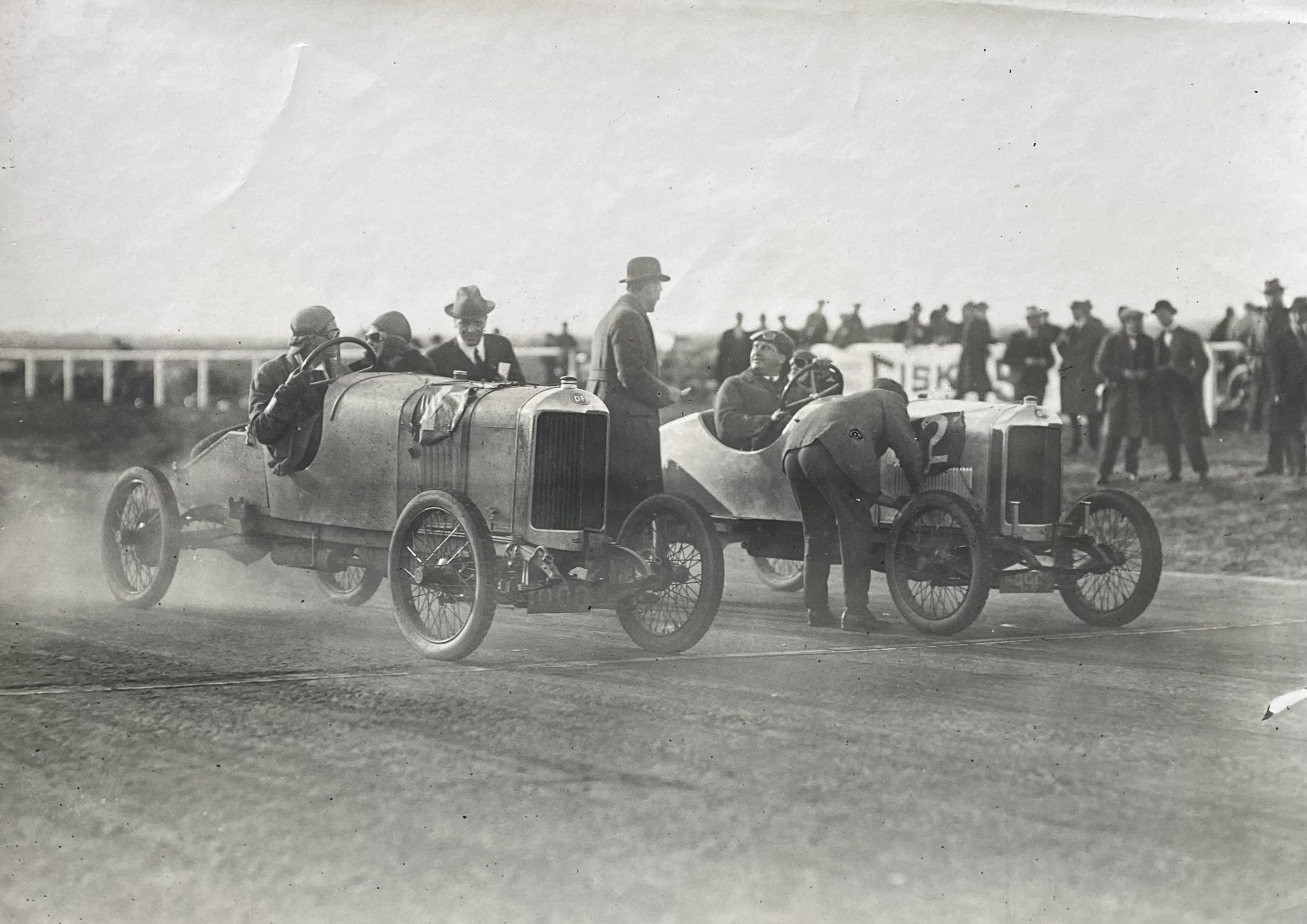
John Williams, DFP takes the chequered flag for The Sun, from HW Miller’s similar car for The Herald, in a five lap battle of the Melbourne Motor Editors at Aspendale on June 9, 1924

Fragments on a forgotten make

Mssr. Dorian, Flandrin and the Parant brothers made light cars of no great distinction in Courbevoie (Seine) between 1906 and 1926. Chronically underfunded, they relied on proprietary engines. They are best remembered by the reflected glory from their London agent W. O. Bentley’s use of aluminium pistons in DFP’s which led him to success at Brooklands. WO claimed that the idea to use aluminium pistons came to him in 1913 during a visit to their Parisienne factory. He said they allowed him to obtain ‘much more’ power from the engine – the main advantage being greater thermal efficiency, rather than weight saving. In regard to novelty, it should be noted that Aquila Italiana had been using aluminium pistons from 1906 under the guidance of their talented designer Giulio Cesare Cappa.

‘WO’ in a very smart looking DFP (B King Collection)

Rendering of a similar DFP to WO’s (T Johns Collection)

Whether through ‘reflected glory’, improved performance or clever marketing, the DFP was not an uncommon entrant in post-WWI motor sport in Australia. It seems that the sporting motorist had a love affair with French cars, possibly engendered by their panache. This was distinctly lacking from the majority of Italian and English light cars of the period. It should also be remembered that cars from ‘former enemy’ countries were forbidden to take part in motorsport in the early post-war years– at least in Victoria.

My motoring archive has several splendid photos of DFP’s in action and Mark Bisset felt I should share them with you on primotipo.com

The first race at Aspendale on ANA day, 1906 (J Crooke Collection)

Aspendale

Situated in a sandy bayside suburb of Melbourne, Aspendale Motor Racing Club had a history dating back to the dawn of motoring. James Robert Crooke had a horse racing track built on his father’s land in 1889. The name of the venue played tribute to his champion horse ‘Aspen’, which had won the Newmarket Cup in 1880 and 1881.

Entrepreneurial Crooke had won Australia’s first motor race at Sandown Park in 1904 driving his steam powered Locomobile. By January 1906 they were motor-racing at Aspendale Park on what he claimed to be the world’s first purpose built racing track. After only a few events the track went into hibernation until a new banked concrete/bitumen track was built in 1923. The first event was held on this surface on 1 March 1924.

(J Crooke Collection)

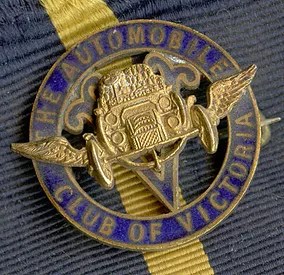
The promoter’s club badge

(J Crooke Collection)

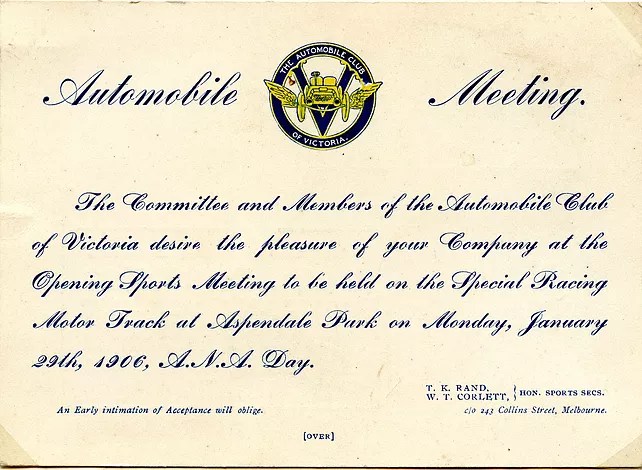
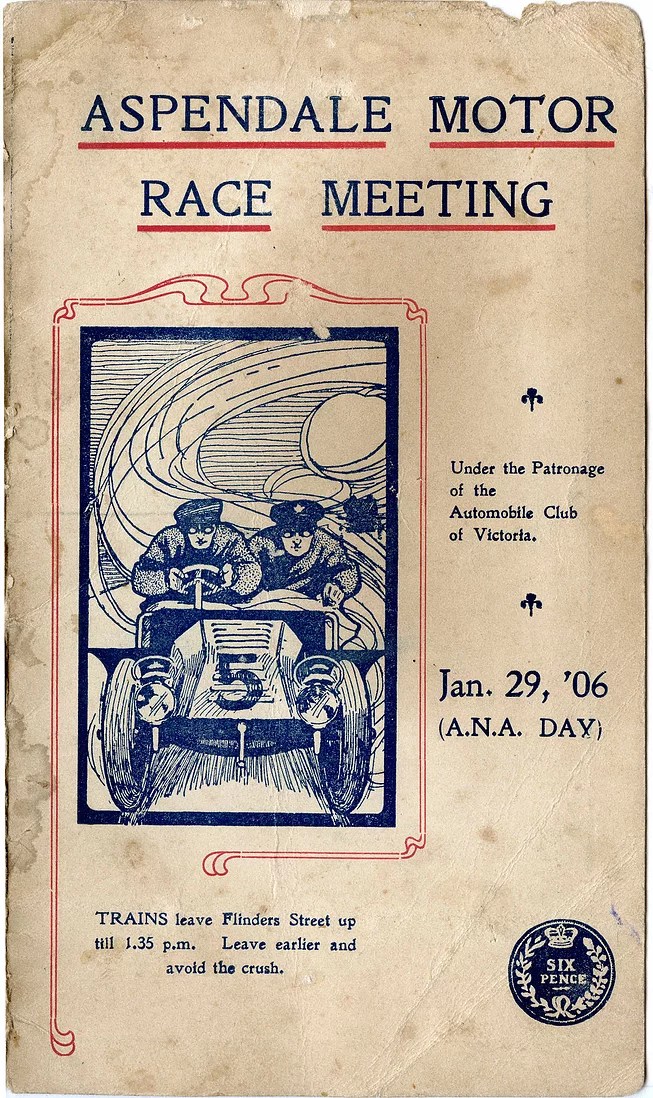
The ACV’s invitation to attend – love the formality of the day, and program, or programme, more correctly!

(J Crooke Collection)

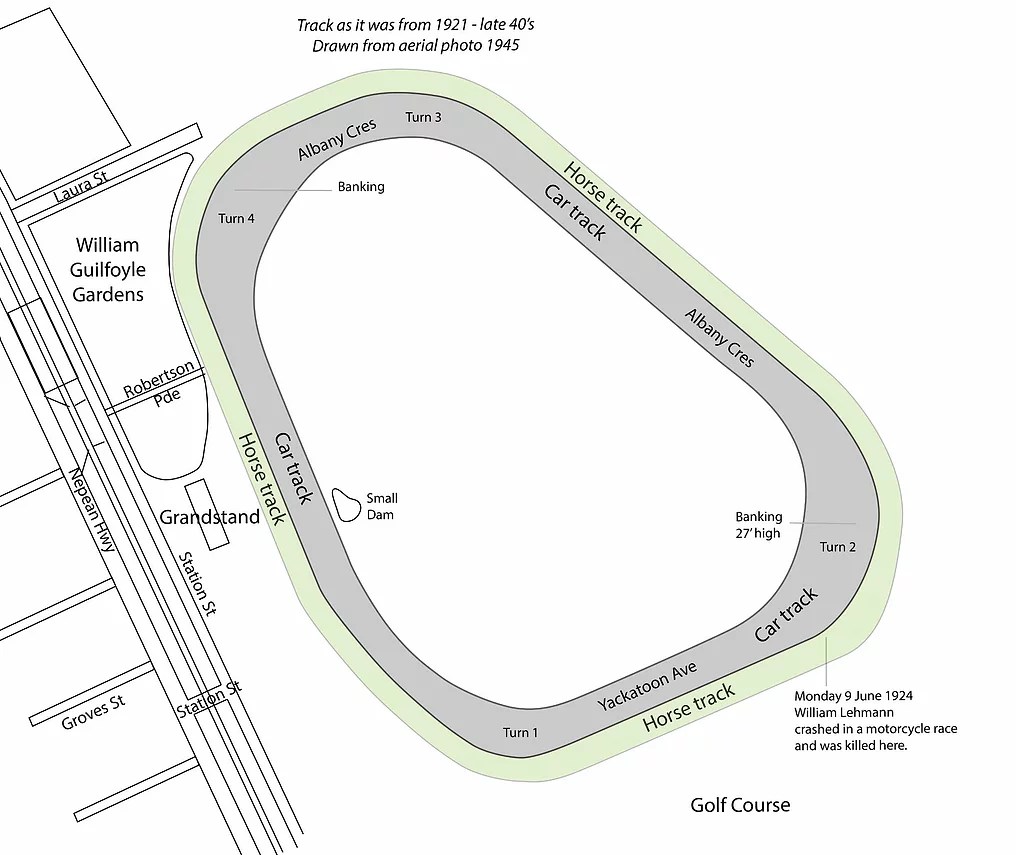
The track layout.

John Williams and the DFP at Aspendale

John was a jovial beret-wearing, Gauloise smoking motoring journalist who had a preference for French cars. He was the second owner of a Brescia Bugatti in 1929 and was still driving a Ballot 2LT in post-war years. As Motoring Editor for the Sun News Pictorial and later the Argus, his knowledge of cars was encyclopaedic. He came into our realm through friendship with Lou Molina and attendance at Lou’s Brighton Central Hotel in the 1970s.

John took part in an unusual event at Aspendale on 9 June 1924 – a match-race between the Motor Editors of the Sun and the Herald. Fortunately, photographs survive of this encounter, showing that the drivers were accompanied by their wives. John annotated the back of one photograph, stating that this was the first time that women had travelled as mecaniciennes in a motor race in Australia. John’s wife Pegg is quoted as saying “What a damned row 24,000 people can make!”

(Bob King Collection)

The start of the motoring journalist match-race.

(Bob King Collection)

John and Pegg Williams ensconced in the DFP. Winners are grinners, the rest can make their own arrangements.

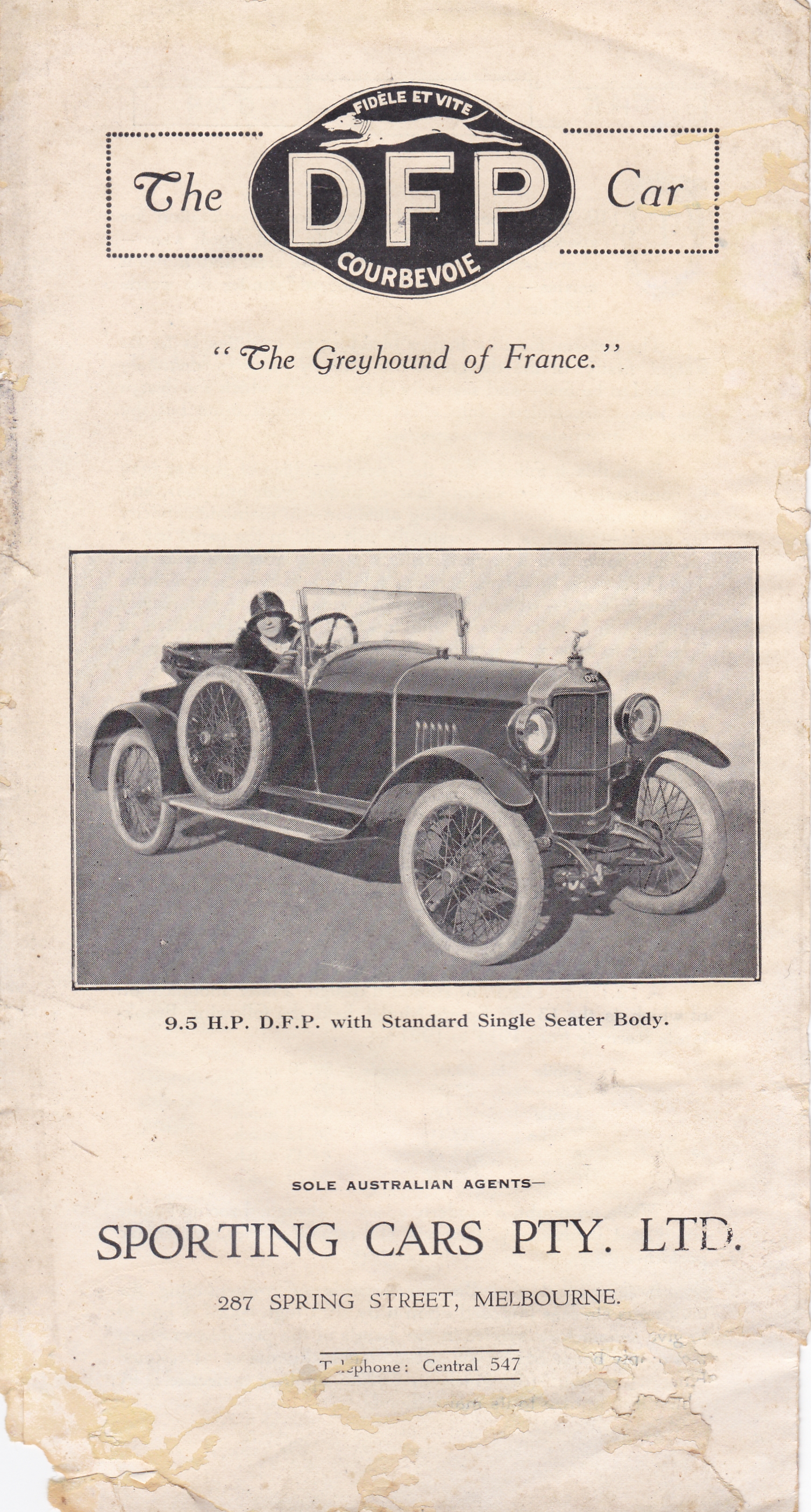
Sporting Cars, DFP and Miss Marie Jenkins

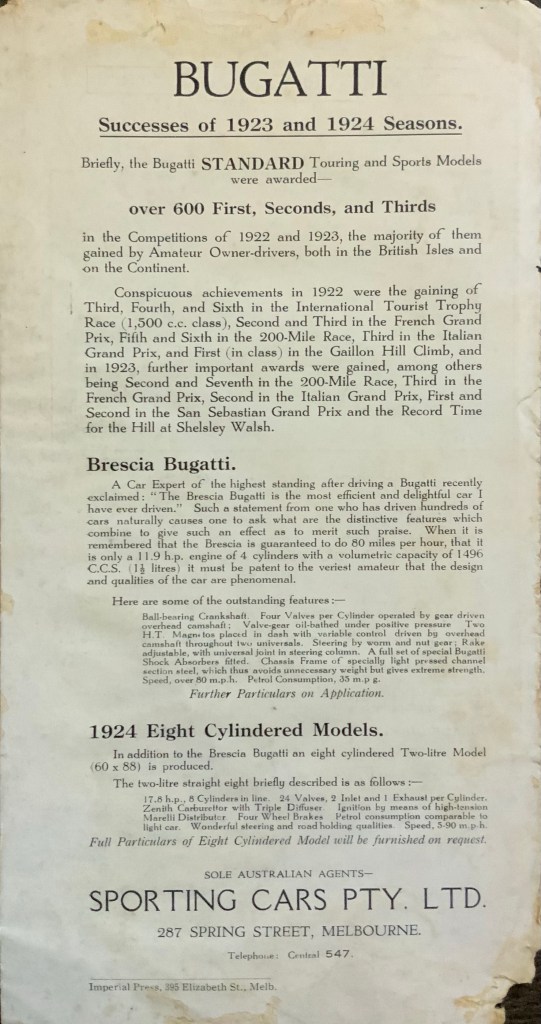
If clever marketing contributed to the DFP’s popularity here in Victoria, the responsible party is likely to have been Sporting Cars, the future agents for Bugatti, who used the attractive Marie Jenkins to promote their brand (Sex sells).

Sporting Cars claimed that the DFP had ‘a remarkable reputation for speed, coupled with reliability and hard wear’ – these characteristics being exemplified by the crest and motto on the radiator badge – a greyhound ‘Courant’ under the words ‘Fidele at Vete’.  Marie was often seen in the company of Sporting Cars directors; their relationship has not been established.

(B King Collection)

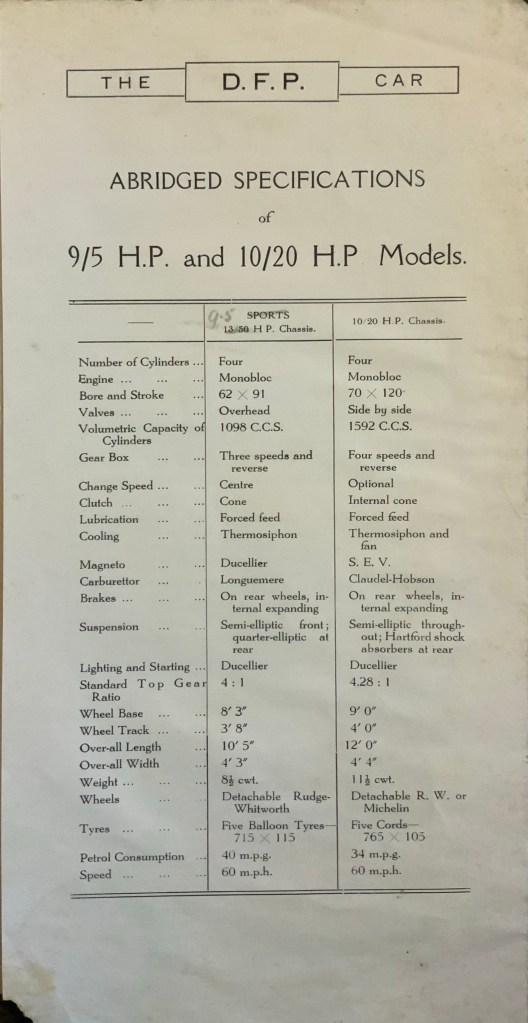
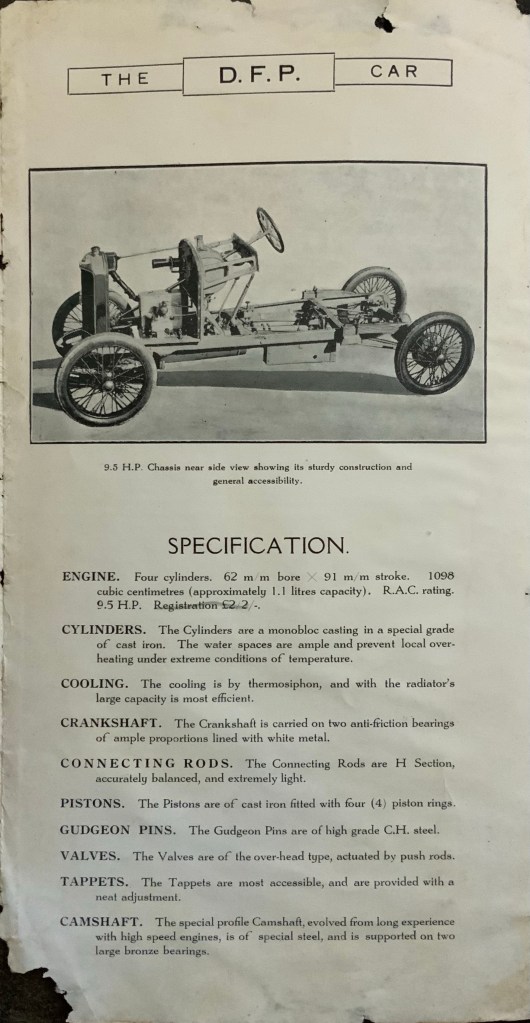
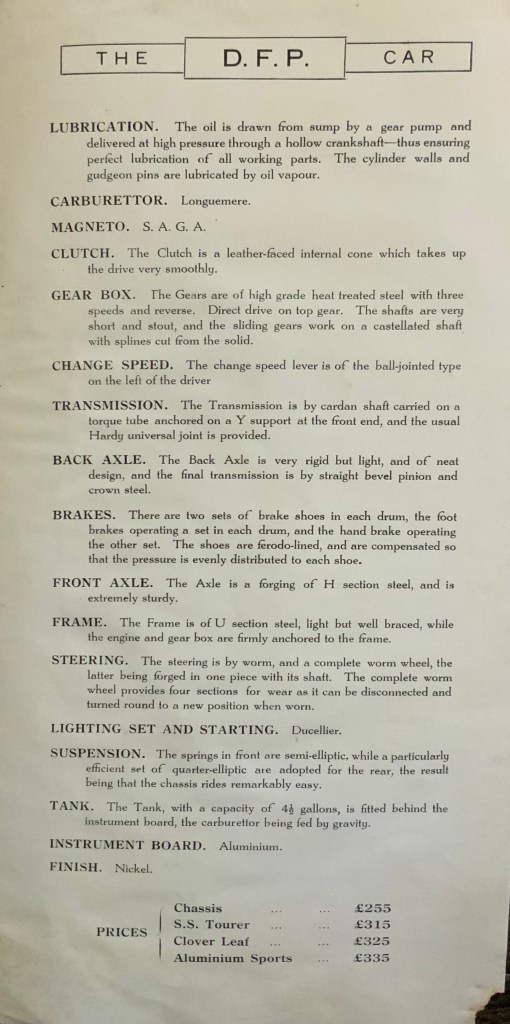
Marie Jenkins was used to promote the make in this Sporting Cars pamphlet, the rest of it, providing detailed specifications is at the end of this article.

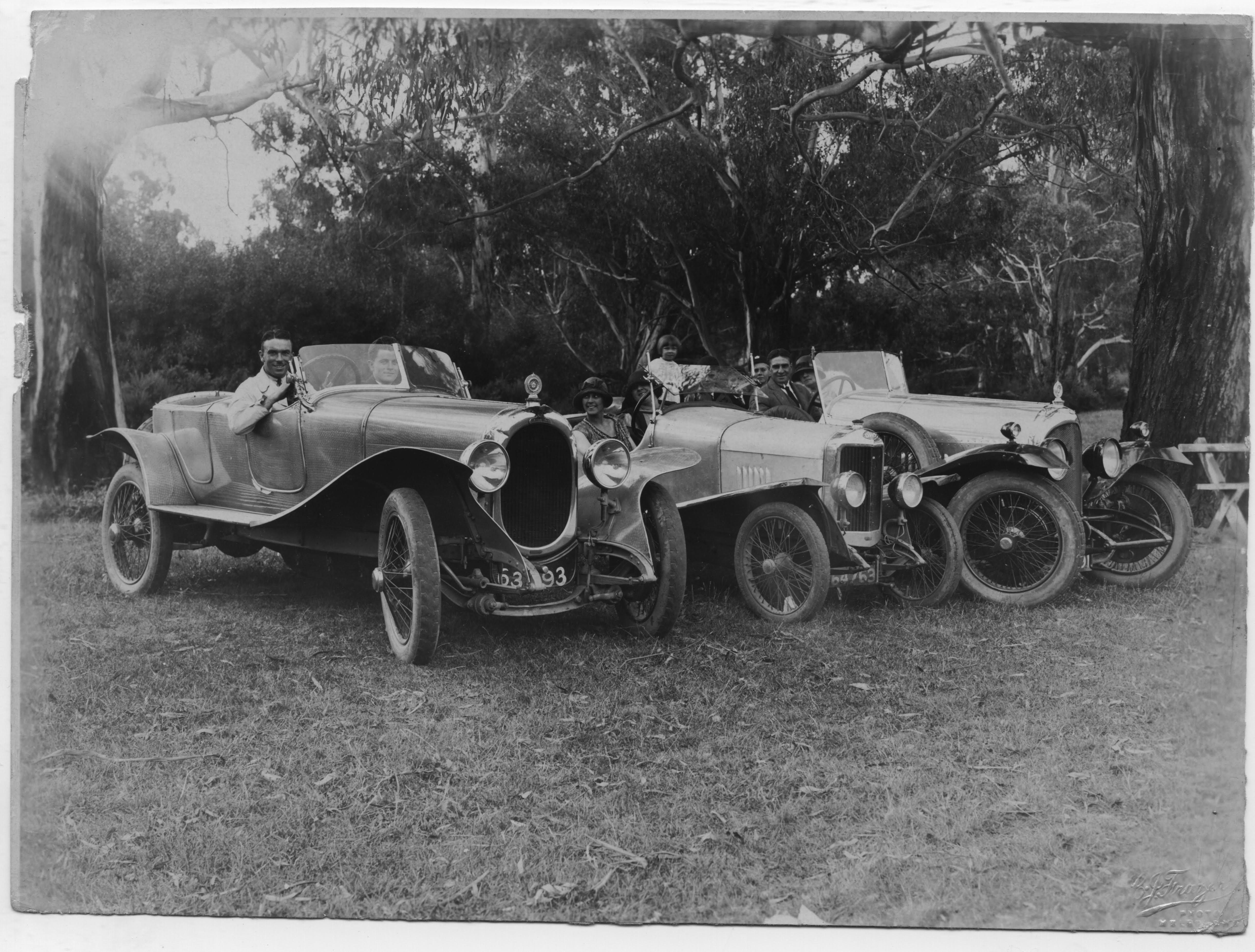
Dudley Barnett, Chenard Walcker, Marie Jenkins DFP and Arthur Terdich Bentley 3-litre, with Maude. 1924 Davies Bay, Victoria (B King Collection)

Marie in her little DFP is dwarfed by Sporting Cars director Dudley Barnett’s Chenard Walcker (left) and Arthur Terdich’s 3-litre Bentley

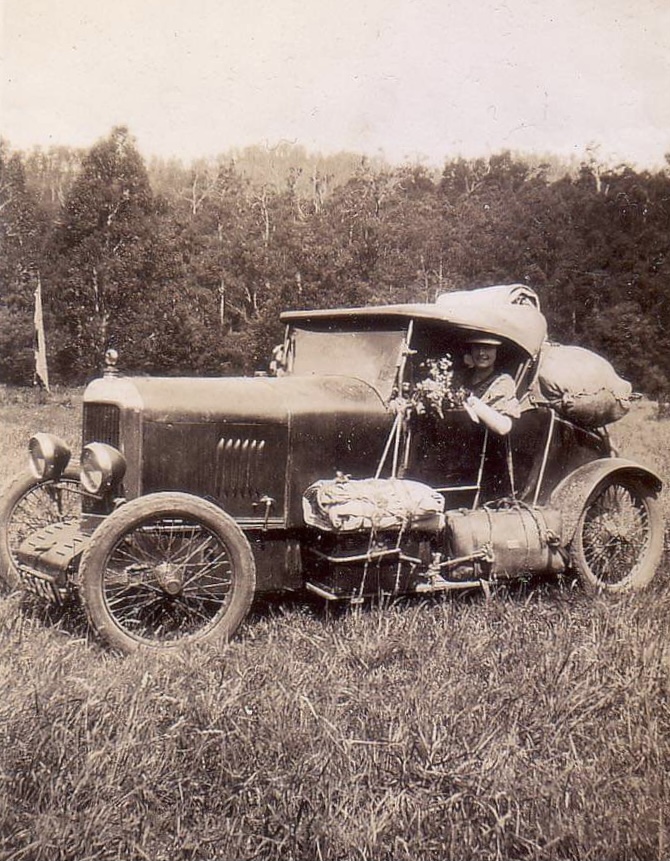
(G Jarrett)

Marie goes camping, the only thing missing appears to be the kitchen sink! Poor liddl’ darlin’ would have struggled carrying that lot.

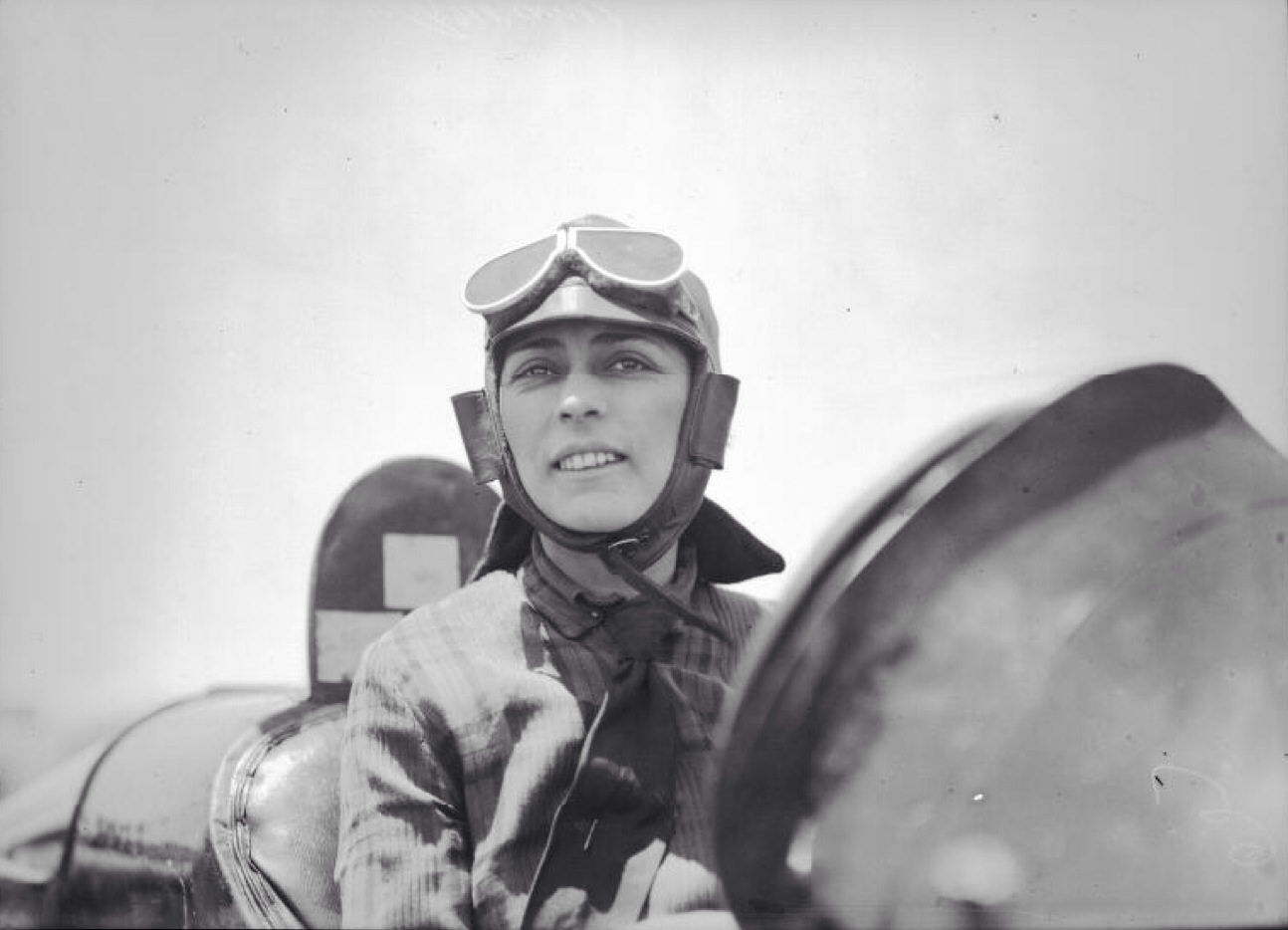
(Fairfax)

Here she is, looking rather marvellous, at Sydney’s Maroubra banked, concrete Saucer of Speed in her victorious Brescia Bugatti in 1925.

(B King Collection)

1928 Australian Grand Prix

Two DFPs took part in the 100-Mile Road Race, aka the 1928 Australian Grand Prix at Phillip Island.

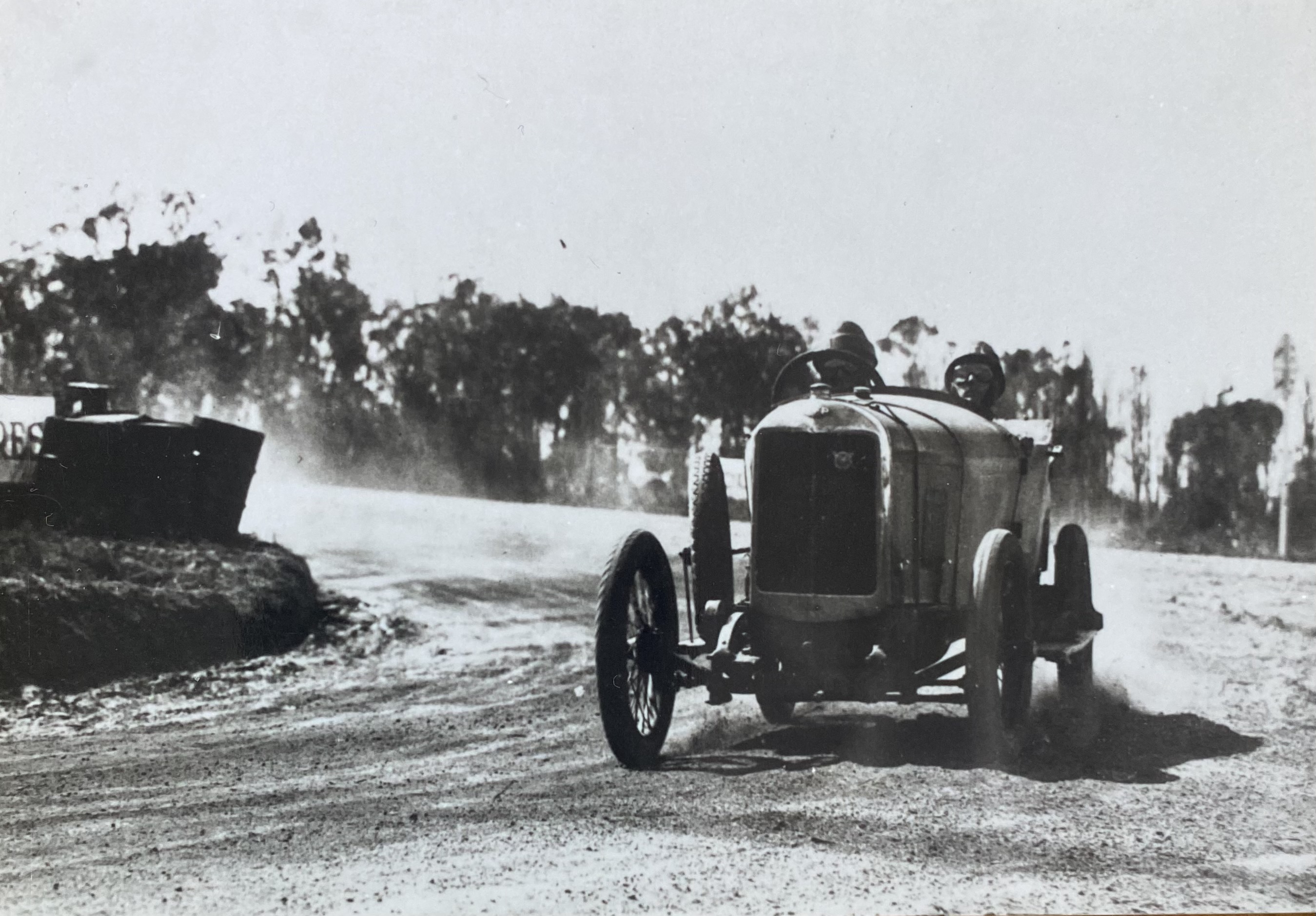
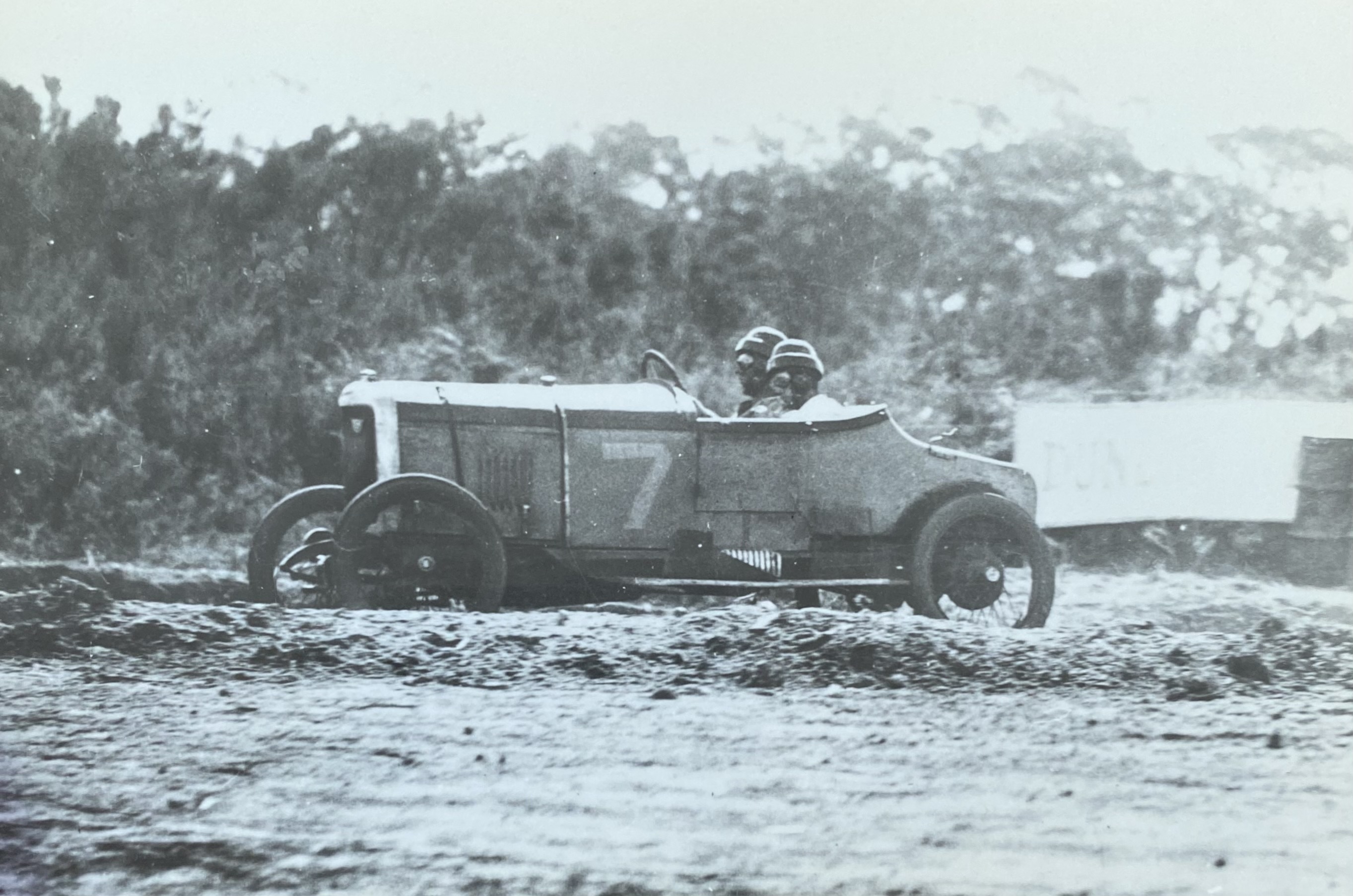
Ab. Terdich was the brother of Arthur whose Bugatti faltered while he was leading the race; he won in 1929. Ab’s DFP retired with engine trouble. The other car shown, driven by Les Pound, had better luck, completing the distance in a little under 2½ hours at an average speed of 41.6 mph, he was thirteenth and last. Les became a well-known name in post-war years as proprietor of Volkswagen dealers, Pound Motors. The Pound DFP is nearing the end of a long restoration.

(B King Collection)

Les Pound made slow progress in the 1928 AGP, but had the satisfaction of completing the distance.

DFP random

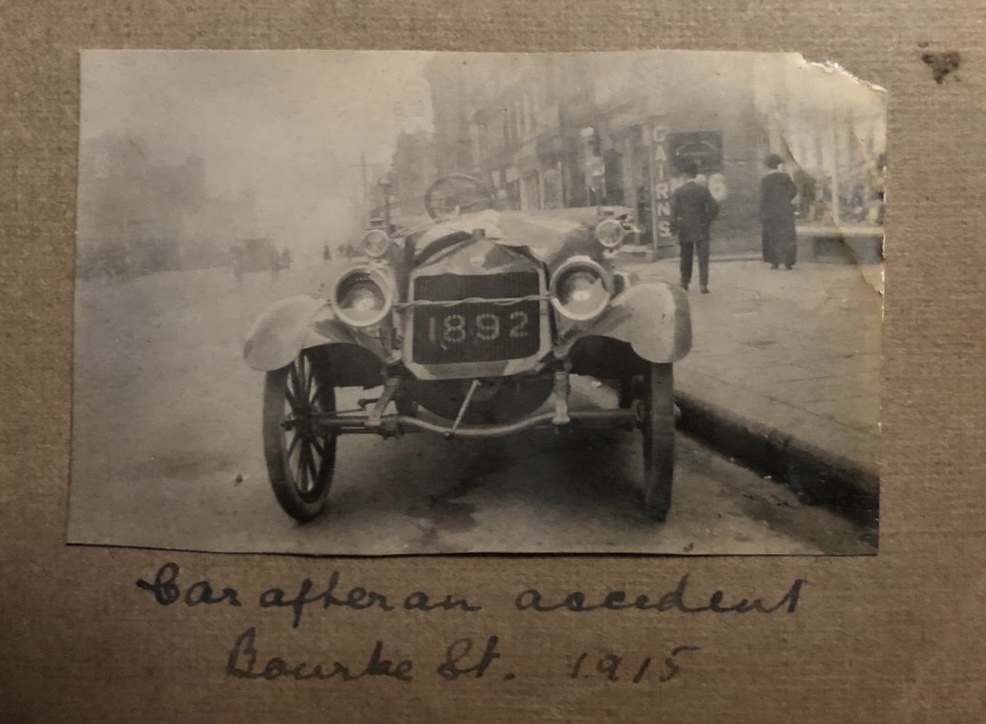
Nigel Tait of Repco and ACL fame had an ancestor with a DFP that managed to have an accident in Bourke St, Melbourne in 1915. That must have been hard to achieve – perhaps an errant horse?

(N Tait Collection)
(N Tait Collection)

This Tait family photograph shows the same car (above) which was driven by George McCarey below.

(B King Collection)

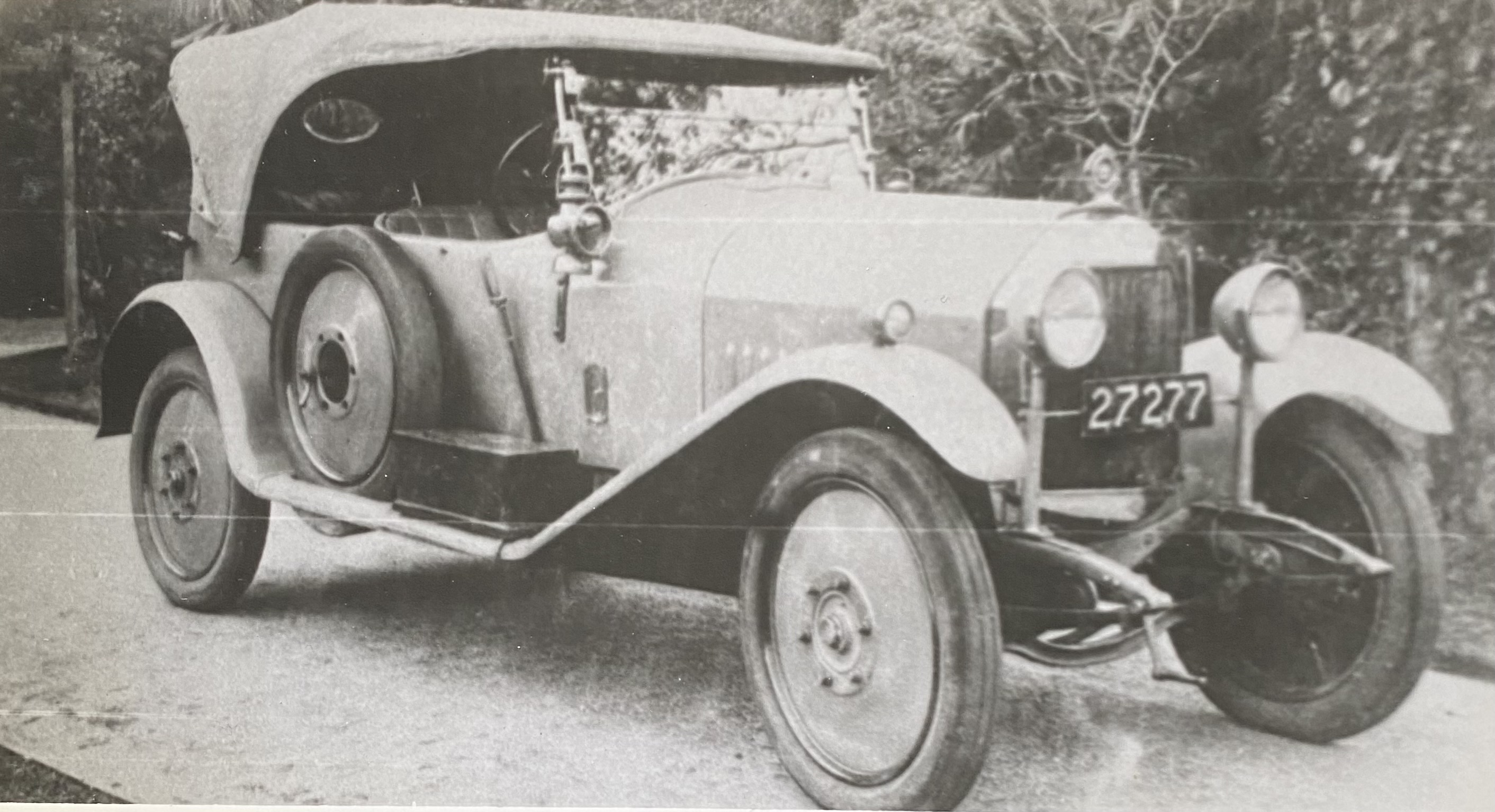
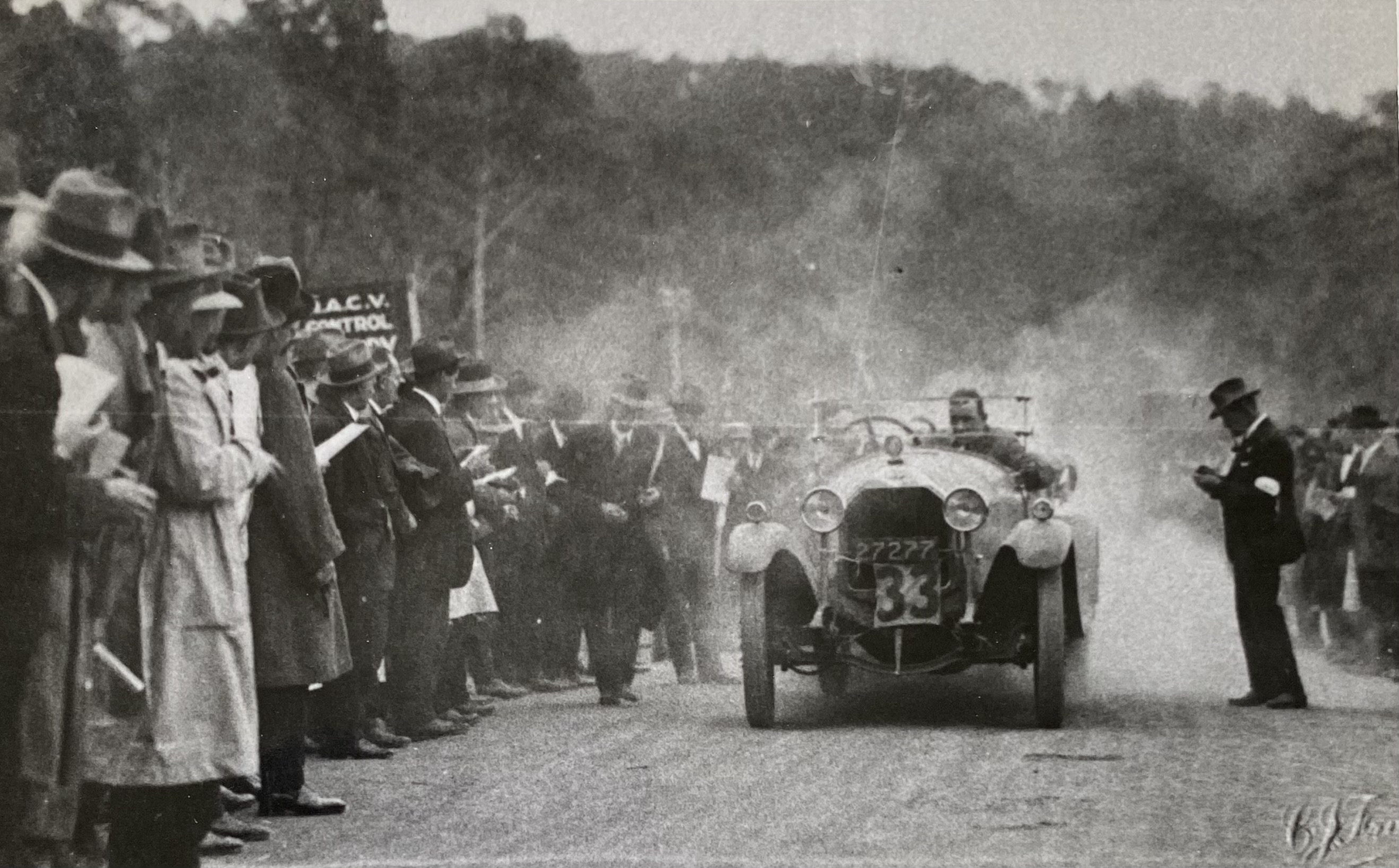
I suspect the photo of car with registered number 27277 is being driven by George McCarey in the 1921 RACV 1000-mile Reliability Trial. This was an earlier 2-litre car of the type raced by WO Bentley, rather than the more popular 1.1-litre car which was introduced in 1922.

(T Johns Collection)

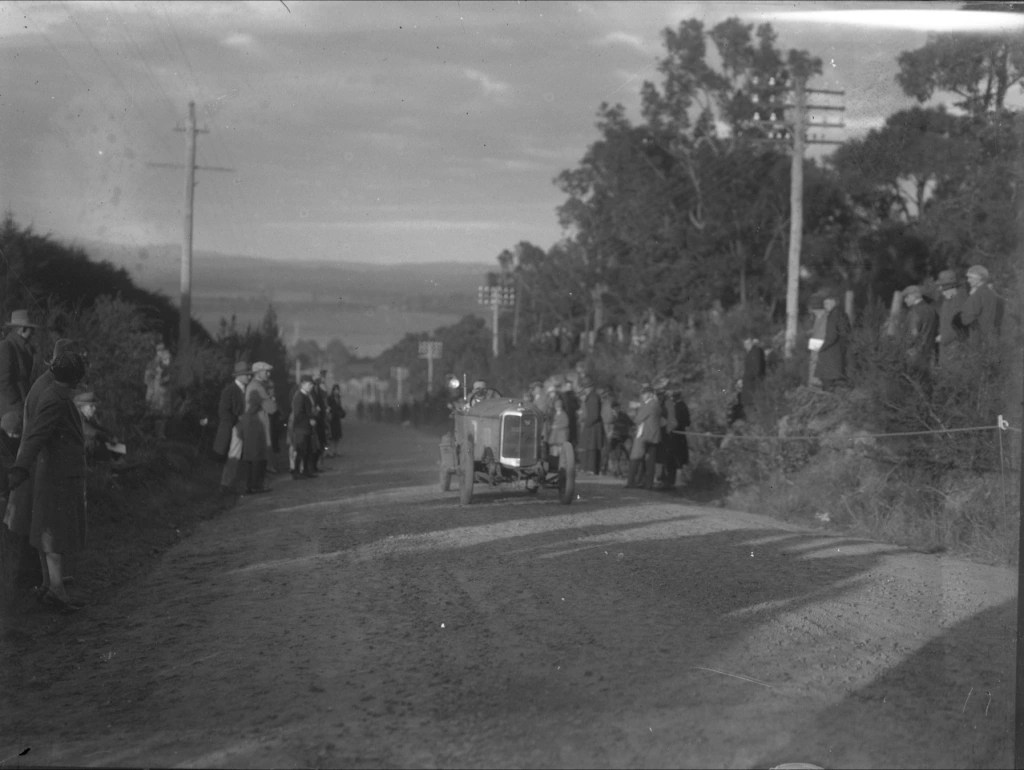
Les Pound completes the hill climb at Wheelers Hill with the same DFP he raced in the AGP at Phillip Island in 1928.

(B King Collection)

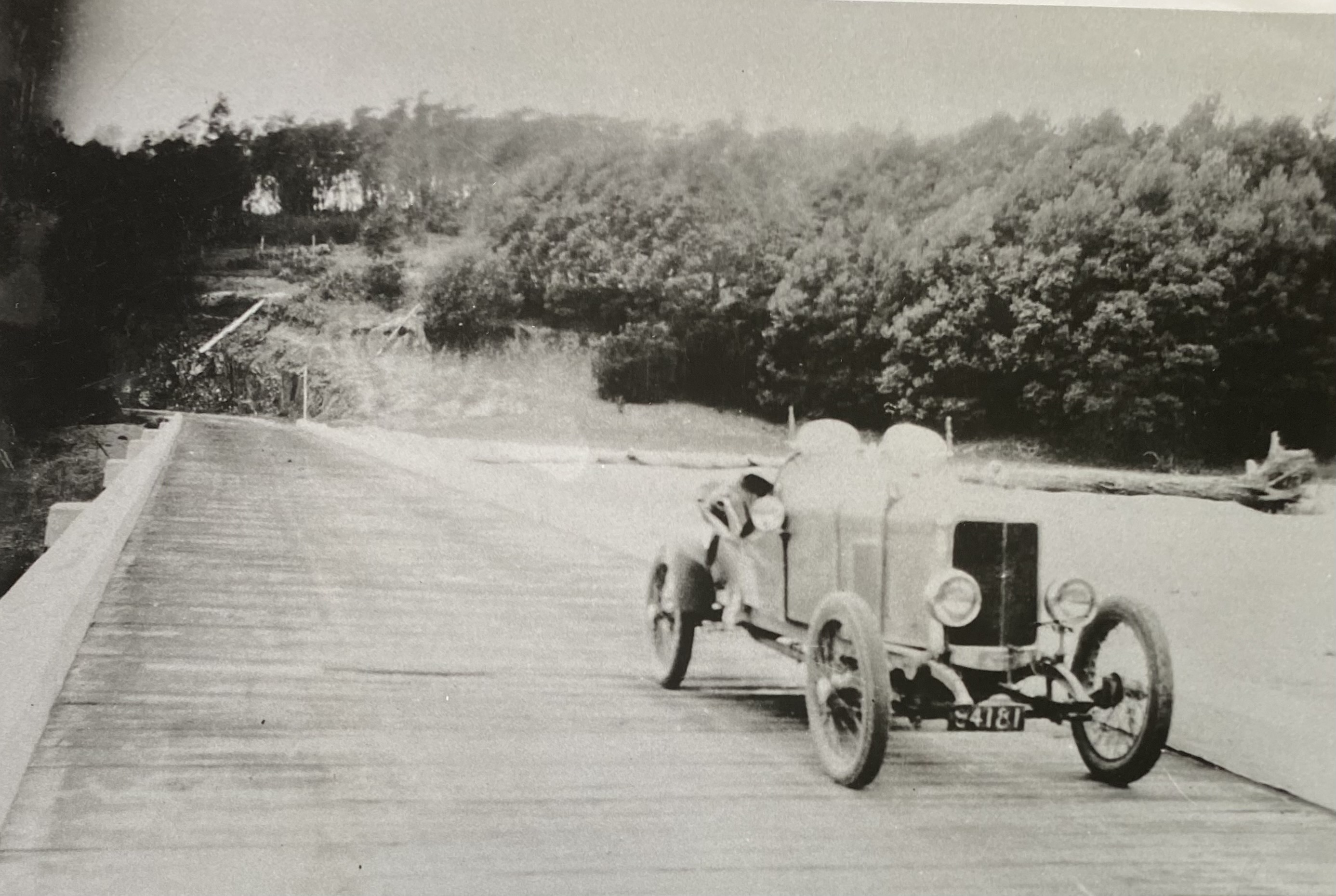
Doug Benson’s DFP on a bridge over the Kiewa River.

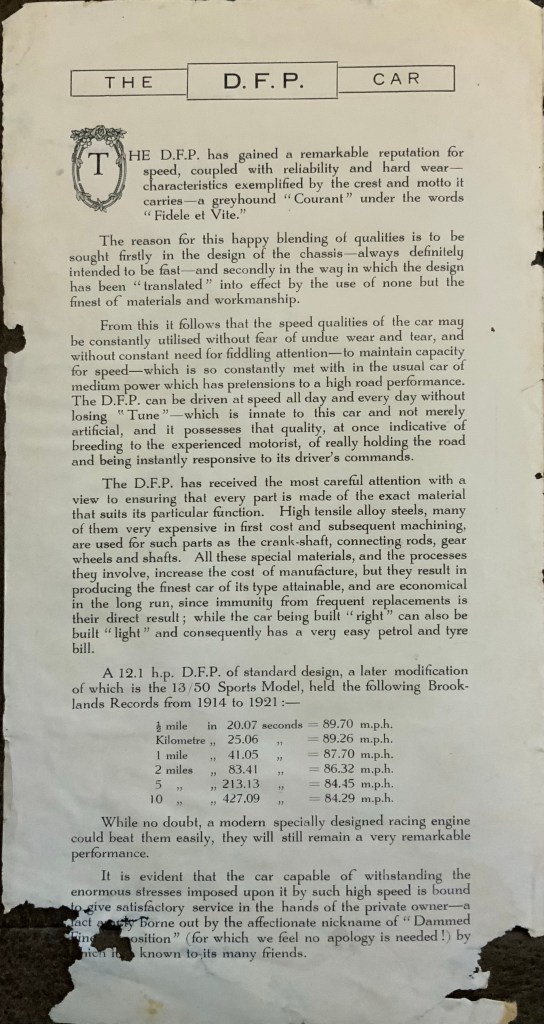
DFP Technical Specifications…
(B King)
(B King)
(B King)
(B King)
(B King)

Credits…

Bob King, John Crooke, Tony Johns and Nigel Tait Collections, Fairfax, Graeme Jarrett

Finito…