Posts Tagged ‘Chris Amon’

enzo 2

Enzo Ferrari at the launch of his 1969 endurance contender the 312P…

Motorsports governing body introduced new sports car rules for 1968; Group 4 Sports Cars with a capacity limit of 5 litres and a minimum production of 50 cars, and Group 6 Prototypes with a maximum of 3 litres. In effect the CSI were making obsolete the ‘unlimited cars’ being built by Ford and Ferrari, ( the 7 litre ‘pushrod’ Ford MkIV, 4 litre ‘racing engine’ Ferrari P4)  which they considered were getting too fast for the circuits of the time.

Ferrari, in time honored fashion didn’t race in 1968 in protest at this sudden rule change but returned in 1969 with the Group 6 312P, again in time honored fashion using many parts he had ‘on the shelf ‘ from other cars.

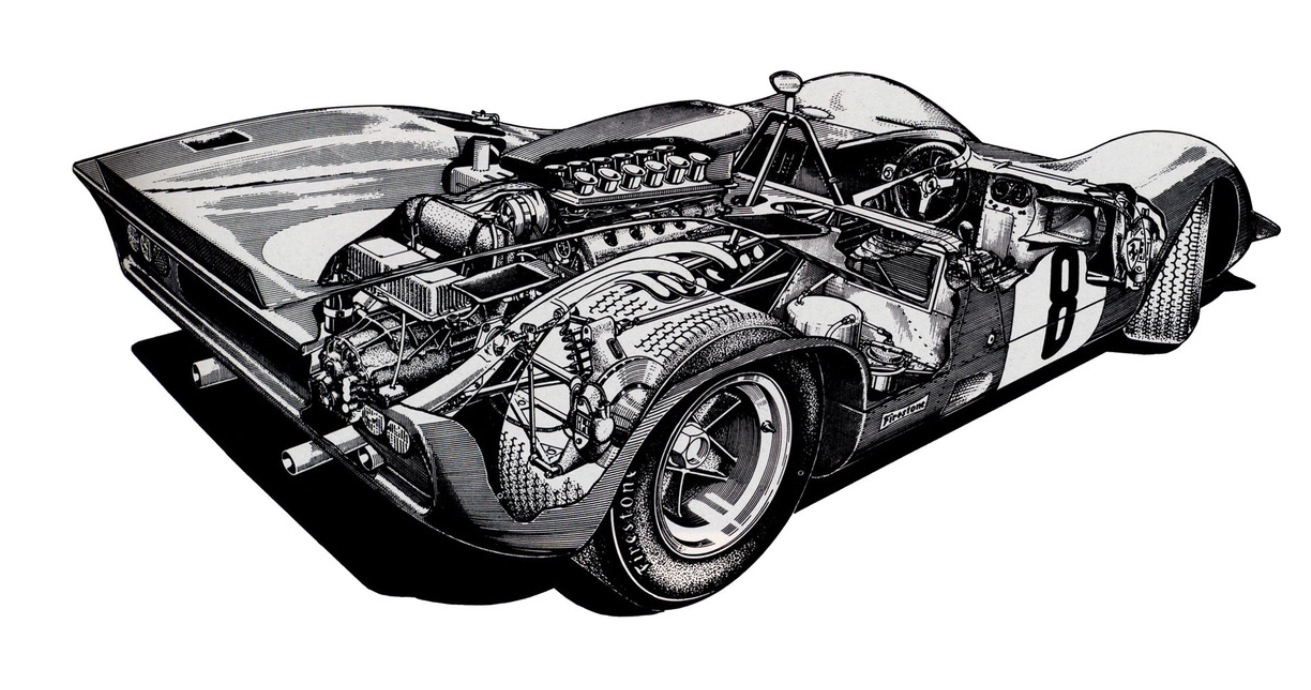
The chassis used was a downsized version of their 1968 Can Am challenger the 612P…It was a semi-monocoque, a spacefarme reinforced by aluminium sheet. The first cars were built with high downforce Spyder bodywork, but later cars were built or re-bodied for Le Mans as stunning low drag Coupes.
312p

Aluminium semi-monocoque chassis. Double wisbones, coil springs, Koni shocks at front. Single top link, lower inverted wishbone, twin radius rods, coil springs and Koni shocks at rear. Adjustable sway bars front and rear. Rack & pinion steering. Ventilated discs all round. 680 Kg.

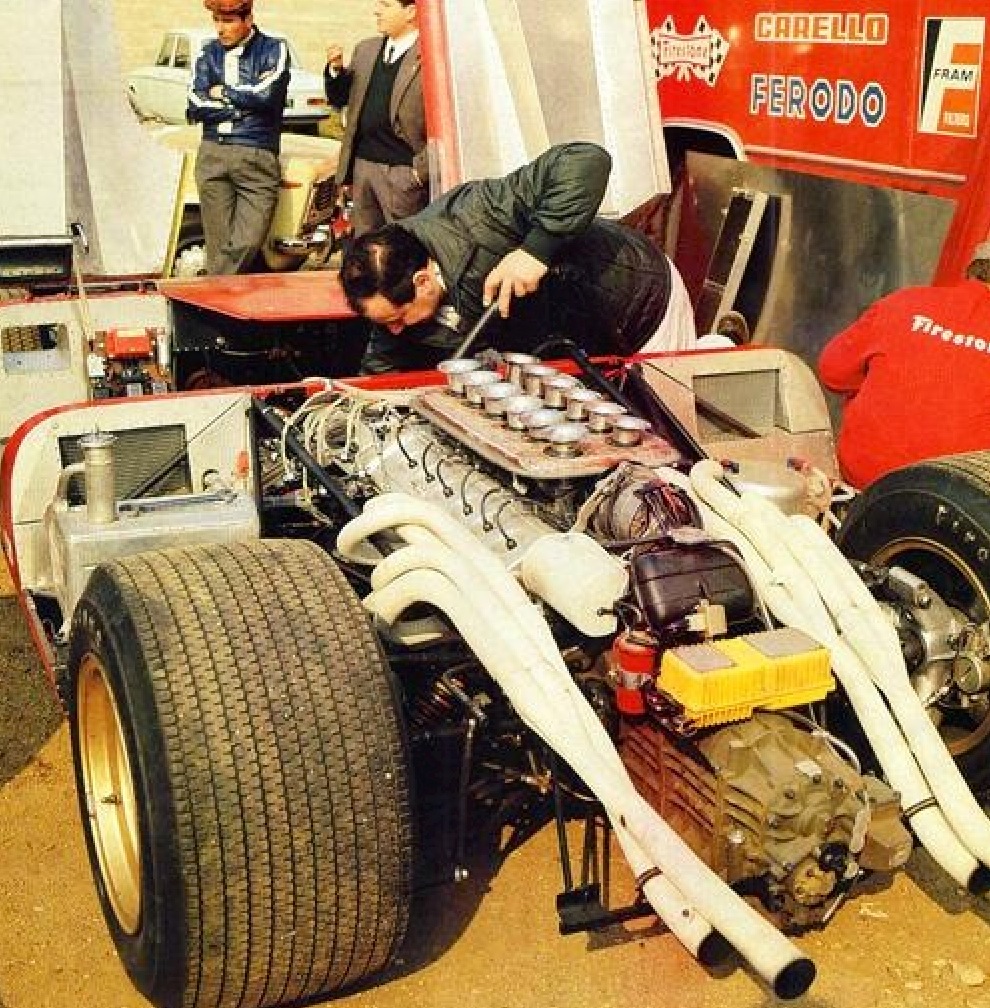
The 3 litre V12 was based on the highly successful old sports car engine albeit with 4 valve heads and Lucas fuel injection…Ferrari claimed 420 BHP, all of which hit the road through a 5 speed transaxle.
donk

312P engine, 5 speed gearbox and rear suspension. 60 degree V12, 2.99 litres. 77X53.5mm bore/stroke. 11:1 compression ratio. 4 valves per cylinder , DOHC, Lucas fuel injection and circa 420BHP @ 9800RPM. (Tony Adamowicz)

Chassis ‘0868’ was shown to the public at the Hotel Fini in Modena in December 1968, which is probably where this unattributed shot of Enzo Ferrari with the car was taken.

From the outset Ferraris’ sports car plans in 1969 were limited as the development of the 3 litre ‘Flat 12′ engine for F1 in 1970 was Technical Director, Mauro Forghieris’ main project.

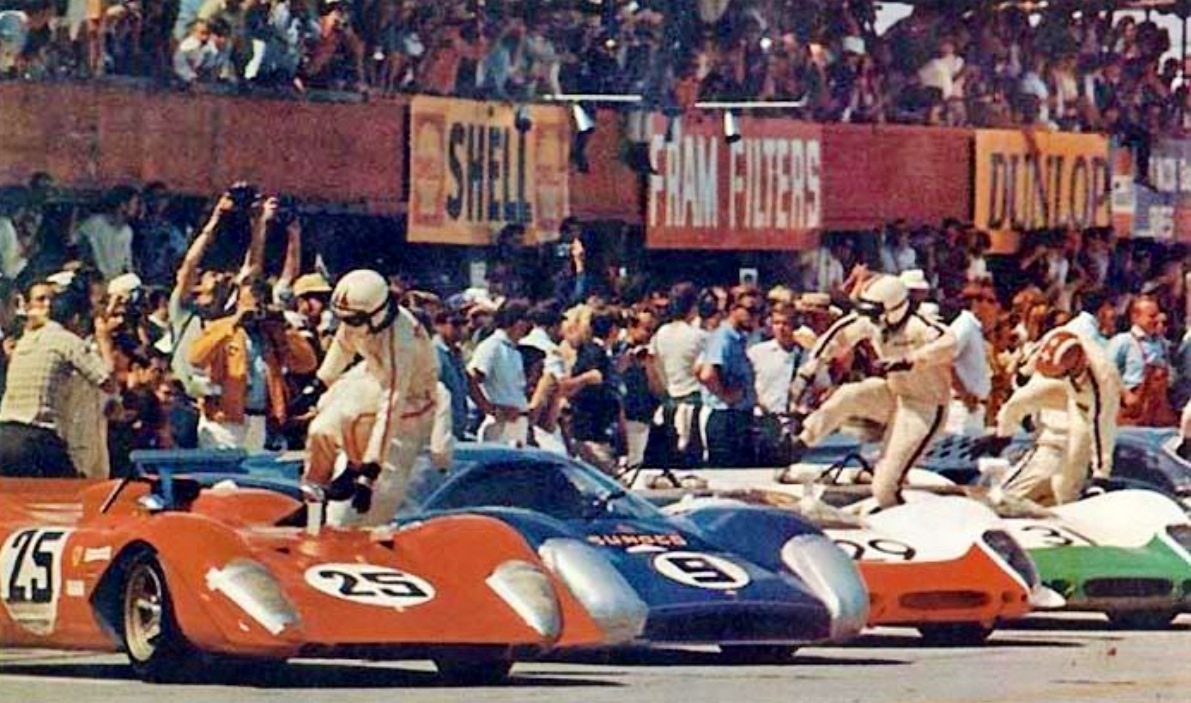
The first car was damaged in testing, but repaired and put on pole at Sebring by Mario Andretti, the car finishing second co-driven by Chris Amon despite overheating after a collision with a slower car.
amon

Chris Amon leaps aboard the 312P he shared with Mario Andretti at Sebring 1969.

amon sebring

Smoky Amon. Ferrari 312P, Sebring 1969. Second outright and first in class with Mario Andretti (Nigel Smuckatelli)

The car was very fast at Brands Hatch, but the Le Mans testing weekend revealed the need for slippery coupe bodies on the Mulsanne. The bigger issue was the appearance of the Porsche 917, 25 examples of which had been built by the Germans to comply with the CSI’s new Group 4 rules, not what the rule makers intended at all…

The 312P’s were fast at Monza filling the first 2 grid positions but failed to finish with tyre problems, the Firestones not coping with the rigours of the Monza banking.
pedro 5

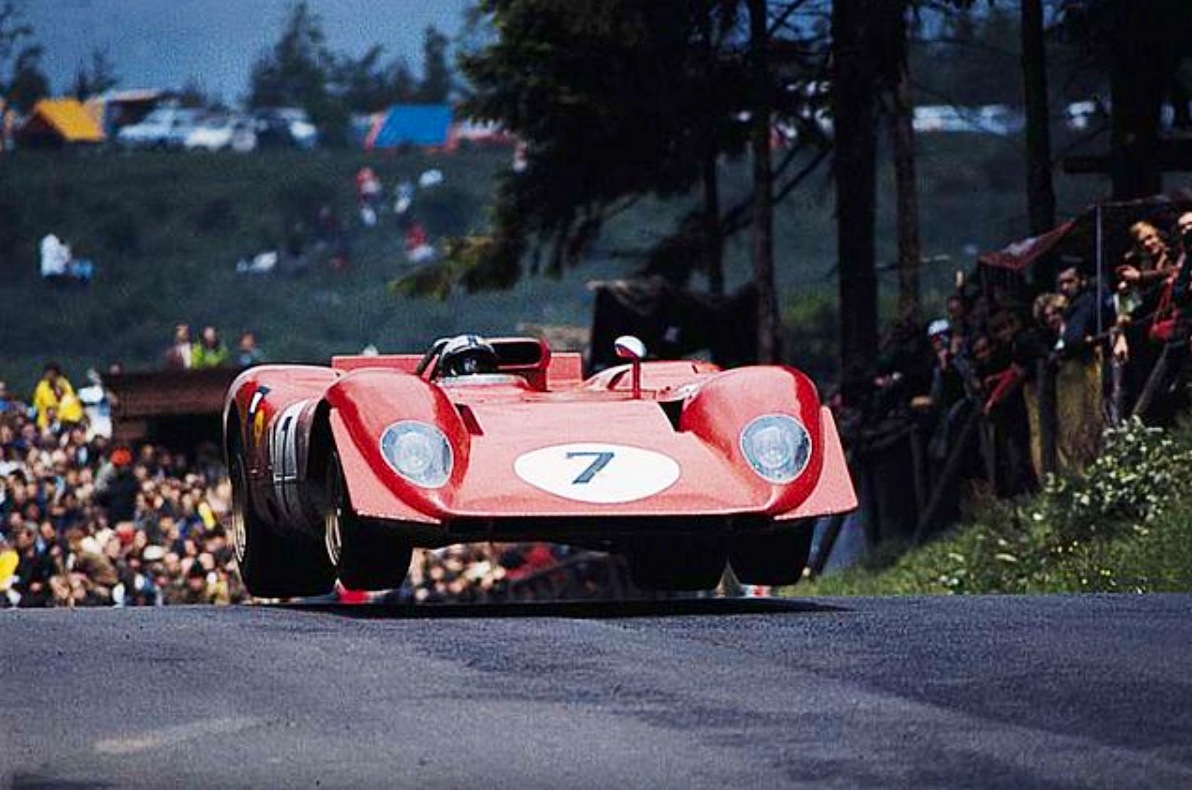
Pedro Rodriguez, Nurburgring 1000Km 1969.

The 917 was on pole at Spa, but Amon proved the 312P’s competitiveness again, he broke the lap record at The Nurburgring. At Le Mans the two cars entered were fitted with gorgeous Coupe bodies formed around shortened 206SP Dino windscreens.

The 917 was on the Le Mans pole… but few believed they would last the distance, Amons 312P was damaged by debris from the fatal accident which befell the John Woolfe 917 on lap 1, the other car suffering gearbox failure after a retaining nut vibrated loose several times. Jacky Ickx and  Jackie Oliver won the race in Ford GT40 ‘1075’ the same chassis victorious the year before.

le mans

Chris Amon behind the 312P, now with Coupe body, at Le Mans 1969 with Peter Schetty. The car was out on lap 1, running over debris from the John Woolfe 917 accident (Pinterest)

The arrival of the 917 was  a game changer, Ferrari responded with some of the Lire invested in his business by Fiat, in building 25 512S 5 litre cars to go head to head with Porsche in what many say was the greatest 2 years of sports car racing ever, 1970 and 1971.

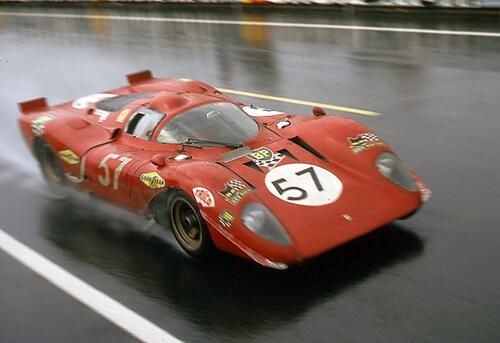
The two remaining 312P’s were sold to Luigi Chinetti’s North American Racing Team at the end of 1969, the cars scoring class victories in major races such as Daytona, and Sebring and also racing at Le Mans in 1970 where Tony Adamowicz, and Chuck Parsons were non-classified but tenth. The other car was taken as a spare and unraced.

312 p le mans 1970

Wet weather 1970 Le Mans shot of the NART 312P. (Bruce Thomas)
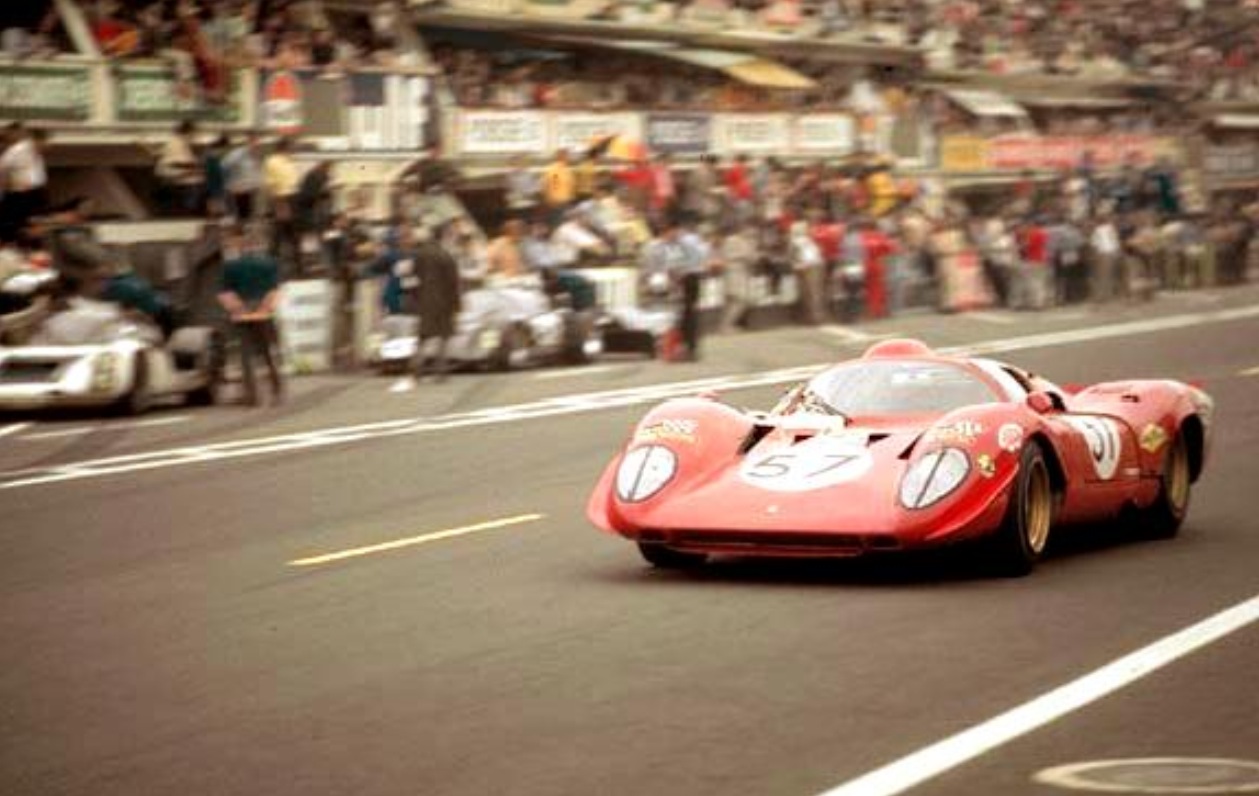
1970

NART Adamowicz/ Parsons 312P Le Mans 1970 , tenth in the race won by the Herrman/ Attwood Porsche 917K (Pinterest)

The 312P has only a small part in Ferrari racing history but the factory learned valuable lessons from the program when it next raced a prototype, the 3 litre 312PB in 1971, this car using a variant of the F1 ‘boxer’ engine, the 312PB the dominant and championship winning sports car of 1972.

Etcetera…

pits

Amon/Schetty Ferrari 312P Le Mans pits 1969.(Pinterest)
image

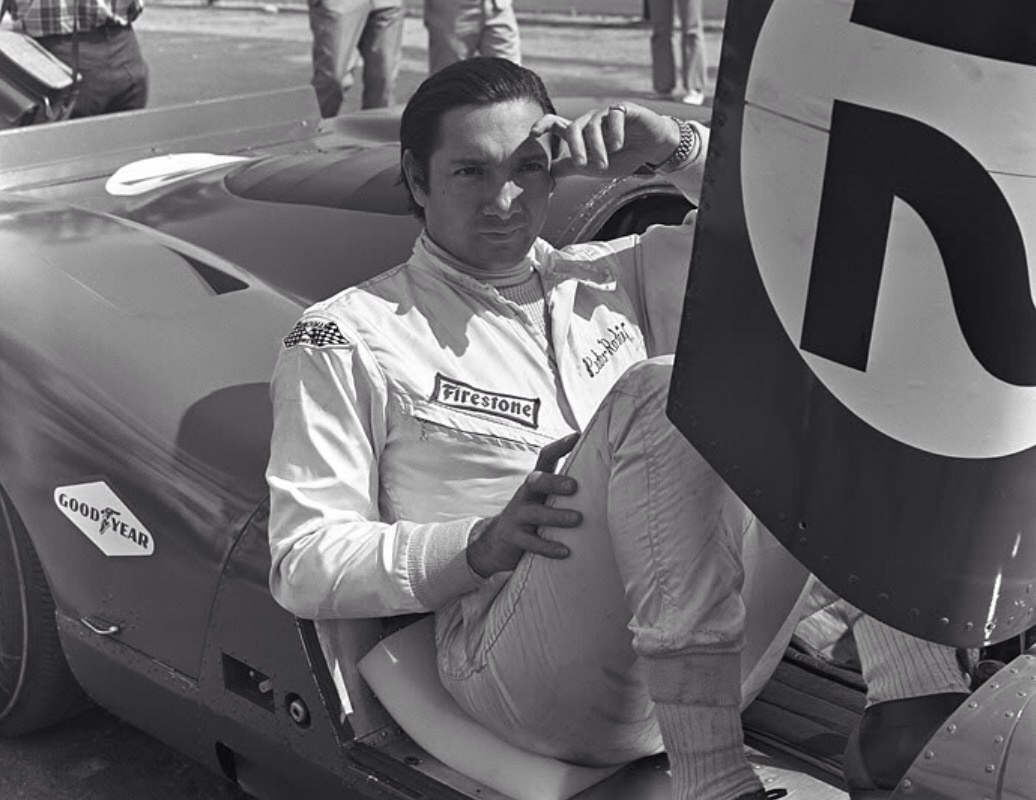
Pedro relaxes before the off, Bridghampton CanAm 1969. (Dogfight.com)


image

‘0870’ in the 1969 Bridghampton  CanAm pitlane. Rodriguez was 5th in the heavy relatively low powered 3 litre car, Hulme and McLaren 1st and 2nd in McLaren M8B Chevs. (Dogfight.com)

parkes

Mike Parkes in the NART 312P , Daytona 1970. Tall man, and bubble as a consequence (Pinterest)
le mans 8

Another shot of the Adamowicz/ Parsons 312P during Le Mans 1970 (Yves Debraine)
drawing

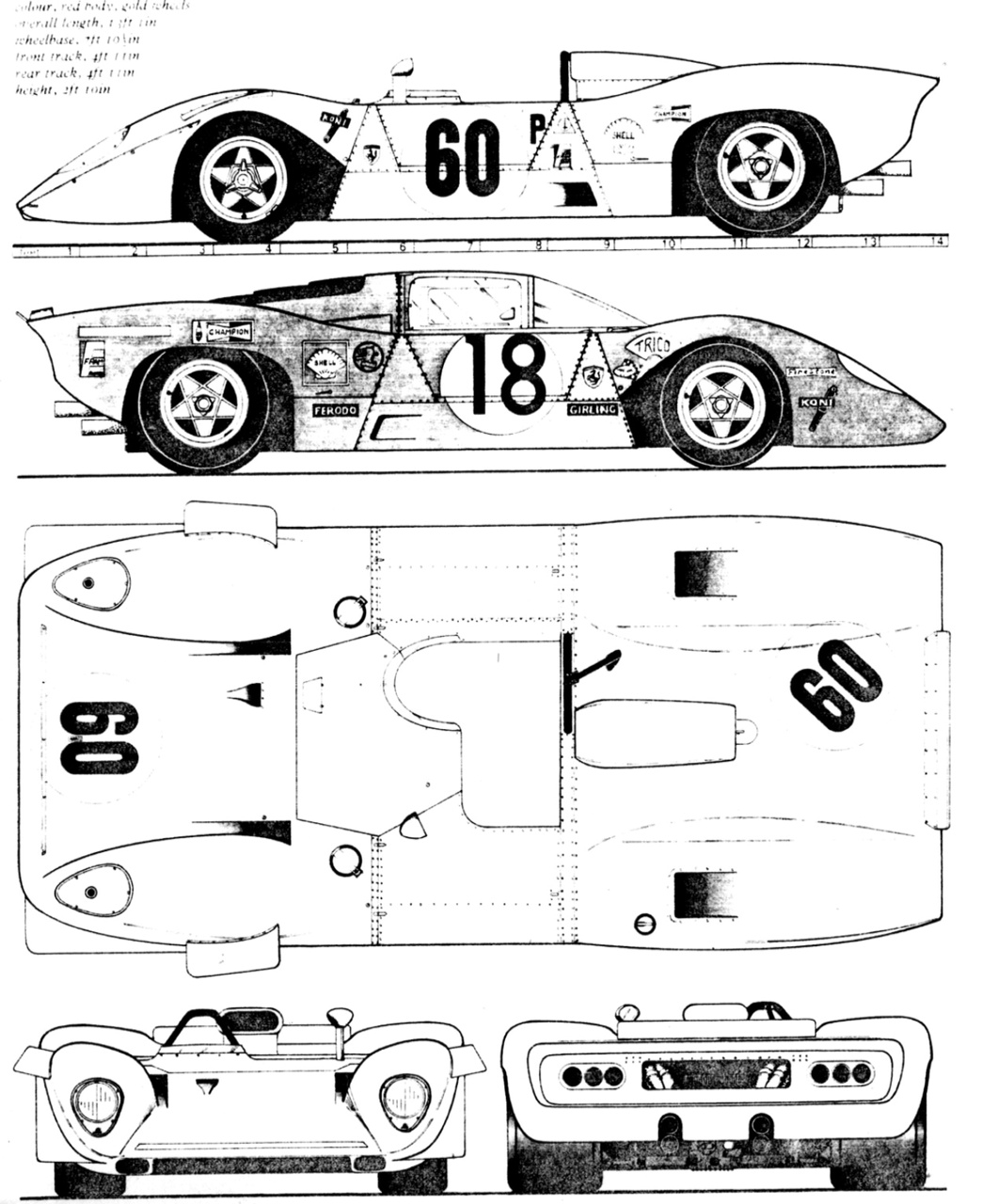
Interesting drawing showing the differences in dimensions of the Spyder and Coupe versions of the 312P (Pinterest)

Photo Credits…

Pinterest, Tony Adamowicz, Nigel Smuckatelli, Yves Debraine, Bruce Thomas

Finito…

image

Olympia Racing Car Show…

Model Venetia Day tries to get comfy atop the monocoque of Matra’s 1970 F1 challenger, the MS120. This famous shot was taken on the preview day of London’s Racing Car Show at Olympia in January 1971. The compound curvature of the Matra is more than matched by Venetia’s lissom lines, the raincoats of the ‘snappers seem apt, all struggling with the correct focal length of their shot.

matra badge 2
monaco
Matra make their GP debut at Monaco in 1968. Beltoise’ Matra MS11 with MS9, induction between the cams V12. Q8 and DNF after an accident. Short snub-Monaco nose fitted (Cahier Archive)

Matra MS120…

Jackie Stewart won the Drivers and Constructors World Championships for Matra in 1969 with the Tyrrell Team’s Ford Cosworth powered MS80. Matra entered F1 with Ken Tyrrell’s team in 1968, his cars were Ford powered, in addition their own V12 engined MS11 debuted.

In 1969 Matra focussed on developing their V12, the MS80 was designed for the Ford DFV only, the strategy was successful, few new teams have won a World Championship so soon.

ms 80
Jackie Stewart in his ’69 championship winning Matra MS80 Ford. French GP, Clermont Ferrand.(unattributed)
image
Monaco GP 1970. Henri Pescarolo ahead of Pedro Rodriguez’ BRM P153, the Matra V12 powered car finished third , Pedro finished sixth in his car, also V12 powered. Rindt’s Lotus 49 achieved a great victory having pressured Jack Brabham into a last lap error (unattributed)

Commercial Considerations…

For 1970 Matra went it alone running cars powered by the French aerospace company’s own V12. Matra boss, Jean Luc Lagarde, did a deal to sell his Matra 530 sports car through the Simca dealer network. Simca were owned by Chrysler, who were not about to have a Ford engine powering ‘their racing car’.

Tyrrell was offered the  MS120 for 1970. Stewart tested the car at Albi but felt that the DFV was the more competitive engine and after most of 1970 running a customer March 701, Tyrrell’s own Ford DFV powered cars made its debut, with Stewart taking two more titles in 1971 and 1973. Tyrrell and Stewart were correct in their assessment, Tyrrell’s first Derek Gardner designed 001 was similar in many ways to the MS80 which was always one of Stewart’s favourite cars.

image
Equipe Matra, British Grand Prix 1970, Brands Hatch. DNF for both Beltoise and Pescarolo. Rindt’s Lotus 72 won the race after Brabham’s BT33 ran short of fuel. These paddock shots clearly show the different aerodynamic approach adopted by Matra’s Bernard Boyer (unattributed)

MS120 Design…

Chassis Designer Bernard Boyer created a new monocoque with cockpit sides and upper surfaces shaped to use the airflow over the car to develop downforce. New approaches to aerodynamics in 1970 by the March 701, the stunning wedge shaped Lotus 72 and the MS120 were stark contrasts to  the cigar shapes of the 1960s. The other aero approach was the pregnant-coke-bottle adopted by the BRM P153 (see picture of Rodriguez in Monaco) to get the fuel load as low as possible in the car.

Front suspension geometry was developed directly from the MS80 but the wheelbase was 10cm longer due to the difference in length of Matras V12 relative to the DFV.

Matra’s 48-valve, 3-litre V12 was further developed by Gerard Martin’s team with a new block, which, DFV style, allowed the engine to be attached directly to the rear bulkhead of the monocoque to  carry the loads of the rear suspension and Hewland FG400 five-speed transaxle. The engine developed around 435bhp @ 11000rpm, about the same as the DFV, but it was lighter and more fuel efficient.

The DFV was the-engine of the 3-litre formula, Ferrari’s flat 12 its only true competitor over the longer term and even then it was hamstrung by the chassis which sometimes carried it…the DFV had no such problem given so many teams used the ubiquitous engine.

matra engine
Matra MS12 3-litre, 60 degree, 48-valve, Lucas fuel injected V12. It developed circa 435bhp @ 11000 rpm from 2993cc. The engine was used as a stressed member, suspension mounts bolting directly to the engine. Aeroquip brake lines running along top radius rod, Lucas fuel injection and metering unit in shot(unattributed)

Drivers and Results…

The MS120s were driven by Frenchmen Jean-Pierre Beltoise and Henri Pescarolo in 1970, they finished 9th and 12th respectively in the Drivers Championship. Whilst both were fast, neither was an ace, Matra finished seventh in the Manufacturers Championship. Jochen Rindt won the drivers title posthumously and Lotus the constructors for points gained by both its old 49 and revolutionary, new 72.

1970 was a very competitive season with the Brabham BT33, BRM P153, Ferrari 312B, Lotus 49 and 72 and March 701 all winning  Grands’ Prix. The MS120 was a little heavy, was thirsty and lacked the reliability of much of its competition, JPB had five retirements out of 13 rounds and six top-6 finishes whilst Pesca had three retirements and four top-6 finishes.

The team lacked  an ace behind the wheel and someone with real depth of F1 testing and race experience to be able to fully develop the car. French Car, French Engine, French Sponsors and French Drivers all sounds great and made political sense given the Government funds involved, but in reality, in 1970, they needed Ickx, Amon, Rodriguez, Rindt or Stewart. Of course this analysis excludes drivers rusted-on to their own teams.

french gp start
Clermont Ferrand, start of the 1970 French GP. Stewart March 701, Rindt Lotus 72, Pesca MS120, Rodriguez BRM P153 obscured, Jack Brabham Brabham BT33, Denny Hulme McLaren McLaren M14A, Ronnie Petersen March 701, Ignazio Giunti Ferrari 312B, Francois Cevert March 701…talent aplenty in 1970…(unattributed)
image
French Grand Prix 1970, Pescarolo fifth in his MS120 at Clermont Ferrand, Beltiose 13th in the race won by Rindt’s Lotus 72 (Cahier Archive)

Withdrawal from F1…

Matra withdrew from F1 as a chassis constructor at the end of 1972, despite blinding speed shown on occasion by Chris Amon in 1971-72. They eventually won Grands’ Prix as an engine supplier in Ligier chassis in the late 1970s and into the 1980s.

The 3-litre V12 was  fabulous, its screaming note one of racings most evocative, shrill best. It also achieved endurance success, the French company winning Le Mans in 1972-73-74 with its ‘670’ series of cars.

Matra’s were superbly designed, distinctively different and exquisitely built racing cars, the aeronautic background of the company was obvious in the execution of the cars construction. The Grand Prix scene was the poorer for their absence, but from a commercial perspective it was mission accomplished for Matra with an F1 Constructors Championship and three Le Mans victories on the trot.

The other car behind Venetia is a Surtees TS9 by the way, or perhaps you didn’t notice…

Etcetera…

jpb from rear
JPB MS 120 1970…the more you look the more you see! Just a beautifully engineered and built car
boof
Beltiose all ‘cocked up’ at Monaco ’68, this kiss of the kerb causing his retirement. MS11 (unattributed)
image
Matra MS120 family: top to bottom 1970 MS120, 1971 MS120B and 1972 MS120C (Pinterest)
matra cutaway
MS12 cutaway…3-litre, 60-degree, 48-valve V12. Lucas fuel injection. Designed to be used as a stressed member, bolted directly to the monocoque rear bulkhead.

matra badge

image
(Matra)
boys
The 1969 Matra Squad: Matra’s Henri Pescarolo and Jean-Pierre Beltoise, and the Tyrrell duo of Johnny Servoz-Gavin and Jackie Stewart (unattributed)

Short History of Matra Sports…

http://www.grandprix.com/gpe/con-matra.html

Photo Credits…

The Cahier Archive, Getty Images

Finito…