


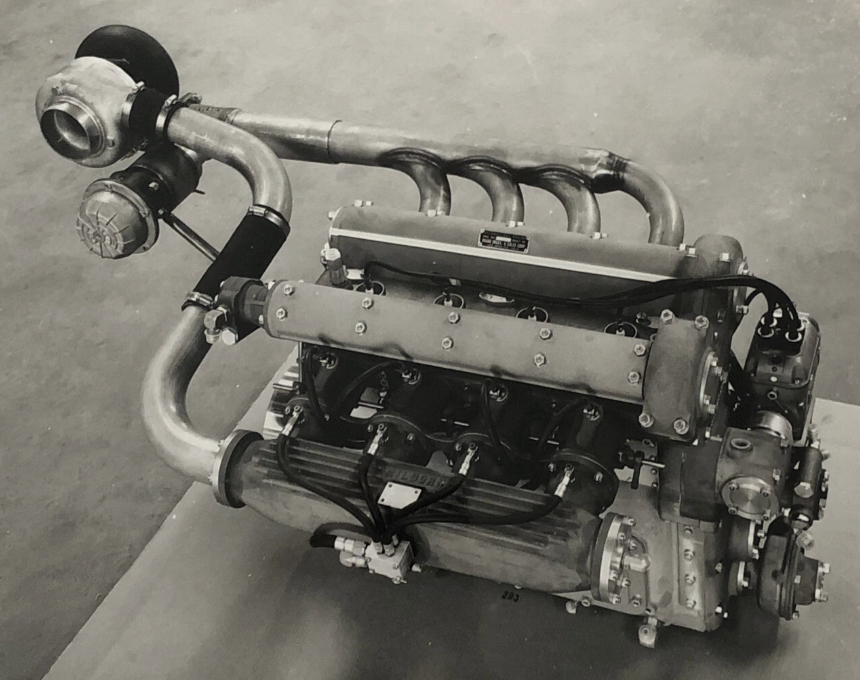
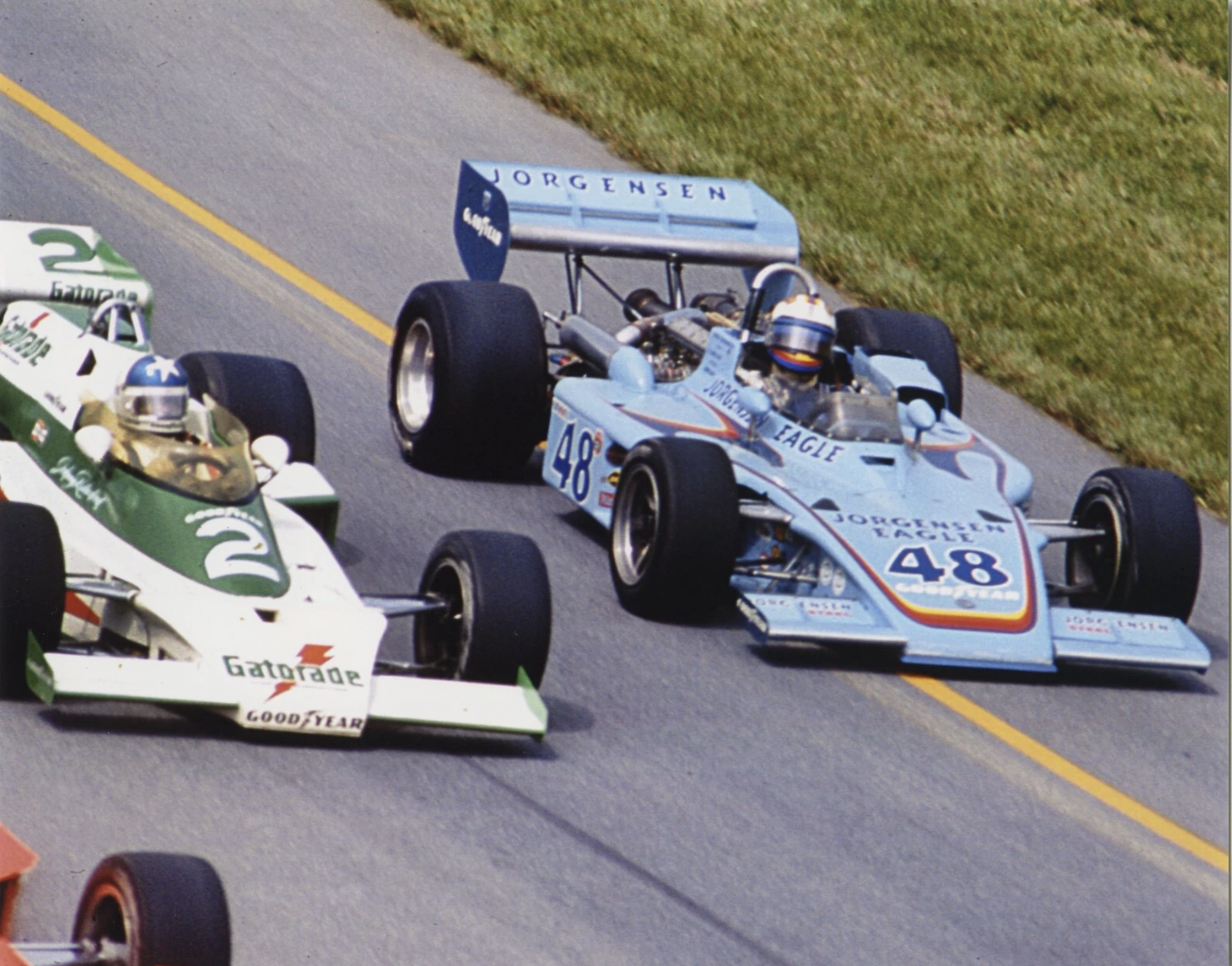
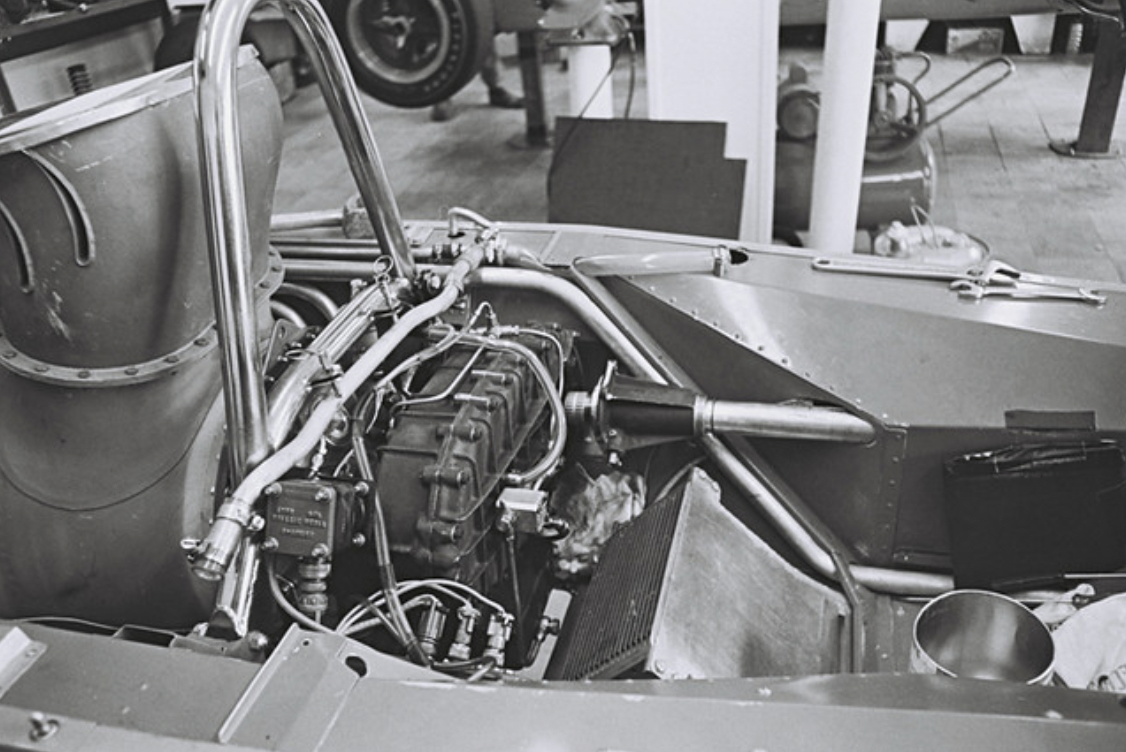
Usual eBay thing, an interesting shot. ‘Mid-1960s mid-engined Offy-Turbo’ was my instantaneous thought. No shit Sherlock! I agree. Helpful were the notes on the reverse of the shot; 168″ Offenhauser engine, Airesearch turbocharger, Hilborn fuel injector.
Good ‘ole AI – Google/Gemini in this case – does the rest, with the question, ‘What era does an Offy 168CID engine fitted with an Airesearch turbo and Hilborn fuel injection come from?’
‘An Offenhauser (Offy) 168 cubic-inch (2.75-liter) inline-four engine equipped with an AiResearch turbocharger and a Hilborn mechanical fuel injection system dates specifically from the 1966-1968 USAC Championship Car era.’
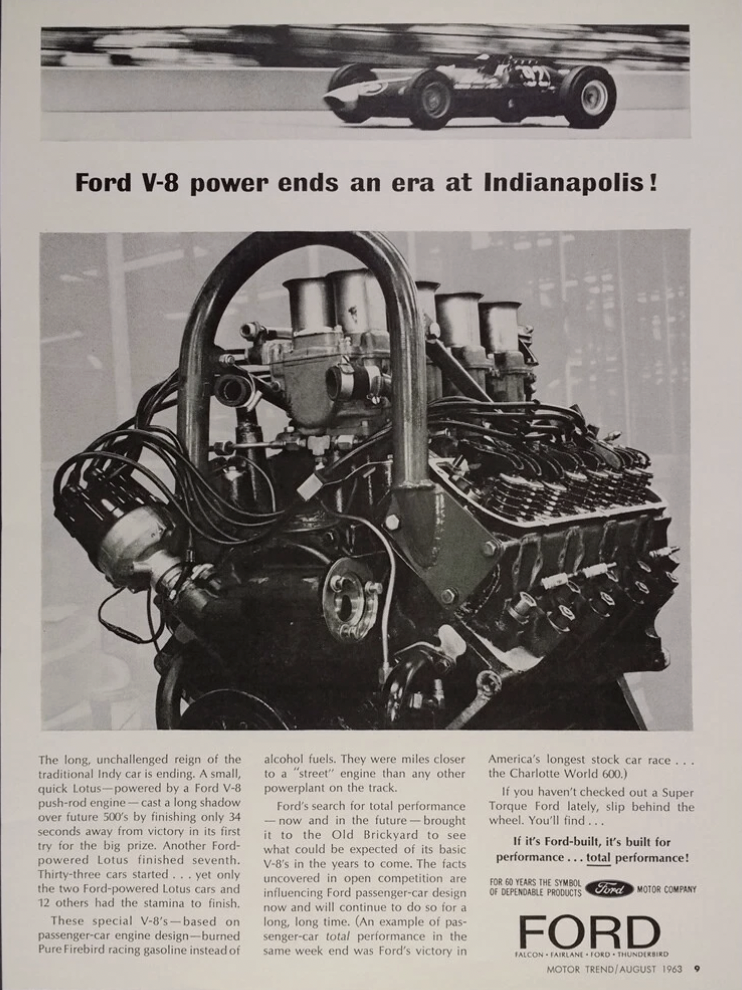
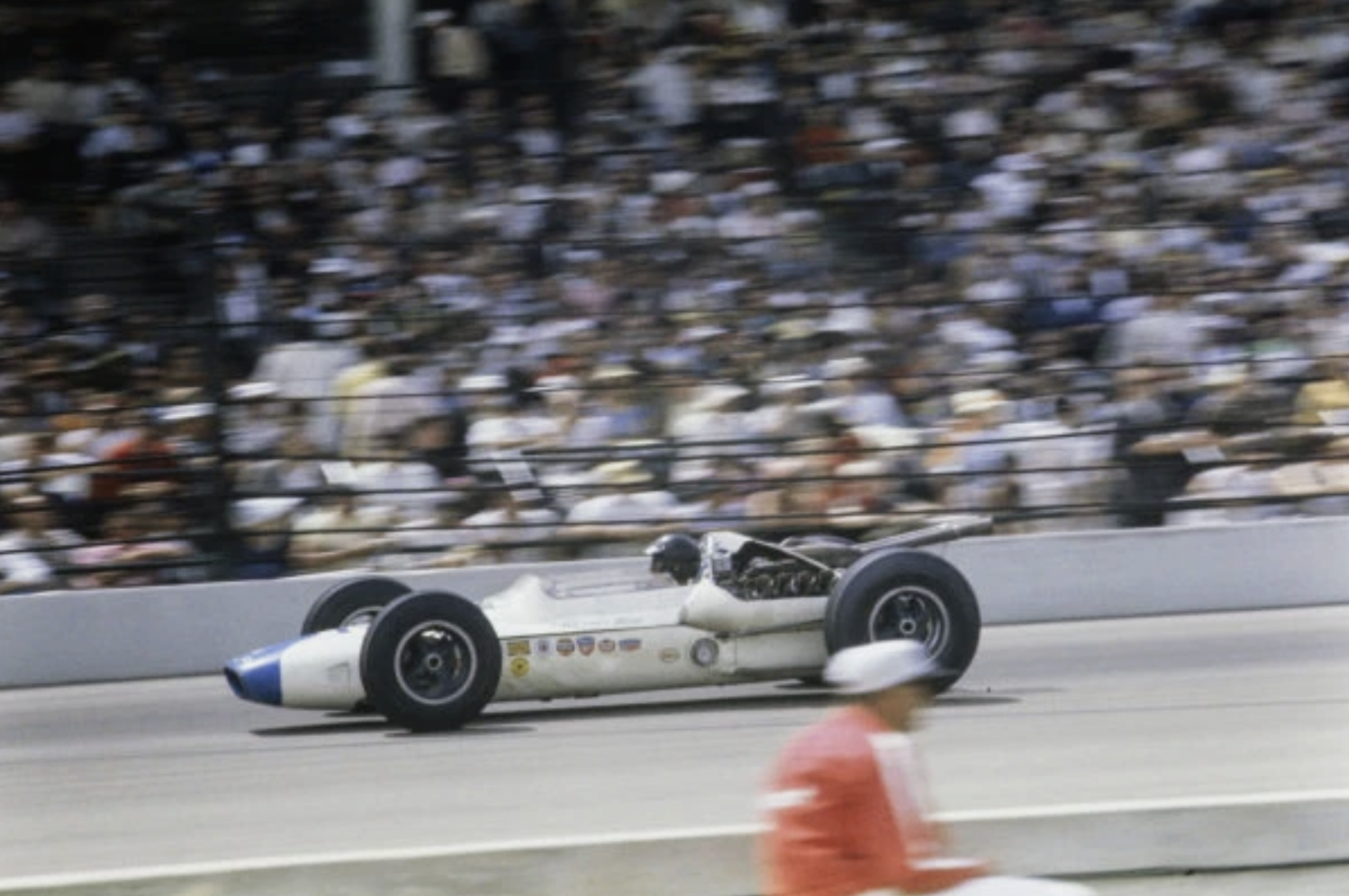
FoMoCo and Lotus…
The story goes like this. Ford’s 4.2-litre DOHC Indy V8 revolutionised USAC rendering the venerable, 252 cid and 255 cid Offys obsolete. Dan Gurney wined and dined Colin Chapman during his 1962 Indy driving commitments, the Lotus/Ford steamroller commenced in 1963 with the Ford small-block, aluminium, pushrod, Weber fed V8s in the back of Lotus 29s for Gurney and Jim Clark.
Ford’s definitive DOHC, four-valve injected Indy V8s arrived in 1963 and were soon in the hands of everybody and their poodles. FoMoCo powered cars won Indy from 1965-67: Clark Lotus 38, Graham Hill Lola T90 and AJ Foyt Coyote. Mario Andretti’s Ford powered Brabham BT12 copy/inspired Brawner Hawks won the USAC Championship in 1965-66, while Foyt’s Ford Coyote won in 1967. Both Andretti and Foyt’s dirt cars were Offy powered.
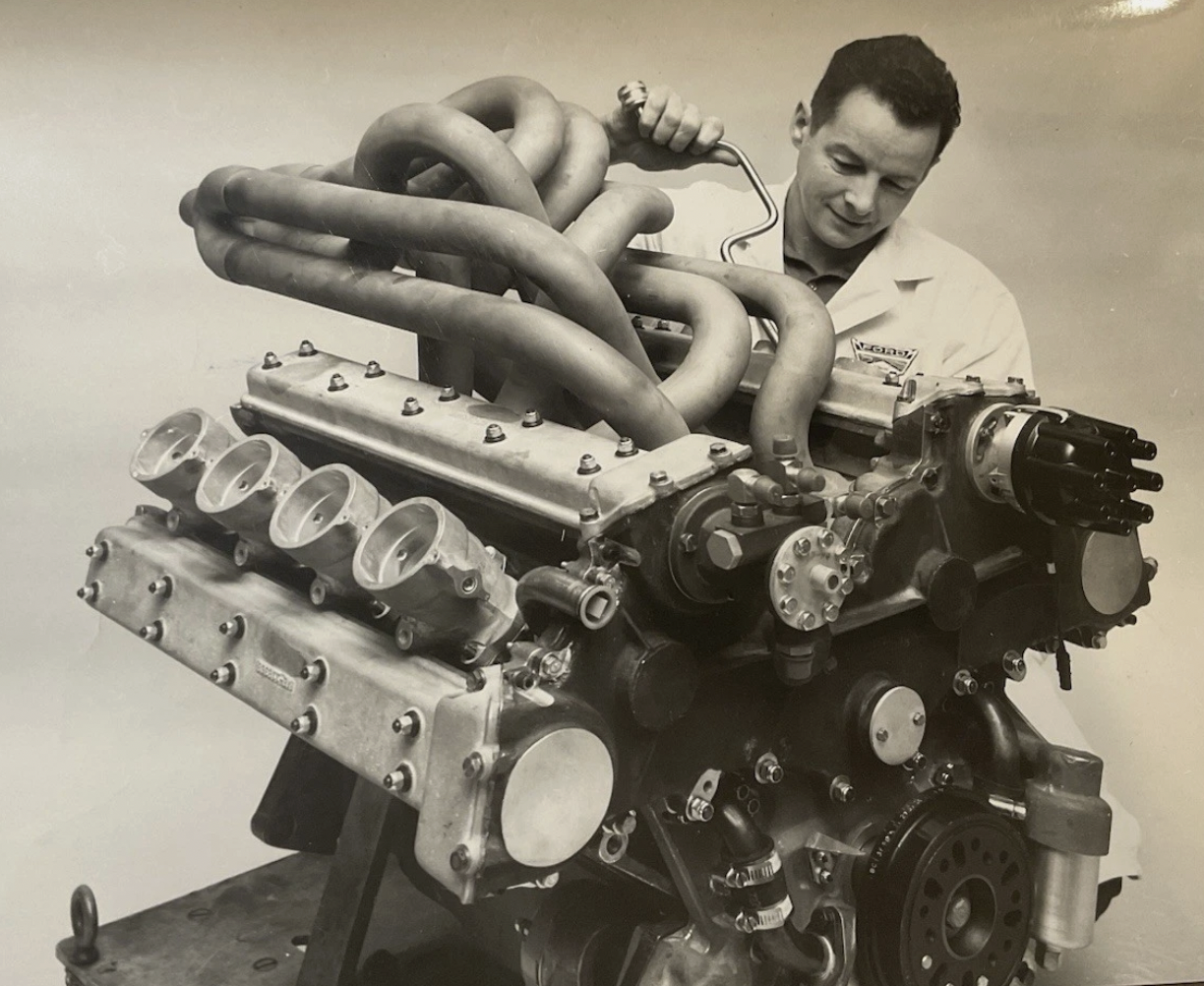
Seeking a way for The Empire to Fight Back, engine builder Herb Porter teamed up with Bob DeBisschop of AiResearch and Stuart Hilborn. They took advantage of the USAC normal induction/forced induction equivalence rule and shrunk the Offy to 168 cid – and turbocharged it.
They bolted an off-the-shelf AiResearch TE06 turbo designed for an Allis-Chalmers diesel tractor onto the pensioner and fed it using constant-flow Stuart Hilborn mechanical fuel injection.
They tested engines with Dick Jones on the Champion (plugs) dyno and immediately got 100bhp more than tests with supercharged Offies being conducted by Gordon Van Lieuw, Dick Jones/Champion and Dale Drake.
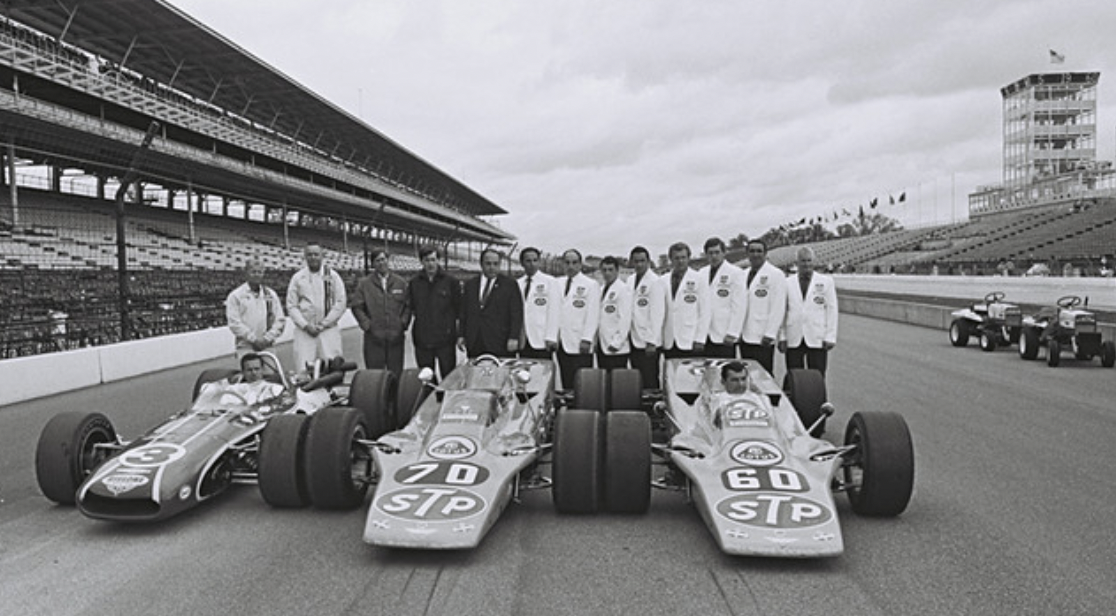
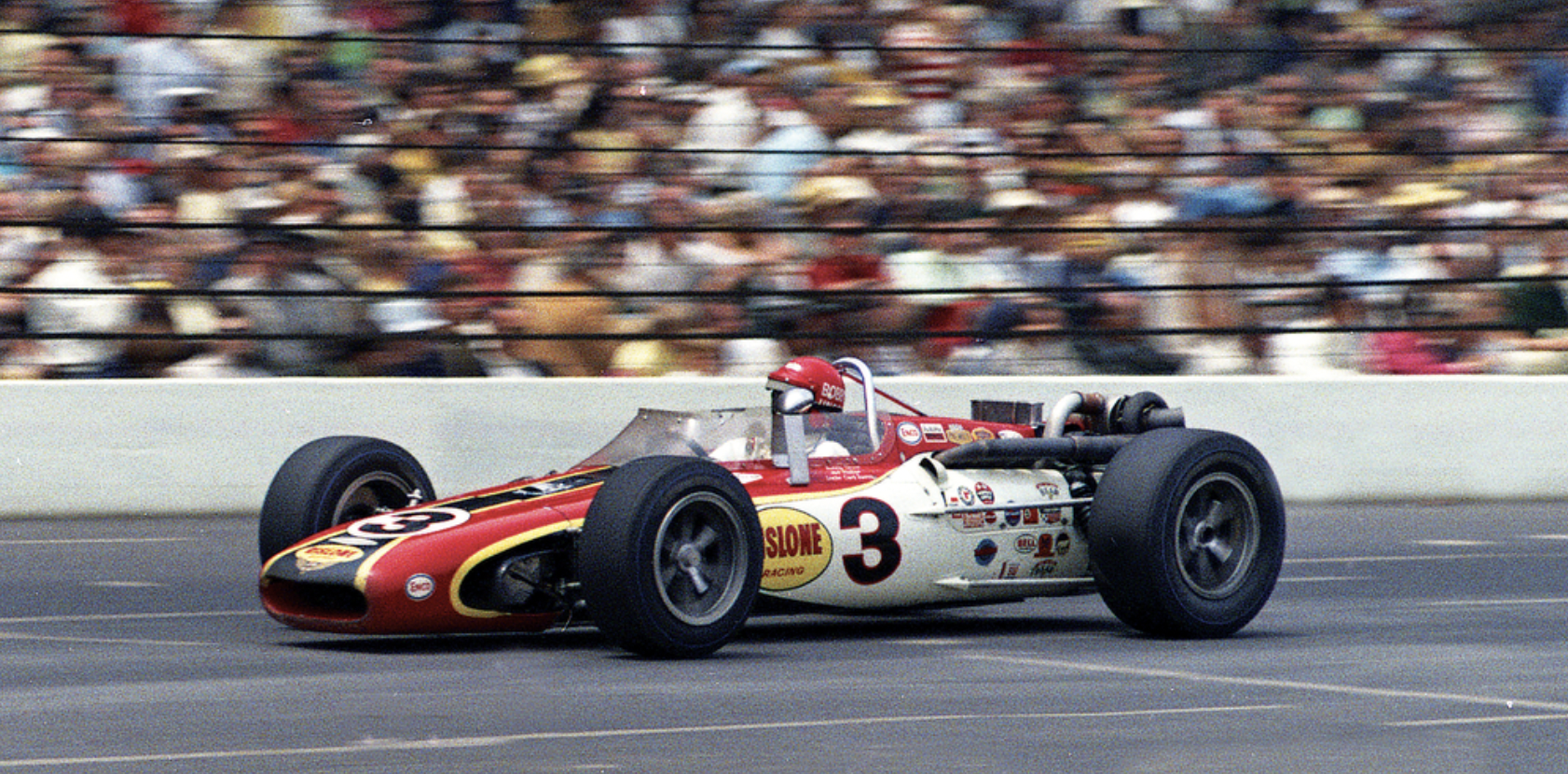
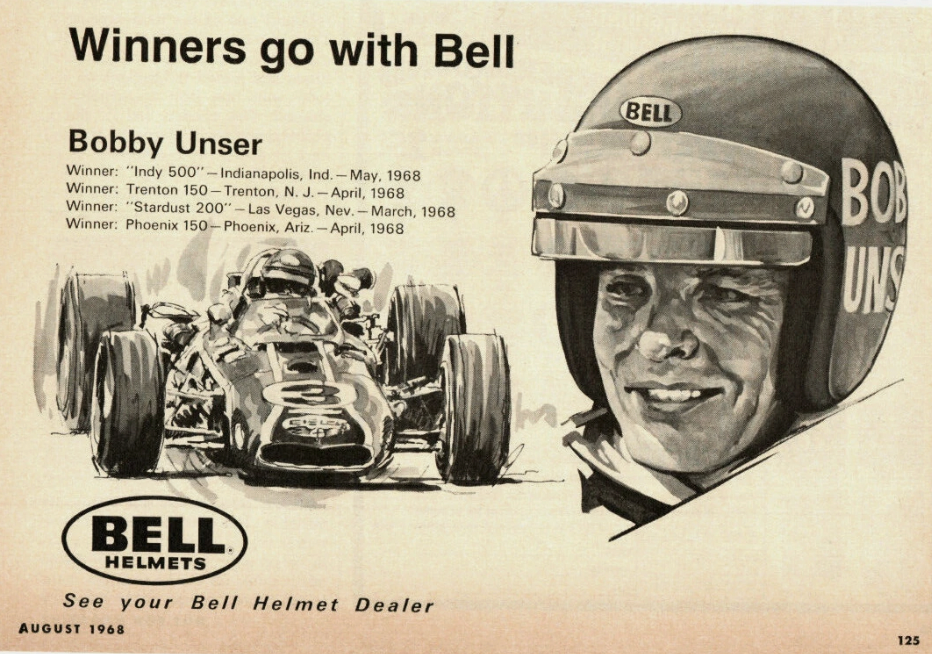
The general configuration shown in the opening photograph photograph reached its zenith in 1968 when Bobby Unser drove his 168 cid turbo-Offy powered Eagle 68 – the chassis a Tony Southgate design – to victory at Indy. The engine’s monobloc design mean’t it swallowed Vesuvious sized dollops of turbo boost and produced anywhere from 625-750bhp.
USAC changed the rules for 1969 to peg back escalating horsepower and speeds, reducing the capacity of turbos from 168 to 159cid (2.61 litres). From then through to the mid-1970s, the Turbo Offy lived on, successfully so winning Indy from 1972-76: Mark Donohue McLaren M16B, Gordon Johncock Eagle 73, Johnny Rutherford McLaren M16D, Bobby Unser Eagle 74 and Johnny Rutherford McLaren M16E. The engine set-ups were a good deal more sophisticated than that shown.
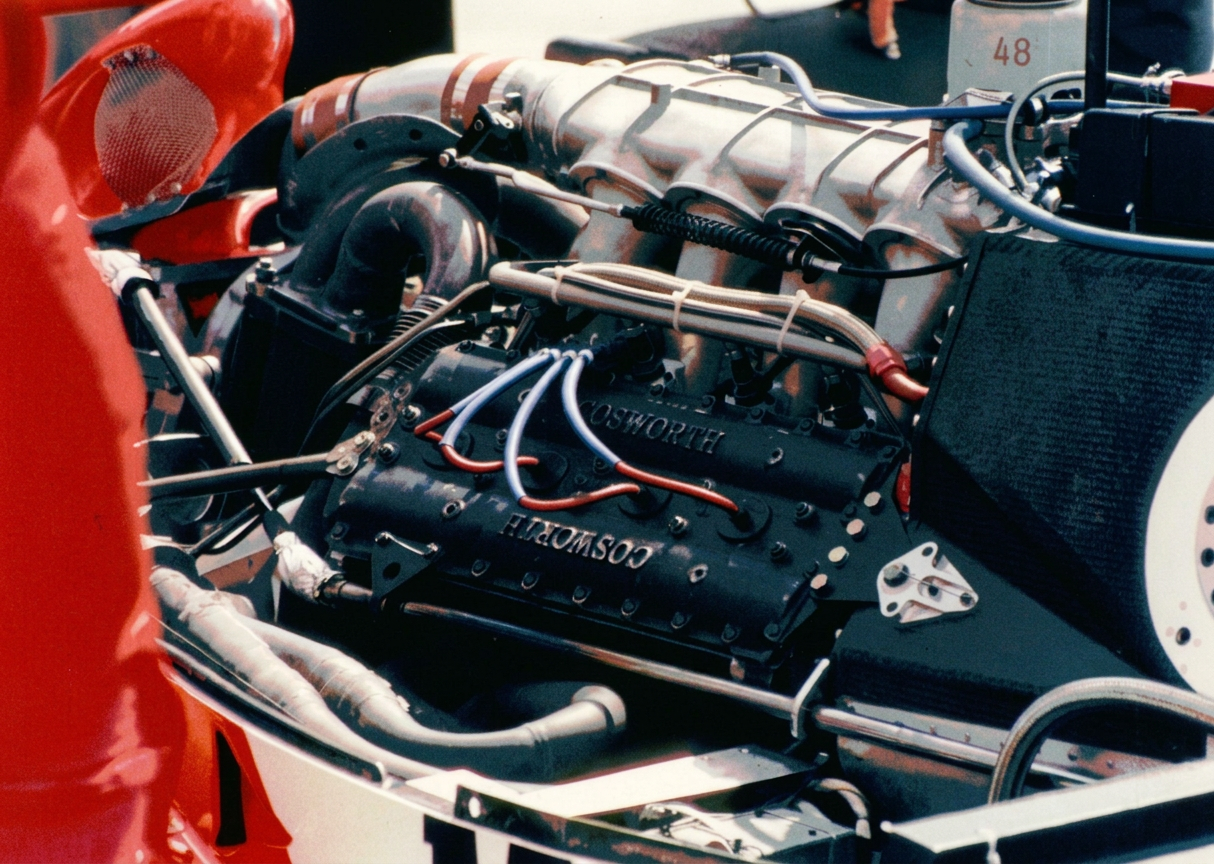
Then along came USAC rule fiddles and the Cosworth DFX…
See this long, comprehensive, great article about Harry Miller/Offy penned by Preston Lerner on the Hagerty website in July:https://www.hagerty.com/media/motorsports/offy-four-letters-four-cylinders-four-decades-as-the-engine-to-beat/ See my piece about the Ford Indy V8 here:https://primotipo.com/2015/06/12/graham-hills-american-red-ball-spl-lola-t90-ford-indy-winner-1966-2/
Pre-Race & Qualifying…
The 1968 Indianapolis 500 was a historic, high-drama showdown defined by extreme weather, pioneering technology, death, and late-race heartbreak.
While Jim Clark practiced Andy Granatelli and Colin Chapman’s revolutionary edgy-wedge, 4-WD, inboard braked Lotus 56 Pratt & Whitney gas turbine in early April he was killed in a Lotus 48 Ford FVA F2 car during the Hockenheim European F2 Championship round on April 7. Mike Spence took his place.
The month of May saw record-breaking rainfall which heavily disrupted practice and qualifying. When the cars finally hit the track, Colin Chapman and Andy Granatelli’s revolutionary Lotus 56 Pratt & Whitney gas turbines stole the show. Despite having only seen the track for the first time days before, Mike Spence dispatched the Rookie Test and soon set the fastest time of the month at 169mph.
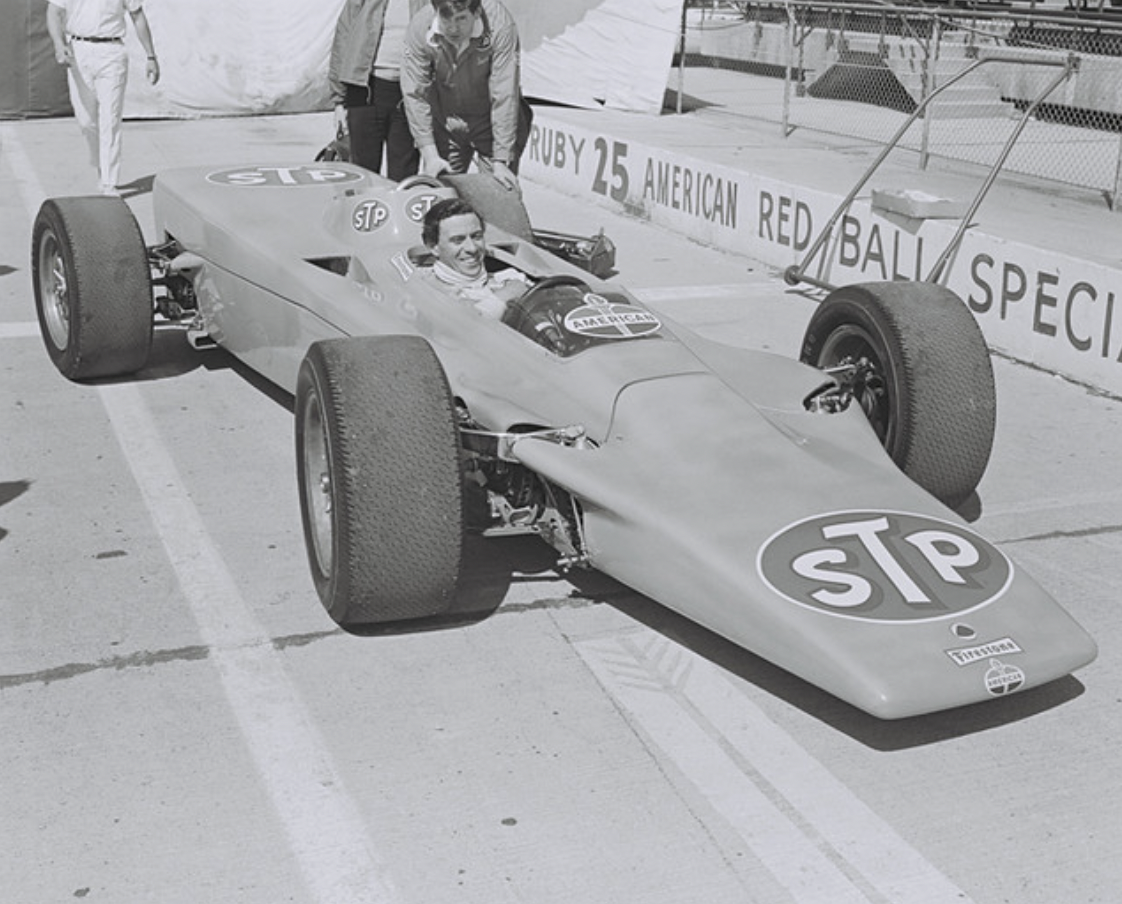
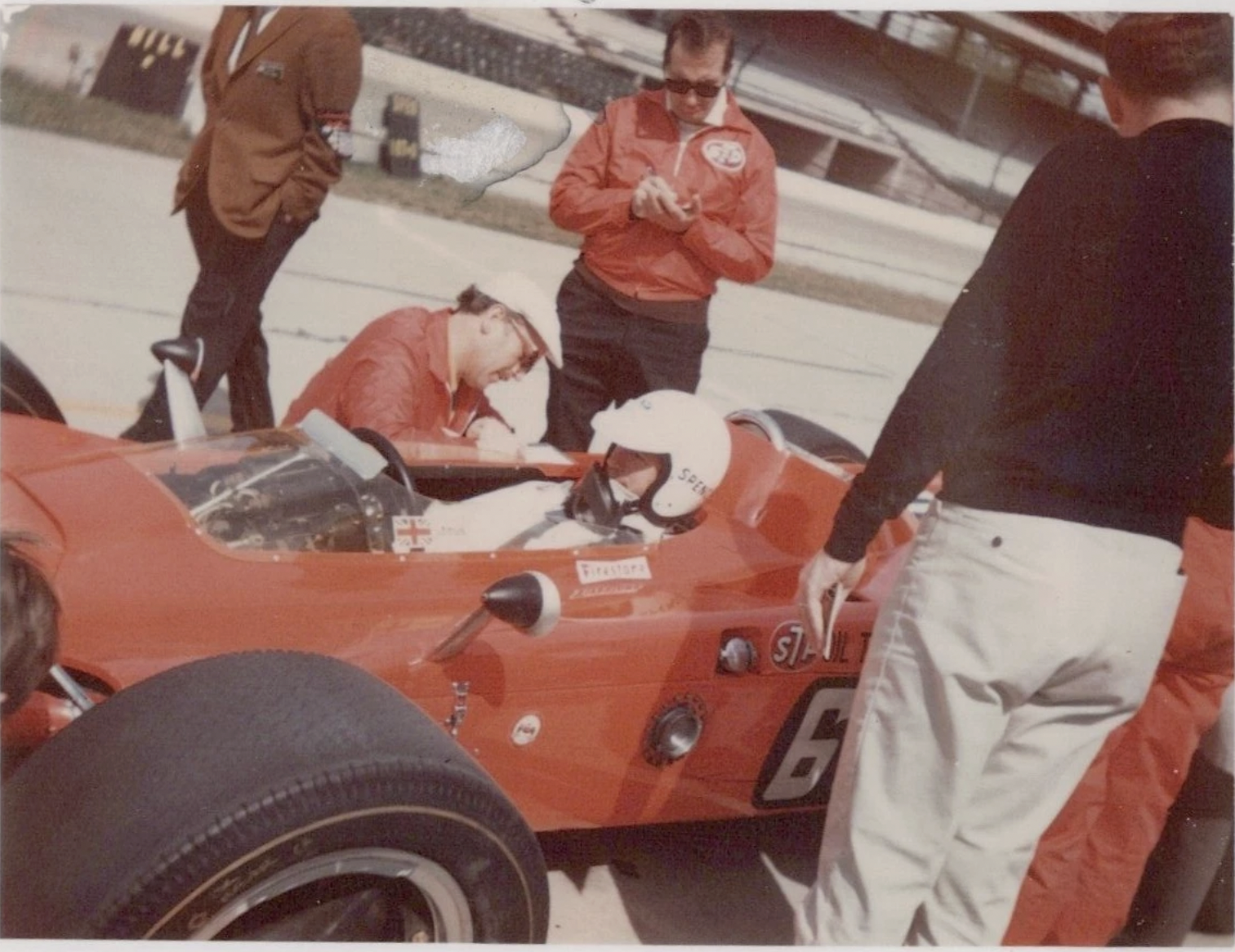
On May 7 – exactly a month after Clarks death – Mike was asked to test Greg Welds STP Lotus 56 which he was having trouble getting up to a competitive speed. Poor Spence misjudged turn 1, he was too high and crashed into the concrete wall. He would have gotten away with it, but the right-front departed from the car – tethers were decades away – and he suffered fatal head injuries and died in hospital four or so hours later. Chapman, distraught after the death of his close friend Clark, was doubly devastated and returned home, taking no further part in the meeting.
Joe Leonard took the pole position at a record speed of 171.559mph, with teammate Graham Hill second.
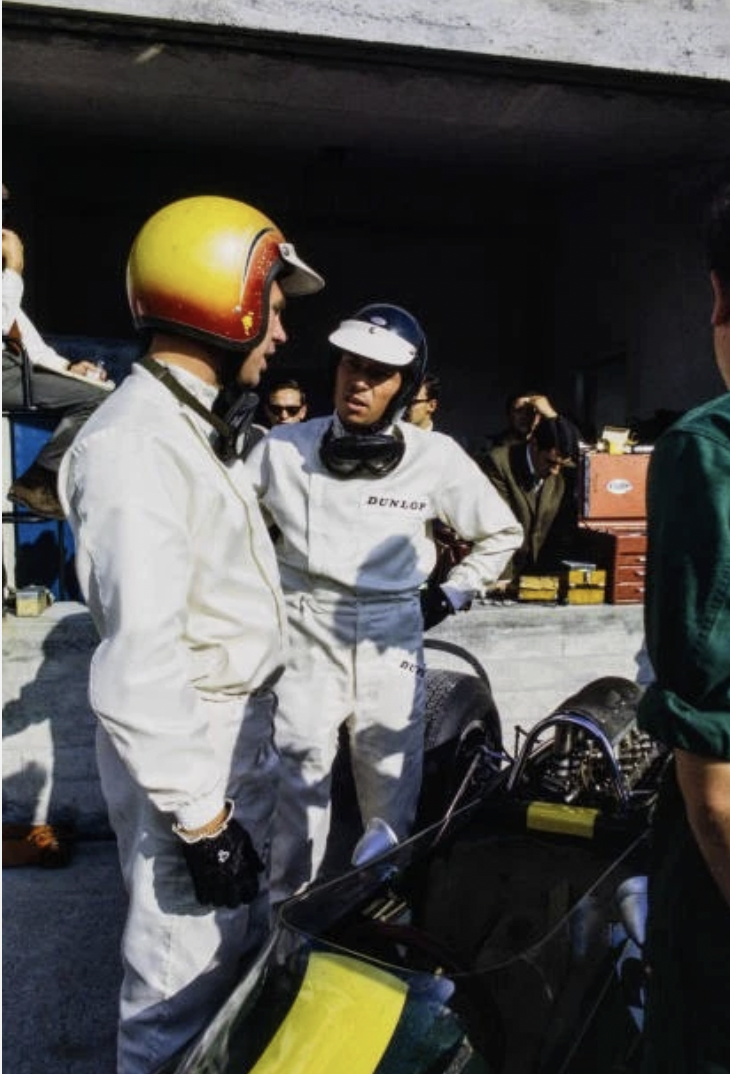
The Race…
The 200-lap race on 30 May quickly evolved into a high-speed duel between the quiet; whooshing turbines, the loud four cylinder turbos, flat-plane-crank Ford quad-cams and thunderous 305 Gurney Weslake Ford stock-block V8. It’s the kind of marvellous variety that once existed, not so now with most classes of the dull, shit-boring, homogenised and pasteurised one make type.
Mario Andretti’s Ford Indy suffered a broken piston and the Hawk crashed out on lap two. Jim Hurtubise’s Mallard Roadster Offy-turbo also retired early, marking the final time a front-engine roadster would ever compete in the Indy 500.
Leaders, Unser and Lloyd Ruby, Mongoose 68 Offy-turbo flexed major muscle. Unser dominated the overall pace, ultimately leading 127 laps, but their was late-race-heartbreak for Turbines just as their was for Parnelli Jones in 1967…
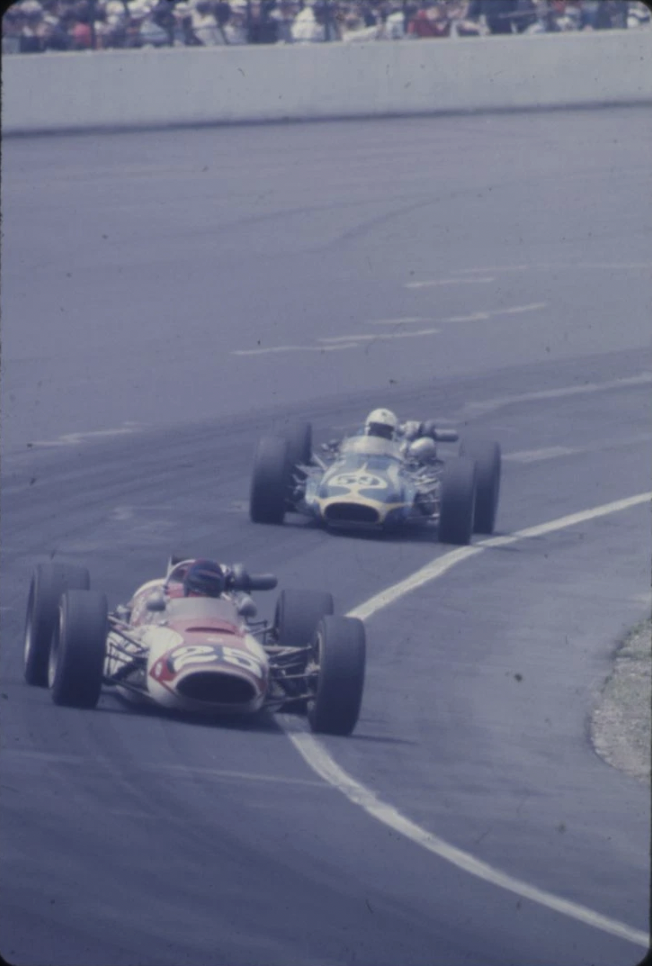
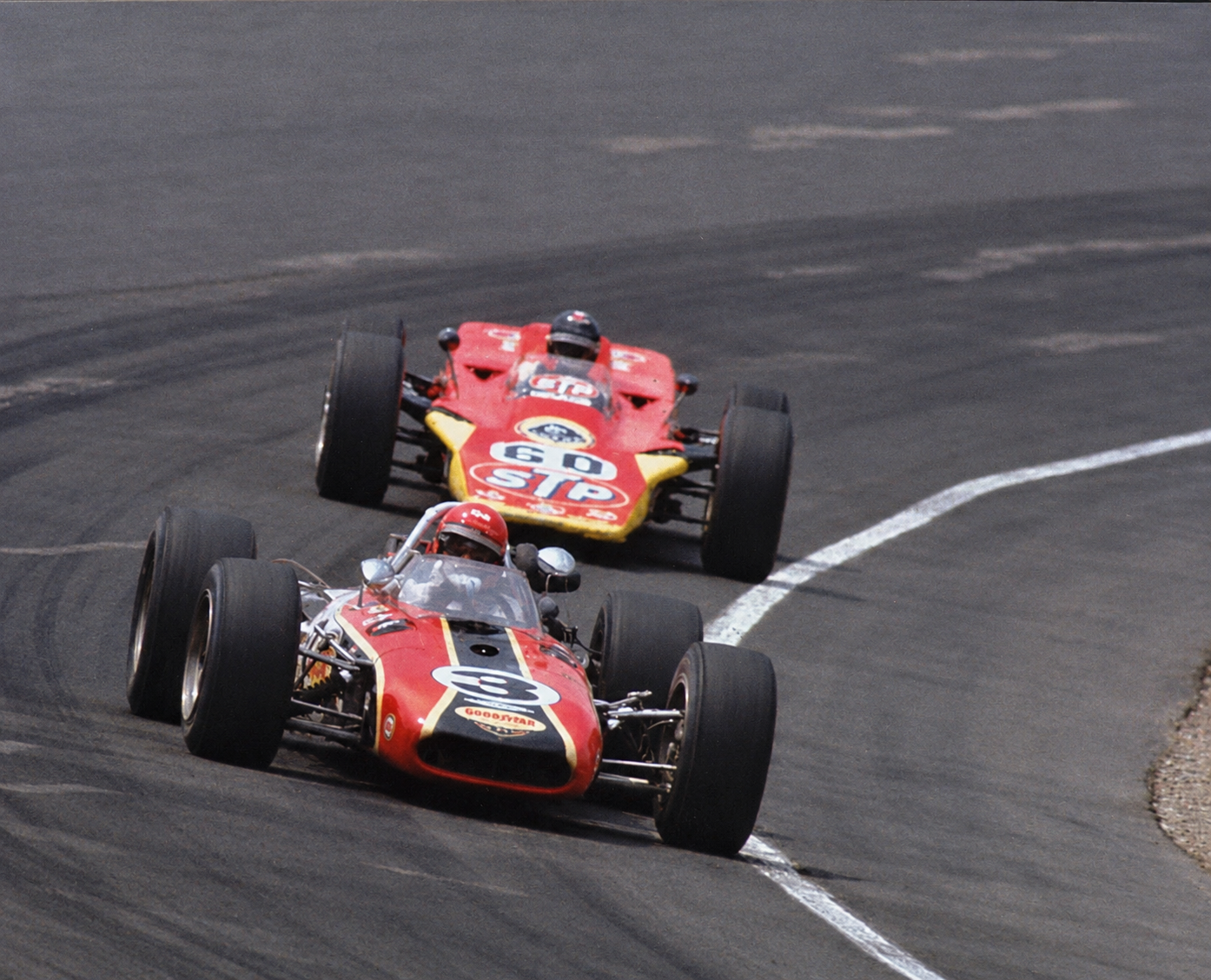
With fewer than 30 laps to run, the race looked like it belonged to Ruby or the turbines, but reliability issues turned the standings upside down. On lap 174 Ruby led comfortably then an ignition coil failed, this handed the lead back to Joe Leonard’s Lotus 56.
On Lap 191, after a late-race yellow flag restart, Leonard stepped on the gas and his turbine suffered a sudden flameout. The car rolled to a silent stop due with a broken fuel pump drive shaft. Incredibly, turbine teammate Art Pollard suffered the same failure three laps before
So Bobby Unser inherited the lead, battling gear linkage issues late in the race, he cruised across the yard of bricks to take a 53-second victory over Dan Gurney. It was the first of Bobby Unser’s three career Indy 500 victories and marked the first time a turbocharged engine won, as mentioned above, the legendary race.
It was no flash in the pan for Offenhauser turbos either, nine of the eleven cars that took the flag were so powered.
Etcetera…
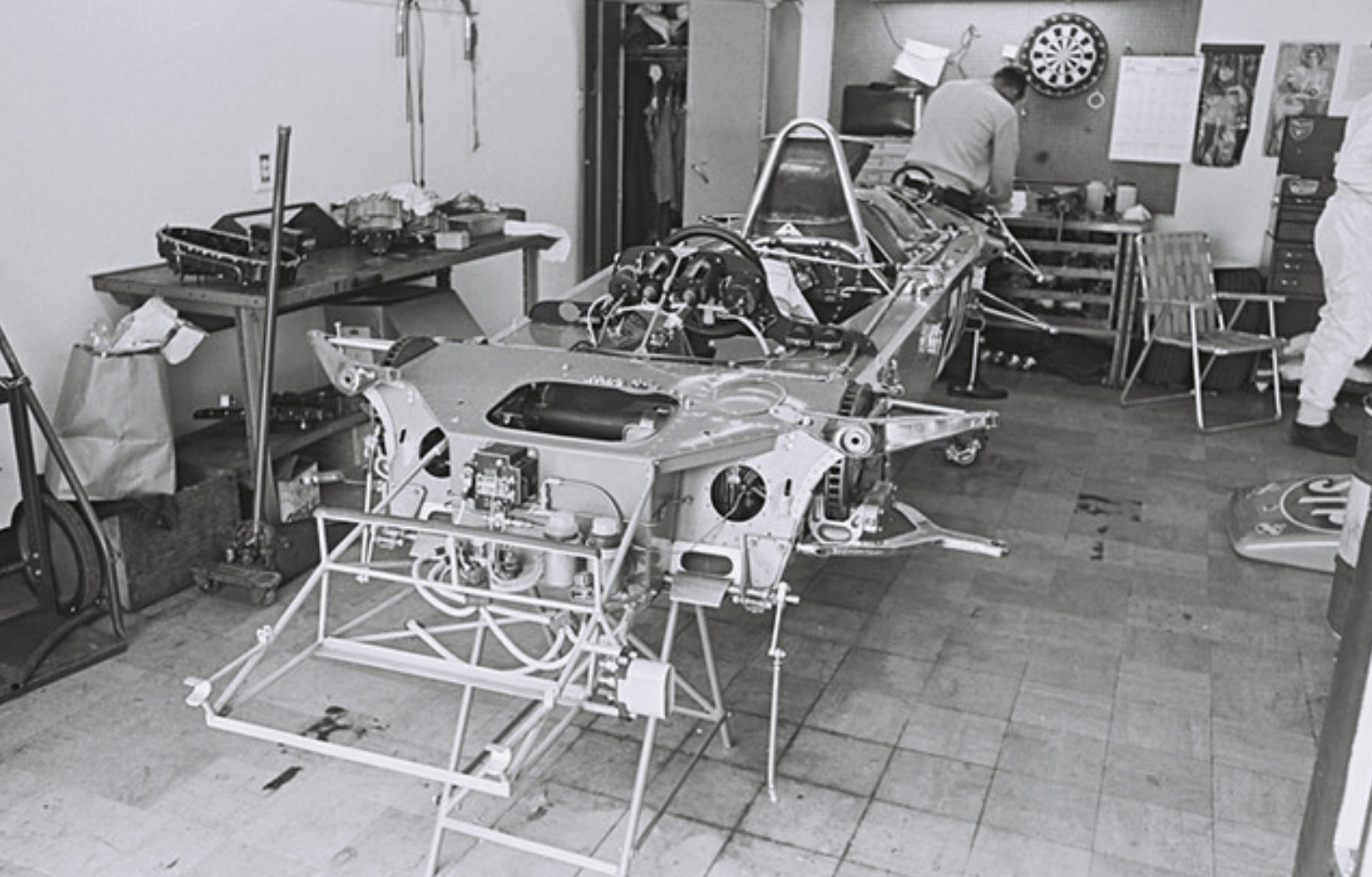
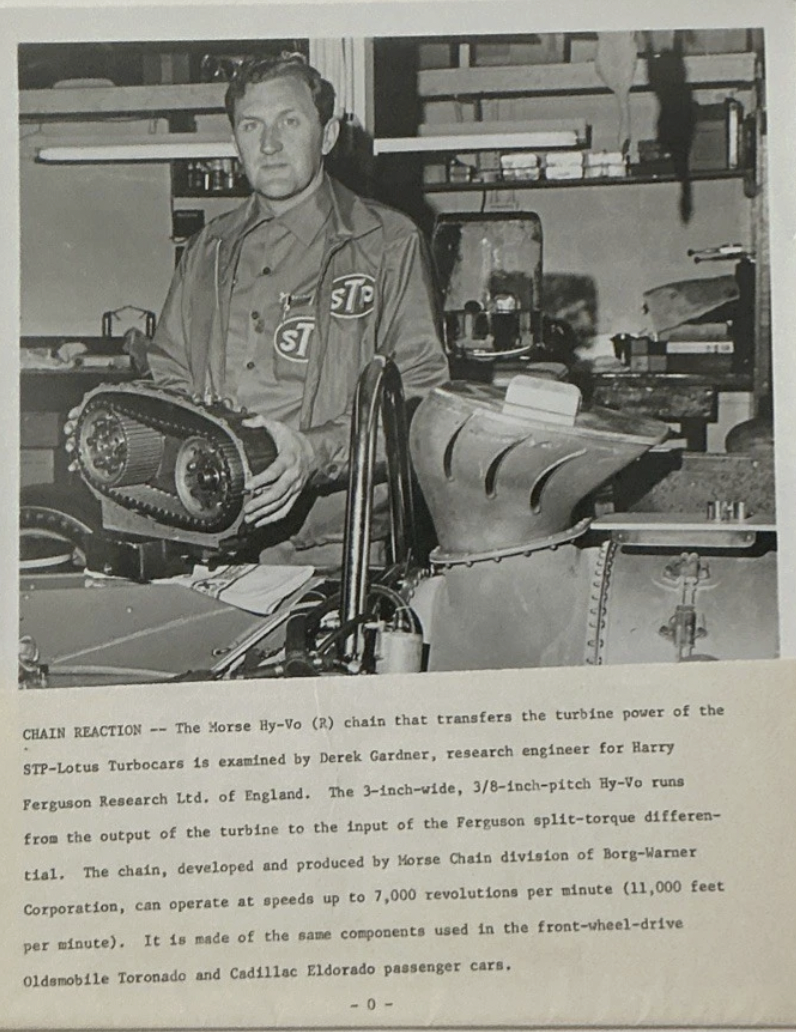
A Lotus 56 Pratt & Whitney is prepared/repaired in Gasoline Alley during the 1968 Indy carnival.
Ultimately, Joe Leonard raced the Spence #60 56/1 for pole/so nearly a win but DNF broken fuel shaft after 191 laps. Art Pollard raced #29 56/4 for Q11 and DNF broken fuel shaft after 188 laps, and Graham Hill raced #70 56/3 for Q2 and DNF crash after 110 laps. Mike Spence crashed Greg Weld’s #30 56/2.
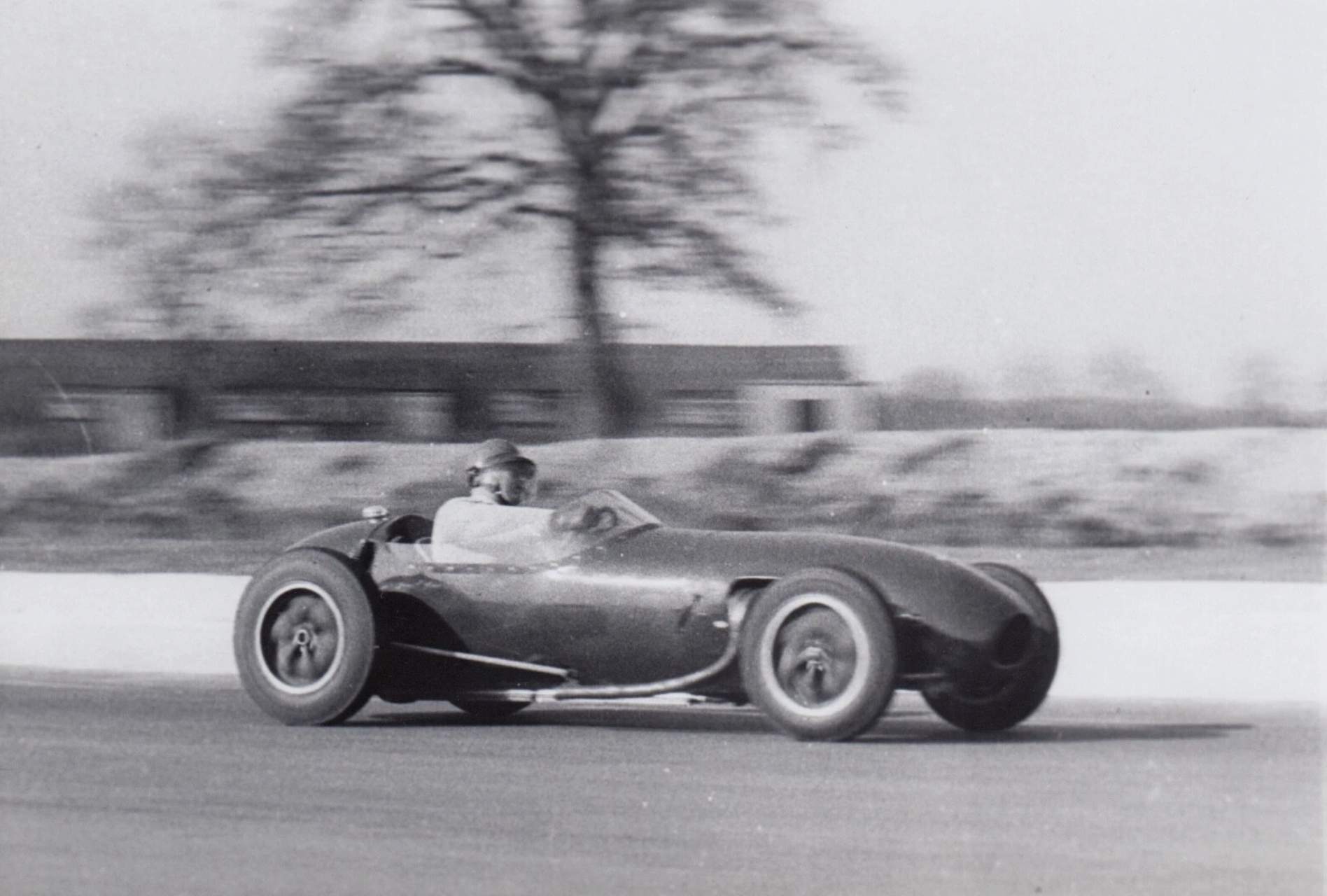
The sheer scale of Chapman’s progress as a conceptual design engineer in one decade is shown by contrasting the elegant simplicity of the front engined Lotus 12 Climax above and the breathtaking complexity and sophistication of the mid-engined, wedge-aero, monocoque, 4-WD, gas turbine powered, inboard braked 1968 Lotus 56 Pratt & Whitney; doesn’t the rate of progress by the man snatch your breath away?
Credits…
Hagerty article by Preston Lerner, holley.com, hotrod.com, IMS-Indianapolis Motor Speedway Museum, David Friedman Archive, Bill Daniels Collection, Geoff Goddard, Borg Warner Corporation
Finito…

