Posts Tagged ‘Graham Hill’

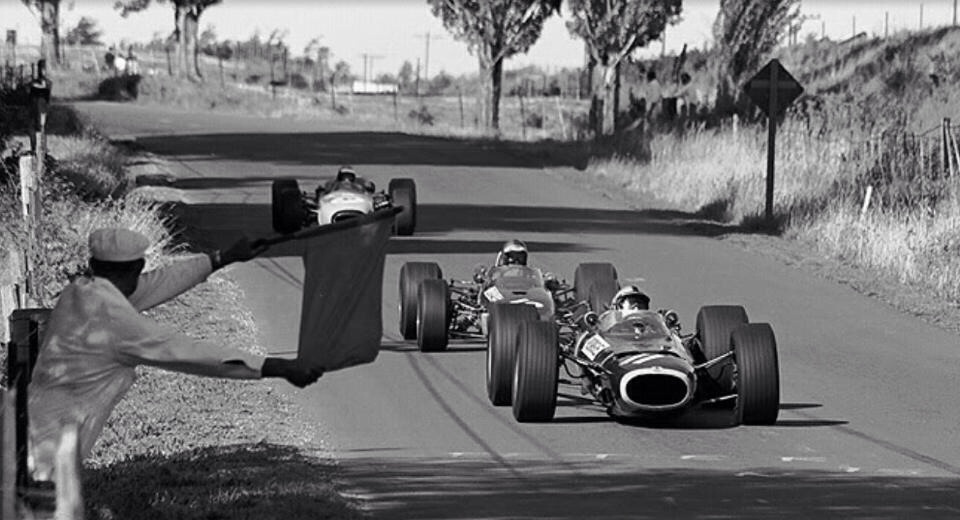
french gp 1967

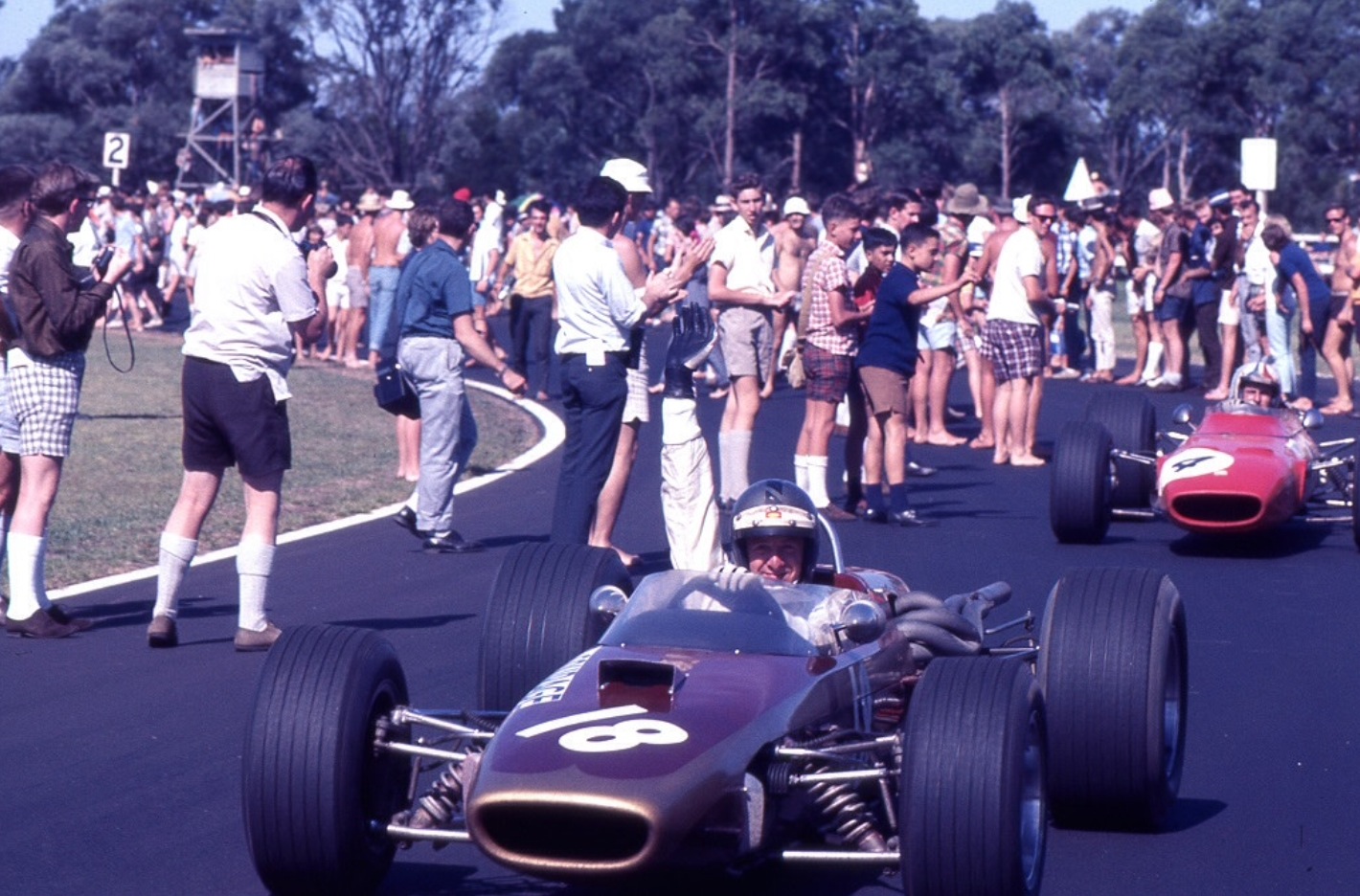
As Jeremy Clarkson would say. The 3 litre Formula 1 ushered in another era when a surfeit of power over chassis grip made the cars spectacular to watch and a challenge to drive…

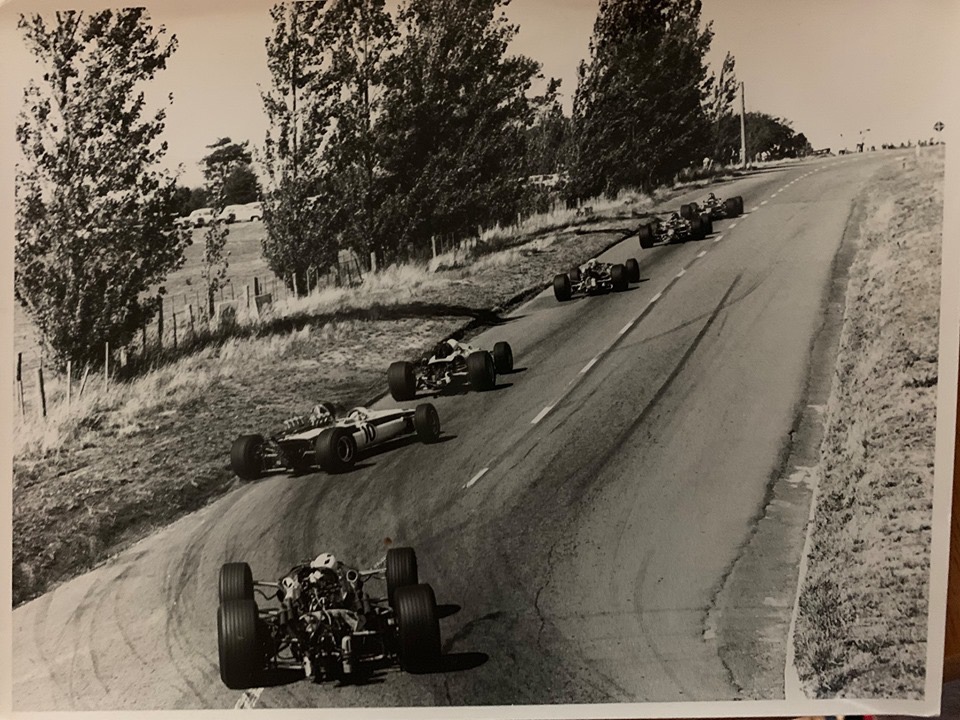
Here Graham Hill #7 gets off pole with a minimum of Firestone wheelspin, not so Jack Brabham #3 and Dan Gurney #9, Repco V8 and Gurney-Weslake V12 leaving behind plenty of ‘Goodyear’. The noses of the cars behind are Clark’s yellow striped Lotus and Bruce McLaren in Dan’s second Eagle, his own car being not quite yet ready.

french bruce

Bruce McLaren getting the feel of the Eagle T1G Weslake. Q5 and retired on lap 26 with ignition failure. He also raced the car at Silverstone and the Nurburgring (The Cahier Archive)

Dan was on top of his game, he won the Belgian Grand Prix a fortnight before in his Eagle T1G and Lotus the first race for the 49 and its Cosworth engine two weeks before that. But it was the ‘old stager’ Brabham who took the French Grand Prix win in his BT24 from teammate Denny Hulme and Jackie Stewart’s BRM P261.

french jack and dan

Brabham’s BT24 ahead of Dan Gurney’s Eagle T1G DNF fuel line. Circuit Bugatti 1967 (unattributed)

The Automobile Club de France laid out a ‘pissant’ circuit built for the racing school which also used the start-finish straight of the classic 24 hour circuit but the ‘Circuit Bugatti’ had none of the atmosphere, grandeur or challenge of Reims, Rouen or Clermont Ferrand the other options available to them!

The ‘punters’ reacted accordingly, only 20000 showed up, the race was held at Rouen the following year.

image

Grid ready to go, G Hill popping on the Nomex, Bruce McLaren in an Eagle T1G and to his right Jochen Rindt’s Cooper T81B Maserati DNF engine (Getty)


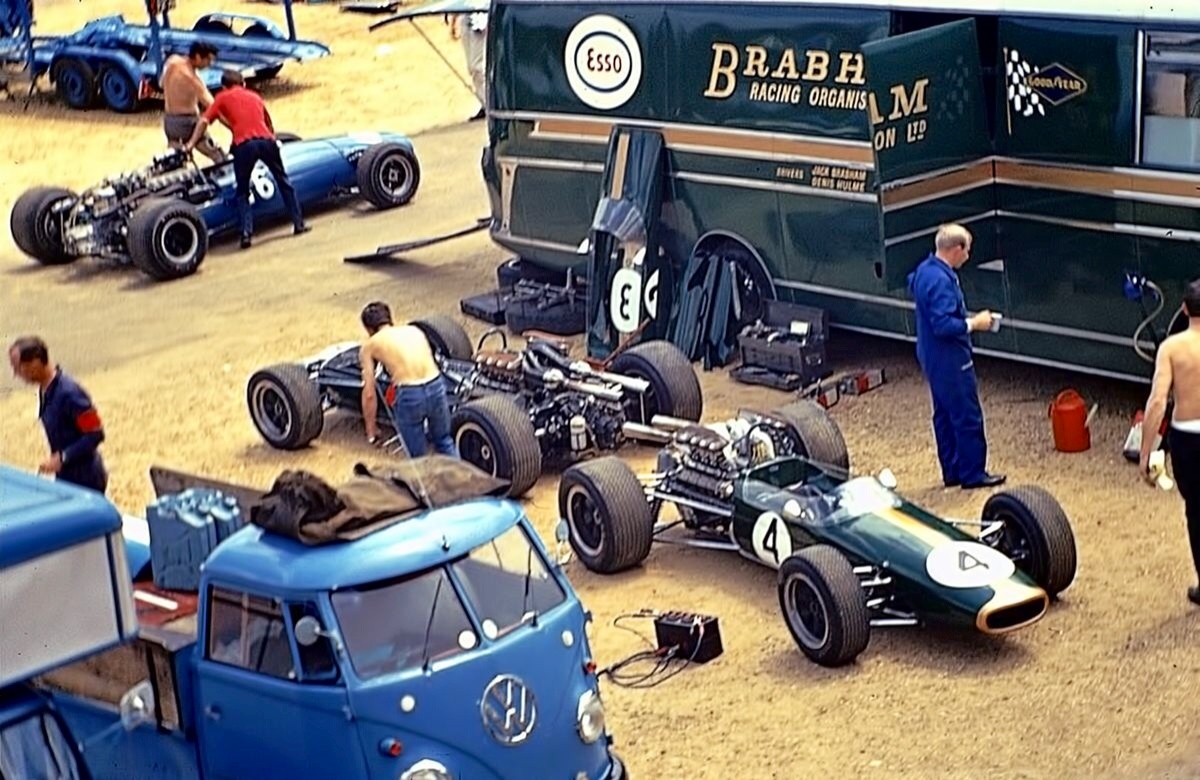
frencj barabhams

#4 Hulme’s Brabham BT24 Repco 2nd in front of Jack’s car, #16 is Guy Ligier’s Cooper T81 Maserati N/Class. Le Mans paddock 1967. How small, light and neat do those BT24’s look? Champions in ’67 of course with Hulme D (unattributed)

image

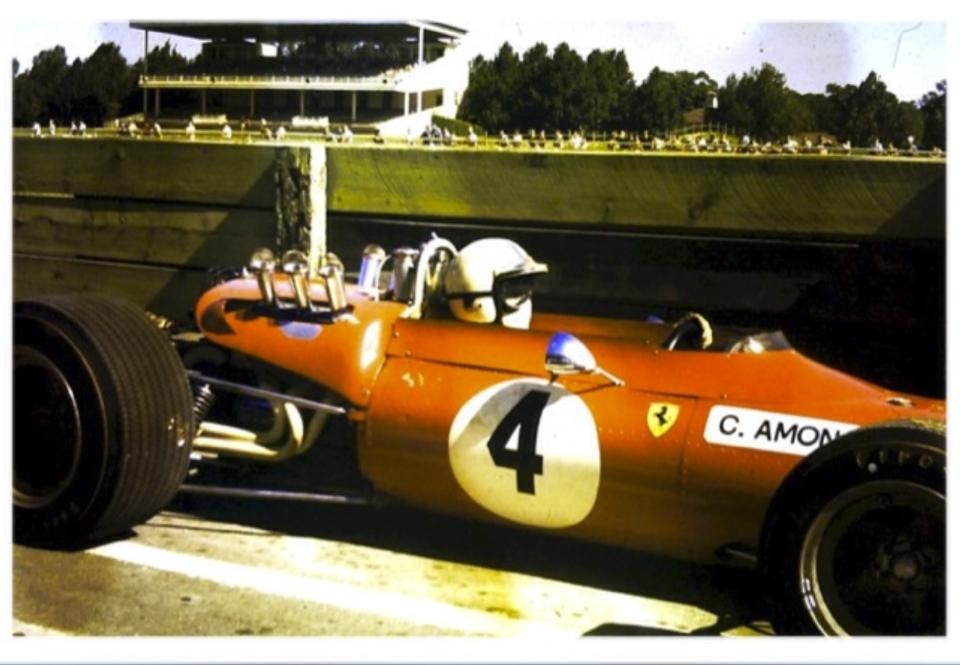
Superb shot of Chris Amon’s Ferrari 312. He qualified 7th and ran as high as 3rd before the throttle cable broke at half distance (Sutton)

Jack lookin’ pretty happy with a good days work in his BT24 Repco both before the race and after its successful conclusion…

image

(Getty)

Credits: The Cahier Archive, Getty Images, Sutton Images

Tailpiece: You can take the Racing Driver out of the Engineer…

mc laren le mans eagkle

Ever the engineer Bruce helps with a plug change on his Weslake V12. Le Mans 1967 (Getty Images)


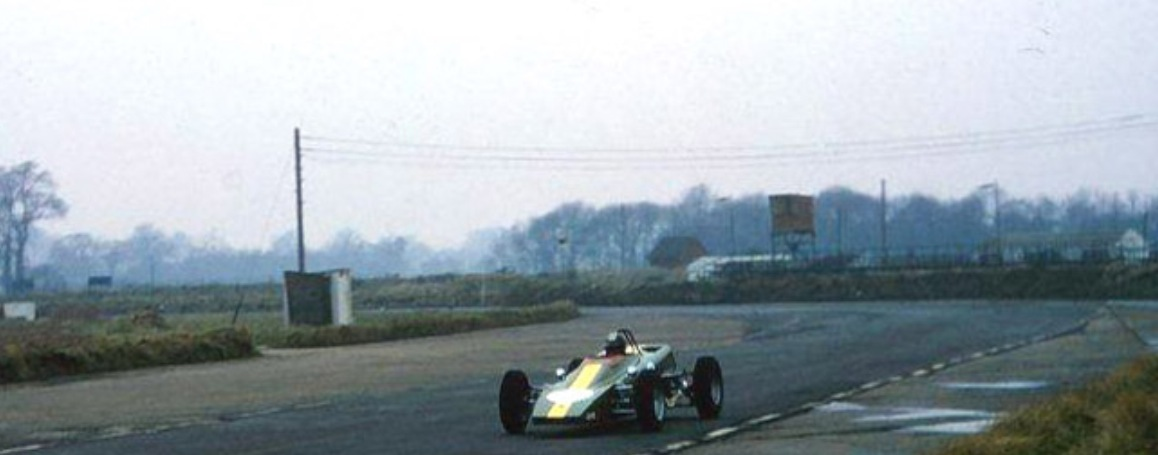
61 hill

Graham Hill and jockey Lester Piggott test the Lotus 61 Formula Ford at an incredibly frigid Hethel Airfield 20 March 1969…

How many times he spun the car at Lotus HQ is unrecorded! The event appears to be a promotion to boost the sales of Lotus Components latest Formula Ford. And a very competitive car it was, in fact all the Lotus FF’s were; 51, 61, 59 and 69, it’s a great pity Chapman took the marque up-market and left its enthusiast/grass roots racing background behind.

Graham Nearn did rather well with the Lotus 7 Series 3 too, proving there was life in the old beast yet, the 7 being the other product of Lotus Components in addition to the production racing cars, Chapman sold the rights of the 7 in 1971.

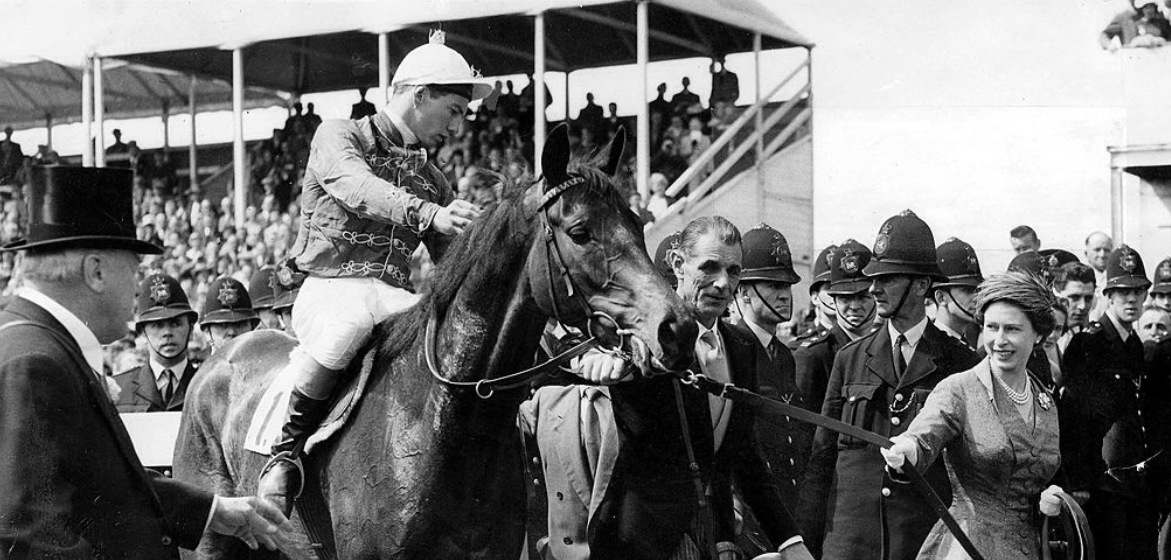
61 lester

On a more familiar type of mount; Lester Piggott takes the Queens horse ‘Carrozza’ back to scale having won ‘The Oaks’ at Epsom, Surrey on 7 June 1957. Queen Elizabeth leads (Popperfoto)

Credit…

Victor Blackman, Richard Styles

Tailpiece: Dave’s Lotus 61…

61 walker

Later Lotus GP driver, Aussie Dave Walker tests his JRRDS Lotus 61 at Snetterton prior to the start of his successful 1969 season. He won the British Les Leston FF Championship in this car in 1969 (Richard Styles)


hill 33

(Getty Images)

There is just no chance Damon Hill wasn’t going to be a racing driver?…

There are so many childhood shots of him with his dad in practice for an event somewhere round the globe. This one is close to home, Graham’s Lotus 33 BRM is being fettled for the ‘XIX BRDC International Trophy’ at Silverstone on 29 April 1967.

GH rejoined Team Lotus from BRM so was well familiar with the 2 litre P56 engine which powered his Lotus. He won plenty of races with this engine in both 1.5 litre F1 and 2 litre ‘Tasman’ spec in the BRM P261 chassis.

damon bultaco

Damon @ 15 aboard his Bultaco 1975 (Chris Ware)

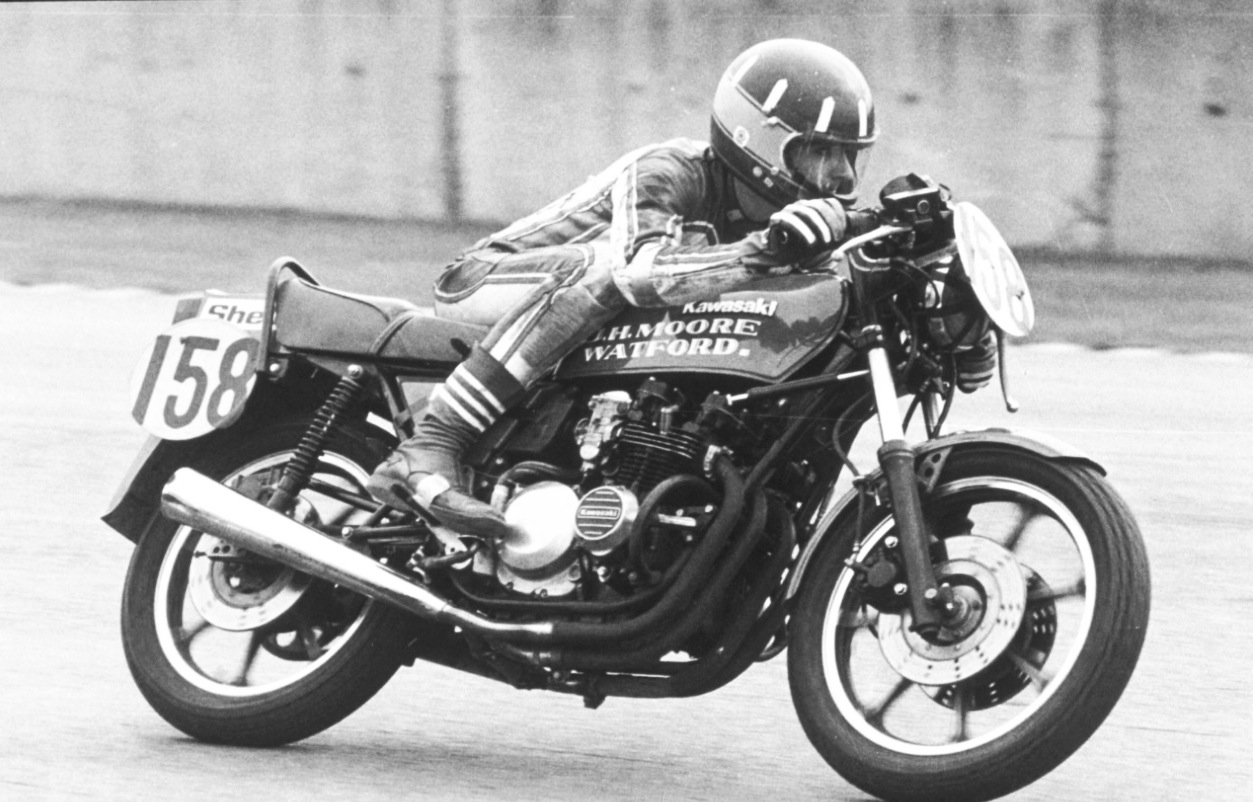
dh kwaka

Hill started racing bikes in 1981, here aboard a Kawasaki 500 at Donington Park. His early racing was all self-funded, the Hill family fortune diminished by claims of victims families after the light aircraft crash which killed GH and most of his team in 1975 (unattributed)

There were 2 ‘interim’ 2 litre V8 33’s in 1967; this chassis ‘R11’ and Jim Clark’s Coventry Climax powered ‘R14’ in which he had just won the Tasman Series.

Things were about to change though; the 3 litre Ford Cosworth DFV powered Lotus 49 was already being tested by Hill and famously won upon its Dutch Grand Prix debut in Clarks hands on 4 June.

Parkes won at Silverstone in his Ferrari 312 from Jack’s Brabham BT20 Repco and Siffert’s Cooper T81 Maserati with Graham fourth in ‘R11’. The car was kind to Graham, he was second in the Monaco GP on 7 May, the last championship round in which these cars were raced by Team Lotus.

damon ff

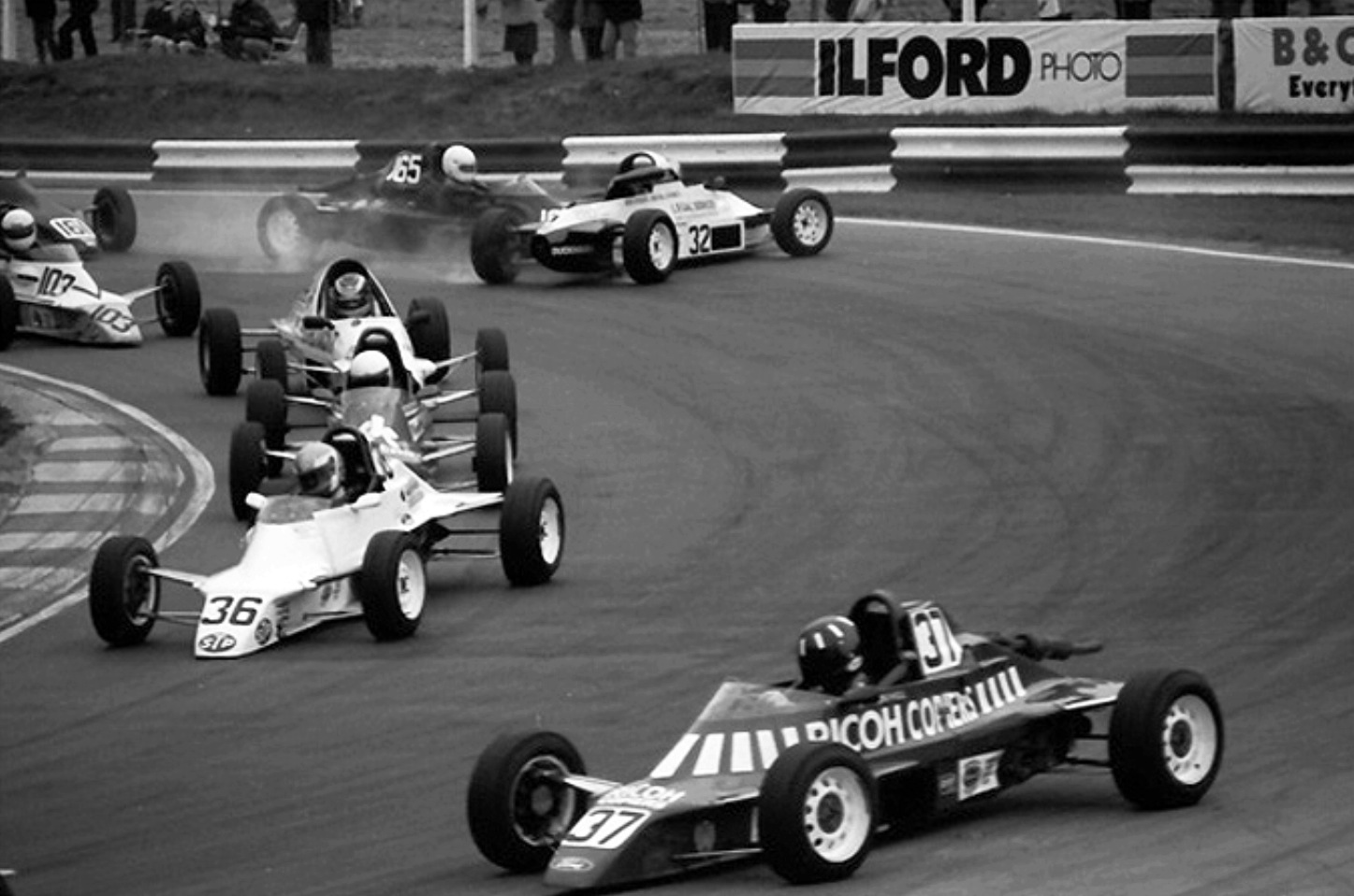
Formula Ford Festival Mayhem! 1985 Brands Hatch. Damon Hills #37 Van Dieman RF85 leads the pack, interested to know who the other drivers and cars are FF fans!? The ’85 festival was won by Johnny Herbert’s Quest with Jonathon Bancroft 2nd, Hill 3rd and Mark Blundell 4th all in VD RF85’s. DH career progression; F3 in 1986, F3000 in 1989, a critical testing contract with Williams in 1992 and Brabham F1 drive in the same year. He was no star in his early years, he ‘got there’ by displaying the same grit, determination and persistence as his father. He also has his fathers ‘class’ and is a fine ambassador for his country and sport (Phil Rainford)

hill hungary

Damon Hill on his way to 6th in the 1992 Hungarian GP. Brabham BT60B Judd 3.5 V10. Q25, a good drive in difficult conditions, Senna won the race in a McLaren MP4 Honda V12. First GP season. Also proved his speed and feedback as a test driver for Williams that year. World Champ for Williams Renault in 1996 (unattributed)

Credits…

Getty Images, Victor Blackman, Chris Ware, Phil Rainford

Tailpiece: ‘Better still, i get to steer’!…

damon

Silverstone Intl Trophy paddock 29 April 1967. Lotus 33 BRM (unattributed)


hill 1

(Brian Watson)

Graham Hill having a squirt of  Jack’s Brabham BT26A Ford in British GP practice, Silverstone July 1969…

GH in a Brabham is not such a big deal; he raced F2 Brabhams with success for years as well as Tasman Formula ‘Intercontinental’ Brabhams in the mid-sixties. Later he was the pilot of Ron Tauranac’s intriguing ‘Lobster Claw’ BT34 in 1971 but he was a Lotus F1 driver in 1969, so ’twas a bit unusual  to practice an opponents car.

puke

Hill’s red Brabham BT11 Climax from Clark’s Lotus 32B and Aussie Lex Davison Brabham BT4, all Climax 2.5 FPF powered on the way to an NZGP win for Graham. Pukekohe, 9 January 1965. Hill also raced an earlier BT7A in the ’66 Tasman for David McKay’s Scuderia Veloce, the entrant of the car shown, he was familiar with Brabham ‘GP’ cars long before 1969! (unattributed)

Jack was still recovering from a testing accident at Silverstone in June when a Goodyear popped off a front rim, his car ploughed into an earth bank, his ‘equal worst accident’ with the Portuguese Grand Prix one in 1959. He lay trapped in the car with a badly broken ankle, Cossie V8 screaming at maximum revs until he punched the ignition cutout and extinguishers to minimise the chance of the pool of fuel in which he lay igniting. Eventually a touring car also on the quiet circuit mid week stopped and raised the alarm.

Jacky Ickx driving the other Brabham was late for Silverstone’s first session, all timed for grid positions in those days, so Tauranac had 2 cars idle.

Graham and teammate Jochen Rindt were peeved with Colin Chapman, to say the least, as the Lotus transporter was not in the paddock when the session got underway. Graham was ‘ready to rock’ all suited up but had no car to do so and was more than happy to put in a few laps for Tauranac. Rindt remained in his ‘civvies’ and fumed as the rest of the field practiced.

hill 2

Ron Tauranac giving Hill a few tips on his very quick, twice a GP winner in ’69, BT26. ‘Just don’t over rev the thing for chrissakes Graham, Jack will kill me if you do…’ Is that Ron Dennis at right? (unattributed)

1969 was the year of 4WD experimentation for Matra, McLaren, Lotus and Cosworth. Ultimately, very quickly in fact, 4WD was determined an F1 blind alley; the traction the engineers sought was more cost effectively provided by advances in tyre technology, Goodyear, Firestone and Dunlop were all slugging it out in F1 at the time, none of ‘yer control formula’ bullshit then. The effectiveness of the ‘low wings’ mandated from the ’69 Monaco GP also played its part in getting grip.

Chapman’s issue was pursuading his pilots to treat the Lotus 63 Ford, his 4WD design seriously, to test it with a view to developing it rather than to humor him. 4WD was successful at Indy; Chapmans ’68 Indy Lotus 56 ‘wedge’ was 4WD and came within an ace of winning the race, so was the ’69 Lotus 64, ignoring the misfortune surrounding both of these cars.

It was a challenge to get Rindt into the thing at all but he did finish 2nd in the August 1969 Oulton Park Gold Cup. The result meant nothing though, in front of him was Ickx’ Brabham BT26A but all the cars behind were F5000 and F2 cars not GP machines. Still, it was useful testing for Chapman if not for Rindt, his 4WD view was formed!

Chapman’s solution to his drivers recalcitrance was to sell 2 of his Lotus 49’s, one each to Jo Bonnier and Pete Lovely, leaving only one 49 in Team Lotus’ possession! A car you don’t have is a car you cannot drive. Said drivers were not best pleased.

graham 63

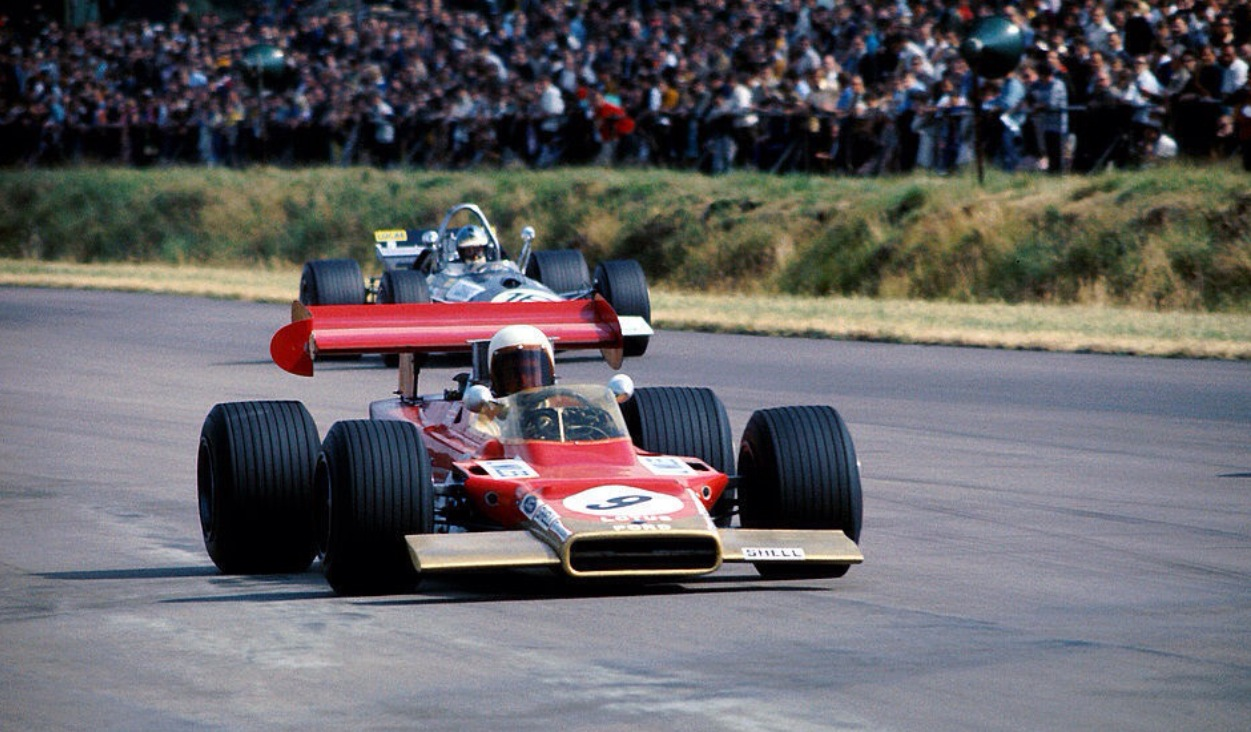
Hill, Lotus 63 Ford 4WD, British GP practice, Silverstone July 1969. ‘Turn in bitch!’, understeer and the inability of these cars to respond to delicate throttle inputs plus excessive weight were the main performance deficiency issues. As well as the absence of the electronic trickery which helped make 4WD work into the 80’s (Brian Watson)

When the showdown with Chapman occurred and the speed, or lack thereof, of the 63 was clear Col borrowed back the car he sold to Bonnier, GH raced that 49 and JoBo the 63. Chapman rescinded the contract with Lovely.

The ever restless Lotus chief didn’t give up on 4WD in Fl, the gas turbine powered Lotus 56 campaigned in some 1971 events had its moments and potentially a great day in the wet at Zandvoort until Dave Walker ‘beached it’.

The 49 raced on into 1970 and in ‘C’ spec famously won the Monaco GP in Rindt’s hands before the Lotus 72, Chapman’s new 2WD sensation, which made its debut at Jarama was competitive.

grham 49

Hill races his Lotus 49B to 7th place. Silverstone 1969 GP (unattributed)

At Silverstone Hill raced the 49B to 7th having qualified 12th and Bonnier retired the slow 63 with a popped engine. John Miles making his F1 debut raced the other Lotus 63 to 9th, the young, talented Lotus engineer stroked the car home from grid 14.

Stewart won a thrilling high speed dice on the former airfield with Rindt, only ruined when Jochen’s wing endplate chafed a rear Firestone, some say it was the greatest British GP ever, on the way to his world title in a Matra MS80 Ford.

It would be interesting to know Graham’s opinion of the Brabham BT26 compared to his 49, the competitiveness of which, especially in Rindt’s hands not at all in doubt despite the 49’s middle age, it was a little over 2 years old in 1969.

I am a huge Graham Hill fan, he was well past his F1 best by the time i became interested in motor racing in 1972 but he was still quick enough to take F2 and Le Mans wins then, he was my kinda bloke, sportsman and champion. A statesman for his sport and country.

joc and jack

Jochen and Jackie scrapping for the ’69 British GP lead, Jochen’s Lotus 49B with bulk, uncharacteristic understeer. Look closely and you can see the closeness of his LR wing endplate to Firestone tyre, the cause of a pitstop to rectify and then back into the fray only to run outta fuel, the 49 notorious for its incapacity to sometimes scavenge the last few gallons from its tanks. Stewart Matra MS80 Ford (unattributed)

1969 was as tough a year for Hill as 1968 was great.

Jim Clark’s April 1968 death impacted Hill deeply on a personal level, they had been friends for years and Lotus teammates since the ’67 Tasman Series. Colin Chapman and Clark were like brothers and whilst Colin struggled with his grief, Hill in a tour de force of character and leadership marshalled Team Lotus by their bootstraps and refocused them on the year ahead. The result, World Titles for Hill and Lotus by the seasons end.

graham and jim

Clark and Hill beside Graham’s Lotus 48 Ford FVA F2 car prior to the start of the Australian Grand Prix, Warwick Farm, 1967. Car behind is Kevin Bartlett’s Brabham BT11 Climax. Clark was 2nd in Lotus 33 Climax FWMV 2 litre, GH DNF with a gearbox failure. JYS won in BRM P261 2.1 litre (History of The AGP)

The Tasman Series in early 1969 showed just how tough a year Graham was going to have within Lotus. Rindt joined them from Brabham and whilst enjoying it, he had committed to Jack verbally to return to Brabham in 1970, landed in the team in the year the Repco 860 quad-cam engine failed consistently.

Jochen had been in GP racing since mid 1964, was a consistent winner in F2 and had taken the 1965 Le Mans classic with Masten Gregory in a Ferrari 250LM, was regarded as one of the fastest guys around, if not the fastest but had still not scored his first GP win. Graham was simply blown-off by a guy with it all to prove, Jochen finally got the breakthrough win at Watkins Glen, the last round of the season in which Graham had what could have been a career ending shunt.

He spun mid race, undid his belts to bump start the car and of course was unable to redo them unaided; he spun again on lap 91, this time the car overturned throwing him out and breaking both his legs badly.

What then followed was a winter of Hill’s familiar grit and determination to be on the South African GP grid in March 1970. He was and  finished 6th in Rob Walkers Lotus 49C Ford.

Quite a guy, G Hill.

graham and col

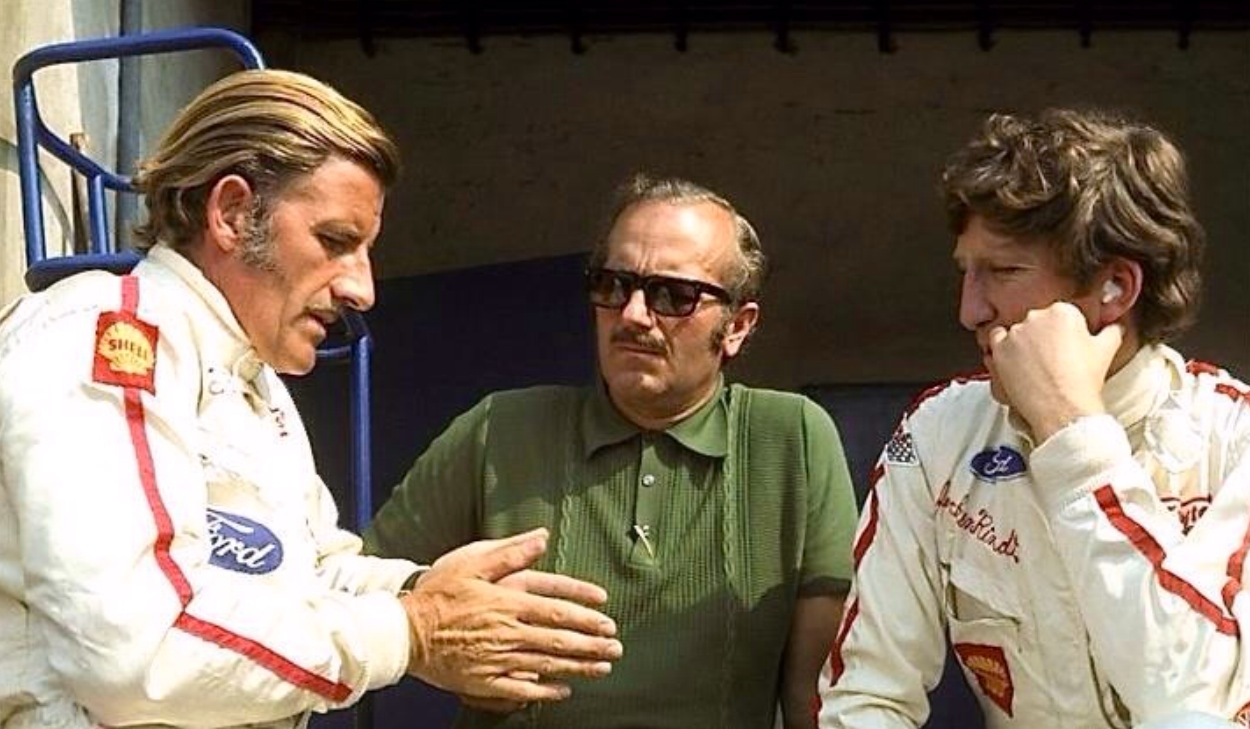
Team Lotus 1969. Hill, Chapman and Rindt. A tough season all round. With some reliability from his Lotus and mechanical sympathy to it from Rindt, there was a serious opportunity at the title that year, not to be (unattributed)

Etcetera: Lotus 63 Ford…

miles 1

John Miles races the Lotus 63 to 10th on his GP debut at Silverstone 1969. Rounding him up is Piers Courage’ Frank Williams owned Brabham BT26 Ford, he finished 5th at Silverstone in a ripper season in this year old chassis. He emerged as a true GP front runner in ’69 (unattributed)


63 1

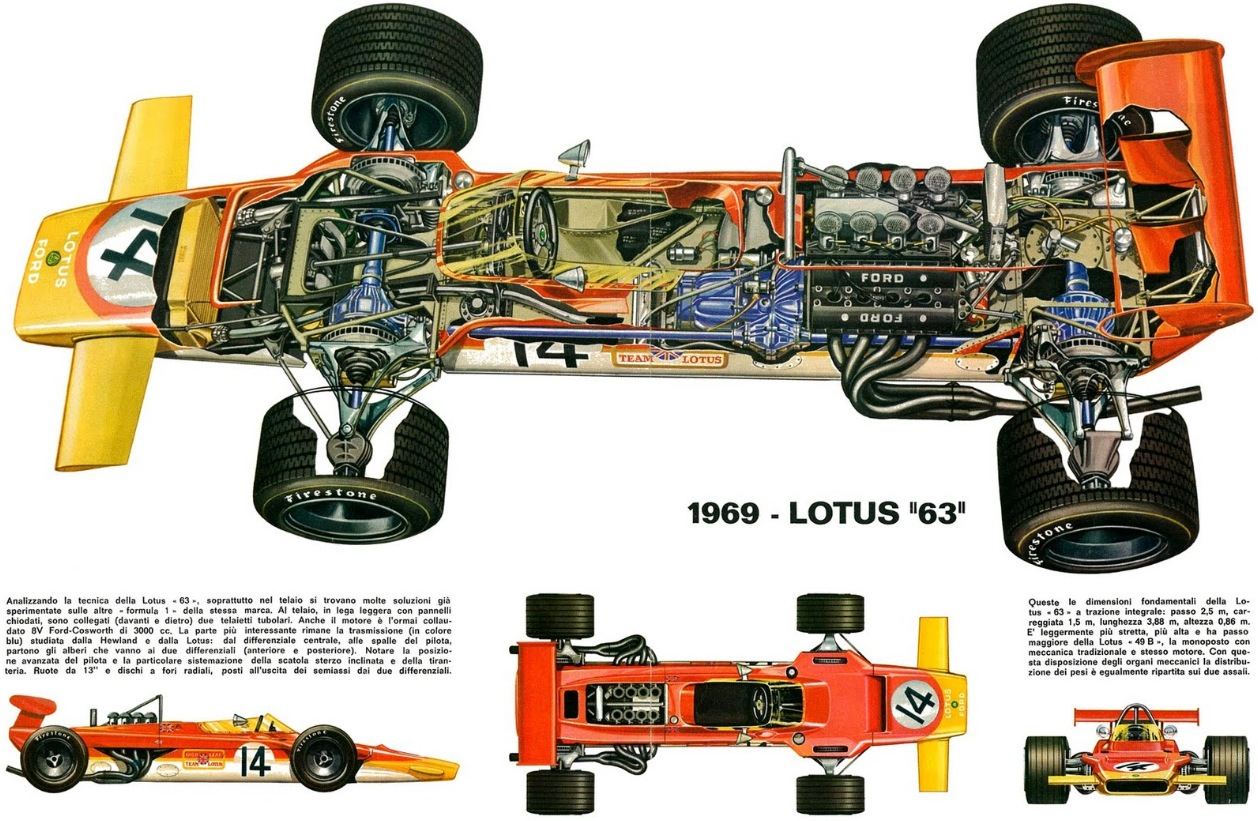
Cutaway self explanatory for our Spanish friends! Key elements of 4WD system in blue; see front mounted Ferguson system diff, Ford Cosworth DFV and Hewland DG300 ‘box mounted ‘arse about’ with driveshafts on LHS of cockpit taking the drive fore and aft to respective diffs. Rear suspension top rocker and lower wishbone, coil spring/damper, brakes inboard (unattributed)


miles 2

John Miles, young Lotus engineer and F3 graduate ponders his mount. Lotus 63 Ford. He was later to say the 63 was not so bad, he did more miles in it than anyone else, until he first parked his butt in a conventional Lotus 49! which provided context. Note forward driving position for the time and sheet steel to stiffen the spaceframe chassis. Nice shot of disc, rocker assy and stub axle also (unattributed)


63 2

Fantastic front end detail shot of the Lotus 63. Spaceframe chassis, Lotus first since 1962, beefy front uprights, upper rocker actuating spring/shock, lower wishbone. Ferguson system front diff axle and driveshafts to wheels. Big ventilated inboard discs. Intricate steering linkage from angled rack to provide clearance required (unattributed)


Photo Credits…

Brian Watson…http://www.brianwatsonphoto.co.uk/FormulaOne/races/brit69.html#1, Vittorio Del Basso

Graham Howard ‘History of The Australian GP’

Tailpiece: Tauranac, Hill and the ‘Lobster Claw’ BT34 1971…

ronster

RT seeks feedback from GH during Italian GP practice Monza 1971. Hill Q14 and DNF with gearbox failure on lap 47. GH best results in 1971 5th in Austria and Q4 in France. Teammate Tim Schenken, in his first full F1 year generally quicker than GH in the year old, very good BT33, BT34 not RT’s best Brabham. No doubt RT missed Jack Brabham’s chassis development skills, Jack was on his Wagga Wagga farm from the start of 1971 (unattributed)

Finito…

clark

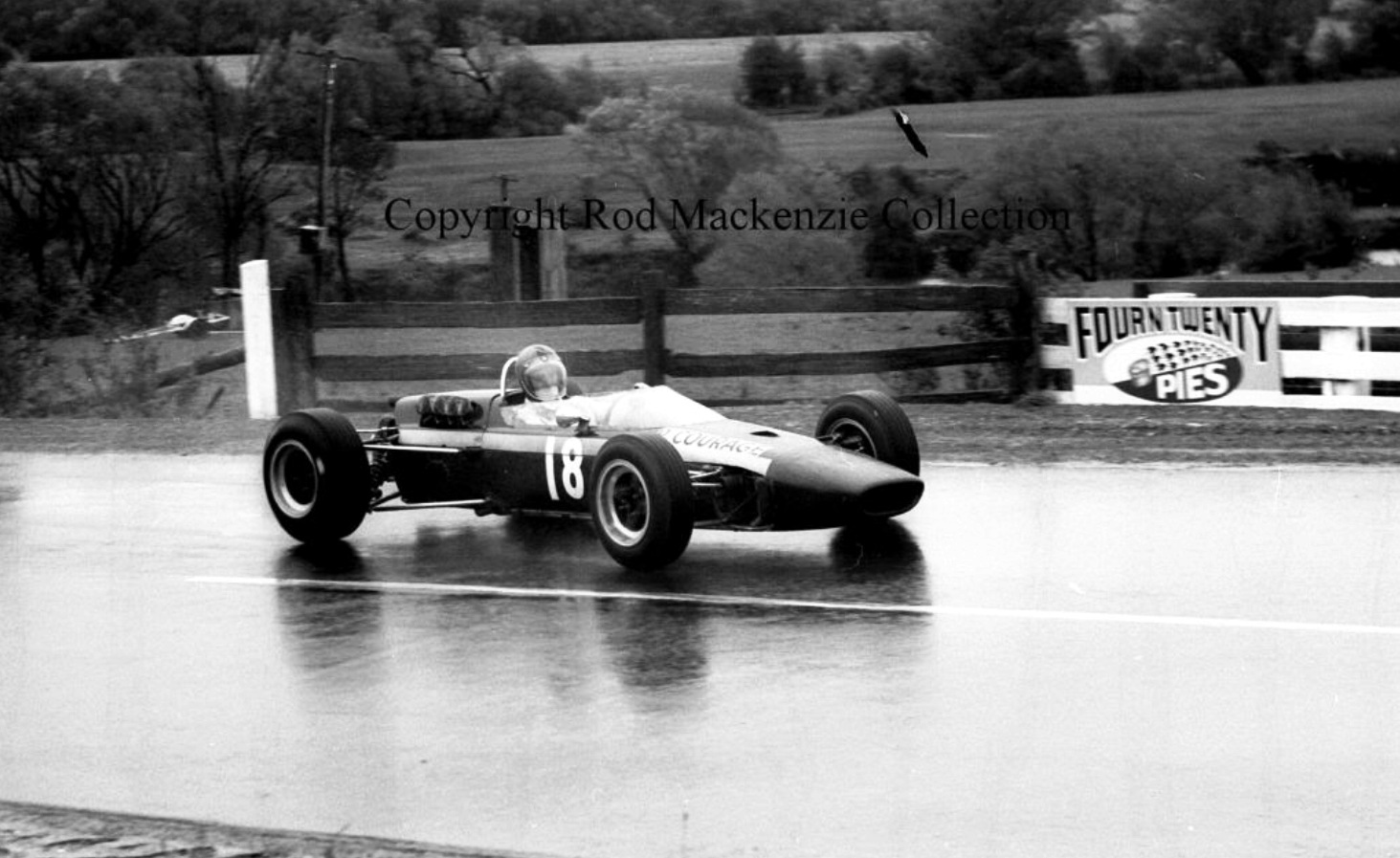
Rod MacKenzie’s moody, foreboding, evocative image of Jim Clark’s Lotus 49 at Longford in 1968 is one of my favourites…

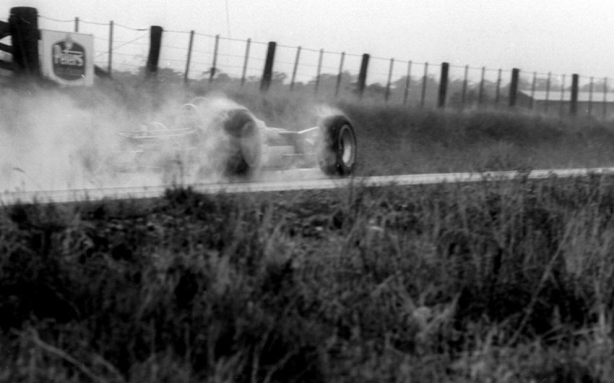
Clark is exiting Newry Corner on the run towards the ‘Flying Mile’. He started from pole, winning 100 bottles of champagne in the process and finished second in the Saturday preliminary race in beautiful weather but the clouds opened on Monday morning for the Tasman Championship event, ‘The South Pacific Trophy’.

Star of the show was Piers Courage who drove a gutsy, skilful race in the most challenging, treacherous conditions to win the event in his little F2 McLaren M4A FVA ahead of the big Tasman 2.5’s of his close competitors. Pier’s car was self run, his performances in it that summer reignited his career.

courage

Piers Courage in his McLaren M4A F2 car, Newry Corner, Longford 1968. Power was not all on this fast circuit in such wet conditions, but the plucky Brit was giving away at least 130bhp to his 2.5 litre V8 powered opponents (R MacKenzie)

Pedro Rodriguez and Frank Gardner were second and third in BRM P261 2.1 V8 and Brabham BT23D Alfa 2.5 V8 respectively. Clark was fifth in his Ford Cosworth DFW engined Lotus 49, the 2.5 litre variant of the epochal 3 litre DFV GP engine.

Jim Clark chewing the fat with BRM’s Tim Parnell- all the fun of the fair, Longford 1968, Clark’s Lotus 49 Ford DFW ready for action (oldracephotos/Harrisson)


Clark and the boys with Denny Hulme’s Brabham BT23 FVA behind (HRCCT)

Lets go back to the start of the meeting, marvellous from the Tasmanian’s perspective as the series went down to the wire, Chris Amon was still a potential series victor with only six points between he and Jim Clark with Piers Courage’s third place within Graham Hill’s grasp depending upon how he fared.

Chris Amon blew the sealing rings in the Ferrari’s little V6 keeping his crew busy for the evening whilst Pedro Rodriguez popped an engine too- the BRM mechanics therefore readied the P261 V8 for the race rather than the P126 V12 the Mexican raced in the Saturday preliminary. Piers Courage tapped the nose of his pristine McLaren M4A when the flaggies got so enamoured of the cars they forgot to signal oil on the track! All was well at Gold Leaf Team Lotus.
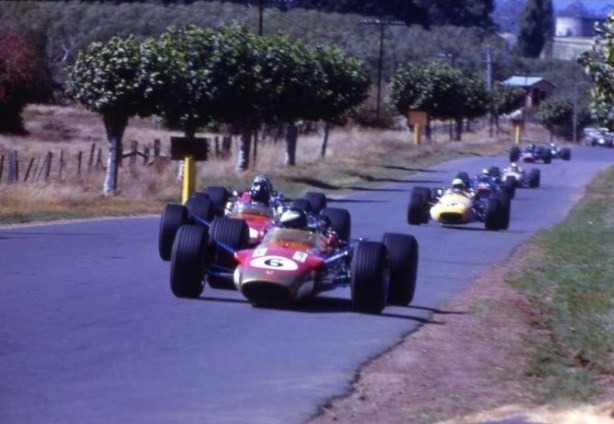
Lap 1 of the preliminary on Saturday, Geoff Smedley’s amazing colour shot- Clark from Hill, Amon, Gardner and one of the BRM’s- Lotus 49 by two, Ferrari 246T, Brabham BT23D Alfa and BRM P261 0r P126 (G Smedley)

Practice times didn’t mean too much as the teams were focused on race setup for the twelve lap Saturday preliminary race ‘The Examiner Racing Car Scratch’ which also counted for grid positions. In the second session of practice Clark did a 2:12.8, Hill 2:13.6 and Amon 2:13.8. Clark was under Jack Brabham’s record set on the way to his win the year before in his BT23A Repco, Jim won 100 bottles of champagne for pole as stated earlier.

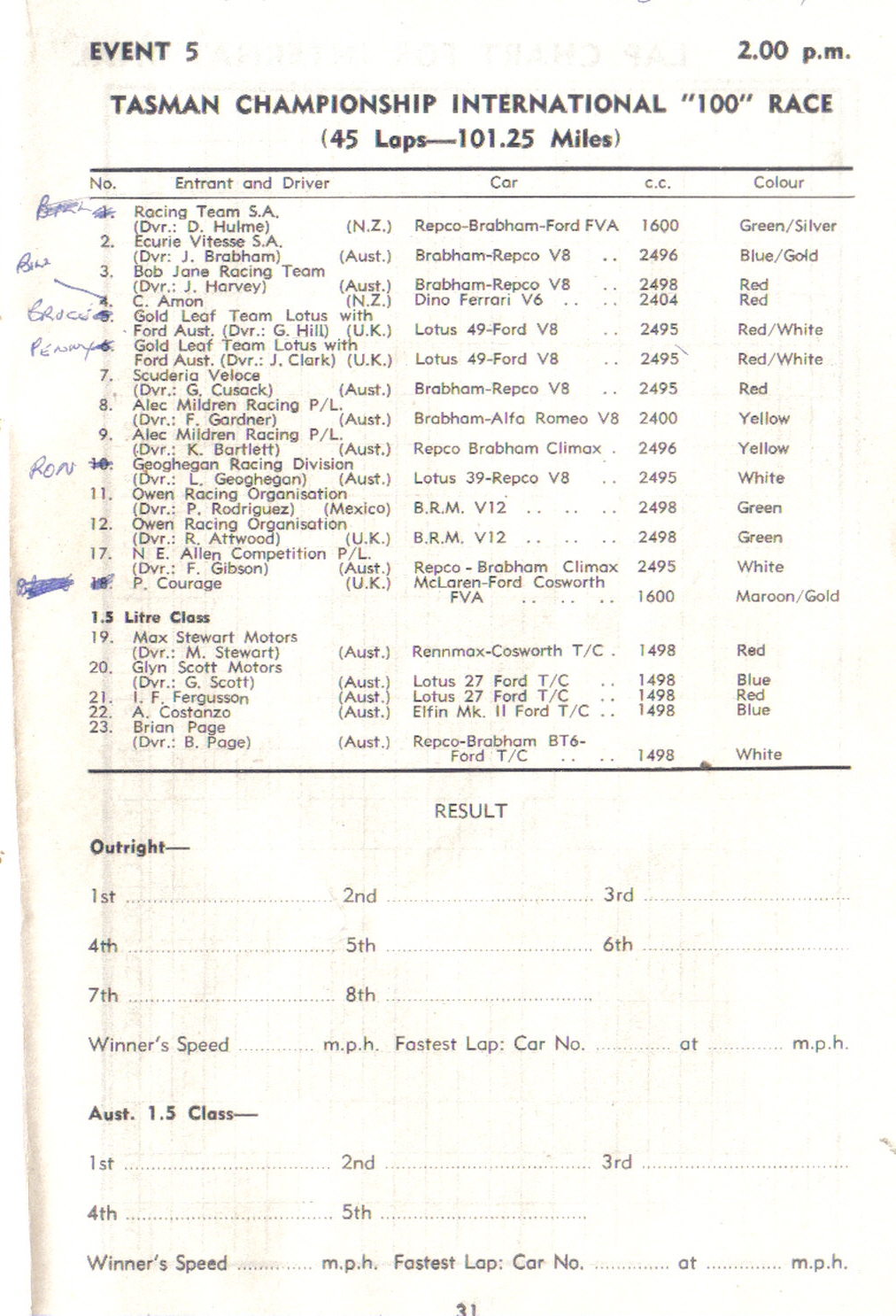
In the preliminary on Saturday the grid formed up with Clark on pole. Hill comfortably won the event run in fine, dry weather from Clark and Amon. Both Lotuses were timed on the Flying Mile at 172 mph but Amon’s 182 mph in David McKay’s ex-works Ferrari P4/Can Am 350 sportscar rather put the single-seaters in the shade! Lets not digress about that car now, follow the link at the end of this article for a long piece about the P4 which Chris raced in the sportscar support events in each of the Australian Tasman rounds.

Hill G leads the pack off Long Bridge on lap 1 of the Saturday preliminary. Hill, Clark, Amon, Gardner, Leo Geoghegan Lotus 39 Repco, a BRM and perhaps Kevin Bartlett Brabham BT11A Climax (R MacKenzie)


Exit from Newry, lap 1 of the preliminary- Hill, Clark, Amon, Gardner, Geoghegan’s Lotus flirting with the tracks edge, and Attwood. Great shot shows how the circuit rises at this point into the right hand kink up the road (S Geoghegan)

Only a couple of supporting races had been run on the Monday raceday when light rain started to fall at about 10am, this soon became heavy. As the rain got harder and the clouds more threatening it was obvious that it was not likely to abate before the 2.15 pm race start time

The track was almost under water at some points where hay bales had broken up and straw was blocking the drains. Efforts by track officials soon had most of the drainage system under control.

A large crowd was of course present on the Labour Day long-weekend. Crews brought the cars out onto the circuit in front of the pit counter and stood together under umbrellas as the drivers went into a huddle with the promoters of the meeting and the CAMS stewards to determine if the race should go on.

Leo Geoghegan and Lotus 39 Repco return to the Longford pits after some exploratory laps. DNS with unsuitable tyres. Its the Courage McLaren by the pit counter (oldracephotos)

Sergent.com report that first it was decided that the cars should do a couple of exploratory laps then report their findings.

Geoghegan, Amon, Clark, Hill, Attwood, Gardner, Bartlett and others went out and after looking like motor boats ploughing through the water delivered their thoughts to the meeting. The conditions were so bad various drivers with unsuitable tyres elected not to start having driven some ‘sighting laps’.

Kevin Bartlett recounted his experience in the Alec Mildren Racing Brabham BT11A Climax; ‘I did two exploratory laps and the old BT11 couldn’t find traction anywhere. I had an absolutely terrifying 4th gear 720 degree spin across the short Kings Bridge, the one after the Viaduct, missing all the obstacles at the tracks edge. After exiting Pub and in a straight line i did a 360 degree loop. She nearly escaped me over the rail line on the way to Long Bridge. Out of Newry and up the hill to the straight slithering along with no touch felt between me and the bitumen, so i suppose I thought at that moment to do another lap at a very reduced speed then pit’.
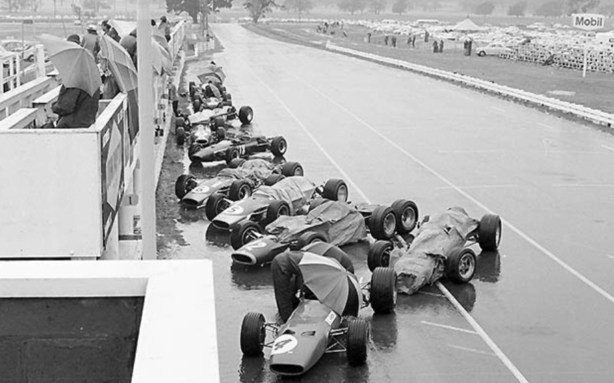
Packed car park: Amon’s Dino, the BRM’s of Attwood and Rodriguez, Pedro’s P261 fully covered, the two Lotus 49’s, Piers McLaren, then Leo G’s Lotus 39 and John Harvey’s Brabham BT11A (oldracephotos)

long

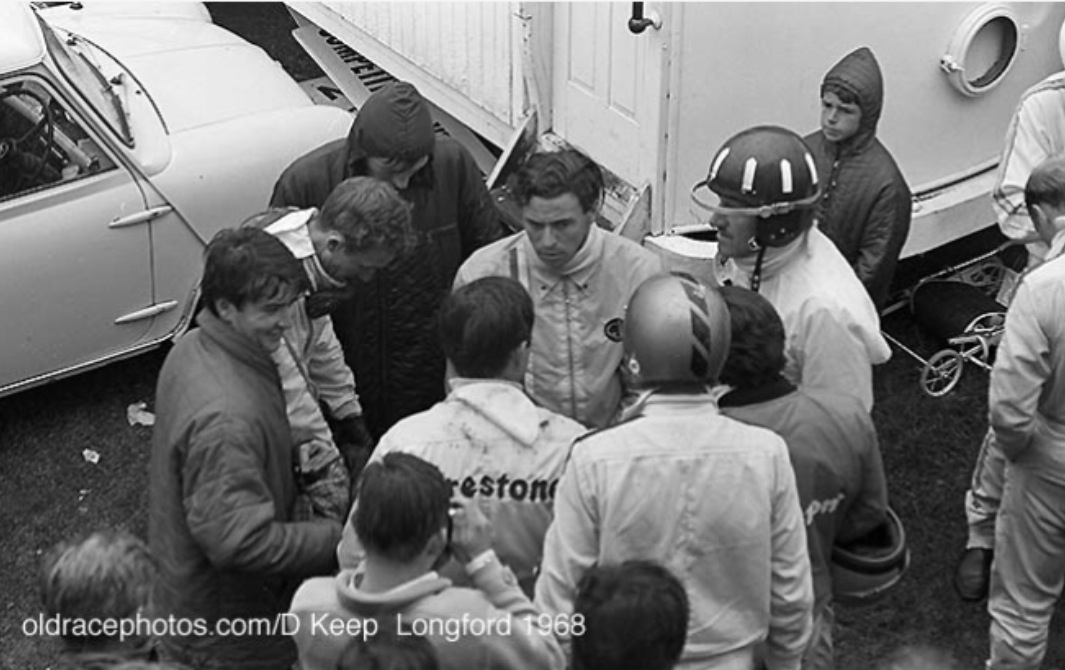
‘What are we going to do boys?!’ Drivers considering their options before the race, the pouring rain exacerbated by drains beside the track which couldn’t cope with the deluge; Clark facing us, Hill’s distinctive helmet clear. Courage with his back to us in helmet, Gardner’s lanky frame partly in shot to the right. Amon in the ‘Firestone’ suit, Harvey? at left with head down (oldracephotos)

‘Once back in the tent Alec, Frank (Gardner) Denny (Hulme Brabham BT23 FVA F2) and i had a talk about the tyres that Denny and i had and after trying to come up with a better tread pattern, such as the ones fitted to Franks car (Brabham BT23D Alfa) but with no result. It was agreed that Denny and i shouldn’t risk a start. I was happy with the call and Leo (Geoghegan Lotus 39 Repco) followed suit. Most of the top guys had the latest Firestone, Dunlop or Goodyear wets but none were available to suit the BT11’s. I consoled myself with the fact that if the new world champion (Hulme) didn’t like the risk i certainly shouldn’t!’

Longford, wonderful circuit that it was, provides no runoff area for a driver to go in the wet (or dry!) should a driver lose control or suffer a bad attack of aquaplaning, and this was the main point in contention.

The ill fated Brabham BT23A Repco ‘740’ of Greg Cusack on Friday or Saturday (oldracephotos)

Greg Cusack in David McKay’s Scuderia Veloce Brabham BT23A Repco (Brabham’s victorious Longford mount from 1967) had left the road that morning. He lost the car on the greasy road as he went over the hump/bump on the approach to The Viaduct. The car left the road, hit a bank, somersaulted and crashed into a ditch, he was then pinned under the it before being quickly released by officials.

The 37 year old Canberra motor dealer, who had intended Longford to be his last race meeting, was taken to Launceston Hospital with chipped bones to both knees, stretched ligaments and a fractured left wrist. He was lucky it was not a good deal worse. Bib Stillwell organised for one of his planes to fly Cusack and his wife home to Canberra on the Tuesday where he was admitted to hospital.

Whilst Cusack lay in hospital the other drivers were trying to explain the difficulties of Longford which were exacerbated hugely in the wet. ‘Motoring News’ reports at length about the cordial discussions between the drivers and officialdom and all of the competing issues of safety, providing a show and running a race to determine the winner of the Tasman Cup.

The Stewards finally ruled that the race should go ahead but be shortened to 15 laps of the 4.5 mile circuit, (128 miles to 68 miles) and put the starting time back to 4pm hoping the rain would ease and the situation be safer as a consequence. At 4.15pm the sodden cars and their game, uncomplaining drivers were facing the soggiest start ever seen at Longford, one of the most challenging road circuits in the world.
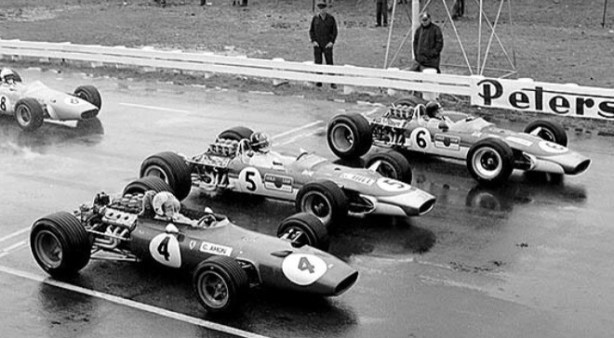
Front row- Amon Ferrari 246T and the two Lotus 49 DFW’s of Hill and Clark, that’s Frank Gardner’s Brabham BT23D Alfa nose (oldracephotos)


Soggy start: L>R Amon Ferrari Dino 246T, Hill Lotus 49 and unsighted to the right Clark. Then Rodriguez BRM P261 #11 and alongside Gardner in the light coloured Brabham BT23D, #12 behind him Attwood BRM P126 and alongside him the winner Courage McLaren M4A. L>R in the back row John Harvey’s Brabham BT11A, John McCormack Brabham BT4 and Mel McEwin Lotus 32B (oldracephotos)

Clark’s Lotus 49 got away well, somehow finding traction with the wide Firestones, and he was followed into the right-hander before The Viaduct by Amon and Hill. The drivers took the opening laps cautiously under race conditions and each car was leaving a gap to the other so they could see through the flying spray.

At the end of lap one the order was Clark, Rodriguez BRM P261 V8 on Dunlops, Gardner Brabham BT23D Alfa on Goodyears, Courage Mclaren M4A Ford FVA using new narrow-section 970s, Hill Lotus 49 Ford DFW on Firestones, Attwood BRM P126 V12 on Dunlop, Amon Ferrari 246T back in seventh owing to a run down the escape road at Newry Corner, then John Harvey Brabham BT11A Repco John McCormack Brabham BT4 Coventry Climax FPF and Mel McEwin Lotus 32B Coventry Climax FPF, this car the ex-Clark/Palmer 1965 Tasman Championship winning chassis.

Richard Attwood, a very good 4th in the big BRM P126 V12 on Pit Straight. BRM was testing, by way of eight Tasman race weekends in a row, this new F1 design in 2.5 litre capacity in advance of the ’68 GP season (oldracephotos/DKeep)

‘Attwood found he had more traction on Dunlops than Hill had with the wide Firestones and he slipped under the Lotus for fifth place on lap 2. Both Attwood and Rodriguez had hand-cut drainage grooves in their tyres. A lap later Courage really got his foot in it to take Gardner on lap 3. He then jumped past both Rodriguez and Clark on the next lap while Gardner followed him through and waited for another lap behind Clark before taking the plunge and heading for second. Amon had taken Hill and now, on lap 5, the order was Courage 9.6 secs ahead of Gardner, Clark, Rodriguez, Attwood, Amon, Hill and Harvey. McEwin and McCormack were already in danger of being lapped by the flying Courage.

Hill from Gardner, not sure who and one of the BRM’s, Long Bridge (R MacKenzie)

Courage, driving like a young Stirling Moss in the blinding rain, somehow gained another 9.5 secs on lap 6, putting him 16 secs ahead of second man Gardner in the Brabham-Alfa. Rodriguez had pulled past Clark and on the next lap Attwood whizzed past Clark to take fourth. On lap 9 Courage was 32 secs ahead of Gardner and having a ball out on his own, right foot hard in it. Gardner was 3.5 secs ahead of Rodriguez who was followed by Attwood, Clark, Amon, Hill and Harvey losing a lot of ground’.

Pedro raced the little 2.1 litre BRM P261 V8 having raced the new P126 V12 in the preliminary and had engine failure. 2nd a minute behind Courage just sneaking past Gardner in the final stages (oldracephotos/DKeep)

‘Rodriguez started to close up on Gardner in the closing laps, but nothing could touch Courage. This was his day, it was he who had the best gear on his car and he was darned sure he was going to make it a race to remember. He had pulled 45.5 secs on Gardner by lap 12 while Rodriguez had got within 2.5 secs of Gardner. Hill challenged Amon on the same lap and finally squeezed past in a daring effort on the greasy track to make the Lotus-Fords fifth and sixth’.

Frank Gardner on the exit of Newry, Alec Mildren’s Brabham BT23D Alfa Tipo 33 2.5 V8. 3rd a minute behind Courage (R MacKenzie)

‘As Courage screamed down the straight heading for the flag he was over 55 secs ahead of Gardner and he came past the pits jubilantly waving his hand. Gardner by this time, heading for the braking area at Mountford, had Rodriguez looking right at the Alfa V8 pipes. There seemed no way that Rodriguez could slip past, but suddenly a gap appeared as Gardner went a shade wide on Mountford and Rodriguez poured on the power into the short straight and took the flag about 25 yards ahead of the Alec Mildren car. Attwood finished his race fourth after a very steady drive, followed by Clark, Hill and Amon’.

John Harvey coming off Long Bridge in Bob Janes Brabham BT11A Repco ‘740’ V8. This is the car in which Spencer Martin won the ’66/7 Australian Gold Star. Converted to Repco power just prior to the Tasman (R MacKenzie)

Hill, Lotus 49 DFW, 5th on the Flying Mile (R MacKenzie)

‘Courage had the rubber, just the right amount of power for the job and the ability to keep the car straight on a very dicey and greasy circuit. He finished the Tasman Cup Series in a wonderful third place behind Clark and Chris Amon. Then came Hill and Gardner 17, McLaren 11, Rodriguez and Hulme 8, Jim Palmer 7, Attwood 4, Roly Levis and Leo Geoghegan 3, Paul Bolton, Red Dawson and Kevin Bartlett 2, Graeme Lawrence and Ross Stone 1 each’.

Like a duck to water- Courage, right tyres, set up, enough power, precision and bravery. McLaren M4A FVA F2 machine (R MacKenzie)

It was very much the end of an era, the last Longford, the speed of the cars and advancing track safety rules caught up with the place and an inability of the club/government to make the requisite investment. Most importantly Jim Clark, a very popular visitor to Australasia since the early sixties and twice winner of the series in 1965 and 1968 died at Hockenheim in an F2 Lotus 48 in April.

Lotus returned in 1969 but it was not quite the same without the magic and personality of the great Scot.

photo (15)

A very happy but cold and soggy Piers Courage, with wife Sally after his Longford ’68 win. It was a might fine drive which is still remembered by those fortunate enough to see it. (oldracephotos)

Etcetera…

Practice and Saturday Preliminary

Richard Attwood, BRM P126, The Viaduct (oldracephotos/Keep)
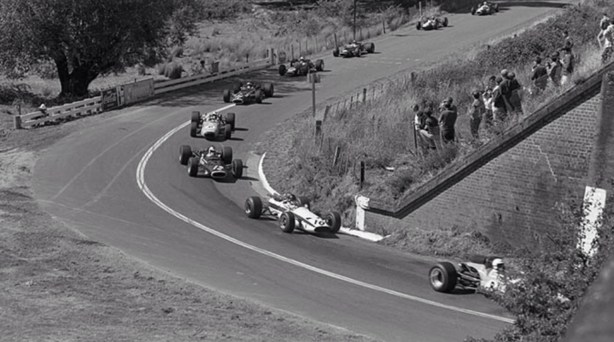
 

Lap 1 bunch behind the lead group- Gardner Brabham BT23D, Geoghegan Lotus 39, Attwood BRM P126, Bartlett Brabham BT11A, Rodriguez BRM P126 into The Viaduct (oldracephotos)
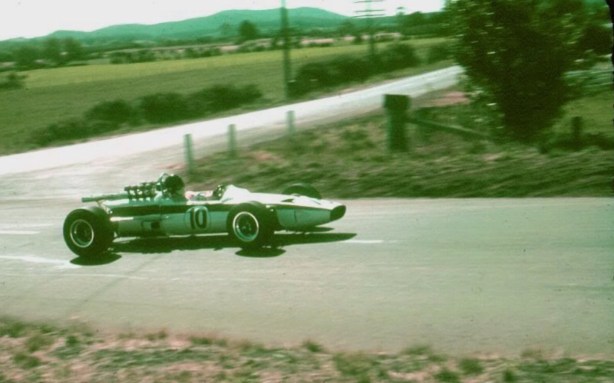
 

Leo Geoghegan, Lotus 39 Repco 740. Leo frightened the internationals in his ‘old bus’ more than once that summer- Clark’s ’66 Tasman mount Coventry Climax FPF engined. Non starter on Monday tho (R MacKenzie)
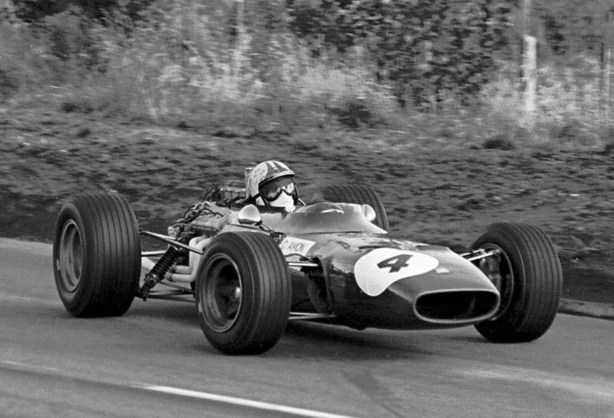
 

Chris Amon, Ferrari 246T. Chris learned a lot from his ’68 tour, and applied those learnings well in 1969 winning the title in an updated, four valve, winged  Dino (oldracephotos
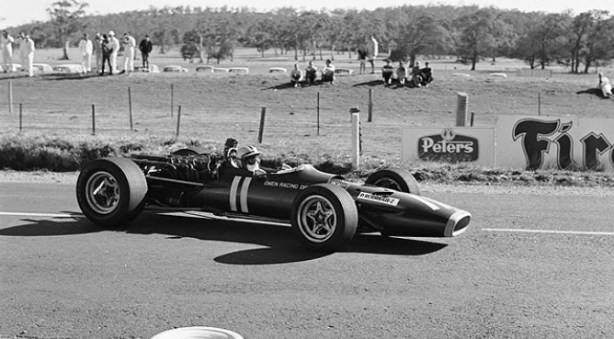
 

Pedro Rodriguez, BRM P126. The V12 engine in this car failed during the race so Pedro raced the ‘backup’ P261 V8 in the championship event- cars which had become wonderful Tasman machines from 1966-8. Winner in ’66 in Stewart’s hands (oldracephotos/Keep)
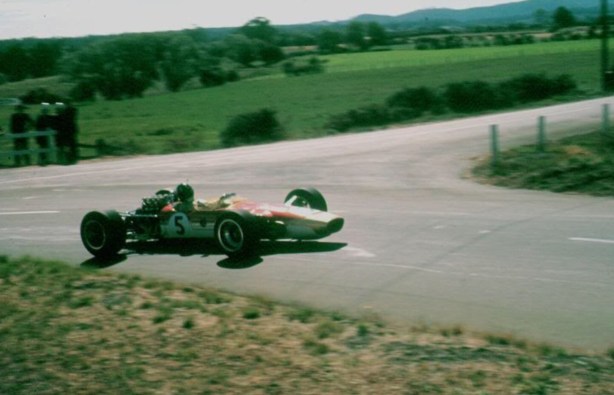
 

Graham Hill, Lotus 49 Ford DFW. Perhaps not the best of Tasmans- 2nd at Surfers and Warwick Farm his best results (R MacKenzie)


Pedro Rodriguez, BRM P261 V8 during practice (oldracephotos/Keep)


Pedro Rodriguez, BRM P126, The Viaduct (oldracephotos/Keep)
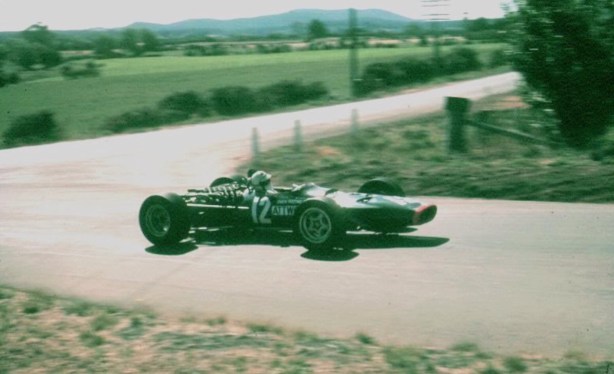
 

Richard Attwood, BRM P126. Drove the Oz rounds in the car vacated by McLaren- 4th at Longford deserved, DNF’s @ Surfers and Sandown, overall the P126’s were not blessed with great reliability in the ’68 Tasman (R MacKenzie)

Photo and Other Credits…

Roderick MacKenzie Collection;  http://www.racephotoaustralia.com/

oldracephotos.com;  http://www.oldracephotos.com/content/home/

The Nostalgia Forum/Ellis French/Rod MacKenzie and Kevin Bartlett.  Sergent.com race report. Geoff Smedley. ‘Canberra Times’ 6 March 1968

Ellis French Collection/Archive

Scuderia Veloce Ferrari P4/Can Am 350…

Ferrari P4/Can Am 350 #0858…

Tailpiece: Practice- Rodriguez BRM P261 from Courage McLaren M4A Ford FVA and Kevin Bartlett Brabham BT11A Climax FPF. Variety is the spice, braking into The Viaduct…
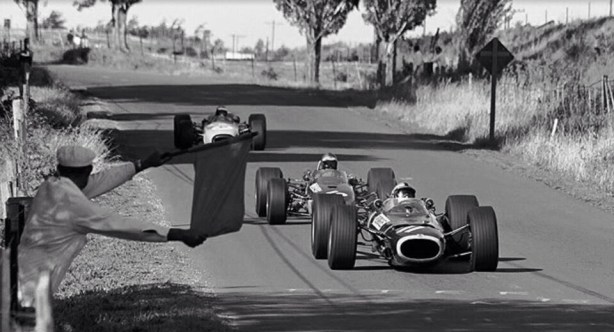
(oldracephotos/DKeep)

Finito…

hill hi wing

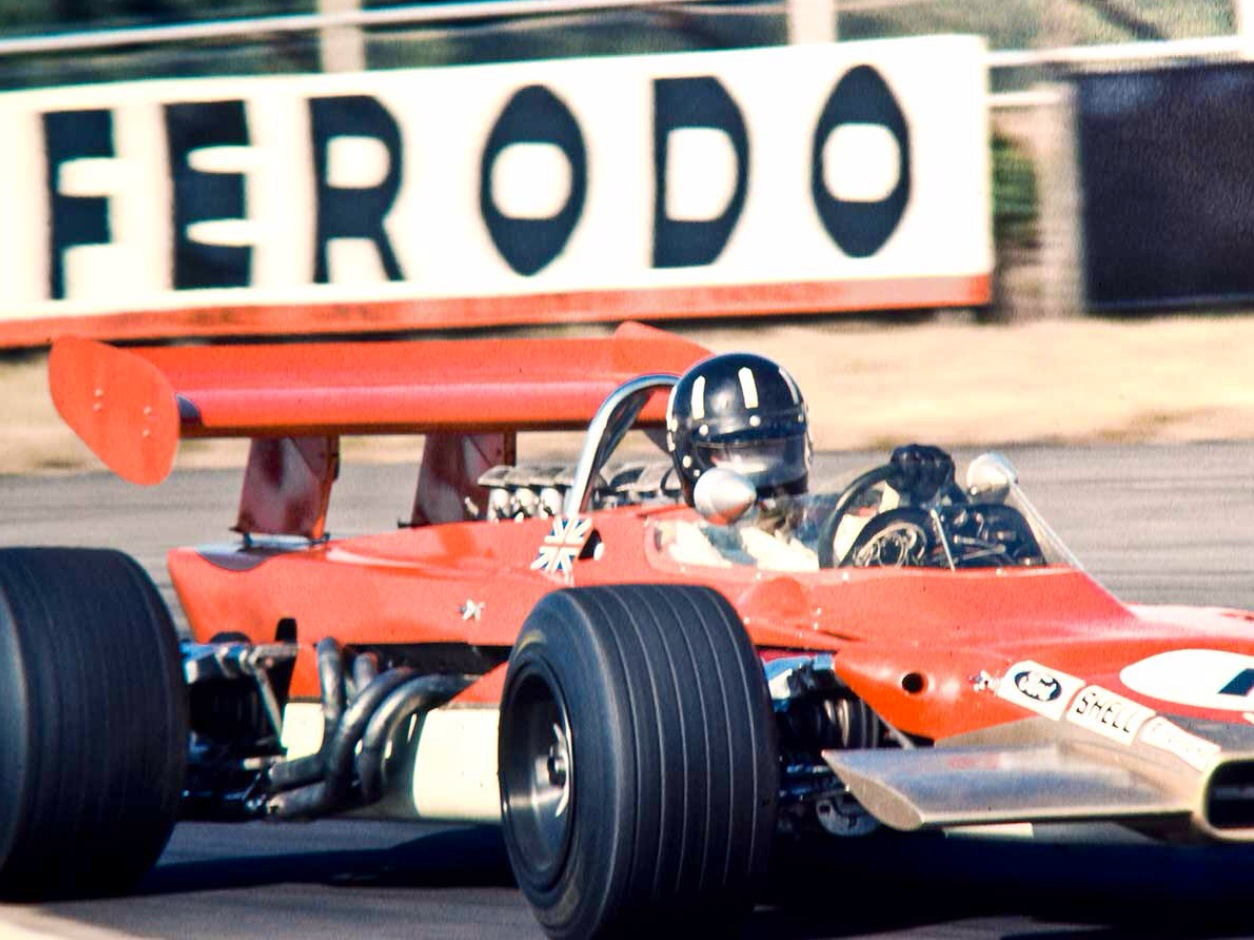
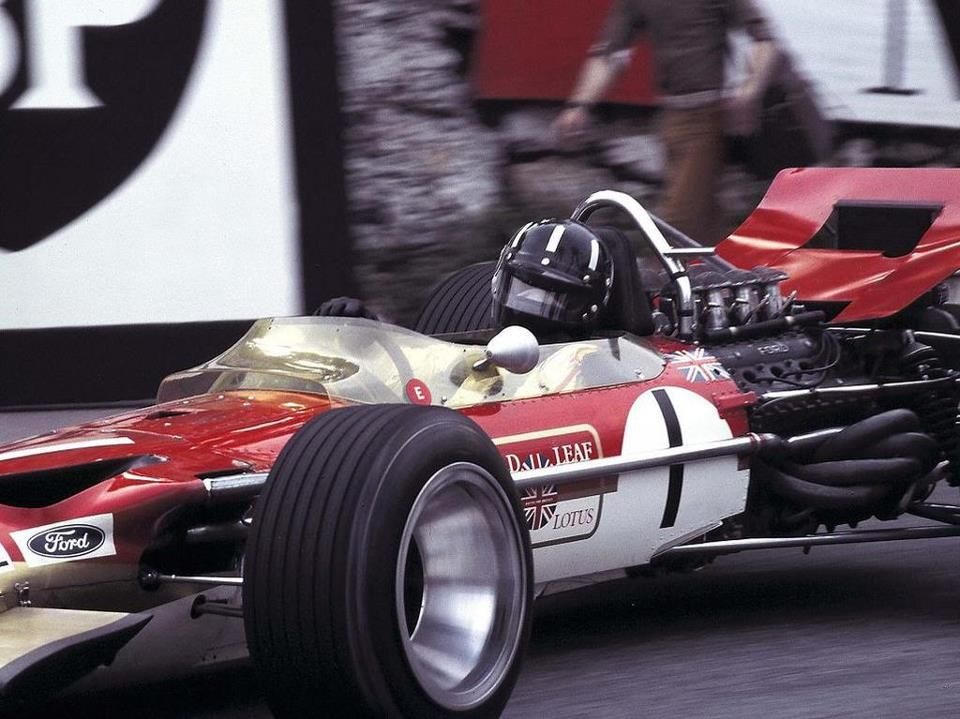
Graham Hill in his hi-winged Lotus 49 during practice for the 1969 Monaco Grand Prix, he went on to win the last of his five Monaco victories on Sunday May 18 1969…

‘Twas his last Grand Prix win as well but his competitiveness was still there, wins were to come in F2 and in endurance racing. His ’72 Le Mans Matra victory with Henri Pescarolo made him unique in our sport as the only winner of ‘Motor Racing’s Triple Crown’; victories in the Drivers World Championship, (BRM 1962 Lotus 1968) Indy (Lola 1966) and Le Mans.

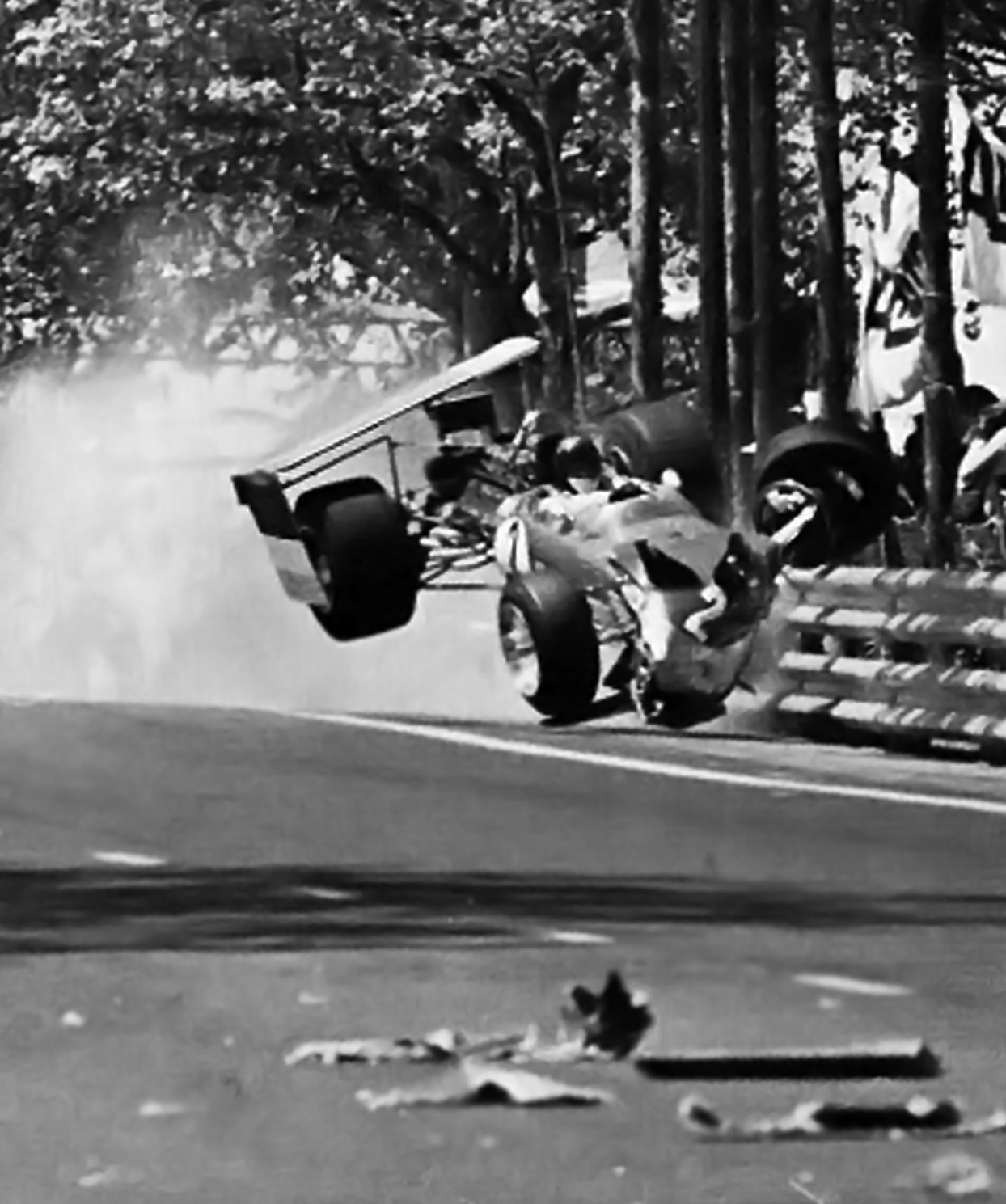
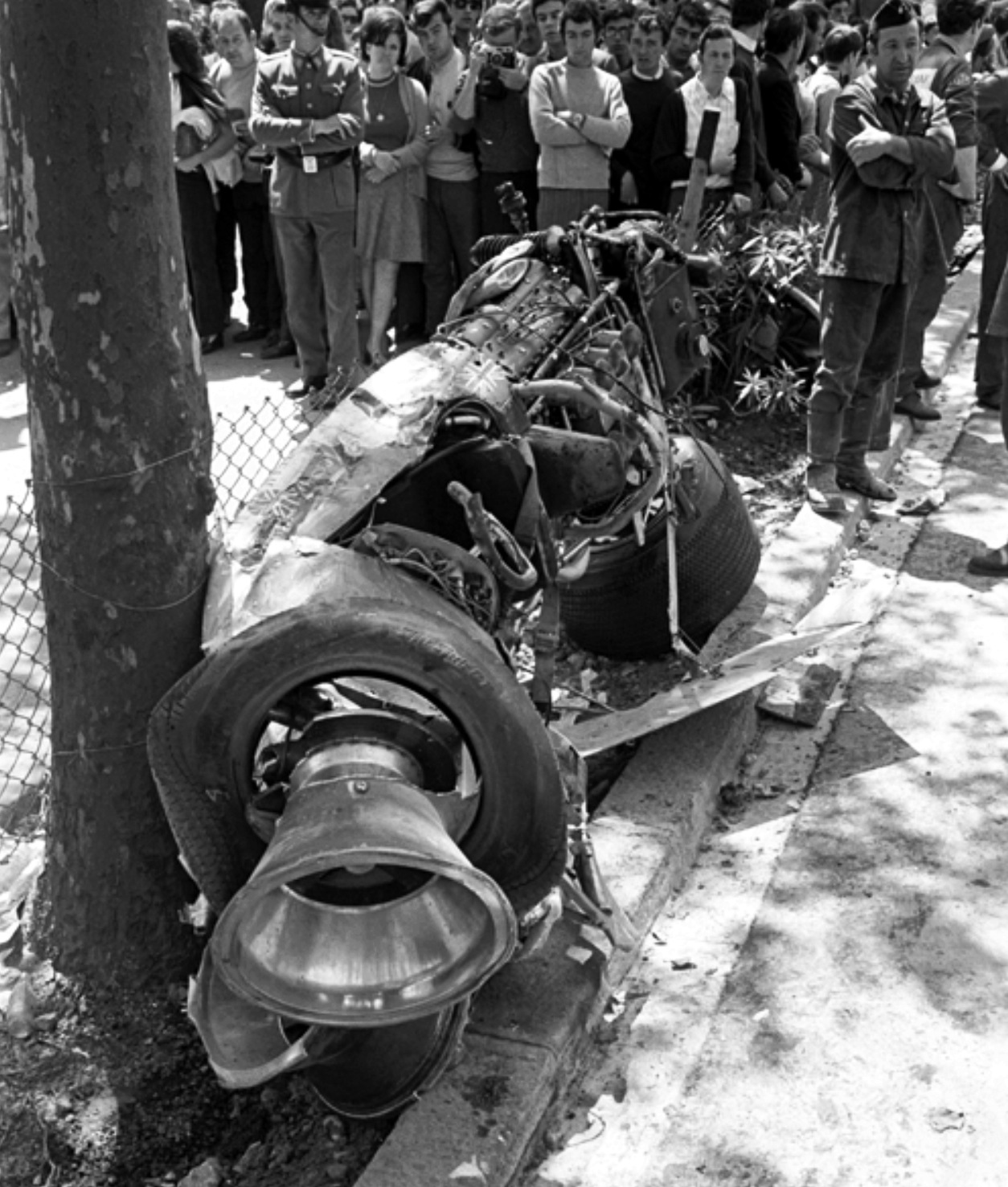
The story of the weekend was all about wings. There had been some big failures as engineers battled with forces they did not fully understand, notably the collisions, fortunately without serious injury to both Hill and Jochen Rindt at Barcelona on May 4, the race before Monaco.

Hill’s rear wing failed on lap 9 as he crested the rise after the Montjuic Park pits, he crashed heavily but was uninjured. Eleven laps later Rindt’s leading Lotus 49 suffered the same failure, collided with Hill’s abandoned car and overturned. He emerged with cuts, bruises and a broken nose. The wing on Ickx’ Brabham BT26 fell apart during the race as well.

There had been other failures in the recent past, the authorities needed to act before someone was killed.

rindt rooted lotus

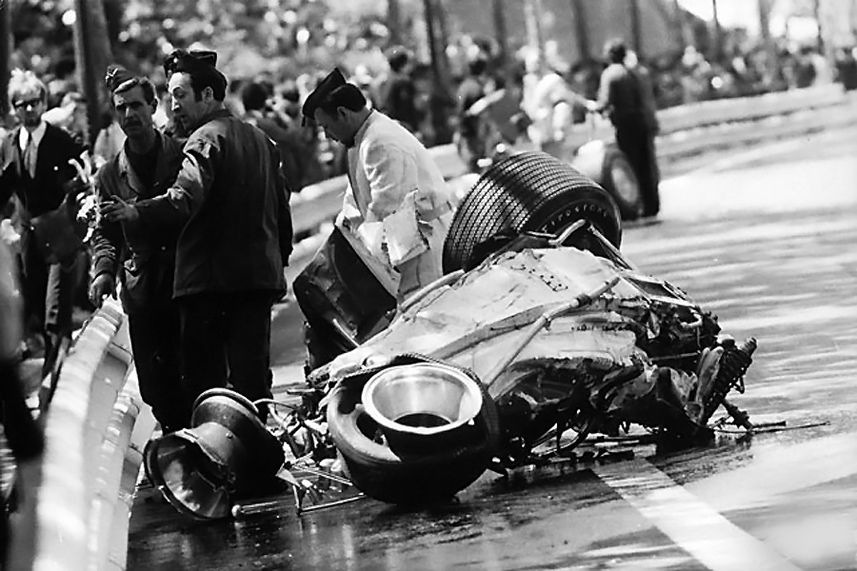
Rindt’s rooted Lotus 49, Montjuic Park Barcelona 1969. Jochen was a very lucky boy to escape withour serious injury after a wing support failure, Hill’s car into which Rindt collided is just down the road. (unattributed)

The CSI met in Monaco and acted after first practice by banning high wings forthwith, times were scrapped and the process of qualifying recommenced.

The sport was made safer as a consequence, some remain of the view that wings should have been banned then. Full stop.

hill monaco interim

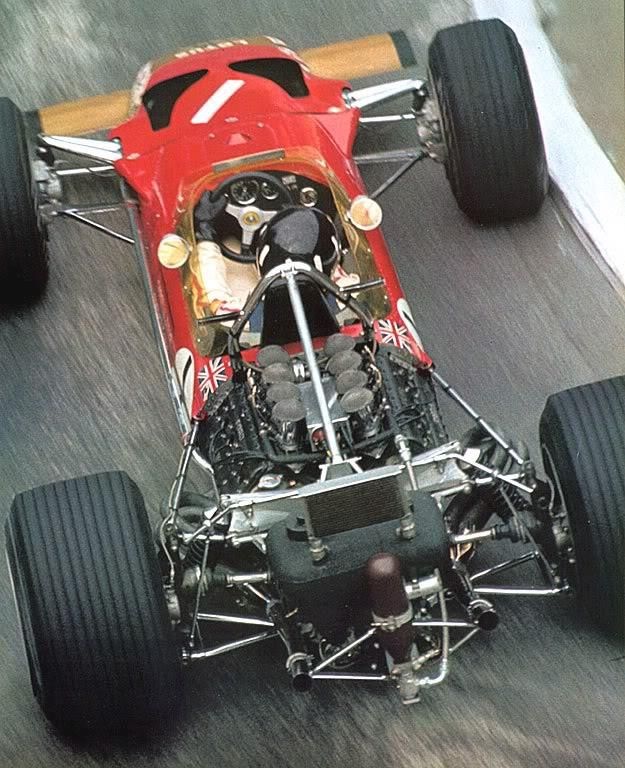
Wonderful overhead shot of Hill in qualifying post the wing ban; Chapman chose to keep the front wings, meanwhile the tin-snips were being put to work…3 litre Ford Cosworh DFV, big rear oil tank, external extinguisher the first thing to leave the car in the event of a major rear impact (handy for the driver in need of foam!), and Aeroquip brakelines running along the radius rods all clear to see. You can just about read the Smiths tach and chassis plate! (Automobile Year 16)

Stewart took an early lead from Amon’s Ferrari 312 in the race, Hill moved into third shortly after the start and after differential failures to both Amon and Stewart’s Matra MS80 Ford gained the lead he never lost. He took victory from Piers Courage’ Brabham BT26 Ford and  Jo Siffert’s Lotus 49B.

hill low level spoiler

By the time of the race’ start Chapman and his team had fashioned this neat spoiler…not as nice as the 49 used at Monaco in ’68 but that was built at the factory, this was not bad overnight and ‘ in the field’. (unattributed)

Winners are grinners, Hill ‘The Mayor of Monaco’ was always a popular victor in the Principality…

hill victory

Hill victorious in Lotus 49 ‘R10′, first debut’ by Jochen Rindt at Wigram NZ in January 1969. Victories in the Tasman Warwick Farm 100 in Rind’ts hands and Hill at Monaco. 49’s much raced by many drivers this chassis also raced by John Miles. Alex Soler-Roig and Emerson Fittipladi, Emmo raced it in its final GP, Austria in August 1970. Car still exists in the UK. (unattributed)

Etcetera…

montjuic

All those hi-wings in the Montjuic dummy grid, soon to be a thing of the past. #7 Jackie Stewart with teammate Jean Pierre-Beltoise behind, both Matra MS80 Ford, Graham Hill Lotus 49 Ford beside Stewart, #6 Bruce McLaren McLaren M7A Ford, #15 Chris Amons Ferrari 312 and #4 Jacky Ickx Brabham BT26A Ford (unattributed)

rindt barcelona

Rindt’s Lotus 49B and its broken wing supports clear in this shot of the ‘unguided missile’. Spectators and Rindt fortunate. Montjuic Park 1969. (unattributed)

rindt spain

49 ‘R9’ decidedly second-hand, Jochen was so lucky to ‘walk away’ from this accident (Getty Images)

rindts letter to chapman

Rindt’s 9 May 1969 letter post Spanish prang to Chapman is widely circulated and a classic! Prophetic sadly. (Jochen Rindt Archive)

Credits…

oldracingcars.com chassis research, Automobile Year 16, Getty Images

turner hill indy

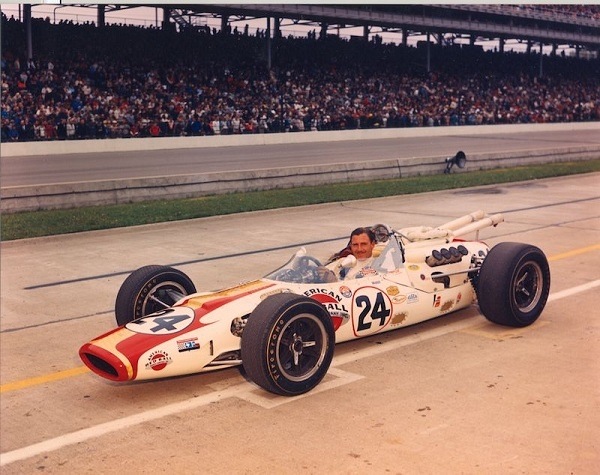
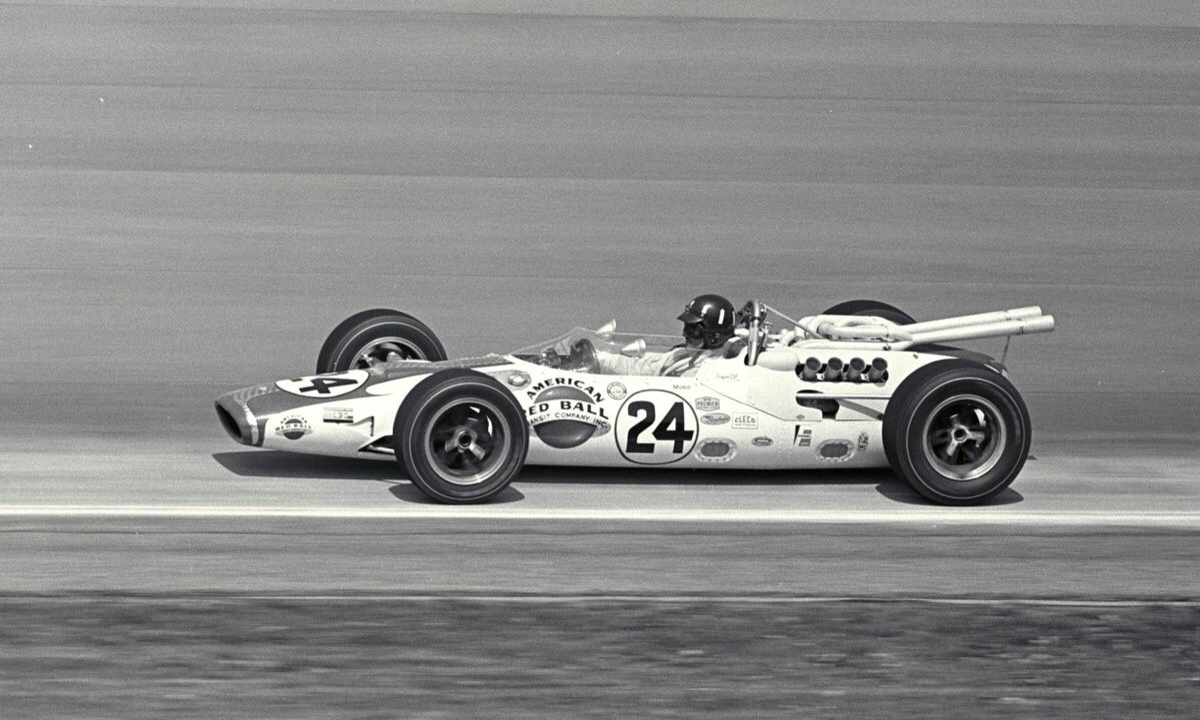
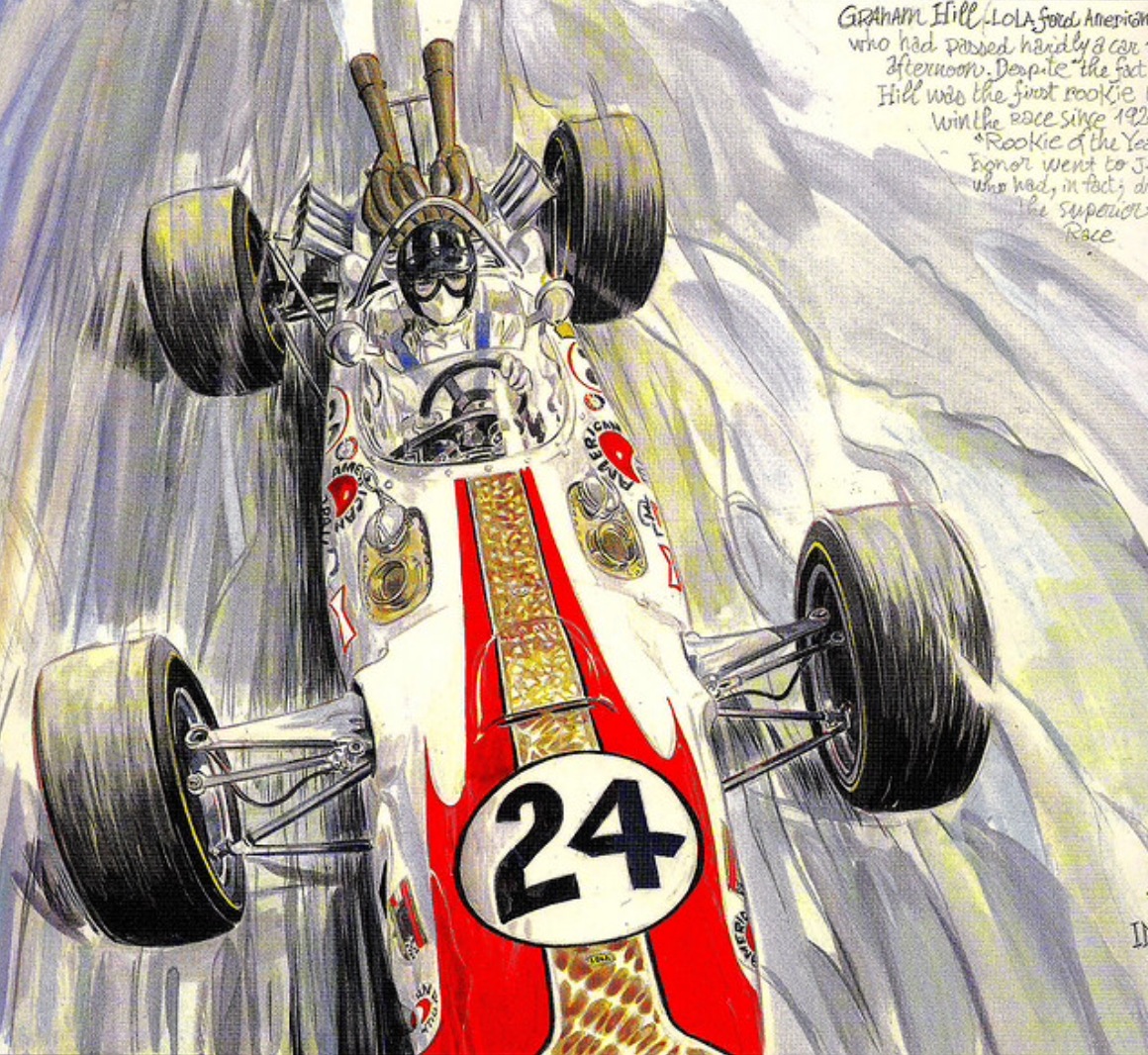
Graham Hill in his ‘American Red Ball Special’ Lola T90 Ford leads the latter stages of the 1966 Indianapolis 500 from Joe Leonard’s Eagle and Jim Clark’s Lotus 38. Fabulous Michael Turner painting…

Hill won the race from Clark and Jim McElreath’s Brabham. Graham lead the most critical part of the race, it’s last 10 laps after teammate Jackie Stewart slowed and retired his Lola T90, the BRM teammates also ‘roomies’ and Indy debutants in John Mecom’s Indy Team.

stewart hill broadley indy 1966

JYS, Hill and Eric Broadley giving GH a few tips about instrument location before the off…Note seatbelts, still 2 years away in F1, a bit earlier for Jackie after his big Spa shunt a fortnight later. (Autoextremist)

The race was not without controversy with more than one lap timer giving victory to Clark, who spun twice during the race without hitting anything on each occasion but causing some lap scoring confusion.

Hill was doubly lucky; he was not entered to race until the unfortunate Walt Hansgen was killed in the LeMans test weekend in a Ford MkII, the Brit taking the unfortunate Hansgen’s place in Mecom’s factory Lola entry, Mecom the American Lola importer at the time.

hill on qually day

One of my earliest motor racing memories is of Hill’s car, the Lola featured big time in one of those ‘Boys Own’ type books we were all given as stocking fillers at Christmas. I have always had a soft spot for these big Lolas’ as a consequence. I still have the book but its in storage, i can’t remember what happened yesterday but the book’s articles on Hill’s Lola, the equally new curvaceous Lola T70 and Tony Lanfranchi’s psychedelic helmet livery i adopted as my own in 1979 stick in my mind. Come to think of it my Lola fetish started then!

lola t80

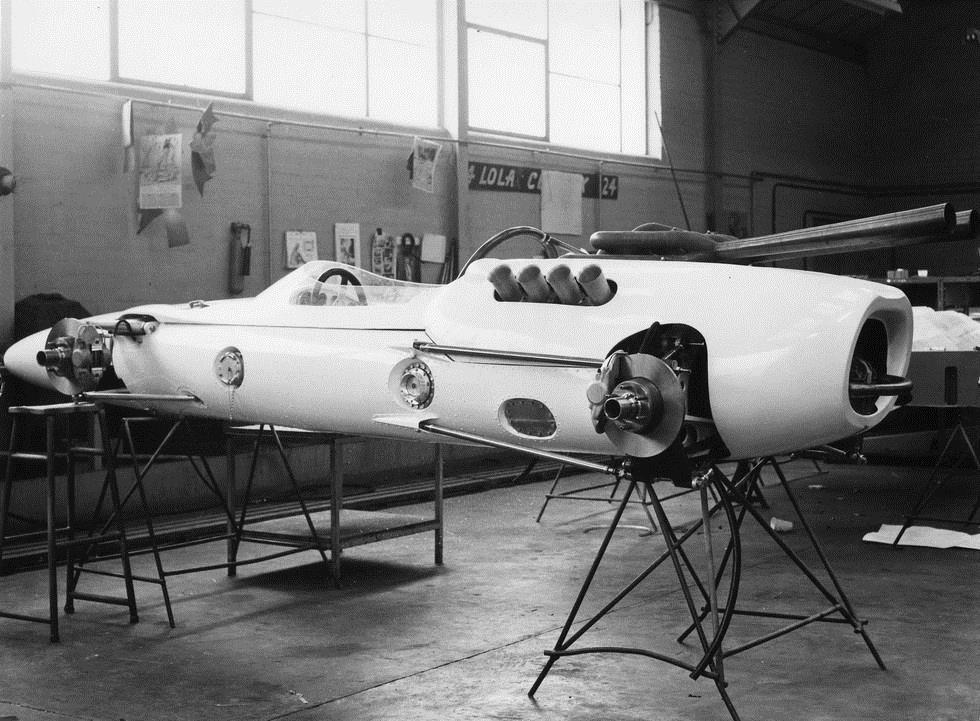
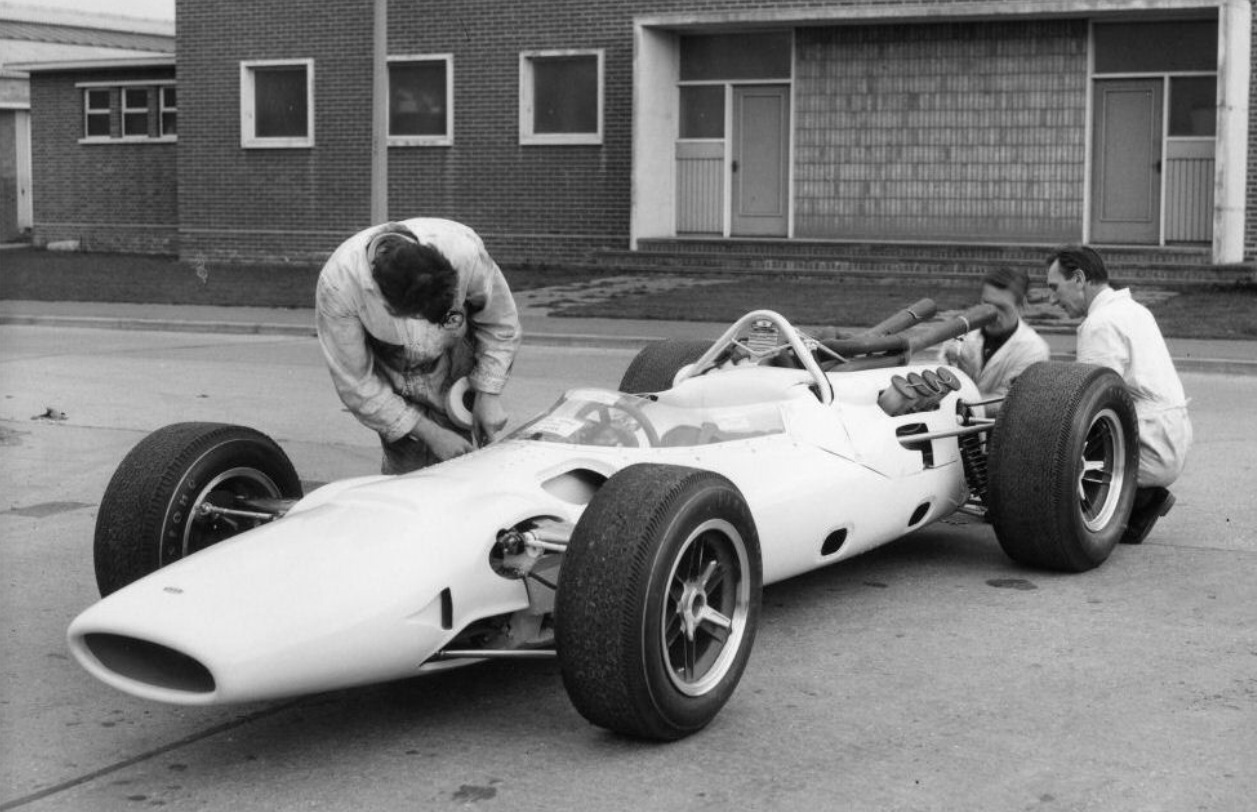
Lola T80 being assembled at Slough in 1965. T80 unsuccessful, the T90 was an update of this car with the suspension geometry which held it back in 1965 addressed. (Lola Heritage)

The mid-engined invasion of Indianapolis was started by Cooper, Jack Brabham raced at Indy in 1961, Lotus had their first start with the pushrod-V8 Ford powered 29’s driven by Clark and Dan Gurney in 1963. Ferguson and Lola joined the stampede with mid-engined victory finally achieved by Team Lotus in 1965. Clark victorious in the Ford four-cam 4.2 litre V8 engined Lotus 38.

The US was a big market for Lola’s Eric Broadley, he achieved much success with the Group 7/CanAm T70 from 1965, USAC was another great opportunity. Broadley built the T80 for Indy 1965, but the car was late, wasn’t tested and was let down by suspension geometry shortcomings which gave the cars poor and unpredictable handling.

t 90 cutaway

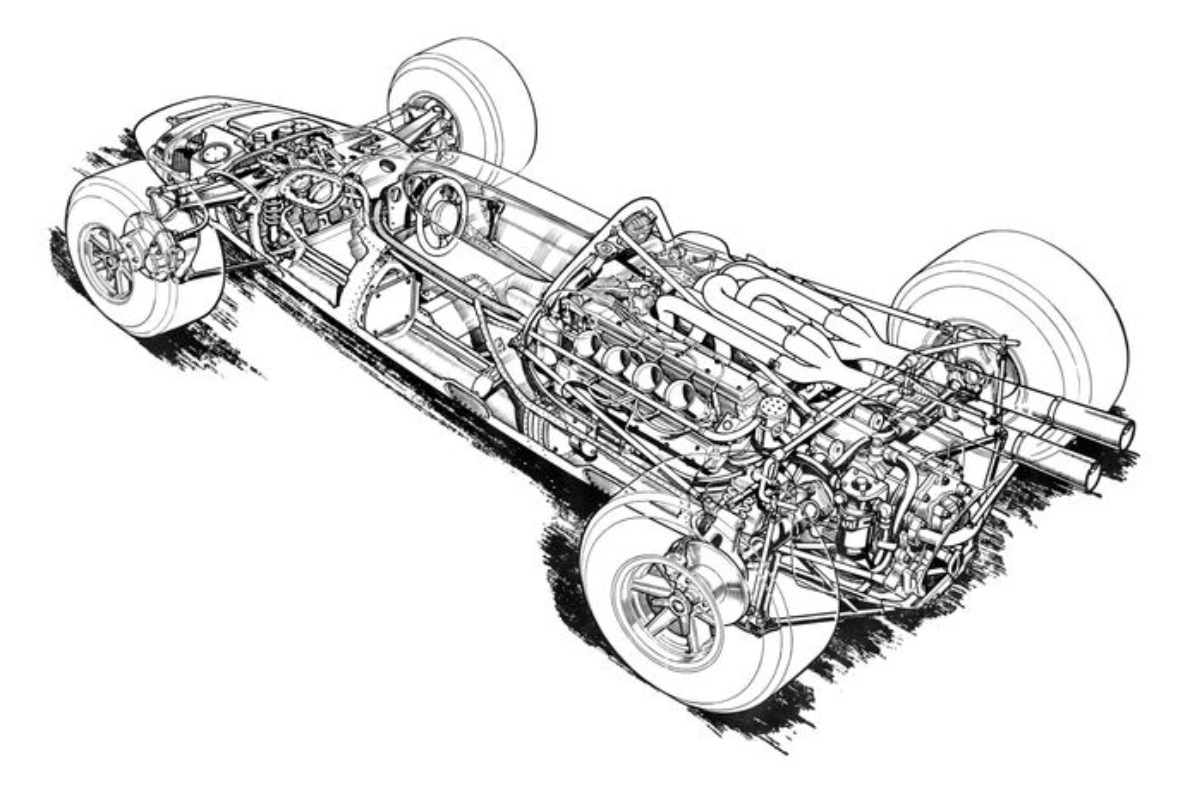
Lola T90 Ford cutaway drawing. Car also designed for Offy 4 cylinder engine. Aluminium ‘full monocoque’ chassis, offset suspension; front top rocker operating inboard mounted spring/damper and lower wishbone. Rear, inverted lower wishbone with additional locating link, single upper link, single radius rod and coil spring/damper units. Adjustable sway bars front and rear, rack and pinion steering, 2 speed Hewland transaxle, Ford DOHC 4 valve, Hilborn fuel injected 4.2 litre V8. Circa 425 bhp @ 8000 rpm in 1965


stewart fettling

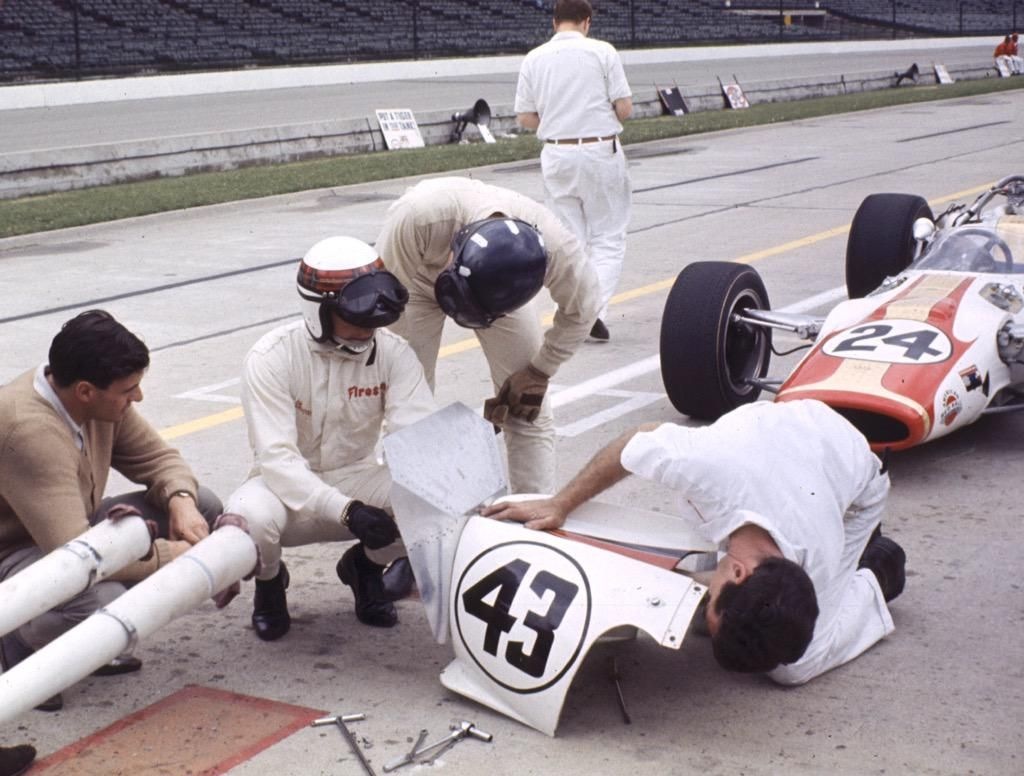
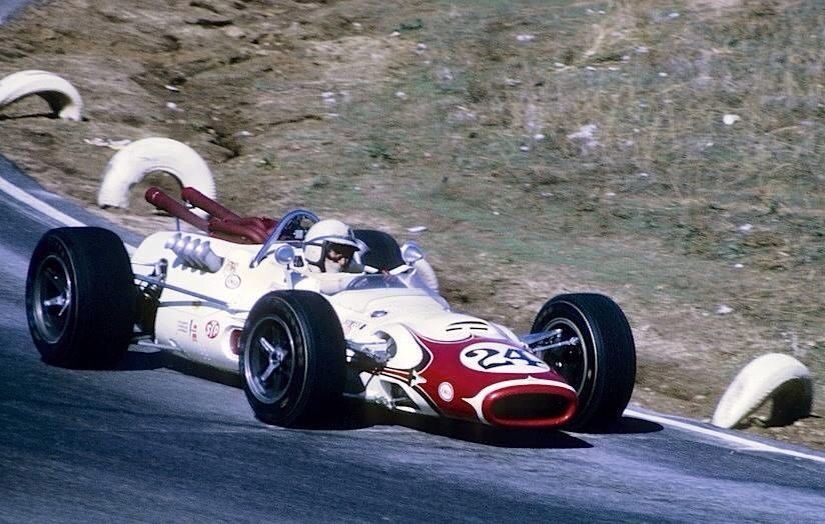
Jackie Stewart and Graham Hill helping Mecom’s mechanics with the fettling of the rear bodywork of Jackie’s T90 #43, the Scot and the other Scot, Clark, both unlucky not to win the race…Graham’s #24 Lola behind. (LAT)

The Lola T90 which followed for 1966 addressed the T80 shortcomings…

The T90 chassis was an aluminium monocoque constructed from Indy mandated 16-guage aluminium. Sheet steel diaphragms front and rear provided additional internal stiffness, externally a sloping scuttle in front of the instrument panel gave additional rigidity.

Lola Heritage ‘Tubular steel subframes were attached to both the front and rear of the chassis, the front subframe carrying the oil tank, radiator and the forward mountings for the lower wishbone. At the rear there were two subframes above and below the two-speed Hewland gearbox, the upper one carrying the attachment point for the single top link and the top spring/damper mounting. The lower subframe had the mounting points for the lower wishbones’.

‘The T90 was designed to accept either the 2.8-litre, 4-cylinder Offenhauser engine or the 4.2-litre 4-cam Ford V8. The Offy, built by Meyer-Drake in California was fitted with Hilborn fuel injection and a Paxton Roots-type supercharger and gave some 520 bhp, the Ford, whilst slightly less powerful, was a more known quantity having won the 1965 race in Jim Clark’s Lotus 38’

t90 build

Lola T90 build,  Slough 1966. Looking very sexy in its Specialised Mouldings body. Distinctive Lola ‘knock-offs’. Fuel cells still to be inserted into monocoque. (Lola Heritage)

The cars front suspension was inboard with fabricated rocker arms at the top operating coil spring/damper units and wide-based lower wishbones.

‘Rear suspension was fairly conventional with one departure from the norm. At the top of the upright was a single adjustable top link attached to the top chassis subframe whilst at the bottom a wide-based wishbone (reinforced on the left), mounting to the rear of the upright, was mounted to the lower chassis subframe. There was a single adjustable lateral link running from the lower front of the upright to the subframe that allowed for toe-in alterations. The unusual feature to the design was the single top radius rod, a lower rod was not used to to the difficulty of a suitable chassis attachment point due to the fuel tank design. As was the norm at this time front and rear suspension was offset to the left by three inches, the theory being that this helped the car through the left-hand turns at Indianapolis.’

t90 drawing

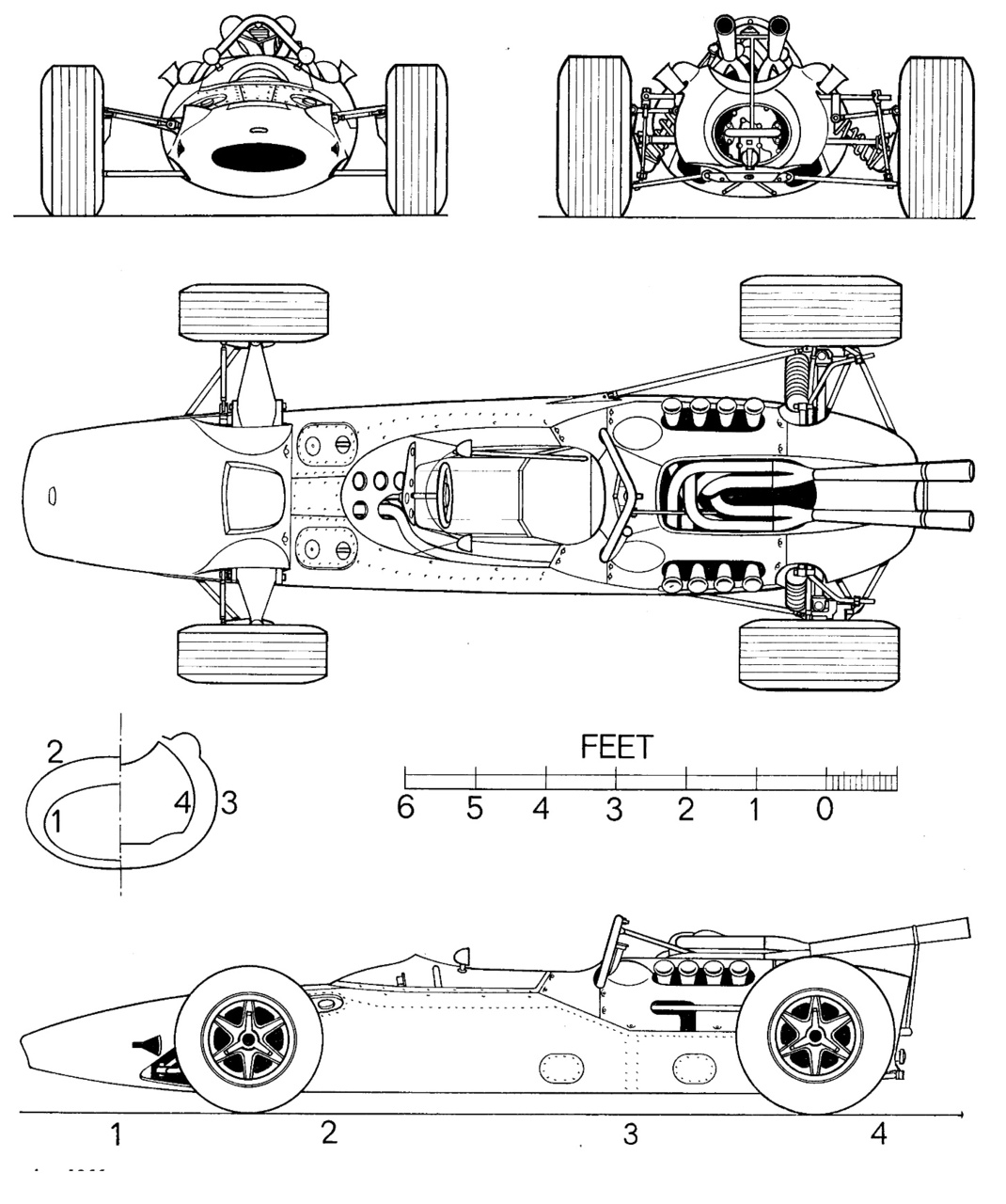
These drawings as well as showing the T90’s lines also nicely show the suspension, offset to the left, as was the convention of the time on speedways. (unattributed)


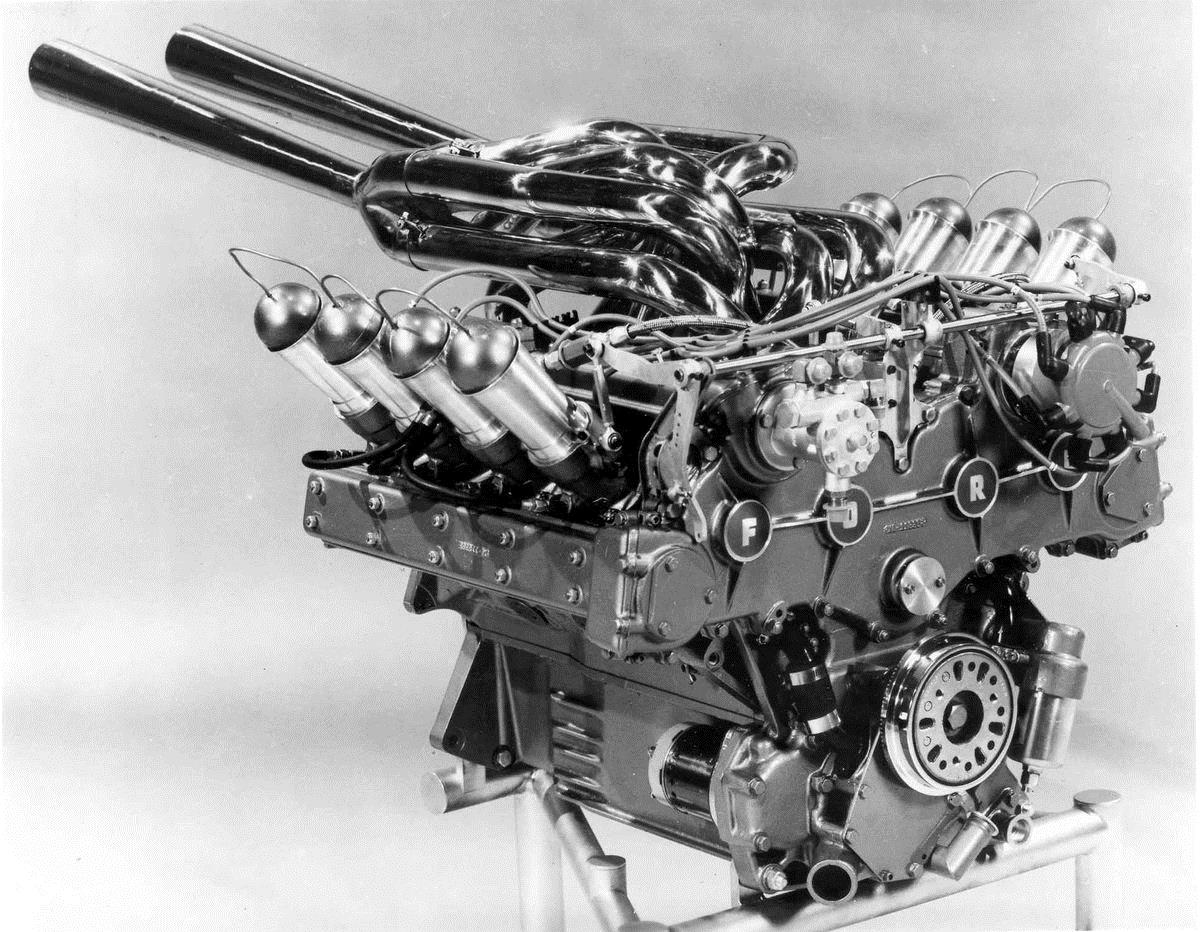
ford indy engine

Ford DOHC Four-Cam Indy V8 Engine…

Ford’s 1963 Indy engine fitted to the Clark and Gurney Lotus 29’s was an aluminium variant of its 260cid Falcon/Fairlane small block V8, it developed 350-376 bhp at 7200 rpm on 103 octane fuel fed by 4 Weber 58mm carbs.

Ford, after Lotus’ great showing (they was robbed) in 1963 decided to build an engine capable of developing 50bhp more but with a weight gain of no more than 50 lbs over the aluminium pushrod engines 345lbs.

Ford evolved, using many parts from the earlier engine, a DOHC motor with four valve heads, the combustion chamber ‘pent roofed’. The engine had ‘between the Vee’ exhaust as tests showed power was optimised with this setup. Hilborn fuel injection was used, in 1965 the engines developed 425bhp @ 8000rpm.

The block was cast of aluminum alloy using patterns modified from the production 289cid production ‘small block’. Cast iron cylinder sleeves were a shrink fit in the block and were sealed at the heads with copper laminated steel O-rings. In order to clear the two banks of camshafts in the heads, the 10 attaching studs were moved closer to the cylinder centerline. An additional 8 studs protruded from the heads maintained clamping force needed to seal the combustion chambers. The space occupied by the camshaft in the normal production engine was replaced with an oil tube. This acted as a gutter and collected oil as it drained from above to keep it off the reciprocating assembly.

The bottom end was beefed up considerably. The special forged steel crankshaft was held by 4-bolt bearing caps on numbers 1 through 4. Main and rod bearing journals are the same size as the 289, as is the engine’s stroke – 2.87″. The rod journals are crossdrilled for better oiling at high engine speeds. The rods are from the 289 HiPo, modified for floating pistons pins. The pins are 289 HiPo pieces. The oil pan is cast magnesium and is a structural part of the engine. ‘Ears’ cast integrally with the pan provide the engine/chassis mounts.

As summarised above, the cam-ground forged aluminum pistons have a pent-roof dome to closely fit the combustion chambers. Compression is 12.5:1. The cylinder heads housed 4 valves per cylinder with a central spark plug. The plugs are canted toward the 1.64″ diameter intake valves. Exhaust valves are 1.36″ diameter. The camshafts run in bearing bores in the cylinder heads directly over their valve banks. Valve clearance is adjusted by the selective fitting of the followers. Intake ports are between the cams with exhaust out the top of the heads between the vee. This was done to do away with the nightmare of exhaust tubing normally required. Hilborn injection is used having been selected for its light weight and simple low-pressure design.

The 255 CID engine weighed 406 lbs and produced in excess of 425 BHP at 8000 RPM. Useful power/torque was developed from 6000 with a rev limit of 9000 RPM

Once developed by Ford the engine was sold and serviced via Louis Meyer. In 1966 Ford built 20 engines which retailed at US$23000. The wonderful engines evolved over the decades, in both normally aspirated and turbo-charged form as Indy rules changed.

Checkout this website which gives an in-depth account of both the DOHC engine and the pushrod V8’s which preceded it, click on this link for an interesting read; http://www.quadcamford.com/development.html

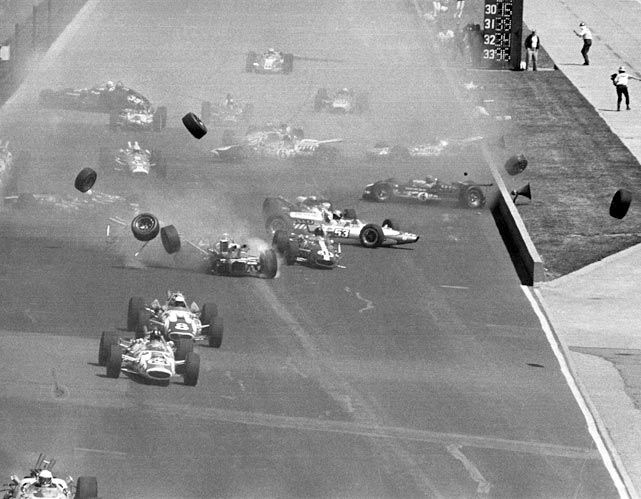
66 indy start

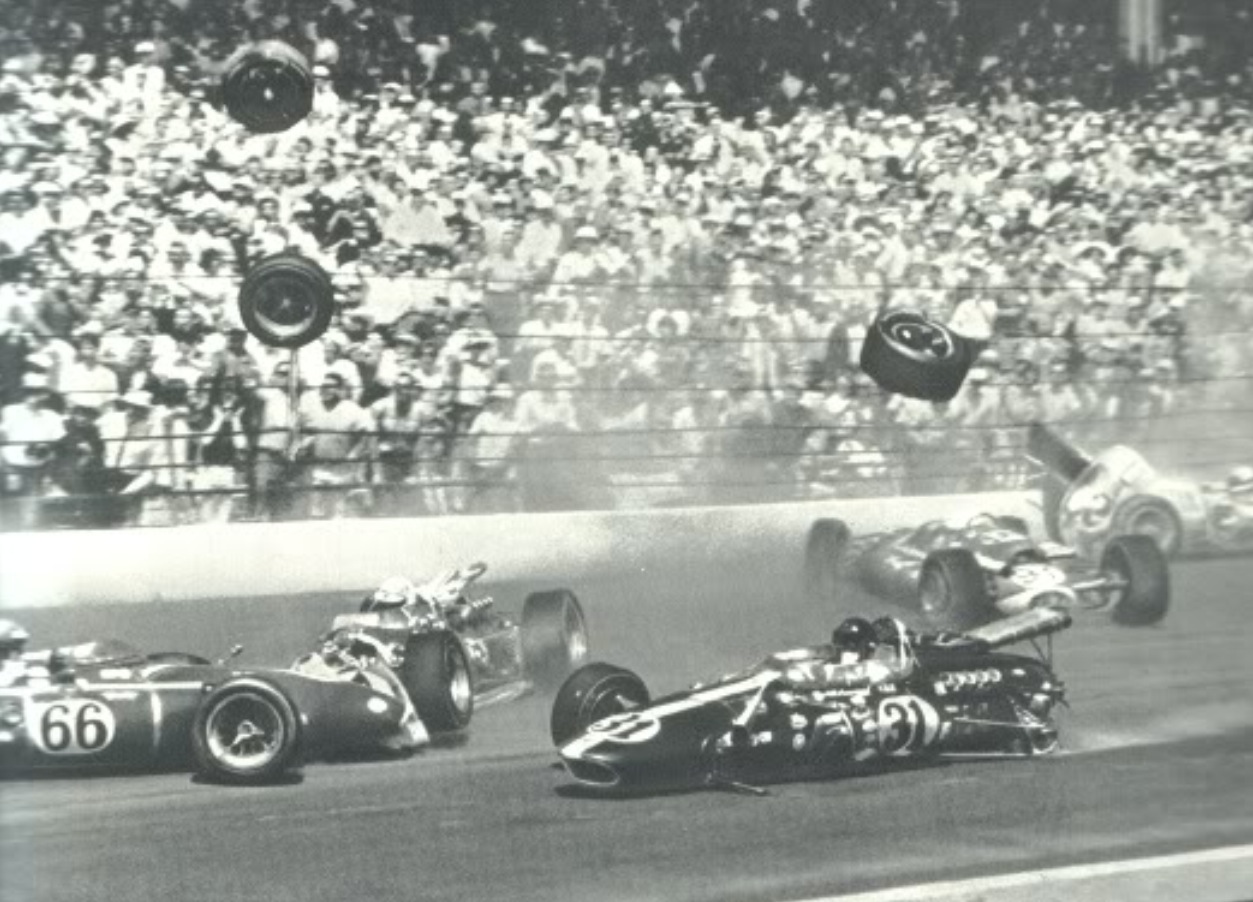
Indy 1966 first lap shunt. Hill #24 Lola, McCluskey #8 Eagle Ford, Joe Leonard #6 Eagle Ford , Al Unser Lotus 38 to the left of his side-on car, Gary Congdon #53 Huffaker Offy, Don Branson in the sideon #4 Gerhardt Ford and the rest…(unattributed)

1966 Indianapolis 500…

Lola Heritage ‘Learning the lesson from 1965 Lola made sure the T90 was ready in plenty of time for the 1966 Indy 500, the John Mecom Racing Team-entered car made it’s debut at the March season opener at Phoenix International Raceway. Success was immediate with Roger Ward finishing second in his Offenhauser-powered T90 and a month later Ward took the winner’s laurels at Trenton’s 1-mile paved oval when he won a rain-shortened race ahead of Gordon Johncock.

Come the month of May and there were three T90s, all entered by John Mecom’s Houston-based team, ready to run at Indy qualifying, Roger Ward in his successful Offenhauser-engined car and Rookies Jackie Stewart and Graham Hill who were both Ford-powered. There was nothing much between the cars at the end of qualifying, Stewart was 11th fastest at a speed of 159.972 mph, Ward 13th at 159.46 mph and Hill 15th at 159.243 mph.’

The Indianapolis Star called the 1966 Indy 500 ‘the most fantastic, confused and incredible 500.’ And it may have been. This was the ‘500’ marked by a 16-car crash at the start when Billy Foster’s car hit the rear of Gordon Johncock’s Gerhardt setting off a violent chain reaction that eliminated 11 cars, including those of A.J. Foyt, Dan Gurney, Don Branson and Cale Yarborough.

Foyt suffered minor injuries, a cut finger and a bruised knee when he climbed out of his car and scaled a fence to get away from the scene.

clark pits

Jim Clark’s ‘STP Oil Treatment’ Lotus 38 Ford in the Indy pits 1966. Andrew Ferguson at left. I put a can of the stuff in Mums Morrie 1100 but it didn’t seem to go any quicker…the sticker on the rear window looked good tho. I thought so, she didn’t! #12 the car behind Clark is the Chuck Hulse driven Watson Ford. Lotus 38’s well raced, Lotus Indy tool ’65-’67. (unattributed)

The race was red-flagged for the second time in three years and was re-started after a one hour and 23 minute delay.

Mario Andretti took the lead at the restart but retired shortly thereafter with engine failure. Clark lead but spun twice with handling maladies without hitting anything, pitting on each occasion to have the car checked.  Stewart and Lloyd Ruby in an Eagle diced for the lead before fuel stops put Clark back in the lead.

broadley and hill

Great shot of Hill and Lola Supremo Eric Broadley discussing the cars setup during Indy qualifying 1966. See the quick change safety fuel cells/filler cap. Ignition cutout wired to steering wheel beside drivers thumb. (unattributed)

Ruby took the lead but his car was then black-flagged for the loss of oil, leaving Stewart in the lead from Clark and Hill. Hill had progressed through the field without making mistakes and benefiting from others errors or misfortunes, by lap 175 he was past Clark for 2nd. Stewart lead, until with 25 miles to go his oil pressure diminished, his engine scavenge pump failure gave Hill the lead he was not to relinquish.

Despite protests by Lotus’ Colin Chapman and sponsor Andy (STP) Granatelli that Hill had been incorrectly scored with an extra lap, the unofficial results stood. Hill won $156,297 for his victory, Jim Clark finished second battling an ill-handling car the entire race, Jim McElreath’s Brabham Ford was third and Stewart was classified 6th.

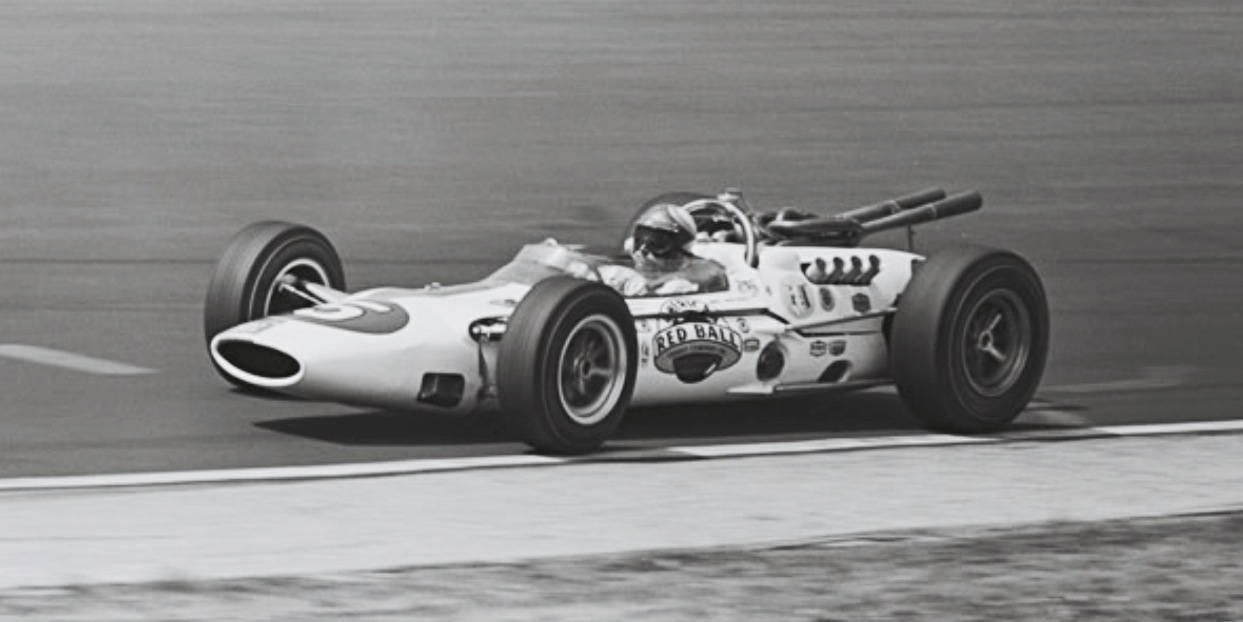
hill in the race t90

Hill drove a quick, clean race. He stayed out of trouble and was in front for the final laps which mattered, putting lap scoring disputes to one side…What a gorgeous looking, in a brutal kinda way, car! (unattributed)

YouTube Race Footage…

Etcetera…

1965 LolaT80.

t80 tingelstat

Bud Tingelstad in Lindsey Hopkins Lola T80 Ford, Indy 1965. (oldracingcars.com)

1966 Indy Race.

indy start 66

Another start shot; Cale Yarborough #66 Vollstedt Ford and Dan Gurney’s #31 Eagle Ford. Indy 1966. (unattributed)

Jackie Stewart.

steawrt bowes seal fast

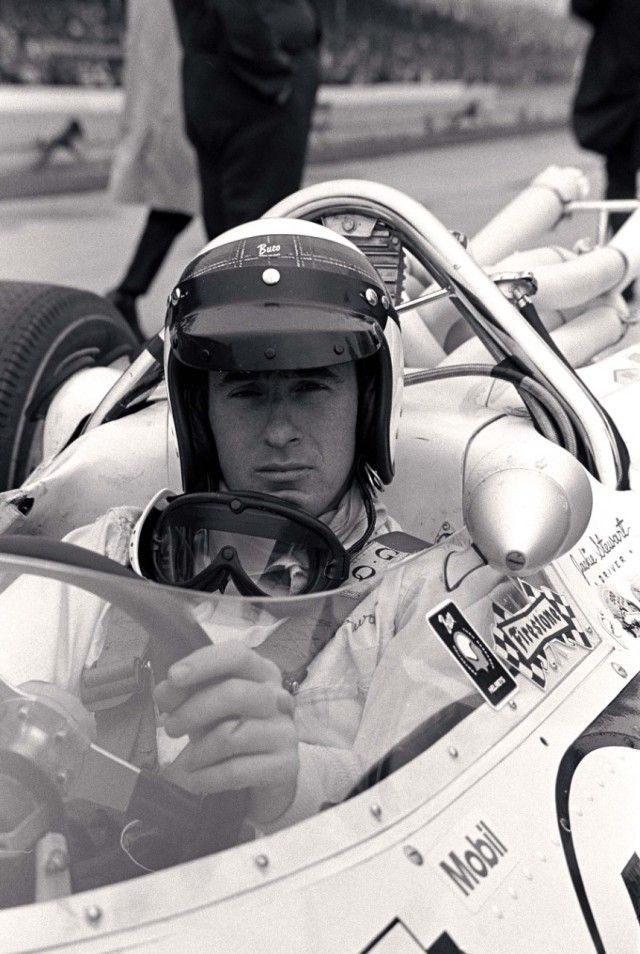
Jackie Stewart in the ‘Bowes Seal fast’ John Mecom owned Lola T90 Ford Indy 1966. Eric Broadley front lower left, chief mechanic George Bignotti in the Texan hat, Mecom in the tan short sleeved shirt in front of Bignotti (unattributed)


stewart indy 1966

JYS with the face of a man focused on the qualifying task at hand. He qualified 11th, he was classified 6th after an oil scavenge pump failure caused his retirement. Lola T90 Ford, Indy 1966. (Dave Friedman)

Graphics and Imagery Hill/T90.

hill pic

Lovely artwork of Hill and his Lola T90 (D Sire)


red ball colors

1967 Lola T92 Ford.

The successor to the Lola T90 was the mildly updated in bodywork T92 for 1967, here raced by John Surtees in his one and only USAC race, the ‘Rex Mays 300’ held at Riverside in November 1967, a road course John knew well from his CanAm campaigns. His John Mecom entry DNF’d with magneto trouble in the race won by Dan Gurney’s Eagle Ford. The car did not use offset suspension on road circuits…

surtees t 92

John Surtees, Lola T92 Ford. Riverside 1967. (unattributed)

American Red Ball Company.

Even though the name has been in my brain since 1967, i had no idea what they do, clearly not the case in the US as they are an old established well known global removalist and transit organisation. So now i know!  http://www.redball.com/long-distance-moving-company/our-rich-history/

Tailpieces…

hill in car

Hill looking the focused driver he was. Interesting shot shows the conventional rear suspension albeit with 1 rather than the usual 2 radius rods to locate the suspension fore and aft. Seat belts, roll over bar too low in the event of a rollover and cross-over exhausts all clear as is all enveloping bodywork of the T90 to smooth air flow and top speed, F1 cars at the time largely devoid of rear bodywork. (unattributed)


indy 66 color

Nice bit of modern art; Top>Bottom; Stewart, Clark, Hill. Friends and Champions all. (olivesart.com)

Credits…

Michael Turner; http://www.studio88.co.uk/acatalog/Michael_Turner.html, quadcamford.com, GT40 Archives, Dave Friedman, LAT, olivesart.com, Dennis Sire

Lola Heritage;  http://www.lolaheritage.co.uk/ , oldracingcars.com, Autoextremist

Finito…
agp 67 hill and clark

(Graham Howard ‘History of The Australian Grand Prix’)

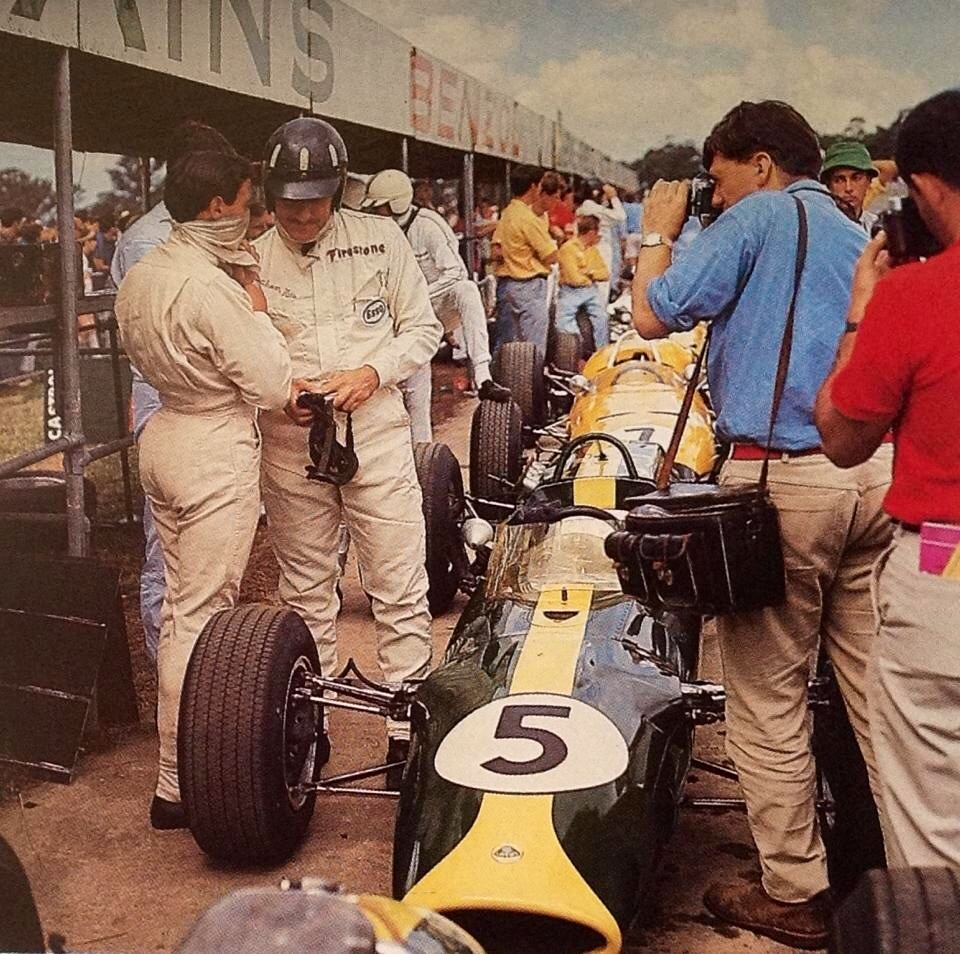
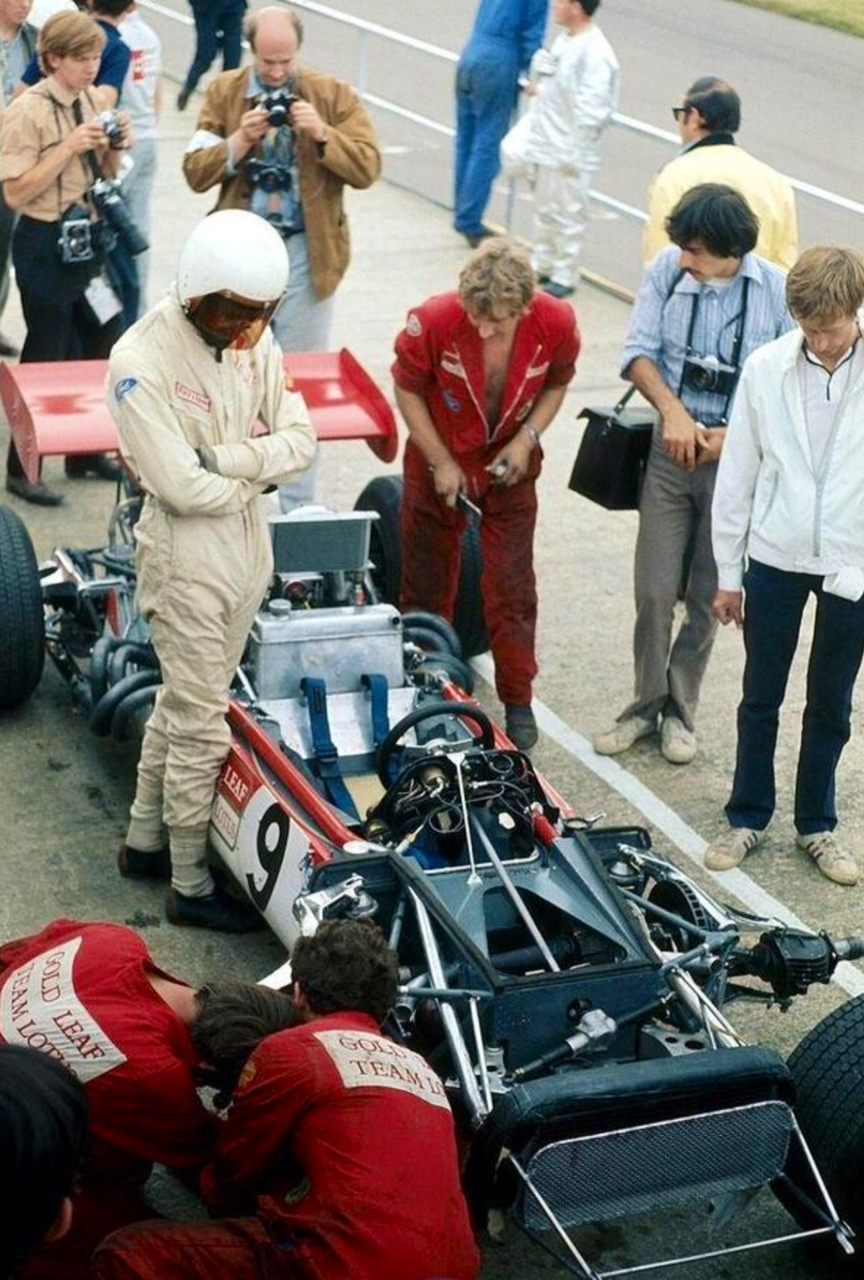
Jim Clark and Graham Hill swap notes prior to the start of the 1967 Australian Grand Prix, Warwick Farm, Sydney. It would be a good season for them both…

Their new F1 Lotus 49’s await their return to Europe, the Ford Cosworth powered cars established a package of integrated design which became the F1 standard for the duration of the 3 litre formula. Their is plenty of press interest in the two stars, teammates for the first time in 1967 and Hill’s #5 Lotus 48.

Behind them in the ‘Farm pitlane is Kevin Bartlett’s Brabham BT11A Climax, KB just in shot with his foot on his front Goodyear. Sixth in the race for him, an excellent result in the old car.

agp 67 start

Start of the 1967 AGP. #5 Hill Lotus 48 FVA 1.6, #6 Clark Lotus 33 Climax 2.0 V8, #3 Jackie Stewart on pole, BRM P261 2070cc V8. (autopics.com.au)

The 48 was Lotus’ new car for the inaugural 1.6-litre F2 1967 season. Designed by Colin Chapman and Maurice Philippe, it was in essence a ‘mini’ Lotus 49 which made its successful debut in the ’67 Dutch Grand Prix on June 4.

Keen to get in some early season testing of the new car, Colin Chapman sent the first chassis to Australia for the Warwick Farm round of the Tasman Series, the Australian GP that year, held on 19 February for Graham Hill to drive. Hill was popular at the Sydney circuit, the promoters paying plenty of money to get the Brit and his new Lotus to New South Wales for just one race. Of added local interest was that Hill had just returned to Lotus having been a BRM driver since 1960. Mind you, in Australia he raced in our internationals the Ferguson P99, Brabham Climaxes owned by ‘Scuderia Veloce’ as well as various BRM’s.

Jim Clark did all of the Tasman rounds in New Zealand and Australia that summer. He won the title in a Lotus 33 Climax, his 1966 F1 mount ‘R14’ fitted with the 2 litre Coventry Climax FWMV V8 engine with which he started the 1966 F1 season, the first year of the 3 litre F1. He used the car until the BRM engined Lotus 43 was ‘ready’ to race.

The new 48 F2 car had a full monocoque chassis made from aluminium sheet with steel bulkheads front and rear. Bolted to the rear bulkhead was a tubular steel subframe which carried the unstressed FVA engine and ZF gearbox. Front suspension used top rockers operating inboard mounted springs and dampers. The rear suspension was also conventional; single upper link, reversed lower wishbone, twin radius rods and coil spring/ damper units.

The 48 used the Ford Cosworth FVA, one of two engines contracted from Keith Duckworth and Mike Costin by Ford. Significantly the engine proved Duckworth’s design direction for his F1 V8, the Cosworth DFV which made its race debut at Zandvoort in the back of the equally new Lotus 49. The FVA’s design commenced in July 1965, its first bench test was in March 1966 and its first race in July 1966. The engine was well tested prior to its trip to Australia in the summer of ’67.

The remarkably successful unit combined a four-cylinder cast iron Ford Cortina block with an aluminium Cosworth head. FVA was an acronym of the ‘four valve assembly’ or ‘four valve type A’ of the engine’s new head. Twin overhead camshafts were used of course, driven from the crankshaft by gears. Equipped with Lucas fuel injection, the dry sumped engine developed circa 220 hp @ 9000rpm.

Ford-Cosworth-FVA

Ford Cosworth FVA Engine Cutaway drawing by Theo Page.

Graham Hill qualified Lotus 48 chassis ‘R1’ well amongst the Tasman Formula 2.5 litre engined cars, 3rd on the grid with only the V8 engined cars of teammate Jim Clark and Jackie Stewart’s BRM in front of him. He may only have had 1.6 litres but the chassis was clearly good and Hill was always been quick around Warwick Farm, the Sydney circuit a very technical one.

Stewart was very fast throughout the Tasman, he won it in ’66, but the BRM’s gearbox was at its limits with the greater stresses of the P60 BRM V8, now at 2070cc and developing much more power and torque than the same engine in its original 1.5 litre F1 guise ever produced. But the car held together at the ‘Farm, Jackie won from Clark and Frank Gardner in a Brabham BT16 Climax FPF, the old 2.5 litre F1 Climax four cylinder engine well and truly outclassed by ’67.

Hill’s new Lotus 48 expired with gearbox maladies on lap 25 but he gained valuable miles on the brand new chassis in advance of the European F2 season, which both he and Clark contested.

Intended as a customer car, the 48 was exclusively campaigned by Team Lotus during 1967, privateers used uprated 41’s. The new Lotus was quick but encountered the Brabham BT23, one of Ron Tauranac’s most successful designs. The 48 won four F2 races in 1967, three in Clark’s hands, the fourth by Jackie Oliver in the combined F1/F2 German GP at the the Nürburgring.

Whilst the Brabham BT23 was the car of the season many of its victories were taken by ‘graded drivers’, notably the ‘King of F2′ Jochen Rindt, whilst graded drivers did win races they could not score championship points. The 1967 title was won by Jacky Ickx using both Matra MS5 and MS7 chassis’, FVA powered.

Lotus continued with the 48 in 1968, 4 chassis were built in total, but struggled again with the dominant Brabham BT23’s. Jean Pierre Beltoise won the ’68 title in a Matra MS7 FVA. 1969 would be a ‘different kettle of F2 fish’, the Dave Baldwin designed Lotus 59 a much more competitive tool.

gh lotus 48 cockpit

Graham Hill tucked into the comfy cockpit of his beautifully finished Lotus 48. He is on the grid of the ‘Guards 100’, Snetterton in March 1967. Hill was 2nd to Rindt’s Brabham BT23. (Max Le Grand)

III Gran Premio Barcelona, Montjuic, Spain 31 March 1968…

untitled

Jim Clark, Lotus 48 FVA, Montjuic, Barcelona 1968. (Unattributed)

Jim Clark aviating his Lotus 48 during practice for the first European F2 event in 1968.

He started the season strongly with victories in his Lotus 49 in both the South African Grand Prix held at Kyalami on 1 January and the Tasman Series, including the Australian Grand Prix at Sandown Park, Melbourne. Jim won 4 of the 8 Tasman rounds, his Lotus used the 2.5 litre Ford Cosworth V8 variant, the ‘DFW’ so he came to this F2 event ‘razor sharp’.

Despite Clark’s speed, Jackie Stewart won the race in his Matra MS7 FVA, Jim was tagged by Jacky Ickx at the first turn, a ‘bonzai’ move down the inside taking out the innocent Scot, deflating a tyre and rearranging the rear suspension. Ickx was involved in another accident on lap 2 and retired. Karma at play!

The shot below is of #1 Clark, with Hills nose in shot, in the middle is an innocent Jochen Rindt, Brabham BT23 FVA. Ickx shot off down the road in his Ferrari 166. The next F2 round was the ‘II Deutsche Trophae’ at Hockenheim the following weekend.

mont clark

Hill’s Lotus 48 nose, Jochen Rindt caught up in the melee in his Brabham BT23 FVA and Clark, Lotus 48 FVA. (Unattributed)


mont clark 2

End of Clark’s race, flat tyre and shagged rear suspension. Lotus 48 FVA. Barcelona 1968. (Unattributed)

YouTube Footage of the Barcelona Race;

Hockenheim 7 April 1968…

Jim Clark before the off and (below) in the early stages of this fateful, awful race and the probable high speed tyre deflation which caused the accident that claimed the champions life.

clark and sims

Jim Clark, relaxed before the off and Dave Sims. Hockenheim 7 April 1968. Lotus 48 FVA. (Rainer Schlegelmilch)


clark lotus 48 hocken 68

Clark, Lotus 48 FVA, Hockenheim 7 April 1968. (MotorSport)

Lotus 48 Technical Specifications…

Chassis; aluminium monocoque with rear subframe. Front suspension; lower wishbones, top rocker actuating inboard coil spring/dampers, roll bar. Rear suspension; reversed lower wishbones, top links, twin radius arms, coil spring/dampers, roll bar
Steering rack and pinion, Brakes, discs all-round, Gearbox ZF 5DS12 5 speed.
Weight 420 kilo / 926 lbs. Length / Width / Height 3,797 mm (149.5 in) / 1,727 mm (68 in) / 762 mm (30 in)
Wheelbase / Track (fr/r) 2,330 mm (91.7 in) / 1,473 mm (58 in) / 1,473 mm (58 in). Wheels (fr/r) 13 x 8 / 13 x 10

Ford Cosworth FVA

Pretty much the ‘engine de jour’ of the 1.6 litre F2 from 1967 to 1971, the FVA won all of the European titles in that period.
Cast-iron Ford Cortina 1600 ‘116E’ 5 bearing block, aluminium head, 1,598 cc. Bore/Stroke 85.7 mm/69.1 mm, DOHC, 4 gear driven valves per cylinder, Lucas fuel injection and electronic/transistorised ignition. Circa 220 bhp @ 9000rpm.

Those with a strong technical interest in the Cosworth FVA and its role in relation to the subsequent Cosworth DFV V8 Design will find this treatise of interest;

Click to access cosworthstory.pdf

Etcetera…

clark pau 1967

Mini Lotus 49 indeed! Clark in his svelte Lotus 48, Pau GP 1967. 4th behind 3 Brabham BT23’s; Rindt, Hulme and Alan Rees. (Unattributed)


clark jarama 67

Clark in his Lotus 48 from Jackie Stewart’s Ken Tyrrell entered Matra MS7, both Ford Cosworth FVA powered, 1st and 2nd, Chris Irwin’s Lola T100 3rd, Jarama, Spain July 1967. (Unattributed)


oliver german gp

Jackie Oliver jumping his works Lotus 48 into 5th place, and first F2 finisher, German GP August 1967. He drove a great race, Hulme victorious in his Brabham BT24 Repco. (Unattributed)


hill oulton brian watson

Hill on the way to 3rd place in the Oulton Park ‘Gold Cup’ in September 1967 amongst the F1 cars, Jack Brabham won in his BT24 Repco from Jackie Stewart in a Matra MS7 FVA F2 car. (Brian Watson)


hill 48 in 68

Graham Hill in the Tulln Langenlbarn, Austria paddock in July 1968. NC with insufficient laps. Rindt won the race in a Brabham BT23C. ‘Chequered Flag’ truck contained the McLaren M4A driven by Robin Widdows also DNF. (Unattributed)


lotus 59

For the sake of completeness…this is the Dave Baldwin designed, spaceframe chassis F2 Lotus 59 which succeeded the 48. ‘Twas an FF/F3/F2 car, much more successful than the Lotus 48 but again the Brabham BT 28/30 gave it a good run for its money! Here G Hill at the Pau GP in April 1969 with high wings having only weeks to run before being outlawed by the FIA during the Monaco GP weekend. Hill DNF with fuel metering unit failure, Jochen Rindt victorious in the other Winkelmann Racing 59B. (Unattributed)

Credits…

Graham Howard ‘History of The Australian Grand Prix’

Max Le Grand, autopics.com.au, MotorSport, Rainer Schlegelmilch, Theo Page, Brian Watson, Roger Linton

Tailpiece: 1967 AGP Warwick Farm…

(R Linton)

Start of the race from the pit counter.

Hill’s Lotus 48 FVA at right, Clark, Lotus 33 Climax and Jackie Stewart, BRM P261 on the front row. Brabham is behind Stewart and Denny Hulme behind Jack in Repco ‘640’ V8 engined Brabhams

Finito…
martin 250 lm wf 1965
(John Ellacott)

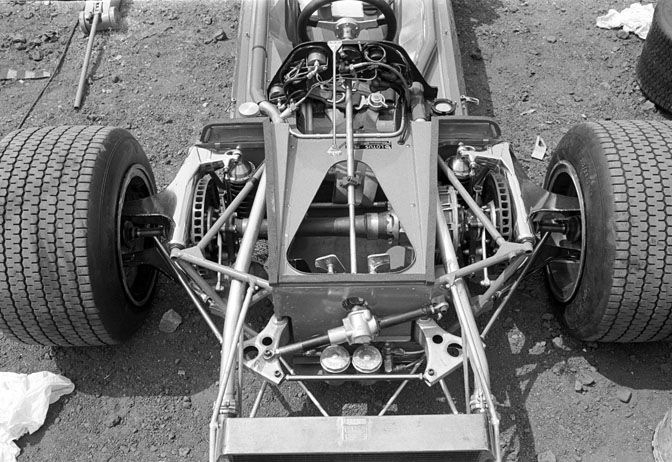
Spencer Martin tips his Ferrari 250LM into the fast Homestead Corner at Warwick Farm before unleashing the cars 3.3-litre V12 on the long Hume Straight, what a sound it must have made! August 1965…

Spencer Martin was one of Australia’s champion drivers of the 1960’s winning the Gold Star, the Australian Drivers Championship in 1966 and 1967 in a Brabham BT11A Climax.

His career could be summarised thus; he saw, he came, he conquered from 1960-1966, retired to marry and have a family, focus on business and then returned many years later…

martin portrait
Spencer Martin in his racing heyday, Lakeside 1965. (Bruce Wells)

I don’t cover Spencer’s career in detail but rather introduce an interesting article i discovered in a rally guide for an event held in memory of David McKay. Martin outlines his experiences as a driver/mechanic with McKay and Scuderia Veloce, if not the first, then certainly one of the first of Australia’s professional racing teams formed in 1959…

A brief background of McKay and SV is contained in these articles i posted a while back. One is predominantly about McKay’s Ferrari 250LM, one of the most evocative cars ever raced in Australia, https://primotipo.com/2014/07/03/pete-geoghegan-ferrari-250lm-6321-bathurst-easter-68/ , the other about his Ferrari P4/Can Am 350, an equally stunning car https://primotipo.com/2015/04/02/ferrari-p4canam-350-0858/  .

Martin commenced racing at Gnoo Blas, Orange NSW in 1960 in a Nota, he built from a kit himself, then progressed through the Prad Holden, a very successful sportscar and into ‘Appendix J’ sedans. He beat some of the heroes of the day in his ’48-215′ or FX Holden and was  approached by McKay to join SV. Martin picks up the story…

martin 48 215
Spencer in the ‘Boomerang Service Station’ Holden FX, Catalina Park, Katoomba 1963. It was consistent ‘giant killing’ performances against Norm Beechey and the like which attracted McKay to Martin. (Autopics.com.au Collection)

‘Work on the racing cars was carried out in a garage at the rear of his (McKay) house in Wahroonga on Sydney’s upper North Shore. We later moved to new premises beneath the Shell Service Station on the Pacific Highway at Wahroonga.

At this time I was driving the ‘Boomerang Service Station Holden’ for Joel Wakely and was keeping Norm Beechey very busy around Catalina Park, Warwick Farm and Sandown Park. In 1963 David brought Brian Muir back from the UK to drive in the Hardie Ferodo at Bathurst and I was to be Brian’s co-driver. Brian had been driving a Ford Galaxie in the UK and had won the British Touring Car Championship

David was, thankfully very impressed by my driving with Brian and told me he was about to retire and would I like to take over driving his Brabham. (Ex Jack Brabham BT4 Climax) Well you may imagine how I felt getting out of an EH Holden into an F1 Repco Brabham! We took the car to the short circuit at Warwick Farm for a few familiarisation laps where I was shocked by how much power the car had, especially how the far the nose lifted when you put the ‘pedal to the metal’.

It was not long before David entered the car at Bathurst. It was now 2.7 litres and running on methanol. He told me to keep it under 4500rpm down the straight for a few laps and be careful over the hump. I ‘pulled the string’ on the third lap and was doing 172mph over the hump. The car became completely airborne with a very much nose up attitude. I was wearing a Les Leston helmet with a small peaked visor to help keep the sun out of your eyes. Well the wind at this speed would catch under the visor which gave the effect of lifting you out of the car. It didn’t take long for me to remove the peak!’

martin longford tasman
Its 1967 as the painted date on the Longford Viaduct says. Martin eases his Bob Jane Racing Brabham BT11A Climax ‘IC-4-64’ into the right hander to exit the turn, ’67 Tasman ‘South Pacific Trophy’ 5 March 1967. He only lasted a lap of the race, his Climax FPF suffering ring failure. Jack Brabham won the race in his Brabham BT23A Repco. Clark took the series win in his Lotus 33 Climax FWMV 2 litre V8. Love the local ‘topography’, sturdy stone viaduct!, hay bales, painted, slippery white ‘no passing’ lines on the public roads. (oldracephotos.com/David Keep)
martin wf brabham 1967
Spencer Martin exercising all of his Coventry Climax’ lusty 235 horses through Leger Corner, Warwick Farm, December 1966. ‘Hordern Trophy’ Gold Star round won by Frank Gardners’ Brabham BT16 Climax from Kevin Bartletts’ Brabham BT11A and Martins’ similar car in 3rd. (Autopics.com.au Collection)

‘The biggest difference in driving the cars of David’s and my time was the safety aspect.

No seat belts, no fuel cells, no on-board fire extinguishers, no roll cages, no fireproof clothing. I was driving the Tasman Series in New Zealand and was wearing a polo-shirt made of nylon. When Jim Clark saw me in this he explained how dangerous nylon was in the event of a fire. Jim gave me a pair of his Dunlop Racing overalls. Boy, did I think I was smart wearing these and they were fireproof so I could go faster! Actually they gave you about 5 extra seconds in the event of a fire. They were made of cotton and soaked in a fire retardant. Rather different from today’s suits.

Another extremely dangerous factor was the aluminium fuel tanks which were placed either side of the drivers seat. We needed to have over 18 gallons of Avgas for a long race, so we packed dry ice around the tank prior to the race on hot days.’

001MartinAllenGibsonwm
Spencer Martins’ Ferrari 250LM ‘6321’  leads the ‘Country Club GT Race’ at Warwick Farm September 19 1965. The chasing Lotus Elan 26R’s are Niel Allen and Fred Gibson. (Heinz Federbusch)
Graham Hill and a quizzical Spencer with the SV Brabham BT4 Climax Hill raced during the 1964 Tasman- here in the Warwick Farm pitlane (unattributed)

‘Graham Hill was driving our new Brabham (BT11A Climax) at Warwick Farm in 1965. When we fuelled the car, an hour before the race, one tank was leaking through a crack in its top edge. I went into panic mode, Graham, however, asked me to go to the toilet and bring him back a bar of soap. He made this into a putty mixture and plastered it into the crack. As he explained, the leak was on the top of the tank, so after a few laps the fuel would be below the problem area. I used this fix a few times over the years. Can you imagine this sort of thing happening to an F1 Ferrari or McLaren?!

One of the biggest events to materialise at SV was when David talked Archie White, the Shell Racing Manager, into buying the 250LM Ferrari. I was not allowed to go to the wharf to bring it home as I had work to do on the Brabham. However I’ll never forget seeing it for the first time and David saying it was mine to drive!’

‘David was the best motoring journalist at this time. Not only was he able to write about cars, he could also drive them.

David was at the front of the grid for the 1963 Australian Grand Prix at Warwick Farm alongside Surtees and McLaren. He was the first Aussie home and all this on a 40 degrees Celsius day when many of the younger drivers stopped due to heat exhaustion. The temperature inside his car was measured at over 50 degrees.

agp 1963 front row
Front row of the AGP grid, Warwick Farm February 1963. Surtees on pole, Lola Mk4a Climax, McLaren Cooper T62 Climax and McKay Brabham BT4 Climax. Jack won in his BT4 Climax from Surtees, McLaren and McKay.(Autopics.com.au Collection)

David, in his motoring column, was very critical of the cars which Ford, GMH and Chrysler were building at that time. Sir Frank Packer allowed David to continue his reports in the Sydney Telegraph because his column was selling newspapers. When News Ltd took over the Tele, they would not allow him such a full hand as they explained they needed the advertisers money from the motoring industry so David left.’

martin bathurst 20lm 65
Spencer Martin in one of his early drives of the SV Ferrari 250LM at Murrays Corner, Bathurst, Easter 1965. (Autopics.com.au Collection)
martin
‘Australian Autosportsman’ magazine July 1965. Shell ‘Advertorial’! Martin on the cover in the SV Fazz 250LM, picture taken probably on the same day as the one above, but this time, i think, ‘Hell Corner’, which leads onto the uphill ‘Mountain Straight’ having gone past the pits. (Stephen Dalton Collection)

‘The first race for the 250LM was the Sandown Park Tasman round sports car race in February 1965…

Graham Hill was to drive the Brabham in the Tasman race, however he put it on David to allow him to also drive the LM. David kept his word to me and told Graham that ‘the boy’ was going to drive it. Well, Frank Matich was leading (in Elfin 400/ Traco Olds) then suddenly we did a ‘Stephen Bradbury’ as Matich blew up and we went on to win it’s very first race. In reality it was no match for the more powerful Elfins and Lola’s. It did however win every long distance race in which it was entered.

The ‘Old Red Lady’ as David affectionately called the LM, was a fantastic car to race. With the V12 very low slung in the engine bay behind the driver, and with 8000rpm, the noise inside and out was certainly something to remember for driver and spectator alike.

David was a vary hard taskmaster. He expected me to work on customer road cars during the day and maintain the Brabham and Ferrari after hours. I was made an offer by Bob Jane which I decided was better for my future so I moved on. Years later David wrote me a letter saying he was sorry for being so hard on me. This lead to a rekindled friendship where we travelled overseas together to many of the F1 races.

I really miss ‘The Old Man’. He was a true Ferrari-ist, and gave us all the true pleasure of seeing the two best cars ever to race in this country, the 250LM and P4 Ferraris!’

rcn martin lakeside
This ‘RCN’ cover David Atkinson painting depicts Spencer winning the 10 July Gold Star race at Lakeside, Queensland 1966 ahead of Kevin Bartlett #14 Brabham BT11A Climax and John Harvey Brabham BT14 Ford 1.5…1-3rd in the race en route to Martins 1966 Gold Star title. (Racing Car News)

David McKay had this to say about Spencers’ departure and career in his wonderful autobiography, ‘David McKays Scuderia Veloce’…

’I was both surprised and disappointed but in retrospect I had expected too much and had been too hard on the young man. I had treated him as I would a son and no doubt Martin thought ‘the son’ had had a lucky escape. Sadly I had planned to take Martin to Maranello where I was sure Mike Parkes would have got him a drive at Le Mans and he would eventually have graduated to F1.

However, instead of telling me he’d been waiting for this chance and had his bags packed, Martin said he didn’t fancy Le Mans with its dangerous mix of cars and drivers and thank you but no thanks. I still consider to this day Martin would have achieved a successful career with Ferrari and we have often joked about what might have been. Martin argues that he has all his arms and legs in place and that his successive Australian Championships in 1966 and 1967 fulfilled his motor racing ambitions. It was twelve years before we were to speak again and it was the LM which brought us together’.

symmons grid 1966
Front row of the Symmons Plains, Tas 1966 ‘Gold Star’ grid. #7 the winning ex-Clark Lotus 32B Climax of Greg Cusack, #5 Brabham BT11A Climax of Kevin Bartlett and on the near side Spencer in his Brabham BT11A Climax. The nose of John Harveys’ Brabham BT14 Lotus/Ford TC is on row 2. Cusack won from Harvey and John McCormack, Brabham BT4 Climax. (oldracephotos/David Keep)
martin WF
Martin on the way to 6th place in the SV Brabham BT11A ‘Warwick Farm 100′ Tasman race 13 February 1966 won by Clarks’ Lotus 39 Climax. This is not long before Martin left SV for Bob Jane Racing, this same chassis ‘IC-4-64’ won his 1966/7 Gold Star titles. (Autopics.com.au Collection)

As Spencer says he left SV and Sydney to join Bob Jane Racing in Melbourne, both Shell sponsored teams at the time and a controversial move albeit a very successful one for both driver and team…

Jane acquired the Brabham BT11A Climax Spencer had been racing for SV, it was this car in which he won the Gold Star in 1966 and 1967. His toughest competitor was Kevin Bartlett in a similar car entered by Alec Mildren, the pair having many close dices with Bartlett famously setting the first over 100mph lap of Bathurst during their Gold Star encounter at Mt Panorama in 1967.

spencer
A touch of understeer for Spencer in his Bob Jane Brabham BT11, ‘Hordern Trophy’, Warwick Farm in December 1966. Race won by Frank Gardner from Kevin Bartlett. This shot is from a ‘period’ Shell magazine ad. (Spencer Lambert Collection)

In 1967 Repco’s 2.5 litre Tasman ‘740 Series’ V8’s powered the cars of Greg Cusack (SV Brabham BT23A), Leo Geoghegan (Lotus 39) and John Harvey (Brabham BT14 ) even though these cars were all competitive they lacked the consistent reliability which prevented Repco ever achieving a Gold Star Series win…Martins’ Climax engined Brabham won 2 rounds, winning his second title by 7 points from Cusack, his replacement at Scuderia Veloce and promptly retired.

Years later he re-established his relationship with McKay as he outlined above, he owned a share in McKays’ LM for a while and raced a range of exotic racing cars in historic racing in both the US and Europe. He still lives in Australia and is in happy retirement with a large extended family to keep him busy…and the occasional competition drive.

martin and mckay
Spencer Martin and David McKay pictured on 27 October 2004. Chris Haigh took this shot having just taken David for a lap of Wakefield Park, Goulburn, NSW in McKay’s original Jaguar Mk1 ‘The Grey Pussy’. David died on December 26 2004 at 83 of cancer. (Chris Haigh)

Etcetera…

longford grid lm
Spencer Martin stands by the front ‘guard of the SV 250LM, his second meeting in the car, Longford Tasman meeting February 1965. Yellow car is the Mildren Maserati, driven by Ralph Sach (built by Rennmax’ Bob Britton on his Lotus 19 jig) the yellow shirted Mildren mechanics are (L) Stewart Randall and (R) Glen Abbey, the latter behind many Mildren/Gardner/Bartlett/Stewart victories. Driver behind the Fazz perhaps Les Howard. (oldracephotos.com/David Keep)
martin brabham surfers
Martin leading and winning the Surfers Paradise Gold Star round in 1966. Shot taken below Repco Hill, Brabham BT11A Climax. (John Stanley)

Jackie Stewart contested the above, Surfers’ Gold Star 1966 race, this article may be of interest to some in his ‘one-off’ Brabham BT11A Climax drive…https://primotipo.com/2015/02/13/jackie-stewart-at-surfers-paradise-speed-week-1966-brabham-bt11a-climax-and-ferrari-250lm/

mc kay lm longford 1965
The ‘Guvnor David McKay steers his 250LM through the Longford paddock in March 1965, the second meeting for the Ferrari driven by Martin. Graham Hill drove the SV Brabham BT11A Climax in the final ’65 Tasman race, the AGP, to 4th place, Bruce McLaren won in a Cooper T79 Climax. (Ellis French)
symmons grid 67 martin brabham
Martin being congratulated before the start of the Gold Star race at Symmons in November 1967. DNF with cam follower failure, race won by Greg Cusack, his replacement at Scuderia Veloce, in a Brabham BT23 A Repco. #2 is Garrie Coopers’ Elfin Mono Ford TC. Its Martins’ final race of ‘his serious career’, he had wrapped up the Gold Star for the 2nd time in succession and retired, the car driven by John Harvey for Bob Jane Racing from then. (oldracephotos.com/David Keep)
martin lakeside barbham 65
Martin in the SV Brabham BT11A ahead of Leo Geoghegans’ Lotus 32 Ford 1.5 TC, Lakeside ‘Gold Star’ race July 1965. Martin won from Leo and John McDonalds’ Cooper T70 Climax. (The Roaring Season/Bruce Wells)
martin tassie brabham
Car owner, the stocky, strong Bob Jane tests the rear spring rates…whilst driver Martin does his best to ignore the chief. Symmons Plains Gold Star round November 1966. Brabham BT11A Climax, ‘box is Hewland HD5. (Ellis French)
Spencer Martin 2006 Tasman Revival
Spencer pictured beside the Brabham BT23D Alfa Romeo raced by Frank Gardner in the ’68 Tasman and then Kevin Bartlett to Gold Star success in 1968. Car restored by Paul Moxham and driven by Spencer here at the Eastern Creek, NSW Tasman Revival Meeting in December 2006. (Stephen Dalton Collection)
Spencer Martin Catalina
Spencer Martin signed program of the Catalina Park cover on which his Holden starred! (Stephen Dalton Collection)

Bibliography…

‘David McKay Memorial Rally 2012: Rally Guide’, ‘ David McKays’ Scuderia Veloce’ David McKay, The Nostalgia Forum

Photo and Other Credits…

John Ellacott, Bruce Wells, autopics/Richard Austin, The Roaring Season, Chris Haigh Collection, Racing Car News, Heinz Federbusch, Ellis French, John Stanley, Racing Car News, Chris Haigh

Lindsay Ross of Oldracephotos http://www.oldracephotos.com/content/home/ for the use of the shots by David Keep

David Blanch of Autopics Collection  http://autopics.com.au/

Stephen Dalton Collection, Spencer Lambert Collection

Tailpiece…

(oldracephotos.com/DKeep)

Spencer alights from the Jane Brabham BT11A in the Longford pits 1967.

John Sawyer standing at left with two Firestone guys in attendance. It looks serious but in a relaxed kinda way doesn’t it?

Finito…

duetto champs

(Bruce Thomas)

The little Alfa Duetto’s DOHC 1570cc would have struggled ferrying this lot, even for a lap…
It’s the victory parade after the 1968 ‘Warwick Farm 100′ won by Jim Clarks’ Lotus 49 Ford DFW from teammate G Hill, with Piers Courage third in his little McLaren M4A Ford FVA.

What driving talent aplenty in this car!

Driving the car is 1960 Australian Gold Star Champion Alec Mildren, Mildren also an Alfa Dealer and incredibly successful and generous race team owner of the 1960-1970 period, the Dutto immaculate in white and wearing a set of ex-GTA wheels, I wonder who owns it now?

Behind Alec is a youthful Alfredo Costanzo, first local home in an Elfin Mono Ford 1.5 and later to be very successful in Australia’s latter F5000 days and the Formula Pacific era in cars owned by Porsche Cars Australia’s Alan Hamilton, another very generous benefactor of the sport.

Brabham, Moss and Clark needing no introduction…

Clark won the race, the Lotus 49 was the F1 standard from its 1967 Dutch GP launch, reliability cost Lotus the titles that year- the light, nimble beautiful handling Brabham BT24’s did the trick, Denny Hulme pipping Jack for the Drivers Championship and Brabham Repco winning the Constructors laurels.

In 2.5 litre ‘DFW’ spec the Ford Cosworth powered cars were formidable Tasman weapons, Clark won the 1968 title and Jochen Rindt was the fastest man of the series in 1969, if not the most reliable.

clark wf

Jim Clark, Lotus 49 DFW, WF 1968. (Peter Windsor)

The Tasman Cup entries in 1968 were as interesting and diverse as ever

Moreso than previous years in fact- the interesting shot below was taken as the cars lined up for practice in Warwick Farm’s pit lane and shows the business end of the new Len Terry designed 2.5 litre V12 BRM P126. Its Hewland DG300 gearbox is just visible behind the Lucas fuel pump mounted to the rear of the ‘box, the Shell ‘el cheapo’ oil catch tank is a nice ‘in the field’ touch! Richard Attwood in the hotseat retired from the race with gearbox dramas.

Two of the P126’s were entered in the Tasman, Bruce McLaren raced a car in the New Zealand rounds and took a win at Teretonga, the cars were in the Southern Hemisphere to be race proven, after the abortive H16 program, before the European F1 season but there was always a scramble to drive the old, light, nimble and reliable 2.1 litre V8 P261.Pedro Rodriguez raced it at WF finishing sixth in a car which had so much Tasman success, Jackie Stewart took the title in a P261 in 1966.

In front of the BRM is Frank Gardner’s Alec Mildren Racing, one off, Brabham BT23D Alfa. This magic little car was powered by a 2.5 litre V8 developed via Alfas’ endurance racing Tipo 33 program. Its twin vertically mounted distributors fired two plugs per cylinder- a distinctive visual element of the little DOHC, two valve, injected engine. Later in 1968 the car won the Australian Drivers Championship in Kevin Bartlett’s capable, quick hands.

Forward of Frank is Piers Courage’ McLaren M4A Ford FVA- he came to Australasia with this car and two engines and did incredibly well, perhaps its not unfair to say he re-launched his career with this self funded Tasman effort. Numerous podium placings were surpassed by an heroic win in hopelessly wet conditions on one of the ‘biggest balls’ circuits of the world, Longford a fortnight after his strong third at WF ahead of many more powerful and equally nimble cars as his little F2 McLaren.

This McLaren stayed in Australia after the Tasman being bought by Niel Allen, and was also raced successfully by Warwick Brown in the formative stages of his career.

WF pitlane

WF pitlane Tasman Series 1968. (Brian McInerney)


gh pitlane

Graham Hill and friends, Warwick Farm paddock 1968. (Brian McInerney)

Graham Hill was perhaps not as focussed on a win as teammate Clark…get your hands off that young woman you bounder!

Was there ever a bloke from ‘central casting’ who looked more like a dashing, debonair driver than G Hill? He did not have the absolute pace of teammates Clark, Stewart or Rindt but was a driver of incredible ability, the only winner of motor racings World F1 Title/LeMans/Indy ‘Triple Crown’ of course.

His greatest moments were to come in 1968 when he picked Team Lotus up by the scruff of the neck, despite the loss of his good friend Jim Clark, providing the leadership the team needed whilst Colin Chapman recovered from his own grief at losing his driver, friend and colloborator in April, only months after this race meeting.

Lotus’ wins in the Drivers and Constructors Titles in 1968 owe a lot to Hill’s character as well as his determination and speed.

hill amon courage wf

Hill from Amon and Courage. Lotus 49 DFW, Ferrari Dino 246T, and McLaren M4A FVA. 2nd, 4th and 3rd respectively. WF 1968, the majesty of the place clear in this shot. (Unattributed)

 Jack Brabham had a short 1968 Tasman.

His Brabham BT23E was powered by Repco’s latest 740 Series SOHC V8 and competed in only the Warwick Farm and Sandown rounds.

In fact Repco, for all their F1 success didn’t ever have much Tasman glory in their own backyeard…to be fair the primary reponsibility of the Repco Tasman program each year was to sort out the engines for the coming Grand Prix season, but all the same, a few local wins should have been achieved given the resources deployed?

This fabulous car stayed in Australia, acquired by Bob Jane at the Tasmans’ duration, it was raced for him by John Harvey who was always fast in it, but also unlucky, surviving a high speed accident at Bathurst after a component failure, the low point for the team.

jb wf pilane

Brabhams BT23E Repco all ready to qualify with a fresh set of Goodyears. Car in front is the BRM P261 V8 of Rodriguez, Courages’ McLaren body on the deck behind Jack. WF pitlane 1968. (Brian McInerney)


moss Wf 1968

Stirling Moss tells Clark about the fast way around ‘The Farm, both drivers loved the place and won there. ‘Lucas Opus’ spark-box prominent between the Vee of the Cossie DFW. Ford DFV famous as a load bearing member of the car, this shot showing the suspension componentry and its attachment to the engine and ZF ‘box. Suspension itself conventional for the day; inverted lower wishbone, single top link, twin radius rods and coil spring/damper, adjustable roll bar. Front suspension inboard; top rocker visible. Nice. WF Tasman 1968. (Brian McInerney)

The Eyes Have It.

Chris Amon (below) absolutely focussed on the task at hand. He came back with another two Dinos he ran with the assistance of David McKay’s Scuderia Veloce in 1969, lifting the title in a tremendous and very popular fashion.

In 1968 he was very competitive, winning the first two Kiwi rounds at Pukekohe and Levin but did not ultimately have the speed of the Lotuses of Clark and Hill. The car was a Ferrari 166 F2 (1.6 litre formula at the time) to which was fitted the 2.4 litre DOHC, two valve, injected V6 engine from the cars used at the start of the 3 litre Formula 1 in early 1966.

In the 1968 Australian Tasman Rounds Amon mixed the racing of the Dino single seater with McKay’s P4/CanAm 350 Ferrari i wrote about a week or so back.

Ferrari P4/Can Am 350 #0858…

amon eyes

Chris Amon, Ferrari Dino 246T, WF, Tasman Series 1968. (Brian McInerney)

 This shot captures the atmosphere of the Tasman Series generally and Warwick Farm specifically…

There is no hassle of the drivers by the appreciative crowd and vice-versa, there would be uproar these days of course.

Piers Courage is looking relaxed and happy about his third behind the Lotuses of Clark and Hill, and Amon fourth, is still figuring he could take the title with two rounds remaining at Melbourne’s Sandown and Tasmania’s Longford- ultimately he fell short of Clark by 8 points, Amon taking two wins to Clark’s four.

tasman 68 warm down

Piers Courage and Chris Amon on the WF warmdown lap. McLaren M4A FVA and Ferrari Dino 246T. Australian summer male ‘fashion’ of the day on full display. (Bruce Thomas)

Jim Clark savouring the plaudits of the crowd and one of his last wins, Lotus 49 Ford DFW, 18 February 1968…

jim clark wf lotus 49 1968

Jim Clark, Lotus 49 WF 1968. (wirra)

Grid and Results…

RCN 68 WF Tasman 01

Etcetera…

(B Jackson)

Get a move on chaps…

And things go better with Coke it seems- brake bleed in process. Note the solid front rotor on Graham’s Lotus 49 rather than the vented ones first used in 1967. Nice shot of the front bulkhead and inboard front suspension mounting treatment.

amn pilane

(Peter Windsor)

Chris Amon in the Warwick Farm pitlane, Ferrari Dino 246T, 1968 was a useful exploratory season for the successful two car assault in 1969.

(Brian Jackson)

Piers Courage alights his McLaren M4A Ford FVA as Ray Parsons, in ‘Australian summer mechanic’s clobber’ awaits instructions for the next round of tweaks before the next session, one of which is to increase the size of the nose mounted duct to get a bit more cool air into the cockpit.

fg wf 68

(John Ellacott)

Superb John Ellacott shot of Frank Gardner in the one-off Alec Mildren Racing Brabham BT23D Alfa Romeo Tipo 33 2.5 V8- she is puffing a bit of blue smoke in best Alfa tradition!

gh wf 68

(Brian McInerney)

‘See you after the race then?’ Hill G dealing with another admirer of the feminine type.

1968 WF Tasman cover


(Brian Jackson)

First local driver home was Alfie Constanzo in his Elfin Mono Mk2B Ford twin-cam in eighth place, here shielding his eyes from the late afternoon sun- that’s Ian Fergusson in a Lotus 27 Ford twin-cam behind Alf, both of these cars are ANF 1.5s.

1968 WF Tasman event 5

Photo and Other Credits…

Bruce Thomas, Peter Windsor, Brian McInerney, Wirra, John Ellacott, Brian Jackson

Stephen Dalton for the race program and ‘Racing Car News’ material

Finito…