Alfa Club of Victoria Concorso…300 Alfa Romeos’ dropping olio onto the Wesley First XI Turf…
The Alfa Romeo Owners Club of Victorias’ annual Concourse and preceding dinner… has become ‘Bigger Than Ben Hur’ in terms of quality of organisation, cars, location, attendance and guest speakers.
This years concourse was held at Wesley College, St Kilda Road, Melbourne on 30 November, the guest speakers at the nearby Parkview Hotel dinner the evening before were former Australian Racing Champions Kevin Bartlett and Alfredo Costanzo.
The ‘dialogue’ with the drivers was ably conducted by Melbourne longtime Alfista and racer John Emery, it wasn’t ‘hard core’ given the audience, too many road car types present for that sadly!, but the following are a few snippets from their comments or quick chats with each of them separately.
Crappy iPhone shot of Kevin Bartlett left, and Alf Costanzo, right being ‘interviewed’ by John Emery, Parkview Hotel 29 November
I covered KB’s early history in the Alfa GTA article of last week, see https://primotipo.wordpress.com/wp-admin/post.php?post=1037&action=edit …he spoke fondly of his mentor Alec Mildren and the way Alec extracted the best from him which was around advice and encouragement, not actually how to drive, Mildren himself was the Australian Gold Star winner in 1960.
‘I was really lucky he gave me the chance to test, Glenn Abbey gave me the call, I don’t even remember the circuit but there were three or four other guys who also had similar credentials. But I guess they saw potential and a willingness to work hard and learn’.
Bartlett spoke of the evolution of the Lola F5000 cars from the T240 F2 based, twitchy, torsionally floppy T300 through to the T400 and ultimate variant of the T332, the 332C and what a competitive car it was. Costanzo chipped in about that cars understeer and said he, having also owned a T332, preferred the ‘twitchy and slightly more nervous’ T430, the ex-VDS/Brown car Alfie raced for Alan Hamilton so successfully in 1979/80.
Both noted that Warwick Brown happily went back to a T332 after the 430’s were sold despite his success in that model. (Rothmans Series 1977).
Bartlett related a funny anecdote about building a twin-turbo Jaguar XJS for Australian media magnate, the late Kerry Packer.
Kerry wanted to drive the ‘weapon’ from Sydney to Canberra, KB confessed that the gearbox whilst up for sprint meetings wouldn’t survive that journey…so Packer had his ‘chopper shadow the car on the trip, as you do!
Inevitably the car ‘cacked itself’ near Bowral, the chopper scooping up the legendary KP and delivering him to the capital on time. KB organising for his most wealthy clients car to be returned to Sydney…the silver lining in this relationship the very successful ‘Nine Network’ sponsorship of Bartlett’s Camaro in Touring Car Racing after his second F5000 ‘Big One’ when his Brabham BT43’s rear wheel failed at Sandown in 1979 made continued single seater racing not such a good idea.
Bartlett in the Sandown pitlane 8 September 1979. Saturday practice, the following day KB had a rear wheel failure cause another big accident going thru ‘The Causeway’ breaking his legs, hospitalising him, destroying the car and ending his cherished single seater career…there were, however, touring cars to conquer. Car now has rear/side, rather than front mounted water rads’, Lola airbox, a variant of the nosecone used on KB’s T400 Lola and later rear wing. Jim Hardman in black anorak listening to KB’s issues and together working out the necessary tweaks! (Mark Bisset)
I asked KB whether Alec considered commercial sponsorship of his team to assist with the budget, as an alternative to ‘Alec Mildren Racing’ withdrawal from the sport but ‘it simply wasn’t his style’ so KB and Max Stewart were ‘on their own’ from 1971 both continuing to be successful but clearly the ‘Mildren Family Team’ was special in every way not least it’s competitiveness and influence on the professional teams which followed its lead.
Bartlett and Alfie are 3 years apart in age, KB born in 1940, Alf 1943. Their careers have ‘reverse parallels’ in some ways, KB a paid professional at 25, and on his own at 30, Alf on his own until 1979, when at 36 he became a paid professional…Unsurprisingly the ‘sweet spots’ in their careers were as paid professionals able to focus on just the driving rather than the more difficult commercial and organisational elements necessary in running your own team.
KB had an opportunity to test F1 for Brabham in 1970, ‘yes we should give him a run’ Ron Tauranac said but the fee was $60000 even then, as KB said, ‘I didn’t have $6k let alone $60k back then’ it’s a shame as the BT33 was a rocket in 1970 and still ok in 1971.
Bartlett in the one of a kind Brabham BT43 Chev ahead of Alf and John Walker at Oran Park , Rothmans Series 1978, both in Lola T332’s, Walker in KB’s old car. Warwick Brown won in another T332C, or rather a T333 Single-Seat CanAm car converted to F5000 for our Series before returning to the US whence it was converted back. See this shot of the Brabham in its original form here, mind you the nose had already been changed at this point…with the car in its final form above. (Glenn Moulds)
Two blokes who took to F5000 in Australia, having come out of smaller single-seaters like ‘ducks to water’ were Alf and Bruce Allison, immediately competitive…and both in Lola T332’s, Allison in the car KB sold to buy his T400, ‘HU22’. (KB’s T330 ‘HU22′ rebuilt after its Pukekohe early ’74 shunt around a 332 tub)
Not everybody who drove these animals of cars, mastered them…’it always focussed my mind the day before wherever I raced these cars because they could always bite you’, said KB.
One wag at the Parkview Hotel after listening to Alf speak, very amusing he was too, and who watched many of his early racing efforts said that ‘he bounced that Mono (Elfin Mono) off every fence in Victoria, he didn’t even book overnight accommodation at the country circuits as he never expected to race on Sunday!’
By 1975 he had the car in which to strut his stuff finishing second in the AF2 Championship that year in the Birrana 274 Ford Leo Geoghegan drove to the series win in 1974. Geoff Brabham won the title in a similar 274.
‘At the end of the year I sold the car and bought the ex-Bob Evans 1974 European F5000 Championship winning T332 ‘HU36′ for a lot less than I sold the Birrana! Brian McGuire had a good season in it in the UK in 1975 and was to race it again and then the Brits admitted F1 cars to their series so he bought one of those and sold the Lola cheap, all race prepared and ready to go. I even won a couple of KLM tickets late in the season so got a trip to the UK as well’
In a sad ending for Aussie McGuire, he died in the Williams FW04 he bought instead due to a component failure at Brands in 1977.
‘The T332 was a great car, I did well in it but I preferred the T430 which was a bit more nervous, the turn in was better. The McLaren was better again, no quicker than the Lola in a straight line but it put its power down much better, it was quicker through the corners.’
Costanzo at the old Sandown pit counter 1981. Mclaren M26 Chev, Jim Hardman in the white top. A talented engineer, his self designed and built Hardman JH1 Ford victorious in the 1980 AF2 Championship in Richard Davisons’ hands. Car @ rear is the Bryan Thomson owned Mercedes Fowler/Chev sports sedan then driven by John Bowe.
The McLaren Costanzo spoke of was the M26 F1 car converted to ground effect F5000 specification by Tiga Cars and raced by Alan Hamiltons’ Porsche Cars Australia Team in the dying days of F5000 in Australia.
These are a few vignettes in two phenomenal careers, it was a pleasure to meet them both and watch them work an audience in the same way they used to work the spectators on race day!
Racers both and great blokes to boot…
All the fun of the fair..big crowds, this is early in the day. Alfa TZ1 Replica beside 6C 1750 Zagato. ‘Lola Limper’ Bartlett checking out the cars in brown shirt and cap.
John Lawsons’ Alfa 6C 2300 Spl left, with the ex-Lex Davison ‘Little Alfa’, shortened 6C1750 ‘Normale’ chassis’ , supercharged. Successful and famous Aussie special raced by Davo from circa 1946 to 1952. car originally Davisons’ fathers road car.
Giuliettas’, St Kilda Road buildings at rear
Swag of ‘105’s…a very pleasant Concourse location, Wesley College, Melbourne…
Mildren ‘LHD’ GTA, Kevin Bartlett, Lakeside, Queensland 1966 (J Stanley)
Kevin Bartlett explores and exploits the laws of physics in the Alec Mildren Racing Alfa Romeo GTA , Lakeside, Queensland, Australia circa 1966…
Some years later American F5000 driver, Sam Posey while competing in the Tasman Series and observing KB’s Lola at close quarters described Bartlett as the ‘master of opposite lock’. It was an aspect of his driving which worked for him and we spectators throughout his career regardless of the cars he drove – sedans, sports cars or single seaters.
Team Mildren Warwick Farm 1966, not 1967 I think…big professional team 60’s Style! Cars are Mildren LHD GTA, TZ2 and the Brabham BT2/6 Ford raced by Bartlett at that stage. WF Tasman Meeting 13 February 1966 (Allegerita)
Alec Mildren Racing and Kevin Bartlett…
AMR was one of Australia’s first professional teams, the basis of the team was formed around a nucleus of talented people who fettled Alec Mildren’s cars during his own single seater campaigns. He won the Australian Gold Star Championship and Australian Grand Prix in a Cooper T51 Maserati in 1960.
Shortly thereafter Mildren retired from driving to concentrate on his business interests which primarily involved the retail car trade. He was the first Alfa Romeo dealer/distributor in New South Wales and his race team employed great drivers including Frank Gardner, Kevin Bartlett and Max Stewart.
Mildren’s passion was single-seaters but the team also raced Alfas, notably two GTAs, a TZ2 and later 105 Series coupes of various capacities in Series Production events as those grew in stature in the late 1960s.
Alec Mildren Racing and the laid back nature of the Tasman series circa 1967. Bartlett is sitting on the wheel of his Brabham BT11A Climax 2.5 Tasman car. The Alfa is the prototype TZ2 referred to in the shot above. The smiley chap at right rear is young Fred Gibson, then racing a Lotus Elan 26R. Warwick Farm, New South Wales (P Windsor)
Kevin Bartlett started racing in his mother’s Morris Minor and very quickly the young mechanic made a name for himself as a fast driver with strong mechnical knowledge and sympathy. By 1965 he was driving an Elfin Imp FJ owned by the McGuire family and an Austin Healey Sprite and TVR for others. He recalls that ‘Alec and Glenn Abbey (Mildren’s engineer/mechanic) were always on the lookout for talent, Ralph Sach and Charles Smith who drove for them at the time were getting older and I performed well against them in cars with much less capacity. They also took into account that I could drive different types of cars and do as well as I could’.
‘ I got to race the Alfas’ and then the little Brabham BT2/6 which was powered by a pushrod Ford engine, and in mid-1965 the Mildren Maserati, which was the first really powerful car I drove, racing it at Lowood and then winning the 1965 Victorian Sportscar Championship in it at Sandown’.
The Mildren Maserati was built by Bob Britton of Rennmax Engineering, essentially a Lotus 19 clone, it used some of the running gear from Alec Mildren’s 1960 Gold Star Championship winning Cooper T51 Maserati, particularly the gearbox and 2.9-litre 250S Maser engine.
KB made his presence felt in that ’65 Victorian championship race beating Bib Stillwell’s Cooper Monaco Buick V8 and Spencer Martin’s Scuderia Veloce Ferrari 250LM amongst others. He had well and truly arrived…
Bartlett in ‘LHD’ entering the Viaduct at Longford leading Allan Moffat’s Lotus Cortina in March 1966 (E French)
Mildren GTAs…
There were two, first a LHD and later a RHD car, Bartlett drove both in their competitive heyday and both ended up racing in Western Australia.
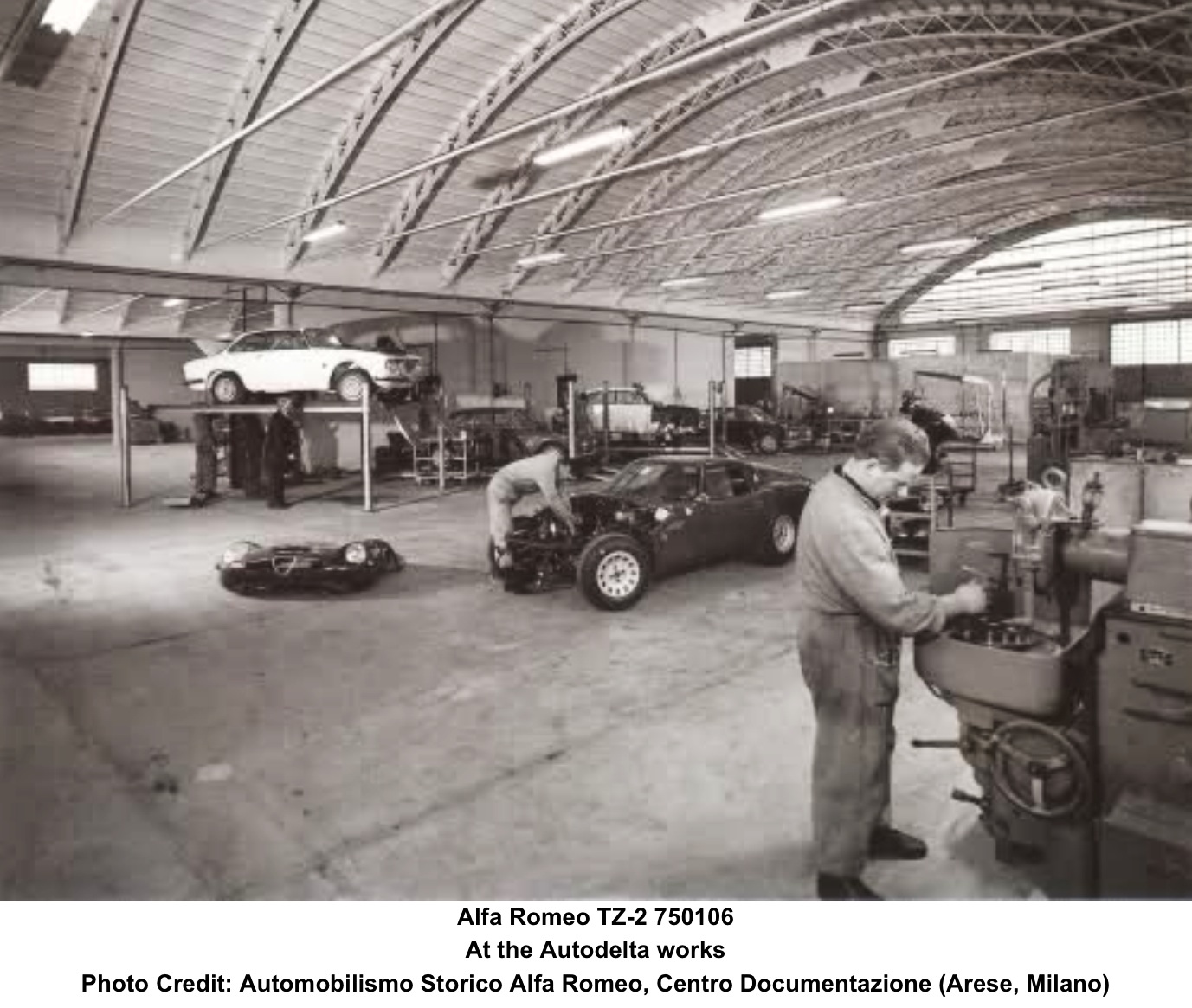
Bartlett at it again…Leger Corner , Warwick Farm 1966 ‘RHD’ Mildren GTA (autopics)The Autodelta factory, Milan circa 1967, car is a GTA Stradale – road spec GTA (Pinterest)
Autodelta…
The original step-front Alfa Giulia Sprint GT was penned by Giorgetto Giugiaro at Bertone and has to be one of the most beautifully balanced, delicate designs of the 1960s.
Autodelta was the factory Alfa racing subsidiary formed by famed ex-Ferrari engineer, Carlo Chiti, and Ludovico Chizzola in 1963 after the closure of ATS, the Grand Prix team formed by ex-Ferrari staff after a purge by the Commendatore in 1961. In 1964 Alfa acquired Autodelta and moved it to Milan, near its HQ.
The Giulia sedan was race developed and did well in Australia winning the Sandown 6 Hour in 1964, but it was too heavy against the Lotus Cortinas so development started on the Giulia Sprint GT coupe in 1964.
This ‘GTA’ was built to compete in sedan racing globally, in Group 2 under FIA rules, which boomed in the 60s. On 18 February 1965 the first Giulia Sprint GTA was unveiled at the Autosalon in Amsterdam, it was followed by the GTA Junior 1300 in 1968 and later the 1750/2000 GTAm.
Interior of Australian owned GTA Stradale (M Bisset)
GTA 1600 Tipo 105.32 specifications…
The car featured lightweight bodies utilising Peraluman 25, a light alloy comprising aluminium, magnesium, manganese, copper and zinc. The superstructure remained steel, including the sill panels. The roof, bonnet, boot lid, rear inner support panel and spare wheel well, dash, parcel shelf support panels and rear seat support were all made from P25. The lightening continued with minimal sound deadening, Perspex side and rear windows on Corsa (race) cars. The GTA lost 205kg compared to the Giulia Sprint GT, for a total weight of 820kg.
Alfa had to build 1000 cars to qualify for the FIA’s Group 2 Touring Car regulations, the Stradale (road) version helped, being built on Alfa’s normal, Arese production line. Race prepared cars were taken after completion at Arese, to Autodelta, the exact specifications of each car was built customer order.
The car’s engine was a twin-plug, highly tuned version of Alfa’s famous DOHC engine. The head was ported and polished, higher compression pistons, high lift cams and lightened flywheel were fitted. All reciprocating parts were balanced, increasing power to in excess of 175bhp. An oil cooler and deeper sump aided reliability.
The engine/bay of the ‘RHD Mildren GTA’ as restored, Philip Island 2013 (Flickr)
A limited slip diff and sliding-block rear axle locating system was fitted. The standard five-speed gearbox had a greater range of ratio choices, similarly the diff ratio was to choice from homologated alternatives. The front suspension was modified with adjustable top arms to allow negative camber to driver’s choice.
The cars were immediately and immensely successful winning the first round of the European Touring Car Challenge in March 1966. Andrea de Adamich won the Division 2 Drivers Title and Alfa the European Manufacturers title. In the US, Jochen Rindt won the SCCA Trans American Sedan Championship race at Sebring, many championships followed throughout the world. The GTAm won Alfa’s last championship for the 105, the ETCC Manufacturers Championship in 1971, the cars were competitive for a long time with ongoing development.
Arnaldo Tonti, Autodela mechanic attributed the success of the car in Octane magazine to ‘… a perfect balance between a very good chassis, with a very low centre of gravity, and a very strong, powerful and reliable engine. The Autodelta sliding block for the rear suspension was a work of art lowering the car and making it quicker and more stable through the corners and giving its characteristic raised front wheel. The engines were capable of 6800/7000rpm…’
Bruce Wells’ shot of Kevin Bartlett at Warwick Farm in 1966, in LHD Mildren GTA
In Australia Mildren’s LHD car landed in mid-1965…
The car was raced in the Sandown 6 Hour race in November 1965 by Alfa factory driver Roberto Businello and Ralph Sach. Businello tested the car at Balacco before it was shipped to Australia, it was a trick-GTA, very light having the aluminium floor relatively few had.
It led at Sandown until lap 99, with victory going to Bartlett and Gardner in the Mildren Giulia Super Ti which was also victorious the year before.
Businello in the GTA, Sandown 6 Hour 1965 (cooper997collection)
Gardner and Bartlett then raced it in supporting events during the 1966 Tasman Series, Gardner winning outright at Warwick Farm and Sandown with Bartlett first in class at Longford.
‘It was a pleasant car to drive, KB recalled recently. We ran the car at Bathurst, had a win there against Bob Janes’ Mustang on that power circuit. I preferred the LHD car (to the RHD car) as it had the right-hand change which was what I was most familiar with given the sports-car and single-seaters I was racing. There was not much difference in the performance of the two cars, although the LHD was a semi-works spec car. We could knock off the big cars at Warwick Farm but it was much harder at Sandown and the like’.
‘The under 1600cc closest competitors to the GTA were the Mini Coopers who were giving away capacity to us, they were great handling and very quick with the right guys such as Brian Foley and Peter Manton at the wheel. The LHD was sold as it was getting a little long in the tooth in terms of miles, Alec sold it to a guy named Stephenson in WA.’
Kevin Bartlett coming off Long Bridge, Longford in early 1966 (E French)
Used mainly in State level events the car also contested the one-race Australian Touring Car Championship in 1966. Held at the Easter Bathurst meeting, Bartlett did well to finish third to the big V8s of Pete Geoghegan and Norm Beechey aboard Ford Mustang and Chevy Nova respectively. Run over 20 laps – 75 miles – of Mount Panorama, what the GTA lacked in top speed up and down the mountain was largely made up across the top and under brakes.
KB was victorious at Warwick Farm in May and that month also won the Queensland Production Touring Car Championship at Surfers Paradise. He took a race win at Lowood, Queensland in June before the car was sold to Frank Cecchele, a Perth Alfa dealer and raced for him by Gordon Stephenson. It was rolled at Caversham in 1967.
Wonderful, evocative Caversham shot in 1968. Stephenson in the ‘LHD Mildren GTA’, gridding up with Kitz Kohout and Jeff Dunkerton in Porsche 911S and Mini Cooper S respectively, the rest of the field are moving forward and out of shot. This was the last year for Caversham before it was closed for racing (P Boxsell)
‘LHD’ competed regularly in WA state events and the annual 6 Hour race held at Caversham ; ’67 DNF Stephenson, ’68 DNF Stephenson, and at Wanneroo Park ’69 DNF Stephenson/ Cooper, ’70 seventh Ricciardello/Zampatti, ’71 DNF and finally in 1972 fourth outright and first in the 1600 class for Ricciardello/Cooper.
The car was all but destroyed at Mt Brown Hillclimb, from the remains, Ricciardello built a V8 engined sports sedan, initially Ford 302, and later Chev 350 powered. Cooper bought the ‘RHD’ Mildren Alfa, which he later owned in partnership with Ricciardello. Current ownership is unknown.
‘LHD’ in 1966 at Mount Brown hillclimb out of York where it was in later years all but written off, this was the end of the car in its original form (Allegerita)LHD at Caversham in 1967 when raced by Gordon Stephenson (Allegerita)Brian Foley’s Cooper S chasing Frank Gardner’s new ‘RHD’ Mildren GTA at Warwick Farm in early 1967. Foley acquired the car six years later. This shot a wonderful example of oversteer and understeer respectively! (B Wells)RHD in the Surfers Paradise 12 Hours in 1967. DNF, KB driving with Doug Chivas, KB has passed the Munyard/Crawford/Calvert Holden 48-215!, at rear the winning Scuderia Veloce Ferrari 250LM of Bill Brown/Greg Cusack approaches (R Bell)
The Mildren RHD GTA, chassis # 752 561…
The LHD chassis number is lost in the mists of time, but RHD was built in July 1965 and first raced by Gardner at Warwick Farm in December 1966. He then raced the car in numerous ’67 Tasman supporting events, winning at Warwick Farm and Longford. Bartlett then took the car over and had wins at Bathurst and Surfers Paradise.
Bartlett again contested the ATCC, this time a one race event held at Lakeside, another power circuit in 1967. Pete Geoghegan’s Mustang won again, this time second and third places were secured by the Cooper S’ of Brian Foley and Peter Manton.
The car was sold to John French in Queensland in 1968 who raced the car and continued to develop it until it was bought by Brian Foley in 1972.
Bartlett fourth in the 1967 ATCC held at Lakeside, Pete Geoghegan was victorious in the one race event (Graham Howard History of the ATCC)Racing Car News ad for the sale of the RHD GTA, March 1968 edition. The Brabham Intercontinental is a Brabham BT11A Climax, the prices are right! (Racing Car News)The Mildren RHD GTA was further developed by John French in terms of wheel/tyres, roll bar and engine (unattributed)
Foley had raced an Alfa GTAm in 1971 in the ATCC and in 1972 as a sports sedan.He converted the car from LHD to RHD and fitted with an Alfa Tipo 33 2.5 litre V8 into the engine bay which had previously housed the 2-litre, twin-plug DOHC, Lucas injected four cylinder engine fitted by the factory.
The T33 V8 was left-over from Mildren’s Brabham and Mildren ‘Yellow Submarine’ single seater program raced by Gardner and Bartlett. I will write about the GTAm separately. The GTAm was a pork-chop compared with the GTA, as it lacked the earlier cars aluminium panels, it was around 200kg heavier.
Foley, a Sydney Alfa dealer reasoned that a more competitive 1973 mount would be a lightened and modified GTA, so off to Bowin Designs in Brookvale, Sydney the car went for major surgery by John Joyce to its suspension, structure, brakes, engine mounting etc. When completed, the car was powered by a 16-valve 2-litre Alfa engine developing 225bhp and weighed 636kg.
GTA Lwt at Oran Park circa 1973 with Foley watching the action at far right (unattributed)Brian Foley in the RHD Mildren GTA – now further developed and lightened by Bowin Designs – and raced as a Sports Sedan in 1973. It’s very easy to confuse this car with Foley’s GTAm which raced in the same livery, and was converted from LHD to RHD when the Tipo 33 2.5 V8 was fitted. The eight injection trumpets protruding through a hole in the bonnet is an easy way to pick the two cars apart (autopics)
The car was fast but V8s were coming into the category in increasing numbers, so after a prang at Oran Park in late 1973 the car was sold to Peter Brown in Canberra. Foley essentially retired from racing after a fine career.
Brown, an Alfa racer from way back, fitted a Mazda Rotary engine then sold it to Neville Cooper in Western Australia, where all exotic Alfas seem to end up! The ‘LHD’ Mildren GTA having been damaged too much in race accidents to continue. A Ford V8 was fitted, then the car was sold to Peter Gillon who raced it for two years before being acquired by Ricciardello and Cooper in partnership.
It was raced very successfully including a win by Cooper in the 1979 Wanneroo 300km race, the car was always competitive in WA Sports Sedan competition during this period.
Ultimately the much raced GTA was acquired by a Sydney enthusiast who had owned GTAs before and was aware of the car’s provenance, a long restoration followed, the car is now a regular entry in historic events across Australia.
For the Sake of Completeness…
It appears there were two other GTAs which raced in Australia in period. The ‘MW Motors GTA’ was raced by Syd Fisher and Frank Porter for MW who were the Victorian Alfa distributor and Melbourne dealer. Sold to Mario Marasco, he raced the car as a Sports Sedan and wrote it off at Hume Weir, it is presumed lost.
The ‘Gulson RHD GTA’ chassis #75247 was restored from a fire-wreck in Western Australia, Vin Sharp, long time Alfisti and owner of the ex-Foley GTAm last had contact with the owner in Scotland about ten years ago.
The MW Motors GTA in the Longford paddock 1968, Alan Hamilton raced it that weekend. It reappeared, restored in 2019 after a ‘barn find’ (P Drury)Frank Porter driving the MW Motors GTA at Sandown, Melbourne for a successful challenge on a 12 hour national record attempt in 1968 (Allegerita)Copy of the first page of the long homologation papers for the GTA (Allegerita)
Etcetera…
Autodelta factory 1965, GTAs and a Giulia Super Ti on the line. Completed cars were delivered from Alfa’s Arese production line and then modified to customer order (Pinterest)Alfa’s test track at Balacco, circa 1966. TZ2s and GTAs, drivers unknown (Pinterest)
Etcetera ‘LHD’…
Roberto Businello in Pit Straight Sandown in November 1965. The car led the Sandown 6 Hour for 2.5 hours, retiring at 99 laps (Allegerita)The start at Longford 1966. Pete Geoghegan Mustang, Bartlett in ‘LHD’ and Allan Moffat in the Lotus Cortina (E French)‘LHD’ at Caversham, WA 1967 (Allegerita)
Etcetera ‘RHD’…
Kevin Bartlett in ‘RHD’, Warwick Farm 1966 (Roderick MacKenzie)‘RHD’ in Mildren ownership, the old Sandown Paddock circa 1967 (Flickr)John French at Lakeside early in his ownership in 1968 (unattributed)John French in ‘RHD’, Lakeside 1970 sandwiched by two Torana GTR XU1s, Dick Johnson in his formative Holden days on the nearside (Alfa Bulletin Board)Brian Foley in ‘RHD’, Oran Park 1973. This is post the Bowin modifications, car has later single headlight 1.6 Junior front clip rather than early Stepfront. Very easy to confuse the car with the ex-Foley GTAm which by this stage was in Perth (Dale Harvey)‘RHD’ in Neville Cooper’s hands, WA (Wells/Neville Cooper)
Special thanks to Kevin Bartlett
For his recollections of the two cars
Sources and Photo Credits…
The Nostalgia Forum, Alfa Bulletin Board, John Stanley, autopics, Bruce Wells Collection, The Roaring Season, Howard/Wilson ‘History of The ATCC’, peterwindsor.com, Paul Boxsell, Roderick MacKenzie, Neville Cooper Collection, Yen Yoshikawa cutaway, Dale Harvey, Ellis French, Ray Bell, ‘Allegerita’ by Tony Adriaensens, Vin Sharp, Perry Drury
My First Race Meeting…Sandown Tasman F5000 Meeting February 20 1972…
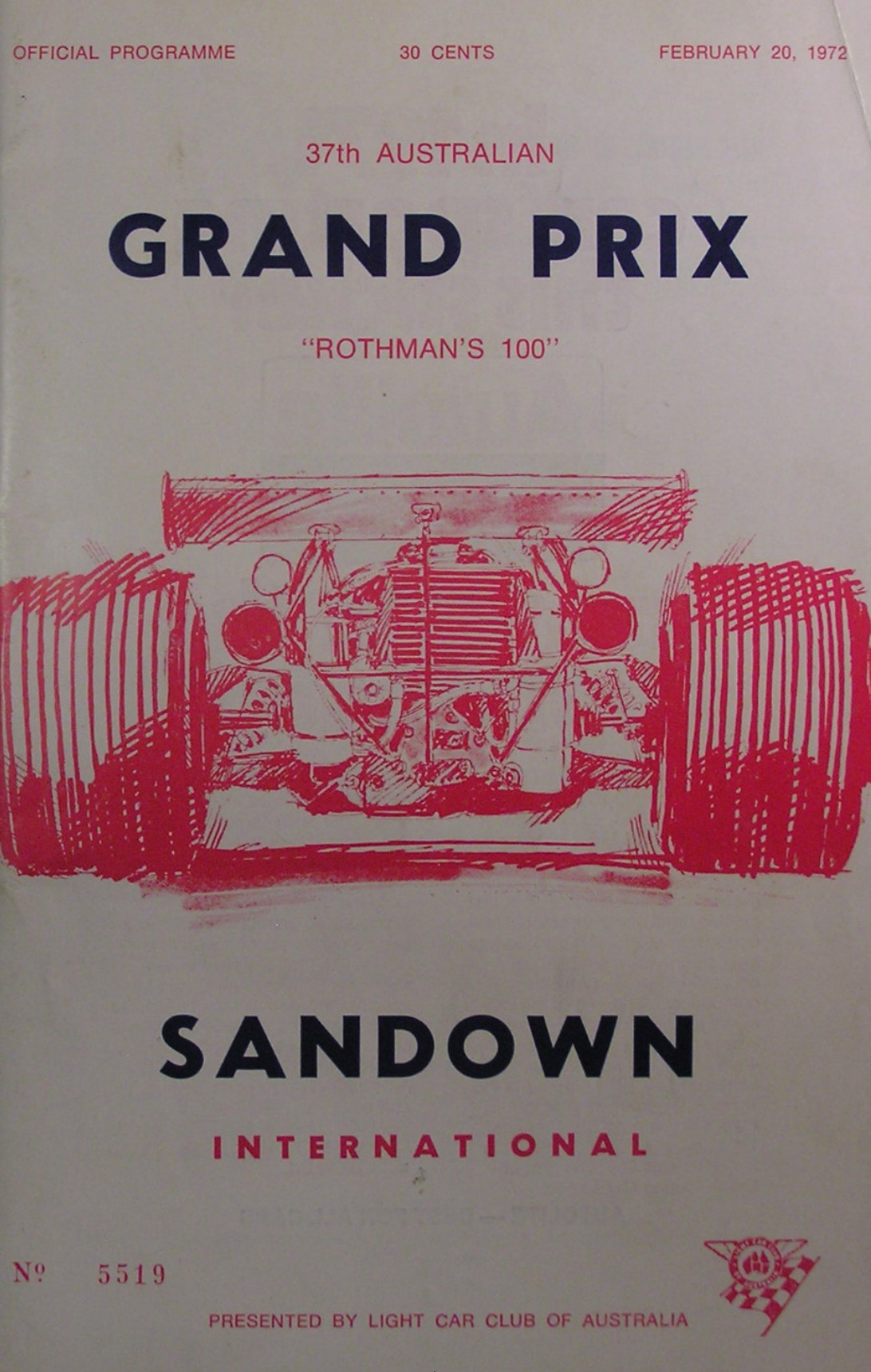
We can all recall the meeting or event that hooked us on the sport, right? For me, it was the 1972 Sandown Tasman Meeting, the Australian Grand Prix no less, contested by Formula 5000 cars.
I was up for it mind you; one of my friends, Simon Roberts’ father Ron, worked for Castrol and amongst his responsibilities was the racing budget in some shape or form. Critically, he went to race meetings and gave me Castrol’s copy of Racing Car News each month after it had done the rounds of their execs. It was always a month or so outta date and well thumbed by the time I got it, but I lapped up every word. Finally I was invited to my first meeting.
We cruised out to Sandown from North Balwyn in Rons’ metallic brown Valiant with the big ‘265 Hemi’…
Not a bad ‘Dad Car’ at the time. The Val joined the endless stream of weekend traffic on Warrigal and Dandenong Roads, my excitement building seeing lots of performance cars of the day: GTR’s, XU1s, GTs, GTVs, Monaros and plenty of souped-up EHs and HR’s chromies gleaming in the sun amongst the other weekend warriors heading to a Mornington Peninsula beach on that hot summer’s day.
Reading RCN didn’t prepare me for the sheer visceral thrill, excitement, speed and ground-shaking, guttural thunder of the 5-litre 500 BHP V8s.
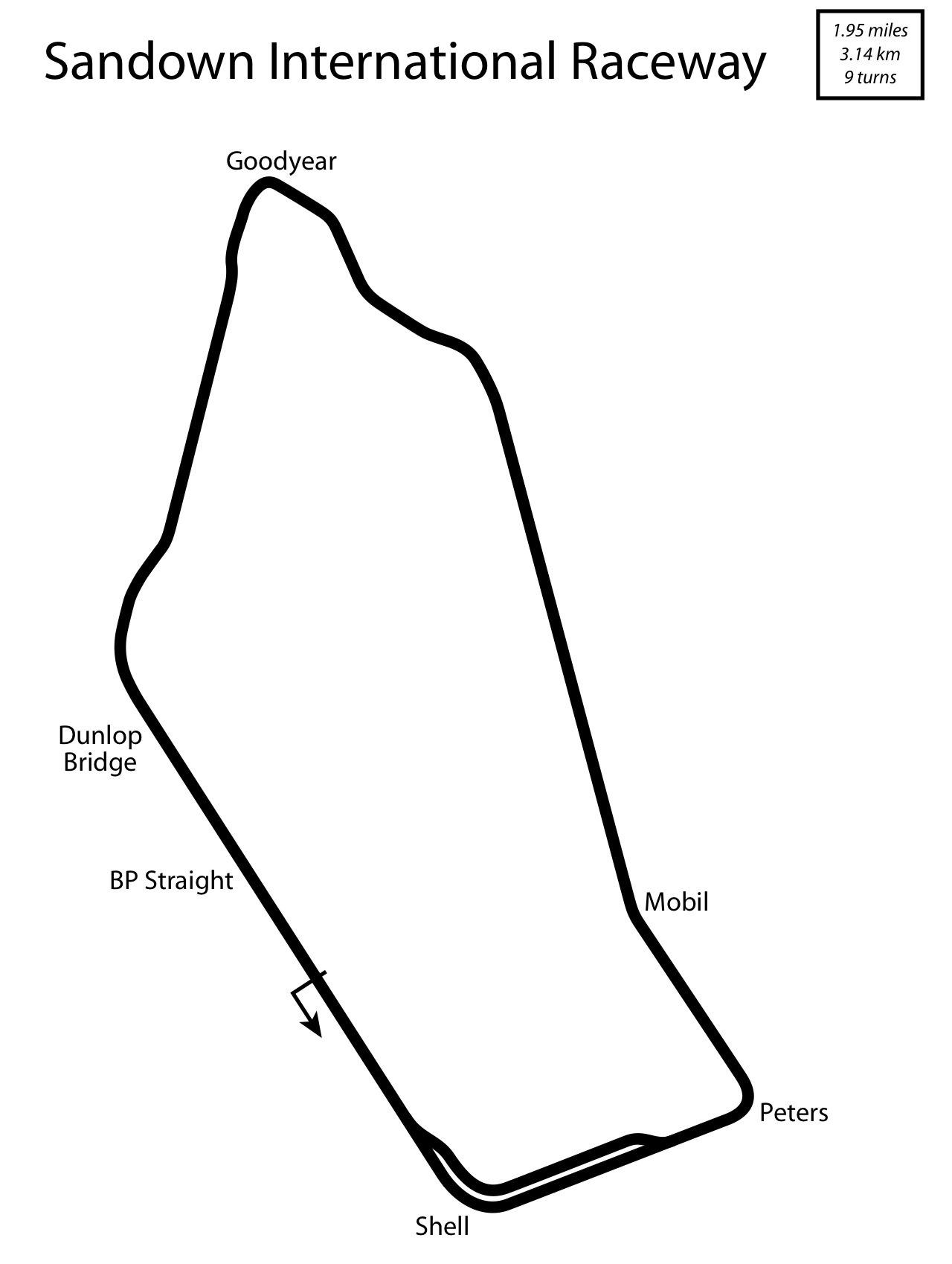
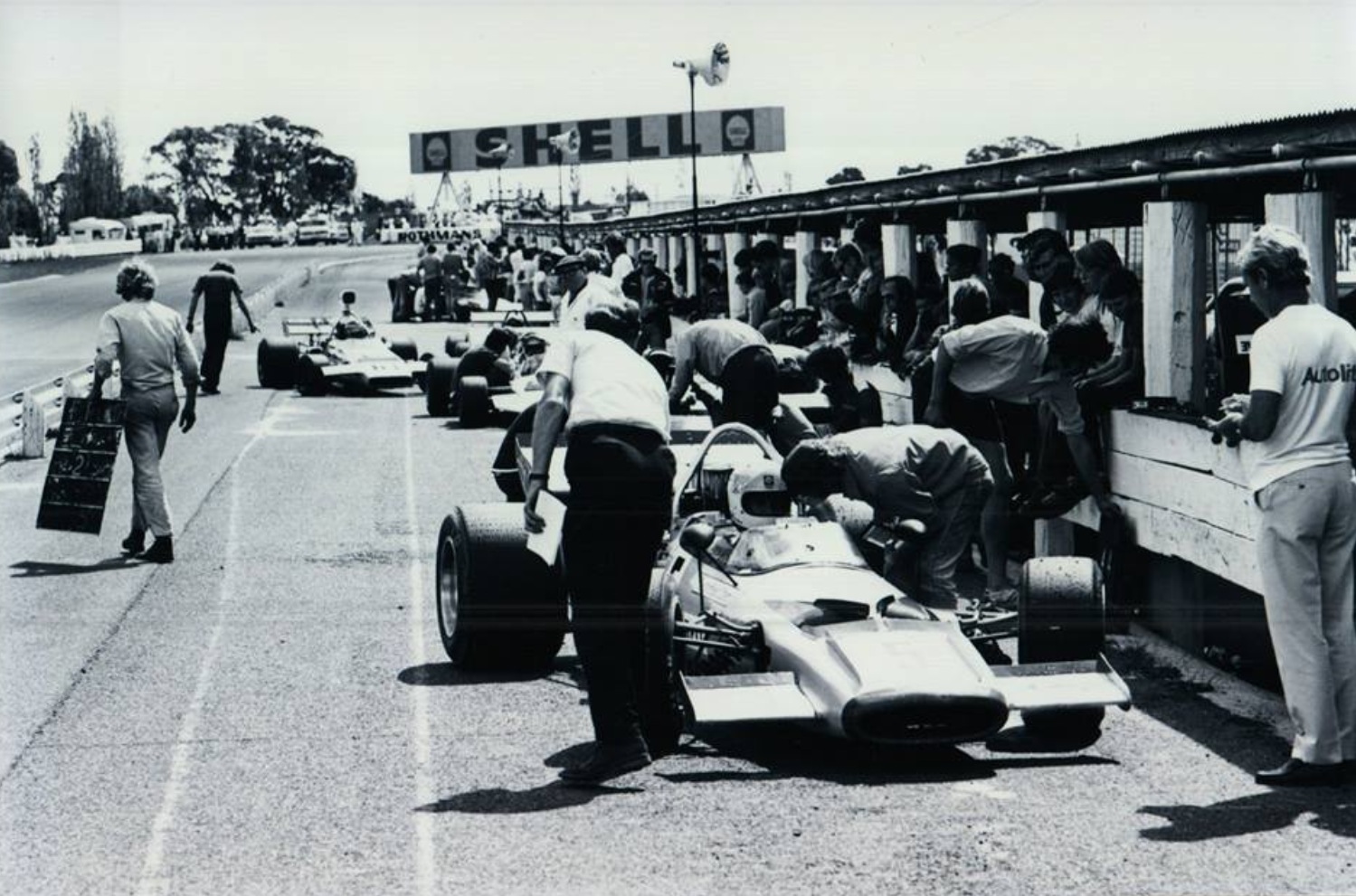
In those days, the paddock was in the infield, inside Shell Corner, or Turn 1 and extended across the track to the inside of Peters or Torana Corner, now Turn 3, or the corner onto the back straight. It was lower than the surrounding infield and was like a private little Mecca for racers and enthusiasts alike.
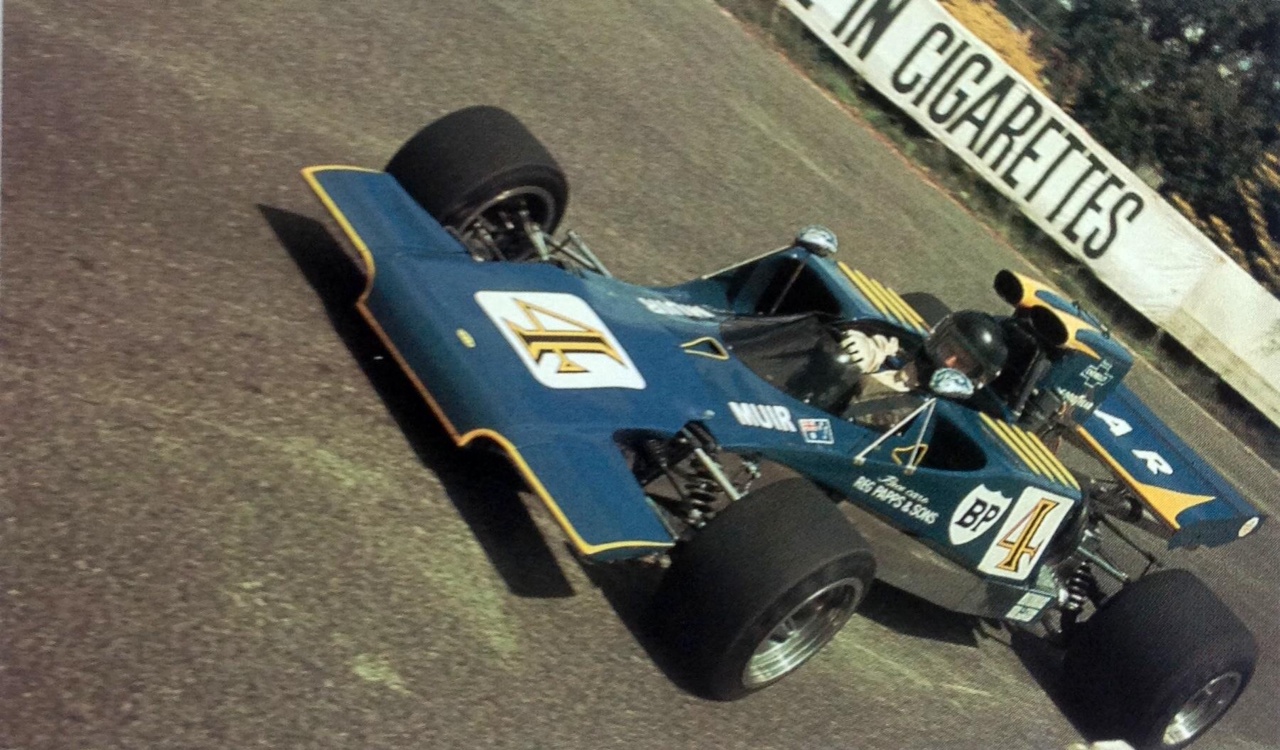
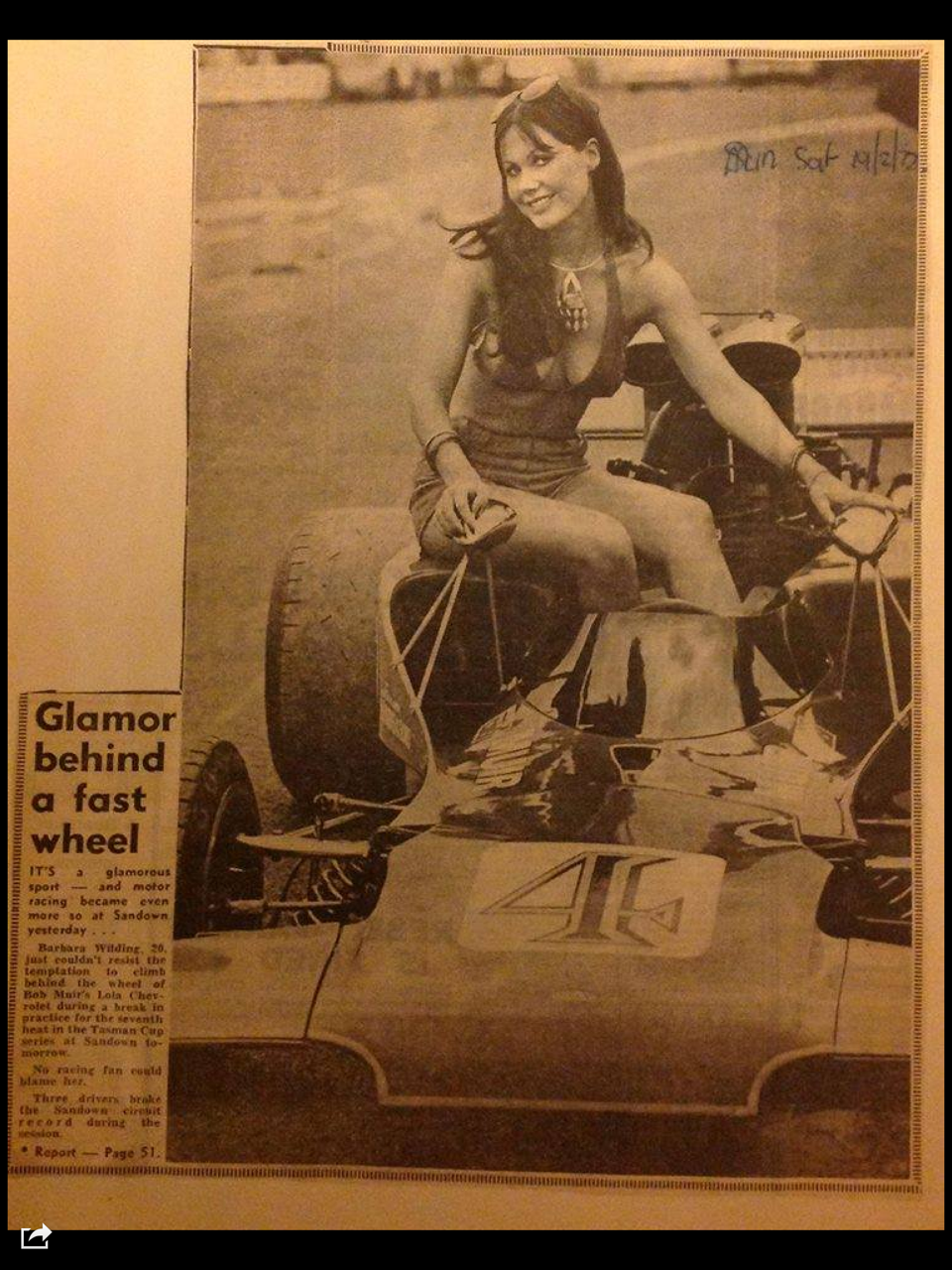
I recall two things vividly from that weekend all these years later. The first was walking from the car park behind the grandstand, the excitement building, hearing cars being warmed up in the distance, crossing the track into the dusty, gravel paddock area and seeing Bob Muir’s beautiful, exotic, automotively erotic, concours, gleaming blue Lola T300 just about to enter the scrutineering bay.
I was stunned, gob-smacked. I couldn’t move; I was so awed by its amazing combination of wedge shape, curves, fibre-glass, chrome-tipped exhausts, scoops, ducts, wings and oh-so-wide tyres! It was immaculate, yellow pinstriping contrasting the blue bodywork, the finish of the racer a Von Dutch work of art.
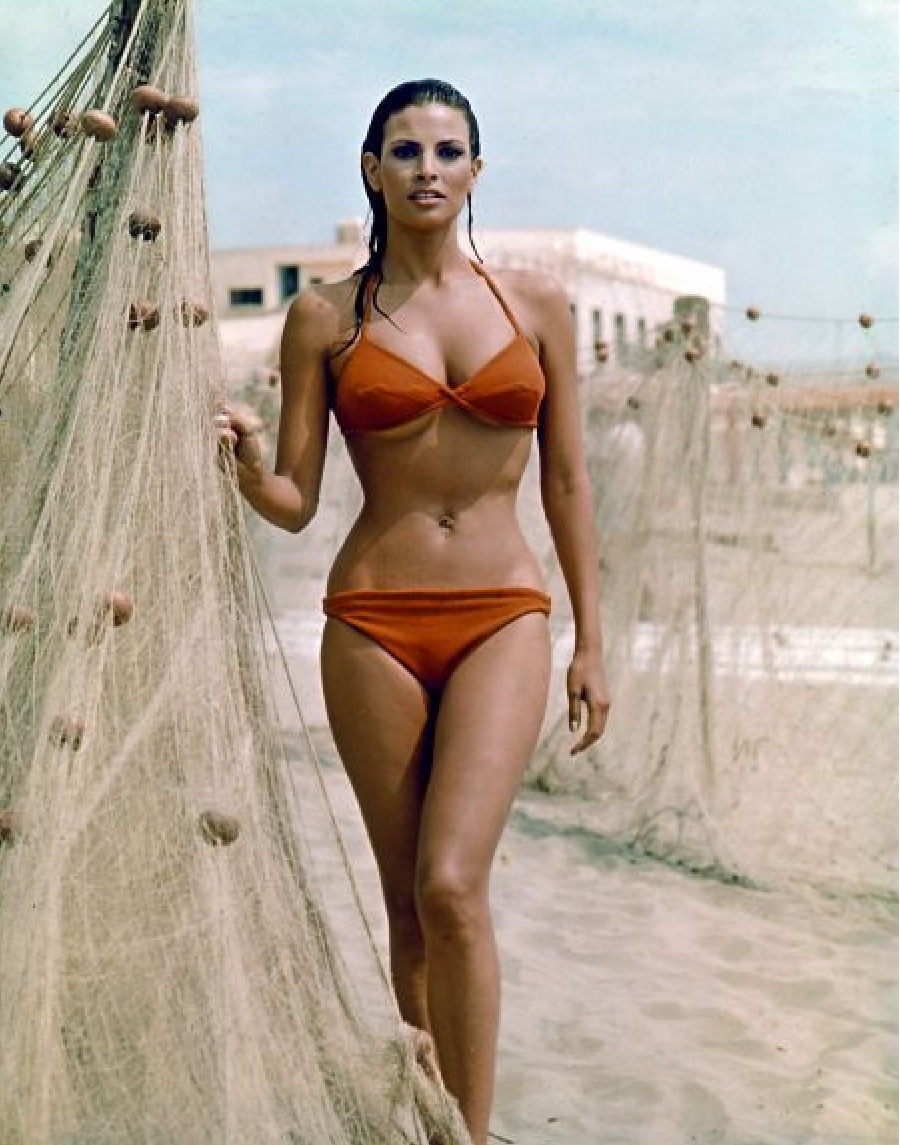
Lola was as curvaceous as Raquel Welch who adorned my bedroom wall. Her appeal was far more carnal, but the compound curvature of both car and screen siren was undeniable.
Fairly soon a poster of Lola was alongside Raquel. Dad related to Raquels’ charms, more than once we compared and contrasted her ‘on screen’ attributes with Sophia Loren but to me she was too old, I took his point all the same. He did find the car thing more of a challenge than babes.
Eventually I regained my senses and did a slow lap of Lola, taking in every bit of it. Drinking visually every feature. The T300 was a new design; none of my old RCN’s had pictured it. Most racing cars then were still cigar-shaped; Lola took her cues from the radical 1970 F1 Lotus 72, not the cars of the 1960s.
We wandered off to the Castrol tent, meeting Peter Brock and Colin Bond, and whilst the Touring Cars were of interest, they didn’t really float my boat. Moffat’s Mustang raced that weekend; it was and still is impressive. Surely the best-looking taxi of all time?. With an honourable mention to Brian Foley’s Alfa GTAm.
The beauty of the old Sandown setup was that you could see most of what you wanted within a 500-metre walk. Watch the cars coming down the main straight and into Shell Corner on either the inside or outside of the track. This was a great spot to watch braking manoeuvres and hear and work out the best practitioners of the heel’n toe art.
My other favourite spot was coming into or exiting Torana/Peters from the inside of the circuit. This was the place to watch and hear the cars accelerate away from you, always impressive to watch an F5000 doing that on its own, bellowing up through the gears on its way up towards Marlboro Country. The fast combination of corners into ‘Dandy Road’, it was, and still is, a great part of the track to drive.
Access and egress from the Paddock was via a pit pass or jumping the fence for the impecunious. The Light Car Club guys always turned a blind eye to this teenage activity, proper chaps those blokes.
My preferred locale though, was in the paddock. You could wander around seeing as much as you liked, talk to the drivers and get an autograph if you picked your moment, watch the cars form up on the dummy grid, see them take off, and watch them from the pit counter, on circuit until told to ‘piss-orf matey’ by the ever polite LCCA officials.
It was from that pit counter that the second indelible memory of the weekend took place.
We watched the cars grumble, crackle, spit back through their intake trumpets and pig-root their way past us…
Down the pitlane, the exotic sound of Hewland gear whine was audible and onto the circuit, the pack disappeared in one massive rumble of fuel-injected thunder as they accelerated up to The Rise and down into Dandenong Road.
The first car to approach us exiting Shell was yellow.
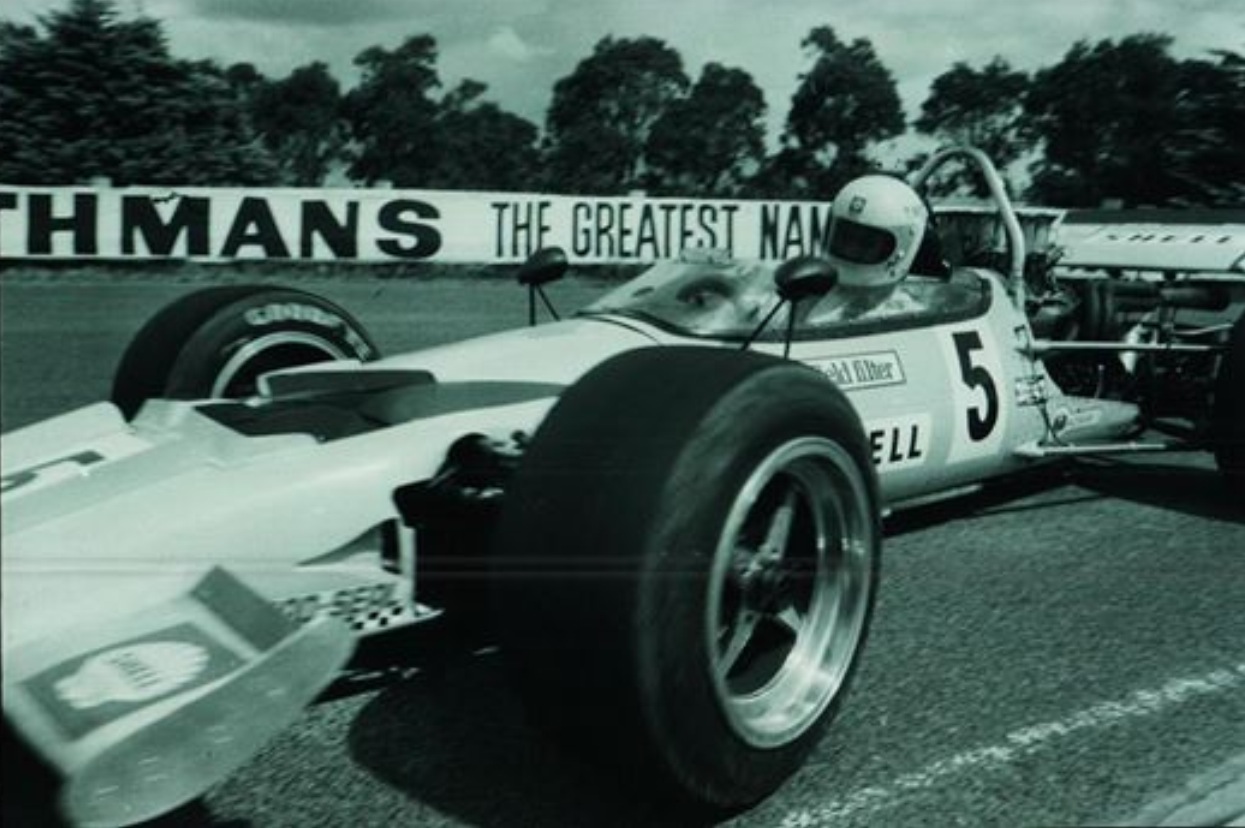
It was Kevin Bartlett in his McLaren M10B; he kicked the car sideways...teasing the thing on the throttle, the engine note changing minutely but perceptibly as he balanced the beast’s sticky, wide Goodyears with throttle and steering. I was stunned; it looked and sounded so fast and spectacular and easy. It wasn’t, of course, but he did it lap after lap in this third-gear corner. To see the thing accelerating hard past us and then almost as quickly, the wonderful sound of the big Chev on the down-change into Torana was all too much.
I was in sensory overload; Raquel did that to me as well, mind you, but in a different kinda way. But I was hooked as a Bartlett, F5000 and race fan for life.
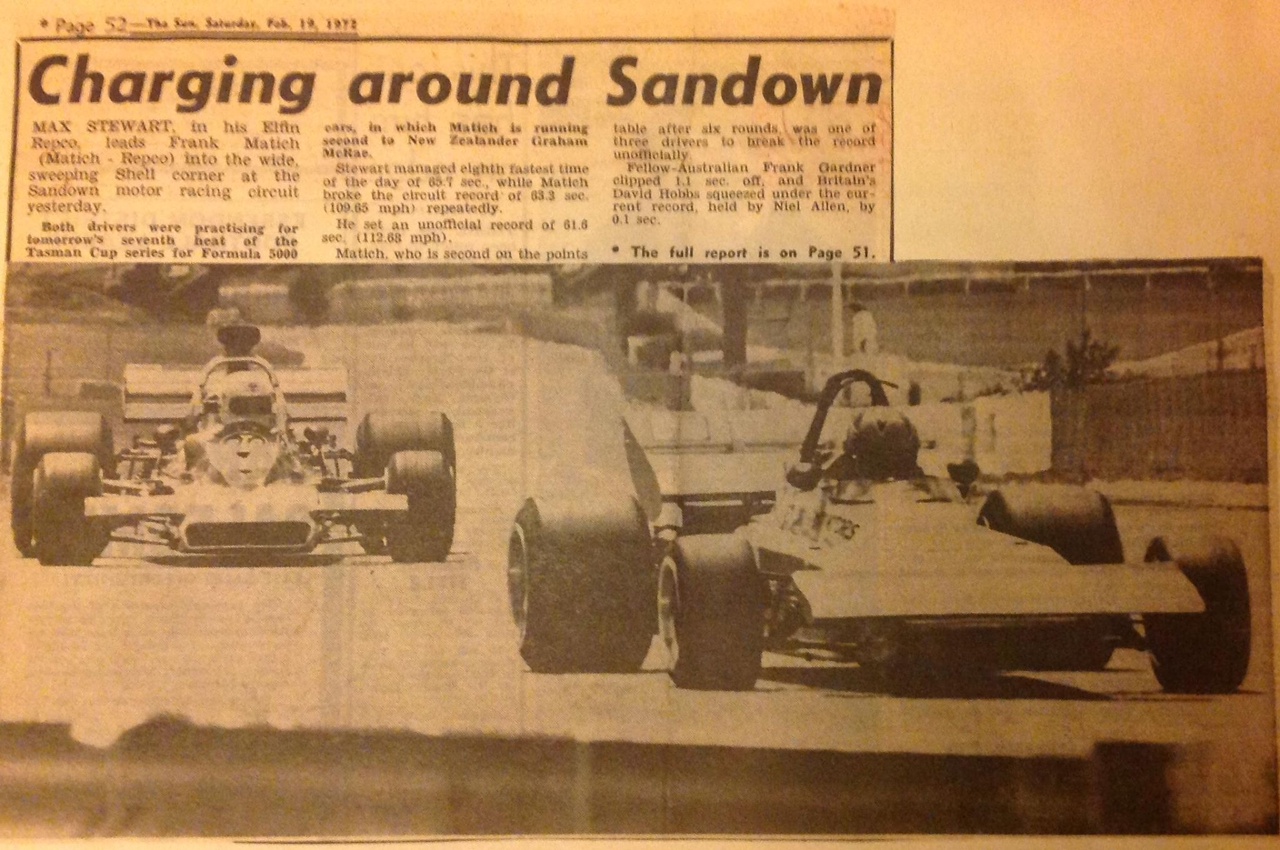
I don’t remember too much of the race itself but Graham McRae in his own car (Leda aka McRae GM1 designed by the recently deceased Len Terry) won the AGP from Frank Gardner’s Lola T300 and David Hobbs in a McLaren M22. KB and Bob Muir were both retirements with gearbox and engine maladies respectively.
But the race didn’t matter to me; I lived that wonderful weekend for months. I had found my lifelong interest and passion; it’s been my sport as a competitor and fan ever since.
Etcetera…From my scrapbook all those years ago
Photo Credits…
Thanks to Chris Parker and his archive for some of the shots, Stupix
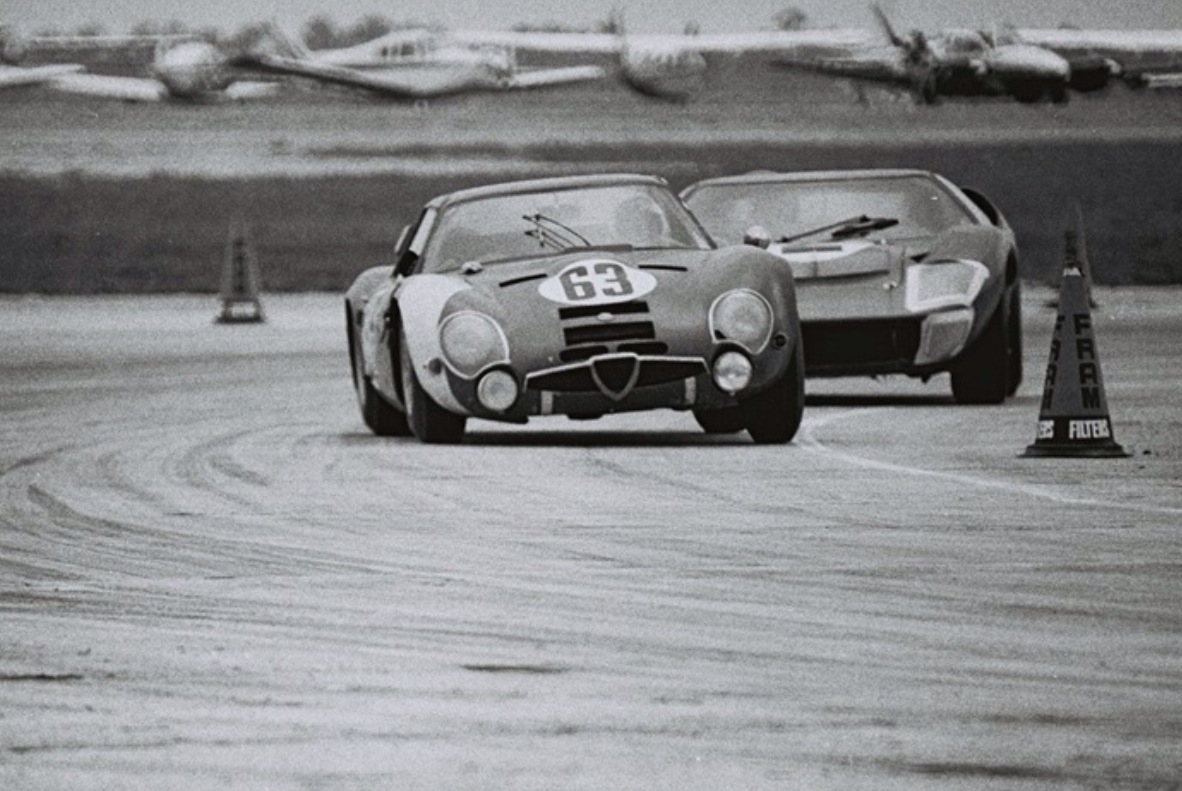
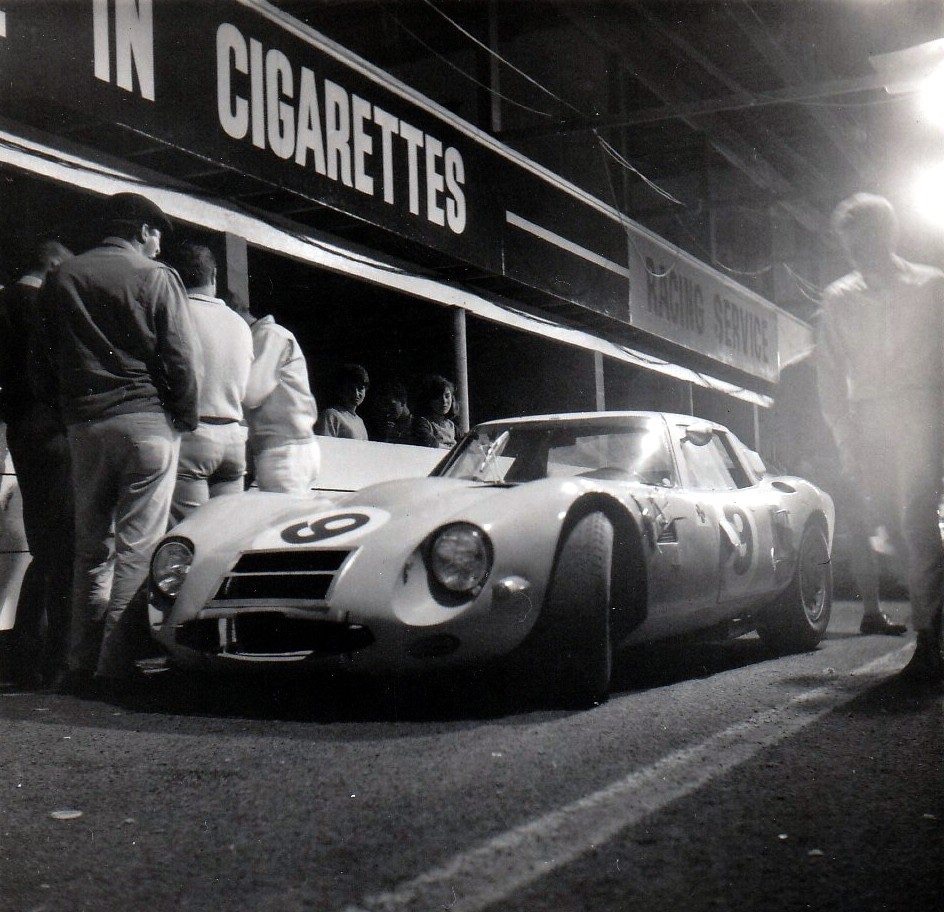
Wonderful Sebring airfield shot of the Autodelta TZ2’s of Russo/Andrey and Bianchi/Consten…
The Ford GT40 X-1 Roadster of Ken Miles and Lloyd Ruby won the race, Russo/Andrey winning their class and placing fourteenth outright, not bad for a 175bhp car, the Bianchi car did not finish.
Autodelta and TZ1…
Zagato press release of TZ1, the car for both road and track (Carrozzeria Zagato)
Autodelta was formed by Carlo Chiti after the failure of ATS, the Grand Prix team formed by Chiti and other ex-Ferrari staff after the Commendatore’s purge of Ferrari senior-staff in 1961.
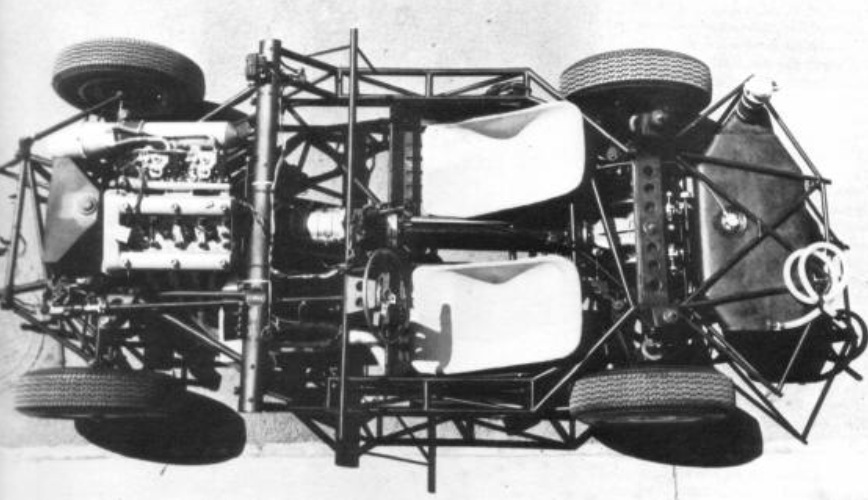
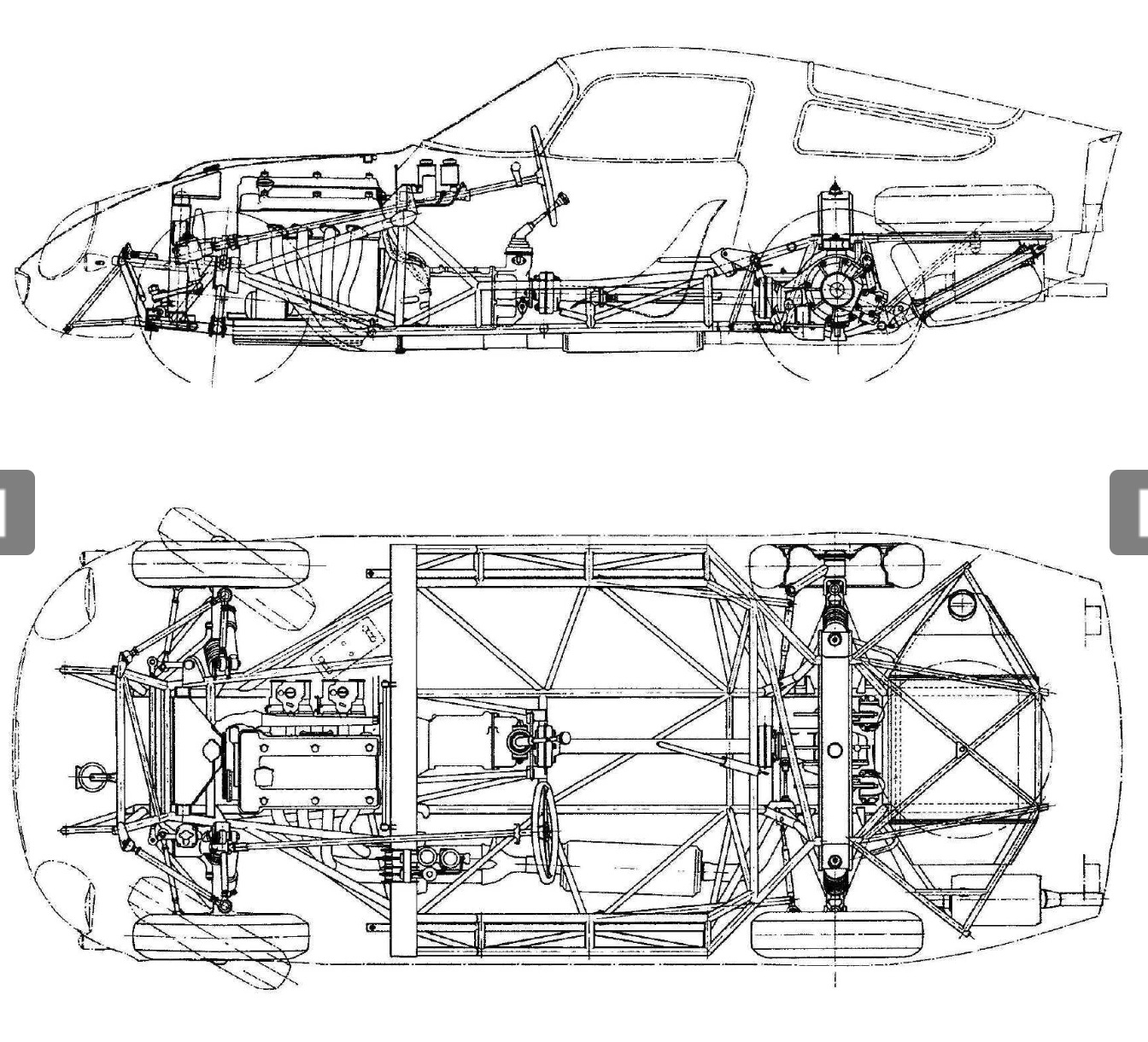
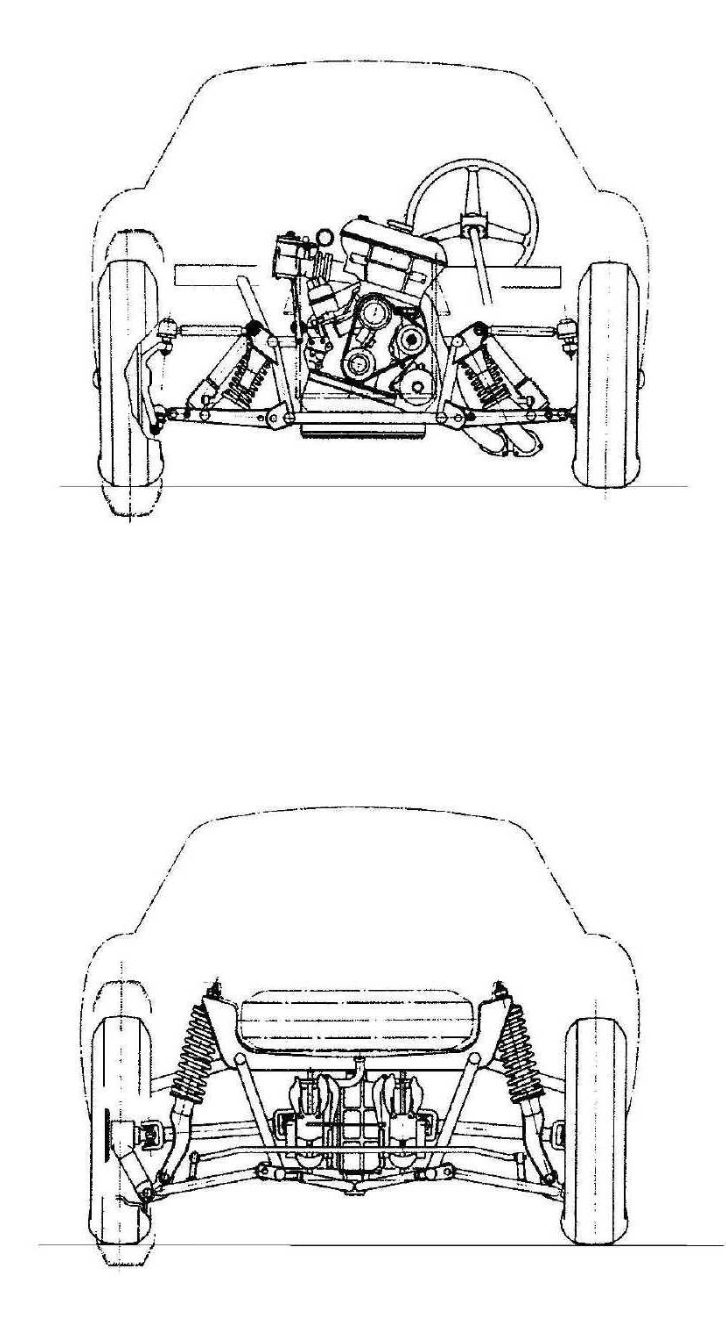
The TZ1 was a collaboration between Autodelta, Alfa Romeo and Zagato. It was designed by Autodelta using familiar 105 Series Alfa components including the engine, five-speed gearbox and differential. The car was clothed by Ercole Spada at Zagato. Autodelta used a lightweight multi-tubular spaceframe for the chassis, specifying an aluminium body, disc brakes and independent suspension, it weighed 660Kg.
112 Z1s were built for road and track, the car was quickly homologated into the 1600 GT category by the FIA’ becoming a class winner on both sides of the Atlantic. Alfa realised the importance of Autodelta to build their brand image via racing and acquired the company in 1964, moving it to Milan.
TZ2…
In 1965 the design was refined, creating the TZ2.
It was lighter, fibeglass was used for the body rather than aluminium, tipping the scales at just 620 Kg and lower at 41 inches high. Z2 was also more powerful, using a 1600 twin-plug engine which gave around 170bhp @ 7000rpm. The engine was dry-sumped to allow it to sit lower in the chassis. Z2 engines were prepared by Autotecnica Conrero in Turin, this engine was homologated for use in the last of the TZ1s and would be very effective in the GTA 105 Series touring cars in the years to come.
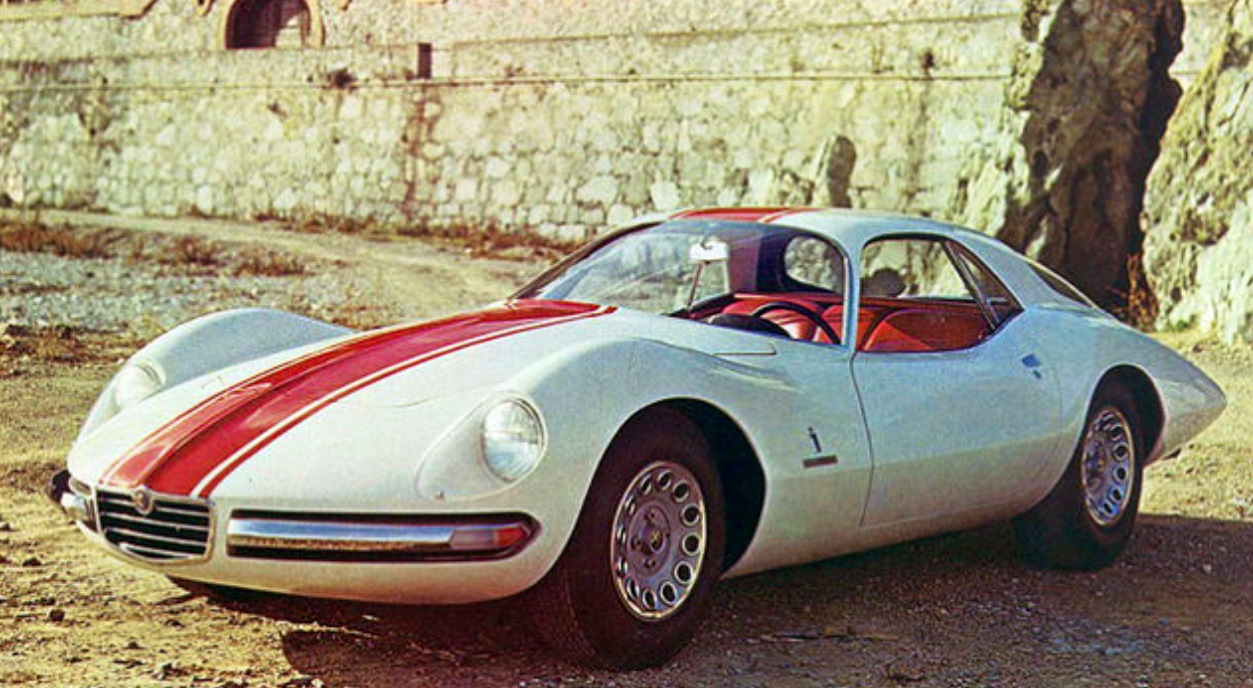
13 inch Campagnolo wheels were used to make better use of the racing rubber of the day, rather than the 15’s of the Z1. The chassis were built by Ambrosini, 12 were built, 10 racers plus a chassis each given to Bertone and Pininfarina to create ‘catwalk models’!
In standard form the car is sensational to look at, it’s low, swoopy and curvaceous with one curve merging into the other until ended abruptly with the chopped-off Kamm tail.
The TZ2 was raced five times in international events by Autodelta finishing first in class in all of them, Sebring inclusive. After 18 months of dominating the 1.6 litre GT class it was time for Autodelta to move on to bigger challenges but the TZ played a pivotal role in Alfas re-entry to sportscar racing. The Tipo 33 sports-prototype program picked up where the TZ’s finished, in fact the prototype T33 was powered by a TZ2 engine.
The Russo/Andrey TZ2 being monstered by a Ford GT40 Mk2 (Pinterest)(Pinterest)
The 1966 Sebring winning Shelby American entered Ford GT40 X-1 above driven by Ken Miles and Lloyd Ruby. The machine was a heavily modified GT40 Mk1 comprising an aluminium rather than steel chassis, Mk2 nose, no roof and a 7 litre/427 CID V8 as per Mk 2 specifications.
TZ essential elements were a multi-tubular spaceframe chassis, 105 Series engine, gearbox and differential, about 170bhp in TZ2 GTA specification, disc brakes and independent suspension front and rear.
TZ1 Cutaway, but essentially the same elements in both cars as above, Alfa engine, gearbox and diff, spaceframe chassis all clad in a gorgeous Zagato body.
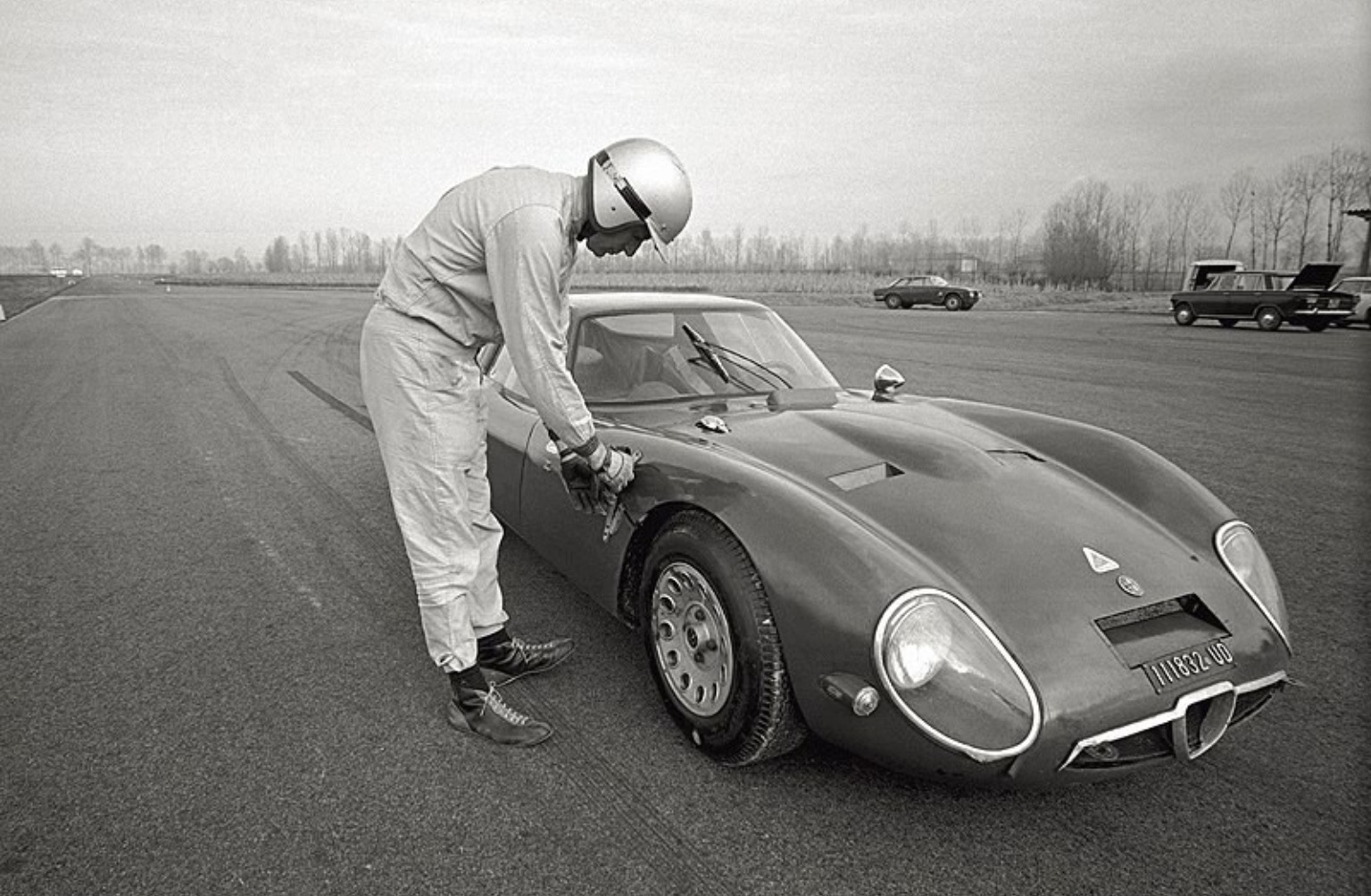
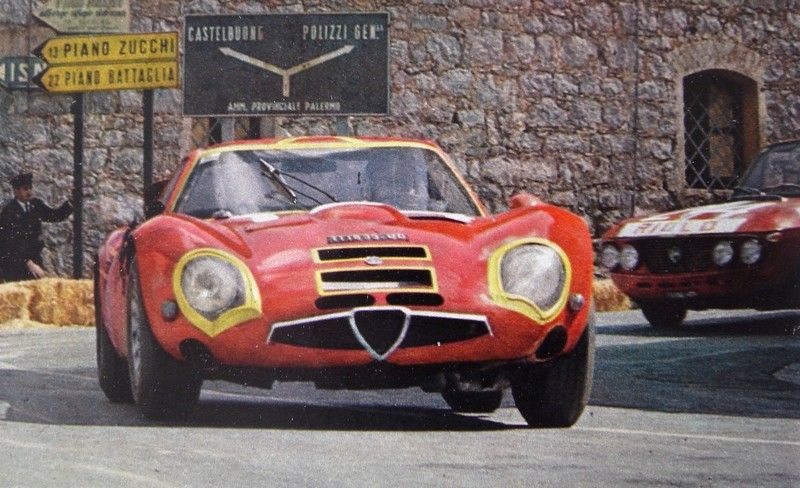
Interior of a restored TZ2 (Pinterest)The tough life of an Autodelta test drive! Balacco 1966, TZ2 (Pinterest)Targa 1966 was won by the Mairesse/Muller Porsche 906, highest placed TZ2 was the Pinto/Todaro car in fourth place outright, and first in class. Car # 114 in shot is the Zeccoli/Russo car which finished thirteenth (Pinterest)TZ2 Targa Florio 1966 (Pinterest)It’s generally regarded that 12 TZ2 chassis were built with two used as show cars. This is chassis # 750101 the Canguro, designed by the young Giorgetto Giugiaro whilst at Bertone in 1964. (Pinterest)The other show car chassis # 750114 was allocated to Pininfarina, who built the ‘Alfa Romeo Giulia 1600 TZ2 Coupe Pininfarina’ in 1965
Tailpiece: Surfers Paradise 12 Hour 1966…
(S Johnson)
Alec Mildren imported and raced two TZs to Australia, a TZ1 and TZ2, the latter is shown above looking all moody and evocative during the inaugural twelve hour race at Surfers Paradise in 1966. Kevin Bartlett and Doug Chivas raced it to third place in amongst the top-guns, the race won by the Scuderia Veloce Ferrari 250LM driven by Jackie Stewart and Andy Buchanan.
Photo Credits…
Nigel Smuckatelli, Pinterest, Carozzeria Zagato, Alfa Romeo, Stewart Johnson