Posts Tagged ‘Stirling Moss’

image

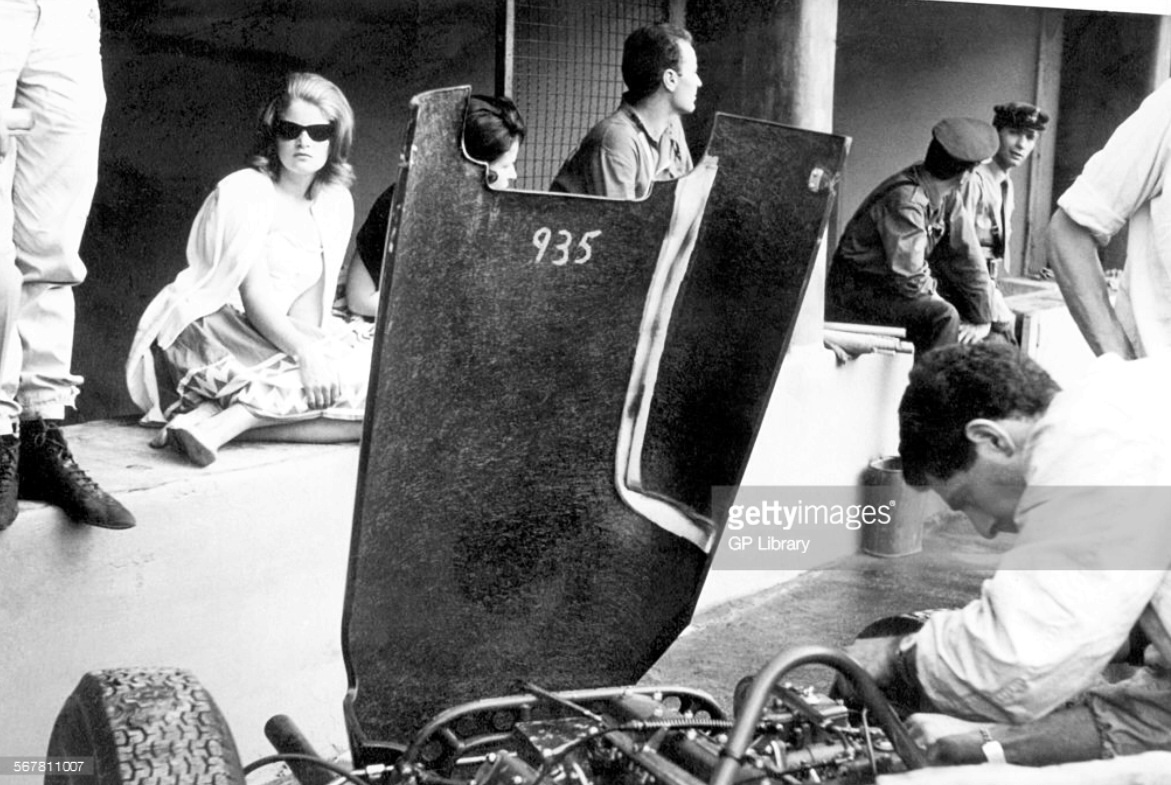
I was lookin’ for shots of chicks and cars as I do a fortnightly post of a babe with a car. When I spotted this image ’twas the lady who initially caught my eye…

But we ‘anoraks’ are so into chassis numbers right?

‘935’ on the engine cover stood out, a Lotus 18 number I thought- a quick google and no less an authority than DC Nye identified the car as a Lotus 21 delivered to Rob Walker, its locale Monza, lets come back to that.

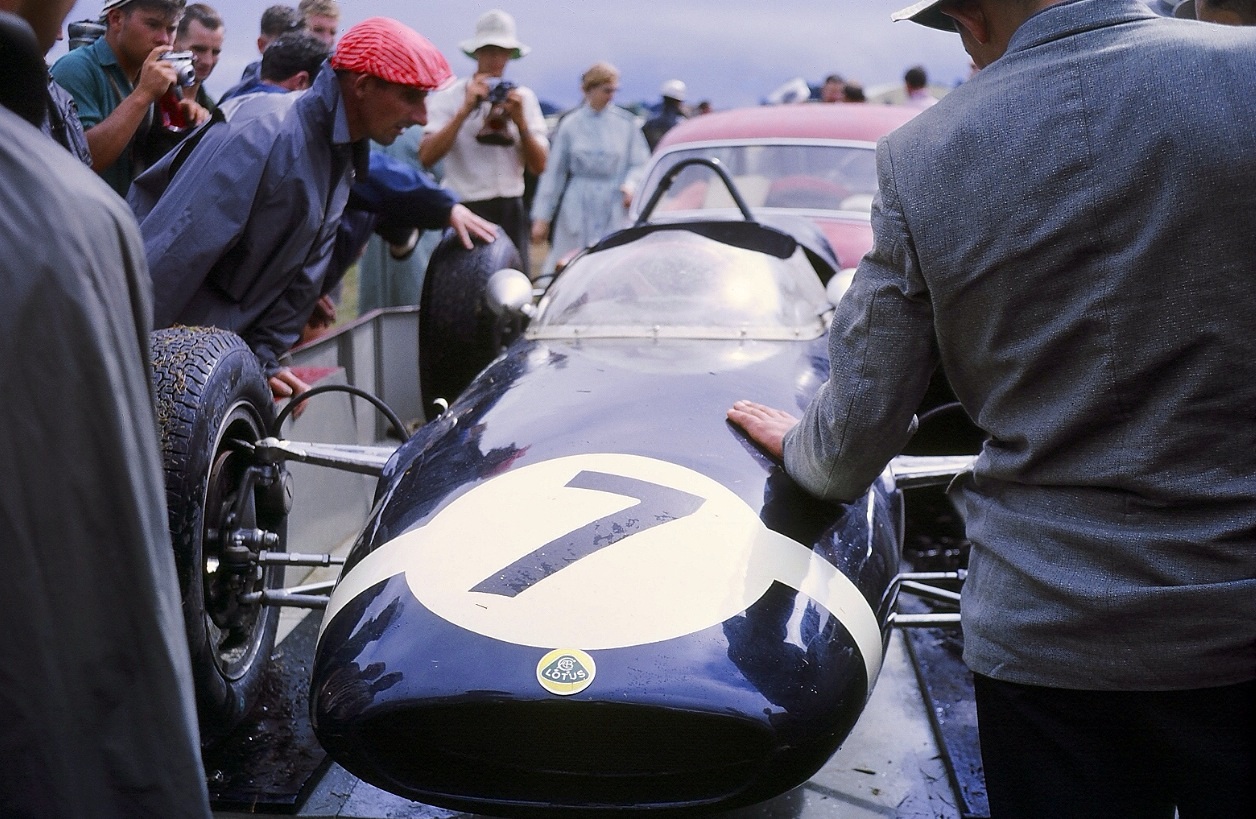
Stirling Moss raced ‘935’ in the Australasian summer ‘Tasman’ races in early 1962.

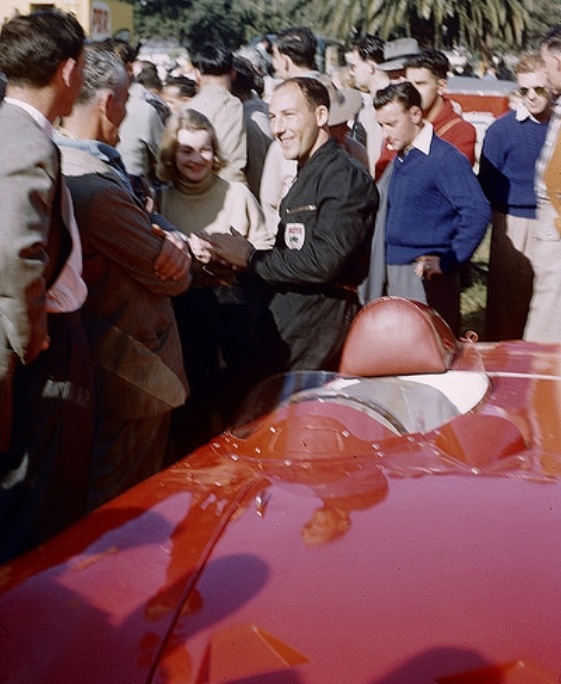
Here it is below after its victorious run in the very wet, Ardmore, New Zealand Grand Prix. I love the way the gent ‘touches the greatness of Moss’ by giving the Lotus an affectionate pat! ‘Red cap’, a more technical type of bloke is sussing the rear suspension of the 21 compared with the Lotus 18s from the year before.
image

(Stephen Page)

Lotus 21: The Forgotten Chapman GP Car?…

When you think about it Colin Chapman peaked early as an F1 designer.

His 1956 Vanwall, or rather his chassis design and choice of Frank Costin as it’s body designer/aerodynamicist was a GP winner, not too many fellas have done that with their first car.
image

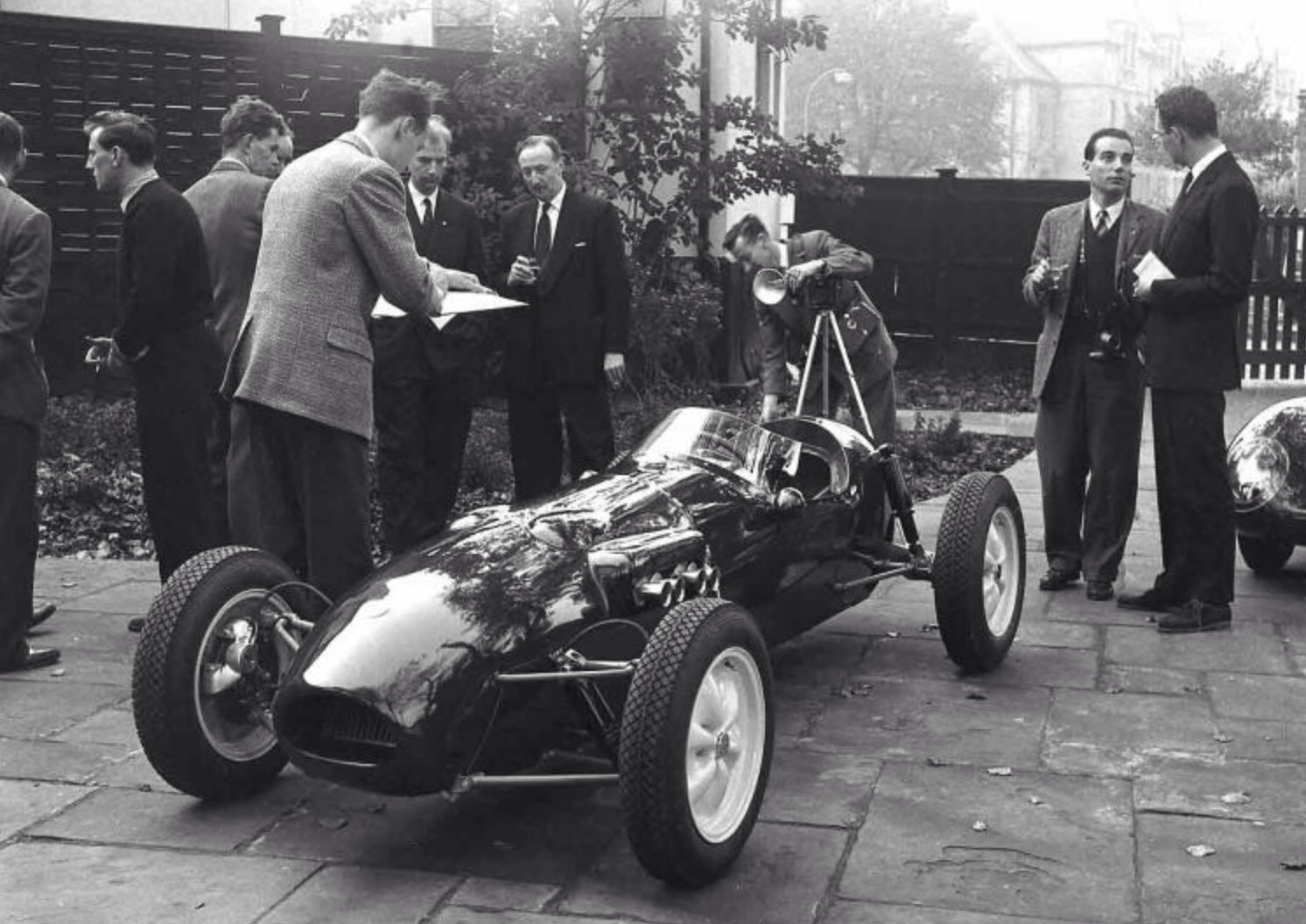
Press launch of the Lotus 12 Climax F2 car in 1956, note the extraordinary smallness of the car, the 12 and 16 remarkable bits of front-engined GP kit. Cliff Allison did 167mph in a Coventry Climax 2207cc FPF engined 12 on Masta Straight, Spa in 1958, with much of his small body outside the cockpit! He was fourth but famously could have won the race had it gone another lap as the first 3 cars all failed to complete the cool-down lap (John Ross)

His first Lotus GP design was the 16, Chapman always referred to the 12, which competed in Grands’ Prix from Monaco 1958, as an F2 car, the design was originally used in 1.5 litre racing before being fitted with Coventry Climax 1960cc and 2207cc engines for F1 use.

One of the things which intrigues me given his subsequent record as the designer/design inspiration for so many epochal cars is why Chapman didn’t design a mid-engined car for 1959? Cooper blazed that trail, GP winners from Argentina 1958, Moss of course taking that win in a Rob Walker Cooper T43 Climax.
image

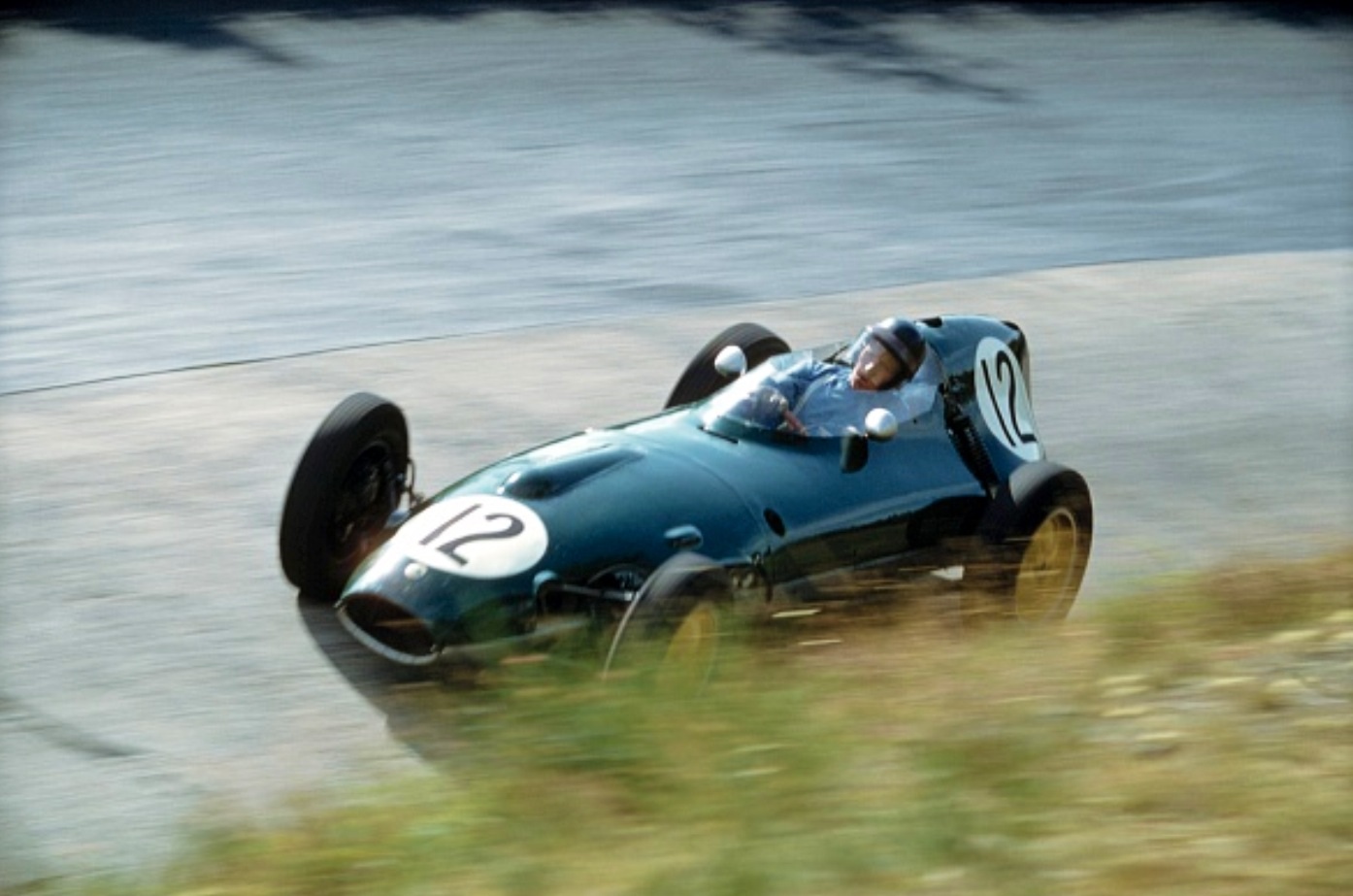
Allison, tenth in the Lotus 16 Climax, Nurburgring 1958. Brooks won in a Vanwall, Lotus 16 famously the ‘Mini-Vanwall’, both Chapman chassis designs  (Klemantaski)

Whilst the front engined 12 is understandable, it appeared in late 1956 and was quite the smallest front engined ‘F1 car’ ever, the 16 shoulda’ been mid-engined?

The 16 was quick mind you, but fragile in both chassis and it’s ‘queerbox’, Lotus’ own gearbox which was unreliable largely due to one small set of dogs trying to pick up every gear. The 16 also didn’t receive a 2.5litre Climax FPF until later in the piece. But if Chapman set trends, and he did, he was a slowish adopter of the mid-engined trend.
image

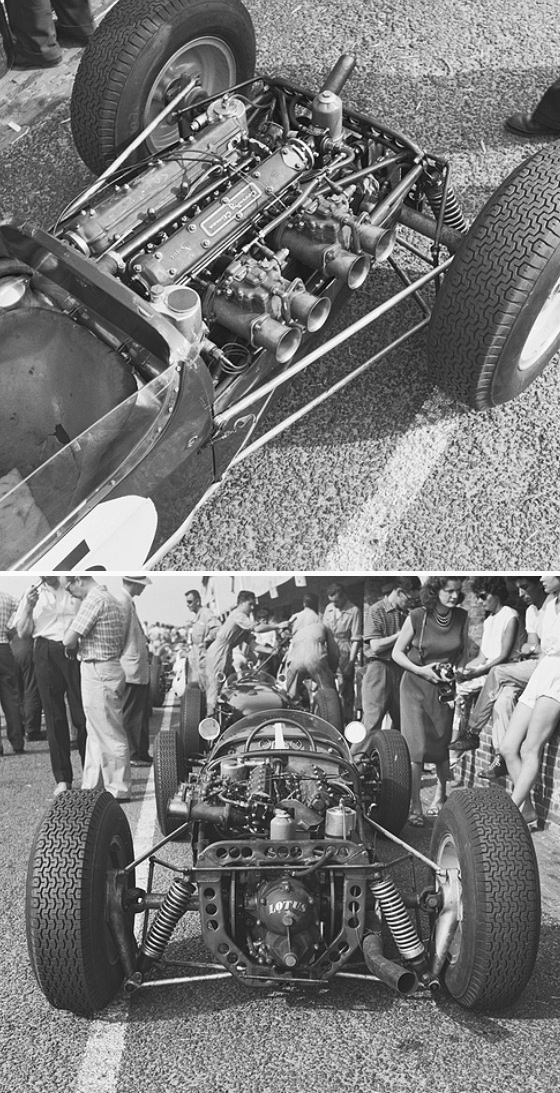
Works Lotus 18 Climax, Zandvoort, Dutch GP 1960. Chapman was quick to refine the mid-engined paradigm! 2.5 litre CC FPF, 5 speed Lotus ‘box, rear suspension notable for lack of a top-link, the fixed length driveshafts performed locational duties as well as motive ones. This is Alan Stacey’s car, DNF gearbox on lap 57 from Q8. Ireland’s car was second from Q3, quick cars 18’s! Brabham won in his Cooper T53 Climax (Dave Friedman)

His first such design, the 18 was an immensely successful car in FJ, F2 and F1 specification.

Despite its ‘chubster, biscuit shaped’ looks it was the fastest 2.5 Litre F1 car of 1960 if not the most robust or reliable. No less than Moss himself had strong views on Chapman’s ‘marginal engineering’ of key components the failure of same caused some massive accidents.
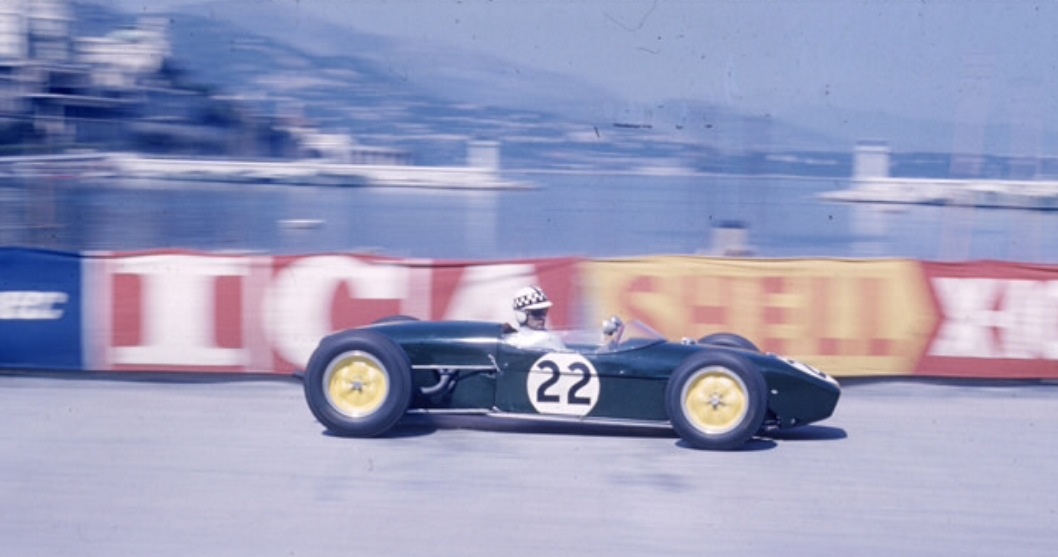
image

Ireland, works Lotus 18 Climax, Monaco 1960, 9th in the race won by Moss’ similar car. Lotus’ first GP win (Dave Friedman)

Roll on into 1961, the first year of the 1.5 litre F1, the Brits were faced without a suitable engine as their ‘racing mafia’ were convinced the CSI, in the end, would not make the change to the smaller engines. They did, Ferrari the beneficiary with their 156, a car developed in F1/2 in 1960, click here for a story on that wonderful conveyance;

Ferrari’s first mid-engined Car: The 1960 Dino 246P…

Whilst BRM and Coventry Climax worked hard to get their V8’s completed all of the British firms persevered with Mk2 versions of the 1.5 litre Coventry Climax FPF- in 2.5 litre form the championship winning engine of 1959/60.

Chapman and his team had the dimensions of the coming Coventry Climax FWMV V8 when they set to work on the 21, their 1961 contender, but they knew initially the little, underpowered FPF would be used.

So, light weight and aerodynamic efficiency were key design tenets of the new Lotus 21.

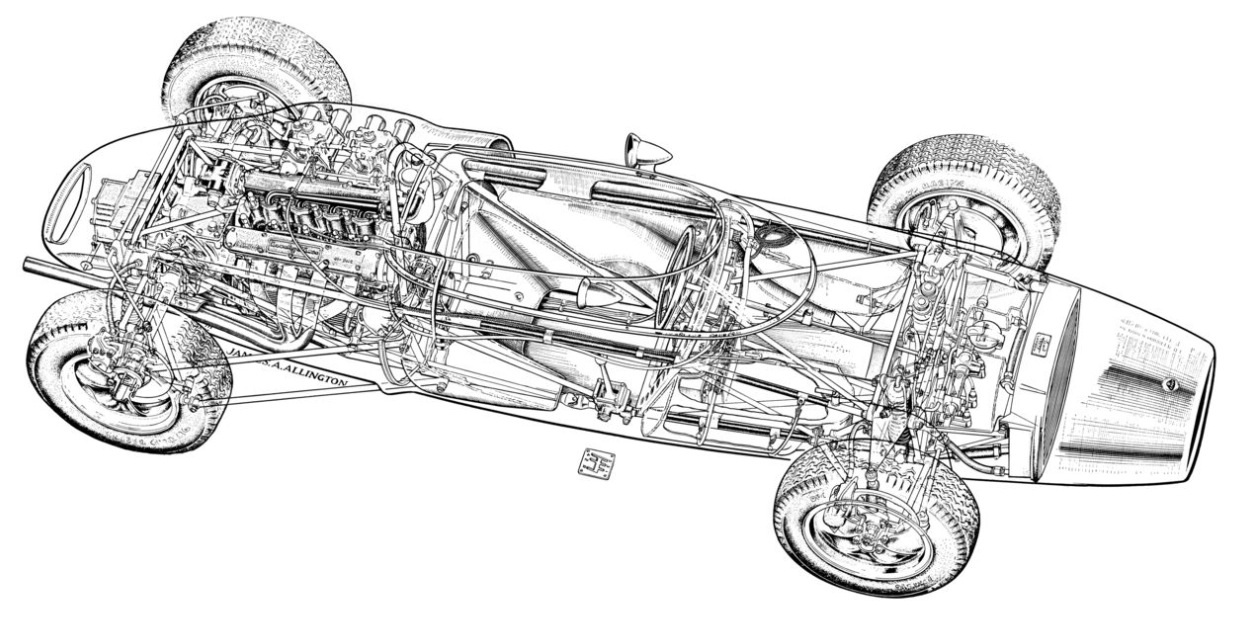
These aims were achieved by lying the driver down in the cockpit, Chapman went further in 1962 with his 24/25 designs, but the trend was set by the 21. The car was notably small in size, low in frontal area, the body enveloping the chassis all the way to the casing of its ZF gearbox, specially made for the car. Have a look at a 21 beside a 156 and see just how ‘butch’ in size the Fazz is by comparison.

Chapman used a top rocker and lower wishbone for the cars front suspension, getting the spring/shocks outta the airstream, thus further adding to top speed. At the rear the suspension was outboard- single top link, inverted lower wishbone and coil spring/damper unit with twin radius rods for location.
image

Lotus 21 Climax FPF cutaway, specifications as per text (James Allington)

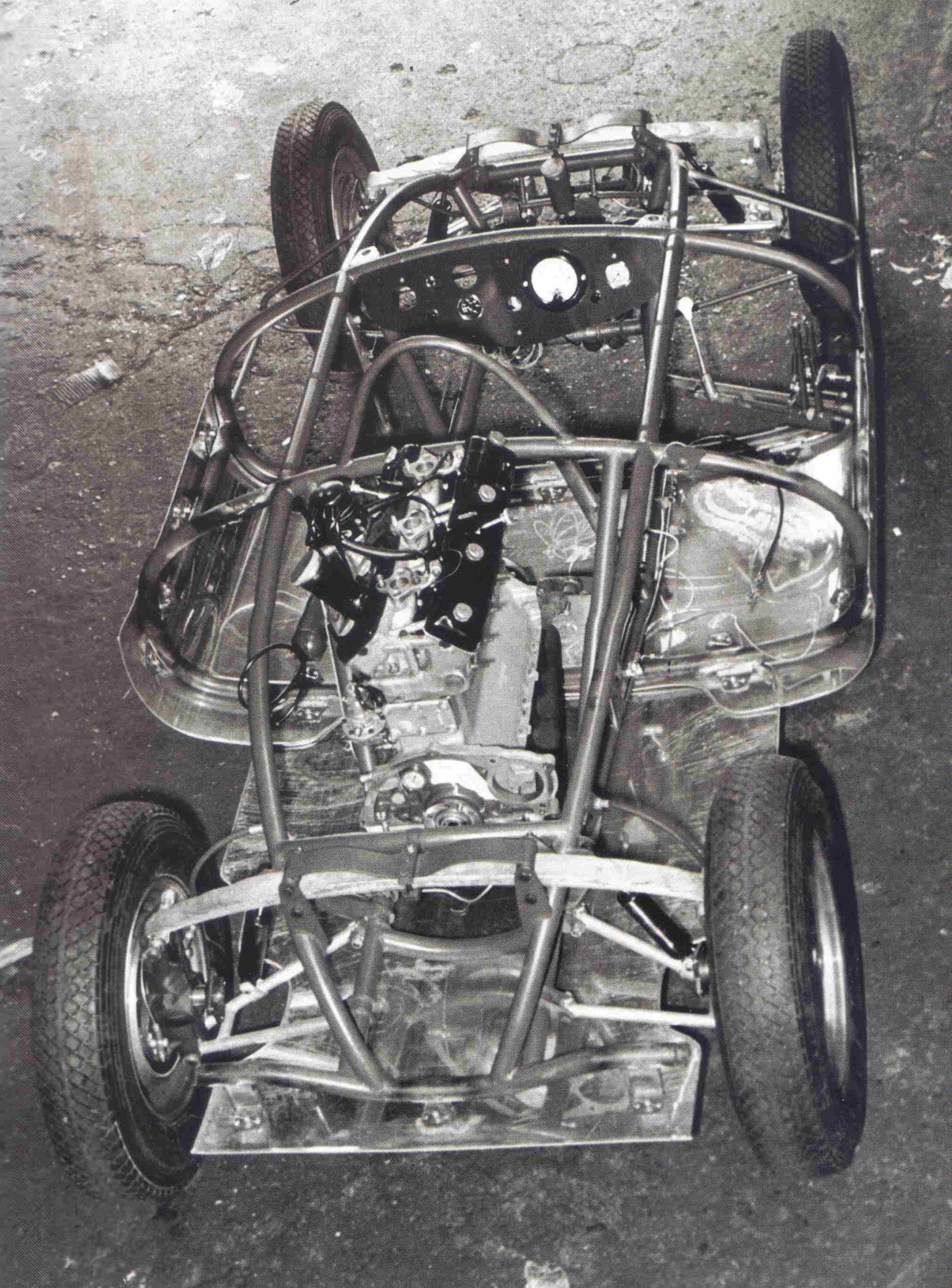
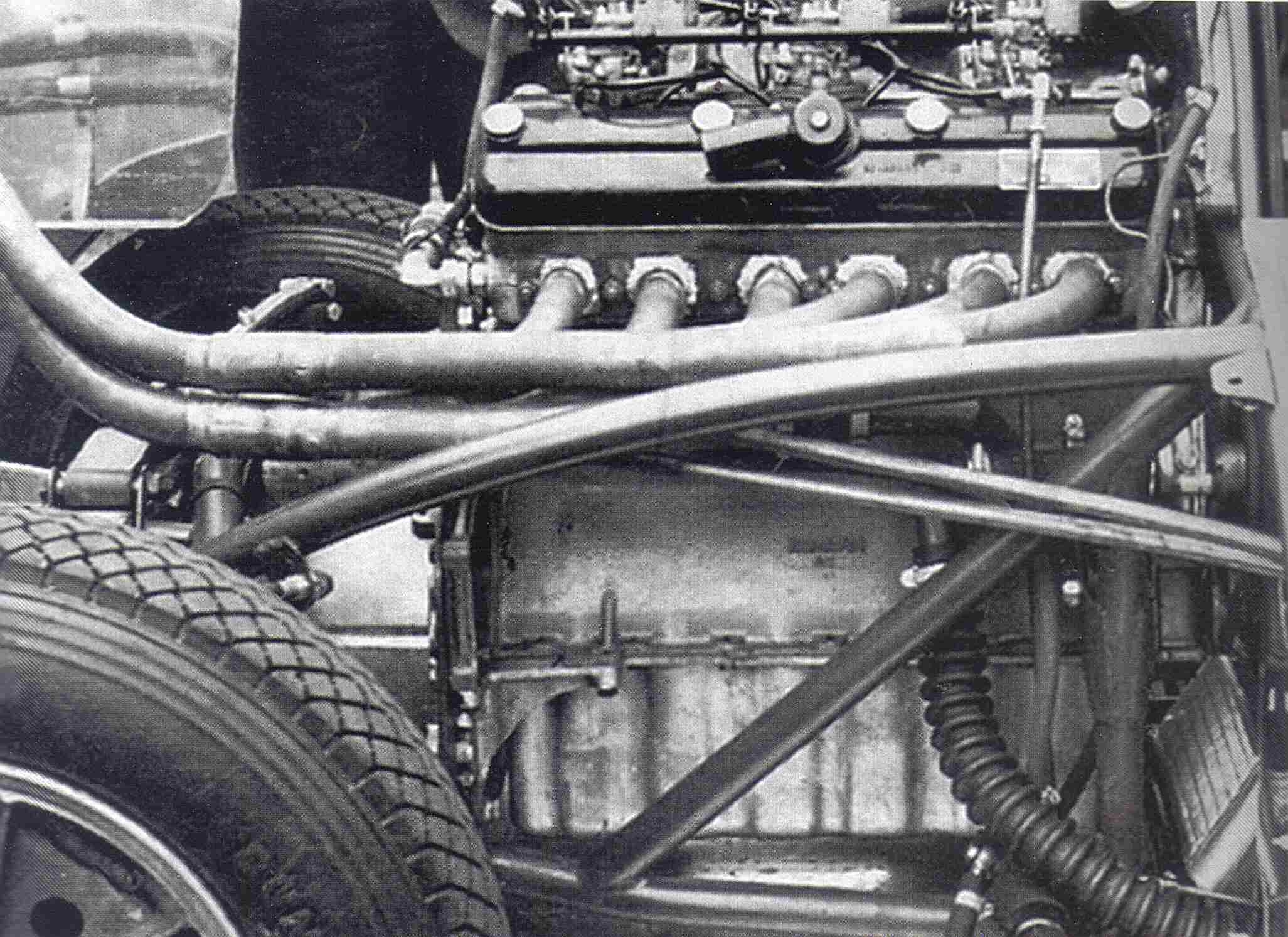
Lotus Components built eleven of the 21 chassis’ during the year, which otherwise in specification were leaders of the mid-engined paradigm- multi-tubular spaceframe chassis, Chapman the high priest of chassis design. Rack and pinion steering, discs on all four wheels, magnesium alloy (Lotus ‘wobbly web’) wheels, Ferrari still used heavy Borrani wires till 1963. The CC 1495cc, DOHC, 2 valve, all alloy, Weber carbed 4 cylinder engine gave circa 155bhp, the Lotus weighed 990lb, had an 89 inch wheelbase and a track of 53 inches front and rear.

The prototype was built from scratch in six weeks, just missing the Aintree 200 meeting but was tested at Silverstone two days later, the car made its debut at Monaco in May. The works cars in 1961 were steered by two Scots- Innes Ireland, the seasoned professional and up and coming Jim Clark who graduated from the works Lotus 18 FJ he raced in 1960.

Fitted with the new Coventry Climax V8 the Lotus 21 was a winning car in Moss’ hands if not Ireland’s or Clark’s.  But as it was Chapman didn’t get his hands on an FWMV in 1961 due at least in part to the spat he was having with Climax’ MD Leonard Lee about the quality of the CC FWE engines supplied for his Elite road cars- the engines weren’t the Elites only reliability problems mind you!

In the event the 21 won only one championship GP at Watkins Glen, Innes Ireland broke through for both Team Lotus and his first win that October.
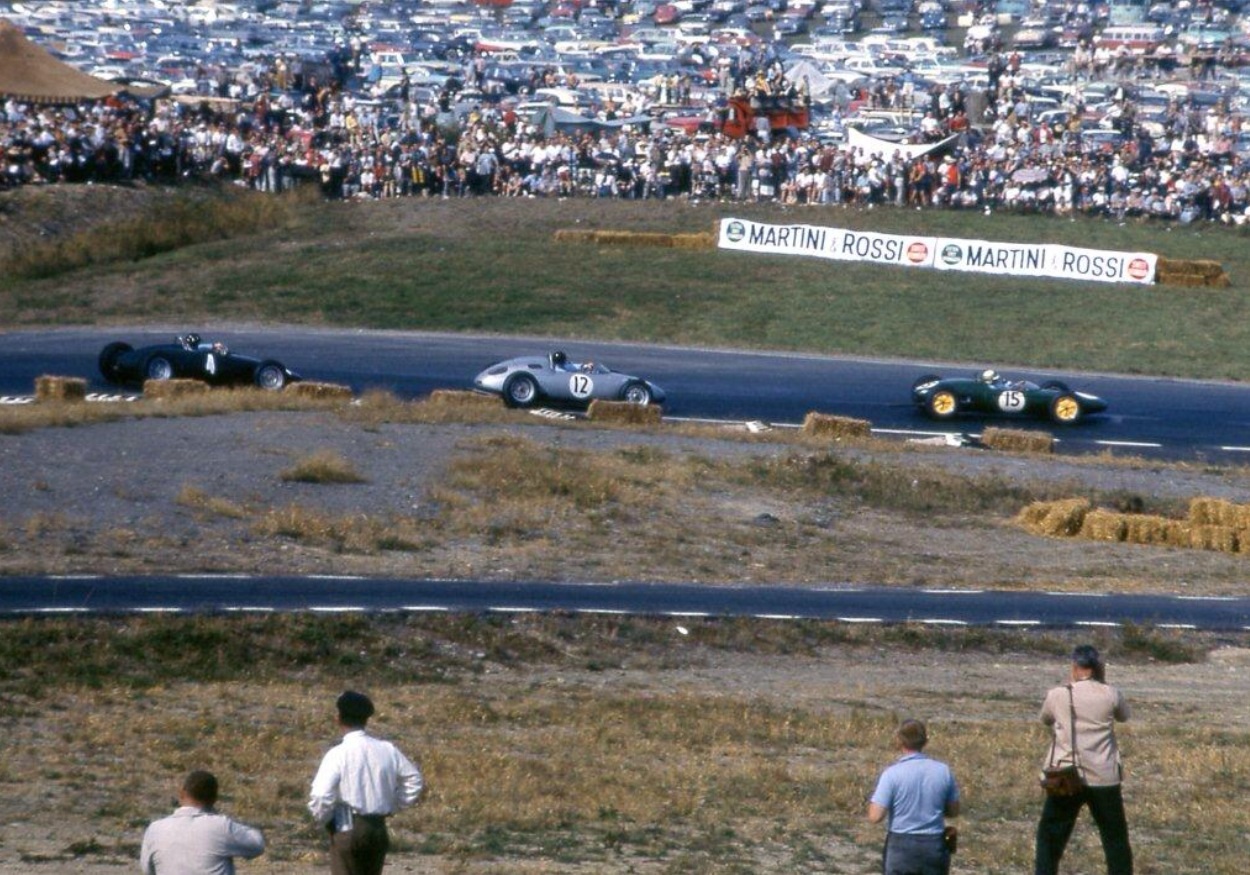
image

Ireland’s winning Lotus 21 leads Gurney’s second placed Porsche 718 and Graham Hill’s fifth placed BRM P48/57 Climax, US GP Watkins Glen, 8 October 1961 (unattributed)

The cars chances of more wins were missed by Chapman’s decision not to sell Rob Walker his latest car, as he had with the 18 the year before. Moss’ two wins in 1961, remarkable ones, were in the Walker 18 at Monaco and 18/21 hybrid at the Nurburgring. Armed with a new 21 all year he may, praps have taken one or two wins off Ferrari despite the car’s relative ‘lack of puff’.

The 21 took wins in non-championship 1961 events- the Solitude GP for Ireland in July, the Flugplatzrennen at Zeltweg again for Ireland in September, and the Rand, Natal and South African Grands’ Prix in Jim Clark’s ‘African Tour’ in December 1961. As written here Moss did well in Australasia in early 1962.

The Lotus 21 should be remembered as both a GP winner and the progenitor of the design maxims Chapman’s ever creative mind evolved with the 1962 spaceframe  Lotus 24 and it’s revolutionary monocoque sibling, the 25.
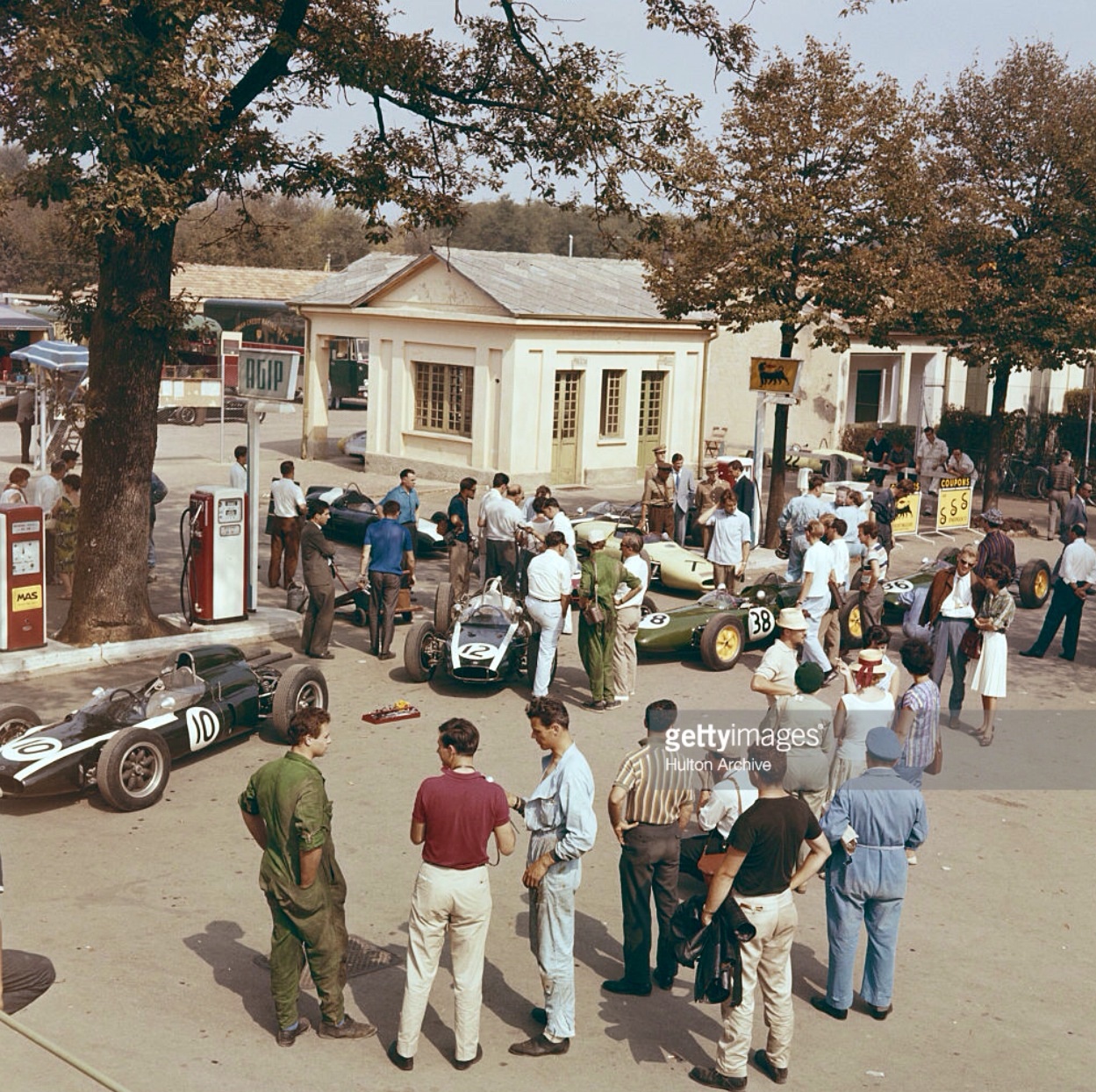
image

Love the atmospherics of this 1961 Italian GP, Monza paddock shot. #10 is Brabham’s Cooper T58 CC V8, contrast it with McLaren’s #12 CC FPF powered T55 behind. #38 and 36 are the Ireland/Clark Lotus 21 CC FPF’s before the ‘jiggery pokery’ with the chassis swap between Innes and Stirling. The pale green painted ‘T’car is UDT-Laystall’s spare, the Cooper T51 is Jack Lewis’ (Hutton Archive)

Moss’ first drive of a Lotus 21 was his steer of  Innes Ireland’s works car at Monza on 10 September.

That weekend was infamous for the tragic race collision between Jim Clark’s Lotus 21 and Taffy von Trips Ferrari 156 which resulted in von Trips death as well as that of 15 innocent spectators.

Moss took Lotus’ first ever GP win at Monaco in May. Whilst Chapman was eternally grateful he wasn’t inclined to give Moss or Walker too much of a ‘free-kick’ by selling them his latest car, the 21, given his primary aim was works car wins. In fact its probably Esso we have to blame as they were Lotus’ fuel supplier, BP were the sponsor of Rob Walker/Moss, both companies had their commercial positions to protect.
image

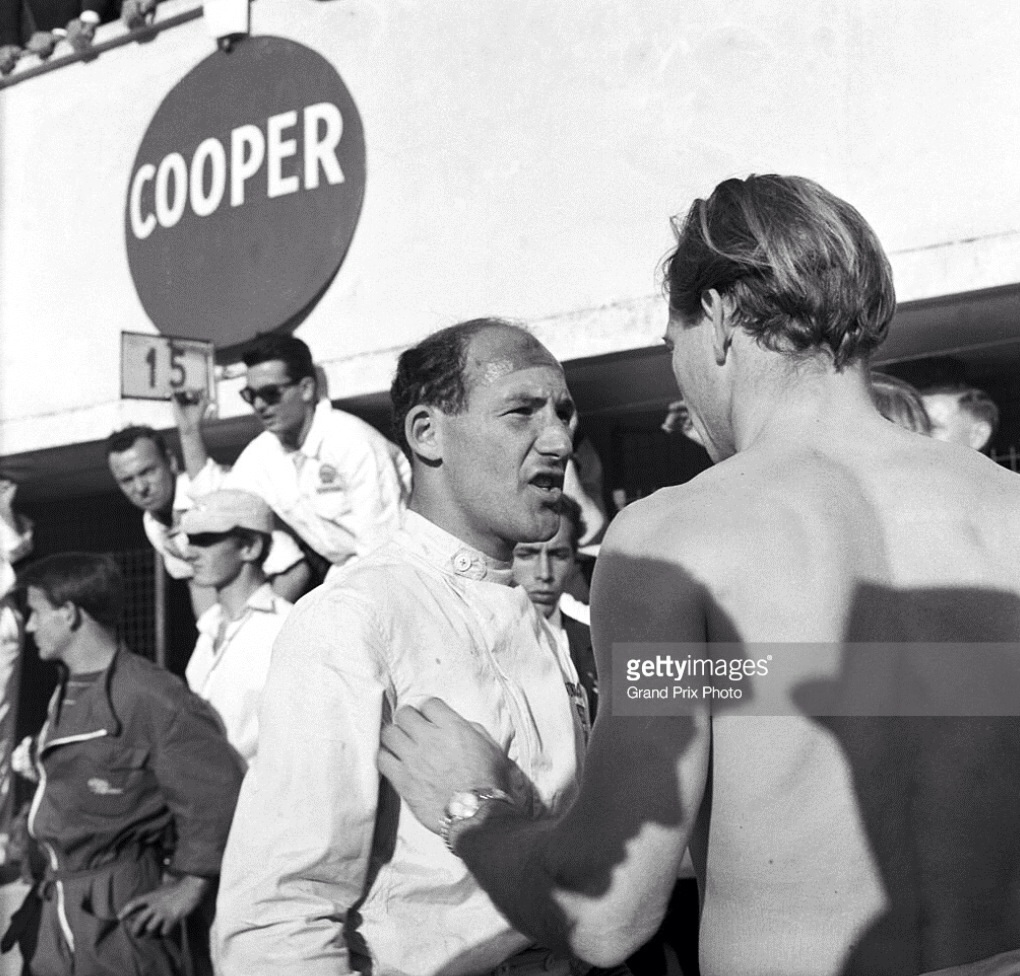
Moss and Ireland swapping notes at Monza, Italian GP, September 1961 (GP Photo)

The Monza weekend was also significant for the first race appearance of the new 1.5 litre BRM P56 V8 and the further appearance of the Coventry Climax FWMV V8 first raced by Jack Brabham at the Nurburgring the month before.

Jack qualified his new Cooper T58 on grid 2 in the Eifel Mountains but crashed on lap 1 with a sticking throttle so the engine hadn’t been race-tested.

The P56 V8’s were fitted to modified BRM P48/57 chassis, the CC V8 to Jack’s Cooper and a specially modified Lotus 18/21 built up by the Walker Team. Team Lotus were unable to secure an engine as noted earlier, so appeared in 21’s powered by the 1.5 litre 4 cylinder FPF Mk2 used by the British teams, including BRM that year.

BRM tested their new engines with no intention to race them, Brabham raced his Cooper despite problems in practice.

Moss was sportingly offered Ireland’s factory 21 FPF, chassis ‘933’. Chapman and Ireland reasoned that Moss would have a better chance of success in a 21 rather than the tired Walker 18/21. Moss was the only Lotus driver with a vague (very) chance at the World Championship, Ireland raced the Walker 18/21 FPF engined car. In Denis Jenkinson’s race account he writes about the ‘cloak and dagger’ stuff behind closed garages to make the necessary change of chassis and body work between Moss and Ireland, the secretive stuff was doubtless so as not to upset the trade supporters of both teams.

Which brings us back to ‘ole 935’ and the photo at this articles outset.

The two works Lotus Monza chassis according to Nye’s ‘Theme Lotus’ were ‘933’ and ‘934’. If ‘935’ was at Monza there was no point making the chassis and bodywork changes between the Moss/Ireland cars both Jenkinson and Nye report took place. If ‘935’ were at Monza either as a works spare or delivered to the Walker Team Moss would have raced it and Ireland his regular works 21 rather than the inferior Walker 18/21.

So, whats the explanation of the photo then?

Either it isn’t Monza, although i am inclined to believe Nye who has been there once or twice! The probable story is that the engine cover of the new ‘935’ was ‘borrowed’ and fitted to one of the works Lotus 21’s for the weekend. The first race entry for ‘935’ i can find, looking at non-championship and championship Grands’ Prix results later in 1961 seems be its races in New Zealand in early 1962-the 1962 NZ GP report by sergent.com describes ‘935’ as unraced before that event on 6 January.
image

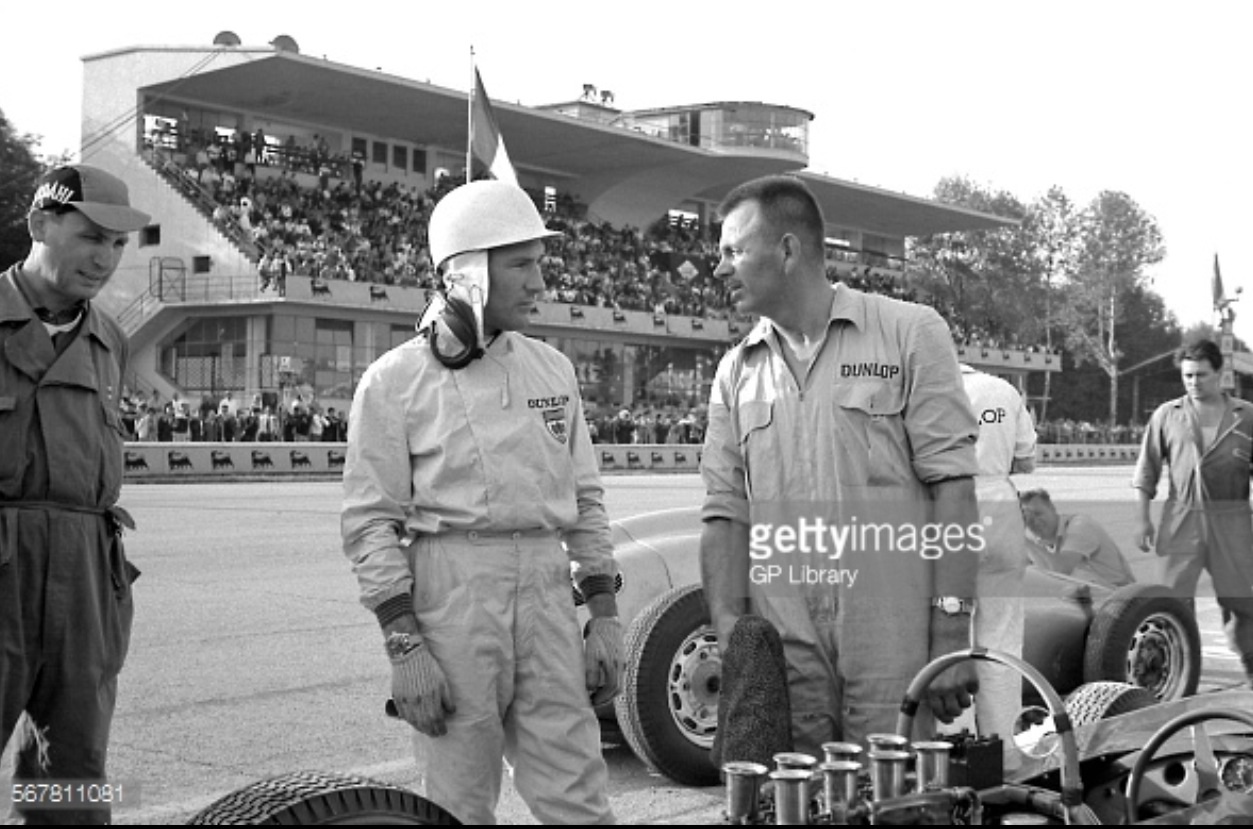
Moss and Alf Francis confer during Monza practice, by the look of it neither are ‘happy campers’, the Lotus 18/21 CC FWMV  chassis #’906′ was always a handful (GP Library)

The Moss 18/21 was modified to fit the FWMV V8 with the assistance of Ferguson Research.

The rear of the 18 chassis aft of the drivers seat was ‘chopped off’ and replaced with a frame to suit the width and mounting needs of the new engine. 21 rear suspension was incorporated comprising new 21 uprights which were located at the top by a link to the chassis thus relieving the half shafts of the suspension loads the solid ‘shafts of the 18 performed- the new components had Hardy Spicer splined shafts to accommodate ‘plunge and droop’.

A Colotti Type 32 gearbox was used. The rear framework was a complete assembly which attached to the main frame by large bolts screwed into the ends of the tubes, which had been plugged and tapped. The structure was made from small diameter tubing which had to be detached completely before the engine and gearbox could be removed. The car was finished in a big hurry so the old Lotus engine cover was retained with a bulge to clear the four downdraft Webers.

Whilst no-doubt well engineered it doesn’t all add up to the levels of torsional stiffness no doubt required to put all of the new engines power to the ground effectively.

During the race the tragic accident between Clark and von Trips occurred on the first lap, the German and hapless spectators killed, the race continued whilst the carnage was attended to.

Moss retired on lap 36 with wheel bearing failure, Ireland on lap 5 with chassis problems and Brabham’s FWMV failed on lap 8 due to overheating problems- shortcomings sorted over the winter off-season.

Phil Hill’s Ferrari 156 won the race and  1961 title from Gurney’s Porsche 718 and McLaren’s Cooper T55 FPF.
image

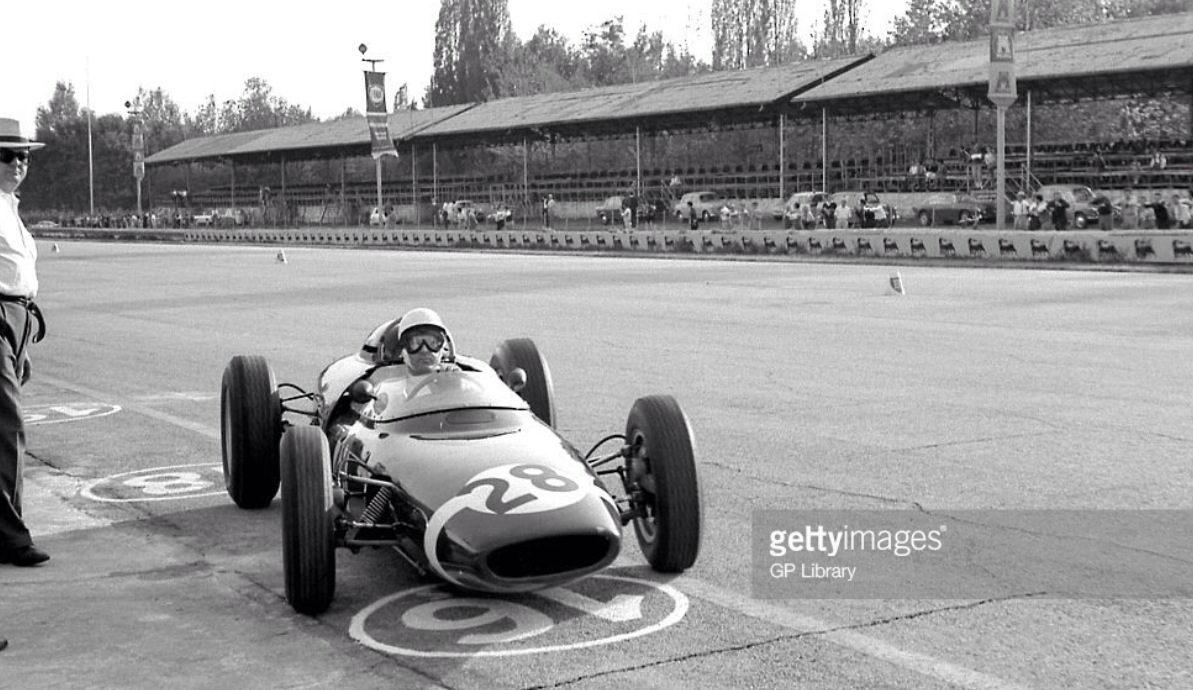
The Walker Lotus 18/21 CC V8 during 1961 Monza practice (GP Library)
 

image

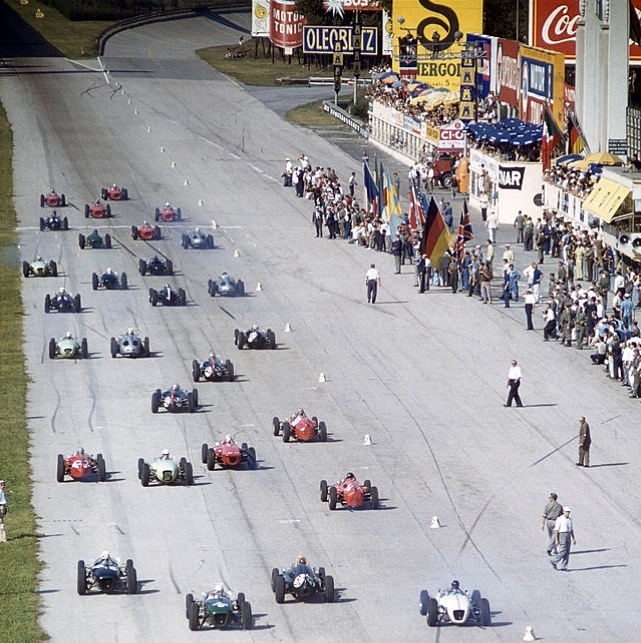
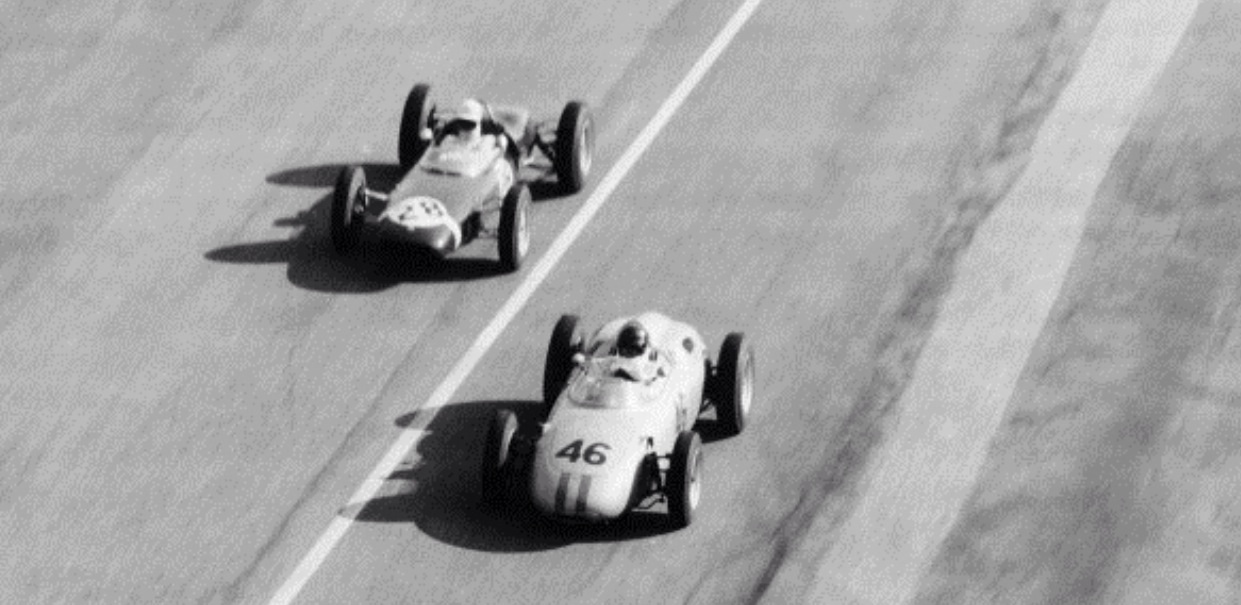
Italian GP ’61 start with a swag of 5 Ferrari’s up front, leading green car at left is probably Hill G’s BRM Climax, Clark is between Hill and a Ferrari, thats Gurney’s Porsche 718 on the right from grid 12, the carnage took place shortly thereafter (Klemantaski)
 

image

Moss in the Walker bodied works Lotus 21 CC FPF during the race, dicing with Gurney’s 2nd placed Porsche 718 (GP Library)

New Zealand…

Over that 1962 European winter Coventry Climax worked on the reliability of the FWMV and BRM their P56 V8 and the P578 chassis to carry it. At Cheshunt Colin Chapman was building the spaceframe 24 and its epochal monocoque sibling, the Lotus 25.

Both marques were the key players in an amazing 1962 season which in the main didn’t feature Stirling Moss, whose Glover Trophy career ending accident took place on Easter Monday 23 April 1962 in the Walker Lotus 18/21 Climax V8 ‘906’ described above.

The Walker Team would make do with their 18/21 in GP’s, later in the season they raced two Lotus 24 FWMV’s but by the time they were ready Moss’ career was finito.
image

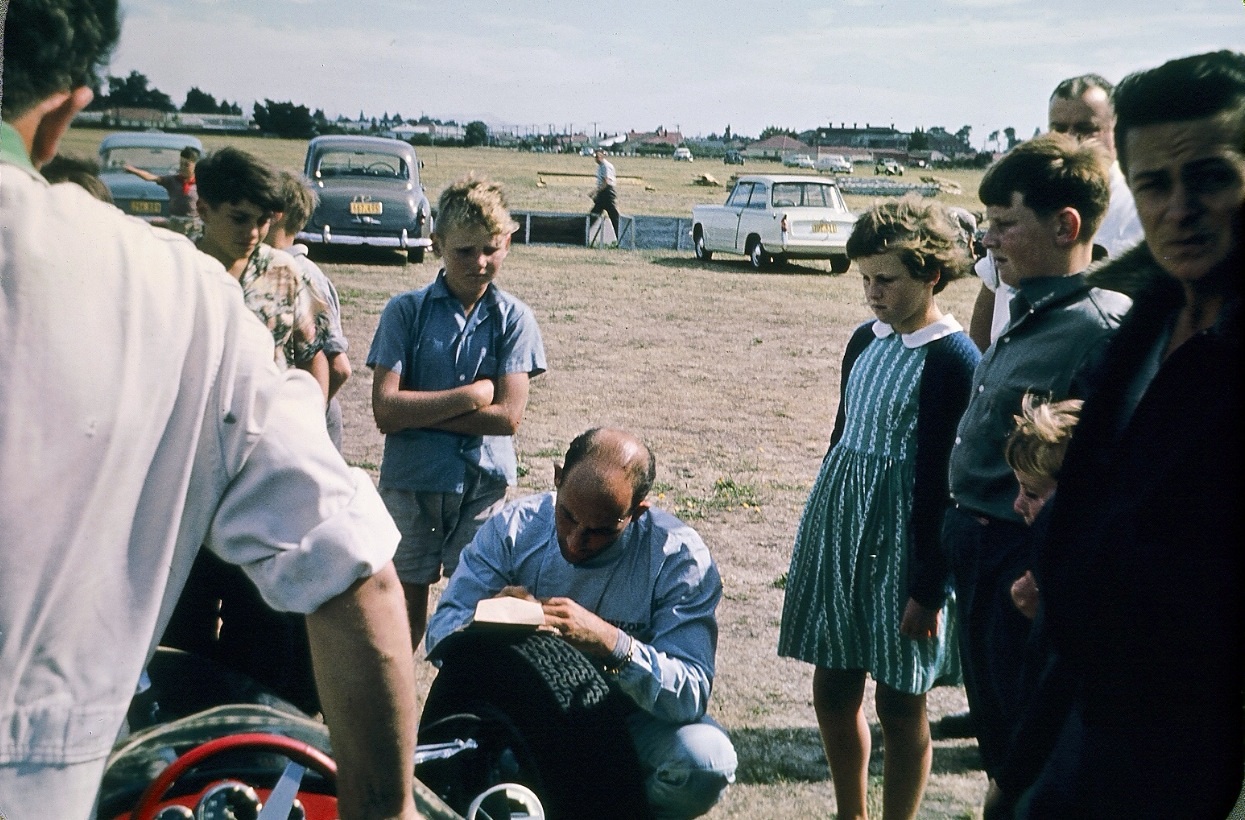
Moss looking after the fans, Kiwi kiddies drawn to the great Brit, Ardmore NZGP meeting. Car is 21 ‘935’ (Stephen Page)

For Moss, in the meantime there were the annual summer internationals to contest in Australasia.

Whilst Stirling loved the speed of his Lotus he revelled in the forgiving ‘chuckability’ and robustness of Coopers. Robust is not an apt adjective to describe the Lotus single-seaters of the period. So, hedging his bets for his 1962 Australasian Tour he had Rob Walker ship both ‘935’ as well as a Cooper T55 ‘F1-7-61’  on the long voyage south. Both cars were Coventry Climax FPF powered- engines of both 2.5 and 2.7 litres capacity were used, our International Series was run to Formula Libre in its pre-Tasman Cup formula days.
image

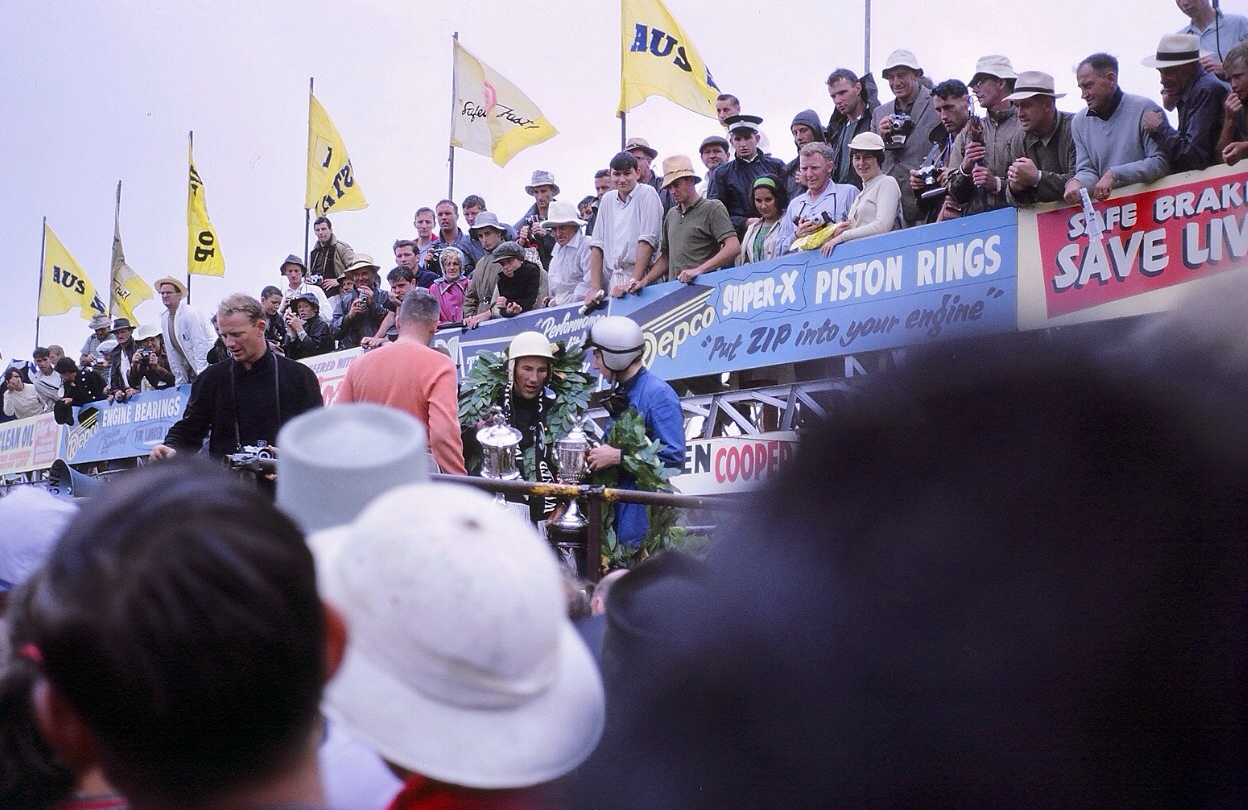
Moss and second placed Surtees on the Ardmore victory dais (Stephen Page)

Moss raced the Lotus to an NZ GP win at Ardmore on 6 January and at the Wigram Airfield circuit event fitted with 2.5 litre FPF’s. At Levin and Teretonga he was second in the Cooper powered by a 2.7 FPF, Brabham won at Levin and McLaren at Teretonga- so Moss’ campaign had started well.
image

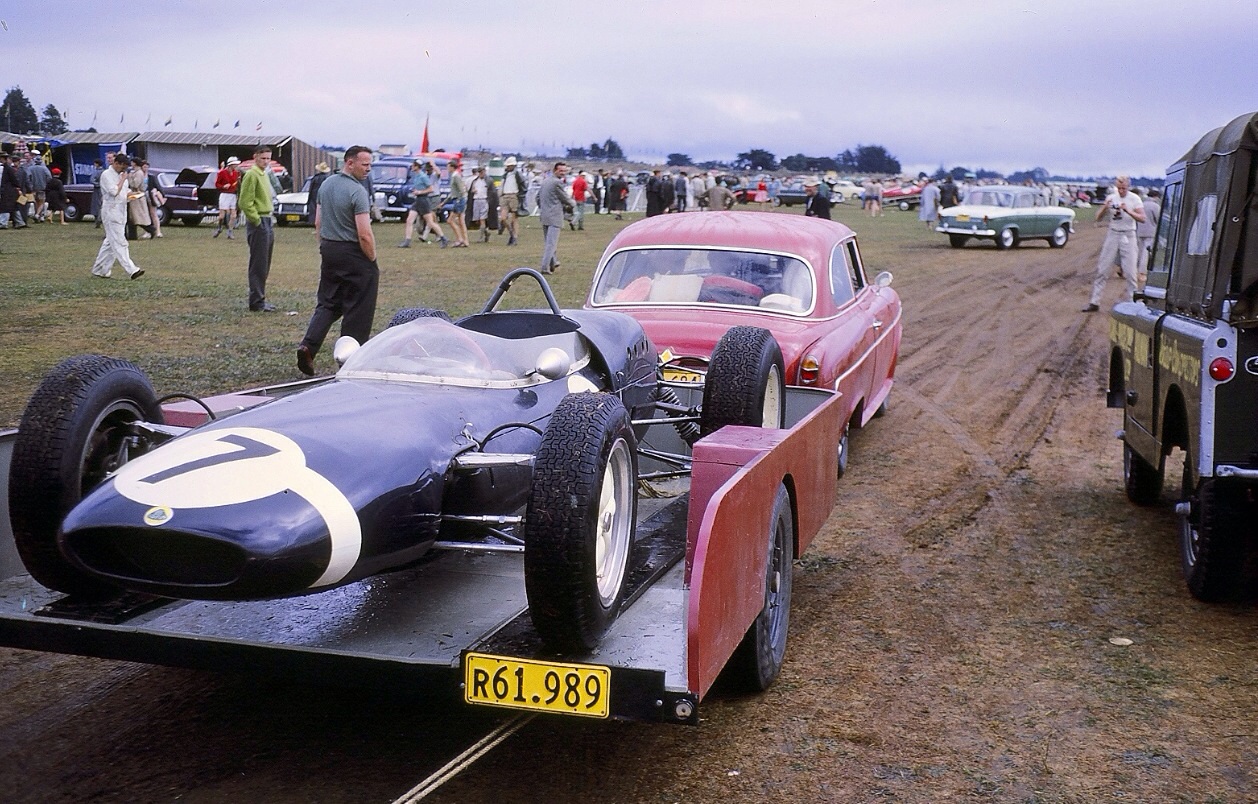
Borgward Isabella and 21 off to the next round of the NZ Internationals at Levin. Shot shows the inboard front suspension, the top rocker actuating inboard mounted spring/shock. At the rear is a single top link, reversed lower wishbone, outboard spring/shock and twin radius rods. Extreme lowness clear as is the slippery nature of the body and reduction in driver space which advanced as a trend over the following decades!  (Stephen Page)

The NZ Internationals were contested by Moss, Surtees, McLaren and Salvadori, the latter three drivers in Cooper T53 Climaxes, Bandini in a Cooper T53 Maserati, Brabham a Cooper T55 Climax and Ron Flockhart, a Lotus 18 Climax.

Chris Amon made his first international appearances that summer in the ex-BRM/Brabham Maser 250F, other ‘local heroes’ were Pat Hoare Ferrari 246/256 V12, Angus Hyslop, Cooper T53 Climax and Aussies Bib Stillwell, Aston Martin DBR4/250, David McKay, Cooper T51 Climax and Arnold Glass’ in a BRM P48.

Moss ‘brained’ the NZGP field in an awful, wet race- he lapped the field winning from Surtees, McLaren and Salvadori.

Australia…
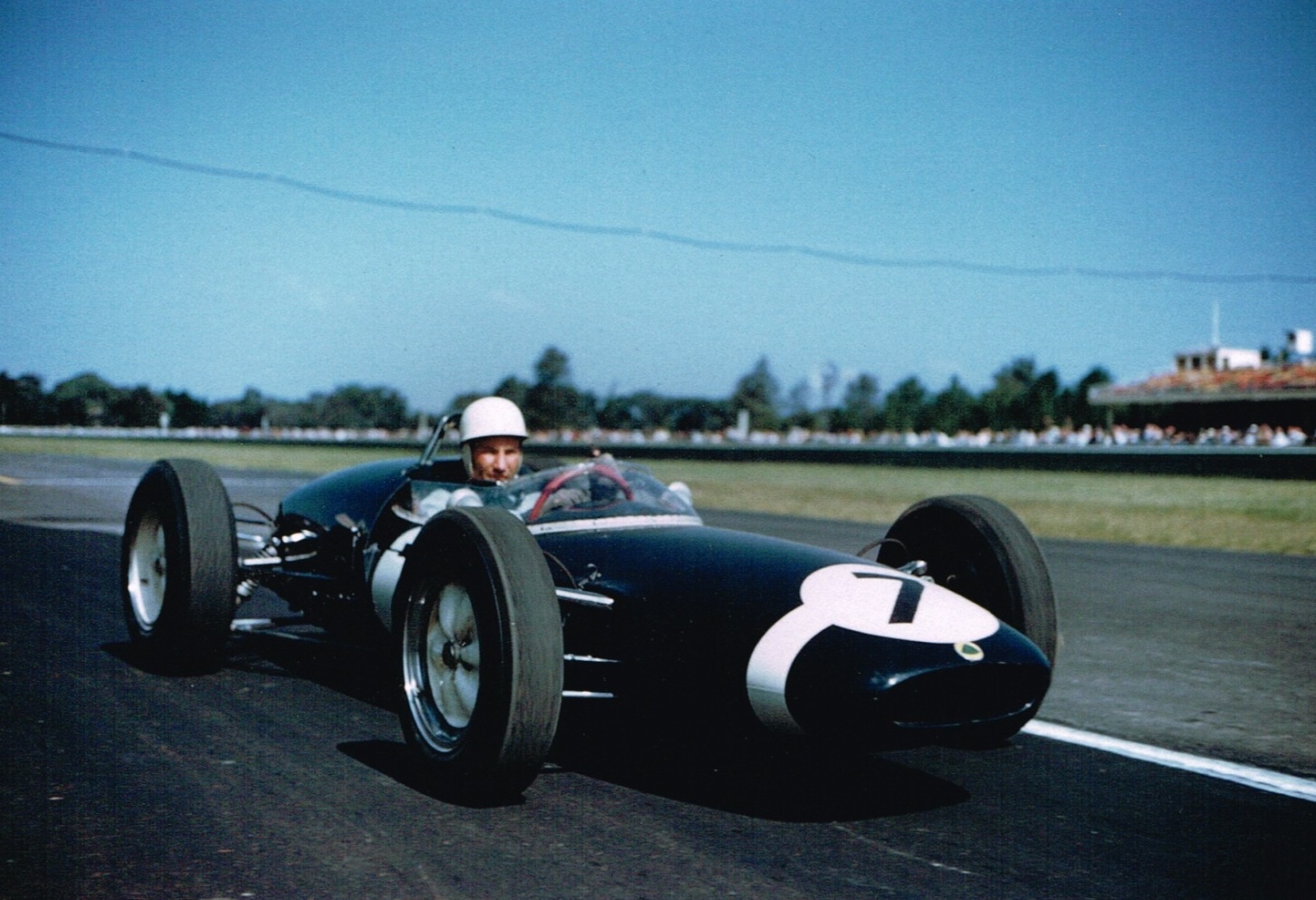
image

Beautiful shot of Moss in the Walker Lotus 21 Climax 2.5 ‘935’ on Warwick Farm’s pit straight, he practised the car but raced the more ‘chuckable’ Cooper (Mal Simpson)

The cars were then shipped to Sydney, the first race of the Australian leg was the ‘Warwick Farm 100’ on the testing, technical outer western Sydney circuit on 4 February.

Moss practised both cars but elected to race the Cooper to a race win from McLaren and Stillwell.
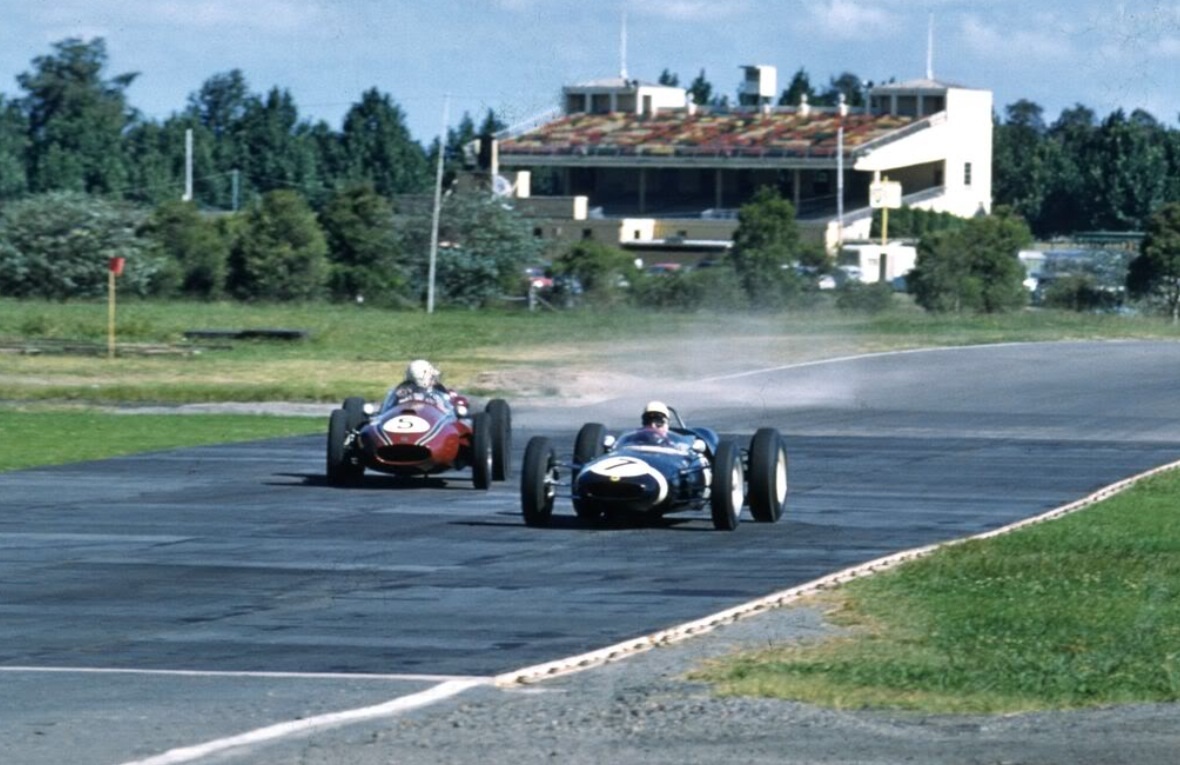
image

Moss in his Lotus 21 passes John Youl sneaking a peek over his shoulder, Cooper T51 Climax during WF practice. Youl DNF in the 2.2 litre car with clutch problems in the race, the Taswegian a very quick steerer (John Ellacott)
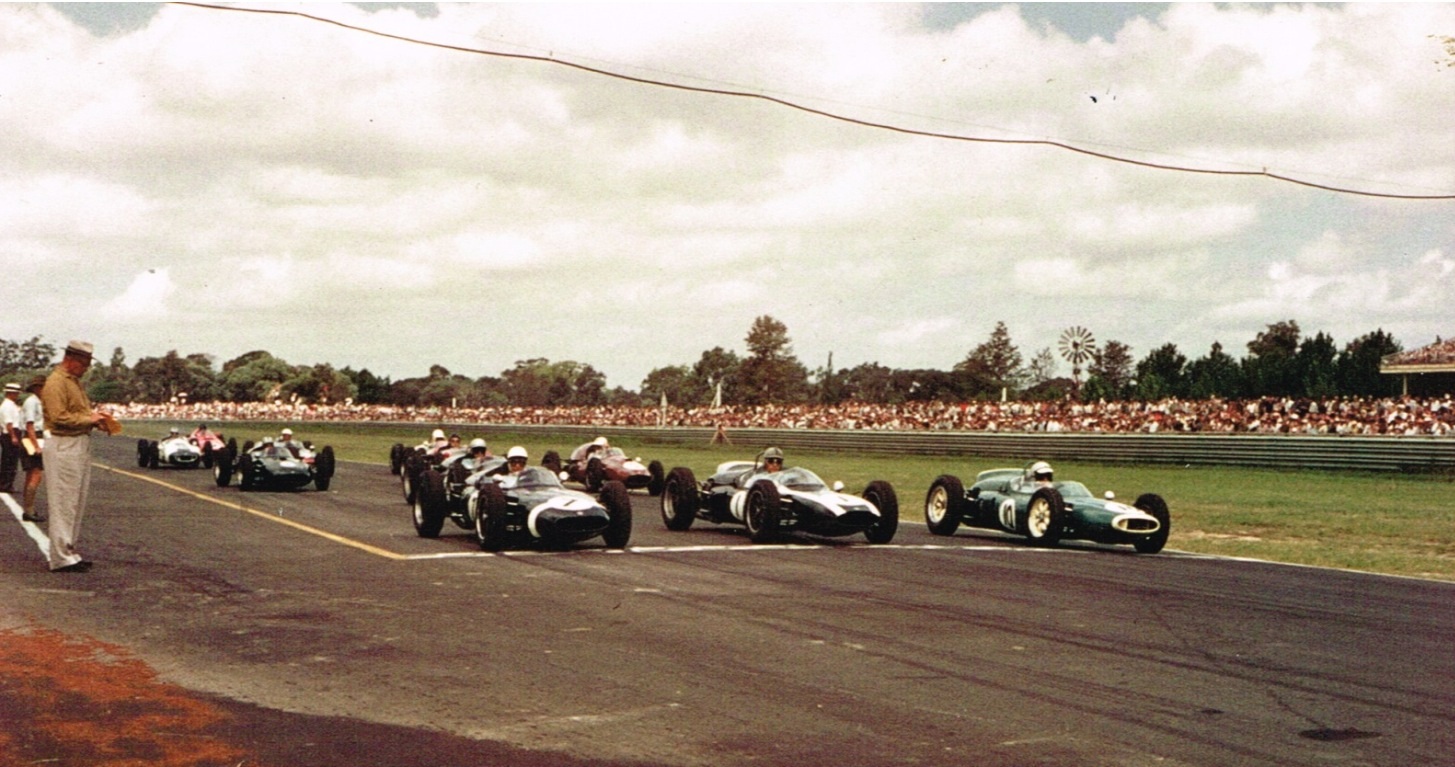
 

image

WF 100 front row, 4 February 1962- Moss, Brabham, McLaren in Coopers T53, T55, T53 (Mal Simpson)

Moss missed the Lakeside event won by Brabham’s T55 Cooper and Longford’s ‘South Pacific Championship’ race won by Surtees Cooper T53 Climax but raced ‘935’ fitted with a 2.7 litre FPF at the Australian Grand Prix, Sandown’s inaugural meeting on 12 March.

Jack Brabham won the race in his 2.7 engined Cooper from Surtees, McLaren and Chuck Daigh in the very interesting Scarab RE Buick V8, the cars only race- read my Chuck Daigh article for that cars interesting story.
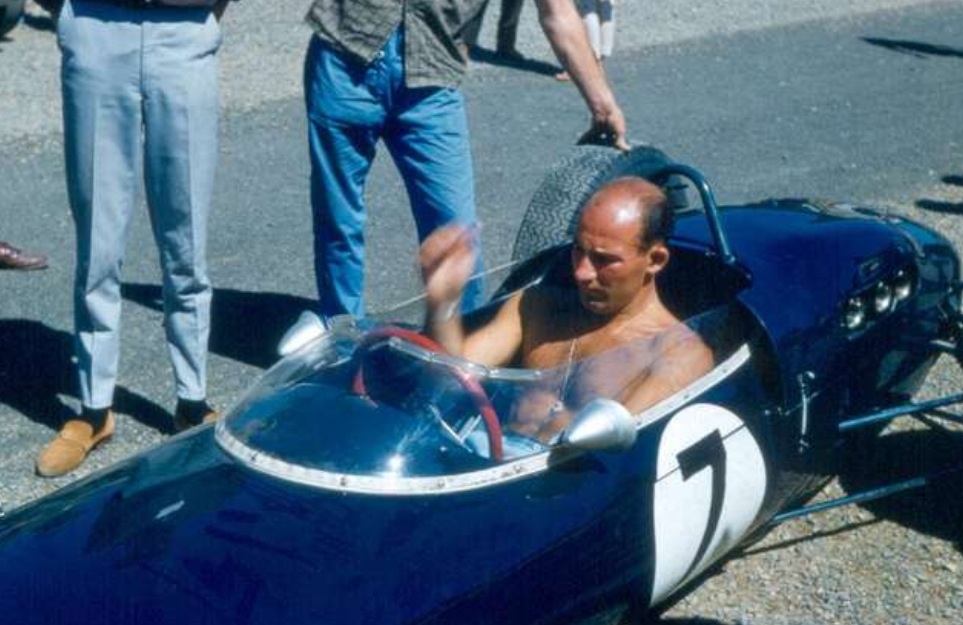
image

Moss cruises the Sandown paddock in the 2.7 ‘Indy’ FPF engined Lotus ‘935’, March 1962. The man absolutely the best and fastest driver in the world at the time (Kevin Drage)

In between these Australian events, reinforcing the regularity and intensity of his racing schedule, Moss raced in the Daytona 3 Hours, finishing fourth in a Ferrari 250 GT SWB on 11 February.

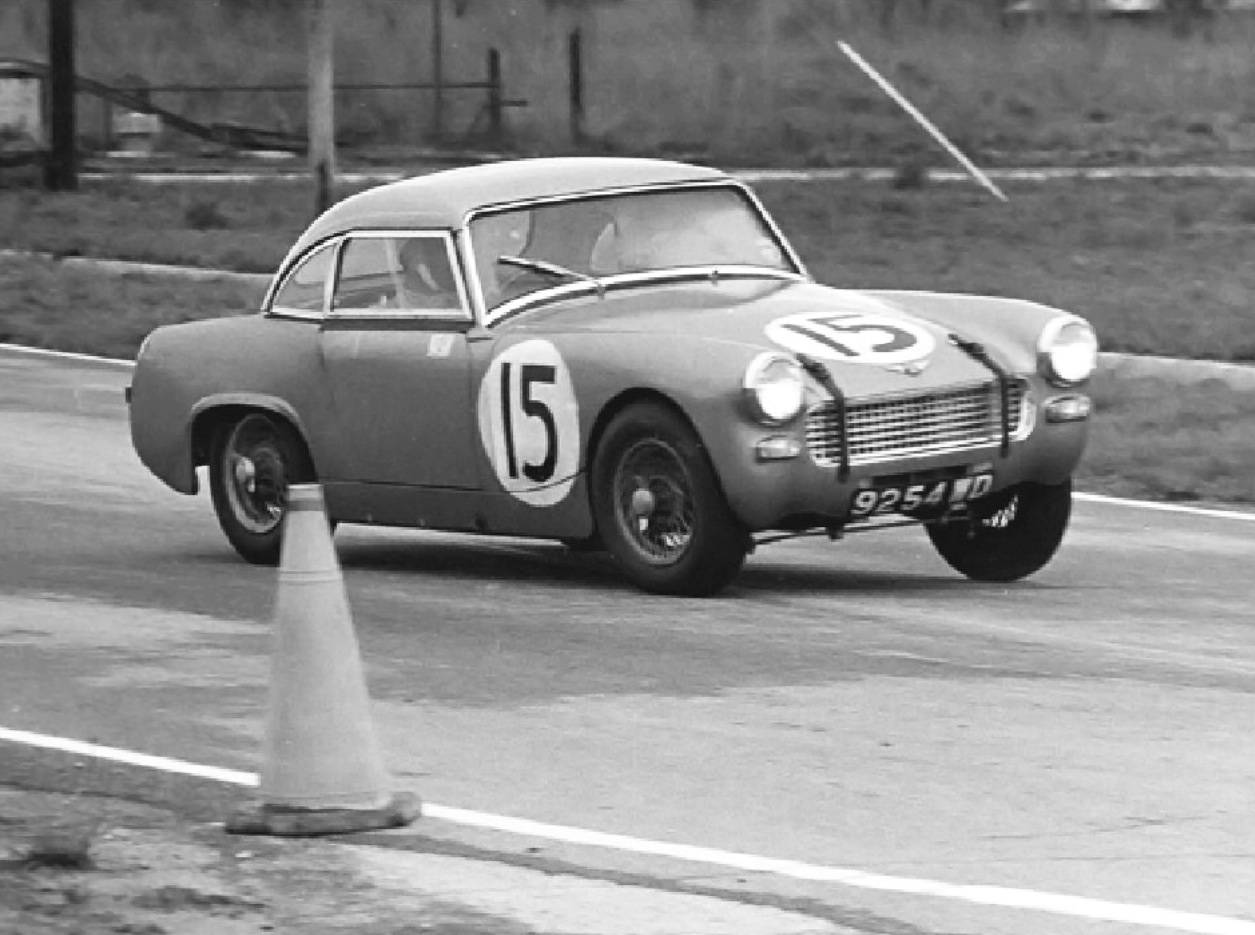
After Sandown he returned to the US to contest the Sebring 3 Hours and Sebring 24 Hours on 23/24 March finishing third in an Austin Healey Sprite and DNF in a NART Ferrari Dino 248SP respectively.
image

Moss, AH Sprite, Sebring 3 Hour 1962 (Tom Bigelow)
 

image

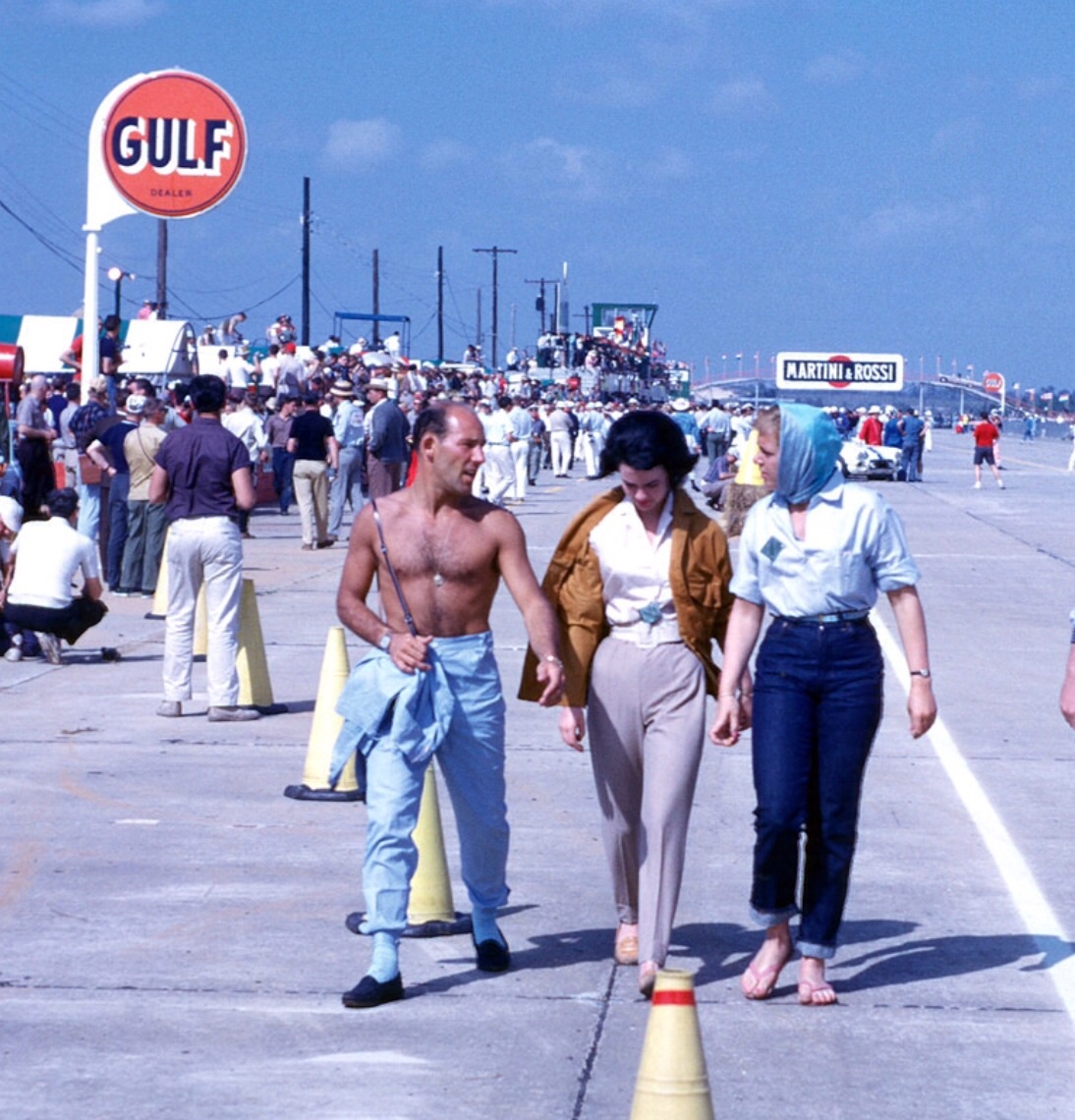
Moss, maidens, Sebring 1962. That he was in such great physical shape no doubt a factor in his attraction to the babes but it  also stood him in good stead in surviving the horrific Goodwood shunt, surgery and month long coma (Tom Bigelow)

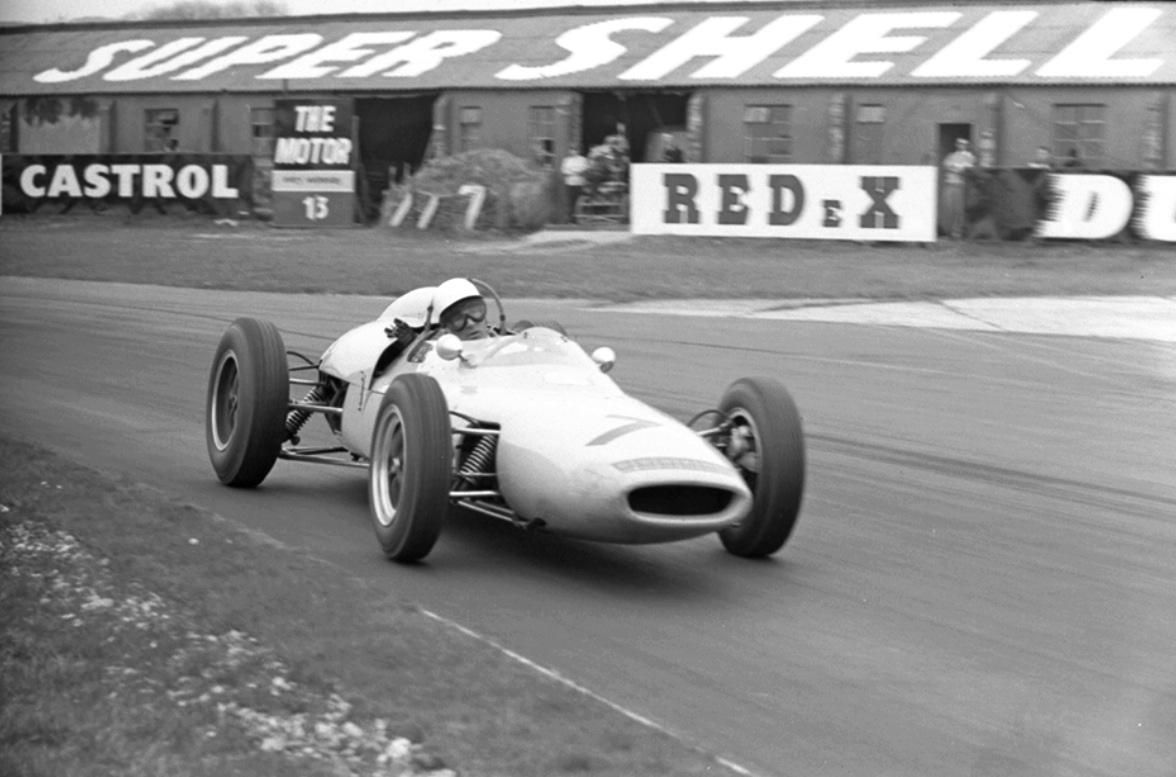
Moss then returned to Europe for the 1 April GP of Brussels and Lombank Trophy at Snetterton on 14 April yielding second and seventh in the Walker Lotus 18/21 FWMV V8 ‘906’ before that fateful day at Goodwood on 23 April.
image

Moss, Goodwood, Lotus 18/21 ‘906’ not long before the prang, Easter Monday 1962 (Doug Nye)
 

image

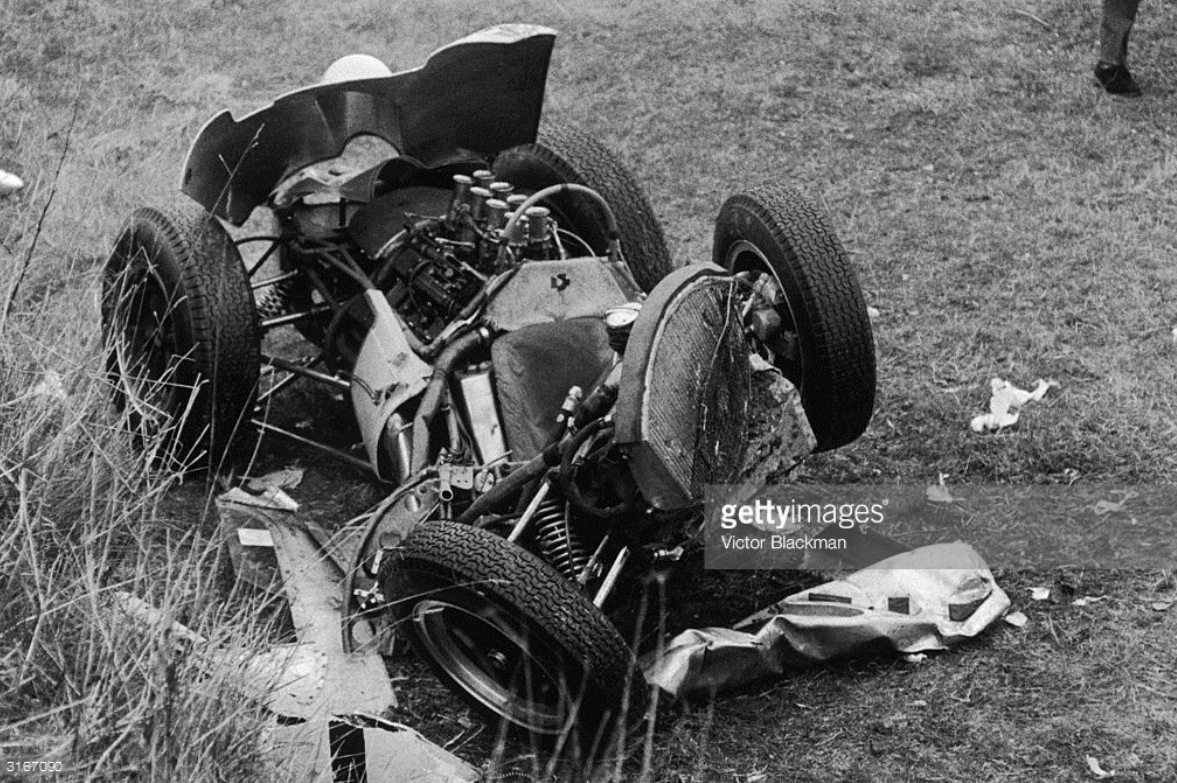
It took over an hour to cut Stirling free from the mortally wounded Lotus. One of the things I have learned and detest in researching various pieces is the vast number of gruesome images of racing crashes on the internet- you won’t ever see them here, I am all for ‘freedom of the press’ but believe there is a place for censorship of said images (Victor Blackman)

Moss was an enormously popular visitor to Australia from the mid-fifties, sadly his Goodwood 1962 accident was not too far away during his early 1962 tour.

His Antipodean fans never forgot him though.

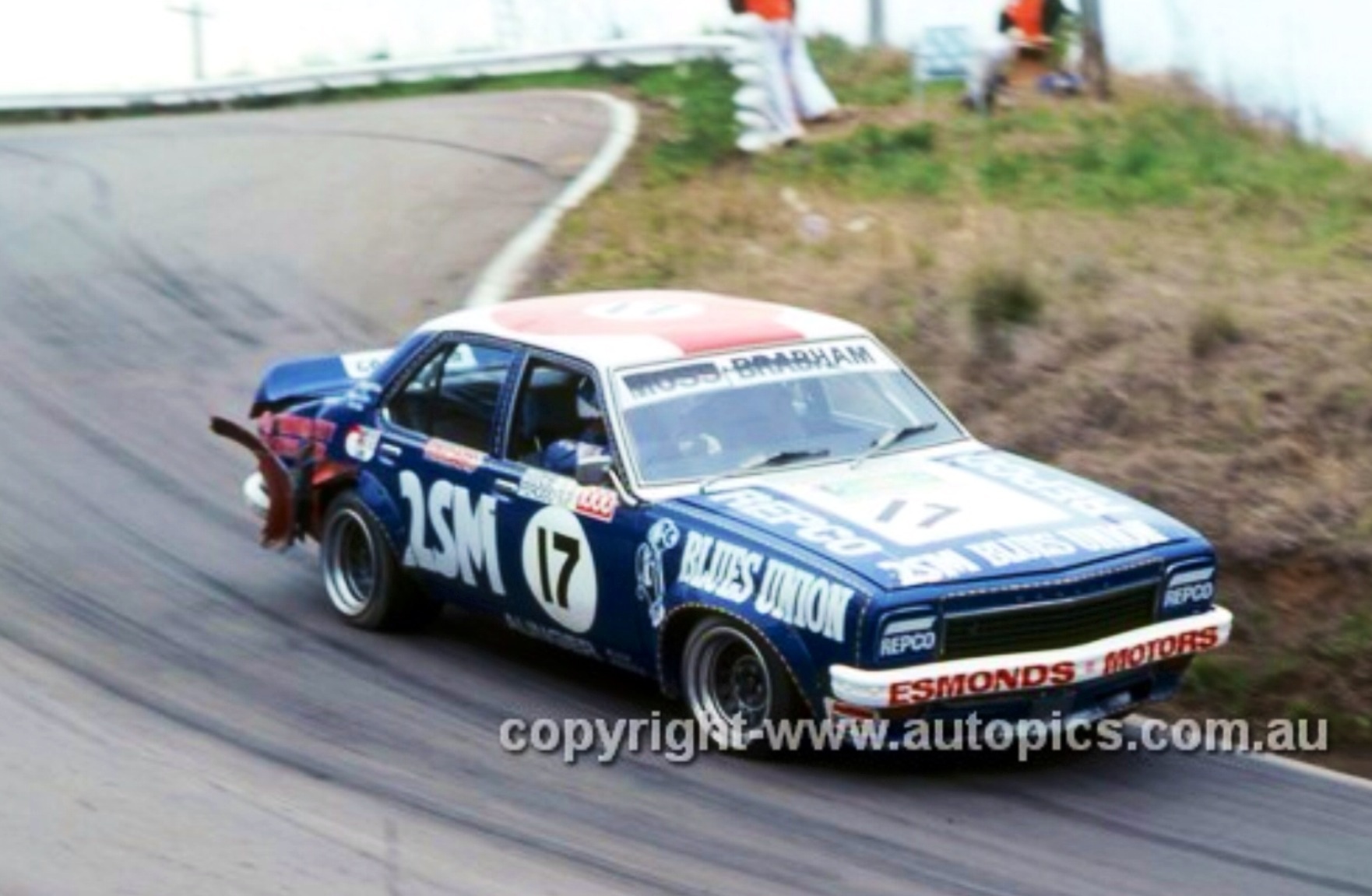
We turned out in droves to see his ‘comeback’ drive in a Holden Torana L34 V8 at Bathurst in 1976, he shared the car with Jack Brabham. The all-star combination had a shocker of a race when Jack copped a Triumph Dolomite ‘up the arse’ on the startline thanks to his Holden’s clutch failure.

Brabham was stranded as the rest of the field moved post-haste towards Hell Corner, the unsighted Dolly was an innocent victim of Black-Jacks misfortune, the car was patched up but Jack and Stirling failed to finish, a great shame!

Moss, a great man, ’tis wonderful he remains one of our sports great ambassadors.
image

Brabham/ Moss, Holden Torana L34, Bathurst 1976 (Autopics)
 

image

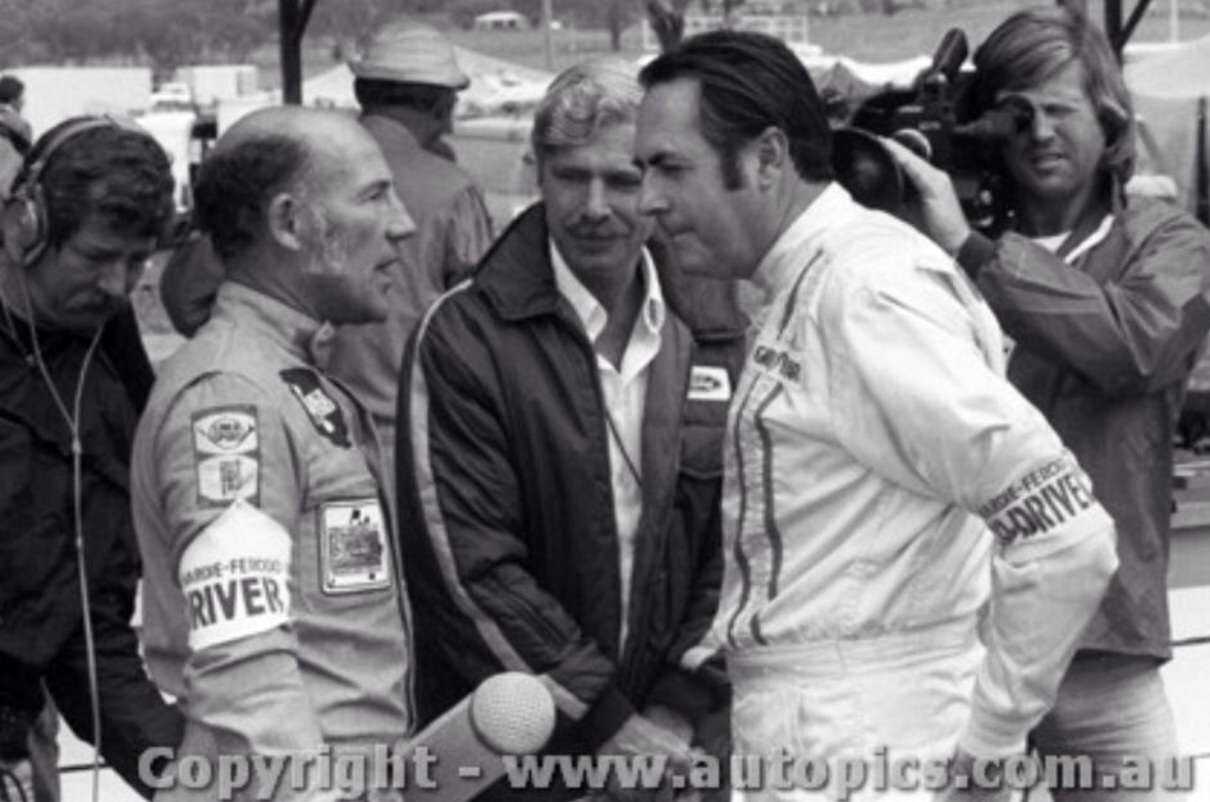
Moss and Brabham at Bathurst in ’76, that’s Scuderia Veloce’s David McKay in between (autopics.com)

Bibliography…

Automobile Year, MotorSport 1961 Italian GP race report by Denis Jenkinson, Doug Nye ‘Theme Lotus’, William Taylor ‘The Lotus Book’, oldracingcars.com, GP Encyclopaedia, silhouet.com, Team Dan

Photo Credits…

GP Library, James Allington, Mal Simpson, Kevin Drage, Stephen Page, John Ellacott, Klemantaski Collection, John Ross Motor Racing Archive, Dave Friedman Collection, autopics.com, Victor Blackman, Doug Nye, Tom Bigelow

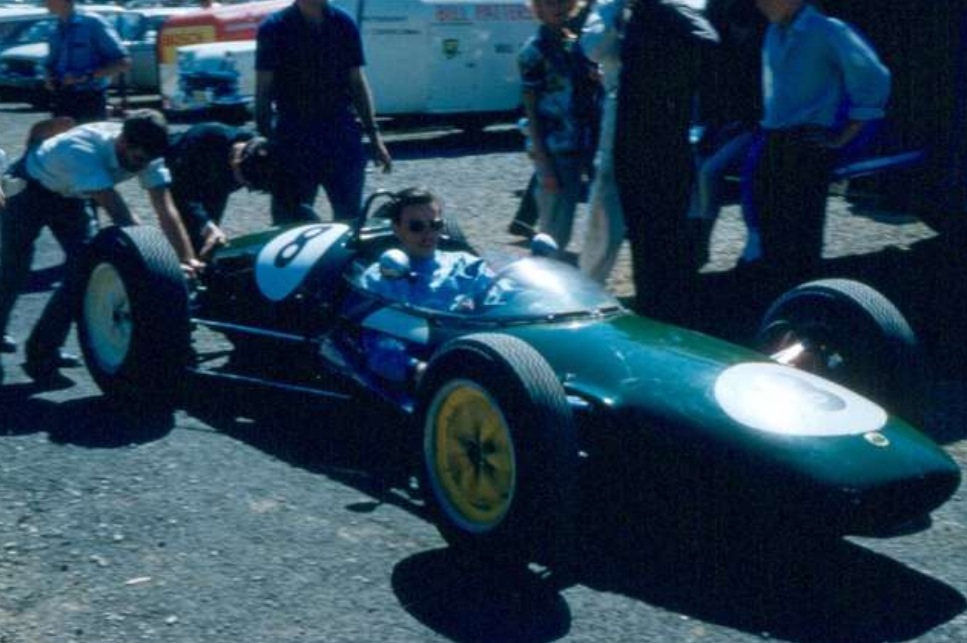
Tailpiece: The future. Jim Clark at Sandown, Lotus 21 Climax ‘933’, World Champion in the new, epochal monocoque Lotus 25 within two years and a GP winner within months. Here with the lower sidepanel removed due to Melbourne summer heat…
image

(Kevin Drage)

Finito…


coops

(Getty)

One tends to sometimes forget that British Entrepreneur, Engineer, Team Owner John Cooper was also a driver and the birth of Cooper as a marque is a function of his need for a racer…

The great Brit is piloting his works Cooper T20 Bristol F2, the caption for the photo says in the ‘IV Daily Express International Trophy’ race at Goodwood on Whit Monday, 10 May 1952′. In fact JC was entered for that meeting/race at Silverstone on that day as #14 but did not arrive, so ‘praps this is a practice shot.

Before focusing on the construction and sales of his cars and managing the team he was a very capable driver taking many 500cc wins, a class for which the first Cooper, famously constructed of two Fiat 500’s welded together to provide an independently suspended car, was built.

image

Cooper 500 Drivers L>R in this 1948 photo; John Cooper, George Saunders, Charles Cooper, the shot credits Chas as the cars designer and Stirling Moss. ‘New midget racing cars made by Charles Cooper at his Surbiton, Surrey garage’ is the caption (Popperfoto)

The front-engined Cooper Bristols Types 20 and 23 ‘launched’ the successful careers of Mike Hawthorn and Jack Brabham amongst many others, i wrote an article about them, click here for the link; https://primotipo.com/2015/02/10/stirling-moss-cumberland-park-speedway-sydney-cooper-t20-wm-holden-1956/

I started to research an article to write on John Cooper’s career and influence and came upon the obituary published by Britain’s ‘The Telegraph’ on 27 December 2000, it seems to me it covers things rather well so here it is, truncated slightly and with my photographic additions…

image

JC at left, having already done a few laps, slightly quizzical supervises Ken Wharton’s test of a Cooper T23 Bristol at Goodwood in 1953. What a ripper period scene, love the casual dude in suit pants, vest, tie and fag! (Popperfoto)

‘John Cooper, who has died aged 77, was one of the great figures in the history of motor racing; his Cooper-Climax cars were the force behind Jack Brabham’s dominance of the drivers’ championship in the early 1960s, while his Mini Cooper was destined to become a symbol of the decade itself.

Cooper and his small design team at Cooper Cars first came up with a rear-engined sports car in 1955. Based around a Coventry Climax firepump engine, the “Bobtail” Cooper-Climax was without peer in its class. By narrowing the chassis and fitting slender bodywork which left suspension and wheels exposed, Cooper then created a rear-engined Formula Two car which could easily be upgraded to meet the demands of Formula One.

image

Jack Brabhams Cooper T40 Bristol ‘Bobtail’ on the way to a lucky Australian Grand Prix win at Port Wakefield, South Australia in 1955 (unattributed)

By 1957, the Australian Jack Brabham had joined Coopers, and a 2-litre version of the Formula Two car was entered for the Monaco Grand Prix. Brabham pushed it home in sixth, having been third. On twisting circuits, the nimble rear-engined Cooper could challenge the comparatively flat-footed Ferraris’, Maseratis’ and Vanwalls’ which traditionally competed for places on the podium.

image

Stirling Moss on his way to the first mid-engined car F1 win, Cooper T43 Climax 1.9, Argentine GP 19 January 1958 (Getty)

The next year, in the Argentine Grand Prix, Stirling Moss drove a Cooper to a first world championship victory by the rear-engined car, and at Monaco another Cooper won, this time driven by Maurice Trintignant.

image

Moss, Argentina 1960, Moss giving away more than 500cc to his competitors, the Coventry Climax FPF 1.9 litres (Getty)

The persuasive Cooper then managed to talk Coventry Climax into building full-sized 2.5 litre engines for his works’ drivers – Brabham and Bruce McLaren – and under his direction Coopers promptly won both the 1959 and 1960 Formula One constructors’ titles, while Brabham took two consecutive world champion drivers’ titles. By 1962 every Formula One marque had put their engines where Cooper had his – behind the driver.

cooper

John Cooper aboard the Cooper T49 ‘Monaco’ in March 1959 during a press release, Brands Hatch (John Ross)


image

Lap 1 Portuguese GP 1960; Brabham’s Cooper T53 Climax from Gurney’s BRM P48 DNF and Surtees Lotus 18 Climax DNF. Jack won the race having had a huge accident in Oporto the year before (Autosport)


image

Argentine GP 1960 post victory in the UK; McLaren 1st Cooper T51 Climax, Brabham DNF and JC (unattributed)

In the mid-1940s, Cooper had competed against Alec Issigonis, the designer of the Mini, in hill-climbs. Soon after its launch in the mid-1960s, Cooper suggested to George Harriman, head of the British Motor Corporation (the Mini’s manufacturer), that he should market a tuned-up version. Harriman doubted that he could sell more than 1,000; the final total of owners attracted by Cooper’s modifications exceeded 125,000.

Cooper was consulted regularly about improvements to the design and an entire family of Mini Cooper variants evolved, among them the Mini Cooper S. The Mini Cooper lorded it over rally racing for the rest of the 1960s, winning multiple championships and four consecutive Monte Carlo rallies between 1964 and 1967.

image

It was the first economy car to become a status symbol, the height of chic. Its owners included King Hussein of Jordan and members of The Beatles. “Drive a Mini Cooper – the most fun you can have with your clothes on!” ran the advertisements. “If your tyres survive more than 2,000 miles, you’ve driven like a wimp.”

At the end of the decade the car featured prominently in the film The Italian Job (1969), in which Michael Caine and his team of bullion raiders made the most of the Mini’s virtues of small size and great speed to escape pursuit via the roofs, sewers and marble staircases of Turin. The Minis were painted red, white and blue, and the film not only helped boost sales of the Mini Cooper all over the world but, by identifying the car with a time of great British style and ingenuity, helped it also to attain immortality.

image

John Cooper was always going to be involved with cars! Caption of this 27 May 1935 photo’ Dwarfed by a full-sized car, Mr CW Cooper of Surbiton drives the miniature racing car which he built for his son John. The tiny vehicle is fitted with a 1.25 horsepower two-stroke engine and can travel 52 miles an hour. The other car is an Alfa Romeo 8C Monza, does anybody know who the occupants are? (Fox Photos/Getty)

Cooper was born on July 17 1923 at Kingston, Surrey. His father Charles ran a modest garage in nearby Surbiton; among the cars he maintained for customers was the Wolseley “Viper” raced at Brooklands by Kaye Don. When John was eight, his father made him a half-scale car with a motorcycle engine. At 12, he was given a lightweight Austin 7-based special capable of 90mph; he tried it out at Brooklands but was chased off the track by enraged officials.

On leaving Surbiton County School at 15, John became an apprentice toolmaker, and after RAF service in 1944-45, he and his friend Eric Brandon (later a successful racing driver) built themselves a single-seater racing car for the new 500cc class. Two scrap Fiat 500 front-ends were welded together to provide an independently suspended chassis, on to which was mounted a 500cc motorcycle engine behind the driver’s seat to chain-drive the back axle.

Wearing sheet aluminium bodywork, this first Cooper racing car was very successful, and a second was built for Brandon in 1947. Cooper and his father then founded the Cooper Car Company to build a batch of 12 replica 500s for sale. One of their first buyers was the 18-year old Stirling Moss.

The Cooper Car Company quickly became the first, and largest, post-war specialist racing car manufacturer; Lotus, Lola and March – among others – would follow them. While John Cooper provided the firm’s enthusiasm and drive, Charles Cooper kept control of the firm’s finances.

image

Cooper after victory at Rouen in 1952. Cooper MkV 500 (Heritage)

John Cooper was also a very capable racing driver in his own right. In 1952 at Grenzlandring he scored the first 500cc race to be won at an average of more than 100mph, and the next year drove his streamlined works car to victory in the Avus Speedbowl, Berlin. He also enjoyed first places at Monza and at Rouen.

image

JC record breaking at Monthlery, France on 9 October 1951, car is streamlined, slightly stretched Cooper MkV JAP. 500 & 1100cc engines used (Popperfoto)

Click here for an interesting article on the Cooper Land Speed Record cars;

http://www.ugofadini.com/cooperstory.html

image

JC in the chassis of the Mk V record-breaker, a variety of JAP engines used, 15 November 1952 (Central Press)

In the early 1950s, Coopers diversified into front-engined sports and single-seater racing cars. The first British world champion driver, Mike Hawthorn, first made his mark in a 1952 Cooper-Bristol Grand Prix.

A warm, even extrovert man, John Cooper relished every moment of his fame, although he was perhaps never the same after being badly injured in 1963 when his prototype four-wheel drive Mini Cooper crashed. It was many months before he was fully fit, and in 1965 – the year after his father died – he sold the Cooper Car Company to the Chipstead Motor Group.

image

1966 US GP Watkins Glen; front row Brabham in BT19 Repco DNF, Bandini Ferrari312 DNF and Surtees Cooper T81 Maserati 3rd. Jim Clark took the only win for the BRM H16 engine in his Lotus 43  (Alvis Upitis)

Although he continued to co-direct the Formula One racing team until 1969, when it was disbanded, from the mid-Sixties onwards its homegrown construction was overtaken by more sophisticated and better-funded technology at Lola, Lotus, BRM and Ferrari. Characteristically, Cooper never felt any envy as his company was upstaged.

He retired to the Sussex coast, where he founded the garage business at Ferring, near Worthing, which still bears his name. Recently, he had been much cheered by the decision of Rover to develop a new generation of Mini Coopers, primarily for enthusiasts in Japan. Rover’s new owner, BMW, has embraced the project, and just before his death Cooper was delighted to see his son drive the prototype BMW Mini Cooper.

John Cooper was appointed CBE last year. He leaves a wife, a son and daughter. Another daughter predeceased him.’

image

JC ‘races’ the ‘first Cooper ‘ his dad built for him in 1930 (Keystone France)

Credits…

‘The Telegraph’ John Cooper obituary 27 December 2000,  GP Library, GP Encyclopaedia

Getty Images, Keystone France, Alvis Upitis, Central Press, Popperfoto, Heritage Press, Fox Photos, Autosport, John Ross Motor Racing Archive

Tailpiece: ‘I don’t care Bruce just go faster!’ With Bruce McLaren and Phil Hill in 1964…

image

European/British GP, Brands Hatch 1 July 1964; JC, Phil Hill 6th and McLaren DNF #10 is Hill’s Cooper T73 Climax. Clark won the race in a Lotus 25 Climax (G Pollard)

Finito…


monaco 1961

A famous win for Moss, Rob Walker and the Lotus 18 Climax…

1961 was the first year of the 1.5 litre F1; Ferrari were dominant with their powerful 156’s, the little V6 was the most potent engine, the chassis not a patch on the best of the Brits but overall the Scuderia had a great year.

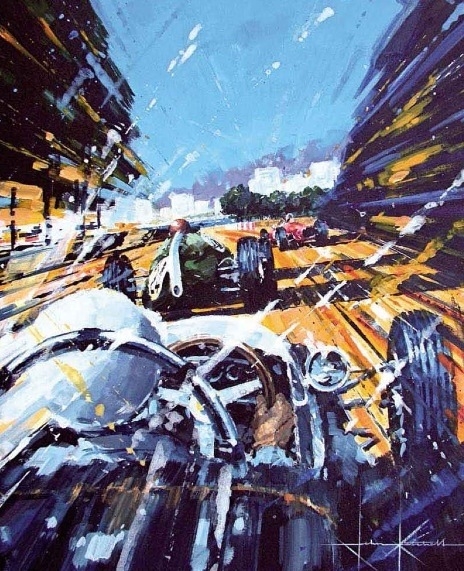
However, the mastery of Moss prevailed several times during 1961. The first of these performances in his lithe, nimble 1.5 Coventry Climax Mk2 engined Lotus 18 is portrayed in the season opening event by John Ketchell’s art.

The great cockpit view shows Moss chasing Jack Brabham’s Cooper T55 Climax and Richie Ginther’s Ferrari 156.

grid

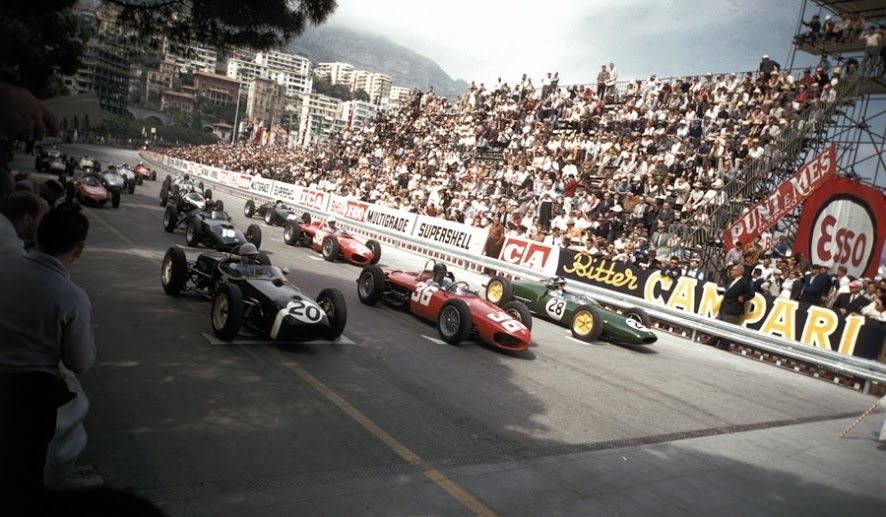
Grid shot: #20Moss Lotus 18 Climax, #36 Ginther’s Ferrari 156 and #28 Clark Lotus 20 Climax front row. Gurney’s Porsche 718 and Phil Hill’s Ferrari 156 on row 2 (unattributed)

image

Hill’s Ferrari, Clark outside #28 , Moss inside with the missing bodywork, #16 Tony Brooks BRM P48/57 Climax#36 Ginther and the silver nose of Gurney’s Porsche 718 (GP Library)


Credit…

John Ketchell, GP Library

Tailpiece: Maestro Moss…

moss mastery

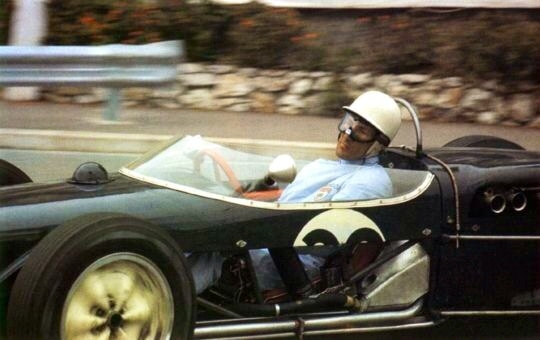
Moss Mastery; totally relaxed as he gets every bit of performance out of the chassis of his year old Rob Walker owned Lotus 18; works drivers Clark and Ireland are in the new Lotus 20. Side bodywork removed to provide cooling air on the hot May day. Moss won Lotus’ first championship GP win with this victory (Geoff Goddard)

image

Stirling Moss cruises his works Maserati 300S chassis #3059 through the Albert Park paddock prior to winning the Australian Tourist Trophy on 25 November 1956, he repeated the dose in a 250F in the following weekends Australian Grand Prix…

One of the wonderful things about this internet thingy is the number of unseen photos of our sport which pop up from time to time giving people like me something to write about. And so it is that Sharaz Jek recently posted photos his father took as a paying-punter at the Australian Grand Prix carnival at Albert Park held during the Olympic Games.

It would have been more considerate had he posted them six months ago when i first wrote about the two Maser sportscars brought to Australia as part of a five car team by Officine Maserati!. But hey, it gives me a chance to write about the ATT specifically, click here to read the earlier article, i won’t repeat the background or destiny of the two 300S’ which stayed in Oz post event;

Bob Jane: Maserati 300S: Albert Park 1958…

image

Melbourne in 1956…

I wasn’t born in 1956 but its fair to say i was more than a twinkle in my parents eyes, so i didn’t attend the mid-fifties Albert Park meetings which older enthusiasts speak so fondly about. Running around the lake last weekend i reflected on how little Albert Park had changed but also how much Melbourne had, the skyline of the city a short 2 Km away.

In 1956 Melbourne’s population was circa 1.5 million people, now it’s 4.7 million, the war ended only a decade before and with it successive Australian Governments established an aggressive migration program which provided, and continues to provide us with the wonderful, peaceful mix of people and their cultures which makes this such a special country and city in which to live. Disgraceful offshore detention centres notwithstanding!

The ’56 Olympic Games, held from 22 November to 8 December was an important part of opening our society to other cultures and equally allowed us to showcase our country, city and capabilities to the world.

The same can be said about the 1956 Albert Park International race meetings and their impact on Australian motor-racing; Barry Green in his wonderful book ‘Albert Park: Glory Days’ said; ‘The weekend was the proverbial moment which changed the face of motor racing in this country. Here for the first time we had a current works sports car and F1 team and other leading international drivers in ex-factory cars; their presence prompting the best of the locals to upgrade their machinery, spend even more and charge harder. A world class field deserved a world class venue and world class crowd. And in the picturesque Albert Park and thousands of international visitors filling Melbourne to overflowing for the first Olympic Games to be held south of the equator, it had just that’.

image

So, to put you in the zone of the times before reading this piece I have added some photos of Melbourne in 1956 to give you the ‘feel of the joint’ and flavour of the times six decades ago, the racing stuff is after that if you wish to cut to the chase…

image
image
image
image
image
The ‘Eyetalians’ brought their weird steaming coffee making machines with ’em post-war, the local coffee obsession was underway, school below is Melbourne High in South Yarra
image
image
TV was introduced to Australia in the lead up to the games, here some locals are sussing the weird new contraption in the window of ‘Myers’ department store in Bourke Street
image
‘Sultry beauty Gunhild Larking, 20, Sweden’s entry for the high jump pensively awaiting her turn to compete’ is the caption. A post sporting career in modelling or TV awaits d’yer reckon!?
image
image
image
image

The first weekend of the two week AGP carnival comprised four events, the feature the Australian Tourist Trophy for Sports Cars was held on 25 November…

A convoy of Maserati mechanics drove the 250F and 300S, the 5km from Australian International and 250F driver Reg Hunt’s Elsternwick Holden Dealership, where the cars were maintained each day to Albert Park, on the Nepean Highway and St Kilda Road. Not too much of a problem then but guaranteed to boil a Maserati 300S sans radiator fan these days!

al behra
Behra and Moss @ Albert Park in 1956, the first and only time, sadly, Behra raced here but Moss was an annual, usually victorious visitor to Oz till the end of his career in the Masers, then Rob Walker entered Coopers and Loti (Graham Hoinville)

Most of the drivers stayed close by in the ‘Espy’, the Esplanade Hotel in St Kilda, it’s still there if you want a ‘bevvy’ during the AGP carnival and is well known to Australians as the home of the ‘RocKwiz’ music quiz show.

Fitzroy Street St Kilda felt exotic and buzzed with thousands of visitors from all over the world eager to explore the local delights of the bayside suburbs restaurants and bars. They were full of people including recent European migrants eager to get a touch of home for a few hours at least. The Espy and Tolarno’s were ‘chockers’ and no doubt the proprietors of the areas ‘red light’ precinct did good trade.

image
Guerino Bertocchi, Maserati chief mechanic and factory test driver and his helper start the 5 Km journey from Albert Park to Reg Hunt’s Elsternwick Holden dealership where the team were based (Arnold Terdich)
image
Maserati’s as far as the eye can see! Masers brought 5 cars to Oz, 3 250F’s (one unraced spare which at one stage looked as tho it may have been raced by Brabham but ’twas not to be) and 2 300S, Reg Hunt Motors, Nepean Highway, Elsternwick (Eileen Richards)

In ’57 the factory 300S’ were campaigned by Moss, Behra and Piero Taruffi taking wins at Silverstone, Nassau, the Nurburgring, Rouen and Buenos Aires; the works allocated # 3055 to Behra and # 3059, the ‘featured car’ here to Moss. Stirling was in sparkling form having won the Venezuelan Grand Prix in Caracas a fortnight before arriving in Melbourne, Behra also contested the race.

There was a strong entry for the ATT of around 36 cars; Peter Whitehead returned to Australia hoping to repeat the success of his 1938 tour which culminated in an ERA Bathurst Australian Grand Prix win for him.

His entry in the ATT was a Ferrari Monza, similar cars were entered by Brit Peter Wharton and local motor dealer Stan Coffey. The Whitehead and Wharton Ferrari’s were garaged at AP Hollins in Malvern where Lex Davison’s mechanic/engineer Alan Ashton, well familiar with 4 cylinder Ferrari’s (Davison raced the ex-Ascari Tipo 500/625) could keep a close eye on them.

Lex, already the winner of one of his four AGP’s in 1954, entered his HWM Jaguar, his Ferrari was raced in the AGP won by Moss’ 250F the following weekend.

al coffey
Stan Coffey’s Ferrari 750 Monza, of earlier vintage than those of Wharton and Whitehead but still quick if tricky to drive (John Blanden)

Jaguar D Types were entered for Kew motor dealer and later multiple Australian Gold Star champion Bib Stillwell and Queensland’s Bill Pitt driving the Mrs Anderson owned car.

Jack Brabham returned from Europe where he was establishing a strong reputation to drive a Cooper T39 ‘Bobtail’ Climax with future Gold Star Champion Bill Patterson, another Melbourne, Ringwood, Ford dealer in a similar car.

al brabham
Jack refuels the Cooper T39 in the Albert Park paddock. ‘COR’ is Commonwealth Oil Refineries soon to be BP (John Blanden)

Veteran Tom Sulman raced his ‘Kangaroo Stable’ Aston Martin DB3S, the quicker entries rounded out by Austin Healey 100S’ for multiple AGP winner Doug Whiteford and Ron Phillips.

image
Moss positions his Maser on the front row of the ATT grid, Behra started on pole. Such a sexy shape . Properties on Canterbury Road near the Mills Street corner in the distance (Sharaz Jek)
al start
Behra’s 300S gets the jump at the start, thats Whitehead’s Monza at left, Moss 300S slightly behind, the Jag is Stillwell’s D at left and the little car on the far right Brabham’s Cooper T39 (John Blanden)

A fantastic crowd of 150,000 people gathered to watch the days racing which was marred by the critical injury and subsequent death of Peter Catlin in the first race of the day after he lost control of his Bugatti at Melford corner.

This dominated the tabloids coverage of the race but ‘The Argus’ noted Moss’ lap record of 1:55.8 ‘set in a sportscar, the record previously held by a racing car’ and ‘one of the finest exhibitions of race driving seen in Melbourne’.

To the surprise of many Behra put his car on pole and lead from the start of the 100 mile race with Patterson flipping his Cooper at Melford Corner without too much damage to him or the car on the first lap.

al behra
Behra hard on the brakes in pursuit of Moss. Maser 300S (Philip Skelton)

Behra lead the other 35 competitors at the end of lap 1 from Moss, Stillwell’s D Type, the  two Monza’s of Wharton and Whitehead, Brabham’s Cooper T39, Bill Pitt’s D type and Paul England’s beautifully designed Ausca. The car was built by England in his spare time at Repco, was powered by the first Holden/Repco Hi-Power cylinder head engine.

al pitt
Pitt’s Jag D chasing Jim Leech’s MM Holden Spl with the Ron Phillips Austin Healey 100S behind (unattributed)

On lap 2 Moss gave his French teammate a blast on his Masers ‘Fiamms’ at Jaguar Corner to let him through, and an even bigger one when he did so, team orders not new in motor racing! At the front Wharton and Brabham slipped past Stillwell with Bill Pitt getting progressively quicker in his XKD and closer to the shapely tail of Whitehead’s Monza.

al brab coop
Brabham wringing the little Cooper T39’s Climax engine hard! (John Blanden)

Moss had a lead of 20 seconds from Behra, Stillwell spun giving Pitt ‘a sniff’ at him as Moss set fastest lap on the 27th tour, passing lots of slower traffic in the process.

By the race’s end only Jean Behra was on the same lap as Moss, the Brit took the flag from Behra, Wharton, Pitt a great 4th and first local home, Stillwell, Whitehead, Lex Davison’s HWM Jaguar and Kiwi Ross Jenson in an Austin Healey 100S and the rest.

al moss color
Moss exits Jaguar corner in his 300S complete with accumulated hay from bales disturbed by other errant competitors during the race’ 100 miles, in the cars inlet (Graham Hoinville)
image
‘Motori Porno’ innit!? Plug change, 12 of them for Moss’ twin plug #3059. Twin distributors, big Weber 45DCO3 carbs of the 2992cc circa 280 bhp 6 cylinder, DOHC 2 valve engine all clear (Sharaz Jek)

Other ATT Meeting Photos…

al scene 1
Albert Park vista #20 the Phillips Austin Healey 100S (unattributed)
al start 2
Another start shot, row 3 this time with the 2 D Types of Stillwell and Bill Pitt (right) in shot, thats Sulman’s Aston DB3S on the far right (unattributed)
al phillips
Phillip’s 8th placed pretty Austin Healey 100S, great run for the Melburnian in a model very popular in Oz, sadly most have now left our shores (unattributed)
al monza
Stan Coffey’s Ferrari 750 Monza behind its Holden FE towcar (Sharaz Jek)
al moss passing
Moss passing and thanking with a wave MG T driver Newman for his track etiquette (Arnold Terdich)
al wharton
Ken Wharton’s races his Ferrari 750 Monza to 3rd place. Southern Command Army buildings in the background. He raced this car in NZ that summer and sadly died in it at Ardmore on 12 January 1957 (John Blanden)
al still
Bib Stillwell’s ‘XKD520’, the seventh D Type Jag built appropriately going thru Jag Corner. An important step in the later Australian Champs rise thru the ranks, he raced it in ’56 to early ’57 , then progressed to Hunt’s 250F (autopics.com)
al vista
Another paddock vista which again has ‘COR’ Commonwealth Oil Refineries in shot, clearly the firms PR function was working well! the Phillips Healey 100S and a Porsche Speedster in shot (unattributed)

Etcetera…

image
Fifties circuit conceptually similar to but not identical to the contemporary one, direction of racing opposite to the present (Barry Green)

Bibliography…

Barry Green ‘Albert Park: Glory Years’

Photo Credits…

Sharaz Jek especially for the shots which inspired the article, Getty Images for all of the Melbourne ‘atmo’ 1956 shots, Arnold Terdich, Eileen Richards, John Blanden, Philip Skelton, Graham Hoinville, autopics.com

Tailpiece: She is MY daughter Stirl don’t even think about it!…

image
(Sharaz Jek)

Finito…

jack from kling

Baptism at Aintree – Karl Kling’s Mercedes W196 & Roberto Mieres’ Maserati 250F push Jack at his 1st World Championship F1 event. Cooper T40 Bristol. 1955 British GP. (Jack Brabham Story)

Sixty years ago today, Jack Brabham made his Formula 1 GP debut at Aintree, but first he had to build the car…

The first half of 1955 was full of many goings on for Jack Brabham. With encouragement from the UK RAC motor sporting administrator, Dean Delamont, Jack was convinced to head over to the UK for some motor racing. Little did anyone know the success this would bring – although it was hardly immediate.

It the pages of the February 1955 ‘Australian Motor Sports’ there’s a brief piece on Jack and his trip to the Continent and it rumours that he had ordered a Cooper-Alta and might have a trial drive with Mercedes Benz. To finance such a trip he had to sell his highly developed & successful ‘RedeX Special’ – aka Cooper-Bristol. Stan Jones, having wrecked his Maybach II at the 1954 Australian GP purchased it. Just prior to selling though, Jack had his last race in the ‘RedeX’ at the January 31, 1955 Gnoo Blas meeting. This was a big meeting for the country NSW circuit with international drivers’ Peter Whitehead and Prince Bira running Ferrari & Maserati respectively. For Jack another part of financing the UK journey also meant selling his lathe and some other equipment – all to his later lament.

jack ibsley

The unloved ex-Whitehead Cooper-Alta at Ibsley. (Jack Brabham Story)

Flying to the UK, meant initially leaving his wife, Betty and young son, Geoffrey in Australia. Soon after arriving Jack took delivery of the ex Peter Whitehead Cooper-Alta. In fact he originally set up camp at Whitehead’s Chalfont St Peter’s race garage before a slightly later move to Bob Chase’s RJC Motors operation at Saltdean. His racing activities in the UK, began with the Cooper-Alta at the April 11, 1955 Goodwood Easter Monday meeting. The same meeting Cooper Cars debuted their petite 1100cc Coventry-Climax T39 ‘bobtail’ sports car. Their first foray into what would become a successful ‘Climax’ engine relationship.

brabham GP-1955-debut

Brabham’s brand new, self built Cooper T40 Bristol, Aintree, British GP 1955. Car and driver victorious in the 1955 Australian GP, Port Wakefield later in the year. (unattributed)

History tells us that Jack Brabham never said much, he let his ability do the talking, whether by his driving or engineering skills. But he knew how to get what he wanted. Neither Charles, nor John Cooper ever officially interviewed Jack for a job at Cooper’s Surbiton works. He just hung around often enough until he was one of them.

Despite its Cooper heritage, Jack’s lack of enthusiasm remained for the Cooper-Alta. Even after an engine blow-up at the April 30 Ibsley meeting on the old RAF base, saw him convert it to Bristol power. Meaning he was never going to be satisfied continuing to race that car.

So having gained his new friendship with the likeable John Cooper, Jack was allowed use of Cooper’s Surbiton facilities to knock together what would be his own interpretation of Cooper’s new T39 ‘bobtail’ – shoehorning a big engine into a small sports car. One could even say this was an early incarnation of what would evolve into the Can Am style cars of the mid 60s and onwards.

t40 construction

The bare bones of the Cooper T40 Bristol under construction. Tubular ‘curvy in the usual Cooper way’ chassis frame. Front and rear suspension upper transverse leaf spring and lower wishbones with Arnstrong shocks, drum brakes, 2 litre Bristol 6 cylinder engine.(Jack Brabham Story)

Part of Jack building his ‘streamliner’ F1 car, involved adding 50mm to the chassis’ wheelbase to accommodate the familiar to him, 2 litre Bristol 6 cylinder lump – in place of the 1100 Climax 4. Both built with the engine behind the driver. Worth noting is that in some official entry lists the car is claimed to have a 2.2 litre Bristol. Apparently that was the intent, but not reality. It was also built devoid of lights and anything that would add unwarranted weight.

t40 engine

The Bristol 2 litre 6 cylinder in the rear of the T40. (Jack Brabham Story)

This project later tagged as T40 in the Cooper genealogy stakes – with 2 constructed. One Jack would use himself, this car was allocated chassis number CB/1/55 and another that Bob Chase’s RJC Motors would briefly run for Mike Keen. I say briefly, because unfortunately a crash at the August 20, 1955 Goodwood 9 hour took Mike’s life and the ever present problem of fire destroyed the car.

Jack Brabham’s UK presence hadn’t gone unnoticed by the UK specialist motoring press, gaining a few comments in race reports. Autosport magazine even showed off the incomplete T40 in their pages the day before its first race. Admittedly the photo would have been taken sometime before that, but it was a brand new car when it hit the circuit – with no test time.

jack and autosport

Autosport 15 July 1955 Cooper/Brabham announcement.

Liverpool’s Aintree circuit was the venue for the running of the July 16, 1955 British GP meeting. This meeting became Jack’s F1 debut race. The programme even mentions ‘The Cooper Grand Prix entry is a prototype of a full team to be built to race in 1956.’ A slightly premature comment as it turned out and the only F1 Grand Prix the T40 would take part. The car’s haste to complete meant new car sorting was lacking and a rear of grid start. Having liberated the Harley Davidson clutch setup from his Australian ‘RedeX’ C-B before sale, with some irony it was this part that let Jack down at Aintree making for an early retirement at 30 of the intended 90 laps the outcome. The dominant Mercedes Benz W196 team that included Juan Manuel Fangio, Karl Kling and Stirling Moss, saw Stirling taking race honours.

Brabham-Aintree-55-small

Jack Brabham’s Cooper T40 Bristol from Ken Wharton Vanwall VW55 equal 9th, with victor Stirling Moss about to round them up in his Mercedes W196. (Bill Henderson)

Despite the niggling start Jack had more faith in the T40 than the Cooper-Alta. What followed over the ensuing month were national events at July 30 Crystal Palace & August 1 Brands Hatch with further retirements at both. Then crossing over the Scottish border his luck with the T40 began to change at the August 6 Charterhall meeting. Finally two 4th placed finishes in his Heat and Final. Continuing into the following week’s damp August 13 Snetterton. At that meeting Jack was able to mix it amongst some of the motor racing luminaries. Such as Harry Schell & Ken Wharton in Vanwall’s, Stirling Moss in his privately entered Maserati 250F and Roy Salvadori 250F. That being the finishing order for Snetterton’s RedeX Trophy race with Jack slotting in between Stirling and Roy for another 4th place. Had he not spun during his tussle with Moss it may well have been a 3rd place greeting him. This race alone was enough to convince Jack he would return to the UK in 1956 as he was about to send the Cooper T40 home to Australia. Jack and Betty then set to return to Sydney in late September to catch up with their son and more motor racing.

brabham and hawthorn

Jacks thoroughly modern mid engined, ‘central seat sports derived F1 car’ ahead of the over the hill Ferrari 625 of Mike Hawthorn, monstering the little Cooper. MH finished equal 6th in the race with Fazz teammate Eugenio Castellotti. Things got better for Ferrari, the Lancia D50 ‘gifts’ were not too far away! (unattributed)

autocar

The year of 1955 was also a period whereby other Aussies had made the trip to England for a racing holiday. Orders had been placed with Aston Martin for 3 of their DB3S racing sports cars. The ‘Kangaroo Stable’ as it was so named with members being Tony Gaze, David McKay, Les Cosh, Dick Cobden, Tom Sulman & Jack Brabham. Circumstances played against them though. Late delivery of the cars didn’t help, but it was the June 11-12, 1955 running of Le Mans that put the skids on racing soon afterwards with a number of events cancelled as a result to the Pierre Levegh Mercedes going into the crowd at Le Mans.

1955 Hyeres Kangaroo

‘Kangaroo Stable’ Aston Martin DB3S at the Hyeres 12 Hour, France 29 May 1955. L>R Gaze, McKay, Brabham, Cosh and Cobden standing near the post. Only Tom Sulman is missing from the shot. Race won by Canonica/Munaron Ferrari 750 Monza, then came the Kangaroo Stable trio; Gaze/McKay 2nd, Cosh/Cobden 3rd and Sulman/Brabham 4th. (David McKay ‘Behind The Wheel’)

Jack Brabham was present at the famous French road course that year, but as a reserve driver for the Bristol team. He got to qualify, but never received the call up to put his helmet on for the race. That may well have been one of several omens Jack was granted in 1955 and over his outstanding career.

Cooper Cars Ltd also had a presence at Le Mans with the John Brown/Edgar Wadsworth Cooper T39 1100 and the Whitehead Brothers Cooper-Jaguar that year, but it was the infancy of Jack and John’s friendship, hence no involvement with the Surbiton marque’s effort

Another instance of Brabham luck was just before he headed for home. September 17 was the Dundrod RAC Tourist Trophy meeting in Ireland, with Jack there to share the Michael O’Shea owned Cooper T39 with London driver, Jim Mayers. An inexperienced French driver, Vicomte Henri de Barry created annoyance for several drivers as he baulked their progress, with those drivers’ having to take risks to get past to further their race on the testing Irish road course. Unfortunately the situation ended as badly as it could with a fiery crash at Deer’s Leap involving several cars. Jim was one of 2 drivers to die at that crash scene – the Cooper scattered to oblivion. This event would also claim another driver, elsewhere around the course. Although not knowing otherwise, Dean Delamont had sought out Betty Brabham, thinking it was Jack involved in the main crash – only to find him in the pit. Jim and Jack had flipped a coin to decide who did the first stint. We know who won…

jack and betty

Together in the UK, Betty Brabham followed Jack mid-year. While their son, Geoffrey stayed with his grandparents in Sydney. Cooper T40 Bristol. (Jack Brabham Story)

So as can be seen there were a few familiar names that helped establish Jack Brabham in those early days in the UK – Whitehead, Chase, Cooper & Delamont. The Bristol marque also played its part with their engine and the Le Mans reserve driver gig. Through them, Jack Brabham, Jim Mayers & Mike Keen are also entwined with their 1955 Le Mans Bristol team involvement. Taking out 7th (Mayers), 8th (Keen) & 9th places behind Jaguar’s Mike Hawthorn, Ivor Bueb winning entry. It was all a taste of the next 15 years Jack would encounter in the highest levels of motor racing, including building more racing cars.

Etcetera…

jack

Jack shipped the Cooper Bristol home to Australia at the end of 1955, and in the saltbush country of the new Port Wakefield circuit, 100Km from Adelaide, won the 1955 Australian Grand Prix on 10 October. A lucky win from Reg Hunt’s ailing Maserati A6GCM and Doug Whiteford’s Talbot-Lago T26C. The first mid-engined AGP win. (unattributed)

Bibliography and Photo Credits…

‘The Jack Brabham Story’ Jack Brabham and Doug Nye, ‘Behind The Wheel’ David McKay, Bill Henderson

Finito…


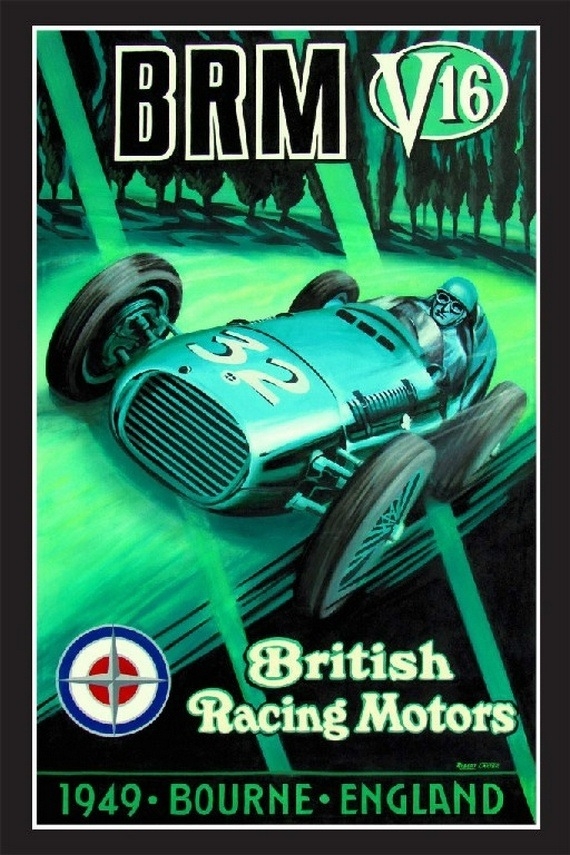
brm m sport v16 cover

About 15 years ago, I got a phone call from my father, telling me that his brother, my Uncle Henry had passed away at his home in Derbyshire, UK…

I remember Henry from the early 1960s, my dad’s dashing brother, who never married, but whenever he visited, arrived on or in interesting machinery. My first ride on a bike was on his Vincent Comet and then on a legendary Black Shadow. A Mini Cooper was thrilling, even more so, a Cooper S.

We moved to Australia, but news came occasionally of the succession of Lotus, Porsche and latterly turbocharged Nissans of the Silvia and Skyline variety.

brm 1

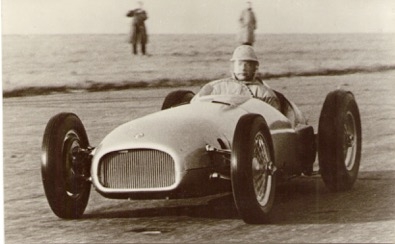
BRM V16, Ken Richardson, Folkingham 15 December 1949. (Marcus Clayton Collection)

I was pleased to receive, as part of a modest inheritance from Henry, a packet of photos, reproduced here. They are obviously very early BRM shots, which I had never seen before. I thought they may have been taken by him as a young man, but 2 of them appear elsewhere on the interweb, so I can only assume they are part of a postcard pack, or press pack. I would date them around 1950/51.

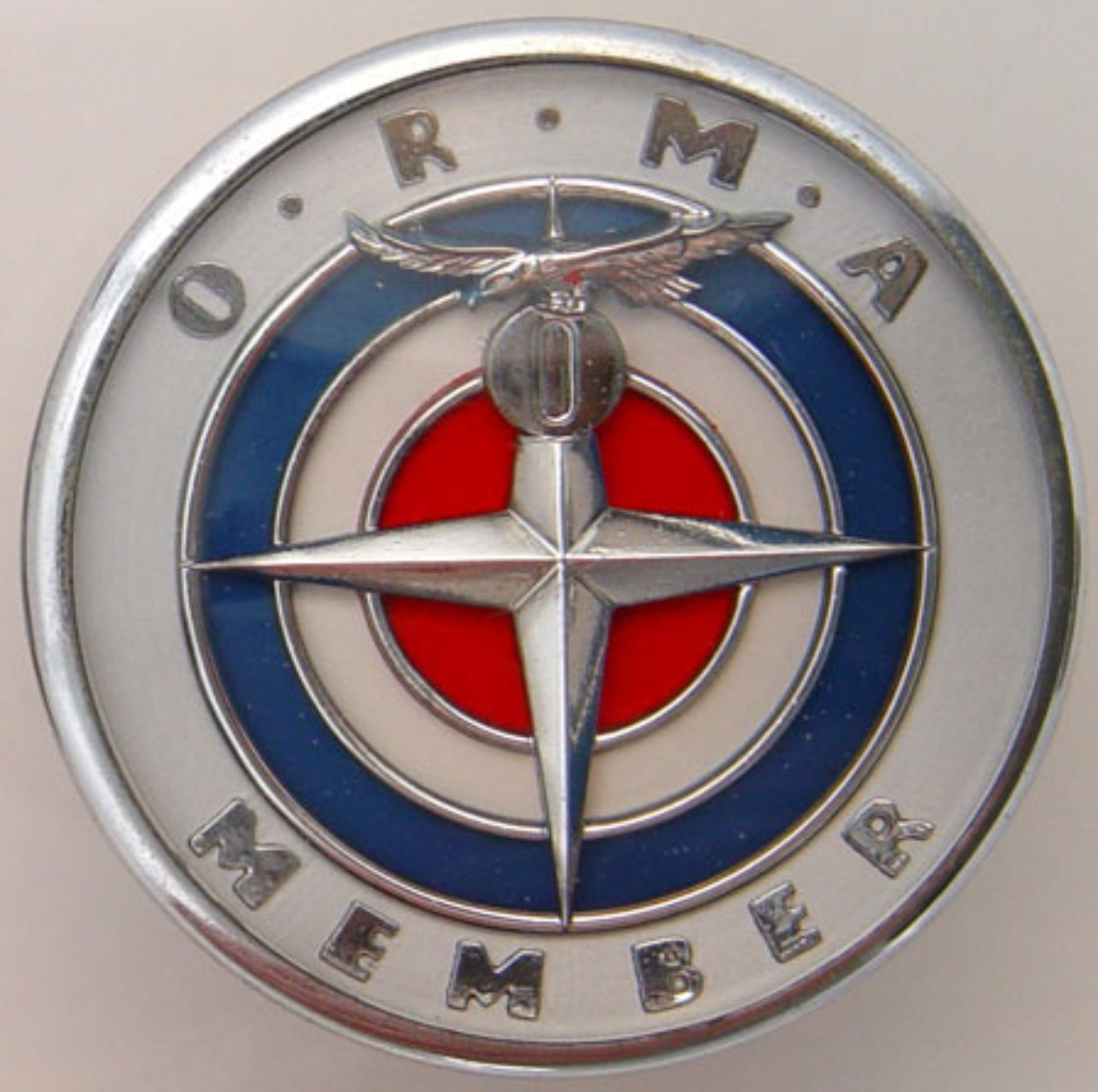
(Contributor/Historian Stepen Dalton advises the photos are BRM Press Kit shots, the cars launch was at Folkingham on December 15 1949, Stephen suspects Henry may have been a ‘BRMA’ or ‘ORMA’ member, the BRM supporters groups. The members of those groups were perhaps provided with copies of the shots. See membership badges below. Stephen has also indicated the likely dates of the track sessions and drivers, i have changed the captions accordingly.)

brm 2

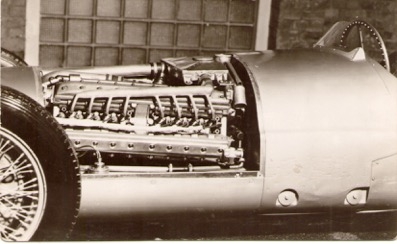
1488cc, centrifugal-supercharged, DOHC 2 valve V16. (Marcus Clayton Collection/Louis Klemantaski)

I have always had a fascination with the BRM. It has been written about extensively, so I can only add my personal take on this machine.

Mark Hales described it as like ‘The Victorians trying to build a moon rocket, and they very nearly succeeded’.

16 cylinders, each of less than 100cc, highly supercharged, spinning at 12,000 rpm, air suspension, disc brakes, with all this componentry, supplied by dozens of different companies, motivated to show ‘Johnny Foreigner’ that British engineering was still the best in the world. Inevitably, when there are so many suppliers involved, with so many radical parts, the project was delayed, time and time again, until the great day when the car had its first race start. It travelled about 3 feet, after breaking an axle at the start.

brm v 16 cutaway

Chassis was tubular comprising double-tube side members, 4 cross members, aluminium body. Suspension at front by Porsche type trailing arms and Lockheed air struts, de Dion rear axle located by a single radius rod each side and Lockheed air struts. Brakes Girling 3 shoe drums,(Mk 2 had discs) Wheels Dunlop centre lock wires with 5.25 inch wide x18 inch diameter wheels at front and 7 inch x17 inch diameter at the rear. BRM 5 speed gearbox with ZF ‘slippery diff, gearchange on RHS, transmission angled to pass to the left of the driver. Engine specifications with engine cutaway drawing below. Weight at the start line circa 862Kg. (Tony Matthews)

The cars were extensively sorted over 3 years before they became reliable. Exhausts changed from full length, to in front of rear wheels, to stubs behind the front wheels. Radiator intakes increased and decreased, oil cooling and filtration revised, nearly every part was altered and changed.

When some cars were being properly restored during the 90s, the original dyno shed was discovered, and on the walls were all the different firing orders tried. I don’t know that the final order used was ever identified.

Of course there is the sound.

I don’t know if it is the greatest sound in the automotive world, but it has to be in the running. I played a recording of the BRM to an engineering colleague, who makes drag racing engines. He thought the BRM sounded like an extremely angry Funny Car, and took some persuading to be convinced that all that fury came from only 1500 cc.

brm 3

BRM V16, Folkingham, Ken Richardson 15 December 1949. (Marcus Clayton Collection)

None of the drivers really liked the car, as it was unreliable and difficult.

‘The V16 was a thoroughly nasty car,’ said Moss. ‘The brakes were OK, the acceleration was incredible – until you broke traction – but everything else I hated, particularly the steering and the driving position. Handling? I don’t remember it having any…’

Raymond Mays, (Who I think is driving in the photos) ‘Before we went to Albi in ’53, I drove Fangio’s car at Folkingham Aerodrome and I had it up to 190mph on the 2000-yard runway. It was quite frightening, because you could re-spin the wheels at 9800 in fourth gear. I reached 11,800, with a high gear in…’

mays

Ray Mays, BRM V16, Daily Express Int Trophy Meeting, Silverstone 26 August 1950 (J Wilds)

Mays again ‘By the end of that lap, though, Fangio detected a misfire, and, as Mays admitted, ‘When you got a misfire on the V16, it could have been 1001 things… We worked through the night, and at 3.30am it was decided that I would test the car. At that time of the day – early dawn – there were horses and carts about, farmers coming out of gates, but on this long straight road I had the thing up to 180, and I scared myself stiff.’ How wide was the road? I asked. ‘Narrow’. said Mays. ‘Narrow.’

So the cars were ultimately irrelevant, only winning races in Formula Libre after time ran out for them when F1 changed to the unsupercharged 2 litre formula.

brm 4

Handsome side profile undeniable.(Marcus Clayton Collection/Louis Klemantaski)

The world is a better and more interesting place for the BRMs having been made. It would be unlikely to happen today, as the risks were far too high, but they were, like so many of the automotive and other objects that we so treasure, a delightful folly.

The recording is of Nick Mason’s BRM in 1998, driven by Mark Hales, from ‘Into the Red’.

brm 5

BRM V16 Folkingham. Perhaps Ray Mays on the cars first trial run, 3 December 1949. (Marcus Clayton Collection)

Restoration and Maintenance of This Car, Type 15 Chassis #1 Owned by the British National Motor Museum…

http://www.telegraph.co.uk/cars/classics/brm-v16-appeal/

Etcetera…

brm 6

Another shot at what appears to the be the launch of the BRM Type 15. (Marcus Clayton Collection/Louis Klemantaski)

brm board

Raymond Mays at right doing a bit of ‘stakeholder management’.R>L: Mays leaning, behind him Peter Berthon. Beside Peter, publicist Walter Hill, to his left Bob Henderson Tate from the Ministry of Supply. Standing, still going R>L are members of the ‘British Motor Racing Research Trust’ Bernard Scott and Denis Flather of Lucas, Alfred Owen far left. Seated in front of the table is administrator and later company secretary of BRM James Sandercombe. The meeting is in the study at Eastgate House, Mays family home in 1948. (photo unattributed but caption details ‘BRM Vol1’ Doug Nye)

brm engine cutaway

135 degree all alloy, 1488cc V16 with cast-iron wet liners. 10 bearing crank. DOHC 2 valves per cylinder, Rolls Royce 2 stage centrifugal supercharger fed by 2 SU carbs. Ignition by Lucas coil and 4 Lucas magnetos.Mk 1 Type 15 power 330bhp@10250rpm 1950-460bhp@11000rpm 1951.(unattributed)

BRM V16 crank

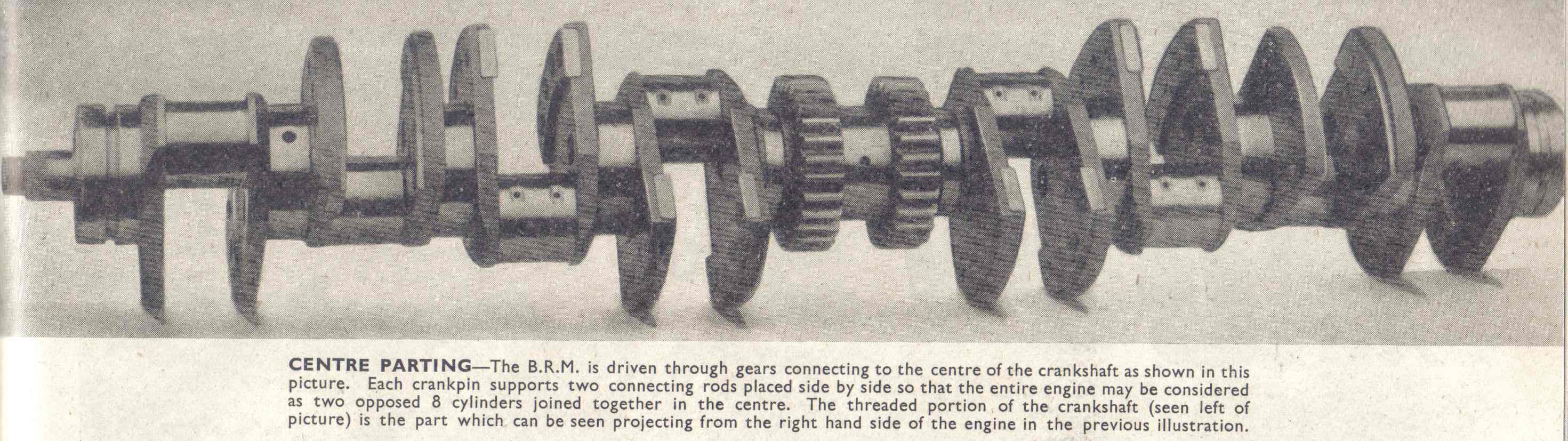
BRM crankshaft, centre power take-off clear. (Stephen Dalton Collection from the ‘BRM Ambassador for Britain Booklet’)

BRM V16 Vandervell ad

(Stephen Dalton Collection from the ‘BRM Ambassador for Britain Booklet’.)

orma

‘Owen Racing Motor Association’badge.

brma

Scratchy ‘BRM Association’ lapel badge.

brm postcard

Photo and Other Credits…

Tony Matthews cutaway, Motorsport magazine, Stephen Dalton Collection, J Wilds, ‘BRM Vol 1’ Doug Nye

Finito…


1997 Goodwood fos 01

I’m too much of a dinosaur to relent to going through life with a ‘Bucket List’ – but if I did – then Goodwood Festival of Speed would be on it. However, in what now seems an eternity ago, that itch was scratched…

The year was 1997 and three full days at FoS action was on the agenda. That year was the 5th running of the ‘must see at least once’ event – originally established as a one day event at Lord Charles March’s humble abode on June 20, 1993. Essentially as a method to generate some income for the upkeep of his Goodwood Estate, while including the enthusiasm he shares with his late grandfather, Freddie March for the motor vehicle.

1997 Goodwood fos 06

When you put on the show, you get to play with all the good toys. Lord March about to take the Chaparral-Chevrolet 2 for a run with Jim Hall’s team mechanic, Troy Rogers

Perhaps one shouldn’t have been surprised, given it was under British skies, that 1997 happened to be the first year rain actually intervened with the event. The rally stars such as Juha Kankkunen, Michele Mouton & Tony Pond were in their element in those conditions. Although gumboots, or ‘Wellies’ (as our Chichester friends would prefer us Aussies call them), aided by a Massey Ferguson should have been the quintessential accessories in the outfields. But the show must go on… and so it did.

1997 Goodwood fos 02

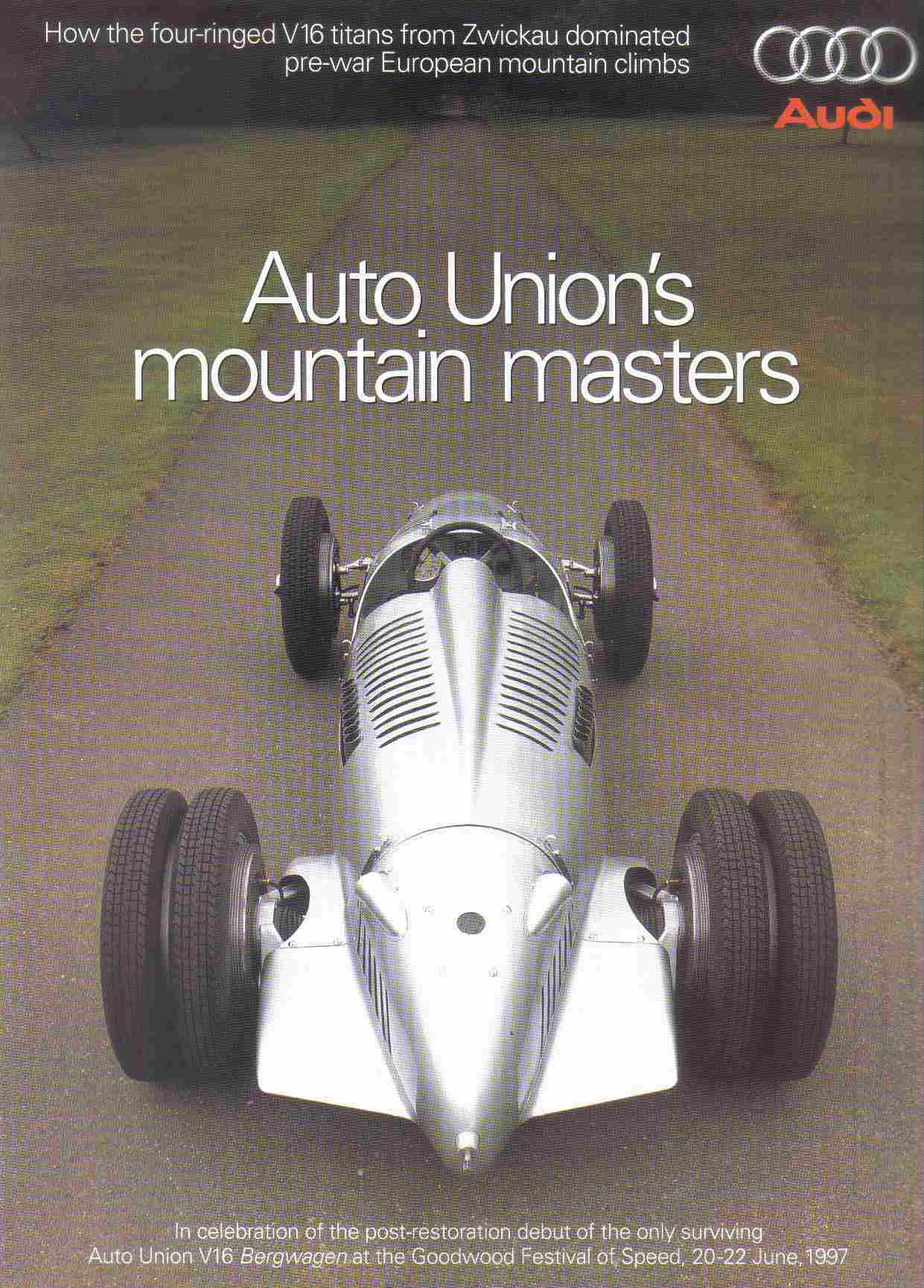
Quattro of a different kind…part of Audi’s 1930’s heritage. As would be expected of a manufacturer like Audi they produced a special press pack just for the unveiling of the restored Auto Union V16. This forms part of it.

The prime of motoring’s manufacturers were ready to exhibit their wares in both static and competition or demonstration-mode to highlight their presence to the mass of Goodwood-bound enthusiasts and glitterati alike – arriving from both spheres of the globe.

Audi brought along their newly restored Auto Union V16 Mountain climb car for Hans Stuck to run up the Goodwood drive. Not quite mountain climbing, but a sight and sound to behold. Arch rival, Mercedes Benz brought along their 1955 Mille Miglia winning 300SLR for Stirling Moss to drive in memory of the then recently departed Moss MM co-driver and motoring journalist, Denis Jenkinson.

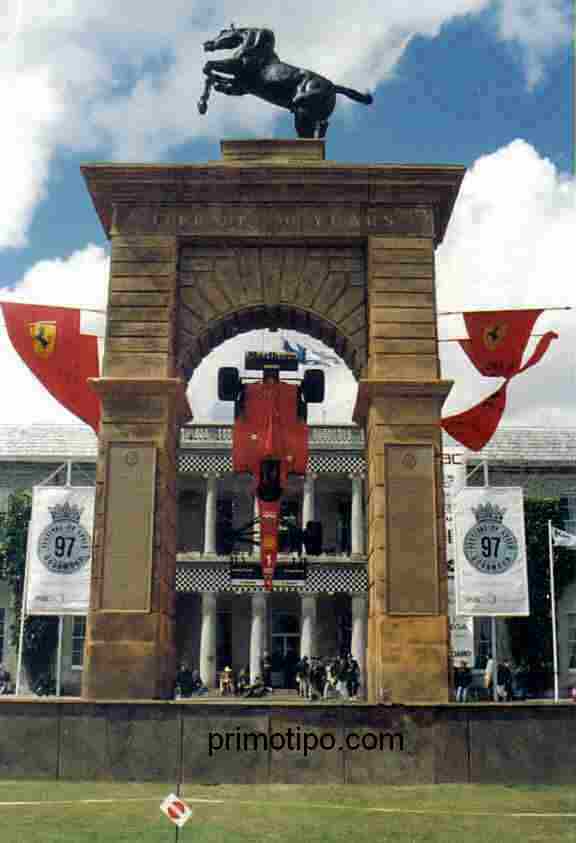
Arguably standout that year was the fiery red Italian, Ferrari marque. Certainly so, based on their presence at the event marked with the massive statue created in front of Goodwood House – celebrating their 50 years of Maranello motoring couture with a V12 orchestra under the bonnet. Ably backed with many examples baring the scarlet tone and prancing horse insignia, with past & then present drivers’ from the Scuderia invited along to accompany the celebration.

1997 Goodwood fos 03

One way to hook an F1 Ferrari… worshipping the scarlet red Italian marque, Goodwood-style. The even more imposing Goodwood House is behind.

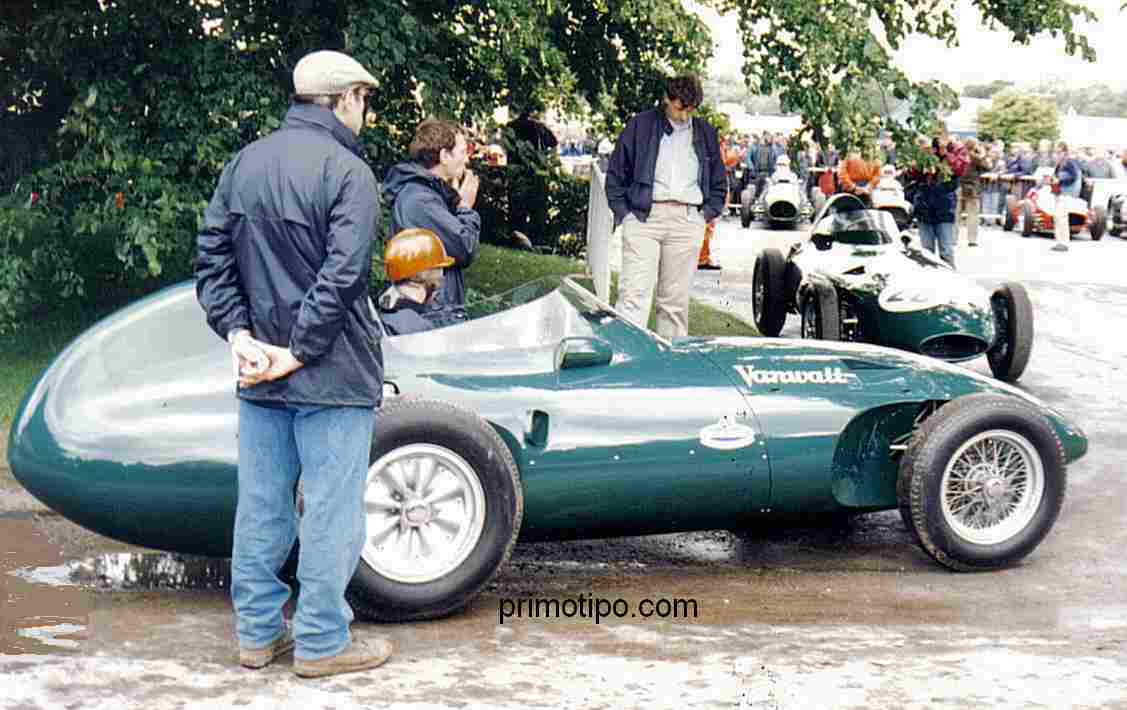
If that wasn’t enough to ignite the flame then perhaps the presence of Jim Hall’s Chaparrals, various Lotus F1 & Indy car’s, Pink Floyd drummer, Nick Mason’s BRM V16, Wheatcroft & Collier collection’s Vanwalls, or numerous Shelby Cobra, et al flowing through the grounds to be enjoyed, would.

1997 Goodwood fos 10

Period attired Tony Brooks awaits in the Wheatcroft Vanwall ‘VW9’ for Stirling Moss’ arrival to jump aboard the Collier Vanwall ‘VW5/11’ so they could both do a demonstration run together. The Vanwall’s of course testament to engine bearing magnate, Tony Vandervell’s efforts after his frustrated support during the early days of the supremely complicated BRM V16 project.

Another option was to give the cheque book a work out by making your way to the BROOKS marquee and put your hand up or nod obligingly at the auctioneer in an attempt to procure various vintage or classic sports, or racing cars. Amongst the many offerings was the ex Graham Hill/Arnold Glass BRM P48 and original Mini designer, Alec Issigonis’ ‘Lightweight special’. Then again if the budget didn’t stretch that far, various memorabilia or even fashion traders would happily liberate multiples of pound notes from you. The memorabilia traders’ certainly worked their magic on me.

1997 Goodwood fos 07

Brooks Auctions (now Bonham’s) sold the ‘Lightweight Special’ originally built in the late 1930’s by 1959 Mini designer, Alec Issigonis and his friend, George Dowson. Both drove it in Hillclimb’s and ¼ mile Speed Trials at the likes of Prescott and Brighton. That’s how ‘Issi’ met John Cooper! When built the ‘Lightweight’ was advanced with its monocoque construction, rubber suspension and cast wheels. The Heritage Museum at Gaydon in the UK’s midland’s tried to acquire the car to add to its other Issigonis artefacts, but strong bidding knocked them out and it stayed in private hands – selling for around £40,000 at Goodwood. It was soon back into hillclimbing, but damaged quite soon after. The necessary repairs to the bodywork, meaning it lost some of its long established patina.

Given the prevailing moist atmosphere for 2 of the 3 day event, the smart move would have been to stay out of the weather and procure a grandstand seat while enjoying the sights, sounds and smells of motor sport’s past and then current, rally cars, sports cars, F1 or motor cycles as they motored by. Often driven or ridden by someone famous. Some on a mission to set a Hill record, others purely as a demonstration run.

1997 Goodwood fos 11

Uniquely placed in motor sport’s history is John Surtees – championships on motorcycles and cars. Seen here riding his 1960 MV Agusta 500.

What made Goodwood special for me though was the ability to just amble around and find something to enjoy. The paddock was a special place to get up close and view, not only the very special racing cars present, but many drivers or riders. Several who carried world titles within their sport and happy to oblige an autograph or 3. For me, a copy of the Doug Nye’s ‘Cooper Cars’ book garnering notable autographs from those who took part in racing Coopers during period on track battles. Reflecting back after 18 years, several of those present that weekend are no longer with us. However fond memories of a visit to Goodwood Festival of Speed will remain. For what was even in the event’s early years’ an overwhelming 3 days hard to take it all in… but worth giving a damn good crack.

1997 Goodwood fos 05

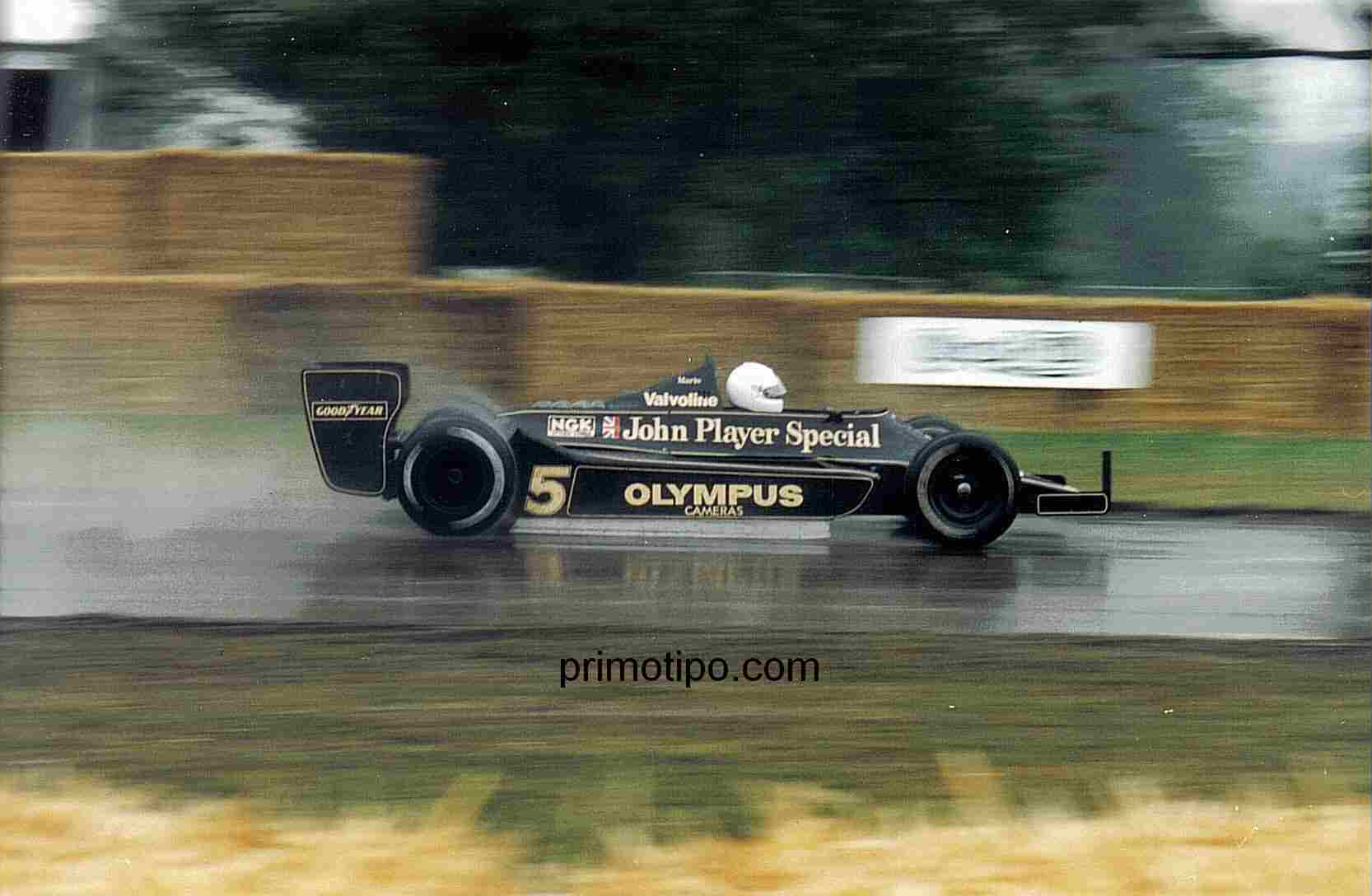
Splish, Splash… John Dawson-Damer takes his ex Team Lotus 79 for a gingerly run along a very damp Goodwood drive. This is chassis ‘79/5’ originally run in 1979 Team Lotus Martini colours for both Andretti and Reutemann during that season. When Lotus and J-DD struck up the arrangement that his ex-Clark Lotus 32B Tasman car went back to Lotus and the 79 was delivered to him in the far more pleasing JPS scheme

This year’s FoS is happening over June 25 – 28…

https://grrc.goodwood.com/section/festival-of-speed/#A0sx9FsJjirkRd9Q.97

1997 Goodwood fos 08

Only Barry could get away wearing his baseball cap backwards at Goodwood… After hearing Barry Sheene on Australian TV commentary for ATCC/V8 Taxis, some wags might say “What’s he doing trying to read!” Well I witnessed the relaxed Mr Sheene sitting atop this BMW in the pits, when clearly an enthusiast of his approached for an autograph of a Sheene book he had brought along. What quickly transpired was that while Barry was out winning races and busting bones on racing motorcycles, before disappearing to the warmer climates of Australia to live afterwards, he clearly was not aware of this book about himself! Flicking through it and scanning its pages as I managed to snap this photo.

A recent feature on Lord March…

http://www.ft.com/cms/s/0/7fda4792-0df5-11e5-9a65-00144feabdc0.html Note:- if you hit the paywall google ‘financial times uk lord march’ and maybe you’ll get through

1997 Goodwood fos 14

Despite Enzo not wanting to join the late 1950’s F1 GP rear engine revolution, Phil Hill won his 1961 F1 Championship in the ‘sharknose’ Ferrari 156 with the V6 engine behind the driver. So not only was Phil the first USA citizen to win F1’s highest accolade, he also goes down in history as the first Ferrari rear engine era Champion.

1997 Goodwood fos 15

Not Jimmy Clark’s 1965 Indy 500 winner, but the sister Bobby Johns Team Lotus entry.

1997 Goodwood fos 12

1997 Goodwood fos 13

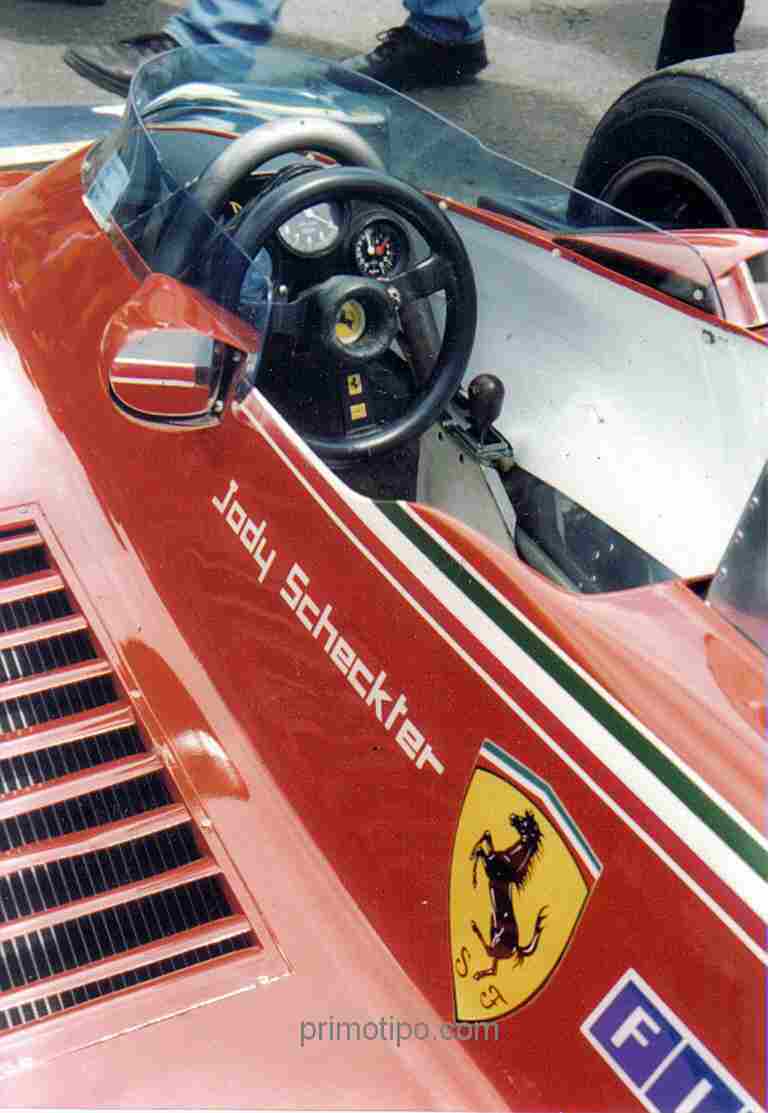
The Ferrari T4 cockpit fit for a 1979 F1 World Champion. Jody was at Goodwood, here accosted by photographers

1997 Goodwood fos 09

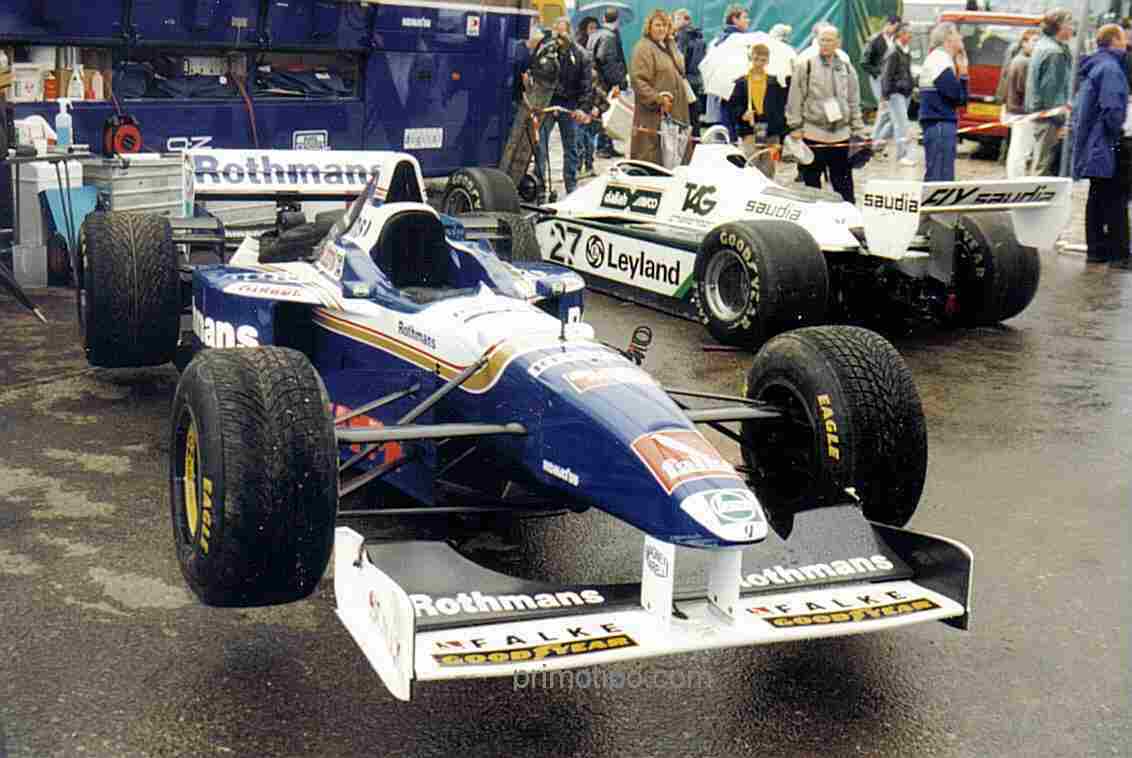
Even in 1997 you would have struggled to get this close to Williams GP Engineering at an F1 event. One of the FW18’s used by Damon Hill in his successful 1996 season and the FW07B used successfully by Alan Jones in 1980 – both clinching World Drivers’ & Constructors’ Titles.

1997 Goodwood fos 04

The dedicated FoS officials and Ford’s then WRC weapon of choice… Juha Kankkunen’s Repsol Cossie Escort

Credits…

Excepting Goodwood artwork & Audi press material, all photos  Stephen Dalton

Finito…

whitford 300s albert park 1958

(Ed Steet)

Bob Jane ahead of Doug Whiteford, both in ex-factory Maserati 300S, Victorian Tourist Trophy, 1958 Melbourne Grand Prix meeting at Albert Park…

Its Bill Pitt immediately behind Whiteford in a Jaguar D Type with Lou Molina in his Molina Monza Holden Repco on the inside. Whiteford and Pitt are lapping Jane and Molina, the latter pair scrapped for much of the race. I uploaded an article featuring the clever, technically interesting, Molina Monza the other day.

‘Shifting Gear’: Design Innovation and The Australian Car: Exhibition, National Gallery of Victoria…by Stephen Dalton & Mark Bisset

On the 12th lap Whiteford took the lead from Pitt he was not to lose. On lap 26 Pitts’ D Type hit the haybales at Jaguar corner, pitting to clear the rear guard from a wheel. Ron Phillips took his Cooper Jag through to second. At the finish it was Whiteford from Phillips, Pitt, Derek Jolly in a Lotus 15 Climax and Bob Jane.

Bertocchi in Moss’ 300S drives into the Albert Park paddock ahead of Jean Behra’s car during the 1956 Olympic Grand Prix/ATT weekends (R Bailey)


moss 300s 1956

Stirling Moss in Maserati 300S ‘3059’ during the 1956 AGP Meeting at Albert Park, in December. He won the sports car ‘TT’ race in the car (unattributed)

The Maserati team brought five cars to the 1956 Australian Grand Prix held at Albert Park…

Three were 250F’s and two 300S which were driven by Stirling Moss and Jean Behra, Moss won the AGP and the Australian Tourist Trophy in single-seater and sports Maseratis respectively.

At the end of the meeting the 300S’ were acquired by former AGP Winner, Doug Whiteford and Reg Smith, a Melbourne racer/motor dealer. Smith raced his car little and soon sold it to future Touring Car Champion, very successful businessman and later Calder Circuit owner Bob Jane.

Bob’s driving was ‘pretty rough and ready’ at this stage, fellow racer Reg Hunt was moved to shift his boat further into Albert Park Lake to keep it out of harms way, Jane quickly got the hang of the car and was competitive in it.

Whiteford bought the ex-Behra 300S #3055 which sort of made sense as an outright car as the AGP was run to Formula Libre at the time. A great ‘mighta been’ would have been Doug in a 250F taking on the other front runners at the time; Stan Jones, Reg Hunt, Lex Davison and Ted Gray in an equivalent car, ‘twas not to be sadly.

jane on the grid 300s fishermans bend 1958

(Kevin Drage)

Bob Jane pictured above and below in his ex-Moss 300S #3059 on his debut meeting in the car at Fishermans Bend, in the inner western suburbs of Melbourne, October 1958.

jane 300s fishermans bend 1958

(Kevin Drage)

Stirling Moss said of the 300S…’a decently prepared 300S had a chassis which was infinitely superior to any front engined sports Ferrari, one of the easiest, nicest, best balanced sports racing cars ever made’…

The 250F Grand Prix engine would not stretch to 3 litres, 2.8 litre variants of the 300S were built and were uncompetitive so Maserati built in essence a bigger version of the 250F engine, using the 250F head. 6 cylinders in line, 2992cc DOHC. The 2 valves per cylinder, 2 plugs per cylinder engine developed circa 280bhp @ 7000rpm. It was fed by 3 Weber carbs, initially 42 and later 45DCO3’s.

maser 300s engine

Janes’ Maser 300S engine, Fishermans Bend 1958 (Kevin Drage)

The gearbox was a ZF 4 speed.

The chassis was a ladder frame made with large diameter main tubes, front suspension by upper and lower wishbones and coil spring/damper units and a roll bar. A de Dion rear axle was used with a transverse semi-elliptic leaf spring and hydraulic shocks.

The first cars were built by Maserati, later assembly was outsourced to Gilberto Colombos’ specialist company, Gilco.

Steering was worm and sector, brakes huge finned alloy drums, wheels Borrani 5X16 inch wires, the aluminium bodies built by Fantuzzi. The car weighed circa 780Kg.

300s cutaway

26-28 cars were built between 1955-1958 depending upon the reference source…Whilst the cars were built in large numbers and were favourites of privateers they were not particularly successful at an International level, winning the 1956 Buenos Aires 1000Km and 1956 Nurburgring 1000Km.

When first built the 300S was outgunned by competitors with greater capacity and when the 3 litre limit was mandated for sports cars by the CSI in 1958 they were getting a little ‘long in the tooth’ compared with the Ferrari 250TR and Aston Martin DBR1.

They were very useful, competitive, relatively simple devices in places like Australia where the cars of Jane and particularly Whiteford were crowd drawcards from 1956 to 1963.

Bob Jane raced many mouth-watering cars over the decades, he is still alive and has retained many of them, including the 300S for decades after the end of its competitive life, it was sold some years ago.

300 s bathurst

Bob Jane Maserati 300S, Forrests Elbow, Bathurst October 1961. Our regs of the time encouraged GT cars and as a consequence cars such as the Maser became Coupes (John Ellacott)

Australias ‘Appendix K’ or GT rules at the time mandated cars with ‘lids’, as a consequence Janes’ 300S grew this appendage, which is not too catastrophic in the context of some other efforts to comply with the rule change at the time. The Fantuzzi original is rather nicer all the same. When Janes’ team rebuilt the car in the mid-seventies it was restored, superbly to its original specs.

The car left Australia in the early 90’s, the current custodian appears to be Klaus Werner.

whiteford

Doug Whiteford has parked his ‘3055’ 300S after a major moment going up Mt Panorama, perhaps driveshaft failure, the dark blue lines on the road show his path. He has time to watch Bob Janes’ approach in ‘3059’. Bathurst 1960. Bucolic Central Tablelands in the distance far below (John Ellacott)

Etcetera…

(P Coleby)

Jane during the Ballarat International meeting in 1961, it must be practice as he did not race given some type of problem or irregularity. Dan Gurney won the feature in a BRM P48.

Photo Credits…

Ed Steet, Kevin Drage, John Ellacott, Peter Coleby Collection, Rob Bailey Collection

Finito…
stillwell cooper monaco wf

Bib Stillwell leans his Cooper into Homestead Corner, you can see and feel the energy being expended in extracting all the performance the car has to offer in this John Ellacott shot…

Stillwell was four times Australian National ‘Gold Star’ Champion from 1962 to 1965, his early sixties battles with rival Frank Matich in both single-seaters and in sports cars, Matich in his Lotus 19 or 19B, were legendary.

Both were Australian champions in both types of car and fierce rivals- Stillwell the Melbourne motor dealer/semi-professional racer and Matich, the Sydney based, and perhaps first truly professional Australian driver.

stillwell monaco lakeside

Stillwell in the Monaco just ahead of Frank Matich, Lotus 19b Climax, Lakeside, Queensland, perhaps the 1963 Tasman Meeting. (Peter Mellor)

In Sportscars Stillwell won the ‘Australian Tourist Trophy’ aboard the Cooper Monaco in 1961 and 1962. Matich won it in 1964 in a Lotus 19B Climax and in 1966 racing his almost brand new Elfin 400 Olds (aka the ‘Traco Olds’), then in 1967 in his first self-built Matich SR3 Olds and again in 1968 in a Matich SR3 Repco.

The ATT was not contested in 1969 but Frank’s Matich SR4, powered by a 5 litre quad-cam Repco ‘760 Series’ V8 was the fastest car in Australia of any sort that year. It was built to contest the Can-Am Series in 1968 but was too late in completion to compete so Frank used it to destroy the opposition at home a year later instead.

Bib acquired this ex-Moss car in the UK. The chassis number is uncertain but Doug Nye believes it to be the car ordered by Moss in April 1959 as a kit of parts ex-factory which was then built up by Keele Engineering.

The Monaco was lightly raced by the great Brit, commencing with the British GP meeting at Aintree in 1959, DNF after qualifying on the front row. He took the car to Scandinavia in August winning races at both Karlskoga, Sweden and the Roskilde Ring, Copenhagen, Denmark and it was then put to one side as he focussed on a Lotus 19 to which the engine and ‘box from the Monaco were fitted.

Bib bought the car off Moss during a trip to the UK in 1961.

At Stillwell’s Kew, Melbourne Holden dealership workshops it was fitted by Gerry Brown with a 2.5 Litre Coventry Climax FPF four cylinder engine and gearbox out of one of Bib’s Cooper single-seaters upon arrival in Australia and was soon ready in time for the 19 September 1961 Warwick Farm meeting.

Starting a familiar pattern, the Stillwell transporter left its Cotham Road, Kew, Melbourne base to go to Adelaide with two cars- Bib raced both his Cooper T53 in the Australian Grand Prix at Mallala in October 1961 finishing second to Lex Davison- Lex in Bib’s older Cooper T51, and the Cooper Monaco that weekend.

The Monaco arrived in Australia with the standard leaf spring rear suspension configuration but Alf Francis had modified the rear chassis bracketry to also allow the use of a coil spring/damper set-up- both were used in Oz.

cooper monaco sandown rear end

Stillwell Cooper at Sandown 1963. Coil spring rear suspension in this shot (Kevin Drage)


cooper monaco ray bell

Cooper Monaco during the Warwick Farm International meeting in 1961. Transverse leaf spring rear suspension configuration in this shot. Look at all those curvy bits of tube, offensive to engineering purists but effective all the same! Coventry Climax 2.5 or 2.7 FPF engine. Citroen Ersa gearbox (Ray Bell)

In Australia the car also raced with a 2.7 ‘Indy’ Climax FPF with which it was timed at 160mph on Longford’s ‘Flying Mile’ in 1963. In a quest for still more speed, in October 1964 the car was fitted with an ex-Scarab RE/Arnold Glass BRM P48 Buick V8.

Lance Reventlow sold one of his engines to Arnold Glass after the one off appearance of his mid-engined Scarab RE Buick Intercontinental Formula car raced by Chuck Daigh at Sandown’s opening meeting in March 1962. Glass replaced the somewhat temperamental BRM 4 cylinder engine with the lightweight, 3.9 litre aluminium, pushrod V8.

In Stillwell’s hands the car won the 1961 and 1962 Australian TT, the Victorian Sports Car Championship in 1962 and 1963 and the South Pacific Sports Car Championship at Longford in 1962.

Stillwell at Warwick Farm in the Cooper in 1965, at this stage fitted wth the ex-Scarab/Glass Buick V8 (R Austin)


The Cooper Monaco with the ex-Scarab/Glass Buick V8 behind the car and ‘George, a mechanic at East Malvern Motors where we both worked for Ray Gibbs’ quipped Mike Kyval. This is during the period Tony Osbourne owned the car. Gibbs was one of the cars drivers in that period of ownership- and prepared the car (M Kyval)

Sold to ‘Pitstop Motors’ Dick Thurston, he first raced it at Calder in January 1966- shortly thereafter he was fifth in the 1966 Australian Tourist Trophy at Longford- a race won, as mentioned above by the Matich Elfin 400 Oldsmobile.

The car was was soon sold on, still in Melbourne, to South Yarra’s Tony Osbourne of ‘Argo Racing’- as in Argo Street South Yarra, who raced it at Calder in May 1966 and then contested the first Surfers Paradise 12 Hour race together with Murray Carter and Ray Gibbs- the beast completed 96 laps of the race won by the Scuderia Veloce Ferrari 250LM crewed by Jackie Stewart and Andy Buchanan.

The car subsequently passed through many owners hands including Fred Wheelhouse, Peter Nielson, Charles Dominelli before acquisition by Pat McLernon of Dandenong, Victoria who fitted a new body built by Ted Proctor in Sydney, by this stage a Ford 302 V8 was fitted. Stan Rumble owned it for a while before the wonderful machine fell into the loving hands of Paul Moxham who restored it to original Coventry Climax engined form.

In 2000 Frank Sytner and John Coombs acquired it, the car has raced in Europe since then.

scuderia stillwell

Mallala is a wonderful, challenging shorter circuit built on a former RAAF airfield 60 Km North of Adelaide. (Kevin Drage)

‘Scuderia Stillwell’ arriving and unloading the Monaco and Cooper T53 at Mallala- South Australia Gold Star meeting in October 1962 after the long haul from their Kew.

mallala map

Mallala is a fabulous little 1.6mile/2.6Km circuit 55Km north of Adelaide. It was built on the site of former ‘RAAF Base Mallala’, which was acquired by a group of enthusiasts in 1961..the opening meeting in August 1961 was won by Bib Stillwell in a Cooper…

Stillwell had a good start in life…

He attended Trinity Grammar and Scotch College in Hawthorn and at 22 had parental support for his original small MG dealership in 1949, but over the decades grew his business.

He was awarded a Holden franchise in 1953 operating from Cotham Road Kew, and later as a Ford, BMW and other prestige marques dealer building a large group with his own talent and entrepreneurial flair which prospers in his families hands today long after his death.

His management skills were world class, his interests included aviation. After success in that field from the mid-sixties in Australia- distributing Beechcraft and later Lerjets he was appointed President of the Lear Corporation in the US in 1982, a position he held for 3 years before returning to Australia to a ‘second motor dealing career’ in luxury franchises and historic racing, he died on June 12 1999.

bss in cooper monaco

Stillwell happy in victory, Cooper Monaco, Mallala October 1962. He took wins that day in this car and the Gold Star event in his Cooper T53 Kevin Drage)

I rather like this observation Michael Lynch made in his obituary of Bib published in the Melbourne ‘Age’ newspaper.

‘The links between business and sport, and the characteristics required to succeed in both, have often been drawn. Drive, determination, persistence, talent, luck, the ability to think outside the obvious and seize opportunities that others don’t see – and then make them work – are all characteristics shared variously by top sportsmen and the leading lights of the business world.’

’Stillwell, who died suddenly last weekend from a heart attack, had all of them in good measure, showcasing them in both his sporting career, which ran until the mid-1960s, and then his business career, which was still being developed at the time of his death’.

Cooper T49 ‘Monaco’ Specifications…

Cooper monaco cutaway

The Cooper Type number is 49- the car was given the ‘Monaco’ name in recognition of Jack Brabham’s victory in the 1959 Monaco Grand Prix, his first GP win on the way to his, and Coopers first World Championships as driver and constructor.

Of typical curved Cooper space frame construction, the car owes most of its hardware to its single-seater siblings. Front suspension is by upper and lower wishbones and coil spring/damper units with an adjustable roll bar. At the rear top location is provided by a transverse leaf spring, with a lower rear wishbone. Brakes are disc all around, steering rack and pinion and typical Cooper alloy wheels of the period were used.

Most of the cars were fitted with Coventry Climax FPF engines of varying capacities, Stillwell’s mainly with a 2.5 but it was raced with other engines as recorded above. Gearbox was the Citroen ERSA or Colotti units- the Moss/Stilwell car was first fitted with a Cooper CS5, 5 speed transaxle.

stillwell cooper monaco lakeside

Stillwell again at Lakeside. Cooper Monaco 1963. (Peter Mellor)

Etcetera…

(Sparks Family)

Another successful Mallala weekend for Stillwell, this time after winning the 19 August 1961 ‘Mallala Trophy’ Gold Star round.

Looking very natty in his BRDC badged blue blazer, it’s perhaps a posed BP publicity shot, whatever the case, a top shot.

(P Skelton)

Stephen Dalton reckons this shot of the Monaco is at Calder in January or February 1962.

Credits…

John Ellacott, Kevin Drage, Ray Bell, James Allington cutaway, Ken Devine Collection, Reg Sparks Collection via Craig Sparks, Phillip Skelton via Tony Johns Collection

The Nostalgia Forum, Richard Austin, John Blanden ‘Historic Racing Cars in Australia’, Mike Kyval

Tailpiece: Equipe Stillwell during the November 1962 Caversham AGP weekend…

(K Devine)

The open-wheeler is a Cooper T53 Climax- Bib was third in the AGP behind Bruce McLaren’s Cooper T62 and John Youl’s T55 at Caversham off the back of winning the Gold Star from Youl and Patterson- he took victories at Bathurst and Mallala on the way to the title.

Finito…


moss parramatta

Stirling Moss being briefed by Jack Myers about his Cooper/WM Holden before lapping Cumberland Park Speedway, Parramatta, Sydney, November 1956…

The WM Holden is the prototype ex-John Cooper/Mike Hawthorn/ Bernie Ecclestone/Stan Coffey Cooper T20 Bristol # CB/1/52 acquired damaged by Myers, rebuilt and fitted with a Holden six-cylinder ‘Grey Motor’. The standard OHV iron head was replaced by an alloy DOHC head developed by the incredibly talented Sydney engineer Merv Waggott, and then renamed WM (Waggott Myers) Holden.

Moss was in Australia to race factory Maseratis in the Australian Grand Prix carnival at Albert Park in Melbourne, a two week event during which Moss won the AGP in a 250F and the Australian Tourist Trophy in a 300S.

Quite how he came to drive Myers’ car at Cumberland Park in Sydney is a bit of a mystery but was perhaps part of a fuel company promotion, I am keen to hear from anyone who knows the story. Moss didn’t race the Cooper but did a number of demonstration laps around the quarter mile speedway on the outside of Cumberland Park, which was also used for cricket and rugby. Jack Myers also contested the Australian Grand Prix at Albert Park, the WM finished 12th and lapped several times by the Moss 250F.

moss on circuit parramaat
A tad too much understeer or neutral steer on the oval!? Moss Cumberland Park

WM is Waggott/Myers…
The cylinder head was initially fed by six Amal carbs but these were later replaced by 6 1 3/4inch SU’s. The engine developed around 197bhp at its peak making the car an outright contender in its day.

‘Grey Motor’ was the colloquial name of these engines which, painted grey, were first fitted to the 48-215 Holden, General Motors first Holden sedan built in Australia. Later iterations of the Holden OHV straight-six were Red Motors and Black Motors as the blocks were, you guessed it, painted red and black. The standard Grey displacement was 132.5 cubic inches or 2170cc, the 6 cylinder OHV, four main bearing, single Stromberg carb engine produced 60bhp in standard form.

The Waggott engine’s block, crankshaft and conrods were made by GMH (General Motors Holden) but the head, pistons, dry sump lubrication system and other components were made by Merv Waggotts’ business. Capacity was increased to 2440cc with the camshafts driven by chain from the crank.

Six or seven heads were built, the engine won the Australian GT Championship for Queenslander and later Bathurst winner John French in his Centaur in 1962. The market for the heads essentially dried up when the new touring car/sedan racing regulations of the day, Appendix J did not allow changes to cylinder heads other than modifications to standard heads. Waggott built modified Holden heads to these rules as well.

The WM/Cooper used an MG TC gearbox with specially cut gears, the differential was initially a Holden 48-215 unit but this was later replaced by a Ford V8 component. Suspension was standard Cooper, most of the damage to the car was to the body hoops and the body itself which was repaired by the talented Myers.

wm holden t druitt 1958
WM Holden engine bay, Mt Druitt May 1958, plug change. The neat alloy DOHC, chain driven head on display. Holden Grey Motor, a cast iron block, capacity 2440cc, circa 200bhp at its peak. Myers did a 15.01 second standing quarter that day (John Ellacott)
agp 56 jack myers
Doug Whiteford’s Talbot Lago passing Myers in the WM Holden during the 1956 AGP at Albert Park. They finished eighth and 12th respectively in the race won by Moss’ Maser 250F. This is the second of Dougs’ Lagos, the 12-plug-head-car which is still in Australia and owned by Ron Townley (Unattributed)

Jack Myers raced the car very successfully…

It reapppeared after repair and installation of the Holden engine at Bathurst in October 1956. In November he attacked the Australian Land Speed record setting a new mark for Class D at 25.46 seconds for the standing kilometre. Moss ran the car at Parramatta shortly thereafter and the week after that Myers finished 12th in the AGP. Moss and the car were reunited many years later.

Jack at Caversham during the 1957 AGP (K Devine)

The car overheated in the scorching hot 1957 AGP at Caversham WA, the chassis was replaced after an accident at Bathurst in 1957 when Jack bounced the car from bank to bank going into Forrest’s Elbow.

This time the car was rebuilt from scratch, the team constructed a new tubular frame to replace the original box-section chassis. John Blanden records that Myers had completed the rebuilds of the McMillan Ferrari Super Squalo and Jack Davey D-Type Jaguar chassis and incorporated some ideas from those experiences including lowering the engine by three inches. The suspension was re-designed but still used many Cooper parts, a quick change diff was built by Myers, and D-Type clutch incorporated.

The WM was immediately successful, going even faster still when fitted with disc brakes, it finally met its maker at Bathurst in October 1960 when Jack ended up in a ditch on the way into The Cutting escaping injuries, but the car’s chassis and suspension were badly damaged. The WM was split up and its core components sold.

wm holden bathurst 1959
1959 Bathurst 100 qualifying heat front row. Myers on the left in the distinctive yellow and black T-Shirt he always wore beside the WM, Stan Jones #1 Maser 250F and Kiwi Ross Jensen similarly mounted. Myers completed 24 of the 26 laps the race won by Jensen (Myer family)
wm holden bathurst
Jack Myers returns to the Bathurst paddock, AGP Meeting 1958. WM Holden (Kevin Drage)

Myers was sadly killed in a race at Catalina Park, Katoomba, in the Blue Moutains outside Sydney not long afterwards.

In 1962 Syd Fisher bought the remains of the car and fitted a Chev Corvette 283cid V8, Alvis gearbox, Halibrand type quick change rear axle to which a ZF limited slip diff was fitted, achieving seventh in the 1963 Victorian Road Racing Championship.

The car passed through others into the caring hands of John Emery, and then to Gavin Sandford-Morgan in 1972. There it was rebuilt by a dedicated team of volunteers at the Birdwood Mill Museum outside Adelaide to its Jack Myers spcification including the Waggott engine, the car making its debut at the 2000 Australian Grand Prix where it was driven by Stirling Moss, exactly as it was at Parramatta in 1956.

mildren sub and merv waggott
Merv Waggott fettling one of his jewel like aluminium 2-litre four-valve engines, here mounted in Kevin Bartlett’s Mildren Racing Mildren ‘Yellow Submarine’ Waggott. Engine produced circa 260bhp with a useable rev band of 6800-8750rpm and weighed circa 230lb. Wigram, NZ Tasman 1970 (The Roaring Season)

Merv Waggott developed his own 4 cylinder, DOHC four valve, fuel injected engine in the late 1960’s in capacities of 1.6, 1.85 and 2 litres, the smaller engines used Ford Cortina blocks, the 2-litre an aluminium bespoke crankcase and cast iron block developed by Waggotts.

These engines won many races and championships including the 1969, 1970 and 1971 Australian Drivers Championships – the Gold Star – for Kevin Bartlett, Leo Geoghegan and Max Stewart in the Mildren ‘Yellow Submarine’, Lotus 59B and Mildren Waggott chassis respectively. I will write about this engine in detail at some point.

Waggott Engineering still exists however Merv Waggott died in an ultralight plane accident in 1992.

Cooper T20 Bristol Chassis # CB/1/52…

coper bristol cutaway
Cooper T20 Bristol drawing. 1971cc Bristol/BMW six cylinder engine circa 130bhp and Bristol four speed ‘box. Steel box section chassis with tubular reinforcements, aluminium body. Lockheed hydraulic drum brakes. Suspension front and rear lower wishbones and upper transverse leaf springs with Armstrong shocks (Unattributed)

Doug Nye’s research for the book Cooper Cars found this car to be the prototype T20 which was shown to the press in January 1952. John Cooper drove it on its debut at Goodwood on 14 April 1952. It was also driven by Reg Parnell, Mike Hawthorn – whilst he awaited delivery of his own T20 – and Bernie Ecclestone before being sold to Fred Tuck, a Brit who raced the car in the New Zealand Grand Prix in 1954.

During that trip the car was sold to Sydney’s Stan Coffey who raced it as the ‘Dowidat Special’, in deference to his sponsors, a manufacturer of hand tools. Amongst Coffey’s competitors was Jack Brabham in the ‘Redex Special’, a Cooper T23 Bristol.

The Coffey ‘Dowidat Spl’ at Gnoo Blas Orange circa 1955 (K Devine)

Coffeys results were not startling but he finished eighth in the 1954 AGP at Southport, Queensland. He raced the car little in 1955 but contested the AGP at Port Wakefield, South Australia. Brabham won the race in the Cooper T40 Bristol Bobtail he had built in time for the 1955 British GP. Coffey rolled the car halfway through the race, the car left the track and tripped on the grass verge. Stan broke his nose but was otherwise uninjured, selling the car to Myers in as-is condition. The car was taken to Myers’, Maroubra, Sydney workshop where its rapid transformation to Waggott Holden power was completed.

The Cooper Bristols were built as 2-litre European F2 cars, the engine was the BMW 328 6 cylinder design which fell into Bristols’ hands as part of WW2 reparation compensation and was further developed post-war by BMW designer Fritz Fiedler. The 1971cc engine developed circa 127bhp @ 5800rpm.

myers maroubra workshop
Jack Myers working his magic on the WM in his Maroubra, Sydney Southern Beaches workshop. The Holden Grey block is at left, the long studs to retain the deep head. The cast aluminium engine/gearbox adaptor is still attached to the block. Diff was initially Holden but later Ford, uncertain of which here. MG-TC ‘box is in front of the bench. Standard T20 suspension, chassis box section can be seen in th shot as well as the body hoops.

Etcetera…

Cooper T20 Bristol-Stan Coffey

stan coffey cooper
Stan Coffey in the Cooper T20 Bristol ‘Dowidat Spanners Special’ at Mount Druitt, date unknown. The wind on Coffey’s large body must have been incredible and top speed limiting! (Ivy & Jack Carter)

WM Holden-Jack Myers

Both these shots were taken in 1957 at Caversham during the AGP weekend. The Holden engine installation was very neatly and professionally executed by Myers, whilst the machine was called the WM Holden, Cooper Holden was perhaps more indicative until the chassis was substantially changed by Jack and his team. Carbs on the engine are Amals at this point, six 1 3/4 inch SU’s later fitted.

wm in paddock
(MrFire)
waggott 6 engine in wm
(MrFire)
waggott 6 on SU's
Another shot of the engine bay and Waggott DOHC head, this time with six SU’s. Car here, above, at the Birdwood Mill Museum in SA, restored. (Unattributed)

WM Holden-Stirling Moss

moss from the outside parramatta
Scratchy unattributed shot of Moss circulating in the WM at Cumberland Park, fashions of the day to the fore!

Credits…

Myer Family Collection, John Ellacott, MrFire, Ivy & Jack Carter, The Roaring Season, Kevin Drage, Ken Devine Collection, John Ballantyne

John Blanden ‘Historic Racing Cars in Australia’, Doug Nye ‘Cooper Cars’, ‘Memories of Jack Myers’ aussieroadracing.homestead.com

Tailpiece: WM Holden by John Ballantyne, beautiful work…

Finito…