Author Archive

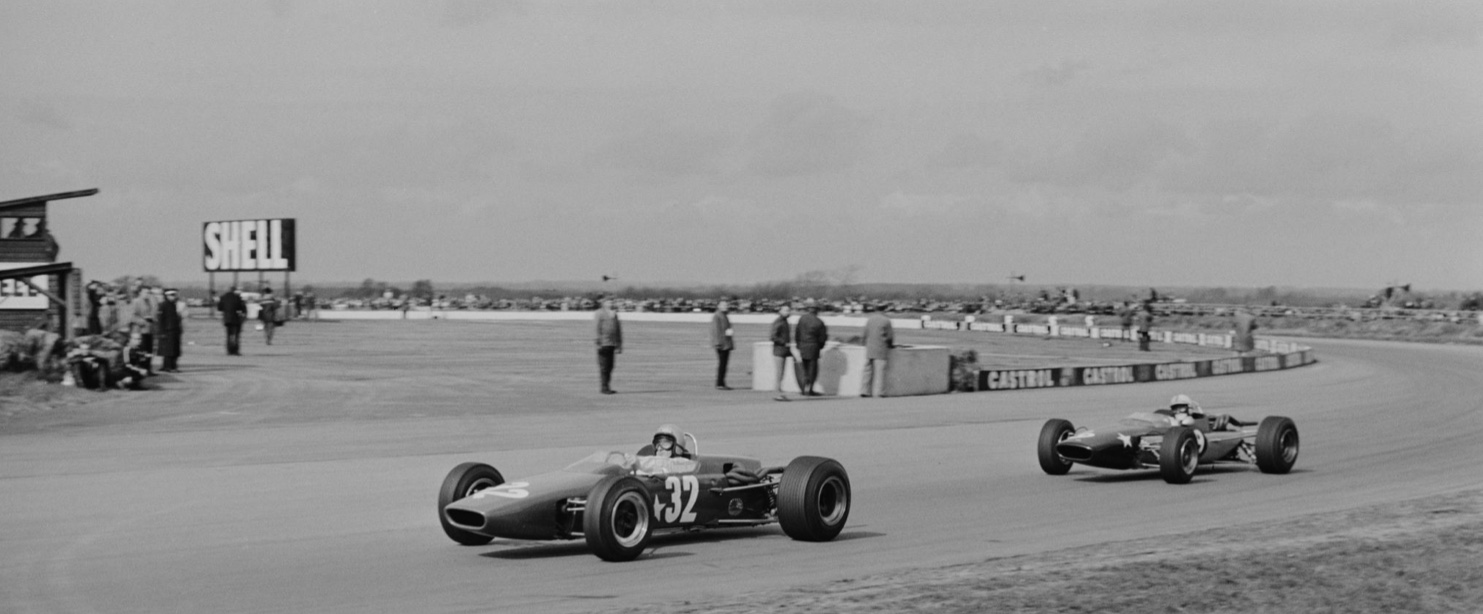
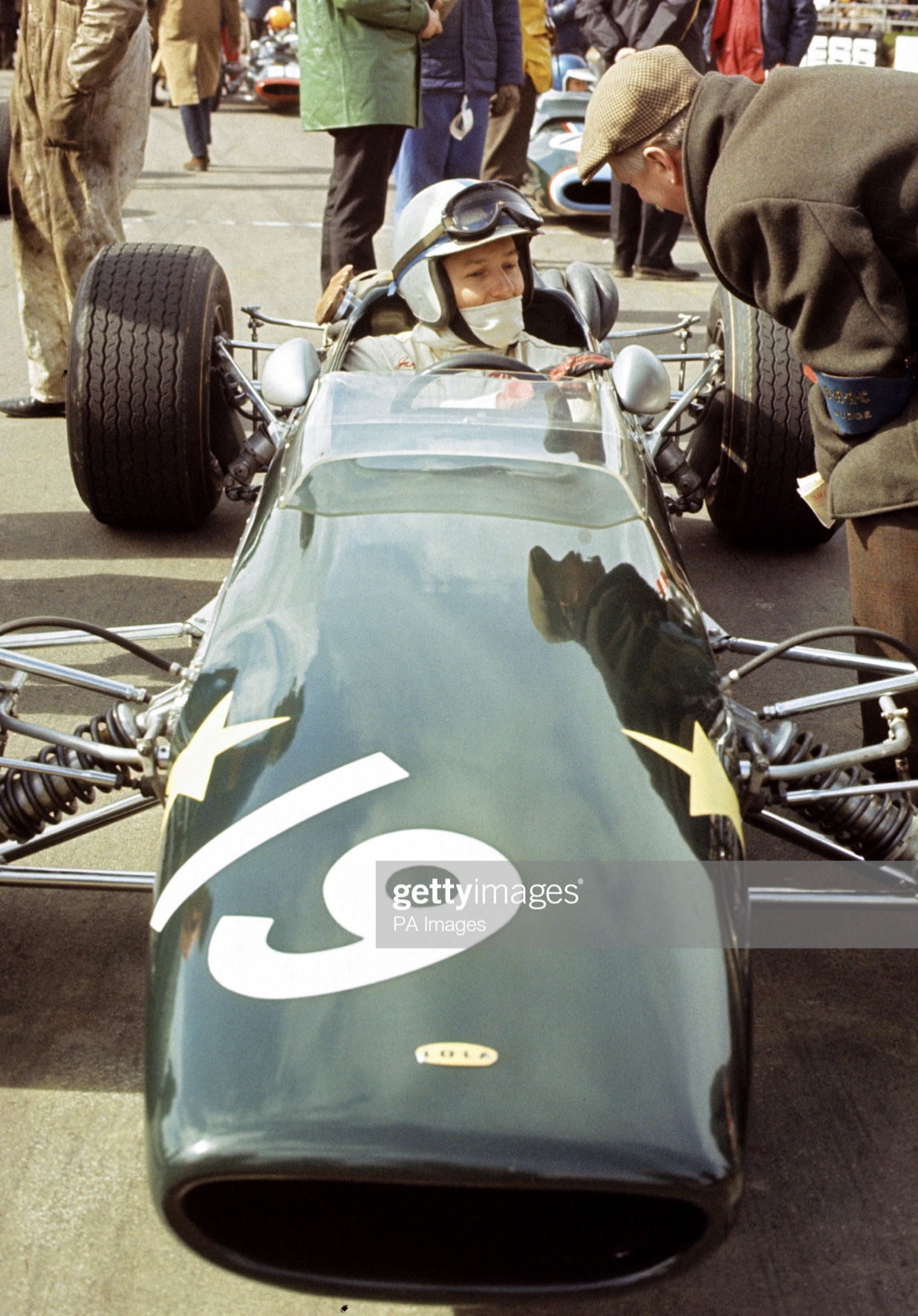
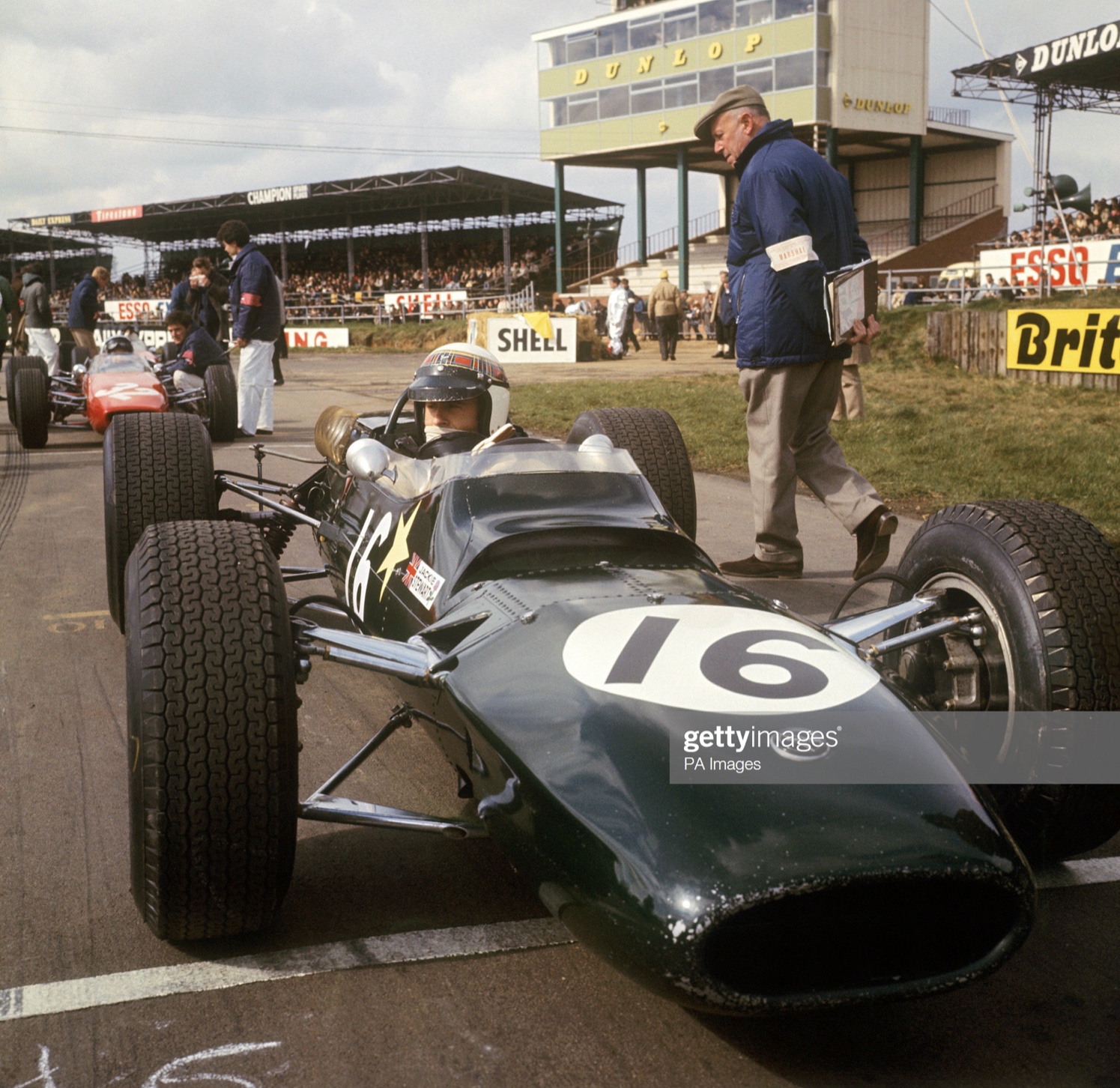
Jack Brabham awaits the start of one of the ‘Wills Trophy’ heats at Silverstone on 27 March 1967…

Is that John Cooper saying gedday before the off?

Jack is aboard BT23 chassis number 1- the very first in a long line of successful F2 and Tasman Formula cars- let’s not forget the BT23 spawned Ron Tauranac’s F1 Championship winning BT24 Repco design too.

Denny Hulme’s Brabham BT24 Repco during the 1967 US GP at Watkins Glen- he was 3rd behind the Clark/Hill Lotus 49 Ford duo (LAT)

Weren’t British enthusiasts blessed with championship F2 choice over Easter 1967?

They could have watched Jochen Rindt win at Snetterton on Good Friday and see him do it all again at Silverstone 180 Km away on Easter Monday aboard the same BT23-5 he used throughout a dominant 1967.

In a small tangent of Australian motor racing history this chassis is the one Denny Hulme raced in the 1968 Tasman Series- he boofed it at Pukekohe in a terrible accident involving Lawrence Brownlie’s Brabham and replaced it with BT23-2 in time for the Lady Wigram Trophy two weeks later.

Feo Stanton and Alec Mildren bought the remains less suspension and sent them off to Rennmax Engineering in Sydney for Bob Britton to built a jig and a run of new cars, the ‘Rorstan’ for Feo and ‘Mildren’ for Alec. Numerous cars really, the Rorstan, Mildren and Rennmax BN3’s all owe their lives to Jochen’s dead BT23-5.

Jochen blasts off at the start of heat 1- wheel on the right is Rees. Stewart’s Matra MS5 behind his Austrian buddy, Brabham’s BT23 #1- behind Brabham is Gardner, BT23 and alongside him in the red helmet is Widdows’ similar car with the red/orange tipped nose to the right on the same grid row, Mike Spence Parnell ex-F1 Lotus 33 FVA (Getty)

The Snetterton ‘Guards 100’ was the first championship race for the new 1.6 litre Formula 2 which commenced on 1 January that year, the category was enormously popular and successful even if, from the off it was ‘Formula FVA’, with special mentions for the Ferrari Dino V6 and BMW M11 in-line four.

Rindt came into 1967 as the acknowledged F2 King and left it with his crown polished ever more brightly, a quick perusal of ‘F2 Index’ results suggests he won all of the rounds in which he started and finished- Snetterton, Silverstone, the Nurburgring and Tulln-Langelbarn.

He had a DNF, a puncture at Jarama, that race was won by Clark’s Lotus 48- whilst he was occupied elsewhere the other race wins were taken by Stewart at Enna, Gardner at Hockenheim and 1967 European Series Champion, Jacky Ickx in a Ken Tyrrell Matra MS5 FVA was victorious at Zandvoort and Vallelunga.
McLaren and Surtees, McLaren M4A and Lola T100 (V Blackman)
 

Surtees in Lola T100 ‘SL/100/4’ given I am bandying chassis numbers around. Surtees primary programs that year were leading Honda’s F1 campaign and his Team Surtees Can-Am Lola program in the US- busy boy. That’s Ickx’ Matra MS5 behind and Mike Spence, Lotus 33 further back

As a ‘Graded Driver’ Jochen was ineligible for F2 Championship points, so Ickx won in 1967 from Gardner’s works BT23 and Jean-Pierre Beltoise’ works Matra MS5, Piers Courage in John Coombs McLaren M4A, Alan Rees in the other Roy Winkelmann BT23 and Chris Irwin’s works Lola T100 FVA and T102 BMW.

Creation of a new category brings forth a wonderful commercial opportunity with Cosworth Engineering flogging heaps of FVA’s (putting aside the derivatives of the motor which followed and the DFV proof of cylinder head design concept Duckworth’s FVA in part represented), Hewland Engineering dozens of FT200’s and of course availed the chassis manufacturers a great opportunity too.

Jack’s new BT23-1 and new Hewland FT200- in front of that 5 speed transaxle is a Ford Cortina blocked, Cosworth four-valve, Lucas injected 1.6 litre circa 210 bhp powerhouse. Tauranac’s typically simple combo of spaceframe chassis and outboard suspension provided a phenomenally fast, chuckable, robust, winning combination year after year. I don’t think he ever built a dog- Brabham or Ralt?
 

Bruce McLaren is aboard chassis number 1 too. M4A-1 was the first car designed by the McLaren/Robin Herd combo

The class of 1967 included the monocoque Lotus 48, Matra MS5/MS7, Lola T100 and McLaren M4A but arguably the car of the year, even putting aside Rindt’s dominance as a driver, was the spaceframe Brabham BT23- bias hereby declared by the way! Perhaps the BT23/23C are the ‘winningest cars’ of that 1967-1971 1.6 F2 period?

I really should prove that assertion statistically I guess, when and if I can be bothered. ‘Nicer cars’ in my book are the Lotus 59 and 69, Matra MS5/MS7 and Ferrari Dino, but more successful, I’m not so sure.

Whatever the case, in this immediate pre-wing year these cars were and are a mouth watering, very fast selection of single-seater racing cars.

Jackie Stewart above and below in one of the two Tyrrell Racing Organisation Matra MS5’s-Ickx in the other car.

Another year of the GP BRM H16 in 1967 was one too many for Jackie, and so it was that Ken Tyrrell stitched together a winning F1 combination of Matra, the Ford Cosworth DFV, Stewart and of course his own team’s preparation and organisational skills.

Bruce McLaren is behind Jackie in the shot below.
Silverstone’s BARC 200 was run over two heats of a little over 30 minutes in duration, Rindt won both with John Surtees third in the two events, Alan Rees was second in one and Graham Hill runner-up in the other.

The aggregated results gave Rindt the round from Rees’ BT23, Surtees T100, Bruce’s M4A, Stewart’s MS5, Gardner’s BT23 and Jacky Ickx’ MS5.

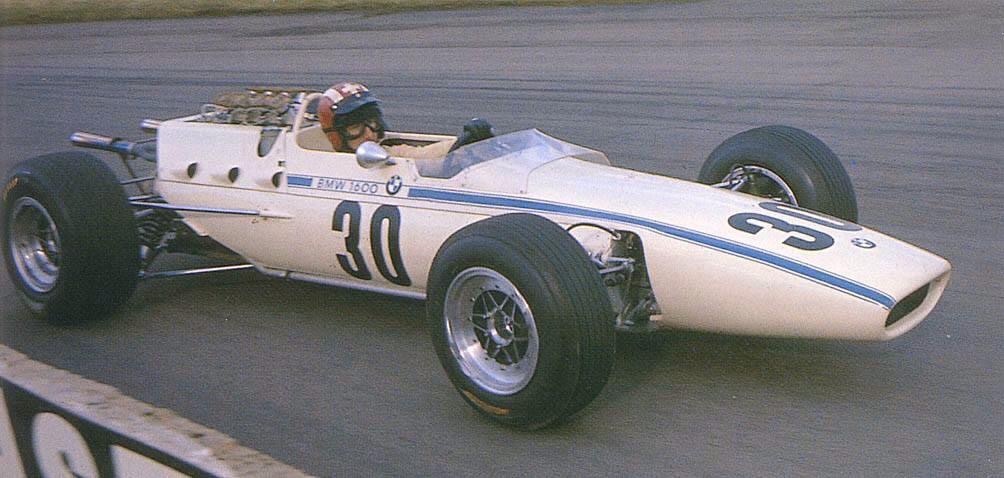
The entry lists right from the get-go of the new category were top notch, other drivers who raced at Silverstone included Robin Widdows BT23, Mike Spence in a Tim Parnell ex-F1 Lotus 33 fitted with an FVA, Denny Hulme BT23 (DNF with a busted conrod in heat 2), Piers Courage M4A, Jean-Pierre Beltoise MS5, Jo Siffert in the BMW factory Lola T100 BMW (all three of whom had injection dramas) Mike Costin, Brian Hart and Trevor Taylor. The list of Did Not Arrives was equally impressive.
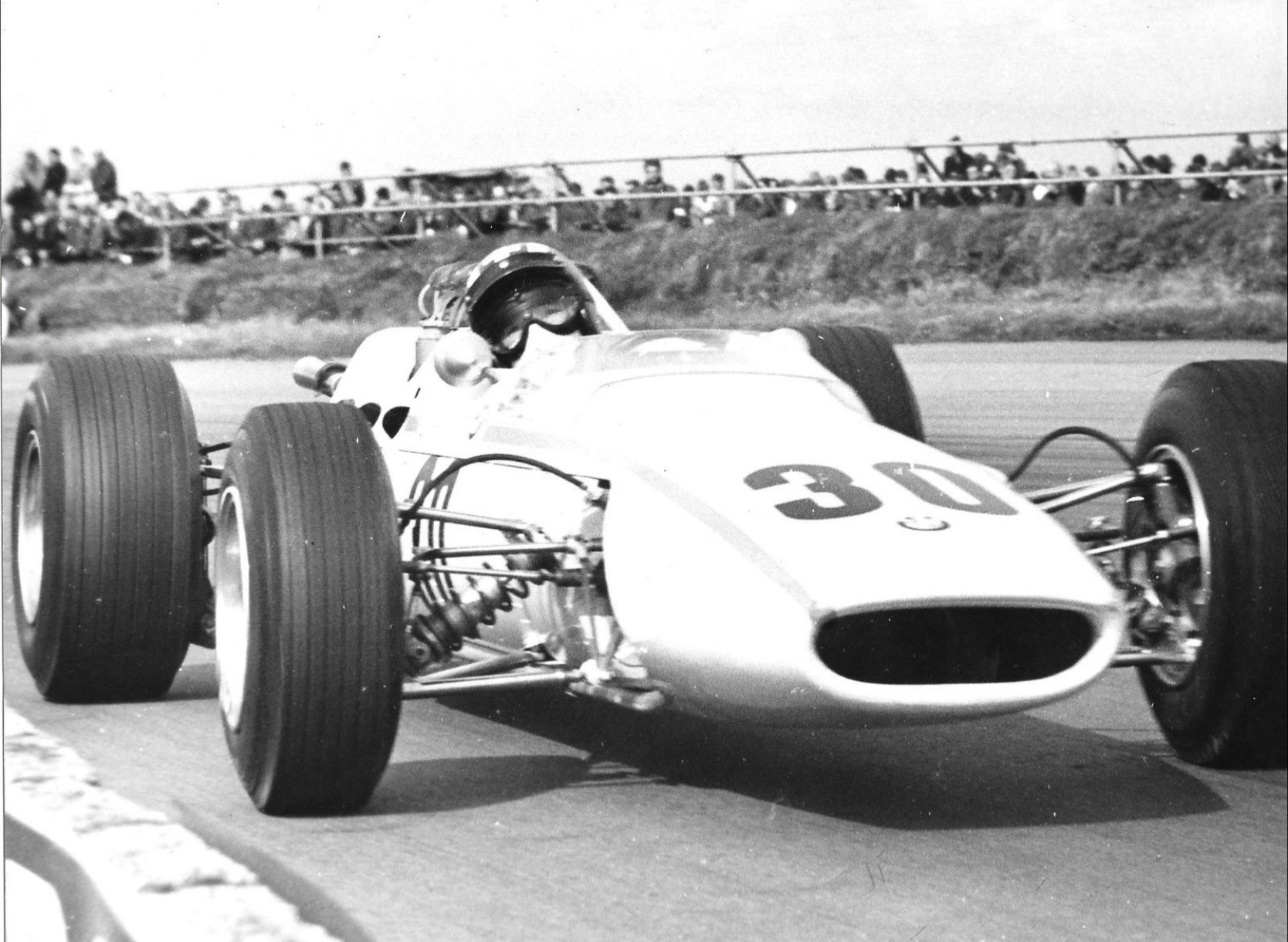
Siffert, Lola T100 BMW M11, fuel injection dramas brought an end to Jo’s run (unattributed)

Of twenty-four starters, four were fitted with Lotus-Ford twin-cam motors, Siffert’s Lola (above and below) the very interesting BMW M11 Apfelbeck, the balance were toting Ford FVA’s so Duckworth and the lads had the production line in Northhampton humming along nicely.

There were a couple of FVA users with Lucas injection dramas, but Denny’s buggered rod was the only example of greater mechanical mayhem in a package which proved a paragon of reliability over the ensuing years.
(unattributed)
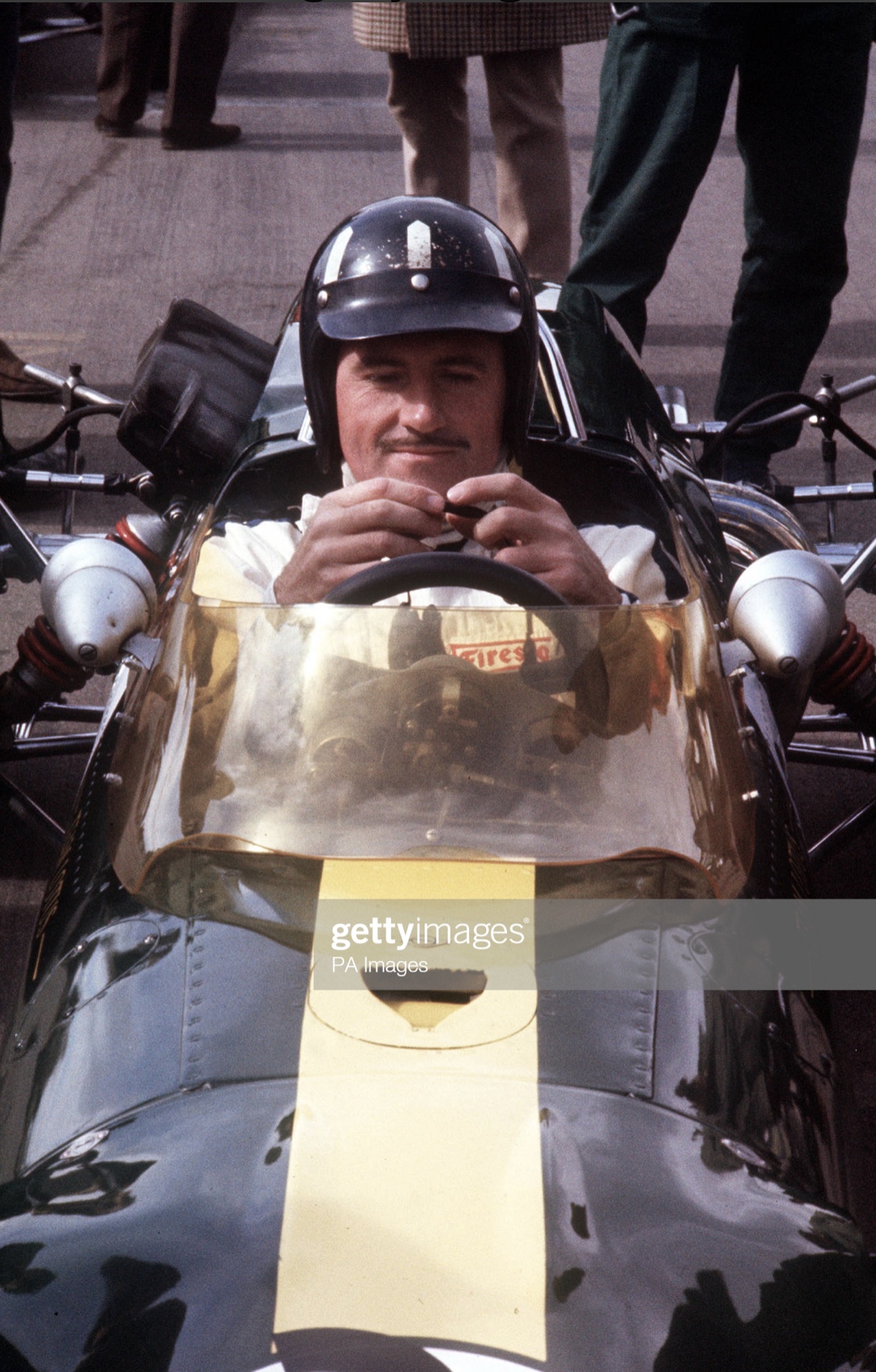
 

This has to be the most distinctive, simple piece of personal branding ever- in colour or black ‘n white Hill G or Hill D are so easy to pick in their London Rowing Club colours aren’t they? Lotus 48 Ford FVA.

Sydneysiders had the chance to see a Euro F2 1.6 car earlier than most, Warwick Farm promoter Geoff Sykes did a one race deal for Graham to race Lotus 48 ‘R1’ in the Australian Grand Prix that February.

Having come all that way the car’s FT200 expired after 25 laps of the race, Jackie Stewart’s BRM P261 2.1 prevailed, the series was won that year by Jim Clark racing an F1 Lotus 33 Climax FWMV 2 litre V8.

Graham raced ‘R2’ back in Europe with Jim Clark using ‘R1’ as his mount in 1968.

Stewart, BRM P261, Clark, Lotus 33 Climax and Hill, Lotus 48 Ford FVA, row 2 Brabham left Brabham BT23A Repco and Leo Geoghegan, Lotus 39 Climax and against the fence, Denny Hulme, Brabham BT18/22 Repco. AGP, Warwick Farm, February 1967 (B Wells)


Rindt and Hill- and Rees to the right jump similarly at the start of heat 2.

Thats Brabham, Surtees and McLaren on row two and Hulme, Gardner, Ickx and far right in the red McLaren- Piers Courage. The result was Rindt, Hill, Surtees.

(V Blackman)

Jochen with a delicate slide out of Woodcote, the proximity of ‘snappers to the action back then never ceases to amaze.

Rindt’s car control is right up there with the rest of the Gods of that art- Nuvolari, Fangio, Peterson, Villeneuve et al.

Etcetera…
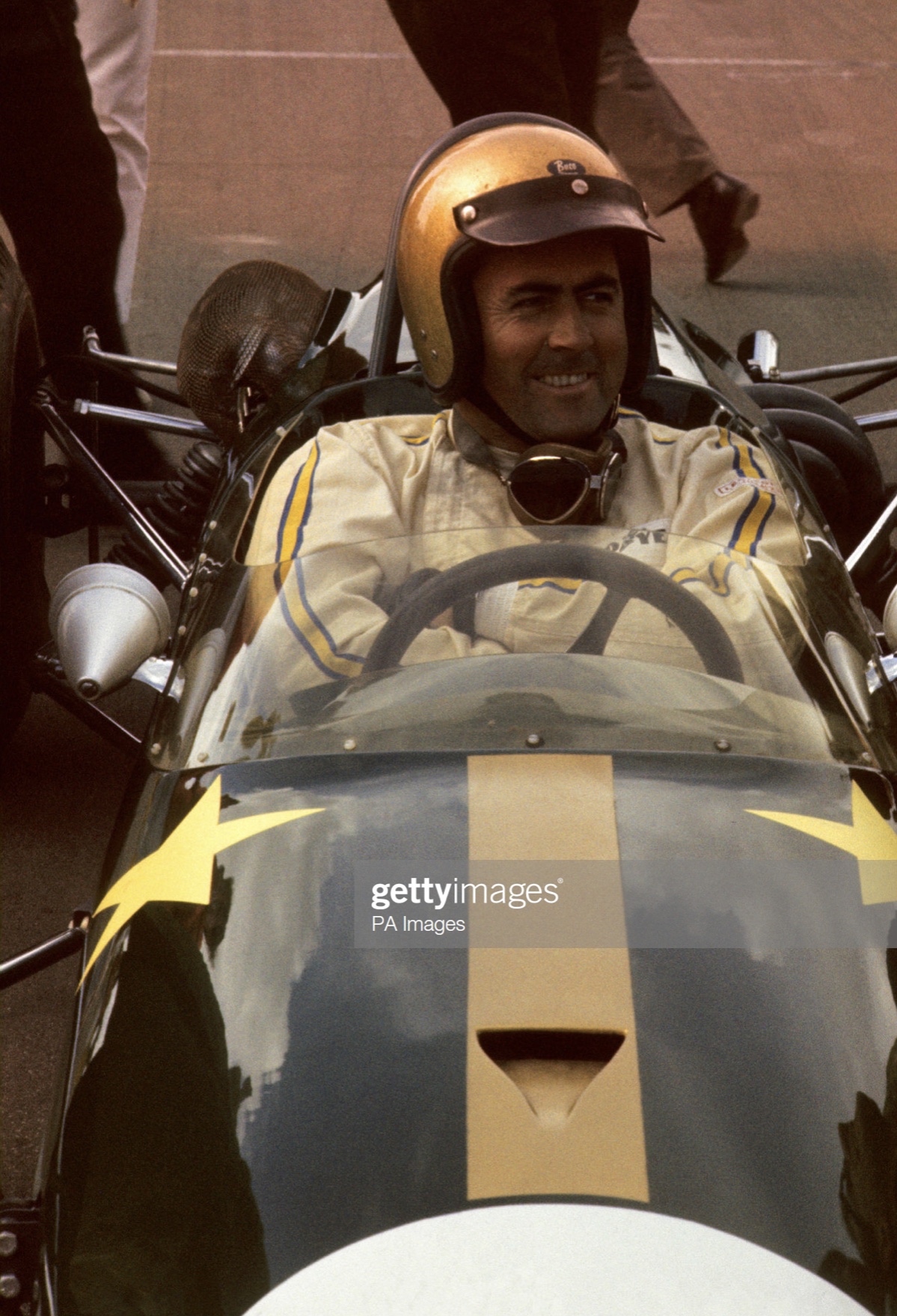
Jack looks happy enough before the off.

Its only several weeks after the end of the Tasman Series- Brabham finished a pretty skinny series for the full on Repco-Brabham two car works assault on the championship that year well, he won the Longford final round in his one off Brabham BT23A on 5 March.

Two Repco ‘640’ engined cars were raced by Jack and Denny in all eight meetings of the six round championship- that season Levin and Teretonga were not championship rounds.

In fact there were a whole swag of blokes on that Silverstone grid who had raced in Australasia that summer- Stewart, Brabham, Gardner, Irwin, McLaren, Hill and Hulme- Clark was the only absentee from the roll-call.

(L Ruting)

Brabham fries a set of Goodyears and proves just how chuckable a BT23 can be in the hands of an Ace- AGP Warwick Farm 1967.

Its BT23A-1, JB’s 1967 Tasman weapon, a one-of-a-kind BT23 variant powered at that stage by a 640 Series Repco 2.5 litre Tasman V8, this machine is still in Australia, it was acquired by the National Motor Museum in 2018.

Article on the Tasman Brabham Repco’s here; https://primotipo.com/2016/09/29/bathurst-1969-and-jacks-tasman-brabhams/

(Getty)

An imperfectly executed pan of Hill’s Lotus 48 chasing Brian Hart’s Protos 16 FVA. Now there is a interesting marque topic to explore one day!

Who are those fellows looking after Bruce?

Piers Courage in John Coombs M4A behind McLaren, and in the photograph below. This car, ‘M4A-2’, Piers acquired from Coombs and raced in the 1968 Tasman and brained everybody with his speed and commitment.

He capped off an amazing summer with a blinding wet weather drive at Longford, his deft pace won the race from the 2.5’s which were hampered in their ability to put their power down on the slippery, bumpy bitumen.

The car was bought by Niel Allen at the end of the series, he did well in it and survived an almighty car destroying accident in it at Lakeside, it was rebuilt around a Bowin Designs built tub and then was one of the cars in which Warwick Brown made his name when owned by Pat Burke. Not so sure its still in Oz?

Article on Piers @ Longford here; https://primotipo.com/2015/10/20/longford-tasman-south-pacific-trophy-4-march-1968-and-piers-courage/
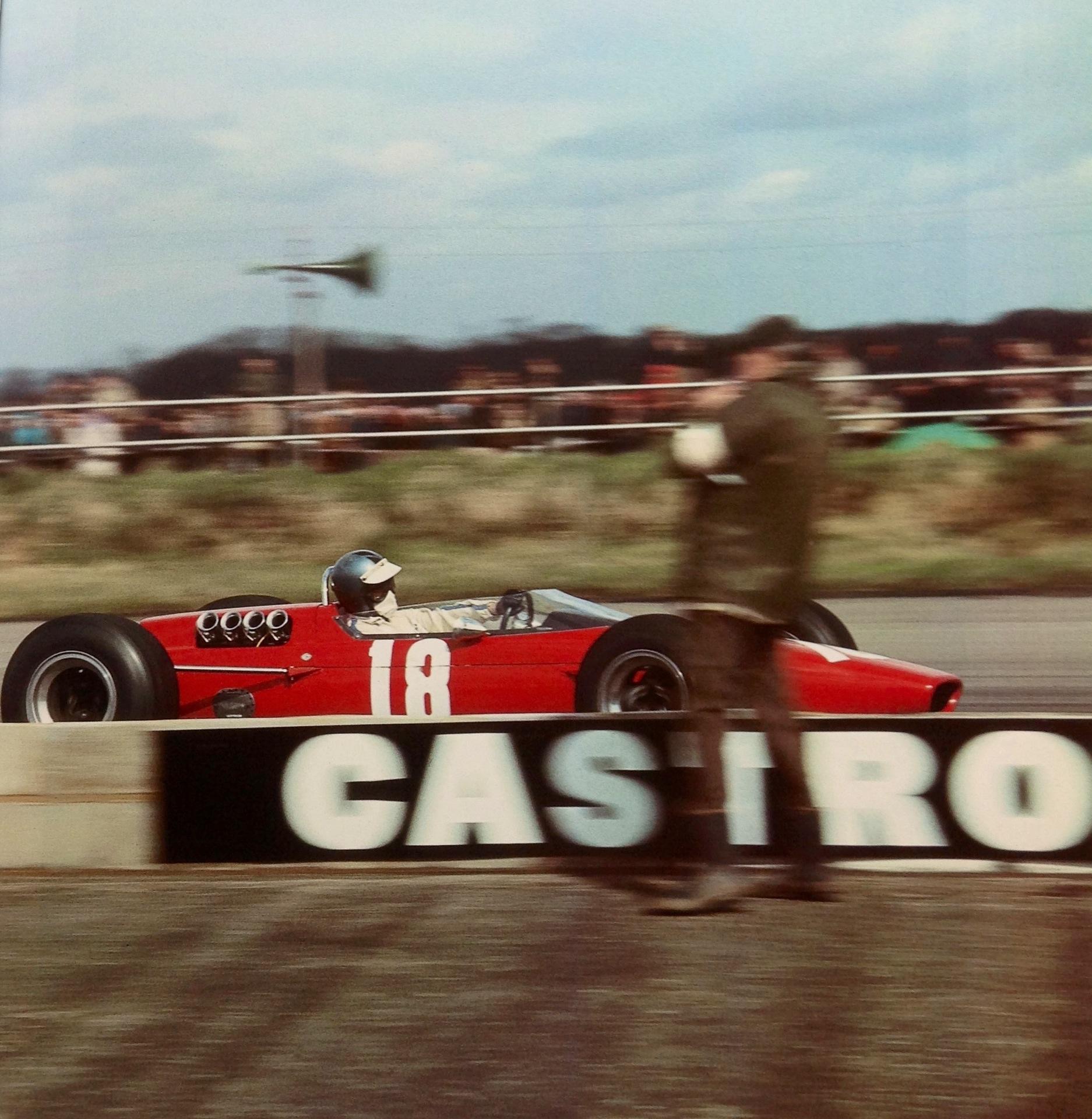
(LAT)

The photographs of the Courage McLaren in Australia below are during the Warwick Farm 100- he was second in the race won by Clark’s Lotus 49 Ford DFW.

The two monochrome photos below are during his victorious Longford weekend in March 1968, the great circuit’s final meeting.
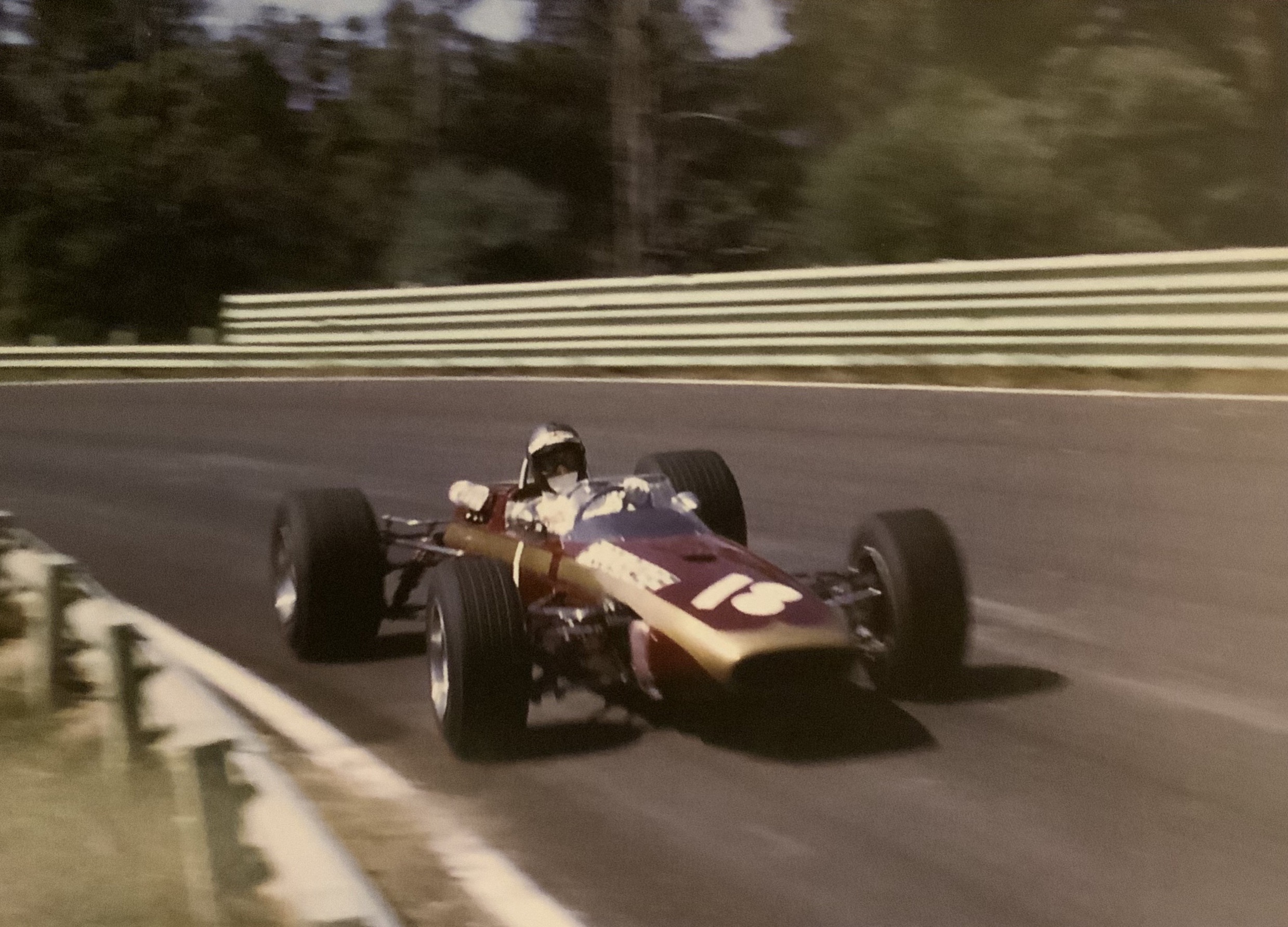
(P Hudson)

Piers nipping the right front brake of M4A-2 on the entry to Mountford Corner during the dry, earlier over the Labour Day long weekend.

Courage ran the car on a shoestring assisted by Australian ex-Lotus mechanic Ray Parsons with two FVA’s, his performances that summer in many ways re-launched his career.
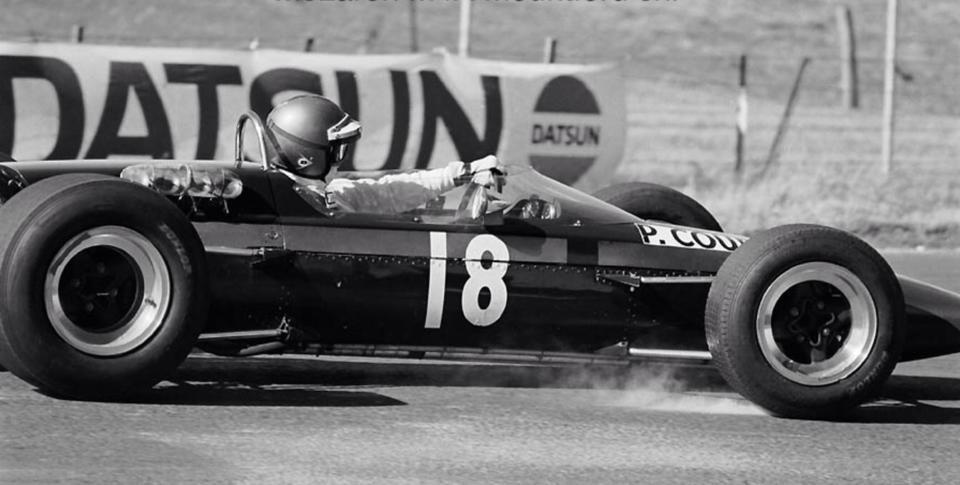
(oldracephotos.com.au)

It really did piss down on raceday, sadly for all, not least for the venues future, crowd numbers were way down although better than the ‘three men and a dog’ perspective provided by the shot below.

The hardy natives saw one of the great drives, Courage won from Pedro Rodriguez’ BRM P261 and Frank Gardner’s Brabham BT23 Alfa with Richard Attwood’s BRM P126 fourth.

(oldracephotos.com.au)


(unattributed)

‘And to think Jack pays me to do this shit! Its such a blast!’

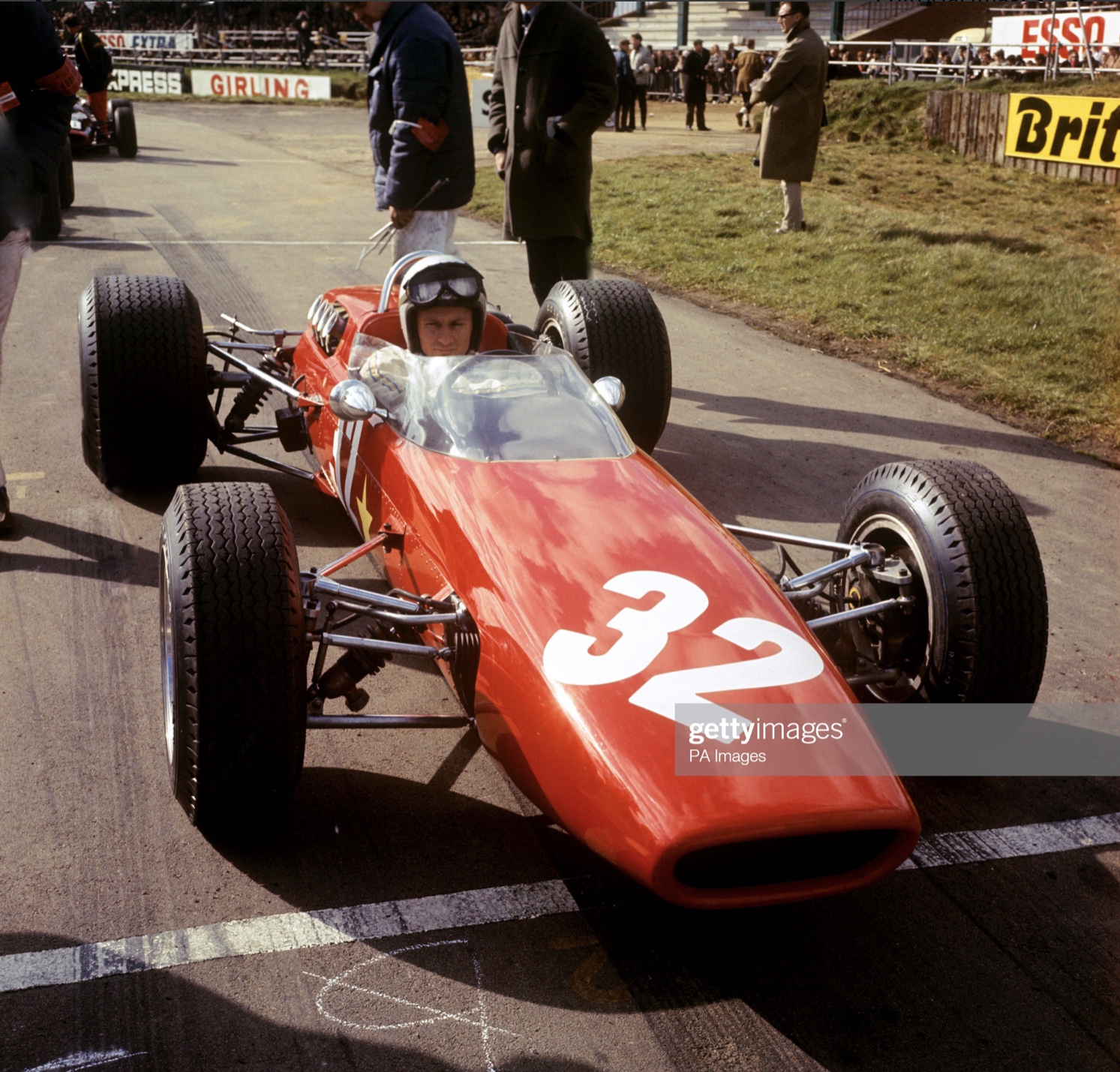
Denny having a ball at Silverstone, he seems to have lost his front number but no doubt this was addressed by race day. The stars affixed to the cars are part of the Wills corporate identity i guess, sponsorship became less subtle from 1 January 1968!

Denny is racing BT23-2, his regular mount during 1967, although his primary commitments that year were winning the World Championship, which he managed nicely, and running the second of McLaren Cars, McLaren M6A Chevs in the Can-Am Challenge Cup- he was second to Bruce.

(D Simpson)

Max Stewart is shown above in the Mildren Waggott during the 1970 Sandown Cup, Tasman round.

Niel Allen won that day in his F5000 McLaren M10B Chev from Graeme Lawrence’s ex-Amon Ferrari Dino 246T, Ulf Norinder, Lola T190 Chev and then Max in the 2 litre Waggot TC-4V engined car- Max ‘won everything’ in Australia in this jigger including the 1971 Gold Star.

The photo is included for the sake of completeness to show one of the seven cars built by Bob Britton from the jig created from Rindt’s dead BT23-5, which these days of course is alive and well and racing in Europe.

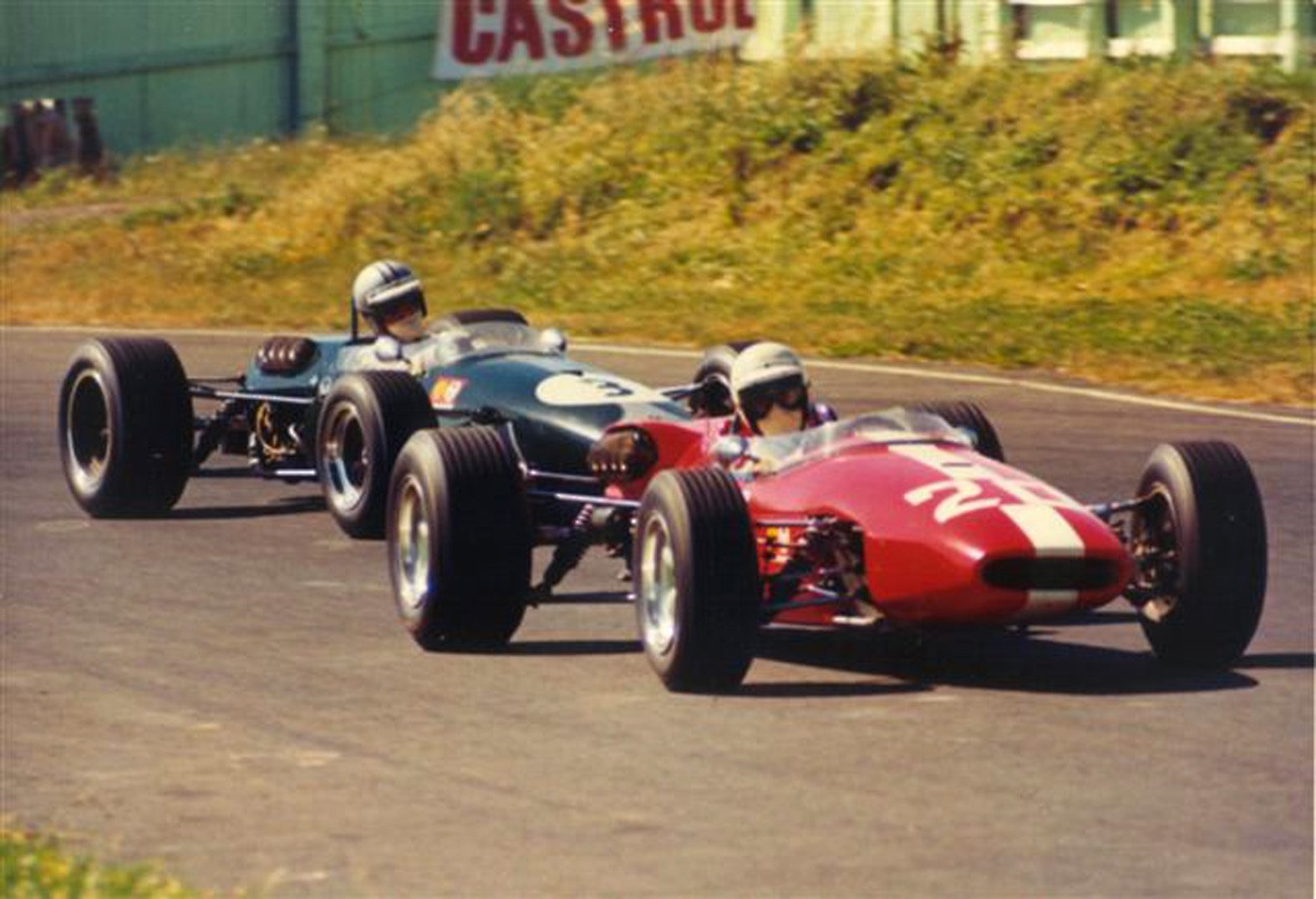
Speaking of which, the photo below is of Denny ranging up on Lawrence Brownlie at Pukekohe during the 1968 NZ GP on 6 January in BT23-5, Lawrence’s car is a Brabham BT15/23 Ford t/c.

In a move which is still hotly debated by Kiwi enthusiasts decades later, Denny and Lawrence collided destroying both cars and ending Brownlie’s career.
(Classic Auto News)

1.6 F2 Reference Resource…

Most of you know Allen Brown’s oldracingcars.com is a primary reference source for me inclusive of F2 1.6, click here for his F2 homepage and then navigate the site easily to look at seasons, individual races and in many cases car and individual chassis histories; https://www.oldracingcars.com/f2/

Here is one of my own pieces on the Lotus 48;

Lotus 48 Ford FVA: AGP Warwick Farm 1967: Graham Hill and Jim Clark…

Credits…

Getty Images, LAT, F2 Index, oldracingcars.com, LAT, Lance Ruting, Paul Hudson, Dick Simpson, oldracephotos.com.au, Victor Blackman, Bruce Wells, Classic Auto News

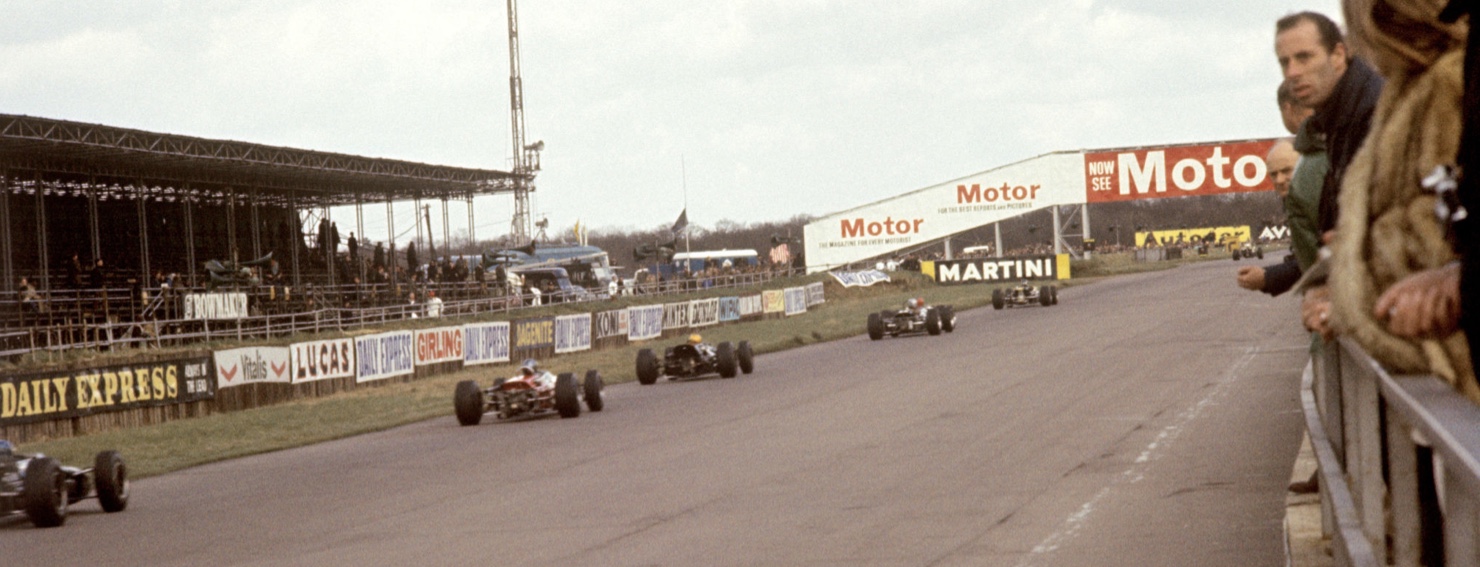
Tailpiece: Six 210 bhp F2 Missiles whistle into Copse at speed…
(Getty)

Finito…

(D Simpson)

Ken Cox’ Cooper T53 Ford at Hume Weir’s ‘New Year’ meeting on 29 December 1968…

The wise owls of The Nostalgia Forum have determined this Cooper ‘Lowline’ as either #F1-4-61, the ex Yeoman Credit/Reg Parnell Racing 1961 Intercontinental Formula car raced by John Surtees and then Roy Salvadori in Australasia, or #F1-7-61 the ex-Rob Walker car raced by Stirling Moss in F1 and the Australasian Internationals in 1962. Perhaps the latter is more likely Allen Brown surmises on his excellent oldracingcars.com, see the link at the end of this piece. The car still exists in the hands of the Banister Family in Sydney.

Whatever the case isn’t it a fantastic looking car? Dick Simpson has captured it and Ken’s style marvellously!

I can feel and hear the rumble of the 289 Ford small-block bent-eight. Its not Australia’s ‘first F5000’ mind you, that honour goes to Austin Miller’s Geoff Smedley built Cooper T51 Chev which set an Australian Land Speed Record at Bakers Beach in Tasmania in 1961 at 163.94mph or thereabouts.

Cox from Bob Minogue, Elfin Mono Ford, Hume Weir circa 1969 (C Baron)
And again out of Scrub- who and what is the third car I wonder (C Baron)

The essentials of the Cox Cooper are as follows, sourced from a ‘Motor Racing Australia’ story written by Ray Bell in September 2001.

Cox raced anything and everything- speedway, dirt tracks and bitumen from the forties onwards. One of his main supporters was a timber-cutter named John Cierpicki, he acquired the Cooper in a sale of Stan Jones’ assets after Stan got into terrible strife off the back of the 1961 Australian recession- the car was extricated from an old chook-shed in Camberwell, Melbourne circa 1966. As a former long time Camberwell resident I am fascinated to know the whereabouts of said chook-shed…

Norm Beechey’s engine man, Claude Morton with assistance from Kerry Luckins at Paul England Engineering in Moonee Ponds soon had a 179 Holden six-cylinder ‘Red Motor’ race-prepped and inserted into the rear of the T53. It’s said only one frame tube had to be removed in this process, the tube was returned when the Ford engine went in.

The car raced with the Holden engine for a few years, the Colotti gearbox was rebuilt by Claude Morton and adapted to the Holden-six with a bell-housing made by someone long since forgotten. The 289 had modified heads and a cam, it was fed by a four-barrel carb with ‘the exhausts made by Alan King’s Panel Shop over a dozen VB’s’. Later a 302 bottom end went in and a mismatched installation of 351 heads.

The car first raced in V8 engined form at Hume Weir on the 30 November- 1 December 1968 weekend which makes this meeting surely its second outing? The machine raced at the Weir, Winton, Calder and Phillip Island and ‘took on some minor kind of prominence at a time when the argument was raging about whether or not Australia should adopt F5000,’ Bell observes.

Bryan Thomson raced the car at Winton in 1970, Bob Minogue owned it for a bit, then Des Lascelles with the car even contesting an F5000 race – the Motor Show Trophy meeting at Warwick Farm in September 1972 – it no doubt looked a bit out of place in amongst the T300 Lolas, Elfin MR5s and McLaren M10s…

Click here for Allen Browns piece on Cooper T53’s- all you wanted to know but were afraid to ask;

https://www.oldracingcars.com/cooper/t53

(C Baron)
(C Baron)

Doesn’t it look like a great, race long dice between the nimble, light Elfin and big, booming Cooper- Minogue was that impressed, or needing the challenge he bought the car.

Credits…

Dick Simpson, oldracingcars.com, The Nostalgia Forum, Ray Bell, Charles Baron

Finito…

(unattributed)

Stan Jones, Maybach 1 and David McKay, MG TC Special at Parramatta Park, Sydney on 28 January 1952…

I’ve done theses fellas to death really, here; https://primotipo.com/2014/12/26/stan-jones-australian-and-new-zealand-grand-prix-and-gold-star-winner/ and here; https://primotipo.com/2018/01/12/bert-and-davids-lola-mk1-climax/

Ditto the track, which as the name suggests, was through a public park in Parramatta only 30 km from Sydney’s CBD- here; https://primotipo.com/2018/02/27/parramatta-park-circuit/

The track didn’t last long, which is sad, it is very much a place I would like to have attended or raced! I’ve dropped the photos into the linked PP article too but they were too good not to put front ‘n centre given my bias in favour of the track, the drivers and their mounts!

(unattributed)

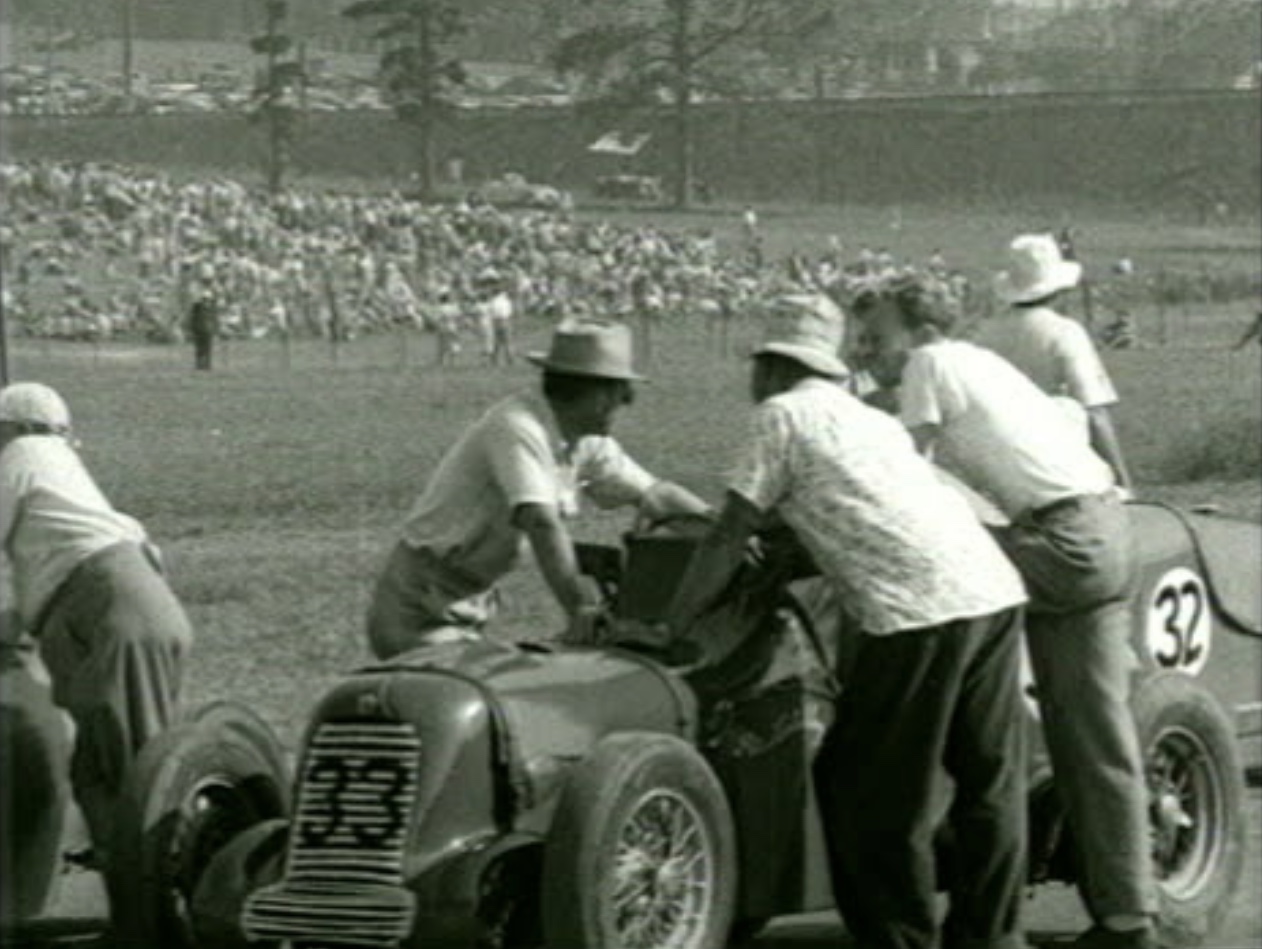
Parramatta Park again folks- see the railway line in the background, the car shown is the ex-Alf Najar MG TB Spl driven by E Critchley, with #32 Ron Ward’s TC Special.

See the most impressive entry of cars and drivers of the day.

(P Tilley Collection)


(P Tilley Collection)

Credits…

Flickr, Greg Diprose Collection, Terry Smith, Paul Tilley Collection

Tailpiece…

(G Diprose Collection)

Sensational very rare colour photograph of Stan Janes doing his stuff in the suburban streets of Sydney, Parramatta to be precise- the access roads out front of Government House which is now a restaurant and museum.

Finito…

The ‘Island was part of Len Lukey’s farm after all, circa 1970. I’ll refrain from lewd, puerile observations about the sexual proclivities of country boys and Kiwis, tempting as they may be…

These are exciting times for Australian single-seater racing with the advent of ‘S5000’, the first Australian National Formula 1 worthy of the name since the demise of Formula Holden/Brabham/4000 way back in 2006…

Perhaps soon the Gold Star will be resurrected and placed back on the pinnacle it represented to so many of us for fifty years or so.

I spotted these images of Stan Jones and Rubens Barrichello rocketing around Phillip Island past and present on the same day a couple of weeks ago. Ruben’s test laps in the Ligier F3-S5000 Ford were in preparation for the first S5000 races at Sandown a week later. They reminded me of my first race meeting- the F5000 Australian Grand Prix at Sandown in 1972 won by Graham McRae’s Leda GM1 Chev.

I was blown away that day and hooked for life as a spectator, competitor and in more recent times a scribbler too. Hopefully- without doubt certainly, some young enthusiasts will have been similarly infected with the sound and fury of these fabulous, fast, spectacular, noisy, contemporary racing cars.

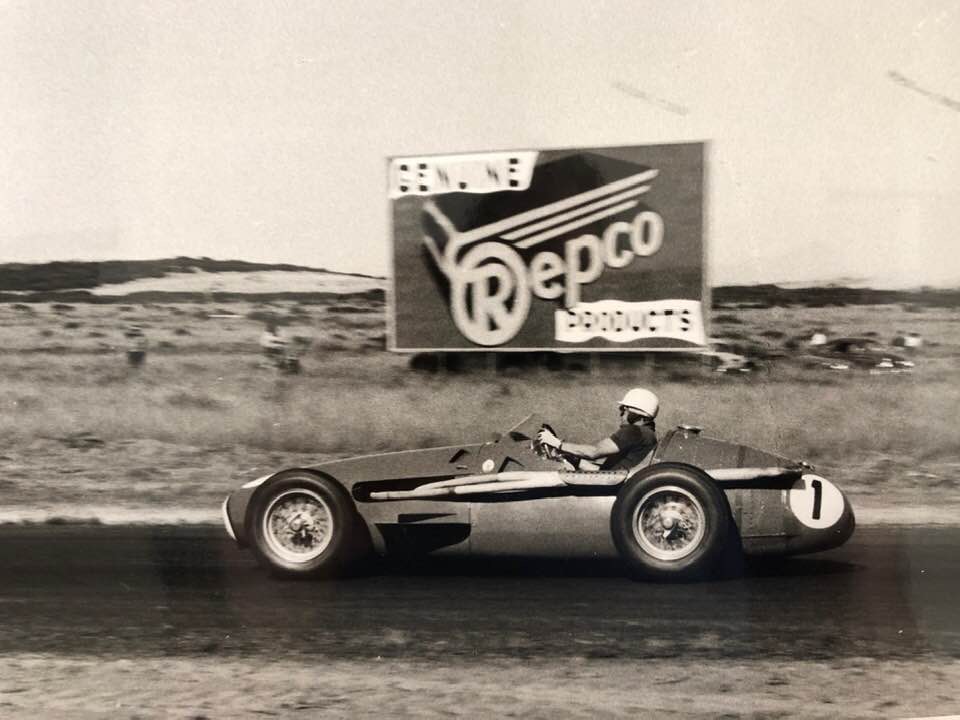
Stan da Man- Stan Jones, Maserati 250F, during the December 1958 PI Gold Star round which he won- ditto that years Gold Star (Repco)


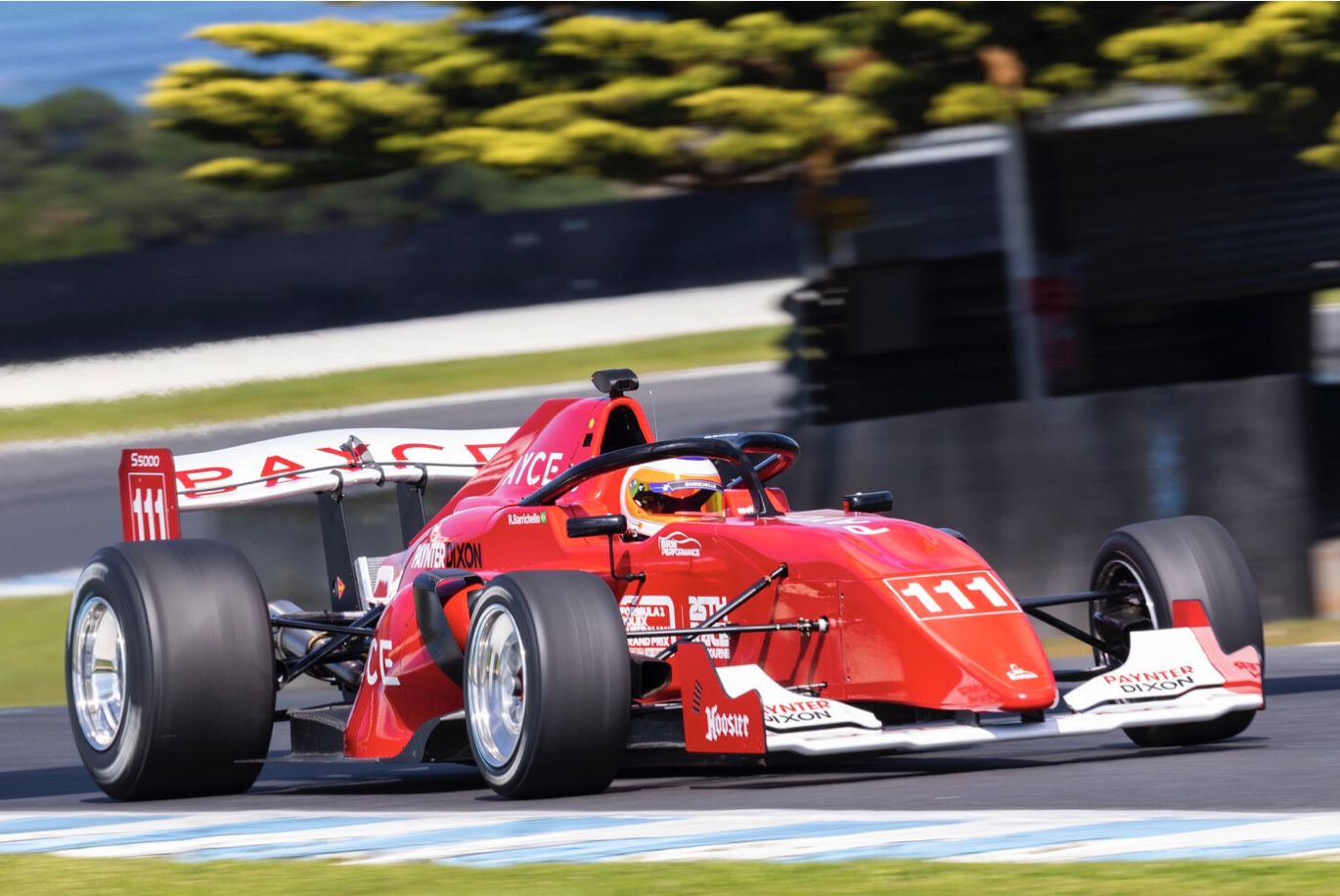
Rubens Barrichello, Ligier F3-S5000 Ford, P Island, September 2019. Despite being 47 it was a promotional coup to get such a highly credentialed F1 winner into the car, his technical feedback will have been gold as to baseline setup of the cars (unattributed)

To me touring cars are a pernicious, all pervasive, omnipotent disease- I loathe their dominance here, but it is up to we ‘open-wheeler toss-pots’ as one of my mates thoughtfully describes me and those similarly afflicted, to get behind the class in every way we can.

Yep, it’s a control class which I detest- but the economics of things must rule.

Yep, it’s a big nod to F5000 but that is hardly a bad thing, I loved ‘em, still do, and we seem to like the throb of a big V8 here- so some of the Supercar ‘football, kangaroos and meat pie’ mob will find the cars attractive in a way they would not have found so, a high-revving 2 litre car, for example.

Yep, its not a politically correct poofhouse electric thingy and thank the good lord above for that.

Yep, it’s not affordable to mere mortal enthusiasts running a car themselves with a cuppla mates but that was always pushing shite uphill whether the class was 2.5 Tasman, F5000, F Pacific or F Holden and who gives a shit about F3 as ‘ANF1’ coz it never should have been…

I thought Chris Lambden had the biggest wedding-tackle in Australia when he put his own moola and cock on the block four years ago with his ‘Thunder 5000’ concept car. WTF! you must be bonkers! was my reaction. I was certain the Supercar pricks would shaft him- they did of course, but he is still in the mix, bless him, as S5000 Category Manager. Thank you Chris. I salute you. We all do.

So let’s get behind it trendsetters, in the words of my son’s footy coach ‘talk it up blokes’…

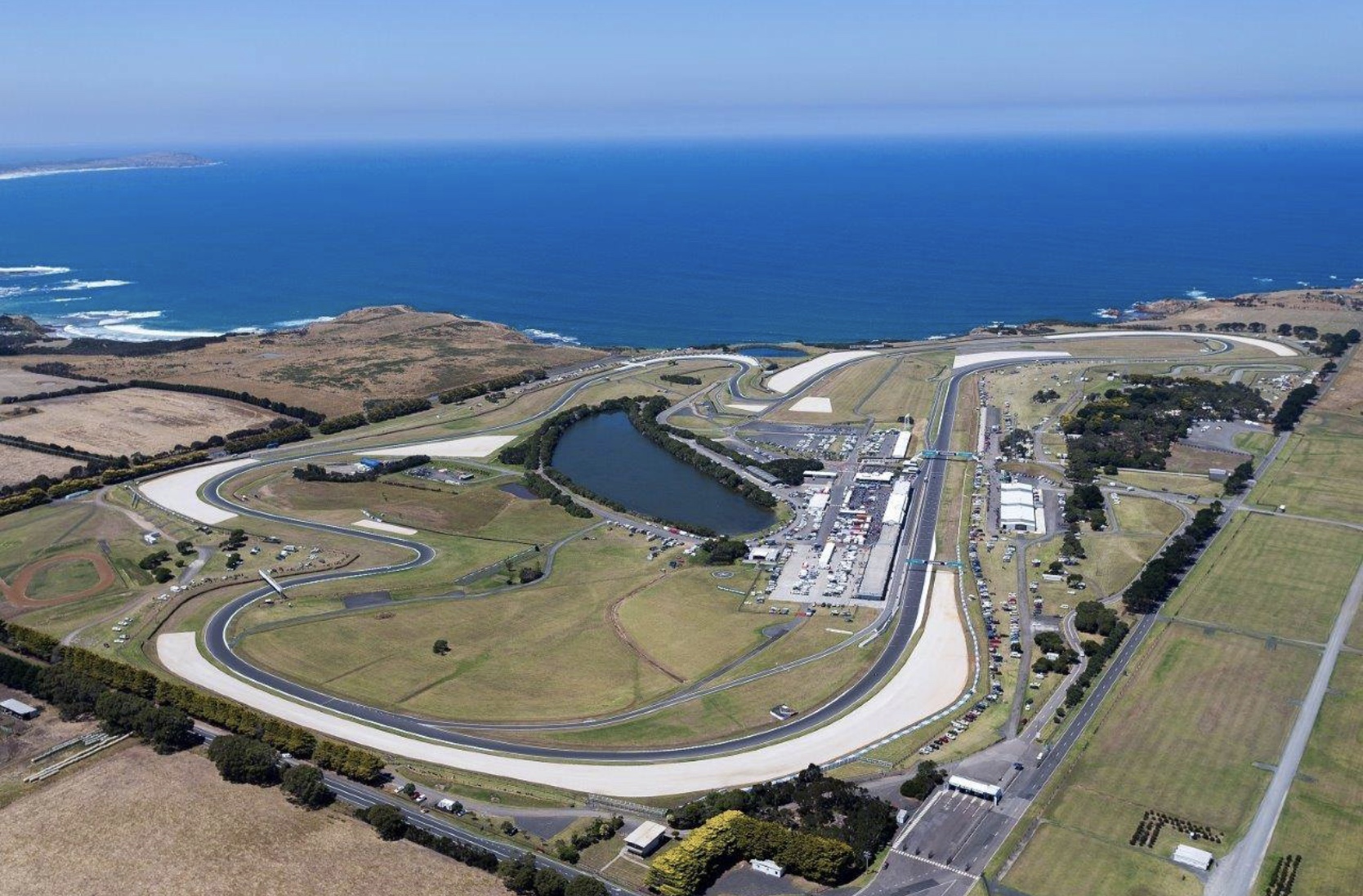
Phillip Island panorama in recent times


Ligier F3-S5000 cars…


(GRM)

A whole swag of Ligier goodies on the factory floor of Garry Rogers Motorsport, Dandenong, in Melbourne’s outer east, Victoria, August 2019.

I want to focus on the technical specifications of the S5000 cars in this piece.

The detailed specs and concept of Chris Lambden’s 2016 Thunder F5000 machine provided the overall envelope the final design followed- that is a modern, carbon fibre chassis single-seater racing car powered by a contemporary 5 litre V8 engine which is ‘cost-effective’ and safe-ish.

At elite level, single-seater racing in Australia had been in the doldrums- read totally irrelevant, for two decades, some would argue a good deal longer than that.

In 2016 former racer and journalist Lambden built a car for a class he named ‘Formula Thunder 5000’ which used as a base a Swift FN09 chassis of the the type raced in the Super Formula (formerly Formula Nippon) during 2009-2013.

Tim Macrow aboard the Thunder 5000, Swift Ford, Phillip Island in. Deletion of the airbox gave the car less of an F5000 ‘silhouette’- a good thing too. The F5000’s should breathe for what they are- the look should be contemporary not yesteryear IMO (D House)


Leanne Tander in the Super 5000 at Sandown in September 2017 (unattributed)

In 2017 an alternative ‘Super5000’ car was proposed- this was a proposal put to but rejected by the Supercars Australia Board of Directors which was then flicked to wealthy enthusiast/sponsor PAYCE Consolidated CEO/entrepreneur/enthusiast Brian Boyd to develop.

This car was designed by Oscar Fiorinotto of Supashock Racing- very retro-F5000 (Eagle or Lola T332/400’ish) in appearance it has a carbon-fibre chassis, V8 Supercar engine and Albins gearbox.

Controversy followed in that the latter machine clearly aped Lambden’s, i’m heavily truncating as I don’t want to get mired in the politics of the past, it is simply not constructive or useful at present. S5000 came about as the result of a truce brokered and agreed between the two parties around eighteen months ago.

A year or so later the cars raced for the first time at Sandown on 20-22 September 2019.

Matt Brabham’s car at Sandown in September 2019 (unattributed)


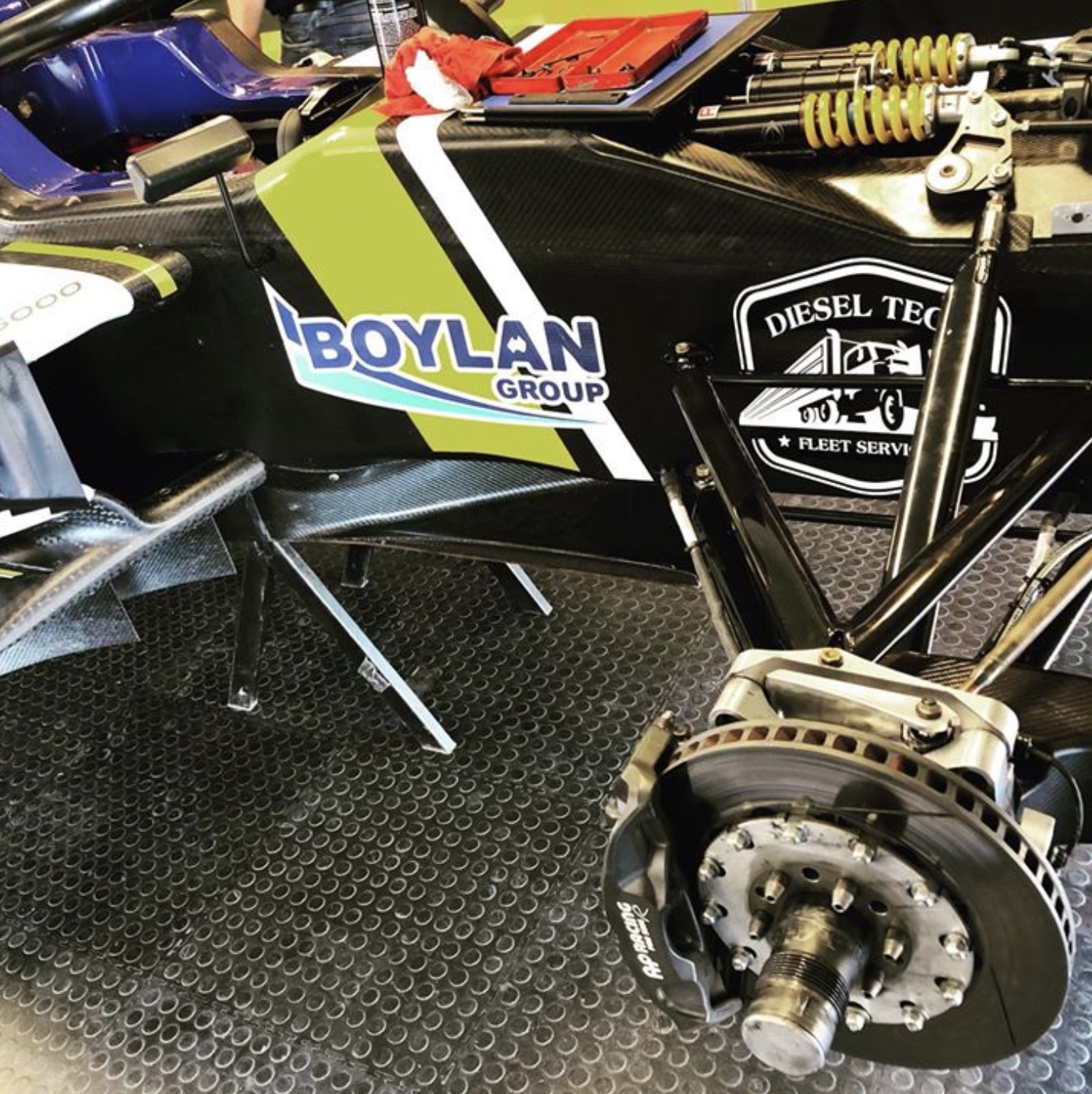
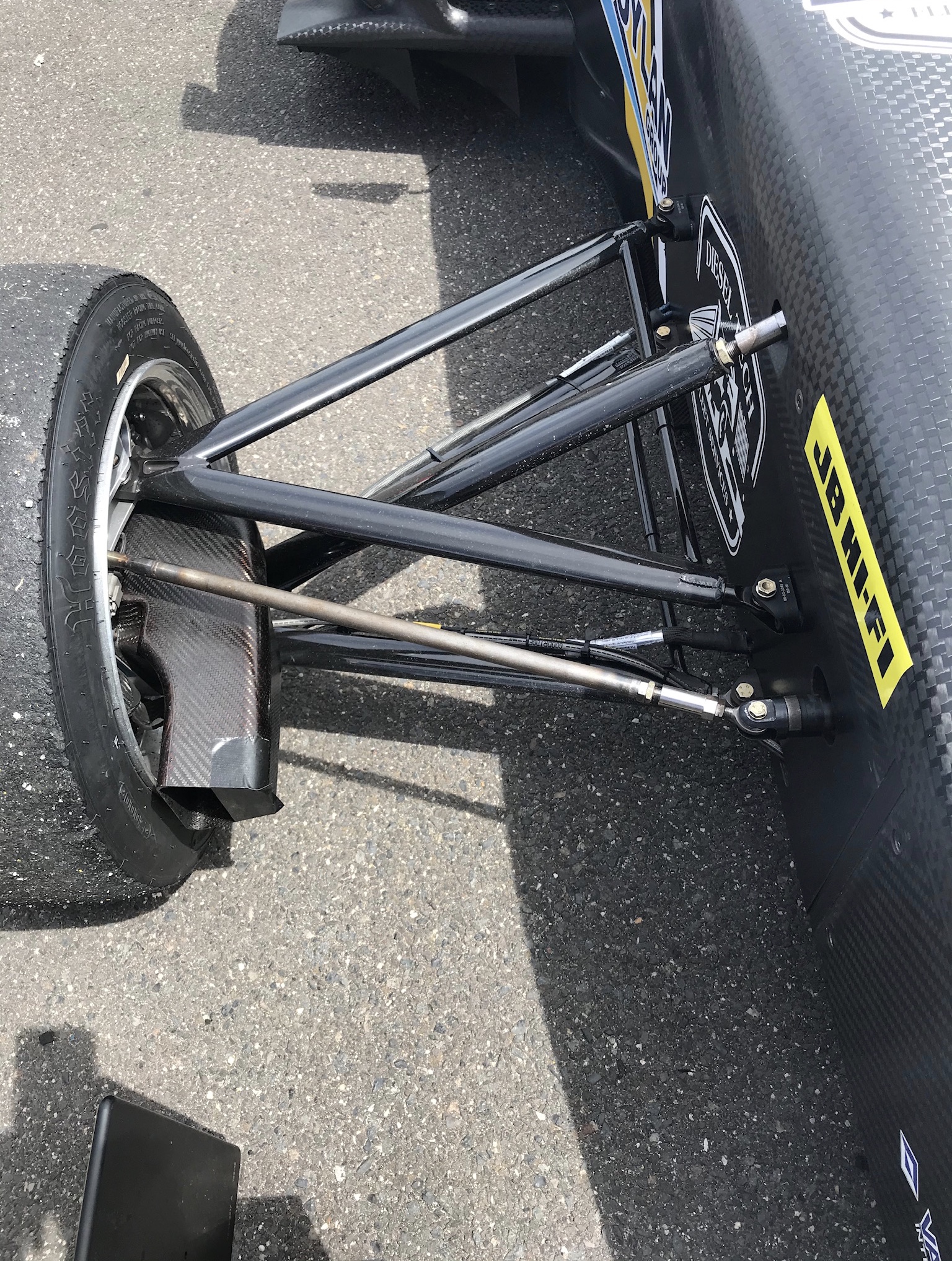
‘001’ front suspension at Sandown in September 2019. AP calipers, cast iron rotors in keeping with cost-effective approach (Holinger)


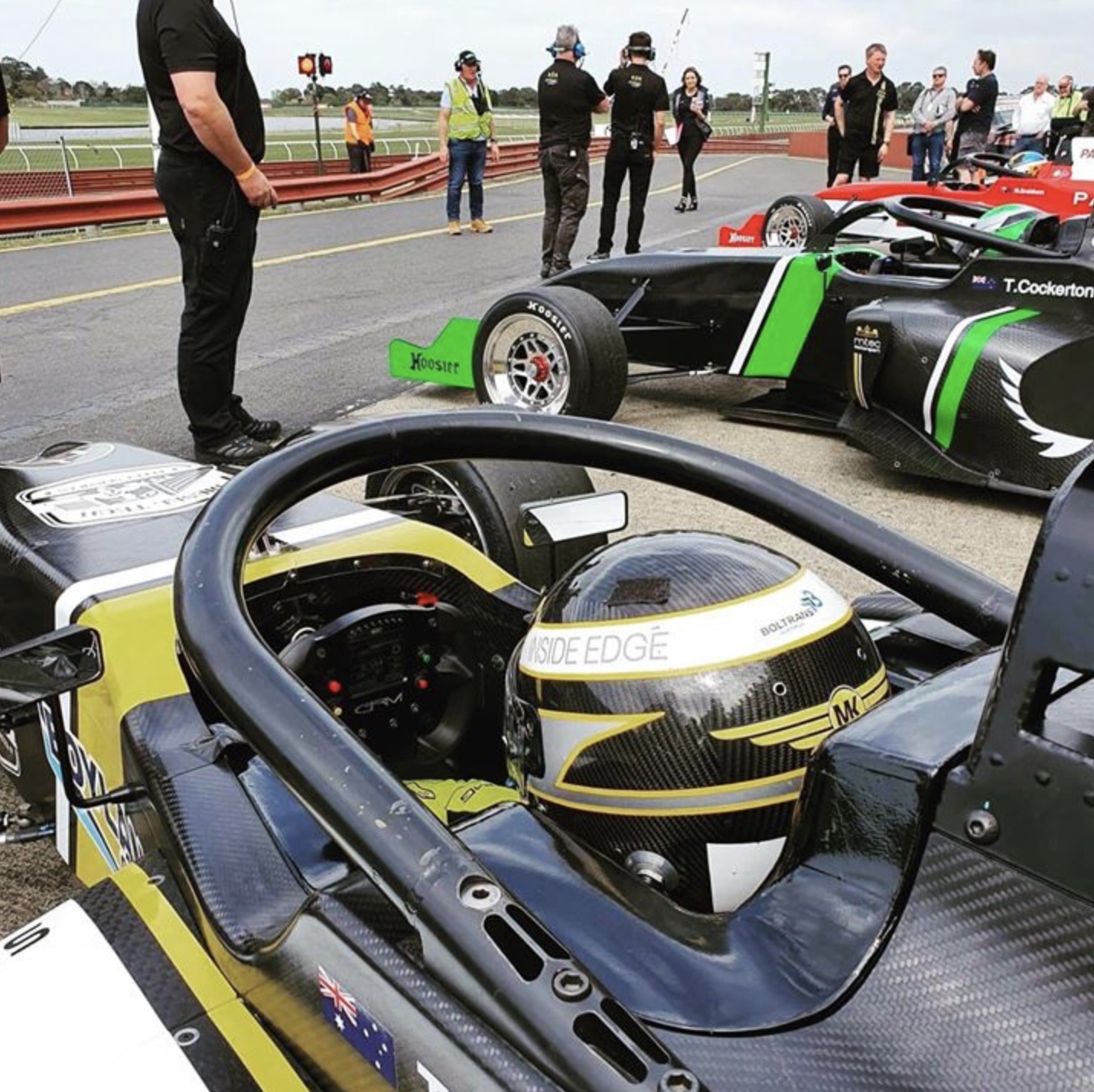
Macrow, Sandown pitlane. The halos are like warts- ya sorta, sorta get useter them. Safety aspect cannot be denied but far-canal they are ugly (Holinger)

The Swift chassis was not compliant with the FIA’s latest regulations so a Ligier (lets come back to Onroak Ligier later) Formula 3 chassis was chosen- it is very similar in size to the Swift and importantly it can accommodate drivers of bulk as well as 16 year old svelte ‘jockeys’.

The chassis choice was made with the lessons learned from Lambden’s use of the Swift chassis. Michael Borland observed in Auto Action ‘The (Swift) car as built is pretty complicated, it was built to a high spec because that is what they wanted…I think that we will simplify components and limit some of the adjustments that can be made to make it cheaper and easier to work on. Chris wanted something that made a good noise and went sideways, and was going to be economical to run over a couple of seasons. You do not want a team of mechanics servicing gearboxes and hubs and so on.’

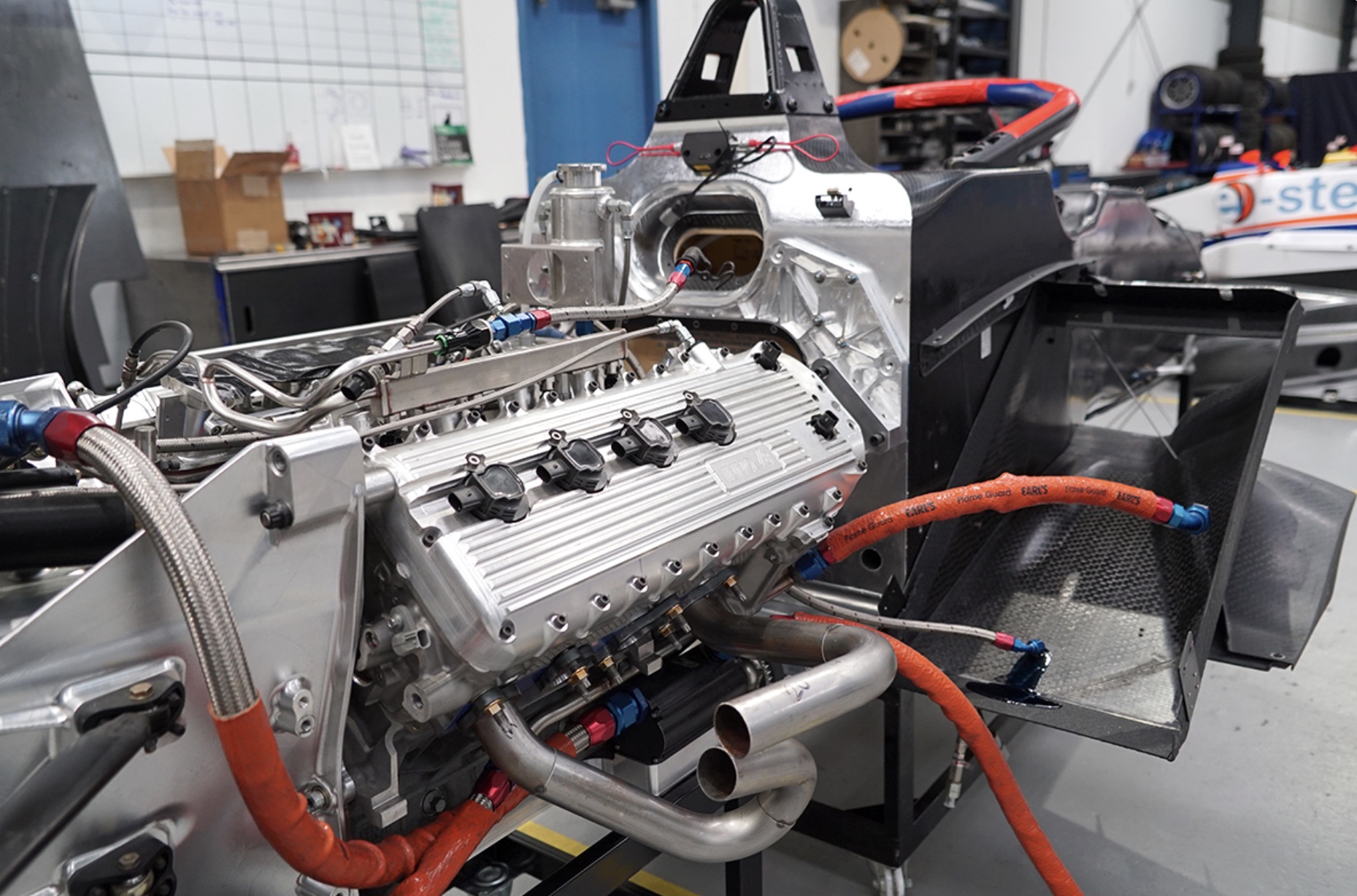
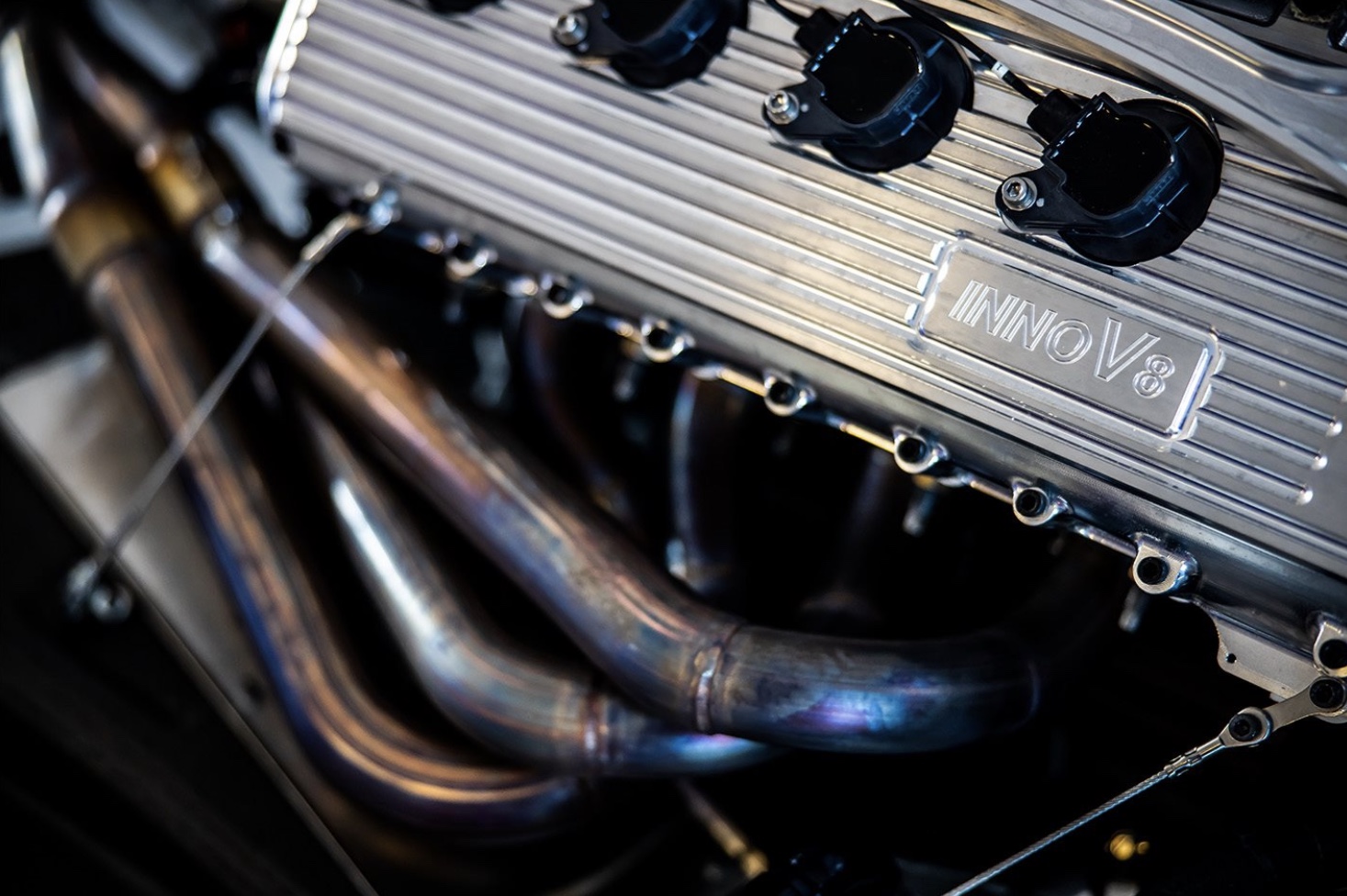
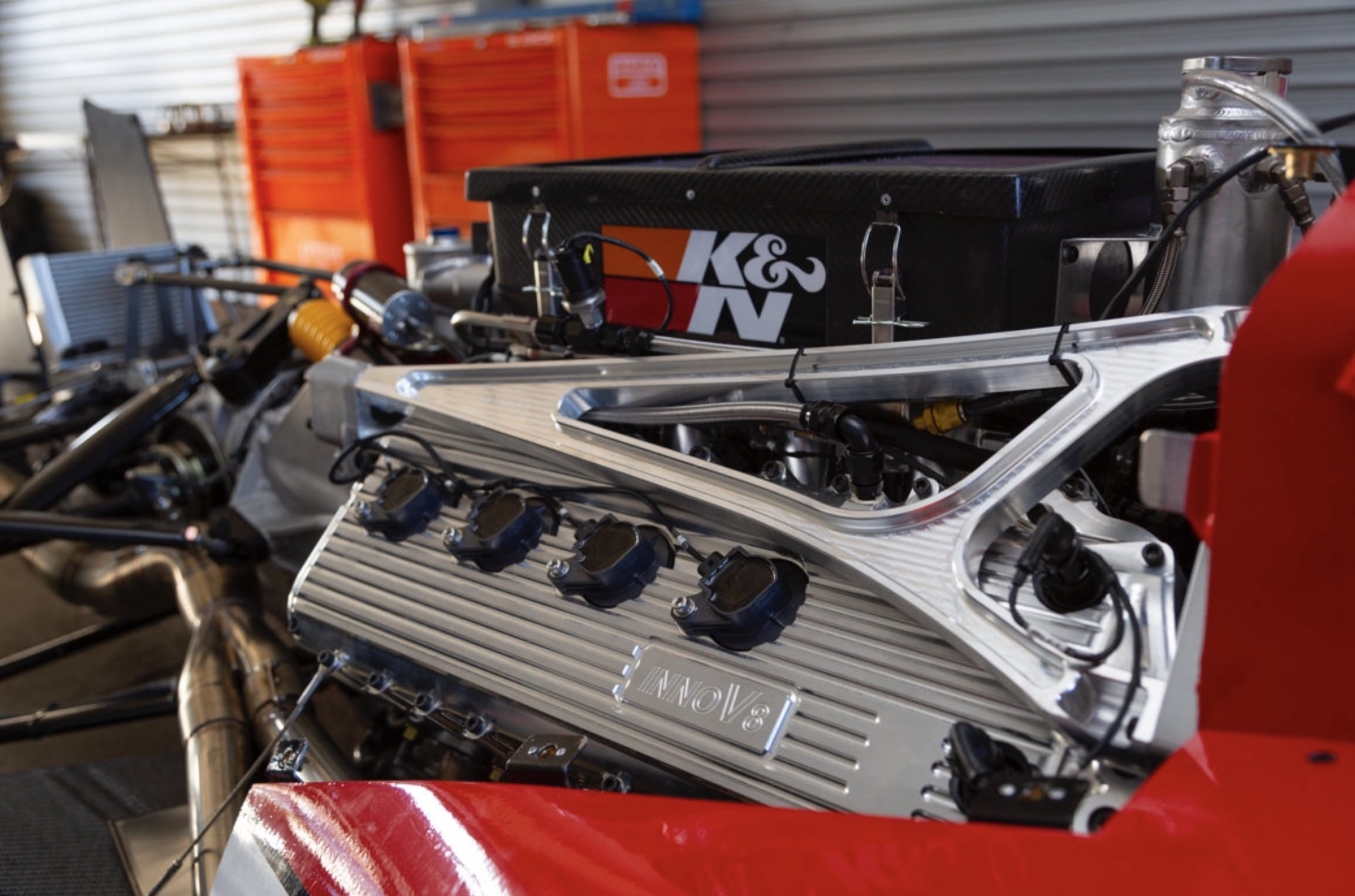
Lambden’s Thunder car has a Ford Coyote, DOHC, 32 valve normally aspirated 5 litre V8 engine, a choice from a range of alternatives considered by InnoV8’s Roger Higgins who was given that task by Chris. The Holinger transaxle ‘in some ways the centrepiece of the car’ literally and figuratively- is again the same transmission well proven given considerable test miles on the Thunder 5000 car primarily driven by ex-FF/F3(thrice Oz F3 champ)/Porsche Cup and Supercar racer Tim Macrow.

The Ligier chassis/engine/suspension integration design and engineering was developed by ARG- the three photographs below are of ‘001’ coming together at Borlands.

(motorsport.com)


(motorsport.com)


(motorsport.com)

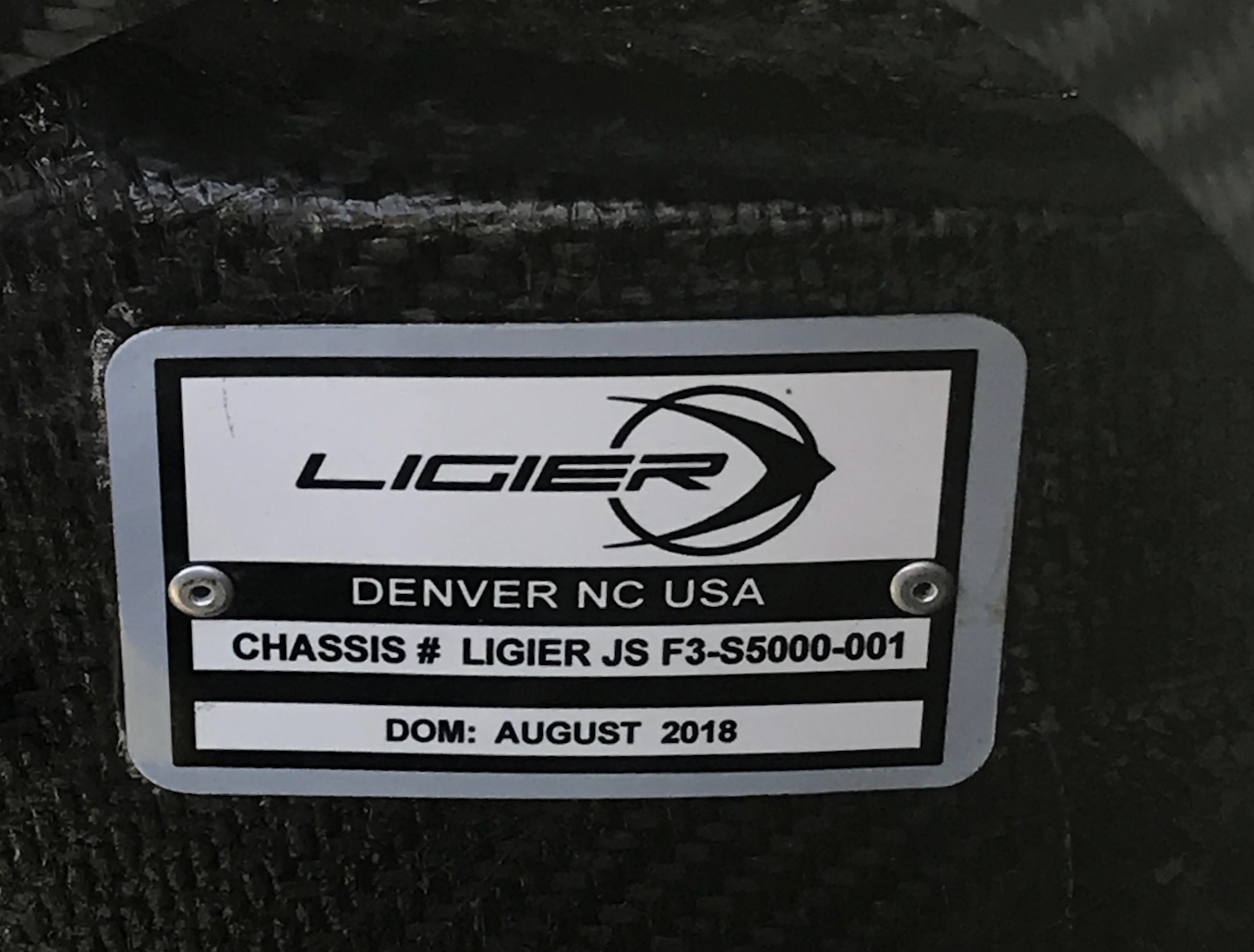
Michael Borland’s (Borland Racing Developments/Spectrum Cars) Mordialloc business brought Lambden’s original concept together- they also took delivery of the first Ligier, chassis #’JS F3-S5000-001′ (old-timers will probably remember that the JS moniker in Ligier chassis designations is in honour of Jo Schlesser, French racer and close friend of Guy Ligier who died in a gruesome fiery accident aboard a Honda RA302 early in the 1968 French GP at Rouen) developed the suspension and wing package and built up the complete first car.

Be in no doubt folks of the value Lambden and Borland brought to the S5000 table in terms of an engine/transaxle combination and ancillaries which worked well, given the engine and gearbox and related opportunities/problems they had to solve.

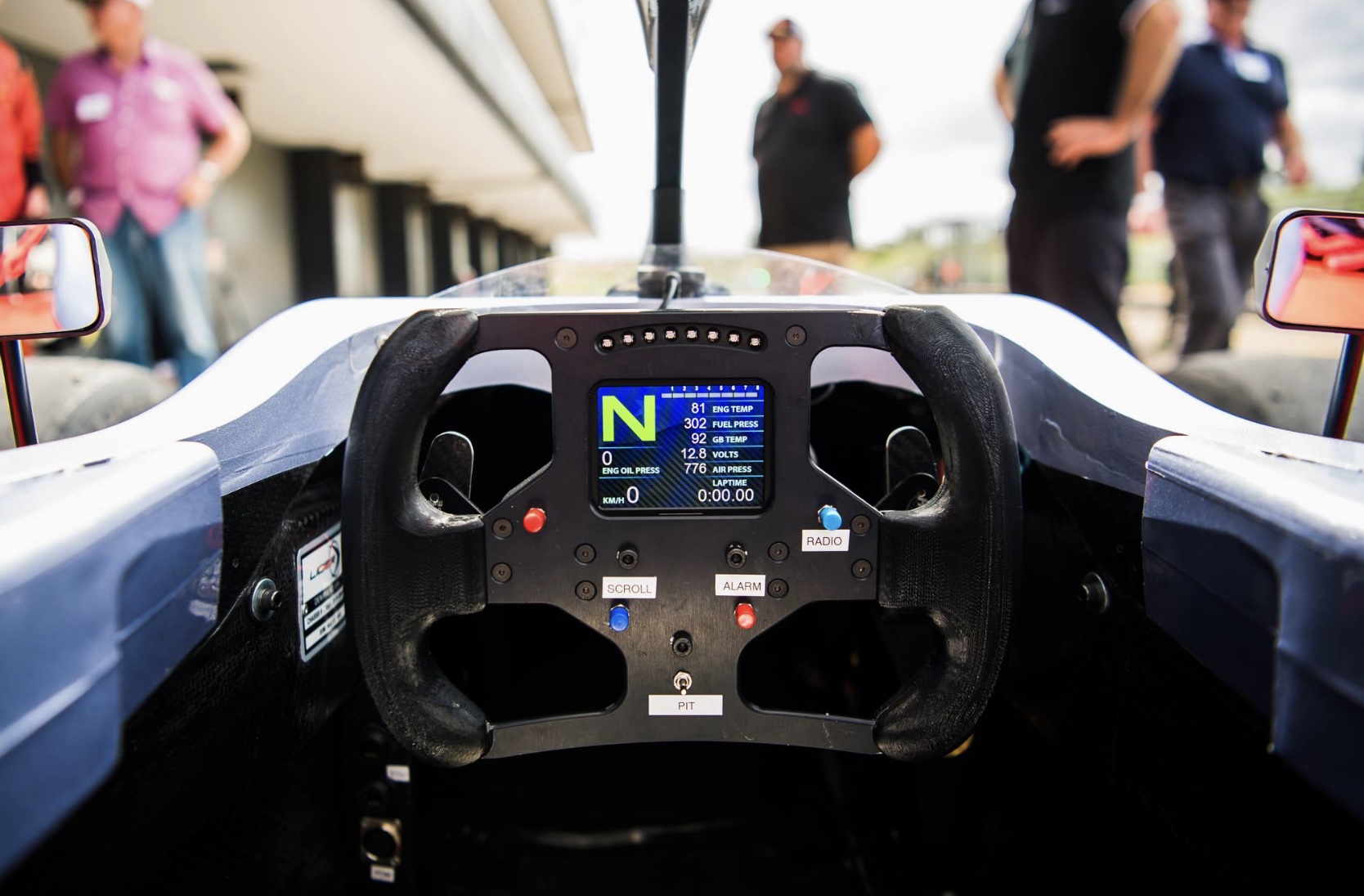
Just one example- the Swift had a cable throttle, Borland wanted fly-by-wire. Whilst MoTeC had the electronics they did not have a steering wheel to fit so one had to be made- it sounds easy mating it all to engine/pedals/wheel/paddles but it all takes time, fly-by-wire was important for a whole lot of reasons not least to extend gearbox life. Similarly, their learnings in relation to the Swift chassis helped in the choice of the relatively simple F3 Ligier.

After the engineering specifications and initial testing of the first Ligier chassis was satisfactorily carried out and completed by Borland Racing Developments, Garry Rogers Motorsport (prominent Supercar team) were contracted to build the balance of the ‘initial batch’ of cars- there are currently fourteen in total.

GRM had/has the production capacity (35-40 employees) and technical expertise to undertake this role, the contract was let by the promoters/category manager Australian Racing Group, in the process GRM also became the official sales agents for the cars. Form a queue folks…

A ‘ceremonial handover’ of the first car from Borlands to GRM took place at Winton after a mid-December 2018 test day attended by representatives of each outfit.

In terms of timelines, the original chassis ‘JS F3-S5000-001’ landed in late August 2018, another four jetted in during March 2019 and nine in early July 2019.

Macrow drove the car again in mid April 2019 after GRM made changes to the cooling system, fitted new uprights and suspension arms declaring the changes to the car ‘…absolutely brilliant…made a big difference to the way the car handles’ he was quoted in a GRM release. The final production specifications for the car were at that point completed for the purposes of the build of the thirteen cars which comprised the initial production run.

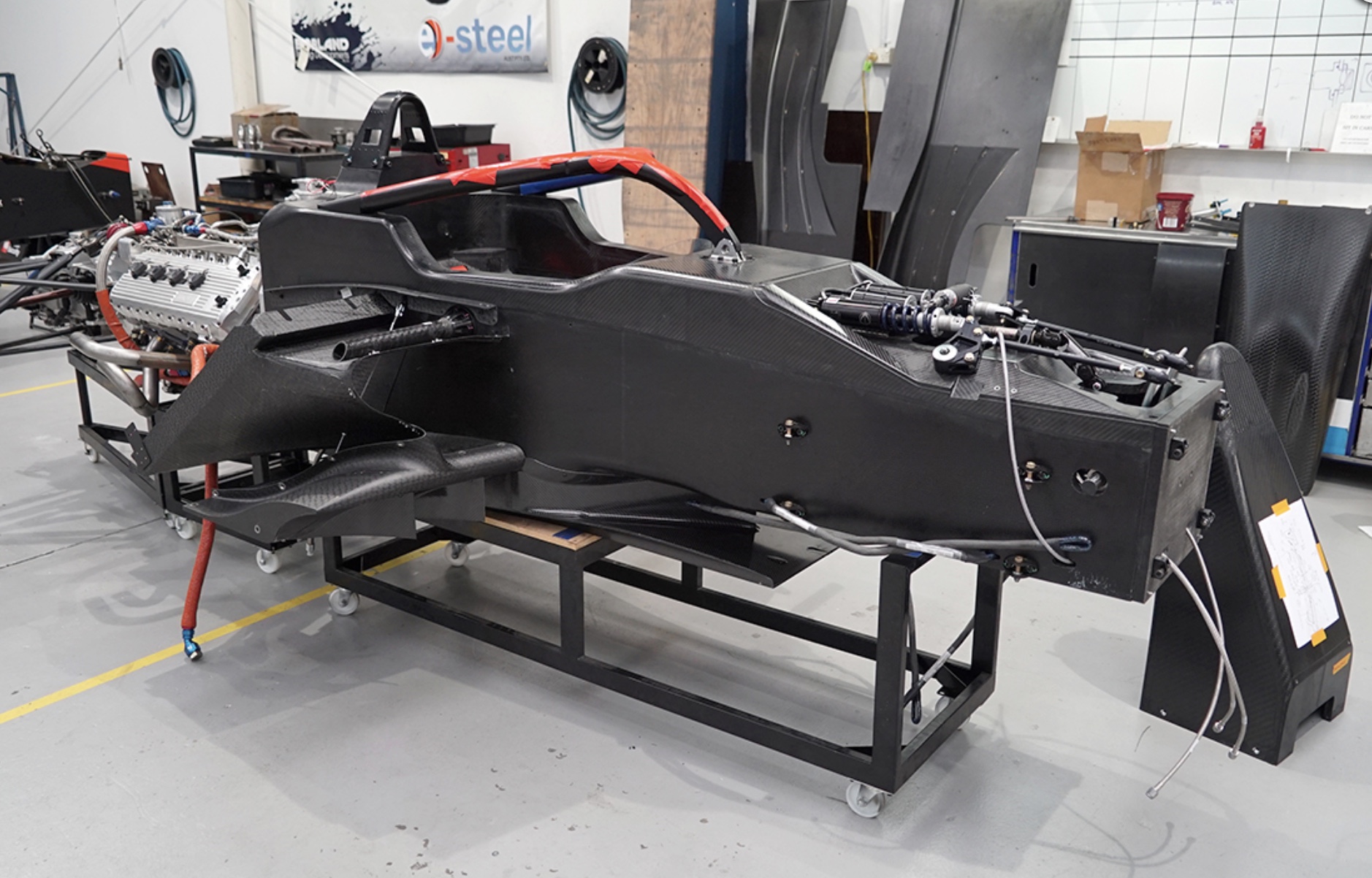
The Ligier chassis is almost identical to that provided to various F3 series around the globe. For the S5000 application it is fitted with a CNC machined adaptor plate which is bonded and bolted to the rear of the tub to pick up the engine/gearbox. The carbon composite chassis was made in Ligier’s Italian factory before being sent to the Ligier (Onroak) plant in Denver and together with the nose, front wing and sidepods was completed there and then air-freighter to Melbourne’s Tullamarine Airport.

However much a variety of suppliers of chassis/engine would be nice the realities of building cars for a tiny market such as ours renders that impossible. What was sought from the package was a strong, safe chassis of reasonable economy, a sealed engine and common transaxle, wings, wheels and tyres.

The front wing is simple, it funnels air into two tunnels beneath the car with much of the downforce generated from the cars underside. Local carbon-fibre work has been shared by GRM and LC Race Composities.

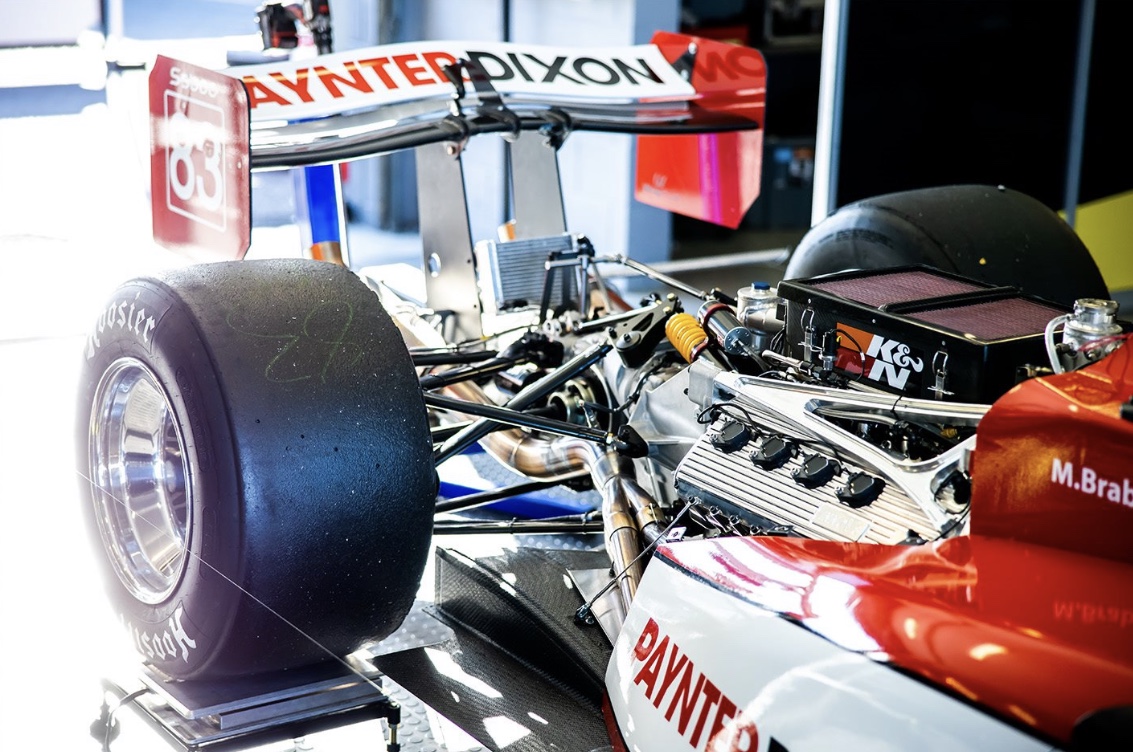
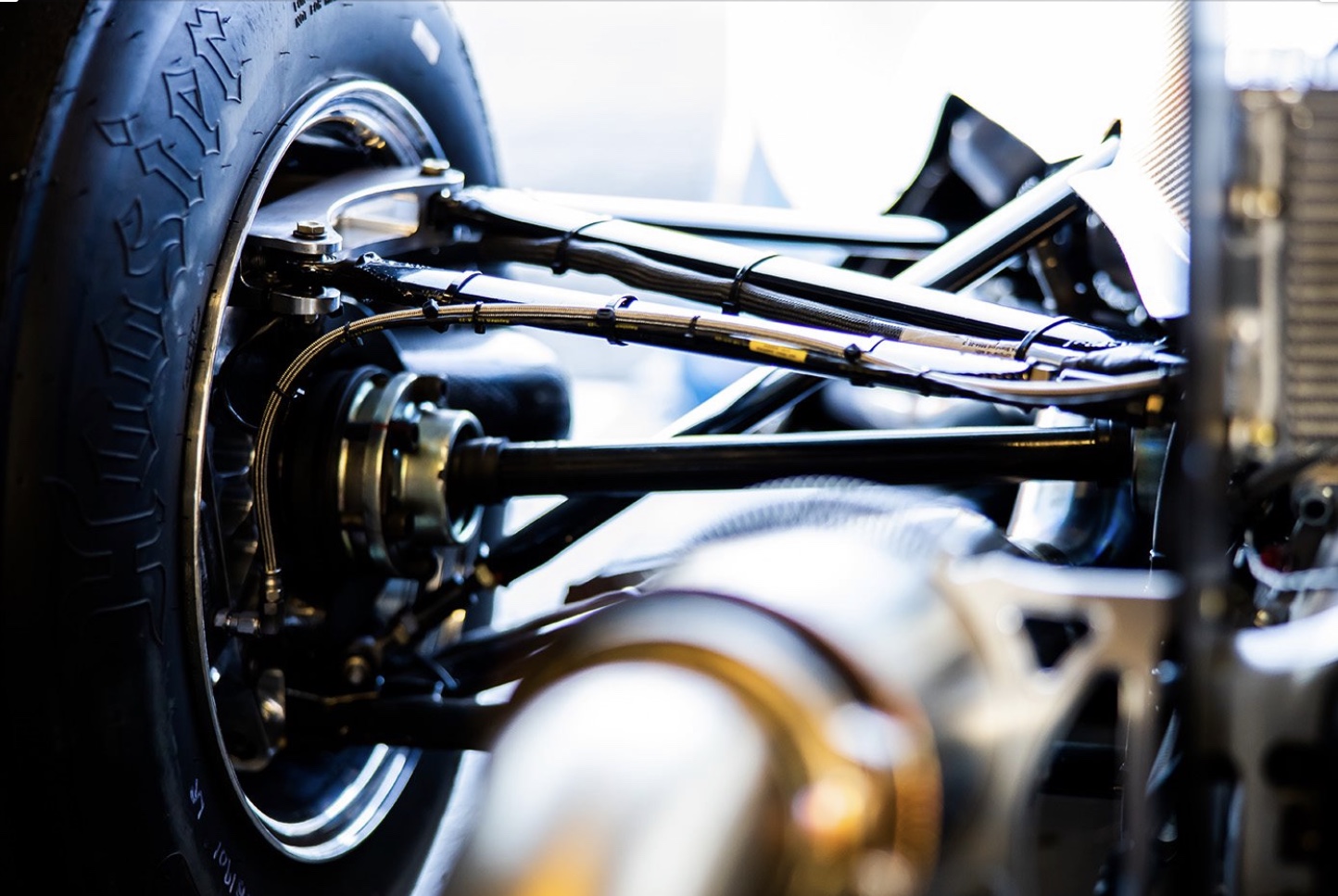
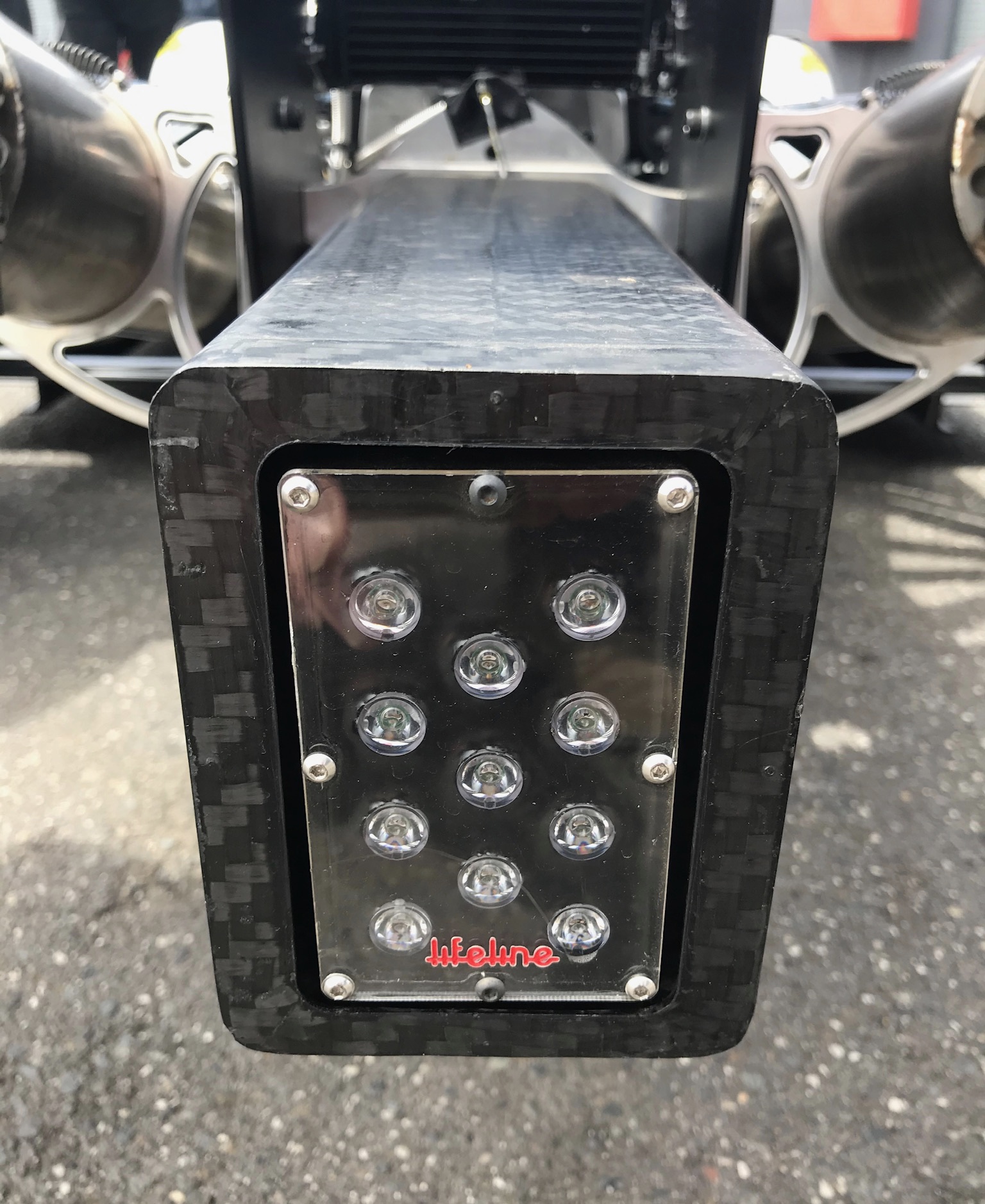
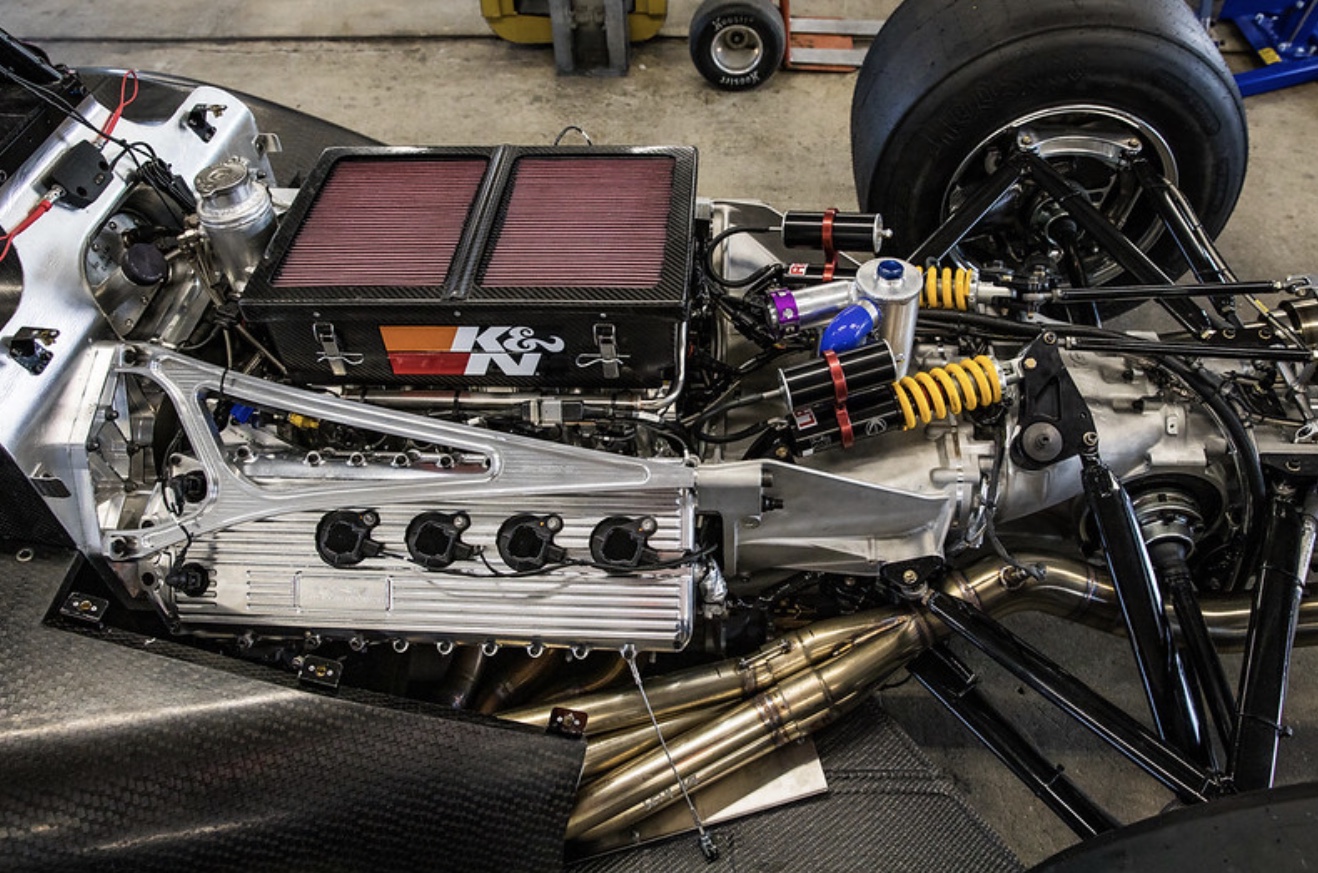
Suspension is double wishbones front and rear with pushrods at both ends, shocks are JRi three way adjustable and roll bars are of course adjustable. Steering is Ligier rack and pinion- the column is collapsible and with Motec electronics systems.

The car is 4900mm long, 1950mm wide and has a wheelbase of 3000mm.

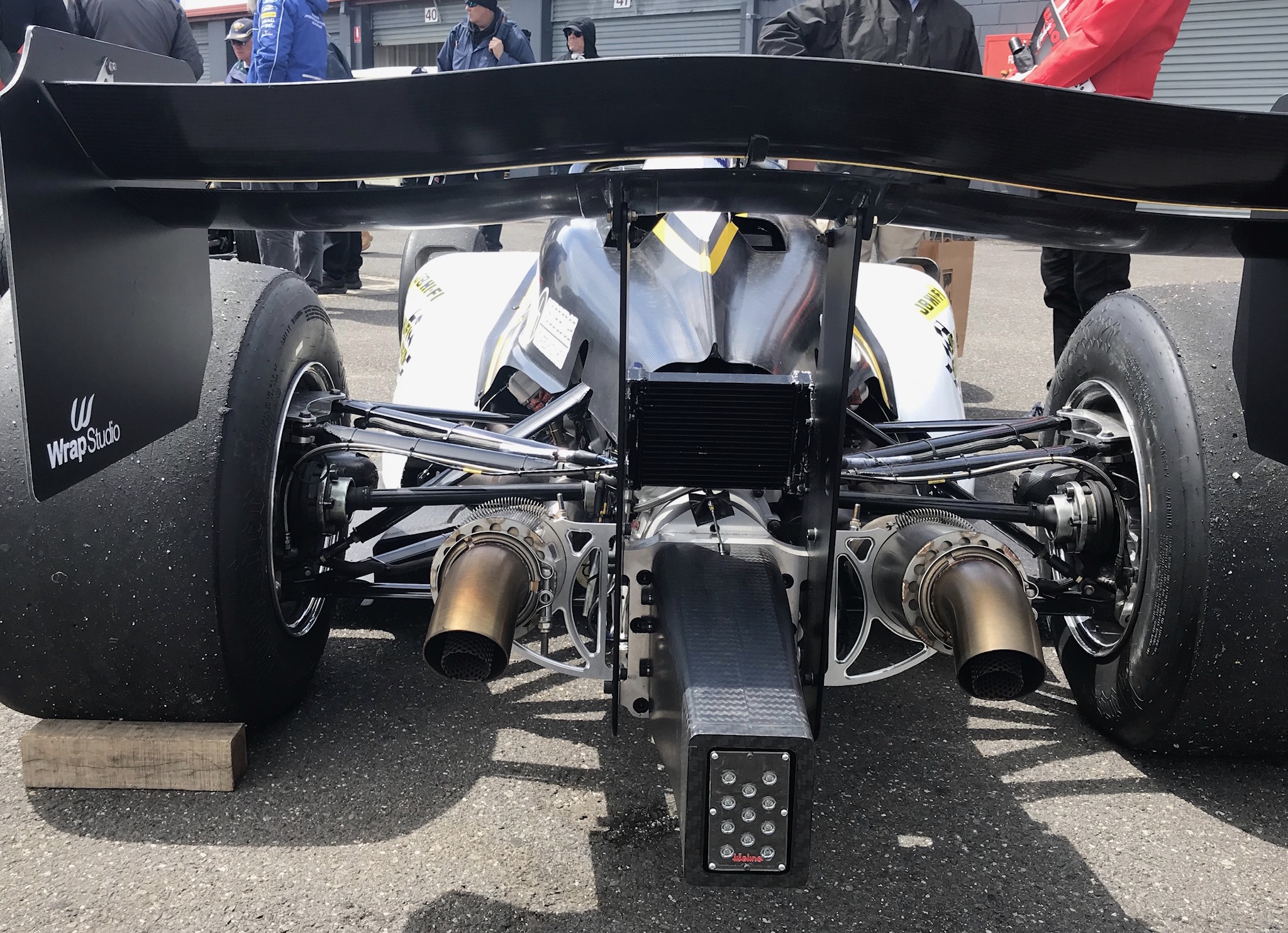
Wishbone and pushrod rear suspension, calipers AP Racing (unattributed)


Pointed in the right direction at Eastern Creek. Note Ligier chassis plate to the left- this is ‘JS F3-S5000-001’. Data by MoTeC (unattributed)


(M Bisset)


(unattributed)

The marvellously raucous engine is a Ford 5 litre, quad-cam, 32 valve ‘Coyote’ which is shipped from the US to InnoV8 in Brisbane. They prepare the motors to the same specifications to produce circa 560bhp @ 8000rpm. 460 foot/pounds of torque are produced. At this type of spec the sophisticated motors should be relatively under-stressed, it will be intriguing to know the periods between rebuilds and related cost.

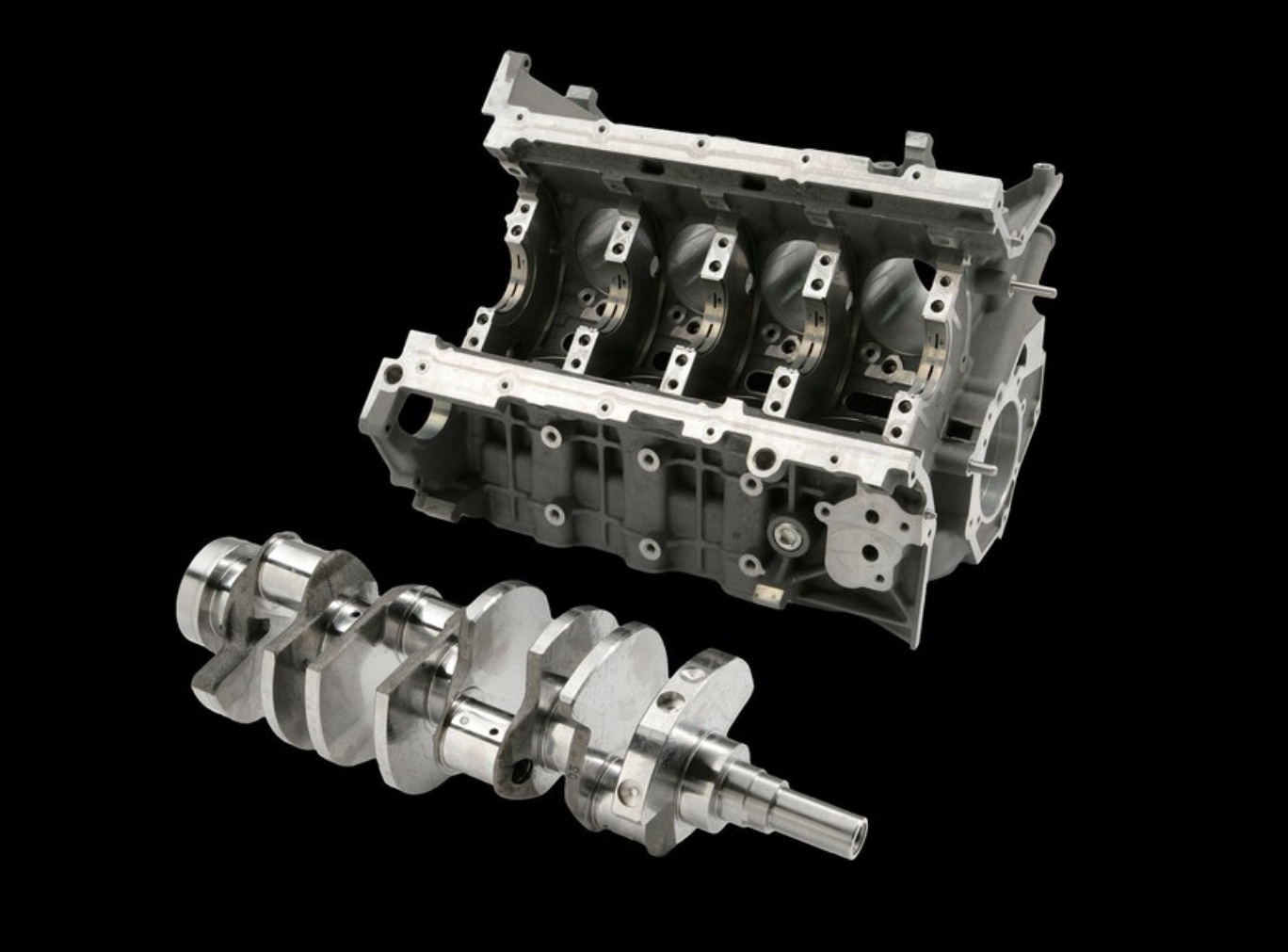
These Coyote engines, built in Ford’s Essex, Windsor, Ontario Canada plant have lots of yummy bits- aluminium cross-bolted block and heads, steel crank, they were first fitted to the Mustang in 2010. Then they gave 412bhp and 390lb/ft of torque, they have been updated since then- we get the 2018 Generation 3 variant. The 5 litre is almost ‘square’ with a bore and stroke of 92.2 x 92.7mm.

The engines name drives from Ford’s first four-valve Indy V8 wins in Coyote chassis steered by AJ Foyt in 1967 and 1977- ignoring the fact that the first Indy win of said motor was in the back of a Lotus 38 driven by Clark J in 1965. I guess the slight skew in history to get the name ya want sorta works better if we ignore that…

Series of photographs of the Ford ‘Coyote’ 5 litre, all aluminium, chain driven DOHC, four valve V8 block, heads and crank (Ford)


(Ford)


(Ford)


(Ford)


(Ford)

The transaxle is manufactured by Holinger Engineering in Kilsyth South in the outer east of Melbourne, this outfit was founded by ex-Repco Brabham Engines engineer/hillclimb champion (the late) Peter Holinger in the mid-sixties is now pretty well known to enthusiasts globally.

The ‘MFT’ unit is widely used in Porsche competition cars- it is a six-speed sequential box fitted with a pneumatic paddle change. To adapt it to its new single-seater application it has a bespoke drop-gear set at the front to lower the engine to mate engine/box and therefore also the centre of gravity overall. Holinger’s bell-housing, produced in conjunction with Mike Borland and Roger Higgins has an integral oil tank with the gearbox/bellhousing picking up suspension and shock absorber mounts.

Wheels and tyres are 15 x 12 inches at the front and 15 x 17 at the rear- manufacturers are Max Wheels in Sydney, the car has plenty of ‘presence’! Hoosier are the mandated tyre providers in 570/290-15 dimensions front and 680/405-15 at the back.

Some enthusiasts have been muttering about the weight of the cars, that in large part is due to the safety elements in comparison to, say, the ‘gold standard F5000’ Lola T332 Chev. The Ligier complies with FIA 2018, front and rear crash structure, side impact, cockpit halo, side and front intrusion panels requirements. In addition the 6-point harness is of 2018 spec as are the wheel tethers and headrest noting that a couple of the cars have already been ‘put to the test’. By comparison the deformable structures of the T332 and cars of its ilk were the drivers limbs…

Sydney Eastern Creek test ‘001’ driver uncertain (unattributed)

Somewhat predictably, the cars were late in build for all the usual reasons- but who cares, the cars made a spectacular appearance in three races over 20-22 September 2019 weekend.

The list of drivers included Matt Brabham, Tim Macrow, Alex Davison, Rubens Barrichello, Barton Mawer, James Golding, Will Brown, Ricky Capo, John Martin, Tim Berryman, Michael Gibson, Taylor Cockerton and Tom Alexander.

Macrow was quickest in the first two practice sessions with John Martin speediest in the third, his time 1:05.1270- Martin set the lap record at 1:04.5533 in heat 2.

Wonderfully deserved was the first win of the weekend, the first for an S5000 car was Tim Macrows victory in the very first chassis JS F3-S5000 ‘001’, Martin was second and Golding third.

James Golding bagged the second heat after Matt Brabham crashed out- Macrow was second and Martin third. The feature on the Sunday was disappointing as it was marred by two safety car interventions, the first initiated by Ricky Capo, the second caused by Matt Brabham tagging the rear of Alex Davison’s car after the back straight kink- the race was then abandoned after 11 laps completed with Golding declared the winner from Barrichello and Martin.

Somewhat bizarre is that Alex Davison finished in the same part of the infield as his grandfather Lex Davison did after a fatal heart attack caused Lex to veer off the track in his Brabham BT4 Climax during practice for the 1965 Sandown Tasman round. Fortunately Alex walked from the Ligier after an accident that should not have happened.

Wonderfully deserved was the first win of the weekend, the first for an S5000 car was Tim Macrows victory in the very first chassis JS F3-S5000 ‘001’!

The market will of course determine the successof the class, hopefully drivers and sponsors will get behind it…

(Auto Action)

Tim Macrow on his way to the very first S5000 race way at ‘Torana’, make that Pirtec Corner, Sandown on 22 September 2019, Ligier JS F3-S5000 Ford chassis ‘001’.

And below getting crossed up into the right/left combo before the corner above- in front of John Martin’s AGI Sport entry.

(Holinger)

YouTube…

There is plenty of S5000 material there, have a look for yourself

Engineering Detail…

(M Bisset)


(M Bisset)


(Flickr)


(M Bisset)


(M Bisset)


(M Bisset)


(M Bisset)


(Flickr)


(M Bisset)


(M Bisset)

Etcetera: Onroak Ligier…

Lets delve into the companies involved in the group who supply our new cars chassis’.

In December 2018 Onroak Automotive changed its name to Ligier Automotive as part of a rebrand and merger of Everspeed- all companies owned by Jaques Nicolet.

The prototype and open-wheeler constructor, OAK Racing, engine manufacturer Sodemo and Tork Engineering all now fall under the same name. Guy Ligier ‘entrusted the Ligier make into our care to carry forward the adventure he started in 1969’ Nicolet said.

The brief history lesson is that Onroak Automotive initially designed, built and sold sports prototypes- it took over the manufacturing arm of Pescarolo Sport in 2009. They became the developer of the Pescarolo 01 Le Mans Prototype after Henri Pescarolo’s company went into receivership, from then selling the cars under the OAK-Pescarolo name.

Onroak was created in 2012 when new regulations required new Le Mans cars. A new Pescarolo was created, the company pursued sales of the cars to other teams and entered into a relationship with Morgan to brand their LMP2 variant the Morgan LMP2 whilst the LMP1 continued to be called an OAK-Pescarolo.

In 2013 Onroak formed a relationship with Ligier to assist in the design and development of an evolutionary version of the Ligier JS53 prototype, later designing a closed-cockpit variant called the JS 55 in 2014.

As of 2018 about 140 of the Ligier sports-prototypes have been sold.

In October 2016, Onroak bought the motorsports arm of American company Crawford Composites and in 2017 acquired Tork Engineering, a French racing car builder- their cv includes the Bioracing Series and Mitjet Series cars (Yamaha engined Mitjet 1300).

The group has three production sites at Le Mans, Magny-Cours and Amily in France and one in Denver, North Carolina, in addition there is a logistics base at Sepang International Circuit in Malaysia.

By October 2018 the group had over 200 cars competing throughout the world to which can be added another ten or so which commenced competition at Sandown on September 20-22 2019- specifically ten Ligier JS F3 S5000 Ford’s- bit of a mouthful innit?!

Credits…

Repco Collection via Nigel Tait, Barry Rogers at Garry Rogers Motorsport, sportscar365, CEO Magazine, Darren House, Auto Action, motorsport.com, Holinger Engineering, FoMoCo, Payce

Tailpiece: Barrichello at Phillip Island, September 2019…

(Payce)

Finito…
 

(unattributed)

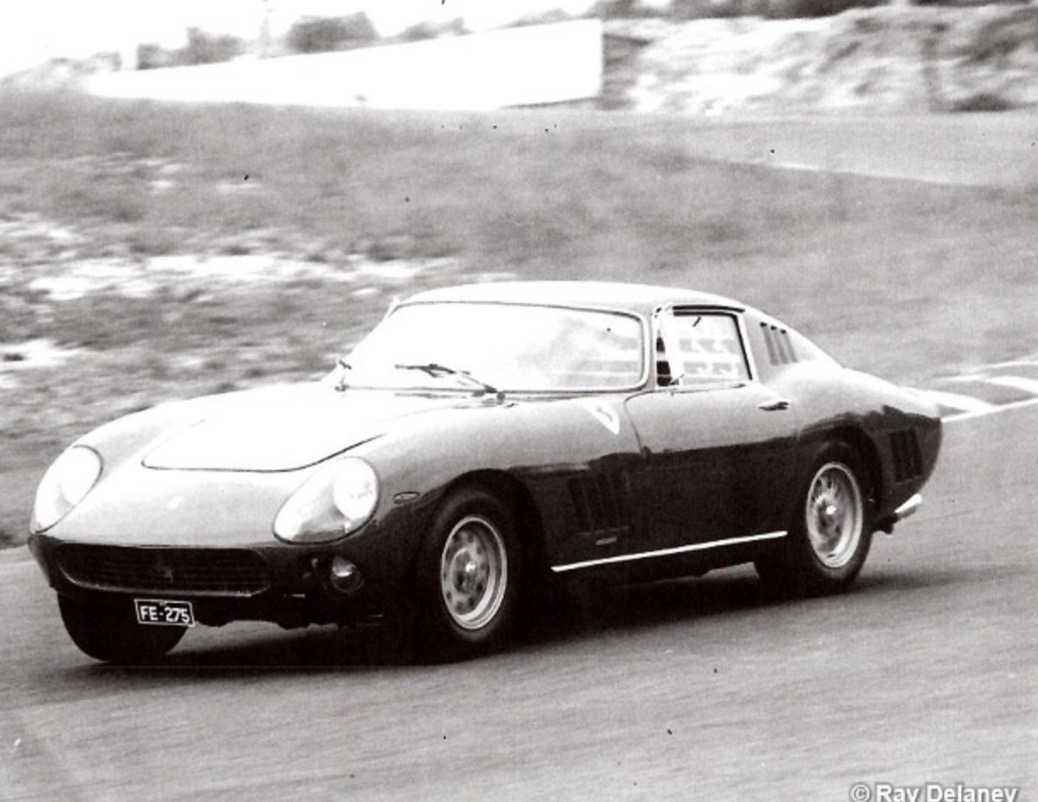
The Frank Matich/Glynn Scott Matich SR3 Repco (DNF) homes in on the Phil West/George Reynolds Scuderia Veloce Ferrari 275 GTB Competizione Clienti during the 1 September 1968 Surfers Paradise 6 Hour…

As usual, the race was won by the SV Ferrari 250LM, that year driven by the brothers Geoghegan, click on this link for an article about that car inclusive of Surfers wins; https://primotipo.com/2014/07/03/pete-geoghegan-ferrari-250lm-6321-bathurst-easter-68/

In a race a bit light on entries- and reduced from twelve to six hours, the Geoghegans won having covered 249 laps from the Bill Gates/Jim Bertram Lotus Elan, 237 and Doug Whiteford/John Roxburgh/Frank Coad Datsun 2000 on 230. Other than David McKay’s ‘Old Red Lady’ 250LM the other fancied sports-racers all retired- the Matich/Scott Matich SR3 Repco, Palmer/Brown Ferrari P4/Can-Am350 and O’Sullivan/Baltzer/Bassett Lola T70 Chev.

The Ferrari 275GTB/C completed 216 laps which made it ninth outright and first in its class- the only car in that class mind you.

Phil West wasn’t impressed with it at all ‘It was a fucking awful motor car. Coming into Lukey Corner, over the back, i was braking at 180 yards while the others were at 80. It had complete and utter rear-end breakaway’ he said to Australian Muscle Car magazine.

He then drew comparisons with the early Holden Monaro during testing at Surfers, ‘The Ferrari was doing 154 mph down the straight, the Monaro about 124. The Ferrari was on 10-inch wide racing Dunlops with inboard disc brakes and the Holden was on Michelin XAS road tyres. But it was six seconds a lap quicker around the circuit than the Ferrari. That was something that really opened my eyes, and since then i’ve not been the least bit interested in the badge on the front’ West concluded.


SV 250LM goes under its stablemate at Surfers (unattributed)


Frank Gardner circa 1966, probably in Australia during the Tasman. Where folks? (Repco Collection)

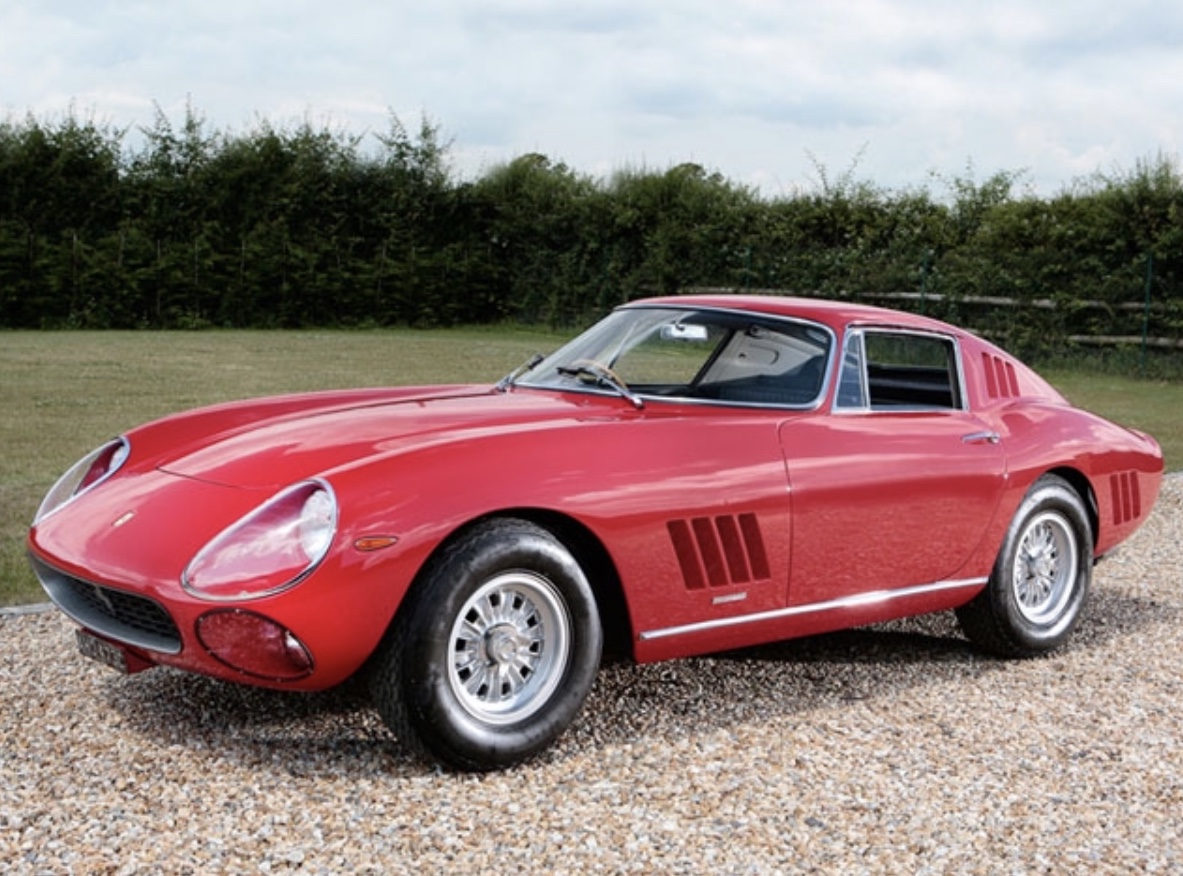
I hadn’t realised the significance of this Ferrari 275 GTB as one of three RHD ‘Competizione Clienti’ specification 275’s of a total 1965 production run of ten. The addition to the nose of the car appears to be a camera- I would love to see the footage if it exists?

Chassis #07545, the seventh of the ten cars, was ordered by Britain’s Maranello Concessionaires, it was intended as their Le Mans reserve car- their entries that year comprised a P2 raced by Jo Bonnier and David Piper and a 250LM steered by Mauro Bianchi and Mike Salmon, both cars failed to finish.

The GTB wasn’t completed in time for the 24 hour classic but starred as an exhibit at the 42nd International IAA Motor Show in Frankfurt that September. Maranello sold it in October 1965 to Paddy McNally, then a respected journalist later to make a motza as an equity-holder in Allsport Ltd along with Bernie The Unbelievable (Ecclestone).

The GTB featured in an Autosport feature, McNally waxed lyrical about driving the car on the fast uncluttered roads of Europe inclusive of the Col des Mosses in Switzerland. ‘Even at close to 6000 pounds…the Ferrari represents excellent value and it is quite the best car that i have ever driven.’ McNally’s enthusiasm for these machines was genuine, he later acquired #09027 and raced it at Montlhery in the Paris 1000km.

Ford race team boss Alan Mann was the next owner two years hence, along the way he returned it to the factory where the bumpers were removed and big fog-lights installed and then sold it to one of his stars- Frank Gardner.

FG used the car to commute to his race commitments across the UK and Europe- these were many and varied inclusive of Touring Cars, World Manufacturers Championship Prototypes and Sportscars, F2 and the occasional F1 event. It would be intiguing to know just how many km’s the ultra fast GT did in Frank’s short ownership.

The Australian International then brought the car to Australia in the summer of 1967/8 to take up his usual Tasman drive with Alec Mildren, that year he raced the Brabham BT23D Alfa Romeo Tipo 33 2.5 V8. He sold it to Gallaher International, a British cigarette company- sponsor of the 500 mile Bathurst enduro in 1966 and 1967, who used it as a promotional tool.

Scuderia Veloce team driver Bill Brown bought it next, it was during his ownership that Phil West/George Reynolds raced it to eighth outright and first in class (the only car in the class) at Surfers in 1968. It seems this was the machines only race in period.

Melbourne motor racing entrepreneur/hill-climber Jim Abbott was the next owner, I dare say he gave it a run up Lakeland once or twice on the way to its garage at home- after his death it passed to Daryl Rigg and then to Ray Delaney who owned it for seven or so years using the car extensively. So too did Max Lane including contesting Targa Tasmania in 1993- the car left Australia many years ago as the global investment grade commodity it is.

#07545 in recent years (Talacrest)

Competizione 275 GTB’s…

The competition variants of one of Ferrari’s most sought after Grand Turismo’s was born of Enzo’s swifty in attempting to homologate his 1963 250P sports-prototype ‘in drag’- the 250LM as a GT car to replace the revered GTO. The FIA could see  the 3.3 litre LM- a larger capacity 250P with a roof for what it was and refused to homologate it.

Even as a GT the 250LM won Le Mans of course. Masten Gregory and Jochen Rindt flogged their NART entry to death- but not quite and won in 1965 after the more fancied Ferrari P2 and Ford GT40 Mk2 prototypes fell by the wayside with all manner of problems.

As a consequence, needing a GT racer, Ferrari set to modifying the just released in 1964 GTB whose baseline specifications included a sophisticated ‘Tipo 563’ chassis, independent suspension front and rear, aerodynamic bodywork, four-wheel disc brakes, five-speed rear mounted transaxle and the well proven ‘Tipo 213’ Colombo V12- in this car SOHC, two-valve and 3.3 litres (3286cc- 77 x 58.8mm bore and stroke) in capacity.

275GTB prototype and first car built #06003 during the 1966 Monte Carlo Rally crewed by Giorgio Pianta and Roberto Lippi, DNF driveline (unattributed)

Depending upon your source there are either three or four distinct series or phases of build of competition 275’s.

The first are the relatively mild modifications to chassis #06003 and #06021.

#06003 is the prototype, very first 275GTB built in 1964, it was retained by the factory for testing purposes throughout 1965, then modified and entered in the 1966 Monte Carlo Rally. #06021- is ‘the third GTB built and the prototype for the 1965 customer competition cars’ according to Peter Sachs who owned it twice. Its first custodian was a Roman, Antonio Maglione who contested at least four Hillclimb events in it in June/July 1965 having acquired it that April.

The second group of three works cars (plus a fourth built to this spec in 1966) designated ‘Competition Speciale’ were extensively modified by a team led by Mauro Forghieri with lightweight tube frames based on the standard Tipo 563 chassis.

The motors were six-Weber carb, dry-sumped Tipo 213 engines to 250LM spec giving 290-305 bhp and had 330 LM Berlinetta style noses with an air-scoop atop the long bonnets.

Other modifications included holes in interior panels, plexiglass windows and the use of magnesium castings for some engine and transmission parts. These cars, also designated 275 GTB/C Speciale, the bodies of which were of course designed by Pininfarina and built by Scaglietti are said by some to be the most direct successors to the 250GTO.

After a DNF at Targa and third in class at the Nürburgring 1000km #06885 was sold by Scuderia Ferrari to Ecurie Francorchamps who raced it at Le Mans in 1965 achieving first in class and third outright- stunning for a GT. The reputation of these ‘275 GTB/C’s was underway.

Ferrari 275 GTB cutaway, specifications as per text (unattributed)


Scuderia Veloce line up before the 1968 Surfers 6 hour with Pete Geoghegan’s stout frame back to us. The #17 Ferrari Can-Am 350 DNF in the hands of Jim Palmer and Bill Brown. The West/Reynolds GTB is alongside and victorious Leo and Pete Geoghegan 250LM to the left (Rod MacKenzie)

Gardner’s #07545 was one of ten cars designated 275 ‘Competizione Clienti’ or ‘GTB/C Series 1′, which were built as dual purpose customer road/racers between May and August 1965- they were constructed in parallel with the works cars mentioned above and delivered only to privateers.

The specifications of this batch, very close to production cars included short nose bodies and six Weber DCN3 carbs, rather than the standard three, feeding essentially a standard wet sump Tipo 213 engine. The fuel tank was 140 litres rather than the standard 94 litre jobbie, the spare sat vertically aft of the tank. A higher rear shelf is a visual difference with three air vents in each rear guard a signal of menace. No two cars were identical but most had lightweight alloy bodies.

The final run of twelve cars, the ‘9000 series chassis’ were super-trick, schmick jiggers and are variously described as ‘275 GTB Berlinetta Competizione’ or ‘275 GTB/C’.

They have lightweight long-nose bodies built by Scaglietti which were half the thickness of the 250GTO’s and a specially designed steel and aluminium Tipo 590A chassis which was lighter and stiffer than the standard unit. The suspension and hubs were reinforced, clutch upgraded and a different steering box fitted.

The dry sumped Tipo 213 V12- which allowed the engine to be mounted lower in the frame, was tuned to 250LM specifications with some Electron components incorporated- sump, cam cover, timing chain casing and bell-housing- power was circa 275-282bhp @ 7700rpm. The three big Weber 40 DF13 carbs were a design unique to the car and fitted due to a clerical stuff up by Ferrari who had not homologated the six-carb Weber option.

Out and out racers, these were the only cars referred to by the factory as 275 GTB/C and were the last competition GT’s fettled in Maranello- the Daytona GTB/4 racers were modified in Modena.

Le Mans Esses 1967. The second placed Ferrari P4 of Scarfiotti/Parkes ahead of eleventh placed and first in class Filipinetti Ferrari 275GTB/C #09079 driven by Steinemann/Spoerry (LAT)


Ray Delaney in GTB #07545 at Amaroo Park, Sydney in 1981

Credits…

Jaguar Magazine, Repco Collection via Nigel Tait, Rod MacKenzie, Ray Delaney, Talacrest, barchetta.cc, LAT, Stephen Dalton, Australian Muscle Car interview with Phil West

Tailpiece: 1968 Surfers 6 Hour…

(unattributed)

Borrani’s at the front and Campagnolo’s up the back, ain’t she sweet…

Finito…

(B Young)

The Bob Young Aston Martin Ulster, Fred Hamilton Triumph TR2 and John Youl’s Porsche 356 at Baskerville in May 1958…

I know none of us get prints anymore but why can’t the ‘chemical compound’ of the photographic process today get this kind of sharp but soft and ‘true’ colours- if you get my drift? It is a beautiful shot of bucolic Australia contrasted by the bright and dull colours of the cars.

That’s the Mick Watt built Prefect Special driven by Ralph King on row 2, now and for many decades owned by Ian Tate, alongside Robin Bessant in the ex-Warwick Hine MG TC.

Geoff Smedley picks up the Aston Martin thread, ‘I had my eye on that Aston, it was brought to Tasmania by an English guy who was an Engineer who had joined Comalco in Georgetown. The owner frequently visited our family engineering business as much of Comalco’s work was done there, and of course i fell in love with the Ulster. I had been promised first offer on the car but within months it went to Bob Young which was sad as it was far too valuable to be treated like it was but that is history!’

Customer cars were built after the success of the team 1 1/2 cars in the 1934 Ulster Tourist Trophy- first to third place class victory won Aston Martin the Team Prize.

The Faulkner/Clarke 8th placed Aston Martin Ulster at Le Mans in 1935. Winner the Hindmarsh/Fontes Lagonda Rapide M45


1935 Ulster TT- Charles Brackenbury Aston Martin 1 1/2 leads the Tim-Rose Richards Ulster- 4th and 11th in the race won by Freddie Dixon, Riley TT Sprite (LAT)

Released at the October 1934 London Olympia motor show as ‘a replica of the three team cars which ran so successfully in the 1934 TT’, the machines were built on the shorter of the two Mk2 Aston Martin ladder frame chassis.

With a weight of 940kg, two-seater body and a tuned SOHC, 2-valve, twin-SU fed four cylinder 1481cc, circa 85bhp engine and Laycock four speed gearbox the cars were ‘guaranteed to reach 100mph’.

They weren’t light in comparison to the contemporary competition- Riley, MG Magnette and Frazer Nash ‘but the cars had stamina and handling which won respect of enthusiasts all over the world’ wrote Inman Hunter.

The slinky little machines were (an expensive) 750 pounds in 1934-1935, the period in which the twenty-one customer cars were built. There were initially the 3 ‘Team Cars’ and a further 7 built in 1934-5. Evidently all of the cars are extant- I am intrigued to know the history of this one before and after its time in Australia.

Etcetera…


Clarke/Faulkner Aston Martin 1 1/2 during the 1936 Mille Miglia, DNF in the race won by the Brivio/Ongaro Alfa Romeo 8C2900A. The only British car amongst the Italians! In fact the only foreign car amongst the Italian hordes…

Credits…

Bob Young Collection, Historic Racing Car Club of Tasmania, Geoff Smedley, ‘Aston Martin 1913-1947’ Inman Hunter

Finito…

(CAN)

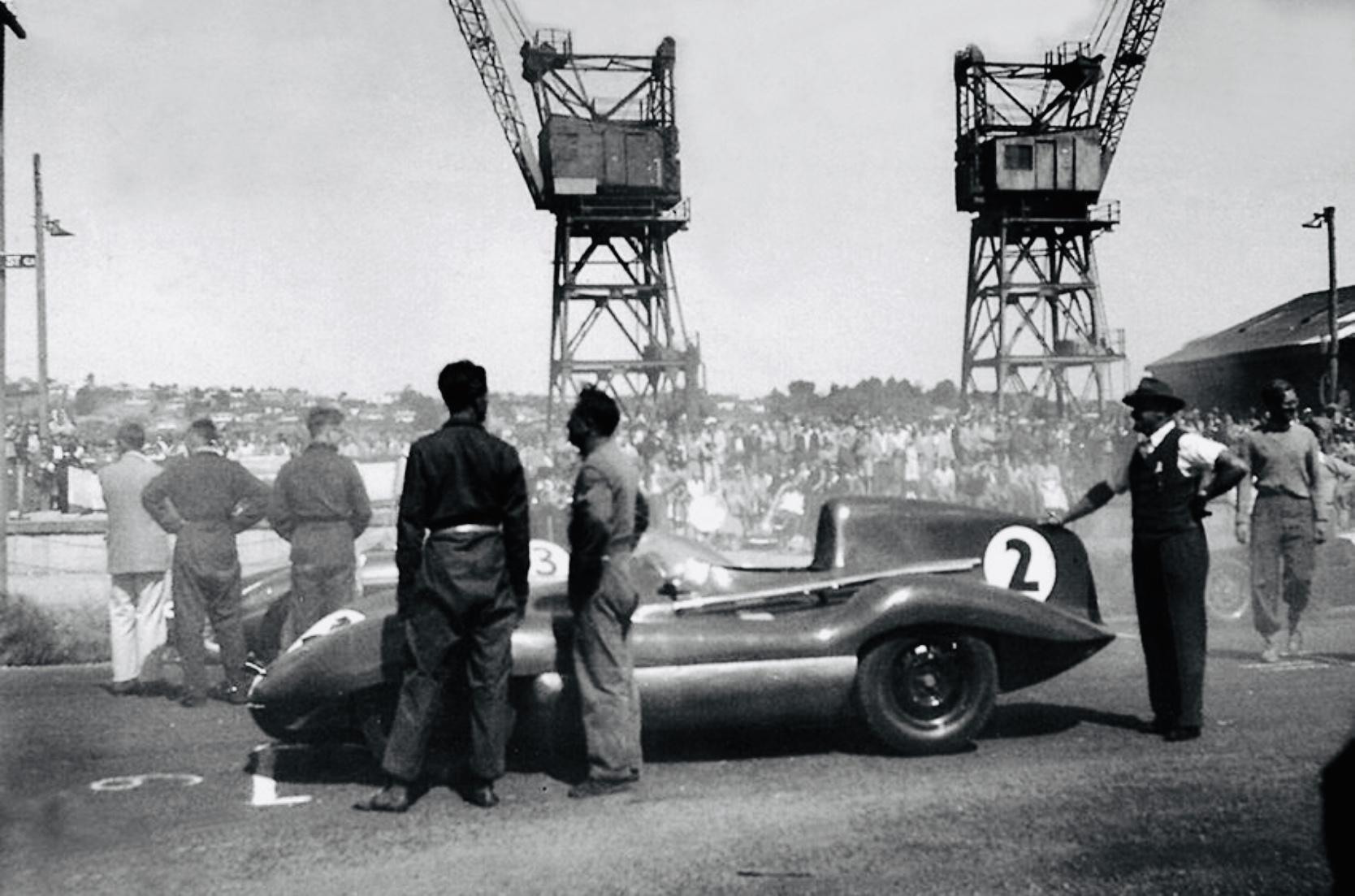
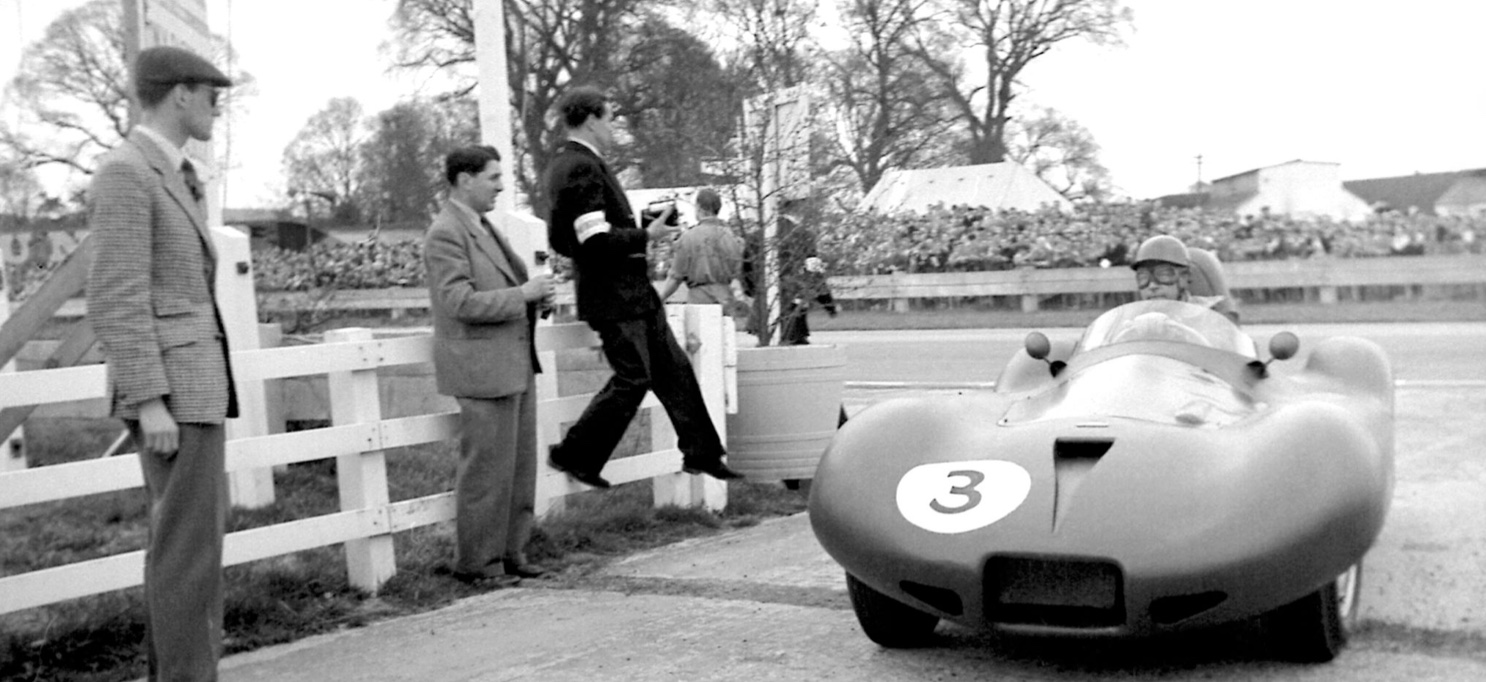
Nup. But Leslie Marr’s Connaught B Type Jaguar at the Dunedin Wharves, New Zealand during the ‘Fourth Dunedin Road Race’ meeting on 28 January 1956…

Marr is now 97 years old, (born 14 August 1922), I wonder if this image could make its way to his door the artist would paint this scene? Perfect world is an impressionist work without the fellas in front of the car and with the cranes at full height.

Isn’t it an extraordinary photo? Drink it all in.

You just cannot compare the race photography of today with, say, pre-1970. The topography in which we race and therefore the environment in which the ‘snappers have to work is just so different; a statement of the obvious, one of my strengths.

I wrote about this meeting in the context of an article on Aston Martin DP155 and the growth of Kiwi racing post-war not so long ago, so lets not go over old ground; https://primotipo.com/2019/09/05/the-gp-aston-martin-dp155/

The car alongside is Peter Whitehead’s Ferrari 500/750S, his buddy Tony Gaze won in his identical car from Reg Parnell, Aston Martin DP155 and Syd Jensen’s Cooper Mk9 Norton. Leslie ‘cracked the shits’ over the nature of the course, especially the 100 metres or so gravel section, so he did a lap to collect his start money and retired thereafter- a pity as he performed so well on that tour.

Love the ‘hatted’ gent aft of the Connaught. The bloke at far right looks like a driver but I have no idea who, the dude in black with his back to us could be Leslie?, just guessing. Do get in touch if you can fill us in a bit more Kiwis. Unbelievable.

(GP Library)

Connaught B-Type…

Leslie enters the Goodwood paddock in ‘B3’ during 1955, I can’t see a race entry for him at Goodwood so perhaps he is testing prior to the July British GP meeting, Q19 and DNF brakes in the race won by Stirling Moss, Mercedes W196. This chassis is in normal Alta engined specification at this stage.

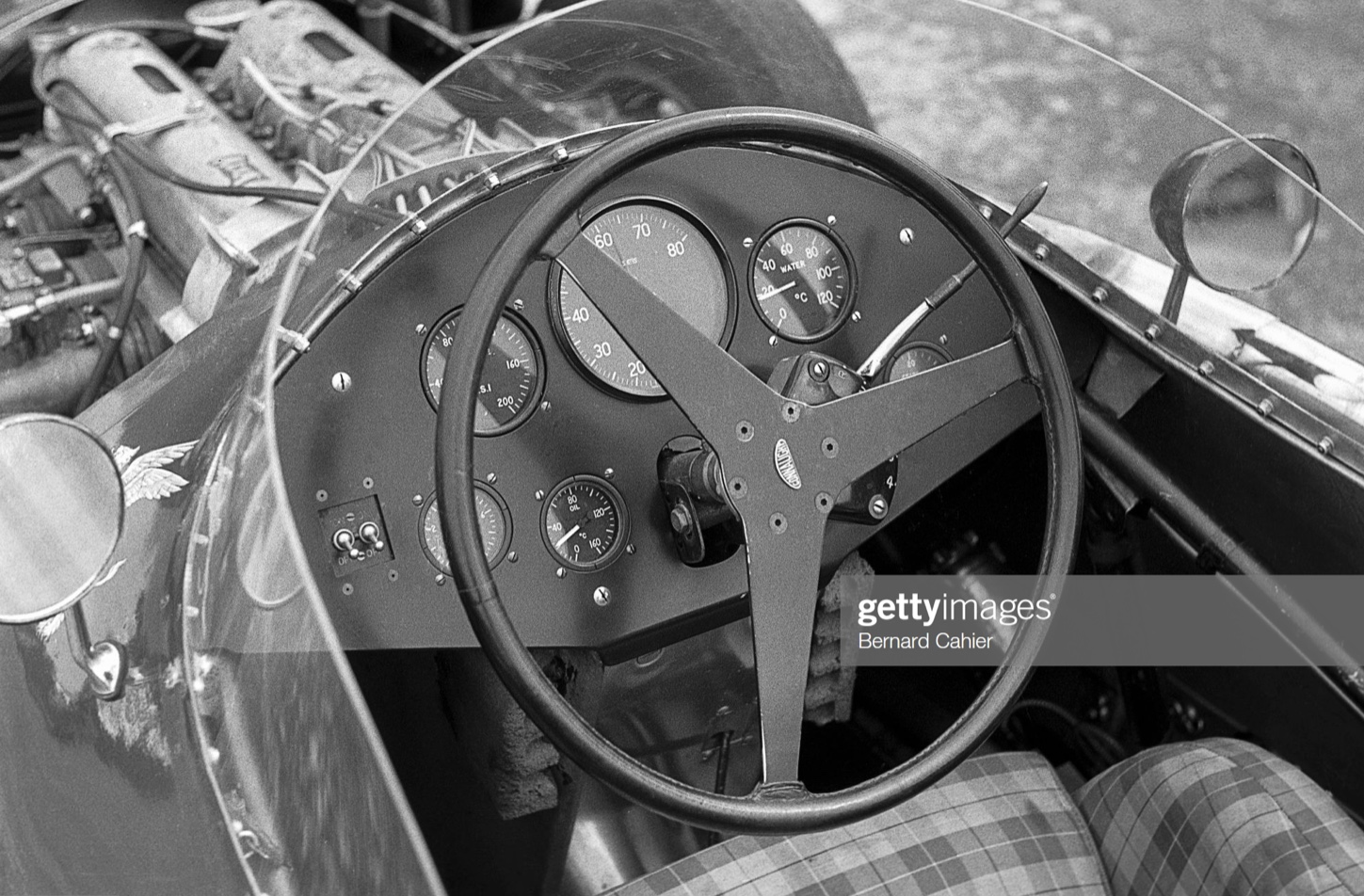
Connaught B-Type cockpit during 1955 British GP weekend. It looks like Ken McAlpine’s car fitted with ‘slipper’ or ‘Syracuse’ body.

The standard of presentation and finish of these cars is outstanding, ‘tool room’ quality in the vernacular of the day. Big array of instruments, pre-selector change quadrant and natty tartan seat cushion grab the eye.

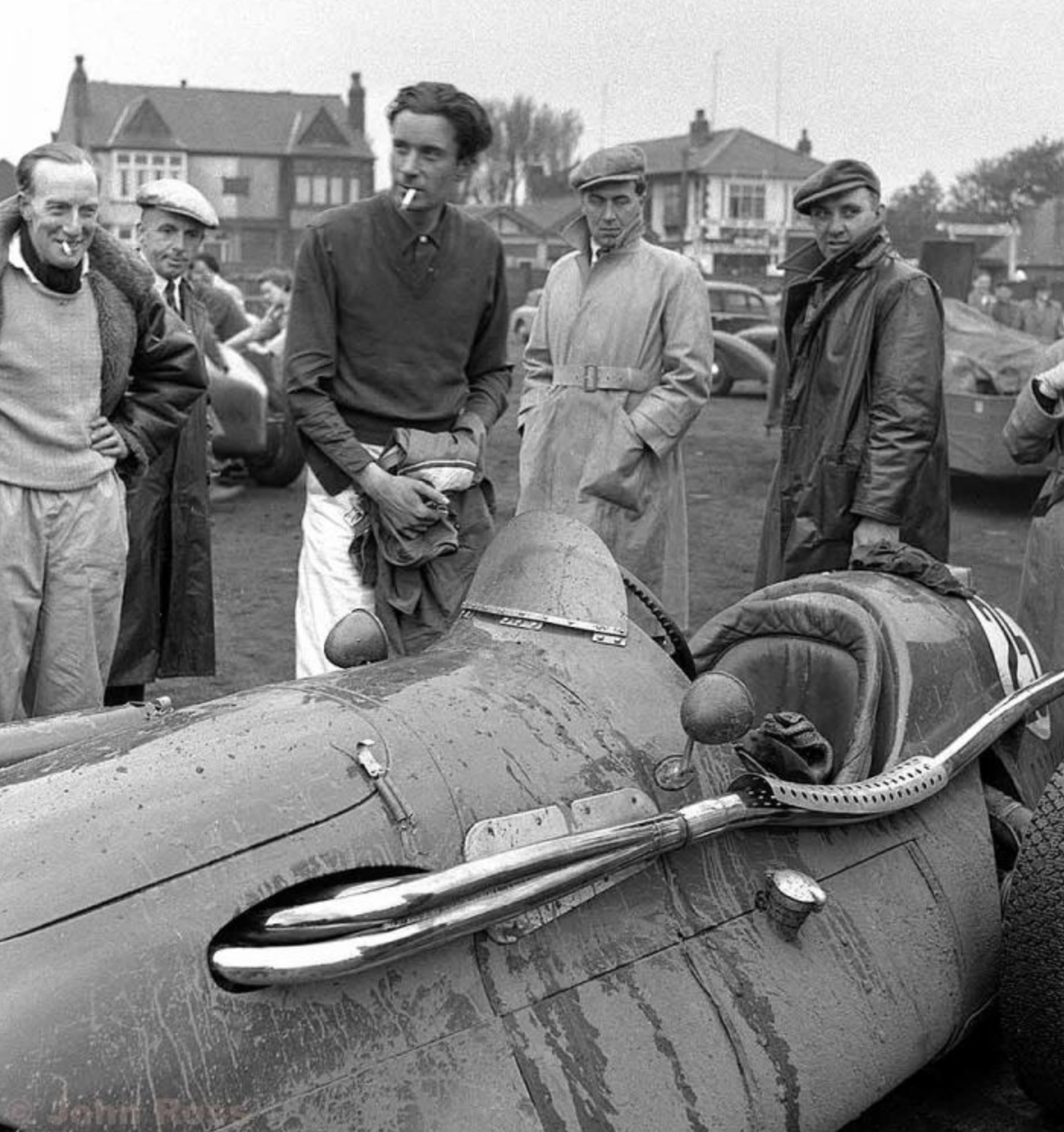
B Type Connaught laid bare (J Ross)

Rodney Clarke and one of his mechanics prove both the bulk and light weight of the aluminium Streamliner body. I wonder what the difference in top speed of the cars so equipped was relative to the normal open-wheel configuration?

This amazing body was the result of studies in Connaught’s own wind tunnel- this Ford V8 powered facility was the very first owned by an F1 Team. Visually, light-weight Dunlop wheels set off a very attractive, edgy looking machine.

The Alta DOHC, twin-cam, two-valve 2470cc engine was good for about 240bhp @ 6400rpm as prepared by Mike Oliver at Connaughts Send HQ, but not reliably so. The engine variously used SU and Connaught fuel injection, both were problematic, in the end Webers were the solution.

The chassis of the B Type was a simple twin-tube arrangement with twin wishbones and coil springs up front and de Dion rear located by a radius rod on each side, a compound lateral linkage with torsion bars provided the spring mechanism. A Wilson type five speed pre-selector box, also used in the A Type was fitted.

’B1’ made its debut at Goodwood on Easter Monday 1955 with Tony Rolt at the wheel- this chassis’ most famous victory was in young Tony Brooks hands, he won the Syracuse GP in front of the works Maserati 250F’s of Musso, Schell and Villoresi, on home turf in October 1955. It was the first all British GP win since Segrave’s San Sebastián Sunbeam win in 1924.

Seven Type B’s were built, what a lovely thing to own.

Alta engine as per text (J Ross)
(J Ross)

Leslie Marr, admirers, and his Connaught, then with its normal body, during the 1954 Aintree 200 meeting.

Etcetera…

(T Adams)

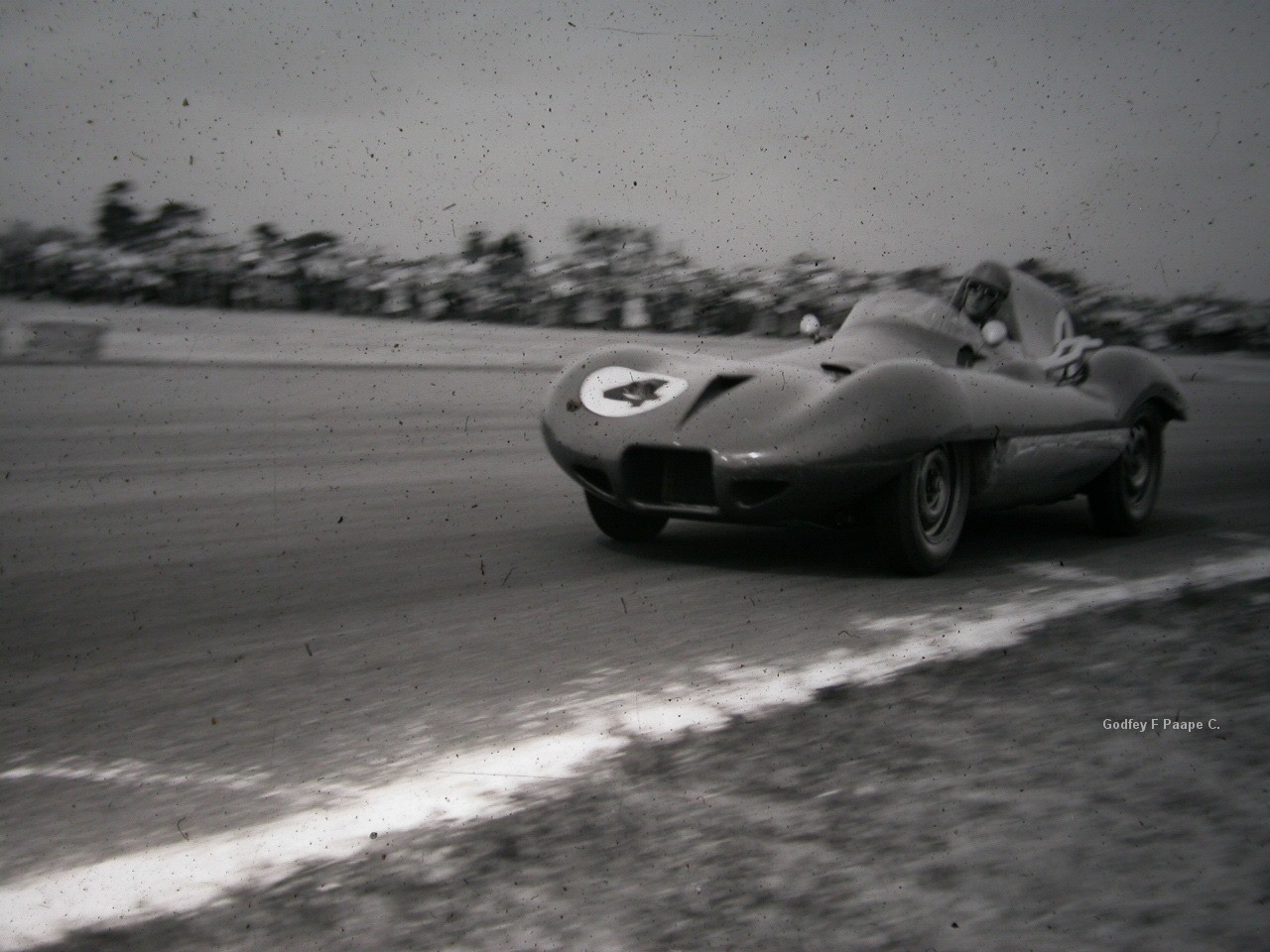
A couple of photographs of Marr during the Lady Wigram Trophy weekend on the airfield circuit. The colour photograph truly is Rocking Horse Shit in terms of rarity whereas the Godfrey Paape shot is the best action shot of the car I’ve seen. Leslie was out of grid slot 2 and finished third behind the Peter Whitehead and Tony Gaze Ferrari 500/625 3 litre machines, 21 January 1956.

(G Paape)
Cockpit shot with floor, seat and exhaust secondaries and pipes removed. Access difficulty given the body obvious

Marr’s Streamliner clearly caught the eye of the Australia Motor Sports Editor at Ardmore, here on the cover of the February 1956 issue of the much respected magazine.

Credits…

Classic Auto News, LC Cresswell, Theo Page, John Ross Archive, Godfrey Paape, Tony Adams

Tailpiece…

B Type cutaway, car shown fitted with ‘slipper’ body (T Page)

Finito…

(R Burnett

Beauty is in the eye of the beholder of course, and we often attached to a particular era, this unique McLaren M6B Repco ‘740’ 5 litre V8 ticks all the boxes for me…

Here it is in repose in the Symmons Plains paddock on 12 November 1972 before John Harvey goes out and bags his second Australian Sportscar Championship on the trot.

Only Harves and car owner Bob Jane ever raced this thing and Bob never sold it- he died a cuppla years ago and it is still owned by his (very messy) deceased estate.

It’s a special jigger too- Bob knew Bruce McLaren well, McLaren built the car for Bob to suit the Repco engine- its a factory built McLaren not a Trojan Cars Ltd customer jobbie- I’m not bagging Trojan just making clear the ‘pedigree’ of a car which is one of Australia’s most iconic racers.

Duncan Fox wrote that ‘Bob’s M6B was an out of sequence car produced late in 1968 at Colnbrook by Bruce as a favour to his long time friend. It is basically an M12 with M6 bodywork that Bob had stylishly reworked. Personally I think it is the prettiest McLaren sportscar in existence. John Harvey told me they did this because he had difficulty seeing the apex over the original front guards.’

‘It was delivered to the Tilbury Docks in London on a car trailer behind the ‘whale’ (the US Ford Station Wagon McLarens had) by Kiwis Chris Charles and Clive Bush who managed on the way to do extensive side damage with the trailer to a gentleman’s Rolls Royce.’

‘It arrived in Australia in CKD (completely knocked down) less engine and transmission on the freighter SS Port St Lawrence sometime early in April 1969. It was invoiced at US$6000 and carried chassis serial number #50-01.’

‘The engine was a Repco Brabham engines #E26 (740 Series) ‘and the dyno chart I have (17/7/71) shows it developed a maximum of 452bhp @ 6500rpm and 405ft/lbs torque @ 5000rpm.’

The fella leaning into the cockpit of the first photo is John Sheppard, Jane’s Chief Mechanic- he said to me a few years back, ‘whenever you are ready lets do another article on the McLaren’. Sheppo was very generous with his time in putting together a detailed feature on the Clark/Geoghegan Lotus 39 Climax/Repco which John prepared for Leo before ’emigrating to Mexico’ (Victoria) to take charge at Janes, Brunswick, Melbourne race workshop circa 1970.

I must give him a buzz.

(R Burnett)

Bob and Harves after that 1972 win (H Ellis)

The great shame is that the McLaren was not ready to race at the start of 1969, the year Matich crushed all before him in the Matich SR4 ‘760’ 4.8 litre V8, his way too late intended Can-Am contender.

So Bob and John were late to that particular party, but Harves did contest the final 1969 round at Sandown finishing second to Matich. Repco then acquired the SR4 from FM to use as an exhibit and devoted their mutual development and race energies to the Repco-Holden F5000 program. The first of these engines was fitted to FM’s McLaren M10B in mid-1970, the combination won the November 1970 AGP at Warwick Farm.

The perfectly competitive SR4 with a trick, fresh John Mepstead built 5 litre ‘760’ Repco was set aside leaving the way clear for Bob and Harves to ‘mop up’ the ASCC with the M6B. I’m not sure why they didn’t race the thing much in 1970- Harve’s focus on the Gold Star and the new Torana Repco perhaps, but in 1971 John won three of the four rounds and five of the six 1972 rounds before they too put to one side the curvaceous racer. Team sponsor Castrol wanted them to focus on the teams ‘Taxis’ rather than the ‘Racing Cars’ which at that point comprised the Bowin P8 Repco-Holden F5000 and the McLaren.

Sad but true…

The full story of the M6B is one for another time.

(E French)

Credits…

Historic Racing Car Club of Tasmania, Rob Burnett, Ellis French, Duncan Fox on The Nostalgia Forum, Harold Ellis

Tailpieces…

(R Burnett)

(E French)

Finito…

image

(Klemantaski)

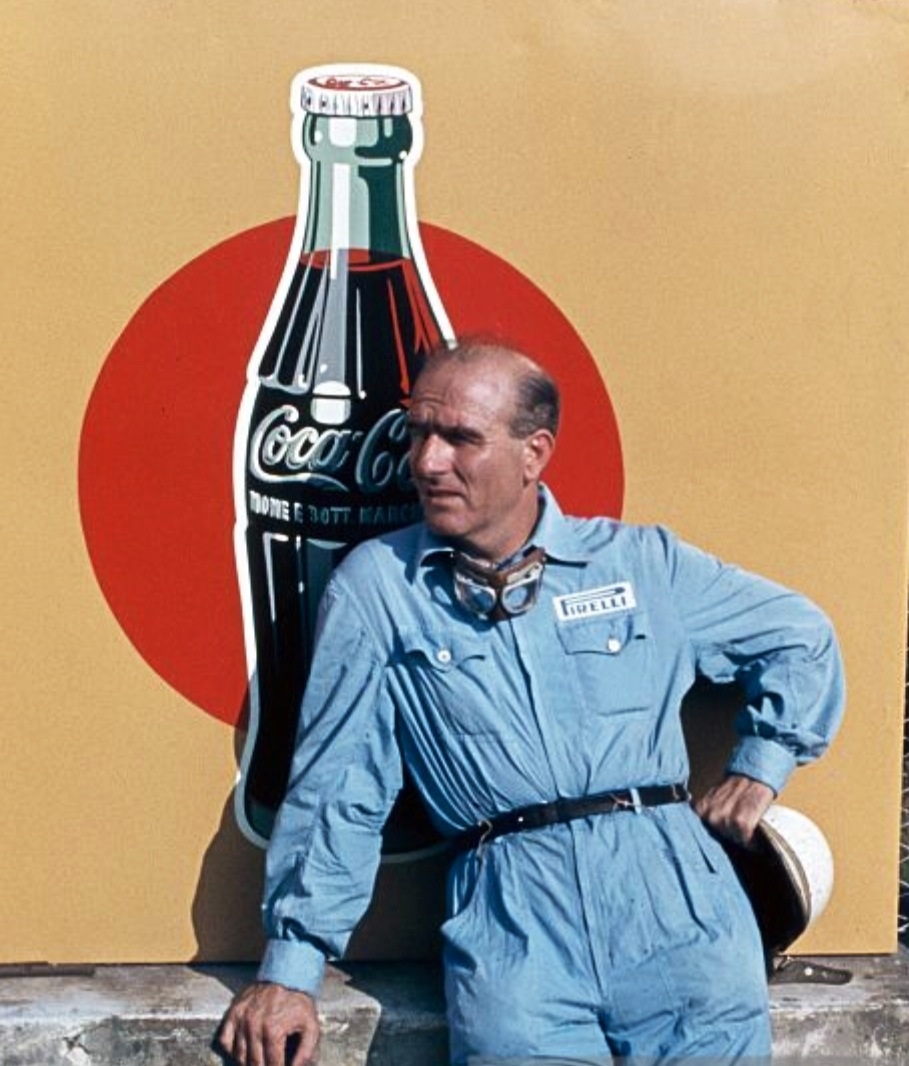
Coke! and it seems Giuseppe Farina agrees…

He is in the Monza pits all ready to ‘load up’, exact date and meeting uncertain but the Pirelli overalls suggests maybe his 1950 Alfa Romeo 158 Alfetta championship season or ‘praps the year after.

All correspondence entered into…

(unattributed)

And here in the Silverstone pits aboard his Alfa Romeo 158 ‘Alfetta’ during the 1950 British Grand Prix weekend- the very first round of the inaugural FIA’s World Championship for Drivers in the fourth year of Formula 1.

Farina won three of the seven rounds- at Silverstone, Bremgarten and Monza in his works Alfa Romeo from teammate JM Fangio who also won three rounds, but fell three points short of the Italians total of 30 points.

The Indy 500, one of the seven rounds back them, was won by Johnnie Parsons in a Kurtis Kraft Offenhauser.

Credit…

Klemantaski Collection

image

(Klemantaski)

Finito…


(unattributed)

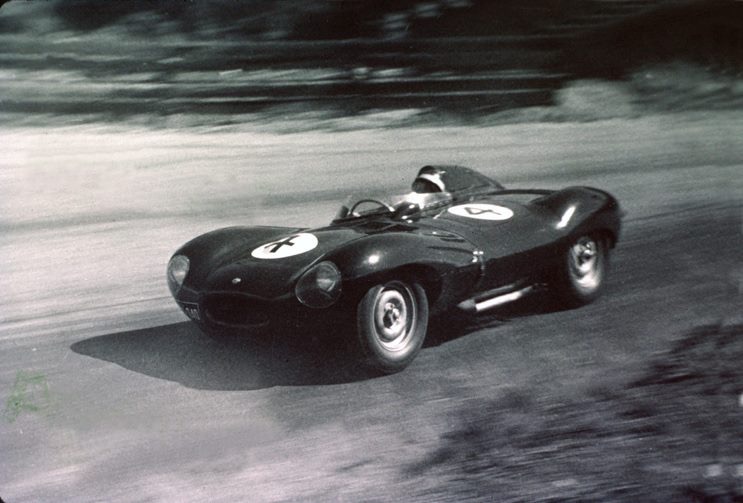
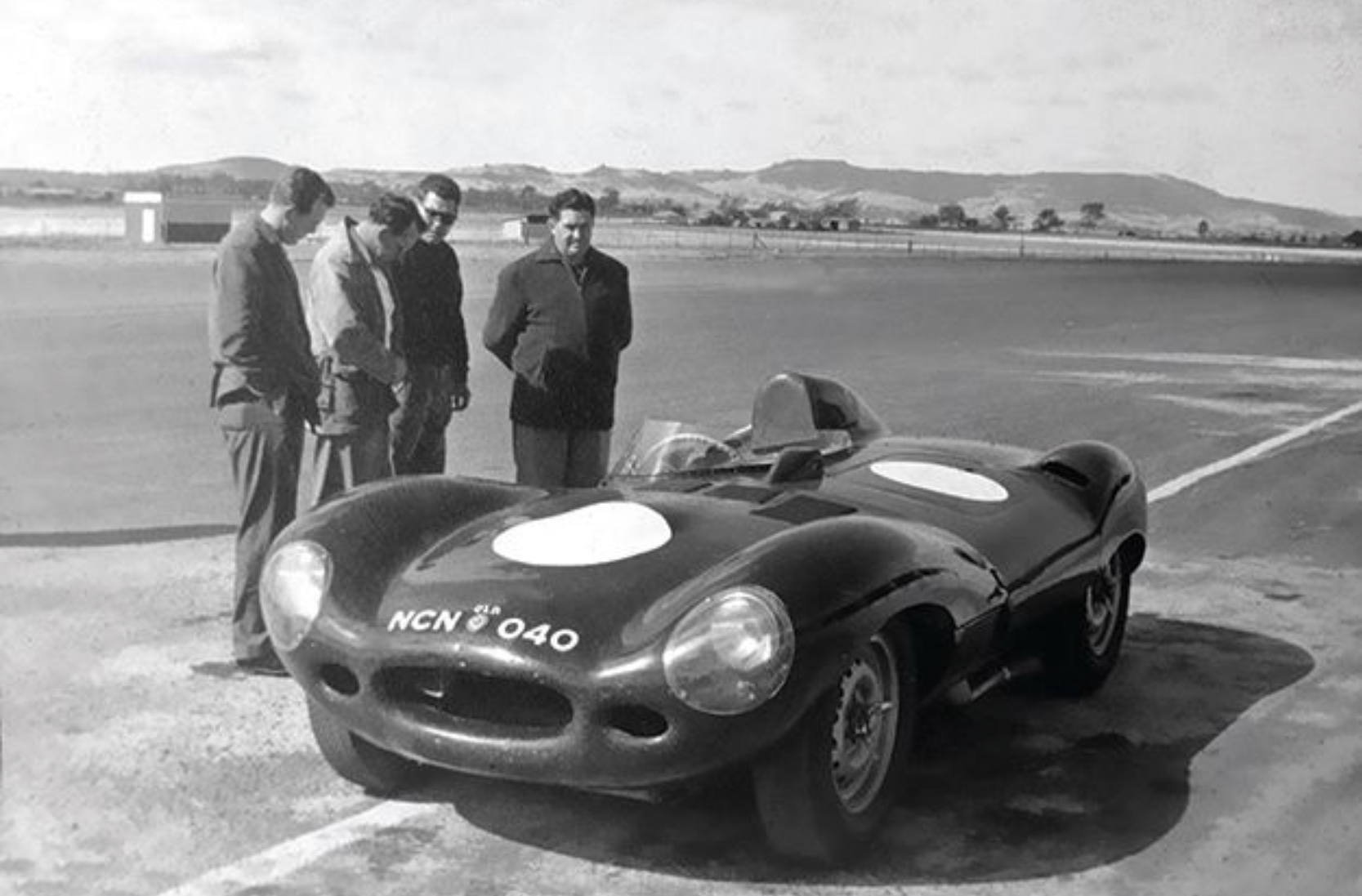
Frank Matich and David Finch aboard two wonderful D Types at Longford in 1960…

‘XKD526’ and ‘XKD520’ are both cars I have written about before but these photographs were too good to lose by just dropping them into the existing articles ‘unannounced’.

Its the 1960 meeting- both cars contested the Australian Tourist Trophy won by Derek Jolly’s 2 litre Lotus 15 Climax FPF. I can’t work out what is happening here, probably a practice session. If it was a Formula Libre race being gridded Austin Miller’s vivid yellow Cooper T51 Climax would be up-front- checkout the article about the TT; https://primotipo.com/2018/05/17/1960-australian-tourist-trophy/, here about the Bill Pitt’s career and the D Type;

Lowood ‘Courier Mail TT’ 1957: Jaguar D Type ‘XKD526’ and Bill Pitt…

and here about the Stillwell/Gardner/Finch D Type- photo value only really; https://primotipo.com/2017/01/01/mount-druitt-1955-brabham-gardner-and-others/

(unattributed)

Here in the paddock you can see the Leaton Motors livery of Frank’s car really clearly- that’s Aussie’s Cooper to the right and a Maserati 250F behind. Its Arnold Glass’ car, he was fourth in the Longford Trophy behind the three Cooper T51’s of Brabham, Mildren and Stillwell. A wonderful, relaxed, bucolic Longford scene. Another link, about this meeting; https://primotipo.com/2015/01/20/jack-brabham-cooper-t51-climax-pub-corner-longford-tasmania-australia-1960/

‘XKD526’ was acquired by the Brisbane and Northern Territory Jaguar dealer, Westco Motors, owned by Cyril and Geordie Anderson, in a partnership of three together with Bill Pitt and Charlie Swinburn- Charlie died of cancer a couple of years after the car arrived it so it became a partnership of two.

These days the Great Western Corporation is a huge listed enterprise involved in agriculture, trucking, property, mining and other activities. When Cyril Anderson established the business in Toowoomba in 1934 he started with a two-ton truck but expanded rapidly, locally and nationally. By 1953 when they formed Westco Motors Cyril and Geordie ran a large successful business, no doubt the D Type was for them a modest investment but one which would assist to build the Jaguar brand and their market position rapidly.

The car arrived in late 1955, exclusively raced for some years by Bill Pitt, Westco’s Service Manager-Geordie Anderson had a few drives, and then successfully by Frank Matich and Doug Chivas during the Leaton’s ownership.

(unattributed)

Pitt crashed it badly at Albert Park in 1956, at Jaguar Corner, of all places.

The photo above is the start of the 2 December ‘Argus Trophy’ 25 mile sportscar race during the 1956 Melbourne Olympics meeting, the AGP was the feature race of a two-weekend carnival and was won by Stirling Moss’ works Maserati 250F on 2 December.

He was similarly dominant in his Officine Maserati 300S sportscar winning the 1956 Australian Tourist Trophy during the 25 November weekend. Moss won from his teammate, Jean Behra, Ken Wharton’s Ferrari Monza 750 and Pitt’s D Type- a great result for the Queenslander as first local home. This meeting is covered here; https://primotipo.com/2018/01/16/james-linehams-1956-agp

and here; https://primotipo.com/2016/01/29/1956-australian-tourist-trophy-albert-park/

Back to the photograph above.

Bib Stillwell is in ‘XKD520’ on the left with Jack Brabham’s partially obscured Cooper Bobtail Climax far left, and Pitt aboard ‘XKD526’ on the right. To the far right is an Aston DB3S, Tom Sulman perhaps.

This is the race in which Pitt came unstuck. In an eventful first lap the car tripped over the stone gutter and rolled- Bill was lucky to survive let alone walk away unscratched after the machine ended up on its back.

In all of the mess- haybales and flattened bodywork, the marshals expected to find him dead in the car, instead he was flicked out as the car went over and landed- safely on the other side of the bales. Lucky boy. The car was quickly repaired and raced on.

Brabham won from Stillwell’s D Type and Bill Patterson’s Cooper Bobtail Climax.

(unattributed)

Lets not forget Bib’s ‘XKD520’ loitering in the expanses of Albert Park during the same meeting.

Superb, rare colour shot of a beautifully prepared and presented car as all Bib’s machines were. Was Gerry Brown wielding the spanners in Stillwell’s Cotham Road Kew HQ at that stage?

(M Ireland)

Bloke Magnet.

Here ‘XKD526’ is performing a valuable function as the centrepiece of Westco’s 1956 Brisbane Motor Show stand and attracting the punters to Jaguar’s more routine roadies!

(Anderson Family)


(unattributed)


(B Hickson)

The car was rebuilt and then sprayed a lovely gold or bronze!

A great idea to make the car stand out perhaps- the ‘error’ was quickly rectified with a nice shade of British Racing Green replacing the gold hue between Albert Park 1957 and Albert Park 1958!

The first shot is of Bill in the Lowood pits, he has Crocodile Dundee alongside, the only thing Mick is missing is the big knife.

The one below is the beastie being fuelled in the Albert Park surrounds in March 1957.

Pitt was second in the Victorian Tourist Trophy again behind Doug Whiteford’s Maserati 300S that weekend. He also contested the F Libre Victorian Trophy Gold Star round finishing sixth and first of the sportscars home- Lex Davison won in his Ferrari 500/750.

(unattributed)

Bill returned to Albert Park year after year including the Formula Libre 100 mile Melbourne Grand Prix carnival held in November 1958.

In the shot above he is negotiating the same corner in which he tripped over in 1956 leading none other than race-winner Stirling Moss in Rob Walker’s Cooper T45 Climax FPF 2 litre- Jack Brabham finished second to Moss in a similar car. Bill placed fifth two laps adrift of Moss, then came Brabham, Doug Whiteford, Maserati 300S and Bib Stillwell’s Maserati 250F.

The D worked hard over that meetings two weekends, he was third in the 100 mile Victorian Tourist Trophy behind Whiteford’s 300S and Ron Phillips’ Cooper T38 Jaguar and third again in the 25 mile sports car scratch behind Whiteford’s superb 300S with Derek Jolly, Lotus 15 Climax second.

(unattributed)

A couple of Mount Panorama photos circa 1958-1959.

The one above is probably of the 1958 Australian Tourist Trophy race or heat- Pitt on the outside is about to pass ‘Gelignite Jack’ Murray in ‘XKD532′ DNF, then the third placed Cooper T38 Jaguar of Ron Phillips follows and then Charlie Whatmore’s Lotus 11 Climax. See the #16 Lotus 15 raced by Derek Jolly to second place behind the winner, David McKay’s Aston Martin DB3S. Click here for a piece on his DB3S’; https://primotipo.com/2017/09/28/david-mckays-aston-martin-db3ss/

Jaguar Magazine recorded that ‘Bill Pitt wrote to Lofty England in 1956 informing the Jaguar guru that the D Type had no brakes at the end of the notorious Conrod Straight because the D Type experienced pad ‘knock off’. Jaguar had never heard of that problem before, and the bottom of Mount Panorama would not be a place to learn about it for the first time’ the magazine pointed out wryly!

(unattributed)

Same part of Mount Panorama but this time Pitt is chasing Ern Seeliger in Maybach 4 Chev- the big booming monster was second in the AGP at Bathurst in October 1958, and would well and truly have had the legs to best the D Type.

This is probably during the Bathurst 100 F Libre race won by Whitefords 300S from Arnold Glass’ Ferrari Super Squalo, which popped an engine on the last lap, then came Bill in a splendid third. Seeliger started from the middle of the front row but didn’t finish having ‘…spun the brakeless Maybach to an eye-popping halt in the Pit Corner escape road’ at half distance wrote John Medley.

(J Psaros)


Bobtail Cooper ?, Whatmore Lotus 11 Climax, shapely ? and the nose of FM’s Matich (unattributed)


(J Psaros)

I have written extensively about the great Frank Matich a number of times, rather than repeat myself perhaps the most relevant article is this one in terms of his sportscar rise and rise is this one; https://primotipo.com/2015/09/11/frank-matich-matich-f5000-cars-etcetera/

Be in no doubt the Leaton support was key to taking him forward from C to D Type Jaguars and then the Lotus 15 Climax- that car powered by a 2.5 Climax FPF showed he was an outright F Libre contender if it were ever in doubt. The group of XKD526 photographs here are all at Lowood probably during the Gold Star round in August 1959.

(unattributed)

One of the Confederation of Australian Motor Sport’s less successful rule changes was to introduce Appendix K ‘GT Racing’ to encourage road going GT’s in 1960. This article covers the salient points; https://primotipo.com/2017/01/19/forever-young/

Because grids were skinny they encouraged/turned a blind eye to sports-racers ‘meeting the regulations’ as long as they were fitted with a lid. And so we had David McKay’s Lola Mk 1, Bob Jane’s Maserati 300S and other exotica including ‘XKD526’ fitted with ‘fastbacks’ to allow them to continue to race.

The photos above and below are at Sandowns first meeting in 1962, the conversion created the only hardtop D Type was quite neat looking. I didn’t say beautiful, just neat or functional!

Barry Topen owned the car by then and crashed it quite heavily into the horse railings surrounding the circuit.

It was soon repaired, sold to Keith Russell and then acquired by Keith Berryman in the early sixties- the car was with him ‘forever’ before finally leaving our shores five or so years ago.

(B Anderson)


Frank Matich heading up the Mountain at Bathurst in 1961 (J Ellacott)

Berryman, or is it Keith Russell, below at Warwick Farm in the mid sixties with the car still looking great albeit with a set of rather wiiide alloy wheels and the rear guards flared to suit. It does have a bit of the Sunset Boulevards about it gussied up like this.

(unattributed)

Speaking of the guards reminds me of an incident in the Australian Grand Prix paddock a few years back, not long before the cars sale and final departure from our shores.

Noted British artisan and driver Rod Jolley was in Australia that summer racing, i think, a Cooper T51 at Phillip Island and the Albert Park AGP historic double.

Somehow, unloading XKD526 in the Albert Park paddock from its trailer after its long haul from Stockinbingal- Keith Berryman was displaying the car and participating in the on-circuit historic events, a front guard was damaged and a wheel was fouling the guard.

Who to approach for the required bit of impromptu panel beating? Rod Jolley of course. The look of sheer terror on Keith’s face as Jolley set to work on his lovely bit of aluminium with controlled brio was awful to watch- it felt like an arm was being hacked off…

Etcetera…

(unattributed)

Bill Pitt up whilst the car was new and road registered. Uncertain as to the circuit-intrigued to know- such handsome beasts of warfare aren’t they- D Types define ‘compound curvature’.

(J Psaros)

On the side of the main straight at Lowood- a youthful Frank Matich at left eyeing off his future mount. Barry Carr, who worked for Leatons in 1961/62 identifies the group as Leaton’s driver Matich, mechanic Joe Hills and business owners George Leaton and Joe Robinson probably at the time they are ‘either thinking of or had obtained the car from Pitt/Anderson’.

( J Psaros)

‘Move to the back of the bus matey…’

The Leaton’s Bedford bus at Lowood (and at Sandown in 1962 below). The nose to the far left is the Westco Mk7 Jag which finished seventh outright in the 1957 Round Australia Trial behind six VW Beetles. Jaguar Magazine assert that Pitt claimed it as his greatest competition triumph.

The car later became a tow-car for some of the racers inclusive of the D and works built Mk1 Pitt drove to victory in the 1961 one race Australian Touring Car Championship at Lowood.

Both the Mk7 and ‘Big Nose’ The Bus are long gone, sadly.

(G Fry)

Credits…

Anderson Family Collection, Jaguar Magazine, Jock Psaros, Malcolm Ireland, Barry Anderson, Barry Hickson, ‘Bathurst: Cradle of Australian Motor Racing’ John Medley, ‘Glory Days: Albert Park’ Barry Green, John Ellacott, Barry Carr, Gavin Fry

Tailpiece: ‘Geordie Anderson’ in her new D Type,’XKD526’…

(Anderson)

Doris ‘Geordie’ Anderson aboard the new D Type she co-owned with Bill Pitt and Charlie Swinburn. Its said that she was the only serious lady racer of a D Type at the time anywhere in the world.

Her racing CV included a win in the Mount Druitt 24 Hour Race in a Jaguar XK120 FHC- we shall come back to Geordie and her exploits ina month or so…
Finito…