On July 28, 1935 Tazio Nuvolari defeated nine superior Silver Arrows over 22 laps, 312 miles, on the challenging, treacherous, Nurburgring in an outclassed 265bhp Alfa Romeo Tipo B/P3 during the German Grand Prix…
The foreboding, moody image above shows seventh placed Hanns Geier’s Mercedes Benz W25A 3.4-litre 302bhp straight-8 supercharged (s/c). He is ahead of one of four Auto Union B Types in the race, these machines powered by 5-litre 375 bhp V16 s/c motors.
Overnight, thousands of spectators arrived in the Eifel Mountains, what greeted them on race morning was fog and light, misty rain. It rained progressively harder as the 11am start time approached, then stopped not long before the off.
(unattributed)
In front of some 300,000 spectators, Rudy Caracciola led initially in a Benz W25B 4-litre 370-430 bhp for the first nine laps, with Nuvolari in second after one lap aboard his 3.2-litre straight-8 s/c Alfa. He fell back after a lap two spin at Bergwerk. At this stage of the race Bernd Rosemeyer, AU mounted, broke the lap record in his chase of Rudy, but he was unable to close the gap completely.
Rosemeyer then spun into the Breidscheid ditch, and arrived well back then went into the pits with a wobbly rear wheel and a throttle linkage jammed with mud. The only Alfa left in the race at the end of lap six was Nuvolari in fifth place.
Tazio made up time in the winding and downhill sections where the greater engine power of the German machines could not be successfully deployed. Nuvolari then passed Von Brauchitsch, Mercedes W25B for third on the outside of the Karussell, Brauchitsch regained the place on the following lap.
What a drive – one of the greatest in the opinions of all who matter (unattributed)
Caracciola still led on lap nine, but Tazio was now within eight seconds of him, and passed him on lap 10. The first four cars were then covered by just over 10 seconds, and the three Silver Arrows by only a few metres; the order was Nuvolari, Caracciola, Rosemeyer, and Brauchitsch.
The top three cars pitted on lap 11, Nuvolari’s stop was a shocker, the mechanics, in their excitement, broke the refuelling pump handle! He lost one minute 27 seconds to his competitors, the order at the end of lap 12 was the Luigi Fagioli Merc W25A, Brauchitsch Merc, Rosemeyer AU, Caracciola Merc, Stuck AU B-Type, and the Nuvolari Alfa.
At the end of the following lap the order was Brauchitsch, Rosemeyer, Caracciola and Nuvolari. Rosemeyer pitted at the end of lap 13 to address his throttle linkage, which was still binding, that must have been somewhat of a problem in a car of power on those tyres in such greasy conditions – this put him out of contention. Von Brauchitsch led on laps 14, 15, 16, 17, 18, 19, 20 and 21- with Nuvolari second from lap 15.
“The German had to pay for his tyre-murdering style of driving,”when the left rear tyre came apart on lap 22, only nine km from the finish. Nuvolari passed Von Brauchitsch, stricken Mercedes, heading towards a well-deserved victory for Alfa Romeo.” Stuck’s Auto Union was second, ahead of Caratch, Rosemeyer and Von Brauchitsch with his Mercedes on the rim in fifth.
Whilst the crowd cheered, the win it was not quite so popular with the Nazi mob present…
Credits…
Ullstein Bild, race report summary by Hans Etzrodt on Kolumbus.fi
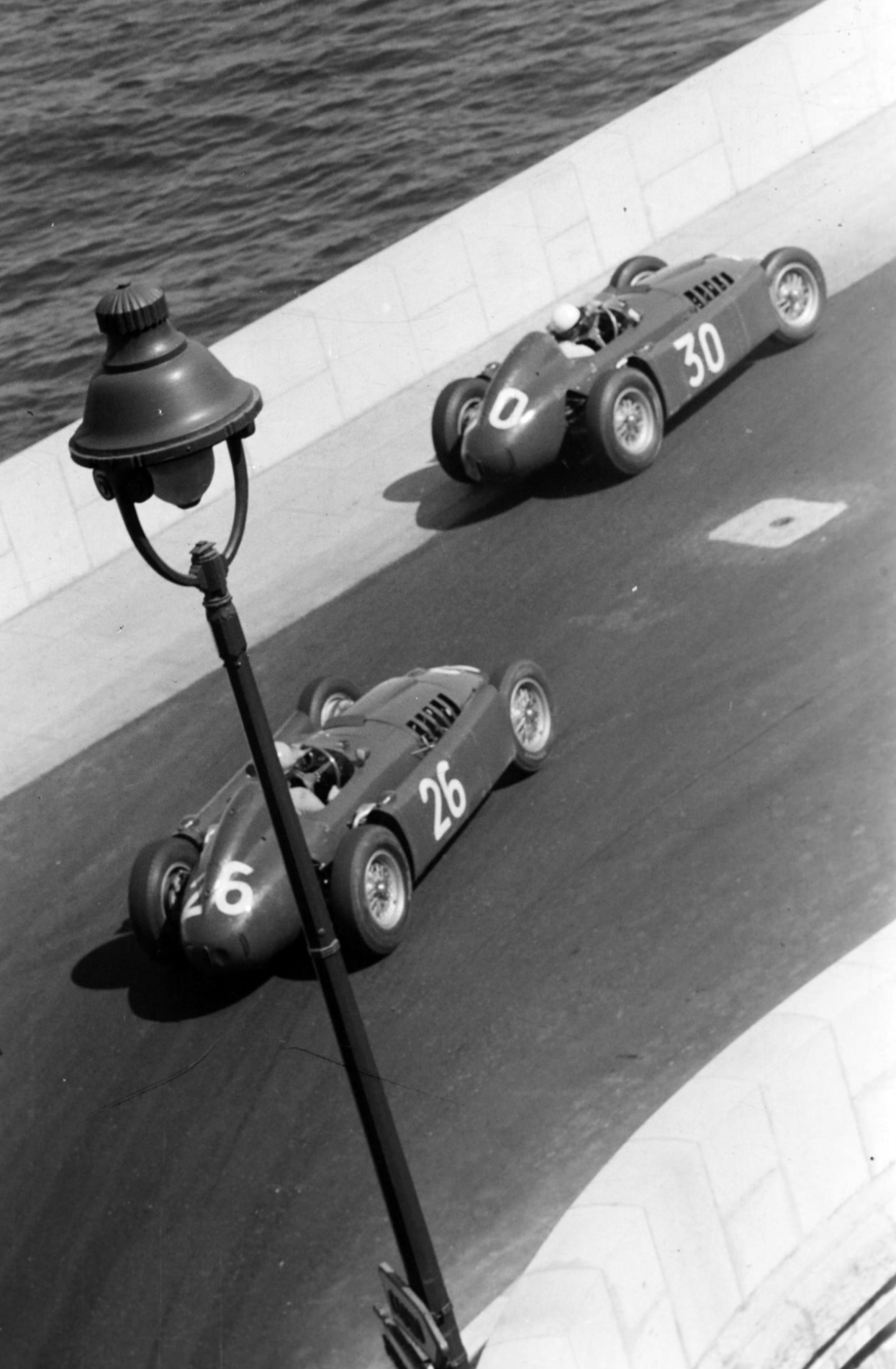
It’s amazing given that the Monaco quayside was unguarded for so many decades, that only two drivers took involuntary Monte Carlo Harbour dips, Ascari, aboard a Lancia D50 in 1955, and Hawkins in a Lotus 33 Climax a decade later.
The Australian was still making his name, while Ascari was at the top of his game, and enjoying somewhat of a renaissance at the wheel of Vittorio Jano’s masterpiece. The fates of both Monaco bathers were similar, both died aboard sports-racers. Poor Ascari in a pointless testing accident aboard a Ferrari 750 Monza at Monza on May 25, 1955, only three days after Monaco. Hawkeye died a grisly, fiery, probably component failure caused death aboard a Lola T70 Mk3B Chev at Oulton Park on May 26, 1969.
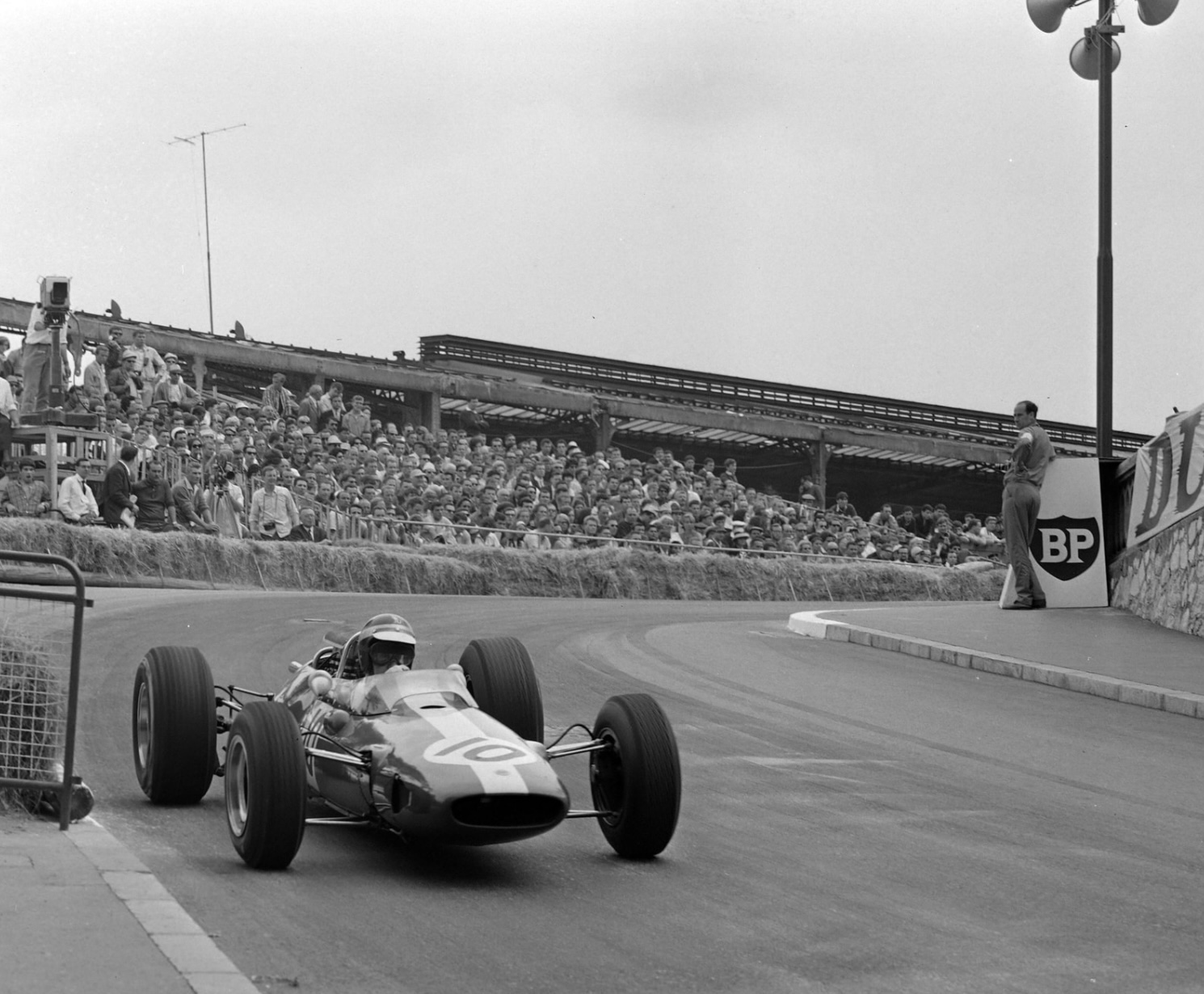
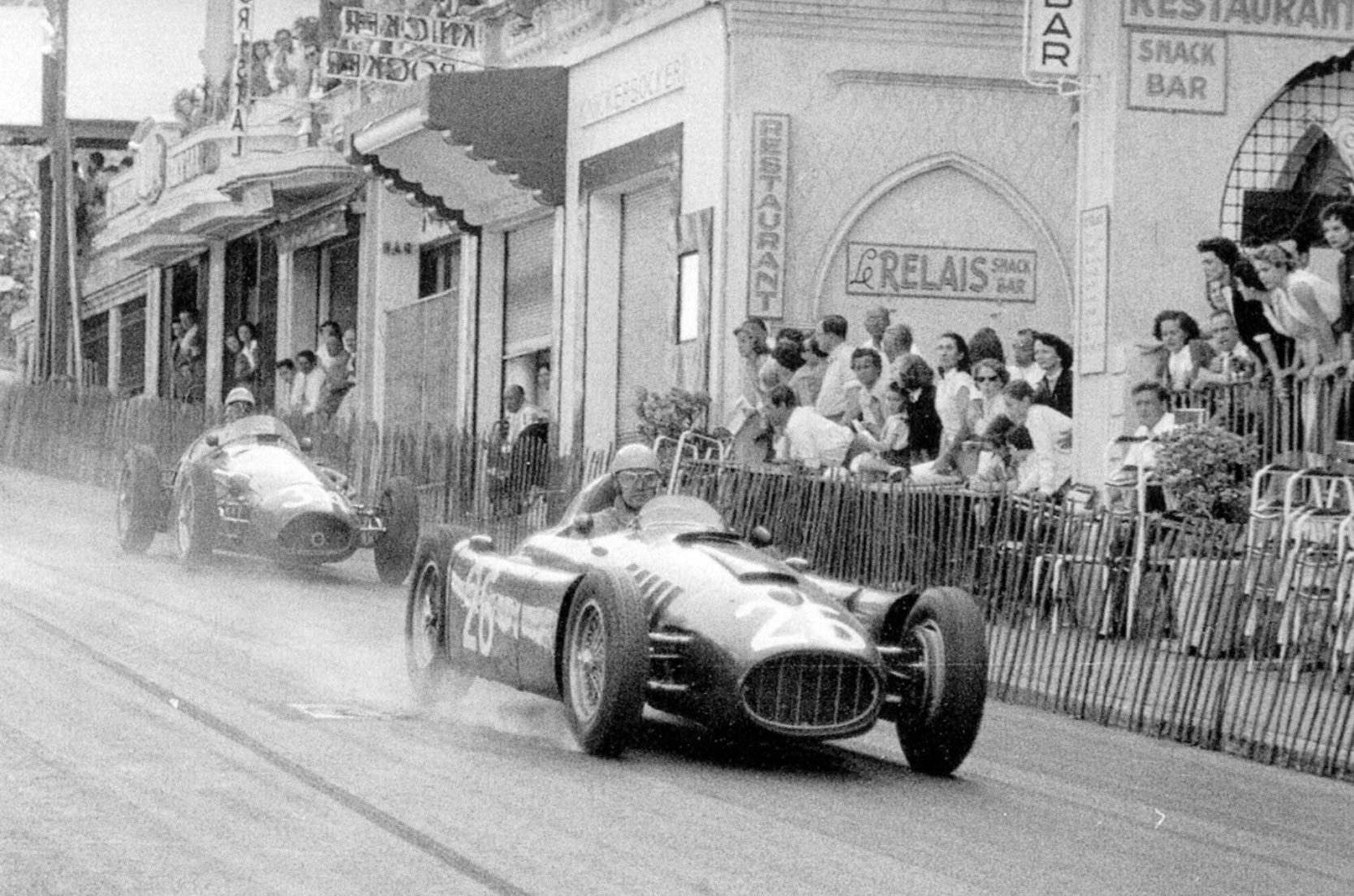
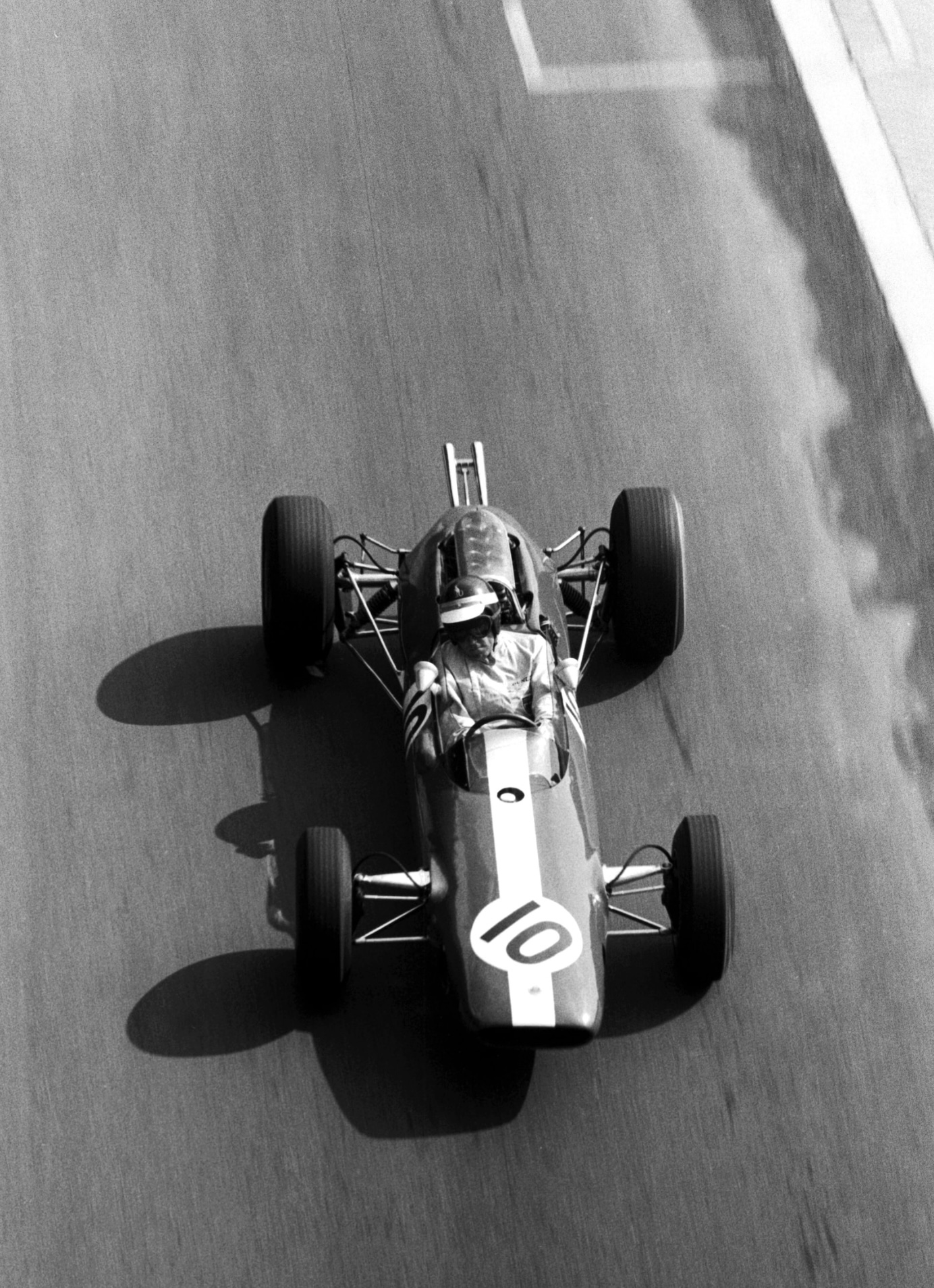
Paul Hawkins in the ex-Clark/Spence Lotus 33 Climax R8 early in the 1965 Monaco GP (MotorSport)Alberto Ascari, Lancia D50 ahead of the Maserati 250F shared by Jean Behra and Cesare Perdisa. Monaco 1955 (unattributed)
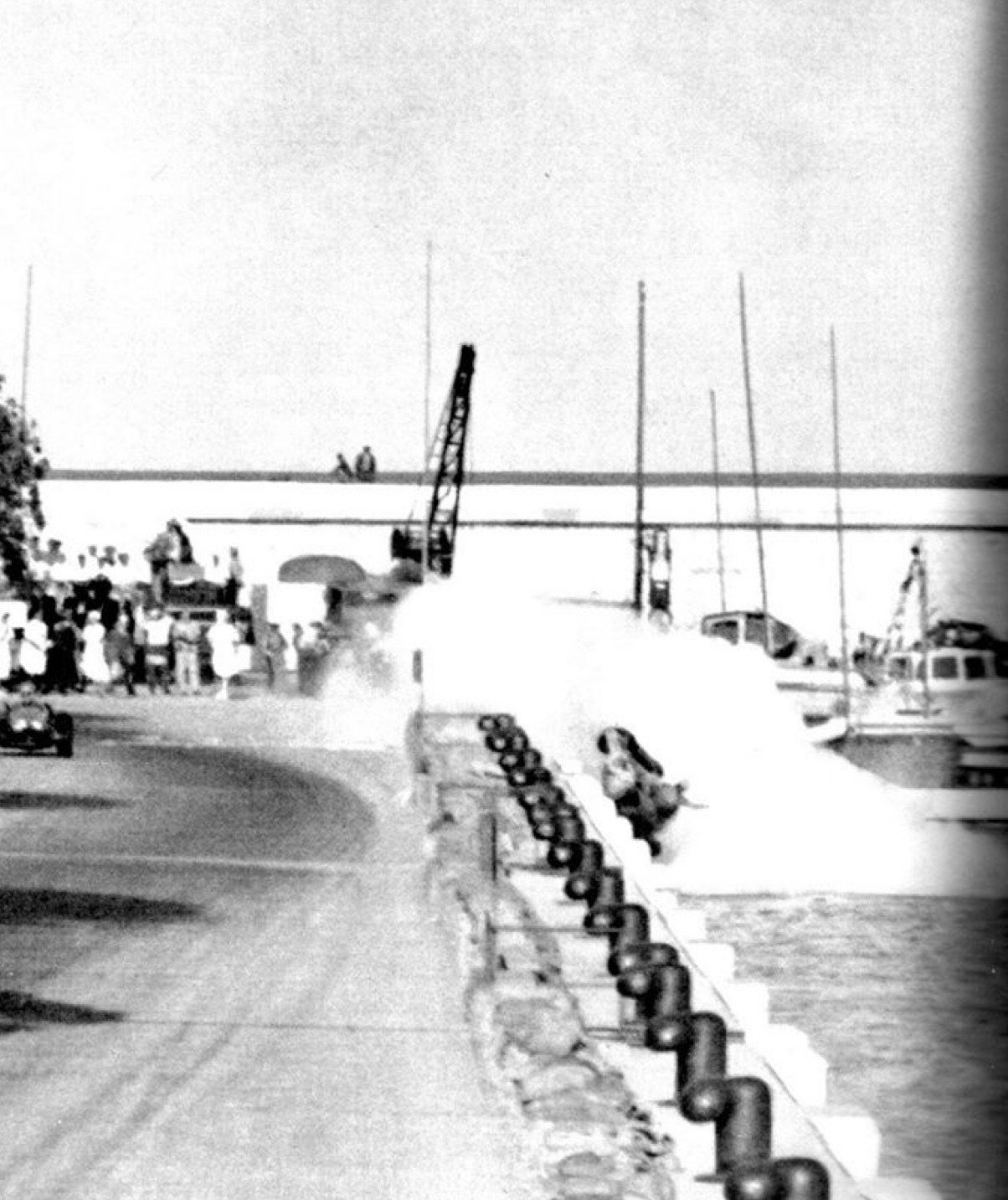
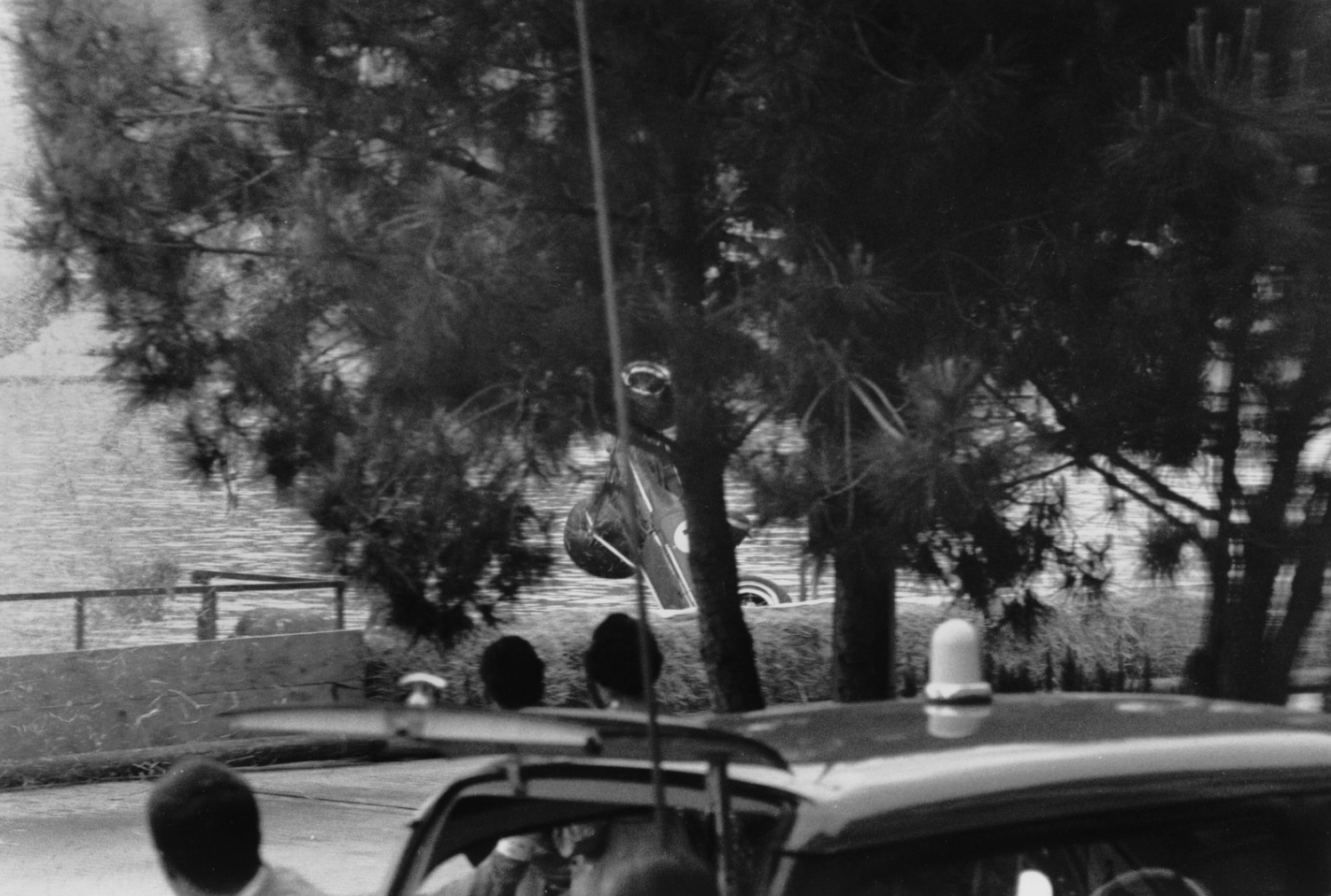
In 1955 Ascari inherited the lead after the Mercedes W196 duo of JM Fangio and Stirling Moss dominated the first half of the race; Fangio retired with transmission trouble, then Moss blew an engine on lap 80. Ascari approached the chicane too quickly – perhaps distracted by crowd reaction to Moss’ retirement, or the lapped Cesare Perdisa behind – and burst through hay bales and sand bags into the harbour, having missed a huge steel bollard by only centimetres.
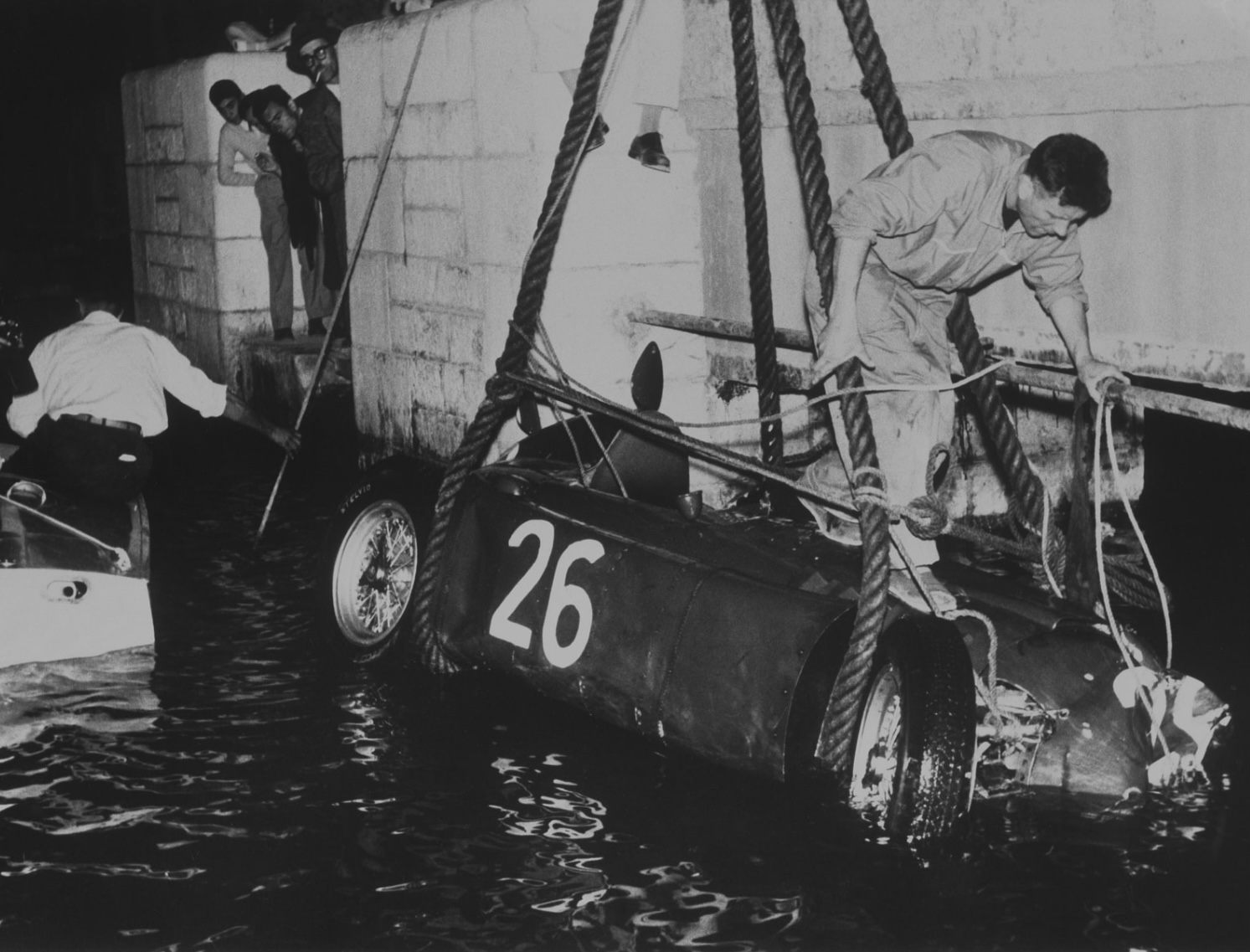
The Lancia bubbled to the bottom of the harbour while the crowd were mesmerised with fear for his safety, only three seconds passed before Ascari’s familiar blue-helmet appeared above the surface. He was taken aboard a boat, with a broken nose, but otherwise ok.
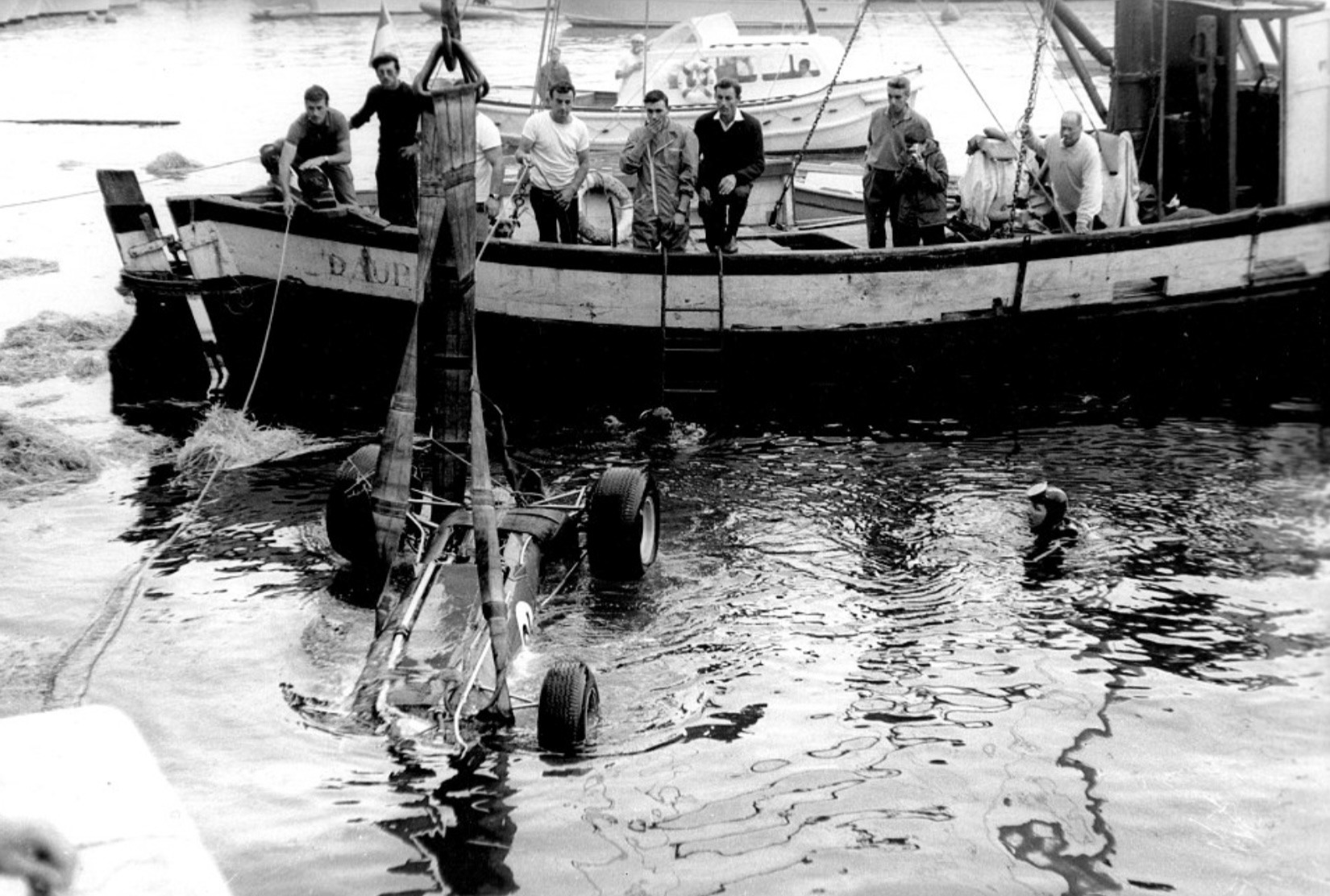
Ascari a split second before his swim (unattributed)One shaken and plenty stirred Lancia D50 being recovered from the depths after the race (MotorSport)
Lancia had given dispensation to Ascari to race a Ferrari 750 Monza with his friend, Eugenio Castelotti in the Monza 1000km on May 29. Ascari travelled to Monza only to watch Castellotti test the car, then decided late in the day to do a few laps wearing jacket, tie and Castellotti’s helmet. On his third lap he inexplicably crashed on the high-speed Curva del Vialone, he died within minutes of having been thrown out of the somersaulting car.
All of Italy grieved.
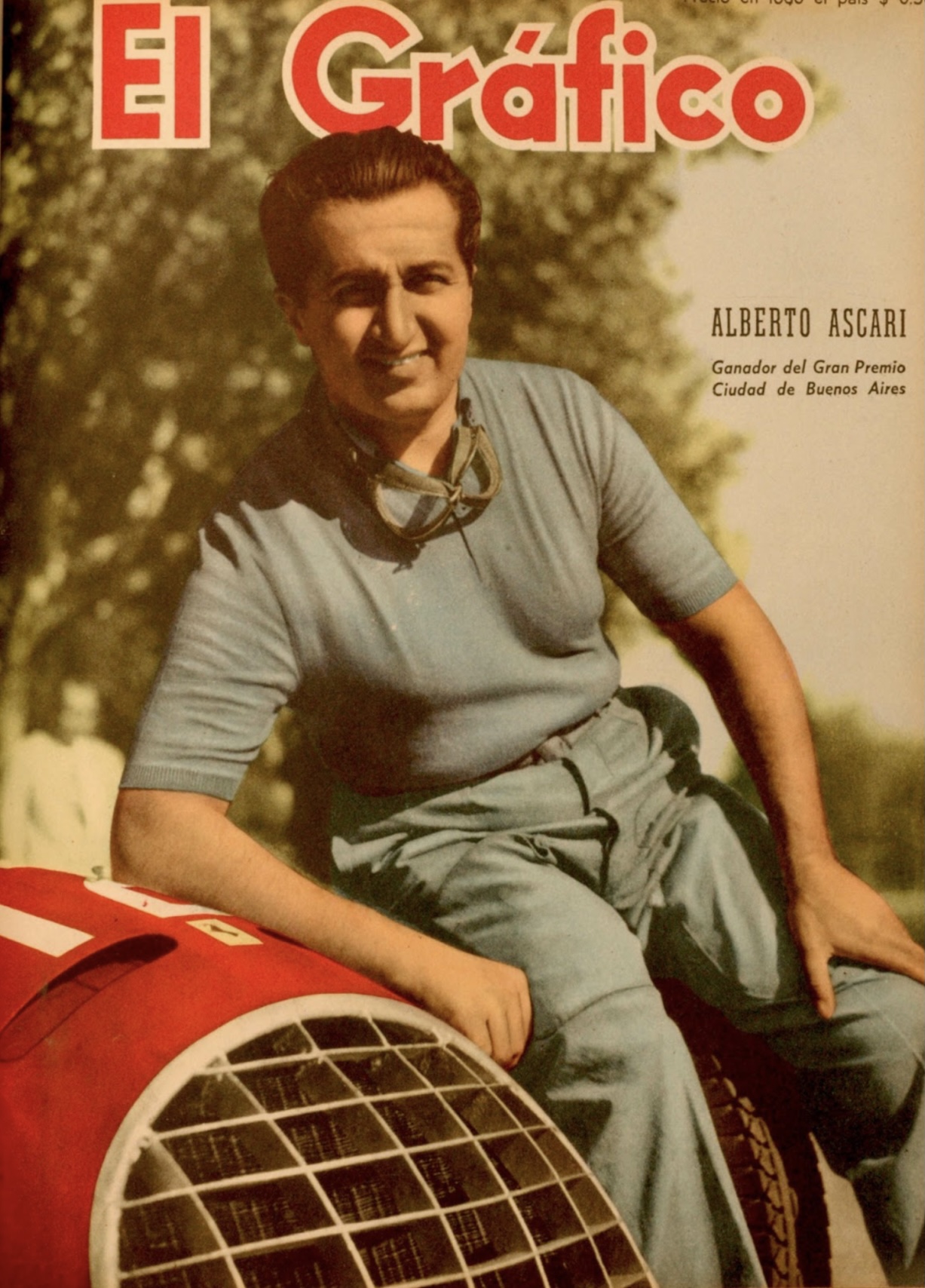
Wonderful Alberto Ascari portrait from El Grafico, an Argentinian magazine. 1950 Ferrari 125
British Boys Own Character – WW2 Spitfire pilot, highly credentialled amateur racer and man of independent means – James Richard ‘Dickie’ Stoop (July 30, 1920-May 19, 1968) acquired the first Lotus 33, chassis R8, for Paul Hawkins use in early 1965. See here for its history; Lotus 33 R8 race history | OldRacingCars.com
The Equipe’s first race was at the Sunday Mirror Trophy at Goodwood in mid-May, there Hawkins started from the rear of the grid after mechanical dramas which continued in the race, he was out after one lap with oil scavenge problems. Jim Clark won in a Lotus 25 Climax.
The BRDC International Trophy followed at Silverstone a month later. He had a better weekend, qualifying on the second last row and finishing tenth, up front was Jackie Stewart’s BRM P261 and John Surtees Ferrari 158.
Then it was off to Monte Carlo for Hawkins’ championship debut.
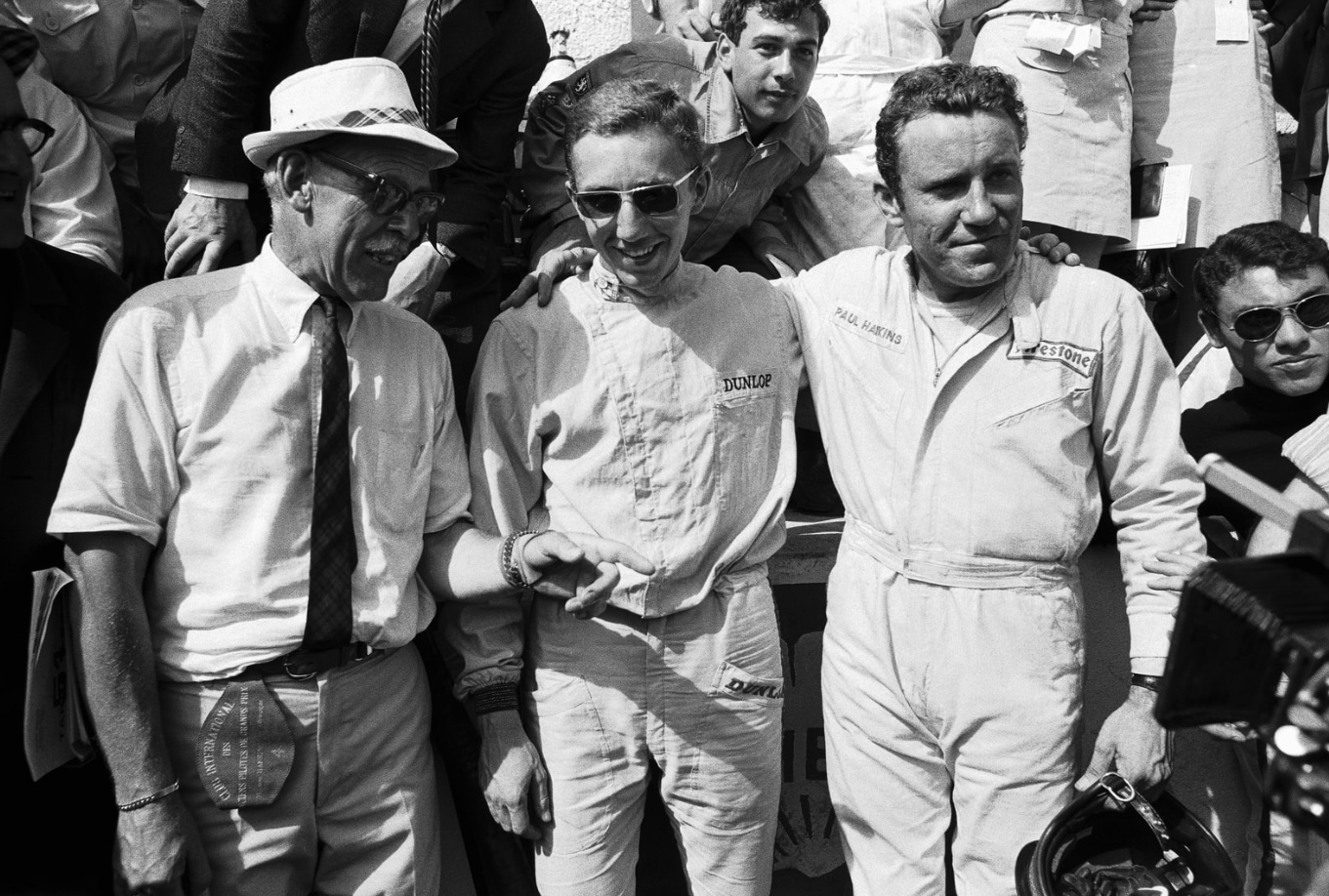
He qualified the car 14th and was running well, then, on lap 80 (of 100) he clipped the barrier on turn-in, causing the car to turn sharp-left – between the bollards, exactly as Ascari had managed – then sank 10 metres to the bottom. “Only when it settled on the bottom and rescue divers arrived did Hawkins extricate himself, take a huge gulp of air from the proffered mouthpiece and rocket back up to the surface,” John Smailes wrote.
The elegance of simplicity belies the deep underlying insights of Lotus 25/33 conception. Paul Hawkins flat-chat in R8 at Monaco in 1965 (MotorSport)It ain’t perfect, but David Hudson’s shot catches Hawkins mid-flight just before splashdown (MotorSport)
“He’d had the extraordinary presence of mind to hit the engine kill-switch just as the car entered the water, saving the very expensive motor owned by the very poor team from instant destruction. It was dried out and used again in the following Grand Prix.”
R8 recovery post race. That the car is upside down makes you wonder if that is the way it settled on the bottom of the harbour. And therefore that Hawkeye made his escape on the way down – which cannot have been easy (Getty)
Well, not quite actually! While Paul was ok, the team missed both following GPs at Spa and Silverstone while the car was dried out, and carefully made-good, before reappearing at the Nurburgring on August 1.
Paul again failed to finish, having qualified 19th, he was out with undisclosed mechanical dramas after four of the 15 laps.
It was the final race for Paul aboard R8, Stoop sold it to MGM for a planned film, it then passed via Jo Siffert to Sweden’s principal museum of modern art, the Moderna Museet in Stockholm, where it remains as a prized exhibit.
No shortage of comedians during the German GP weekend. R8 looks no worse the wear for its dunking two months before! (MotorSport)Paul Hawkins at right, with fellow Porsche colleagues, Huschke von Hanstein, and co-driver Rolf Stommelen, after winning the 1967 Targa Florio in a Porsche 910 (MotorSport)Dickie Stoop aboard his Porsche 911S at Snetterton, March 24, 1968 (MotorSport)
Etcetera…
Dickie Stoop : Autosport Obituary May 24, 1968.
“It is very sad to have to record the death during a club meeting at Croft last Sunday of Dickie Stoop. Apparently Dickie suffered a coronary thrombosis and died at the wheel of his Porsche 911S, which veered off the track into the bank.
James Richard Stoop had been an amateur racing driver of considerable standing for many years. His first race was the supporting F3 event at the Daily Express Silverstone in 1948, when he drove a GS1, and over the last 20 years he campaigned many types of car, but remained faithful for most of his racing to the marque Frazer-Nash.
He competed at Le Mans no fewer than 10 times: in 1950 he was 9th overall and won the 2-litre class, in 1951 he was 19th and in 1955 he was 10th. In 1958 he drove the works spaceframe AC into 8th place, again winning his class. He also took part in long-distance racing at Spa, Rouen, Montlhery and elsewhere, and in 1964 was 3rd overall in the Rand 3 hours co-driving Peter Sutcliffe’s E-type.
He performed prolifically in club racing, not only in Frazer-Nashes but also in triumphs, Healeys, a D-Type Jaguar and a Lotus 11. He also drove a Formula 2 Cooper in the late ‘50s, and with the passing of Frazer-Nash line he transferred his loyalties to Porsche. His successive Type 356 Carreras, registered YOU 4 and 5 HOT, brought him a lot of wins; having been co-victor in the 1959 Autosport Championship with the Sebring Frazer-Nash, he won the Autosport 3 hours at Snetterton the following year in YOU 4 after a tremendous battle with Chris Summers’ Elite, won his class in 1961, and then won the 2-litre division of the championship in 1962 and 1963. He also had a few races with an RS60 Porsche Spyder, and in 1964 drove a 904.
More recently he had concentrated on club production sports car racing with his silver 911S Porsche, also registered YOU 4; this car was a frequent class winner. A retired RAF officer, he was only 47.”
Credits…
MotorSport, Getty Images, Allen Brown’s Oldracingcars.com, ‘Formula One: The Australian and New Zealand Story’ John Smailes
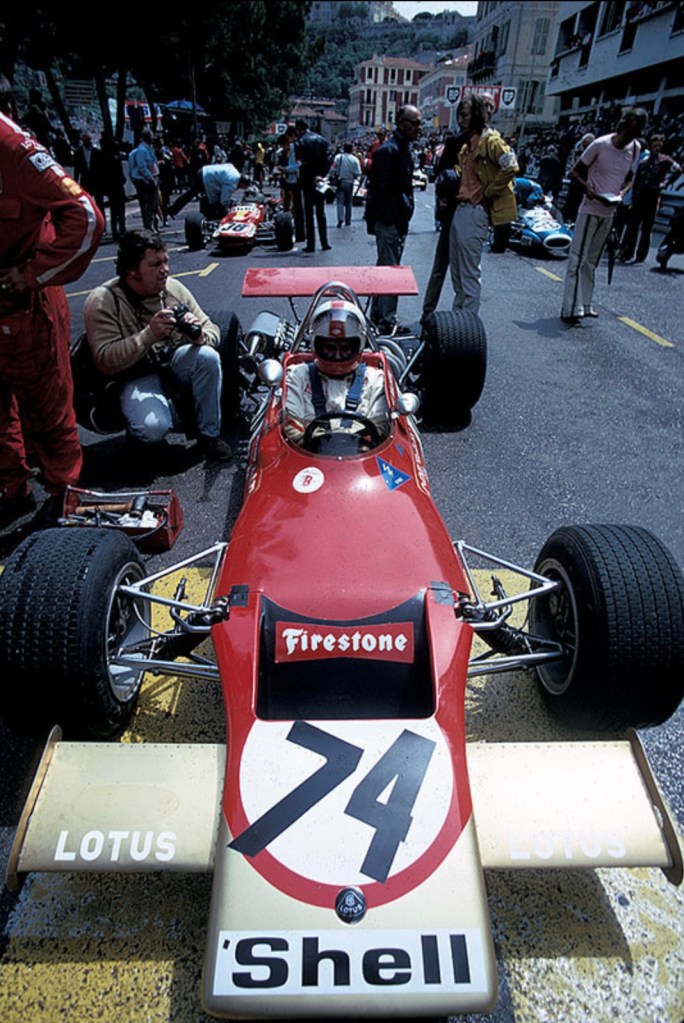
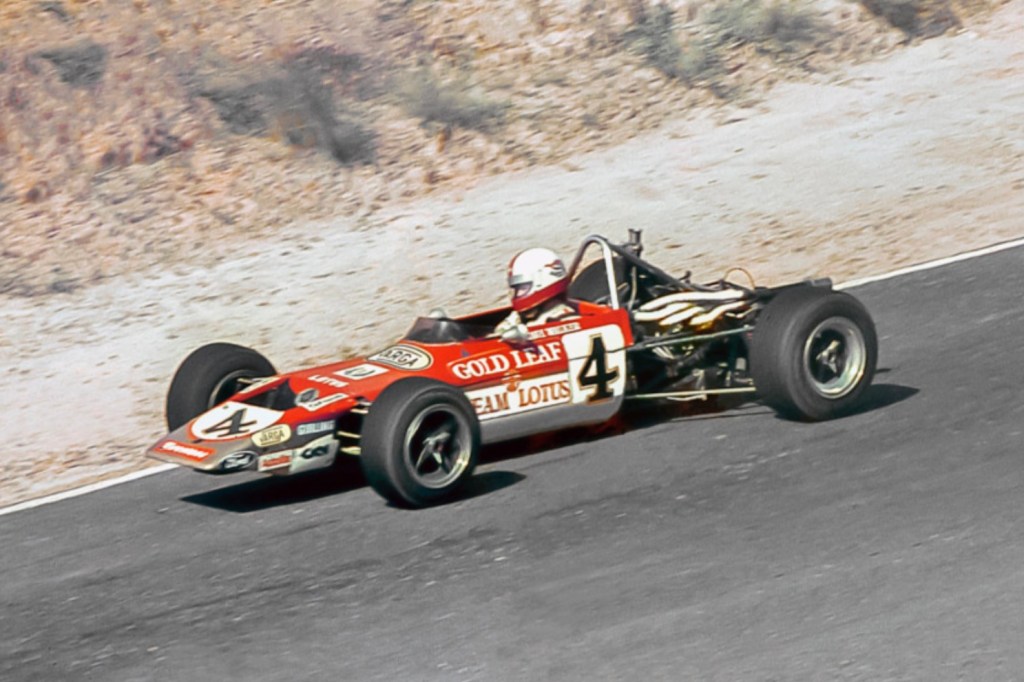
David Walker lined up for the final of the Monaco F3 GP, May 22, 1971.
He won his heat and the final in a race which was something of a metaphor of an incredible season aboard his works Lotus 69 Novamotor-Ford 1.6. Giancarlo Naddeo, Tecno 69 Ford was second, and Patrick Depailler’s Alpine A360 Renault, third.
The grid that year also included Steve Thompson, Jean-Pierre Jabouille, Roger Williamson, Rikki Von Opel, David Purley, Bob Evans and Francois Migault.
Walker’s F3 year included wins at Silverstone and Cadwell Park in April, Brands Hatch, Zandvoort (Dutch GP F3 race) and Oulton Park in May, and Silverstone in June. Early July brought victory in the French Grand Prix support race at Paul Ricard. That month got better with a win at Croft which ensured the Sydneysider was razor-sharp over the British GP weekend at Silverstone, Walker also won that blue-riband support event.
But there was no break for the team, the following day he won the the Cadwell Park BARC British F3 Championship round. August yielded wins at Thruxton and Croft, while Mallory Park fell to Walker in September and Snetterton in October.
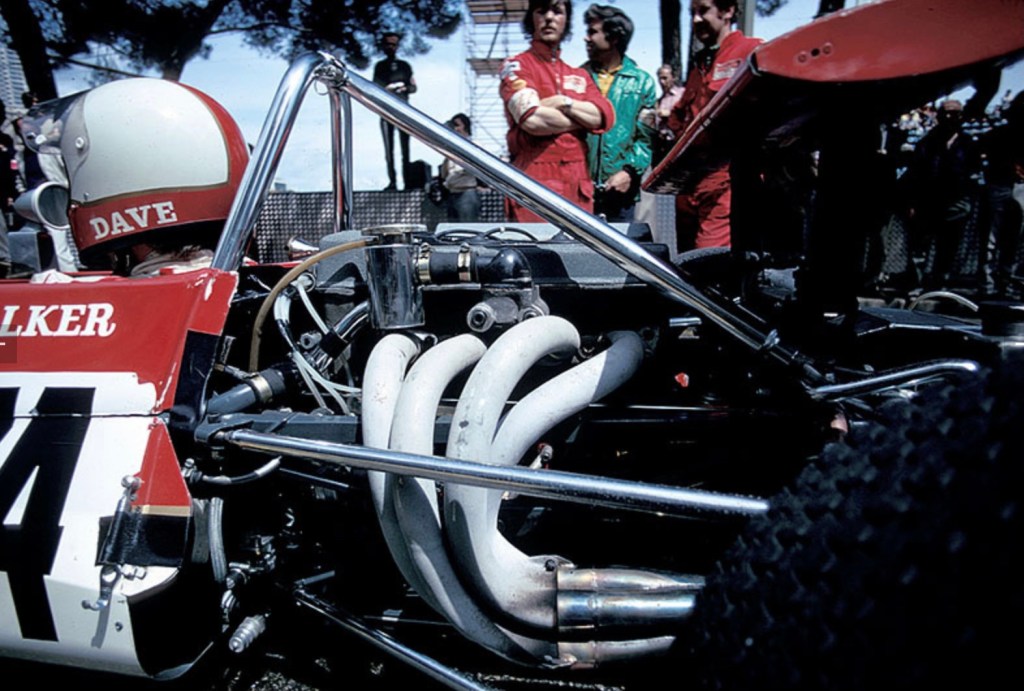
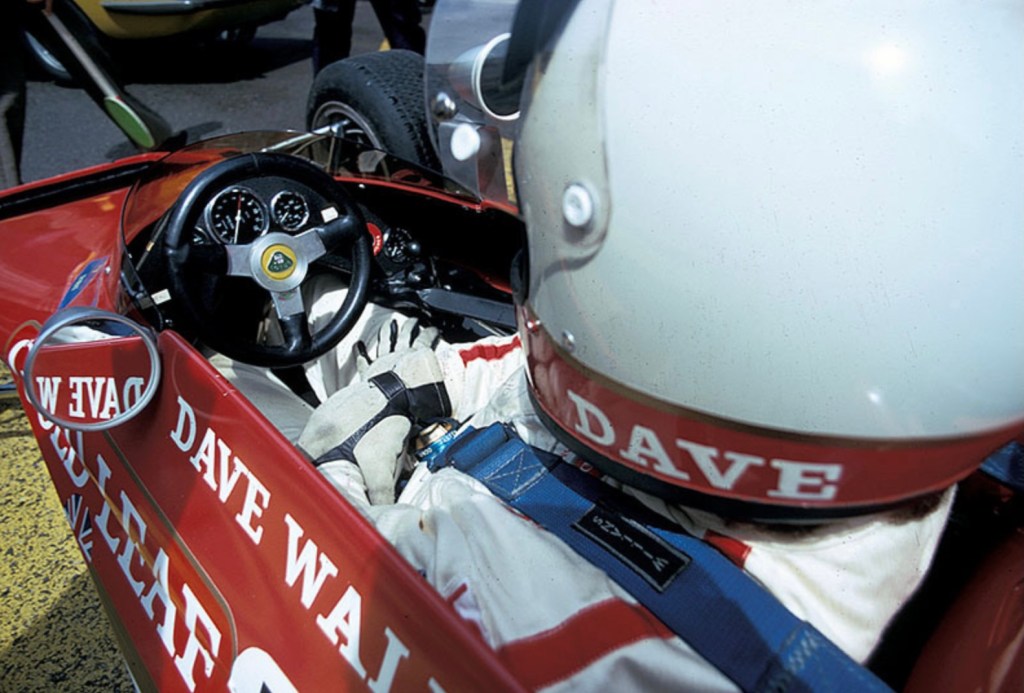
Dave Baldwin’s F3 Lotus 69 design (there were also F2, FB and FF 69s) had a spaceframe chassis based on his Lotus 59, disguised with the bodywork and beefed up front suspension of the 69 F2 car. 1.6-litre Novamotor Lotus Ford twin-cam, Kugelfischer injected via air restrictor Walker again at Monaco (R Schlegelmilch)Oh-so-period cockpit! Leather bound wheel and a dash full of Smiths instruments. Wonderful. Monaco (R Schlegelmilch)
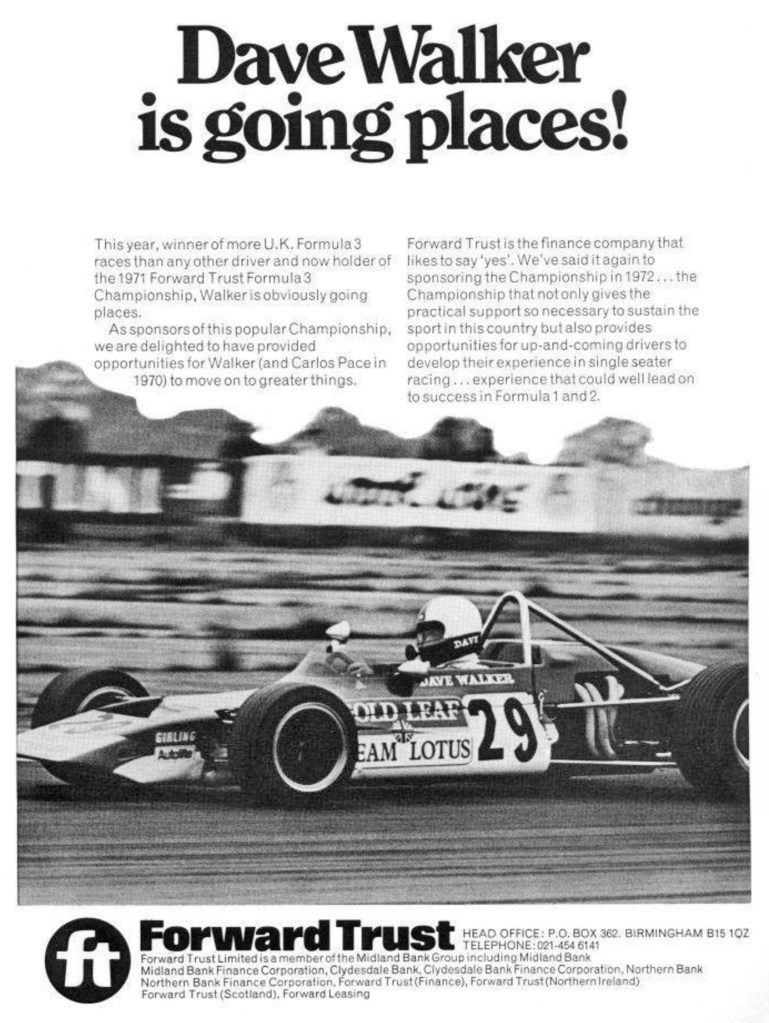
In one of the most dominant ever seasons of F3 racing Walker won most of the big races and two of the three British F3 Championships – the BRSCC/MCD and BARC – with Roger Williamson taking the other, the BRSCC/MCD Lombard.
For the sake of completeness, Walker’s season commenced with the ‘Torneio Internacional de Formula 3 do Brasil’ (Brazilian F3 championship) run at Interlagos and Taruma during January.
Dave raced his (1970) works Lotus 59A Ford to third, second, 12th and first in the four round series, placing third overall behind Wilson Fittipaldi and Giovanni Salvati in Lotus 59A, and Tecno TF70 respectively.
Walker was the most successful of the 1971 Gold Leaf Team Lotus drivers, Emerson Fittipaldi and Reine Wisell had a lean year in Grand Prix racing, Lotus failed to win a GP for the first time in over a decade.
F1 proved a much harder nut for Walker to crack, and that story is a good deal more nuanced than most pundits would have you believe…one for another time.
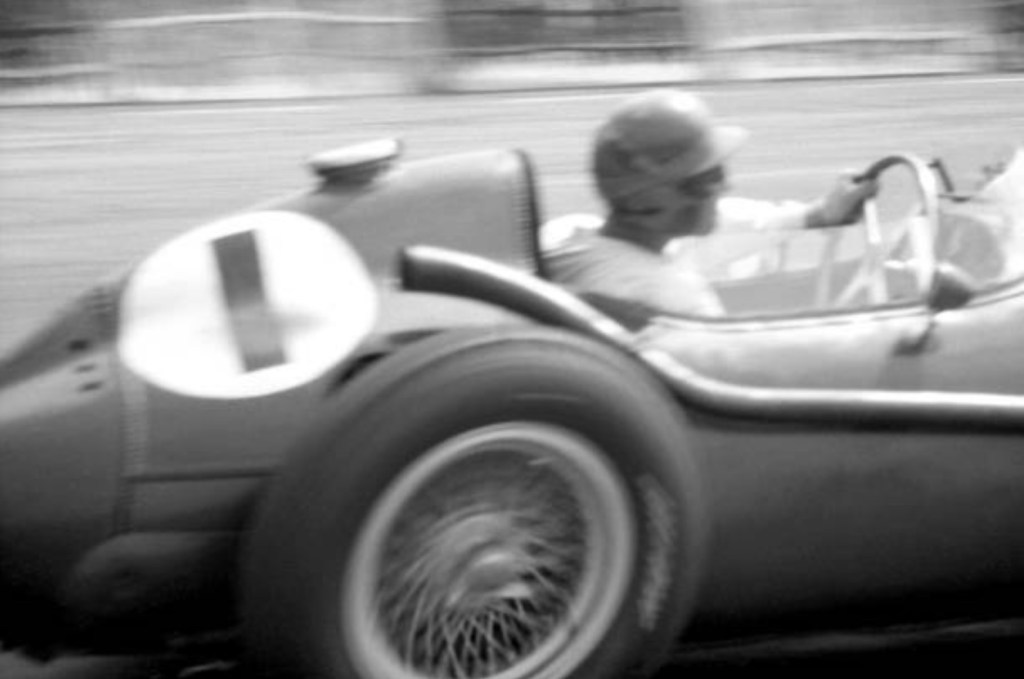
Evocative shot of Peter Collins in his Ferrari Dino 246, 1958 #246/002, during the July 1958 British Grand Prix at Silverstone.
He won the race by 24-seconds from Mike Hawthorn who took the World Drivers Championship that year, before perishing in ‘that’ road-dice with Rob Walker shortly thereafter.
I’ve done these cars to death, both front-engined F1 jobbies and their related mid-engined Tasman cousins, but another bunch of photos got the juices flowing again.
In an enthralling, tragic season, Luigi Musso died at Reims, then Peter Collins crashed fatally at the Nurburgring only weeks after Silverstone (in this same chassis) during the German Grand Prix. Vanwall, with whom Ferrari battled all year – winners of the Constructors Championship – also lost a driver at the season’s end when Stuart Lewis-Evans died of burns sustained at Ain-Diab in Morocco several days after the race.
(MotorSport)
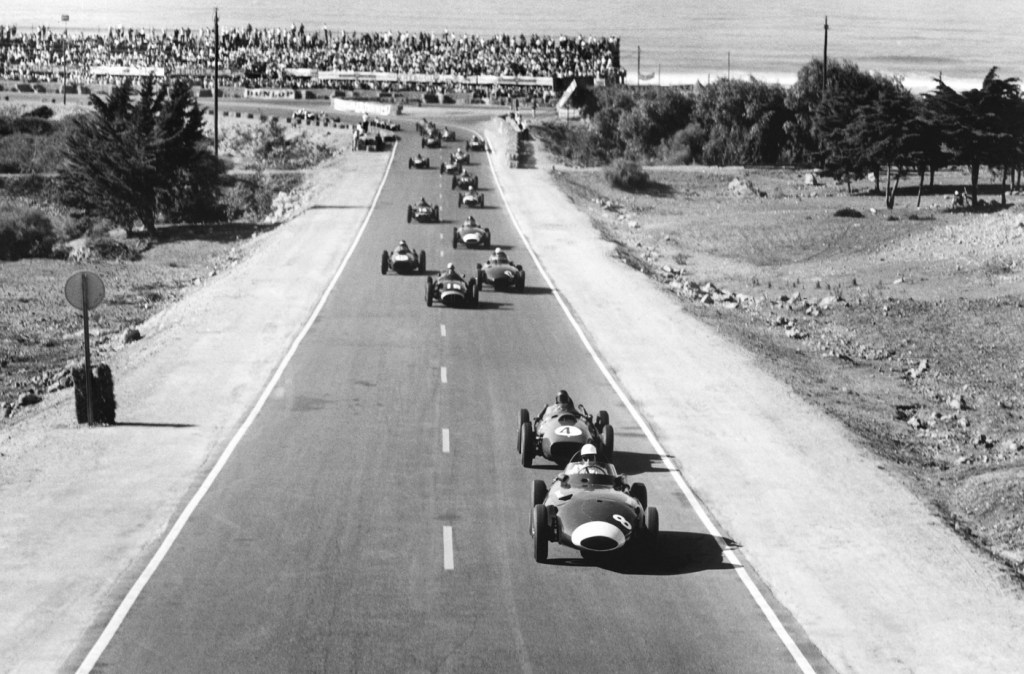
This Moroccan GP start-shot of Vanwall mounted Stirling Moss bolting away from a Ferrari, this time with Phil Hill at the wheel, says a lot about the rivalry between the teams during a year in which British F1 pre-eminence began. Vanwall and Cooper, to whom Tony Vandervell would pass the torch, were on the rise.
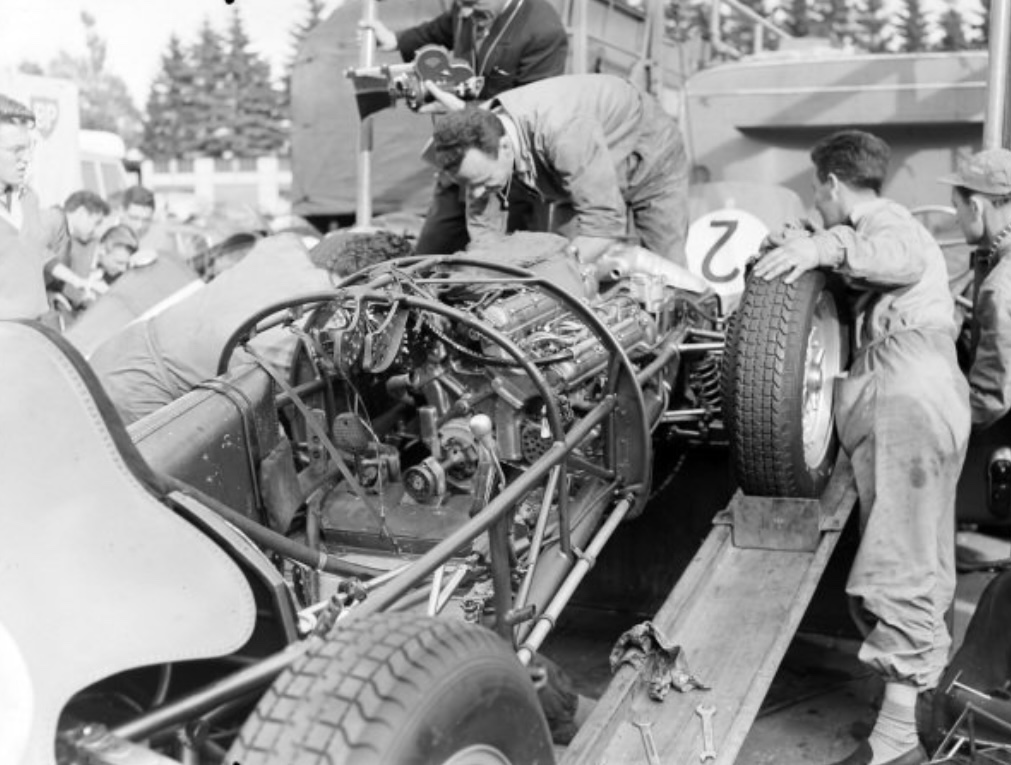
The shot below shows Hawthorn’s car (1958 #246/003) being attended to in the Silverstone paddock. Note the traditional twin-main tube Ferrari chassis, and subsidiary tubes, and powerful V6 engine canted to the right to allow the driveshaft to pass alongside the driver.
By contrast, the Vanwall had a Colin Chapman designed, light, multi-tubular spaceframe chassis, and far less sexy, but powerful, torquey, twin-cam, two-valve – same as the Ferrari – in-line four cylinder engine.
(MotorSport)(MotorSport)
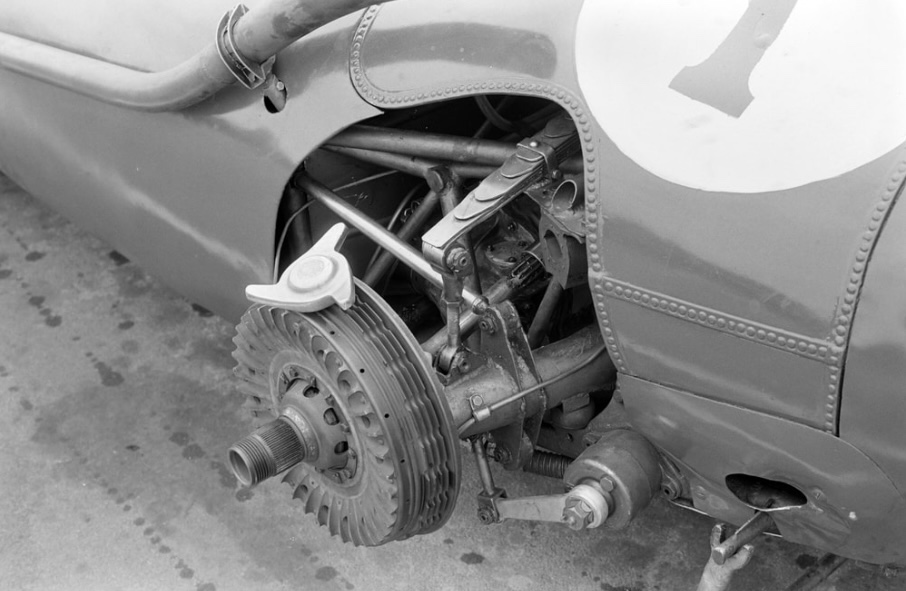
At the start of its life the Dino rear end (Collins’ car at Silverstone above) comprised a De Dion axle, transverse leaf-spring, twin radius rods, Houdaille shocks and drum brakes. By 1960 it was independent with coil springs, telescopic shocks and disc brakes, such was the relentless pace of change and level of competition wrought by the mid-engined Cooper T51 and Cooper T53 Climaxes in 1959-1960.
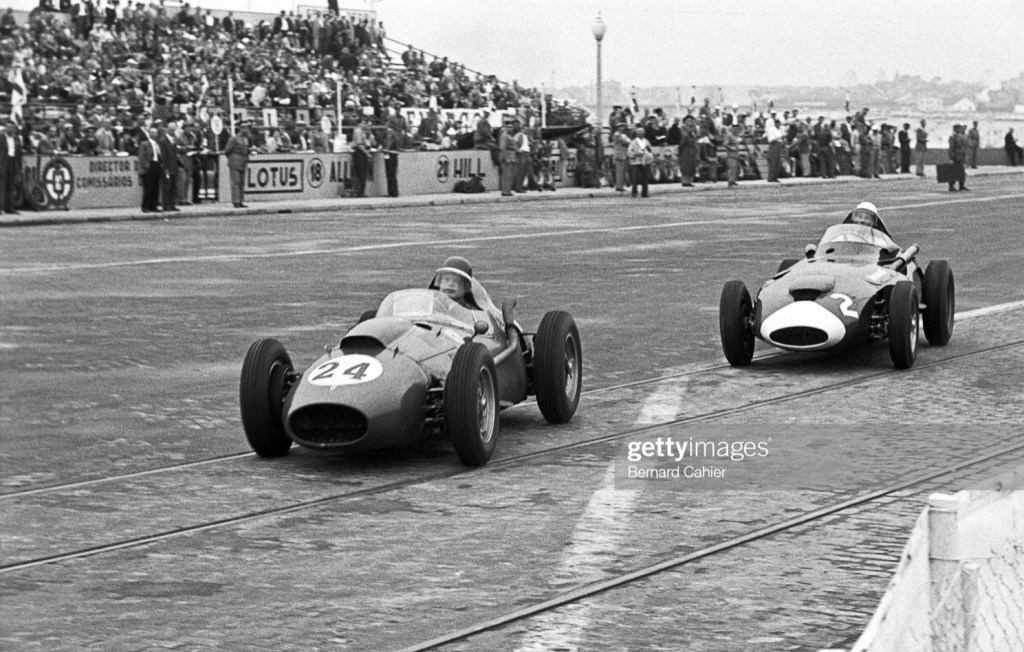
In late August, Hawthorn and Moss battle on the Boavista seafront in Portugal. Stirling won on the cobblestones by five seconds from Mike, settling up a nail-biting end to the season at Monza and Ain-Diab.
Brooks’ Vanwall won from Hawthorn at Monza, while Moss had a gearbox failure. In Morocco, Hawthorn put his car on pole from Moss, in the race the positions were reversed. Mike took the title by a point from Stirling in a season in which the best five placings were counted.
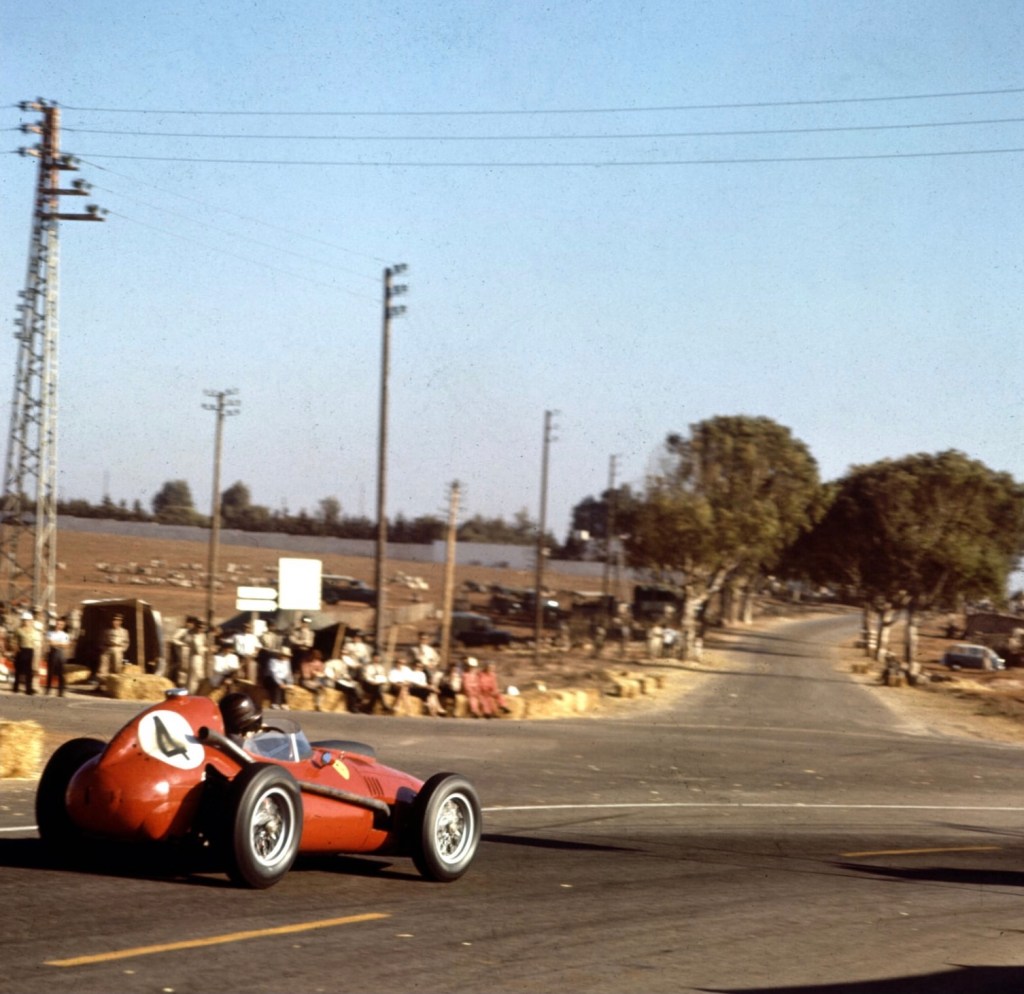
The stunning shot of Phil Hill below, hooking his Dino (1958 #246/004) into a right-hander in the wilds of Morocco shows all that was great – and incredibly dangerous – of Grands Prix racing compared with the (sometimes) between the white lines ‘car park’ F1 competition of today. Grand Prix Racing it ain’t…
Giancarlo Baghetti on the way to his maiden Grand Prix win in his very first GP aboard Ferrari 156 chassis 0008. He won four Grands’ Prix in 1961; the French at Reims, and three non-championship events here at Siracusa on April 24, in Napoli three weeks later, and the Coppa Italia at Vallelunga in October …
The Syracuse locals are enjoying Giancarlo’s delicate touch and the glorious howl of the little 1.5-litre V6 around the 3.478 mile Sicilian street circuit, look closely at the kids in the trees!
While the 156 was the class of the field in 1961, Baghetti beat a field of depth in Syracuse. Dan Gurney and Jo Bonnier were second and third in Porsche 718s, then came Jack Brabham’s works Cooper T55 Climax, Roy Salvadori’s Cooper T53 Climax, and in sixth and seventh places were Jim Clark and Lorenzo Bandini in Lotus 18 Climax and Cooper T51 Maserati respectively.
John Surtees’ Cooper Climax sandwiched by the Gurney and Bonnier Porsche 718s at Syracuse in 1961 (Motorsport) Moss chasing Baghetti and Gurney; Lotus 18, Ferrari 156 and Porsche 718 (B Cahier) Moss in a Rob Walker Lotus 18 Climax chases Jo Bonniers’ Porsche 718 at Syracuse. Jo was third and Moss eighth with a misfiring engine (unattributed
Despite the presence of the-greats, Baghetti popped the Ferrari into second slot on the grid behind Gurney on pole. He didn’t make a great start, appearing in seventh place at the end of the first of 56 laps, but used the power of the car to progress forward through the field to lead Gurney and Surtees by the end of the sixth lap.
Once in front he led with calm, consistent precision, keeping Dan at bay to win by five seconds. The youngster’s only mistake was to whistle up the escape road at the hairpin on his victory lap when he missed his braking point whilst waving to an adoring Sicilian crowd!
The car Giancarlo raced is the very first mid-engined Ferrari – the 246P Richie Ginther debuted at Monaco in 1960, chassis 0008. This morphed progressively from a 2.5-litre GP car into the prototype 1.5-litre GP 156 by the 1960 season’s end. See this story about a most significant Ferrari, it is a great pity Enzo destroyed it along with all of its other 156 brothers and sisters; https://primotipo.com/?s=ferrari+246p
0008 always raced with the 65-degree 1.5-litre V6 rather than the definitive 1961 120-degree variant which Richie Ginther was to give debut at Syracuse, but didn’t at the last minute due to oil scavenge problems revealed in testing at Modena. Checkout this article on the testing of the 120-degree motor here; https://primotipo.com/2018/09/11/ferrari-156-testing/
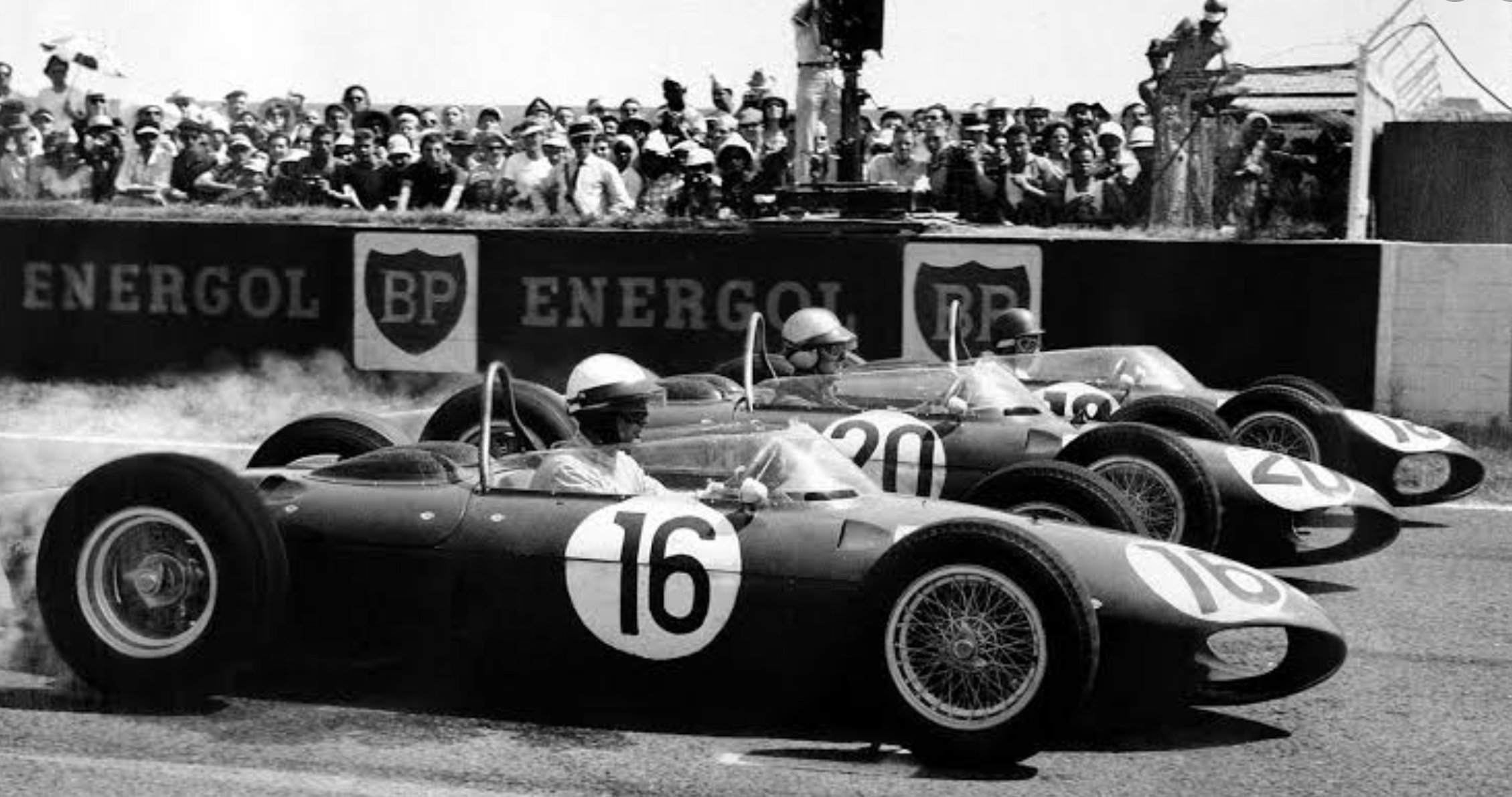
Innes Ireland and Jim Clark- #20 is Jim’s Lotus 21 Climax (B Cahier) Graham Hill, BRM P48/57 Climax FPF (unattributed) Giancarlo, Syracuse 1961 (unattributed)
By the start of 1961 0008 was already an old nail, so Ferrari were happy to hand the machine over to a grouping of Italian car clubs – the Federazione Italiane Scuderia Automobolistiche (FISA) as a means of developing promising Italian drivers. While the car was entered by FISA, it was prepared by the factory – very well prepared as it transpired!
Giancarlo had impressed in 1960 at the wheel of a Dagrada Lancia Formula Junior, and was awarded the FISA drive. About ten of these front-engined FJ’s were built by Milanese, Angelo Dagrada who was known to Giancarlo via modifications he had made to Baghetti’s industrialist father’s Alfa Romeo 1900 road car, the family owned a foundry in Milan. Giancarlo cut his racing teeth with this Alfa and Abarths in local events.
These interesting cars bucked the Italian trend of using the ubiquitous Fiat inline-four in favour of the Lancia Appia 1098cc ten-degree V4 which was light and compact – and powerful after vast development of the standard cylinder head turned it into a crossflow unit.
Giancarlo aboard his Dagrada Lancia FJ at Monza on 25 April 1960 (unattributed)
Giancarlo was seventh in the 1960 Campionato ANPEC/Auto Italiana d’ Europa Formula Junior Championship with one win from only three point scoring rounds. In front of him was Colin Davis, Jacques Cales, Denny Hulme, Lorenzo Bandini, Henri Grandsire and Henry Taylor.
Baghetti’s win depicted in the advertisement below was a big one, the VIII Trofeo Bruno e Fofi Vigorelli at Monza on April 24-25 attracted 43 cars, 16 were non-qualifiers. Giancarlo won both his heat and one of the two finals, to win on aggregate from Juan Manuel Bordeu and Henri Grandsire aboard Stanguellini Fiats. The class field included such notables as Colin Davis, Carlo Facetti, Carroll Smith, Lorenzo Bandini, Rob Slotemaker, Ludovico Scarfiotti, Geki Russo, Gerhard Mitter, Eric Carlsson, John Whitmore, Teodoro Zeccoli and Tony Maggs.
In the Campionato Italiano, he was equal fourth with Geki Russo behind Renato Pirocchi, Roberto Lippi and Antonio Maglione, and second in the Prova Addestrativa behind Antonio Maglione.
Some sources have it that Giancarlo was a controversial choice for the FISA ride, but if you look at the races entered/won, his strike rate looks pretty good. In addition, his Dagrada was generally felt to be an inferior weapon to the Stanguellini Fiat used by most of his rivals; the choice stands the sniff test I think, whatever the case, he certainly grasped the opportunity with both hands.
Baghetti’s purple patch continued at Posillipo a month later when he won the Gran Premio di Napoli on May 14, again at the wheel of 0008.
On this occasion he finished the 60 lap, 150km road course race in front of Peter Ashmore’s Lotus and Bandini’s Centro Sud Cooper T51 Maserati, after Roy Salvadori gave chase early in the race, only to be thwarted by a puncture in his Yeoman Credit Cooper Climax.
The entry was devoid of championship front runners on this occasion, they were otherwise engaged at Monaco, Stirling Moss in one-of-those drives won the race aboard Rob Walker’s Lotus 18 Climax, one of three championship events which didn’t go to the 156 that season. The German GP also fell to Maestro Moss in the nimble, less powerful Lotus 18, and at Watkins Glen Innes Ireland won the first GP for Team Lotus, and himself, aboard a Lotus 21 Climax.
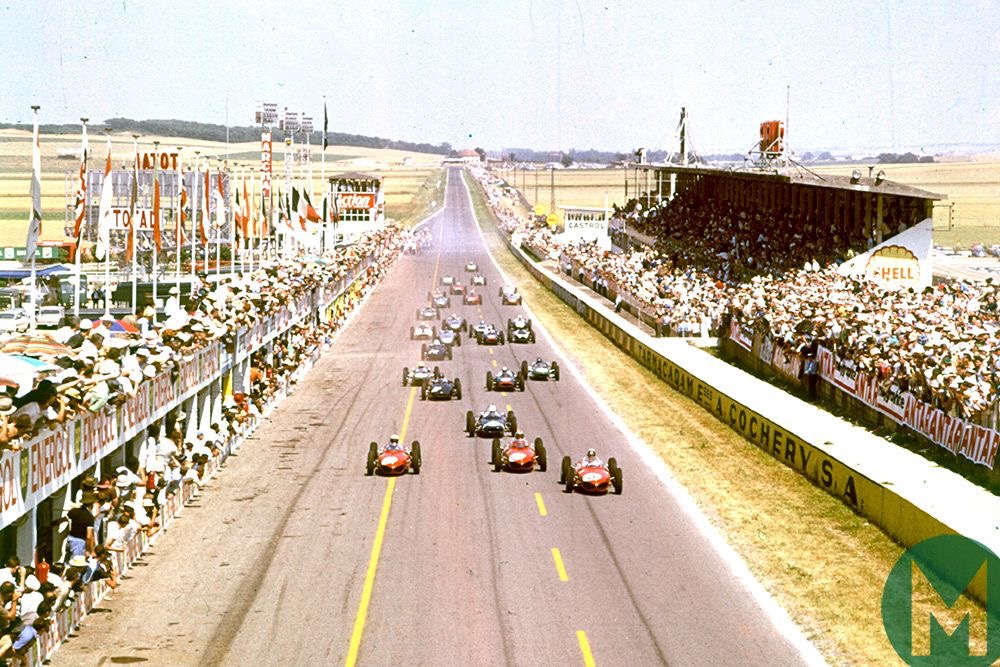
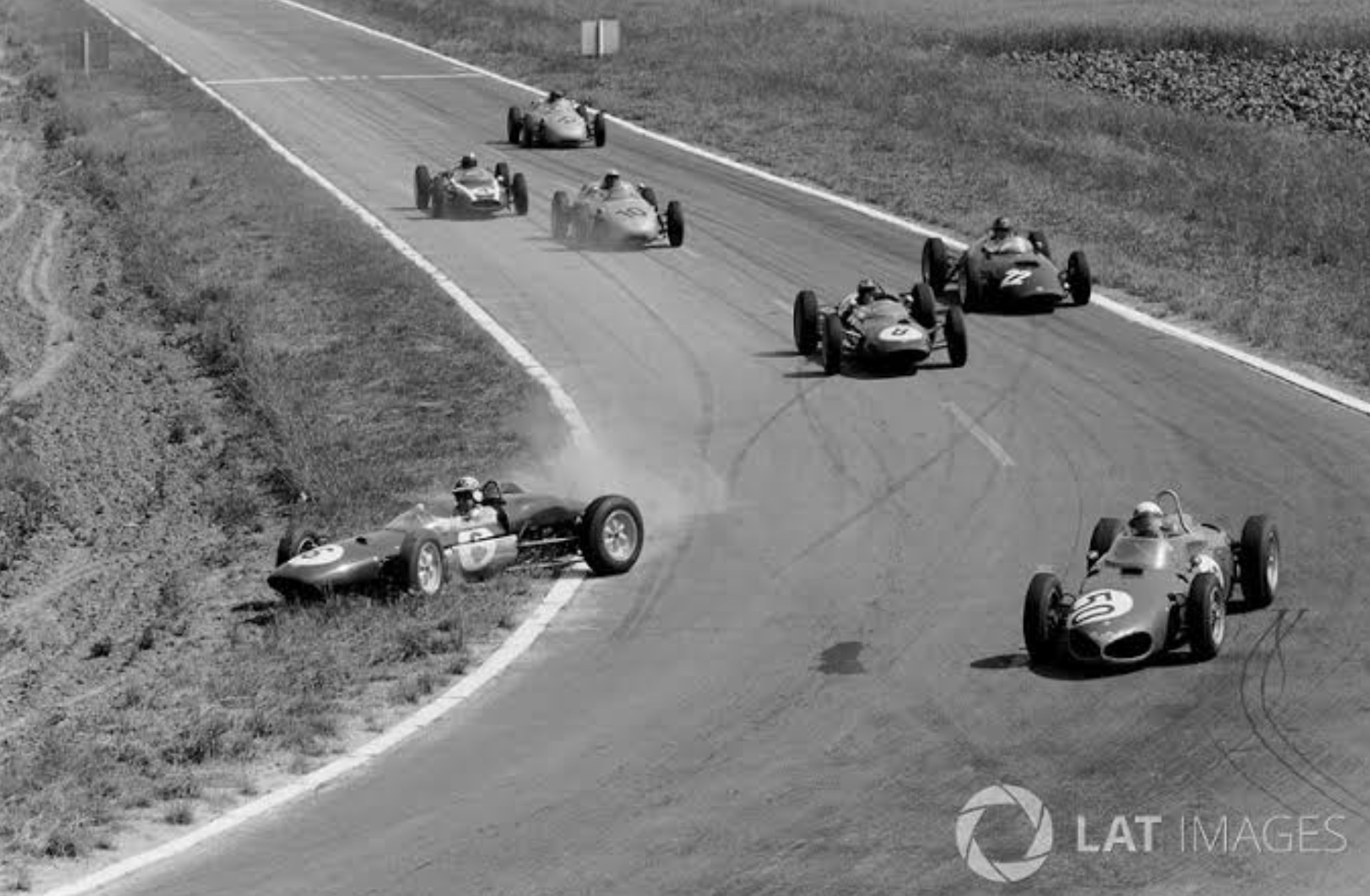
GP di Napoli, Posillipo 14 May 1961 grid. Baghetti 156 at left, Roy Salvadori, Cooper T53 Climax and then Gerry Ashmore’s Lotus 18 Climax at right. Row two is Ian Burgess’ Lotus 18 Climax at left and Lorenzo Bandini’s Cooper T51 Maserati at right. Row three is Giovanni Alberti, de Tomaso Osca at left and Menato Boffa, Cooper T45 Climax at right. Baghetti won from Ashmore and Bandini (unattributed) Hill, Ginther and Von Trips – Ferrari 156 by three front row at Reims in 1961 (unattributed) Reims start with Thillois in the distance, July 2, 1961. Up front its Hill, Ginther and von Trips from left to right, with Moss in the Walker Lotus 18/21 Climax on his own, and the rest- winner Giancarlo was Q12 but started poorly and is the red spec almost straddling the dashed-yellow line, about six cars from last. All of which says a lot about the Italian cars power and torque out of the slow Muizon and Thillois corners (Motorsport) Who said the Lotus 21 had better brakes than the Ferrari 156?! Innes Ireland runs into strife under brakes whilst attempting to slip under Giancarlo watched by Jim Clark in another 21, Graham Hill, BRM, Jo Bonnier, Porsche 718, Bruce McLaren’s Cooper T55 Climax and Dan Gurney in the other works Porsche 718, Reims 1961
0008 went back to the factory for a freshen up and then joined the three factory entries of Phil Hill, Taffy von Trips and Richie Ginther at Reims on the July 2 weekend for the French Grand Prix.
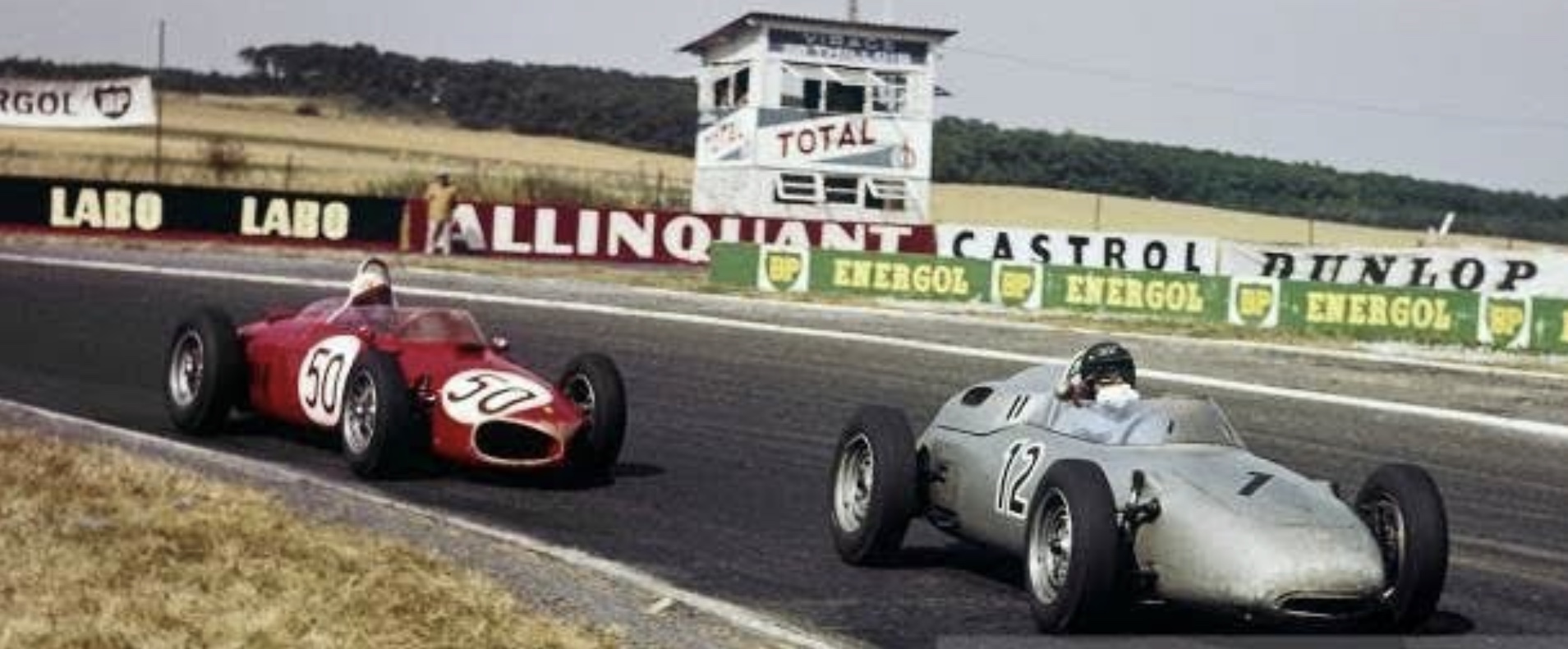
There he took a stunning victory a tenth of a second clear of Gurney’s Porsche 718 with Jim Clark’s Lotus 21 Climax a further minute adrift. It was an all Ferrari front row with Hill on pole and Ginther and von Trips alongside, Giancarlo was Q12.
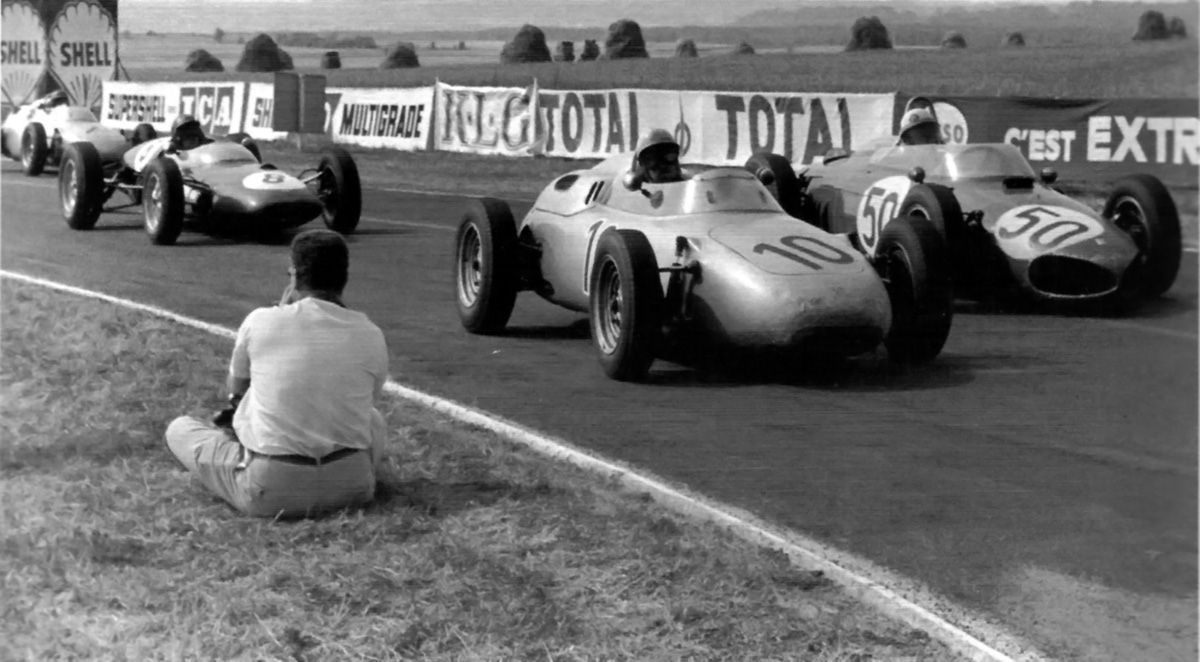
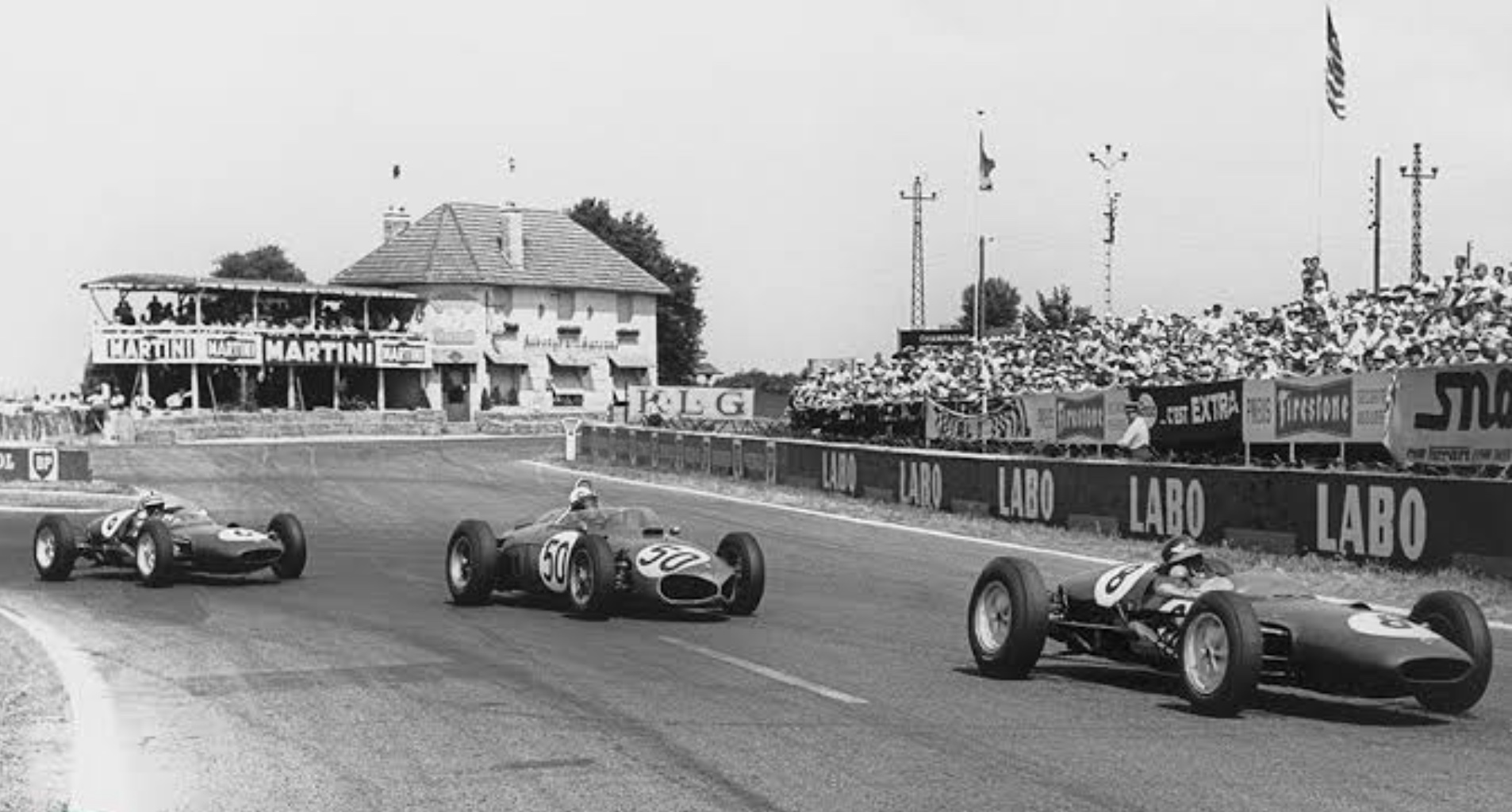
Hill led from the start, in that order, until Richie spun giving third place to Moss’ Lotus 18 Climax – behind this group there was a massive slipstreaming battle involving the Gurney and Bonnier Porsche 718s, the works Lotus 21 Climax’ of Jim Clark and Innes Ireland, Graham Hill’s BRM P48/57, Bruce McLaren’s Cooper T55 Climax and Giancarlo.
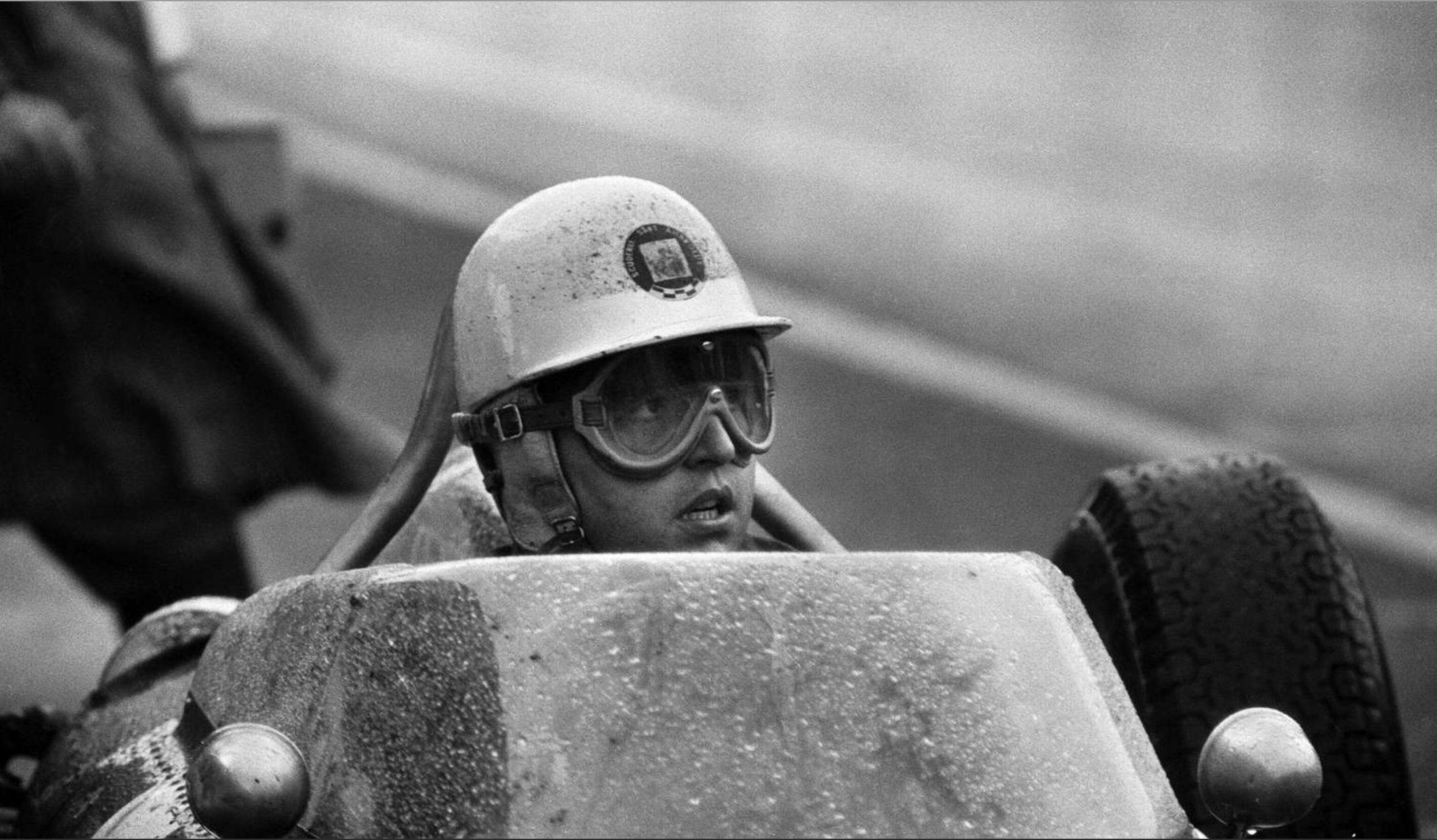
Two of the most important aspects of longevity for a race photographer are a sense of self preservation and fleetness of foot …Bonnier, Baghetti, Clark and Gurney, Reims 1961 (unattributed) Clark, Baghetti and Ireland exit Thillois (Motorsport) Spinner Ginther in front of Lucien Bianchi, Lotus 18/21 Climax (B Cahier) Gurney and Baghetti in the final stages (B Cahier)
Taffy had engine trouble after 18 laps so he was out, Phil Hill spun on the surface which was becoming very slippery in the intense heat on lap 38, he managed to restart but was a lap down. Then Ginther led, but he too spun, and had no sooner recovered before having engine problems – no oil pressure after 40 laps, Moss had brake problems so he too retired after completing 31 laps.
Progressively the challengers fell away leaving a man-on-man battle which went on for many laps, with the lead changing by the lap between Dan Gurney – one of the finest drivers of the era – and still to win his first championship Grand Prix, and GP debutant Giancarlo Baghetti.
On the final lap, Dan out-braked Giancarlo into Thillois, the last corner, but on the sprint to the line – with more punch than the four-cylinder Porsche – Baghetti dived out of Gurney’s slipstream a couple of hundred yards before the finish in a perfectly timed move to win by the narrowest of margins from Gurney, Clark, Ireland and McLaren.
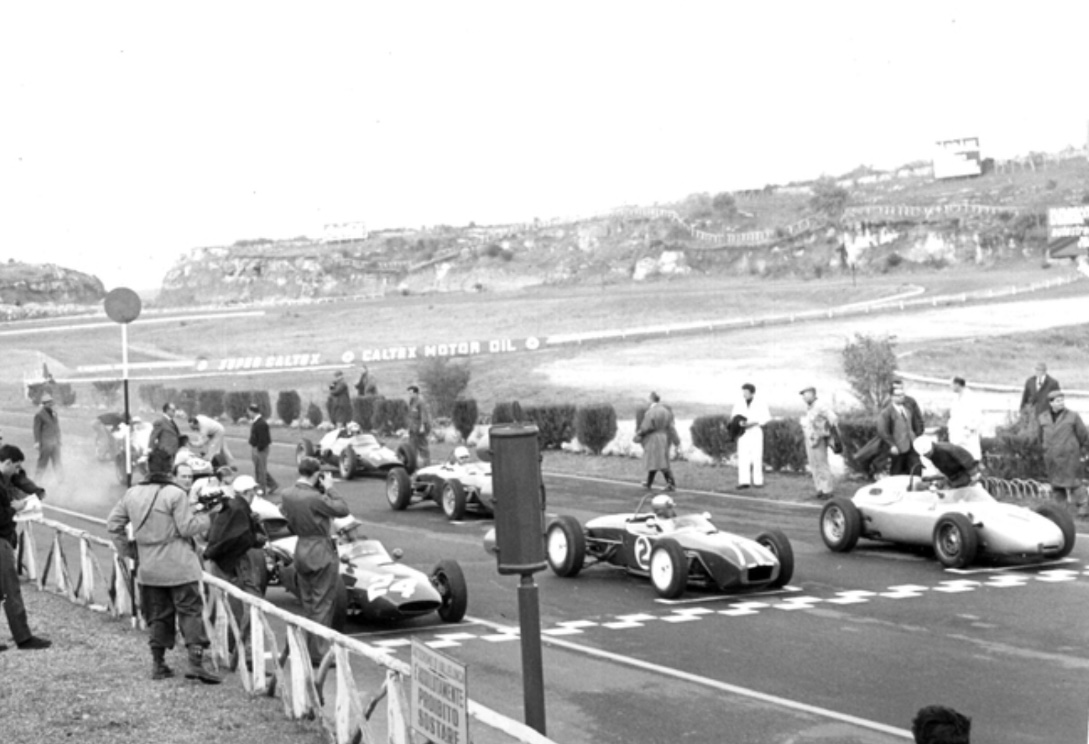
Giancarlo’s 1961 run of success wasn’t over yet, as noted at the outset, he won the minor, Prima Coppa Italia at Vallelunga on October 12. This time he raced a Porsche 718, winning both 30 lap, 106 km thirty minute heats from pole, taking the overall win on aggregate from Ernesto Prinoth, Lotus 18 Climax, and Nino Vaccarella’s Cooper T51 Maserati.
Aintree 1961 (Echo) Coppa Italia, Vallelunga October 12, 1961. #24 Nino Vaccarella rebodied Cooper Maserati T51, #2 Ernesto Prinoth, Lotus 18 Climax and at right Giancarlo Baghetti, Porsche 718. The Lotus 18 Maserati on row two is Gaetano Starrabba (unattributed)
The 1961 Ferrari 156 : Technical…
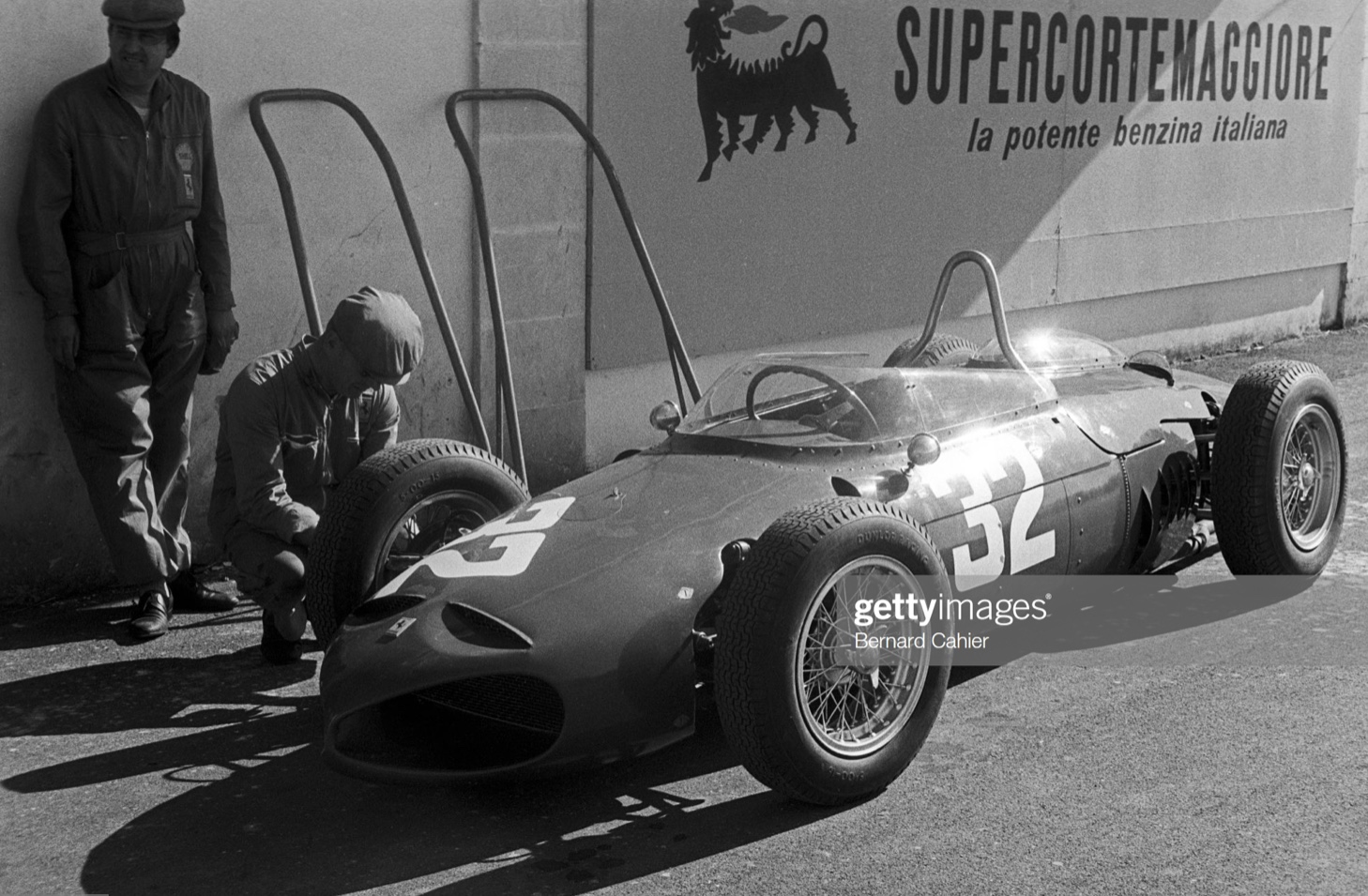
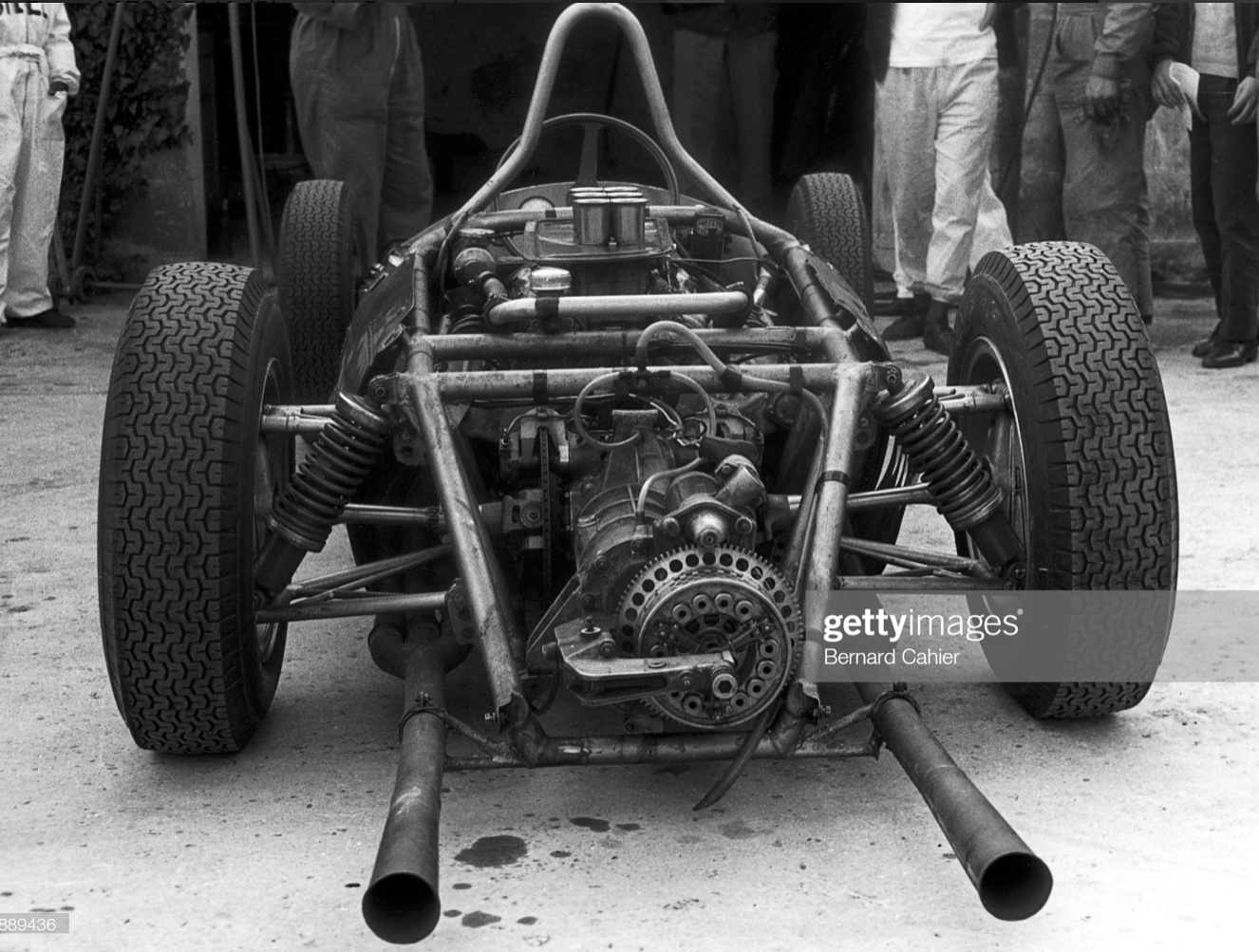
For early 156 Dino enthusiasts these photographs of 0008 taken by Bernard Cahier at Siracusa on this Tuesday April 25, 1961 long-weekend will be of great interest as they show the first chassis in its definitive 1961 form.
All 156’s built and raced in 1961-1962 started right here, or I guess twelve months before if you argue that the original 2.4-litre 246P version of 0008 was the starting point, which of course factually it was.
The bodywork of the car is ‘unique’ in that it has two supplementary air intake slots on the cowling, it’s very sleek compared to 0008 as it was in early 1960, to the form shown above. The shark-nose was supposedly low-drag, Carlo Chiti deployed it in his 1961 sportscar designs as well, the approach was a function of work in Ferrari’s scale-model wind tunnel.
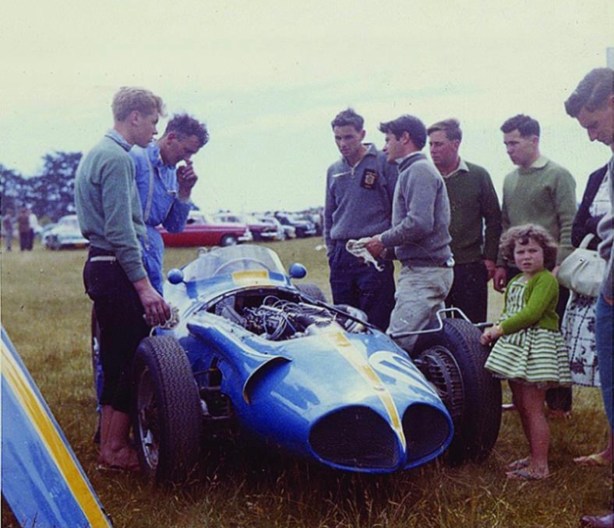
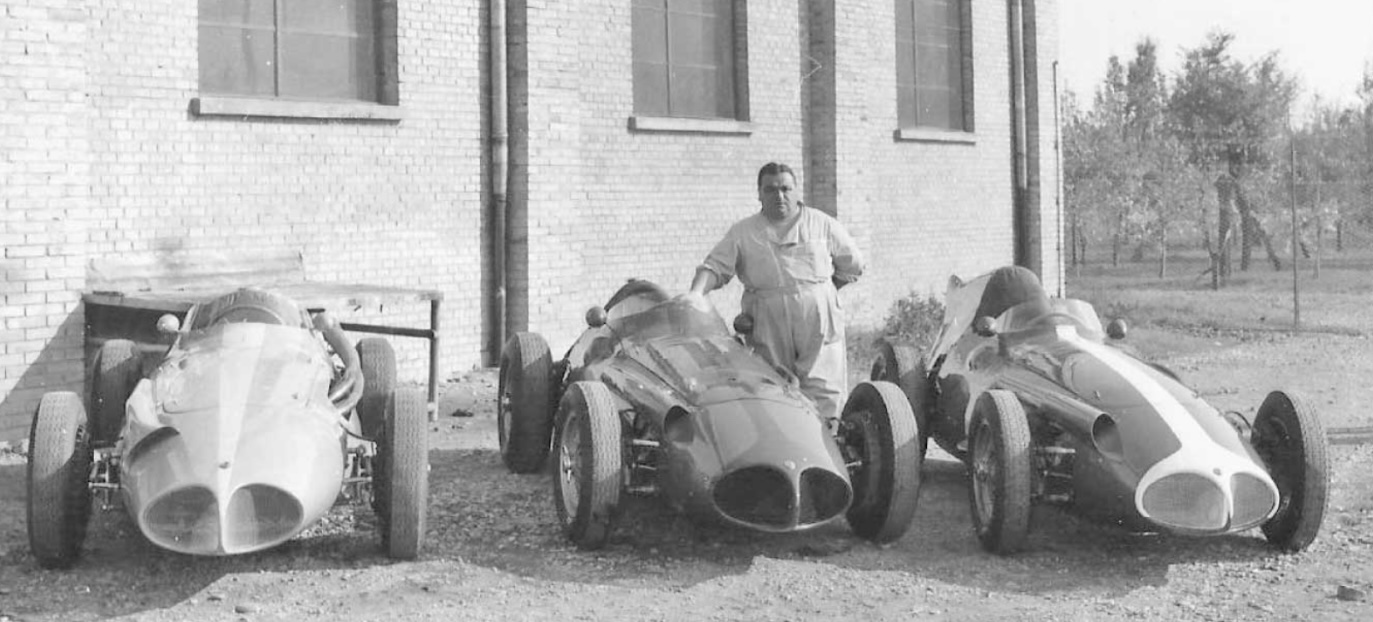
It may well be that the shark-nose design was suggested to Chiti by Medardo Fantuzzi, one of Ferrari’s favoured external body-builders. He modified a Maserati 250F for Kiwi Ross Jensen (#2508) in this manner in late 1957, and then two other 250Fs for Temple Buell (#2533 and 2534). Fantuzzi built the 156 and sportscar bodies.
Maserati 250F ‘2508’, ex-Moss/Jensen, when owned and raced by Brian Prescott at Wigram, NZ in April 1961. Medardo Fantuzzi nose to the fore (Classic Auto News)
Medardo Fantuzzi with the three ‘shark nose’ Maserati 250Fs at his Modena factory in late 1957 or early 1958. Jensen’s at left – he finished second to Jack Brabham in the January 11, 1958 NZ GP in his upgraded car – the two Temple Buell machines alongside (unattributed)
Doug Nye described the chassis thus ‘The multi-tubular chassis itself was crude and hefty looking, not as unimpressive as a Cooper’s – not least of all its tube runs were straight – but not a patch on the lightweight lattice of a Lotus, BRM or even a Porsche.’ Big, butch, beefy and crude the chassis was, but it certainly did the job in 1961. It was only when the chassis sophistication of the Brits was harnessed to the power of the Coventry Climax and BRM V8s in 1962 that the class of ’61 became the dunce of ’62.
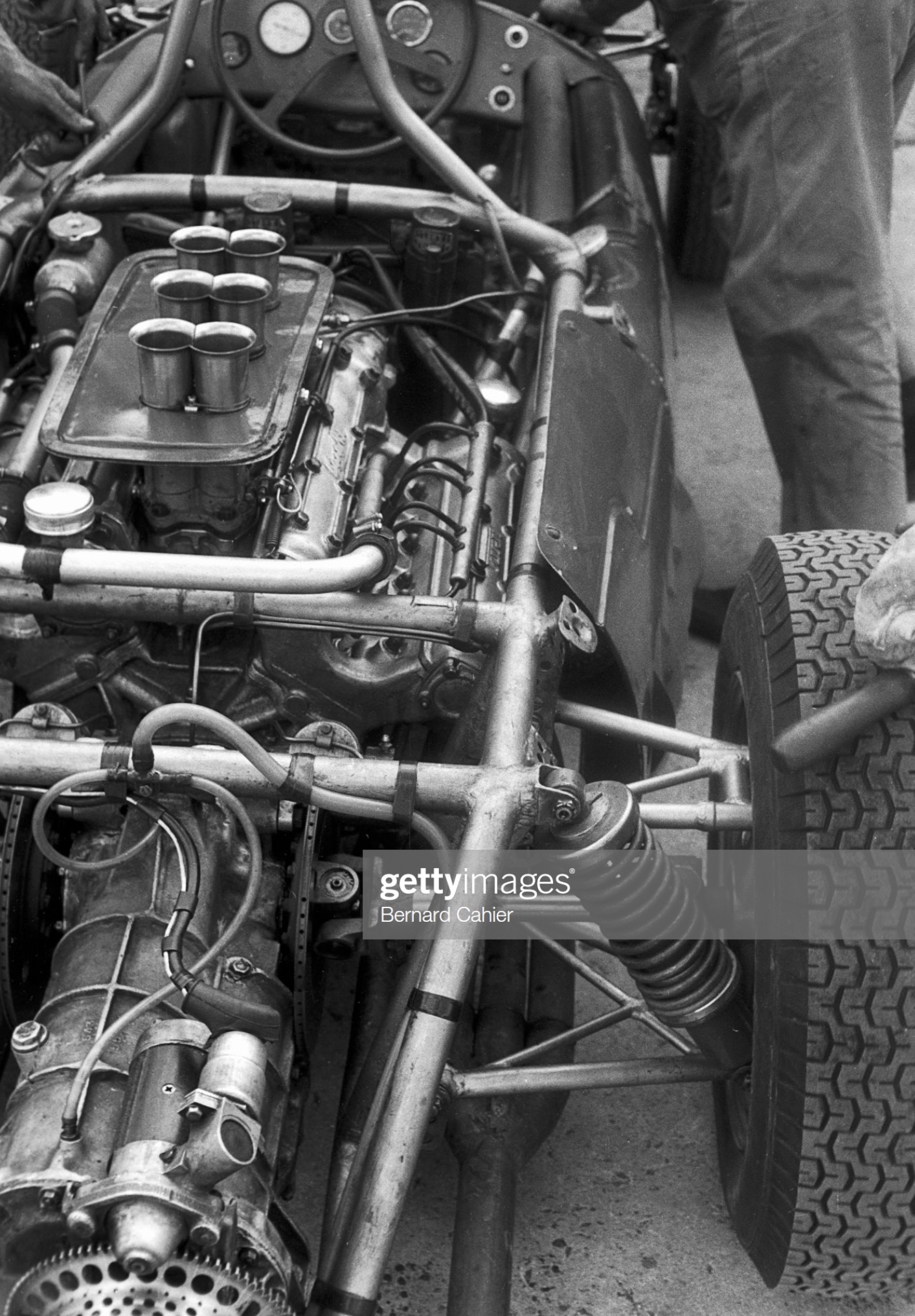
The main chassis rails were made of 1 1/2 inch steel spaced vertically 15 inches apart, the 120-degree motor required bulged top rails for installation, whereas the 65-degree unit did not, its rails were straight. The 120-degree frame swallowed the earlier motor whereas the wide engine wouldn’t fit into the narrower 65-degree frame.
Suspension front and rear comprised upper and lower braced wishbones and coil spring/damper (Koni) units, roll bars were adjustable both front and rear although it appears Giancarlo didn’t race with a rear fitted in Siracusa. Chiti set the cars up with bulk static negative camber, I guess the race Dunlops fitted to the 156 liked the setup.
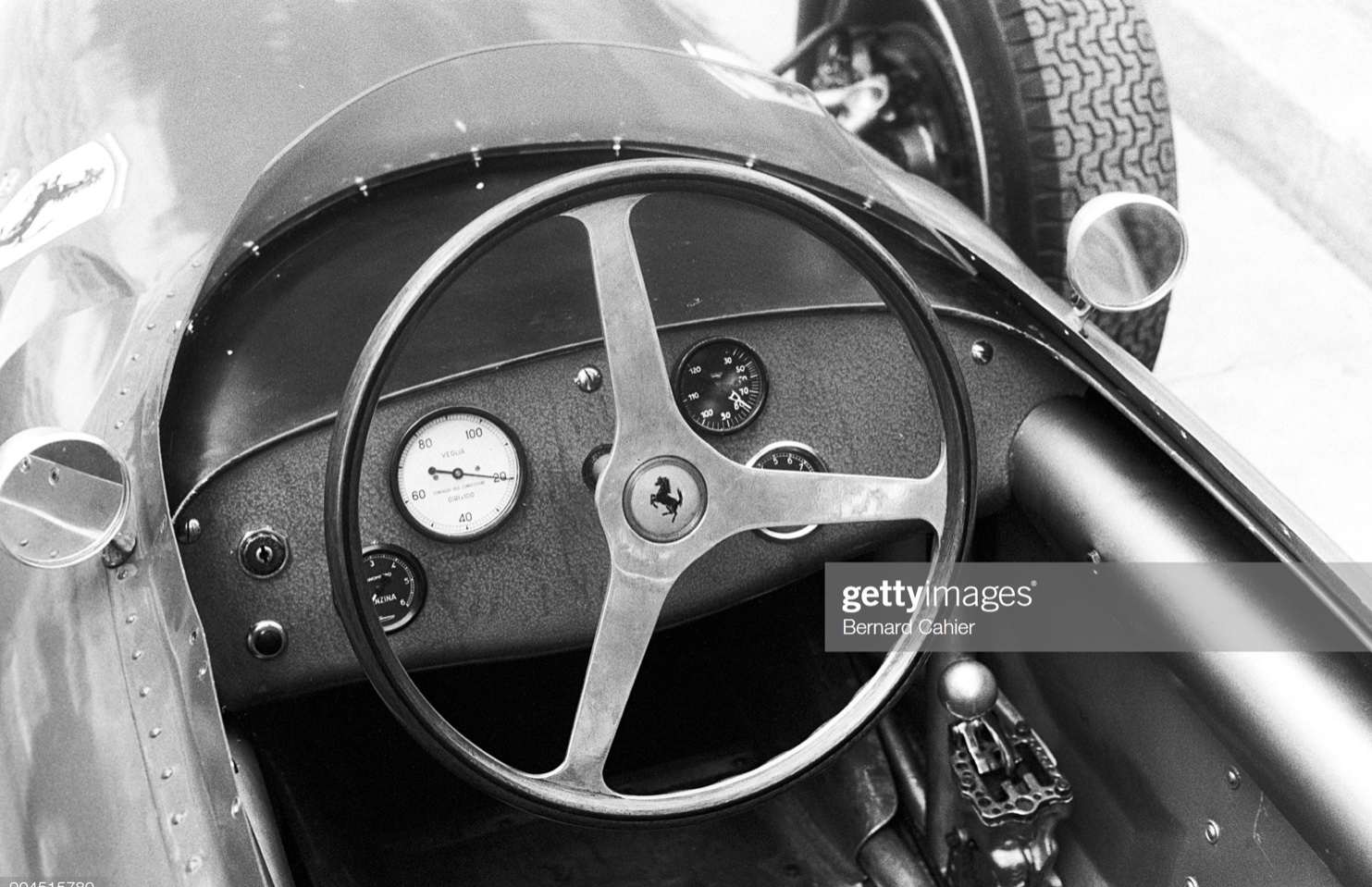
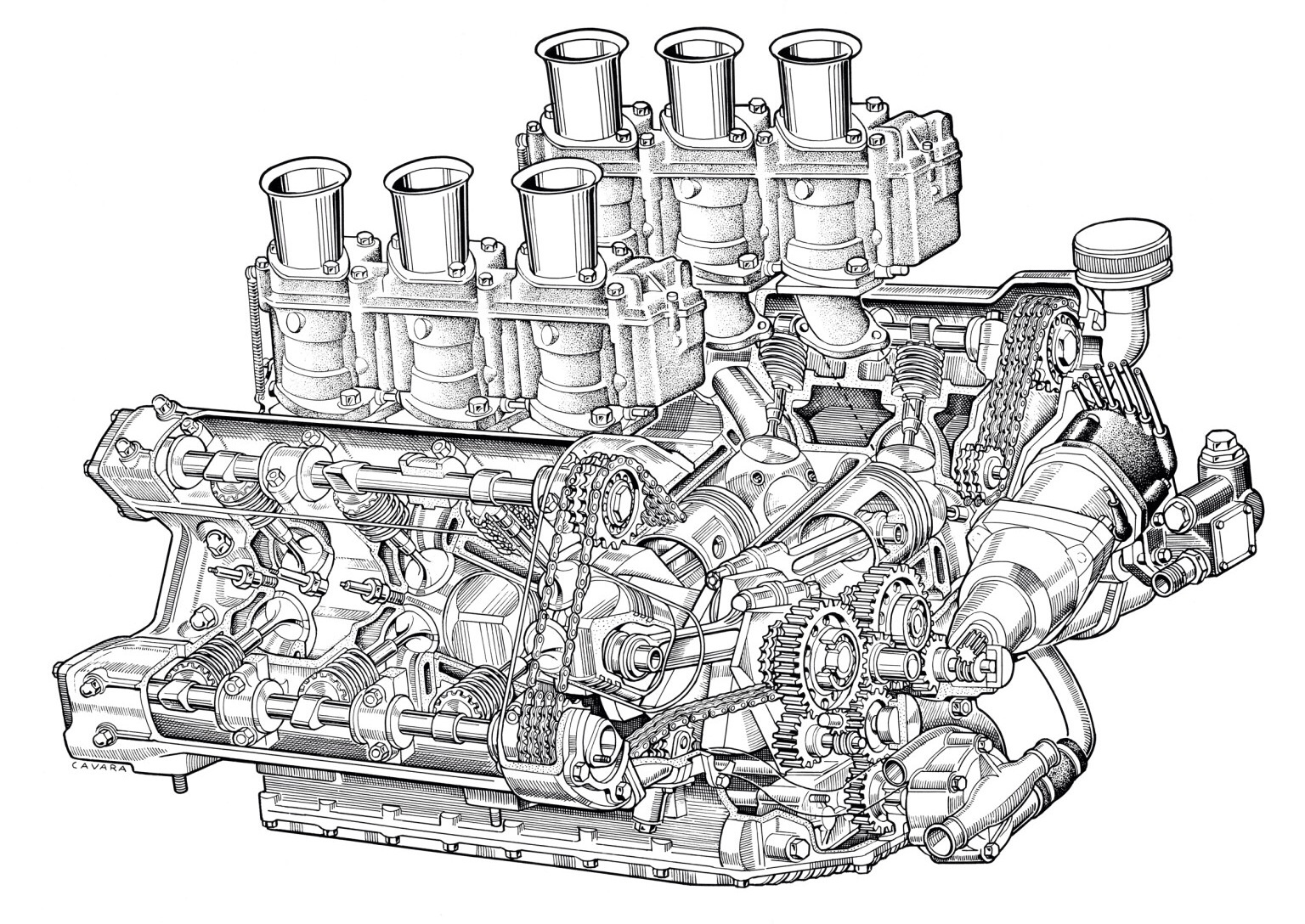
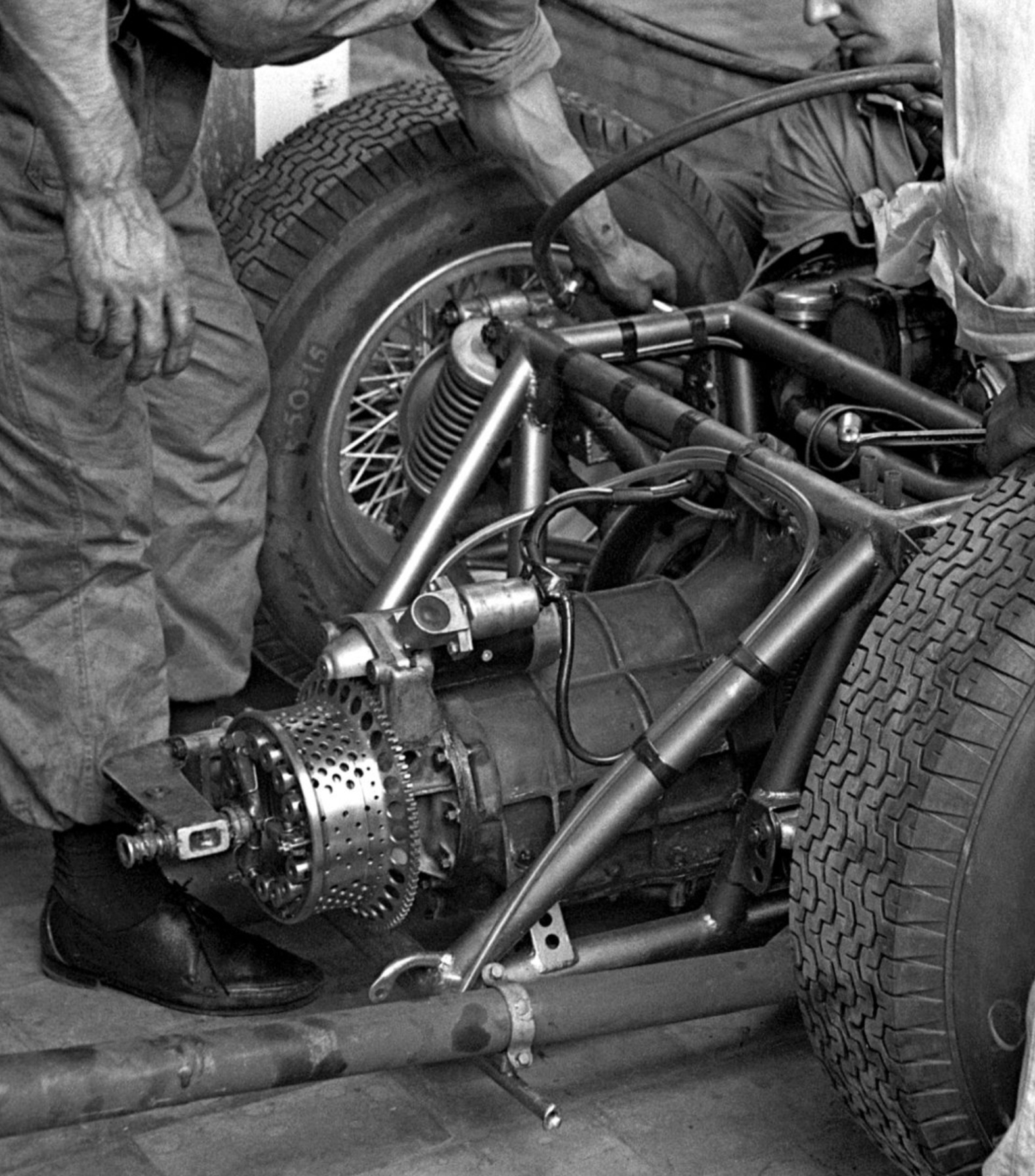
156 cockpit, Monaco 1961 Engine bay of 0008 at Syracuse. Note the beefy spaceframe chassis Doug Nye described as being welded together by ‘Mr Blobby’. 65-degree second series Tipo 156 V6, bore/stroke 73×58.8mm, circa 180bhp fed by three 38mm Webers. The 120 degree engine had two bespoke triple choke Weber 40IF3C carbs. Note the large transaxle and starter motor, no rear roll bar fitted, suspension by upper and lower wishbones, ventilated disc brakes are inboard
The 1.5-litre Vittorio Jano (and team) designed 65-degree V6 first appeared as a front-engined F2 car in 1958. The DOHC, chain-driven, two-valve, twin-plug, triple Weber fed motor developed circa 180bhp @ 9000rpm and was fitted to a scaled down version of the then current 2.5-litre Lancia D50 derived – and then further evolved – V8 engined 801 F1 chassis, then designated 156.
The capacity of Jano’s V6 engine grew progressively to 2417cc in which form the Ferrari Dino 246 won the 1958 drivers championship for Mike Hawthorn.
As time went on it became clear Ferrari had the makings of an excellent car for the new 1.5-litre F1 which commenced on January 1, 1961, and which was expressed in the evolution of 0008 from a chubby, pudgy 2.4-litre F1 car at Monaco in May 1960 a svelte shark-nosed 1.5-litre F2 machine before Monza in September.
Chiti’s definitive engine for 1961 was a new variant of the Dino using a very wide-angle V6 of 120-degrees to lower the engines centre of gravity, and simplify manufacture of the engine’s crank. A motor of this width would not have fitted comfortably into the front-engined Dino 246/256 chassis.
The two camshafts were still chain driven, the heads still two-valvers, and still twin-plug. The dimensions of the 1960 Solitude 65-degree engine were adopted – bore/stroke of 73mm x 58.8mm for a capacity of 1476.6cc. Nye reports that all of the major castings were made in Siluminum, the 120-degree engine weighed 225 pounds, 30 pounds less than the good ‘ole Coventry Climax 1.5-FPF four cylinder motor.
Carburettors were bespoke, beautiful Weber triple-choke type 40 IF3C. Ferrari initially claimed 190bhp @ 9500rpm but ‘initial tests only yielded 177, which was still 30 more than the FPF’ used by the English teams in 1961. Jano also gave the existing 65-degree engine a bit of a tickle as a second-string unit, pending enough 120-degree engines to go around the three car Scuderia Ferrari team. When the FISA team were present four 156s presented a formidable challenge to the opposition…
Compare and contrast. Richie’s 156 0001, the prototype 120-degree engine chassis during the 1961 Monaco GP weekend. Note how low that engine sits in the chassis, trick triple throat Webers clear (G Cavara) 0008 butt, Syracuse 1961 (B Cahier)
While the V6s in either format were delicate, compact little things, the transaxle was anything but- however it did prove problem free, as Ferrari gearboxes down the eons have tended to be. The same ‘boxes were used with both engines – these 16.25 inch long units were developed versions of the five speed and reverse transaxle used in 0008, with the clutch assembly exposed to the breeze on the end plate. The thing looks bigger than it actually was due to a wide bell-housing between engine and transmission to push the engine forward in the frame to obtain the weight distribution Chiti sought.
Nye records that Ferrari appear to have built eight chassis during 1961. 0008 was numbered in the 246 Dino sequencing, in addition there were new chassis’ serials 0001-0006, with two appearing under the 0003 number. Von Trips won the Dutch and British GP’s in 0004 which was destroyed in his fatal Monza accident, Hill won at Spa in 0003, and Monza in 0002 while Giancarlo won at Reims in our friend, 0008.
And what about poor old 0008 you ask?
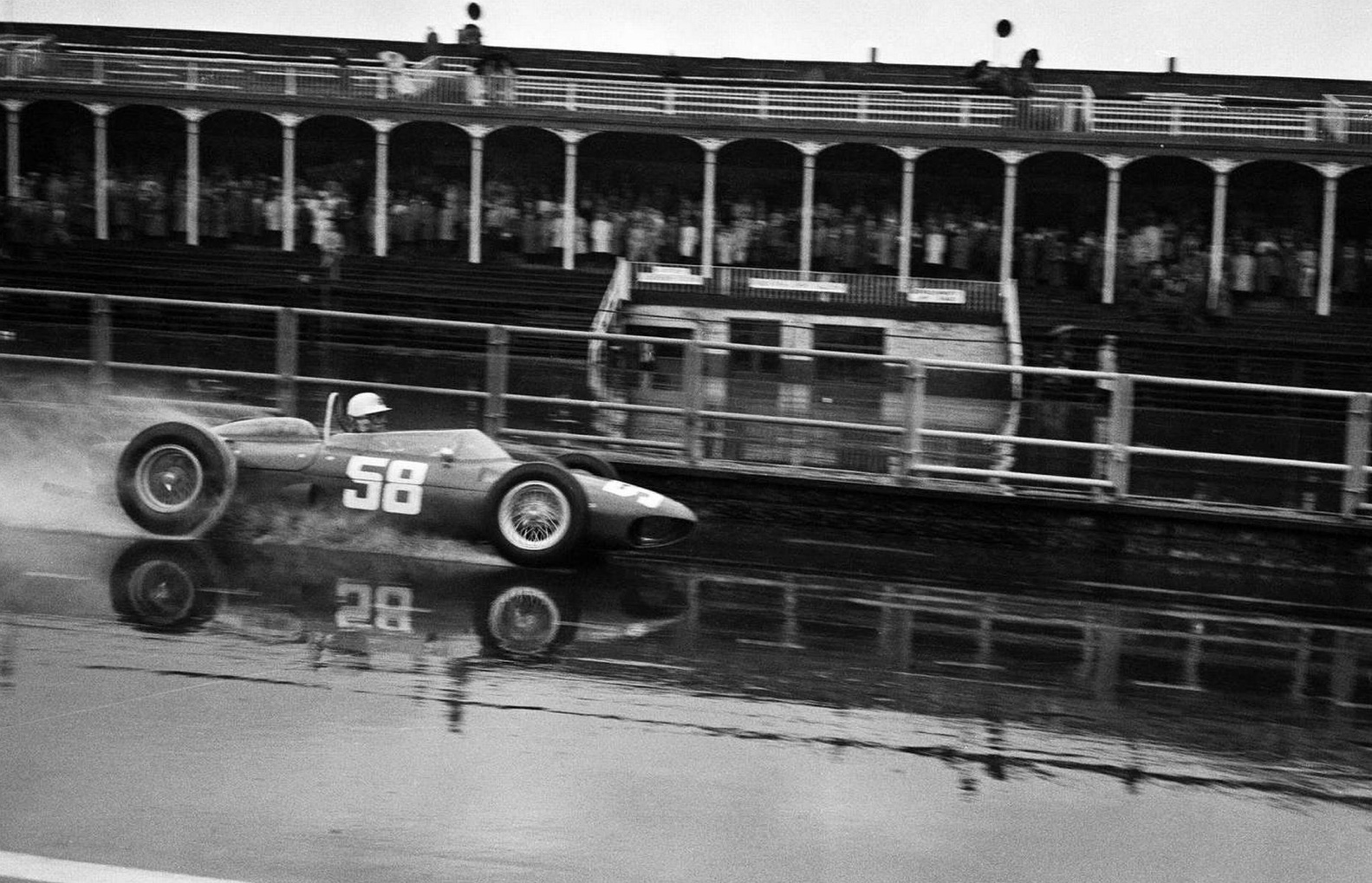
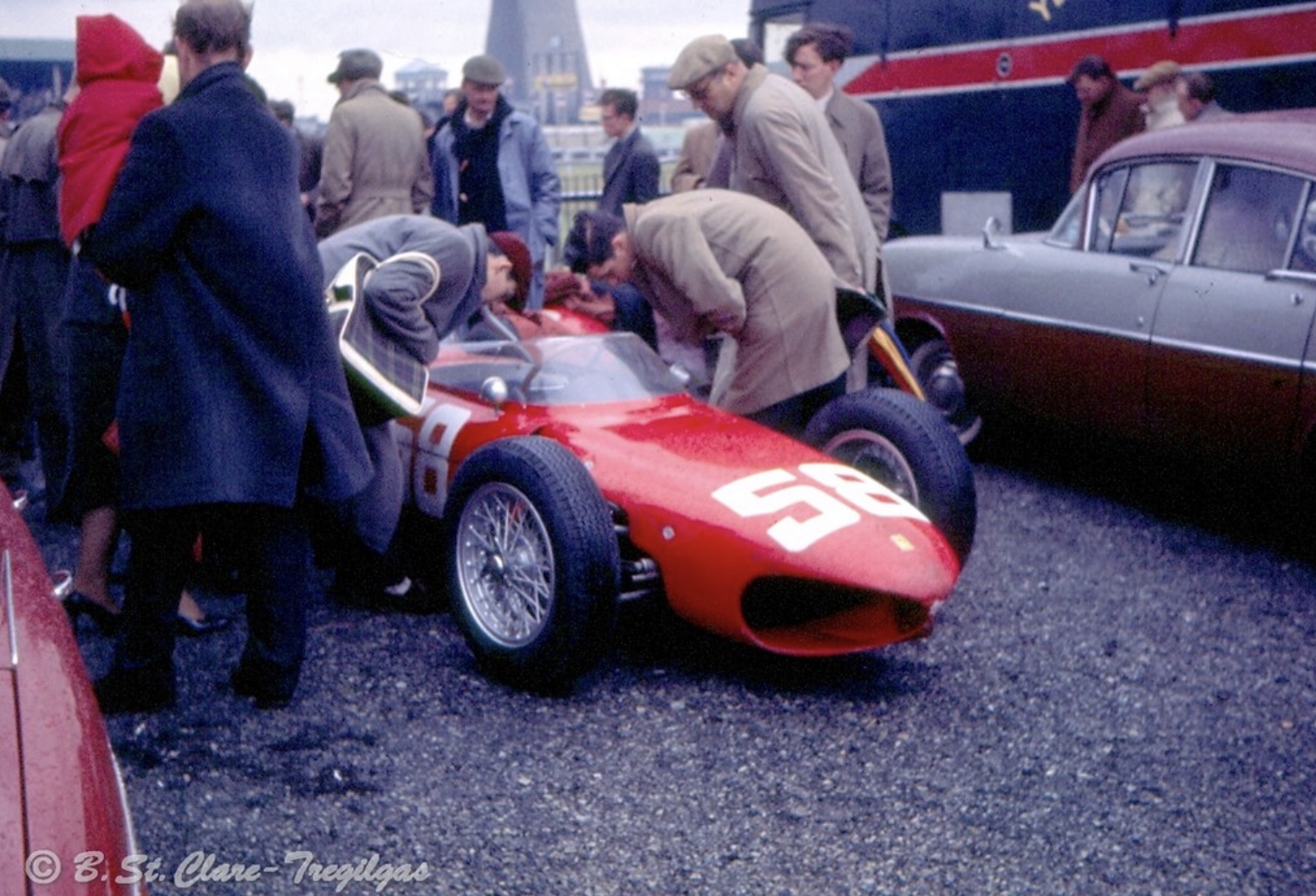
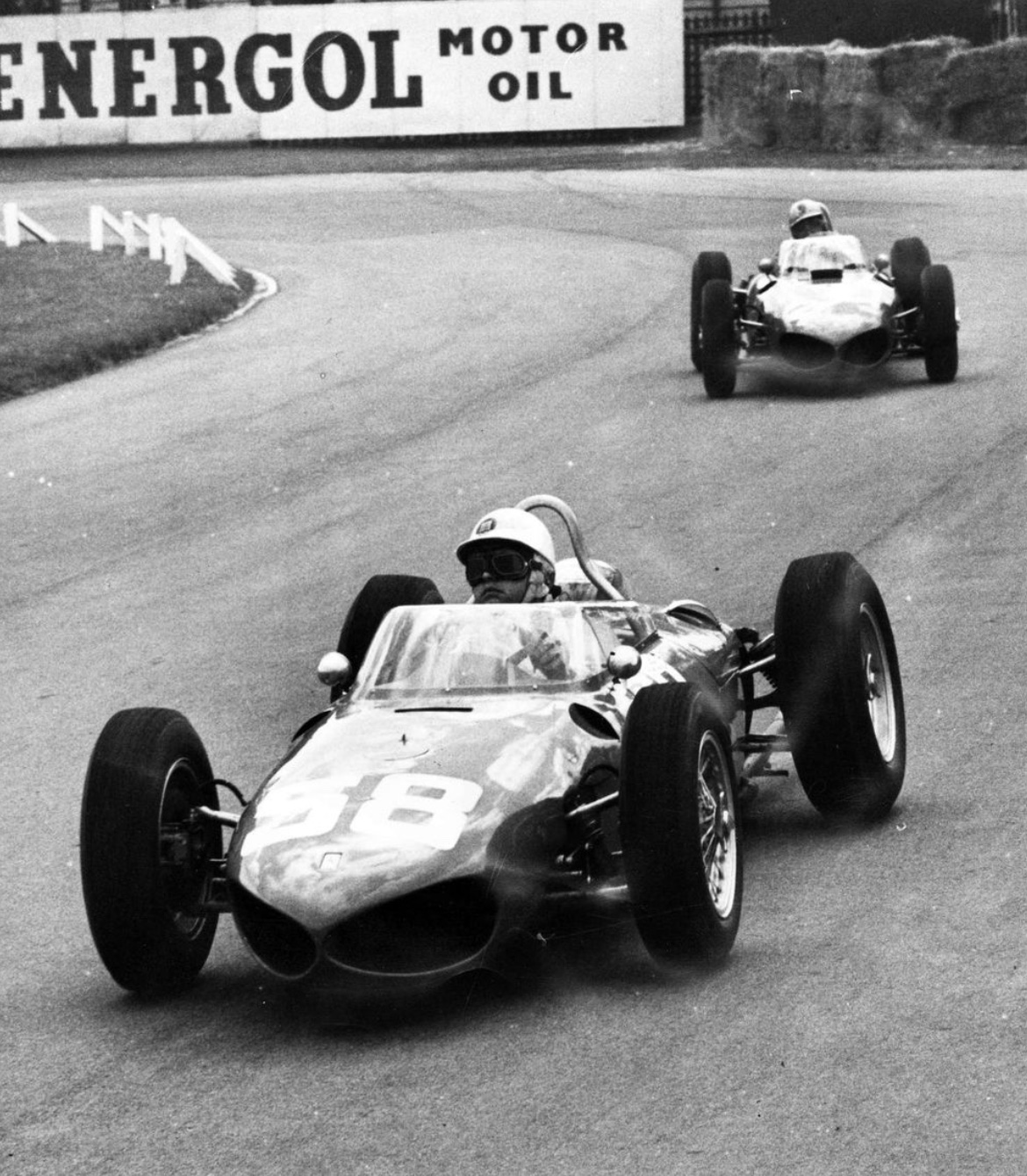
Giancarlo raced it at Aintree in the British GP the week after Reims (#58 below) doing enough damage to the prototype for it to be scrapped; he crashed at Waterways Corner while avoiding another competitor having his own moment when running in twelfth place from Q19. Of course all the 156s were ultimately destroyed, but if only one of the many chassis built between 1960-1962 were to have been preserved surely it would be this one…
(Echo)
Giancarlo above while up front Taffy von Trips won the July 15 British Grand Prix from his teammates Hill and Ginther, Jack Brabham was best of the rest, 68 seconds behind Von Trips in his Cooper T55 Climax.
0008 in the Aintree paddock, note the different nosecone fitted to the car compared to that used in the Syracuse heat. Wire wheels were very much old hat by this stage, Ferrari retained them in 1962 but Campagnolo’s were part of the 156/63 package in 1963.
Etcetera…
(B Cahier)
Whether the shark-nose was more aerodynamic or not is a moot point. Didn’t Carlo Chiti put his styling stamp on the Ferraris of the time with these oh-so-distinctive visual cues.
I’m cheating a bit here, this Ferrari launch shot in Maranello was in February 1962 not that the 156 was much different, to its cost – 246SP at left.
(B Reeves)
Baghetti in the FISA 156 from Moss’ Rob Walker Lotus 18 Climax at Syracuse in 1961. Nice.
(Echo)
Dry practice at Aintree, Baghetti from Von Trips, the winner, chassis 0008 from 0004. The former was scrapped after this race, the latter destroyed in Taffy’s horrific accident at Monza in September.
Bibliography…
‘History of the Grand Prix Car’ Doug Nye, Veloce Today article by Pete Vack, F2Index, Wikipedia, F1.com
Photo Credits…
LAT, Motorsport, Bernard Reeves, Giuseppe Cavara, Getty Images-Bernard Cahier, Echo Liverpool, B St. Clare-Tregilgas, Classic Auto News
Tailpieces: Giancarlo Baghetti at the wheel of his Ferrari 156 during 1961…
(unattributed)
(unattributed)
Listen Mauro, I think we need to try this. Baghetti, place unknown in 1961, Ferrari 156.
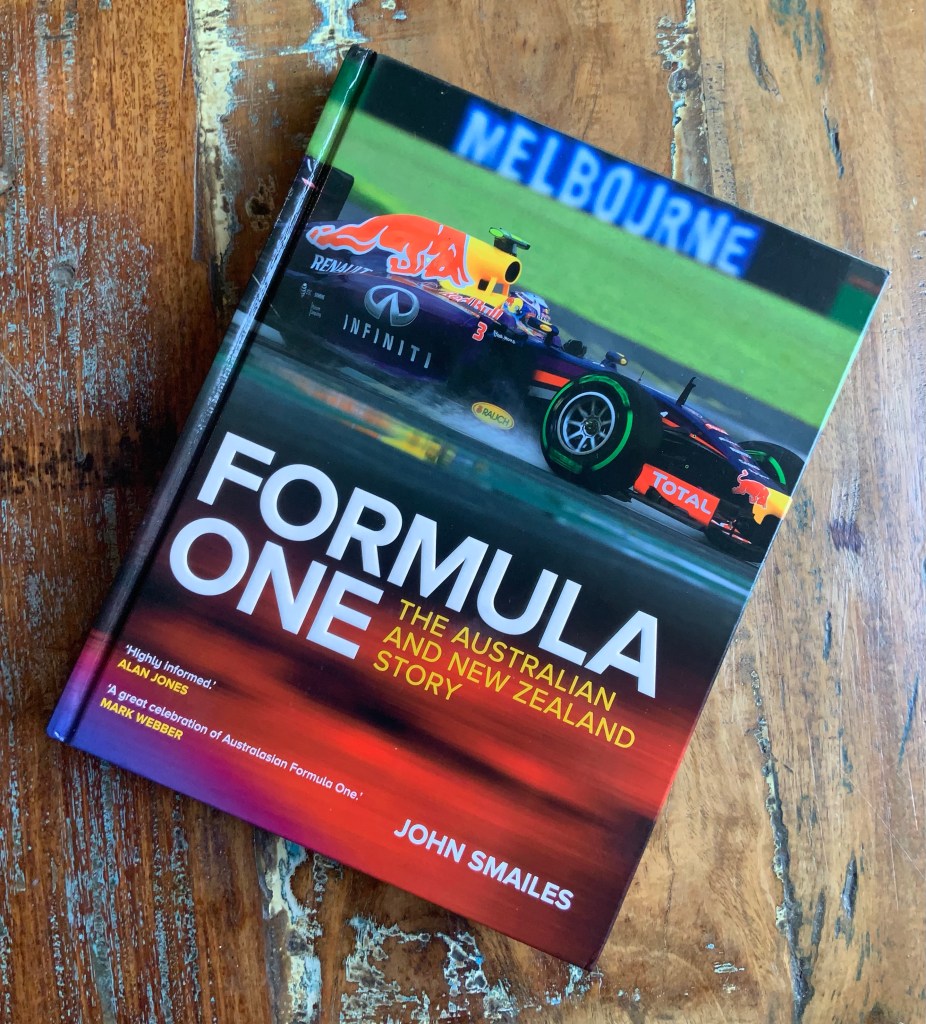
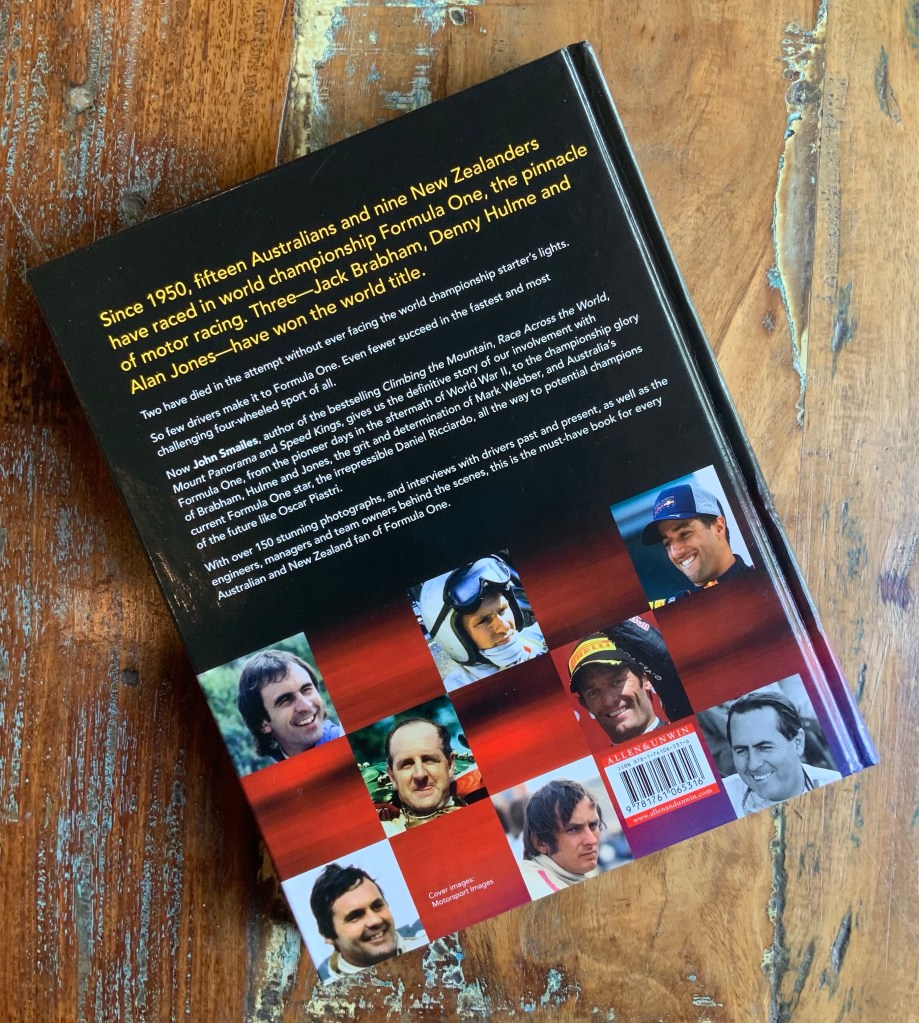
Formula One : The Australian and New Zealand Story is John Smailes’ latest masterpiece, and what a ripper read it is!
24 ANZACs faced an F1 starter, another 13 tested or raced in non-championship F1 events, this is their story told in John’s relaxed, engaging, informative style chockers with facts.
This time Allen and Unwin have cranked up the production budget, the book is a larger hardback and many of over 150 photographs are colour throughout 295 pages.
Smailes’ (he has now written five books with Allen and Unwin) books are passion projects, each one takes about a year to write, he interviewed 44 of his victims in 2019-2021 (or their nearest and dearest) so it has lots of new stuff, it isn’t a regurgitation of what’s gone before.
The format is ‘chronological interesting’. Whammo, he opens with Oscar Piastri – why not start with the future – before launching into the pre-war generation. There are a couple of drivers with stand-alone chapters, the rest are shared and neatly fuse, for example; Frank Gardner and Paul Hawkins, The Brothers Brabham, the ‘Best Opportunity : Worst Luck’ duo of Chris Amon and David Walker, ‘The Bruce and Denny Show’, and ‘Aussie Grit’ Webber/Ricciardo combination. The telling of the story(s) is skillfully cohesive rather than a bunch of stand-alone chapters.
As with his ‘Speed Kings’ Indy book, John has maintained his focus on others who made it to F1 as well as drivers; it’s fascinating to read about designers, team managers/principals, race officials and entrepreneurs in addition to those behind the wheel.
I’d rate myself a subject matter expert on half the drivers but I learned plenty, even about them. It’s a book the knowledgeable will enjoy, but equally assumes no racing expertise so the kid (or partner) you are trying to nurture in the right direction will engage and enjoy.
It’s a buy folks, $A39.99 from all the usual outlets in Australia and New Zealand. For international readers the ISBN is 978 1 76106 531 6 or http://www.allenandunwin.com
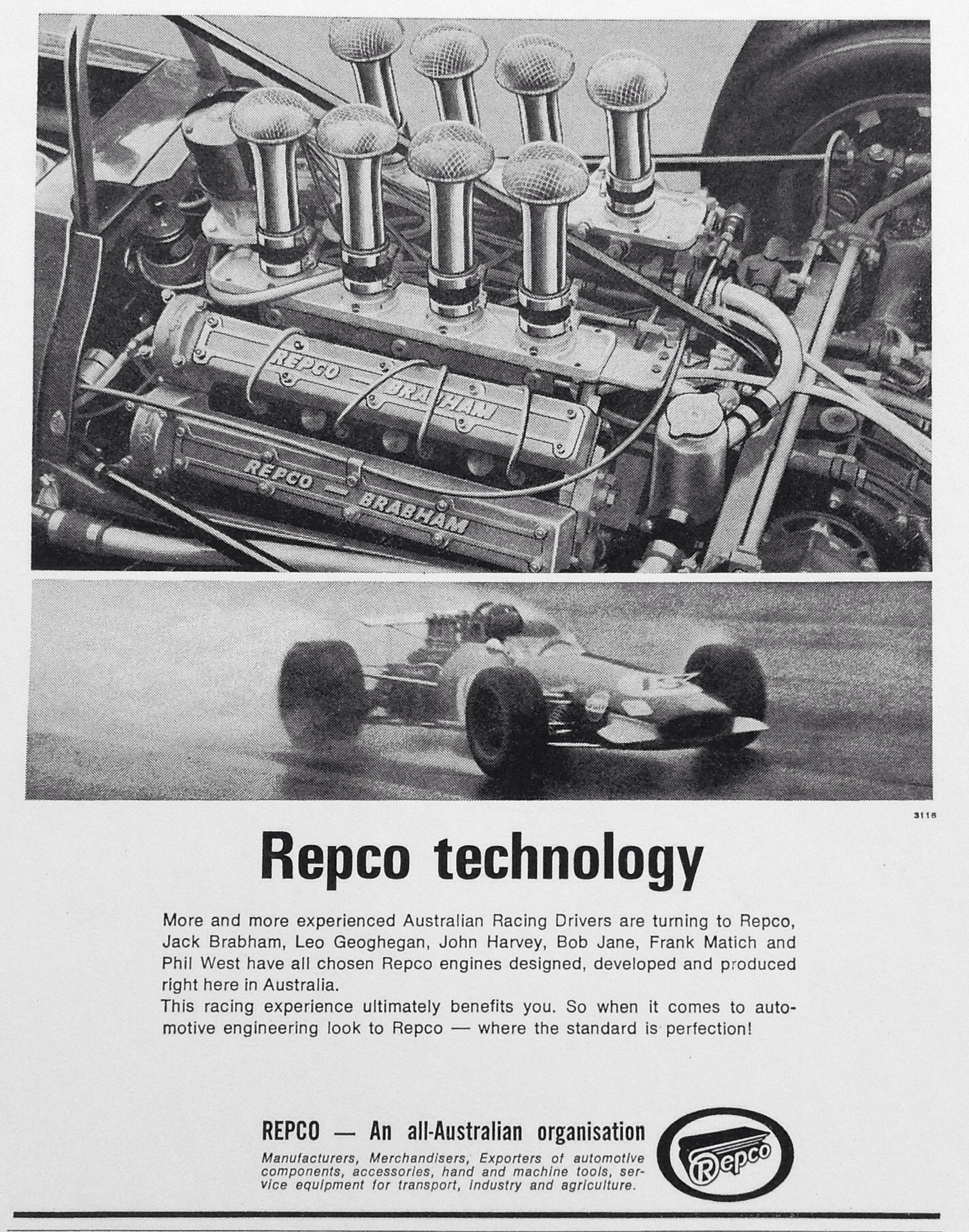
I think anything Repco Brabham is a thing of functional and engineering beauty, simplicity and performance…while admitting hopeless bias!
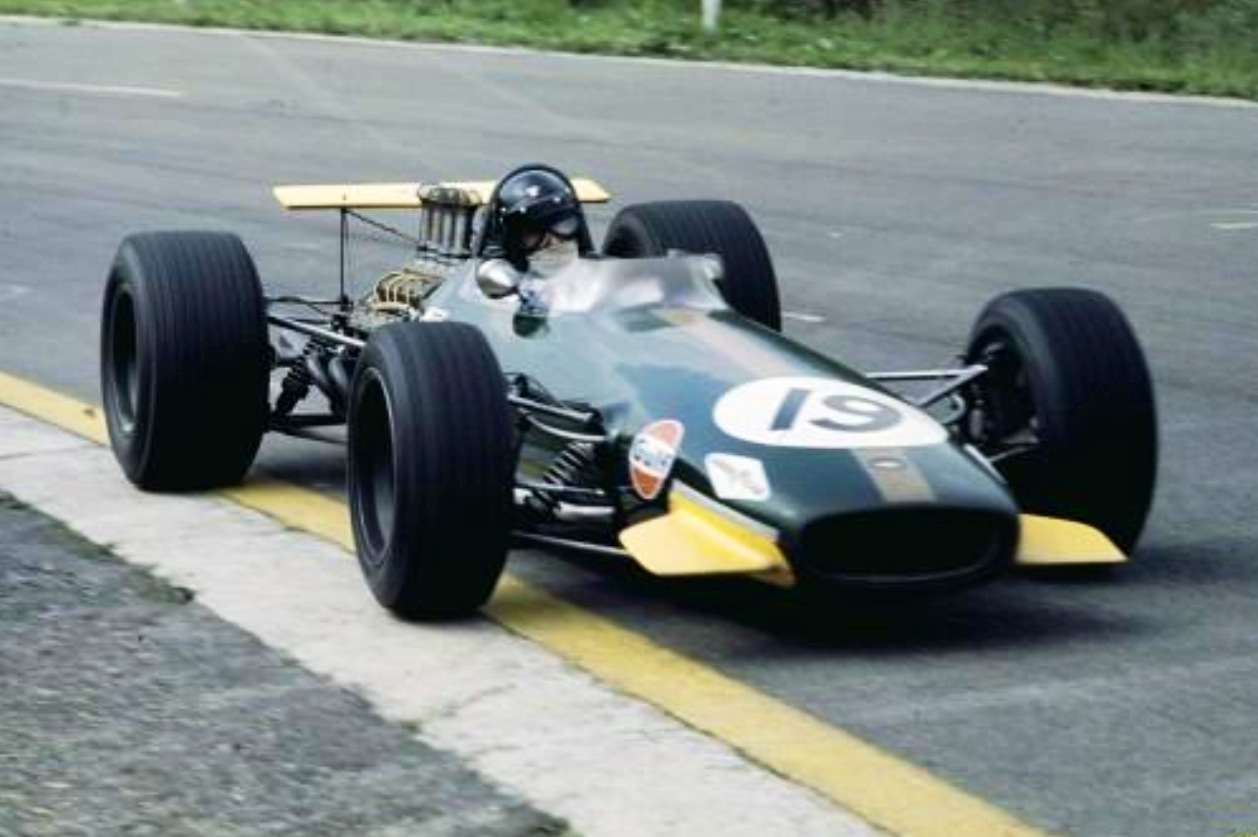
Their F1 3-litre, DOHC, four-valve 860 V8 engine didn’t enjoy the same success in 1968 as its SOHC, two-valve 620 and 740 brothers had in 1966/7 . Don’t forget though, in 4.2-litre Indy, and 4.8/5-litre sportscar form, the 760 (same DOHC, four-valve heads as the 860 but with the long 700 block) delivered the goods for Peter Revson (Brabham BT25 at Indy Raceway Park) and Frank Matich (Matich SR4 in Oz Sportscar Champ) in 1969. The Repco Holden F5000 V8 engine which followed was an international race-winner too.
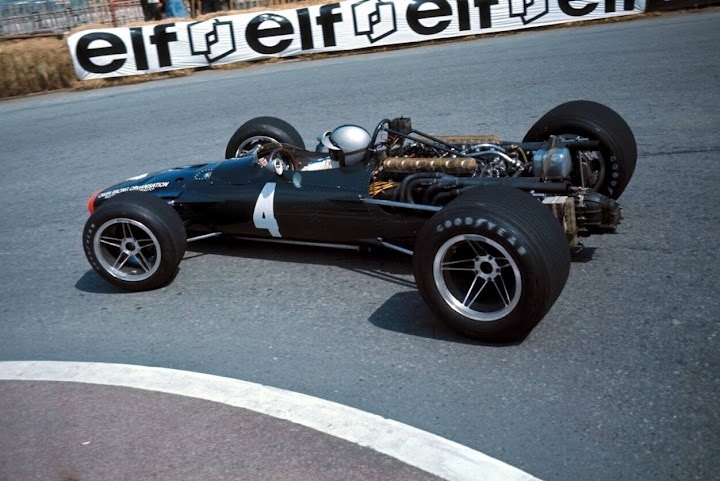
It’s the 860 depicted in the ad above, the shot is Jochen Rindt during the Belgian GP weekend on 9 June 1968, his Brabham BT26 Repco was DNF engine, the race was won by Bruce McLaren’s McLaren M7A Ford.
Jochen’s Brabham BT26 Repco in the dry earlier in the Belgian GP weekend at Spa. Q17 and DNF engine, Jack Q18 and out with throttle slide problems. Bruce McLaren won a famous win in his McLaren M7A Ford (unattributed)
Jochen made these cars sing, he popped the BT26 on pole twice, on the front row three times. With development over the ‘68/9 Australian summer the engine was potentially a winner in ’69. I’m not saying the world title, but there is no reason 400bhp of reliable 860 Series Repco couldn’t have delivered what 405bhp of Cosworth DFV did for Ickx in the Brabham BT26A Ford in 1969; wins on the Nurburgring and at Mosport.
IF ‘yer Aunty had balls she’d be ‘yer Uncle of course, but it is the great intriguing Repco mighta-been had the boys from Maidstone done one final F1 season…
Credit…
Michael Gasking Collection, MotorSport
Tailpiece…
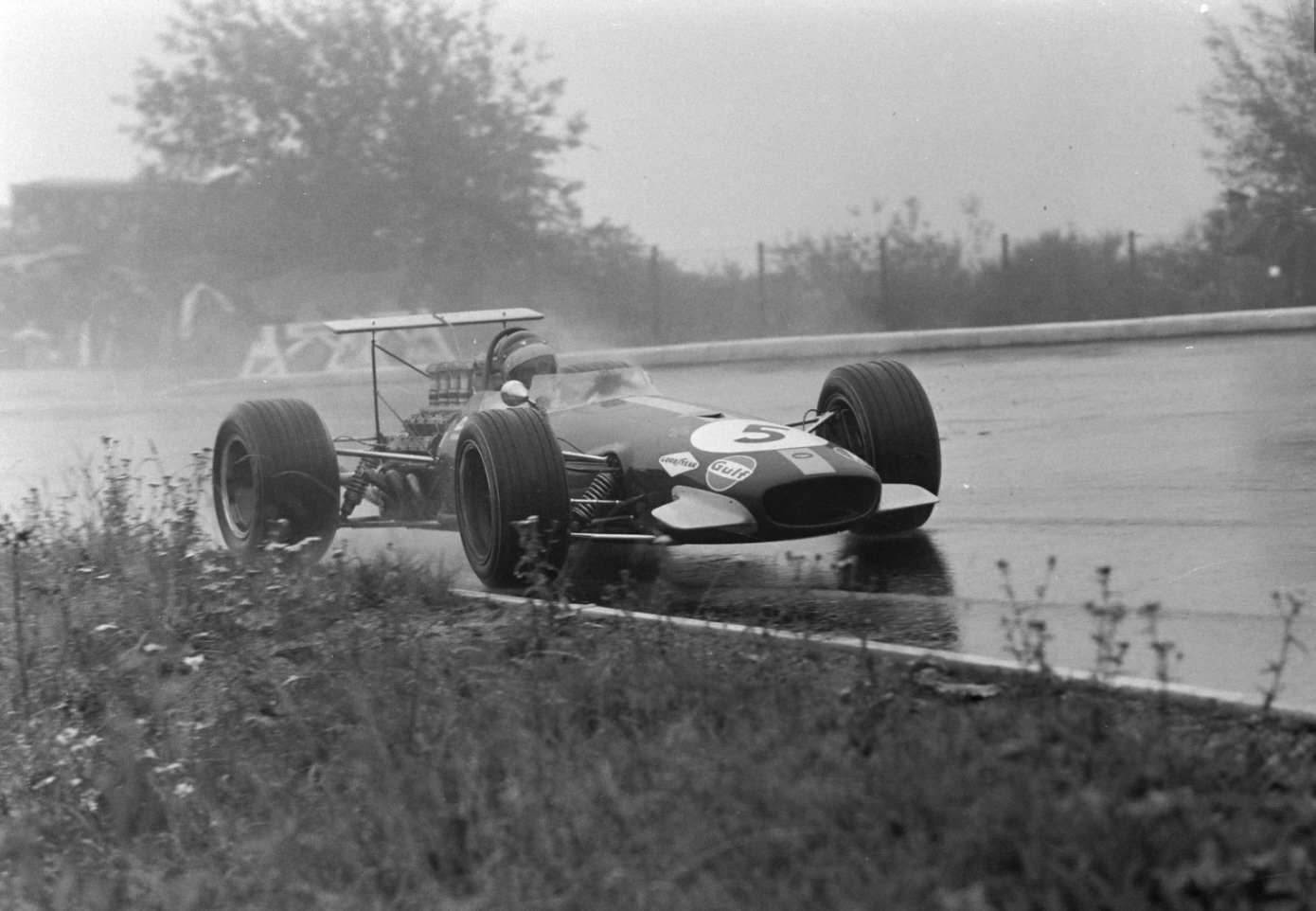
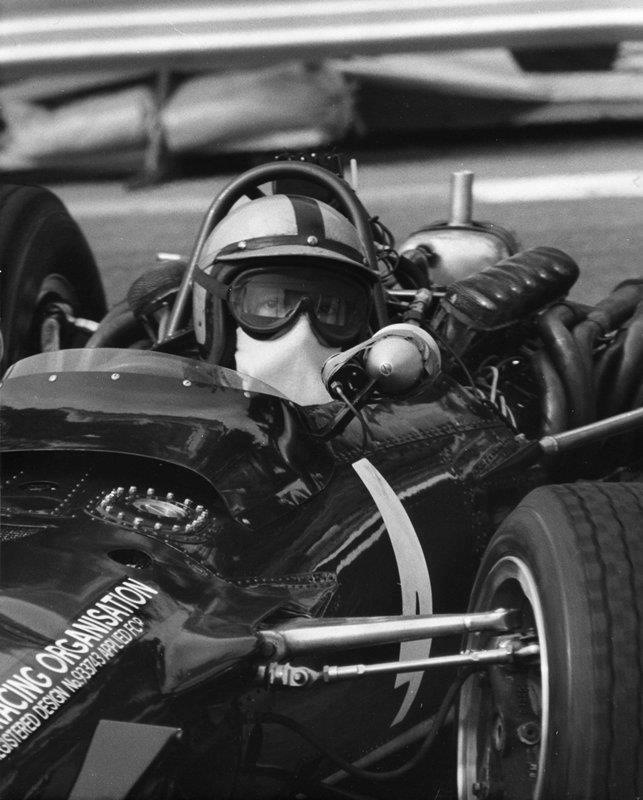
Jochen Rindt in the Eifel Mountains gloom in 1968, he started from grid-slot three and finished in third place behind Jackie Stewart’s Matra MS10 Ford and Graham Hill’s Lotus 49 Ford. The great Austrian was over four minutes adrift of Stewart mind you, but it was still a morale boosting result for the Brabham Racing Organisation and Repco Brabham Engines.
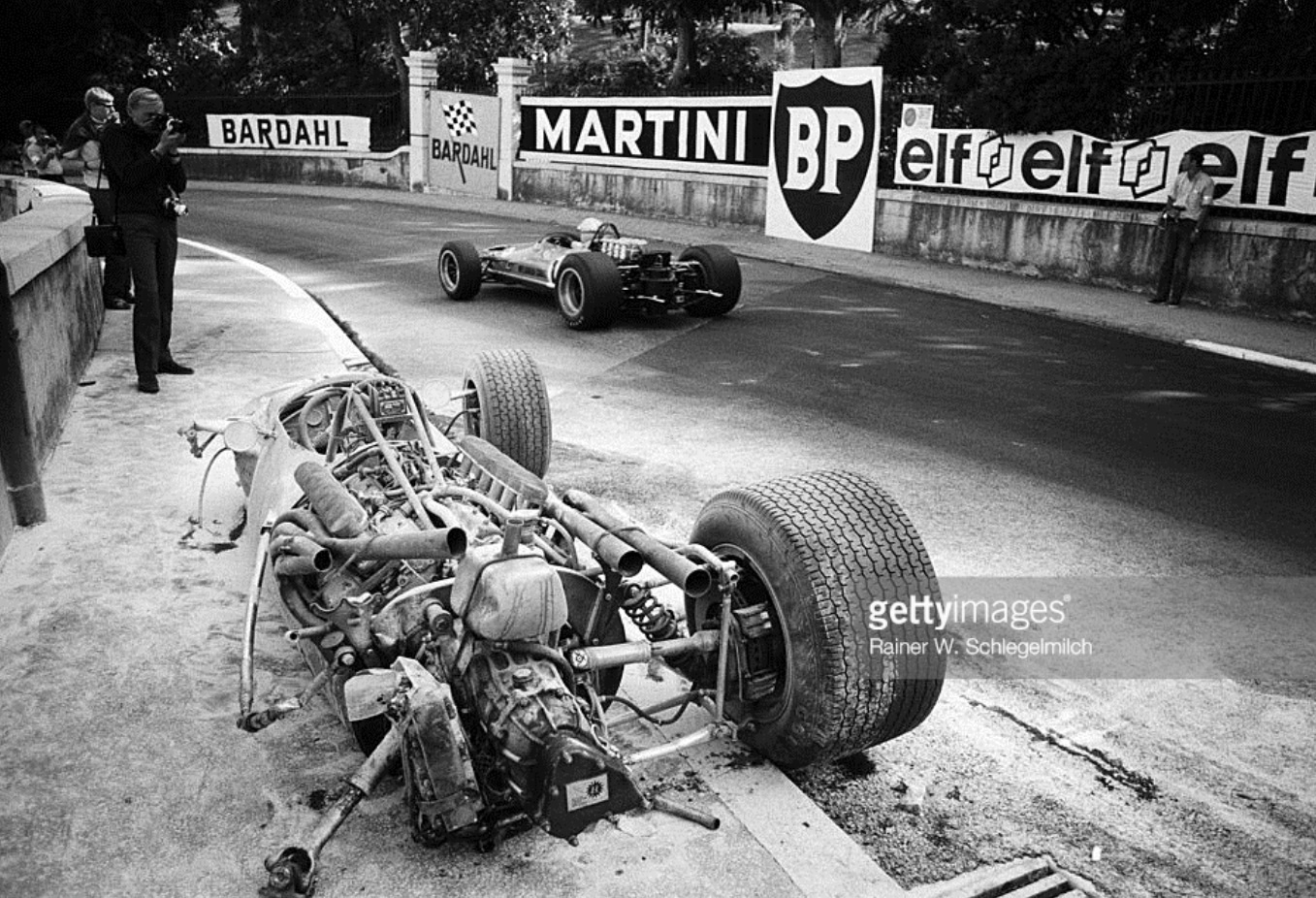
Denny Hulme’s snub/Monaco nosed McLaren M7A Ford passing Pedro Rodriguez’ very dead BRM P133 V12 during the 1968 Monaco Grand Prix…
By lap 16 there were only five cars left in the race won by Graham Hill’s Lotus 49B Ford from Richard Attwood’s BRM P126 and Lucien Bianchi’s Cooper T86B Maserati. Pedro boofed the Len Terry designed BRM on lap 16 having qualified ninth, Denny raced his car to fifth.
A couple of design aspects of the P126/133 design in the shot below are worth noting. The Hewland DG300 transaxle is the only occasion on which a non-BRM ‘box was fitted to a Bourne designed and built car. Checkout the remaining right-rear suspension componentry too, the twin-parallel-lower-links set up to better control rear toe, later picked up by all and sundry, was first designed for this car by Len.
Credits…
Rainer Schlegelmilch
Tailpieces: Pedro and BRM P133 in pre-rooted state…
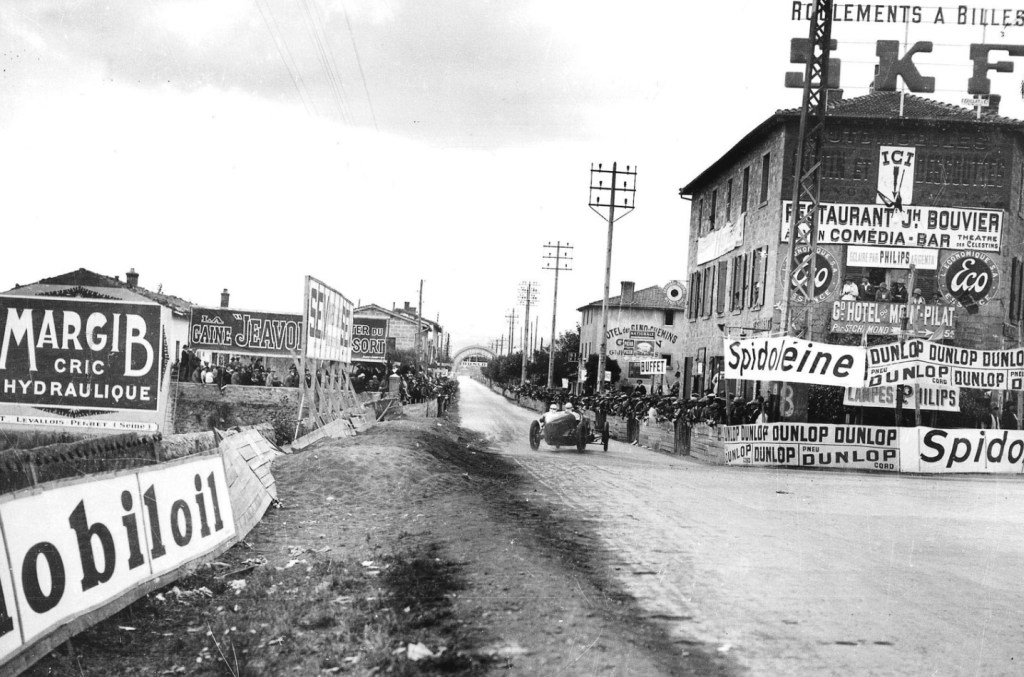
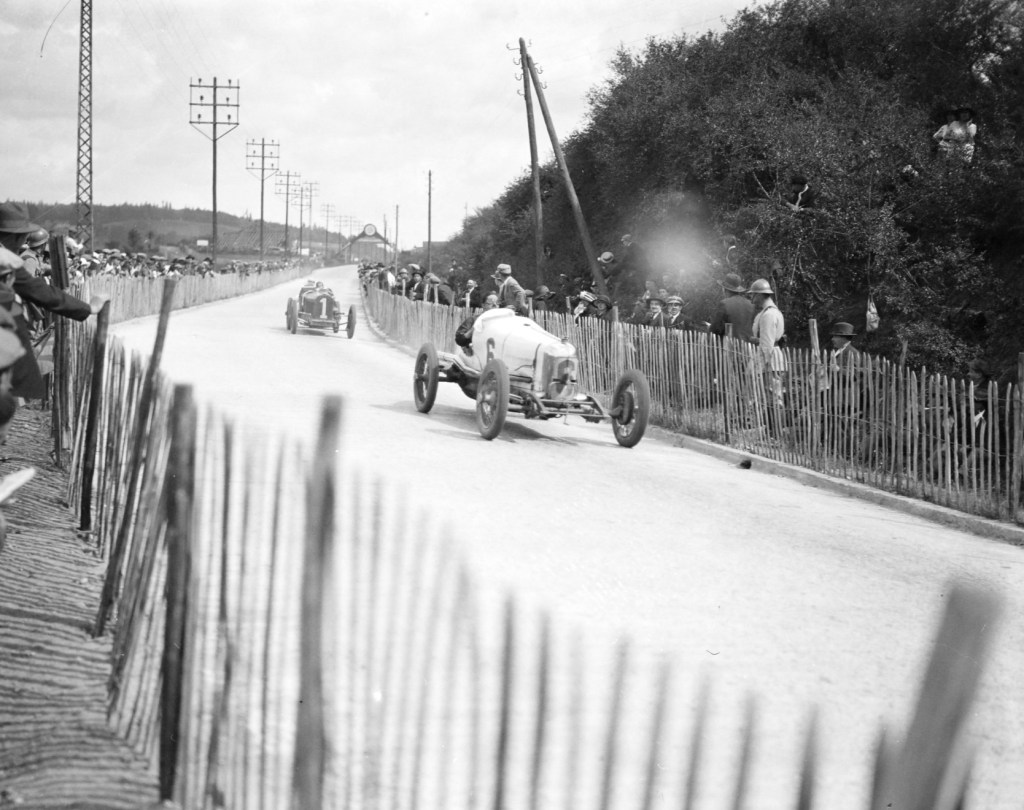
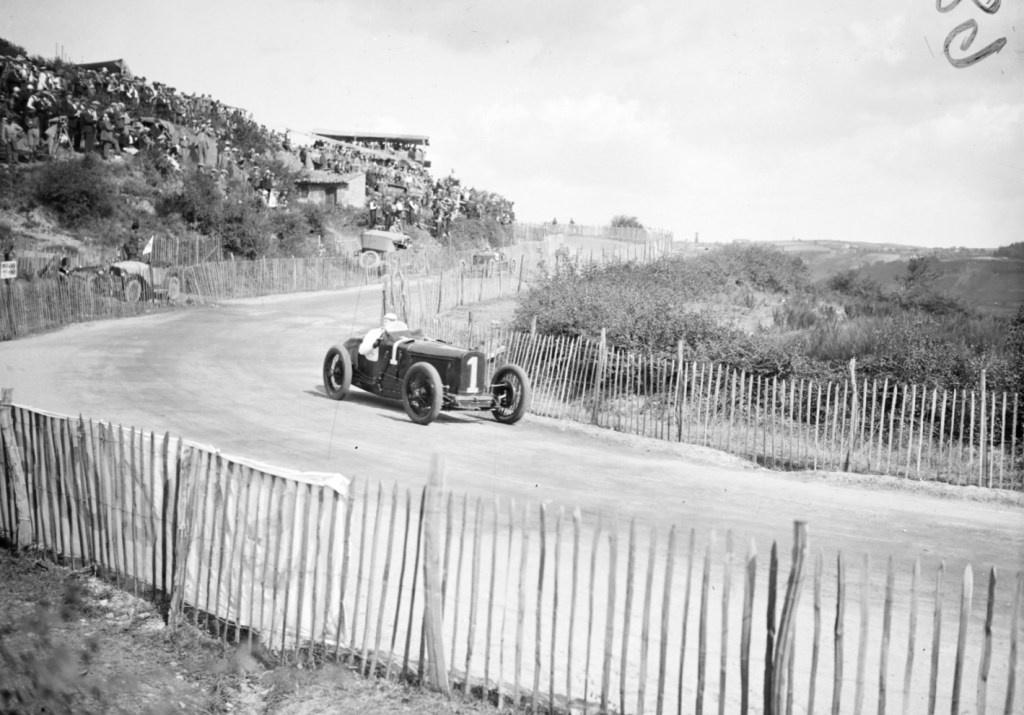
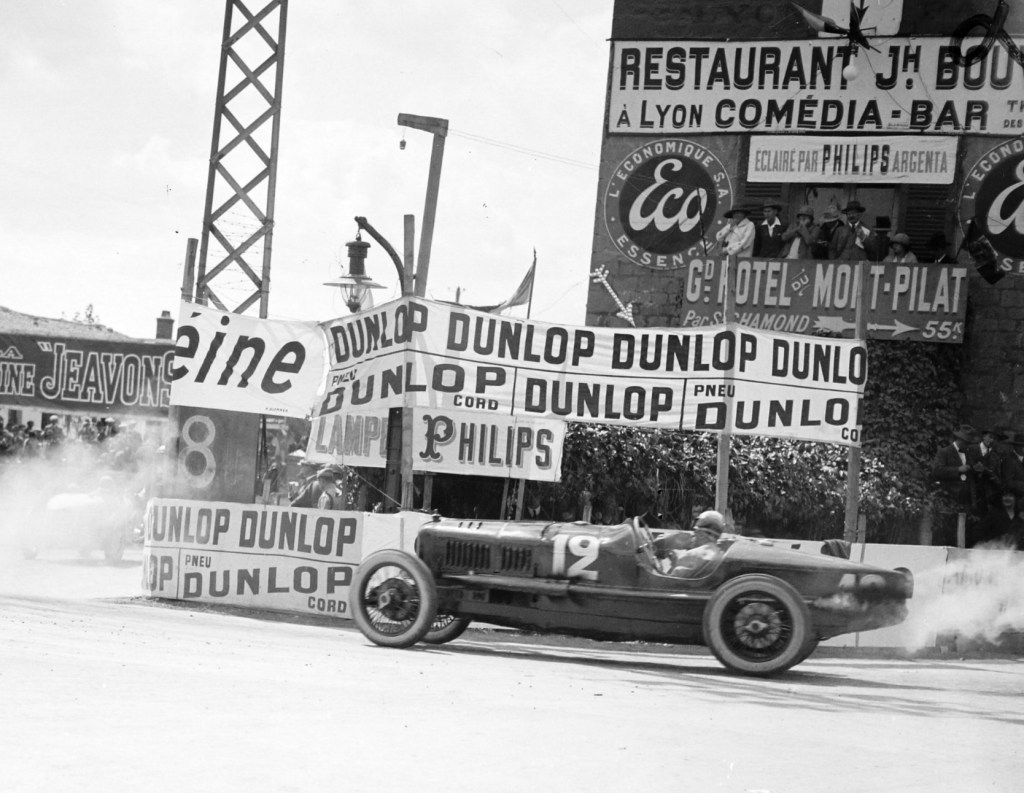
Robert Benoist’s Delage 2LCV passes the Dunlop Bridge during his run to third place, Grand Prix D’Europe, Lyon, France on August 3, 1924…
100,000 people watched the 500 mile race, 35 laps of the 14.4 mile road course took winner Giuseppe Campari seven hours, five minutes and 34 seconds to complete in his supercharged 2-litre Alfa Romeo P2 straight-eight. Albert Divo and Benoist were second and third in normally aspirated Delage 2LCV V12s.
The 2-litre Grand Prix formula utilised between 1922 and 1925 was a noteworthy period of innovation. Its key elements included engines of no more than 2-litres, a minimum weight of 650kg, a minimum body width of 80cm and obligatory riding mechanics.
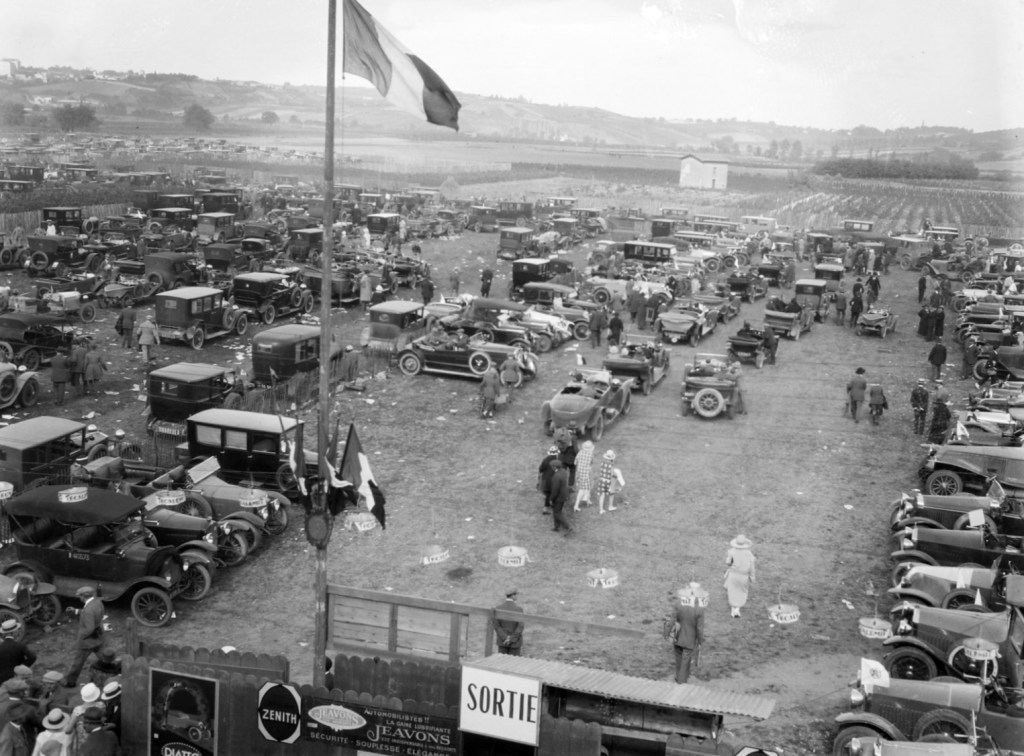
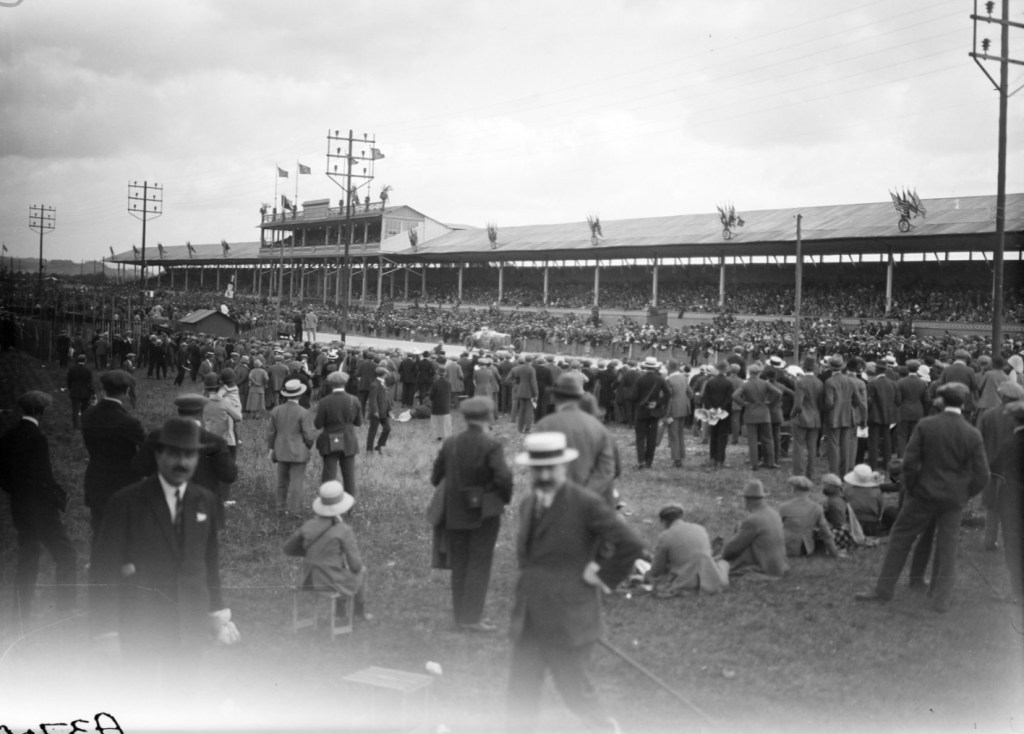
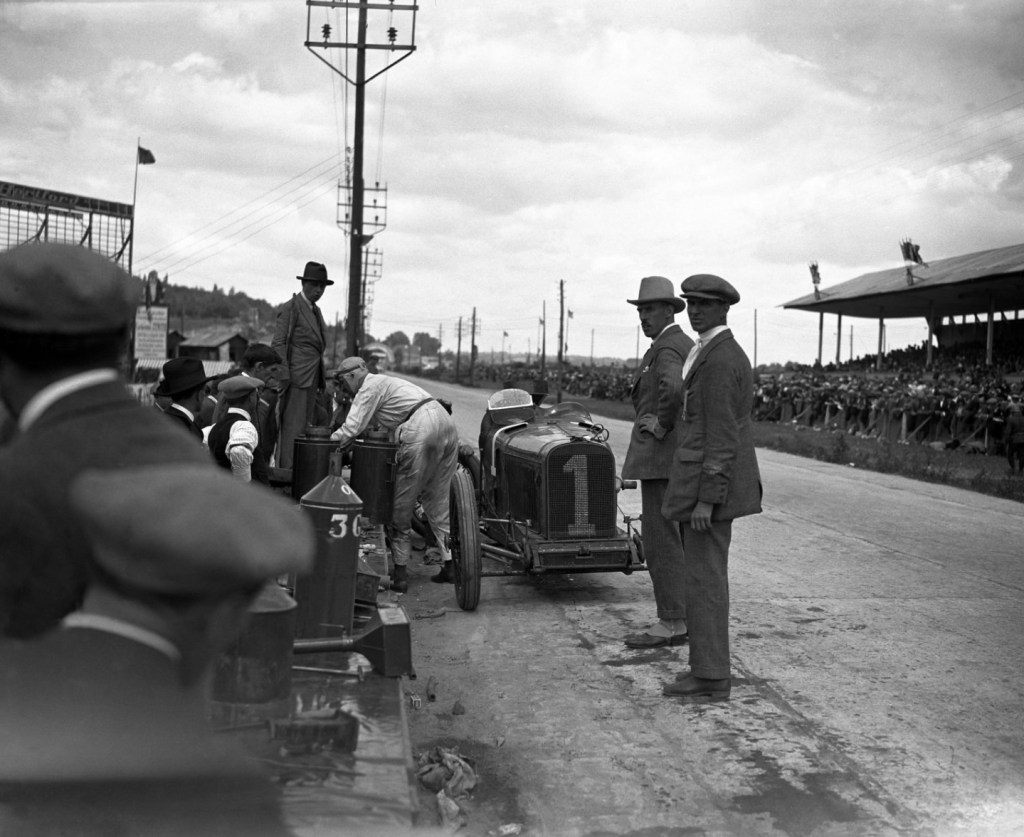
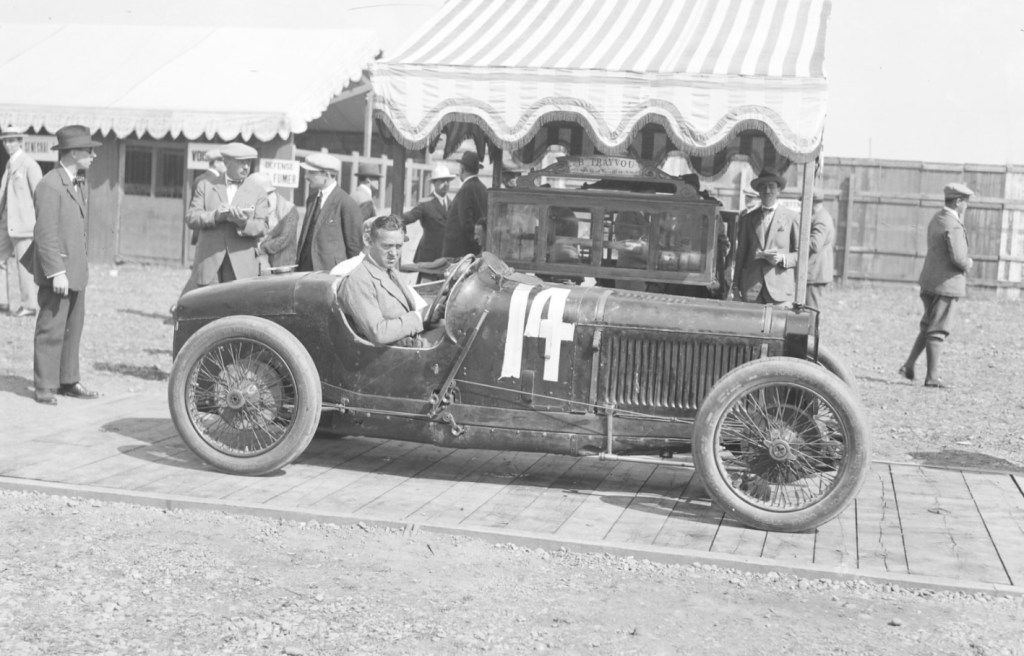
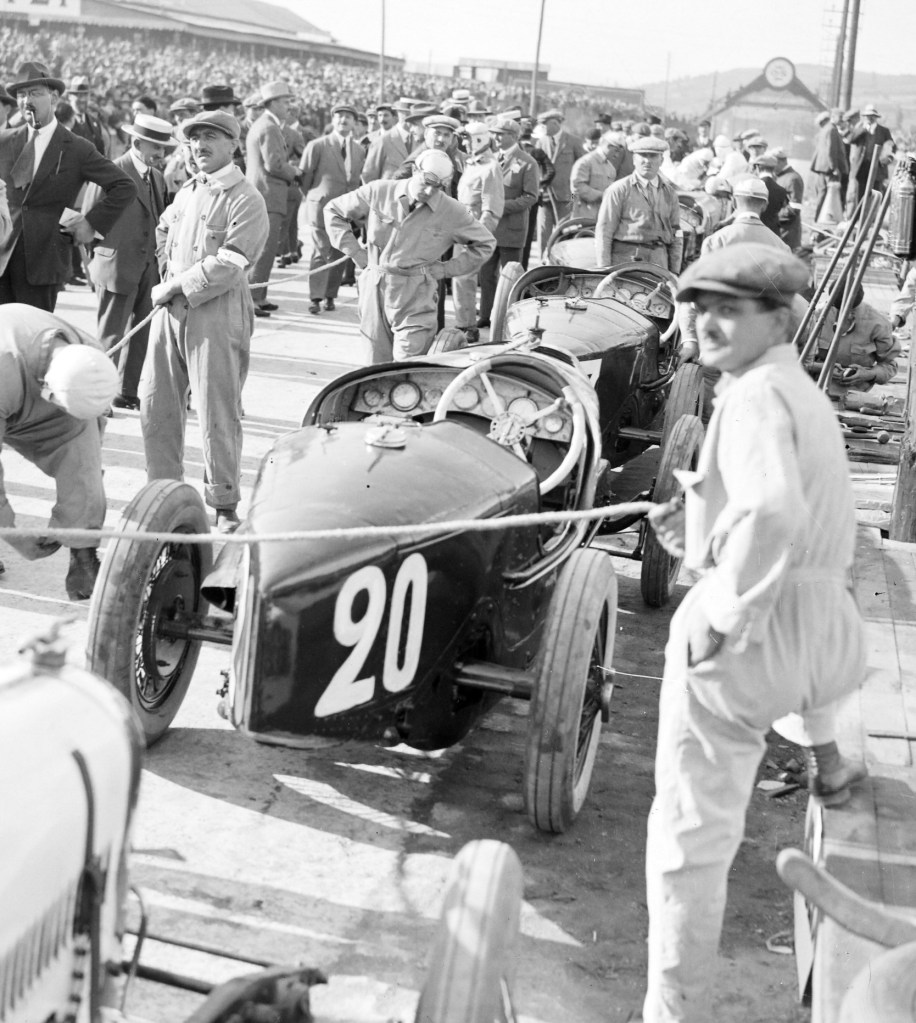
Paddock panorama (MotorSport)All the fun of the fair, start-finish straight, Lyon 1924 (MotorSport)Segrave, Sunbeam GP, fastest lap and fifth place after magneto dramas was a good result (MotorSport)
The European GP meeting was a major carnival which included races for motorcycles, bikes, cyclecars and touring cars in its program.
Twenty cars took the rolling start of the race, gridded two-by-two in race number order, at 9am on the Sunday. Two motorcycles led the way, then turned off the course as the cars took the flag lowered from the timekeepers grandstand.
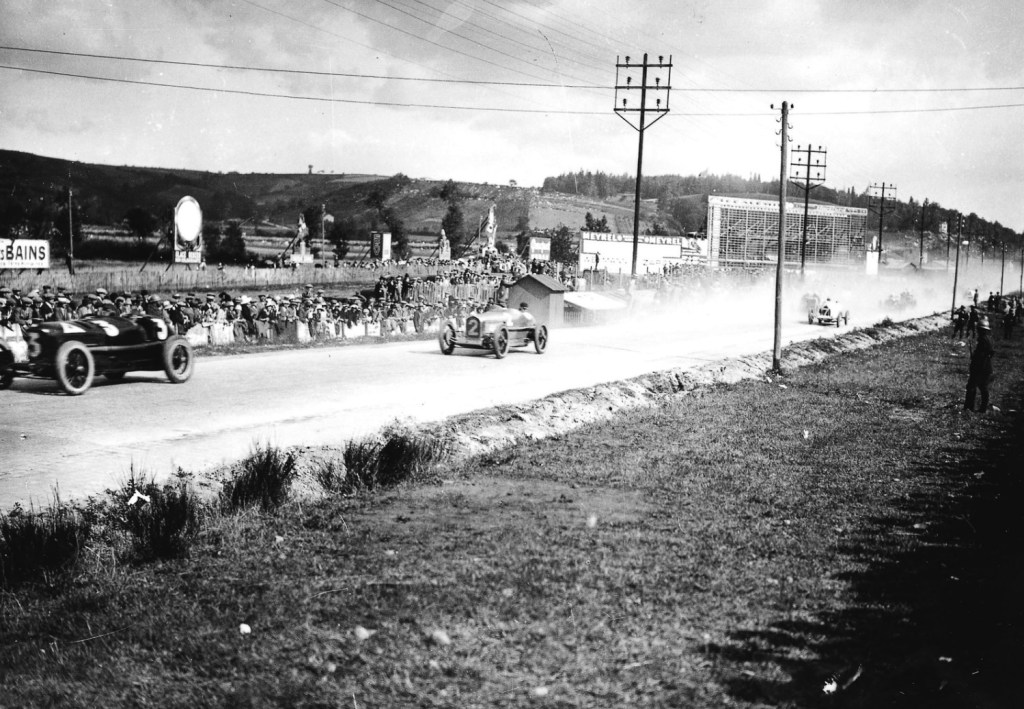
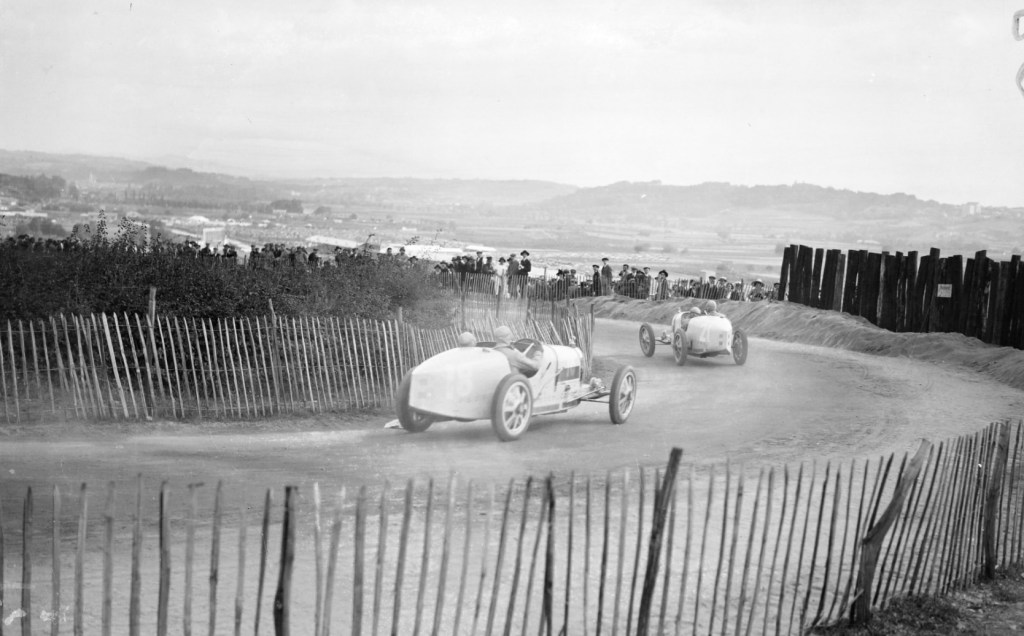
At the end of the first lap Henry Segrave’s Sunbeam straight-six s/c, led by four seconds from Antonio Ascari’s Alfa, Kenelm Lee Guiness’ Sunbeam, then Campari’s Alfa, Pietro Bordino’s Fiat 805 straight-eight s/c, Divo’s Delage, Louis Wagner’s Alfa and Chassagne’s Bugatti T35 straight-eight – on the debut of a car destined to become the greatest ever production GP car.
Antonio Ascari, Alfa P2 from Albert Divo, Delage 2LCV – the unsupercharged V12 of which gave about 120bhp @ 6000rpm – then #7, the Jean Chassagne driven Bugatti T35 (MotorSport)Les Sept Chemins corner (MotorSport)‘Move over champ!’ mechanic Carignano exclaims to Felice Nazzaro, a tight Fiat 805 cockpit fit. #20 is Onesimo Marchisio (MotorSport)
By the end of lap three Bordino led, a position he held on lap four before being passed by Ascari who then led Guinness, Bordino, Campari, Wagner, Dario Resta’s Sunbeam and Divo. Ascari’s average lap-time was 12m05sec.
After six laps, Bordino had retaken the lead in a high speed battle with Ascari – he held it for a further six laps. After 11 laps it was the two red cars then Guinness, Campari, Divo, Wagner, Resta, Costantini, Bugatti T35, Benoist, and Pastore, Fiat 805.
Ascari then led when Bordino pitted to work on his front brakes for over 30 minutes. Resta pitted, so too Count Louis Zborowski’s privately entered Miller 122 straight-eight, and three Bugattis – Ascari led from Guinness, Campari and Divo.
‘Count’ Louis Zborowski, Miller 122 – with SCH Davis alongside – from Henry Segrave’s pursuing Sunbeam. Zborowski’s car used a 120bhp @ 5000rpm unsupercharged, DOHC, two-valve straight-eight jewel designed by Harry Arminius Miller in Los Angeles. After Lou’s fatal ’24 Italian GP Mercedes crash, 122 chassis 2302-X (probably) was sold and raced briefly in the UK, then NZ for several years, then sporadically in Australia. Restored by Lance Dixon’s Melbourne team in the mid-1970s, it was sold to a US collector shortly thereafter (MotorSport)
Louis Wagner’s Alfa P2 in fourth, leads Dario Resta’s Sunbeam GP in 10th (MotorSport)
Bugatti pit with no shortage of new alloy wheels to hand (MotorSport)
Guinness led after Ascari pitted for fuel and rear wheels on lap 17, while Zborowski retired when the Miller’s front axle worked loose from its chassis. Campari led at the end of the lap from Guinness, Divo, Ascari, Benoist and Wagner. Bordino retired. When Campari stopped for fuel on lap 19 Ascari led from Campari, Guinness and Divo, fourth.
Guinness retired with a Sunbeam gearbox hors ‘d combat on lap 21 – the order was then Ascari and Campari in Alfa Romeo P2s, Divo and Benoist, Delage, Wagner, Alfa and Segrave, Sunbeam until lap 25. The perils of riding mechanics were made clear when Segrave changed his on lap 22 after M Marocchi was badly hurt by a tread thrown up by another car, as did Divo on lap 24 after M Fretet was over-worked. Down in sixth place Segrave set a 11m19sec lap record – 122.71km/h. After 695km/30 laps, the remaining 11 car field comprised Ascari, Campari, Divo, Benoist, Wagner, Segrave, Rene Thomas’ Delage, Chassagne and Fridrich in Bugatti T35s, Resta, and Garnier in the fifth Bugatti T35 which took the start.
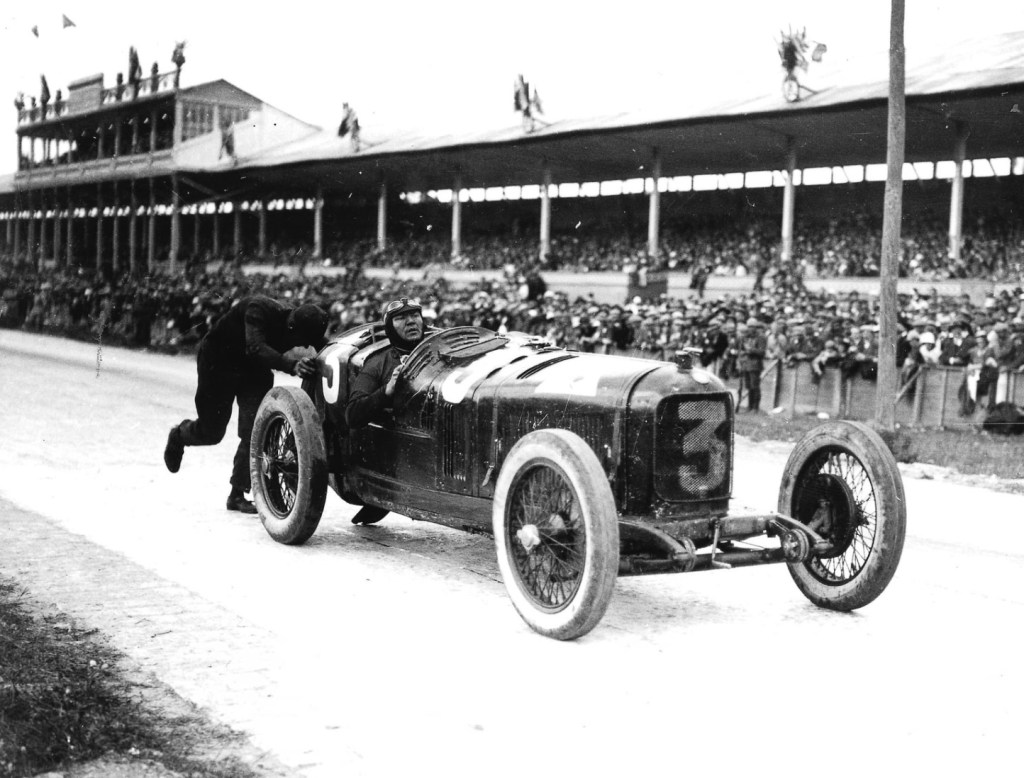
Battle of Bugatti T35s: Leoncio Garnier from Pierre De Vizcaya (MotorSport)Giulio Ramponi pushed Antonio Ascari’s P2 vigorously after a lengthy stop, but it won’t fire late in the race. Vittorio Jano’s design had a straight-eight, supercharged, DOHC, two-valve 1987cc engine giving about 140bhp @ 5500rpm (MotorSport)
On lap 33 Ascari slowed with engine dramas, ceding the lead to Campari, then Divo also passed Antonio who pitted on lap 35. There, Ascari and Giulio Ramponi, his riding mechanic, changed plugs and added water, but the car refused to fire despite valiant attempts by the intrepid mechanic to push-start the ailing P2 slightly uphill.
The crowd cheered Giuseppe Campari home in 7hr 5min 34.6sec – Alfa Romeo had won an emphatic first international victory, the beautiful Alfa P2 was designed by recent Fiat escapee, Vittorio Jano. Then came Albert Divo just over a minute later, and Robert Benoist’s Delage 2LCVs, then Louis Wagner, P2, Henry Segrave’s Sunbeam and Rene Thomas’ 2LCV.
The winner Giuseppe Campari celebrates with one-metre long Italian sausage, Alfa Romeo P2 (unattributed)Campari’s winning P2 at rest (MotorSport)
That year the other major race wins were shared. The Alfa Romeo P2 won the Circuito di Cremona and Italian GP with Antonio Ascari at the wheel, while Enzo Ferrari was victorious in Pescara’s Coppa Acerbo aboard an RLTF24 3.6-litre straight six.
Christian Werner won Targa on a Mercedes TF24 2-litre four, Giuseppe Morandi, the Circuito del Mugello in an OM 665S 2-litre six, and Henry Segrave the GP de San Sebastian aboard a Sunbeam GP. Finally, Guido Meregalli won the Circuito del Garda in a Diatto 20S 2-litre four in November.
Etcetera…
(MotorSport)
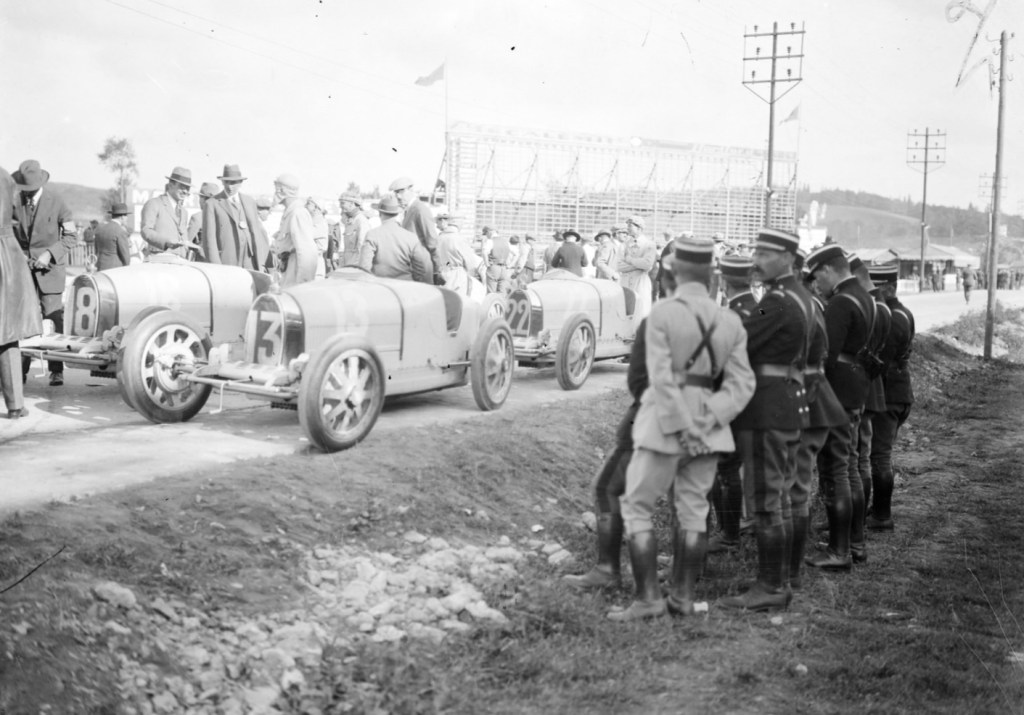
The French wallopers keep an eye on Ettore Bugatti’s flotilla of 2-litre unsupercharged, SOHC, two-valve 90bhp straight-eight Type 35s.
The best placed of the five cars entered were Chassagne, seventh, and Fridrich, eighth – with plenty more to come globally over the following decade. #18 is the Pierre de Vizcaya car, #13 Ernst Fridrich and #22 Meo Costantini.
(MotorSport)
Henry Segrave through a quick right-hander, and Dario Resta in the paddock below.
The 1924 GP Sunbeam had a 4inch longer, and 2 1/2 inch lower chassis than the ’23 model. Its six-cylinder DOHC, two-valve 1988cc Roots supercharged engine gave 138bhp @ 5500 rpm, compared with its normally aspirated sibling’s 106bhp in 1923.
(MotorSport)
After the Great War, the race organisers, l’Automobile-Club de France turned the oldest GP into an invitational race, Germans and Austrians were not invited that year.
Pietro Bordino, Fiat 805, DNF brakes (MotorSport)
While none of the Fiat 805s finished the race, these epochal designs cast a long shadow. They were the first to win a Grand Prix using a 146bhp @ 5500rpm supercharged engine when Carlo Salamano triumphed in the 1923 European GP at Monza. The bulk of the grid followed their lead in 1924 – the dominant template of race winning GP cars was set until 1951; front-engined machines powered by supercharged, straight-eight, DOHC, two-valve engines, with all exceptions duly recognised!
Fiat pit, Onesimo Marchisio 805, DNF engine. Note the stepped seating positions of driver in front, and mechanic behind the pilots left shoulder (MotorSport)
Credits…
GP Library, MotorSport Images, Hans Etzodt’s wonderful race report in kolumbus.fi
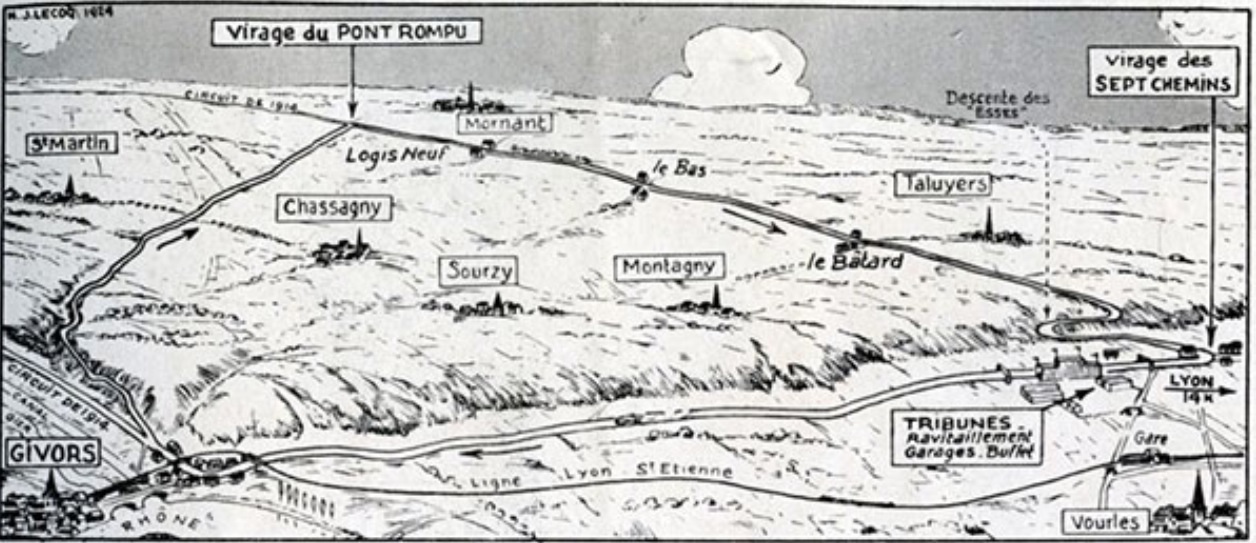
Tailpiece: The course…
(unattributed)
The 37.63km Lyon-Givors circuit was used for the 1914 French GP but was shortened to 23.14km for 1924.
The start was about 14km south of Lyon on the RN86. From there the course headed south on short straights passing the outskirts of Givors, where the road turned right, south-west, twisting along the River Gier valley before a right-turn then uphill to Pont Rompu.
The course then turned right again on a high-speed return straight heading north-east. At the end, after 6km, there was a sharp right turn leading to the famous Piege de la Mort, a difficult left turn and Les Esses, followed by a few twists before Le Sept Chemins a right hairpin shortly before the start-finish line, grandstand and pits.


 (Ullstein Bild)
 (unattributed)
 What a drive – one of the greatest in the opinions of all who matter (unattributed)