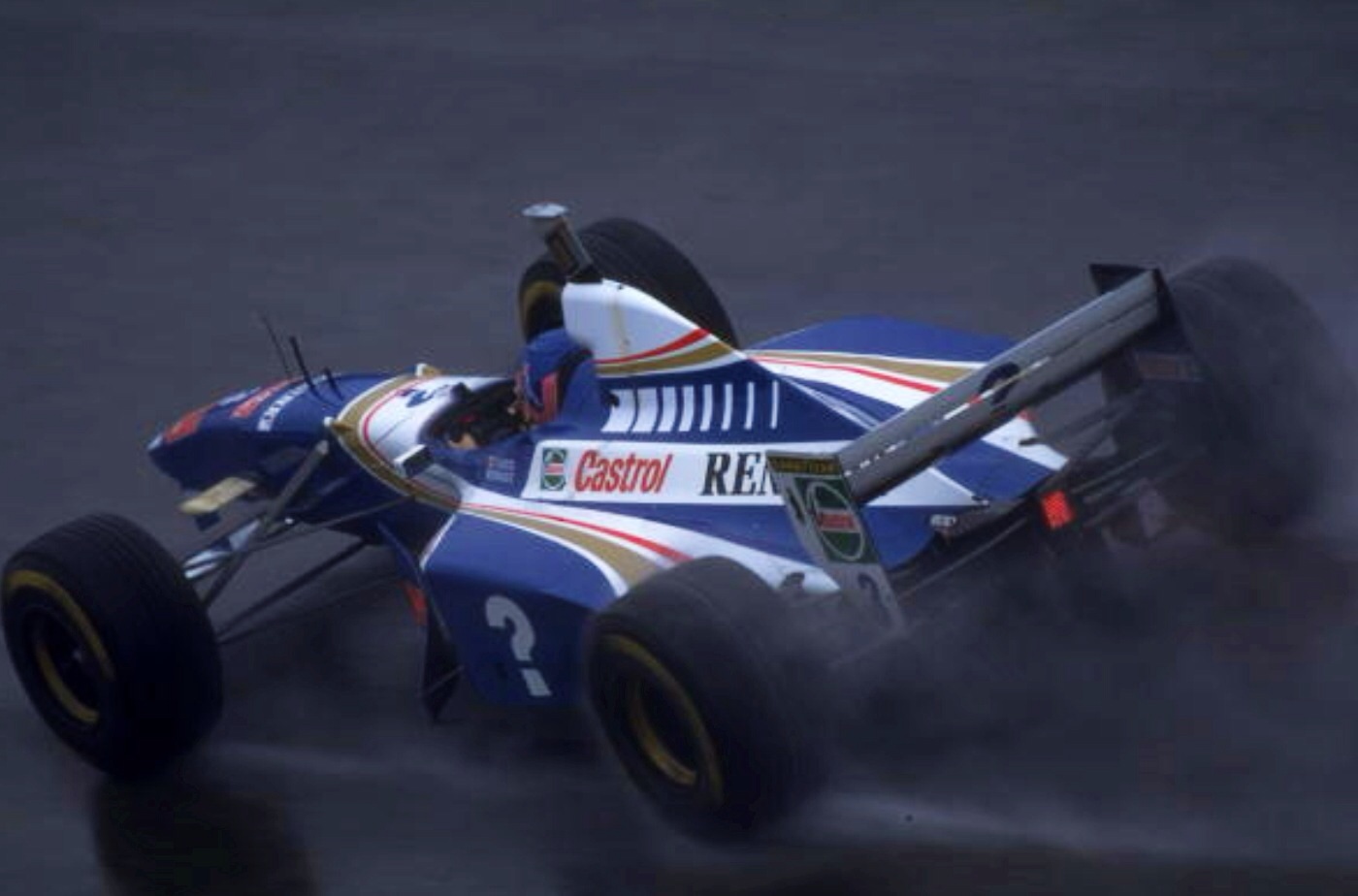
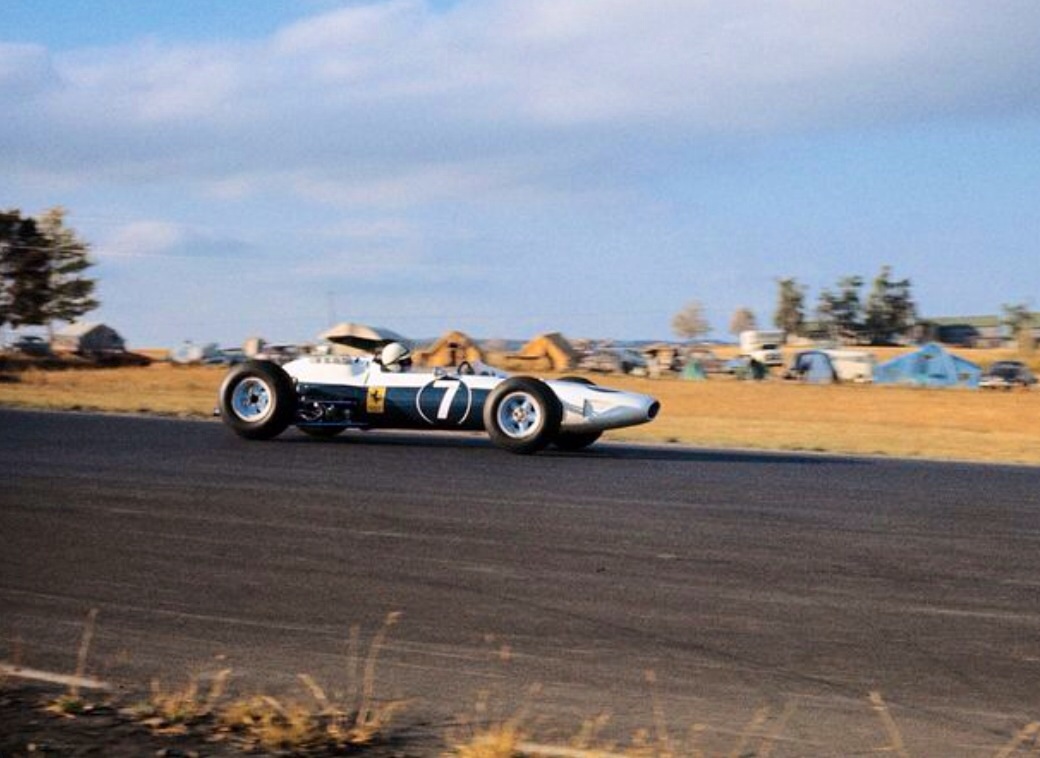
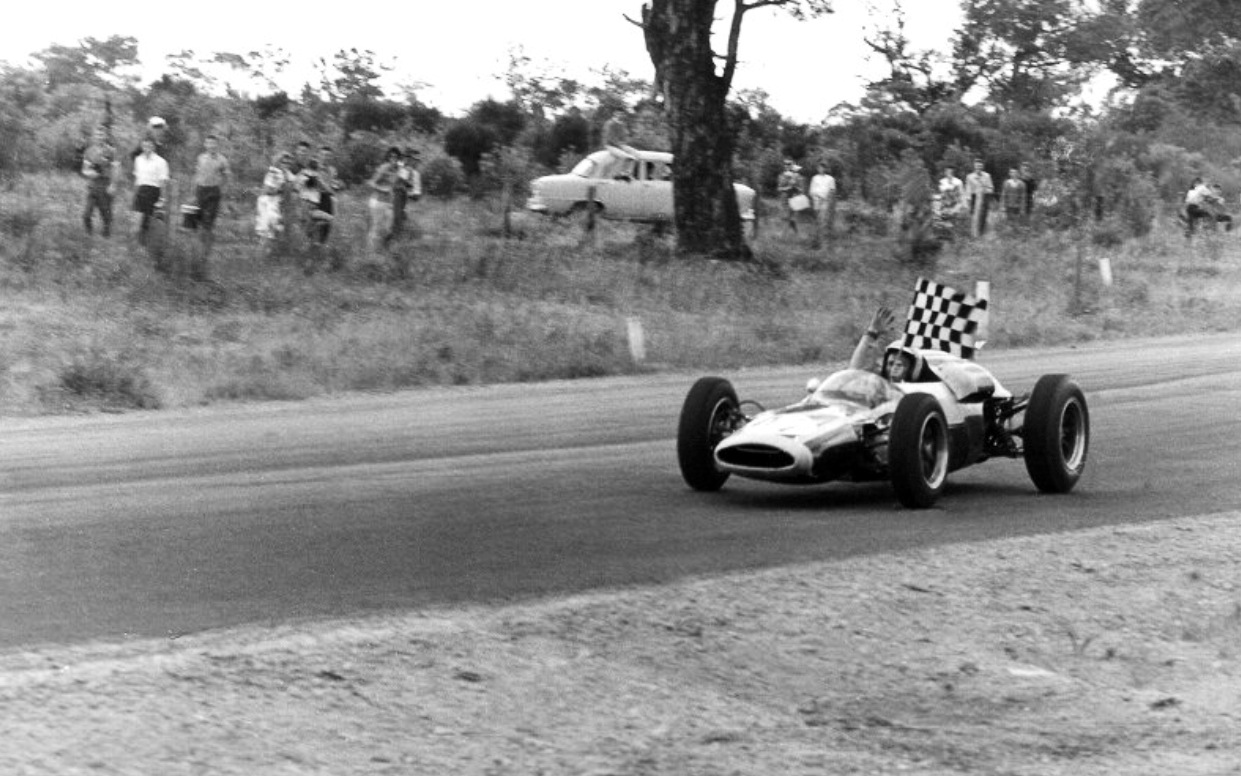
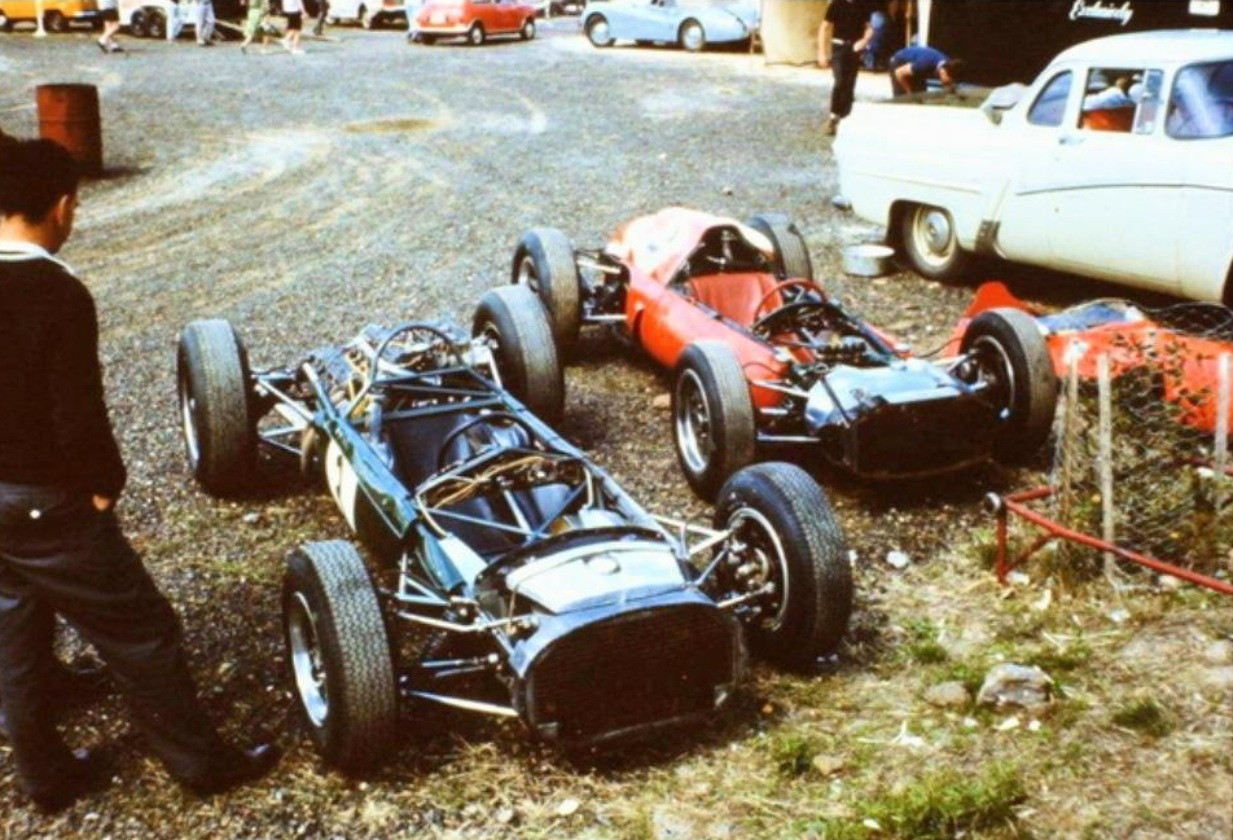
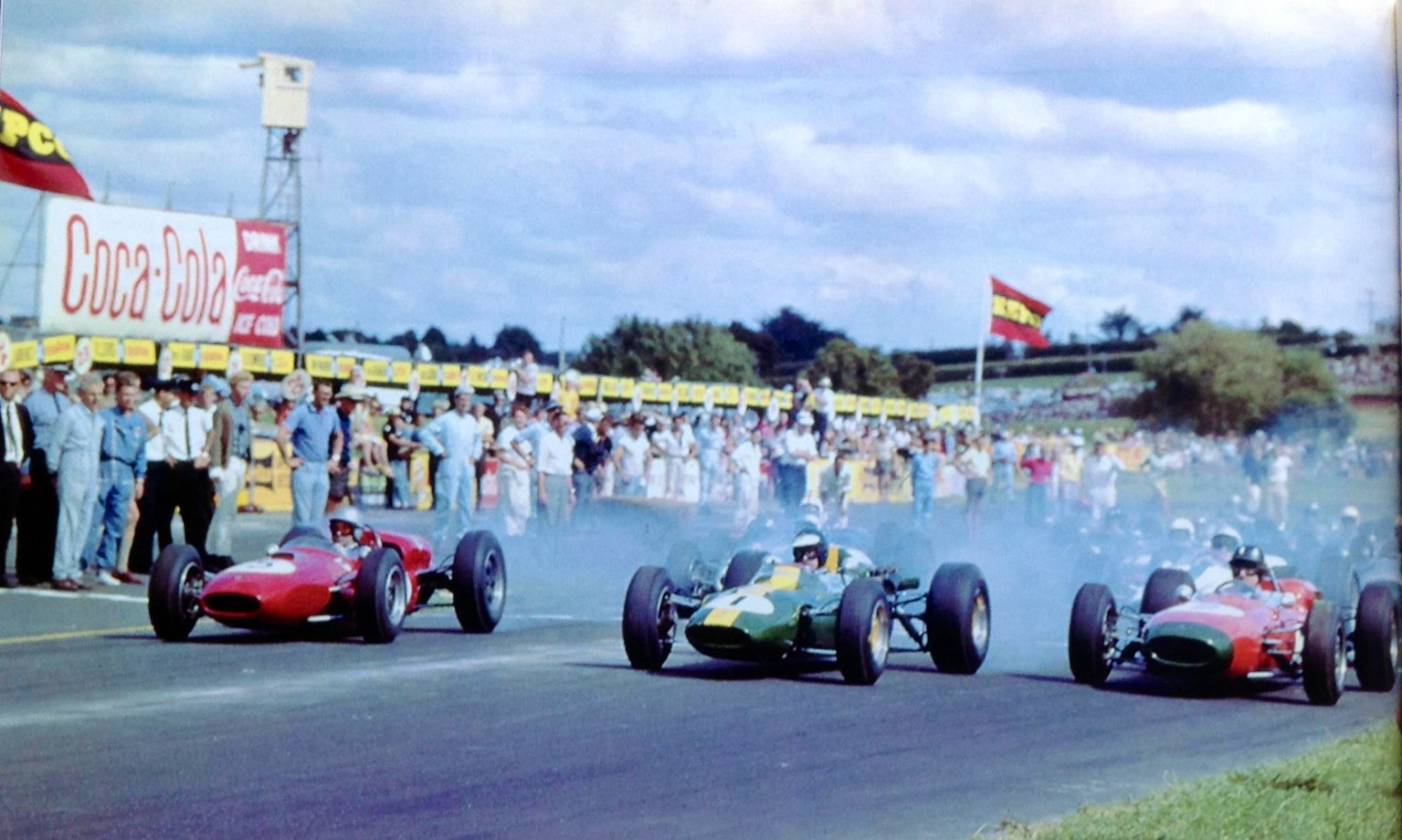
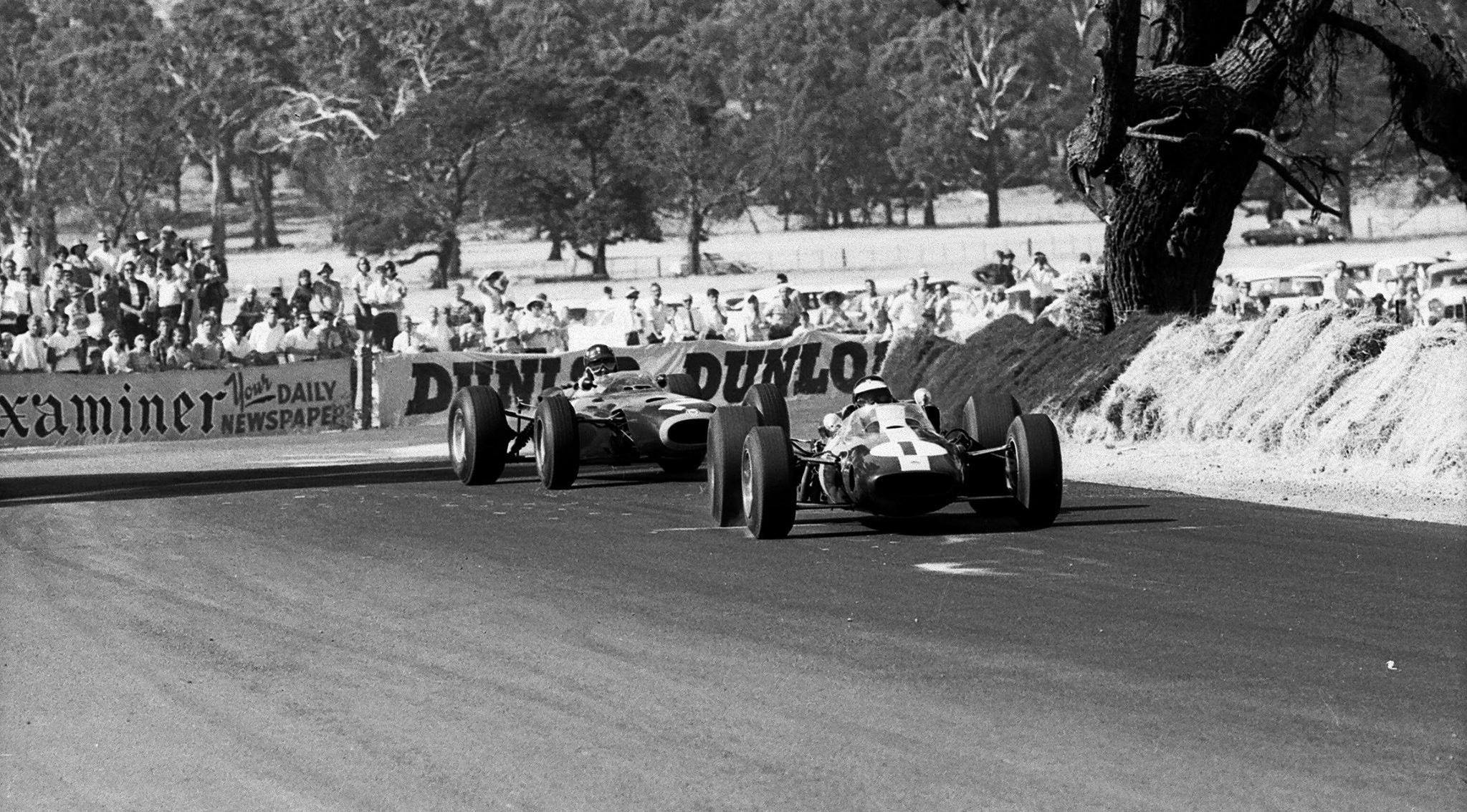
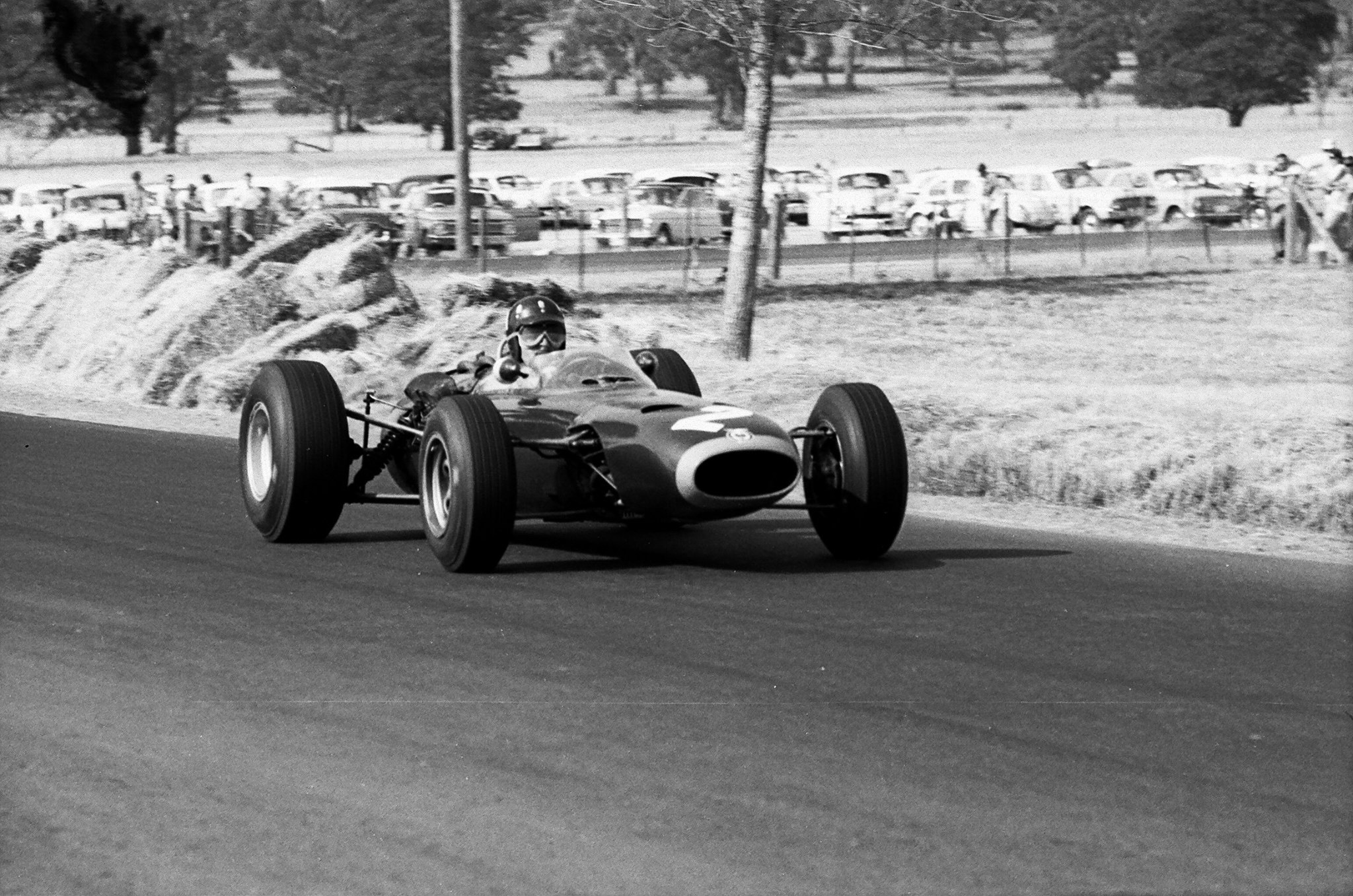
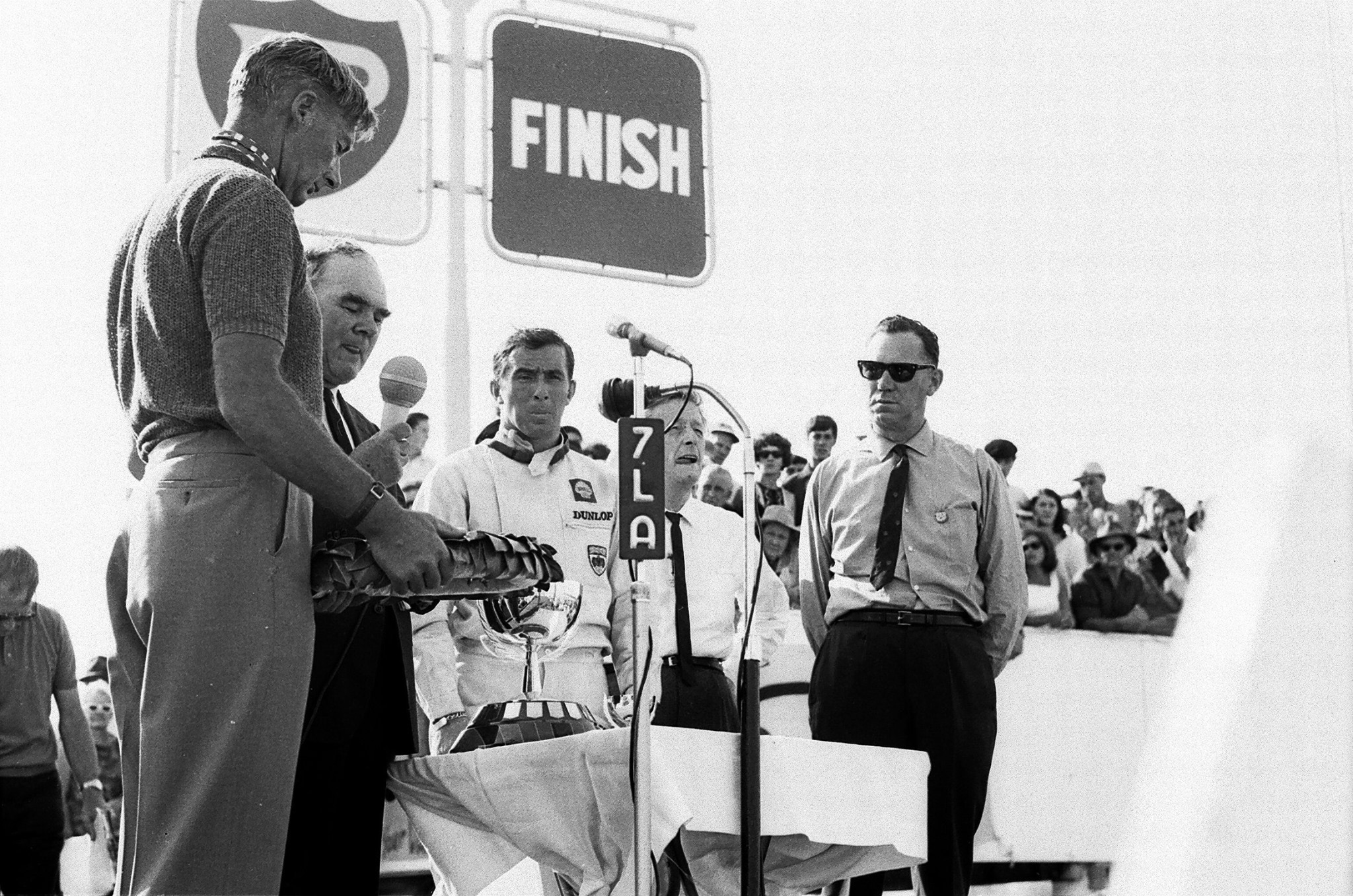
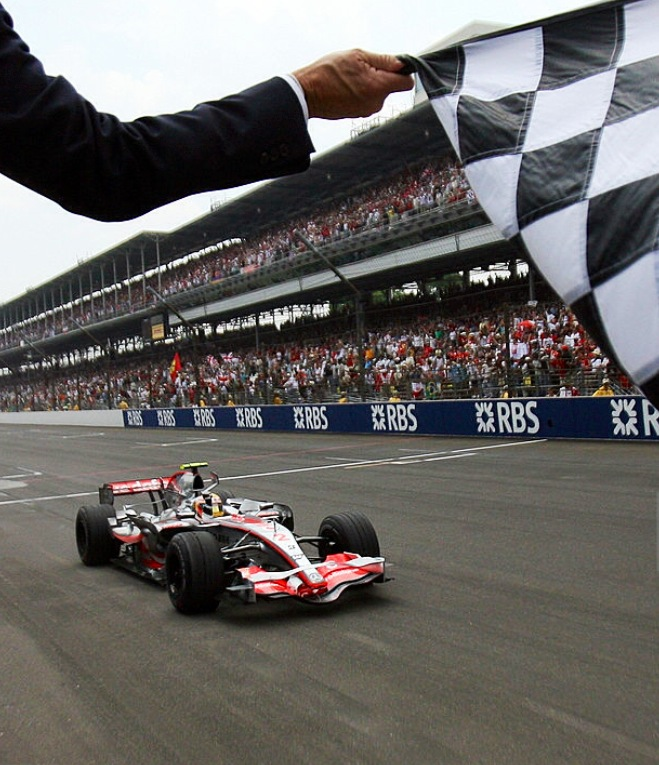
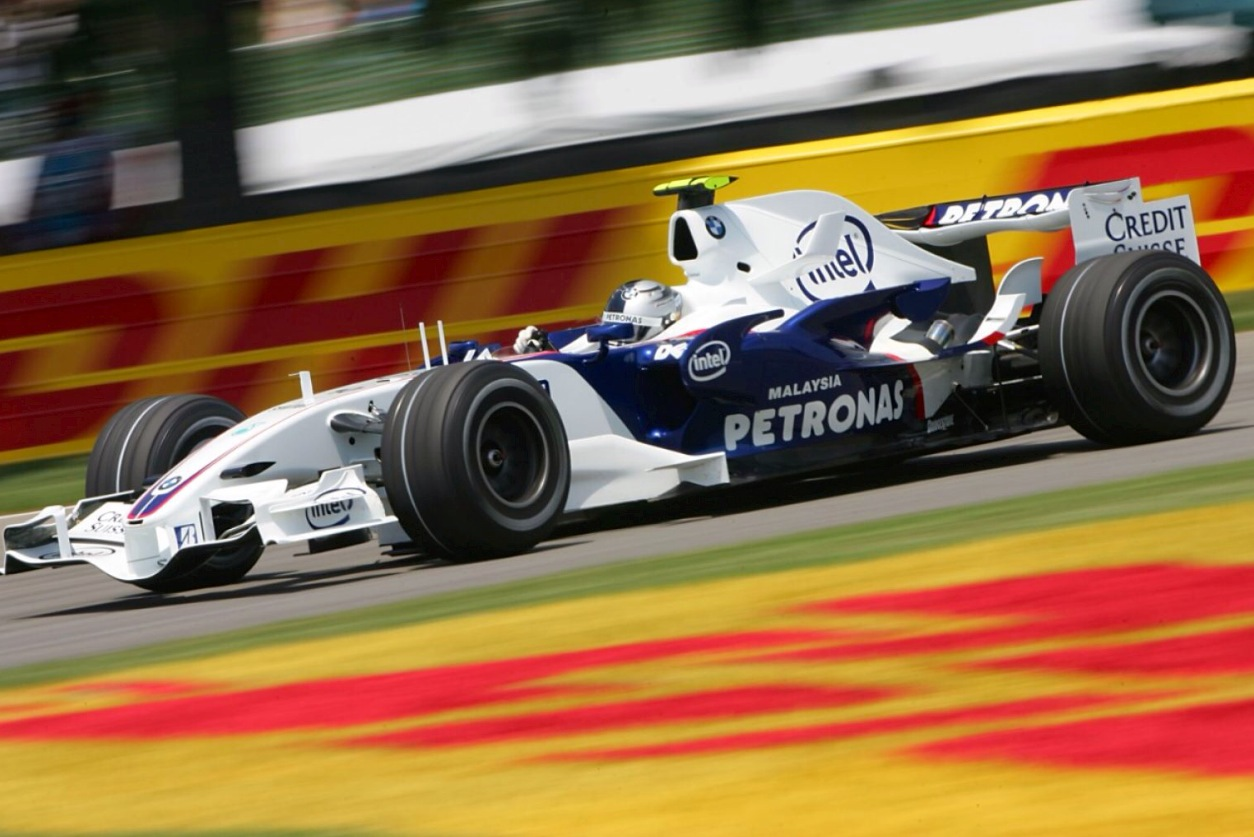
A few images from the French Grand Prix with the focus on Jacques Villeneuve…
It was a Schumacher race but a Jacques season win, his second in F1. He won 7 events and the title in his Williams FW19 Renault, Frentzen a distant 2nd in the drivers chase in the other Williams.
It was the season in which Schumacher was disqualified from the Drivers Championship for one ‘attempted homicide’ on another driver too many, the FIA proved they weren’t completely pissweak after all. Schumacher collided with Villeneuve in the season ending European GP at Jerez, the assault upon Jacques an attempt to win the title in accord with the ‘whatever it takes’ mantra of Senna and Schumacher.
At Magny Cours Jacques qualified and finished 4th, Schumacher Q1 and 1st in the race in his Ferrari F310B from Heinz Harald Frentzen and Eddie Irvine in the other Fazz. It was the days of the 3 litre Formula, all of the cars mentioned powered by V10’s, marvellous cars…
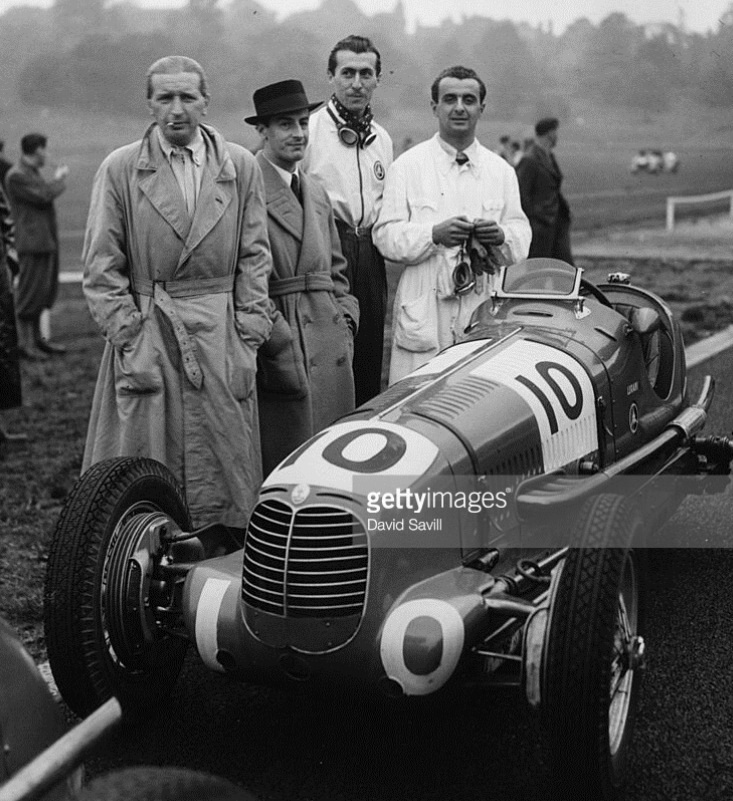
Dick Seaman and Herr Heck in their Mercedes’ at Crystal Palace in 1937…
This promotional shot dated 7 October preceded the ‘International Imperial Trophy’ race, ‘the first international road race organised in London’ on 9 October. The event was the decider of the 1937 ‘BRDC Gold Cup’ between B Bira and Ray Mays ERA’s.
The cars above are Seaman’s Mercedes W125 GP car and Heck’s 1903 Mercedes Tourer. Seaman, a works Mercedes driver was back in the UK having contested the 1937 Donington GP a week earlier. He retired from the Leicestershire event after a collision with Muller’s Auto Union having started on the outside of the front row, Bernd Rosemeyer’s Auto Union Type C won the thrilling race.
Seaman did not contest the International Imperial Trophy race but was scheduled to thrill the crowds with some demonstration laps in his Mercedes. The race was significant as the first ever live BBC TV outside broadcast of motor sport.
BBC man in evidence as one of the Maserati 4CM’s and an Austin passes. Interested to know both driver names and the name of this corner if any of you can help? (Imagno)
The entry included Britain’s best plus the Scuderia Ambrosiana, which fielded Maserati 4CMs for Count Piero Trossi, Count Johnny Lurani and a Maserati 6CM for Luigi Villoresi. Private Maseratis were driven by Robin Hanson and Peter Aitken (6CM’s) and Archie Hyde (8CM). They were challenged by the ERA’s of Ray Mays , Arthur Dobson, B Bira, Ian Connell, Peter Whitehead and Charlie Martin.
It looks a bit chilly! L>R: Trossi, Senor Rovere, Lurani and Villoresi with one of the Ambrosiana Maserati 4CM’s (David Savill)
During Thursday practice Mays blew his ERA’s 1100cc engine, becoming a non-starter and effectively giving the ‘Gold Star’ to Bira by 3 points.
Leiff Snellman reported the race in 8w.forix.com thus; ‘The race was run in two heats plus a final and raced as a handicap event with Hyde and his 3 litre Maserati starting from scratch, the 1.5 litre Maseratis and ERA’s having a 10 seconds advantage and the Austins, MGs and the MG-Riley having a 50 seconds advantage’.
‘Winner of the first 10 laps heat was Maclure (Riley) followed by Dobson (ERA), Lurani and Whitehead. Villoresi retired with an engine problem. Trossi (Maserati) won the second heat after a tough fight with Martin (ERA) and B Bira (ERA) who finished second and third with Goodacre (Austin) fourth’.
Top left; Seaman, Bira, Trossi. Top right Trossi Maserati 4CM (David Savill)
Unidentified gaggle of cars during the meeting (Central Press)
Between the races Seaman jumped into the ‘Benz W125 and carefully did several laps in 2 min 4s, about the same speed as the cars during the heats. Many of the spectators must have heard stories about the spectacular show by the German cars the week earlier and were as thrilled by the speed, wheel spin and noise from the ‘Silver Arrow’ as the Donington crowd had been.
Seaman practices his W125 at Crystal Palace prior to raceday, the slippery nature of the surface evident from the gloomy English day (Getty)
‘Twenty cars started in the 15 laps final to fight for the £150 first prize.The race became a great duel between ERA drivers Bira and Dobson who left the rest of the field behind. Bira won by half a car length while Dobson received the Jarvis Trophy for the fastest lap. Goodacre’s Austin finished third. The Scuderia Ambrosiana cars were unable to challenge for the lead with Trossi an early retirement and Villoresi and Lurani having problems to follow the ERA’s. Villoresi finally finished in fourth place’.
Bira the happy winner (Central Press)
The Mercedes W125 went on display at the Mercedes-Benz showrooms in Park Lane, as was Rosemeyer’s car at the Auto Union showrooms.
Credit…
Fox Photos, Imagno, David Savill, Central Press
Leif Snellman’s Crystal Palace article in 8w.forix.com
Harry Schell on the limit of adhesion in his ‘Yeoman Credit’ Cooper T51 Climax at Madgwick Corner, Goodwood…
Harry Schell was a press-on kinda driver wasn’t he? Here the Franco-American is delighting the ‘Glover Trophy’ spectators with some delicious Cooper T51 drifts…
The 1960 event was held on Easter Monday, 18 April. Harry was bang on the pace too, equal 2nd quickest in practice with Stirling Moss in a similar car. Chris Bristow demonstrated his undeniable pace though, he was on pole by a couple of tenths and finished 3rd in the race behind Moss, the winner Innes Ireland in his factory Lotus 18 Climax, the quickest of 1960’s GP grid. Harry’s engine popped on lap 20 of the 62 lap 162 Km race…
Credit…
GP Library, National Motor Museum
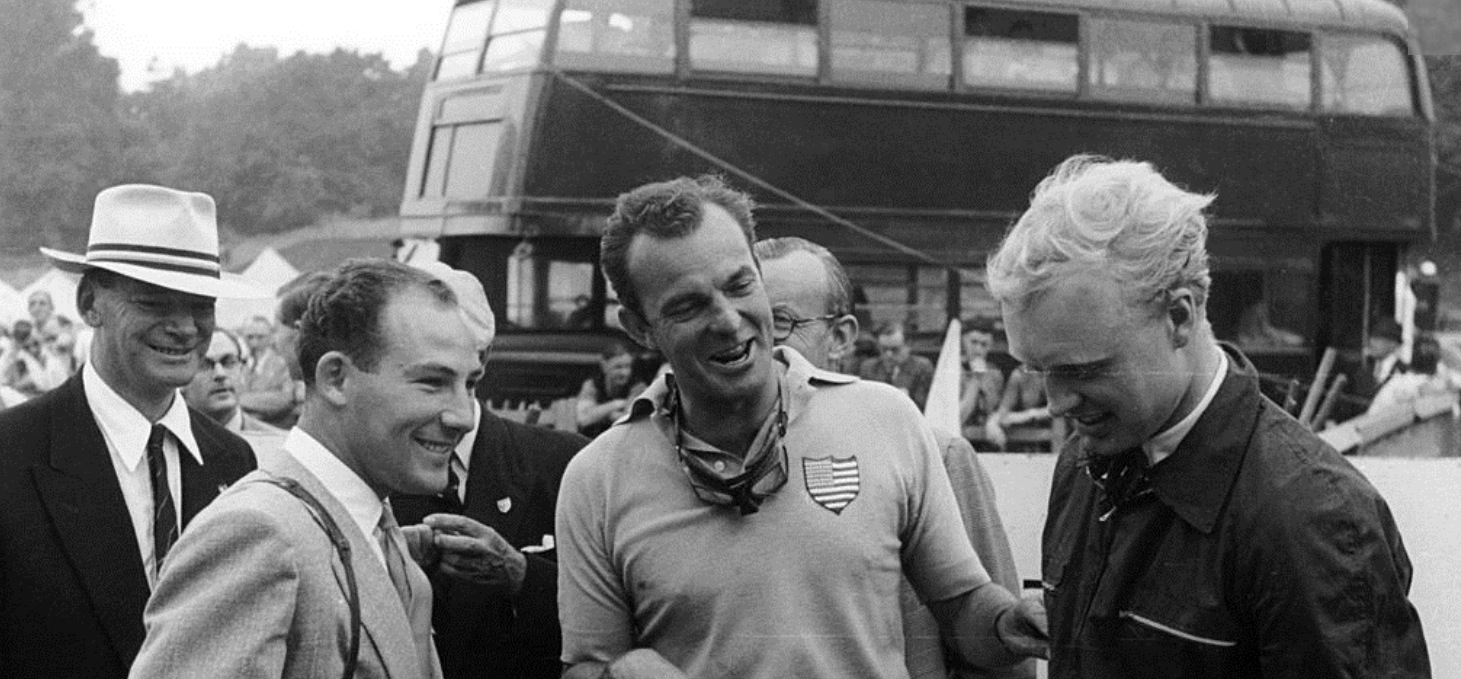
Tailpiece: Harry telling a naughty joke by the look of it, Crystal Place, July 1955…
Stirling Moss, Schell and Mike Hawthorn during the ‘London Trophy’ meeting which Mike won the feature race in a Maserati 250F from Harry’s Vanwall.
(National Motor Museum)
Mike won his heat in the Moss’ family 250F chassis #2508, Harry his in Vanwall ‘VW2’ and Mike the final. Moss was contracted to Mercedes Benz that year, this non-championship 30 July event not one in which Benz entered their W196’s.
The ever innovative Derek Gardner with an ‘aero-tweak’ being tested on Francois Cevert’s Tyrrell 002 Ford during Italian GP practice at Monza on 10 September 1972…
This huge sleeve over the exhausts is cowled from the oil coolers back, the idea being to harness the exhaust gas energy to entrain air through the sleeve and enhance airflow and hence better cooling thru the oil rads.
Francois hadn’t done too many laps when the ‘prophylactics’ parted company with the car at very high speed, bouncing their way into lightweight schrapnel around the famous autodrome, fortunately ‘002’ was well clear of any following cars at the time!
The shot below shows a standard ‘006’ rear end to give an idea of how the car appeared sans ducts.
Ken Tyrrell and Jackie Stewart discuss the sublime weather before Francois is sent on his way. These cars evolved a lot throughout 1972/3, the Tyrrells arguably (Lotus 72 pace duly noted!) the quickest cars of the era from the time ‘001’ first raced at Oulton Park later in 1970 until Stewart’s retirement and Cevert’s death at Watkins Glen at the end of 1973.
Date and place unknown, 1973 Tyrrell 006 Ford, Cevert up (unattributed)
Monza 1972 wasn’t a good race for the ‘Boys in Blue’ at all though, JYS popped a clutch on the line and was lucky not to get ‘whacked up the clacker’ at a million miles an hour and Francois’ engine ‘popped’ on lap 14. Emerson Fittipaldi took the race and the ’72 title in his Lotus 72D Ford.
FC looking very ‘chillaxed’ prior to the ’73 British GP at Silverstone, Tyrrell 006 Ford (unattributed)
You might find this story about Cevert’s early career of interest if you haven’t already seen it;
I wrote an article a while back about Team Tyrrell and innovation…
Have a read of it if you haven’t, its amazing just how ‘edgy’ Ken’s boys were over the years given their resources relative to bigger, better funded teams;
Roll on into mid-1973 and Derek was considering his overall design and aero alternatives for his 1974 car…
Here Francois is testing ‘005’ during British GP practice at Silverstone in mid July, JYS did a few laps in the same car carrying #42. It looks remarkably cohesive for a car designed originally with a totally different bluff nose aerodynamic concept!
Compare and contrast the ‘normal’ bluff nose Tyrrell ‘006’ Cevert races here in front of James Hunt’s March 731 Ford at the British GP, Silverstone in 1973, with the ‘005’ chisel nose he tested in practice above. Hunt was a splendid 4th, Cevert 5th, Revson took his first GP win in a McLaren M23 Ford (unattributed)
It was a good year until the US GP, JYS took his third title in the ‘low polar moment of inertia’, short wheelbase, twitchy but very quick in both Stewart and Cevert’s hands, Tyrrell 005/006 cars.
Click on this link for a short story about those cars;
Gardner had a pretty handy additional test pilot in Chris Amon who was contracted the drive the spare Tyrrell 005 in the end of season North American GP’s at Mosport and Watkins Glen.
Chris was always rated as a test-driver by all he raced with from Ferrari’s Mauro Forghieri ‘down’.
Amon raced ‘005’ in side radiator/chisel nose spec in Canada. He didn’t race it at Watkins Glen after Francois’ fatal accident on the Saturday resulted in Ken Tyrrell withdrawing the teams cars for the race, which would have been the retiring Stewart’s 100th GP.
Chris Amon 10th in Tyrrell 005 Ford in the Canadian GP, Chris has ‘modified’ the cars nose during the race. JYS was 5th in 006, Cevert DNF after a collision with Scheckter, Peter Revson won the race in a McLaren M23 Ford (unattributed)
Derek Gardner tested the ‘chisel nose, side radiator’ aerodynamic approach pioneered by the Lotus 56 at Indianapolis in 1968.
After the history making changes at the 1973 seasons end Derek Gardner threw out the conceptual approach he had decided upon for 1974.
The proposed car was to be a ‘highly strung thoroughbred’ from which maestro’s Stewart and Cevert could extract every ounce of performance. His change was to a much more forgiving chassis attuned to the developmental needs of ‘cub drivers’ Jody Scheckter and Patrick Depailler for 1974, his ‘007’ design was the very effective result.
(unattributed)
Tyrrell 007 Ford cutaway above. The design comprised an aluminium monocoque chassis, Ford Cosworth 3 litre DFV V8, Hewland FG400 5 speed transaxle, disc brakes inboard front and rear, wishbone front suspension with coil spring dampers, rear suspension by single upper link, lower parallel links, radius rods and coil spring/damper units anf adjustable roll bars.
Tailpiece: The ’74 Tyrrell 007 Ford in Depailler’s hands, Swedish GP in which he was 2nd and Scheckter’s 1st, winning the South African’s first GP. Evolution of Derek Gardner’s aero thinking clear from ’73-’74, mind you he went back to a bluff nose for his outrageous P34 6 wheeler for 1976…
(unattributed)
Credits…
Rainer Schlegelmilch, Doug Nye ‘History of The GP Car’
John Surtees races his North American Racing Team Ferrari 158 to second place at Watkins Glen on October 4, keeping alive his ultimately successful 1964 title chances…
Enzo Ferrari was in a spat with the Italian governing body at the time over its refusal, Ferrari having failed to build the minimum number of cars, to homologate the sports/racer Ferrari 250LM as a Sportscar. The result of which forced entrants to race it as a Prototype, a category in which it was not competitive and not designed for; putting aside the lucky, outright 250LM Le Mans win for Masten Gregory and Jochen Rindt in 1965!
Test session for the Ferrari 158’s, one of which is in NART colors, on 15 September 1964. John Surtees in drivers overalls, Technical Director Mauro Forghieri to his left, mechanic Giulio Borsari in the white cap. Modena Autodrome (GP Photo)
Not that the Italian autocrat was going to let principle, as he saw it, get in the way of practicality.
There were Grand Prix World Championships to win so rather than race in traditional racing red he ‘relinquished his entrants licence’, the cars, works cars in every way, shape and form being entered by Ferrari’s concessionaire in the US, Luigi Chinetti’s N.A.R.T at both the final two 1964 championship rounds at Watkins Glen, New York State and in Mexico City.
Surtees second placings in both races gave him the Drivers title and Ferrari the Manufacturers from Graham Hill’s BRM P261 by 9 points.
‘Honour’ and title won, the Ferrari’s raced on in Italian Racing Red and the 250LM as a prototype, much to its private entrants chagrin.
Surtees ready for the off, Modena 15 September 1964 (GP Photo)
The Vic Berris cutaway above is terrific in showing the semi-monocoque ‘aero’ construction Ferrari used for years whereby aluminium sheet was riveted and glued to a frame, let’s call it a spaceframe underneath.
Etcetera…
Lorenzo Bandini being attended to in the Spa pits during the June 1964 Belgian Grand Prix weekend.
Great shot of the engine and gearbox and bulkhead in between- note also inboard rear discs and calipers. #10 is the nose of the Surtees 158.
It wasn’t a great weekend for the Ferrari boys, both retired with engine dramas, John in the lead after completing only three laps and Lorenzo after eleven- Jim Clark won in a Lotus 25 Climax.
Photo Credits…
For all shots ‘Grand Prix Photo’ except Vic Berris cutaway drawing
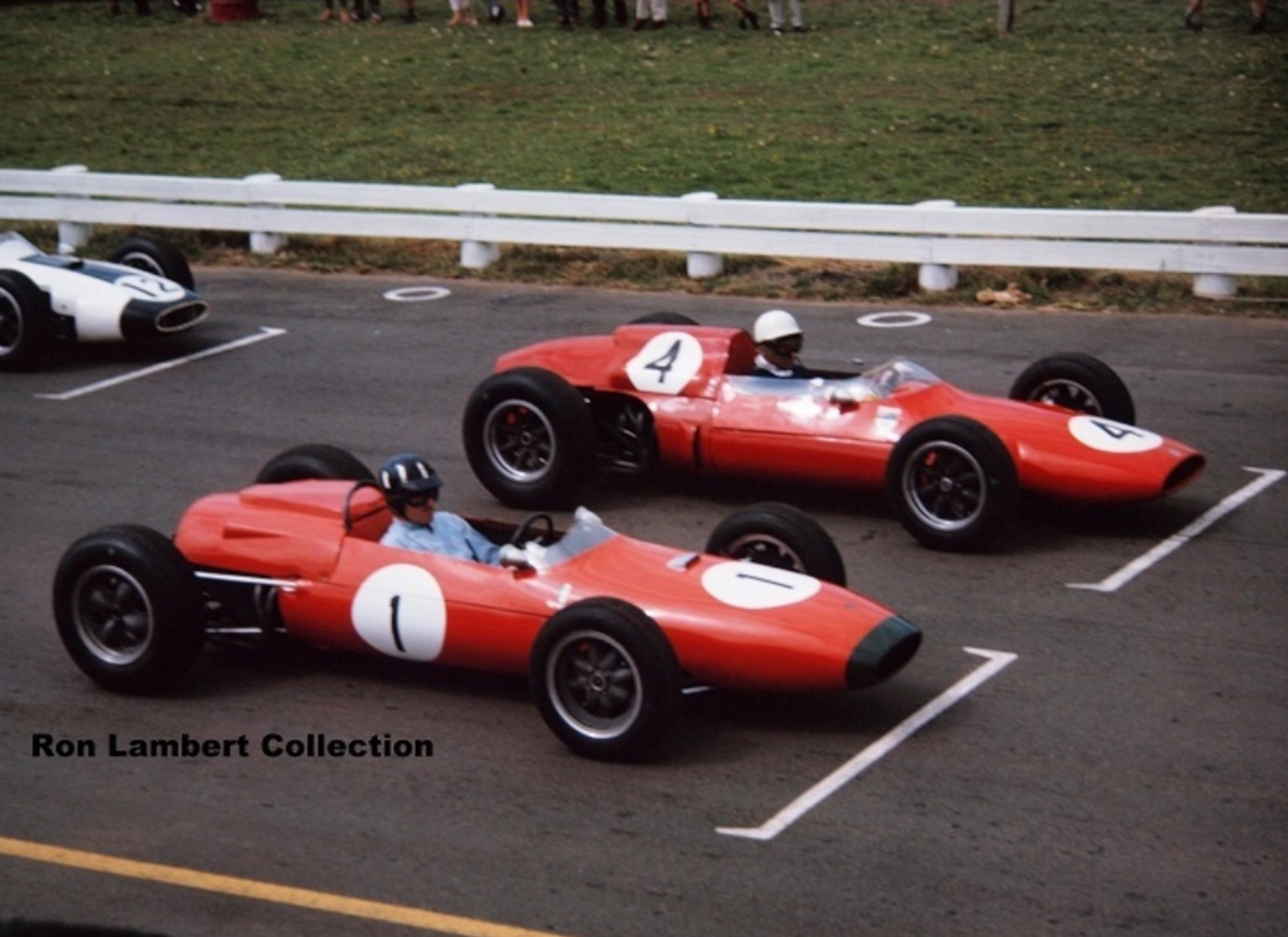
Lex Davison #4 lights up his Dunlops with Bib Stillwell and David McKay on the front row of the ‘Victorian Trophy’ grid, Calder Raceway on 13 March 1963…
They finished in this order, Lex’ ex-McLaren Cooper T62 the winner from the Stillwell and McKay Brabham BT4 Climaxes. David’s was a ‘little’ 2.5 litre FPF, the other two were toting big ‘Indy’ 2.7 litre engines.
In a season of consistency Stillwell won his second Gold Star, Taswegian John Youl won at Warwick Farm and Mallala, Davo won at Calder, Bathurst and Sandown but only Sandown was a championship round so the Melbourne motor dealer took the second of 4 Gold Stars on the trot, 1962-1965.
Calder Victorian Trophy grid 1963 from the front, Davo, Stillwell and McKay (John Ellacott)
Tale of the Cooper T62 #’CTA/BM/2’…
It’s a sad tale too. This car was successful, winning races in the hands of both Bruce Mclaren for whom it was built and for Lex Davison who raced it next. But for those around the car there was much tragedy, so its an interesting tale if not a happy one. Rocky Tresise died at its wheel, not much has been written about the young Melburnian, Davo’s protégé. The point of the article is largely to right that a little, if you can add more to Rocky’s story I am interested to hear from you to flesh it out further.
Perth hosted the Commonwealth Games in 1962…
The Lord Mayor, like so many before and after him globally saw the games as a way of putting his city on the map and expediting the development of much needed infrastructure.
The event was tiny by the standards of Commonwealth and Olympic games today; 35 countries sent 863 athletes to compete in 9 sports but the event was huge in the context of the cities small population of around 500,000 people.
The games were the first to have an athletes village, till then competitors had been housed in hotels and billeted in private homes. As a fan of Perth’s City Beach I was astounded to learn the area was largely bushland until 65 acres were developed for the village in advance of the games. Now it’s a great place to live beachside and an easy train ride into town.
At the time the Australian Grand Prix didn’t have a permanent home, the event was rotated around the countries six states. This was good and bad.
Good in the sense that spectators/competitors had a chance to see/participate in their home race every few years but bad in the sense that no one circuit owner/promoter could set up ‘infrastructure’ knowing they had one or two big events they could plan their revenues and therefore capital outlays around. This ‘sharing arrangement’ applied until the first F1 AGP in Adelaide in 1985, which became Albert Park when the nasty Victorians ‘nicked the race’ from SA.
Perth circa 1964 (unattributed)
It made good sense to have the AGP in Perth at the time of the games to get along a decent crowd of locals and overseas visitors.
The ‘Games, held from 22 November-1 December were noted for ‘heat, dust and glory’. The opening ceremony was 105 degrees fahrenheit, (40.5 centigrade) the heat continued throughout the competition. The army were pressed into service ferrying constant supplies of water to parched competitors.
The 18 November 1962 AGP was held at Caversham, an ex-military airfield circuit in Perth’s Swan Valley, 20 km north-east of the city centre and was also scorching hot.
The circuit hosted two AGP’s in 1962 and 1957, that race was won somewhat controversially by Lex Davison’s Ferrari 500/625, co-driven by Bill Patterson, again in scorching heat. To this day many pundits believe the race was won by Stan Jones Maser 250F who took the chequered flag but subsequently the win was given to his great friend and Melbourne rival after ‘lap countbacks’ and protests
In order to secure some world class competitors Brabham and McLaren were paid to attend, both brought cars intended to compete in the Antipodean summer internationals which traditionally commenced in New Zealand early in the new year.
The Brabham BT4 and Cooper T62 were variants of the respective marques 1962 F1 cars, the BT3 and T60, both powered in that application by the Coventry Climax 1.5 litre FWMV V8.
For ‘Tasman’ use, actually Formula Libre at the time, both cars were fitted with 2.7 litre Coventry Climax FPF 4 cylinder engines, CC’s 2.5 litre very successful 1959/60 World Championship winning engine taken out to 2.7 litres. These ‘Indy’ engines were originally developed for Jack’s first Cooper mounted Indianapolis appearance in the Memorial Day classic.
Brabham and Stillwell take to the Caversham track, AGP weekend 1962. Brabham BT4 and Cooper T53 (Terry Walker)
‘The History of The Australian Grand Prix’ relevant chapter was written by Graham Howard. He records that Jack and Bruce started the race very evenly matched; Jack ‘popped’ his 2.7 Climax in practice, Bruce lent him his 2.5 spare, indicative of the great friendship between two guys who were also fierce competitors particularly on ‘their home turf’ during the annual Tasman races.
For McLaren’s part, Bruce had his Cooper handling beautifully having tested the car at Goodwood prior to his trip but then John Cooper grabbed the springs fitted to it for Monza F1 use leaving Bruce with a skittish, twitchier chassis than was his optimum.
So, Bruce had a bit more ‘puff’ than Jack, the alcohol fuelled 2.7 FPF giving around 260bhp to Jack’s 230 but Jack had the sweeter handling car- the scene was set for a fascinating contest.
Whilst the entry was ‘skinny’ the race promised to be a close one and so it was.
Other entries included the Coopers of Davison T53, John Youl T55, Bib Stillwell T53 and Bill Patterson, the latter somewhat hamstrung by driving an older T51.
Stillwells Cooper T53 cruising the Caversham paddock (oldracephotos.com)
Local enthusiasts who raced were Syd Negus’ Cooper T23 Holden, E Edwards TS Spl and Jeff Dunkerton’s Lotus 7.
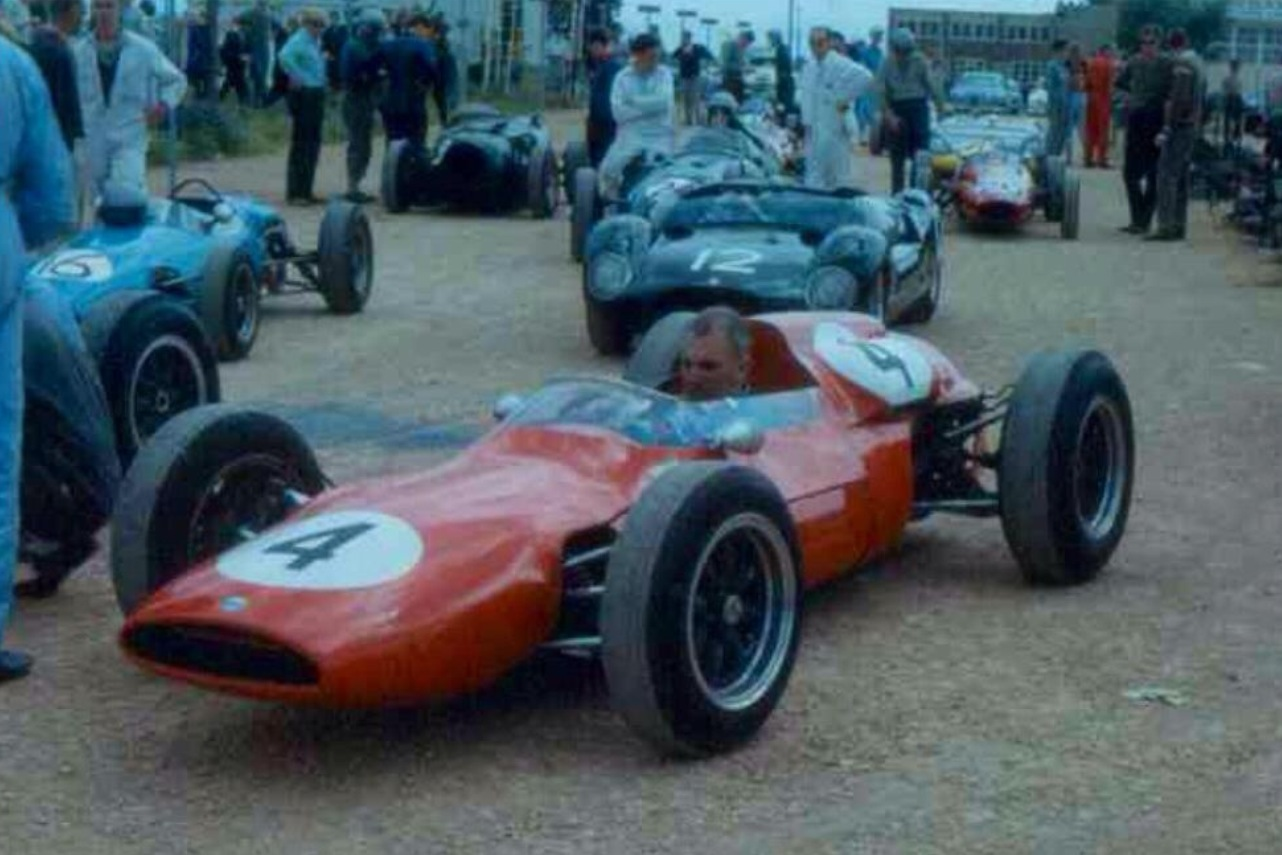
Small field shown in this start shot, fortunately the torrid duel between Brabham and McLaren made up for the paucity of competitors. Brabham then dark green Coopers, Patterson’s white one, Davo’s red Cooper and similar colored BRM P48 Olds of Arnold Glass, then the front engined Cooper T23 Holden of Negus, green TS Spl of Ted Edwards and finally the green Lotus Super 7 of Jeff Dunkerton, the last sports car to start an AGP. Note the State Governor’s Roller in the foreground (Lyn Morgan/Terry Walker)
The race only had 10 starters, Perth is a long way from the east coast where most of the Gold Star contenders were based. The balance of the field was made up of WA competitors. Indicative of the change in the nature of AGP fields is that this race was the last for a front engined car (the appearance of the Ferguson in 1963 excepted), the last for an air-cooled and Holden engined cars.
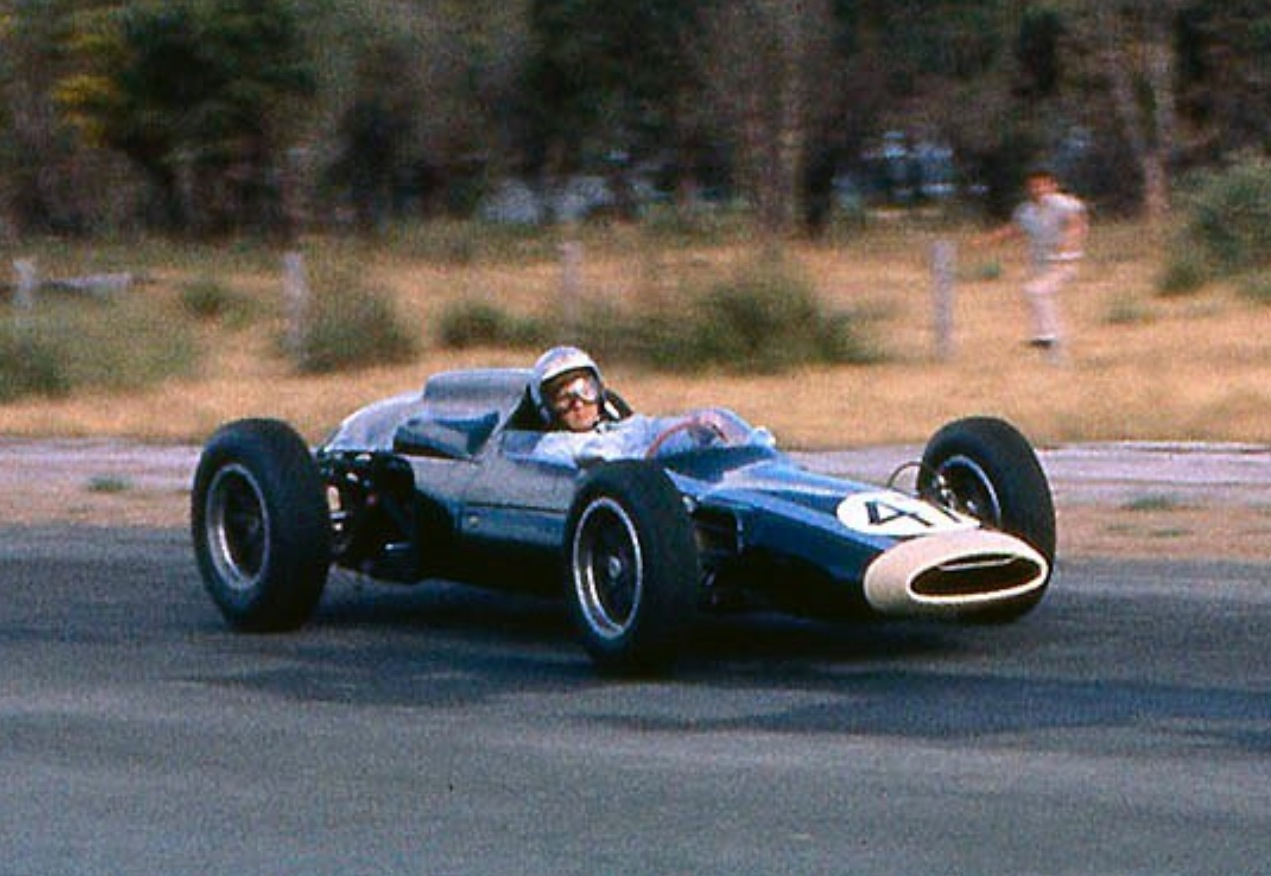
Brabham’s brand new BT4 Climax at Caversham, this car the first of many very successful ‘Intercontinental’ Brabhams; the Coventry Climax powered BT4/7A/11A won a lot of races in Australasia (Milton McCutcheon)
Even though the field was small the race settled into an absorbing battle between McLaren and Brabham at the front. The thrust and parry continued for over 40 laps, the gap varying between 2 and 8 seconds as attack and counter-attack was staged.
Lex with a big smile for the cameras! Cooper T53 Climax 2.7 ‘Lowline’ . The T53 was the works only ’60 GP car and sold to customers for ’61 (oldracephotos.com)
The race went on with Jack unable to get past Bruce but opportunity arose when Bruce ran wide lapping Arnold Glass for the second time.
Jack focused on Bruce, Glass took his line for the next corner, he and Brabhamcollided, the latter racing an ex-Scarab aluminium Buick V8 powered BRM P48. Arnold finished but JB was out on lap 50 leaving Bruce to take a popular win.
McLaren takes the plaudits of the crowd on his victory lap, Caversham 1962 (Terry Walker)
Youl was 2nd after an interesting battle with Stillwell 3rd, 4 seconds behind, Patterson 4th, then Glass in the BRM and Negus the first of the locals in the Cooper T23 Holden.
McLaren takes the plaudits of the crowd and the Governor, McLaren manager/journalist Eoin Young is the ‘blood nut’ in glasses behind the governor (Terry Walker)
With that Bruce and Jack returned to Europe for the finish of the season and then returned in January to race the cars in the annual Australasian summer series of races.
Bruce McLaren shows racer/journo/team owner David McKay his new T62 toy, McKay could not race having damaged his ex-McLaren Cooper T55, famously demolishing a marshalls ‘dunny’ after an off into Warwick Farm’s infield. Front wishbone suspension, Alford & Alder uprights, big oil reservoir for the CC FPF and aluminium side fuel tanks all clear (Peter Longley/Terry Walker)
Cooper T62 Climax…
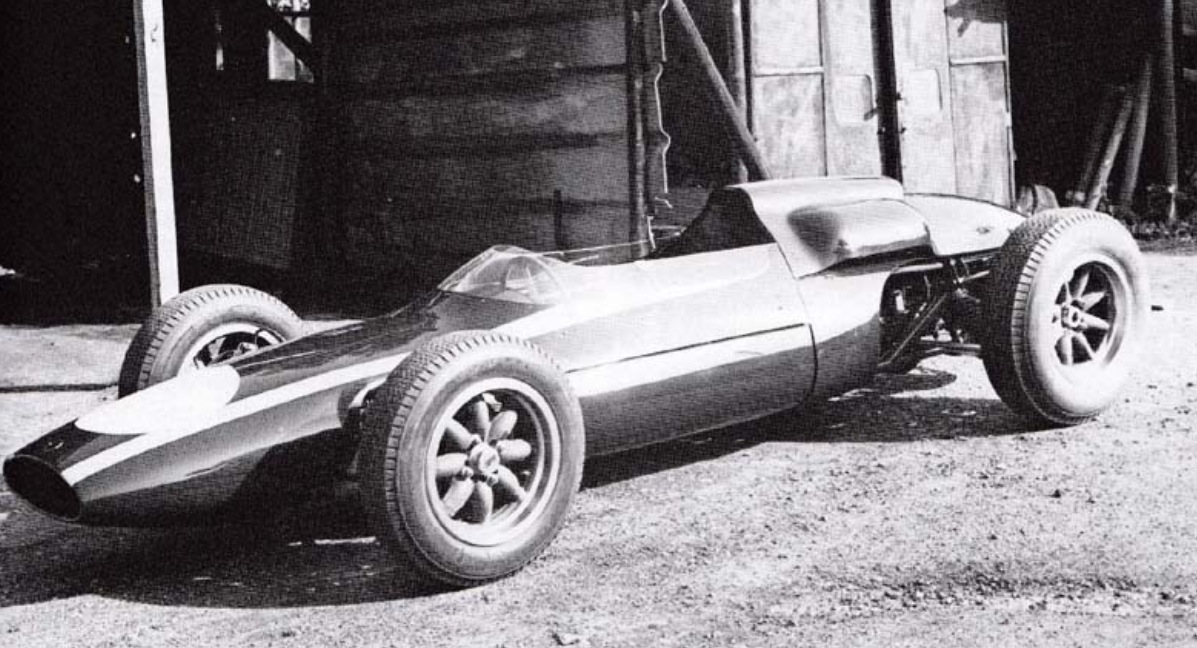
The Cooper was conventional for its day the T60 F1 chassis was laid out by Owen Maddocks after discussion with Bruce and John Cooper.
The T62 was built on the T60 jig by Tommy Atkins team at his Chessington ‘shop, Harry Pearce and Wally Willmott did the work. The rear frame was designed to take a P56 BRM 1.5 litre V8, the plan was for Bruce to drive it in non-championship F1 races Cooper themselves were not interested to contest.
When the engine was late, Atkins shelved the project and instead modified its frame to accept a 2.7 litre ‘Indy’ Coventry Climax FPF engine and Colotti T32 5 speed transaxle for ‘Tasman’ use.
Bruce and David again, rear frame detail and big 58DCO Weber fed 2.7 litre CC FPF engine, circa 260bhp on alcohol (Terry Walker)
Suspension was upper and lower wishbones and coil spring/shocks at the front and rear. There were adjustable roll bars front and rear, rack and pinion steering and disc brakes all round clamped by Girling BR/AR calipers front/rear. Wheel diameter was 15 inches.
#10 McLaren Cooper T62, Tony Maggs Lola Mk4 and Davison Cooper T53 on the ’63 Longford grid preliminary race (Ellis French)
McLaren raced the car that summer in the Antipodean Internationals
He took Kiwi wins at Wigram and Teretonga in January and then Sandown and Longford in Oz.
He was third at Warwick Farm and retired at Pukekohe, Levin and Lakeside. Bruce then sold the car, which had won five of its nine starts to Lex and headed back to Europe.
1963 AGP at Warwick Farm 10 February 1963; #2 Surtees Lola Mk4a 2nd #5 David McKay Brabham BT4 4th #10 McLaren Cooper T62 3rd, Brabham won the race in his BT4 (Howard)
1963 Internationals and Gold Star…
As stated in the first paragraphs of this article, Bib Stillwell won the second of his four Gold Stars with consistent performances in his Brabham BT4 all year. Lex showed plenty of speed in the T62 winning the Victorian Trophy at Calder and Bathurst 100 but neither were Gold Star rounds that year. Sandown was another T62 win, a hometown one and a championship round in September.
Jack Brabham won the AGP at Warwick Farm, the race held on 10 February whilst the ‘Tasman’ drivers were in the country, a pattern which continued for years, making the race much harder, and prized, to win by locals. Bruce was 3rd in the T62 with John Surtees 2nd in his Lola Mk4A.
McLaren won, as stated in the T62 at Longford and Sandown before selling the car to Lex and John Youl took two great wins in his Geoff Smedley fettled Cooper T55 at Mallala and Warwick Farm, the final 2 races of the Gold Star championship.
Davison with ‘Bathurst 100’ victory laurels 15 April 1963, the Cooper T62 looks superb, his cars always beautifully presented and prepared by Alan Ashton and the rest of the crew (John Ellacott)
Lex T62 ahead of Stillwell’s Brabham BT4 during the Victorian Trophy, Calder 11 April 1963 (‘stan patterson’)
Lex had 1963 Gold Star speed if not reliability. In the ’64 Tasman Series, he contested the Sandown, Warwick Farm and Longford rounds for DNF/8th/6th in the T62.
Bruce returned to the Antipodes with a 2 car team in 1964, the so-called ‘first McLarens’ were Cooper T70’s designed by Bruce, albeit built in the Cooper ‘shop. Bruce took 3 wins, Brabham 3 as well in his new BT7A but greater consistency gave Bruce the title.
Denny Hulme was Jack’s teammate in the Brabham BT4 Jack used the previous year, the car Davison would later purchase at the series conclusion.Tim Mayer showed great speed and promise in the other T70 but sadly lost his life in an accident at Longford.
oopsie! Lex having a moment in the T62 at Sandowns turn 1 or Shell Corner, in front is Frank Matich and behind Jack Brabham both in Brabham BT7A Climaxes. AGP which Brabham won, 9 February 1964, the other two both DNF (Howard)
Lex joined the ‘circus’ for his home race, the AGP at Sandown on 9 February but was out with piston failure in the T62 on lap 29, Jack won the race.
Davo was 8th and 2nd local home behind Stillwell at Warwick Farm, Brabham again taking the win.
He didn’t contest the ‘Lakeside 99’ in Queensland but was 6th a little closer to home at Longford in early March, this time Graham Hill won in a Brabham, David McKay’s Scuderia Veloce BT4.
Longford ‘South Pacific Trophy’ grid 2 March 1964; #2 Brabham BT7A, Hill in the red winning BT4 and Matich in the pale BT7A, then Stillwell on row 2 in the dark BT4 with Lex alongside in the red T62 and the rest (Geoff Smedley)
Lex started the ’64 Gold Star series in the Cooper but soon ‘got with the strength’ and bought one of Ron Tauranac’s ‘Intercontinental’ Brabhams, the marque pretty much had a stranglehold on the domestic competition from this point for the next few years. From 1963-68 to be precise.
Cooper T62 (right) and new Brabham BT4 with Davison team engineer Alan Ashton’s Ford Mainline ute towcar. ‘The BT4 was JB’s works car then Denny Hulme’s winning the AGP and Tasman Champs then to Davo and later John McCormack’s first ANF1 car. This is the BT4’s first run at Calder by Davison still in factory colors, after this meeting ’twas painted red (Terry Walker/Denis Lupton)
Stillwell again won the Gold Star, his well developed and beautifully prepared Brabham BT4, the national championship now run to the Tasman 2.5 litre formula.
He was more than quick enough to take the title with a win at Lakeside and strong placings elsewhere including an excellent 2nd to Brabham at Sandown in the AGP contested by the internationals on 4 February.
Lex won at Mallala in his new Brabham BT4 with Rocky Tresise finishing third at Warwick Farm in Lex’ Cooper T62, the nearly 1 hour race great preparation for the internationals Tresise was to contest that summer. The quicker 2.5’s of Matich and Stillwell didn’t finish the race but Rocky finished in front of Lex who was 4th. Leo Geoghegan and Greg Cusack were 1st and 2nd in Ford/Lotus 1.5 powered Lotus 32 and Elfin FJ respectively
Rocky Tresise…
Davo raced the Brabham from the 13 September Lakeside round giving Rocky Tresise, an up-and-comer and neighbour some races in the now second-string T62 during 1964.
Rocky’s first exposure to motor racing was as a 15 year old Melbourne Grammar schoolboy attending a Fishermans Bend meeting in 1958 with a mate whose family knew David McKay. The Scuderia Veloce chief was racing his Aston DB3S at the meeting.
Tresise was hooked ‘the noise, the smell and the excitement really got me in and from then on I bought every motor magazine I could get to try to learn more about motor racing’ he said in an AMS article about him in June 1964.
Rocky Tresise in 1964 aged 21 (AMS)
Rocky worked as a ‘servo’ pump attendant and on a farm in his school holidays to get together sufficient money to buy a car when he turned 18, his MGA contested 52 races at Sandown and Calder in 1962 having started in sprints and hillclimbs.
In 1961 the Davisons moved to Clendon Road, Toorak, one of the best streets in Melbourne, the Tresise family were the neighbours.
Chris Davison, Lex’ son and a racer himself recalls; ‘We grew up at Killara Park, the farm at Lilydale my grandfather established, dad used to commute into Collingwood each day where the shoe factory was. (Paragon Shoes) As we got older and needed to be closer to Burke Hall (Xavier Junior School) in Kew dad bought a house at 81 Clendon Road, Toorak just over the road from St Johns Toorak’.
‘Rocky had obviously heard via the grapevine we were moving in and on the very first night, the first night as we sat down to dinner there was a helluva racket, an engine being blipped and revved next door. Dad said ‘what the hell is that?’ and went next door to investigate, so they literally met the first night we moved into Clendon Road! Rocky’s furious blipping and revving of the engine was to let dad know there was a racer next door’
‘Rocky was a terrific bloke, i was 13/14 and liked him a lot. I often travelled with he and his girlfriend Robyn Atherton between race meetings. Rocky’s dad died some years back and Lex quickly became someone Rocky looked up to. A bit of a father figure and as time went on dad spoke of Rocky as his protege. Dad was famous for his Dame Nellie Melba (Australian opera singer) like retirements and comebacks but he knew his time to retire wasn’t too far off. The one of these i remember most was during one of the Albert Park meetings when we had Stirling Moss staying with us, we spent the whole weekend on a boat in the middle of Albert Park Lake so dad wouldn’t be tempted to get involved!’.
Tresise scoots thru The Esses in the Triumph 2000 Mk1 he shared with Lex at Bathurst in 1964 (autopics)
Rocky, having gained useful experience, but not winning any races in his stock car, realised he would not be competitive without extensive and expensive modifications to the MGA.
RT had met Jack Hunnam racing a Morris 850 in the same team during the 1962 Armstrong 500 at Phillip Island, Hunnam sold Rocky his Lotus 18 Ford FJ, Hunnam was moving up to an Elfin.
The MG was sold, his road car an A Model Ford, his goal of an open-wheeler the important next step was a choice made with Davo’s advice. Rocky’s first race in the car was at Calder in January 1963, he didn’t exactly cover himself in glory touching wheels with another and having it aviate over the top of his Lotus.
In another race a rear suspension failure resulted in a spin, these mechanical problems were typical of his 1963 but he worked hard at night at Hunnams to better prepare the car whilst Lex assisted with advice on race craft, lines and so on. His first success, a 3rd in the 1963 Australian FJ championship. Tim Schenken later bought the Lotus which was an important part of his ascension.
After that success Rocky managed 4 wins and a 2nd from 5 starts in FJ events. By this stage he was working fulltime as a hardware salesman for the family business. Chris Davison did some research and identified WP Tresise & Co Pty. Ltd. with outlets in Flinders Lane, Melbourne and Lower Malvern Road, East Malvern as the family company.
On April 9 1964 Tresise (real name Rodney) was given the ultimate 21st birthday present when Lex gave him an Ecurie Australie pocket emblem as a welcome to the team, he was to drive the Cooper T62 at the 19 April Victorian Trophy Sandown meeting.
‘Dad wasn’t an easy bloke, he was a stickler and a tough disciplinarian so he would have had Rocky under a tight rein and insisting on him doing as he was asked. The famous occasion was when Rocky ran off at the bottom of Conrod at Bathurst during the 500 and arrived back at the pits…’what about getting the car son!’ was dads response!’
During lunchtime on the Friday before the April Victorian Trophy meeting Lex drove the circuit with Rocky in his DB4 Aston. They stopped at various points to discuss lines, gear change and braking points and then played ‘follow the leader’, Lex in the Brabham, Rocky the Cooper.
Tresise got his times down to mid 14’s, the lap record then was Brabham/McLaren’s 1:8.1. Tresise ‘I thought I’d be frightened of the car, but I wasn’t. Even when it’s sitting still you know it’s tremendously fast, everything is so functional but the biggest thing about it is it’s fantastic acceleration’ he quipped.
Spencer Martin was having his second start in the Scuderia Veloce Brabham Climax both of the young drivers performed well albeit Rocky fluffed a gear off the grid causing engine failure later in the race.
In the 15 lap feature he was last into Shell Corner, having botched a change but got his times down to the mid 12’s, up to 5th by lap 4 and on lap 10 3rd behind Stillwell and Lex after Frank Matich retired from the lead. On lap 13 the engine popped but 1:12.3 was good after only half an hour behind the wheel of what was one of the fastest single-seaters on the planet at the time. These 2.7 litre FPF Climax engined cars were quicker than the 1.5 litre F1’s of the day.
Lex Davison had this to say of Tresise in his AMS column; ‘…he has had over 60 starts. This is more than Bib Stillwell, Bill Patterson, Doug Whiteford, Stan Jones or myself had in our first 10 years of racing. His driving has improved gradually and after the usual errors of youth, over-confidence and inexperience he has developed a businesslike and earnest approach to driving racing cars’.
During 1964 Davison and Tresise shared a Triumph 2000 in the Bathurst 500 finishing 8th in class D, the race was won by the Bob Jane/Harry Firth Ford Cortina Mk1 GT.
In November 1964 Tresise borrowed Ian Kaufman’s ex-works Frank Matich driven Elfin for the Victorian 1500cc Championship, the final of five rounds of the Lucas/Davison Trophy Series. Rocky was 4th outright and won the 1100cc class in the race taking out the 1100cc championship, the car prepared by Lou Russo ‘in such good shape that some of the 1500cc cars couldn’t get near it’, the Australian Motor Sports race report said.
Hunnam won the series from Leo Geoghegan’s Lotus 27, Tresise was 5th in the pitscore and Lex presented Geoghegan and Rocky their trophies. Interestingly AMS records Alan Jones racing Stan’s Cooper T51 Climax in a special handicap race ‘Alan handled the big car well to come 2nd’ to Bib Stillwell’s Cooper Monaco Buick.
Ecurie Australie in the Warwick Farm paddock during the Hordern Trophy weekend, December 1964. L>R Jon Davo, Lou Russo, Lex, Alan Ashton, Rocky, Peter Davo and Warwick Cumming, Brabham BT4 left and Cooper T62 right (Chris Davison Collection)
As stated earlier Tresise contested the ‘Hordern Trophy’ at Warwick Farm over the weekend of 5/6 December 1964.
Rocky finished third in the Cooper T62, the nearly 1 hour race great preparation for the internationals Tresise was to contest that summer. The quicker 2.5’s of Matich and Stillwell didn’t finish the race but Rocky finished in front of Lex who was 4th. Leo Geoghegan and Greg Cusack were 1st and 2nd in Ford/Lotus 1.5 powered Lotus 32 and Elfin FJ respectively.
Rocky in the T62 at Warwick Farm during the ‘Hordern Trophy’ 1964 (Bruce Wells)
He may not have been the youngest driver in the field but Davo could still make a car dance; here left on the front row in Brabham BT4 alongside Clark’s Lotus 32B and Hills Brabham BT11A, NZGP Pukekohe 1965 (Jack Brabham with Doug Nye)
1965 Tasman Series…
The ’65 Tasman was won convincingly by Jim Clark’s Lotus 32B Climax, who started his amazing 1965 season with a bang. That year he won the Tasman, Indy and his second F1 World Championship.
Lex raced his Brabham BT4 in the season opening NZ GP at Pukekohe starting off the front row and proving their was very much still ‘life in the old dog’ starting alongside Hill and Clark and ahead of all the rest including Brabham, Gardner, McLaren, Phil Hill and others. It was an amazing performance which deserved better than a DNF with overheating on lap 33.
He chose not to race the remaining Kiwi rounds, shipping the car back to Oz, direct to Sydney where Ecurie Australie, Lex in BT4 and Rocky in T62 contested the ‘Warwick Farm 100’ on 14 February.
Rocky has the Cooper T62 on tippy-toes as he finesses the big,powerful car around the technically challenging ‘Farm circuit 14 February 1965 (Bruce Wells)
Clark won the race, Rocky was 9th, 3 laps behind Clark with Lex withdrawing on lap 3 with a broken steering wheel, not the first time that had happened to him! Rocky’s was a good performance, he was behind the 1.5’s of Roly Levis and Leo Geoghegan but he still lacked miles in the car.
Tresise ahead of Bib Stillwell during the Tasman ‘Warwick Farm 100’, Cooper T62 and Brabham BT11A, Bib first resident local home in 4th 14 Feb 1965 (Bruce Wells)
Racing in this company and finishing was a fillip to his confidence. It was only his third meeting in the car. The top 6 were Clark, Brabham, Matich, Stillwell, Hill G and Jim Palmer, drivers of vast experience and calibre…
Lex in the Brabham BT4 at Warwick Farm during his last race, a broken steering wheel the cause. Thats the Ecurie Australie badge to the right of the mirror. He died at Sandown 6 days later (Bruce Wells)
Sandown Tasman Meeting, 20 February 1965…
The teams then pointed their trucks south down the Hume Highway, from Sydneys western outskirts horse racing venue to Melbournes eastern outskirts horse racing facility, Sandown Park.
During that tragic weekend Lex Davison died when his Brabham left the circuit on a Saturday practice session in an undemanding part of the track, the gentle right hand kink on the back straight, he went over a culvert and hit the horse racing perimeter fence coming to rest some distance further on in the circuit infield.
Chris Davison, a racer himself; ‘Dad had done a few ‘Nellie Melba’s’, retired and come back. He’d had some warnings about his heart from the doctor. What is probable is that something happened to his heart, maybe not an attack as such but he may have momentarily blacked out, the car following him, Glynn Scott, said the car turned inexplicably left and we lost him as a consequence of the collision itself. Days later his badly damaged helmet was delivered home to Clendon Road by a couple of policemen, I’m still not sure where it is now after all these years’.
I don’t propose to go into this further, the salient facts above are sufficient.
The result was that one of Australian motor racings greatest, a titan since the 1940’s was lost.
Rocky’s Cooper was of course, withdrawn from the meeting.
Chris Davison; ‘I really like this photo with all the Davo clan and a young Rocky. Taken at the Vic Trophy Race at Calder in 1963. That’s me wearing Dad’s cap and Richard with Rocky at the back wheel’ Cooper T62 (autopics)
The impact of Davison’s death cannot be overstated in Melbourne at the time…
Lex was a four time AGP and the inaugural Gold Star title winner, a well known sportsman in a city obsessed with sport. He was a successful, respected businessman, Paragon Shoes, the business his father started was an employer of a large number of people. A good looking athletic bloke, his wife Diana was an attractive woman so they cut a fine figure as a couple in Melbourne at a time it was small. It was big, very sad news for the broader populace let alone the Davison family and extended network.
Enthusiasts of a particular age remember what they were doing when they heard the news on 20 February 1965, it was one of ‘those’ events in ones lifetime.
Aussie GP driver Tim Schenken, a Melburnian provided a personal perspective in a MotorSport interview ‘…in 1964 Rocky Tresise was selling his Lotus 18 because he was joining Lex Davison’s team. I borrowed the money from my dad to get it. Now I was in a proper racing car started attracting a bit of attention at Calder, Winton, Tarrawingee and Sandown…’
‘Then out of the blue Lex Davison called. He was a major figure of course and a real hero of mine. He told me he was going to retire and Rocky Tresise was going to take over his big single-seaters. He’d watched me in the Lotus 18 and wanted to put me in his Elfin. (Lex had paid a deposit on a new Elfin 100 ‘Mono’ 1.5 Ford) It was unbelievable for me’. Barely a week after Lex’ conversation with Tim, Lex died at Sandown and then Rocky the weekend after that at Longford.
‘Because of Lex’s status in Australia, there were hundreds of people at his funeral in Melbourne’s St Patricks Cathedral including Jack Brabham and Bruce McLaren. I’d never been to a funeral before and it was dreadful. On the coffin was a chequered flag his helmet and gloves. I didn’t know anyone, I just hung around on the edge of it, very muddled about it all’.
‘It was terrible, Lex and Rocky dying on consecutive weekends. It just stunned everybody. The thing was the weekend after Rocky’s crash I was due to run for the first time under the Ecurie Australie banner at Calder in my Lotus 18. The newspapers got hold of it and were speculating about whether it would be three fatal crashes in 3 weekends. I went to see Diana Davison and she pleaded with me not to race at Calder. I was under a lot of pressure not to drive; I felt I couldn’t talk to my parents about it but all I wanted to do was to go racing. I was a very confused boy’, Tim raced the Lotus at Calder entered in his own name, the transmission broke on the startline.
Frank Matich, left and Rocky at Warwick Farm during the Hordern Trophy meeting in December 1964 (autopics)
Australian Grand Prix, Longford 1 March 1965…
Chris Davison ‘Longford was usually one of ‘my’ races as a kid so i knew the place well. A few days after dads funeral which was huge, it was like a State funeral so many people attended, the city was brought to a standstill, i was still numb just trying as a kid to absorb what had happened. It was like looking outside watching people going about their daily lives and wondering why they didn’t see what you are going through, that things weren’t the same at all’.
‘Rocky and dads team; Alan Ashton, Lou Russo and Warwick Cumming came to the house to see the family and find out if they should race the car the following weekend at Longford. To go or not to go was the call we had to make. Over all these years when this question comes up i ask people what you would do, what would you have decided was the right thing? Most say ‘race on in Lex’s honor’ which is of course what we decided’.
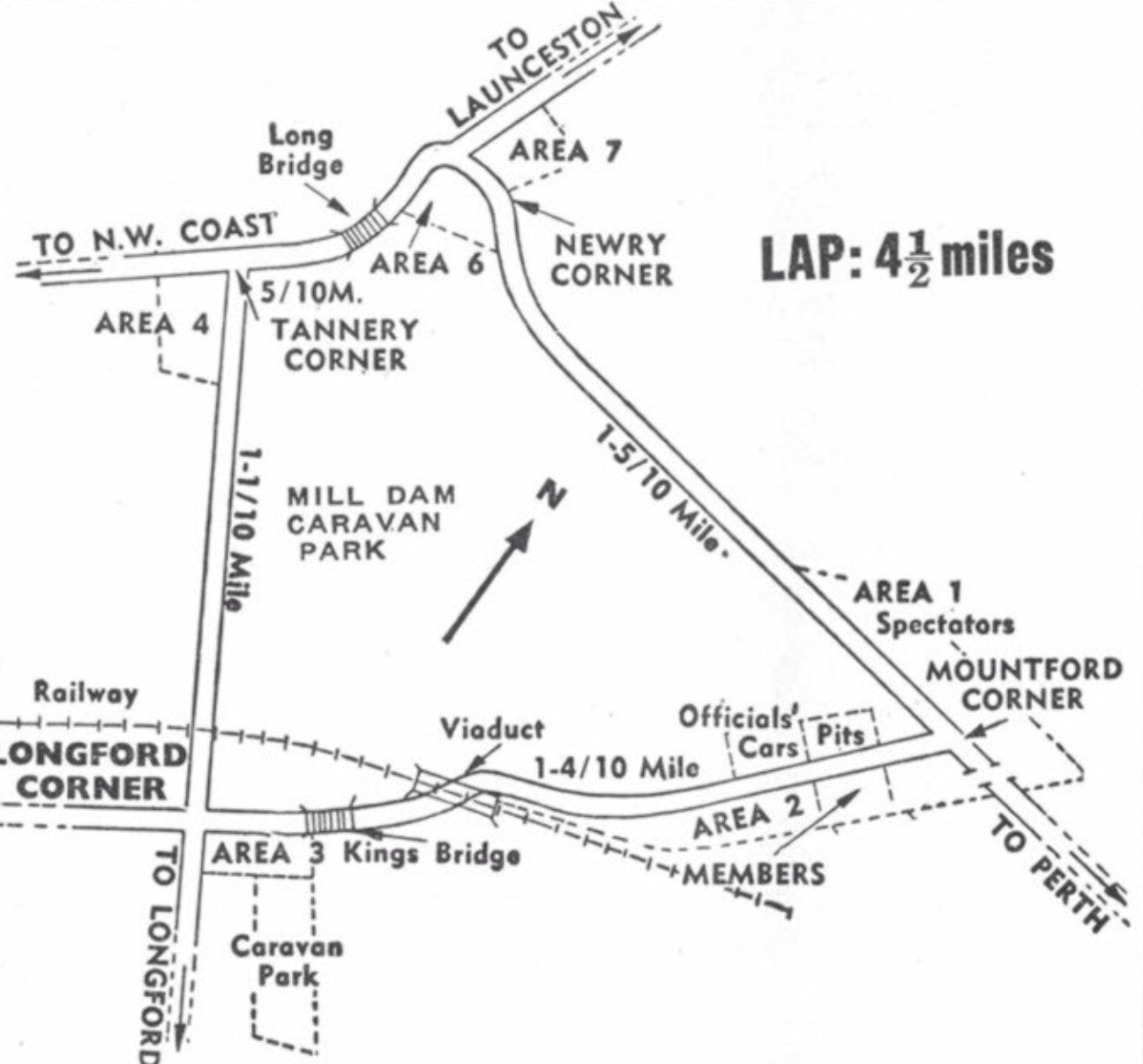
And so the scene was set. Ecurie Australie crossed Bass Straight on the overnight ‘Princess of Tasmania’ voyage. After berthing in Devonport the team took the short drive to Longford, a picturesque village 25km from Launceston, Tasmania’s ‘northern capital’ in the Apple Isles northern midlands.
The race was always held on a long weekend and was well supported by non-motor racing type Taswegians as a major sporting event on their calendar, over 30000 attended the ’65 event.
This 1964 documentary footage captures the essence of the place and its inherent dangers in a modestly powered sedan, let alone a GP car, click here to see and enjoy it;
Overseas visitors to Oz doing a ‘motor racing tour’ should include Longford amongst your ‘must visit’ circuits. Other circuits/ex-circuits whilst itinerary planning are Phillip Island and Albert Park in Victoria, Mount Panorama at Bathurst NSW, and the Lobethal and Nuriootpa road courses in SA’s Barossa Valley. Lobethal is amazing. Checkout the Adelaide GP street circuit whilst you are in town of course.
Middle of the grid before the ‘Examiner Trophy’ preliminary race. Stillwell #6 Brabham BT11A, Matich BT7A and Frank Gardner in the yellow Mildren BT11A with Rocky in the red Cooper T62 in the row behind (Stephen Dalton)
Rocky hadn’t raced on the demanding, dangerous, fast, over 100mph average speed and technical road circuit before. Lex wasn’t there to guide him. Its intriguing to know who looked after him in terms of getting his head around the circuit and his approach to it that weekend with all of the tragedy of the week before at the forefront of his mind. He was a very brave young fella of great character to race.
He practiced and started the preliminary race ‘The Examiner Road Racing Championship’ without incident. Bruce won from Jack and Graham Hill, Rocky was 10th.
He had misgivings about contesting the main race ‘The South Pacific Trophy’ on the Monday though.
‘Racing Car News’ and ‘History of The Australian GP’ journalist Ray Bell recalled on The Nostalgia Forum in 2015 ‘Rocky did have some serious misgivings about driving in the race. He’d been talking to (Tasmanian racer) Lynn Archer earlier in the day. Lynn told him if he didn’t feel like driving he should tell the team and pack the car away, but it was his decision and nobody else could make it for him’.
The Ecurie Australie Cooper T62 is pushed onto the grid for its last fateful race in Rocky’s hands 1 March 1965 (oldracephotos.com)
Start of the AGP Longford 1965. Graham Hill BT11A on the right gets away well with Brabham BT11A in the middle and winner McLaren Cooper T79 at left. #8 is Clark’s Lotus 32B, #7 Gardner’s Brabham BT11A, #11 is Phil Hills Cooper T70, #3 Matich BT7A and Stillwell alongside Frank in the dark BT11A, Tresise in #12 T62 is to Bibs left with Bob Jane in the light colored Elfin Mono Ford 1.5 beside and behind Rocky #15 is Jack Hobden’s Cooper T51 and #9 Bill Patterson’s light coloured Cooper T51 (Howard)
In terms of the Grand Prix itself, Bell summarised it thus; ‘ It was a stinking hot day, we saw the greatest race I ever saw. A contest that had four World Champions (Phil and Graham Hill, Jack Brabham, Jim Clark) and a multi-times second placegetter (not to mention Tasman Champion, Bruce McLaren) at each others throats for the whole distance…Phil Hill had his last open-wheeler race, it was more than that to him. It was the best race he ever drove in his opinion and when I reflect on what I saw that day it certainly was a great drive’.
The road narrows beyond Mountford Corner as the cars pass the end of the pits which is where the accident ocurred. You can see from the start shot above how wide the circuit is in that start/finish/pits area of the track
Rocky‘…had trouble all weekend getting first gear out of Mountford. The first time he got it right (that is selected and used 1st gear from the tight corner) was at the end of that first lap, then he came boiling out of the hairpin passing 1.5 cars one after the other. Tragically that’s why he ran out of room (where the circuit narrows). I’d met Robin d’ Abrera just a few weeks earlier, he was with Peter Bakalor whom I’d known for a year or two. He was really enjoying being with the other photographers and following this important series for Autosport.’
‘So for Anthony Davison, the family representative that day, a young man, (17) after running across to the crash site and learning of Rocky’s death, he had that to deal with before, an hour or so later, having to present the new trophy named in his fathers honour to Bruce McLaren’ the race winner in his Cooper T79. Jack was next, 3 seconds behind in his BT11A and Phil Hill a further second back in Bruce’ Cooper T70.
Bruce McLaren won the tragic ’65 AGP in a great drive, Cooper T79 Climax. Two motorcyclists also perished at Longford that weekend, an incredibly black one for the sport (Howard)
The Davison family ordeal was far from over though, Bell; ‘The night of the race Anthony, Peter and Jon (Davison) flew back to Essendon Airport, Melbourne and went straight to the Tresise home. There Rocky’s older brother and sister were waiting to hear what happened to their brother. The older brother asked Jon (a decade later a leading F5000 racer) ‘He kept his foot down when he should have backed off’ said Jon. It was that simple. The road has narrowed as he ranged alongside Glynn Scott (Lotus 27 Ford 1.5), with two wheels in the dirt the car lost traction, skewed sideways and started the crazy flight that took the lives of Rocky and Robin d’Abrera’.
Chris Davison; ‘I didnt go to Tasmania that year in all the circumstances of course but i can still recall arriving home from rowing practice on the Monday evening (of the South Pacific Trophy in which Tresise died) and a friend of the family giving me the news about Rocky’s accident. I was devastated, the team, dad, Rocky dead. It was just too much for a kid to absorb, tragic on so many levels. Rocky had two other brothers, one was an army officer, David, Ian the other brother was at the races decades later when David Purley raced here in the LEC sponsored Lola T330 F5000, he had some sort of connection with that company. Rocky was special, he was kind and generous to me, gave me space that was sometimes hard to get with my older brothers dominating the space’.
As to the future of the Tresise family little is known, Chris; ‘Rocky’s mother was Val Tresise, she married some years after Rocky was killed…a man from Western Victoria, or Penola in South Australia, i think his name was Arch de Garris. Rocky’s fiancé was Robyn Atherton and sadly I have no idea what happened to Robyn after Rocky was killed. I guess I was too young to really understand what was happening in those difficult years after both Lex and Rocky were killed, and by the time I was 17, I just wanted to get on with my own life, so I went bush as a jackaroo at Hay and lost contact with many people. The person who was all knowledgeable on these matters was my mother and sadly she has taken all this knowledge with her’.
Anything i say at this point would be trite or superfluous. I am very thankful to Chris for discussing and sharing his recollections of this quite extraordinary fortnight in the lives of the Davison and Tresise families.
The remains of the Ecurie Australie Brabham and Cooper were advertised and bought by Victorian racer Wally Mitchell who used some of the components to build the ‘RM1 Climax’ sportscar.
Mitchell crashed the car at Symmons Plains on 12 March 1967 suffering burns which claimed him, he died on 18 April, to make the story even more macabre.
Prior to his demise historian Stephen Dalton advises his uncle, John Dalton had done a deal with Mitchell to acquire the T62 bits, these components passed to John after delicate discussions with his distraught widow.
Dalton; ‘I remember it under my uncles house at Olinda during the September school holidays of 1978, I was earning some money tidying things up to put more MG stuff under there! I was 13 and didn’t know the sad history of the car at the time’.
‘The car remained a crumpled wreck until the mid to late eighties when a new chassis was built by Charlie Singleton, the car was displayed in chassis form at one of Paul Sabine’s Classic Car Shows in the late 80’s/early 90’s. Things went pear shaped financially and John sold it in the early 1990’s. By the time it was displayed Roger James had ownership and perhaps Richard Bendell was involved. I think Gary Dubois built the body for it’.
The car was sold to the ‘States in the early 1990’s and has been sold a couple of times since when I saw it at Sandown Historics in 2014, but I’m not sure who owns it’, but it seems the car is now owned by an American enthusiast.
Bruce McLaren winning the 1962 AGP at Caversham in the Cooper T62 Climax (oldracephotos.com)
The Cursed Car?…
Its a fact that a whole swag of people closely associated with the Cooper T62 died before their time, not just the obvious four; McLaren, Davison, Tresise and Wally Mitchell. Later owners or part owners John Dalton and Roger James died early, so too Paul Higgins a respected Melbourne journalist ‘attached’ to the Davison team who was murdered along with his wife in gruesome circumstances twenty years ago.
The above are facts not the stuff of a fictional thriller. For those of us a little superstitious the reality is that some cars shouldn’t be rebuilt, but buried. Perhaps this is one such car…
Etcetera…
Cooper T62 upon completion at an early Goodwood test in late 1962 prior to shipment to Fremantle, WA (Mike Lawrence)
McLaren in the Lakeside paddock in early 1963, Tony Shelly behind (B Williamson)
Alan Ashton aboard Lex’ T62 at Mallala, Gold Star round 14 October 1963. Behind is Stillwell’s Cooper Monaco and Pat Hawthorn’s Aston Martin DBR4, blue #16 is Mel McEwin’s Elfin FJ Ford. John Youl won this race in a Cooper T55 (Kevin Drage)
Credits and Bibliography…
Chris Davison who was very generous with his time and insights into a very difficult part of his life as a young teenager
‘History of The AGP’ by Graham Howard and Ors in particular the 1962 and 1965 chapters written by Howard and Des White
‘The Nostalgia Forum’ threads in relation to Lex and Rocky in particular the contributions/insights of Ray Bell and Stephen Dalton
‘Australian Motor Sports’ June 1964 issue, the Melbourne ‘Age’ newspaper 20 February 1965
‘MotorSport’ interview with Tim Schenken
Stephen Dalton Collection, Chris Davison Collection John Ellacott, Terry Walker, oldracephotos.com, Milton McCutcheon, Peter Longley, Ellis French, Geoff Smedley, Ron Lambert Collection, Denis Lupton, Geoff Smedley, autopics.com.au, Murray Lord, Bob Williamson
Tailpiece: Davo in the best of company: Graham Hill’s Brabham BT4, Davison’s Cooper T62 and the white nose of Jim Palmer’s Cooper T53 Climax, Longford 1964
Jackie Stewart’s BRM P261 is pushed onto the Longford grid by Jimmy Collins and Stan Collier on 5 March 1966…
The race is the Launceston Examiner Trophy, the preliminary Longford Tasman round race, and Jackie is being moved onto pole.
Stewart won the main race, the South Pacific Trophy on the Monday from his teammate Graham Hill and Jack’s Brabham BT19 Repco- the new Repco ‘620 Series’ V8, 2.5 litres in Tasman spec, having its third race and gearing up for his successful world championship assault that year.
For the BRM boys it would be a more character building F1 year, mind you, Jackie took a great Monaco GP win in his nimble 2.1 litre P261 against the new 3 litre GP cars that May.
Stewart glides his BRM into Mountford Corner. Note the crossflow ‘inlet between the Vee’ spec of this P60 engine- the more ‘typical’ engine had the exhausts within the Vee (oldracephotos.com.au/DKeep)
The 1966 Tasman Series was a BRM rout.
The 1930cc P60 versions of the 1.5-litre P56 V8 engined cars won seven of the eight rounds- JYS took four victories and the title (Wigram, Teretonga, Sandown, Longford) Graham Hill two (NZ GP Pukekohe, AGP Lakeside) and Richard Attwood one (Levin). Jim Clark won the other round, the ‘Warwick Farm 100’ in his Climax FPF-engined Lotus 39.
The days of a Coventry Climax FPF winning the Tasman were over. From 1966 to 1970 the 2.5 Tasman Series was dominated by ‘multi-cylinder’ V6 and V8 engines of F1 and F2 extraction.
JYS and Eric Reece, Tasmanian Premier (HRCCT)
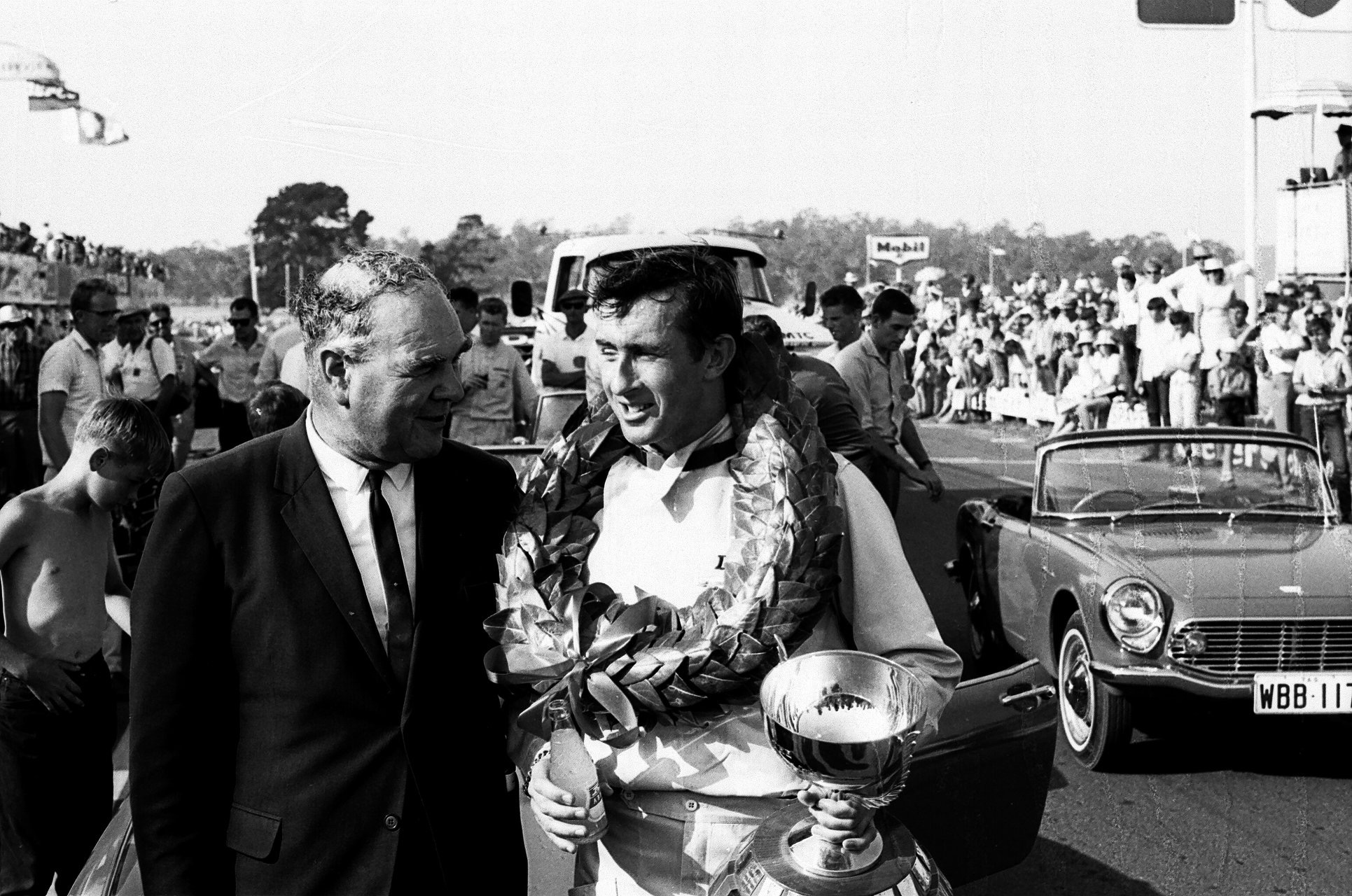
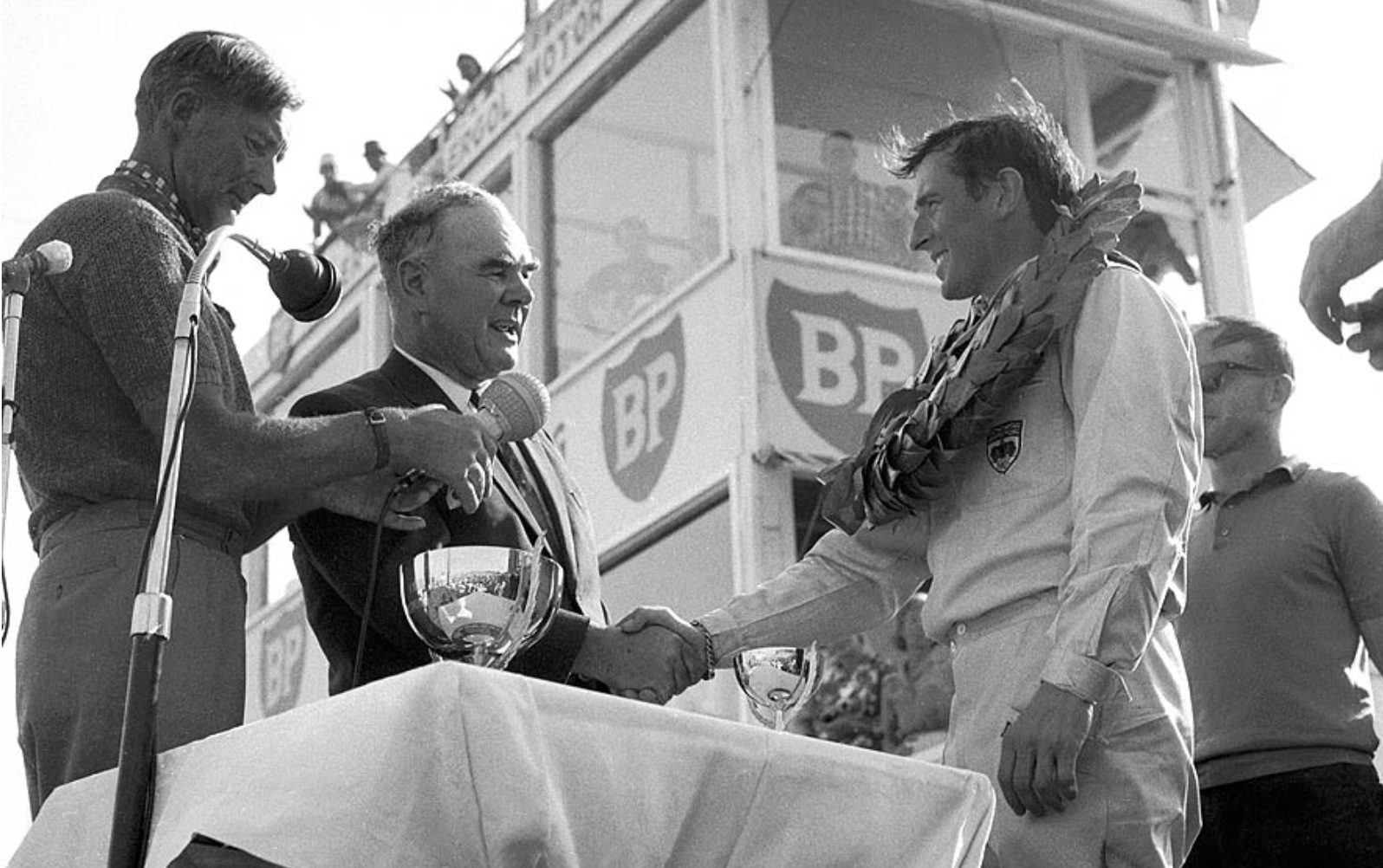
Lindsay Ross of oldracephotos captured the feeling at the time, ‘After his win at Longford in 1966, a lot of Tasmanians were now aware of Jackie Stewart and I, along with no doubt many other enthusiasts, began following his career.’
‘The podium shot has him shaking hands with Tasmanian Premier ‘Electric Eric’ Reece, who was the driving force behind Hydro-Electric power in the state. He also made sure the Longford roads were laid with the finest hot mix bitumen available. Ron MacKinnon of the Longford Motor Racing Association has the microphones- he owned much of the land around the Longford track.’
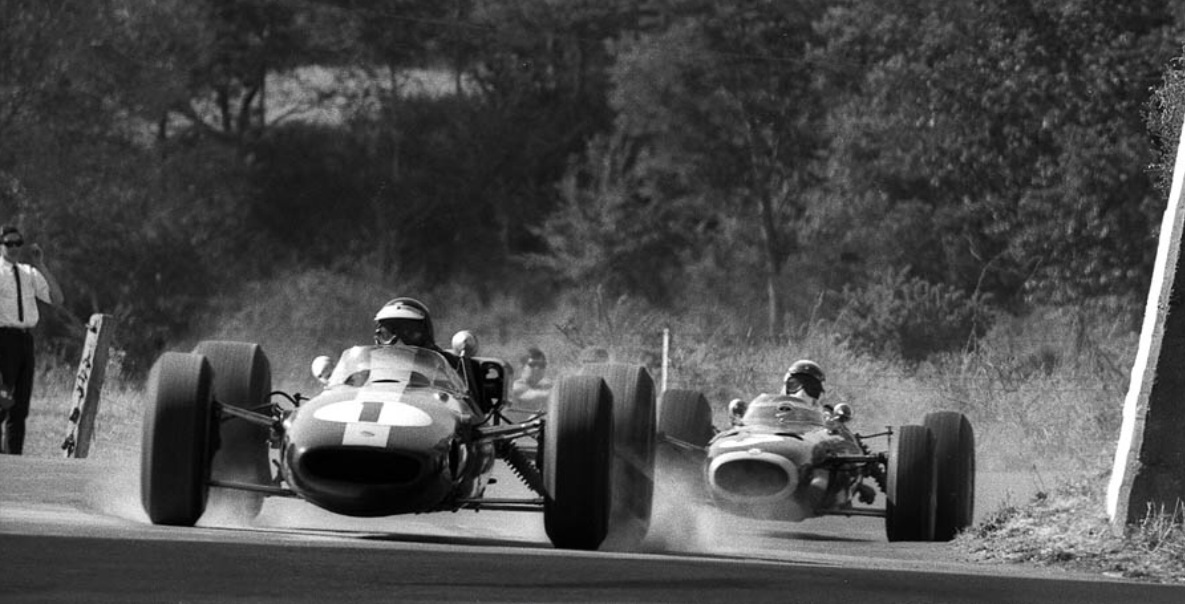
Jim Clark, Lotus 39 Climax in front of his fellow Scot at The Viaduct in 1966 (oldracephotos.com.au/DKeep)
Etcetera…
(HRCCT)
Brabham accelerates away from Mountford in BT19, surely the most photographed single-seater in 1966. The chassis was Brabham’s weapon in Tasman and GP competition pretty much all year.
Note the long inlet trumpets of the RB620 2.5-litre V8. Longford was the new RB620’s third race- a 3 litre unit was used in the non-championship South African GP at Kyalami, and another of 2.5 litres in capacity for the Sandown International in Melbourne the week before Longford. All three events in BT19- BT19-1 is still owned by Repco.
(HRCCT)
The next group of shots are all on the exit of Mountford- the corner onto the straight past the pits, here Clark’s Lotus 39 FPF from Hill’s BRM. The BRM’s solo are #2 Hill and #3 Stewart.
(HRCCT)(HRCCT)(HRCCT)
And another podium shot from a slightly different angle.
Stewart wheels his BRM into the left-hander under the famous Longford Railway Viaduct- a tricky, fast on approach, downhill corner with minimal run-off area should the pilot goof. Note the spectators on the hill and alongside the railway line at the top.
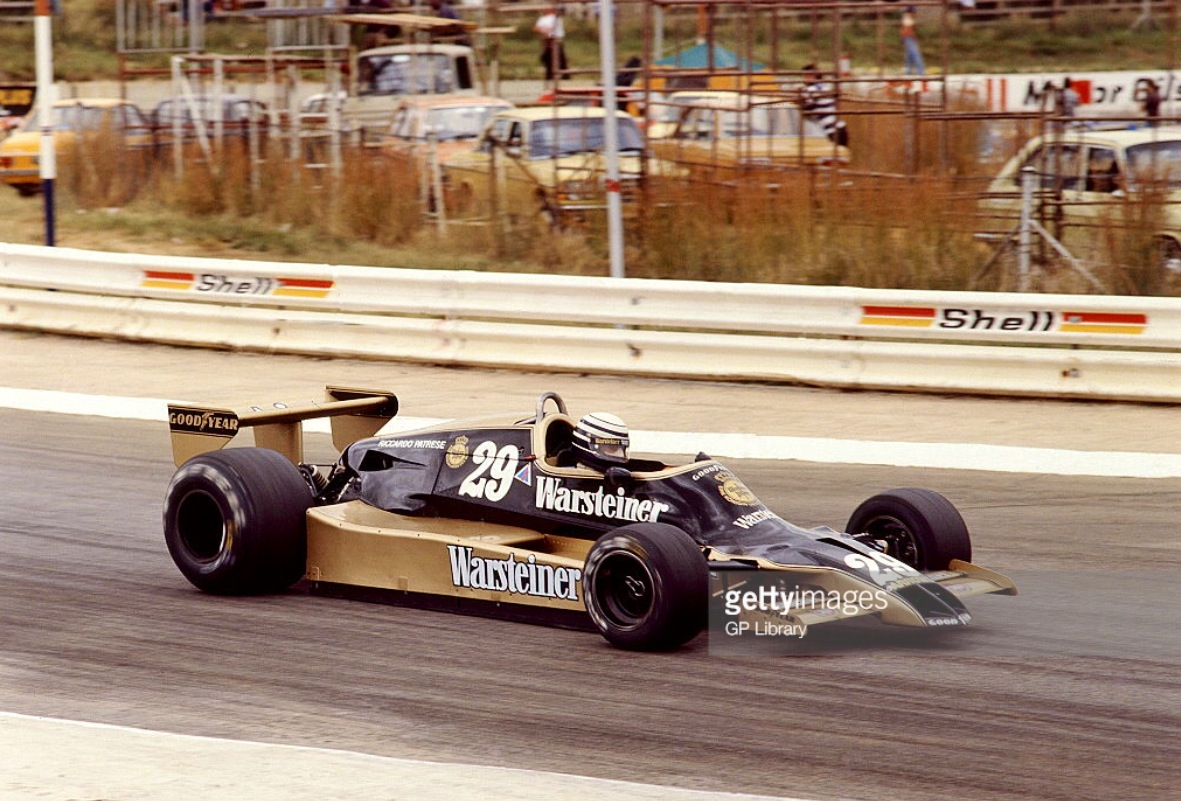
Patrese debuts Arrows A1-06 Ford at Kyalami, South African GP 1979. Q8 and 11th in the race won by Gilles Villeneuve’ Ferrari 312T4 (Schlegelmilch)
What’s it like livin’ and lovin’ the most successful race engine ever built?…
Our ‘Racers Retreat’, Peter Brennan owns and cares for ‘DFV250’. I have decided in fact he is a ‘perick’! Not only can he drive ‘big cars’ very quickly but he can also reconstruct, rebuild and maintain the things which makes him a multi-talented ‘perick!
Pete Brennan in the Arrows at Phillip Island, Paul Faulkner’s ex-Jones ’81 Williams FW07 behind (Brennan)
Villeneuve and Patrese, 7th and 5th in the 1979 Belgian GP at Zolder. Ferrari 312 T4 and Arrows A1 ’06’ May 1979 (unattributed)
‘DFV250’ sits in the back of his Arrows A1-‘06’. It was Ricardo Patrese’s car for the early season races in ’79 before Arrows switched to the more advanced but unsuccessful A2 which was not Tony Southgate’s best work. A1-06 was then sold for Aurora Series and Historic F1 use, eventually ending up in the Al Copeland Collection from whom Pierre acquired it after Copeland’s passing.
We will get to restoration of the Arrows and the Ford DFV which was at the ‘dismantle, crack-test and reassemble’ end of the spectrum rather than the ‘reconstruct around the monocoque bulkheads, four corners and ‘box’ huge task which Lola T330 ‘HU18’ represented, soon. Click on this link for a series of articles on that mammoth job which shows Peter’s talents.
For now I just want to focus on the care and maintenance of a DFV race to race which I expect is rather more involved than that of my ‘Peter Larner Engines’ 105bhp Formula Ford ‘Kent’ moteur?
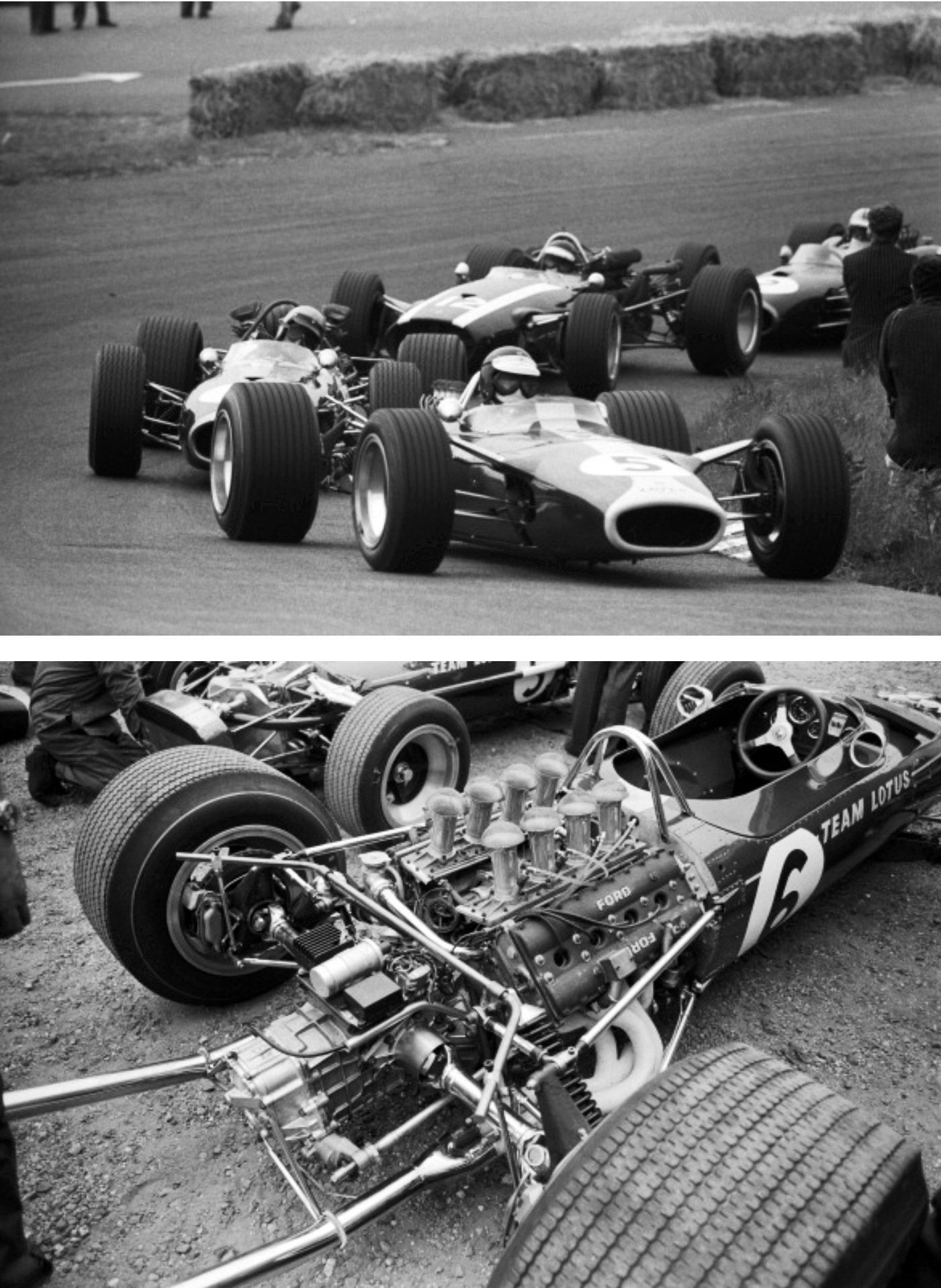
Clark on the way to the DFV and Lotus 49’s first win, Dutch GP, Zandvoort 4 June 1967. Clark leads Brabham Brabham BT19 Repco 2nd, Rindt Cooper T81B Maserati DNF and Hulme Brabham BT20 Repco 3rd (Schlegelmilch)
Why the DFV you ask?…
Keith Duckworth’s Ford sponsored 1967 3 litre, 4 valve, fuel injected, 2993cc V8 is both the most successful grand prix engine of all time with 155 championship GP wins from 1967-1983 but also part of the winningest ‘family’ of engines. The DFV spun off the 3.9 litre Le Mans winning endurance racing ‘DFL’ and single turbo-charged 2.65 litre ‘DFX’ Indy victor.
Theo Page cutaway of the Ford Cosworth DFV in 1967. All the key elements referred to in the text covered in this superb drawing
Phil Reilly Engineering…
Brennan has tackled all manner of race engines over the years including lots of Chevs, Repco Holden F5000, Repco Brabham V8’s and various Coventry Climax FPF’s, but the DFV was new to him. His ‘guru’, a source of advice from afar and the fellow to whom he sent the his heads was Phil Reilly who has forgotten more about these engines than most people ever knew. His ‘shop, well known to American enthusiasts is in Corte Madera, California. Reilly Engineerings ‘Care and Feeding Your Cosworth DFV’ and Peters practices in looking after ‘250’ form the basis of this article.
Butt shot of one of the Lotus 49’s upon debut at Zandvoort 1967, ZF 5 speed ‘box, the ratios of which could not easily be changed about to be swapped. Shot shows the brilliant packaging of the DFV. Lotus’ Chapman prescribed a stress bearing V8 to Keith Duckworth inclusive of the way he wanted to attach the engine to the chassis at the bulkhead aft of the driver. Note the tubular brackets either side of the Borg and Beck clutch to which the suspension mounts. Their is no tubular frame or monocoque structure aft the driver, the engine itself forms the function of being the bit to which other bits are attached! Part of the brilliance of the DFV is its combination of power, weight, reliability and cost, the other aspect is the way it integrates with the chassis (Schlegelmilch)
DFV’s and DFV’s…
The development of these engines has effectively never stopped, you can still buy the bits from Cosworth Engineering, inclusive of a new engine should you buzz it to 15000rpm on an errant downchange and pop a rod or three thru its slender aluminium or magnesium flanks.
The DFV in Jim Clark’s winning Lotus 49 at Zandvoort on 4 June 1967 gave a smidge over 405bhp, its power delivery in the early days quite ferocious, coming in with a bang all up top, making it a bit of a challenge for Messrs Clark and Hill. A long stroke, same as Jims, engine like DFV250 gave around 470bhp and 260 lbs/foot of torque at 10500/9000rpm respectively whilst being thrashed to within an inch of its life by Patrese in early 1979.
A wrong turn of phrase really as the talented Italian multiple GP winner was both mechanically sympathetic and great test driver.
Jacky Ickx, Ensign N177 Ford, Monaco GP 1977, 10th in the race won by Scheckter’s Wolf WR1 Ford (unattributed)
All go and no show Cosworth Engineering. Subtle stamping of engine number in the engines valley (Brennan)
In fact when ‘250’ was first born it was a Cosworth lease engine used by Team Ensign and supplied to them on December 3 1976.
It was fitted to the N177 chassis’ driven by Jacky Ickx and Clay Regazzoni, multi GP winners both, during 1977. Without the teams records its not possible to know into which chassis ‘250’ was installed race by race.
Launch of the Arrows A1 at Silverstone in late 1977, maybe they figured the white body against the white snow would disguise its similarity to the new Shadow DN9, the design drawings of which Southgate erroneously thought were his! Patrese in car, Jack Oliver behind left and Tony Southgate at right. The High Court writ was shortly ‘in the mail’ (unattributed)
The engine was then bought by Arrows when the team spun out of Shadow. Jackie Oliver, Alan Rees, Tony Southgate and Dave Wass all felt they could ‘build a better mousetrap’ and left Don Nichols outfit at the end of 1977. The High Court legal stoush about ‘IP infringement’ which followed is a story for another time; in some ways Nichols had the last laugh as Shadow won a GP, the 1977 Austrian when Alan Jones took his first win in an a DN8 Cosworth, whereas Arrows never did win one albeit the business lasted a lot longer than Shadow…
(Brennan)
The Calm Before The Storm…
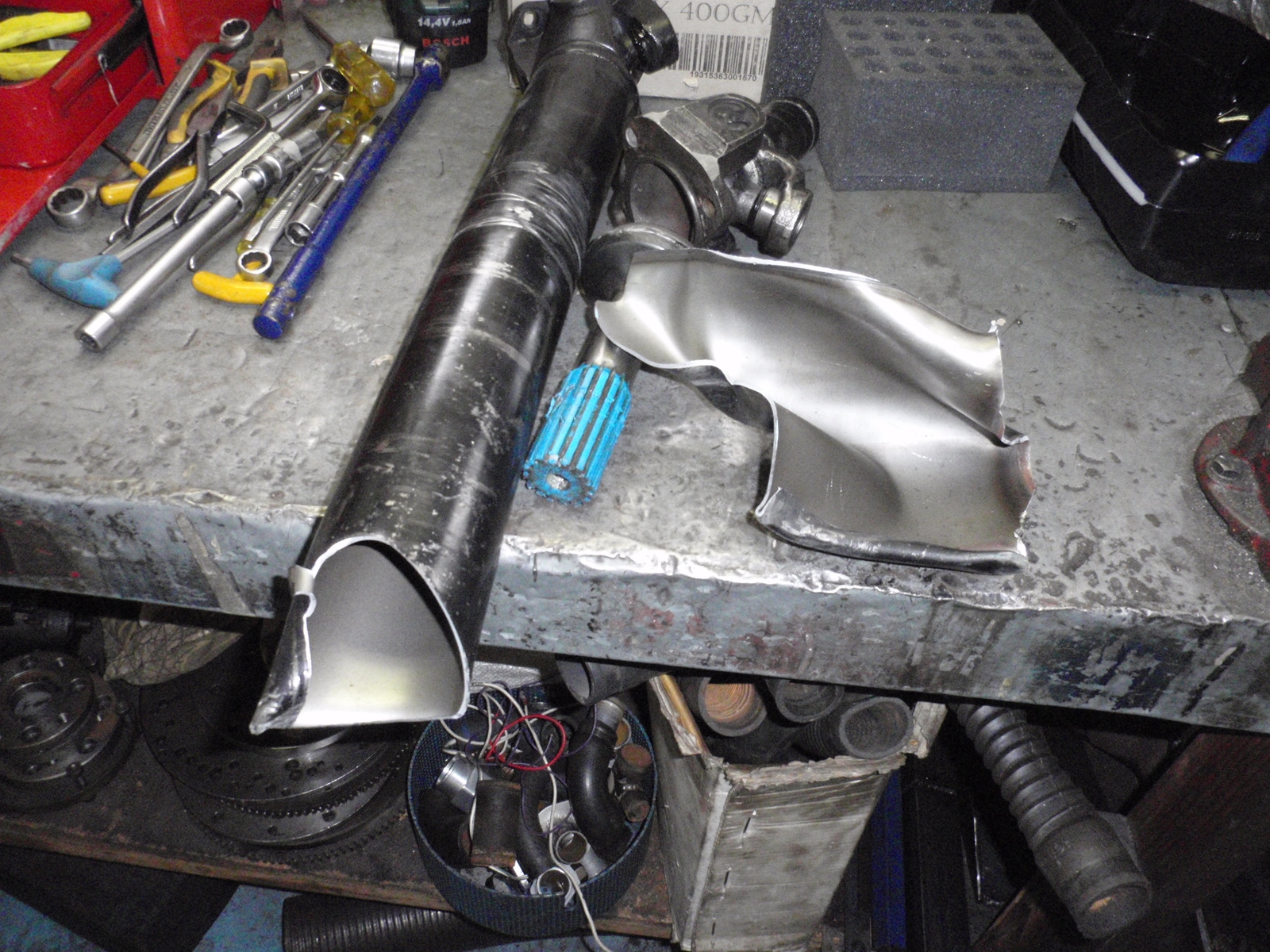
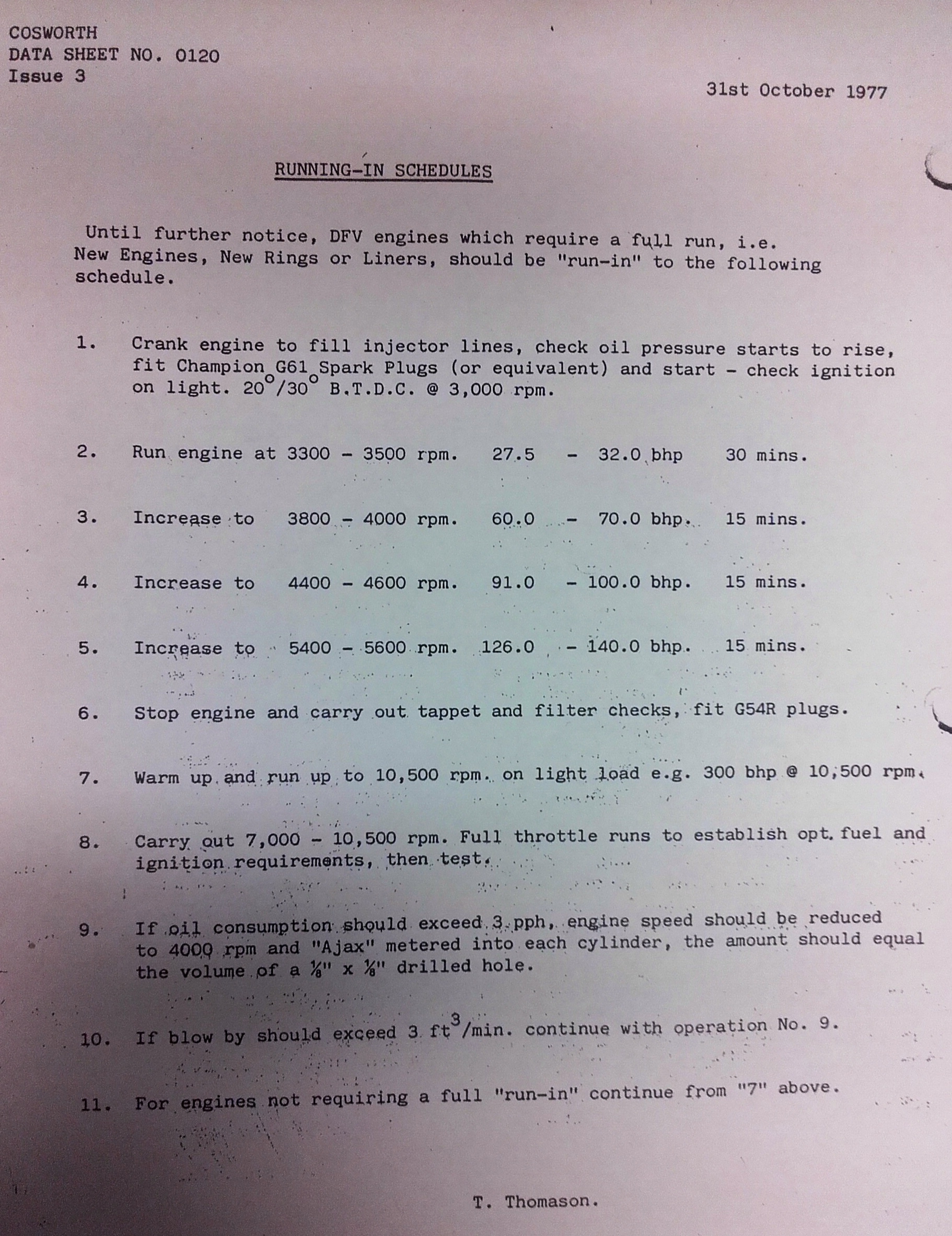
Here is ‘250’ all ready to rock on Peter’s dyno; ‘It takes about a day to plumb the thing up, its godda be done very carefully of course. Cosworth prescribe very fully how to do it (see below) Having gotten thru all the preliminary stages of running it in, i gave the thing ‘a tug’. All was okey-dokey for a bit and then all hell broke loose, a huge bang and then schrapnel everywhere!’
‘Thank christ it wasn’t the engine itself. The DFV’s vibrate so much it broke the dyno driveshaft @ 9200 rpm precisely! I have had all manner of donks on that dyno, over 500bhp Chevs etc but nothing has done that before. Having had that happen i still haven’t given it a full power run on the dyno anyway!’
But we are getting ahead of ourselves, the rebuild of the engine itself we will cover in an article about the car.
Brennan’s dyno driveshaft after Cosworth assault @ 9200rpm (Brennan)
Cosworth’s dyno running in procedures dated 31 October 1977 (Cosworth)
DFV use in Modern Times…
Phil Reilly; ‘If you rev the engine to 10800/11000rpm as Messrs Hunt, Fittipaldi and Jones did you will get the sort of engine bills Messrs Mayer, Fittipaldi and Williams paid!’
‘The DFV with an 11000rpm rev limit is a 3-4 hour motor…which will blow up big-time every now and then…needing an injection of $10-15K of parts and lots of (expensive) TLC…for vintage events use 10000rpm as a normal shift point. Doing this keeps the engine well below its stress point yet still provides enough power to test any drivers skills…the bonus is the engine will live 15-20 hours between rebuilds’.
Geoff Richardson Engineering have been looking after the engines since their heyday, James Claridge provided their perspective; ‘The routine rebuild interval for an engine limited to 10000rpm is approximately 1000 miles’.
‘This would comprise of us stripping it down, crack testing components, inspection of all parts, followed by re-assembly and dyno testing. Replacement of valve springs happens every time.Possible replacement of pistons depending on condition, if they were re-used they would certainly be replaced at 2000 miles. The same applies to all of the valves, they are taken on condition. New con-rod bolts are fitted, all new bearings, a new set of piston rings, and all new seals and O-rings are fitted. Nearly all the other parts are taken on condition and replaced accordingly’.
‘An engine with no issues or catastrophes that we knew the history of and is well looked after might cost somewhere in the region of £12-15000.00 to completely refresh’.
Peter Brennan provides the drivers perspective; ‘ The DFV has three quite distinct phases of power, one bangs in at 5500rpm, the next at 7000, then it goes ballistic at 9000 and all you do is chase gears with the tach going bananas…’ ‘Its not that difficult to get off the line, it obviously doesn’t have 500 plus foot pounds of torque like an F5000, sliding the foot sideways off the throttle at around 8000 rpm and then modulating it to match wheelspin with circuit grip soon has you motoring in the direction of tomorrow pretty smartly!’
Click on this footage of Brennan in the Arrows at the Adelaide Motorfest in 2014, the event uses part of the Adelaide GP circuit and some other streets.
‘The howl of the thing at 10000rpm as it yelps its way from cog to cog along the main straight at Phillip Island; with a 22/24 top fitted, fifth is 183 mph @ 10000rpm is unbelievable and Patrese would probably take it flat! Its not to be believed and relished every time you do it, Southern Loop comes up all too soon, its not the seagulls you are focused on as you turn the thing in believe me’.
Bruce Allison in the March 771/781 Ford, Thruxton or Oulton Park in 1978 (Allison)
Bruce Allison raced Cosworth powered March’s in the Aurora Series in 1978 ‘The record of the engine speaks for itself, it will still be popular in historic racing in 50 years! The engine was powerful, smooth and reliable the cars of course handled better with far less weight at the back than the F5000’s i was used to. The 781 March may have been the 782 with a DFV shoved in it but it was a beautiful handling car, the 761 chassis i used early in the season was not as good but the engines were always great, beautiful to drive’.
Lookin’ After Cossie: These things are like a mistress, stunning to look at but always wanting attention, never happy and a constant sap of cash…
Brennan’s sense of humor never too far from the surface! ’06’ at Sandown historics 2014. Dissertation on the chassis and suspension i will save for the article on the car itself. Shot included to show just how much the engines compact size, packaging and stress bearing nature assists the chassis designer. Compare how Tony Southgate mounts his suspension to the engine via these fabricated aluminium plates compared with Chapman’s tubular structures in the Lotus 49 of 1967. Note back of sparkbox in the Vee, ‘two towers’ behind that to connect with air scoop to cool inboard mounted rear discs, rear suspension outta the airsteam and clear of G/E tunnels, single support for gold rear wing, oil cooler and black painted starter motor with drive going forward (Bisset)
Storage and Fuel System.
The engine needs to be turned over by hand one revolution each week. Turn on the fuel pump as well, this will ensure no two valve springs remain fully compressed for too long and will circulate fuel through the metering unit to prevent corrosion and keep all the seals from sticking in one place.
The fuel filter needs to be changed every 500-700 miles, the engines have a high pressure pump to start and a mechanical one for normal on circuit running. The engine won’t run below 2000 rpm on the mechanical one, the electric one is needed for starting, fuel pressure of 120psi needs to be maintained at all time, at least 95 psi is needed to fire her up.
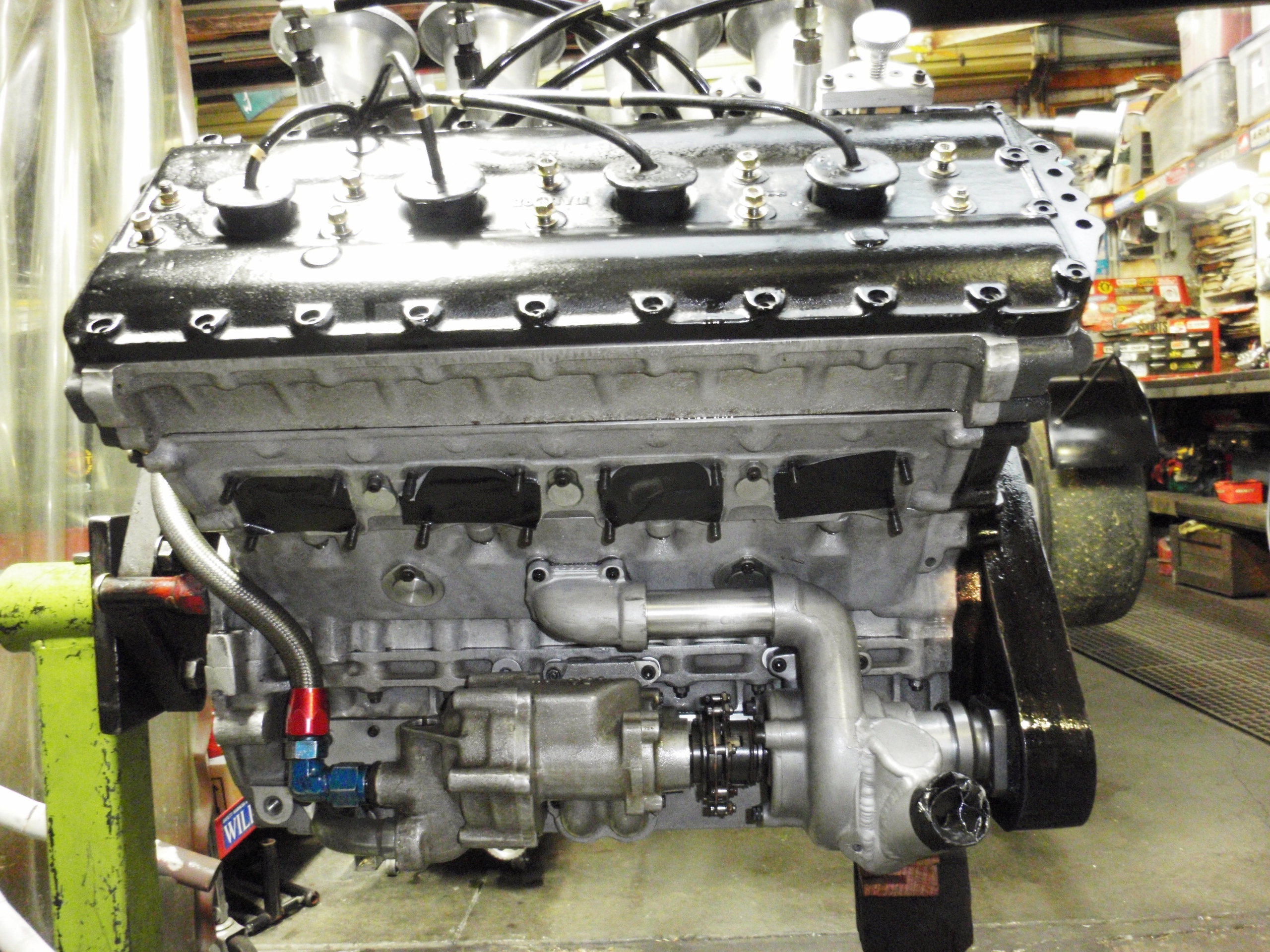
‘250’ ‘right bank’ showing both the auxiliary drive belt housing (right) and the super clever oil scavenge/de-aerator pump at left and one of the water pumps in between. The black coupling between oil and water pumps is called an ‘oldham drive’, a flexible joint (Brennan)
Olio.
A more critical liquid than fuel is oil. The engine must be plumbed to Cosworth specs…its data sheet DA0626 for ‘DFV250’ and the like. Its critical the engine never sucks air, at high revs bearing failure will result. At 10000rpm the engine is rotating at 166 times plus per second.
Peter; ‘I use Kendall 20/50 mineral oil, which has a high zinc content which is great for the cams and followers’. The Cosworth oil filter (Part #PP0404) needs to be changed every 300 miles, the oil level needs to be checked religiously as the engine uses as much as 4 quarts every 100 miles.
Oil temperature should be 90-100 degrees centigrade measured at the inlet to the pressure pump. 7000rpm should not be exceeded before the oil is at least 50 degrees centigrade.
‘250’ ready to be refitted to ’06’ in Brennans eastern Melbourne workshop. Note spark box between the Vee and behind it the fuel metering unit below the ‘aeroquip’ lines, Lucas injection of slide as against butterfly type. ‘Knurled wheel’ beside rear LH injector sets mixture, ‘behind’ this is the drive for the mechanical tach. Line at far right is cable drive for electro-mechanical fuel pump. The more you look the more elegant the packaging of it all is (Brennan)
Spark.
‘250’ has the Lucas ‘Opus’ system which has a pickup on the crank which fires the Opus at 38-40 degrees BTDC. The Opus also has a retard mechanism which is set for starting at 12 degrees BTDC.
The DFV has an alternator which provides sufficient power as long as the electrical fuel pump is switched off, DFV pilots need to remember this as they zap away from pitlane. ‘Pump Off’ was a familiar pit signal for decades!
Ignition timing is set on the dyno and is usually impossible to change in the chassis. Opus runs at 38-40 degrees BTDC, the sytem needs to be mounted in a cool place, the stock Cosworth mounting between the injection trumpets is usually fine.
The engine must be connected to negative earth with rev limiters set to 10400rpm.
The plugs are 10mm Bosch surface discharge to special order. Warm up plugs aren’t required, with plug life 3-4 race weekends. The plug wells need to be blown out, the HT leads removed with pliers. Plugs are tensioned to 9-10 foot pounds having been coated with ‘Copaslip’ first.
Spark boxes are delicate devices, you will kill them by voltage spikes caused by breaking the earth, so be clear on shut down procedures.
Throttle linkage of Brennans Arrows at Sandown 2014, ’06’ about to fired up. Note the ‘Opus’ spark box between the injection trumpets and black electro-mechnical fuel pump atop the centrally mounted, between driver and engine, fuel cell. Note radiator header tank and cap, bottom right is roll bar support bracket (Bisset)
Mechanical Installation.
The valve cover engine mounting bolts are 5/16 inch UNF and should be tightened to 16-18 ft pounds, be careful not to over-tighten to avoid cracking or deforming the magnesium casting.
The engine throttle slides have four over-centre return springs at the rear, these are a unique Cosworth invention which both reduces pedal pressure and ensures the slides close fully when you lift your foot. But they are not the throttle return springs which sould be well designed and of the ‘compression type’.
‘The Bomb’; Distributor cap missing at left, alternator in the middle and fuel metering unit at right, This is driven by a quill shaft off the complex gear set (shaft is only 6mm in diameter and designed to snap in cold weather rather the metering unit itself!) (Brennan)
The system needs to be cleaned and lubed regularly. The metering unit fuel cam should be flushed with aerosol ‘brake clean’ and carefully lubricated with a dab of ‘Copaslip’ before each event. If the fuel cam mechanism is gummy it will cause the throttle to seem to stick on.
‘250’ this time showing the ‘left side’ of the engine with combined water pump and oil pressure pump/filter assy. 250 engine a ‘twin water pump long stroke engine’ as against later ‘slim line’ from circa 1980 which only had one water/oil pump to maximise the space available for ground effects tunnels (Brennan)
The cooling system must not trap air, use bleeds as required, the system uses a 15-20psi cap. A 50/50 mix of water/glycol keeps corrosion in check and lubricates the water pump. Temperature strips should be used to monitor ‘real’ engine temperatures. The water outlet temps at the back of the heads should be 90-110 degrees centigrade and inlet temps 70-80 degrees.
‘250’ during its disassembly. Complex gear train to drive 32 valves, with degree plate to record engine valve timing during disassembly as a matter of record (Brennan)
Fuel & Fuel System.
Peter uses 100 octane avgas. Light engine oil is always added to the fuel to increase the life of the metering unit, fuel pumps and valve guides/seats. 20/50 Kendall is used, the ratio 2 ounces to 5 gallons of fuel.
The Lucas system needs 120psi to operate properly. Individual injector nozzles should seal at 50-65psi and thus not leak when the electrical pump is switched on, some leakage at 100psi plus is not unusual but it shouldn’t be pissin out…
The metering unit cam is set to run at specific clearances, typical DFV settings are .006 inch idle and .078inch wide open, these settings are 1 notch from full lean. These settings will be on the engine build sheet, check them periodically.
The mechanical fuel pump seal should be lubricated every 500 miles
Cosworth DFV and its constituent parts (unattributed)
Trivial Pursuit Question?
The firing order is; 1-8-3-6-4-5-2-7
Cold Weather Operation.
Clearances in the metering unit are so tight that in cold weather the quill drive or the metering unit drive will break. Not a good idea.
In weather below 45 degrees fahrenheit the engine shouldn’t be spun over before warming the metering unit with either a hair dryer or judicious amounts of boiling water being poured over it.
Firing Her Up: The Good Bit.
Warm up plugs and oil heaters aren’t needed, so some of the theatre of a bygone era is lost!
Make sure Arrows isn’t in gear!
Set the fuel cam datum pin to full rich
Switch on the electric fuel pump
100psi of fuel pressure should be present
Crank the engine over for 8-10 seconds with the throttle full open
Then prime each injection trumpet with a delicate squirt of fuel
Hit the Opus system retard switch (switch back across for on circuit work)
Switch on the ignition
Hold the throttle open about 25%, start the engine, but don’t race it as it fires. Hold her steady above 2300rpm, savouring the beautiful music it plays, settle the revs wherever the mechanical chatter is minimised but @ around 2300rpm
Its important not to run the engine below 2000rpm as the cams are not properly lubricated below that
Once the engine settles down with a little temperature switch off the electric fuel pump.
As the engine warms, the engine should be leaned one datum pin down, one notch at a time. With each notch it will spit and crackle a bit until it warms to it.
Engines are set normally to run one notch from full lean, they will be ‘grumpy’ at low speed which is normal.
Oil pressure should be 40-60 psi, make sure your driver has a look every now and then on circuit!
Unsurprisingly running a DFV is more complex than its Ford ‘Kent’ little brother!If the maintenance regime is followed and the driver keeps the engine in its optimum band and doesn’t buzz it on the down-changes, something Ricardo did during his Arrows days according to Tony Southgate then ‘DFV250’ will last around 1700-2000 miles between rebuilds…
DFV Engine in the Ground Effect Era…
Credits & Bibliography…
Peter Brennan many thanks
Phil Reilly Engineering, Geoff Richardson Engineering
Dossier on Arrows A1-06 written by Alan Henry for oldracingcars.com
Stirling Moss cruising back to the pits, off the racing line on the Curva Grande, deep in thought…
The gearbox in his Vanwall failed during his dice with Mike Hawthorn’s Ferrari Dino 246 and with it his hopes of the 1958 World Championship, won of course by Hawthorn in Morocco a month later.
As to the other car and driver, my guess is Cliff Allison’s Lotus 12 Climax. All other entries welcome!
Tony Brooks won the race in another Vanwall VW 57 from Hawthorn and Phil Hill’s Dino’s after a stunning drive in his second GP, his first for Ferrari.
Lewis Hamilton takes the Indy chequered flag, his McLaren MP4/22 Mercedes wins the 15 June 2007 event…
Hamilton won from Fernando Alonso in the other McLaren and Felipe Massa’s Ferrari F2007. Robert Kubica’s huge Canadian GP shunt the week before allowed Sebastian Vettel to make his GP debut for BMW Sauber. He was the teams test and reserve driver, his eighth place making him the youngest driver to win a championship point.
Seb Vettel on his way to 8th place USGP 2007 BMW Sauber F1.07 (unattributed)
Sadly it was the last USGP at Indy, Tony George and Bernie Ecclestone unable to agree acceptable commercial terms. The Austin, Texas ‘Circuit of The Americas’ first hosted the event in November 2012.