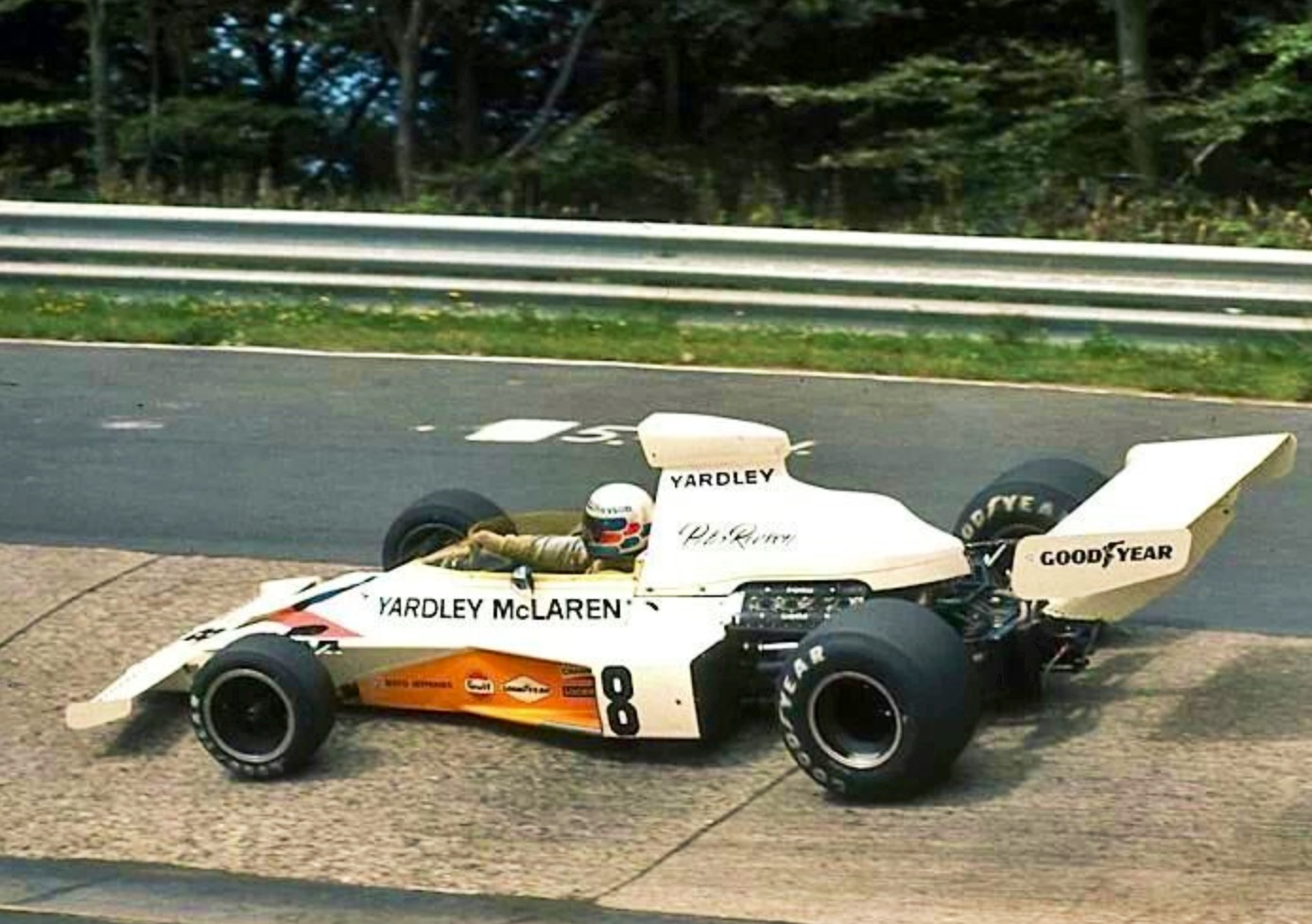
Peter Revson on his way to fourth place in McLaren M23/2 in the 1973 Spanish GP, Montjuich Park, Barcelona.
Background…
No other individual chassis has raced in F1, F5000 and Can-Am championships before conversion back through F5000 to its original F1 specifications. McLaren M23/2 is that car.
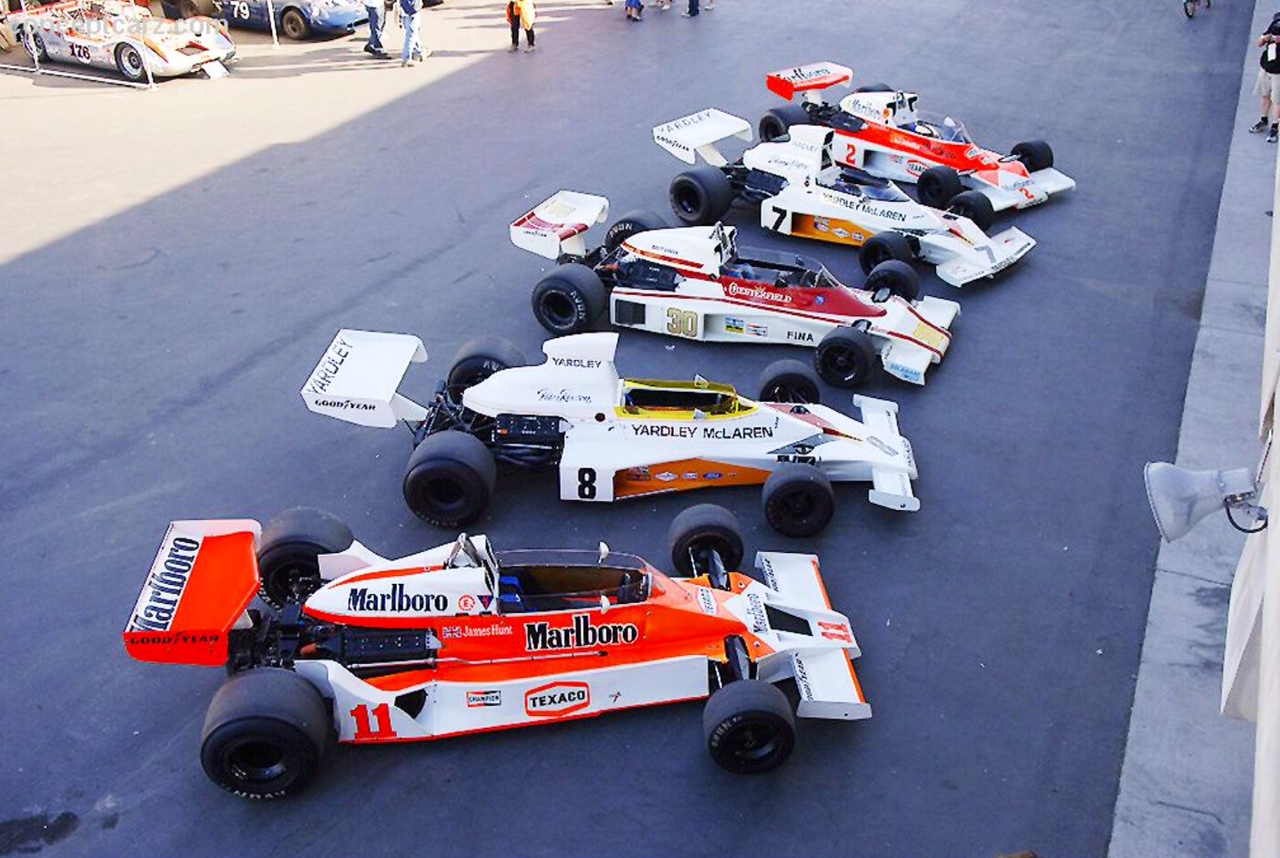
The McLaren M23 was one of the marque’s most successful designs, winning Grands Prix from 1973 to 1977 and Drivers and Manufacturers World Titles for Emerson Fittipaldi, James Hunt and McLaren in 1974 and 1976.
Coppuck’s Design…
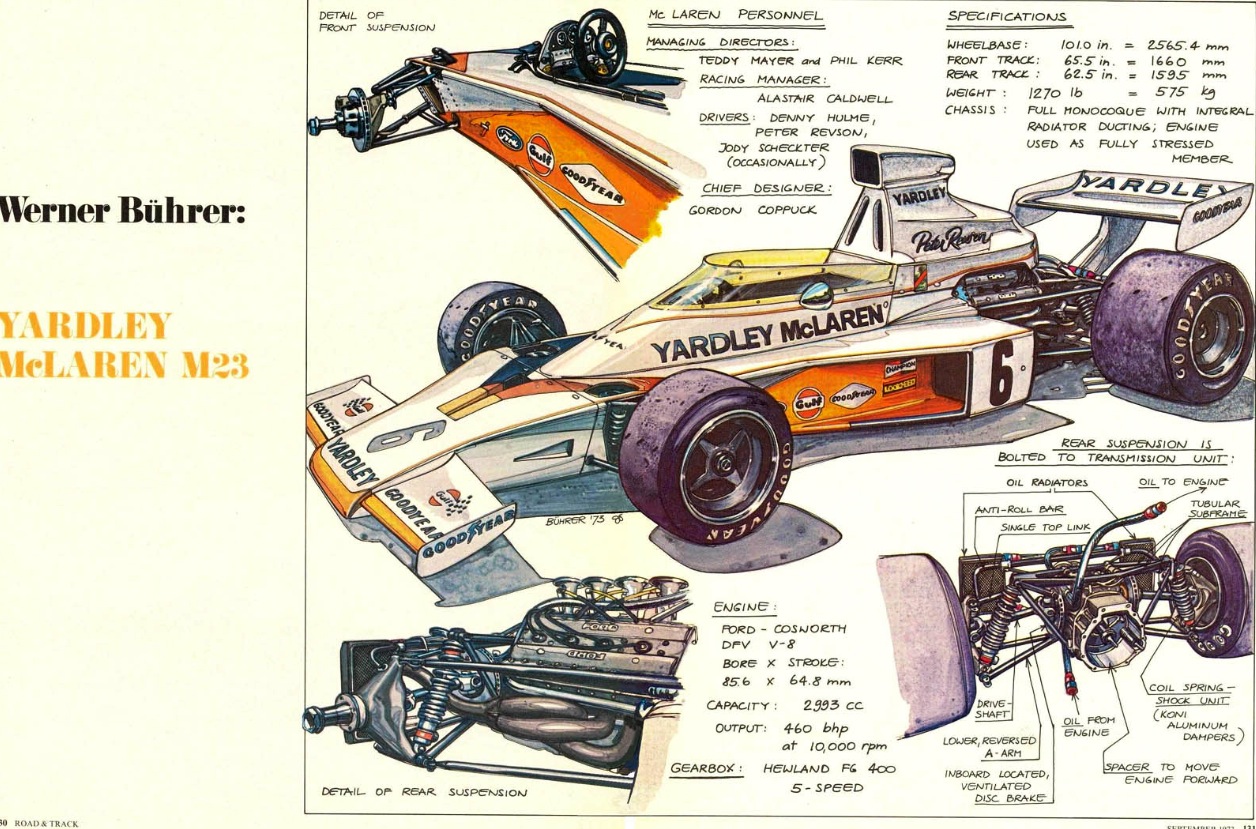
Gordon Coppuck was responsible for the teams innovative and successful Can-Am and Indycar designs, Ralph Bellamy’s departure from McLaren back to Brabham gave Coppuck his F1 design chance.
The car followed the conceptual path blazed by the Lotus 56/72 in having a chisel nose, side radiators and rising rate suspension, rather than the Tyrrell bluff nose alternative aero approach of the day. McLaren’s very successful M16 Indycar followed the 72 so it was a logical step for Coppuck, using the well established McLaren interactive design approach, with many on the shop floor having input into the conceptual stages of new car development.
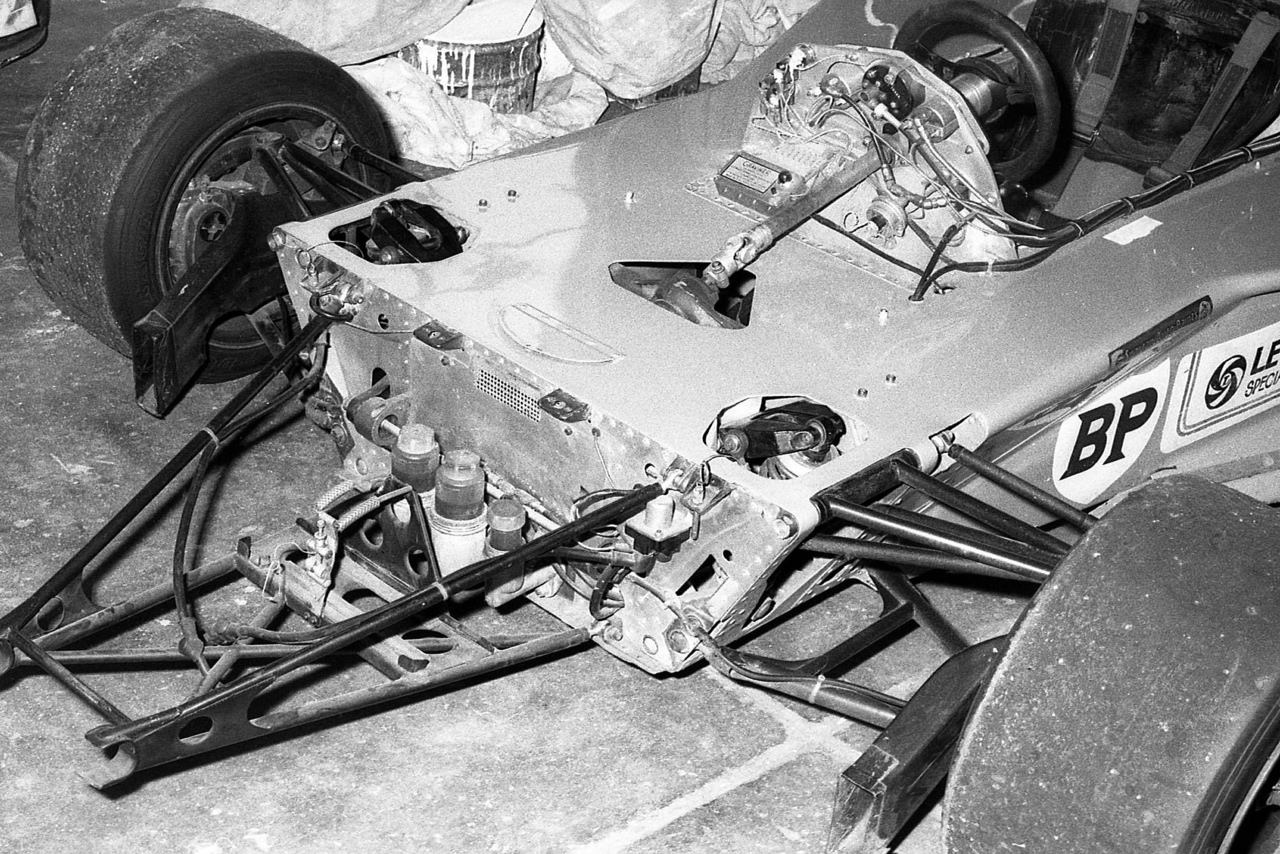
The M23 was a typical British kit-car of the period with its Cosworth DFV 3-litre V8 and Hewland FG400 five-speed gearbox. New deformable structure rules mandated for ’73 allowed a fresh approach to address the M19’s shortcomings; a lack of straight line speed and weight. The chassis was formed in 16 gauge aluminium sheet, all joints bonded and riveted, with the radiator sidepods an integral extension of the structure. Fuel tankage was centralised to promote a ‘Tyrrell like’ low polar moment of inertia, the driving position pushed forward relative to M19.
Front suspension comprised rising or progressive rate linkages, a large lower wishbone and top rocker actuated inboard mounted spring/shock units. At the rear a reversed lower wishbone, single top link and twin radius rods were used, spring rate progression was achieved with the winding of the coil springs.
Brakes were Lockheed ‘Can-Am’ calipers, rotors 10.5 inches in diameter, outboard at the front and inboard, beside the gearbox, at the rear. The bodywork was all enveloping with the airbox neatly covering the engine aiding airflow to the rear wing. Wheelbase of the new machine was 101 inches, front track 65 inches, rear 62.5 inches, the length was 170 inches, the whole lot weighed a claimed 1270 pounds distributed 34/66 % front to rear.
1973 Grand Prix Season…
Four of these original spec cars were built for 1973, the prototype M23/1 was tested at Goodwood by Denny Hulme before setting off for the season opening South African GP at Kyalami. Denny was immediately quicker than in the M19, rapidly adjusting to the far forward driving position, Hulme put the car on pole and led the race before puncturing a tyre on debris.
Other McLaren team drivers were Mike Hailwood, and Peter Revson in his first fulltime Grand Prix season. Revson started his grand prix career in the early 1960’s before returning to his native USA and making his name in the Can-Am series which he won in 1971 aboard a McLaren M8F Chev. He was also McLaren’s Indy driver.

M23/2 debuted in Revson’s hands on 8 April 1973 at the Silverstone International Trophy, finishing 4th, it was to be his car for most of the year, his promise as an F1 driver was fulfilled with a tremendous victory at Silverstone in the British Grand Prix.
McLaren’s cub driver Jody Scheckter, in another M23 famously caused a multi-car pileup after losing control at Woodcote at the end of lap one and in the process proved the strength of Coppuck’s design.

M23/2 was used by Scheckter later in the season in Canada and the US before being sold to South African ace Dave Charlton.
Dave Charlton’s South African Championship car in 1974-75…
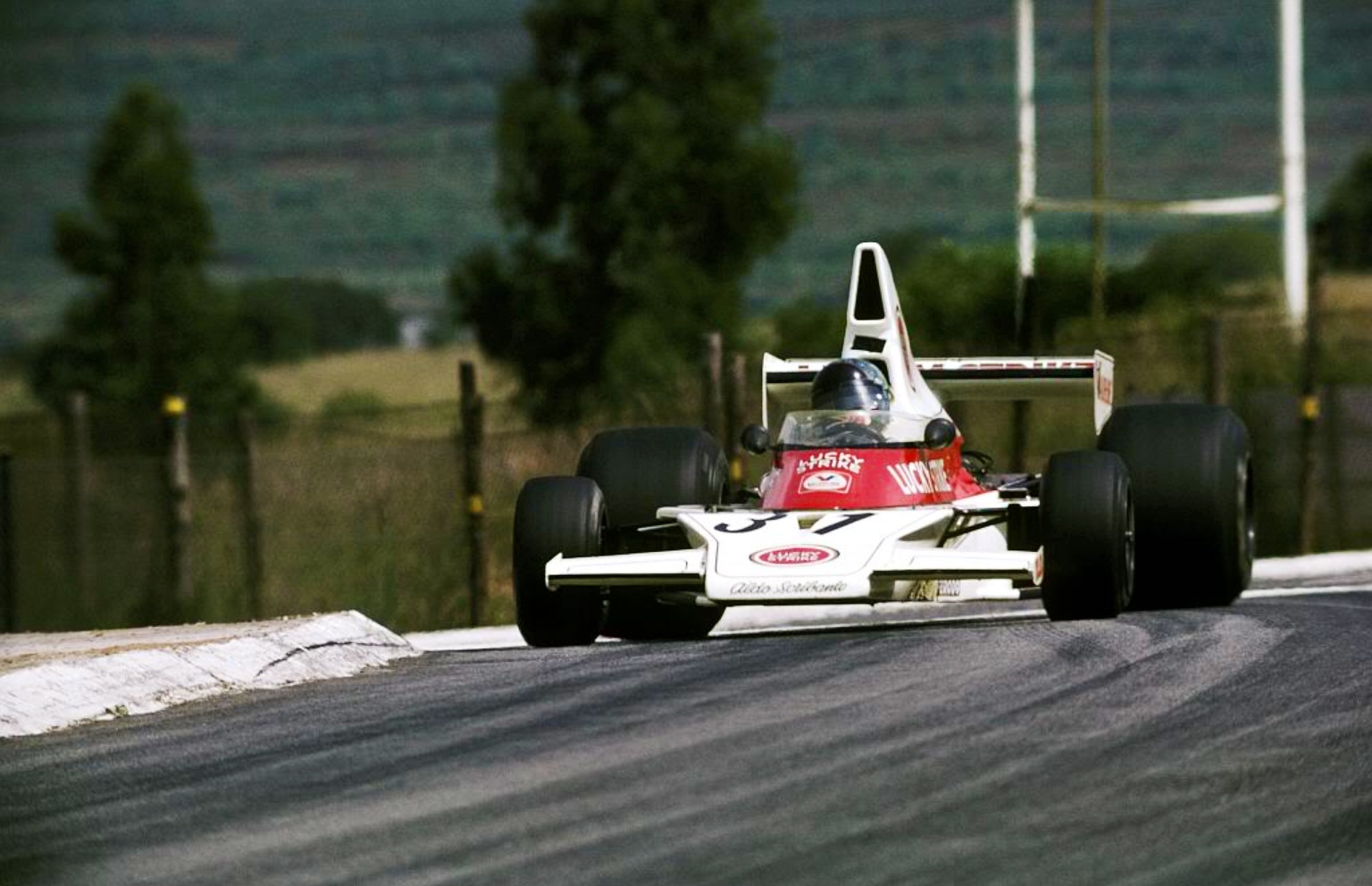
The McLaren replaced Charlton’s Lotus 72D for the South African National Championship, it was incredibly successful winning eight races and championships in ’74/5.
Dave set a Kyalami lap record in the 1975 Rand Winter Trophy which stood for years until broken in the ground-effects era. The cost of F1 cars was getting out of hand, so Charlton offered the car for sale with the introduction of Formula Atlantic as South Africa’s Championship class from 1976.


John McCormack…
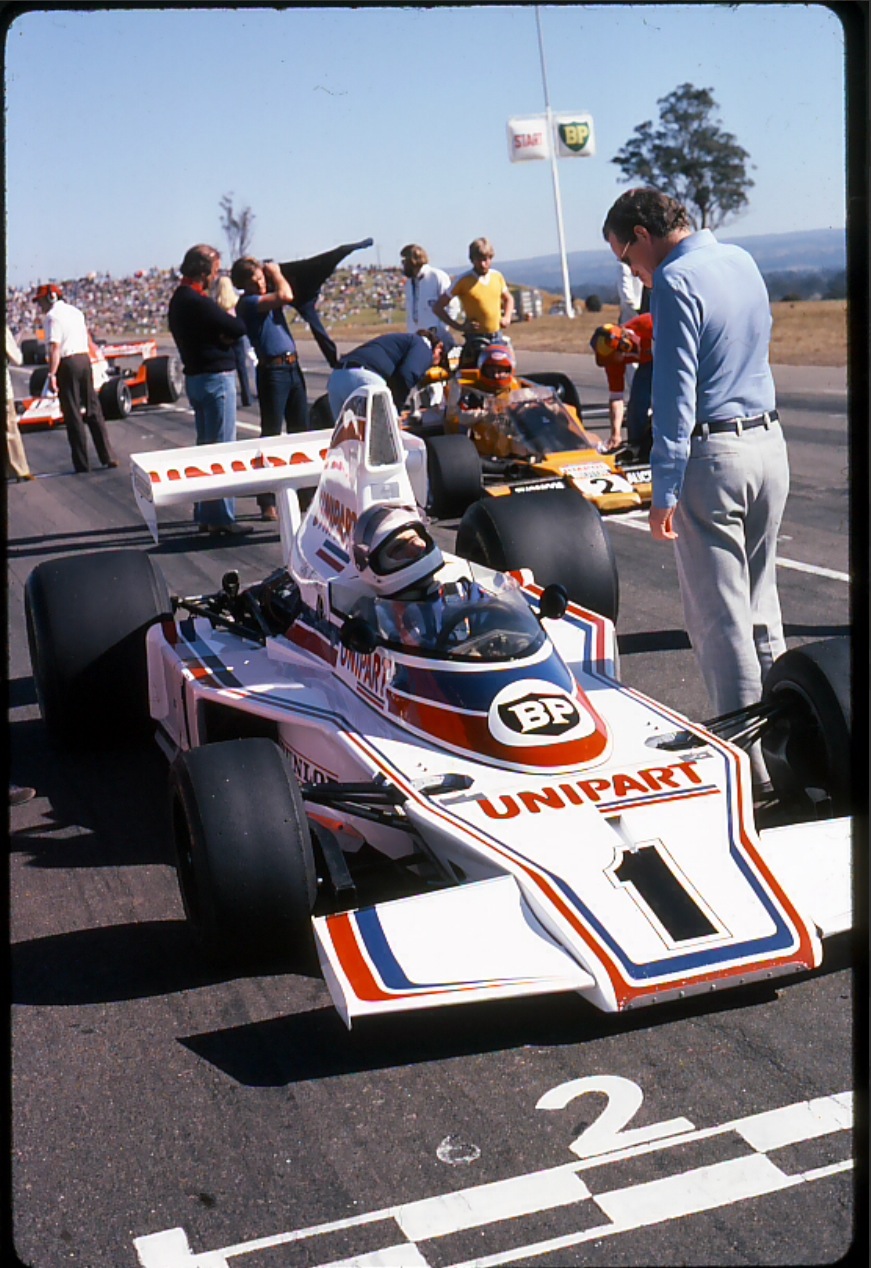
Aussie F5000 racer John Mc Cormack was the eager purchaser, ’Charlton was a terrific bloke to deal with, I bought the car, 20 wheels, multiple sets of front and rear wings, bodywork, two types of airbox, less engines, which I should have bought and sold later, then the exchange rate moved in my favour so it was a really good deal.’
‘McLaren were still racing the car when I bought it, I had contacts there and they were used to dealing with customers so it all made good sense, as long as we could get the engine to play its part….’


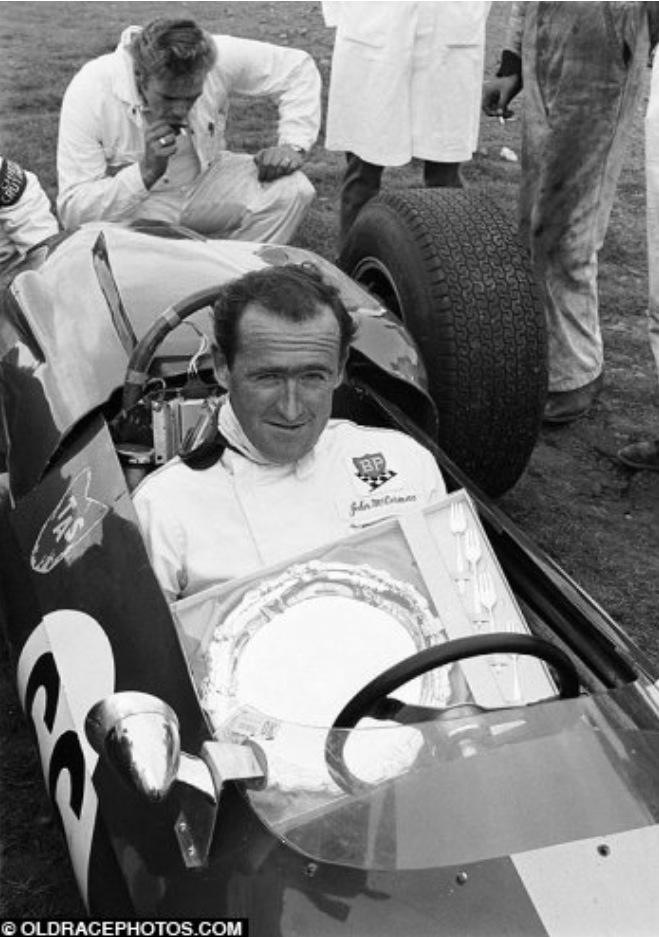
McCormack started racing in his native Tasmania breaking into the national scene with the purchase of Jack Brabham’s 1962 AGP car, a Brabham BT4 Climax. He proved he could mix with the ‘big boys’ in an Elfin 600C Climax, a very competitive car when fitted with a Repco 740 Series V8 in place of the old Climax.
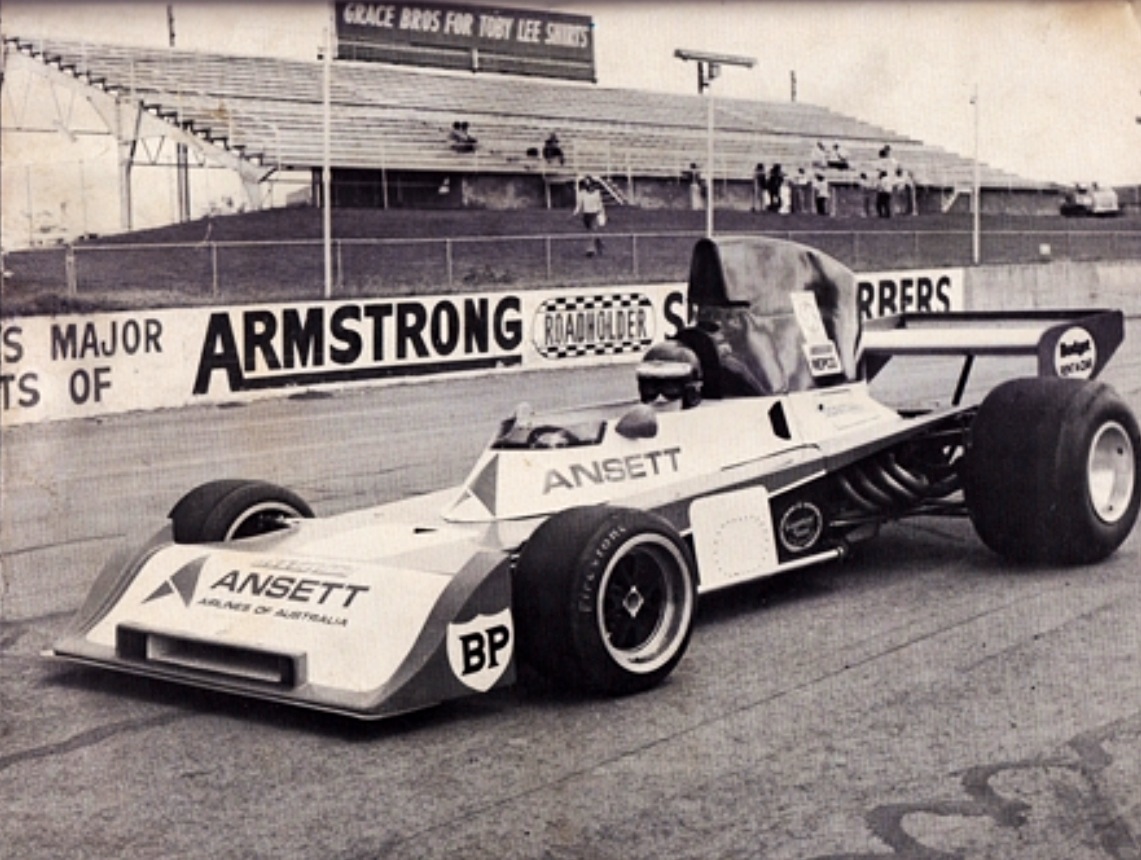
He bought the very first Elfin MR5 Repco in 1971 and via his connection with Phillip Island Auto Racing Club’s John Lanyon did the Ansett sponsorship deal to create the two car ‘Ansett Team Elfin’ together with Elfin owner/designer/driver Garrie Cooper. McCormack and his team developed his car to be very competitive, winning the Australian Drivers Championship, the Gold Star in 1973 and the NZ GP – part of the annual Tasman Series of eight races run in Australia and New Zealand every summer – in 1973 and 1974.
In search of the unfair advantage over the heavy Holden and Chevrolet engined cars, Repco’s Phil Irving spotted the new Leyland P76 family car engine, a 4.4-litre aluminium block V8, at the Melbourne Motor Show.
Elfin’s John Lanyon quickly did a deal with Leyland and Repco to jointly fund development of an F5000 variant of the new engine for a car specifically designed for it. The idea was to distribute the weight in a fashion more akin to an F1 car, rather than the tail happy F5000s. McCormack characterised the 5-litre beasts as ‘like having a pendulum in the car’. Cooper’s Little Car was the Elfin MR6, a new design which debuted in 1974.
Repco developed an engine with a capacity of 4931cc, a 94mm bore and 89mm stroke. As originally developed, the engine used the P76 cylinder block fitted with special liners and main bearing stiffening plates, the cast iron crank was replaced with steel units after initial failures. Cylinder heads were P76 with flowed inlet and exhaust ports and larger valves. Pistons, con-rods and bearings were Repco, as was the dry sump setup which utilised three stage pressure and scavenge pumps. Fuel injection was by Lucas and a Repco Lorimer dual point distributor fed by coils provided the spark.
Critically, the engine weighed only 160kg compared with the Holdens 220kg, however the claimed power of 425 bhp @ 6800rpm and 375 lb ft of torque at 5500 rpm was far less than the circa 500bhp plus of a Holden or Chev. Elfin’s Dale Koenneke quipped that the engine when first raced in early ’74 had ‘no more than 365 bhp’ when installed in the MR6. History tends to support the contention that the horses were ponies rather than stallions!
The engine had many teething problems, the fragility of the engine blocks and cast iron cranks together with consistent overheating were exacerbated by Repco’s withdrawal from racing that July, and therefore lack of commitment to the project.
McCormack used both the MR5 and MR6 in ’74, before converting the MR6 to accept the Repco Holden engine. ‘Dale Koenneke said enough! We put in all this effort and the thing just shits itself, lets put the Holden into it,’ in this form the MR6 won the 1975 Gold Star.
McCormack, an independent thinker was still convinced the Repco Leyland could be a winner in the right car, the question was finding one!
And so, M23/2 came to Australia, sans DFV but with plenty of spares…
McCormack’s team of Dale Koenneke and Simon Aram did a beautiful job installing the Repco Leyland into the car without ‘butchery’. The engine, after modification of the harmonic balancer, and relocation of water pump and oil tank, fitted neatly into the tub albeit as an unstressed member, which the DFV of course was, the engine supported by traditional tubular A-frames.

McCormack engaged famous Aussie engineer Phil Irving (ex Repco, Vincent) to further develop the engine from its Repco base. Irving designed new heads, cast by Comalco, which eliminated separate valve guides and seats. The design also featured a bent pushrod to allow more room for straight inlet ports. John said ‘Power increased to around 435bhp and 410ft/lbs of torque, more mid range punch than the Repco Holden. An alternate cam delivered 470bhp/380ft/lbs but this stressed the overall package causing many block failures. ‘All the talk on Friday night at the Horsepower Hotel never won races, it was about torque as well as power and whilst we were light on power we had plenty of mid range punch and a well balanced overall car package.’
The Hewland FG400 gearbox was marginal in F1, the torque of the beefy Repco required new gears cut by Peter Holinger’s now famous Holinger Engineering concern in outer Melbourne.
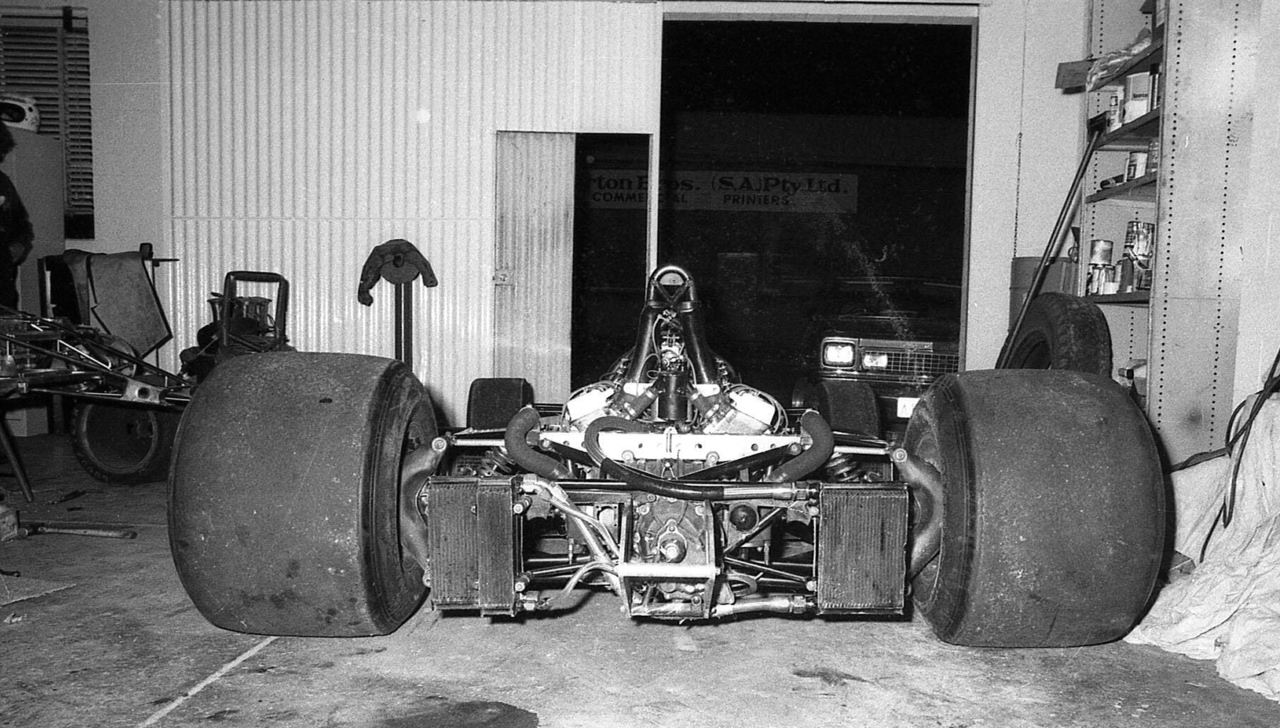
The Repco and Chev engined Lola, Matich, Chevron and Elfin chassis’ had more power, but the McLaren was lighter, the superb balance, handling and braking of the design was maintained as the DFV and Repco Leyland were similar weights.
John was convinced he had his unfair advantage. ‘The drivability of the car with its long-stroke engine was great, it was an excellent high speed car, it wasn’t quite so good on slower tracks where it lacked feel at the back due to fixed length driveshafts. The car had quite a high roll-centre and was very sensitive to aero tweaks on fast circuits, it was flat into turn one at Phillip Island, really quick!’
After much media interest McCormack raced the car at the Oran Park Gold Star round in September 1976 putting it fourth on the grid, a valve failing on lap 22. A win followed at Calder in October, then pole at the ‘Island, leading until a tyre deflated, despite this the car finished third in its inaugural Gold Star Series.
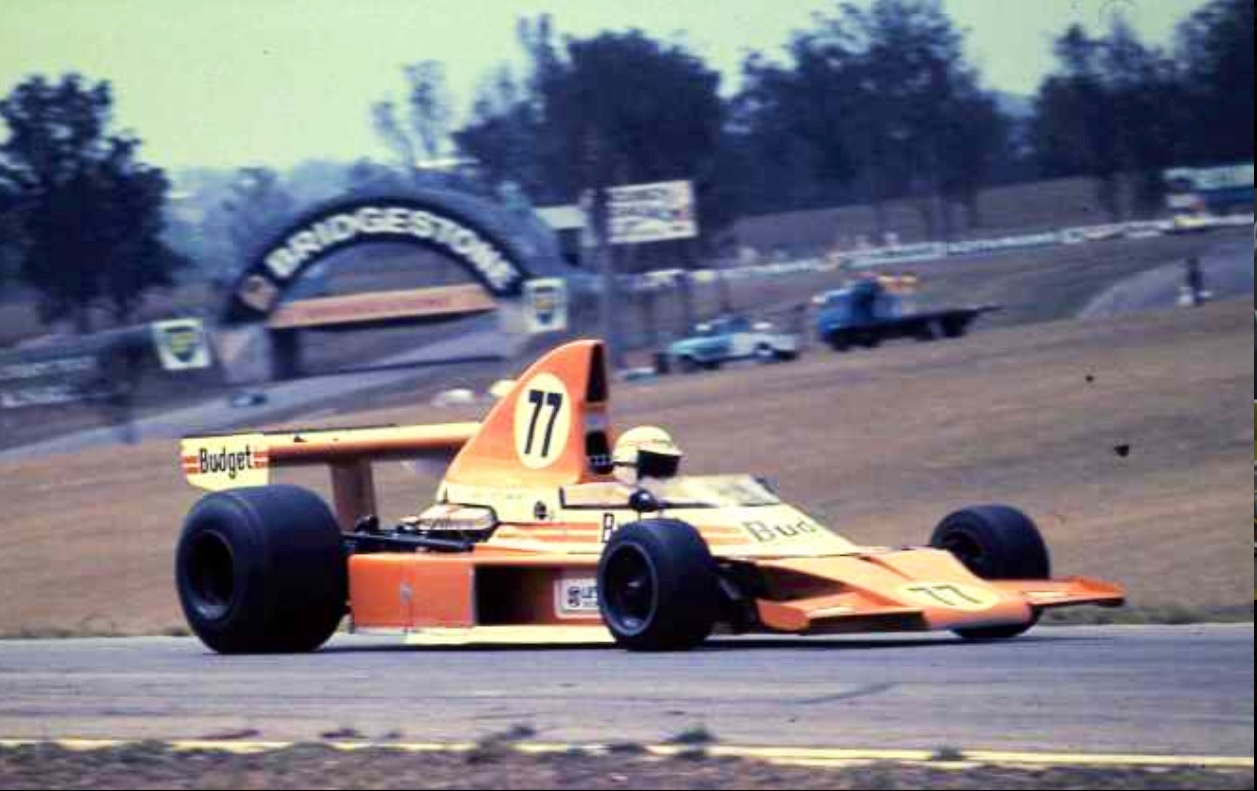
Car sponsor Budget Rent a Cars’ Bob Ansett convinced John to hire Frank Gardner to assist with Team Management in the Rothmans International series but a poor championship caused by unreliability was succeeded by a Gold Star win at Surfers.
At Sandown the car gave cooling problems, but the final round at Phillip Island showed its true pace, two seconds a lap clear of the best Lola on this circuit which is a test of power and handling. McCormack was well in the lead when problems again intervened, John pitting for two laps then limping home picking up enough points to win his third Gold Star Series. The year was capped with a win in the Rose City 10000 at Winton.
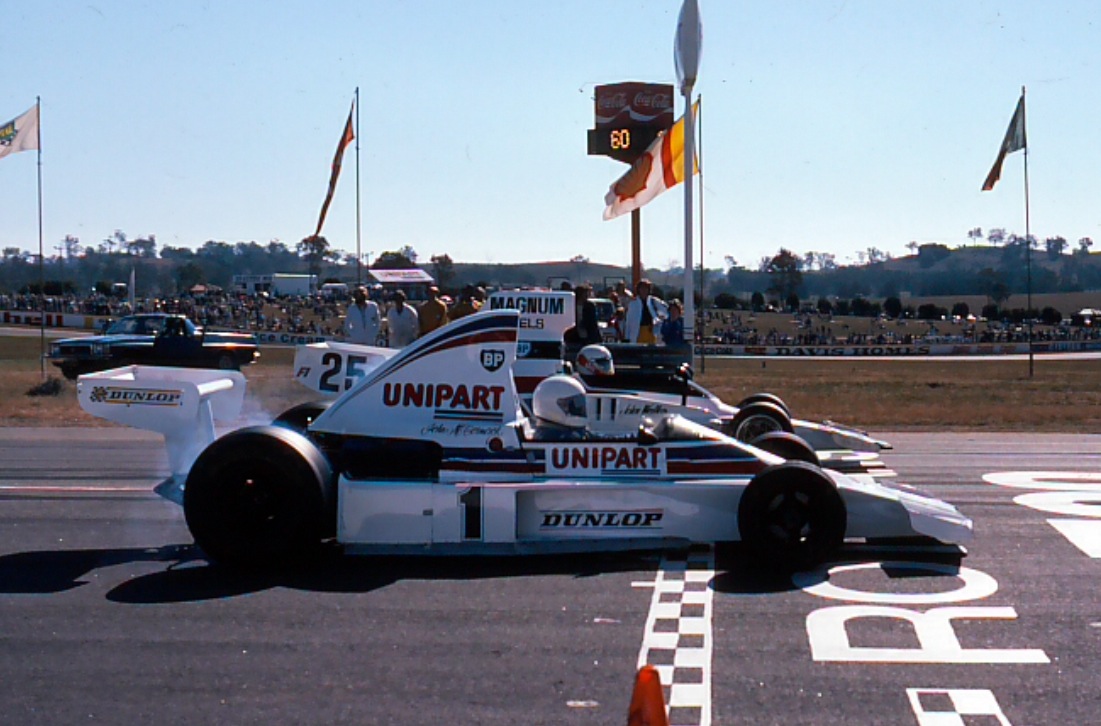
1978 started poorly with Rothmans Series unreliability followed by an Oran Park Gold Star round win.
The Sandown AGP was a terrible race with multiple accidents, the McLaren out virtually from the start with head gasket failures. John dominated at Calder only to run out of fuel with a lap to go. Then the Phillip Island round was cancelled, John finished second in the Gold Star as F5000 – non-existent elsewhere in the world – limped on.
The season ended again with the Rose City 10,000 at Winton. Among the competitors was James Hunt, the 1976 World Champion making a one-off appearance in Australia driving an Elfin MR8 Chev. John was second on the grid to him, Mac having an unfortunate event in which a stone jammed a brake caliper causing a pit stop, he finished fourth in the race won by Hunt.
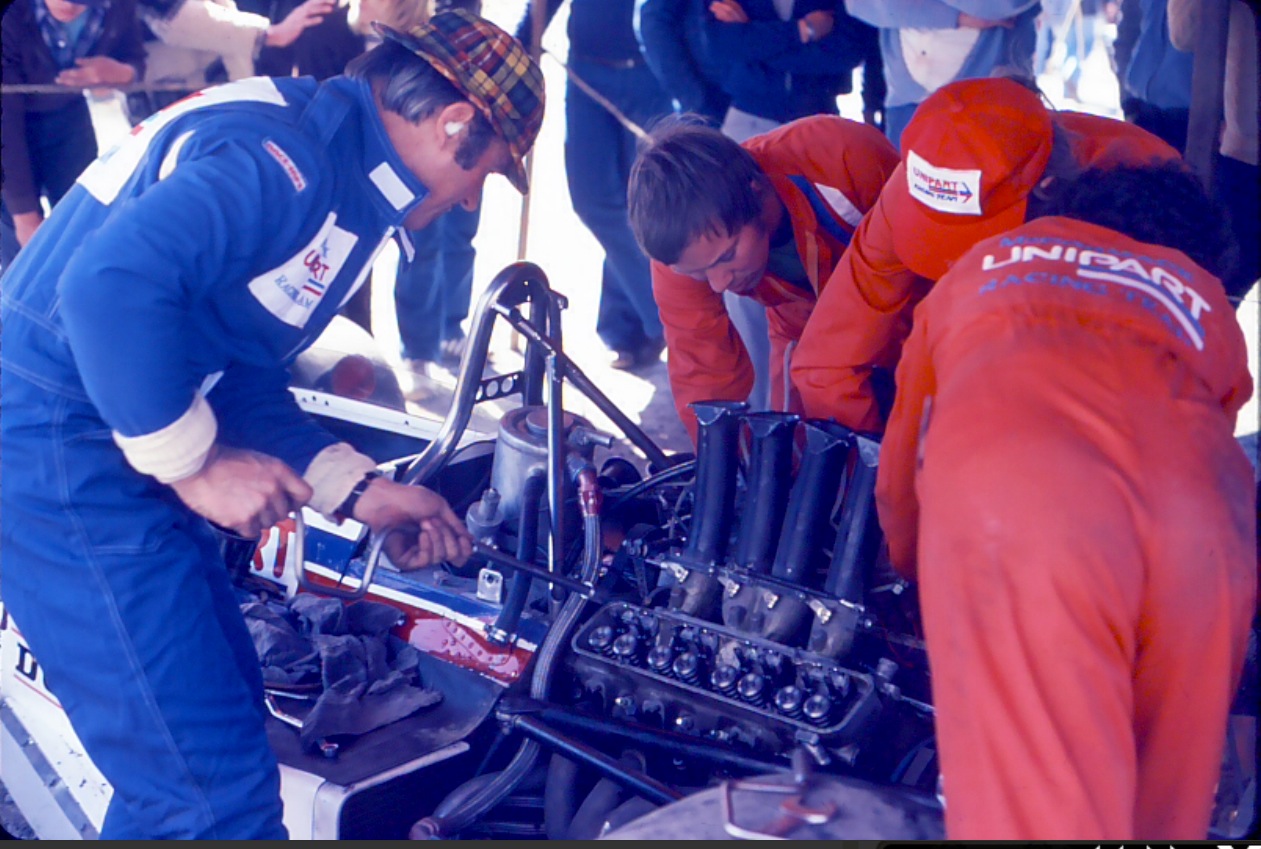
1979 also started poorly with 5th the best result from four Rothmans International Series meetings, Larry Perkins won the title in an Elfin MR8 Chev. The McLaren’s last F5000 race was the 1979 AGP at Wanneroo Park, Western Australia where a gear broke.
McCormack entered 20 F5000 events for three wins and victory in the 1977 Gold Star ahead of cars much younger and more powerful than his 1973 McLaren! Unreliability was the issue with 10 DNS/DNF results, mind you the Chevs and Repco Holdens were also brittle.
Can-Am 1979…

By 1976 F5000 had been ‘destroyed’ by Eric Broadleys fantastic, dominant Lola T330/332/332C series of cars.
The Tasman series was over, the Kiwis adopted Formula Atlantic/Pacific and Australia persevered with F5000, against the global tide. The US F5000 series ended at the duration of the 1976 season and morphed into 5-litre single seat Can-Am sports cars, with Lola T332 derivatives remaining the dominant car for some years.
McCormack, a professional racer, converted the McLaren from an F5000 to a very attractive Can-Am car. M23/2 travelled back over the Pacific again! ‘It was time to have a look at what was happening in the US, things were quiet here so Simon Aram and John Webb designed and built an attractive body and off we went.’
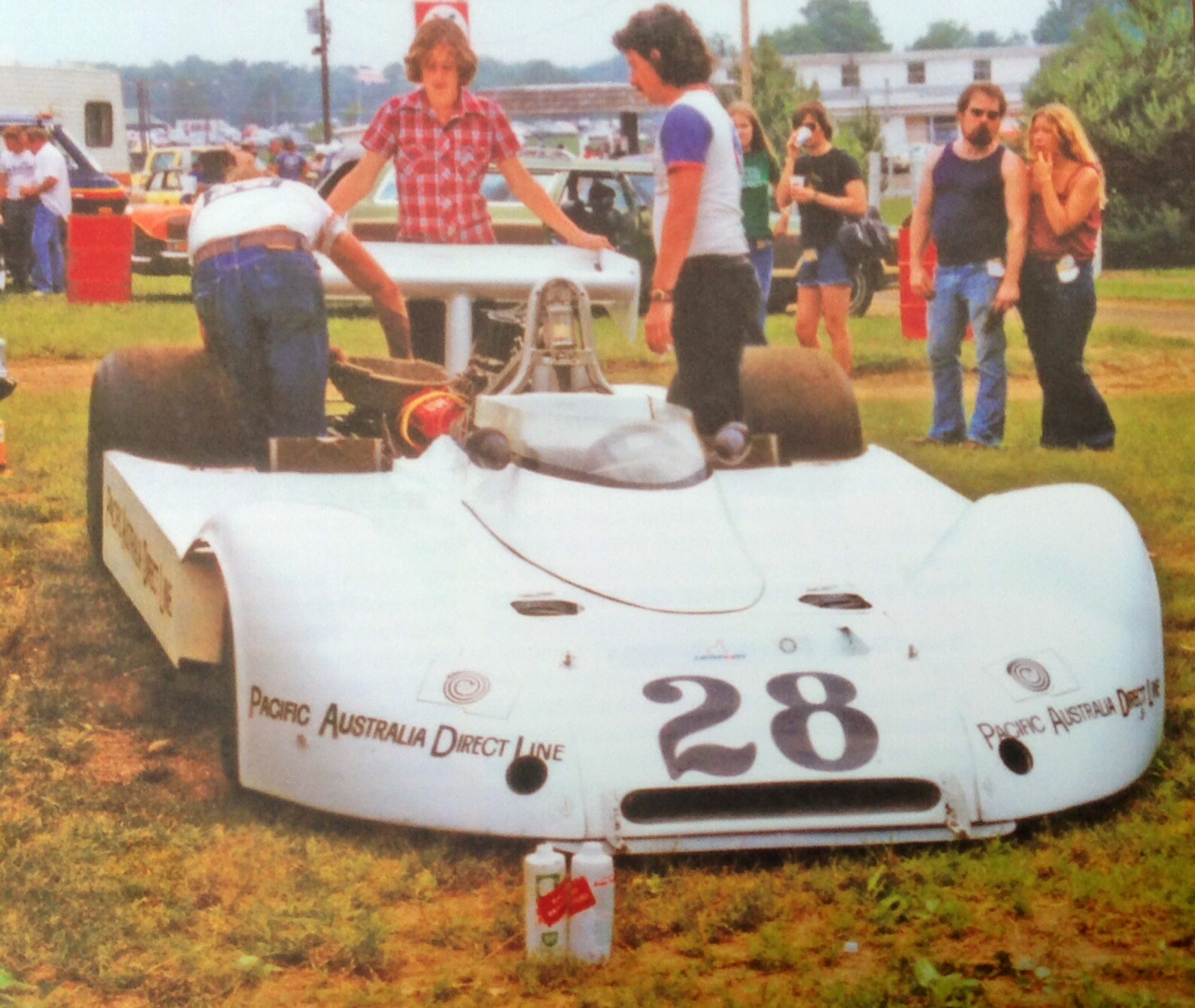
He was taking on a big challenge, the Can-Am series in 1979 included Keke Rosberg, Jacky Ickx, Alan Jones, Geoff Lees, Vern Schuppan (Elfin MR8), Bobby Rahal and Al Holbert amongst its competitors.
‘Its true there were some top teams but the quality of the fields rapidly fell away. No one knew the series was on wherever we went, it was poorly promoted, the Americans were much more into Nascar and Indycars, you had to leave the circuit to go and buy fuel at some of the tracks!’
The McLaren competed in three rounds for a best result of 12th at Watkins Glen in a series dominated by Lolas with Ickx winning in a T333CS. ‘There was a weight advantage if you ran 4-litre engines, we did two of the races with the 5-litre Leyland and one, the final round, with the 4-litre which gave around 400BHP, the weight thing was academic as the cars were never weighed.’
It was no disgrace in this company in a six year old car run by a small team far from home. In the end money was tight and it was time to return to Australia to compete in a Jaguar Sports Sedan his team had built, and at the instigation of sponsor, Unipart, contest the 1980 AGP which was run to F5000 – and F1- rules!

Back to ‘Oz F5000 and finally home to Woking…
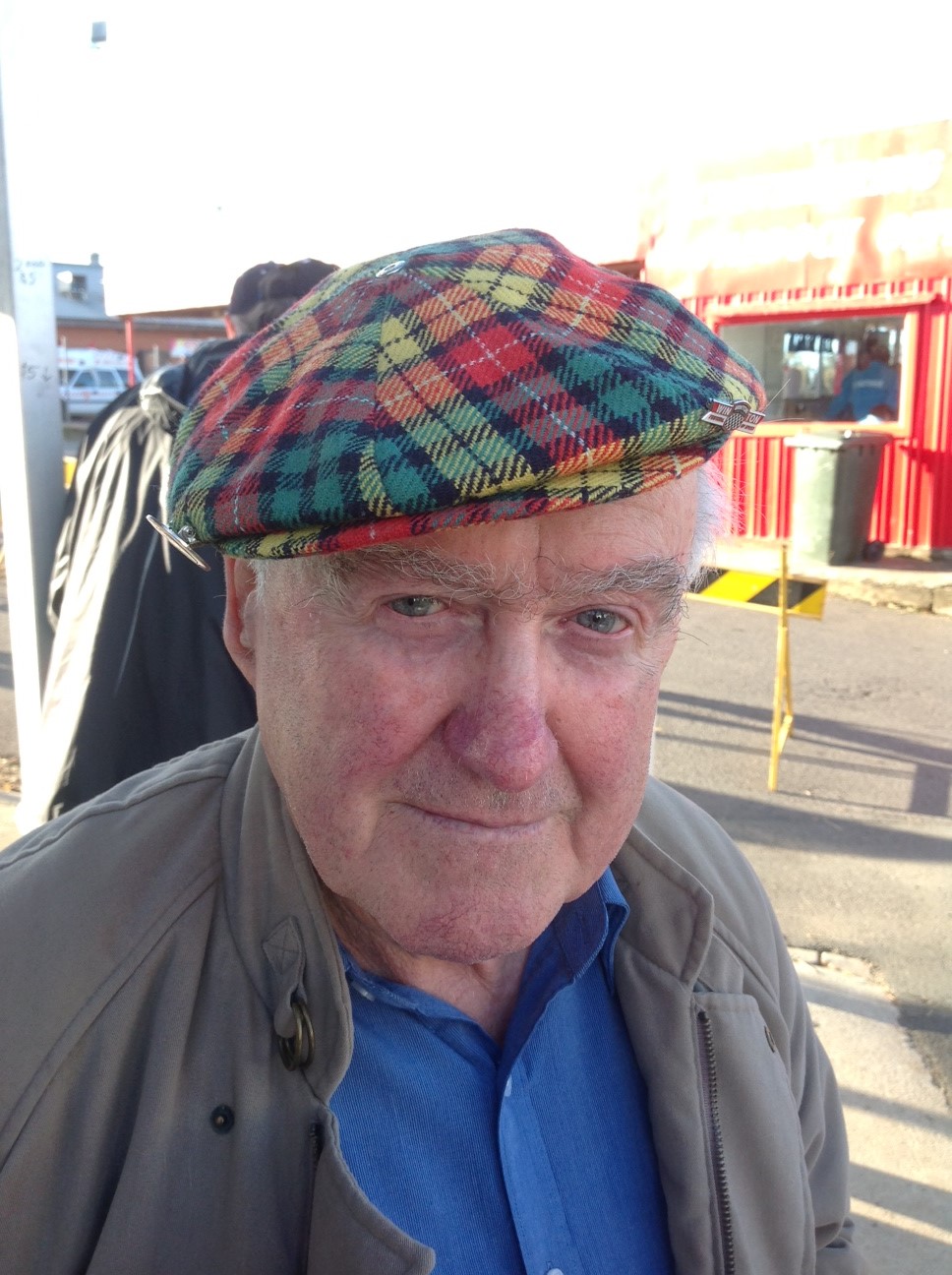
Alan Jones was on his way to winning the 1980 World Championship, so the 1980 AGP rules were amended to attract the new champion and his Williams FW07 to Australia. Also making the trip from Europe were Bruno Giacomelli and his Alfa 179 and Didier Pironi, of Team Tyrrell, who drove an Elfin MR8 for Ansett Team Elfin.
McCormacks’ team converted the McLaren back into F5000 specifications, he was looking forward to the race. ‘The McLaren was not a light car, it then weighed about 1430 lbs, because the AGP was being run to F1 rules we lightened the car enormously by about 200 lbs’.
‘I normally flew to meetings but we a were running late with the preparation of the car so I travelled as a passenger with my mechanic to get some sleep. There was some fog about, he dozed off at the wheel near Keith (in rural South Australia) hitting a tree having glanced off an earth mover which made an horrific accident slightly better than it may have been! I got a brain injury in addition to the physical ones, I have about 70% of my mental capacity, not enough to race again’.

Sadly, that was the last race for both McCormack and the much used M23. John went on to build a number of successful sports sedans for others and today has property, retail and mining interests near his home town of St Helens on the Tasmanian East Coast.
McLaren built thirteen M23s. M23/2 competed in 54 events, more than any other M23 chassis, winning more races than any other M23 as well; 54 starts for 12 wins. One F1 Championship GP, eight South African Championship rounds and two championships, three Australian Gold Star rounds and one championship. Only a Can-Am win eluded it in its multi-faceted life.
McCormack was focussed on his health and rebuilding his life, the car was offered locally for sale around 1982, without any takers as F5000 had been replaced by Formula Pacific. It was just an old uncompetitive car at the time! Then along came McLaren’s Ron Dennis hoovering up cars for the factory collection where M23/2, converted back to its Yardley McLaren F1 spec, takes its museum place in the pantheon of the company’s rich, ongoing 50 year history.
M23/2 travelled the globe as an F1 car, crossed the Atlantic to South Africa, then the Pacific to Australia, back across the Pacific to the States, back again to Australia and finally to Woking in the UK, just down the road from Colnbrook where it was built all those years before. It was a remarkable journey from class to class and back again, competitive all the way throughout!
Etcetera. The story of the McLaren is not complete without delving a bit more into the Leyland engine and its parentage…
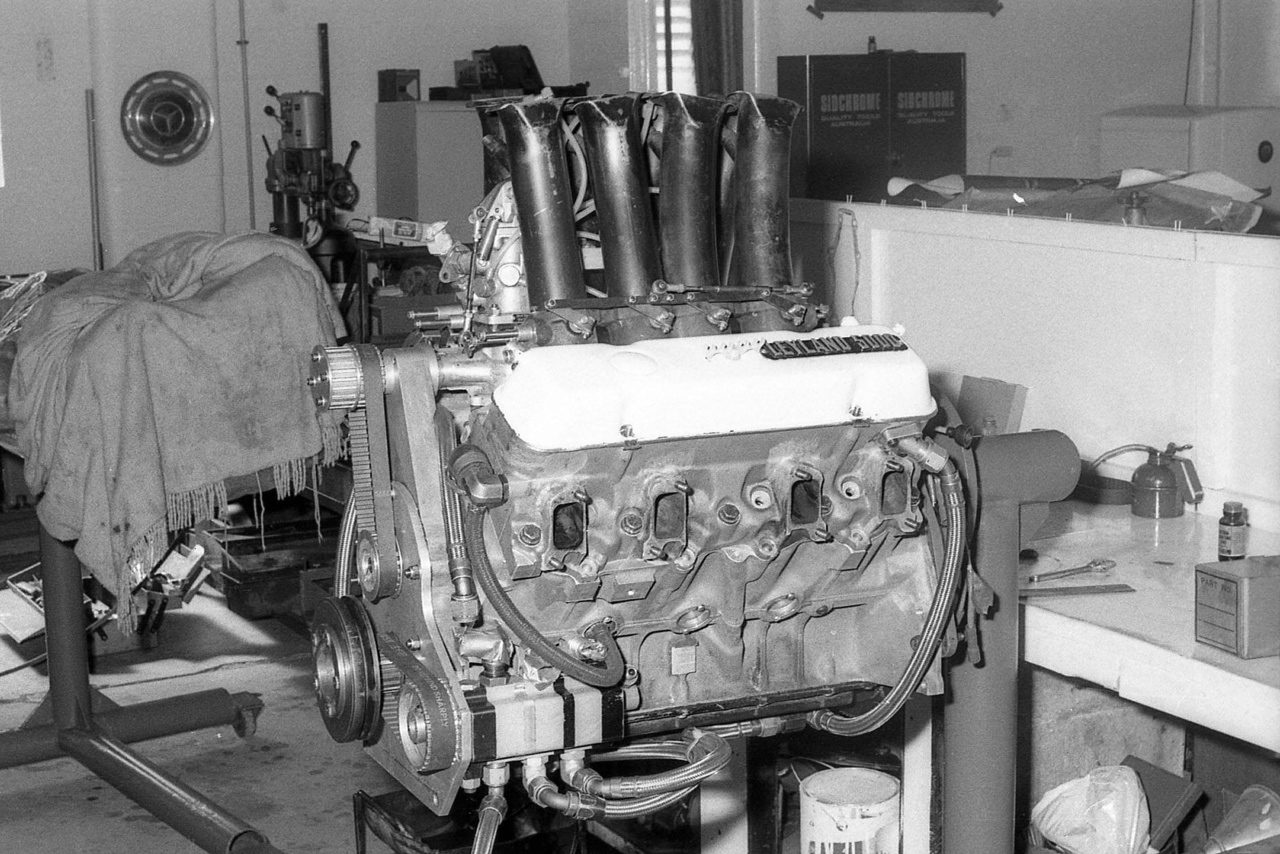
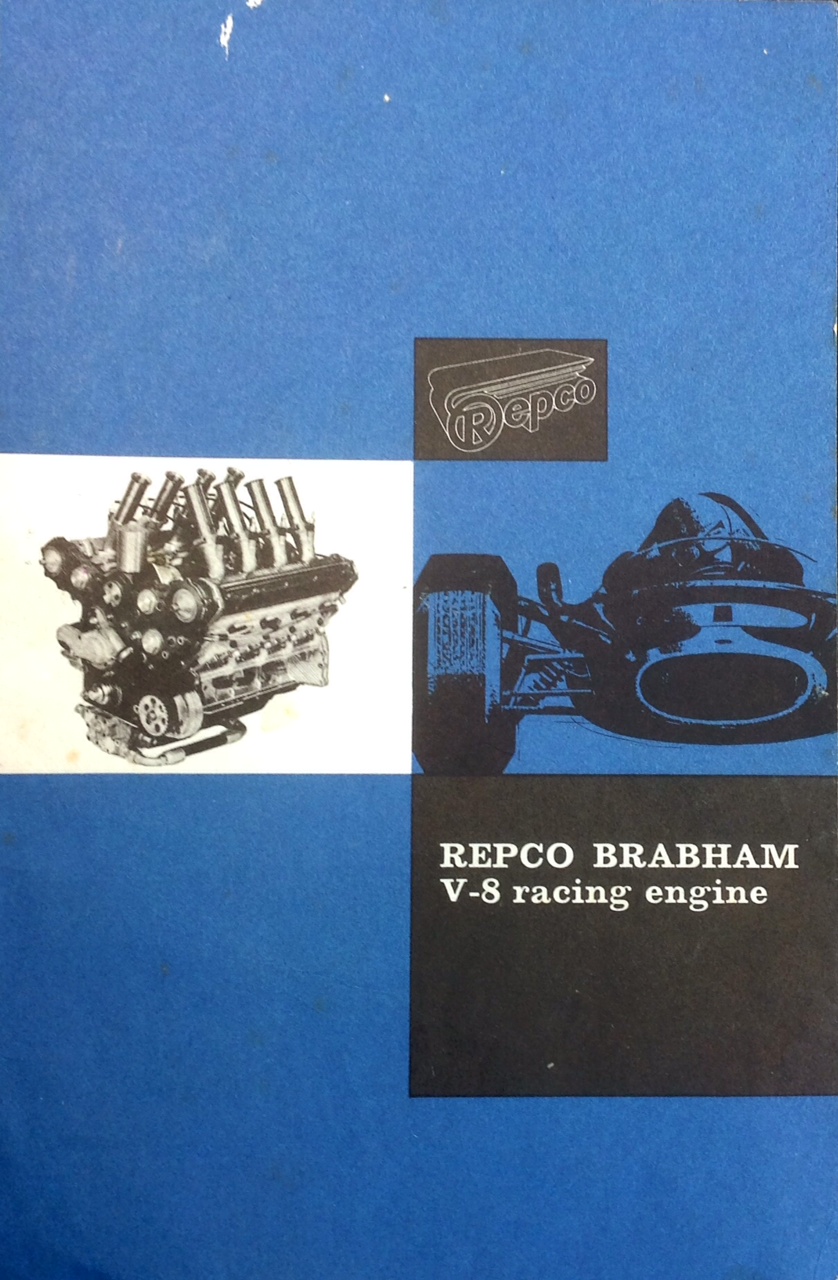
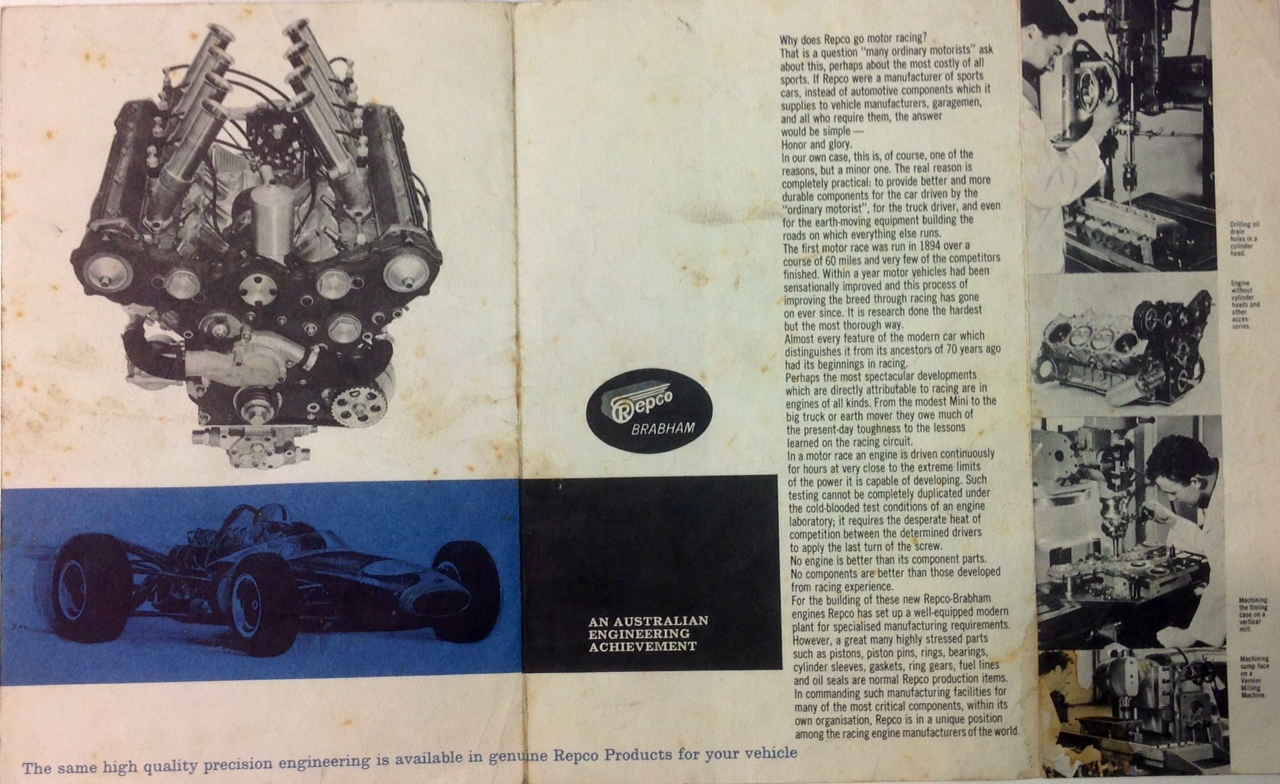
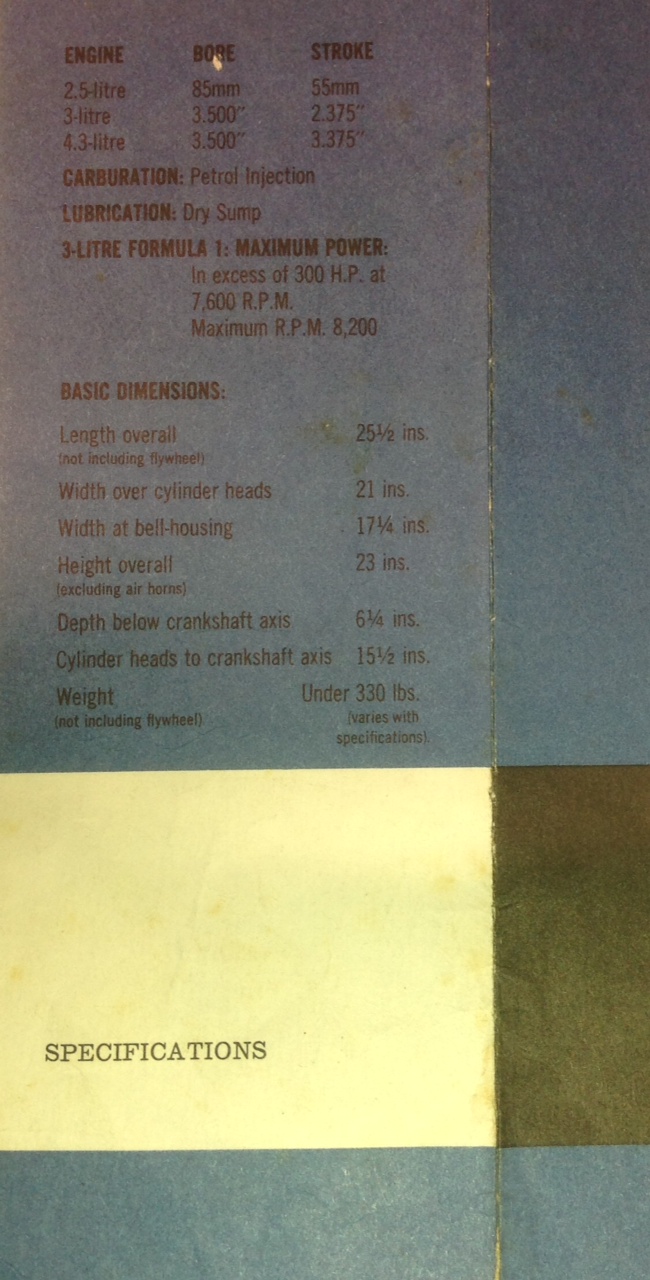
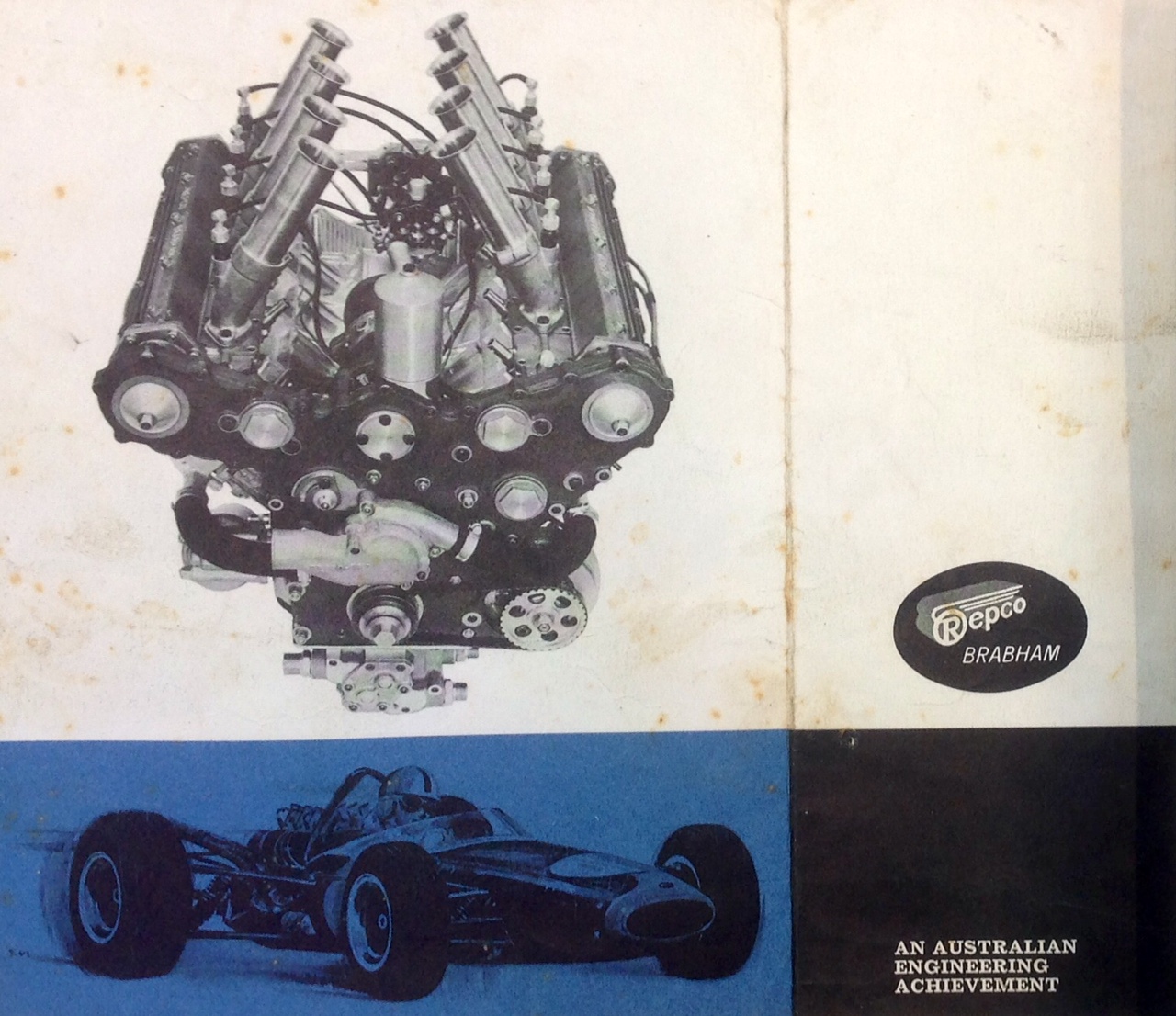
Coventry Climax, the Cosworth Engineering of their day caused chaos for British Grand Prix teams when they announced that they would not build engines for the new 3-litre F1 commencing in 1966. They had been engine suppliers to most of the British teams since 1958. Repco had serviced (and built the engines under licence) the 2.5-litre Coventry Climax FPF four cylinder engines, the engine de jour in local Tasman races, but were looking for an alternative to protect their competitive position, Jack Brabham suggested a production based V8 to be built by Repco .
He identified an alloy, linerless, V8 GM Oldsmobile engine, a project abandoned due to production costs and wastage rates on imperfectly cast blocks. He pitched the notion of racing engines of 2.5 litre – and later 3-litre – displacements using simple, chain driven SOHC heads to Repco’s CEO Charles McGrath.
GM developed a family of engines. The Oldsmobile F85 and Buick 215 were almost identical except that the F85 variant had six head studs per cylinder head rather than the five of the 215 and was therefore Brabham’s preferred competition option.
Brabham had seen the engine’s potential much earlier, racing against Chuck Daigh’s Scarab Buick RE in the cars one off – and only – race appearance at Sandown in early 1962. The car raced in 3.9-litre form that weekend and had plenty of squirt, albeit the underdeveloped chassis was not as competitive as the Coopers under brakes or through the corners.
The engines competition credentials were further established at Indianapolis that year when Indy debutant Dan Gurney qualified Mickey Thomsons’ 215 engined car 8th, the car failing with transmission problems after 92 laps. It was the first appearance of a stock block engined car at Indy since 1945.

Whilst the engine choice was not a sure thing its competition potential was clear to Brabham, as astute as he was practical. At the time the engine was the lightest mass production V8 in the world with a dry weight of 144kg with compact external dimensions to boot.
Repco acquired 26 of the F85 blocks and won the 1966/7 World Drivers and Manufacturers Championships as well as countless other races globally with engines using these and later, from 1967, Repco’s own ‘700’ and ‘800’ Series blocks.
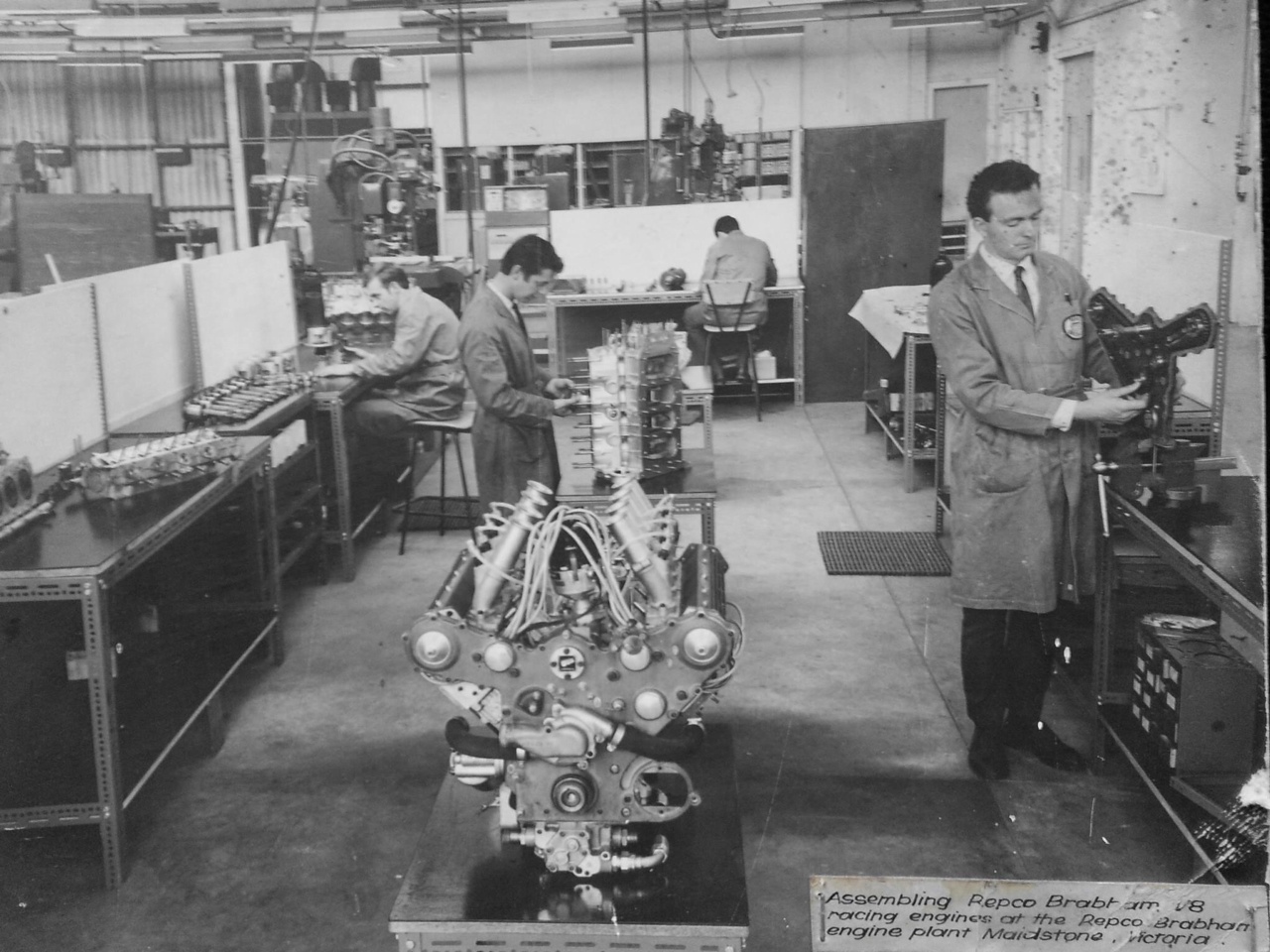
GM sold the production rights of the V8 engine to Rover in 1967. When Phil Irving – who designed the 1966 F85 block Repco RB 620 engine – saw the Leyland engines at the Melbourne Motor Show he thought he knew them well. However, the original GM design had suffered in its transition to Rover and then to Leyland Australia. In essence their were fewer head bolts on both the inlet and exhaust sides of the heads, in addition the block and heads were sand, rather than die cast which made them weaker and less uniform. Finally, the heads had smaller ports than the originals.
The fundamentals of the engine to take increased operating loads and power were lacking. Irving made changes by adding material to the block and head castings which also facilitated the installation of main bearing strengthening bars, such changes were homologated by Leyland in accordance with F5000 rules. Repco claimed 440bhp with an absolute rev limit of 7500rpm and a crank life of one hour. It was soon found that the fragility of the block and cranks required a maximum of no more than 7000rpm.
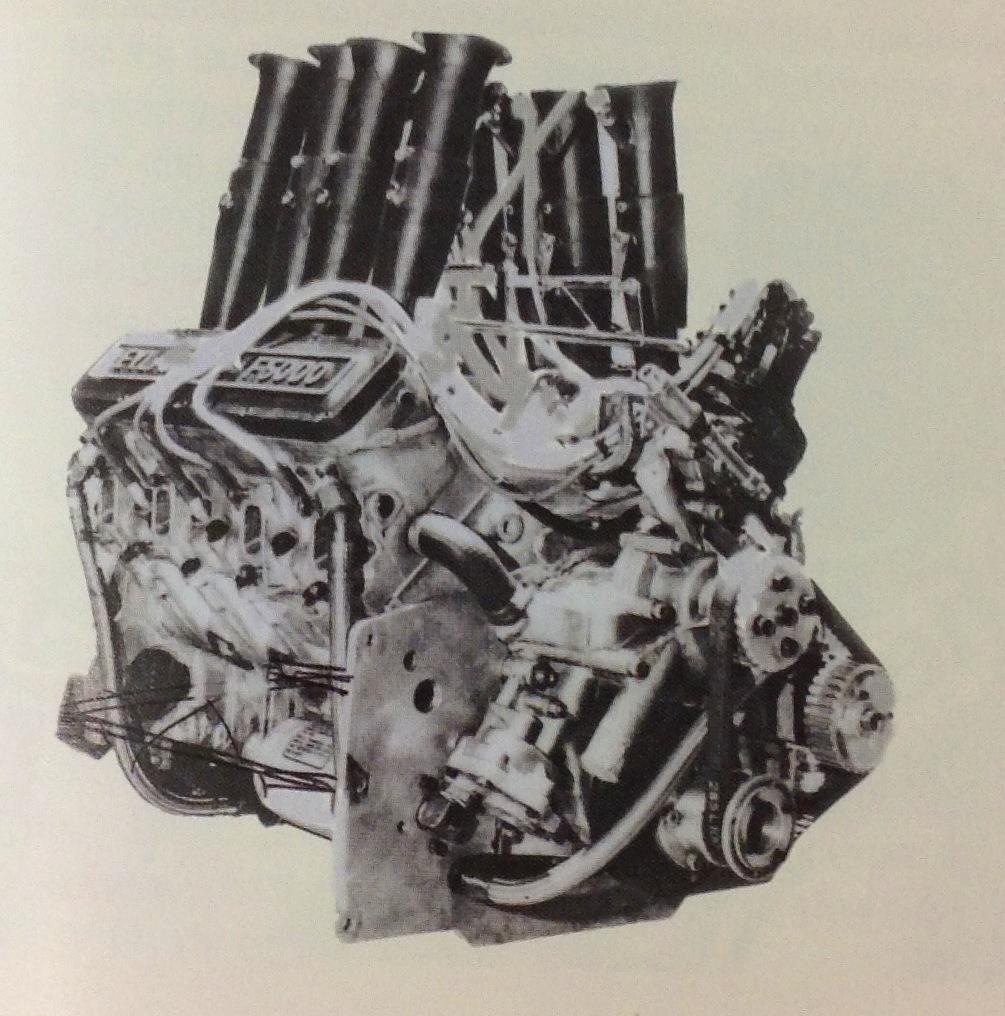
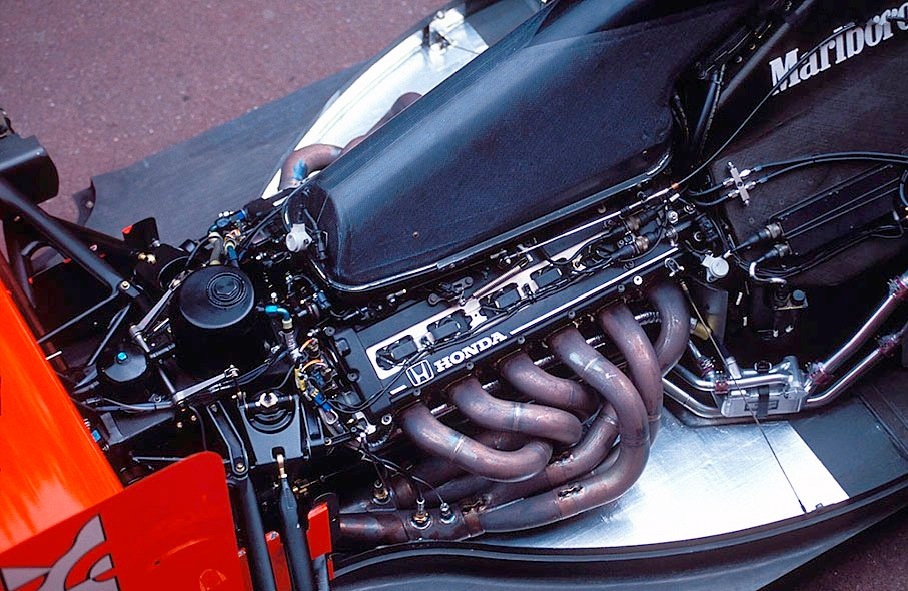
With further development post Repco, McCormack’s team – with the new Comalco heads, different valve sizes, inlet port shapes inspired by Honda and shorter exhaust primaries – had a vaguely reliable engine consistently giving 435bhp and 410lb/ft of torque. Not a lot, but enough to do the job, much like Phil Irving’s Repco Brabham 620 engine in F1 in 1966, that engine was not the most powerful in the field but it did the job, albeit much more reliably than its F5000 relation!
The Leyland/Repco/McCormack/Irving F5000 V8 was truly a triumph of development over design on a tiny budget!


Acknowledgements…
John McCormack for the considerable time he contributed, Malcolm Preston, thanks for your written submission
‘The History of the Grand Prix Car 1966-1985’ Doug Nye, ‘Maybach to Holden’ Malcolm Preston
Photographs…
The Rolling Road/John Shingleton, Mark Windecker (Can-Am), Autosport TNF, John Lemm, Greg Flood, The Cahier Archive, Greg Falconer, oldracephotos.com, David Pearson, reddit.com, Rob Ryder, Chris Jewell, Werner Buhrer cutaway drawing
A few more M23/2 Shots…Addendum…


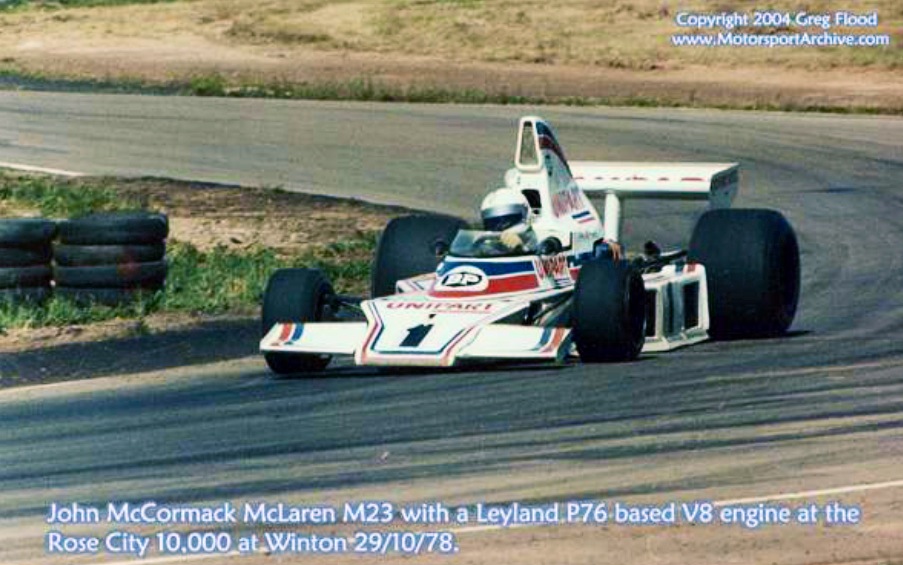

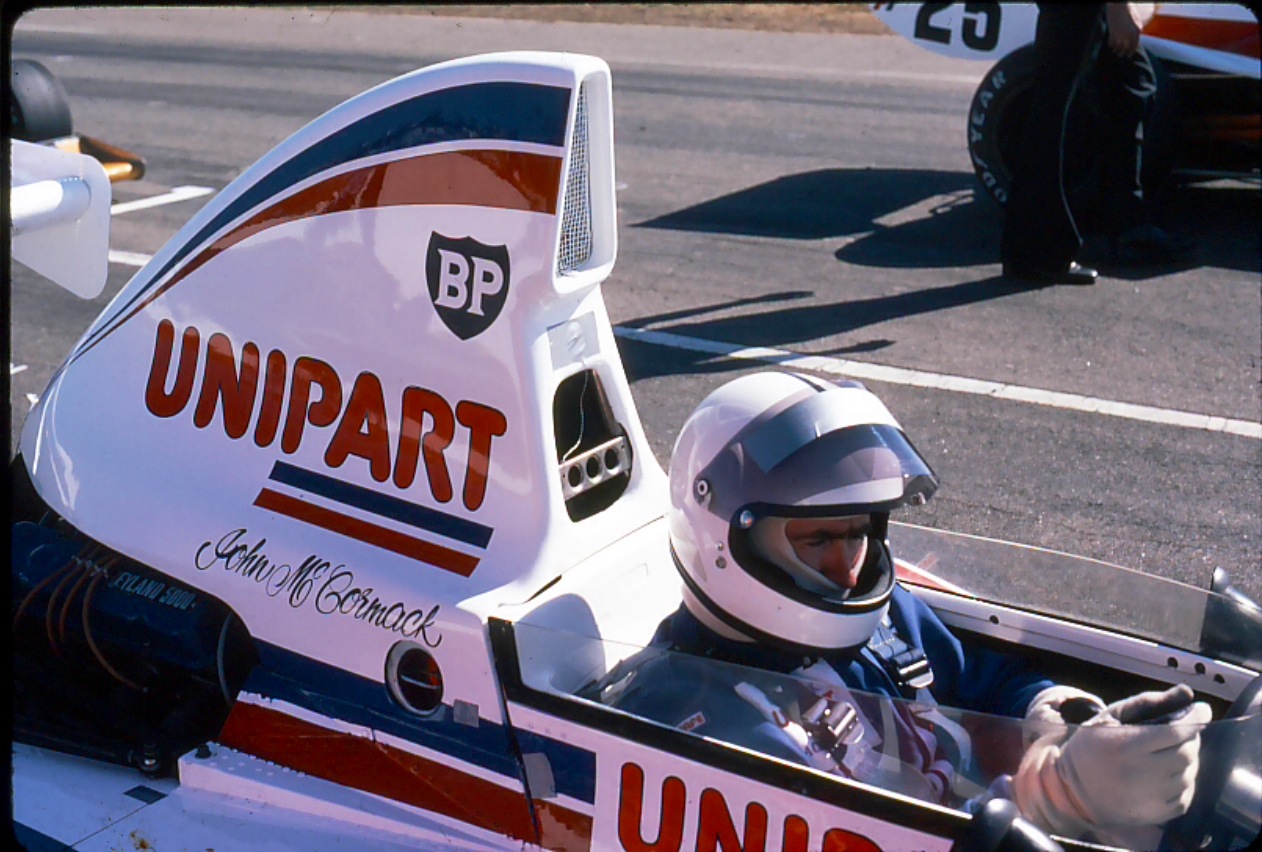


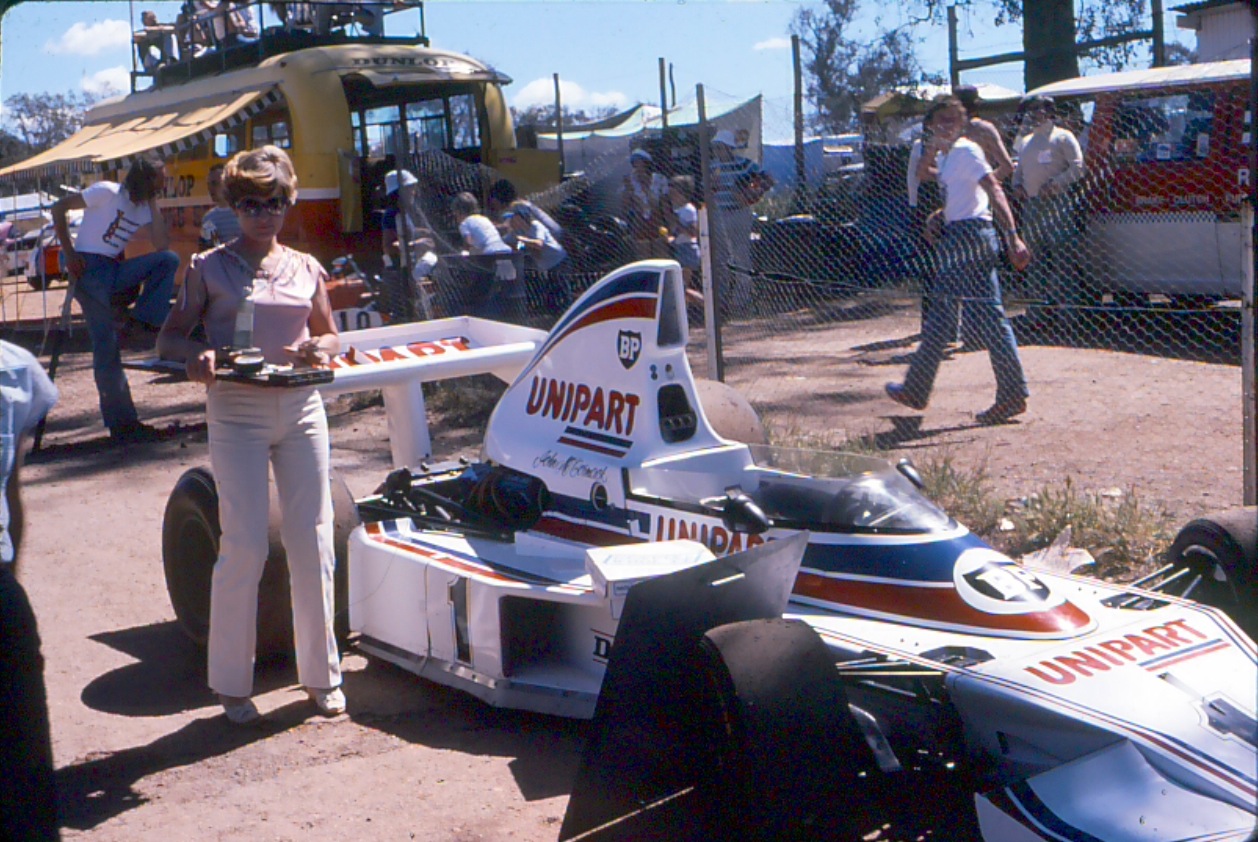


And finally, Unipart Merchandising 1978 style, the T-Shirts @ $3.20 are a snip….
Finito…