Archive for the ‘F1’ Category

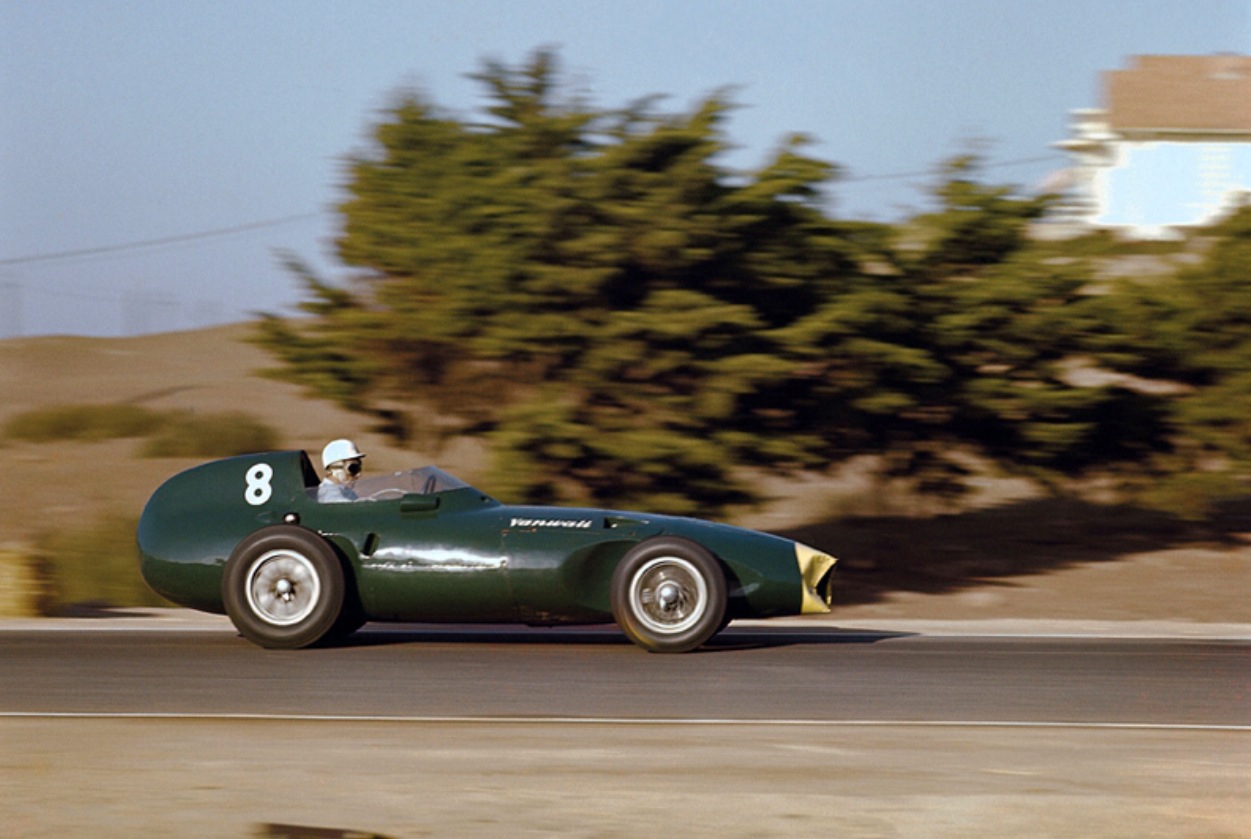
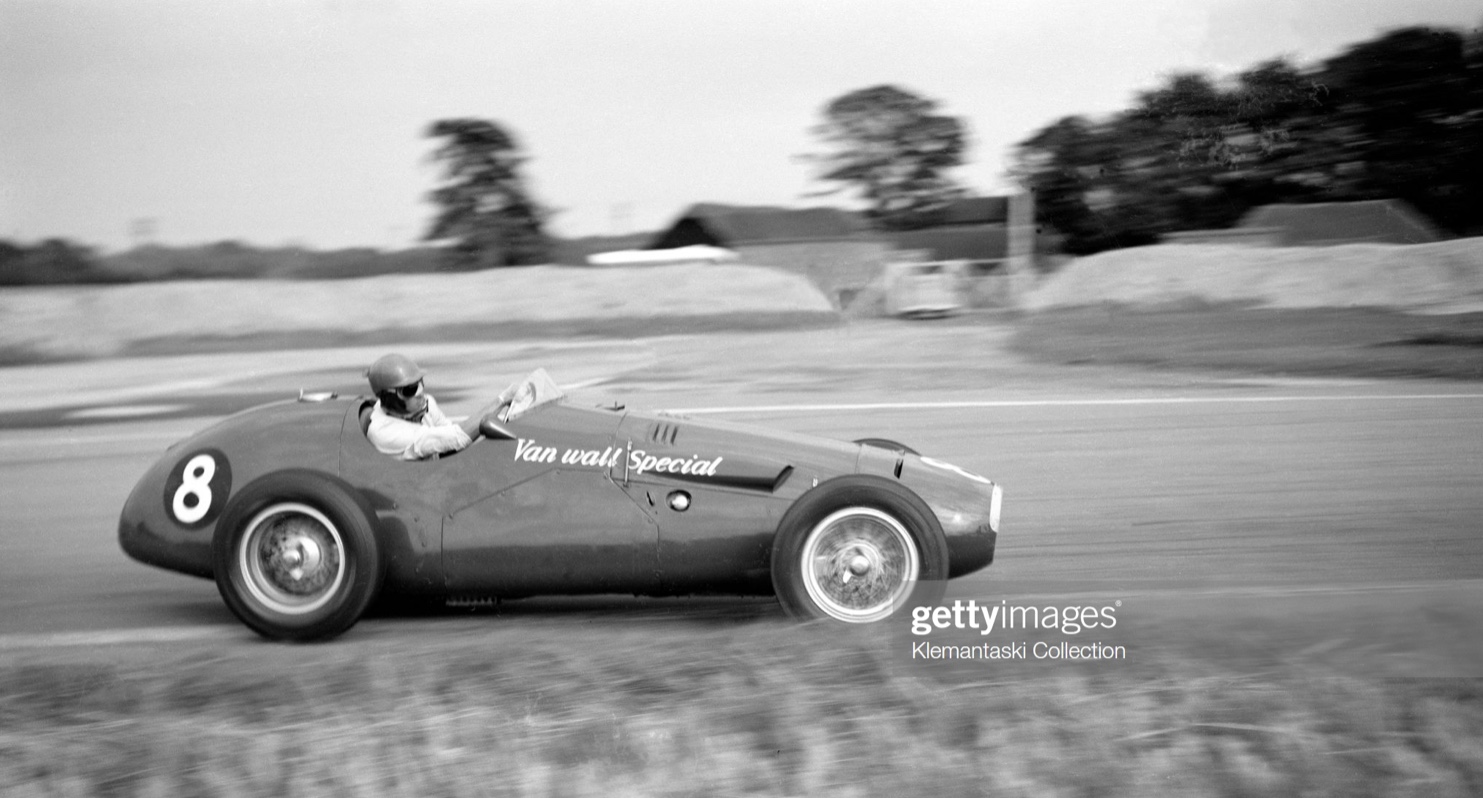
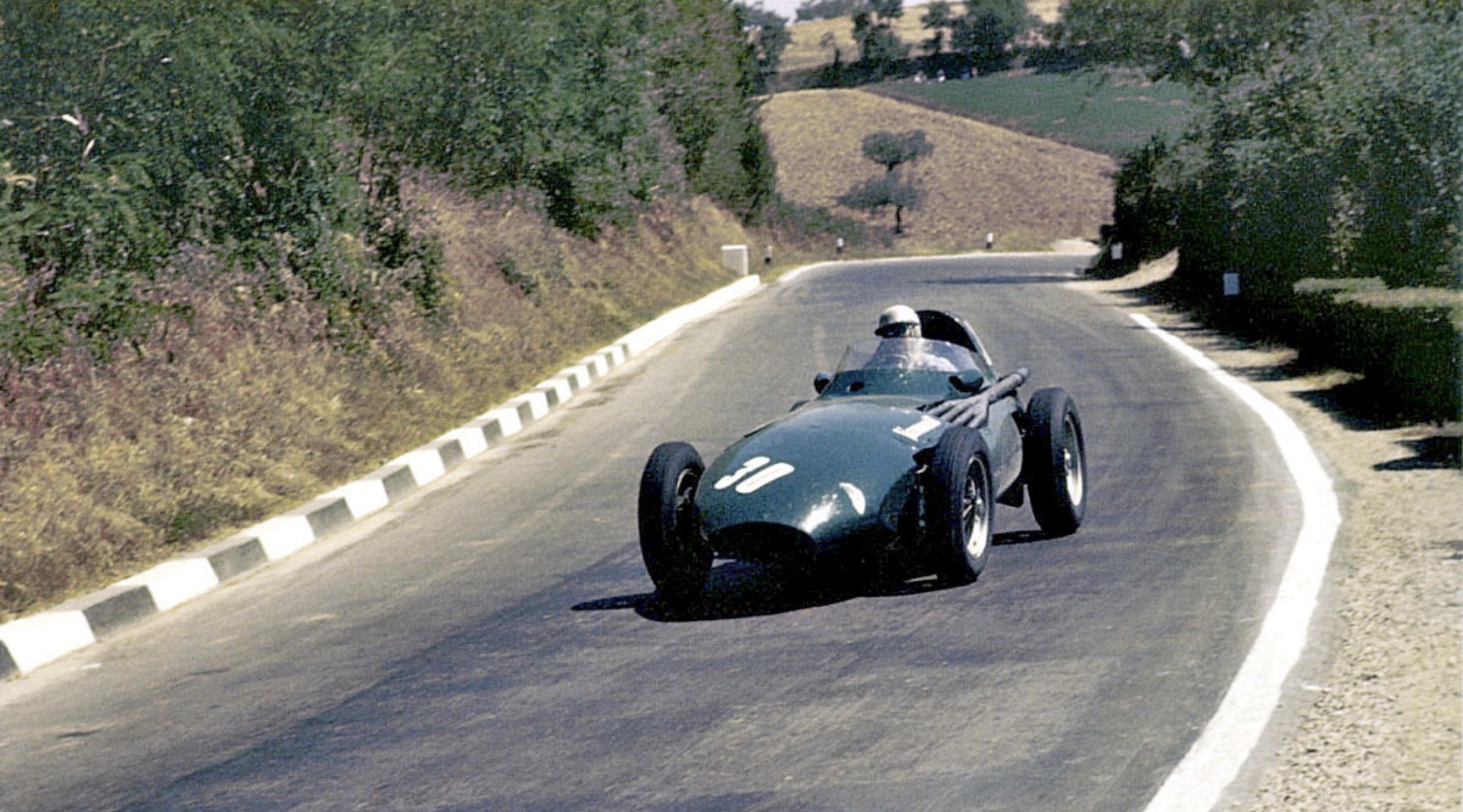
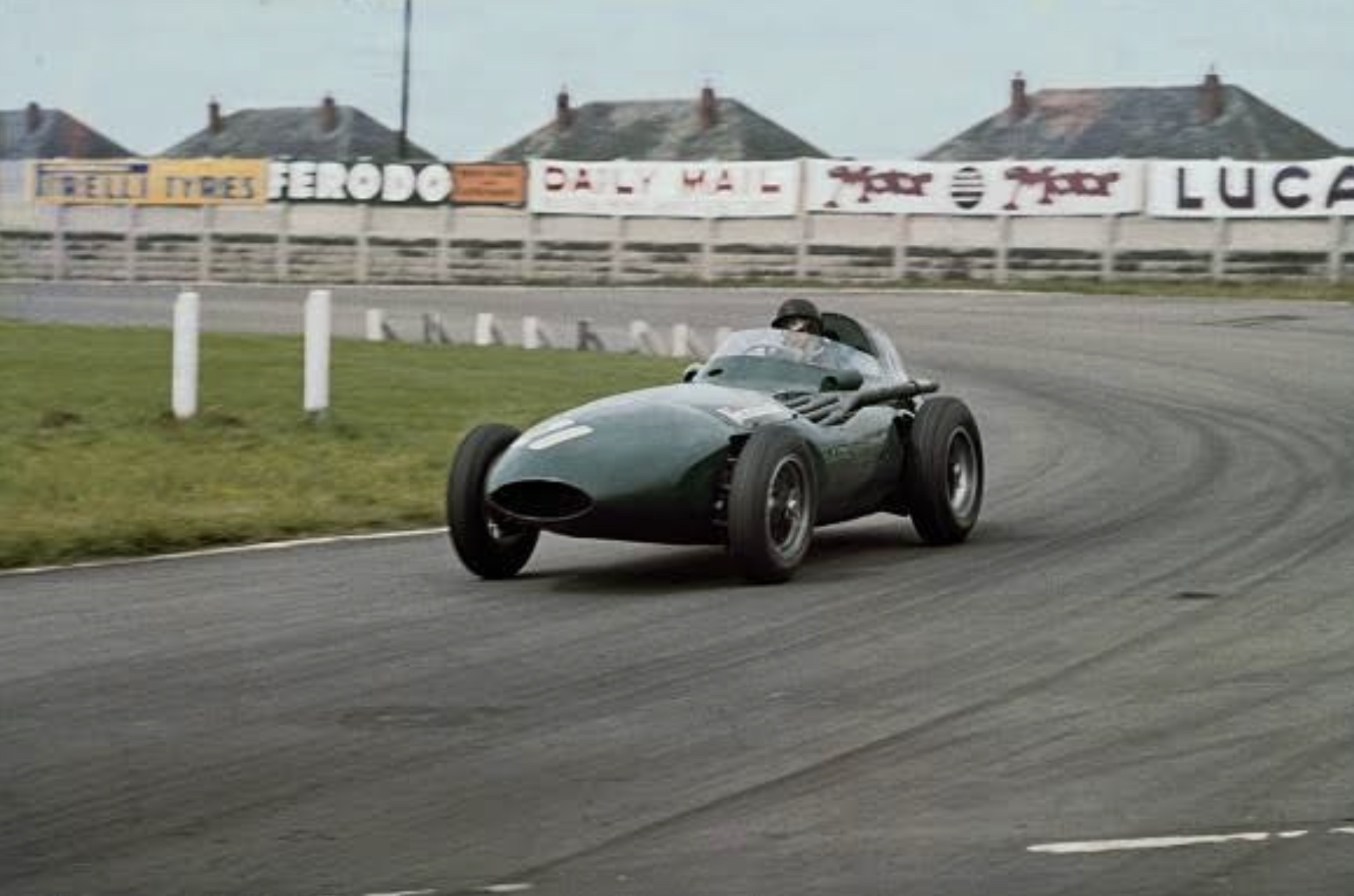
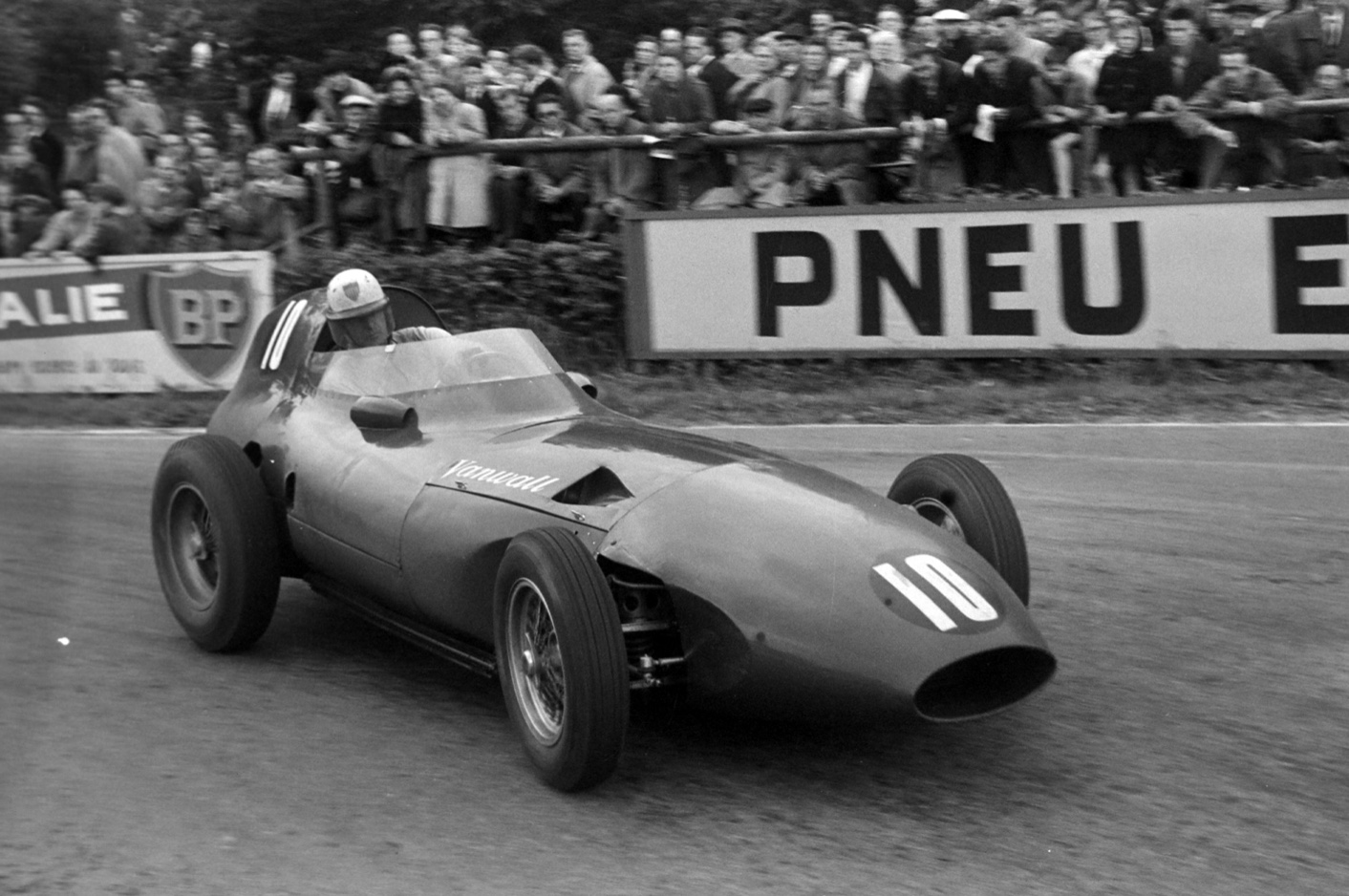
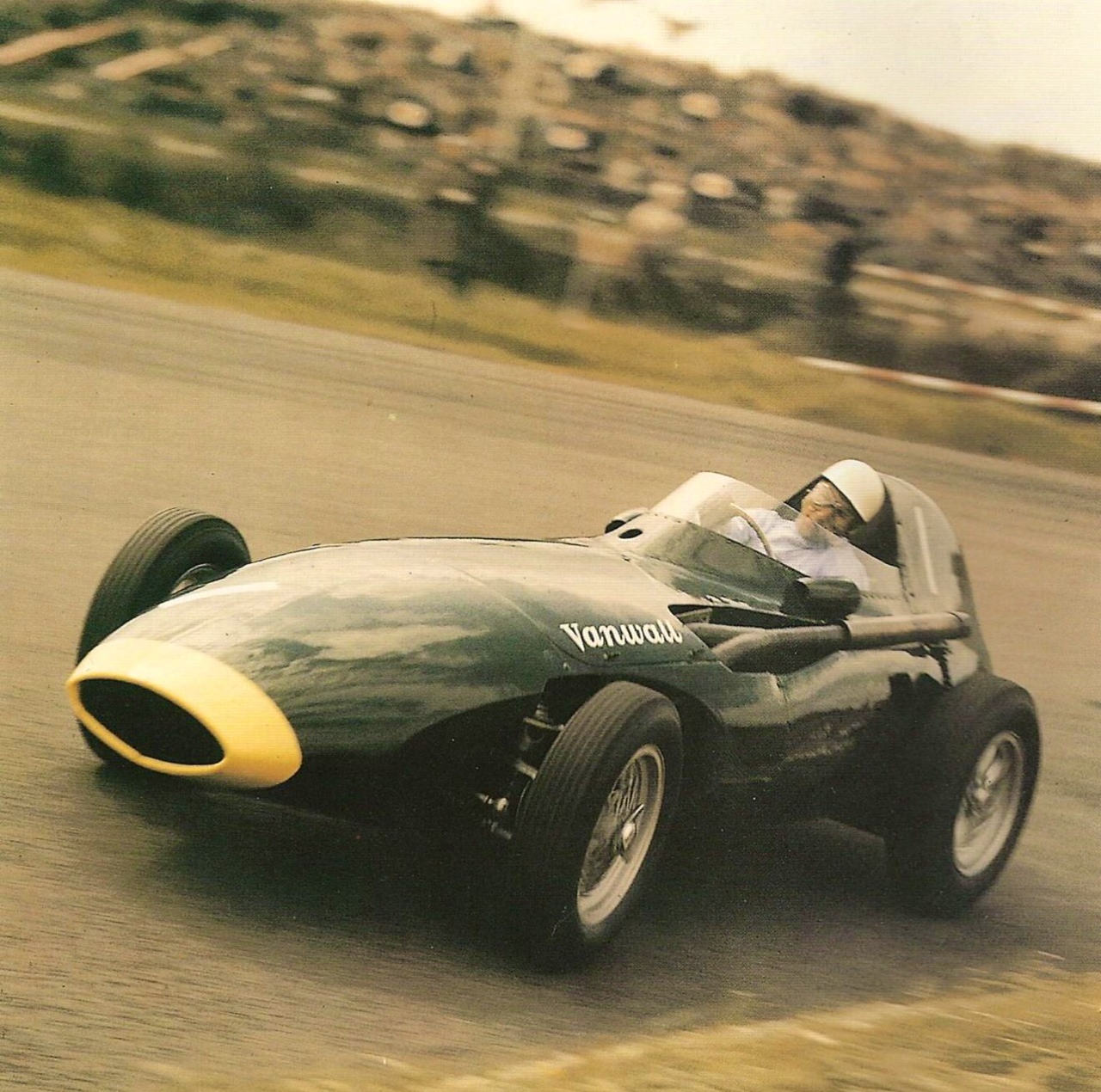
Stirling Moss on his way to Ain Diab victory in his Vanwall VW5, 1958 (Moss Archive)

Stirling Moss, Vanwall VW57 and Mike Hawthorn, Ferrari 246 went to Morocco for the final round of the 1958 Championship, with Moss needing to win and set fastest lap and Hawthorn to finish no lower than third to take the title…

Morocco had recently gained its independence from Spain and used the race to help establish its global identity. The newly crowned King Mohammad V attended ‘Ain Diab’, a very fast, dangerous road circuit on public roads near Casablanca.

Moss took the lead, with Phil Hill also starting well- Hill waved teammate Hawthorn through to chase Moss with Brooks challenging in the other Vanwall. Moss set a new lap record, Ferrari slowed Hill to allow Hawthorn into second. Moss ran into Wolfgang Seidels’ Maserati 250F, damaging the Vanwalls nosecone, but fortunately not the radiater core.

Tragedy struck on lap 42 when the engine in the Stuart Lewis-Evans Vanwall blew, the car’s rear wheels locked then the car careered into a small stand of trees- the vulnerable tail tank ruptured and caught fire, Lewis-Evans jumped out but was disoriented and headed away from fire marshalls who may have been able to minimise the terrible burns from his overalls- despite being flown home to the UK he died in a specialist hospital six days later.

moroc

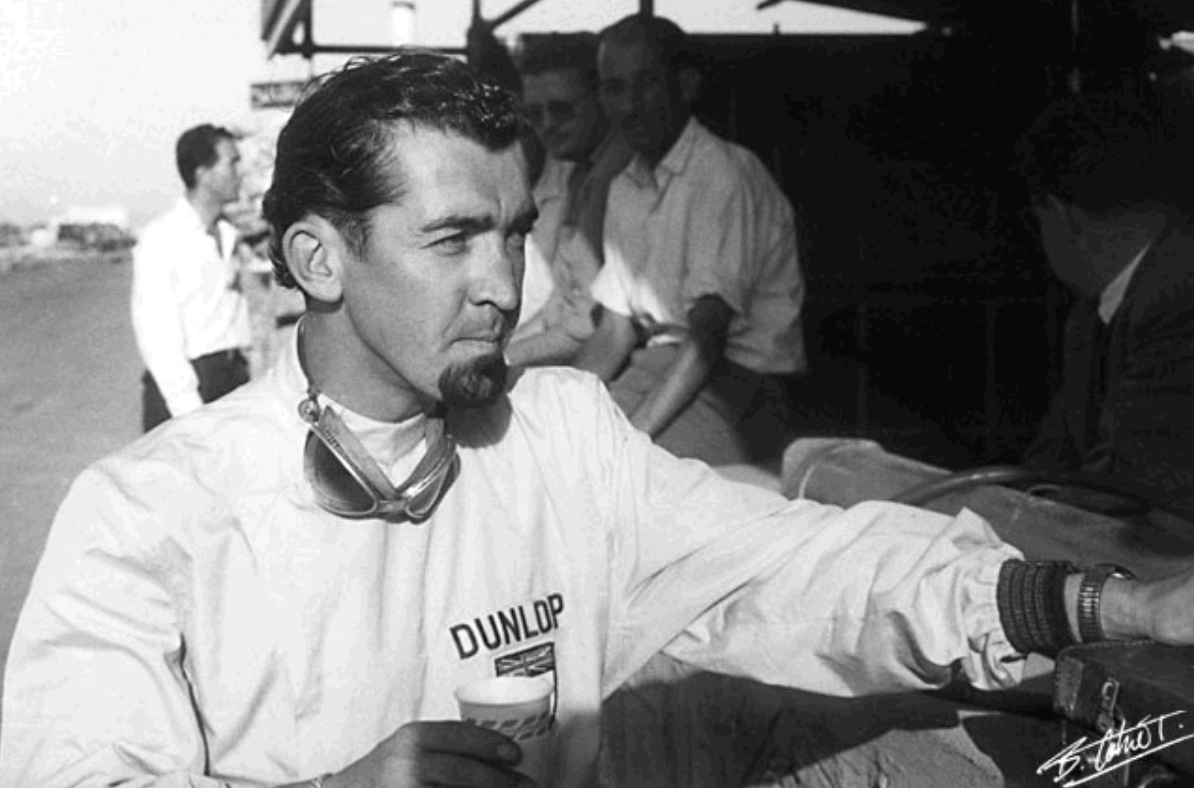
Stuart Lewis-Evans, Morocco 1958. His death robbed Britain of its great ‘coming-man’ (The Cahier Archive)


moroc

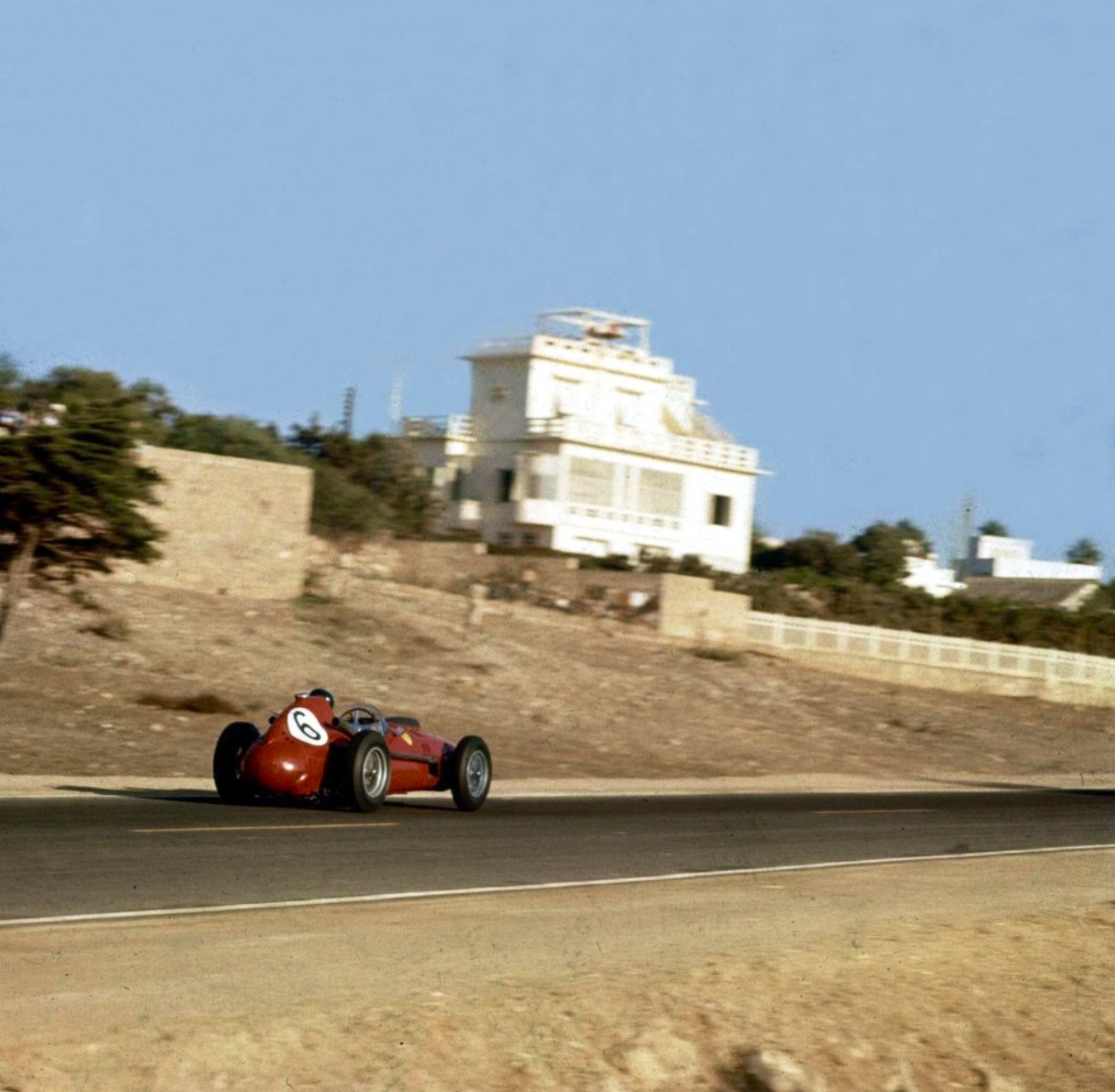
Stunning Moroccan backdrop, Hawthorn, Ferrari Dino 246 (Unattributed)


moss morocco 5

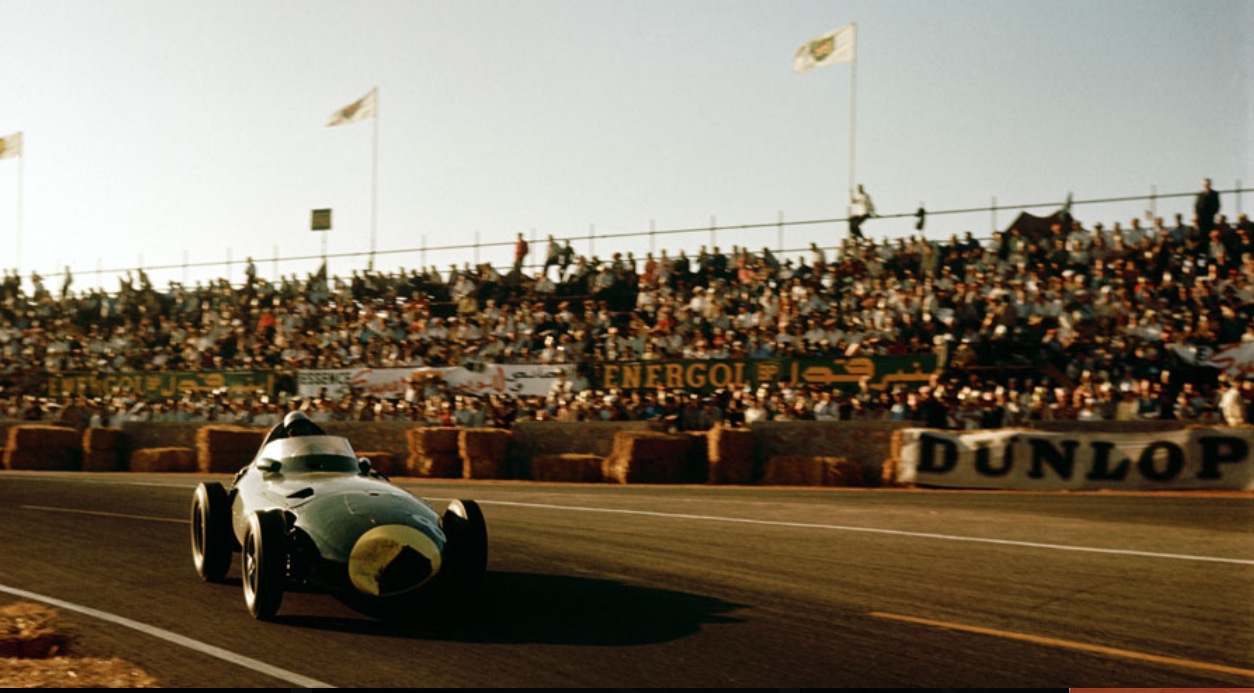
Moss’ car survived the heat despite the damaged Vanwall nosecone having hit Seidel’s Maser 250F ‘up the chuff’ taking the win and the Constructors Championship for Vanwall (Unattributed)


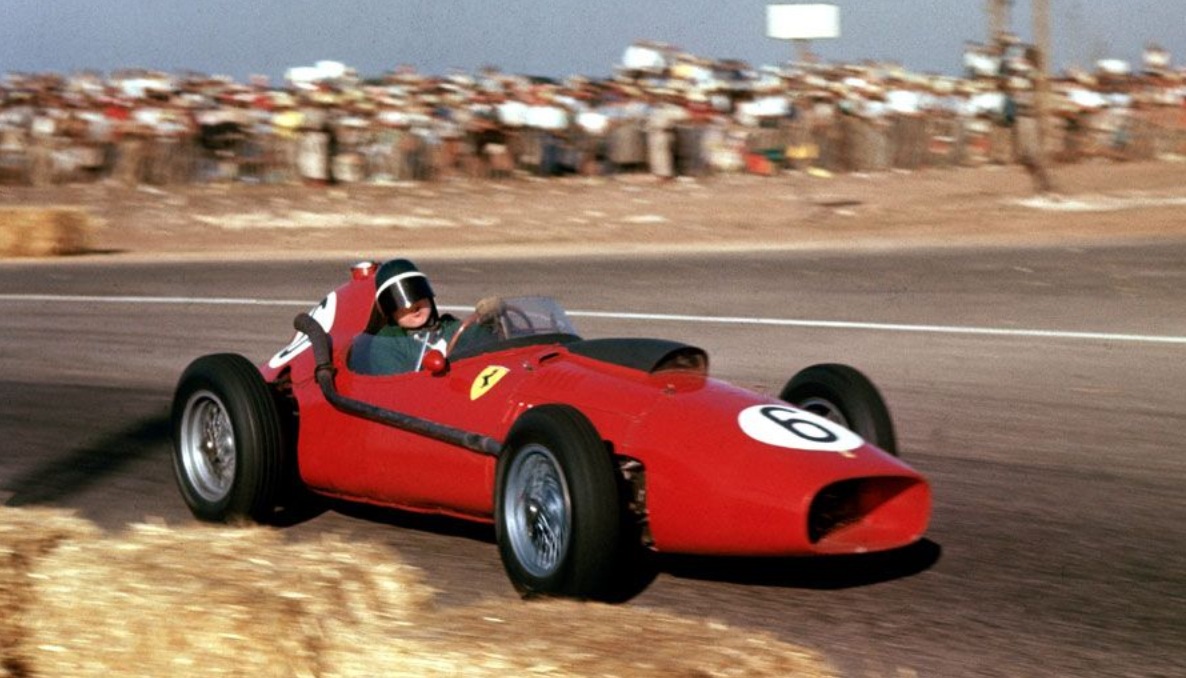
Phil Hill turns his Ferrari Dino 246 into an open right hander on the prodigiously fast Ain Diab road circuit, Casablanca, Morocco 1958- he finished third (Unattributed)

Moss won the race, and Hawthorn the Drivers Championship, but the Constructors Championship was won by Vanwall in a fitting reward for Tony Vandervell who had passionately supported the BRM program before setting out on his own, frustrated by the process of management by committee and the lack of agility which went with it.

Hawthorn shortly thereafter announced his retirement from racing, aged 29, and, ‘dicing’ with Rob Walker’s Mercedes on the Guildford Bypass not far from his home, crashed fatally in his Mark 1 Jag 3.4- an horrific end to a tragic season for British motor racing.

This article started life as a piece I wrote in September 2014 about the Moroccan GP and then over time morphed into a rough bitza on Vanwall of 1,500 words, before substantially re-writing it as a 10,000 word feature in February 2020. The article uses as its primary technical resources two 8W Forix articles- one by Ron Rex ‘The Vanwall Grand Prix Engines’, quite staggering in the level of detail,  http://8w.forix.com/vanwall-grandprix-engine-introduction.html and another by Don Capps ‘A Year by Year Look at the Vandervell Racing Machines including Thinwall Specials’ http://8w.forix.com/vanwalls.html

If you are interested in the topic do read these articles and others on Vanwall on that site- you will be fascinated for a weekend at least.

Tony Vandervell…
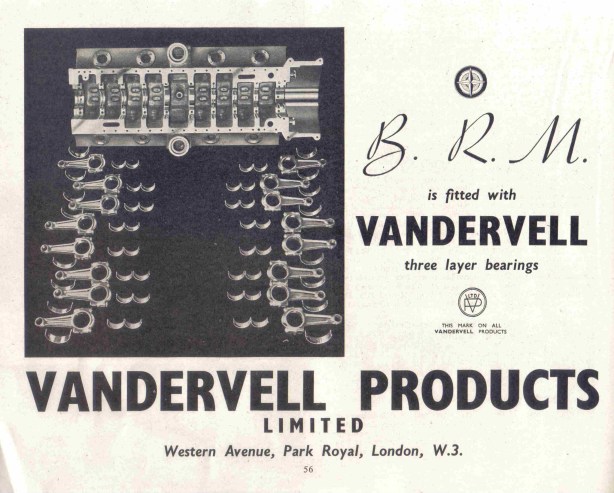
BRM V16 Vandervell ad

Vandervell Products ad in the ‘BRM Ambassador for Britain’ booklet (Stephen Dalton Collection)

Guy Anthony ‘Tony’ Vandervell (TV) was the son of Charles Vandervell, the fouder of CAV, later Lucas CAV.

He made his fortune from the production of ‘Thin-Wall’ bearings under licence from the innovative American inventor- Cleveland Graphite Bronze Company, these products were made by Vandervell Products Ltd (VP) from 1933 in a purpose built factory at Western Avenue, Acton, west of London.

As a captain of the automotive industry Vandervell was invited to be a member of the British Motor Racing Research Trust (BRM) in 1947 but he soon tired of BRM’s ‘management by committee’ and the consequent lack of agility so started an independent race program with a series of Ferraris modified by VP called ‘Thin Wall Special’.

He was born on 8 September 1898 and died on 10 March 1967.

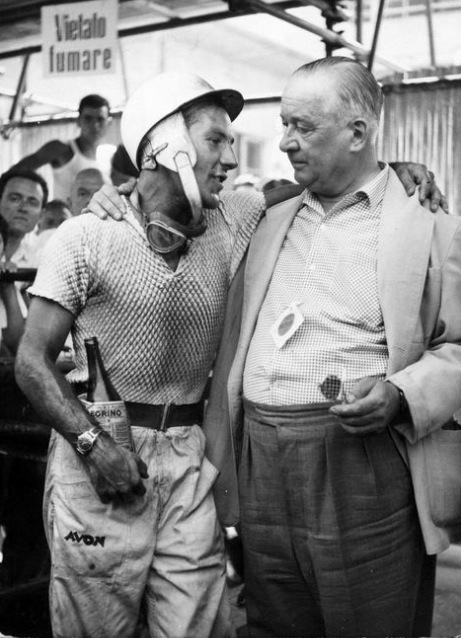
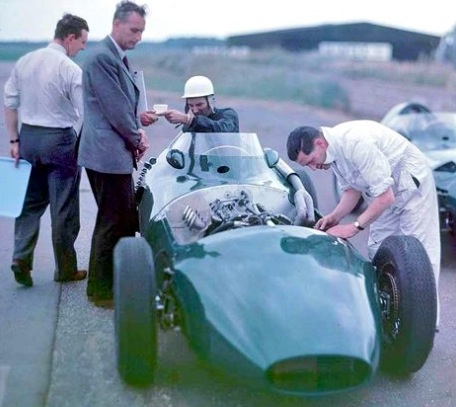
The Chief, Tony Vandervell with Tony Brooks in the Monza pitlane in 1958 the day before Brooks went out and won the Italian GP, Vanwall VW5 (John Ross)


Reg Parnell in Ferrari 375 Thinwall 3 before going out and beating the three Alfa Romeo 159s of Fangio, Farina and Bonetto in the May 1951 International Trophy at Silverstone- the race was held in teeming rain and ended after 6 laps, no official winner apparently but Parnell got the prize which tends to indicate he won! Car #29 is Johnny Claes, Talbot Lago T26C (Getty-GP Library)


Peter Whitehead in Thinwall 3, Ferrari 375 during the 1951 British GP at Silverstone, 9th in the race won by Froilan Gonzalez Ferrari 375- Ferrari’s first championship GP win


thinwall

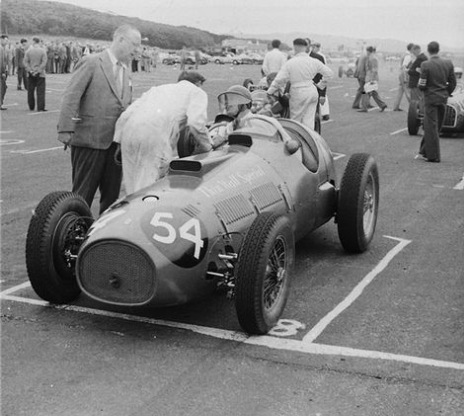
Mike Hawthorn in the Ferrari 375 V12 ‘Thinwall 4 Special’, National Trophy Race, Turnberry Airfield circuit, Scotland 23 August 1952. Tony Vandervell is to the left of the mechanic, Hawthorn is on pole and sportingly allowed the BRM mechanics to repair a leak in a water rail on Reg Parnell’s car, before stepping aboard his car, and then found a box full of neutrals at the start and retired it shortly thereafter. Parnell won the race from Bob Gerard’s ERA and Ken Wharton in the second BRM V16  (Unattributed)

The first Thinwall (i have used ‘Thinwall’ throughout this article but note the correct names of the cars were ‘Thin Wall Special’) was a 1949 Ferrari 125 GPC- a 1.5 litre supercharged V12 short wheelbase machine which was returned to Ferrari after examintion by BRM, chassis number unknown. Describing these cars is context for the Vanwalls which followed, a description of the Thinwalls and the modifications made to them is an article in itself for another time.

By 1950 VP had built an additional factory at Cox Green, Maidenhead complete with engine test beds and it was here that the Ferrari, and later Vanwall engines were built and tested. The Vanwall racing team (VR) itself was based at Acton with Fred Fox in charge and Phil Watson as Chief Mechanic with close access to VP’s drawing office, toolroom and major workshop located in the main factory over the road. In essence, by the end of 1950 all the necessary infrastructure was in place to take on and beat the best in the world.

Thinwall 2 was a 1950 Ferrari 125, it was similarly powered to the first car but had a more powerful  twin-plug V12. The long wheelbase chassis was numbered ‘125-C-02’ and had swing axle rear suspension, it was returned to Maranello to be rebuilt into Thinwall 3.

The 1951 Thinwall 3/Ferrari 375 used, as noted above, the same chassis as ‘2’ but fitted with a normally aspirated 4.5 litre, single-plug V12 with a de Dion rear end- retained by the team, it was broken up in 1952.

Thinwall 4/Ferrari 375 was a long-wheelbase ‘Indianapolis’ 375, chassis number ‘010-375’ and was again a 4.5 litre V12 but this time twin-plug and de Dion rear axled- the car was retained by the team.

The Ferraris raced mainly in British Formula Libre events providing the main opposition to the BRM Type 15 V16 which was essentially too late for F1 before the formula changed, rendering it obsolete.

Vandervell was restless and wanted to race in the new 2 litre F2 of 1952-1953 which of course became the category to which the World Championship was run in those years.

vanwall goodwood

Peter Collins, then 22, at the wheel of the original Vanwall Special ‘01′, ‘Goodwood Trophy’ in September 1954. He qualified and finished 2nd to the Moss Maser 250F (Louis Klemantaski)

In 1954 the Thinwall Specials became a Vanwall Special…

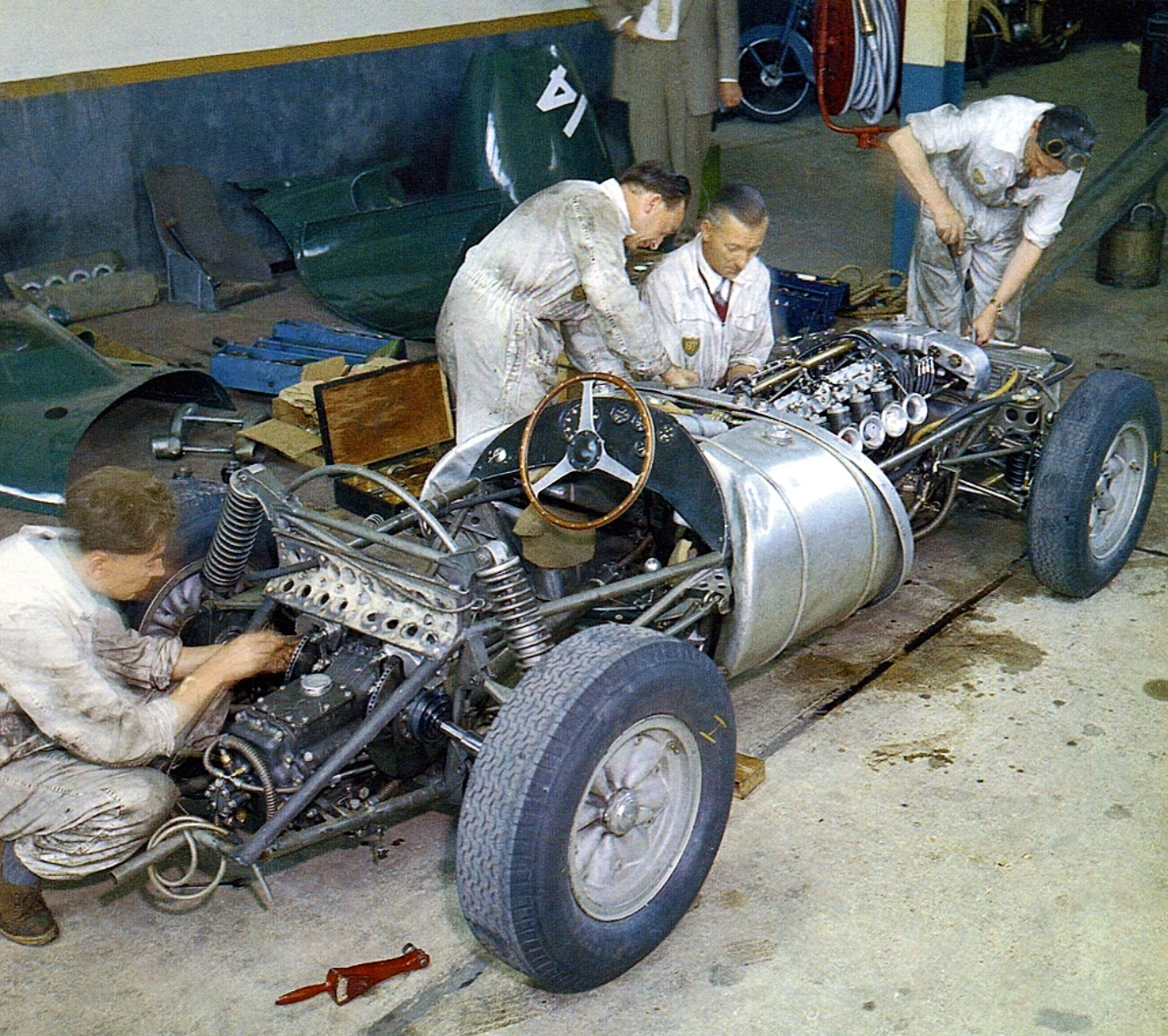
The name was an acronym of Vandervell’s Acton based ‘Thinwall’ bearing company and his surname. The chassis was designed by Cooper’s Owen Maddock and built at the companies Surbiton factory (given the Type 30 designation retrospectively). The machine had Ferrari inspired suspension and steering components together with a Ferrari 4 speed gearbox modified by VP. Goodyear disc brakes were used, as on the Thinwall, the interesting bit at this early stage was the heart of the car- its engine.

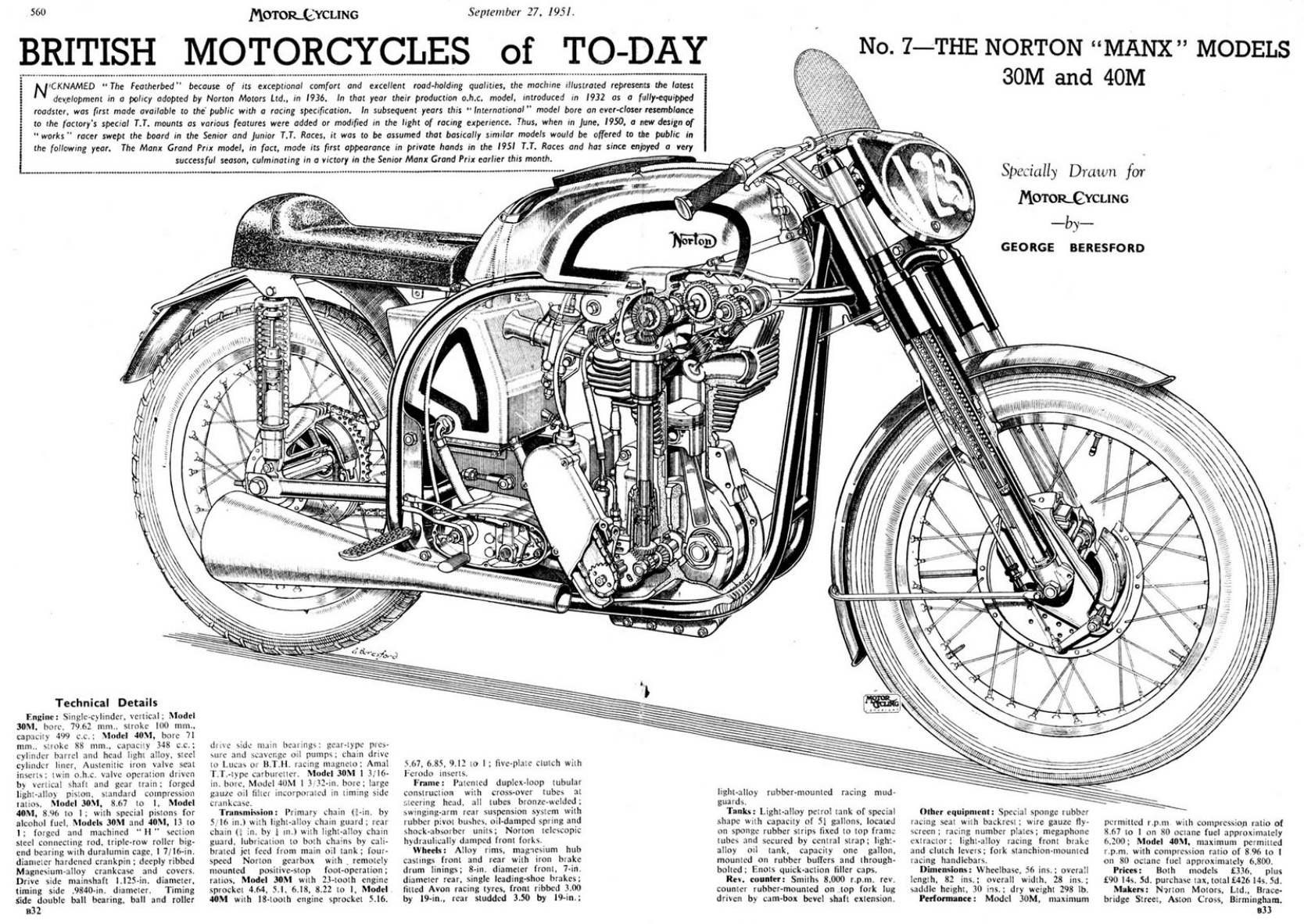
Vandervell became a member of the Norton Motors Ltd Board in 1946 and was naturally impressed by their very successful 500cc single but he felt the company needed to develop a multi-cylinder engine to combat the Italians and contracted BRM’s design arm, Automotive Developments Ltd to design a 500cc four-cylinder engine for Norton. BRM experimented with a water-cooled version of the Norton 500cc single which developed more power than the air-colled original- the design was to be significant in 1954 when Vandervell sought an engine for his new car.

Technically minded and interested, TP had spent plenty of time in the Norton test house with Chief Engineer Joe Craig and Polish Design Engineer Leo Kuzmicki as they developed their latest 500 singles which developed 45bhp on 80 octane fuel in 1951. TP could see how four times that amount and a bit more given alcohol based fuels were allowed in the new 2 litre F2 would be competitive. Additionally the BRM 500 test engine gave 47bhp on test whereas at the time Norton’s air-cooled motor gave 44.2bhp- and so the die was set.

Norton were prepared to help with the head design, Eric Richter, who had worked on the Norton project at BRM, joined Acton from Bourne in late 1950 so Fred Fox and his team were tasked to do the overall engine design, working closely with Craig and Kuzmicki at Norton on the the head and valve gear with specialist tradesmen in milling, grinding and turning seconded from VP to Vanwall Racing- with the coming change to F1 from 2 to 2.5 litres in 1954 the design was to be capable of taking that jump in capacity.

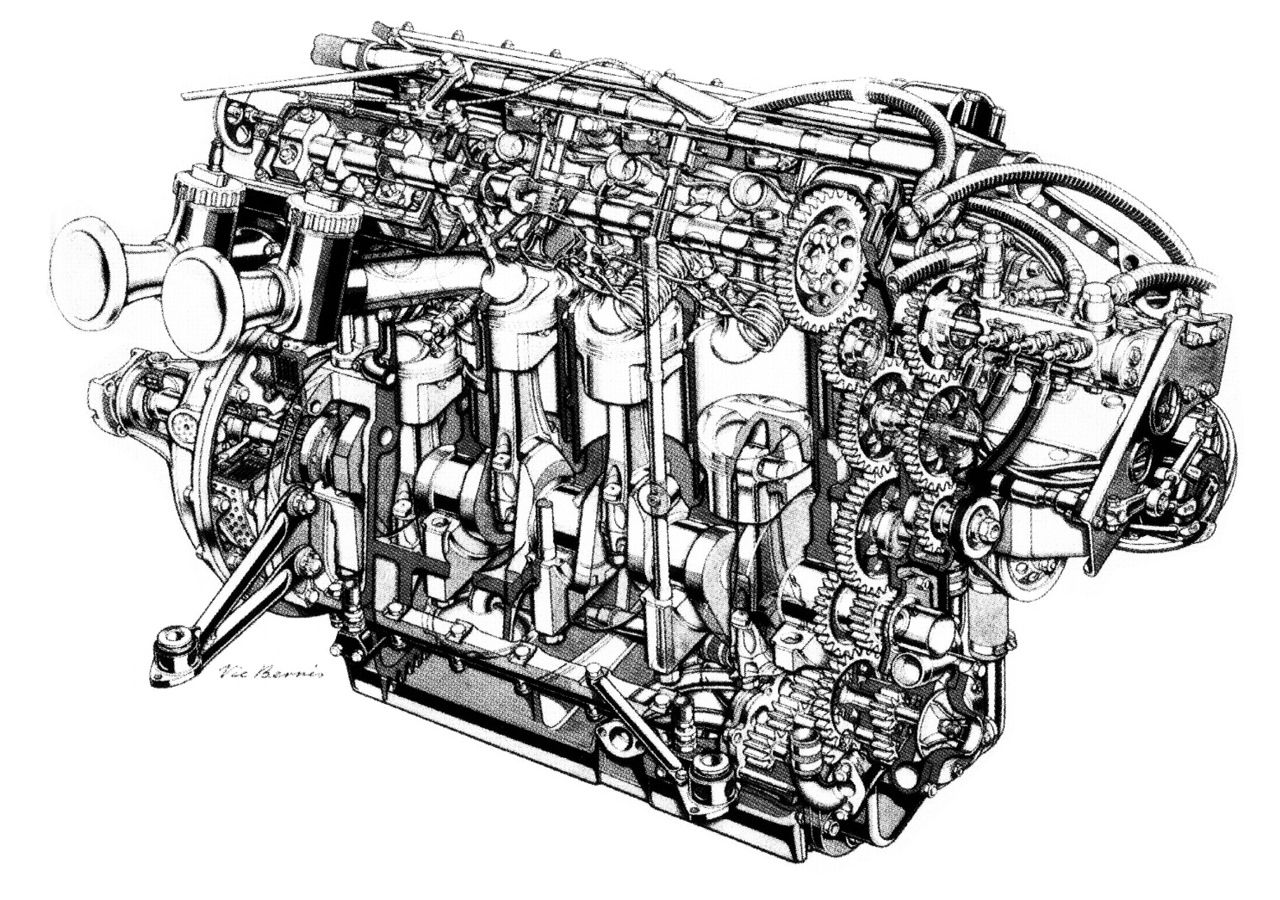
And so it was that the Vanwall engine was essentially the same as the Norton/BRM water cooled single- four Norton single cylinder barrels spigoted into the cylinder head and crankcase, integrated ‘en-bloc’ with added on non load-bearing water jackets.

The bore and stroke of the 2 litre motor mirrored those of the 1952 Norton 500- 85.93cc X 86mm for a total capacity of 1995cc. This double overhead camshaft cylinder head used twin inclined valves in each combustion chamber with motor cycle style hairpin valve springs.

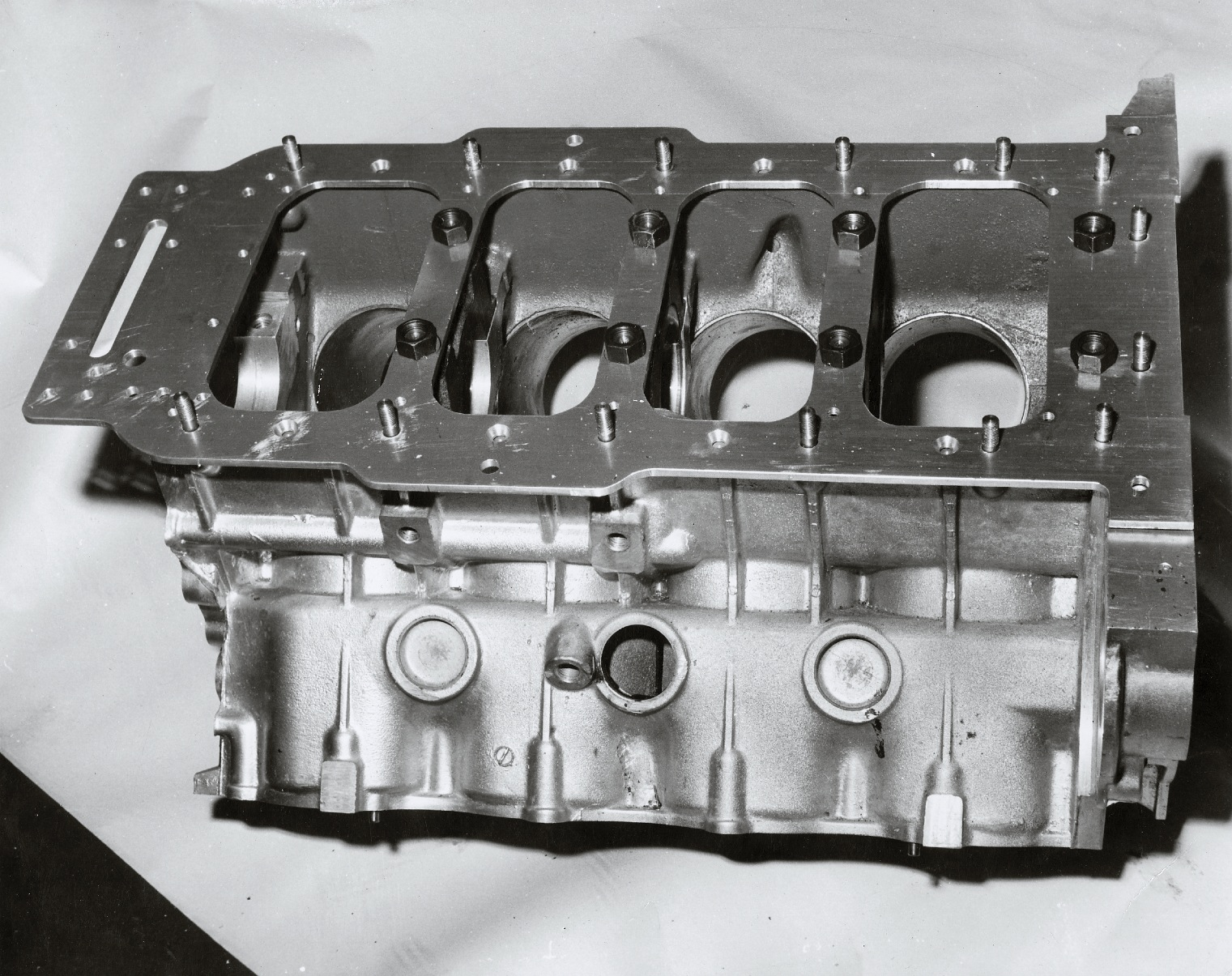
The engine had a deep crankcase into which the four cylinder barrels were spigoted atop which sat the shallow cylinder head casting. Both these key components were held together by ten long, threaded high-tensile steel rods which passed through the head, beside the barrels and through the crankcase and main bearing caps and were secured at each end with nuts.

In the interests of time the team were looking at proprietary crankcases they could adapt to their needs, the ‘winning choice’ was made by TV’s eldest sone Anthony, who had been apprenticed at Rolls-Royce and suggested the four cylinder variant of the R-R B Series military engine, the ‘B40’. This engine was of aluminium ‘F-head’ configuration- overhead inlet valves and side exhaust valves, the five main bearing crankcase was made of cast iron and its capacity when fitted to the Austin Champ military vehicle was 2838cc.

An order was placed for a crankcase cum block in February 1952. Later Leyland were approached- who were making the engine under contract for Rolls-Royce to supply a set of patterns and baked cores for suitable modification.

Vandervell machined a B40 crankcase to their needs as a pattern, together with the cores provided by Leyland to cast a prototype crankcase in aluminium- plenty of work was required by VP to increase the wall thickness to allow for the reduced strength of the alloy to be used and to incorporate the change from five to four main bearings.

The choice of the change from five to four main bearings was thought to be due to savings in weight and friction- Ron Rex in his wonderful series of 8W Forix articles on Vanwall engine design points out that Richter had worked with Stewart Tresilian at ERA and BRM- he was a strong proponent of the use of four main bearings in four cylinder race engines inclusive of BRM”s successful 2.5 cylinder four which raced in the P25 and P48 GP machines from 1953 to 1961.

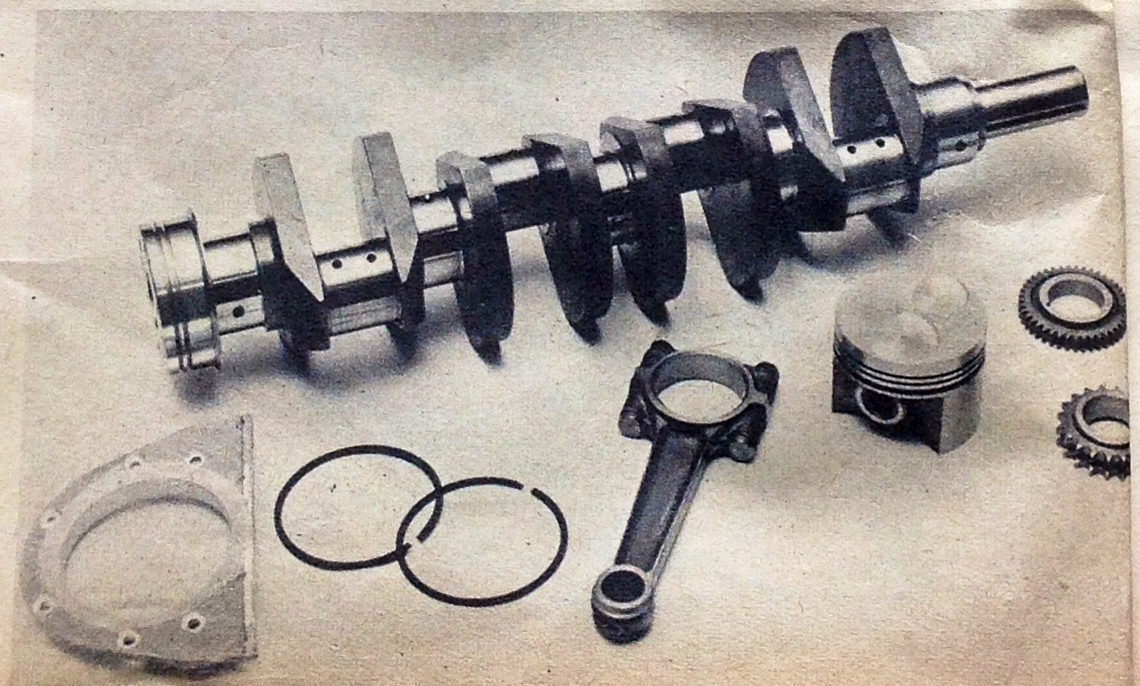
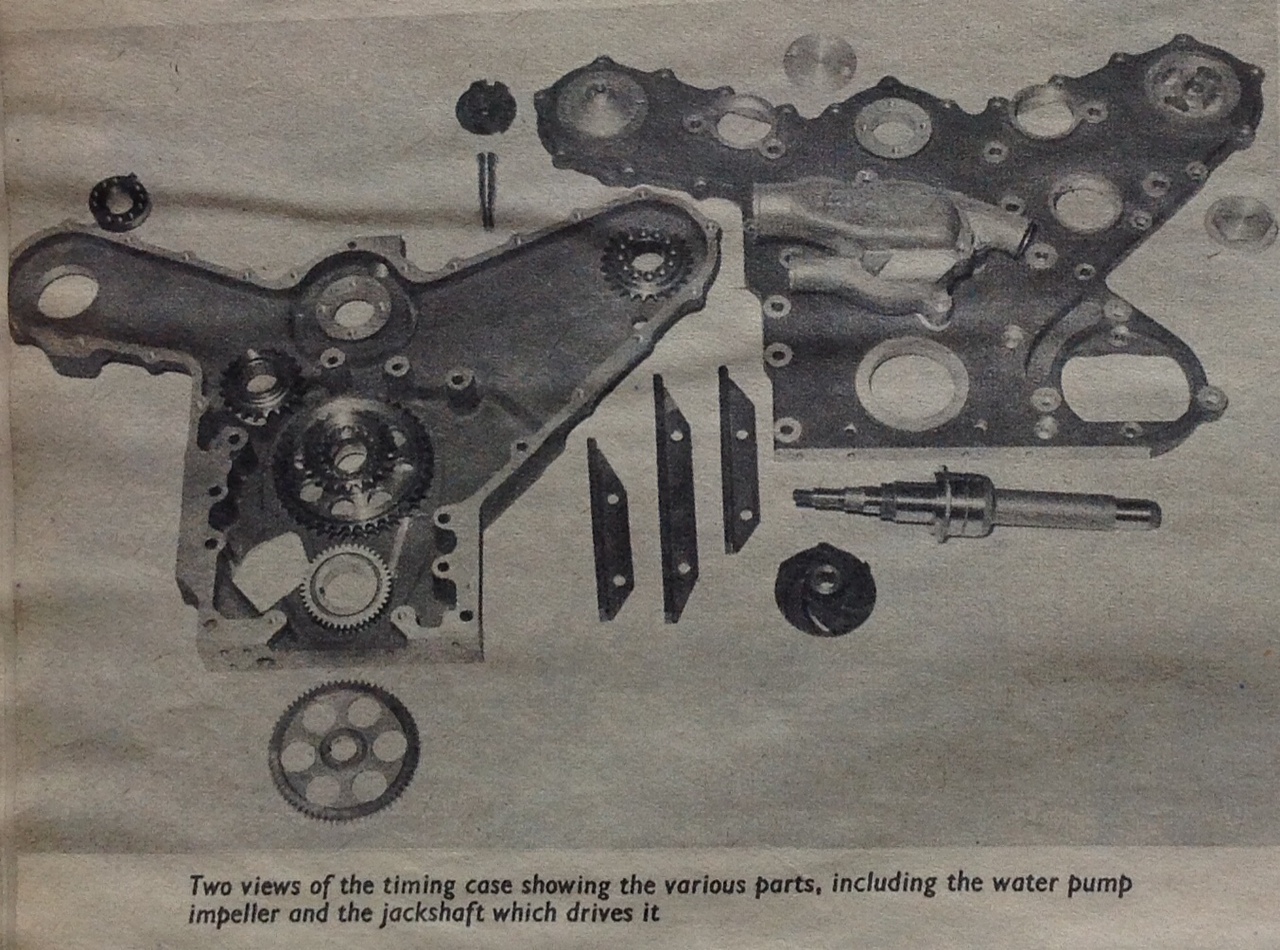
The crankcase was cast by Aeroplane and Aluminium Castings Ltd of Coventry in RR53B aluminium, the engine used a forged crankshaft machines by Laystall with Vandervell ‘Thin-Wall’ copper-lead-indium bearings used. The wet cylinder barrels were made of cast-iron with the surrounding water-jacket made of RR50 aluminium again by ‘Aeroplane’. The engine was of course dry-sumped with two gear type oil pumps- a triple pinioned scavenge pump and single pressure pump housed in a casting fixed to the front of the engine below the crank.


vanwakll engine

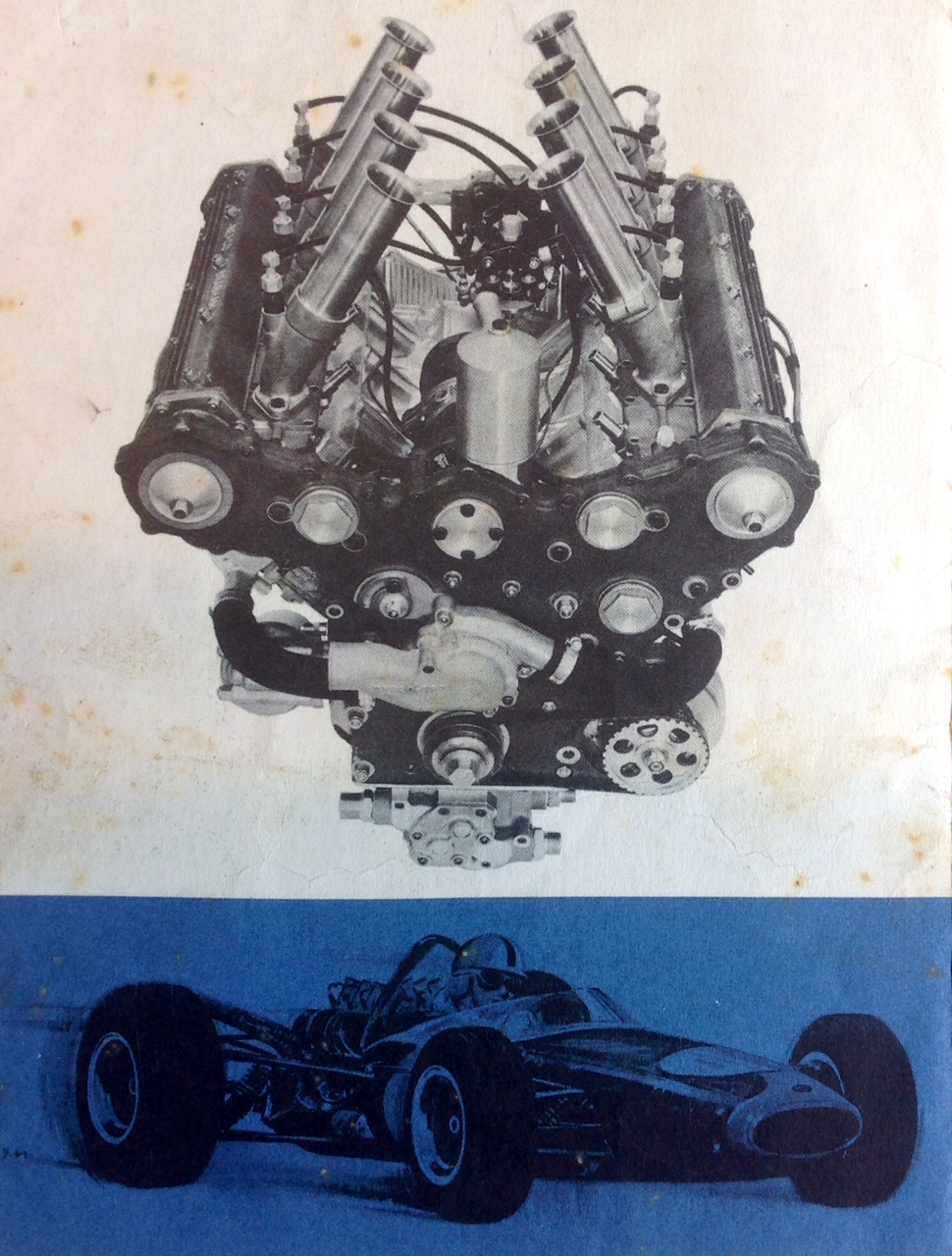
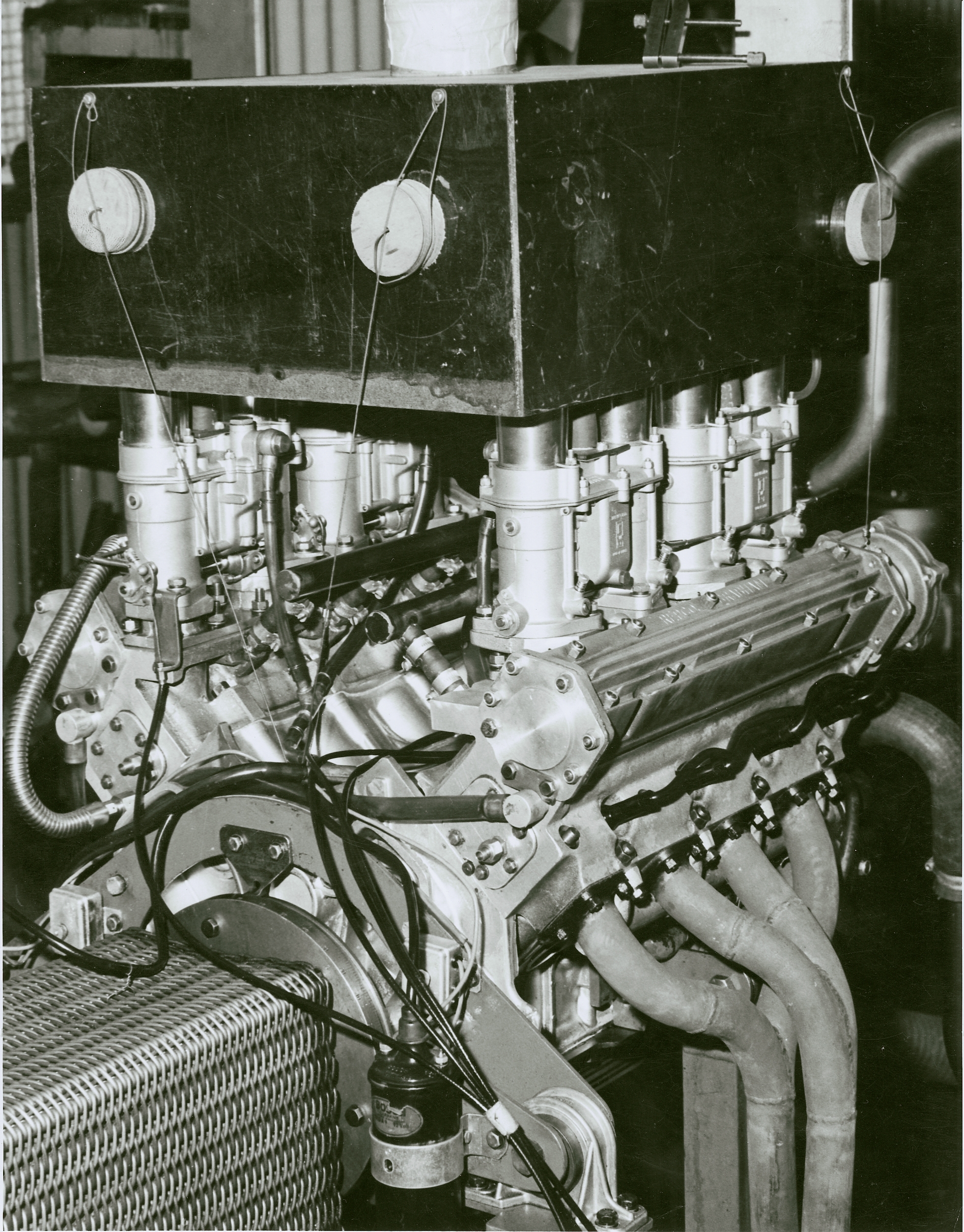
Vanwall 4 cylinder, DOHC design. Of note are the hairpin valve springs, the train of gears to drive the cams and auxiliaries and high pressure fuel injection pump- at the front of the engine (Vic Berris)


Vanwall engine

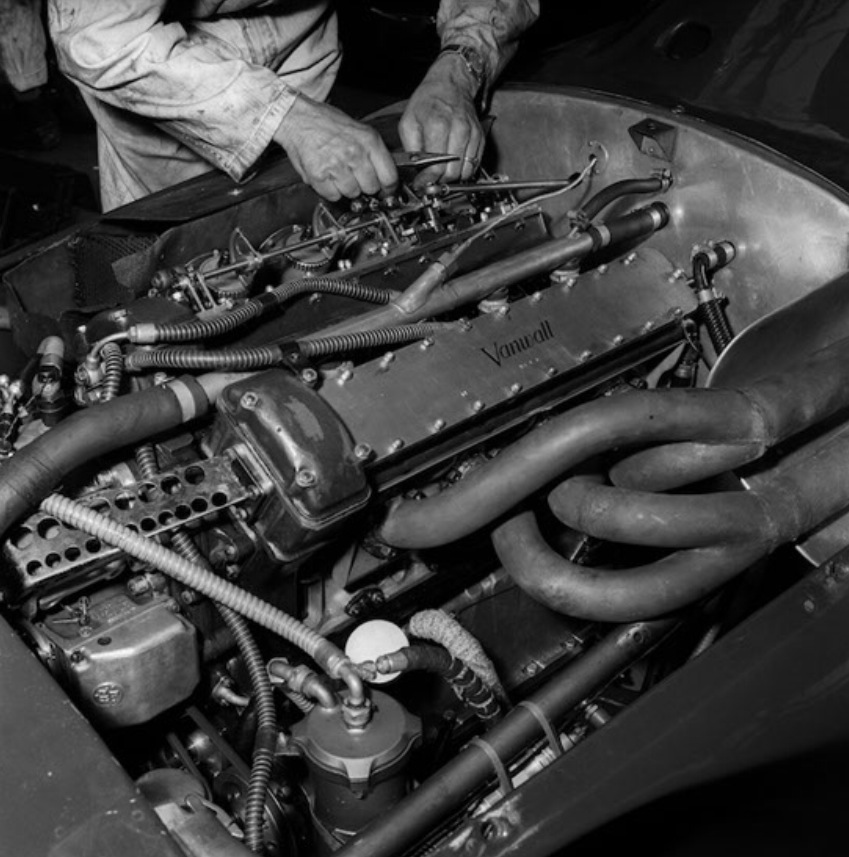
Vanwall engine in 1958 (Jesse Alexander)

The head was to all intents and purposes the latest Norton 500 head with the combustion chamber, ports and valve sizes identical- similarly Harry Weslake’s changes to the Norton heads to promote swirl were also adopted. The inlet and exhaust valves were inclined at an included angle of 64 degrees, as per the works Norton of the time- the inlet ports were 44.5mm in diameter and the exhausts 39.4mm in diameter.

Annular recesses were incorporated into the head into which the barrels were spigoted, around thess were Wills pressure ring copper gaskets. Twin plugs were used (the Norton single had only one), the head was quite shallow as the two camshafts were carried in separate housings on steel pedestals 40mm clear of the head.

The cam housings were open top magnesium boxes capped by beautiful flat plates secured by many screws, the cams were driven off the crank by a train of spur gears contained in a magnesium casting bolted to the front of the engine, an outer gear case provided drives for the magnetos and fuel pump.

Carburetion was provided by four motor cycle type Amal 3GP’s probably with throat diameters of 49.2mm, air intake trumpets with large radii bell-mouths were ftted to each carb. Fuel injection would come soon enough of course, when Bosch and Vanwall worked together on such a system with Mercedes Benz blessing- there existed an exclusivity arrangement between the two companies. The exhaust system was designed and manufactured with Norton practice in mind but in use a four-into two- into one set up was used- with a single pipe extending to the back of the car.

Vanwall contracted British Thomson-Houston Co to supply magnetos which could fire two plugs at up to 8000rpm, when these were late twin Scintillas were used firing KLG plugs.

It became clear the car/engine would miss the final F2 year of 1953 with development of the 2 litre and design of the 2.5 litre happening in parallel throughout that year, the 2 litre first ran in December 1953, producing 148bhp @ 5150rpm in January 1954. By March 1954 235bhp @ 7500-7600 was claimed.

After extensive testing at the RAF Oldham Airfield the machine made its public debut in the 15 May 1954 International Trophy at Silverstone, driven by Alan Brown.

Brown was fifth quickest in practice, three seconds clear of the other 2 litre cars, second practice was wet and the car was quickest starting heat 1 from the front row for sixth and ran a shigh as fifth in the final before retiring on lap 17 with a broken oil pipe.

After the race the 2 litre engine was removed for further development doing over 20 hours on the dyno but it never raced again as it destroyed itself during edurance testing.

Collins raced the car in the British Grand Prix in July fitted with an interim 2.3 litre engine, this was achieved by increasing the bore to the maximum permissible, Peter qualified on the third row and raced well amongst the other cars until a cylinder head joint leaked forcing his retirement.

The major change to the 2490cc engine (bore nor 96mm) was the adoption of a five, rather than four main bearing crank, the valve incuded angle was also reduced from 64 to 60 degrees. Amal carbs were used initially but work progressed with Bosch on the port fuel injection TV wanted with the German company making a four-cylinder injection pump specifically for the purpose.

Peter Collins The Vanwall Spl during the Goodwood Trophy in September 1954


1954

The first 2.5 litre engine, the third engine built was running on the Maidenhead test-beds by August 1954 with an Italian GP entry planned but the engine dropped a valve in endurance testing so the 2.3 litre engine was used at Monza by Collins, there the car again showed promise despite carburetion problems again. In the race Peter pitted with an oil pressure gauge line leaking but he soldiered on to finish seventh.

The 2.5 litre engine finally made its race debut at the Goodwood Trophy on 25 September.

Peter Collins raced the car into second place behind Moss’ Maserati 250F- the added grunt did expose some chassis shortcomings however, then Mike Hawthorn drove it in the Formula Libre race to fourth.

On 2 October at Aintree Hawthorn was second in the F1 race but retired in the Libre event after Mike spun and ingested dirt into the oil coller causing overheating. Hawthorn commented that real power didn’t come in until after 4500rpm but above that it was quite fast with fluffiness over 7000rpm he put down to fuel starvation.

It was time to test the car in a GP so an entry was made at Pedralbes, Barcelona on 24 October for the Spanish race- the Lancia D50 made its race debut that weekend.

Between Aintree and Pedralbes there was much testing of fuel blends and hairpin valve springs which were breaking- by race weekend the engine was giving good results but Peter Collins crashed in practice, he took on rather a large tree- too badly damaged to be repaired the machine was taken back to Acton. There the team wrote it off- Peter bent the frame severely, broke the de Dion tube assembly and rear suspension as well as destroying the rear three Borrani wheels, one of the side fuel tanks and the rear tank which took most of the impact. Clearly Peter was a lucky boy to walk away, the car was not so fortunate.

Preparations for the 1955 season were now well underway, Don Capps notes by November 1954 there were enough spares to assemble two chassis and that TV had acquired two Milling Machines from Count Orsi for then-thousand pounds and the Maserati 250F rolling chassis ‘2513’ in order that the team could suss one of the very best F1 cars of the time.

David Yorke had been signed on as Team Manager with Mike Hawthorn and Ken Wharton signed to drive the two cars the team planned to run.

The main focus of development was to get the fuel injection working- by February the first of the Bosch pumps had been set up on a test engine- these 1955 engines were given the drawing office type number ‘V254′ (the 1954 engines were typed ’54’) and numbered V1 onwards, whereas the cars were now called ‘Vanwall’ not ‘Vanwall Special’ with the chassis’ numbered from VW1 onwards- four 1955 spec cars were built- VW1-VW4 and were essentially based on the Cooper design which picked up Ferrari suspension and steering.

hawt

Mike Hawthorn in the Cooper designed Vanwall chassis VW55, Monaco GP 1955, DNF with throttle linkage problems in the race won by Trintignant’s Ferrari Squalo 625 (Unattributed)


Mike Hawthorn during the 1955 Monaco Grand Prix weekend, Vanwall (Getty)


Harry Schell awaits the start of the 1955 British GP at Aintree with the lads including the chief at far left. #4 is the Luigi Musso Maserati 250F, #20 is Eugenio Castellotti’s Ferrari 625,  #8 Andre Simons’s 250F

When fitted with fuel injection the engine weighed 163kg and on a compression ratio of 12.5:1 gave an estimated 270bhp. Much work was done on the cars suspension to improve the handling but Mike Hawthorn was disappointed in testing at Oldham Airfield to still find a big flat spot between 4000-5500rpm- as events proved it would be a very challenging year.

At the International Trophy at Silverstone in May Hawthorn qualified second to Salvadori’s Maserati 250F but retired in the race due to a gearbox oil leak- Wharton pitted with throttle linkage problems and then crashed trying to unlap himself- the car then burst into flames with both car and driver the worse for it.

Only Hawthorn raced at Monaco and Spa with disappointing results- he was 4.5 seconds off the pace of Fangio’s Mercedes Benz at Monaco and 14.9 seconds behind Ascari’s Lancia D50 pole in the Ardennes. A broken throttle linkage ended his race at Monaco and an oil leak at Spa. TV approached Rolls-Royce about the vibration induced throttle linkage failures with R-R suggesting fitment of Hoffman ball bearings in the ends of the control rod.

Mike Hawthorn decamped though, telling David Yorke in animated fashion to ‘shove it’ whilst having a few brews with some friends in Spa’s Pierre Le Grand restaurant, he ‘cancelled his contract’ and refunded some of his retainer to Vandervell, with Harry Schell engaged as his replacement in time to contest the British GP at Aintree in July.

There, Harry and Ken were 3.4 and 8 seconds off Moss’ Mercedes W196 pole time. Harry muffed the start but made up time until he pushed the throttle linkage off its mount, whilst Wharton pitted with an oil leak- Harry then set off in his car but still finished last.

In the wake of the Le Mans disaster many races were cancelled so Vanwall Racing entered some minor British events, whilst Harry won four of them but it was clear a lighter, stiffer and more sophisticated chassis was needed as engine development came along nicely- the first of Schell’s wins at Crystal Palace in July resulted in Vandervell shelving a plan to pop one of the Vanwall fours into 250F ‘2513’…

The team took three cars to Monza in September but again were way off the pace- Harry retired with a broken de Dion tube and Ken when the steel bracket supporting the fuel injection pump fractured.

Vandervell’s staff modified the basic Cooper frame and had a mock-up of the proposed chassis for 1956 at which point Colin Chapman was introduced to Vandervell via Vanwall’s transport driver, Derek Wootton, an old friend of Chapman to look at the frame- Vandervell was impressed with Chapman’s knowledge and track record and signed him on to start from scratch rather than evolve the Owen Maddock design.

1956 Vanwall…

dutch

Moss in the 1958 Dutch GP winning VW10. Shot shows extreme attention to aero for the day by Frank Costin. Borrani wires at front Moss’ preference for driver feel but cast alloy wheels were adopted in 1958 to save weight- this Vanwall, with two GP wins survives today (Copyright JARROTS.com)

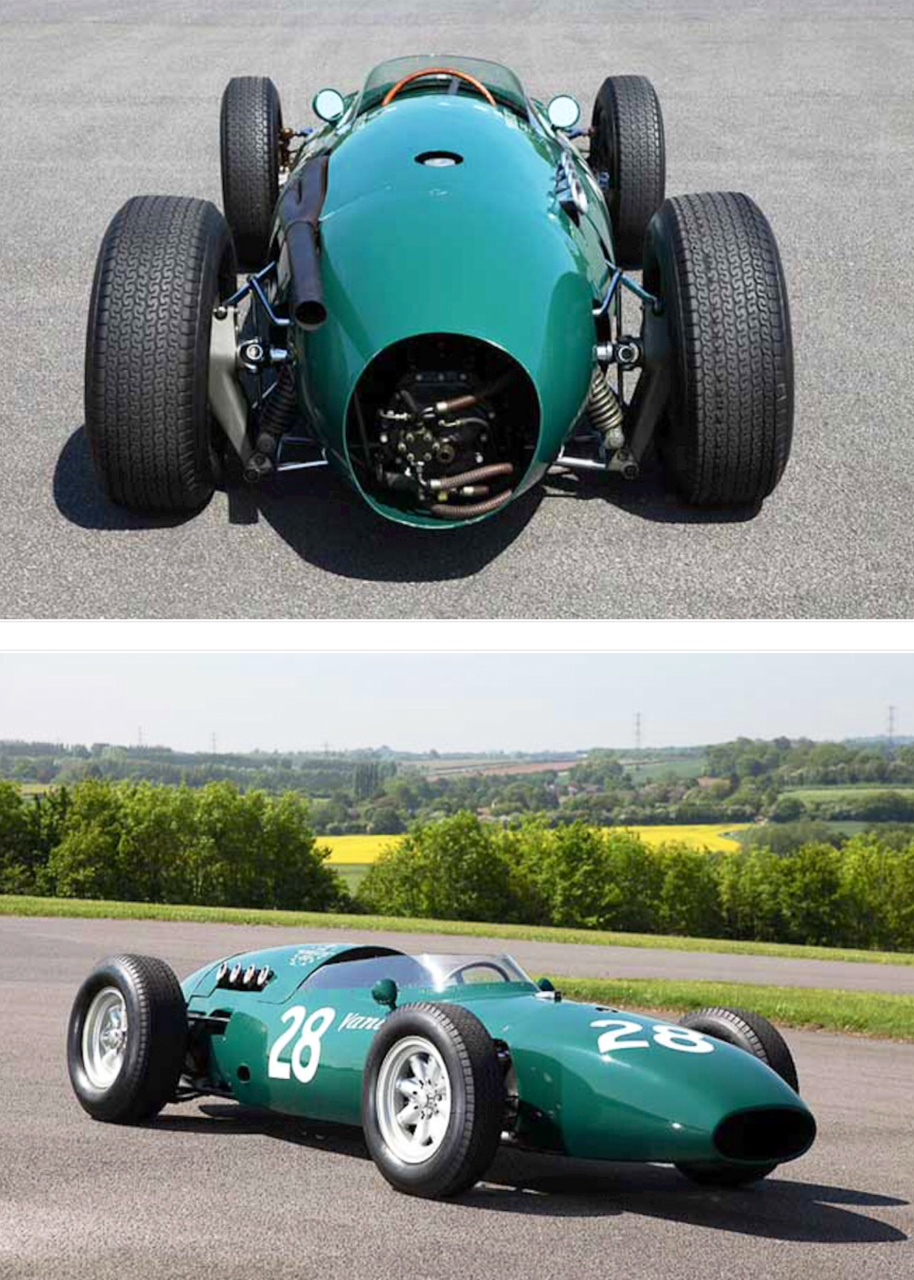
The choice of Chapman, then an up and coming designer and manufacturer of Lotus sportscars in Hornsey behind his fathers pub was a defining moment in Vanwall’s future success. For his first single-seater project Chapman designed a modern multi-tubular spaceframe chassis and engaged aerodynamicist Frank Costin to concept and create the gorgeous, low drag, ultra-slippery body which clothed it.

Chapman retained the 1955 double wishbones and coil spring front suspension, Ferrari derived gearbox and brakes but laid out new de Dion rear axle geometry using a Watt linkage for lateral location whilst retaining the transverse leaf spring.

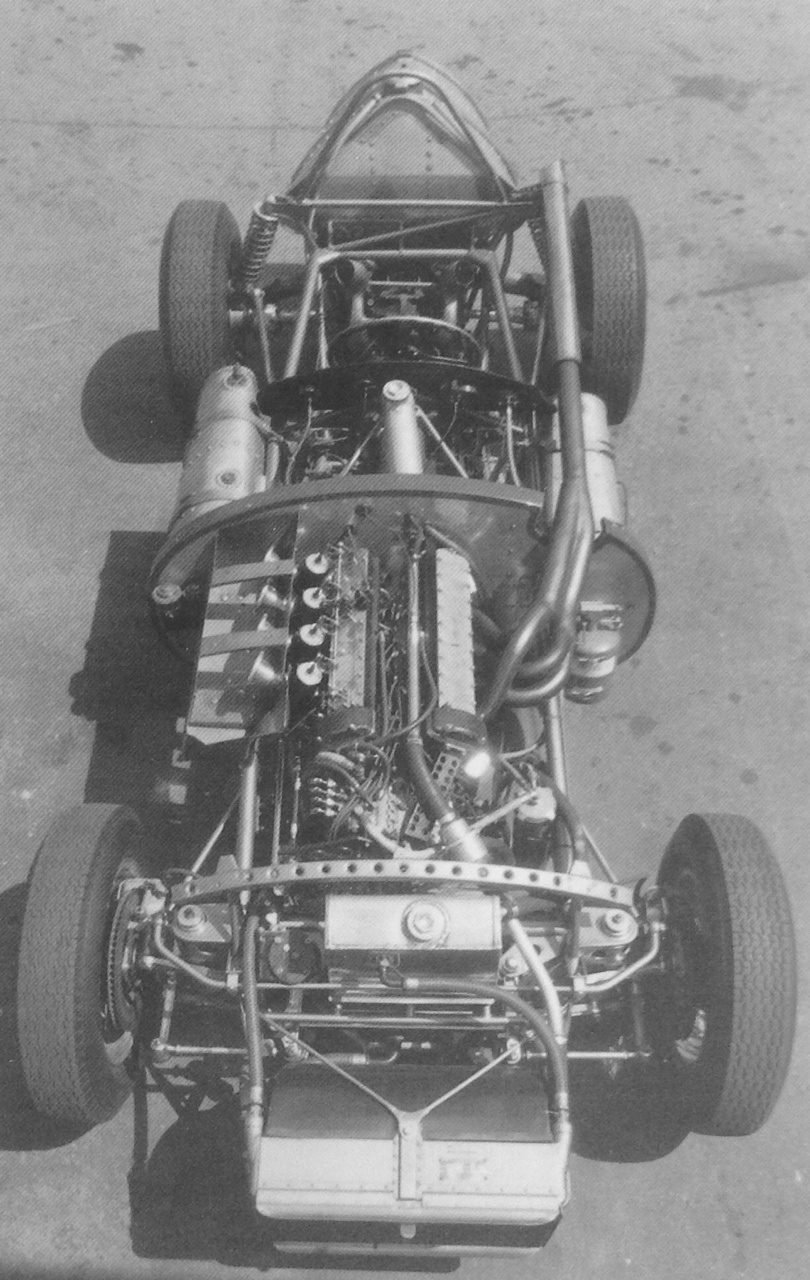
All four of the 1955 chassis were torn down to form the basis of the four new cars for 1956 which were numbered VW1/56-VW4/56. The new frame featured round section top and bottom longerons of 1.5 inch diameter tube, at the front a sheet metal fabrication (see photo below) provided a cross member for location of the coil and wishbone suspension setup- the frame was complex and rigid weighing only 87.5 pounds.

One of Chapman’s new frames coming together at VP Maidenhead plant in early 1956- car behind perhaps one of the 1955 cars being reduced to parts?


vanwall front

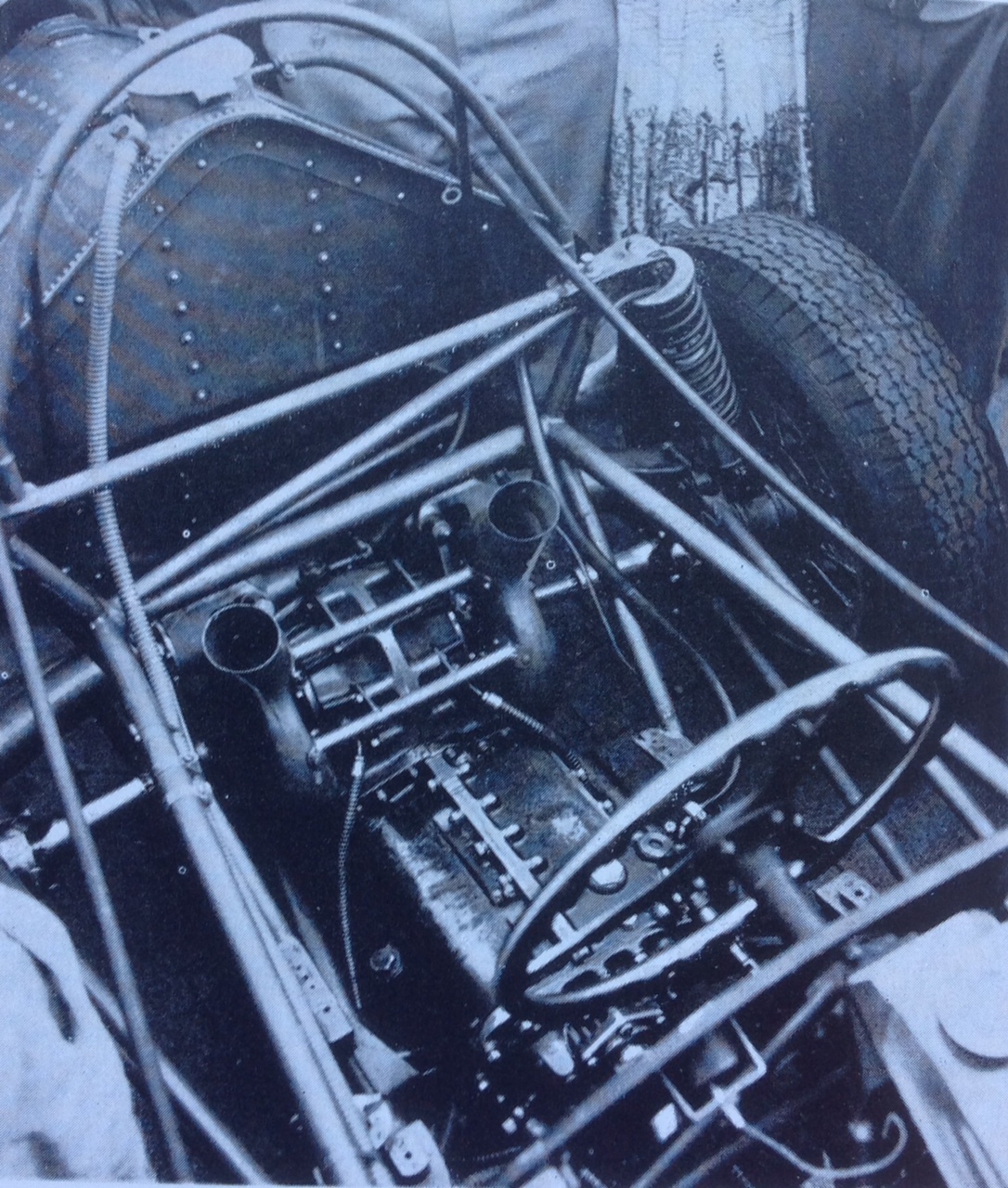
High quality of forgings and fabrication of spaceframe chassis evident. Front cross-member visible, steering arm, top link, radius rod, coil spring/damper unit and Goodyear patented disc brakes (Vandervell Products/The GP Library)


Vanwall rear end

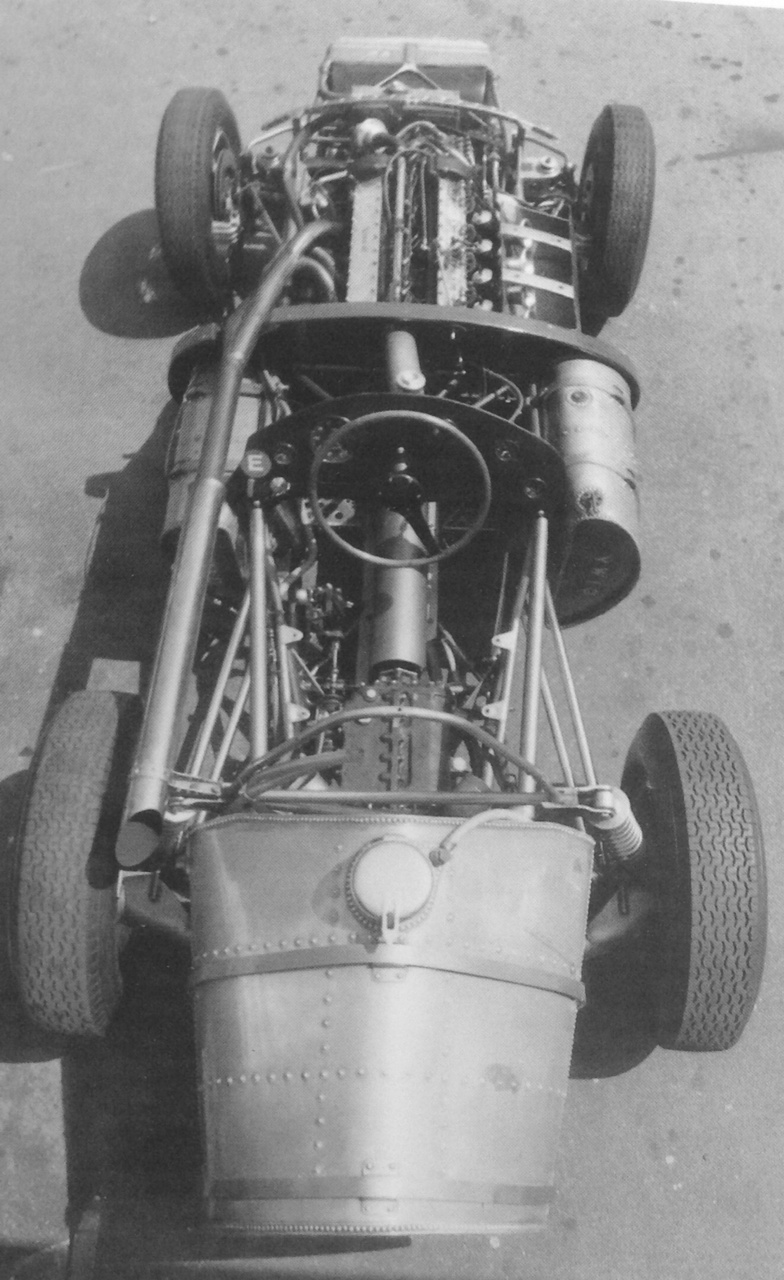
Vanwall rear end 1957 with Chapman struts, coil springs and Armstrong dampers.De Dion rear axle with Watts linkage. 5 speed ‘box in unit with diff, see the ducts for the disc brakes. The tail tank is connected to auxiliary tanks mounted alongside the chassis (Automobile Year 5)

Whilst the de Dion rear end was retained the suspension geometry was changed to allow much more negative camber at the rear to enhance the loaded outside tyres adhesion, for 1957 the transverse leaf spring was replaced by ‘Chapman Struts’, coaxial coil springs and locating links.

The most striking feature of the car was its Costin designed, teardrop shaped body. Painstaking attention was devoted to underbody fairing, the elliptical body section was designed to minimise deflection in cross winds and drag. Flush ‘NACA’ ducts were used and the distinctive tall headrest faired a 39 gallon fuel tank with two subsidiary 15 gallon tanks located low on each side of the scuttle.

Engine development continued under Kuzmicki’s direction with Harry Weslake’s oversight, TV focused them on camshafts, cylinder head design, fuel injection control and exhaust systems. New cylinder heads were being cast by Aeroplane and Motor Aluminium Castings the key element of which were larger inlet valves. The power curve of the engine was now much broader than the year before with maximum torque of 218 lb/ft developed at 5000rpm with plenty of punch from as low as 4000rpm, maximum power was 276bhp @ 7300rpm.

The best of everyting was used throughout the machine- Bosch fuel injection, Goodyear disc brakes, Mahle pistons, Porsche designed 5 speed synchromesh gear set for the Ferrari designed gearbox cum final drive- Vandervell didn’t get hung up on the whole ‘only British BRM thing’, simply buying the best when he could not readily or cost-effectively build it.

Harry Schell was joined by Maurice Trintignant that season. The team missed the British season opening non-championship events at Goodwood and Aintree in April but Moss raced one of the cars at the 5 May Silverstone International Trophy, as Officine Maserati, Moss’ team in 1956 had not entered the event- he set fastest time and won the 175 mile race which included amongst a big field the works Lancia-Ferraris of JM Fangio and Peter Collins in a tremendous start to the season. Moss was sufficiently impressed to make himself available whenever he was not bound to Maserati.

Harry Schell, Vanwall VW56, Belgian GP Spa 1956 (MotorSport)


Moss during and after the 1956 Silverstone International Trophy win, Vanwall. Note Colin Chapman third from the left, who are the other fellas in shot? (Getty)


Harry Schell with a smile upon his face as Taffy von Trips susses out the Vanwall, DNF for Harry and DNS practice prang for the Ferrari driver- Italian GP 1956. Moss won in a 250F. #26 is the Collins/Fangio second placed Ferrari 801

From that point 1956 demonstrated that the Vanwalls were acquiring the pace they needed to win- straight line speed good and traction out of slow corners but reliability and high speed roadholding were to be areas of focus over the winter of 1956-1957.

The team missed the Argentine opening championship round but at Monaco the cars qualified Q5 and Q6- Schell and Trintignant respectively, Harry had an accident on lap 2 after Fangio made a rare mistake upfront and Harry and Luigi Musso were unable to get through and hit the haybales and Maurice had overheating problems as a result of damage to the nose, the cylinder head cracked so he failed to finish.

At Spa they were Q6 and Q7, Schell finished fourth in the race won by Peter Collins’ Lancia-Ferrari D50, encouraging for Vanwall but the car was a long way adrift of the leaders, deficiencies in handling on high speed corners was readily apparent, whilst Trintignant retired with fuel injection mixture problems which caused a misfire.

At Reims Maurice raced the Bugatti T251, an experience which no doubt reinforced the promise of his Vanwall if not its reliability to this point!- Schell was Q4 and DNF engine, he missed a shift due to gearbox problems but then took over Mike Hawthorn’s car, who was having a run with Vanwall on loan from struggling BRM.

Harry caught the leading Ferraris in a splendid display until he had a problem with the fuel injection control rod linkage which caused him to pit but he was still tenth in a plucky, fast display which endeared him even more to his mechanics- Harry was a popular boy at Vanwall. Colin Chapman- tasting the fruits of his labours missed the cut after a collision in practice with Hawthorn when he locked a brake going into Thillois and hit Mike up the chuff.

french 1957

(Unattributed)

Silverstone was next with hopes of a good result at home dashed- both the regular drivers failed to finish with fuel system problems- fuel starvation caused by blockages which was later traced to the sodium silicate used to seal the fuel tanks when manufactured. Schell had started well from Q5 whilst Trintignant was Q16 and guest driver, Froilan Gonzalez- always quick at Silverstone with Q4 failed to get off the line with a broken universal joint in one of the half-shafts- Fangio won in a Lancia-Ferrari D50.

The team missed the Nürburgring with insufficient time to prepare the cars but were back again for Monza, the final round of the championship where Fangio and Ferrari won the titles but where all three Vanwalls retired- Piero Taruffi- Q4 and oil leak and Schell Q10 held second place for quite a while before suffering gearbox failure whilst Trintignant, Q11 was out with a broken front spring mount.

The ultra slippery shape of De Havilland aerodynamicist Frank Costin’s body is shown to good effect in the shot above of Stuart Lewis-Evans at Rouen in 1957. Its practice for the French GP, he retired with steering problems. Brooks and Moss absences gave him his chance in several events, he was quick and reliable, Vandervell signed him on as the teams third driver.

1957 and 1958…

brooks

Tony Brooks, winner of the Belgian GP at Spa 1958. Pictured here at Eau Rouge. Chassis is VW5 the most successful ever British front-engined GP car with five wins to its credit, subsequently dismantled and rebuilt around a fresh frame (Unattributed)

Further evolution of the design took place over the winter, the ‘Chapman Struts’ were fitted and Fichtel & Sachs dampers in place of Armstrongs. The engines were teased to develop 285bhp at 7300rpm with an enormous amount of development work devoted to the problematatic hairpin valve-springs, Rolls Royce’ recommendations as to springs being wound from chrome vanadium wire were given to a German supplier S. Scherdel KG to manufacture after the efforts of George Salter and Co and Herbert Terry & Sons in England had still not overcome persistent breakages. Other areas of engine focus were fuel injection pipe and throttle linkage fracture both of which were caused by the big-fours high-frequency vibrations at 4500 and 7000rpm. By this stage the engine numbers ran to ‘V7′, whereas cylinder head numbers were in the forties.

In terms of the chassis’ used during 1957, the four 1956 cars were retained and modified to the latest specifications by a team of eighteen mechanics, Don Capps wrote that ten were planned for the year, his notes on the cars are as follows- VW1, VW2 never completed, VW3, VW4 won the British GP, VW5 won the Pescara and Italian Grands Prix, VW6 was the Streamliner which was converted back to normal bodywork, VW7, VW8 Lightweight chassis, VW9 Lightweight chassis not assembled during the season and VW10.

Moss signed to drive with Tony Brooks as number two- Stirling tested BRM, Connaught and Vanwall’s 1957 offerings at both Silverstone and Oulton Park, on the same days, before making his decision as to his mount for the season, in so doing two critical elements were put in place- an ace in each car.

Tony Vandervell, without sponsors to whom he would have been in part accountable, again missed the season opening GP at Buenos Aires, Argentina on 13 January where JM Fangio won aboard his Maserati 250F in the season in which he took his fifth and final World Championship.

Vanwall did race at the Siracuse and Goodwood non-championship races in April with both cars showing impressive speed. Moss was Q3 Brooks Q4 in Sicily, they raced at the front when an injection pipe to the number 1 cylinder broke on Stirling’s car caused him to pit- he recovered to third but Brooks retired when the water offtake split causing a misfire and overheating which cracked the head- the race was won by Peter Collins Lancia Ferrari D50.

Before Goodwood a fix for the problems of broken injection pipes and throttle linkages was found in the form of Palmer Aero Products ‘Silvoflex’ high pressure rubber fuel lines which would withstand the 450psi of pressure delivered by the Bosch pump to the injectors. Vandervell realised part of the problem was the overhung nature of the injection pump on the front of the engine- which would have been better mounted elsewhere. This did eventually happen when the engine was adapted for the mid-engined car in 1960. ‘Rose Joints’ made by Rose Bros Ltd provided spherical universal joints to fit the throttle linkage which was also part of the fix.

In the Glover Trophy Stirling started from pole only to DNF again with throttle linkage problems- this time the control rod between the throttle linkage and the injection pump control rack broke on both cars. Tony Brooks started from Q2 and was sixth but 5 laps adrift of the winner, Stuart Lewis-Evans won in a works Connaught B-Type, much to Vandervell’s chagrin, watching from the pits, but Stuart would soon be a permanent part of the Vanwall Team.

Vandervell felt that this problem should have been clear in dyno testing but frustratingly happened only when the cars were competing. Palmer were confident their Silvoflex pipe was strong enough in torsion to be used as a flexible joint in the control rod to the injection pump that had broken at Goodwood- it worked perfectly- problem solved.

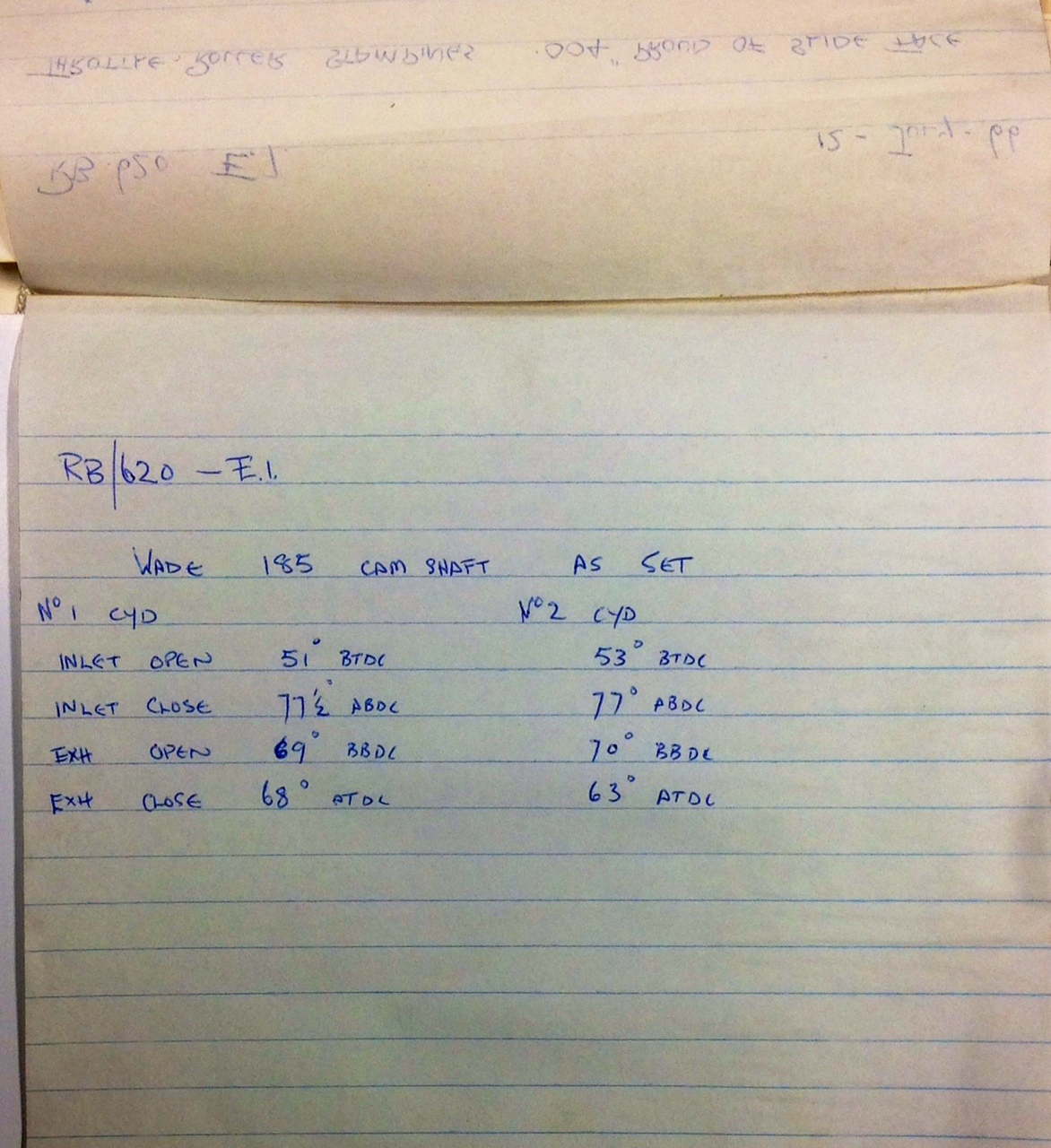
Whilst all of the above was happening Stirling Moss suggested some engine changes which would sacrifice a little top-end power for greater mid-range torque at Monaco- this was achieved by a change of cams and valve timing- the two race engines for Monaco gave 275 and 276bhp.

Stirling Moss shot off into the lead of the Monaco GP on 19 May but crashed at The Chicane on lap 4- he felt it was the brakes but the team could find no fault after the race- Tony Brooks started fourth on the grid and finished second despite being hit up the rear by Mike Hawthorn’s Ferrari after Moss’ accident. The two scheduled Grands Prix at Spa and Zandvoort were cancelled after squabbles about money.

Vanwall line up at Abbey Panels early in 1957 (unattributed)


Stuart Lewis-Evans on the spectacular, daunting Pescara road circuit in late 1957 (MotorSport)


Vanwall Streamliner Reims 1957

Vanwall tested this ‘Streamliner’, chassis VW6, at the Reims GP in July 1957 in practice. The changes were not successful the increase in weight and ‘sighting’ out of the car not greater than the increase in top speed (Automobile Year)


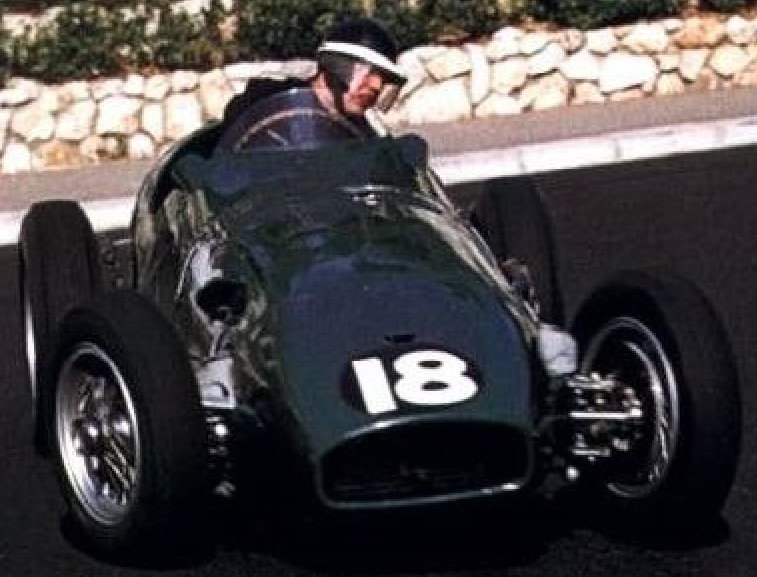
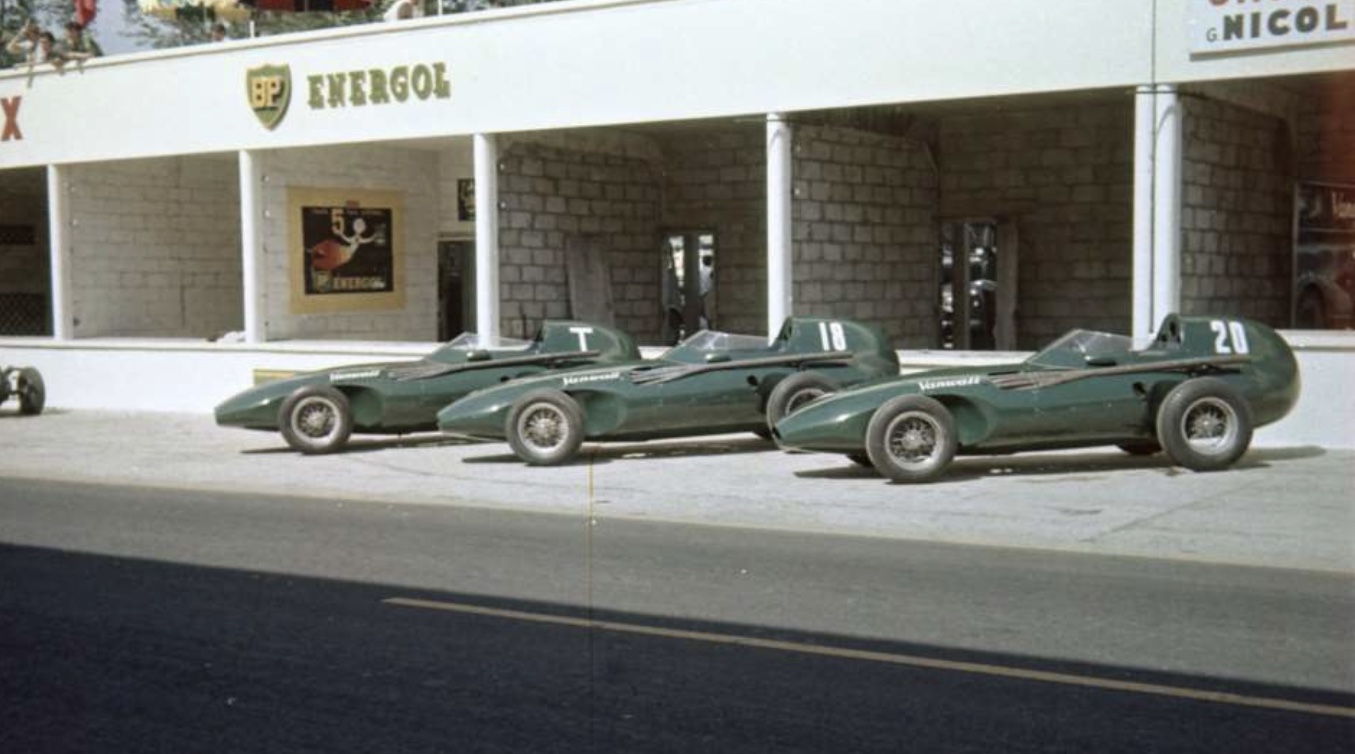
Rouen-Les-Essarts French GP Vanwall line up 1957- #18 Stuart Lewis-Evans and #20 Roy Salvadori (MotorSport)

The circus next journeyed to Rouen on 7 July for the French Grand Prix where the Vanwall line up was impacted by Moss suffering sinusitis when he inhaled too much salt water whilst water-skiing and Brooks recovering from leg injuries as a result of an Aston Martin accident at Le Mans.

Stuart Lewis-Evans and Roy Salvadori- who had just left BRM were offered the drives and did well in the unfamiliar cars. Roy Q6 and DNF engine valve springs (the German jobbies) after 25 laps and Stuart Q10 and DNF cracker cylinder head in a race won by Fangio in a display of a man at the height of his powers with delicate, majestic high-speed drifts throughout the French countryside.

A week later, still in France the team contested the Reims GP- Q5 and fifth for Salvadori and Q2 only a smidge behind Fangio and third for Lewis-Evans, who led easily for 20 laps until the sustained high speeds on the straights caused piston ring blowby and oil mist escaped from the crankcase breathers affecting his rear brakes and causing him to ease off allowing Luigi Musso’s Lancia Ferrari D50 to win. This impressive, mature performance led to TV signing Stuart as his third driver.

The ‘Streamliner’ body was tried that weekend in practice, its design was supervised by Frank Costin and built by Abbey Panels in Coventry, the detail work including adaptation to chassis VW6 done by Cyril Atkins. Initially the cars gearing was too tall, whilst both drivers tried the car they focused on the normal bodied machines, the body never to be tried again. Clearly the car should have been tried by the regular drivers familiar with the machines rather than ‘newbees’ without a frame of reference.

In the lead up to the British GP four cars were prepared and two spare engines, one of which had a new head which gave more power between 3500 and 5000rpm whilst still giving the same output at 7200rpm. All of the engines were fitted with British Hepworth and Grundage Hepolite pistons after experiments with German Mahles were finally abandoned.

Vanwall finally broke through in that home race, winning their first championship GP on 20 July at Aintree in a car shared by Tony Brooks and Stirling Moss. Moss qualified on pole, led for 22 laps having caught Jean Behra who made a wonderful start, but retired on lap 51 with magneto or plug trouble (depending upon the source), Brooks was summoned into the pits, he had been having a hard time of it with his legs still not perfect after the Le Mans accident, and Moss raced the car to win in magnificent fashion after Jean Behra’s leading Maserati 250F retired with clutch failure. Stuart had throttle control problems and was disqualified and pitted to rejoin the race and finish seventh.

Off to the Nürburgring the team missed the experience of running the prior year- Moss was Q7 and fifth and Brooks Q5 and ninth whilst Lewis-Evans was Q9 and DNF spin and crash after oil from his gearbox breather got on his rear tyres after 10 laps in one of the best Grands Prix ever when Fangio hunted down and passed the Lancia-Ferraris of Mike Hawthorn and Peter Collins.

Two races in Italy rounded out the championship season- on the daunting Pescara road circuit on 18 August and at Monza on 8 September. Moss won from second on the grid on the Adriatic Coast course whilst Lewis-Evans was Q8 and fifth and Brooks Q6 and DNF seized piston after one lap.

At Monza Tony Vandervell finally realised his dream of beating The Bloody Red Cars at home, and to top off Moss win the Vanwalls qualified first to third on the grid in the order Lewis-Evans, Moss and Brooks, Stuart DNF leaking cylinder head core plug but led the race for 5 laps further reinforcing his growing maturity as a driver with Brooks a distant seventh after pitting with stuck throttles.

Given that the Moroccan Grand Prix was a championship round in 1958 David Yorke convinced TV to enter the late October race- there Stuart was second from pole and Tony retired with electrical trouble- a faulty magneto, the race won by Jean Behra’s works Maserati 250F by 30 seconds from Lewis-Evans.

The Bloody Red Cars- that front row in that GP! The three Vanwalls on the Monza front row in 1957- this side is Fangio’s Maserati 250F, #6 is Jean Behra, 250F. Lewis-Evans #20 on pole, Brooks #22 fastest lap and Moss #18 the race winner (unattributed)


Moss’ Vanwall at Silverstone during the 1958 British Grand Prix, DNF engine after 25 laps, Peter Collins Ferrari 801 won (Getty)


germany

Stirling Moss German GP 1958, Vanwall VW4, DNF magneto, teammate Tony Brooks took the win. Vanwall VW4  (Unattributed)

Alcohol fuels were banned for 1958 causing big problems for Vanwall and BRM both of whom used ‘big banger’ four cylinder engines which needed the cooling effect of the alcohol- as a consequence the engine power dropped from 290bhp on alcohol to 278bhp on ‘pump fuel’, to get there is easy to write but was a considerable engineering undertaking.

Changes to the engine involved investigation of cam profiles, three and four valve heads and water injection- changes to port shapes, valve timing and metering cams were the mix of modifications which in the end allowed the engines to get along with less friendly fuel. The Ferrari Dino was reckoned to have circa 286bhp but Italian dynos’ have always been a bit ‘eager’.

Weight saving was investigated but the cars were already light, the rear of the car was also re-profiled slightly by Frank Costin, cast alloy wheels were adopted but often Borrani wires were preferred especially at the front where they gave greater driver ‘feel’.

The chassis used in 1958 were the 1957 machines with detail modifications to the suspension and bodywork. Capps notes, again, as follows- VW1-VW3 and VW8 were not assembled and used for spares, VW4 won the German GP and was destroyed at Casablanca (Lewis-Evans) VW5 won the Belgian, Italian and Moroccan Grands Prix, VW6, VW7, VW9 and VW10 which won the Dutch and Portuguese GP’s.

Given the time taken to make all of the modifications to the engines to meet the new pump fuel regulations, the 19 January Argentine Grand Prix was missed as were the early non-championship events but Stirling Moss made hay whilst the sun shone winning the race in Rob Walker’s Cooper T43 Climax 1960cc against all of the odds and won a famous victory- the first championship win for a mid-engined car.

Moss tested the first of the modified cars at Silverstone at the end of April, well prior to Monaco on 18 May. There Brooks ran in second from pole to Behra’s BRM P25 until he retired when stripped thread caused a spark plug to blow out of the head. poor Behra retired and Moss led (Q8) but retired on lap 38 when a valve cap came off whilst Lewis-Evans retired on lap 12 form Q7 when a warped cylinder head joint failed. Maurice Trintignant won in one of Walker’s Cooper T43 Climax’.

Zandvoort was the following weekend with the three Vanwalls up front- Lewis-Evans from Moss and Brooks. Stirling won despite limiting his revs to 7200 given sagging oil pressure on right-handers, Tony retired after 13 laps with handling problems and Stuart finished 46 laps before a broken valve spring holder intervened.

At Spa Mike Hawthorn was on pole in his Ferrari Dino 246 with Moss Q3, Brooks Q4 and Lewis-Evans Q11. Moss was out on the first lap having muffed a gear, bending valves then Tony Brooks took the lead and battled with the Ferraris to win whilst Stuart was third. It was felt that the Vanwalls had more power on the climb from up from Stavelot but the Ferrari’s higher top speed gave them the edge on the downhill straight to the Masta Kink.

Zandvoort 1958 front row- Lewis-Evans at left on pole, then Moss and Brooks at right (Unattributed)


The Moss, and winning Brooks Vanwalls are pushed onto the Monza grid in 1958- feel the vibe (John Ross)


Brooks at Spa in 1958- alloy wheels front and rear this weekend- he won in VW5 (MotorSport)

Another fast circuit followed- Reims on 6 July. Mike Hawthorn led the race from pole with Moss second from Q6- he was slowed by a misfire between 6400-6800rpm and was down about 10mph to the Italian car in top speed. Brooks retired with valve problems from Q5 after 16 laps and Lewis-Evans was out after 35 laps- a broken inlet valve, he started from grid 10.

In France the Vanwalls were in trouble with warping cylinder heads given the impact of Avgas, two engines dropped valves resulting in pre-race rebuilds. TV had a major standoff with his valve supplier, Motor Components Ltd, given ongoing breakages especially of the sodium-filled inlet valves, that Vandervell Products struck out on their own importing equipment from the US to become self-sufficient by the seasons end.

The Ferraris mid-season renaissance continued at Silverstone where Peter Collins won from Mike Hawthorn. Stirling started from pole, but another broken valve ended his run after 25 laps, Stuart was fourth (Q7) and  Brooks seventh (Q9) despite his car having a trip back to Acton to have the head lifted and valves re-ground, with neither ever really in the hunt.

Experiments were ongoing at Maidenhead to try and solve the valve problem with different materials with some spectacular failures taking a toll on the stock of heads, causing a shortage of engines, as a consequence only two cars were entered at the Nürburgring, Stuart was a spectator for the weekend.

Vanwall were much more competitive in Germany in early August than in 1957 when they paid for their absence in 1956, Tony Brooks qualified second and Stirling Moss third. Moss led comfortably from the start going easy on the revs- 7000-7100 when the usually reliable magneto shorted after 3 laps, Brooks took up the chase of Collins and Hawthorn, gaining on the back part of the daunting circuit, passing one after the other under brakes for a rather well- timed win.

Oil coolers were fitted to the front of all three Vanwalls- they were back to full strength at Oporto on August 24 with Moss winning from pole- he and Hawthorn battled for the lead until lap 8 when Mike’s drum brakes began to fade allowing Stirling to pull away. Stuart was third from grid three but Tony spun and was unable to restart from Q5 having completed 37 laps.

At Monza in a marvellous weekend Tony Brooks won the race and with it secured the Manufacturers Championship with one round at Morocco still to run.

Vanwall had transported the cars direct from Portugal to Italy before removing the engines to be rebuilt back in the UK. The oil coolers were still fitted and Stirling tried a Perspex canopy over the cockpit in practice but it only gave 50rpm more on the straight so he elected not to run it- he muffed a shift requiring an engine change too. He battled for the lead with Hawthorn, Mike’s car fitted with disc brakes for the first time but Stirling retired with a seized bush on the gearbox mainshaft. Then Brooks (Q2) pitted because of an oil leak from a burst driveshaft gaiter but nothing could be done so he had to nurse his tyres to the finish, which he did- and took a well judged win despite Hawthorn coming out of the pits in front of him, but his Ferrari was suffering from a slipping clutch. Lewis-Evans retired with overheating caused by a leaking head joint.

The final race of 1958 in Morocco is where we came in…

As stated earlier, whilst Moss missed out on the drivers title to Hawthorn by one point, Vanwall won the inaugural Constructors Championship.

End of The Beginning of Dominance of The Green Cars…

moss and vandervell

Moss and Vandervell share the spoils of victory, Pescara GP, Italy 1957 (Unattributed)

For Vandervell it was ‘mission accomplished’ and whilst Vanwall raced on they did so without the full campaign of previous years.

Vandervell took the death of Lewis-Evans very hard and his own health was failing given the huge pressure of running his various enterprises. He announced the teams withdrawal from full-time competition on 12 January 1959, they raced four times in the final three years, its swansong was the rear engined Intercontinental Formula car competing in May 1961 at Silverstone.

It wasn’t quite that simple though, many of the key team members were retained, the four cylinder engines still ran on the Maidenhead test benches doing engine research, an advance after the cars last raced were cylinder barrels which screwed into the head solving fire-joint sealing.

Vandervell offered Brooks a retainer to stay with the team in case he decided to change his decision but Tony unsurprisingly raced on with Ferrari but he did race VW5 at the 1959 British GP when a strike at Ferrari meant they did not race at Aintree. He raced a modified version of VW5 to the same general specs of 1958 except that the engine, prop shaft, seating position and bodywork had been lowered and some weight removed- in addition more torque had been extracted throughout the rev range but the car was ‘not a shadow of the racing car he had driven in 1958. Even a team as professional as Vanwall could not gear up and suddenly be competitive’ Bill Ben wrote.

Brooks put the car on the third row of the grid but was outpaced in the race with a misfire- he retired, Jack Brabham’s works Cooper T51 Climax FPF took the win- times had moved on.

He also raced the car in the 1960 Glover Trophy at Goodwood for seventh with Brooks advising they were wasting their time on a 1958 design and that they should concentrate on a mid-engined car. To that end a Lotus 18, chassis ‘901’ was bought, the Vanwall engine was mated to the Lotus gearbox, Brooks tested it at Snetterton but work on the front- engine cars continued.

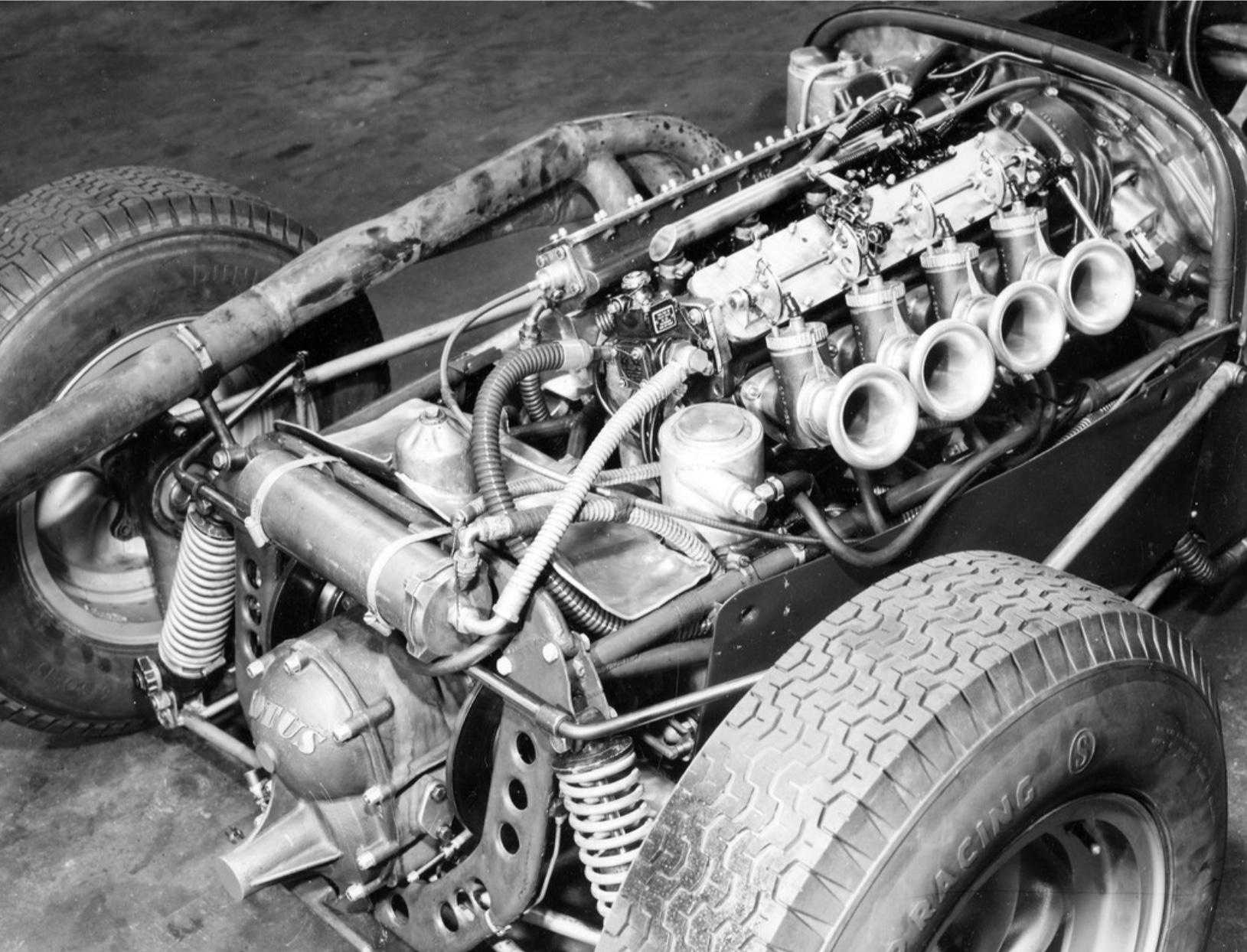
Vanwall engine installation- very neat and cohesive, in Lotus 18 chassis ‘901’ (GP Library)


Tony Brooks in VW11 at Reims, 1960 French GP (Unattributed)


vanwall vw11

Naked Vanwall VW11 in the Reims paddock 1960 (Unattributed)

Valerio Colotti was hired to design a 5 speed gearbox and independent rear suspension for a new front engined car and to help design a mid-engine machine, Valerio worked in Acton to expedite the process.

Post Goodwood VW5 was modified by fitment of the new IRS- that famous machine, sadly, was then broken up to donate bits for Colotti’s new front-engined machine which was given the VW11 chassis number. This ‘Lowline’ was lighter and lower than the cars which went before and had considerably less frontal area as the gearbox was aft of the driver, he was not sitting atop it as before. The engine was tweaked to give almost 280bhp- no details have been released as to how this was achieved.

Tony Brooks then raced Vanwall VW11 in the 1960 French GP at Reims on 3 July with a less powerful engine fitted.

He qualified the new  but still outdated car thirteenth, 6.5 seconds adrift of pole, retiring on lap 7 with a vibration from the rear having been hit up the chuff by another car at the start. That year Brooks drove most of the season in British Racing Partnership year old Cooper T51 Climaxes and was prodigiously fast amongst newer Cooper T53s.

In terms of progress on the mid-engined front, whilst the team proceeded with Vanwall’s own design, Brooks raced the Lotus 18 Vanwall in the September 1960 Lombank Trophy race at Snetterton with the car showing good pace until valve trouble intervened causing a non-start- 280bhp was claimed for this 2.5 litre F1 engine.

vw14

(Hall & Hall)

The Vanwall VW14, built for the 1961 Intercontinental Formula, was finally competed in 1961 and finished to the usual standards of Vanwall build quality and presentation.

It was fitted with 2.6 litre Vanwall engine variant and a 5 speed Colotti Type 24 transaxle fitted with VP internals.

John Surtees was entered in the new car to contest the Silverstone International Trophy Intercontinental Formula meeting on the 6 May 1961 weekend.

After driving the car Surtees expressed the view that the Vanwall engine was potentially better than the all-conquering Coventry Climax FPF but found the fuel injection tricky to set up to avoid flat-spots. He ran second in the race before spinning in the tricky conditions and then had to pit to have debris removed from the radiator- he finished fifth, in this, the final race appearance of a Vanwall ‘in period’.

Stirling Moss won from Jack Brabham and Roy Salvadori, all three aboard Cooper T53 Climax’.

surtees

Surtees, VW14, Silverstone May 1961 (Getty)


Vanwall VW14

Vanwall VW14, the very last car. John Surtees at the Silverstone International Trophy in May 1961. He qualified the 2.6 litre engined ‘Intercontinental Formula’ car 6th, ran second, spun and finished 5th in Vanwalls’ last race as a factory team (Unattributed)

VW14 was entered in the British Empire Trophy race at Silverstone on 8 July with Jack Brabham at the wheel when Surtees’ team, Yeoman Credit, refuse to release him for the race- Jack did good times in practice but declined to race the car as he didn’t like its handling. What a shame Vanwall did not get the benefit of some chassis development sessions overseen by Brabham! With no other top-liners available Vandervell withdrew the entry, and that, sadly, was that.

A final note in terms of the chassis count in the concluding years of the race program, again using information from Don Capps’ 8W Forix piece.

At the end of the 1958 championship winning season three chassis were retained and the balance broken up- VW5 was rebuilt as we have just covered, VW9 was kept as a show car by VP and VW10 was used for testing purposes but rebuilt in 1960 to 1958 specifications for demonstration purposes.

VW11 was a new car built from VW5 components as a ‘Lowline’ and after being raced by Brooks was dismantled and retained by the team. VW12 was the Lotus 18 chassis ‘901’ which was sold as a rolling chassis, and VW14 was the mid-engined Intercontinental Formula car raced by John Surtees, then rebuilt as a Mk2 variant but never raced in that form and ultimately restored as raced by Surtees at Silverstone.

Vanwall VW14 Mk2 Intercontinental as shown in a contemporary press shot- the car was unraced in this form (Vandervell Products)


Etcetera and somewhat at random- Thin Wall and Vanwall…


(goodwood.com)

GA Vandervell with Giuseppe Farina during the 1952 Goodwood Trophy weekend on 27 September 1952. Ferrari 375 Thinwall Spl – DNS the feature race but did finish second in the ‘Woodcote Cup’ 5 lapper behind Froilan Gonzalez’ BRM V16 who also won the feature race from Reg Parnell’s BRM.

(John Ross)

Journalist/author Graham Gauld points the direction of Aintree travel to Stuart Lewis-Evans during the 1957 British GP. Bucket, spade and pile of dirt to deal with fires and errant pools of lubricant/coolant. Interesting shot, i like it.

(MotorSport)

Tony Brooks, second place at Monaco in 1957, beautiful shot Quayside- Vanwall VW57, Fangio won in a Maserati 250F.

(Unattributed)

Moss on the hop using all the Aintree road and a little bit more during the wonderful 20 July 1957 British GP in which he shared VW4 to win the race together with Tony Brooks- the first championship GP win for Vanwall.

(Unattributed)

Moss and Lewis Evans after the finish at Aintree in 1957- must be a parade lap as Stuart’s race ended after completing 82 laps and Tony Brooks below in VW4 before handing it over to Moss.

(MotorSport)


Nino Farina winning the Formula Libre support race during the 18 July 1953 British GP meeting at Silverstone- Ferrari 375 Thinwall 4.5 V12.

Farina won from the two BRM Mk1 P15 V16s of JM Fangio and Ron Flockhart- the Italian finished twelve seconds in front of Fangio in the 17 lap half hour race. Vandervell’s Thin Wall plan plan was in part to give BRM a competitive car to race against when he acquired the first Ferrari, over the ensuing years he certainly achieved that aim!

Note the disc brake on the left-front, it would be a while before the factory cars went down this path…

Vanwall VW10 front

(Doug Nye ‘History of The Grand Prix Car’

Vanwall VW10 ‘stripped’.

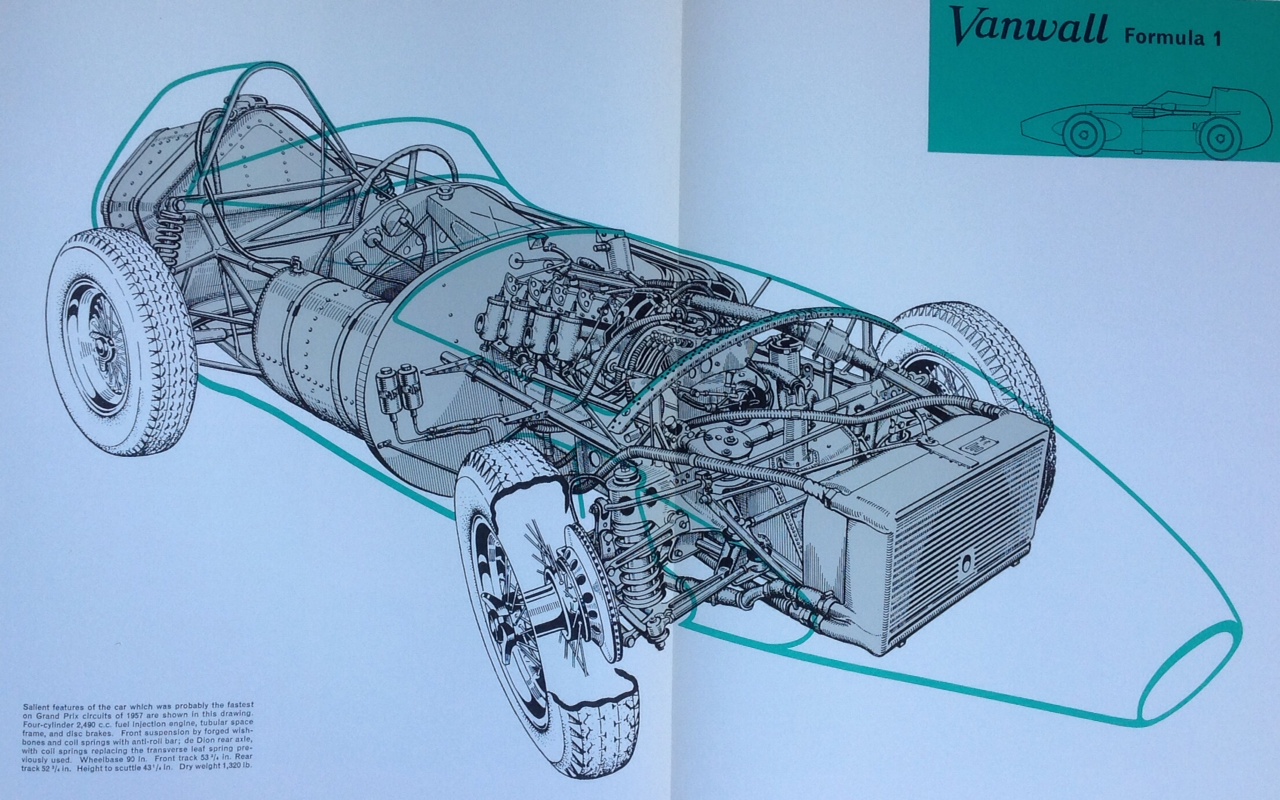
Chapman spaceframe chassis, four cylinder DOHC engine, tail and cockpit fuel tanks, under-seat transaxle, this 1957 car has Chapman struts at the rear- further technical details as per the text.

James Allington period cutaway drawing of the car as raced in 1957 and published in ‘Automobile Year 5’

Vanwall VW10 rear

(Doug Nye “History of The Grand Prix Car’

Vanwall VW10.

Ferrari derived transaxle, cockpit layout, rear and twin side fuel tanks and radius rods to locate rear suspension fore/aft all visible, again, further technical details as per text.

(MotorSport)

Mano e mano- first lap of the 1957 Monaco GP with Fangio’s Maserati 250F from pole in front of the Moss Vanwall on the outside and Peter Collins’ big Ferrari 801 menacing from the inside- first, DNF accident times two the outcome.

vanwall types


(MotorSport)

Harry Schell dives into La Source at Spa in 1956, Vanwall VW56- he was fourth in the race won by Peter Collins Lancia Ferrari D50 from local boy, Paul Frere’s similar car.

Vanwall VW6 Reims

(Automobile Year)

The Reims ‘Streamliner’, chassis VW6, was tried in practice only during the French GP weekend in 1957. I wonder what, precisely, the difference in lap times was? Attractive up front, not so much so at the other end where the design does not look so fully resolved. Ferrari 801 in the background.

cockpit

(Unattributed)

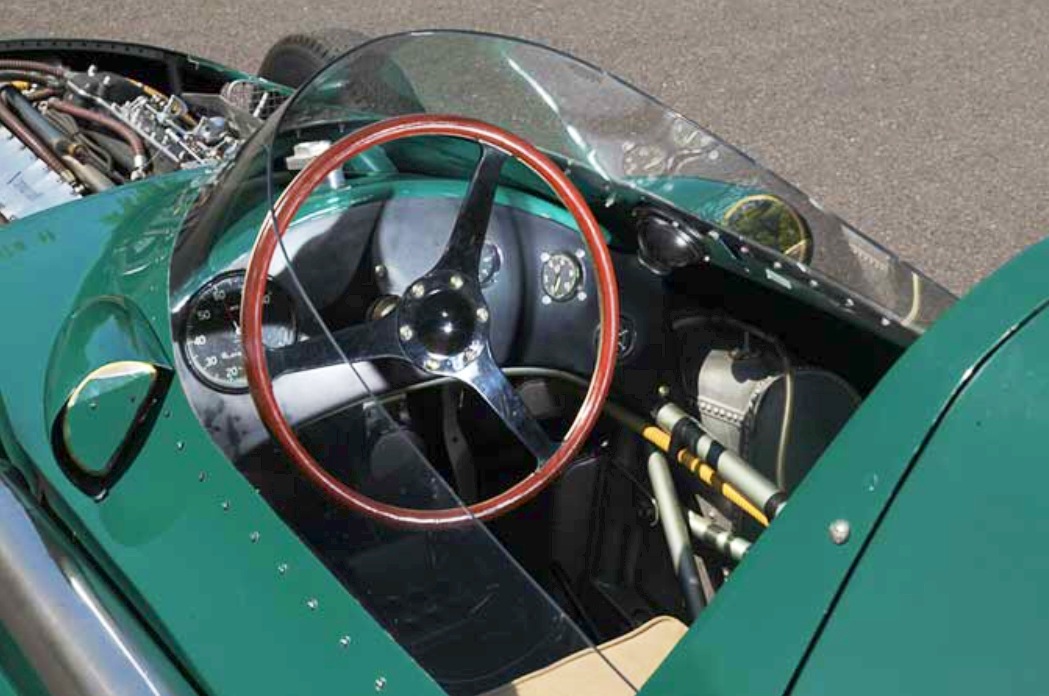
Cockpit by the standards of the day is comfortable, swivelling face level vents to keep the driver alive in the carefully faired space, the gearbox notoriously difficult to use. The car was very fast but not as forgiving to Moss as a 250F. Car needed the best to get the best from it. This is chassis VW9 in modern times.

(Unattributed)

John Surtees in VW14 during the rather damp Intercontinental Formula Silverstone International Trophy in May 1961- second place, a spin in the wet, finished fifth in the race won by Stirling Moss’ Rob Walker Cooper T53P Climax.

(Getty-Keystone)

Alberto Ascari races the Ferrari 125 V12 s/c Thinwall during the 26 August 1950 Silverstone International Trophy meeting. Alberto did not start the final after an accident in heat 2- Giuseppe Farina won it in an Alfa Romeo 158.

manza 57

(Unattributed)

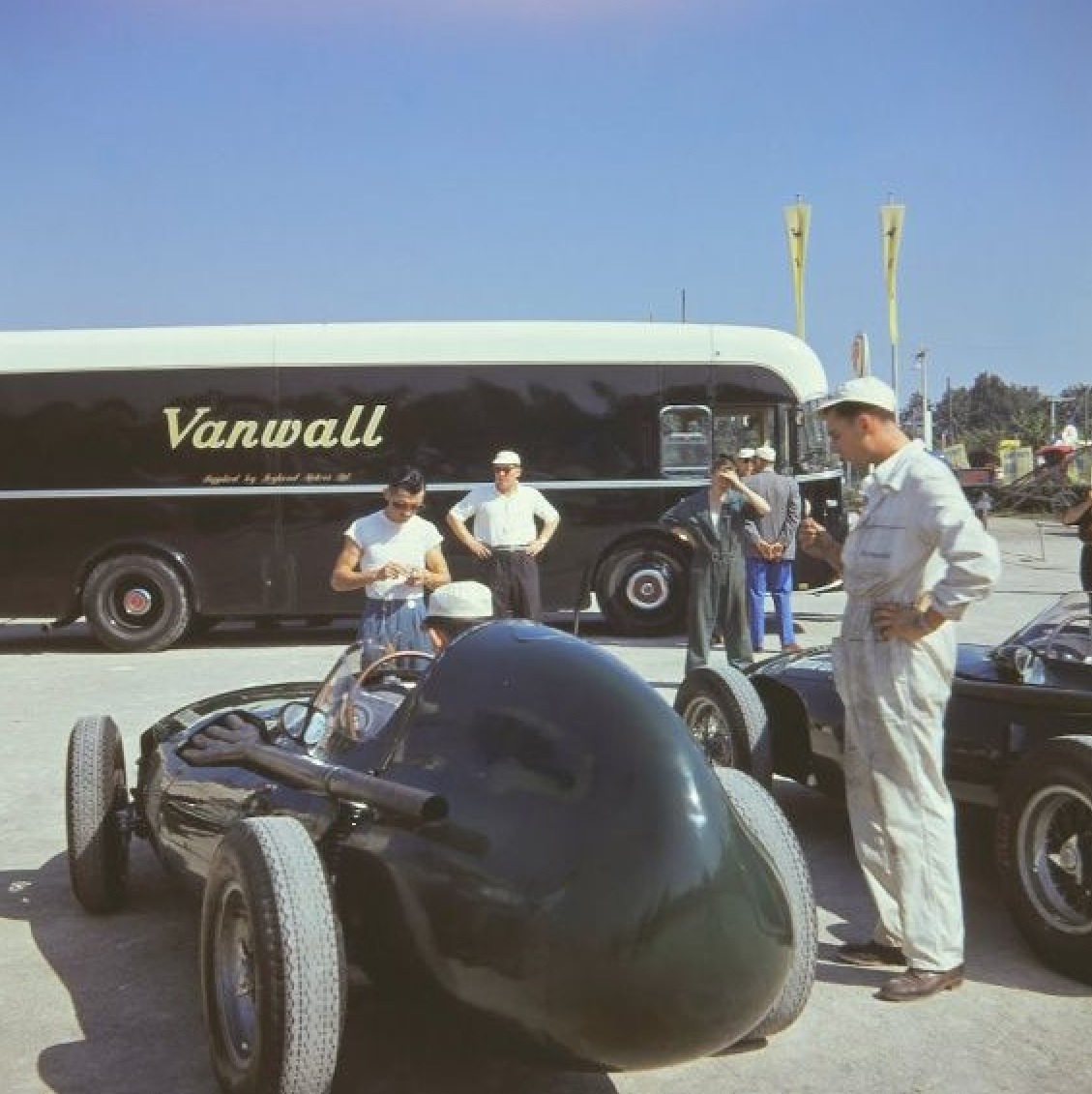
The Vanwall Team in the Monza paddock 1957- Moss won the Italian GP in ‘VW5’.

col

I’ve done the cutaway drawings to death in this article! But here is another variation on the theme, artist unknown- inclusion of the brackets does emphasise just how many attachment points there are!

(Unattributed)

Stirling Moss hooks his Vanwall into a fast left-hander on the Adriatic Coast course out of Pescara during his victorious 1957 Grand Prix drive.

(John Ross)

Stuart Lewis-Evans, with perhaps a tad more understeer than he may want, from Harry Schell, BRM P25 during the 1958 British GP at Silverstone- fourth and fifth place battle, Peter Collins and Mike Hawthorn were up front in Ferrari 801s.

I wonder what Harry thought of the merits of the two four cylinder British GP cars of the later 2.5 litre F1 period- ‘his’ Vanwall and BRMs?

fang

(The Cahier Archive)

This shot shows the relative height of the Vanwall, which was very tall, the driver sitting atop the drive-shaft.

Fangio is alongside and in his last grand prix in a works-Maserati 250F ‘Piccolo’ and finished fourth. Moss in VW 10 was second in the race won by Hawthorn’s Ferrari Dino 246- French GP, Reims 1958.

(Unattributed)

Aerodynamic testing of during 1958- I wonder which wind-tunnel was used for the purpose? Note the wire/alloy wheel combination being tested.

tea

(Unattributed)

A spot of tea at what appears to be a Silverstone test session, circa 1957, Moss up.

(goodwood.com)

Peter Collins bustles his Ferrari 375 Thinwall into Madgwick at Goodwood in 1953- he set lap records in the car in the June and September meetings that year at 1:32.6- 93.30mph and 1:32.2- 93.71mph.

(J Saltinstall)

Oporto, Portugal 1958- Moss, Hawthorn, Ferrari Dino 246 and Jean Behra, BRM P25. First, second and fourth in the Portuguese Grand Prix.

Etcetera: Moroccan GP 1958…

hawthorn morocco

(Unattributed)

Too many great photos, so lets not let them go to waste. Mike Hawthorn, Ferrari Dino 246.

hill g

(Unattributed)

Graham Hill finished sixteenth and last in the Lotus 16 Climax, whilst his teammate Cliff Allison was tenth in the earlier Lotus 12 Climax.

The Lotus 16 was also designed by Colin Chapman and immediatley branded the ‘Mini Vanwall’, the same concepts were applied by Chapman and Frank Costin who did the aerodynamics.

The car was much lower than Vanwall, the engine was ‘canted’ in an offset way to allow the driveshaft to be located beside the driver rather than him sit atop it. But the Coopers had arrived, the Lotus 16 was an ‘also ran’ in 1959, whilst the Lotus 18, when Chapman applied himself to the mid-engined approach then vaulted the marque forward.

masten

(Unattributed)

Masten Gregory was a great sixth in the by then ageing Maserati 250F .

stu

(Unattributed)

Stuart Lewis-Evans in Vanwall VW4 on that sad day at Morocco 1958.

Photo Credits…

The Cahier Archive, Stirling Moss Archive, The GP Library, Walter Wright Illustrations, Louis Klemantaski, The Autocar, James Allington cutaway drawing, Jesse Alexander, Automobile Year 5, Stephen Dalton Collection, Vic Berris, Hall & Hall, Getty Images, JARROTTS.com, Motor Cycling September 1951, MotorSport, John Ross Motor Racing Archive, goodwood.com, John Saltinstall Collection, GP Library

Bibliography…

‘8W Forix’ Vanwall articles by Ron Rex and Don Capps which are linked early in this piece, ‘The History of The Grand Prix Car’ Doug Nye

Tailpieces…

poster


(MotorSport)

Tail shot for the tailpiece…

Tony Brooks’ Vanwall chasing Ron Flockharts’ BRM P25 during the 1957 Monaco classic, not a lot of time to take in the quite stunning view I guess. Tony was second behind Fangio’s 250F whilst Ron’s engine cried enough after completing 60 laps.

Finito…

image

Mark Webber third in his Red Bull in the race won by Fernando Alonso’s Ferrari…

RB6… was the fourth car for Red Bull by modern design guru Adrian Newey, in the pantheon of design greats such as Jano, Porsche, Chapman, Barnard and others. The RB5 was the class of the back half of 2009, winning six times and placing second in the constructors championship. RB6 was an evolution of that car, and one of his best designs, up there with the Williams FW14B and McLaren MP4-13.

Red Bull attenpted to get Mercedes engines for 2010, the engine the perceived shortcoming of the package. They were unsuccessful, so the Renault RS27 was used again. This 2400cc, 90 degree, 32 valve V8 developed circa 750BHP at a rev-limited 18000RPM.

The fuel tank was larger than RB5, this change driving a host of detail changes. The chassis was a full carbon fibre and honeycomb monocoque carrying the engine as a fully stressed member, gearbox a 7 speed semi-automatic, incorporating ‘seamless shift’.

Front and rear suspension used aluminium uprights, carbon composite double wishbones, with coil springs and anti-roll bar. Pushrod (pullrod at rear) actuated multi-matic dampers.

Brembo provided the brake componentry, calipers and discs being carbon fibre, and Oz the wheels. The car weighed 620 Kg with either Sebastian Vettel or Mark Webber aboard, RB drivers unchanged from the previous year.

The car was immediately the class of the 2010 field, qualifying particularly well. Other teams had suspicions around a claimed ride-height lowering device, none were found. Later in the season the teams front wing was seen to be ‘dipping’ to produce extra downforce. The FIA then increased the loads imposed on the chassis test to eliminate this possibility, but this seemed to lessen not eradicate the suspicious ‘flexing’ of the front wing assembly. In terms of aerodynamic innovation, 2010 was the year of the ‘F-Duct’, McLarens’ clever device to stall airflow over the rear wing on straights and thereby increase top speed. Like most other teams Red Bull adopted their own solution which was effective enough to maintain the advantage their overall package had.

The cars reliability was wanting at times, Vettel in particular lost wins in Melbourne and Korea as a consequence.

Looking at the car objectively… the overall package was great, with the aerodynamic component, as is always the case with Newey cars, and the pull-rod rear suspension which endowed the car with outstanding traction, the aspects which particularly stood out.

The team would have slaughtered the opposition but for greater reliability and inter-team rivalry, the team officially at least not favouring one driver, ‘bullshit’ according to Webber and most knowledgeable pundits. Still, in my view RB are to commended for allowing the drivers to race, albeit some of the pit-to-car directions on engine and other settings favoured Vettel, not Webber, so whether they were racing on equal terms is a moot point.

It is a long time, if ever, ‘The Marquis of Queensberry’ attended a GP…and if i were a Team Owner i would definitely be imposing my will to optimise the teams’ result and ferk the drivers, and punters for that matter!

All a question of which hat one chooses to wear in these matters!

cutays

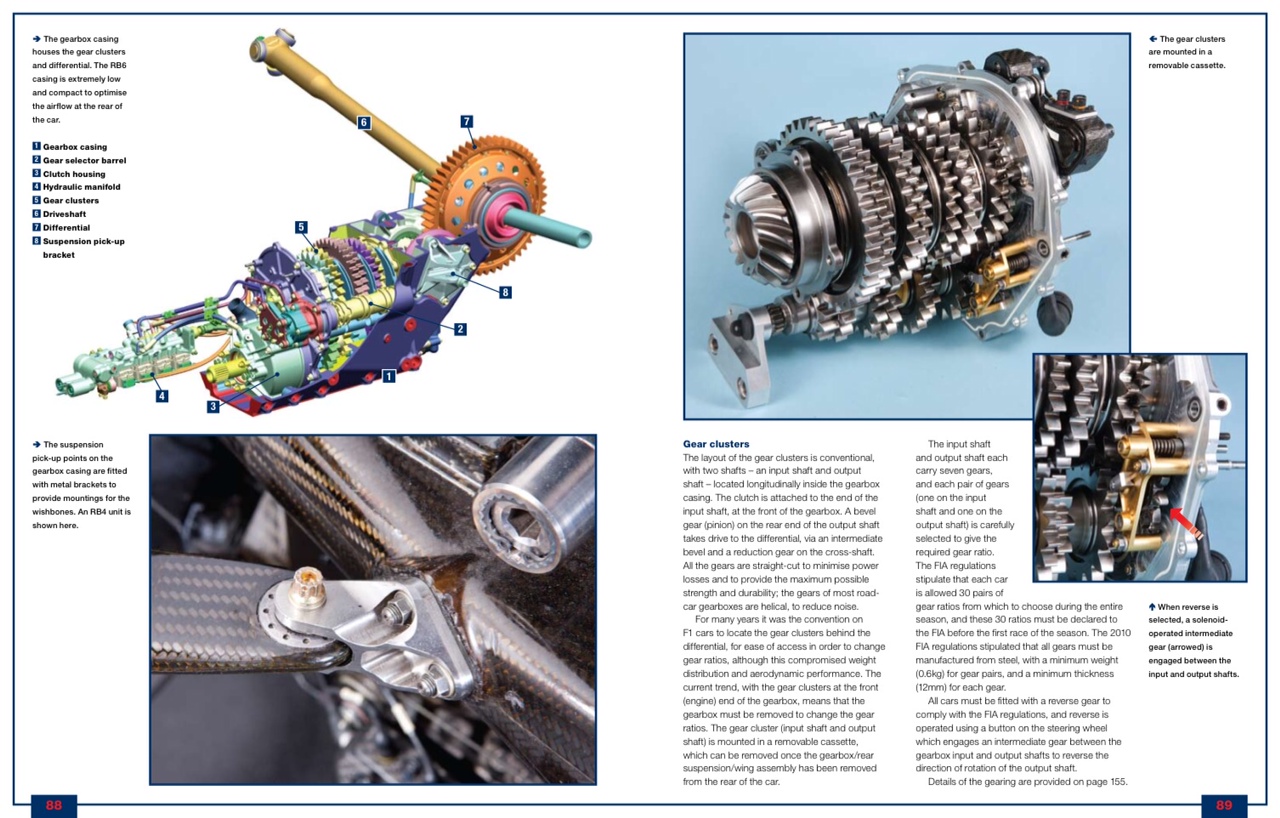
Cutaway drawing of RB6 (Haynes)

By the time the drivers arrived in Singapore… Vettel had 2 wins and Webber 4, but Vettel came home strongly winning 3 of the final 4 rounds and with it his first World Drivers Championship from Alonso and Webber. Not the result we Aussies wanted at all. Red Bull also won the Constructors Championship.

I’ve been to Singapore many times, but not for the Grand Prix, sadly. The main images which drove this short article capture its key elements and ‘nightime nature’.

These cars have been hit with the ‘fugly’ stick to my mind but are veritable beauties compared with this years offerings.

Still the Lancia D50 had a similar inpact in 1954 so i guess controversial design in F1 is far from new, mind you the whole field looking and sounding like dogs is!

alonso

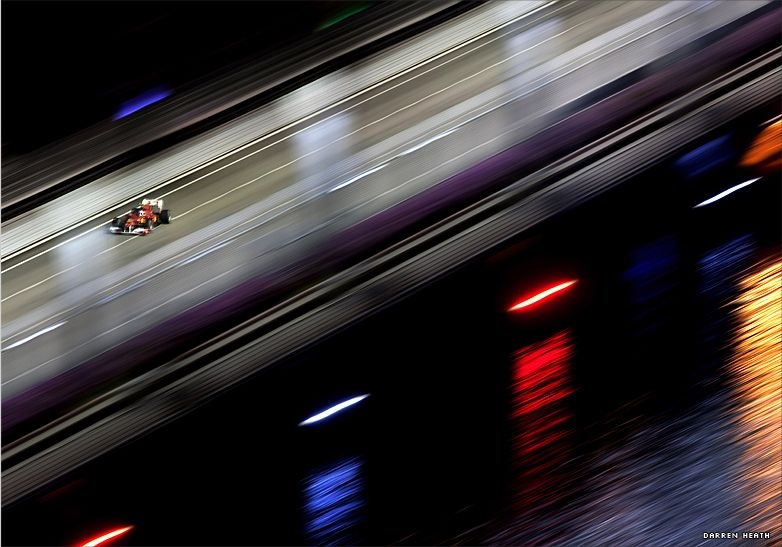
Fernando Alonso, Ferrari F10, winner Singapore GP 2010 (Darren Heath)

monaco

Mark Webber, winner in RB6 Monaco 2010 (Pinterest)

top

Mark Webber, Monaco 2010 Red Bull RB6 Renault (Pinterest)

pool

The sheer joy of a Monaco victory for Mark Webber and the Red Bull team, his diving form developed in Queanbeyan…(Pinterest)

haynes 1

chassis

Aerodynamic elements of chassis, barge boards, and sidepods. Red Bull RB6 (Haynes)

suspension

Suspension elements (Haynes)

gearbox

Gear clusters (Haynes)

For those with an interest in the Technical Elements of Modern F1…

scarbsF1.com

Photo and Other Credits…

Pinterest, Darren Heath

ScarbsF1, ‘Red Bull Racing F1 Car’ Haynes

The End…


stewartr

Fantastic shot of JYS on his way to victory throwing around the ‘twitchy’ , low ‘polar moment of inertia’ Tyrrell 006…

 The win was Stewarts 25th, equalling the number of Championship wins achieved by his friend and compatriot Jim Clark.

Stewart started the season in his trusty 005 but raced 006 from the International Trophy at Silverstone , the car carrying him to 5 victories and the world title that year.

Whilst Stewart won the drivers title the manufacturers championship went to Lotus, reigning champion Emerson Fittipaldi and teammate Ronnie Petersen scrapping and taking wins between them , which, in the absence of team orders , stopped Fittipaldi winning a pair of titles ‘on the trot’…team orders, and some times their absence are not new in F1!

Lotus were not the only team with 2 ‘number ones’ that season.

Stewart had Francois Cevert as his Tyrrell teammate again ,they were close friends as well as competitors with the master freely acknowledging Cevert had his speed , and then some , that season. But Francois was a team player and knew his turn , and time would come.

Sadly, it didn’t with his death in an horrific accident in practice at Watkins Glen, the final GP of ’73.

Stewart did a couple of laps in 006/2 in the final session to try and work out what happened to Francois, pitted his car and walked away from F1, as a driver , as he had planned earlier in the season , for good.

Jackie retired with 27 championship wins from 99 races, Cevert perished not knowing he would have been Tyrrells team leader in 1974…

stewart & cevert

Jackie Stewart leads Francois Cevert, Monaco 1973. First and fourth respectively. (Pinterest)


stewart 7 cevert 2

Francois Cevert & Jackie Stewart in 1973 (Pinterest)


tyrrell 006 cutaway

Werner Buhrer cutaway drawing

Checkout Allen Browns great piece on his oldracingcars site on ‘006’ inclusive of chassis by chassis histories here;

https://www.oldracingcars.com/tyrrell/005/006/

stewart

Photo Credits…

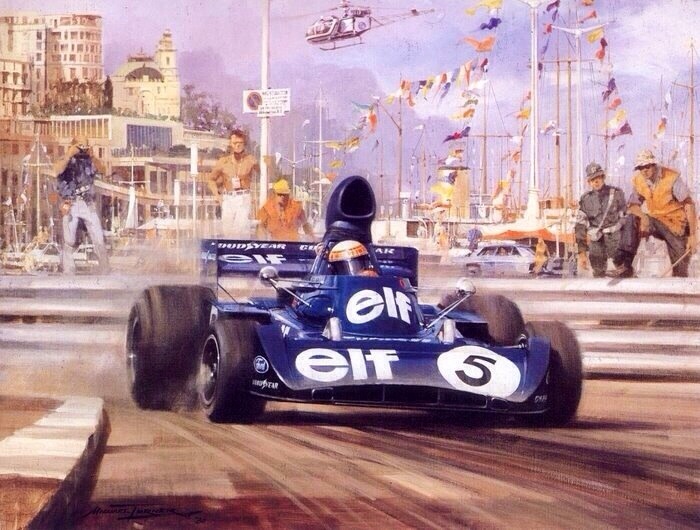
Werner Buhrer, Michael Turner

Tailpiece…

image

(Michael Turner)

Finito…
 

moss

How is your beaujolais cherie? Moss victorious in his Maserati 250F , chassis ‘2522’ from Peter Collins and Juan Fangio in a shared Lancia Ferrari D50, Jean Behra was third in another 250F ‘2521’…

In fact Fangio finished equal second sharing Peter Collins D50…and equal fourth in ‘his’ D50 sharing it with Eugenio Castellotti. He also won his fourth World Championship that year. His final was won in 1957 in a 250F, giving the marque the success it well deserved, and in the nick of time too, the 250F, long lived and carefully developed as it was had peaked, the mid engined Coopers showing the future path.

Customer Grand Prix Cars for All…

Moss started his post HWM/Connaught grand prix aspirations with the family purchase of a 250F in 1954. He was scooped up by Mercedes Benz as a result of his performances in the car to drive their W196 and SLR Grand Prix and Sports Cars alongside Fangio in 1954/5, returning to the Maserati in 1956.

The fact that Maserati made available the 250F to all comers with ‘the readies’ made a big difference to grids in the mid ’50’ as competitive cars were available for the first time in relatively large numbers. The growth of Non-Championship Grands’ Prix on the Continent was in part due to the availability of the Maser and therefore grids of depth and quality.

Many drivers cut their Grand Prix teeth in the cars, the last 250F graduate grand prix driver retiree was Chris Amon, who departed F1 in 1976!

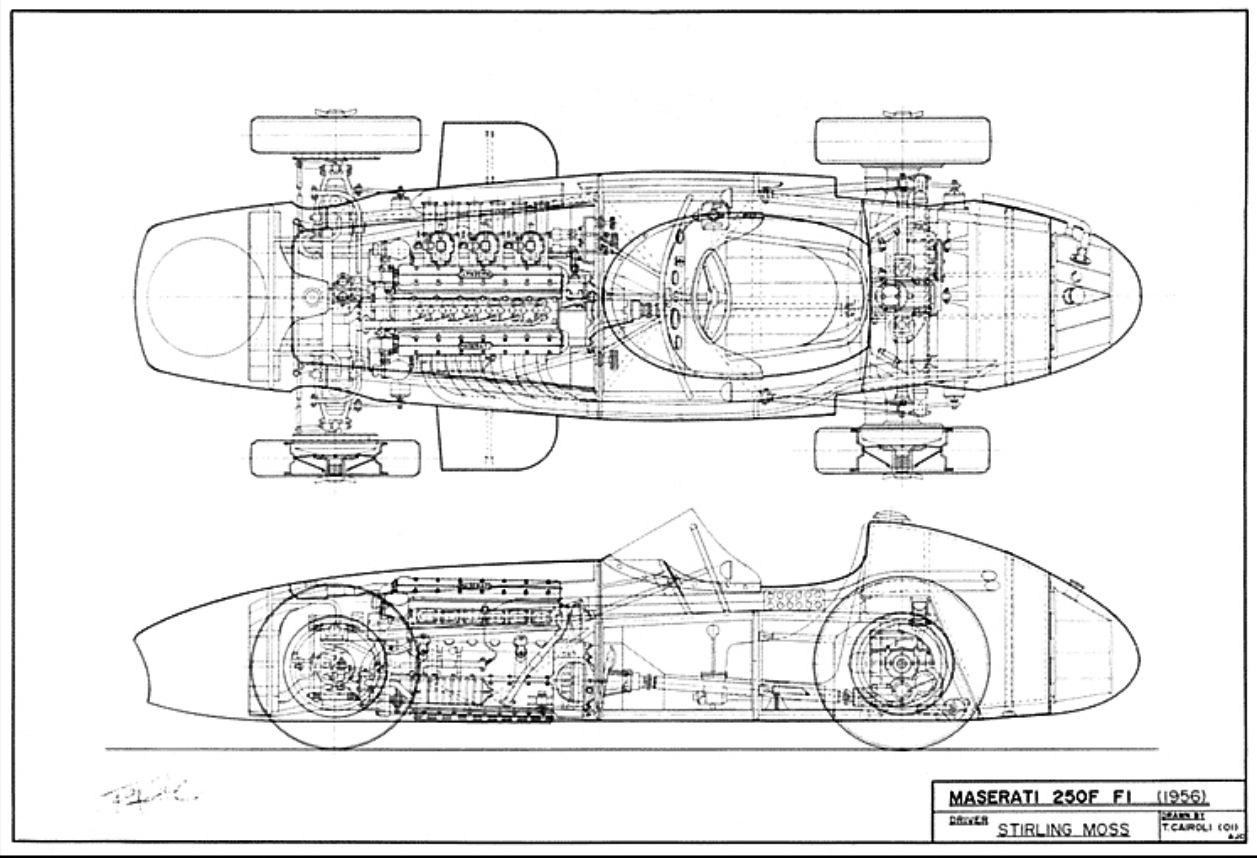
250 f drawing

Mid 1950’s State of The Art…

Amons 500BHP Ford Cosworth powered, winged ,’slicked’, monocoque Ensign N176 was somewhat different to the front engined, tube-framed, skinny tyred, 240 BHP Maserati in which he started his GP career in New Zealand.

The 250F was the ‘state of the art’ in the mid ’50’s. Not as avant garde as its contemporaries the Mercedes W196 and Lancia D50, but state of the art all the same.

Clothed in bodywork worthy of the finest Italian courtiers, to me it is the best looking front engined grand prix car of all. It epitomises everything that was, and is great about Italian design, engineering, styling and construction.

The cars performance matched its looks, it made its debut in the 1954 Argentinian Grand Prix winning the race in Fangio’s hands. The 250F won eight Championship Grands’ Prix in total and countless Non-Championship events in the hands of dozens of drivers through to 1960.

Twenty-six cars were built but of course many more than that exist today…

maser cutaway

Design and Build…

The car was designed by Gioacchino Colombo, formerly Ferrari’s Chief Designer, and Valerio Colotti and evolved from Maserati’s A6GCM 2 Litre F1 car.

The 250F featured a multi-tubular space-frame chassis of small diameter chrome molybdenum tubing. De Dion rear suspension was used, the De Dion tube was mounted in front of the transaxle to move weight forward within the wheelbase, lowering the cars ‘polar moment of inertia’ or in simple terms its ability to change direction. The gearbox was transversely mounted in unit with the ZF ‘slippery’ differential, and was initially 4 speed, but later became a 5 speed from 1955.

Conventional double wishbone front suspension was used. Brakes were 13.6 inch finned alloy drums, the fuel tank mounted at the rear contained 200 litres.

The engine was a superb, torquey straight-six, DOHC 2 valve per cylinder, twin plug unit displacing 2494cc. It was fed by 3 twin choke Weber DCO3 carburettors, twin Marelli magnetos providing the spark. The engine initially developed 240BHP, later circa 275BHP @ 8000RPM in 1957. Maserati produced a 2.5 litre V12 for the 250F in 1957, the car was tested extensively and raced once by Behra, 9 years later it won Grands’ Prix in Cooper chassis with a capacity of 3 litres.

The car weighed 650Kg, distributed 48/52% front to rear. It was 4050 mm in length, had a wheelbase of 2280mm, and a width of 1980mm.

Wheels were Borrani aluminium alloy, wire spoked with centre-lock hubs, sizes were 15×4.5 inches circumference/width front, and rear- 16/5.5. Pirelli tyres were used by the works cars.

image

Its All About Balance…

The 250F may not have been the fastest or most powerful car of its day but it was the best balanced, allowing the driver to fully exploit its potential.

Stirling Moss observed that ‘It steered beautifully and inclined towards stable oversteer which one could exploit by balancing it against power and steering in long, sustained drifts through corners. It rode well on the normal type of relatively smooth surfaced course, although its small coil spring and leaf spring rear end would use up available suspension movement over the bumps at the ‘Ring’.

image

Historic Context…

Even though the car was not the fastest for most of this period it was still competitive every year, and raced in large numbers, it sort of ‘underachieved’ really. But a lot changed from 1954 to 1957, lets call those the 250F ‘sweet-spot’ years and those circumstances had a lot to do with its results.

In 1954 the Mercedes Benz W196 appeared and re-wrote the record book. The fuel injected, desmodromic valve actuated straight-eight, space frame chassis and ‘tool-room’ quality of its design and construction put everything else into perspective. Mind you, its advantage in 1954 was maybe more to do with Fangio’s driving than the car itself.

Maserati had Fangio for the first few Grands Prix, he won with the 250F in Argentina. When Fangio went off to Benz Maserati did not have a ‘number one’ of sufficient calibre. My contention is that had Fangio driven the 250F in 1954 Maserati would have won the title. Fangio was ‘the depth’ in Mercedes team that year.

Into 1955 the Benz hit its straps, Vittorio Jano’s fabulous Lancia D50 finally appeared in Spain. It was in many ways the equal of the W196, bristling with innovation as well- V8 engine, with the motor a stressed member, very light, pannier tanks to centralise the fuel load equally throughout the race, and of superb build quality.

Moss had finished 1954 as a quasi-works Maserati driver, they needed him in 1955 but he joined Mercedes.

Ascari, Lancia’s star was killed at Monza testing Musso’s Ferrari. Shortly thereafter the sensational ‘shot-gun’ marriage of convenience was consumnated between Ferrari and Lancia when the cash-strapped Lancia, unable to fund its race program, gave its Lancia D50 cars, spares and designer Jano to Ferrari, bereft of a competitive car having stuck with its 4 cylinder F2 derived cars for way too long, and being short of cash to fund a new car in any event.

Maser had Jean Behra as their lead driver in 1955, but they needed somone quicker. In 1955 Maserati was not going to beat the Benzes, even if Moss had stayed with them.

Further change occurred when Mercedes Benz withdrew from racing as a consequence of the 1955 Le Mans disaster when one of their 300SLR sports cars driven by Pierre Levegh collided with Lance Macklin’s Austin Healey. The war was not long ago over, 80 people had been killed, Benz had achieved their short-term aims so it seemed prudent to withdraw.

Moss and Behra led Maserati in 1956, had Moss a car which was more reliable maybe he would have won the title. Mind you, ’tis said he was hard on cars. The Lancia-Ferrari D50 was progressively bastardised by Ferrari who had a strong team of Fangio, Collins, Musso, and Castelotti. Fangio got the best out of the car, and aided by some generous sportsmanship by Peter Collins at Monza, allowing the maestro to use his car, won the title for the fourth time. Maserati were competitive throughout, the title with more luck could have been won by Moss.

In 1957 Fangio won Maserati the title they deserved despite stiff opposition from Moss in the Vanwall, now reliable and with a Colin Chapman designed chassis and Frank Costin body- very fast.

By 1958 the 250F was finally passe as a competitive mount.

As has always been the case teams need to have the best drivers, Maserati’s budget was perhaps the obstacle to achieving that.

My thesis is that they should have won the title in 1954 with the right driver, in 1956 with more luck/reliability and in 1957 finally won it, Fangio doing for Maserati what he had done for Mercedes in 1954/5 and Ferrari in 1956- bringing that little bit of magic, speed, intelligence and mechanical sympathy which separates the gods from the mere mortals.

turner

Superb Michael Turner painting of Moss, Monaco 1956

Finito…

Moss won the opening, Argentinian round of the 1958 season in Rob Walker’s Cooper Climax, the mid-engined revolution had begun. Mike Hawthorn’s Ferrari Dino 246 was the last front engined car to win a World Championship that year, Fangio had retired, and Maserati, drowning with cash-flow difficulties, were placed into ‘Controlled Administration’ by the Italian Government.

It was all over, other than privateers achieving success in Non-Championship events, the car, for a while longer serving the same purpose to privateers as it had back in 1954…

Fangio’s 250F Virtuosity, Modena Circuit, 1957…

Etcetera…

moss cahier

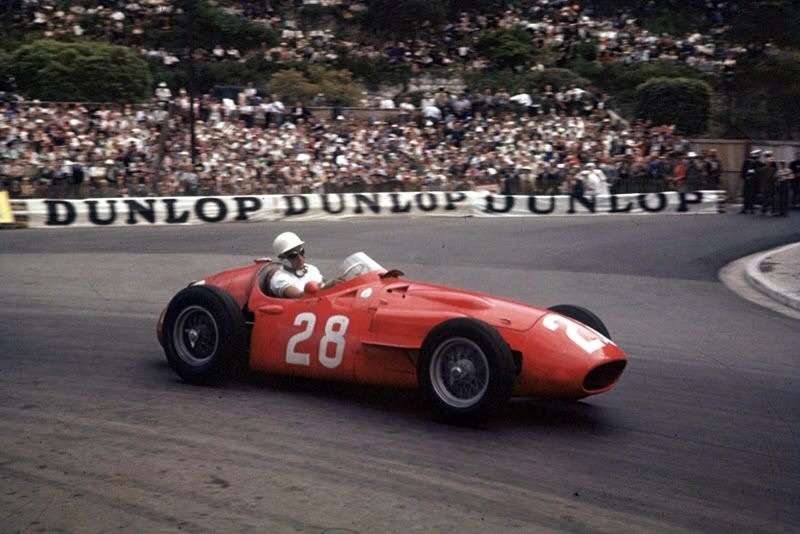
Superb 1956 Bernard Cahier shot of Moss on the Monaco Quayside, late series 250F lines shown to good effect the ‘Piccolo’ of ’57 even prettier


start

Monaco GP start ’56. Front row L to R : Fangio, Moss, Eugenio Castellotti. Lancia D50, Maser 250F, Lancia D50. # 30 is Jean Behra 250F, # 16 Harry Schell Vanwall VW55, # 24 Luigi Musso D50. # 32 is Cesare Perdisa 250F, # 14 Maurice Trintignant Vanwall, the blue cars are Gordini’s


maser monaco 1956

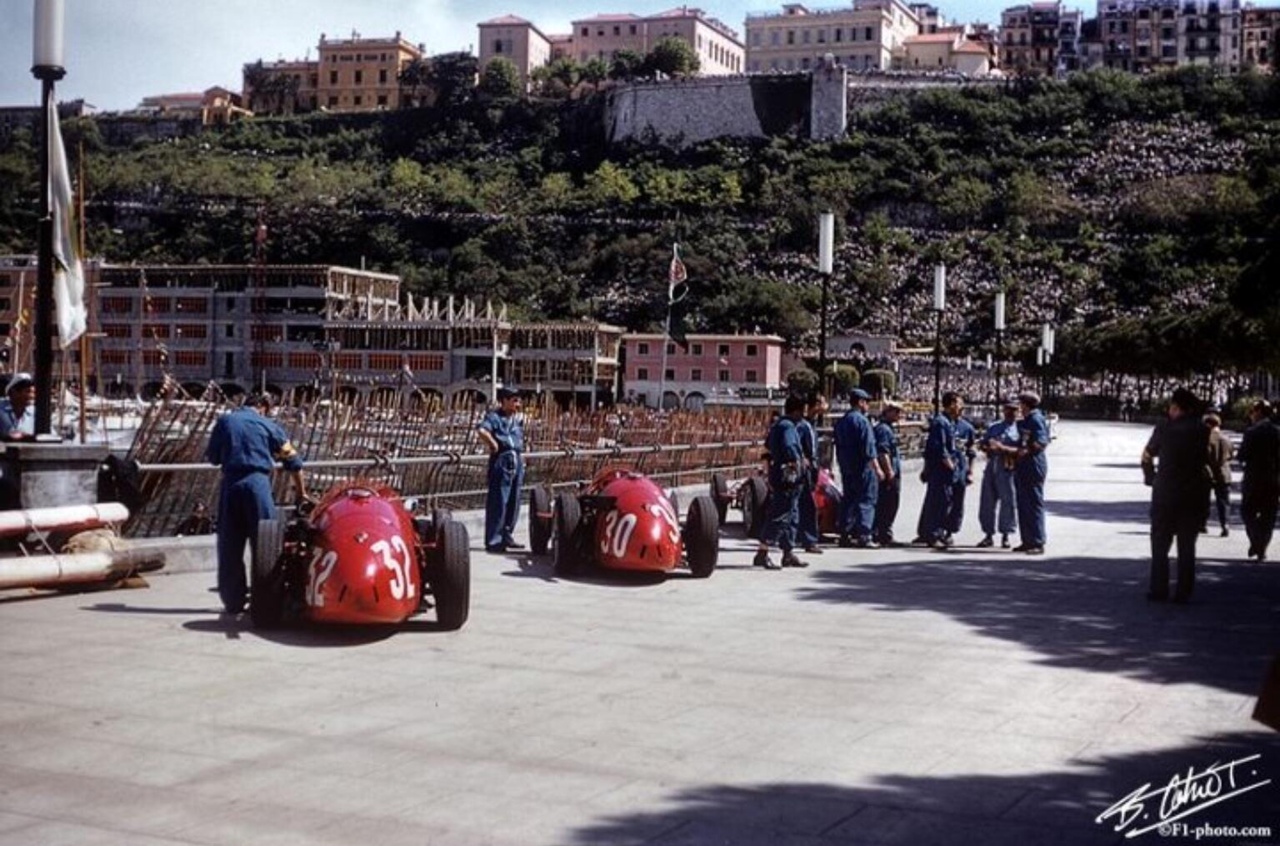
Maserati team prior to the start of the 1956 race: # 32 Cesare Perdisa, seventh, and # 30 Jean Behra, third. Moss’ car is surrounded by mechanics (The Cahier Archive)


BP 250F ad


poster

Sources and Photos…

The Cahier Archive, David Kimble cutaway drawing, Michael Turner painting, blueprints T Caroli

‘The History of The Grand Prix Car’ Doug Nye, ‘The History of The World Championship’ Alan Henry, H. Donald Capps and Trevor Lister

Tailpiece: 250F’s in build, January 1956…

Technical specifications as per text- what a wonderful and rare photograph by Bernard Cahier of three cars in build taken on his visit to the factory in January 1956- which cars I wonder?

I am guessing, and its no more than that aided by a staggering, so far unpublished work by H. Donald Capps and Trevor Lister titled ‘Identity and the Maserati 250F’ that the cars may be works chassis ‘2516’ fitted with engine ‘2516’- later sold to Australian Reg Hunt, Luigi Piotti’s chassis ‘2519’ fitted with engine ‘2511’ and works car ‘2520’ fitted with engine ‘2520’ later sold to Stan Jones. I say that as all these cars were raced early in 1956, so a January production run makes sense.

In terms of other 1956 build cars, the works ‘2521’ didn’t appear till May, Jean Behra drove it to third in the Monaco race featured above, whilst Moss’s Monaco winner ‘2522’ didn’t run until the April ‘Glover Trophy’ Goodwood meeting. The Godia-Sales ‘2524’ first raced at Spa later in the year too- he didn’t have a good day in the Ardennes with an accident on lap 1 in the wet conditions.

‘Cahier’s three cars are not the 1956 ‘canted engine’ chassis machines ‘2525’ or ‘2526’ which were first raced by Moss and Behra at Monza either, Stirling won on that hot September day in ‘2525’ by the way, so lets stick with the ‘likelies’ as ‘2516’, ‘2519’ and ‘2520’!

Finito…
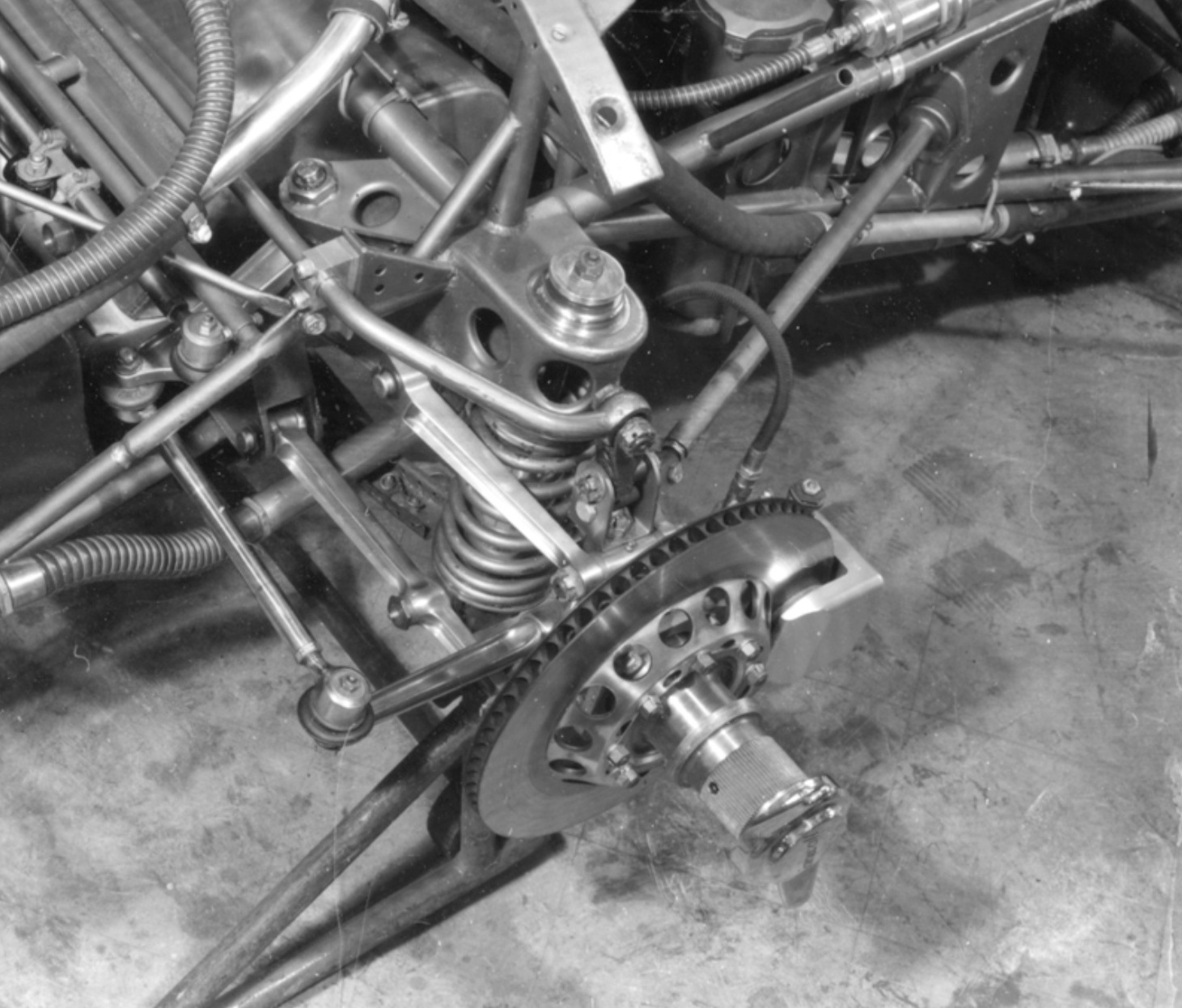


mikka

Mika Hakkinen under moonlight, British GP Silverstone 1994…

On the face of it the Peugeot V10 made sense, it had won LeMans in the French company’s 905 sportscar twice, and McLaren wanted a long term contract with a major manufacturer of the type it had with Honda, and would start with Mercedes in 1995…
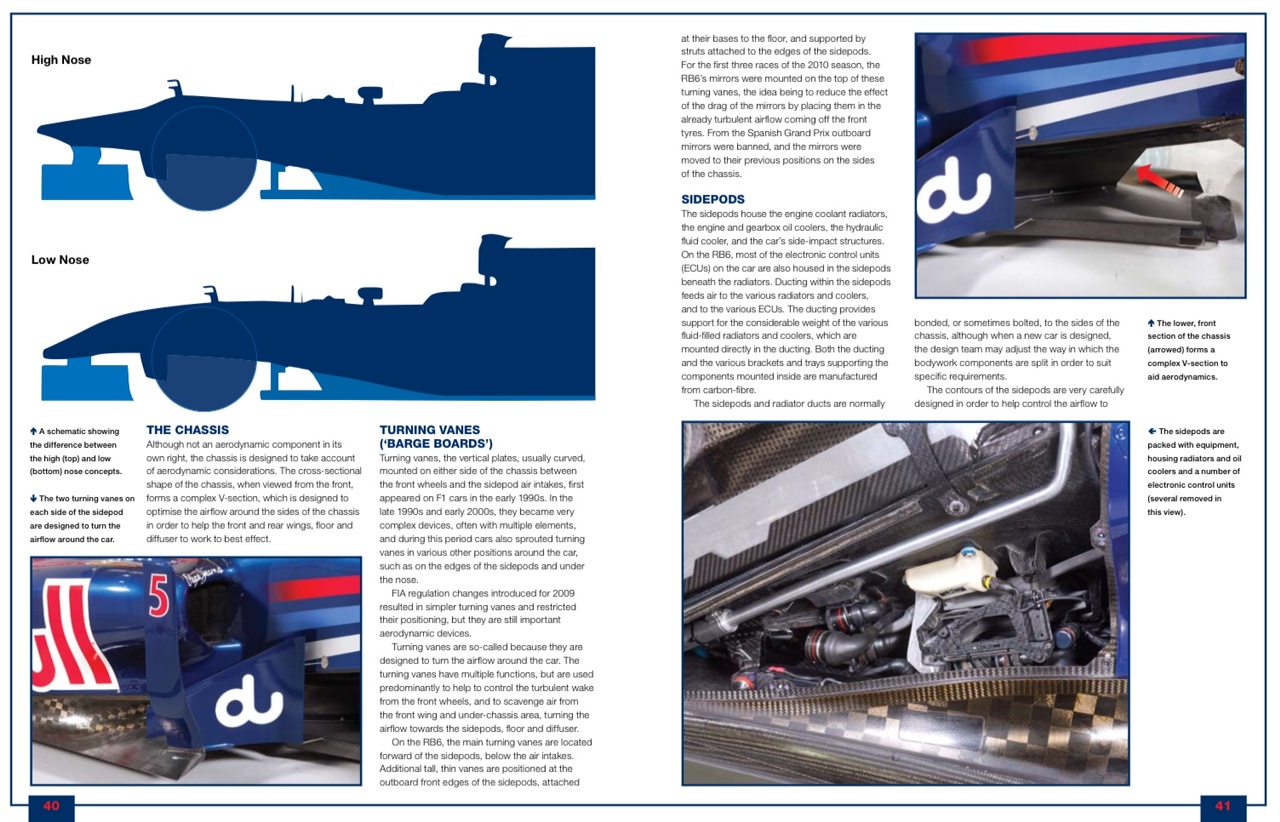
Hakkinen and Martin Brundle struggled with the cars, Nigel Oatleys chassis was fine but the Peugeots were ‘hand grenades’ often exploding with fundamental structural engine failures.

Ron Dennis had had enough by mid year, a deal was brokered which saw Jordan using the engines, and later Prost…all failing to achieve the points haul McLaren did in ’94, still Peugeot have achieved a good ‘bang for their buck’ in rallying , who needs F1?!…

pug

Peugeot A4/A6 3.5 litre V10, 3499cc circa 700-760BHP. McLaren TAG 6 speed, transverse semi-automatic gearbox (Anthony Fosh)

Photo Credits…

Anthony Fosh, Pinterest unattributed

pryce nurburgring

Tom Pryce, Karussell, Nurburgring, German GP 1975. Shadow DN3A Ford. Sixth in the race won by Cay Regazzoni’s Ferrari 312B3 (Pinterest)

These great shots are of Tom Pryce in his Shadow DN3A Ford during 1974…

Pryce was one of ‘The Lost Generation’ of young Britsh F1 drivers killed in their prime, all of a similar age, at about the same time. The other two drivers featured in David Tremaynes’ book of that name are Roger Williamson and Tony Brise.

I’d add Gerry Birrell, an F2 pilot and Ford factory Capri RS2600 driver to the list, i was following his career as a teenager at the time.

All were products of the ‘British Racing Driver Production Line’ of the day starting in small sedans or Formula Vee and progressing through Formula Ford, F3 and eventually getting their Formula 1 break.

All were F3 stars and showed F1 promise, in Birrells case he was one of the drivers spoken of as Jackie Stewarts’ replacement at Tyrrell for 1974.

All died grisly deaths in racing cars except Brise who perished in the plane piloted by Graham Hill which crashed and killed the key members of his team upon return from a test session in France to the UK to Elstree Airport in November 1975.

Deaths in racing cars were all too common until the ‘carbon-fibre era’ which commenced with the first Mclaren MP4 in 1981. Arguably designer John Barnard’s pioneering use of the material in racing cars has saved more lives than any other initiative down the decades?

Shadow DN3 Ford…

The Shadow, an English car and team funded by American Don Nichols United Oil Products, could be said to the ‘standard English kit car’ of the 1970’s.

It featured an aluminium monocoque, ubiquitous Ford Cosworh DFV engine, so reliable one wag described it as ‘the spacer between the driver and gearbox!, albeit a 500BHP spacer. The also ubiquitous Hewland FGA400 gearbox was a part of the package but Designer Tony Southgate, knew what he was about and put all of the knowledge gained at BRM from his successful P153/160 and P180 cars into the design, drivers Pryce and Jean-Pierre Jarier providng the other essential element.

Pryce won the 1975 non-championship ‘British Race of Champions’at Brands Hatch a DN5 beating Scheckter, Watson, Petersen, Ickx, Fittipaldi, Jarier and Donohue. He was a driver ‘on the up’ perhaps staying at Shadow too long. In a team with a competitive car he was a grand prix winner if not a potential World Champion.

He died in the 1977 South African Grand Prix, colliding with a marshall running across the track to put out a fire. The marshall was unsighted by Pryce, closely following another car. Both were killed in the very tragic accident.

tom pryce sweden 1975

Tom Pryce, Swedish GP, Anderstorp 1975. DNF, spun. Lauda won in a Ferraari 312T on his way to his first World Championship (Pinterest)

pryce 4

Tom Pryce looking very English for a Welshman, British GP 1974 (Pinterest)

Ecetera…

roger

Roger Williamson and a March engineer share a joke, British GP 1973. It apperas to be about a covered up sponsors logo on his race suit…no captions of value on Pinterest so who knows!

dutch

Roger Williamson ahead of David Purley, both in March 731 Fords, early in the 1973 Dutch Grand Prix. Williamson crashed after a suspected tyre failure and died of asphyxiation after Purleys valiant and heroic attempts to right the overturned car failed (Pinterest)

hill

Graham Hill, for whom he drove in 1974/5, and Tony Brise. (Pinterest)

french

Tony Brise leads a gaggle of cars in the 1975 French GP, Hill GH1 Ford, he finished 7th in the race won by the Lauda Ferrari312T. Mario Andretti Parnelli VPJ4 Ford, Brambillas’ obscured March 751 Ford… the black car is the Ickx Lotus 72E Ford, the white car is Alan Jones in the other Hill, last in shot the nose of, i think, Donohues’ Penske PC1 Ford (Pinterest)

gerry

Jody Scheckter & Gerry Birrell, Brands Hatch ‘Rothmans 50000’ 1972. McLaren M21 and March 722 F2 drivers that year. (Pinterest)

capri

Gerry Birrell in the factory Ford RS2600, ETCC 6 Hour Nurburgring july 1972. Birrell was both race and a test driver for this very successful program (Rainer Schlegelmilch)

Photo Credits…

Pinterest, Rainer Schlegelmilch


bt 24

BT24/1 was Brabhams’ car for the ’67 Grand Prix season, the title won by his Kiwi teammate Denny Hulme that year…

Looks comfy in there; no belts, they arrived in GP racing in’68, Smiths chronometric tach, ‘tell-tale’ showing 8600 RPM, leather bound steering wheel, aluminium fuel tanks by your hips on each side, no ‘bag tanks’ till 1970 so fire risk in the event of an accident enormous.

Bandinis’ horrific ’67 Monaco Ferrari crash a case in point.

‘Varley’ lightweight battery is under the cover over which your legs will stretch. Grey ‘stove enamelled’ chassis rails of the ‘space frames’ used by Brabham F1 cars till the end of ’69 under the shift lever, who needs those new-fangled monocoques anyway?! Fibre-glass body apparent on all sides.

Right hand shift controls a ubiquitous and reliable 5 speed Hewland DG300 gearbox. Its attached to a Repco ‘740’ Series SOHC 2 valve V8, being gently warmed up at 3400RPM. The engine gave circa 340BHP, far less than the new Cosworth DFV but enough to do the trick in ’67!

Oh! The little red plaque riveted to the dash says ‘Speed Should Not Exceed 170MPH’!

Brabham Racing Organisation always saw the lighter side of life under the surface of intense competitiveness and success.

Oh so period, just luvverly…

image

Brabham in BT24-1 at Silverstone , British GP ’67, he finished 4th. Trusting photographer on the inside of Woodcote Corner (Mike Hayward)

Photo Credits…

‘Jack Brabham with Doug Nye’, Mike Hayward

post

Jack Brabham, Repco engineer Nigel Tait, and Brabham BT19 Repco. Sandown Park Melbourne for its Tasman Series debut, January 1966. RB620 ‘E2’ engine in 2.5 litre capacity. (Australian Post magazine)


rb 620

Repco Brabham ‘RB 620 Series’ 3 litre SOHC V8 engine. The ’66 World Championship winning engine. Circa 310 bhp @ 8000 rpm. Weight 160 Kg, the ‘600 series’ block was F85 Oldsmobile based, ’20 series’ heads early crossflow type (Repco)

In this Repco article we start with a summary of the events leading to Repco’s involvement in Grand Prix Racing, then identify key team members, the equipment used to build the engines and finally have a detailed account of the 1966 championship winning engines construction…

records

RBE factory records ’60’s style (Wolfe)

Why did Repco Commit to Grand Prix Racing?…

Younger readers may not know the background to Australian automotive company, Repco’s involvement in Grand Prix racing in the mid-sixties.

Coventry Climax, the Cosworth Engineering of their day caused chaos for British GP teams when they announced they would not build an engine for the new 3 litre F1 commencing in 1966.

Repco had serviced the 2.5 litre Coventry Climax FPF four cylinder engines, the engine ‘de jour’ in local Tasman races, but were looking for an alternative to protect their competitive position, Jack Brabham suggested a production based V8 to them.

Brabham identified an alloy, linerless V8 GM Oldsmobile engine, a project which had been abandoned by  them due to production costs. Jack pitched the notion of racing engines of 2.5 litre and 3 litre displacements using simple, chain driven SOHC, two valve heads to Repco’s CEO Charles McGrath.

GM developed a family of engines comprising the F85 Oldsmobile and Buick 215. They were almost identical except that the F85 variant had six head studs per cylinder rather than the five of the 215 and was therefore Brabham’s preferred competition option.

Jack had first seen the engines potential racing against Chuck Daigh’s Scarab Buick RE Intercontinental Formula mid-engined single seater in a one off appearance by Lance Reventlow’s outfit at Sandown, Australia, in early 1962.

The engine’s competition credentials were further established at Indianapolis that year when Indy debutant Dan Gurney qualified Mickey Thomson’s 215 engined car eighth, the car failing with transmission problems after 92 laps. It was the first appearance of a stock block engined car at Indy since 1945.

scarab

Jack Brabham looking carefully at the Buick 3.9 litre engine in the mid-engined Scarab RE at Sandown Park, Melbourne in 1962, filing the information away for future reference! (Doug Nye with Jack Brabham)

Whilst the engine choice was not a ‘sure thing’ its competition potential was clear to Brabham, as astute as he was practical.

At the time the engine was the lightest mass production V8 in the world with a dry weight of 144 kg and compact external dimensions to boot. Its future at GM ended in 1963 due to high production costs and wastage rates on imperfectly cast blocks, about 400,000 engines had been built by that time.

New Kid on the Block…

‘Having talked my way into the Repco Brabham Engine Co with a promise of hard work and a 3 weeks trial I was very happy’ recalls Rodway Wolfe.

I was given a nice grey dustcoat with a lovely Repco Brabham insignia on the pocket and shown around the factory and introduced to everyone- I was the seventh employee. Repco had picked the cream of their machinists from throughout the empire to work at RBE, they were great guys to work with and willing to share all their skills.

The three-week trial period was a gimmick, after a few days I had settled in as one of the team. After the trial my wage was increased to slightly higher than my previous job in the Repco merchandising company.’

People: Key Team Members…

dyno

L>R: Phil Irving, Bob Brown, Frank Hallam and Peter Holinger dyno testing the first 2.5 litre Tasman RB620 engine at Russell Manufacturing’s engine test lab in Richmond in March 1965. Weber carbs borrowed from Bib Stillwell, the engine did not race in this form. The engine initially produced 235 bhp @ 8200 rpm, equivalent to a 2.5 Coventry Climax engine. ‘Ciggies a wonderful period touch (Repco)

The first prototype RB engine was built at the Repco Engine Laboratory in Richmond, Victoria, an inner Melbourne suburb, then a hub of manufacturing now a desirable inner city place to live, 1.5 km from the CBD.

It was designated the type ‘RB620’, which was the nex file number of the various laboratory, research and development projects in process at the time.

‘Frank Hallam was General Manager and Phil Irving was Project Engineer together with Nigel Tait and others. Peter Holinger made the components and Michael Gasking tested the engines. There were others involved before my time, those mentioned were involved at Richmond’.

As an industrial site using steel garages in Richmond the RB project received comment in various overseas publications as the ‘World Championship Fl engine built in a tin shed in Australia’.

When I joined in late 1965 the project had just arrived at the Maidstone, Melbourne factory. (87 Mitchell Street, Maidstone, then an industrial Melbourne western suburb, 10 km from the CBD) The Manager was Frank Hallam. In the drawing office, the Chief Engineer was Phil Irving, the Production Manager Peter Holinger, Production Superintendent Kevin Davies and the machine shop leading hand was David Nash. We also had a Commercial Manager, Stan Johnson who came and went’.

hallam

Frank Hallam and Jack Brabham discuss the turning of camshaft blanks on the Tovaglieri lathe (Repco)

‘Around this time Michael Gasking also transferred from the Richmond Laboratory- he was Chief of Engine Assembly and Testing.  Also on the machine tools was John Mepstead who was a great all rounder and later appointed to help Michael with engine assembly. He eventually joined Frank Matich to ‘spanner’ the 1969 Australian Sports Car Championship winning Matich SR4 Repco.

Frank Hallam arranged for me to attend RMIT night school, Repco picked up the bill. Those Tuesday and Thursday nights for 4 years helped me immensely, over the period I obtained a certificate in ‘Capstan and Turret and Automatic Screw Machines’ operation and a certificate in ‘Product Drafting’. My status was as a First Class Machinist in the Repco Brabham factory.

If I had any queries I would also ask Phil Irving who loved a yarn and was a huge bank of knowledge. I felt so honoured to to work for him, and learned so much’.

RBE formation

‘Repco Record’, the internal Repco staff magazine announces the formation of Repco Brabham Engines Pty. Ltd. (Repco)

Machine Tools…

‘Frank Hallam was a machine tool enthusiast.

It was a big help, he made sure we worshipped our machines, blowing away the swarf with an air hose. I learned respect and cleanliness of all machine tools. Few machine shops were as clean or free of swarf and mess everywhere with the exception of Holinger Engineering, Peter was also fastidious.

We were lucky to have top machines in the workshop. Our biggest was an Ikegai horizontal boring machine. RBE had two lathes- a Dean Smith & Grace English machine and also a Tovaglieri Italian unit.

We had a small Deckel horizontal borer and a couple of mills- a Bridgeport and a French Vernier. The older machine was a Herbert capstan lathe, I used this to make every stud for all the future Repco Brabham engines- main bearing and cylinder head studs, a very big variety in different steel types, it was repetitive stuff that would normally be boring but I didn’t care, we were winning the World Championship’…

‘When he drew a new design of stud, Phil Irving would come out and check my thoughts on being able to make it with what we had and other various things. We would do a yield point test in a vice where we measured the length of the new stud after I made a sample and then tension it to a nominated foot pound tension and we would keep increasing the tension until the stud refused to return to the original length. That tension was known as the yield point so Phil would pick a tension somewhere in a safe range under that yield point’.

RB620 Series Engine: Machining and Modification of the Oldsmobile F85 block…

olds

Not the sharpest of shots but a rare one showing the ‘production’ Olds and RB620 engines. RB620 on the right. The engine was the lightest production V8 in the world at the time (unattributed)

‘When I arrived there were a lot of aluminum cylinder blocks along one factory wall. Repco acquired twenty-six Oldsmobile cylinder blocks from General Motors in the US. (2 of the 26 were prototype engines E1 and E2 which were built up in Richmond)

One of my first jobs was to remove all the piston assemblies from those twenty-four blocks. They were not short blocks as known in Australia (here they are complete without sump or cylinder heads) but these were not complete to that stage. They had crank bearings in place, all main bearing caps and the 3.5 inch liners were cast into the block. We didn’t use the cast iron main bearing caps or bolts, replacing them with steel caps and high strength studs.

The RB 620 used the original 3.5 inch cast in sleeves but practically everything else was changed.

All surfaces were re-machined for accuracy, all bolt thread holes re-tapped and recessed to accept studs of superior material. The camshaft bearings were in the valley of the block of course but we pressed them out and rotated them 45 degrees and pressed them back in place to cut off the original oil galleries as our engine ran twin overhead camshafts, one per cylinder bank.

The front original camshaft bearing was left intact and the second camshaft bearing was removed and fitted was a sleeve with an INA roller bearing.

We made up little jackshafts which were driven from the crankshaft by a duplex chain, which also drove the single row chain driving the overhead camshafts. These jackshafts used the first original Oldsmobile slipper bearing and a small roller type bearing in the second original cam bearing location. The chains etc, were all enclosed inside the RB chain-case.

rb 620 chain case

RB600 F85 Olds block from above. Note the valley cover of aluminium sealed ‘with a sea of Araldite then painted over with Silverfros- those blocks which are still in service today still retain the Araldited plate and still do not leak’ comments ex RBE engineer Nigel Tait. Phil Irving’s design had lots of clever bits including the timing chain arrangement which allowed the heads to be removed in the field without disturbing the engine timing- and was also clever in that the same head could be used on either side of the engine (Tait/Repco)


block & timing case

600 block and timing case, ‘Purolator oil filter housing, timing chain single row (Repco)

‘A lot of people in 1966, including the international motoring writers, did not realise the extent of the machining required to the F85 Oldsmobile cylinder block to use as our race engine base. It was more work and and involved to adapt the F85 than in machining our new Repco cast blocks (700 and 800 Series) used later in the project.

It used to annoy all of us when our engine was referred to as ‘based on a Buick’ in various world motoring magazines. It also added insult to injury by them adding ‘Built in a tin shed in Australia’!

We then had to close up the large cavity in the valley where there used to be a cover plate, pushrods and cam followers in the original engine.

We spent many hours fettling aluminum plates by hand and fitting them into the valleys to cover the original cam followers and holes etc. When we had a very good fit of these plates we mixed two pot resin (Araldite) with additional aluminum powder and filled up the valley seams around the plate.

Then with some elaborate heating systems we invented, we dried the Araldite in place. This also gained us the reputation of the ‘The Grand Prix engine held together with Araldite’ in various magazine articles!’

rb 20 block

RB600 block on the left, Olds’ F85 unmodified block on the right. The 600 block has the pushrod holes covered with the Araldited aluminium plate. ‘The 1/4 inch thick block stiffener plate protrudes from the top of the modified block. This gives the effect of cross bolting…note also the Repco designed magnesium sump’ notes Tait (Tait/Repco)

‘I finished the job of dismantling the blocks, we only worked on two or three at a time during the early months of 1966. Unless the parts were an easy item or required substantial machine set up we only made a few of each component as design changes were ongoing. Not critical large changes but small subtle ones’.

‘We didn’t have any problems with the Oldsmobile block by there was one race in 1966 when a cylinder liner failed. As explained, we used the cast in liners and retained the 3.5 inch bore.

BRO, (Brabham Racing Organisation) sent back the failed engine block and we bored out the remains of the cylinder liner. There was a casting cavity behind the liner which caused the weakness and failure. This was a problem that could not be dealt with without boring out all the liners and fitting sleeves. Otherwise there could be more failures due to bad castings. From that date we used dry liners and eradicated the risk of it occurring again.’

block

Jack and Phil specified this aluminium plate to add stiffness to the production F85 Olds block, big holes to provide rod clearance obviously. ‘This block would have had dry sleeves which led to considerable blowby problems due to distortion and eventually wet sleeves were specified by Phil Irving’ notes Nigel Tait (Tait/Repco)

UK Components: Crankshaft etc…

Phil Irving completed most of the design of the engine in England, he rented a flat in Clapham in January 1964 close to BRO and together with Jack they settled on a relatively simple single overhead camshaft configuration compatible with the block and fitment into the unused Brabham BT19 spaceframe chassis. This simplen specificaton is what Jack pitched to the Repco board at the projects outlet.

The BT19 frame had remained unused throughout 1965 when the engine for which it was designed, the Flat-16 Coventry Climax FWMW, was not released to Brabham, Lotus and Cooper as planned.

To expedite things in the UK, whilst simultaneously mailing drawings to Australia, Phil  commissioned Sterling Metals to cast the heads. Prior to his return to Australia in September 1964, HRG machined an initial batch of six heads, fitting valves and seats to Irving’s specifications.

‘Laystall in the UK also made the crankshaft. Constructed from a single steel billet the ‘flat’ nitrided crankshaft was a wonderful Irving design. I don’t recall any updates or changes to the design of the crankshaft over the years the RB engines were built. It was supplied in 2.5, 3 litre and 4.2 litres for the Indy engines- also 4.4, 4.8 and 5 litre sportscar versions. All crankshafts were of the same bearing dimensions etc’.

‘The term ‘flat-crank’ refers to the connecting rod journals being opposite each other and not in multi-plane configuration as is usual in production V8’s. It meant the engine was not such a well balanced unit at low revolutions but it actually converted the engine to virtually two four cylinder units and either cylinder bank would run quite smoothly on its own. The layout also enabled the superior use of exhaust configuration eliminating the need for crossover exhaust pipes to obtain full extraction effect’.

crank

Crankshaft was made by Laystall to Phil Irving’s design, pistons and rings by Repco subsidiaries. (Repco)

Pistons…

‘Repco is a piston ring manufacturer and very experienced in ring design which meant that we were well ahead in that regard.

The famous SS55 oil rings were well known already around the world. The pistons were Repco Products.

No other F1 engine constructor of the sixties made their own pistons. The experience we gained with the supply of Coventry Climax pistons and rings contributed to this success.’

Bearings: Vandervell Interlopers and ‘Racing Improves the Breed’…

‘Repco was already supplying engine bearings to various manufacturers globally from the Tasmanian based Repco Bearing Company, we obtained these components as required.

During 1966 an advert appeared in a British motoring magazine, ‘French Grand Prix won on Vandervell bearings’. Vandervell are of course a British bearing company, Repco were furious and telex messages to and from BRO (Brabham Racing Organization) revealed that Jack Brabham was not happy with the depth of the lead overlay on our copper/lead crankshaft bearings.

Our bearings had a lead overlay of .001 inch and the Vandervell bearings an overlay of .0005. So I was instructed to pack away all our existing bearings and mark them not for use, our bearing company came up with the improved design bearings with the lesser overlay in time for the next GP. Racing certainly improves the product!

Before I transferred to the RB project, i worked in Repco merchandising and received brochures and information about a new Repco alumina/tin bearing known as the ‘Alutin’ and advertised by Repco as a new high performance product. Repco were promoting them as a breakthrough design.

I learned these new bearings had been unsatisfactory under test in the F1 engine and within a short period no more was said about the new product ‘Alutin’. They were inclined to ‘pick up’ on the journals at high rpm – another example of how racing  improves the product. This problem had not been evident in the engine testing of the product by Repco to that date.’

ad

‘Racing Improves the Breed’…Repco Ad 1966

Outsourced Items…

‘There were some components we did source outside the Repco Group.

There were cam followers, Alfa Romeo cam buckets, valve springs from W&S, valves manufactured by local company Dreadnaught. The ignition system was sourced from Bosch by Brabham.

The collets were from the UK and were a production car or motorcycle collet, the name escapes me. We made the valve spring retainers and collet retaining caps. Over the project we made  changes to the collet retainer material from aluminum to heat treated aluminium bar and later titanium. Not a lot was gained as titanium fatigues as well, as we found out.’

Lucas Fuel Injection…

‘The fuel injectors and fuel distributor were Lucas items, the system was in early stages of development. It consisted of an injector for each cylinder, in our case installed in the inlet trumpet a short distance from the inlet port in the cylinder head.

The system is timed with a fuel distributor in the engine valley driven from the chaincase by the distributor drive gear. The fuel is supplied at 100psi from an electric pump. The fuel pressure supplies and operates small shuttles which are constantly metering supply according to the length of shuttle travel. The amount of fuel supplied to the injectors is controlled by a variable small steel cam which is profiled to suit the particular engine size etc. The steel cam therefore controls the actual fuel mixture and is linked to the throttle inlet slides’.

‘It is interesting to note that although the fuel distributor can be timed to any position in the engine cycle, injecting at the point of the inlet valve opening or with it closed or wherever, it does not make any important difference in engine performance but as Phil Irving explained to me there is a point of injection that lowers engine performance so therefore the fuel distributor is timed in each installation to avoid the undesirable point of injection. The air inlet trumpets were cut to length spun and profiled.

The chaincase was a magnesium casting and the ‘620’ 1966 World Championship engine used a single row handmade chain imported from Morse in the US. We cut all the sprockets and manufactured all the camshaft couplings etc. We used an SCD hydraulic chain adjuster, a standard BMC component.

The cam chain was driven by a small jackshaft which was fitted in the front two original camshaft bearing spaces of the original Olds block. The jackshaft was driven by a Morse duplex chain from the crankshaft sprocket, also Repco made. The crankshaft had a small gear driving the oil pump mounted underneath the chain case.’

chain case

Assembly of chain in the magnesium timing case of an RB620 engine (Repco)

Oil Pump…

‘The oil pump was a wonderful Irving design, simple to service but a small work of art. It featured flexible supply hoses with snap fittings and was a combination of oil supply pump which supplied the engine with oil up through a gallery in the chaincase and also a slightly larger scavenge pump connected to each end of the engine sump- it was also a magnesium casting. The pump assemblies, sump and all components were made by Repco.

The system consisted of a sump with an inertia valve located in its lowest point. If the car was braking the inertia moved the valve forward which opened a cavity in the front of the sump causing oil to be drawn from the front. Under acceleration the inertia valve moved backwards and the forward cavity closed and the rear cavity opened. This meant a minimum of blowby and air to be pumped by the scavenge system. I don’t recall any failure of this system apart from the  Sandown debut race of our ‘620’ Series 2.5 litre engine in January 1966′.

‘The ‘Tasman’ cars were held on the grid for rather a long time and as a result the oil had cooled in the Repco Brabham. Jack left the line with plenty of revs, the cold oil and resulting oil pressure split the pressure pump gears. The first engines used cast Fordson Major tractor pressure pump gears and one gear had split due to the extreme pressure. Jack Brabham did  3 or 4 laps from memory.

I arrived at work on Monday morning and in typical Irving style found a drawing  for the supervisor for the construction of new steel gears and a ‘Do Not Use’ request for all the Fordson gears in stock. Phil had arrived at the drawing office on Sunday evening after the Sandown meeting and made the modifications straight away’.

‘The chaincase featured a couple of inspection caps which were removed to allow for chain tension adjustment etc. We made these caps and when it came to cutting the retaining threads in the chaincase we could not obtain the required thread tap anywhere. Phil had specified similar threads to the Vincent Motorcycle chain adjuster cap threads so that’s exactly what we used. Irving brought in the original Vincent motorcycle thread tap and we used that to thread all the chaincases under manufacture at the time, actually going back to valve spring collet retainer caps.

I recall that the first engines used BSA motorcycle collet retainers. One of the things I enjoyed so much working with Phil was that he did not waste time on risk taking design, he used tried and tested systems from his past. He once said “There is really nothing new, it is just changed around in some way”- well he sure proved that with the first RB620 engine!’

chaincase componentry

Cylinder Heads…

‘The cylinder heads were cast aluminum of crossflow design, the cam covers cast magnesium. All our cast magnesium and aluminum components were supplied by CAC in Fishermans Bend, Melbourne, with the exception of the first batch of six heads cast in the UK. (Commonwealth Aircraft Corporation).

Phil was remarkable with his engine design skill in that he could see the item in reverse or three dimensions and could design all the sand boxes etc and patterns required to arrive at the finished item.

The engine used no bolts as the original Olds did. Cylinder heads, cam covers, main bearing caps, sump, oil pump and chaincase were fitted with, or retained by high tensile studs.That was my department and apart from the first couple of prototypes I made all the studs for the 1966/67 RB engines. Some were quite a challenge, the thread specification and tolerances were exacting.

The crankshaft rear bearing seal was a slipper ring design with a bolted on ring retaining flange. The slipper rings were supplied by our Russell Manufacturing Co, we made the outer flange in the factory. The steel flywheel was also turned and made by Repco’.

Conncting Rods and Ease of Servicing…

rod

RBE conrod drawing (Repco)

‘We used modified Daimler connecting rods and competition Chevrolet and Repco rods. In later engines we occasionally used Warren rods from the US. In the valley of the engine a small drive housing held the vertical ignition distributor and also the fuel distributor. Sometimes in the larger engines we also fitted a mechanical fuel pump to this housing.’

‘The type 620 engine engine had throttle slides running on small grooves with 1/8 inch steel rollers to prevent lock ups which would be a disaster. The slide covers were  fastened directly to the cylinder head and in later engines were changed to fully assembled units and fastened directly to the cylinder heads for ease of changing if required. They were then complete units with studs bolting them to the inlet flanges’.

A big feature of servicing the RB620 engine was that either cylinder head could be removed without disturbing camshaft timing or the camshaft from the cylinder head, a great time saver. (See the photos in the block section above which clearly shows this)

The oil pump can be removed in one small unit and replaced with no other dismantling. Or the two cylinder heads can be removed without disturbing the timing of the camshafts or the chain case. All very important design features for use ‘in the field’.

engine assembly

RB620 engine assembly early 1966, Maidstone (Repco)

First Test…

The first engine, a 2.5 litre Tasman engine designated ‘E1’ was fired up on March 26 1965, almost twelve months to the day Phil Irving commenced its design.

It was initially run with Weber 32mm IDM carbs and after a checkover fitted with 40mm Webers. The engine produced 235BHP @ 8200RPM, equivalent to a good Coventry Climax 2.5 FPF at the time.

Repco committed to build 6 engines for the 1966 Tasman Series, later changed to three 2.5 litre Tasman engines and two 3 litre F1 engines, the first race for the new engine was the non-championship South African Grand Prix on January 1 1966, the next part in the Repco story is the 1966 race program for the new engine.

rb 20 dyno long shot

‘2.5 litre 620 V8 E1 on the Heenan and Froude GB4 dynamometer in Cell 4 at Richmond, 1965. The exhausts lead straight out through a hole in the wall. Also there was minimal noise insulation in the tin shed that served as a test cell. Vickers Ruwolt across the road blamed us for the large crack that developed in their brick wall on the other side of Doonside Street!’ recalls Nigel Tait (Tait/Repco)

Photo & Other Credits…

Autocar, ‘Jack Brabhams World Championship Year’, Repco Record, ‘Doug Nye with Jack Brabham’, Australian Post, ‘From Maybach to Repco’ Malcolm Preston, Rodway Wolfe Collection, Nigel Tait recollections and his Collection, Repco Ltd photo archive

Etcetera…

letterhead

Original RBE Pty.Ltd. Letterhead. Jack Brabham had no financial (equity) or directorship involvement in this company, it was entirely a Repco subsidiary.


wade

‘E1’ was the RB620 prototype Tasman 2.5 litre engine. Most of the entries in this exercise book are dated, this one is not, but its mid 1965, the book records the use of cams with the ‘Wade 185’ grind and the valve timing, no dyno sheets sadly! (Wolfe/Repco)


repco 1

Have a look at this Repco film produced in mid-1965…

It covers some interesting background on the relationship between Brabham and Repco, footage of Jack at home in the UK, the Brabham factory in New Haw, some on circuit footage at Goodwood and then some sensational coverage of the 1965 Tasman Series in both NZ and Oz. The latter segues nicely into footage of the first ‘RB620’ 2.5 Tasman V8 engine ‘E1’ on the dyno at the Repco Engine Laboratory, at Russell Manufacturing, Richmond in ’65…

Tailpiece: #1-RBE620 2.5 litre ‘E1’, the prototype Tasman 2.5 V8, fitted with Webers on the GB4 dyno- Repco Engine Lab at Russells, Richmond 1965. The box over the Webers is for airflow measurement notes Nigel Tait…

rb 620 on dyno

(Tait/Repco)


ronnie & col

Colin Chapman and Ronnie Peterson ‘chewing the fat’ on the French GP grid, Clermont Ferrand 1972. Car is a March 721G Ford, Peterson finished 4th in the race won by Jackie Stewart (Pinterest)

‘C’mon Ronnie, its time to move to Hethel?! Other than Bernard Charles Ecclestone there were few people with Lotus boss Colin Chapmans’ charm, and powers of  pursuation when it suited him…

I doubt the weather was the topic of conversation! Ronnie learn’t his F1 stuff with March, starting with a quasi-works 701 in 1970, but the 721G, on which he is leaning, was an F2 car onto which a Ford Cosworth engine was grafted after the failure of its 721X and not as quick as the Lotus 72 Chapman is talking to Ronie about!

Ronnie replaced Aussie Dave Walker at Lotus in 1973, Peterson proving quicker than Emerson Fittipaldi, the 1972 World Champion. As is usually the case, these ‘Dream Teams’ usually end in tears.

Chapman refused to apply team orders later in the season, costing Fittipladi, the better placed driver, his second title, Lotus did pick up the Manufacturers Championship however.

Fittipaldi decamped to McLaren at the years end and a second title in ’74, Ronnie and Jacky Ickx were quick in the Lotus 72 in ’74 but it was getting long in the tooth and Lotus missed Emerson’s testing and development skills, neither of which were Petersons’ forte…

spain
(The Cahier Archive)

Peter Revson on his way to fourth place in McLaren M23/2 in the 1973 Spanish GP, Montjuich Park, Barcelona.

Background…

No other individual chassis has raced in F1, F5000 and Can-Am championships before conversion back through F5000 to its original F1 specifications. McLaren M23/2 is that car.

The McLaren M23 was one of the marque’s most successful designs, winning Grands Prix from 1973 to 1977 and Drivers and Manufacturers World Titles for Emerson Fittipaldi, James Hunt and McLaren in 1974 and 1976.

Coppuck’s Design…

m23 cutaway

Gordon Coppuck was responsible for the teams innovative and successful Can-Am and Indycar designs, Ralph Bellamy’s departure from McLaren back to Brabham gave Coppuck his F1 design chance.

The car followed the conceptual path blazed by the Lotus 56/72 in having a chisel nose, side radiators and rising rate suspension, rather than the Tyrrell bluff nose alternative aero approach of the day. McLaren’s very successful M16 Indycar followed the 72 so it was a logical step for Coppuck, using the well established McLaren interactive design approach, with many on the shop floor having input into the conceptual stages of new car development.

The M23 was a typical British kit-car of the period with its Cosworth DFV 3-litre V8 and Hewland FG400 five-speed gearbox. New deformable structure rules mandated for ’73 allowed a fresh approach to address the M19’s shortcomings; a lack of straight line speed and weight. The chassis was formed in 16 gauge aluminium sheet, all joints bonded and riveted, with the radiator sidepods an integral extension of the structure. Fuel tankage was centralised to promote a ‘Tyrrell like’ low polar moment of inertia, the driving position pushed forward relative to M19.

Front suspension comprised rising or progressive rate linkages, a large lower wishbone and top rocker actuated inboard mounted spring/shock units. At the rear a reversed lower wishbone, single top link and twin radius rods were used, spring rate progression was achieved with the winding of the coil springs.

mac Front
Front bulkhead, nose-cone support, master cylinders, wide-based lower wishbone, top rocker and inboard spring/shock, workmanship clear…(John Lemm)

Brakes were Lockheed ‘Can-Am’ calipers, rotors 10.5 inches in diameter, outboard at the front and inboard, beside the gearbox, at the rear. The bodywork was all enveloping with the airbox neatly covering the engine aiding airflow to the rear wing. Wheelbase of the new machine was 101 inches, front track 65 inches, rear 62.5 inches, the length was 170 inches, the whole lot weighed a claimed 1270 pounds distributed 34/66 % front to rear.

1973 Grand Prix Season…

Four of these original spec cars were built for 1973, the prototype M23/1 was tested at Goodwood by Denny Hulme before setting off for the season opening South African GP at Kyalami. Denny was immediately quicker than in the M19, rapidly adjusting to the far forward driving position, Hulme put the car on pole and led the race before puncturing a tyre on debris.

Other McLaren team drivers were Mike Hailwood, and Peter Revson in his first fulltime Grand Prix season. Revson started his grand prix career in the early 1960’s before returning to his native USA and making his name in the Can-Am series which he won in 1971 aboard a McLaren M8F Chev. He was also McLaren’s Indy driver.

revson
A relaxed Peter Revson prior to the start of his successful British GP at Silverstone 1973, his first GP win (unattributed)

M23/2 debuted in Revson’s hands on 8 April 1973 at the Silverstone International Trophy, finishing 4th, it was to be his car for most of the year, his promise as an F1 driver was fulfilled with a tremendous victory at Silverstone in the British Grand Prix.

McLaren’s cub driver Jody Scheckter, in another M23 famously caused a multi-car pileup after losing control at Woodcote at the end of lap one and in the process proved the strength of Coppuck’s design.

Revson British
Peter Revson en-route to victory in M23/2, Silverstone ’73 (unattributed)

M23/2 was used by Scheckter later in the season in Canada and the US before being sold to South African ace Dave Charlton.

Dave Charlton’s South African Championship car in 1974-75… 

charlton 2
Dave Charlton delicately drifts M23/2, South African GP Kyalami 1975. He finished 14th in the race won by countryman Jody Scheckter’s Tyrrell 007 (reddit.com)

The McLaren replaced Charlton’s Lotus 72D for the South African National Championship, it was incredibly successful winning eight races and championships in ’74/5.

Dave set a Kyalami lap record in the 1975 Rand Winter Trophy which stood for years until broken in the ground-effects era. The cost of F1 cars was getting out of hand, so Charlton offered the car for sale with the introduction of Formula Atlantic as South Africa’s Championship class from 1976.

charlton
Dave Charlton, Brandkop circuit, Orange Free State, South Africa ’74…two SA Championships on the trot in ’74-5 for M23/2 (David Pearson)
charlton portrait
Rob Ryders’ shot of Dave Charlton at the 1972 British Grand Prix, his Lotus 72D retired with gearbox failure (Rob Ryder)

John McCormack…

o park
Oran Park Gold Star round 1978. McCormack, Graham McRae, McRae GM3 Chev, Elfin MR8 at rear (John Shingleton)

Aussie F5000 racer John Mc Cormack was the eager purchaser, ’Charlton was a terrific bloke to deal with, I bought the car, 20 wheels, multiple sets of front and rear wings, bodywork, two types of airbox, less engines, which I should have bought and sold later, then the exchange rate moved in my favour so it was a really good deal.’

‘McLaren were still racing the car when I bought it, I had contacts there and they were used to dealing with customers so it all made good sense, as long as we could get the engine to play its part….’

mac
John McCormack promoting the ‘Racesafe Wool TT’ racesuit circa ’76
John McCormack aboard his recently acquired Brabham BT4 Climax at Penguin Hillclimb, Northern Tasmania in 1967 (HRCCT)

McCormack started racing in his native Tasmania breaking into the national scene with the purchase of Jack Brabham’s 1962 AGP car, a Brabham BT4 Climax. He proved he could mix with the ‘big boys’ in an Elfin 600C Climax, a very competitive car when fitted with a Repco 740 Series V8 in place of the old Climax.

He bought the very first Elfin MR5 Repco in 1971 and via his connection with Phillip Island Auto Racing Club’s John Lanyon did the Ansett sponsorship deal to create the two car ‘Ansett Team Elfin’ together with Elfin owner/designer/driver Garrie Cooper. McCormack and his team developed his car to be very competitive, winning the Australian Drivers Championship, the Gold Star in 1973 and the NZ GP – part of the annual Tasman Series of eight races run in Australia and New Zealand every summer – in 1973 and 1974.

mac brabham
Tasmanian Gold Star race success. Mac was second in the 1967 Symmons Plains event to Greg Cusack’s Repco engined Brabham BT23A. Car is McCormack’s ex-Brabham BT4 Climax (oldracephotos)

In search of the unfair advantage over the heavy Holden and Chevrolet engined cars, Repco’s Phil Irving spotted the new Leyland P76 family car engine, a 4.4-litre aluminium block V8, at the Melbourne Motor Show.

Elfin’s John Lanyon quickly did a deal with Leyland and Repco to jointly fund development of an F5000 variant of the new engine for a car specifically designed for it. The idea was to distribute the weight in a fashion more akin to an F1 car, rather than the tail happy F5000s. McCormack characterised the 5-litre beasts as ‘like having a pendulum in the car’. Cooper’s Little Car was the Elfin MR6, a new design which debuted in 1974.

MR6 Oran park
John McCormack debuts the Elfin MR6 Repco Leyland # MR6L #6741 at Oran Park on 30 January 1974. A big panic as the car was running late and was launched in NSW, at Oran Park near Leyland’s Zetland HQ, a long way from Elfin’s base in Edwardstown, Adelaide. Mac was not happy with the Tasman Series starting in NZ several days later but the car did manage a few laps despite not having turned a wheel before. The MR6 small by F5000 standards and very 1973 Tyrrell 006 like in appearance (unattributed)

Repco developed an engine with a capacity of 4931cc, a 94mm bore and 89mm stroke. As originally developed, the engine used the P76 cylinder block fitted with special liners and main bearing stiffening plates, the cast iron crank was replaced with steel units after initial failures. Cylinder heads were P76 with flowed inlet and exhaust ports and larger valves. Pistons, con-rods and bearings were Repco, as was the dry sump setup which utilised three stage pressure and scavenge pumps. Fuel injection was by Lucas and a Repco Lorimer dual point distributor fed by coils provided the spark.

Critically, the engine weighed only 160kg compared with the Holdens 220kg, however the claimed power of 425 bhp @ 6800rpm and 375 lb ft of torque at 5500 rpm was far less than the circa 500bhp plus of a Holden or Chev. Elfin’s Dale Koenneke quipped that the engine when first raced in early ’74 had ‘no more than 365 bhp’ when installed in the MR6. History tends to support the contention that the horses were ponies rather than stallions!

The engine had many teething problems, the fragility of the engine blocks and cast iron cranks together with consistent overheating were exacerbated by Repco’s withdrawal from racing that July, and therefore lack of commitment to the project.

McCormack used both the MR5 and MR6 in ’74, before converting the MR6 to accept the Repco Holden engine. ‘Dale Koenneke said enough! We put in all this effort and the thing just shits itself, lets put the Holden into it,’ in this form the MR6 won the 1975 Gold Star.

McCormack, an independent thinker was still convinced the Repco Leyland could be a winner in the right car, the question was finding one!

And so, M23/2 came to Australia, sans DFV but with plenty of spares…

McCormack’s team of Dale Koenneke and Simon Aram did a beautiful job installing the Repco Leyland into the car without ‘butchery’. The engine, after modification of the harmonic balancer, and relocation of water pump and oil tank, fitted neatly into the tub albeit as an unstressed member, which the DFV of course was, the engine supported by traditional tubular A-frames.

car
Engine sans exhausts, neat installation of the Leyland engine where a DFV was designed to go apparent. A-Frame engine mounts, side rads, inboard discs, conventional parallel lower links, single top link and coil spring/shock units in contrast to inboard front set-up (John Lemm)

McCormack engaged famous Aussie engineer Phil Irving (ex Repco, Vincent) to further develop the engine from its Repco base. Irving designed new heads, cast by Comalco, which eliminated separate valve guides and seats. The design also featured a bent pushrod to allow more room for straight inlet ports. John said ‘Power increased to around 435bhp and 410ft/lbs of torque, more mid range punch than the Repco Holden. An alternate cam delivered 470bhp/380ft/lbs but this stressed the overall package causing many block failures. ‘All the talk on Friday night at the Horsepower Hotel never won races, it was about torque as well as power and whilst we were light on power we had plenty of mid range punch and a well balanced overall car package.’

The Hewland FG400 gearbox was marginal in F1, the torque of the beefy Repco required new gears cut by Peter Holinger’s now famous Holinger Engineering concern in outer Melbourne.

rear
Another of John Lemm’s Coongie Avenue, Edwardstown shots. Outboard rear suspension, Hewland FG400 box – fragile in this application given the engines torque – radiators in a constant battle with heat, and off to the left side you can just see the nose-brackets of the Elfin MR6 tricked up as a display car at the time

The Repco and Chev engined Lola, Matich, Chevron and Elfin chassis’ had more power, but the McLaren was lighter, the superb balance, handling and braking of the design was maintained as the DFV and Repco Leyland were similar weights.

John was convinced he had his unfair advantage. ‘The drivability of the car with its long-stroke engine was great, it was an excellent high speed car, it wasn’t quite so good on slower tracks where it lacked feel at the back due to fixed length driveshafts. The car had quite a high roll-centre and was very sensitive to aero tweaks on fast circuits, it was flat into turn one at Phillip Island, really quick!’

After much media interest McCormack raced the car at the Oran Park Gold Star round in September 1976 putting it fourth on the grid, a valve failing on lap 22. A win followed at Calder in October, then pole at the ‘Island, leading until a tyre deflated, despite this the car finished third in its inaugural Gold Star Series.

o park
Oran Park Australian Grand Prix ’77 (unattributed)

Car sponsor Budget Rent a Cars’ Bob Ansett convinced John to hire Frank Gardner to assist with Team Management in the Rothmans International series but a poor championship caused by unreliability was succeeded by a Gold Star win at Surfers.

At Sandown the car gave cooling problems, but the final round at Phillip Island showed its true pace, two seconds a lap clear of the best Lola on this circuit which is a test of power and handling. McCormack was well in the lead when problems again intervened, John pitting for two laps then limping home picking up enough points to win his third Gold Star Series. The year was capped with a win in the Rose City 10000 at Winton.

grid
McCormack and John Walker, Lola T332 Chev, Oran Park Gold Star round 1978…’lift off’… (John Shingleton)

1978 started poorly with Rothmans Series unreliability followed by an Oran Park Gold Star round win.

The Sandown AGP was a terrible race with multiple accidents, the McLaren out virtually from the start with head gasket failures. John dominated at Calder only to run out of fuel with a lap to go. Then the Phillip Island round was cancelled, John finished second in the Gold Star as F5000 – non-existent elsewhere in the world – limped on.

The season ended again with the Rose City 10,000 at Winton. Among the competitors was James Hunt, the 1976 World Champion making a one-off appearance in Australia driving an Elfin MR8 Chev. John was second on the grid to him, Mac having an unfortunate event in which a stone jammed a brake caliper causing a pit stop, he finished fourth in the race won by Hunt.

mechanis
‘Perick of a thing, will it last ?’, F5000’s were brittle and the Leyland Repco was never left alone for long…McCormack and team Adelaide International Raceway ’78 (John Shingleton)

1979 also started poorly with 5th the best result from four Rothmans International Series meetings, Larry Perkins won the title in an Elfin MR8 Chev. The McLaren’s last F5000 race was the 1979 AGP at Wanneroo Park, Western Australia where a gear broke.

McCormack entered 20 F5000 events for three wins and victory in the 1977 Gold Star ahead of cars much younger and more powerful than his 1973 McLaren! Unreliability was the issue with 10 DNS/DNF results, mind you the Chevs and Repco Holdens were also brittle.

Can-Am 1979…

can am
M23/2 Can Am, Mid Ohio ’79 (Mark Windecker)

By 1976 F5000 had been ‘destroyed’ by Eric Broadleys fantastic, dominant Lola T330/332/332C series of cars.

The Tasman series was over, the Kiwis adopted Formula Atlantic/Pacific and Australia persevered with F5000, against the global tide. The US F5000 series ended at the duration of the 1976 season and morphed into 5-litre single seat Can-Am sports cars, with Lola T332 derivatives remaining the dominant car for some years.

McCormack, a professional racer, converted the McLaren from an F5000 to a very attractive Can-Am car. M23/2 travelled back over the Pacific again! ‘It was time to have a look at what was happening in the US, things were quiet here so Simon Aram and John Webb designed and built an attractive body and off we went.’

paddock
US paddock shot, circuit unknown. Body designed and built by Simon Aram and John Webb (‘From Maybach to Repco’ Malcolm Preston)

He was taking on a big challenge, the Can-Am series in 1979 included Keke Rosberg, Jacky Ickx, Alan Jones, Geoff Lees, Vern Schuppan (Elfin MR8), Bobby Rahal and Al Holbert amongst its competitors.

‘Its true there were some top teams but the quality of the fields rapidly fell away. No one knew the series was on wherever we went, it was poorly promoted, the Americans were much more into Nascar and Indycars, you had to leave the circuit to go and buy fuel at some of the tracks!’

The McLaren competed in three rounds for a best result of 12th at Watkins Glen in a series dominated by Lolas with Ickx winning in a T333CS. ‘There was a weight advantage if you ran 4-litre engines, we did two of the races with the 5-litre Leyland and one, the final round, with the 4-litre which gave around 400BHP, the weight thing was academic as the cars were never weighed.’

It was no disgrace in this company in a six year old car run by a small team far from home. In the end money was tight and it was time to return to Australia to compete in a Jaguar Sports Sedan his team had built, and at the instigation of sponsor, Unipart, contest the 1980 AGP which was run to F5000 – and F1- rules!

hill
McCormack in M23/2, Mid Ohio Can Am ’79 (Mark Windecker)

Back to ‘Oz F5000 and finally home to Woking…

John Mac
John McCormack at the Winton, Victoria, historic meeting in May 2013, interested, interesting and intelligent. McCormack was outside the mould, successfully going in his own direction throughout his career. I suspect the Leyland engine would have got the better of all but someone like him who applied his experience and pragmatic engineering approach and knowledge to making the thing work despite its fundamental structural weaknesses as a race engine (Mark Bisset)

Alan Jones was on his way to winning the 1980 World Championship, so the 1980 AGP rules were amended to attract the new champion and his Williams FW07 to Australia. Also making the trip from Europe were Bruno Giacomelli and his Alfa 179 and Didier Pironi, of Team Tyrrell, who drove an Elfin MR8 for Ansett Team Elfin.

McCormacks’ team converted the McLaren back into F5000 specifications, he was looking forward to the race. ‘The McLaren was not a light car, it then weighed about 1430 lbs, because the AGP was being run to F1 rules we lightened the car enormously by about 200 lbs’.

‘I normally flew to meetings but we a were running late with the preparation of the car so I travelled as a passenger with my mechanic to get some sleep. There was some fog about, he dozed off at the wheel near Keith (in rural South Australia) hitting a tree having glanced off an earth mover which made an horrific accident slightly better than it may have been! I got a brain injury in addition to the physical ones, I have about 70% of my mental capacity, not enough to race again’.

mc laren m23
McCormack’s car awaits the driver, Calder paddock AGP 1980. A rare shot showing the car in its ‘Resin Glaze’ livery for the event it never started, John was badly injured in a road accident in rural SA enroute to Calder (Chris Jewell)

Sadly, that was the last race for both McCormack and the much used M23. John went on to build a number of successful sports sedans for others and today has property, retail and mining interests near his home town of St Helens on the Tasmanian East Coast.

McLaren built thirteen M23s. M23/2 competed in 54 events, more than any other M23 chassis, winning more races than any other M23 as well; 54 starts for 12 wins. One F1 Championship GP, eight South African Championship rounds and two championships, three Australian Gold Star rounds and one championship. Only a Can-Am win eluded it in its multi-faceted life.

McCormack was focussed on his health and rebuilding his life, the car was offered locally for sale around 1982, without any takers as F5000 had been replaced by Formula Pacific. It was just an old uncompetitive car at the time! Then along came McLaren’s Ron Dennis hoovering up cars for the factory collection where M23/2, converted back to its Yardley McLaren F1 spec, takes its museum place in the pantheon of the company’s rich, ongoing 50 year history.

M23/2 travelled the globe as an F1 car, crossed the Atlantic to South Africa, then the Pacific to Australia, back across the Pacific to the States, back again to Australia and finally to Woking in the UK, just down the road from Colnbrook where it was built all those years before. It was a remarkable journey from class to class and back again, competitive all the way throughout!

museum
Monterey Historics : the car in front is an M26 but the rest are M23’s, M23/2 the second car…

Etcetera. The story of the McLaren is not complete without delving a bit more into the Leyland engine and its parentage…

donk
Irving/McCormack/Repco Leyland F5000 engine: drives for oil pumps, dry sump, metering unit, Lucas fuel injection, all ready for installation into the M23 at McCormack’s Coongie Avenue, Edwardstown, Adelaide workshop (John Lemm)

Coventry Climax, the Cosworth Engineering of their day caused chaos for British Grand Prix teams when they announced that they would not build engines for the new 3-litre F1 commencing in 1966. They had been engine suppliers to most of the British teams since 1958. Repco had serviced (and built the engines under licence) the 2.5-litre Coventry Climax FPF four cylinder engines, the engine de jour in local Tasman races, but were looking for an alternative to protect their competitive position, Jack Brabham suggested a production based V8 to be built by Repco .

He identified an alloy, linerless, V8 GM Oldsmobile engine, a project abandoned due to production costs and wastage rates on imperfectly cast blocks. He  pitched the notion of racing engines of 2.5 litre – and later 3-litre – displacements using simple, chain driven SOHC heads to Repco’s CEO Charles McGrath.

GM developed a family of engines. The Oldsmobile F85 and Buick 215 were almost identical except that the F85 variant had six head studs per cylinder head rather than the five of the 215 and was therefore Brabham’s preferred competition option.

Brabham had seen the engine’s potential much earlier, racing against Chuck Daigh’s Scarab Buick RE in the cars one off – and only – race appearance at Sandown in early 1962. The car raced in 3.9-litre form that weekend and had plenty of squirt, albeit the underdeveloped chassis was not as competitive as the Coopers under brakes or through the corners.

The engines competition credentials were further established at Indianapolis that year when Indy debutant Dan Gurney qualified Mickey Thomsons’ 215 engined car  8th, the car failing with transmission problems after 92 laps. It was the first appearance of a stock block engined car at Indy since 1945.

scarab
An idea is born…Jack Brabham checking out the 3.9-litre Buick engine in Chuck Daigh’s Scarab RE in its one-off Australian appearance at Sandown in early ’62 (‘Jack Brabham with Doug Nye’ Doug Nye)

Whilst the engine choice was not a sure thing its competition potential was clear to Brabham, as astute as he was practical. At the time the engine was the lightest mass production V8 in the world with a dry weight of 144kg with compact external dimensions to boot.

Repco acquired 26 of the F85 blocks and won the 1966/7 World Drivers and Manufacturers Championships as well as countless other races globally with engines using these and later, from 1967, Repco’s own ‘700’ and ‘800’ Series blocks.

repco workshop
Repco’s Maidstone workshops producing the RB620 3 litre F1 engine, 1966

GM sold the production rights of the V8 engine to Rover in 1967. When Phil Irving – who designed the 1966 F85 block Repco RB 620 engine – saw the Leyland engines at the Melbourne Motor Show he thought he knew them well. However, the original GM design had suffered in its transition to Rover and then to Leyland Australia. In essence their were fewer head bolts on both the inlet and exhaust sides of the heads, in addition the block and heads were sand, rather than die cast which made them weaker and less uniform. Finally, the heads had smaller ports than the originals.

The fundamentals of the engine to take increased operating loads and power were lacking. Irving made changes by adding material to the block and head castings which also facilitated the installation of main bearing strengthening bars, such changes were homologated by Leyland in accordance with F5000 rules. Repco claimed 440bhp with an absolute rev limit of 7500rpm and a crank life of one hour. It was soon found that the fragility of the block and cranks required a maximum of no more than 7000rpm.

leyland repco
Repco publicity shot of the Leyland Repco engine in its original form as fitted to the Elfin MR6 in 1974 (Repco)

With further development post Repco, McCormack’s team – with the new Comalco heads, different valve sizes, inlet port shapes inspired by Honda and shorter exhaust primaries – had a vaguely reliable engine consistently giving 435bhp and 410lb/ft of torque. Not a lot, but enough to do the job, much like Phil Irving’s Repco Brabham 620 engine in F1 in 1966, that engine was not the most powerful in the field but it did the job, albeit much more reliably than its F5000 relation!

The Leyland/Repco/McCormack/Irving F5000 V8 was truly a triumph of development over design on a tiny budget!

leyland 1
Letter from Leyland Australia to Repco confirming the commercial arrangements to develop the engine, happy days, no lawyers and complex legal agreements! (‘ Maybach to Holden’ Malcolm Preston)
leyland 2

Acknowledgements…

John McCormack for the considerable time he contributed, Malcolm Preston, thanks for your written submission

‘The History of the Grand Prix Car 1966-1985’ Doug Nye, ‘Maybach to Holden’ Malcolm Preston

Photographs…

The Rolling Road/John Shingleton, Mark Windecker (Can-Am), Autosport TNF, John Lemm, Greg Flood, The Cahier Archive, Greg Falconer, oldracephotos.com, David Pearson, reddit.com, Rob Ryder, Chris Jewell, Werner Buhrer cutaway drawing


A few more M23/2 Shots…Addendum…

revson krussel
Peter Revson, German GP 1973, Nurburgring. 9th in the race won by Jackie Stewart (Unattributed)
scheckter & cahrlton
Ian Scheckter’s Tyrrell 007 in front of Charlton in M23/2 Kyalami 1975 (unattributed)
Sandown
M23/2 Repco, Sandown Park 1977 (unattributed)
winton
winton 78
Rose City 10000, Winton 1978. This race was won by James Hunt in an Elfin MR8 Chev (unattributed)
mac on grid
McCormack on the grid, on the far side is John Walkers’ Lola T332. Oran park Gold Star meeting 1978 (John Shingleton)
mac beside car
‘Don’t let me down baby…’ Adelaide 1978 (John Shingleton)
adelaide
Adelaide 1978, entourage a contrast to the Birrana 274 F2 and Stephen Fraser’s Cicada further back…(John Shingleton)
winton 3
Winton dummy grid much the same today, there is a shed where the nifty Dunlop Bus is though. McCormack Rose City 10000 1978 (John Shingleton)
mid ohio 3
Mid Ohio Can-Am round (Mark Windecker)
mod ohio 4
Wonderful Mark Windecker Mid Ohio shot shows the attractive one-off body fashioned by John Webb and Simon Aram in Adelaide. Still some Repco support, car ran the last Can-Am round for the team at Watkins Glen with a 4-litre version of the Repco Leyland, exploiting a weight advantage afforded smaller engines by the rules (Mark Windecker)
t shirts

And finally, Unipart Merchandising 1978 style, the T-Shirts @ $3.20 are a snip….

Finito…