The victorious Ron Flockhart/Ivor Bueb Ecurie Ecosse entered D-Type Jaguar during the 1957 Le Mans 24 Hours, it was the third and last win for the fabulous car which reigned supreme at la Sarthe from 1955-1957…
The winning car covered 4397km, an average speed of 183kmh, a record which remained unbroken for four years. D-Types also finished second, third, fourth and sixth, an unparalleled result to that time. Ninian Sanderson/John Lawrence were second, Jean Lucas/ Jean-Marie Brussin third, Paul Frere/’Freddy’ Rouselle fourth and Mike Hawthorn/Masten Gregory sixth. Flockhart also won the race in 1956 partnered with Ninian Sanderson.
The car on its back is the Tony Brooks/Noel Cunningham-Reid Aston Martin DBR1/300. Brooks ran wide on the exit of Tertre Rouge, rolled and was hit by Umberto Maglioli’s Porsche, the cars were running second and seventh respectively at the time. Both drivers escaped without serious harm, the incident happened during the twelfth hour of the race.
XKD606, Bueb up leading the Lewis-Evans/Marino/Martino Ferari 315S (fifth), #4 behind the Ferrari is the Hamilton/Gregory D Type (sixth)(unattributed)
Undated unattributed shot of the ‘Browns lane’ factory, a C-Type being fettled as well as the Ds. (unattributed)
Technical Specifications and XKD606…
The summary technical specifications of the ‘XKD’ were included in this earlier post on its close brother the ‘XKSS’; https://primotipo.com/2014/05/30/72/
The winning car was XKD606, the last long nosed 1956 works car built, it was unraced that year as Desmond Titterington crashed it in practice. Jag withdrew as a factory team from racing at the end of 1956, 606 was delivered to Ecosse in November 1956 and was successful in 1957 with a 3.8-litre fuel injected engine at Le Mans with plenty of works support. This engine gave circa 306bhp@5500rpm and 312lb ft of torque@4500rpm.
Flockhart in red alongside Ivor Bueb post victory with the Ecosse Team and XKD606. (unattributed)
The car was raced at Buenos Aires later in 1957 by Flockhart and Galvez, but was crashed by Flockhart and rebuilt with a new chassis and bonnet.
The car remained in Ecosse’ hands in 1958-1960 and raced again at Le Mans by Flockhart and Bruce Halford in 1960, it failed to finish. The car raced on into 1961 in the hands of privateer Jack Wober and was split into two after a crash – the body and rear suspension, and front subframe and engine, both halves were then completed with replica parts creating two ‘original cars’.
The Louman Museum in The Hague acquired both cars in 1994. XKD606 was recreated by repair and uniting its original components, these days it is used frequently in historic events.
Flockhart returns the car post finish, Le Mans 1957. (unattributed)
Ron Flockhart…
Ron Flockhart at the wheel of the awesome, wild but unsuccessful BRM Type 15, the 1.5-litre supercharged V16 racer by then running as a Formula Libre car in the UK. In essence the car was late and largely missed the Grand Prix formula for which it was designed. Goodwood, Easter Monday 1954. (John Ross Motor Racing Archive)
Flockhart began racing motor bikes in Italy and the Middle East after the War before being de-mobbed by the British Army, having served in WW2.
He commenced in cars with the the ex-Raymond Mays ERA R4D in 1952, progressed to a Connaught and was picked up by the Owen Organisation where he was essentially their third driver. He contested fourteen championship Grands Prix between 1954 and 1960, the last aboard a Cooper T51 Climax in the US Grand Prix at Sebring. He was very competitive in sports cars, inclusive of the two victories at Le Mans.
# 6,8,7 Jean Behra, Ron Flockhart and Harry Schell in BRM P25’s and #2 Masten Gregory Maserati 250F, #15 Horace Gould Maser 250F. Daily Express Trophy, Silverstone 1957. Behra won from Schell and Flockhart, Gregory was 5th. (John Ross Motor Racing Archive)
Flockhart in his BRM P25 Monaco GP 1959. He spun on lap 64 having qualified well in 10th. Jack Brabham won in a Cooper T51 Climax, his first Championship GP victory.(unattributed)
Like many drivers of the period, Ron Flockhart was a pilot who flew to and from the circuits of Europe more quickly than commercial airline or car travel allowed.
He used an Auster for a long time to places such as Folkingham, Snetterton and Silverstone while testing for BRM in the UK, and introduced Jack Brabham to light aircraft.
His racing injuries restricted his activities somewhat, but his love of flying and passion for speed led him to decide to attempt the Sydney-London record for petrol powered planes. The attempt was backed by the United Dominions Trust who wanted publicity for their racing team ‘UDT Laystall’, a noted equipe of the period.
His first attempt in 1961 fell 1500 miles short of London when his Mustang suffered serious engine failure, rain having seeped into the engine whilst on the ground in Greece. Flockhart enjoyed Rock-star fame and attention in Australia before and during the attempts. To add insult to injury the first plane was written off after suffering a cockpit fire before take-off.
Ron Flockhart in his ‘Border Reivers’ Cooper T53 Climax, Ballarat Airfield, Victoria 1961. He raced well, 3rd behind the factory BRM P48’s of Dan Gurney and Graham Hill. He also raced in Australia the following summer in a Lotus 18. (autopics)
Ron competed in New Zealand and Australia that summer before setting off for London in a second ex-RAAF Commonwealth Aircraft Corporation built Mustang G-ARUK on 12 April 1962.
He left Moorabbin Airport in Melbourne’s southern outer suburbs enroute to Sydney where he was heading to have additional fuel tanks fitted. The Mustang had only been in the air 10 minutes, heading east over the Dandenong Ranges when he radioed in to report ‘I’ve got trouble. I’ve lost my compass, I’m at 3000ft and in heavy cloud’, immediately after this, contact with the plane was lost, the aircraft crashed into bush on the Monbulk hillside in thick cloud and light misty rain. Flockhart was still in the aircraft debris which was spread around the crash site, strapped to the remains of his seat with his parachute attached.
Ron Flockhart in the hours before his death. P51 Mustang CA-18 Mk21 frame # ‘A68-113’ was one of many built by the Australian ‘Commonwealth Aircraft Corporation’ in Melbourne during WW2 (Geoff Goodall)
A Ministry of Aviation Report did not conclusively determine the cause of the accident but it was considered a possibility ‘that the pilot temporarily lost control of the aircraft whilst circling in cloud, and that it subsequently stalled during the recovery and turn to avoid the high terrain…’
Etcetera…
Lovely portrait of Ron Flockhart at the 1959 Silverstone ‘Daily Express International Trophy’ meeting in May. RF finished 3rd in his BRM P25, the race won by Brabhams’ Cooper T51 Climax. (John Ross Racing Archive)
Etcetera…
Flockhart Le Mans 1957 (Automobile Year)
Nice shot of Flockhart cornering the D Type during the ’57 race. ‘XKD606’ works supported with factory 3.8-litre injected engine, last of the ‘long-noses built’ (unattributed)
Ron Flockhart in the D Type he shared with Ninian Sanderson to win Le Mans in 1956 (Automobile Year)
Flockhart leads the second placed sister Ecurie Ecosse D Type of Sanderson/Lawrence over the line, record distance travelled which stood for the next four years (unattributed)
Flockhart fifth in his Cooper T51 Climax, Warwick Farm 100 January 1961. The race was won by Moss in a Lotus 18 Climax (John Arkwright)
Photo Credits…
Motorsport Magazine, autopics, Geoff Goodall, John Ross Motor Racing Archive, John Arkwright, Automobile Year
Wonderful shot of Stan Jones winning the 1959 Australian Grand Prix. Tannery Corner, Longford, Tasmania. Maserati 250F (B Dunstan via Ellis French)
The Ascaris, Jones, Hills and Villeneuves…
When Alan Jones won the 1980 Australian Grand Prix at Calder, he and his father Stan joined the Ascaris as the only father/son combination to win their home Grands’ Prix.
Antonio Ascari won the 1924 Italian Grand Prix in an Alfa and his son Alberto won it in 1949, 1951 and 1952 for Ferrari.
Stan won the 1959 AGP at Longford in his Maserati 250F, the last AGP won by a front engined car.
Graham and Damon Hill both contested the British Grand Prix, Damon winning in 1994 aboard a Williams Renault, whilst Graham came close he never had a hometown win. His luck in the UK was as bad as it was good in Monaco where he won five times!
Similarly, Gilles and Jacques Villeneuve both contested the Canadian Grand Prix but only Gilles took a win, for Ferrari in 1978.
Sadly, all four fathers had one thing in common, they all died before their sons achieved Grand Prix success. Alberto and Gilles in testing/race accidents, Graham in the light aircraft he was piloting, together with his team, and Stan of natural causes at the very young age of 49.
Foreword…
Like so many of my articles, this one on Stan started with a photograph, the one above at Longford. I figured the article would be short but the more I dug, and there is not a lot of information available on Jones, the more interested I became in him and the series of Maybach cars which were such an important part of his career.
So, it’s ended up rather long but I hope of interest.
I leaned heavily for information on the Maybach phase on Malcolm Preston’s great book ‘From Maybach to Holden’, sadly, Malcolm died a month or so ago. He was very kind and helpful to me with the article on the John McCormack McLaren M23, that article in many ways was the inspiration for starting this blog, so I dedicate this article to him. RIP Malcolm Preston.
Famous shot of Stan Jones shaking hands with Otto Stone, his engineer after the 1959 Longford AGP victory in his Maserati 250F. Alan is 12, John Sawyer, the other technician wears the flat cap…Stan a justifiably happy-chappy after so many years trying to win this event! (unattributed)
Stan Jones…
Much has been written about Alan of course, but not so much about Stan, one of the great drivers and characters of Australian motor racing in the immediate post war years until the dawn of the 1960s.
He was raised in Warrandyte, then a rural hamlet 24km north-east of Melbourne and still semi-rural now, by his mother and grandfather. He served in the Australian Armed Forces based in Darwin during World War 2. He married Alma O’Brien circa 1940, Alan was born on November 2 1946.
Stan commenced motorsport after being encouraged by Otto Stone, a racer and engineer who would later make a great contribution to his success as an elite driver. He competed in his MGTC at Rob Roy Hillclimb, at Christmas Hills, not far from where he grew up in 1948.
Stan was soon a keen competitor in all forms of the sport including trials, twice winning the Cohen Trophy awarded to the best trials driver of the year by the Light Car Club of Australia.
His MGTC was supercharged, as so many of them were, his first circuit meeting was at Fishermans Bend, Melbourne in late 1949. He did well, finishing seventh against more experienced opposition.
In need for more speed, he bought an HRG chassis to which a local monoposto body was fitted, achieving success with the car in 1949 and 1950. His first road racing event was at Woodside, in the Adelaide Hills, he finished second in the Onkaparinga Class handicap in November 1949. Australian Motor Sports reported that it was the first appearance of one of the new production monoposto racing HRG 1500’s.’ In 1951 he also bought an Allard J2.
These faster cars were funded by Superior Cars, a dealership he opened in Richmond: yards in Coburg and South Yarra followed, northern and inner eastern Melbourne suburbs respectively.
Jones Allard J2 in the Bathurst paddock, 1951. (Ray Eldershaw Collection)Charlie testing Maybach circa 1950 on the road, in the grounds of ‘Willsmere’ the hospital for mental illnesses in Kew not far from Charlie’s home. His other testing venue was Princes Park Drive behind the Melbourne General Cemetery in North Carlton. This ‘track’ was conveniently close to Repco Research in Sydney Road, Brunswick. What a super car it was/is! (Dacre Stubbs Collection)
Charlie Dean, Repco and Maybach…
The turning point in Stan’s career was the association with Charlie Dean, the ‘Maybach’ racers which Dean built and the ‘Skunkworks’ at Repco Research, which continued to develop the car and its successors after Jones acquired it/them.
Charlie’s business, named ‘Replex’, manufactured large industrial transformers. He became involved in the Australian Motorsports Club and using his wartime knowledge of sophisticated German engines, sought a suitable motor to form the basis of a special.
A friend who operated a war surplus wrecking yard was briefed and Charlie was soon the owner of a ‘Demag’ half-track armoured personnel carrier. Critically, it was powered by a Maybach six cylinder 3.8 litre SOHC, crossflow engine. The block was cast-iron, the head aluminium, the crank ran on eight main bearings. In standard form the engine produced 100bhp at 2800rpm, but the engine’s performance potential was clear to Dean.
Initial modifications involved fitment of twin Amal carbs to a fabricated manifold, increasing the compression ratio to 8:1 by planing the head, fitment of a Vertex Magneto and a re-ground cam to increase valve lift and duration.
At about the time Dean started to build Maybach 1, he sold his business to Repco, being retained to run it, this gave him both time for his hobby and access to Repco resources.
The engine was fitted into a tubular chassis, the basis of which was two 4 inch diameter 10 guage mild steel tubes to the front of which was mounted suspension mounting framework. Front suspension comprised a transverse leaf spring with suspension arms and stub axles from a 1937 Studebaker Commander. Rear suspension was of conventional semi-elliptic leaf springs, Luvax lever-arm shocks were used. A Fiat 525 gearbox drove an open prop-shaft to a Lancia Lambda seventh series rear axle. A Jeep steering box was used. Standard Studebaker brakes and wheels were deployed at the front and Lancia brakes, hubs and wheels at the rear.
It was a quick sports car and was soon developed further for competition use, Charlie debuting it at Rob Roy Hillclimb in 1947.
The car was clothed in a metal body built by fellow Repco Engineer Frank Hallam. It was made from surplus metal Kittyhawk aircraft fuel belly-tanks. (made by Ford)
Charlie raced the car in the 1948 AGP at Point Cook, an ex-RAAF base in Melbourne’s inner West. He retired on lap 12 from magneto failure in a race of attrition in searing heat, victory going to Frank Pratt’s BMW 328. In those days the AGP was Formule Libre and handicaps were applied.
Charlie Dean with Jack Joyce as ballast competing at Rob Roy Hillclimb, Christmas Hills, outer Melbourne in March 1949. Maybach 1 Evolution B in the car’s never ending developmental cycle (Dacre Stubbs Collection)
The development of Maybach was constant and ongoing, the ‘program’ having strong Repco support due to its promotional value and the development of its engineers. In 1950 Dean was appointed to head up a Research centre for the Repco Group, located at the ex-Replex premises at 50 Sydney Road, Brunswick…from acorns do great oaks grow.
In June 1951 Jones, looking for an outright class winning car, bought the car for a nominal sum. Repco involvement continued with the car’s preparation, development and use by Repco for product development and testing. The car was engineered at Repco Research.
Dean’s business and family commitments had made ongoing motor sport participation difficult. Jones lived in the Melbourne eastern suburb of Balwyn, in Yongala Road, not far from Dean’s home in Kew so communication was easy despite the lack of email and iPhones.
By the time Stan bought ‘Maybach 1 Series 3’ the body was still a two-seater. Three feet of rear chassis rails had been removed from the original, it had rear axle mounted trailing quarter elliptics with radius rods.
The engine was 4.2 litres and used three 2 3/16 inch SU carbs, had a compression ratio of 9:1 and a reliable (sic) Lucas magneto. After the SUs were fitted the engine developed 200bhp @ 5000rpm. Tyres were 16×6.50 touring type.
A 1922 American truck Power Lock ‘slippery diff was adapted in the Lancia housing which was modified to suit. The brakes had also been changed substantially using 16 inch/ 14 inch drums front/rear.
Doug Whiteford, Lago Talbot leads Jones in Maybach 1 onto the main straight at Woodside in October 1951, Whiteford won the race, Stan second. Just look at the nature of this road circuit: telephone poles, fence posts, railway crossing etc. A tragic accident in a motor-cycle handicap race where an early starter completed his first lap before the scratchmen had gotten away, killing two people in the starting area caused a ban on racing on public roads in South Australia (Clem Smith via Ray Bell)
Racing Maybach…
Stan’s first race in the car was at Gawler, South Australia, the main scratch race setting the pattern for the season with Jones and Doug Whiteford in the Lago Talbot fierce rivals, the two cars passing and repassing before Whiteford won the event.
Jones then raced the car at Bathurst in October 1951, winning a 3 lap scratch race but finishing second to Whiteford’s Talbot-Lago in the 50 lap handicap. The following week Jones again finished second to Whiteford at Woodside, a road circuit in the Onkaparinga Valley of the Adelaide Hills.
Stan’s Maybach chasing Ron Tauranac’s Ralt Jap through Parramatta Park, Sydney on 28 January 1952. You can see the energy being expended by the drivers in getting everything from the two, dissimilar cars (unattributed)
He adapted to the car quickly, and well, having progressed from a low powered road going TC to one of the fastest cars in the country in less than three years, his money allowed it but he still had to extract all the car had to offer, which he did from the start.
He next raced the car at the Ballarat Airstrip in rural Victoria, winning both the Victorian and Ballarat Trophies from Lex Davison’s aristocratic pre-war Grand Prix Alfa Romeo P3.
Maybach 1 at rest. Rob Roy Hillclimb early 1950s (unattributed)
As Stan became used to the car he became quicker and quicker, it was a considerable step up for him in terms of the performance of his preceding cars. He was the favourite to win the AGP at Bathurst in 1952 but excessive tyre wear resulted in a victory for Whitefords’ Lago.
Stan finished second having stopped six times to replace rear tyres, the six-ply touring tyres used on the 16 inch wheels, running hotter than four-ply racing tyres. The racing Pirellis on order had failed to arrive on time, it’s interesting to reflect on supply-lines in those far off days between Australia and Europe.
Maybach at Bathurst, October 1951, exiting Hell Corner and heading up Mountain Straight (Malcolm Preston)
The car won three Victorian Trophies – the big race on the Victorian calendar – two at Fishermans Bend, another airfield circuit in Melbourne’s inner West, the first was in 1952 at Ballarat Airfield, the car beating Whiteford with specially made four-ply tyres for Maybach.
In 1952 Stan also raced a newly acquired Cooper Mk 4 Jap 1100, successfully on both the circuits and the hills.
On New Years weekend 1953 the new Port Wakefield circuit opened with Jones taking another win. He had been unbeaten in all but a couple of minor handicap races since the 1952 AGP, the sensation of the weekend was the blowout of a tyre on Davison’s Alfa and the multiple rollover which followed.
Lex was a lucky boy as only days later Davo, Jones and Tony Gaze set off to Europe to compete in the 1953 Monte Carlo Rally. The racers were competitive, finishing sixty-fourth, at one stage having been in the top ten amongst much faster cars in a field of 440 far more experienced teams in a Repco prepared Holden 48-215.
Graham Howard describes this as ‘one of the great feats of Australian motoring, this trio clean-sheeted from Glasgow to Monaco and then finished 64th after minimal reconnaissance, in the final elimination, with Jones working stopwatches while sitting sideways across the front bench seat so he could use his feet to brace Davison behind the wheel’.
Jones/Davison/Gaze Holden FX,somewhere in Europe…Monte Carlo Rally 1953 (unattributed)
Stan led the 1953 AGP at Albert Park…
Its inaugural meeting, by lap ten he was ahead of Whiteford by thirty seconds, by lap fourteen he and Whiteford had lapped the field, which was indicative of both their pace and dearth of outright contenders in Australian racing at the time.
The Maybach needed fuel and a replacement water pump drive belt. Jones then had to vacate the cockpit when he was splashed by methanol, sluiced with water he rejoined the race only for clutch failure to end a brave run, Doug Whiteford won in his Lago Talbot.
Some compensation for Jones was fastest lap at 2 mins 03 seconds, an average of 91.46mph. Imagine that Victorians who can remember the ‘circuit’ in its pre-modern era format.
L>R front row: Davison HWM Jag, Jones Maybach, Whiteford Lago Talbot, start of the 1953 AGP at Albert Park, its first meeting. Cec Warren #6 Maser 4CLT, Frank Kleinig #7 Kleinig Hudson, W Hayes #10 Ford V8 Spl and a smoking Ted Gray #11 Alta Ford V8 (Peter D’Abbs)Profile of Maybach 2 during the ’53 race (unattributed)The tension on the faces of his team is palpable as Jones fires up the engine after the monumental job in rebuilding it onernight. 10.30AM Sunday January 9 1954, Shorter Bros workshop in Auckland. Team is Don Busche, Dean in tie!, Bib Stillwell and Jack Joyce (Malcolm Preston)
New Zealand Grand Prix victory 1954…
Stan was said to be hard on his cars, but he also had poor luck. Everything finally came together for Jones and Maybach with a win in the first NZGP at Ardmore in 1954.
He beat a class field which included Ken Wharton in the BRM P15 V16, Peter Whitehead’s Ferrari 125, Horace Gould and Jack Brabham in Cooper Bristols and Lex Davison and Tony Gaze, both driving HWMs.
It was a triumph over adversity as the car threw a rod in practice, punching a sizeable hole in the crankcase and damaging a cylinder bore. Dean ‘phoned Australia for spares which could not be delivered in time. Undeterred, the team comprising Dean, Otto Stone, Jack Joyce, Bib Stillwell and Don Busch scoured town, patched the crankcase and machined both a GMC rod whose weight was carefully matched to the original, and a new cylinder liner.
The engine was running by 10.30AM on Sunday morning, with Stan catching some beauty sleep to be race-ready. The event’s duration was 2 hours and 45 minutes, the patched Maybach and Jones doing justice to the ingenuity and resilience of their small team.
The spoils of victory for Jones, winner of the 1954 NZGP. Close up shot showing the quality of fabrication and build of the car. Maybach 1 in its ultimate form (KE Niven & Co)Stan, Maybach 2 and Charlie Dean, venue unrecorded, but early 1954. Big drums were by Patons Brakes, a Repco Subsidiary, big ‘Lago’ SU’s, exhaust not fitted in this shot (Unattributed)
Maybach 2…
When they returned from NZ the team began work on a new monoposto.
The chassis was similar in layout to Maybach 1 but adapted for the narrower and lower body. The rear axle was of ‘speedway type’ which allowed a lower propshaft and the easier changing of gear ratios. Front suspension used Chev upper control arms. The new rear axle was attached to quarter elliptic springs but with revised control arms, a Panhard rod with Monroe Wylie tubular shocks used. Les Tepper built the chassis, Brian Burnett and Bob Baker the body. Great attention was paid to reducing weight, aluminium was used for the body, as a consequence the cars’ weight was reduced from 19.5 to 16cwt.
The engine was rebuilt with a capacity increase to 4250cc by increasing the bore to 91mm. Power was 257bhp @ 5200rpm and torque 288lb ft @ 3000rpm. The compression ratio was 11:1 and the 110 octane fuel was an intoxicating brew of 60% methanol, 20% benzol and 20% av-gas. The fuel tank fabricated by Burnett held 25 gallons.
The same brakes were used with the addition of air scoops to the front backing plates and a dual master cylinder supplied by Repco subsidiary, Patons Brakes. Peugeot rack and pinion steering replaced the earlier Jeep cam and roller setup.
The first race for Maybach 2 was the Victorian Trophy at Fishermans Bend in March 1954 which Jones duly won, lapping the entire field with Brabham’s Cooper T23 Bristol three miles behind!
Jones victorious Maybach 2 in the Victorian Trophy at Fishermans Bend, an airfield circuit in Melbourne’s inner industrial west. March 1954 (VHRR Archive)
Further preparation for the AGP was the Bathurst 100 at Easter.
18,000 spectators attended the event, one of the ‘most successful meetings ever stage at the circuit’ according to The Sydney Morning Herald. Jones won a preliminary race on the Saturday but broke the gearbox in a handicap event late in the day. W Clark’s HRG won the handicap ‘100’ from Brabham’s Cooper Bristol and Stan. Jones won a 3 lap scratch race in the morning during which Maybach was timed at 132.6 mph over the flying quarter-mile. Not a bad reward for the mechanic who drove back to Melbourne overnight to collect a spare ‘box!
Maybach 2 was also raced at Altona twice, and again at Fishermans Bend in October in the lead up to the AGP, achieving success in the first of the two Altona meetings in May. He lost to Brabham’s Cooper T23 Bristol in the handicap at Altona in June and had gearbox failure at Fishermans Bend in October.
Demonstrating his versatility as a driver, Stan competed in the 1954 Redex Round Australia Trial in the Repco ‘prepped Holden FJ navigated by CAMS co-founder, Don Thomson, finishing equal fifth.
He also continued to compete in the Cooper with at least three wins on the circuits and again success in the hills, including lowering the Rob Roy record which had stood for three years.
Stan Jones drives Maybach 2 onto the main straight at Southport 1954 AGP, early in the race. A road course and a very rough one at that. These are now well paved roads can still be driven (Malcolm Preston)
1954 AGP…
The 1954 AGP was held on public roads at Southport on the Gold Coast not far from Surfers Paradise.
The roads were bumpy, were recently sealed, having loose gravel shoulders, some humps and two defined ‘no-passing’! sections. The crcuit was 5.7 miles long with a race distance of 155 miles or 27 laps. It promised to be a tough event.
Jones lead from the start, initially from Davison’s HWM Jag and Brabham’s Cooper. Malcolm Preston in his fantastic book ‘From Maybach to Holden’ records ‘…Jones was reportedly maintaining a furious pace and consistently lifting all four wheels off the ground over one of the humps…On lap 14, whilst negotiating the S bends the Maybach ran onto the gravel. As Jones endeavoured to steer the car back onto the road it spun and careered backwards into the roadside trees at an estimated 100mph…passing between two large trees, one tree caught the side of the engine, ripping the carburettors and front suspension from the car, whilst the body containing Jones continued a little further on its side. Jones emerged uninjured from the wreckage apart from a small cut on his lip’.
Their are mixed accounts as to the cause of the accident, those sympathetic to Repco suggest that failure of a front suspension frame weld did not occur and that Stan made a driving error. Graham Howard in his book, ‘The History of The Australian Grand Prix’ concludes, drawing on contemporary sources, that a weld failure caused the accident.
Brian Burnett who built the chassis at Repco ‘explained that the two main chassis rails, of 4 inch 16g chrome molybdenum alloy steel, passed through holes in the diaphragm-type front crossmember and were completely electrically welded into position. These welds crystallised and cracked, and in the course of the Grand Prix one chassis tube eventually broke away and touched the ground. It was a problem as simple, as enormous, as unfamiliarity with new materials and techniques,’ Howards book says.
Jones was tight lipped at the time, and it was a gentler age when journalism did not go hard at a large corporate such as Repco. From Stan’s perspective it made no sense to bite the hand which fed him and be forthcoming in a manner damaging to Repco.
The race continued and was won by Davison’s HWM, the first of his four AGP wins, from Curly Brydon and Ken Richardson in MG Spl and Ford V8 Spl respectively.
Brian Burnett, Maybach’s body builder, Preston records, told Jones at the team debrief at the Chevron Hotel that ‘he had driven too fast and recklessly’, Jones responded by flooring him with one punch! Out of character for a bloke who was generally the life of the party and a favourite with the ‘babes’, but perhaps reflecting Jones’ view that the destroyed car was not his fault.
Jones was awarded the ‘Australian Driver of The Year’ in 1954 for his NZGP, Victorian Trophy, Bathurst 100 and Victorian Hillclimb Championship wins.
Maybach 2 on the trailer for the trip back to Melbourne. The car was destroyed by the voyage backwards through the Southport trees at high speed Main frame members clear, front suspension torn from the car. Mechanical failure or driver error? (‘History of The AGP’ G Howard)
Maybach 3…
Shortly after returning from Southport, Charlie Dean hired Phil Irving, already a famous engineer for his work on Vincent motorcycles, and later the designer of the Repco Brabham RB620 Series V8 which won Jack Brabham’s 1966 World Drivers/Manufacturers Championships.
Whilst Maybach 3 was being built, Stan bought Jack Brabham’s ‘Redex Special’ Cooper T23 Bristol when Jack left for the UK, his businesses continuing to prosper and funding some wonderful cars.
At Fishermans Bend in February he qualified the Cooper on pole but finished third behind Davison’s HWM and Hunt’s Maserati. He ran the car again in the Argus Trophy at Albert Park in March finishing second to the Hunt’s Maser and the Whiteford Lago.
He also raced the Cooper 1100 and a Cooper T38 Jaguar in sports car events, winning in the latter at Fishermans Bend in February and also racing it on the hills.
Jones added a Cooper T38 Jag to his stable winning in it on both the circuits and in hillclimbs (motorsportarchive.com)
Early in 1955 construction of the new Maybach commenced.
To lower the bodywork the engine was canted at 60-degrees, offsetting the engine and driveshaft to the right allowing a driving position left of centre. New rear axle housings and steel gearbox housings were built to Irving’s design.
The remaining stock of 110mm stroke cranks were cracked, so a 100mm one was used. With a 90mm bore the engine capacity was 3800cc. The special SU carbs could not be readily replaced so six Stromberg side-draft carbs were used, the engine developing 240bhp @ 5000rpm.
A similar suspension layout to Maybach 2 was used. Brakes were made from flat plate steel rolled into circles and then welded at the ends, the drums were machined internally and externally for attachment to the hubs. Brian Burnett again built the body which was inspired by the contemporary Mercedes Benz W196 GP car.
The car was finished in April 1955 and entered for the Bathurst 100 at Easter.
It was timed at 145mph but had severe handling problems causing a spectacular spin and finishing second to Hunt’s Maserati A6GCM. The car also had a severe flat spot so was not run in the ‘100’, Stan winning the Group B Scratch race in his Cooper 1100.
It was found that the front cross member was flexing under braking, affecting the steering. Irving rectified the flatspot by devising a fuel injection system using the Stromberg throttle bodies, part throttle flow was regulated by a Lucas ignition distributor, with fuel delivered by an aircraft fuel pump; when dynoed the engine produced 250bhp.
Dean tested the car at Templestowe Hillclimb and Jones won the A.M.R.C Trophy at Altona, Melbourne in May from Ern Seeliger’s Cooper Bristol.
Jones raced the Cooper Bristol at Mount Druitt, western Sydney in August, losing a wheel in practice but winning the preliminary race only to have the car’s chassis snap in the 50 mile main race, fortunately bringing it to a halt without hurting himself.
Start of the race with Hunt’s Maser A6GCM and Stan in Maybach 3 alongside, front row. Jack Brabham and Doug Whiteford are on the second row in Cooper T40 Bristol ‘Bobtail’ and Lago-Talbot (Malcolm Preston)
1955 Australian Grand Prix, Port Wakefield, South Australia…
The car was fully rebuilt prior to the October 10 race and run in a preliminary event at Fishermans Bend the week before, Jones, whilst second to Hunt was happy with the car’s performance.
Jack Brabham was racing a Cooper Bristol T40 he built himself (to race in the 1955 British GP) and although hitherto fairly unreliable, he won the race from Hunt, who had led in his Maser A6GCM before breaking a rocker, and Jones whose clutch failed. Doug Whiteford was third in his Lago.
Stan competing at Gnoo Blas, Orange in the South Pacific Championship. Maybach DNF with a broken conrod in the race won by Hunt’s Maser 250F from the Brabham and Neal Cooper Bristols (Gnoo Blas Classic Car Club)
Maybach was next raced at Gnoo Blas, Orange, in January 1956 in the South Pacific Road Racing Championship meeting. Hunt took the lead by a small margin, Jones was second having lapped the field, then Brabham a distant third. On lap 23 the Maybach broke a conrod, locking the wheels and sending the car spinning down the road, Hunt won from Brabham.
Upon examination, the block and crank were badly damaged, there was little of Dean’s original cache of spares left and in any event the more modern cars from Europe, readily available at a price, meant it was increasingly difficult to develop the Maybach to the required levels of competitiveness.
After all those years Dean and Stan decided the cars elite racing days were over.
Stan Jones applying some gentle correction to his Maserati 250F #2520, AGP Caversham, WA 1957 (David Van Dal)
Maserati 250F…
Maybach 3 was never really competitive and Reg Hunt upped-the-local-ante when he imported an ex-works Maserati A6GCM in late 1954. Lex Davison followed suit with his ex-Ascari/Gaze Ferrari Tipo 500/625 3-litre. Stan, having the resources, invested £10,000 to acquire a Maserati 250F, chassis #2520 and a spare 3-litre 300S engine.
Stan despatched Charlie to Modena to do the deal. 2520 was built in late 1955 to 1956 spec and used by Frolian Gonzalez and Pablo Gulle in the 1956 Argentinian and Buenos Aires GPs respectively, (DNF and eighth) before being shipped to Melbourne, arriving on the SS Neptunia on April 22 1956.
In a 1981 issue of MotorSport Alan Jones describes his joy in ‘unwrapping the car’ at Port Melbourne but also his disappointment as a 9-year old that the car was a Maserati, real Italian racing cars being Ferraris…
In any event, Stan had the ‘ducks guts’, the most competitive customer Grand Prix car of the period, a tool with which he would demonstrate his mastery over the following three years.
Jones raced the car for the first time at Port Wakefield, coming second in the wet to Stillwell’s D-Type in the SA Trophy. He raced the car again in September at Bathurst winning both the three lap curtain raiser and NSW Road Racing Championship later in the day, setting a lap record in the process.
Jones’ 250F in the foreground and Owen Bailey’s ex-Whiteford/Chiron six-plug Lago-Talbot @ rear of the Albert Park Paddock, AGP 1956. The uoung mechanic in the brown overalls is noted Australian engineer/fettler Ian Tate (Rob Bailey Collection)
Australian Grand Prix, Albert Park 1956…
Melbourne hosted the Olympic Games in 1956. The AGP at Albert Park that November is still regarded as one of the greatest ever, certainly the best to that point in the race’s long history. It is the event which changed the face of motorsport in Australia, such was the calibre and competitiveness of the entry and scale of the event.
The meeting was a double-header featuring the Australian Tourist Trophy for sportscars on the first weekend and the AGP the following one, with support races of course, the AGP is still famous for those!
The overseas entry was headed by the factory Maserati team which brought five cars, three 250Fs and two 300S sports cars for Stirling Moss and Jean Behra. They based themselves at the Esplanade Hotel nearby in St Kilda, (still there, the ‘Espy is a great pub and band venue) the cars themselves were housed in Maserati driver and local Holden dealer Reg Hunt’s premises on the Nepean Highway in Elsternwick, close to the circuit.
Moss heads out to practice the spare 250F…three chassis came to Oz, two of the latest spec cars with offset driveline, lower seating position and revised bodywork, and this earlier car. Hunt tested it in practice and Brabham was entered to race it but ran his Cooper T39 Climax instead (unattributed)
So close that the 300S were driven to and from the track, adding to the cosmopolitan atmosphere. The large local Italian community, many of whom migrated post-war turned out in force to support the big red cars.
Other Maserati 250Fs were entered by Ken Wharton, Stan and Reg Hunt with Kevin Neal in Hunt’s old A6GCM. Ferraris were entered for Peter Whitehead and Reg Parnell: 555 Super Squalos’ with 860 Monza 3.5-litre four cylinder engines.
The strong field would test the local talent who were in cars of more or less equal performance to the vistors: Jones and Hunt in their 250Fs, Davison in his venerable 3-litre Ferrari Tipo 500, Whiteford’s Lago was long in the tooth but he ran his 12-plug T26C as did Owen Bailey in Doug’s old, successful car.
Jean Behra, Stirling Moss and cuppa tea! Albert Park pits AGP 1956 (unattributed)
Moss disappeared into the distance from Behra with local interest centred on the battle of the Melbourne drivers: Jones, Hunt and Davison. Moss initially led Behra, Whitehead, Parnell, Davison, Hunt, Neal and Jones. Bailey’s half shaft failed on the line. Jones was fast early, passing Hunt, with Wharton, Parnell and Davison dropping back.
Rain started to fall with the Jones/ Hunt dice continuing until Jones eased with smoke coming from under the Maser’s long bonnet. Post-race this was found to be a broken crankcase breather pipe leaking onto the exhaust. Rain started to fall heavily with 10 laps to go, Neal crashing the A6GCM into a tree and breaking both of his legs and those of the official he collected in the process. Moss won by nearly a lap from Behra, Whitehead, Hunt, Jones, Parnell and Davison.
The duel between Hunt and Jones was the first and last in similar cars, Hunt shortly thereafter retired from racing, neither Stillwell nor Glass were as competitive in the car subsequently.
Jones continued to also compete in rallies finishing second in the Experts Trial and getting hopelessly bogged in the wastes of North Queensland in the Mobilgas Trial co-driven by Lou Molina, legendary Melbourne racer, restauranteur and raconteur.
Jones and Hunt during their spirited early AGP race 250F dice. Such a shame Hunt retired shortly thereafter, the battles between Jones, Hunt, Davison and Ted Gray in the Tornado Chev would have been mega. The other ‘maybe’ would have been Doug Whiteford in an ex-factory 250F rather than the ex-factory 300S he bought from the Maserati team immediately after the meeting…Bob Jane bought the other 300S and sadly all three 250F’s left the country (unattributed)
1957 Australian Gold Star Series…
Stan shipped the Maserati to NZ for the Grand Prix at Ardmore in January hoping to repeat his earlier success, the race included internationals Reg Parnell, Peter Whitehead and Jack Brabham. Stan qualified well and in a tough 240 mile race of 3 hours 7 minutes, finished third in a typically gritty drive from Parnell and Whitehead in Ferrari Super Squalo 555s.
The Maserati also gave Stan a lot of unreliability grief, his fortunes in it changed when Otto Stone took over its preparation after the 1957 AGP held in searing 104 degree heat at Caversham in WA.
Jones was initially awarded victory after a stunning drive, but on a lap count back two days later, Davison got the win albeit with Bill Patterson as his co-driver. Tough-nut Stan drove the distance on his own. Alec Mildren also thought he (Mildren) had won the race.
Stan Jones in practice, AGP Caversham WA 1957. Superb David Van Dal shot makes the car look very long and low – Maserati 250F. Davison’s year 1957, winning the AGP, Gold Star and Victorian Trophy in his Ferrari Tipo 500 (David Van Dal)
Lex Davison won five rounds of the championship that year winning the Gold Star from Tom Hawkes’ Cooper T23 Holden and Stan. Jones only Gold Star win for the year was in Queensland, winning the Lowood Trophy in August. At Bathurst a UJ broke, at Lowood a spur gear, and back at Bathurst the clutch failed.
Stan entered the Maser in the Victorian Trophy meetings, over two consecutive weekends at Albert Park in March, winning a preliminary event from the Davison Ferrari 500/625 and Brabham’s F2 Cooper T41 Climax, but his engine let go in a big way in the 100 mile Trophy race whilst chasing and catching Davison in the lead. A conrod broke, carving the block in half after setting fastest race lap on this big-balls circuit. Davison won from Brabham and Hawkes.
Stan’s businesses continued to expand, he was awarded a Holden franchise, Stan Jones Motors was located at 408 Victoria Street, Richmond/Abbotsford. Many of his fellow ‘elite racers’ were also motor-traders including Bib Stillwell, Lex Davison, Bill Patterson, Alec Mildren, Arnold Glass, Stan Coffey and Reg Hunt.
Wet practice session for the Maser, Victorian Trophy at Albert Park in March 1957 (Rodway Wolfe Collection)
Australian Gold Star Champion 1958…
Stan won at the Victorian Tourist Trophy meeting at Fishermans Bend in February 1958 from Arnold Glass in a Ferrari Super Squalo and Doug Whiteford in an ex-works Maserati 300S sports car acquired from the Maserati team after the 1956 AGP.
In a consistent year with the now well prepared and reliable Maserati, Stan also won the final round of the championship, the Phillip Island Trophy race and scored second places at Gnoo-Blas, (Orange NSW), Longford and Lowood, Queensland. He won the title from Alec Mildren and Len Lukey in Coopers T43 Climax and T23 Bristol respectively.
Jones leads Ted Gray across the top of Mount Panorama, AGP 1958. Maser 250F from Tornado Chev (Alan Stewart Collection)
Davo took the AGP at Bathurst in October 1958 in a thriller of a race, Jones led for the first 17 laps with Davo in close company until the 250F clutch failed, and several laps later the engine. Ern Seeliger finished second in Maybach 4 (see below for specifications) with Tom Hawkes third in his Cooper T23 Bristol.
Start of the 1958 GP’s preliminary race: Ted Gray’s Tornado from Davison # 12 Ferrari Tipo 500/625 and Stan (Bernie Rubens)
In a year of relative consistency Stan amassed enough points to win the CAMS coveted Gold Star for Australian Champion driver of the year.
It was a fitting reward for one who had contributed so much to the sport and been a drawcard from the moment he first stepped into Maybach 1.
Grid of the 1958 AGP Mount Panorama, Bathurst. Front row L>R Davison #12 Ferrari Tipo 500/625, Tom Clark Ferrari 555 Super Squalo, Ted Gray blue Tornado, row 2 L>R, Alec Mildren Cooper T43 Climax, Merv Neil Cooper T45 Climax and Curley Brydon Ferrari Chev, Tornado red clad crew well to the fore. (David Van Dal)Jones, Hell Corner, Bathurst AGP 1958, this shot taken from the inside of the corner, the following one from the outside. These shots show the truly challenging nature of the place in the 1950s in 250bhp plus GP cars (Ed Holly Collection)Jones wheels his 250F into Hell Corner Bathurst 1958 AGP (Bernie Rubens)
The Australian Grand Prix win he had strived for for so long was finally his with a victory on the power circuit of Longford in Tasmania 1959.
Stan’s 250F was at its peak, lovingly and skilfully prepared by Otto Stone, Stan beat Len Lukey’s Cooper T43 Climax at just the right moment. The day of the front engined GP car was over in Australia, a bit later than in Europe.
Stan was fortunate that there were no 2.5-litre Coventry Climax engined Coopers in Australia at that stage. Lukey’s little 2-litre did not quite have the ‘mumbo’ to do the job on Longford’s long straights, but if anyone deserved some luck Stan certainly did!
Stan being pushed to the start in front of Arnold Glass in the ex-Hunt/Stillwell 250F. Otto Stone beside Stan, fair haired Sawyer pushing Maser’s pert rear…(Walkem Family/Ellis French)
Jones led from the start followed by Lukey and Whiteford, Whiteford’s Maser 300S did not survive the landing off the railway line spraying copious amounts of oil over Lukey.
Ellis French shot as the flag has dropped catches all the ‘fun of the fair’ of country Tasmania in much simpler times…Jones from Lukey, Glass and Whiteford in the 300S. Blue coloured sports car at rear is Ron Phillips’ Cooper T38 Jag. Formula Libre event (Ellis French)
The lap record was taken by Jones, Lukey and Glass. Lukey lead for six laps, Jones regained the lead, tapping Lukey’s Cooper up the chuff whilst going past the Prince of Wales Hotel. Glass made a bid for the lead, getting right up to Jones, but had to use the escape road at Mountford Corner, his brakes locking. He recovered, joining the circuit still in third in front of Mildren’s Cooper.
Jones worked his away back to the front again, and built a small lead over Lukey, winning by 2.2 seconds from Lukey, with Glass 2.5 minutes behind them and Mildren 39 seconds behind Glass. Ted Gray’s Tornado, the other outright contender had troubles in the qualifying heats, he ran a bearing in the fabulous Lou Abrahams built Chev V8 engined Australian special on lap 4.
Amazing shot of Jones and Lukey ‘yumping’ their cars over the railway line towards Tannery Corner on the outskirts of Longford township (Charles Rice)Stan Jones and Len Lukey in their epic 1959 AGP Longford dice, the cars touched here on lap 9 (oldracephotos-ed steet)
Stan contested the Gold Star Series again in 1959, winning at Port Wakefield in Maybach 4. The car, still owned by Jones, was modified by Stan’s friend Ern Seeliger by fitment of a Chev Corvette 283cid V8, de Dion rear suspension, a 30 gallon fuel tank and less weight. The dry-sumped Chev was fitted with 2 four barrel Carter carbs and developed 274bhp at 6000rpm and 300ft.lbs of torque. The last victory for the car was that race at Port Wakefield, in March, in back to back wins with his AGP triumph.
Stan in Maybach 4 Chev alongside Alec Mildren’s Cooper T43 Climax. Stan won the Gold Star round at Port Wakefield in March 1959, mixing drives in the Maser and Maybach that year. Relative size of the ‘old and new’ apparent, Mildren’s Cooper is tiny in comparison! (Kaydee)
The 1959 Gold Star Series was very long at twelve rounds, Len Lukey winning it in Coopers T23 and T43 Climax from Alec Mildren in Coopers T43 and T45 Climax, and Stan.
Alan and Stan Jones, Phillip Island circa 1959. Car is Maybach 4 Chev, still owned by Stan but modified by fitment of the Corvette V8, fettled and mainly raced by Jones’ mate Ern Seeliger. PI track surface not quite what it is today…(Fan.one)
Coopers…
The Maserati 250F was advertised for sale at £4500 (selling some years later for circa £2000), Maybach 4 was pressed into service at the AGP held in 1960 at Lowood, Queensland in June. The Chev engine failed after four laps, Alec Mildren took a fantastic win by less than a second after a race long dice with Lex Davison’s Aston DBR4/300.
Mildren’s car was a clever combination of Cooper T51 chassis and Maserati 250S engine taken out to 2.9 litres, deservedly, he finally won the Gold Star that year and then retired, forming a race team and over the following decade putting far more back into the sport than he ever took from it.
The mid-engined way forward was clear. Stan’s new Cooper T51 2.2 Climax arrived in time for the NZ Grand Prix at Ardmore in early January 1960. Stan’s practice times were fifth quickest of a grid which included Stirling Moss, David Piper, Denny Hulme and Len Lukey, all driving Coopers.
Jones finished fourth behind Brabham and McLaren in works Cooper T51 and T45 Climax 2.5s, and Stillwell, like Stan in a new Cooper T51 but 2.2 Climax engined.
Stan contested the Craven A International at Bathurst in October 1960. He retired the car in a lap one accident, the race was won by Jack Brabham’s T51.
Merv Bunyan photo50,000 people turned up to see Jack Brabham win the Craven A International at Bathurst in 1960. Front row L>R Jones, Mildren, Brabham. The red car on row two is Stillwell, the yellow behind is Austin Miller, the white one behind him Patterson..all in Cooper T51 Climax. The Glass 250F is clear, third row outside (Australian Motor Racing Museum)
Grand Prix Racing changed from a 2.5 to 1.5 litre Formula in 1961 but many internationals contested our summer races…bringing 2.5-litre ex-GP cars, the ‘Tasman Series’ was still three years away. Stirling Moss, Innes Ireland, Dan Gurney, Graham Hill, Ron Flockhart as well as our Jack raced in Australia that summer.
Stan missed the opening Gold Star round at Warwick Farm but was the fastest of the locals, making a particularly big impact on Dan Gurney at the Victorian Trophy meeting held at Ballarat Airfield in mid February. He was fourth, bested only by Gurney and Hill in their BRM P48s and Ron Flockhart’s Cooper T51 Climax 2.5. Jones led home the locals Stillwell, Mildren, Glass and Miller all in Cooper T51’s.
The oldracingcars.com commentary of the 1961 season asserts that Jones was the quickest of the Australians at the start of ’61 but only won later in the year at Lakeside in July.
At the Longford Trophy in March he had a DNF on lap four, the race won by Roy Salvadori’s Cooper T51 Climax. At the Queensland Centenary Road Racing Championships at Lowood in June he finished third behind Bill Patterson and Mildren, both Cooper T51 mounted.
In April he contested the Craven-A Gold Star event at Bathurst finishing second to Patterson’s winning Cooper T51. Pattos’ Cooper and the four cars behind Jones 2.3 Climax, all 2.5-litres in capacity or bigger.
Stan in his Cooper T51 Climax alongside Bib Stillwell in Aston DBR4/300. Stans’ BRDC badge proudly displayed on the Coopers side. Longford practice, March 1961 (Ron Lambert Collection)
But for Stan difficult times had begun…
In 1961 there was a credit squeeze in Australia as the Menzies Government tightened monetary policy to control inflation with the usual brutally fast consequences of an instant drop in consumer demand, cars included.
Sales on Jones’ multiple sites dropped and continued to decrease as consumers kept their wallets in their pockets or could not obtain consumer credit, which was nowhere near as sophisticated or as common as it is today. Superior Motors was sold in 1960. If you were highly geared, as Stan’s businesses were, you were in trouble, his assets were progressively sold as his cashflow could not keep up with creditors demands.
Jones initially raced on and won the Lakeside Libre Race in the Cooper in July, ahead of Arnold Glass’ Cooper T51 Maser and the Lotus 18 Ford FJ of Bruce Coventry.
He didn’t start the 1961 AGP at Mallala, South Australia, the race was won by Lex Davison in a Cooper T51 borrowed from Bib Stillwell. David Mckay was penalised for a jumped start and lost a race many believe he should have won, Davos’ AGP luck was legendary!
The Gold Star was won by Patterson from Davison, with Jones equal third with Bib Stillwell despite not competing at most rounds and having his mind on much bigger issues, his financial survival.
That unfortunately was the end of Jones’ racing career, he simply no longer had the financial means to compete, the fastest Australian at the start of 1961 was effectively retired twelve months later.
Stan Jones, John Sawyer and Otto Stone with the Cooper, Calder 1962. A drive of the car at this stage was no doubt some relief from the financial issues Jones was dealing with (autopics)
Jones retained the Cooper, racing it at local Calder, Victoria, events several times into 1962. Whilst for sale, the 250F had not sold, Stan ran the car in an historic demonstration event at Sandown in November 1963, which seems to have been his last competition outing. By 1965 the car was sold and running in historic events in the UK.
Stan was ‘a player’, his marriage to Alma ended in divorce. Stan gained custody of Alan and moved to The Boulevard in Ivanhoe, a more salubrious address than Yongala Street, Balwyn. By the mid-1960s all of Stan’s businesses had been sold and he was struggling to find an income; all of this tumultuous for Alan, by then in his late teens.
Stan and Jack McDonald in Maybach 1, mid 1960s in the Calder or Sandown paddocks. Fit and well at this point pre-strokes (Graham Thompson Collection)
Jones suffered two debilitating strokes in the mid-1960s. Alan, after an initial trip in 1967, moved to the UK to pursue a racing career in 1969, Stan moved there to live with Alan and Beverley, AJ’s first wife.
He died in a London hospital in March 1973 just short of his fiftieth birthday. He was a shadow of his former self but a family friend who visited the Jones family in London spoke on the ‘blogosphere’ of Stan using two walking sticks but still looking dapper and smart.
Sad as this was, he would have been proud of Alan as 1973 was his breakthrough year in the UK. He had been competing in F3 for several years, winning a lot of races in a GRD 373 in 1973 and finally broke free of F3, getting his first F1 drive in the Harry Stiller owned Hesketh in 1975.
Champion Racers both, Stan and Alan…and in elite company with Antonio and Alberto Ascari.
Stan Jones Cooper T51 Climax Bathurst Gold Star, March 1961 (John Ellacott)
Where Does Stan Jones rate in the pantheon of local Australian drivers of the period?…
It’s much harder to rate the drivers of the period as they raced mainly cars of different performance. It isn’t like today when drivers come through controlled junior formulae and into controlled senior formulae including F1! telemetry and the like making the job of picking who is fastest easier.
The competitor set includes Doug Whiteford, Lex Davison, Jack Brabham, (whom I have excluded from this analysis given he went overseas) Reg Hunt, Ted Gray, Alec Mildren and Len Lukey. Guys like Bib Stillwell peaked later and David McKay wasn’t in single seaters until the very end of Stan’s career so lets say that is the ‘elite group’, based either on results or speed – Ted Gray an example of the latter.
Whilst their is some chatter about the merits of Jones on the blogosphere, of more relevance are contemporary reports of those there in the day, assessing the drivers of the day in the context of the day.
Australian Motorsport Yearbook 1958/9 refers to Jones ‘two most important overseas appearances have done more to put Australia on the map than many other drivers’. His ‘finest achievement must still be driving an Australian Special against International drivers in works cars in the first NZ International GP.’ ‘On the results of these experiences (the other being the Monte Carlo Rally) Jones should then have spent one season overseas; his potential as a racing driver, was superior, at the time to Jack Brabham’.
This did not happen primarily due to his family and business commitments so ‘..it is therefore not surprising that when he has recently driven against overseas drivers, he has been unable to match their skill…’
‘It has been suggested Stan is a car killer. This is not true. Jones is the first to admit that when he began motor racing he had little knowledge of what went on under the bonnet, but on the credit side he has the ability to give the mechanics details of incorrect symptoms…’
‘It must be admitted Jones is a hard driver…This determination to win has been one of the most important factors contributing to Jones’ success…his record shows he has rarely been unplaced when completing a race.’
‘Jones has been a complete all rounder…He is not temperamental and like many similar drivers his easy friendliness off the track is only matched by his determination once a race has started.’
Stans adaptability is mentioned above, that was not unique at the time as circuit events were not as common as now so drivers with the means had to be prepared to travel interstate and to do trials, rallies and hillclimbs to get their ‘racing fix’.
Jones had the financial means to race, but so too did the competitor set above, who were all sucessful businessmen/racers with the wherewithal to match their skill.
As the oldracingcars.com analysis earlier states, Stan was the quickest local driver in 1961…Dan Gurney stating after racing against him at Ballarat Airfield, ‘wow he is some driver that Stan Jones’. He successfully made the change from front to mid-engined cars, he was as adept in his Cooper Climax as Maybach 4, both entirely different beasts raced successfully in the same year.
Ray Bell, noted Australian motor racing journalist and Racing Car News contributor talks about Jones on ‘The Nostalgia Forum’ as ‘..the dominant figure of his day. He probably won the 1957 AGP at Caversham denied by poor lap-charting by the organisers. He stood out amongst drivers of the fifties, Brabham shot off to the UK to really make an impact’. ‘At Albert Park in 1956 only two drivers took Golf Links Bend flat, Moss and Jones’
Was he our fastest of the period? Probably.
It’s a pity Whiteford bought a 300S rather than a 250F from the visiting Maserati factory team after the 1956 Albert Park GP, equally it’s a shame Hunt retired, those battles would have been interesting and perhaps conclusive.
Was he the best in the period? Possibly.
Perhaps mechanical sympathy, important at the time was a slight negative.
Lex Davison is the other ‘best’ contender and an honorable mention should be made of Hunt who really wasn’t around long enough in outright cars to call it, he definitely had a car advantage when the A6GCM arrived, raising the bar and forcing others to buy Red Cars.
The final word goes to John Medley, another racer/enthusiast/historian of the period also writing on ‘TNForum’. He said of Stan, ‘He was an impressive operator, a determined and at times exuberant driver and usually with good equipment. Alan Jones was not the only goer in the Jones family. Stan was a serious goer full of fire and brimstone.’
Jones returns to the pits, final victory in Maybach 4 Chev, Port Wakefield, SA Gold Star round March 1959 (Kevin Drage)
Etcetera…
Charlie Dean…
Repco PR shot of Charlie Dean circa 1972 (Malcolm Preston)
The importance of the Research & Development ‘Skunkworks’ Dean created at Repco post-war is important to recognise.
Its existence and focus on development by racing attracted an incredible number of talented engineers who graduated from the ‘Repco University’ and achieved much within Repco, or more often outside it.
Repco engineering alumnus include Ivan Tighe, Paul England, Peter Holinger, Nigel Tait, Michael Gasking, George Wade, Don Halpin, Frank Duggan, John Brookfield, John Judd, John Mepstead, David Nash, Ian Stockings, Ken Syme, Brian and Norm Wilson and many others. Phil Irving is not on this list as he was already of world renown when he joined Repco.
This unit within the company led to the Coventry Climax FPF maintenance program in the early 1960s, this and the capabilities of the engineers made possible taking on the Jack Brabham request to design and build the 1966-67 World Championship winning RB620 and 740 Series of engines, a program supported and sponsored by Dean, by that time a Repco Board member.
Board membership was a considerable achievement in Dean’s career as Repco were for many years an Australian Stock Exchange Top 200 company. Even though by then he wore a suit, by thought, word and deed he was a racer to his core and a fine engineer to boot.
As a Repco Director he retired compulsorily at 60 in 1973, then doing a variety of engineering projects, and some property refurbishment work. He died suddenly in 1984 after suffering a fatal blood clot following surgery after a fall moving a concrete slab at his home.
To my knowledge his story has not been fully told but it is well covered in Malcolm Preston’s great book referred to in the bibliography.
Charlie Dean, Maybach 1, Rob Roy 1948 (George Thomas)
Etcetera…
Tony Gaze, Lex Davison and Stan Jones with their Holden, Monaco quayside, Monte Carlo Rally 1953 (unattributed)1958 AGP, Mount Panorama, Bathurst…Stan in his 250F from Ted Gray’s Tornado Chev and Davison in the Ferrari 500/625, first lap. Hell Corner from the inside, beginning the run up the mountain…(Peter Wherrett Collection)Jones and 250F at Phillip Island circa 1959 (Peter D’Abbs)Ern Seeliger and Stan after the latter won the 1953 Victorian Trophy at Fishermans Band in Maybach 1 prepared by Ernie (The Age)
Bibliography…
Barry Green ‘Glory Days’, Malcolm Preston ‘Maybach to Holden’, Graham Howard ‘History of The Australian Grand Prix’, ‘Australian Motorsport Yearbook 1958/9’, ‘The Nostalgia Forum’
Photo Credits…
David Van Dal, John Ellacott, Ron Lambert, oldracephotos.com, Rodway Wolfe Collection, Merv Bunyan Collection, Bernie Rubens, John Ellacott, Charles Rice, Ellis French, B Dunstan, Ed Steet, Walkem Family, KE Niven & Co, Peter Wherrett Collection, Australian Motor Racing Museum, Rob Bailey Collection, Kevin Drage, Dacre Stubbs Collection, motorsportarchive.com, Graham Thompson Collection, Ray Eldershaw Collection, Alan Stewart Collection, Ed Holly Collection, fan.one, George Thomas, VHRR Archive, Pter D’Abbs, Historic Racing Car Club of Tasmania, The Age
Tailpiece…
(HRCCTas)
Happy Stan, no doubt a relieved Stan, in the Longford paddock post 1959 AGP win, Maserati 250F…
Mildren ‘LHD’ GTA, Kevin Bartlett, Lakeside, Queensland 1966 (J Stanley)
Kevin Bartlett explores and exploits the laws of physics in the Alec Mildren Racing Alfa Romeo GTA , Lakeside, Queensland, Australia circa 1966…
Some years later American F5000 driver, Sam Posey while competing in the Tasman Series and observing KB’s Lola at close quarters described Bartlett as the ‘master of opposite lock’. It was an aspect of his driving which worked for him and we spectators throughout his career regardless of the cars he drove – sedans, sports cars or single seaters.
Team Mildren Warwick Farm 1966, not 1967 I think…big professional team 60’s Style! Cars are Mildren LHD GTA, TZ2 and the Brabham BT2/6 Ford raced by Bartlett at that stage. WF Tasman Meeting 13 February 1966 (Allegerita)
Alec Mildren Racing and Kevin Bartlett…
AMR was one of Australia’s first professional teams, the basis of the team was formed around a nucleus of talented people who fettled Alec Mildren’s cars during his own single seater campaigns. He won the Australian Gold Star Championship and Australian Grand Prix in a Cooper T51 Maserati in 1960.
Shortly thereafter Mildren retired from driving to concentrate on his business interests which primarily involved the retail car trade. He was the first Alfa Romeo dealer/distributor in New South Wales and his race team employed great drivers including Frank Gardner, Kevin Bartlett and Max Stewart.
Mildren’s passion was single-seaters but the team also raced Alfas, notably two GTAs, a TZ2 and later 105 Series coupes of various capacities in Series Production events as those grew in stature in the late 1960s.
Alec Mildren Racing and the laid back nature of the Tasman series circa 1967. Bartlett is sitting on the wheel of his Brabham BT11A Climax 2.5 Tasman car. The Alfa is the prototype TZ2 referred to in the shot above. The smiley chap at right rear is young Fred Gibson, then racing a Lotus Elan 26R. Warwick Farm, New South Wales (P Windsor)
Kevin Bartlett started racing in his mother’s Morris Minor and very quickly the young mechanic made a name for himself as a fast driver with strong mechnical knowledge and sympathy. By 1965 he was driving an Elfin Imp FJ owned by the McGuire family and an Austin Healey Sprite and TVR for others. He recalls that ‘Alec and Glenn Abbey (Mildren’s engineer/mechanic) were always on the lookout for talent, Ralph Sach and Charles Smith who drove for them at the time were getting older and I performed well against them in cars with much less capacity. They also took into account that I could drive different types of cars and do as well as I could’.
‘ I got to race the Alfas’ and then the little Brabham BT2/6 which was powered by a pushrod Ford engine, and in mid-1965 the Mildren Maserati, which was the first really powerful car I drove, racing it at Lowood and then winning the 1965 Victorian Sportscar Championship in it at Sandown’.
The Mildren Maserati was built by Bob Britton of Rennmax Engineering, essentially a Lotus 19 clone, it used some of the running gear from Alec Mildren’s 1960 Gold Star Championship winning Cooper T51 Maserati, particularly the gearbox and 2.9-litre 250S Maser engine.
KB made his presence felt in that ’65 Victorian championship race beating Bib Stillwell’s Cooper Monaco Buick V8 and Spencer Martin’s Scuderia Veloce Ferrari 250LM amongst others. He had well and truly arrived…
Bartlett in ‘LHD’ entering the Viaduct at Longford leading Allan Moffat’s Lotus Cortina in March 1966 (E French)
Mildren GTAs…
There were two, first a LHD and later a RHD car, Bartlett drove both in their competitive heyday and both ended up racing in Western Australia.
Bartlett at it again…Leger Corner , Warwick Farm 1966 ‘RHD’ Mildren GTA (autopics)The Autodelta factory, Milan circa 1967, car is a GTA Stradale – road spec GTA (Pinterest)
Autodelta…
The original step-front Alfa Giulia Sprint GT was penned by Giorgetto Giugiaro at Bertone and has to be one of the most beautifully balanced, delicate designs of the 1960s.
Autodelta was the factory Alfa racing subsidiary formed by famed ex-Ferrari engineer, Carlo Chiti, and Ludovico Chizzola in 1963 after the closure of ATS, the Grand Prix team formed by ex-Ferrari staff after a purge by the Commendatore in 1961. In 1964 Alfa acquired Autodelta and moved it to Milan, near its HQ.
The Giulia sedan was race developed and did well in Australia winning the Sandown 6 Hour in 1964, but it was too heavy against the Lotus Cortinas so development started on the Giulia Sprint GT coupe in 1964.
This ‘GTA’ was built to compete in sedan racing globally, in Group 2 under FIA rules, which boomed in the 60s. On 18 February 1965 the first Giulia Sprint GTA was unveiled at the Autosalon in Amsterdam, it was followed by the GTA Junior 1300 in 1968 and later the 1750/2000 GTAm.
Interior of Australian owned GTA Stradale (M Bisset)
GTA 1600 Tipo 105.32 specifications…
The car featured lightweight bodies utilising Peraluman 25, a light alloy comprising aluminium, magnesium, manganese, copper and zinc. The superstructure remained steel, including the sill panels. The roof, bonnet, boot lid, rear inner support panel and spare wheel well, dash, parcel shelf support panels and rear seat support were all made from P25. The lightening continued with minimal sound deadening, Perspex side and rear windows on Corsa (race) cars. The GTA lost 205kg compared to the Giulia Sprint GT, for a total weight of 820kg.
Alfa had to build 1000 cars to qualify for the FIA’s Group 2 Touring Car regulations, the Stradale (road) version helped, being built on Alfa’s normal, Arese production line. Race prepared cars were taken after completion at Arese, to Autodelta, the exact specifications of each car was built customer order.
The car’s engine was a twin-plug, highly tuned version of Alfa’s famous DOHC engine. The head was ported and polished, higher compression pistons, high lift cams and lightened flywheel were fitted. All reciprocating parts were balanced, increasing power to in excess of 175bhp. An oil cooler and deeper sump aided reliability.
The engine/bay of the ‘RHD Mildren GTA’ as restored, Philip Island 2013 (Flickr)
A limited slip diff and sliding-block rear axle locating system was fitted. The standard five-speed gearbox had a greater range of ratio choices, similarly the diff ratio was to choice from homologated alternatives. The front suspension was modified with adjustable top arms to allow negative camber to driver’s choice.
The cars were immediately and immensely successful winning the first round of the European Touring Car Challenge in March 1966. Andrea de Adamich won the Division 2 Drivers Title and Alfa the European Manufacturers title. In the US, Jochen Rindt won the SCCA Trans American Sedan Championship race at Sebring, many championships followed throughout the world. The GTAm won Alfa’s last championship for the 105, the ETCC Manufacturers Championship in 1971, the cars were competitive for a long time with ongoing development.
Arnaldo Tonti, Autodela mechanic attributed the success of the car in Octane magazine to ‘… a perfect balance between a very good chassis, with a very low centre of gravity, and a very strong, powerful and reliable engine. The Autodelta sliding block for the rear suspension was a work of art lowering the car and making it quicker and more stable through the corners and giving its characteristic raised front wheel. The engines were capable of 6800/7000rpm…’
Bruce Wells’ shot of Kevin Bartlett at Warwick Farm in 1966, in LHD Mildren GTA
In Australia Mildren’s LHD car landed in mid-1965…
The car was raced in the Sandown 6 Hour race in November 1965 by Alfa factory driver Roberto Businello and Ralph Sach. Businello tested the car at Balacco before it was shipped to Australia, it was a trick-GTA, very light having the aluminium floor relatively few had.
It led at Sandown until lap 99, with victory going to Bartlett and Gardner in the Mildren Giulia Super Ti which was also victorious the year before.
Businello in the GTA, Sandown 6 Hour 1965 (cooper997collection)
Gardner and Bartlett then raced it in supporting events during the 1966 Tasman Series, Gardner winning outright at Warwick Farm and Sandown with Bartlett first in class at Longford.
‘It was a pleasant car to drive, KB recalled recently. We ran the car at Bathurst, had a win there against Bob Janes’ Mustang on that power circuit. I preferred the LHD car (to the RHD car) as it had the right-hand change which was what I was most familiar with given the sports-car and single-seaters I was racing. There was not much difference in the performance of the two cars, although the LHD was a semi-works spec car. We could knock off the big cars at Warwick Farm but it was much harder at Sandown and the like’.
‘The under 1600cc closest competitors to the GTA were the Mini Coopers who were giving away capacity to us, they were great handling and very quick with the right guys such as Brian Foley and Peter Manton at the wheel. The LHD was sold as it was getting a little long in the tooth in terms of miles, Alec sold it to a guy named Stephenson in WA.’
Kevin Bartlett coming off Long Bridge, Longford in early 1966 (E French)
Used mainly in State level events the car also contested the one-race Australian Touring Car Championship in 1966. Held at the Easter Bathurst meeting, Bartlett did well to finish third to the big V8s of Pete Geoghegan and Norm Beechey aboard Ford Mustang and Chevy Nova respectively. Run over 20 laps – 75 miles – of Mount Panorama, what the GTA lacked in top speed up and down the mountain was largely made up across the top and under brakes.
KB was victorious at Warwick Farm in May and that month also won the Queensland Production Touring Car Championship at Surfers Paradise. He took a race win at Lowood, Queensland in June before the car was sold to Frank Cecchele, a Perth Alfa dealer and raced for him by Gordon Stephenson. It was rolled at Caversham in 1967.
Wonderful, evocative Caversham shot in 1968. Stephenson in the ‘LHD Mildren GTA’, gridding up with Kitz Kohout and Jeff Dunkerton in Porsche 911S and Mini Cooper S respectively, the rest of the field are moving forward and out of shot. This was the last year for Caversham before it was closed for racing (P Boxsell)
‘LHD’ competed regularly in WA state events and the annual 6 Hour race held at Caversham ; ’67 DNF Stephenson, ’68 DNF Stephenson, and at Wanneroo Park ’69 DNF Stephenson/ Cooper, ’70 seventh Ricciardello/Zampatti, ’71 DNF and finally in 1972 fourth outright and first in the 1600 class for Ricciardello/Cooper.
The car was all but destroyed at Mt Brown Hillclimb, from the remains, Ricciardello built a V8 engined sports sedan, initially Ford 302, and later Chev 350 powered. Cooper bought the ‘RHD’ Mildren Alfa, which he later owned in partnership with Ricciardello. Current ownership is unknown.
‘LHD’ in 1966 at Mount Brown hillclimb out of York where it was in later years all but written off, this was the end of the car in its original form (Allegerita)LHD at Caversham in 1967 when raced by Gordon Stephenson (Allegerita)Brian Foley’s Cooper S chasing Frank Gardner’s new ‘RHD’ Mildren GTA at Warwick Farm in early 1967. Foley acquired the car six years later. This shot a wonderful example of oversteer and understeer respectively! (B Wells)RHD in the Surfers Paradise 12 Hours in 1967. DNF, KB driving with Doug Chivas, KB has passed the Munyard/Crawford/Calvert Holden 48-215!, at rear the winning Scuderia Veloce Ferrari 250LM of Bill Brown/Greg Cusack approaches (R Bell)
The Mildren RHD GTA, chassis # 752 561…
The LHD chassis number is lost in the mists of time, but RHD was built in July 1965 and first raced by Gardner at Warwick Farm in December 1966. He then raced the car in numerous ’67 Tasman supporting events, winning at Warwick Farm and Longford. Bartlett then took the car over and had wins at Bathurst and Surfers Paradise.
Bartlett again contested the ATCC, this time a one race event held at Lakeside, another power circuit in 1967. Pete Geoghegan’s Mustang won again, this time second and third places were secured by the Cooper S’ of Brian Foley and Peter Manton.
The car was sold to John French in Queensland in 1968 who raced the car and continued to develop it until it was bought by Brian Foley in 1972.
Bartlett fourth in the 1967 ATCC held at Lakeside, Pete Geoghegan was victorious in the one race event (Graham Howard History of the ATCC)Racing Car News ad for the sale of the RHD GTA, March 1968 edition. The Brabham Intercontinental is a Brabham BT11A Climax, the prices are right! (Racing Car News)The Mildren RHD GTA was further developed by John French in terms of wheel/tyres, roll bar and engine (unattributed)
Foley had raced an Alfa GTAm in 1971 in the ATCC and in 1972 as a sports sedan.He converted the car from LHD to RHD and fitted with an Alfa Tipo 33 2.5 litre V8 into the engine bay which had previously housed the 2-litre, twin-plug DOHC, Lucas injected four cylinder engine fitted by the factory.
The T33 V8 was left-over from Mildren’s Brabham and Mildren ‘Yellow Submarine’ single seater program raced by Gardner and Bartlett. I will write about the GTAm separately. The GTAm was a pork-chop compared with the GTA, as it lacked the earlier cars aluminium panels, it was around 200kg heavier.
Foley, a Sydney Alfa dealer reasoned that a more competitive 1973 mount would be a lightened and modified GTA, so off to Bowin Designs in Brookvale, Sydney the car went for major surgery by John Joyce to its suspension, structure, brakes, engine mounting etc. When completed, the car was powered by a 16-valve 2-litre Alfa engine developing 225bhp and weighed 636kg.
GTA Lwt at Oran Park circa 1973 with Foley watching the action at far right (unattributed)Brian Foley in the RHD Mildren GTA – now further developed and lightened by Bowin Designs – and raced as a Sports Sedan in 1973. It’s very easy to confuse this car with Foley’s GTAm which raced in the same livery, and was converted from LHD to RHD when the Tipo 33 2.5 V8 was fitted. The eight injection trumpets protruding through a hole in the bonnet is an easy way to pick the two cars apart (autopics)
The car was fast but V8s were coming into the category in increasing numbers, so after a prang at Oran Park in late 1973 the car was sold to Peter Brown in Canberra. Foley essentially retired from racing after a fine career.
Brown, an Alfa racer from way back, fitted a Mazda Rotary engine then sold it to Neville Cooper in Western Australia, where all exotic Alfas seem to end up! The ‘LHD’ Mildren GTA having been damaged too much in race accidents to continue. A Ford V8 was fitted, then the car was sold to Peter Gillon who raced it for two years before being acquired by Ricciardello and Cooper in partnership.
It was raced very successfully including a win by Cooper in the 1979 Wanneroo 300km race, the car was always competitive in WA Sports Sedan competition during this period.
Ultimately the much raced GTA was acquired by a Sydney enthusiast who had owned GTAs before and was aware of the car’s provenance, a long restoration followed, the car is now a regular entry in historic events across Australia.
For the Sake of Completeness…
It appears there were two other GTAs which raced in Australia in period. The ‘MW Motors GTA’ was raced by Syd Fisher and Frank Porter for MW who were the Victorian Alfa distributor and Melbourne dealer. Sold to Mario Marasco, he raced the car as a Sports Sedan and wrote it off at Hume Weir, it is presumed lost.
The ‘Gulson RHD GTA’ chassis #75247 was restored from a fire-wreck in Western Australia, Vin Sharp, long time Alfisti and owner of the ex-Foley GTAm last had contact with the owner in Scotland about ten years ago.
The MW Motors GTA in the Longford paddock 1968, Alan Hamilton raced it that weekend. It reappeared, restored in 2019 after a ‘barn find’ (P Drury)Frank Porter driving the MW Motors GTA at Sandown, Melbourne for a successful challenge on a 12 hour national record attempt in 1968 (Allegerita)Copy of the first page of the long homologation papers for the GTA (Allegerita)
Etcetera…
Autodelta factory 1965, GTAs and a Giulia Super Ti on the line. Completed cars were delivered from Alfa’s Arese production line and then modified to customer order (Pinterest)Alfa’s test track at Balacco, circa 1966. TZ2s and GTAs, drivers unknown (Pinterest)
Etcetera ‘LHD’…
Roberto Businello in Pit Straight Sandown in November 1965. The car led the Sandown 6 Hour for 2.5 hours, retiring at 99 laps (Allegerita)The start at Longford 1966. Pete Geoghegan Mustang, Bartlett in ‘LHD’ and Allan Moffat in the Lotus Cortina (E French)‘LHD’ at Caversham, WA 1967 (Allegerita)
Etcetera ‘RHD’…
Kevin Bartlett in ‘RHD’, Warwick Farm 1966 (Roderick MacKenzie)‘RHD’ in Mildren ownership, the old Sandown Paddock circa 1967 (Flickr)John French at Lakeside early in his ownership in 1968 (unattributed)John French in ‘RHD’, Lakeside 1970 sandwiched by two Torana GTR XU1s, Dick Johnson in his formative Holden days on the nearside (Alfa Bulletin Board)Brian Foley in ‘RHD’, Oran Park 1973. This is post the Bowin modifications, car has later single headlight 1.6 Junior front clip rather than early Stepfront. Very easy to confuse the car with the ex-Foley GTAm which by this stage was in Perth (Dale Harvey)‘RHD’ in Neville Cooper’s hands, WA (Wells/Neville Cooper)
Special thanks to Kevin Bartlett
For his recollections of the two cars
Sources and Photo Credits…
The Nostalgia Forum, Alfa Bulletin Board, John Stanley, autopics, Bruce Wells Collection, The Roaring Season, Howard/Wilson ‘History of The ATCC’, peterwindsor.com, Paul Boxsell, Roderick MacKenzie, Neville Cooper Collection, Yen Yoshikawa cutaway, Dale Harvey, Ellis French, Ray Bell, ‘Allegerita’ by Tony Adriaensens, Vin Sharp, Perry Drury
My First Race Meeting…Sandown Tasman F5000 Meeting February 20 1972…
We can all recall the meeting or event which hooked us on the sport, right?
For me it was the 1972 Sandown Tasman Meeting, the Australian Grand Prix no less, contested by Formula 5000 cars.
I was up for it mind you, one of my friends, Simon Roberts’ father Ron worked for Castrol and amongst his responsibilities was the racing budget in some shape or form.
Critically, he went to race meetings and gave me Castrols’ copy of ‘Racing Car News’ each month after it had done the rounds of their execs. It was always a month or so outta date and well thumbed by the time I got it, but I lapped up every word.
Finally i was invited to my first meeting.
We cruised out to Sandown from North Balwyn in Rons’ metallic brown Valiant with the big ‘265 Hemi’…not a bad ‘Dad Car’ at the time. The Val joined the endless stream of weekend traffic on Warrigal and Dandenong Roads, my excitement building seeing lots of performance cars of the day; GTR’s, XU1’s, GT’s, GTV’s, Monaro’s and plenty of souped up EH’s and HR’s ‘chromies’ gleaming in the sun amongst the other weekend warriors heading to a Mornington Peninsula beach on that hot summers day.
Reading RCN didn’t prepare me for the sheer visceral thrill, excitement, speed and ground shaking, gutterall thunder of the 5 Litre 500 BHP V8’s.
In those days the paddock was in the infield, inside Shell Corner, or turn 1 and extended across the track to the inside of Peters or Torana Corner, now turn 3, or the Corner onto the back straight. It was lower than the surrounding infield and was like a private little Mecca for racers and enthusiasts alike.
I recall 2 things vividly from that weekend all these years later.
The first was walking from the carpark behind the grandstand, the excitement building hearing cars being warmed up in the distance and crossing the track into the dusty, gravel paddock area and seeing Bob Muirs beautiful, exotic, automotively erotic, concours, gleaming blue Lola T300 just about to enter the scrutineering bay.
I was stunned, gob-smacked. I couldn’t move I was so awed by its amazing combination of wedge shape, curves, fibre-glass, chrome tipped exhausts, scoops, ducts, wings and oh-so-wide tyres! It was immaculate, yellow pinstriping contrasting the blue bodywork, the finish of the racer a ‘Von Dutch’ work of art.
Lola was as curvaceous as Raquel Welch who adorned my bedroom wall. Her appeal was far more carnal, but the compound curvature of both car and screen siren was undeniable.
Fairly soon a poster of Lola was alongside Raquel. Dad related to Raquels’ charms, more than once we compared and contrasted her ‘on screen’ attributes with Sophia Loren but to me she was too old, I took his point all the same. He did find the car thing more of a challenge than babes.
Eventually I regained my senses and did a slow lap of Lola taking in every bit of it. ‘Drinking’ visually every feature. The T300 was a new design, none of my old RCN’s had pictured it. Most racing cars then were still cigar shaped, Lola took her cues from the radical 1970 F1 Lotus 72, not the cars of the 60’s.
We wandered off to the Castrol tent meeting Peter Brock and Colin Bond and whilst the Touring Cars were of interest they didn’t really float my boat. Moffat’s Mustang raced that weekend, it was and still is impressive. Surely the best looking ‘taxi’ of all time?. With an honorable mention to Brian Foley’s Alfa GTAm.
The beauty of the old Sandown setup was that you could see most of what you wanted within a 500 metre walk. Watch the cars coming down the main straight and into Shell Corner on either the inside or outside of the track. This was a great spot to watch braking manoeuvres and hear and work out the best practitioners of the ‘heel’n toe art’.
My other favourite spot was coming into or exiting Torana/Peters from the inside of the circuit. This was the place to watch and hear the cars accelerate away from you, always impressive to watch an F5000 doing that on its own bellowing up through the gears on it’s way up towards ‘Marlboro Country’, the fast combination of corners into ‘Dandy Road’, it was and still is a great part of the track to drive.
Access and egress from the Paddock was via a pit pass or jumping the fence for the impecunious. The Light Car Club guys always turned a blind eye to this teenage activity, proper chaps those blokes.
My preferred locale though, was in the paddock. You could wander around seeing as much as you liked, talk to the drivers and get an autograph if you picked your moment, watch the cars form up on the dummy grid, see them take off, and watch them from the pit counter, on circuit until told to ‘piss-orf matey’ by the ever polite LCCA officials.
It was from that pit counter that the second indelible memory of the weekend took place.
We watched the cars grumble, crackle, spit back through their intake trumpets and ‘pig-root’ their way past us… down the pitlane, the exotic sound of Hewland gear whine audible and onto the circuit, the pack disappearing in one massive rumble of fuel injected thunder as they accelerated up to The Rise and down into Dandenong Road.
The first car to approach us exiting Shell was yellow.
It was Kevin Bartlett in his McLaren M10B, he kicked the car sideways…teasing the thing on the throttle, the engine note changing minutely but perceptibly as he balanced the beasts sticky, wide Goodyears with throttle and steering. I was stunned, it looked and sounded so fast and spectacular and easy. It wasn’t of course, but he did it lap after lap in this third gear corner. To see the thing accelerating hard past us and then almost as quickly the wonderful sound of the big Chev on the down-change into ‘Torana’ all too much.
I was in sensory overload, Raquel did that to me as well mind you, but in a different kinda way.
But I was hooked as a Bartlett, F5000 and race fan for life.
I don’t remember too much of the race itself but Graham McRae in his own car (Leda aka McRae GM1 designed by the recently deceased Len Terry) won the AGP from Frank Gardner’s Lola T300 and David Hobbs in a McLaren M22. KB and Bob Muir were both retirements with gearbox and engine maladies respectively.
But the race didn’t matter to me, i lived that wonderful weekend for months, I had found my lifelong interest and passion, it’s been my sport as a competitor and fan ever since.
Etcetera…From my scrapbook all those years ago
Photo Credits…
Thanks to Chris Parker and his archive for some of the shots, Stupix
Jim Clark explores the limits of adhesion of his Cortina during the Sebring 3 Hour Enduro in March 1964, he finished first in class…
MotorSport magazine road test of the car from January 1964, this Bill Boddy road test of the car ‘in period’ well worth the read.
‘A £1,100 competition saloon which is also a very practical road car, possessing extremely usable acceleration, very powerful Girling brakes, a top speed of over 100 m.p.h. and good handling qualities.
Soon after that man Chapman had been signed on by British Ford, Dagenham announced the Lotus-Cortina, which was to have a 1 1/2-litre twin-cam 105 b.h.p. engine in a Consul Cortina 2-door saloon body-shell using light-alloy doors, bonnet top and boot-lid, a close-ratio gearbox, modified suspension with a properly-located back axle with aluminium differential housing sprung on Chapman coil-spring struts, Corsair-size servo-assisted front disc brakes, larger tyres and other modifications to improve performance and handling. This Lotus-Cortina was announced enthusiastically in Motor Sport last February, when I remarked that it sounded like the most exciting British car since the Jaguar E-type.
Team Lotus were to run a trio of these Fords in saloon-car races, but the project was a long time coming to fruition, probably because the twin-cam engines were needed for Lotus Elans before they found a place in Cortina body-shells. And competition work with these exciting new cars, for which a top speed of 115 m.p.h. and 0-100 m.p.h. in around 30 sec. is still hinted at in Ford publicity material, was not possible until they had been homologated, which meant that at least 1,000 had to be built. Ford Dealers, promised these fast Cortinas, grew restive, the Ford Board wrathful, but gradually these outwardly normal-looking Cortinas with the colour-flash along the bodyside began to appear on the roads and, occasionally, by the date of Oulton Park’s Gold Cup meeting, on the circuits, while Henry Taylor drove one in the recent R.A.C. Rally.
(James Allington)
At last, late in November, a test car was placed at our disposal for a brief period, and let me say right away that we were not disappointed! The Lotus-Cortina is a very commendable all-round car of truly excellent performance, the acceleration being an outstanding feature, very usable from the low speeds at which the average motorist drives, and going on and on most impressively as upward gear changes are made, so that overtaking is rendered not only safe but a positive pleasure!
This Ford is not a 100 m.p.h. car in the sense that the “ton” can be attained almost anywhere, but it achieves an easy 85-90 m.p.h. on give-and-take roads and certainly has a three-figure top speed. Such performance will leave behind, say, a Porsche 1600 Super or Mini-Cooper S or Alfa Romeo Giulia T1, and it is accomplished without sense of fuss or stress, merely that nice “hard” sound of busy but efficient machinery associated with a twin o.h.e. engine. However, although the r.p.m. limit is set between 6,500 and 8,000 r.p.m., the engine in the test car would not go beyond the first of these figures.
Road-holding is another strong feature of Colin Chapman’s modified Cortina, the standard being extremely satisfactory, remembering that the basis of the exercise is a low-priced family saloon. The back suspension creaks a bit but the combination of coil springs, tying up the axle and reducing its weight has transformed the mediocre handling of the bread and margarine Cortina.
Cornering is mainly neutral, with a tendency to understeer. probably accentuated by the small-diameter wood-rimmed steering wheel, which makes the steering ratio seem rather low geared on acute corners; in fact, the wheel calls for 3 1/2 turns, lock-to-lock, including some sponge not noticeable when on the move. On normal bends the gearing feels just right and the steering very accurate and positive. Roll on fast corners is very moderate. The front-end feels softly sprung if sudden changes of direction or a heavy application of the brakes are made, when the weight of the twin-cam engine tends to be noticeable, but even over bad surfaces the front wheels retain firm adhesion with the road and the ride is comfortable. Even at 80 m.p.h. over a bad road the ride is very reasonable and the car in full control. At high speed there is a slight weaving action, accentuated by rough going, as if the back axle resents the restraint Colin Chapman has wisely put on it, but this does not develop into anything serious. Round fast, wide-radius bends the Lotus-Cortina holds the desired line most commendably, even with the inner wheels running along a rough verge, while the car goes exactly where it is directed when tucking in quickly after overtaking. There is some lost movement in the transmission, probably another product of restricting rear axle movement, just as the absence of a propeller shaft accentuates harshness of take-up in rear-engined cars. Had Chapman been allowed to instal i.r.s. this tendency to weave, and transmission of noise from the road wheels, might have been eliminated. As it is, there is very little judder through the rigid Cortina body shell but the axle does build up some shudder or mild vibration, which releases a number of body rattles. Reverberations from the engine can be cured by using the two lower gears when pulling away from low speeds.
The clutch of the Lotus-Cortina is extremely heavy, but engages progressively. The short remote gear lever is splendidly placed, and has a neat wooden knob. It controls a gearbox with the most commendably closely spaced and high ratios I have used for a long time, bottom gear being as high as 9.75 to 1. Chapman has clearly designed this gearbox for enthusiasts and doesn’t intend you to use a Lotus-Cortina for towing a caravan up Porlock.
The gear change is very quick and positive but the action is notchy and the synchromesh can be beaten if very rapid changes are attempted or the clutch not fully depressed. I rate this a good but not a superlative gear change. Reverse is easily engaged by lifting the lever beyond the 2nd gear position and the gears are quiet, but at certain speeds the lever rattles. The synchromesh bottom gear is as easy to engage as the rest of those in the box, which enables quick use to be made of the lowest ratio to keep the revs. up on sharp corners and steep hills.
The Girling brakes, 9 1/2 in. disc at the front, 9 in. drums at the back, with a suction servo on the n/s of the engine, are just the job for a car with Lotus-Cortina urge. They are light to apply, yet not too light and never sudden, and stop the car very powerfully and progressively with no vices, except for a tendency to pull to the right under heavy applications, on the test car. The hand brake is a normal Ford pull-out and twist affair. The combination of speed, acceleration particularly, road-clinging and powerful retardation possessed by this remarkable Ford enables 60 m.p.h. averages to be achieved on British roads effortlessly and safely, the Lotus-Cortina being easy to drive, no special techniques being called for, while its only notable disadvantages are some rather tiring engine noise and an uncomfortable back seat.
However, the outstanding impression imparted by this excellent saloon car is of willing, purposeful acceleration, which goes on and on with no trace of hesitation or flat-spot. For this I feel quite certain the two twin-choke, side draught Weber 40DCOE18 Carburetters deserve most of the credit. The performance does not come up to the publicity estimates, as our figures show, but even so the Lotus-Cortina is a very rapid vehicle by 1.6-litre standards, quite apart from the fact that it is a 4-seater saloon! Because bottom gear can be held to nearly 50 m.p.h. and because acceleration commences to be really effective from around 3,000 r.p.m., a snick into 2nd gear produces extremely useful acceleration that leaves loiterers far and cleanly behind! Especially when it is realised that the rev.-counter needle only just touches the red mark at 70 m.p.h. in this gear, or at over 90 in 3rd gear!
The ‘light hands’ of Jim Clark at the wheel of a Lotus Cortina (unattributed)
In spite of its racing-type engine this Ford is perfectly docile in traffic, although if you motor through the thick of the rush-hour it is seemly to use 1st and 2nd more frequently than the 3rd and top gears, the water temperature will rise to 90˚ C but will stay at that, and your clutch leg may get rather tired. Starting from cold presents no problems.
I have dealt with the performance and controllability aspects of the Lotus-Cortina first, instead of commencing, as I do usually, with details of controls, instruments and decor. This is because anyone contemplating this particular and so very acceptable version of the popular Ford Consul Cortina sill regard these aspects as of major importance, and also because in general layout the car is like the normal, staid Cortina.
The separate front seats are comfortable and offer good support; they adjust in two planes, forward and upwards, in one movement. Upholstery is in matt black p.v.c., with a light roof lining. The dials are on a neat hooded panel before the driver, as on the latest Cortina GT models, but the instruments are better contrived, and in this case the background simulates metal instead of grained wood. The 110 m.p.h. speedometer has trip with decimal and total milometers, the tachometer is marked in red between 6,500 and 8,000 r.p.m., although the engine peaks at 5,500 r.p.m. The small fuel gauge is properly calibrated but shows a very definite zero some 30 miles or more before the 8-gallon tank empties. There is a combined oil-pressure gauge and water thermometer matching the fuel gauge in size; the oil pressure reading shows barely 40 lb./sq. in. at normal engine speeds, and falls to a depressing 5 lb./sq. in. at idling revs., although the green warning light does not show. In view of the fact that the twin-cans Harry Mundy-designed head has been grafted onto a standard Ford engine-base, this low pressure may prove disturbing to sensitive-minded engineers. No doubt proprietory oil-coolers will soon be offered to owners of these cars! Normal water temperature is 80˚ C. The two main dials are notable for steady-reading needles, white against a black background and moving in the same plane, which, with the steady-reading small dials and black interior trim, imparts an air of luxury, not found in lesser Fords. The usual Ford fixed r.h. stalk carries lamps and winker switches, the lamps control faired off, unlike that on other Cortina models. This makes it even less easy to use. That no lamps flasher is fitted is a serious omission; the horn push on the wheel, which is inoperative, might well be employed as such, enabling the push on the stalk-extremity to be used as a lamps-flasher.
On this Ford the screen-washers knob is adjacent to the starter-key, and the wipers knob, on the other side of the dash, pulls out to start the single-speed wipers. There is the usual choke knob. The bonnet is opened from outside the car and has to be propped up, although the self-locking boot-lid is self-supporting. The bonnet opens to reveal the neat twin-cam engine, with those big Webers on the o/s and a 4-branch exhaust system dropping away efficiently on the n/s. The ignition distributor is inaccessible beneath the carburetters. The latter have a cold air box led through a flexible pipe from a filter in the grille. The dip-stick is close to the dynamo bracket, but accessible. Blue cam-box covers signify the 105 b.h.p. version of this 1,558 c.c. Ford engine, but for competition purposes the “red” 140 b.h.p. engine is available.
This “blue” engine has a 9.5-to-1 c.r., so 100 octane petrol is called for. On a last run from Hampshire to Somerset and back this was consumed at the rate of exactly 25 m.p.g. The absolute range on a tankful, which holds within 1/20th of a gallon what the makers specify, was 200 miles. The horizontal filler pipe is unsuited to refuelling from a can.
The Lucas 60/45 watt sealed-beam headlamps enable most of the Lotus-Cortina’s performance to be used after dark and the illumination provided in the dipped position is to be highly commended. There is nothing else to mention that distinguishes the car from its less powerful brethren, except that the spare wheel lies on the boot floor, the battery and two strengthening struts are found in the boot, the boss or the 15 in. racing-type steering wheel and the gear-lever knob are endowed with Lotus badges, which are repeated on the radiator grille and on each rear quarter of the body, and that the 6 in.-section Dunlop tyres look imposing.
We obtained the following performance figures, two-up, using an electric speedometer on the test track (average of several runs, best time in parenthesis, best Cortina GT acceleration times within square brackets):—
If these figures disappoint anyone, there is the Cheshunt-built 140 h.h.p. race-tuned 1,594 c.c. Lotus-Cortina to bring smiles of satisfaction – if you can afford £1,725 or get your hands on one of the 30 to be constructed! But for all practical purposes the ordinary Ford Lotus-Cortina (or the 125 b.h.p. Special Equipment version) should provide amply sufficient speed and acceleration and, with its good road manners, will soon be giving joy and rapid travel to many discerning sportsmen. It is a much better car than I had dared to hope and there is something very pleasing in the knowledge that Lotus racing “know-how” has been handed on to this outwardly sober Ford saloon, which goes so well, is such great fun and so safe to drive, and which enjoys the widespread Ford spares and servicing facilities. Under the circumstances this Ford Lotus-Cortina is a good car to buy for £1,100 3s. 1d., or £9 10s. extra if front-seat safety belts are specified. (Other extras are a 4.1 to 1 back axle and a reversing light).
Time will show just how reliable this combination of Ford and Lotus components proves but in 600 hard-driven miles the only failures were the Smiths tachometer, which just couldn’t believe the engines high rev.-limit, and a loose bolt holding the carburetters intake box in place. The rubber fell off the clutch pedal. Twin-cam engines are sometimes thought to consume oil but none was used by the Lotus power unit in 600 miles.
In conclusion, I approve very strongly of Colin Chapman’s idea of a British Giulietta, which Ford sells at a price poor men can afford! As for the race-tuned version…!! – W. B.’
Melburnian Peter Coffey brought the first Lotus Cortina to Australia, after a secondment at Ford, Dagenham, in July 1963. The car was soon sold to Victorian Jim McKeown who turned it, over the following years into one of the worlds fastest Lotus Cortina racers
Francois Cevert applies some gentle correction to his Tecno 68 Ford F3 car, Rouen, France 1968…
I was researching another article and tripped over some photos of a very young Francois Cevert in an Alpine in his F3 days…
It reminded me of how many talented young drivers were killed before their prime well into the 1970’s- Francois, Tom Pryce, Gerry Birrell, Roger Williamson, Piers Courage and Tony Brise all spring readily to mind.
The monocoque chassis of the 1970’s were far stronger than the spaceframes of ten years before but as the width and grip of tyres and the aerodynamic downforce the cars produced improved, it meant that accidents, when they occurred at the higher cornering speeds could be particularly horrific. It was a collision with an armco fence, in an accident of this type when his Tyrrell got away from him which killed Francois at Watkins Glen in 1973.
John Barnards’ pioneering use of a carbon fibre chassis in the first McLaren MP4 in 1981 was a driver safety ‘game-changer’.
Cevert in his ‘Bell Magnum’ 1968 (unattributed)
As a young teenager just getting interested in racing Cevert ‘had it all’- dazzling film star looks, talent aplenty and racing for a team which was carefully nurturing his talent.
Ken Tyrrell recruited Francois into his Elf sponsored team after the retirement of Johnny Servoz-Gavin due to an eye injury. Jackie Stewart spotted Cevert in 1969 when contesting F2 races and suggested to Tyrrell he keep an eye on him.
Stewart immediately clicked with the young Frenchman, they had a remarkably mature relationship as teammates by the standards of today (Piquet/Mansell, Prost/Senna, Rosberg/Hamilton for example!) with Stewart mentoring the younger man, exactly as Graham Hill had done with the young Scot in 1965. Francois fitted into the ‘family team’ that Tyrrell was. Norah and Ken, Jackie and Helen Stewart, Derek Gardner and the mechanics was a famously friendly place to be- albeit a very competitive one.
Cevert made his Grand Prix debut in the team’s March 701 Ford at the 1970 Dutch GP, by the end of 1971 he won his one and only GP victory at Watkins Glen, ironically the circuit at which he would lose his life.
Stewart freely admitted Ceverts’ equal or superior speed in 1973, the team leading role Cevert was to play in 1974, when JYS retirement was planned was cruelly stolen from him.
(unattributed)
Francois in the Brands Hatch paddock (above) for the ‘ER Hall Trophy’ Meeting October 29 1967.
Alpine A280 Renault, DNF in a race flagged off after 10 laps due to the conditions, the top 10 finishers included future F1 drivers Henri Pescarolo, John Miles, Peter Gethin, Reine Wisell, and Derek Bell- the field also included future F1 drivers Ian Ashley, Gijs Van Lennep, Jean-Pierre Jaussaud, Dave Walker, Clay Regazzoni, Piers Courage, Howden Ganley…a field of some depth!
This article and photographs celebrate Francois’ time in his formative F3 and F2 years.
Cevert, born in 1944, originally became interested in racing via Jean Pierre Beltoise, his sister was dating the future French champion at the time.
After two years doing National Service he enlisted in a racing school at Magny Cours, winning the ‘Volant Shell’ competition, the prize was an Alpine A280 Renault F3 car.
Francois’ Magny Cours drive was funded by a married woman ‘Nanou’, he met her aged 19 and she fell for him during a holiday in which she too was completing the race course- the shot below is of his wet, winning drive in a Merlyn Mk 7.
(unattributed)
Francois and Patrick, Volant Shell 1966 (unattributed)
Patrick Depailler also contested the final, finishing second, here the pair of them are looking very sodden after the race.
The Winfield Racing entered car was underfunded and relatively uncompetitive in 1967 but Francois did enough to be offered a works Alpine drive for 1968 but he turned this down and talked his way into the Tecno team, who had a much more competitive machine.
Early in the 1967 season, April 2 with the Alpine A280 Renault, at Pau. DNF in the race won by Jean-Pierre Jaussaud’s Matra MS6 Ford (unattributed)
He missed five rounds of the French Championship but won the first he entered at Monthlery on May 12, he was immediately competitive in his Tecno. A strong fourth place followed in the Monaco F3 GP and put his name into prominence, Ronnie Peterson placed third, he too would make his F1 debut in a March 701 in 1970.
Francois then took further wins at La Chatre, Nogaro and Albi winning the French F3 championship that year.
1st place in the 1968 French F3 Championships’ final 1968 round at Albi. Tecno 68 Ford (unattributed)
Francois progressed to a factory F2 Tecno in 1969…
The Ford FVA powered Tecno 69 was a very competitive car also driven by fellow 1970 F1 ‘newbee’ Clay Regazzoni. The class was hotly contested by drivers including Jochen Rindt, Jackie Stewart, Graham Hill and Piers Courage, the class contained both pretenders to the thrones of current champions and the champions themselves.
Johnny Servoz-Gavin won the European F2 Championship that year in a Matra MS7 Ford from Hubert Hahne in a Lola T102 BMW/ BMW 269 from Francois in third, it had been a strong debutant F2 season in a field of great depth.
Francois Ceverts Pau 1969 was more successful then his 1967 visit- fourth in the F2 race in the Tecno 68 Ford FVA won by ‘F2 king’ Jochen Rindt Lotus 59B Ford FVA. High wings banned shortly thereafter by the FIA during the 1969 Monaco GP weekend (unattributed)
Francois in the Tecno 69 Ford FVA F2 car during the 1969 German GP. He qualified sixteeth, and second quickest of the F2 cars in a field of 26 cars. DNF after 9 laps with gearbox failure (unattributed)
Into 1970 Francois continued in F2 and was also picked up by Matra for their endurance program, the 3 litre V12 sportscars provided his first taste of real power.
Cevert drove for the team for the rest of his life, Servoz retired and the rest, as they say, is history and one of Grand Prix Racings’ great ‘mighta-beens’…
Jack Brabham and Francois Cevert teammates at Matra in 1970.
Jack was in his last year of F1 and Francois his first- winners of the Paris 1000Km at Monthlery in 1970, Matra MS660
(unattributed)
First Grand Prix, the Dutch in 1970, Team Tyrrell March 701 Ford.
Q 15 of 24 cars and DNF with an engine failure on lap 31 of the race won by Jochen Rindt’s Lotus 72 Ford. This was the tragic race in which Piers Courage lost his life in a high speed crash in his De Tomaso 505 Ford.
(unattributed)
Cevert continued to do the occasional F2 race after he had broken into GP racing.
Here he is aboard a Tecno TF/71 Ford FVA, in the ‘City of Imola GP’ in July 1971. He was non-classified tenth in the race won by Carlos Pace’ March 712M Ford FVA. ‘Tyrrell nose’ quickly adopted by others after appearing at the French Grand Prix earlier in July, but pioneered by Chevron in F2.
(unattributed)
Francois and Brigitte Bardot at the Paris Racing Car Show in 1971.
By this time Cevert is a GP star if not an ‘ace’- the car is Graham Hills F1 mount of 1970, the Rob Walker owned Lotus 72 Ford- they make an attractive couple!
(unattributed)
Francois celebrates a 1968 F3 victory with his parents, circuit not disclosed. Tecno 68 Ford F3.
Below, Ceverts #44 Tecno in the Monaco F3 paddock 1968- #39 Francois Mazet also Tecno 68 Ford mounted and #40 Etienne Vigoureux Martini MW3 Ford.
(unattributed)
(unattributed)
Francois, Monza 1971, Tyrrell 002 Ford.
He was third in that blink of an eye finish between Peter Gethin, Ronnie Peterson, March 711 Ford, Francois and Mike Hailwood, Surtees TS9 Ford- Gethin’s BRM P160 V12 was the victor by a tenth of a second from Peterson and Cevert.
Credits…
Automobile Year 16, DPPI, The Nostalgia Forum’, F2 Index, oldracingcars.com
Peter Brennan blasts his Lola down Phillip Islands straight on Saturday 27 September 2014, the car last ran in John Turners’ hands at Brands Hatch on 19 October 1975, only 39 years ago!…
Over the last three episodes of ‘Racers Retreat’ we have covered Peters’ purchase of the car in the US, and its rapid restoration commencing in August 2013, the car finally made its debut at a Phillip Island test day a month ago.
Australian readers should get to Sandown on 7-9 th November to see the car make its first race appearance in a huge field of F5000 cars in the Victorian Historic Racing Registers’ annual historic race meeting at the great Melbourne suburban venue.
John Turner at Thruxton in ‘HU18’ earlier in 1975 (tinkerwinkerTNF)
John Turner bought the car from Jackie Epstein at the end of 1974, after Lombardis’ year in it. He raced the car in many rounds of the 1975 Shellsport UK Series, finishing fifth in that final race at Brands, Peter Gethins Team VDS Lola T400 Chev won the race and the sister T400 of Teddy Pilette won the championship.
Turner sold the car to Jim Burnett for use as a central seat CanAm car, and as covered earlier in the series of articles the car was damaged in a factory fire until rescued by Peter many years later…here in his workshop just prior to the massive job of restoration.
Phillip Island Test…
Peter Brennan all loaded up…livery all 100% period correct 1973 ‘shellSport 208’ team. Front brake ducts taped over in this shot
It was a beautiful September day, fortunately the ‘Islands weather gods were smiling…’I had been looking forward to the first run of the car, checking and re-checking the thing over the prior weeks, and firing it up a million times, then the bloody thing wouldn’t start for the first session!’
‘I had plenty of advice of course, but the bloody magneto had cacked itself, they are like a flighty girlfriend , here one minute and gone the next! I didn’t take a lot of spares with me, but i did have a spare mag, so we fitted that and were ready to rock and roll’.
‘Off we go ot onto the circuit in session two, i went about eighty metres and it died, i slowed down and it cut out. I checked the fuel pressure and volumes, the engine is on Webers. After a lot of thought i took the air-boxes off the carbs and that did the trick. I hadn’t created vents in the airboxes to allow excessive pressure to escape, the set-up cannot be fully sealed, i got advice from Peter Molloy and others after the weekend’.
Look closely at this shot, on the RHS of the carb base plate near the rollbar and you can see the breather holes cut to relieve surplus pressure in the airbox…4 thirsty 48 IDA Webers…’nasty’ magneto cap just visible to the left between the oil tank and carb base plates
‘After that change the car was sensational, even using the basic initial settings. Later in the day i did 6 1:36 laps without pushing hard at all. The thing is a jet, really quick. Most of the fiddling around on the day was just getting comfy in the car, the gearchange is a little close to me and the cockpit is as tight as…i’m not a svelte 18 year old anymore!’
‘Before Sandown we need to just check the thing over, the airbox bleed is done, re-align it and so on. Its amazing how much fuel the thing uses 3.7 litres per lap. I can afford the car but not the fuel to put in it, i used 90 litres on the day at $3.75 per litre! Time to drill an oil-well at home in the eastern suburbs’.
See the rear wing compared with episode # 3. Far-back original wing supports banned by FIA at the end of 1973..attention to detail in the restoration superb, our mature age driver doing his best to find some space…
‘HU18’ to early, original T330 spec. Carbs common in the UK then, early airbox setup, far rear mounted wing, and none of the T332 mods to the tub, bodywork and suspension that most 330’s modifed to T332 spec received in period to keep them competitive
Front suspension typical of period. Upper and lower unequal length wisbbones, coil spring damper units (Koni double adjustable alloy shocks), adjustable roll bar
Roll on Sandown for Episode 5 in November, be there if you can!…
Mario Andretti ‘using the cushion’ during qualifying for the ‘Sacramento 100’ Champ Car event, California, Fall 1969…
The Sacramento 100 was contested at the California Sate Fairgrounds in Sacramento, 100 laps of a one mile oval on 28 September. The event was won by Al Unser from Gary Bettenhausen and brother Bobby Unser. Mario had a loss of oil pressure, retiring his 1960 Kuzma D/Offy on lap 83, winning $853 for his efforts…
Bernard Cahiers’ portrait of Mario Andretti circa 1966
Magic Mario…
One of my mates contends that the title of ‘most versatile racer ever’ goes to John Surtees hands down, it’s hard to argue with the ‘World Championships on two wheels and four’ line of logic. The only other contenders are Mike Hailwood and, perhaps Johnny Cecotto, with Hailwood the far better credentialled of the two on four wheels.
But what about most versatile on four wheels?
Right up until the 1970s the nature of drivers contracts allowed them to race in other classes. In fact the pro’s needed to race lots of cars to earn the start and prize-money to eke out a living. The likes of Jim Clark could and would jump from Lotus Cortina, to Lotus 30 sportscar, to Lotus 25 GP car, and then some, in British national meetings.
It isn’t necessarily the case that drivers will be equivalently quick in single seaters, sports cars, touring cars, on bitumen and dirt, and road and speedway courses, but that is the criteria to apply in working out our ‘most versatile’.
If we limit ourselves to the absolute elite, Grand Prix winners, there are a few names which usually come up in these conversations: Stirling Moss, Jack Brabham, Graham Hill, John Surtees, Dan Gurney and Mario Andretti to name a few. I’m not discounting the Pre-War aces who raced GP and Sports cars on varying surfaces, but suggest the greater variety of cars was available to post-war rather than pre-war drivers.
Lotus GP teammates that year, Mario Andretti and Graham Hill, Indy 1969. Hill is an absolute candidate for most versatile as the only winner of motor racings Triple Crown: World F1 title, Le Mans and Indy 500 victories (unattributed)
Moss apart from his obvious success in GP and sportscars, also rallied successfully.
Brabham’s career started on Sydney speedways, and then encompassed single seaters of all types, front and mid-engined like most of his peers, some sportscars, and some touring cars. He also raced Champcars and Can-Am. So Jack has to be up-there in consideration.
John Surtees is very similarly credentialled to Brabham without the speedway or equivalent dirt experience.
Dan Gurney is similar to Jack, but without the dirt background. He came from the West Coast sportscar scene, not through the rough and tumble of dirt speedways, and then into road racing in the way AJ Foyt, Parnelli Jones and Mario Andretti did.
Mario is hard to toss as our most versatile ever. He started in speedway racing sedans and midgets, then into faster cars, dirt champcars, paved speedway champcars, into Nascar whilst still racing on dirt speedways and then as he built his name and reputation, he moved into road racing as well.
He was scooped up for the factory Ford GT40 program, to Lotus in grands prix, and all the rest, but still, well into the 1970s racing speedway – he walked away from GP racing for a while in the 1970s as he could not get the driving variety he sought by signing a restrictive F1 contract – Vels Parnelli, the American team with whom he made his F1 comeback allowing that freedom.
Andretti testing the Lotus 64 Ford, 4WD and turbo-charged at Indy. The car was fast in testing, but a hub failed causing Andretti to hit the wall hard, with no time to rectify the problem, the cars were withdrawn and Andretti drove his regular USAC mount, a Hawk Ford to victory (unattributed)Andretti hands over to Chris Amon in the Ferrari 312P, this car a 3 litre V12 engined Group 6 prototype. Sebring 1969 (unattributed)
Its interesting to look at just one season, 1969 to see the breadth of cars, classes, surfaces, and circuit types on which he raced, just to test my contention…
Early in the year he raced at Sebring, co-driving a factory Ferrari 312P with Chris Amon. In March he did the first of three 1969 Grands’ Prix for Lotus – the South African GP, he also contested the German GP at the Nurburgring and US GP at Watkins Glen later in the year.
His maiden GP was at Watkins Glen, in upstate New York, the year before, 1968, he put his Lotus 49 on pole, really shaking the established order. In 1969 he drove both the conventional Lotus 49 and experimental, four-wheel drive Lotus 63, quite different challenges, the latter a very unsuccessful car.
Another challenge…driving the Lotus 63 Ford 4 wheel drive car on the Nurburgring, one of the toughest driving challenges in one of 1969’s worst cars. The 4WD experiments that year of Matra, McLaren and Lotus were all unsuccessful, tyre technology and wings providing the grip the teams sought with 4WD (unattributed)Andy Granatelli of STP, crew and Andretti in the 1969 Indy winning Brawner Hawk Ford, a turbo-charged 2.65-litre V8 (unattributed)
His primary program for 1969 was the USAC Championship. Most of May was spent at Indy, very successfully, winning the 500 in his turbo-charged Brawner Hawk III Ford V8 on the famous Super Speedway. He won the 1969 USAC Championship which was contested on five dirt speedways, ten races on paved tracks, eight on road courses, and a hillclimb, this series alone a true test of a driver’s versatility and adaptability.
In late June he contested the Pikes Peak Hillclimb, winning it in a mid-engined Chevy V8 powered open-wheeler on the famous dirt course 12.4 mile ‘climb to the clouds’.
Andretti in his Hawk Ford, Pikes Peak 1968, he was 4th in ’68, won in ’69, the majestric but challenging nature of the course readily apparent (unattributed)
The Can-Am was run annually in the Summer. Holman & Moody entered a Ford 429 powered McLaren M6B in several of the events, not a particulary competitive car, but another quite different driving and engineering challenge. Andretti in a factory McLaren M8B would have been quite someting to watch!
Andretti prepares to board his Holman & Moody entered and prepared McLaren M6B Ford 429 Can-Am car at Texas International Speedway, test session (unattributed)Mario in his Ford, ‘Motor Trend 500’ Nascar race on the Riverside road circuit February 1969. He qualified seventh and was classified 18th after engine failure on lap 132 (spokeo)
Mario only did one Nascar event in 1969…at Riverside in February, one of the road racing circuits on the tour, it was never a big part of his career but still demonstrates his versatility.
Andretti raced on 34 weekends in 1969. His season commenced with a front-engined, rear drive Ford Nascar and then a Ferrari mid-engined 3-litre V12 sports prototype…the Lotus GP cars he raced were the 3-litre Ford Cosworth normally aspirated V8 powered 2WD 49, and the 4WD 63.
His Hawk ‘Indycar’, for paved road-courses and speedways was a mid-engined single-seater, 2WD car powered by a turbo-charged Ford V8, but he also practiced the Lotus 64 mid-engined 4WD Turbo Ford at Indy.
His dirt-track ‘Kuzma’ was a front engined, rear drive four cylinder Offy powered single seater His McLaren Can-Am car a mid-engined sports car powered by a normally aspirated 429CID Ford, finally his Pikes Peak car was a Chev engined ‘Grant King’.
The variety of cars and different driving challenges is enormous, the differences in cars and venues in one year of his career qualifies him as our most versatile ever! Let alone the other four decades in which he competed.
Andretti won the World Drivers Championship in a Lotus 79 Ford in 1978 and he returned to Indycars after leaving F1, his last Indycar was win in 1993. Perhaps the only big win which eluded him is at Le Mans, but he was successful elsewhere in sportscars of course.
He is synonymous with speed, and revered globally as a champion driver, sportsman and ambassador for our sport…he is also, surely, the most versatile driver ever?
The gift of communication…Andretti with the press, Riverside 1969. Ford Mercury Cougar (unattributed)
Photo Credits…
Pinterest unattributed, Spokeo, The Cahier Archive, Getty images-Paul Rondeau
Tailpiece…
(P Rondeau)
Mario makes a pitstop at Phoenix Speedway to take his final open-wheeler win, Lola T93 Cosworth XB, April 4, 1993.
It was Andretti’s fourth career win at Phoenix, and at 53 years, seven months and seven days old he became the oldest recorded Indycar winner on a traditional road course, as well as the first driver to win car races in five consecutive decades. Andretti still holds Indycar records for most starts (407), most poles (67) most laps led (7595) and most career top-three finishes (144).
Ian Smiths’ wonderful shot shows James Hunt balancing his Elfin MR8B Chev on the turn into the Winton Esses, 29 October 1978, his final race win. Winton ‘Rose City 10000’. (Ian Smith/ autopics.com.au)
James Hunt wins the ‘Rose City 1000’ at Winton Raceway, Benalla, Victoria, Australia in October 1978…
James Hunt was a hit with the spectators, media, and the Elfin Team, a professional in every respect. ‘Kojak’, McLaren mechanic Ray Grant to Hunts’ right. Winton paddock. (oldracephotos.com)
Racing in Australia…
Hunt enjoyed his interlude in Australia, he was frustrated with his McLaren M26 in F1, McLaren having lost their ‘design mojo’, the Colin Chapman/Peter Wright ground effects Lotus 78 and 79 dominating the 1977 and 1978 seasons. Mario Andretti easily won the World Drivers Championship in 1978, Hunt finished thirteenth, and failed to complete races on nine occasions.
In search of grip, downforce…the ground effect Lotus 79 got something for nothing whilst everybody else played catch-up in 1977-8. Hunt in his bi-winged McLaren M26 Ford, Spanish GP 1978. Andrettis’ Lotus 79 won from pole, James a lap down in 6th place (pinterest)
James joined Wolf for 1979, optimistic that his old mate and designer from the Hesketh days, Harvey Postlethwaite could ‘produce the good’s, but frustrated with the nature of ground effect cars generally, and the lack of competitiveness of the Wolf WR9 specifically, retired from racing at Monaco.
So, we were lucky to see the first recent World Champion in Australia at all, his late 1978 Winton victory, in fact his last race win of any kind!
The whole exercise was bizarre really, the Winton event an annual stand alone race outside the ‘Gold Star’ the then prestigious series to decide Australia’s Champion Driver, the Australian National Championship Formula at the time was Formula 5000, for single seaters powered by 500BHP production based V8’s.
‘Kenlaw Promotions’ Ken Campbell, together with the Benalla Auto Club, the Winton promoter, secured Hunt for $30000, half paid up front and half after he raced plus expenses, a lot of money at the time. Elfin were to be paid $10000 for supply of the car ‘end to end’, that is prepared and maintained at the circuit.
A huge amount of publicity was generated by Hunts presence in Australia, attendances at the circuit on the weekend, of around 15000 people on raceday reflective of interest in both his driving talent and flamboyant tabloid lifestyle. He arrived ‘pissed’ but still handled the media upon arrival with aplomb! Hunts’ entourage included his brother Peter, his McLaren mechanic Ray Grant, and a friend.
The car was entirely prepared by the Elfin crew, lead by Peter Fowler, based at racer Bryan Thomsons’ workshop in nearby Shepparton…Hunt arrived in Australia after the season ending Canadian GP, no doubt the experience in country Victoria was a reminder of his English Club Racing roots!
John Lanyon in the ‘Elfin Bible’ (‘Australia’s Elfin Sports And Racing Cars’ by John Blanden & Barry Catford) outlines in detail how professional and easy Hunt was to deal with, treating the car, team and Garrie Cooper with a great deal of respect..
Elfin MR8 Chev…
Garrie Cooper debuting the brand new Elfin MR8 Chev # ‘8761’ at the Sandown round of the ‘Rothmans Series’, February 1976. Chisel nose and relative size of the car a contrast to the smaller MR5/6. No airbox at this stage, side deformable structure nicely integrated into side, rearward mounted radiators. Car beautifully finished and detailed, suspension all nickel plated and gleaming in the Summer sun…
Elfin were Australia’s foremost manufacturer of racing cars, Garrie Coopers small concern in Edwardstown, South Australia producing well over 250 cars and over 20 different models from the late 1950’s, until the late 1980’s after his death. The company still produces road sports cars.
The MR8 incorporated all of the knowledge Cooper accumulated in building ‘big bangers’ ; the 400, ME5, and MS7 V8 Sports Racers and particularly the MR5 and MR6 F5000 cars.
Elfin built 4 MR5 Repco Holden engined cars; ‘works cars’ for Cooper and John McCormack and customer cars for Max Stewart and John Walker. The MR6 was bespoke for McCormack, and designed around the light, aluminium Repco Leyland ‘P76′ V8.
Consistent and dogged development of McCormacks MR5 and MR6, by both Elfin and McCormacks’ own team based ‘around the corner’ from the Elfin factory, the MR6 once fitted with a Repco Holden engine, produced race and championship winning cars.
But the bar was raised with the Lola T330/332, so Cooper needed to produce something special for 1976.
Garrie considered using Repco Holdens again but Repco had long withdrawn from racing so the cost and ongoing development of the small block Chev made that the sensible choice, his first car powered by an ex-Bob Muir Peter Molloy ‘prepped Chev.
The chassis was a conventional aluminium monocoque made of 16 and 18 gauge aluminium, with tubular steel sub frames used front and rear and a roll bar braced fore and aft.
Familiar Elfin rear suspension practice was followed with twin radius rods, twin parallel lower links, single top link, and coil spring dampers. Front suspension was by wishbones top and bottom, again using coil spring damper units, alloy Konis front and rear, and adjustable roll bars front and rear.
MR8 # ‘8761’ rear suspension. Complex fabrications supports conventional set up of single top link, twin parallel lower links, twin radius rods , and combined coil spring damper (Koni) units, stood up vertically as was the trend of the day. Battery mounted at rear in ‘single post’ rear wing support (Peter Brennan Collection)
Front and rear track was 1625mm, similar to the T330/2, and the wheelbase 2640mm, 30mm longer than the MR5.
A special Elfin casting replaced the standard Hewland DG300 gearbox item and incorporated mounts for both the rear wing and attachment points for the rear suspension subframe.
Brakes were Lockheed and steering Elfins own rack & pinion.
The aerodynamics of the great looking car were a departure from the full-width ‘Tyrrell Nose’ of the MR5/6 to the chisel nose setup Cooper had experimented with on his MR5B.
Three MR8’s were built, one each in 1976, 77′ and ’78 the cars raced by champion drivers including Vern Schuppan, John Bowe, Larry Perkins, Bruce Allison, Didier Pironi, and of course Hunt…
Garrie Cooper also raced the cars, his unique contribution as designer/builder/driver critical in keeping the cars competitive throughout this long period.
Hunts car was the Reg Orr owned MR8B Chev, chassis # 8783, the last of the MR8’s built.
The very last Elfin F5000, the only bespoke ground effect Fornula 5000 car built in the world, perhaps the very last F5000 car built in the world, the MR9 Chev is a story for another time…
Front suspension conventional unequal length upper and lower wishbones, coil spring/ damper unit and adjustable roll bar. Cast magnesium Elfin uprights front and rear. Car built by the same team but to my mind the MR8 was built to a higher standard of finish than MR5/6 (Peter Brennan Collection)
The 1978 ‘Rose City 10000’…
On the Wednesday and Thursday prior to the meeting the car was adjusted to suit Hunt; seat, pedals, steering, gear shift and a small lever added to the belts to aid exit.
He covered six laps on Thursday but the circuit was dirty and wet Friday, so Hunts first serious drive of the car was on Saturday.
Garrie Coopers diary records as follows ‘ James was very impressive right from the start being very smooth and precise and getting the power on noticeably earlier than the others. Right throughout practice fine adjustments were made to the car to balance it as required. He was always adamant when he pulled into the pits that he see the times he recorded and those of his nearest rivals . After making an adjustment he would go out and improve on his time. This continued through the practice sessions until he finished up putting a string of low 55 second laps…however he seemed to pace himself to the opposition and could have gone quicker again. At no time did he appear ragged or put a wheel off the bitumen…’
Hunt told the local media the Elfin was ‘ A lot better than the Eagle I drove. (He raced an eagle for Dan Gurney in 1974) It seems a good car, it is very forgiving and drives a lot easier. It’s good to have a competitive car for a change. It’s a nice feeling!’ referring to his hapless 1978 season.
Hunt was on pole with a 55 second lap, John McCormack next on 55.7, the race was easily won by Hunt with Alfie Costanzo second around 40 seconds behind in his Lola T332. Mac was credited with the fastest lap, Hunt pacing himself and taking it easy on the car. John Lanyon recalls ‘There was no wear and tear on the car at all. Nothing at all. You would think he hadn’t taken it off the truck. That’s both after practice and the race. he brought the car back in beautiful condition.’
Whilst Hunt was paid, the race was a financial disaster for the Benalla Auto Club and Elfin who were only paid $1000 of the $10000 contracted…still, Barry Catford observed in his book that the win was the fillip the team needed for 1979 after a tough season including Garrie Coopers horrible, but lucky escape from the accident caused by his wing mount failure at Sandown shortly before Hunts’ visit.
How Good Was the Elfin MR8 ?…
Its interesting to speculate about how good the MR8 was in relation to its ‘competitor set’ ; the Lola T332 (first model 1974), Lola T400 (1975), Chevron B37 (1976) , Lola T430(1976), Matich A53 (1974) etc.
Two drivers raced the Elfin and other F5000’s, Vern Schuppan and Bruce Allison.
There are various quotes in the ‘Elfin Bible’ of Schuppan comparing the MR8 favourably with the Lola T332 but later in life he seems to have changed his view.
Despite buying an MR8 to use as a Single-Seater Can Am car, having raced both the Lola T332 and MR8, Schuppan rated the Lola T332 the better car, which begs the question, why buy the Elfin if you thought the Lola the better car?
In any event Vern observes’…The Lola T332 was certainly significantly better than the Elfin MR8, Gurneys Eagle, the Trojan T101 0r the Chevron B28’s. The Chevron I raced was quite tired and also a bit flexible but not in a good way’ Schuppan wrote in Wolfgang Klopfers book, ‘Formula 5000 in NZ & Australia Race by Race’.
He continued, ‘The Lola T332 was a wonderful car, it was quick everywhere, I believe it handled well because it was rather flexible…It was a bit like a big go-kart, and although the flex wasn’t designed into it, it, coupled with quite long rear suspension travel , helped to soak up the weight of the Chevrolet engine. This seemed to give the car an advantage in both slow and fast corners. It didn’t always look quick in slow corners…it just put the power down so well without a lot of sliding around or oversteer. It was excellent too, in the wet.’
Vern Schuppan in his MR8, chassis # ‘8772’ in Single-Seat Can Am configuration, Road America, Wisconsin 1979. Vern was 5th in the race won by Jacky Ickx Lola T333CS (Glenn Snyder)
Bruce Allison’s F5000 CV started with his ex-Bartlett T332 straight out of an ANF2 Birrana 274, he took to the 5 litre cars like a ‘duck to water’ and instantly became the ‘enfant terrible’ of the F5000 grid in Australia in 1975, guided, prepared and advised by the great Peter Molloy, as Warwick Brown and Niel Allen had been before him.
Bruce raced the ex-VDS Chevron B37 in both the UK, winning the prestigious Grovewood Award in 1977, and in Australia. He raced an F5000 March for Theodore Racing as teammate to Alan Jones, and also the MR8, once, after he had retired for the first time!
‘I hadn’t raced since my last race in the UK, I got a call from John Lanyon, of Elfins’ to bolster the numbers at Calder in early 1982. I duly practiced on the Friday and raced the car on the weekend finishing in the top 5, I don’t remember exactly where. (Looking at the Elfin book, Bruce finished second to John Wrights’ LolaT400, just in front of Garrie Cooper in the Elfin MR9 and took the fastest race lap) It was such a long time, five years, since I had raced a 5 litre car, I raced a March 781 F1 car in the Shellsport Championship in the UK, that I can’t really make comparisons of the MR8 to the other cars.’
‘I had a lot of success with the Lola, but in the UK the B37 was the quickest of the F5000 and F1 cars running the Shellsport Series that year, and I didn’t finish the season. The Chevron was quicker I believe, through the faster corners, the T332 quicker both through the slower stuff and in a straight line. Overall the Lola had the edge.’
‘In the Theodore Team in the US in 1976 i was number two to AJ (Alan Jones), so AJ got the T332, the March 76A allocated to me, it was a shocker of a car, although it was good in the wet, AJ won a race in it late in the season in wet conditions, when he raced it having boofed the Lola. With the benefit of hindsight I would have been better taking my T332 to the US, it was such a well-sorted car, Molloy Chev and all, I would have been far more competitive…’
Bruce was generous with his time and anecdotes but I’ll save those for an article on the one off, gorgeous Chevron B37 itself.
Peter Brennan has raced and restored an Elfin MR5, MR8, Matich A50, and recently the Lola T330 we have covered in ‘Racers Retreat’. I asked him about the construction of the MR8 relative to the other cars…’The tub on the MR8 is much stronger than the T330/332. It has a good forward roll-hoop, the Lola got that only when it was mandated. The Lola is weak from the drivers knees forward’.
‘The T330 was light, mine is 620Kg, my MR8 was 684 Kg, the T332 will be closer to the MR8 in weight with its deformable side structures, oil lines forward, bigger radiators and heavier bodywork, which in some cars is all-enveloping’.
‘The Lola was much better built than the Elfin in the driveline, spindles, uprights, radius rods etc’.
Race-winner though the MR8 was, their is little doubt, no revelation here!, that the Lola T330/332 was the F5000 of the era, the greatest F5000 car ever, as well as one of the most successful single-seaters of any class in any era of racing history.
Bruce Allison in the Reg Orr owned Elfin MR8, chassis # ‘8783’ at Calder , February 1982, nose of the Cooper ground effect Elfin MR9 Chev alongside…This is the same car James Hunt drove to victory at Winton in 1976 and in which John Bowe had much success. (Velocity Retro)
Wolf WR9 and Hunts short 1979 Season…
Hunt started 1979 with plenty of optimism and hope but ground effects was a ‘black-art’, designers and engineers learning what aerodynamic shapes of sidepod worked and coping with the sorts of loads the aluminium monocoques of the day struggled with.
Narrow chassis’ to accomodate ground effect tunnels created torsional rigidity problems not encountered by designers to that point. Even Colin Chapman lost his way…the wingless Lotus 80 was a flop, the class of the 1979 field the Williams FW07, the best ‘refined Lotus 79 copy’ of the year, albeit Ferrari won the title as a consequence of the FW07’s late arrival…
Postlethwaites Wolf WR9 was unsuccessful. James ‘pulled the pin’ on a short but stellar GP career in Monaco, opening the door to Keke Rosbergs’ first ‘good drive’, one door closes and another opens…In Hunts case his wonderful partnership with Murray Walker as broadcasters of the BBC GP coverage commenced.
Few of us will forget the Hunt magic and charisma on display at Wonderful Winton all those years ago, and yes, by all accounts the Hunt Touring Group partied hard at the end of the meeting!
James Hunts’ Wolf WR9 Ford in his last Grand Prix, Monaco 1979. DNF with transmission failure on lap 4, the car was not Harvey Postlethwaites’ most successful design. (pinterest)
Etcetera…
MR8 ‘8761’ : cars used chisel nose unlike the earlier MR5/6. Roll hoop provides driver protection and chassis bracing, mandated from 1975 season. Car alongside is the ex Brown/ Costanzo Lola T430 then owned by Bob Minogue (Peter Brennan Collection)
MR8 pictured is the Ex-Cooper chassis # ‘8761’ then owned by Peter Brennan. Nice profile shot shows beautifully integrated body, deformable structure, the MR8 equal if not faster than any of its imported contemporaries from 1976 to the classes end in Australia in 1982…(Peter Brennan Collection)
‘Motor’ Magazine Australia track test of the MR8 in early 1979. Racer Sue Ransom tested the car with Vern Schuppan doing the timed runs; 0-100kmh 2.9 sec, 0-160 4.9 sec, 0-240 10 sec. Standing 400 metres 9.75 sec. Top speed geared for Adelaide International Raceway 275kmh. (Peter Brennan Collection)
Credits…
Ian Smith, autopics.com.au, oldracephotos.com, Glenn Snyder RJS Collection, Pinterest, Peter Brennan Collection
‘Australias Elfin Sports and Racing Cars’ John Blanden & Barry Catford
‘Formula 5000 in NZ and Australia Race by Race’ Wolfgang Klopfer
Many thanks to both Peter Brennan and Bruce Allison for their contributions to this article
Reg Hunt, Kevin Neal and Lex Davison launch their ‘Italian Stallions’ off the line at the start of Albert Parks’ 150 mile ‘Argus Trophy’…
Hunts’ #2 Maserati 250F won the race from Davisons’ #4 Tipo 500 Ferrari with Neal #3 third in Hunts’ old Maser A6GCM. Thats Tom Hawkes in the ex-Brabham ‘Redex Special’ #7 Cooper Holden Repco making its debut with that engine at this meeting. Arthur Griffiths in the ex-Davison 1954 AGP winning #5 HWM Jaguar is on row two. Further back is Bill Wilcox in the ex-Jeff Scorer, ex-works/Gaze #9 Alta and Bill Craigs’ ex-Whitehead, Holden engined and rebodied # 11 Alta.
There were two racing carnivals at Albert Park in 1956. This ‘Moomba’ Meeting (Moomba is still a marvellous annual Melbourne late Summer festival) in March and the Australian Grand Prix meetings after the Melbourne Olympic Games in the last weekend of November and the first in December. Similarly, the ‘Moomba’ meeting was held over two weekends, race days were Sunday 11 and 18 March 1956.
In many ways the image symbolises an era of single seater racing just underway in Australia, the dominance of the current ‘Red Cars’ from Italy ending a period when the Australian Special, and older ex-works European cars held sway.
Racing at Albert Park…
Barry Green in his wonderful book ‘Glory Days’, writes that their was a strong push to race at Albert Park in 1934. The Light Car Club of Australia, (LCCA) the promoter of race meetings at Phillip Island were aware of the ‘Islands growing unsuitability with its loose gravel surface as speeds increased. Extensive negotiations secured Albert Park as the venue for a race meeting to celebrate the Centenary of Victoria in 1935.
The ‘Sun News Pictorial’ one of the Melbourne daily tabloids, and then as now a good thing in which to wrap ones fish n’ chips, announced the event on June 4 1934.
In doing so the ‘paper lit the fuse of naysayers who brought about the events cancellation, but not before racers Arthur Terdich, Bill Lowe, Barney Dentry, and Cyril Dickason in Bugatti, Lombard, and Austins respectively, lapped the track with mufflers fitted to prove noise wasn’t the issue…
Post war things were a little different and a partnership between the LCCA, the Army who had a facility at Albert Park, and Victorian Labor Senator Pat Kennelly were more successful.
The three provided the combination of race organisation and promotional ability, logistical capability, the Army being able to ‘man’ Albert Park, a site of some 570 acres, and political power and influence.
For all three groups the ability to raise funds in the aftermath of World War 2 was important. For the army funding for war widows and orphans, for Kennelly the ability to finance much needed improvements to the park to improve the local amenity for the working class community, and for the LCCA, the improvement of motor racing.
And so, the 1953 Australian Grand Prix held at Albert Park over 64 laps, 200 miles in total was won by Doug Whiteford in a Lago-Talbot, the last AGP win for French Racing Blue…
1953 was the commencement of Albert Parks ‘first phase’ as a race track lasting five short years until November 1958 when the naysayers again held sway…until 1996 when again the political pendulum swung in the sports and business’ favour, Victorian Liberal Premier Jeff Kennett ‘snatching’ the race from Adelaide…
Lex Davison #3 HWM Jag, Stan Jones #2 Maybach, and Doug Whiteford in the winning Lago-Talbot at the start of the 1953 Australian Grand Prix at Albert Park, the venues first race meeting on November 21. Cec Warren #6 Maserati 4CLT, Frank Kleinig #7 Kleinig Hudson 8, W Hayes #10 Ford V8 Spl, and a badly smoking Ted Gray #11 Alta Ford V8 (AGP website)
The Big Red Italian Cars…
I wrote about Reg Hunt a while back, https://primotipo.com/2014/07/19/reg-hunt-australian-ace-of-the-1950s/ .He was an Englishman with a family background in the motor-trade, who came to Australia in 1949. By 1953 his ealerships were doing well enough to return to the UK for a season of F3, in a 500cc Cooper Norton Mk8 in 1954. He did well against the best and arrived back in Oz, razor sharp and with a big, red, modern, ex-works Italian car…
His ex-Gonzalez Maserati A6GCM started life as 1953 2 litre chassis # 2041 but was renumbered # 2503 after a 250F engine was fitted for the new 2.5 litre F1 which commenced in 1954. Sold to Harry Schell for that season it arrived in Australia late in the year and was first tested by Hunt at Fishermans Bend before being raced at Ardmore for the 1955 NZGP where he popped it on the front row along with Prince Biras’ 250F. Bira lead the race from start to finish, Hunt fifth in a field which included the Whitehead and Gaze Ferrari 500/625’s.
Hunt was stiff not to win the 1955 Australian Grand Prix in the A6GCM at Port Wakefield, a broken cam-follower slowing him and handing victory to Jack Brabhams Cooper Bobtail.
Not to be outdone, and needing to remain competitive, Lex Davison, the 1954 AGP winner acquired his good friend Tony Gazes’ Ferrari 500/625, the car fitted with a 625 engine enlarged to 3 litres. These Lampredi designed, big-bore 4 cylinder DOHC engines a mainstay of Ferrari single-seaters and sports cars throughout the 50’s.
In recent years, having passed into the ownership of the ‘Wheatcroft Collection’ in the early 60’s, the car has been identified as Tipo 500#5, Alberto Ascaris’ 1952 and 1953 World Championship winning chassis, the ‘winningest’ chassis of all time with at least ten Grands’ Prix victories…but at the time Davo had just acquired a competitive car which would be very kind to him in years to come.
It was Lexs’ first meeting in the car, a change in gearing a mistake in set-up which blunted the cars performance, but the promise of the combination was undeniable.
Having made such an impression with the A6GCM Hunt had no trouble convincing Maserati to part with a more recent mount, securing Jean Behra’s 1955 factory 250F, chassis #2516, the car winning non-championship Grands’ Prix in Pau and Bordeaux in that year.
Hunt won both the feature racing car events of the Moomba meeting. Davison second in both and Neal third in one, DNF in another, in the car the Melbourne transport business man was to buy from Hunt.
Before long Stan Jones also acquired a 250F, a more recent spec car than Hunts’.
The mid-engined F1 Coopers were not far away, but for the moment, a wonderful era of modern ‘Big Front Engined Red Racing Cars’ had arrived in Australia…ending with the 1959 Australian Grand Prix, but we will come to that !
Reg Hunt leads Lex Davison , Maserati 250F and Ferrari Tipo 500, Albert Park ‘Moomba Races’ March 1956. Check out the trees, kerbs, and very thick chain wire fence on these everyday suburban roads within the park! Crowd of over 70,000 in attendance (museumvictoria.com.au)
Albert Park Road Circuit 1950’s. Length 3.13 miles, direction of travel the opposite to the modern circuit which is true to, if not identical to the spirit of this fabulous, historic venue. Barry Green ‘Glory Days’
Alberto Ascari #5 in the Gaze/Davison Ferrari Tipo 500/5, alongside Froilan Gonzalez #24 in the Hunt/Neal Maserati A6GCM/2041/2503 at the start of the 1953 British GP at Silverstone which Ascari won. #8 is Mike Hawthorn, behind him #7 Luigi Villoresi both in Ferrari Tipo 500’s. The wheel on the far right is Fangio in a Maser A6GCM. The blue car beside Hawthorn is Onofre Marimon also in a Maser A6GCM. The green car behind Villoresi is Tony Rolts Connaught Lea Francis , and beside him the green car with white noseband is Ken Whartons’ Cooper Bristol. (Mirror Archive)
Credits…
‘Glory Days’ by Barry Green; oldracephotos.com, museumvictoria.com.au, AGP Website, Mirror Archive


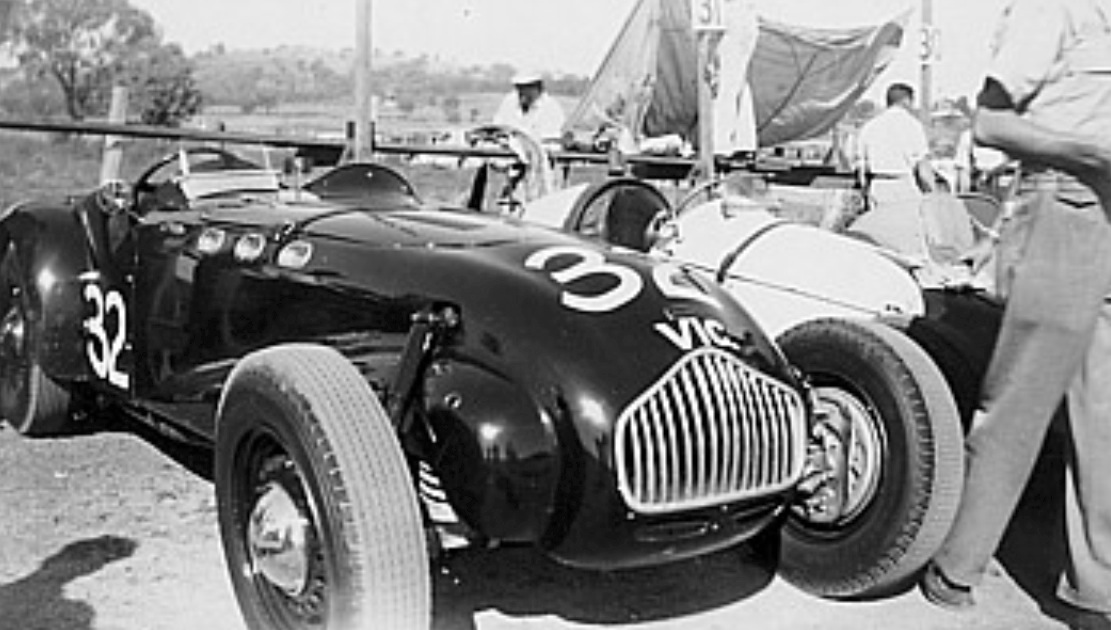

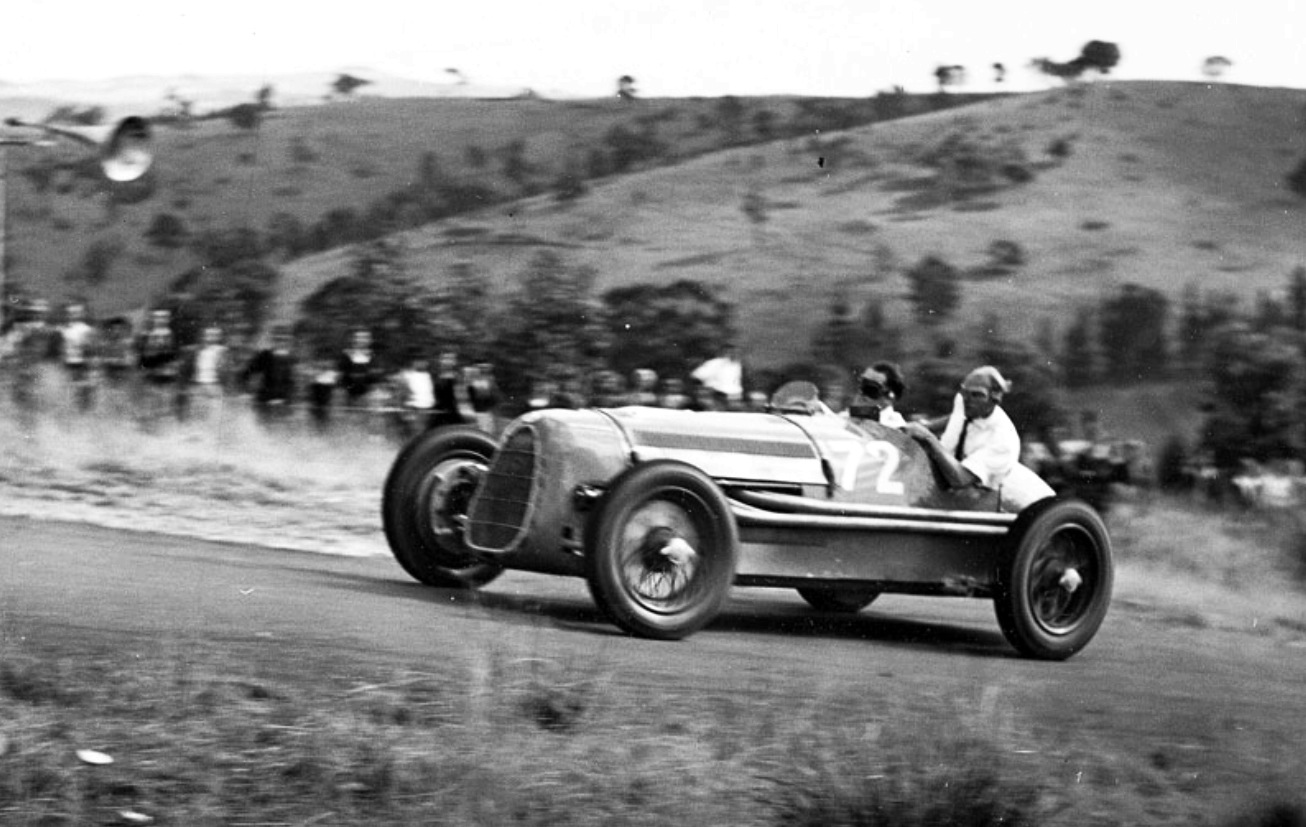
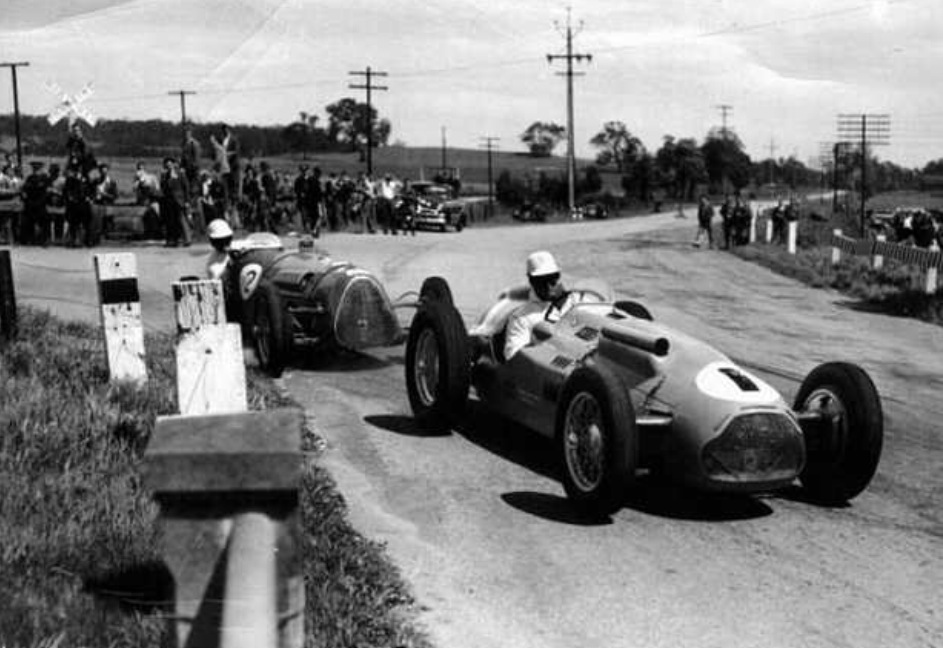


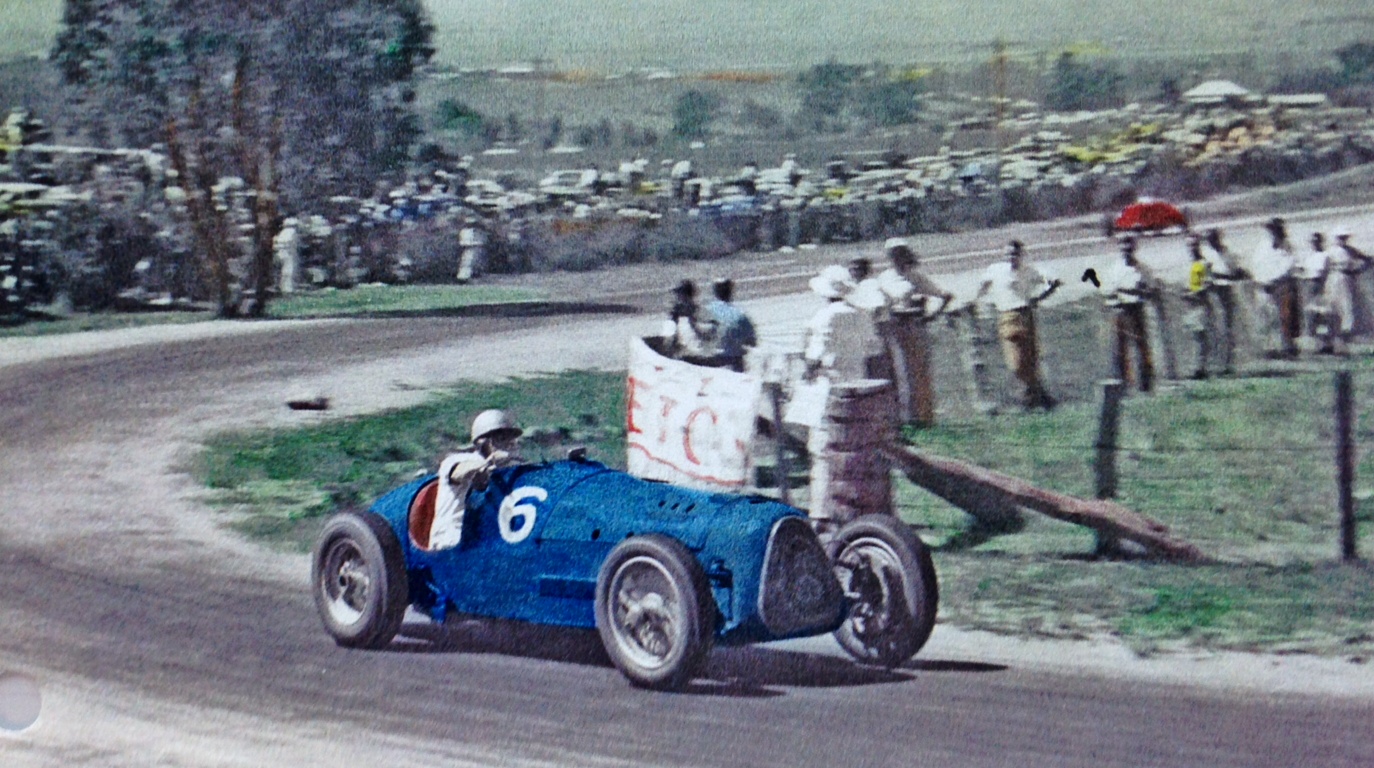
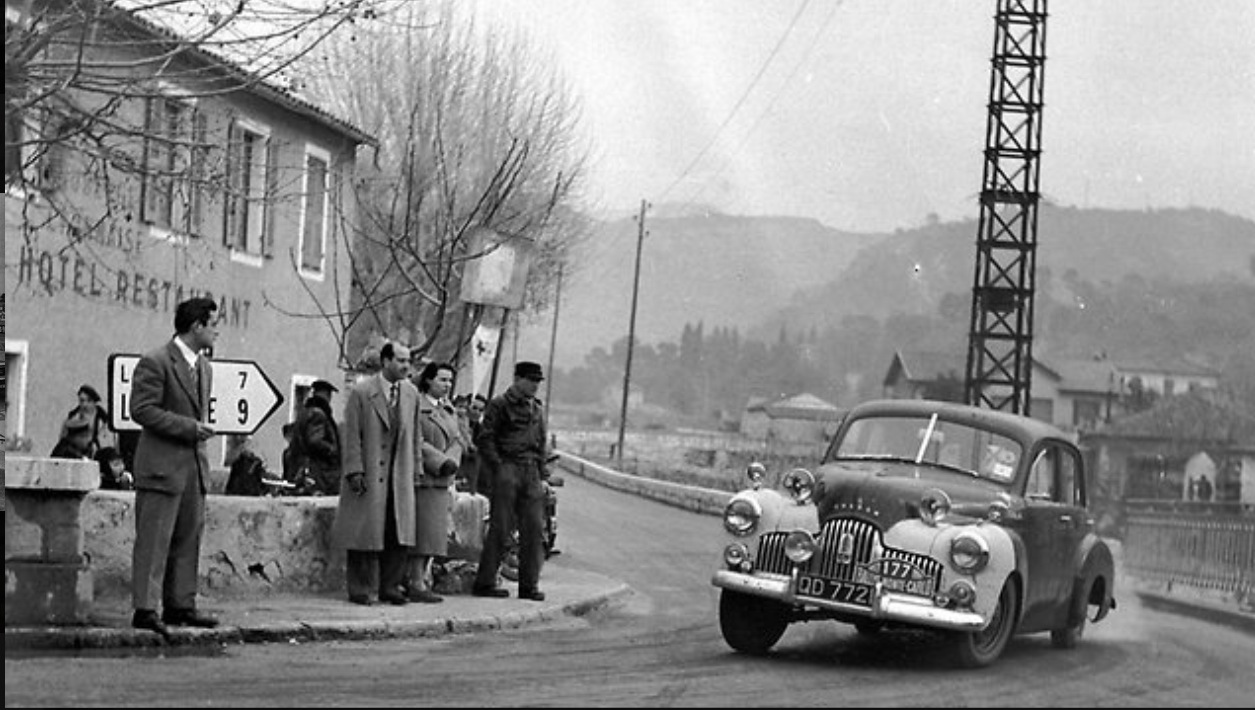


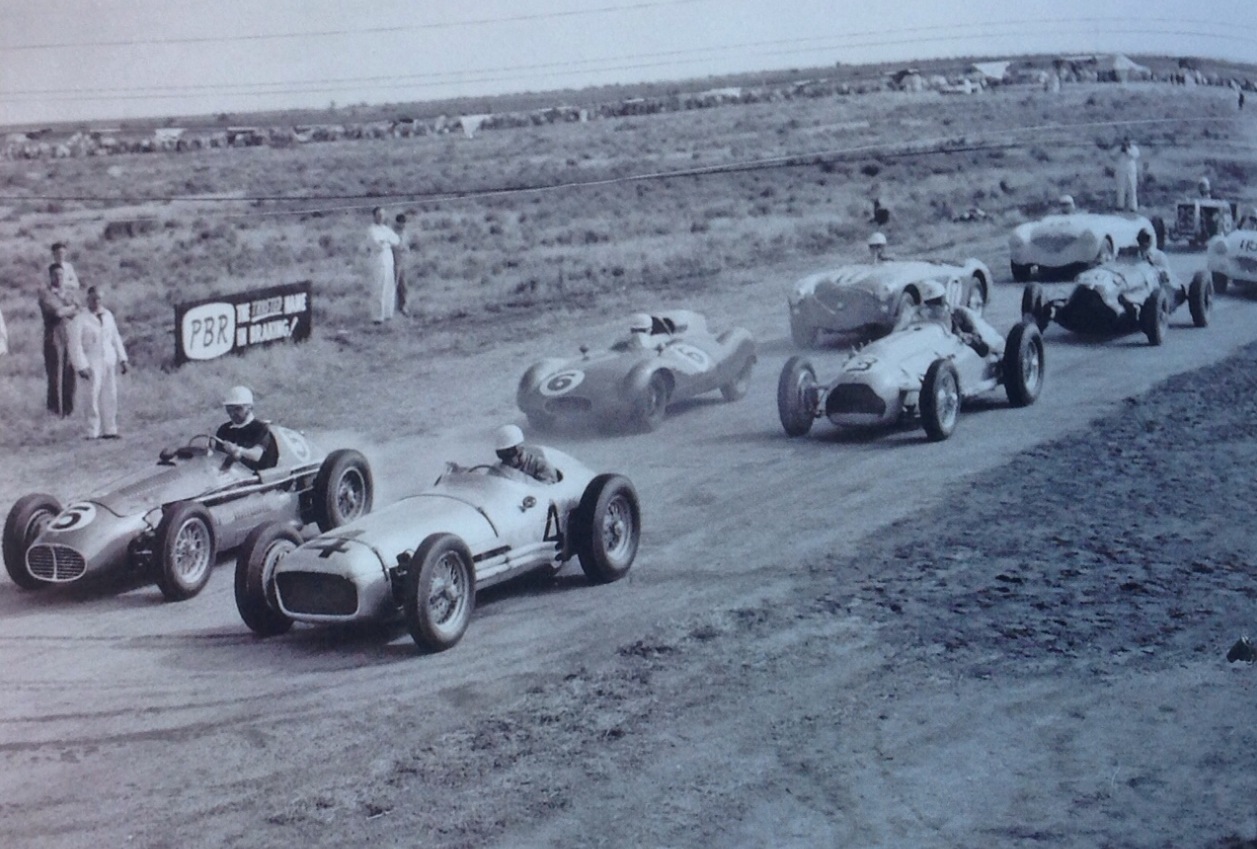


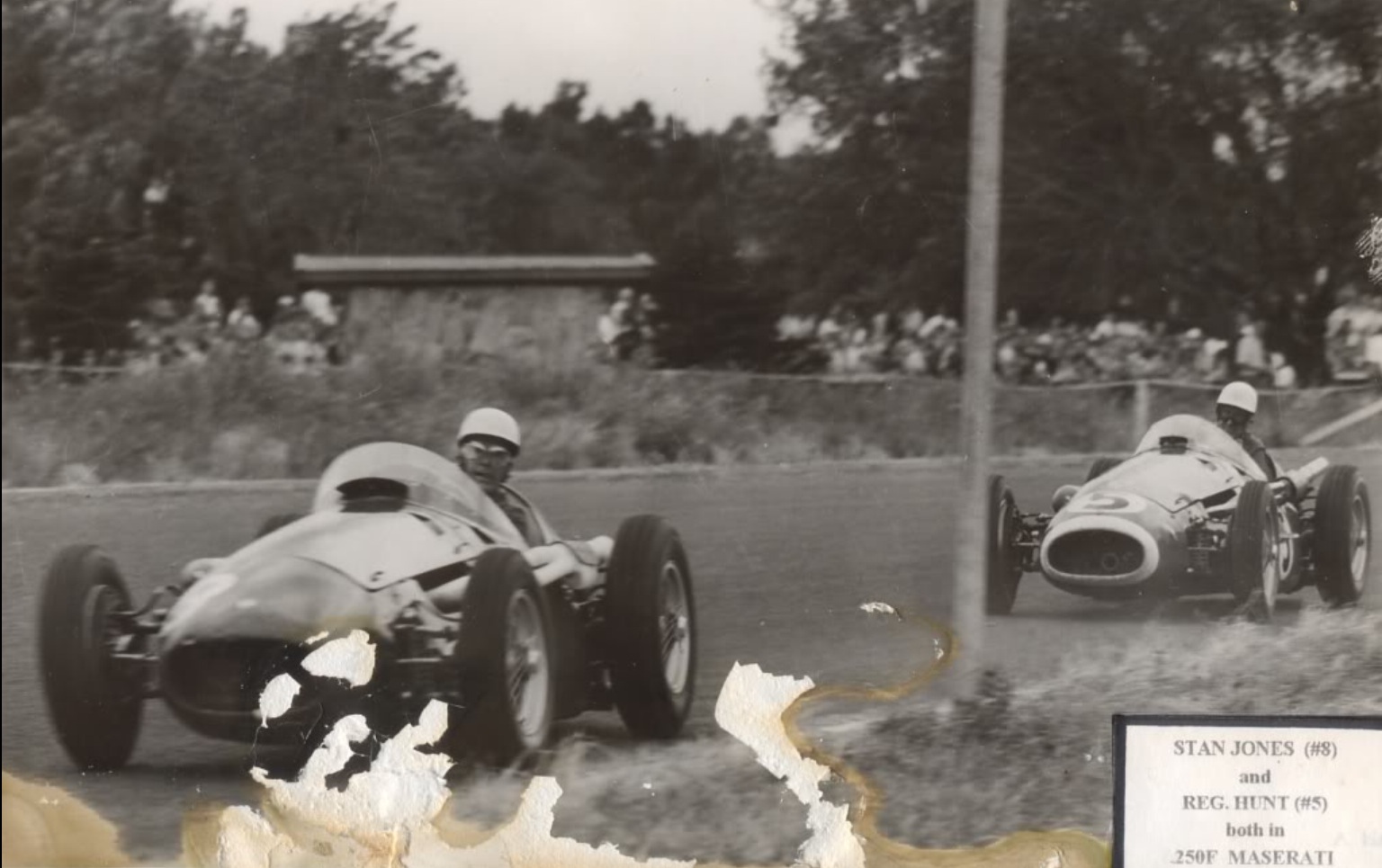

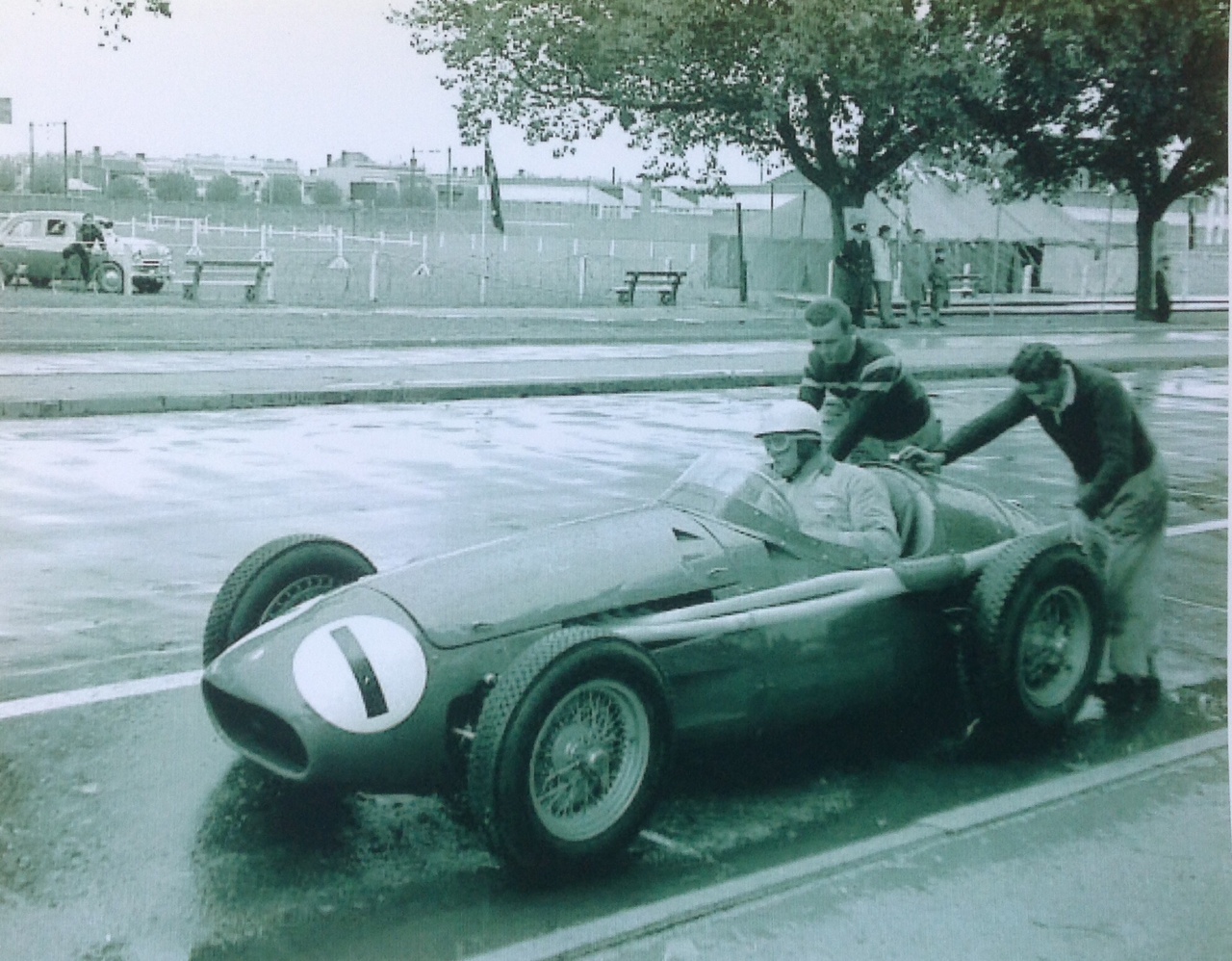


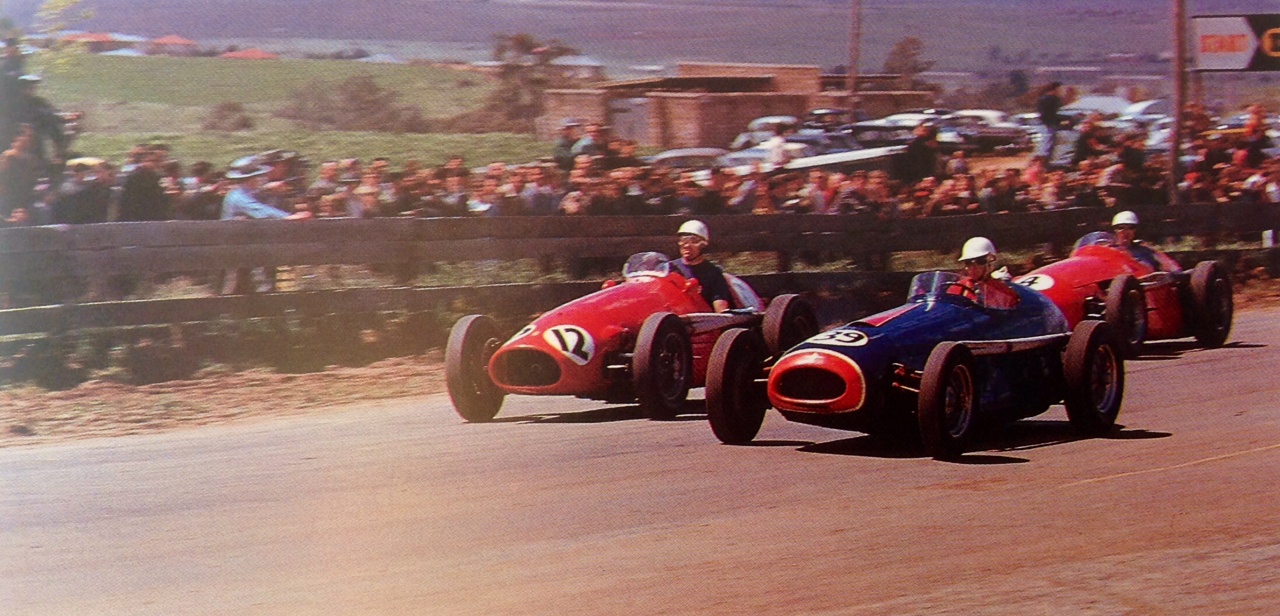

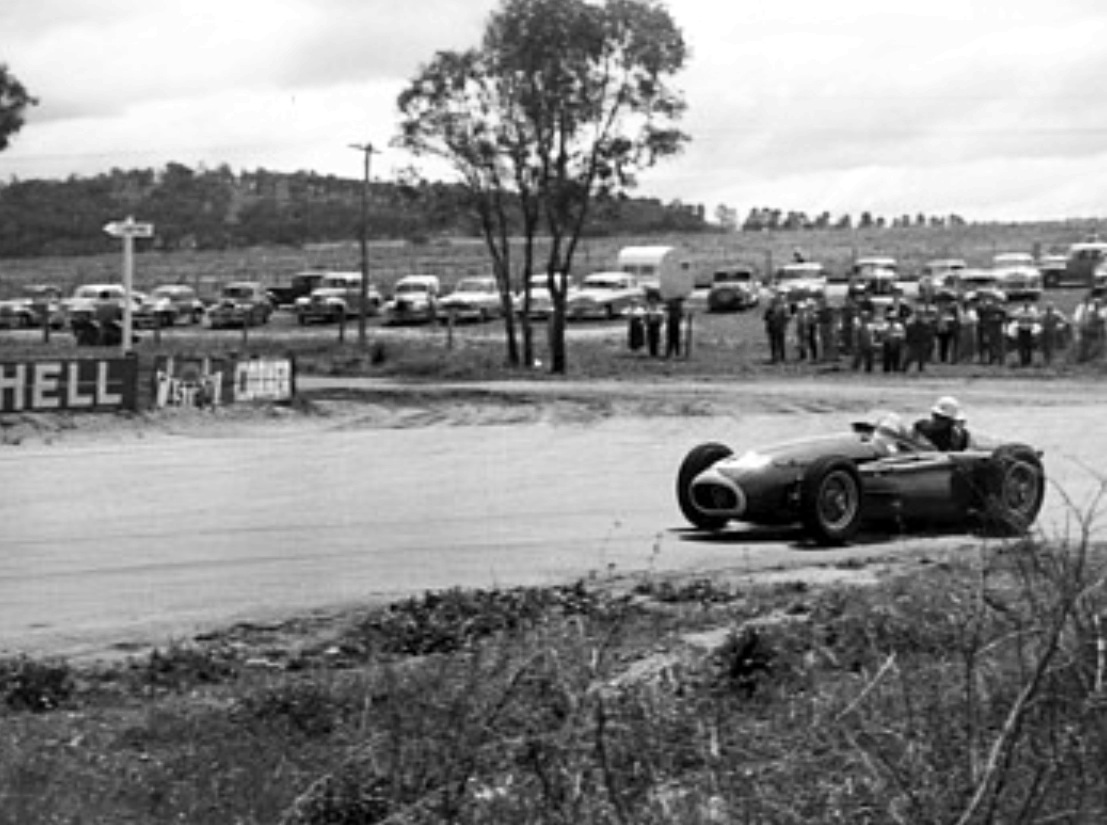
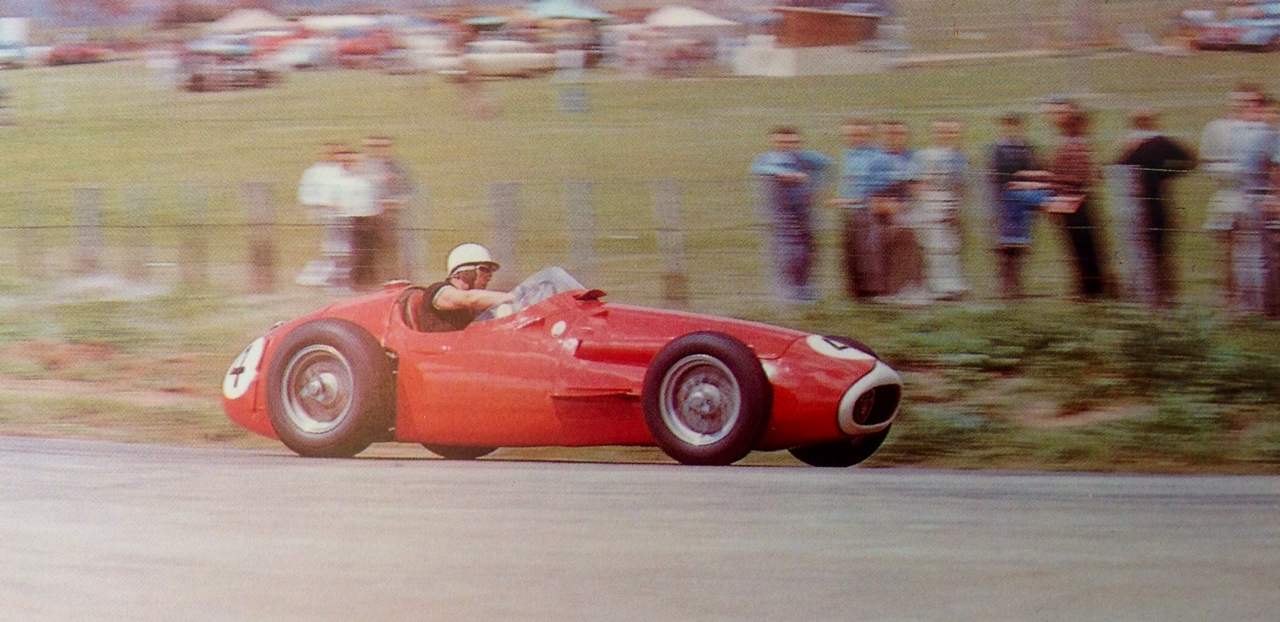


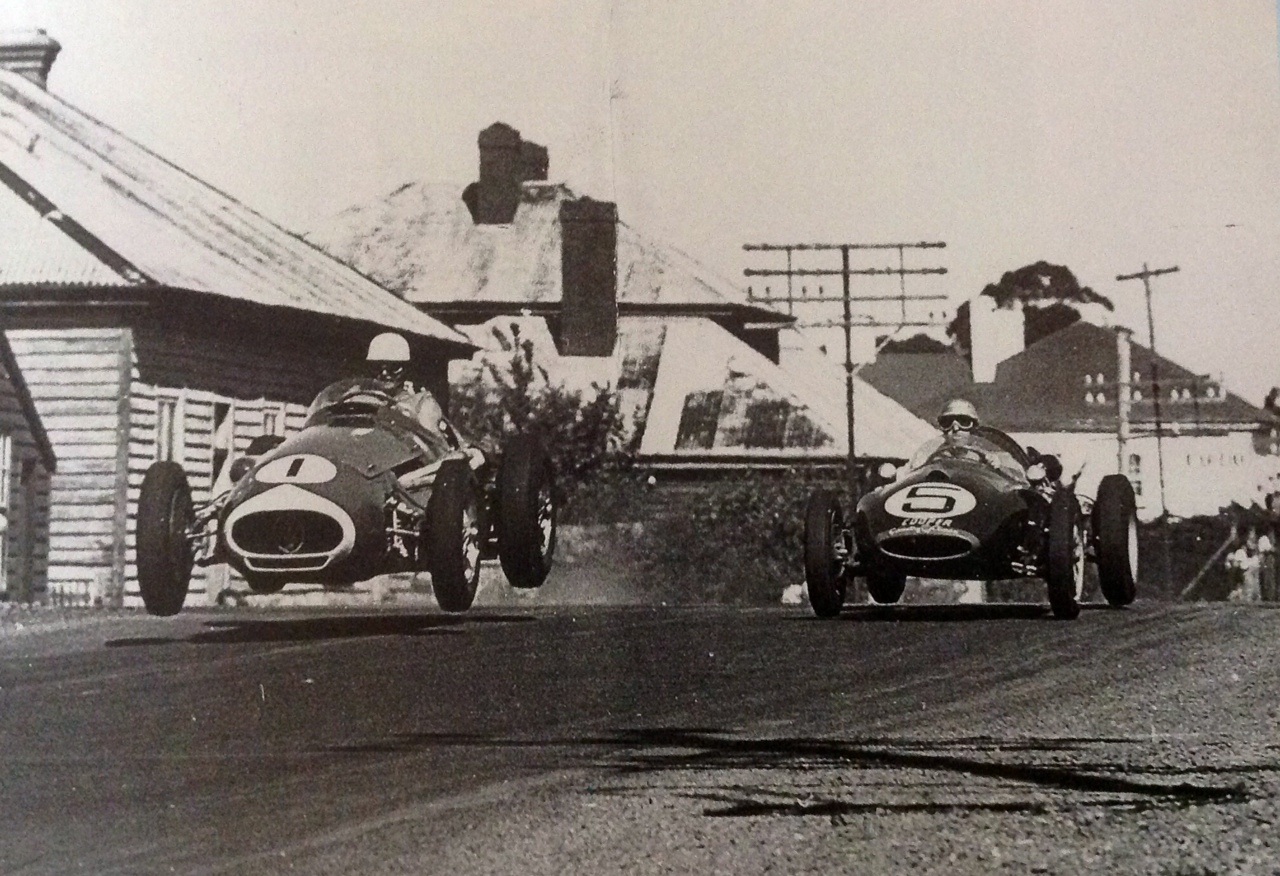


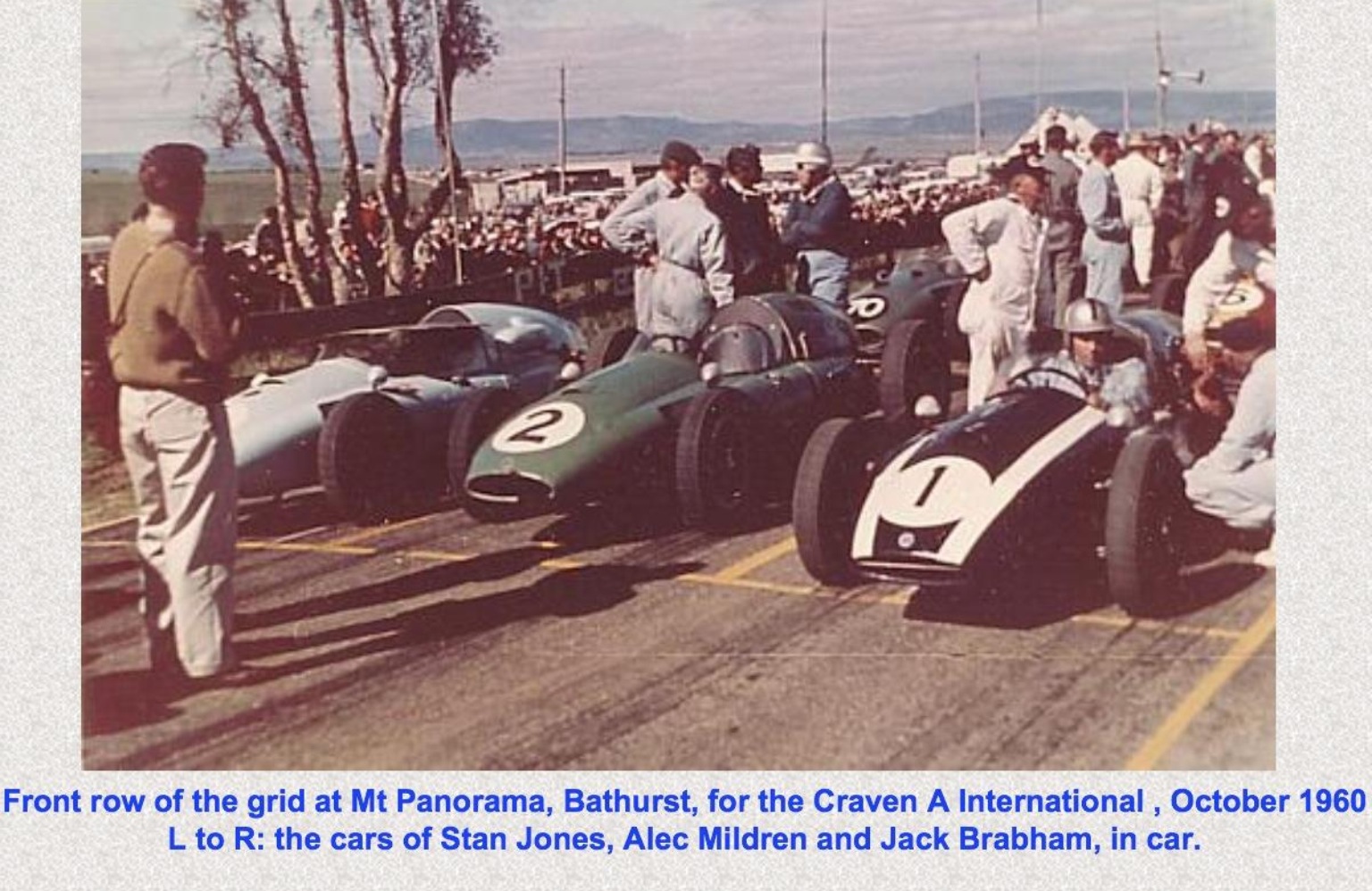
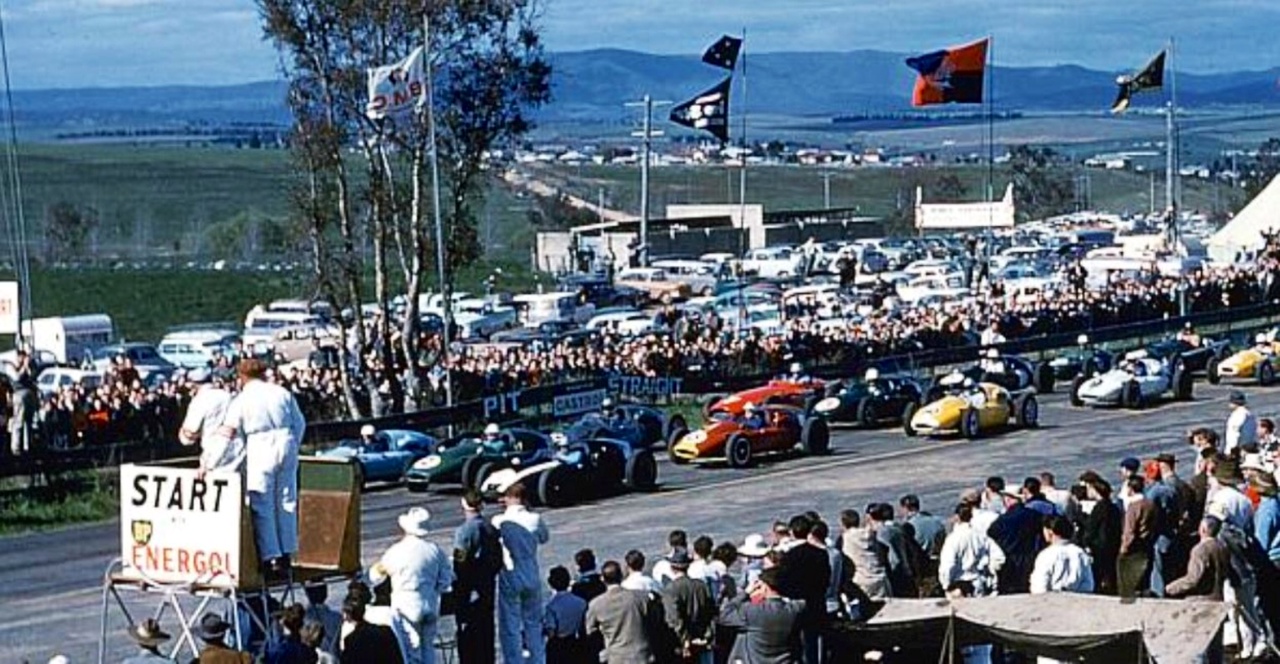

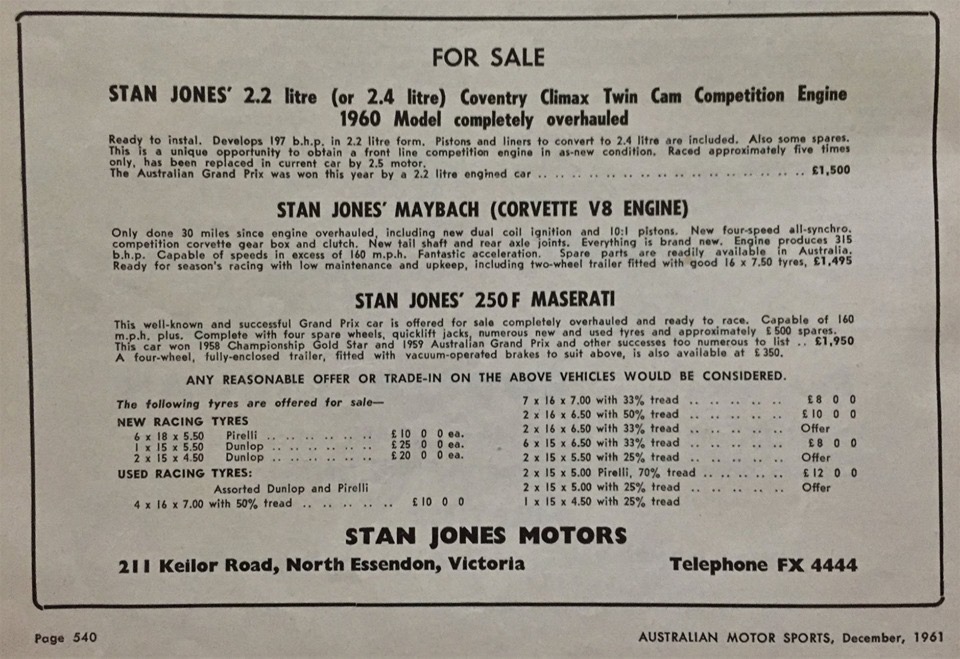
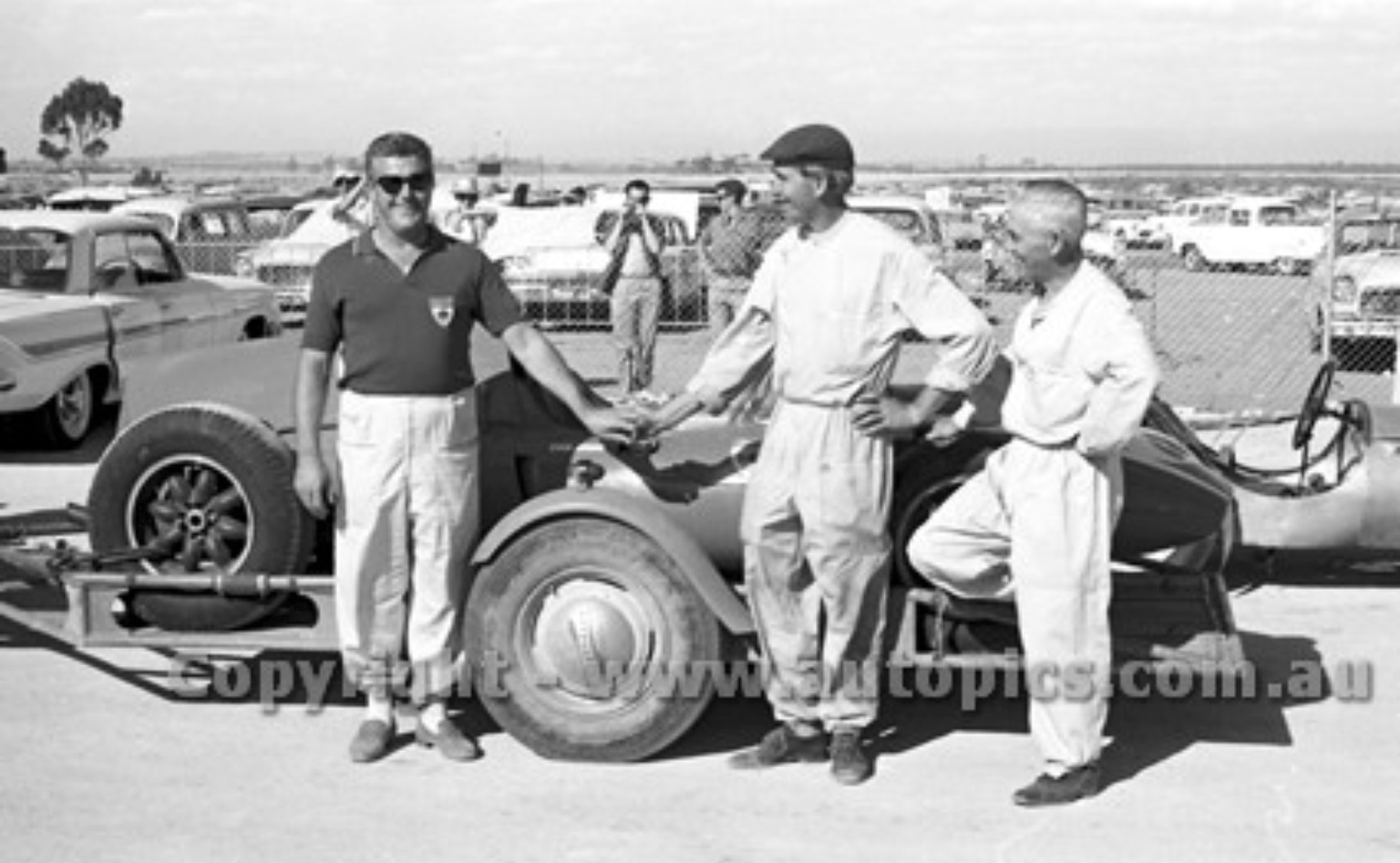
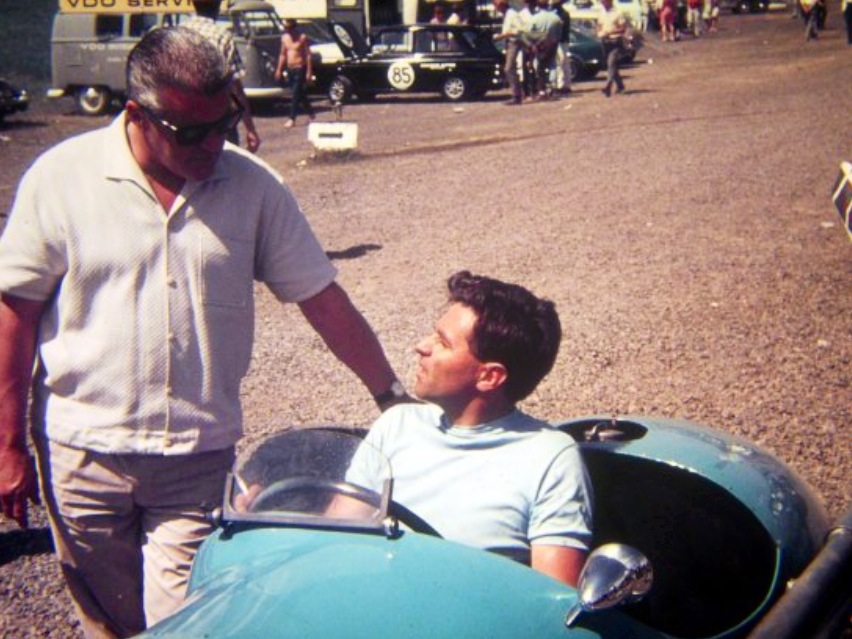

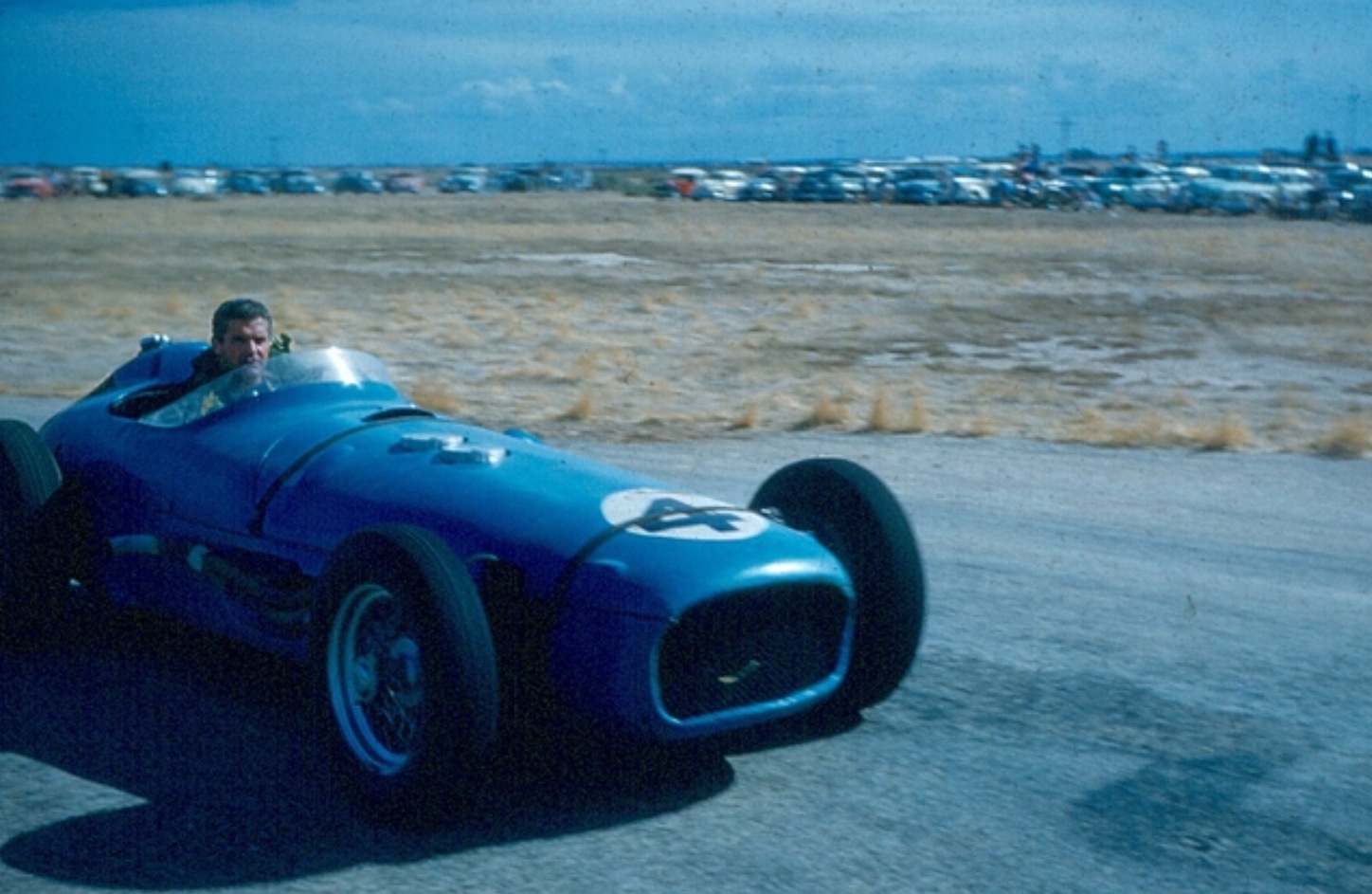


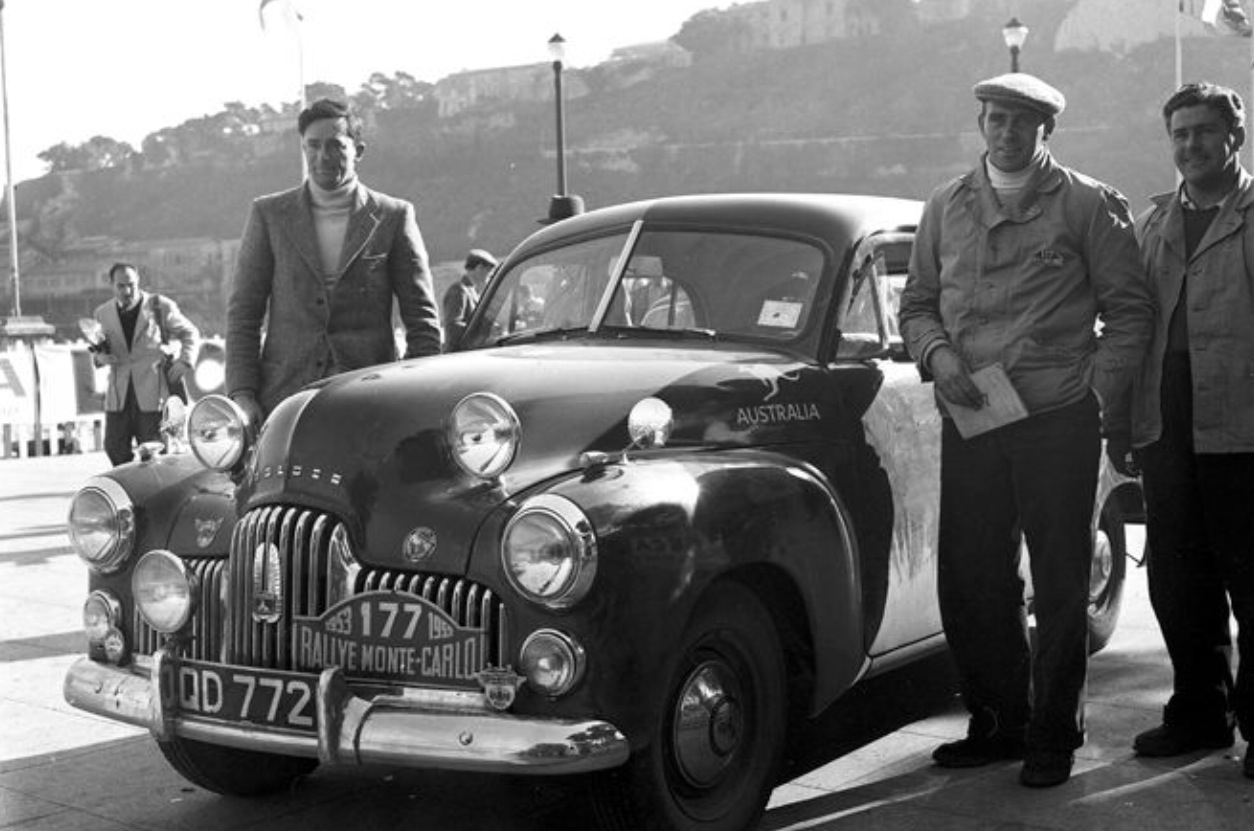
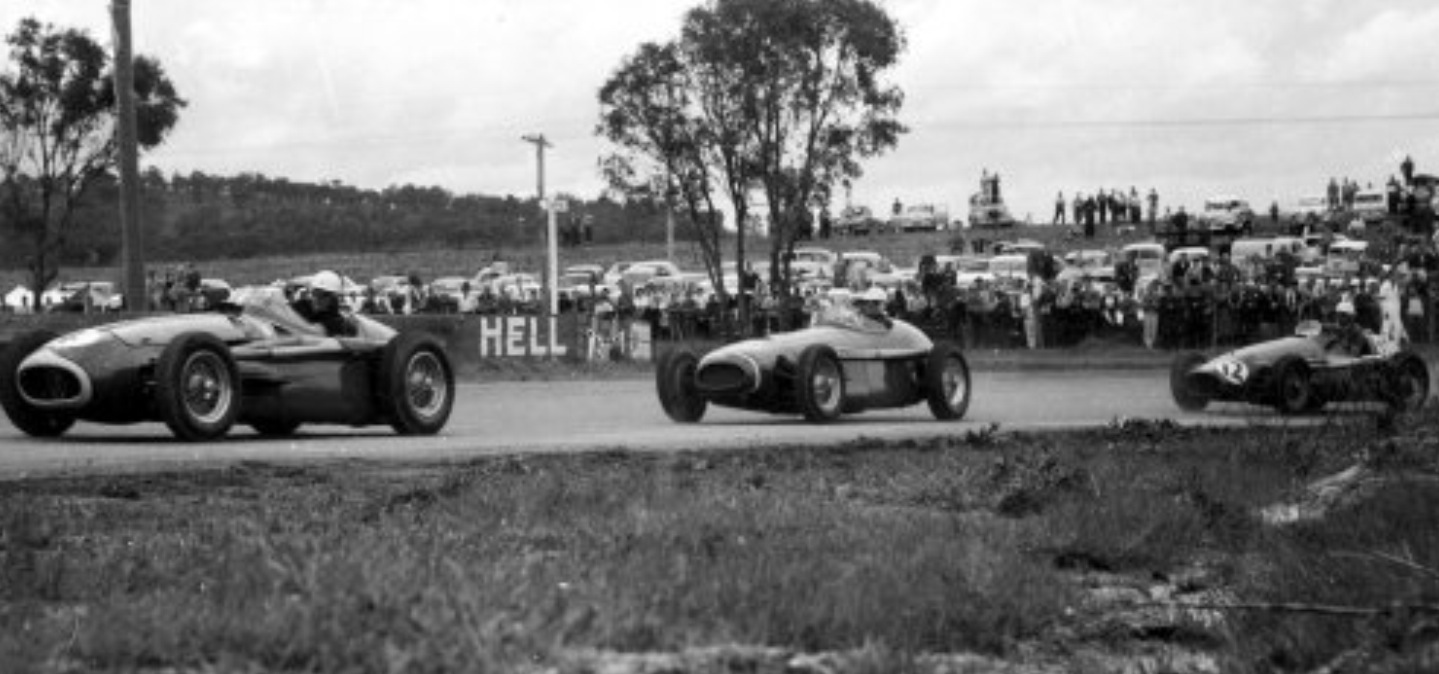


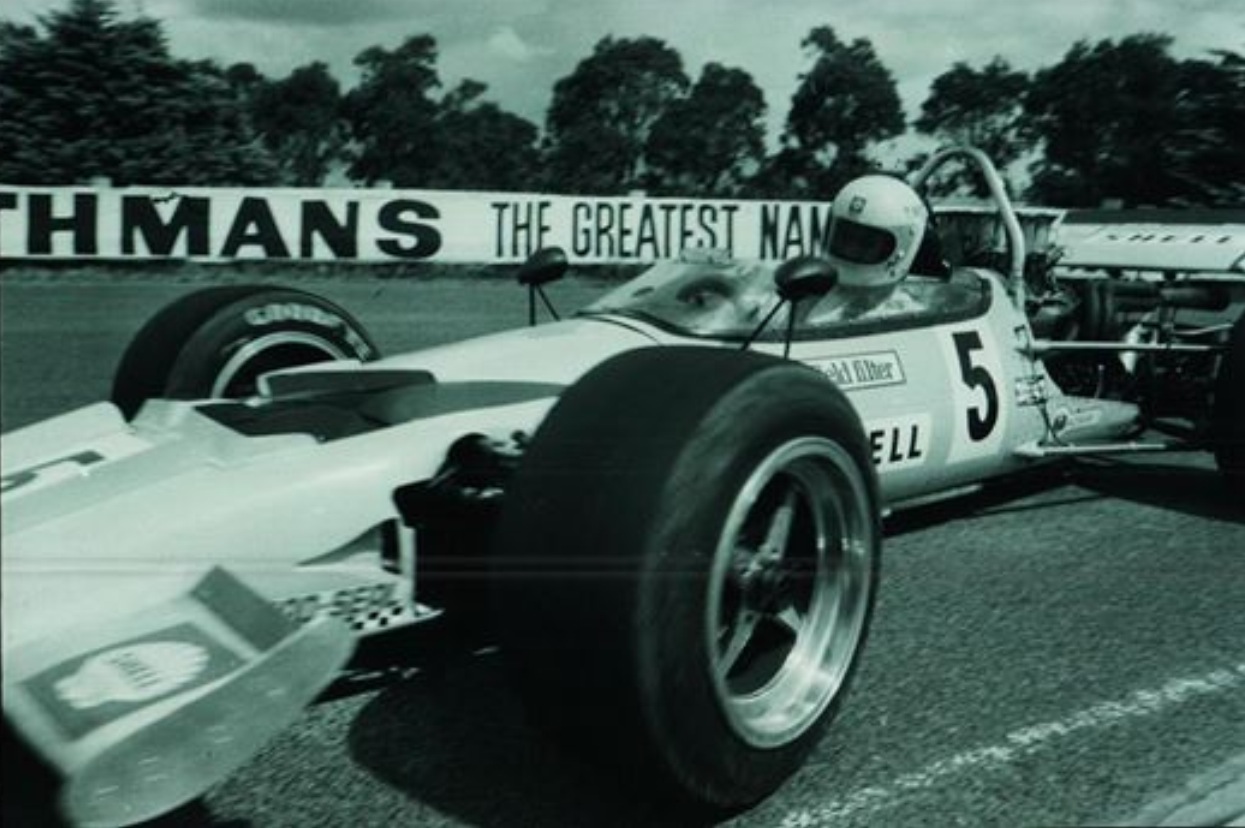


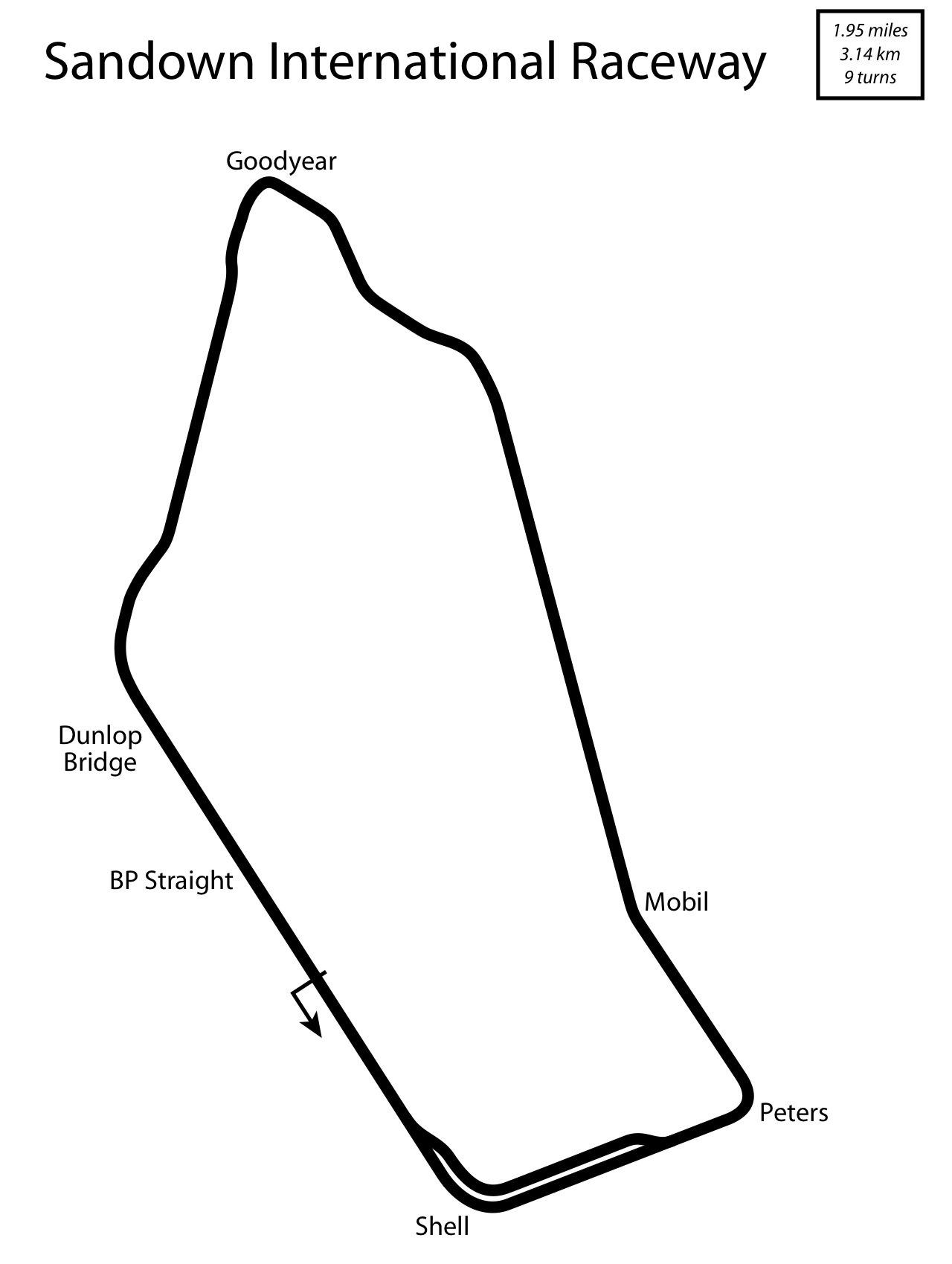
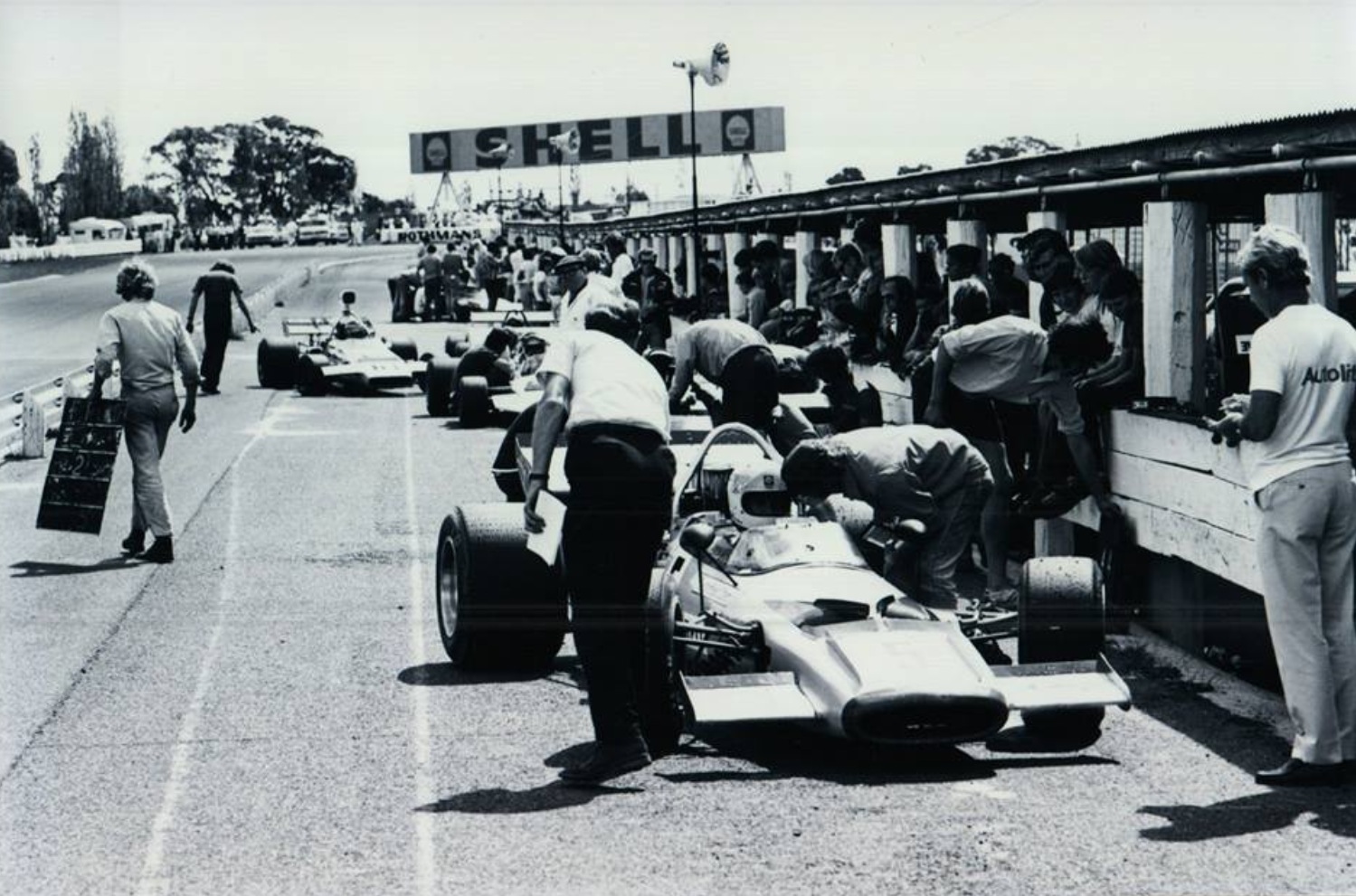
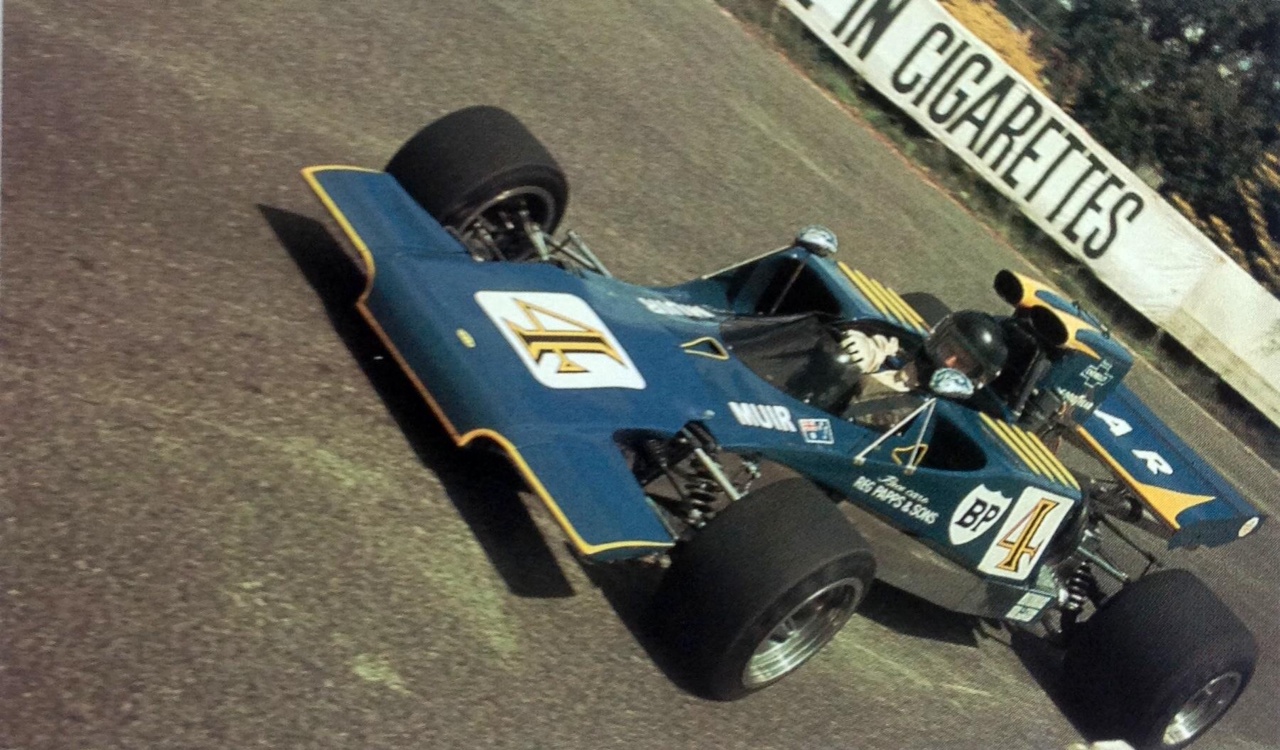
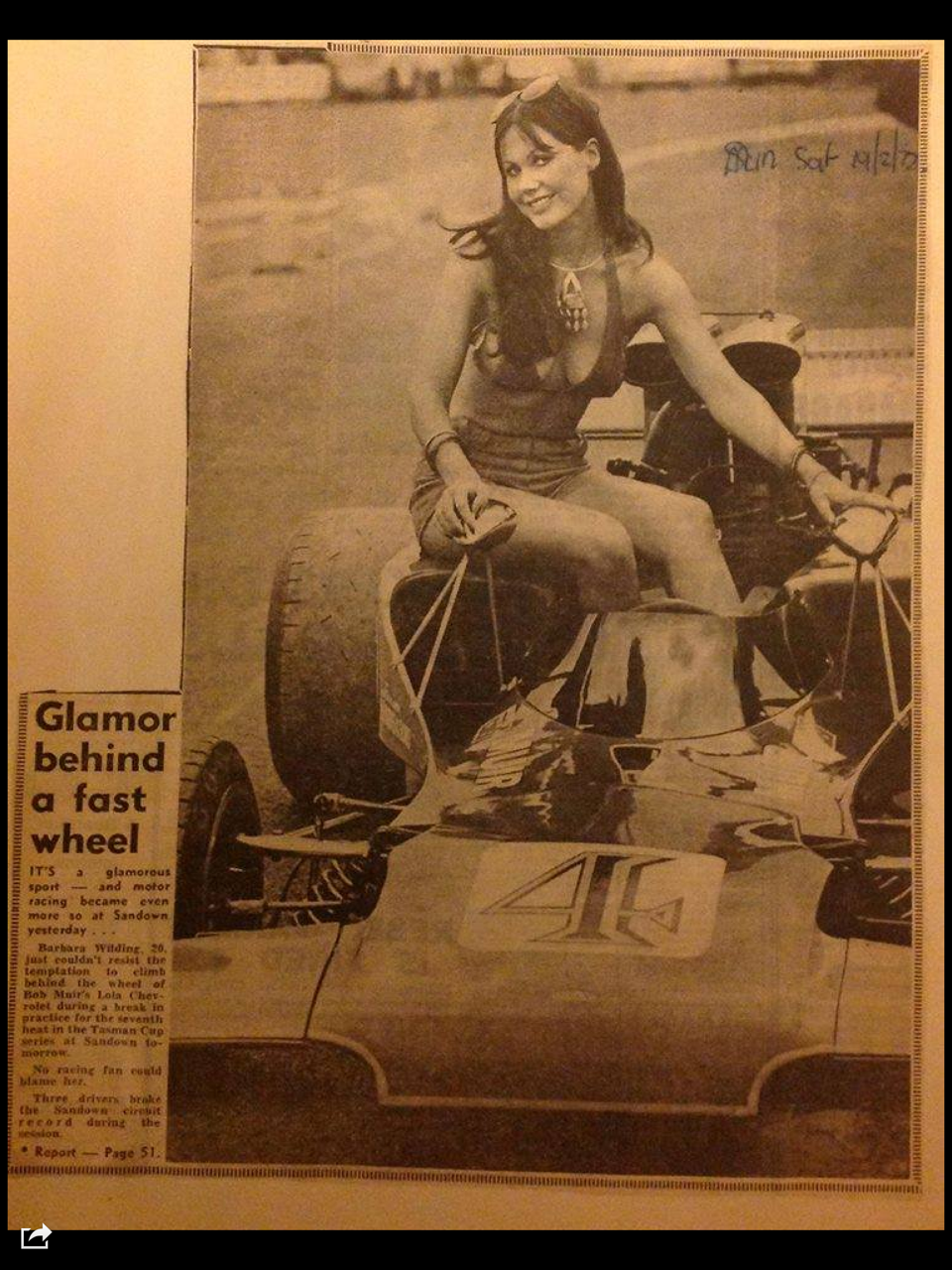
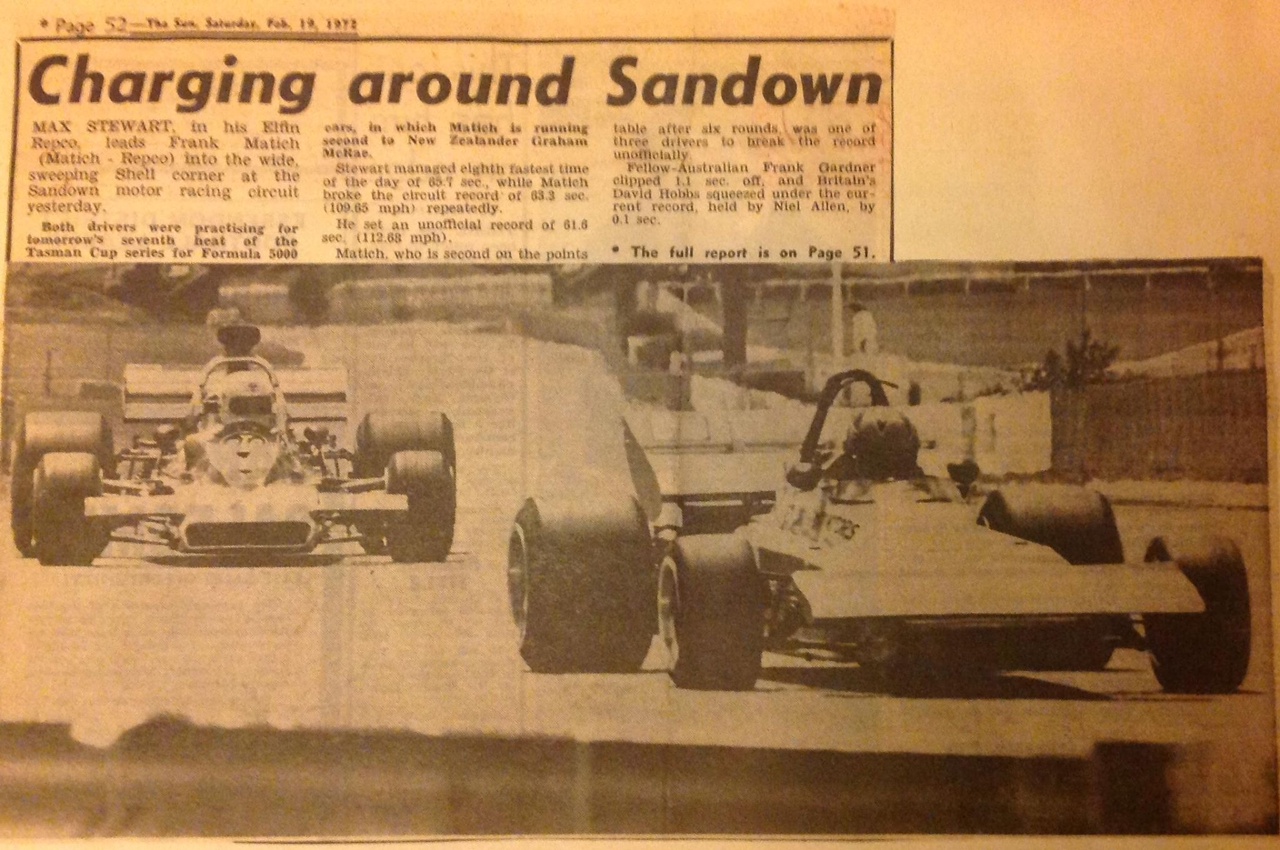
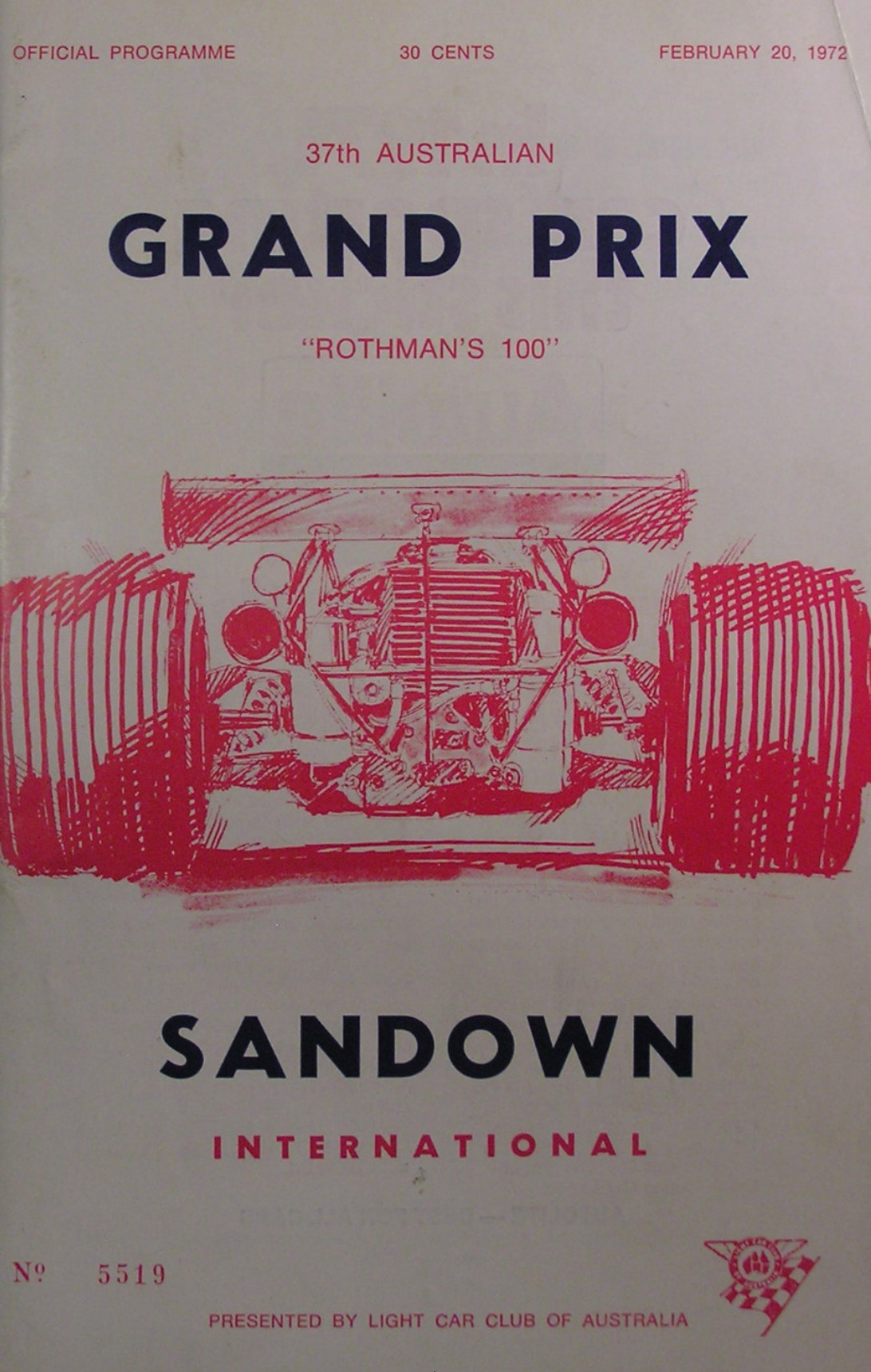


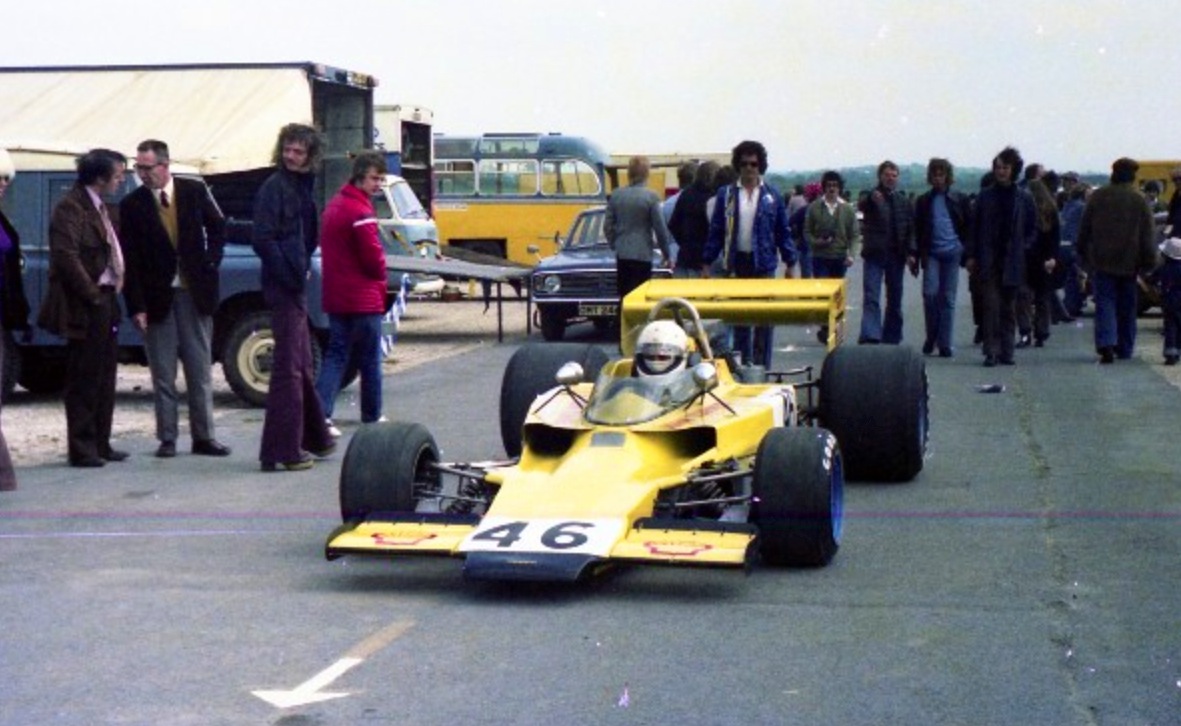




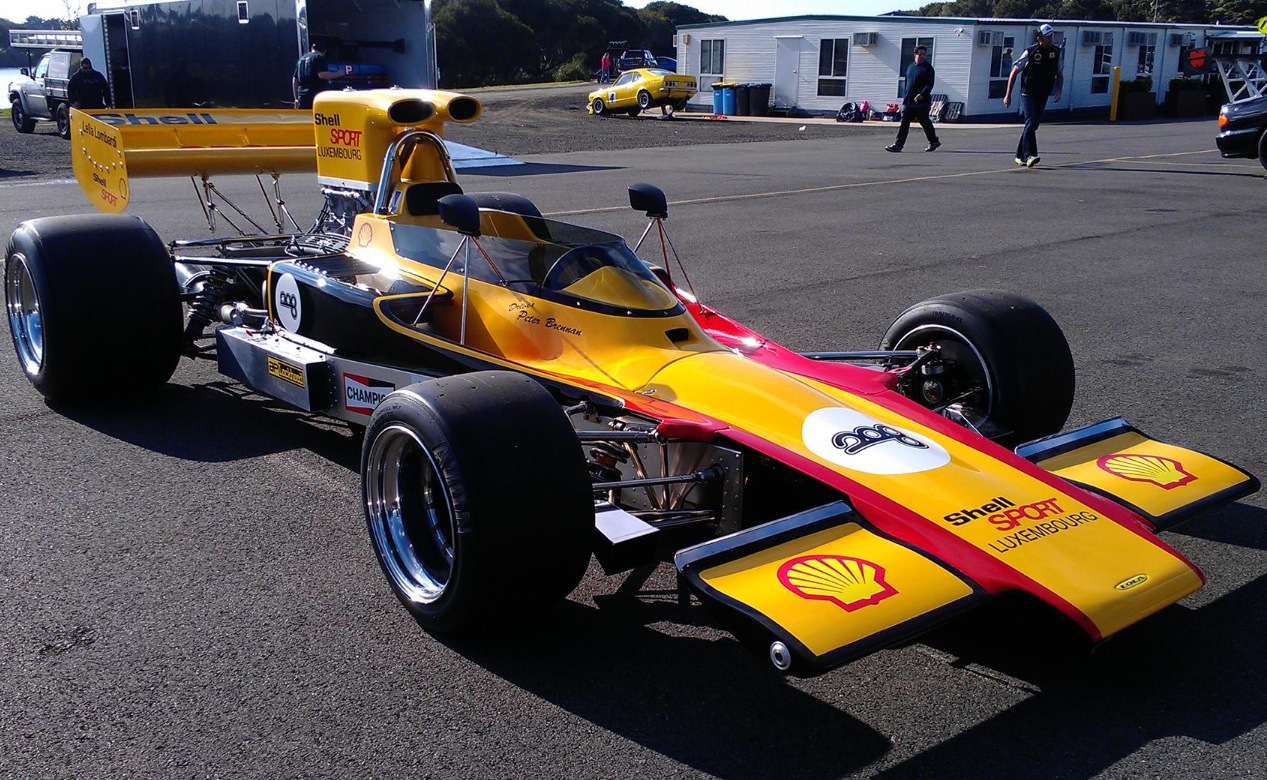


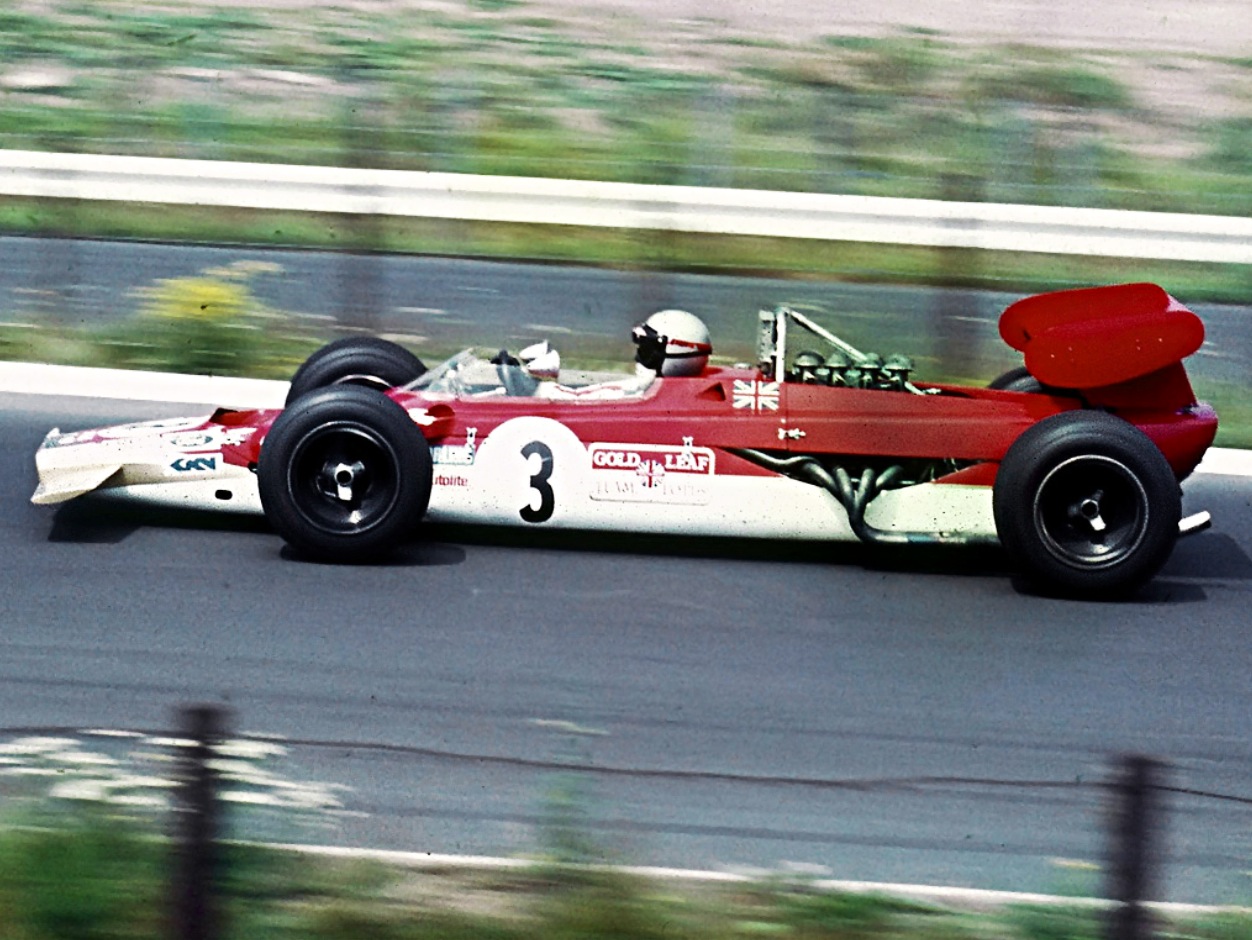

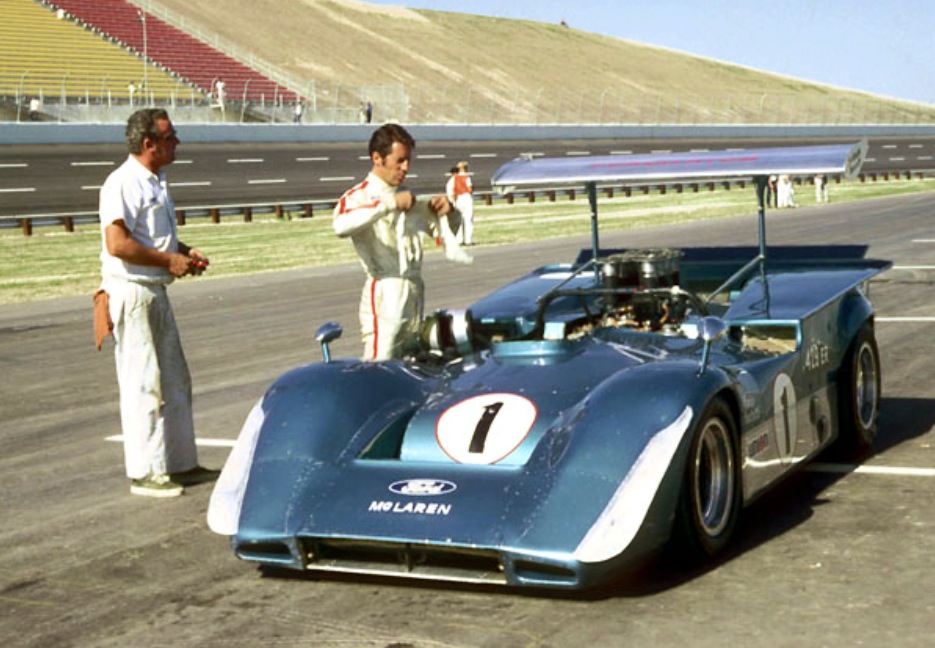

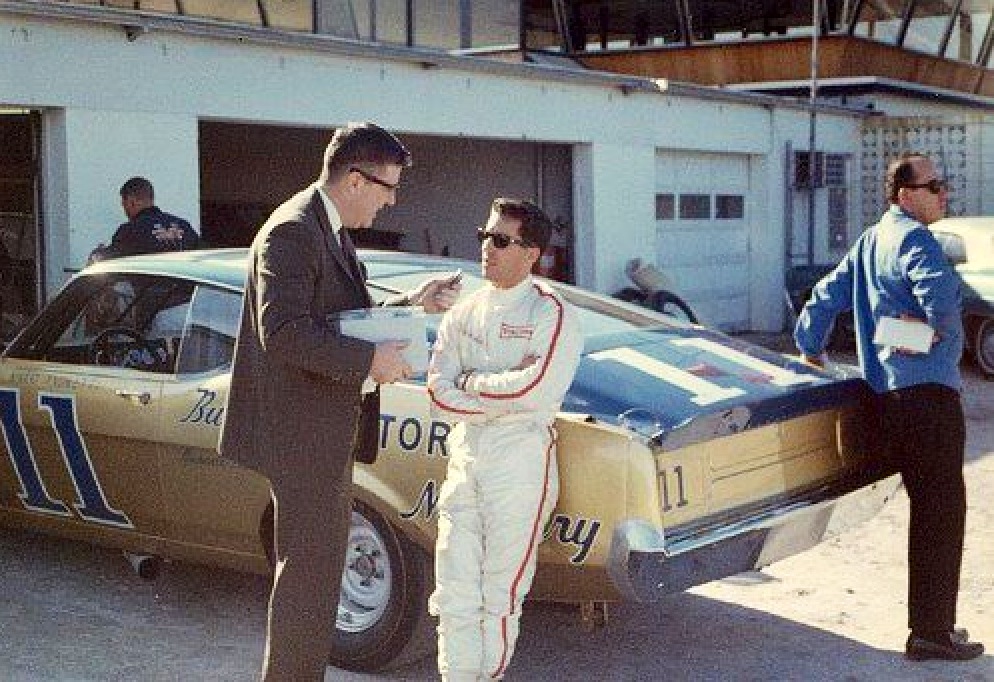

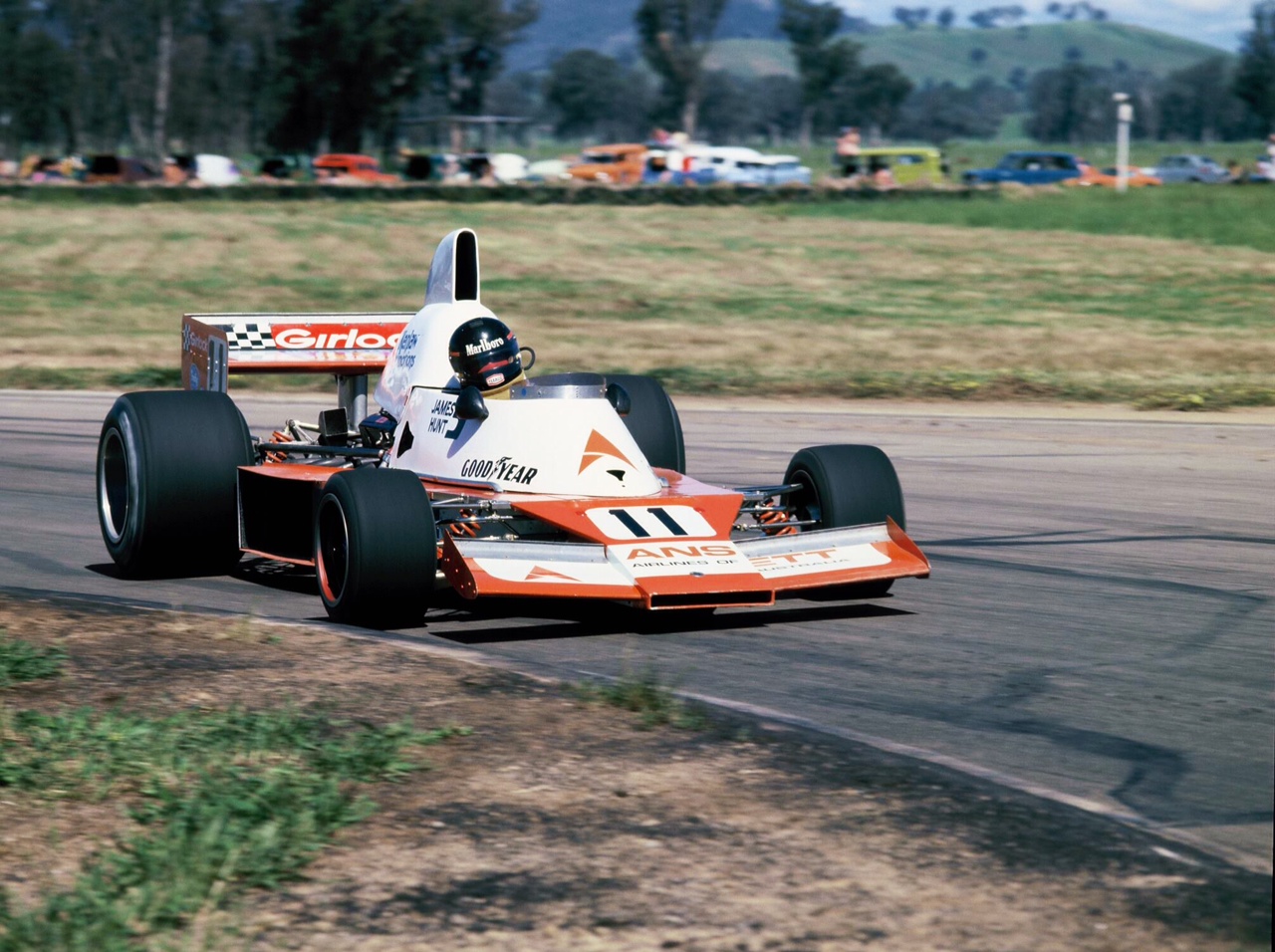

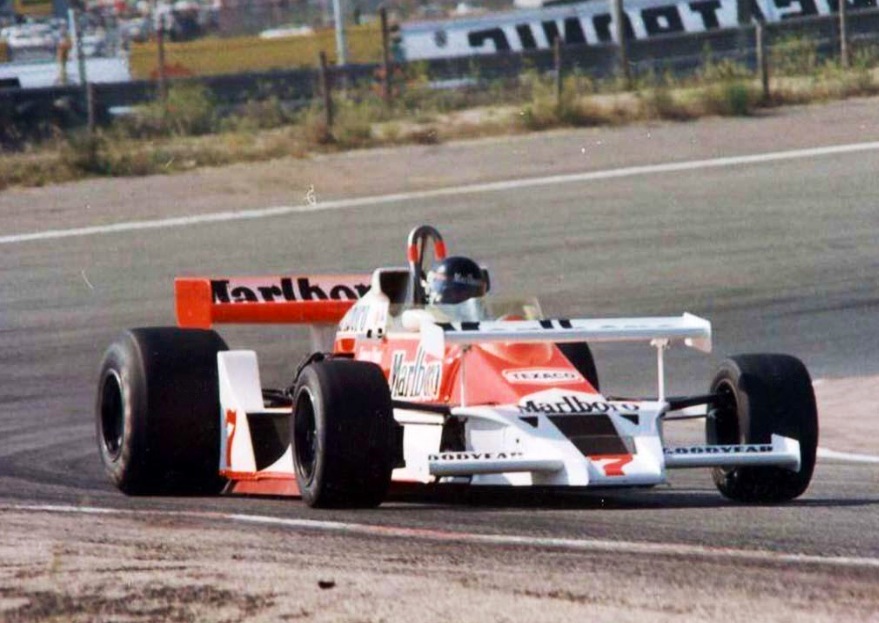

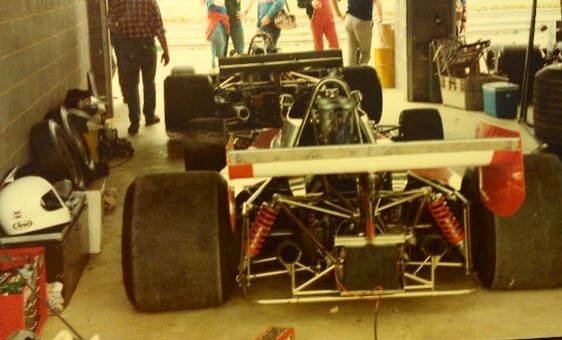
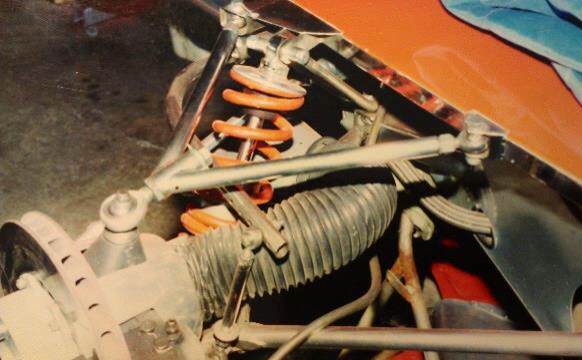






 primotipo...