Archive for the ‘Sports Racers’ Category

image

(VHRR Collection)

Murray Carter blasts his Carter Corvette sporty across the top of Mount Panorama in October 1961, just before the daunting drop into Skyline. The cars fuel injected, 5 litre, 300bhp V8 echoed between the eucalypt trees and into the valley below…

Its such a wonderful shot, he looks lean and lithe-he is only a little bloke, you can see the injection trumpets and ‘maggie’, sitting proud of the unpainted, aluminium bonnet fashioned by Murray’s own hands.

Murray was running 2nd in the 75 mile Australian Tourist Trophy on 1 October, behind Bib Stillwell’s 2.5 litre Cooper Monaco Climax and Frank Matich’s Jag D Type before retiring on lap 8 with diff failure in the 19 lap event. Look closely at the photo and you can see the smoke from a differential which is about to cry ‘enough’!

It was a classy field of great depth, the competitiveness of Murray’s self constructed car amongst the factory built Jags, Aston’s, Coopers, Maserati and Lotus’ clear; as was its top speed, 154mph down Conrod during practice! Stillwell won from Matich and Bob Janes Maserati 300S.

Carter has been around forever. Born in 1931, i thought he looked like an old codger at the first race meeting I attended, the 1972 Sandown Tasman round, the ignorance of a 14 year old. He raced his Ford Falcon GTHO Phase 3 at that meeting in the ‘South Pacific Touring Car Championship’, a series of races held throughout the Australian Tasman Rounds.

Carter Corvette, The Viaduct, Longford 1961 (Langdon Brothers)

image

Carter racing his Ford Falcon GTHO Phase 3 351 V8, at Hume Weir on the Boxing Day weekend in 1971, this is the car in which I first saw him race at Sandown a month or so later (Dick Simpson)

An out and out racer, he still runs a Corvette C5 in Victorian race meetings the car prepared in his Moorabbin workshop, in Melbourne’s southern bayside suburbs, where all of his cars have been built down the decades.

Murray raced other cars but for years was a Ford stalwart, never a factory driver but the recipient of plenty of assistance from Broadmeadows. He was no slouch either, 2nd in the Australian Touring Car Championship in 1975 in a Falcon GT 351 Coupe and 4th in 1980 in a similarly powered Ford Falcon XD, his best performances. At Bathurst his best finish was 3rd in 1978 in a Ford Falcon XC GT Coupe this time sharing with single-seater ace, Kiwi, Graeme Lawrence.

image

Carter pictured in his Ford Falcon XB GT351 Hardtop/Coupe at Hell Corner, Bathurst in 1975. He was 2nd in the ATCC that year in this car, the title won by Colin Bond in a Holden Torana LH SLR5000/L34 5 litre V8. At Bathurst he shared his car with Ray Winter, a very quick F2 driver, Murray qualified the car 7th but DNF after only 53 laps. Brock and Brian Sampson, another driver who has raced until a road accident put paid to his racing, forever, won in an L34 Torana (unattributed)

Like so many drivers he started racing bikes, campaigning a Triumph Tiger 100 at circuits like Fishermans Bend in 1948, aged 17 before switching to cars with a Jaguar XK120.

In search of more speed but as a panel beater unable to afford a factory car he set forth to create a more competitive mount. His original intention was to build a mid-engined single-seater to compete in Gold Star events, Australia’s National Drivers Championship, which was run to F Libre at the time.

Unable to locate a suitable transaxle to cope with the 283cid Chev’s power and torque, Murray placed the relatively light, small block Chev well back in his space frame chassis locating the 4 speed box behind it. He achieving 50/50 front/rear weight distribution that way.

image

Murray aboard the car in its original single-seater form at Phillip Island in March 1960. The car was all but destroyed at this meeting after Murray and Bib Stillwell swapped contact. Note the Cooper wheels, vestigial body and short exhausts. Very simple-and fast. Spaceframe chassis, upper and lower wishbone front suspension with coil spring/damper and well located solid rear axle again with coil spring/dampers. Other car on the grid anyone? A Cooper Bristol perhaps? (autopics.com)

The car raced in chassis form with vestigial panels to support a race number at Fishermans Bend in October 1959. It was immediately competitive, even achieving 4th place in the Philiip Island Gold Star round, behind the Coopers in December 1959.

Back at Phillip Island in March 1960, he had an argument about local real estate with Bib Stillwell and came off second best, rolling the car and all but destroying it.

image

Murray racing the Carter Corvette in a support event, at the international meeting held at Ballarat Airfield, Victoria in the summer of 1961, 12 February. Is that George Spanos’ Elfin Streamliner Coupe in the pits-he still owns that car 60 years later! The feature race, the Victorian Trophy was won by Dan Gurney from teammate Graham Hill, both in 2.5 litre BRM P48’s (autopics.com)

Carter at Calder in the early sixties, Carter Corvette (J Wishart)

Looking at the plethora of Cooper T51’s coming into Australia and at the growth of sportscar racing, he decided to rebuild the car as a sportscar constructing the functional aluminium body himself. The Carter Corvette reappeared at in October 1960.

The car was immediately successful, winning races and holding lap records around the country.

When CAMS adopted Appendix K, GT Racing in Australia, Carter modified the car with vestigial coupe bodywork. Whilst it looked as ugly as sin it remained fast finishing the one race 1963 Australian GT Championship in 2nd place at Calder. The event was won by Bob Jane in his factory built LWT Jaguar E Type, a car acquired with rather a greater budget than Murray’s beast!

image

Carter in the ‘orrible looking but fast Carter Corvette after the addition of a roof to allow it to comply with new regs introduced by the CAMS. Windscreen thought to be an FE or FC Holden rear window mounted upside down. The boy from Moorabbin was a clever improviser! (Dalton)

Eventually the car fell into disuse but still exists, wonderfully restored by the talented Lou Russo in 2007 or thereabouts, and driven by his son Michael in historic events. Meanwhile, Murray Carter, forever young at 86, races on…

image

Carter pictured with one of his old ‘HO’s lovingly restored, in recent times. Car is the Phase 3 HO pictured above at Hume Weir, in its war paint carried during the 1972 Bathurst 500 in which Murray was 10th. Globe alloy wheels homologated not long before the ’72 500 made these beasts look a treat! (carcavalcade.com)

Credits…

VHRR website, Stephen Dalton Collection, Peter D’Abbs/autopics.com, John Wishart, Langdon Brothers, John Medley ‘Bathurst: Cradle of Australian Motor Racing’

Tailpiece: Bob Jane’s lightweight E Type leads the Carter Corvette at Calder…

image

(Dalton)

Finito…

image


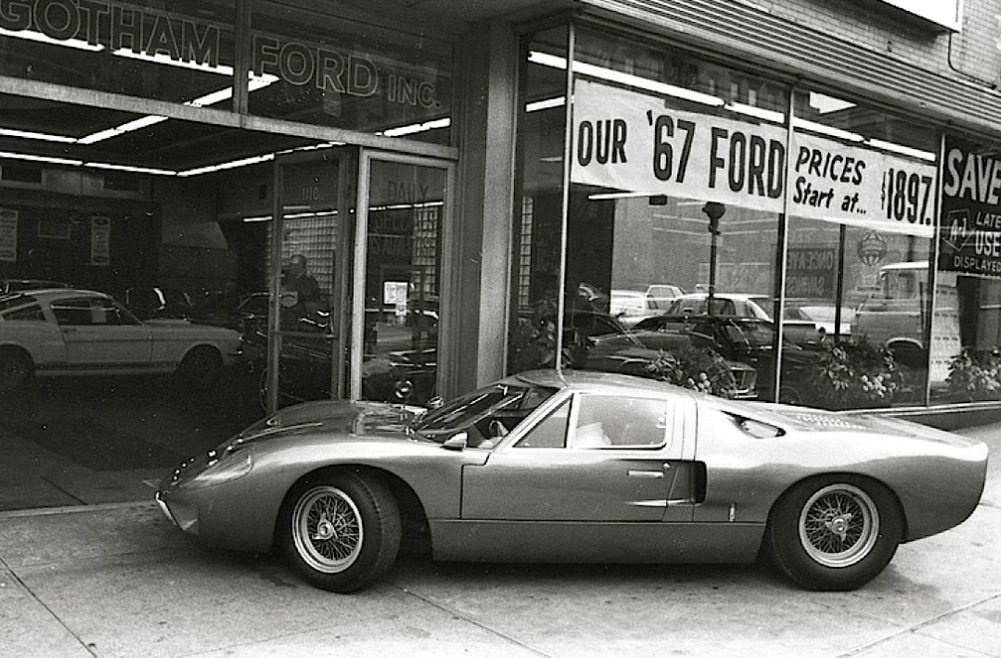
I wonder how much it was? ‘Gotham Ford’ does have a touch of the ‘Batmans’ about it doesn’t it…

Not too many of these GT40 ‘road cars’ were built, maybe one of you knows which chassis this is?

image

Credit…

Unattributed

image

Roger Penske fits the mould of racer-billionaire rather nicely, as a model he doesn’t look quite so comfy…

I found these Zerex Special shots, as is so often the case lookin’ for something else. They are interesting in an historical context in the journey this chassis took. F1-16-61 was built as a Cooper T53 GP car then converted into an edgy central seat sportscar by Penske and his team. It then evolved into a two-seater and finally passed into Bruce McLaren’s hands as a foundation piece in his journey to ultimate Can-Am domination a few years later.

So, in the McLaren pantheon, its an important car. I wrote about it early in 2015, click here to read the article; https://primotipo.com/2015/03/19/roger-penske-zerex-special/

image

Cooper fans will easily pick the origins of the chassis. Both the photo date, September 1963, and the two equally sized seats reveal this as the third evolution of the car.

When the SCCA regulators, aided and abetted by some very cranky competitors and car owners cracked- the-shits with Roger’s innovative Rule Bender they re-wrote the regs to ensure sportscars were two seaters rather than Rogers seat-and-a-bit approach. This is the bendy-tube rebuild of the car at that time to meet the new rules…

Credit…

James Drake

Tailpiece…

image

Finito…

image

This photo of the ‘Lady in Red’ was originally published in the UK’s ‘Picture Post’, but the caption is devoid of all the information we want; car, driver, place. The date of the pic is 20 September 1952…

It’s a C Type Jag, it looks like Stirling Moss, maybe some of you Brits can help with the meeting place and date?

Reader David Scothorn got in touch to advise that the photo, taken by Zoltan Glass, was probably during the August 1952 meeting at Boreham.

The lady is ‘…wearing a Dior style coat, modelling it to show off a winter collection. As far as the lady is concerned we have no leads there. We’ve tried various Google searches and face recognition but nothing has turned’. Its great that part of the mystery is solved!

Credit…

Zoltan Glass, David Scothorn


image

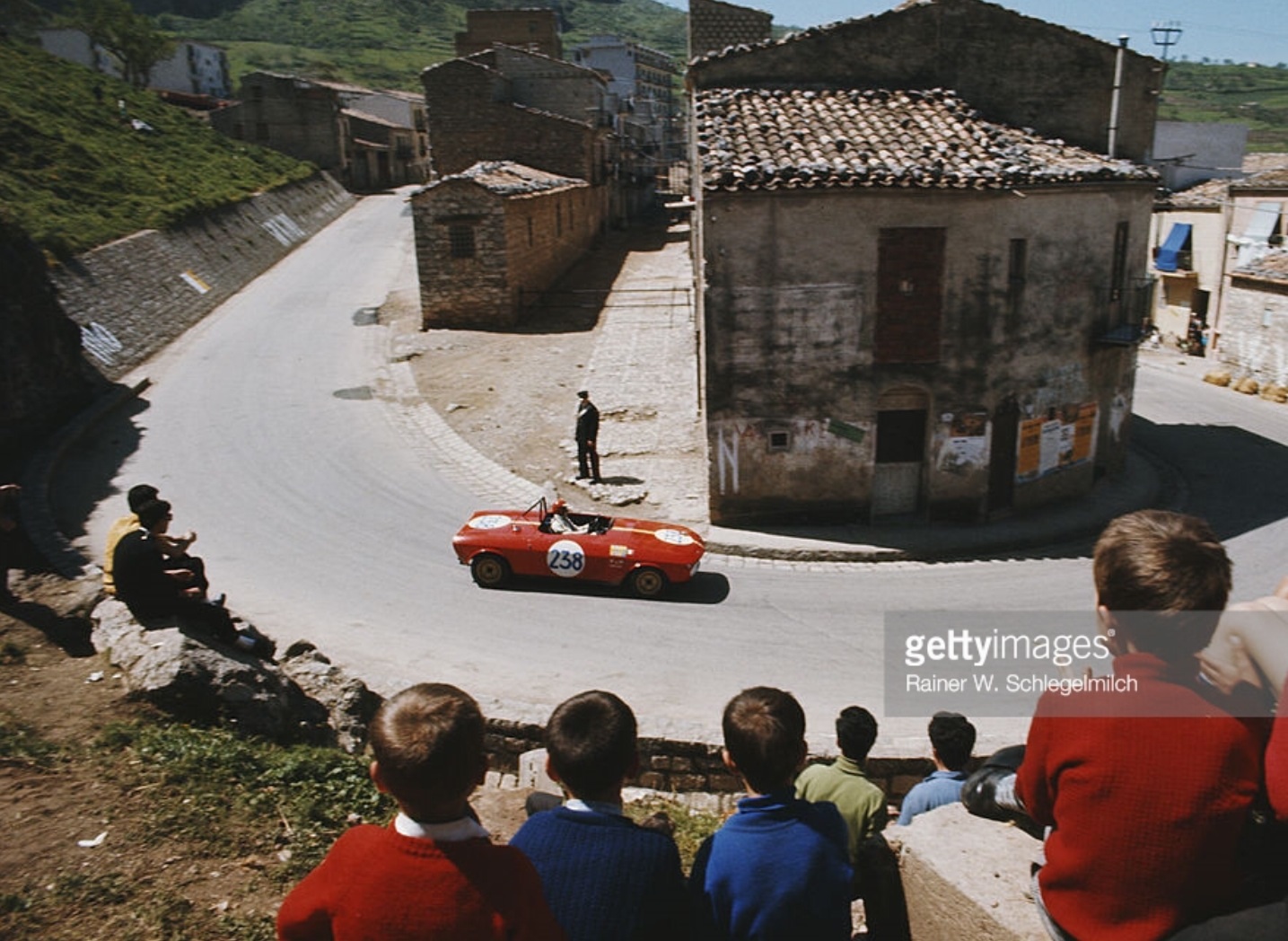
The spectator is keen, his bravado enhanced by copious amounts of chianti during the long Sicilian afternoon…

The 13th placed #88 Eberhard Sindel/Dieter Benz Porsche 911S ahead of the similar #100 Dan Margulies/Robert Mackie car which was 20th. Oh to have been a privateer and raced an event like this, so relatively easily at the time, errant spectators notwithstanding!

image

The Mitter/Schutz 908/2 won the race from three other factory 908’s in a Porsche rout.

Credit…

Rainer Schlegelmilch

Tailpiece: The winning Porsche 908/2, not a bad panorama…

image


shell

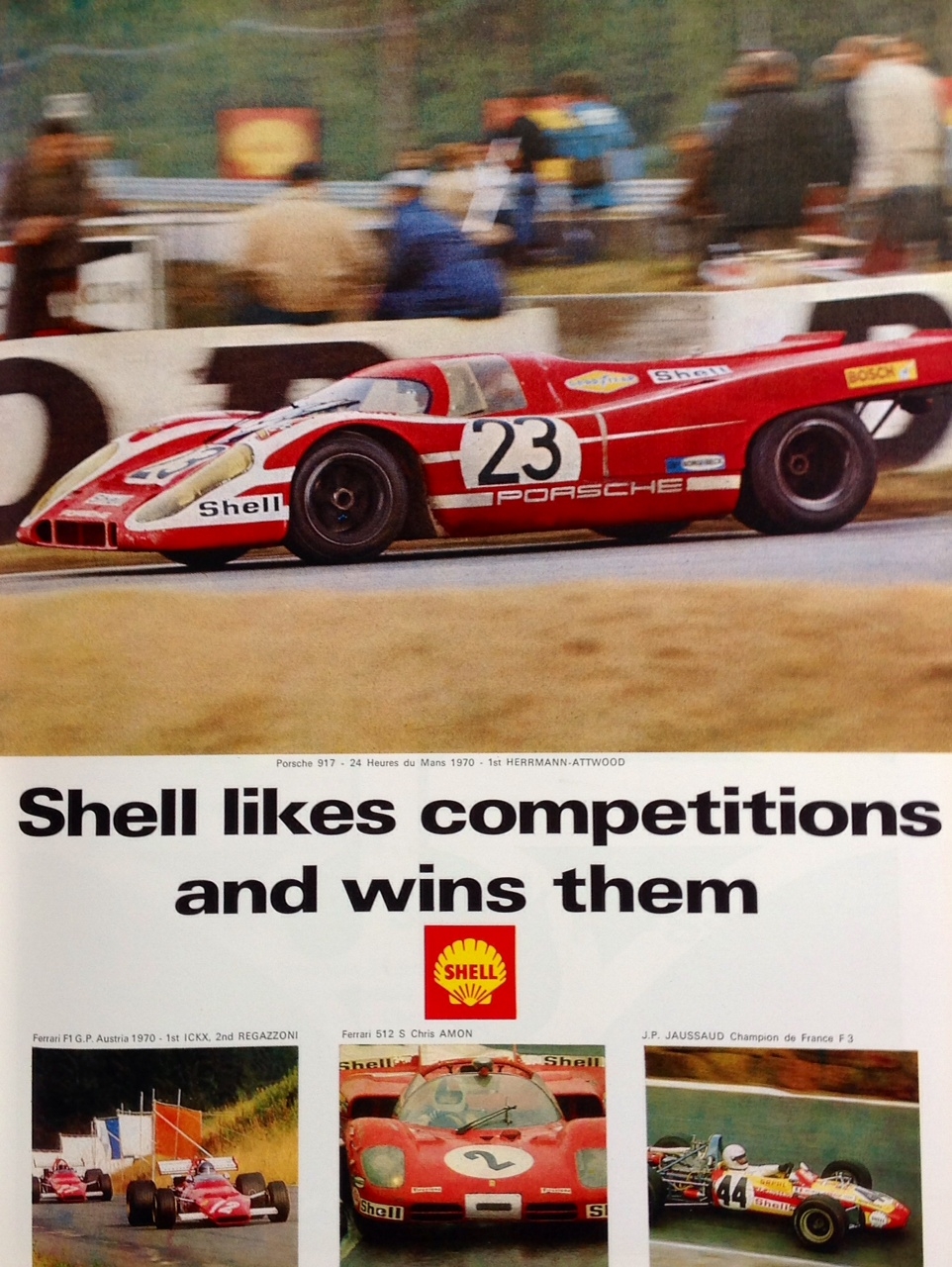
Shell’s ‘period’ ads are consistently good. I like this 1970 offering from Automobile Year 18 featuring some of my favourite cars, 917 Porker and 312B/512S Fazz… 

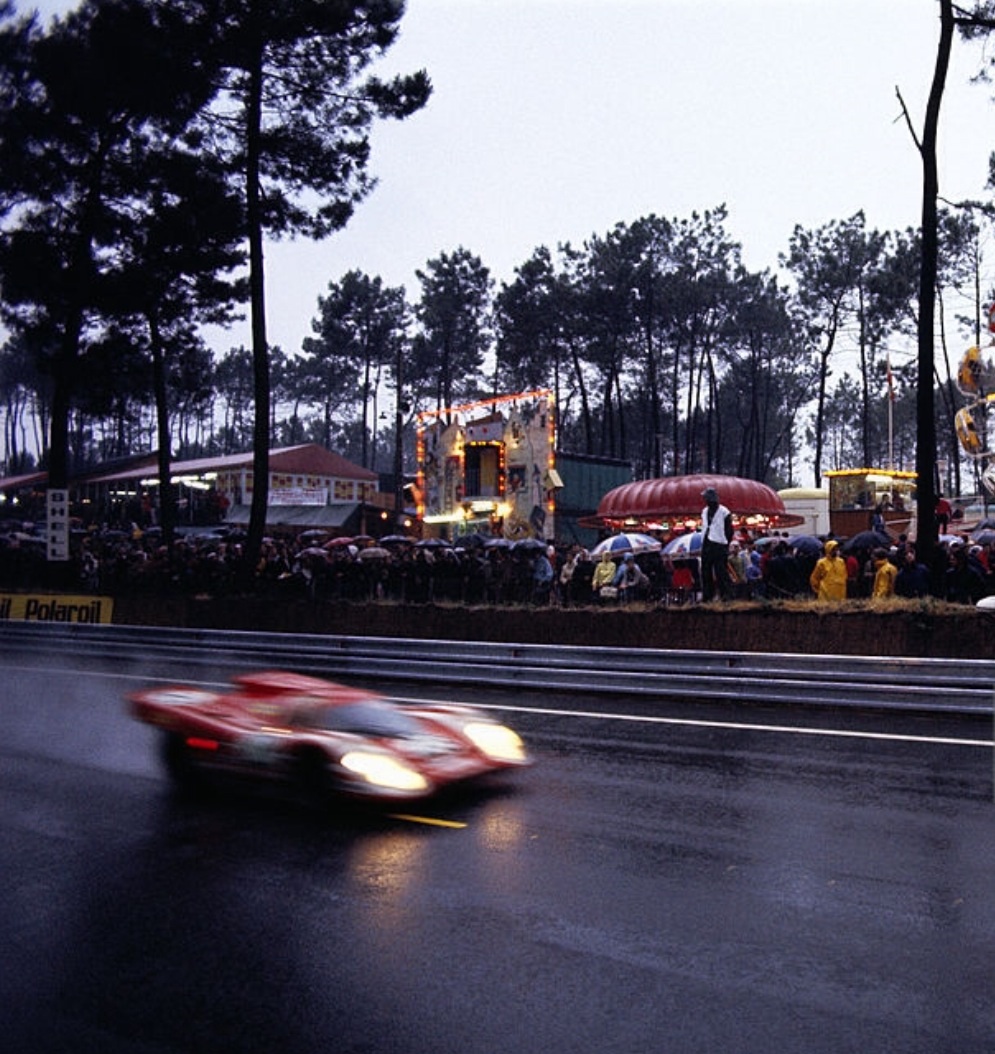
The 1970 Le Mans classic was the year in which Porsche broke through to win outright with the 917. Hans Herrmann and Richard Attwood won in the #23 short-tail above by 5 laps from Gerard Larrousse and Willy Kauhsen in a long-tail with the 908 long-tail of Rudy Lins and Helmut Marko third. Just to reinforce their dominance the first two cars were powered by 4.5 litre variants of Zuffenhausen’s big flat-12, not the full 5 litres allowed by the regulations of the time.

The best placed of the Ferrari 512S’ was the NART car of Sam Posey and Ronnie Bucknum in 4th, 30 laps adrift of the winning 917.

image

The winning 917 at dusk, Le Mans 1970 (Schlegelmilch)

Credits…

Automobile Year, Rainer Schlegelmilch

image

(Schlegelmilch)

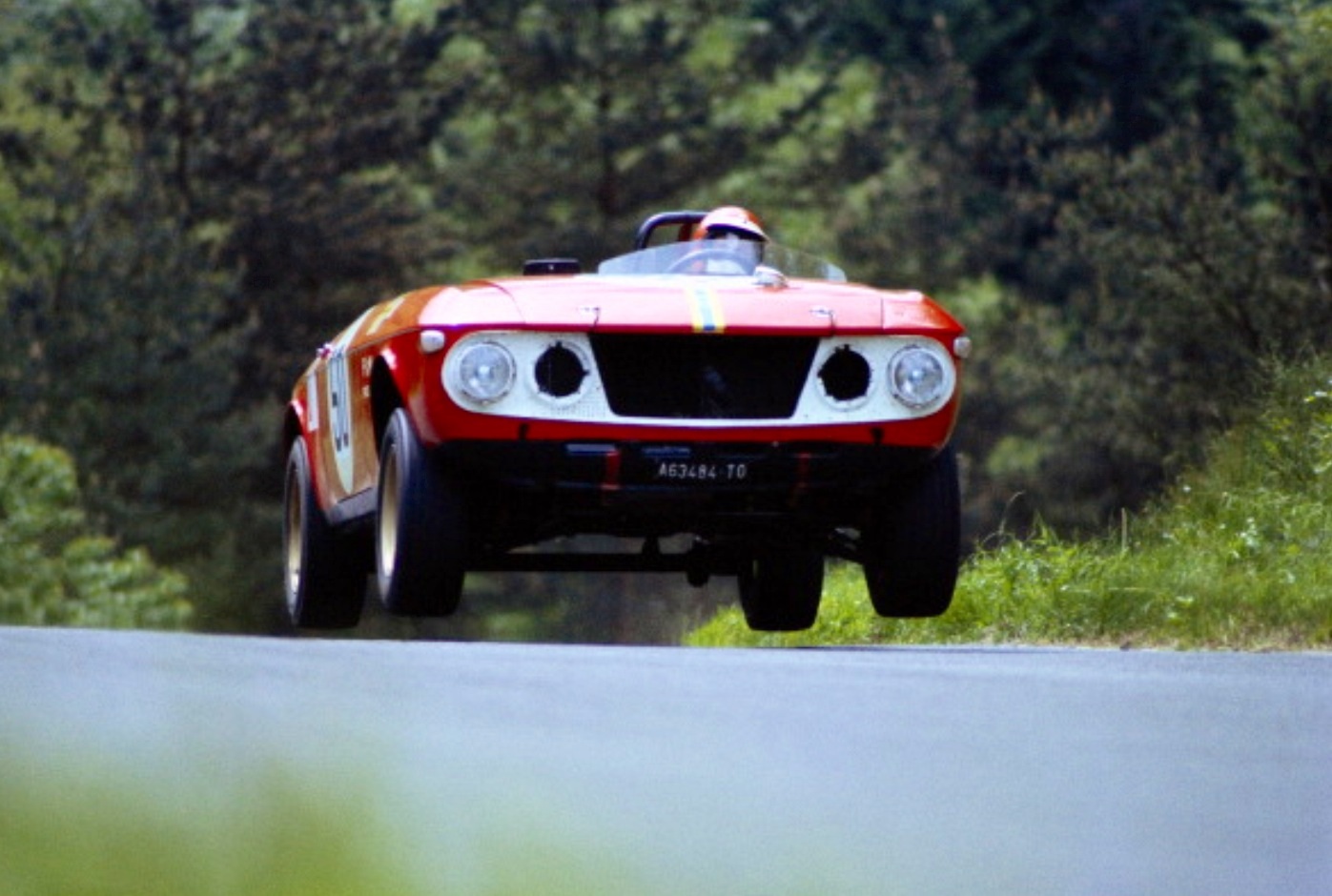
The Lancia Fulvia HF ‘F&M’ barchetta of Sandro Munari and Rauno Aaltonen jumping its way to a class win at the Nurburgring 1000Km on 1 June 1969…

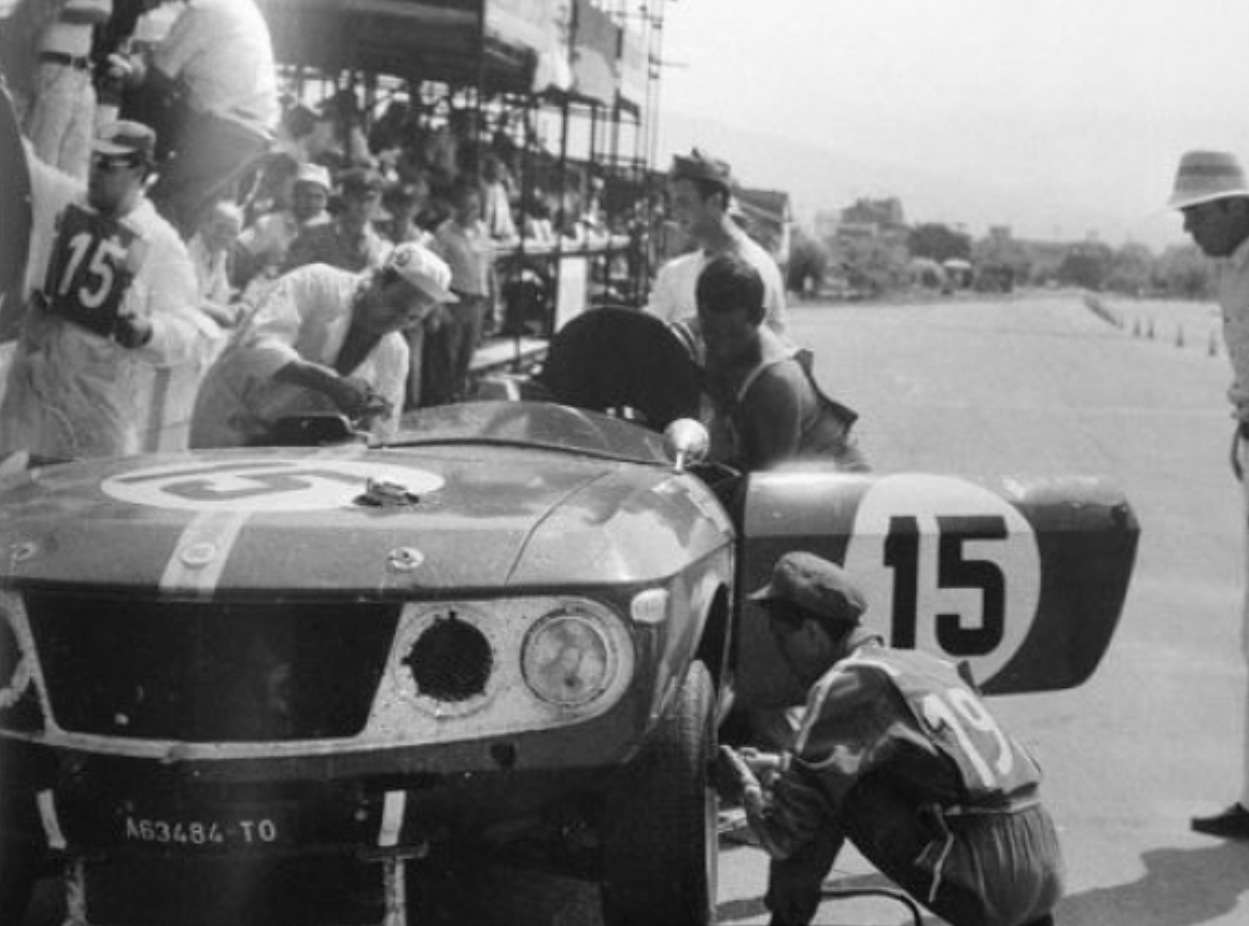
The story of this Lancia is an interesting one, well known to fans of the marque, three cars were factory built in period plus a couple by Sicilian Lancia tuners.

Cesare Fiorio and Claudio Maglioli, respectively team manager and works driver of Lancia’s Squadra Corse HF, saw that the team´s drivers were fried by the Daytona heat in 1969 and decided to create something more competitive and cooler for the drivers for the Targa Florio. Given there was no budget for a more sophisticated approach they chopped the roof off the HF coupé and shortened its chassis by 28 mm. The roof, windscreen and side windows were removed and interior completely stripped with the exception of the driver’s seat. The result, a car 200 pounds lighter with consequent benefits to acceleration, handling and braking.

Whilst lightened the structural rigidity of the chassis was retained by the addition of some tubular framework. The fuel tank was centralised by placing it where the rear seat had been.

The first factory car eventually became the test mule for the Lancia Stratos, the second exists although in what form is a little unclear, the location of the third is unknown.

image

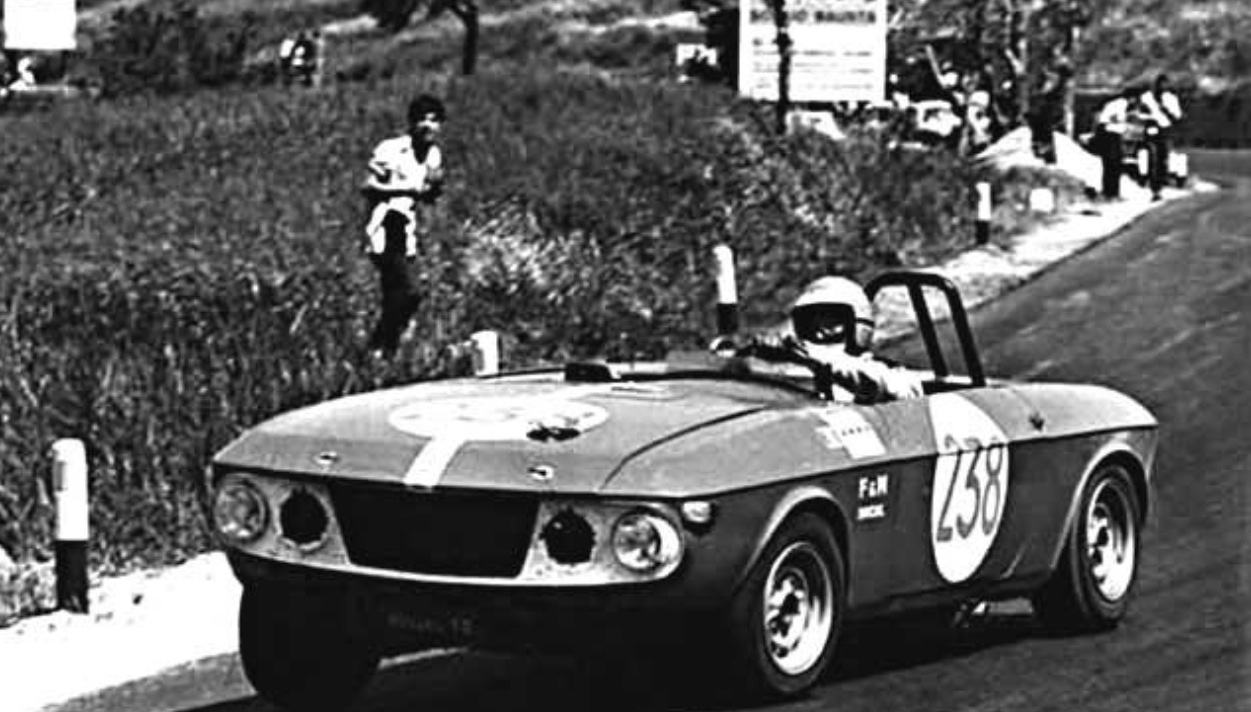
Pretty lines of the Fulvia F&M Barchetta shown in this Targa shot of the 9th placed Aaltonen/Munari chassis (unattributed)

The cars made their race debut at Targa in May where Claudio Maglioli /Raffaele Pinto retired due to overheating caused by an errant newspaper obstructing the radiator, but ninth place overall was a great result for rally-drivers Sandro Munari and Rauno Aaltonen in the other car. The race was won by the Mitter/Schutz Porsche 908/2.

At the 1000 km of Nurburgring on June 1, Munari /Aaltonen were 27th outright and won their class and Maglioli / Pinto finished 29th/2nd in class. Porsche again won the race with their 908/2, this time the car crewed by Jo Siffert and Brian Redman.

At the Grand Prix of Mugello in July Sandro Munari was 5th, a great result amongst 2 litre Abarth and Porsche sports-prototypes and a 5 litre Lola T70!

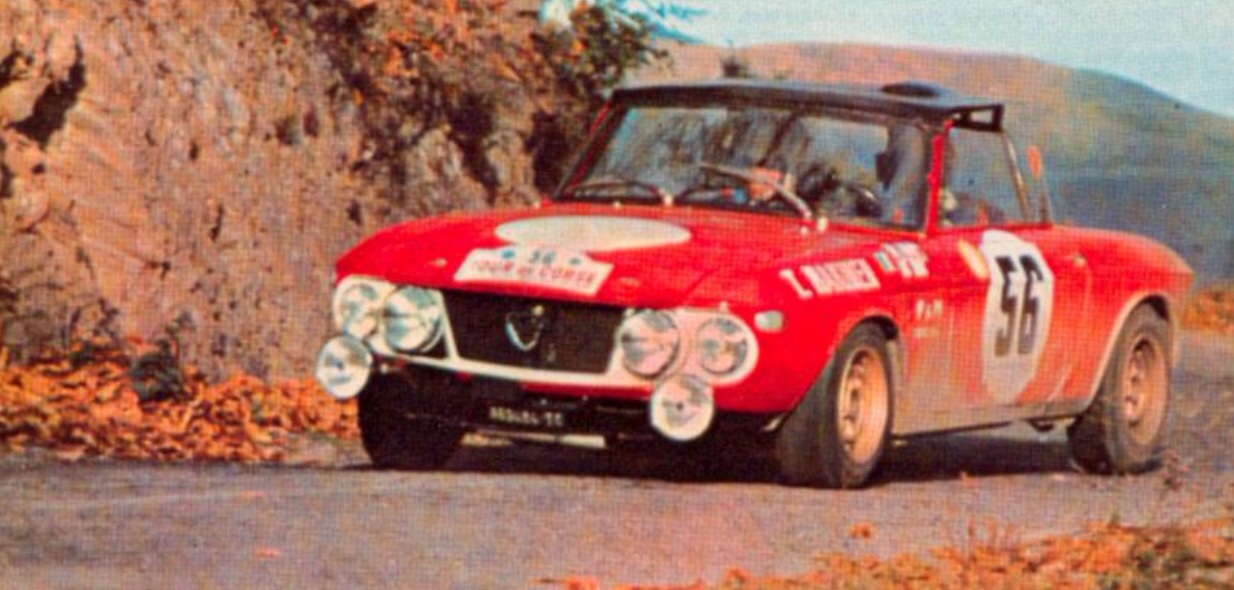
Two of the cars were then further modified (see post-script below) to accommodate a navigator and rudimentary weather protection to allow them to compete in Group 4 at the 1969 Tour de Corse/Rally Corsica where the Munari/Davenport car was 13th and Timo Makinen/Paul Easter 11th.

image

Munari’s car into the Mugello pits en-route to 5th amongst some pretty quick sportscars and prototypes, Fulvia F&M. Munari won the ’69 Mugello GP in a Abarth 2000SP (unattributed)

Technical Specifications…

Lancia Fulvia’s were front-engined and FWD of course.

Engine, SOHC, 2 valve 13 degree, all aluminium 82.4X75mm bore/stroke, 1600cc V4. Circa 160bhp@8200rpm. Gearbox, 5 speed with limited slip diff, final drive ratios to choice.

Spider body with front suspension by wishbones, tranverse leaf spring and guide-bar and rear by beam axle, transverse rod and longitudinal transverse spring with telescopic hydraulic shocks front and rear. Brakes were non-servo assisted discs

The little cars were 3670 mm long, 1580 mm wide and 840 mm high with weight quoted as 720 Kg.

image

Timo Makinens car during the Tour de Corse, note lights back on the car and the basic windscreen and ‘roof’ (unattributed)

‘Tour de Corse’ Rally Corsica, 9-11 November 1969 Postscript…

Just love Lancia’s creativity; when looking at the Barchetta’s above you wouldn’t think they could be crafted into ‘all-weather’ rally machines, particularly given the winter of 1969, but that belies Lancia’s focus!

Lancia felt they would be more competitive against the Porsche 911R, Alpine A110 and 2002Ti opposition with the F&M Specials than their usual HF machines

Tests in Corsica resulted in some changes to the cars; which had reinforced doors, a wider roll-bar to protect both driver and navigator, navigation rally gear and thin Plexiglas, 24cm high, windscreen and wipers.

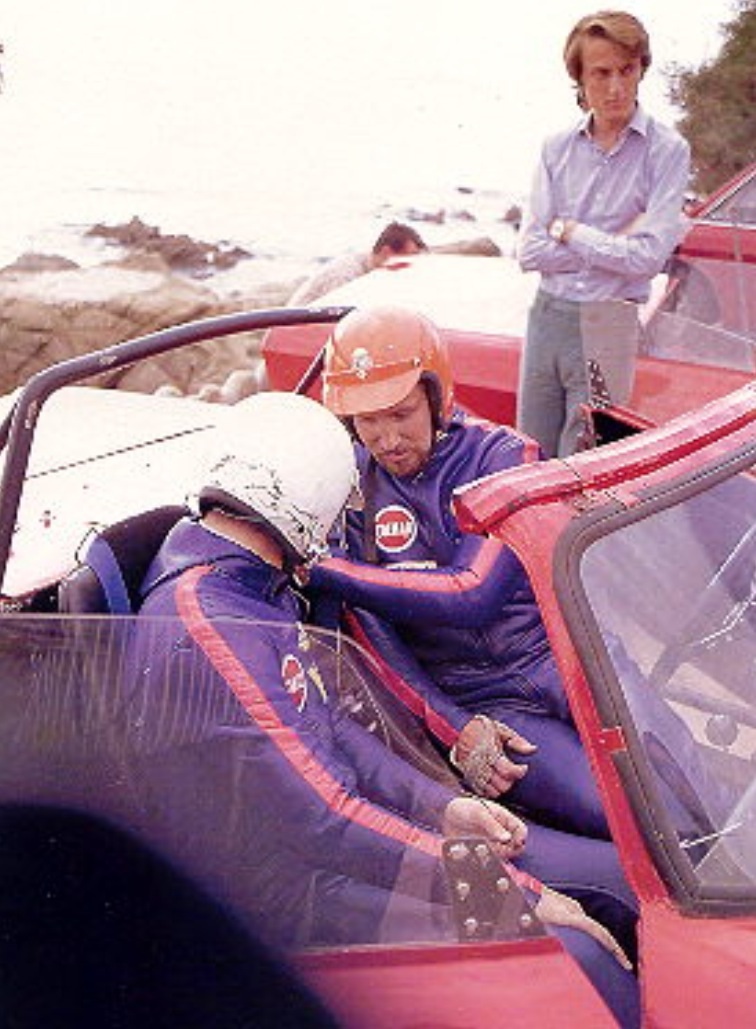
During the last week before the rally the weather worsened greatly, Sandro Munari realised the open car was going to be virtually impossible to drive in conditions down to 4 degrees so he decided to clothe himself more appropriately in rubber suits sourced by the Turin factory; one flew around too much at speed, the black divers wetsuit! didn’t ‘breathe’ causing lots of sweating.

image

Munari in orange helmet and Davenport in their warm ‘sub-suits’, no roof in this shot. Later Ferrari chief Luca Montezemolo looks on skeptically! (unattributed)

After tests both Munari, Makinen and their navigators decided to use a race suit similar to that utilised by submariners. In Turin, the racing department considered further changes to the cars…More shelter was provided for the occupants by raising the windscreen, the earlier one tested replaced by one from a Fulvia Coupe albeit modified with special uprights and with plastic side windows which were anchored to the front section of the roll bar.

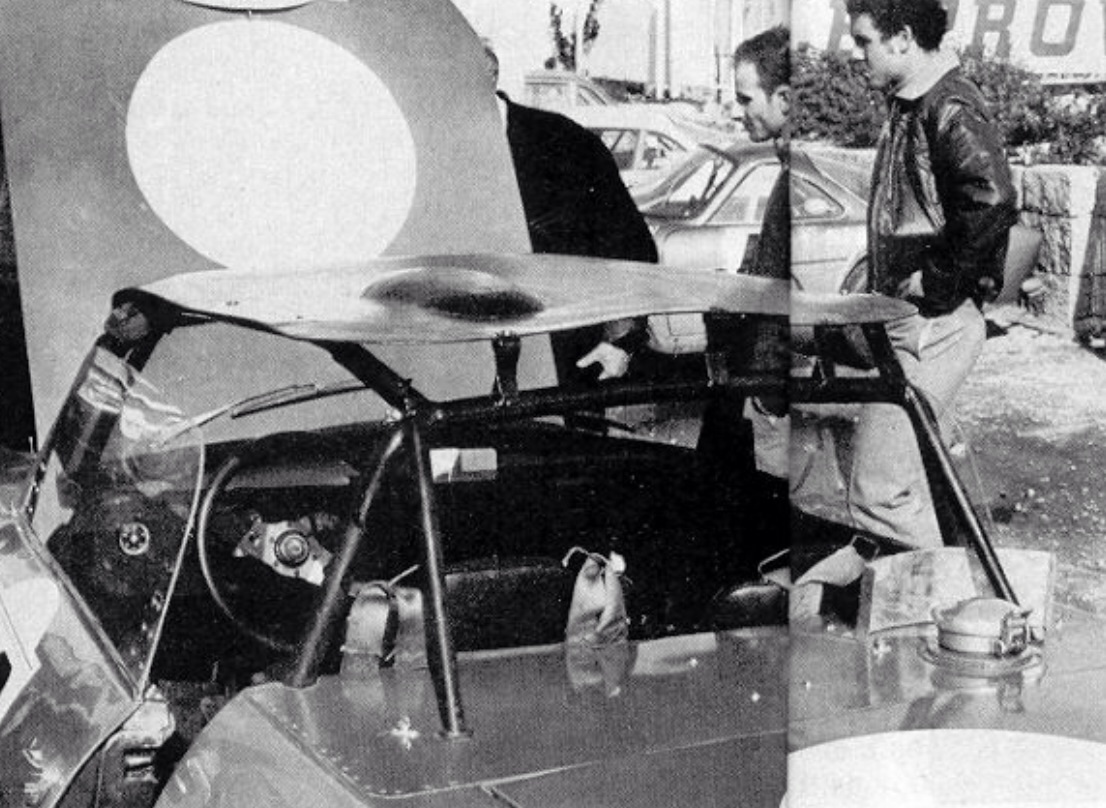
By the time the cars arrived in Ajaccio for the Tour de Corse start the ‘F&M’s had lost both the appearance of the Targa Barchettas as well as their light weight! Makinen’s car at the last minute was fitted with a rudimentary sheet metal roof, an addition scornfully rejected by Sandro Munari! Softie!, he thought of Timo.

image

The quickie roof! as per the text, note fuel filler, rough as guts geddit done finish (unattributed)

The two ‘F & M Special’ were part of Lancia’s six car team in the event, the final result was disappointing with the normal 1.6HF of Kallstrom/Haggbom 9th, 1.3HF of Ballestrieri/Audetto 10th ahead of the trick ‘F&M Specials’; Makinen-Easter 11th and Munari-Davenport 13th.  The rally was won by Gerard Larrousse/Gelin in a Porsche 911R ahead of an Alpine A110 Renault, Ford Capri RS2600 and a swag more A110’s…

image

Normal HF following the Munari car during the Tour (unattributed)

Credits…

Rainer Schlegelmilch, Rallymania

Tailpiece: Collesano, Rauno Aaltonen, Lancia Fulvia F&M, Targa 1969. The short, squat efficient lines of the car clear in this wonderful shot…

image

(Schlegelmilch)


richie

Richie Ginther surveys the damage he has inflicted upon his factory Ferrari during the 1960 Targa weekend…

The local kiddo’s are either surveying the scene with sympathy or thinking about what they can liberate from Enzo’s nice, new red car!

In fact the shot is a bit of a mystery upon doing a bit more research.

The Ferrari drivers were reshuffled after several accidents in practice of which this seems to be one as it isn’t the car in which Richie started the race with Cliff Allison. That was the #202 de-Dion rear axled TR59/60 pictured below; and in which Richie went off line passing a car and smote a tree a fatal blow for the car on lap 5.

image

Cliff Allison before the Targa start in the 250 Testa Rossa shared with Richie Ginther (unattributed)

Allison himself had a huge ‘character building’ accident in practice when a tyre failed in the Ferrari TRI/60 (independent rear suspension Testa Rossa) he was scheduled to share with Phil Hill.

So, the question is what model Ferrari is the one pictured at the articles outset? It looks as if it may have side-draft Webers, is it an old Monza ‘praps? One for you Ferrari experts.

The race was won by the Jo Bonnier/Hans Herrmann Porsche 718 RS60 a much more nimble conveyance around this circuit than the 3 litre V12 front-engined Fazz…

image

Graham Hill sitting in Jo Bonnier’s winning Porsche 718 RS60, Graham was cross-entered in the car. Don’t bend it Graham please! Hill was 5th is a similar car shared with Edgar Barth (unattributed)

Credit…

GP Library

image

This amazing 1931 poster advertising the Fiat 514 caught my eye, as its designer intended…‘Its of ‘monumental style design’, the 514 likened to a statue on a plinth, beaming out light into the darkness’.

The 514 was built between 1929 and 1932 in sedan, cabriolet and spyder bodies. The engine was a 1438cc 4 cylinder sidevalve with power outputs ranging from 28-37bhp for the 514A/MM performance variant.

Although Fiat stopped racing in the early 1930s, concentrating on road cars in the twenties they produced cars of sporting intent. Its most successful design was the Tipo 509, which dominated the Italian small-car market. The 509 was powered by a four-cylinder 990cc OHC engine.

image

1932 Mille Miglia; the #9 37th place Fiat 514MM of ‘Frate Ignoto’-Arturo Mercanti/Francani ahead of the Bettinazi brothers 35th placed Fiat 514 CA Spider in the Montalcino/Radicofani area near Siena. the race was won by the Borzacchini/Bignami Alfa 8C2300 Spider Touring (Guerrini)

The 1929 514, its replacement was introduced into much tougher economic times and used a simpler 1.5-litre sidevalve four. The 514 was conventional; it had semi-elliptic springing all round, a 4 speed gearbox and 4 wheel mechanical brakes, adoption of hydraulic brakes part way through the cars production cycle being the models most important development.

Together with the standard cars Fiat introduced a trio of sporting roadsters; the 514S, 514MM and 514CA, ‘MM’ signifying Mille Miglia and ‘CA’ Coppa del Alpi (Alpine Cup). The 514S and 514CA used the standard (2,555mm) wheelbase whilst the MM used the longer (2,770mm) chassis shared with the 514 van. All used tuned engines; the 514S had 34.5bhp, the MM and CA had engines developing 37bhp. Top speed of these cars was circa 112km/h (70mph).

Credit…

Hutton Archive, Bruno Guerrini, Bonhams

Tailpiece: 1930 514 Roadster…

image


Kieft De Soto…

Posted: October 18, 2016 in Fotos, Sports Racers
Tags: ,
image

(Richard Taylor)

Terry Cornelius unleashing all of the Kieft De Soto’s 350 V8 horses, blasting the car he co-constructed along Eastern Creeks long main straight…

Regular readers may remember the article I wrote some months back about the Kieft De Soto… https://primotipo.com/2016/06/03/kieft-de-soto-v8/

A few days ago Terry Cornelius, builder of the cars curvaceous body got in touch with a photo and this anecdote, I’ve put it into the article, but wanted to share it as well rather than just ‘lose it’ in the archive.

Here tis…

‘I got to be part of the Goodwood Revival Team with the two cars (Kieft Coventry Climax GP car and Kieft De Soto Sportscar) and its something I’ll never forget!

Your article told how upon return from Goodwood, the Kieft De Soto raced in the Eastern Creek ‘Summer Historics’, and perhaps understandably did not mention that Victoria Morris very kindly put yours truly behind the wheel in the regularity events, with Greg Snape at the wheel in the races.

I had driven the car on the road, but this was a new experience in spite of having accomplished many years of motor racing, mostly in the Historic arena.

The start of Regularity events is a casual affair, and its ok to go as fast or slow as you choose, preferably regularly! I found myself, in the last of my events, at the rear of the field with a beautiful C Type Jaguar replica just in front. Well, I knew what I had to do, and I felt I had come to grips with the Kieft after the previous couple of events. At the end when the chequered flag eventually dropped, I had a substantial lead on the Jag.

So what? I hear you say. Well, let me explain…

When Bill Morris (the driver/engineer/entrepreneur who owned and reconstructed both Kiefts) was weighing up the pros and cons of the resurrection project of the Kieft sportscar, he took into consideration the method used by the English authorities to separate the various historic classifications. It seems that the Kieft, via its drum brakes, would fall into a category which was being dominated by the C Type Jags, also drum braked. Bill felt at the time, taking that booming V8 engine into consideration, he could well be on a sure winner. Little did he realise that he wouldn’t be around to enjoy his prophecy.

I think its only fair that I be allowed to feel that I had brought some poetic justice home in Bill’s memory’…

Credit…

Terry Cornelius, many thanks

Richard Taylor photo