
Cibie ad 1970, the graphic is just so period!? Automobile Year #18…
 | Rubens Junior on Crocodile Rock: Audi R8 Croc-M… |
 | Rob on Benalla Centenary 100, 19… |
| Rob on Bib Stillwell: Cooper T49… |
| Crocodile Rock: Audi… on Crocodile Audi R8… |
Cibie ad 1970, the graphic is just so period!? Automobile Year #18…

(Dave Friedman)
Matra’s first Le Mans was with the 2 litre BRM V8 engined M620 in 1966…
A French Marque today in support of France and the French way of life, the senseless, barbaric attacks in Paris are an assault on us all. Our thoughts are with you. Mark Bisset.
It was the start of the company’s inexorable rise to the top of endurance racing, the French aerospace manufacturer won Le Mans from 1972 to 1974 with superb machines powered by the company’s own 3 litre V12.
The factory entered 2 cars in 1966, car #41 was driven by Jean Pierre Beltoise and Johnny Servoz-Gavin, it retired with gearbox failure after completing 112 laps.

Beltoise/Servoz-Gavin Matra M620 BRM, Le Mans 1966. (Dave Friedman)
Click here for an interesting article about the firms MS120 Grand Prix car;
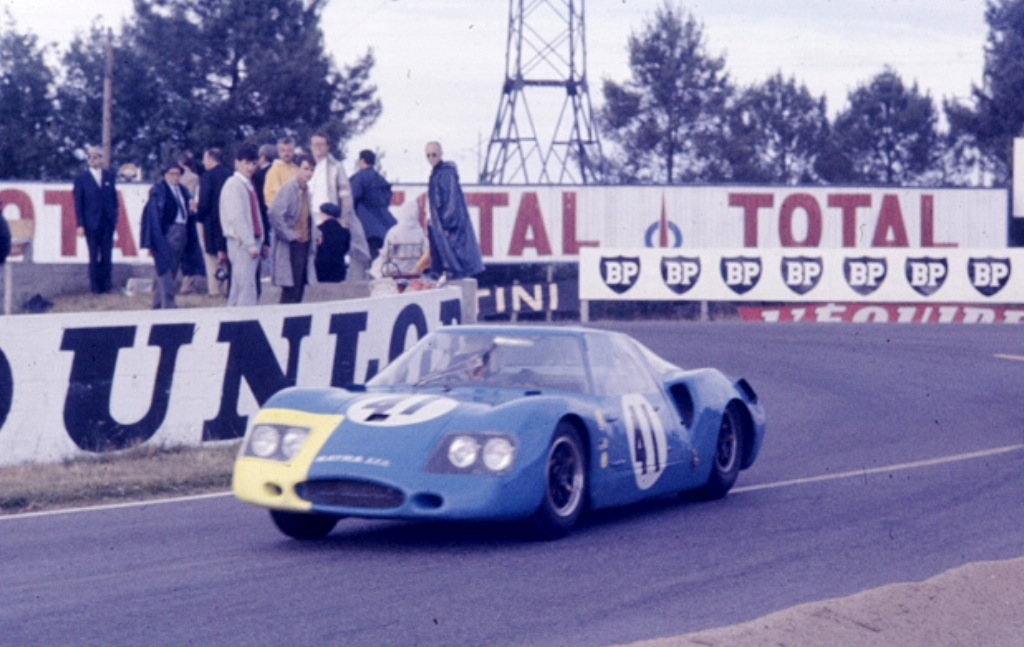
Beltoise/Servoz-Gavin Matra M620 BRM, Le Mans 1966. (Dave Friedman)
Photo Credit…Dave Friedman
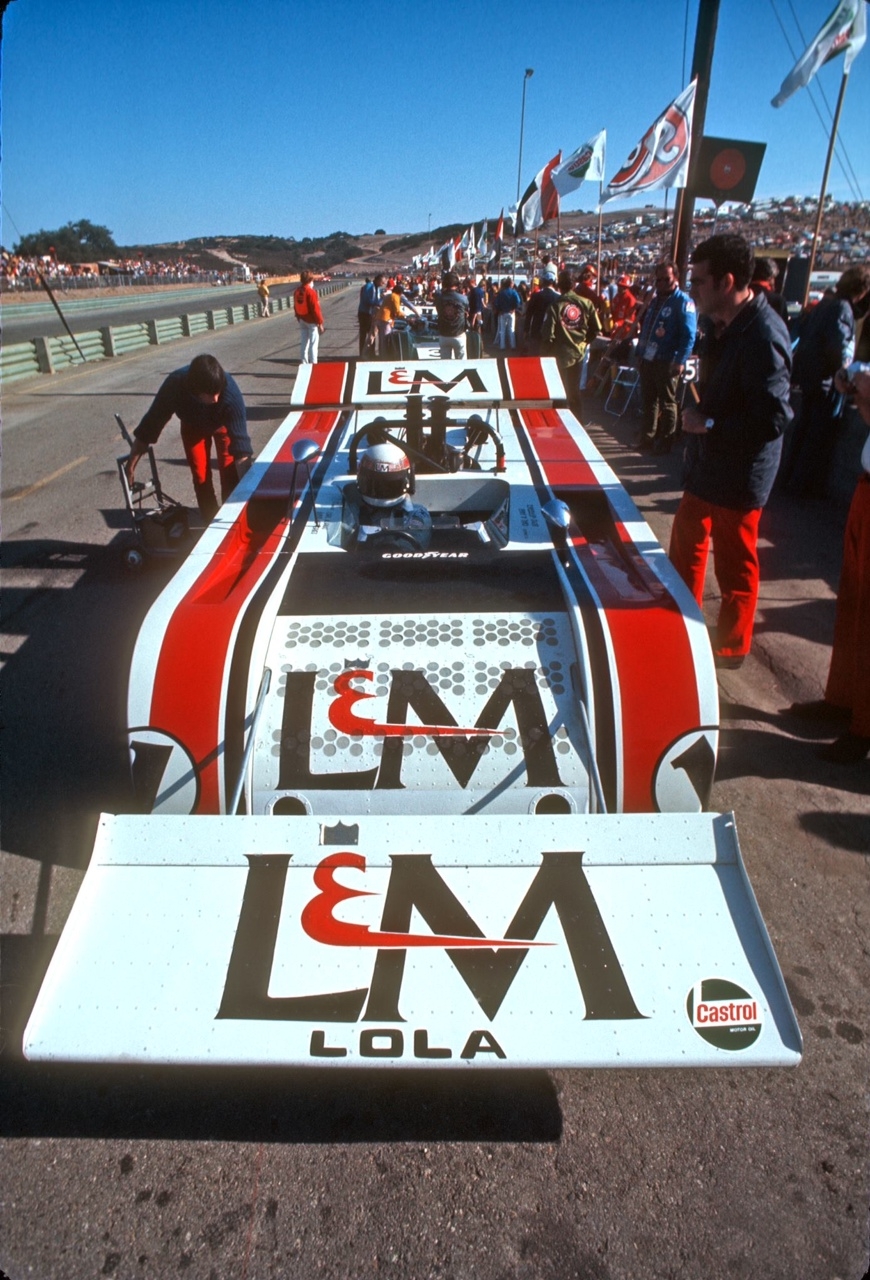
Jackie Stewart and his ‘Cowcatcher Winged’ Lola T260 Chev, Laguna Seca 1971 (Pete Biro)
It was always going to be tough to beat the dominant McLaren team, but the combination of World Champion Jackie Stewart and Lola, who had a strong Can-Am track record looked a good combination to give them a run for their money in 1971…

JYS convening a team engineering and set-up meeting in the Road America paddock, August 1971. Bob Marston in red shirt, JYS and in the green hat George Woodward (Jim Buell)
Part 1: Lola and the Can-Am Challenge…

John Surtees, Lola T70 Mk2 Chev leads Bruce McLaren’s McLaren M1B Chev at St Jovite, Mont Tremblant, 11 September 1966, they finished in this order. (unattributed)
The Can-Am morphed out of a series of professional level sports car races which had taken place for over a decade, in 1965 this comprised four events, three were won by the Chaparral 2 and one by a Lola T70.

John Surtees, Lola T70 Mk2 Chev at The Corkscrew, Laguna Seca, 1966 (Dave Friedman Collection)
The first Can-Am series held in 1966 was won by John Surtees in a quasi-works Lola T70; ‘Big John’ won three races, Dan Gurney and Mark Donohue one apiece in Lola T70s, with Phil Hill taking a solitary win aboard a Chaparral 2E.
While Colin Chapman designed the first modern-monocoque single-seater, the Lotus 25, which made its debut at Zandvoort in 1962, it was Eric Broadley who first applied the new construction technique to a sports-racer with his 1963 Lola Mk6 Ford.
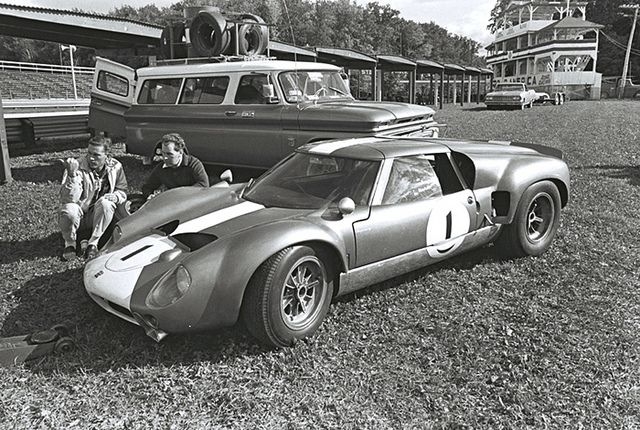
Augie Pabst’s John Mecom owned Lola Mk6 Ford, Road America 500 1964 DNF (unattributed)
Chapman was convinced the backbone chassis which worked so well in his Elan road car would migrate to sports-racing success but the Lotus 30/40 chassis were as floppy as a centenarians todger with results reflecting same; even Jim Clark could not make those cars sing.
So impressed were Ford with Eric’s Mk6 he was famously contracted to lead the design team of its GT40, a car with a steel tub.

Monterey Grand Prix, Laguna Seca, 16 October 1966. Phil Hill won in a Chaparral 2E Chev. Bottom left is Dan Gurney with his Ford powered Lola T70 (Dave Friedman Collection)
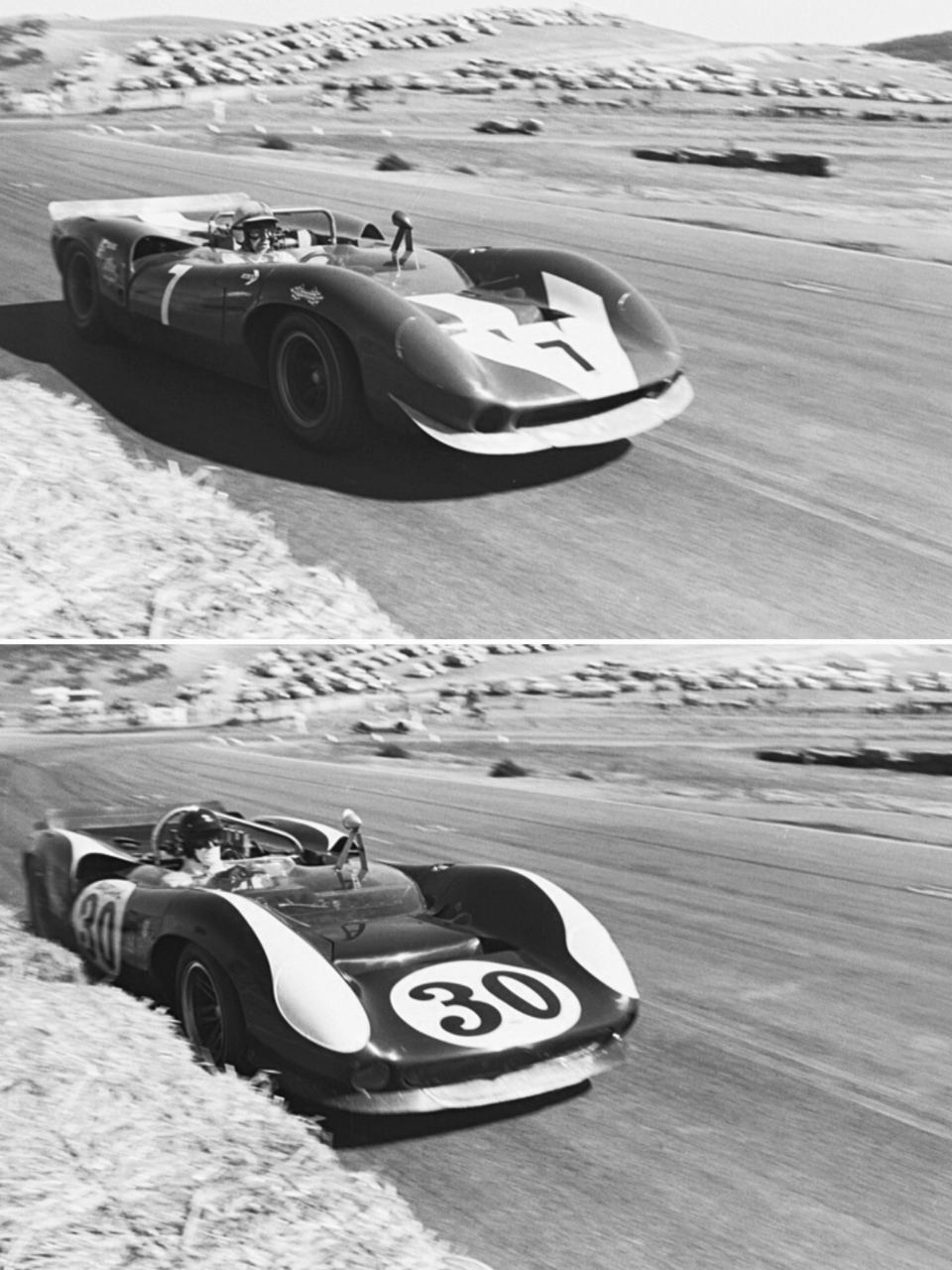
#7 John Surtees Lola T70 Mk2 Chev 12th and #30 Dan Gurney Lola T70 Ford DNF, Laguna Seca, October 1966 (Dave Friedman Collection)
The aluminium tubbed T70 was one of his first designs after his Ford sabbatical, that design process was useful in terms of evolving the car Eric thought Ford should have built in the first place!
In all its variants the T70 remained a competitive tool in both Group 7 (Can-Am) and Group 5 World Sports Car Championship events into the dawn of the 1970s. Teddy Pilette qualified his Team VDS Mk3B 19th at Le Mans in 1971, not bad for an old car with a pushrod OHV V8 against the might of the 5-litre, 12 cylinder Porsche 917 and Ferrari 512!
In endurance racing the T70 was really only held back by a suitable engine, the 12/24 hour longevity or lack thereof of the Chev engines usually chosen to power it. The small block Chev didn’t have the benefit of factory investment in its development in the same way Ford’s Le Mans winning small block Windsor V8 did.

Roger Penske’s Donohue/Parsons Daytona winning Lola T70 Mk#B Chev at Sebring in 1969. Here DNF driven by Ronnie Bucknum and Mark Donohue (unattributed)
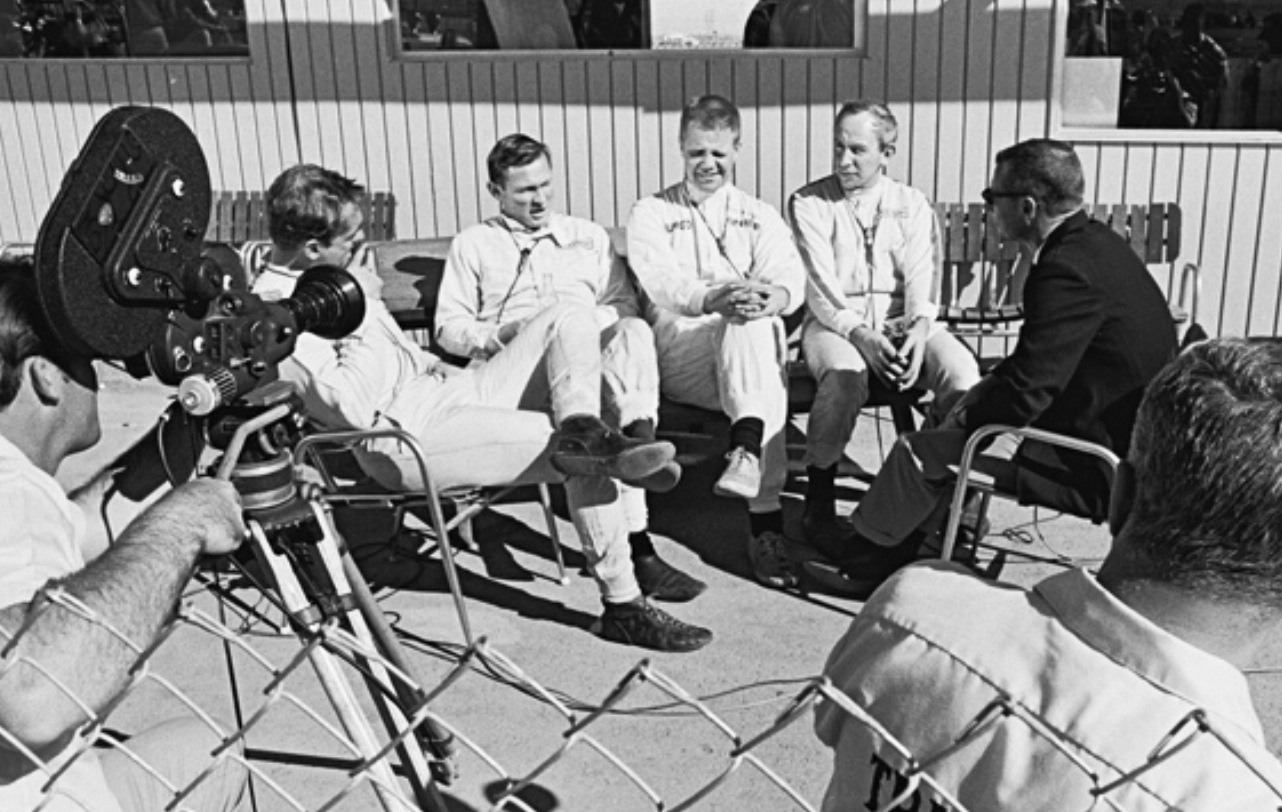
Top Guns interviewed for the TV, Las Vegas 1966: McLaren, Parnelli Jones and Surtees (Dave Friedman Collection)

Stardust Grand Prix 13 November 1966, Las Vegas 1966 start. #7 Surtees Lola T70 Mk2 Chev first, #65/66 Phil Hill seventh, Jim Hall DNF both Chaparral 2E Chev, #5 Chris Amon McLaren M1B Chev DNF (Dave Friedman Collection)

Surtees from Jim Hall’s Chap 2E Chev early in the race. Vegas 1966 (Dave Friedman Collection)
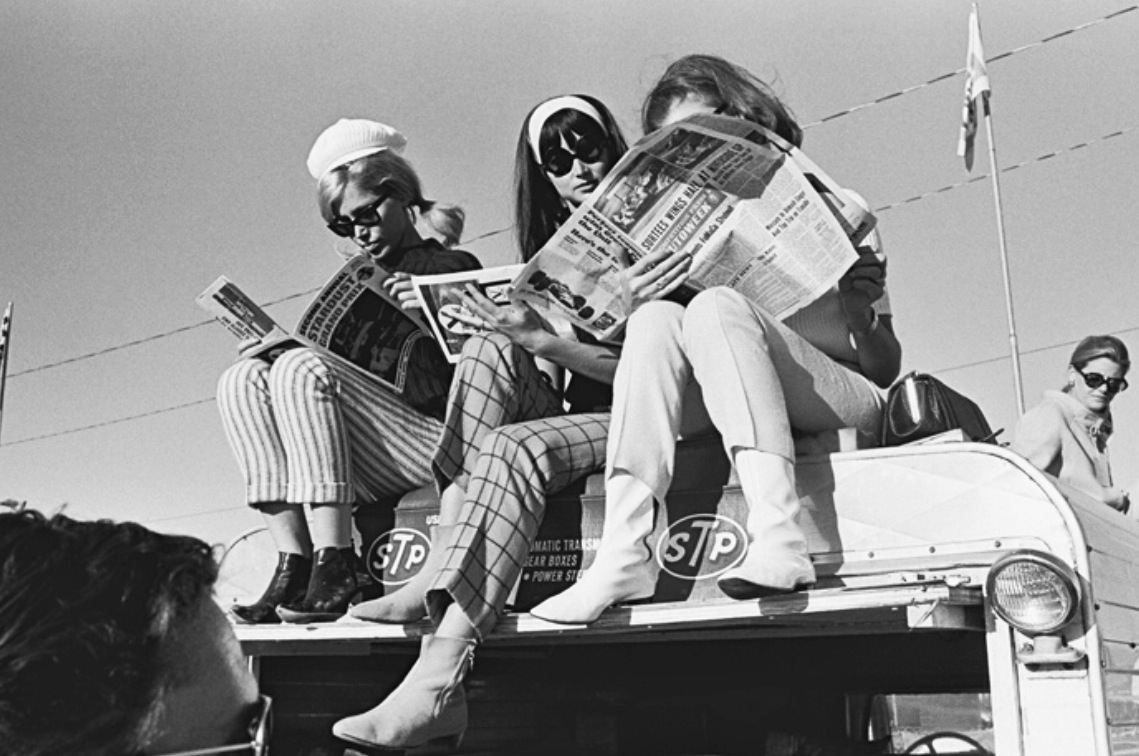
Las Vegas 1966 (Dave Friedman Collection)
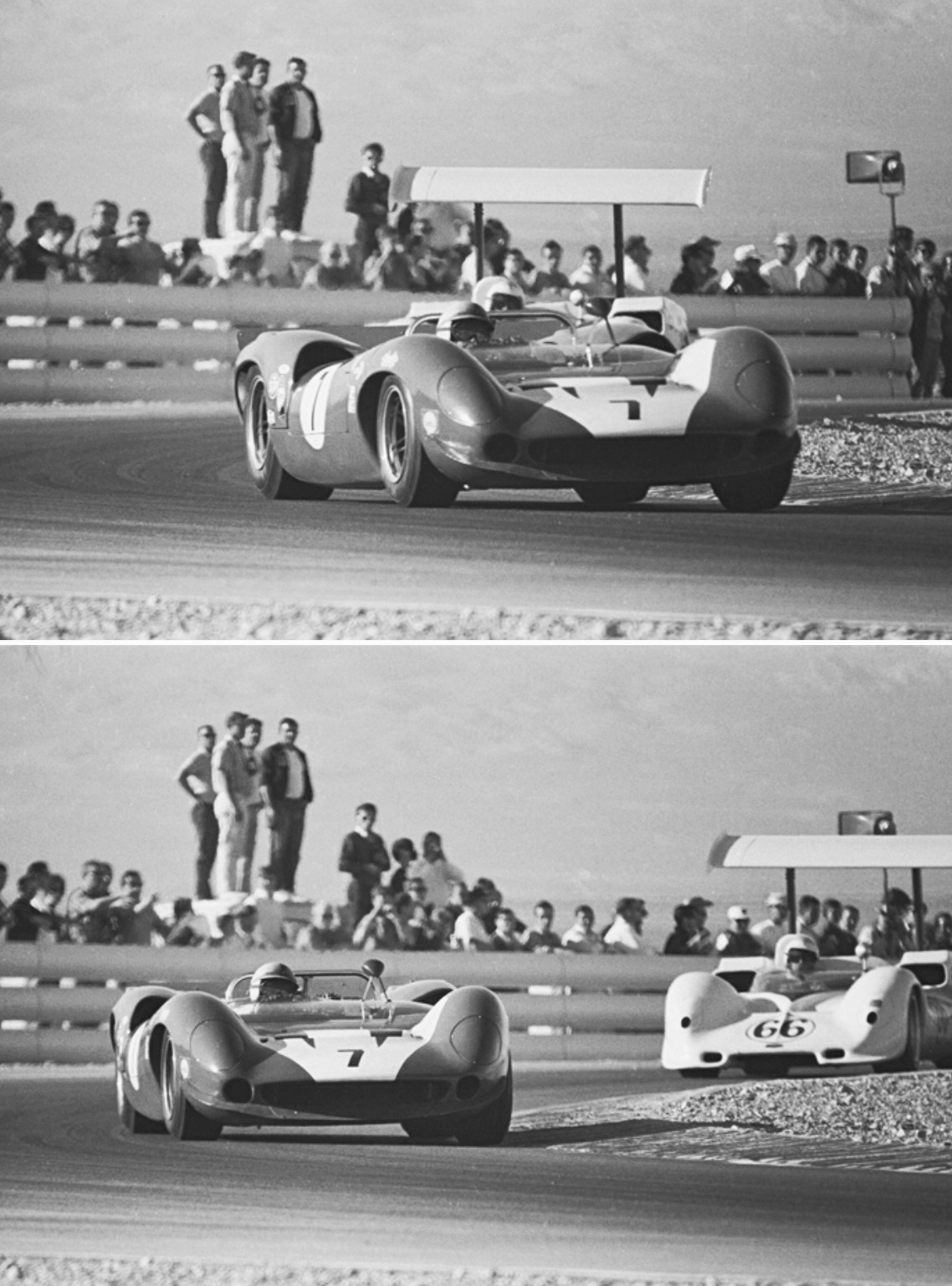
Surtees from Jim Hall’s Chaparral 2E Chev, first and DNF. Las Vegas 1966 (Dave Friedman Collection)
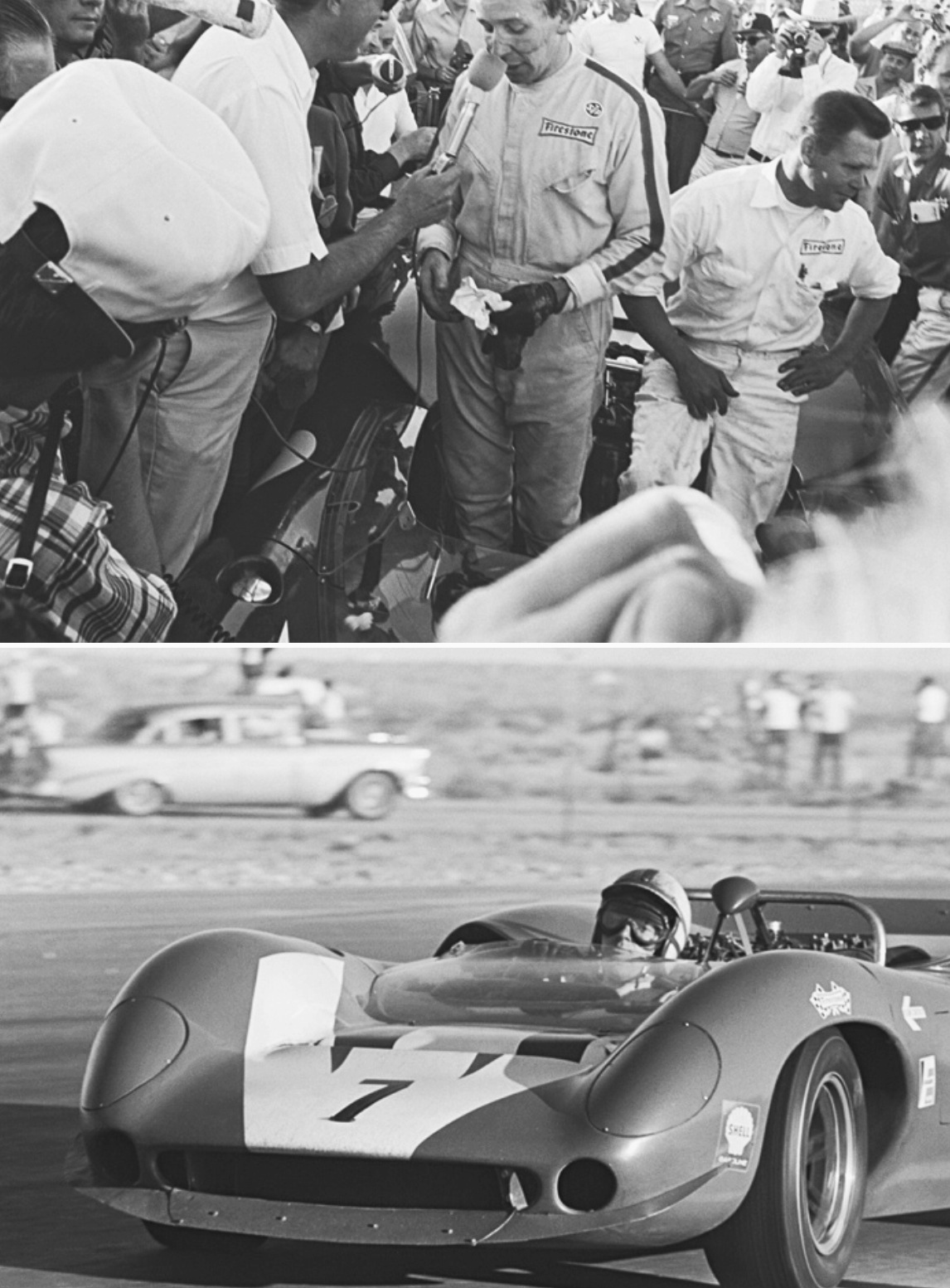
Surtees, Lola T70 Mk2 Chev, Las Vegas 1966 (Dave Friedman Collection)
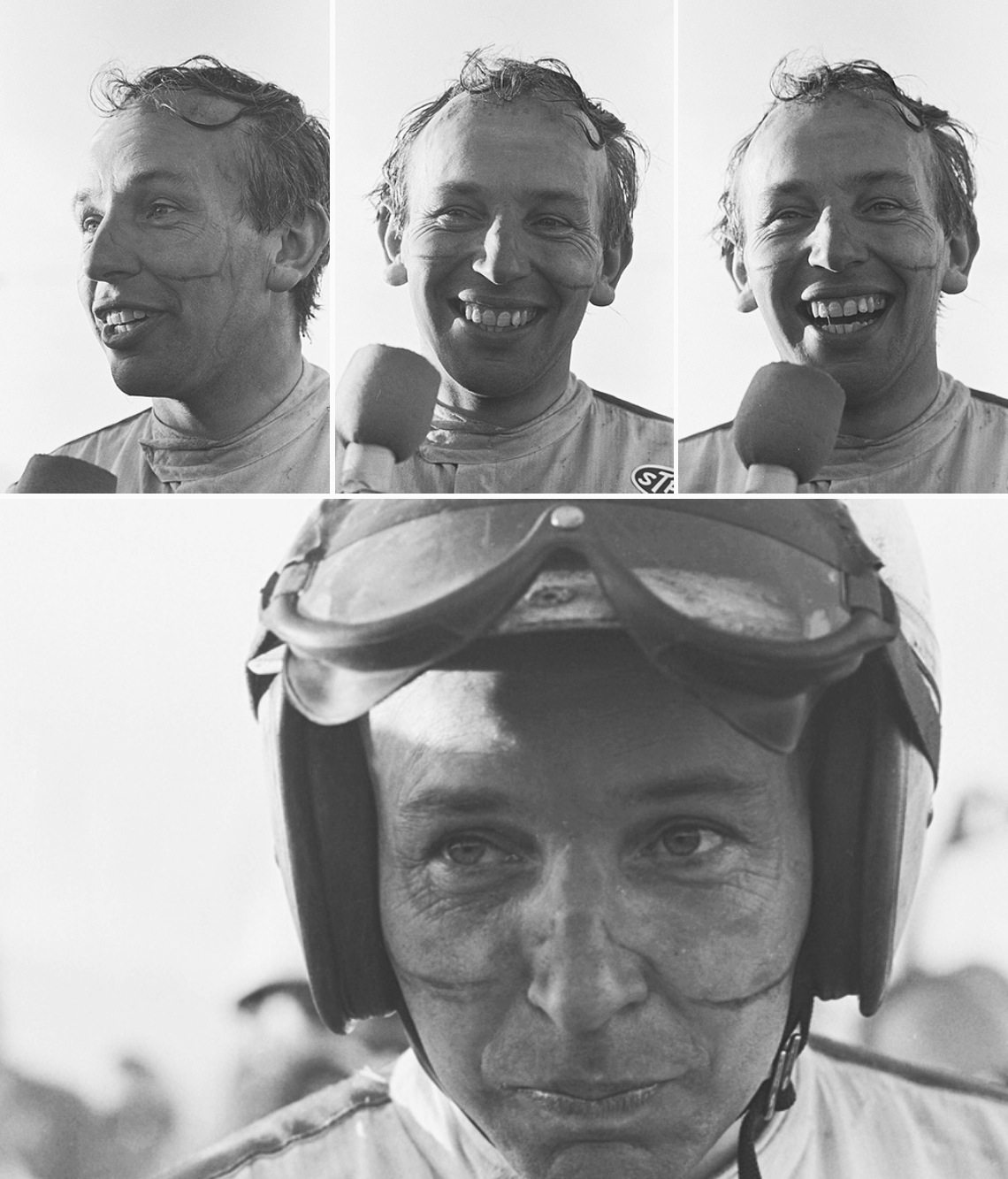
Happy Chappy. Surtees after his race and Can-Am series win, Las Vegas, November 1966 (Dave Friedman Collection)
Things would get tougher for Lola, Chaparral and the rest of the grid for the 1967 Can-Am.

Surtees Lola T70 Mk3B Chev in the Bridghampton pitlane, September 1967, fourth (Dave Friedman Collection)
Jim Hall made it tough for himself in ’66/7 by chasing championships in both Europe and the US, Chaparral sought titles in both the World Sportscar Championship and the Can-Am. They were always a threat with their unique blend of factory Chev engines, stunning chassis and aerodynamic innovation and quasi General Motors support.
Click here for an article on his 2F and it’s 1967 endurance campaign; https://primotipo.com/2014/06/26/67-spa-1000km-chaparral-2f/
But Bruce McLaren was the dark horse challenger.
McLaren had been racing in US sportscar events since his Cooper days, he became more serious with the acquisition of Roger Penske’s Cooper/Zerex Special, click here for an article on that car;
The Zerex became a test-bed for his own cars, the M1 which he raced in the UK and US until 1966. These light spaceframe cars handled well but the aluminium Oldsmobile V8s deployed – which provided weight and balance advantages – were limited by their power. The blocks maxxed-out at about 4.5-litres so the cars gave away plenty of mumbo to those running 6-litre engines.
McLaren and Chris Amon ran Chevs in their factory M1Bs in 1966 so Bruce had clarity about the bigger engine and its packaging needs, the Kiwi had a clear fix on what was needed to win in the Can-Am. He couldn’t match Jim Hall’s innovation but perhaps he could with a mix of sound design, engineering and good aerodynamics.
In essence this was the design brief McLaren gave to Robin Herd, the 6-litre monocoque McLaren M6 was the result. The M6 started the Bruce and Denny Show with five wins and Bruce deservedly taking the championship.

Class of ’67 at Las Vegas, 12 November. Jim Hall’s Chaparral 2G Chev from #4 McLaren’s McLaren M6A Chev, #21 Parnelli Jones’ Lola T70 Ford…all DNF, the race won by Surtees Lola T70 Mk3B (unattributed)
The dominance of the McLaren was a function of several elements. The design and execution of simple well engineered cars. Shaking them down thoroughly in England meant they were race-ready when the short season began. The team comprised three cars and world class drivers every year. They had a US base in Livonia, Detroit and their own engine program, its 6-litre Chevs were built by George Bartz and tuned and assembled in-house under Gary Knutsen’s supervision. Finally the team had adequate sponsorship to do things properly.
The 1968 McLaren M8 was a clean sheet design built from the learnings of the M6; the M8B, M8D and M8F works cars of 1969/70/71 were all evolutions of the M8A with sufficient change to stay ahead of the pack.
The dominance of McLaren was enhanced by ex-works cars passing into the hands of the best privateer drivers at the end of each season and customer cars available to whoever wanted one. Last years works-car became this year’s customer car, such bolides were built by Trojan Industries so the works team didn’t have to worry about pesky customers! By the end of 1968 at least, Lola’s dominance of grid numbers was over.
Such was the challenge Lola, Chaparral, John Surtees, Dan Gurney and the other best team owners faced.
Eric Broadley updated the T70 into the Mk3B for 1967, Surtees and Donohue were third and fourth in the Championship with John taking a win at Las Vegas at the seasons end.
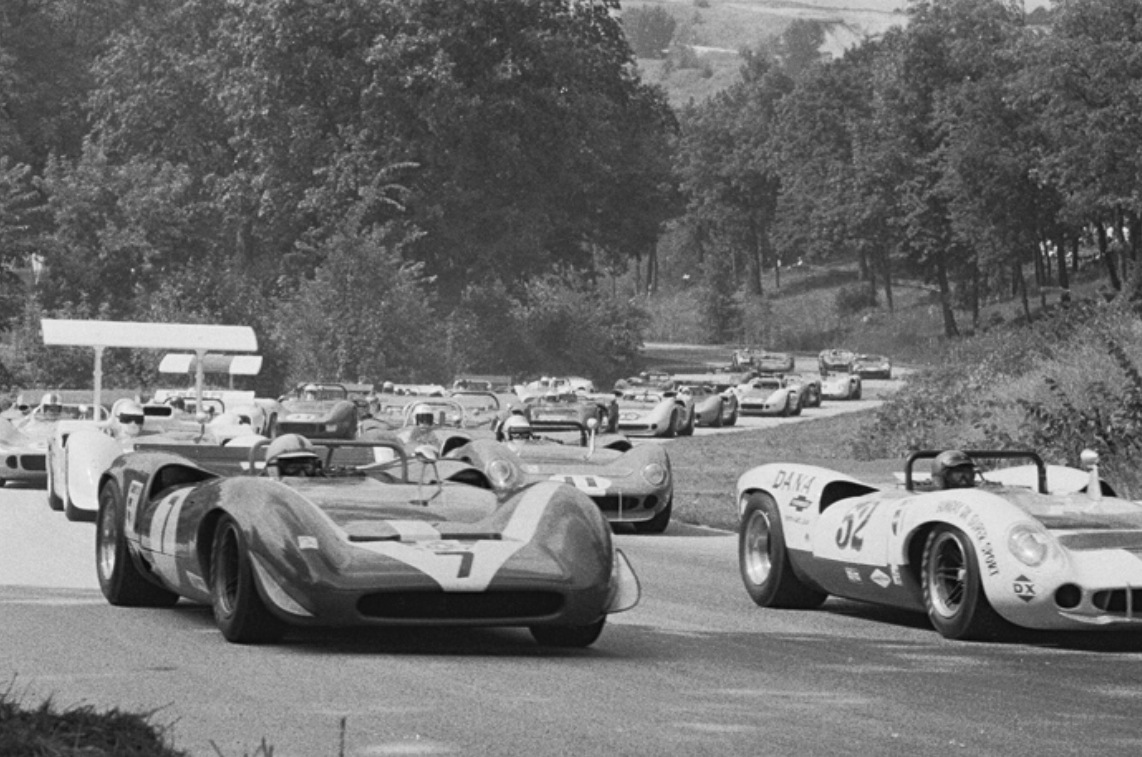
Bridghampton September 1967 start; the McLaren M6As of McLaren and Hulme are in front of this group headed by #7 Surtees and #52 Revson both in Lola T70 Mk3B Chevs, #11 Motchenbacher’s T70 Chev, Jim Halls winged Chaparral 2G Chev clear. Hulme won (Dave Friedman Collection)
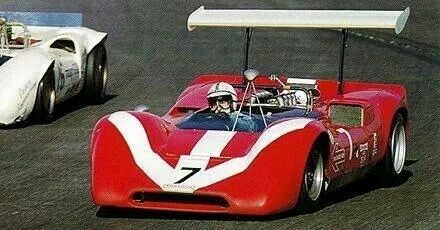
John Surtees much developed Lola T160/TS Chev at Bridghampton, September 1968, DNF having qualified 10th (unattributed)
The T160, Lola’s 1968 car was in essence a development of the T70. Surtees only raced in several rounds of the championship, Sam Posey was the best placed Lola T160 driver, finishing ninth in the drivers championship.

Surtees in his modified Lola T160/TS Chev. LA Times GP, Riverside, 27 October 1968. DNF water pump in the race won by McLaren’s M8A Chev (Dave Friedman Collection)
For Surtees it was time to do his own thing, his first customer car was the Surtees TS5 F5000 car for 1969. In the Can-Am he jumped out of the fat and into the flames, Jim Hall’s 1969 Chaparral 2H was not his best car. Surtees got a taste of the M8 McLaren when Hall realised he had built a clunker and bought an M12 customer McLaren for John to drive whilst the team sorted the 2H, Surtees revelled in the car on the few occasions he raced it!

Surtees T160 at Riverside from the rear. Top left Surtees in the pits, right Mark Donohue talking with his crew (Dave Friedman Collection)
Commercially for Broadley the appointment of Carl Haas as the Lola importer in 1967 was an astute move and provided the base for both firms success for decades with Haas having the required attributes above to take on the papaya McLarens.
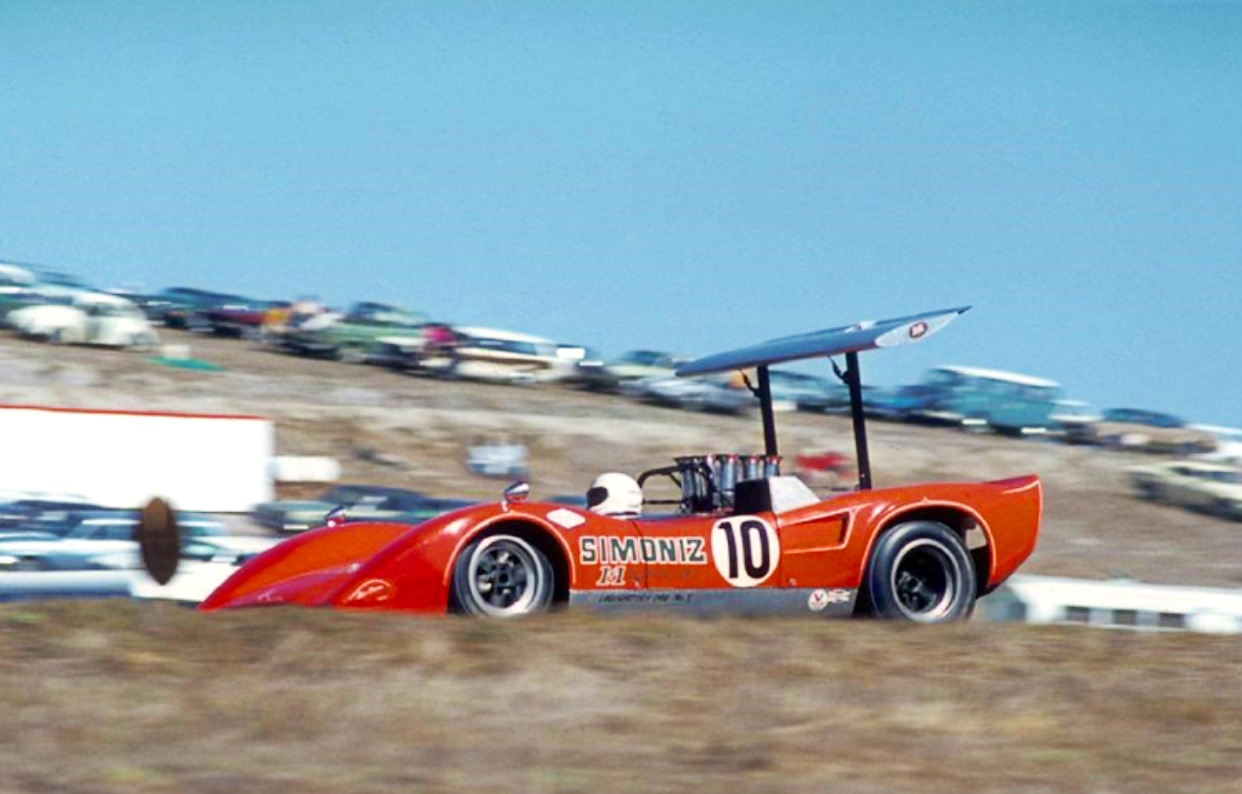
Chuck Parsons in Carl Haas ‘factory’ Lola T163 Chev at Laguna Seca in 1969. 3rd in the race won by Bruce’s McLaren M8B Chev (T Ferrari)
In 1969 Chuck Parsons proved the Lola T163 was not too bad a car, he finished third in the points chase, while the Chaparral was not a threat, and Porsche first appeared with the 917PA, the Can-Am variant of its dominant in 1970 and 1971, 917 endurance racer.

Painting depicting Vic Elford’s Chaparral 2J Chev leading Peter Revson’s Lola T220/2 during 1970 (unattributed)
1970 was one of the great years of the Can-Am. The sound, conservative engineering of the McLaren M8D was juxtaposed by Jim Hall’s outrageous Chaparral 2J Chev, one of the most stunning, original, innovative, epic racing cars ever built. The two stroke engines which created the vacuum for its ground effects were its weak link and the cause of too many retirements but the car was stunningly fast while it lasted in Jackie Stewart’s and Vic Elford’s hands.
The Establishment had it banned at the end of the season of course; ‘movable aerodynamic devices were illegal’ but the Can-Am lost its soul and it’s ‘unlimited nature’ in making that decision, Hall told the organisers to go jam it and with it the Can-Am lost its biggest draw if not its most successful team.

Peter Revson destroyed his Lola T220 Chev after a 180mph tyre blowout at Road Atlanta in 1970. He raced a new 10 inch longer wheelbase car, 98 inches, the T222 for the rest of the season. Here at Watkins Glen he was third (Automobile Year)
Haas convinced Broadley to design a new Lola for 1970 and signed Peter Revson, just peaking as a world class driver, to get the best from it.
The gorgeous, swoopy T220 had a very short 88 inch wheelbase which made it difficult to drive, a tyre failure at 180mph at Road Atlanta destroyed it, but fortunately not Revson. It was a blessing in disguise as the replacement T222 had an additional 10 inches added to its wheelbase which made it a much more competitive car.
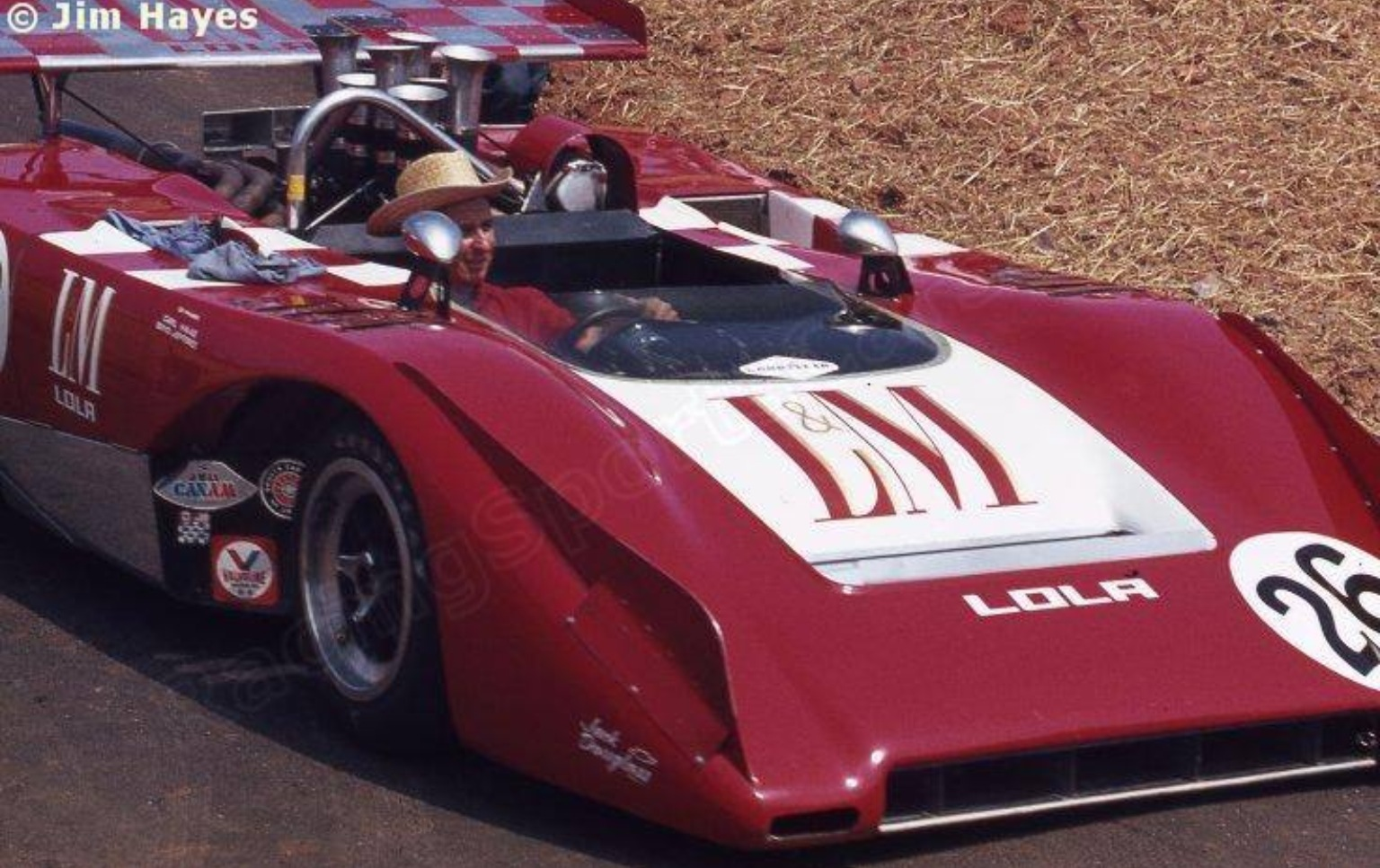
Revson’s T220 at Road Atlanta and destroyed that weekend. ‘Fence’ an addition from original body spec (Jim Hayes)
Having said that the T220 was fast if unreliable. Revvie qualified it second at Road America, third at Mid Ohio and fourth at Watkins Glen and Mosport, his best finish was second to Hulme at Mid Ohio.
With the longer wheelbase T222 he immediately banged the car on pole at Donnybrooke, finishing third behind the two McLarens and qualified third at both Laguna Seca and the final Riverside round for a third and DNF respectively.
So, by the end of the year the Lola car/driver combination was close to the McLarens, Hulme took the 1970 title with Revson sixth. He was off to McLaren for 1971, all Lola/Haas had to do was build a better car and hire a driver of the required calibre.
Part 2: The Lola T260…

Lola T260 Chev cutaway (Tom Strongman)
Having had a taste of the Can-Am in 1970 and earlier years Jackie Stewart was keen to return. TThe professionalism of the Carl Haas team and Lola, a marque familiar to him having raced a T90 successfully at Indy together with Graham Hill in 1966, had appeal. He could fit the series into his 1971 F1 program with Tyrrell, or so he thought. Click here for an article on the Lola T90 and the 1966 Indy 500;
Graham Hill’s ‘American Red Ball Spl’ Lola T90 Ford: Indy Winner 1966…
Lola’s mount for Stewart was designated the T260 which was designed by Bob Marston with Eric Broadley’s guidance.
Lola Heritage; ‘The chassis was a…Lola full monocoque in L72 and NS4 light alloys bonded and riveted together with the fuel bags in either side of the tub with a total capacity of 60 gallons. The oil tank was contained in the rear of the left-hand fuel section. The rear of the monocoque extended to the back of the engine which was sandwiched between two bulkheads, a bell-housing supported the gearbox and absorbed suspension loads.
Cooling was via two brass-finned Serck radiators mounted behind the driver’s shoulder level and fed by two large NACA ducts on the top of the bodywork, the radiators vented through large louvres in the rear bodywork. Two oil coolers were mounted behind the water radiators and used the same ducts, an additional transmission cooler lay flat over the gearbox.
The bodywork was evolved following extensive tests in the Specialised Mouldings wind tunnel and featured a short, bluff nosecone with gauze-covered holes on the top to equalise pressure. At the base of the nose were two air ducts to feed air to the front discs, at the rear two ram pipes on the top of the rear body section collected the cooling air for the rear discs’.
Pete Lyons described the cars aerodynamic approach ‘The T260…was built to an aerodynamic theory already embodied in a few small-bore sports cars of the day. The intent was a shape that would bullet through the air on the straights and also remain stable as the car’s pitch attitude, ride height and positioning behind other cars changed everywhere else. In particular…a more conventional downforce-producing wedge nose, such as McLaren’s…could abruptly change from downforce to lift under certain conditions…’

CAD sketch showing the T260 aero treatment. (unattributed)
‘The front suspension on the T260 comprised unequal length wishbones, the upper ones were triangulated to form bell-cranks that operated Bilstein dampers and coil springs which lay almost horizontally across the front of the tub. The unusual spring-medium location freed space for the front brakes to be mounted inboard. Eric Broadley’s intention was to reduce the unsprung weight of the front wheels by moving the brakes inboard from their conventional hub location. This would have permitted the lighter wheel assemblies to ride better over the often bumpy Can-Am circuits. Jackie Stewart was adamantly opposed to inboard brakes after the death of his close friend Jochen Rindt due to the failure of an inboard-brake driveshaft on his GP Lotus 72 at Monza in September 1970. Conventional outboard brake mountings were used on the finalized T260 instead.’
A tangent is the fact that later JYS was comfortable enough with Engineer Derek Gardner’s approach to inboard front brakes, his 1973 Championship winning Tyrrell 005/006 being so equipped.

T260, Stewart up, Road America. Shot included to show the unusual location, for the time, of the spring/shocks referred to in the text. Graviner fire extinguished ‘bomb clear in shot. Chassis aluminium full monocoque (Jim Buell)
Rack and pinion steering was ahead of the front suspension.
Lola Heritage; ‘At the rear there was a short top link and a long radius arm attaching to the front engine bulkhead, a lower member extended rearwards to a cross-member bolted to the rear face of the gearbox. The springs and dampers fixed to the lower member and transmitted their load to tubular outriggers on the gearbox bell-housing.
Lola-made centre-lock, peg-drive magnesium wheels were fitted, their diameter 15 inches with 10.5 inch front and 17 inch wide rear Goodyears. The battery was mounted in the nose and a Graviner onboard fire extinguisher was fitted behind the dashboard’.
Two cars were built for Haas, chassis HU1 was Stewart’s race chassis, HU2 was an unused spare in 1971.
The engine was a 496 cu in (8.1-litres) V8 Chevrolet tuned by George Foltz, it produced circa 700 bhp and 618 lb/ft of torque, Lucas fuel injection was fitted with a Scintilla Vertex magneto and a Hewland LG600 four-speed gearbox transmitted the power.

Aluminium block 8-litre engine of the T260 at Mosport. June 1971 (Jerry Bendl Collection/The Roaring Season)

(Werner Buhrer)

Frank Gardner testing the Lola T260 at Silverstone in May, note how far forward the rear wing is in relation to shots taken later in 1971 (LAT)
When completed the car was tested by Lola racer/tester/development engineer Frank Gardner at Silverstone in May, FG was also turning his mind and skills into getting more speed from Lola’s F5000 T190/2; no doubt the F5000 was a kiddy-car compared to its 8-litre big brother!
Stewart drove the car in a rain soaked run at Silverstone prior to the cars shipping to Canada for the season opening Can-Am round at Mosport, Canada.
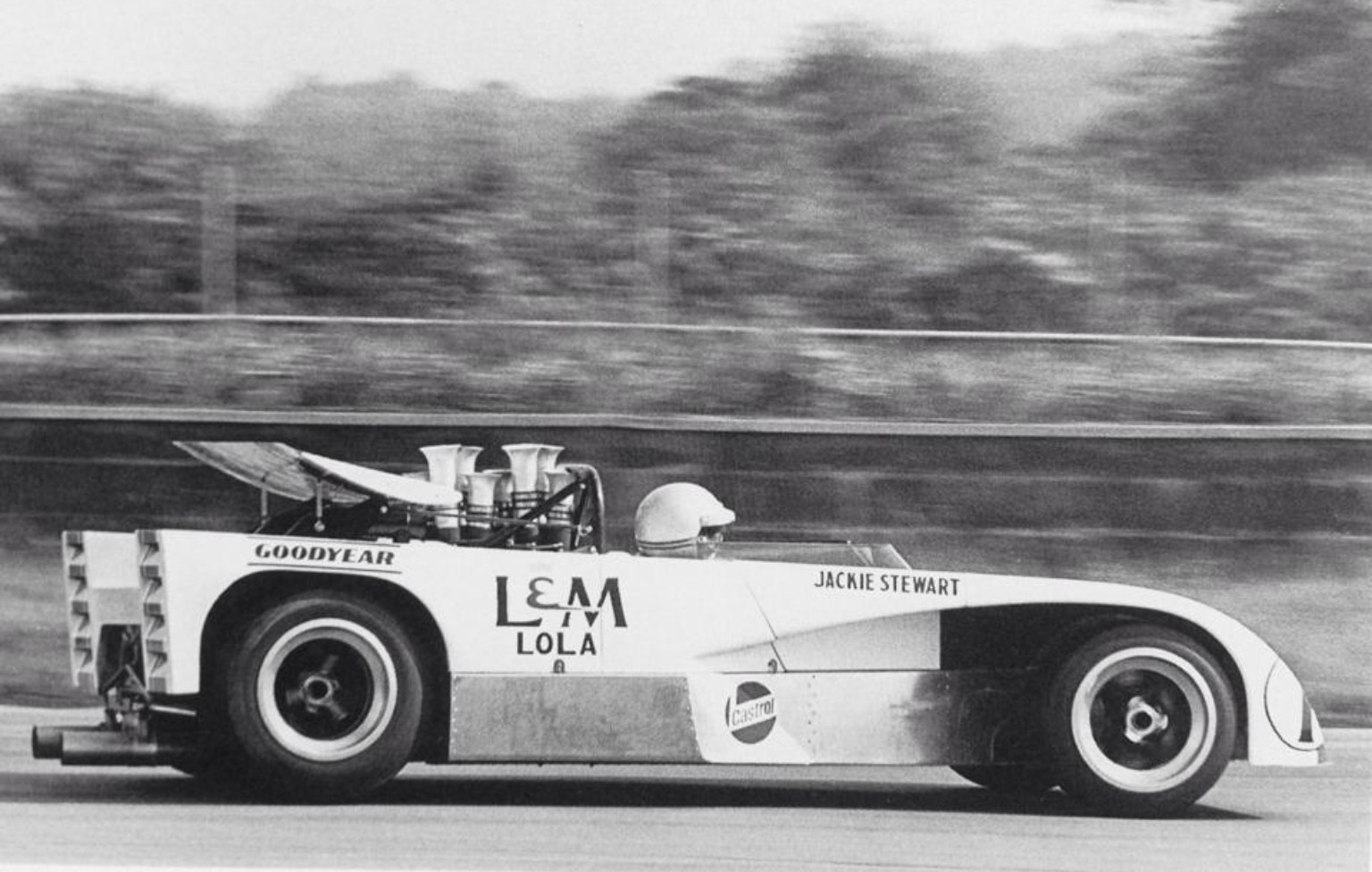
Gardner in T260 HU1 at Silverstone, the shortness of the car and different to anything else in the Can-Am aero-treatment, clear in this shot (unattributed)

Ropey shot of Stewart sheltering from the Silverstone weather during his brief drive of the T260 prior to shipment to North America, June 1971 (Sutton Images)
Other 1971 Can-Am Contenders…

Denny Hume and Jackie Stewart at Mid Ohio 1971. Stewart in his T260 office (Ron Laymon)

Denny Hulme, McLaren M8F Chev, Road America, August 1971. DNF engine. Engine 494cid Reynolds aluminium block Chev, circa 740bhp @ 6400rpm (Jim Buell)
In reality the likely outright contenders in 1971 were the factory McLaren M8Fs, Stewart’s T260 and Jackie Oliver’s Shadow Mk2 Chev, designed by Peter Bryant.

Jackie Oliver’s Shadow Mk2 Chev, Road America 1971, 12th in the race (Jim Buell)
Jo Siffert’s Porsche 917/10 was gathering valuable data for a serious tilt in 1972. In exceptional circumstances (the wet) it was a contender as were a number of the best privateers in either ex-works or carefully developed M8’s: Lothar Motschenbacher, Vic Elford and Tony Adamowicz the most likely.

Siffert’s Porsche 917/10, Road America 1971. Spaceframe chassis, 5-litre flat 12 (Jim Buell)

Peter Revson, Jackie Oliver in the helmet and front suspension detail of a McLaren M8F in the Road America paddock, August 1971 (Jim Buell)
The detailed specification of the McLaren M8F I wrote about a while back; click on this link to read the short article; https://primotipo.com/2015/03/08/peter-revson-mclaren-m8f-chev-1971/

1971 Mid Ohio rolling grid. #5 Hulme, #7 Revson, #1 Stewart, #2 Jo Siffert,Porsche 917/10, #51 Dave Causey Lola T222 Chev, #54 Tony Adamowicz, McLaren M8B Chev, #88 Hiroshi Kazato, Lola T222 (Ron Laymon)
Part 3: Racing: 1971 Can-Am Round by Round…
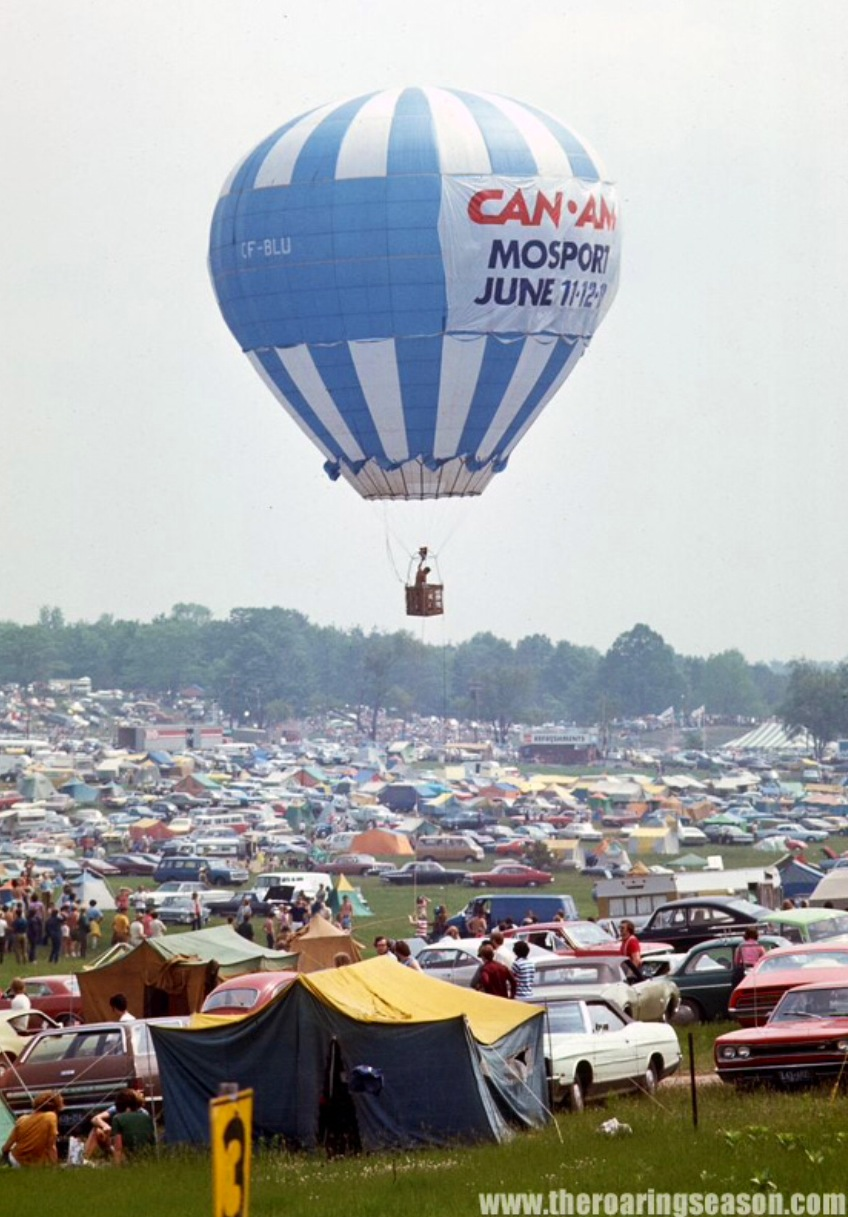
Mosport 1971 vibe, looks fantastic! (Jerry Bendl Collection/The Roaring Season)
Round 1: Mosport, Ontario Canada 13 June 1971
Stewart grabbed pole position from the works McLaren M8Fs of Hulme and Revson then led the race from Hulme, an oil leak from the LG600 Hewland ‘box resulted in its seizure on lap 18.
Hulme won from Revson and Lothar Motschenbacher in one the 1970 ex-works McLaren M8Ds.

Pan of Stewart at Mosport shows the cars original aero treatment before ongoing modifications and experiments. Rear wing far forward and nose devoid of appendages (Jerry Bendl Collection/The Roaring Season)
Rounds 2 and 3: St Jovite, Quebec Canada 27 June and Road Atlanta, Georgia, 11 July
Stewart put the T260 on the front row next to pole sitter Hulme’s McLaren M8F at St Jovite. Denny led from the start but Stewart sat in second until lap 52 when Hulme, tiring from a stomach bug, had to slow due to exhaustion. Stewart won from Denny and Peter.
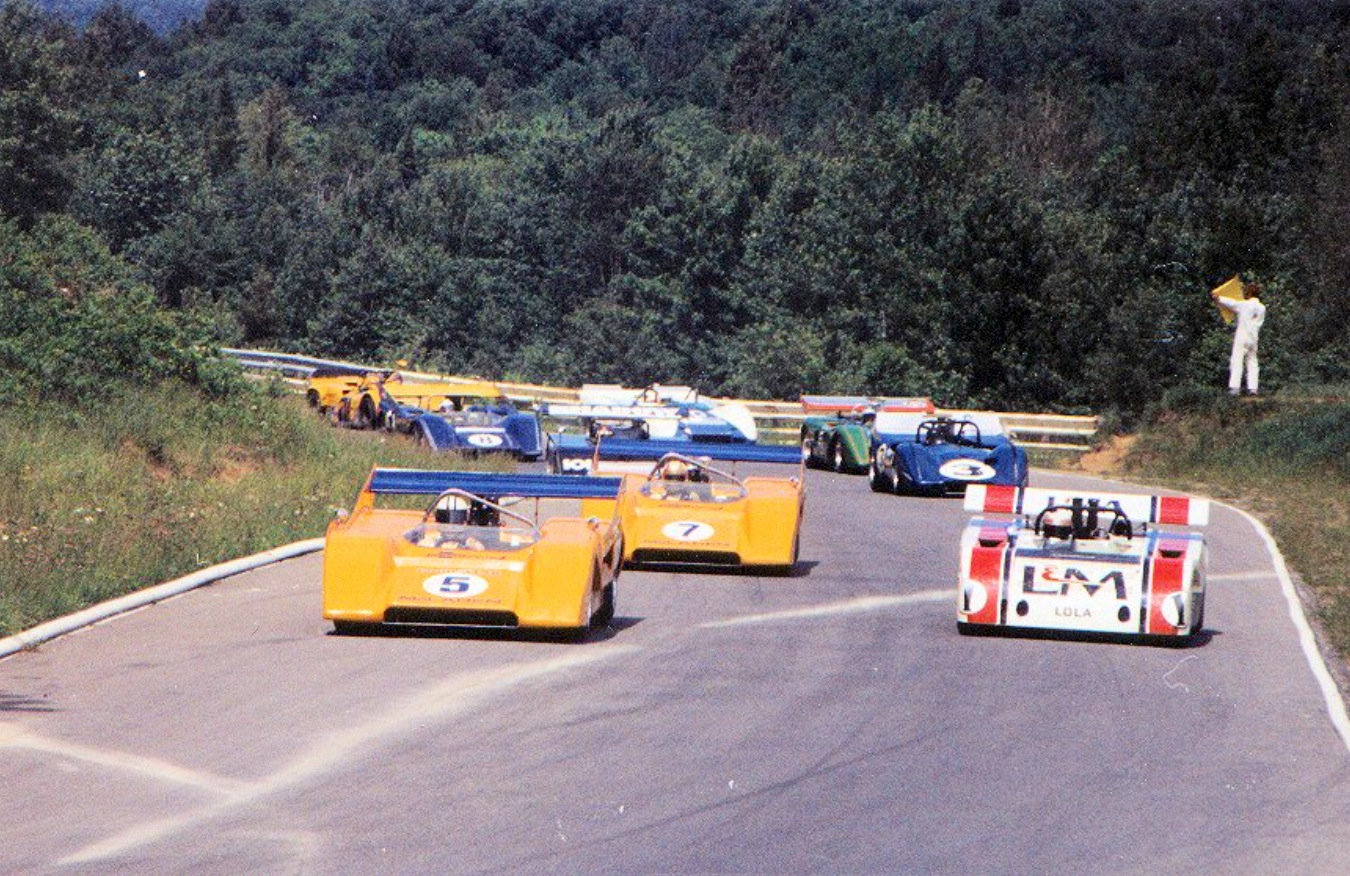
Stewart a race winner at St Jovite, here beside Hulme with Revson just behind (Lola Heritage)
Stewart recalled in an interview with Gordon Kirby, ‘St Jovite was a good win because with that car, that track was hard work! The other race where we did quite well was at Road Atlanta. We led the race then had a puncture and a whole series of other problems but still turned the fastest lap of the race, quicker than Hulme’s pole time’. Revson won from Hulme and Motschenbacher.
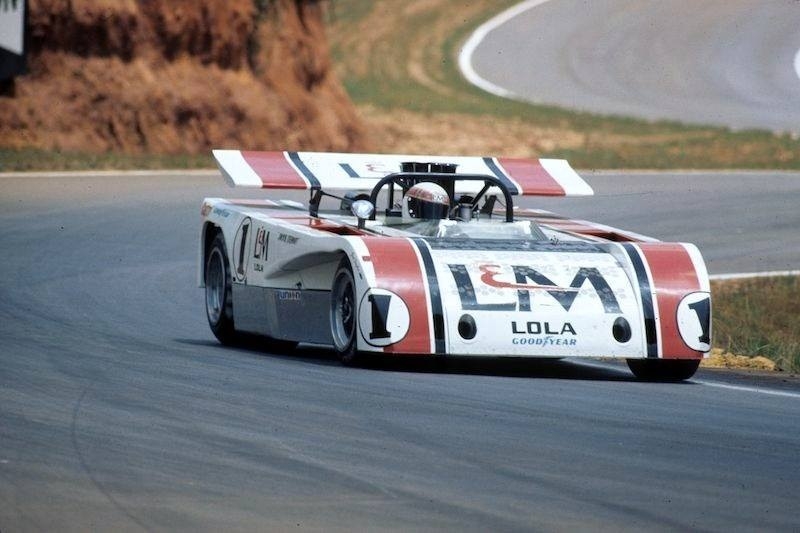
Stewart had great pace at Road Atlanta, wonderful high speed shot of the short, squat, original T260 (unattributed)
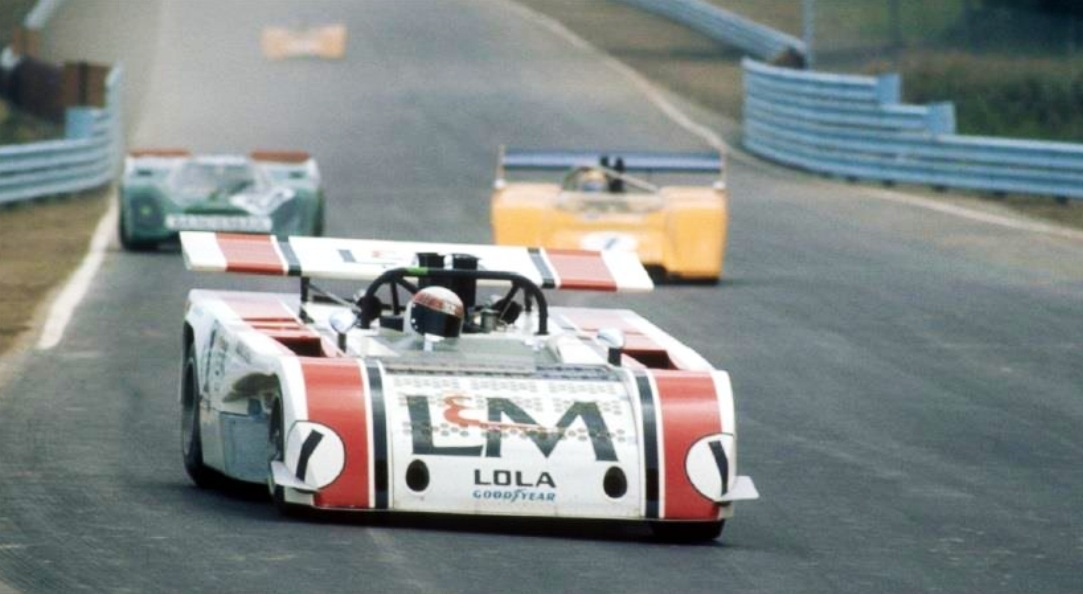
Stewart ahead of Revson, Mario Cabral Porsche 917K and Hulme in the distance, Watkins Glen, 1971 (unattributed)
Round 4: Watkins Glen, New York, 25 July
The T260’s speed was not in doubt, it was back on pole again with Hulme and Revson right behind. Stewart got the drop putting the T260 into the lead from Revson, the Lola and McLaren diced until Stewart pitted with another puncture, losing a lap while the wheel was changed.
Stewart returned to the race and began to fly, setting the fastest lap but on the 56th lap he retired the car after detecting vibrations which proved to be a failing transmission. Revson won from Hulme and Siffert’s factory Porsche 917/10.

JYS at Watkins Glen, site of the US GP in upstate New York, it was a circuit he knew well (LAT)
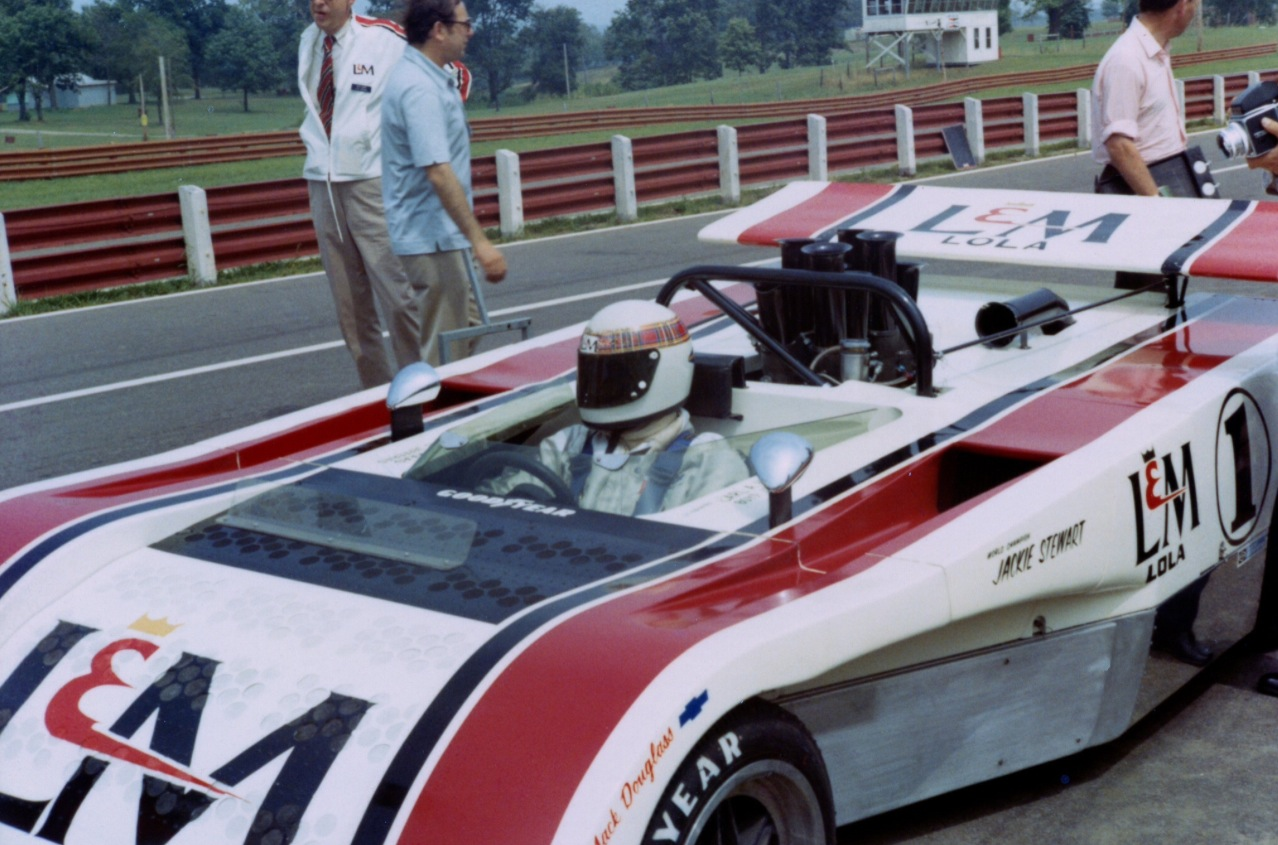
Stewart loaded up and all ready to go in the Mid Ohio pitlane (Terry Capps)
Round 5: Mid Ohio, 22 August
Stewart, famously a successful campaigner for better circuit safety, was unhappy with the track; its surface was excessively bumpy and the presence of trees and telegraph poles surrounding the course meant mistakes would be punished severely.
Much overnight work was carried out to remove some of the trees and poles, and add straw bales where possible, but after looking at the result Stewart declared he would ‘run but he wouldn’t race’. Stewart’s position could be appreciated after the bumpy track caused three rear suspension failures to the T260 during qualifying.
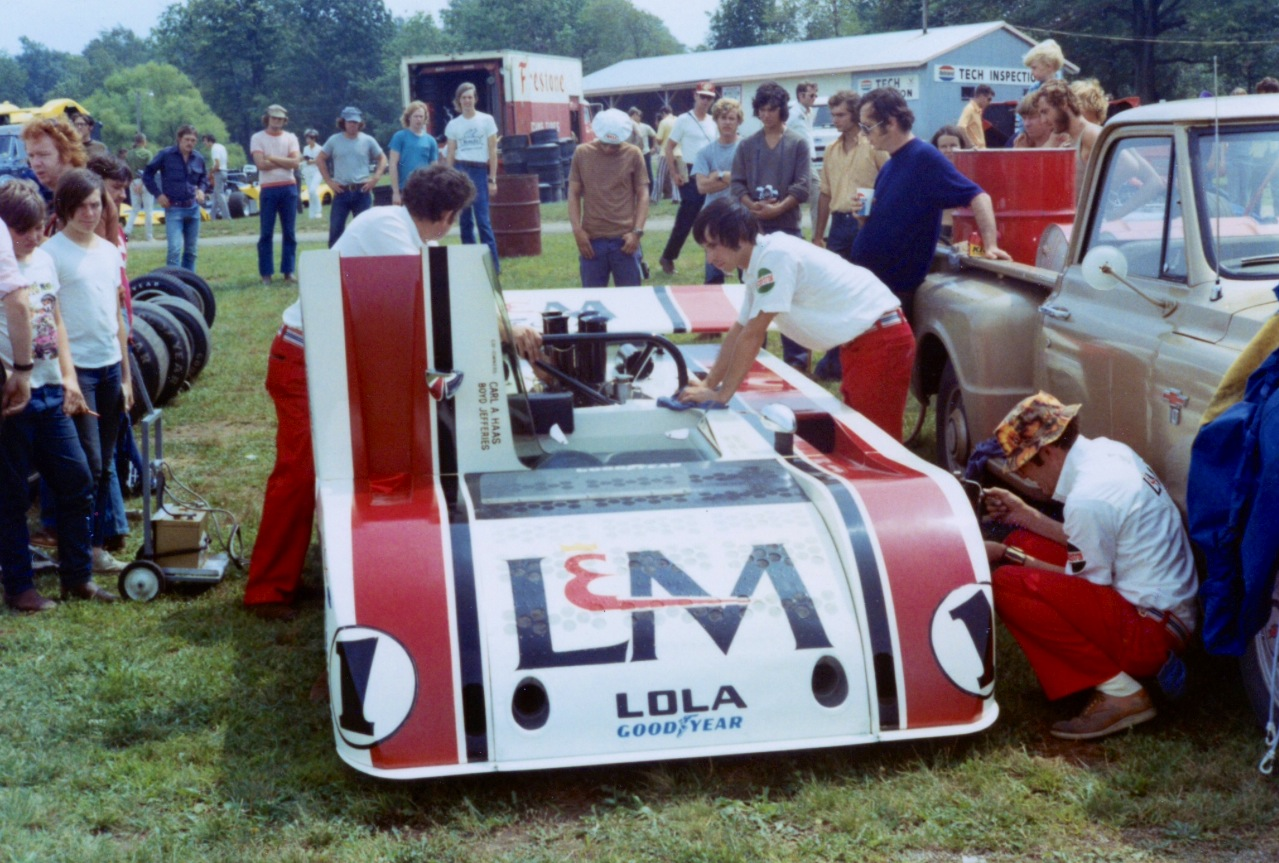
Bucolic Mid Ohio paddock. Team busy this meeting, several suspension failures over the bumpy circuit. Standard-aero at this point (Terry Capps)
Stewart qualified third and was second behind Revson at the end of lap one but the McLaren drew away as Stewart drove well within himself. On lap 72 Revson’s driveshaft universal joint failed (the same problem sidelined Hulme) and Stewart took the lead and race win from Siffert’s Porsche and Tony Adamowicz’ 1969 ex-works McLaren M8B Chev.
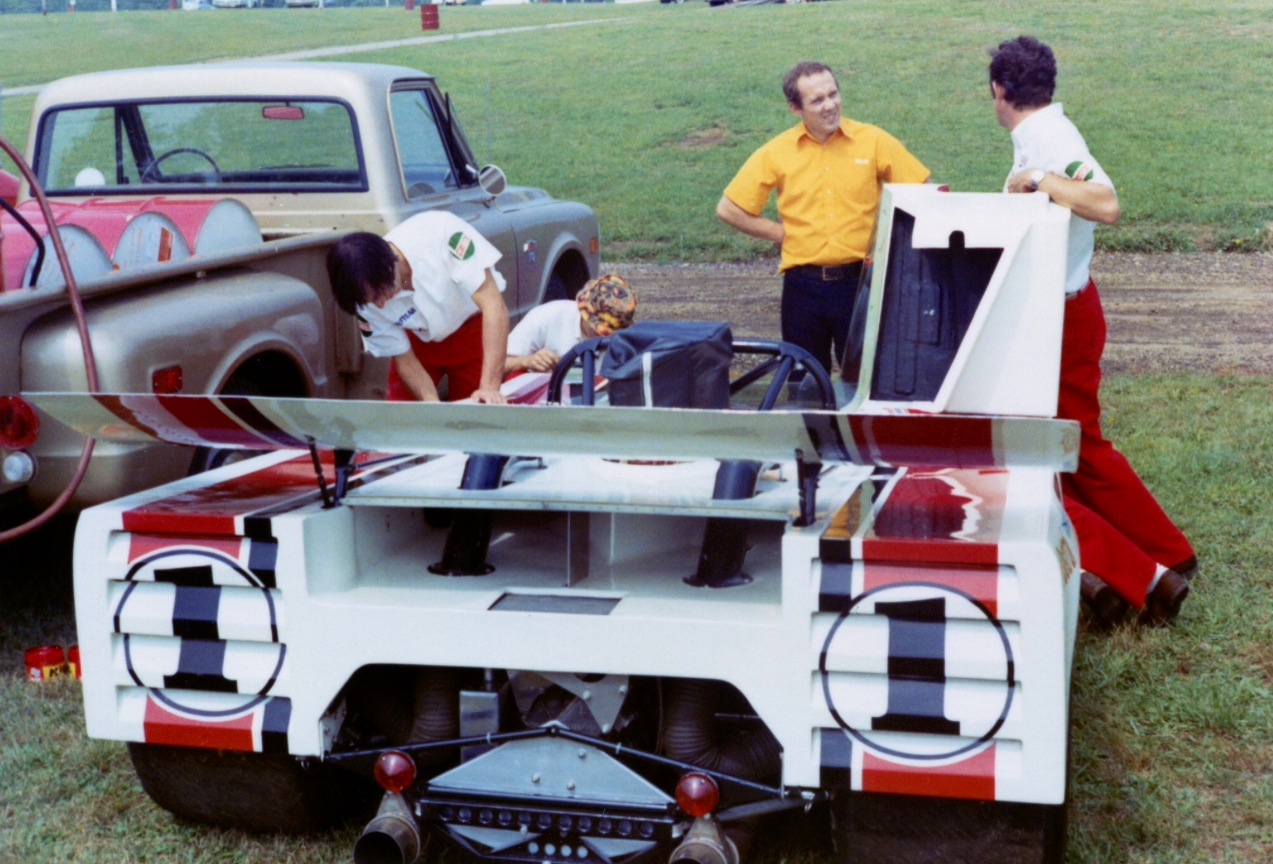
Mid Ohio paddock, this time a butt shot. Neat brackets to support beefy exhausts and lights, black ducts are cooling for inboard discs located beside the Hewland ‘box. Note also ducts/louvres on the rear of the bodywork to exhaust hot air (Terry Capps)
From this point on, the continual development of the McLarens told while the Lola effort didn’t improve enough. McLaren were a well drilled team and both drivers were experienced campaigners with whatever changes needing to be made could be done quickly in their Detroit workshop or back at Colnbrook.
While the T260 was effectively a works effort run by the marques US importer, Lola were at their core a manufacturer of customer racing cars with many customers, not a race team with only one focus.
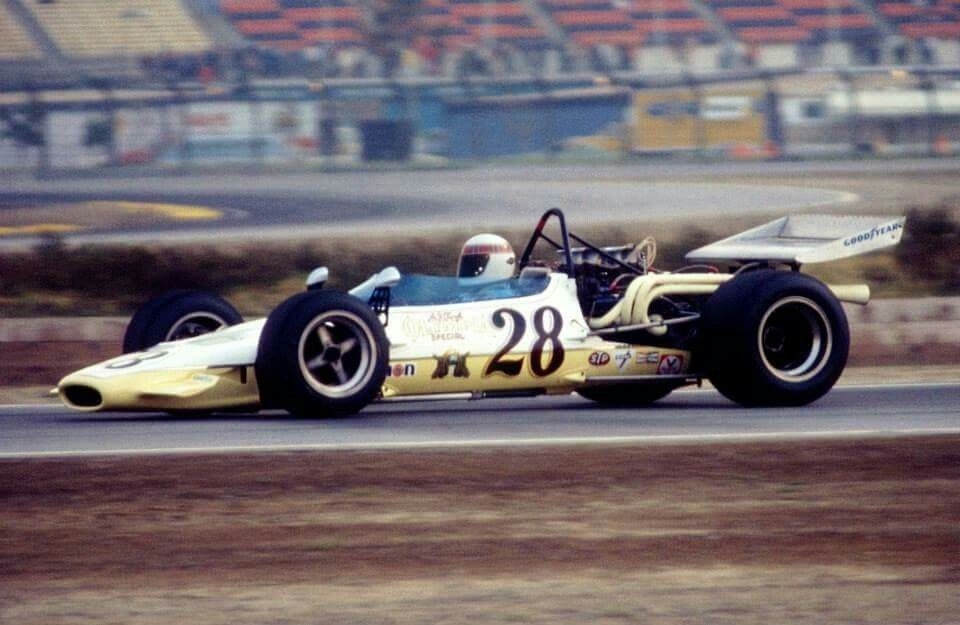
Included in JYS program for 1971 was the Questor Grand Prix at Ontario Speedway in March. He was second in his Tyrrell to Mario Andretti’s Ferrari 312B…but here Jackie is putting in a few laps in AJ Foyt’s McLaren M10B Chev in his only F5000 drive?? (Getty Images)
Jackie Stewart on driving the T260 and stresses of two major campaigns, F1 with Tyrrell and the Can-Am Lola in 1971…
Stewart related to Gordon Kirby and Adam Cooper in separate MotorSport magazine interview’s; ‘There were no wind tunnels in those days and Eric (Broadley) would suddenly arrive and under his arm was a new front wing. There was one we called ‘the cowcatcher’. It was hung out front of the car and what it was doing I just don’t know’
‘The car was very short wheelbase and very difficult to drive. In comparison to the McLarens, (Stewart was approached to drive for them in 1972 and actually signed to do so but withdrew when the extent of his health problems were clear) the car was just a monster to drive and we were just trying to keep up’.
‘I tested the McLaren and it was just like a passenger car compared to the incredibly nervous, pointy, short wheelbase Lola where you were a millisecond from an accident all the time.’
Stewart said the Lola T260 was the most physically demanding car he raced in his career ‘On the very fast circuits like Riverside it was awfully tricky because you never knew where you were going’. In order to make up for its shortcomings ‘I sweated more. It was just a difficult car to drive. There are some cars which are easy to drive and others not and that was one of the ones that was not’.
In a contest for the worst car he ever drove; ‘The Lola T260 Can-Am car would probably make that one…the H16 BRM runs it a close second’.
The main problem was dire understeer in addition to ultimate twitchiness at speed. The Lola’s blunt nose was dotted with mesh covered holes through which the underbody air could pass. In theory this helped provide some downforce. In its initial guise the shape of the front didn’t seem to have any obvious way of providing grip. Broadley deliberately opted not to have a fashionable chisel nose. But the lack of downforce at the front was borne out by the position of the giant rear , which was usually far forward, just behind the injection trumpets in an attempt to achieve some sort of balance.
A combination of racing around the world in two series and lots of promotional work gave Stewart mononucleosis. ‘I was flying back and forth from Europe to do F1, I won the world championship that year and two Can-Am races, but I also got mononucleosis (glandular fever), a really debilitating disease that took your energy away. You couldn’t sleep and yet you were overly tired. So it was a tough year, a really exhausting year’.

Stewart racing his Tyrrell 001 Ford to victory in the Spanish GP, Montjuic Park, Barcelona on 18 April. He took six wins in 1971 and his second drivers title (unattributed)
It’s interesting to reflect on Jackie’s comments on the differences between the two cars. In fact both the T260, which retained the same wheelbase as the T222, and the M8F had 98 inch wheelbases.
The front/rear track of the Lola was 58 inches, of the M8F 60/57.75 inches, while the overall length of the Lola was 139 inches compared with the much longer M8F’s 167 inches. The aero treatment was radically different of course, a lack of downforce something the team chased progressively throughout the season.

Stewart in the T260 at Road America and trying a different aero configuration comprising; a new profile ‘clip’ on the lower nose at the cars front and McLarenesque wing and integrated mounts, wing now much further back than the original (Jim Buell)
Round 6: Road America, Elkhart Lake, Wisconsin, 29 August
Stewart was third fastest in qualifying but his engine, also used at Mid-Ohio, was tired.
A new Chev was fitted for the race but high temperatures during warm-up were hoped to be vapour lock in the cooling system.
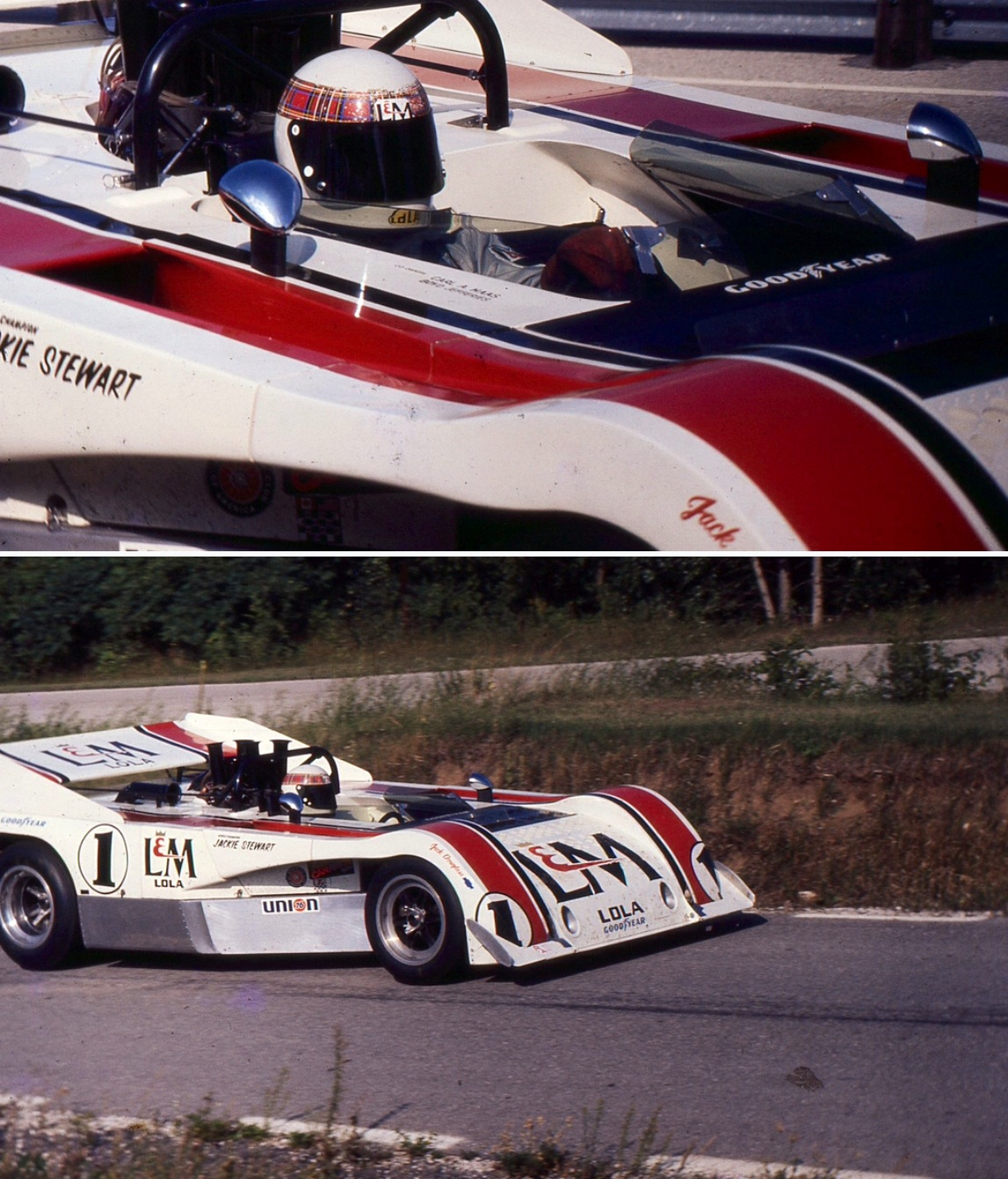
Stewart ready to rock at Road America and a close-up of the configuration pictured above (Jim Buell)
Stewart ran second early on but after 10 laps the engine was smoking so Jackie parked it. Later examination showed a dropped cylinder liner was responsible for the high engine temperatures.
Revson won from Siffert and Vic Elford’s McLaren M8E Chev.

Stewart T260 Road America, note that in this shot he is running the original nose and rear wing setup (Carl Knopp)
Round 7: Donnybrooke, Minnesota
The T260 had revised rear suspension but the McLarens were continually being developed as well, Stewart’s third fastest time was two seconds adrift of the factory M8Fs.
Stewart got away well and led for two laps until Revson found a way past, Hulme was unable to pass Jackie as the McLaren was losing grip in the Lola’s slipstream. The positions remained until lap 22 when Stewart felt something amiss and pitted, nothing could be found, he resumed in 10th a lap and a half down.
The Scot raced the T260 back to fourth but another puncture saw Stewart back in the pits, the T260 finished sixth, two laps down. Revson again won from Hulme and Gregg Young’s McLaren M8D/E Chev in third.
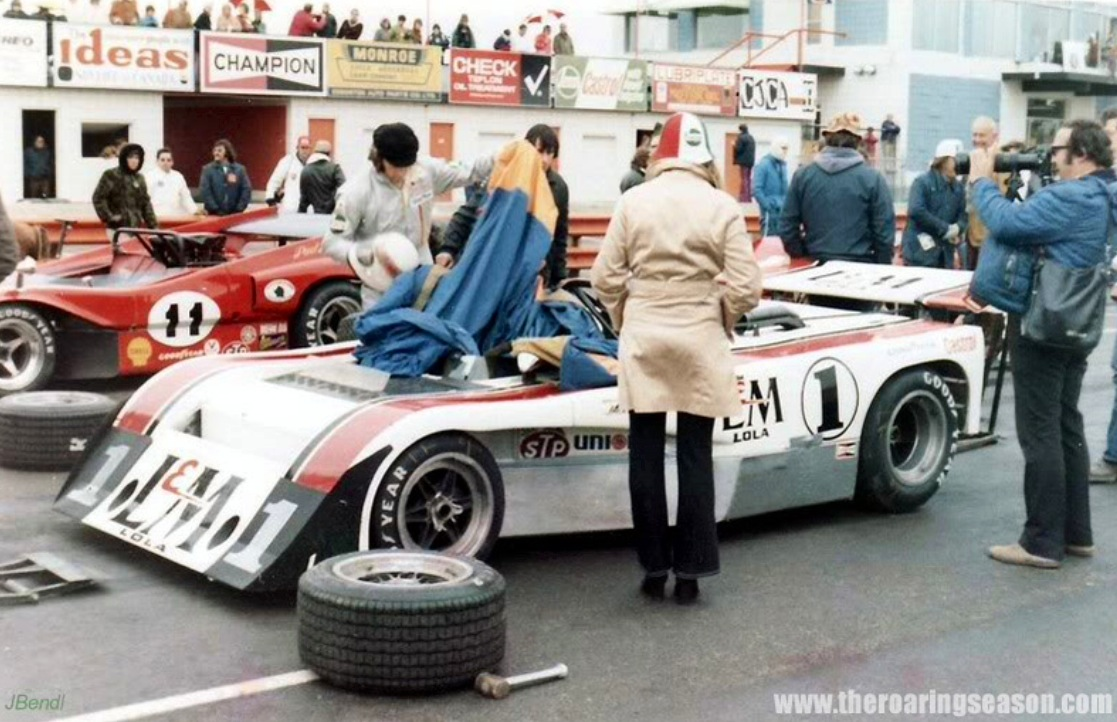
Stewart about to load up on the wet Edmonton grid, September 1971. #11 is Motchenbacher’s McLaren M8D . See another variation of the T260 nose, the front ‘clip on’ less bluff than the original and more ‘scooped’. Rear wing mounted back (Jerry Bendl Collection/The Roaring Season)
Round 8: Edmonton, Alberta Canada, 26 September
The T260 featured a revised nose shape designed to give more downforce while the rear wing was moved back to balance the new nose.
Stewart qualified third again and had a great start on the wet track and led. The T260 was handling well in the rain, the Scot extended his lead over Jackie Oliver’s Shadow and Hulme’s McLaren. Stewart was still leading at half distance but a trip onto the grass when lapping Motschenbacher’s M8D lost the Lola’s handling balance.
Gradually Hulme closed the gap and he suddenly found himself in the lead with 13 laps remaining, the deteriorating handling caught Stewart out and he spun. The T260 resumed in second but with it’s competitiveness lost Stewart settled for a safe second. Jackie Oliver finally got the Shadow Mk2 into the points in third place.

Stewart runs the cow-catcher set up at Laguna Seca, in search of downforce or what! Far forward wing and much larger rear wing to balance things up (Tony Ferrari)
Round 9: Laguna Seca, California, 17 October
At Laguna Seca the T260 had lost its high downforce nose from Edmonton and now featured a huge, front cow-catcher wing projecting out in front of the nosecone.
Stewart managed fourth on the grid behind the McLarens and David Hobbs in the Ti22 Chev.
Stewart soon passed Hobbs – David raced the Carl Haas factory Lola T310 in 1972 – and after 10 laps passed Hulme who had some broken valve springs.
Revson seemed secure 25 seconds ahead of Stewart but a collision with a backmarker required a pit stop to secure a loose door. Stewart was now nine seconds behind. Revson started to pull away again but with 20 laps to go Revvies engine lost power, he nursed it over the remaining laps but with two to go the M8F was puffing blue smoke.
He drove the last two laps cautiously to win and but Stewart took the chequered flag as Revson had been shown a black flag, Revson claimed he hadn’t seen it.
The Carl Haas team protested Revson, the results were pending for some hours, but eventually Revson got the win but received a $250 fine. Hulme was third.

Stewart ahead of David Hobbs Ti22 Chev, Jackie Oliver Shadow Mk2 Chev, another unidentified car with Jo Siffert Porsche 917/10 at rear. Corkscrew, Laguna (Hal Amarantes)


Stewart at Riverside, again with the cow-catcher aero setup. Side on profile shot gives an idea of just how far forward the front wing was and how big the rear one was! Lola T260 Chev (MP Hewitt)
Round 10: Riverside, California, 31 October
The series’ final round was at Riverside on October 30, only 3 1/2 short months since its commencement in mid-June.
Stewart again qualified third, the T260 now had bigger sideplates on its rear wing.
Hulme took the lead at the start but Stewart got up to second as Revson, looking for points to clinch the Championship, didn’t make it difficult. Unable to challenge Hulme, Stewart was running happily in second until a piston failed in the big aluminium Chevy on lap 27.
Hulme won from Revson and Howden Ganley in the BRM P167 Chev.
The end of the 1971 Can-Am Championship resulted in Peter Revson as champion with five wins to Hulme’s three, Stewart finished an honourable third to the two McLarens…
As Lola Heritage puts it ‘He had been their only consistent competitor over the ten rounds and there was a certain ‘what may have been’ feeling over the whole series, if only reliability had been better and punctures had been less’.
In addition to that it’s a shame the car hadn’t been finished earlier and tested extensively at Goodwood and Silverstone prior to crossing the Atlantic, but it wasn’t and the dominant McLaren’s reaped the rewards.
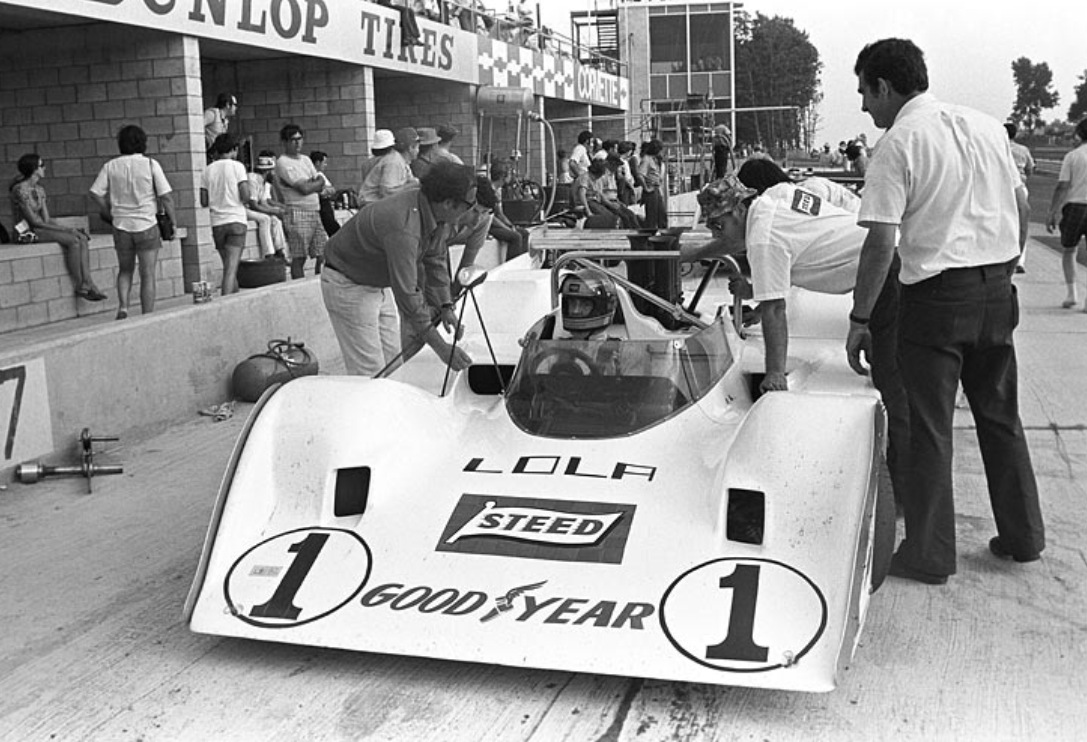
David Hobbs in the Watkins Glen pits 1972, Lola T310 Chev (unattributed)
For 1972 Lola again contested the championship with a new car, the T310, McLaren built a new car, the M20 Chev to take on the pride of Stuttgart, but the mighty turbo-charged Porsche 917/10 was battle ready in the hands of the Penske Team and Mark Donohue in a way the 1971 Lola/Carl Haas/Stewart combination were not…
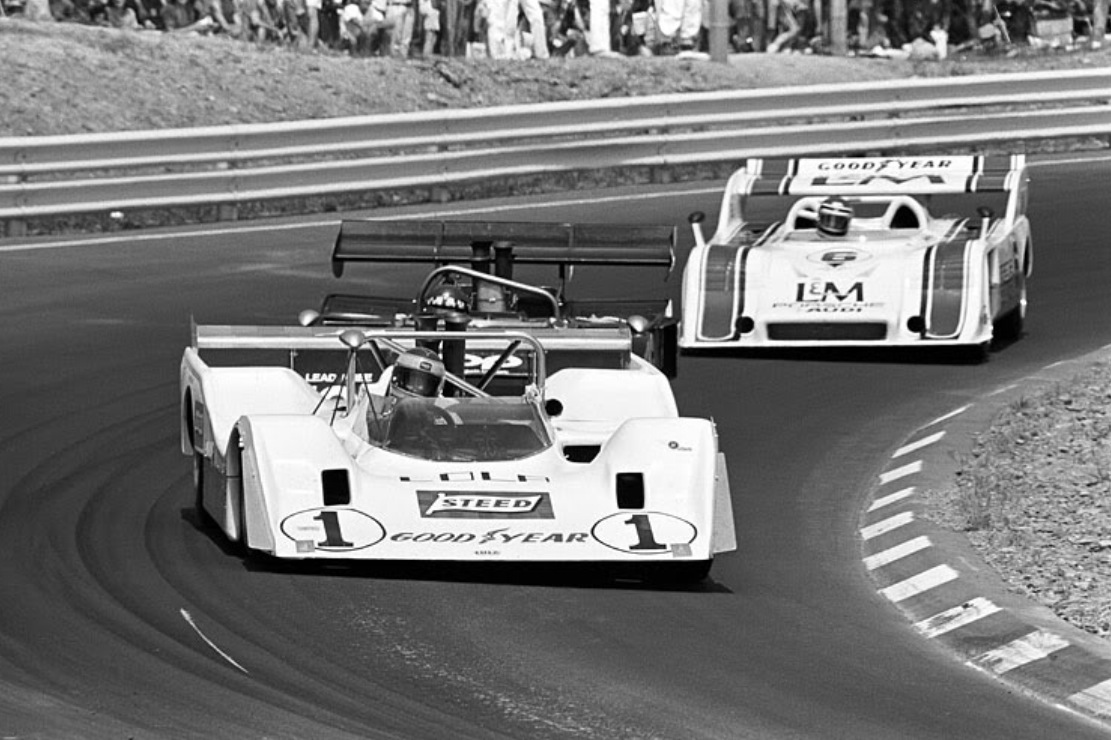
David Hobbs Lola T310 Chev fourth ahead of Jackie Oliver’s Shadow Mk3 Chev DNF and the dominant Porsche 917/10 turbo of George Follmer fourth. Hulme won this round in an M20 McLaren. Watkins Glen 1972 (unattributed)
Etcetera…

Bibliography…
Lola Heritage, MotorSport October 2000 article by Adam Cooper and December 2013 article by Gordon Kirby, Automobile Year 19, ‘Can-Am’ Pete Lyons
Photo Credits…
Lola Heritage, Ron Laymon, Getty Images, LAT, Jerry Bendl Collection/The Roaring Season, Automobile Year, Jim Hayes, Tom Strongman cutaway drawing, Carl Knopp, Jim Buell, Terry Capps, Hal Amarantes, Tony Ferrari, MP Hewitt
Tailpiece…
Turn in Biiitch!
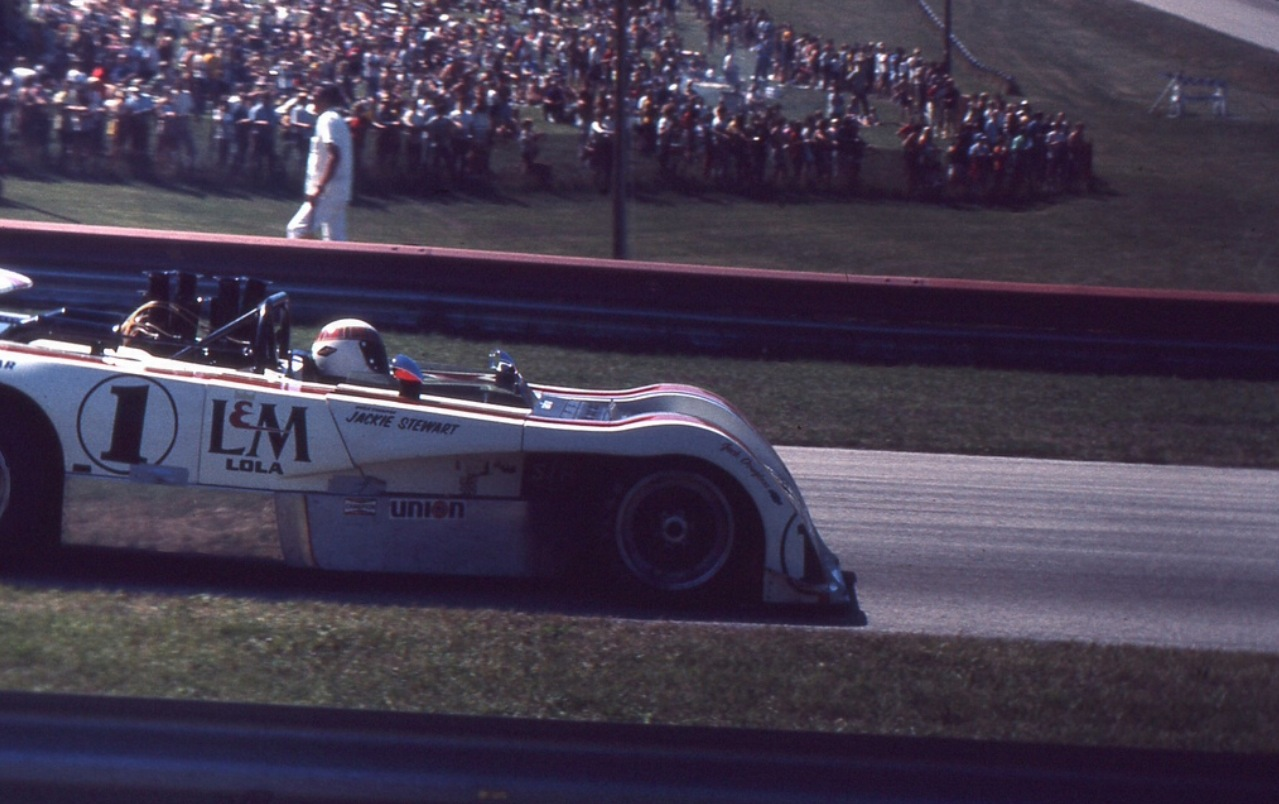
Stewart Lola T260, Road America 1971 (Jim Buell)
Finito…

Jacky Ickx and Gijs van Lennep won the race by 11 laps in their Porsche 936 from Jean-Louis Lafosse and Francois Migault in a Mirage GR8 Ford and British pair Chris Craft and Alain De Cadenet in the latters De Cadenet Lola T380 Ford…
The multi-tubular spaceframe chassis was based on the 908/3 and 917 designs with some of the running gear from the 917 program. The car used a 2 valve 2142cc single-turbocharged 540 bhp flat 6 engine variant of the roadgoing ‘930 Turbo’ the teething issues of which had been sorted the year before in the back of a 911 RSR.
Competing in Group 6, the derivation of the name 936 is clear, the engine was 2142cc to fit into the 3 litre class when the equivalency formula of ‘1.4 times’ was applied to turbocharged engines.
The cars were very successful winning Le Mans in 1976, ’77 and 1981 and the World Sportscar Championship in 1976.
Alpine Renault in their new turbo-charged DOHC 4 valve V6 engined A442 cars were favourites for the ’76 title but Porsche stole the series with their amazing ‘parts bin special’, winning the Monza 4 Hours, Imola 500Km, Le Mans, Enna 4 Hours, Dijon 500Km and the Salzburgring 200 Miles. The Alpines didn’t win a round despite a roster of mainly French GP drivers…
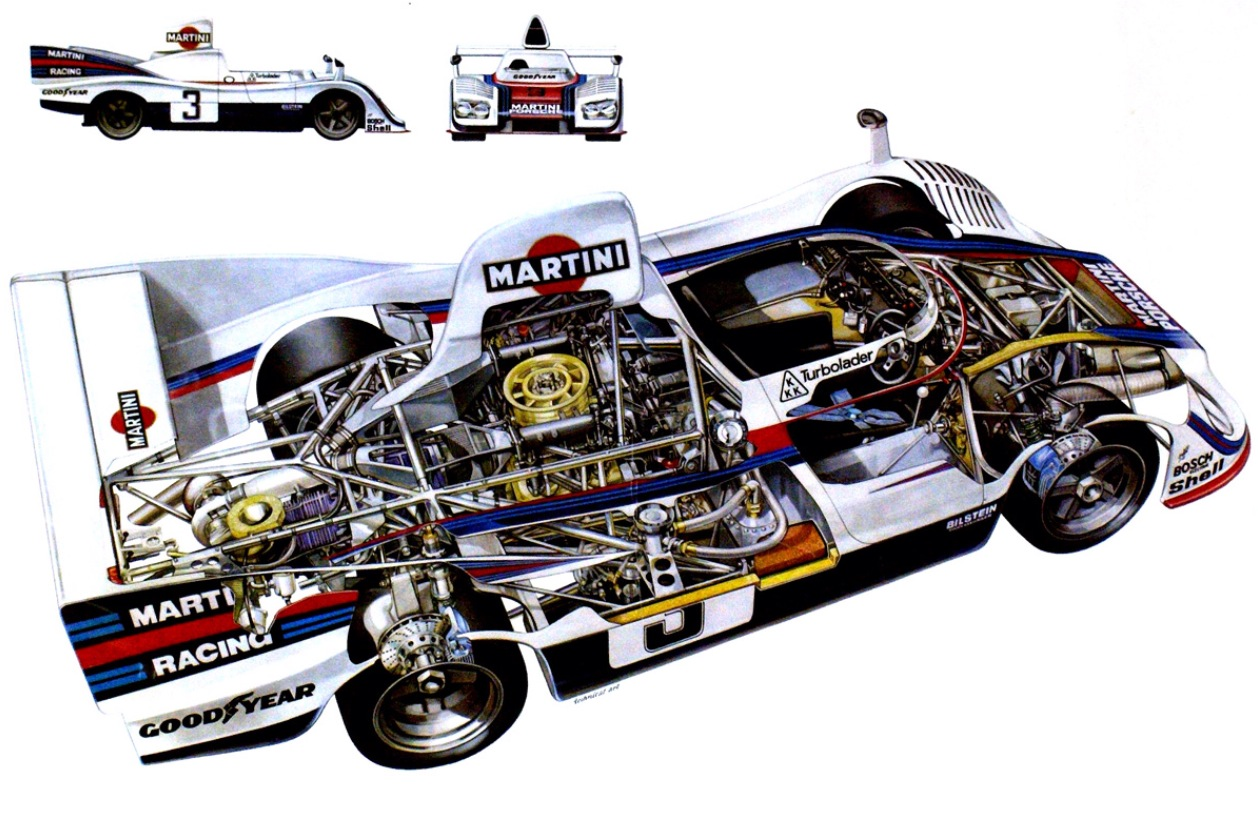
Multi tubular spaceframe chassis based on the 908/3 and 917 designs. Engine Type 935/73 B6 2142cc, 2 valve SOHC Bosch fuel injected, single KKK-turbo with intercooler, circa 540bhp@8000rpm in 1976. Gearbox Porsche 5 speed with LSD. Double wishbones and coil spring/dampers with adjustable roll bars front and rear. Ventilated steel disc brakes, rack and pinion steering, weight 700Kg. (unattributed)
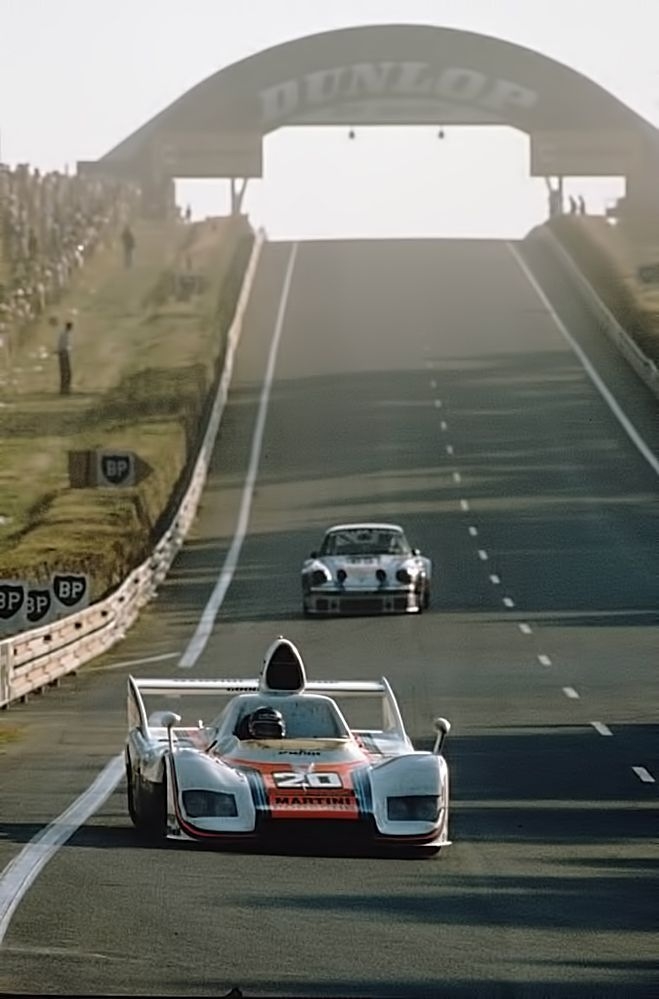
Jacky Ickx in the winning Porsche 936. Le Mans 1976. (unattributed)

Jacky Ickx again, Le Mans 1976. (Automobile Year)
Photo Credits…Automobile Year

1967 was one of the most intensely interesting years of Sportscar Racing; the last year of the ‘unlimited cars’ saw the 4 litre Ferrari P4 and 7 litre Ford GT40 Mk4/2B’s and Chaparral 2F at it tooth and nail in a battle for dominance before new rules came into force rendering the cars obsolete at the stroke of the rule-makers pen…
I’ve written a couple of long articles about the Ferrari and Chaparral which also cover that seasons racing in some detail, click here to read them;
Chaparral 2F; https://primotipo.com/2014/06/26/67-spa-1000km-chaparral-2f/
Ferrari P4; https://primotipo.com/2015/04/02/ferrari-p4canam-350-0858/
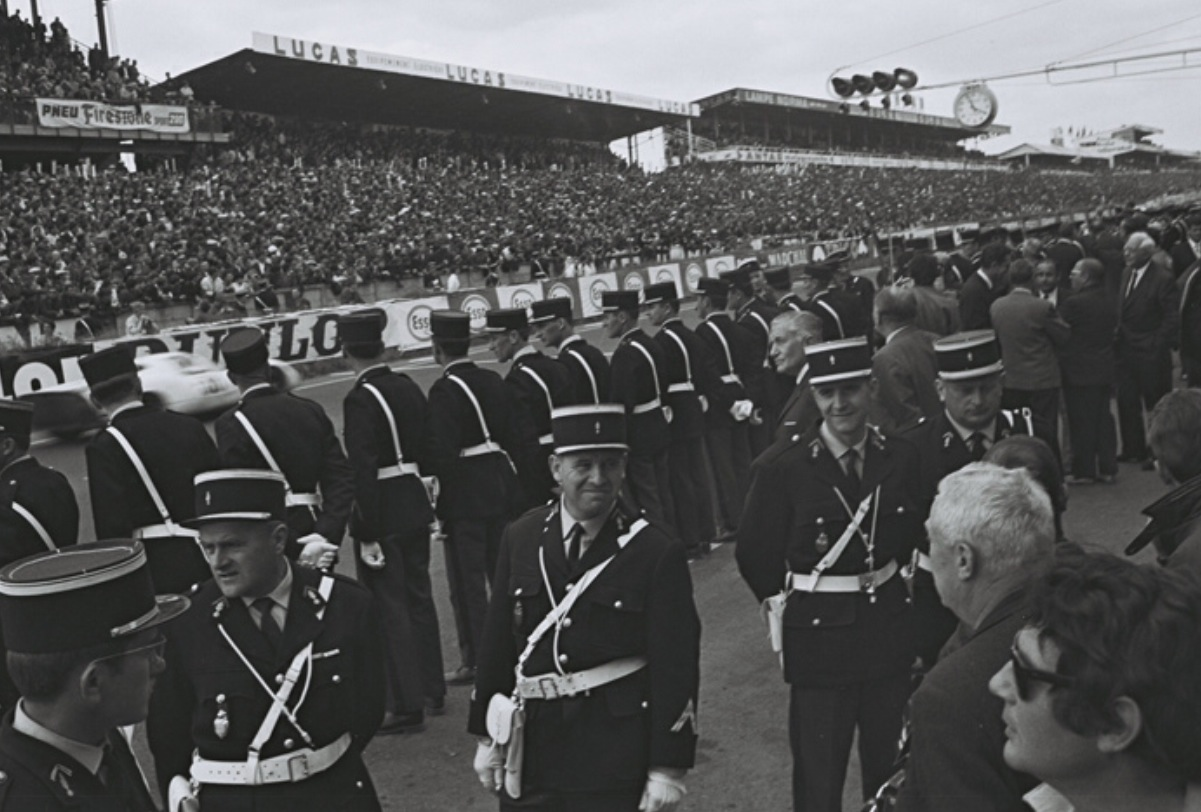
This article is largely pictorial using as it’s base the phenomenal work of American Dave Friedman.
He was a still photographer on movie sets after serving in World War 2. His passion was motor racing though, he was soon engaged by Ford and others to document their racing history. The photos I have chosen are from an archive of nearly 900 of this race alone!
The race was famously won by Fords ‘All American Boys’ Dan Gurney and AJ Foyt, the latter adapting rather well to road racing given his oval background on both dirt and bitumen.
The images are all monochrome and all the more evocative for it!
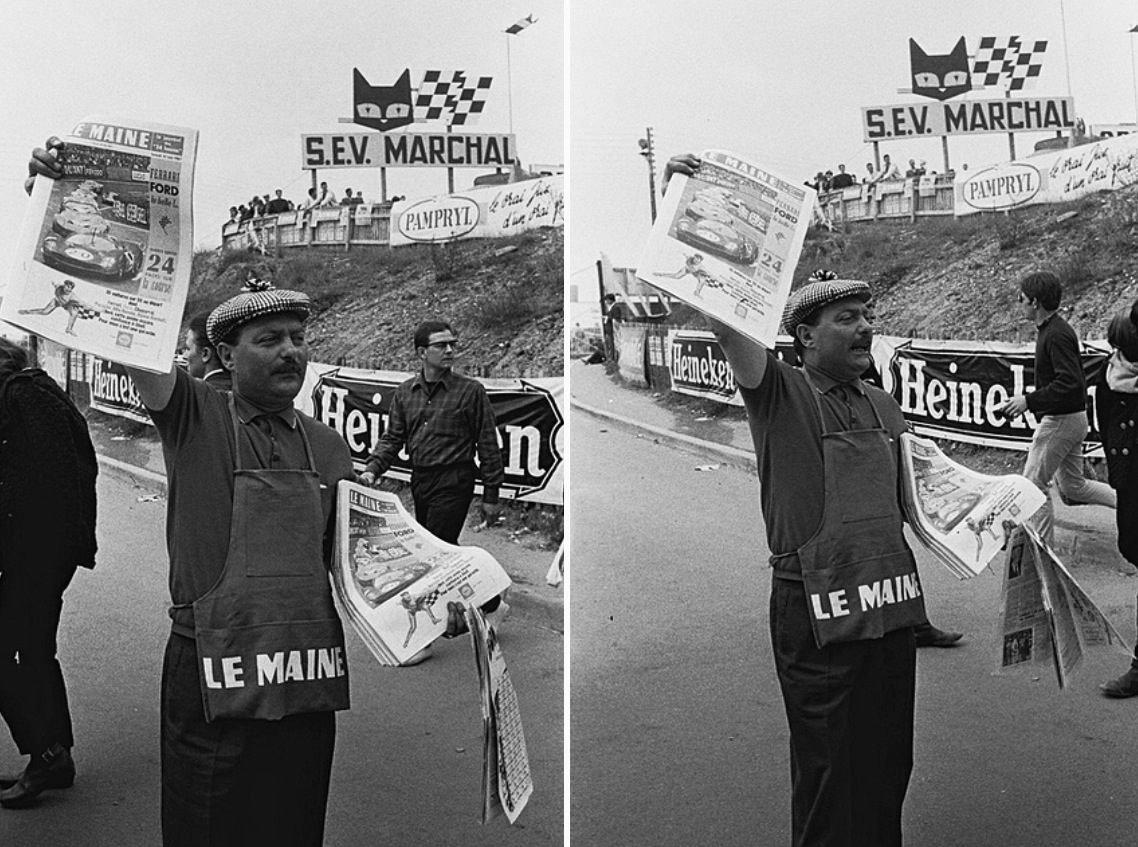
Race Entries…
Ford won the 1966 Le Mans classic taking the first three placings after the failings of 1964 and 1965. In 1964 the GT40 was simply too new and lacked the necessary development, in 1965 cracked brake discs from unforeseen levels of heat were the problem which eliminated most of the 7 litre Mk2’s.
For 1967 FoMoCo entered four new, fabulous 7 litre Mk4’s, two prepared by Holman & Moody and two by Shelby-American. They also fielded Mk2’s designated Mk2B’s, these beasts also powered by the same 530bhp V8’s as the Mk4.

Business end and cockpit of the Hulme/Ruby Ford Mk4 chassis ‘J8’. Aluminium honeycomb chassis, Ford 7 litre OHV cast iron V8 fed by 2 4 barrel Holley carbs. Circa 530bhp. Suspension; single top link, inverted lower wishbone, 2 radius rods, coil spring/damper unit, cast magnesium upright, adjustable roll bar. Ford Kar Kraft T44 4 speed transaxle.
Ferrari entered 4 litre cars; 3 new P4’s and a P3/4, these cars powered by the latest 450bhp 36 valve, fuel injected V12.
Two Chaparral 2F’s were entered, despite 7 litres of Chev V8 they were lighter than the P4’s.
The P4 weighed in at circa 2200lb, the 2F 1980lb, the Mark4 2200lb and the Mk2B, without the benefit of the lighter honeycomb construction of its newer sibling, was about 2500lb.
The 2 Lola T70 Aston Martin’s tipped the scales at 2320lb, the Aston 5 litre V8’s fuel injected since the April pre-race Le Mans trials at which they had been very fast.
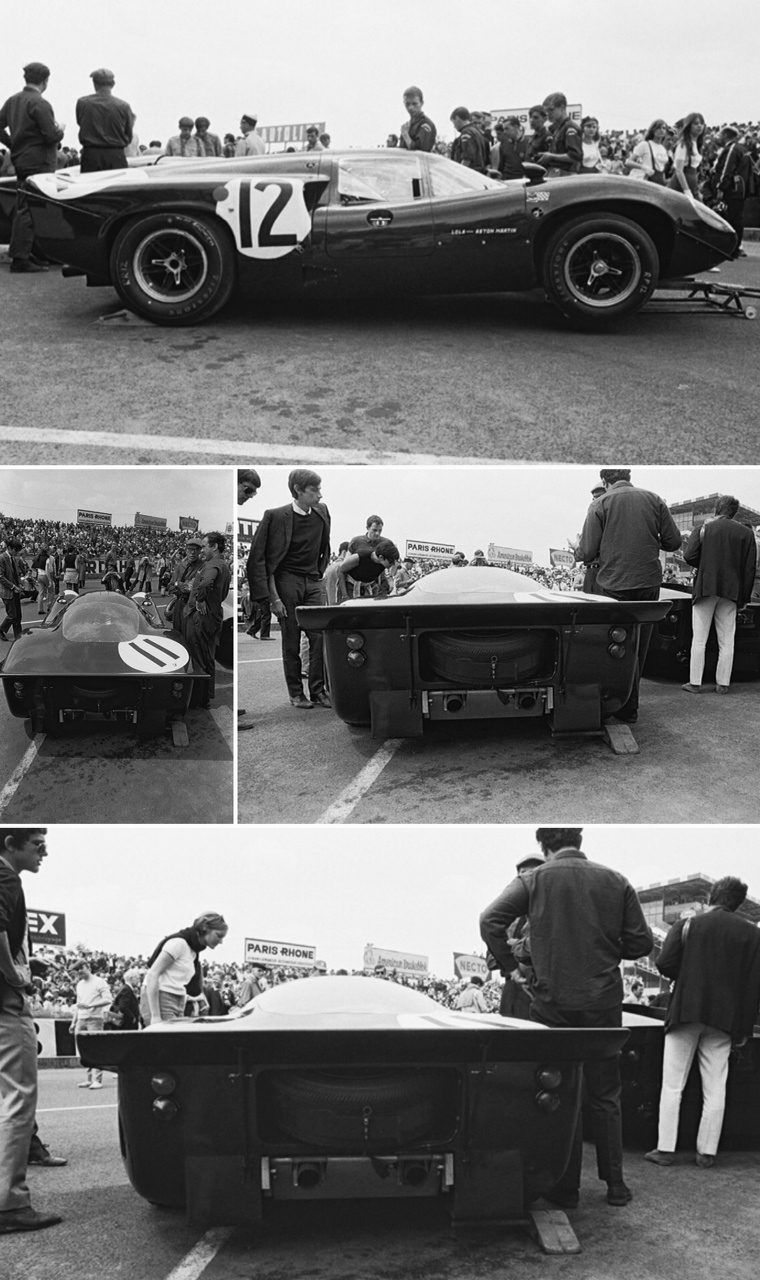
Lola T70 Mk3 Aston Martins’ a big disappointment. #11 John Surtees/David Hobbs car engine shat itself on lap 3 with piston failure , #12 Chris Irwin/Peter de Clerk lasted till lap 25 also withdrawing with engine failure.
In the 2 litre class the Porsches’, always outright contenders such was their speed and reliability, would do battle with the Matra BRM’s. Ferrari chose not to race their Dino’s focusing on the ‘main game’ and Alfa withdrew their T33’s as not being not sufficiently ready for the rigours of la Sarthe.

Jochen Rindt with the lovely Nina Lincoln, Finnish fashion model and daughter of racer Curt Lincoln, he married her in ’67. Jochen raced Porsche 907 #40, (above) he and Masten Gregory famously won the race in a Ferrari 250LM when the factory Ford GT40 Mk2’s and Ferrari P2’s failed in 1965. The other Porsche #41 is the 5th placed, 2 litre class winning 907 of Jo Siffert/Hans Hermann.
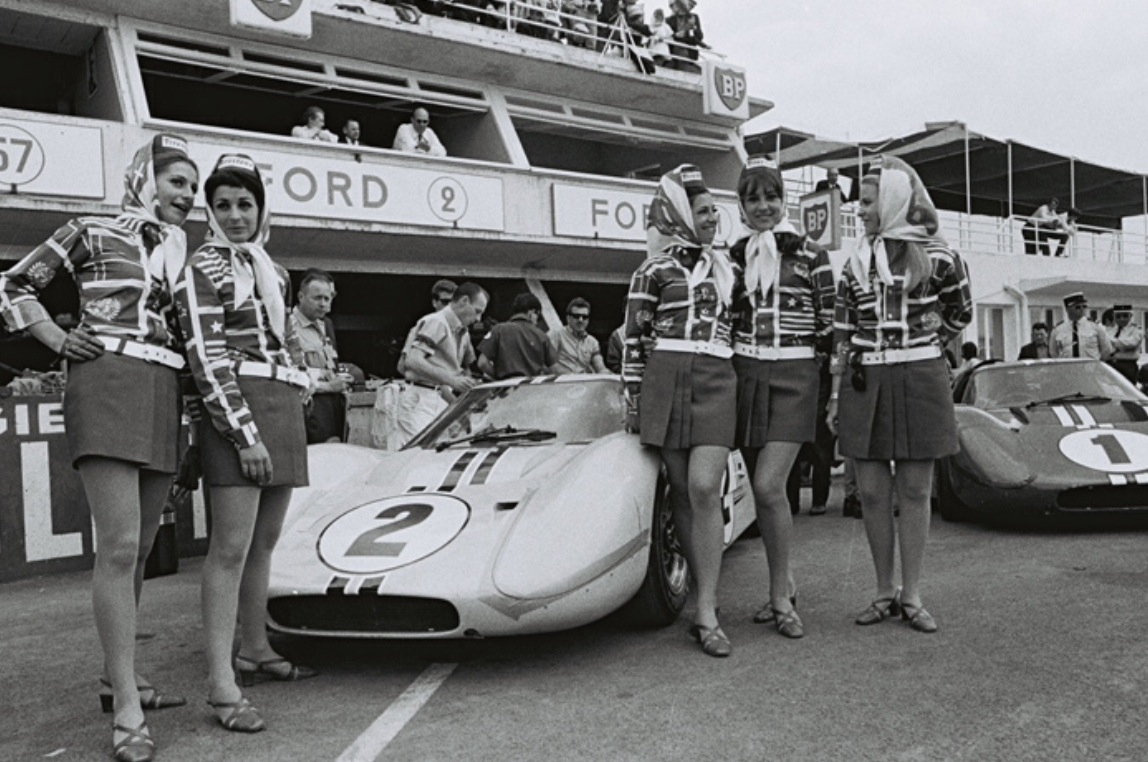
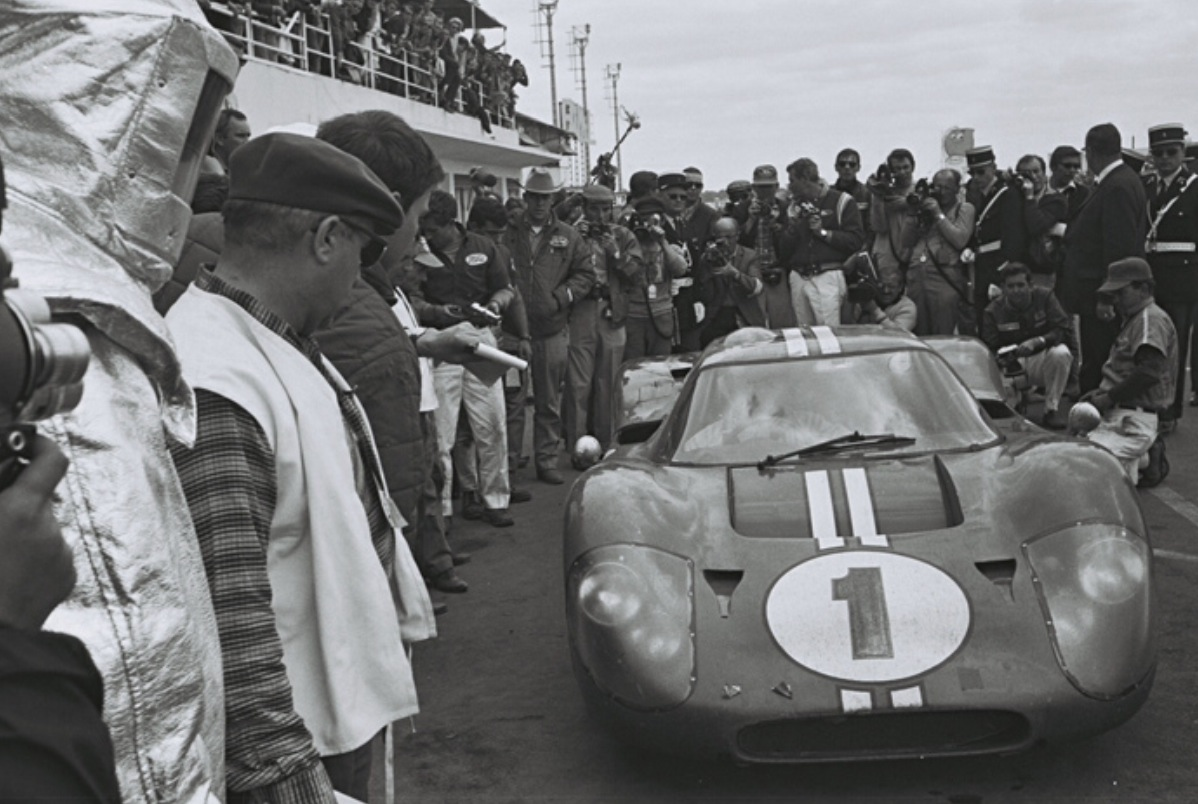
#2 McLaren/Mark Donohue 4th and #1 Gurney/Foyt 1st Ford Mk4’s with friends before the start.
Ford had windscreen troubles in practice but this was remedied with a fresh batch of correctly tempered screens which arrived pre-race.
As if to assert Ford’s authority Bruce McLaren took a Mk4 out and lapped at 3.24.4, an average of 147.316 mph and topped 215mph on the Mulsanne, in the dark. It gave him pole, McLaren was Ford’s victor in 1966 in a GT40 Mk2 he drove with fellow Kiwi Chris Amon.

Bruce McLaren jumps out of his Ford Mk4 ‘J6’ during practice. Bruce the pole sitter in this car.
Fords times gave them five of the six top slots. Frank Gardner and Roger McCluskey qualified their Holman & Moody Mk2B 6th, here is FG before the off, the race not quite so successful, his co-driver became part of an accident not of his making…
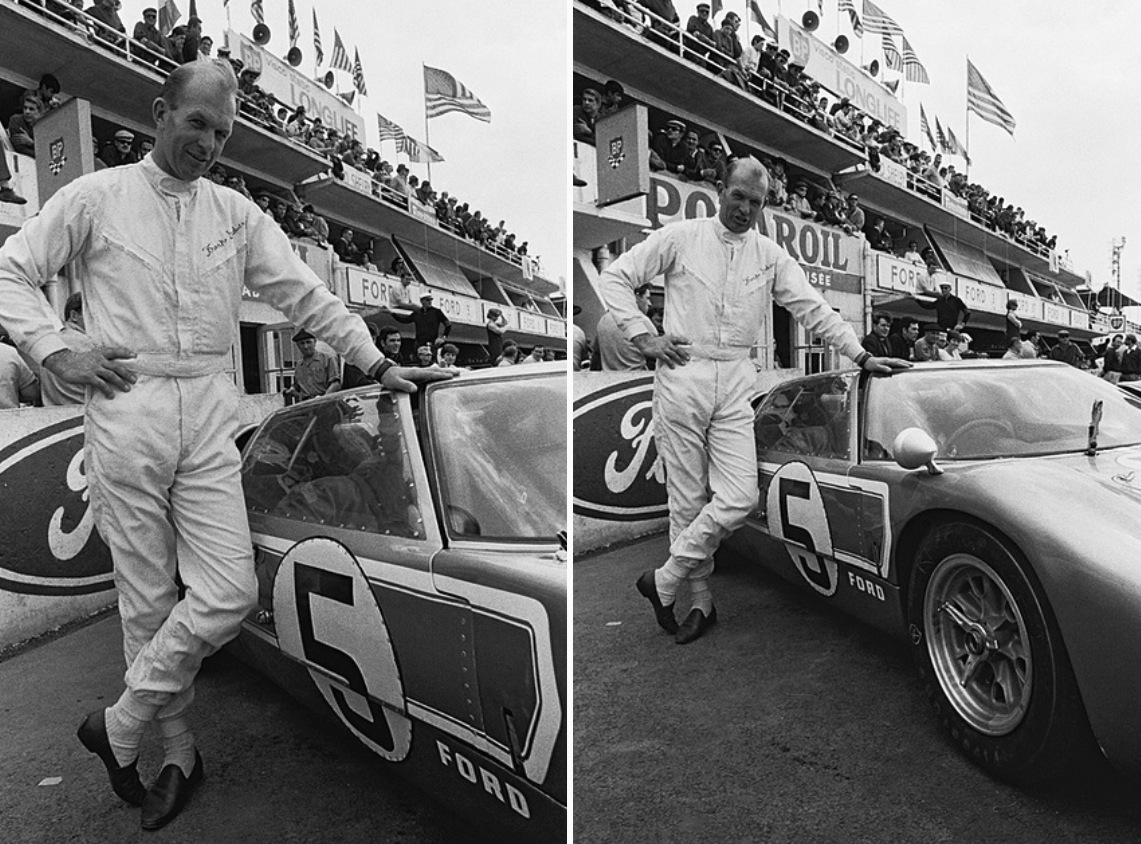
The Race…

Dan Gurney is the bolter at the start in #1, #2 McLaren Mk4, #7 Chap Spence putting on his full harness, alongside him #3 Andretti and #4 Hulme both in Mk4’s doing the same.

A second or so later; Spence, Andretti and Hulme still ‘belting up’ whilst #62 Mike Salmon DNF fire and #11 Surtees Lola Aston, #23 Attwood Ferrari P3 and #21 Scarfiotti Ferrari P4 come thru.

Love this start shot as it gives a sense of the depth of the field but also the speed differentials for which Le Mans is infamous; #42 Robert Buchet/Herbert Linge 14th Porsche 911S 2 litre, #48 Roger Delageneste/Jacques Cheinisse 10thAlpine A210 Renault 1.6 litre, #60 Andre Wicky/Philippe Farjon DNF Porsche 911S and the rest…Mike Spence just away in the winged Chap 2F at far left.
300,000 people attended the race on 10 June in overcast, warm weather, Henry Ford 2 and wife arriving by ‘chopper shortly before the race…
After the traditional start Pedro Rodriguez led initially in the NART Ferrari but was quickly passed by the Paul Hawkins Mk2B, who led at the end of the first hour by which time both Lola’s were out; Surtees with engine trouble after 3 laps, Chris Irwin on lap 25 later with fuel pump problems.

#21 Scarfiotti in the 2nd placed Ferrari P4 from the #4 Hulme Ford Mk4 during the early laps. Below is the Surtees Lola also during the first 3 laps…
After the first pitstop the Chaparral 2F took the lead, the Fords getting about an hour out of a fuel tank, the Fazz’ and Chaparral about 15 minutes longer.

The Hill/Spence Chap 2F circulating fast at this point doing 3 min 29 sec laps…
After the second refuelling the Gurney/Foyt Mk4 lead from the Hill/Spence Chaparral followed by the Andretti/Bianchi and McLaren/Donohue Ford Mk4’s.
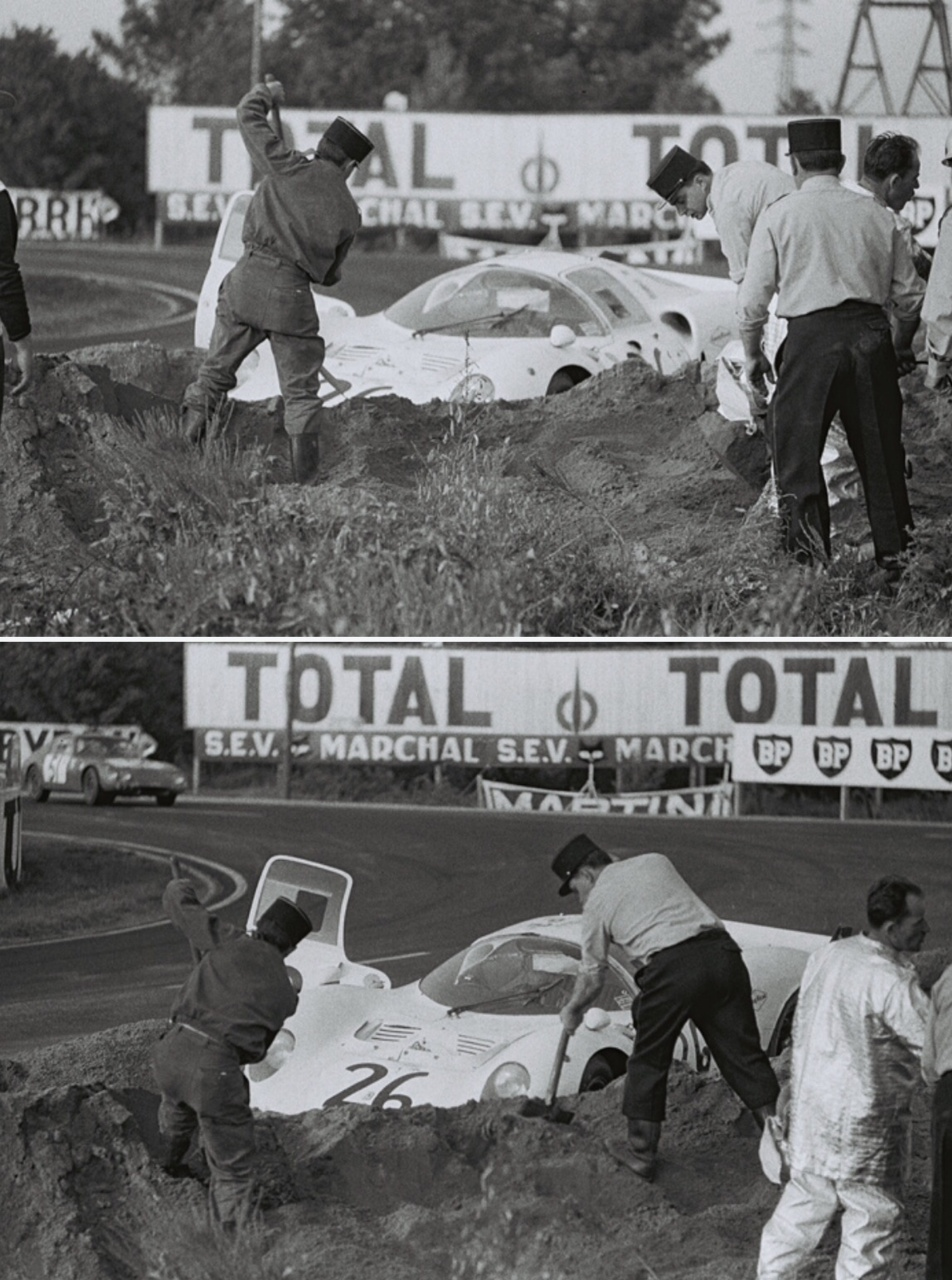
Oopsie; Ricardo Rodriguez (no relation) in the ‘kitty litter’ on Lap 30, the NART Ferrari 365P2 retired at this point. Car shared with Chuck Parsons. In the background in the lower photo is the works Austin Healey Sprite of Clive Baker/Andrew Hedges which finished 15th, first British car home.

The ill-fated Andretti/Bianchi Mk4 ahead of Chris Amon/Nino Vaccarella Ferrari P4 DNF puncture/fire and Denny Hulme/Lloyd Ruby Mk4 DNF accident, in The Esses in the first quarter of the race.
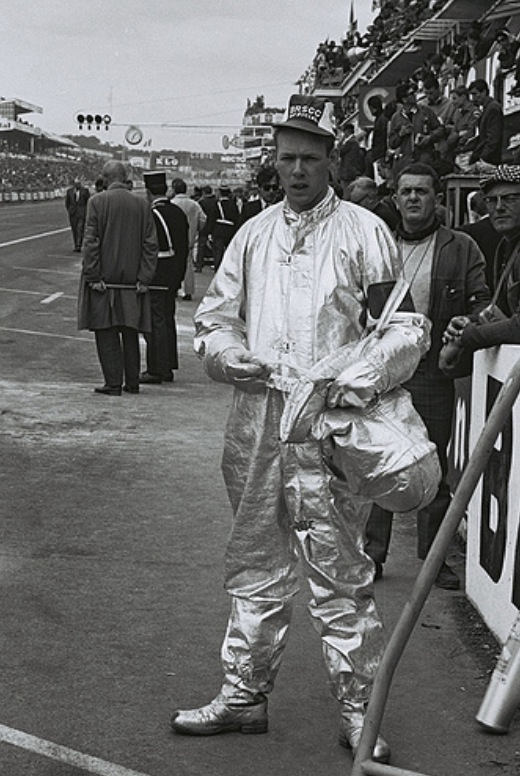
‘British Racing and Sports Car Club’ fireman in the latest gear.
After 4 hours the Gurney car was still ahead.
This time from the Andretti Ford. Three Fords led from the Chaparral, with Ferrari further back, the leading Ferrari’s were driven by Amon/Vaccarella P4 and Rodriguez/Baghetti, P3/412P.

The #8 Bruce Jennings/Bob Johnston Chaparral 2F in the pits for its final pitstop on lap 91, car out with battery and starter failure.

2 P4’s, the white car the NART P Rodriguez/Baghetti P4/412P entry chasing the Jennings/Johnston Chaparral 2F and a 911S about to be ‘swallowed’ by all 3.
After 6 hours the 2nd #8 Chaparral failed to restart after a pitstop.
Hill pitted at about the same time in the #7 Chap with the transmission, the cars weak link checked leading to speculation about its health. The stop lasted 9 minutes, the car rejoined in 7th place.
Rindt (below) retired his Porsche 907, having over-revved its 2 litre flat 8.

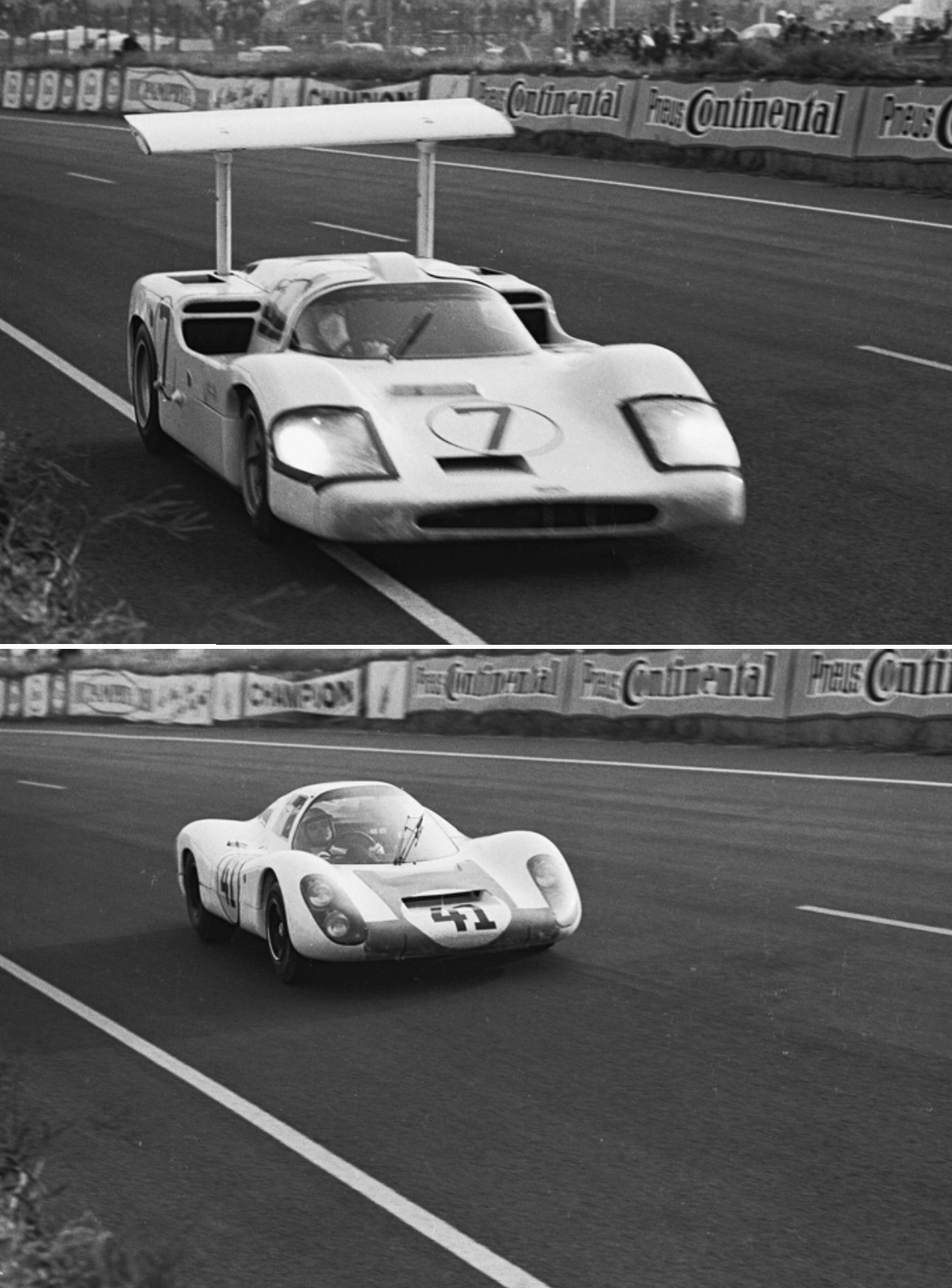
The #7 Chaparral 2F Chev of Spence and 5th placed Porsche 907 ‘Langheck’ of Siffert/Hans Hermann with Jo at the wheel. Car also the 2 litre winner.
At 2 am it was still 1-3 for Ford but the pattern of the race changed hugely after Andretti took over his car from Bianchi, it was fitted with fresh brake pads.
As he approached The Esses and braked one disc grabbed, pinging the car instantly between the unforgiving earth banks until finishing in the middle of the track with bits of ‘Big Henry’ scattered all over the place.
Roger McCluskey arrived in the Mk2B he shared with Frank Gardner, braked, spun and hit the banks wrecking another factory Ford. Schlesser then added to the party arriving in the Ford France Mk2B he shared with Guy Ligier and spun in avoiding his teammates- three Fords were out on the spot!
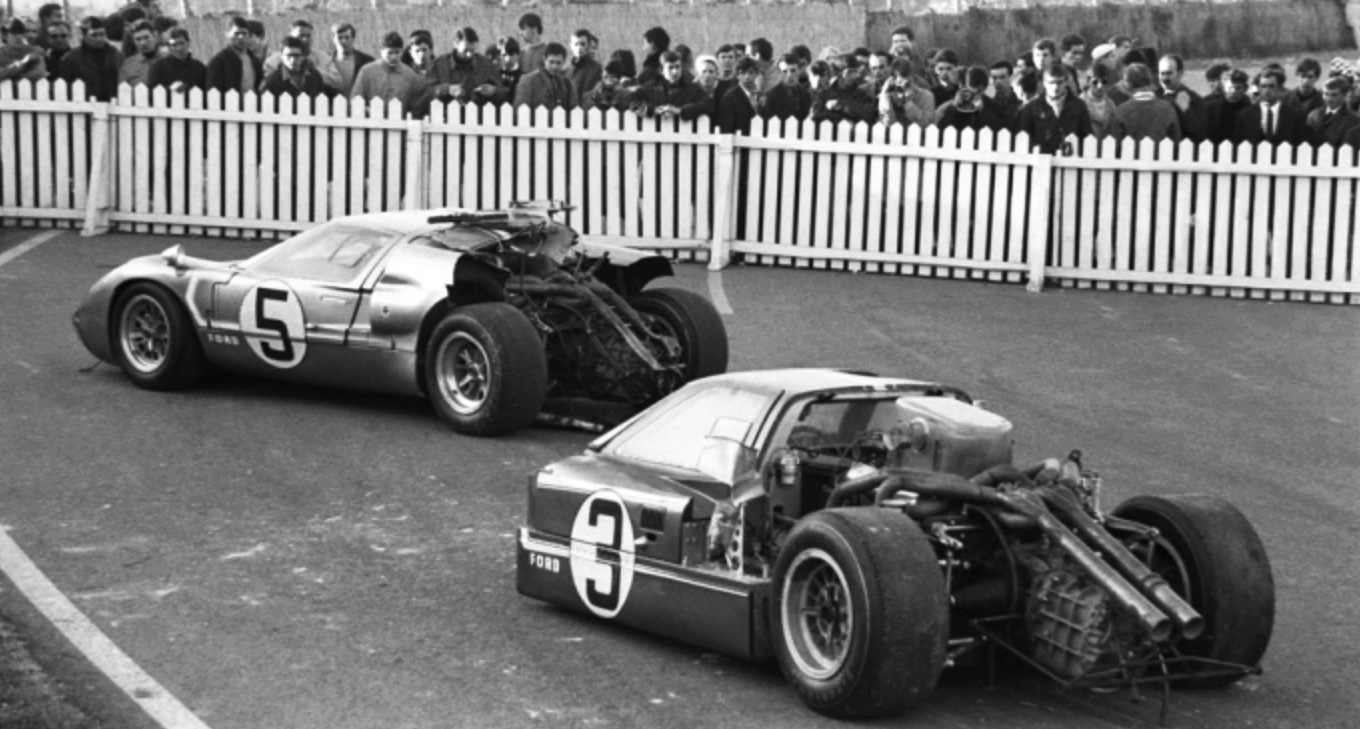
Rooted Fords #3 Andretti Mk4 and #5 McCluskey Mk2B. (Rainer Schlegelmilch)

The winning Mk4 of Gurney/Foyt ahead of #57 Ronnie Bucknum/Paul Hawkins Mk2B DNF and #14 Mirage M1 Ford of David Piper/Richard Thompson,DNF .

Dead Ferrari’s atop the transporter in the middle of the race, both with piston failure; #22 Jean Guichet/Herbie Muller Ferrari P3/412P #25 Pedro Rodriguez/Giancarlo Baghetti Ferrari P3/412P

AJ Foyt aboard the winning Ford Mk4 chassis ‘J5’.
At half distance the Gurney/Foyt Mk4 had a huge lead
But there were three Ferrari’s and a Chaparral between Gurney and the next Ford.
At dawn it was Gurney/Foyt 7 laps ahead of the Parkes/Scarfiotti Ferrari, the Hill/Spence Chaparral then Ferrari-Ford-Ferrari, it was anybody’s race at this point.
At 5.30am Hill’s Chaparral pitted for investigation of an oil leak; and stayed for 3 hours whilst the mechanics heroically removed the transmission and fitted a new oil seal but the car was finally retired with an oil-less transmission.
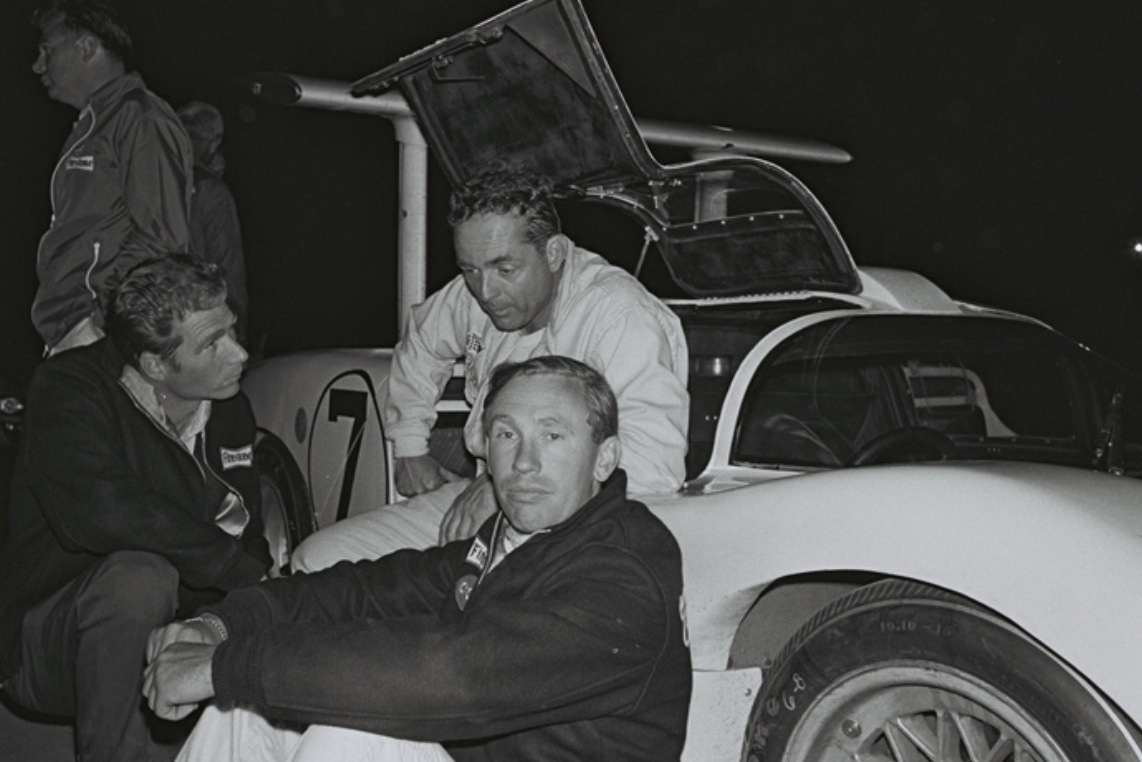
Chaparral council of war in the middle of the night. Jim Hall , Phil Hill and Mike Spence curse the cars auto gearbox, its weakness that year. The one bright spot for the fastest, most innovative and stunning sports/prototype of 1967 was its season ending Brands Hatch 6 Hour victory in July.
With 6 hours to go the Gurney/Foyt Ford only lead by 5 laps!
But it was one Ford from three Ferrari’s with the Italian cars being driven very hard, Mike Parkes said ‘I have never driven a car so hard for so long’ of his Ferrari P4 after the race.

What am i going to tell The Commendatore!? Franco Lini, Ferrari Team Manager ponders the teams prospects late in the race. It was an honorable defeat, to say the least, against the onslaught of the then second largest motor manufacturer in the world.
With less than 2 hours to go the Ferrari’s were lapping 10 seconds a lap quicker than the leading Ford, with 90 minutes to go both cars stopped for fuel for the last time, Ferrari’s only hope a Ford failure but it was not to be…
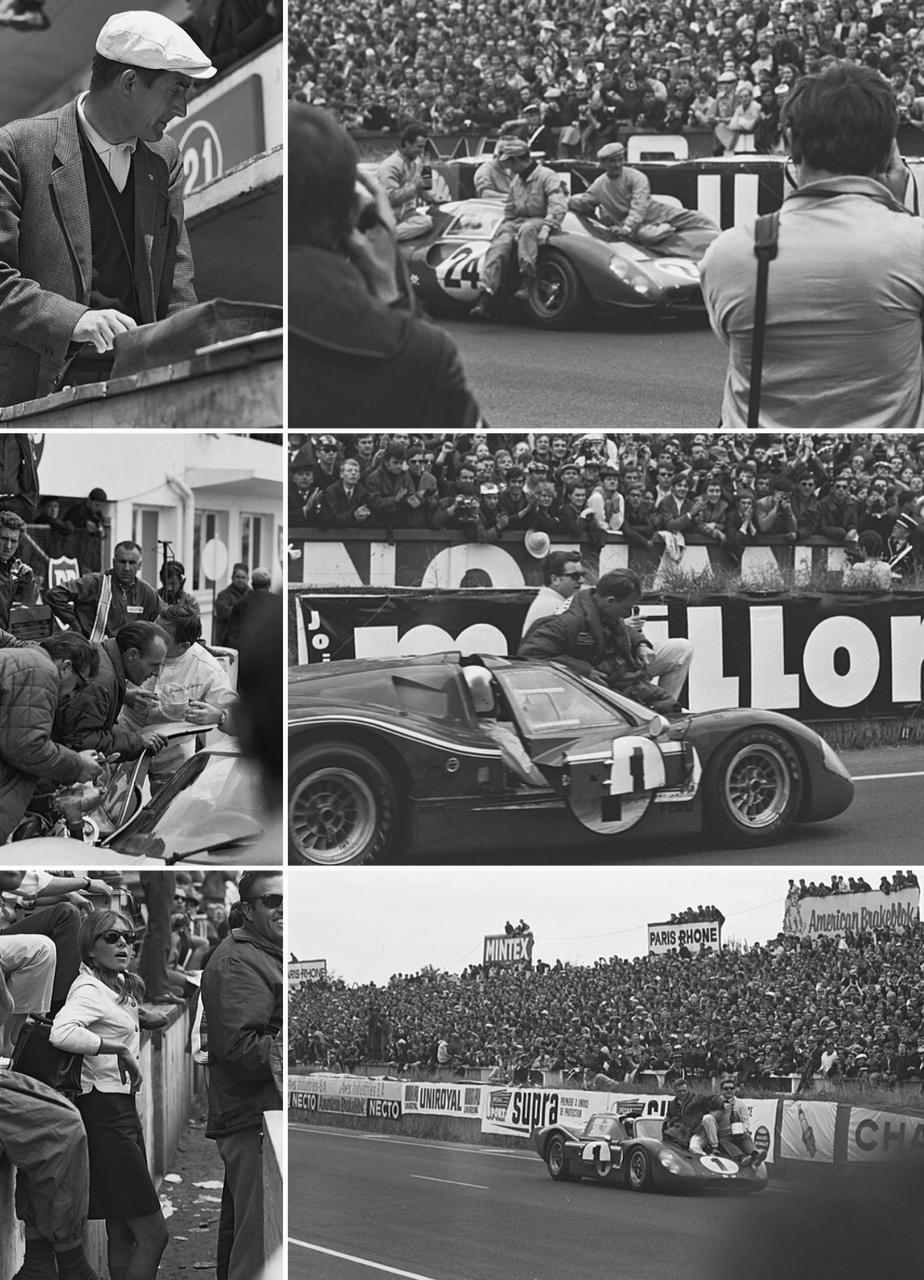
Car #24 the 3rd place Willy Mairesse/Jean Blaton Ferrari P4 and winning #1 Mk4, ‘victory lap’. Small shots; Franco Lini, Bruce McLaren Mk4 pit, ‘pit popsie’.
It was the first ‘All American’ win ever; car and drivers. Ford were both first outright and won ‘The Index of Thermal Efficiency’, which seems somewhat of a contradiction in terms for a car powered by a 7 litre cast iron, OHV V8!…
The first six placings were;
1st. Gurney/Foyt Ford Mk4 388 laps
2nd. Scarfiotti/Parkes Ferrari P4 384 laps
3rd. Mairesse/Blaton Ferrari P4 377 laps
4th. McLaren/Donohue Ford Mk4 359 laps
5th. Siffert/Hermann Porsche 907 358 laps 2 litre winner
6th. Stommelen/Neerpasch Porsche 910 351 laps
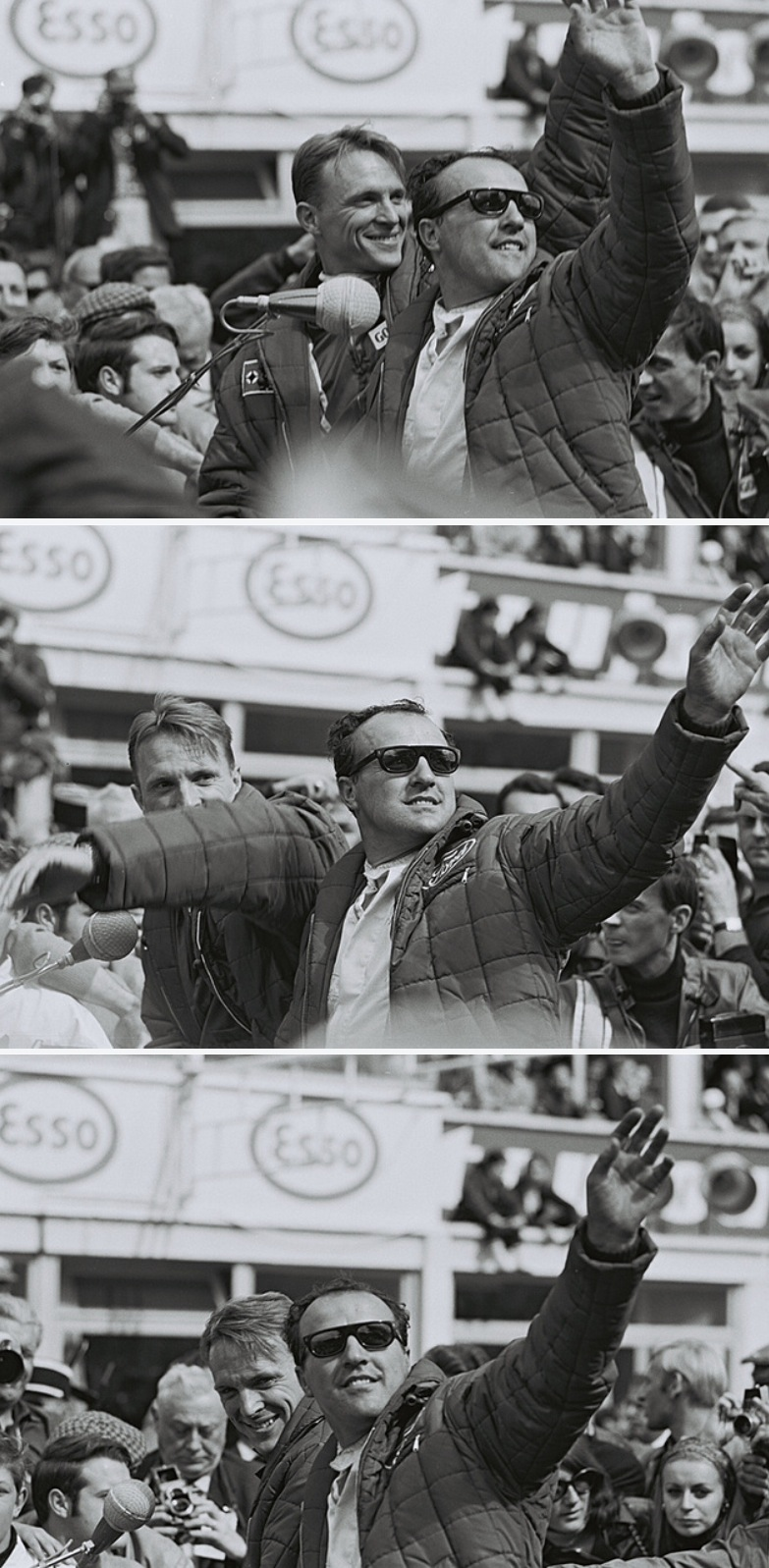
Winners are Grinners…
The winning Ford covered a record distance and was pushed hard all the way- Dan Gurney at left and AJ Foyt, right, below.
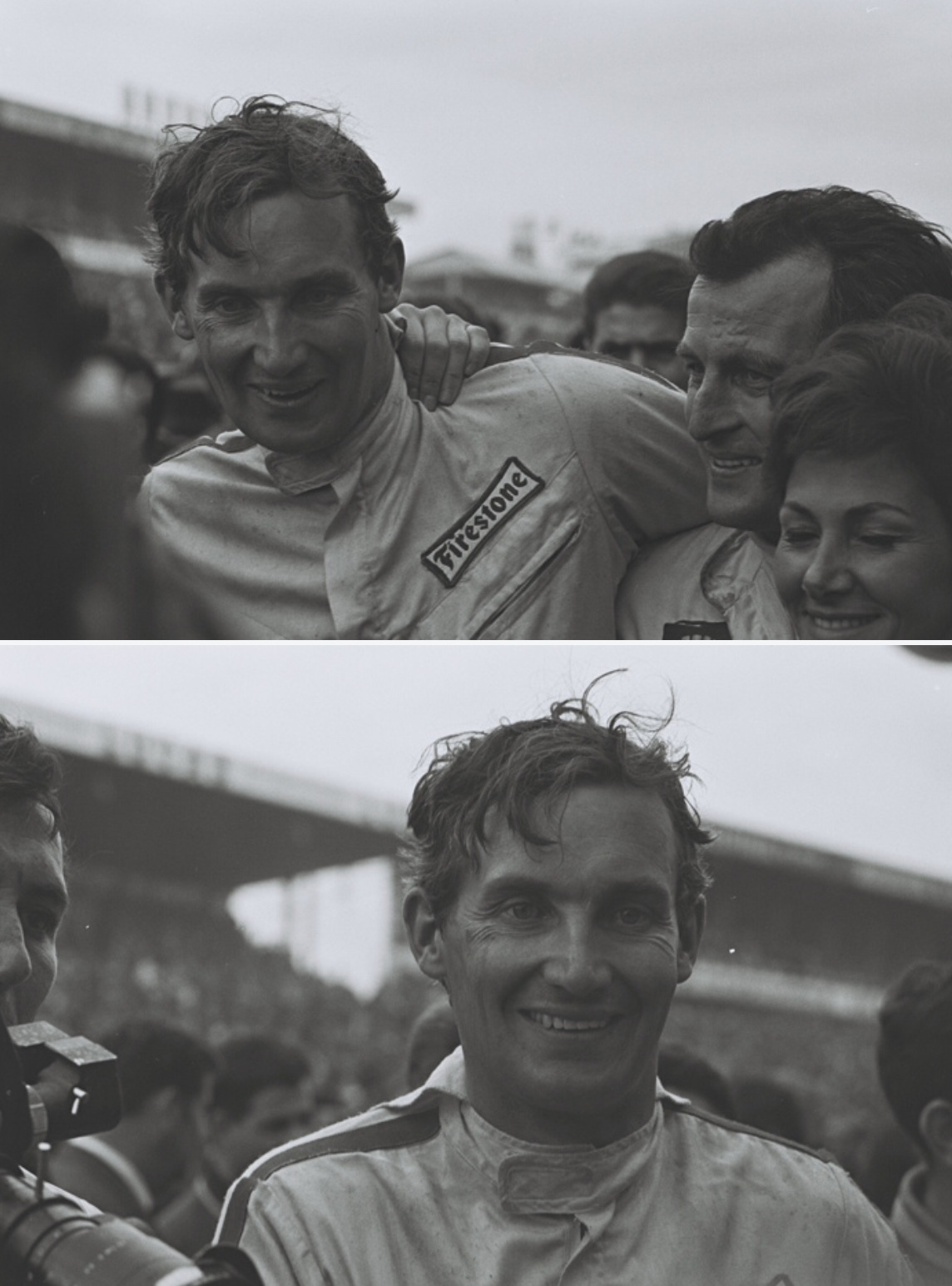
Mike Parkes (L) and Ludovico Scarfiotti looking suitably tired after fantastic drives in pursuit of the Ford Juggernaut!
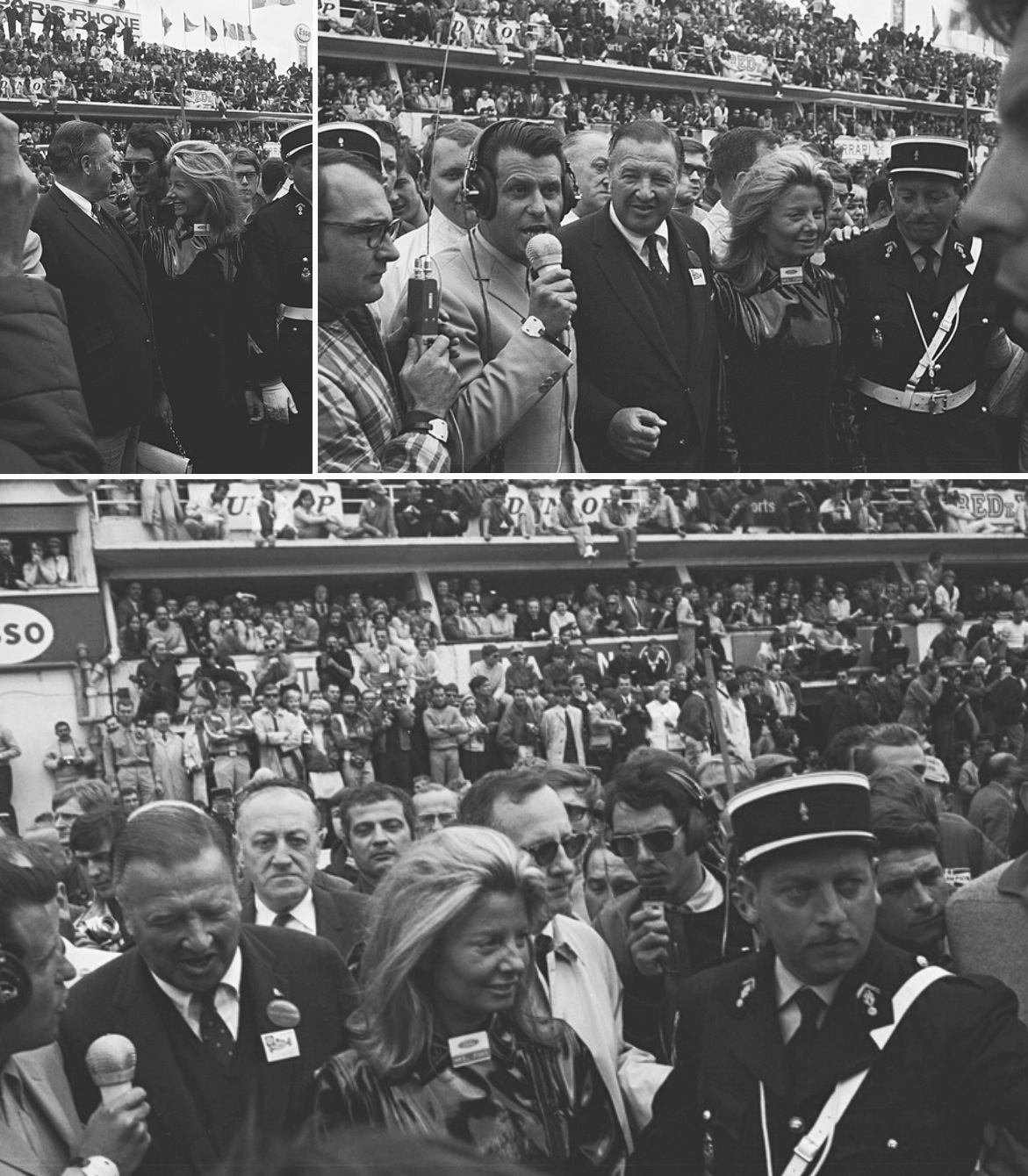
Henry Ford 2 and his wife Maria look well pleased with the results of their teams work.
Its interesting to reflect on how different automotive/motor racing history may have been had Enzo Ferrari not withdrawn from the final stage of negotiations for the ‘Boys from Dearborn’ to buy his Maranello outfit in July 1963.
Whatever the case, motor racing had a friend in Henry Ford 2. Without his patronage and support of racing to build Ford’s global brand we would not have had many of Ford’s programs which enriched racing during his tenure of either direct or indirect control of FoMoCo.
Tailpiece; The Morning After the Night Before…
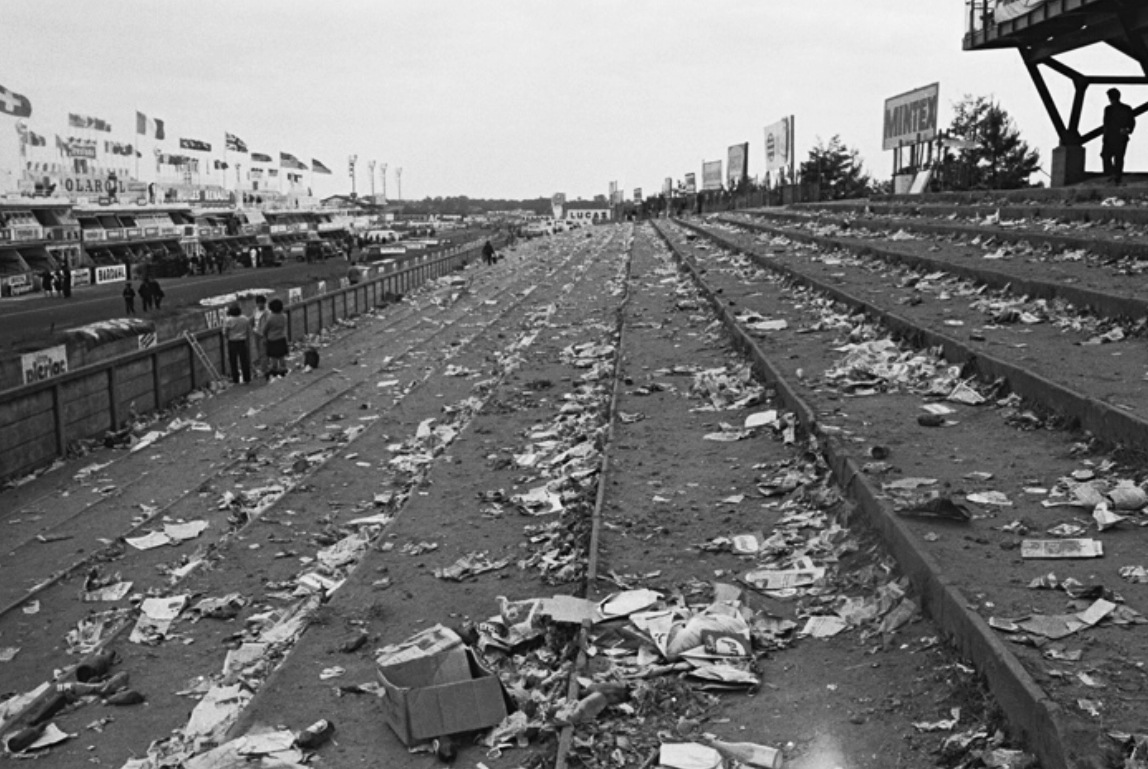
Photo Credits…
The amazing Dave Friedman Archive, Rainer Schlegelmilch
Bibliography…
Team Dan WSC Archive, Automobile Year 15
Finito…
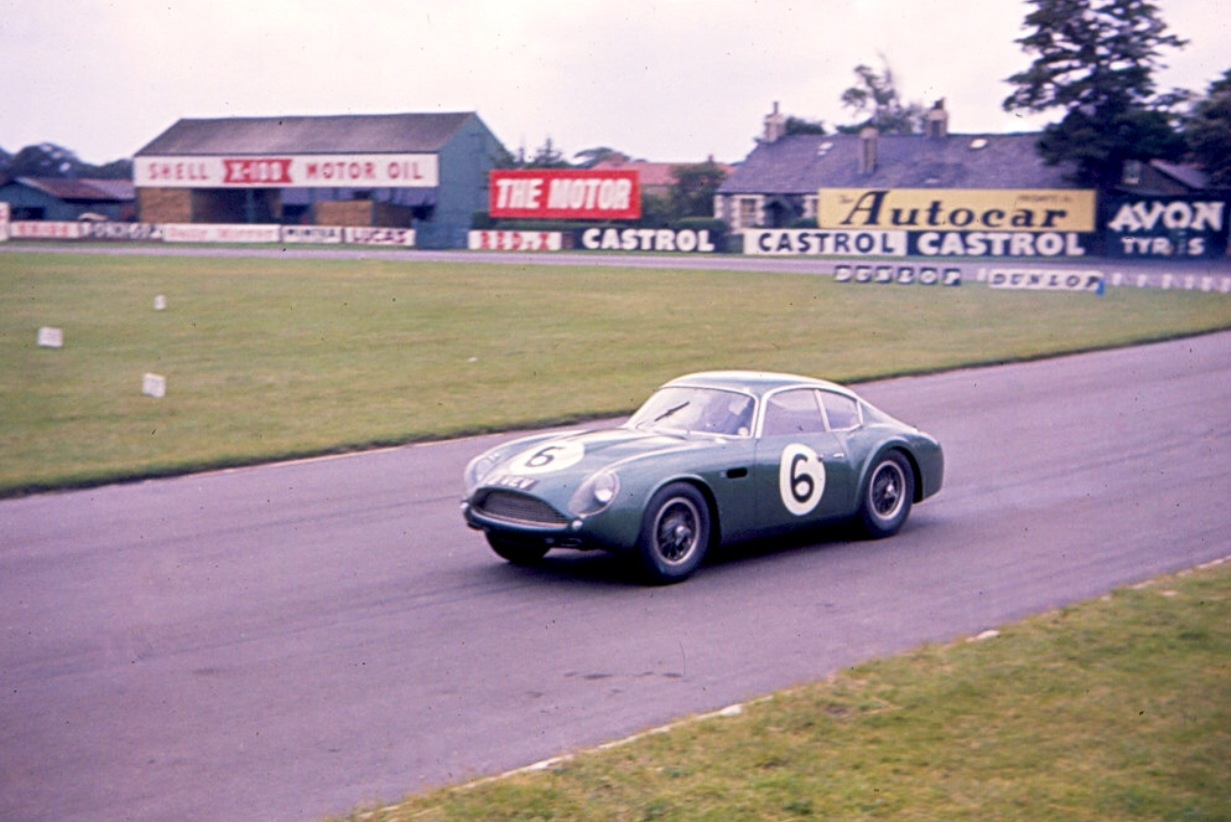
2VEV Chassis # 0183/R…
Lex Davison aboard 2 VEV at Aintree in July 1961. He won the 51 mile GT race after a battle with Jack Sears’ Jaguar E-Type. He took the lead on the last lap, perhaps recording the car’s only race win in-period.
2 VEV chassis #0183/R was registered to John Ogier’s Essex Wire Racing Team on 19 May 1961. One of 19 Aston Martin DB4GT Zagato’s, this most famous car was raced by Aussies Lex Davison and Bib Stillwell at Le Mans in 1961 alongside 1 VEV, driven by Jack Fairman and Bernard Consten.
The cars had factory support but the race was a disaster. Both failed to finish due to head studs which had been insufficiently tightened/torqued, they ran as high as 15th and 17th behind the open Aston DBR1s before withdrawal from the 24-Hour classic.
 Le Mans 1961 start;#1 Dewez/Kerguen DB4Z , #2 Fairman/Consten DB4Z, #3 Davison/Stillwell DB4Z, #4 Salvadori/Maggs Aston DBR1, #5 Clark/Flockhart Aston DBR1 all DNF. The race was won by the Gendebien/Phil Hill Ferrari 250TR (unattributed)

Davison had only 25 laps under his belt when the head gasket failed at Le Mans (MotorSport)
Davison and Stillwell, Australian multiple champions both, had immaculate Aston Martin connections, having raced Grand Prix Aston DBR4s in Australia, see here; Lex’ Aston Martin DBR4/250’s… | primotipo…
Indeed, Lex came within feet of winning the 1960 Australian GP at Lowood, Queensland. He was pipped on the line by Alec Mildren’s Cooper T51 Maserati after a thrilling, race long dice.
It was the closest any of these wonderful but outdated cars came to Grand Prix win. Lex also contested a few 1962 Intercontinental Formula races in the UK aboard a DBR4.
 Lex Davison contesting an Intercontinental Formula race at Brands Hatch in his bruised Aston DBR4/250 #4 in 1961. The car was then 3-litre DBR1 powered (unattributed)
Back to the GT Zagato, Lex won at Aintree in July after the battle with Jack Sears’ Jag E-Type. Motor magazine reported that Davison “looked like the prosperous middle aged businessman that he is, rather than a dashing man about town”. In fact he was a champion middle-aged racing driver, a four time winner of the Australian Grand Prix no less!
Jim Clark contested the 1961 RAC Tourist Trophy in it at Goodwood in August, but the SWB Ferrari 250s were too quick, Salvadori and Clark took third and fourth respectively in VEV1 and 2.
2 VEV was loaned to Equipe National Belge to race in the 1962 GP of Spa for GT cars. Lucien Bianchi led the race before losing the car and totalling it. In five weeks the it was rebuilt by the factory around a new chassis to DP209 ultimate lightweight specifications The machine emerged with a lower, flatter roofline, longer nose and tail, and wider rear wheel arches than a standard DB4Z.
 Oh-so-famous shot of Jim Clark in Aston DB4GT Zagato 2 VEV, 1962 Goodwood RAC TT (unattributed)
Clark raced the car again in the 1962 Tourist Trophy at Goodwood that August. Having just pitted, and on coolish tyres, he lost control as the car settled after traversing the 120mph Madgwick Hump, he spun into the path of John Surtees’ leading Ferrari 250 GTO, taking then both out of the race. More works surgery to 2 VEV was required. The car raced again in Clark’s hands in the Paris 1000km, but failed while in co-driver Sir John Whitmore’s hands.
 Surtees Ferrari 250 GTO and Clark’s Aston DB4 Zagato at Goodwood ’62. Clark spun taking Surtees out on lap 62 of 100. The race was won by Innes Ireland’s UDT-Laystall Ferrari 250 GTO (unattributed)
The car then ran in minor events in John Ogier’s ownership until 1964, racing on into the late 1960s and historic racing after that. 2 VEV was damaged in a road accident in 1993 and was restored/rebuilt to its 1962 specifications, the poor old darlin’ had by that point, ‘more hits than Elvis’ as the saying goes…
 1962 Goodwood RAC TT start; Clark is the bolter in his DB4Z. #15 is the winning Ireland 250 GTO, #6 Surtees’ ill fated GTO, #5 Mike Parkes GTO, #8 David Piper GTO, #25 Trevor Taylor/Gil Baird Lotus Elite (unattributed)
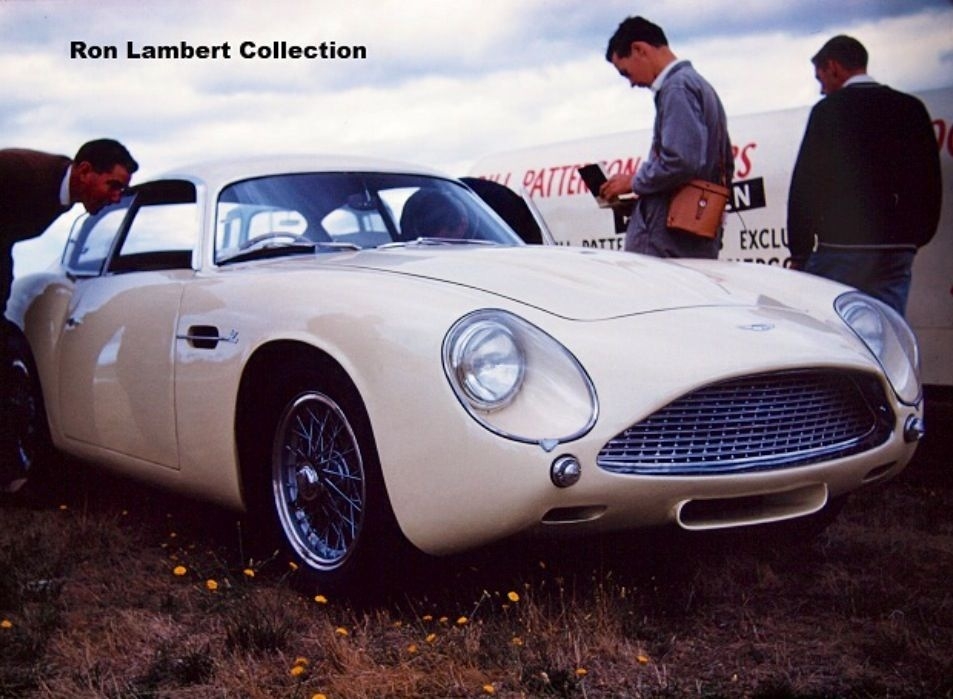 Australia’s only DB4Z, #DB4GT/0186/R, the fourteenth built, was owned by Sydney’s Laurie O’Neill. Here it’s pictured in the Longford paddock in March 1962. It was raced in a support event by thrice AGP winner Doug Whiteford (Ron Lambert Collection)
The DB4GT Zagato…
The Aston Martin DB4GT Zagato was introduced to the world at the London Motor Show in October 1960.
It was effectively a DB4 GT improved by Carrozzeria Zagato, Ercole Spada is the designer credited with the work. Smaller, more aerodynamic and about 100 pounds lighter than the DB4 GT, the Zagato’s twin-cam, two-valve, 45DCOE Weber fed 3670cc engine produced 314bhp @ 6,000rpm, 12 more than the DB4 GT giving it a top speed of 154mph.
Initially the factory planned 25 cars, but demand wasn’t strong enough so only 19 were completed, albeit 23 chassis numbers had been allocated. Four modern Sanction 2 Coupes were built on DB4 rolling chassis completed by Richard Williams (RSW) to the order of Aston Martin using the unused chassis numbers from 1987-91.
Ex-Zagato employee Mario Galbiatti (with Zagato’s approval) built the bodies using Williams’ own dismantled Zagato as a template. Completed and launched in July 1991, in 1993 Williams completed two more Aston Martin Lagonda approved Sanction 3 cars using left over Sanction 2 bits. Not to forget AML’s own 19 April 2019 Continuation Series DB4GTZs…
The first competition outing of a DB4 GT Zagato was during Goodwood’s 1961 Easter meeting. Driven by Stirling Moss, it finished third behind an Aston Martin DB4 GT and the winning Ferrari 250 GT.
 1960 London Motor Show launch for the DB4GT Zagato.
Etcetera…
 John Ogier’s two Aston DB4 Zagatos in the Le Mans paddock, 1961. #3 Davison/Stillwell, #2 Fairman/Consten (unattributed)
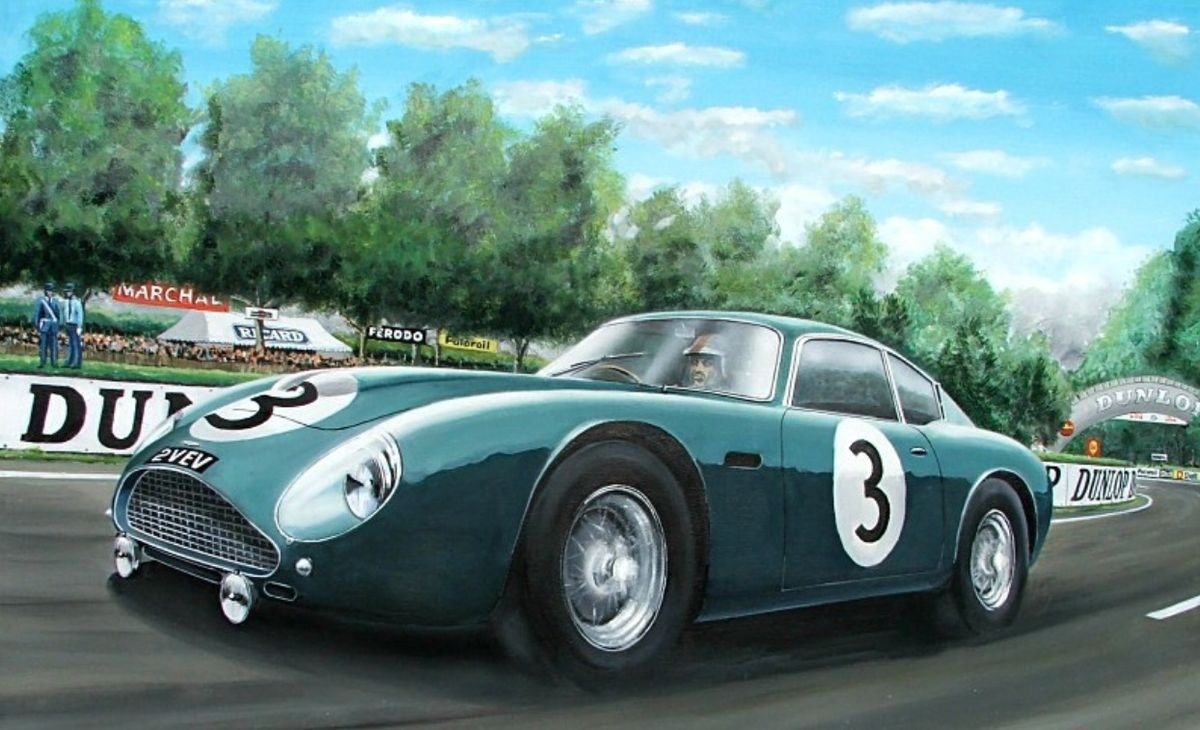 Painting of the Davison/Stillwell DB4Z, Le Mans 1961 (Bernard Reeves)
Credits…
Ron Bert Collection, Bernard Reeves, Jim McKeown Collection
Tailpiece…
 (J McKeown)
Doug Whiteford in Laurie O’Neill’s Zagato with Jim McKeown, Jewitt Holden and George Spanos, Elfin Streamliner Ford on the front row of the grid. Longford GT race in 1962 won by Whiteford from McKeown.
Finito…

Nice ad featuring the winning and second placed Ferrari 250 Testa Rossa’s of #14 Phil Hill/Olivier Gendebien and #15 Giancarlo Baghetti/Willy Mairesse/Richie Ginther/Taffy Von Trips at Sebring in 1961…
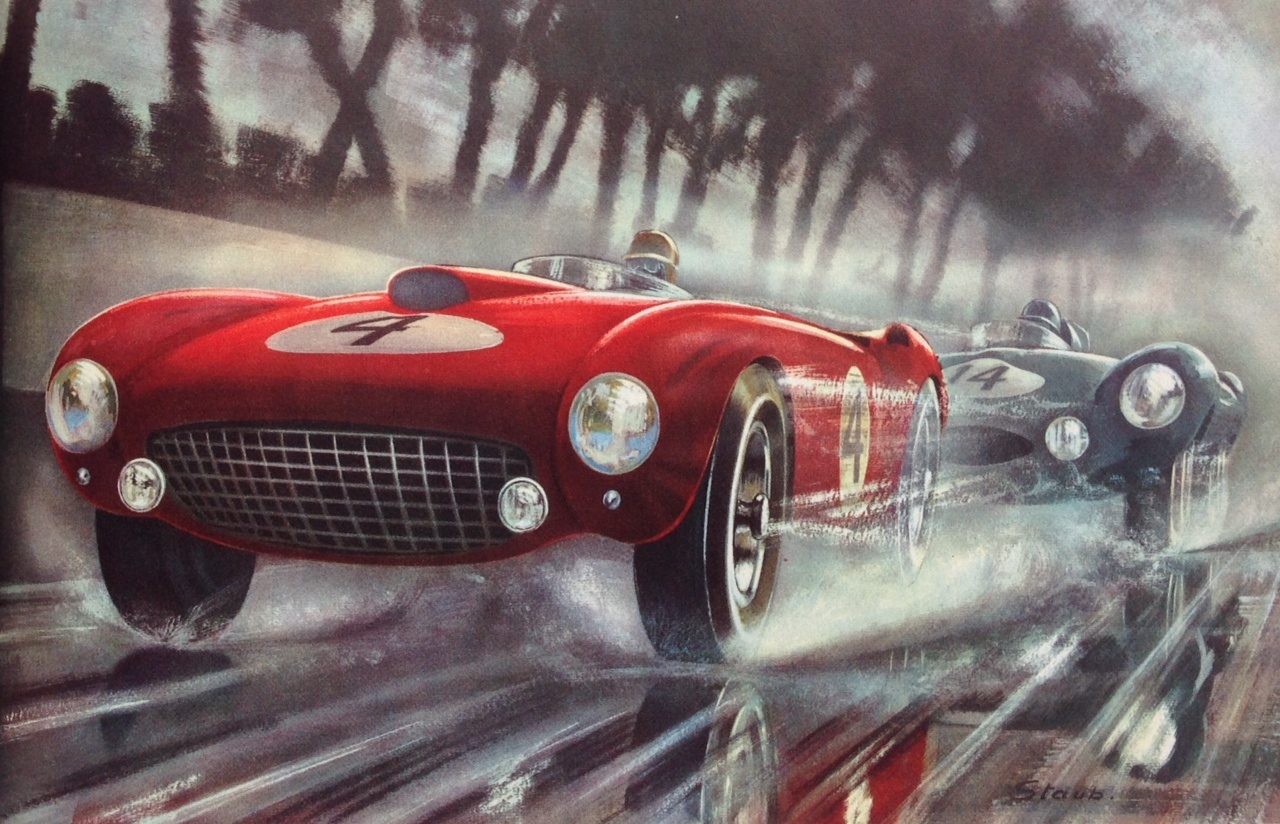
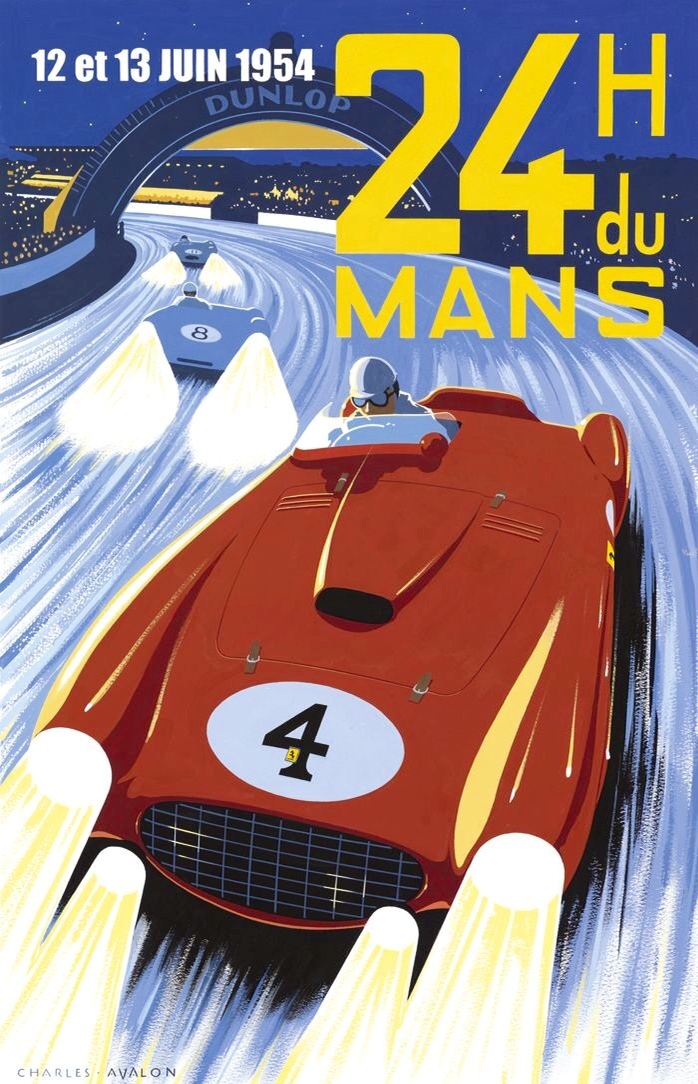
Max Staub’s painting depicts the battle between the first and second placed Ferrari 375 Plus and Jaguar D Type at Le Mans on 12/13 June 1954…
There was a lap between the cars at the end of the race, Froilan Gonzalez shared his Ferrari with fellow GP driver Maurice Trintignant and Duncan Hamilton the ‘D’ with Tony Rolt. The Brits won the race in an XK ‘C Type’ the year before.
In one of the most exciting events at Le Mans to that point the large lead of the Ferrari was diminished to about 1.5 minutes when the Fazz refused to fire at a pitstop with about 2 hours to go. Eventually a flooded magneto head was diagnosed and rectified, the Ferrari sped on to win a famous victory despite the efforts of Hamilton in the final stint.

Fantastic shot taken at about 9pm in the evening, at that time on Saturday night competitors lights had to be turned on and remain operational all night. (Yves Debraine)
Here is a longer 1950’s Le Mans Article with a Ron Flockhart twist for those with an interest in this period…
Le Mans 1957 ‘D Type Jaguar’ Rout: Ron Flockhart Racer and Aviator…
Credits…Max Staub, Yves Debraine, Charles Avalon

(Bruce Thomas)
Jonathon Williams blasts through the French countryside on the way to 9th place in Steve McQueen’s Porsche 908 camera car during Le Mans 1970…
Porsche 908/02 ‘022’ was completed on 10 January 1969, making its race debut as a factory car at Daytona in 1969. It was rebuilt as a Spyder before acquisition by Solar Productions for use as a camera car in the iconic, endurance classic movie.
McQueen raced the car during 1970; at Riverside and at Phoenix winning the race and then famously finishing second at the Sebring 12 Hour, McQueen co-drove for Peter Revson in a plaster-cast with a recovering broken ankle, injured in a motorbike accident.
A short account of the Sebring race is contained in this article about McQueen i wrote a while back;
Is That A Pistol In Your Pocket!? : Steve McQueens Jaguar XKSS…
The 908 was to be driven by McQueen at Le Mans but the risk was too great; the films management, backers and insurers vetoed his participation.
The important drive was offered to ex-works Ferrari driver, Jonathon Williams and Herbert Linge, a factory Porsche driver. Despite constant, long pitstops to change cameras and an accident, the ever reliable 908 finished in 9th place on laps completed, albeit technically unclassified.
Click on this link to a fascinating article in which gives Williams gives his firsthand account of his experiences in the making of ‘Le Mans’; http://www.motorsportsmarketingresources.com/short-stories/jonathan-williams/le-mans-1970.html

Williams/Linge Porsche 908 camera car, Le Mans 1970. (unattributed)
Photo Credit…Bruce Thomas

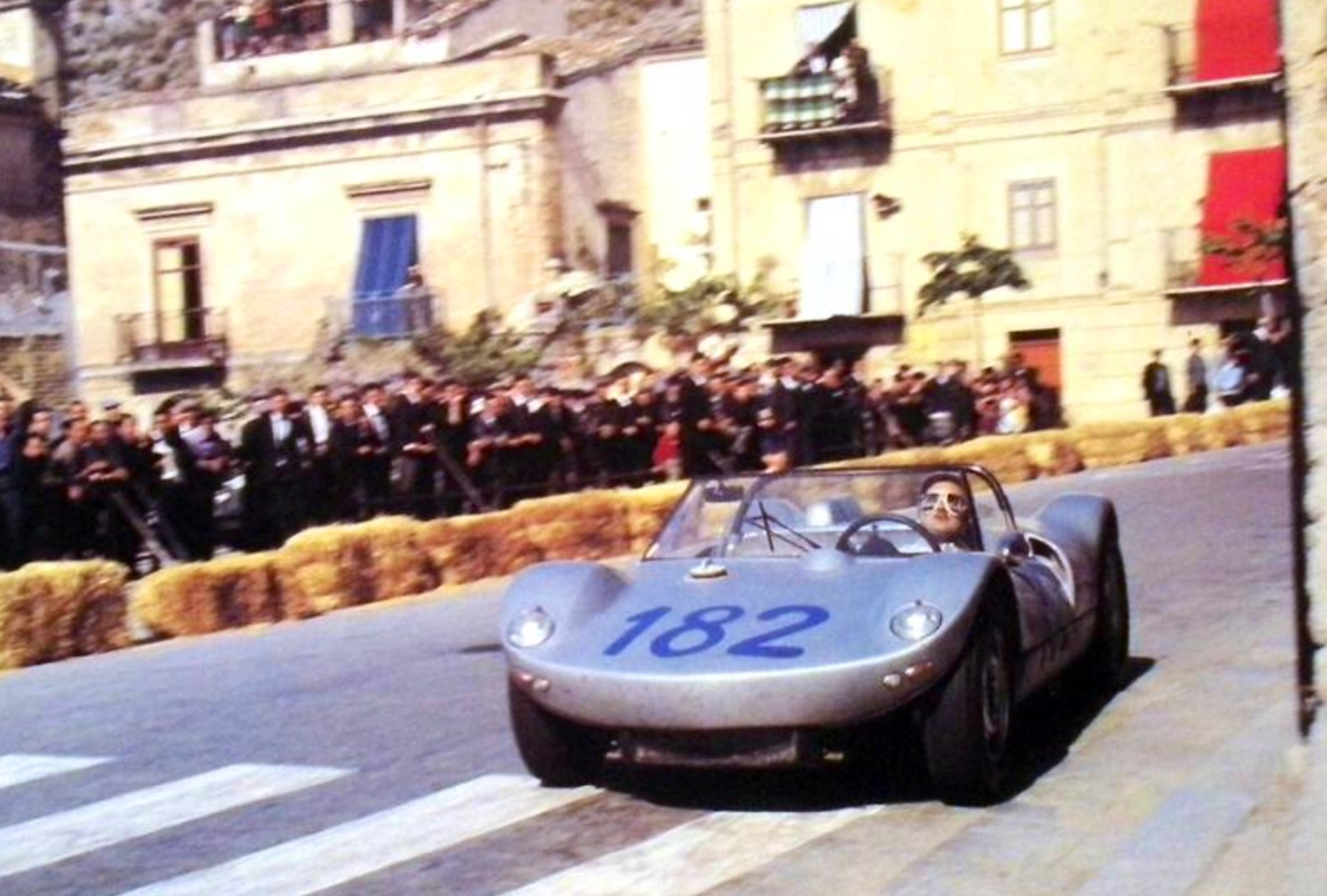
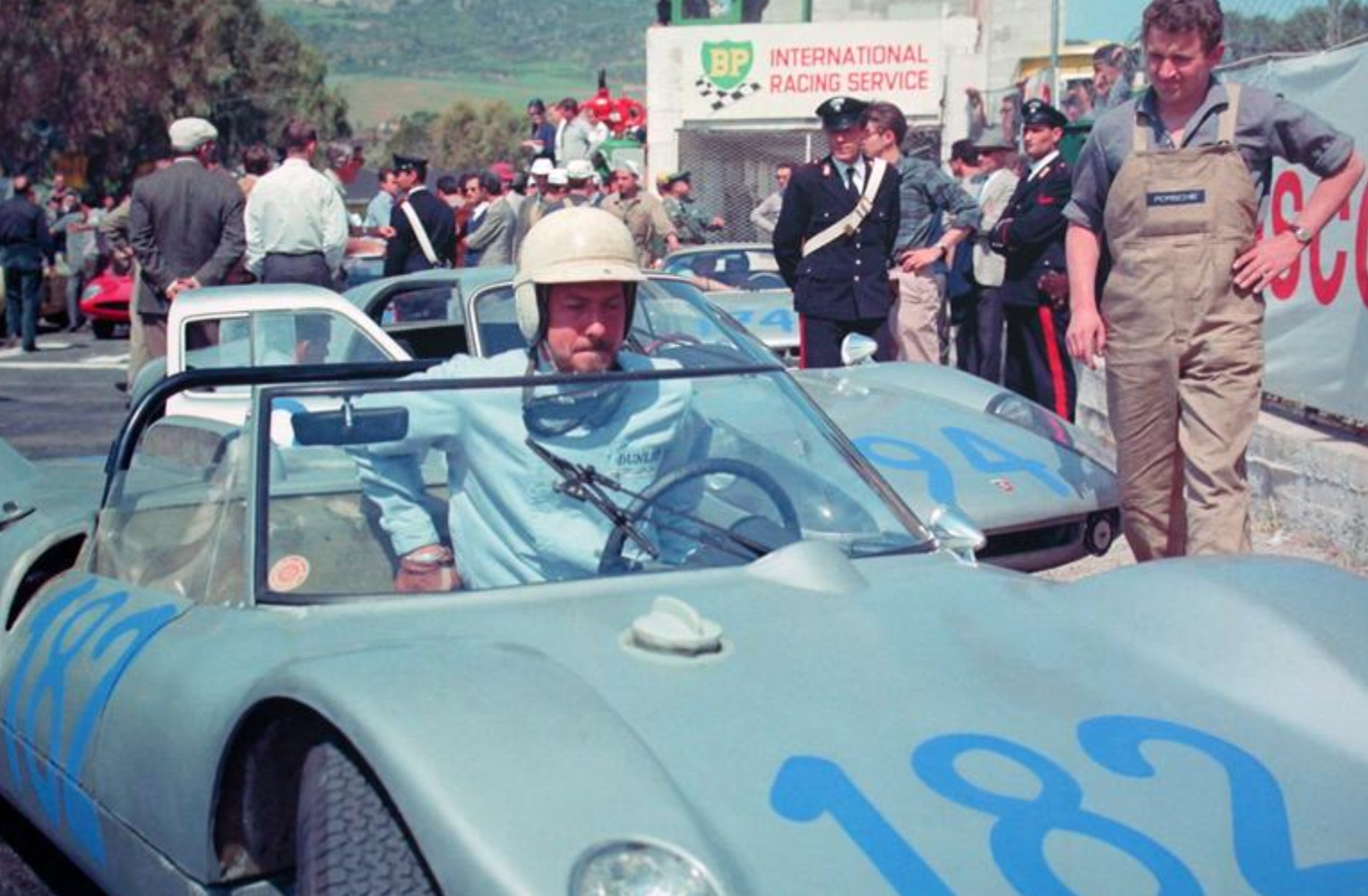
Alan Hamilton aboard the first of many serious Porsches he raced in Australia down the decades, the ex-works 904/8 ‘Kanguruh’ chassis # 906-007 at Calder in January 1966…
Norman Hamilton famously negotiated a franchise for Porsche in Australia, having been ’rounded up’ by one of the earliest 356s on a drive through the Swiss Alps. The business quickly prospered from its Melbourne base. This article is about the 906s raced by Norman’s son Alan from the mid-sixties to early-seventies and his career during that period.
He raced three such cars; 904/8 chassis # ‘906-007’ and two 906 Spyders; one during 1967 and another in 1971-72, the latter cars used chassis supplied by Porsche, but neither had a chassis number, giving more than one historian a headache or two…
Alan Hamilton was born on 29 July 1942. After attending Camberwell High School in Melbourne’s leafy eastern suburbs, he joined the family firm, which was to expand hugely over the ensuing decades under his leadership. A competition licence quickly succeeded his road licence at 18, initial competition exploits were in a VW contesting trials and gymkhanas. A 1958 Porsche 356 Super followed; he competed in this standard car at country meetings and hillclimbs. A 1959 Convertible followed, which was also successful.
In early 1965 Hamilton headed for Europe including a stint working in the Porsche factory, the 904/8 Bergspyder was purchased during that trip and shipped to Australia for the 1966 season, clearly a step up in performance for the young driver…

Porsche 906…
The 906 was produced for the 1966 World Championship of Makes. It was designed for the FIA’s Group 4 regulations, whilst modified variants of the car, using larger engines and/or cut-down Spyder bodywork, were entered in Group 6, the Sports Prototype category.
The 906 became the last street-legal pure racer built by Porsche. It replaced the successful ladder frame chassis 904 and was the first substantial product of Technical Director Ferdinand Piech’s new team at Zuffenhausen. The Porsche 904 had additional structural rigidity from its bonded-on fibreglass bodywork, while the new 906 featured a modern multi-tubular spaceframe chassis, with an unstressed fibreglass body.
The initial batch of 50 Porsche 906/Carrera 6 Coupes offered light weight, circa 1,300 lb (580 kg), a saving of around 250 lb (113 kg) compared to the similarly-engined 904/6.
The Porsche 901/20 6-cylinder lightweight racing engine was standard equipment, offering circa 220bhp on Weber carburettors. A handful of factory-entered works cars were powered either by fuel-injected versions of the 6-cylinder engine, or the flat-8 derived from Porsche’s F1 program, both engines air-cooled of course.

The 906 shape was developed in the wind tunnel, with a top speed of 170mph at Le Mans, amazing for a 2-litre car.
The cars made their international race debut in the 1966 Daytona 24 Hours, sixth overall and beating the Ferrari Dino 206 in the 2-litre class was the car driven by Hans Herrmann/Herbert Linge. At Sebring, Herrmann won the class again in a Carrera 6, this time co-driving with Gerhard Mitter and Joe Buzzetta, and finished fourth overall.
The Monza 1,000kms was dominated by 906s in the 2-litre class, this time with Herrmann/Mitter in a works entry leading home the customer car of Charles Vogele/Jo Siffert, these two cars placing fourth and fifth overall behind the victorious Ferrari 330P3 and a pair of Ford GT40s.
At the Targa Florio the 906 won outright, there Willy Mairesse and Herbert Muller co-drove the Swiss Ecurie Filipinetti car.
The 1966 Le Mans works, prototype Porsche 906LE Coupes finished in fourth-seventh places behind the leading trio of 7-litre factory Ford GT Mark IIs, outlasting all of the V12-engined sports-prototype Ferrari P3/4s, while the 2-litre Sports class was again dominated by a standard 906.
The Austrian 500kms event at Zeltweg saw Gerhard Mitter/Hans Herrmann and Jo Siffert (driving solo) finishing one-two.
In 1967 the 906 continued to be campaigned by prominent private entrants and drivers, while the factory team moved on to race larger-engined 907s on the relentless climb to development of the outright contender which finally won Le Mans for Porsche in 1970, the immortal 917.
The Porsche 904/8…
The 904-based Bergspyders played an important test role in the evolution of the 904 to 906. The first appearance of these cars was at the Targa Florio on May 9, 1965.
All 904s came from the factory with 2-litre engines; four, six and eight cylinders. Generally the fours had 904 chassis numbers and the six-cylinder cars 906 chassis numbers. There was no rule though: the first prototype chassis 904-001 had a six-cylinder engine, the eight-cylinder coupes had 904 chassis numbers, whilst the eight-cylinder Spyders had 906 chassis numbers. Easy really!
Porsche built five 904/8 cars for factory use: chassis 906-003, 004, 007, 008, and 009. To be clear, whilst the chassis had the 906 descriptor, the cars used 904 ladder-frames, not the 906 spaceframe chassis.
All 904/8s had 2-litre flat-8 engines; the Type 771 1962cc engine, which was derived from the 1962 804 F1 car and produced circa 225bhp fed by Weber carbs.
The cars were made in two body variants. Chassis 003, 004, and 009 had the normal Spyder look of a Porsche of the period; the other two cars, 007 and ‘008, were more visually challenging, that is, ugly! The overhangs were shortened a lot for hillclimbing purposes.
Bergspyder, as a name, was a misnomer as the cars were raced as well as ‘climbed, they were nicknamed ‘Kanguruh’ (kangaroo) because of the nature of the cars roadholding, the lightweight cars with their firm suspension jumped about on poor roads.
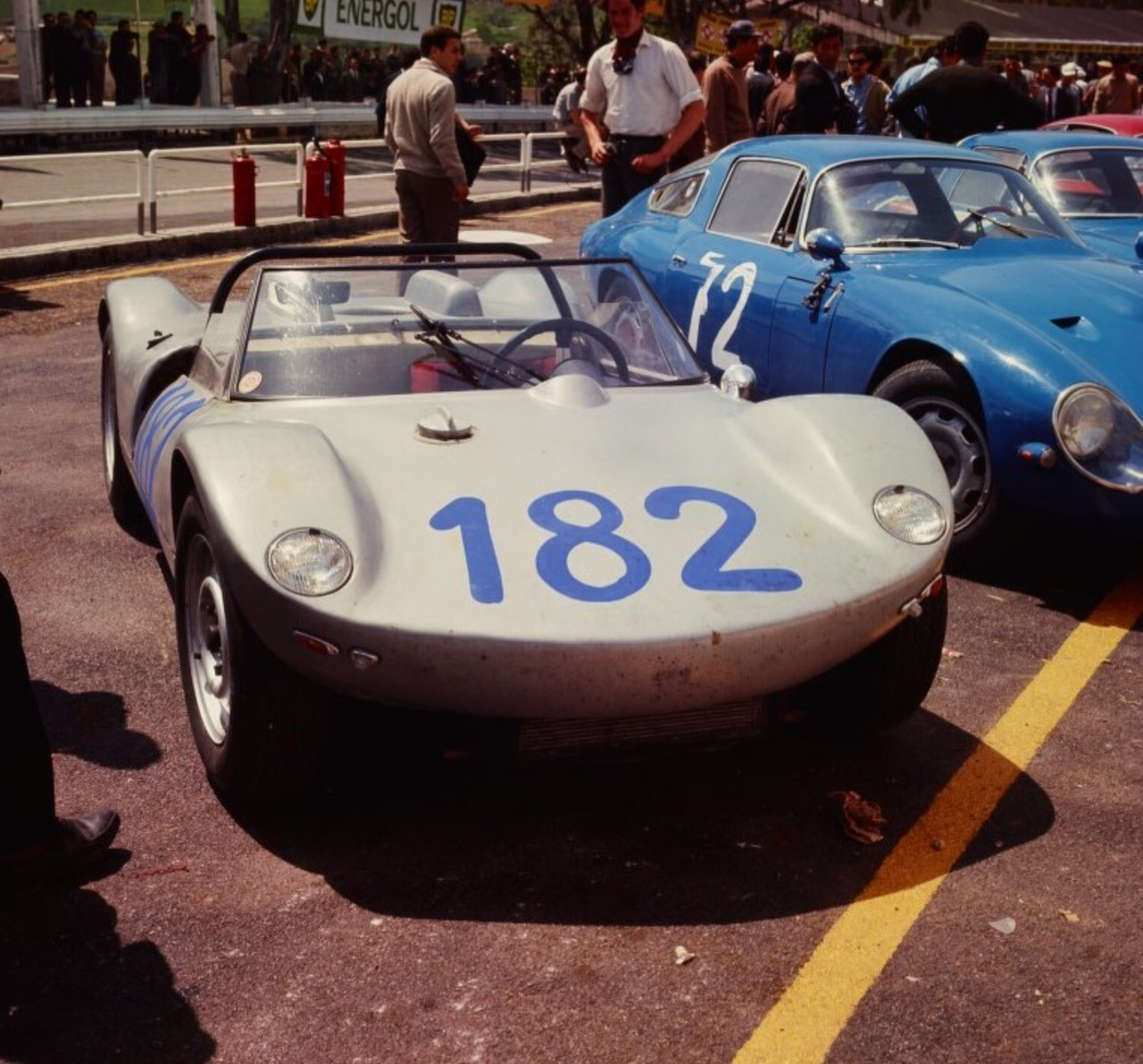
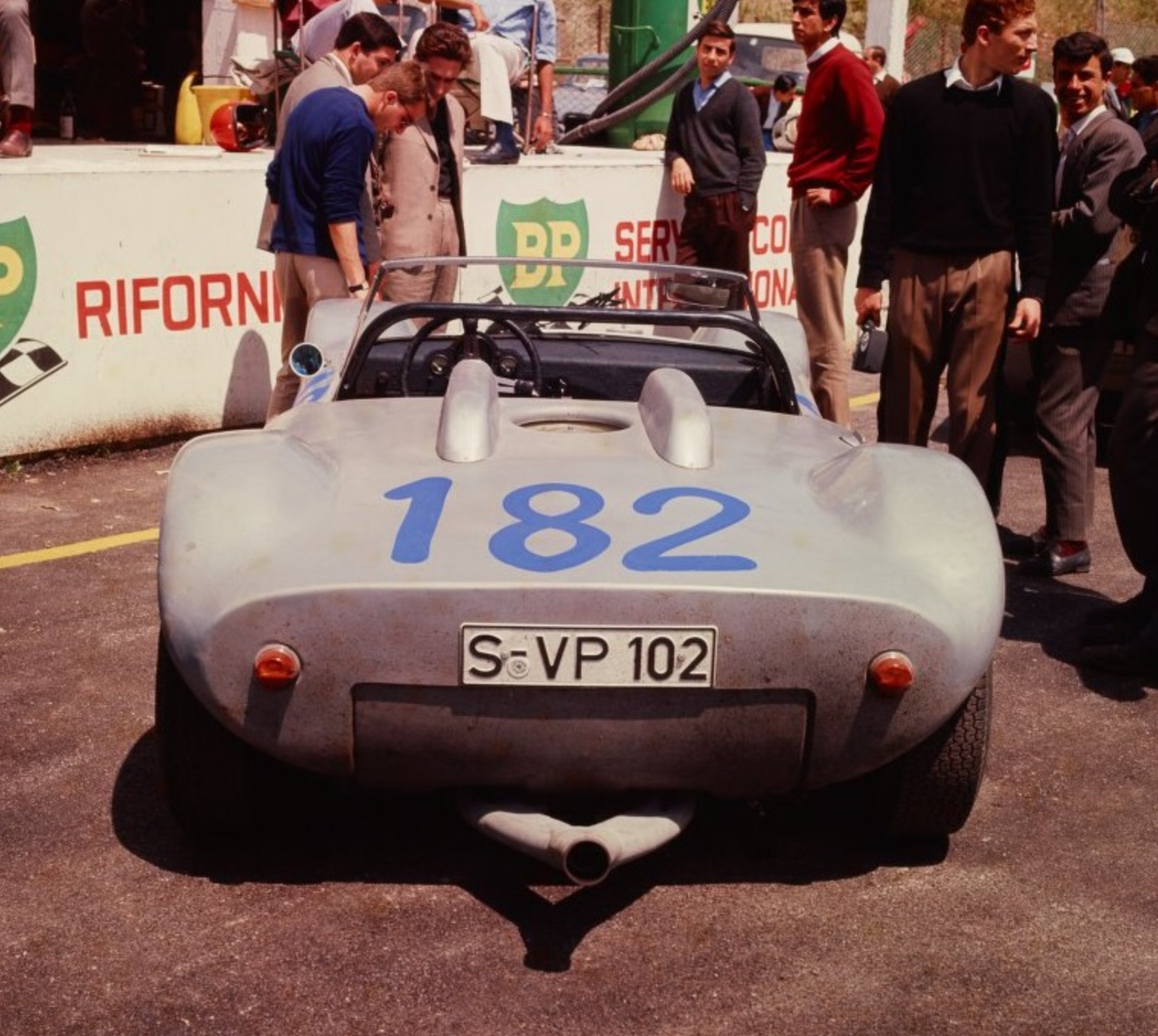

Hamiltons 904/8 car chassis 906-007 was first raced at Targa 1965,
It finished second in the hands of Cliff Davis/Gerhard Mitter behind the winning Ferrari P2 of local lad Nino Vaccarella and Lorenzo Bandini. Gerhard Mitter then used the car to win the 1965 Rossfeld Hillclimb, a 6 km course near Berchtesgaden on 13 June. Next placed Herbie Muller was five seconds adrift in a standard Porsche 904GTS.

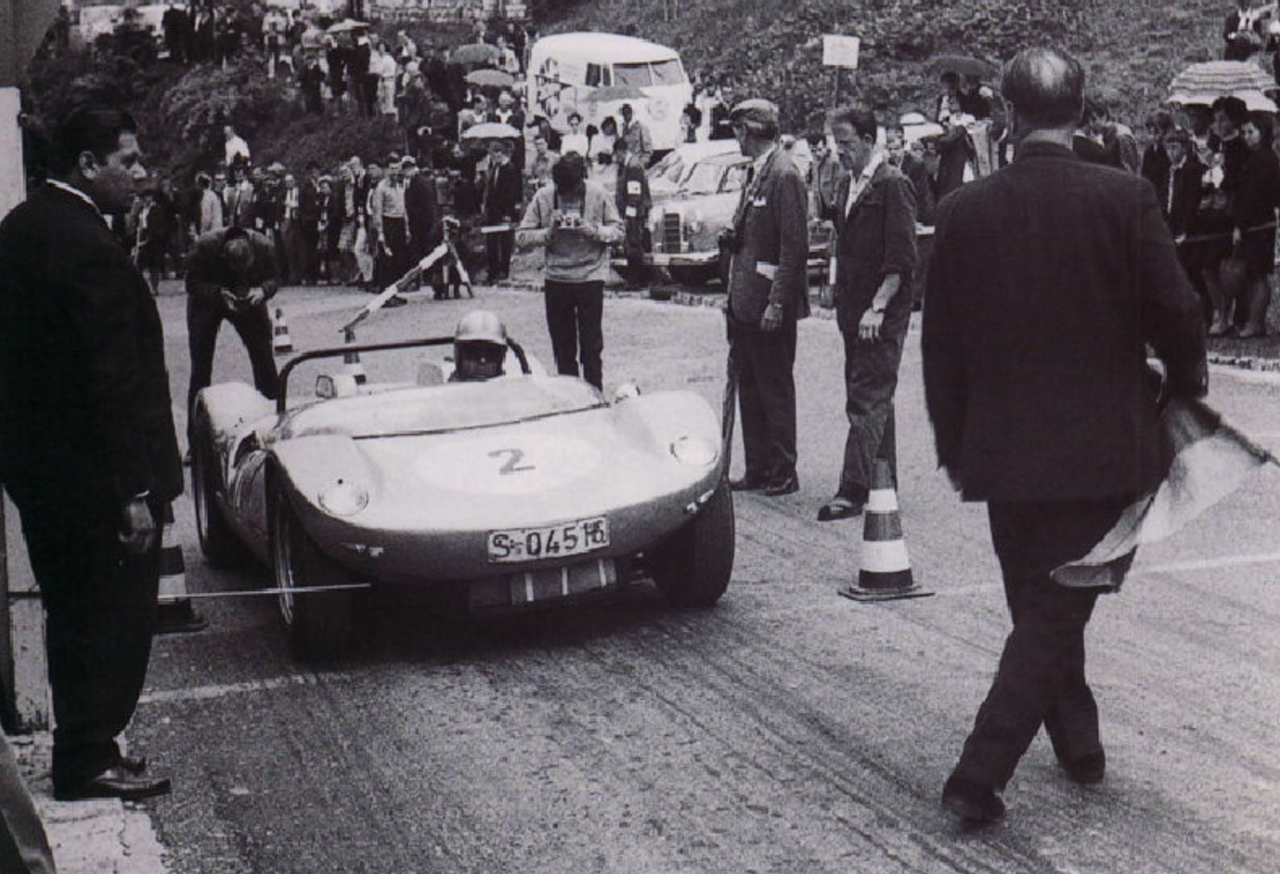
Further success followed at the Norisring, near Nurnberg, where Mitter raced 906-007 to victory on July 4, 1965, leading home two Elva BMWs. The car was then unraced, the last appearance of a 904/8 was in August, in factory hands, Porsche thereafter focusing on production of the new 906.
Alan Hamilton spotted the car in a corner of the racing department…

Porsche 904/8 906-007 in Australia…
Interviewed by Journalist Barry Lake, Hamilton said the 904/8 ‘originally had a 2-litre 8-cylinder engine, but I bought it with a new 906 (6-cylinder) engine I had asked them to install. I imported that at the end of 1965 and raced it through 1966.’
The car was first raced in Australia at Calder, Victoria on 16 January 1966, which is probably when the Autosportsman cover shot used at the start of this article was taken. The car then raced at the Sandown round of the Tasman Series, contesting the sports car events.
Taken across Bass Strait on the Princess of Tasmania with the rest of the Tasman Circus to contest the Australian Tourist Trophy at Longford, Hamilton was second in the race won by the much more powerful Elfin 400 Traco Olds V8 of Frank Matich.

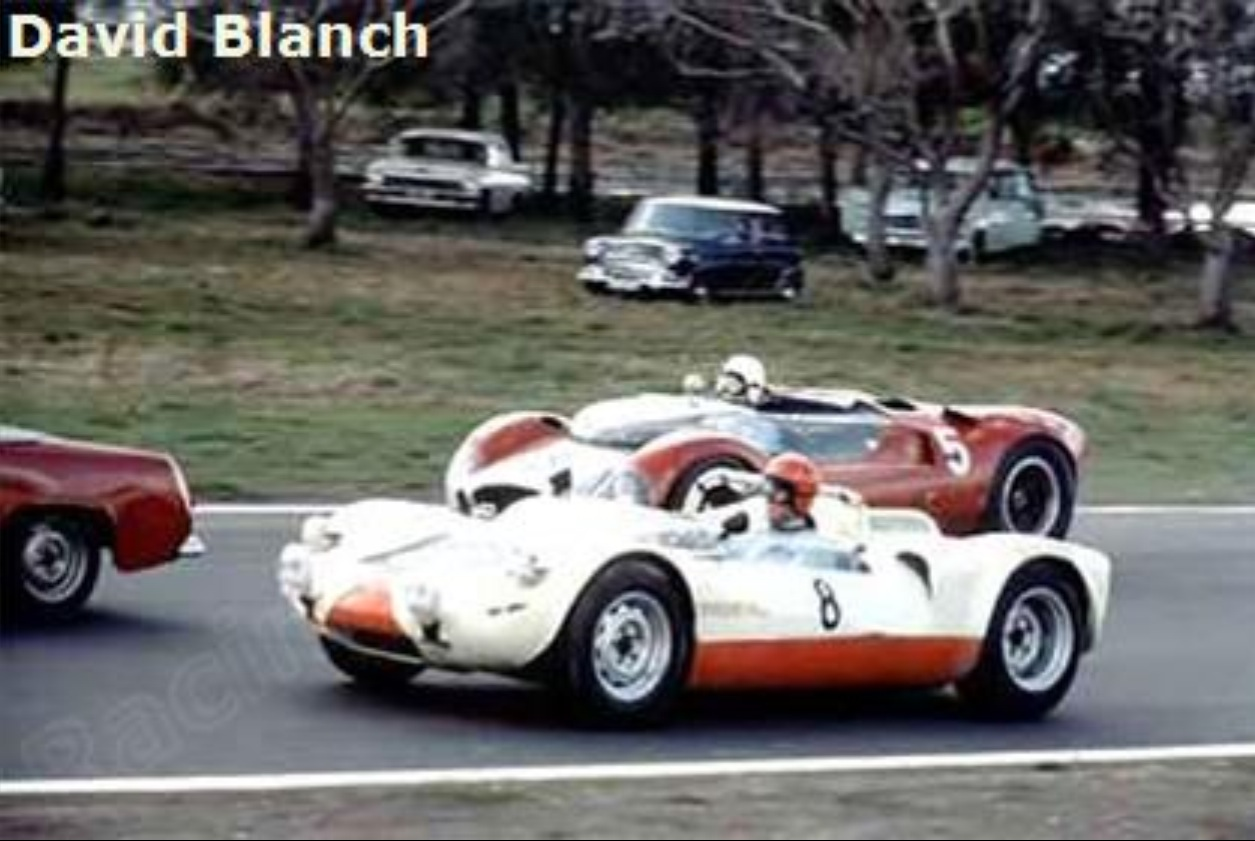
The 904 quickly became one of the fastest sportscars in the country, fourth in the 1966 Surfers Paradise 12 Hour with a 2-litre car was a top result. Alan shared the 904 with Melbourne driver Brian ‘Brique’ Reed. Jackie Stewart and Andy Buchanan won in the Scuderia Veloce Ferrari 250LM- I wrote an article about this Ferrari a while back, click here to read it; https://primotipo.com/2014/07/03/pete-geoghegan-ferrari-250lm-6321-bathurst-easter-68/
The Hamilton 904 combination were also first in the 1966 Australian Hillclimb Championship at Collingrove, South Australia, the Victorian Sports Car Championship at Sandown and the South Australian Sports Car Championship at the Mallala ex-airfield circuit.
Towards the end of 1966 the Porsche workshop in St Kilda, Melbourne started to transfer the mechanicals of the Kanguruh 904/8 906-007 to a new 906 chassis.
Alan Hamilton, ‘Later (that is after the 904/8 was in Australia) I imported a new 906 chassis and body and put the mechanicals of the Targa car in that’.
‘Then Jim Abbot bought the Targa car (chassis 904/8 906-007) and fitted a ZF gearbox and 289 Ford V8 engine. His estate or perhaps Jim himself shortly before he died, sold the car to Murray Bingham in this form and it became the Bingham Cobra.’


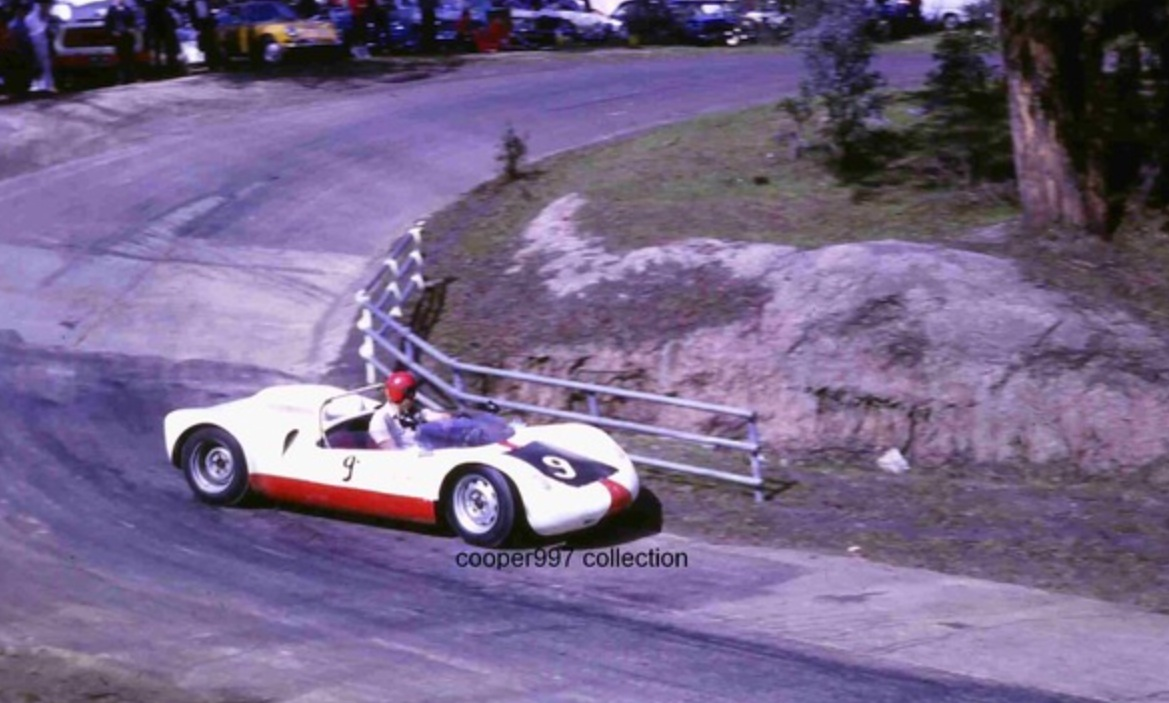
Hamilton; ‘Years later, Pat Burke bought the car and sent it to Germany where it was restored to its original 904/8 Targa Florio specification. After Pat Burke fell on hard times it was auctioned at Monte Carlo. I think a man in Sydney bought it, but I have no idea who has it now.’
Lets go back a step to the acquisition of the chassis and related parts by Jim Abbott.
Abbott was a driver, owner of Lakeland Hillclimb in outer Melbourne, publisher of motor racing monthly Autosportsman magazine and promoter of an annual Motor Racing Show in Melbourne.
In 1966, 1980 World Champion Alan Jones, was trying to establish a foothold on the motor racing ladder in the UK, wheeling and dealing in cars and campers to provide the money to do so. He acquired an ex-works Sunbeam Tiger and, knowing Abbott had an interest in such cars, sold it to him. The car was raced and ‘climbed’ by Jim and engineer Paul England before Abbott decided it would make a nicer road car than a racer. He swapped the Shelby-modded 289cid V8 for a standard engine and looked around for a chassis into which to plonk his nice, powerful Ford Windsor small-block V8.
Various Coopers were considered before a deal was done with Hamilton to acquire the Kanguruh 904/8 906-007.
A suitable ex-Cooper Maserati F1 ZF 5DS 25 transaxle was also acquired. The engine and box (the latter requiring some modification in terms of clutch componentry by Eddie Thomas) was ‘dropped’ into the Porsche chassis at Hamilton’s St Kilda workshop.
A little cutting and shutting of the chassis crossmember was needed to fit the V8. A sub-frame was added around the engine to maintain chassis stiffness, but in essence, the swap was relatively simple. Stiffer springs and shocks were fitted as the Ford cast iron lump was around 200lbs heavier than the svelte, alloy Porsche Flat 6. Driveshafts were suitably strengthened by Paul England Engineering.
The original rear bodywork was used but at the front, much bashed and repaired a local specialist fashioned a nose much more attractive than the original, the screen, a concoction of a speedboat parts, met at each end with aluminium panels was not quite so pretty.


Abbott’s objective was not to build an outright car but rather a very fast sports car which could be ‘raced, sprinted and climbed’. The completed machine made is debut at the Light Car Club of Australia’s annual members meeting at Sandown on Melbourne Cup Day in November 1967. ‘Red Handed’ won the ‘Cup at Flemington that day! More importantly, Abbott set a sub-13-second standing quarter mile at Sandown, also primarily a horse racing venue.
The car was quickly under the times set by the class record holder, a Cooper Jaguar at Templestowe Hillclimb and was running fourth in the Winton Trophy at the picturesque Benalla country Victorian circuit when the car lost its water. Initial troubles centred around the cooling system, which were solved by fully rebuilding it.
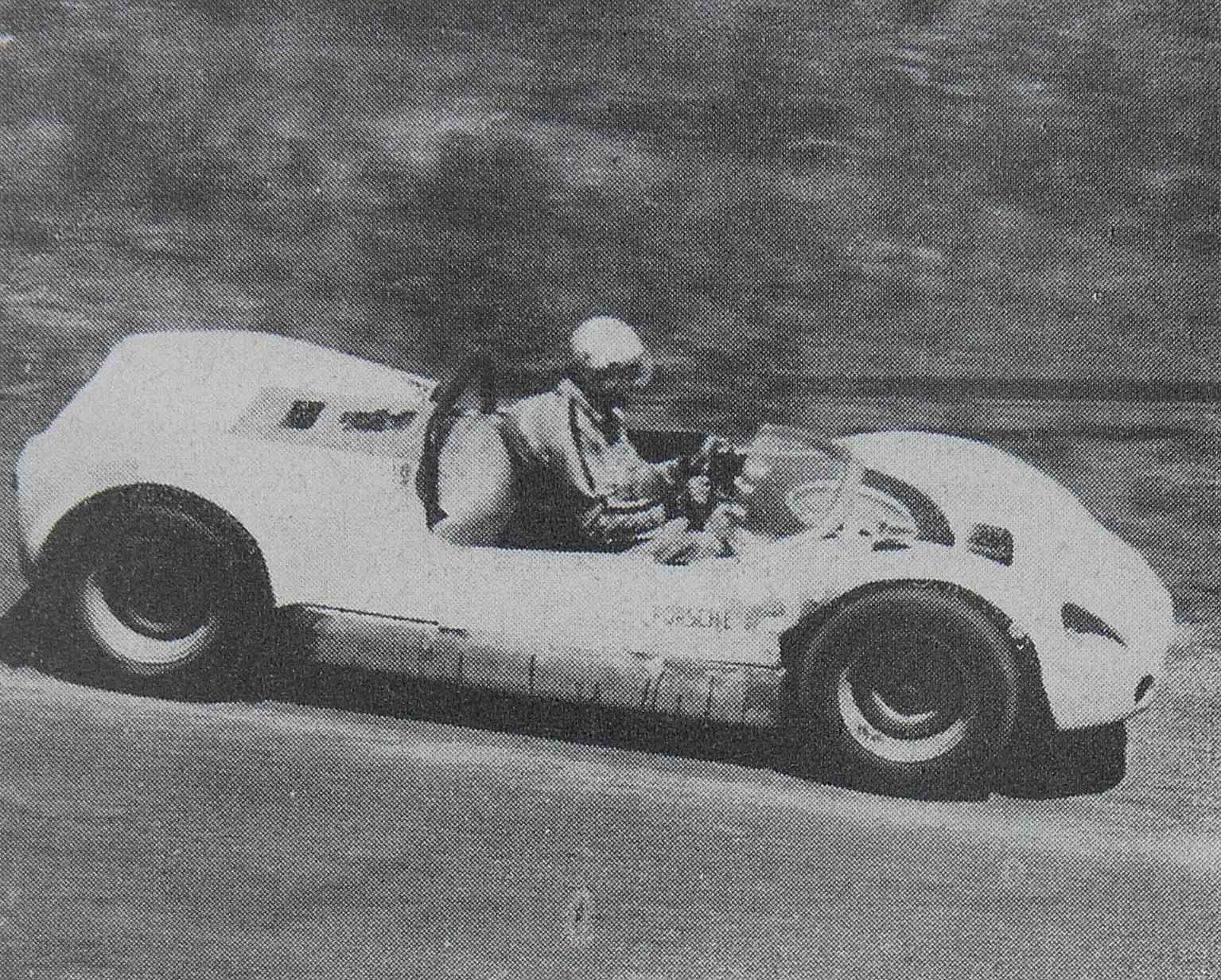
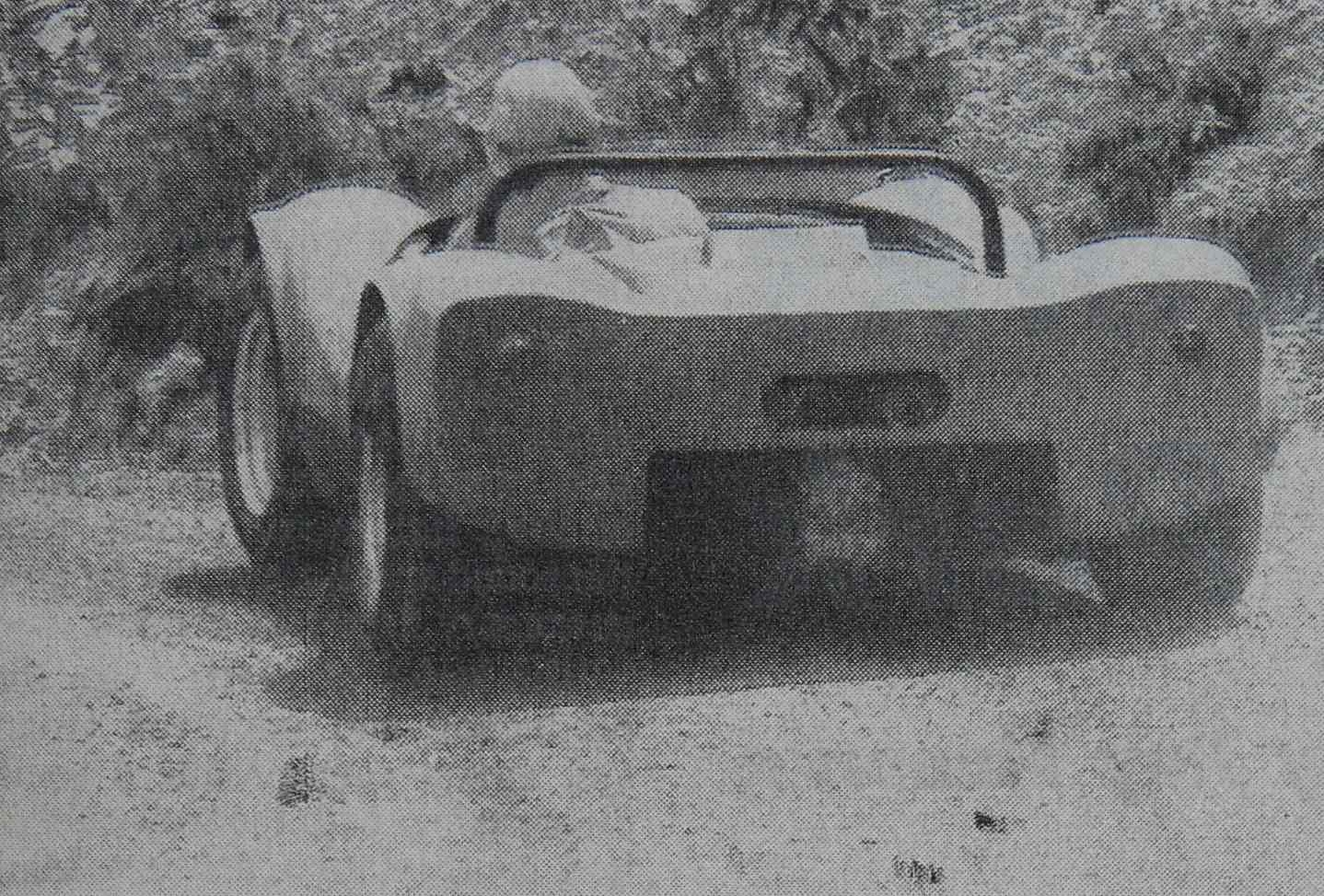

Abbott did not campaign the car for long before his untimely death, it was then sold to New South Wales veteran driver, Tom Sulman who raced it in 1969.
Murray Bingham then bought 904/8 906-007 and used it very successfully for over 10 years. The old chassis won the Australian Hillclimb Championship again in 1972, a three-round Series that year. (Hamilton won the 1966 title in it at Collingrove).

A ‘Manx’ body replaced the original, and the Ford Cobra engine was updated with an ex-Gary Campbell, Alan Smith-built Chev F5000 engine out of a Lola T300. Bingham won the 1973 NSW Hillclimb Championship in Chev-engined form, the 1971-72 NSW titles Ford Cobra-engined.
The much raced car finally passed into the hands of Pat Burke who restored it before it was sold upon the demise of his business empire in the 1980s as described by Alan Hamilton earlier in the article.
I am uncertain of the cars current owner.


Hamilton’s first Porsche 906 Spyder…
Hamilton’s new 906 chassis came with bodywork, suspension and brakes.
904/8 906-007 donated its engine and gearbox and some other components, as the narrative and photos show, the 904/8 906-007 car was still as built by Porsche, less the engine and box. Alan is a big, tall bloke so he elected to build the 906 up as a Spyder rather than a standard 906 Coupe in order to ease access and egress and more easily see out of the car.
At this point we have two cars: the 904/8 chassis car 906-007, now called ‘Porsche Cobra’ and fitted with a Ford engine and ZF gearbox and a 906 which was not issued a chassis number by Porsche, but which over the years assumed the 906-007 tag, which was built up as a Spyder, but which when restored in Germany in 2003-09, was rebuilt as a Coupe. This car now has a chassis 906-007 plate, at what point the plate was affixed is conjecture.
Both cars have elements of the original 904/8 906-007…
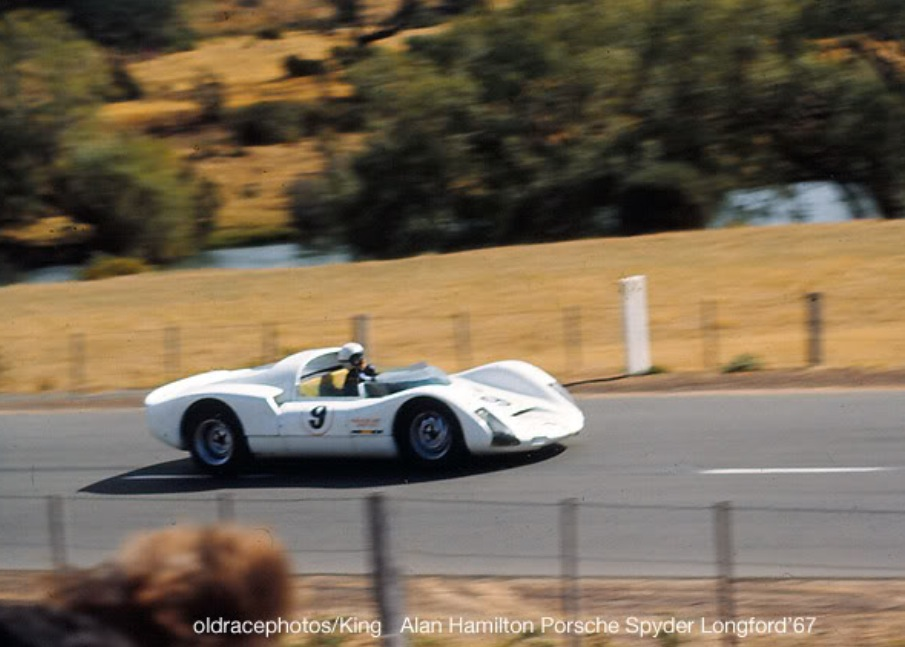
Back in 1966, none of these problems for future historians mattered to Hamilton; he had a new state-of-the-art 906 to contest Australian events.
As the recent article I wrote on the Frank Matich Elfin 400/Traco Olds makes clear, the light six-cylinder-engined Porsche was up against it with several very potent, light, well-driven V8-powered cars in the hands of Frank Matich, Niel Allen and Bob Jane in 1967. (Matich SR3 Repco, Elfin 400 Chev and Elfin 400 Repco, respectively).
The Porsche Team completed the build of the 906, and the original 904 chassis 906-007 was put out the back of their St Kilda workshop until acquired by Jim Abbott later in 1967.
The 906 Spyder made its debut in the sports car events at Sandown’s Tasman round in late February 1967. Hamilton took three class wins and a class lap record.
To Longford, the following weekend, the car was third outright. The following week, still in Tasmania, Hamilton raced the car at Symmons Plains, where he won his first race and was leading the Tasmanian Sports Car Championship when a conrod let go. Hamilton noted in his Autosportsman column that the engine had ‘done 14 months racing, 92 hours, so we are more than happy with its overall performance’, Porsche’s reliability is legendary.
In April, Hamilton contested the Victorian Sportscar Championship, winning his heat and finishing second outright and first in class; he also bagged the class lap record.


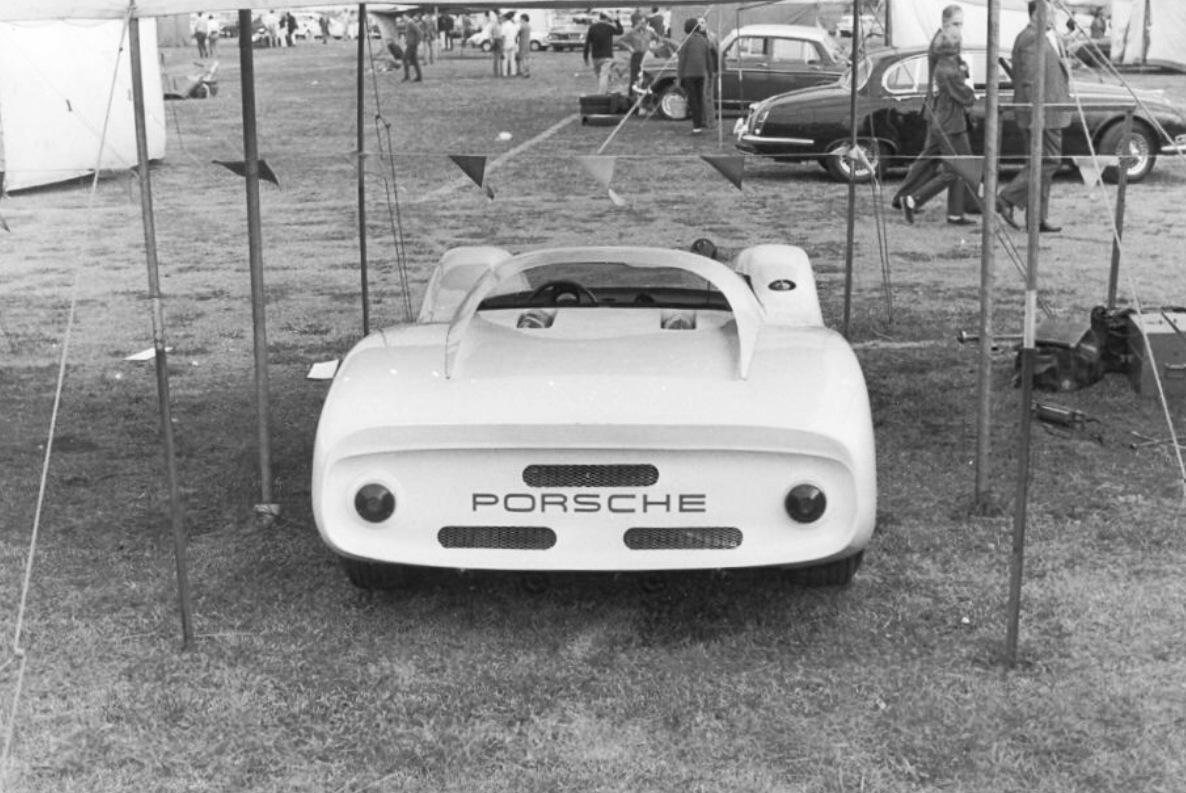
On 14 May, Hamilton contested the RAC Trophy at Warwick Farm where he finished third behind two powerful V8s. The dominant Matich SR3 of Frank Matich was getting in some valuable mileage before leaving to contest the Can-Am Series in this car, and Bob Jane’s Elfin 400, which, like the SR3, was powered by Repco’s new 620 Series SOHC, two-valve, 4.4-litre V8.
A week after the RAC Trophy, Hamilton contested the Australian Tourist Trophy at Surfers Paradise. This was a relatively easy tow from Sydney to Queensland’s Gold Coast and gave Hamilton valuable testing time at Surfers to fettle the car to suit the circuit for the international 12 Hour event in September.
Matich won again in his SR3 Repco, but Alan was second in the 906 and his 12 Hour co-driver Glyn Scott third in his Lotus 23B Ford. The other two outright sportscar contenders of that year, Niel Allen and Bob Jane’s Elfin 400s did not make the trip North.
Success followed in Victorian events at Calder and at Hume Weir on the Queens Birthday weekend, before taking the long haul back to Surfers Paradise for the 12 Hour event on the 3 September weekend .
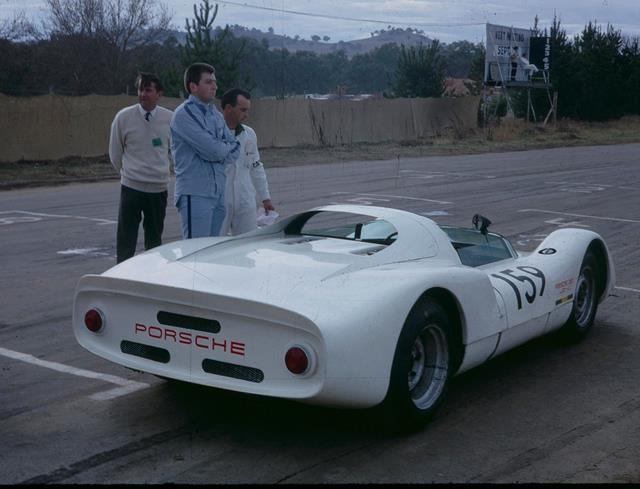
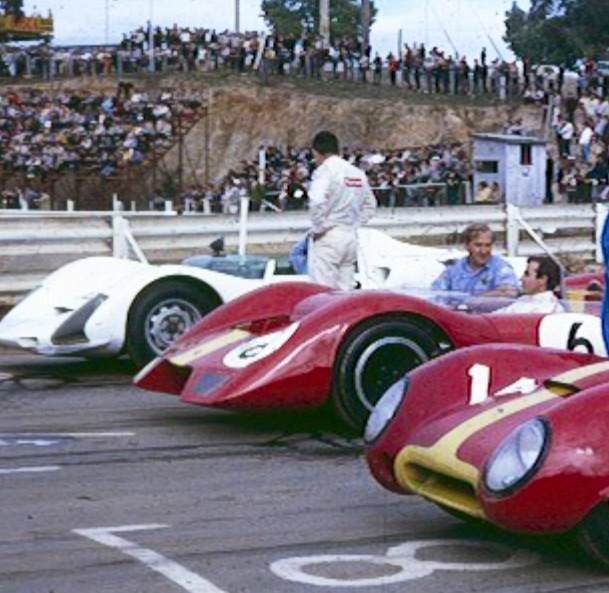
Hamilton’s co-driver at Surfers was Queenslands’ Glyn Scott, the duo finished third outright and first in class. The race was won again by the SV Ferrari 250LM, that year driven by the Australian duo, Bill Brown and Greg Cusack, Paul Hawkins and Jackie Epstein were second in Epstein’s Lola T70 Mk3 Chev.


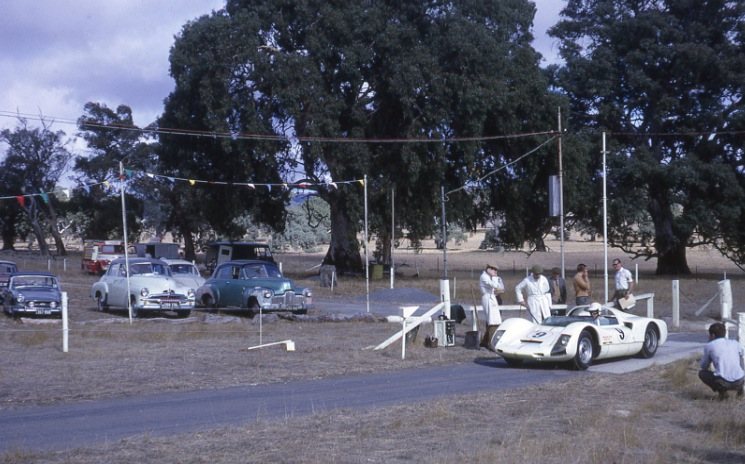
Another long tow to Mallala, South Australia, was rewarded with victory in the South Australian TT.
John Blanden noted the versatility of the car and driver, the 906 contested hillclimbs, still pretty important and sometimes televised, the car taking FTD at Templestowe in Melbourne’s outer east and second in the Australian Hillclimb Championship at Bathurst in November behind Greg Cusack’s Tasman 2.5-litre Repco powered Brabham BT23.
A successful year was capped with a win at Lakeland Hillclimb in the Dandenong Ranges, outer Melbourne in December.

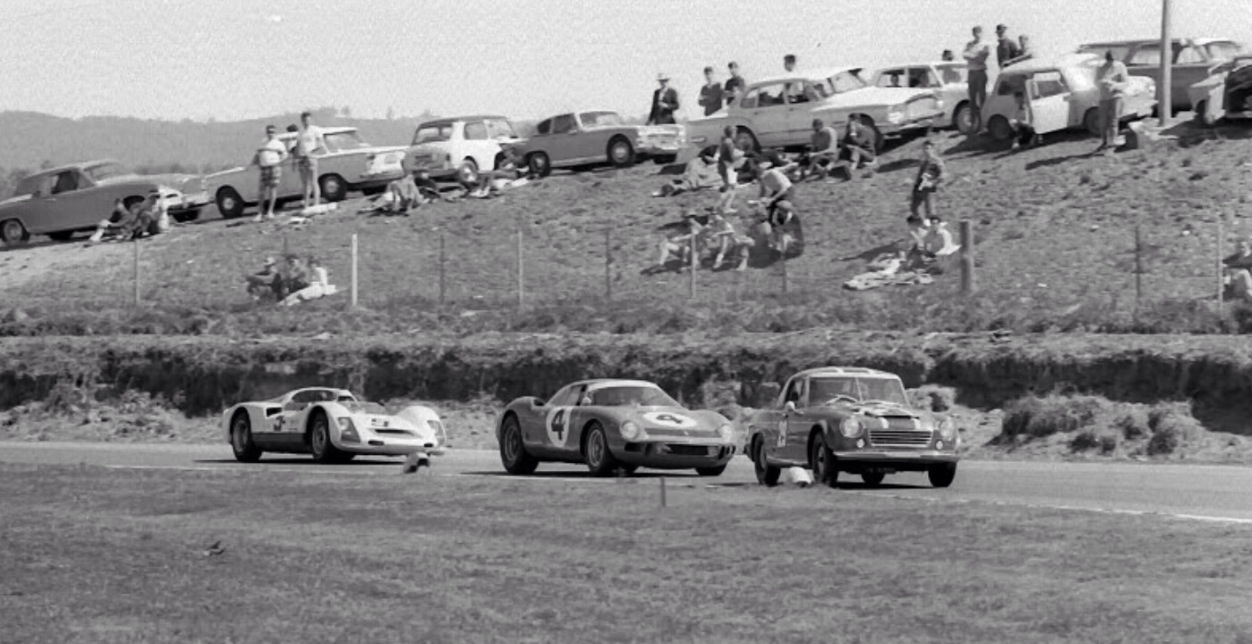
The 906 was advertised for sale in the November 1967 issue of Racing Car News, the car, according to John Blanden, having reached its Customs Duty limits. This taxation concession allowed Tasman Series competitors, for example, to avoid import duty by ‘exporting’ the cars each year to New Zealand. If exceeded, that is, the car stayed in Australia for longer than twelve months, the ‘fiscal fiend’, the taxman, had to be paid.
The car was sold to Richard Wong in Singapore and passed through many hands, including Macau businessman/racer/team owner Teddy Yip. As mentioned earlier in this article, Hamilton’s first 906 was ultimately restored as a Coupe, having been only raced by Hamilton as a Spyder…

European Trip in 1968…
Hamilton spent most of 1968 overseas, much of it working at Porsche; he did manage to fit in the Nurburgring 1000Km, racing a 911S to 28th place with co-driver/car owner Hans-Dieter Blatzheim. The race was won by a factory Porsche 908 driven by Jo Siffert and Vic Elford.
Planning an all out assault on the 1969 Australian Touring Car Championship, Hamilton ordered a trick 911T/R, the car arrived early enough to compete in the 1968 ATCC, the last run to a one race format. Pete Geoghegan won the title again in his Mustang, Hamilton in the giant killing 2-litre 911 lost second place on the last lap due to a puncture, Darrell King’s Morris Cooper S just beat him to the Warwick Farm chequered flag.
Porsche still had some spare 906 chassis lying around the factory, one was offered to Alan, who was happy to oblige, he still had plenty of bits from the earlier cars so he could easily build up another car for competition back in Oz. This 906, just like the previous chassis he raced in ’67 did not have a chassis number.

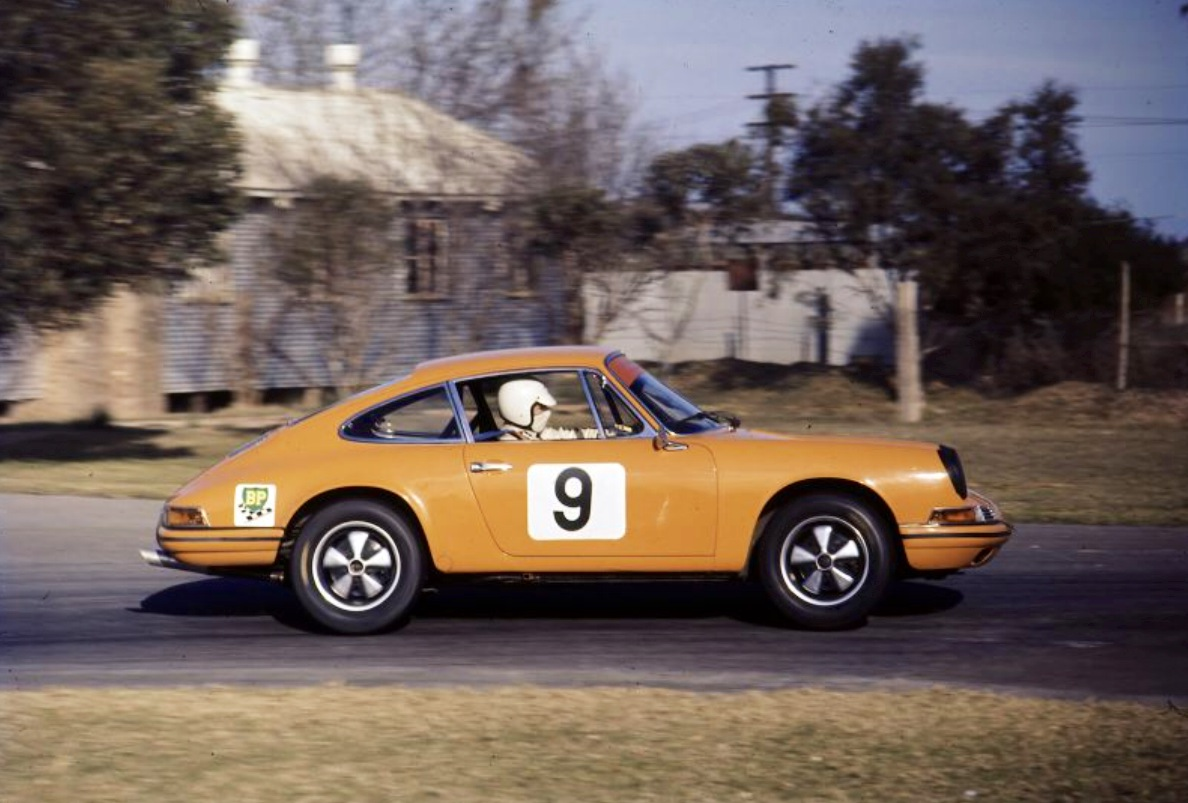
In the 1969 ATCC he came very close to taking the title with consistent second places, ultimately the championship was won by Pete Geoghegan by one point, in his Mustang, the fifth win in the event for the beefy, supremely talented Sydneysider. The battle went down to the wire in the final round at Symmons Plains.
In the middle of his ATCC campaign, Hamilton was recruited by ‘Big Al’ Turner to drive a factory Ford Falcon XW GTHO Phase 1 in the Bathurst 500 together with 500 debutant Allan Moffat that October.
Moffat was in good form having won the preceding Sandown 500 in his big Falcon. Still a young driver, Turner was keen to exploit Hamilton’s speed, smoothness and mechanical sympathy. It was the start of a relationship between the drivers which would be mutually beneficial over the next decade.
1969 was the famous Bathurst when tyres imported by Turner failed spectacularly. Moffat was called into the pits for a precautionary check after the tyres on the Brothers Geoghegan and Gibson/Seton cars failed. The Moffat/Hamilton duo were easier on the Goodyears than their teammates; the pitstop was unnecessary and probably the cause of the pre-race favourite Falcons losing the victory. The Holden Dealer Team Holden Monaro HG GTS 350 of Colin Bond and Tony Roberts won the race.
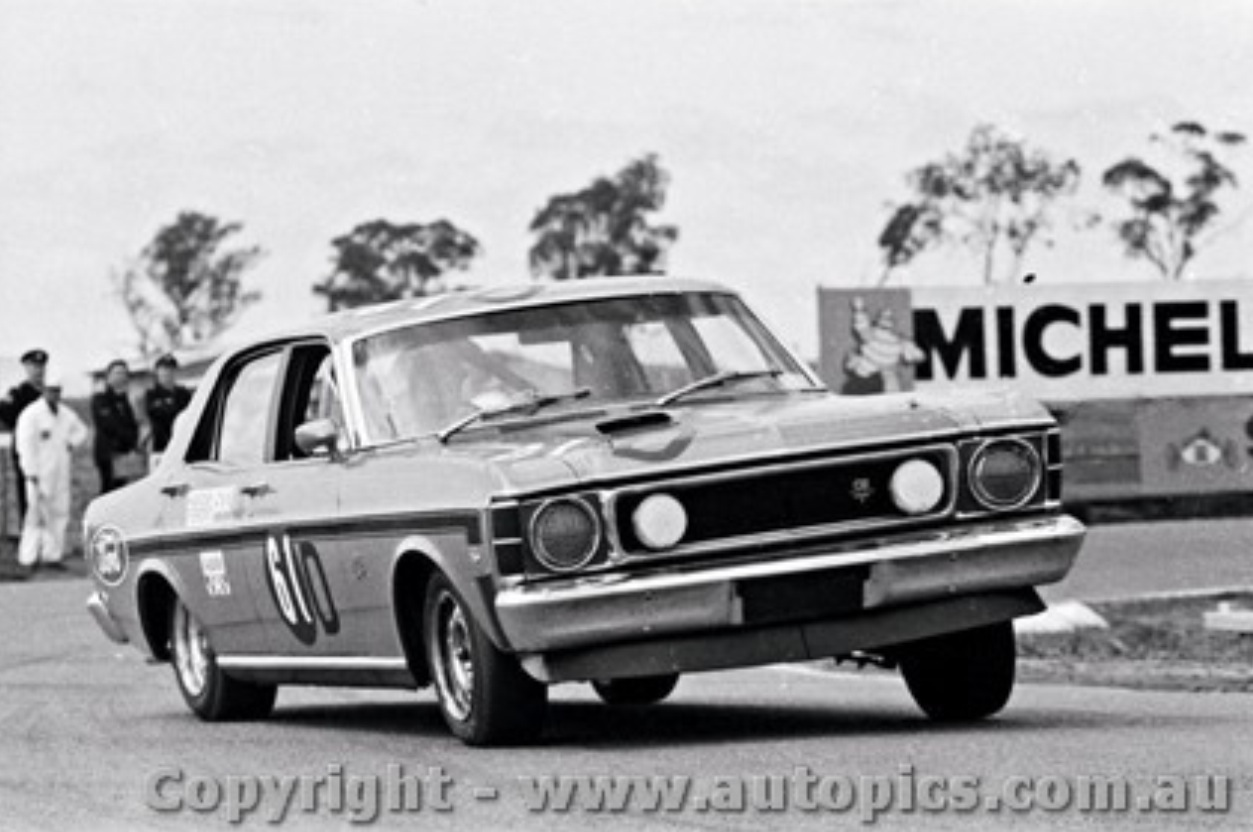
In 1970, Alan didn’t contest the ATCC, but the second Hamilton 906 was assembled. The car had a standard 906 front clip, but, like the earlier 904/8 906-007 and 906 was a Spyder, the rear deck was modified locally with pronounced spoilers to provide some downforce. No wing though.
Minilite wheels replaced the factory steel wheels of the earlier cars. The machine was ready for the 1971 Australian Sportscar Championship, powered by a 2.4-litre twin-plug engine assembled locally from Alan’s cache of trick, Porsche bits.

Hamilton’s second 906 Spyder…
1971 was to be a big year of racing for Hamilton. In amongst the rapid growth of Porsche Cars Australia, a strong economy and global growth in the Porsche brand reflected in strong sales in Australia, Hamilton took the big step up to Australia’s premier single-seater class, F5000.
He purchased Niel Allen’s spare McLaren M10B Chev (#400-19) upon Allen’s retirement from the sport. (Ignoring Allen’s short flirtation with a Lola T300 12 months later). Kevin Bartlett bought Niel’s other M10B (#400-02), all these years later Hamilton owns both McLarens, they are being historic raced by Alf Costanzo. In the seventies and eighties Alfie was Hamilton’s driver in a swag of F5000 and F Pacific cars in which the little Italian born Aussie was prodigiously fast. A tangent too far for this long article!
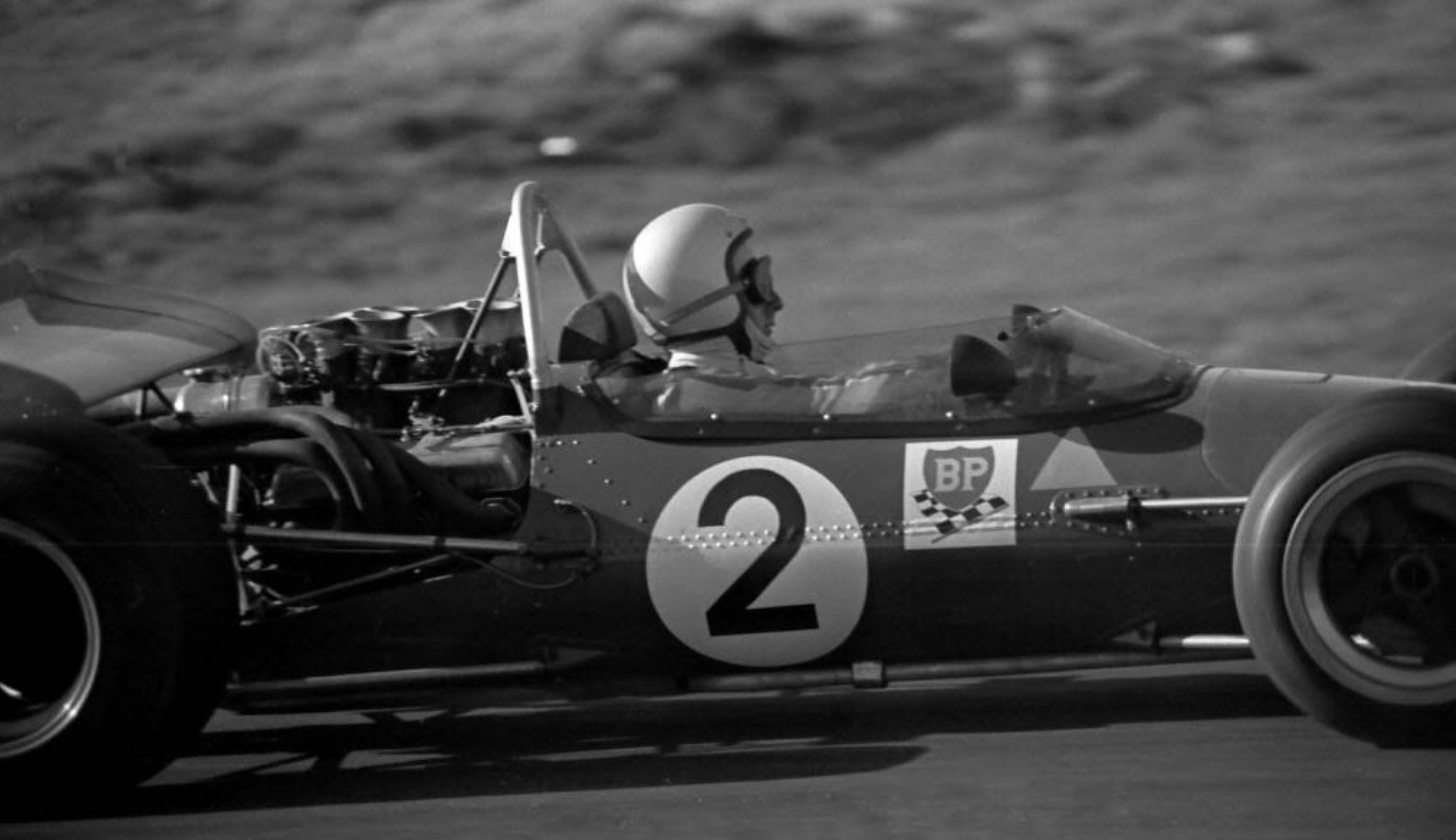
Hamilton missed the 1971 Tasman Rounds, but both he and Bartlett had their cars ready for a full Gold Star campaign. Despite being a novice in these big, brutal, challenging cars Hamilton was immediately competitive, taking third places at Oran Park, Surfers Paradise and Mallala.
He was fourth at Lakeside, finishing the Series equal second with Bartlett in his M10B. Winner of the series was the speedy and consistent Max Stewart in his Mildren Waggott 2-litre in a final Championship victory for this superb Australian four-cylinder DOHC four-valve engine. Stewart progressed to an Elfin MR5 Repco at the end of the Series and was consistently competitive in the big cars for the rest of his career.
The Porsche Cars Australia transporter did plenty of miles from its St Kilda base in 1971 in pursuit of two national championships and the vast distances across the big Australian continent that entails.

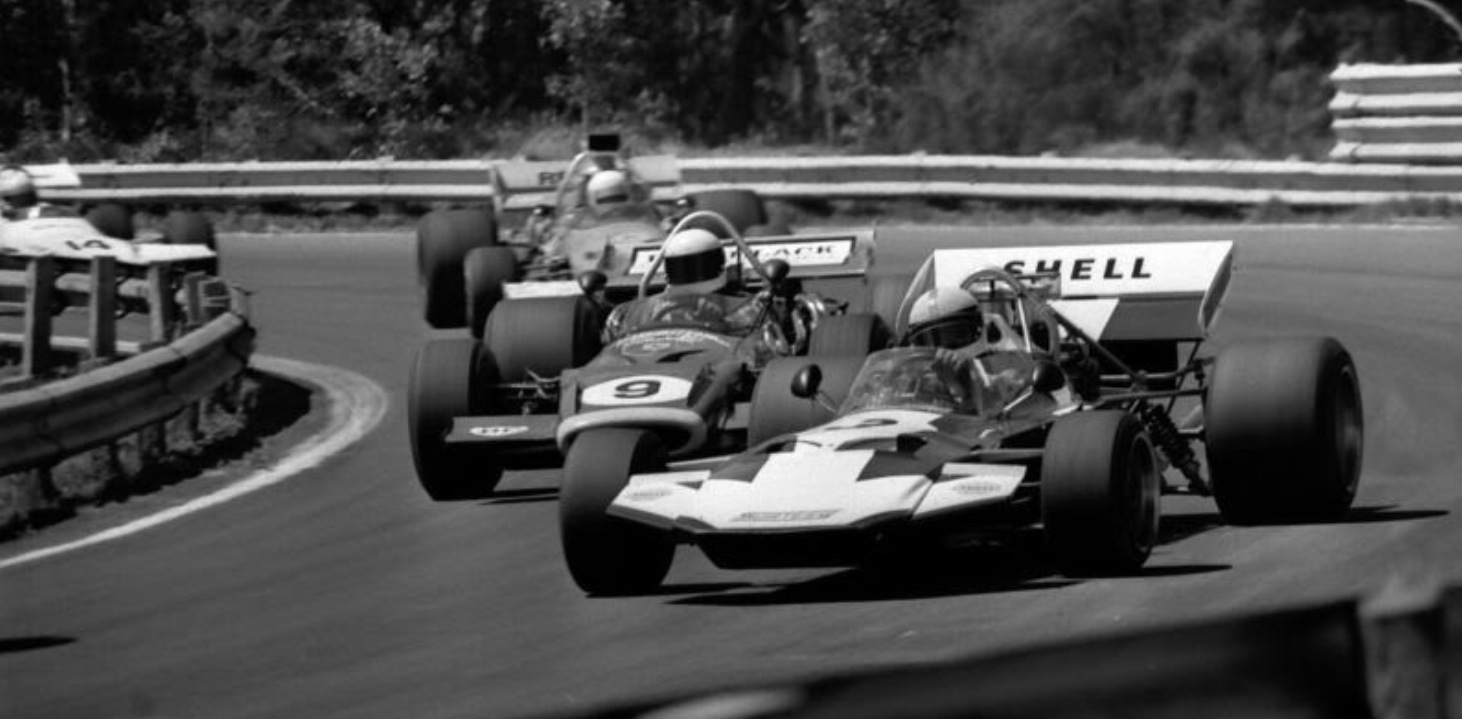
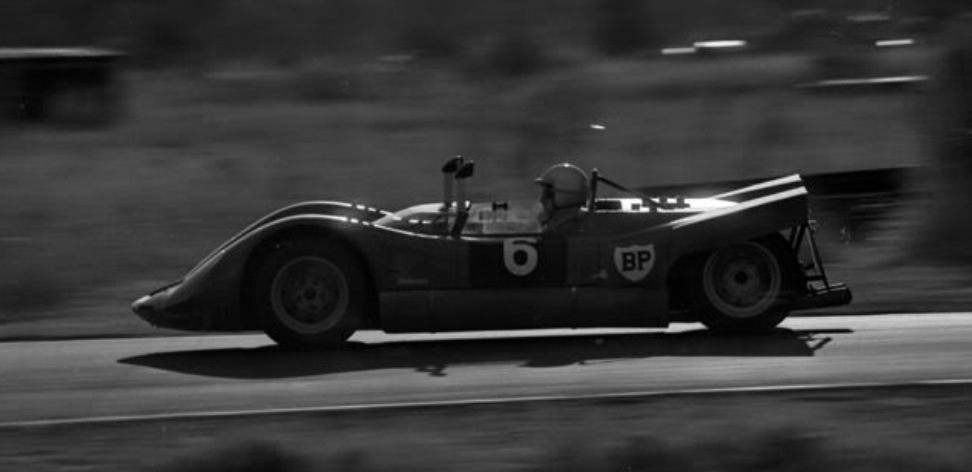

In 1971 Hamiltons 2.4-litre twin-plug Porsche 906 was as out-powered as the earlier cars were in 1966-67.
The fastest combination in the field was John Harvey in Bob Jane’s McLaren M6B Repco, a 5-litre SOHC 740 Series V8 producing around 460bhp@7500rpm. Best results for the 906 were thirds at Phillip Island in January and Warwick Farm in May.
Whilst outgunned on the track, the nimble 906 was just the thing at Hillclimbs. Hamilton had a passion for these events and at Easter took fastest time of the day on 10 April, a track record and the Australian Title, his second win, the first in the 904/8 also at Collingrove in 1966. The Angaston Hills were alive to the sound of flat 6 music…
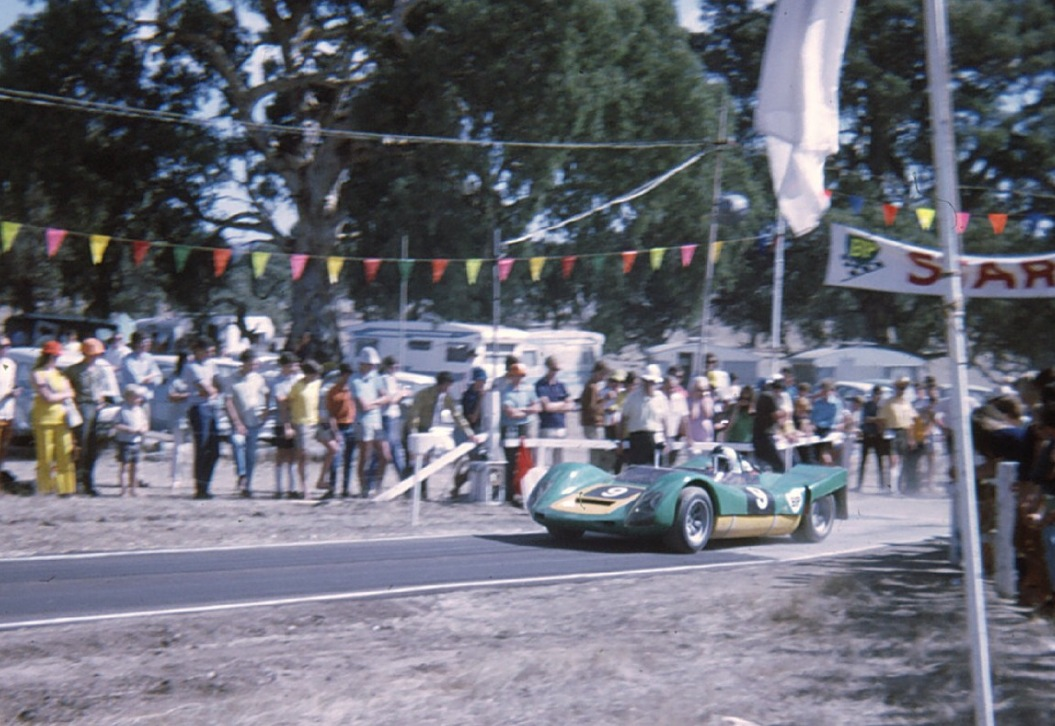
At the end of the year, Hamilton sold the McLaren to Pat Burke (later the restorer of the 904/8 906-007) for his driver Warwick Brown, with the M10B an important stepping stone for the talented driver on his climb towards the top of the class in both Australasia and the US.
This M10B chassis was then used as the donor car for Bryan Thomson’s ‘Volksrolet’ VW Fastback Sports Sedan project, before being restored, around the original tub, which had never been destroyed, many years later, by Alan Hamilton as mentioned above.

Hamilton returned to F5000 in 1978, that campaign ended in near tragedy at Sandown when he crashed his ex-Team VDS Warwick Brown Lola T430 Chev at the high speed Dunlop Bridge, the car was destroyed, carved in half, Alan was lucky to survive, and became a diabetic as a consequence and has been unable to hold a full licence since.
Not that it stopped him winning two Australian Hillclimb Championships in 1981 at Ararat and 1989 at Gippsland Park, both in Victoria, in Porsche Spl and Lola T8750 Buick respectively. He was lucky to survive the Sandown accident and was a significant patron to other drivers, notably Costanzo post-prang.
In 1972 Hamilton continued to campaign the 906, John Harvey won the title again in the Bob Jane McLaren M6B Repco with Hamilton second in the title, 20 points adrift of Harvey with seconds at Phillip Island, Adelaide International, Warwick Farm and Surfers Paradise.
The championship had a bit of a renaissance that year with some new cars appearing, notably the Elfin 360s of Phil Moore and Henry Michell, also the Rennmax of Doug Macarthur, all of which were powered by ex-Tasman Series 2.5 litre V8 Repco engines now surplus to requirements with F5000 as the new ANF1.

Alan also raced a Porsche 911S sports sedan during this period, but the 906 racing days were over. The car was rebuilt as a Coupe in the 1980s by the Porsche workshop in Melbourne. It appeared occasionally, notably at a couple of Adelaide Grand Prix historic demonstrations. The car was finally sold by Hamilton in 1990 via auction to a Japanese owner.
Hamilton raced on in a variety of cars and became a very generous team owner after his own front line racing days ceased post accident, he is still active in the historic scene and lives on a property at Red Hill on Melbourne, Victoria’s Mornington Peninsula.
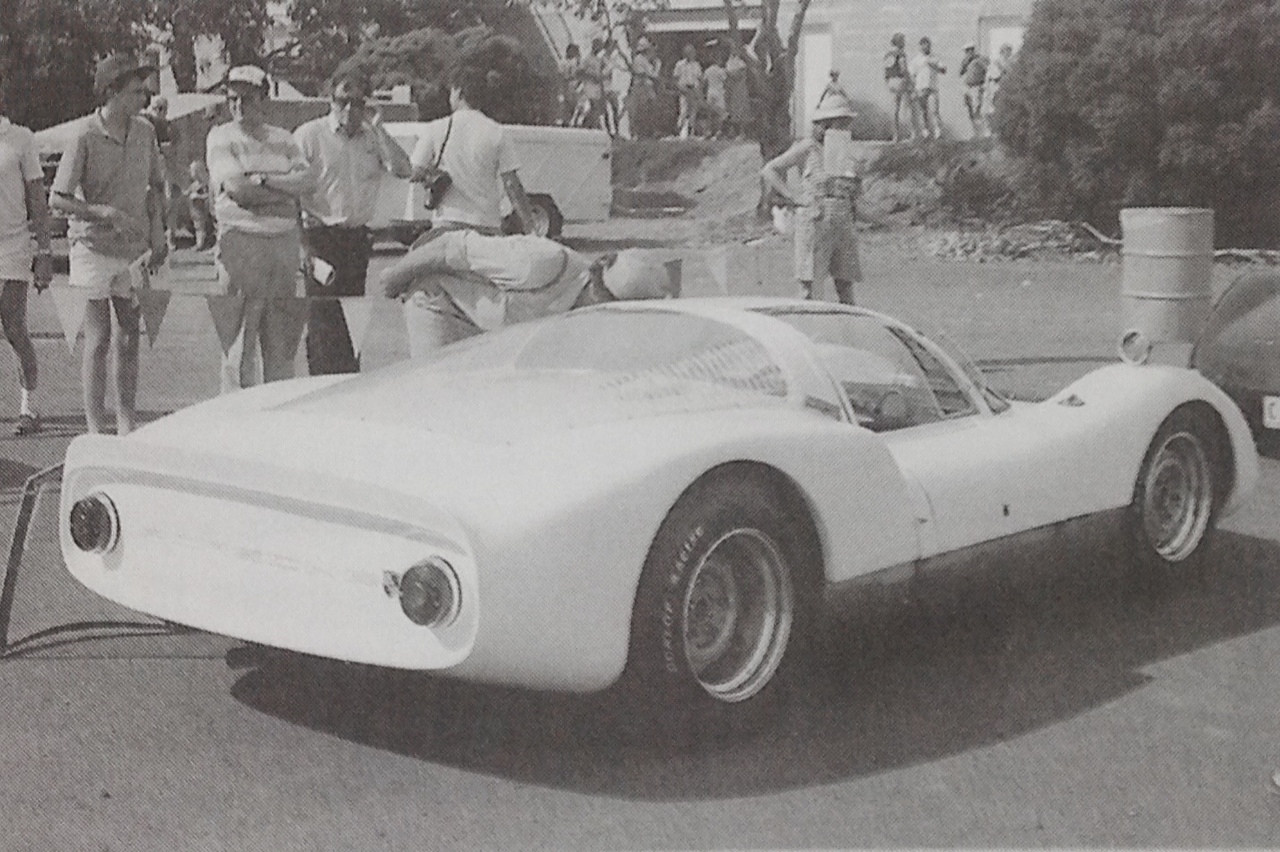
Etcetera…

904/8 906-007


Bibliography…
‘Historic racing Cars in Australia’ John Blanden, The Nostalgia Forum, Australian Autosportsman Magazine March 1966 and April 1967. Stephen Dalton for his research and access to his archive/collection
Photo Credits…
oldracephotos.com, ‘onelung’, Bernard Cahier, lyntonh, G Howard ‘History of The AGP’, autopics.com, Dick Simpson, Bruce Wells, The Roaring Season, freduece, Ray Bell, David Blanch, Ellis French, John Lemm, Peter Baldwin, Jean Charles Martha, Yoshihiro Inomoto, Gavin Fry, Tony Arts, Historic Racing Car Club of Tasmania
Finito...
 primotipo...