Archive for the ‘Who,What,Where & When…?’ Category

(R Dalwood)

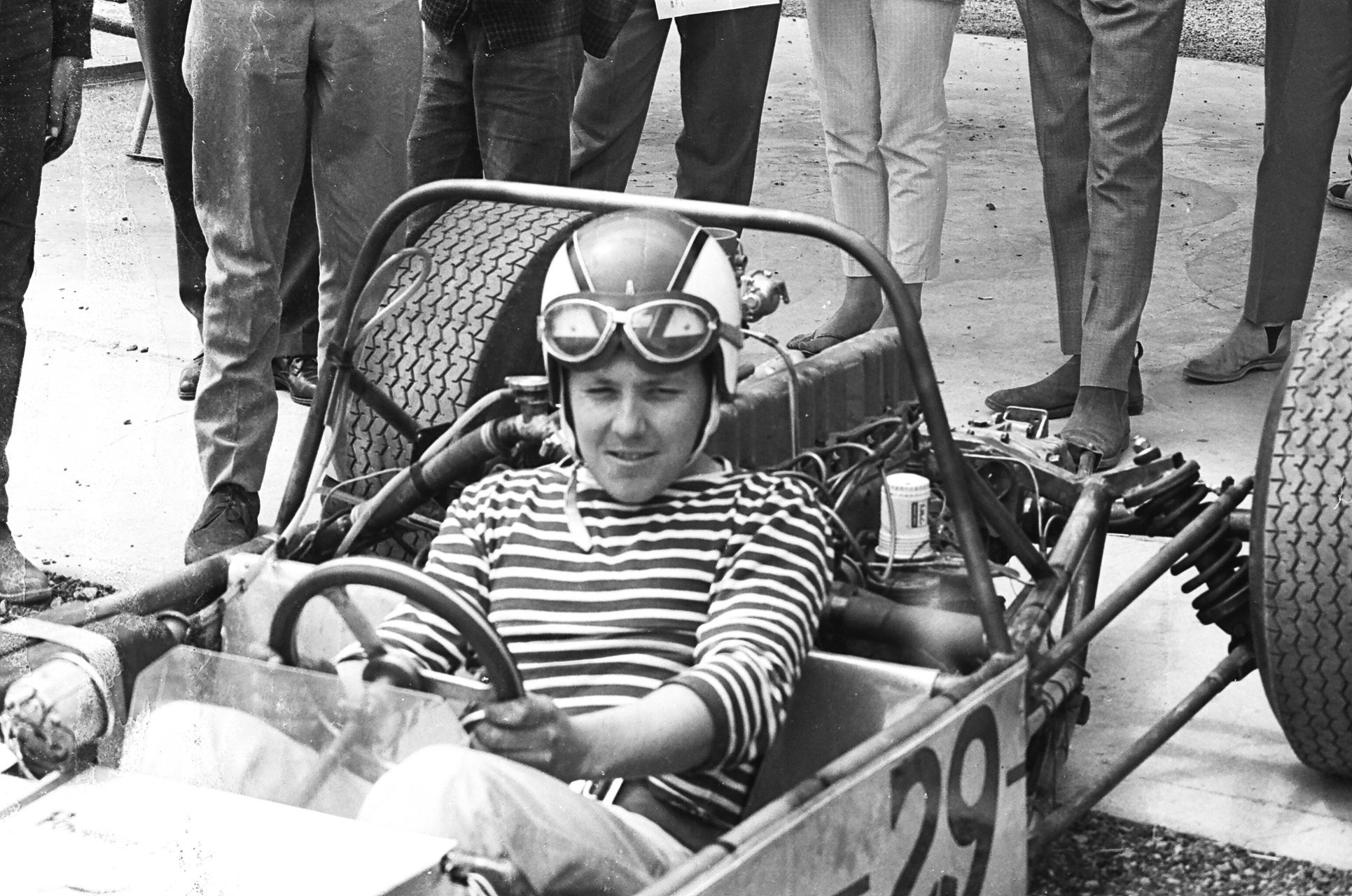
This shot at Baskerville, Tasmania on 4 December 1966 gave me a chuckle…

The race bike and it’s ‘Gunter-Wagen’ tow car frames John Goss’ brand new Tornado Ford, still without its rather attractive self built bodywork in the scrutineering bay.

One wag questioned whether the Beetle was towing the Suzuki or whether the 50cc two-stroke was pushing Wolfsburg’s finest.

I have written about the car which launched JG onto the mainland and subsequent fame in tourers and F5000 a couple of times before, checkout the link here; https://primotipo.com/2018/06/19/john-goss-tornado-ford-longford-1968/ , and here; https://primotipo.com/2018/07/17/1967-tasmanian-sportscar-championship/

(R Dalwood)

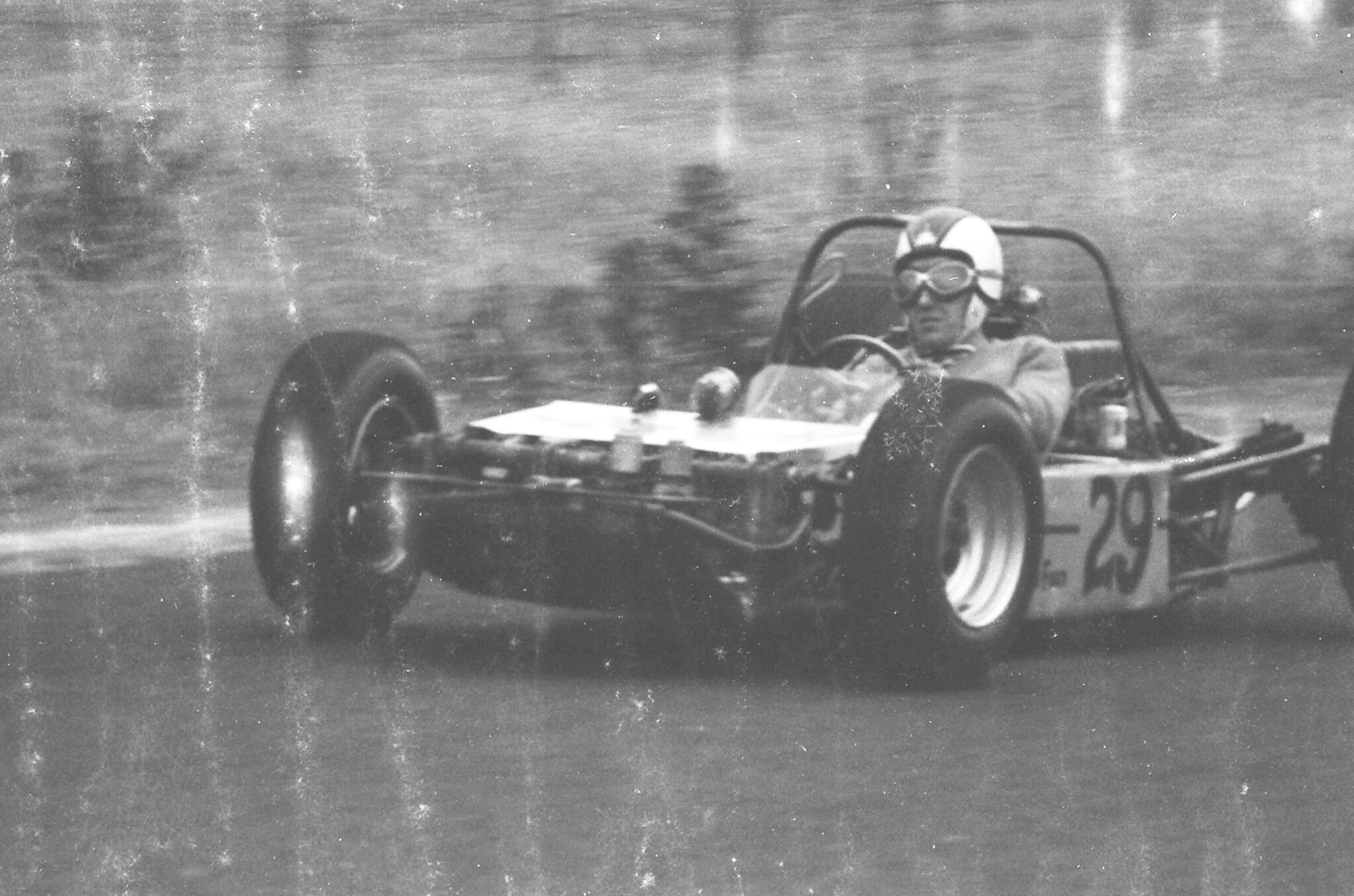
What a youngster! At 24 years of age Goss has constructed a very clever sports racer which became a competitive car and as fast as all but the big-buck cars at the very front of the fields- those raced by Matich, Allen, Jane, Hamilton and co.

(R Dalwood)

Look closely, the photo above shows the Tornado Ford’s initial VW front end which evolved to a more sophisticated wishbone set-up in the years to come.

(R Dalwood)

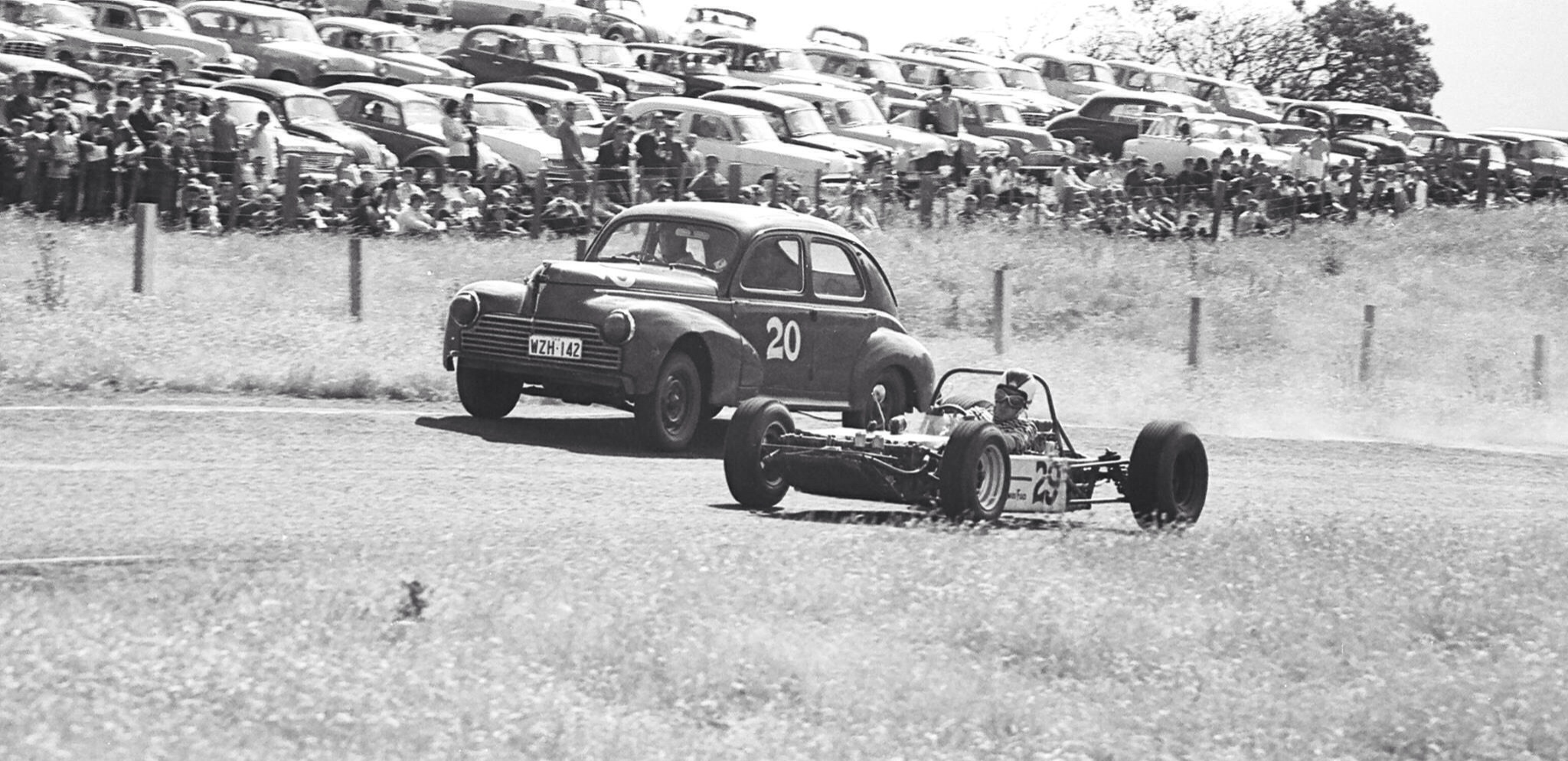
Gossy going around the inside of Allan Robertson’s Peugeot 203 that December weekend. One of the reasons I love these photos is because of the relaxed nature of a race meeting at a venue I’ve not been to.

Wonderful aren’t they?

(R Dalwood)

The crowd below are looking at the new Tornado Ford- it is the same group of people clustered around the car shown in the opening photograph but from a different angle.

(R Dalwood)

It would be interesting to know the intrepid pilot’s impressions of his handiwork after the first weekend of competition. I’m betting the little racer felt like a precise jet compared with the Customline and FJ Holden which preceded it- a mighty fine driver of Big Cars did John Goss become.

(R Dalwood)

Credits…

Historic Racing Car Club of Tasmania- Reg Dalwood Collection

Tailpiece…

(R Dalwood)

The way it was…

Finito…

(I Smith)

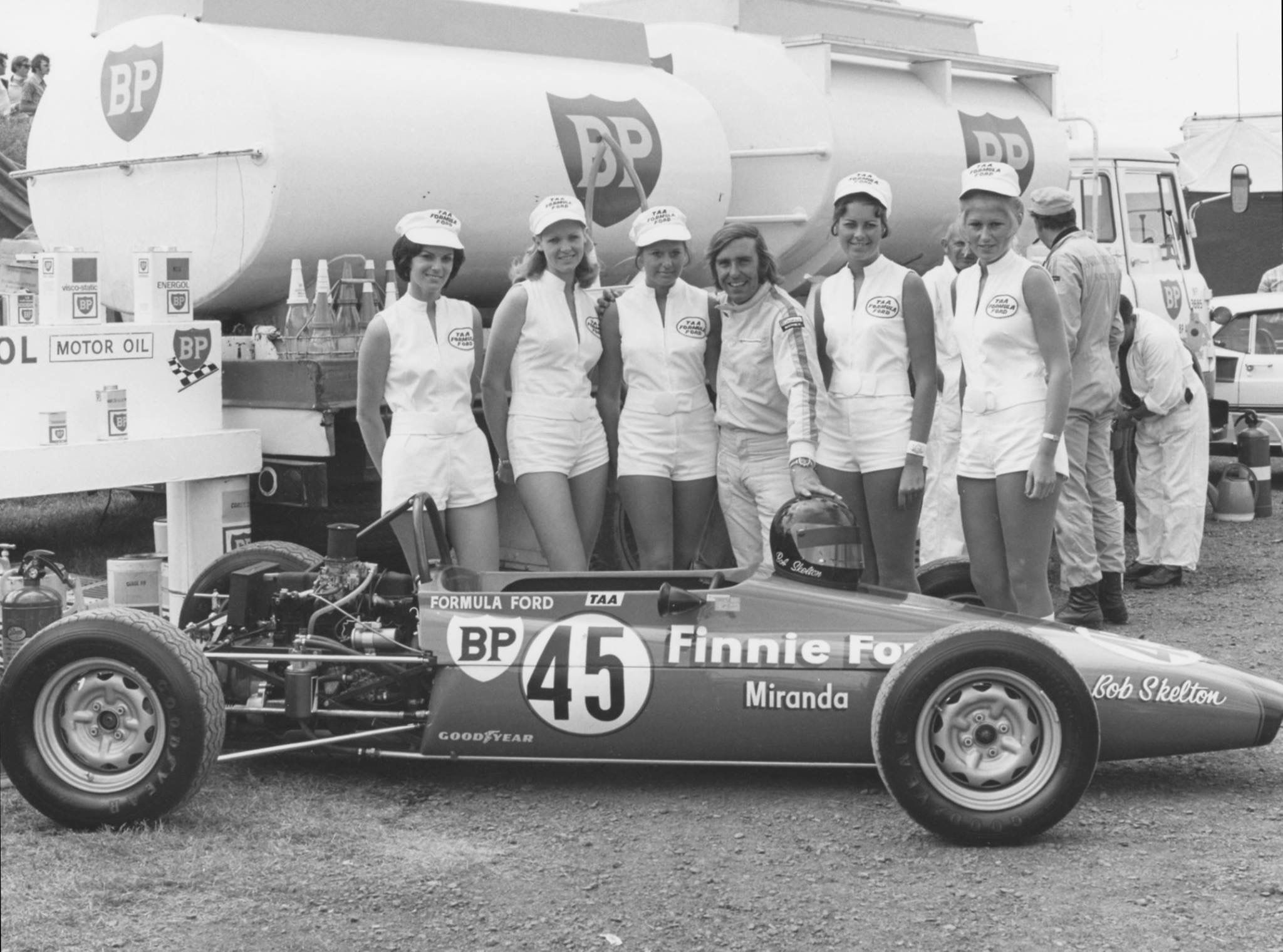
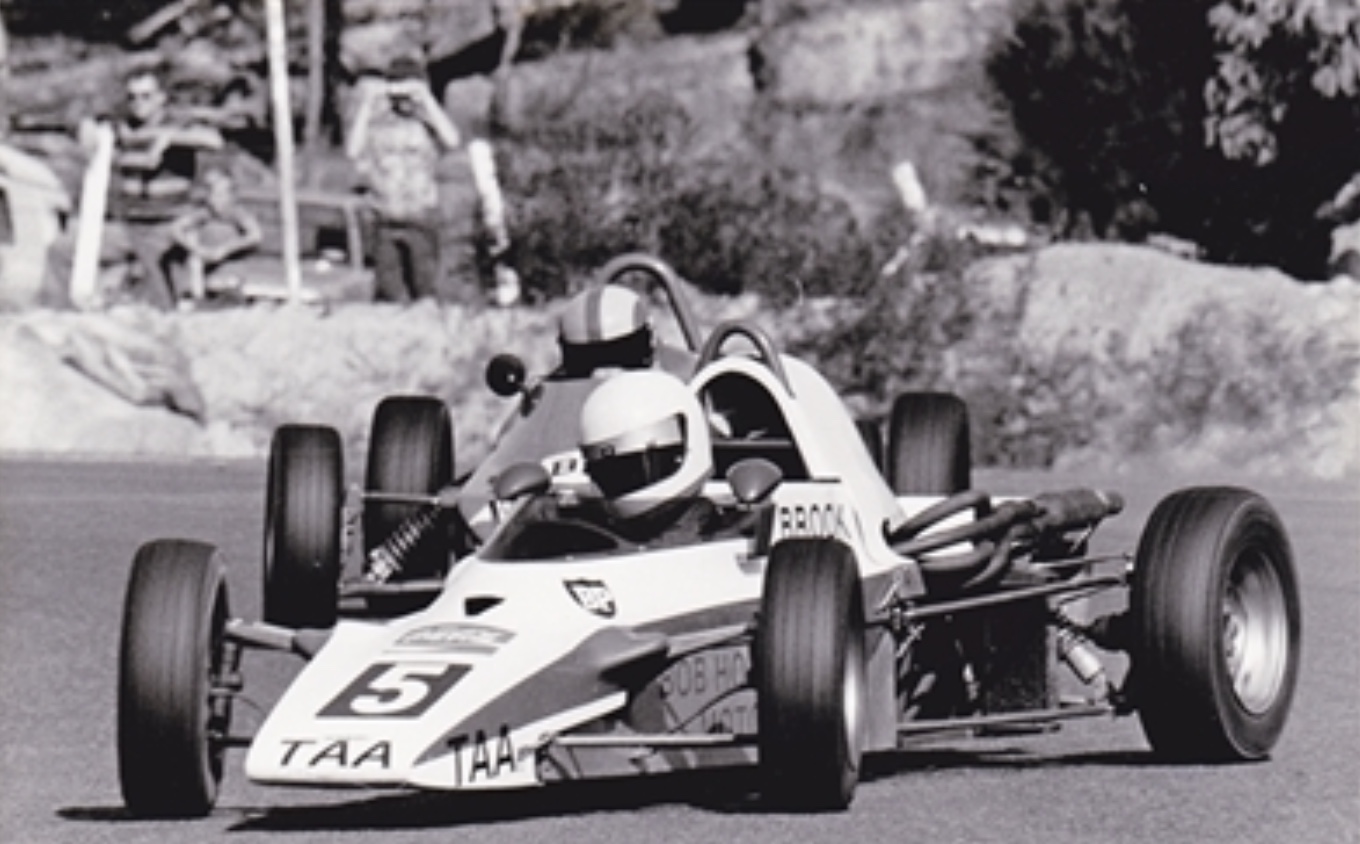
Bob Skelton looking as pleased as punch in the Calder paddock in 1972…

Of course these days there will be some type of law against exploitation of the fine, feminine form in such a gratuitous, crass commercial manner. Now ‘yerd have to equalise things by having some blokes in the mix, somebody of trans-gender not to forgot a blend of souls with a range of colours from around the globe.

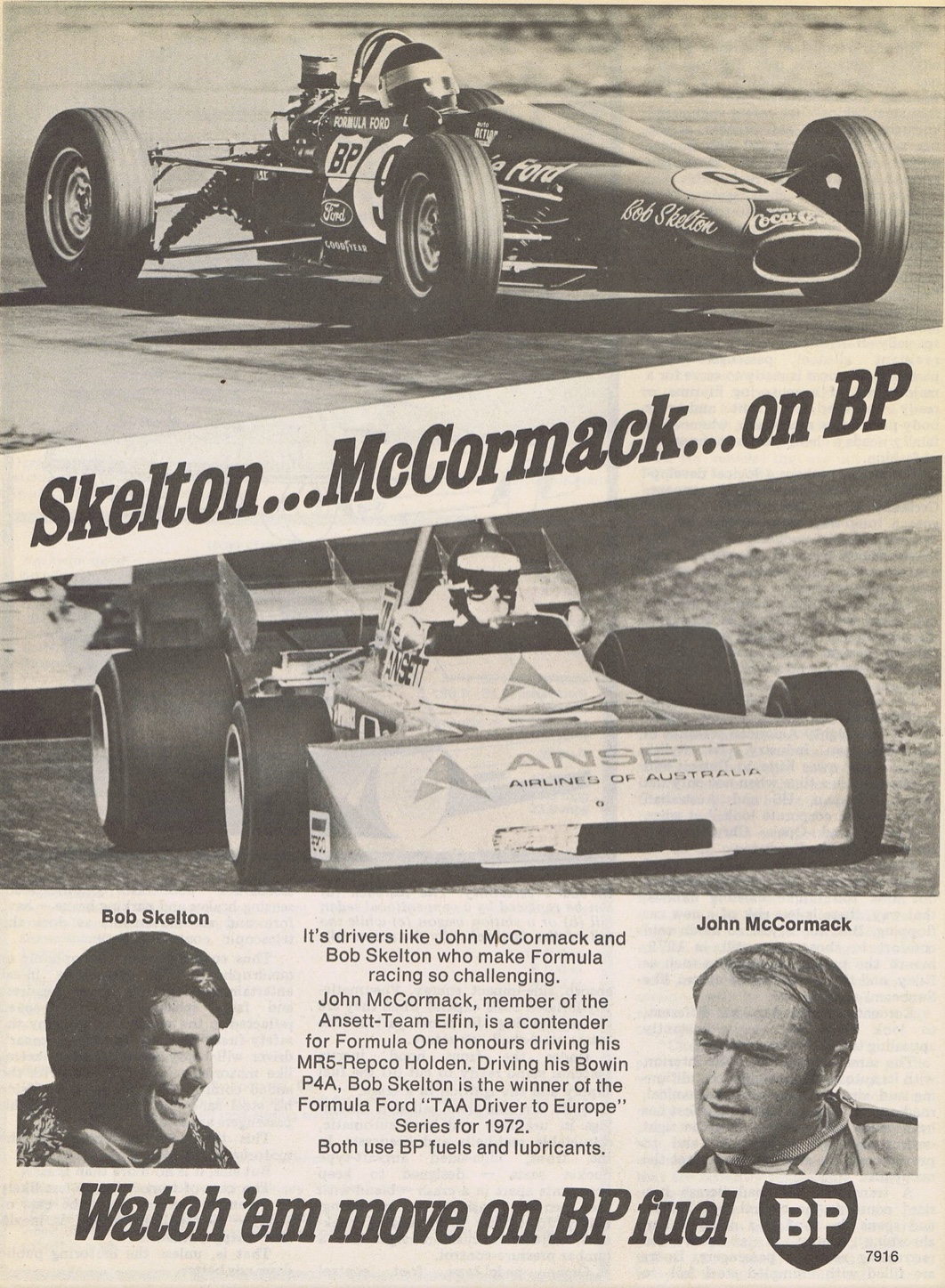
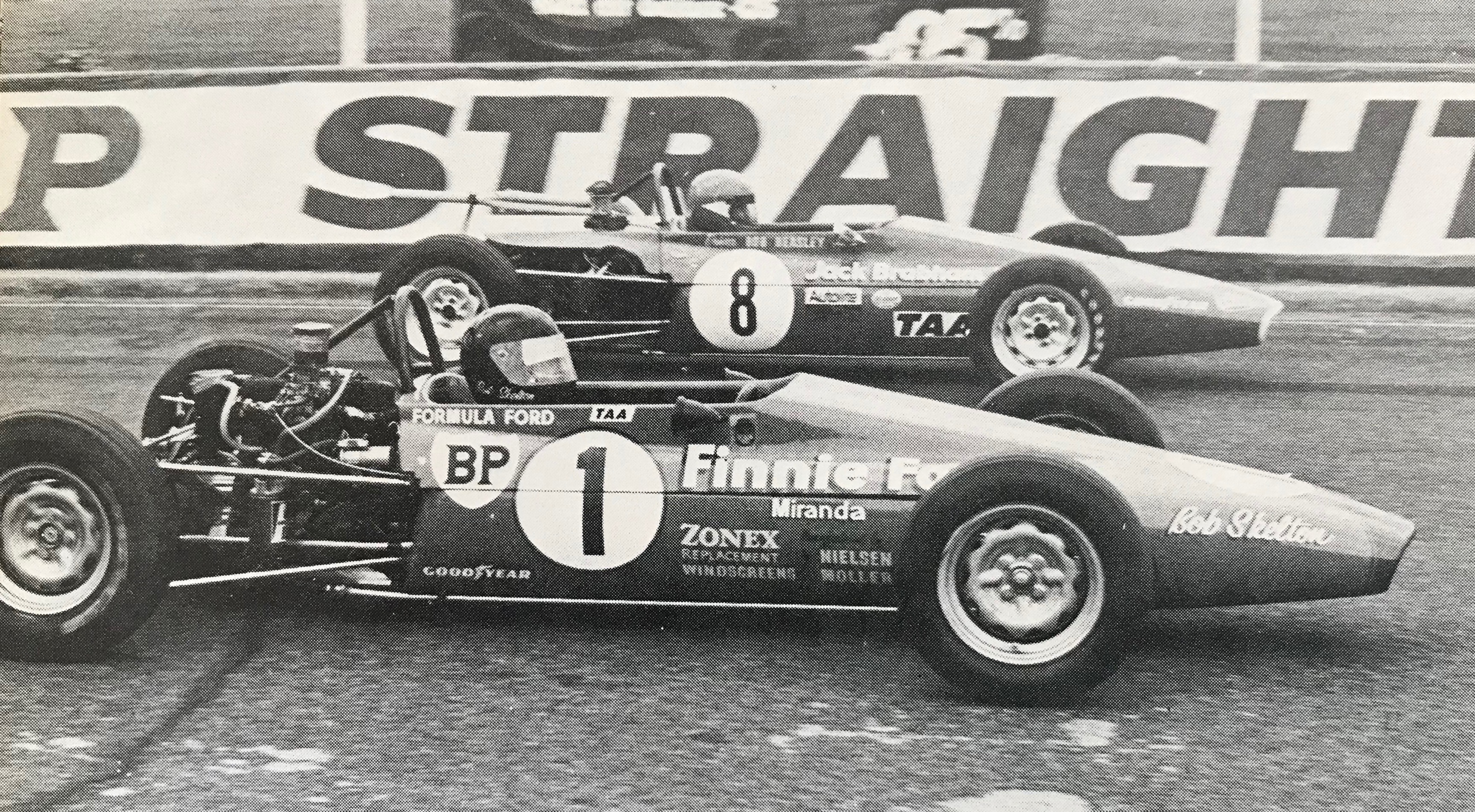
Skelton won the 1972 Driver to Europe Series in this Bowin P4A, here he is with car and some TAA ‘hosties’ during one of the Calder rounds.

Australian Formula Ford buffs will recall the days when Australia’s other-domestic-carrier was Trans Australia Airways before it was logically rolled into Qantas, whereupon the whole lot was privatised a cuppla decades ago. For a wonderful period TAA sponsored the Formula Ford Driver to Europe Series – Australian FF Championship – and in the process aided and abetted the overseas careers of drivers including Larry Perkins.

And so it was the ‘hosties’ airline attendants or cabin crew attended meetings particularly the one at which the annual award and kingsized – in physical dimensions if not the amount – cheque was handed to the winning driver.

Skelton took his prize and the very first Bowin P6, #P6F-119-72, to England late in the year and contested a couple of meetings including the Formula Ford Festival at Snetterton in which fellow Aussies, Buzz Buzaglo, Peter Finlay, John Leffler and Larry Perkins all had a run, a story to be told in an article about the Bowin P6/P8 I will finish soon. In the meantime there is a bit about the 1972 FF Festival in this piece about Buzz Buzaglo;

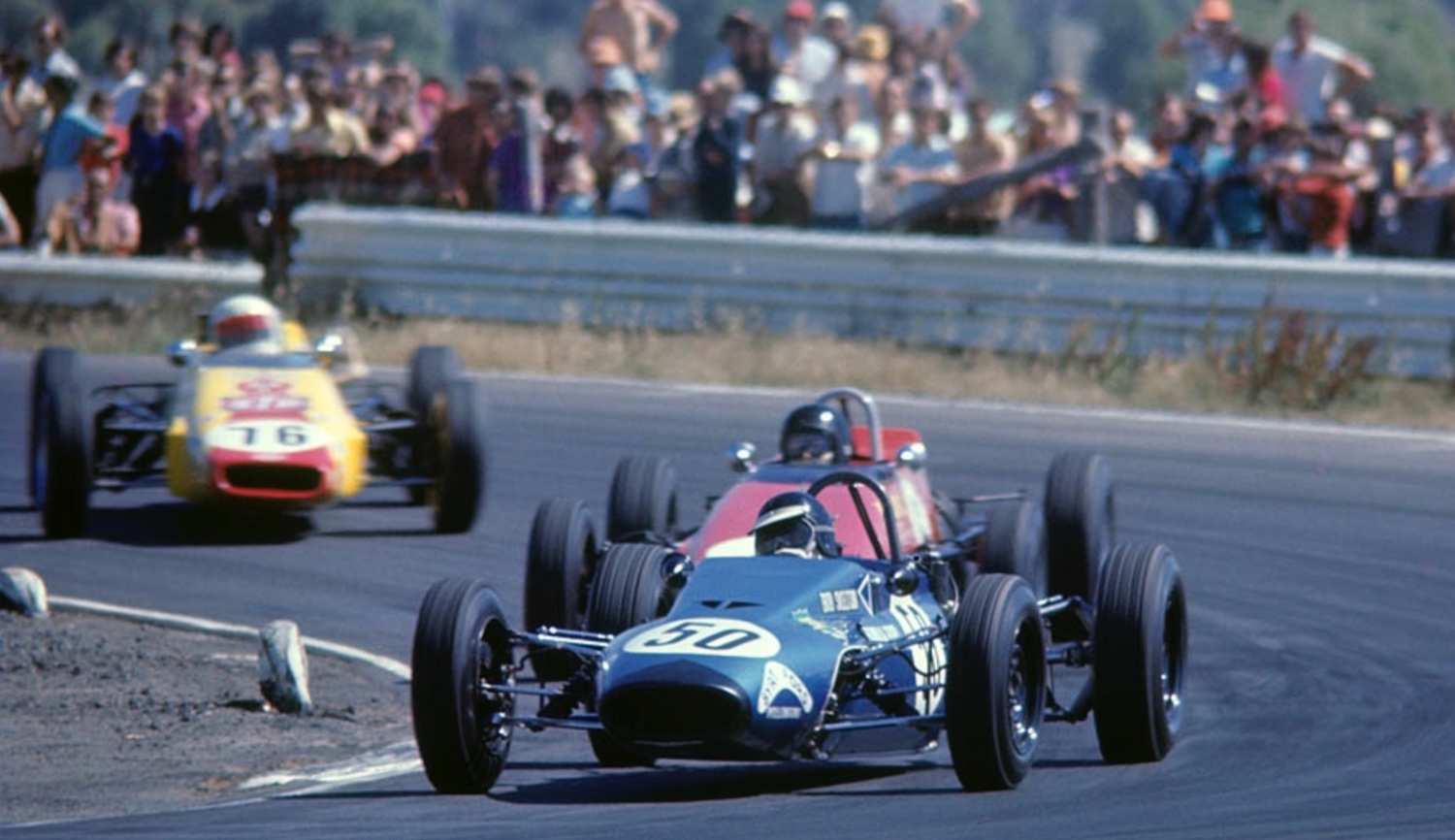
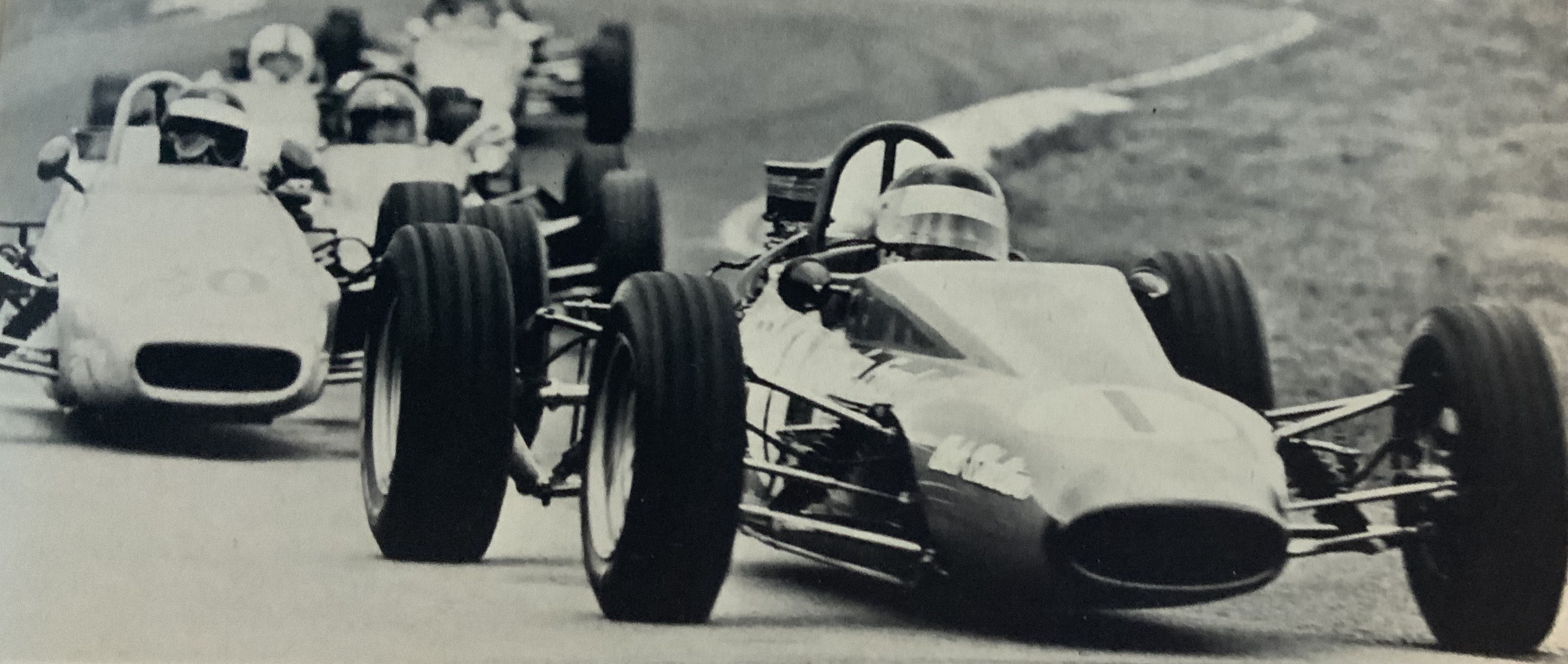
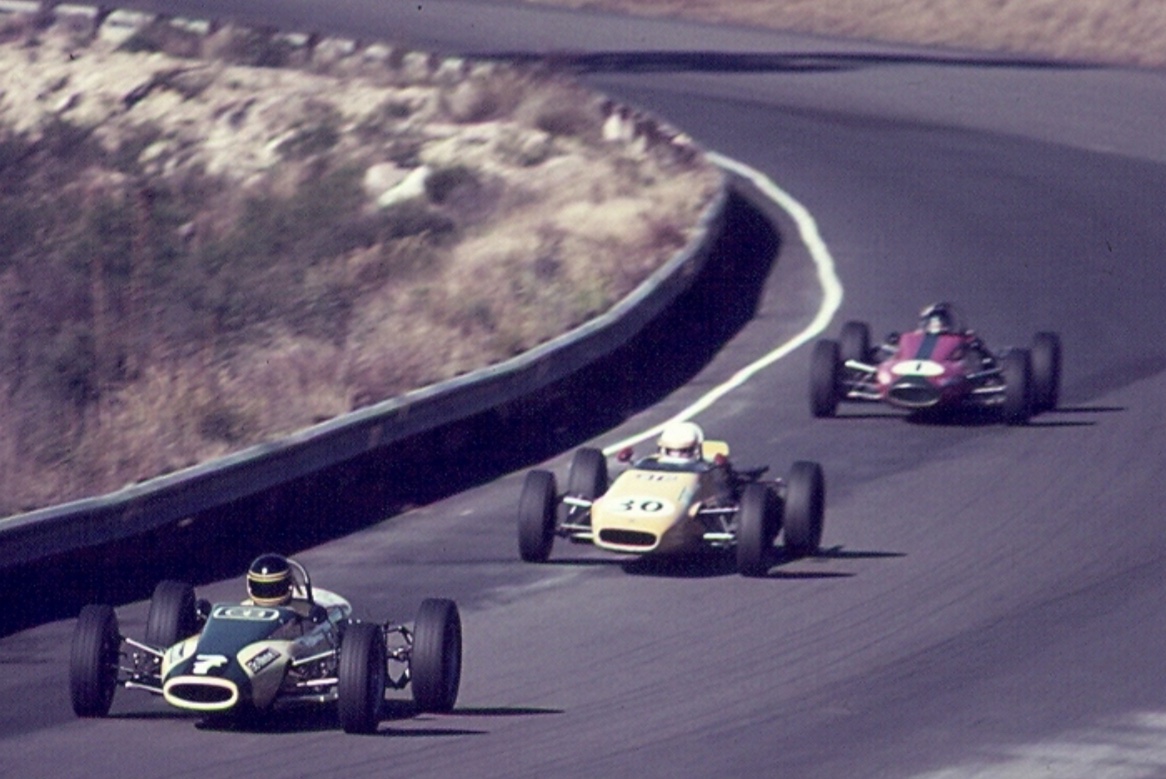
Dick Simpson’s shot at Calder during the 21 March 1971 DTE round shows Skello in front of Larry Perkins’ Bib Stillwell owned Elfin 600 with another 600 all cocked up in the background, perhaps Michael Hall? Larry won the round by the way (oldracephotos.com/D Simpson)

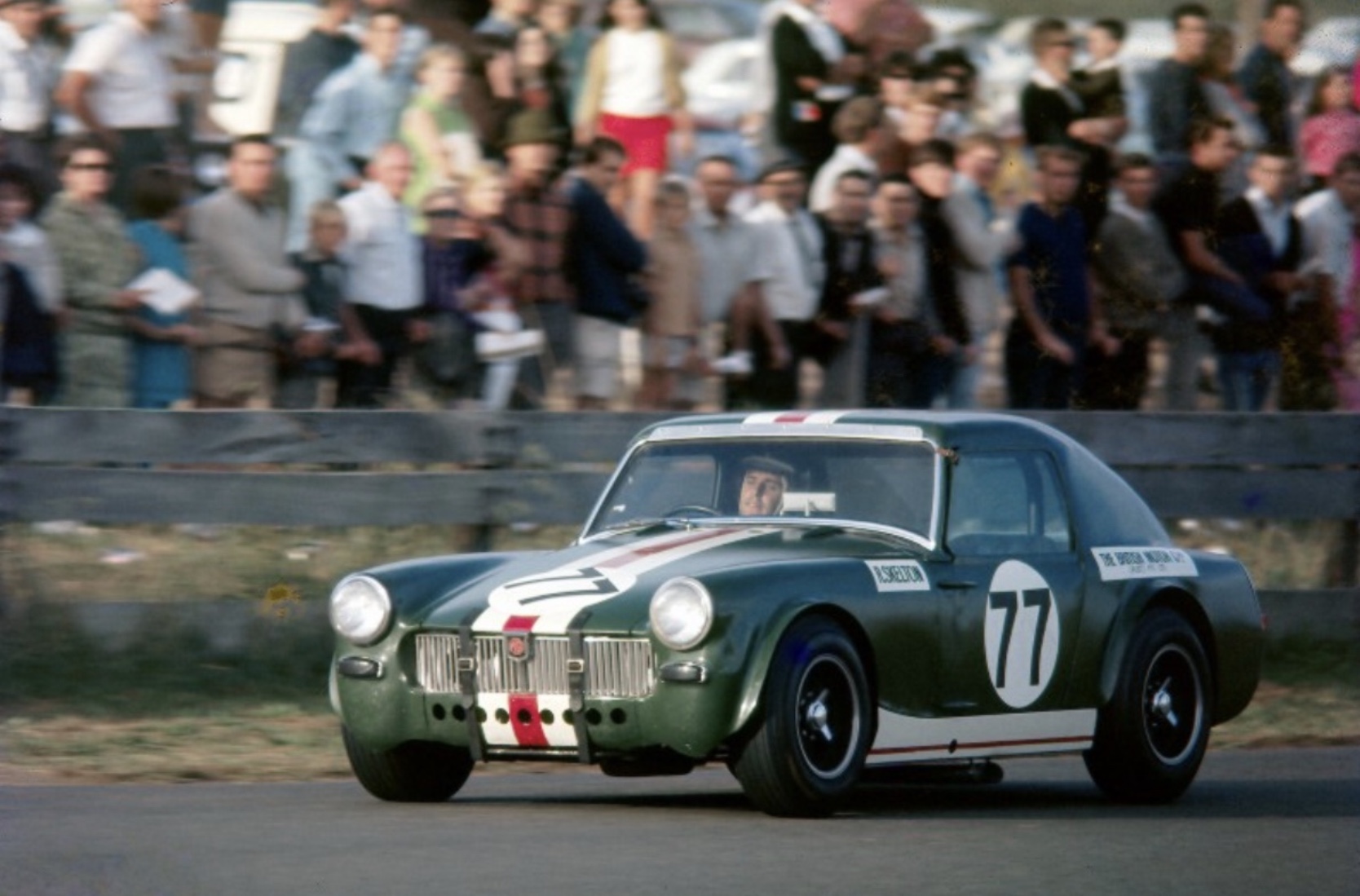
Bob Skelton in a works MG Midget at Bathurst in 1968 (D Simpson)

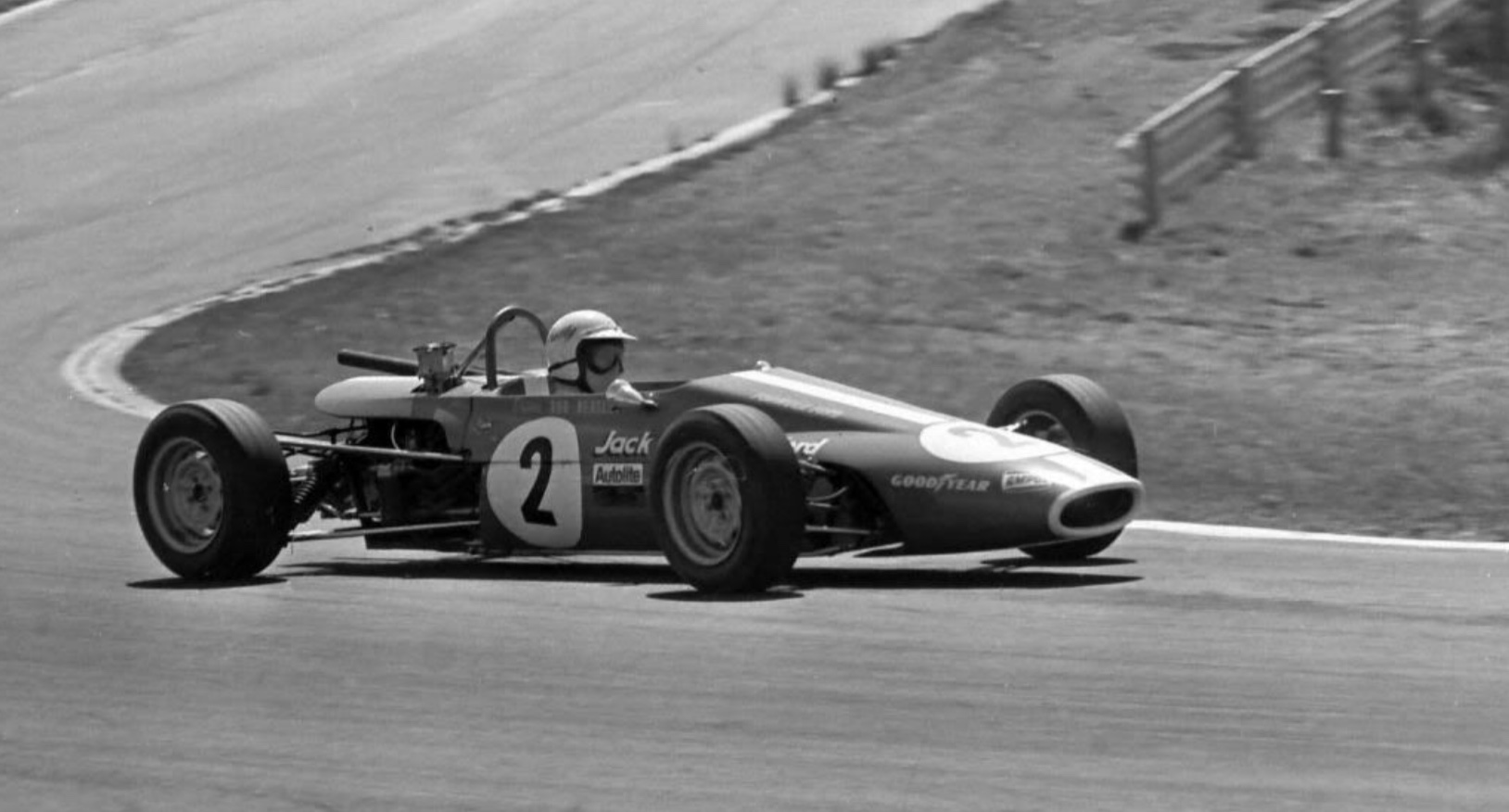
Skelton won the 1972 DTE with Bowin P4s taking the top three placings: Skelton won with 57 points, two points ahead of John Leffler (the 1973 winner aboard a P6F) with Bob Beasley third in the Jack Brabham Ford P4X on 53 points. The best of the Elfins was Enno Buesselmann’s 600 in fourth place.

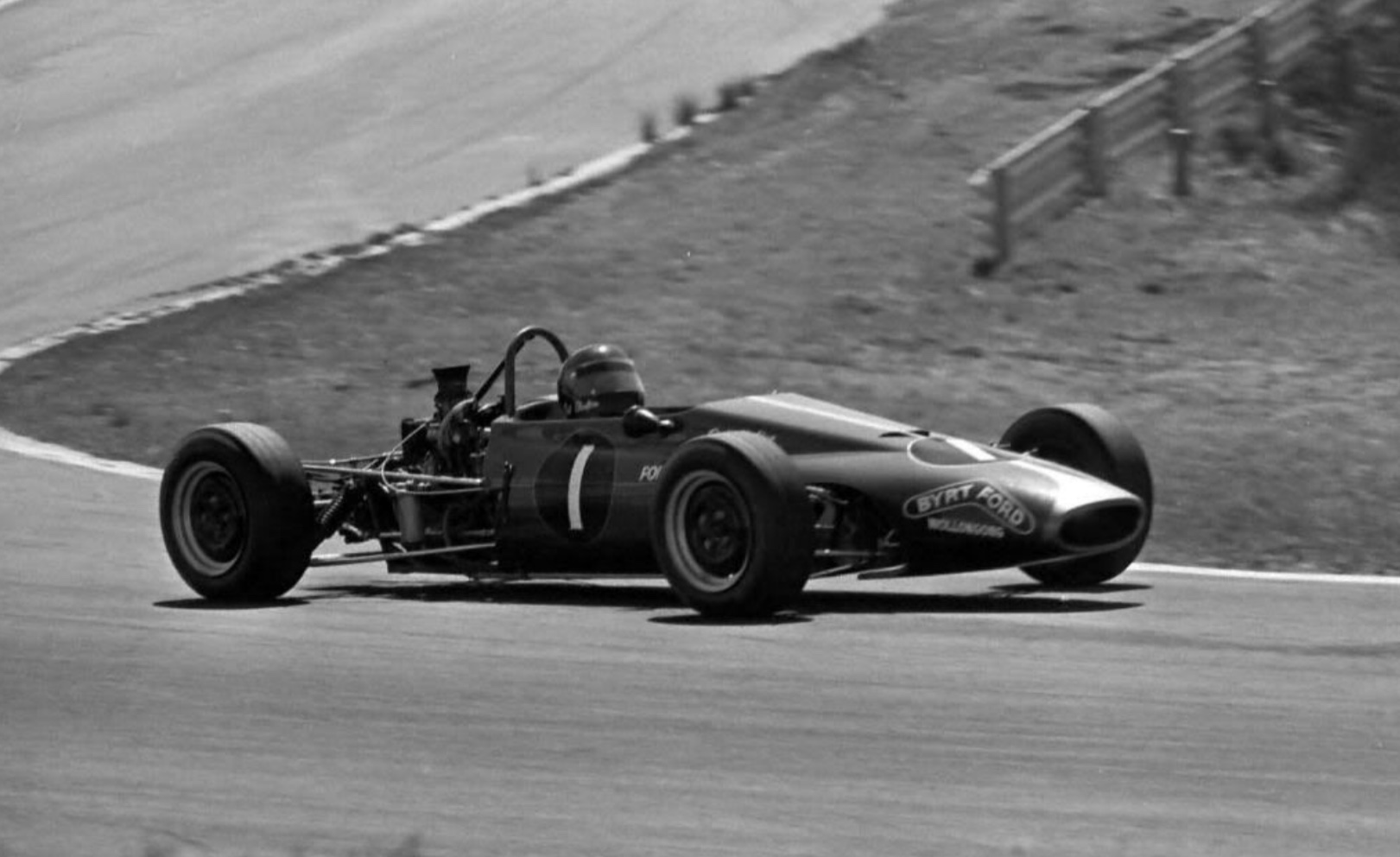
Out of sportscars, Skelton had his first FF season in 1971 in a Bowin P4. He managed to convince Bryan Byrt who had advertised for sale the car speedway ace Garry Rush had been racing (P4A-106-70) with Byrt Ford support, to hang onto it and allow him to race it rather than sell it. He finished runner-up to Perkins that year. It was a great performance coming to open-wheelers ‘cold’.

Skelton got more got serious for 1972. He acquired a new P4 from John Joyce (P4A-115-72) and invested in the also new – eligible from that season – Capri XL uprated Kent 711M engine, still 1600cc but stronger in certain respects. In fact he was the only driver to use the motor from the season’s outset, but he missed the opening Warwick Farm round due to illness, Bob Beasley won in the Jack Brabham Ford Bowin P4X about which I have written in the past.

Skelton made amends at Sandown but Beasley won at Calder. By the fifth round at Hume Weir, John Leffler (P4A), Beasley and Enno Buesselmann (Elfin 600) all had the uprated Kent. Leffo’s was prepped by Bruce Richardson, Beasley and Buesselmann’s engines by racer/engineer Graham ‘Tubby’ Ritter in Melbourne. All these years later Tubby’s son, Michael Ritter continues the family Formula Ford preparation tradition!

Despite that, Skelton won at the Weir and Oran Park but throughout the year John Leffler, a very successful Cooper S sports-sedan racer who initially tasted FF in Alan Vincent’s Bowin P4A, was on the march. He had a new P4 of his own and secured Grace Bros sponsorship mid-year which would take him through Formula Ford and ANF2 (Bowin P8) all the way to an F5000 Gold Star win in a Lola T400 Chev in 1976.

Skelton from Enno Buesselmann’s Elfin 600 in one of the two Sandown DTE rounds in 1972 (AMRA)
A Bowin front-runner in 1971-1972 was another guy who had come out of sportscars- Clubmans was Bob Beasley, here in the Jack Brabham Ford P4X at Oran Park on 19 September 1971(L Hemer)

Leffler won the penultimate Warwick Farm round from Beasley and Skelton setting up a ‘winner takes all’ showdown at the Amaroo Park season-ender where, depending upon where they finished, either Skelton, Beasley or Leffler could win the title.

Further spice was added to the mix by the entry of Larry Perkins in the new side-radiator Elfin 620 Larrikins was shortly to ship to the UK to contest the Formula Ford Festival at Snetterton.

Larry was the 1971 FF title winner but took his prize a year later to amass a bit more experience before going ‘over there’, notably aboard Holden Dealer Team circuit and rallycross cars and picking up the 1972 Australian F2 Championship in Gary Campbell’s Elfin 600B Ford twin-cam. For Larry, the meeting was valuable race testing and for Elfin’s Garrie Cooper, a good run by Perkins would help fill his order book which had taken a dent with so much Bowin P4 success.

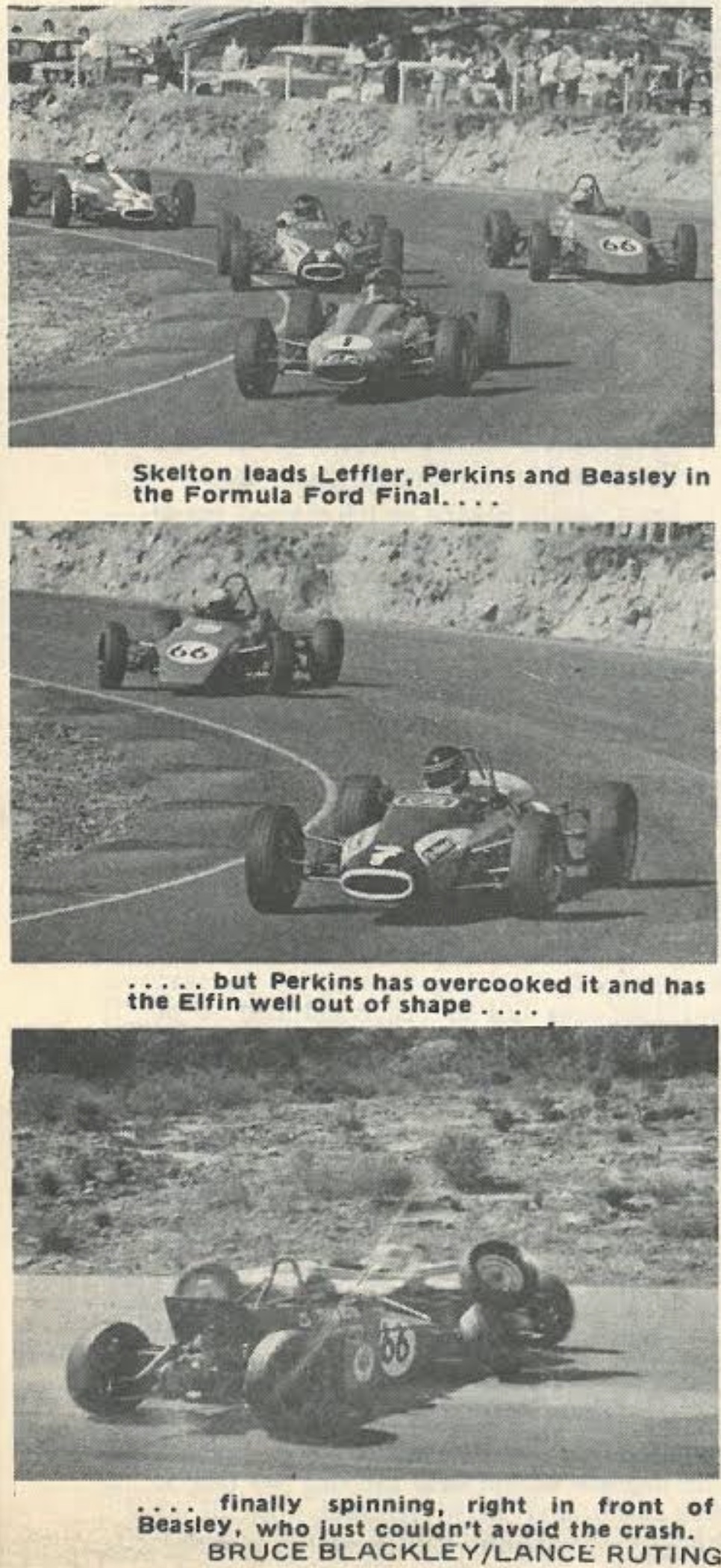
The pressure showed too. Skelton missed a gear in practice, bending a valve and taking the edge off his engine, without a spare, a standard head was fitted overnight. Larry made Skelton’s job easier by having a huge lose in The Loop taking out Bob Beasley, who, closely following Larry, hit the Elfin head-on. As a consequence Leffler had an easy round win, Skelton took the title and the trip to the UK, with David Mingay third in Birrana F71; the very first Birrana built by Tony Alcock in Sydney before his partnership with Malcolm Ramsay, this car was first raced by John Goss.

(Wirra)

Amaroo final round with John Leffler’s Bowin P4A in front of an Elfin 600, Enno Buesselmann or Bob Kennedy perhaps? and then Skelton’s P4A.

(Racing Car News)

The first photograph is not on the same lap as the latter two but you can get the drift (sic).

The end result is a rather sick P4X Bowin and perhaps a bit of repair work for Elfins in Edwardstown on the new, very first Elfin 620 before Perkins popped it on a plane to the UK. The 620/620B was a successful series of cars taking Driver to Europe titles in the hands of Terry Perkins in 1974 and Jeff Summers in 1982. I will always have a soft spot for them, my first drive of a racing car was in one of the four Bob Jane-Frank Gardner Race Driving School 620Bs.

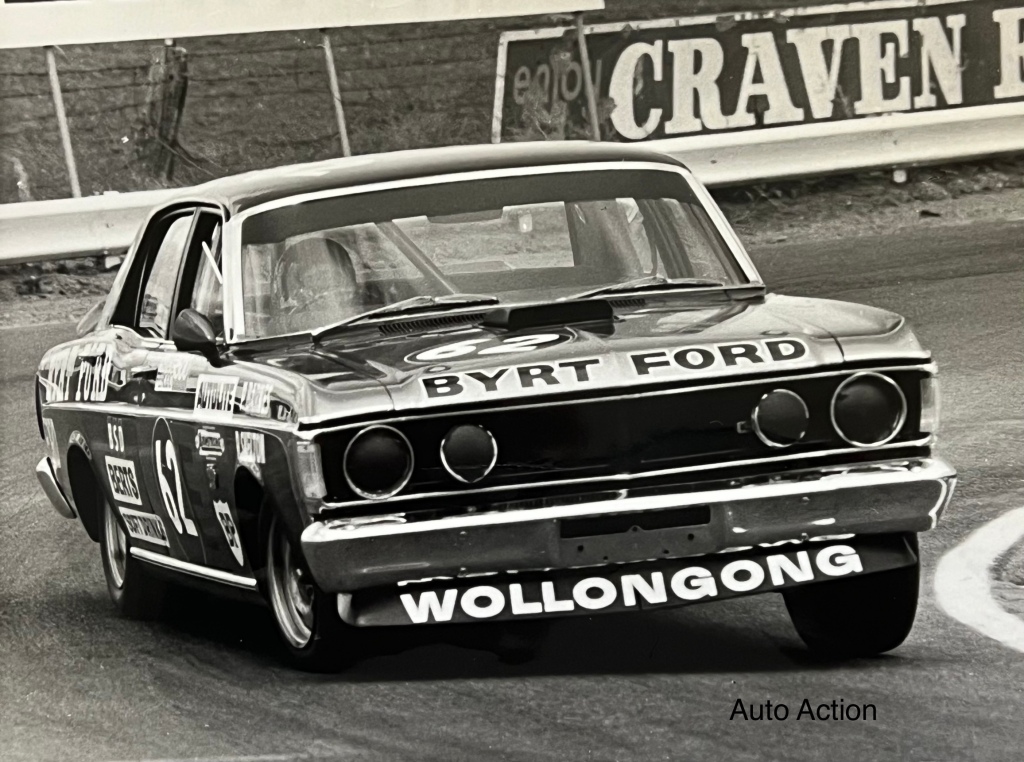
Amaroo Park victory parade with the TAA hosties which is about where we came in! Bob on the XA Falcon GT whilst John Leffler and Bob Beasley make do with Fairlanes…

Other Formula Ford Reading…

On the early days in Australia and Bowin; https://primotipo.com/2018/08/30/bowin-p4a-and-oz-formula-ford-formative/ and Jack Brabham and his Bowin P4X; https://primotipo.com/2019/01/16/jacks-bowin-again/ and the FF Race of Champions at Calder; https://primotipo.com/2018/10/30/calder-formula-ford-race-of-champions-august-1971/ not to forget a bit about Skelton towards the end of this article on Peter Brock; https://primotipo.com/2019/02/01/this-is-hard-work/

Etcetera…

Skelton boots the XY Ford Falcon GTHO Phase 3 he shared with Phil Barnes to second place in the 1971 Bathurst 500. In front of the pair was Allan Moffat’s factory HO.

Credits…

‘AMRA’- Australian Motor Racing Annual 1973′, Paul Newby, Terry Sullivan, Ian Smith, oldracephotos.com/Dick Simpson, Wirra, Lynton Hemer, Racing Car News, Auto Action, Tony Hastings

Tailpieces…

(L Hemer)

Skelton, Bowin P4A, Oran Park September 1971…

Bob Skelton progressed from Formula Ford to ANF2 in 1973, converting the P6F he raced in England to F2 specifications over that Australian summer.

He was mighty quick too, here shown in the Hart-Ford 416B powered P6 at Oran Park in 1973.

(T Hastings)

Finito…

Coronavirus…

Posted: March 23, 2020 in Who,What,Where & When...?
Tags:

Guggenheim Bilbao (M Bisset)

About the only funny aspect of the Coronavirus is the various the adaptations of The Knack’s ‘My Sharona’ to ‘My Corona’ but otherwise its a long, hard haul we are all engaged in.

We primotipo mob are a global lot with lots of our readership buddies in Spain and Italy- our hearts and thoughts are particularly with you guys and your families at the moment.

I was lucky enough to visit Spain again in mid 2018 and had another two week blast through Italy last July. My partner is Italian and still has family in Montebelluna and Treviso in the Northern Italy ‘lock-down zone’, it is very distressing talking to these older folks at the moment and to see the scenes on television.

Here in Australia the progress of the virus is a little behind in its ‘maturity’ but we have gone from a business trip- Melbourne to Brisbane on 12-15 March to the Australian borders closure and most of our state borders closed or announced to be so from tomorrow.

We are now working, if we can at all, remotely, from home, its great to see the Italian toll decline for the first time overnight- anyway, thinking of you guys, we are in it together, the Chinese Wet Markets must be eliminated to avoid the next global killer.

Stay well my friends…

Varenna, Lake Como (M Bisset)


(R Thorncraft)

Kevin Bartlett and Frank Gardner, McLaren M10B Chev and Lola T300 Chev, ‘Warwick Farm 100’ F5000 Tasman round, 13 February 1972…


Great mates both and former members of Alec Mildren Racing where FG was a mentor to KB in his formative days in the team from 1965. Both the Brabham 1.5 Ford and Mildren Maserati sporty Kevin first raced were cars FG also drove so he had much to pass on to the youngster who had raw talent, speed and car control to burn. Here the guys are deep into the Creek Corner braking area at the end of Hume Straight- the noses of their steeds close to the bitumen as the pitch angle increases.


By 1972 Gardner was about to step back from single-seaters, in fact he ‘retired’ from them after the following weekend at Sandown selling the works machine to Gary Campbell and sitting out the final Adelaide round. Mind you he did a race in the prototype T330 in late 1972 (third at the October Brands European F5000 championship round behind Redman’s Chevron B24 and McRae McRae GM1) just to make sure this masterpiece of an F5000- the greatest ever, was behaving as its designers intended. That chassis T330 ‘HU1’ is well known to Aussies as Max Stewart’s car, a very successful machine which is still in Oz.


(R Thorncraft)


Whilst the benchmark F5000’s from 1969 through 1971 (M10A and the refined M10B) the ex-Niel Allen chassis ‘400-02’ was getting a bit long in the tooth by the time KB acquired it after the 1971 Tasman Series from Allen. But the 1971 NZ GP winner was an astute purchase by KB as a trick/schmick M10B with all of the works and some home-grown developments and which had been beautifully prepared by Peter Molloy.


Bartlett pedalled it hard too, he was the only M10B driver to take a ’72 Tasman round win amongst all the newer kit- the Teretonga round at Invercargill. Thirds at Wigram and Warwick Farm were his other best results with four DNF’s out of the eight rounds. F5000’s always were brittle things, it was only unreliability which cost him the ’71 Gold Star Series, a championship won by his other Mildren Racing mate, Max Stewart in a reliable 2 litre Mildren Waggott TC-4V. By the start of the 1972 Gold Star in mid year a new T300 was in Kevin’s workshop back in Oz but not before he took in the first US ‘L&M’ round at Laguna Seca in the M10B (fifth) before switching to the Jones Eisert Racing T300 for subsequent US races.


Gardner didn’t have a great Australasian summer in T300 ‘HU1’- he boofed it during the AGP weekend at Warwick Farm in November 1971, after repair he won the NZ GP in it at Pukekohe in January 1972 and then his engine cut-out at high speed causing a big accident at Levin. He missed the balance of the Kiwi rounds whilst the car was re-tubbed around a fresh monocoque flown out from Huntingdon. The car was plenty fast though- he was second at Surfers Paradise, Warwick Farm and Sandown.


KB from FG on the exit of Creek (R Thorncraft)


The ‘Farm round was won by Frank Matich in his Matich A50 Repco from FG and KB but ‘the star’ of that series was Graham ‘Cassius’ McRae in his Len Terry designed Leda GM1 Chev aka McRae GM1. His Louis Morand Chevy powered car was both reliable and fast with wins at Levin, Wigram, Surfers and Sandown. It is fair to say the GM1 was the most successful F5000 car of 1972 with McRae also taking the US ‘L&M’ F5000 Championship- he was also third in the European title taking five of the fourteen rounds despite not contesting all of the them. More of the Warwick Farm Tasman in 1972; https://primotipo.com/2018/11/02/australias-mr-and-mrs-motorsport/


(R Thorncraft)


Credits…


All photos by Russell Thorncraft


Tailpiece: FG did get in front- KB’s McLaren from FG in front of a marvellous crowd…


(R Thorncraft)


Finito…


‘Start ya bastardo’ seems to be the expression on Glen Abbey’s face…

He and the other Alec Mildren Racing boys are trying to get Frank Gardner’s Brabham BT16 Climax alive for the start of the New Zealand Grand Prix at Pukekohe on January 7 1967.

It was a tough series for the Sydney crew- 1967 saw the V8 engines multiply that summer, the poor old, venerable Coventry Climax FPF 2.5 litre four potter- Tasman engine de jour for so long was overwhelmed by Repco-Brabham, Coventry Climax and BRM V8’s, the trend started the year before of course.

More would come in 1968 with the Ferrari V6 and BRM V12 adding to the onslaught but by then Mildren had a supply of Alfa Romeo Tipo 33 V8’s- not that they ever quite did the trick in the Tasman, but they were pretty handy at Gold Star level.

Wigram 1966, FG’s Brabham BT11A Climax 2.5 DNF accident, being hosed off by the 1.9 litre BRM P261 V8’s of Dick Attwood #2 2nd and Stewart #6 winner (unattributed)


FG and BT16 in New Zealand 1967, circuit unknown (E Sarginson)

In fact the little F2 based BT16 gave Gardner his best Tasman result ever, equal second.

Jim Clark won in a Lotus 33 Coventry Climax FWMV 2 litre, his yield was five wins, three in Tasman Cup championship events and 45 points, whilst equal second were Jackie Stewart, BRM P261 V8 2.1, two wins, Jack Brabham, Brabham BT23A Repco ‘640’ V8 with one and Frank who was winless but consistently quick throughout.

He was third at Lakeside, Warwick Farm and Sandown- three weekends in a row actually, and fourth at Levin, Wigram and Longford- his only DNF’s were in the NZ GP opening round at Pukekohe and Teretonga with engine and oil line problems respectively. Click here for Tasman 1967; https://primotipo.com/2014/11/24/1967-hulme-stewart-and-clark-levin-new-zealand-tasman-and-beyond/

So the paddock photo is representative of dramas which came in the 21 lap preliminary on GP morning when a valve and piston came into contact- that was it for FG’s weekend. Stewart won the NZ GP from Clark and Richard Attwood’s BRM P261.

Back to Mildren and Gardner’s plans for the 1967 Tasman.

Frank and Alec figured they needed something light in all the circumstances so an F2 frame into which they could pop their FPF and Hewland HD5 gearbox made sense- FG had raced Alec’s Brabham BT11A’s in the 1965 and 1966 Tasmans, one of them was raced by Kevin Bartlett. In fact 1967 would be KB’s first full Tasman, as against just running the Australian rounds.

Frank’s European commitments didn’t extend to full F2 seasons in 1965 and 1966 but he did a ‘halfa’ season or thereabouts in 1965 racing several cars- a John Willment Lotus 35 Cosworth SCA, Ken Tyrell Cooper T75 BRM P80 and Midland Racing Partnership Lola T60 BRM P80. In 1966 he raced MRP Lola T60 and T61 BRM’s.

Whilst Mildren’s were a ‘Brabham and Alfa Romeo Shop’ (yes i know not exclusively) and the chassis selection may have been a foregone conclusion, perhaps FG’s closeup view- ‘up the clacker’ of Jochen Rindt’s Winkelmann BT16 at Reims for an hour and a half in July 1965 convinced him Ron’s chassis was the go. Jochen won the Reims GP in 1:33.55.7 from FG on 1:33.55.9 in the Midland Lola.

And so it was they did a deal to buy the John Coombes ‘F2-8-65’ BT16 which had been raced by Graham Hill in 1965 and 1966 in Euro F2 until Coombes replaced it with a new-fangled monocoque Matra MS5 midyear. Click here for articles on Euro 1 litre F2;

Lotus 35, SCA and P80 engines; https://primotipo.com/2017/11/06/jim-clark-lotus-35-and-the-cosworth-sca-f2-engine/

and Brabham Hondas; https://primotipo.com/2015/07/30/xxxii-grand-prix-de-reims-f2-july-1966-1-litre-brabham-hondas/

and the F2 Matras; https://primotipo.com/2019/05/24/surtees-matra-1966-and-thereabouts/

FG in Brabham BT19 Repco ‘740’- Jack’s 1966 ‘620 Series’ powered championship machine during the Oulton Park Gold Cup in 1967 (M Hayward)


Gardner, Ford GT Mk2, Le Mans 1967 (D Friedman)

‘F2-8-65’ was soon in Australia and made race ready by Glenn Abbey for the Hordern Trophy, for some years the traditional Gold Star Championship final, December, Warwick Farm round. Frank won from Kevin Bartlett and Spencer Martin in ‘identical’ Brabham BT11A’s entered by Mildren and Bob Jane.

The 1967 Tasman result was outstanding for FG and Mildren’s, it was again a reminder of his speed, consistency and maturity.

At the end of the summer off he went to Europe for what by then had become his ‘usual cocktail’ of touring cars, sports-prototypes and sportscars, F2 and occasional, usually non-championship F1 drives. To me FG had it all-what a mix of cars, and paid well to do it!

Bartlett in the Mildren Brabham BT11A Climax at Warwick Farm during 1967

The BT11A was one of Kevin Bartlett’s all-time favourite cars so it was no surprise Mildren sold BT16 instead- KB and Spencer went at it hammer ‘n tongs again in 1967- a battle between two mates told here; https://primotipo.com/2018/04/27/kbs-first-bathurst-100mph-lap/

Niel Allen was the purchaser albeit the car was usually driven for him by Fred Gibson. From Niel- I think he sold it when he bought Piers Courage’ McLaren M4A Ford FVA at the end of the ’68 Tasman, it went to Col Green then Neil Rear in Perth, in the US now innit for quite some while?

Etcetera…

(D Logan)

FG has crested ‘Lukey Heights’ and is plunging left towards Dandenong Road during the 26 February 1967 ‘Sandown Cup’, he was third behind Jim Clark’s Lotus 33 Climax FWMV 2 litre V8 and Leo Geoghegan’s Lotus 39 Climax FPF 2.5.

Credits…

Doug Shaw Collection, Euan Sarginson, Duncan Logan, oldracingcars.com

Tailpiece; c’mon baby, please!…

Glenn, Stu Randall and Ian Gordon (?), note the nose of the ‘Scuderia Veloce’ 250LM at left, at that stage the custodian was Kiwi racer Andy Buchanan.

Its a period typical Brabham, skinny (albeit not at all so by the standards of a modern Formula Ford) and sturdy spaceframe chassis with upper and lower wishbones and outboard coil spring/shocks with an adjustable roll bar. Alford & Alder steel uprights- you beaut cast magnesium ones arrived with the 1967 BT23/24.

Wonderul bits of chuckable kit straight outta the box- design by Tauranac and final suspension settings by John Arthur Brabham.

Finito…

(Theo Page)

Perhaps MG saved the best till last?

EX181 was the marque’s final record breaker, which commenced with the 1930/1 EX120…

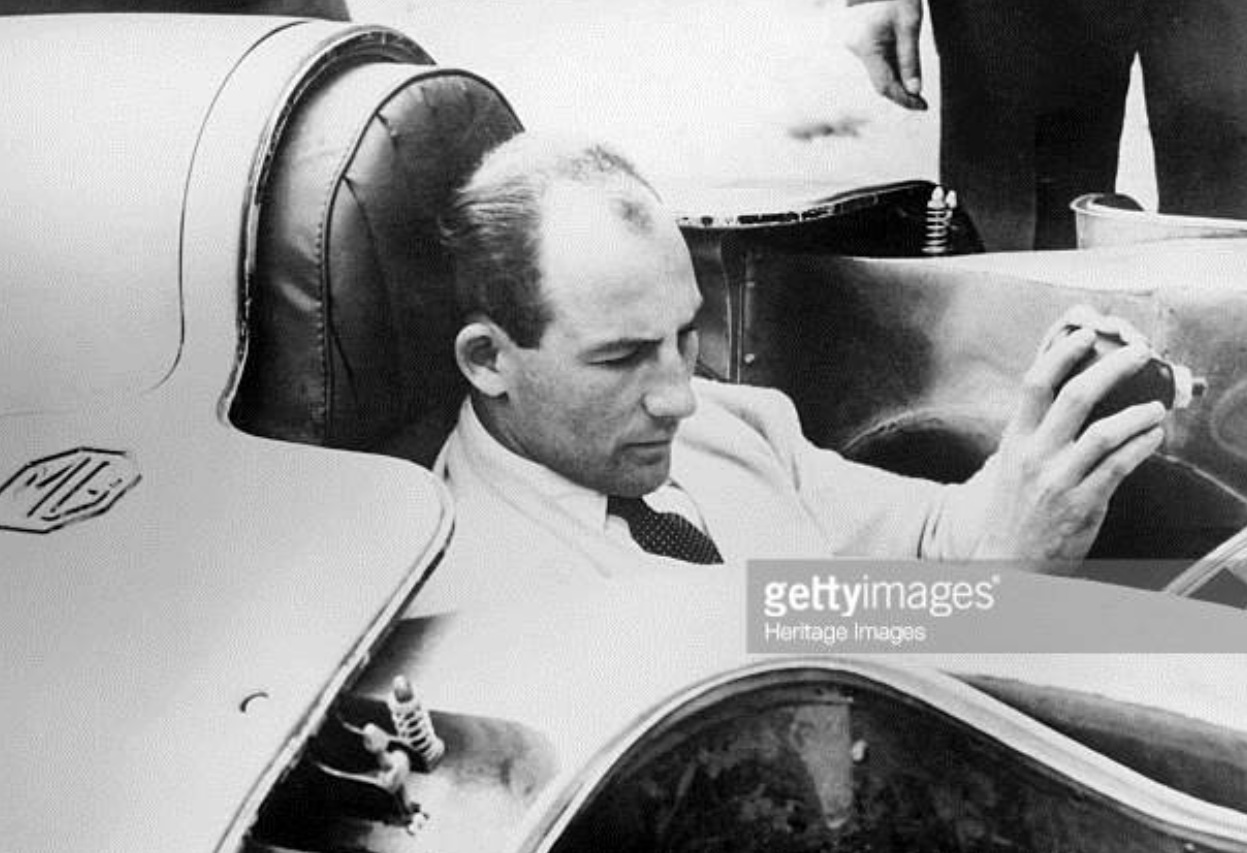
The famous company, in part built its brand very cost effectively by setting a number of Land Speed Records down the decades. Stirling Moss did 245.64 mph and 245.11 mph for the flying kilometre and flying mile respectively in August 1957, and Phil Hill 254.91 mph and 254.53 mph over the same distances in October 1959 with EX181’s engine increased in capacity from 1489cc to 1506cc- this allowed the sneaky Brits to bag both under 1500cc and under 2000cc records, both at Bonneville.

Twin inlets in the cars nose pushed air thru ducts either side of the driver and flow to the radiators, carb inlets, the engine and transmission- outlet ducts clear (unattributed)

The Roaring Raindrop was not just a teardrop shape known to give minimum aerodynamic drag at subsonic speeds- in side elevation it also had the cross section of an aerofoil to a wing section of Polish origin which was identified by MG Chief Engineer Syd Enever as ideal for the task. His theory was tested by Harry Herring in the Armstrong Whitworth wind tunnel.

The Morris Engines Experimental Department in Coventry developed an MGA twin-cam, two valve engine which had many trick lightweight competition internals ‘off the shelf’ and a massive Shorrock supercharger driven by a spur gear from the front of an extended crankshaft fed by two whopper 2.5 inch SU carbs. The fuel mix was one third each petrol, benzol and methanol.

The 1957 1489cc engine developed 290 bhp @ 7300 rpm and 516 lb/ft of torque @ 5600 rpm using 32 psi of boost. Cooling of the motor was achieved by the use of two curved radiators from an Avro Shackleton marine reconnaissance aircraft.

(mgaguru)


(mgaguru)

EX181 was built under the supervision of Terry Mitchell using a bespoke twin-tube chassis with MGA derived suspension at the front- wishbones, coil springs and lever arm hydraulic shocks and a de Dion rear setup deploying quarter elliptic leaf springs and again lever arm shocks.

Cooling for the single Girling disc brake was provided by a small hinged rear flap on the central spine of the machine aft of the cockpit, this popped  up when the driver pushed the brake pedal and also acted as an air brake.

The final essential element in the cars record breaking specification was Dunlop 24 inch diameter tyres capable of inflation to in excess of 100 psi.

Snug in there, Moss Bonneville 1957

Etcetera…

(S Dalton Collection)

Credits..

Autocar, Theo Page, MotorSport article August 2008, mgaguru.com, Stephen Dalton Collection

Tailpiece: Phil Hill, EX181 Bonneville, 1959…

(unattributed)

Finito…


(FF Oz)

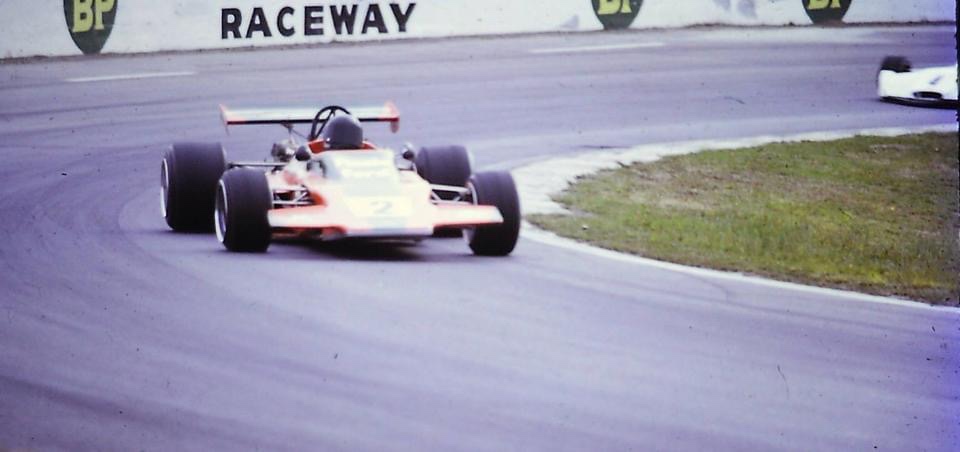
Phil Revell eases his Lola T440 Ford into Torana Corner at Sandown during his successful ‘Driver to Europe’ assault in 1981…

This little jigger has to one of Australia’s winningest FF’s ever? Stephen Brook won the DTE in it in 1980 taking six of the eight rounds and Revell did similarly in 1981, winning five of eight.

Warren Smith was third using it in 1982 winning a round, as did Lyndon Arnel taking the final round in 1977- the car’s first season in Australia.

If memory serves (dangerous) Bob Holden imported the car for Lyndon- a protégé who had done very well in Escort twin-cams and RS2000s prepared by Bob- the T440 was his foray into single-seaters.

The second round of the DTE in 1977 was at Sandown- the Tasman meeting, I just thought, and still do, that it really was the sexiest of Formula Fords, man that car looked great! A decade or so hence I raced against it in Historic FF many times when it was owned by a lovely fella called Tony Harper- my own car was a T342, the model prior to the T440.

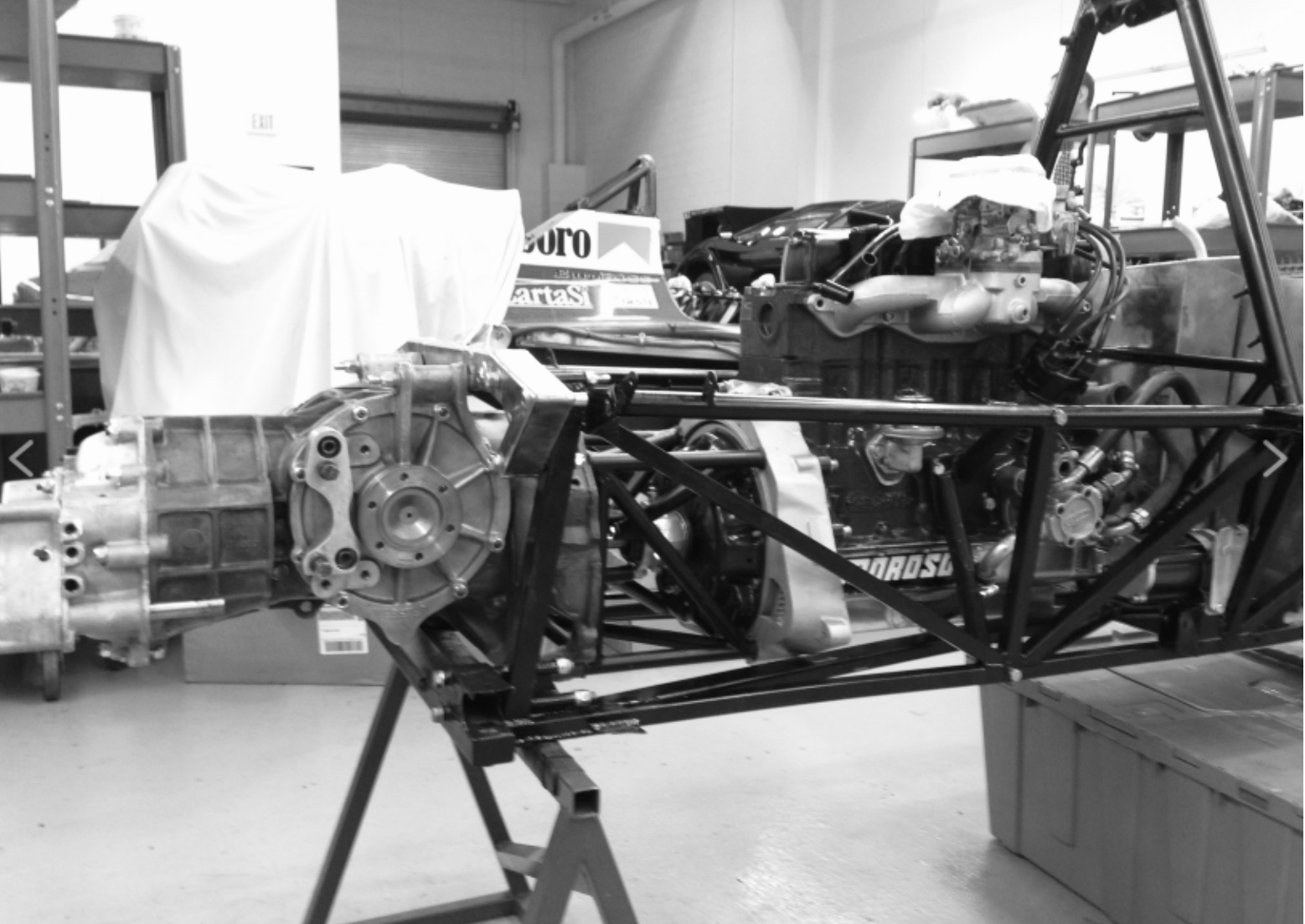
This contemporary shot of a T440 rebuild illustrates the chassis-gearbox/engine spacer nicely, see the big hole between the rear of the engine and front of the Mk9 (aeroyacht.com)

What was different about it was better aero, look how slinky it is with the full, front to rear all enveloping body- inboard front springs and shocks actuated by a rocker and big wide based lower wishbone- and the use of a tubular spacer between the engine and Hewland Mk9 gearbox to push the weight of the car forward. The Hawke DL17 was another FF of that year which did the same thing- Richard Davison and Russell Allen raced such cars in Oz then.

The chassis of the T342 was as stiff as a centenarian’s todger- with the spacer the T440 was said to be worse.

This particular car didn’t go well until until Stephen Brook got his hands on it- he had first raced in FF (Bowin P4 and P6) in the early seventies so was an experienced set of hands but when he took it over it was the jet it always looked…

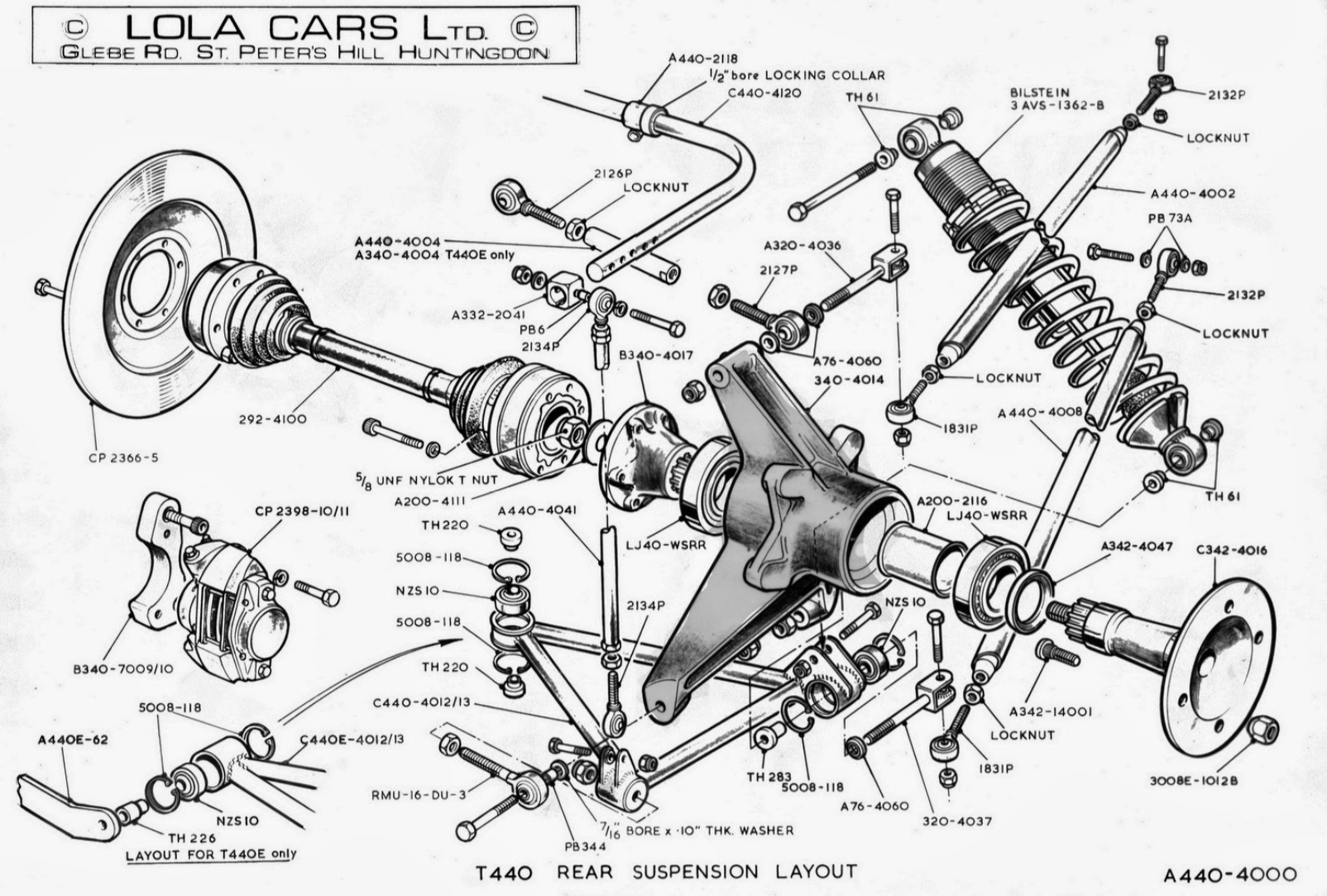
They are simple liddl thangs but there are still lots of bits and pieces…T440 rear suspension assy (Lola)

Credits…

Australian Formula Ford, aeroyacht.com

Tailpiece…

(unattributed)

Stephen Brook aboard the T440 (what is the chassis number BTW?) in front of another sexy little FF- David Earle’s one-off Elfin Aero, at Amaroo Park probably in August 1980.

The tail out attitude ‘defined’ Oz FF during the ‘Bridgestone RD102 Road Radial Era’, of which this was the final year.

I shoulda bought the Aero- I travelled all the way out to Sydney’s Hills District on a Biz Trip from Melbourne to Sydney to have a look at it at Peter Verheyen’s workshop when it was owned by Rod Barrett but ‘choked’ coz it wasn’t quite historic at the time but ‘me mate John Benson bought it so it went to a good home and I could drool over it on a regular basis.

But that T440, sweet little jigger- great car! Fast car.

Finito…


(R Meyer)

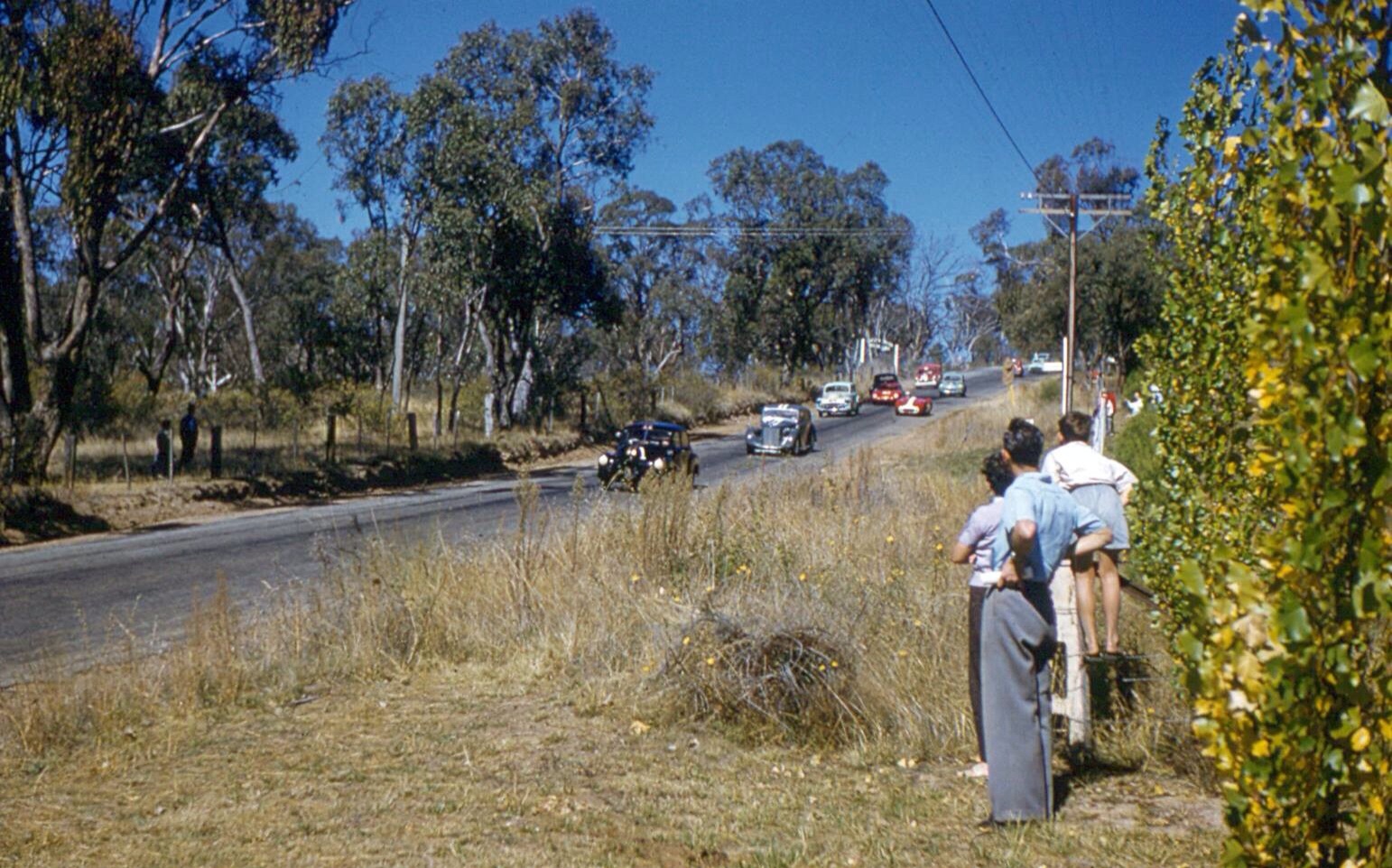
Leo Geoghegan’s Holden 48-215 from Frank Hamm’s Jaguar Mk5, Bathurst, Easter 1959…

I’m not sure if this is the parade lap described below or a race but the presence of the sportscar in amongst the touring cars suggests the former.

The stunning series of photographs are uber-rare ones from the inside of Conrod Straight, the cars have just cleared Forrests Elbow and are winding up in top gear. The kid standing on the fence is Rick Meyer, his father took these wonderful rare photos trackside, ‘locals’ photographs.

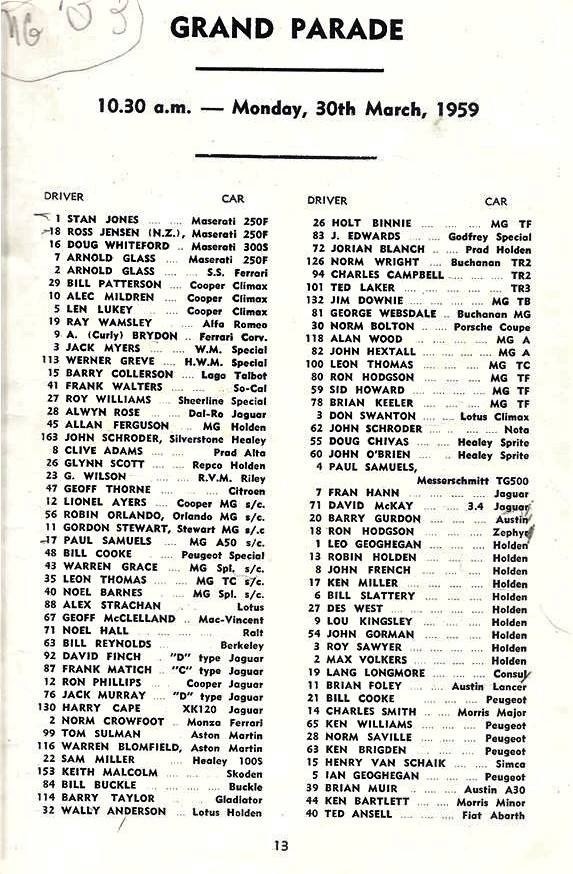
The Easter meeting was the Gold Star round traditionally- there are a huge number of past, current and future top liners or champions amongst the entry list. ‘Currents’ include Stan Jones, Doug Whiteford, Ross Jenson, Curley Brydon, Jack Myers, Jack Murray and David McKay. ‘Future stars’ are Len Lukey, Alec Mildren and Bill Patterson- Gold Star winners in 1959, 1960 and 1961 respectively, Lionel Ayers, Glynn Scott, Arnold Glass, Frank Matich, Ron Phillips, Ron Hodgson, Doug Chivas, Leo Geoghegan, John French, Des West, Max Volkers, Brian Foley, Ian Geoghegan, Brian Muir and ‘Ken’ Bartlett- no doubt Kevin Bartlett learned the value of clean, clear hand-writing on entry forms when he perused the race program at the circuit!

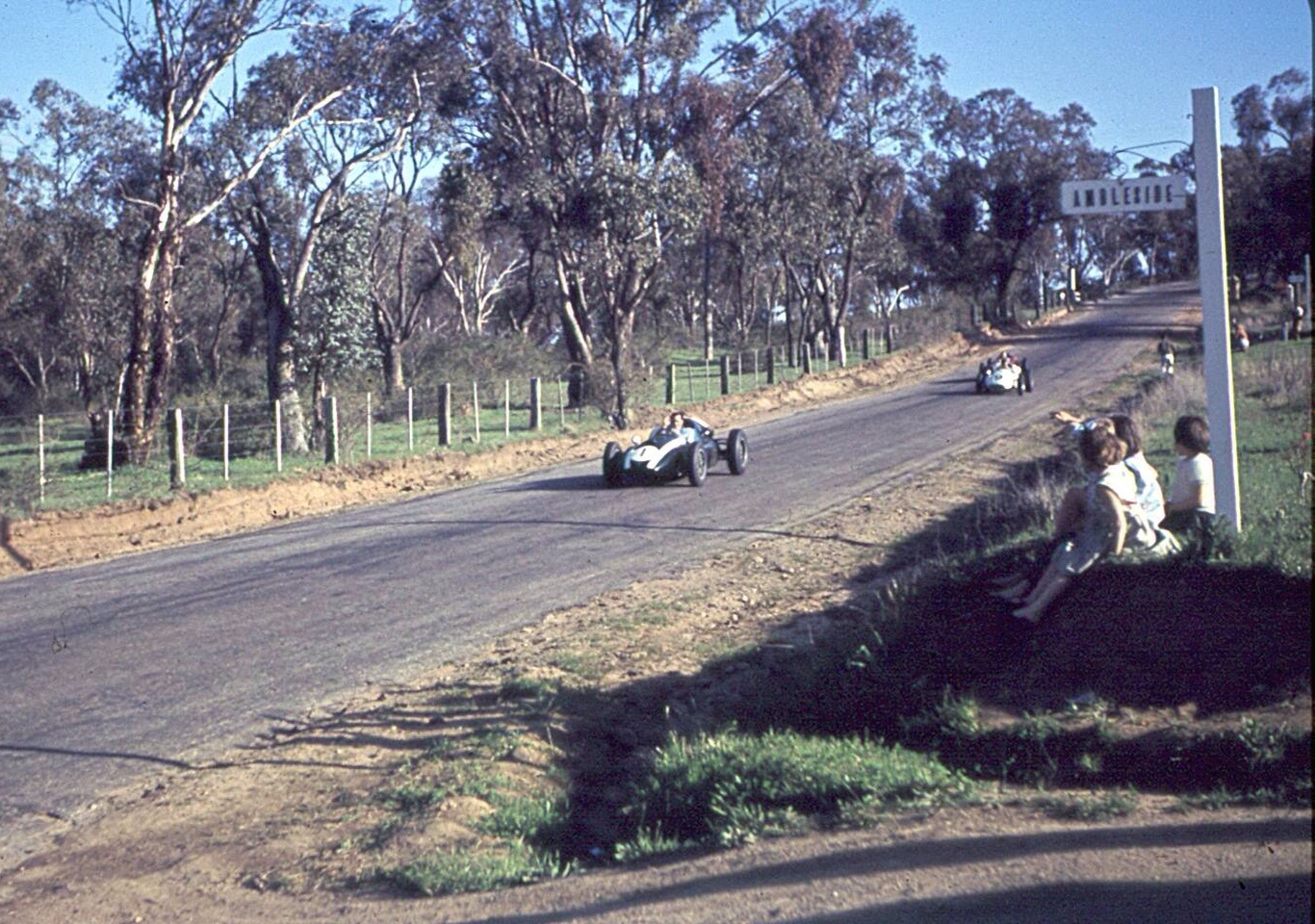
The photo below is from the same spot and shows reigning World Champ Jack Brabham on the 2 October 1960 weekend when the local boy returned to Australia having retained his F1 drivers title, to win the ‘Craven A International’ from a classy field of locals.

The Cooper T51 Climax leads the similar white-coloured machine of 1961 Australian Gold Star Champion, Bill Patterson. Patterson was second in the race with Bib Stillwell, also T51 equipped in third- he is probably that flash of red car behind Patto.

(R Meyer)

The photo below is again Geoghegan who is about to take, perhaps, Barry Gurdon’s Austin on the run down Conrod, or is it a Triumph Herald? By this stage Leo’s car is very quick and much modified- light weight, it has a Repco Hi-Power cylinder head and multiple SU carbs, is fitted with an MG TC gearbox, slippery diff and disc front brakes.

The introduction of the Australian Touring Car Championship from 1 January 1960 run to Appendix J regulations would reign-in the ‘costs out of hand’ development of touring cars without in any way constraining the appeal of tin-top racing to either spectators or owner-drivers.

(R Meyer)

Beautiful picture of the Les Wheeler funded, Gordon Stewart designed and built Stewart MG…

Believe it or not this very advanced car was concepted and constructed in the early fifties around a tubular steel spaceframe chassis, MG TC engine and brakes. With a Bob Baker built body, modified in the nose here, it first raced at Mount Druitt in 1955.

(R Meyer)

The engine was 1350cc in capacity and fitted with a Laystall crank and locally made rods. By the time the car appeared lots of serious stuff from Europe was racing locally so it missed the boat a bit as a potential ‘outright’ contender but its 1957 Gordon Stewart driven 142 mph made it the fastest TC speed ever over Bathurst’s Flying One-Eighth!

Here, Dick Willis says the car is supercharged ‘B-Series’ BMC powered, still with Gordon at the wheel. This car is extant and a wonderful feature article, such is its conceptual design and execution, for another time.

(D Willis)

A bit more from Dick Willis, here the Stewart MG crew- ‘Ecurie Cinque’ at Mount Druitt probably in 1958. ‘Jim Robson (at right) of Silverdale fame was a technical writer for Riley (Nuffield) before the war writing workshop manuals etc. After the war he emigrated to Australia and soon struck up a friendship with the like, Nuffield minded, Gordon Stewart- Jim was one of the team who developed the Stewart MG…’

Credits…

Rick Meyer, Dick Willis, Paul Newby

Tailpiece: Finish as we started, neighbour still with hands on hips and the obedient Rick still on and behind the fence!…

(R Meyer)

Cars are Horst Kwech’s RM Spyder (Buchanan body) and Tom Sulman’s Aston Martin DB3S during the Easter 1960 meeting.

Paul Newby explains that Horst Kwech built the RM Spyder whilst working at Regional Motors in Cooma- New South Wales sub-alpine country, hence the ‘RM’. It comprised a Buchanan bodied upside-down Singer chassis powered by a Repco Hi-Power headed Holden ‘Grey’ six-cylinder engine and still exists in Canberra.

Finito…


(B Young)

Huge excitement was created by Geoff Duke’s visit to Australia in 1955, here his Gilera 500/4 is shown at rest in the Longford paddock…

The Brit was a rock-star, he had just won back to back 500cc world titles aboard Gileras in 1953-54 having won his first on Nortons in 1951. In total Duke won six 350cc and 500cc world championships between 1951 and 1955, and six TT races between 1949 and 1955.

But his fame extended beyond bikes given his film star looks and communication ability, as such he was a wonderful ambassador for the sport globally, in late 1954 he was poised to spread a bit of his angel dust throughout Australia. I wrote an article about Geoff four years ago with a focus on his racing in cars; https://primotipo.com/2015/09/08/geoff-duke-norton-dutch-gp-assen-1952/

Longford (B Young)
Geoff doing yet another victory lap with laurel wreath at Fishermans Bend in 1955 (S Wills)

In a whirlwind tour commencing on 7 January 1955 he raced in four states commencing in Western Australia at Mooliabeenie, a wartime airstrip near Perth on 16 January before a crowd of 15,000 people. Then he was off to another airstrip at Gawler in South Australia, no doubt wheelspin in top gear was impressive to the 16,000 punters who experienced trying conditions in sweltering heat. His main opposition in the west was from local all-rounder Peter Nichol on a G45 Matchless and from George Scott’s GP Triumph, while at Gawler Keith Campbell and Roger Barker impressed.

Then it was off to the Bandiana Army Base near Albury, the Victoria/New South Wales border town, on 30 January, the first half decent venue for the plucky gentleman in his tour to that point, the track comprised 4.5km of perimeter roads.

There, having carefully won the Senior Clubmans event in the slowest possible time, Eric Hinton’s handicap just gave him the edge over Duke to allow him to win the Unlimited Handicap in fading light, the only occasion on which the champ was beaten on the tour.

Duke, Bandiana
Maurie Quincey, Norton ahead of Duke at Bandiana

Gilera design…

Gilera saw the commercial opportunity of a tour to promote their brand, sending two current 500/4 bikes and works mechanic Giovanni Fumagalli to look after the machines.

The bikes brought to Australia derived from a 250cc four designed by Engineer Piero Remor under Piero Taruffi in the early 1940s. After Taruffi left Gilera to concentrate on car racing, Remor and company founder, Giuseppe Gilera, began work on a 500cc bike whose origins lay in the earlier 250, in 1947.

The new racer was unveiled in 1948 with 1949 its shakedown season. After Remor’s departure to MV Agusta Taruffi was re-hired, together with engineers Colombo and Passoni, changes were made to the cylinder head and rear suspension which allowed Umberto Masetti to win the 1950 500cc world championship.

The bike was then redesigned over the winter of 1950-51, adopting a new tubular frame with telescopic forks, pivoting rear suspension and hydraulic shocks. In 1951 Gilera won three GPs but Duke took the title on a Norton, in 1952 Masetti again won the championship on Gilera.

Fumagalli and Duke warming up the bike at Gawler (D Voss)
Gilera 500-4 1954 (unattributed)

When Duke joined the Milanese firm for 1953, he brought with him strong knowledge of the great Rex Candless designed ‘Featherbed-frame’ Norton’s handling. Upon his suggestions the Gilera frame was lowered and strengthened to bring better handling, the engine was left untouched.

In 1953-54 Passoni redesigned the motor by increasing its stroke, changing the valve angle, and elongating the sump to allow the unit to be lowered in the frame by three inches, by this stage it produced circa 65bhp @ 10,000rpm.

The frame was of double cradle design and made of tubular steel with telescopic suspension at the front, and pivoting rear suspension with hydraulic shock absorbers at the rear. The four cylinder, four-stroke, air-cooled engine displaced 402.7cc and was undersquare, having a bore/stroke of 52mm x 58.8mm. With two-valves per cylinder operated by two overhead-camshafts and fed by four carburettors the engine gave circa 65bhp as stated above.

1954 Gilera 500 with the dustbin fairing they commenced to experiment with in 1954 (G Cavara)

Back to Duke’s Tour of Oz…

From Albury it was then off to Sydney and a round of public appearances, and a visit to Mount Panorama, before the next race meeting at the permanent Mount Druitt circuit west of Sydney.

The surface was poor though, due to damage from recent car meetings, but Duke dominated as he did everywhere else, Keith Stewart was impressive in second on a new Matchless G45 twin in the Senior GP.

Mount Druitt
Mount Druitt after one of his wins with Keith Stewart on a Matchless G45 behind

Duke’s final two meetings of the tour were down south, at Fishermans Bend in inner Melbourne and majestic Longford in northern Tasmania, which must surely have impressed.

At Fishermans Bend Maurie Quincey led the 500cc race on his Norton for a while before clutch slip set in and Duke pounced in the second Gilera, having put the first to one side, it had lost its edge. Longford was held over two days, with racing on the Saturday and Monday. In the opening race the engine began to lose power with magneto problems. The other bike, in Melbourne awaiting shipment back to Italy, was stripped of the part which was despatched overnight to the Apple Isle. With the machine back in fine fettle Duke won and set a new lap record in the Unlimited race of 152km/h. Oh to have heard that Gilera screaming its way along The Flying Mile @ 10,000rpm!

Ready for the off at Longford, Duke at right (S Scholes)

Jim Scaysbrook summarised the impact of Dukes tour in Old Bike Australasia‘. ‘His whirlwind tour had taken him to every state except Queensland and his charming and eloquent manner did incalculable good for motorcycling. The unprecedented publicity generated helped to dispel the popularly held, media fuelled belief that motorcycle racers were a bunch of halfwits with a death wish. It also had a profound effect on the local riders, serving as a stark reminder of the gap between our rather primitive scene and the European big-time.’

‘A number of up and coming stars impressed him, including Keith Campbell, Roger Barker and particularly Bob Brown, who had just gained selection as Australian representative to the 1955 IOM TT races. “This young man is a joy to watch, uses his head, and should figure very well in the IoM and on the continent” he said in his report to the British Press. When Duke was injured at the start of the 1957 season, he recommended Brown to take his place in the Gilera team for the TT, resulting in two excellent third places. For 1958, Duke personally sponsored Bob on a pair of Nortons’ Jim wrote.

Etcetera…

(D Tongs)

The second of the two Gileras at rest in Longford.

The contribution and significance of this series of Gileras is recognised in a wonderful, highly technical and thoroughly researched scholarly paper titled ‘Grand Prix Motorcycle Engine Development 1949-2008’ written by David Piggott and Derek Taulbut.

The authors recognise ‘Piero Remor’s contribution to Grand Prix engine design’ as follows;

‘The defeat of the original MV 4 in early 1966 had brought to a close after two successful decades the career of the 1947 basic 500cc design of Phil Remor. Initially for Gilera, this introduced the Naturally Aspirated aircooled transverse 4-cylinder with double overhead camshafts and 2 wide angle valves per cylinder, bore-stroke ratio around 1. Remor’s concept, although changed in detail development by others in Gilera and MV, is worth remembering. There had also been successful 350cc versions. Remor had actually been associated with transverse 4’s since 1925 when it was the layout of the Italian GRB (Gianini-Remor-Bonmartini) which ultimately had been transformed into the water supercharged Gilera which powered Dorino Serafini to the European Championship in 1939.’

This piece is based on a wonderful article by Jim Scaysbrook titled ‘Geoff Duke- The Duke’s Crusade’, do have a read, it’s terrific.

Bibliography and Photo Credits…

Bob Young Collection, Des Tongs, Stephen Scholes, Doug Voss, Spencer Wills via Bob King Collection, ‘Geoff Duke- The Duke’s Crusade’ article by Jim Scaysbrook in Old Bike Australia issue 13 May/June 2009, ‘Gilera Motorcycles and Racing History’ by Lucien C Ducret, ‘Grand Prix Motorcycle Engine Development 1949-2008’ by David Piggott and Derek Taulbut.

Tailpiece…

Finito…

The Arthur Barnes driven TH. Schneider broke the Adelaide-Melbourne record with a time of 12 hours 10 minutes for the wild ride over a very rough roads on 11 April 1925…

Sydney motorist AH Barnes was accompanied by J W (William) McCulloch, in the 25.5 hp French six-cylinder 4.5 litre machine. It was national news, this advertisement was placed in the Sydney Morning Herald on 20 May 1925.

The same car, engine number #29, set a Broken Hill-Adelaide record of 8 hours 3 minutes for that 336 mile journey, an average of 42 mph, on 19 August 1925, ‘speeds of more than 100 mph were attained along the route’- that record was previously held by an Amilcar.

Three veteran and six vintage TH. Schneider chassis are known to have been imported to Australia through agents in South Australia and Victoria- George H Booth and Thomas Mitchell and Co-pre-War, and Domain Motors/Kellow-Falkiner Pty Ltd-both post-war, respectively in each state.

The two photographs below show the 25.5 hp TH. Schneider (variously TH. Schneider, Th. Schneider and both of these without the full-stop- I have used the variant on the badge below) out front of Geo Booth’s premises in Adelaide after the Broken Hill to Adelaide run on 19 August 1925. The crew was again Barnes as driver and McCulloch the mechanic.

George Booth of 411 King William Street Adelaide and Domain Motors of 348 St Kilda Road in Melbourne were the agents for the cars at the time and of course sponsors of the successful record attempts.

(SLSA)


(SLSA)

Theophile Schneider first entered the motor industry in partnership with Edouard Rochet to build the Rochet-Schneider at Lyon in 1894, he then moved to a factory in Besancon, east France near the Swiss border to build cars on his own- his first was an 1850cc four cylinder machine with a radiator behind the bonnet, a style later popularised by Renault.

These first ‘Schneiders, fitted with engines from 10 to 35hp were raced circa 1912-1914, the best result second place in the June 1912 Grand Prix de l’Automobile Club de France held on a course based at Dieppe, the car was driven by Rene Croquet with riding mechanic Rene Champoiseau.

After converting to manufacture of components for the war effort the company resumed car production post-war and changed its structure to that of a limited stock company, the record-run car is a type 21.20.1, 25.5hp six cylinder, 4480cc six cylinder, for speed manual with a solid front axle, live rear axle fitted with semi-elliptic springs and two rear wheel brakes, the wheelbase was 3505mm

Three of this model were imported into Australia by Domain Motor Body Builders/Domain Motors. At 1950 pounds they were nearly twice as expensive as the 4.5 litre Bentley of the day, Domain Motors ceased business around July 1926 at a time Th. Schneider themselves were in deep financial trouble at home, having been declared bankrupt in November 1921.

The reputation of the marque allowed the company to trade profitably through the mid-twenties, re-entering racing inclusive of participation at Le Mans in 1926- Pierre Tabourin and Auguste Lefranc were sixth in a 1954cc 25SP and in 1927 when Robert Poitier and Pierre Tabourin DNF accident in a 25SP.

‘White House Crash’ aftermath- the #2 d’Erlanger/Duller Bentley Sport 3 litre at left and #1 Clement/Callingham Bentley 4.5 litre at right- ditto photograph below (unattributed)


(unattributed)

The Tabourin driven TH. Schneider is infamous amongst Bentley enthusiasts as the cause of the ‘White House Crash’ which involved three Bentleys. At dusk Tabourin approached the corner too fast, lost control and hit a building close to the road coming to rest and partially blocking the track, Leslie Callingham, following closely, swerved to avoid him and ended up in a ditch on the opposite side of the road, George Duller then hit Callingham, and then Benjafield too hit Callingham in avoidance of Tabourin- Benjafield was able to continue but the race was well over for the other three machines.

No-one was seriously injured but Pierre Tabourin was taken to hospital with broken ribs, the #12 ‘Schneider driven by Chanterelle/Schlitz withdrew from the race out of respect for the injured Tabourin. In a happy ending for Bentley Benjafield and Sammy Davis won the race in the Sport 3 litre ‘old number 7’.

Problems in 1928 led to a second bankruptcy in March 1929 and closure of the Besancon factory doors in early 1930- right in The Great Depression of course.

TH. Schneider’s assets were acquired by French company Societe SADIM, the name continued but was applied to caterpillar tractors- World War 2 saw the end of a once proud marque.

Meanwhile, back in Australia, the insolvency sale of Domain’s assets resulted in four Ansaldos, three Ansaldo chassis and ‘four brand new latest model Schneiders’, of which one was the record breaking car- number ’29’ the other a new DS six cylinder 25hp model changing hands.

The record breaker, which John Bisley has (as of 2015) was never bodied, it was acquired by Watts McNamara and went from Myrtleford to Griffith in 1927- where it remained for most of its life. If any of you can fill in the ownership details of the car since it arrived in Australia please get in touch.

The record breaker at the Cockburn Hotel, in South Australia, not far from Broken Hill near the South Australia-New South Wales border (Richard C)


(unattributed)

Even though the cars were small in number in Australia, motorsport was used in attempts to build the brand inclusive of an entry in Australian Grand Prix where a 2 litre TH. Schneider driven by Ernest King contested the 1929 event held on the daunting, dusty, undulating and fast Phillip Island road circuit- King failed to finish having lost a wheel on lap 17 of the race won by Arthur Terdich’s Bugatti T37A.

The photograph above shows King contesting a hillclimb at Wheelers Hill in Melbourne’s outer east in June 1928, six months prior to the 1929 AGP- Th. Schneider 2 litre 25SP.

‘Schneider’s motorsport participation in Australia extended to the reliability trials which were popular at the time and of which I have written in the past. In March 1927, a 7hp car was first in class and fifth outright in a field of about forty cars- the driver was AGP winner Arthur Terdich as below.

(unattributed)

Etcetera…

(unattributed)

Rene Croquet and Rene Champoiseau aboard their TH. Schneider during the second day of the 1912 French Grand Prix on 26 June- the road race comprised 20 laps of a 77km course based in Dieppe, a total of 1540km.

Contestants raced over 10 laps on each day with the results aggregated to produce a winner.

Georges Boillot won in a Peugeot from Louis Wagner’s Fiat S74 and Victor Regal in a Sunbeam with Rene seventh, Rene Champoiseau raced another TH. Schneider but retired.


Credits…

SLSA- State Library of South Australia, thschneider.wordpress.com, prewarcar.com, Richard C, F2Index

Tailpiece…

The site of Domain Motors business premises at 348 St Kilda Road- a nice spot right opposite The Shrine of Remembrance, next door to the French Consulate which is apt! and not too far from Albert Park Lake, for international readers, is now, in the best Australian tradition, a block of luxury apartments…

Finito…