
One of the most glamorous, charismatic pre-war drivers was the Bentley-Baronet, Sir Henry ‘Tim’ Birkin. Here taking to Brooklands on 11 March 1930 in his new 4.5 litre supercharged Bentley Single-Seater…

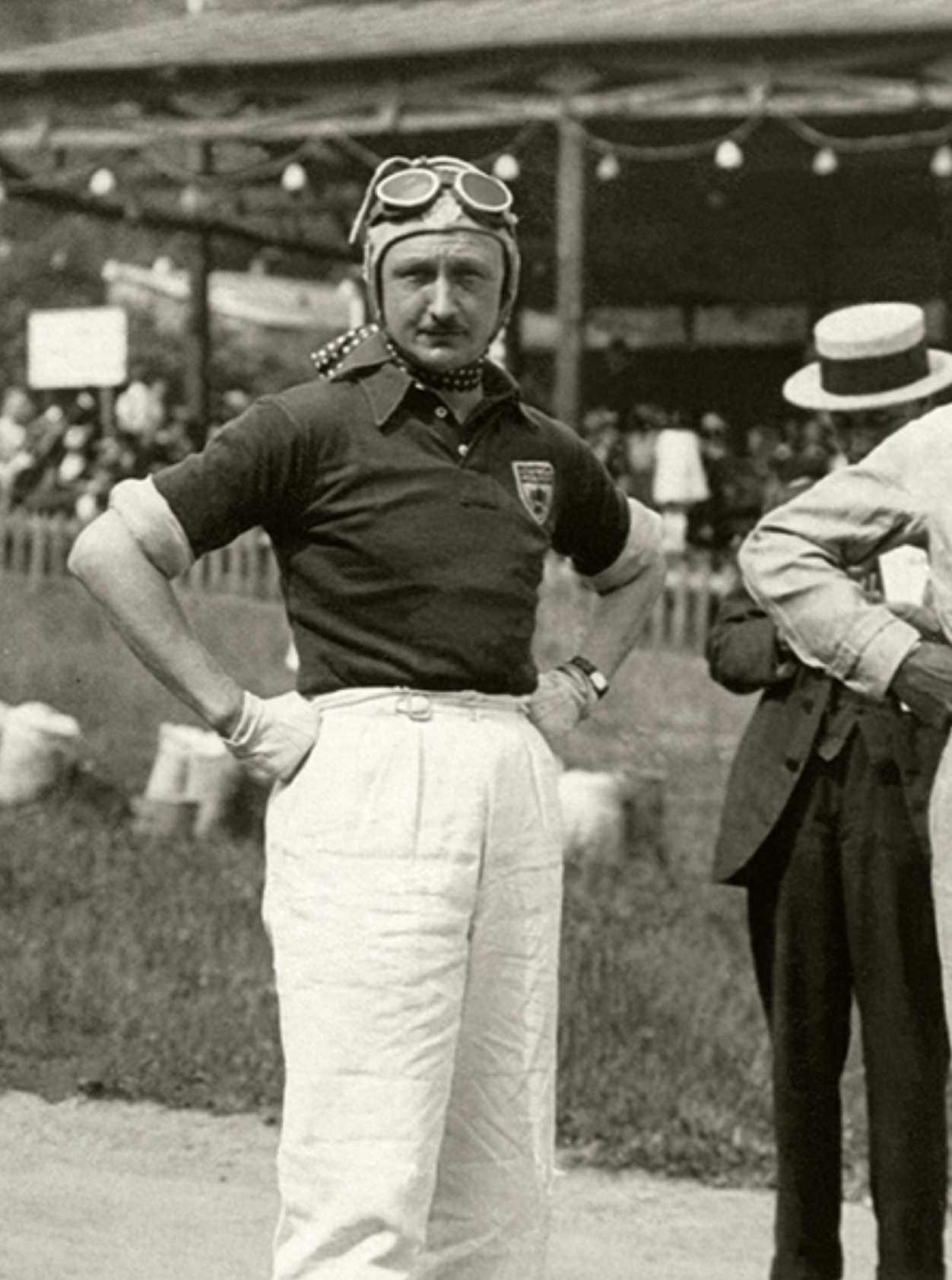
Birkin, Spa 1933 (unattributed)
His ‘Bentley Boy’ high-society image was combined with fearless driving talent. For a generation of British racing enthusiasts, ‘Tiger Tim’s’ moustachioed, goggled figure, in wind cap, usually with a polka-dot scarf fluttering in the slipstream personified an English ideal.
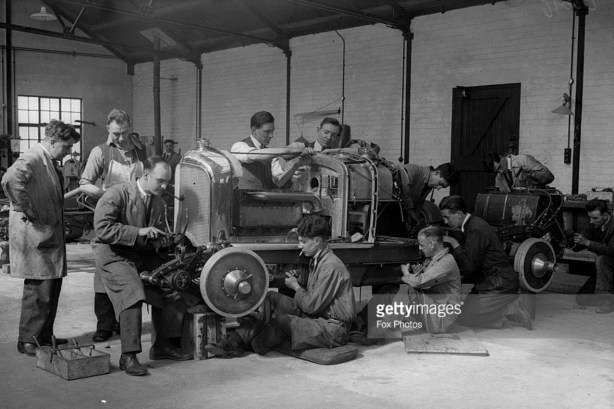
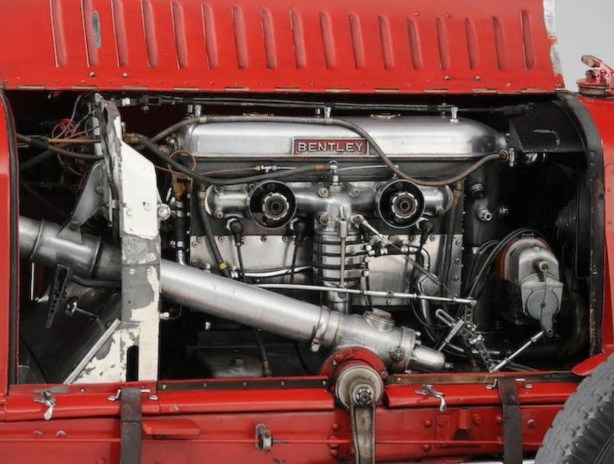
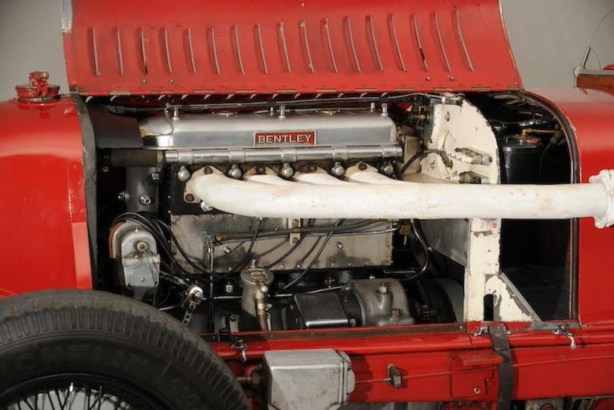
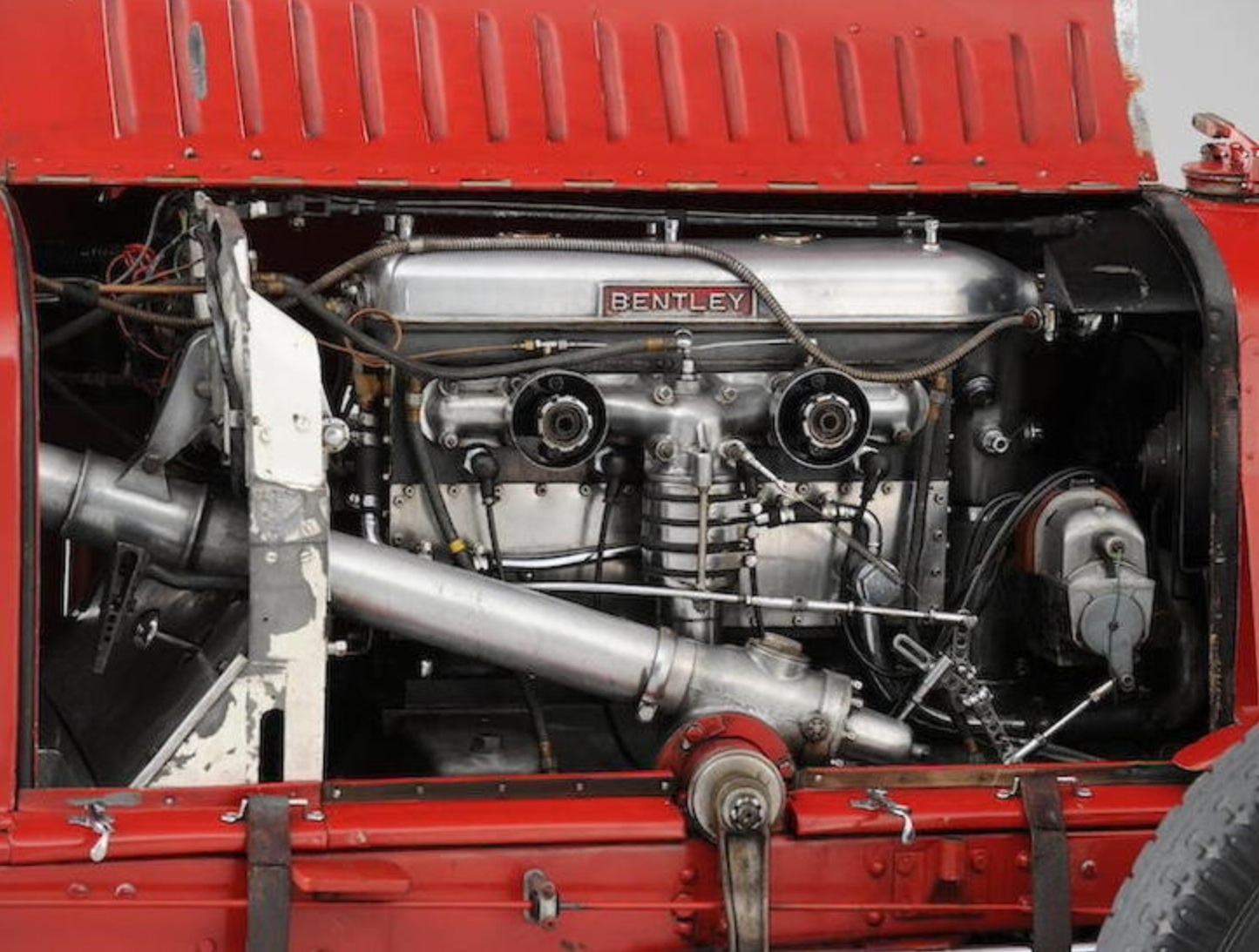
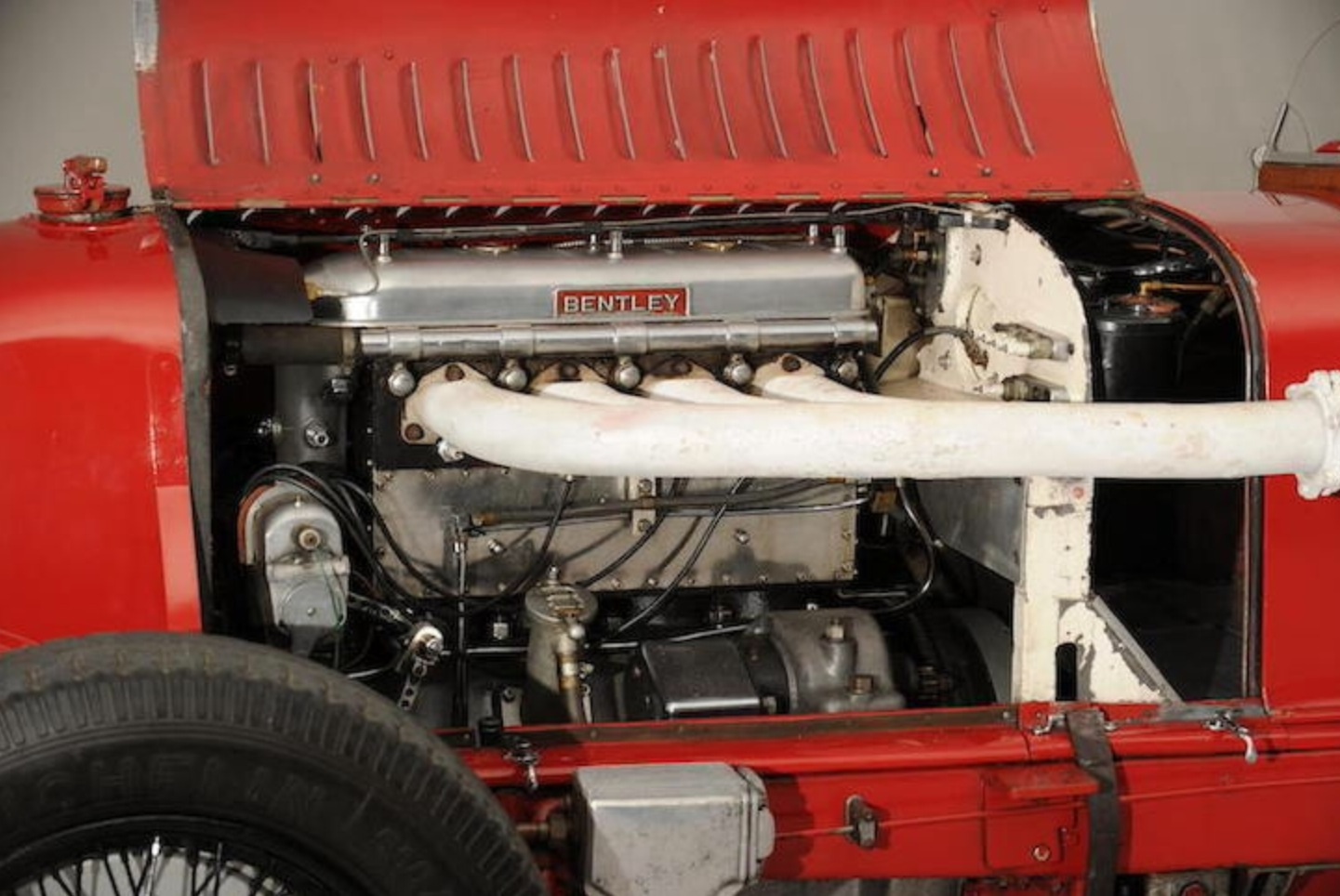
4.5 litre, SOHC 16 valve engine fitted with Amherst Villiers Roots Type 4 supercharger, 182bhp@3900rpm with 10 pounds of boost (Fox Photos)
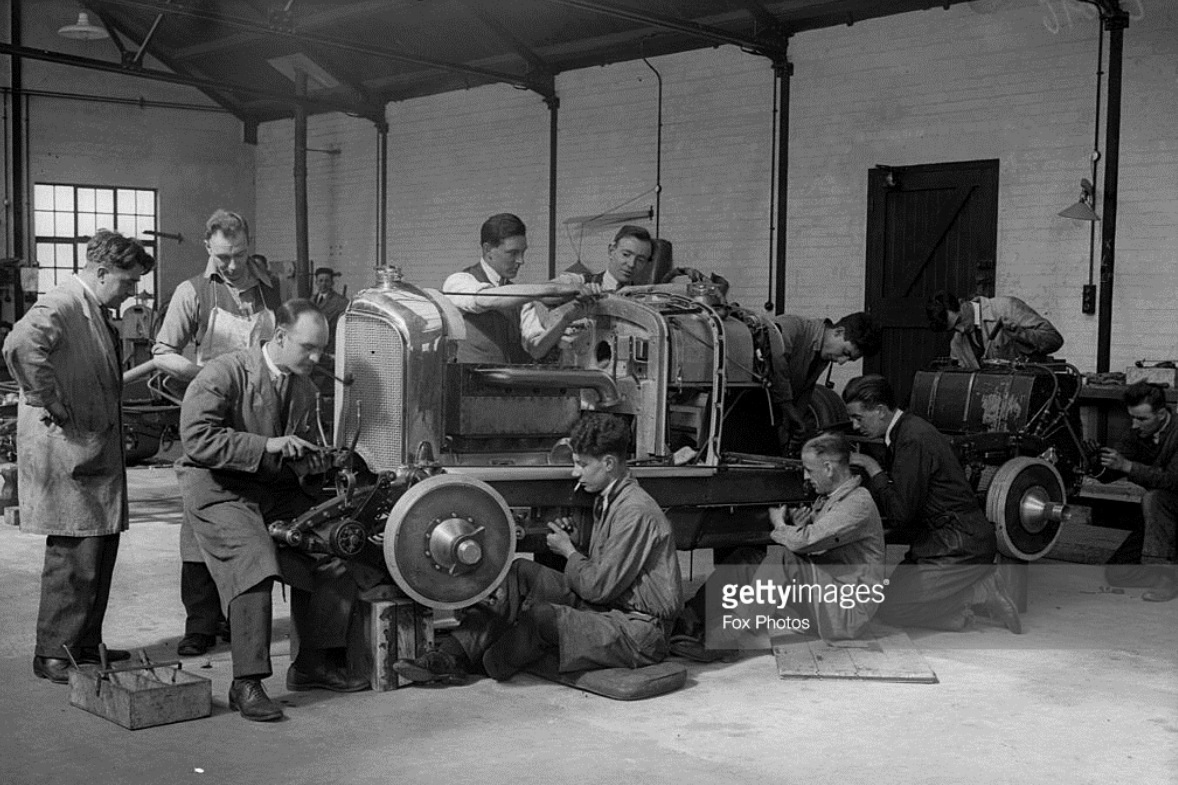
With fellow enthusiast/racer Mike Couper, ‘Birkin & Couper Ltd’ was established at Welwyn where the prototype 4.5 litre Blower Bentley was produced in the summer of 1929. W.O. recalled: ‘They would lack in their preparation all the experience we had built up in (our own) racing department over 10 years. I feared the worst and looked forward to their first appearance with anxiety’.
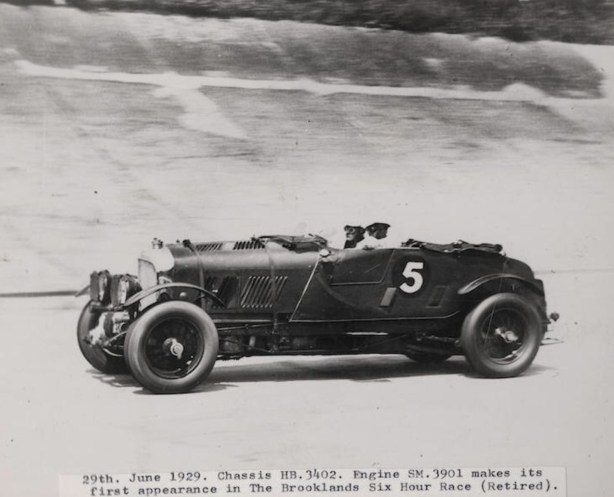
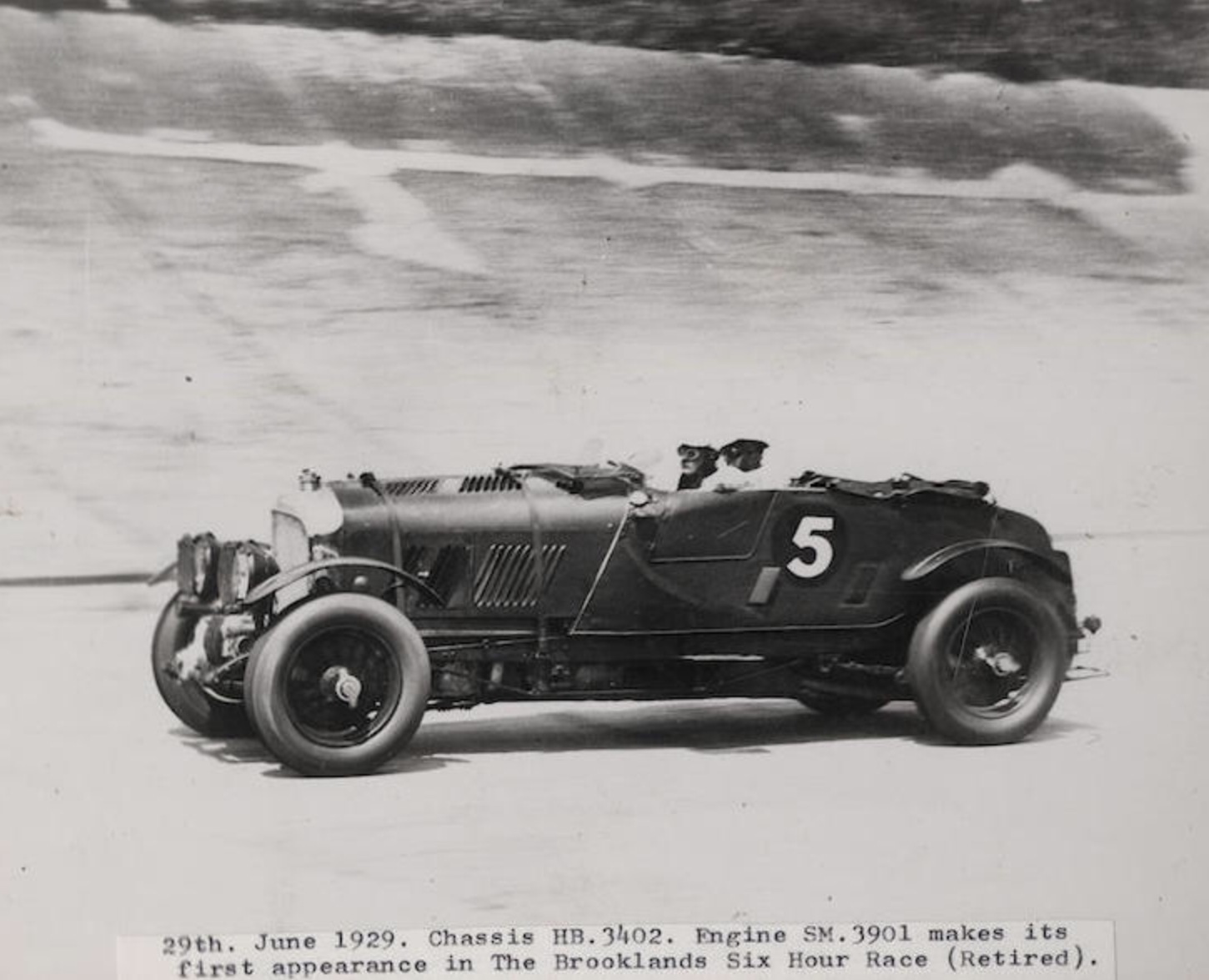
This is the car/chassis which was transformed into the Birkin single-seater, chassis # HB3402 (unattributed)
Birkin ran his prototype tourer-bodied car, later rebuilt as the single-seater special in the Brooklands 6-Hour race on June 29,1929, it retired. At Dublin’s Phoenix Park race two weeks later the two supercharged Bentleys finished 3rd and 8th. In the RAC Tourist Trophy at Ards, Ulster, Bernard Rubin’s ‘Blower’ overturned while Birkin, who had challenged W.O. to act as his riding mechanic (the marque’s founder accepting), placed second overall and won his class. The third ‘Blower’ broke its engine.
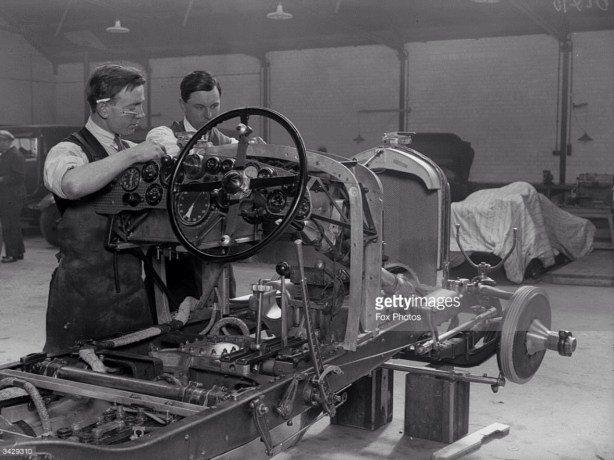
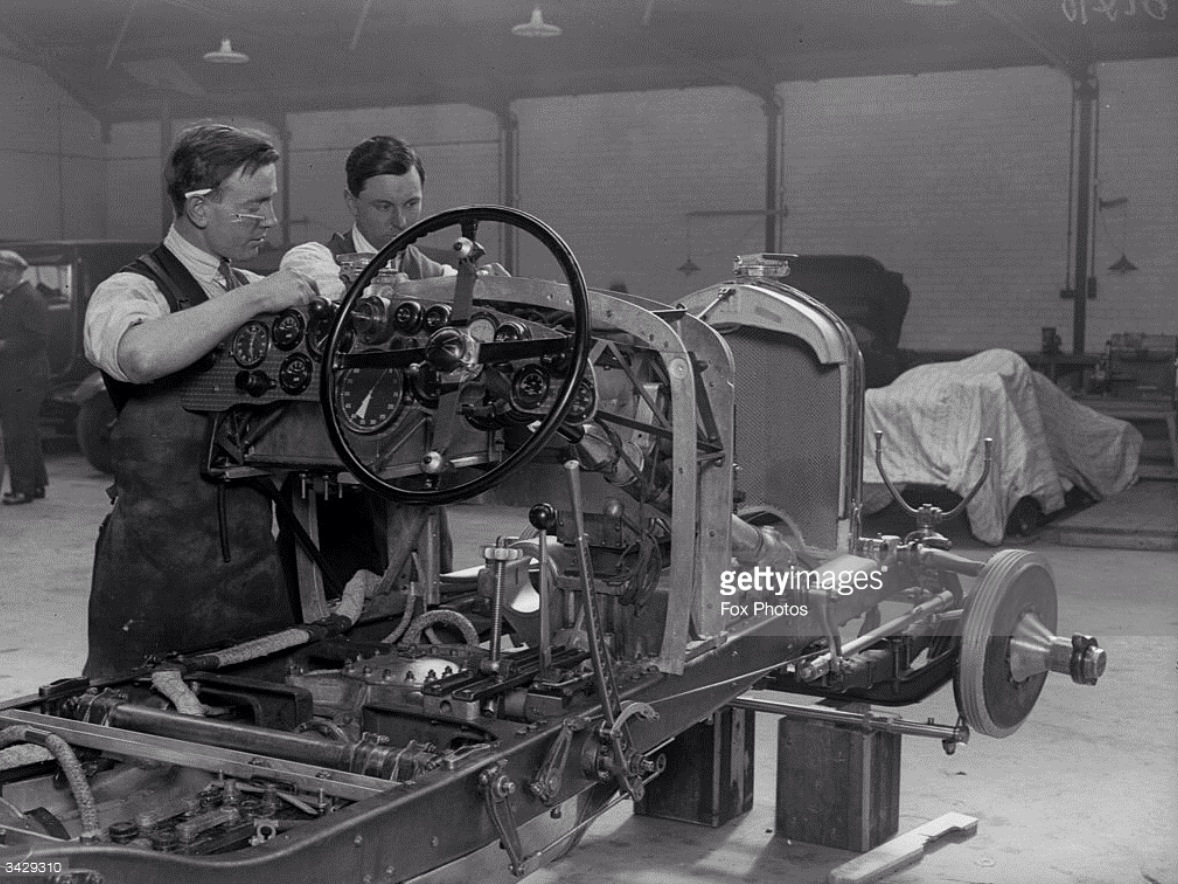
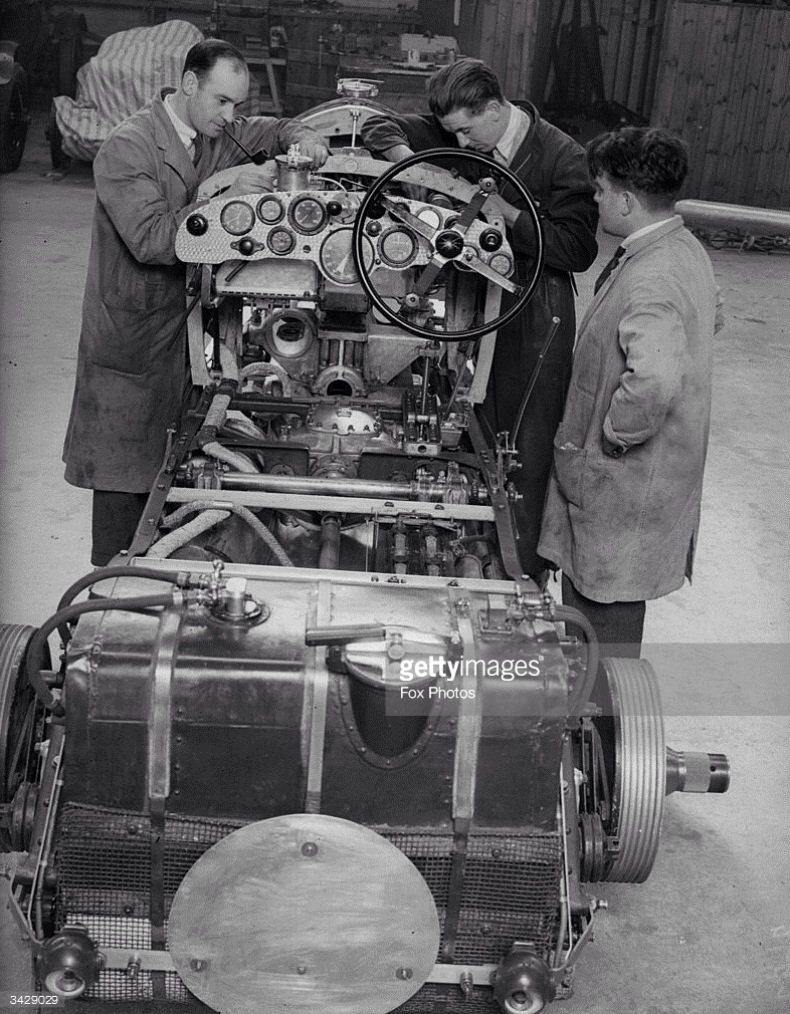
4.5 blower build, chassis number unknown, March 22 1930. Ample! girder chassis, mechanical drum brakes all clear (Fox Photos)
Birkin then retired from the Brooklands 500-Miles and the entire team retired from the Double-Twelve race at Brooklands in May 1930.
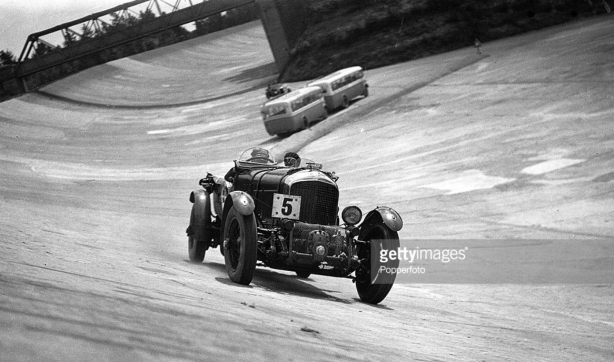
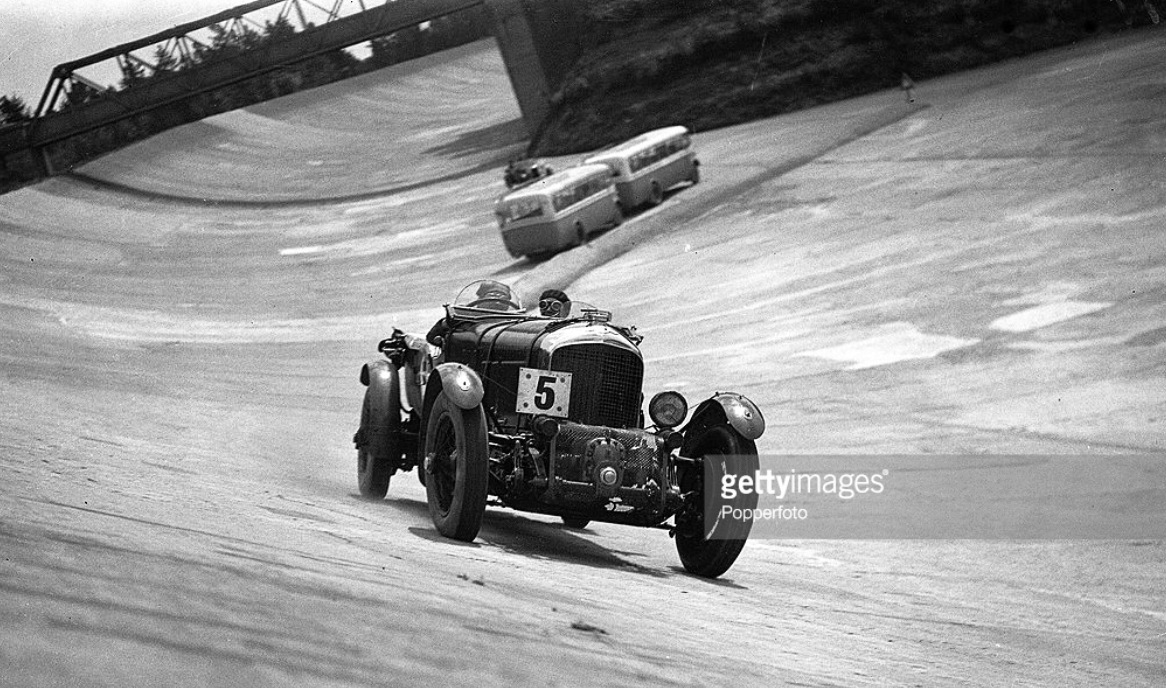
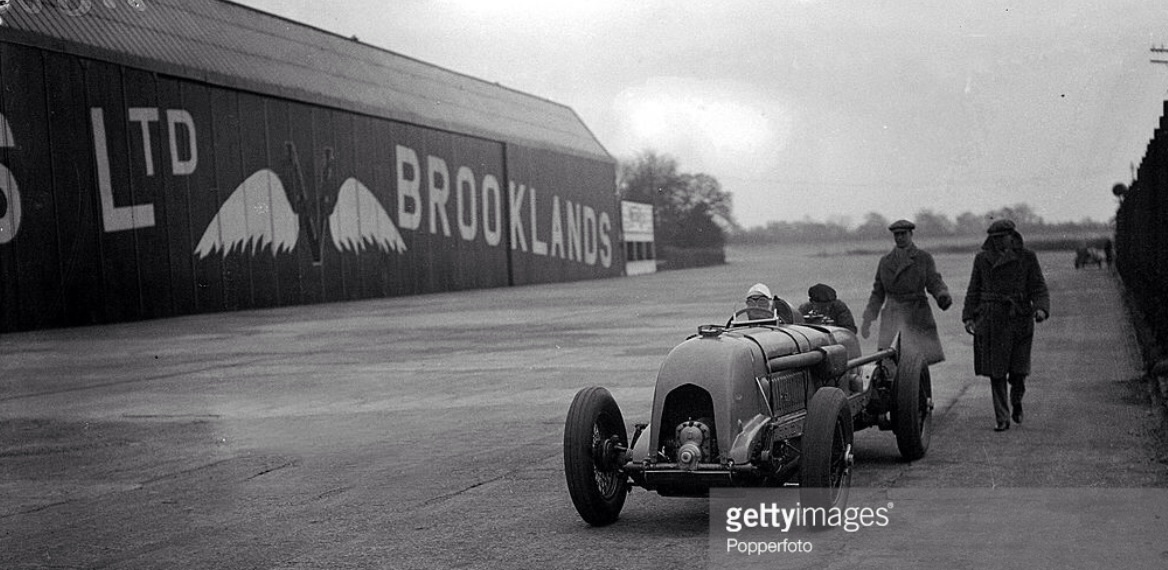
Birkin practices a Bentley 4.5 blower for the 1930 Brooklands ‘Double 12 Hour’ race 8 May 1930 (Popperfoto)
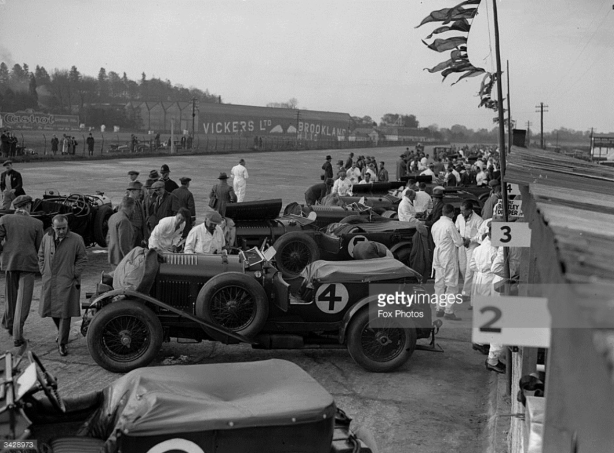
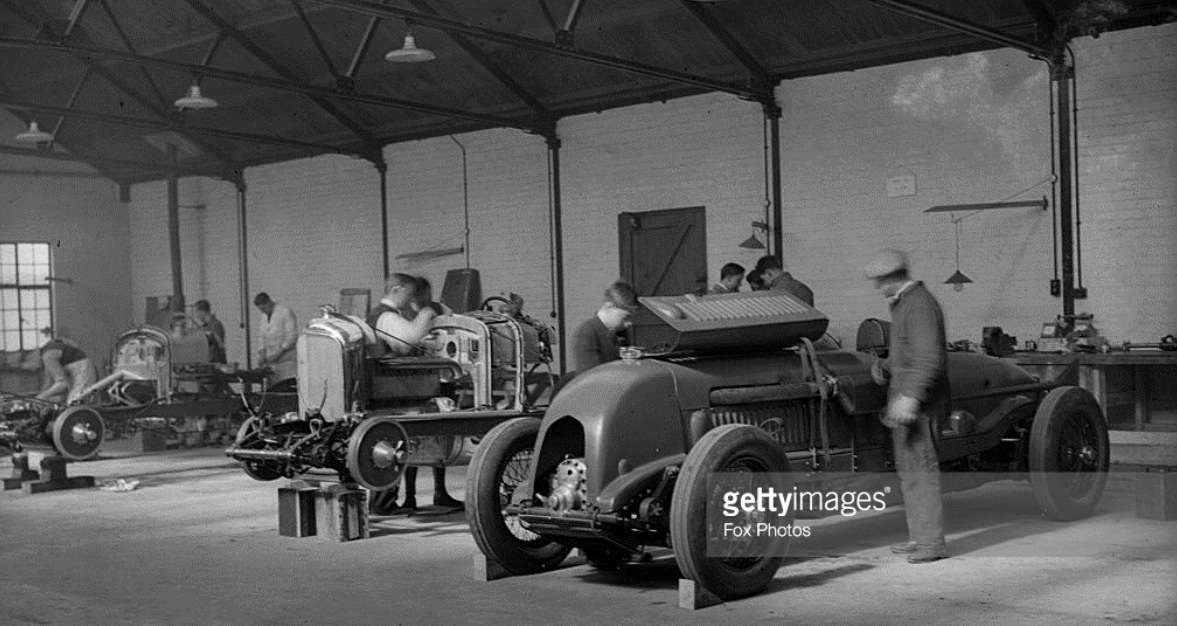
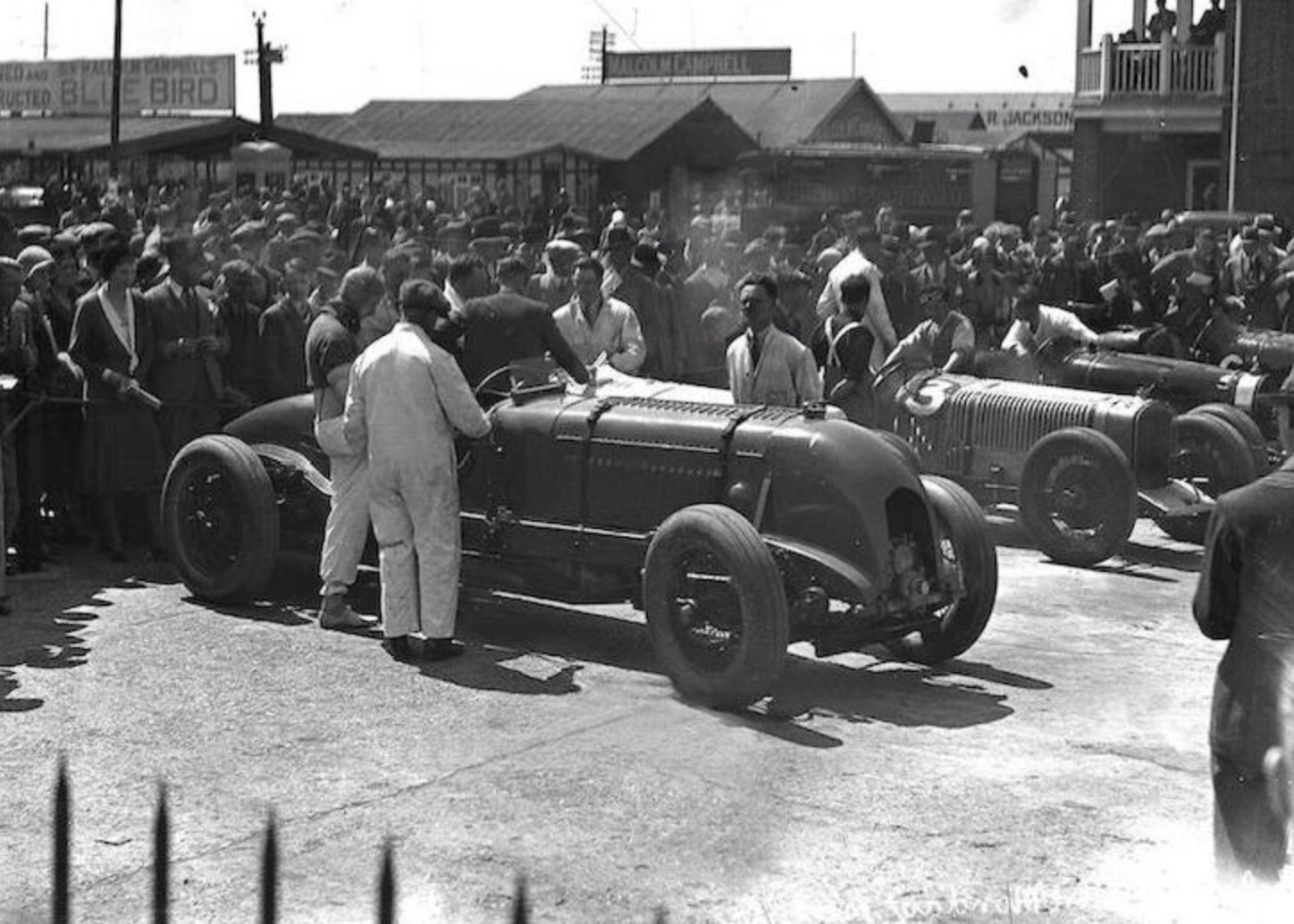
Pit scene before the 1930 ‘Double Twelve’ at Brooklands, race won by the Barnato Bentley, 7 May 1930 (Fox Photos)
W.O. embittered by the collapse of his company, summed it up as follows; ‘The supercharged 4.5 never won a race, suffered a never-ending series of mechanical failures, brought the marque Bentley disrepute and incidentally cost Dorothy Paget a large sum before she decided to withdraw her support in October 1930…’ W.O. added the sting in the tail: ‘Tim managed to persuade Barnato to allow him to enter a team in the 1930 Le Mans (in which none survived) and we were obliged, in order to meet the regulations, to construct no less than fifty of these machines for sale to the public….
W.O’s. assertion that the ‘Blower’ Bentley ‘never won a race’ is wrong. The car featured here is the exception, it not only became a multiple Brooklands race winner but also holder of the Outer Circuit lap record there.
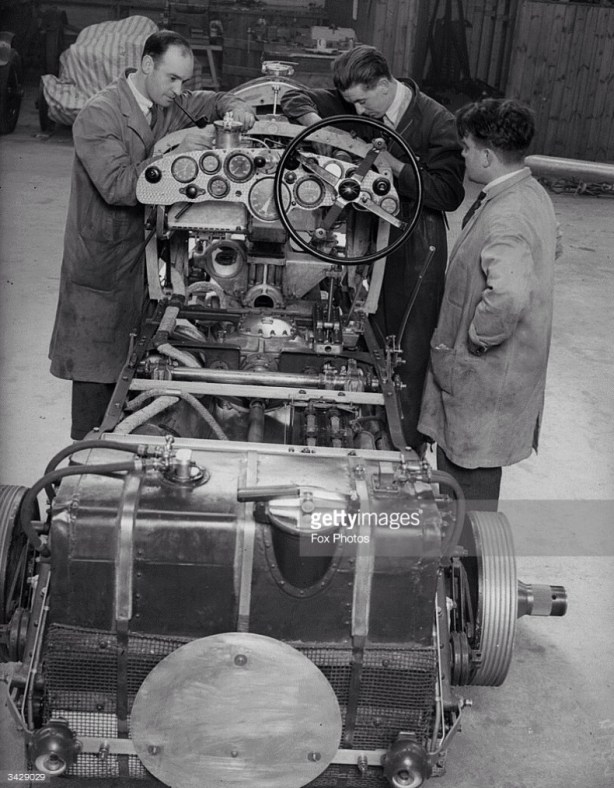
Gearbox 4 speed ‘D type close ratio, front and rear suspension beam axles with leaf springs with Bentley and Draper shocks (Fox Photos)
Birkin, disappointed by his failure at Le Mans in 1929 decided during the summer to make a firm entry for the BRDC 500-Mile race at Brooklands, using a car with the potential to break the Outer Circuit lap record there.
Bentley Motors had been wobbling in The Great Depression as sales of expensive cars plummetted when Tim Birkin became determined to supercharge the 4.5 litre Bentley.
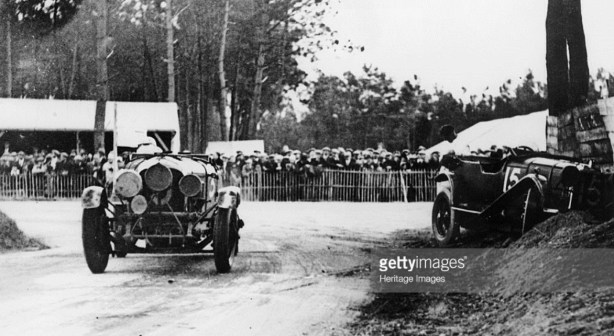
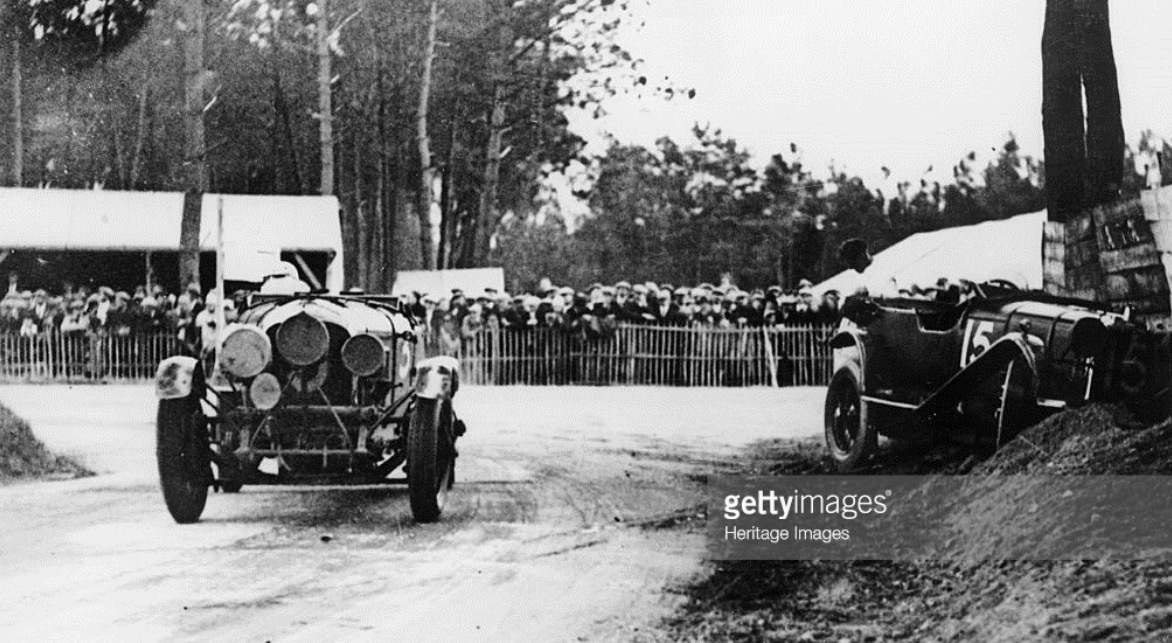
Birkin’s normally aspirated Bentley 4.5 during the 1928 Le Mans, he finished 5th sharing with Jean Chassange. Car being passed is the Samuelson/King 2 litre Lagonda. Barnato/Rubin won in another Bentley (Heritage Images)
These were the great years of Bentley success with consecutive victories at Le Mans in 1927-30. Tim wanted more power and speed as W.O. explained: ‘Tim had a constant urge to do the dramatic thing, a characteristic which I suppose had originally brought him into racing. His gaily vivid, restless personality seemed to be always driving him on to something new and spectacular, and unfortunately our 4.5 litre car was one of his targets… Tim used all his charm and persuasion to induce first Amherst Villiers to build a special blower for his 4.5, next Woolf Barnato’ – company financier as well as leading team driver – ‘to give it his blessing, and finally the Hon. Dorothy Paget to put up the money for a works at Welwyn just north of London – ‘and to buy and modify the chassis’.
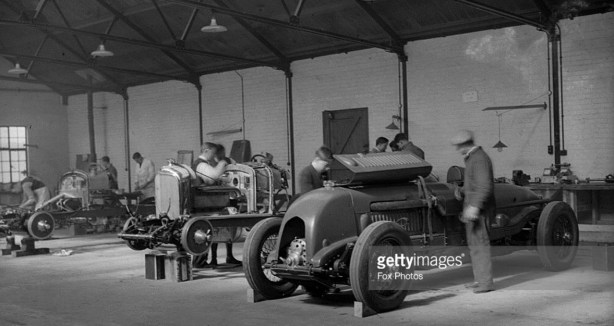
At Welwyn, this special track-racing ‘Blower’ Bentley was developed alongside the road-racing endurance sports cars (above). Captain, later Lt. Colonel, Clive Gallop was largely responsible for the new track-racing car. Working under his direction were foreman E.A. Jennings, Walter Whitcombe, Birkin’s riding mechanic, Messrs Logan and Newcombe, who were successively Bentley’s chief engine fitters; Mr Browning, the chief chassis fitter and Billy Rockell, the works’ supercharger fitter.
The Bentley chassis was of 10 feet 10 inches in wheelbase, it was chassis number ‘HB 3402’, the selected engine was ‘SM 3901’.
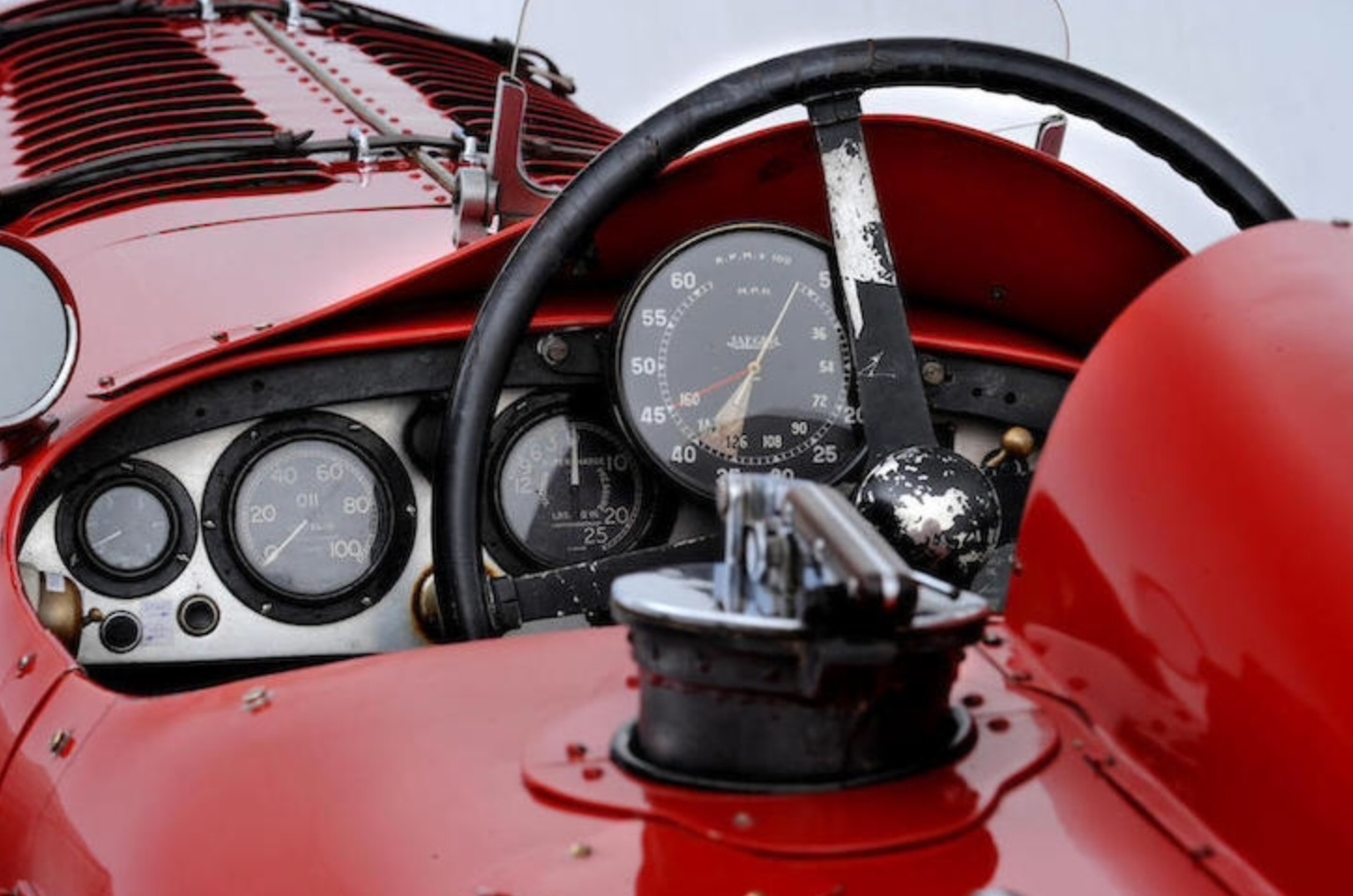
(Bonhams)
(Bonhams)
Amherst Villiers designed the supercharger and its configuration. The engine’s enlarged-diameter crankshaft, with 90mm journals and and special rods were detailed by Villiers’ chief draughtsman, Tom Murray Jamieson of later racing Austin and ERA fame.
The Villiers Roots-type supercharger used a standard casing as on the sports cars, but had larger rotors to increase boost. Otherwise, according to Clive Gallop at the time, the engine was the normal 4-cylinder with four overhead valves per cylinder actuated by a single-overhead camshaft.
The ports were highly polished as was as much of the cylinder head as possible, but not re-machined.
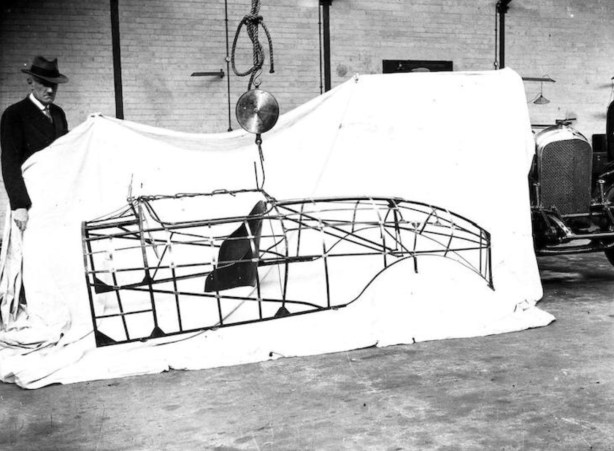
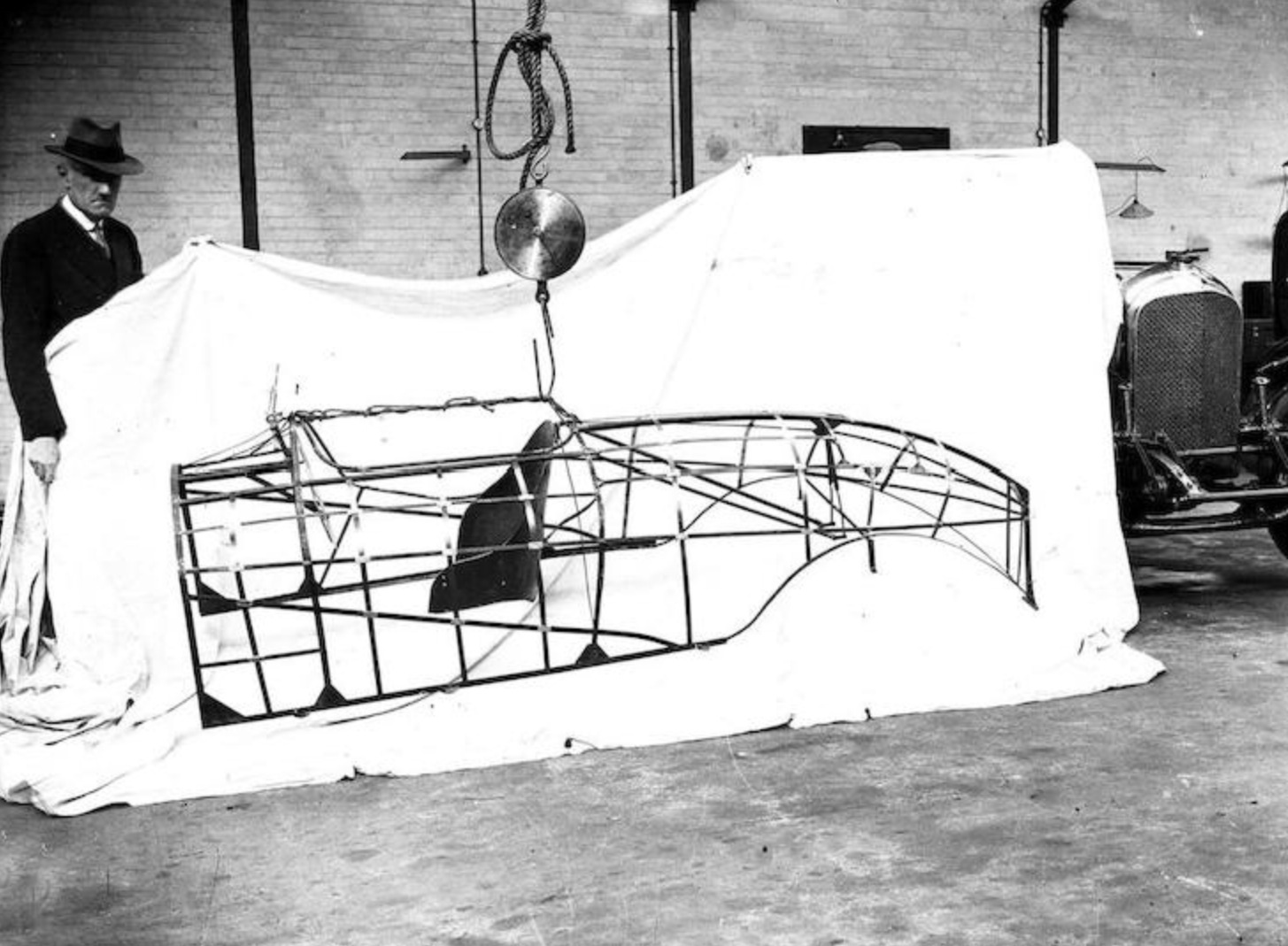
The body initially fitted was of ‘1½-seater’ form, with fabric skin stretched over a spring-steel lattice framework. The radiator was exposed whilst the supercharger, dumb-irons and carburettors were all partially cowled. The body was painted in a rich mid-blue.
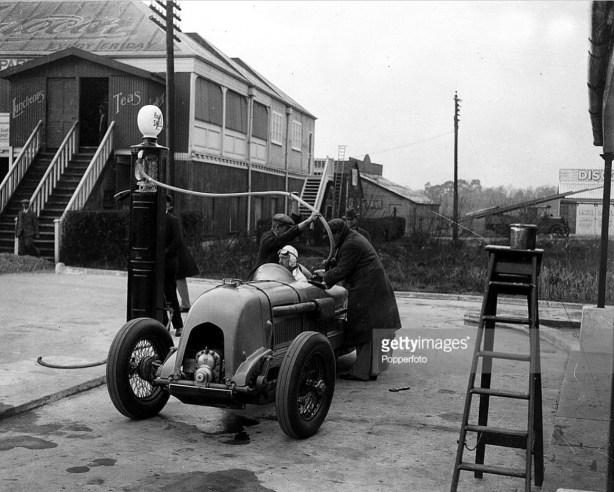
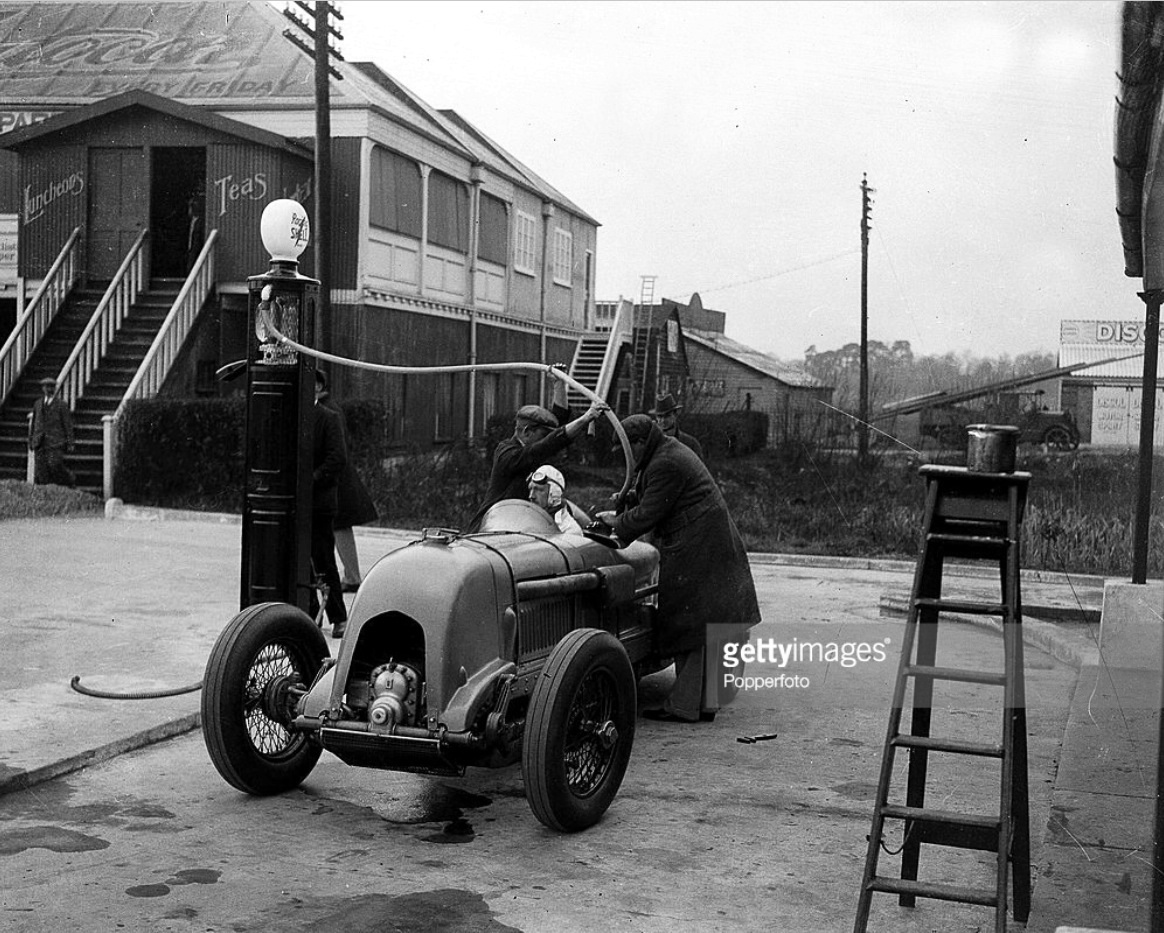
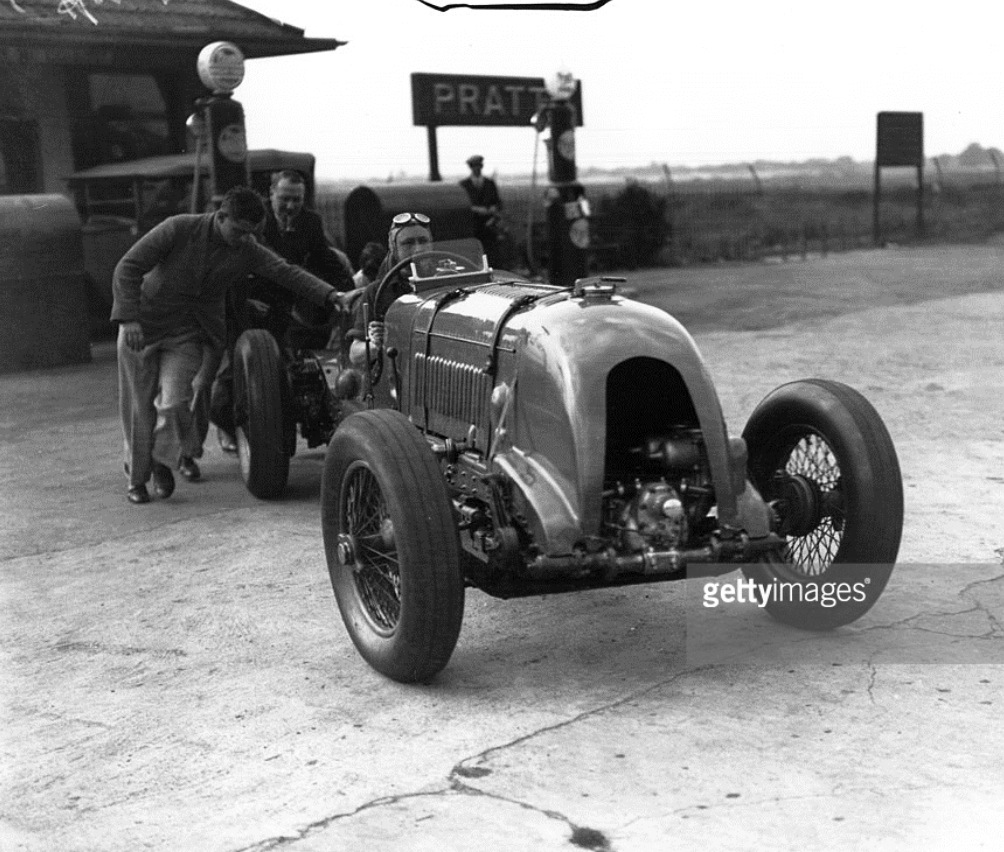
‘Fill ‘er up matey’ Birkin, Brooklands 1930 (Popperfoto)
The Outer Circuit was a great challenge in 1929. The old concrete bankings and straights were frost-heaved, patched and bumpy. Given the pounding the track meted out a fuel tank design adapted from the 42-gallon Le Mans 24-Hour race type was mounted by means of a Le Mans-style cross-tube at the back which passed through the tank and which was carried within a rubber-lined trunnion on each of the two main frame rails. A third mounting point using a plate shaped to the match the front end of the tank, carrying a nickel-steel pin that accommodated the spider of a Hardy-Spicer universal joint was also used.
A structure rising from the chassis then carried another spider which coupled to that on the tank, thus providing a flexible forward mounting.
During practice on the eve the 1929 500-Mile race, the nickel-steel pin attached to the tank sheared due to embrittlement. Gallop drove the car back from Brooklands to Welwyn for repair without mudguards, lamps and starting handle and with a police car following him right into the factory yard!
A short term fix was a normal steel strap packed with rubber and felt placed round the front of the tank and then attached to the chassis by reinforced angle plates, welded into place.
Just after dawn on race day, Clive Gallop drove the car back to Brooklands doing 120mph along the Barnet Bypass road. The car was delivered just in time for the race start.
Gallop found the car so tractable on the road that eventually a Welwyn-Brooklands route was selected which included London suburban traffic. If a spark plug oiled up, Gallop’s standard procedure was to stop on the hill at Putney Vale, on the stretch passing the KLG spark plug factory where he would fit a fresh plug and then roll-start down the remainder of the gradient there.
When the big cars were finally flagged away in 1929 BRDC 500-Miles race, Birkin immediately set the pace, lapping at over 121mph. A great duel ensued between the ‘Blower’ Bentley and Kaye Don’s V12-cylinder Sunbeam. The blue Bentley began to spray a thin mist of engine oil from its bonnet louvres, the droplets coating the aero screen, cockpit coaming and driver’s head and shoulders. Birkin soon found his hands slipping on the steering wheel rim, and his vision impaired so he tore into the pits to clean up.
The Clive Dunfee/’Sammy’ Davis Speed Six Bentley took over the lead on scratch, while on handicap small-capacity Amilcars and Austin Sevens held the advantage. By 90 laps George Eyston’s Sunbeam ‘Cub’ was up into to second place and after 108 laps it led overall. Dudley Froy, partnering Kaye Don in the big Sunbeam, also led before retiring with a broken back spring – the Brooklands bumps offering no mercy – and Eyston’s Sunbeam would also break a spring.
Having rejoined Birkin then had further trouble, a hole in the exhaust system caused flame which blasted onto the fabric body skin and set it alight. Birkin returned to the pits trailing flame and smoke, the fire was quickly doused, but his race was over.
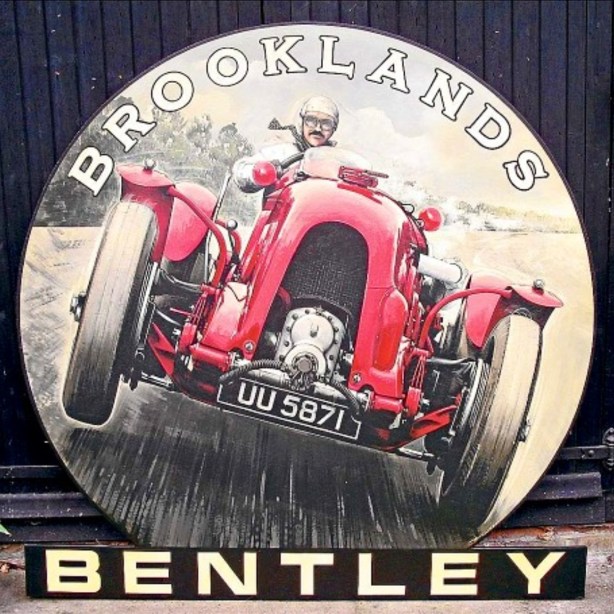
For 1930, Birkin then decided to attack track racing seriously with the single-seater. In its 1930 form with Villiers supercharger driven from the crankshaft nose and inhaling through two huge horizontal SU carburettors, the engine developed circa 240bhp on alcohol fuel mix. This was 65bhp more than a standard ‘Blower’ Bentley on petrol. Its rear axle featured a new nose piece housing a special pinion which provided a final-drive ratio of 2.8:1. Fuel flow at full throttle was quoted as being approximately one gallon every 74 seconds!
Reid Railton was commissioned to design a new (fire proof!) aluminium body to replace the fabric original, it was hand made for the car by A.P. Compton & Co of Merton. The regulation Brooklands silencer on the car’s nearside now bolted directly to the exhaust manifold. Front-wheel brakes were deleted and the car rode on 32-inch x 6.50 Dunlop Racing tyres.
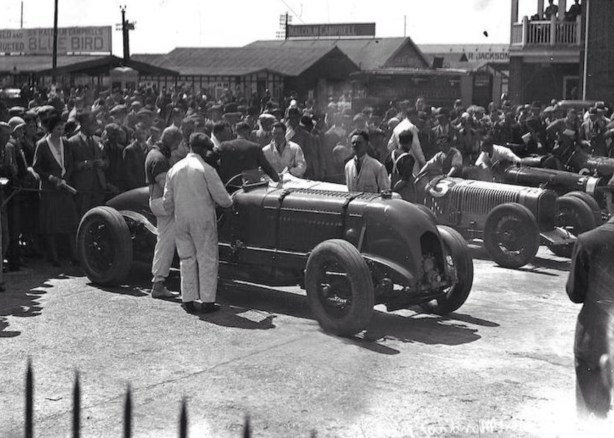
The first Brooklands Meeting of 1930 saw Birkin battling against his starting penalty, taking second place in the three-lap Kent Short Handicap race despite a slipping clutch and with supercharger casing cracks hastily plugged just before the start, using plasticene. His flying lap was still clocked at 123.89mph. He then contested the meeting’s Surrey Short Handicap, setting fastest lap at 124.51mph.
In the four-lap Kent Long Handicap, Birkin then had the chance to overcome his penalty, winning by one second at 119.13mph average and setting fastest lap at 126.73mph.
This was the first race victory ever achieved by a ‘Blower’ Bentley. While Sir Henry, car owner the Hon. Dorothy Paget and their supporters were delighted, W.O. Bentley, whose distaste for supercharging was often declared had mixed feelings.
Birkin won the Brooklands Easter meeting Bedford Short Handicap before a 20,000 crowd, winning at 117.81mph and lapping at 134.24!

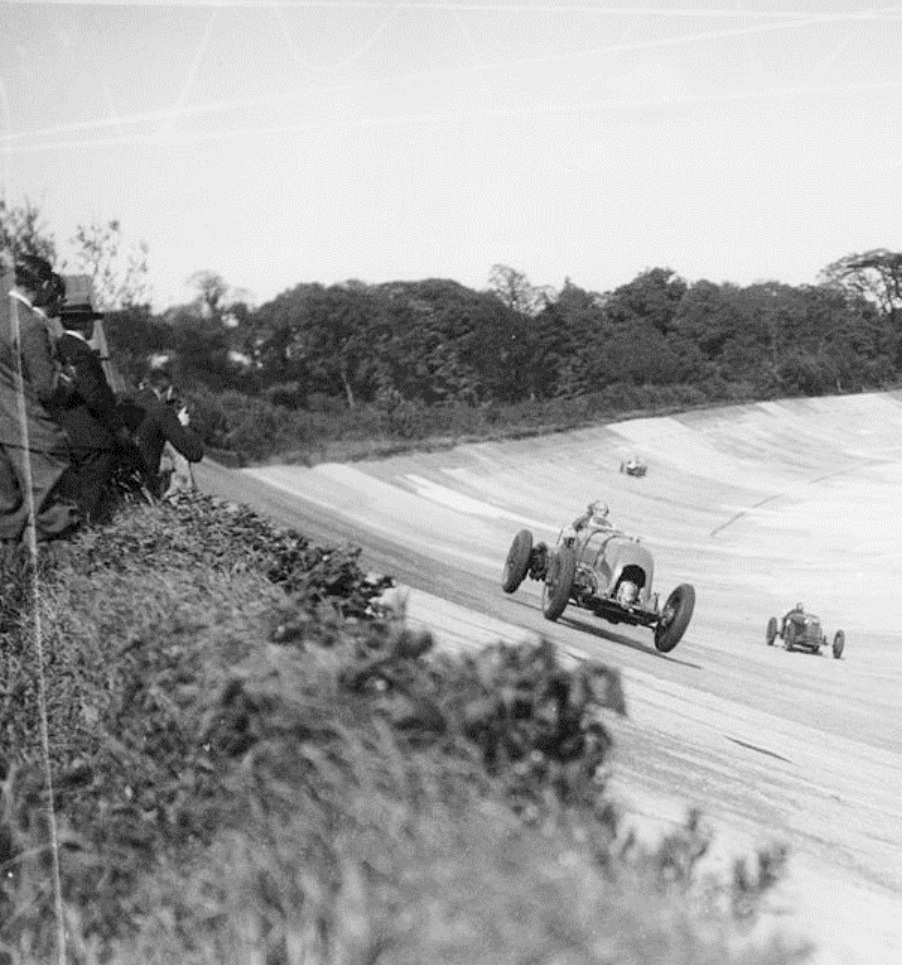
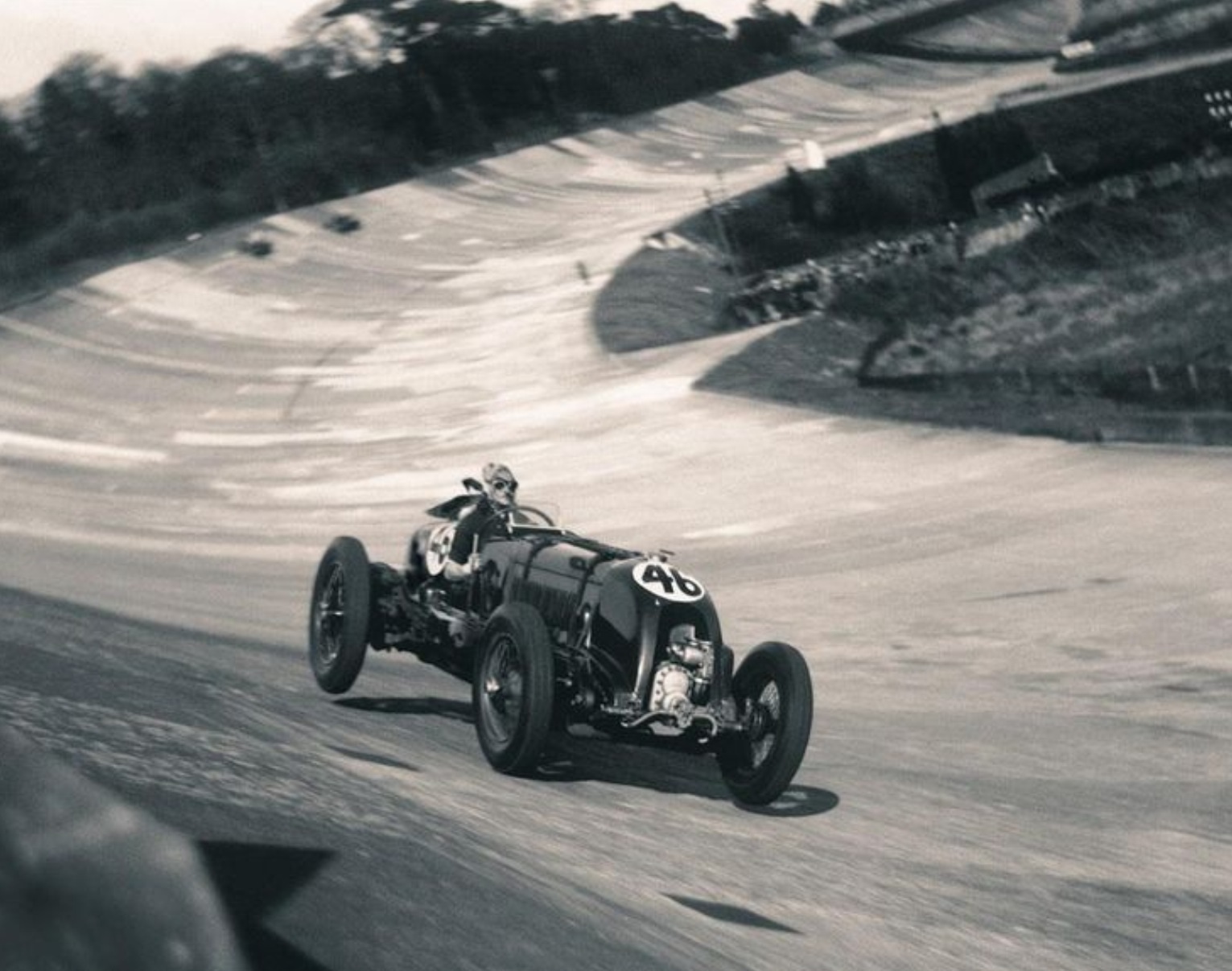
Birkin’s big beast leaves the ground on the Members Banking hump where the track crosses the River Wey, circa 1932 (Heritage Images)
As the late Bill Boddy recalled in his definitive ‘History of Brooklands Motor Course 1906-1940’ – ‘Plug troubles foiled Birkin’s hopes in the Dorset Lightning Short Handicap but he turned out again for a 3-lap match race against Dunfee’s GP Sunbeam. Sadly Dunfee’s car had thrown a rod, so Birkin came out alone, to attempt to beat Kaye Don’s lap record. The Bentley was in grand trim, roaring very high round the Byfleet banking, dropping to the Fork in a puff of dust, clipping the verge by the Vickers’ sheds and going onto the Members’ banking each time with that characteristic and disturbing little snake that those who saw the car in action are not likely to forget. From the notorious bump” – where the Hennebique Bridge near the end of the Member’s Banking had subsided slightly into the River Wey ‘… it leapt some 70 feet, clear of the Track, onto the Railway Straight. It was a grand sight, Birkin’s scarf flirting with the fairing behind his head as he held the car to its course. The ‘Blower’ Bentley certainly provided as great a thrill for the onlookers of the 1930s as had the V12 Sunbeam and the ‘Chittys’ for the 1920s…’.
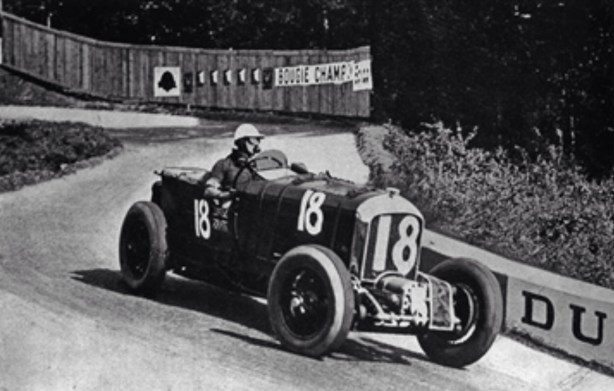
Birkin contesting the 1930 French GP at Pau in his sports Bentley 4.5 blower (unattributed)
‘Tiger Tim’s heroic driving that resulted in a lap in 1 minute 13.4 seconds, 135.33mph, beating Don’s existing outright record by 0.73mph. On its standing lap the Single-Seater lapped at 133.88mph, then completed its succeeding three laps at 134.60, 134.60 and finally the new record 135.33mph.
Birkin’s Blower Bentley single-seater was clearly Great Britain’s fastest track racing car of the time. After that day’s racing he flew back to Le Touquet to claim the dinner that ‘Babe’ Barnato had promised him that morning if he could break the Outer Circuit lap record.
Kaye Don first equaled the new Birkin Bentley record in his V12 Sunbeam at Brooklands’ Whitsun Meeting and then shattered it by lapping at 137.58mph, a 2.25mph improvement.
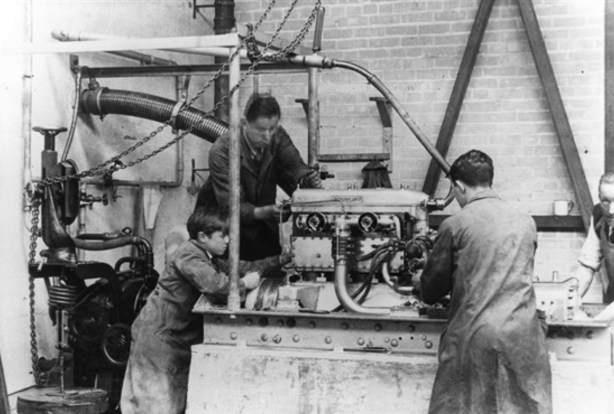
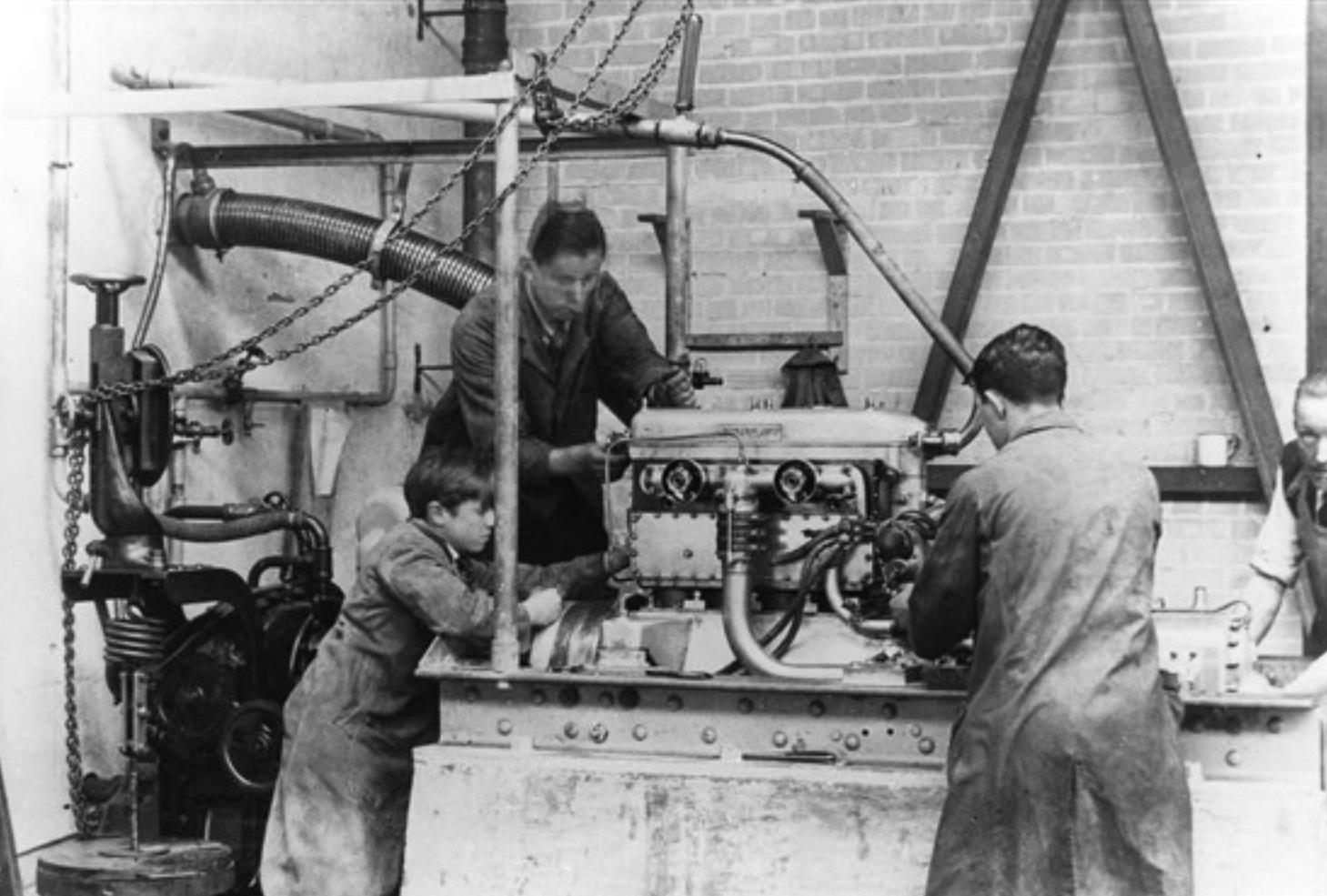
4.5 blower engine in the Welwyn test cell (unattributed)
The Hon. Dorothy Paget entered Birkin to drive the Single-Seater again in the Brooklands August Bank Holiday meeting, only for the fuel tank to split causing his retirement from the feature ‘Gold Star’ Handicap.
High winds and the threat of rain made high speeds impossible in the Brooklands Autumn meeting, but Birkin and the Single-Seater reappeared for the BRDC 500-Miles on October 4. A front tyre burst at top speed during practice which both car and driver survived despite ‘some astonishing subsequent gyrations’. Birkin shared the drive with George Duller but the car ran badly and neither enjoyed the experience, their car ‘sounding like a motor cycle’ and finishing ninth. The 1930 Brooklands season closed with Kaye Don and his V12 Sunbeam holding the Outer Circuit lap record.
The Hon. Dorothy Paget loved being involved with competition but only if she was on the winning side! That winter she withdrew her backing from the ‘Blower’ Bentley endurance racing team, but retained the successful Single-Seater.
The BARC Whitsun Meeting in 1931 saw the great car’s return to Brooklands, but Birkin’s best efforts with it were overshadowed, lapping at a best of 128.69mph in the Gold Star Handicap, then 131.06 in the Somerset Senior Long before retiring.
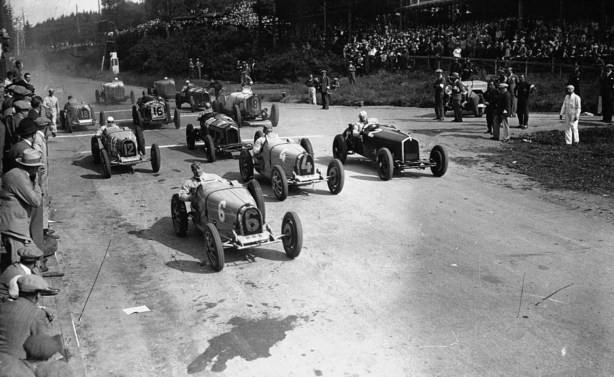
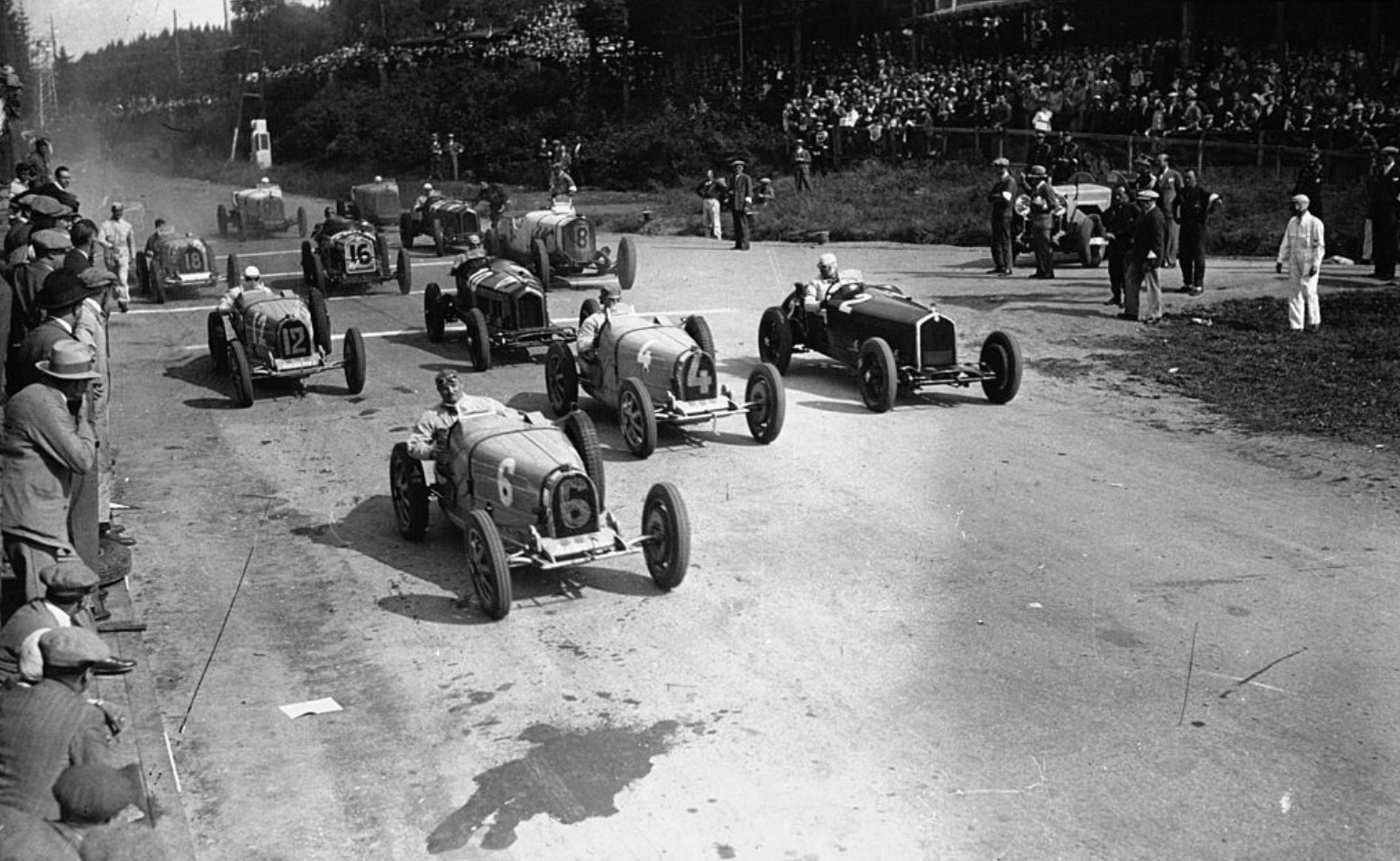
1931 Belgian Grand Prix Spa. Birkin was 4th in his Alfa 8C2300 #16. #6 Divo/Bouriat Bugatti T51 DNF, #4 Grover-Williams Bug T51 1st, #2 Minoia Alfa 8C2300 3rd, #12 Varzi/Chiron Bug T51 DNF, #18 Wimille/Gaupillat Bug T51 7th #8 Stoffel/Ivanowski Mercedes SSK 5th (unattributed)
Birkin consulted George Eyston and at his suggestion fitted a PowerPlus vane-type supercharger in place of the Villiers’ Roots-Type. The Single-Seater returned to the historic track in August, but a gusty wind hampered attempts by Birkin and Gwenda Stewart in the 2-litre Derby Miller to attack the Kaye Don lap record. Birkin’s best attempt running alone as part of a special record attempt feature within that August meeting was clocked at 134.97mph, but later that afternoon in the London Lightning Long Handicap race he clocked an improved 136.45mph despite the wind
Tim’s great friend and fellow ‘Bentley Boy’ Dr J.D. Benjafield was entrusted with the Single-Seater for the 1931 BRDC 500-Miles, only for its engine to break. Birkin wrote: ‘The few days before this race were not without their thrills…when I was coming off the Byfleet Banking at about 130, the auxiliary petrol tank caught fire and flames began to lick the legs of my overalls….the cockpit certainly did become rather hot. So I switched off the engine and put on the brakes; but before the car stopped, I had to climb out of the seat and, perched on the back of the car, steer as best I could from a crouching position. I jumped off once it was safe and put out the fire. But the cockpit and my hands were both burnt…’. The original Villiers supercharger then replaced the PowerPlus.
At that year’s Autumn Meeting, in the Cumberland Senior Long Handicap Birkin finished third after starting from scratch, after which he continued for two extra laps to attack Don’s 137mph lap record, yet again falling just short at 136.82mph.
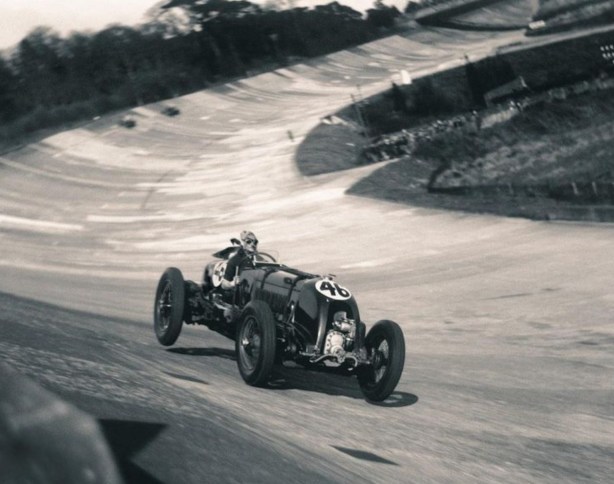
For 1932, the Single-Seater was repainted red and its engine bored to 100.5mm, a capacity of 4,442cc.
The season opened on Easter Monday, four days prior to the meeting Birkin attacked the Kay Don Outer Circuit lap record and broke it at last, at 137.96mph.
In the subsequent Easter meeting, John Cobb’s V12 Delage just edged out the now re-handicapped Lap Record-holding Single-Seater to win by 0.2 sec from Birkin, whose best lap was at 134.24mph compared to Cobb’s best of only 128.36.
In the Norfolk Lightning Long Handicap, Birkin nearly lost control on his second lap, skidding viciously under the gusty wind as it shot out from beneath the Members’ Bridge. Birkin and the Bentley then won for their third time at Brooklands, averaging 122.07mph and lapping at 134.26.
The BRDC later held a 100-mile Outer Circuit race. Birkin held the advantage in his heat until the Single-Seater’s right-front tyre stripped and he made a pit stop, finishing fourth. He led the Final at half-distance but only until ‘…the long red car came round misfiring and spluttering, took on water, boiled and retired a lap later with the cylinder block cracked’. Another retirement was then posted in the 1932 Whitsun Meeting,
At a special Brooklands day organised in aid of Guy’s Hospital, Birkin won the Gala Long Handicap and equaled his former lap record of 137.96mph. In the six-lap Duke of York’s race the Bentley threw the tread from its right-rear tyre which flailed high over the heads of spectators round the Members’ Banking!
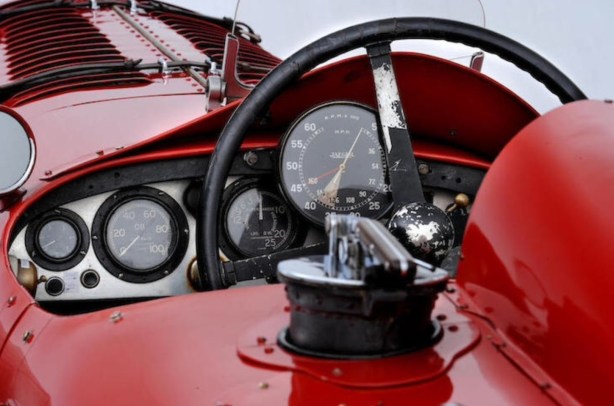
(Bonhams)
The threat of rain at the August Meeting saw Birkin not run the Single-Seater in one race, but in the 3-lap invitation event for 100 Sovereigns, Birkin confronted John Cobb’s V12 Delage. The French car was the faster starter, leading by 3.8 seconds completing the opening lap. But on lap 2 Tim lapped at 135.70mph and was just 1.2 seconds off Cobb’s tail.
Bill Boddy: ‘The crowd was on its toes… And round they came, the Bentley gaining, yard by yard, on the Delage. As Birkin hurtled off the banking the ‘bump’ shot his car well clear of the Track and the padded rest on the fairing behind his head came adrift, to fly, a small dark object, high into the air. In a supreme effort, Birkin caught Cobb and drew ahead, winning one of Brooklands’ most intense races by a mere one-fifth of a second, or about 25 yards. He averaged 125.14mph and that glorious last lap was run at 137.58mph (0.28mph below the record).’ Out again in the Hereford Lightning Long Handicap, Birkin swept around at 136.45mph, being classified second at the finish.’
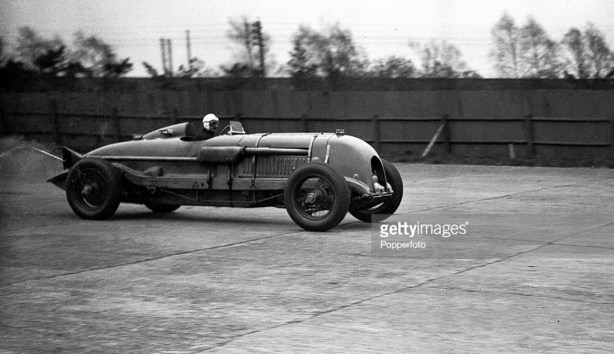
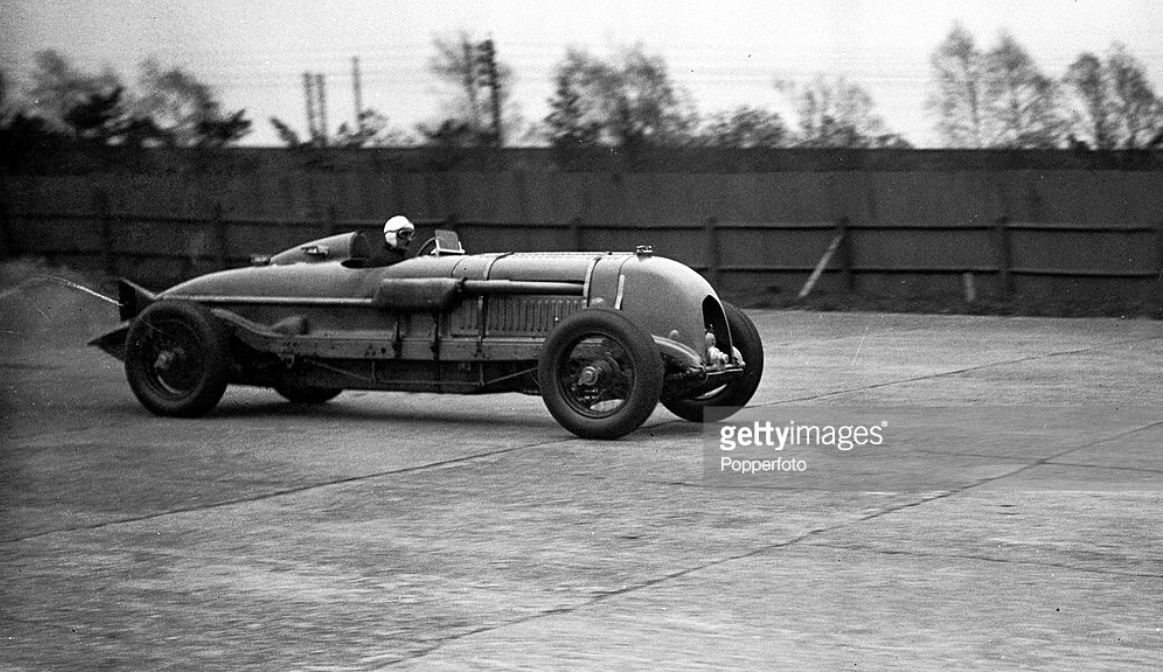
Brooklands , Birkin 16 April 1930 (Popperfoto)
Despite his Brooklands heroics, in 1932, Birkin wrote of the Motor Course: ‘I think that it is, without exception, the most out-of-date, inadequate and dangerous track in the world…Brooklands was built for speeds of no greater than 120mph, and for anyone to go over 130, without knowing the track better than his own self, is to court disaster… The surface is abominable. There are bumps which jolt the driver up and down in his seat and make the car leave the road and travel through the air’. He concluded this onslaught with the line ‘If I could find anything true to shed an attractive blur over all Brooklands’ diseases, I would make use of it at once; but there is nothing at all…’ He was a brave man, then, to unleash this ‘Blower’ Bentley Single-Seater there as fearlessly as he did.
In the sports-racing ‘Blower’ Bentleys, Sir Henry had already set a record-breaking pace at Le Mans in 1930, and that same year ran his ‘Blower’ in the French Grand Prix at Pau in southern France, describing it as akin to ‘a large Sealyham surrounded by greyhounds’, yet finishing an astonishing second overall.
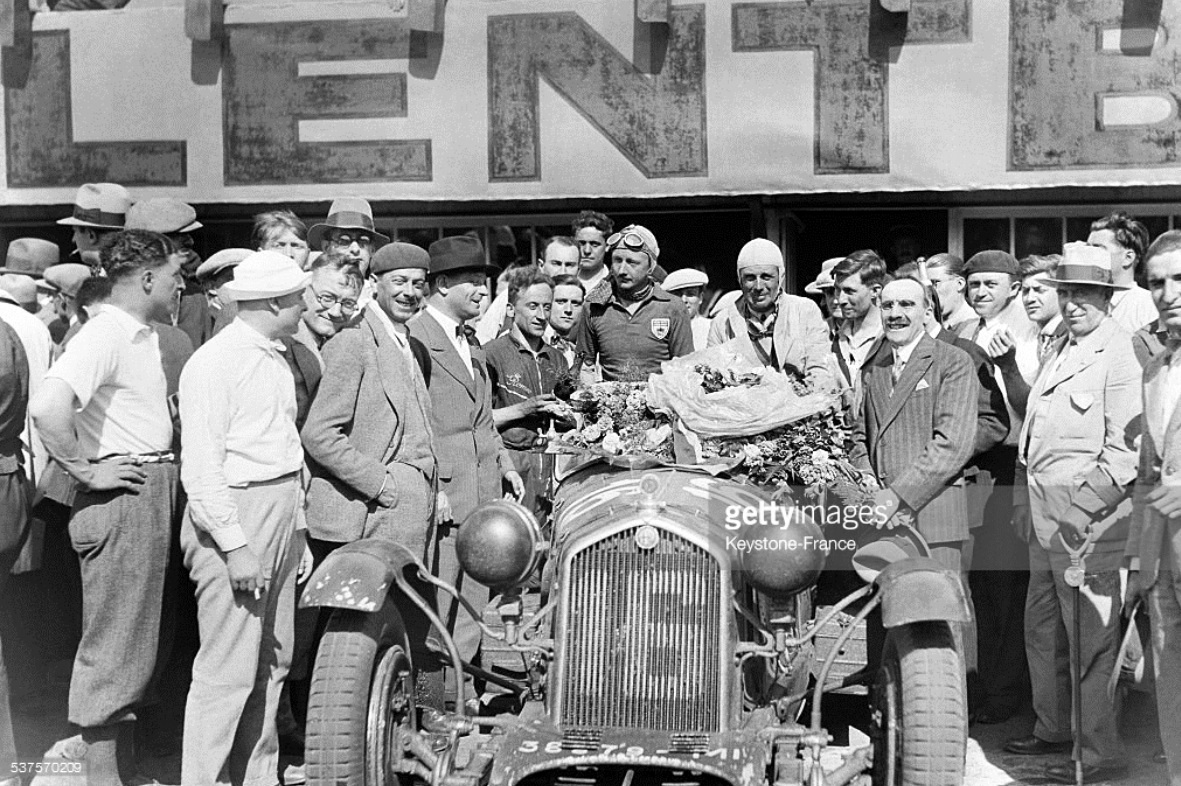
But by 1931 Bentley Motors and the ‘Blower’ project were in collapse and Sir Henry was racing private Alfa Romeo 8C-2300s shared with Earl Howe, winning Le Mans for the Italian marque (below).
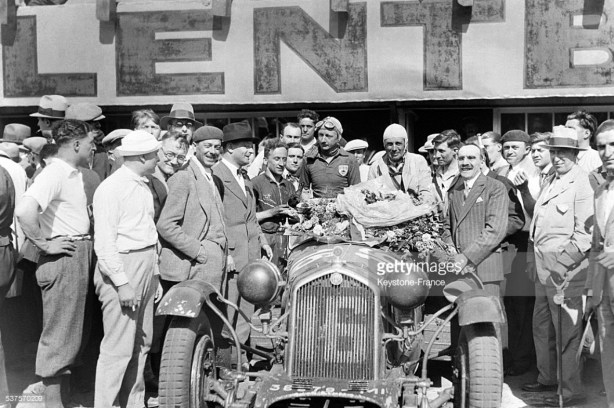
Tragically, early in 1933 ‘Tiger Tim’ burned his arm at Tripoli in Libya while running a Maserati 8C in the Lottery Grand Prix. Already ailing with recurrent malaria, first contracted during World War 1 , this British hero was quickly overwhelmed by septicaemia. Despite tremendous efforts to save him by his friend and loyal supporter Dr Benjafield Sir Henry died in a London hospital three weeks after the Libyan incident, on June 22, 1933, aged just 36.
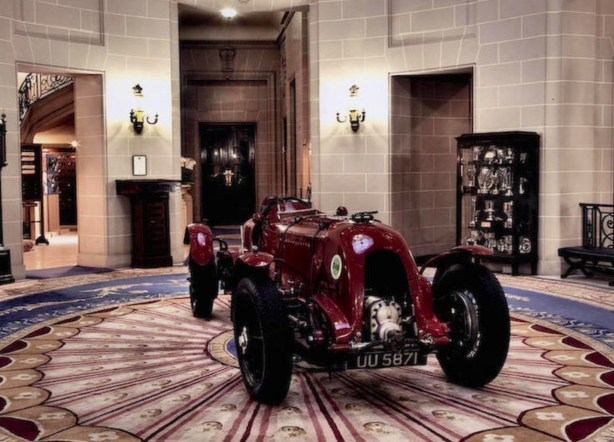
Paget, retained the Single-Seater, unused until 1939. Bentley enthusiast Peter Robertson-Rodger blew-up the engine of his ex-Birkin French GP ‘Blower’ Bentley at Donington Park, and convinced Paget into selling him the track car, to use its engine. Then came World War 2, the number one ‘Blower’ engine was returned to the single-seater, which Robertson-Rodger converted into a two-seat roadster.
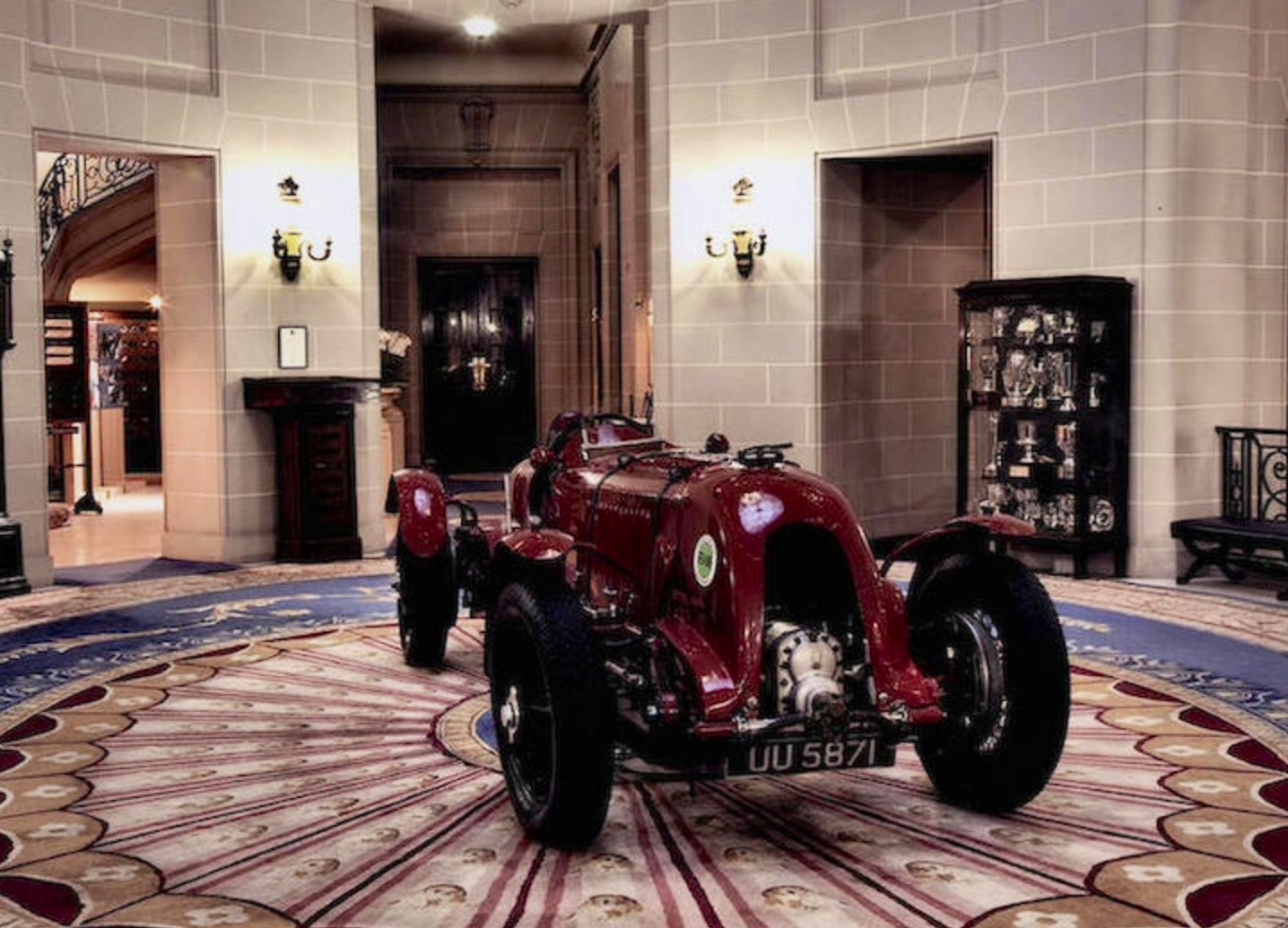
Bentley mechanic Bill Short did the conversion work during the war, the project finally completed in the late 1940s using a two-seat body designed by Robertson-Rodger built by Chalmers of Redhill. This new body retained the single-seater’s appearance in side profile, complete with pointed tail. Bentley specialist and VSCC luminary John Morley subsequently worked on the car, and when Robertson-Rodger died in 1958 he bequeathed the Single-Seater in his will to Morley.
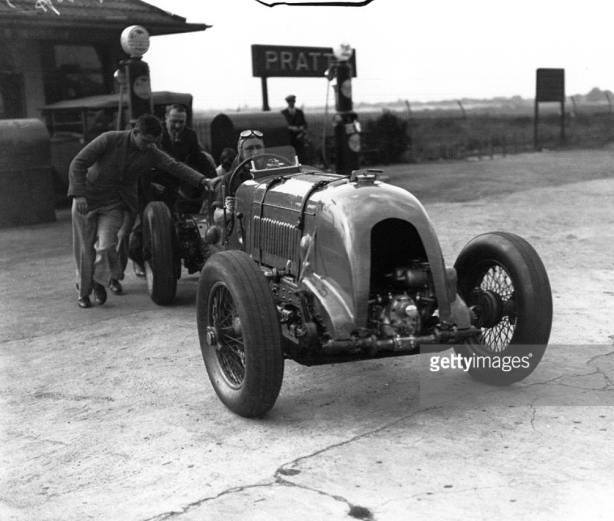
Birkin at Brooklands, the caption says ‘taking part in the 500 Mile Race at Brooklands’ but it looks more like a test day, picture dated 1 January 1931 (Central Press)
Boyhood Birkin fan and Bentley enthusiast ‘Rusty’ Russ-Turner had been a long-term admirer of the car. He recalled: ‘I had never lost my fascination for that car and one day I was at the Bentley Drivers’ Club Hendon driving tests meeting when a fellow member mentioned rumours that the Birkin single-seater was going to be sold to America. I went to see John Morley who said that nobody in England seemed to want it. After long negotiations we came to an agreement in 1964. It had the 2-seat body but Morley also sold me the original track body. When I climbed behind the wheel it was the realization of a dream. I was wearing a white silk shirt and by the time I got home I was soaked in oil from head to foot!’
The car’s bearings were badly worn and its dry-sump system scavenge pump on the nose of the supercharger had been re-piped to feed an oil-cooler under such pressure that the excess oil squirted everywhere. He painstakingly rebuilt the car and ran it for several years with its Robertson-Rodger 2-seat body in place whilst the single-seater aluminium shell sat on the floor of his garage.
‘Its cockpit was just too tight for me…and one day I climbed into it, there on the floor, and couldn’t get out, I had to stand up, wearing the thing like a skirt. Eventually we found that by making a minor modification and cutting out just one spar behind the seat we could gain about four inches, and that was just enough for me to squeeze in’.
With this unobtrusively modified original body remounted on the famous old chassis, front wheel brakes replaced by Robertson-Rodger and some other minor concessions to road equipment, the Birkin single-seater emerged as ‘a long-legged vintage motor car of the most colossal distinction’.
‘Rusty’ Russ-Turner found the pedals demandingly confined with the centre throttle and right-side brake, while cockpit heat was always high as hot air wafted back from the engine compartment. The aluminium body paneling ‘…warms up nicely in sympathy with the massive exhaust and Brooklands silencer along the left-hand side. He found the brakes excellent although ‘…one does have to make arrangements when approaching a corner’. The car was absolutely at home at anything above 70mph at which it became ‘delightfully stable’.
The standard D-Type Bentley gearbox he rated as being ‘as good as any’ while he also owned the original track-racing gearbox which he found contained the ’rounded-off straight-cut gears preferred by Birkin…’. ‘Tiger Tim’ either could not or would not double de-clutch and he liked to snatch the gears straight through. ‘They called them Mangle Gears and this explains the fantastic background gear noise which was so characteristic of the car when it was being raced’, he explained.
Gearing was 36mph per 1,000rpm, the rev limit was set at 4,000rpm.. ‘…although it can get very expensive around there’, he warned.
‘Rusty’ Russ-Turner suffered a fatal heart attack at Silverstone while racing the car, it was acquired by George Daniels and then later sold again.
Bibliography…
Bonhams; sold the car several years ago, this article is a truncated and edited version of their documentation of the cars history.
Photo Credits…
Getty Images, Heritage Photos, Popperfoto, Fox Photos, Getty Images, Bonhams
Tailpiece: 16 April 1930…



















 primotipo...