

The Ascaris, Jones, Hills and Villeneuves…
When Alan Jones won the 1980 Australian Grand Prix at Calder, he and his father Stan joined the Ascaris as the only father/son combination to win their home Grands’ Prix.
Antonio Ascari won the 1924 Italian Grand Prix in an Alfa and his son Alberto won it in 1949, 1951 and 1952 for Ferrari.
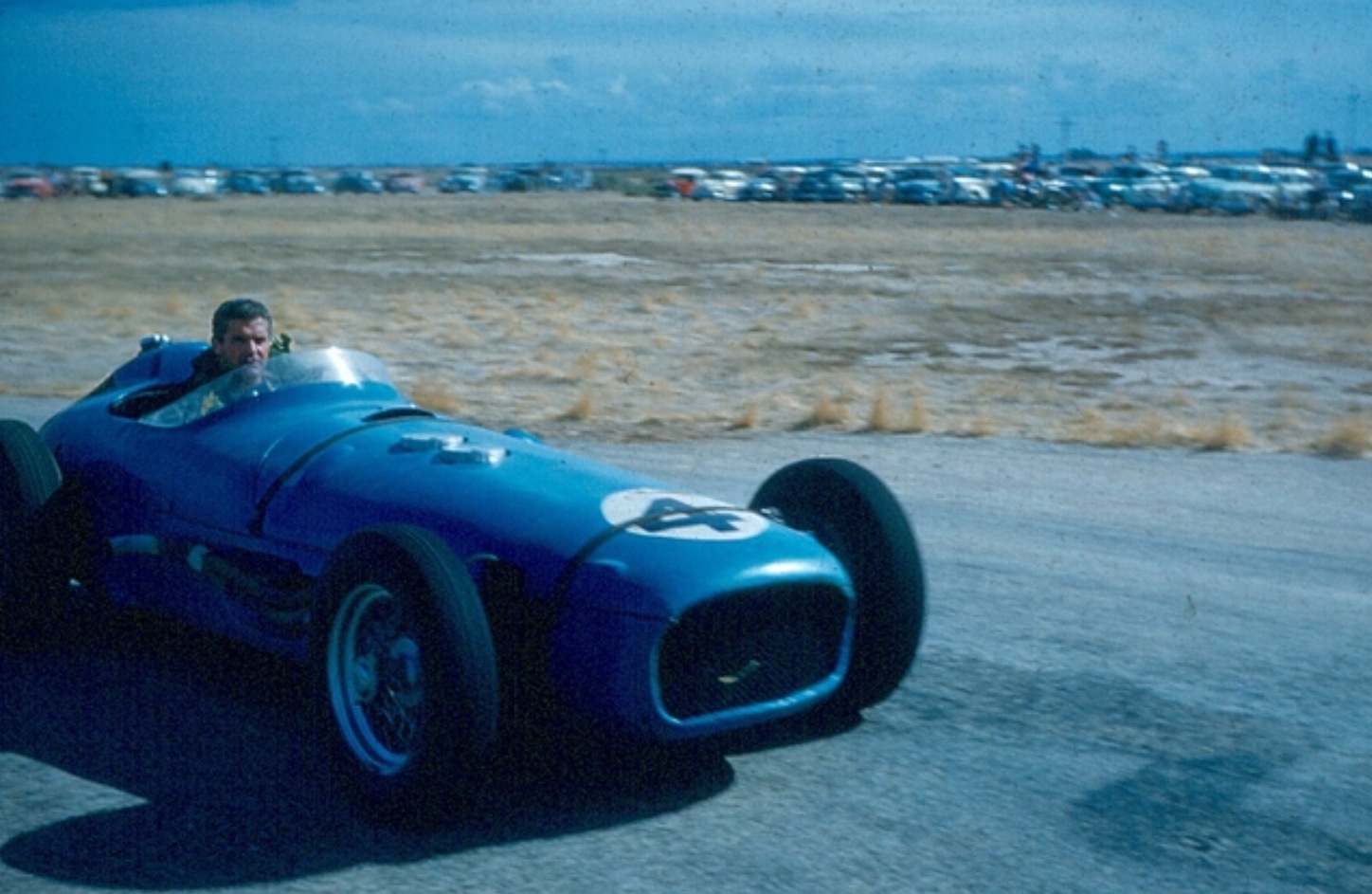
Stan won the 1959 AGP at Longford in his Maserati 250F, the last AGP won by a front engined car.
Graham and Damon Hill both contested the British Grand Prix, Damon winning in 1994 aboard a Williams Renault, whilst Graham came close he never had a hometown win. His luck in the UK was as bad as it was good in Monaco where he won five times!
Similarly, Gilles and Jacques Villeneuve both contested the Canadian Grand Prix but only Gilles took a win, for Ferrari in 1978.
Sadly, all four fathers had one thing in common, they all died before their sons achieved Grand Prix success. Alberto and Gilles in testing/race accidents, Graham in the light aircraft he was piloting, together with his team, and Stan of natural causes at the very young age of 49.
Foreword…
Like so many of my articles, this one on Stan started with a photograph, the one above at Longford. I figured the article would be short but the more I dug, and there is not a lot of information available on Jones, the more interested I became in him and the series of Maybach cars which were such an important part of his career.
So, it’s ended up rather long but I hope of interest.
I leaned heavily for information on the Maybach phase on Malcolm Preston’s great book ‘From Maybach to Holden’, sadly, Malcolm died a month or so ago. He was very kind and helpful to me with the article on the John McCormack McLaren M23, that article in many ways was the inspiration for starting this blog, so I dedicate this article to him. RIP Malcolm Preston.

Stan Jones…
Much has been written about Alan of course, but not so much about Stan, one of the great drivers and characters of Australian motor racing in the immediate post war years until the dawn of the 1960s.
He was raised in Warrandyte, then a rural hamlet 24km north-east of Melbourne and still semi-rural now, by his mother and grandfather. He served in the Australian Armed Forces based in Darwin during World War 2. He married Alma O’Brien circa 1940, Alan was born on November 2 1946.
Stan commenced motorsport after being encouraged by Otto Stone, a racer and engineer who would later make a great contribution to his success as an elite driver. He competed in his MGTC at Rob Roy Hillclimb, at Christmas Hills, not far from where he grew up in 1948.
Stan was soon a keen competitor in all forms of the sport including trials, twice winning the Cohen Trophy awarded to the best trials driver of the year by the Light Car Club of Australia.
His MGTC was supercharged, as so many of them were, his first circuit meeting was at Fishermans Bend, Melbourne in late 1949. He did well, finishing seventh against more experienced opposition.
In need for more speed, he bought an HRG chassis to which a local monoposto body was fitted, achieving success with the car in 1949 and 1950. His first road racing event was at Woodside, in the Adelaide Hills, he finished second in the Onkaparinga Class handicap in November 1949. Australian Motor Sports reported that it was the first appearance of one of the new production monoposto racing HRG 1500’s.’ In 1951 he also bought an Allard J2.
These faster cars were funded by Superior Cars, a dealership he opened in Richmond: yards in Coburg and South Yarra followed, northern and inner eastern Melbourne suburbs respectively.
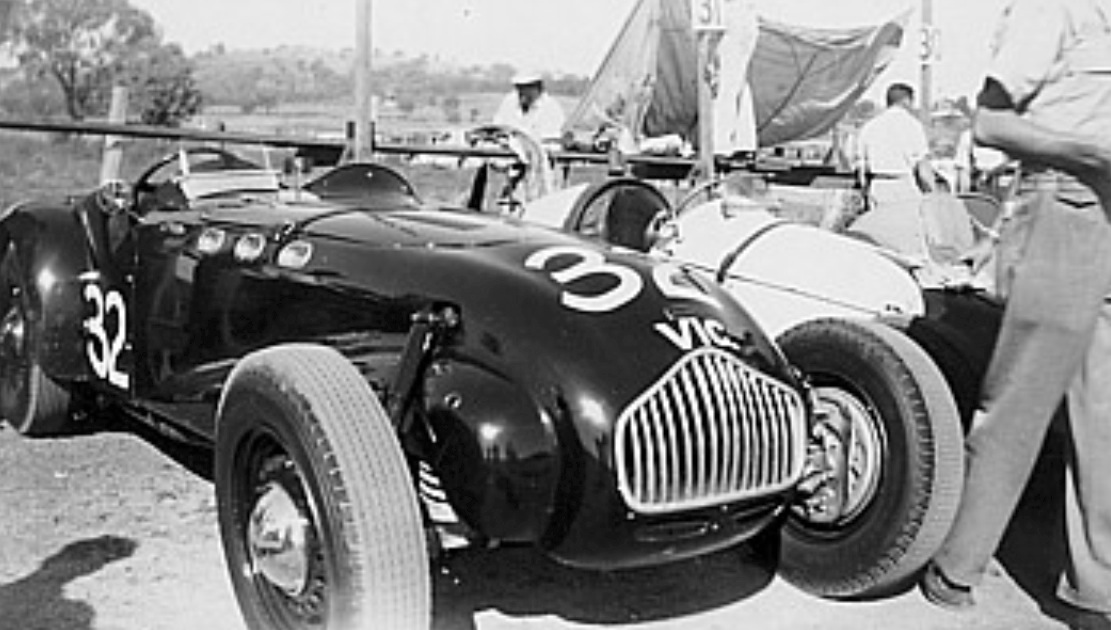

Charlie Dean, Repco and Maybach…
The turning point in Stan’s career was the association with Charlie Dean, the ‘Maybach’ racers which Dean built and the ‘Skunkworks’ at Repco Research, which continued to develop the car and its successors after Jones acquired it/them.
Charlie’s business, named ‘Replex’, manufactured large industrial transformers. He became involved in the Australian Motorsports Club and using his wartime knowledge of sophisticated German engines, sought a suitable motor to form the basis of a special.
A friend who operated a war surplus wrecking yard was briefed and Charlie was soon the owner of a ‘Demag’ half-track armoured personnel carrier. Critically, it was powered by a Maybach six cylinder 3.8 litre SOHC, crossflow engine. The block was cast-iron, the head aluminium, the crank ran on eight main bearings. In standard form the engine produced 100bhp at 2800rpm, but the engine’s performance potential was clear to Dean.
Initial modifications involved fitment of twin Amal carbs to a fabricated manifold, increasing the compression ratio to 8:1 by planing the head, fitment of a Vertex Magneto and a re-ground cam to increase valve lift and duration.
At about the time Dean started to build Maybach 1, he sold his business to Repco, being retained to run it, this gave him both time for his hobby and access to Repco resources.
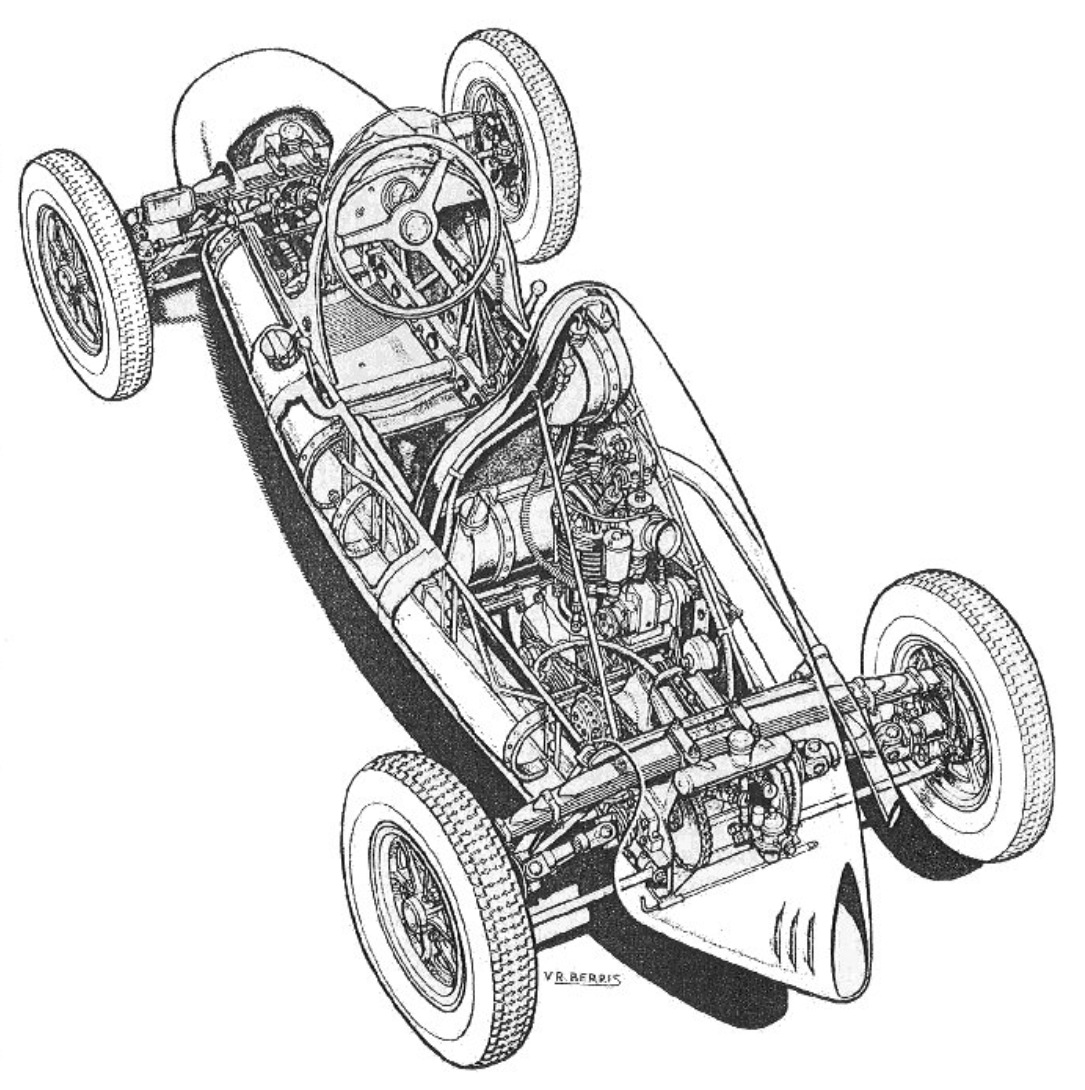
The engine was fitted into a tubular chassis, the basis of which was two 4 inch diameter 10 guage mild steel tubes to the front of which was mounted suspension mounting framework. Front suspension comprised a transverse leaf spring with suspension arms and stub axles from a 1937 Studebaker Commander. Rear suspension was of conventional semi-elliptic leaf springs, Luvax lever-arm shocks were used. A Fiat 525 gearbox drove an open prop-shaft to a Lancia Lambda seventh series rear axle. A Jeep steering box was used. Standard Studebaker brakes and wheels were deployed at the front and Lancia brakes, hubs and wheels at the rear.
It was a quick sports car and was soon developed further for competition use, Charlie debuting it at Rob Roy Hillclimb in 1947.
The car was clothed in a metal body built by fellow Repco Engineer Frank Hallam. It was made from surplus metal Kittyhawk aircraft fuel belly-tanks. (made by Ford)
Charlie raced the car in the 1948 AGP at Point Cook, an ex-RAAF base in Melbourne’s inner West. He retired on lap 12 from magneto failure in a race of attrition in searing heat, victory going to Frank Pratt’s BMW 328. In those days the AGP was Formule Libre and handicaps were applied.
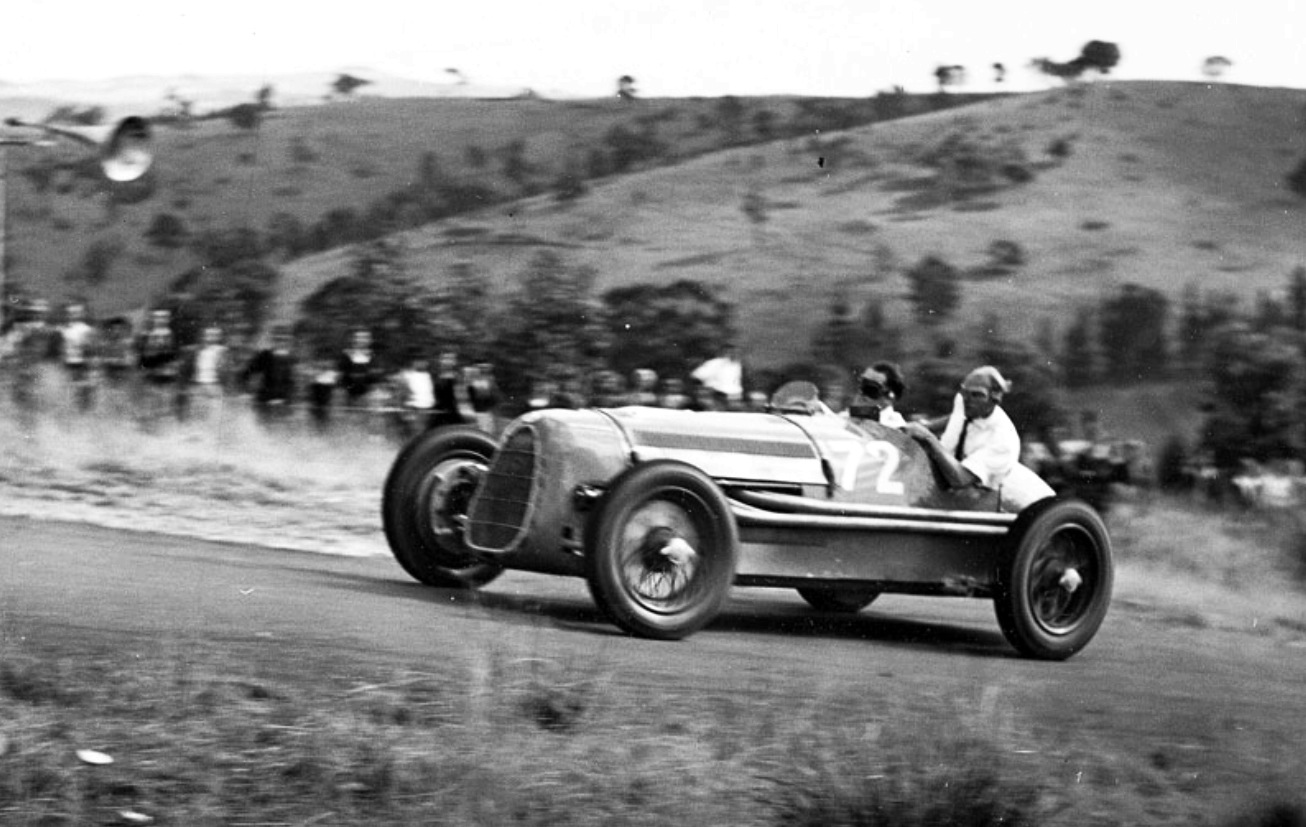
The development of Maybach was constant and ongoing, the ‘program’ having strong Repco support due to its promotional value and the development of its engineers. In 1950 Dean was appointed to head up a Research centre for the Repco Group, located at the ex-Replex premises at 50 Sydney Road, Brunswick…from acorns do great oaks grow.
In June 1951 Jones, looking for an outright class winning car, bought the car for a nominal sum. Repco involvement continued with the car’s preparation, development and use by Repco for product development and testing. The car was engineered at Repco Research.
Dean’s business and family commitments had made ongoing motor sport participation difficult. Jones lived in the Melbourne eastern suburb of Balwyn, in Yongala Road, not far from Dean’s home in Kew so communication was easy despite the lack of email and iPhones.
By the time Stan bought ‘Maybach 1 Series 3’ the body was still a two-seater. Three feet of rear chassis rails had been removed from the original, it had rear axle mounted trailing quarter elliptics with radius rods.
The engine was 4.2 litres and used three 2 3/16 inch SU carbs, had a compression ratio of 9:1 and a reliable (sic) Lucas magneto. After the SUs were fitted the engine developed 200bhp @ 5000rpm. Tyres were 16×6.50 touring type.
A 1922 American truck Power Lock ‘slippery diff was adapted in the Lancia housing which was modified to suit. The brakes had also been changed substantially using 16 inch/ 14 inch drums front/rear.
Racing Maybach…
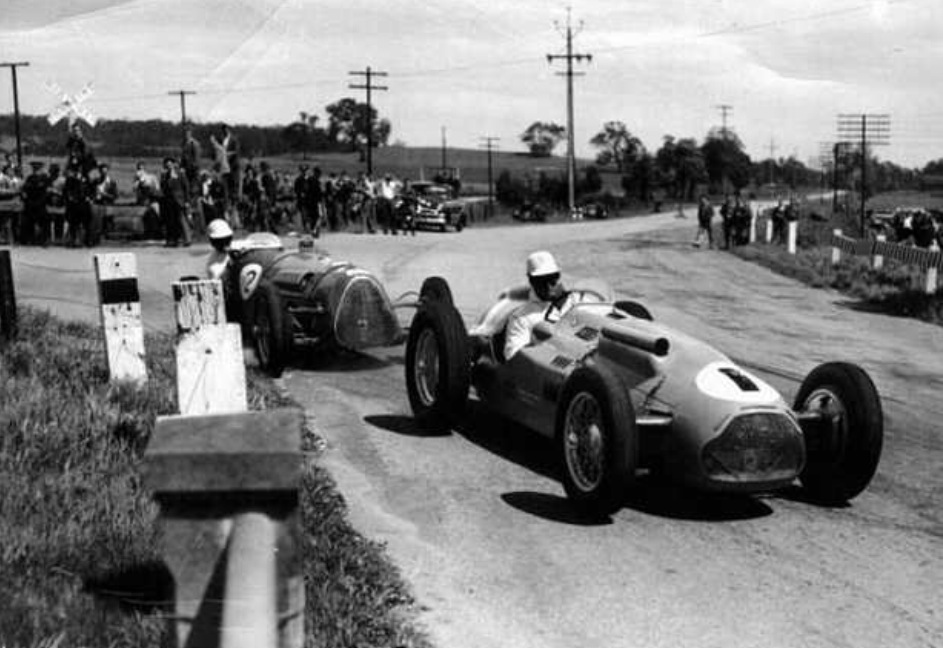
Stan’s first race in the car was at Gawler, South Australia, the main scratch race setting the pattern for the season with Jones and Doug Whiteford in the Lago Talbot fierce rivals, the two cars passing and repassing before Whiteford won the event.
Jones then raced the car at Bathurst in October 1951, winning a 3 lap scratch race but finishing second to Whiteford’s Talbot-Lago in the 50 lap handicap. The following week Jones again finished second to Whiteford at Woodside, a road circuit in the Onkaparinga Valley of the Adelaide Hills.

He adapted to the car quickly, and well, having progressed from a low powered road going TC to one of the fastest cars in the country in less than three years, his money allowed it but he still had to extract all the car had to offer, which he did from the start.
He next raced the car at the Ballarat Airstrip in rural Victoria, winning both the Victorian and Ballarat Trophies from Lex Davison’s aristocratic pre-war Grand Prix Alfa Romeo P3.

As Stan became used to the car he became quicker and quicker, it was a considerable step up for him in terms of the performance of his preceding cars. He was the favourite to win the AGP at Bathurst in 1952 but excessive tyre wear resulted in a victory for Whitefords’ Lago.
Stan finished second having stopped six times to replace rear tyres, the six-ply touring tyres used on the 16 inch wheels, running hotter than four-ply racing tyres. The racing Pirellis on order had failed to arrive on time, it’s interesting to reflect on supply-lines in those far off days between Australia and Europe.
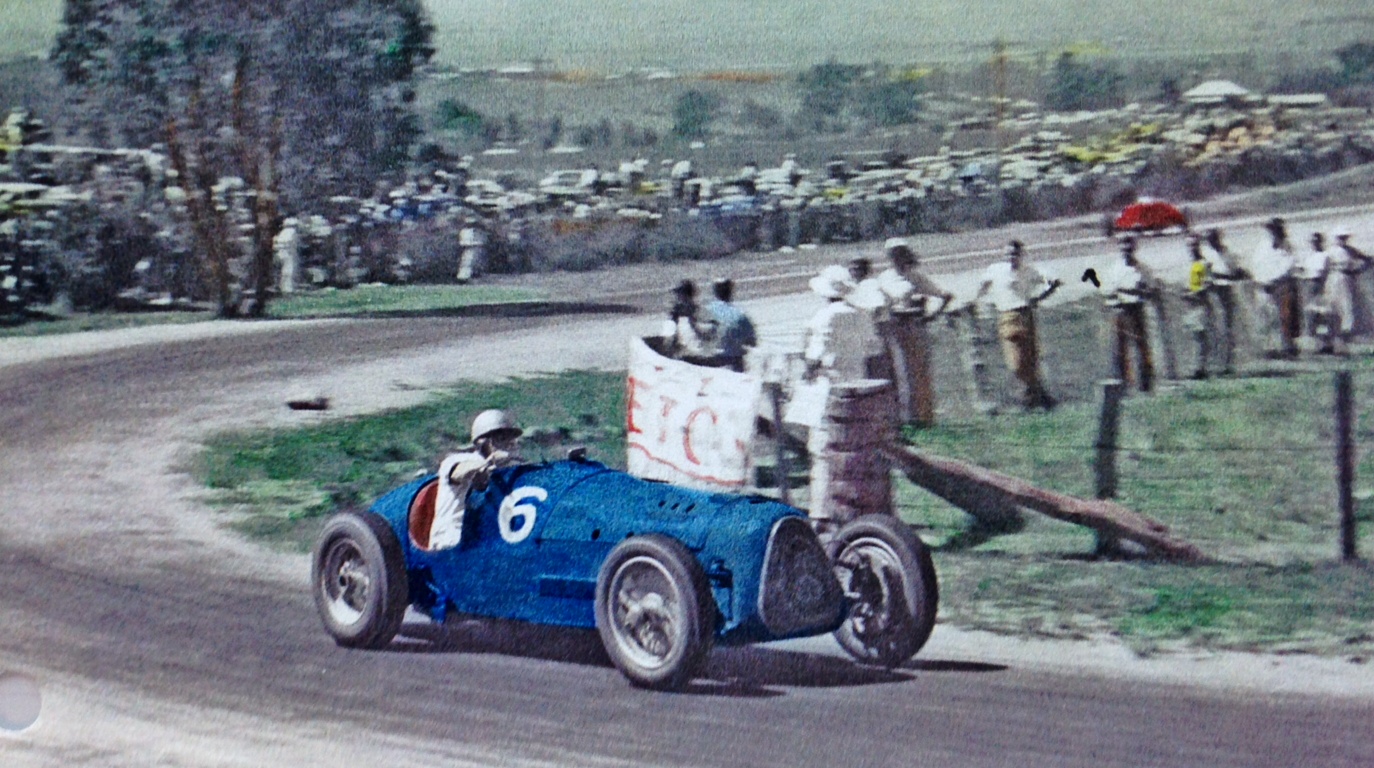
The car won three Victorian Trophies – the big race on the Victorian calendar – two at Fishermans Bend, another airfield circuit in Melbourne’s inner West, the first was in 1952 at Ballarat Airfield, the car beating Whiteford with specially made four-ply tyres for Maybach.
In 1952 Stan also raced a newly acquired Cooper Mk 4 Jap 1100, successfully on both the circuits and the hills.
On New Years weekend 1953 the new Port Wakefield circuit opened with Jones taking another win. He had been unbeaten in all but a couple of minor handicap races since the 1952 AGP, the sensation of the weekend was the blowout of a tyre on Davison’s Alfa and the multiple rollover which followed.
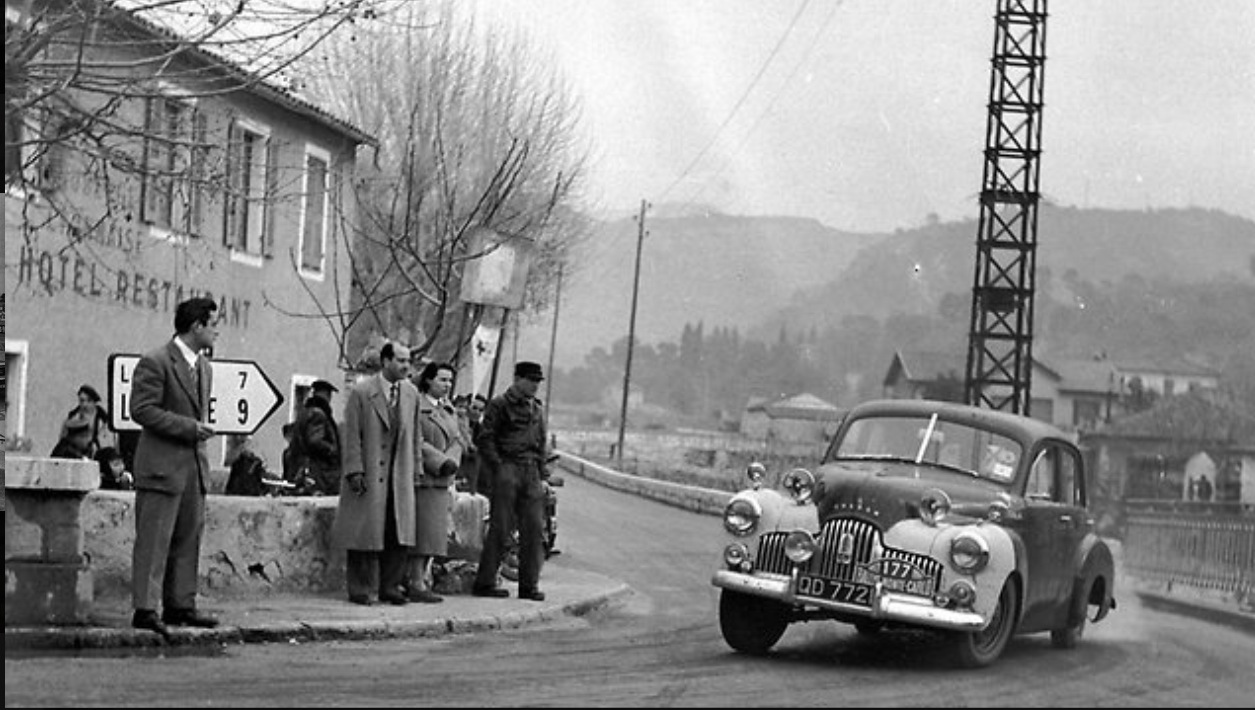
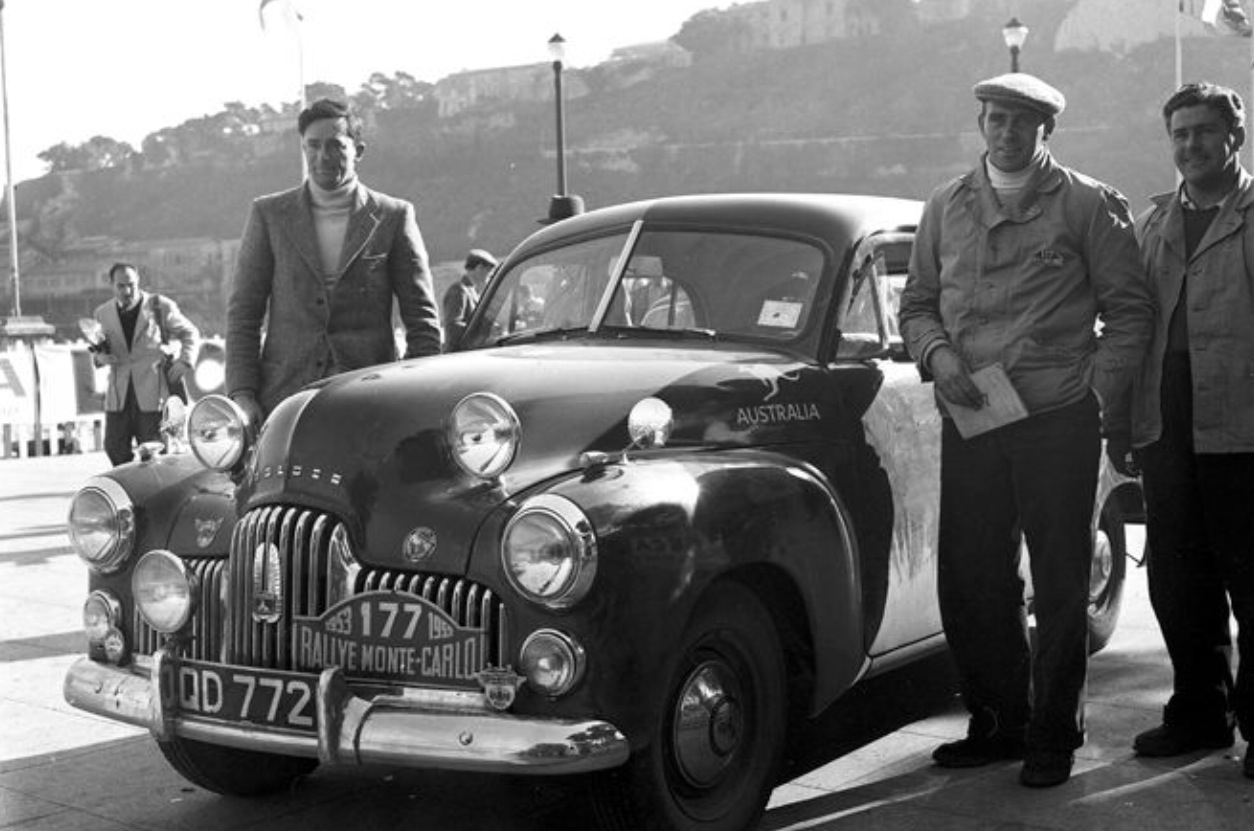
Lex was a lucky boy as only days later Davo, Jones and Tony Gaze set off to Europe to compete in the 1953 Monte Carlo Rally. The racers were competitive, finishing sixty-fourth, at one stage having been in the top ten amongst much faster cars in a field of 440 far more experienced teams in a Repco prepared Holden 48-215.
Graham Howard describes this as ‘one of the great feats of Australian motoring, this trio clean-sheeted from Glasgow to Monaco and then finished 64th after minimal reconnaissance, in the final elimination, with Jones working stopwatches while sitting sideways across the front bench seat so he could use his feet to brace Davison behind the wheel’.
Stan led the 1953 AGP at Albert Park…
Its inaugural meeting, by lap ten he was ahead of Whiteford by thirty seconds, by lap fourteen he and Whiteford had lapped the field, which was indicative of both their pace and dearth of outright contenders in Australian racing at the time.
The Maybach needed fuel and a replacement water pump drive belt. Jones then had to vacate the cockpit when he was splashed by methanol, sluiced with water he rejoined the race only for clutch failure to end a brave run, Doug Whiteford won in his Lago Talbot.
Some compensation for Jones was fastest lap at 2 mins 03 seconds, an average of 91.46mph. Imagine that Victorians who can remember the ‘circuit’ in its pre-modern era format.


New Zealand Grand Prix victory 1954…
Stan was said to be hard on his cars, but he also had poor luck. Everything finally came together for Jones and Maybach with a win in the first NZGP at Ardmore in 1954.
He beat a class field which included Ken Wharton in the BRM P15 V16, Peter Whitehead’s Ferrari 125, Horace Gould and Jack Brabham in Cooper Bristols and Lex Davison and Tony Gaze, both driving HWMs.
It was a triumph over adversity as the car threw a rod in practice, punching a sizeable hole in the crankcase and damaging a cylinder bore. Dean ‘phoned Australia for spares which could not be delivered in time. Undeterred, the team comprising Dean, Otto Stone, Jack Joyce, Bib Stillwell and Don Busch scoured town, patched the crankcase and machined both a GMC rod whose weight was carefully matched to the original, and a new cylinder liner.
The engine was running by 10.30AM on Sunday morning, with Stan catching some beauty sleep to be race-ready. The event’s duration was 2 hours and 45 minutes, the patched Maybach and Jones doing justice to the ingenuity and resilience of their small team.


Maybach 2…
When they returned from NZ the team began work on a new monoposto.
The chassis was similar in layout to Maybach 1 but adapted for the narrower and lower body. The rear axle was of ‘speedway type’ which allowed a lower propshaft and the easier changing of gear ratios. Front suspension used Chev upper control arms. The new rear axle was attached to quarter elliptic springs but with revised control arms, a Panhard rod with Monroe Wylie tubular shocks used. Les Tepper built the chassis, Brian Burnett and Bob Baker the body. Great attention was paid to reducing weight, aluminium was used for the body, as a consequence the cars’ weight was reduced from 19.5 to 16cwt.
The engine was rebuilt with a capacity increase to 4250cc by increasing the bore to 91mm. Power was 257bhp @ 5200rpm and torque 288lb ft @ 3000rpm. The compression ratio was 11:1 and the 110 octane fuel was an intoxicating brew of 60% methanol, 20% benzol and 20% av-gas. The fuel tank fabricated by Burnett held 25 gallons.
The same brakes were used with the addition of air scoops to the front backing plates and a dual master cylinder supplied by Repco subsidiary, Patons Brakes. Peugeot rack and pinion steering replaced the earlier Jeep cam and roller setup.
The first race for Maybach 2 was the Victorian Trophy at Fishermans Bend in March 1954 which Jones duly won, lapping the entire field with Brabham’s Cooper T23 Bristol three miles behind!

Further preparation for the AGP was the Bathurst 100 at Easter.
18,000 spectators attended the event, one of the ‘most successful meetings ever stage at the circuit’ according to The Sydney Morning Herald. Jones won a preliminary race on the Saturday but broke the gearbox in a handicap event late in the day. W Clark’s HRG won the handicap ‘100’ from Brabham’s Cooper Bristol and Stan. Jones won a 3 lap scratch race in the morning during which Maybach was timed at 132.6 mph over the flying quarter-mile. Not a bad reward for the mechanic who drove back to Melbourne overnight to collect a spare ‘box!
Maybach 2 was also raced at Altona twice, and again at Fishermans Bend in October in the lead up to the AGP, achieving success in the first of the two Altona meetings in May. He lost to Brabham’s Cooper T23 Bristol in the handicap at Altona in June and had gearbox failure at Fishermans Bend in October.
Demonstrating his versatility as a driver, Stan competed in the 1954 Redex Round Australia Trial in the Repco ‘prepped Holden FJ navigated by CAMS co-founder, Don Thomson, finishing equal fifth.
He also continued to compete in the Cooper with at least three wins on the circuits and again success in the hills, including lowering the Rob Roy record which had stood for three years.

1954 AGP…
The 1954 AGP was held on public roads at Southport on the Gold Coast not far from Surfers Paradise.
The roads were bumpy, were recently sealed, having loose gravel shoulders, some humps and two defined ‘no-passing’! sections. The crcuit was 5.7 miles long with a race distance of 155 miles or 27 laps. It promised to be a tough event.
Jones lead from the start, initially from Davison’s HWM Jag and Brabham’s Cooper. Malcolm Preston in his fantastic book ‘From Maybach to Holden’ records ‘…Jones was reportedly maintaining a furious pace and consistently lifting all four wheels off the ground over one of the humps…On lap 14, whilst negotiating the S bends the Maybach ran onto the gravel. As Jones endeavoured to steer the car back onto the road it spun and careered backwards into the roadside trees at an estimated 100mph…passing between two large trees, one tree caught the side of the engine, ripping the carburettors and front suspension from the car, whilst the body containing Jones continued a little further on its side. Jones emerged uninjured from the wreckage apart from a small cut on his lip’.
Their are mixed accounts as to the cause of the accident, those sympathetic to Repco suggest that failure of a front suspension frame weld did not occur and that Stan made a driving error. Graham Howard in his book, ‘The History of The Australian Grand Prix’ concludes, drawing on contemporary sources, that a weld failure caused the accident.
Brian Burnett who built the chassis at Repco ‘explained that the two main chassis rails, of 4 inch 16g chrome molybdenum alloy steel, passed through holes in the diaphragm-type front crossmember and were completely electrically welded into position. These welds crystallised and cracked, and in the course of the Grand Prix one chassis tube eventually broke away and touched the ground. It was a problem as simple, as enormous, as unfamiliarity with new materials and techniques,’ Howards book says.
Jones was tight lipped at the time, and it was a gentler age when journalism did not go hard at a large corporate such as Repco. From Stan’s perspective it made no sense to bite the hand which fed him and be forthcoming in a manner damaging to Repco.
The race continued and was won by Davison’s HWM, the first of his four AGP wins, from Curly Brydon and Ken Richardson in MG Spl and Ford V8 Spl respectively.
Brian Burnett, Maybach’s body builder, Preston records, told Jones at the team debrief at the Chevron Hotel that ‘he had driven too fast and recklessly’, Jones responded by flooring him with one punch! Out of character for a bloke who was generally the life of the party and a favourite with the ‘babes’, but perhaps reflecting Jones’ view that the destroyed car was not his fault.
Jones was awarded the ‘Australian Driver of The Year’ in 1954 for his NZGP, Victorian Trophy, Bathurst 100 and Victorian Hillclimb Championship wins.

Maybach 3…
Shortly after returning from Southport, Charlie Dean hired Phil Irving, already a famous engineer for his work on Vincent motorcycles, and later the designer of the Repco Brabham RB620 Series V8 which won Jack Brabham’s 1966 World Drivers/Manufacturers Championships.
Whilst Maybach 3 was being built, Stan bought Jack Brabham’s ‘Redex Special’ Cooper T23 Bristol when Jack left for the UK, his businesses continuing to prosper and funding some wonderful cars.

At Fishermans Bend in February he qualified the Cooper on pole but finished third behind Davison’s HWM and Hunt’s Maserati. He ran the car again in the Argus Trophy at Albert Park in March finishing second to the Hunt’s Maser and the Whiteford Lago.
He also raced the Cooper 1100 and a Cooper T38 Jaguar in sports car events, winning in the latter at Fishermans Bend in February and also racing it on the hills.

Early in 1955 construction of the new Maybach commenced.
To lower the bodywork the engine was canted at 60-degrees, offsetting the engine and driveshaft to the right allowing a driving position left of centre. New rear axle housings and steel gearbox housings were built to Irving’s design.
The remaining stock of 110mm stroke cranks were cracked, so a 100mm one was used. With a 90mm bore the engine capacity was 3800cc. The special SU carbs could not be readily replaced so six Stromberg side-draft carbs were used, the engine developing 240bhp @ 5000rpm.
A similar suspension layout to Maybach 2 was used. Brakes were made from flat plate steel rolled into circles and then welded at the ends, the drums were machined internally and externally for attachment to the hubs. Brian Burnett again built the body which was inspired by the contemporary Mercedes Benz W196 GP car.
The car was finished in April 1955 and entered for the Bathurst 100 at Easter.
It was timed at 145mph but had severe handling problems causing a spectacular spin and finishing second to Hunt’s Maserati A6GCM. The car also had a severe flat spot so was not run in the ‘100’, Stan winning the Group B Scratch race in his Cooper 1100.
It was found that the front cross member was flexing under braking, affecting the steering. Irving rectified the flatspot by devising a fuel injection system using the Stromberg throttle bodies, part throttle flow was regulated by a Lucas ignition distributor, with fuel delivered by an aircraft fuel pump; when dynoed the engine produced 250bhp.
Dean tested the car at Templestowe Hillclimb and Jones won the A.M.R.C Trophy at Altona, Melbourne in May from Ern Seeliger’s Cooper Bristol.
Jones raced the Cooper Bristol at Mount Druitt, western Sydney in August, losing a wheel in practice but winning the preliminary race only to have the car’s chassis snap in the 50 mile main race, fortunately bringing it to a halt without hurting himself.
1955 Australian Grand Prix, Port Wakefield, South Australia…
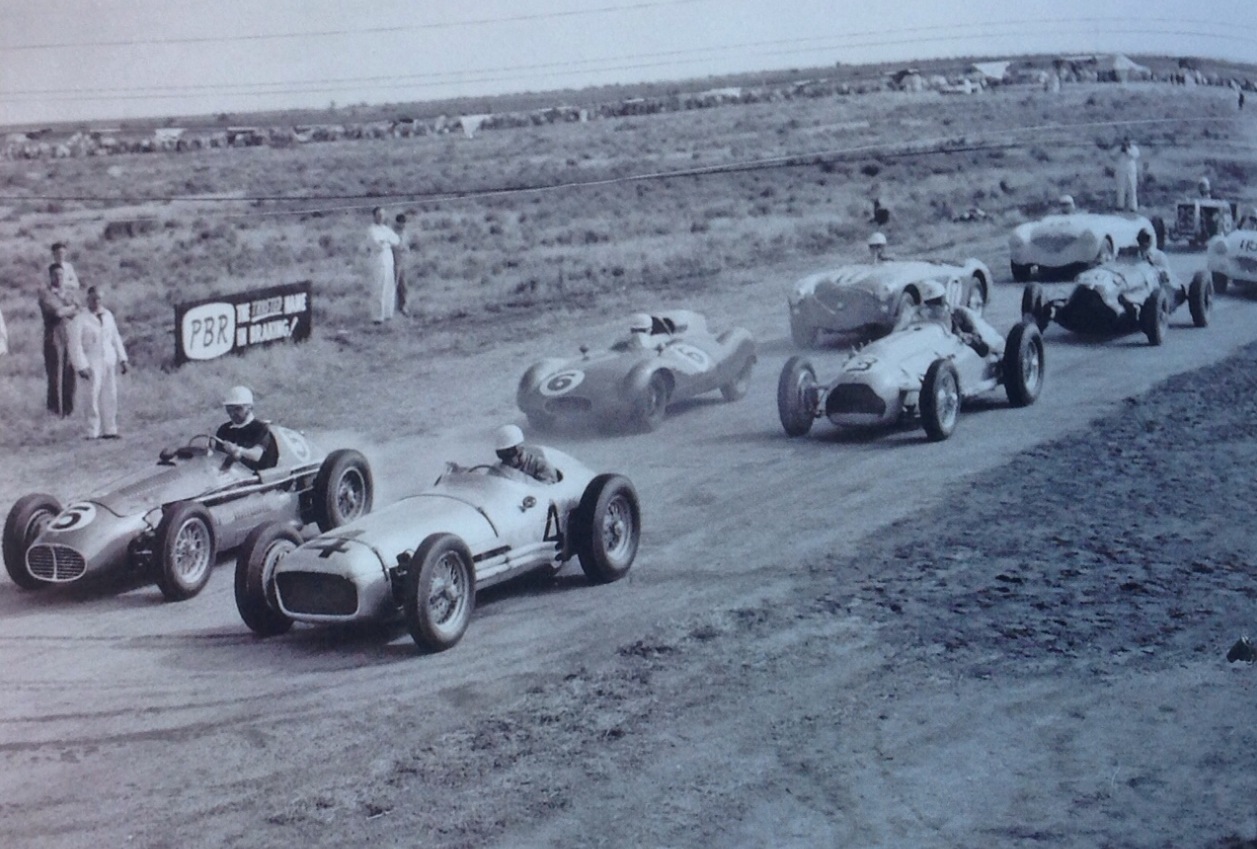
The car was fully rebuilt prior to the October 10 race and run in a preliminary event at Fishermans Bend the week before, Jones, whilst second to Hunt was happy with the car’s performance.
Jack Brabham was racing a Cooper Bristol T40 he built himself (to race in the 1955 British GP) and although hitherto fairly unreliable, he won the race from Hunt, who had led in his Maser A6GCM before breaking a rocker, and Jones whose clutch failed. Doug Whiteford was third in his Lago.

Maybach was next raced at Gnoo Blas, Orange, in January 1956 in the South Pacific Road Racing Championship meeting. Hunt took the lead by a small margin, Jones was second having lapped the field, then Brabham a distant third. On lap 23 the Maybach broke a conrod, locking the wheels and sending the car spinning down the road, Hunt won from Brabham.
Upon examination, the block and crank were badly damaged, there was little of Dean’s original cache of spares left and in any event the more modern cars from Europe, readily available at a price, meant it was increasingly difficult to develop the Maybach to the required levels of competitiveness.
After all those years Dean and Stan decided the cars elite racing days were over.

Maserati 250F…
Maybach 3 was never really competitive and Reg Hunt upped-the-local-ante when he imported an ex-works Maserati A6GCM in late 1954. Lex Davison followed suit with his ex-Ascari/Gaze Ferrari Tipo 500/625 3-litre. Stan, having the resources, invested £10,000 to acquire a Maserati 250F, chassis #2520 and a spare 3-litre 300S engine.
Stan despatched Charlie to Modena to do the deal. 2520 was built in late 1955 to 1956 spec and used by Frolian Gonzalez and Pablo Gulle in the 1956 Argentinian and Buenos Aires GPs respectively, (DNF and eighth) before being shipped to Melbourne, arriving on the SS Neptunia on April 22 1956.
In a 1981 issue of MotorSport Alan Jones describes his joy in ‘unwrapping the car’ at Port Melbourne but also his disappointment as a 9-year old that the car was a Maserati, real Italian racing cars being Ferraris…
In any event, Stan had the ‘ducks guts’, the most competitive customer Grand Prix car of the period, a tool with which he would demonstrate his mastery over the following three years.
Jones raced the car for the first time at Port Wakefield, coming second in the wet to Stillwell’s D-Type in the SA Trophy. He raced the car again in September at Bathurst winning both the three lap curtain raiser and NSW Road Racing Championship later in the day, setting a lap record in the process.

Australian Grand Prix, Albert Park 1956…
Melbourne hosted the Olympic Games in 1956. The AGP at Albert Park that November is still regarded as one of the greatest ever, certainly the best to that point in the race’s long history. It is the event which changed the face of motorsport in Australia, such was the calibre and competitiveness of the entry and scale of the event.
The meeting was a double-header featuring the Australian Tourist Trophy for sportscars on the first weekend and the AGP the following one, with support races of course, the AGP is still famous for those!
The overseas entry was headed by the factory Maserati team which brought five cars, three 250Fs and two 300S sports cars for Stirling Moss and Jean Behra. They based themselves at the Esplanade Hotel nearby in St Kilda, (still there, the ‘Espy is a great pub and band venue) the cars themselves were housed in Maserati driver and local Holden dealer Reg Hunt’s premises on the Nepean Highway in Elsternwick, close to the circuit.

So close that the 300S were driven to and from the track, adding to the cosmopolitan atmosphere. The large local Italian community, many of whom migrated post-war turned out in force to support the big red cars.
Other Maserati 250Fs were entered by Ken Wharton, Stan and Reg Hunt with Kevin Neal in Hunt’s old A6GCM. Ferraris were entered for Peter Whitehead and Reg Parnell: 555 Super Squalos’ with 860 Monza 3.5-litre four cylinder engines.
The strong field would test the local talent who were in cars of more or less equal performance to the vistors: Jones and Hunt in their 250Fs, Davison in his venerable 3-litre Ferrari Tipo 500, Whiteford’s Lago was long in the tooth but he ran his 12-plug T26C as did Owen Bailey in Doug’s old, successful car.

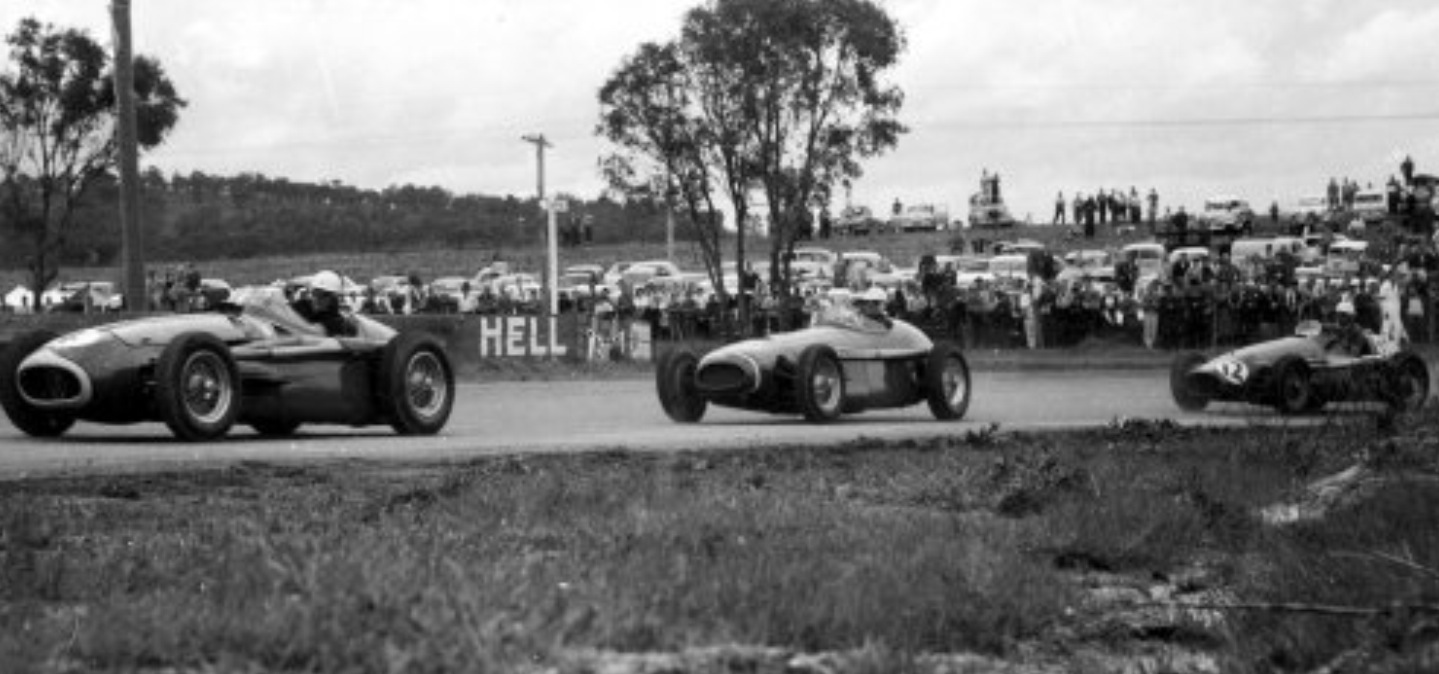
Moss disappeared into the distance from Behra with local interest centred on the battle of the Melbourne drivers: Jones, Hunt and Davison. Moss initially led Behra, Whitehead, Parnell, Davison, Hunt, Neal and Jones. Bailey’s half shaft failed on the line. Jones was fast early, passing Hunt, with Wharton, Parnell and Davison dropping back.
Rain started to fall with the Jones/ Hunt dice continuing until Jones eased with smoke coming from under the Maser’s long bonnet. Post-race this was found to be a broken crankcase breather pipe leaking onto the exhaust. Rain started to fall heavily with 10 laps to go, Neal crashing the A6GCM into a tree and breaking both of his legs and those of the official he collected in the process. Moss won by nearly a lap from Behra, Whitehead, Hunt, Jones, Parnell and Davison.
The duel between Hunt and Jones was the first and last in similar cars, Hunt shortly thereafter retired from racing, neither Stillwell nor Glass were as competitive in the car subsequently.
Jones continued to also compete in rallies finishing second in the Experts Trial and getting hopelessly bogged in the wastes of North Queensland in the Mobilgas Trial co-driven by Lou Molina, legendary Melbourne racer, restauranteur and raconteur.
1957 Australian Gold Star Series…
Stan shipped the Maserati to NZ for the Grand Prix at Ardmore in January hoping to repeat his earlier success, the race included internationals Reg Parnell, Peter Whitehead and Jack Brabham. Stan qualified well and in a tough 240 mile race of 3 hours 7 minutes, finished third in a typically gritty drive from Parnell and Whitehead in Ferrari Super Squalo 555s.
The Maserati also gave Stan a lot of unreliability grief, his fortunes in it changed when Otto Stone took over its preparation after the 1957 AGP held in searing 104 degree heat at Caversham in WA.
Jones was initially awarded victory after a stunning drive, but on a lap count back two days later, Davison got the win albeit with Bill Patterson as his co-driver. Tough-nut Stan drove the distance on his own. Alec Mildren also thought he (Mildren) had won the race.

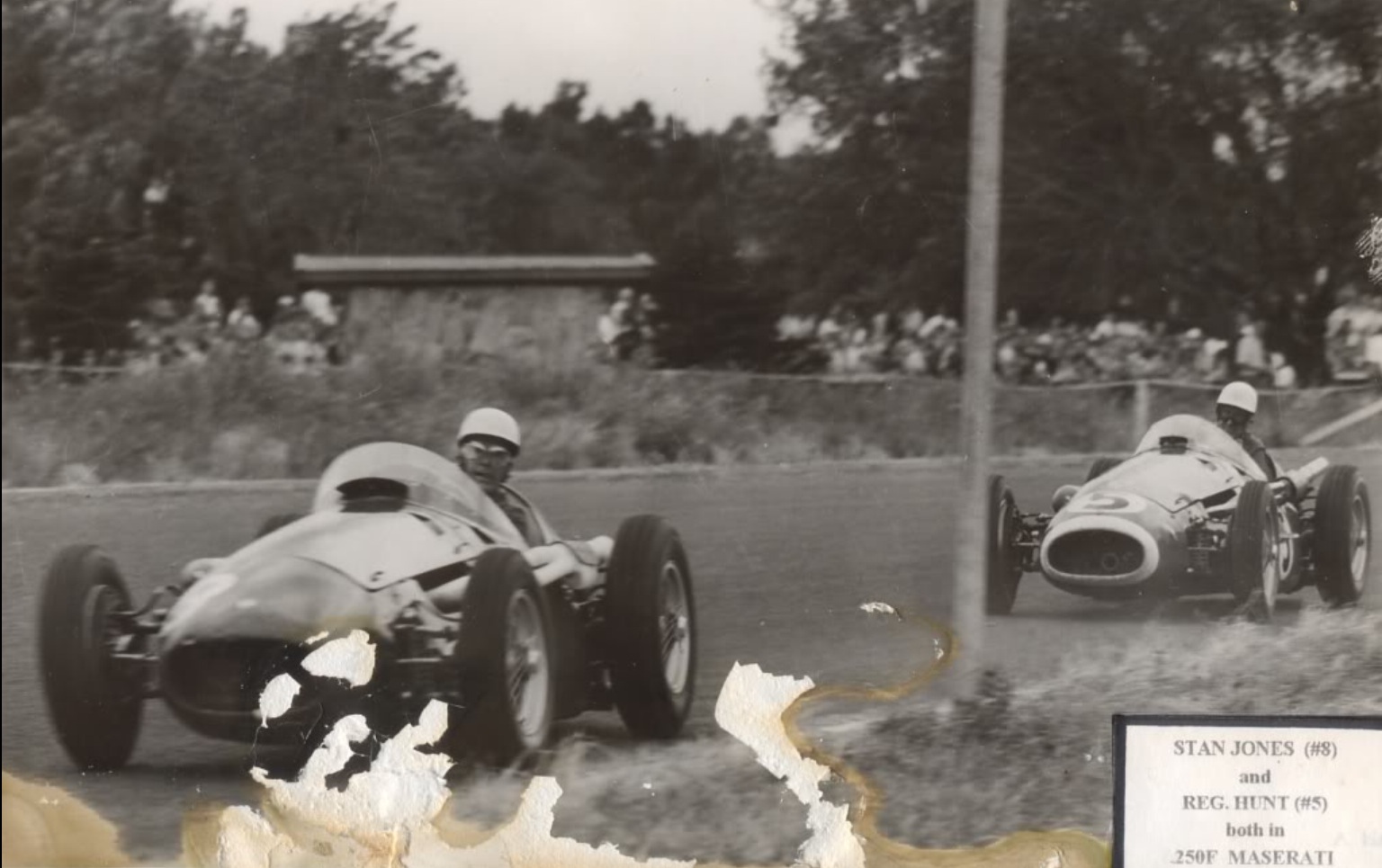
Lex Davison won five rounds of the championship that year winning the Gold Star from Tom Hawkes’ Cooper T23 Holden and Stan. Jones only Gold Star win for the year was in Queensland, winning the Lowood Trophy in August. At Bathurst a UJ broke, at Lowood a spur gear, and back at Bathurst the clutch failed.
Stan entered the Maser in the Victorian Trophy meetings, over two consecutive weekends at Albert Park in March, winning a preliminary event from the Davison Ferrari 500/625 and Brabham’s F2 Cooper T41 Climax, but his engine let go in a big way in the 100 mile Trophy race whilst chasing and catching Davison in the lead. A conrod broke, carving the block in half after setting fastest race lap on this big-balls circuit. Davison won from Brabham and Hawkes.
Stan’s businesses continued to expand, he was awarded a Holden franchise, Stan Jones Motors was located at 408 Victoria Street, Richmond/Abbotsford. Many of his fellow ‘elite racers’ were also motor-traders including Bib Stillwell, Lex Davison, Bill Patterson, Alec Mildren, Arnold Glass, Stan Coffey and Reg Hunt.

Australian Gold Star Champion 1958…
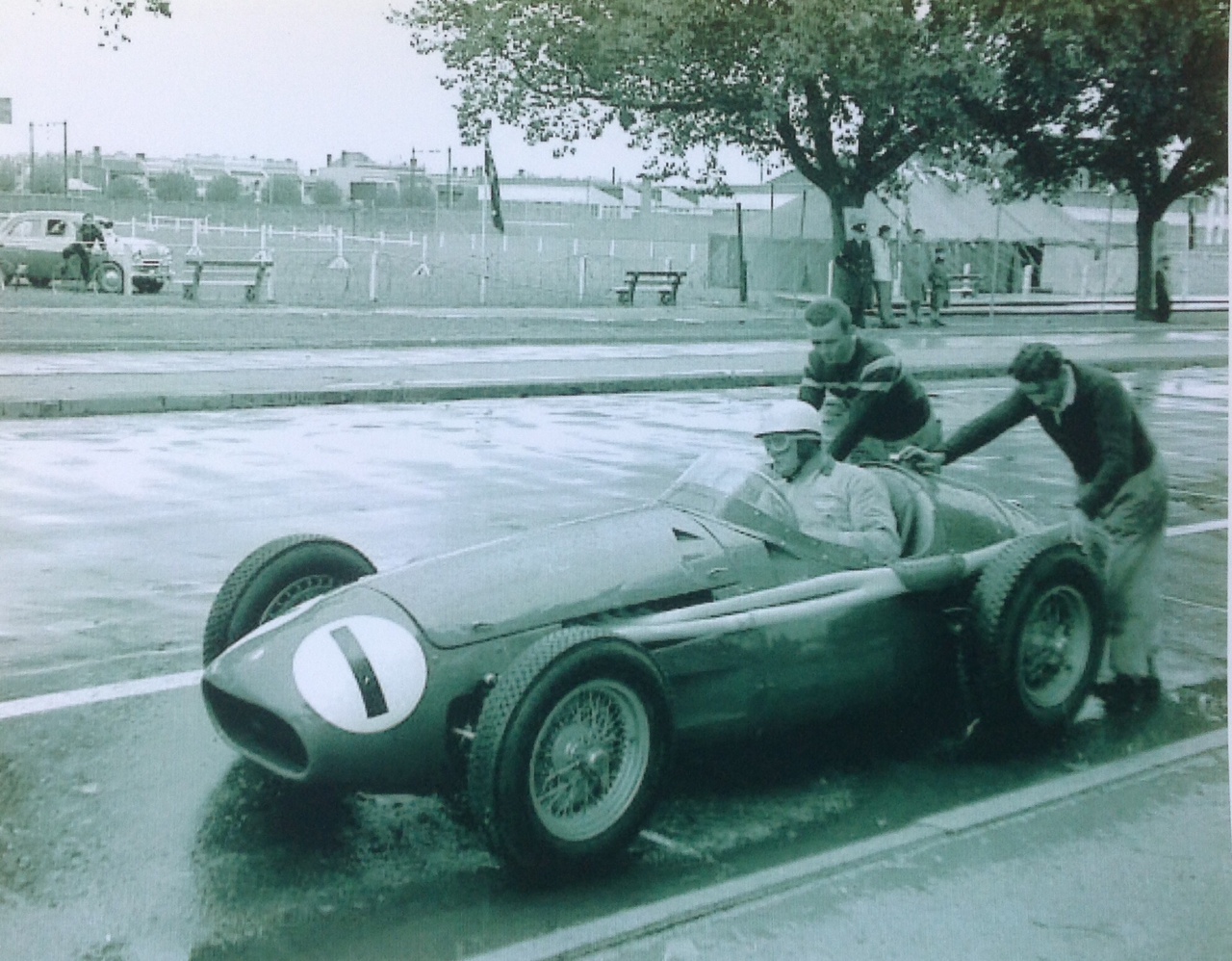
Stan won at the Victorian Tourist Trophy meeting at Fishermans Bend in February 1958 from Arnold Glass in a Ferrari Super Squalo and Doug Whiteford in an ex-works Maserati 300S sports car acquired from the Maserati team after the 1956 AGP.
In a consistent year with the now well prepared and reliable Maserati, Stan also won the final round of the championship, the Phillip Island Trophy race and scored second places at Gnoo-Blas, (Orange NSW), Longford and Lowood, Queensland. He won the title from Alec Mildren and Len Lukey in Coopers T43 Climax and T23 Bristol respectively.

Davo took the AGP at Bathurst in October 1958 in a thriller of a race, Jones led for the first 17 laps with Davo in close company until the 250F clutch failed, and several laps later the engine. Ern Seeliger finished second in Maybach 4 (see below for specifications) with Tom Hawkes third in his Cooper T23 Bristol.
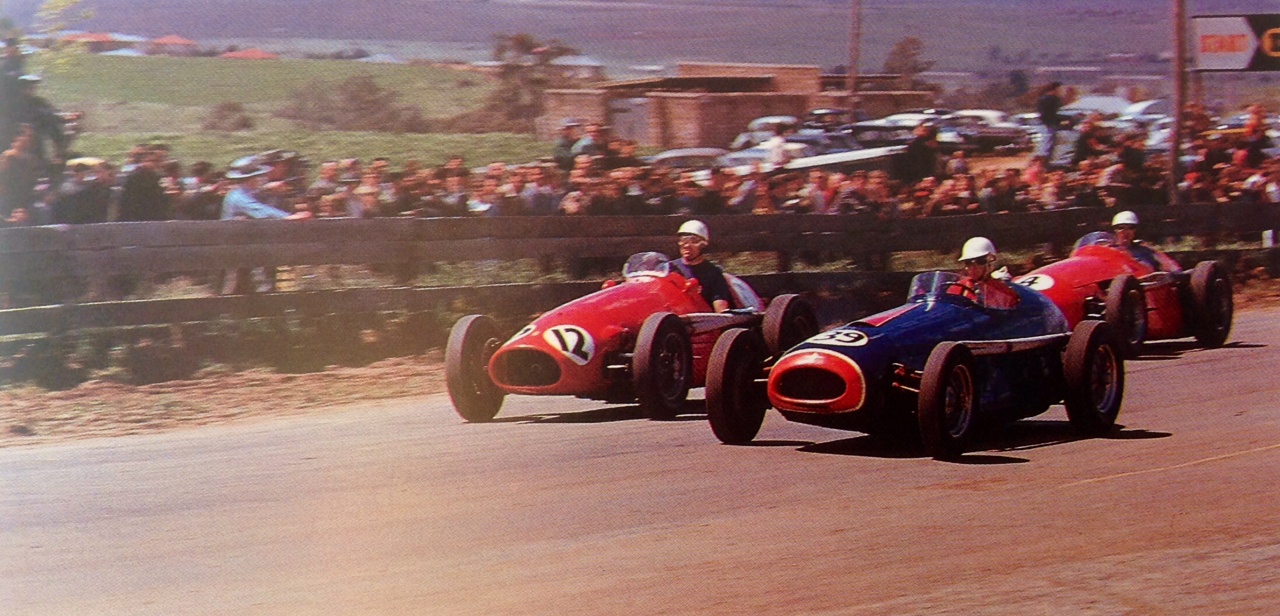
In a year of relative consistency Stan amassed enough points to win the CAMS coveted Gold Star for Australian Champion driver of the year.
It was a fitting reward for one who had contributed so much to the sport and been a drawcard from the moment he first stepped into Maybach 1.

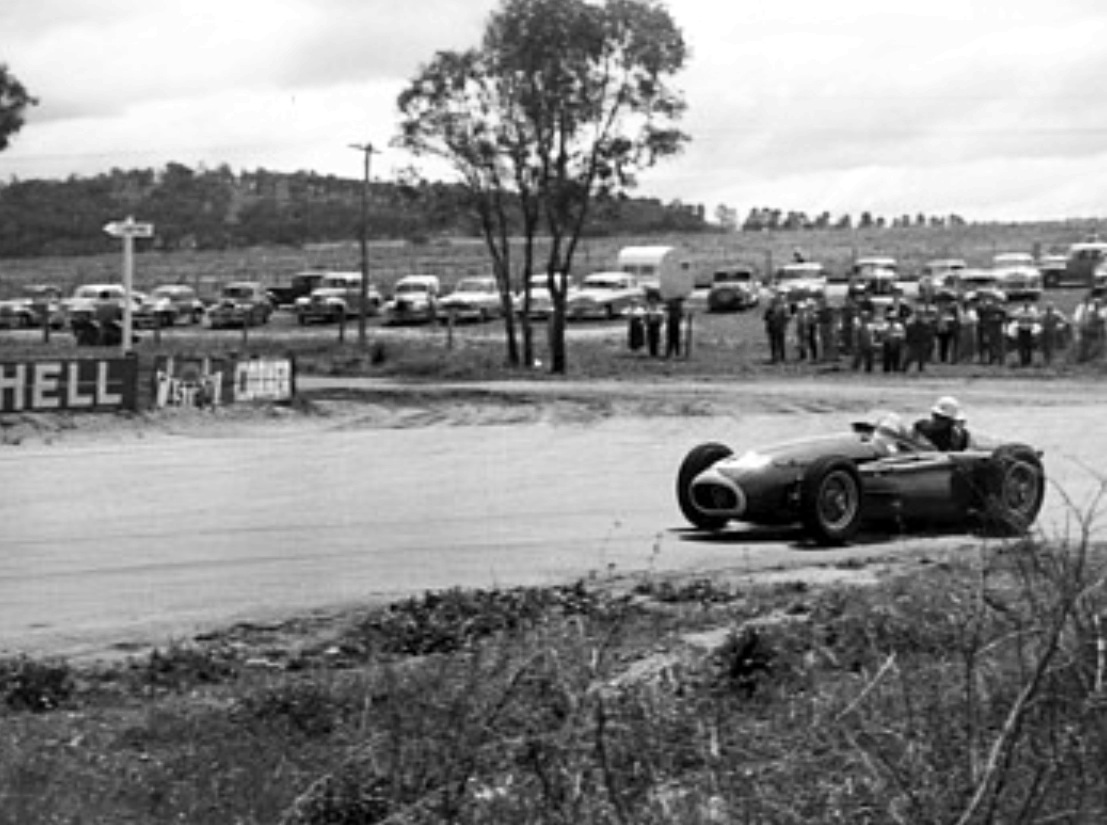
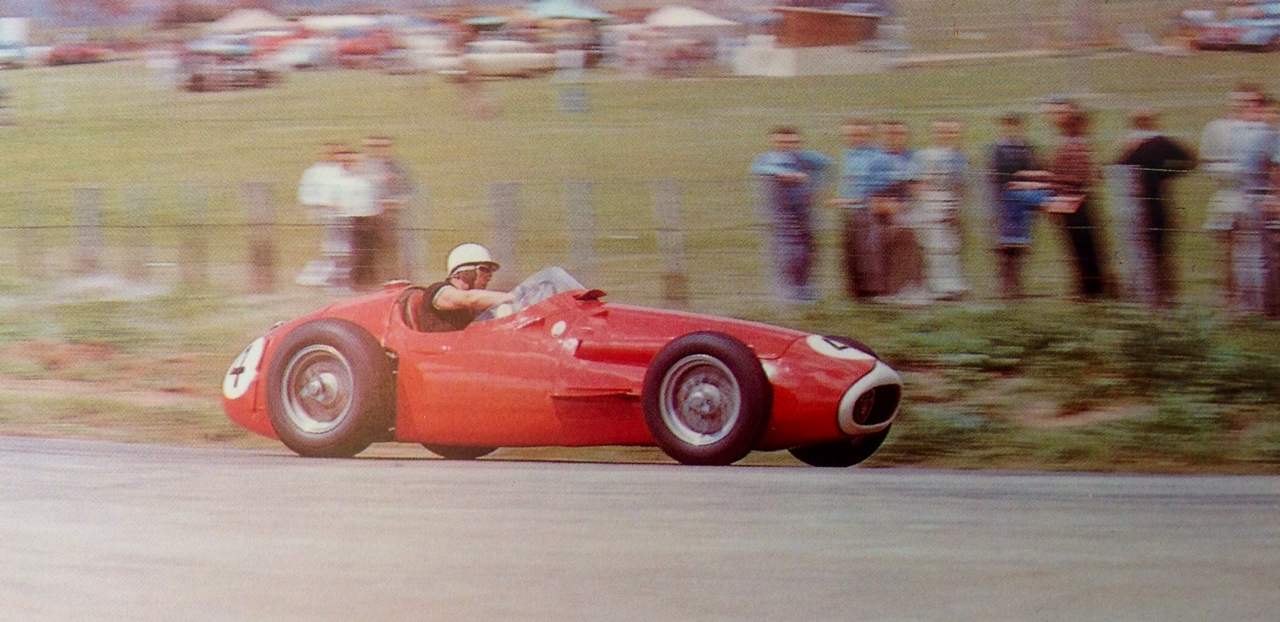
The Australian Grand Prix win he had strived for for so long was finally his with a victory on the power circuit of Longford in Tasmania 1959.
Stan’s 250F was at its peak, lovingly and skilfully prepared by Otto Stone, Stan beat Len Lukey’s Cooper T43 Climax at just the right moment. The day of the front engined GP car was over in Australia, a bit later than in Europe.
Stan was fortunate that there were no 2.5-litre Coventry Climax engined Coopers in Australia at that stage. Lukey’s little 2-litre did not quite have the ‘mumbo’ to do the job on Longford’s long straights, but if anyone deserved some luck Stan certainly did!

Jones led from the start followed by Lukey and Whiteford, Whiteford’s Maser 300S did not survive the landing off the railway line spraying copious amounts of oil over Lukey.

The lap record was taken by Jones, Lukey and Glass. Lukey lead for six laps, Jones regained the lead, tapping Lukey’s Cooper up the chuff whilst going past the Prince of Wales Hotel. Glass made a bid for the lead, getting right up to Jones, but had to use the escape road at Mountford Corner, his brakes locking. He recovered, joining the circuit still in third in front of Mildren’s Cooper.
Jones worked his away back to the front again, and built a small lead over Lukey, winning by 2.2 seconds from Lukey, with Glass 2.5 minutes behind them and Mildren 39 seconds behind Glass. Ted Gray’s Tornado, the other outright contender had troubles in the qualifying heats, he ran a bearing in the fabulous Lou Abrahams built Chev V8 engined Australian special on lap 4.
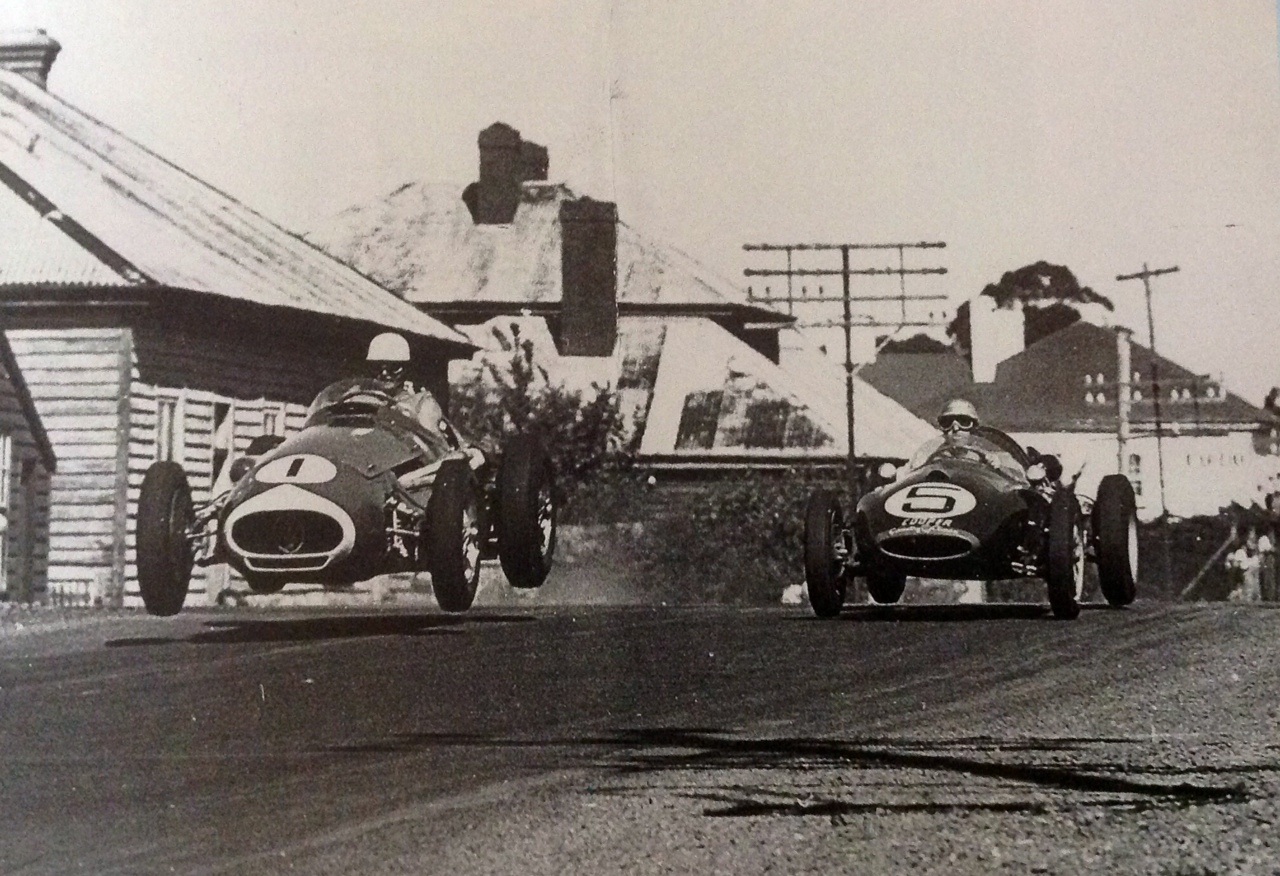

Stan contested the Gold Star Series again in 1959, winning at Port Wakefield in Maybach 4. The car, still owned by Jones, was modified by Stan’s friend Ern Seeliger by fitment of a Chev Corvette 283cid V8, de Dion rear suspension, a 30 gallon fuel tank and less weight. The dry-sumped Chev was fitted with 2 four barrel Carter carbs and developed 274bhp at 6000rpm and 300ft.lbs of torque. The last victory for the car was that race at Port Wakefield, in March, in back to back wins with his AGP triumph.

The 1959 Gold Star Series was very long at twelve rounds, Len Lukey winning it in Coopers T23 and T43 Climax from Alec Mildren in Coopers T43 and T45 Climax, and Stan.

Coopers…
The Maserati 250F was advertised for sale at £4500 (selling some years later for circa £2000), Maybach 4 was pressed into service at the AGP held in 1960 at Lowood, Queensland in June. The Chev engine failed after four laps, Alec Mildren took a fantastic win by less than a second after a race long dice with Lex Davison’s Aston DBR4/300.
Mildren’s car was a clever combination of Cooper T51 chassis and Maserati 250S engine taken out to 2.9 litres, deservedly, he finally won the Gold Star that year and then retired, forming a race team and over the following decade putting far more back into the sport than he ever took from it.
The mid-engined way forward was clear. Stan’s new Cooper T51 2.2 Climax arrived in time for the NZ Grand Prix at Ardmore in early January 1960. Stan’s practice times were fifth quickest of a grid which included Stirling Moss, David Piper, Denny Hulme and Len Lukey, all driving Coopers.
Jones finished fourth behind Brabham and McLaren in works Cooper T51 and T45 Climax 2.5s, and Stillwell, like Stan in a new Cooper T51 but 2.2 Climax engined.
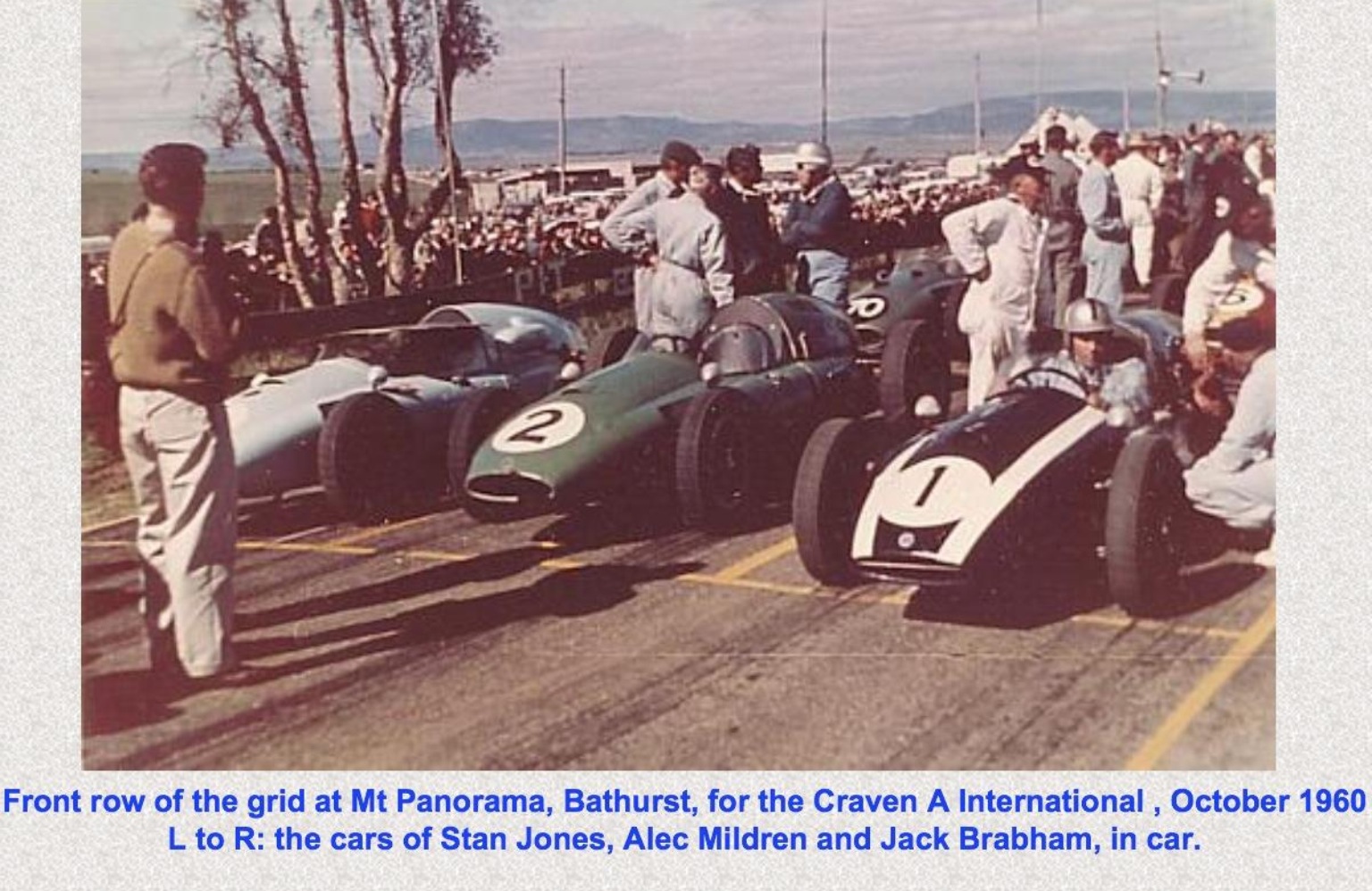
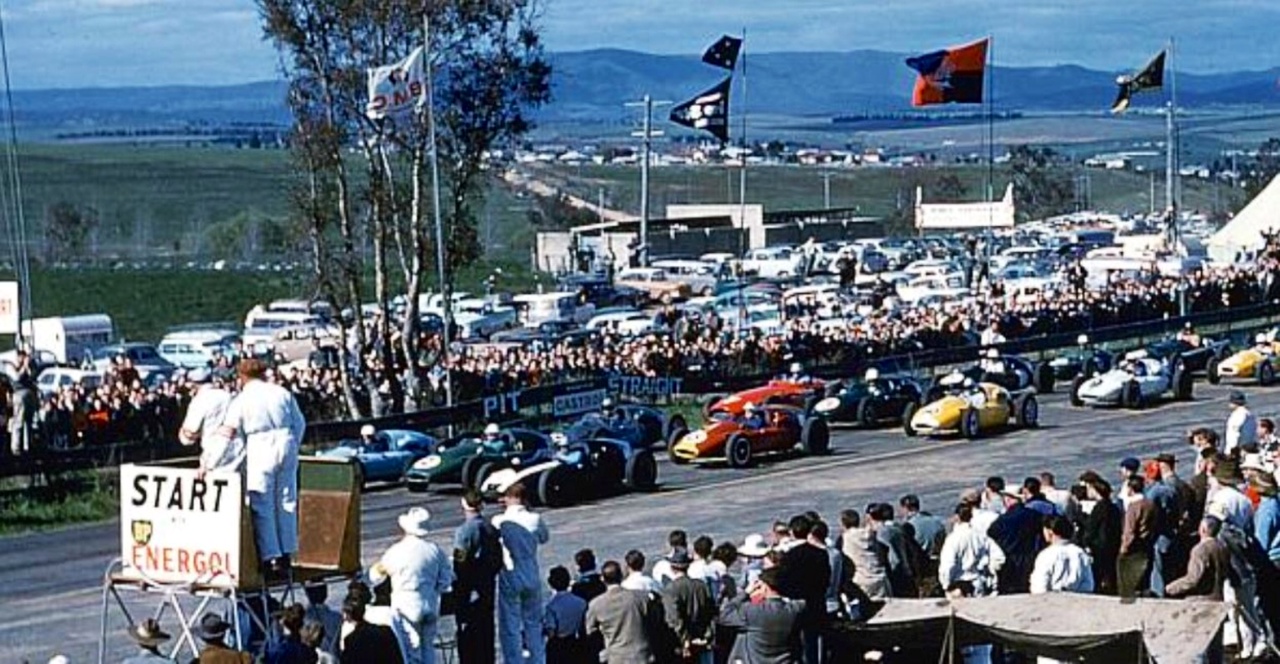
Stan contested the Craven A International at Bathurst in October 1960. He retired the car in a lap one accident, the race was won by Jack Brabham’s T51.
Grand Prix Racing changed from a 2.5 to 1.5 litre Formula in 1961 but many internationals contested our summer races…bringing 2.5-litre ex-GP cars, the ‘Tasman Series’ was still three years away. Stirling Moss, Innes Ireland, Dan Gurney, Graham Hill, Ron Flockhart as well as our Jack raced in Australia that summer.
Stan missed the opening Gold Star round at Warwick Farm but was the fastest of the locals, making a particularly big impact on Dan Gurney at the Victorian Trophy meeting held at Ballarat Airfield in mid February. He was fourth, bested only by Gurney and Hill in their BRM P48s and Ron Flockhart’s Cooper T51 Climax 2.5. Jones led home the locals Stillwell, Mildren, Glass and Miller all in Cooper T51’s.
The oldracingcars.com commentary of the 1961 season asserts that Jones was the quickest of the Australians at the start of ’61 but only won later in the year at Lakeside in July.
At the Longford Trophy in March he had a DNF on lap four, the race won by Roy Salvadori’s Cooper T51 Climax. At the Queensland Centenary Road Racing Championships at Lowood in June he finished third behind Bill Patterson and Mildren, both Cooper T51 mounted.
In April he contested the Craven-A Gold Star event at Bathurst finishing second to Patterson’s winning Cooper T51. Pattos’ Cooper and the four cars behind Jones 2.3 Climax, all 2.5-litres in capacity or bigger.

But for Stan difficult times had begun…
In 1961 there was a credit squeeze in Australia as the Menzies Government tightened monetary policy to control inflation with the usual brutally fast consequences of an instant drop in consumer demand, cars included.
Sales on Jones’ multiple sites dropped and continued to decrease as consumers kept their wallets in their pockets or could not obtain consumer credit, which was nowhere near as sophisticated or as common as it is today. Superior Motors was sold in 1960. If you were highly geared, as Stan’s businesses were, you were in trouble, his assets were progressively sold as his cashflow could not keep up with creditors demands.
Jones initially raced on and won the Lakeside Libre Race in the Cooper in July, ahead of Arnold Glass’ Cooper T51 Maser and the Lotus 18 Ford FJ of Bruce Coventry.
He didn’t start the 1961 AGP at Mallala, South Australia, the race was won by Lex Davison in a Cooper T51 borrowed from Bib Stillwell. David Mckay was penalised for a jumped start and lost a race many believe he should have won, Davos’ AGP luck was legendary!
The Gold Star was won by Patterson from Davison, with Jones equal third with Bib Stillwell despite not competing at most rounds and having his mind on much bigger issues, his financial survival.
That unfortunately was the end of Jones’ racing career, he simply no longer had the financial means to compete, the fastest Australian at the start of 1961 was effectively retired twelve months later.
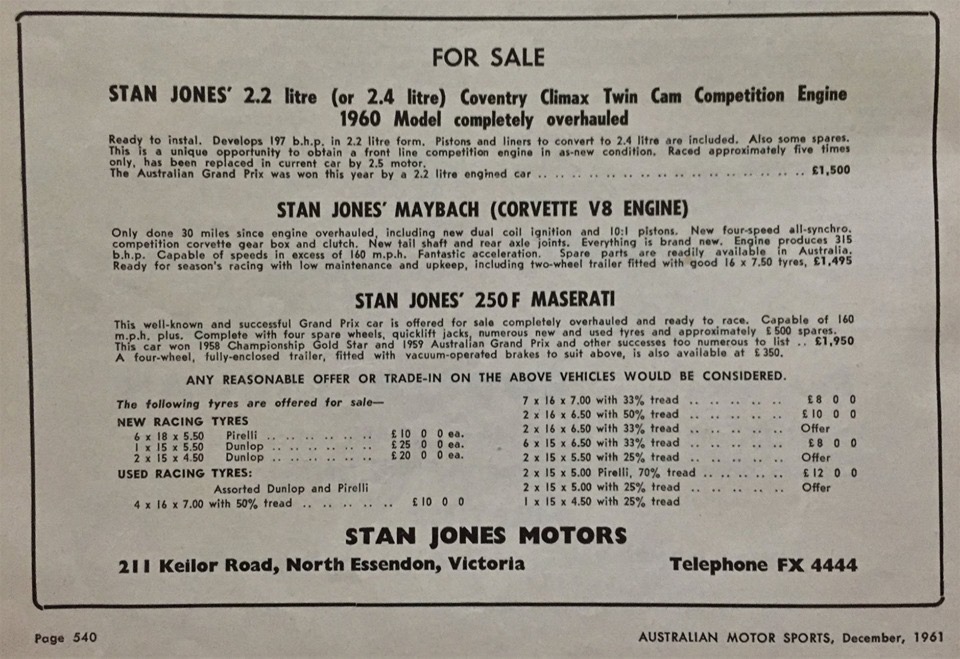
Jones retained the Cooper, racing it at local Calder, Victoria, events several times into 1962. Whilst for sale, the 250F had not sold, Stan ran the car in an historic demonstration event at Sandown in November 1963, which seems to have been his last competition outing. By 1965 the car was sold and running in historic events in the UK.
Stan was ‘a player’, his marriage to Alma ended in divorce. Stan gained custody of Alan and moved to The Boulevard in Ivanhoe, a more salubrious address than Yongala Street, Balwyn. By the mid-1960s all of Stan’s businesses had been sold and he was struggling to find an income; all of this tumultuous for Alan, by then in his late teens.
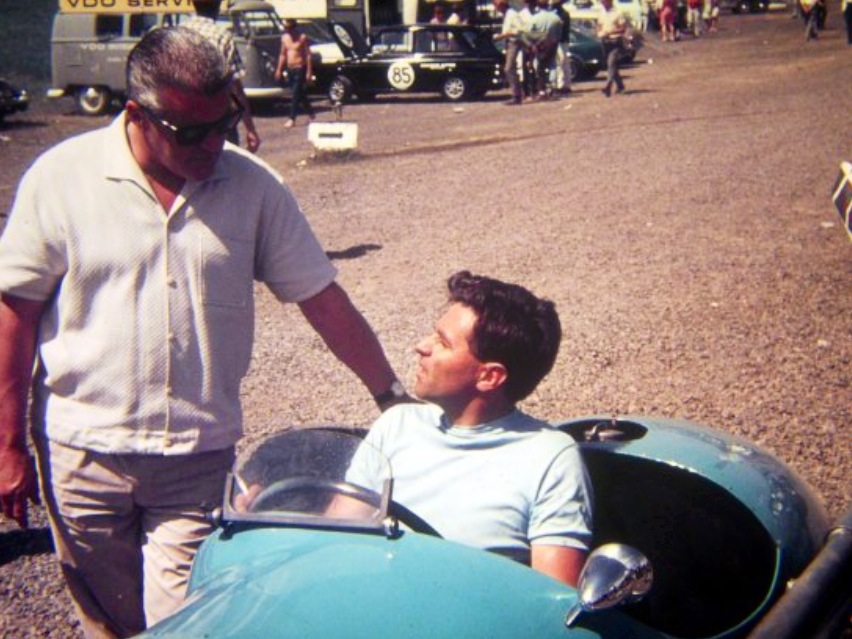
Jones suffered two debilitating strokes in the mid-1960s. Alan, after an initial trip in 1967, moved to the UK to pursue a racing career in 1969, Stan moved there to live with Alan and Beverley, AJ’s first wife.
He died in a London hospital in March 1973 just short of his fiftieth birthday. He was a shadow of his former self but a family friend who visited the Jones family in London spoke on the ‘blogosphere’ of Stan using two walking sticks but still looking dapper and smart.
Sad as this was, he would have been proud of Alan as 1973 was his breakthrough year in the UK. He had been competing in F3 for several years, winning a lot of races in a GRD 373 in 1973 and finally broke free of F3, getting his first F1 drive in the Harry Stiller owned Hesketh in 1975.
Champion Racers both, Stan and Alan…and in elite company with Antonio and Alberto Ascari.

Where Does Stan Jones rate in the pantheon of local Australian drivers of the period?…
It’s much harder to rate the drivers of the period as they raced mainly cars of different performance. It isn’t like today when drivers come through controlled junior formulae and into controlled senior formulae including F1! telemetry and the like making the job of picking who is fastest easier.
The competitor set includes Doug Whiteford, Lex Davison, Jack Brabham, (whom I have excluded from this analysis given he went overseas) Reg Hunt, Ted Gray, Alec Mildren and Len Lukey. Guys like Bib Stillwell peaked later and David McKay wasn’t in single seaters until the very end of Stan’s career so lets say that is the ‘elite group’, based either on results or speed – Ted Gray an example of the latter.
Whilst their is some chatter about the merits of Jones on the blogosphere, of more relevance are contemporary reports of those there in the day, assessing the drivers of the day in the context of the day.
Australian Motorsport Yearbook 1958/9 refers to Jones ‘two most important overseas appearances have done more to put Australia on the map than many other drivers’. His ‘finest achievement must still be driving an Australian Special against International drivers in works cars in the first NZ International GP.’ ‘On the results of these experiences (the other being the Monte Carlo Rally) Jones should then have spent one season overseas; his potential as a racing driver, was superior, at the time to Jack Brabham’.
This did not happen primarily due to his family and business commitments so ‘..it is therefore not surprising that when he has recently driven against overseas drivers, he has been unable to match their skill…’
‘It has been suggested Stan is a car killer. This is not true. Jones is the first to admit that when he began motor racing he had little knowledge of what went on under the bonnet, but on the credit side he has the ability to give the mechanics details of incorrect symptoms…’
‘It must be admitted Jones is a hard driver…This determination to win has been one of the most important factors contributing to Jones’ success…his record shows he has rarely been unplaced when completing a race.’
‘Jones has been a complete all rounder…He is not temperamental and like many similar drivers his easy friendliness off the track is only matched by his determination once a race has started.’
Stans adaptability is mentioned above, that was not unique at the time as circuit events were not as common as now so drivers with the means had to be prepared to travel interstate and to do trials, rallies and hillclimbs to get their ‘racing fix’.
Jones had the financial means to race, but so too did the competitor set above, who were all sucessful businessmen/racers with the wherewithal to match their skill.
As the oldracingcars.com analysis earlier states, Stan was the quickest local driver in 1961…Dan Gurney stating after racing against him at Ballarat Airfield, ‘wow he is some driver that Stan Jones’. He successfully made the change from front to mid-engined cars, he was as adept in his Cooper Climax as Maybach 4, both entirely different beasts raced successfully in the same year.
Ray Bell, noted Australian motor racing journalist and Racing Car News contributor talks about Jones on ‘The Nostalgia Forum’ as ‘..the dominant figure of his day. He probably won the 1957 AGP at Caversham denied by poor lap-charting by the organisers. He stood out amongst drivers of the fifties, Brabham shot off to the UK to really make an impact’. ‘At Albert Park in 1956 only two drivers took Golf Links Bend flat, Moss and Jones’
Was he our fastest of the period? Probably.
It’s a pity Whiteford bought a 300S rather than a 250F from the visiting Maserati factory team after the 1956 Albert Park GP, equally it’s a shame Hunt retired, those battles would have been interesting and perhaps conclusive.
Was he the best in the period? Possibly.
Perhaps mechanical sympathy, important at the time was a slight negative.
Lex Davison is the other ‘best’ contender and an honorable mention should be made of Hunt who really wasn’t around long enough in outright cars to call it, he definitely had a car advantage when the A6GCM arrived, raising the bar and forcing others to buy Red Cars.
The final word goes to John Medley, another racer/enthusiast/historian of the period also writing on ‘TNForum’. He said of Stan, ‘He was an impressive operator, a determined and at times exuberant driver and usually with good equipment. Alan Jones was not the only goer in the Jones family. Stan was a serious goer full of fire and brimstone.’
Etcetera…
Charlie Dean…

The importance of the Research & Development ‘Skunkworks’ Dean created at Repco post-war is important to recognise.
Its existence and focus on development by racing attracted an incredible number of talented engineers who graduated from the ‘Repco University’ and achieved much within Repco, or more often outside it.
Repco engineering alumnus include Ivan Tighe, Paul England, Peter Holinger, Nigel Tait, Michael Gasking, George Wade, Don Halpin, Frank Duggan, John Brookfield, John Judd, John Mepstead, David Nash, Ian Stockings, Ken Syme, Brian and Norm Wilson and many others. Phil Irving is not on this list as he was already of world renown when he joined Repco.
This unit within the company led to the Coventry Climax FPF maintenance program in the early 1960s, this and the capabilities of the engineers made possible taking on the Jack Brabham request to design and build the 1966-67 World Championship winning RB620 and 740 Series of engines, a program supported and sponsored by Dean, by that time a Repco Board member.
Board membership was a considerable achievement in Dean’s career as Repco were for many years an Australian Stock Exchange Top 200 company. Even though by then he wore a suit, by thought, word and deed he was a racer to his core and a fine engineer to boot.
As a Repco Director he retired compulsorily at 60 in 1973, then doing a variety of engineering projects, and some property refurbishment work. He died suddenly in 1984 after suffering a fatal blood clot following surgery after a fall moving a concrete slab at his home.
To my knowledge his story has not been fully told but it is well covered in Malcolm Preston’s great book referred to in the bibliography.

Etcetera…


Bibliography…
Barry Green ‘Glory Days’, Malcolm Preston ‘Maybach to Holden’, Graham Howard ‘History of The Australian Grand Prix’, ‘Australian Motorsport Yearbook 1958/9’, ‘The Nostalgia Forum’
Photo Credits…
David Van Dal, John Ellacott, Ron Lambert, oldracephotos.com, Rodway Wolfe Collection, Merv Bunyan Collection, Bernie Rubens, John Ellacott, Charles Rice, Ellis French, B Dunstan, Ed Steet, Walkem Family, KE Niven & Co, Peter Wherrett Collection, Australian Motor Racing Museum, Rob Bailey Collection, Kevin Drage, Dacre Stubbs Collection, motorsportarchive.com, Graham Thompson Collection, Ray Eldershaw Collection, Alan Stewart Collection, Ed Holly Collection, fan.one, George Thomas, VHRR Archive, Pter D’Abbs, Historic Racing Car Club of Tasmania, The Age
Tailpiece…

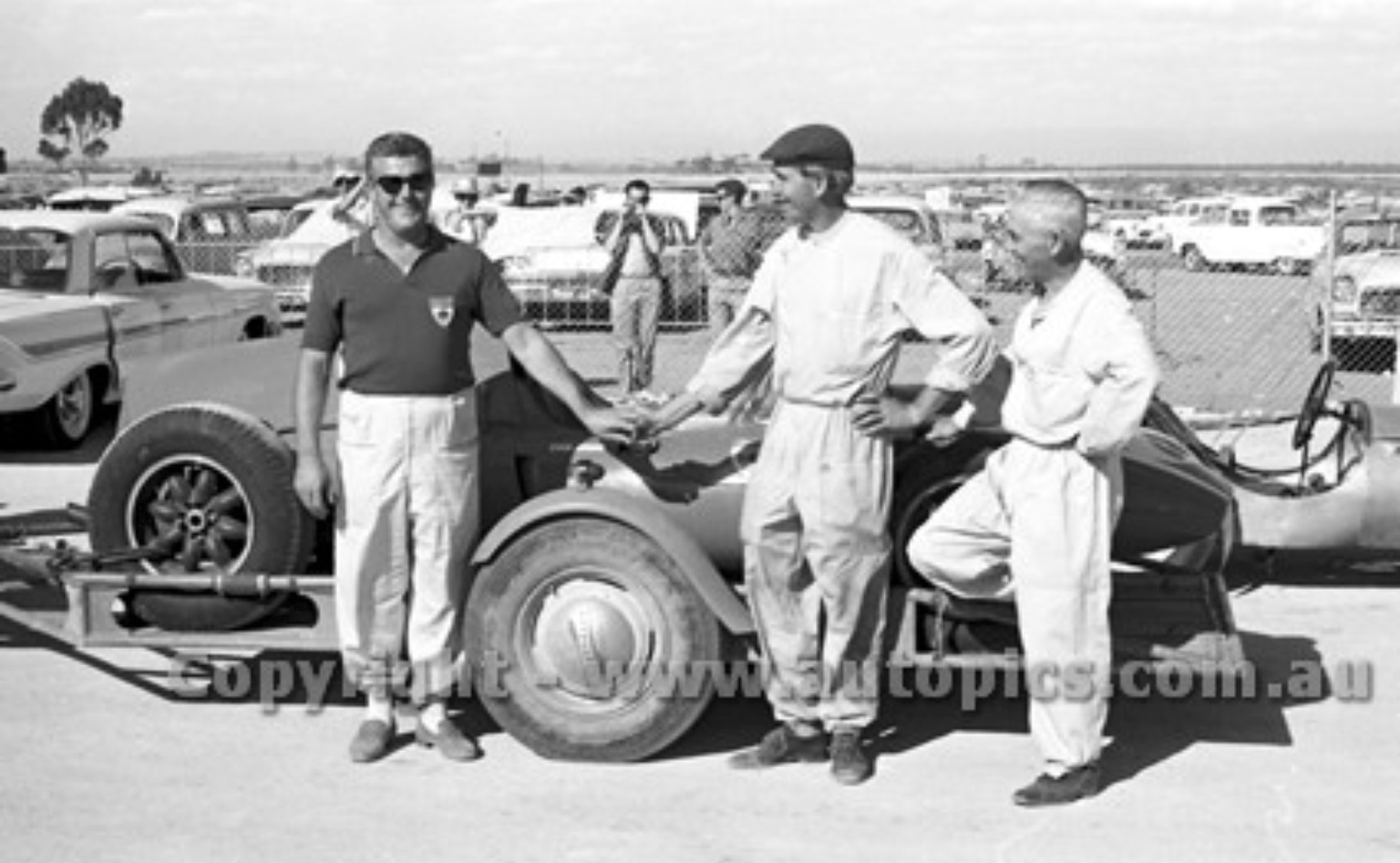
Happy Stan, no doubt a relieved Stan, in the Longford paddock post 1959 AGP win, Maserati 250F…
Finito…

























 primotipo...