Posts Tagged ‘Alan Hamilton’

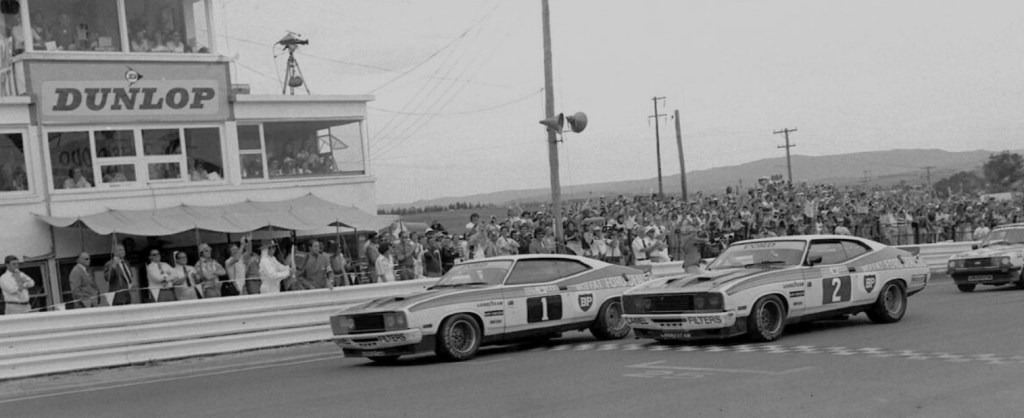
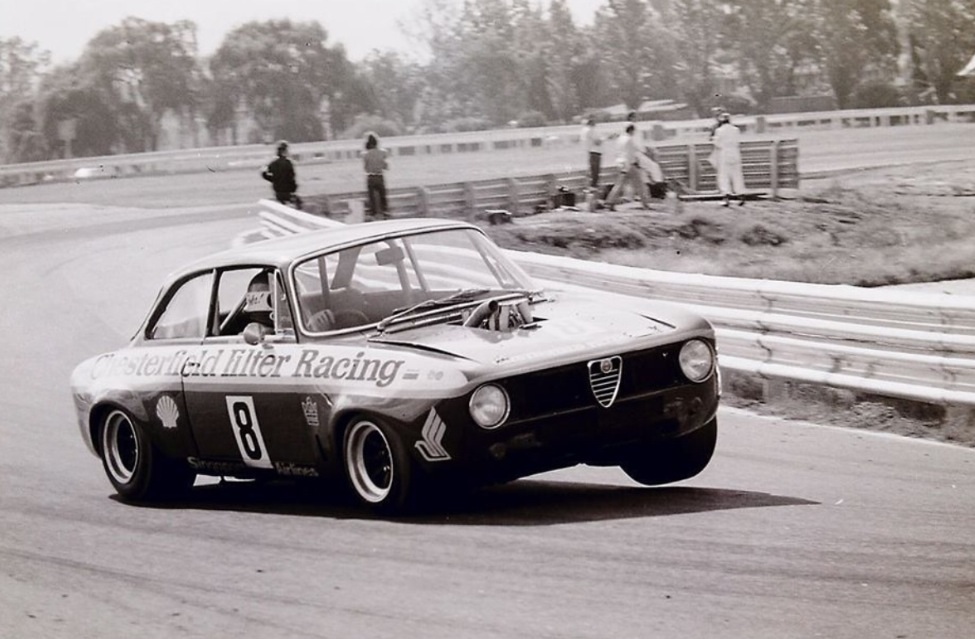
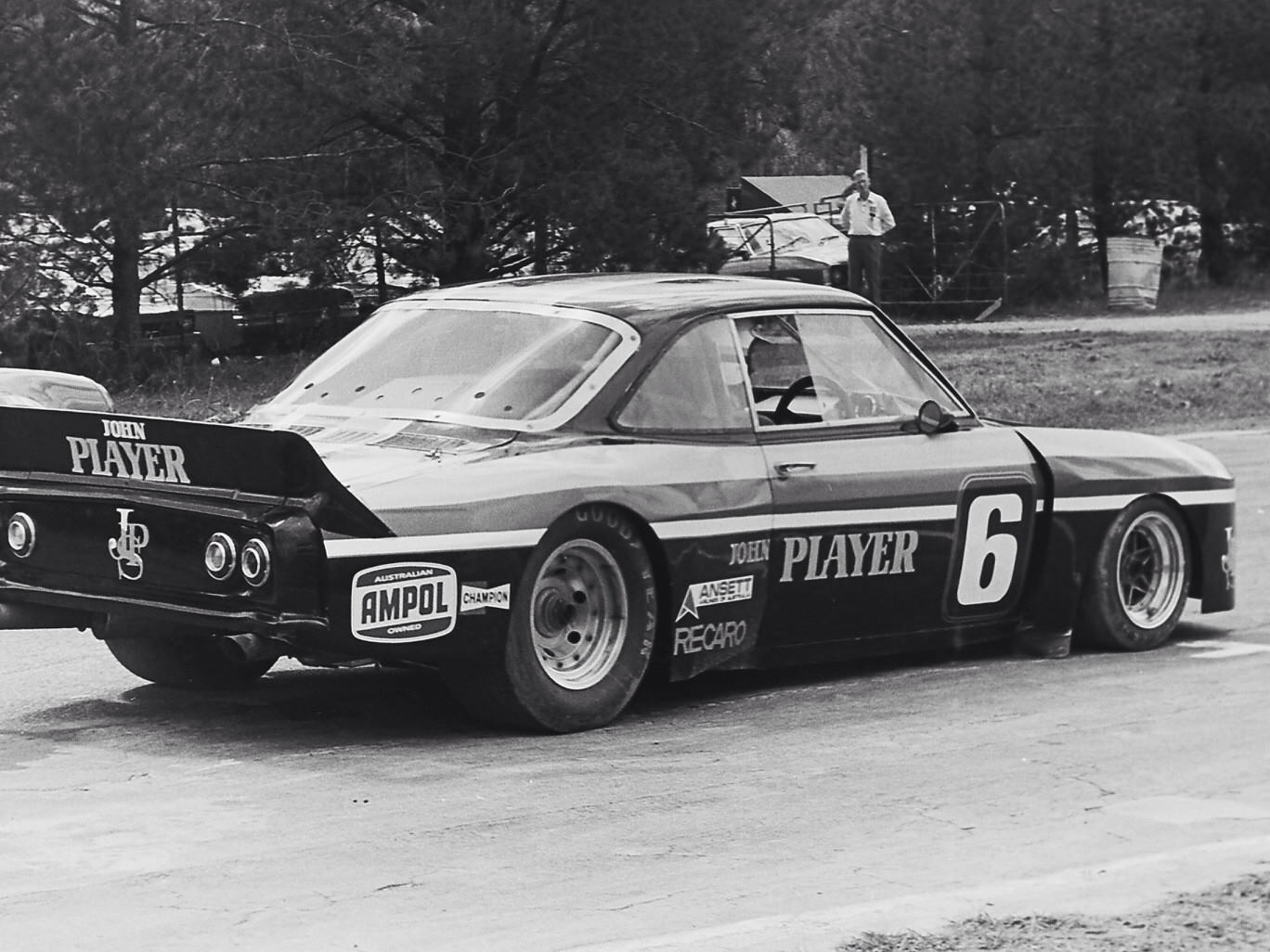
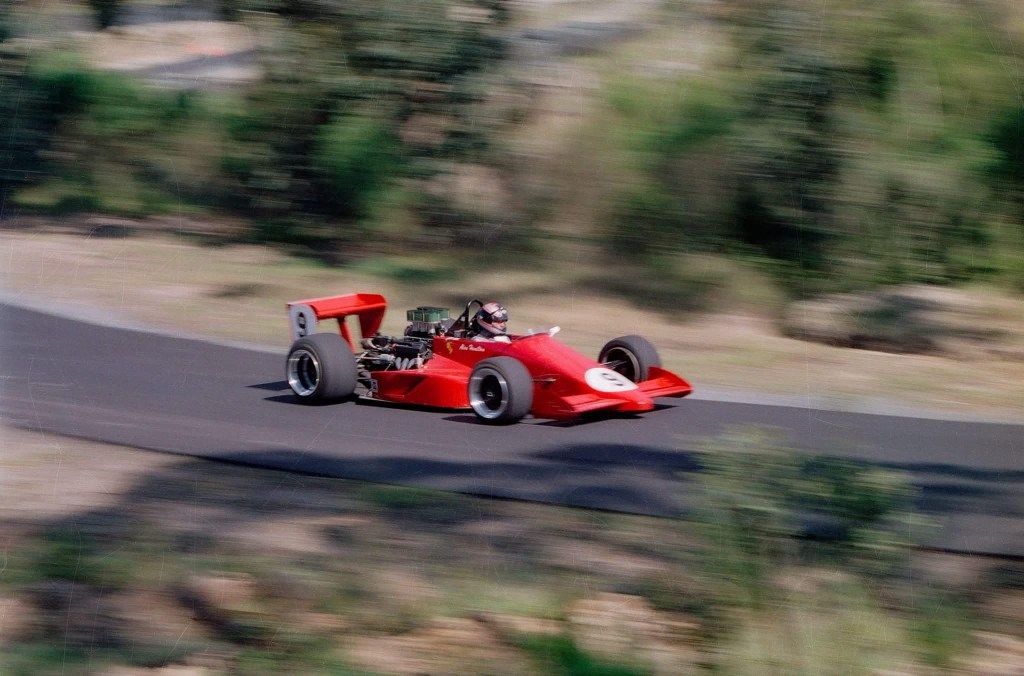
Mike Imrie’s Ford Falcon V8 sports sedan gets the jump on Alfie Costanzo’s Porsche Cars Australia Lola T430 Chev into Shell corner, Sandown during a Formule Libre race in 1979.

Maybe not. How bout they shared an early Sunday discretionary practice session, it’s an interesting juxtaposition of car types all the same.

The trouble with building the world’s best Formula 5000 car, the Lola T330/T332/T332C, is how Eric Broadley and his band of merry men could better it!

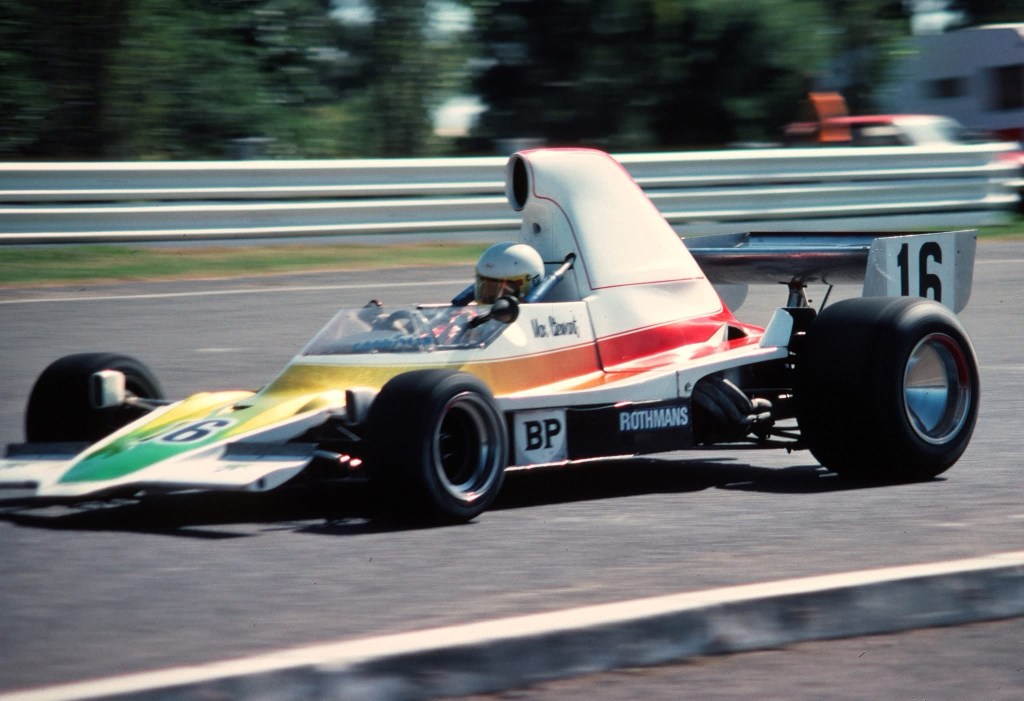
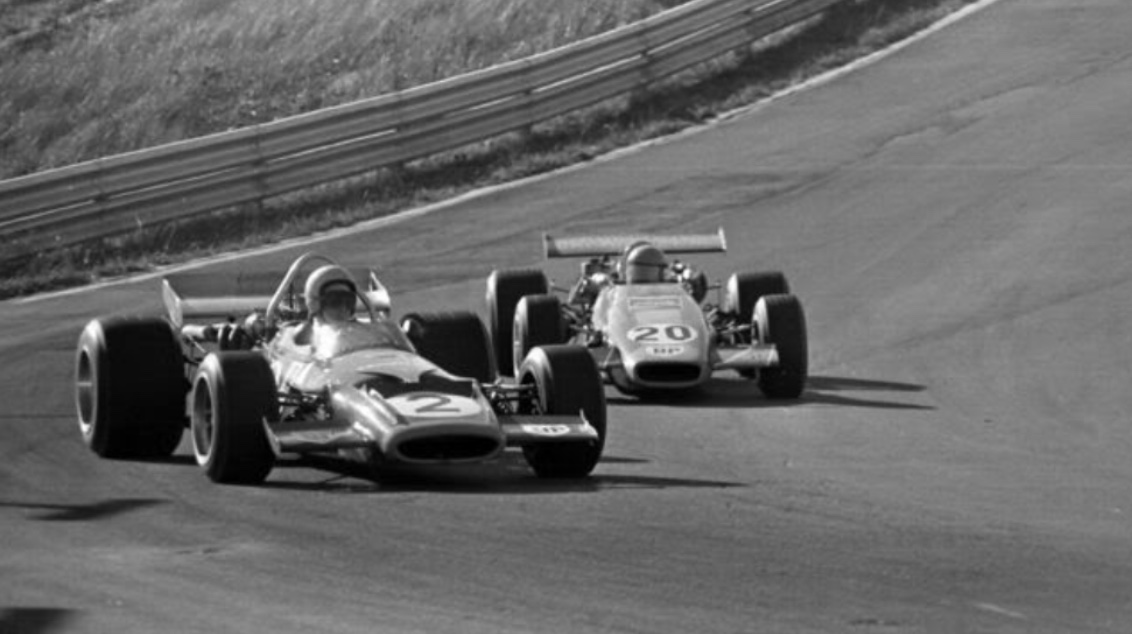
Alan Jones, Lola T332 Chev ahead of Peter Gethin’s Chevron B37 Chev during the February 1977 Sandown Park Cup, two DNFs, with Max Stewart’s Lola T400 Chev the winner below. All of the first three shots Shell Corner (B Forsyth)
(R Steffanoni)

The 1975 Lola T400 (above) oozed smart thinking, including variable or rising-rate suspension. Initially it was labelled a dog, but by mid-1975 an update kit and setup guidance had customers who persevered with the cars on the right track: Teddy Pilette’s VDS T400 won the 1975 European F5000 Championship from his teammate, Peter Gethin, while in Australia Max Stewart’s T400 won the 1975 Australian Grand Prix and many Gold Star and Rothmans International rounds from 1975-77.

The ultimate F5000 test was of course, the US Championship, where Eppie Wietzes was the best of the T400s in 1975 with fifth place in the standings. The Americans and Australasians loved their T332s, some like the Jim Hall-Chaparral T332Cs raced by Brian Redman were very highly refined and developed, and prodigiously fast.
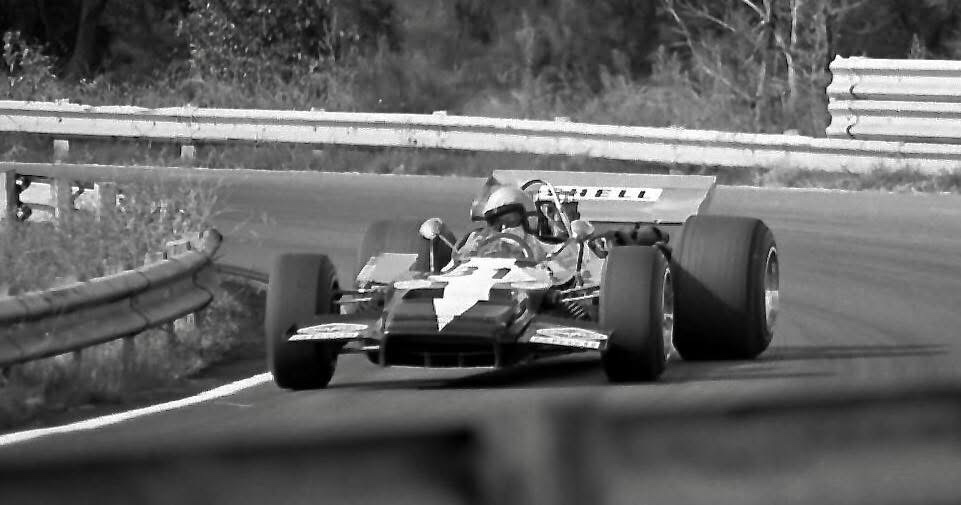
Frank Gardner all cocked up in the Esses during the February 1971 Warwick Farm 100 Tasman round won by FG’s works Lola T192 Chev (L Hemer)
Kevin Bartlett, Lola T300 Chev, Glyn Scott Memorial Trophy Gold Star round, Surfers Paradise 1972

Broadley then took a leaf out of his own F5000 playbook. The Frank Gardner developed Lola T192 Chev was still winning races in 1971 when Broadley, Gardner and designer John Barnard went smaller by building the 1972 model-year Lola T300 Chev.

Essentially, Gardner felt a car based on an F2/FB T240 aluminium monocoque chassis would provide a lower centre of gravity and improved aerodynamics. Fitted with big radiators mounted beside the drivers shoulders, a 500 bhp Chev and Hewland DG300 five speed transaxle where a Ford FVA and FT200 five speed transaxle once lived, the T242, and a little later the renamed T300 was a luscious looking racing car!

Once refined by Gardner in the late 1971 season races the T300 won a lot of races around the world and sold like hot cakes in ’72. The 1973-74 T330/T332 refined the package into one of the most successful series of customer racing cars ever built. Probably the most successful if you account for the central-seat 5-litre Can-Am T332CS and T333 variants as well.

For 1976 Lola planned to do ‘a T192 to T300 all over again’.
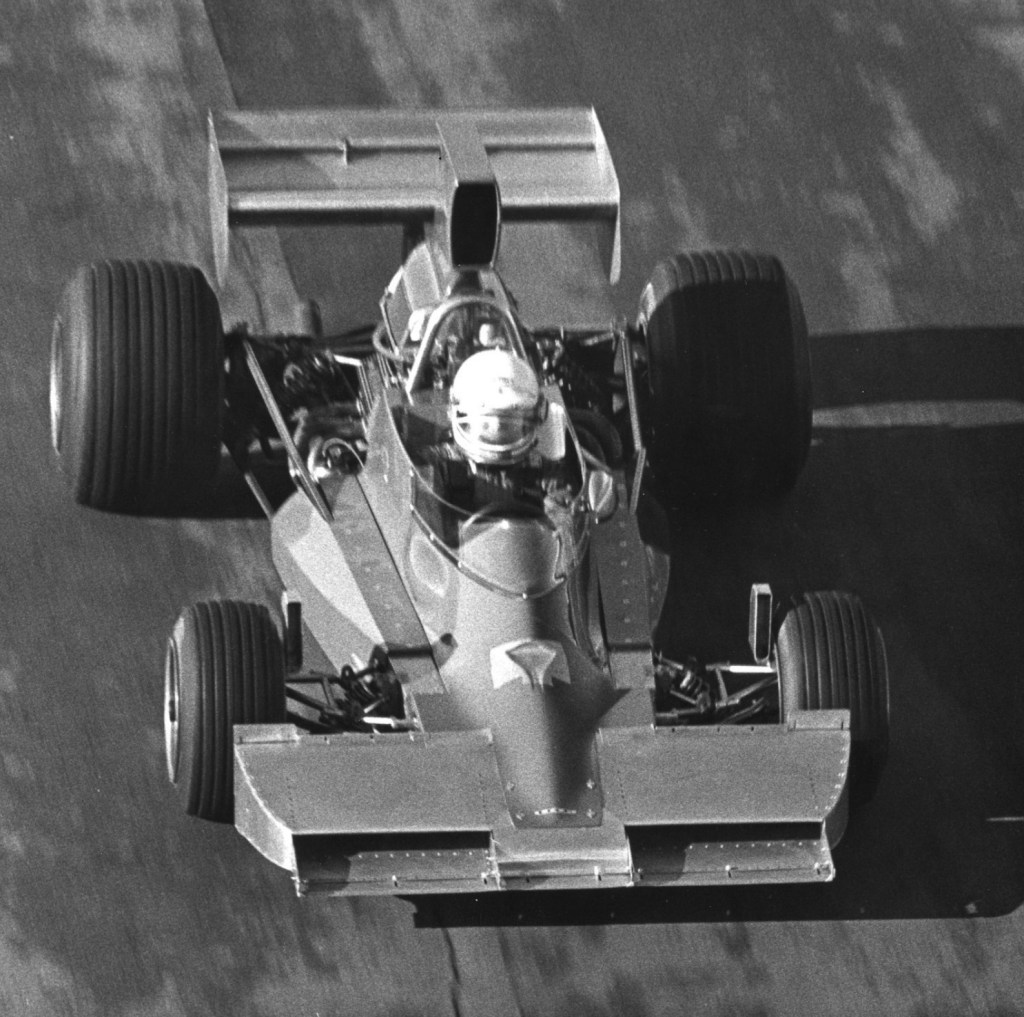
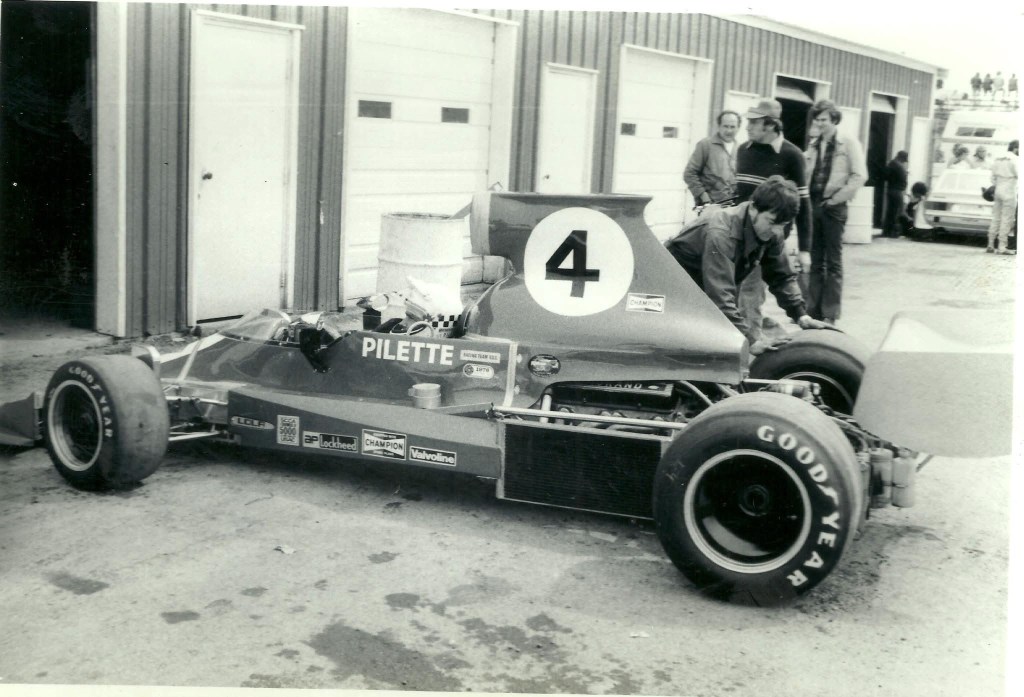
Teddy Pilette testing a Lola T450 F2 chassis fitted with a Chev V8, DG300 Hewland etc at Paul Ricard. Note that a front radiator is fitted at this stage. In the later shot of Teddy below, the radiators have been moved to the rear, parallel with the radius rods (Lola)
Note the ‘brackets on brackets’ front suspension assemblies as per the text (Auto Hebdo)

Lola initially built and tested a car based on an F2 T450 tub, but ultimately, went with a monocoque based on the T360 Formula Atlantic, which was also a narrow design.

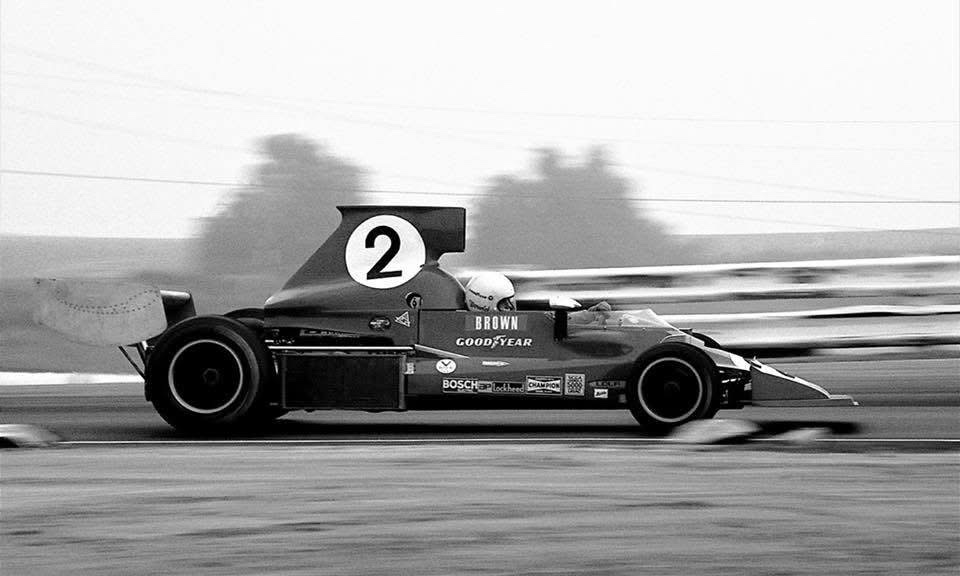
The T430 had a full-width nosecone, unlike all of the T300-series cars, but the radiators were mounted at the rear, having initially, as the photos above show, experimented with a front-mounted radiator.

The suspension was different to the T360 in that the quite conventional mix of magnesium uprights, upper and wide-based lower front wishbones, Koni/coil spring damper units and an adjustable roll-bar. were attached to brackets that in turn were attached to the tub.

The rear suspension comprised Lola magnesium uprights, a single upper link, two parallel lower links and a pair of radius rods doing fore and aft locational duties, and again Koni/coil springs and an adjustable roll bar. VDS’s chief mechanic, Steve Horne, christened the car The Flying Bracket!

In essence, as Allen Brown described it, the T430 has ‘T332-style suspension geometry. Essentially, Lola had built a smaller version of the T300/330/332 design.’ Teddy Pilette wrote cryptically on Facebook, ‘Eric Broadley wanted to make a small, narrow car to get the advantage of straight-line speed…but no good on the curve!!!!’

Steve Horne added (in relation to a Riverside photograph) ‘The drivers swapped cars that weekend and didn’t change much. I normally looked after the B37 (see results summary below), but that weekend was demoted to the 430! The Chevron was one of the best F5000s I worked on. It didn’t really have any development done on it, and the biggest downfall for both cars (T430s and B37) were the Morand engines, which just weren’t competitive in the USA.’

SCCA-USAC Formula 5000 1976…

Three Lola T430s were sold, two to Count Rudy Van Der Straten’s Racing Team VDS, and one to Jim Hall’s. In addition to his pair of Lolas for the 1976 US F5000 Championship – the last – VDS also acquired Derek Bennett’s last F5000 design, the Chevron B37 Chev, having successfully run B24/B28s previously; Peter Gethin won the 1974 Tasman Cup aboard a VDS Chevron B24 Chev.

It must have been quite an expensive year for the beer-baron, carrying chassis spares for different makes of cars. To add to the mix, he also appears to have acquired the T332C HU55 that Warwick Brown was racing for Bay Racing until its demise. WB’s first appearance for VDS was at Road America on July 25.

Pilette raced T430 HU1 and Gethin and Brown HU2, Gethin’s preferred mount was the B37, but Teddy grabbed it once or twice too…
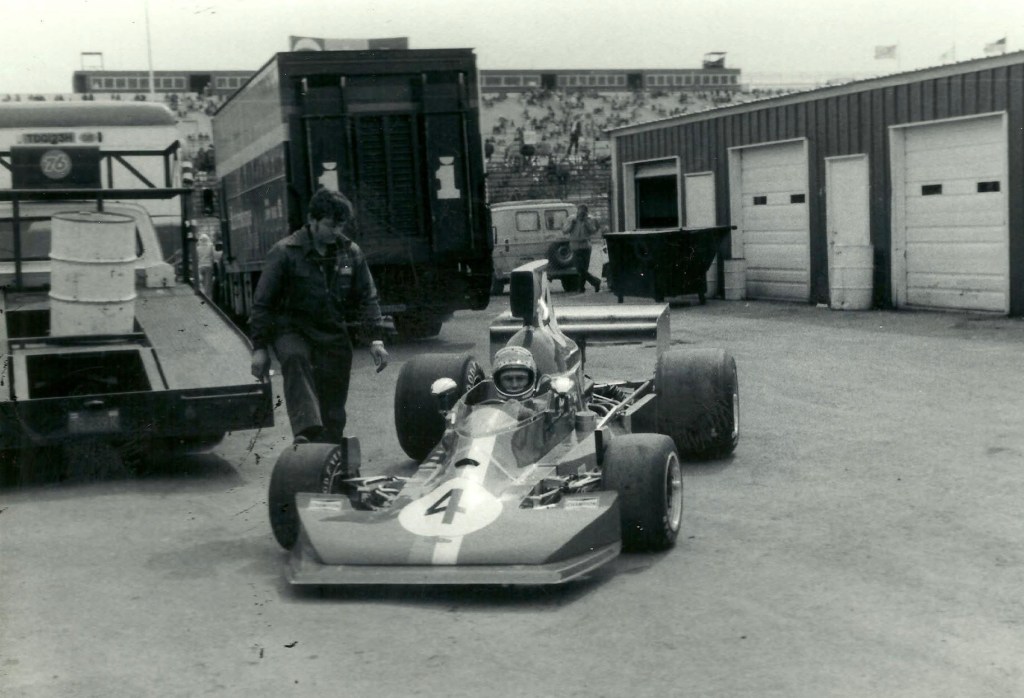
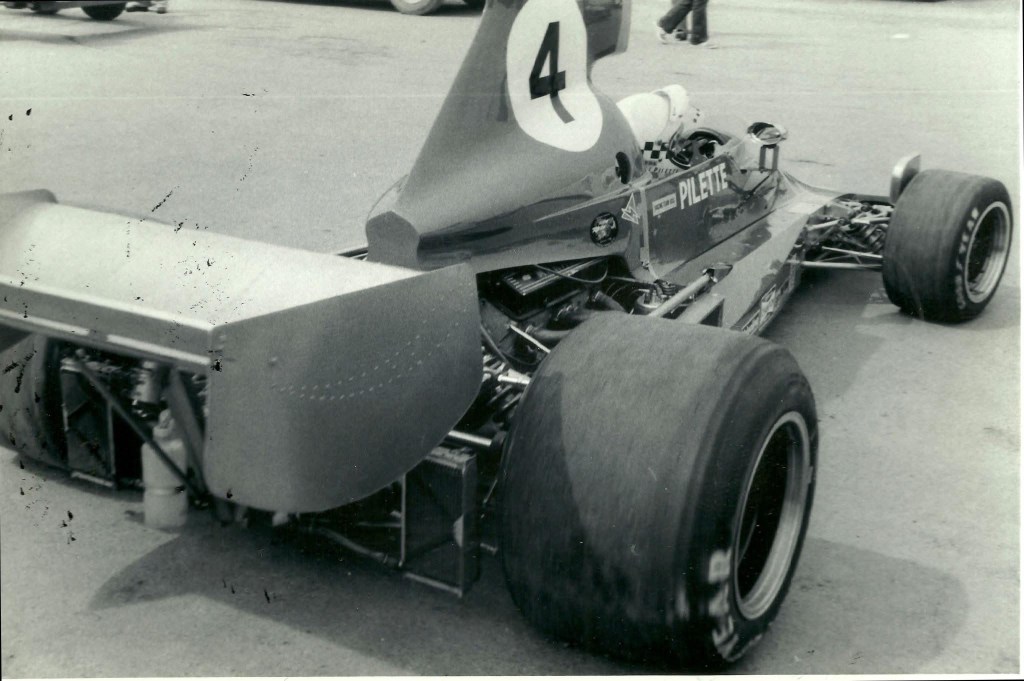
Teddy Pilette, Lola T430 Chev HU1 at the Pocono 1976 US F5000 season opener – the T430’s first race – in May 1976 (B Featherly)
Oil radiators mounted either side at the rear (B Featherly)
(B Featherly)

As to results: Pocono, May 9, Teddy was Q5 and third and fourth in the heats, then 12th in the final won by Redman’s T332C. At Mosport on June 20 Teddy was third from Q7 in the race won by Alan Jones’s T332. Jackie Oliver had a memorable win for Dodge at Road America on July 25, Shadow DN6B with Pilette sixth from Q11. Gethin was ninth from Q8. Redman won again at Mid Ohio on August 8 with Gethin seventh from Q11. Pilette was fifth overall, and second in his heat from Q7 in the Chevron B37…

The dominance of the Lola T332C was again confirmed with Redman’s win in the Hall-Haas entry at Road America on August 28, where Pilette was Q2 – easily the best qualifying performance of a T430 all year – and fifth, with Brown Q6 in T430 HU2 and DNF, while Peter was Q8 and fourth in the B37.

Allen Brown wrote that ‘With two rounds to go, Alan Jones and Jackie Oliver were tied for the championship lead, but when Oliver retired at Road America and Jones had to miss the race to be at the Dutch Grand Prix, Redman won and leapt into a significant points lead.’
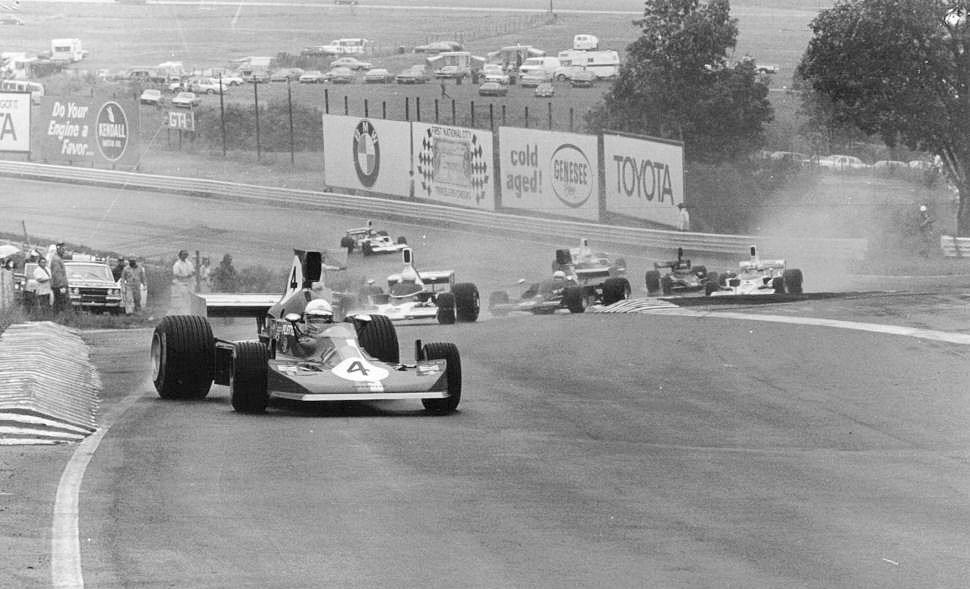
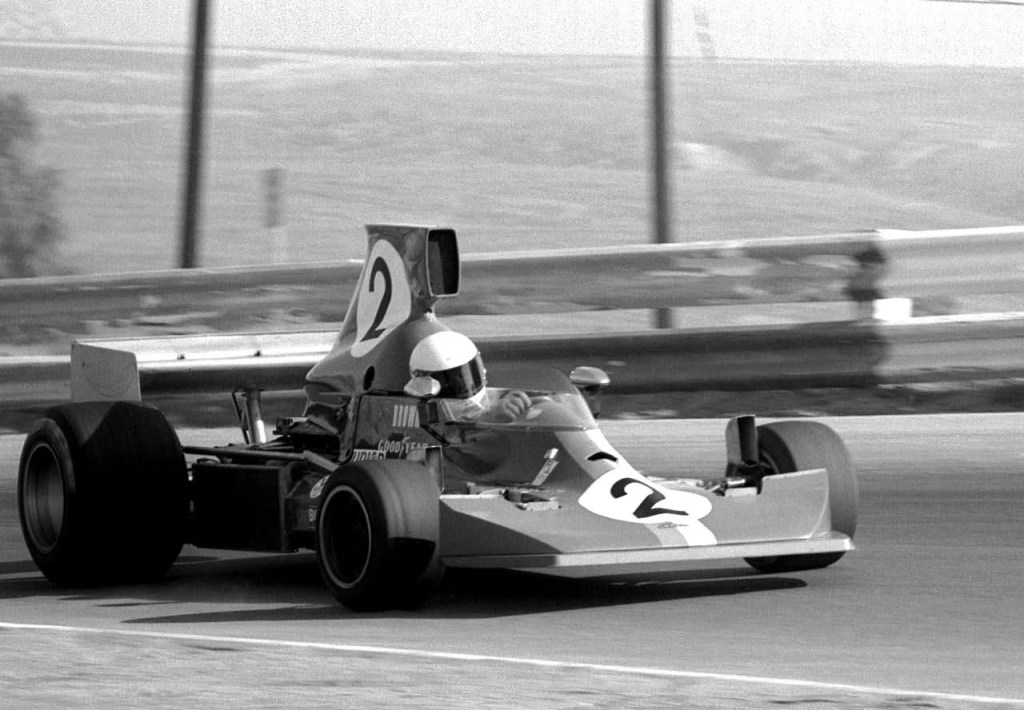
Teddy Pilette leading the field in the wet at Watkins Glen in ? 1976 DNF on lap 14 with engine failure (Lola Heritage via T Pilette)
Warwick Brown, T430 Riverside 1976 and below (unattributed)

At Mid-Ohio on August 8, Redman won again with Gethin seventh in HU2 and Teddy fifth in the B37. In the final round at Riverside on July 17, VDS were again busy with three cars. Up front, it was Al Unser in a T332 Chev with WB sixth in HU2 from Q11, Gethin 10th from Q16 in the B37 and Teddy 12th from Q10 in HU1.

Redman won the championship from Unser, Oliver and Jones, the best of the T430 pilots was Warwick Brown in seventh, but most of WB’s points harvest was aboard the Bay Racing Lola T332C.

Lift Off: Surfers 100 1977. L>R WB T430, Peter Gethin Chevron B37, Vern Schuppan, Elfin MR8-C, with John Leffler’s white Lola T400 correcting his start slide and perhaps looking for a run between Gethin and Schuppan. The first three were Brown, Gethin, and Leffler (D Simpson)

1977 Rothmans International Series Australia…

Given the scale of the investment, and success of VDS it was a poor season, best to cut ‘yer losses, take the cars to Australia, win the series, then flog them at the end of it. Which is exactly what happened!

Warwick Brown won two of the four Rothmans International rounds – Oran Park and Surfers Paradise – and the championship from Peter Gethin, in the VDS Chevron B37 Chev and Alan Jones Lola T332 Chev.

Jones was the star of the series but a jumped start in the AGP at Oran Park and writing off a T332 at Surfers cruelled his chances. Yip’s boys leased KB’s T332 for that race.

At the end of the series, VDS sold the two T430s to Porsche Cars Australia/Alan Hamilton, who had had one season of F5000 in 1971, and with business booming, thought he would have another crack.

Bruce Allison bought the Chevron B37 and had a fantastic year in it, contesting the British F5000/Group 8 Championship, winning many fans, some races, and the prestigious Grovewood Award.
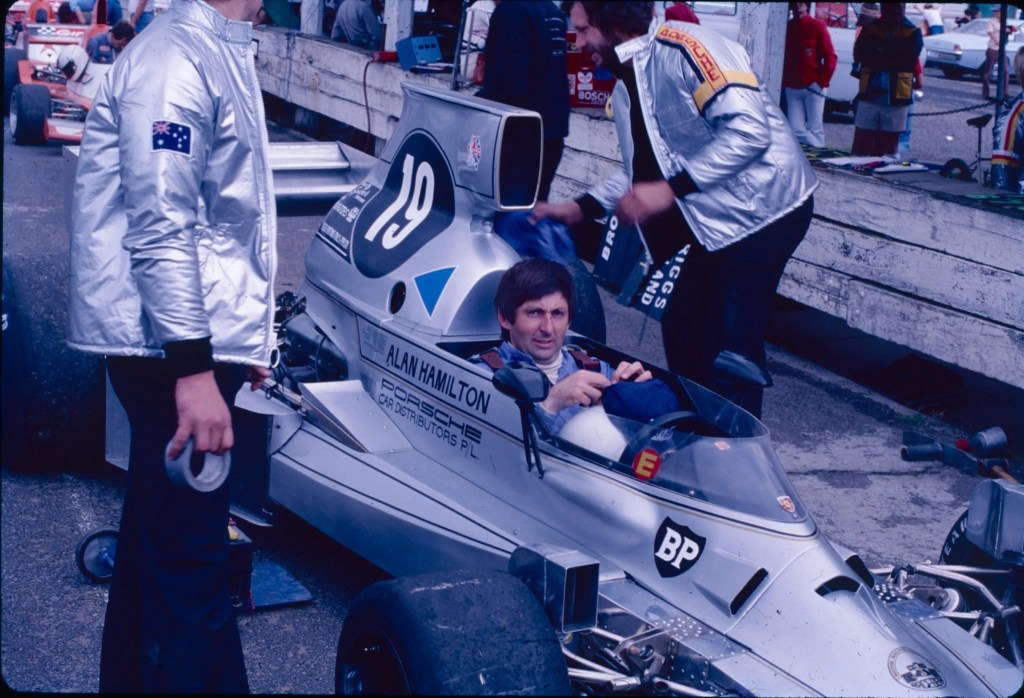
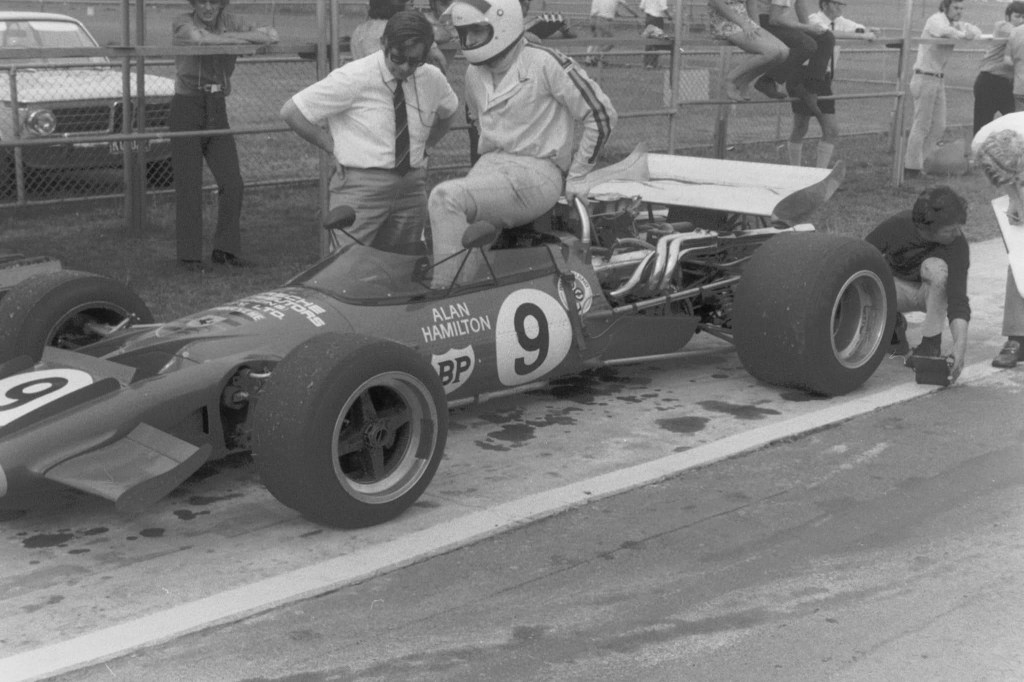
‘Hammo’ in the Sandown pitlane during the 1978 AGP weekend (B Atkin)

Porsche Cars Australia Alan Hamilton…

Brown raced HU2 to wins in the Australian Grand Prix at Oran Park and in the Surfers Paradise 100, while Max Stewart took his final win in his Lola T400 Chev HU3 at Sandown the week later.

Alan Jones’ Sid Taylor-Teddy Yip Lola T332 Chev was the fastest combination in the 1977 Rothmans Series, with AJ redeeming himself in the final round at Adelaide International. Jones was pinged for jumping start at Oran Park, bent a Lola in practice at Surfers, then led at Sandown before retiring.

In his ’77 Gold Star campaign aboard HU2, ‘Hammo’ was second at Sandown, fourth at Calder and second at Phillip Island for fourth overall behind John McCormack’s McLaren M23 Repco-McCormack Leyland.

Hamilton also contested the 1978 Rothmans Series for fifth at Sandown, tenth at Adelaide International and sixth at Surfers Paradise before vacating the seat for Derek Bell at Oran Park, where the British all-rounder was eighth from Q11.

Warwick Brown won the series again with a VDS machine, this time a Lola T333 Chev Can-Am car (HU2) converted to a T332C F5000 car, amusing to me at least, given the number of T332s that made the conversion journey the other way…
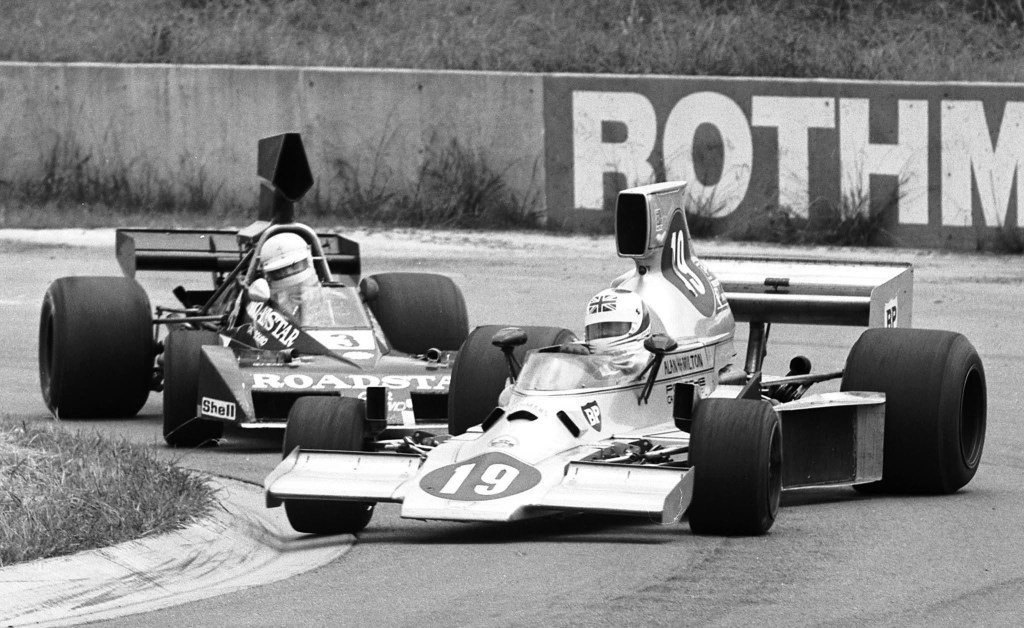
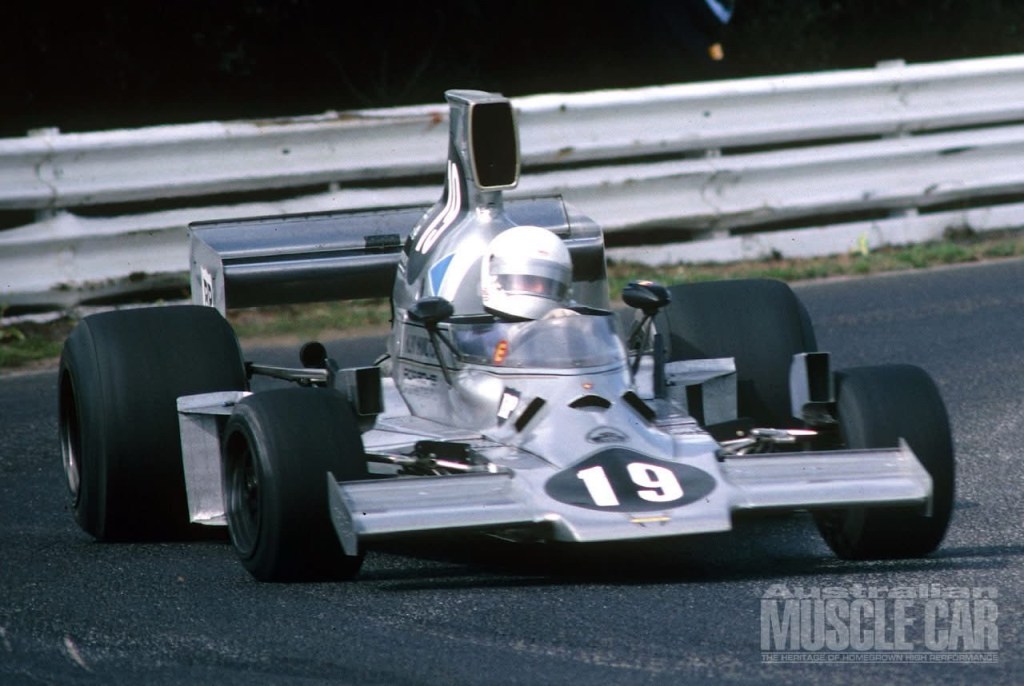
Derek Bell ahead of Kevin Bartlett at Oran Park at Oran Park in 1978. Lola T430 Chev and Brabham BT43 Chev (C Snowden)
Alan Hamilton aboard his immaculate Lola T430 Chev during the 1978 Australian Grand Prix at Sandown before That Lap. Note the very neat T332-based nose fitted by then

While grids for the Rothmans International Series were still adequate, the domestic Gold Star was a different matter. The case for a change to Formula Pacific was being put, with F5000 hanging on. Alan Hamilton missed the opening round of the Gold Star at Oran Park but entered for the Australian Grand Prix at Sandown on September 10.

That ‘Fangio Meeting’ was mega with the great man demonstrating a 3-litre W196S-engined Mercedes-Benz W196R Grand Prix car with much brio throughout the weekend and ‘racing’ Jack Brabham in Jack’s 66 F1 Championship-winning Brabham BT19 Repco 620 V8.

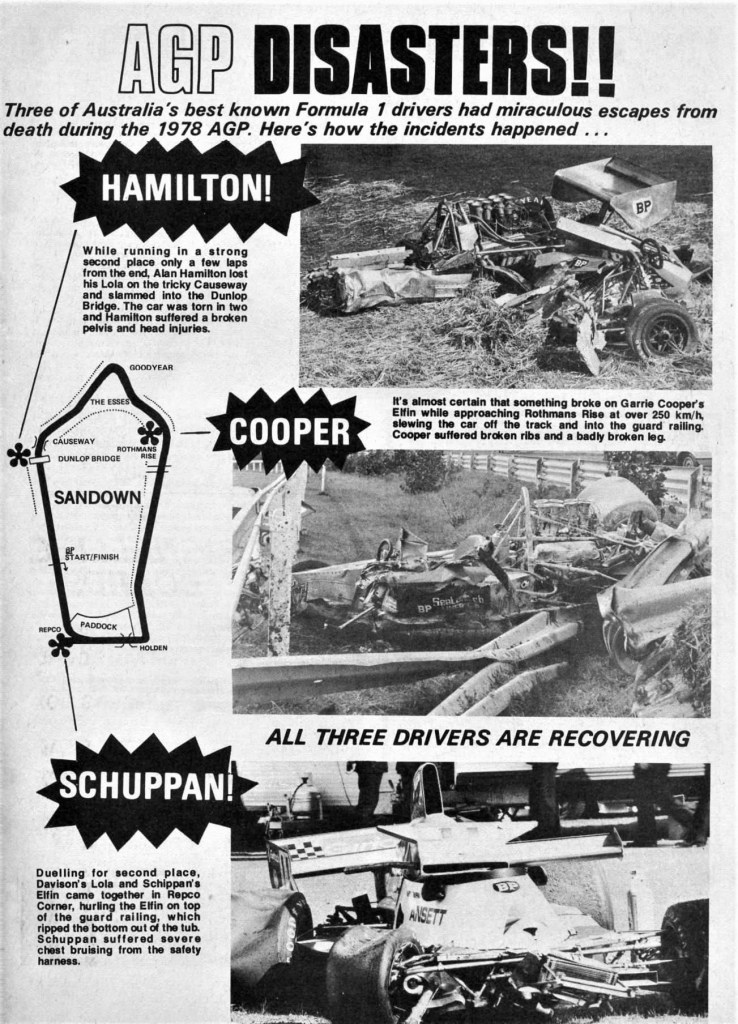
The utter excitement of the sight and sound of that legendary car-driver combination was to a large extent ruined by the accidents that befell Garrie Cooper and Alan Hamilton, and to a lesser extent Vern Schuppan, in the Grand Prix won by Graham McRae, McRae GM3 Chev. 

Alan lost control of the twitchy, unforgiving Lola on the fast left-hander off The Causeway then went backwards into the Dunlop Bridge breaking the car into two and breaking a leg, his pelvis and sustaining serious head injuries.

While there that day, I was nowhere near the accident, which was in a no-spectator area on the inside of the track. The vibe of the place that day, with three big hits and limited information flow to us punters, is something I still remember.

It took a long time for Hamilton to recover, he carried maladies related to that accident for the rest of his life, not least the diabetes that prevented him from ever holding a full competition licence again.

Hamilton supported a lot of drivers along the way, it’s beyond the scope of this article. When he decided to continue to race the other T430, HU1, he chose Italian Australian Alfredo Costanzo, then 35 years old.
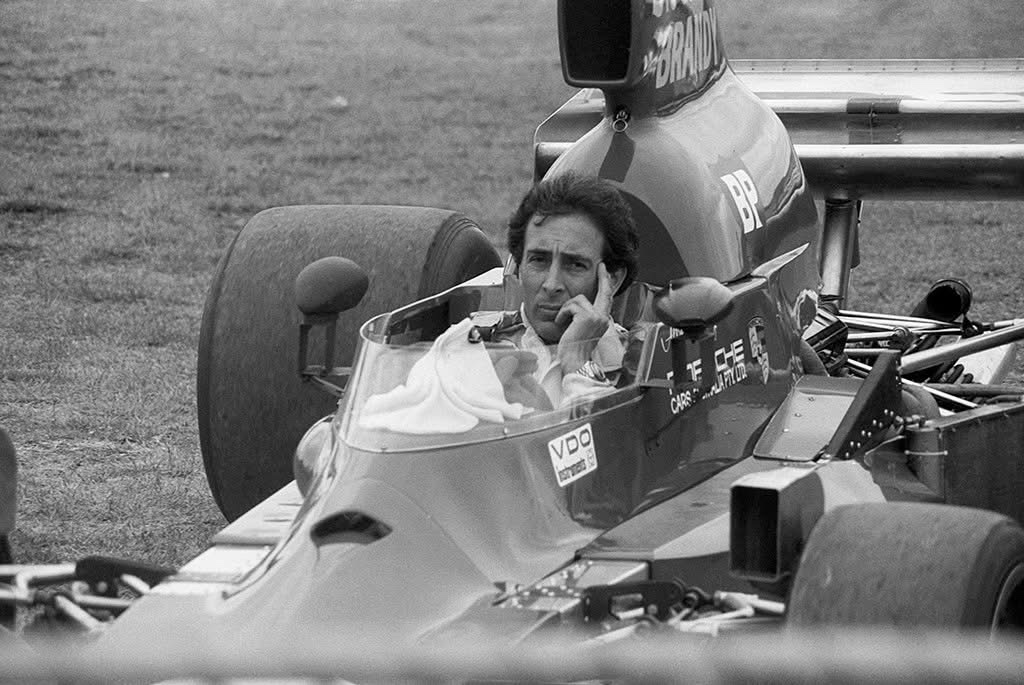
Costanzo in the Sandown dummy grid. Flying Bracket factor front and rear is clear (D House)
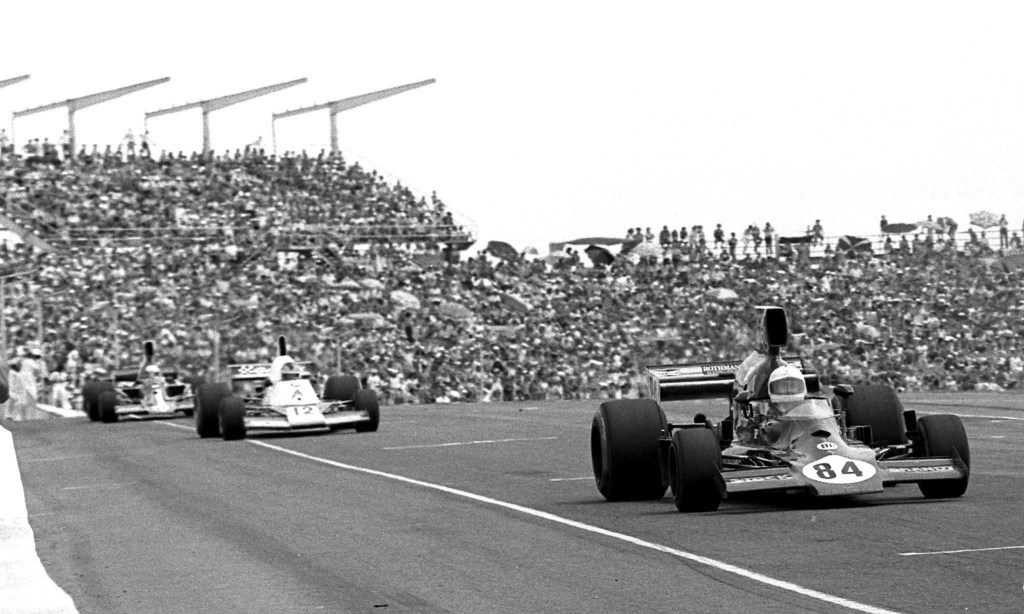
This shot shows the low frontal area presented by Costanzo’s T430 compared with Brown’s T332 further back; Perkins’ Elfin MR8 looking as slippery as the T430. Oran Park 1979 (B Forsyth)

Costanzo’s first race was at the Sandown round of the 1979 Rothmans Series on February 4, where he won, what a debut! He took the Adelaide round as well.

The shot above shows Costanzo, Lola T430 Chev, ahead of Larry Perkins, Elfin MR8C Chev, and Warwick Brown, Lola T332C Chev in the final Oran Park round on February 25, 1979.

Rob Newman, racer and in John Walker’s AGP and Gold Star winning 1979 year, the preparer of JW’s Lola T332, observed: ‘Poor Alfie had a driveshaft failure and lost the race and the series. Perkins went on to win the 1979 Rothmans series without winning a race, and Warwick salvaged one race win from what had been an awful 1979 Rothmans series for him, his last season as a professional driver, if I recall correctly.’

Shortly after the Rothmans, the Gold Star commenced with the Australian Grand Prix at Wanneroo Park on 11 March. Costanzo bagged pole, then he and Perkins took one another out in a first-lap, first-corner battle for victory. Another perennial battler, John Walker, won the day in Martin Sampson’s Lola T332 Chev; the duo took the Gold Star that year, too, with Alfie the winner of the Sandown round.

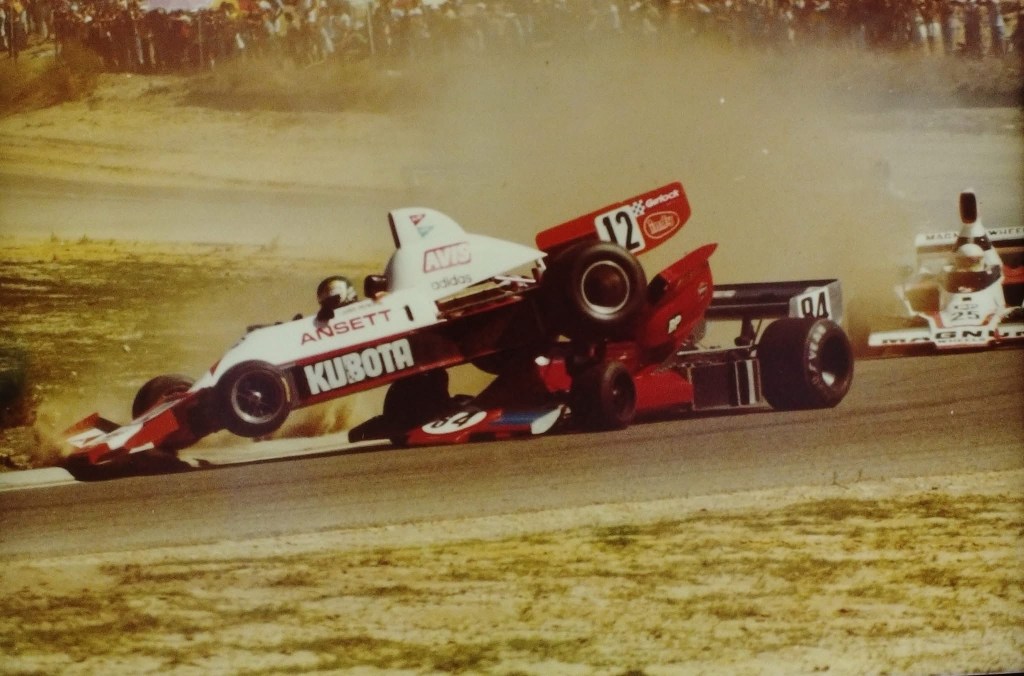
Take No Prisoners. Classic dive and chop manoeuvre between Perkins’ Elfin MR8 and Alfie’s T430 eliminates both at the start of the 1979 AGP at Wanneroo Park. A great pity, as that joust could have been really something (unattributed)
AGP victor John Walker is licking his lips in the #25 white Lola T332 behind the Wanneroo Air Show (unattributed)

Into 1980, the Hamilton-Costanzo-T430 combination finally came good in a Gold Star season of many different winners, winning the coveted award from Jon Davison and John Bowe and taking victory in the Sandown and the Rose City 10000 at Winton in T430 HU1.

Alfie’s last hurrah in the old car was in the Australian Grand Prix at Calder on November 16. By then, the conversion of McLaren M26-4E to a ground-effects Chev-engined F5000 car in PCA’s workshops was a bit behind schedule, so Hamilton’s crew dusted off the T430 for one last time, finishing fourth in the race behind Alan Jones, Williams FW07B Ford, Bruno Giacomelli, Alfa Romeo 179 V12 and Didier Pironi’s Elfin MR8 Chev. Alfie and Didi gave one another a bit of hip-and-shoulder that day!

Bob Minogue, Lola T430 Chev, Shell Corner, Sandown 1981. From memory, the lack of airboxes at this stage was the notion of the entrants/penniless sponsor Arco Graphite to make F5000 cars look more contemporary (R Lewis)

The car didn’t move far with Brighton racer Bob Minogue, the purchaser. He had been out of racing for a while but proved very much up to the task and not intimidated at all, racing the car in the 1981 Gold Star and into the Arco Graphite Series in 1981-82 as Formula Pacific finally took over as Australia’s National F1.

All three T430s live in New Zealand with T430 HU2 rebuilt around the chassis plate, which ‘took pride of place’ on Alan Hamilton’s office pin-board for a couple of decades.

(A Mitchell)
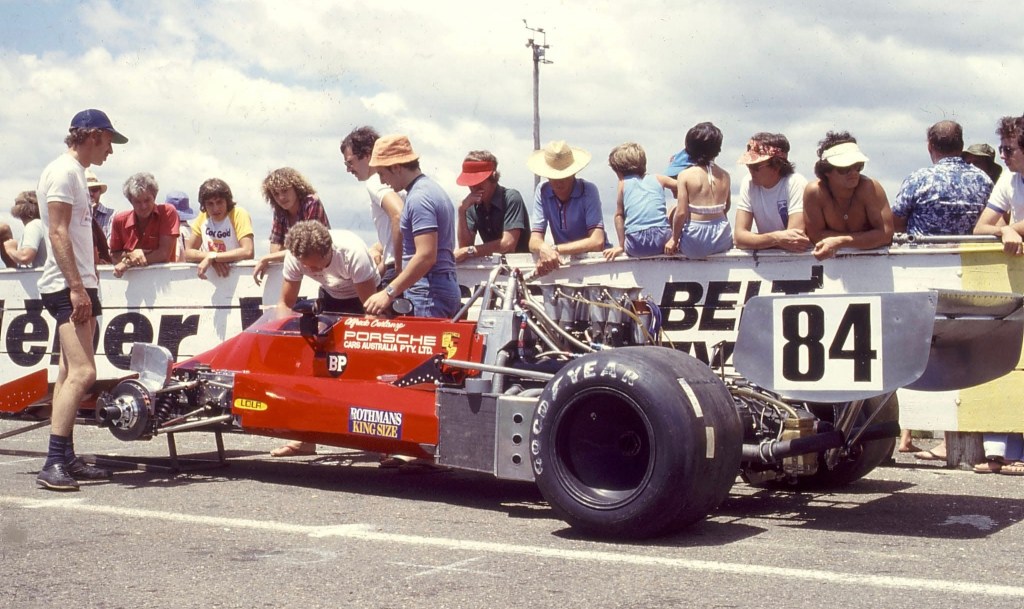
The Costanzo T430 Chev at Surfers Paradise in 1979 and below at Sandown. Circa 520bhp in the day (M Strudwick)
(C Jewell)

More reading…

Lola Heritage information here : https://www.lolaheritage.co.uk/type_numbers/t430/t430.html and Allen Brown’s chassis by chassis history is here : https://www.oldracingcars.com/lola/t430/

Credits…

Rod Steffanoni, Chris Jewell, Bill Forsyth, Lynton Hemer, Michael Strudwick, Chris Snowden, Auto Hebdo, Lola Heritage, Teddy Pilette, Bob Featherly, Neil Laracy, Chris Parker, Robin Lewis, Alex Mitchell

Tailpieces…

(C Parker)

I was there somewhere, that day, every day over that Sandown Sunday, February 20, 1977, weekend.

Raceday wasn’t a good day for WB, he had qualified fourth but boofed the T430 into the Dandy Road fence on the warm-up or parade lap, Max Stewart won from Alfie and Garrie Cooper: Lola T400, Lola T332 and Elfin MR8-C all Chev powered.

Look at the crowd…And below? Surfers perhaps? Racing cars are like magnets for little tackers and bigger blokes alike, aren’t they!?
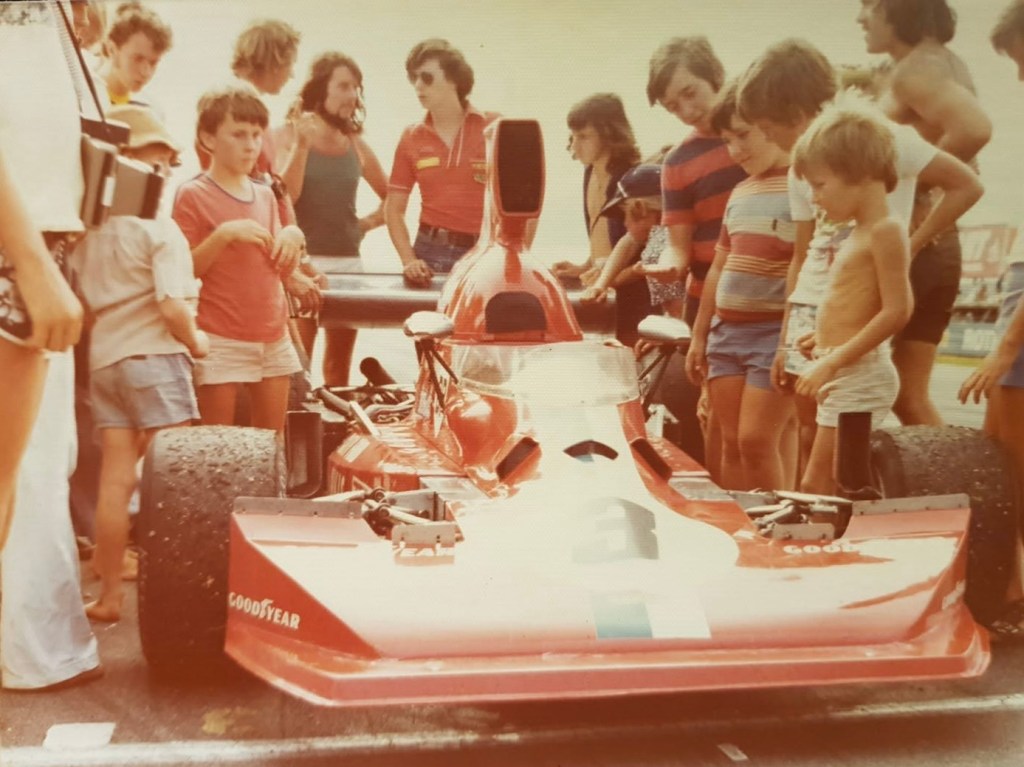
(N Laracy)

Finito…
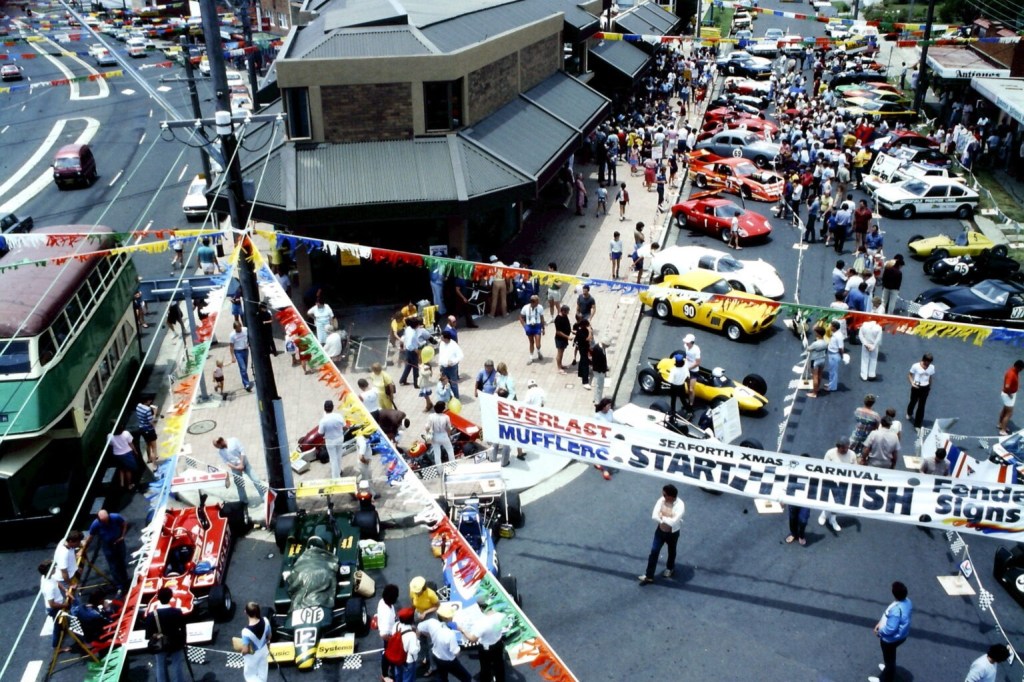
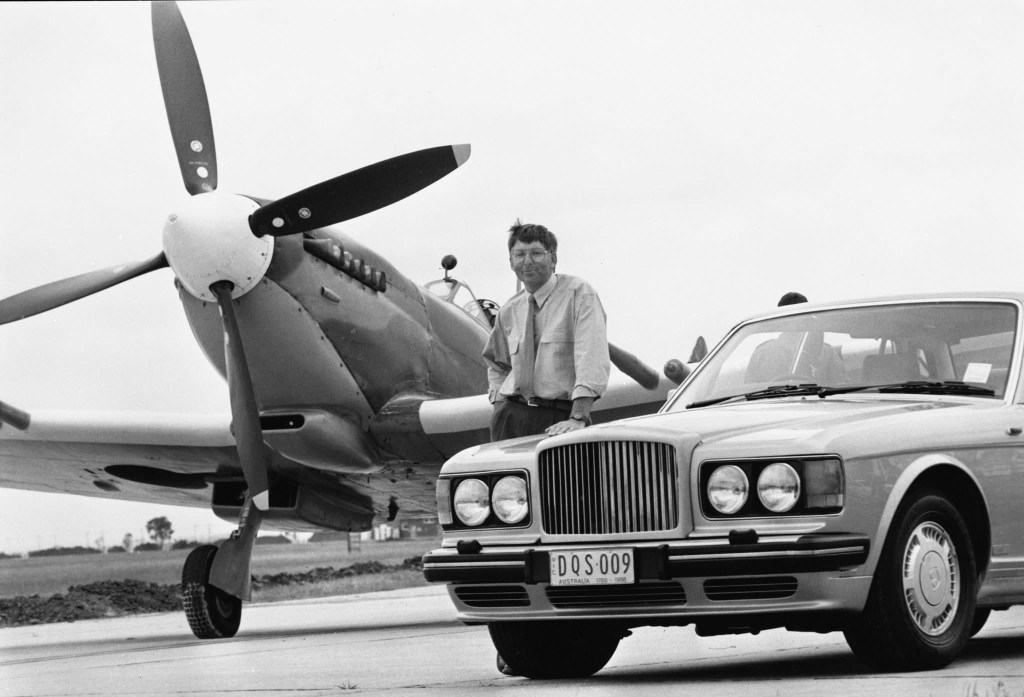
Spitfire, Alan Hamilton and a Bentley not long after Hamiltons Rolls Royce was created to take on the Rolls and Bentley franchises, ‘Laverton, Victoria on December 20, 1988’ Tony Johns advises.

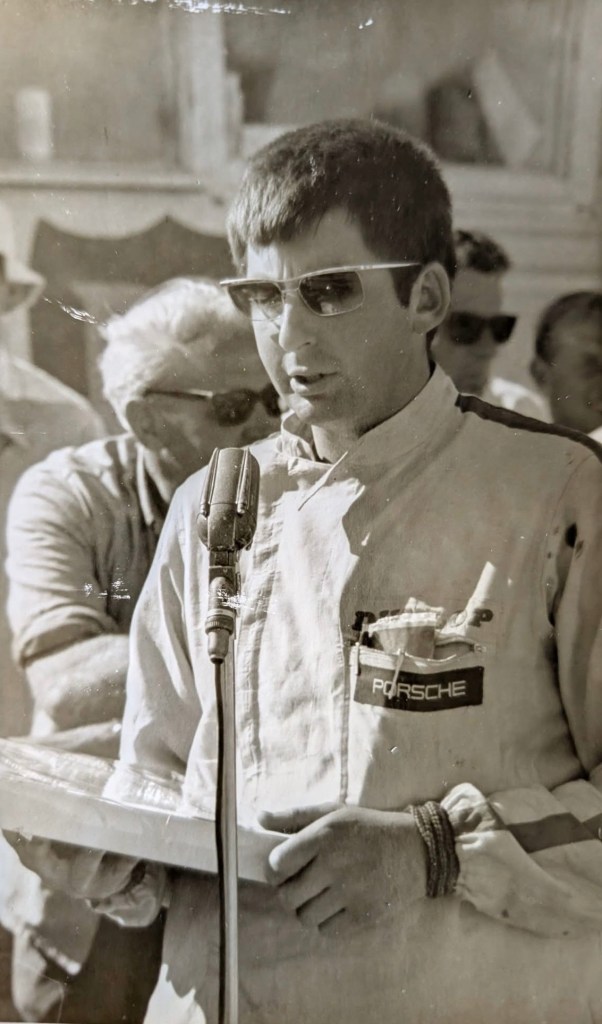
Alan Douglas McKinnon Hamilton, a wonderful man, Australian Porsche importer, racer, entrepreneur and entrant died on March 3, 2025 in Melbourne. He was born on July 29, 1942.

I wrote an obituary which was published in Auto Action: https://autoaction.com.au/2025/03/04/mr-porsche-alan-hamilton-passes-racer-entrepreneur-and-entrant

What follows is a photograph based tribute. I was lucky enough to meet with and speak to Alan in the last five years about various articles, and sometimes just racing shite more generally…a Prince of a Bloke.

(R Rundle)

Early days aboard a 356 Coupe at Calder circa-1962

This tribute is a pot-pourri of the cars he raced but is far from all of them. It excludes machines he entered for others…of which they are a lot.

(R Hossack)

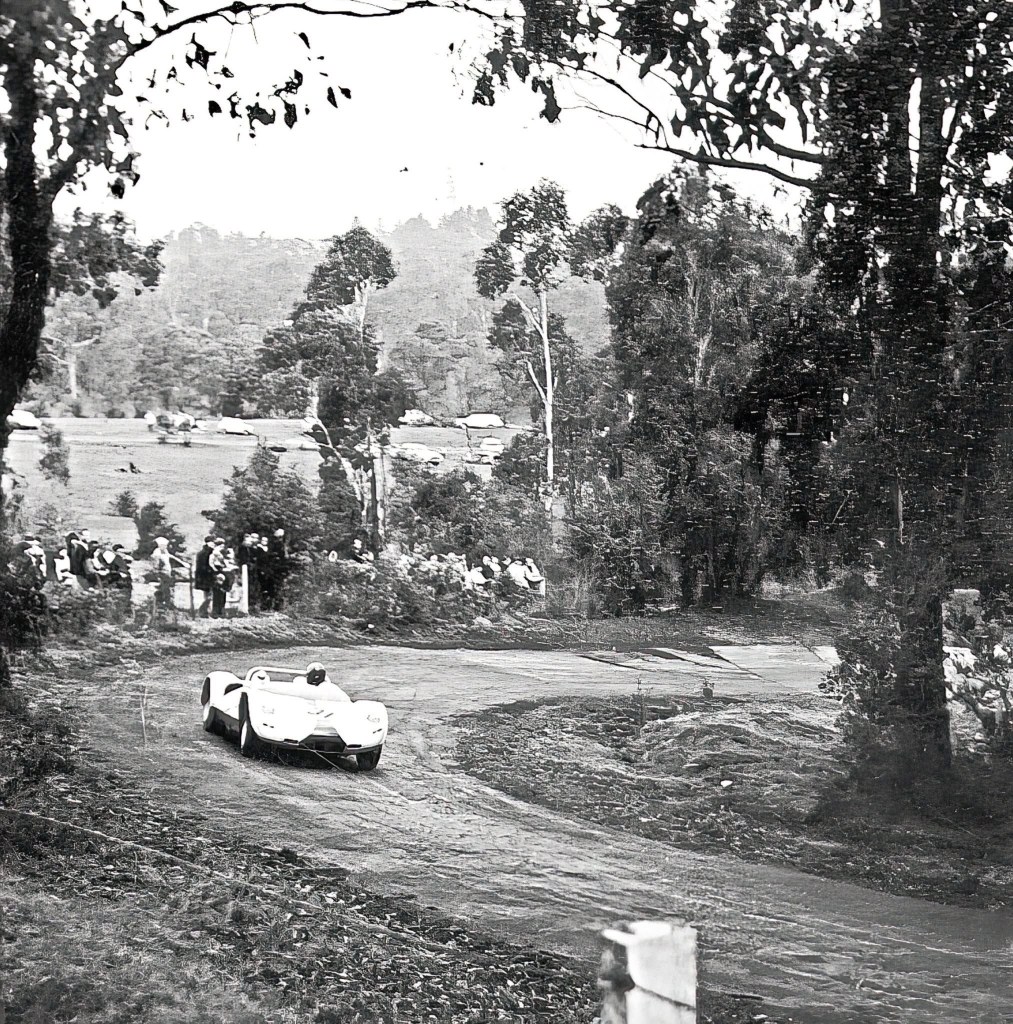
It could be Europe but its outer Melbourne. Hamilton’s 2-litre six powered 904-8 Bergspyder #007 at Templestowe Hillclimb during 1966.

‘Alan Hamilton leaving The Hole with the Porsche engine making its very distinctive and glorious bellowing sound. It always scared me a bit watching Alan because he was so quick out of The Hole that when he arrived at Barons, a sharp U-turn with trees on the outside, he was going so fast that if anything went wrong…I hated to think. But always fantastic to watch and hear.’

(B Jackson)

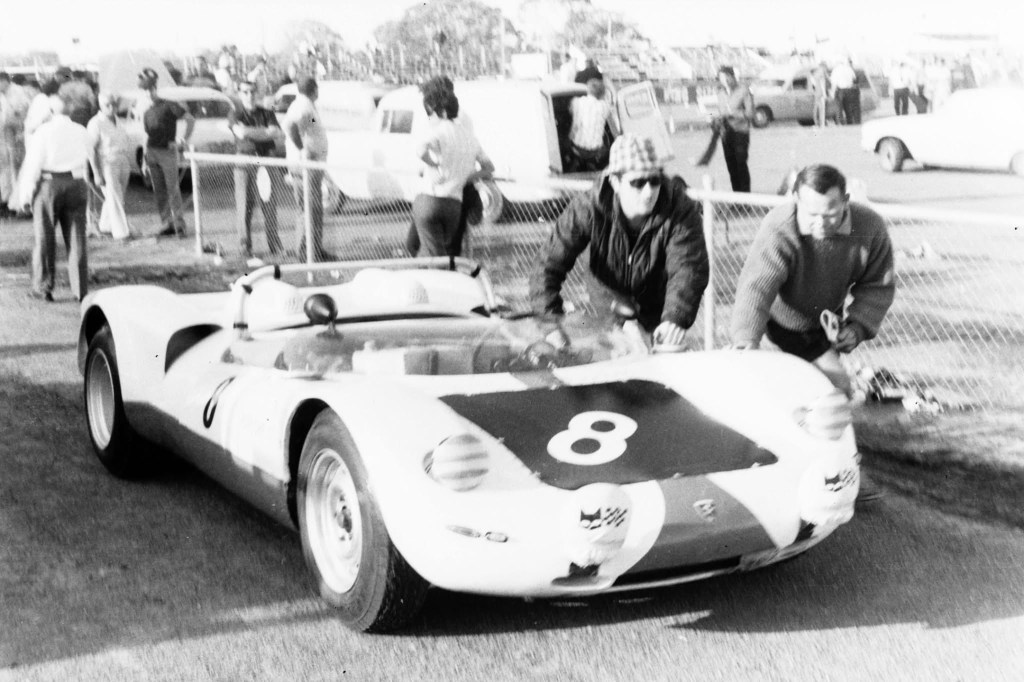
In the paddock at Surfers Paradise during the 1966 12-Hour meeting. Alan was sharing the car with Brique Reed.

And below during the March ‘66 Longford Tasman meeting while contesting the Australian Tourist Trophy. Hammo is turning into The Viaduct in front of Lionel Ayers’s MRC/Lotus 23B Ford and Spencer Martin aboard the Scuderia Veloce Ferrari 250LM.

Frank Matich won in his new Elfin 400 Traco-Oldsmobile from Hamilton and Martin.

(S Fryer)
(R Rundle)

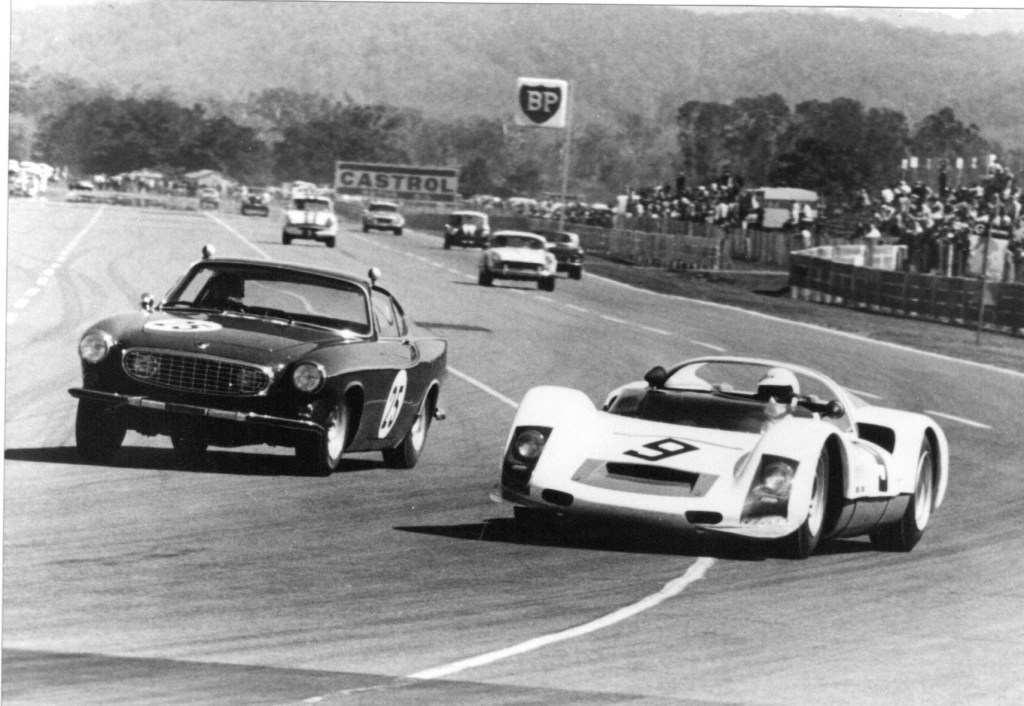
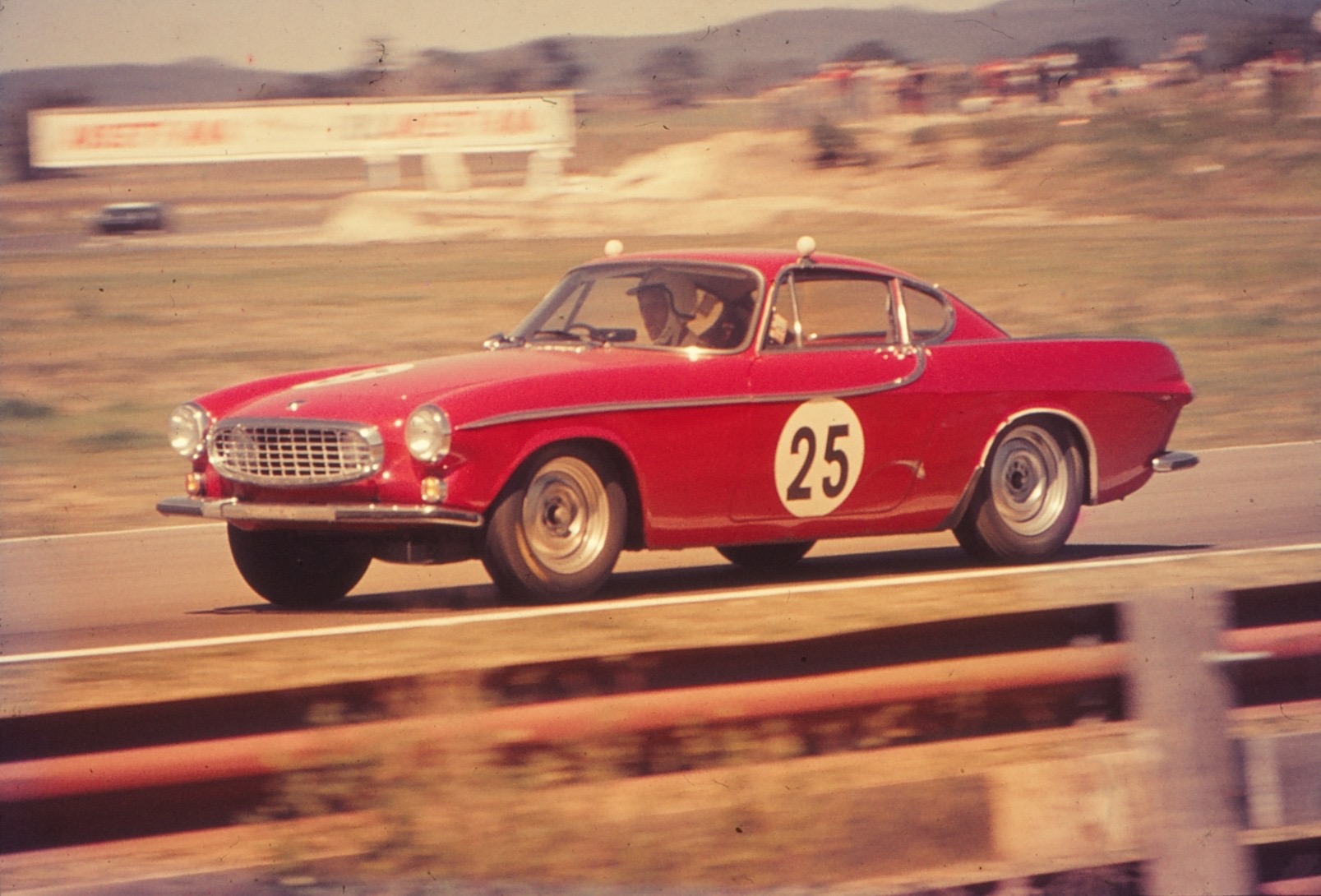
Hamilton rounds up the John Kiran/Colin Bond/Max Winkless Volvo P1800 during the 1967 Surfers Paradise 12 Hour. Alan and Glyn Scott were third behind the Scuderia Veloce Ferrari 250LM raced by Bill Brown and Greg Cusack, and the Paul Hawkins/Jackie Epstein Lola T70 Mk3 Chev.

This 906 is his first – chassis#007 – had its lid lopped off locally to accommodate Alan’s considerable length. His second 906 was tagged 007 too… That’s it below at Warwick Farm during the RAC Trophy meeting in May 1971.

(L Hemer)
Longford, March 1967 aboard the first 906
Peters Corner Sandown in 1967 with Neil Allen’s ex-Matich Elfin 400 Olds behind (unattributed)
(oldracephotos.com/King)

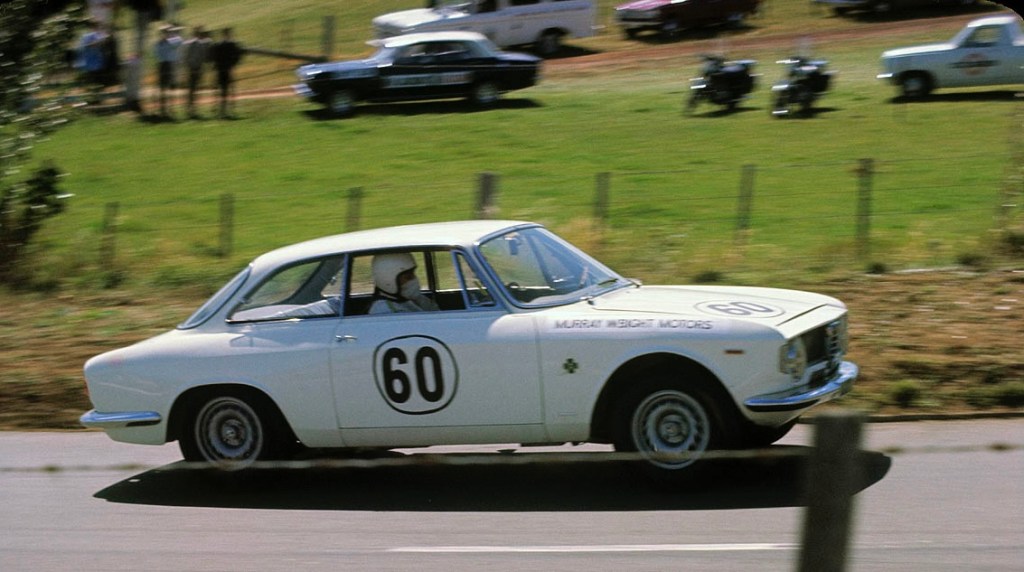
Hamilton having a drive of a front-engined car for a change. The MW Motors Alfa Romeo GTA at Longford in 1968, Murray Wright was the Melbourne Alfa Romeo dealer.

(MotorSport)

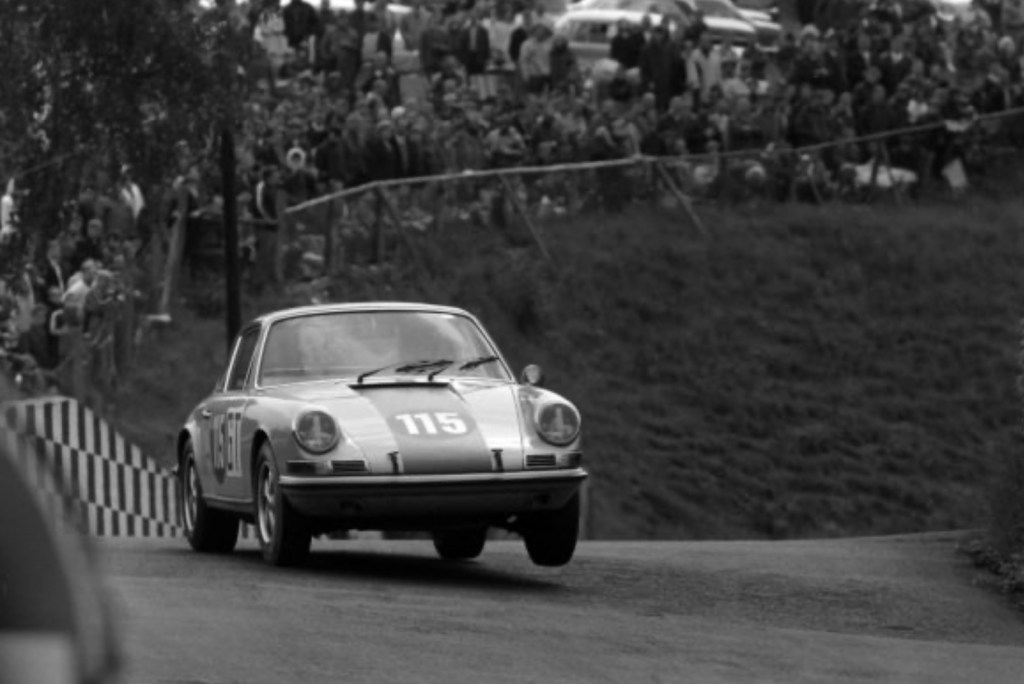
Hammo taking some air during the 1968 Nurburgring 1000km. He was 28th, sharing the Porsche 911S 2-litre with Hans Dieter-Blatzheim on May 19.

Up at the front was a pair of Porsces: Jo Siffert and Vic Elford won in a 908 with local-lads Hans Herrmann and Rolf Stommelen second in a 907.

(Porsche)

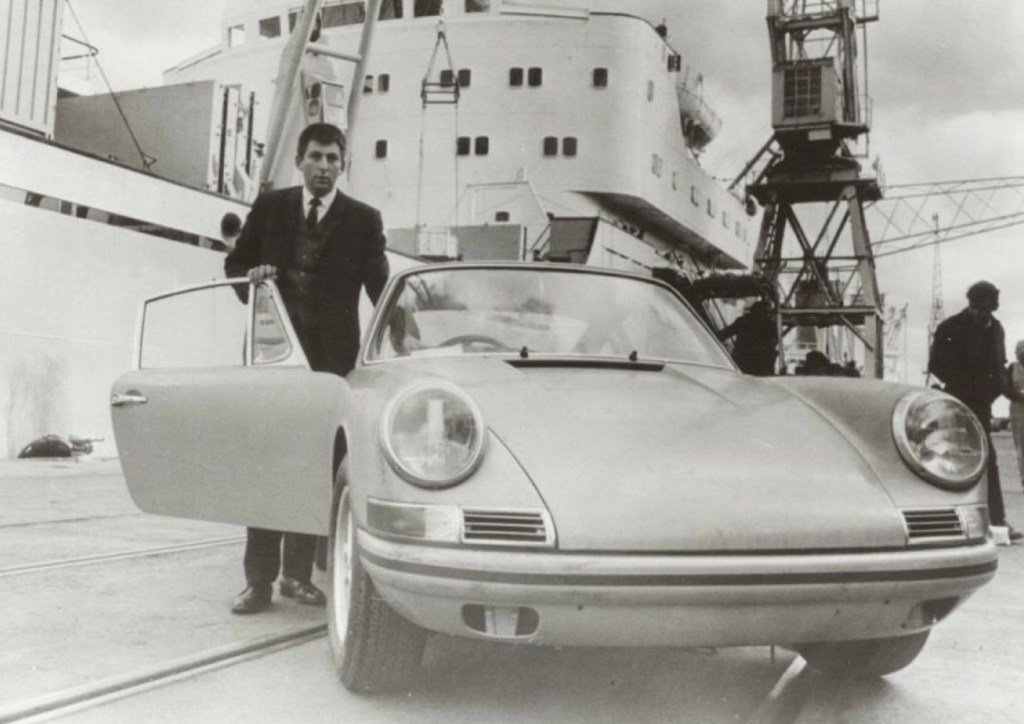
Alan at Station Pier for the handover of a of carton of beer or three to the Waterside Workers Federation dogs to avoid his new Porsche 911 T/R being accidentally damaged on the downward drop onto said Pier…

MG corner at Phillip Island? (A Scott)
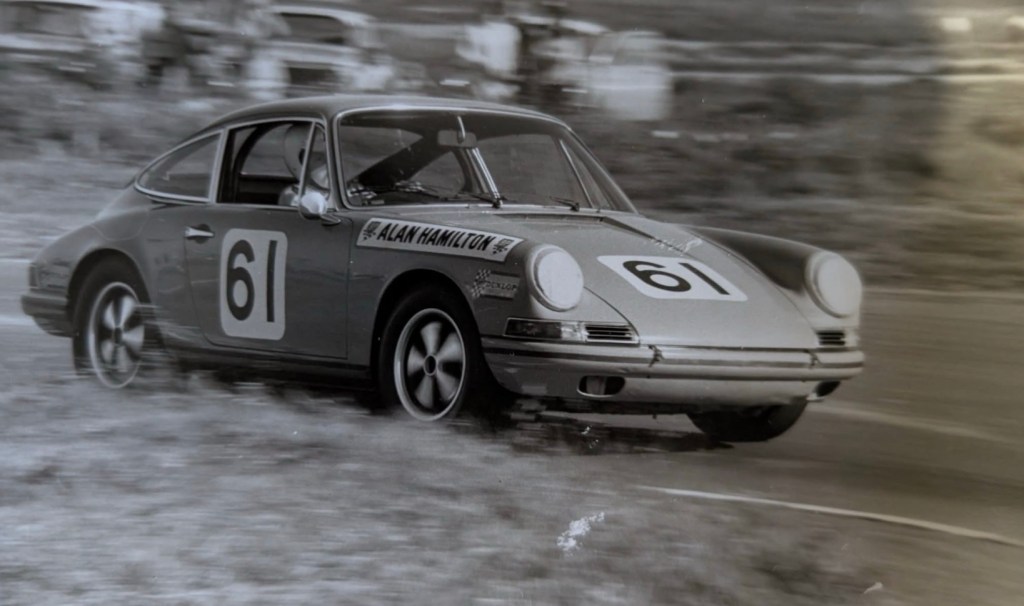
Warwick Farm with the car dancing on its tippy-toes, lots of shots of this car are in this pose (Porsche)

He came close to winning the 1969 Australian Touring Car Championship with this car, which is still in Australia I think, see here for a feature on that title: https://primotipo.com/2018/02/01/1969-australian-touring-car-championship/

(A Scott)

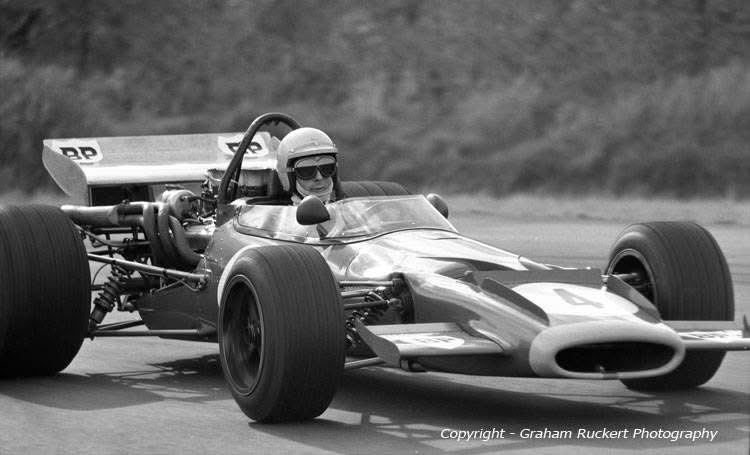
Hammo in his maiden single-seater drive in his new McLaren M10B Chev at Lakeside over the June 6 weekend in 1971. Third behind Kevin Bartlett and Max Stewart.

Chassis #400-19 was Niel Allen’s spare tub which was built up into a complete car when Allen retired from racing after the end of the 1971 Tasman Cup.

(B Jackson)

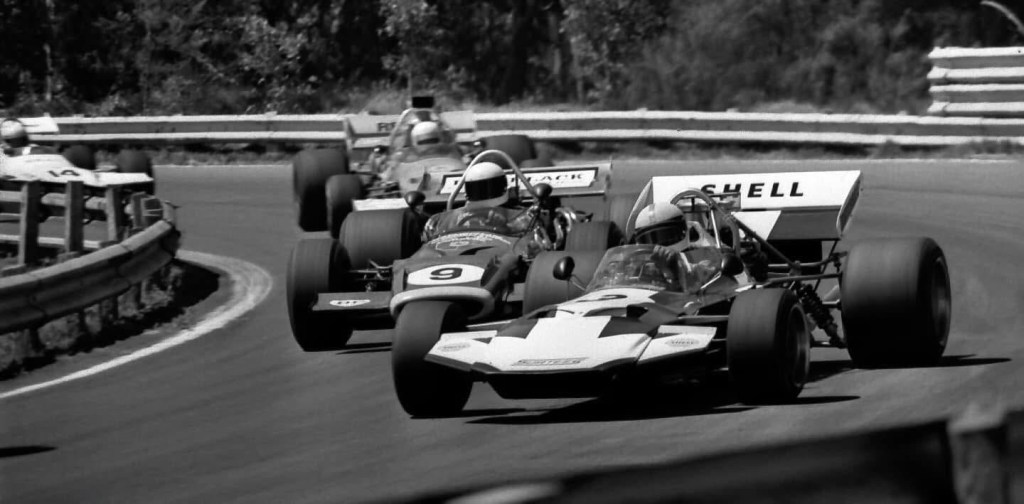
Hamilton inserts himself into the McLaren’s cockpit in the Warwick Farm pits and is shown below in the very best of company dicing with John Surtees, Surtees TS8 Chev during the ‘71 AGP.

That’s Colin Bond in Frank Matich’s McLarens M10C Repco-Holden and the Graeme Lawrence’s Brabham Ford FVC. A deflating tyre cruelled Surtees chances, Frank Matich won the race from with Hamilton third and Lawrence fourth, Bondy lost Phil-pressure and retired.

Max Stewart’s fast and reliable Mildren Waggott TC-4V won the Gold Star that year with the two ex-Allen M10Bs driven by Bartlett and Hamilton in equal second-place.

(L Hemer)
(J Lemm)

Hamilton at Collingrove on the way to a 33 seconds-dead run at Easter, taking FTD in the Australian Hillclimb Championship (AHC) in April 1971.

Alan had won here before, taking the 1966 title in the 904 Bergspyder. He returned to hillclimbing after losing his General Competition Licence as a result becoming an insulin dependent diabetic as a consequence of his 1978 massive Sandown accident. He won the 1981 AHC in a Porsche Special, then took it one final time at Gippsland Park, Morwell in a Lola T87/50 Buick, a device which started life as a Formula 3000 car.

(unattributed)

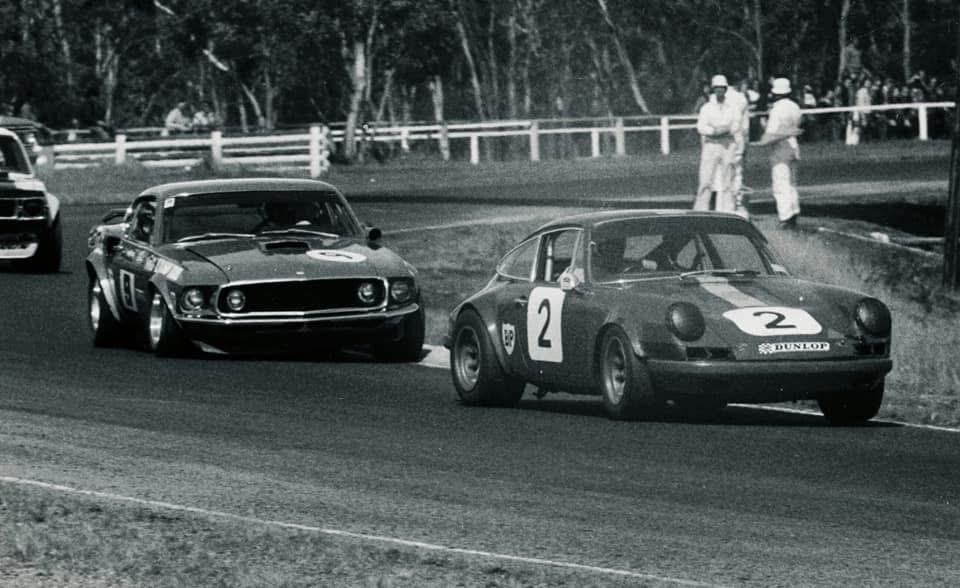
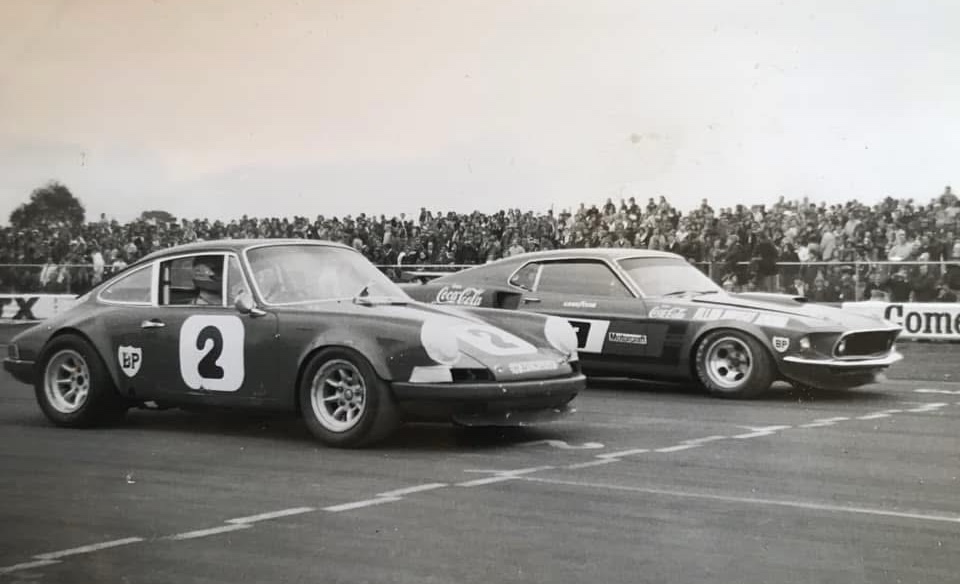
Hammo leading Allan Moffat and Bryan Thomson during the 1972 Sandown Tasman meeting.

The 911S 2.4-litre, ex-Brian Foley/Jim Palmer, Mustang Boss 302 and Holden Torana Chev glimpse in a mixed Improved Tourer and Sports Sedan race. Neil Stratton wrote that this was palmers first race in the car and that Moffat retired the Mustang after losing its brakes over Lukey – the rise at the top of the back straight – and hitting the Armco protecting the Marshalls.

The same pair at Calder later in the year below.

(P Husband)

On the hop at Oran Park in a 3-litre Carrera RSR in 1976. Famously the 1975 Paris Show 911 Turbo/930 prototype, long since left our shores and lives in Europe.

(Auto Action)

Allan Moffat created a crushing touring car team in 1977 by recruiting American engineer-team manager Carrroll Smith, engine builder Peter Molloy and Colin Bond.

After winning the ATCC Moffat recruited Jacky Ickx and Hamilton for the Enduros. Moffat’s 1-2 form finish has had taxi fans foaming at the mouth for decades with colulda-woulda-shouldas but The Boss prevailed, as he should have: Moffat/Ickx first, Bond/Hamilton second.

(B Atkin)

A very poignant photograph of Hammo in the Sandown pitlane during the 1978 Australian Grand Prix weekend; The Fangio Meeting at which the great JMF demonstrated a Mercedes Benz W196 Grand Prix car with much brio.

The utter excitement of the sight and sound of that legendary car-driver combination was to a large extent ruined by the accidents that befell Garrie Cooper and Alan Hamilton, and to a lesser extent Vern Schuppan, in the Grand Prix. Racing Car News summarised it thus:

Hamilton turns in to Dandenong Road not long before the crash. If the Lola T430 Chev looks a little odd, it’s because Porsche Cars Australia modified the car by removing the sportscar-type-front and replaced it with a T332 type wing which provided more bite…and looked better.

Alan lost control of the twitchy, unforgiving Lola on the fast left-hander off The Causeway then went backwards into the Dunlop Bridge breaking the car into two and breaking a leg, his pelvis and sustaining serious head injuries. While there that day I was nowhere near the accident which is in a no-spectators area on the inside of the track. The vibe of the place that day with three big-hits, and limited information flow to we punters, is something I still remember.

(B Polain)

Hammo competing in the Seaforth Tourist Trophy in 1983. Not a lot of safety for cars doing 180mph…

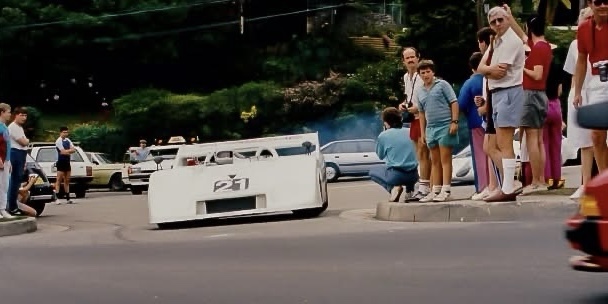
This 917/30 #004 was Mark Donohue’s unraced spare in 1973. Alan always had a snoop around the Zuffenhausen ‘shops on his trips to Deutschland and spotted this little baby on one of those trips. Long-since left our shores.

Hammo’s 908 Coupe following the 917/30. The 908 was, ahem, road-registered for a while in Victoria (unattributed)
(unattributed)
A cursory glance at the 917/30 spaceframe chassis and its driver-forward driving position shows the importance of not having a frontal impact at anything more than 30mph…(unattributed)
(unattributed)

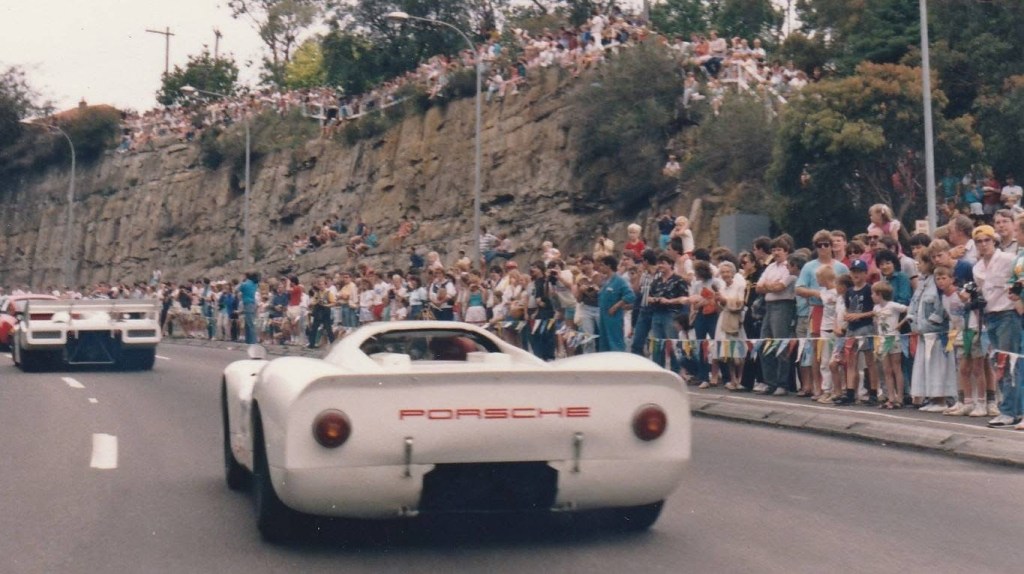
The Seaforth Racing Car parade was a fantastic event put together by Bruce Polain and a bunch of his mates at the Historic Racing Car Club of Australia in Sydney.

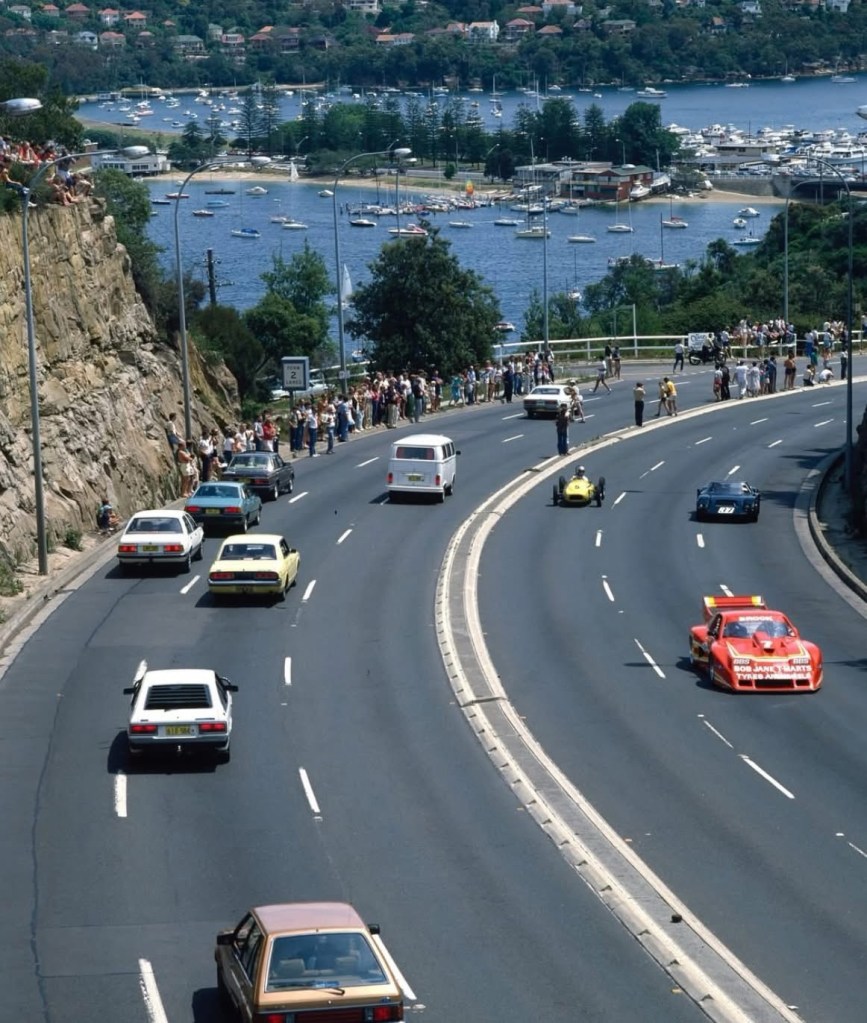
The street circuit was about 2.5km around the heights of Seaforth, descending to Spit Bridge with views of the inner-harbour, then winding up through the gears to the top of Spit Hill to Sydney Road, then left into the Seaforth shopping centre. Twice. Two runs during the day.

December 10, 1983 with Bob Jane’s Chev Monza and Bruce Polain’s Wylie Javelin heading out of town towards Seaforth. Any tourist who has taken a dip at Manly will have made this trip…unless you went the fun way by ferry! Shot taken from the Ethel Street overpass (unattributed)
(unattributed)
(T Johns)

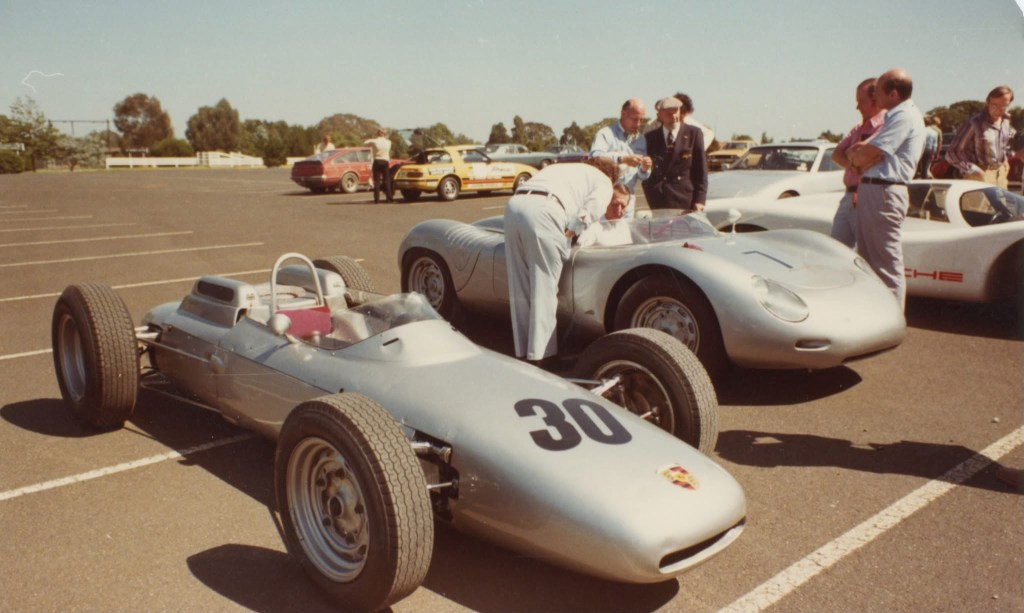
Tony Johns, ‘Alan Hamilton driving the Porsche Factory Museum 1962 Type 804 F1 racing car.’

‘Sandown Tribute to Champions meeting February 14, 1982. A real gentleman to have worked for at Porsche all those years ago.’

‘Another photo from the same morning. The 804 and 718 RSK ex-USA and the ex-factory 908 Coupe were part of Alan’s collection. Rob Walker, Stirling Moss’ long-time patron is seated in the Spyder and Moss is chatting with Norman Hamilton (jacket and cap), the founder of Porsche in Australia.’

(D Pearce)

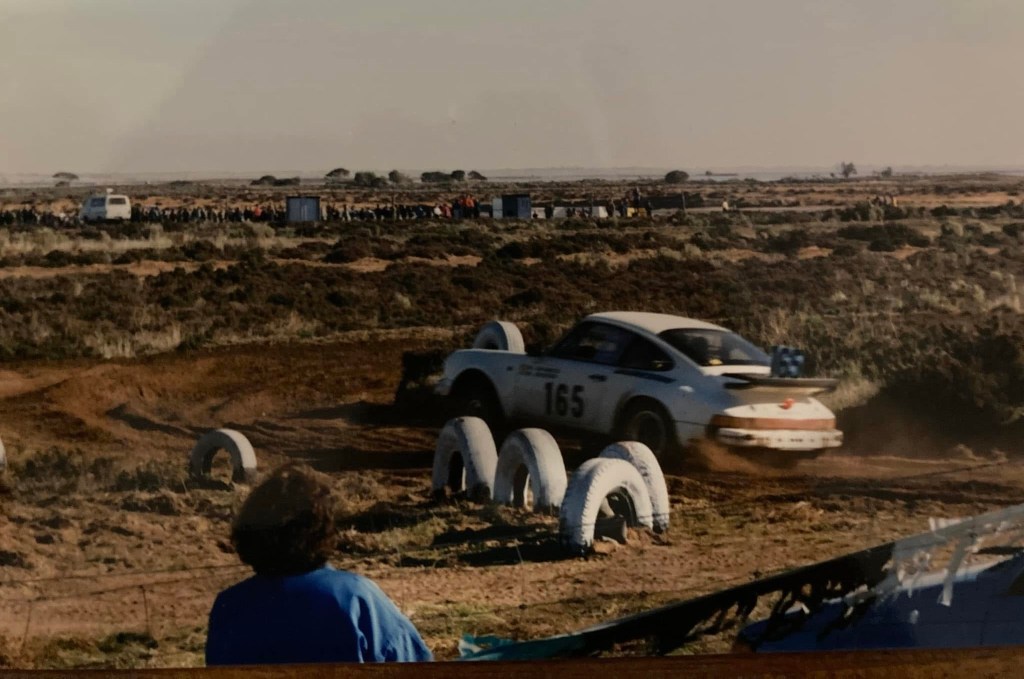
Alan Hamilton, Porsche 911SC during the 1987 Sea Lake Mallee Rally, perhaps with Jim Hardman alongside.

It’s not just any SC either! This car is ‘C20’ the prototype of what ultimately became the 911-964 four-wheel-drive, and along the way the competition 953 Paris-Dakar rallycars. The 3.2-litre car started life as Helmuth Bott’s brown-SC company car before morphing into a double-front wishbone machine with front and rear diffs. When it was pensioned off guess who spotted it on one of his trips to Germany in 1986?…

The very interesting story is told here: https://www.tradeuniquecars.com.au/porsche-4×4-1981-911sc-4wd-prototype/

(J Bryant)

Hamilton on the hop at Gippsland Park Morwell on October 15, 1989 aboard his Lola T87/50 Buick 4.9 V6, another AHC victory, not the last for this chassis either.

This machine, T87/50 HU12 Cosworth V8 3-litre, was Michel Ferte’s 1987 Euro F3000 Championship car. It and another T87/50 – acquired by Bob Minogue for Formula Holden use – were purchased by Hamilton.

Paul Newby’s research (written on The Nostalgia Forum) says that the car was at one time fitted with a Ford DFL-035 3.3-litre ex-Spice Engineering Racing acquired at the 1988 Sandown WEC race attended by Hamilton, wearing his PCA hat.

(D Hardman)

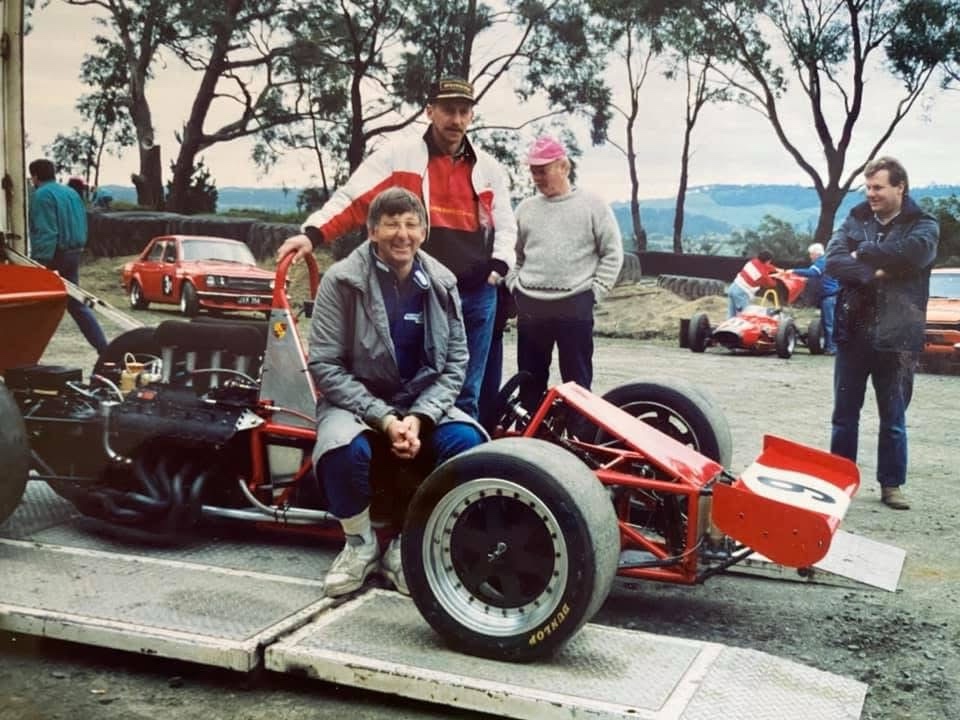
Hamilton and friends – Jim Hardman constructor of the three F2/FPac cars of the same name and Porsche Cars Australia Chief Engineer/Mechanic during the Costanzo glory years is behind him – with a Cosworth V8 powered hillclimb special at Morwell, date unknown but circa 1981-82.

Spaceframe chassis with the DFV/DFL used as a stressed member, as it was intended. Nick Bennett observed that ‘I believe Alan only dove it once and scared the shit out of himself.’ Two meetings only perhaps folks: Morwell and Collingrove? More information on this car welcome.

(D Hardman)

Credits…

Ian Smith, Ron Rundle, Stephen Fryer, Bob Atkinson, Lynton Hemer, Australian Autosportsman, Alexis Scott, Lynton Hemer, Brian Jackson, Racing Car News, Brian Stratton, Auto Action, Daryl Pearce, Peter Husband, Jarrod Bryant, David Hardman, John Lemm

Tailpiece…

(I Smith)

Ian Smith was a long time friend of Alan, I love this portrait which was taken circa-1978.

Afterthought…

1985 AGP Historic Demo Adelaide (J Lemm)

The final words go to Rob Newman.

‘Years ago, when John Walker was driving the 934 Martin Sampson had purchased from Alan Hamilton I had the privilege of preparing the car for each race in Alan’s workshop out by Sandown, so I spent some time there.’

‘Late one day Alan gave John and I a personal tour of the complex and his toys, one of which was his 917. The car was on stands without bodywork, the chassis with engine, suspension and various bits fitted including the fibreglass seat. But what caught my eye was the size of the hole in the seat where the crutch belts were fed through, it was massive, a large square cut out in the seat. I must have made comment because I clearly remember Alan, pipe in hand and with a straight face replied “That’s how big your balls need to be to drive this thing.”

Finito…
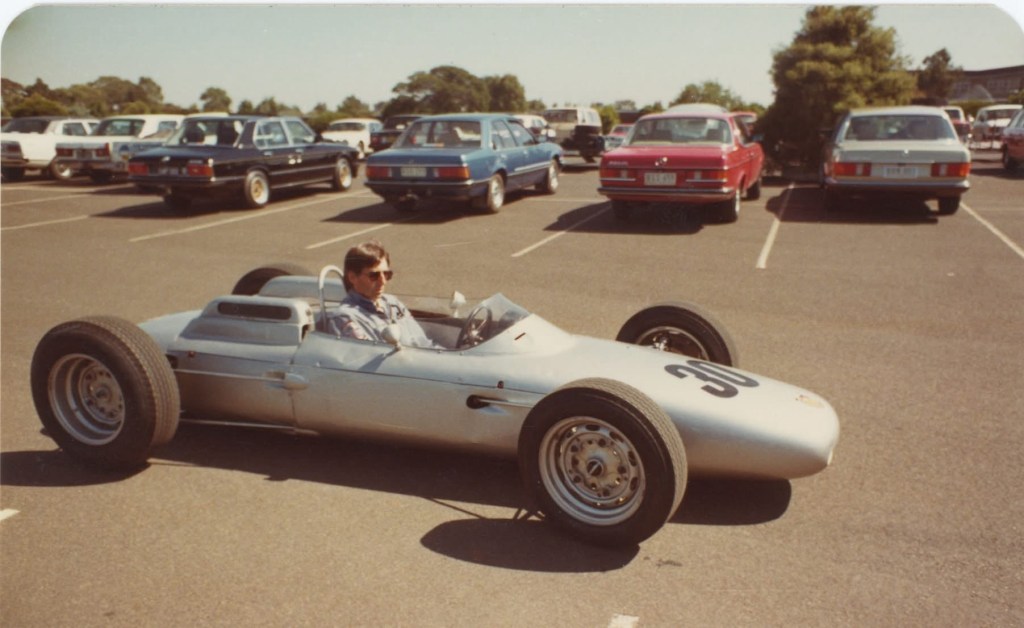
(D Lupton)

Not quite actually.

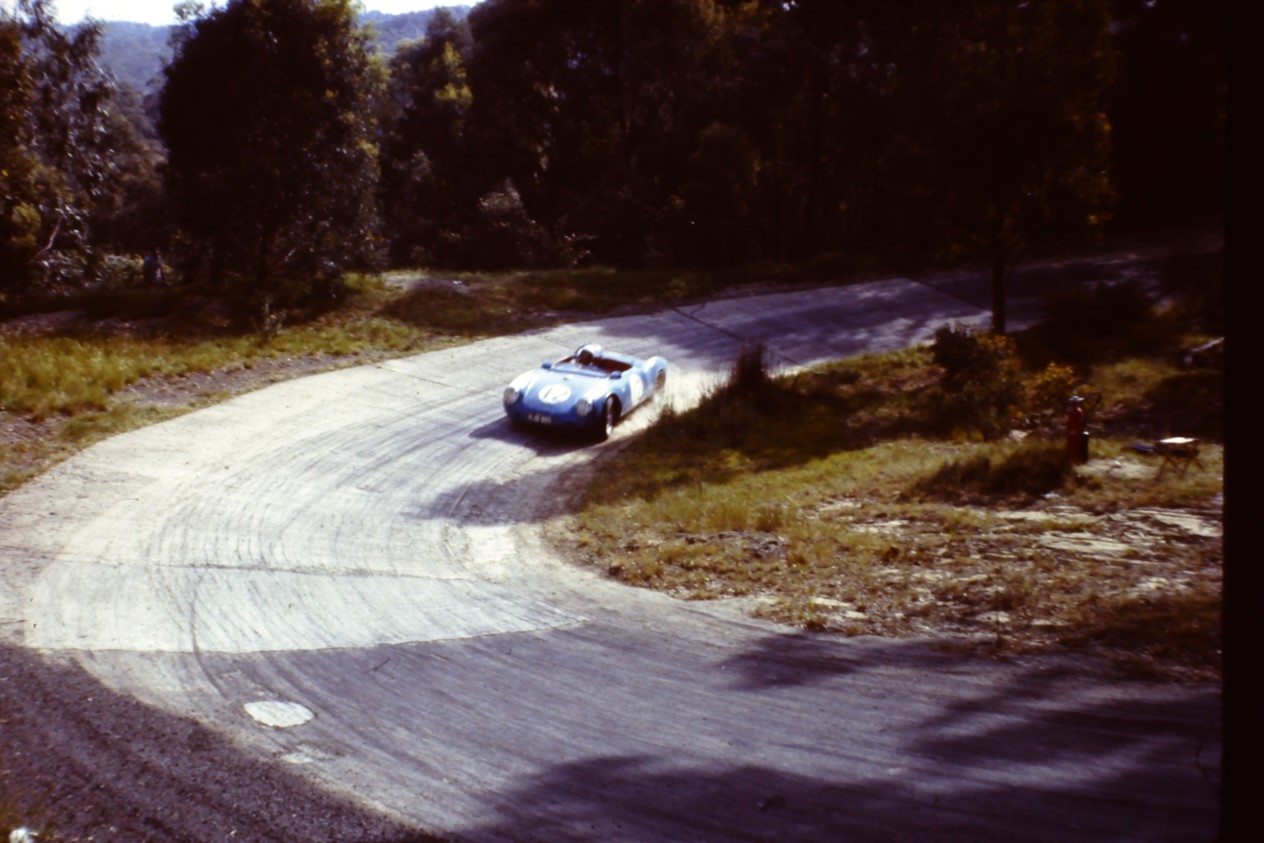
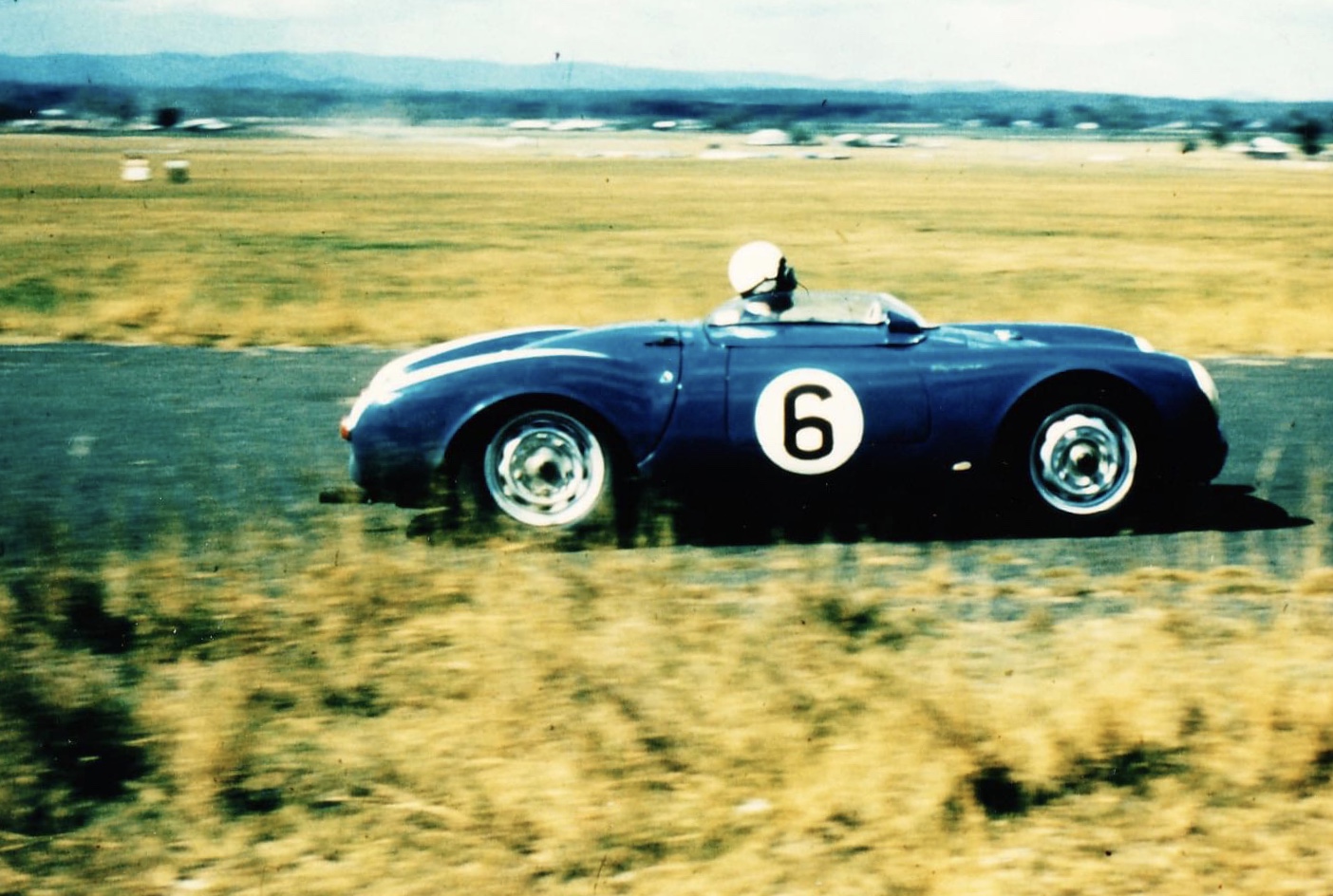
Lionel Marsh aboard Norman Hamilton’s Porsche 550 at Templestowe Hillclimb’s ‘The Hole’ on Melbourne’s eastern outskirts circa 1961/2.

Denis Lupton took a cracker of a shot- ignore the eucalypts, pretend they are pines and it could be the Eifel Mountains, sorta.

Denis was sure the pilot was Alan Hamilton, son of Porsche Cars Australia founder Norman Hamilton, but after some investigation and comment by Ron Simmonds, Gordon Dobie, Tony Johns and Stephen Dalton, Alan Hamilton resolved the ‘mystery’.

He recalls ‘Sadly, the 550 days were just a bit too early for me. That is Lionel Marsh at Templestowe. I did drive the 550 a couple of times at Fishermans Bend. Sometimes, after the races, Alan Jones and I used to disappear to a deserted end of the airstrips and drive our respective fathers, cars.’

‘I don’t recall how Lionel came to “own” the 550 other than he was a great mate of Jack Godbehear. (a renowned but low profile engine builder) I have a feeling that Jack might have been the owner, or at least, a major shareholder in it. Jack certainly did the preparation for Lionel and in many ways, this was the most successful period of the 550’s
life.’

‘My father and Frank Kleinig took the car to New Zealand to race there in 1956. Frank had difficulty coming to terms with the 550 as it handled total differently to his Hudson Special. Unfortunately, Frank earned the reputation of “hay bail Charlie” because of his habit of hitting hay bails which marked the track limits. My father asked Stirling Moss if he’d like to drive the car in the Ardmore Handicap, which he won.’

‘In about 1964, I located the car in a panel beating shop in Sydney and bought it. The engine was part disassembled, the gearbox was missing, as were the front brakes. The body work was “bruised” in various places. One of the panel beaters from Duttons (our authorised body repairers at the time) commenced work on the “bruises” and I sent the engine back to Porsche for a full rebuild.’

‘I spent six months living and working at Porsche in 1965 and came back with the 906 Spyder, chassis # 906-007. I also came back with a burning desire to race, but with no money. Part of my assets to be turned into cash, was the 550, which was sold to Lindsay Fox with the restoration beautifully completed by Brian Tanti.’

‘Lindsay also owns my 718 RSK which is also beautifully presented in the Fox Classic Car Collection. Incidentally,
the chassis number of the 550 that James Dean was driving when he died was 055, just one car earlier than my father’s car, chassis number 056.’

(D Lupton)

‘I spent 6 months living and working at Porsche in 1965 and came back with the 906 Spyder, chassis # 906-007. I also came back with a burning desire to race, but with no money. Part of my assets to be turned into cash, was the 550, which was sold to Lindsay Fox with the restoration beautifully completed by Brian Tanti.’

‘Lindsay also owns my 718 RSK which is also beautifully presented in the Fox Classic Car Collection. Incidentally,
the chassis number of the 550 that James Dean was driving when he died was 055, just one car earlier than my father’s car, chassis number 056’ Alan conculded.

The close up shot of Hamilton’s ex-works Porsche 904/8- chassis # ‘906-007’ ‘Bergspyder’ is a beauty, Calder 1966- colour too, thanks Denis!

By this stage the machine was fitted with a 2 litre 906 six-cylinder engine, click here for a piece on the car and one of the biggest friends Australian motor racing has ever had; https://primotipo.com/2015/08/20/alan-hamilton-his-porsche-9048-and-two-906s/ . The 550 Spyder is here; https://primotipo.com/2018/06/28/hamiltons-porsche-550-spyder/

(R Simmonds)

Etcetera…

As usual, a flurry of communication with others of our friends after upload of the piece resulted in a few more images.

The first above is from Ron Simmonds, again at ‘The Hole’ with then owner Lionel Marsh at the wheel, whilst below is one from Tony Johns of Stirling Moss having a steer of the car in a sportscar support race- winning the ‘Ardmore Handicap’, as Hamilton notes above, before setting off for a victorious run in his Maserati 250F in the New Zealand Grand Prix at Ardmore in 1956.

(T Johns Collection)


(T Johns Collection)

During the period Norman Hamilton owned #’0056′ it was driven by ‘every man and his dog’- the array of talent included Stirling Moss, Jack Brabham, Frank Kleinig, Bruce Walton, Otto Stone, Eddie Perkins, Ted Gray, Austin Miller and Ern Tadgell, who is shown aboard the car at Phillip Island below.

Credit…

Special thanks to Denis Lupton and Alan hamilton

Ron Simmonds, Tony Johns Collection, Dick Willis, ‘Historic Racing Cars in Australia’ John Blanden

Tailpiece…

(Dick Willis)

Ern Tadgell again, in Dick Willis’ shot, this time at Lowood, Queensland in 1957- the car worked hard all over Australia as one of Hamilton’s primary brand recognition tools all those years ago when the Zuffenhausen giant was a small family business start-up, hard though that is to imagine now!

Finito…
(autopics.com/DBlanch)

The field on the first of 85 laps- the ‘Angus and Coote Diamond Trophy’, Gold Star Championship second round, Oran Park 26 June 1971…

Kevin Bartlett, McLaren M10B Chev from Max Stewart, Mildren Waggott TC-4V, Graeme Lawrence, Brabham BT30 Ford FVC 1.9 and then the dark helmeted Henk Woelders in his Elfin 600E Ford twin-cam- the first of the 1.6 litre ANF2 cars.

The 1971 Gold Star was an interesting one in that both 2 litre ‘race engines’ and F5000’s contested the championship- whilst F5000 cars were eligible for the Tasman Cup in 1970 and 1971- that year was the categories first in the domestic championship.

On the face of it perhaps the favourites at the seasons outset were Frank Matich and Kevin Bartlett in ‘match fit’ McLaren M10B’s. FM’s Repco Holden powered car was the ‘same car’ he and his team had continually evolved for eighteen months whereas KB’s chassis was the machine Niel Allen had raced in the 1970 and 1971 Tasman Series- beautifully prepared by Peter Molloy it was ready to boogie. Other F5000’s were Alan Hamilton’s brand new M10B- Allen’s spare chassis built up and sold when Allen retired from racing, and John McCormack’s Elfin MR5 Repco which appeared for the first time mid-season, at Sandown in September.

The quickest of the Waggott 2 litre TC-4V powered cars were Max Stewart’s Mildren and Leo Geoghegan’s Lotus 59B but Leo’s car was for sale so the reigning Gold Star champion contested few 1971 meetings.

Kevin Bartlett leads Max Stewart and Graeme Lawrence early in the race- KB appears to be running plenty of wing (L Hemer)


Gary Campbell and Tony Stewart in Elfin 600B/E Ford twin-cams inside Doug Heasman, Rennmax BN3 Ford (R Thorncraft)

It had taken until 1971 for the Tasman Cup to fall to an F5000- Graham McRae won it in an M10B whereas in 1970 Graeme Lawrence’s 2.4 litre Ferrari Dino 246 took the title, other Tasman 2.5 and 2 litre cars had been competitive amongst the 5 litre V8’s- the expectation was that an F5000 would win the Gold Star but Max Stewart’s fast, reliable Mildren Waggott won it with a win at this meeting- Oran Park and strong placings elsewhere to score 23 points to Bartlett and Hamilton’s 22 points each.

Bartlett was fast everywhere- he won the Governors Trophy Lakeside opening round- was on pole with Max at Oran Park, won the non-championship (that year) Hordern Trophy at Warwick Farm, and the Victorian Trophy at Sandown a week later but had the wrong tyres, that is, no wets at Symmons Plains where they were rather necessary, and blew an engine whilst leading at Mallala giving the new Elfin MR5 Repco its first title win in the hands of John McCormack. Mac would do very well with this car in the next two years on both sides of the Tasman Sea.

Max niggling away at KB- the big V8 blasted away on OP’s long straight but otherwise the little Mildren- Max’ car for 2 years by then was mighty quick elsewhere on the circuit (L Hemer)


(Peter Houston)


And again albeit by now MS has lost his right-front wing- did he ping one of KB’s Goodyears to do the damage? (L Hemer)

Matich’s campaign fizzled away too. The team missed the opening round at Lakeside as they were successfully campaigning the McLaren in the US- the team raced at the first two US F5000 Championship rounds in California, winning at Riverside with a pair of seconds in the two heats and were second at Laguna with another pair of seconds in the heats behind David Hobb’s M10B Chev.

Back home at Oran Park FM ran foul of another car earlier in the week doing enough damage for the team to build a new chassis- they did this rather than buy one from Trojan to give them valuable experience in advance of construction of FM’s new monocoque chassis Matich A50 Repco which would win the AGP later in the season upon its debut race from pole.

Matich leading a couple of cars through Laguna Seca’s Corkscrew on the 2 May 1971 weekend, McLaren M10B Repco (D Kneller)

The Matich McLaren was ready for the third round at Surfers in late August winning from pole. He started the Victorian Trophy at Sandown from pole but retired with blocked fuel-injection slides- KB won. With no chance of winning the title the team missed the final two rounds at Symmons and Mallala to focus on completion of the A50.

Alan Hamilton was impressive in his first year racing these demanding cars, whilst he came back to the machines in the late seventies it is a pity he didn’t persevere then whilst in ‘his youth’ and when the class could have done with another well prepared frontish of the field car- Warwick Brown or rather Pat Burke bought this car giving Warwick’s career a big kick-along in 1972 of course, the machine prepared by Peter Molloy.

Another big guy being monstered by a little one- Alan Hamilton, McLaren M10B Chev and John Walker, Elfin 600B Ford (L Hemer)


A couple of dicing Elfin 600s trying to stay clear of the Bartlett-Stewart express right up their clackers onto the OP main straight- Clive Millis from Tony Stewart (T Coles)


Graeme Lawrence’s nimble Brabham attacks Col Hyam’s Lola T192 Chev- note the sidepods fitted to the car by Gardner (L Hemer)

At Oran Park Max won from Graeme Lawrence’s visiting Brabham BT30 Ford FVC and Hamilton’s McLaren, Bartlett retired with his differential pinion stripped- the good ‘ole Hewland DG300 transmission was always marginal for F5000 use unless its maintenance was entirely up to snuff. The gearbox was originally built for F1 in 1966- for Dan Gurney and Jack Brabham when both the 3 litre Repco V8 and Eagle-Weslake V12 had far less than 500 pounds foot of torque tearing away at its gizzards…

F2 honours went to Henk Woelders who was fourth in an Elfin 600E- the dominance of this car in ANF2 at the time indicated by the fifth to ninth placed cars being Elfin 600B’s raced by Tony Stewart, Jack Bono, John Walker (soon to jump into an Elfin MR5), Vern Hamilton and Don Uebergang.

Henk Woelders’ Elfin 600E chasing Vern Hamilton’s 600B (L Hemer)

Etcetera…

(P Houston)

Melbourne racer Colin Hyams jumped into the big league with the acquisition of the works Lola T192 Chev Frank Gardner campaigned in the Tasman Cup that summer- FG did well in it too, taking a win at Warwick Farm and finishing fourth in the overall pointscore. Colin retired at Oran Park with gearbox dramas.

(L Hemer)

Gary Campbell’s Elfin 600B/E Ford, chassis ‘7122’ worked hard that year raced by both the Sydney ‘Provincial Motors’ motor dealer and Larry Perkins to whom he lent the car for a successful attack on the Australian Formula 2 Championship.

(L Hemer)

Alan Hamilton’s McLaren M10B ‘400-19’ despite ostensibly a 1970 model F5000 was brand new given its very late build into a complete car by Peter Molloy and sale to Hammo. As many Australian historic enthusiasts know, all these years later AH owns both his old car and the Allen/Bartlett chassis ‘400-02’- the wheels of which have been twiddled by Alfredo Costanzo until recent times.

(L Hemer)

John Walker in his 600B chassis ‘7018’, by this time the following year he was racing the fourth and last built Elfin MR5 Repco ‘5724’ in which he made his race debut in the last, Adelaide International round of the 1972 Tasman Cup in February 1972- the start of a mighty fine F5000 career in Australasia and the US inclusive of an Australian Gold Star and Grand Prix win in 1979. He was seventh at Oran Park 6 laps adrift of the front-runners with undisclosed dramas.

(P Houston)

Bartlett always raced with passion, lots of fire and brimstone and bucket-loads of natural brio. Lucky bastard.

KB pedalled the car through the 1972 Tasman inclusive of a Teretonga round win amongst much more modern metal and then did a US L&M round or two in it before racing Lola T300’s in both Australia and the US that year.

Credits…

Special thanks to Lynton Hemer, whose great photos inspired this piece

autopics.com- D Blanch, Russel Thorncraft, Tony Coles, Derek Kneller Collection, Peter Houston, oldracingcars.com

Tailpiece…

(L Hemer)

Max Stewart accepts the plaudits of the crowd on the warm-down lap- by June 1971 Alec Mildren Racing was well and truly disbanded but such are the bonds between driver and entrant that Max still carries Alec Mildren Racing signage and Seiko continued to provide financial support to Max into his first F5000 foray with an Elfin MR5 Repco in 1972.

Finito…
(M Bishop)

Frank Gardner is so far ahead of the pack, you can see the smile upon his face, Chev Corvair Sports Sedan, Hume Weir, 1977…

Once FG got this thing sorted, which wasn’t long, he used to piss-orf into the distance which was rather a shame as even open-wheeler nutters like me loved Sports Sedans- how could you not?

I was lucky enough to see the car coming together in the garages at Calder which I used to frequent quite a lot in 1975 as a student of the ‘Bob Jane/Frank Gardner Race Driving School’ whose Elfin 620B Formula Fords were garaged next door.

Using plenty of bits from the Lola parts bin with which Gardner was so familiar it was always going to be quick- as close to an F5000 spaceframe Lola in drag as possible, limited only by 10 inch wide rims which must have made putting 500 injected Chevy-neddies to the ground tricky.

Gardner from Alan Hamilton, Porsche 934 (M Bishop)

The car made its debut at Oran Park in August 1976, coming second in the first Australian Sports Sedan title that year despite contesting only three rounds. Moffat won that year using both his Ford Capri RS3100 and new Chevy Monza- he started the season in the Chevy Monza, then put it to one side when his commercial relationship with Ford was sorted for the ensuing couple of years- the Monza ‘disappeared’ for about three years didn’t it?!

Whilst FG ran the car at Oran Park he didn’t race for points nor was he allowed to impede the progress of other cars- the machine fell foul of the scrutineers who deemed its rear-guard radiator ducting was illegal, however the car was allowed to run with a temporary logbook in order that the fans- who had come along in droves, could see it.

Gardner missed the next Wanneroo round whilst the car was changed to comply with the regulations and then won the final three rounds at Adelaide International, Symmons Plains and Calder on the trot, albeit the final two wins were with Moffat absent- he had already wrapped up the title and did not enter those meetings.

In 1977 Frank won five of seven rounds then in 1978 Allan Grice took over the Corvair’s hot-seat upon Gardner’s retirement from driving. He won four of the seven rounds and tied in the point-score with Jim Richards’ Ford Falcon XC Hardtop.

Grice made good in 1979 winning the title and three of nine rounds, but that was it- rule changes which would have forced the re-engineering of the car to place the Chev V8 behind the gearbox, as in the standard Corvair, rather than in front of it as the racer meant the machines reign as the class ‘car to beat’ was over.

Alan Hamilton delighted us all with so many yummy factory race Porkers over the years didn’t he?! Porsche 934, Hume Weir 1977 (M Bishop)

The events at Hume Weir pictured must have been some sort of Formula Libre event or match race as there is no way Alan Hamilton’s factory Group 4 Porsche 934 was Sports Sedan legal- CAMS ‘rained on Porsche’s Sports Sedan parade’ from 1976 didn’t they, banishing the cars to the Sportscar ranks?

So, who won on this particular Hume Weir weekend folks?- i’ve my money on FG.

The Corvair was an awesome car to watch, a classic example of brilliant conceptual thinking and execution, I remember it clearly at Winton in 1979 for the last time- I was trundling around in a Formula Vee at that stage and shared participation at that meeting with the beast. The 934 too was a formidable weapon, winning the Australian Sportscar Championship for Hamilton in 1977 (joint first place with John Latham’s Carrera RSR) and in Allan Moffat’s hands in 1980, with another 934 owned by Bruce Spicer taking the title and driven by John Latham in 1981.

The Corvair didn’t survive did it? All the goodies were removed when the rules were changed to effectively ban it and the rest was dumped at the tip. I do recall Melbourne’s Bruce Harris owning the Hamilton 934 and using it at club level for some years after it’s heyday, its still in Oz and is now part of the Bowden Collection.

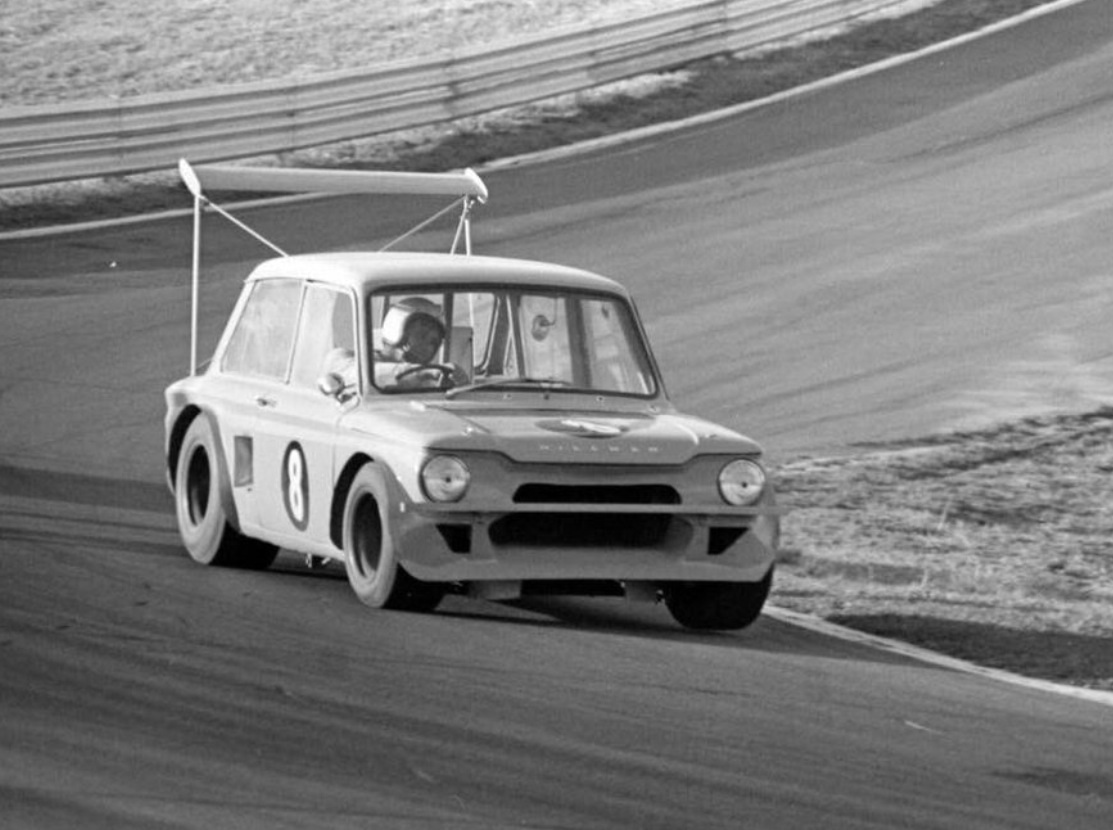
Wodonga boy Harry Lefoe’s Hillman Imp Ford V8 was truly wild- Ford Cobra V8, ZF and later DG300 Hewland box with much of the engineering done by ‘Head Mod’s John Bennett- many will remember this Doncaster Road, Doncaster institution. The car was far from crude with wishbone front, and de Dion rear suspension but was handicapped by the short wheelbase and track of the amazing roller skate. First raced in September 1970, here with wing at Oran Park in 1971, it died at Sandown in the late seventies when rolled by Neil West who was driving it for John Bennett who by then owned it (L Hemer)

Arcane and Tangentially…

Sports Sedans went from the province of the ‘impecunious enthusiast’ building a big engined, lightweight racer ‘at home’ to the big league from 1973 when the Australian Touring Car categories were changed in the wake of the ‘Supercar Scare’, remember that press feast about high-powered ‘Bathurst cars’ in the hands of young drivers?

A new Group C Touring Cars category replaced Group C Improved Production Touring Cars and Group E Series Production Touring Cars to contest both the Australian Touring Car Championship and Manufacturers Championship respectively. As Australian enthusiasts well know, until that point the ATCC was the province of the Improved Tourers and the Manufacturers Championship- the Bathurst 500 the best known of these events, was run for showroom stock or Series Production cars.

Peter Brock and his legendary Austin A30 Holden, here at Hume Weir in late December 1968 (D Simpson)


One of the prettiest, cleverest and winningest earlier seventies Sports Sedans of them all was the marriage of a redundant Repco Brabham Engines RB620/720 SOHC, injected 4.4 litre V8 into an LC Holden Torana GTR-XU1 shell. The whole lot was road trimmed, a great promotional tool for Holden/Jane’s organisation. Later prostituted by Frank Gardner by fitment of a 5 litre Chev F5000 motor- shell extant but all entreaties by the original car builder John Sheppard to the current owner to sell and restore to Repco form have so far been rebuffed. John Harvey up at Oran Park in 1971 (unattributed)

Old Group C Improved Production Touring, enormously popular and the class to which the ATCC had been contested since 1965 as mentioned above was dumped- which meant a lot of seriously good gear was looking for a home in 1973 and found it in a new class.

CAMS finally gave formal recognition to ‘Sports Racing Closed’ or more colloquially ‘Sports Sedans’ creating ‘Group B Sports Sedans’. Funnily enough the origins of Sports Sedans in the sixties was an earlier CAMS rule change.

CAMS changed the ATCC eligibility regs from ‘Appendix J Touring Cars’ to ‘Group C Improved Production Touring Cars’ from 1965 which, similarly to the situation outlined above in relation to the 1973 rule change, released many then ineligible cars which were looking for a new home. Promoters of some circuits, Oran Park and Winton for example allowed these Appendix J escapees to run with Sports Cars under the name ‘Sports Racing Closed’ providing some amusing photographs of ostensibly weird combinations of cars on circuit at the same time.

I missed Pete in his Mustang heyday but I was a beliver seeing him twiddle the wheel of this thing and the Reg Mort 911. Another great bit of John Sheppard engineering, Holden Monaro GTS350 Chev, two Hewland boxes, here in 1976, the other car is Pat Crea’s Ford Cortina V8 (B Keys)


Leo Geoghegan from an obscured Jim McKeown, both in Porsche 911 RS 2.8 spec, Calder December 1974 (B Keys)

Back to 1973- simultaneously with the rule changes to create ‘Sports Sedans’ formally, the prize money on offer by ‘Toby Lee’ shirts at Oran Park and Marlboro at Calder for Sports Sedans meant some serious dudes with plenty of money applied their brains to this ‘almost anything goes’ form of touring car categories.

It got me thinking (as an open-wheeler and sportscar devotee mind you) of what the ‘influential or creatively clever and not necessarily successful ‘ Sports Sedans were of this period. Here goes with car, driver and builder…

1967 Austin A30 Holden, Peter Brock- car builder attribution?

1970 Hillman Imp Ford V8, Harry Lefoe- Lefoe, John Bennett Head Mod

1971 Holden Torana Repco ‘620/720 Series’ V8, Bob Jane- John Harvey (later in Chev engined form Frank Gardner) John Sheppard

1972 Alfa Romeo GTAm Tipo 33 2.5 V8, Brian Foley- Auto Delta, Foley and his team

1973 Porsche 911 2.8, various drivers, not so much clever as readily available if one had the readies

1974 Valiant Charger Repco Holden F5000 V8- John McCormack, Elfin Sportscars, McCormack, Dale Koenneke

1975 VW Fastback Chev V8, Bryan Thomson- Thomson and Peter Fowler

1975 Porsche 911- mid-engined 2.1 Turbo, Jim McKeown- Porsche Cars Australia

1975 Ford Capri RS3100, Allan Moffat- FoMoCo Europe

1975 Holden Monaro GTS 350 V8, Pete Geoghegan- John Sheppard

1976 Chev Corvair Chev V8, Frank Gardner- Gardner, John Anderson, Tom Nailard

1976 Chev Monza IMSA V8, Allan Moffat- DeKon Engineering USA

Allan Moffat’s Chev Monza IMSA spec DeKon Engineering built car at Sandown in 1976 with 4 July 200 year bi-centenary celebration signage carried that weekend (R Davies)


Bryan Thomson VW Chev from John McCormack Valiant Charger Repco and Bob Jane Holden Monaro Chev, Calder December 1974 (B Keys)

Its not a complete, list just an ‘influential, creatively clever and not necessarily successful’ one. I’ve thought of and discarded the Improved Tourer escapees such as Moffat’s Mustang and Jane’s Monaro (successful as a Sports Sedan), the Holden Dealer Team Torana LC/LJ and LH bolides, Goss XA GT and others but I’m interested in your thoughts, after all i’m a poncy open-wheeler guy not a meat n’ spuds Touring Car dude, so what would I know? Treat the Sports Sedan early year cut-off as circa 1976, I know there was plenty of good stuff which came later but that is outside the scope of this article.

Moffat upon his ex-works Ford Capri RS3100 debut in Australia, Sandown Tasman meeting 1975 (B Keys)


Jim McKeown in Porsche Cars Australia Porsche 911 2.1 turbo Group 4 mid-engined car with lots of 908 suspension bits front and rear. What became of this beastie after it’s 1 year Sports Sedan career? Hume Weir 1975 (B Keys)


Luscious. Brian Foley’s Alfa GTAm T33 2.5 V8 pokin’ its head out of the bonnet, Warwick Farm Causeway in 1973 (unattributed)

Photo Credits…

Mark Bishop, Bruce Keys, Lynton Hemer, Robert Davies, Dick Simpson

Tailpiece: Gardner awaits the off at Hume Weir, sinfully purposeful, it not pretty from every angle…

(M Bishop)

Finito…
(T Watts)

4.4 litres of Repco-Brabham V8 grunt trumps 2 litres of Porsche flat-6 off the line at least, maybe not…

Bob Jane’s Elfin 400 and Alan Hamilton’s Porsche 906 on the front row of the Longford grid in March 1967.

Bob Jane won the Saturday race from Noel Hurd’s Globe Products Elfin 400 Ford and Hamilton whereas in the Monday event Bob won from Wally Mitchell’s RM1 Chev and Glynn Scott’s Lotus 23B Ford. Noel Hurd and Alan Hamilton were DNF’s, the latter running out of fuel on the last lap.

‘Tasmanian enthusiasts would recognise the Gorringe pedestrian bridge, the same bridge that now allows pedestrian access to Baskerville…’ Grant Twining noted.

I’ve written features about both these cars, so initially thought I would pop the photos into the existing articles but they are too good to ‘lose’ by so doing.

They are sourced from the ‘Historic Racing Car Club of Tasmania’ Facebook page which I raid every now and again- so far Grant has not cracked the shits about me doing that- do suss the page if you are a Facebooker, if not you are missing out.

In terms of articles the Elfin 400 is here; https://primotipo.com/2015/05/28/elfin-400traco-olds-frank-matich-niel-allen-and-garrie-cooper/. Bob’s Elfin 400 here; https://primotipo.com/2018/04/06/belle-of-the-ball/, and Hamilton’s Porsche 906 and other cars here; https://primotipo.com/2015/08/20/alan-hamilton-his-porsche-9048-and-two-906s/

(T Watts)

Jane nose up and under power past the Longford pits.

Such a brutally pretty thing, but the aerodynamics of the 400’s were never fully resolved, this car, as many of you know, took flight over the Conrod Humps at Bathurst during the Easter 1969 meeting killing Bevan Gibson in the process.

To that very point Rob Bartholomaeus reminded me Noel Hurd was a non-starter in the Monday Longford sportscar race after a hair-raising off at around 140mph induced by the Elfin 400’s aero package. He was ok, and the car was not badly damaged but the nose was changed thereafter.

Bob’s eyes will be looking up the rise towards the Water Tower to the tracks left before pursuading his beast into the fast right hander at the top of the hill and plunge towards The Viaduct. Click here for a ‘Lap of Longford’ piece; https://primotipo.com/2018/07/05/longford-lap/

The shot of Alan below is taken on the same stretch. If the car looks a bit odd its because Australia’s Porsche importer has chopped the Coupe roof off to create a Spyder given he was and is a big, tall unit and wanted to be comfy.

(T Watts)

Longford was a demanding circuit in any car but particularly so in a fast, powerful one given the inherent nature of the layout with its culverts, trees, bridge supports, Esk River (scuba divers were always at the ready in dinghies afloat) light poles and other similar immovable objects, the circuit width and its undulations or bumps.

Jane and Hamilton raced most of their cars here- sports and touring cars and in Bob’s case his Elfin Mono single-seater ANF1.5. For Hamilton it was the race debut of the 906- a daunting place for any cars first meeting however well sorted the ex-factory Porsche package undoubtedly was!

Jane raced his Elfin 400 at Longford in 1967 and Ian Cook took the wheel in 1968- Alan raced the 906 here in 1967 only. The ‘ring in’ is the photo below of Alan at Symmons Plains in 1967, its probably the ‘Tasmanian Sportscar Championship’ meeting the week after Longford on 12 March.

Click here for an article on that tragic event, Hamilton’s well-used engine (it had been in the 904-8 he had just stepped out of before fitment to the 906) had a con-rod break so he did not finish; https://primotipo.com/2018/07/17/1967-tasmanian-sportscar-championship/

(HRCCT)

Credits…

Tim Watts, Dennis Cooper, Historic Racing Car Club of Tasmania, Rob Bartholomaeus

Tailpiece…

(D Cooper)

The Longford Shell tent in 1968.

Jim McKeown’s Lotus Cortina Mk2 alongside the Bob Jane Racing 400 raced at this meeting by Victorian Ian Cook. The class of the field in that, final Longford year was Chris Amon who set the outright lap record in David McKay’s Scuderia Veloce Ferrari Can-Am 350 machine. Here tis; https://primotipo.com/2015/04/02/ferrari-p4canam-350-0858/

Note the aluminium spoiler above the radiator outlet in a quest for more downforce. 1968 was ‘the year of the wing in F1’ remember, mind you, by this stage Jim Hall and the crew from Rattlesnake Raceway in Texas had provided plenty of Chaparral mobile ‘tutorials’ on what could be applied aerodynamically to Group 7 cars like the Elfin to assist in keeping them on terra firma.

Finito…
(oldracephotos/DKeep)

What do you do when you have already overdosed on Longford?…

Have some more of course! There is no such thing as too much of a good thing.

Lindsay Ross has popped a swag of oldracephotos.com.au photographs on The Nostalgia Forum recently- his focus with this batch of shots was just on The Viaduct section of this challenging circuit. See here for a lap of the place to orientate yourself; https://primotipo.com/2018/07/05/longford-lap/

One of the things I love is the mix of shots, and do checkout the website, Lindsay has been ridiculously kind with his support of me since starting primotipo, without doubt there are more photographs from the ORP archive than any other. Lets support those that support us ; http://oldracephotos.com/content/home/ The cars vary from the sublime- Jackie Stewart’s BRM P261, to the more realistic end of the enthusiast spectrum- Formula Vee, and pretty much everything in between.

The opening photograph is of Graham Cullen’s CMS Vee, and he has a playmate in the undergrowth too- who is it? No he doesn’t, its just that his bodywork has become separated from the chassis on his trip through the undergrowth. The driver of car #71 zipping past the long-suffering marshalls is Garry Nielsen in a Tasman- I wonder who built these cars?


(M Hickey)


CMS is short for ‘Cullen Marine Services’ Graham Cullen’s primary business, he built about twelve of these ladder framed cars in the early Australian Vee years in the mid to late sixties.

By the time I had driver/engineer Peter Ward look after my Venom Mk2 FV circa 1979- he was building CMS’s of a totally different kind- very quick spaceframe cars raced by he and David Eyre-Walker and one or two others.

Like every man and his dog Wardy had an Elfin NG Vee copy he named ‘Spectre’, of which he built plenty in his Ross Street, Balwyn, Melbourne backyard workshop. I never worked out why Elfin Chief Garrie Cooper didn’t take to the cleaners all the pericks who knocked off that great design! Still, often the last thing to be found in a court of law is justice.


(oldracephotos/DKeep)


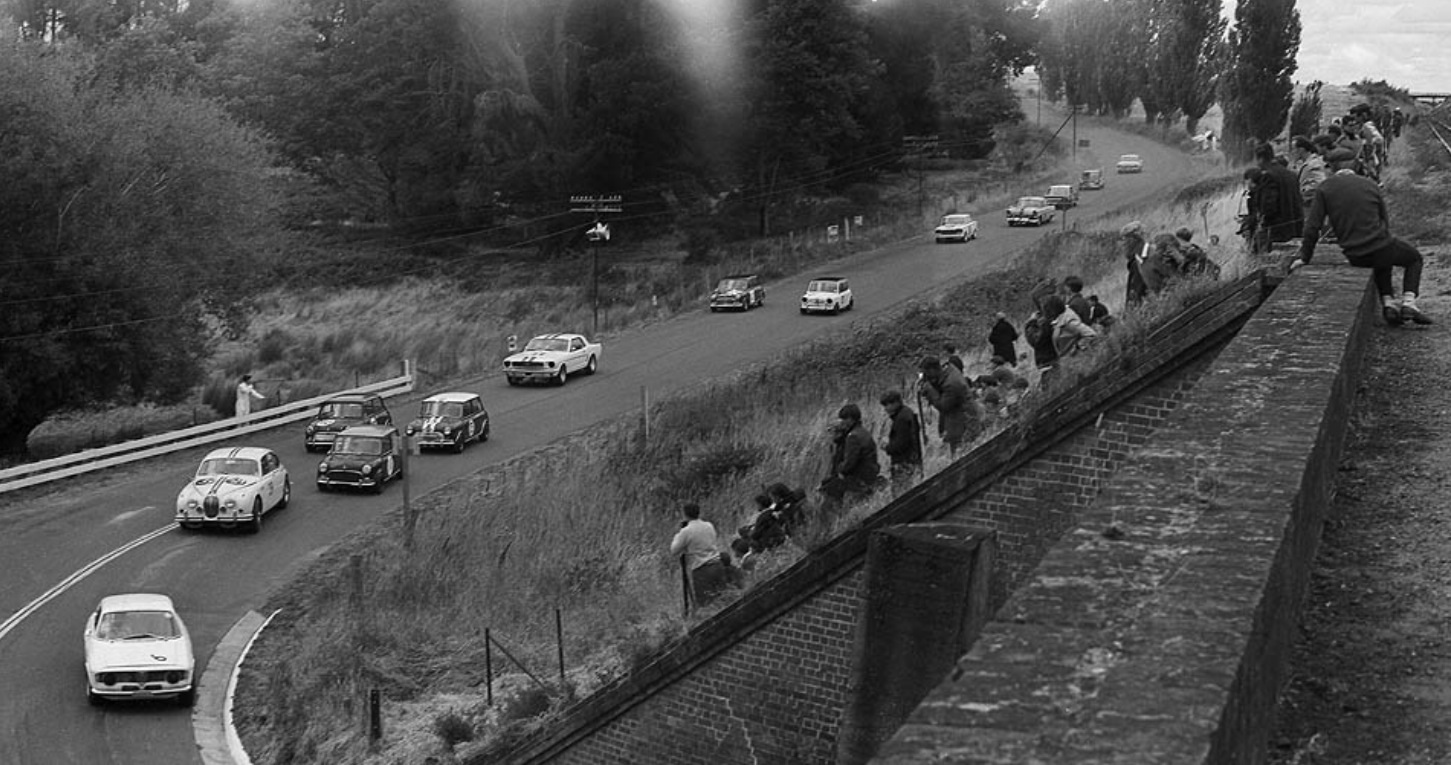
This panoramic shot of Frank Gardner leading the Touring Car pack down the hill into the Viaduct gives us some perspective- what a mega spot for spectators, blow the photo up and you can see the train line. I’ll take advice on the drivers too folks, but I guess its Bruno Carosi in the Jag Mk2 and Robin Pare in Don Elliott’s white Mustang. Rob Bartholomaeus and Bill Hollingsworth have Bob Holden in the ‘striped’ Cooper S, Gene Cooke in the Fiat 1500 and Rob Boote in the Holden EH. The year is 1967.

Have a look at this article on the Alec Mildren Racing Alfa GTA’s and their pilots; https://primotipo.com/2014/11/27/the-master-of-opposite-lock-kevin-bartlett-alfa-romeo-gta/


(oldracephotos/DKeep)


Then lets have a look at JYS in his BRM at ground level, at about the point Frank is turning in and pretty much the car at the same point from above, peering down into the cockpit.

Jackie looks as ‘snug as a bug in a rug’ inside that tight cocoon- unbelted as he is.

The shot above is of P261 ‘2614’ in 1966, he won the race from Graham Hill’s similar car and Jack Brabham’s Brabham BT19 Repco. Look closely, the engine is a crossflow 1930cc P60 V8- inlets within the Vee and exhausts outside. Check out this article on the BRM P56/P60 V8; https://primotipo.com/2016/02/05/motori-porno-stackpipe-brm-v8/


(oldracephotos/Keep)


Whereas the photo above is in 1967, again the car is ‘2614’ albeit this time powered by a P60 V8 of a different configuration- see the exhausts between the Vee, and its of 2070cc in capacity.

Jackie DNF with gearbox problems- which was the weak link of the BRM’s that season, the power and torque of the larger engine was beyond the design limits of a gearbox first built for engines of 1.5 litres- the GP formula of the time.

Brabham won that day in BT23A Repco ‘740’ from Clark’s Lotus 33 Climax FWMV 2 litre V8- the Tasman Championship winning combo that year. It too was a stretched, in terms of engine, 1.5 litre F1 car. Here is a piece about the 1967 Tasman and the fortunes of Stewart, Clark and Hulme; https://primotipo.com/2014/11/24/1967-hulme-stewart-and-clark-levin-new-zealand-tasman-and-beyond/


(oldracephotos/DKeep)


Similar turn-in shot for Alan Hamilton who has his Porsche 906 Spyder beautifully cocked up in a delicate little slide- these cars were great, forgiving, customer machines.

Here is a bit more about them- Alan and his 906’s; https://primotipo.com/2015/08/20/alan-hamilton-his-porsche-9048-and-two-906s/


(oldracehotos/DKeep)


Bruno Carosi in the ex-Bob Jane Jaguar Mk2 is under the Viaduct in 1967, whilst the shot below is of Doug Whiteford’s Maserati 300S just as he enters the light- by the look of that number on his cars nose its during the 1959 Australian Grand Prix meeting in which Dicer Doug failed to finish having driveshaft failure on the first lap- Stan Jones won the event in his Maserati 250F.

That race is covered here; https://primotipo.com/2016/01/08/stan-jones-agp-longford-gold-star-series-1959/


(oldracephotos/DSaward)


(oldracephotos/DKeep)


David Keep has a really unusual and interesting view of Pete Geoghegan chasing Frank Gardner away from the Viaduct and towards Kings Bridge, its 1967 again.

Who won the Taxi races?, my money is on Pete despite the more nimble attributes of the GTA. See here; https://primotipo.com/2017/10/17/he-came-he-saw-he-conquered/


(oldracephotos/Harrisson)


Things went wrong of course.

The Viaduct had a fast approach- downhill, a tricky turn-in and bugger-all in the way of run-orf areas to capture the steed which has just gotten away from you, should that particular situation occur.

Which of course it did, as in this series of happy snaps!


(oldracephotos/Harrisson)


Phil Brooke looks fairly happy with himself so presumably he has not done too much damage to his pride and joy on that greasy race-day in 1968, we can’t see the rear of the little Angle-box mind you.


(oldracephotos/Harrisson)


Bruno has painted his Jag between the 1967 and 1968 meetings, he is just about to alight the machine being very careful where he pops his feet. Still, too much action about the place for the snakes to show interest I guess. They do have snakes down there I think?- just Googled, they do, copperheads, tigers and white-lipped, none particularly friendly or good for you.


(oldracephotos/Harrisson)


Lionel Ayers Rennmax built MRC Lotus 23B Ford looks as though it is suspended in a tree but its probably on solid’ish ground. It will may need a wheel alignment before tomorrow’s race all the same. Its 1968.


(oldracephotos/Harrisson)


Daryl Wilcox looks as though he has had a moment on the way into the corner and is perched precariously half on and half off the road. Just looked again it might be on the exit? Phil Brook’e youthful face I can just make out to the left of the copper’s head- clearly both chappies have left the island on the notoriously wet last day of racing ever at Longford on Monday 4th of March1968.


Credits…

oldracephotos.com.au and in particular the work of David Keep who is for sure one of the Longford photographic gods, not to forget Mr Harrisson as well. Michael Hickey Collection


Tailpiece: Up The Escape Road…

(oldracephotos/DKeep)


To get the entry to the escape road right takes real skill under pressure- so maybe Darryl O’Toole bailed real early in his Humpy. Its not a back road to Longford mind you- he is about to run out of gravel soonish.


(KBY191)


This November 2018 photograph by KBY191 shows that ‘The Viaduct and railway are still there, however nothing remains of the old track running down to The Viaduct since reconstruction of Illawarra Road which also bisects Tannery Straight with a round-about’.


Finito…
(P Maslen)

Paul Hawkins appears reasonably fleet of foot, first dude on the left…

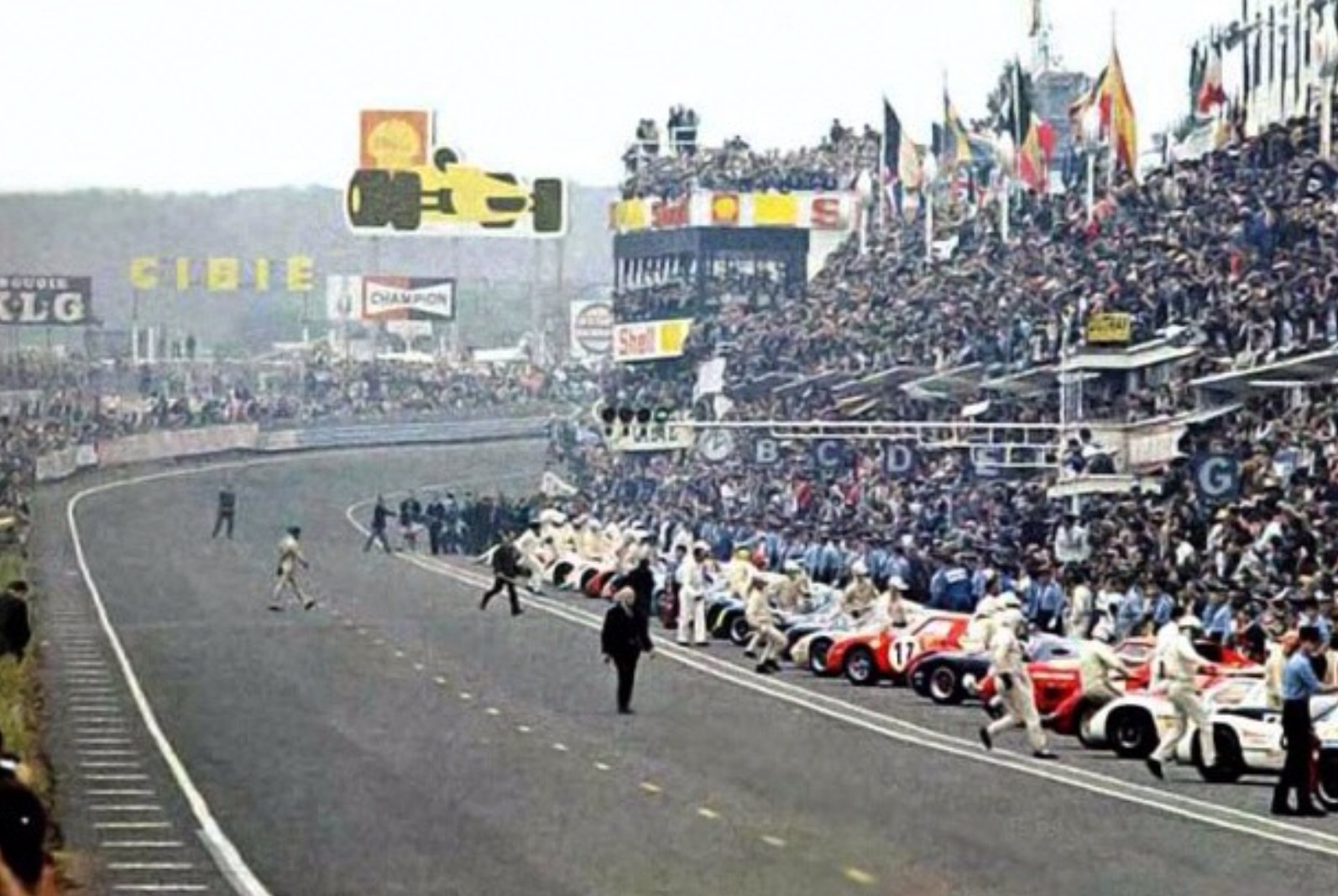
And so he should too- the Australian international had far more experience than the locals at Le Mans run and jump starts. What great panoramic, colourful, atmospheric photographs these are.

The first few cars lined up in the 3 September 1967 twelve hour enduro are the Hawkins/Jackie Epstein Lola Mk3 Chev, Alan Hamilton/Glynn Scott Porsche 906, Bill Brown/Greg Cusack Ferrari 250LM, Bill Gates/Jim Bertram Lotus Elan and then the white Kevin Bartlett/Doug Chivas Alfa Romeo GTA.

Whilst Paul was quick to the car, the task of affixing his Willans six-pointer was tricky when getting his Heavy Chevy started even in the calmness of a paddock, let alone with a schrieking 2 litre Porsche flat-6 blasting past and reinforcing his tardiness. Not that the notion of outrunning the Porsche over twelve hours should have been an issue- the Gates Lotus is also fast away whilst at far right is the red John Keran Volvo P1800S.

(P Maslen)


Hamilton from Hawkins, 5 litres of Chev V8 is hard to deny!, end of lap 1, he will grab the lead before the fast right hand swoop under Dunlop Bridge (P Maslen)

The last Le Mans 24 Hours with a running start was the 1969 event when Jacky Ickx famously walked to his John Wyer Ford GT40 before carefully fitting his belt- and winning the following day with Jackie Oliver.

The tragic irony of Ickx’ protest was that the ‘unbelted’ John Woolfe died in his Porsche 917 in a first lap accident- safety and seatbelts were the end of that bit of racing spectacle, fair enough too.

Lone ranger, Ickx, Le Mans 1969 (unattributed)

David McKay’s Scuderia Veloce 250LM was almost ‘rusted to this race’. It was never the fastest thing entered but it won in 1966- crewed by Jackie Stewart and Andy Buchanan, in 1967 with McKay’s regular team drivers of the day, Bill Brown and Greg Cusack at the wheel and in 1968 piloted by the brothers Geoghegan- Leo and Pete.

In second place behind the Brown/Cusack 250LM in 1967 was the Lola with 468 laps and third the Hamilton/Scott Porsche 906 with 460- the winners covered 490 laps of reliable, fast Ferrari motoring.

Surfers Paradise International Raceway was opened in 1966 with a bang- ‘Speed Week’ well and truly put Keith William’s circuit on the map in terms of both the motor racing community and the Queensland populace.

I wrote an article about that meeting a while back, check it out here; https://primotipo.com/2015/02/13/jackie-stewart-at-surfers-paradise-speed-week-1966-brabham-bt11a-climax-and-ferrari-250lm/

‘Speed Week’ in 1967 included the Gold Star race won by Spencer Martin from Paul Bolton, both aboard Brabham Climax’ the Sunday before, the Australian Motorcycle Grand Prix on Saturday 2 September and the Rothmans 12 Hour the following day- the race started at 10am, Des White’s ‘Racing Car News’ account of the race sets the scene, ‘Sunday dawned just perfect, sunshine, a cool breeze, and the circuit looked great after a massive clean up following Saturday’s AGP for Motor Cycles’.

‘The garbage trucks removed the rubbish, several ambulances had removed all the leather clad bodies that had been lying around under Dunlop Bridge, and some six police cars had removed many of the exuberant but unfriendly Ned Kelly types from Repco Hill.’ This article is for the most part a truncated variant of Des’ great work in the September 1967 issue of ‘Racing Car News’.

Thirty-seven cars entered the meeting with a somewhat disappointing nineteen fronting for practice- notable absentees were Australia’s large population of Lotus 23’s and local clones thereof, the three Elfin 400’s of Bob Jane, Noel Hurd and Niel Allen. Frank Matich was taking in some Can-Am rounds in his Matich SR3 Repco at the time- all of the cars mentioned were/are ‘sprinters’ rather than purpose built endurance machines so perhaps the lessons of the previous year in terms of the longevity required had been heeded and the driver/entrants therefore stayed away.

The ninth placed Ron Thorp/Ray Strong AC Cobra ahead of the Scuderia Veloce Greg Cusack/Bill Brown Ferrari 250LM, the pair completed 416 laps compared with the winners 490 (B Williamson)

In 1966 there were five ‘outright contenders’ entered- the Stewart/Buchanan and Epstein/Hawkins Ferrari 250LM, Piper/Attwood Ferrari 365P2, Sutcliffe/Matich Ford GT40 and Hamilton/Reed Porsche 906 whereas in 1967 there were only three, the Scuderia Veloce 250LM, Porsche Cars Australia 906 and Hawkins/Epstein Lola T70 Mk3 Chev- unfortunately the Scott-Davies/Harvey/Tuckey Lola T70 Chev Spyder failed to take the grid after terminal engine failure in practice. The car suffered piston and rod failure and after replacements flown in from the US were fitted on Saturday night the car dropped a valve during a practice session before the start ending a rather unpleasant weekend for the crew.

Fastest in practice was the Hawkins Lola T70 on 1:16.3 from the Hamilton 906, 1:18.7, then the SV 250LM on 1:20.6 before getting into the ‘class cars’- the Gates/Bertram Lotus Elan 1:27.0 then the Mildren Alfa GTA on 1:28.7 and Macarthur brothers Lotus Elan on 1:29.30- also under the 1:30 mark was the Bob Holden/Don Holland Cooper S Lwt on 1:29.7 seconds.

The Hawkins/Epstein Lola (chassis number SL73/112) had not long prior led the Reims 12 Hour for 3 1/2 hours but its Hewland LG500 gearbox cried ‘enough’ but not before setting a lap record on this very fast circuit of ‘147mph, done at 1 o’clock in the morning with full tanks, and included a speed of 200mph on the straight’ Des White observed. That race was won by the Guy Ligier/Jo Schlesser Ford GT Mk2B. The big Lola was clearly the quickest car in the Surfers race but over the ensuing years the success of these wonderful machines in endurance racing was hampered by the brittle nature of the Chev engines most entrants used and the Hewland box.

Scuderia Veloce Ferrari 250LM (C Anderson)


(Mixed bag here, again on the main straight- the #37 Charlie Smith/Noel Hall MGB, #18 Daimler SP250 shared by Peter Whitelaw/Ian Jenkins/Peter Ganderton and the only Holden entered- the Max de Jersey/Bill Birmingham 48-215 (P Maslen)


Its got a touch of Sebring about it in terms of variety: Calvert Holden 48-215, Ron Thorp AC Cobra, Charles Smith MGB and Phil Barnes, Morris Cooper S during the contests early laps (oldracephotos.com/Phillips)

Alan Hamilton made a great start at the flags drop- 10am, his 906 jumping sideways as he applied all of the 2 litre engines flat-6 power to the very abrasive Surfers tarmac- KB also got away well in the Mildren GTA as did the Gate’s Elan but the Porsche succumbed to the big Lola at the end of the first lap.

Bartlett slipped under Bill Gates as the 250LM eased into third place during lap 5, a dice developed between the John French driven BMC Australia MG Midget and the Elans whilst the Harry Gapps Renault 8 Gordini engine blew after 24 minutes of racing and was the first retirement.

At 10.30 the Lola led from the Porsche and Ferrari then Bartlett in the GTA, the Holden/Holland Mini Lwt and Doug Macarthur in the family’ Lotus Elan. The first of many pitstops for the Hawkins Lola took place at 10.45am when 3 pints of oil were sloshed into the oil tank- a poorly fitted rocker cover was leaking badly.

Hamilton’s leading Porsche had completed 43 laps in the first hour, a lap clear of the Cusack/SV Ferrari and Hawkins Lola on the same lap as the Italian V12. Bartlett was 4 laps back in fourth, then Holden on the same lap as KB with Ron Thorp’s AC Cobra a lap in arrears.

The T70 pitted again at 11.16am for 8 pints of oil and a replacement rocker cover gasket- the stop took 12 minutes 54 seconds. The Whitelaw Daimler SP250 pitted with lots of steam and leaking brakes whilst the class leading Thorp Cobra came in for a front end check.

(C Anderson)


The batch of three photographs above and below are of the John Keran entered Volvo P1800S crewed by John, Colin Bond and Max Winkless. On circuit the car is driven by Keran- the two pitlane shots show John staring down the camera and he and Col Bond discussing the progress of the car.
The rally men, mind you Bond was racing on all kinds of surfaces then in tourers, sporties and his Rennmax Peugeot s/c single-seater, did well- fourth in the Improved Production under 2 litre class won by the Datsun Racing Team Datsun 1600 Sports with the Victorian pair of John Roxburgh and thrice Australian Grand Prix winner, Dog Whiteford behind the wheel (P Maslen)


(J Keran)


Keran, Bond and who is it in that Team Total shirt to the right? (J Keran)

At 11.30am the Hamilton Porsche led with 65 laps completed from the Ferrari and Bartlett Alfa GTA with the Holden Mini in fourth as the Lola hung around the pits. The John Roxburgh Datsun was in sixth on the same lap as the Thorp Cobra with the two Datsuns seemingly having a good grip on the 2 litre Improved Production class as the Barry Tapsall/Henk Woelders car headed John Keran’s Volvo P1800S.

At 11.45 Kevin Bartlett pitted for fuel and oil and handover to Doug Chivas but the little, lightweight Alfa would not answer the starter- pushed behind the pit counter for closer attention there the machine stayed, ‘the engine tighter than tight’.

Hamilton took his first pitstop bang on noon- four tyres went on and 22 gallons of fuel and Glynn Scott went in, the stop took 3 minutes 24 seconds, at that stage the 906 had done 87 laps, the Ferrari 86, then Bob Holden, Paul Hawkins, John French, John Roxburgh and Ron Thorp followed.

The Thorp Cobra pitted again with brake problems and at 12.16 Greg Cusack handed the SV 250LM over to Bill Brown after the Ferrari was filled with 32 gallons of fuel, 6 pints of oil and four, fresh Firestones, the slick stop taking two minutes.

Around the same time the Harry Cape Triumph GT6 pitted to have its rear light taped after a bingle and the Holden Mini Lwt had its rocker-post replaced- the Hindmarsh Elfin retired over at Firestone- the field was falling away whilst Doug Whiteford took over the class leading Datsun 1600 from John Roxburgh at 1pm together with 20 gallons of fuel and 4 tyres.

Barry Ferguson/Max Stahl ‘Racing Car News’ entered MGB, Max being the much loved racer/editor/proprietor of RCN (C Anderson)


Peter Maslen, the enthusiast who captured these wonderful images images wrote of the photograph above as ‘One of the finest drives I ever saw. When Alan Hamilton dropped the Porsche into a ditch around the back of the circuit, he was encouraged to recover it- Glynn Scott took over and they came in third. This picture now holds pride of place on my study wall’. It is a marvellous shot of the Porsche 906- he has managed to capture the determined set of Scott’s jaw, local open-wheeler and sportscar ace rather nicely (P Maslen)


I suspect its the first of the pit-stops for the Hawkins Lola with the 1:21.2 being given to Alan Hamilton in the now leading Porker 906 (oldracephotos.com/Phillips)

Des White records that the Lola T70’s first ‘scheduled’ stop was made just on 1pm when 45 gallons of avgas and 4 pints of oil were taken onboard in 3 minutes 15 seconds- Paul remained at the wheel and set off at undiminished pace after the Ferrari and Porsche which was about 10 laps in front up the road.

Glynn Scott took the Porsche 906 to a 3 lap lead after three hours of racing at 1pm having completed 129 laps- he was a lap ahead of the Ferrari and ten laps ahead of the Lola on 119 laps. The works MG Midget of John French and Brian Foley was fourth on 115 laps, and doing amazingly well given its recent build and therefore hasty preparation, 3 laps clear of the Volvo Coupe now just 1 lap clear of the Whiteford Datsun 1600 after its pitstop, the Macarthur Elan was still in the race and running well.

Epstein Enterprises Lola T70 Mk3 (C Anderson)


The Bartlett/Doug Chivas Alfa Romeo GTA ‘RHD’- the second of Alec Mildren’s two GTA’s (P Maslen)


Ross Bond’s legendary Austin Healey 3000 in its more formative specifications in a long, successful race career and the John Keran Volvo P1800S (oldracephotos.com/Phillips)

Alan Hamilton took over the 906 at 2.03pm for a top up of fluids and driver change, losing 3 minutes 10 seconds and in so doing allowed the Ferrari 250LM into the lead- then Bill Brown pitted the Ferrari to change over to Greg Cusack, that stop took 2 minutes 45 seconds, in the process re-entering the race a lap and a half behind Hamilton- both cars were well clear of the Lola which was in Jackie Epstein’s hands after a 7 minute stop.

Alan Hamilton niggled Cusack in the 250LM for several laps looking for a way past to increase his advantage finally getting alongside on the outside of Lukey- Greg held his line, the Porsche left the road, shot over a low mound and hit the Armco. The Victorian regained the circuit after 30 seconds but as the car entered Shell Straight the rear fibreglass body panel blew open and was ‘dragged along like some weird insect in the middle of a mating dance’ as White poetically put it!

The flustered pilot pulled off at Firestone, his race seemingly run but he was pursuaded to return the car to the pits for repairs- the team made good the rear panel with a combination of rivetted aluminium, race-tape and wire, they lost 17 minutes in the process with Glynn Scott determined to make up the lost time (in one of his photo captions White wrote that the 906 lost a total of 1 1/4 hours in the pits in total- not sure what is correct).

250LM at rest (C Anderson)


The Lotus Elan 26R crewed by disc-jockey Bill Gates and Jim Bertram (P Maslen)


Mroom-waaahhhrr. Scotty on the hop 906- where on circuit folks? (oldracephotos.com/Phillips)

By this stage the ever reliable ‘Old Red Lady’ as David McKay referred to his adored car was in a lead which was all but impossible to peg back.

By 3pm the LM had completed 212 laps and had a 22 lap lead over the French/Foley MG Midget which was in a stunning second place from the Hawkins/Epstein Lola- which had also been back to the pits during the 906 time standing still. The Roxburgh/Whiteford Datsun 1600 still led its class and was fifth outright at a time the Porsche was back in ninth after going back to the pits for a further 49 seconds of repairs.

The French/Foley Midget pitted near 4pm with a broken scavenge pump whereupon the crew worked to convert the gallant little car from a dry to wet sump- this marvellous effort was in vain when the oil pump shaft broke at 4.20pm.

Scott pushed the robust 906 along very quickly- lapping in the regular 1:20’s, by 5pm he was back in sixth with 251 laps on the board, he was in sparkling form no doubt buoyed by his victory in the NSW ANF1.5 Championship aboard his old Lotus 27 Ford at Catalina Park in mid-August over Max Stewart and Phil West amongst others- Tapsall’s Datsun had completed 253 laps and Keran’s Volvo 255. With five hours to run even the third placed Roxburgh Datsun 1600 Sports looked likely to be caught by the flying Porsche.

The Tapsall Datsun pitted at 5.10pm for fuel and tyres but refused to start and was taken behind the pit wall where the battery and starter motor were replaced. Hamilton jumped back into the 906 at 5.38 pm having taken on 20 gallons of fuel and was after the third placed car- now only 4 laps away- a quick, high speed spin under the Dunlop Bridge at 6.50pm did not diminish his intent.

Not too hard to tell which car was artist Colin Anderson’s favourite! The winning 250LM (C Anderson)


A routine fuel and tyre stop for the victorious 250LM and below that the rumbling Lola in the Repco Hill to Castol corner section of the circuit prior to ‘Rothmans Straight’- the main straight(P Maslen)


Hard to tell but I think its Doug Chivas in the Mildren Alfa GTA, therefore practice, perhaps KB can advise (oldracephotos.com/Phillips)

By 7 pm the Cusack/Brown Ferrari 250LM led the Hawkins/Epstein Lola T70 by over 25 laps having completed 374 circuits of the challenging Nerang layout- by then the speedy 906 was only a lap adrift of the leading Datsun and gaining fast. The Holden/Holland Cooper S Lwt followed on 326 laps, a lap clear of the Volvo.

Henk Woelder’s, later Australian F2 Champion aboard Bill Patterson’s Elfin 600E Ford, exited his Datsun after again replacing the car’s battery and starter motor- only fifteen cars remained in the battle at this point.

Glynn Scott took over the 906 again at 8pm after a 3 minute 49 seconds stop for fuel- his first flying lap in the dark was a 1:21.2, about 5 seconds quicker than the Ferrari and 10 seconds better than the big rumbling Lola- both of these machines being stroked along to the finish in ‘secure’ positions of course- Scotty had a big spin under Repco after 3 laps but kept on pushing all the same.

Woelders’ Datsun re-entered the fray but was black-flagged for running without rear tail-lights- Whiteford’s similar car (#28 rather than Woelders’ #29) was shown the flag- ‘a nasty scene was avoided’ as ‘Dicer Doug’ was not a man to be trifled with, and the Woelders machine was put away for the rest of the night.

MGB pitstop, probably Max Stahl (C Anderson)


The rumbling Lola in the Repco Hill to Castol corner section of the circuit prior to ‘Rothmans Straight’- the main straight (P Maslen)


From right- #7 works, new French/Foley MG Midget which is extant, de Jersey/Birmingham Holden FJ, #14 Hallam/Pare Ford Anglia, #15 Lister/Seldon Volvo 122S, #28 Roxburgh/Whiteford Datsun 1600 Sports, #4 250LM, #8 Holden/Holland Morris Cooper S Lwt (oldracephotos.com/Phillips)

By 9 pm with one hour left to run the Ferrari had completed 448 laps, 20 laps ahead of Paul Hawkins who was at the wheel for the final stint, Glynn Scott was still lapping in the low 1 min 21’s in his series of inspiring stints and was by then up to third outright with 417 laps- 11 adrift of the curvaceous Lola.

Hawkins pitted for the last time at 9.25pm, the two and a bit minutes stop handed Glynn another 2 laps with Hawkins circulating in the 1:26’s to go easy on the car, Des White finished his wonderful article on the race with ‘The race finished in the cold dampness of 10pm and the Ferrari coasted into the presentation area, quickly joined by the Porsche which received and rightly deserved all the ovation it received followed by the big mean, green machine, the Lola.’

‘The results were just about what one must expect in an endurance event, the Ferrari taking out its second Rothmans 12 Hour, while both Hawkins and Hamilton vowed to be back next year with the same teams, for as Hawkins stated- ‘Its time we won this thing.’

Alan Hamilton was and is a tall fella so lopping the lid off Porsche 906 ‘007’ made sense especially in an Australian sprint racing context- the bulk of our sportscar races were short. Here looking all pristine in practice entering ze pits, she looked a bit more grungy and used post-event (oldracephotos.com/Phillips)


Three Minis were entered in the Sports Racing under 2 litre class, this one is the Phil Barnes/Jeff Leighton Morris Cooper S- they completed 238 laps and placed seventh in the class won by the Hamilton/Scott 906, the best placed Cooper S was the BMC works entry raced by Bob Holden and Don Holland to fifth with 437 laps completed (P Maslen)


250LM and 906 early in the contest, main straight (oldracephotos.com/Phillips)


(P Maslen)

The results of the race, to the first three finishers in each class are as follows; (source RCN)

Outright

Greg Cusack/Bill Brown Ferrari 250LM, Paul Hawkins/Jackie Epstein Lola T70 Mk3 Chev, Alan Hamilton/Glynn Scott Porsche 906

Sports Racing over 2 litres

250LM, T70, Max de Jersey/A Shaw Holden FJ

Sports Racing under 2 litres

906, Bob Holden/Don Holland Morris Cooper S Lwt, David Seldon/Gerry Lister Volvo 122S

Improved Production over 2 litres

Ron Thorp/Ray Strong AC Cobra, Peter Whitelaw/Kevan Woolf/P Ganderton Daimler SP250

Improved Production under 2 litres

John Roxburgh/Doug Whiteford Datsun 1600 Sports, Chris Smith/Noel Hall MGB, Ray Kearns/Brian Lawler/Col Wear Volvo 122S

Ron Thorp on the hop, AC Cobra (Bowden Collection)

Afterthoughts…

Surfers Paradise owner/promoter Keith Williams tried very hard to establish this race, first over twelve hours duration in 1966/7 and then six hours in 1968/9 as fixtures on the Australian racing calendar.

Forty cars raced in 1966, 27 in 1967, 29 in 1968 and 23 in 1969, in the latter years Australian ‘Pony’ cars swelled the numbers and of course endurance events in Australia quickly evolved as Series Production/Group E Touring Car events in the late sixties with huge entries. ‘Sports prototype or racing sportscar’ numbers in each of the SPIR events were 8, 3, 4 and 7 from 1966 to 1969, which I understand on one level in the sense that the local population of such cars in Australia were sprinters rather than endurance racers. Having said that one could have run your twin-cam or Olds or Chev with a softer cam and used less revs for this event- all of which assumes the funds to do so of course.

The entry of cars from Europe was problematic given the distance involved without payment of generous subsidies and why would the Americans bother given the size of the Can-Am purses?

Sportscar construction spiked a bit in Oz in 1970/71 with the release of 2.5 litre Repco Brabham V8’s as the Tasman 2.5 Formula ended but so engined Rennmax’ and Elfins were fitted with motors which struggled over 100 miles let alone six hours- and so it was that Williams’ valiant attempts withered on the vine.

A pity.

Credits and References…

Peter Maslen, oldracephotos.com/Phillips, John Keran Collection, Bowden Collection, September 1967 Racing Car News

Superb drawings by Colin Anderson scanned from RCN

Tailpieces: Paul Hawkins T70 Mk3 Chev, Surfers…

(oldracephotos.com/Phillips)

An all time Top Ten Racing Cars pick for me- been on the list for forty years too so its unlikely to slip off it. A big arsed but oh so curvaceous, busty, buxom, broad- it oozes sex if you get my drift.

Twiggy it ain’t.

(unattributed)

Funnily enough Paul had a sprint win in the car before leaving Australia.

He contested the 34 lap, 76 mile ‘Gallaher GT Trophy’ race at Warwick Farm the weekend after Surfers on 10 September and had a terrific weekend, winning the race and a couple of five lappers as well. Niel Allen’s Elfin 400 Chev was 3 seconds a lap quicker in practice than Paul- and Glynn Scott’s Lotus 23B Ford twin-cam was half a chance too but come raceday Allen lost a tooth off the crown wheel relinquishing the lead to happy Hawkins.

Paul shortly thereafter bought the Lola from Epstein and had some club successes in it back in the UK before having a very successful Springbok tour with it that November/December 1967.

At this stage of his career Hawkins was both a sportscar ace for hire- Porsche, Ferrari and John Wyer spring to mind, and did good business racing modified GT40’s and Lolas out of his own workshops in Finchley, North London.

As most of you will be aware the gifted Australian lost his life in a semi-works T70 Mk3B Chev whilst contesting the very wet Tourist Trophy at Oulton Park on 26 May 1969- he left the track and hit a tree at Island Bend.

Finito…
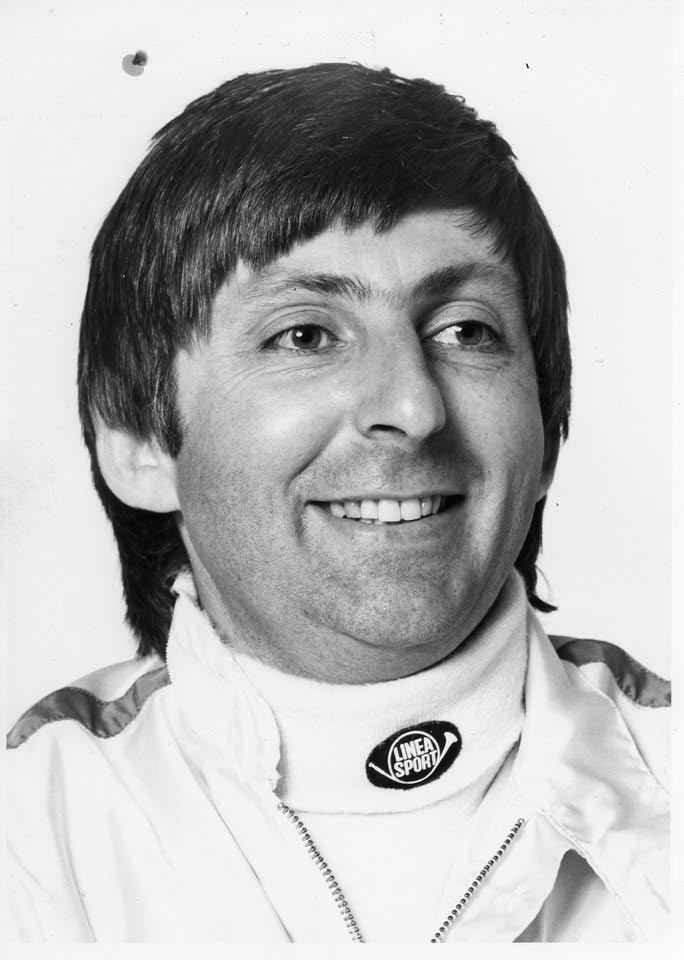
(oldracephotos/DKeep)

John Goss, Tornado Ford, Ross Ambrose, Rennmax Climax and Alan Hamilton, Porsche 906 during the 1967 Tasmanian Sportscar Championship at Symmons Plains on 12 March…
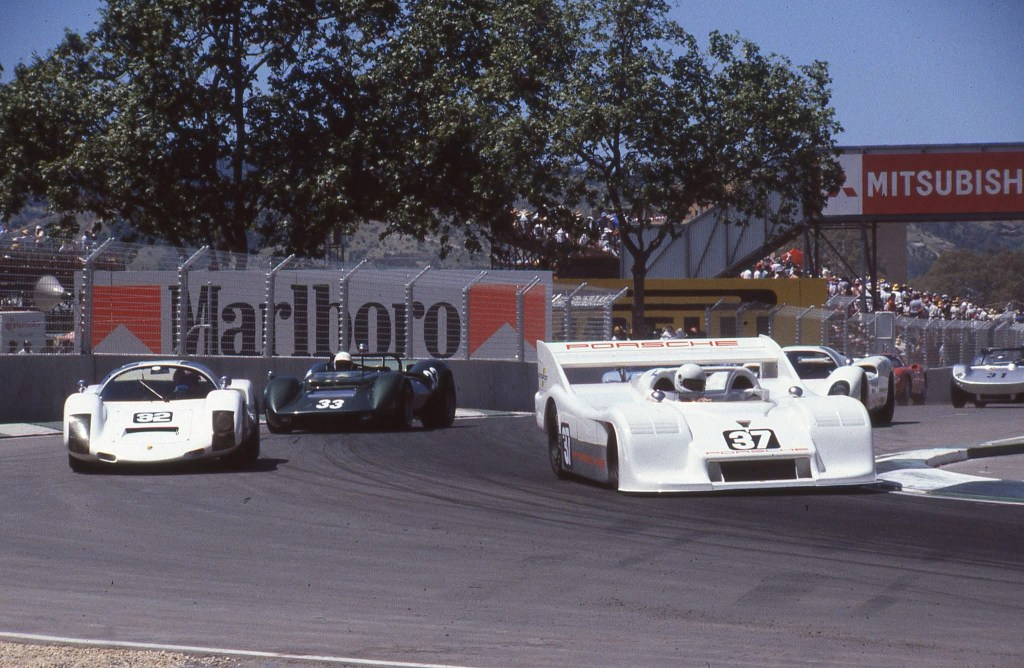
It could only be Australia with that backdrop? Love Don Elliott’s transporter providing the spectator vantage point, devoid of Ford Mustang it makes a mighty fine mini-grandstand. Jaguar Mk1, stark eucalypt tree and the topography of the northern Tasmanian midlands circuit.

The cars are well known too, albeit Hamilton is about to lap the other two cars. Oh, and the drivers are prominent too, Goss and Hamilton Australian Champions- in Ambrose’ case perhaps he is known as much as the father of touring car ace Marcos Ambrose and ‘co-father’ with Ralph Firman of Van Diemen racing cars. No prizes for guessing who suggested the name of that great marque.

I’ve written articles about the John Goss built Tornado, Hamilton’s 906 and tangentially about Ross Ambrose’s car which started life as the Bob Britton built – he of Rennmax fame- Mildren Maserati sportscar driven by Ralph Sach, Frank Gardner and Kevin Bartlett. It then morphed into the ‘Rennmax Climax’. When sold by Alec Mildren to Ross Ambrose he fitted a Coventry Climax 2.2 litre four cylinder FPF engine in place of the Maserati Birdcage T61 motor which blew big-time whilst driven by Frank Gardner in the 1965 Australian Tourist Trophy at Lakeside, the chassis was re-named by Ross with Alecs consent.

This article was inspired by David Keep’s opening shot, it was only when I sought Rob Barthlomaeus’ help with a race report that he pointed out this was a tragic meeting as one of the contestants, Melbourne’s Wally Mitchell later died as a result of a collision in this event.

Many of the Symmons competitors contested support events during the Longford Tasman round a week before with the fields depleted by the likes of Noel Hurd’s Elfin 400 Ford due to an accident seven days earlier- Hamilton’s 906 made its debut race at Longford and was race favourite with the non-appearance of the powerful Elfin.

Alan was having a good day in the office with a Symmons preliminary win from Glynn Scott’s Lotus 23B Ford and Wally Mitchell’s RM1 Chev. The grid for the 30 lap, 45 mile championship race was derived from the lap times achieved during the earlier event.

Tas sportscar c’ship grid- L>R Mitchell RM1 Chev, Scott Lotus 23B Ford and Hamilton, Porsche 906 (oldracephotos/DKeep)

Hamilton started from pole with Scott and Mitchell alongside with Alan Ling Lotus 23B Ford and Bob Holden in a Morris Cooper Lwt on row two.

Scott led initially from Hamilton with Mitchell’s circa 350 bhp Chev V8 engined, spaceframe chassis car- built by he and St Kilda, Melbourne engineer/constructor Bill Reynolds, Bill’s cars were named Wren (R-Reynolds M-Mitchell) comprised a mixture of ex-Lex Davison Estate Brabham BT4/Cooper T62 and Wren components- passed by almost the entire field.

After 5 laps Hamilton had a sixty yard lead over Scott and had already lapped tailenders Mawdesley, Lotus Super 7 and Truscott’s Honda.

By lap 7 Hamilton led from Scott, Ling (who later lost 3rd gear) and Bob Wright’s Tasma Climax FPF 2 litre and was continuing to lap the slower cars.

An arcane but interesting sidebar to Bill Reynolds/Wren enthusiasts, and there are quite a few of us in the Australian Formula Ford ranks given the number of FF Wrens Bill constructed, is that the Tasma Climax was initially built by Reynolds as the ANF1/Tasman Formula Wren Climax single-seater. It too was fitted with an ex-Davison Estate 2.5 FPF but was only raced several times as such by Brendan Tapp and Wright before Wright widened the chassis and created the Tasma sports-racer, there is a story about both the RM1 and Wren Climax but that is for another time.

Goss spun Tornado at The Hairpin allowing Bob Holden and Kerry Cox’ Jaguar Spl through, the order at this point of the 30 lap journey was Hamilton, Scott, plugging along and hopeful in second, Ling unable to do much with third gear absent without leave, Holden, Cox, Goss, Mitchell, still with a misfiring motor and then the rest.

Wally Mitchell’s car finally chimed onto eight-cylinders and proceeded to make up lost ground over the slower cars hand over fist, he was up to third by lap 15 having passed Ling.

Mitchell’s RM1 Chev in front of Hamilton’s 906, a lap ahead, one lap before Mitchell’s tragic accident. He wore a seat belt, a big tick in 1967 as they were not mandated but it seems his fireproofs were sub-optimal and no balaclava, again, not mandated or universally used at the time (oldracephotos/DKeep)

Tragically at half distance, on that lap, Mitchell lost control of the probably not fully sorted RM1- it was originally fitted with a lightweight aluminium Coventry Climax FPF engine where the 5 litre cast iron Chev by then rested- over Bessant Hump, he went onto the grass, slammed into the fence tail first at TNT Corner, then bounced back onto the track. The car’s two fuel tanks ruptured with both the car and unfortunate driver engulfed in flames. The badly burned Mitchell released his seat belt eventually and jumped clear but not before suffering burns to eighty percent of his body.

Whilst poor Wally was attended to ‘The race was restarted at lap 16 as…the gutted RM1 still cast a pall of smoke over the pits’. In the final laps Ambrose passed Ling and Hamilton had a rod let go in the 906 on lap 26, the car expired at the Hairpin giving the win to Scott from Ling’s similar Lotus 23B Ford and Ambrose in the Rennmax Climax.

The sad aftermath of the accident is that the popular East Burwood based Wally died of his burns and related complications of pneumonia on 18 April in a Melbourne hospital.

Mitchell and the RM1 Chev at Symmons 12 March 1967. Nice looking car, I wonder what Wally and Bill took the fibreglass body flop off? Or was it bespoke? (E French)


Related Articles…

Goss Tornado; https://primotipo.com/2018/06/19/john-goss-tornado-ford-longford-1968/

Hamilton 906; https://primotipo.com/2015/08/20/alan-hamilton-his-porsche-9048-and-two-906s/

Ambrose Rennmax/Mildren; https://primotipo.com/2018/06/08/mildrens-unfair-advantage/

Credits…

oldracephotos.com.au- David Keep, Ellis French, Rob Bartholomaeus Collection- Racing Car News & Australian Auto Sportsman April 1967 issues, The Nostalgia Forum- Wally Mitchell thread

Tailpiece: Start of the ’67 Tassie Championship from the rear of the grid…

(oldracephotos/DKeep)

That’s Gossy to the right and the Peter Truscott Honda whilst up front it’s Hamilton’s white 906 sandwiched by two Lotus 23 Fords and then the Ambrose Rennmax and Mitchell RM1.

Finito…

(Smith)

I love pit row scenes. Its where it all used to happen before the activities and those allowed to perform them were policed. Occupational health and safety etc…

Here its Saturday practice during the 1972 Sandown Tasman Round, the Australian Grand Prix that year on 19 January. I’ve written an article about this meeting, see the link here;

My First Race Meeting, Sandown Tasman F5000 1972, Bartlett, Lola and Raquel…

Boy, there is some talent focussed in and around Max Stewart’s Mildren Waggott 2 litre.

Big Maxxie towers over the top- its his car, he raced it for Alec Mildren for several years then bought it upon Alec’s retirement from the sport and won the ’71 Gold Star, the Australian Drivers Championship in it. Max knows every centimetre of that liddl baby.

Up the pitrow is Stewart’s Elfin MR5 Repco. I wrote about this car a short while ago-here; https://primotipo.com/2017/10/24/maxwells-silver-hammer/

Max retired the MR5 with engine problems in the AGP the following day.

The short fella with the big arse leaning over the Mildren on the other side is Paul England, a legend. Ex-Repco Research in the Charlie Dean Maybach days, builder of the Ausca Holden Repco sportscar, Cooper T41 competitor in the 1957 German GP, multiple Australian Hillclimb Champion and proprietor of Paul England Engineering in Moonee Ponds- Dame Edna’s Melbourne home suburb of course.

I wonder who the ‘Firestone’ driver is leaning against the (unsighted) pit counter. Fourteen year old me is somehere on that pit counter at this  very moment. I’ve got my eyes on both the cars and marauding Light Car Club officials looking for prats like me who are not ‘sposed to be there.

One of the ‘works’ Elfin MR5 Repco’s with its new Tyrrell nose is blasting past on circuit in 3rd gear making a glorious fuel-injected 90 degree V8 basso-profundo bellow. Not sure if its Garrie Cooper or John McCormack.

The stocky little dude in the blue T-shirt behind Max’s MR5 rear wing is ‘Lugsy’ Adams- then a top mechanic but very soon to be a quick touring car driver, and several years after that an F5000 constructor/driver. Remember the Adams GA1 Chev? Its his driver Warwick Brown he is talking to- WB is in his formative McLaren M10B Chev F5000 days but is soon to be one of its enduring talents in both Australasia and the US.

image

Tony Stewart tells the crowd how it was after winning the ’71 Examiner 1000 at Symmons Plains. I think that is his well known engine-builder and father in law Jack Godbehear alongside? (oldracephotos/Harrison)

And the fellow aboard the Mildren Waggott? Its Tony Stewart, no relation to Max…

He was a shooting star, out of Formula Vee, he funded his racing with a series of car yards in the Box Hill area of Melbourne. He progressed to an Elfin 600 Ford F2 car, notably winning a very wet Gold Star event at Symmons Plains in September 1971 ahead of a field of sodden F5000’s and ANF2 cars.

Tony had some races in Paul England’s Dolphin Ford- a BT30/36 Brabham copy and several races circa 1973/4 in an F2 Birrana 273 Ford Hart before disappearing from the scene.

He was one of those guys who had the makings of a champion, I’m intrigued to hear from any of you who know the ‘Tony Stewart Story’. He didn’t stray from the used car trade though. He established ‘Car City’ a massive emporium of competing dealers on a huge former apple orchard site on the Maroondah Highway, Ringwood. He saw the new auto retail approach on a trip to the US and applied it in Melbourne’s outer east. Bumma really, he made his money AFTER his racing stage rather than when he needed it to feed his passion most!?

Tony raced the Mildren Waggott in the all of the Australian Tasman Rounds- Surfers Paradise Q15 13th, Warwick Farm Q12 8th, Sandown Q19 12th and Adelaide Q16, non-classified. It was tough in a 2 litre car by then amongst the 5 litre heavy metal but was still valuable experience in longer races for the young driver.

The more ya look, the more you see in these pitlane shots…

image

Paul England makes final adjustments to Tony Stewart’s Elfin 600 Ford before the off at Symmons- he is about to have a great day at the office! (oldracephotos/Harrison)

The 1971 Symmons Plains Gold Star ‘Examiner Trophy’ Round won by Tony Stewart on 26 September…

1971 was a bit of a transitional year between the old 2.5 litre Tasman Formula and F5000. The 5 litre beasties were quicker than the smaller cars but in a year of speed and reliability Max Stewart won the championship with one win and plenty of consistency from to Kevin Bartlett’s three victories in his McLaren M10B Chev.

The Series went down to the wire, to the last round October at Mallala, South Australia. Any of Kevin Bartlett, Max Stewart or Gold Star debutant Alan Hamilton could have taken the title, in the end Max did it with third place behind McCormack and Hamilton. KB looked the goods until engine failure intervened late in the race.

In a strange turn of events and happy circumstances for him, Tony Stewart won at a very wet Symmons Plains, the penultimate ’71 Gold Star round.

image

Kevin Bartlett aboard his ex-Niel Allen McLaren M10B ‘400-02’, a very successful car in the hands of both top drivers. KB looks thoughtful- he is contemplating the challenge of 500bhp in the wet on slick tyres (oldracephotos/Harrison)

A good field of 17 cars entered for the race at the ‘Apple Isle’ but a grid of only 8 cars started as a consequence of non-appearances and accidents in practice.

John McCormack, Elfin MR5 Repco snatched pole late in the second session ahead of Alan Hamilton, McLaren M10B Chev, the similarly mounted Kevin Bartlett and on equal fourth quickest Max Stewart’s Mildren Waggott 2 litre and Colin Hyams Lola T192 Chev.

image

No shortage of helpers to get Warwick Brown’s Pat Burke owned McLaren M4A Ford Cosworth FVC 1.8 to the grid. Famous car- Piers Courage’ ’68 Tasman mount, he won the final Longford round in it. Then to Niel Allen who raced it successfully before a huge Lakeside prang. Re-tubbed by Bowin in Sydney- then to Pat Burke. Left Australia many years ago, who owns it now? (oldracingcars/Harrison)

Then came Warwick Brown, McLaren M4A Ford Cosworth FVC 1.8, then Tony Stewart, Henk Woelders Elfin 600E Ford, Jack Bono and Garrie Cooper Elfin 600D Ford who did not practice. The latter three cars were all ANF2 cars- 1.6 litre Lotus/Ford twin-cams.

image

Colin Hyams, Lola T192 Chev, before his warm-up off. Ex works/Gardner car purchased by the Melbourne businessman after the ’71 Tasman. He had the car repaired, after its Symmons off, in time for the final Gold Star round at Mallala in October, in which he was 4th (oldracephotos/Harrison)

The start of the race was delayed by heavy rain which had practically flooded the circuit. The weather was so poor the drivers were given a warm-up session to get used to the conditions before the off. KB spun his McLaren on the main straight on dry tyres, he had no wets. Colin Hyams also spun his Lola T192 Chev, down a slope into a clump of trees, bending the ex-Frank Gardner ’71 Tasman Series mounts chassis.

image

Start of the very wet ‘Examiner 1000’, Symmons Plains: car at the rear the Cooper Elfin- no sign of Bartlett. At far right is Ross Ambrose’s Elfin 600 Ford who DNP having run bearings on the Friday but clearly started. To Ambrose left is winner Stewart’s Elfin 600 (oldracephotos/Harrison)

Eight cars started the ‘Examiner Trophy’ Gold Star round…

McCormack, Elfin MR5, Bartlett, McLaren M10B, severely hampered without wets but in search of valuable points, Max Stewart, Mildren Waggott, Tony Stewart Elfin 600 Ford, Warwick Brown McLaren M4A Ford FVC, Garrie Cooper Elfin 600D Ford, Jack Bono Elfin 600B Ford and Alan Hamilton’s McLaren. KB elected to start from the back of the grid given the 500bhp/slicks/wet track phenomena he was dealing with.

From the flag Hamilton led, Max Stewart, Brown, Tony Stewart, McCormack, Bono, Cooper with the hapless Bartlett last. Hamilton lapped KB for the first time in two laps.

The Melbourne Porsche importer/dealer drove a strong race in his new McLaren M10B Chev, the chassis was Niel Allen’s spare tub which was assembled and sold upon his retirement from the sport and used by Hamilton in his first single-seater season very effectively.

image

Alan Hamilton’s McLaren M10B Chev- the Melbourne businessman jumped out the Porsche 906 Spyder and 911’s he was racing and very quickly adapted to the rigours of 5 litre cars. He came back to the class 6 years later but its a pity he didn’t stay in the category longer when he was younger and as another strong contender at a time Gold Star grids were skinny. Warwick Brown progressed to this chassis in 1972. Hamilton now owns both this car ‘400-19’ and Bartlett’s ex-Allen ‘400-02’ (oldracehotos/Harrison)

With a third of the race completed Hamilton lapped second placed Brown for the second time. Tony Stewart moved into third place as his namesake Max wrestled with a sticking throttle slide- he pitted early, went out again and nearly demolished the car with another spin. With the conditions not improving Bartlett was hamstrung by inappropriate tyres for the races duration.

On lap 38 the races drama continued with Hamilton having an off, drowning his injected Chevy in the process and losing five laps. He pitted, but was out of the running three laps later the engine soaked.

This left Warwick Brown 20 seconds ahead of Tony Stewart but the McLaren was overheating, it was losing water, ironic given the conditions. So, Tony Stewart was in the lead.

image

John McCormack ahead of his Elfin teammate, Garrie Cooper. Mac’s MR5 ‘5711’ is the first MR5 completed, Coopers 600D ‘7012’ started life as his Repco ‘730/830’ V8 engined 2.5 litre 1970 Gold Star mount and was, with the ANF1 formula change, converted to an ANF2 car- he raced it in Asia in ’71 then sold it to Bruce Allison- an important stepping stone for the speedy Queenslander (oldracephotos/Harrison)

Tasmanian, John McCormack adapted steadily to the conditions and started putting on the pressure in his new Elfin MR5- a combination which proved very competitive over the following three or so years, and took 2nd place as Brown spun in the final stages, Warwick recovered quickly to fill 3rd place.

So, in a drive of speed and consistency Tony Stewart’s ANF2 Elfin 600 Ford won from McCormack’s Elfin MR5 Repco, Brown, McLaren M4A Ford Cosworth FVC, Elfin boss Garrie Cooper’s Elfin 600D ANF2, Jack Bono, Elfin 600 Ford ANF2 and Max Stewart Mildren Waggott. Max had only completed 55 of the 68 laps but the soggy one point gained won him the Gold Star!

It was the last time an ANF2 car won a Gold Star round- a splendid drive by a driver of considerable finesse in the most trying of conditions.

image

Tony Stewart on the way to a speedy but lucky win, Elfin 600 chassis ‘6806’ an early build 600, I wonder who owns it now? (oldracephotos/Harrison)

Photo Credits…

Ian Smith, oldracephotos.com/Geoff Harrison

Bibliography…

oldracingcars.com, Australian Motor Racing Year 1972

Tailpiece: Max Stewart in the soggy, Symmons pits…

image

The famous Mildren Waggott soon to win the ’71 Gold Star, that’s Bartlett’s McLaren M10B behind (oldracephotos/Harrison)