Archive for the ‘F1’ Category

pirelli

Wonderful Pirelli Ad showing Ascari and Farina in their Ferrari 375’s at Valentino Park, Turin on April 6 1952…

Luigi Villoresi won the race in another 375 from Piero Taruffi and Rudolf Fischer both in Ferrari 500’s. Ascari #34 was fifth having lead strongly but running short of fuel with a leak, and Farina #20 crashed on lap 31 having pushed too hard keeping up with Ascari.

Ascari and Farina were in the latest long wheelbase ‘Indianapolis’ Models bound for Indy that May, whilst the winning car was a normal SWB 375.

In those far-off days there were many non-championship F1 races, 1952 was a strange year as Formula 2, for 2 litre cars counted for the World Championship, and Formula 1 races were run but were non championship events…Alfa Romeo withdrew from Grand Prix racing at the end of 1951, BRM were still struggling with their V16, the FIA believed only having Ferrari as a title contender was contrary to the interests of the sport, so F2 became F1 if you will, where fields were of greater depth!

Mind you, Ferrari had the game covered, the Ferrari 500, Lampredi designed 4 cylinder DOHC cars absolutely dominant in 1952 and 1953.

This non-championship race in Italy was well supported with entries from Maserati, Talbot-Lago, Osca and of course Ferrari who entered their 1950/51 F1 375 V12 engined cars, as well as their Ferrari 500 F2, but for 1952/3 cars contesting the world championship. Moss, Fangio, and Ken Wharton were entered in their BRM V16’s but the cars failed to appear, still not being race ready.

Valentino Park, located in Turin on the west bank of the Po River was used for motor racing from 1935 to 1954, different layouts were used varying in length from 2.92 to 4.8 kilometres.

farina

(www.ferraristuff.com)

Farinas’ abandoned, crashed Ferrari 375, Valentino Park, Turin 1952.

These ‘LWB’ cars were being developed for Indianapolis in May, this chassis didn’t make the trip, it was too badly damaged to be repaired in time for shipping to the ‘States.

The shot below is of Nello Ugolini, Team Manager, Aurelio Lampredi, the 375’s Designer, Luigi Villoresi, Enzo Ferrari and Alberto Ascari gathered around a Ferrari 375 in 1952. Nice shot of the 4.5 litre SOHC V12, 3 Weber carbs and cold airbox also clear.

fazz team

(Pinterest)

The Ferrari 375…

The 4.5 litre, normally aspirated, Aurelio Lampredi designed V12 finally broke the dominance of the Alfa Romeo 159, supercharged, straight-8, 1.5 litre ‘Alfettas’- Froilan Gonzalez famously won the 1951 British Grand Prix at Silverstone.

The chassis of the car was a conventional tubular steel frame fitted with drum brakes and a four speed ‘box. Suspension was independent at the front by upper and lower unequal length wishbones, a de Dion rear axle located by radius rods and using transverse leaf springs front and rear. Shocks were Houdaille hydraulic.

The engine was a 4493cc 60 degree V12 with SOHC per bank, two valves per cylinder and was fed by three Weber 42DCF carburettors- it developed circa 350bhp @ 7000rpm.

cutaway 375

Etcetera…

britsish gp

(Unattributed)

Ferrari’s first championship Grand Prix win, British GP Silverstone 1951.

This evocative shot shows Gonzalez Ferrari 375 # 12 on pole, alongside is Farina Alfa 159, Ascari in # 11 375 and Fangio in the Alfa # 2 alongside him. Then Sanesi in the other Alfa and Villoresi in the final Ferrari 375.

indy

Four ‘375s’were sold to American customers for Indy 1952, the only car which qualified and was classified was that driven by Alberto Ascari, here with his crew pre-race.

He was 25th of 33 starters, 19th fastest but put further back on the grid due to the peculiarities of Indy and the day on which you set your fastest qualifying time. He retired on the 40th lap, classified 31st in the event.

paddock

(Unattributed)

Alberto Ascari helps move a heavy looking Ferrari in the Indy Paddock. It appears as though some surgery has been applied to the airbox. In Indy spec the ‘375’ V12 had a capacity of 4382cc and a power output of 380bhp @ 7500rpm.

Photo Credits…

Pinterest, ferraristuff.com

Finito…

Francois Cevert, Tecno 68 Ford F3 1968

(Automobile Year)

Francois Cevert applies some gentle correction to his Tecno 68 Ford F3 car, Rouen, France 1968…

I was researching another article and tripped over some photos of a very young Francois Cevert in an Alpine in his F3 days…

It reminded me of how many talented young drivers were killed before their prime well into the 1970’s- Francois, Tom Pryce, Gerry Birrell, Roger Williamson, Piers Courage and Tony Brise all spring readily to mind.

The monocoque chassis of the 1970’s were far stronger than the spaceframes of ten years before but as the width and grip of tyres and the aerodynamic downforce the cars produced improved, it meant that accidents, when they occurred at the higher cornering speeds could be particularly horrific. It was a collision with an armco fence, in an accident of this type when his Tyrrell got away from him which killed Francois at Watkins Glen in 1973.

John Barnards’ pioneering use of a carbon fibre chassis in the first McLaren MP4 in 1981 was a driver safety ‘game-changer’.

Francois Cevert 1968

Cevert in his ‘Bell Magnum’ 1968 (unattributed)

As a young teenager just getting interested in racing Cevert ‘had it all’- dazzling film star looks, talent aplenty and racing for a team which was carefully nurturing his talent.

Ken Tyrrell recruited Francois into his Elf sponsored team after the retirement of Johnny Servoz-Gavin due to an eye injury. Jackie Stewart spotted Cevert in 1969 when contesting F2 races and suggested to Tyrrell he keep an eye on him.

Stewart immediately clicked with the young Frenchman, they had a remarkably mature relationship as teammates by the standards of today (Piquet/Mansell, Prost/Senna, Rosberg/Hamilton for example!) with Stewart mentoring the younger man, exactly as Graham Hill had done with the young Scot in 1965. Francois fitted into the ‘family team’ that Tyrrell was. Norah and Ken, Jackie and Helen Stewart, Derek Gardner and the mechanics was a famously friendly place to be- albeit a very competitive one.

Cevert made his Grand Prix debut in the team’s March 701 Ford at the 1970 Dutch GP, by the end of 1971 he won his one and only GP victory at Watkins Glen, ironically the circuit at which he would lose his life.

Stewart freely admitted Ceverts’ equal or superior speed in 1973, the team leading role Cevert was to play in 1974, when JYS retirement was planned was cruelly stolen from him.

Francois Cevert, Alpine A280 Renault, Brands Hatch F3 October 1967

(unattributed)

Francois in the Brands Hatch paddock (above) for the ‘ER Hall Trophy’ Meeting October 29 1967.

Alpine A280 Renault, DNF in a race flagged off after 10 laps due to the conditions, the top 10 finishers included future F1 drivers Henri Pescarolo, John Miles, Peter Gethin, Reine Wisell, and Derek Bell- the field also included future F1 drivers Ian Ashley, Gijs Van Lennep, Jean-Pierre Jaussaud, Dave Walker, Clay Regazzoni, Piers Courage, Howden Ganley…a field of some depth!

This article and photographs celebrate Francois’ time in his formative F3 and F2 years.

Cevert, born in 1944, originally became interested in racing via Jean Pierre Beltoise, his sister was dating the future French champion at the time.

After two years doing National Service he enlisted in a racing school at Magny Cours, winning the ‘Volant Shell’ competition, the prize was an Alpine A280 Renault F3 car.

Francois’ Magny Cours drive was funded by a married woman ‘Nanou’, he met her aged 19 and  she fell for him during a holiday in which she too was completing the race course- the shot below is of his wet, winning drive in a Merlyn Mk 7.

cev vol

(unattributed)


cev dep

Francois and Patrick, Volant Shell 1966 (unattributed)

Patrick Depailler also contested the final, finishing second, here the pair of them are looking very sodden after the race.

The Winfield Racing entered car was underfunded and relatively uncompetitive in 1967 but Francois did enough to be offered a works Alpine drive for 1968 but he turned this down and talked his way into the Tecno team, who had a much more competitive machine.

Francois Cevert , Pau F3 1967, Alpine A280 Renault

Early in the 1967 season, April 2 with the Alpine A280 Renault, at Pau. DNF in the race won by Jean-Pierre Jaussaud’s Matra MS6 Ford (unattributed)

He missed five rounds of the French Championship but won the first he entered at Monthlery on May 12, he was immediately competitive in his Tecno. A strong fourth place followed in the  Monaco F3 GP and  put his name into prominence, Ronnie Peterson placed third, he too would make his F1 debut in a March 701 in 1970.

Francois then took further wins at La Chatre, Nogaro and Albi winning the French F3 championship that year.

Francois Cevert, Albi 1968, Tecno 68 Ford F3

1st place in the 1968 French F3 Championships’ final 1968 round at Albi. Tecno 68 Ford (unattributed)

Francois progressed to a factory F2 Tecno in 1969…

The Ford FVA powered Tecno 69 was a very competitive car also driven by fellow 1970 F1 ‘newbee’ Clay Regazzoni. The class was hotly contested by drivers including Jochen Rindt, Jackie Stewart, Graham Hill and Piers Courage, the class contained both pretenders to the thrones of current champions and the champions themselves.

Johnny Servoz-Gavin won the European F2 Championship that year in a Matra MS7 Ford from Hubert Hahne in a Lola T102 BMW/ BMW 269 from Francois in third, it had been a strong debutant F2 season in a field of great depth.

Francois Cevert, Tecno 68 Ford FVA, Pau 1969

Francois Ceverts Pau 1969 was more successful then his 1967 visit- fourth in the F2 race in the Tecno 68 Ford FVA  won by ‘F2 king’ Jochen Rindt Lotus 59B Ford FVA. High wings banned shortly thereafter by the FIA during the 1969 Monaco GP weekend (unattributed)


Francois Cevert, Tecno 69 FVA, German GP 1969

Francois in the Tecno 69 Ford FVA F2 car during the 1969 German GP. He qualified sixteeth, and second quickest of the F2 cars in a field of 26 cars. DNF after 9 laps with gearbox failure (unattributed)

Into 1970 Francois continued in F2 and was also picked up by Matra for their endurance program, the 3 litre V12 sportscars provided his first taste of real power.

Cevert drove for the team for the rest of his life, Servoz retired and the rest, as they say, is history and one of Grand Prix Racings’ great ‘mighta-beens’…

Other Cevert Reading…

Francois and Jack Brabham at Matra in 1970; https://primotipo.com/2016/09/09/jack-and-francois-matra-ms660/

Tyrrell Aerodynamic Evolution; https://primotipo.com/2016/05/31/tyrrell-002-monza-1972/

Etcetera…

Francois Cevert , Matra MS660, Monthlery 1970

(unattributed)

Jack Brabham and Francois Cevert teammates at Matra in 1970.

Jack was in his last year of F1 and Francois his first- winners of the Paris 1000Km at Monthlery in 1970, Matra MS660

Francois Cevert, March 701 Ford, Dutch GP 1970

(unattributed)

First Grand Prix, the Dutch in 1970, Team Tyrrell March 701 Ford.

Q 15 of 24 cars and DNF with an engine failure on lap 31 of the race won by Jochen Rindt’s Lotus 72 Ford. This was the tragic race in which Piers Courage lost his life in a high speed crash in his De Tomaso 505 Ford.

Francois Cevert, TecnoTF71Ford FVA , Imola 1971

(unattributed)

Cevert continued to do the occasional F2 race after he had broken into GP racing.

Here he is aboard a Tecno TF/71 Ford FVA, in the ‘City of Imola GP’ in July 1971. He was non-classified tenth in the race won by Carlos Pace’ March 712M Ford FVA. ‘Tyrrell nose’ quickly adopted by others after appearing at the French Grand Prix earlier in July, but pioneered by Chevron in F2.

Brigitte and Francois 1971

(unattributed)

Francois and Brigitte Bardot at the Paris Racing Car Show in 1971.

By this time Cevert is a GP star if not an ‘ace’- the car is Graham Hills F1 mount of 1970, the Rob Walker owned Lotus 72 Ford- they make an attractive couple!

image

Cevert F3 victory celebration with parents, Tecno 68 Ford , 1968

(unattributed)

Francois celebrates a 1968 F3 victory with his parents, circuit not disclosed. Tecno 68 Ford F3.

Below, Ceverts #44 Tecno in the Monaco F3 paddock 1968- #39 Francois Mazet also Tecno 68 Ford mounted and #40 Etienne Vigoureux Martini MW3 Ford.

Monaco F3 pit scene 1968

(unattributed)


Francois Cevert, Tyrrell 002 Ford, USGP 1971

(unattributed)

Francois, Monza 1971, Tyrrell 002 Ford.

He was third in that blink of an eye finish between Peter Gethin, Ronnie Peterson, March 711 Ford, Francois and Mike Hailwood, Surtees TS9 Ford- Gethin’s BRM P160 V12 was the victor by a tenth of a second from Peterson and Cevert.

Tecno logo

Credits…

Automobile Year 16, DPPI, The Nostalgia Forum’, F2 Index, oldracingcars.com

Finito…

masten

Masten Gregory settles down in his fifth grid spot, works Cooper T51 Climax. Incredibly evocative period shot…

Gregory finished seventh in the race won by his team leader Jack Brabham with Bruce McLaren third in the last of the Cooper team T51’s, Moss splitting them in his BRM P25.

These amazing shots are from the ‘John Ross Motor Racing Archive’ http://www.johnrossmotorracingarchive.co.uk/index.php

grd

Carroll Shelby in the Aston DBR4, Hill in #28 Lotus 16 Cliamx, #22 Ian Burgess Cooper T51 Climax, #30 Innes Ireland Lotus 16 Climax, #42 Ron Flockhart BRM P25, #36 Brian Taylor JBW Maserati…9 Cooper T51’s and 2 T45’s started the race…where Maserati 250F’s provided the bulk of the field 2 years before Cooper now filled that role! (John Ross)

trintignant

Fireman at rest..whilst Trintignants Rob Walker Cooper T51 Climax passes…he finished 8th (John Ross)

hill lotus 16

Graham Hill’s Lotus 16 Climax, 9th (GP Library/Getty)

aintree crossing

Peter Ashdown, Cooper T45 Climax, from Graham Hill, Lotus 16 Climax and Roy Salvadori, Aston Martin DBR4…12th, 9th, and 6th respectively (John Ross)

masten

Masten Gregory, undated and unattributed but circa 1959…(pinterest)

Etcetera…

aintree layout

Aintree Circuit is located in Merseyside, Liverpool it is still used for motor sport in a limited manner, it last hosted the British GP in 1962

cooper

Cooper T 51 Coventry Climax, World Champion in 1959. Spaceframe chassis, 4 wheel disc brakes, IFS front by upper and lowere wishbones and coil spring/damper units. IFS rear by upper and lower wishbones and transverse leaf spring. 5 speed ‘box and DOHC, Weber carbed Coventry Climax FPF 2.5 litre 4 cylinder engine developing around 230bhp

Credit…

John Ross Motor Racing Archive, GP Library/Getty

Finito…

olivier 2

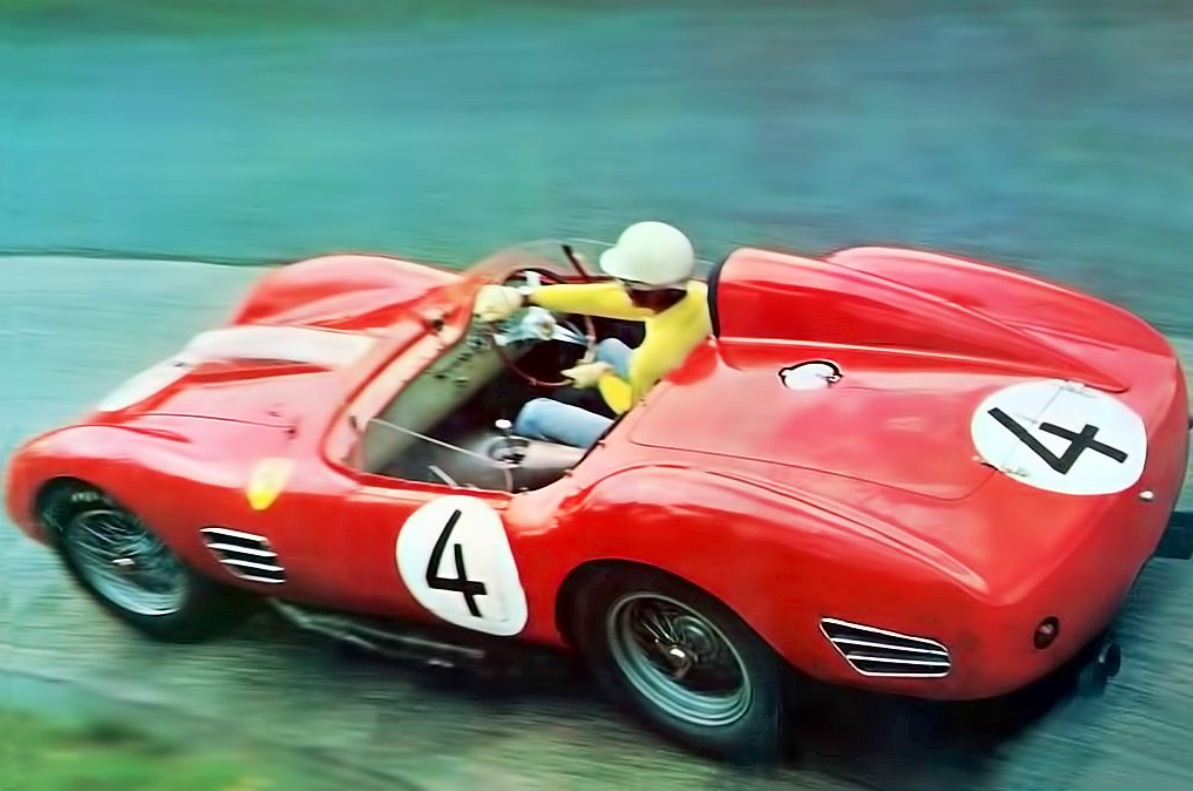
Olivier Gendebien in the Ferrari 250 Testa Rossa 59 he shared with Phil Hill to second place in the Nurburgring 1000Km in 1959…

Olivier was an interesting driver, born in Belgium in 1924 he fought the Germans as part of the Belgian Resistance movement, joined the Britsh Army and became a paratrooper.

After the War he worked in the forestry industry in the Belgian Congo and met a rally driver, commencing his own rally career. He won the Tulip Rally with Pierre Stasse in an Alfa 1900 Ti in 1954 and soon  came to the attention of Enzo Ferrari who signed him as both a Sports Car and occasional Grand Prix driver.

ring

Another view of Gendebiens # 4 TR at rest in the ‘Ring pits. #1 is the winning DBR1 of Moss/Fairman, #15 is the Porsche RSK 718 of Umberto Maglioli/ Hans Hermann (Pinterest)

Grands Prix…

belgian

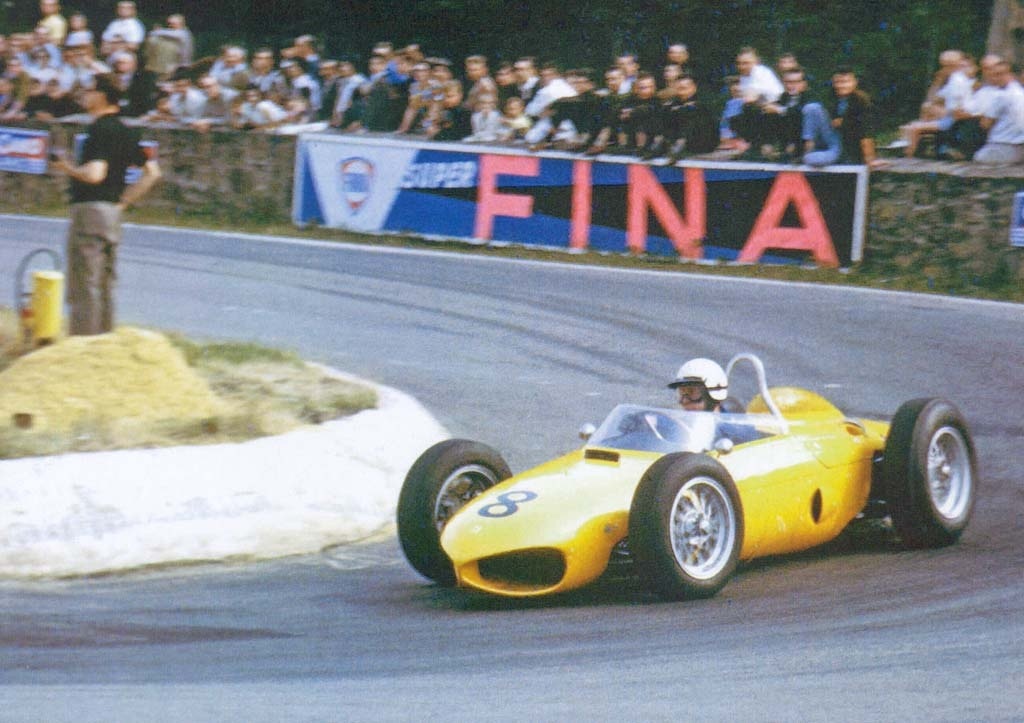
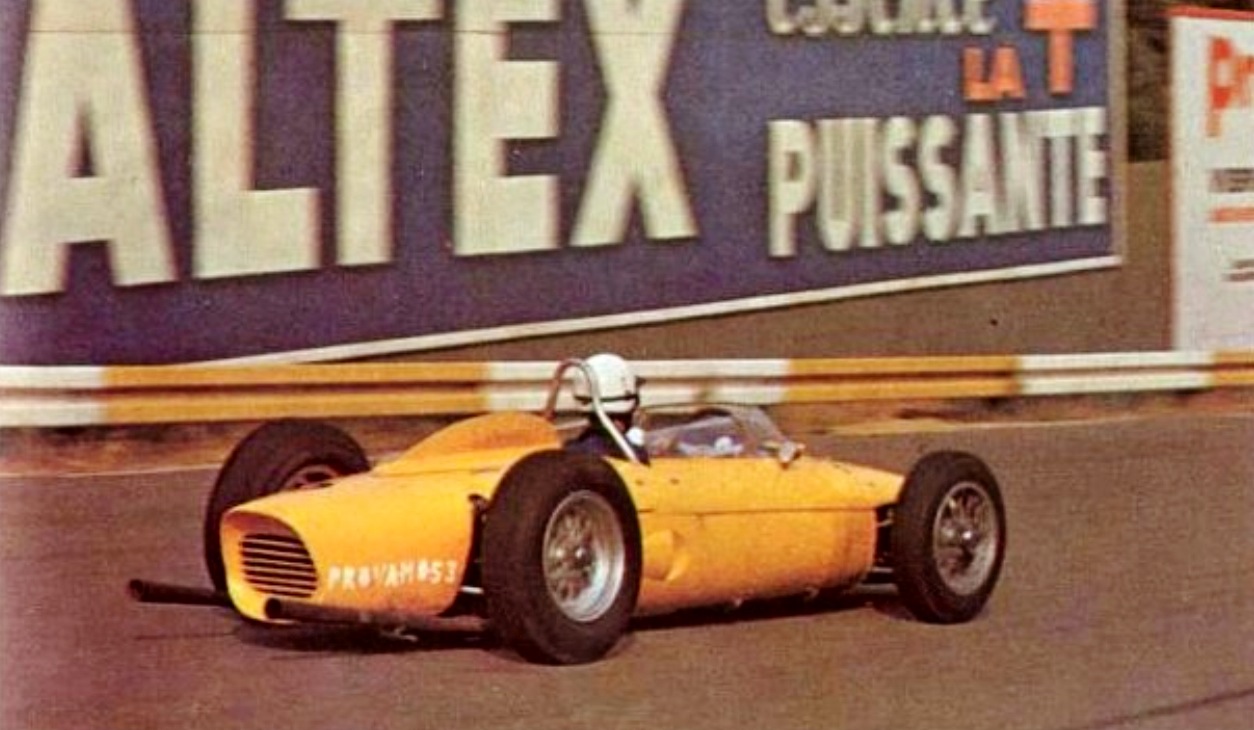
1961 Belgian GP, Spa. Gendebien finished fourth in a Ferrari 156, behind the other similar cars of Phil Hill, ‘Taffy’ Von Trips and Richie Ginther, Hill on his way to the 1961 World Championship.Gendebiens car is painted in Belgiums national racing color, yellow, the car entered by ‘Equipe National Belge’. Less powerful than his teamamtes cars, the 156 was still a formidable weapon (Pinterest)

He competed in 15 Grands Prix, making his debut in a Ferrari 625 in Argentina 1956 finishing fifth. His best season was in 1960 at the wheel of a ‘Yeoman Credit’ Team Cooper Climax , his best results in the French and Belgian Grands Prix.

bristh

Olivier Gendebien in the 1960 British GP, Silverstone. ‘Yeoman Credit’ Cooper T51 Climax (The Cahier Archive)

Sports Car Ace…

sebring 19659

Ferrari 250 Testa Rossa 59, Olivier Gendebien, Sebring 1959. Gendebien shared the car with Americans Chuck Daigh, Phil Hill and Dan Gurney (Pinterest)

Whilst he was quick in a single-seater he was supreme in Sports Cars, Phil Hill the only driver who was his equal in the Ferrari Team during this period.

He first won Le Mans with Phil Hill in 1958, winning again with him in 1961 and 1962. He also won in 1960 with Paul Frere, his fellow Belgian. He won the Tour of Sicily, the Tour de France, and the Reims 12 Hour twice. Victorious also in the Targa Florio and Sebring 12 Hours thrice, he won the Nurburgring 1000Km once.

Gendebien was from a wealthy family, and under pressure to quit racing by his wife, retired after his fourth Le Mans win in 1962 aged 38. During retirement he ran a succession of businesses dying in the South of France in 1998.

targa 1962

Pitstop for the Gendebien/Ricardo Rodriguez/Mairesse Ferrari Dino 246SP, Targa Florio winners 1962 (Pinterest)

le mans 59

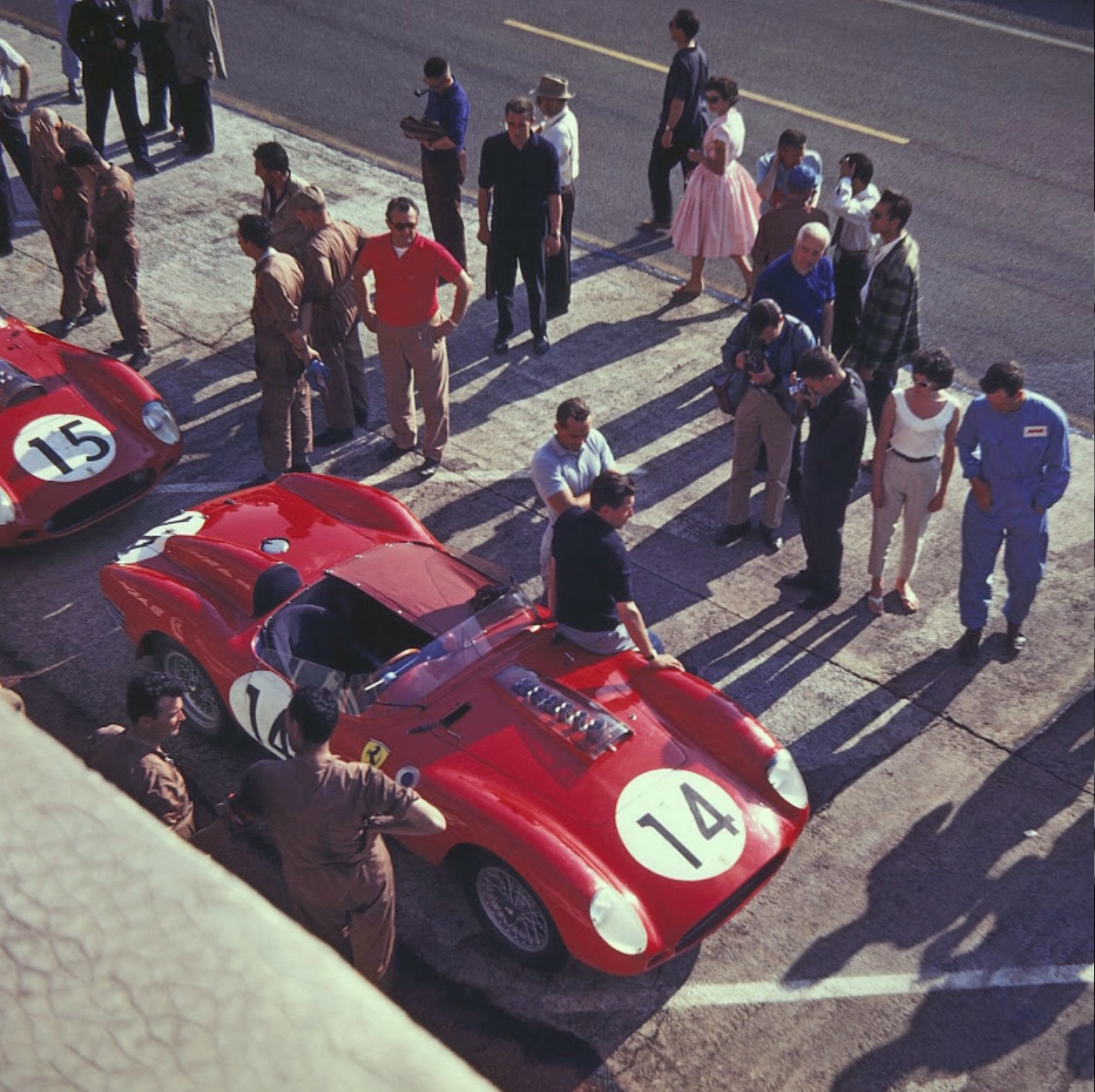
Le Mans 1959. The Gendebien/Hill Ferrari 250 TR 59, with Olivier sitting on the car talking to Phil Hill. Salvadori/Shelby won in an Aston Martin DBR1. Car # 15 is the Cliff Allison/ Hermanos da Silva Ramos TR . Both DNF(Pinterest)

bubbles

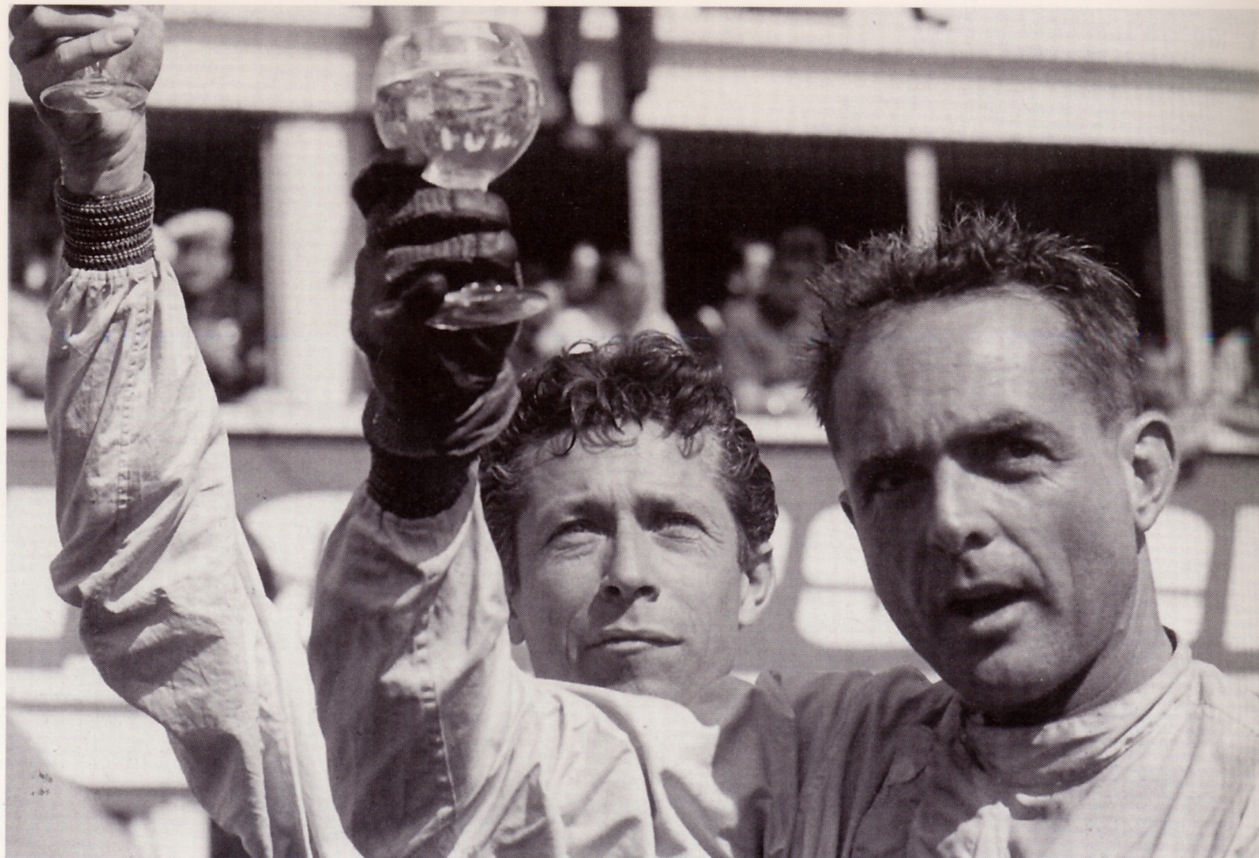
Gendebien, left,  and Hill enjoy the spoils of their 1962 and last Le Mans victory together. Olivier retired shortly thereafter. Car was a Ferrari 330 TRI/LM. The last front engined car to win Le Mans. Hill competed well into the decade, his last international win the Brands Hatch 1000km in a Chaparral 2F in 1967. (Pinterest)


Etcetera…

frencj gp

1959 French Grand Prix in a Ferrari Dino 246. Olivier finished fourth in the race won by his teammate Tony Brooks in a similar car. Olivier made his GP debut in a much less competitive Ferrari 625 in Agentina 1956 but still finished 5th on debut (Pinterest)

fazz

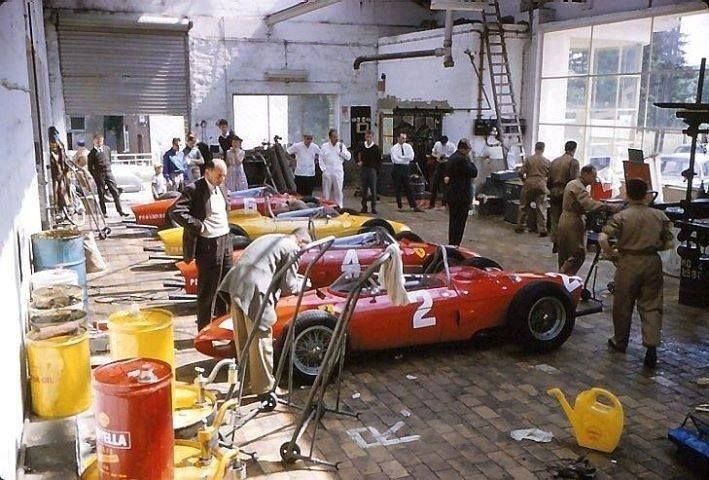
Ferrari pits Spa 1961. The 4 156 cars being prepared, Gendebiens yellow car contrasts the # 2 car of Von Trips, the winning #4 of Phil Hill, and Richie Ginthers third placed car # 6. The more you look the more you see… (Pinterest)

gendebien

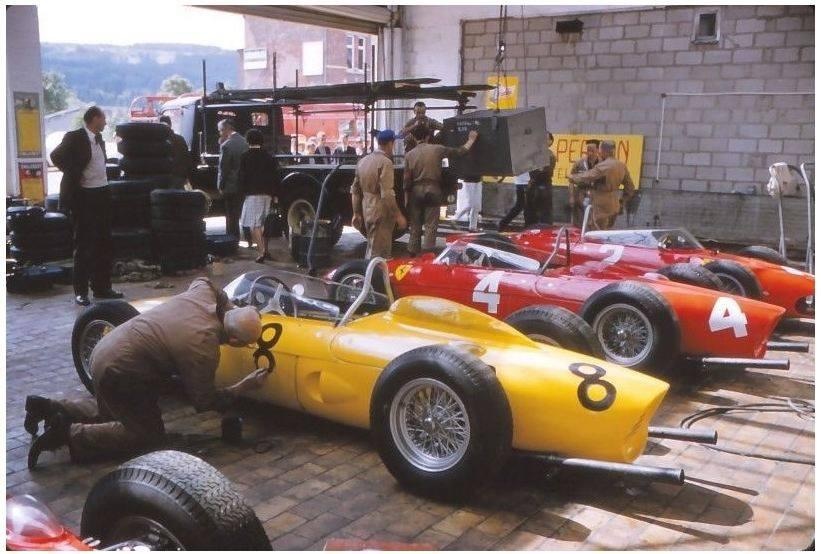
Same scene from the other side of the Ferrari pit (Pinterest)

bekoan butt

Belgian butt shot..rear of Gendebiens Ferrari 156, Spa 1961 (Pinterest)

olivier

Gendebien watching the Ferrari 250 TR 61 of Ireland/Moss/Fulp/Tavano whizz past. It was disqualified for illegal refuelling. Olivier finished second in a 250GTO with Phil Hill. the race was won by the Bonnier/Bianchi Ferrari Tr 61 (Pinterest)

Photo Credits…

The Cahier Archive, Pinterest

The End…

mario

Mario Andretti ‘using the cushion’ during qualifying for the ‘Sacramento 100’ Champ Car event, California, Fall 1969…

The Sacramento 100 was contested at the California Sate Fairgrounds in Sacramento, 100 laps of a one mile oval on 28 September. The event was won by Al Unser from Gary Bettenhausen and brother Bobby Unser. Mario had a loss of oil pressure, retiring his 1960 Kuzma D/Offy on lap 83, winning $853 for his efforts…

andretti 66
Bernard Cahiers’ portrait of Mario Andretti circa 1966

Magic Mario…

One of my mates contends that the title of ‘most versatile racer ever’ goes to John Surtees hands down, it’s hard to argue with the ‘World Championships on two wheels and four’ line of logic. The only other contenders are Mike Hailwood and, perhaps Johnny Cecotto, with Hailwood the far better credentialled of the two on four wheels.

But what about most versatile on four wheels?

Right up until the 1970s the nature of drivers contracts allowed them to race in other classes. In fact the pro’s needed to race lots of cars to earn the start and prize-money to eke out a living. The likes of Jim Clark could and would jump from Lotus Cortina, to Lotus 30 sportscar, to Lotus 25 GP car, and then some, in British national meetings.

It isn’t necessarily the case that drivers will be equivalently quick in single seaters, sports cars, touring cars, on bitumen and dirt, and road and speedway courses, but that is the criteria to apply in working out our ‘most versatile’.

If we limit ourselves to the absolute elite, Grand Prix winners, there are a few names which usually come up in these conversations: Stirling Moss, Jack Brabham, Graham Hill, John Surtees, Dan Gurney and Mario Andretti to name a few. I’m not discounting the Pre-War aces who raced GP and Sports cars on varying surfaces, but suggest the greater variety of cars was available to post-war rather than pre-war drivers.

hill and mario
Lotus GP teammates that year, Mario Andretti and Graham Hill, Indy 1969. Hill is an absolute candidate for most versatile as the only winner of motor racings Triple Crown: World F1 title, Le Mans and Indy 500 victories (unattributed)

Moss apart from his obvious success in GP and sportscars, also rallied successfully.

Brabham’s career started on Sydney speedways, and then encompassed single seaters of all types, front and mid-engined like most of his peers, some sportscars, and some touring cars. He also raced Champcars and Can-Am. So Jack has to be up-there in consideration.

John Surtees is very similarly credentialled to Brabham without the speedway or equivalent dirt experience.

Dan Gurney is similar to Jack, but without the dirt background. He came from the West Coast sportscar scene, not through the rough and tumble of dirt speedways, and then into road racing in the way AJ Foyt, Parnelli Jones and Mario Andretti did.

Mario is hard to toss as our most versatile ever. He started in speedway racing sedans and midgets, then into faster cars, dirt champcars, paved speedway champcars, into Nascar whilst still racing on dirt speedways and then as he built his name and reputation, he moved into road racing as well.

He was scooped up for the factory Ford GT40 program, to Lotus in grands prix, and all the rest, but still, well into the 1970s racing speedway – he walked away from GP racing for a while in the 1970s as he could not get the driving variety he sought by signing a restrictive F1 contract – Vels Parnelli, the American team with whom he made his F1 comeback allowing that freedom.

Lotus 64 Indy 1969
Andretti testing the Lotus 64 Ford, 4WD and turbo-charged at Indy. The car was fast in testing, but a hub failed causing Andretti to hit the wall hard, with no time to rectify the problem, the cars were withdrawn and Andretti drove his regular USAC mount, a Hawk Ford to victory (unattributed)
312p
Andretti hands over to Chris Amon in the Ferrari 312P, this car a 3 litre V12 engined Group 6 prototype. Sebring 1969 (unattributed)

Its interesting to look at just one season, 1969 to see the breadth of cars, classes, surfaces, and circuit types on which he raced, just to test my contention…

Early in the year he raced at Sebring, co-driving a factory Ferrari 312P with Chris Amon. In March he did the first of three 1969 Grands’ Prix for Lotus – the South African GP, he also contested the German GP at the Nurburgring and US GP at Watkins Glen later in the year.

His maiden GP was at Watkins Glen, in upstate New York, the year before, 1968, he put his Lotus 49 on pole, really shaking the established order. In 1969 he drove both the conventional Lotus 49 and experimental, four-wheel drive Lotus 63, quite different challenges, the latter a very unsuccessful car.

LOTUS 63
Another challenge…driving the Lotus 63 Ford 4 wheel drive car on the Nurburgring, one of the toughest driving challenges in one of 1969’s worst cars. The 4WD experiments that year of Matra, McLaren and Lotus were all unsuccessful, tyre technology and wings providing the grip the teams sought with 4WD (unattributed)
brawner
Andy Granatelli of STP, crew and Andretti in the 1969 Indy winning Brawner Hawk Ford, a turbo-charged 2.65-litre V8 (unattributed)

His primary program for 1969 was the USAC Championship. Most of May was spent at Indy, very successfully, winning the 500 in his turbo-charged Brawner Hawk III Ford V8 on the famous Super Speedway. He won the 1969 USAC Championship which was contested on five dirt speedways, ten races on paved tracks, eight on road courses, and a hillclimb, this series alone a true test of a driver’s versatility and adaptability.

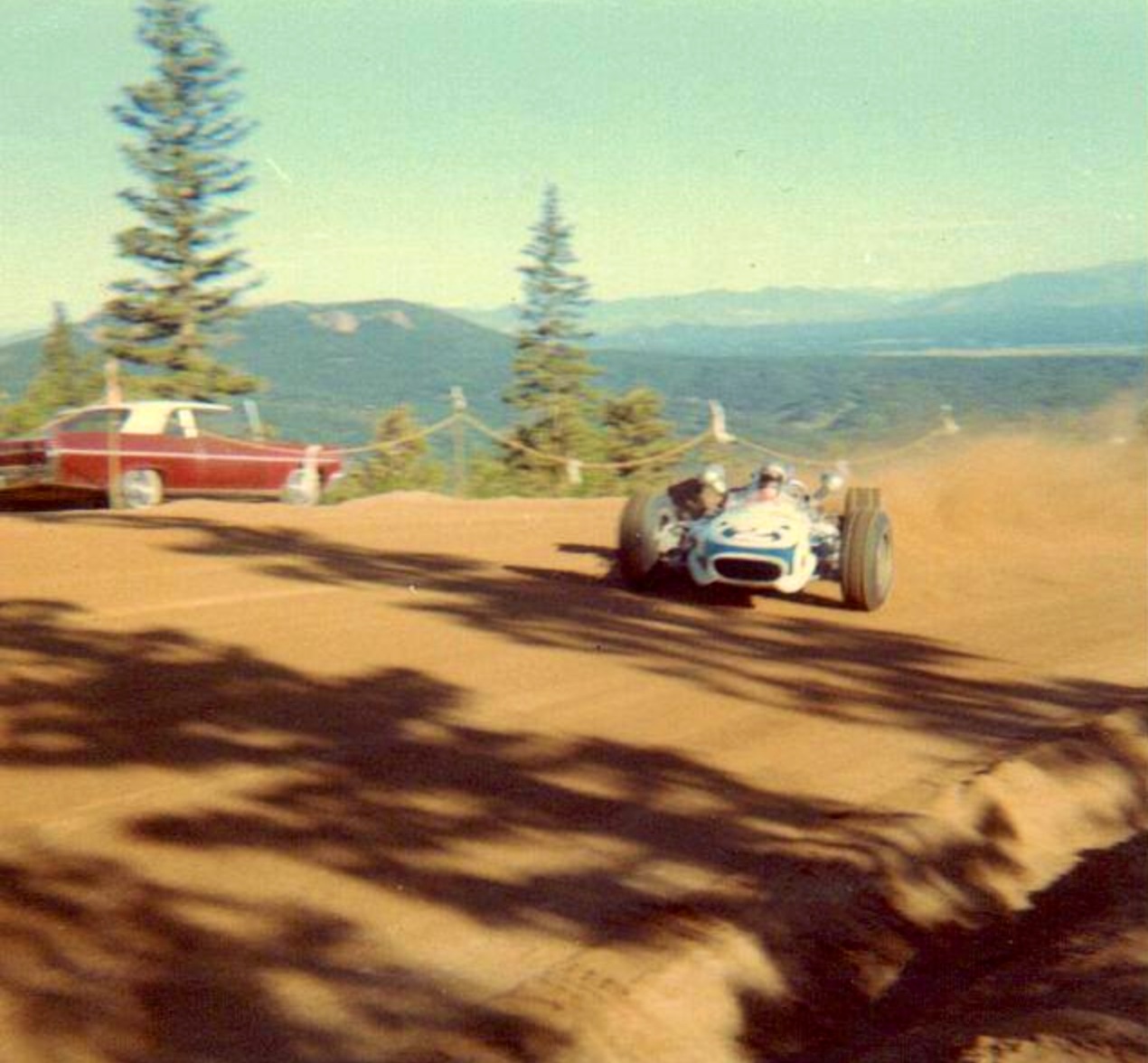
In late June he contested the Pikes Peak Hillclimb, winning it in a mid-engined Chevy V8 powered open-wheeler on the famous dirt course 12.4 mile ‘climb to the clouds’.

hawk ford
Andretti in his Hawk Ford, Pikes Peak 1968, he was 4th in ’68, won in ’69, the majestric but challenging nature of the course readily apparent (unattributed)

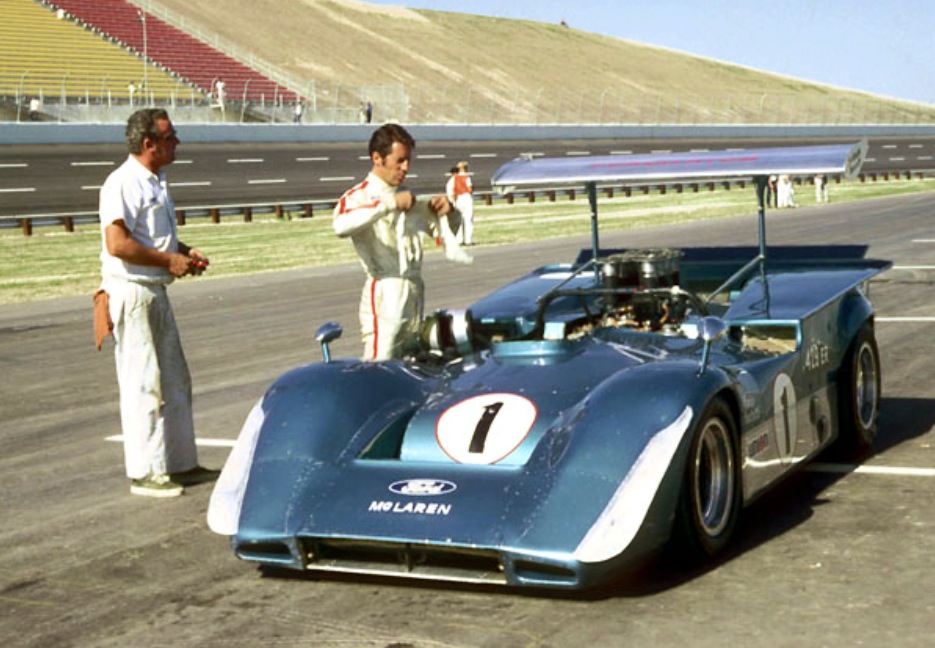
The Can-Am was run annually in the Summer. Holman & Moody entered a Ford 429 powered McLaren M6B in several of the events, not a particulary competitive car, but another quite different driving and engineering challenge. Andretti in a factory McLaren M8B would have been quite someting to watch!

mclaren
Andretti prepares to board his Holman & Moody entered and prepared McLaren M6B Ford 429 Can-Am car at Texas International Speedway, test session (unattributed)
Mario Andretti Riverside 1969, Ford
Mario in his Ford, ‘Motor Trend 500’ Nascar race on the Riverside road circuit February 1969. He qualified seventh and was classified 18th after engine failure on lap 132 (spokeo)

Mario only did one Nascar event in 1969…at Riverside in February, one of the road racing circuits on the tour, it was never a big part of his career but still demonstrates his versatility.

Andretti raced on 34 weekends in 1969. His season commenced with a front-engined, rear drive Ford Nascar and then a Ferrari mid-engined 3-litre V12 sports prototype…the Lotus GP cars he raced were the 3-litre Ford Cosworth normally aspirated V8 powered 2WD 49, and the 4WD 63.

His Hawk ‘Indycar’, for paved road-courses and speedways was a mid-engined single-seater, 2WD car powered by a turbo-charged Ford V8, but he also practiced the Lotus 64 mid-engined 4WD Turbo Ford at Indy.

His dirt-track ‘Kuzma’ was a front engined, rear drive four cylinder Offy powered single seater His McLaren Can-Am car a mid-engined sports car powered by a normally aspirated 429CID Ford, finally his Pikes Peak car was a Chev engined ‘Grant King’.

The variety of cars and different driving challenges is enormous, the differences in cars and venues in one year of his career qualifies him as our most versatile ever! Let alone the other four decades in which he competed.

Andretti won the World Drivers Championship in a Lotus 79 Ford in 1978 and he returned to Indycars after leaving F1, his last Indycar was win in 1993. Perhaps the only big win which eluded him is at Le Mans, but he was successful elsewhere in sportscars of course.

He is synonymous with speed, and revered globally as a champion driver, sportsman and ambassador for our sport…he is also, surely, the most versatile driver ever?

Andretti Ford Mercury 1969
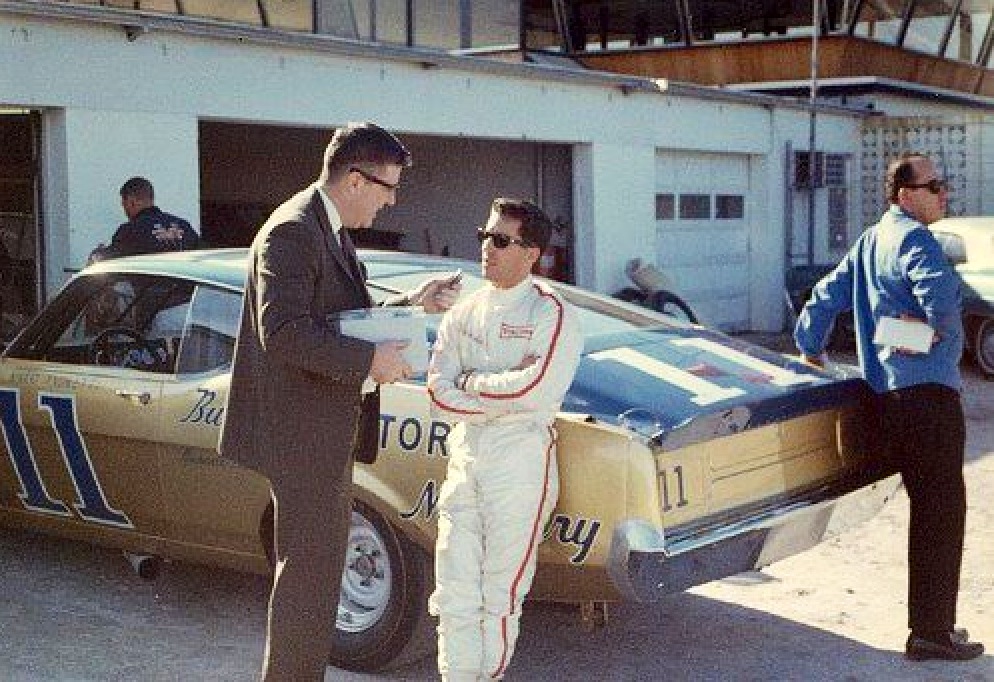
The gift of communication…Andretti with the press, Riverside 1969. Ford Mercury Cougar (unattributed)

Photo Credits…

Pinterest unattributed, Spokeo, The Cahier Archive, Getty images-Paul Rondeau

Tailpiece…

(P Rondeau)

Mario makes a pitstop at Phoenix Speedway to take his final open-wheeler win, Lola T93 Cosworth XB, April 4, 1993.

It was Andretti’s fourth career win at Phoenix, and at 53 years, seven months and seven days old he became the oldest recorded Indycar winner on a traditional road course, as well as the first driver to win car races in five consecutive decades. Andretti still holds Indycar records for most starts (407), most poles (67) most laps led (7595) and most career top-three finishes (144).

Finito…

niki

Niki Lauda aviating his 312T in the Eifel Mountains, 1975…

He won the race and the world championship for the first time that year.

Ferrari turned the corner of uncompetitiveness with the 312B in 1970, the combination of chassis and new ‘flat 12’ engine was very competitive in the second half of the season.

Into 1971-3 they largely lost the plot with their chassis…Mauro Forghieri returned from the wilderness in late 1973.

The 1974 combination of Lauda, then in his third year of F1, Ferrari ‘returnee’ Clay Regazzoni, Forghieri and very young Luca Di Montezemolo as Team Manager commenced an era of Ferrari success if not dominance.

The cars were powerful, relatively light despite the additional fuel load needed by the Flat12 relative to the Ford Cosworth V8, handled superbly and were as aerodynamically advanced as the competition, until the ‘game-changing’ Lotus 78 arrived at least .

Lauda, Regga, Reutemann, Villeneuve, and Scheckter extracted all the performance as well.

The 1975 312T, so called because of the transverse location of the gears within the ‘box was the start of a series of cars which won drivers world titles in 1975, ’77, and ’79 for Lauda twice and Jody Scheckter once.

The car was not the prettiest of the mid-70’s to my eye but was an incredibly cohesive, beautifully integrated design. Without doubt one of Ferraris finest.

Lauda was up for the developmental and testing task, it was why Ferrari hired him but he also proved he was a winner. Montezemolo welded the group into an effective fighting unit, rather than the ‘Palace Intrigues’ of Maranellos’ past holding the Scuderia back …

regga

Clay Regazzoni, Ferrari 312T, Nurburgring 1975. DNF engine. (Pinterest)

fazz

niki

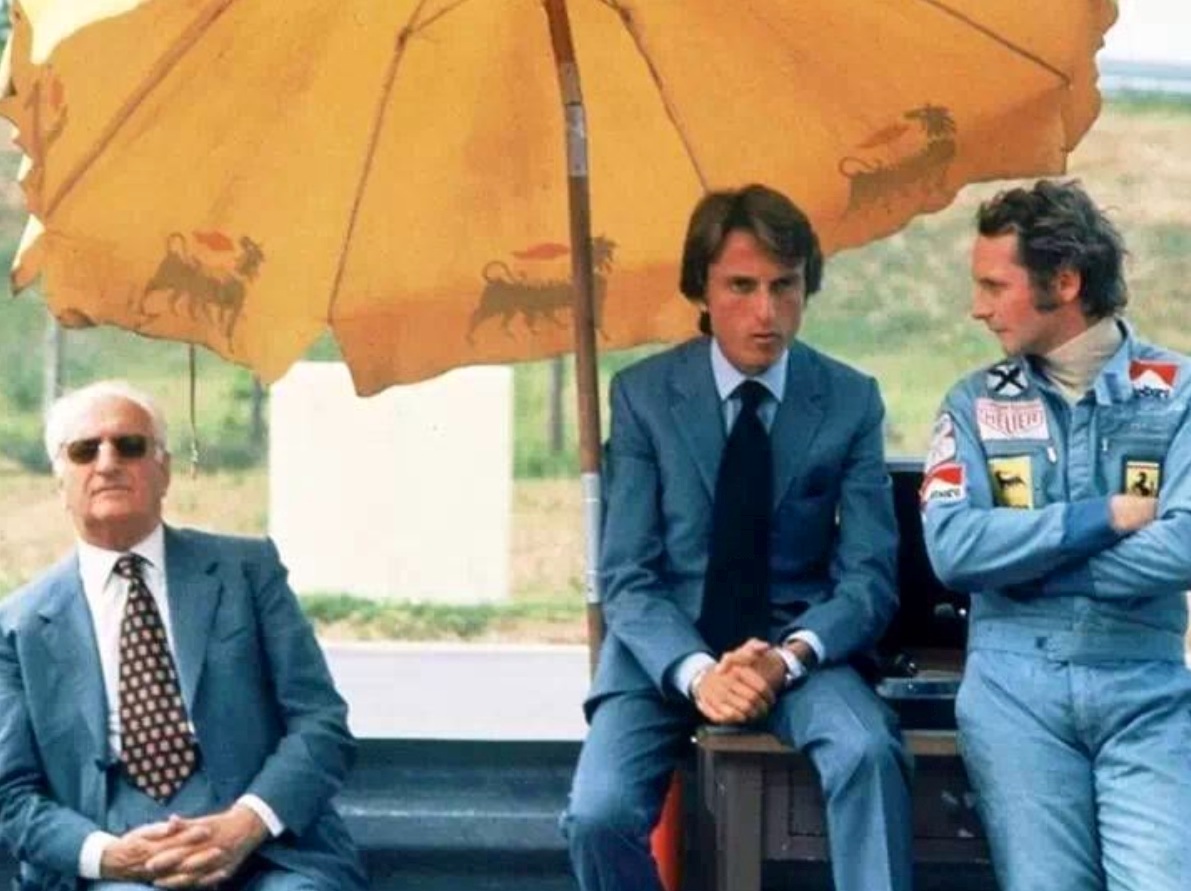
Enzo Ferrari, Luca Di Montezemolo & Niki Lauda, test session at Fiorano 1974 (Pinterest)

Photo Credits…

Pinterest unattributed, Werner Buhrer drawings

francois

Lisa in Pete Arons ‘Bell Magnum’…

The iconic John Frankenheimer 1966 ‘Grand Prix’ is an evocative racing epic most of us have seen, if you haven’t make sure you do, it captures the Grand Prix cars of the sixties very essence!

Described by some film purists as ‘a few million dollars worth of star power and a nickels worth of plot’, from a racing point of view its superb, and features cameos of some of the stars of the day including Phil Hill, Graham Hill, Juan Manuel Fangio, Jim Clark, Jack Brabham and Jochen Rindt.

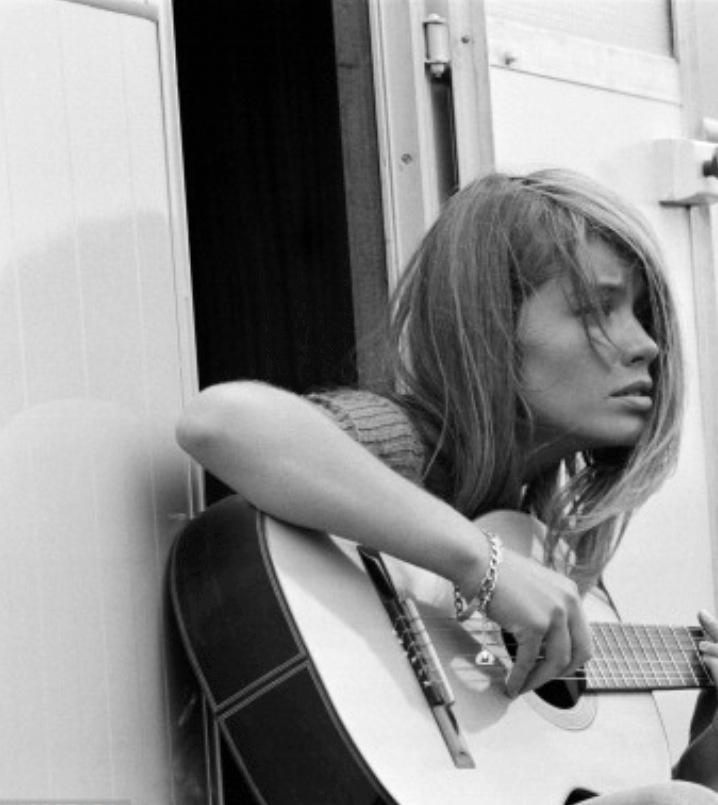
Francoise Hardy plays Lisa, the ‘romantic interest’, in the politesse of the sixties, of Ferrari driver Nino Barlini.

francois

(Getty Images)

Hardy first found fame as a singer and was signed to her first record label at 17. She achieved her first Gold Record in 1962 with ‘Tous Les Garcons et les Filles’. She played minor roles in several films including ‘Whats New Pussycat’, and in ‘Grand Prix’, her primary career has always been as a singer, in French, English, Italian, Spanish and German…

She is now 70 and lives in Paris, and still a style icon…

jack

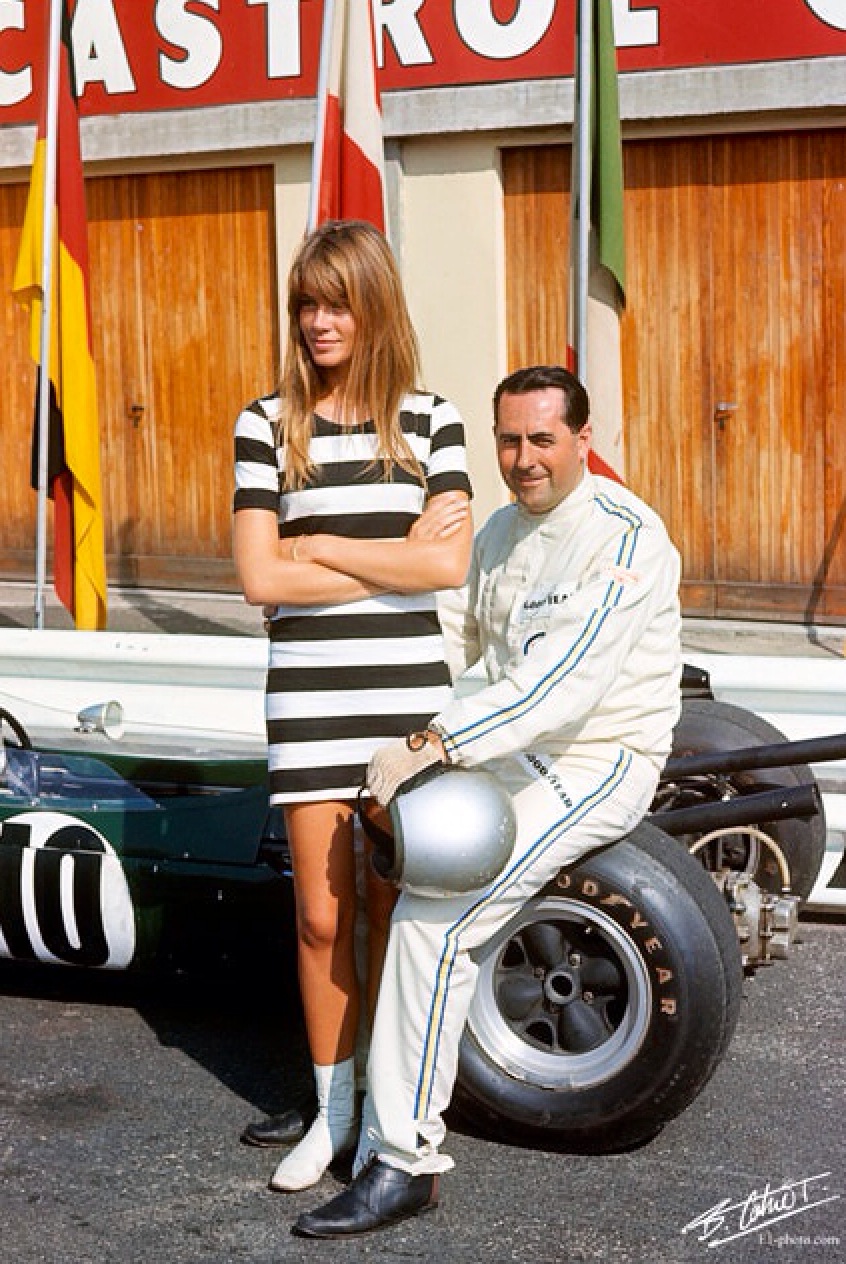
Francoise Hardy and Jack Brabham, Italian Grand Prix , Monza 1966. The car is Jacks’ 66′ championship winning BT19 Repco, DNF in this race won by Scarfiottis’ Ferrari 312. Jack looks happy and who wouldn’t be? (Bernard Cahier)

fazz

‘Lisa’ in Nino’s ‘Ferrari’, which i think, is a Brabham Climax, its certainly a Coventry Climax FWMV V8, despite the exhaust…anyway its all about Francoise not the car…many of the cars used in the film were F3 cars in ‘F1 Drag'(Pinterest)

Credits…

Bernard Cahier, Pinterest

hunt wintoin 2

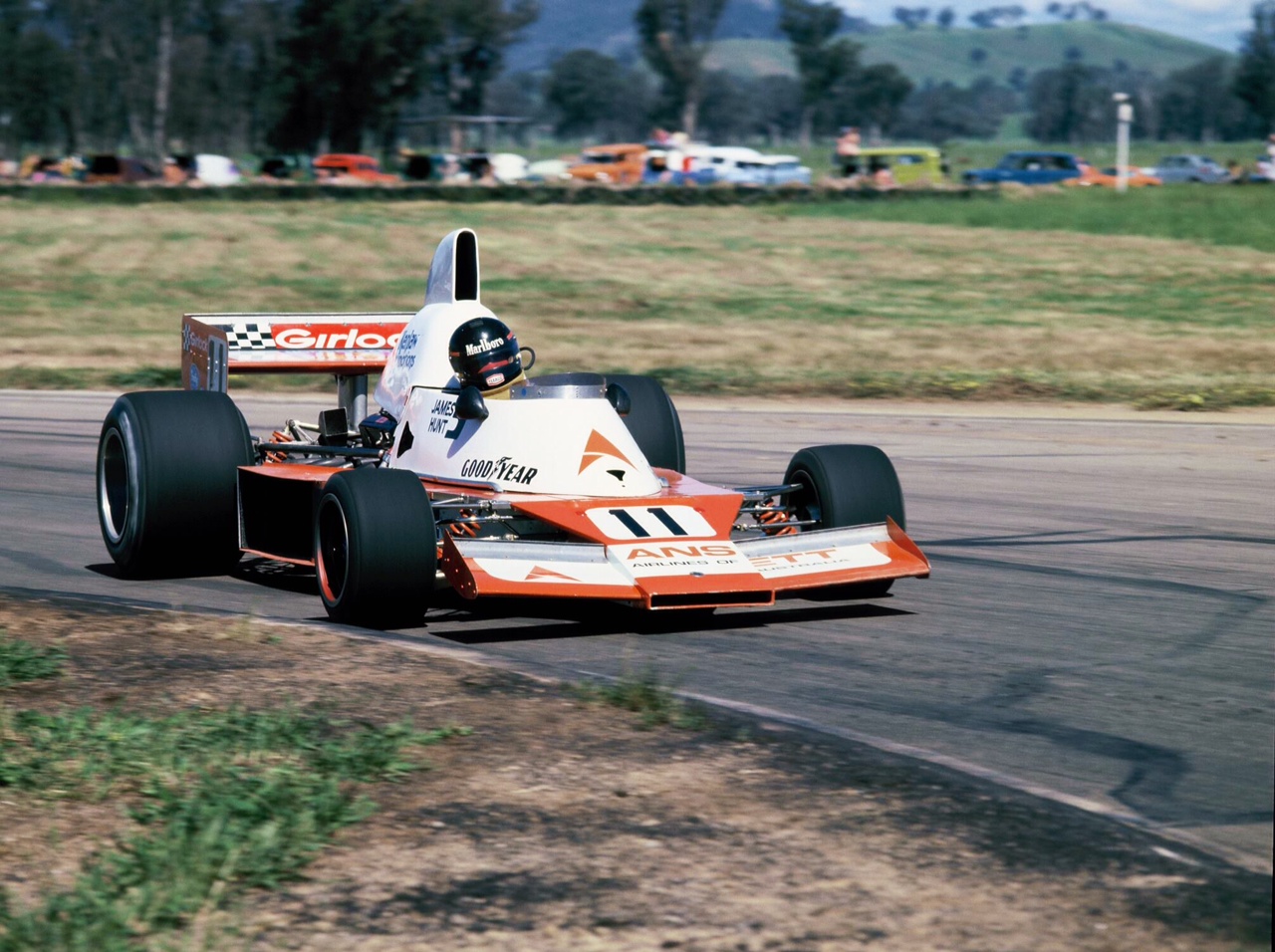
Ian Smiths’ wonderful shot shows James Hunt balancing his Elfin MR8B Chev on the turn into the Winton Esses, 29 October 1978, his final race win. Winton ‘Rose City 10000’. (Ian Smith/ autopics.com.au)

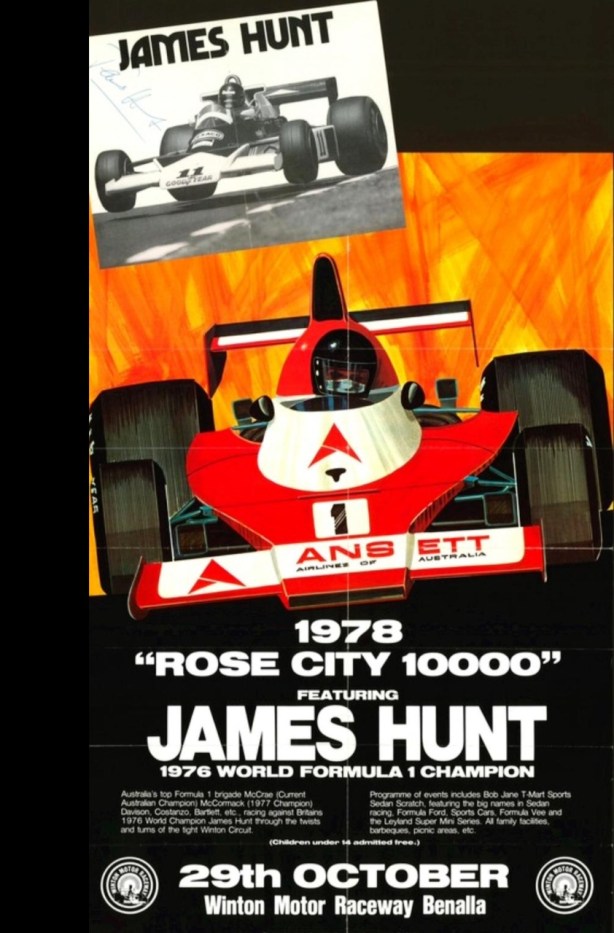
James Hunt wins the ‘Rose City 1000’ at Winton Raceway, Benalla, Victoria, Australia in October 1978…
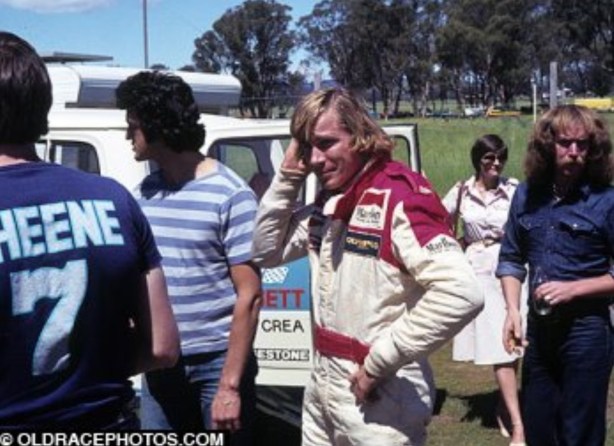
hunt and friends

James Hunt was a hit with the spectators, media, and the Elfin Team, a professional in every respect. ‘Kojak’, McLaren mechanic Ray Grant to Hunts’ right. Winton paddock. (oldracephotos.com)

Racing in Australia…

Hunt enjoyed his interlude in Australia, he was frustrated with his McLaren M26 in F1, McLaren having lost their ‘design mojo’, the Colin Chapman/Peter Wright ground effects Lotus 78 and 79 dominating the 1977 and 1978 seasons. Mario Andretti easily won the World Drivers Championship in 1978, Hunt finished thirteenth, and failed to complete races on nine occasions.
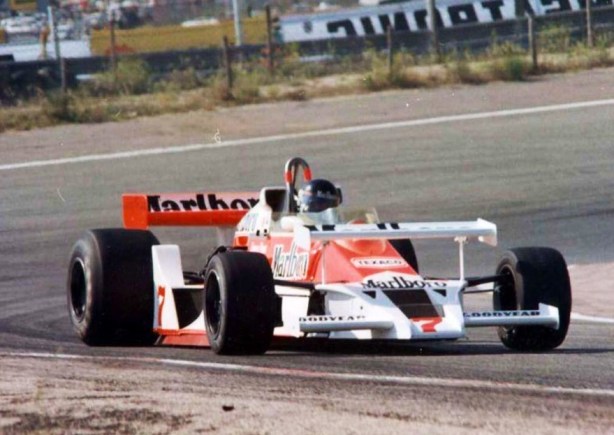
spanish gp

In search of grip, downforce…the ground effect Lotus 79 got something for nothing whilst everybody else played catch-up in 1977-8. Hunt in his bi-winged McLaren M26 Ford, Spanish GP 1978. Andrettis’ Lotus 79 won from pole, James a lap down in 6th place (pinterest)

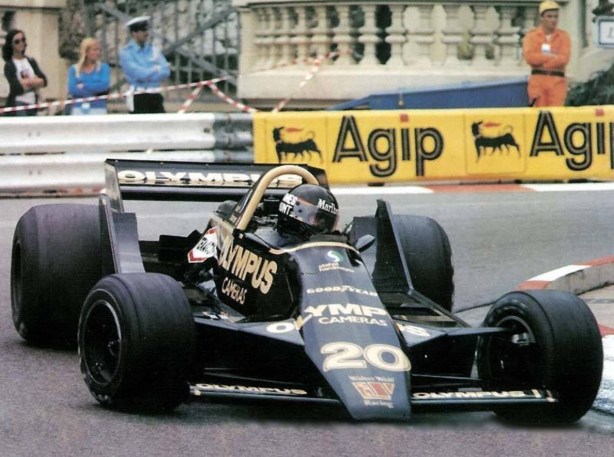
James joined Wolf for 1979, optimistic that his old mate and designer from the Hesketh days, Harvey Postlethwaite could ‘produce the good’s, but frustrated with the nature of ground effect cars generally, and the lack of competitiveness of the Wolf WR9 specifically, retired from racing at Monaco.

So, we were lucky to see the first recent World Champion in Australia at all, his late 1978 Winton victory, in fact his last race win of any kind!

The whole exercise was bizarre really, the Winton event an annual stand alone race outside the ‘Gold Star’ the then prestigious series to decide Australia’s Champion Driver, the Australian National Championship Formula at the time was Formula 5000, for single seaters powered by 500BHP production based V8’s.

‘Kenlaw Promotions’ Ken Campbell, together with the Benalla Auto Club, the Winton promoter, secured Hunt for $30000, half paid up front and half after he raced plus expenses, a lot of money at the time. Elfin were to be paid $10000 for supply of the car ‘end to end’, that is prepared and maintained at the circuit.

A huge amount of publicity was generated by Hunts presence in Australia, attendances at the circuit on the weekend, of around 15000 people on raceday reflective of interest in both his driving talent and flamboyant tabloid lifestyle. He arrived ‘pissed’ but still handled the media upon arrival with aplomb! Hunts’ entourage included his brother Peter, his McLaren mechanic Ray Grant, and a friend.

The car was entirely prepared by the Elfin crew, lead by Peter Fowler, based at racer Bryan Thomsons’ workshop in nearby Shepparton…Hunt arrived in Australia after the season ending Canadian GP, no doubt the experience in country Victoria was a reminder of his English Club Racing roots!

John Lanyon in the ‘Elfin Bible’ (‘Australia’s Elfin Sports And Racing Cars’ by John Blanden & Barry Catford) outlines in detail how professional and easy Hunt was to deal with, treating the car, team and Garrie Cooper with a great deal of respect..

Elfin MR8 Chev…
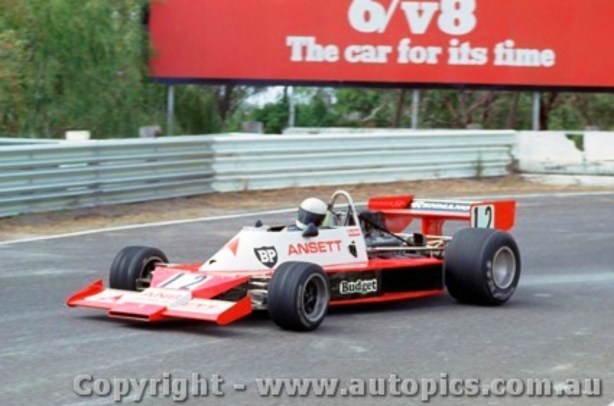
cooper race debut

Garrie Cooper debuting the brand new Elfin MR8 Chev # ‘8761’ at the Sandown round of the ‘Rothmans Series’, February 1976. Chisel nose and relative size of the car a contrast to the smaller MR5/6. No airbox at this stage, side deformable structure nicely integrated into side, rearward mounted radiators. Car beautifully finished and detailed, suspension all nickel plated and gleaming in the Summer sun…

Elfin were Australia’s foremost manufacturer of racing cars, Garrie Coopers small concern in Edwardstown, South Australia producing well over 250 cars and over 20 different models from the late 1950’s, until the late 1980’s after his death. The company still produces road sports cars.

The MR8 incorporated all of the knowledge Cooper accumulated in building ‘big bangers’ ; the 400, ME5, and MS7 V8 Sports Racers and particularly the MR5 and MR6 F5000 cars.

Elfin built 4 MR5 Repco Holden engined cars; ‘works cars’ for Cooper and John McCormack and customer cars for Max Stewart and John Walker. The MR6 was bespoke for McCormack, and designed around the light, aluminium Repco Leyland ‘P76′ V8.

Consistent and dogged development of McCormacks MR5 and MR6, by both Elfin and McCormacks’ own team based ‘around the corner’ from the Elfin factory, the MR6 once fitted with a Repco Holden engine, produced race and championship winning cars.

But the bar was raised with the Lola T330/332, so Cooper needed to produce something special for 1976.

Garrie considered using Repco Holdens again but Repco had long withdrawn from racing so the cost and ongoing development of the small block Chev made that the sensible choice, his first car powered by an ex-Bob Muir Peter Molloy ‘prepped Chev.

The chassis was a conventional aluminium monocoque made of 16 and 18 gauge aluminium, with tubular steel sub frames used front and rear and a roll bar braced fore and aft.

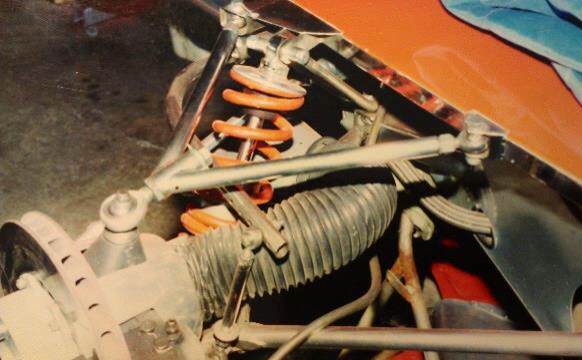
Familiar Elfin rear suspension practice was followed with twin radius rods, twin parallel lower links, single top link, and coil spring dampers. Front suspension was by wishbones top and bottom, again using coil spring damper units, alloy Konis front and rear, and adjustable roll bars front and rear.
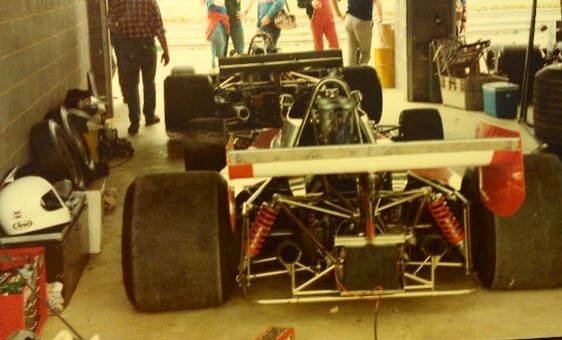
rear end

MR8 # ‘8761’  rear suspension. Complex fabrications supports conventional set up of single top link, twin parallel lower links, twin radius rods , and combined coil spring damper (Koni) units, stood up vertically as was the trend of the day. Battery mounted at rear in ‘single post’ rear wing support (Peter Brennan Collection)

Front and rear track was 1625mm, similar to the T330/2, and the wheelbase 2640mm, 30mm longer than the MR5.

A special Elfin casting replaced the standard Hewland DG300 gearbox item and incorporated mounts for both the rear wing and attachment points for the rear suspension subframe.

Brakes were Lockheed and steering Elfins own rack & pinion.

The aerodynamics of the great looking car were a departure from the full-width ‘Tyrrell Nose’ of the MR5/6 to the chisel nose setup Cooper had experimented with on his MR5B.

Three MR8’s were built, one each  in 1976, 77′ and ’78 the cars raced by  champion drivers including Vern Schuppan, John Bowe, Larry Perkins, Bruce Allison, Didier Pironi, and of course Hunt…

Garrie Cooper also raced the cars, his unique contribution as designer/builder/driver critical in keeping the cars competitive throughout this long period.

Hunts car was the Reg Orr owned MR8B Chev, chassis # 8783, the last of the MR8’s built.

The very last Elfin F5000, the only bespoke ground effect Fornula 5000 car built in the world, perhaps the very last F5000 car built in the world, the MR9 Chev is a story for another time…
front suspensin 2

Front suspension conventional unequal length upper and lower wishbones, coil spring/ damper unit and adjustable roll bar. Cast magnesium Elfin uprights front and rear. Car built by the same team but to my mind the MR8 was built to a higher standard of finish than MR5/6 (Peter Brennan Collection)

The 1978 ‘Rose City 10000’…

On the Wednesday and Thursday prior to the meeting the car was adjusted to suit Hunt; seat, pedals, steering, gear shift and a small lever added to the belts to aid exit.

He covered six laps on Thursday but the circuit was dirty and wet Friday, so Hunts first serious drive of the car was on Saturday.

Garrie Coopers diary records as follows ‘ James was very impressive right from the start being very smooth and precise and getting the power on noticeably earlier than the others. Right throughout practice fine adjustments were made to the car to balance it as required. He was always adamant when he pulled into the pits that he see the times he recorded and those of his nearest rivals . After making an adjustment he would go out and improve on his time. This continued through the practice sessions until he finished up putting a string of low 55 second laps…however he seemed to pace himself to the opposition and could have gone quicker again. At no time did he appear ragged or put a wheel off the bitumen…’

Hunt told the local media the Elfin was ‘ A lot better than the Eagle I drove. (He raced an eagle for Dan Gurney in 1974) It seems a good car, it is very forgiving and drives a lot easier. It’s good to have a competitive car for a change. It’s a nice feeling!’ referring to his hapless 1978 season.

Hunt was on pole with a 55 second lap, John McCormack next on 55.7, the race was easily won by Hunt with Alfie Costanzo second around 40 seconds behind in his Lola T332. Mac was credited with the fastest lap, Hunt pacing himself and taking it easy on the car. John Lanyon recalls ‘There was no wear and tear on the car at all. Nothing at all. You would think he hadn’t taken it off the truck. That’s both after practice and the race. he brought the car back in beautiful condition.’

Whilst Hunt was paid, the race was a financial disaster for the Benalla Auto Club and Elfin who were only paid $1000 of the $10000 contracted…still, Barry Catford observed in his book that the win was the fillip the team needed for 1979 after a tough season including Garrie Coopers horrible, but lucky escape from the accident caused by his wing mount failure at Sandown shortly before Hunts’ visit.

hunt close up

How Good Was the Elfin MR8 ?…

Its interesting to speculate about how good the MR8 was in relation to its ‘competitor set’ ; the Lola T332 (first model 1974), Lola T400 (1975), Chevron B37 (1976) , Lola T430(1976), Matich A53 (1974) etc.

Two drivers raced the Elfin and other F5000’s, Vern Schuppan and Bruce Allison.

There are various quotes in the ‘Elfin Bible’ of Schuppan comparing the MR8 favourably with the Lola T332 but later in life he seems to have changed his view.

Despite buying an MR8 to use as a Single-Seater Can Am car, having raced both the Lola T332 and MR8, Schuppan rated the Lola T332 the better car, which begs the question, why buy the Elfin if you thought the Lola the better car?

In any event Vern observes’…The Lola T332 was certainly significantly better than the Elfin MR8, Gurneys Eagle, the Trojan T101 0r the Chevron B28’s. The Chevron I raced was quite tired and also a bit flexible but not in a good way’ Schuppan wrote in Wolfgang Klopfers book, ‘Formula 5000 in NZ & Australia Race by Race’.

He continued, ‘The Lola T332 was a wonderful car, it was quick everywhere, I believe it handled well because it was rather flexible…It was a bit like a big go-kart, and although the flex wasn’t designed into it, it, coupled with quite long rear suspension travel , helped to soak up the weight of the Chevrolet engine. This seemed to give the car an advantage in both slow and fast corners. It didn’t always look quick in slow corners…it just put the power down so well without a lot of sliding around or oversteer. It was excellent too, in the wet.’

image

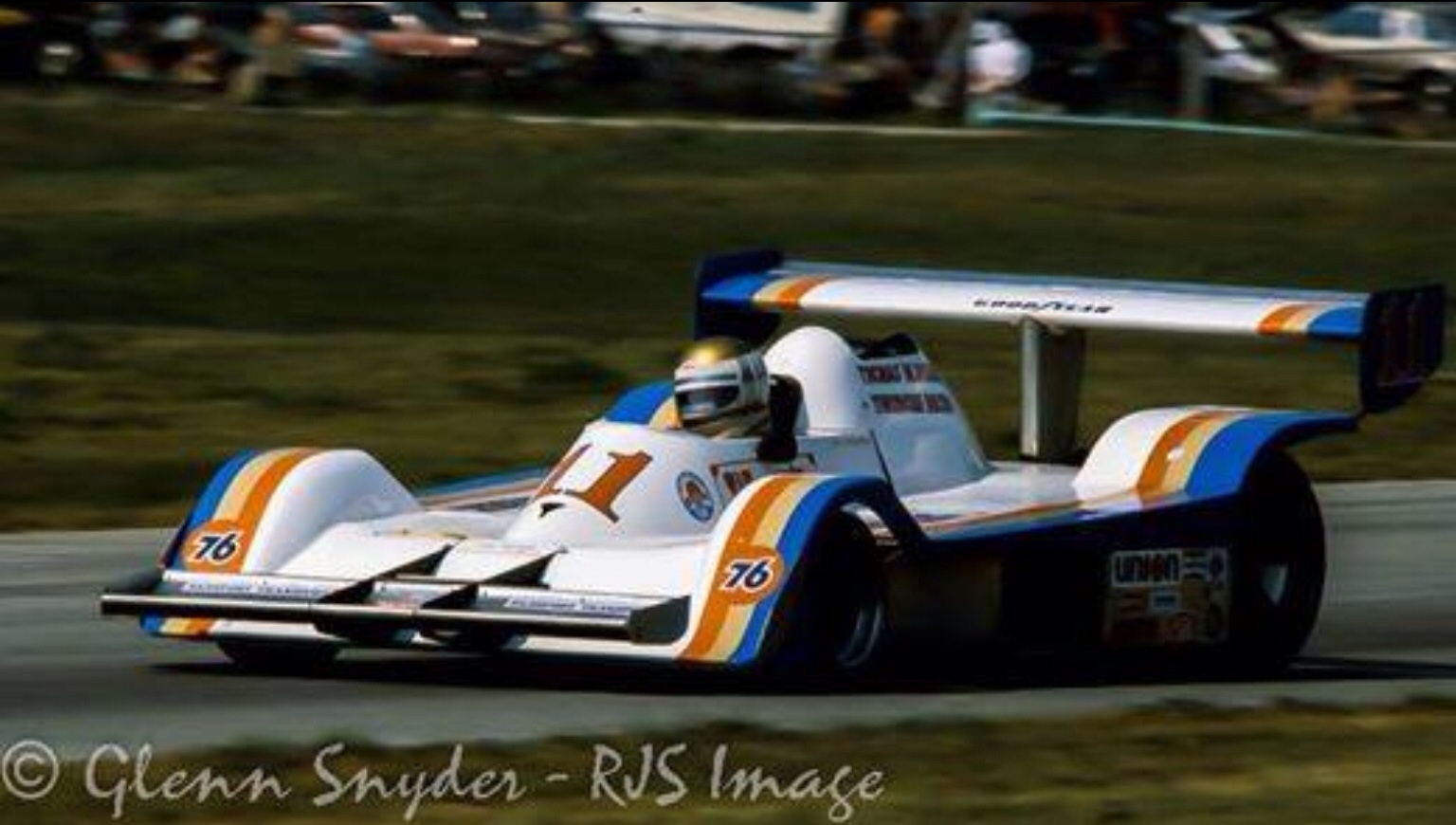
Vern Schuppan in his MR8, chassis # ‘8772’ in Single-Seat Can Am configuration, Road America, Wisconsin 1979. Vern was 5th in the race won by Jacky Ickx Lola T333CS (Glenn Snyder)

Bruce Allison’s F5000 CV started with his ex-Bartlett T332 straight out of  an ANF2 Birrana 274, he took to the 5 litre cars like a ‘duck to water’ and instantly became the ‘enfant terrible’ of the F5000 grid in Australia in 1975, guided, prepared and advised by the great Peter Molloy, as Warwick Brown and Niel Allen had been before him.

Bruce raced the ex-VDS Chevron B37 in both the UK, winning the prestigious Grovewood Award in 1977, and in Australia. He raced an F5000 March for Theodore Racing as teammate to Alan Jones, and also the MR8, once, after he had retired for the first time!

‘I hadn’t raced since my last race in the UK, I got a call from John Lanyon, of Elfins’ to bolster the numbers at Calder in early 1982. I duly practiced on the Friday and raced the car on the weekend finishing in the top 5, I don’t remember exactly where. (Looking at the Elfin book, Bruce finished second to John Wrights’ LolaT400, just in front of Garrie Cooper in the Elfin MR9 and took the fastest race lap) It was such a long time, five years, since I had raced a 5 litre car, I raced a March 781 F1 car in the Shellsport Championship in the UK, that I can’t really make comparisons of the MR8 to the other cars.’

‘I had a lot of success with the Lola, but in the UK the B37 was the quickest of the F5000 and F1 cars running the Shellsport Series that year, and I didn’t finish the season. The Chevron was quicker I believe, through the faster corners, the T332 quicker both through the slower stuff and in a straight line. Overall the Lola had the edge.’

‘In the Theodore Team in the US in 1976 i was number two to AJ (Alan Jones), so AJ got the T332, the March 76A allocated to me, it was a shocker of a car, although it was good in the wet, AJ won a race in it late in the season in wet conditions, when he raced it having boofed the Lola. With the benefit of hindsight I would have been better taking my T332 to the US, it was such a well-sorted car, Molloy Chev and all, I would have been far more competitive…’

Bruce was generous with his time and anecdotes but I’ll save those for an article on the one off, gorgeous Chevron B37 itself.

Peter Brennan has raced and restored an Elfin MR5, MR8, Matich A50, and recently the Lola T330 we have covered in ‘Racers Retreat’. I asked him about the construction of the MR8 relative to the other cars…’The tub on the MR8 is much stronger than the T330/332. It has a good forward roll-hoop, the Lola got that only when it was mandated. The Lola is weak from the drivers knees forward’.

‘The T330 was light, mine is 620Kg, my MR8 was 684 Kg, the T332 will be closer to the MR8 in weight with its deformable side structures, oil lines forward, bigger radiators and heavier bodywork, which in some cars is all-enveloping’.

‘The Lola was much better built than the Elfin in the driveline, spindles, uprights, radius rods etc’.

Race-winner though the MR8 was, their is little doubt, no revelation here!, that the Lola T330/332 was the F5000 of the era, the greatest F5000 car ever, as well as one of the most successful single-seaters of any class in any era of racing history.

image

Bruce Allison in the Reg Orr owned Elfin MR8, chassis # ‘8783’ at Calder , February 1982, nose of the Cooper ground effect Elfin MR9 Chev alongside…This is the same car James Hunt drove to victory at Winton in 1976 and in which John Bowe had  much success. (Velocity Retro)

Wolf WR9 and Hunts short 1979 Season…

Hunt started 1979 with plenty of optimism and hope but ground effects was a ‘black-art’, designers and engineers learning what aerodynamic shapes of sidepod worked and coping with the sorts of loads the aluminium monocoques of the day struggled with.

Narrow chassis’ to accomodate ground effect tunnels created torsional rigidity problems not encountered by designers to that point. Even Colin Chapman lost his way…the wingless Lotus 80 was a flop, the class of the 1979 field the Williams FW07, the best ‘refined Lotus 79 copy’ of the year, albeit Ferrari won the title as a consequence of the FW07’s late arrival…

Postlethwaites Wolf WR9 was unsuccessful. James ‘pulled the pin’ on a short but stellar GP career in Monaco, opening the door to Keke Rosbergs’ first ‘good drive’, one door closes and another opens…In Hunts case his wonderful partnership with Murray Walker as broadcasters of the BBC GP coverage commenced.

Few of us will forget the Hunt magic and charisma on display at Wonderful Winton all those years ago, and yes, by all accounts the Hunt Touring Group partied hard at the end of the meeting!
wolf

James Hunts’ Wolf WR9 Ford in his last Grand Prix, Monaco 1979. DNF with transmission failure on lap 4, the car was not Harvey Postlethwaites’ most successful design. (pinterest)

Etcetera…

front

MR8 ‘8761’ : cars used chisel nose unlike the earlier MR5/6. Roll hoop provides driver protection and chassis bracing, mandated from 1975 season. Car alongside is the ex Brown/ Costanzo Lola T430 then owned by Bob Minogue (Peter Brennan Collection)

side profile

MR8 pictured is the Ex-Cooper chassis # ‘8761’ then owned by Peter Brennan. Nice profile shot shows beautifully integrated body, deformable structure, the MR8 equal if not faster than any of its imported contemporaries from 1976 to the classes end in Australia in 1982…(Peter Brennan Collection)
motor

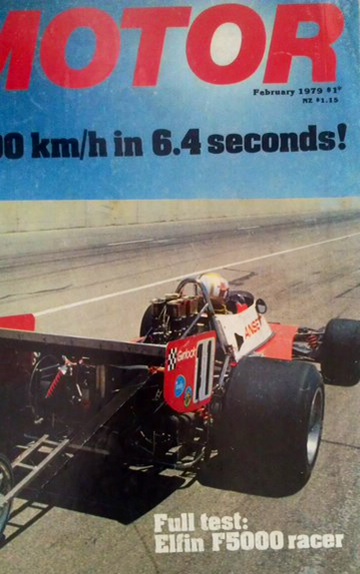
‘Motor’ Magazine Australia track test of the MR8 in early 1979. Racer Sue Ransom tested the car with Vern Schuppan doing the timed runs; 0-100kmh 2.9 sec, 0-160 4.9 sec, 0-240 10 sec. Standing 400 metres 9.75 sec. Top speed geared for Adelaide International Raceway 275kmh.     (Peter Brennan Collection)
rose city 10000 poster

Credits…

Ian Smith, autopics.com.au, oldracephotos.com, Glenn Snyder RJS Collection, Pinterest, Peter Brennan Collection

‘Australias Elfin Sports and Racing Cars’ John Blanden & Barry Catford

‘Formula 5000 in NZ and Australia Race by Race’ Wolfgang Klopfer

Many thanks to both Peter Brennan and Bruce Allison for their contributions to this article

Other F5000 Articles…

Frank Matich and his cars.

Frank Matich: Matich F5000 Cars etcetera…

Shadow DN6B Dodge.

Shadow DN6B Dodge: Road America F5000 1976…

Finito…

image

Hill landing after one of  the Nurburgring’s jumps, he won the race on the way to his first World Championship…

It’s a wonderful bit of composition on Jesse Alexander’s part! In fact cameras were a big topic of conversation and consternation on this weekend as Hill had an off avoiding a TV camera which fell off Carel de Beaufort’s Porsche in practice.

BRM P578…

Graham Hill’s 1962 championship winning mount was a BRM V8 engined variant of the P57 spaceframe chassis, 1.5-litre Coventry Climax FPF engined car used in 1961.

Hill fought a season long battle with Jim Clark in Colin Chapman’s revolutionary monocoque Lotus 25 Climax. The P578 was both reliable and fast, winning four Grands Prix to Jimmy’s three in the Lotus 25 Climax and prevailed in 1962.

Hill was famously the only driver to win motor racing’s Triple Crown: an F1 World Championship, Indy 500 and Le Mans, such achievements made in 1962/68, 1966 and 1972 respectively.

Hill during his victorious German GP weekend in 1962 – ‘5781’ (LAT)
german gp
Start of the 1962 German GP, Nurburgring, August 1962 (Pinterest)
Richie Ginther’s P578 ‘5783’ at Monaco in 1962 with low level 4-into-1 exhaust. Gearbox is a Colotti Francis six-speed pending replacement of BRM’s own, heavy P27 five-speeder with a new transaxle (MotorSport)
p57 cutaway
(Pinterest)

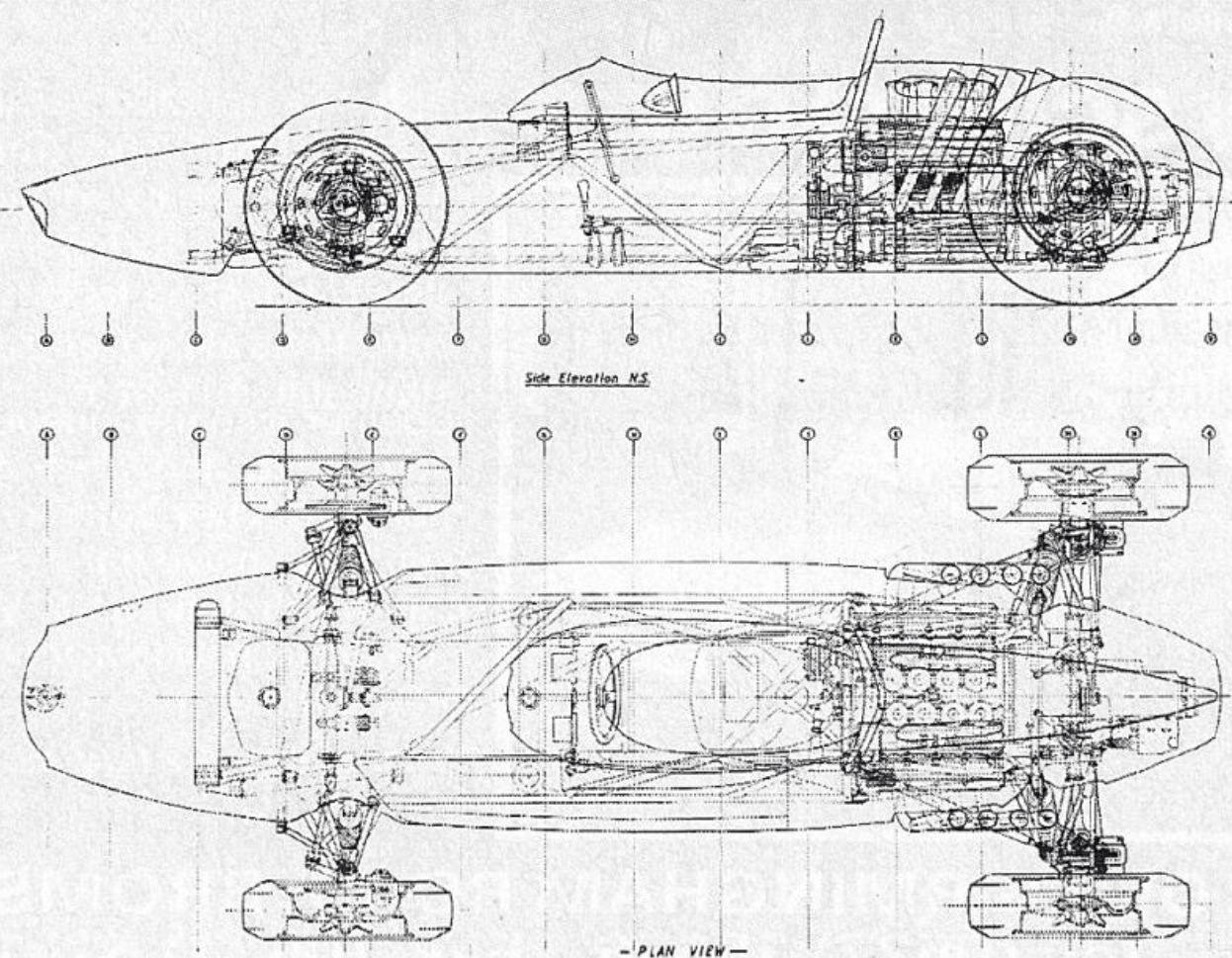
BRM P578 drawings showing the spaceframe chassis, wishbone front and rear suspension with coil spring/damper units. P56 1.5-litre V8 good for circa 190bhp @ 10250rpm. BRM gearbox used five, and sometimes six ratios. The body was made of Electron, and the ‘stack exhausts’ show here were replaced by a conventional setup later in 1962.

BRM Type 56 V8…

BRM’s finest was a 90-degree V8, it had a bore and stroke of 68.5mm x 50.8mm for a capacity of 1498cc. Lucas port fuel injection was fitted, the compression ratio was 11.5:1, the engine developed 190bhp @ 10250rpm. Customer versions were also sold, these used Weber carburettors and developed at least 180bhp @ 9750rpm.

Classic stack pipe BRM P56 V8 fitted to Graham Hill’s ‘5781’ in 1962 – as below (MotorSport)
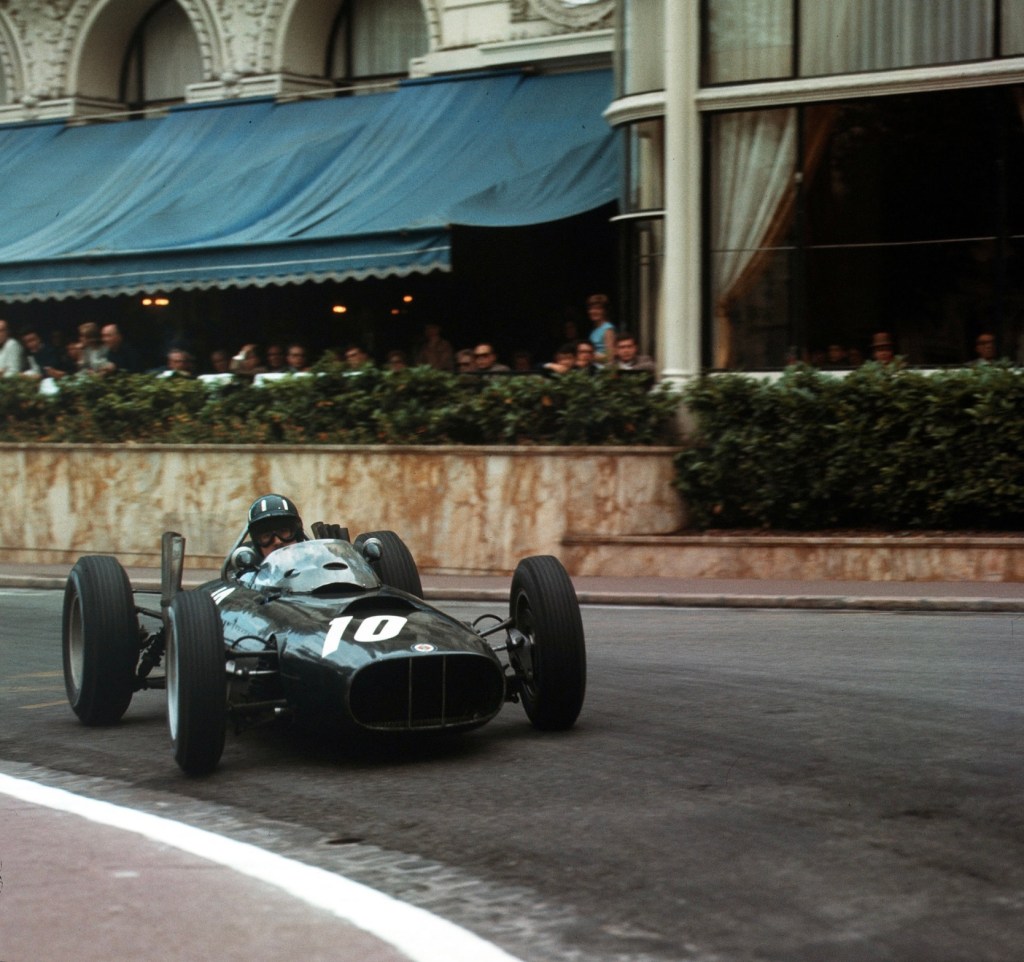
Hill with ‘5781’ in snub-nose Monaco body spec in 1962. Q2 and classified sixth after engine failure (MotorSport)

Doug Nye records in ‘The History of The Grand Prix Car 1945-65’ that five BRM P578s were built: chassis 5781 in 1961, and 5782, 5783, 5784 and 5785 in 1962.

5781, 5784 and 5785 raced on into 1965 becoming much raced warriors, in the hands of Centro Sud by which time the subsequent V8 engined BRM – the P261 – had established itself as one of the greatest cars of the 1.5-litre era despite not winning the championships it deserved.

gra
Hill being tended to by BRM Chief Engineer Tony Rudd on the British GP grid, Aintree, July 1962. Hill finished fourth in the race won by Clark’s Lotus 25 Climax. Note stack exhausts, upper and lower wishbone front suspension. Body made of electron, fibreglass was the norm by 1962 (Pinterest)
P578 with BRM P27 five-speed box and optimal low level, 4-into-2 exhaust (DPhipps/MotorSport)
Same car as above showing the chassis, note the removable engine bay frame elements, and Lucas fuel-pump ‘Bomb’ between the cam-cover and bodywork (MotorSport)
bruce
Hill and Bruce McLaren, Cooper T60 Climax, Aintree 1962. Graham was fourth in ‘5781’. Bruce finished third with John Surtees second in a Lola Mk4 Climax (Pinterest)
zandvoort
Hill victorious at Zandvoort, Holland in 1962. Again in BRM P578 ‘5781’ Graham’s favourite ‘Old Faithful’ (The Cahier Archive)
(MotorSport)

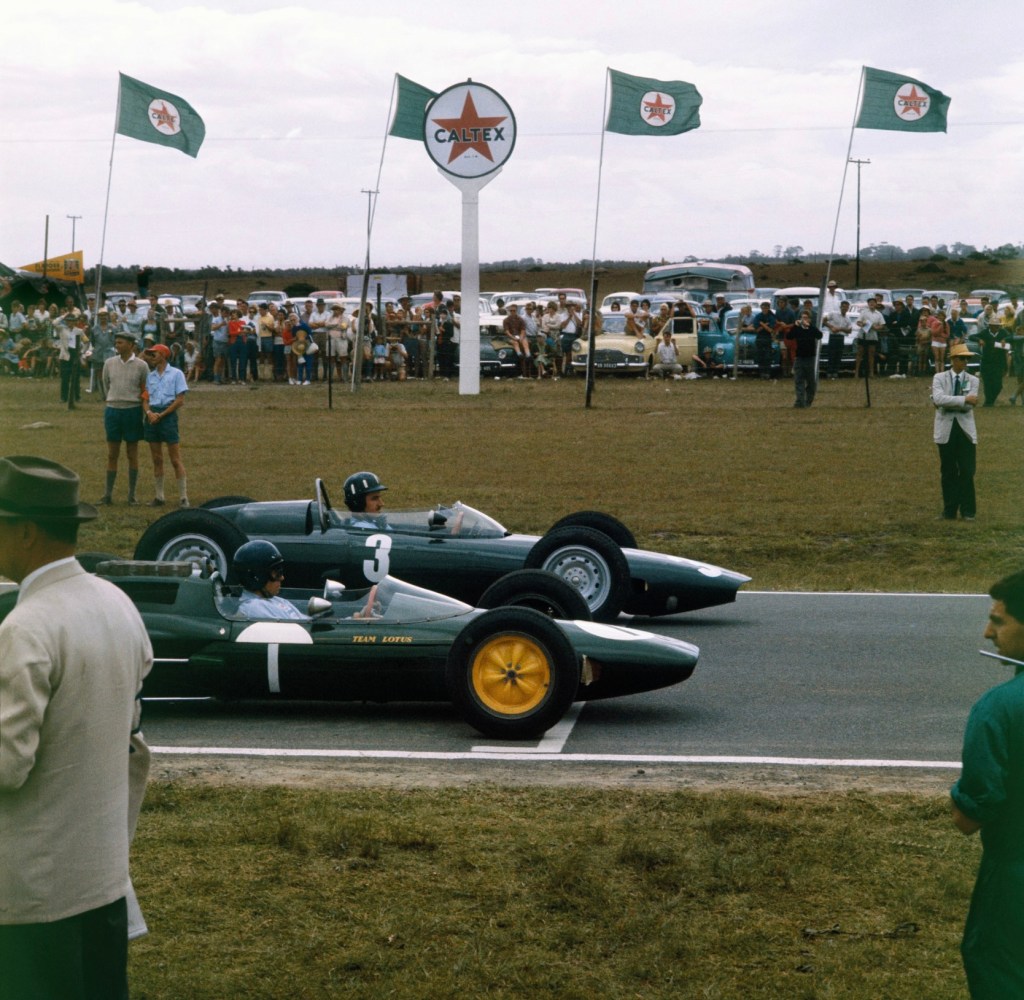
Graham Hill on the grid alongside Jim Clark at East London, South Africa in December 1962, the championship deciding race between the two drivers and BRM P578 ‘5785’ and Lotus 25 Climax.

Photo Credits…

Jesse Alexander, Pinterest, The Cahier Archive, Automobile Year #10, MotorSport Images, LAT

Tailpiece…

(MotorSport)

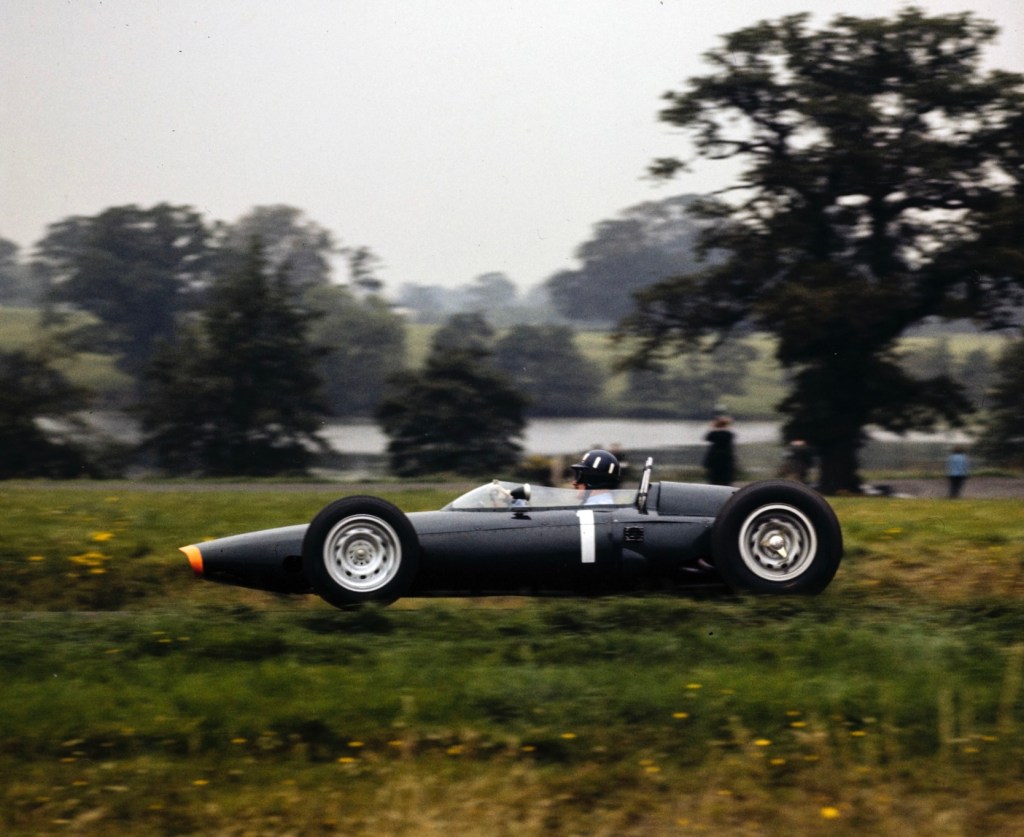
This superb shot winds the BRM P578 clock forward to September 1963. It’s Graham Hill aboard ‘5785’ – the last P578 built – during the Oulton Park Gold Cup, he was second behind Jim Clark’s Lotus 25 Climax.

Finito…

forg

Mauro Forghieri asks Jacky Ickx about his wonderful creation on the Belgian GP grid, Spa 1970. Inboard front suspension, top rocker actuating a spring/shock, lower wishbone. Twin radius rods at rear in evidence. Single top link, and lower wishbone also used at rear. Well protected Lucas fuel injection trumpets, and low nature of engine clear (R Schlegelmilch)

Jacky Ickx awaits the start of the Belgian Grand Prix, he finished eighth amongst a fantastic battle between Pedro Rodriguez and Chris Amon on this spectacular, fast and oh-so-dangerous classic circuit in the Ardennes…

Amon left Ferrari at the end of 1969 , a team he adored and had raced for since 1967. He had been very competitive throughout in F1, Sports Prototypes, and the Tasman Series, but the Championship F1 victory he sought had eluded him.

spa 1970

Spa vista 1970 (Bruce Thomas)

Mauro Forghieri designed the all-new 312B for 1970…

The core of the design was a horizontally opposed 12 cylinder engine utilising only 4 main bearings to minimise power-sapping frictional losses. The ‘Boxer’ engine layout allowed a very low centre of gravity and cleaner airflow for the rear wing amongst other benefits.

boxer

Engine ‘Type 001’. 180 degree, DOHC, four valve, Lucas fuel injected ‘Flat 12’. Distributor, coil and Dinoplx electronic ignition. Very oversquare at 78.5×51.5 Bore/Stroke, 2991cc. 11.8:1 compression ratio, circa 460BHP at 12000RPM in 1970, rising to over 525BHP throughout the 70’s (unattributed)

Chris tested the car late in 1969, several massive engine failures convinced him to leave the team to drive a competitive car powered by the dominant, powerful and reliable Ford Cosworth DFV V8. And so it was that his Cosworth DFV powered March was beaten throughout the season by the 312B’s and in Belgium by the BRM P153 V12 of Rodriguez.

Chris’ Ferrari departure proved to be another of Amon’s poor timing decisions, his capacity for being in the ‘right place at the wrong time’ was legendary. Forghieri’s design was both reliable and fast in 1970, Ickx won three races and newcomer Clay Regazzoni one- Ferrari narrowly missed the drivers and constructors titles to Jochen Rindt, posthumously, and Lotus.

In fact the engine was brilliant, one of the greatest in F1, powering cars which took Niki Lauda (1975 and 1977), and Jody Scheckter (1979) to world titles, and in endurance form winning all the classic endurance events but the two 24 Hour races at Le Mans and Daytona. In its early form the DOHC, four valve, Lucas injected, 2991cc engine developed around 460BHP at a time the DFV developed circa 435BHP.

The chassis of the 312B was also new and whilst not a ‘full-monocoque’, the combination of aluminium reinforced space-frame tubing was very effective and forgiving to drive.

Newcomer Ignazio Giunti was the best placed Belgian GP 312B in fourth, Ickx having a variety of problems. The race was won by Rodriguez by a second from Amon with Jean Pierre Beltoise third, a further 1.43 minutes adrift, such was the pace of Pedro and Chris.

Amon set a new lap record in his chase of Rodriguez at 152MPH, but Pedro was ‘Spa fit’ having set a 160MPH lap in a 4.5 litre flat 12 Porsche 917 the week before…oh to have seen either race!

There was a chicane at Malmedy for the Grand Prix which was unused during the 1000 Km classic but all the same, 160MPH was the fastest ever lap-time of a road circuit anywhere in the world at the time.

312 b cutaway

(W Buhrer)


312 b spa

Jacky Ickx, Ferrari 312B, La Source hairpin, Spa 1970 (R Schlegelmilch)


312 b cockpit

The very cosy, comfy cockpit of Ickx’ Ferrai 312B. Lockout for reverse gear in the gated 5 speed ‘box plain to see , Momo steering wheel, Veglia instruments, just luvverly in every way (R Schlegelmilch)

Etcetera…

dfv

An all Ford DFV powered front row at the races start: Jochen Rindt’s Lotus 49 wedged by Amon’s March 701 on the nearside and Stewart’s similar pole winner on the outside…Ickx the best of the 12’s on this ultimate power circuit on the second row (unattributed)


rindt

Out into the Ardennes Forest …Rindt from Ickx, Beltoise, Brabham in the distance and the yellow speck Peterson…Lotus 49 DFV, Ferrari 312B, Matra MS120 V12, Brabham BT33 DFV, and March 701 DFV (unattributed)


pedro spa

But Pedro Rodriguez won the day in the BRM P153 V12…over the years there have been rumours the BRM engine was ‘fat’ that day, but these have been scotched by Doug Nye amongst others. Also, Pedro was supreme at Spa and Tony Southgates’ P153 and ’71 P160 BRM’s were fast, if not always reliable race-winners (unattributed)

Photo and other Credits…

Bruce Thomas, Rainer Schlegelmilch, Illustrations by Werner Buhrer

Checkout Allan Brown’s great oldracingcars.com description of the cars and chassis by chassis history; https://www.oldracingcars.com/ferrari/312b/

Finito…