Archive for the ‘Fotos’ Category

(J Frith)

‘All set, everything ship shape!’…

I’ve already written a couple of articles about Donald Campbell’s achievements against the odds of the weather gods at Lake Eyre, South Australia during the winters of 1963 and 1964.

He had a torrid time from the media, his sponsors- many of whom he lost during that first year, the public and some in the Australian Parliament.

Click below for a brilliant article, the best written, about Campbell’s ultimately successful record attempt by the late Evan Green, a superb Australian motoring and motor-racing journalist, very talented rally and race driver and the man appointed by Campbell’s major sponsor in 1964, Ampol, to manage the program from Muloorina Station and Lake Eyre- so it is very much a first-hand participants account.

It provides useful context for this small random selection of cartoons and photographs.

https://www.whichcar.com.au/features/classic-wheels/classic-wheels-donald-campbell-and-his-bluebird-car-world-speed-record

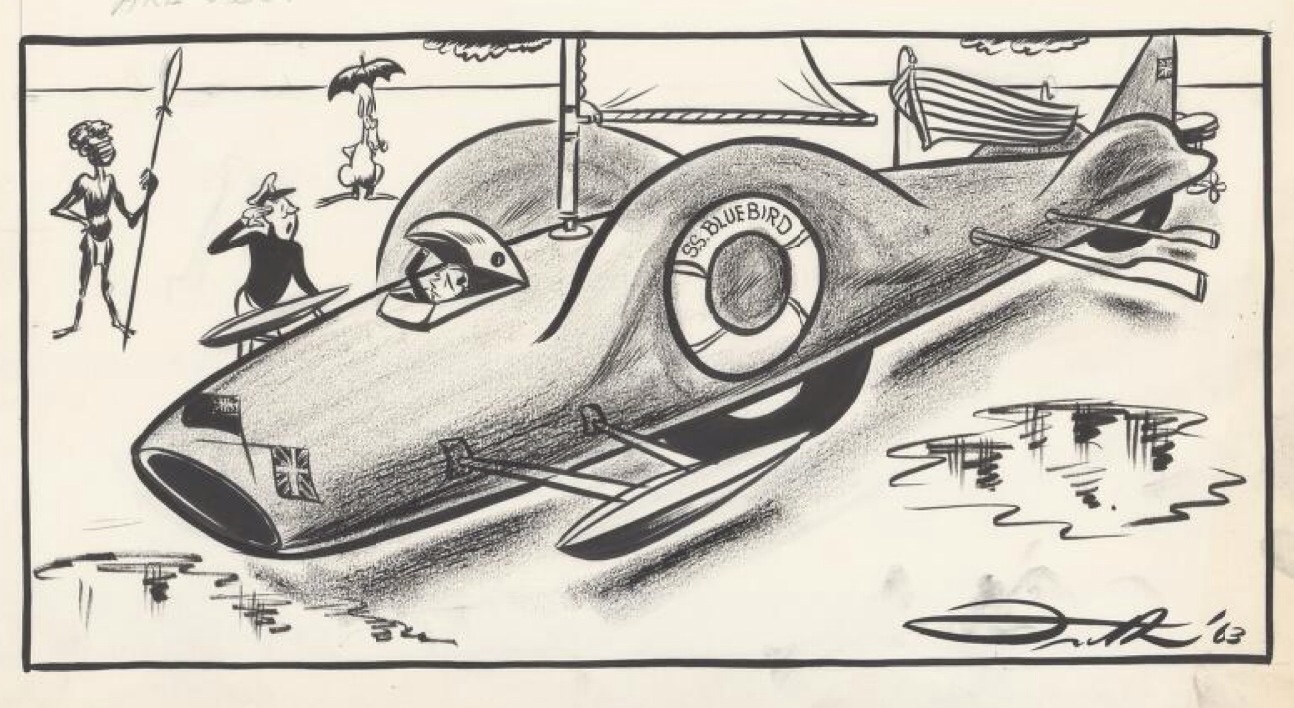
The first cartoon is by John E Frith, one of Australia’s great cartoonists who worked early in his career for the Sydney Morning Herald and later for the Melbourne Herald (as here I suspect) and is dated 26 April 1963.

It shows DC about to close the cockpit of Bluebird, with a dutiful salute being provided. ‘SS Bluebird’ is an amalgam of plane, ship and car carrying the colours of both Britain and Australia, the watching kangaroo and aboriginal are amusing, the latter totally politically incorrect these days!

Bluebird Proteus CN7 Lake Eyre 1964 (J Carter)


Jeff Carter’s photo was taken during the 1964 attempt.

His caption reads ‘Donald Campbell’s attempt on the world speed record in a vehicle driven through the wheels (not jet propelled) dragged on for almost two years during the winters of 1963 and 1964.

Fluctuating dampness of the dry saltpan that is Lake Eyre was a major problem, making it difficult to maintain a perfectly smooth, dry, hard surface for the many necessary practice runs and the final attempt.

Sponsors grew impatient with the endless delays and withdrew support. New sponsors had to be found.

Campbell’s unpredictable temperament was a factor in splitting the large group of sponsors, technicians, caterers, time-keepers etc- some 60 or more people in two camps.

Eventually in the late winter of 1964, the 4,500 horsepower jet-engined Bluebird attained a new Land Speed Record of 403.1miles per hour (an average) of its top speeds on two consecutive runs, north and south.

Craig Breedlove, driving a jet-propelled vehicle on a salt lake in the USA achieved a considerably higher speed in 1964. His vehicle was not driven through the wheels. In this photo, technicians, time keepers, photographers and photographers play football beteen practice runs’. (look carefully, you can see the ball)

(J Carter)

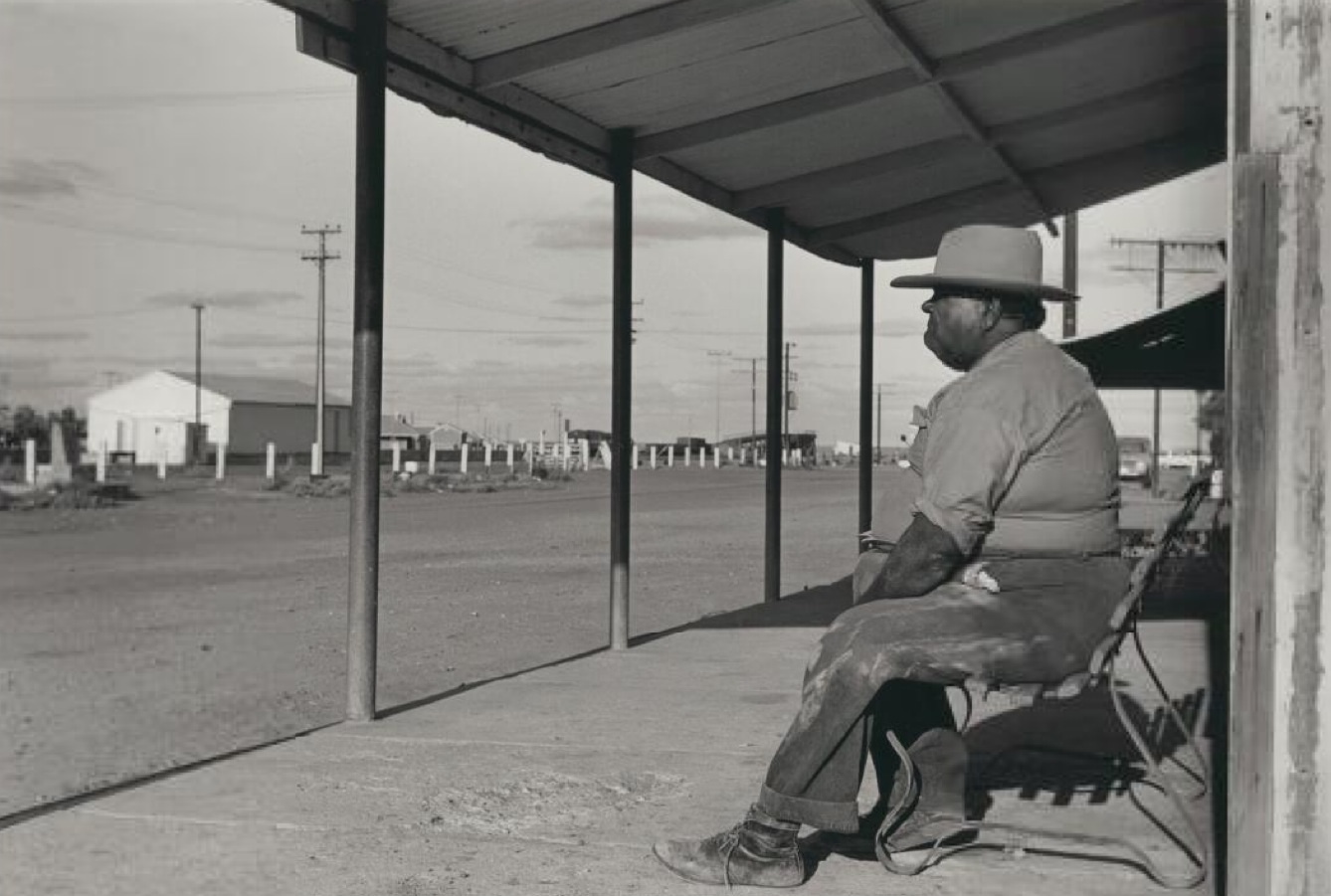
Jeff Carter was the official photographer for the attempt, representing the international photo agency ‘Black Star’.

‘When nothing much was happening in the Campbell/Bluebird camp, I and other members of the press would adjourn to Marree, (above) where nothing much was happening either!’

(LAT)

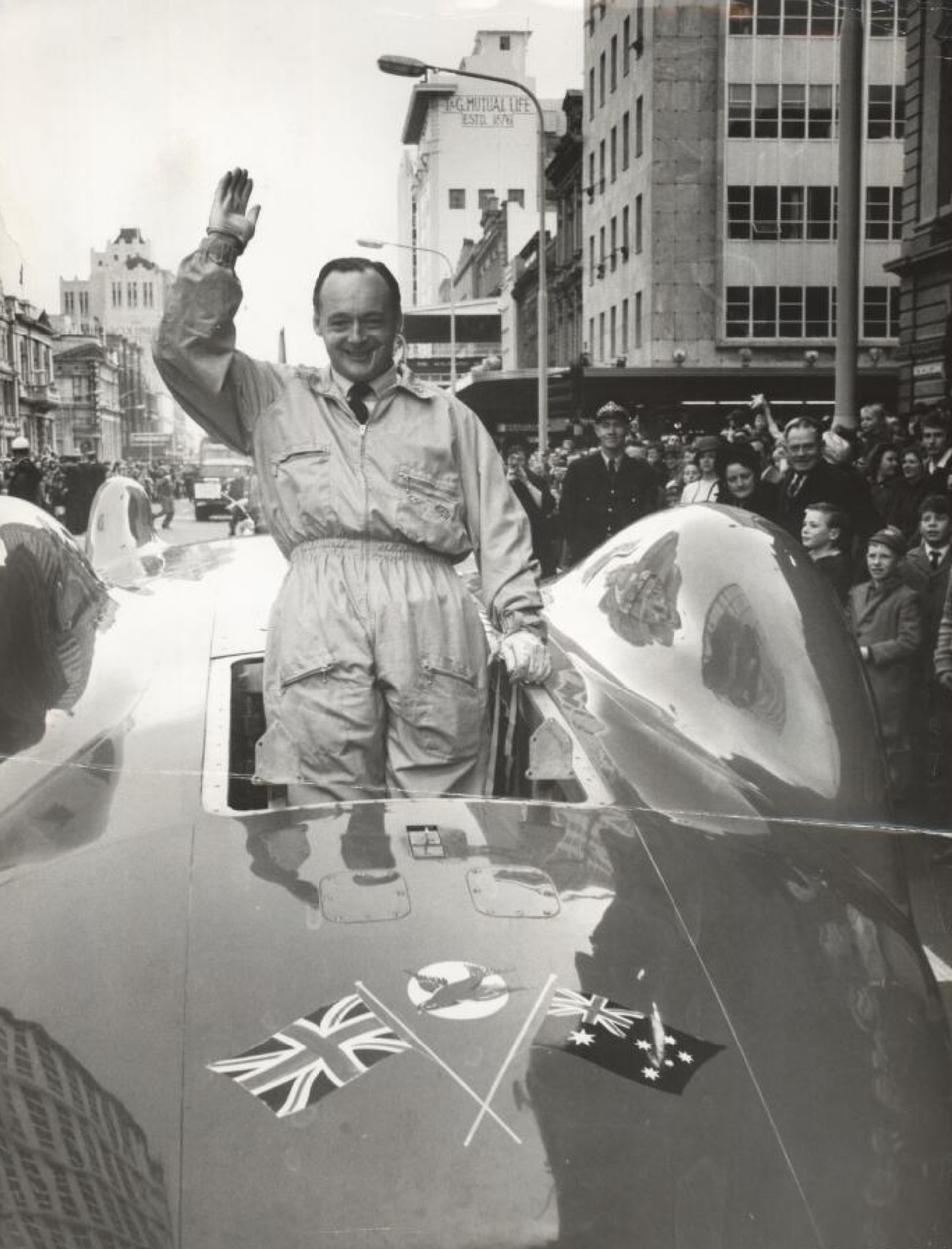
Of course everything did eventually get to a stage where Campbell drove the car in conditions which were still sub-optimal as related in Even Green’s article- but good enough to have a crack and placate those who had been more than patient with him for an inordinate amount of time. 17 July 1964.

The good citizens of Adelaide, a good proportion of the cities total population turned out to see the Bluebird parade on King William Street, and so they should.

It was a remarkable achievement.

(NAA)

Bluebird…

50 years Ago Today : 17 July 1964 : Donald Campbell Broke the World Land Speed Record in ‘Bluebird’ at Lake Eyre, South Australia, a Speed Of 403.10 MPH…

Credits…

John Frith, Jeff Carter, Article by Evan Green in ‘Wheels’ magazine, National Archive of Australia, LAT

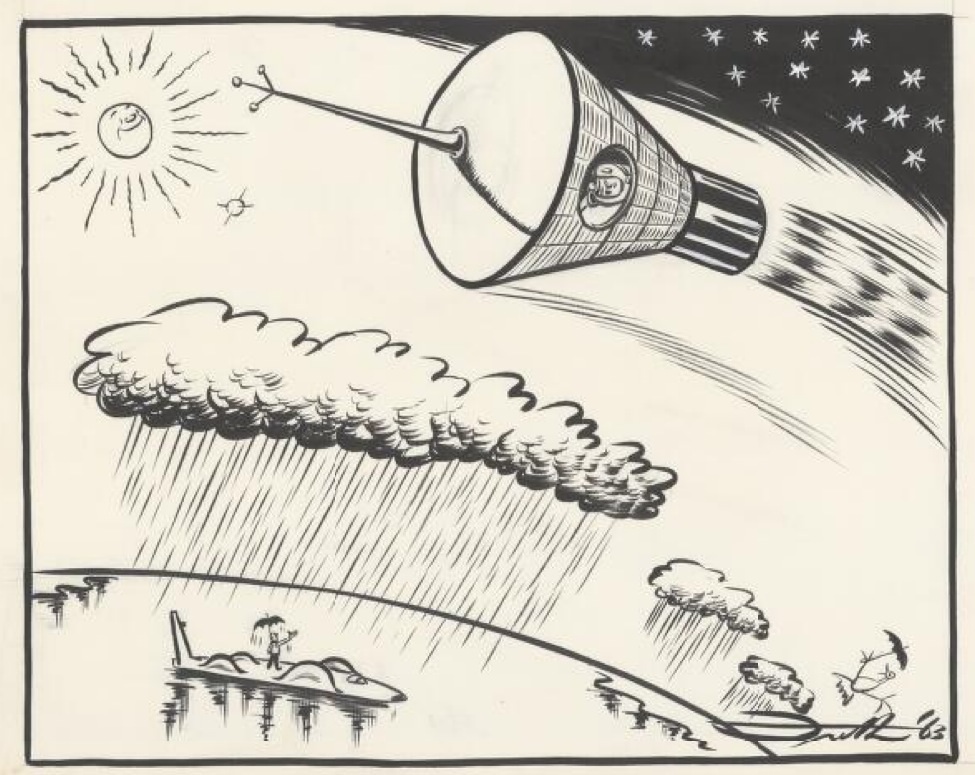
Tailpiece: Ground Control to Major Donald…

(J Frith)

John Frith has captured the adventure of the times with this cartoon dated 16 May 1963, the Apollo space program is in full swing- the space-race is underway. The astronaut returns to earth in sunny conditions but below him are dark clouds which have caused flooding on Lake Eyre, stranding Campbell and Bluebird with DC atop the troubled vehicle…

Finito…

JMF trying to stay warm at chilly Silverstone, 5 October 1970…

In this day and age of every Tom, Dick and Irving recording their every exploit from the bedroom to the mountain top it’s instructive to look at just how far we have come in camera packaging over four decades or so.

Patrice Pouget is just about to shoot some action footage from a precariously mounted camera atop the svelte tail of a Maserati 250F for a documentary on the great mans life. ‘Fangio’, directed by Hugh Hudson and narrated by the champ himself was released in 1971. The car is ‘2516’, originally a 1955 ex-works car raced mainly by Jean Behra and then sold to Australian Reg Hunt and raced in turn by Bib Stillwell and Arnold Glass before returning to Europe in the sixties and Historic Racing.

I must watch it.

Credit…

Terry Disney

Tailpiece…


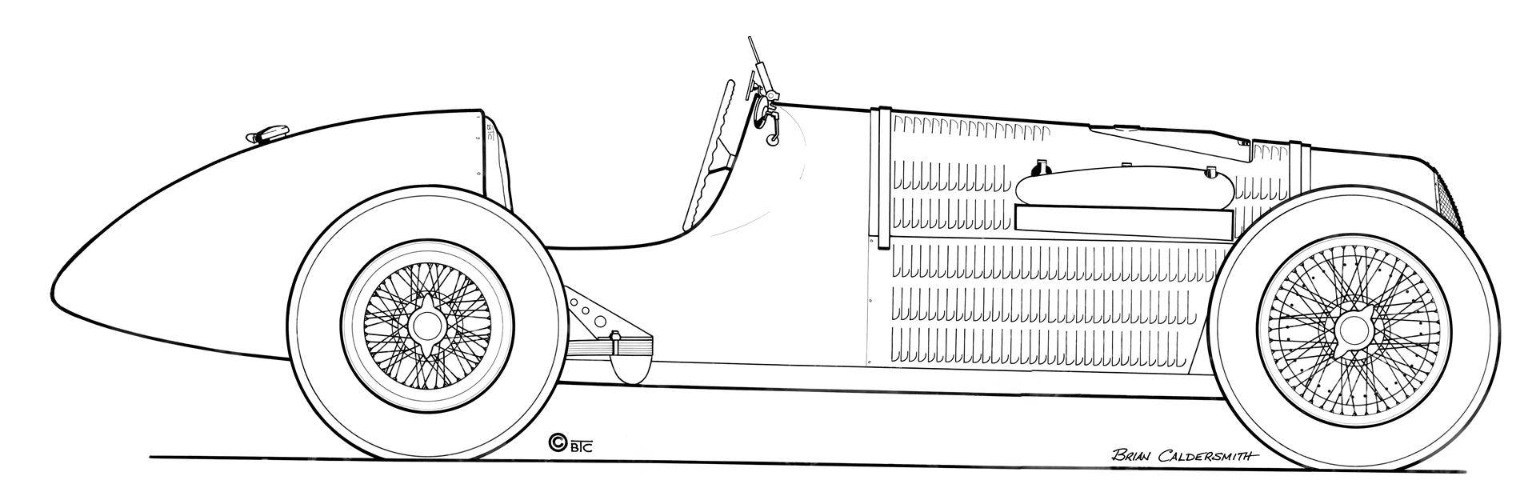
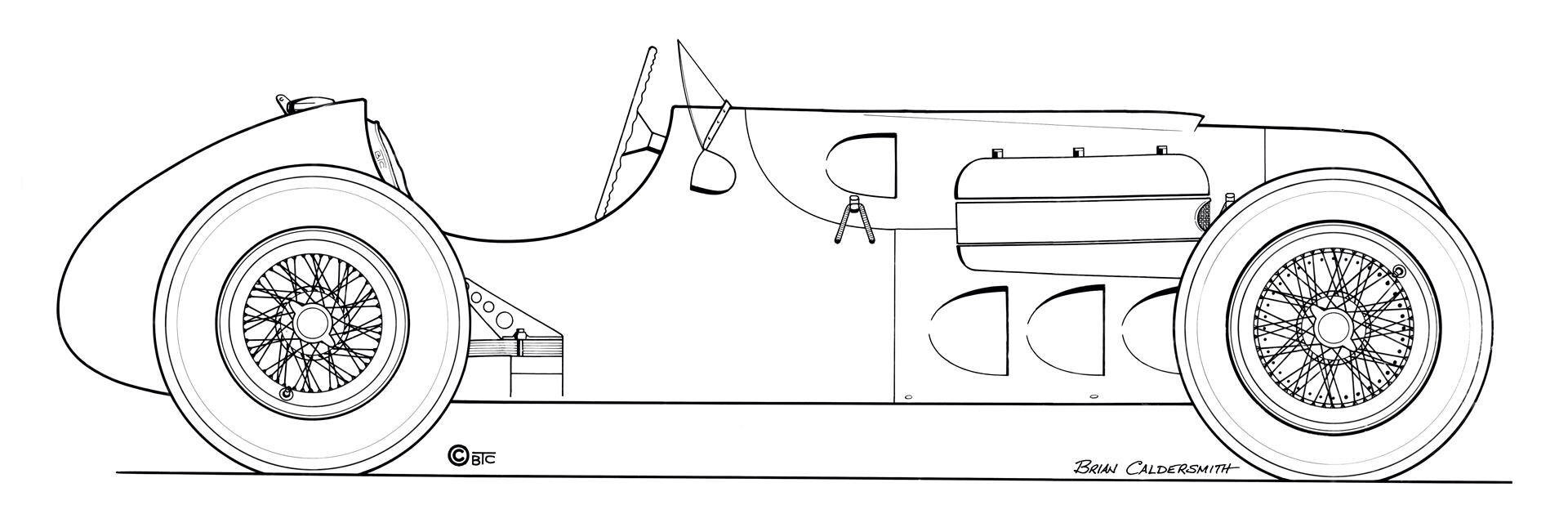
I love these two drawings of two of the fifties Charlie Dean/Repco Research designed and built Maybachs- 1 and 2 by Brian Caldersmith…

I’ve written about both cars before in two articles, one mainly about Stan Jones who raced both machines, the other focussed on the 1954 Australian Grand Prix at Southport Queensland where Maybach 2 (below) met a violent death under Stanley when its chassis broke, or more specifically several rather critical welds failed.

I’m not going to pop up any photos which will draw the eye away from Brian’s artistry.

Stan Jones: Australian and New Zealand Grand Prix and Gold Star Winner…

1954 Australian Grand Prix, Southport, Qld…

Credit…

Brian Caldersmith

(NAA)

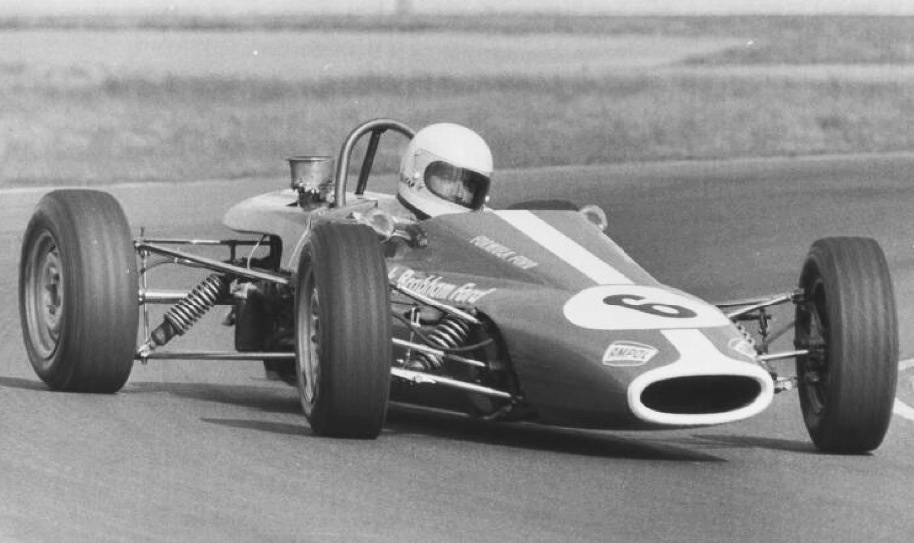
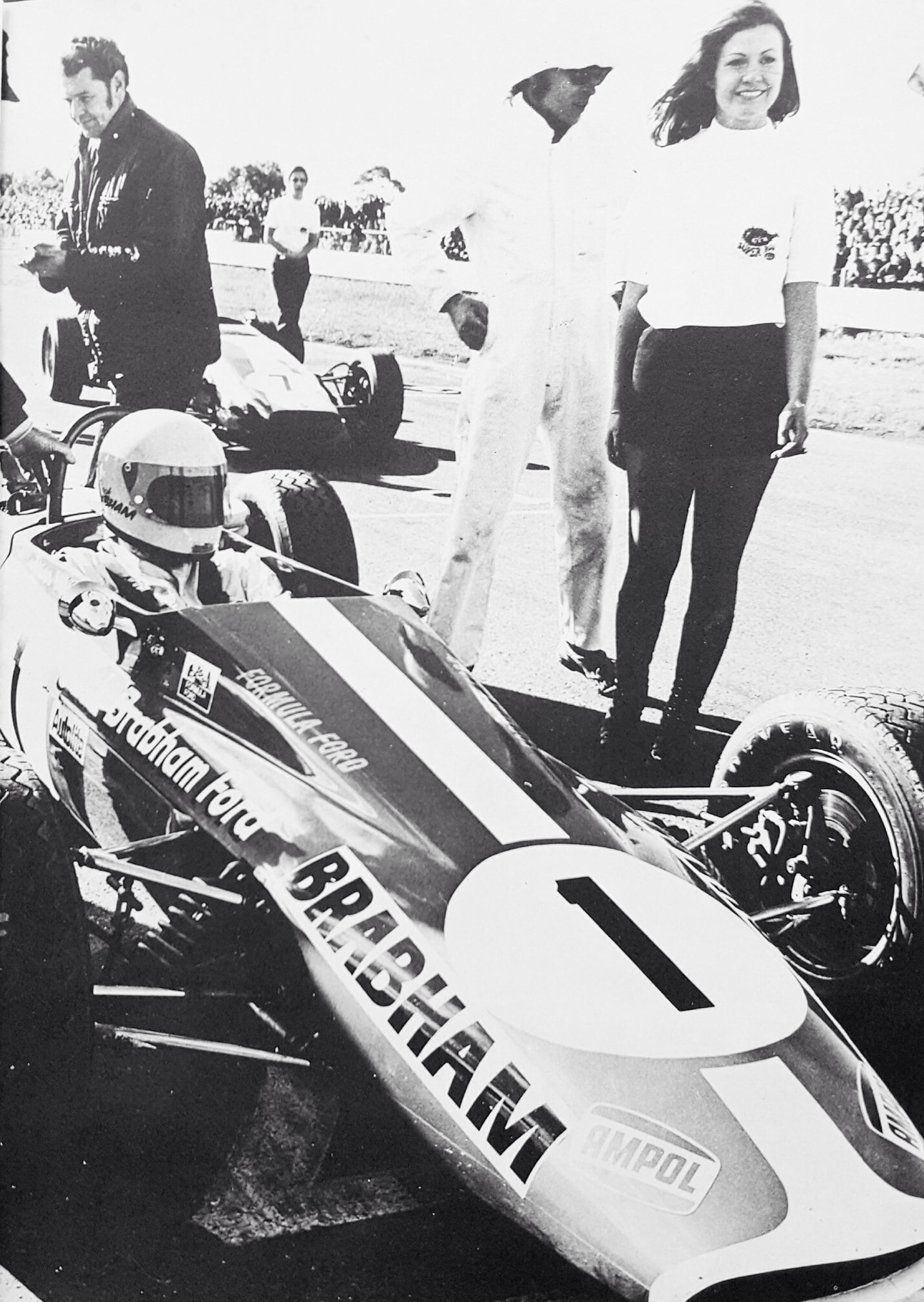
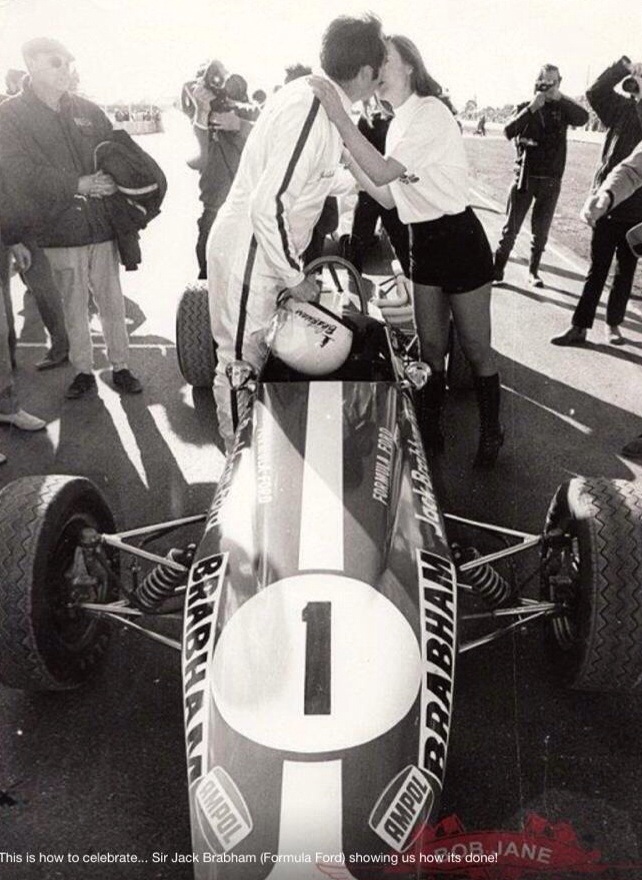
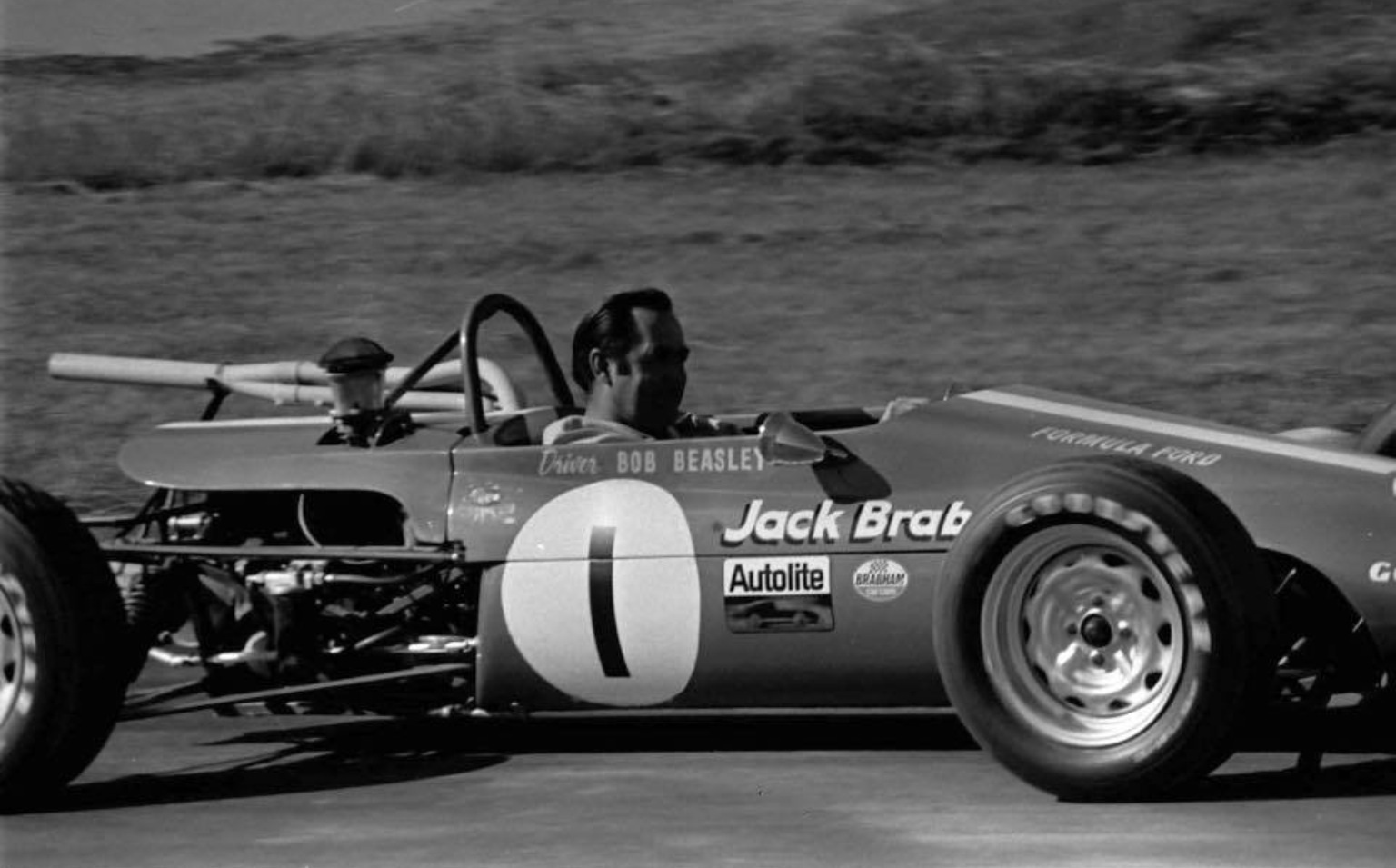
Jack Brabham testing the ‘Jack Brabham Ford’ Bowin P4X Formula Ford normally raced by Bob Beasley, August 1971…

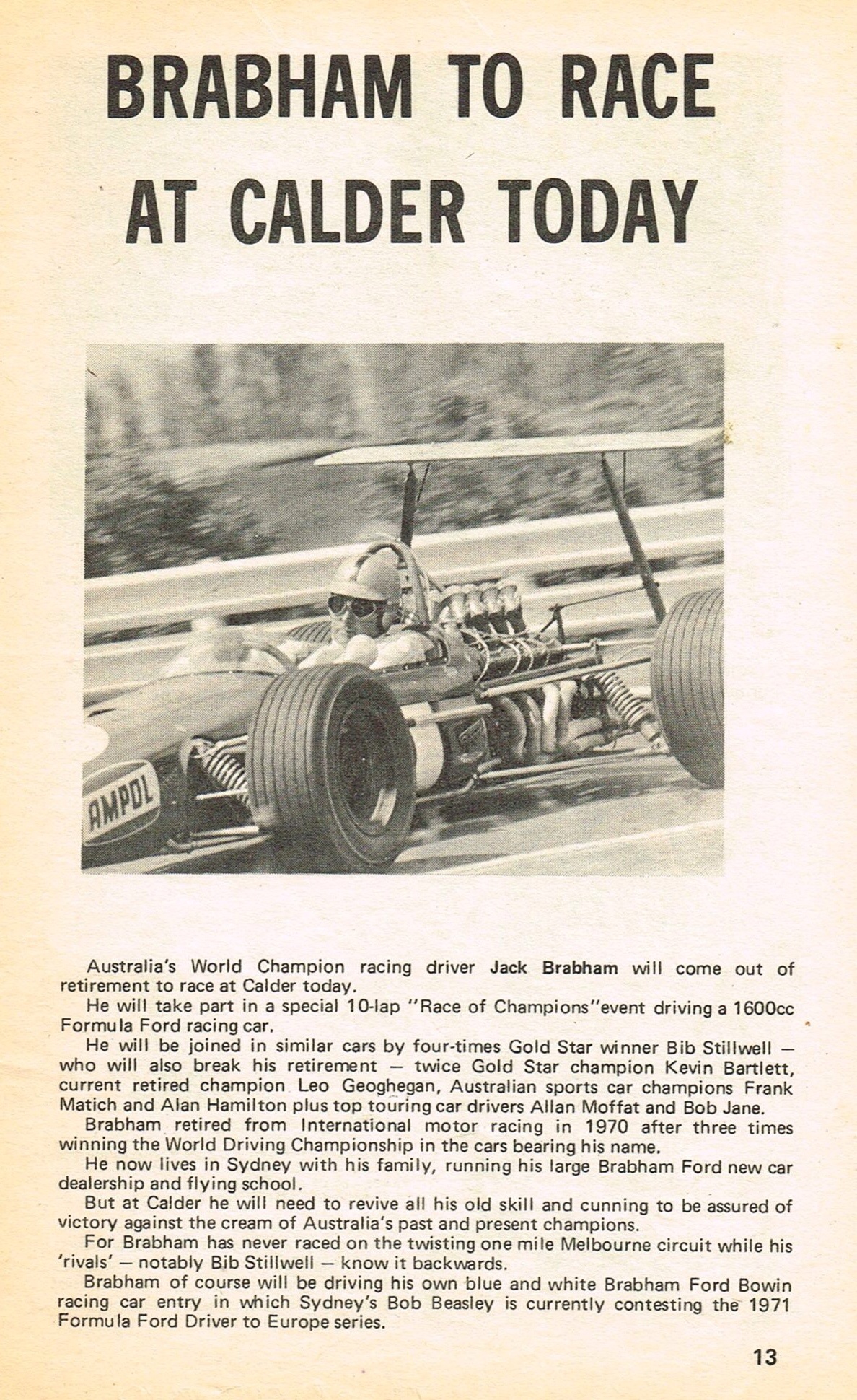
I’ve rattled on a couple of times before about Jack’s last ‘in-period’ race victory being the Calder Raceway ‘Race Of Champions’ on 15 August 1971- he beat a stellar field.

Jack carried #1 on the flanks of the Bowin in the Calder race- its hard to know where this photo is taken, maybe its at Calder on the weekend of the meeting or perhaps Jack is putting in a few test miles elsewhere to get the hang of the car- its 100 bhp and Goodyear RR12 all weather tyres rather than the 440 bhp, slick shod F1 Brabham BT33 Ford he raced in 1970.

Maybe he is thinkin’- ‘i’ll just soften the rear bar a smidge and see if i can get a bit more bite from the back’…

Check out this article for heaps more on the Bowin Formula Fords;

Bowin P4A and Oz Formula Ford Formative…

(R Beckman)


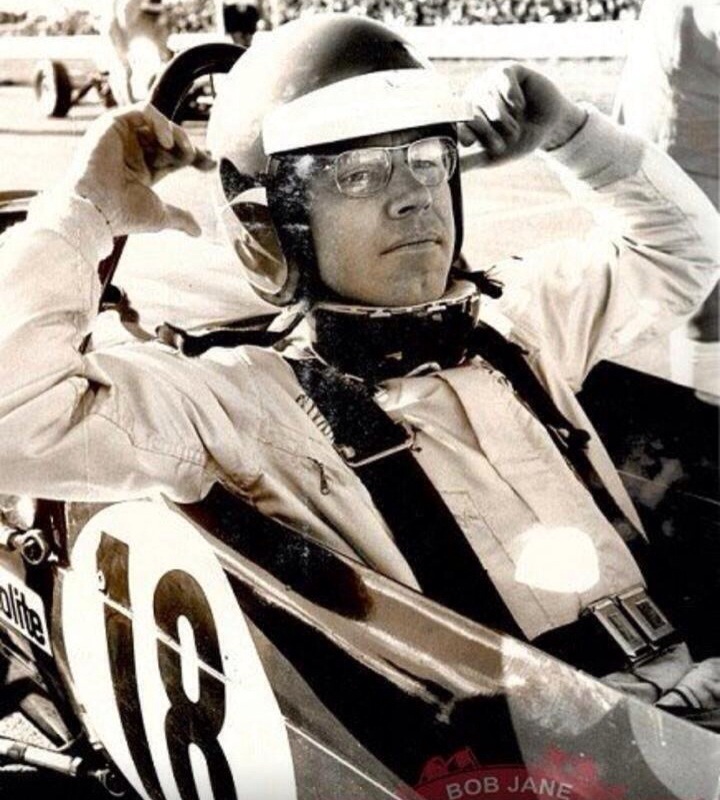
Jack checks his times, eagle eyed Brabham watchers will note the Bell Star as the one he wore thru most of 1970, his last F1 season (R Hawthorn)


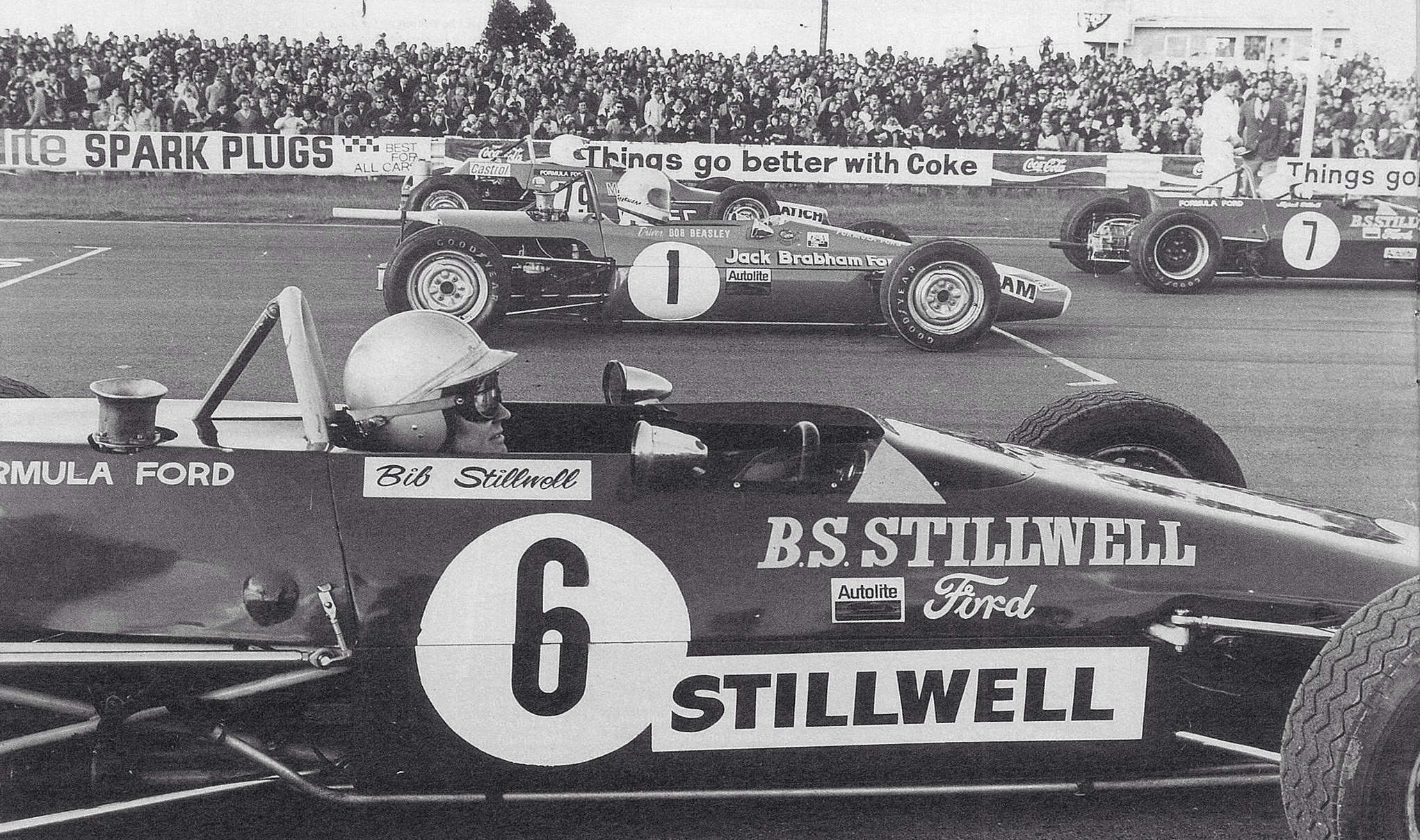
Front to rear, Stillwell Elfin 600, Brabham Bowin P4X and Matich Aztec- at right front Jane in the other Stillwell Racing Elfin 600 (Bennett)

The Calder race was a wonderful bit of promotion by Bob Jane- here is Tom Naughton’s ‘Racing Car News’ race report from the October issue of ‘The Monthly Bible’…

‘With all the pomp and ceremony of a Grand Prix, Calder staged a ‘Race Of Champions’ for their 15 August meeting.

Coming out of retirement were Jack Brabham and Bib Stillwell (Australian Gold Star National Champion 1962-1965) along with some of todays champions, and all mounted in borrowed Formula Fords, they turned on a most entertaining race. The ‘Master’ showed the way home, easing effortlessly away from the main scrap and showing that he had lost none of the skill after his period of retirement’. (only 8 months at the time!)

‘Brabham lined up in his own (Jack Brabham Ford, Bankstown, Sydney) FF normally steered by Bob Beasley, while Bib Stillwell took over his number one car (Elfin 600) usually driven by Larry Perkins (he won the Driver to Europe Series that year).

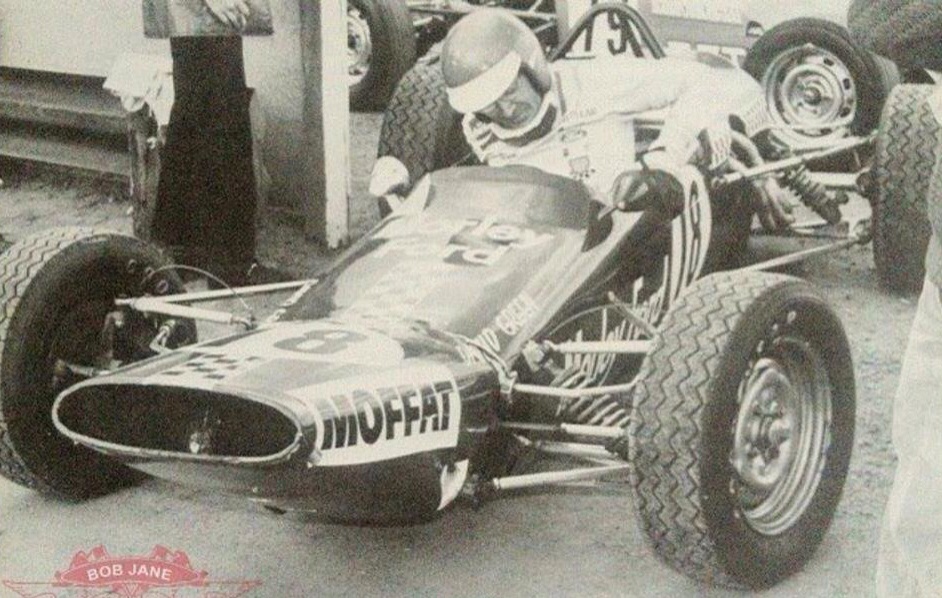
Allan Moffat (in fact the only driver without racing car experience) (not quite true, he had an outing or two in Bob Jane’s Brabham BT23E Repco Tasman car boofing it at Sandown in 1968) took over David Green’s car (Wren).

Bob Jane hopped into Mike Stillwell’s Elfin 600, Alan Hamilton into Graeme Peart’s (Wren) and Kevin Bartlett into Murray Coombs’ car (Wren). Frank Matich took over Mike Hall’s Aztec, while Leo Geoghegan slipped into Peter Edwards’ car (Elfin 600)’.

Moffat Wren, with 3 Elfin 600’s behind him- perhaps Leo G immediately behind him and Jack ranging in, partially obscured to his outside, Jack is ranging in (autopix)


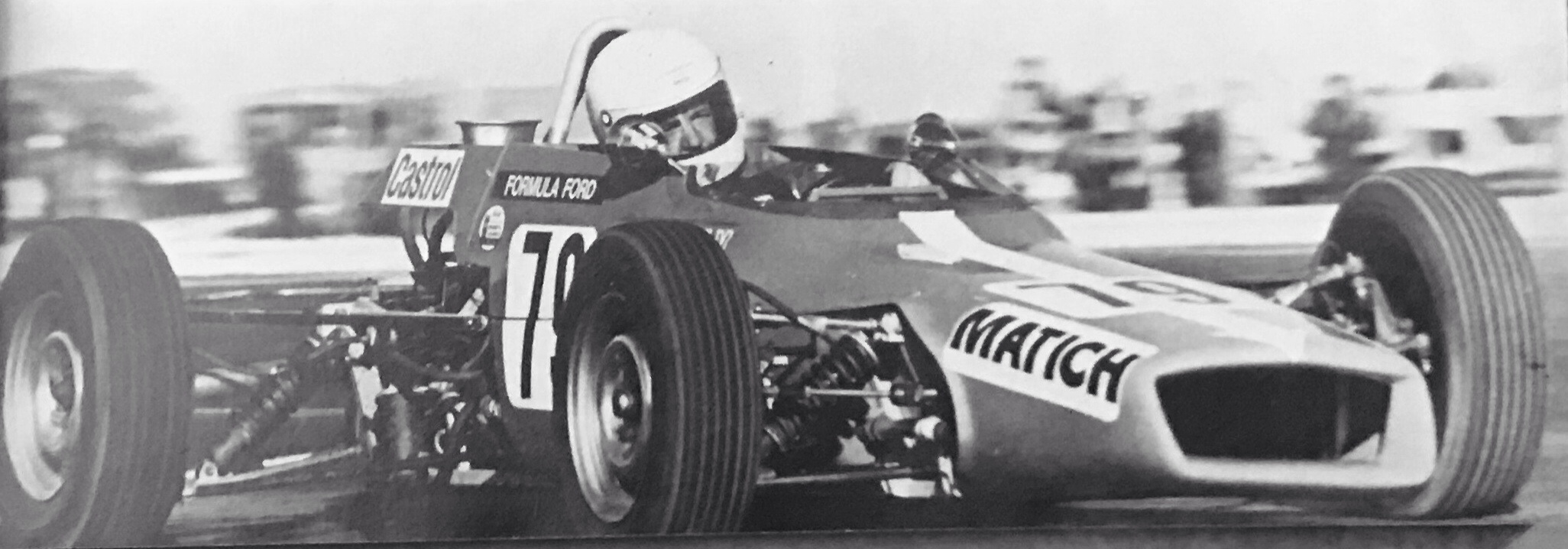
Frank Matich in Mike Hall’s Aztec. In August 1971 FM is up to his armpits in the build of the Matich A50 Repco F5000, so my guess he may have preferred to stay in Sydney, in which he was to win the November AGP at Warwick Farm – wonder what he thought of the Melbourne, Ould brothers built Aztec? (AMRA)

‘That was the field and at the flag Jane was first away, leading from Moffat, Brabham, Geoghegan and Hamilton. By lap 2, the front three had closed up and on the following lap both Moffat and Brabham slipped by at Repco. Geoghegan came up to challenge Jane, while Brabham took the lead on lap 4. He started to ease away from the rest, while Jane slipped Moffat at Toyota, these next three keeping close company. By lap 6, Geoghegan took Moffat, and then inherited second spot when Jane slipped wide at Repco, dropping back behind Stillwell’.

‘Oops! The same thing happened the last time I drove one of these open-wheeler thingies’. Moffat in David Greens slightly second-hand Wren (Bob Jane)

In lap 9, Stillwell started a challenge on Moffat and Hamilton, but in front Brabham was well clear. He took the flag in true champion style, with Leo second, then a scrapping duo of Hamilton and Moffat, with Stillwell hard on their heels, then came Jane, Matich and Bartlett. Leo did the fastest lap, a 48.6.’

The three Brabham sons all had stints in Australian Formula Ford before heading off to Europe, Geoff in 1973/4 aboard Bowin P4X/Elfin 620/Bowin P6F, Gary in 1982 with the Birrana F73 and David in 1986/7 with Van Diemen RF85/86. There is a neat bit of symmetry in the ‘old man’ also having a race win in Oz FF- was it his very last race win I wonder?

Credit…

‘Racing Car News’ October 1971, Laurie and Nick Bennett Collection, Bob Jane Heritage Collection, Autopix, Australian Motor Racing Annual, Jonathon Koch Collection for the program and RCN, National Archives Australia, Lynton Hemer, Russell Beckman, Stephen Dalton Collection, Russell Hawthorn

Etcetera…

(S Dalton Collection)

From the Calder 15 August meeting program. Car in the photo is Jack’s last Tasman mount, the Brabham BT31 Repco at the Sandown Tasman meeting in February 1969

The race certainly had a great entry, for overseas readers, Stillwell, Bartlett, Matich and Geoghegan were all Gold Star Champions and Moffat, Jane and Hamilton national title holders on multiple occasions aboard Touring Cars and Sports Cars in Hamilton’s case. Jack probably requires no introduction…

For the sake of correctness, the car driver/combinations did not quite start as listed in the program.

Brabham was aboard the one off Bowin P4X- slightly different in the suspension to production P4A’s, Matich the Aztec, Jane a Stillwell Elfin 600, Geoghegan the Edwards Elfin 600 with Moffat, Bartlett and Hamilton aboard Wrens.

Brabham doing a parade lap in the P4X at Oran Park on 26 March 1972 (L Hemer)

Tailpiece: ‘It feels a bit like the ‘Stang, gearchange is on the right anyway’…

Moff saddles up in David Green’s Wren Formula Ford, these cars (not to forget his ‘Mk2’s constructed in the later 1970’s) were built in reasonable numbers by Bill Reynolds in his Carlisle Street, St Kilda workshop, not too far away from Calder.

Allan Moffat’s open-wheeler appearances, apart from this, were limited to a couple of races in the States circa 1966/7 (details please) and limited laps in Bob Jane’s Brabham BT23E Repco at Sandown in 1968.

Finito…

image

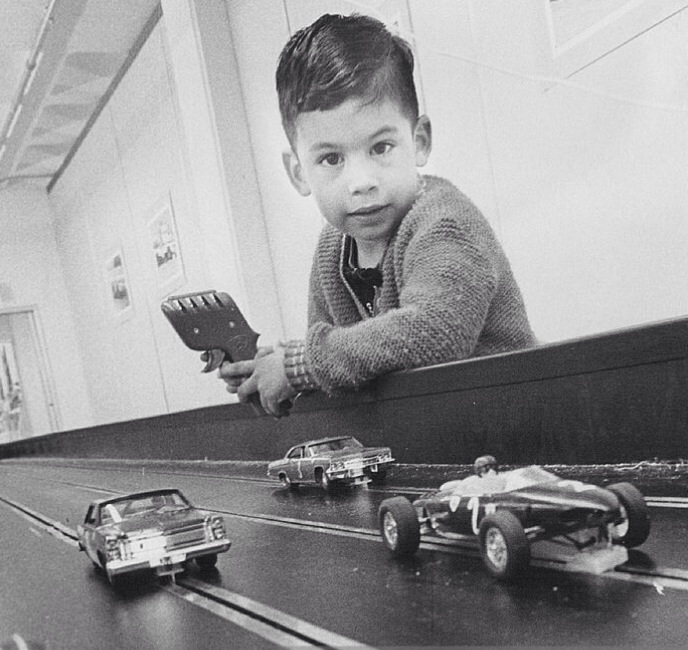
It can only be a Formula Libre race, somehow I doubt 4 year old Ray Dones had a future as a race promoter…

This shot of the little dude and his eclectic grid of racers was taken at the Denver Toy and Hobby Show on 3 April 1965, but it could just as easily be me at the ‘Scalextric’ track at Rosebud on Victoria’s Mornington Peninsula in 1969.

We ‘useter holiday at McCrae during the long, hot Australian summer- in between working on the ‘tan my brother and cousin spent lotsa time and money on donuts and laps at that place up the road in the Summer of ’69.

I never did parlay my Scalextric pace at 11 to exceptional Formula Vee speed at 21, sadly!

Credit…

Georgia Lowell

image

McCrae in the summer of ’69

Finito…

(unattributed)

‘It is not common for racing cars to be photographed from the rear- more usually from the side or front.
Here are a few rear views (or views of rears) from my archives’ – Bob.
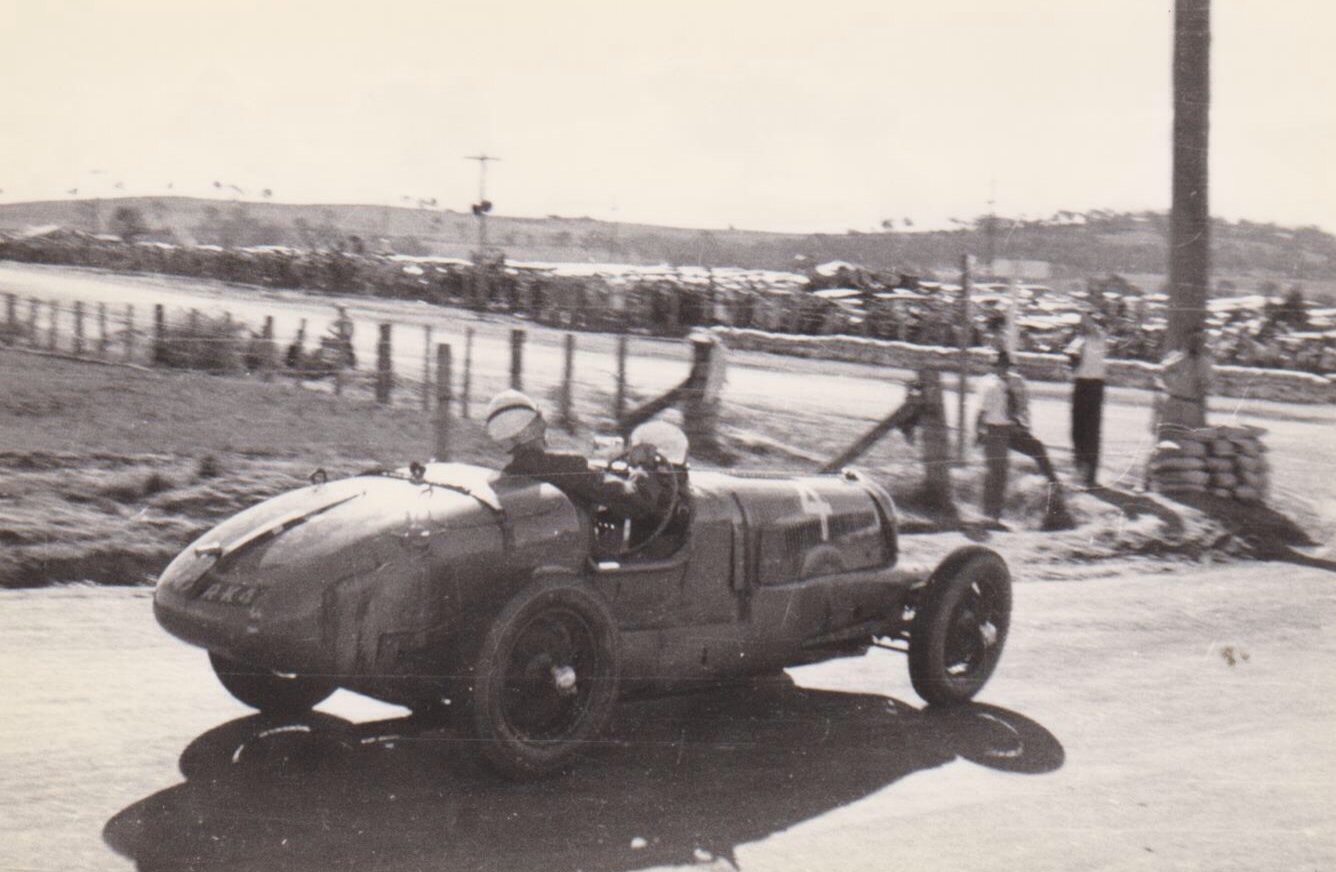
Jack Saywell, above, in his only appearance at Bathurst in his 2.9 Alfa Romeo P3, Easter 1939.
He could do no better than 6th when his engine was reluctant to start after a pitstop to adjust the brakes. The photo below is from ‘The Magnificent Monopostos’ by Simon Moore- this pitstop one of several during the very hot 1939 AGP at Lobethal, the heat caused major tyre problems for the heavier cars which did not afflict winner Allan Tomlinson’s nimble, light MG TA Spl s/c, Jack was 6th again.

(GP Library)

My anal side, not dominant at all in normal life kicks in with a wonderful selection like this- I feel the need to pop in chassis numbers where I can- but I am going to resist given the time required to do so! Good ole Google works pretty well- ‘Jack Saywell Alfa Romeo P3 chassis number’ will give you anoraks a path to finding what you want, otherwise just enjoy these magnificent photographs from Bob’s archive, Mark.

(unattributed)

Paul Swedberg drove John Snow’s Delahaye 135CS to 2nd place at the Bathurst 1939 meeting, in John’s absence overseas. Paul’s own Offenhauser Midget, in which he was virtually unbeatable on the on speedways, was not entered.

(unattributed)

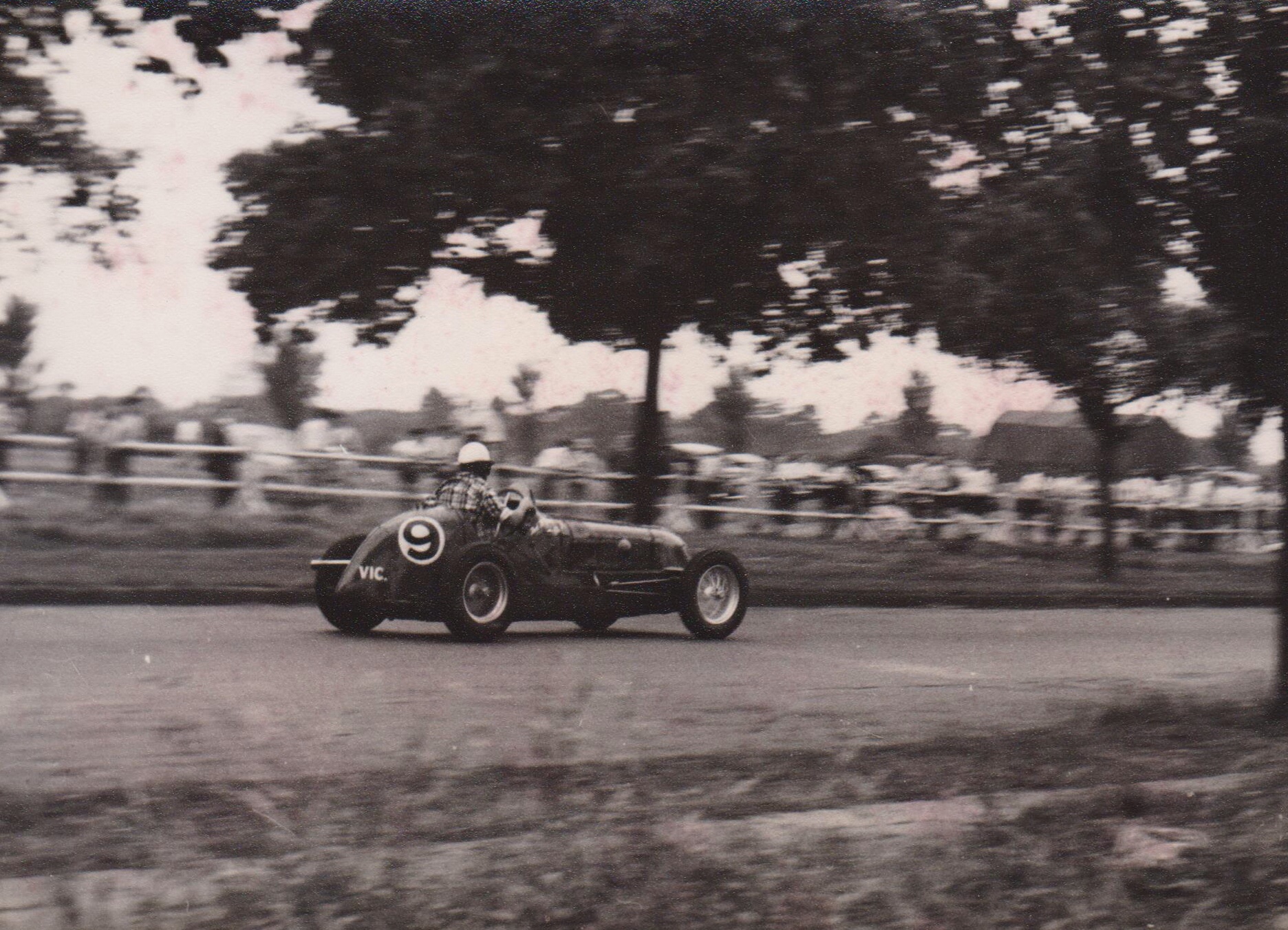
Ted McKinnon finished 13th in the 1953 Australian Grand Prix at Albert Park in his Maserati 6CM. Doug Whiteford won that day aboard the first of his two Talbot-Lago T23C’s.

(S Wills)

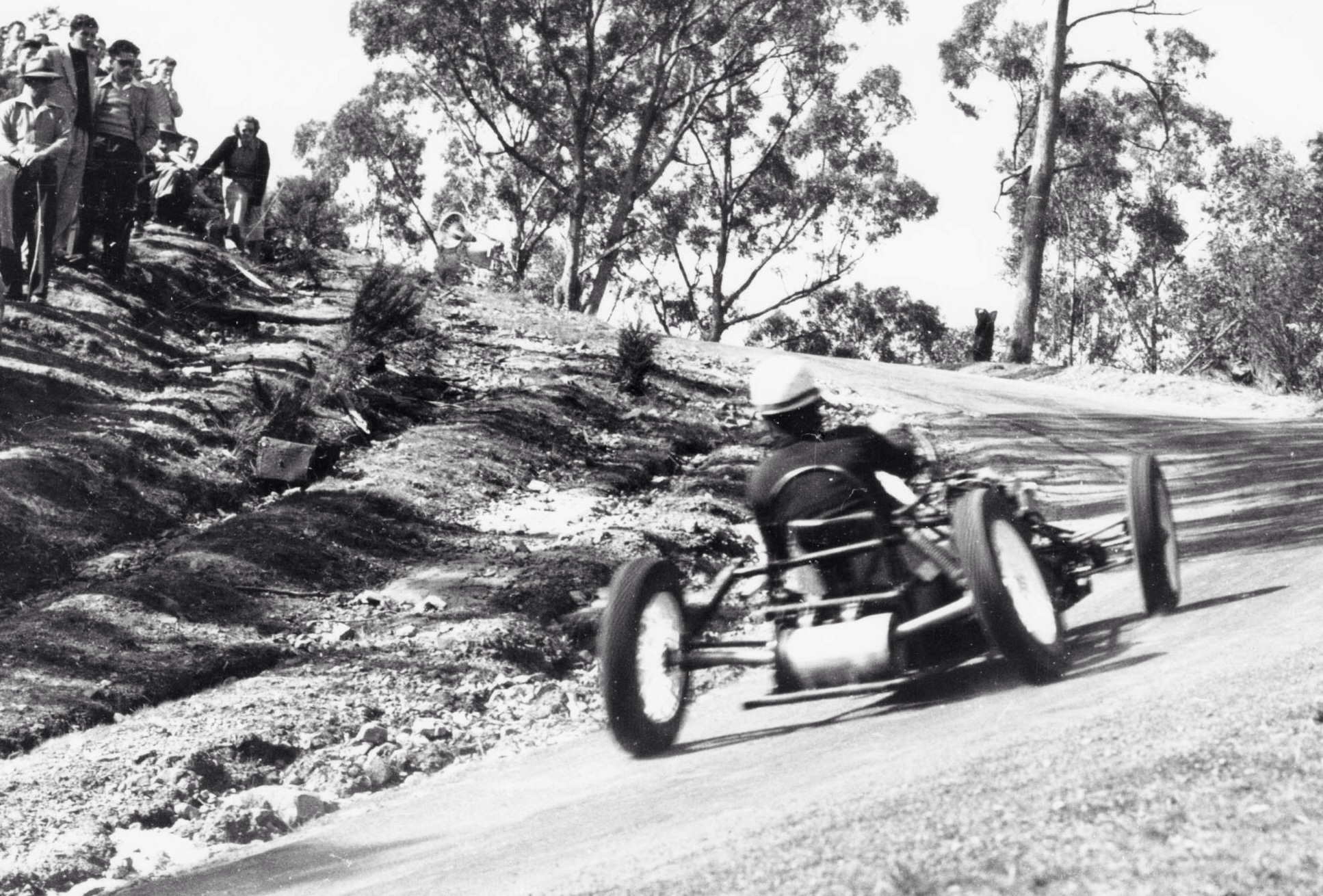
An unknown car exhibiting the disadvantages of a swing rear axle system. Something tells me that this is DW Stephenson in his DWS? Templestowe Hillclimb in outer eastern Melbourne, September 1954.

(S Wills)

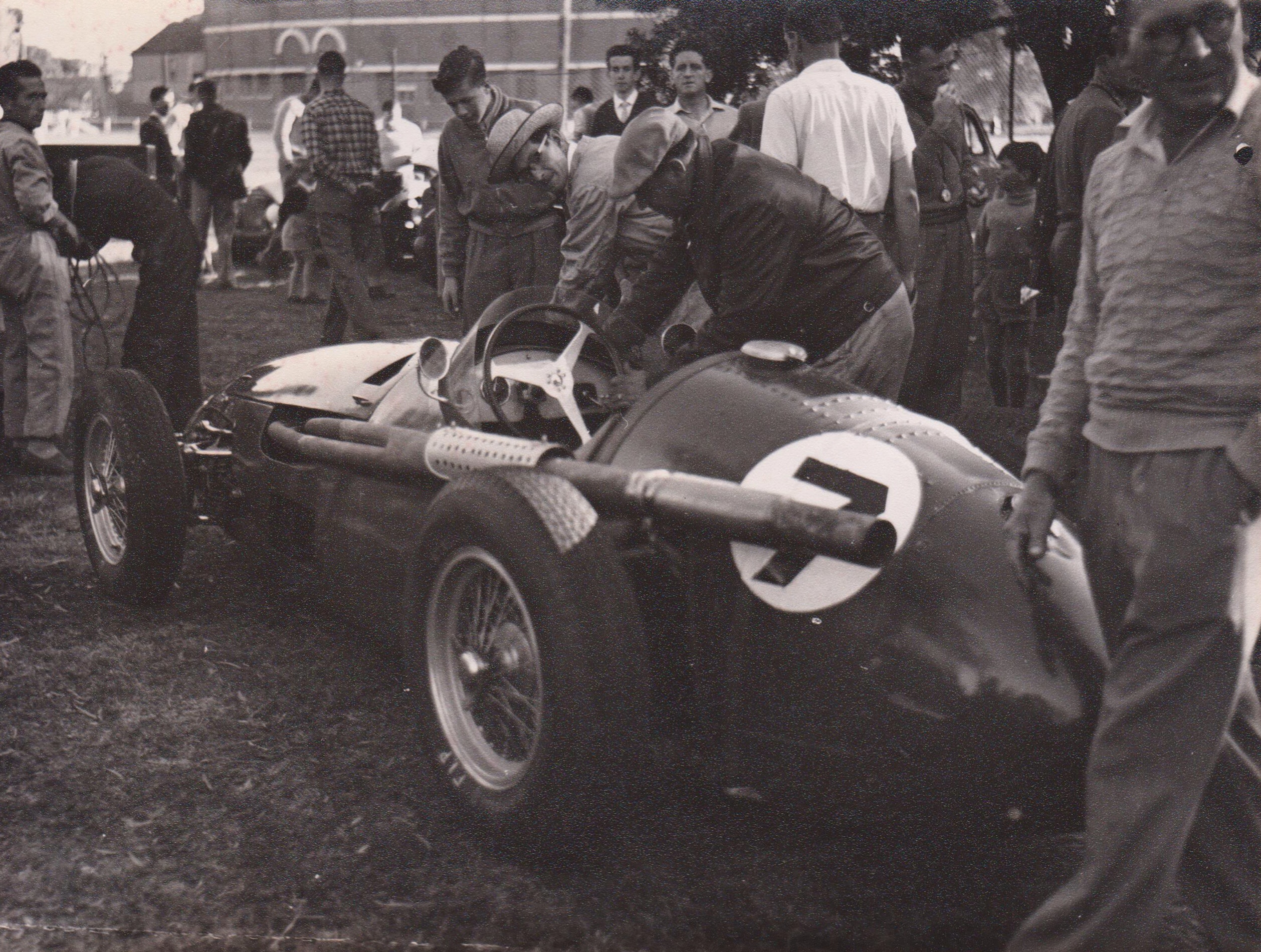
Maserati’s chief mechanic Guerino Bertocchi is leaning into the cockpit of Moss’ victorious Maserati 250F at Albert Park during the AGP weekend in 1956.
Having debuted as a riding mechanic with Alfieri Maserati in the 1926 Targa Florio and subsequently being riding mechanic in thirteen Mille Miglias as well as the 12 Hour of Pescara, it has always saddened me that he should die in 1981 as a passenger to an American during a trial drive of a modern Maserati. Car enthusiast Peter Ustinov told an amusing story concerning Bertocchi. Guerino delivered a new Maserati road car to Ustinov in Switzerland and said to Peter “I don’t know who you are Senor Ustinov, but you must be important to have me, Bertocchi, delivering your car”.

(S Wills)

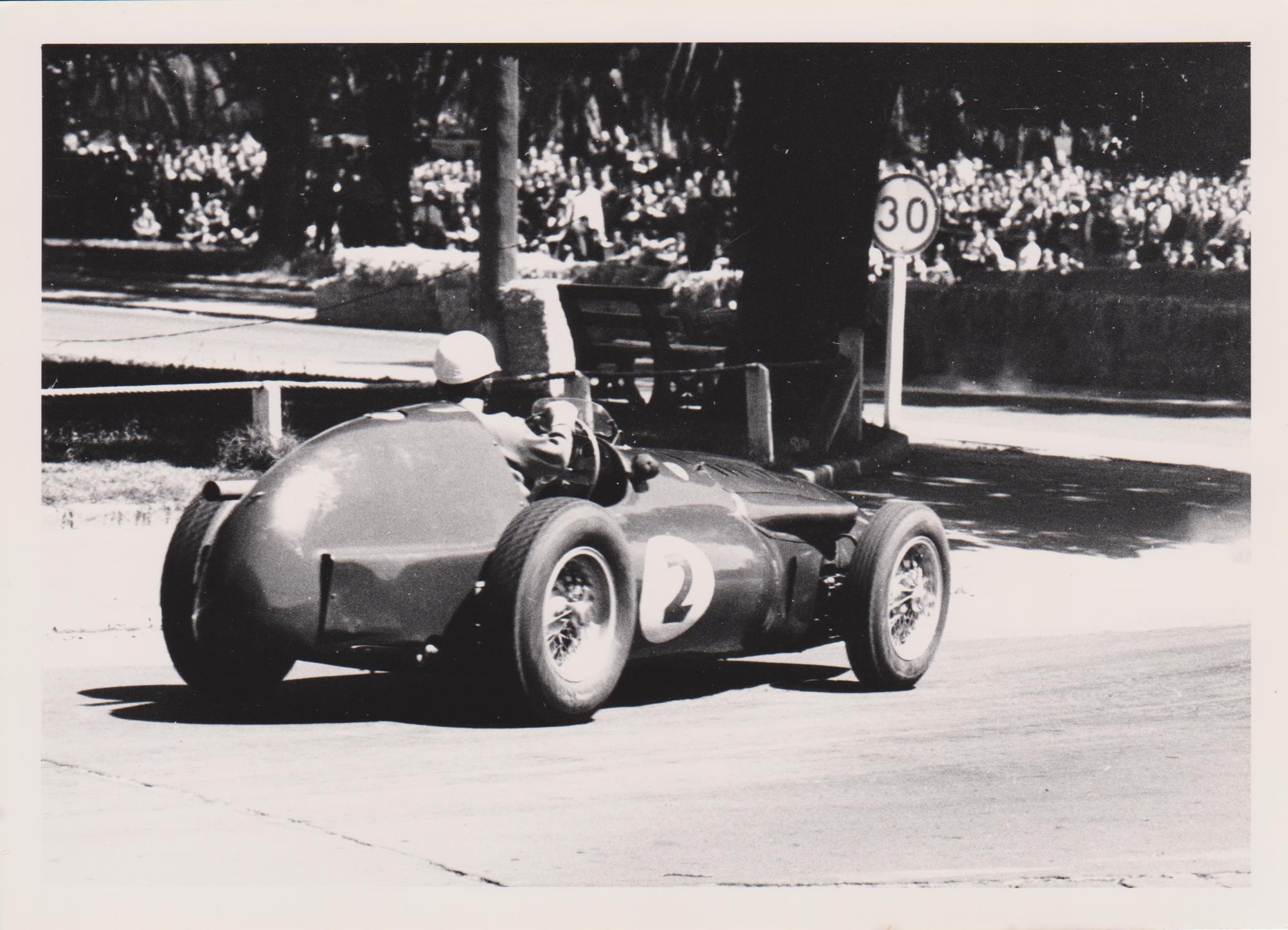
Reg Parnell enters Jaguar corner in his Ferrari Super Squalo during the same wonderful 1956 AGP weekend.
The 30mph sign would not have deterred him. It also serves to remind us that ridiculous speed limits are not a new phenomenon – this sign was at the start of Albert Park’s main straight.

(S Wills)

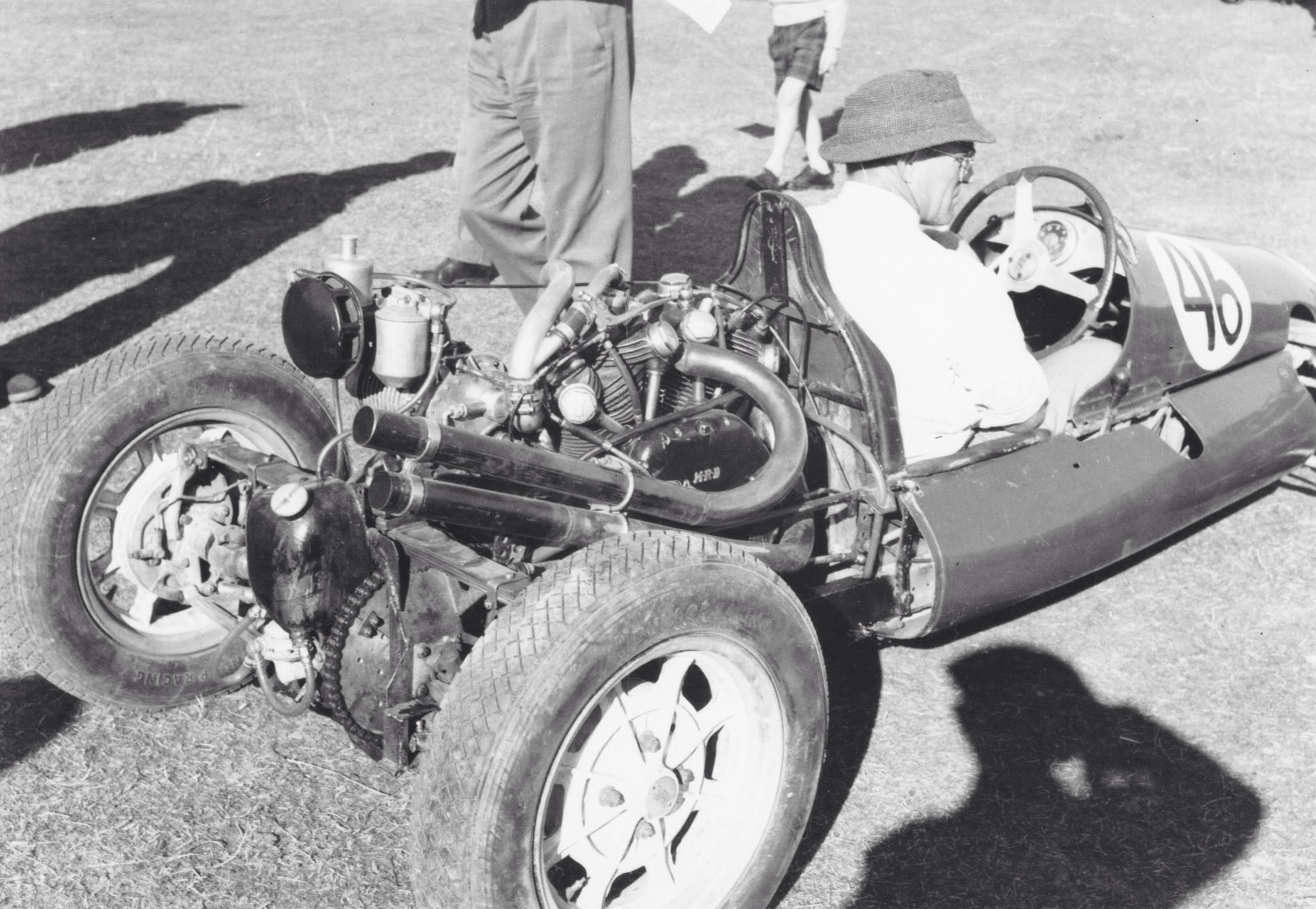
This photograph shows the large SU required to feed the highly modified supercharged Vincent engine in Lex Davison’s Cooper. Phil Irving was the designer and the modifier of this motor – still labelled H.R.D on its timing cover. Templestowe 1957.

(S Wills)

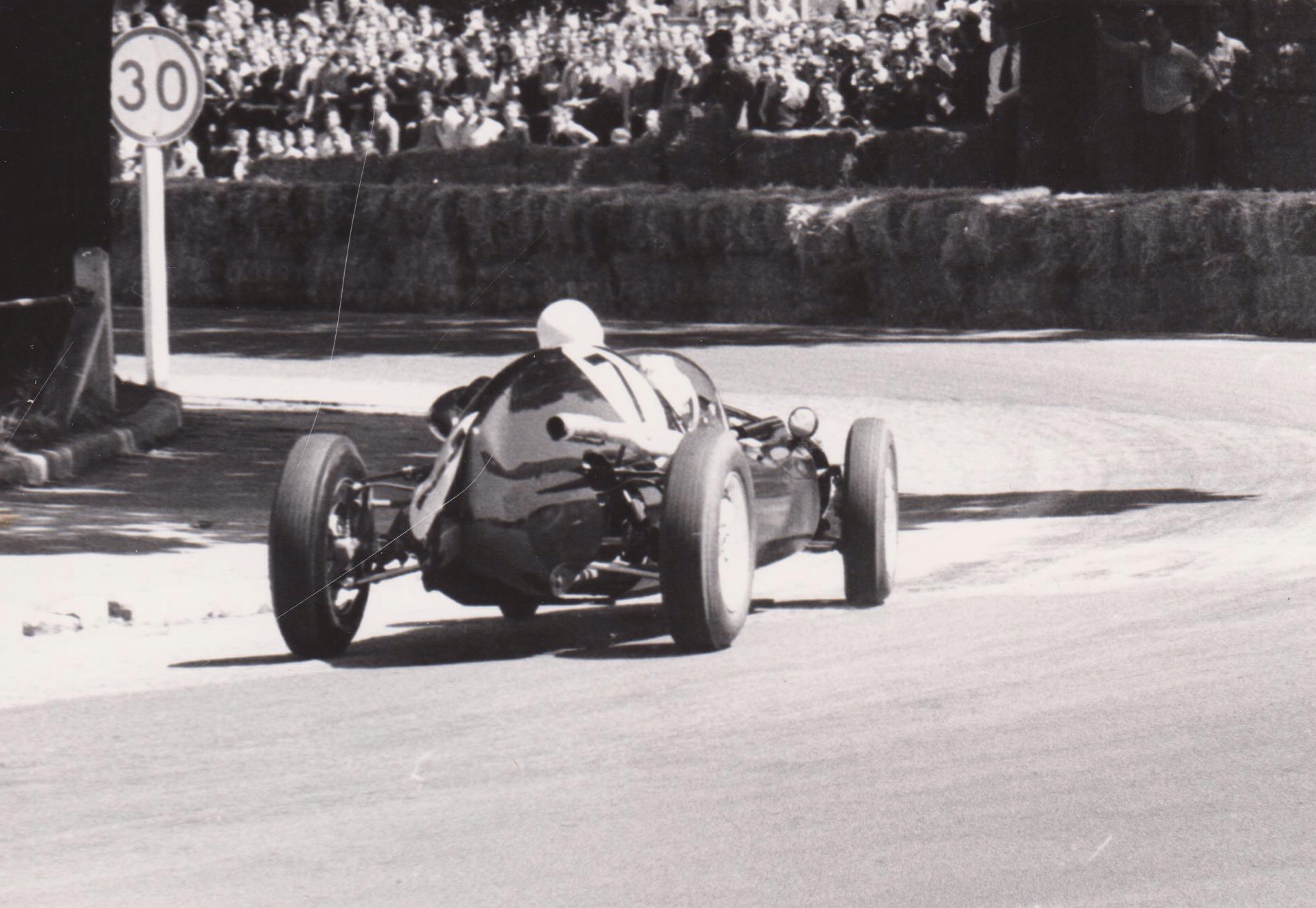
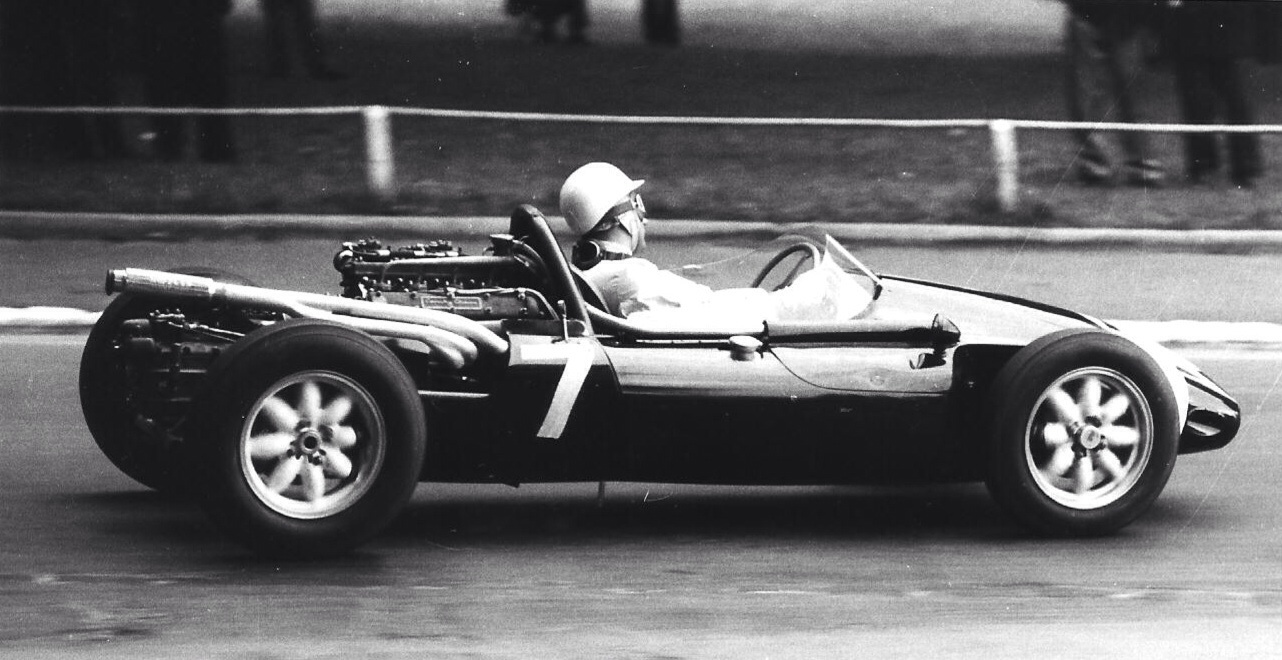
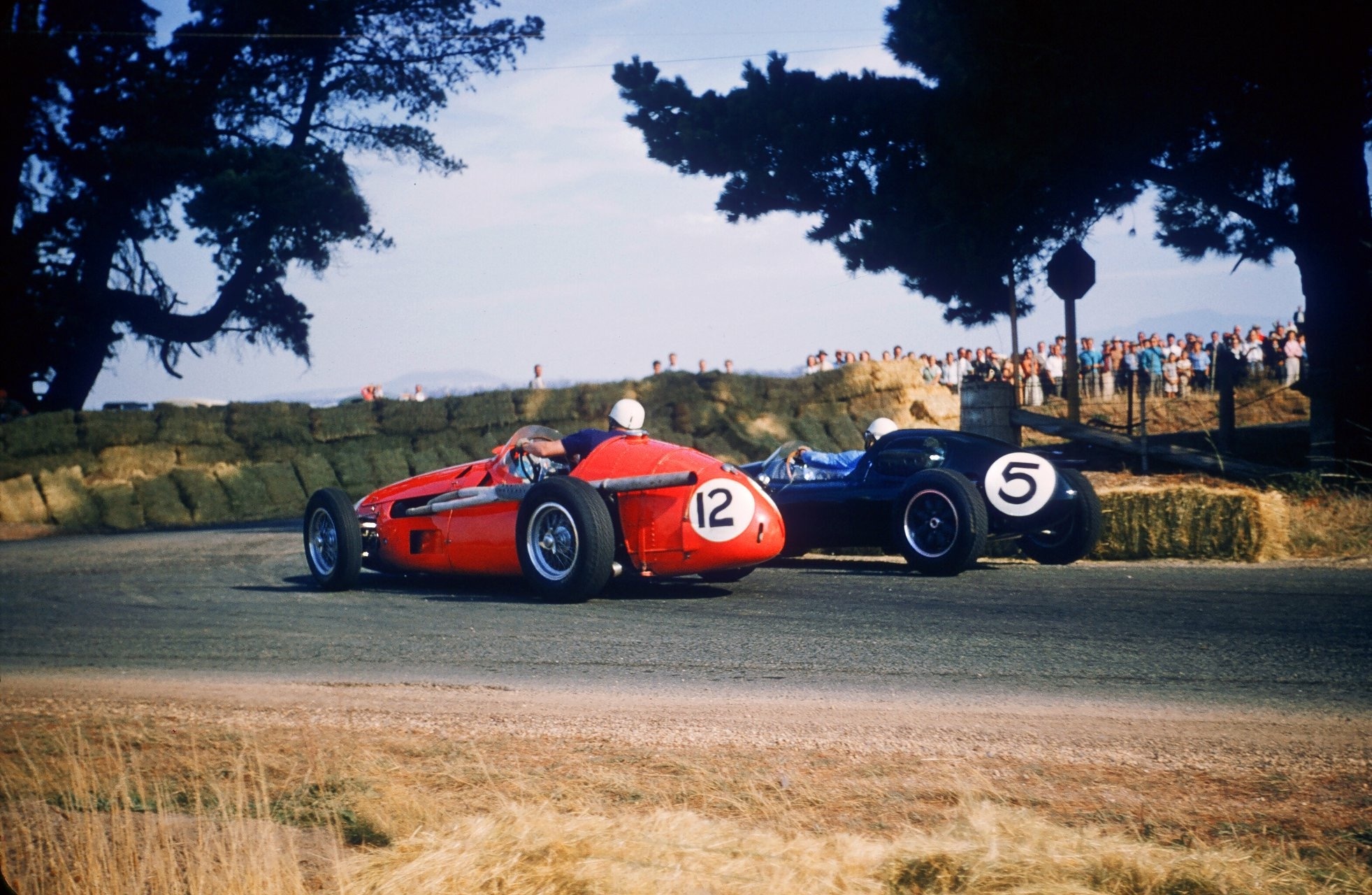
Stirling Moss in the Cooper T45 Climax FPF 2 litre, Melbourne Grand Prix, Albert Park, November 1958.
This photograph is taken during practice – the race was held on a hot day and the Cooper was denuded of much of its rear body work in an endeavour to keep the driver cool. The long shadows show that the photograph was taken in the early morning – I seem to recall that practice was at 6.30am.

In spite of the hour, note the huge crowd at Jaguar corner. In a previous post I have mentioned that Moss really only showed his sublime skill during the 1956 AGP when it began to rain with just six laps to go. On this morning Stirling was struggling with locking brakes and again demonstrated phenomenal car control – I was crowd marshalling at about the point from where this photograph was taken.

(S Wills)

Almost a rear view – note the missing engine cover to cope with the heat. Moss won the 32 lap, 100 mile race from Jack Brabham’s similar Cooper T45 Climax FPF, Doug Whiteford’s Maserati 300S and Bib Stillwell’s Maserati 250F.

Sadly this was the last race meeting at the ‘Park until the modern AGP era.

(S Wills)

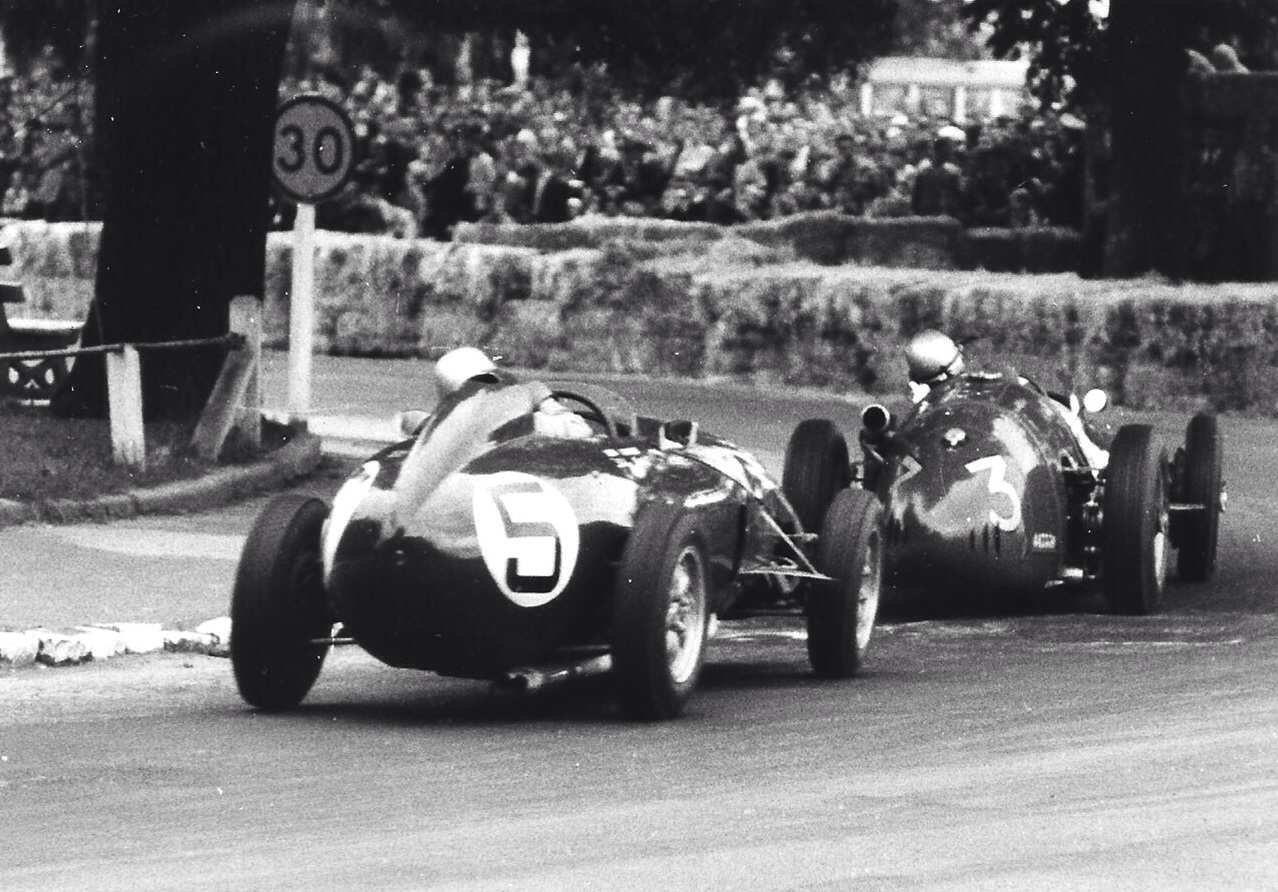
Len Lukey (5th) in the Lukey Bristol tailing Bib Stilwell in the 250F Maserati through Jaguar corner in 1958.

(S Wills)

Ted Gray in the Tornado 2 Chev- again at Albert Park of course in 1958, Ted retired the Lou Abrahams car after completing only 4 laps.

(S Wills)

Len Lukey in the eponymous Lukey Bristol at Templestowe 23/3/1958 – or was it still called the Cooper T23 Bristol until it got its Vanwall inspired body?

(S Wills)

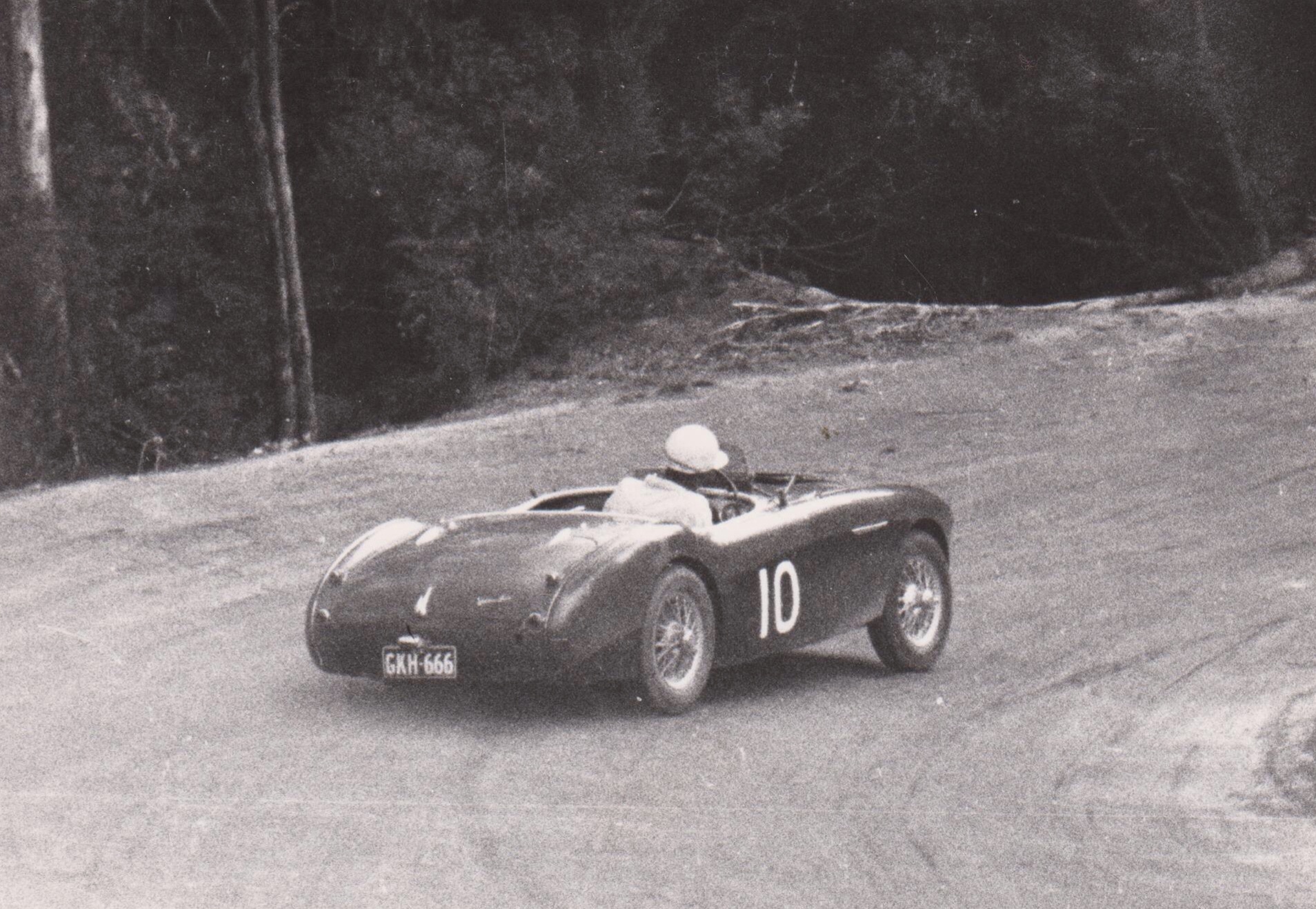
JW Philip in an Austin Healey at Templestowe on 20/04/1958. We know nothing of this car and driver.

(S Wills)

Jack French in a  Cooper Norton of only 499cc, but still good enough to break the magic (to me) 30 seconds. His time 28.15 Rob Roy, 1959. Coopers with various power plants were ‘King of the Hills’ in those days.

(S Wills)

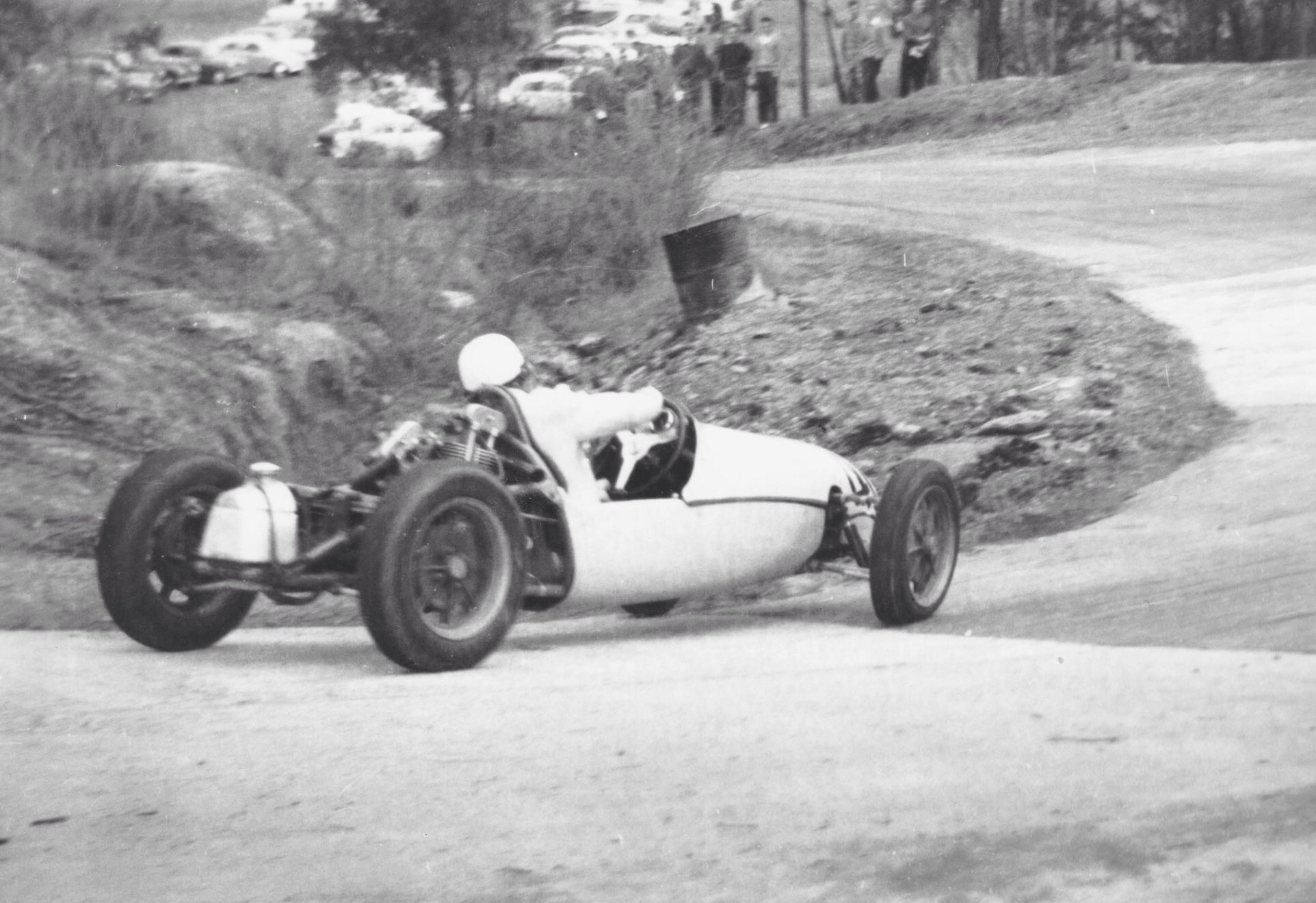
At Templestowe in 1958; Bruce Walton in his Walton Cooper. Six times Australian Hillclimb Champion from 1958 to 1963.

(N Hammond)

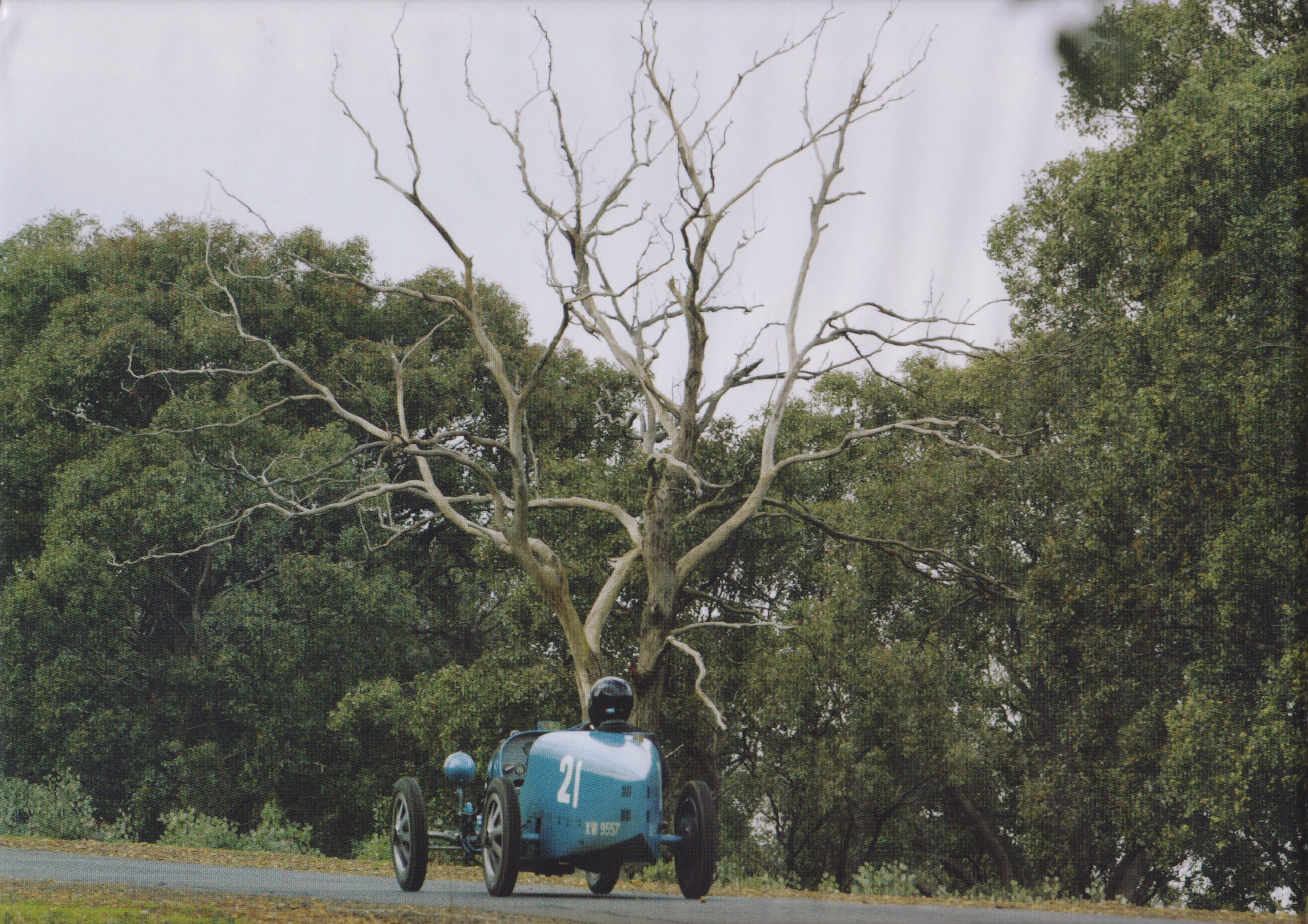
And lastly, me at Rob Roy in my Type 35 Bugatti in 2008.
Credits…
Bob King Collection
References: ‘AGP – Howard et al’, Bathurst: Cradle of Australian Motor Racing John Medley, ‘ The Magnificient Monopostos’. Simon Moore. ‘Bugattis in Australia and New Zealand, 1920-2012. King and McGann
Tailpiece: Spiro (Steve) Chillianis, Rob Roy 1960, with some work to do …

(S Wills)

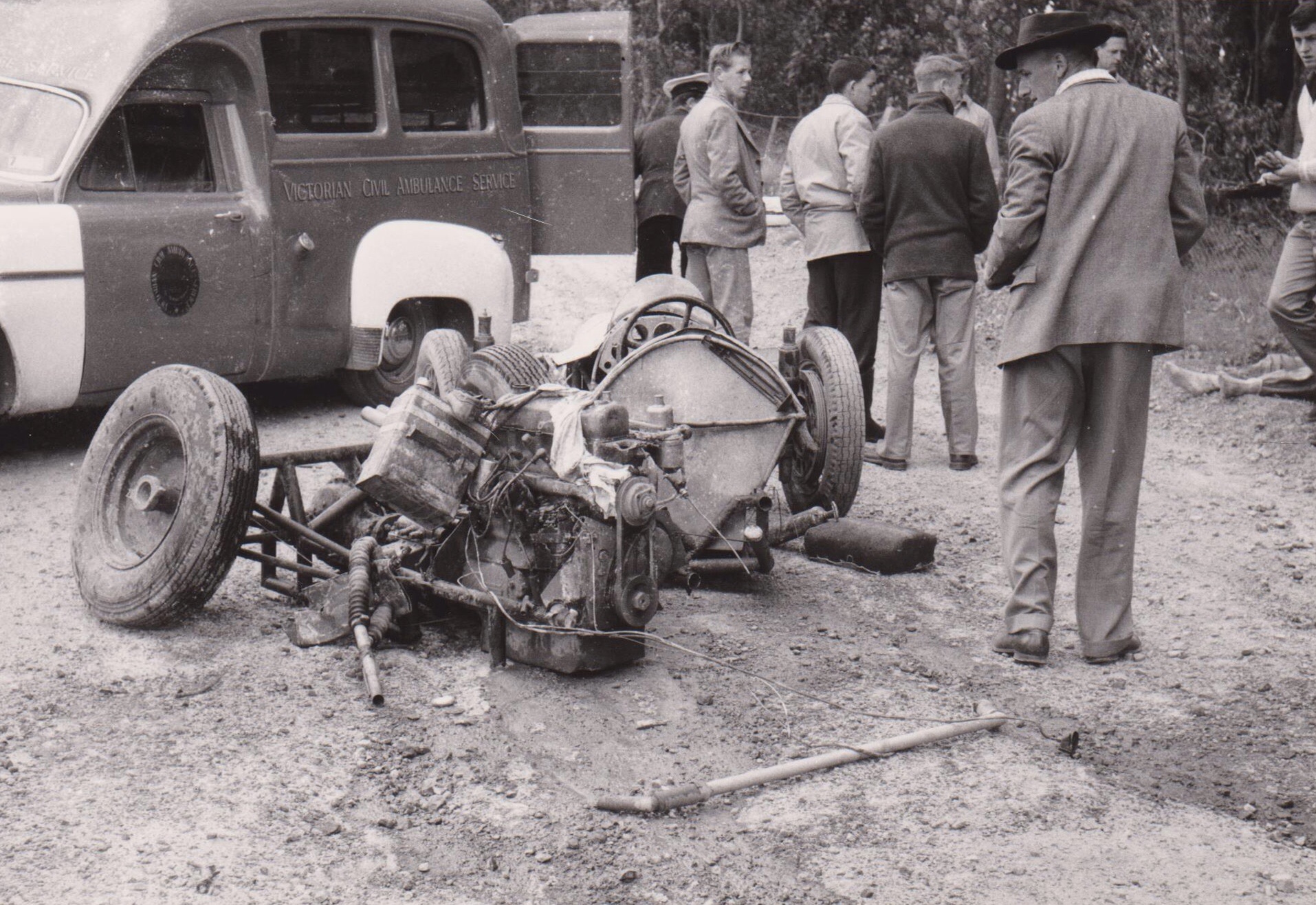
Car is the ex-Eddie Perkins rear engined Lancia Lambda Special, now fitted with an Austin A70 engine, or should we say ‘was fitted’. He recorded a time of 80.88 seconds- perhaps the ambulance broke the timing strip?
Finito…

(D Lupton)

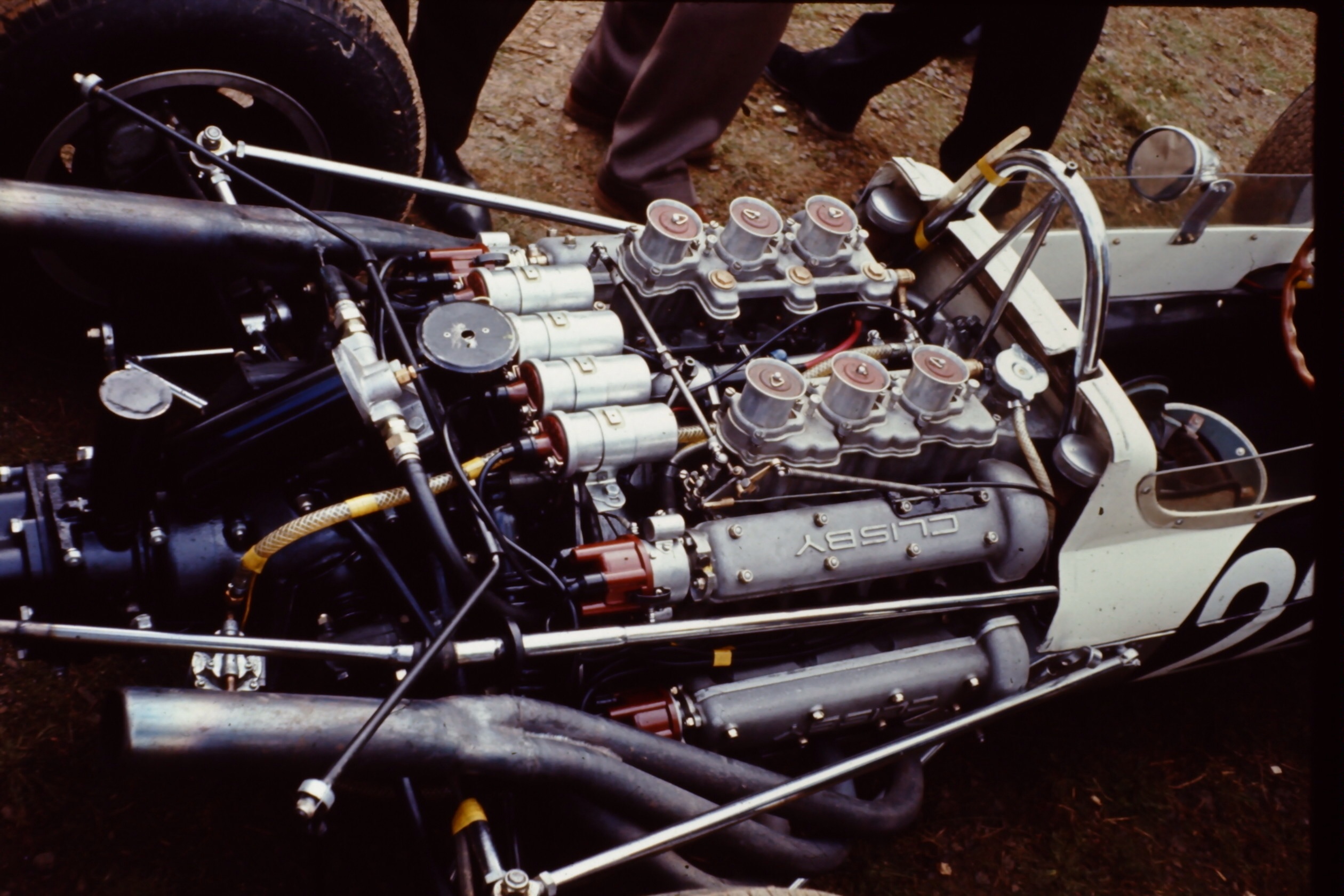
Andy Brown’s unique Elfin Mono Clisby V6 in the Calder paddock during the 21-23 May weekend in 1965…

Melbourne racer, restorer and Brabham expert Denis Lupton sent this photo to me yesterday- it is magnificent in its colourful detail so I thought we might finish the weekend as we started it- with a Clisby theme. I’ll pop it into the other article too, but it was too good to ‘lose’ within there, so here it is in all of its detailed glory.

Click on the link to the earlier article for the engine’s full technical details, the following occurs to me in absorbing the photograph.

Clisby Douglas Spl and Clisby F1 1.5 litre V6…

Isn’t it an exquisite little thang! Denis’ shot is so sharp we can easily see the beautiful finish of the cam-covers, ‘Clisby’ script and contrasting coloured retaining bolts. Three of the four Bosch-Clisby distributors are clear, as is the battery of four coils to provide lotsa spark for each of the twin-plugs per cylinder.

Blow the shot up and the intricate, beautifully fabricated, ‘Rose’-jointed throttle linkage is clear- as are the two triple-throat Clisby carburettors- boy they look yummy, so nicely made and finished. Die or sand cast?

Garrie Cooper designed the Type 100 Elfin or more colloquially the ‘Mono’ to suit the Ford pushrod and Lotus Ford twin-cam inline four-cylinder engines- I wonder if the tub of this chassis, Mk1 ‘M6548’ is different to the rest, perhaps Mono Experts Ron and James Lambert can let us know.

Either way, routing the exhausts to clear the top of the aluminium full-monocoque tub and then through the rear suspension linkages was a challenge and a test of the pipe-benders art. The nickel plated top radius rod on this side is clear as is the similarly shiny gear linkage which pops from under the fibreglass body and travels between the cam-covers to the Elfin modified VW case- Southcotts cut the gears in Adelaide if my memory of a conversation with James Lambert last weekend is correct.

The oil filter is atop the ‘box, as is the rear black roll-bar which is set to full soft at this stage of the Autumn weekend. That engine is low, the conceptual thinking of the 120 degree V6 is clear in terms of getting the masses as low down in the chassis as possible.

Wow. A visual feast.

And, if only…

Photo Credit…

Denis Lupton

image

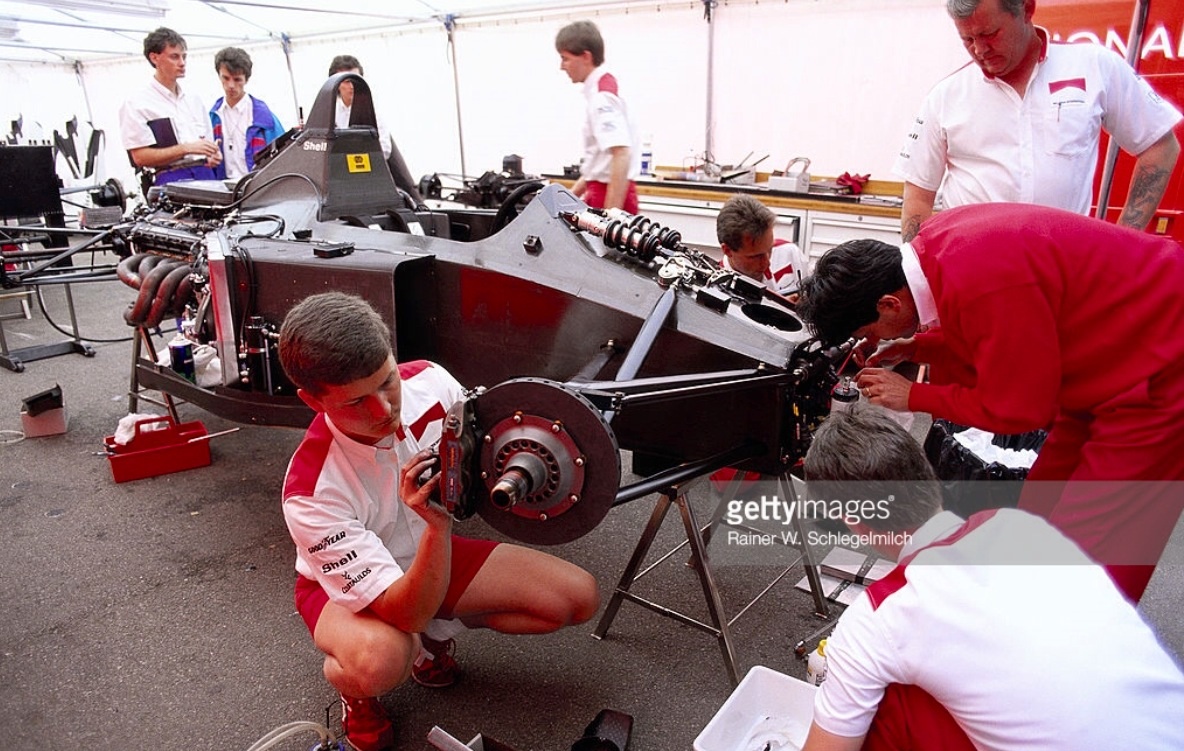
Rainer Schlegelmilch’s artistry lays bare the clinical beauty of the 1991 McLaren Honda at Silverstone on 14 July…

Whilst this article is a summary of McLaren’s ultimately successful 1991 season of changing fortunes with its new Honda V12 powered McLaren MP4/6- all of the photographs are by Rainer Schlegelmilch and were taken over the Silverstone British GP weekend of 11 to 14 July.

This was Honda’s third different type of engine in four seasons- a new 3.5 litre 60˚ V12 unit with greater piston area than the outgoing V10 it replaced and therefore it had a potentially higher rev limit. More revs, all things being equal, results in more power. It was not without its chassis design and packaging issues, the motor was longer, heavier and thirstier than the V10 it replaced but the anticipated 720bhp should have been more than enough, on balance to make the car faster.

When first tested by Ayrton Senna in an MP4/6C test-mule, he was far from impressed and said as much to the Japanese. The Honda people persevered of course, and McLaren’s season got off to a great start with four wins on the trot. The increased engine weight was partially offset by the latest development of McLaren’s six-speed manual, transverse Weisman/McLaren gearbox.

image

Team led by Neil Oatley produced a handsome and effective brute in MP4/6


Whilst visually similar to the outgoing MP4/5B, the new cars aerodynamic profile was different as designer Neil Oatley and his team had received fresh perspective and input from Henri Durand who had jumped ship from Ferrari to McLaren in mid-1990.

Many changes had to be made to the chassis to accommodate the longer engine and enlarged fuel cell needed to satisfy its greater thirst. Despite additional length, the new tub was much stiffer in terms of torsional rigidity and comprised fewer basic components than its predecessors.

There were changes to the suspension too. The  pushrod-activated coil-spring/dampers were now mounted on top of the chassis ahead of the cockpit instead of being installed vertically on either side of the footwell.

image

The increased fuel consumption presented lots of challenges. Despite plenty of development on the engine management system, Senna twice ran out of fuel (at Silverstone and Hockenheim) but the Brazilian Ace and his new car remained unbeaten up to and including Monaco- giving McLaren a comfortable lead in the Constructors‘ Cup at that stage of the season.

This margin was to prove crucially important as the team’s performance began to slip and Williams Renault began to gather pace with Nigel Mansell and Riccardo Patrese threatening as the Williams FW14 Renault V10’s reliability improved.

‘In Montreal two things quickly became apparent. The first was that the Honda’s extra power was simply to offset its greater weight relative to the V10s, particularly when its internal frictional losses continued to rise. The other was that the Williams FW14s, particularly Mansell’s, were really getting into their stride’ wrote McLaren.

Honda, of course continued development of its V12. The ‘Spec 1’, which won at Phoenix, Interlagos and Monaco was replaced by ‘Spec 2’- introduced ahead of Monaco offered better mid-range punch thanks to a new induction system. The friction problems were addressed in the ‘Spec 3’ variant here at Silverstone.

In addition the cars suspension was evolved, new linked rocker arms were fitted to reduce roll and a cockpit-adjustable ride-height mechanism was deployed.

The fuel metering issues so obvious during the British and German Grands Prix weekends were mainly caused by Shell’s experimentation with different fuel densities and viscosities.

image


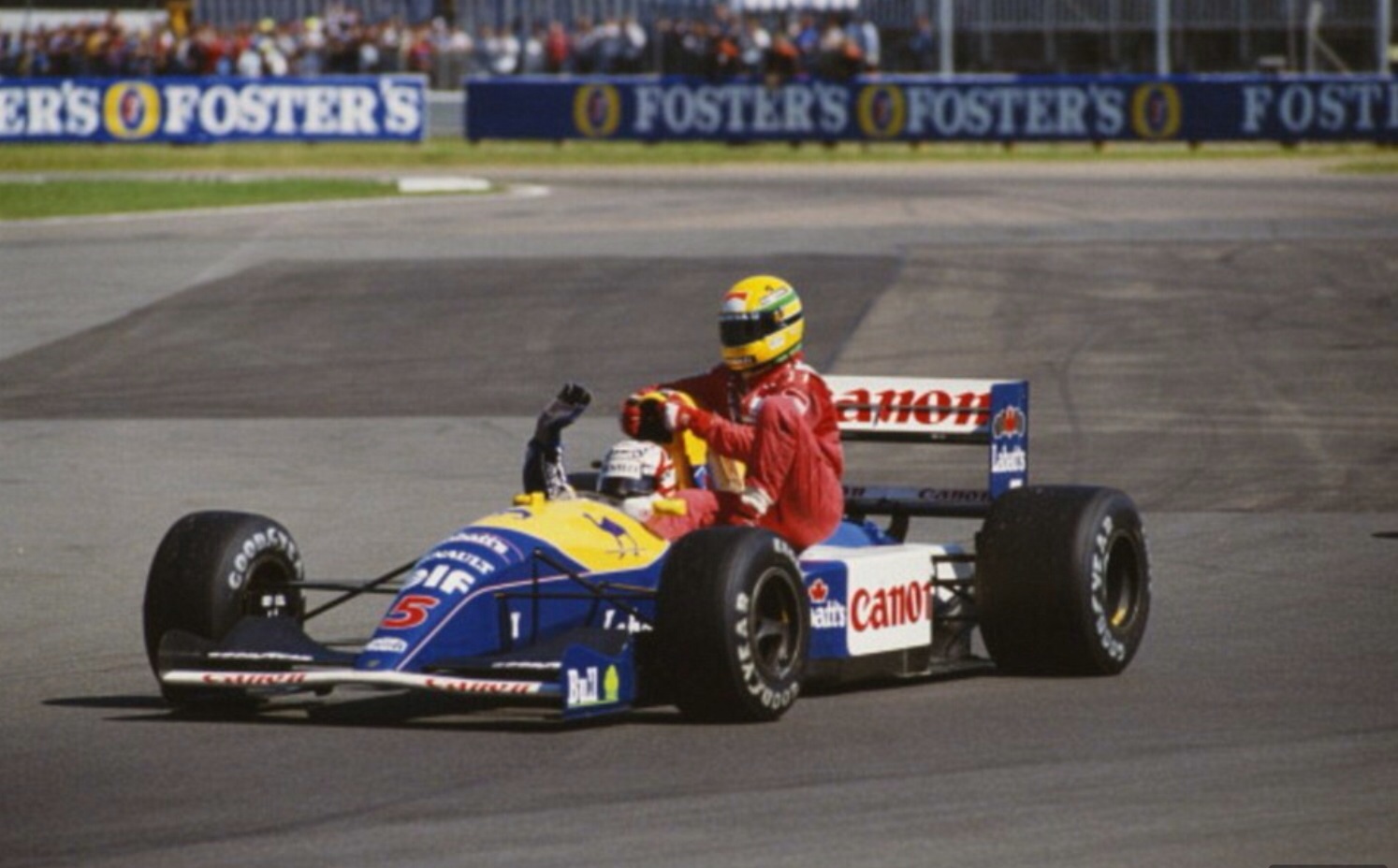
At Silverstone Nigel Mansell and his Williams dominated at home, other than for part of the first lap- Senna jumped from grid 2 and led until Mansell passed him into Stowe, the Brit led from start to finish.

Nigel and Ayrton drove away from the rest leaving Berger, Prost and Alesi scrapping over third, a duel settled in Jean’s favour, he lost the place later in the race in a collision with Aguri Suzuki. Mansell won from Berger’s McLaren and Prost’s Ferrari 642 V12 with Senna classified fourth having lost his hard-raced second after running out of fuel, as written above.

Mansell gives Senna a lift back to the pits at the end of the British GP (R Schlegelmilch)

‘At Paul Ricard, another inaccurate readout forced Senna to drive conservatively, although following this Honda’s research and development effort accelerated dramatically so that by the time he arrived in Hungary he had a car which could be safely revved to 14,800 rpm, albeit only for short bursts’

In Budapest McLaren regained its form in order to able to save its season.

With great chassis balance and another reworked engine comprising lighter cylinder heads, camshafts and connecting rods, Senna pulled out some of the magic only he possessed and pushed the Williams FW14 Renault RS3 3.5 V10 duo back to second and third places.

Despite a ‘box failure he did it again at Spa where he nursed the failing car home and saw his lead over the Williams boys grow significantly after another Mansell retirement due to an electrical problem lost the Brit a ‘sure win’.

image

Engineers prepare two Honda RA121E V12’s for fitting into the cars of Senna and Berger

Then Williams had two wins- the Portuguese (Patrese) and Spanish GP’s (Mansell) in a season of changing fortunes, in Spain Senna struggled on the wrong tyres.

‘At Suzuka the order flipped again, the correct tyres and yet more successful engine development leaving Senna in an unassailable position on 96 points. He returned to Brazil with a resounding third title, while Berger finished fourth with 43 points, having been handed victory by Senna in Suzuka. McLaren again took the Constructors World Championship’.

An historic sidebar to MP4/6 is that it was the last car to win an F1 World Championship powered by a V12 engine and using a traditional manual gearbox. Whilst McLaren tested a semi-automatic ‘box during the season it was not deemed race-worthy so was not used, Williams and Ferrari were the only teams so equipped that season.

The 1992 championship winning Williams FW14B Renault was ‘an orgy of technology’- semi-automatic transmission, active suspension, traction control and for a while, anti-lock brakes whilst still using the evolved but tried and true Renault RS3/4 engines, a story for another time…

image


Credits…

Rainer Schlegelmilch, Getty Images, mcLaren.com

Tailpiece…

image

Finito…


(B Young)

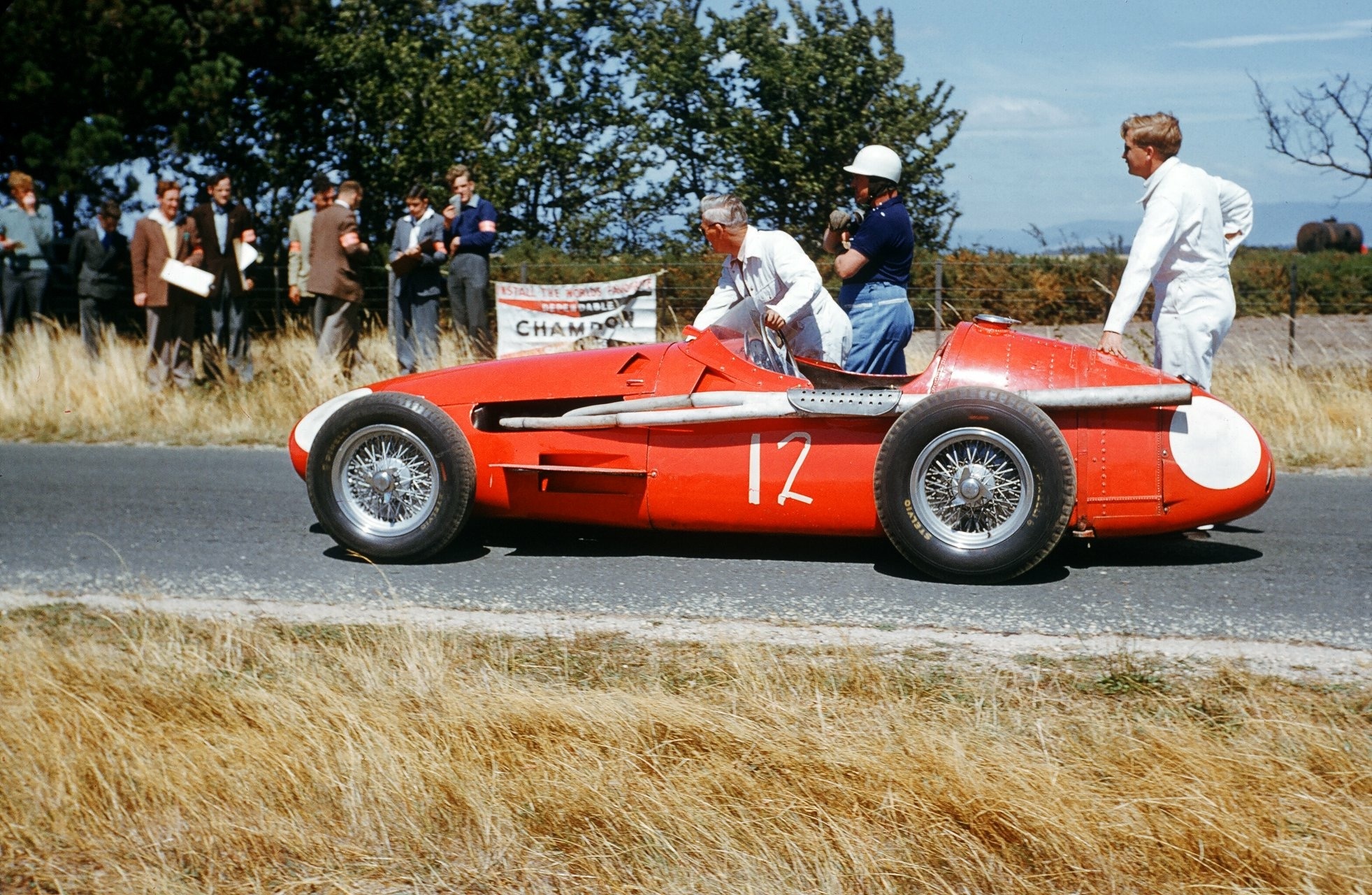
Stan Jones, Maser 250F and Bib Stillwell Cooper T43 Climax joust into Mountford Corner during the 1958 ‘Longford Trophy’ Gold Star round, 3 March…

It was the first time the great Tasmanian circuit hosted a round of the national drivers championship, the locals turned out in droves, including enthusiast/photographer Bob Young who took these remarkable, crisp oh-so-clear, evocative photographs.

Colour photos of this quality are so rare of Australian racing then. Each one in some ways deserves to be posted on its own but in the end I decided it was better to do a short article around them as a group. They are not the only shots he took on the day mind you- others have already been posted on the Historic Racing Car Club of Tassie Facebook page and filched by me! See the links at the articles end to view some of them.

I wonder whether Stan is having a shot down the outside of Bib or is Bib plunging down the tiny- but just big enough gap Jones left for his fellow Melbourne motor dealer buddy/competitor. Whatever the case, i suspect Stan The Man- and he was very much one of them at the time, gathered Bib up on the long run out of the tight right-hander, gently rising and then steeper towards the Water Tower- 2.5 litres of Maser six having a bit more grunt than a 1.7 litre Climax FWA four.

Otto Stone steering, Stan and John Sawyer, 250F, Longford 1958. Racer/engineer Stone’s counsel and car preparation were key factors, with perhaps Jones growing maturity as a driver, in Stan’s well deserved success. Pirelli Stelvio tyres BTW- photo is that sharp! It’s early in the weekend, the team have not applied the real race number decals to the car yet (B Young)

Bib sold his ex-Hunt 250F to Arnold Glass and jumped into the first of many water-cooled Coopers with the T43 (F2/9/57 according to John Blanden) whereas Stan, who changed racing cars more often than he did his Jocks- and had a long history of Cooper air-cooled and T23 experience, hung onto the 250F (chassis ‘2520’) and profited from the decision rather than jump into a Cooper just then. He did of course buy T51’s in time, with which he was very fast.

Stan won the 1958 Gold Star with two victories at Fishermans Bend and Phillip Island- book-ending his season with wins and returned to Longford twelve months hence and finally won the AGP he so richly deserved aboard the 250F from Len Lukey.

By that stage Lukey had switched from the Cooper T23 Bristol shown below to an ex-Brabham Cooper T45 Climax Jack raced in Australasia in late 1958 and over the summer races of 1959 before heading back to the UK and a World Championship aboard factory Cooper T51’s.

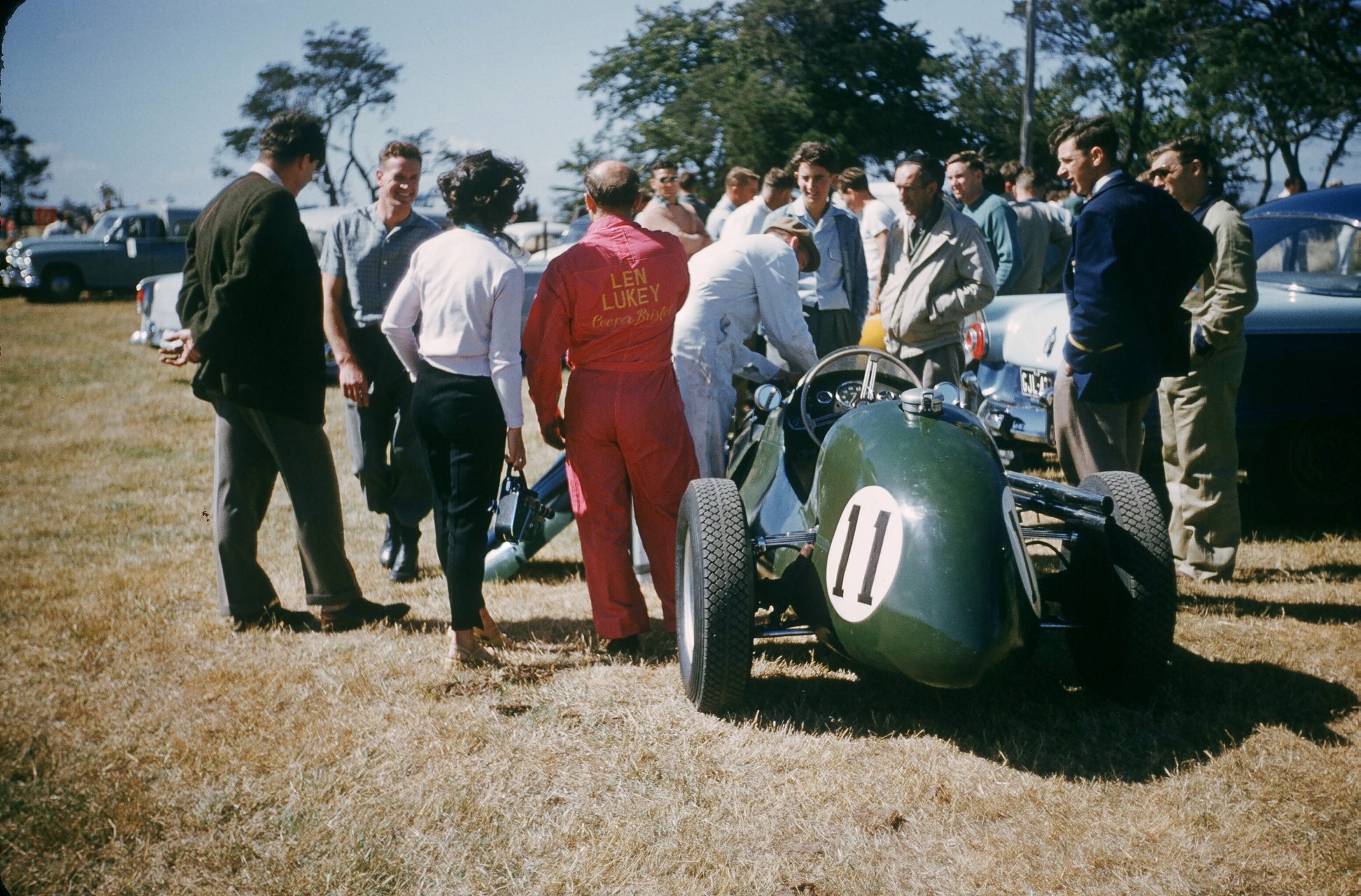
Len jumped from Ford Customline Touring Cars into this Cooper Bristol and an evolved Lukey Bristol in a relatively too brief racing career, his ‘Lukey Mufflers’ business funded his racing efforts- he was a friend to motor racing via Phillip Island and other means for the rest of his life. Another mighty shot, Len has just started his turn-in to Mountford, car looks just superb, as indeed it was-well prepared and driven (B Young)

Lukey’s Cooper Bristol was the ex-Tom Cole-Reg Hunt-Kevin Neal machine, chassis ‘CBR/2/9/53’ with which he did so well in 1957-8, but the reality was the car wasn’t an outright winner, hence the upgrade to the then, very much latest available, Cooper T45. With this he pursued Gold Star 1959 success in a year of speed, consistency, good preparation and perseverance- at twelve rounds it was the longest ever Gold Star championship.

Late in its ‘in period’ Australian life the front engined T23 was fitted, as all of the Australian Cooper Bristols were, with a Holden ‘grey’-six or Chev small-block V8, in the case of this car a Holden engine. The racer eventually passed to the Donington Collection in the early seventies and later still back into private hands.

The Man in Red- Lukey nattily dressed with his wife holding a serious camera. Long chromed exhaust said to be unique to this ex-Cole-Gibson-Hunt-Neal-Lukey et al car (B Young)

There is little doubt a 2.5 litre Coventry Climax FPF powered Cooper would have very comfortably won the 1959 AGP and Gold Star but them things were like hens teeth- 2.5 FPF’s were issued only to works and favoured teams in Grand Prix racing until the Climax lads could keep pace with global demand which in practical terms meant during 1960.

Ted Gray won the Longford Trophy on this clear but chilly Tasmanian weekend, to have heard the big, booming fuel-injected Chev V8 engined Tornado blasting its way around Longford would have been really something!  This car does sound just like an F5000, imagine that in 1958!

It’s showtime. Raceday. Just love this shot, atmosphere plus.

Len Lukey’s and Lou Abrahams’ boys push their steeds to the form-up area. That beautiful, clever beastie to the left is Tornado 2 Chev 283, the yellow Cooper in the background is Aussie Millers T41. Note the Repco service van- its chilly too, 3 March is still summer’ish but most of the chaps are well rugged up against Tasmanian cool.

(HRCCT)

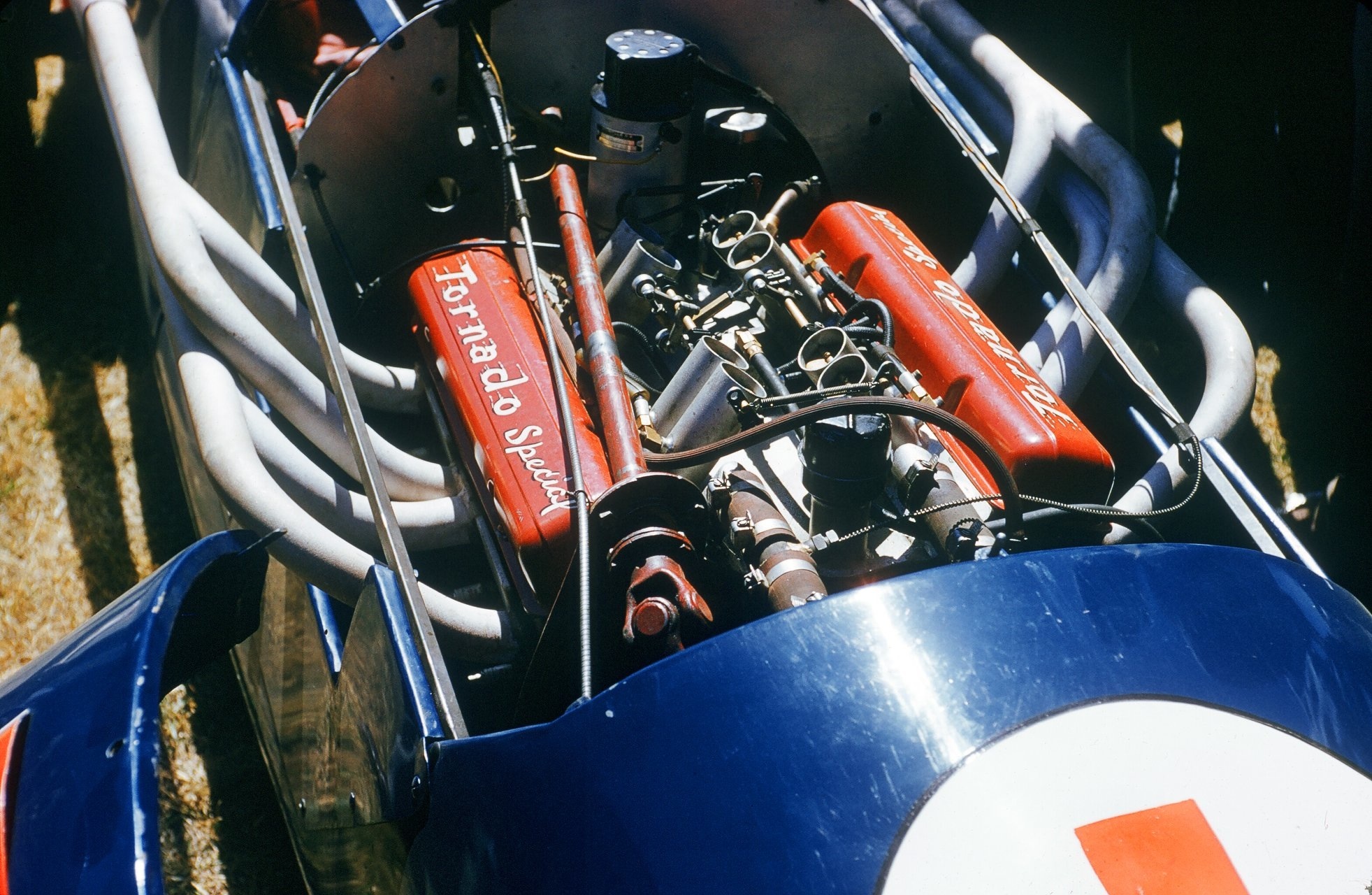
Business end of the Tornado 2 Chev in the Longford paddock. GM Corvette ‘small block’ 283 CID V8 with lots of goodies from the US including Vertex magneto and home grown fuel injection using some Hilborn Travers components, circa 380bhp (B Young)

As you would have surmised from the foregoing descriptions of the cars, Australian National F1 at the time (until the end of 1963) was run to Formula Libre, hence the presence of Doug Whiteford’s ex-works Maserati 300S below.

I have bemoaned the fact that Doug bought a sportscar from the Officine Maserati team at the end of the 1956 AGP weekend at Albert Park, rather than one of the three 250F’s they had with them.

Whilst Douggie was no spring-chookin’ by then- he started racing pre-War and won his first AGP aboard his Ford V8 Spl ‘Black Bess’ back in 1950, he still would have given his contemporaries a serious run for their money in his always beautifully prepared and driven cars.

Doug sold this car in the early-sixties to Bill Leech, the racer and pillar of the Victorian Light Car Club who used the car both on the road- it was a familiar sight on Beach Road jaunts from Brighton, and at historic meetings in the early years of such racing in Australia. It was a sad day when this ‘mobile Monet’ left our shores.

Ooh-la-la. Sex on wheels and what a backdrop- the vivid red Maser 300S ‘3055’ contrasted against the dark shadows and green Mountford Pine- it’s still there by the way (B Young)

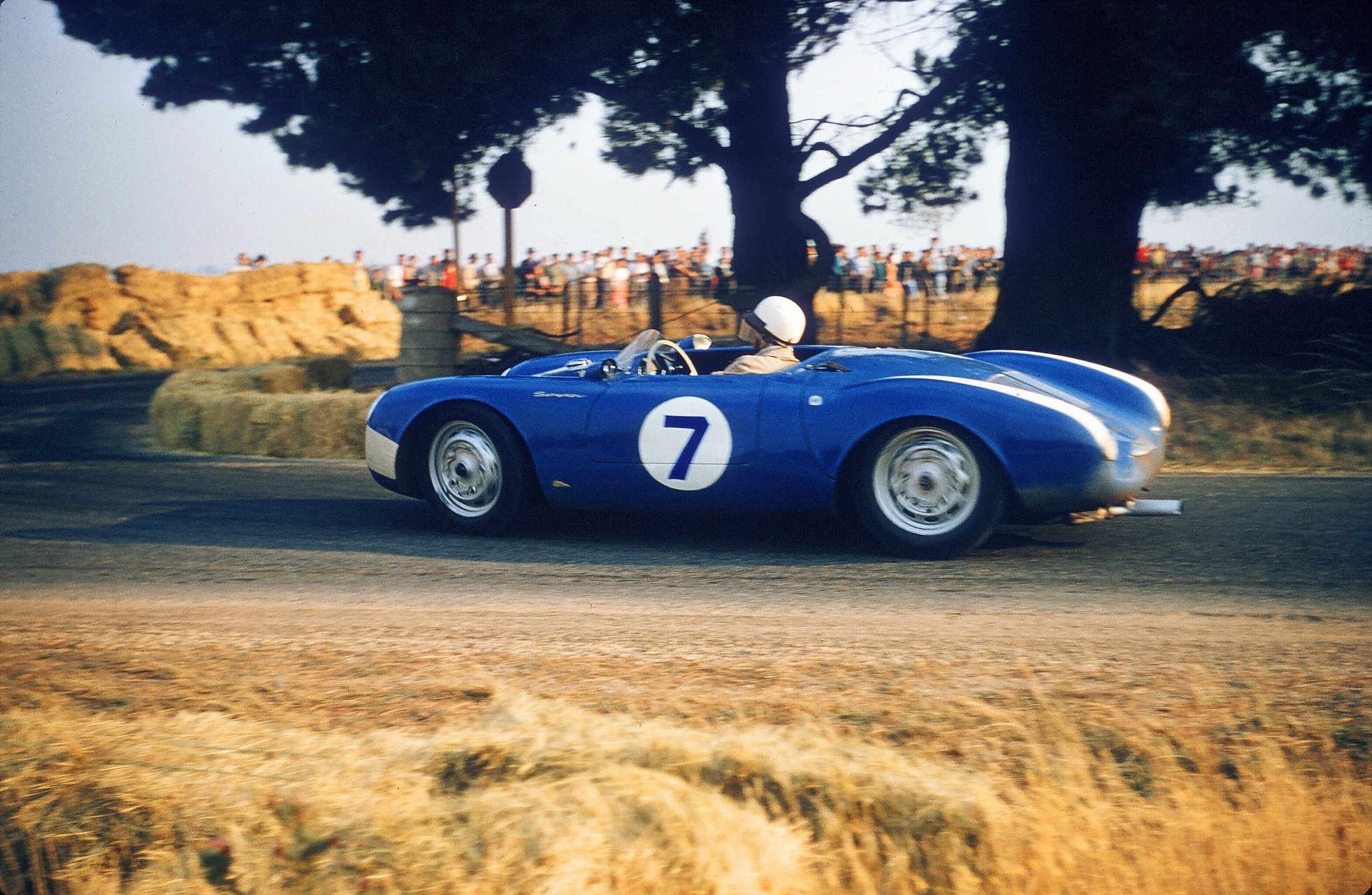
It was another batch of Bob Young’s photos which inspired an article I wrote a little while back on Norman Hamilton’s Porsche 550 Spyder, which on this weekend was driven by Melbourne Hillclimb ace Bruce Walton in the sportscar events.

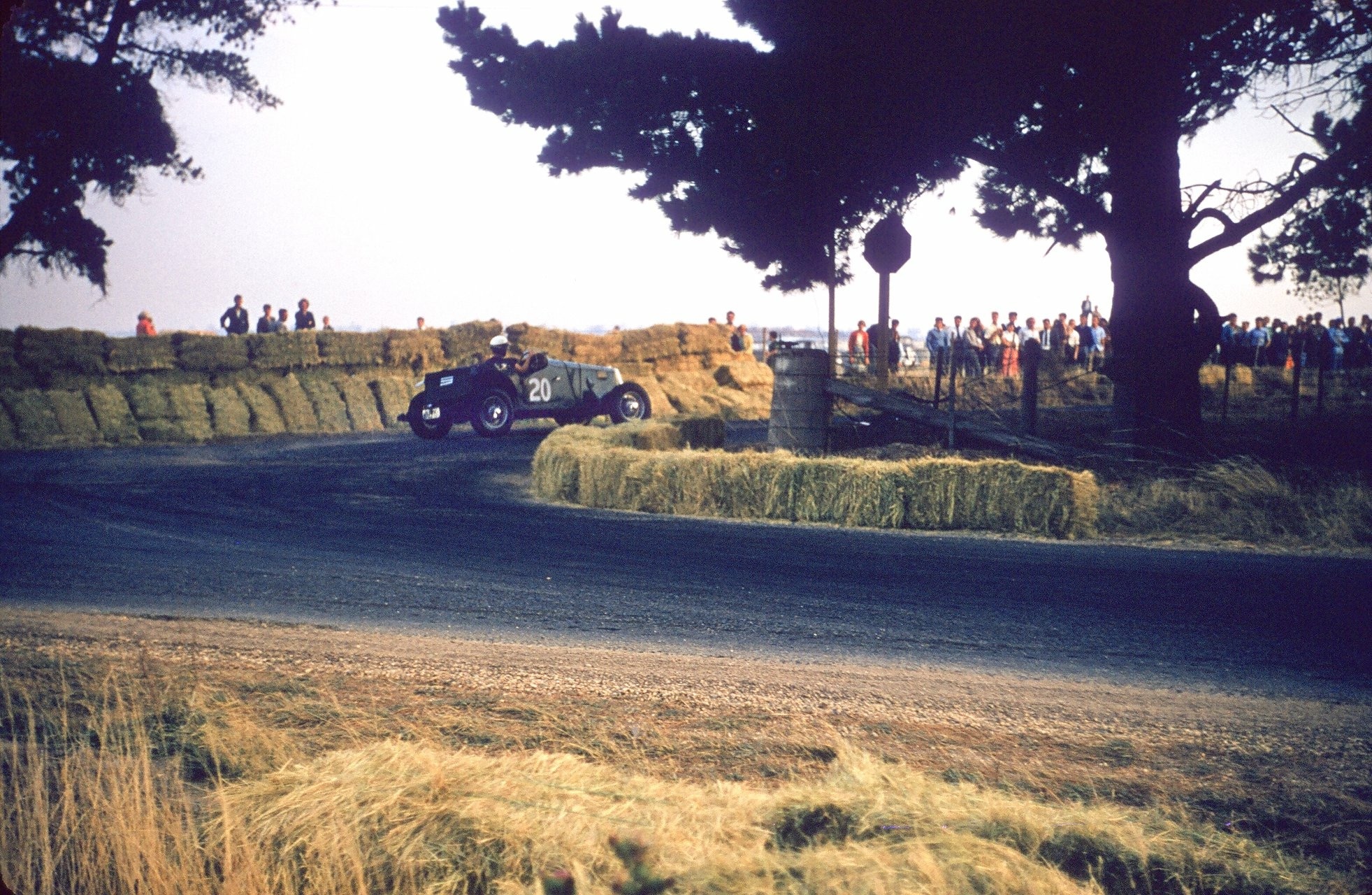
(B Young)

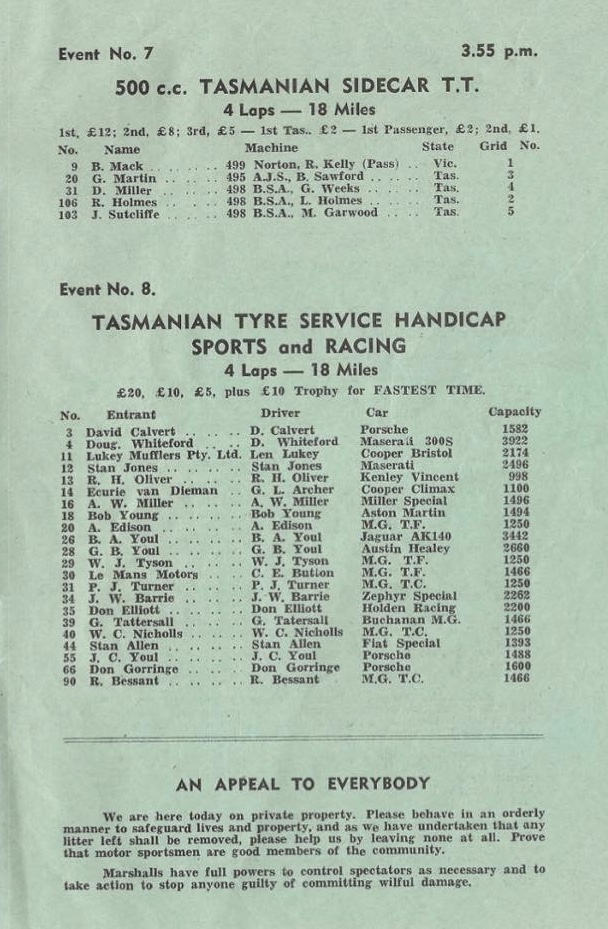
The photo below is of the A Edison entered 1250cc MG TF Spl- I know nothing about the car or driver, who can fill us in?

(B Young)

Article Links…

Longford Trophy and Tornados; https://primotipo.com/2015/11/27/the-longford-trophy-1958-the-tornados-ted-gray/

Porsche 550 Speedster; https://primotipo.com/2018/06/28/hamiltons-porsche-550-spyder/

Longford in detail; https://primotipo.com/2018/07/05/longford-lap/

Stan Jones; https://primotipo.com/2014/12/26/stan-jones-australian-and-new-zealand-grand-prix-and-gold-star-winner/

Doug Whiteford; https://primotipo.com/2015/05/05/doug-whiteford-black-bess-woodside-south-australia-1949/

Etcetera…

(B Young)

Constabulary ensuring the Course Car- Clerk of The Course perhaps, leaves the circuit to make way for the racers.

(B Young)

Paddock scene may be the 1959 AGP meeting.

(L Lukey)

The Lukey Cooper Bristol again.

Credits…

Bob Young on Historic Racing Car Club of Tasmania Facebook page, ‘Historic Racing Cars in Australia’ John Blanden

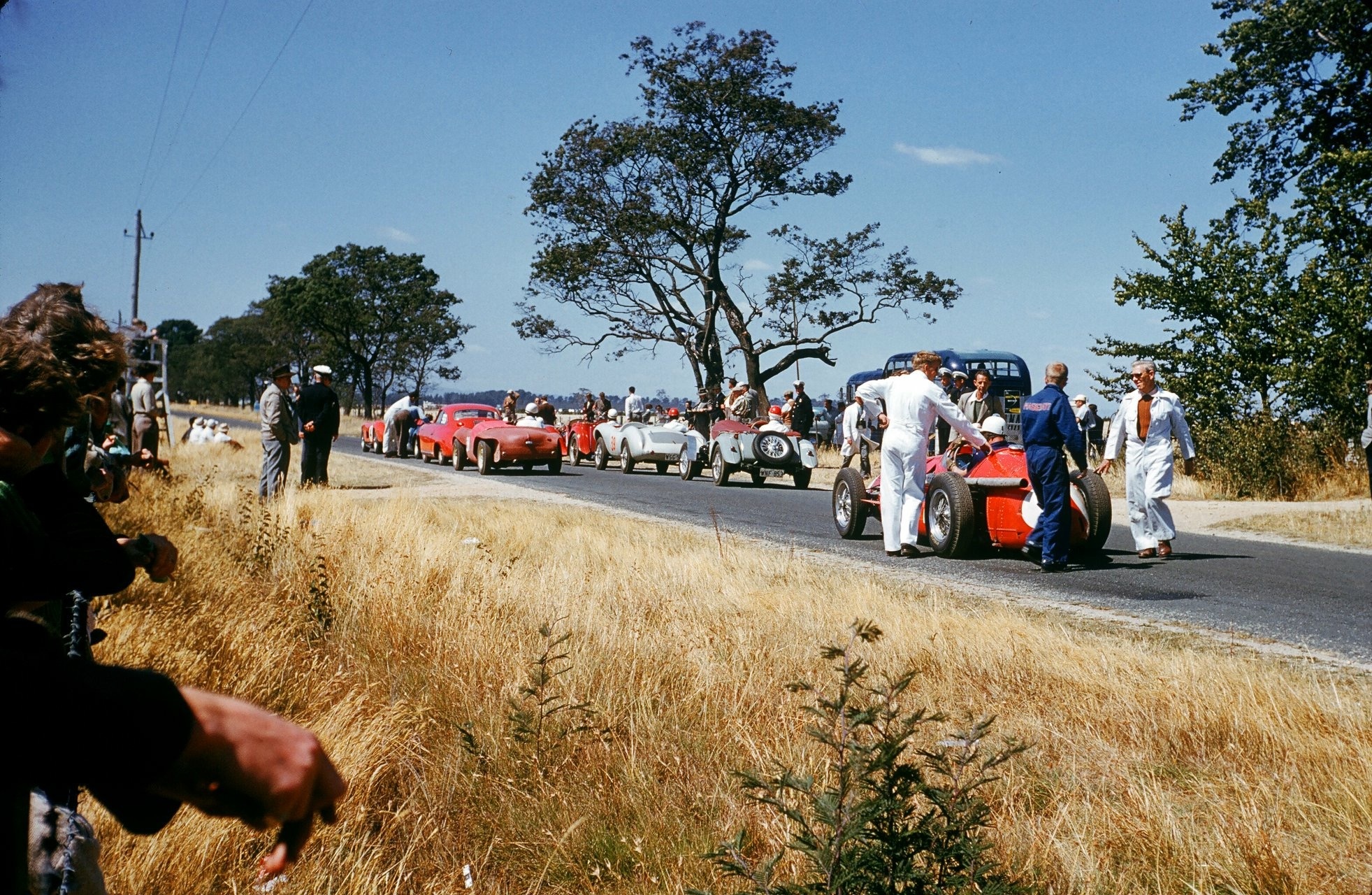
(B Young)

Tailpiece: The ‘Tasmanian Tyre Service’ Handicap…

It’s a bit of a puzzling photo really- the handicap grid sort of makes sense but Doug Whiteford belongs up the back with Stan as ‘scratch- men’ rather than at front left. John Youl’s red Porsche 356 stands out, other drivers and cars folks?

By the way, they are in the original starting line area, on The Flying Mile, just a way back from Mountford Corner, clearly Bob Young stuck to this part of the track and the paddock- to the right of the racing cars.

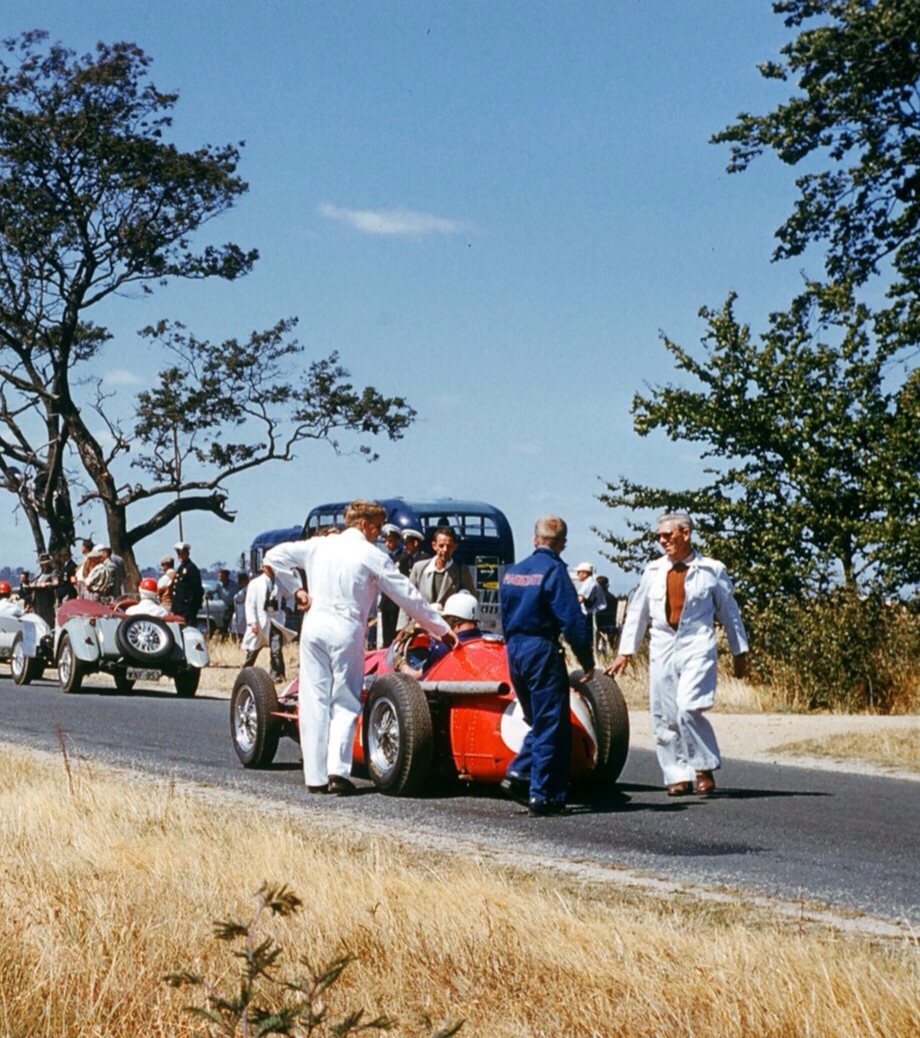
Cropped version of the above photo, the focus Stanley, ‘2520’ and the lads (B Young)

John Sawyer is leaning on the tail, Otto Stone is on the right approaching, Stan readies himself in the cockpit, I wonder who the fella in the neato Maserati overalls is, and in the MG TF up the road to the right is Charles Button, still active in the Historic Racing Car Club of Tasmania today Grant Twining tells me.

Finito…

(B King)
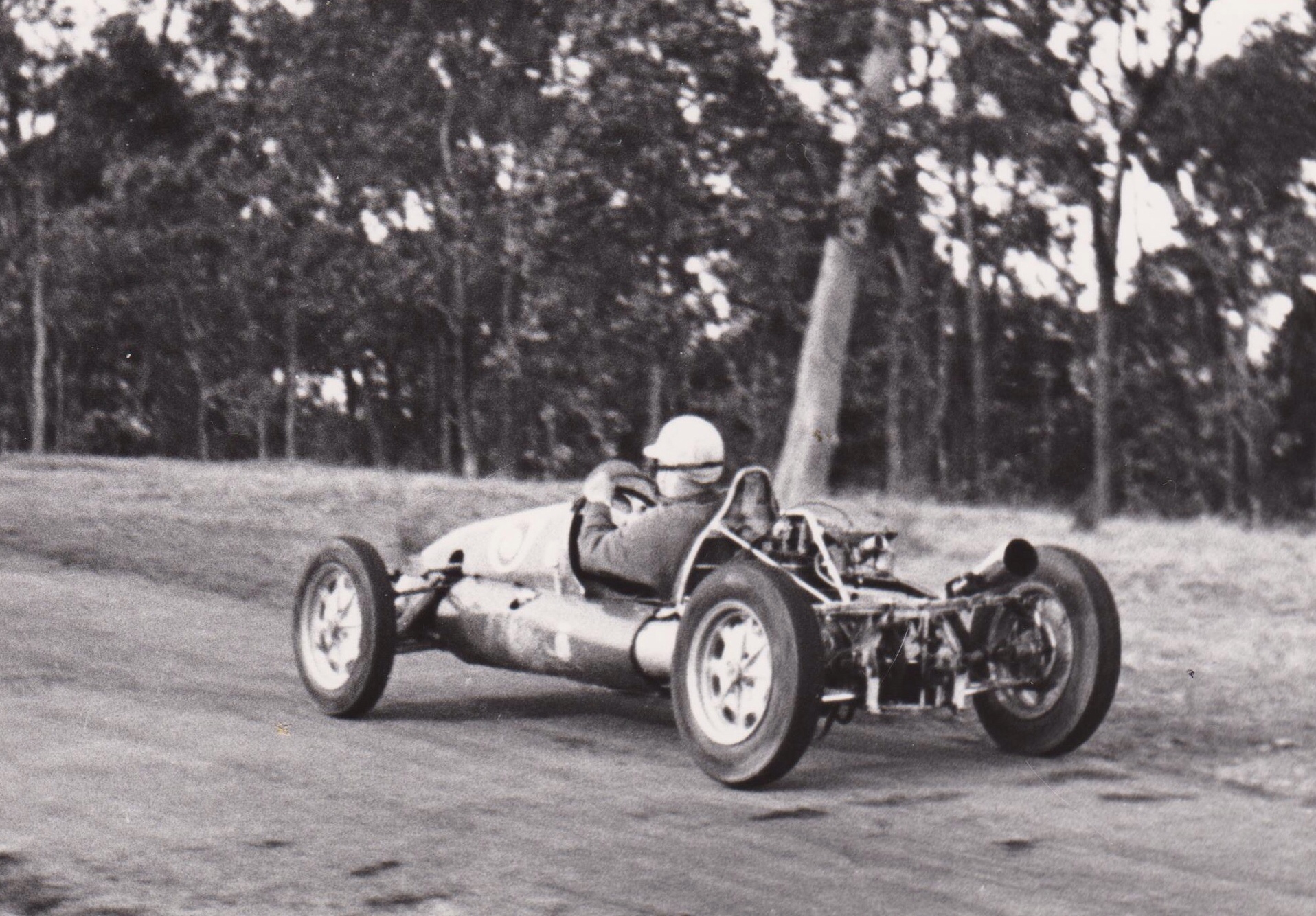
Many European and American engines were used to replace the tired original in racing Bugattis in Australia – notably Ford’s V8 and Hudson’s side valve straight eight – ‘there’s no substitute for litres’…

However, it was Australia’s own cast iron, pushrod-OHV ‘grey’ Holden six that was as effective as any.

We will take a look at two important examples where a ‘grey’ successfully replaced the sophisticated mid-nineteen twenties single overhead cam, three valves per cylinder, 1500cc, Bugatti unit.

Bob Baker of coachbuilding fame, powers through Tin Shed corner at Rob Roy. This body would not have been the best example of his art (B King)

Type 37 Bugatti, chassis no. 37209…

This is the Bugatti that multiple Australian Grand Prix winner Bill Thompson made his Phillip Island debut with in 1929.

His race lasted but two laps before he exited with a blown-up motor – youthful over-enthusiasm perhaps? This was far from the end of the cars participation in the AGP, with the next owner Ernie Nichols contesting the 1934 and 1935 GPs at the same venue.

After a succession of well known drivers, it returned to Sydney where it was prominent in the early post war racing scene, first with Roy Murray and then Irwin ‘Bud’ Luke. The latter finished a splendid seventh in the 1949 AGP at Leyburn the ageing car winning the handicap and averaging 73 mph for the 150 miles. At Easter Bathurst, 1951, it was a victim of the well named Conrod Straight after having achieved almost 98 mph.

Fishermans Bend did not provide the most exciting background for photographers to display their wares. This is John Hall at the wheel, possibly on the way to a podium in the B Grade Scratch Race (B King-Spencer Wills)


Paddock shot at Phillip Island (B King)

It was back at Bathurst for the AGP in 1952, but now Holden engined. It was said to be the first Holden engined racing car – do our readers know of an earlier Holden powered special? The car today is little changed from when it was last raced seriously in the nineteen sixties and is still in regular use.

In terms of the articles opening photograph.

The Holden Bugatti was still an effective racing car into the sixties in the hands of a number of drivers – the 3 inlet trumpets are a give-away that this is no ordinary Bugatti. Who is the driver entering Repco Corner at Phillip Island, probably in the late nineteen-fifties though folks? We can confidently rule out Valery Gerrard. John Hall was rotund, as was John Marston. Therefore it is likely to be Barry Elkins or John Pyers?

(B King)

The old girl (above), still with unsupercharged Bugatti engine, was  still able to hold a bevy of stripped TC’s up the mountain at Bathurst.

(P Coleby)

‘37209’ again, and still in action at Calder circa 1962 when owned by the Watson brothers, driver unknown.


John Cummins in ‘37332’ keeps Bill Sherwill honest on the dirt at Tarrawingee, near Wangaratta, Northern Victoria. This is a good illustration of Cummo’s flamboyant style (B King)

Type 37(A) Bugatti, chassis no. 37332…

John (Cummo) Cummins, grand prix driver, raconteur, racing commentator and all round good fellow will be familiar to many readers as the driver of this Holden engined Bugatti special.

And it was a very special car. New in 1928, it gained fame as the feature car of TP Cholmondeley Tapper’s “Amateur Racing Driver” (Foulis). The car was owned by New Zealander Tapper’s partner, Eileen Ellison, and they campaigned it extensively in England, Europe and South Africa.

TP Cholmondeley-Tapper frightens a sapling in the unmodified Type 37 at a Bugatti Owners Club hillclimb at Chalfont-St Peter 25 May 1935. Presumably when the car was owned by Eileen Ellison (Bill Brunell Collection-MPL)

In the early thirties they had it supercharged at Bugatti’s Molsheim factory. In the mid-thirties it was modified by Leslie Bellamy; he fitted his eponymous independent front end which was detrimental to the cars appearance, and probably also to its handling, as it shortened the wheelbase.

(B King)

Cummo found the engineless car in Newcastle-on-Tyne in 1952 and brought it to Australia where Len Sydney fitted a hot Holden engine.

Here above is the down-at-heel Bellamy. No engine, no problem- fit a ‘grey’. This was possibly the third racing car so fitted with Lou Molina and Silvio Massola splitting the two Bugattis in the precedence stakes with their ‘MM Special’.

John’s position as an engineer at Chamberlain’s gave him access to a veritable Who’s Who of tuning experts – this resulted in a standing ¼ mile time of 14.4 seconds and 135mph on Conrod Straight. In recent times the car has been returned to the standard configuration of a supercharged Type 37A Bugatti.

Bibliography and Photo Credits…

‘Bugattis in Australia and New Zealand, 1920 – 2012’. Bob King & Peter McGann. (Self published 2012), ‘Amateur Racing Driver’ TP Cholmondeley-Tapper (Foulis, undated), Bill Brunell Collection in the Motoring Picture Library

Bob King Collection, Kees Jansen, Spencer Wills, Peter Coleby Collection

Tailpiece: John Cummins, ‘The Wall’, Templestowe Hillclimb, in Melbourne’s then outer, now inner east…

(B King)


Finito…