(Kiama)
I wrote an article about beach racing at Gerringong Beach near Kiama on the New South Wales Illawarra Coast a while back…
The article focused on a race meeting in May 1930, I had too many photos for that piece, the purpose of this article is to share them here.
They cover a diversity of Gerringong related topics- the May 1930 meeting, three land speed record attempts and Sir Charles Kingsford-Smith. The history of Gerringong Beach aka Gerringong Speedway is in that earlier article, click here to read it; https://primotipo.com/2018/10/26/gerringong-beach-races-1930-bill-thompson/
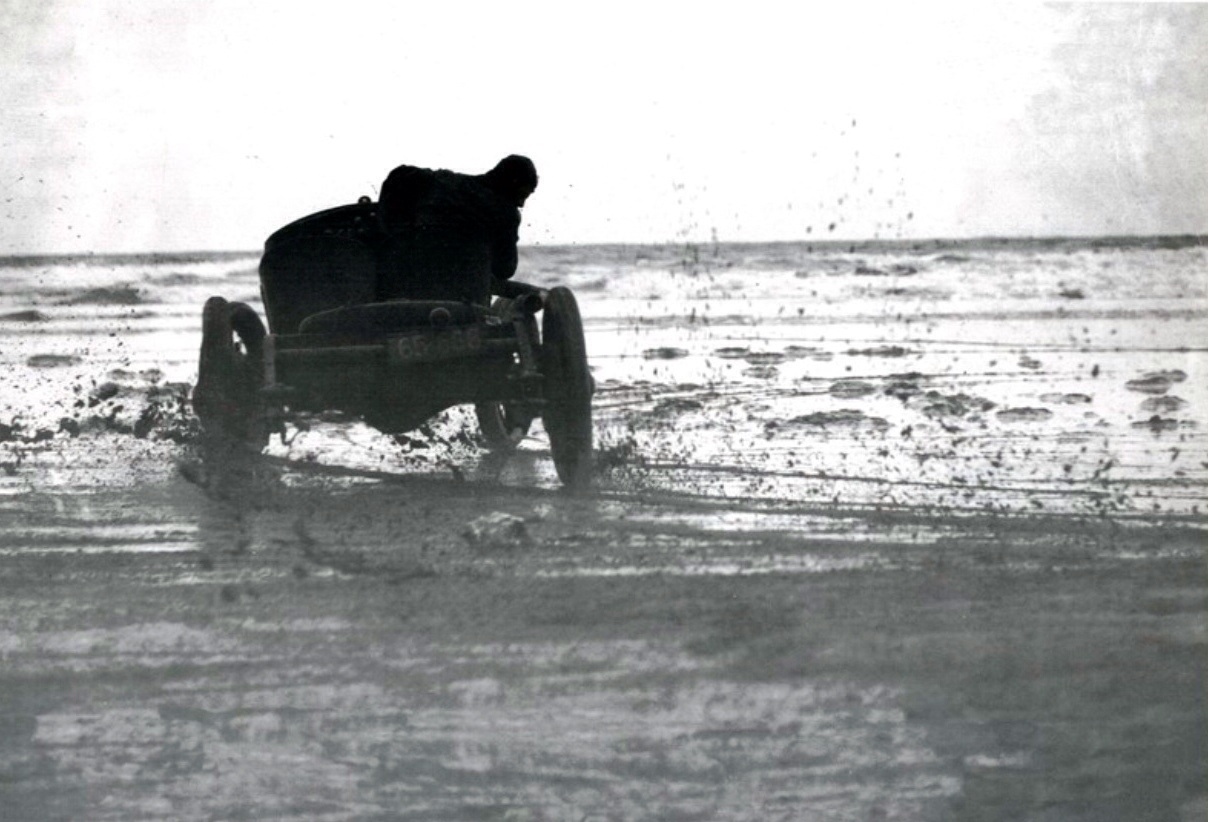
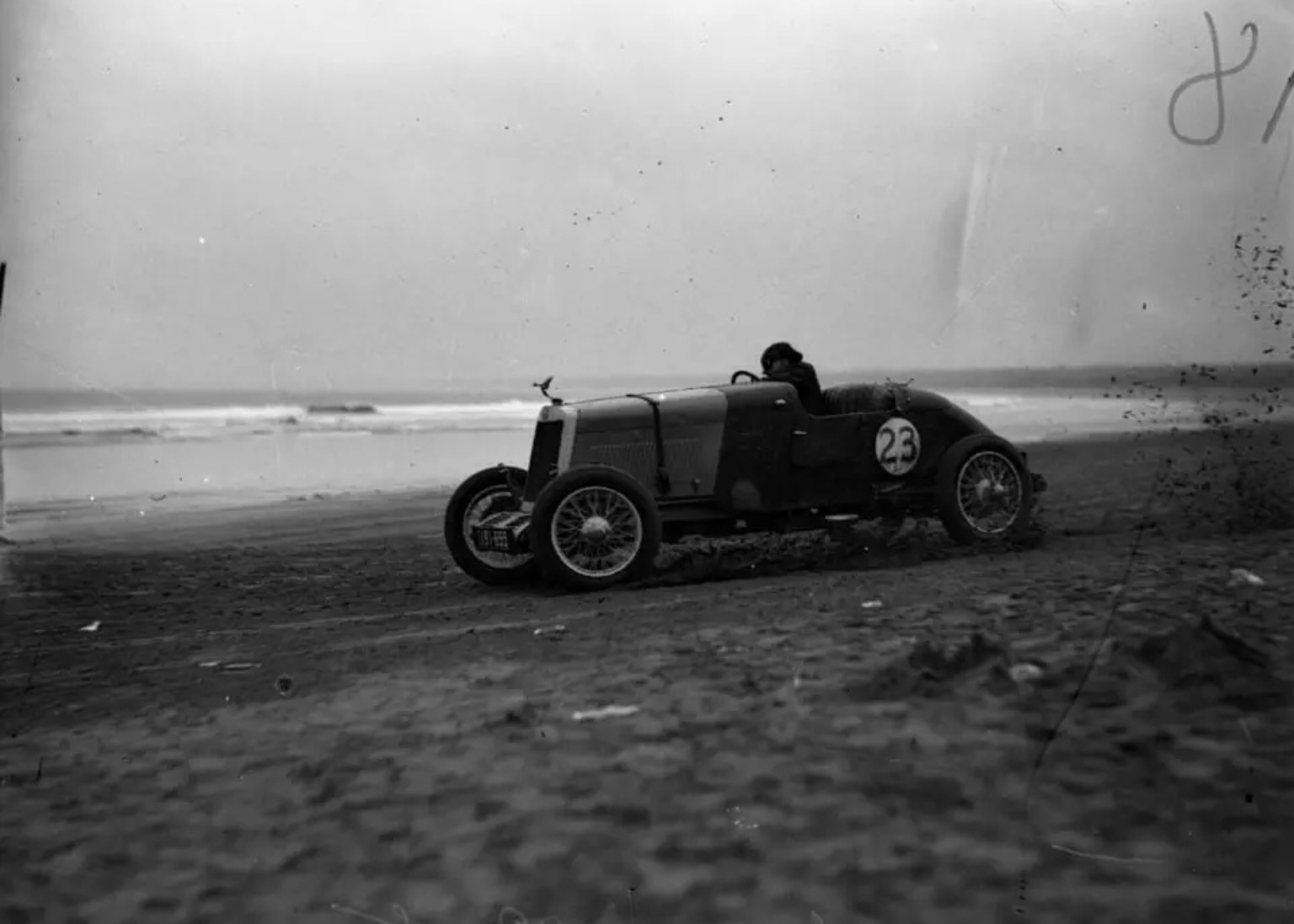
I’ve no idea who the driver or car above is but just love the silhouette of machine and driver against the backdrop of the Pacific Ocean. Its taken during the May 1930 meeting as the ‘track’ fights a losing battle with the tide.

(Kiama)
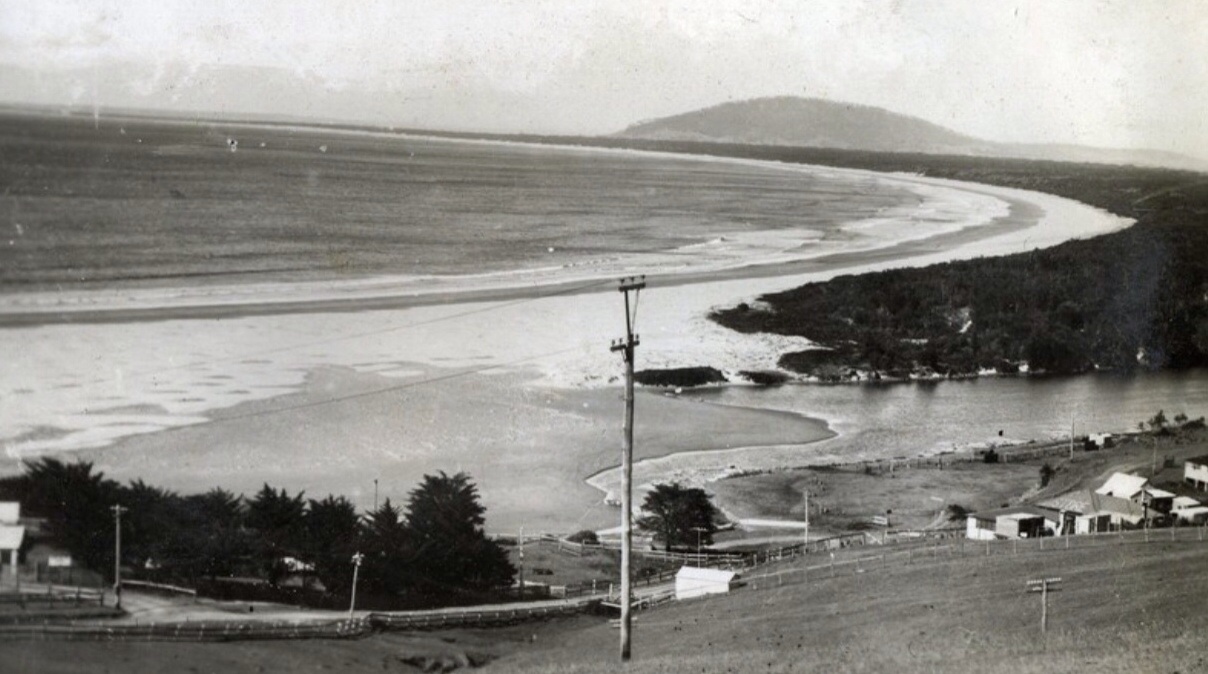
The photo above is of Seven Mile Beach and the little Gerroa settlement, it gives a sense of just how relatively quiet a place Gerringong was at the time. Gerroa River mouth at Gerringong.

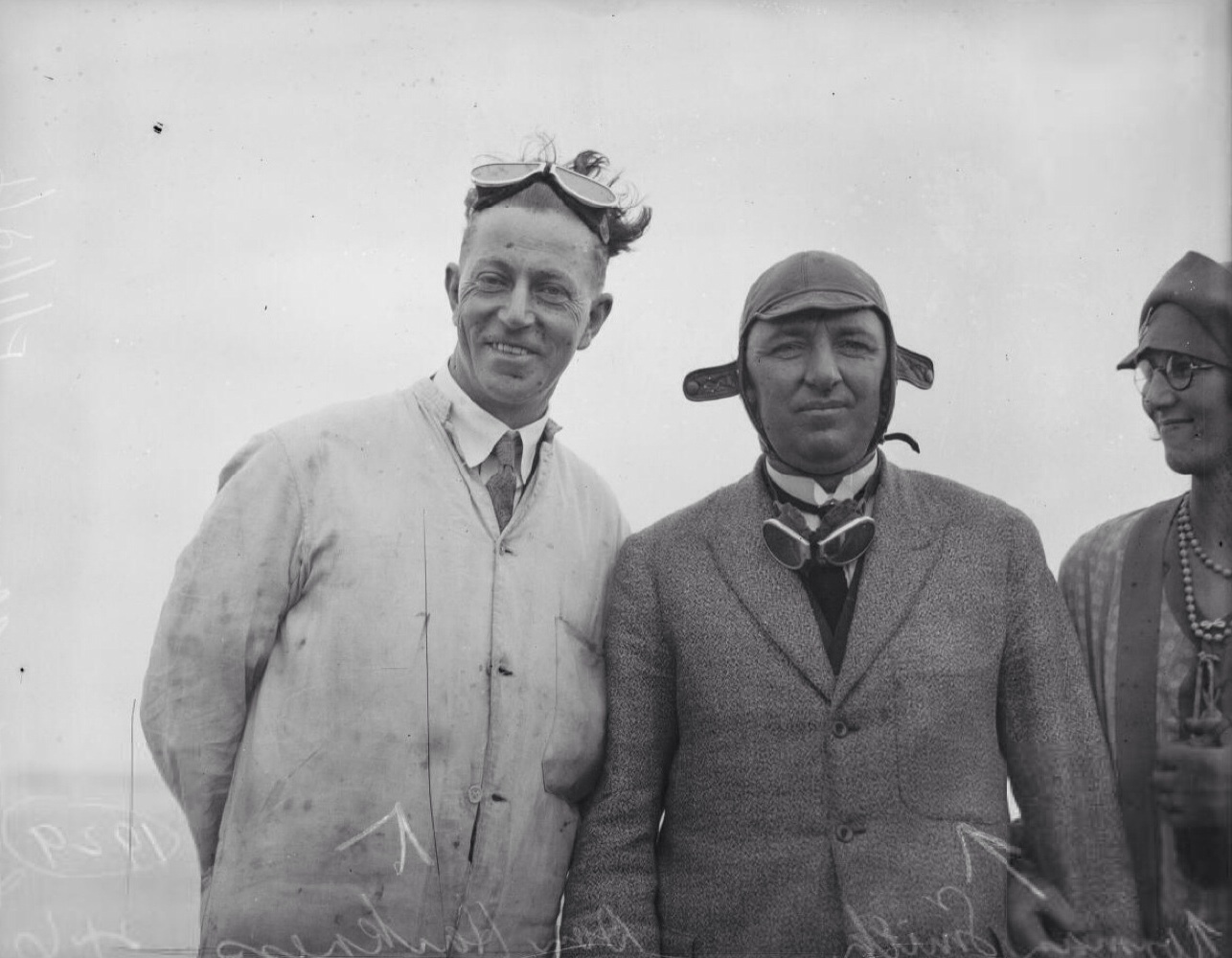
Don Harkness and ‘Wizard’ Smith on Gerringong Beach in December 1929 (Fairfax)
Don Harkness: Minerva Hispano Suiza Australian LSR October 1925…
Upon leaving school Don Harkness became an apprentice in general engineering, aged 20 he was employed by JC Hilliers at Drummonye Sydney, by 1922 Harkness and Hillier Pty. Ltd. was formed.
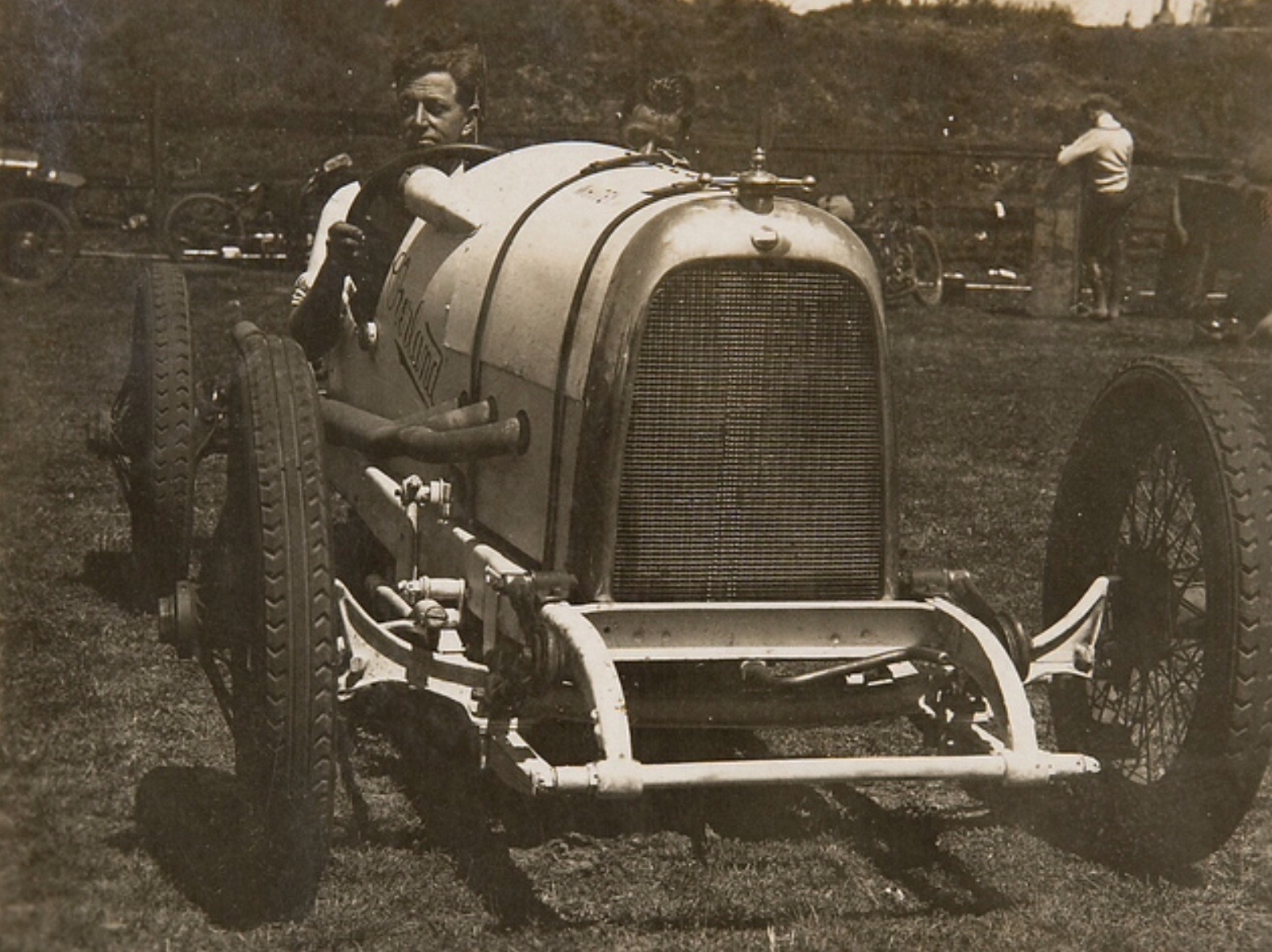
Don developed an interest in motor racing and imported a Willys Overland which was highly modified- ‘Whitey’ as the car was nicknamed won over 50 races at venues as diverse as the Maroubra concrete saucer speedway, the Penrith dirt speedway and on the beach at Gerringong.

Harkness aboard the Overland ‘Whitey’ date and place unknown (DHA)
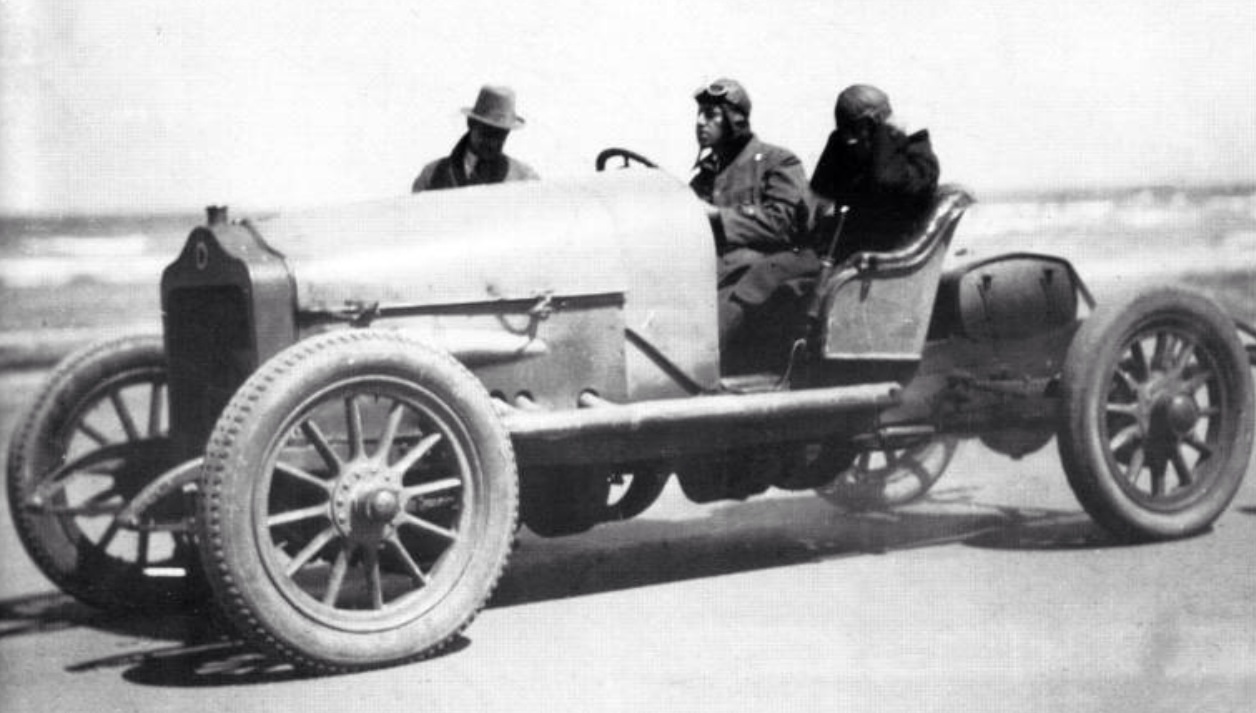
An offer of a fifty pound trophy to the first person to exceed 100 mph in Australia over the measured mile by the Daily Guardian newspaper led to Harkness’ use of FR Colbert’s Minerva chassis powered by a Hispano aero V8 engine- the car below won the trophy on 17 October 1925 at a speed of 108 mph.

(unattributed)
Anzac Rolls Royce: Wizard Smith and Don Harkness, Australian Land Speed Record December 1929…
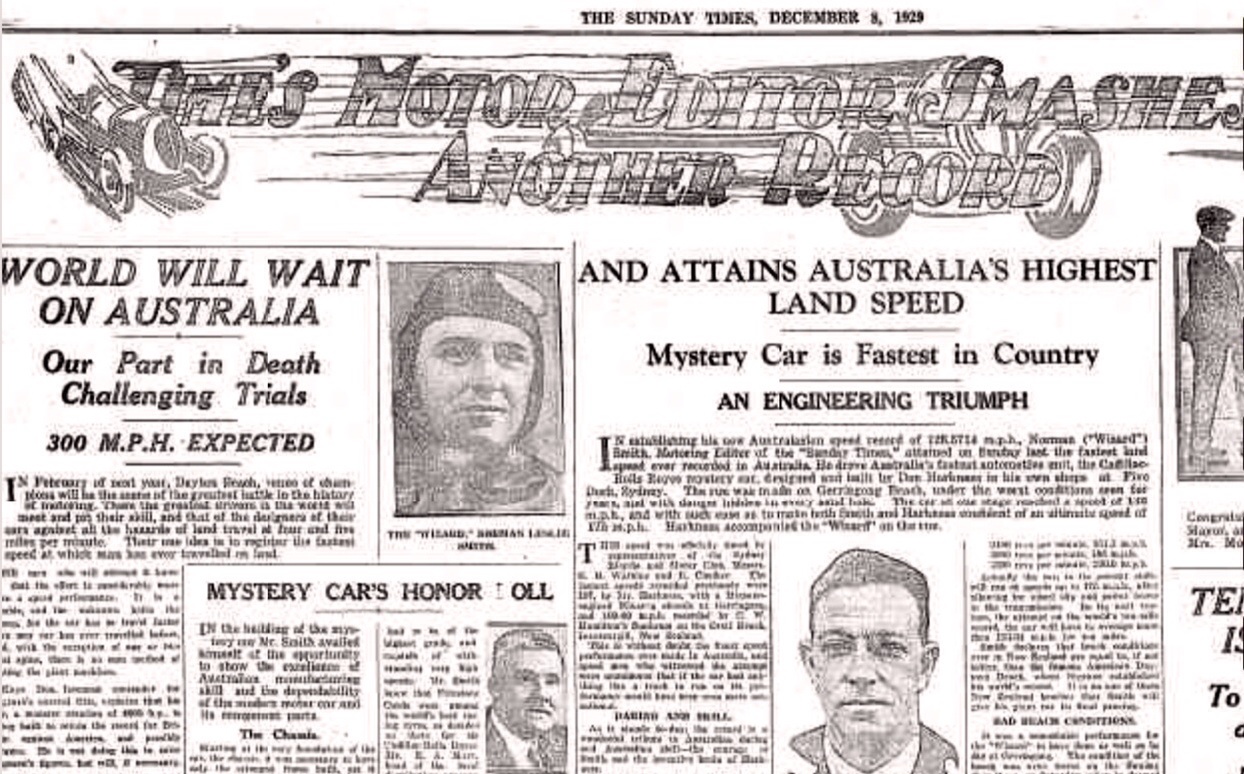
‘The run was made under the worst of conditions seen for years with danger hidden in every sand hole. The car at one stage reached a speed of 142 mph and with such ease as make both Smith and Harkness confident of an ultimate speed of 175 mph’ the Sunday Times reported.
Don Harkness was approached by Norman Leslie ‘Wizard’ Smith and the former Lord Mayor of Sydney, Jack Mostyn to design and build a car to attempt the Australasian one mile and ten mile records.

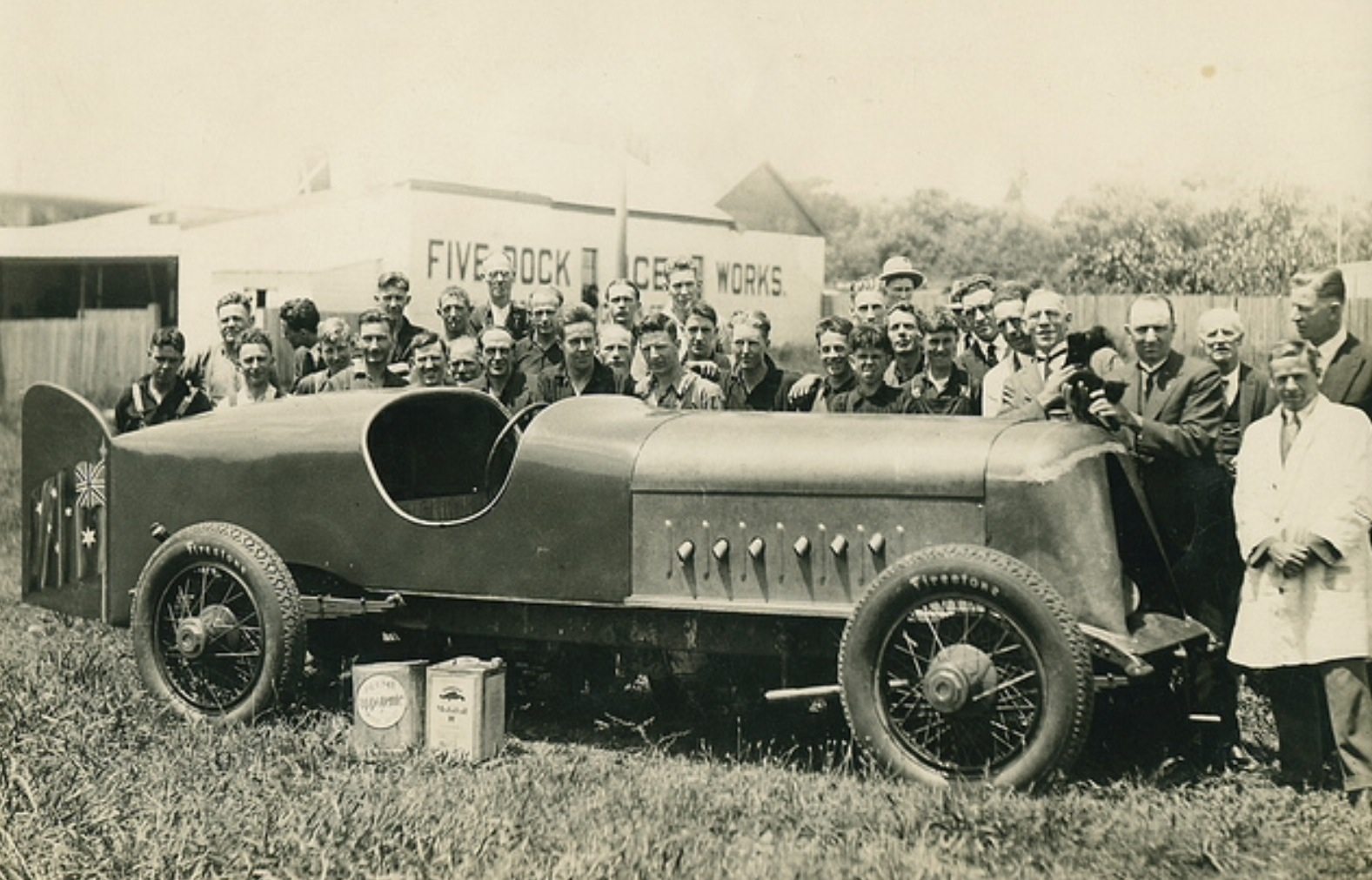
The proud Harkness & Hiller workforce of artisans with the Anzac Rolls Royce, Parramatta Road, Five Dock, Sydney in November 1929 (DHA)

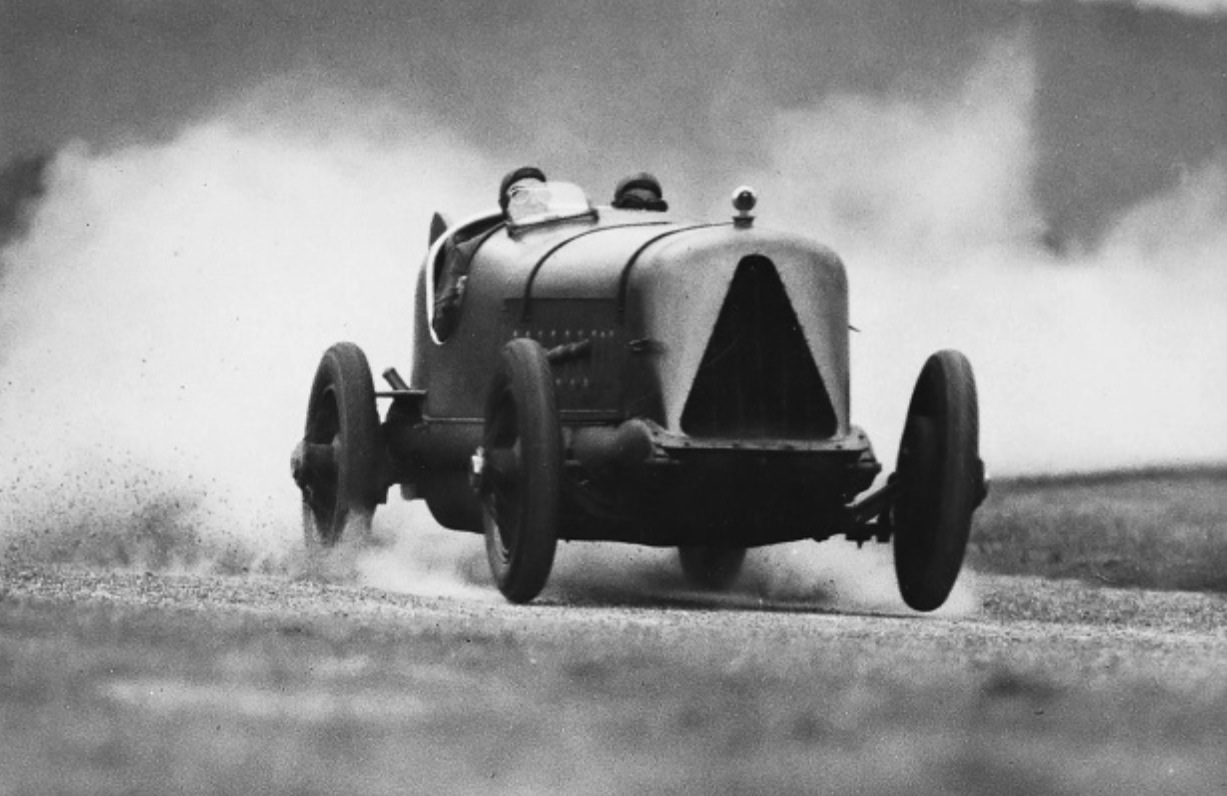
Smith and Harkness in an early test of the Anzac Rolls Royce with one and a bit wheels off the deck. Mention is made of a test run at Richmond, NSW, I wonder if that is the place, late 1929 (unattributed)
The result was the ‘Anzac’, a Cadillac chassis into which was inserted a Rolls Royce aero engine- as one does.
The liaison between Australian Speed Ace Smith- of intercity and circuit racing fame and financier Mostyn came about by chance when Smith came to Mostyn’s aid with a car breakdown. A series of discussions resulted in a determination to initially take Australasian Records and then with a second, more powerful machine, to take on the world.
Harkness was well known for his engineering and driving prowess to Wizard- Harkness had an amazing track record by then in both automotive and aero engineering which is a great story in itself, so it was a natural he turn to the Harkness and Hillier concern to design and build the first car, christened ‘Anzac’ in memory of the Australians and New Zealanders who lost their lives in the Great War.
The basis of Harkness’ design was a modified and strengthened Cadillac chassis- ‘Harkness chose a Cadillac and found the stock material so good, that he retained the frame, the (3 speed) gearbox assembly, the wheels, final drive, radiator and strengthened the steering by fitting a special chrome steel drag link in one piece’.
The Cadillac chassis details are unclear, but in 1928/9 they were made in two wheelbases- 140 and 152 inches, the former the standard and the latter the ‘semi-commercial’ lenghth for hearses and ambulance use, both had the same track of 56/58 inches front/rear. The standard engine was a 341cid side-valve, cast iron V8, the gearbox was a 3 speeder, brakes mechanical and rear axle fully floating with spiral bevel drive.
The frame was reinforced where necessary with special supports carrying the longer, lighter Rolls engine. New gears were cut from higher grade steel, then finished in the Harkness shop. ‘An overdrive gearbox was used to step up the revolutions of the wheels- the final drive ratio was 1.5:1. A new flywheel housing (bellhousing) was designed, patterned and cast, together with a new gearbox assembly. (this of course contradicts the earlier sentence- I suspect what happened is that new, stronger gears were cut and fitted to both the Cadillac ‘box and diff)
Wheels were ‘ordinary stock 33 by 5 inch high pressure cords’, ‘on the trial run at Richmond they stood up to 121 mph’ with race tyres to be used in New Zealand with its higher expected speeds.

The Wizard of Anzac (Fairfax)
The beast was about 20 feet long, had a wheelbase of 11 feet and a track of 4 feet 8 inches.
The motor (variously described as both an Eagle series 8 and 9) was the last in a line which first saw use in 1915- the 320-360 bhp, SOHC, twin-plug, 20 litre, 60 degree, twin Claudel-Hobson carbed V12 engine was acquired as war surplus from the RAAF.
Harkness modified it to be able to run at higher revs of 3000 rpm rather than the usual 1800-2200 rpm. The engine had a bore / stroke of 4 1/2 / 6 1/2 inches – 1239 CID or 20.32 litres.
The car was constructed in the Harkness and Hillier, Parramatta Road, Five Dock, Sydney workshops with local firm Prophets making the ‘streamlined’ body, which no doubt in style was a nod in the direction of other LSR cars in existence at the time.
The LSR in 1929 was held by Henry Segrave’s 930 hp Napier Lion engined ‘Golden Arrow’ at 231.362 mph- well out of reach of Anzac’s maxima of circa 175 mph- but the machine was still good for local record hunting and as a ‘proof of concept’ to build the next car designed to achieve the world record.
The radiator was at the front, the cockpit cowled around the driver ‘who was insulated from engine heat, flames and fumes’ by steel bulkheads and flooring. The mechanic was left well in the breeze, the body then tapered in towards the rear and had a neat stabilising tail at the very back. The fuel tank was aft of the driver and the oil tank behind the rear axle. The car no doubt looked stunning in its gold, lacquer paint.
The Australasian Record attempt was to take place at the Ninety Mile Beach in New Zealand in early 1930, but first the car had an Australian Record to set, and needed to prove it was fit for purpose before being shipped ‘across the ditch’ (Tasman Sea) from Australia to New Zealand.

Anzac was taken by trailer from Five Dock to Gerringong where the team set up camp in late November 1929.
‘Conditions were so bad on the Saturday that Smith postponed his attempt but were even worse on Sunday. Heavy seas had pounded the beach for days and water rose as far back as the trees, 200 yards from the normal waterline. This had the effect of bringing thousands of tons of loosely, badly-knit sand on to the part of the beach used for racing. The line was covered with seaweed and ruts and hollows along the course and made the driving dangerous.
On the Sunday, the Wizard and Harkness looked over the beach at dead low tide and decided to give the car a trial. There was but a tiny stretch of the surface good enough for racing, just about three quarters of a mile long’.

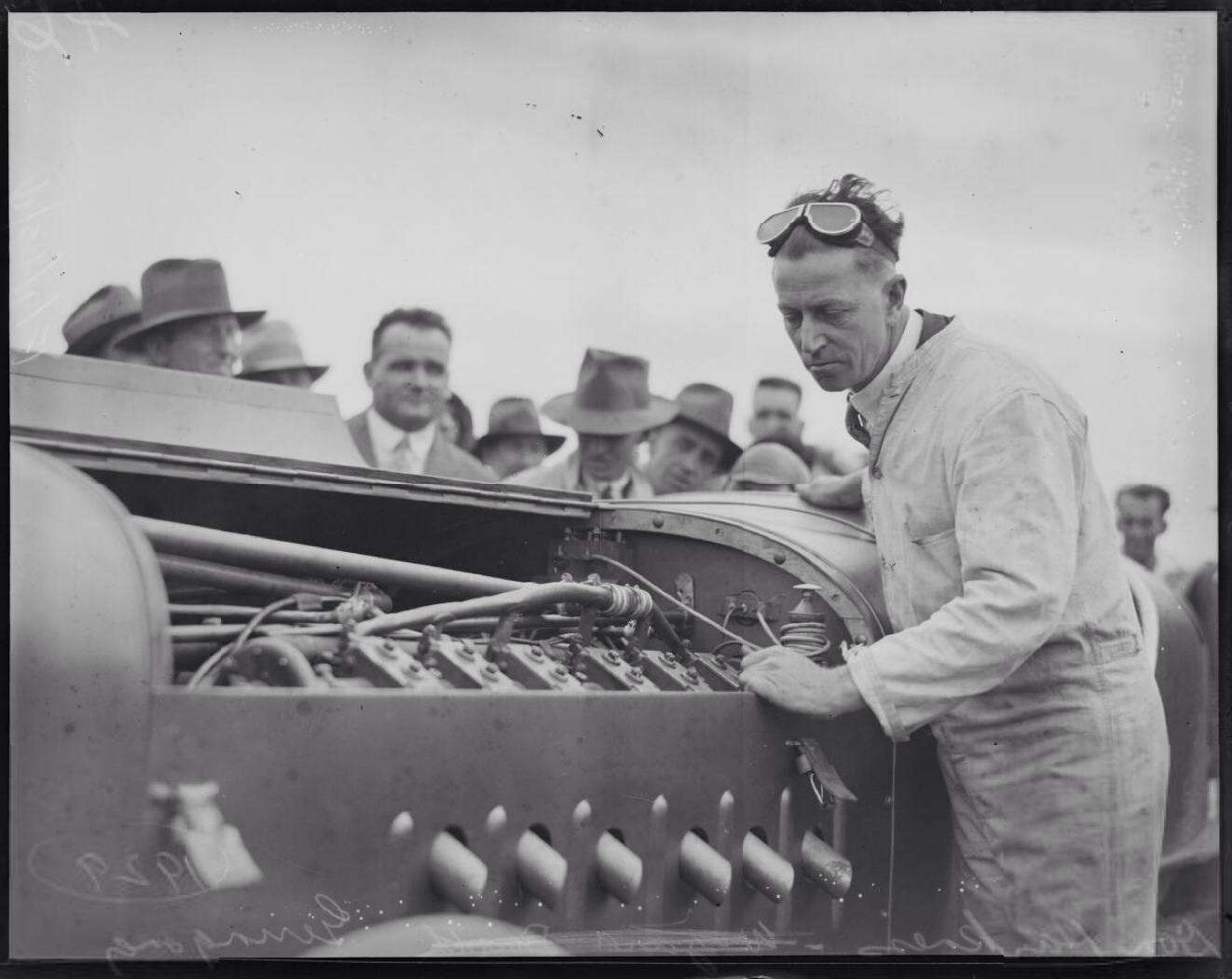
All set- Don Harkness has one last check of the engine- hard plugs now fitted to the Rolls V12- time for the off, Gerringong Beach December 1929 (Fairfax)
After being carefully made ready the Rolls engine was fitted with soft plugs for a warm-up run of the engine after which 24 race, or hard plugs were fitted. The car was fuelled, checked over for the umpteenth time and then Smith and Harkness jumped aboard.
‘The final quarter mile was marked off, and the car took a run of only 800 yards before entering the timing strip. “From the start we accelerated to 110 mph where we hit the starting line” said Wizard. “Just before we did nearly 3000 revs in second gear, and I changed a few yards in front of the line. We were doing just about 110 mph then, and in the next few yards I could feel her winding up. She surprised me. I’m convinced Don has built me the fastest car in Australia. The old bus will beat all the Wapitis that overflew. I’ll guarantee that she has more speed than anything else in Australia, or a plane”.
Don Harkness is more than pleased. He is delighted for the car has done more than he expected, and that more with so little effort that he doesn’t think of what it will ultimately achieve.’
Harkness said ‘After Sunday’s run…I’ll guarantee 150 mph in New Zealand and we’ll get her moving at 175 mph when we will have the very best of conditions and the car has the power, Norman will do the rest’
The team created an Australian record at Gerringong of 128.571 mph (206.909 kph). Harkness reported that with the gear ratios fitted the car was capable of the following speeds/rpm;
1000 rpm 63 mph, 1500 rpm 94.5 mph, 1800 rpm 113.4 mph, 2100 rpm 151.2 mph, 3000 rpm 188 mph, 3200 rpm 200.6 mph

Harkness on this side of the car is leaning well forward- I wonder if that is due to his seat or trying to get a better fix on the perilous nature of the beach?

Both set back in their seats in this shot, quite a functional handsome weapon
Suppliers cited as providing components for the car were AH Prophet, the body, Vacuum Oil Co the fuel and lubricant- ‘Plume Spirit’ and Mobiloil B.
EA Marr provided the Firestone tyres with Harry Taylor of Advanx Ltd having them ‘treated and scientifically trimmed and balanced for speed’. WT Adams of Motor Ignition Ltd supplied an ‘Ajax’ battery to start the giant motor and F Reed supplied Personne-Reed double-acting hydraulic shock absorbers.
‘The beautiful finish in gold’, was supplied by Bergers Ltd, using the famous ‘Opex’ lacquer. John McGrath Ltd, agents for Cadillac provided the chassis.
Taken to the Ninety Mile (Kaitaia) Beach Smith and Harkness achieved a two-way average of 144.037 mph on 11 January 1930. Days later they attempted the 10 Mile Average achieving a one way speed of 148.637 mph- better than the record then held by Leon Duray’s Voisin of 135.333 mph and were told that because of the distance a return run was not necessary. This was subsequently established to be not the case with the record being unrecognised given the lack of a return run and the antiquated equipment used to time it.
Anzac never ran again- Smith became preoccupied with the Fred H Stewart Enterprise, a new Harkness/Smith 1450 hp LSR machine, which is a sad story of the breakdown in the relationship of the two men for another time…

(Fairfax)
May 1930 ‘Fifty Mile Championship’ Race Meeting…
It was a very soggy raceday for both the racers and the specators, only about 300 hardy well rugged up spectators turned up to see Bill Thompson win the ‘Fifty Mile Handicap’ feature race in his Bugatti T37A, a car he had used to win the Australian Grand Prix not so long before.
The grid above comprises two Chryslers to the left- the #72 E Patterson and HJ Beith Chrysler Sports with Charlie East’s Bugatti T37 on the right.

(SMH)
E Patterson’s 4 litre Chrysler on the turn around the flags which mark out each end of the course. Fine touring cars in their day.

(Kiama)
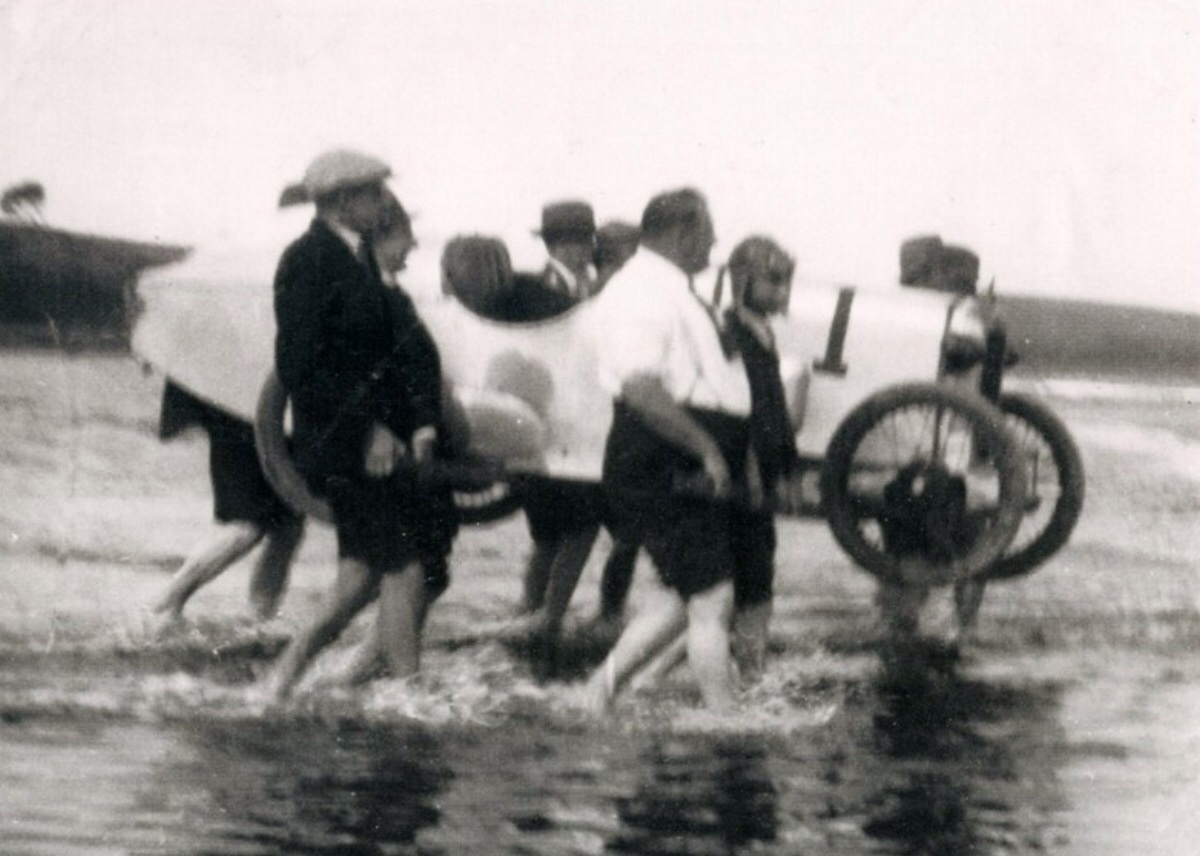
The light weight of this Austin 7 Gordon England Brooklands Super Sport made rescue from the rising waters a good deal easier than more conventional and heavier machines!

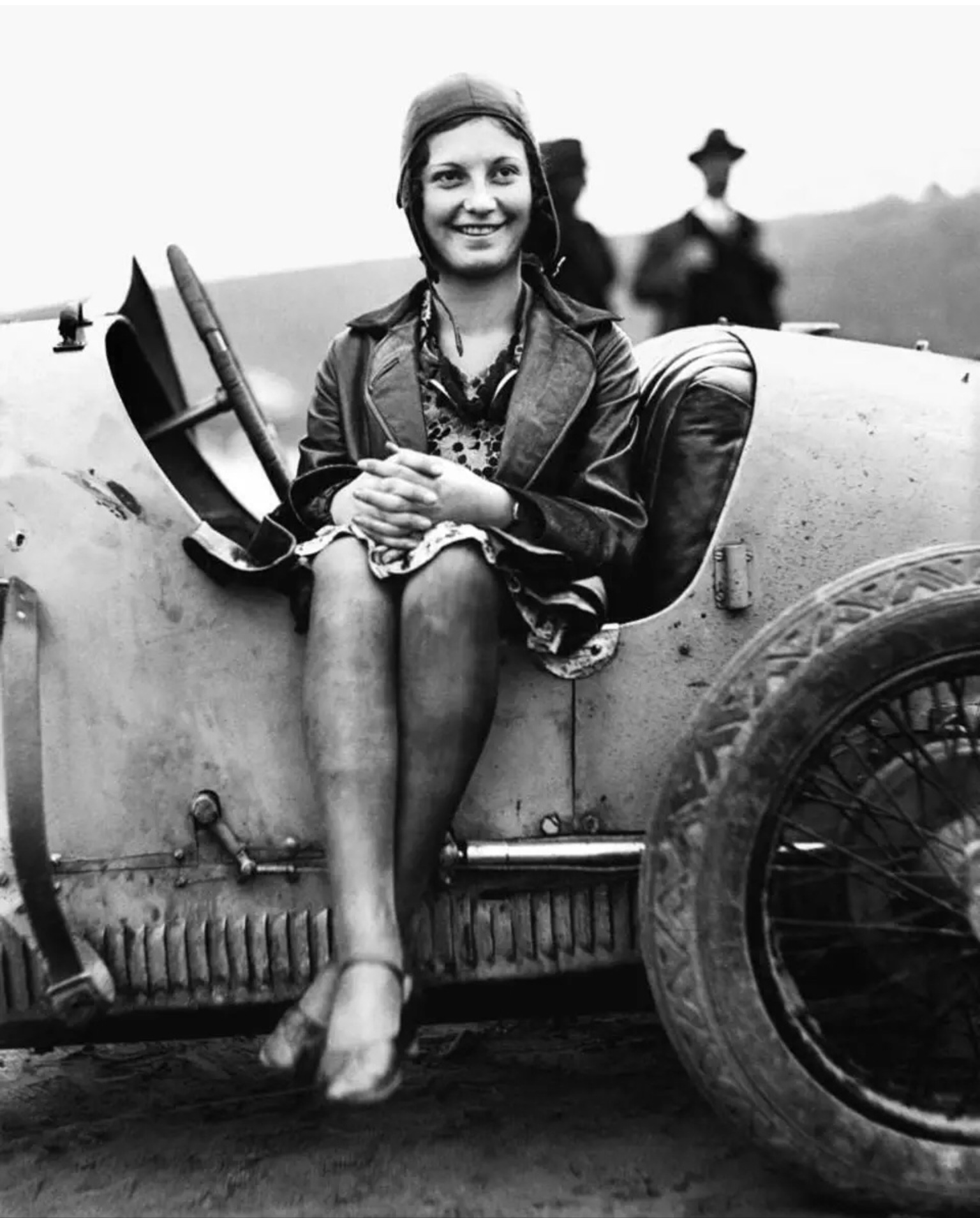
Young filly aboard one of the Bugatti T37’s, Thomson’s T37A I suspect (SMH)
The race meetings were as much social, society occasions as they were motor racing so there were never any shortage of ladies about. The May meeting is well served by photographs given the presence of a staff photographer from the Fairfax/Sydney Morning Herald.

(SMH)
Lea-Francis was entered by Mrs JAS Jones and raced by RG Potts in the 50 Mile Handicap.

(SMH)

(SMH)
Speaking of Mrs Jones, here she is with riding mechanic aboard her rather peachy Alfa Romeo 6C1750 Zagato, one of Vittorio Jano’s finest, I wrote a feature about this wonderful machine a while back.
Mrs JAS Jones Alfa 6C 1750 SS Zagato…
She didn’t have a great meeting after winging’ a mechanic who strayed into her path having crossed the finishing line in one of the events- breaking his leg.

(SMH)
In amongst all the fun there was some serious motor racing for the top-liners of the day.
Three time Australian Grand Prix winner- and just back from Phillip Island having won the 1930 race, Bill Thomson raced the same Bugatti T37A and won the feature event of the weekend, the Fifty Mile Handicap.
In the photo below his mechanic is readying his mount- that is a Light Car Club of Victoria badge on the radiator.

(SMH)
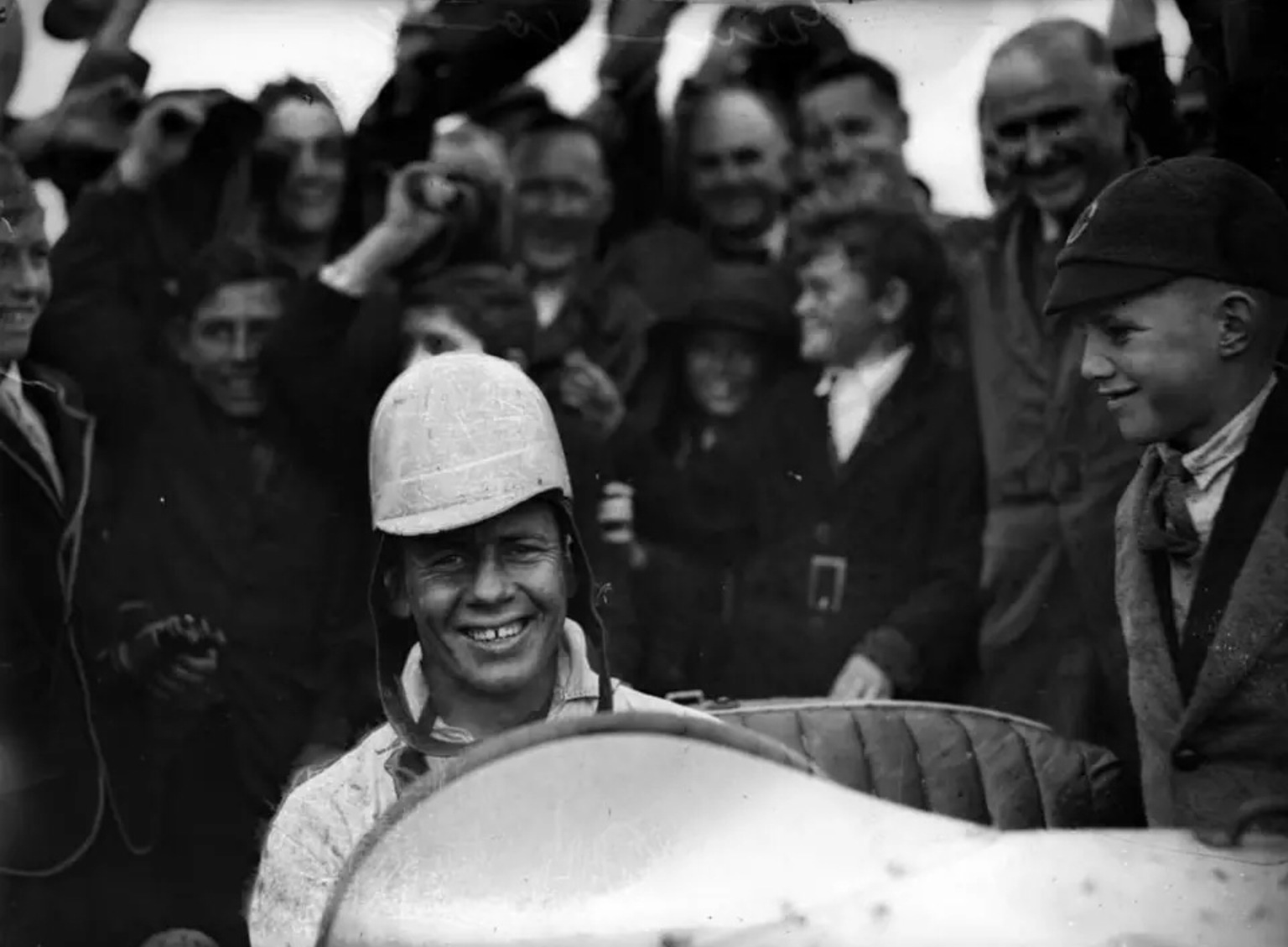
Thomson was every schoolboys idol of the day as this photograph below shows- the look of adoration and joy on the little, capped dudes face is priceless. No doubt Bill has just won the feature event.

(SMH)
Simply amazing shot below of Bill’s T37A passing a Chrysler at speed- this photograph is the cover shot of Kent Patrick’s biography on the great man, a work I must acquire.

(SMH)
The impressive line up of cars before the Fifty Mile Handicap race includes, from the left, the Percy Hunter driven JAS Jones owned Alfa 6C1750 Zagato, the obscured Bill Thomson Bugatti T37A and two Chrysler 4 litre machines of E Patterson and #72/14 Herb Beith.

Any idea what the car below is folks, I thought for a bit it might have been Charlie East’s Bugatti T37 ‘37104’ in the paddock, or more specifically, on the beach- but it isn’t! Any clues?
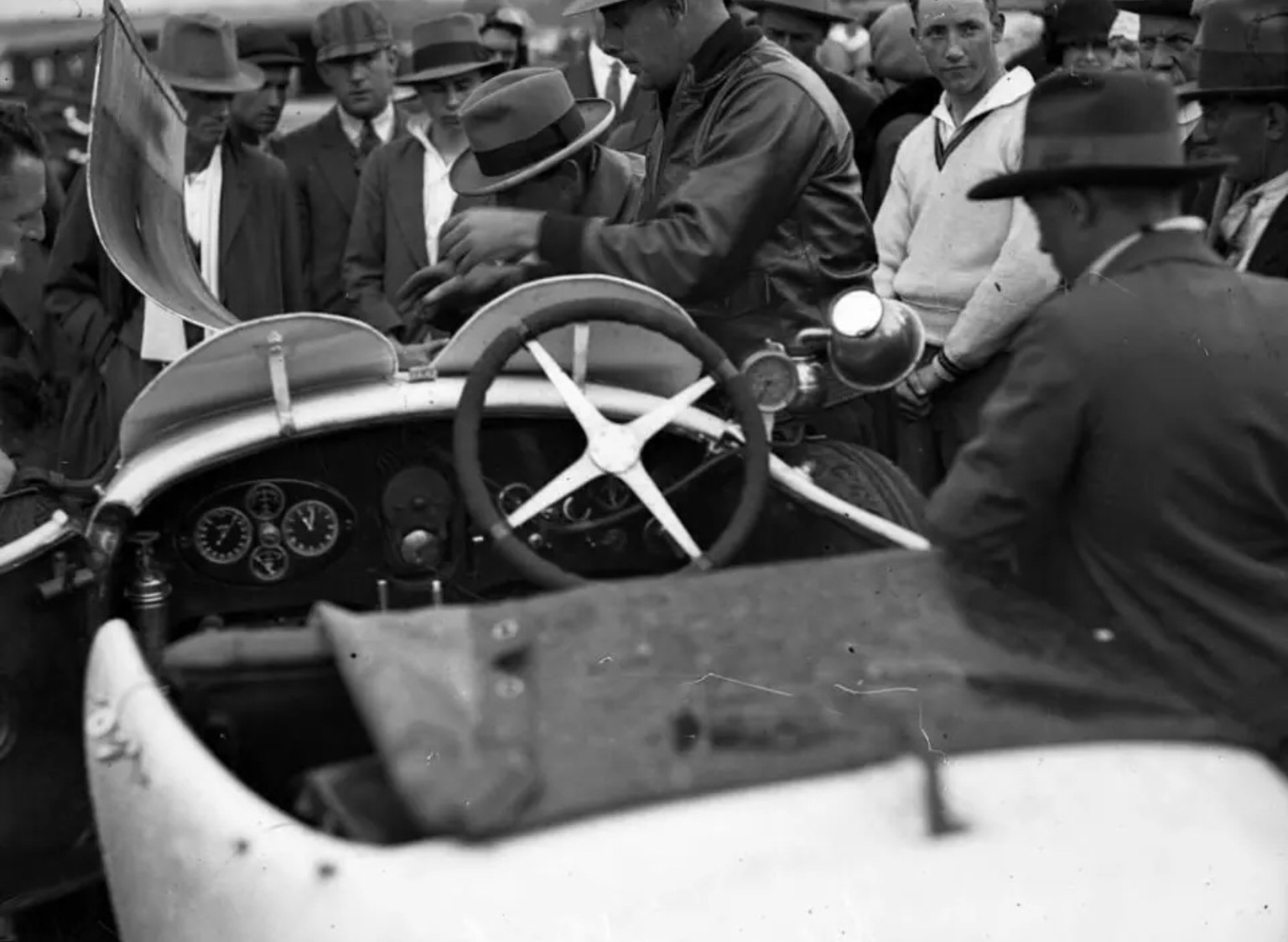
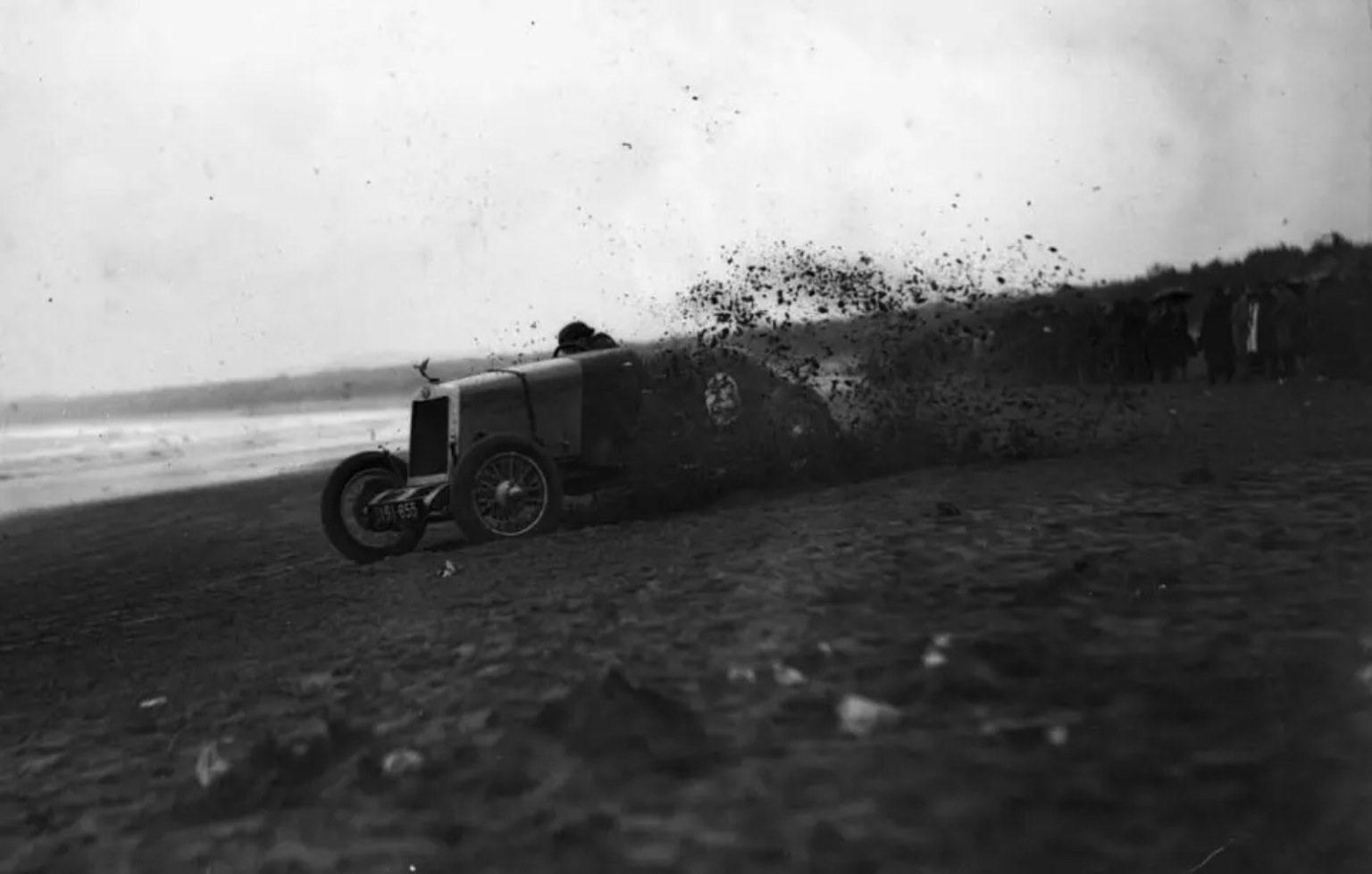
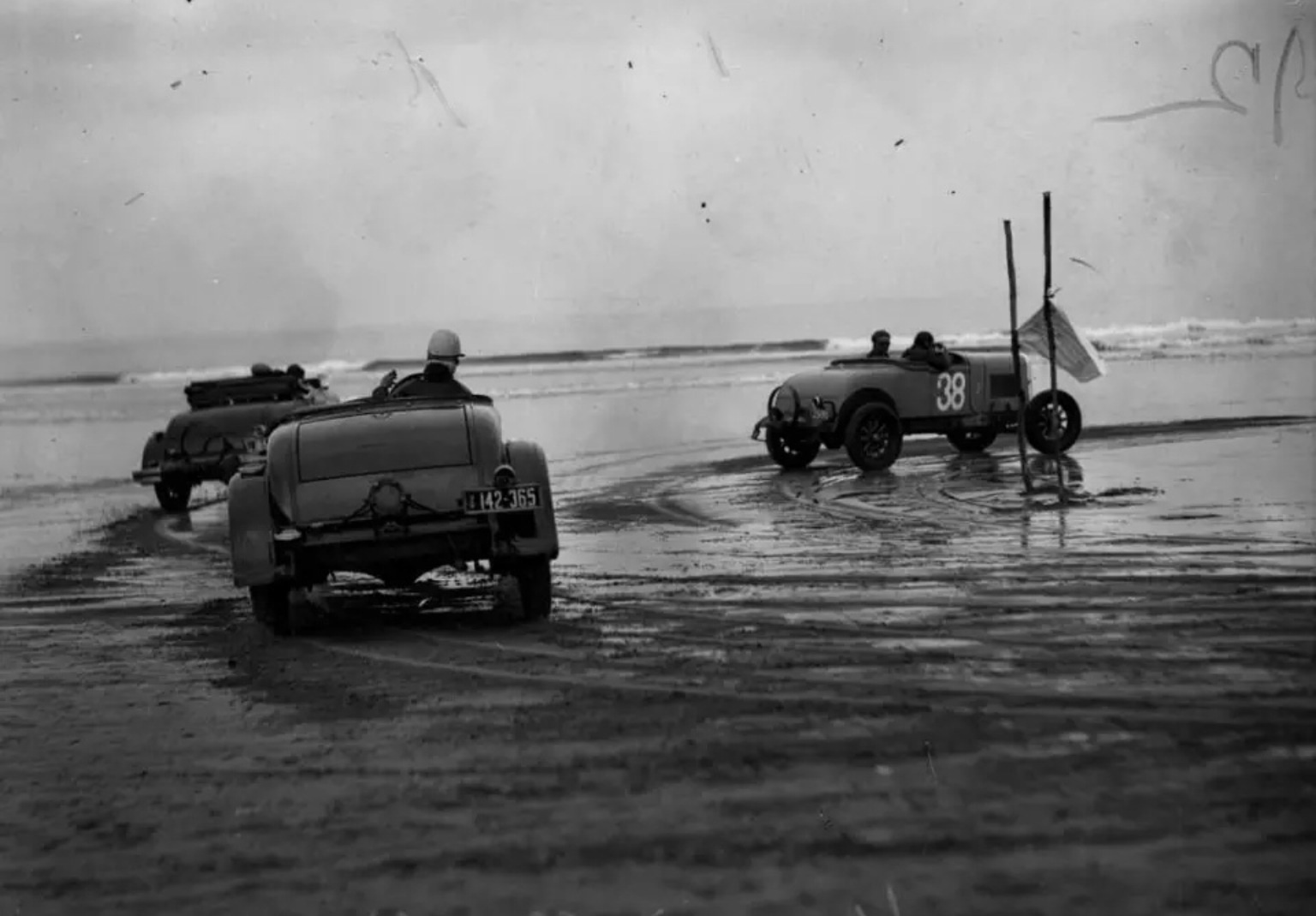
You can see from the gaggle of cars below going around one of the markers which defines one of the extremities of the ‘track’ that the tide is rapidly marching in. No idea of the cars, assistance invited.

(SMH)
The masked avenger below appears to be another lady racer but I’ve no idea as to name or mount. Evocative shot, the mask is protection from the sea gales and sand but reminds me of the first use of Nomex masks circa 1967.

And I thought wet Winton in May can be a pain in the arse!

(SMH)
Definitely time for a few bevvies by this stage of the day. Car make and model?

(SMH)

(Kiama)
Kingsford-Smith: Australia-New Zealand Flight 1933…
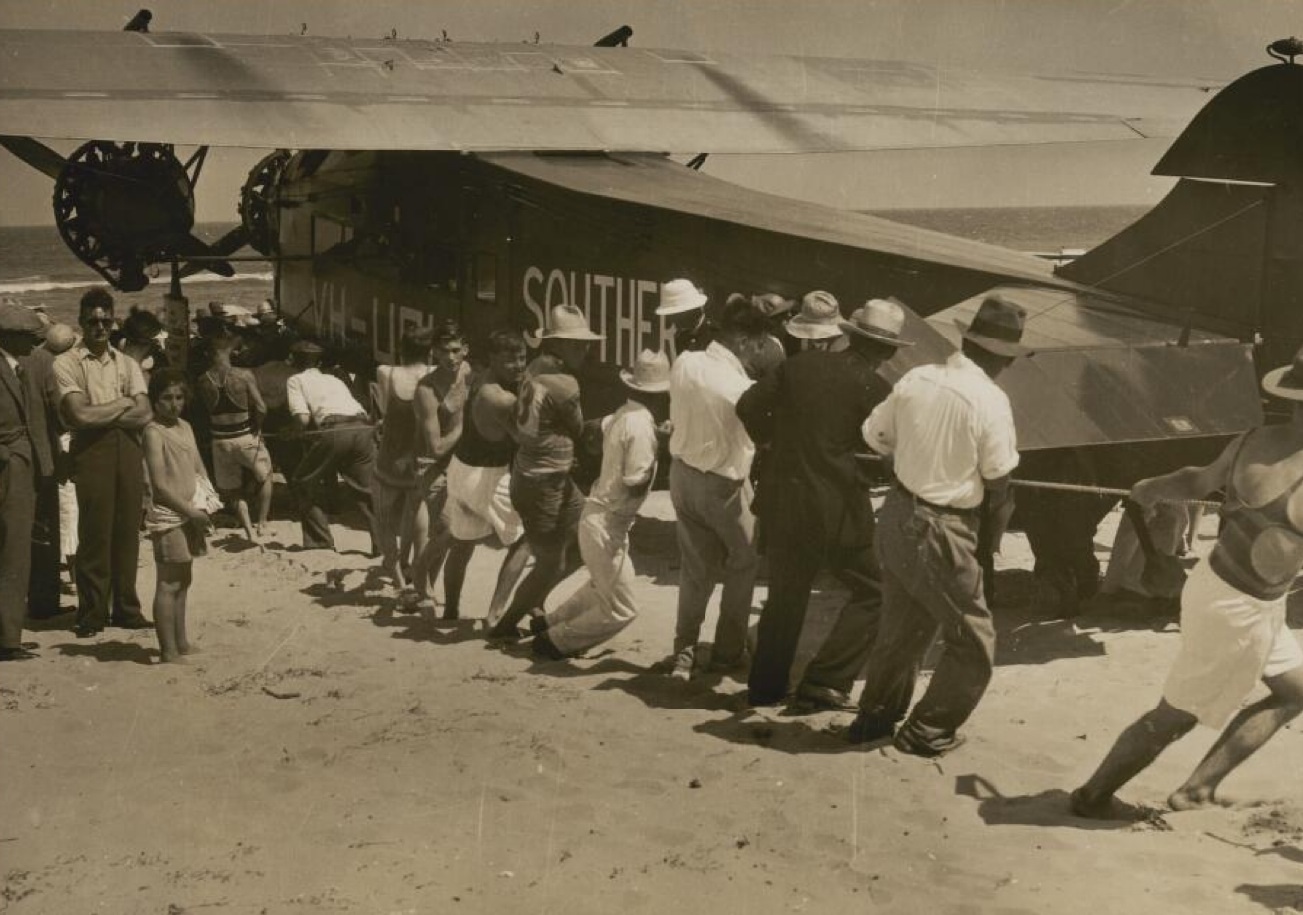
Charles Kingsford-Smith used the beach at Gerringong to fly to New Zealand, above the ‘Southern Cross’ has just landed.
Seven Mile Beach was used as the runway for the first commercial flight between Australia and New Zealand.
The historic journey by legendary pilot Air Commodore (and later) Sir Charles Kingsford Smith took place in the early hours of January 11 1933, he landed more than fourteen hours later at New Plymouth on New Zealand’s North Island.
Gerringong Beach was chosen, for this, his second flight across the Tasman, because of its length which allowed plenty of distance to get the heavily laden plane off the deck- on board was 660 gallons of fuel and 30 gallons of oil as well as a crew of four.

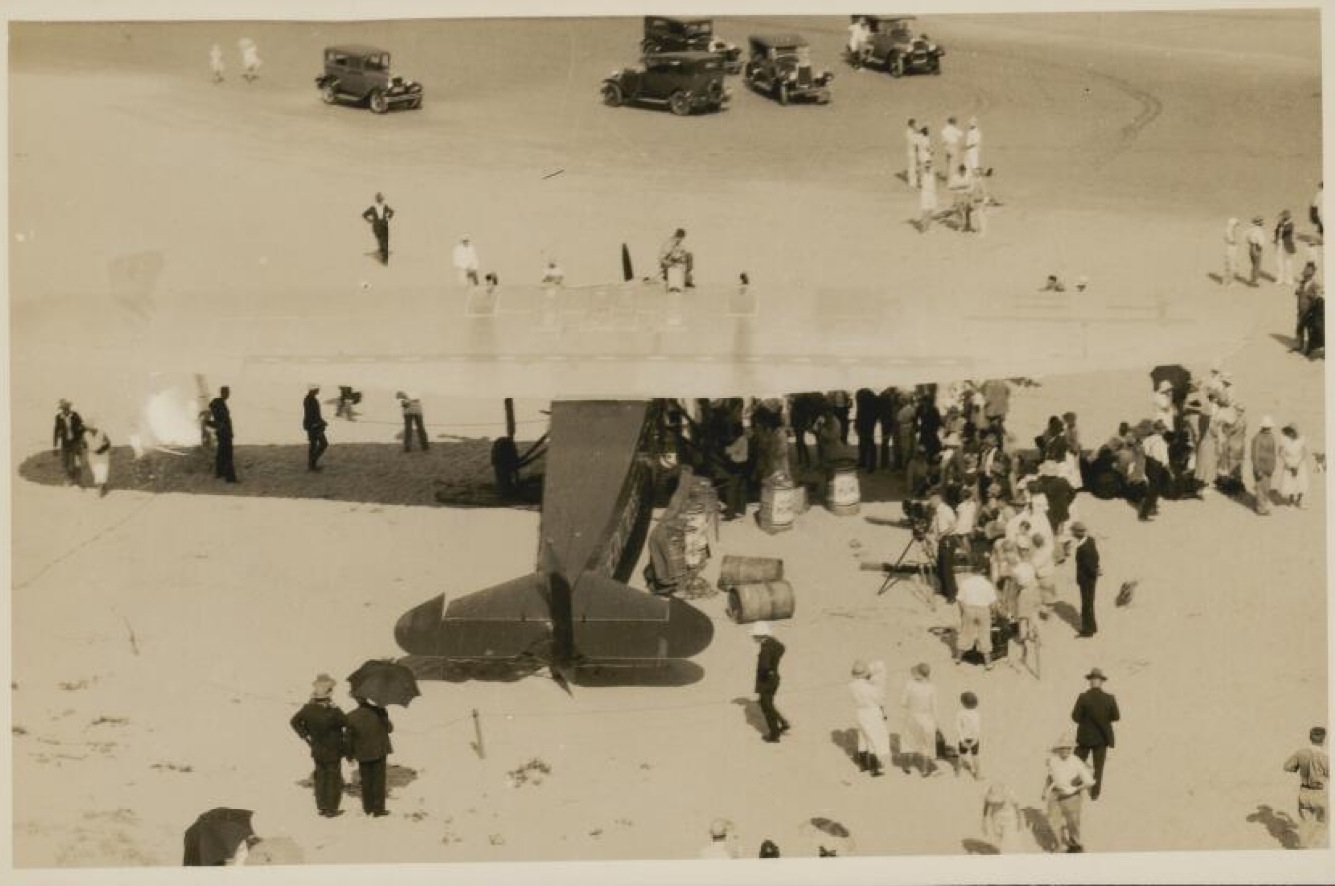
Look at that crowd! (SMH)

Hauling the plane clear of the rising tide (SMH)

In position, being fuelled and made ready (SMH)

(unattributed)
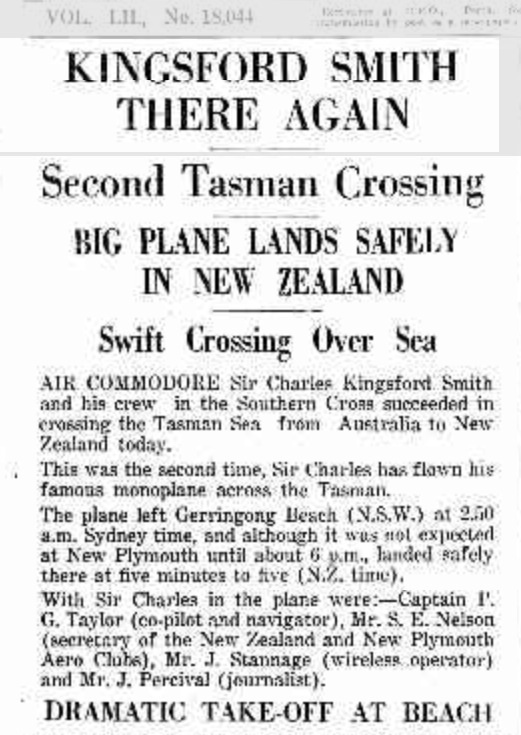
‘The Daily News’ Perth 11 January 1933
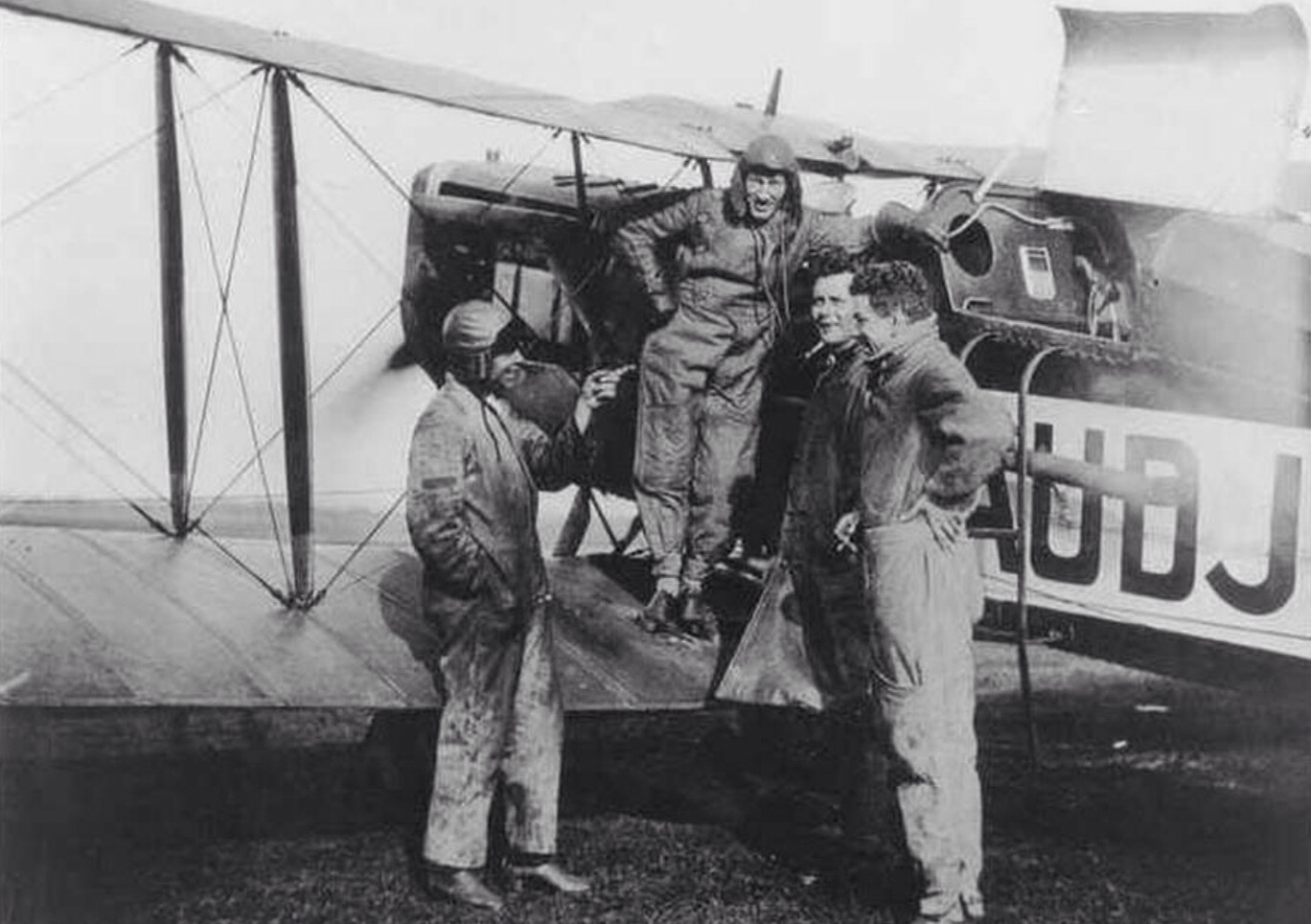
The famous aviators flight log describes the trip as a joyriding tour, his crew comprised co-piot and navigator PG ‘Bill’ Taylor, wireless operator John Stannery and SE Nelson, secretary of the New Zealand and New Plymouth Aero Clubs.
The aircraft was flown down from Mascot Airfield, Sydney on January 10 averaging 115 mph for the trip. Once on the ground the plane was pronounced fit and the engines were covered to prevent ingestion of air blown sand, it was refuelled with chamois leather providing the filter!
Flares were lit early on the beach to mark a runway with several thousand people making the trip from Sydney to witness the historic 2.50 am takeoff- turning on their headlights to provide the aviators with extra illumination. The motorists were requested to keep their headlights on for 15 minutes after departure with Smith firing some rockets or flares to signal all was well once the ‘Old Bus’- the Fokker Trimotor VH-USU ‘Southern Cross’ was aloft.
‘Smithy’s last flight was aboard a Lockheed Altair which disappeared in the dark, tropical heat off Burma in November 1935.

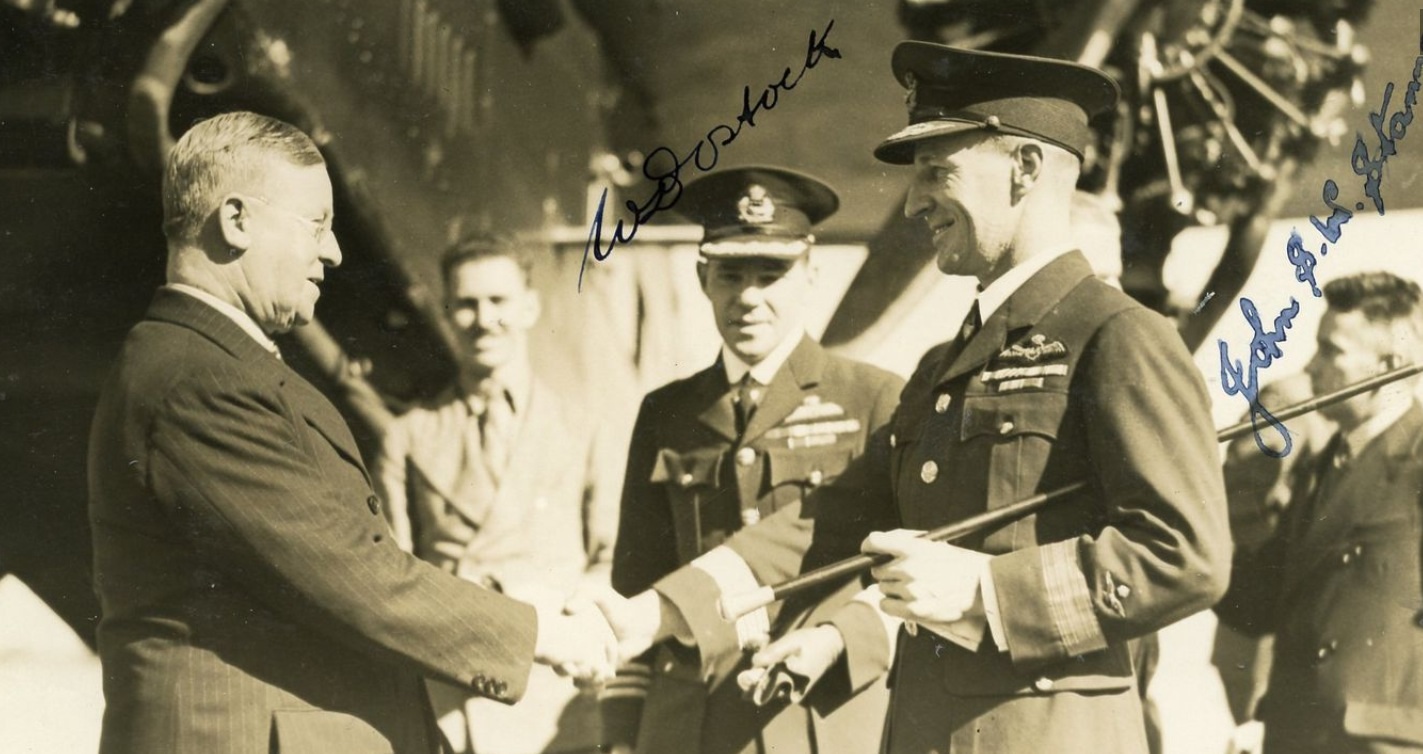
Australian Minister of Defence handing over the ‘Southern Cross’ to Kingsford-Smith at Richmond RAAF base, New South Wales in 1935 (MAAS)
Peter Whitehead ERA R10B: LSR attempt 10 November 1938…
Peter Whitehead raced his ERA R10B extensively around Australia in 1938 most notably winning the Australian Grand Prix at Bathurst over the Easter long weekend and the Australian Hillclimb Championship at Rob Roy in outer Melbourne’s Christmas Hills later in the year.
Peter Whitehead in Australia : ERA R10B : 1938…

(The Sun)
He found time for a little record-breaking though- his attempt on the Australian Mile started with a 133 mph pass at Gerringong but on the return leg a piston failed bringing an early end to his day. \
Here ‘the boys’ are hauling the car off the beach through thick sand.

(The Sun)
Credits…
‘Kiama’ – kiama.nsw.gov, monumentsaustralia.org.au, ‘Sunday Times’ 8 December 1929 and various other newspapers via Trove, ‘MAAS’- Museum of Applied Arts and Sciences, ‘DHA’- Don Harkness Archive, The Sun, Fairfax/Sydney Morning Herald
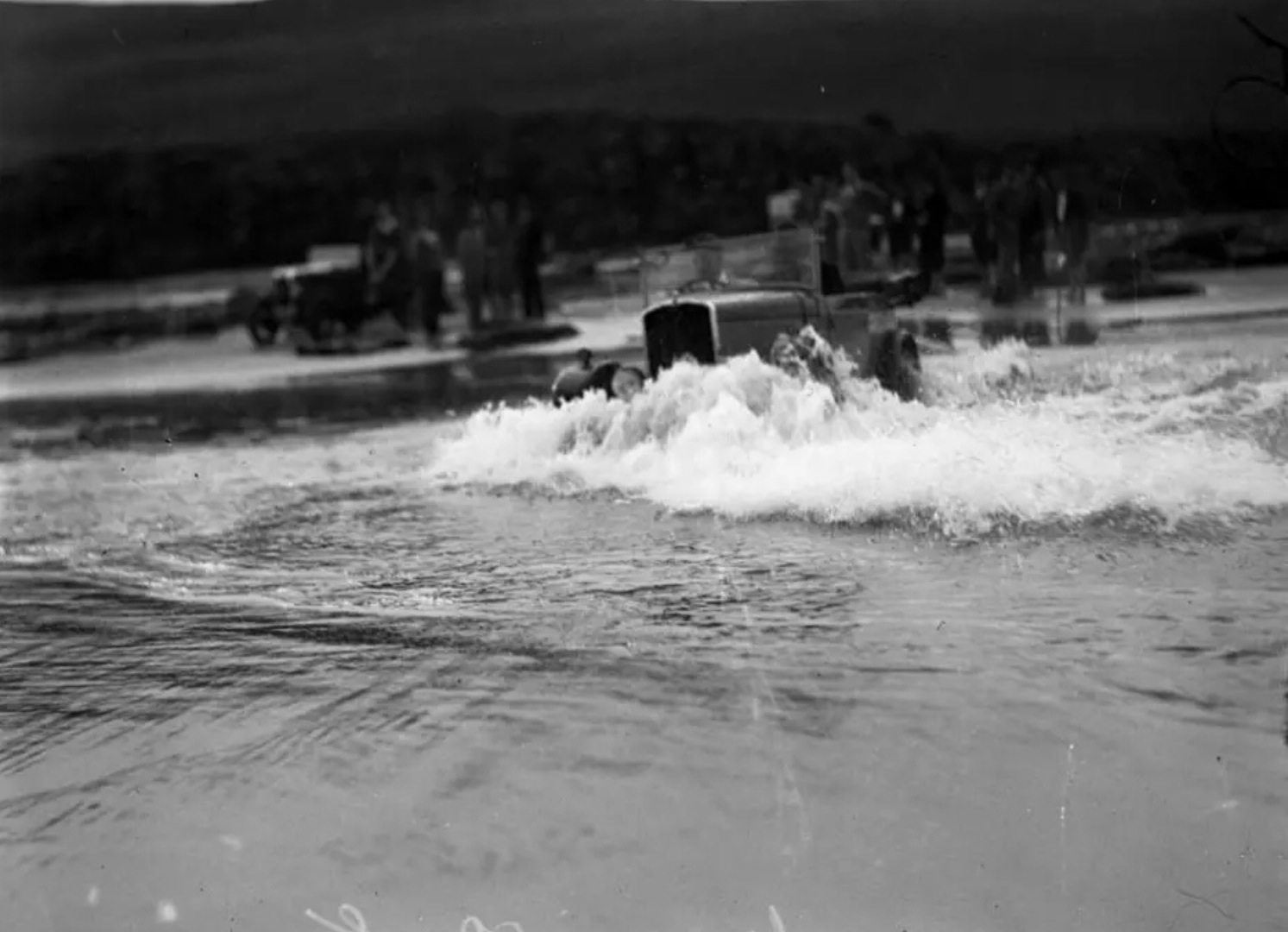
Tailpiece That May 1930 meeting really was soggy…

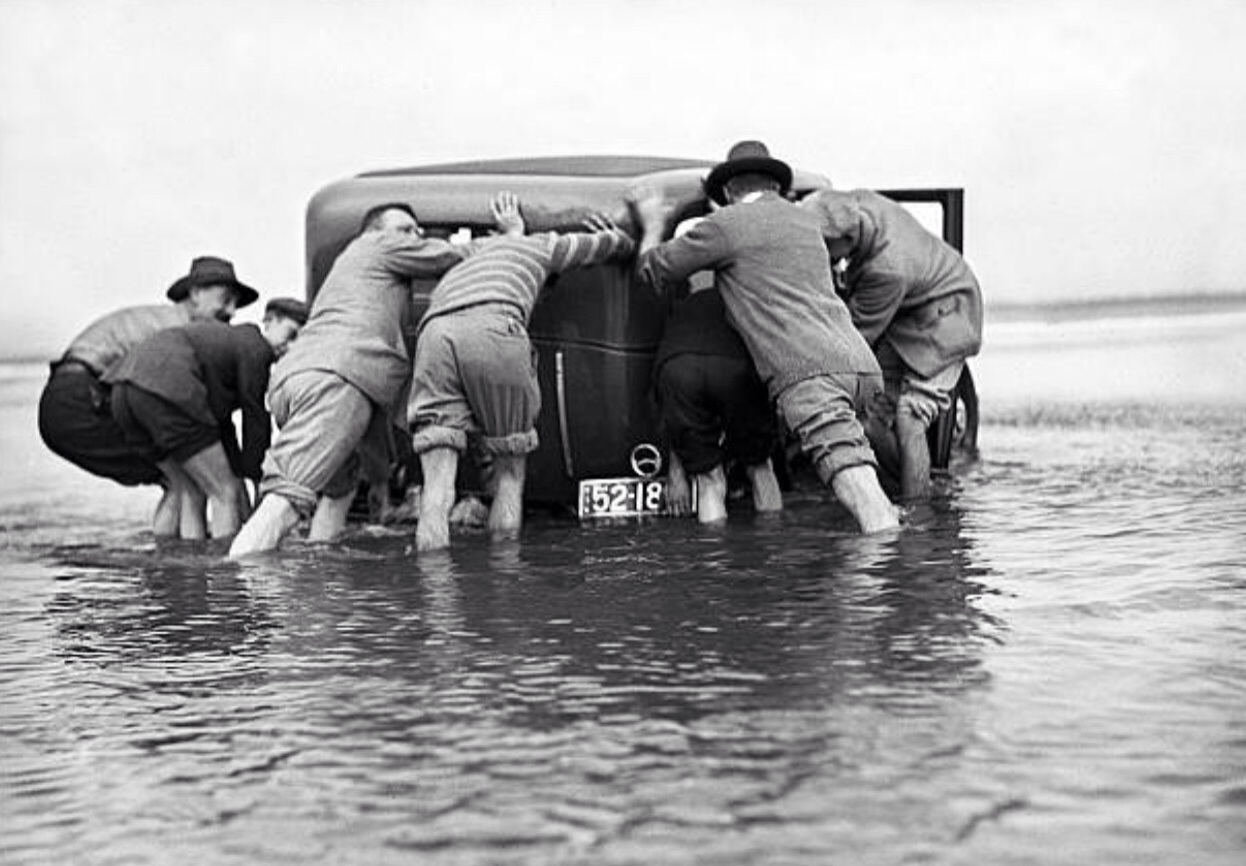
(Kiama)
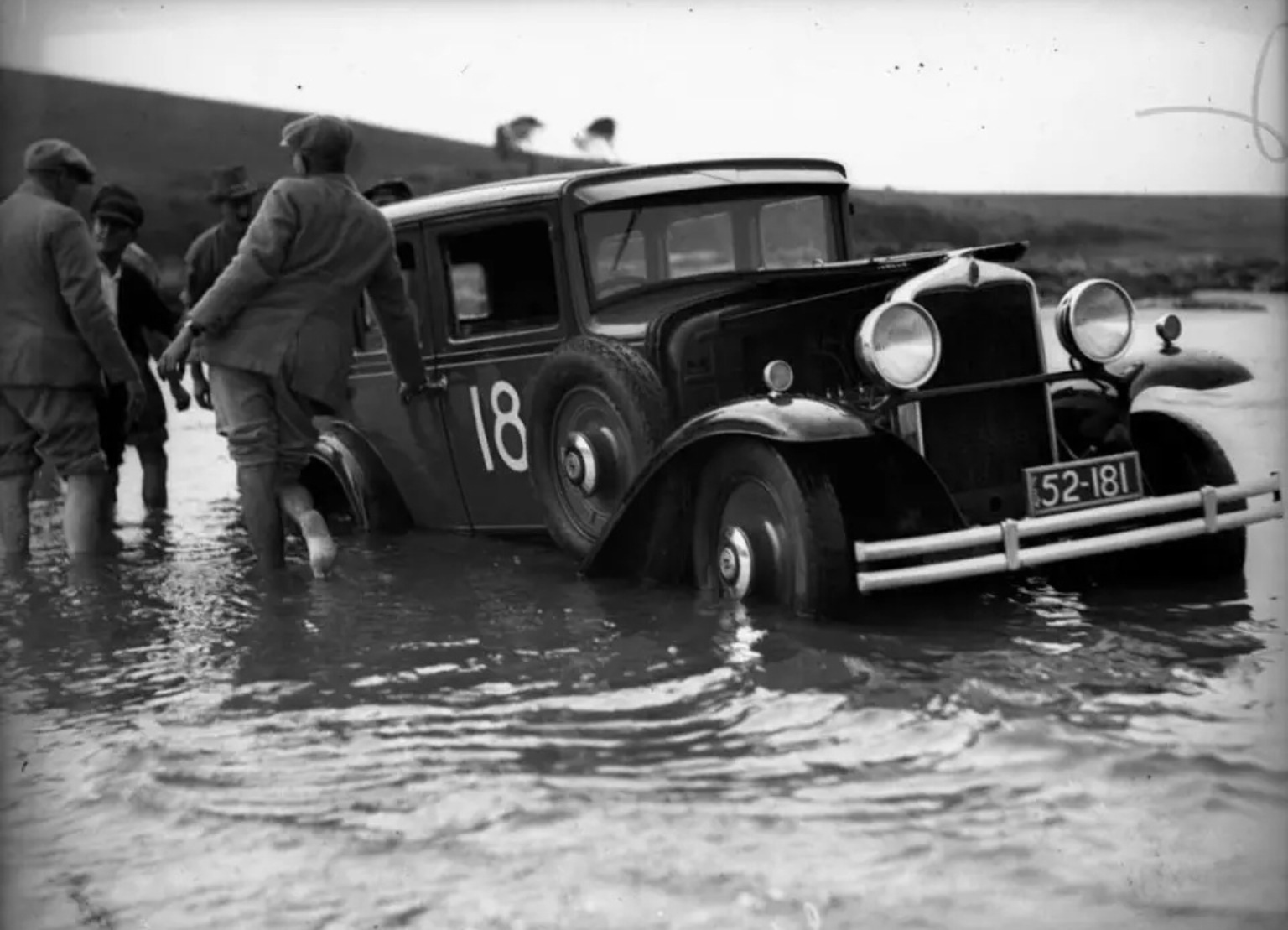
These dudes have well and truly lost the battle with the Pacific Ocean tide! It is a competitors car too, #18 in an earlier shot.
Finito…