Archive for the ‘Sports Racers’ Category

(B Young)

The Bob Young Aston Martin Ulster, Fred Hamilton Triumph TR2 and John Youl’s Porsche 356 at Baskerville in May 1958…

I know none of us get prints anymore but why can’t the ‘chemical compound’ of the photographic process today get this kind of sharp but soft and ‘true’ colours- if you get my drift? It is a beautiful shot of bucolic Australia contrasted by the bright and dull colours of the cars.

That’s the Mick Watt built Prefect Special driven by Ralph King on row 2, now and for many decades owned by Ian Tate, alongside Robin Bessant in the ex-Warwick Hine MG TC.

Geoff Smedley picks up the Aston Martin thread, ‘I had my eye on that Aston, it was brought to Tasmania by an English guy who was an Engineer who had joined Comalco in Georgetown. The owner frequently visited our family engineering business as much of Comalco’s work was done there, and of course i fell in love with the Ulster. I had been promised first offer on the car but within months it went to Bob Young which was sad as it was far too valuable to be treated like it was but that is history!’

Customer cars were built after the success of the team 1 1/2 cars in the 1934 Ulster Tourist Trophy- first to third place class victory won Aston Martin the Team Prize.

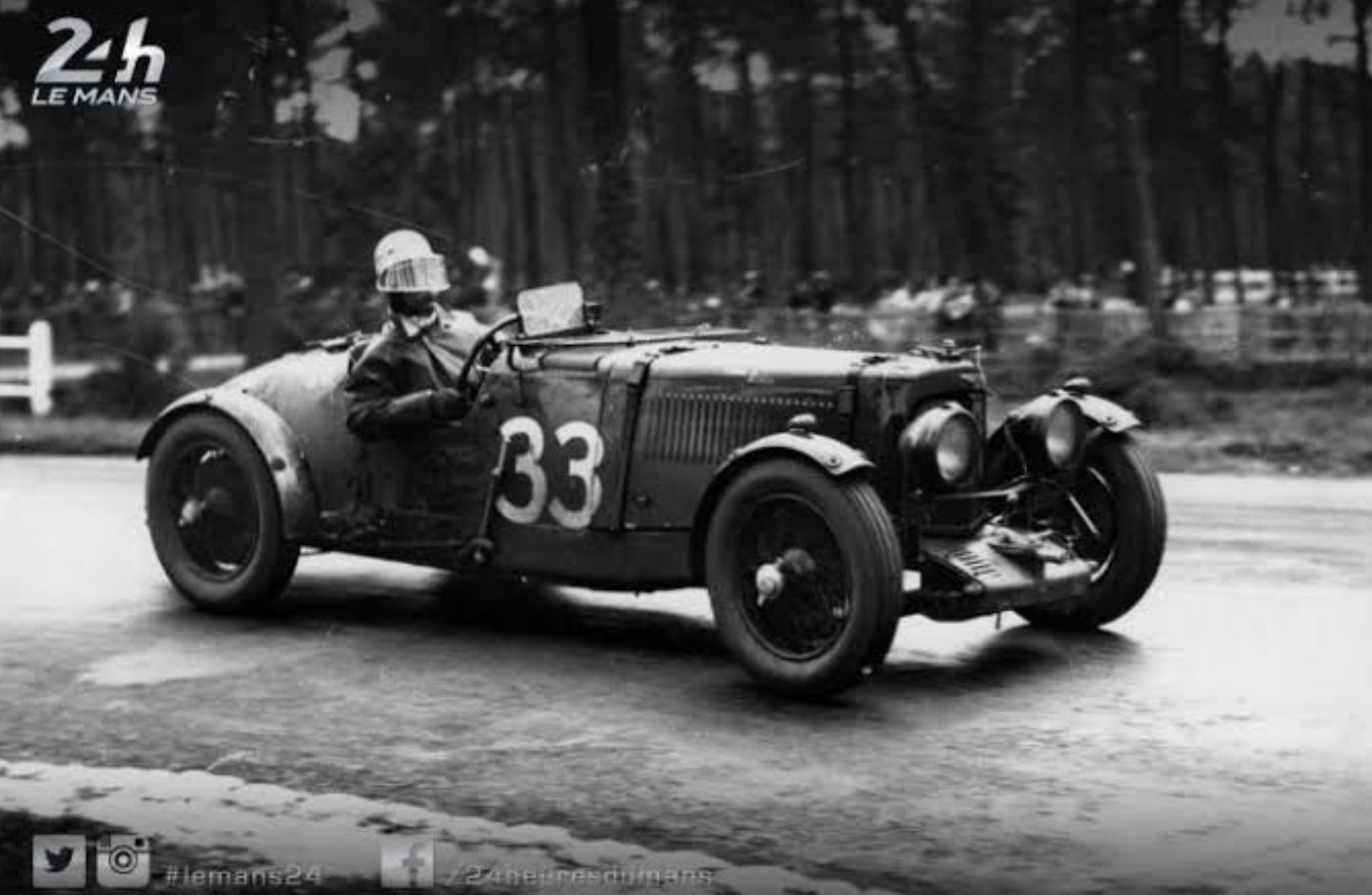
The Faulkner/Clarke 8th placed Aston Martin Ulster at Le Mans in 1935. Winner the Hindmarsh/Fontes Lagonda Rapide M45


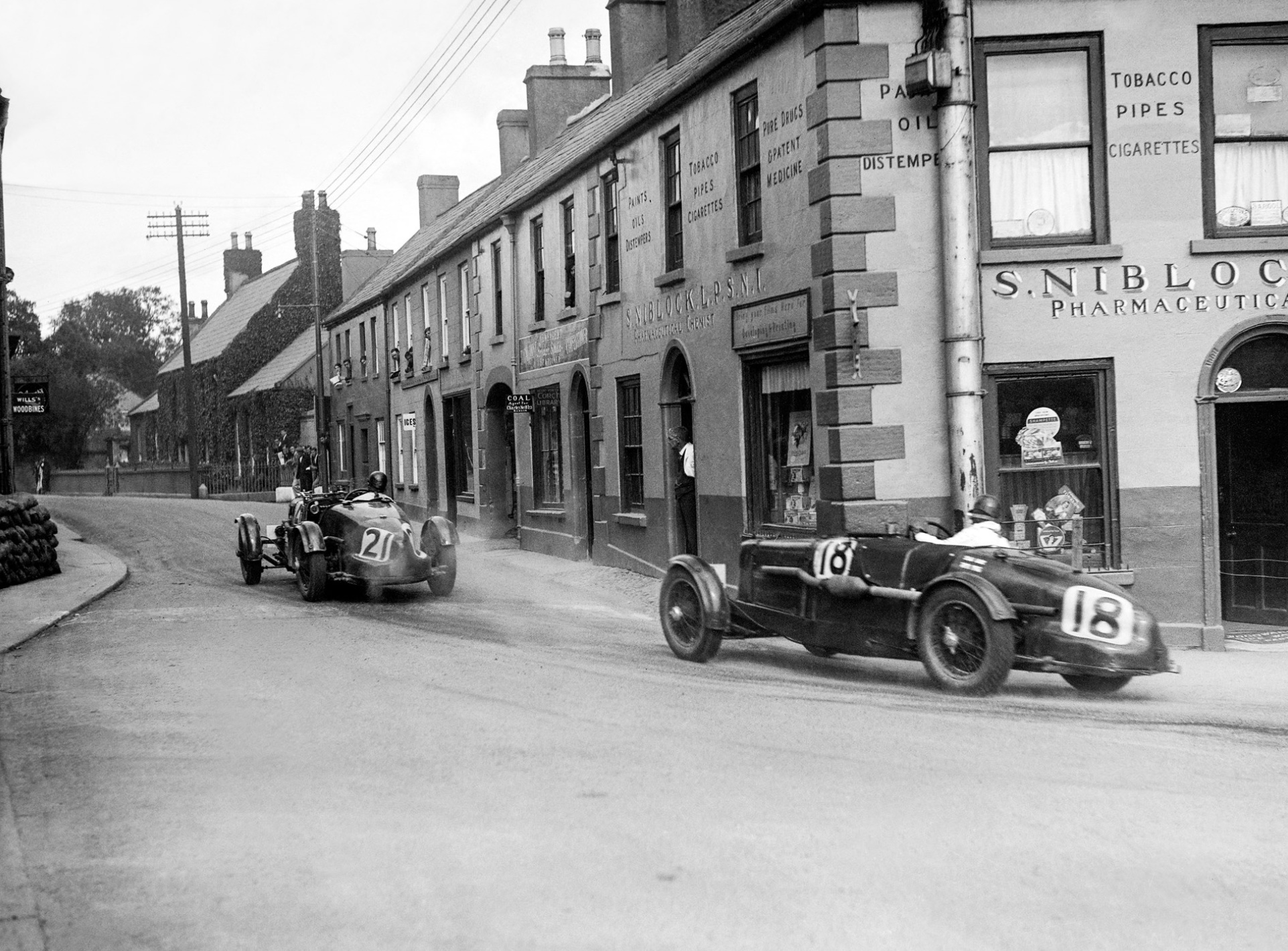
1935 Ulster TT- Charles Brackenbury Aston Martin 1 1/2 leads the Tim-Rose Richards Ulster- 4th and 11th in the race won by Freddie Dixon, Riley TT Sprite (LAT)

Released at the October 1934 London Olympia motor show as ‘a replica of the three team cars which ran so successfully in the 1934 TT’, the machines were built on the shorter of the two Mk2 Aston Martin ladder frame chassis.

With a weight of 940kg, two-seater body and a tuned SOHC, 2-valve, twin-SU fed four cylinder 1481cc, circa 85bhp engine and Laycock four speed gearbox the cars were ‘guaranteed to reach 100mph’.

They weren’t light in comparison to the contemporary competition- Riley, MG Magnette and Frazer Nash ‘but the cars had stamina and handling which won respect of enthusiasts all over the world’ wrote Inman Hunter.

The slinky little machines were (an expensive) 750 pounds in 1934-1935, the period in which the twenty-one customer cars were built. There were initially the 3 ‘Team Cars’ and a further 7 built in 1934-5. Evidently all of the cars are extant- I am intrigued to know the history of this one before and after its time in Australia.

Etcetera…


Clarke/Faulkner Aston Martin 1 1/2 during the 1936 Mille Miglia, DNF in the race won by the Brivio/Ongaro Alfa Romeo 8C2900A. The only British car amongst the Italians! In fact the only foreign car amongst the Italian hordes…

Credits…

Bob Young Collection, Historic Racing Car Club of Tasmania, Geoff Smedley, ‘Aston Martin 1913-1947’ Inman Hunter

Finito…

(R Burnett

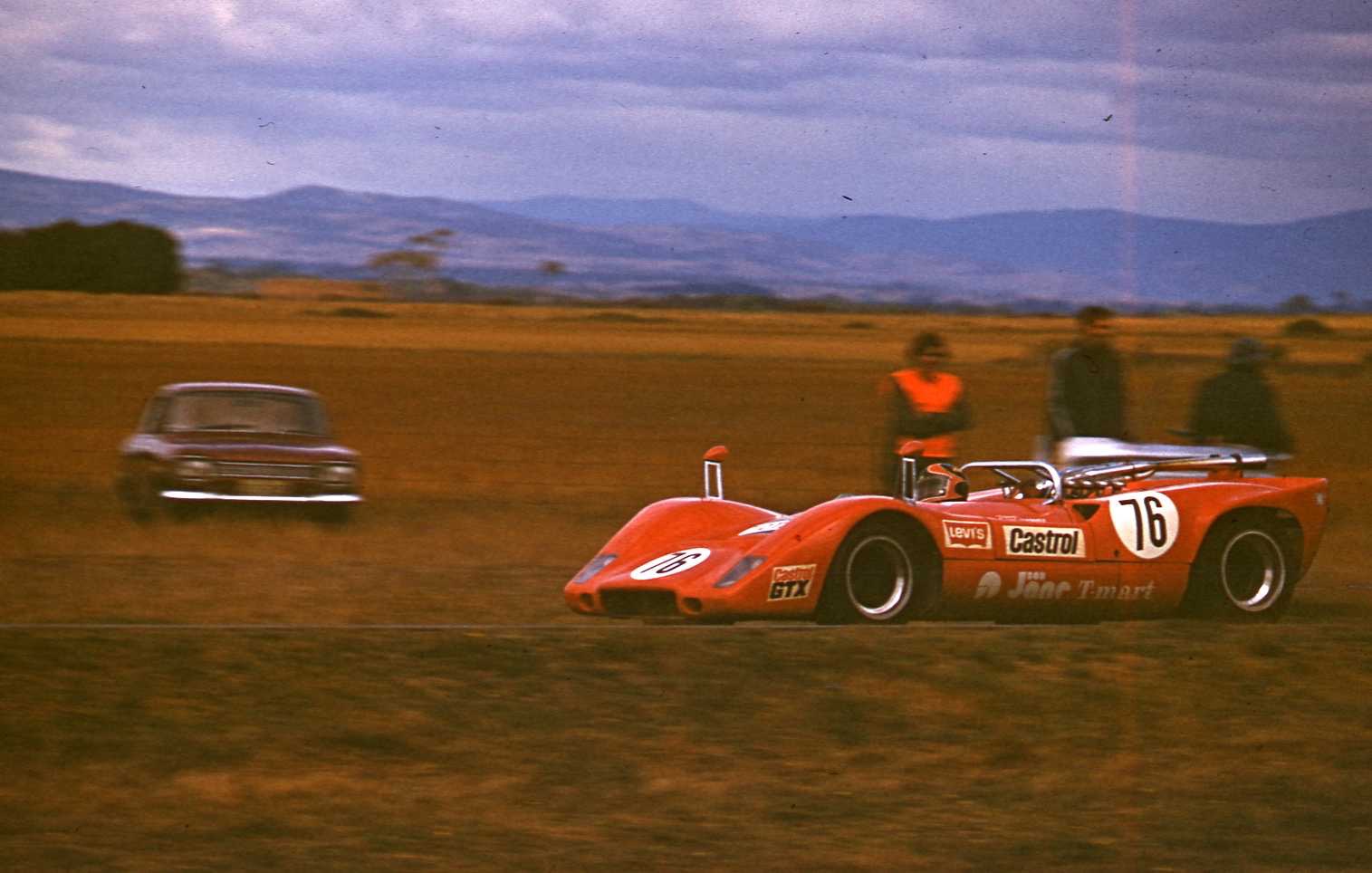
Beauty is in the eye of the beholder of course, and we often attached to a particular era, this unique McLaren M6B Repco ‘740’ 5 litre V8 ticks all the boxes for me…

Here it is in repose in the Symmons Plains paddock on 12 November 1972 before John Harvey goes out and bags his second Australian Sportscar Championship on the trot.

Only Harves and car owner Bob Jane ever raced this thing and Bob never sold it- he died a cuppla years ago and it is still owned by his (very messy) deceased estate.

It’s a special jigger too- Bob knew Bruce McLaren well, McLaren built the car for Bob to suit the Repco engine- its a factory built McLaren not a Trojan Cars Ltd customer jobbie- I’m not bagging Trojan just making clear the ‘pedigree’ of a car which is one of Australia’s most iconic racers.

Duncan Fox wrote that ‘Bob’s M6B was an out of sequence car produced late in 1968 at Colnbrook by Bruce as a favour to his long time friend. It is basically an M12 with M6 bodywork that Bob had stylishly reworked. Personally I think it is the prettiest McLaren sportscar in existence. John Harvey told me they did this because he had difficulty seeing the apex over the original front guards.’

‘It was delivered to the Tilbury Docks in London on a car trailer behind the ‘whale’ (the US Ford Station Wagon McLarens had) by Kiwis Chris Charles and Clive Bush who managed on the way to do extensive side damage with the trailer to a gentleman’s Rolls Royce.’

‘It arrived in Australia in CKD (completely knocked down) less engine and transmission on the freighter SS Port St Lawrence sometime early in April 1969. It was invoiced at US$6000 and carried chassis serial number #50-01.’

‘The engine was a Repco Brabham engines #E26 (740 Series) ‘and the dyno chart I have (17/7/71) shows it developed a maximum of 452bhp @ 6500rpm and 405ft/lbs torque @ 5000rpm.’

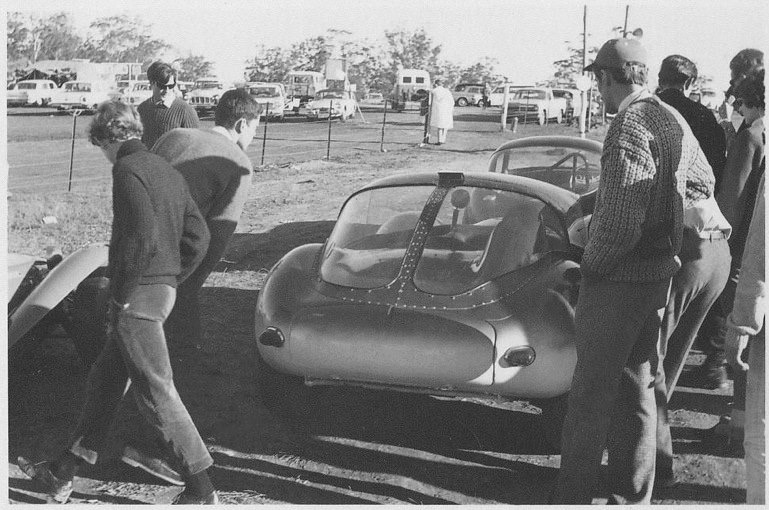
The fella leaning into the cockpit of the first photo is John Sheppard, Jane’s Chief Mechanic- he said to me a few years back, ‘whenever you are ready lets do another article on the McLaren’. Sheppo was very generous with his time in putting together a detailed feature on the Clark/Geoghegan Lotus 39 Climax/Repco which John prepared for Leo before ’emigrating to Mexico’ (Victoria) to take charge at Janes, Brunswick, Melbourne race workshop circa 1970.

I must give him a buzz.

(R Burnett)

Bob and Harves after that 1972 win (H Ellis)

The great shame is that the McLaren was not ready to race at the start of 1969, the year Matich crushed all before him in the Matich SR4 ‘760’ 4.8 litre V8, his way too late intended Can-Am contender.

So Bob and John were late to that particular party, but Harves did contest the final 1969 round at Sandown finishing second to Matich. Repco then acquired the SR4 from FM to use as an exhibit and devoted their mutual development and race energies to the Repco-Holden F5000 program. The first of these engines was fitted to FM’s McLaren M10B in mid-1970, the combination won the November 1970 AGP at Warwick Farm.

The perfectly competitive SR4 with a trick, fresh John Mepstead built 5 litre ‘760’ Repco was set aside leaving the way clear for Bob and Harves to ‘mop up’ the ASCC with the M6B. I’m not sure why they didn’t race the thing much in 1970- Harve’s focus on the Gold Star and the new Torana Repco perhaps, but in 1971 John won three of the four rounds and five of the six 1972 rounds before they too put to one side the curvaceous racer. Team sponsor Castrol wanted them to focus on the teams ‘Taxis’ rather than the ‘Racing Cars’ which at that point comprised the Bowin P8 Repco-Holden F5000 and the McLaren.

Sad but true…

The full story of the M6B is one for another time.

(E French)

Credits…

Historic Racing Car Club of Tasmania, Rob Burnett, Ellis French, Duncan Fox on The Nostalgia Forum, Harold Ellis

Tailpieces…

(R Burnett)

(E French)

Finito…

(unattributed)

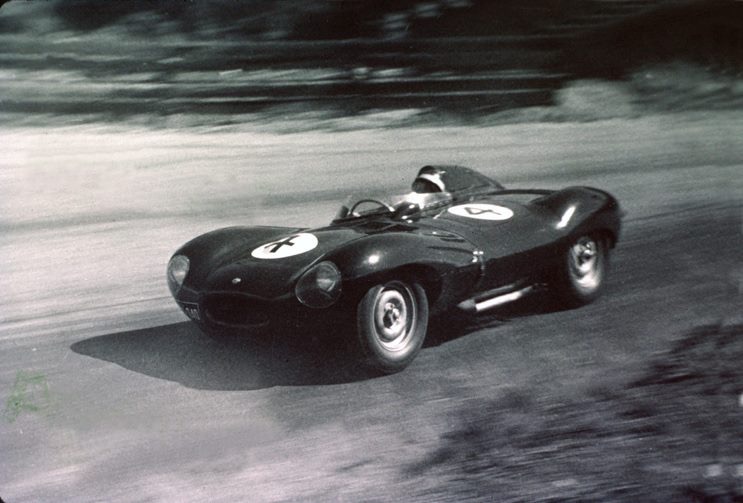
Frank Matich and David Finch aboard two wonderful D Types at Longford in 1960…

‘XKD526’ and ‘XKD520’ are both cars I have written about before but these photographs were too good to lose by just dropping them into the existing articles ‘unannounced’.

Its the 1960 meeting- both cars contested the Australian Tourist Trophy won by Derek Jolly’s 2 litre Lotus 15 Climax FPF. I can’t work out what is happening here, probably a practice session. If it was a Formula Libre race being gridded Austin Miller’s vivid yellow Cooper T51 Climax would be up-front- checkout the article about the TT; https://primotipo.com/2018/05/17/1960-australian-tourist-trophy/, here about the Bill Pitt’s career and the D Type;

Lowood ‘Courier Mail TT’ 1957: Jaguar D Type ‘XKD526’ and Bill Pitt…

and here about the Stillwell/Gardner/Finch D Type- photo value only really; https://primotipo.com/2017/01/01/mount-druitt-1955-brabham-gardner-and-others/

(unattributed)

Here in the paddock you can see the Leaton Motors livery of Frank’s car really clearly- that’s Aussie’s Cooper to the right and a Maserati 250F behind. Its Arnold Glass’ car, he was fourth in the Longford Trophy behind the three Cooper T51’s of Brabham, Mildren and Stillwell. A wonderful, relaxed, bucolic Longford scene. Another link, about this meeting; https://primotipo.com/2015/01/20/jack-brabham-cooper-t51-climax-pub-corner-longford-tasmania-australia-1960/

‘XKD526’ was acquired by the Brisbane and Northern Territory Jaguar dealer, Westco Motors, owned by Cyril and Geordie Anderson, in a partnership of three together with Bill Pitt and Charlie Swinburn- Charlie died of cancer a couple of years after the car arrived it so it became a partnership of two.

These days the Great Western Corporation is a huge listed enterprise involved in agriculture, trucking, property, mining and other activities. When Cyril Anderson established the business in Toowoomba in 1934 he started with a two-ton truck but expanded rapidly, locally and nationally. By 1953 when they formed Westco Motors Cyril and Geordie ran a large successful business, no doubt the D Type was for them a modest investment but one which would assist to build the Jaguar brand and their market position rapidly.

The car arrived in late 1955, exclusively raced for some years by Bill Pitt, Westco’s Service Manager-Geordie Anderson had a few drives, and then successfully by Frank Matich and Doug Chivas during the Leaton’s ownership.

(unattributed)

Pitt crashed it badly at Albert Park in 1956, at Jaguar Corner, of all places.

The photo above is the start of the 2 December ‘Argus Trophy’ 25 mile sportscar race during the 1956 Melbourne Olympics meeting, the AGP was the feature race of a two-weekend carnival and was won by Stirling Moss’ works Maserati 250F on 2 December.

He was similarly dominant in his Officine Maserati 300S sportscar winning the 1956 Australian Tourist Trophy during the 25 November weekend. Moss won from his teammate, Jean Behra, Ken Wharton’s Ferrari Monza 750 and Pitt’s D Type- a great result for the Queenslander as first local home. This meeting is covered here; https://primotipo.com/2018/01/16/james-linehams-1956-agp

and here; https://primotipo.com/2016/01/29/1956-australian-tourist-trophy-albert-park/

Back to the photograph above.

Bib Stillwell is in ‘XKD520’ on the left with Jack Brabham’s partially obscured Cooper Bobtail Climax far left, and Pitt aboard ‘XKD526’ on the right. To the far right is an Aston DB3S, Tom Sulman perhaps.

This is the race in which Pitt came unstuck. In an eventful first lap the car tripped over the stone gutter and rolled- Bill was lucky to survive let alone walk away unscratched after the machine ended up on its back.

In all of the mess- haybales and flattened bodywork, the marshals expected to find him dead in the car, instead he was flicked out as the car went over and landed- safely on the other side of the bales. Lucky boy. The car was quickly repaired and raced on.

Brabham won from Stillwell’s D Type and Bill Patterson’s Cooper Bobtail Climax.

(unattributed)

Lets not forget Bib’s ‘XKD520’ loitering in the expanses of Albert Park during the same meeting.

Superb, rare colour shot of a beautifully prepared and presented car as all Bib’s machines were. Was Gerry Brown wielding the spanners in Stillwell’s Cotham Road Kew HQ at that stage?

(M Ireland)

Bloke Magnet.

Here ‘XKD526’ is performing a valuable function as the centrepiece of Westco’s 1956 Brisbane Motor Show stand and attracting the punters to Jaguar’s more routine roadies!

(Anderson Family)


(unattributed)


(B Hickson)

The car was rebuilt and then sprayed a lovely gold or bronze!

A great idea to make the car stand out perhaps- the ‘error’ was quickly rectified with a nice shade of British Racing Green replacing the gold hue between Albert Park 1957 and Albert Park 1958!

The first shot is of Bill in the Lowood pits, he has Crocodile Dundee alongside, the only thing Mick is missing is the big knife.

The one below is the beastie being fuelled in the Albert Park surrounds in March 1957.

Pitt was second in the Victorian Tourist Trophy again behind Doug Whiteford’s Maserati 300S that weekend. He also contested the F Libre Victorian Trophy Gold Star round finishing sixth and first of the sportscars home- Lex Davison won in his Ferrari 500/750.

(unattributed)

Bill returned to Albert Park year after year including the Formula Libre 100 mile Melbourne Grand Prix carnival held in November 1958.

In the shot above he is negotiating the same corner in which he tripped over in 1956 leading none other than race-winner Stirling Moss in Rob Walker’s Cooper T45 Climax FPF 2 litre- Jack Brabham finished second to Moss in a similar car. Bill placed fifth two laps adrift of Moss, then came Brabham, Doug Whiteford, Maserati 300S and Bib Stillwell’s Maserati 250F.

The D worked hard over that meetings two weekends, he was third in the 100 mile Victorian Tourist Trophy behind Whiteford’s 300S and Ron Phillips’ Cooper T38 Jaguar and third again in the 25 mile sports car scratch behind Whiteford’s superb 300S with Derek Jolly, Lotus 15 Climax second.

(unattributed)

A couple of Mount Panorama photos circa 1958-1959.

The one above is probably of the 1958 Australian Tourist Trophy race or heat- Pitt on the outside is about to pass ‘Gelignite Jack’ Murray in ‘XKD532′ DNF, then the third placed Cooper T38 Jaguar of Ron Phillips follows and then Charlie Whatmore’s Lotus 11 Climax. See the #16 Lotus 15 raced by Derek Jolly to second place behind the winner, David McKay’s Aston Martin DB3S. Click here for a piece on his DB3S’; https://primotipo.com/2017/09/28/david-mckays-aston-martin-db3ss/

Jaguar Magazine recorded that ‘Bill Pitt wrote to Lofty England in 1956 informing the Jaguar guru that the D Type had no brakes at the end of the notorious Conrod Straight because the D Type experienced pad ‘knock off’. Jaguar had never heard of that problem before, and the bottom of Mount Panorama would not be a place to learn about it for the first time’ the magazine pointed out wryly!

(unattributed)

Same part of Mount Panorama but this time Pitt is chasing Ern Seeliger in Maybach 4 Chev- the big booming monster was second in the AGP at Bathurst in October 1958, and would well and truly have had the legs to best the D Type.

This is probably during the Bathurst 100 F Libre race won by Whitefords 300S from Arnold Glass’ Ferrari Super Squalo, which popped an engine on the last lap, then came Bill in a splendid third. Seeliger started from the middle of the front row but didn’t finish having ‘…spun the brakeless Maybach to an eye-popping halt in the Pit Corner escape road’ at half distance wrote John Medley.

(J Psaros)


Bobtail Cooper ?, Whatmore Lotus 11 Climax, shapely ? and the nose of FM’s Matich (unattributed)


(J Psaros)

I have written extensively about the great Frank Matich a number of times, rather than repeat myself perhaps the most relevant article is this one in terms of his sportscar rise and rise is this one; https://primotipo.com/2015/09/11/frank-matich-matich-f5000-cars-etcetera/

Be in no doubt the Leaton support was key to taking him forward from C to D Type Jaguars and then the Lotus 15 Climax- that car powered by a 2.5 Climax FPF showed he was an outright F Libre contender if it were ever in doubt. The group of XKD526 photographs here are all at Lowood probably during the Gold Star round in August 1959.

(unattributed)

One of the Confederation of Australian Motor Sport’s less successful rule changes was to introduce Appendix K ‘GT Racing’ to encourage road going GT’s in 1960. This article covers the salient points; https://primotipo.com/2017/01/19/forever-young/

Because grids were skinny they encouraged/turned a blind eye to sports-racers ‘meeting the regulations’ as long as they were fitted with a lid. And so we had David McKay’s Lola Mk 1, Bob Jane’s Maserati 300S and other exotica including ‘XKD526’ fitted with ‘fastbacks’ to allow them to continue to race.

The photos above and below are at Sandowns first meeting in 1962, the conversion created the only hardtop D Type was quite neat looking. I didn’t say beautiful, just neat or functional!

Barry Topen owned the car by then and crashed it quite heavily into the horse railings surrounding the circuit.

It was soon repaired, sold to Keith Russell and then acquired by Keith Berryman in the early sixties- the car was with him ‘forever’ before finally leaving our shores five or so years ago.

(B Anderson)


Frank Matich heading up the Mountain at Bathurst in 1961 (J Ellacott)

Berryman, or is it Keith Russell, below at Warwick Farm in the mid sixties with the car still looking great albeit with a set of rather wiiide alloy wheels and the rear guards flared to suit. It does have a bit of the Sunset Boulevards about it gussied up like this.

(unattributed)

Speaking of the guards reminds me of an incident in the Australian Grand Prix paddock a few years back, not long before the cars sale and final departure from our shores.

Noted British artisan and driver Rod Jolley was in Australia that summer racing, i think, a Cooper T51 at Phillip Island and the Albert Park AGP historic double.

Somehow, unloading XKD526 in the Albert Park paddock from its trailer after its long haul from Stockinbingal- Keith Berryman was displaying the car and participating in the on-circuit historic events, a front guard was damaged and a wheel was fouling the guard.

Who to approach for the required bit of impromptu panel beating? Rod Jolley of course. The look of sheer terror on Keith’s face as Jolley set to work on his lovely bit of aluminium with controlled brio was awful to watch- it felt like an arm was being hacked off…

Etcetera…

(unattributed)

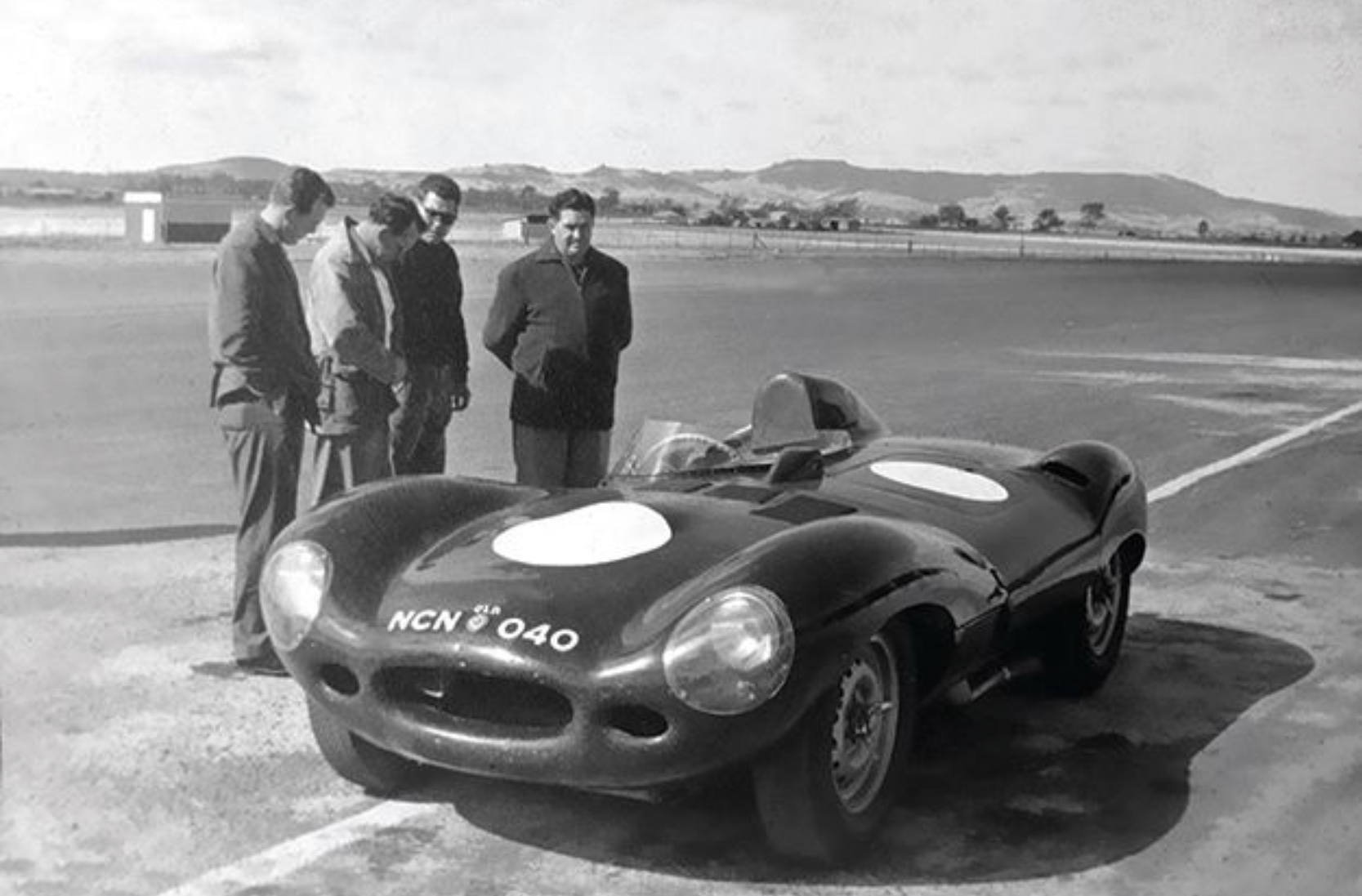
Bill Pitt up whilst the car was new and road registered. Uncertain as to the circuit-intrigued to know- such handsome beasts of warfare aren’t they- D Types define ‘compound curvature’.

(J Psaros)

On the side of the main straight at Lowood- a youthful Frank Matich at left eyeing off his future mount. Barry Carr, who worked for Leatons in 1961/62 identifies the group as Leaton’s driver Matich, mechanic Joe Hills and business owners George Leaton and Joe Robinson probably at the time they are ‘either thinking of or had obtained the car from Pitt/Anderson’.

( J Psaros)

‘Move to the back of the bus matey…’

The Leaton’s Bedford bus at Lowood (and at Sandown in 1962 below). The nose to the far left is the Westco Mk7 Jag which finished seventh outright in the 1957 Round Australia Trial behind six VW Beetles. Jaguar Magazine assert that Pitt claimed it as his greatest competition triumph.

The car later became a tow-car for some of the racers inclusive of the D and works built Mk1 Pitt drove to victory in the 1961 one race Australian Touring Car Championship at Lowood.

Both the Mk7 and ‘Big Nose’ The Bus are long gone, sadly.

(G Fry)

Credits…

Anderson Family Collection, Jaguar Magazine, Jock Psaros, Malcolm Ireland, Barry Anderson, Barry Hickson, ‘Bathurst: Cradle of Australian Motor Racing’ John Medley, ‘Glory Days: Albert Park’ Barry Green, John Ellacott, Barry Carr, Gavin Fry

Tailpiece: ‘Geordie Anderson’ in her new D Type,’XKD526’…

(Anderson)

Doris ‘Geordie’ Anderson aboard the new D Type she co-owned with Bill Pitt and Charlie Swinburn. Its said that she was the only serious lady racer of a D Type at the time anywhere in the world.

Her racing CV included a win in the Mount Druitt 24 Hour Race in a Jaguar XK120 FHC- we shall come back to Geordie and her exploits ina month or so…

Finito…


(J Wright)

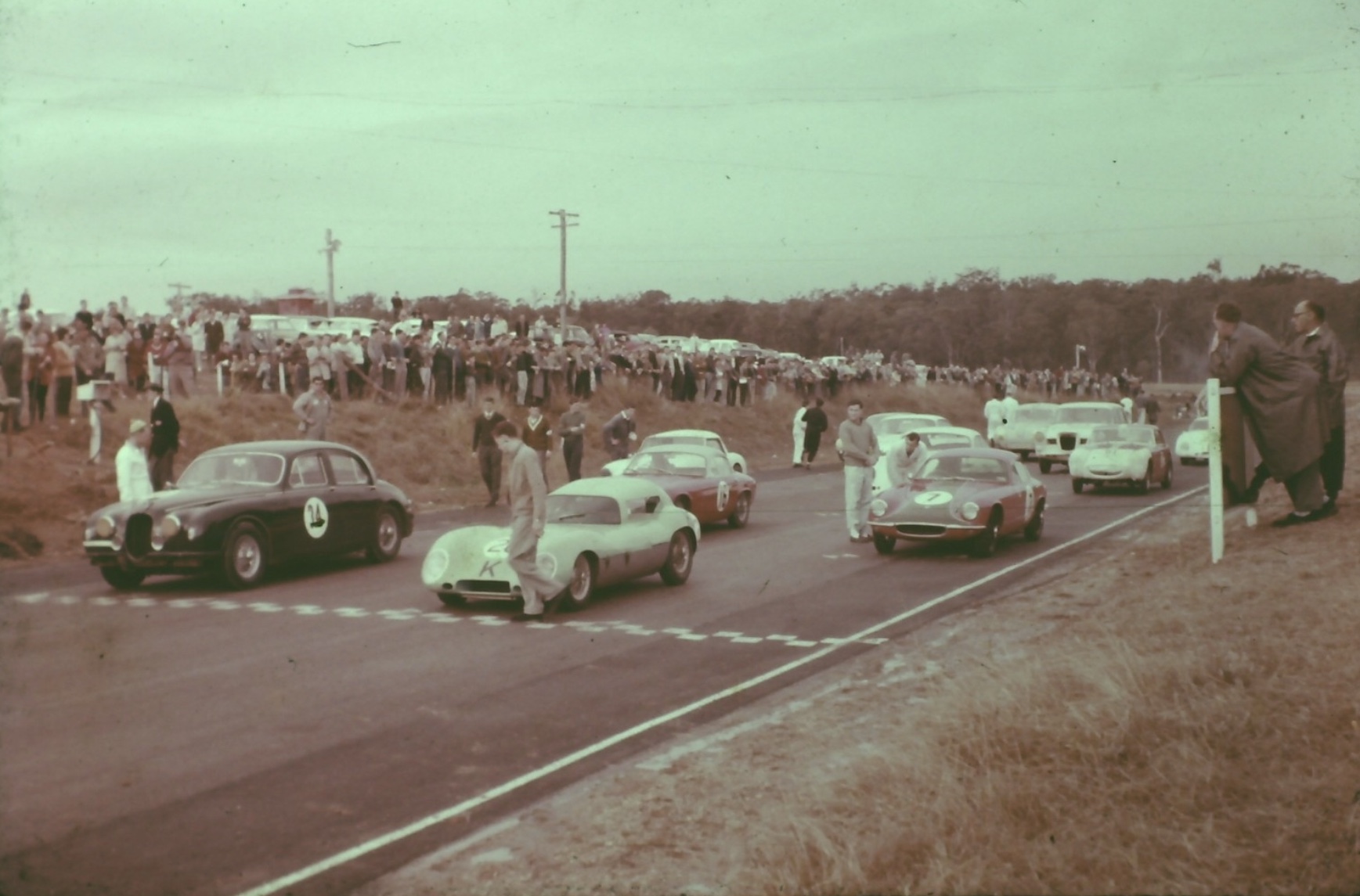
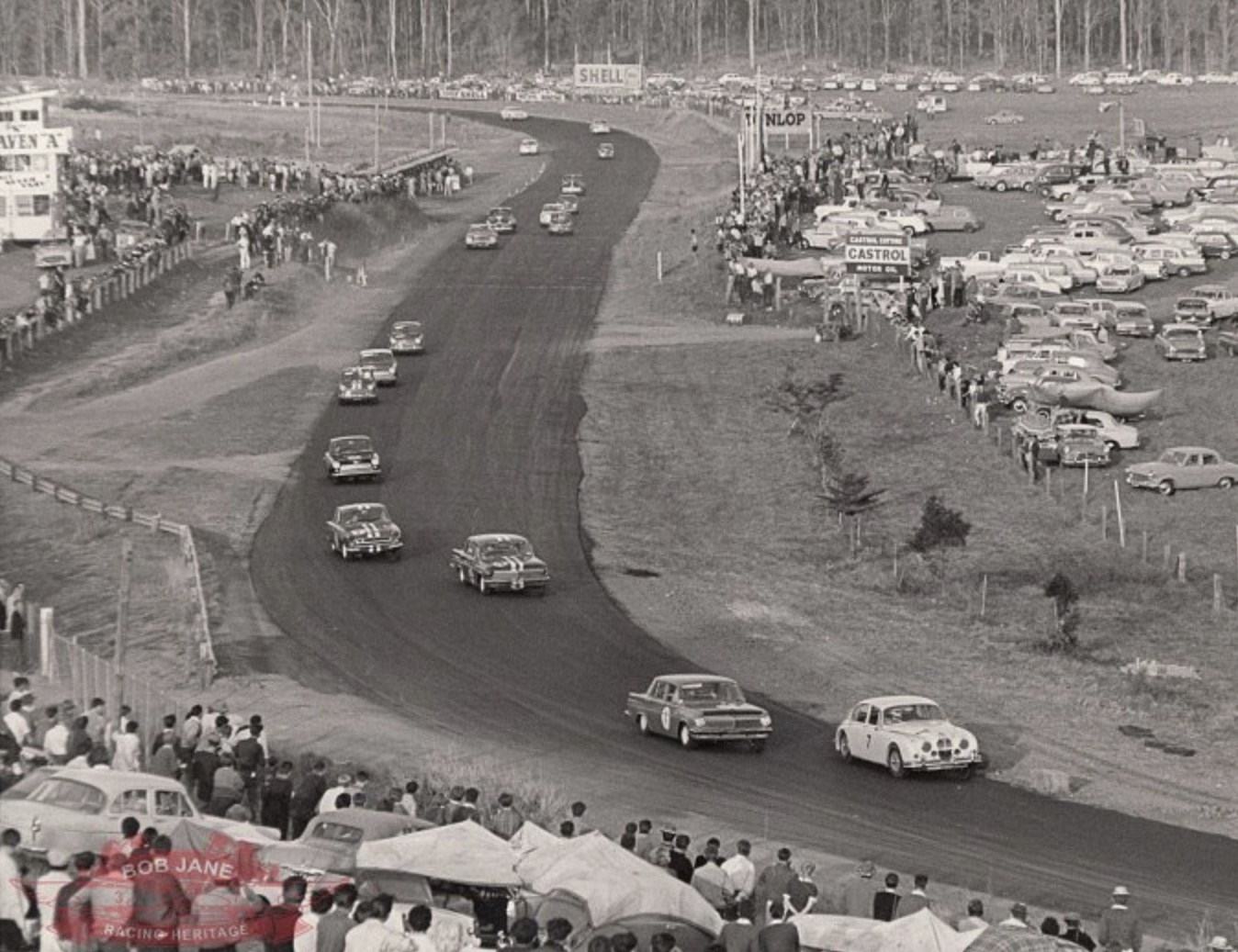
The grid for the Australian GT Championship at Lakeside, Queensland on 8 July 1962…

Bill Pitt, Jaguar 3.4 alongside John French in the Centaur Waggott/Holden, then the two Lotus Elites of Tony Osborne #16 and #7 Brian Foley. On the row behind is #21 Les Howard, Austin Healey Sprite Ford-Cosworth, in the middle the partially obscured #31 Porsche 356 of Tony Basile and on the left the white #30 Renault Floride of Terry Kratzmann .

The light coloured Sprite further back is #51 Sib Petralia, #60 Paul Fallu, Karmann Ghia whilst the #4 Wolseley has long time competitor Ken Peters at the wheel. The unmistakable outline of the grey Renault Dauphine is #6 M Hunt. Dennis Geary #22, was also entered in the HWM Jaguar- now in two-seat Coupe form but with the very same chassis and mechanicals of the car raced by Lex Davison to win the 1954 Australian Grand Prix, ‘just down the road’ at Southport on the Gold Coast.

The 50 lap 75 mile race was won in 62:6.06 minutes/seconds by French from Basile, Pitt, Howard then came Foley. Sib Petralia won the under 1 litre class, Basile the 1000-1600cc, French the 1600-2600cc and Pitt the 2600cc class and over.

The race was the third Australian GT Championship for Appendix K cars- the first was held at Bathurst during the October 1960 meeting and won by Leo Geoghegan’s Lotus Elite, the 1961 event was at Warwick Farm in July- Frank Matich won in his Jaguar D Type.

The CAMS relaxed attitude to the requirements of App K was that cars such as the Matich D, Bob Jane Maserati 300S, David McKay Lola Mk1 Climax and many other sports-racers were allowed to run to fill scanty grids, with hardtops cobbled together for the purpose.

Which rather negated the intent of the CAMS regulatory changes, lets not go down that path.

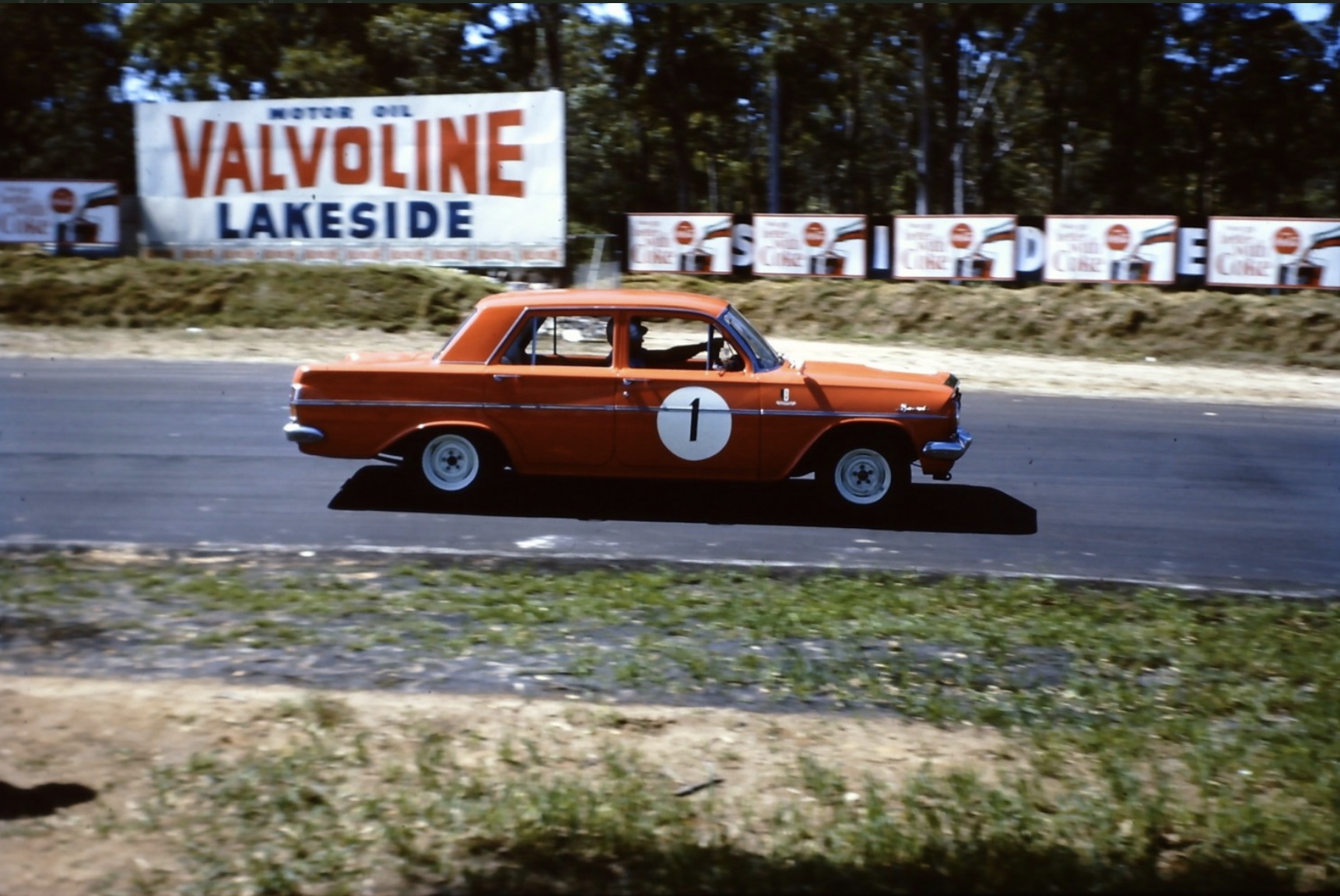
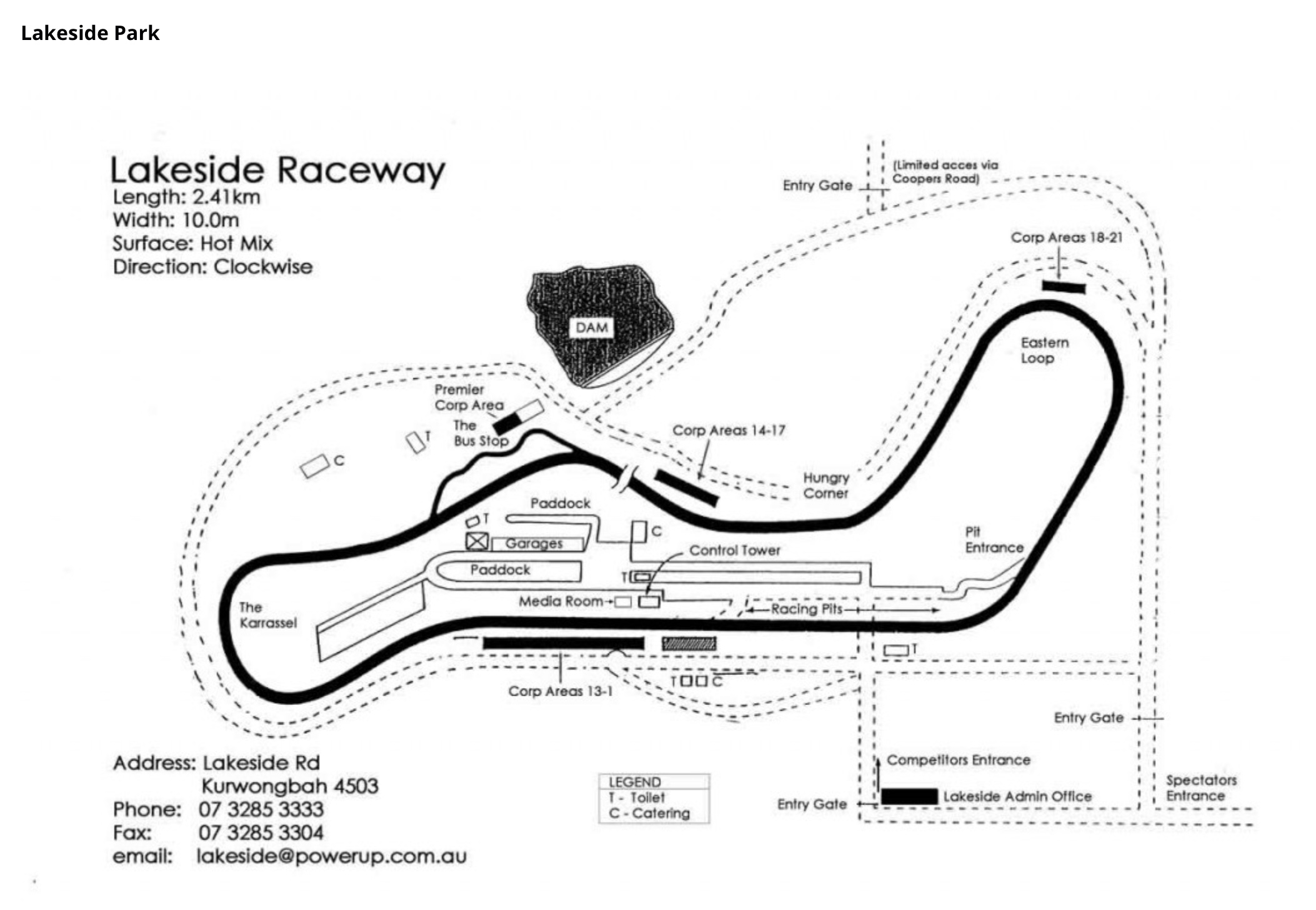
The first photograph had me tossed- I got Pitt and French but not the locale at all, i’ve never been to Lakeside and some earthworks after the first several years changed the look of the place a bit in any event.

So, many thanks for the detective work of regular collaborator Stephen Dalton and Glenn Moulds- the wise owls of The Nostalgia Forum can usually solve these knotty Who, What, Where and When problems.

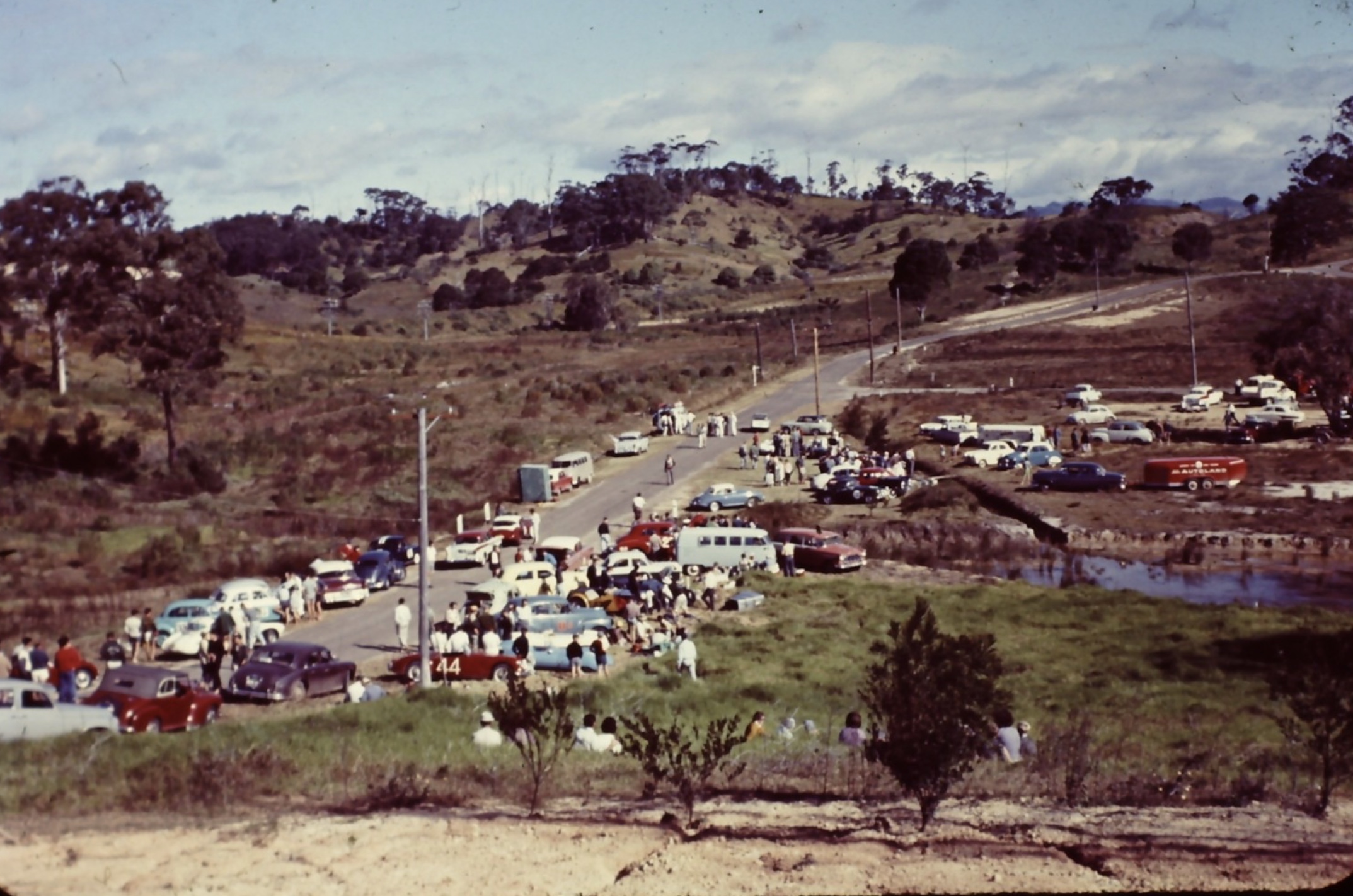
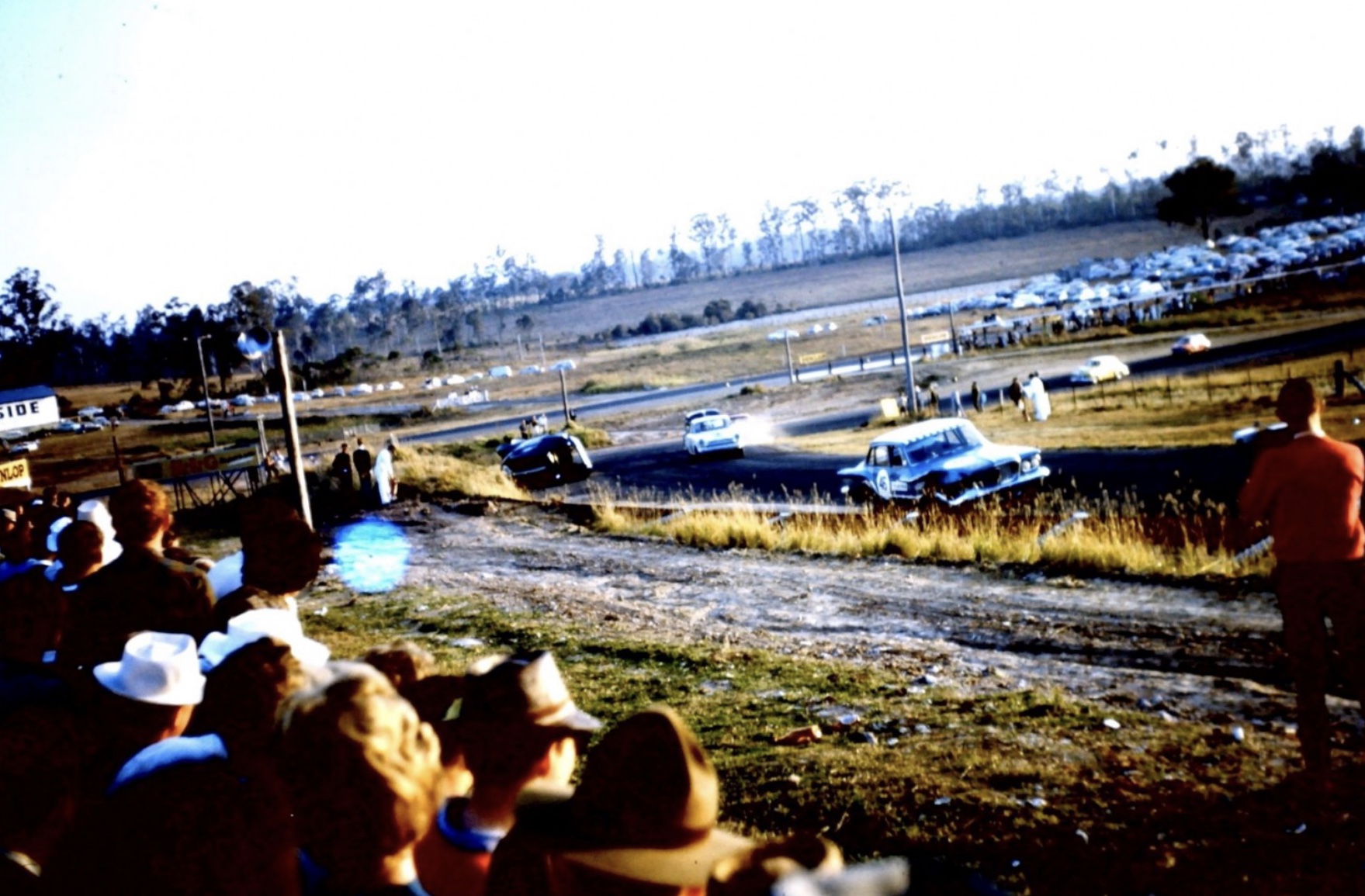
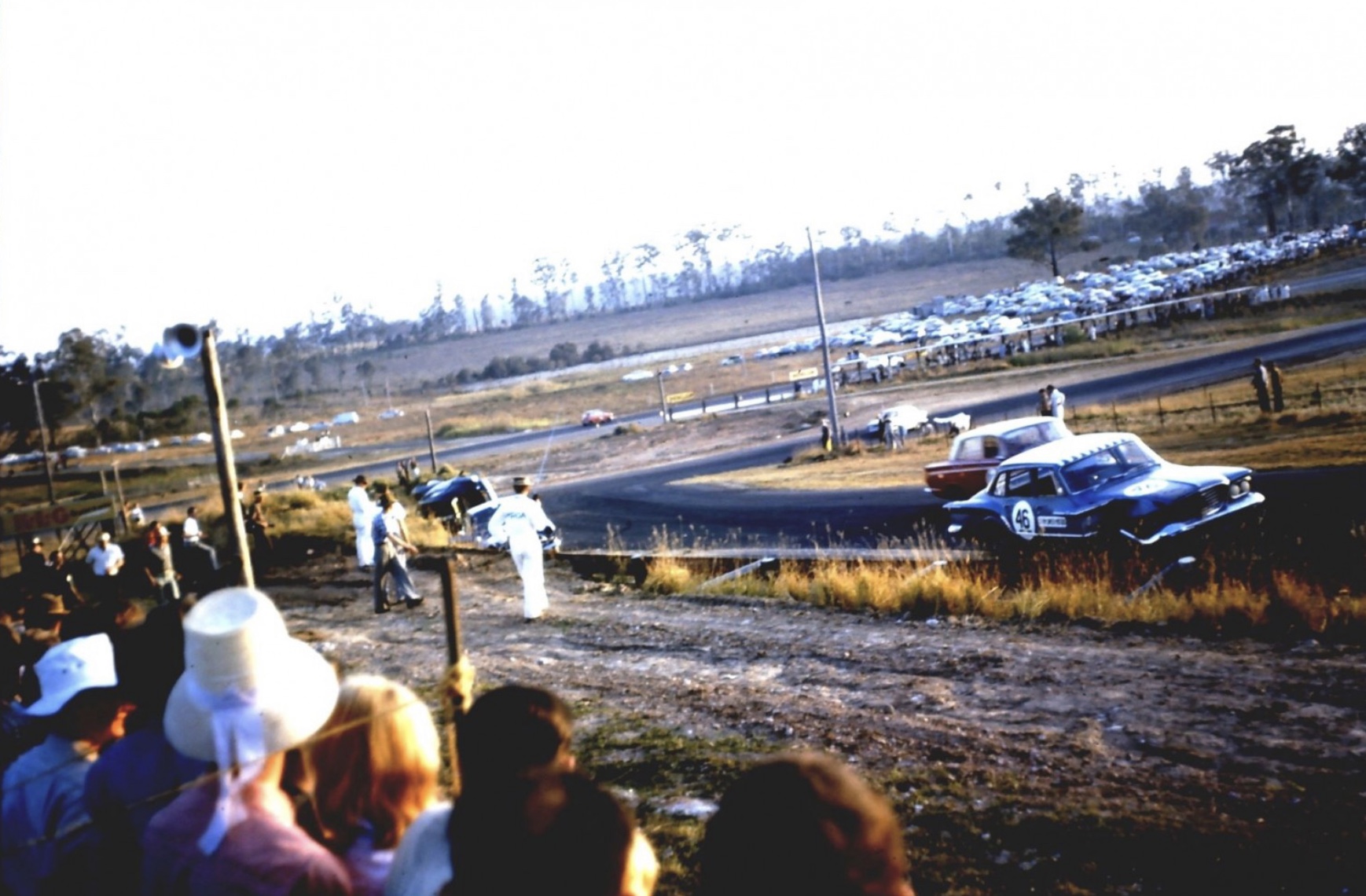
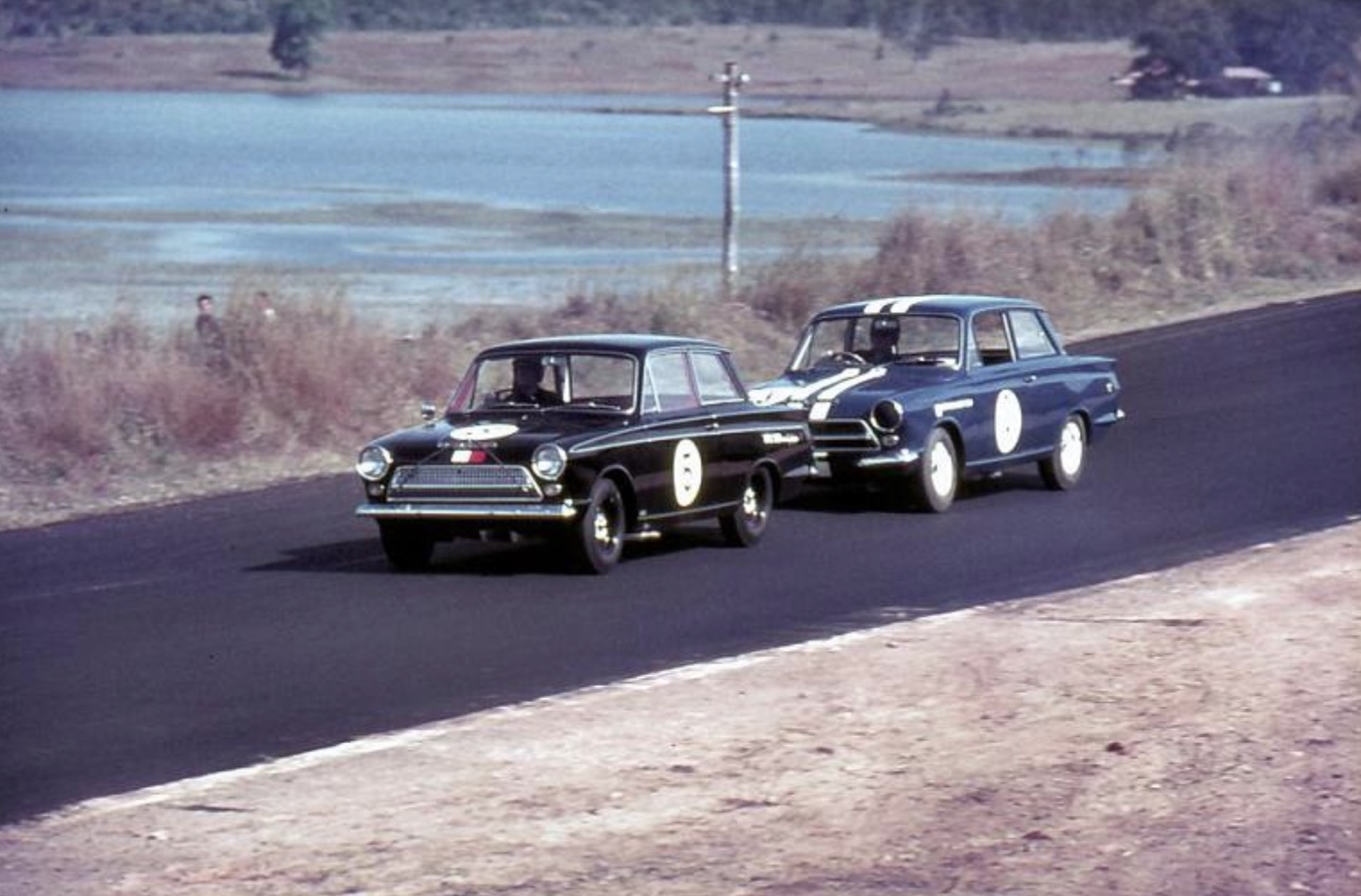
Mind you, we are still cogitating in relation to the shot below, said to be Lakeside too.

If there are some Queenslanders out there who can confirm the whereabouts of the scene below that would be a bonus. My suggestion that its on the Jindabyne-Charlottes Pass road near Charlottes in the NSW Snowies so far has little support.

(J Wright)

Most of these photographs were popped up on the Shannons Insurance website by Dr John Wright a couple of years ago but only three were identified- we on primotipo…backed by the research horsepower of the TNF Crew are happy to oblige.

Lakeside was built on farm land purchased by Geoffrey Sidney Sakzewski at Petrie 30km north of Brisbane in 1957.

The first open race meeting was held on 19 March 1961- the landlord was keen to compete so pressed into service his wife’s  four door, light-green pillarless Plymouth Belvedere- here he is chasing the Jeremiah driven Holden FE. Rob Bartholomaeus advises the race was the Queensland Touring Car Championship- Bill Pitt is on his way to winning aboard his 3.4 Jaguar up the road- these two are scrapping for second, a battle won by the Jeremiah.

(J Wright)


Pondering and working on the remodelled Lakeside layout in 1965 before the 1966 AGP- David Harding, Ken Peters and Sid at right (unattributed)


(J Wright)

The profile of car and the helmet above will be familiar to most of you, its Hill G on his 1963 Australasian Tour during which he raced the Ferguson P99 Coventry Climax 2.5 FPF.

The rest of the hotshots ran 2.7 Climaxes in their Coopers, i’ve always thought it interesting to ponder how Graham would have gone with a bigger engine under the cars shapely bonnet.

Mind you, his only race win on the tour was a heat at Lakeside- its looks a tad soggy so I would not be surprised if Graham is on the way to a Saturday victory aboard this magnificent bit of engineering.

I waxed lyrical a while back about it, click here; https://primotipo.com/2015/01/30/ferguson-p99-climax-graham-hill-australian-grand-prix-1963/

(J Wright)

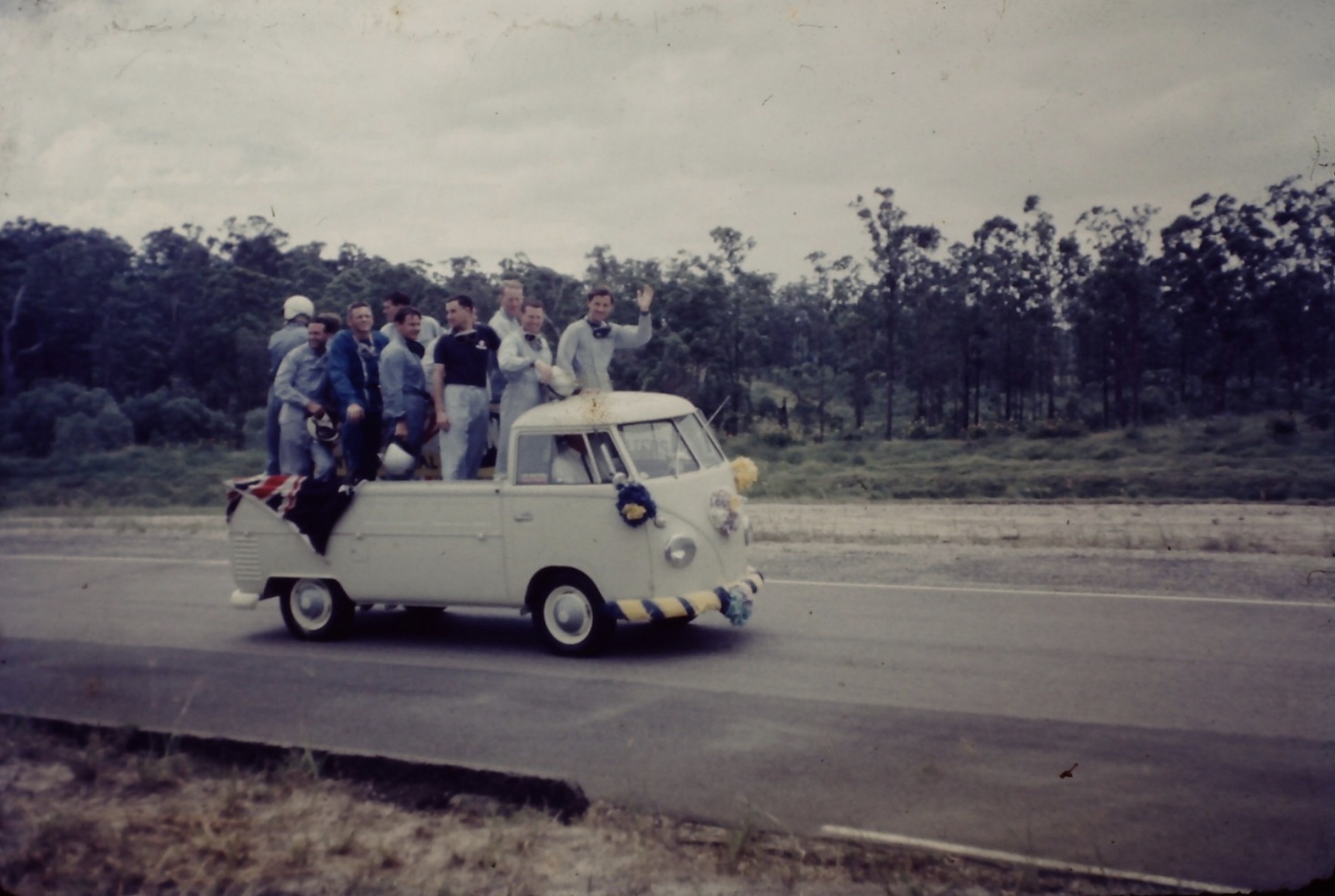
The poor old Kombi is groaning under the weight of so many champions in one place- 1200cc this model? and now highly sought after of course.

She’s a bit grainy but my best guess- and happy to hear from you, goes a bit like this from left to right- Frank Gardner in the white helmet looking away at the kangaroos, dunno holding the helmet, Arnold Glass in the darker blue race suit, Bruce McLaren holding the light silver helmet, short-sleeved fella probably Greg Cusack, Bib Stillwell and Graham Hill. ‘Blondie-locks’ behind is John Youl perhaps. Do get in touch with your bids.

The 1963 Lakeside International was won by John Surtees, Lola Mk4A from Hill’s Ferguson P99 and Bib Stillwell’s Brabham BT4- Climaxes all.

Back in the days of yore, until 1969, the Australian Touring Car Championship was decided over one race- the honour to host the event was awarded to Lakeside in 1964- race day was 26 July.

Lakeside’s proximity to Brisbane ensured a good crowd saw a contest waged between a huge variety of cars with Ian ‘Pete’ Geoghegan winning the first of his ATCC’s aboard a Ford Cortina GT from Norm Beechey, Holden EH S4, Bob Jane’s Jaguar Mk2 4.1, the Brian Foley and Peter Manton Morris Cooper S’, Glynn Scott’s Cortina GT and Brian Muir’s EH S4.

A series of heats, split into engine capacity classes determined the grid- Jim McKeown’s Lotus Cortina was on pole from Jane, Muir, Beechey and Manton.

Muir, Jane and Beechey led initially from Geoghegan and McKeown- Jim moved forward to second behind Muir- leadership of the race by Muir (below) was the first time a Holden had led an ATCC event- it would not be the last! Brian went off to fame and good fortune in Europe not so long after this.

(J Wright)

McKeown took the lead from Brian Muir on lap 7 with Beechey and Geoghegan battling for fourth. Bob Jane moved to second on lap 11 and then first when McKeown made an error and dropped to third behind Muir- at about the same time Warren Weldon locked a brake on lap 15, hit the bank and rolled onto his side a little bit behind Clem Smith who had clobbered the same bit of Queensland on lap 2, rendering his Valiant hors de combat.

The obstacles were raced around back in them days…Clem Smith’s very precarious Valiant R Type, and behind him Warren Weldon’s Holden 48-215 on its side. In the photo below you can see the blue McKeown Lotus Cortina partially obscured by the marshal. Passing Cortinas in both shots (J Wright)


(J Wright)


Done this one to death- Smith, McKeown and Weldon in line astern (unattributed)

Jane’s lead over Muir was up to 100 metres before clutch problems intervened circa lap 31- Muir then led from Pete and Norm who both passed Bob Jane. Encouraging for Holden, Muir led for the next 6 laps before a puncture forced him to pit, ‘While fetching the spare wheel, one crewman accidentally handed his motel keys to another crewman trying to open the cars boot lid. The delay cost Muir two laps and his chance of victory’ Wikipedia says.

Beechey led from Geoghegan who applied plenty of pressure to the EH in the lighter Ford taking the lead on lap 43, he held on for the next 7 laps to win by 1.2 seconds from Beechey. Jane was third despite a shagged clutch, thirty seconds adrift, with Foley and Manton’s Coopers the remaining cars on the lead lap.

Etcetera…

Start of lap 2 1964 ATCC.

Jane, Muir, Beechey, McKeown, Geoghegan, Manton, Firth, Foley and the rest.

(TRS)

Beechey and Muir in Holden EH S4’s with an obscured McKeown’s blue Lotus Cortina on the inside with Foley in the red Cooper S.

(TRS)

Pete Geoghegan’s winning Cortina GT ahead of McKeown’s Lotus Cortina.

(TRS)

Bob Jane’s very quick Jaguar 4.1 chasing Brian Muir’s Scuderia Veloce Holden EH S4, drivers using all of the available bitumen and a smidge of gravel on the inside.

Tailpiece: Lakeside Magazine looks good….

Credits…

John Wright Collection, The Nostalgia Forum- Stephen Dalton and Glenn Moulds, ‘TRS’- The Roaring Season’, Rob Bartholomaeus

Finito…

(T Watts)

4.4 litres of Repco-Brabham V8 grunt trumps 2 litres of Porsche flat-6 off the line at least, maybe not…

Bob Jane’s Elfin 400 and Alan Hamilton’s Porsche 906 on the front row of the Longford grid in March 1967.

Bob Jane won the Saturday race from Noel Hurd’s Globe Products Elfin 400 Ford and Hamilton whereas in the Monday event Bob won from Wally Mitchell’s RM1 Chev and Glynn Scott’s Lotus 23B Ford. Noel Hurd and Alan Hamilton were DNF’s, the latter running out of fuel on the last lap.

‘Tasmanian enthusiasts would recognise the Gorringe pedestrian bridge, the same bridge that now allows pedestrian access to Baskerville…’ Grant Twining noted.

I’ve written features about both these cars, so initially thought I would pop the photos into the existing articles but they are too good to ‘lose’ by so doing.

They are sourced from the ‘Historic Racing Car Club of Tasmania’ Facebook page which I raid every now and again- so far Grant has not cracked the shits about me doing that- do suss the page if you are a Facebooker, if not you are missing out.

In terms of articles the Elfin 400 is here; https://primotipo.com/2015/05/28/elfin-400traco-olds-frank-matich-niel-allen-and-garrie-cooper/. Bob’s Elfin 400 here; https://primotipo.com/2018/04/06/belle-of-the-ball/, and Hamilton’s Porsche 906 and other cars here; https://primotipo.com/2015/08/20/alan-hamilton-his-porsche-9048-and-two-906s/

(T Watts)

Jane nose up and under power past the Longford pits.

Such a brutally pretty thing, but the aerodynamics of the 400’s were never fully resolved, this car, as many of you know, took flight over the Conrod Humps at Bathurst during the Easter 1969 meeting killing Bevan Gibson in the process.

To that very point Rob Bartholomaeus reminded me Noel Hurd was a non-starter in the Monday Longford sportscar race after a hair-raising off at around 140mph induced by the Elfin 400’s aero package. He was ok, and the car was not badly damaged but the nose was changed thereafter.

Bob’s eyes will be looking up the rise towards the Water Tower to the tracks left before pursuading his beast into the fast right hander at the top of the hill and plunge towards The Viaduct. Click here for a ‘Lap of Longford’ piece; https://primotipo.com/2018/07/05/longford-lap/

The shot of Alan below is taken on the same stretch. If the car looks a bit odd its because Australia’s Porsche importer has chopped the Coupe roof off to create a Spyder given he was and is a big, tall unit and wanted to be comfy.

(T Watts)

Longford was a demanding circuit in any car but particularly so in a fast, powerful one given the inherent nature of the layout with its culverts, trees, bridge supports, Esk River (scuba divers were always at the ready in dinghies afloat) light poles and other similar immovable objects, the circuit width and its undulations or bumps.

Jane and Hamilton raced most of their cars here- sports and touring cars and in Bob’s case his Elfin Mono single-seater ANF1.5. For Hamilton it was the race debut of the 906- a daunting place for any cars first meeting however well sorted the ex-factory Porsche package undoubtedly was!

Jane raced his Elfin 400 at Longford in 1967 and Ian Cook took the wheel in 1968- Alan raced the 906 here in 1967 only. The ‘ring in’ is the photo below of Alan at Symmons Plains in 1967, its probably the ‘Tasmanian Sportscar Championship’ meeting the week after Longford on 12 March.

Click here for an article on that tragic event, Hamilton’s well-used engine (it had been in the 904-8 he had just stepped out of before fitment to the 906) had a con-rod break so he did not finish; https://primotipo.com/2018/07/17/1967-tasmanian-sportscar-championship/

(HRCCT)

Credits…

Tim Watts, Dennis Cooper, Historic Racing Car Club of Tasmania, Rob Bartholomaeus

Tailpiece…

(D Cooper)

The Longford Shell tent in 1968.

Jim McKeown’s Lotus Cortina Mk2 alongside the Bob Jane Racing 400 raced at this meeting by Victorian Ian Cook. The class of the field in that, final Longford year was Chris Amon who set the outright lap record in David McKay’s Scuderia Veloce Ferrari Can-Am 350 machine. Here tis; https://primotipo.com/2015/04/02/ferrari-p4canam-350-0858/

Note the aluminium spoiler above the radiator outlet in a quest for more downforce. 1968 was ‘the year of the wing in F1’ remember, mind you, by this stage Jim Hall and the crew from Rattlesnake Raceway in Texas had provided plenty of Chaparral mobile ‘tutorials’ on what could be applied aerodynamically to Group 7 cars like the Elfin to assist in keeping them on terra firma.

Finito…

(C La Tourette)

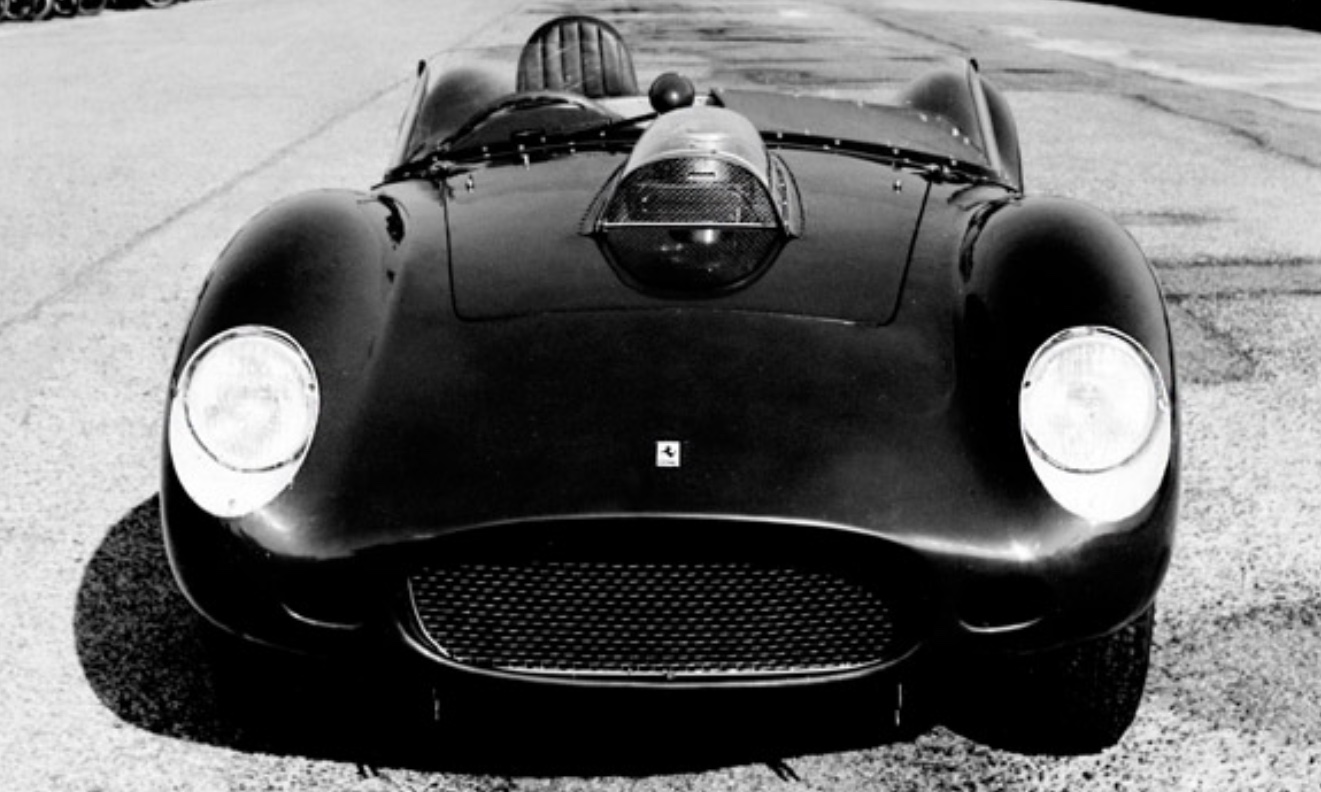
The 1958/9 Ferrari 196S looks like a scaled down 250 Testa Rossa, the three rather than six downdraft Webers makes the little brother easy to pick…

2 litre- 1983cc, 77 x 71 mm bore/stroke, DOHC, two-valve 65 degree V6 fed by three 42 DCN Weber carburettors. Two plugs per cylinder, twin magnetos, circa 195bhp @ 7200rpm. Four speed gearbox.

Tubular steel ladder frame chassis, front suspension by upper and lower wishbones with coil spring/shocks and roll bar. Rear has a live axle with coil springs, hydraulic shocks and roll bar, drum brakes all round, worm and sector steering.

Two chassis built- ‘0740’ and ‘0776’.

Credits…

Clarence La Tourette, auto.Ferrari.com

Tailpiece…

(Ferrari)

Finito…


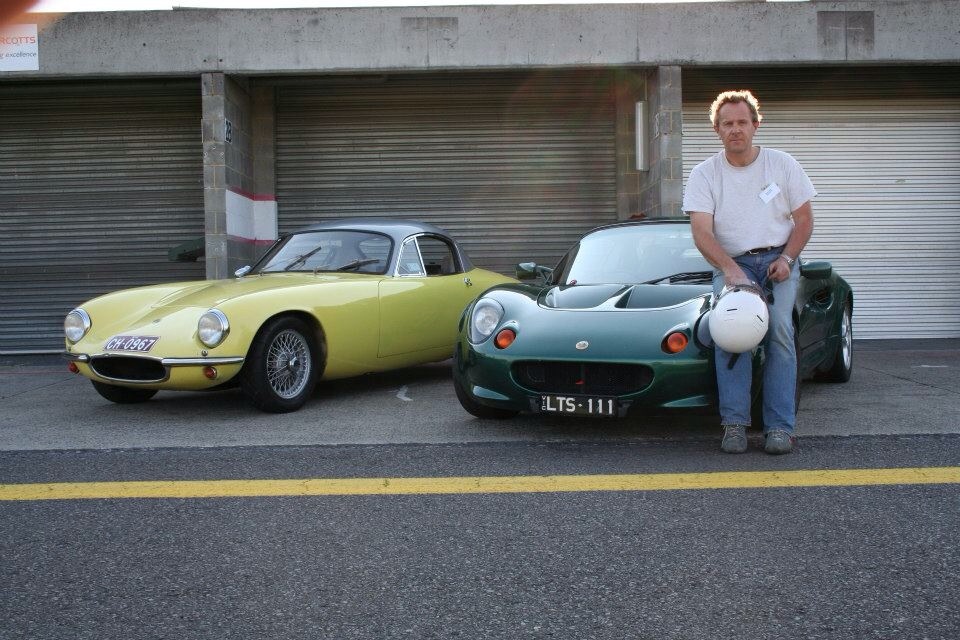
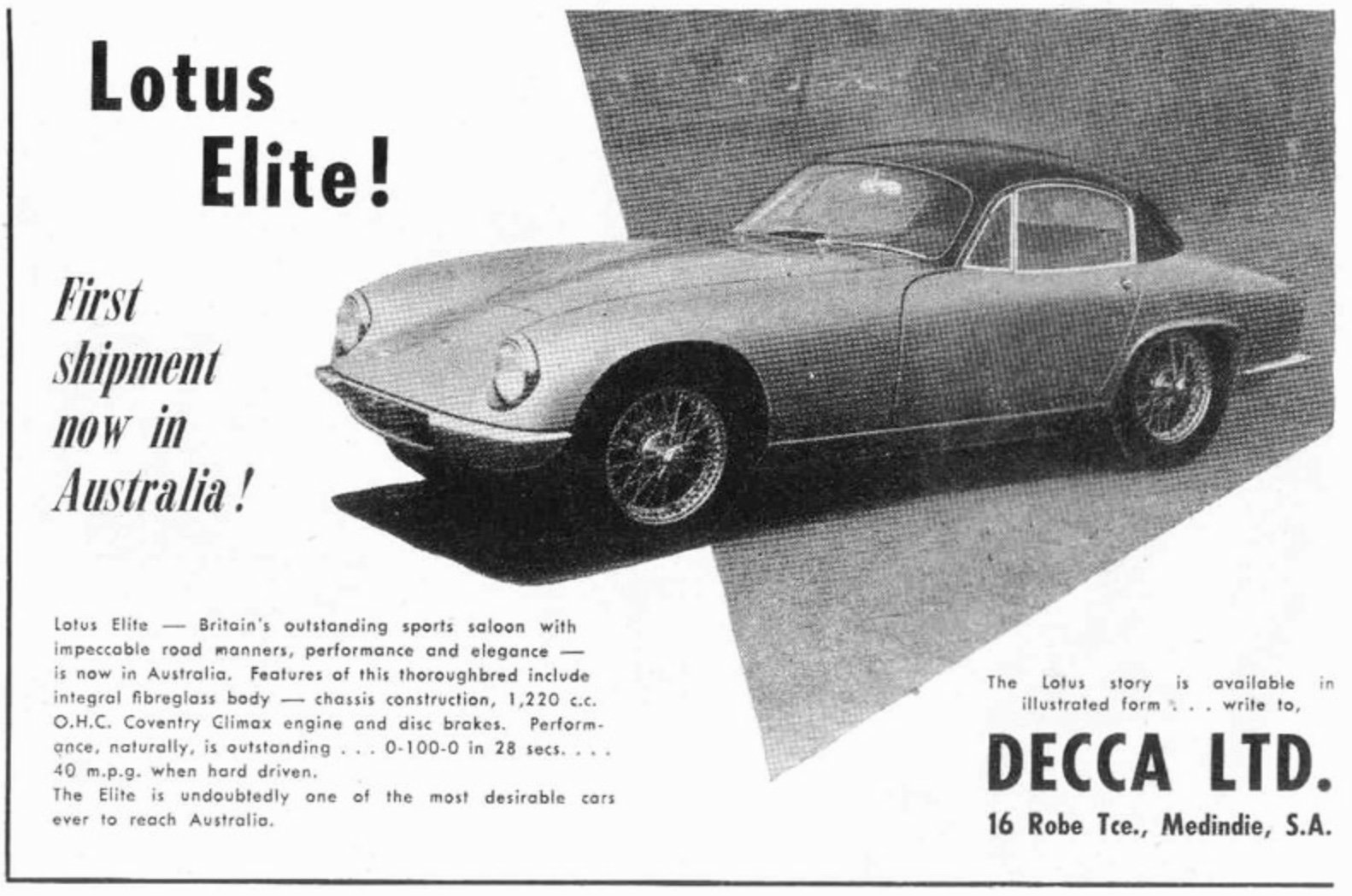
I was travelling down Alexandra Avenue in the twee Melbourne suburb of South Yarra last summer and fell in line behind a Lotus Elite and Lotus Elise, it reminded me of a magic day a few years ago…

My mate David Mottram is a doyen of the Victorian MG and Lotus Clubs. He is a racer, restorer and fettler of renown of these and other marques. On occasion he invited me along to the MG Car Club Driver Training Days to help out, it was always fun to attempt to impart some knowledge, the only downside being scared shitless once or twice alongside people whose levels of bravery made Gilles Villeneuve look like a ‘Big Sheila’.

The best part of the day was always the final 45 minutes during which the instructors had the track to themselves. At the time I had a standard’ish Series 1 Elise, the original Rover K-Series powered jobbie. It didn’t have a lot of power but with a free-flowing exhaust, a smidge stiffer springs which the standard Koni’s could just control, some decent track tyres on original wheels and competition brake pads it was both a fun road and track car.

My frame of reference at the time was a Lola T342 Historic Formula Ford I raced for over a decade. My 911 Carrera 3.2, using the same Formula Ford prism was a horrible track car! The Elise’ standard gearset was the only circuit shortcoming really-  second was too short and fifth ‘moonshot tall’ even at Phillip Island without a strong tailwind. The 111S gear cluster was the solution but I never quite got around to making that change.

Lotus Elite cutaway (James Allington)


(S Dalton)

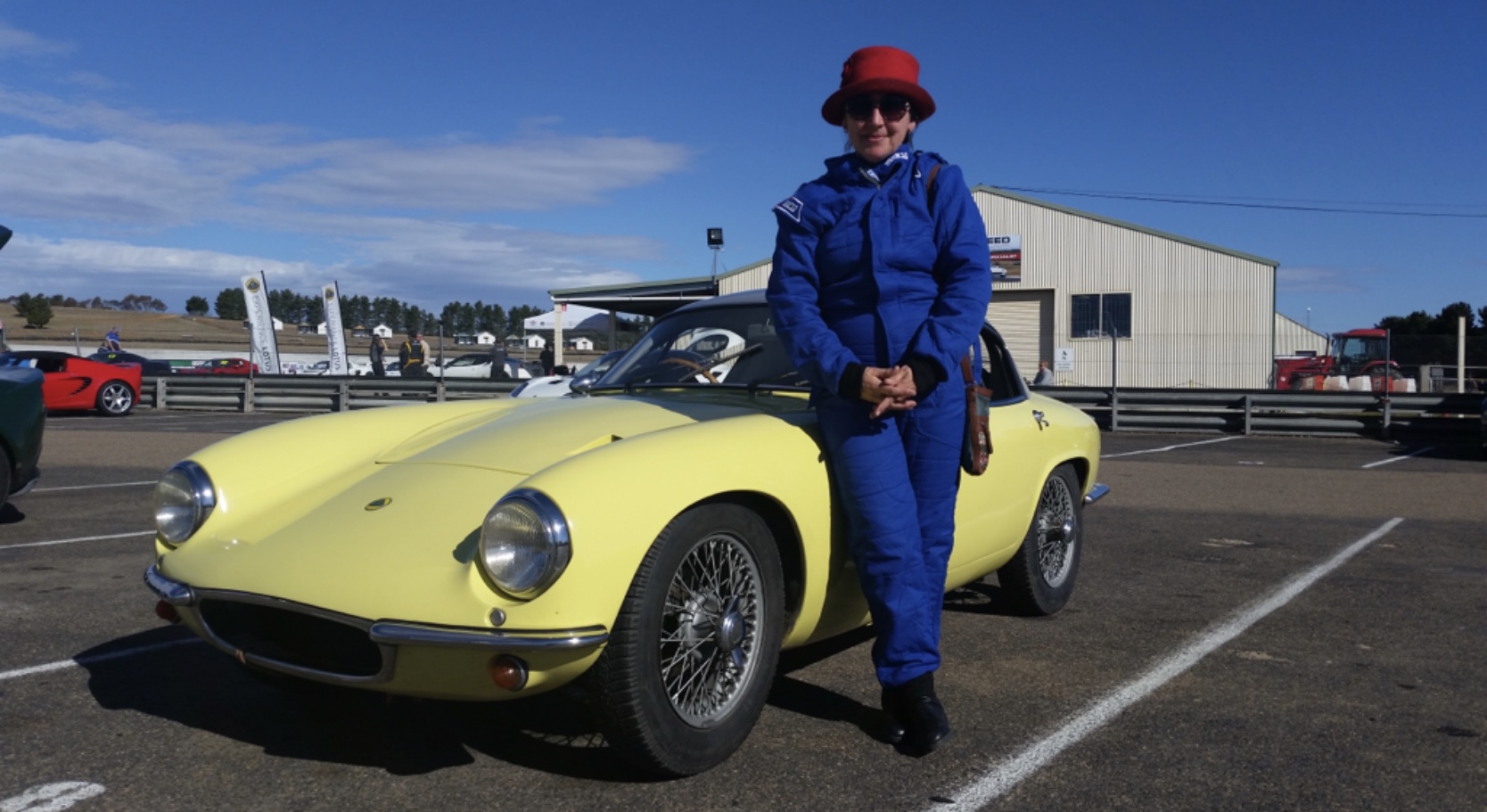
Anyway, on this particular Sandown day David brought along his ex-Derek Jolly Lotus Elite Super 95. This buttercup yellow car will be familiar to many Australian enthusiasts of historic racing as David and Pat Mottram have contested a gazillion Regularity events in it across this great brown land of ours for the best part of 25 years. Whilst I had ridden in it on the road I’d never had a steer before.

I jumped out of the Elise after 15 laps or so and straight into the Elite, cars built forty years apart.

The thing which struck me like the proverbial bolt from the blue after only a couple of laps was the sibling similarity of these two wonderful, light, low powered, beautiful handling cars.

Chapman had nothing at all to do with the Elise of course, the design team were fiddling about with its key design elements 15 years or so after the great mans death of a heart attack in late 1982.

But the Lotus brand values transcended the founder, which is of course exactly as it should be. ‘Brand Essence’ is what we ‘arty-farty, limp wristed commo-poofter bastard’ branding practitioners call the intrinsic elements of a brand. One of my buddies used to refer to me in those glowing terms during my years as a Partner of one of Australia’s foremost branding consultancies.

Lotus Elise 111s cutaway (Lotus Cars)


Elise conceptual drawing or sketch (Lotus Cars)

The first thing which impressed about the Elise as I drove what became my own car down bumpy, rutty Church Street Richmond on the initial test drive was the ‘pitter-patter’ of the cars tyres as the wheels rode the bumps with the chassis absolutely stiff. It was like a honeymooners todger- rock solid.

You can feel what the wheels and tyres are doing as they are so beautifully controlled with a light aluminium chassis of amazing torsional stiffness by road car standards. Still, our Col did invent the modern aluminium monocoque, the 1962 Lotus 25 GP car was his first expression of the art.

These cars have relatively soft springs, the bushes are firm to give good control- the cars are noisy as a consequence of minimal sound deadening but the springs themselves are softish and have reasonable travel. Just like the Elite, the chassis of which, famously, was the worlds first fibreglass monocoque.

It was a bastard to make, but magnificent in conception and in use as long as you didn’t have an early, ‘problem-child’ car. Things improved when Bristol Aircraft took over construction of the chassis from Maximar, the original ‘trail blazers’ in interpretation and manufacture of Colin’s baby.

The Elite is also ‘drummy’, noisy just like its younger cousin, mind you I’d rather do the Melbourne to Sydney trip in the older of the two cars despite the lack of a tall fifth, cruisin’ down the highway gear.

Lotus Elite and 16 Climax FPF F2/F1 car at the London Motor Show in 1958


David Mottram aboard the family Elite 95 at Phillip Island (Mottram)

Your freckle is very close to the ground too, the Elise’ seat is a ‘form-fit’, no barge-arses should apply thing. To sit in it is the closest thing to the feel of a sports-racer on the road as is possible to experience. Use enough imagination and the view is pretty much what drivers of a Lola T70 Coupe had with the ultra low seating position, curved minimalist dash, exposed aluminium each side of you and guards not much higher than your nose. The seat isn’t sprung, its solidly mounted to the cars tub so all of the messages from the road are transmitted to your bum, fingers, wrists and toes- the sensory side of things, if that kinda stuff gives you your jollies, is amazing. Lotsa rubber bushings, who needs ‘em?

The Elite is more generous in the comfort department but only marginally so.

You sit up a little more and the seats whilst thinly padded are more comfy than the Elise. Even with a lap-sash road type belt you are retained nicely between the high transmission tunnel and the door with an array of Smiths instruments in front of you which is oh-so-period. My Elise was fitted with a six-point Willans harness which held me in the standard seat rather nicely for competition work, the Elite was not so endowed but the driving position is the same, a very comfortable one with long arms to the wheel and pedals nicely set for heel-‘n-toe operation

Steering of the Elise is delicious- in my experience there is nothing close to it on the road. Jumping from the Lola to the Elise was ‘same, same’- that’s not an indictment of one of 1975’s most competitive Formula Fords but an acclamation of Lotus design.

The weight of the steering, its feel, the wheel’s design, size, material and rim thickness, feedback and directness are superb in the way you can place the car on the road and the warning you get as the limits of adhesion are approached. The Elite rack is a Triumph item, the Elise’s was made by Titan Motorsport. Both have the same characteristics though in terms of the way the cars have steering of exceptional feel, delicacy and precision. The Elites wood-rimmed wheel is larger and thinner, the suspension, wire-wheels, tyre width and aspect ratio are period differences which mitigate against the same Elise level of precision but the Elite was a steering benchmark in the late fifties-early sixties period and a pleasure to guide around Sandowns fast corners. The Elite rolls about a bit, as you would expect, the Elise sits much flatter and ‘points’ or turns in much more nicely despite the lack of a rear roll bar- its mid-engined and 40 years younger after all.

That other marques/supplier donated the steering rack highlights another Lotus attribute down the decades. In part they are an assemblage of parts made by others. It doesn’t impact in a negative way in use. Mind you if you are in the market for an alternative to a 911, the bragging rights of an Evora powered by a Toyota V6 are not quite on a par with a Porsche despite the utility of the Japanese motor.

The Elite’s Coventry Climax FWE engine was revolutionary in its day, the 1216cc SOHC, 2 valve all aluminium road version of the very successful FWA race engine was quite something in the context of the wheezy, mainly push-rod engines of the competition. Sensitive, regular maintenance was important. In Super 95 spec, the twin-Weber fed engine produces over 100bhp and punches the car along nicely but the lap times are achieved by the cars brakes, entry speed, neutrality with limited power thru the corners and fine aerodynamics rather than outright mumbo.

It’s a ‘momentum car ‘ just like the Elise and lower powered single-seaters. Whilst the performance variants of the Elise/Exige are a different kettle of fish, the original all alloy DOHC, 4 valve, fuel injected 1796cc 118bhp Elise was all about economy of power, weight (circa 725Kg) and delivery. They are subtle delicate things which respond well to inputs of a similar type, they are not tools for the ham-fisted. So too was the Elite, its competition record belied its specifications.

The Elite’s ZF gearbox is a much nicer snickety-snick thing to use than the Elise’s. The linkages of the modern car are sub-optimal but familiarity and ‘light hands and wrists’ as Frank Gardner put it, soon has you slicing thru the gears ok. Both cars have superb brakes too- unassisted discs all round, inboard on the rear of the Elite, all outboard on the Elise with the latter rotors in aluminium to help keep unsprung weight down.

‘Uncle Dave’ was soon waving at me from the pitlane, I pretended it was encouragement for a couple of more laps but his intent soon became clear when he waved an empty fuel drum at me.

I buzzed for hours afterwards, it was a magic, fun day- the Elite was a vastly better car to drive than I had imagined. On the suburban grind back to Camberwell I reflected on just ‘how right’ Chapman would have thought Julian Thomson and his design and engineering team got the Elise. Chapman bottled the essence of Lotus- his designers have since periodically dispensed it in a manner in which he would be proud…

Pat Mottram and Elite at Wakefield Park, Goulburn (Mottram)

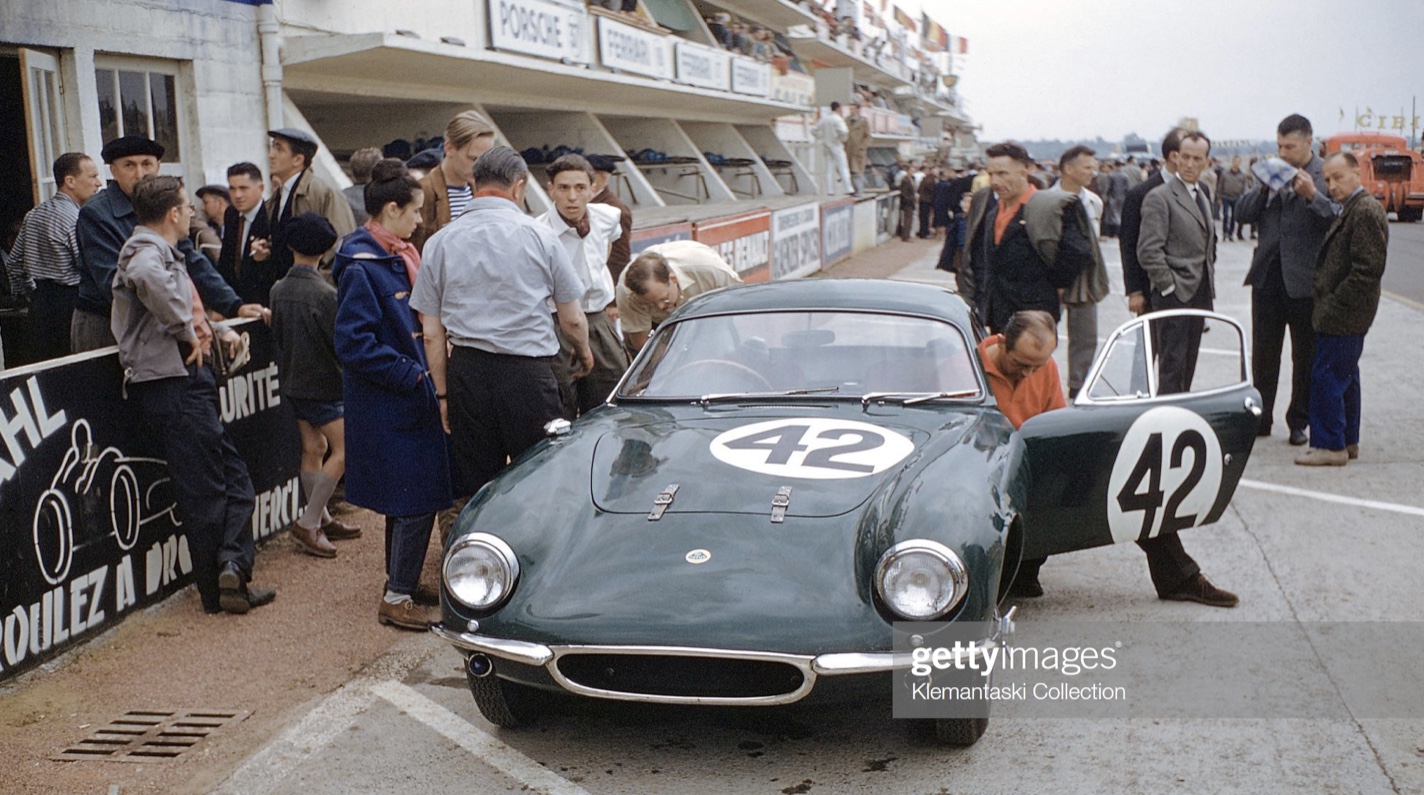
Etcetera: Clark/Whitmore Elite at Le Mans in 1959…

How youthful does white-shirted Jim Clark look?

The pair were tenth outright and second in class behind the Peter Lumsden/Peter Riley Elite, the Roy Salvadori/Carroll Shelby Aston Martin DBR1 were victorious.

Photo Credits…

M Bisset, Mottram Family and Stephen Dalton Collections, Getty Images-Klemantaski

Finito…


(G Bruce)

Ron Tauranac’s two Brabham BT5 Lotus-Ford twin-cams’s were built in 1963…

The Ian Walker Racing ‘SC-1-63′ achieved plenty of success in the hands of both Frank Gardner and Paul Hawkins.

The car used a typical Tauranac multi-tubular spaceframe chassis with upper and lower wishbones at the front and lower links, inverted top wishbone and two radius rods- coil spring/shocks front and rear. Rack and pionion steering, disc brakes all around, a Hewland 4-speed gearbox and a Cosworth tuned Lotus-Ford Twin-Cam of 1596cc giving circa 140 bhp completed the package.

The photograph below is a BT5 test session at Goodwood early in 1963 with the Aussies out in force, oh, and a Kiwi.

From left in the nice, warm ‘jumper’ is Paul Hawkins, lanky Frank Gardner, the Guvnor and Denny Hulme. All rather handy at the wheel of a motorcar- and on the end of a ‘spanner’.

(unattributed)

Credits…

Gordon Bruce, frankgardnermotorsport.com

Tailpiece: Gardner, BT5 Ford, Mallory Park…

(FGM)

Finito…

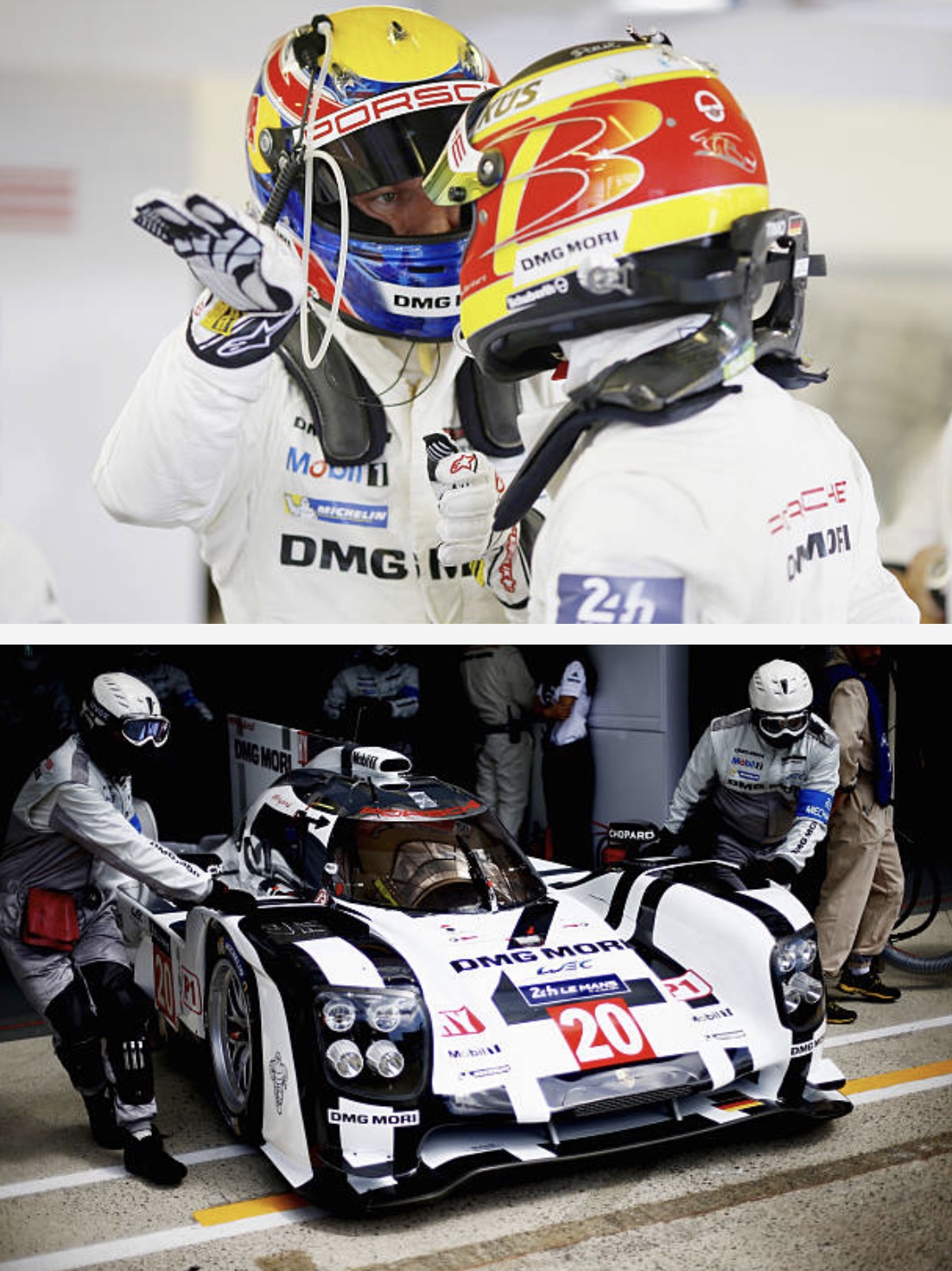
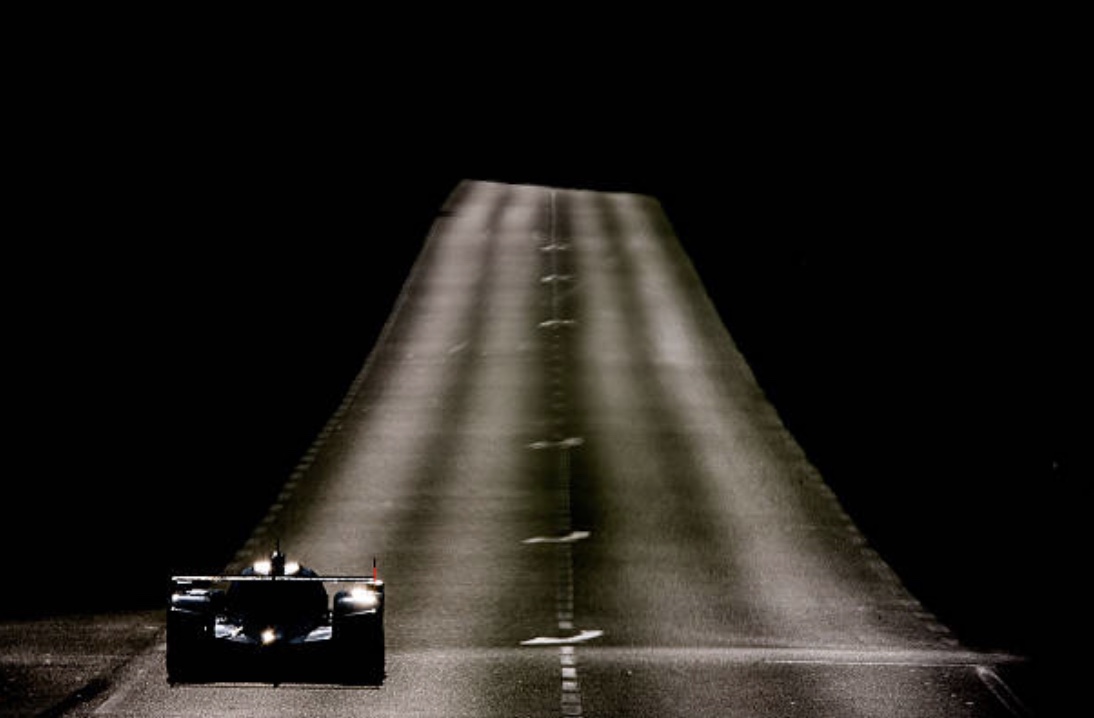
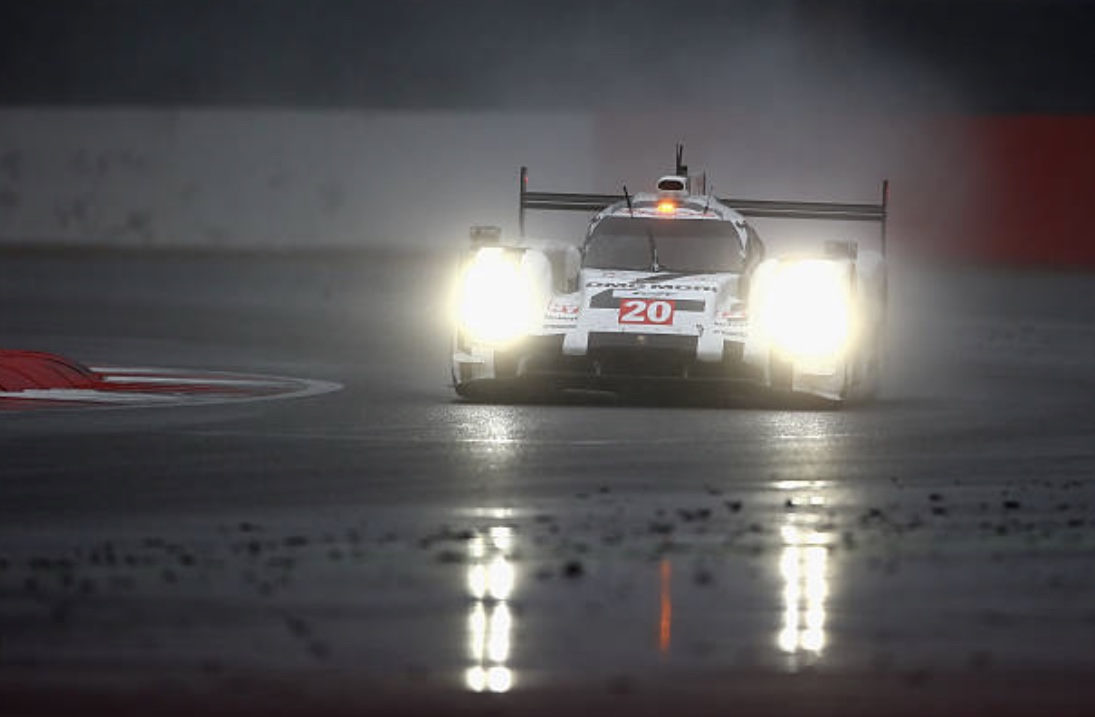
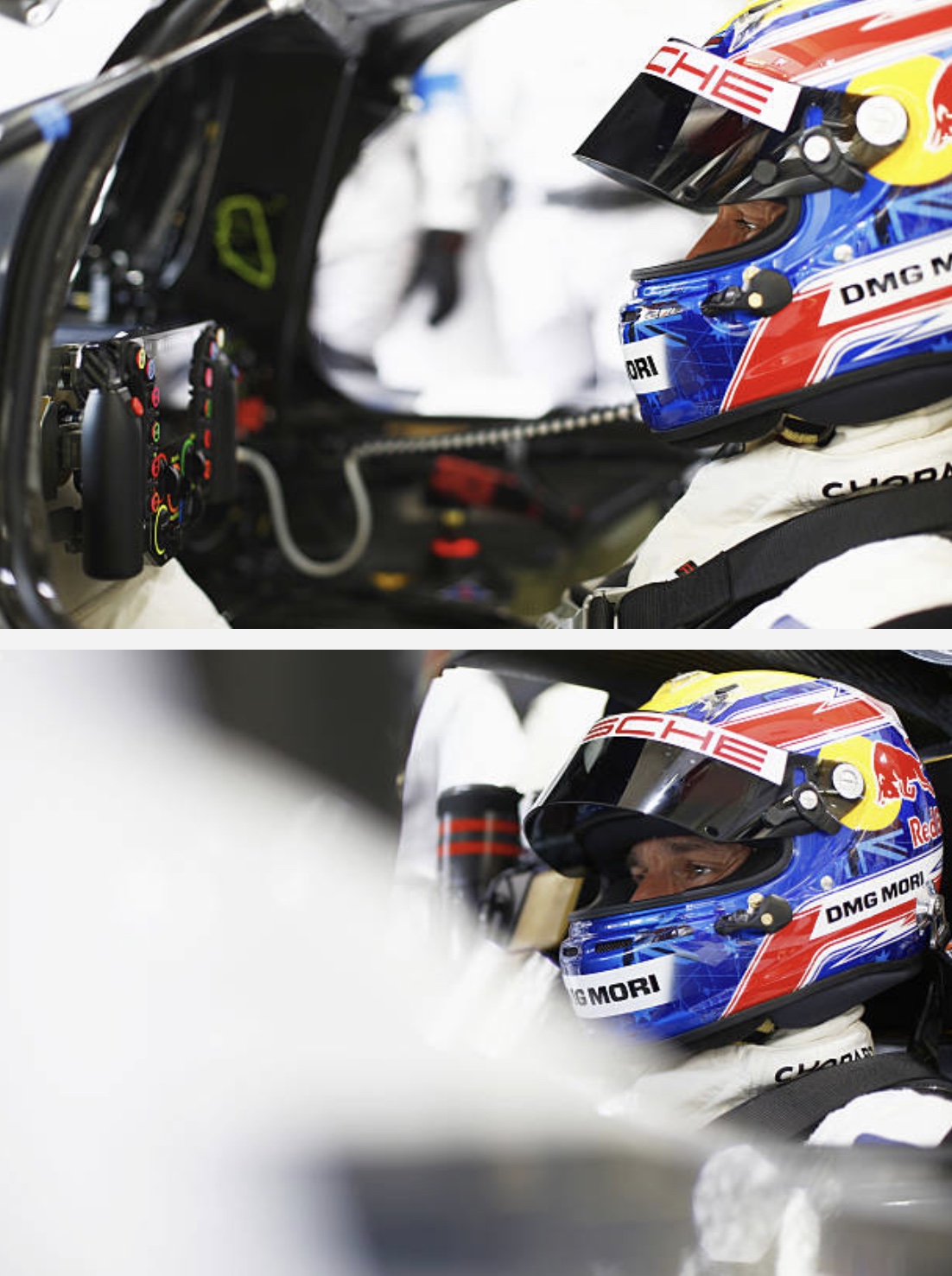
Mark Webbers Porsche 919 looking somewhat alien-like during the June 2014 running of the Le Mans 24 Hour classic…

He shared the car with Timo Bernhard and Brendon Hartley, the trio led the race a couple of times, as late as during the twenty-first hour but a broken roll bar forced them into the pits at that point and the car was retired.


Ultimately the Andre Lotterer/Marcel Fassler/Benoit Treluyer Audi R18 e-tron 4 litre turbo-diesel V6 won from the similar car of Tom Kristenson/Marc Gene/Lucas di Grassi with the Toyota TS040 Hybrid 3.7 litre V8- its crew Anthony Davidson/Sebastien Buemi/Nicolas Lapierre, third.


The best placed Porker was in eleventh- Marc Lieb/Romain Dumas/Neel Jani aboard the 2 litre turbo-V4 919 Hybrid. Webber and Co completed 346 laps but were non-classified, the winners did 379.


Most of you will recall Mark Webber left Formula 1 for Endurance Racing at the end of 2013 doing three seasons with Porsche before his retirement at the end of 2016.

He won the World Endurance Drivers Championship together with Hartley and Bernhard in 2015, the trio took eight wins over the three years they raced together helping Porsche win the Manufacturers Championship In 2015 and 2016.

Getty Images is an orgy of photography, regular readers will be well aware of the value of the resource to me, do have a look- key ‘Le Mans’ into the search engine and the 62,351 images which pop up will keep you busy for a while.

This piece is visual, with a focus on the more creative of Getty’s Mark Webber 2014 ‘Lee Manz’, as Larry Perkins calls it, shots. More on the Porsche 919; https://primotipo.com/2016/02/10/testing-testing/

My posts may be a bit hap-hazard over the next three weeks, I am on safari in England and Italy for a bit.


Credits…

Getty Images

Tailpiece…

Finito…

(Audi)

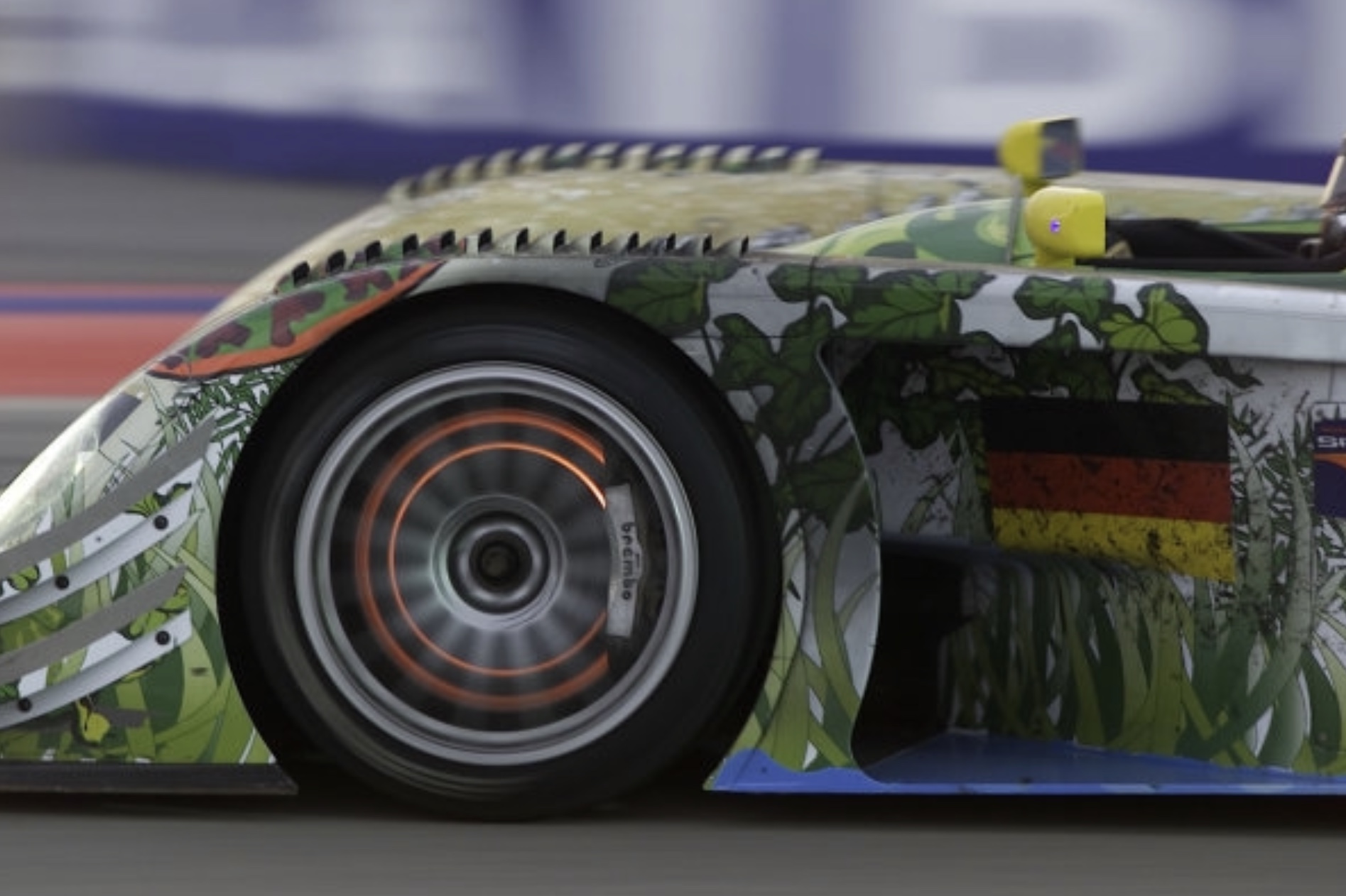
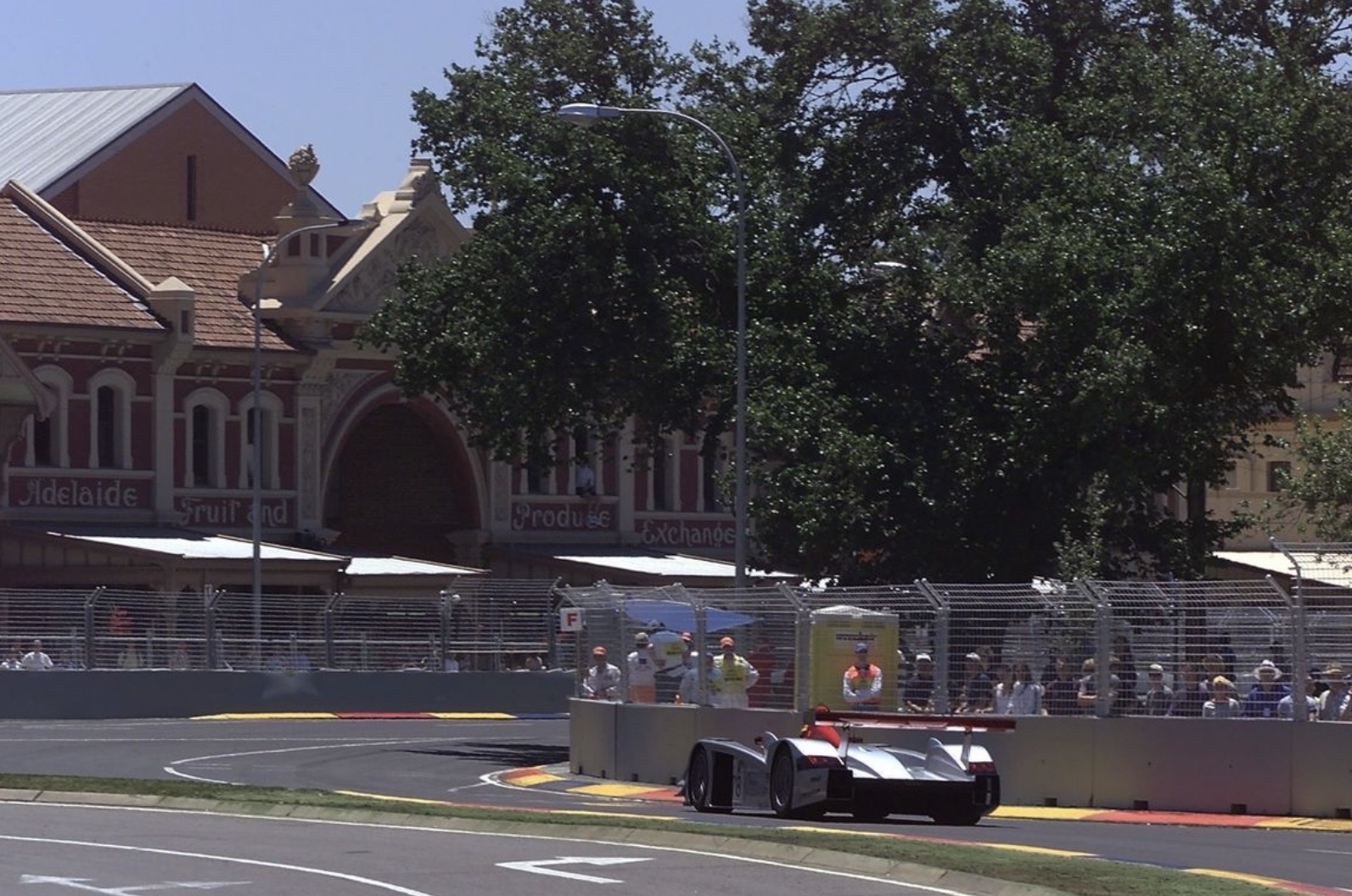
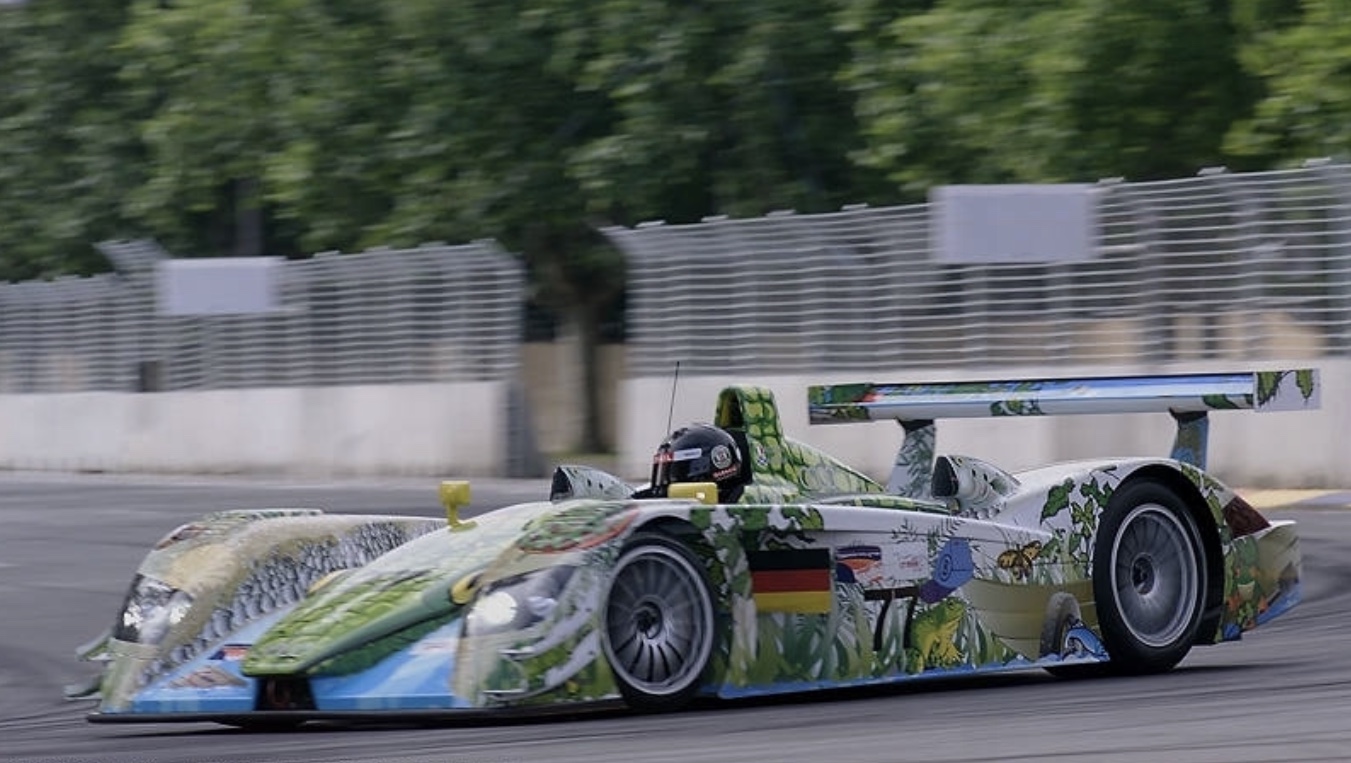
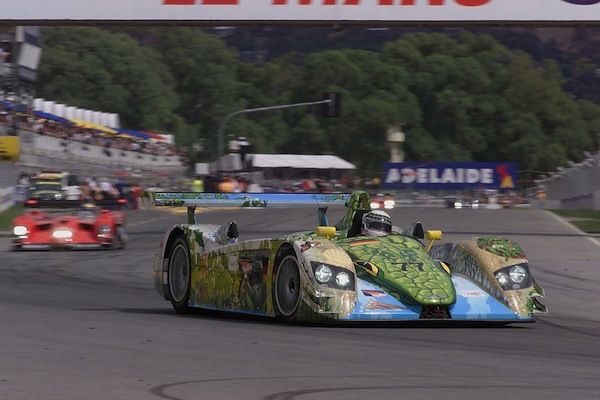
Allan McNish in the wonderfully distinctive ‘Crocodile’ livery Audi R8 ahead of David Brabham’s Panoz LMP-1, about to hook into the Adelaide GP circuit’s Chicane early in The Race of 1000 Years on 31 December 2000…

For one wonderful year the sports prototypes raced again in Australia- the race was the final round of the American Le Mans Series.

Allan McNish and Rinaldo Capello won the event- shortened to 850 km from its scheduled 1000 km, from the Franz Konrad/Charles Slater/Alan Heath Lola B2K/10 Ford and the Dodge Viper GTS-R raced by Olivier Beretta/Karl Wendlinger/Dominique Dupuy.

The V8 Supercars have used the shortened Adelaide layout (the Hutt St, Rundle Rd section bypassed in favour of a new straight along Bartels Road) from 1999 but this endurance race  used the full GP circuit.

McNish’s quickest lap was a 1:25.2189 seconds, which, while the circuit’s fastest non-F1 race lap is still well shy of Damon Hill’s Williams FW15C Renault 3.5 V10 time of 1:15.381 seconds set during the 1993 AGP.

The history of endurance racing at the time is interesting and somewhat of a ‘might have been’.

The 1999 Le Mans Fuji, and Adelaide Race of a Thousand Years were intended as precursors to a planned Asia Pacific Le Mans Series run by Don Panoz, just as the Silverstone and Nürburgring events run earlier in 2000 were for the European Le Mans Series. The subsequent small number of entries for the European Series in 2001, plus a lack of competitors for a third Asia-Pacific exhibition event to be held at Sepang in Malaysia caused the cancellation of the Asia-Pacific Le Mans Series.

Despite 135,000 fans rocking up in Adelaide, 70,000 on raceday, only the first year of a nine year contract with the South Australian Government was performed.
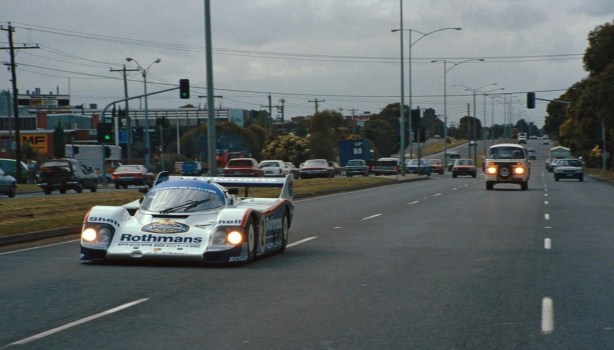
Stefan Bellof blowing off a Kombi In Dandenong Road in his 956 in December 1984. Porsche Cars Oz workshops were in Noble Park, an adjoining suburb to Sandown Park so why not drive the 3 team cars there, the beasts were tractable enough! The #2 956, crewed by Bellof and Derek Bell won the race from the Mass/Ickx and Palmer/Lammers 956’s (unattributed)

A shame, but the Board of Directors of Melbourne’s Light Car Club of Australia, the promoters of Sandown Park, could have shared a story or two with Adelaide Premier John Olsen about how easy it is to ‘do your balls’ and lose the (club)house if endurance racing was poorly promoted to punters who have always enjoyed a diet of meat ‘n spuds touring cars mixed with meat ‘n spuds touring cars.

The LCCA Board drove the club to oblivion with a shitfully promoted and commercially structured endurance championship event in 1984- loss estimates start at $A300k and stretch to $A500K, a lot in 1984.

Of course, randomly coming across some Adelaide photos got me thinking about these very successful Audis.
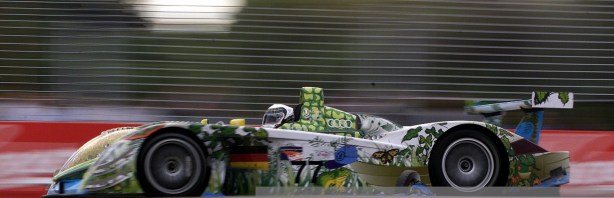
McNish in profile 31 December 2000 Audi Sport North America R8 Race of a Thousand Years, Asia-Pacific Le Mans Series (M Turner)
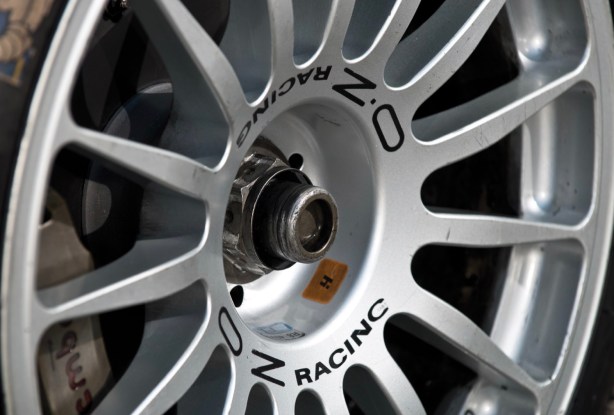
 

OZ magnesium alloy wheels. Throughout this article there are ‘snippets’ of an R8 which won at Jarama in 2001 and was raced by Katoh/Dalmas/Ara at Le Mans in 2002- I am uncertain as to chassis number- these shots were taken by Darin Schnabel and were sourced from a Sotheby’s ad for the car (D Schnabel)

In their seven year competition history from 1999–2006, the R8 achieved a formidable record of both reliability and success, albeit sometimes not necessarily against the strongest of opposition, losing only 16 races in that period.

The R8 won Le Mans five times- 2000, 2001, 2002, 2004 and 2005, and in addition took the American Le Mans Series seven times, the European Le Mans Series in 2001 and was the Le Mans Series champion in 2004.

The ‘miss’ at Le Mans was in 2003, Audi did not enter ‘factory’ cars that year to allow the R8’s technical and corporate sibling, the Bentley EXP Speed 8 to finish first and second. Click here for a feature on the Speed 8;

Bentley Speed 8: Le Mans Winner 2003…
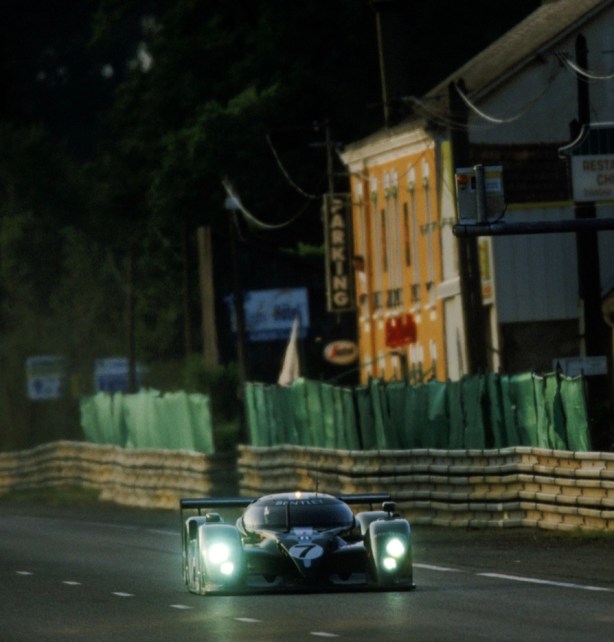
Le Mans winners Capello/Kristenson/Smith Bentley EXP Speed 8, Le Mans 2003 (C Rose)

The R8 had a late Autumn in its career- the turbocharged diesel V12 engined R10 replaced it in 2006 but it took a while to get it right with Allan McNish and Rinaldo Capello winning the R8’s last race at Lime Rock, Connecticut that July- the R8 also took the two preceding rounds at Reliant Park and Mid Ohio. The 5.5 litre R10’s first win was the Utah Grand Prix at Miller Motorsports Park on 15 July 2006- Biela and Pirro shared the driving chores.

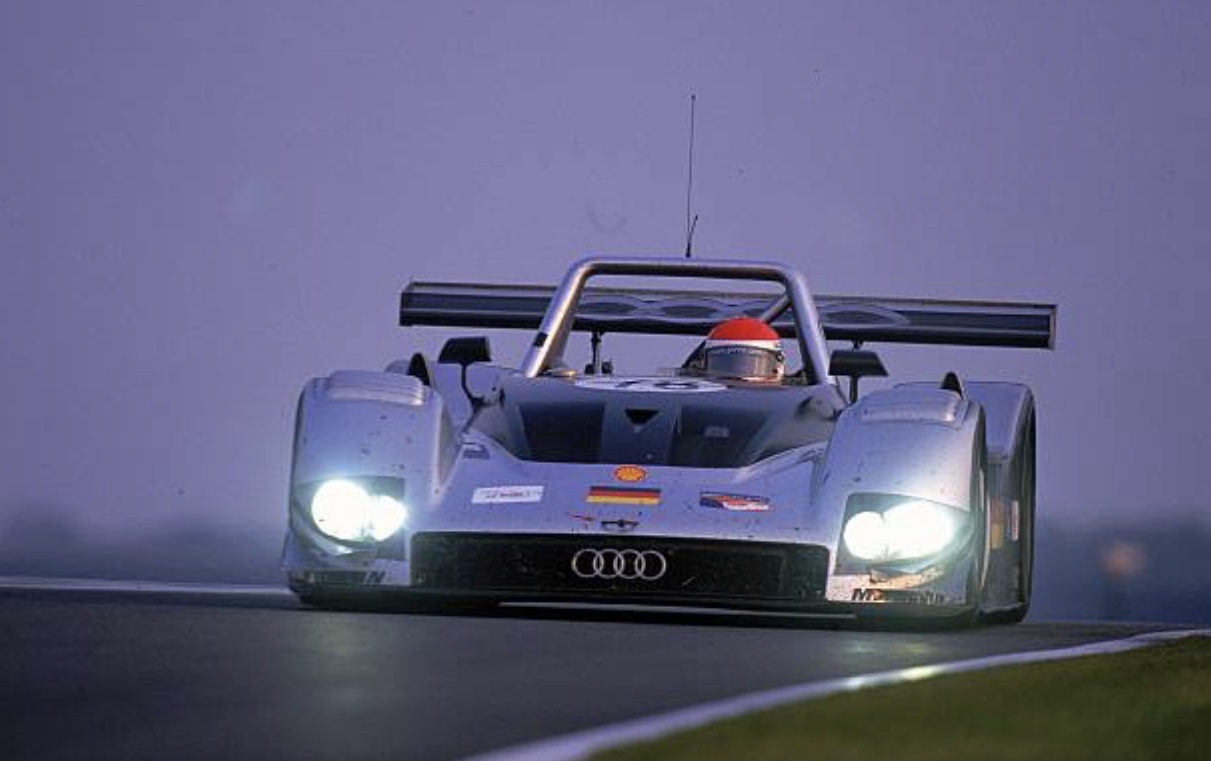
As early as 1997, Audi Sport director Wolfgang Ullrich considered competing at Le Mans to join BMW, Nissan, Mercedes-Benz, Porsche, and Toyota.

Ullrich engaged Dallara to assist the internal team to design and build a car, struggling with the workload of his rapidly growing business, Gian Paolo Dallara gave Tony Southgate a call to help him with the Audi program, Southgates second, enjoyable and successful stint at Tom Walkinshaw Racing had come to an end with the cessation of Nissan’s race program as the Japanese manufacturer sought to cut costs globally.

Not too long after Dallara’s phone call Tony travelled to Audi Sport at Ingolstadt, met Dr Ullrich and his team of engineers and looked at the car, the R8R- and shortly thereafter signed a two year contract as an consultant with effect 8 September 1998.

What he found was a sports prototype with a carbon fibre monocoque chassis, a mid-mounted 3.6 litre turbo-charged V8 engine and a transverse six-speed gearbox made by Ricardo, in Leamington Spa, the latter surprised him as they were not one of the larger specialists at the time. ‘The radiator was mounted at the front and the bodywork was best described as “styled” wrote Southgate in his autobiography ‘From Drawing Board to Chequered Flag’.

The car had power steering which excited the Brit as he had wanted to exploit the benefits of such an approach for years- reduced driver effort and unconventional suspension geometries were the advantages, these were normally restricted by unassisted steering given the needs of driver comfort.

The car was tested by Emanuele Pirro and Frank Biela at a private test track near Most, in the Czech Republic, the track guarded by machine-gun toting guards every 200 metres!

Southgate’s conclusions from this session were that lap times could easily be improved by basic setup changes, that the car was very simple for such a large company ‘The story went that the man responsible for the design had left, and no one knew the exact package that he had envisaged.’

There was much scope for improvement including throwing away the monocoque to get down to the weight limit, the aero was poor in that the car had been styled rather than produced in the wind tunnel, the engine was basically good as was the Ricardo ‘box although it needed ‘refinement’.

Ulrich Baretzky was the engine boss, his chief designer was Hartmut Diel, with Wolfgang Appel the overall Project Leader- Southgate rated all of them.
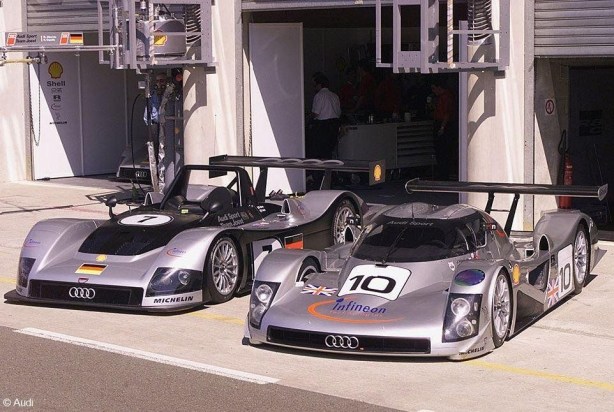
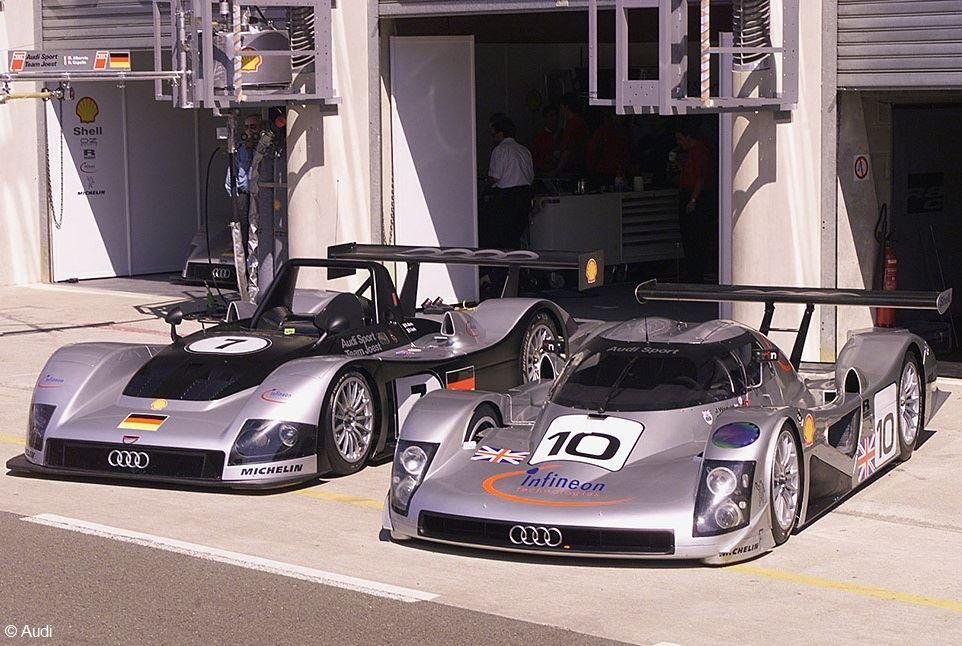
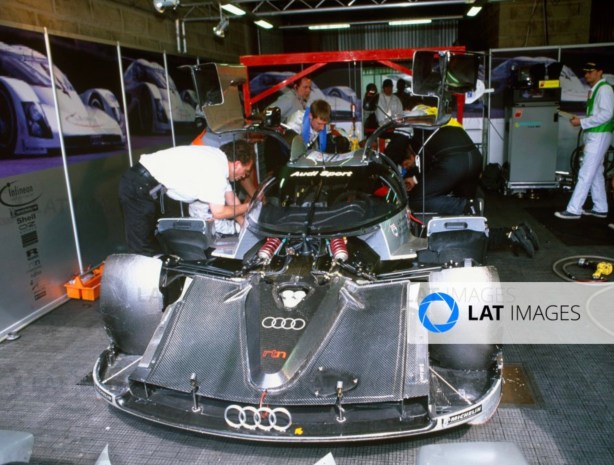
Le Mans pits 1999- #7 Audi R8R Alboreto/Capello/Aiello 4th, #10 Audi R8C of Weaver/Wallace/McCarthy DNF 198 laps gearbox

The R8R’s aerodynamic changes were in the hands of in-house resident aerodynamicist Michael Pfadenhauer- new to motor racing but learning fast. The wind tunnel work was done at SF, part of the Swiss Aircraft & Systems concern, near Emmen.

Southgate notes that the ACO’s regulations were different to those which prevailed during the time he was looking after the Group C Jaguars and Toyotas in two areas.

First, the underside of the car and the forward part of it no longer had to be flat bottomed which meant that they could take on aerodynamic profiles, the drivers feet could be raised F1 fashion. The net effect was to provide greater front downforce.

Second, the dimension to the most extreme point of the rear bodywork was to include any wing section- the wing could no longer be set aft of the tail as on the Jag and Toyota. Instead the trailing edge of the wing could extend no further back than the tail. The rear venturi was now smaller in height, an attempt to reduce overall downforce. The net effect was that the new tail had to be much lower.

‘The new low-tail approach blended in nicely with my minimal frontal area philosophy. I had started working on this at TWR, but it would have to wait until the following year…the R8R design required too many changes, and we didn’t have enough time before Le Mans.’

The R8R did appear at Le Mans with a low tail but the most important change made was to the gearbox- the cars biggest endurance challenge. Despite ‘beefing up’ the dog-engagement box, similar in concept to the Hewland and Xtrac transmissions, it would struggle to last 24 hours.

The endurance issues were solved when Appel met Erwin Gassner, whose firm, ‘Mega Line’ produced a pneumatic gearshift conversion for motorcycles- its primary use was in motorbike endurance racing.

Tony, ‘The gearshift was operated by a paddle rocker switch- Formula 1 fashion. It disconnected the clutch electronically and at the same time moved the sequential shift rod pneumatically to the next gear. The pneumatic shift was quite simple. A small compressor, looking very much like a model aeroplane diesel engine, charged a small accumulator complete with electrical switch, and was housed in a metal box that bolted onto the side of the gearbox case.’

With a minimum of trouble, it was off to the Most test track, with some refinement to shift times- 0.4 seconds was settled upon, the results were amazing, ‘we stripped the gearbox to check the condition of the dog-rings and they looked perfect, as if they hadn’t even been used…The drivers liked the fact that they could keep their hands on the steering wheel all the time, which made cornering smoother…’

What the system did was eliminate human error- as drivers make mistakes with their timing of changes so the components are damaged bit by bit- often ending in failure.

Lets not forget John Barnard had just introduced this feature on the Ferrari 640 but it had not yet found its way to sportscar racing.
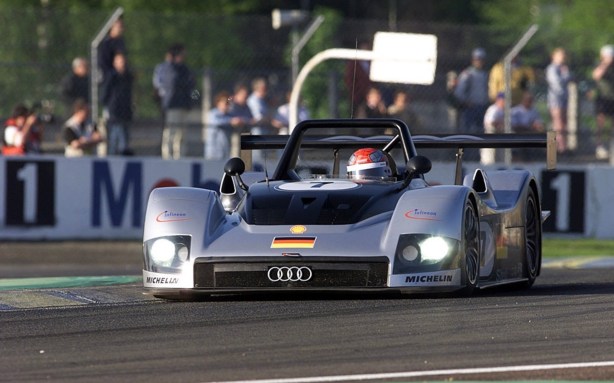
The 4th placed Alboreto/Capello/Aiello R8R, Le Mans 1999 (Getty)

Good progress was being made with the R8R until Audi top executives threw a curve ball into the mix.

They were not convinced the open-cockpit car was the best alternative and felt a coupe should also be built to compare the two.

Southgate was not in favour of dilution of the team’s efforts but told them that a car complying with LM-GTP regs (the ACO’s new formula for closed coupe prototypes) might produce up to 10% better aero than a roadster due to the streamlined cockpit section. But the complete picture also required a look at the tyre regulations- the GTP’s were required to run 50mm narrower rear tyres than the LMP roadsters, ‘nothing should ever be given away in the tyre department’ quipped Tony. The roadsters had a lower C of G and were lighter, giving the designer the ability to ballast where required- and they were easier to build in terms of bodywork, windscreens, ventilation and doors.

Notwithstanding the above the Directors still wanted a coupe- and money was not an issue!

The R8C Coupe would use the same engine and gearbox as the R8R and was to be designed and built at the Volkswagen Audi Group owned ‘Racing Technology Norfolk’ plant at Hingham- the former TOMS GB factory had been acquired by VAG in July 1988.

Richard Lloyd and John Wickham would oversee the project and were in charge of racing it whilst Peter Elleray designed the carbon-fibre monocoque chassis with the assistance of two other designers.

RTN had all of the required facilities inclusive of an autoclave, whilst Southgate looked after the aerodynamics still using the SF tunnel in Emmen.

Work began in September 1988, the Le Mans Test Day was the first weekend the following May.

The first RTN R8C was ready in March and was shaken down on 1 April (brave) 1999 at Snetterton by Andy Wallace- he lost a door in the first few laps much to the bemusement of an Audi Director who decided to drop in on the test at the end of his holidays!

Time constraints meant Tony had to commit to the build of the aero package before it was fully developed, it was 10-15% light of the downforce targets he had set. ‘The missing downforce was on the front of the car, which meant the front split was a little marginal. To try to make up for this discrepancy I was obliged to run the front ground clearance very low, which was not ideal.’

A pre Le Mans test at Hockenheim revealed some flexing or binding in the front suspension, which made the steering clumsy and a little unstable- a shaker rig gave the crew comfort that the components would not break- post Le Mans testing showed the front wishbones were deflecting causing castor angle changes. Peter Elleray decided to draw completely new front suspension as a fix.
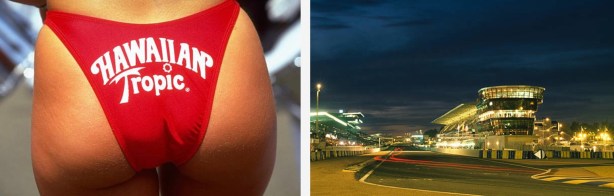
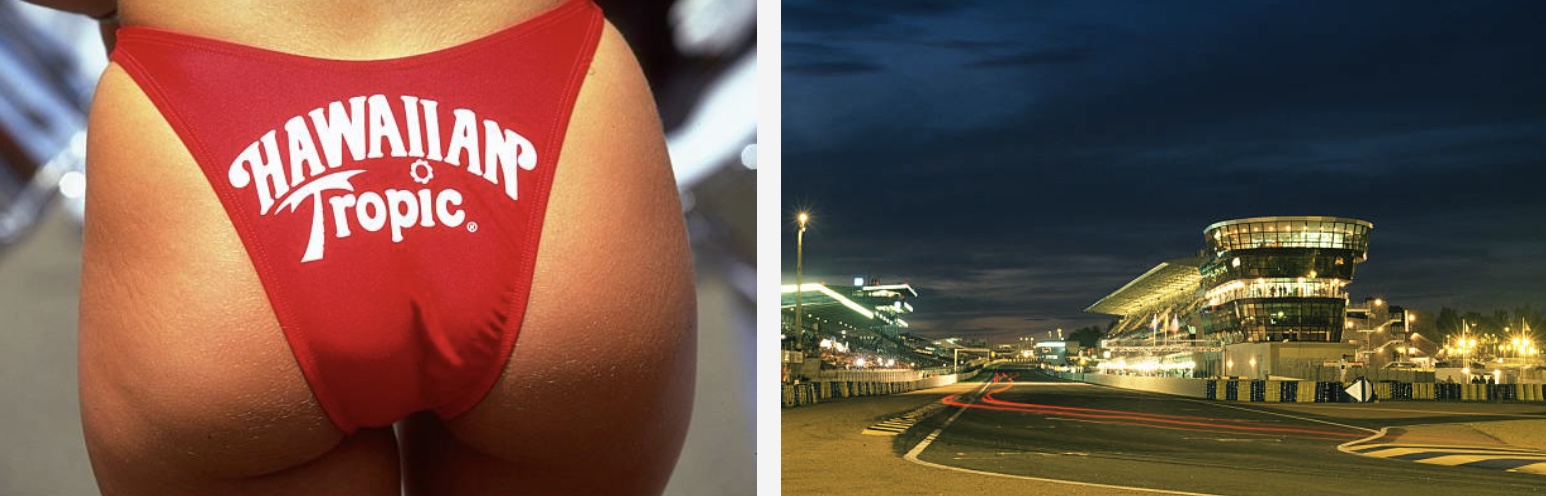
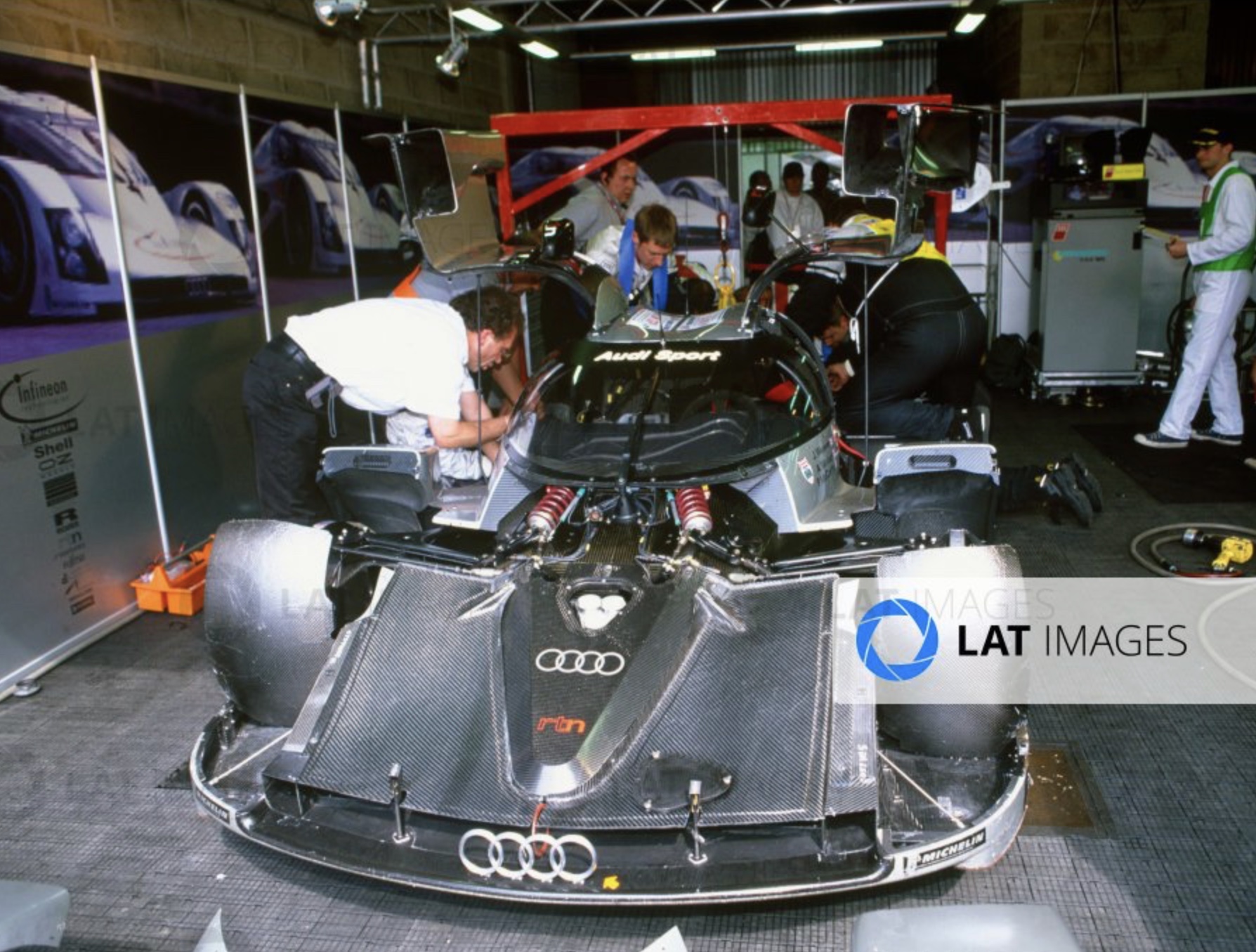
The colour and movement of Le Mans 1999- Hawaiian Tropic girls never seem to age, perpetually 22 years of age (Getty)
 

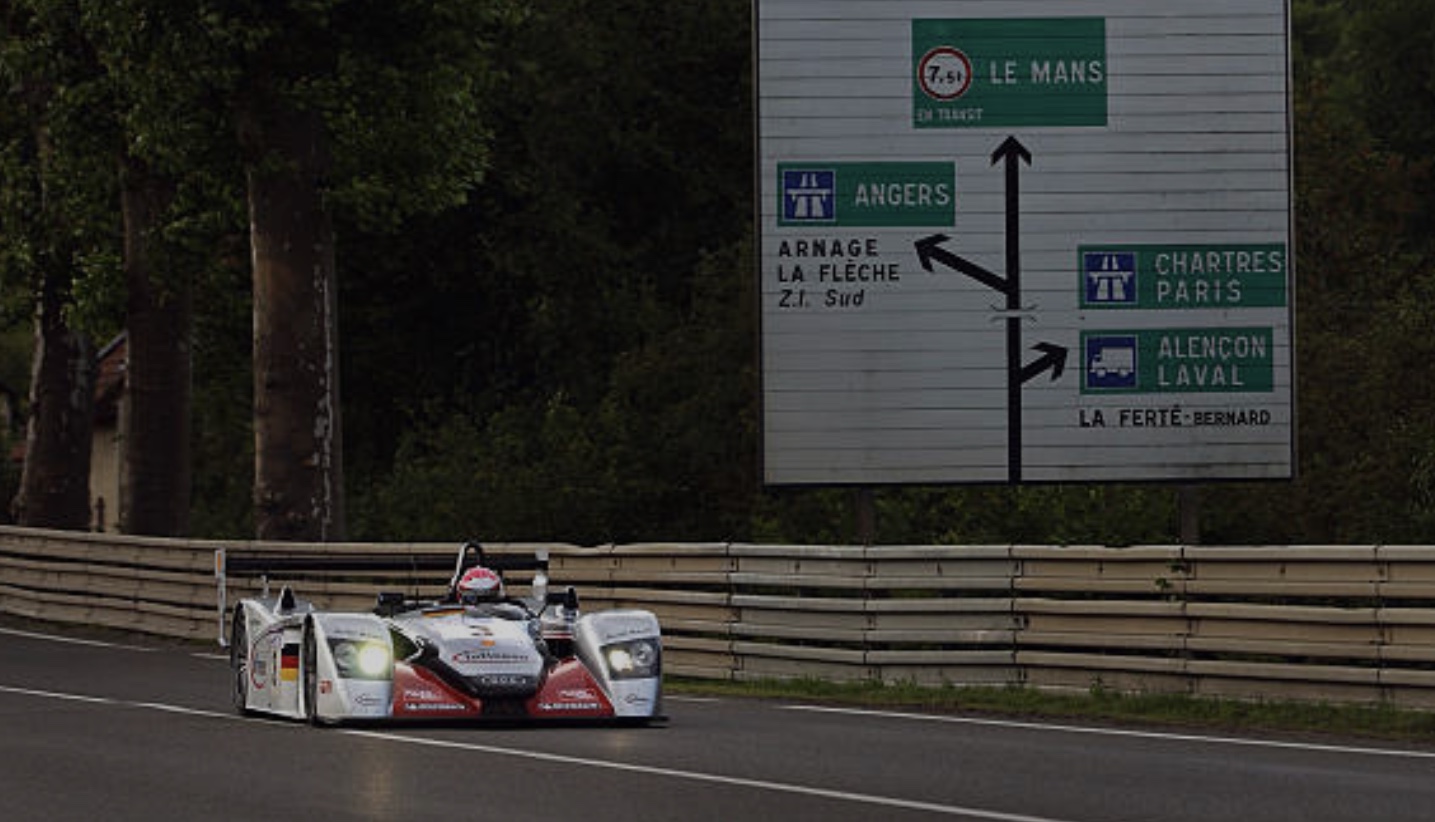
The Southgate/RTN designed R8C at Le Mans in 1999
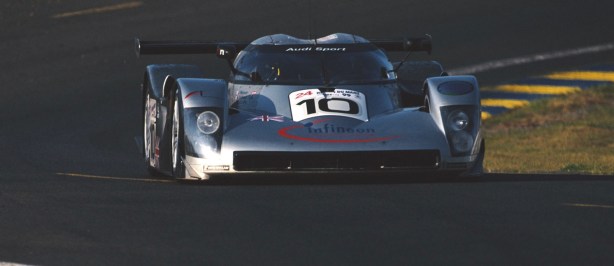
 

The R8C on circuit at Le Mans 1999, driver uncertain, attractive car (M Hewitt)

Both R8R’s which raced at Sebring in March had good reliability but the team were still worried about gearboxes, so they decided to have a contingency plan to allow for a transmission change during the race.

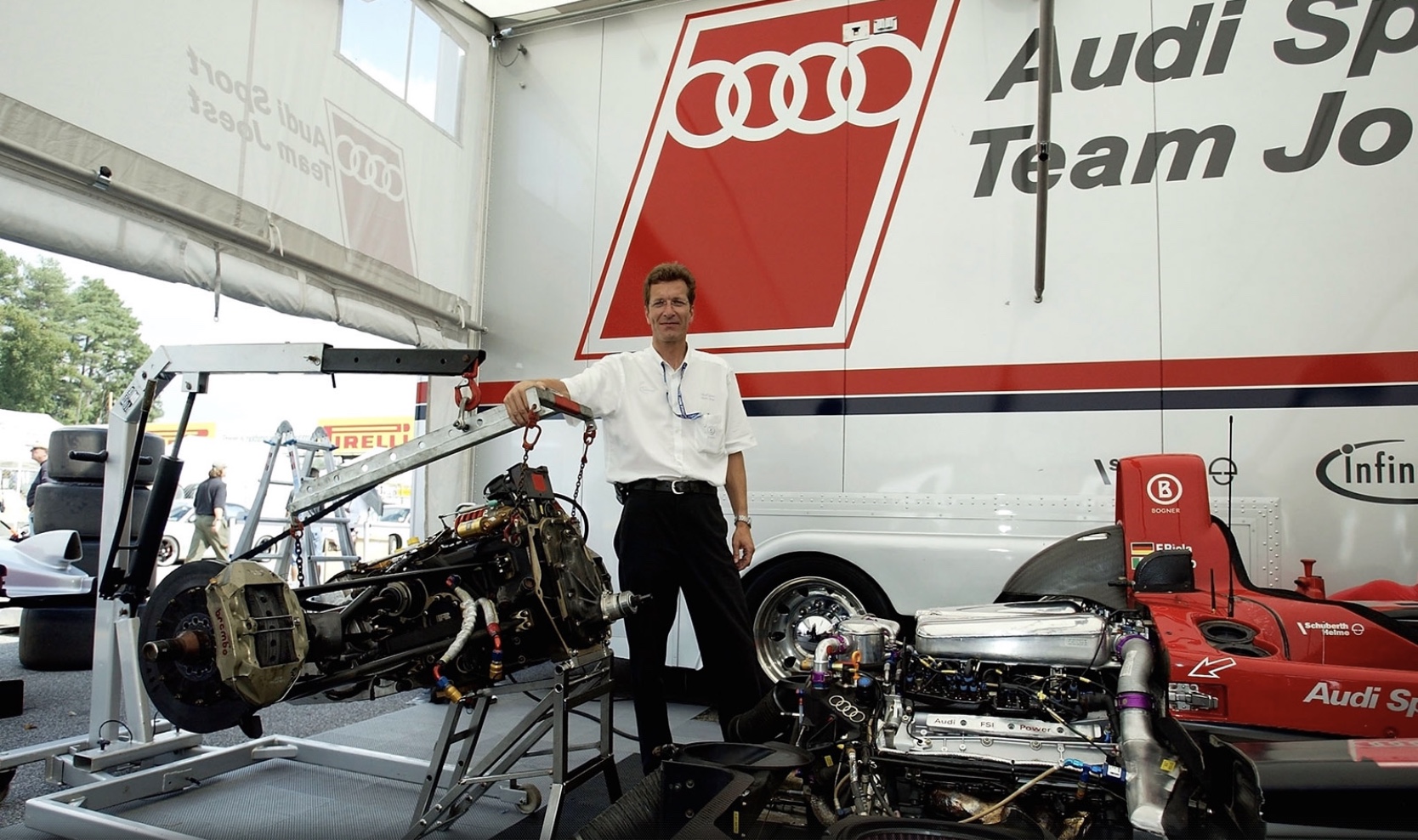
Joest Racing set a target time of 9 minutes! and achieved it by installing dry-break couplings on all the brake, clutch, engine and gearbox oil cooler fluid lines. They also made the removal of the rear underbody easier and obtained special air-tools  for undoing the bellhousing bolts.

Four cars made it to the Le Mans Test Day- two R8C GTP Coupes and two R8R Le Mans Prototype Roadsters.

The R8R’s were eighth and eleventh fastest, the R8C’s twenty-second and twenty-eighth fastest- top speed of the coupes 217 mph.

‘Joest did a hot test transmission change during one of the practice sessions- the whole rear end- the replacement transmission and the suspension and brake assemblies- was lowered from a crane directly above the race car and fitted. Underbody on, tail on, wheels down, down on the floor, ready to go- 4 minutes 56 seconds!’ wrote Tony.

The team were stunned, it appeared it may have been possible to effect such a change without even losing track position.
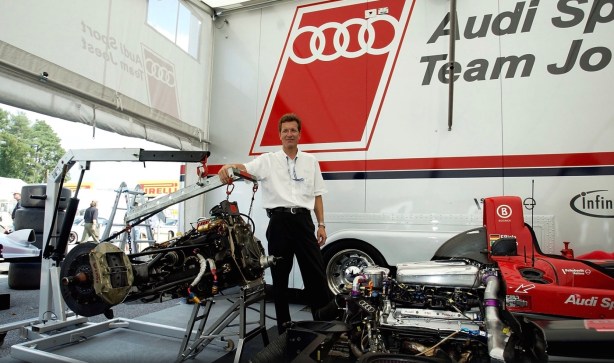
Le Mans 2000, the winning chassis by the way (Audi)

Only three pneumatic gearshift systems were made by the time of the race so it was decided to fit them to the two more developed R8R’s keeping one as spare with the R8C’s having the normal manual Ricardo ‘box.

Both Coupes were plagued by transmission problems throughout practice and then ran into trouble in the first two hours.

The Audi R8Rs weren’t fast enough to win Le Mans in 1999, but they finished a credible third-Pirro/Biela/Theys and fourth-Alboreto/Capello/Aiello behind a BMW V12 LMR 6 litre and Toyota GT-One 3.6 V8 t/c- the latter also Dallara built. One of the cars had the whole rear end replaced without losing track position.

The R8C coupes suffered gearbox problems as noted above, the Johansson/Ortelli/Abt car had diff failure after only 55 laps, the Wallace/McCarthy/Weaver car retired in the tenth hour after completing 198 laps, the design was popped to one side but returned later in evolved form as the Bentley EXP Speed 8.

‘A new development program was initiated under the banner of Volkswagen, and later Bentley, another member of the VAG Group. Peter Elleray would again look after chassis development and I would look concentrate on improving the aerodynamics’ wrote Tony.

In terms of the new for 2000 R8R roadsters, development work focused on engine power response and fuel efficiency, the gearbox and pneumatic mechanism was further refined based on the race experience ‘to the point that outwardly the gearbox looked completely new by the time it reappeared in the all new R8.
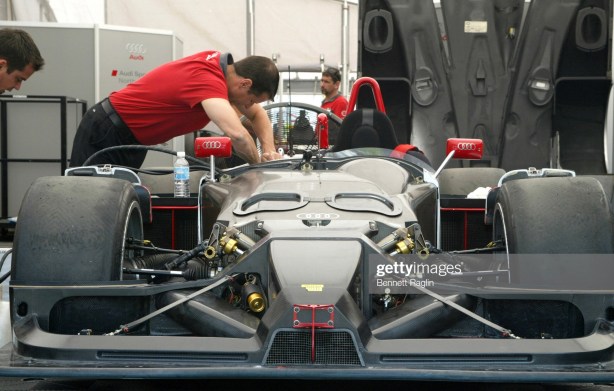
#2 Audi R8, Lime Rock June 2006. Carbon-fibre chassis, wishbone and pushrod suspension clear

Southgate focused on the aerodynamics of the new car and in particular his ‘obsession with minimal frontal area and low CG’ with Wolfgang Appel’s team readily absorbing this mantra. The latest aero figures from the Coupe were used as a target for the new R8R roadster ‘Young Michael Pfadenhauer was still with me at the SF tests in Switzerland, and was now up to speed and feeding the information into the Le Mans computer program to establish our new theoretical laptimes.’

Southgate wrote that his second year at Audi was more straightforward and routine than the first as the engineers needed les help and general guidance.

The coupe project was a design and development car with some testing with no race program plan then- ‘Great strides were made in the wind tunnel and it started to look very good. The car would go on to be re-engineered again and again, and finally to reappear as the Bentley EXP Speed 8 in the 2001 Le Mans’ by then Tony had retired.

The first R8R was completed and ready for testing in January 2000- it looked and ran well from the start winning the Sebring 12 Hour in March- the Pirro/Biela/Kristensen car was ahead of that crewed by Alboreto/Capello/McNish, both cars a lap ahead of the two BMW V12 LMR’s.

To the Le Mans test weekend the three Audis were the quickest cars, further work was done to strengthen the gearbox.
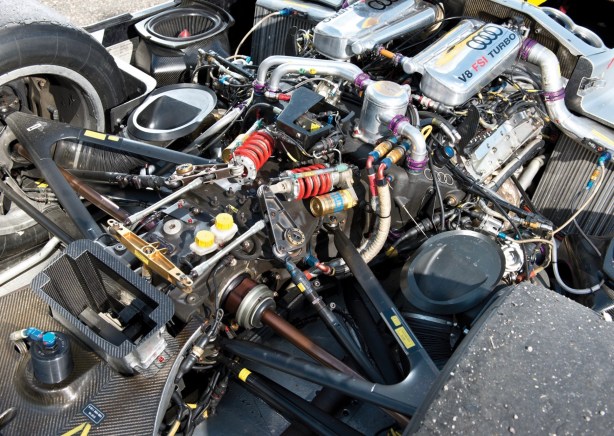
(Darin Schnabel)
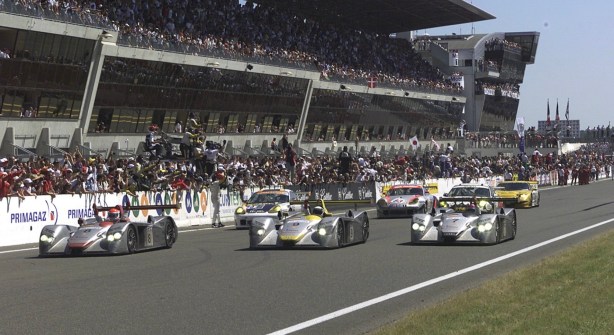
 

Le Mans 2000- 1-3 finish, crews as per text (Audi)

There were the usual dramas at Le Mans but with a one-two-three finish!

The Sebring winning crew of Frank Biela/Tom Kristensen/Emanuele Pirro took the chequered flag, followed across the line by Laurent Aiello/Allan McNish/Stephane Ortelli and Michele Alboreto/Christian Abt/Rinaldo Capello.

ALMS events won in 2000 were those at Sebring, Sears Point, Mosport, Texas, Portland, Road Atlanta, Laguna Seca, Las Vegas and Adelaide.
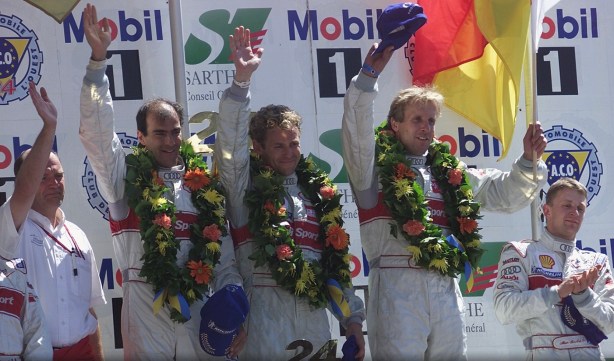
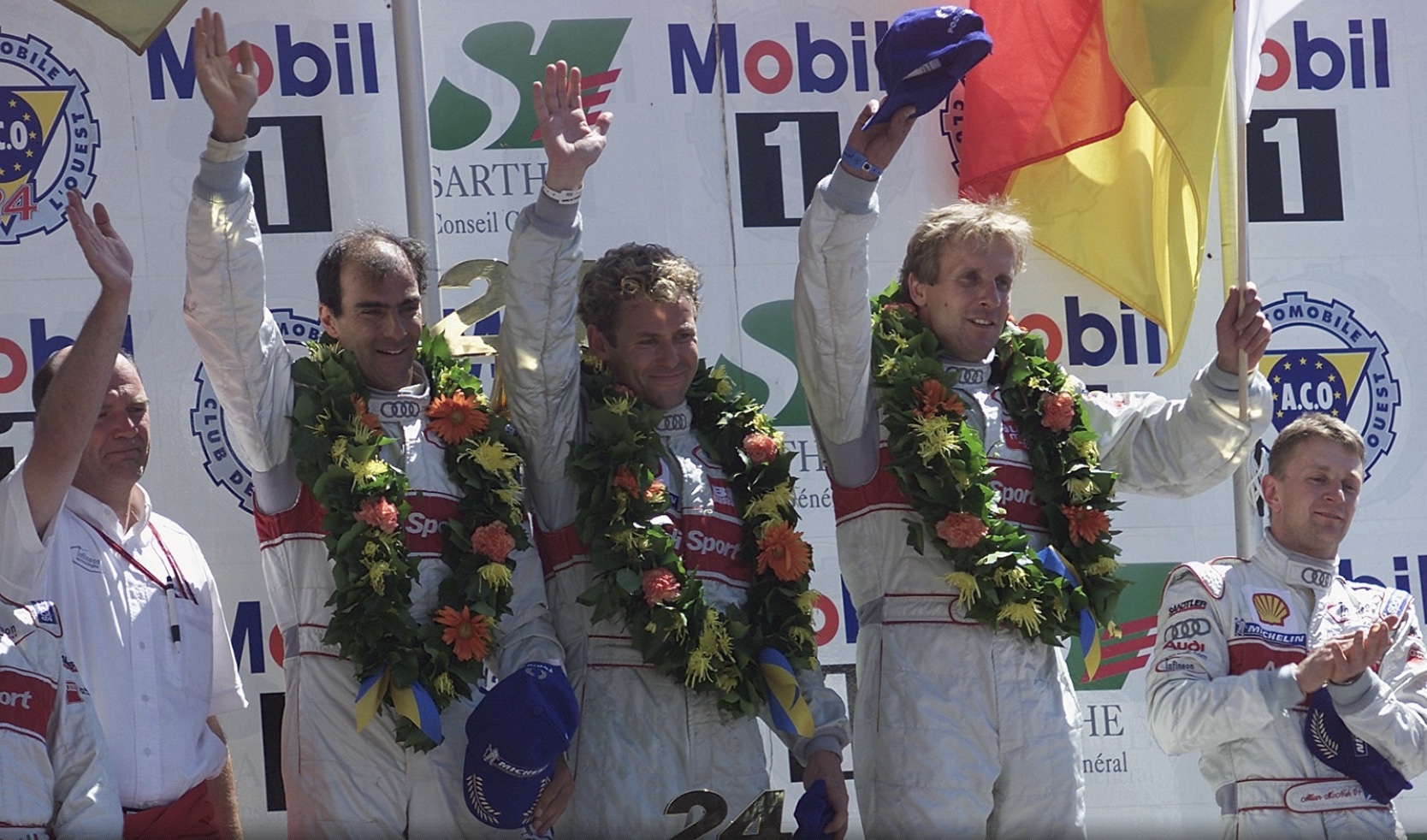
R8 Le Mans 2000 winning crew- L>R Pirro, Kristensen, Biela with Allan McNish at right (Audi)
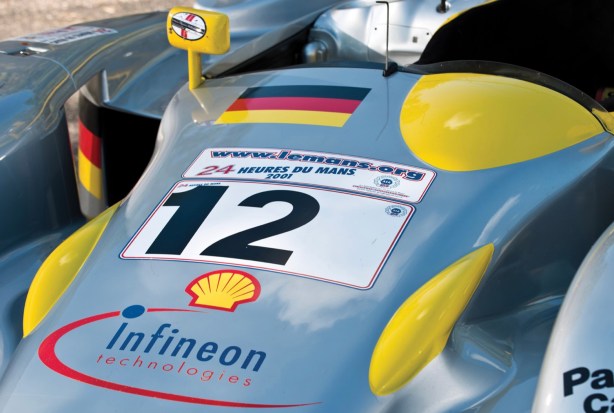
 

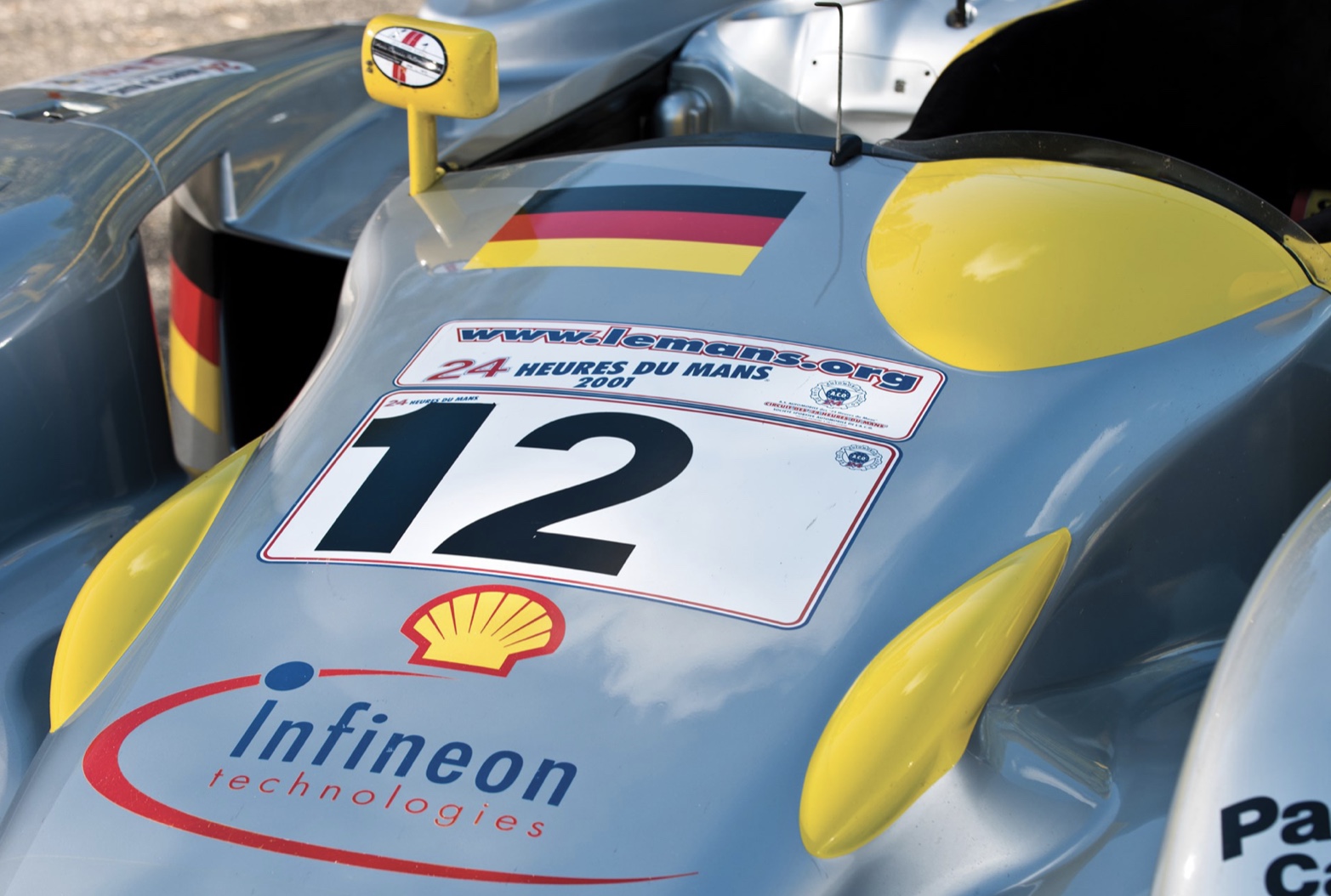
Race number a misnomer, there was no Audi R8 #12 which raced @ Le Mans in 2001. Keep in mind Southgate’s minimal frontal area mantra in looking at the aero shots of the cars (D Schnabel)
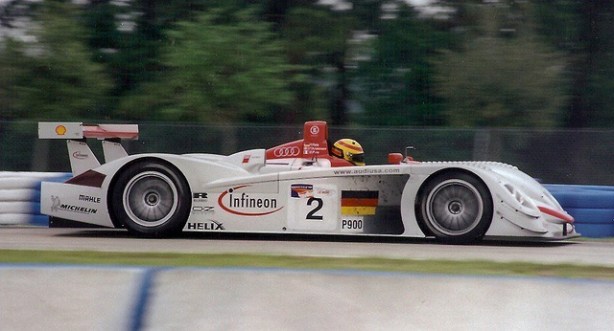
 

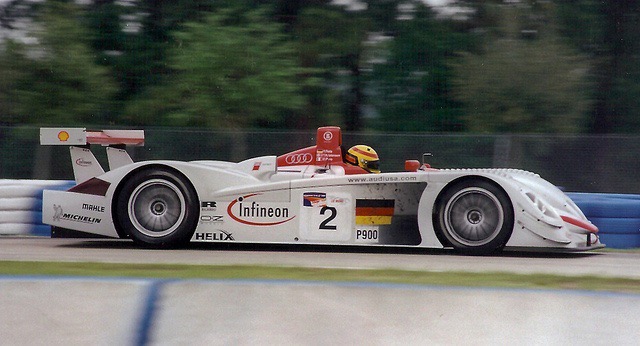
Kristensen/Biela/Pirro R8 on the way to 2nd at Sebring in 2001 (URY914)

In 2001, Audi again finished 1-2 at Le Mans surviving the disastrous lap four downpour that led to the collision of nine cars on the slick and slippery surface. Again, Biela/Kristensen/Pirro won, followed by Aiello/Capello/Christian Pescatori.

A great outcome for the VW Group was the third place of the Bentley EXP Speed 8, developed upon the basis of the 1999 Audi R8C coupe. It was driven by Andy Wallace/Butch Leitzinger/Eric van de Poele and won the GTP class.

ALMS Series wins were Texas, Sebring, Donington, Jarama, Sears Point, Mosport, Laguna Seca and Road Atlanta- the two rounds not won by the R8 were won by the Panoz.

Audi Sport’s program was dealt a tragedy in 2001 when Michele Alboreto died in an R8 during a Lausitzring, northeast Germany, test session after a high speed tyre failure. He was doing straight line tests at the time, the tyre blow-out caused a collision with a trackside wall.
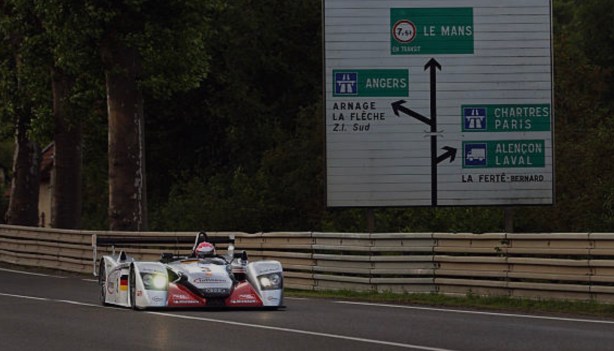
Marco Werner/Philipp Peter/Michael Krumm R8 Le Mans 2002- 3rd place behind two other R8’s (Getty)
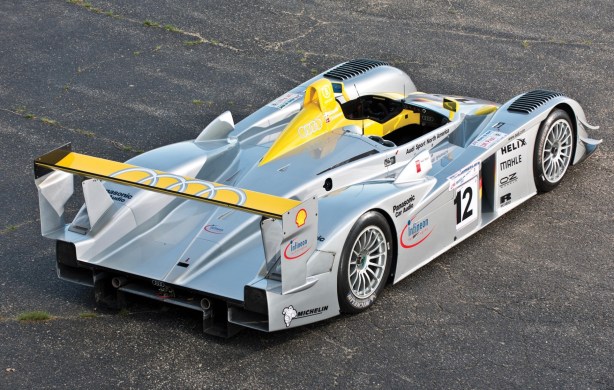
 

Note rear aero generally and Southgate’s low tail prescription (D Schnabel)
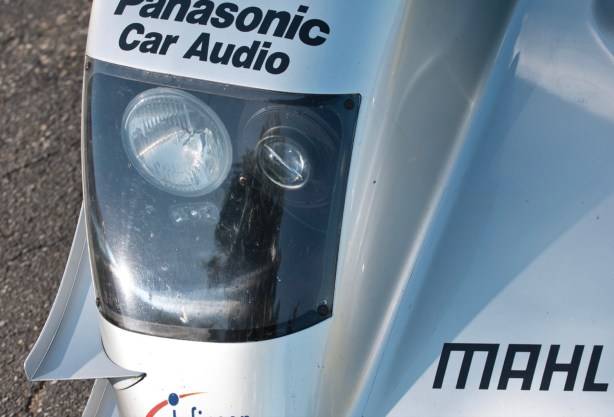
 

(D Schnabel)

In 2002, the Audi Joest team returned to Le Mans with several new drivers and despite 17 flat tyres during the night between the three R8s, the result was the same- victory albeit taking the first three places.

Biela/Kristensen/Pirro achieved a record in that it was the first time the same driver combination had won three straight 24 Hours of Le Mans. Capello/Johnny Herbert/Pescatori were second and Michael Krumm/Philipp Peter/Marco Werner were third. The Bentley EXP Speed 8 was fourth and won the GTP class, driven by Wallace/Leitzinger/van der Poele.

ALMS rounds won in 2002 were at Sebring, Mid Ohio, Road America, Trois-Rivieres, Mosport, Laguna Seca, Miami and Road Atlanta.
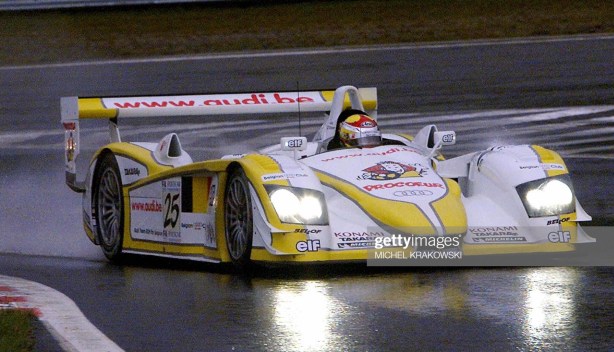
The R8 of Tom Kristensen and Seiji Ara during first practice, Spa 1000 km in August 2003. They won from the Pescarolo Racing Courage C60 Peugeot 3.2 V6 t/c of Lagorce/Sarrazin and the Dome S101 Judd V10 raced by Beppe Gabbiani and Felipe Ortiz (M Krakowski)
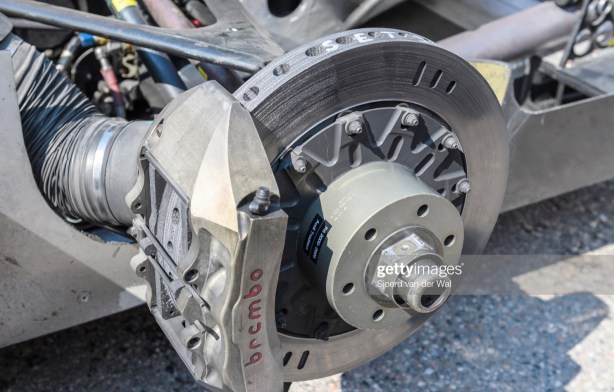
 

Brembo caliper and carbon brakes
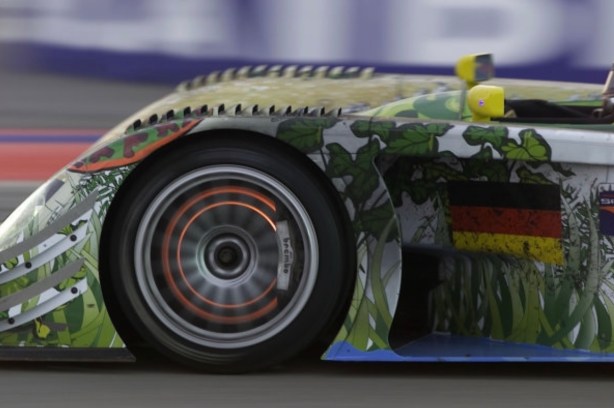
 

Glowing Brembos- Croc-R8 during the Adelaide December 2000 weekend (LAT)
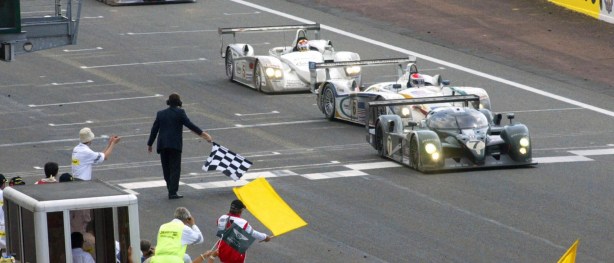
 

The Kristensen/Capello/Smith Bentley EXP Speed 8 crosses the line ahead of the 3rd placed Pirro/Lehto/Johansson and 4th placed Ara/Magnussen/Verner R8’s. The Blundell/Brabham/Herbert Bentley was 2nd (A Durand)

Audi Team Joest sat out the 2003 Le Mans 24 as mentioned earlier, a pair of redesigned Bentley Speed 8s, #7, driven by Guy Smith/Tom Kristensen/Rinaldo Capello and #8 driven by Johnny Herbert/David Brabham/Mark Blundell led the VAG charge that year.

The Bentleys finished first and second which was much celebrated across the motor-sporting world given the history of the marque at Le Mans between the wars- it had been 71 years since the brands last appearance at the race.

Privateer R8s finished third and fourth, and three-time winner Frank Biela would have undoubtedly been a factor in a privateer R8, had he not run out of fuel in the third hour.

2003 R8 ALMS round wins were Sebring, Road Atlanta, Sonoma, Trois-Rivieres, Mosport, Road America, Laguna Seca, Miami and Road Atlanta- the LMP900 class, outright in eery round.
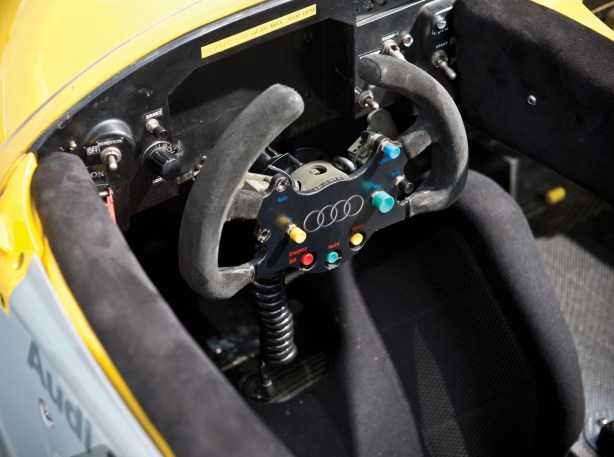
Audi R8 cockpit, driving position for a sports-racer somewhat unusal in being on the left, gearbox is Ricardo 6-speed sequential (D Schnabel)
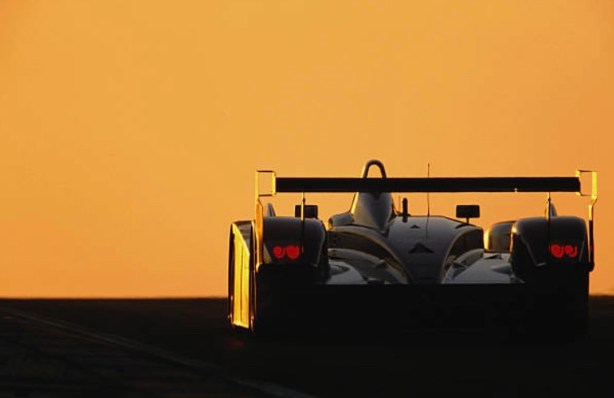
 

Johnny Herbert, R8, 12 June 2004, Le Mans (B Lennon)

The Audi R8s almost finished first to fourth at Le Mans in 2004 but were thwarted by an accident when Allan McNish and JJ Lehto hit a tyre wall after an oil spill from a Porsche.

McNish’s car required comprehensive repair and joined the track well back, drivers Frank Biela and Pierre Kaffar battled back to fifth as doctors had sidelined McNish. The Audi Japan/Team Goh R8 won, driven by Seiji Ara/Rinaldo Capello/Tom Kristensen with second going to the Audi/UK Veloqx R8 of Jamie Davis/Johnny Herbert/Guy Smith, third was Champion Racing’s R8 driven by JJ Lehto/Marco Werner/Emanuele Pirro.

2004 ALMS round victories were Sebring, Mid Ohio, Lime Rock, Infineon, Portland, Road America, Road Atlanta and Laguna Seca.

2005 marked the last appearance of the factory Audi R8s Le Mans.

The turbo diesel R10 would replace them in 2006.

Once again the Champion Racing R8 crewed by JJ Lehto/Tom Kristensen/Marco Werner, took the chequered flag, with two R8’s in third and fourth, the Pescarolo Judd second.

The win marked the sixth straight victory for Kristensen and his seventh overall, breaking Jacky Ickx’s record.

ALMS wins that year included Sebring, Road Atlanta, Lime Rock, Infineon, Portland, Road America and Road Atlanta.
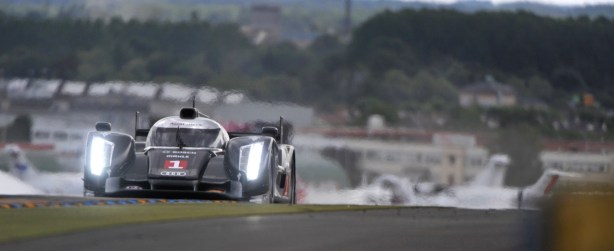
(A Jocard)

Another generation of Audi endurance campaigner.

Mike Rockenfeller aboard an Audi R18 TDI V6 3.7 litre t/c diesel, Le Mans 2011.

He shared the car with Timo Bernhard and Romain Dumas, DNF prang after completing 116 laps. Another R18 driven by Fassler/Lotterer/Treluyer won .
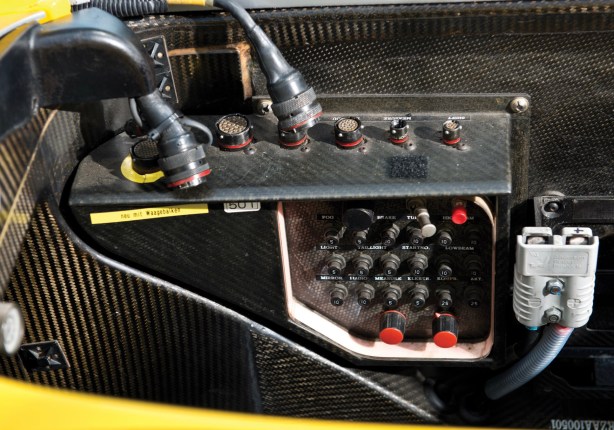
(D Schnabel)

Technical Specifications…

Car designed by Appel/Pfadenhauer and others and constructed in Italy by Dallara.

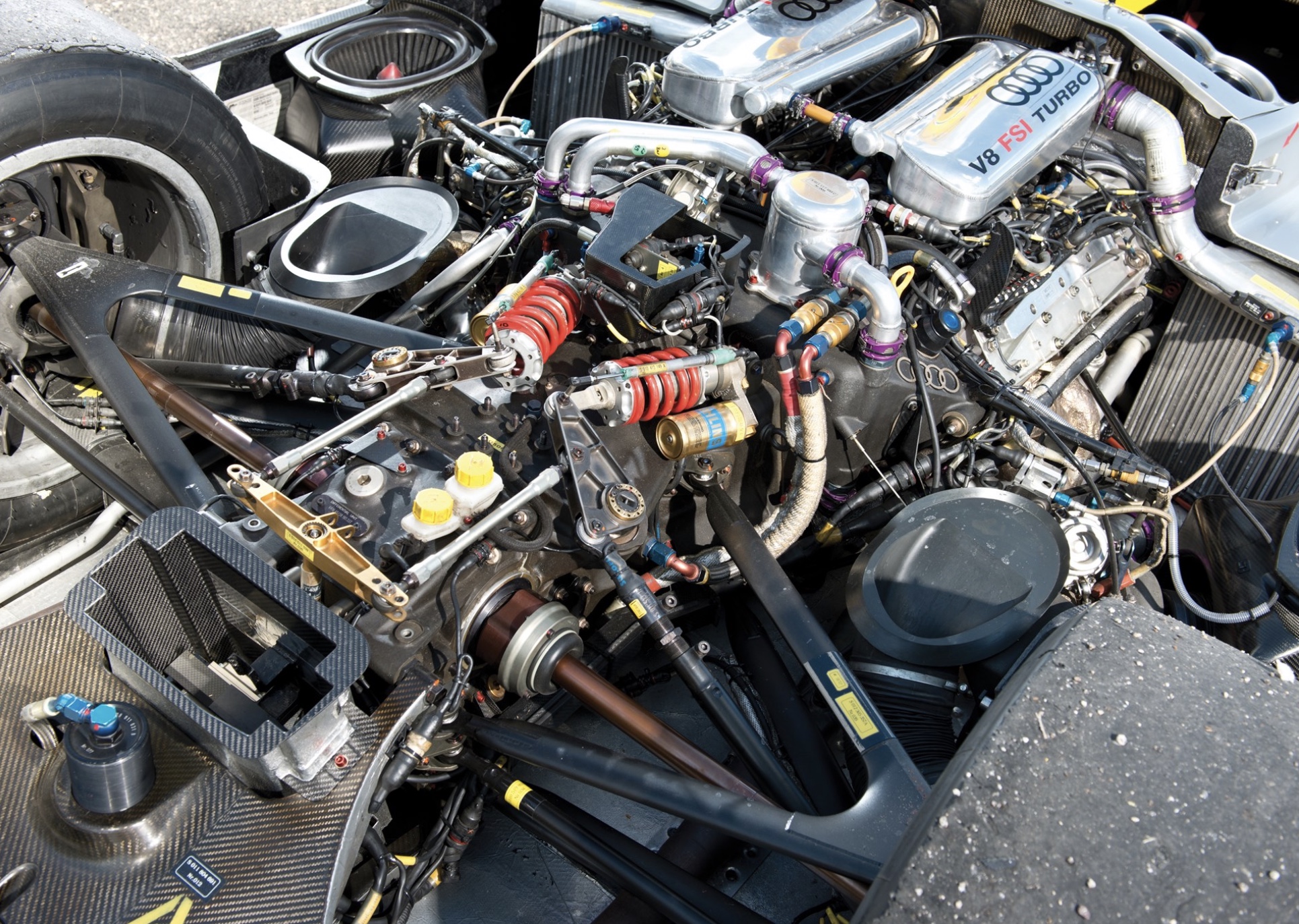
Chassis a carbon-fibre composite and aluminium honeycomb monocoque with the 3596 cc 90 degree V8 fully stressed. Suspension comprised double wishbones and pushrods with horizontally mounted coil spring/gas shocks. Steering, a power assisted rack and pinion. Disc brakes were servo-assisted, ventilated and cross-drilled carbon ceramic

Engine Audi 90 degree all aluminium, DOHC, 4-valve 3586cc, Bosch-injected and twin turbo-charged V8 giving circa 610 bhp and above, 516 lbs/ft of torque. Gearbox, Ricardo 6-speed sequential.

Dimensions- 900 kg in weight, 4650 mm long, 1980 mm wide and 1080 mm high. Wheelbase 2730 mm, track not quoted

16 R8 sports-prototypes were built.

Etcetera…
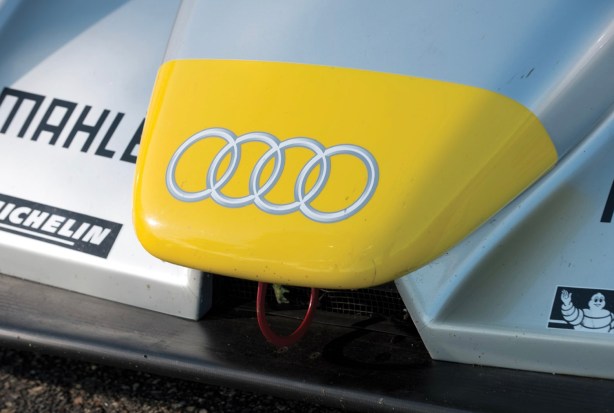
(D Schnabel)

1999
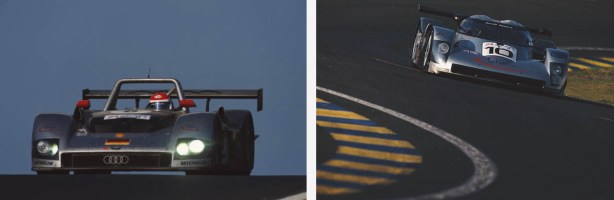
(Getty)

The Dallara built and RKN built R8R left and R8C right at Le Mans in 1999.

The different aerodynamic approach of the 1999 Dallara built racer and the subsequent cars is marked.

2000
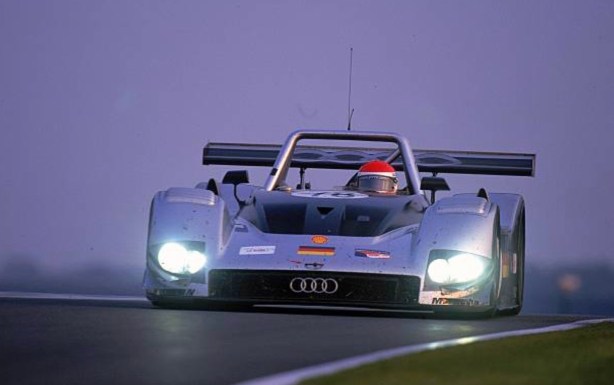
(M Thompson)

Emanuele Pirro, R8 during the ALMS Silverstone 500 round on 13 May, he shared the car with Frank Biela to fourth place- winner the Jorg Muller/JJ Lehto BMW 6 litre V12 LMR.

The best placed Audi was the Capello/McNish car in third. Note the use, at this early stage of the season of the 1999 model R8.
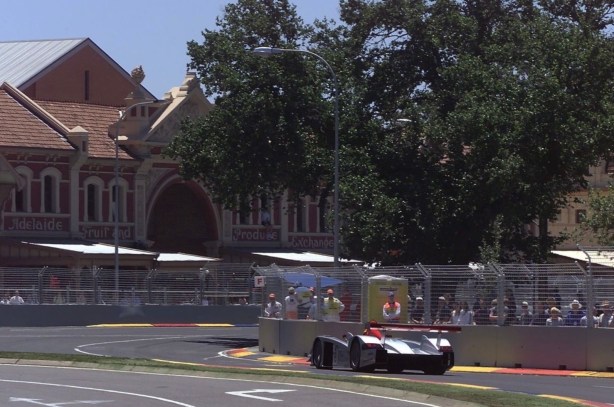
(Audi)

Frank Biela, R8 in ‘Banana Bend’ heading towards the Adelaide Markets, December 2000. Car retired after completing 170 of the winners 225 laps.
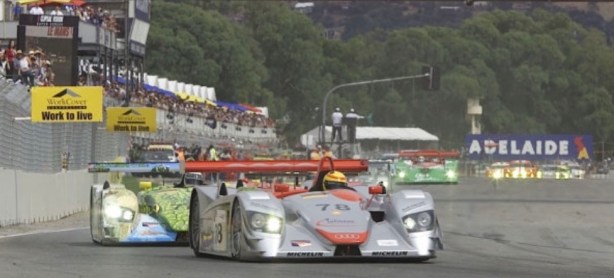
(Getty)

Biela from McNish, Adelaide 2000, green car in the distance the Konrad Lola B2K Ford I think.
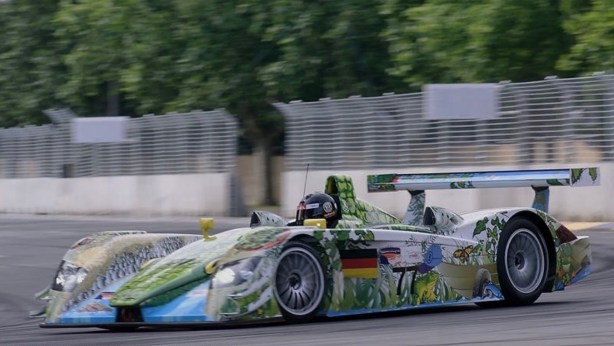
(Audi)

Australian V8 Supercar driver and Audi man Brad Jones practiced the McNish/Capello R8 in Adelaide when Allan suffered severe back pains after stepping out of his Kilt during a photo shoot! and was carted off to Royal Adelaide Hospital.

The Jones boy missed out in the race as AMcN was aok to compete but there was a further set-back on raceday when Capello boofed the R8 into the barrier on the outside of turn 6. It was repaired in time for the race.

Brad Jones Racing then ran the very successful Audi Super-Tourer program in Australia, the two A4’s were raced by Brad and Cameron McConville.
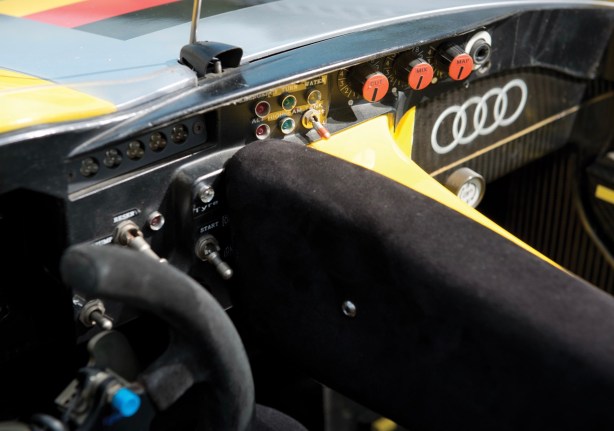
(D Schnabel)
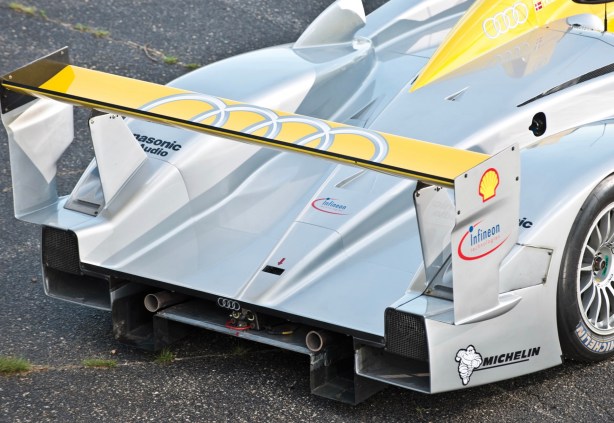
 

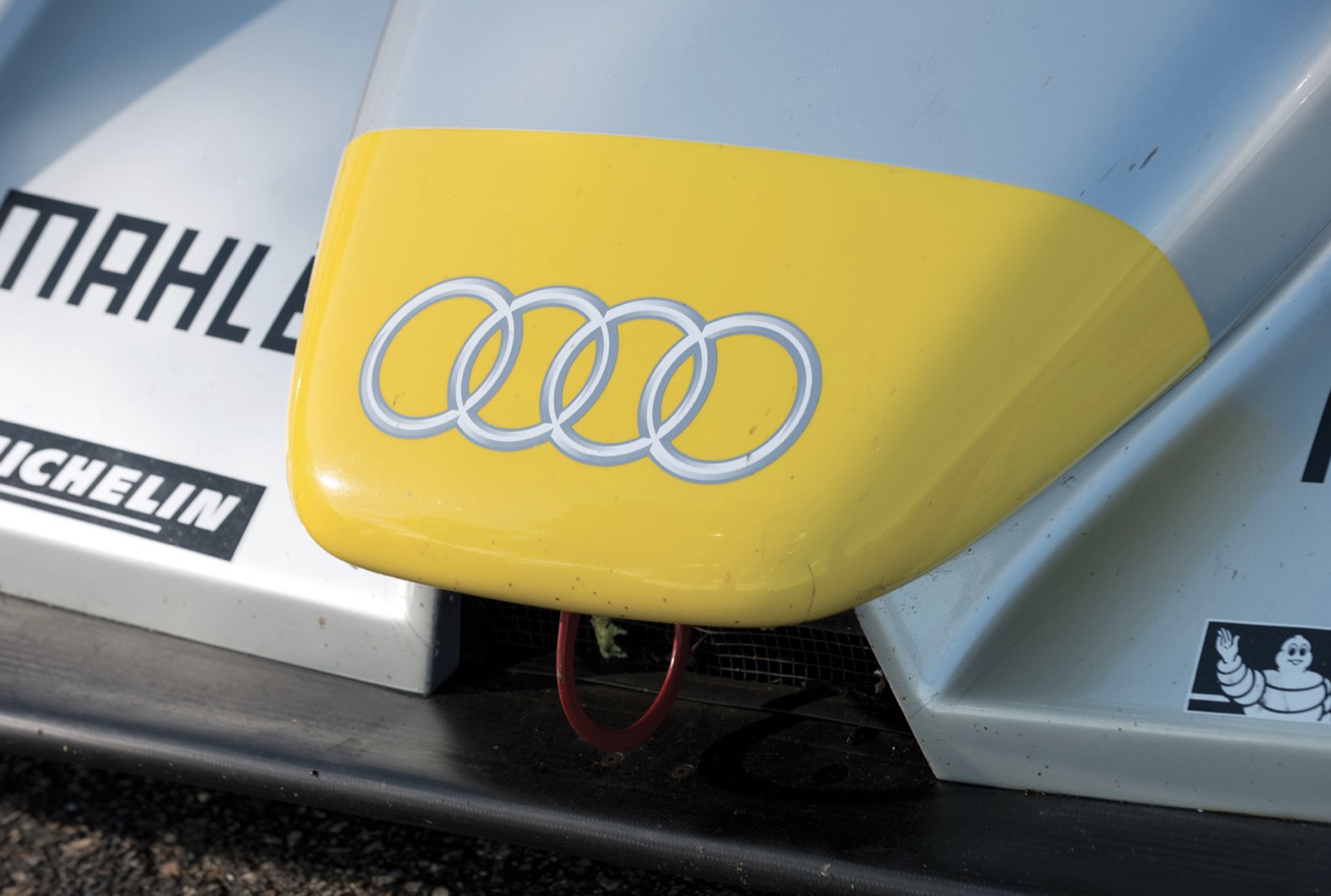
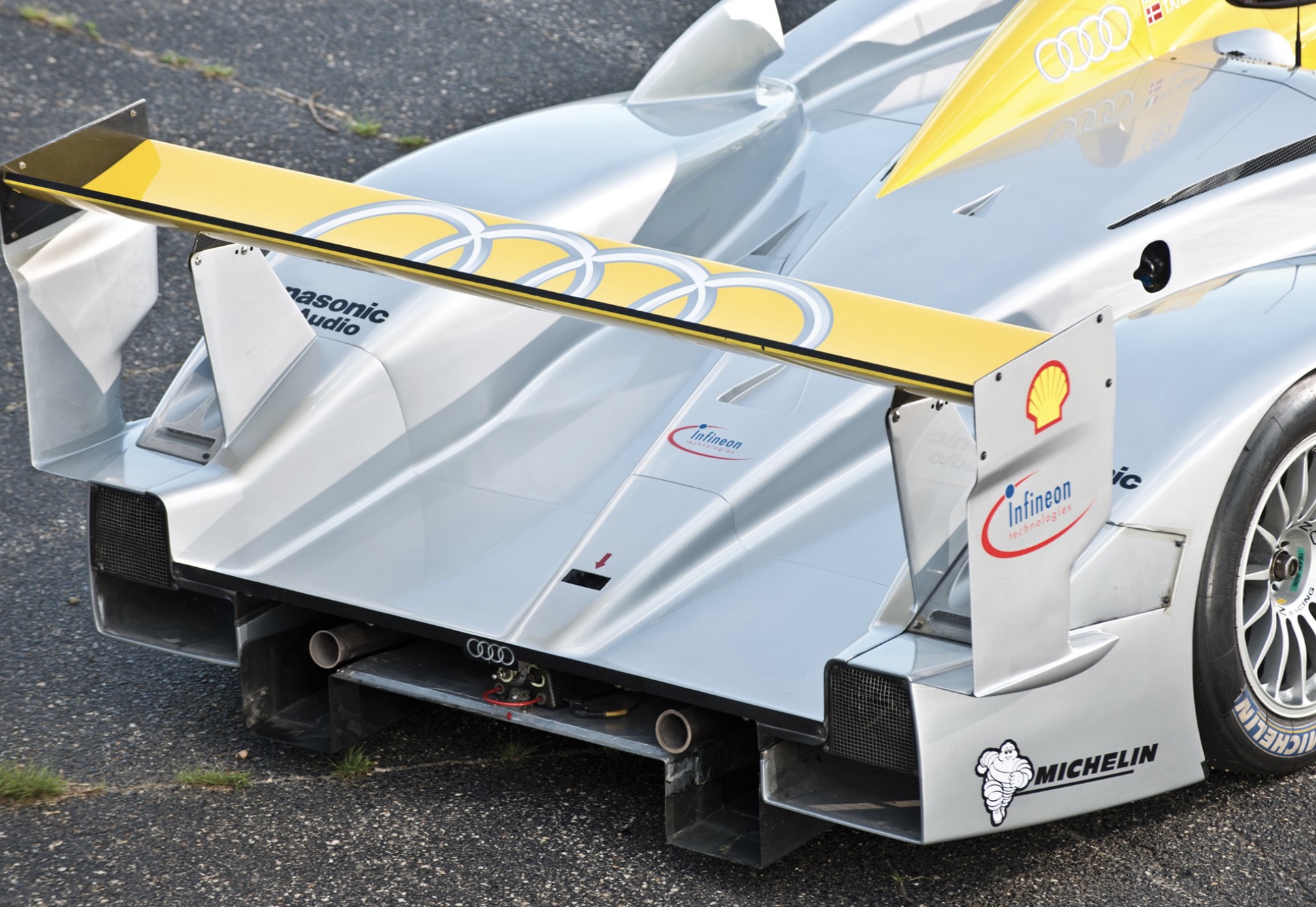
The fascinating, intricate aero treatment of modern sports-racers never lacks interest- the nuances only complex wind-tunnel work can derive. Note exhausts, Audi logo (D Schnabel)

Credits…

Getty Images photographers Clive Rose, Matt Turner, Mike Hewitt, Bryn Lennon, Michel Krakowski, Siperd van der Wal, Andre Durand, Mark Thompson, Alain Jocard, Jean-Francois Monier, Gerlach Delissen. LAT, Darin Schnabel

‘From Drawing Board to Chequered Flag’ Tony Southgate, article on the 2016 R18 in ‘Racecar Engineering’, Sotheby, ultimatecarpage.com,
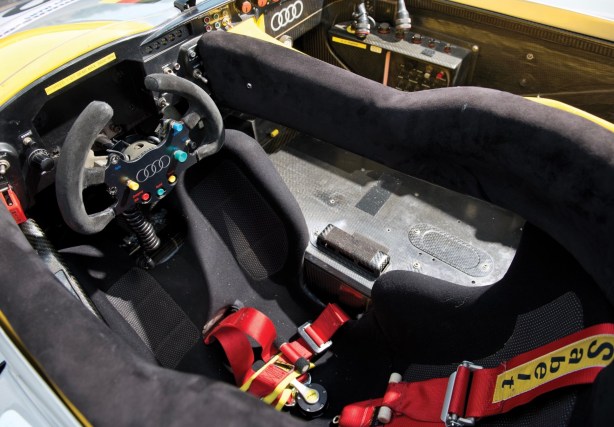
(D Schnabel)
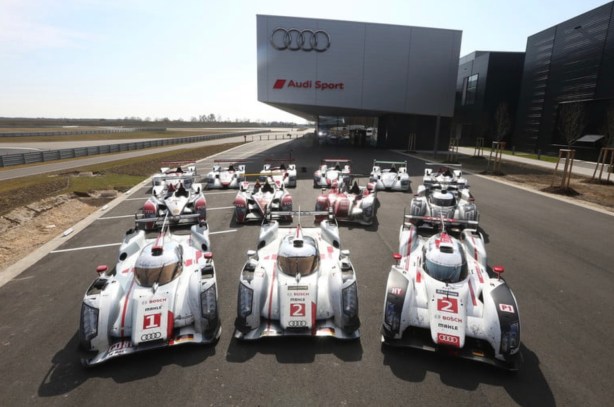
 

(Audi)

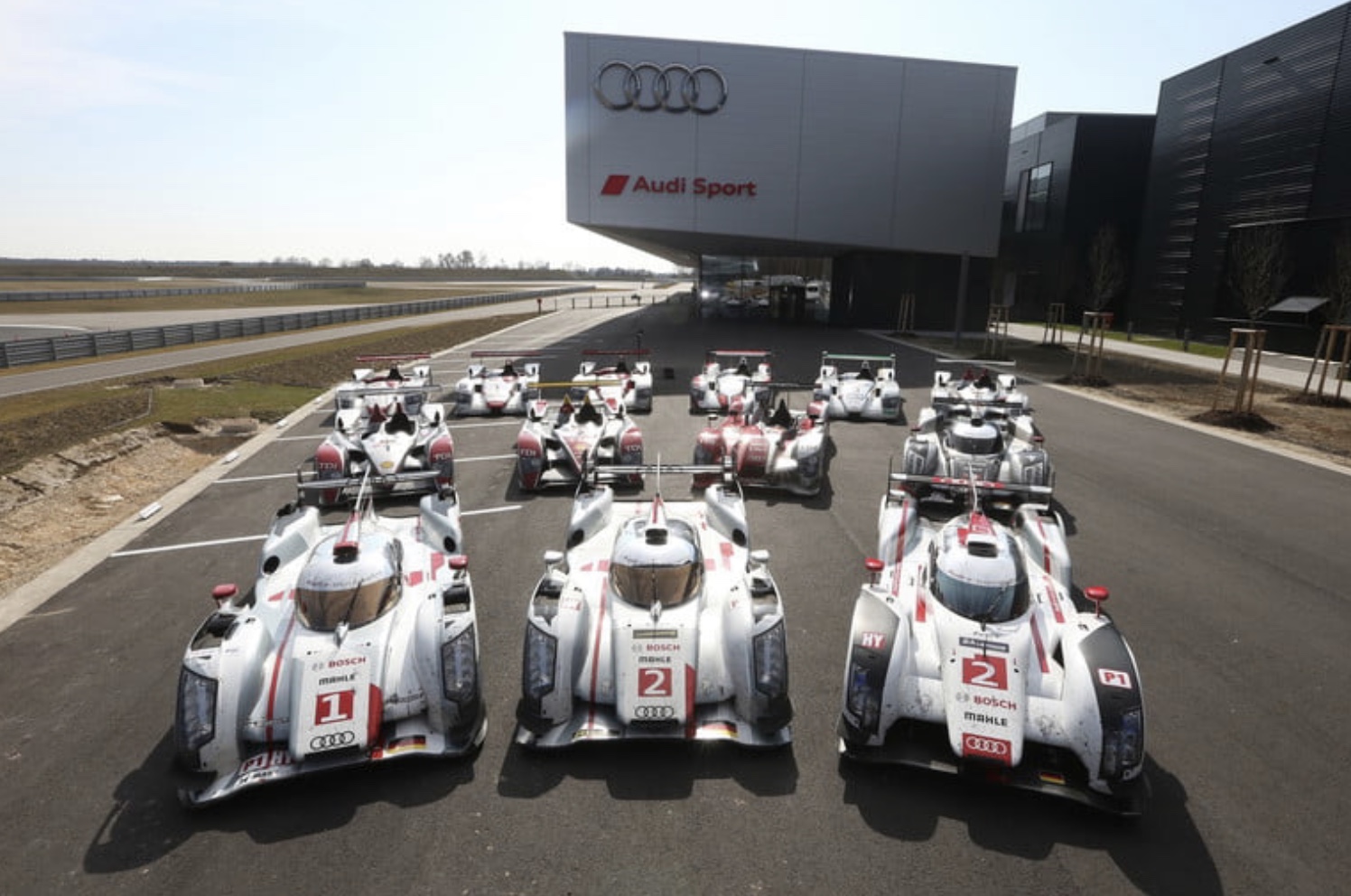
Postscript: The Audi Le Mans Era 1999-2016…

The enduring Le Mans marque is Porsche of course, the first Le Mans entry for them was the Veuillet/Mouche twentieth placed 356 Coupe in 1951.

The ‘Audi Era’ at works outright level- lets hope they return, spanned the years 1999-2016, Audi boss Rupert Staller announced Audi Sports withdrawal from the WEC during a presentation to 300 of the companies employees in October 2016, ‘As our production cars are becoming more electric, our motorsport cars, as Audi’s technological spearheads, have to be more so.’

The announcement included a commitment to Formula E.

Technological Audi firsts from 1999 to 2016 include the first Le Mans win by a car powered with a diesel engine in 2006 and the first by a hybrid powertrain in 2012.
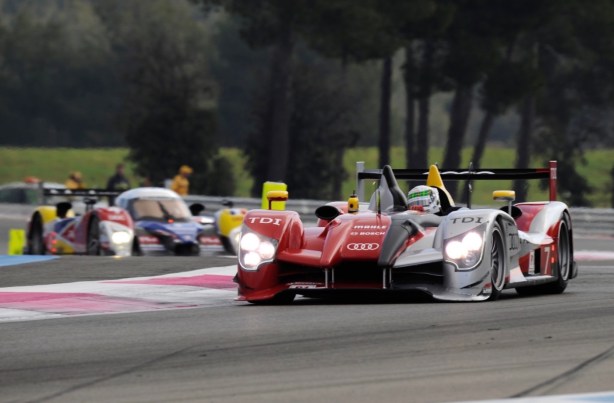
Allan McNish, Audi R15 Plus ahead of the Mucke/Primat/Fernandez Lola Aston Martin during the 2010 8 Hours of Le Castellet- McNish won in the cars debut race partnered by Dindo Capello (unattributed)

Its interesting to reflect upon the advance in technology over the eighteen year period concerned- BMW won in 1999 with a conventional mid-engined roadster powered by a production derived (S70) 6 litre fuel injected V12 whereas the 2016 third/fourth placed Audi R18 was a coupe powered by a 4 litre turbo-charged V6 engine driving the rear wheels and front axle mounted GKN/Williams motor generator unit which, combined, produced over 1000 bhp.

For the record, the non-Audi Le Mans wins were by the BMW V12 LMR 5990cc V12 in 1999, Bentley EXP Speed 8 3995cc V8 t/c in 2003, Peugeot 908 5500cc V12 diesel in 2009 and Porsche 919 Hybrid in 2015/2016- 2000cc V4 t/c 4WD.

The Audi R8 won in 2001/2 and in 2004/5- 3596cc V8 t/c. The R10 TDI won from 2006-2008, it was a 5499cc t/c diesel V12. The R15 Plus won in 2010- 5499cc V10 diesel t/c. In 2011 it was the turn of the R18 TDI 3700cc V6 t/c. From 2012 to 2014 the R18 e-tron quattro won- 3700cc V6 t/c in 2012/2013 and 4 litres in 2014.

In 2012 and 2013 Audi won the FIA World Endurance Championship- the Manufacturers World Championship.
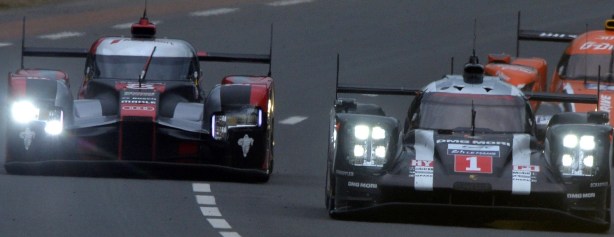
(J-F Monier/Getty)

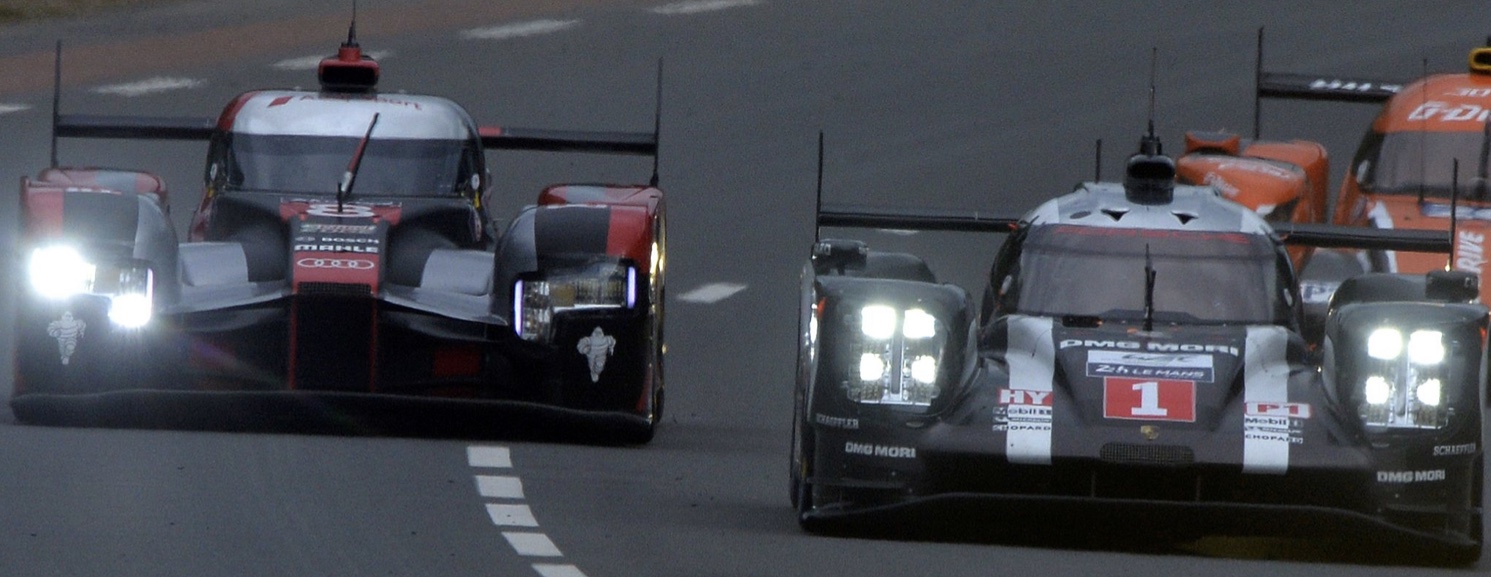
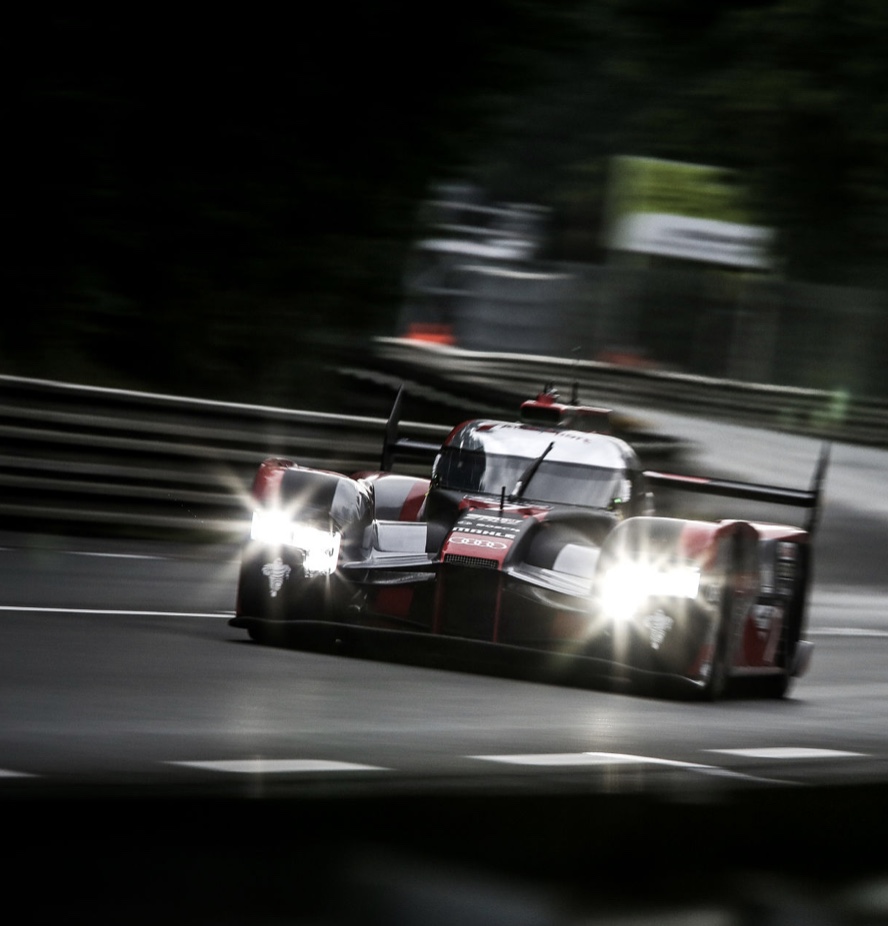
Timo Bernhard #1 Porsche 919 from Lucas Di Grassi Audi R18 during practice at Le Mans in June 2016. Below is the Fassler/Lotterer/Treluyer R18 Hybrid during the race, spectacular in the low light.
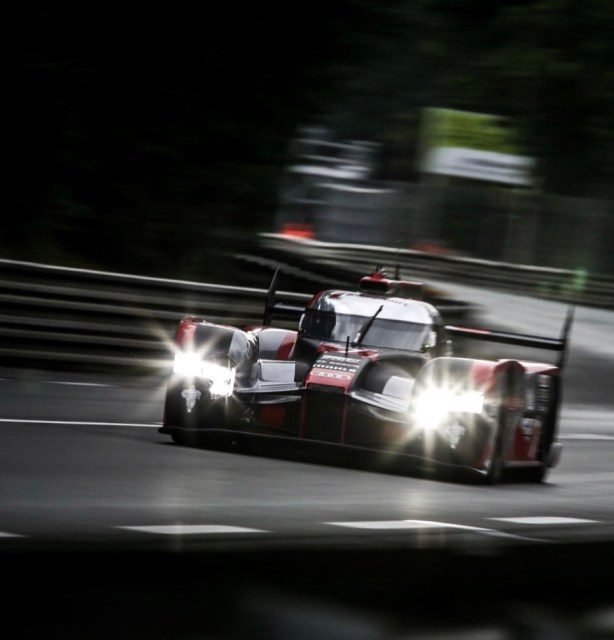
(G Delissen)

The best way to represent modern sports racers is in the half light as one can then only half see them.

Don’t get me wrong, they are fast and I love the applied technology but it would be hard to start with a blank sheet of paper and create uglier objects.

Such is ‘progess’.
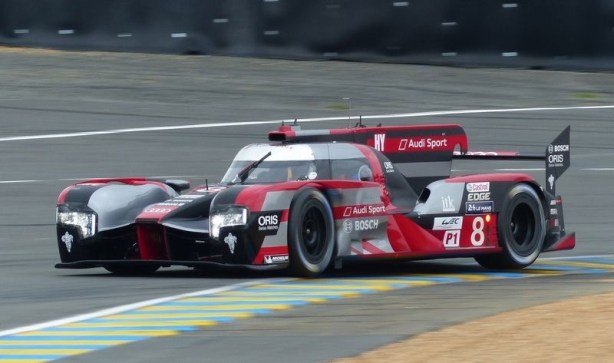
(Getty)

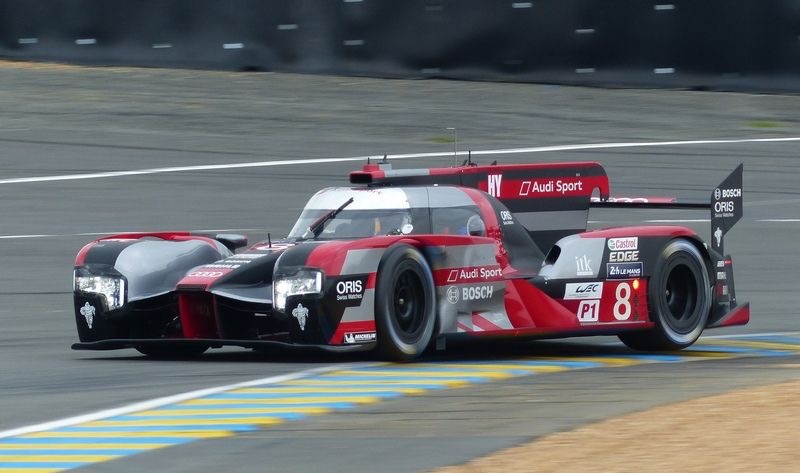
The Fassler/Lotterer/Treluyer R18 in the harsh light of day.

‘As ugly as a hatful of arseholes’ is the colloquial Australian phrase which springs to mind, fast mind you, sadly the rules do not mandate aesthetics which are entirely subjective in any event…

Tailpiece: Kristen/Lehto/Werner, Audi R8 Sebring winners, March 2005…
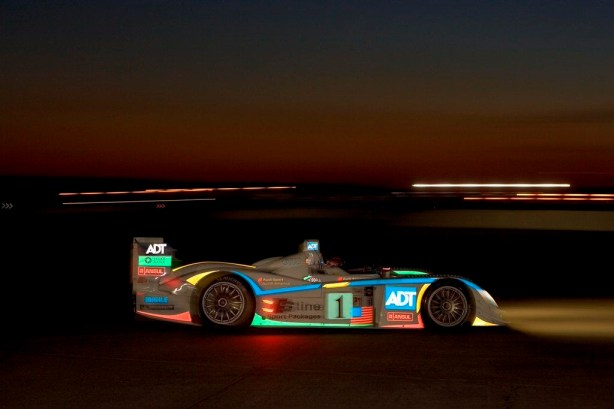
(LAT)

Finito…