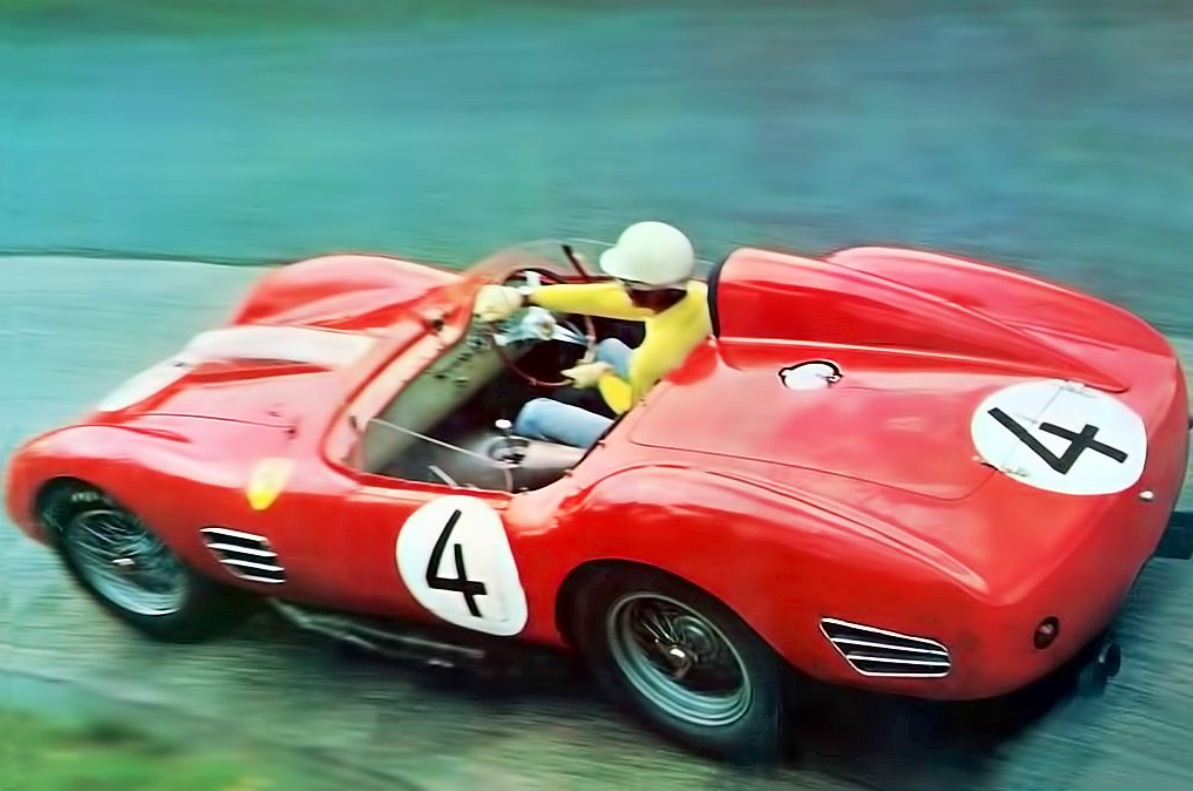
Olivier Gendebien in the Ferrari 250 Testa Rossa 59 he shared with Phil Hill to second place in the Nurburgring 1000Km in 1959…
Olivier was an interesting driver, born in Belgium in 1924 he fought the Germans as part of the Belgian Resistance movement, joined the Britsh Army and became a paratrooper.
After the War he worked in the forestry industry in the Belgian Congo and met a rally driver, commencing his own rally career. He won the Tulip Rally with Pierre Stasse in an Alfa 1900 Ti in 1954 and soon came to the attention of Enzo Ferrari who signed him as both a Sports Car and occasional Grand Prix driver.
Another view of Gendebiens # 4 TR at rest in the ‘Ring pits. #1 is the winning DBR1 of Moss/Fairman, #15 is the Porsche RSK 718 of Umberto Maglioli/ Hans Hermann (Pinterest)
Grands Prix…
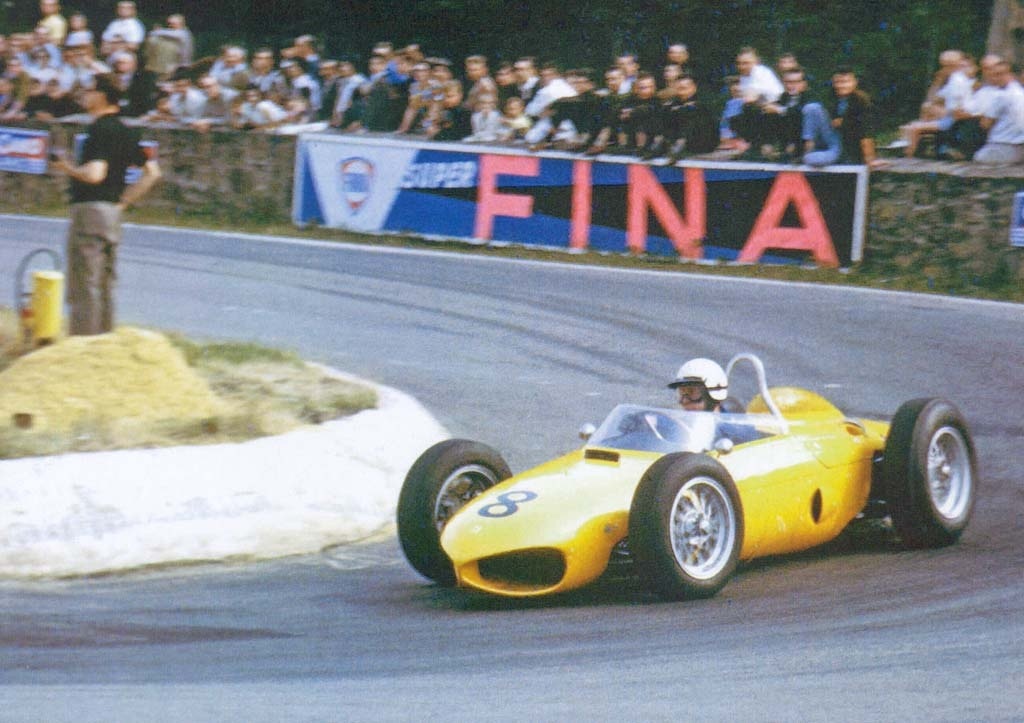
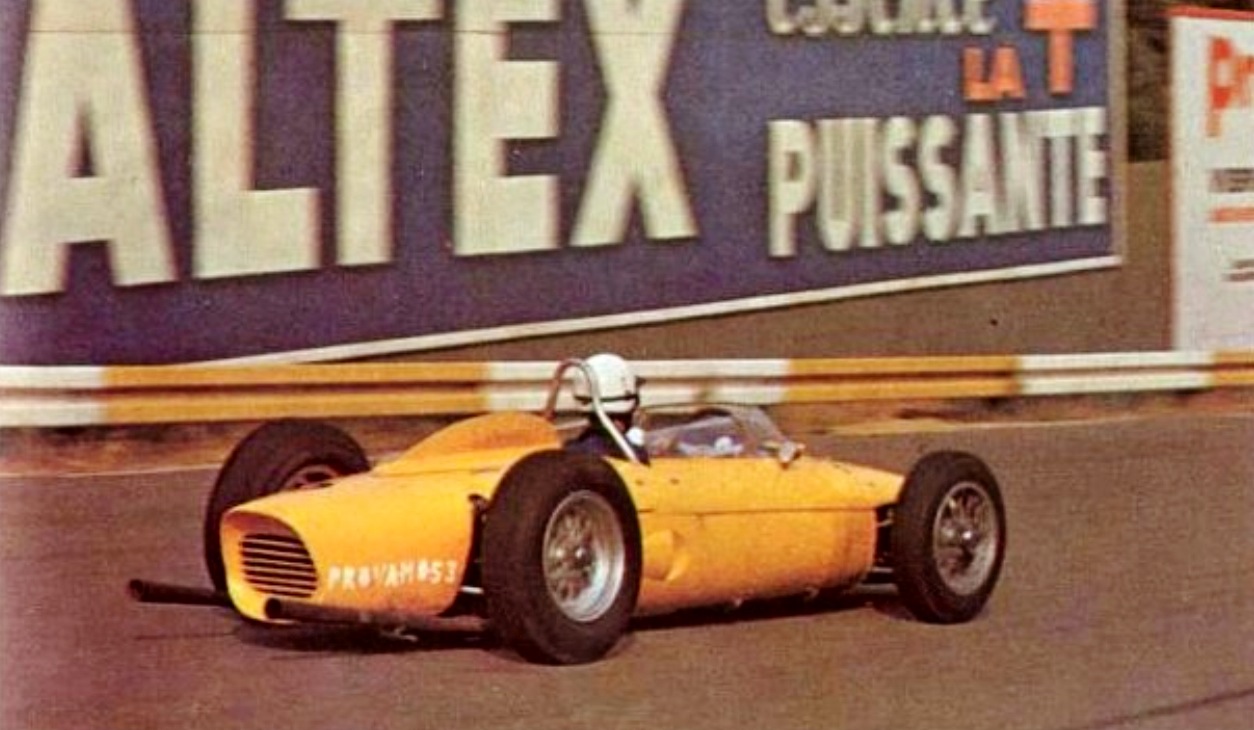
1961 Belgian GP, Spa. Gendebien finished fourth in a Ferrari 156, behind the other similar cars of Phil Hill, ‘Taffy’ Von Trips and Richie Ginther, Hill on his way to the 1961 World Championship.Gendebiens car is painted in Belgiums national racing color, yellow, the car entered by ‘Equipe National Belge’. Less powerful than his teamamtes cars, the 156 was still a formidable weapon (Pinterest)
He competed in 15 Grands Prix, making his debut in a Ferrari 625 in Argentina 1956 finishing fifth. His best season was in 1960 at the wheel of a ‘Yeoman Credit’ Team Cooper Climax , his best results in the French and Belgian Grands Prix.
Olivier Gendebien in the 1960 British GP, Silverstone. ‘Yeoman Credit’ Cooper T51 Climax (The Cahier Archive)
Sports Car Ace…
Ferrari 250 Testa Rossa 59, Olivier Gendebien, Sebring 1959. Gendebien shared the car with Americans Chuck Daigh, Phil Hill and Dan Gurney (Pinterest)
Whilst he was quick in a single-seater he was supreme in Sports Cars, Phil Hill the only driver who was his equal in the Ferrari Team during this period.
He first won Le Mans with Phil Hill in 1958, winning again with him in 1961 and 1962. He also won in 1960 with Paul Frere, his fellow Belgian. He won the Tour of Sicily, the Tour de France, and the Reims 12 Hour twice. Victorious also in the Targa Florio and Sebring 12 Hours thrice, he won the Nurburgring 1000Km once.
Gendebien was from a wealthy family, and under pressure to quit racing by his wife, retired after his fourth Le Mans win in 1962 aged 38. During retirement he ran a succession of businesses dying in the South of France in 1998.
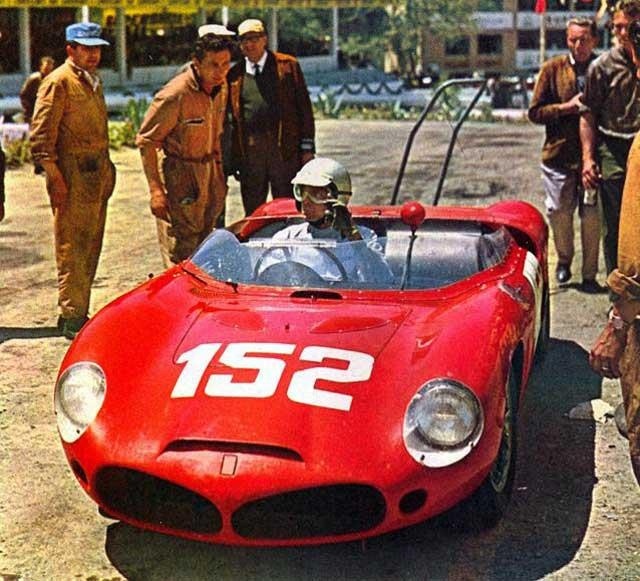
Pitstop for the Gendebien/Ricardo Rodriguez/Mairesse Ferrari Dino 246SP, Targa Florio winners 1962 (Pinterest)
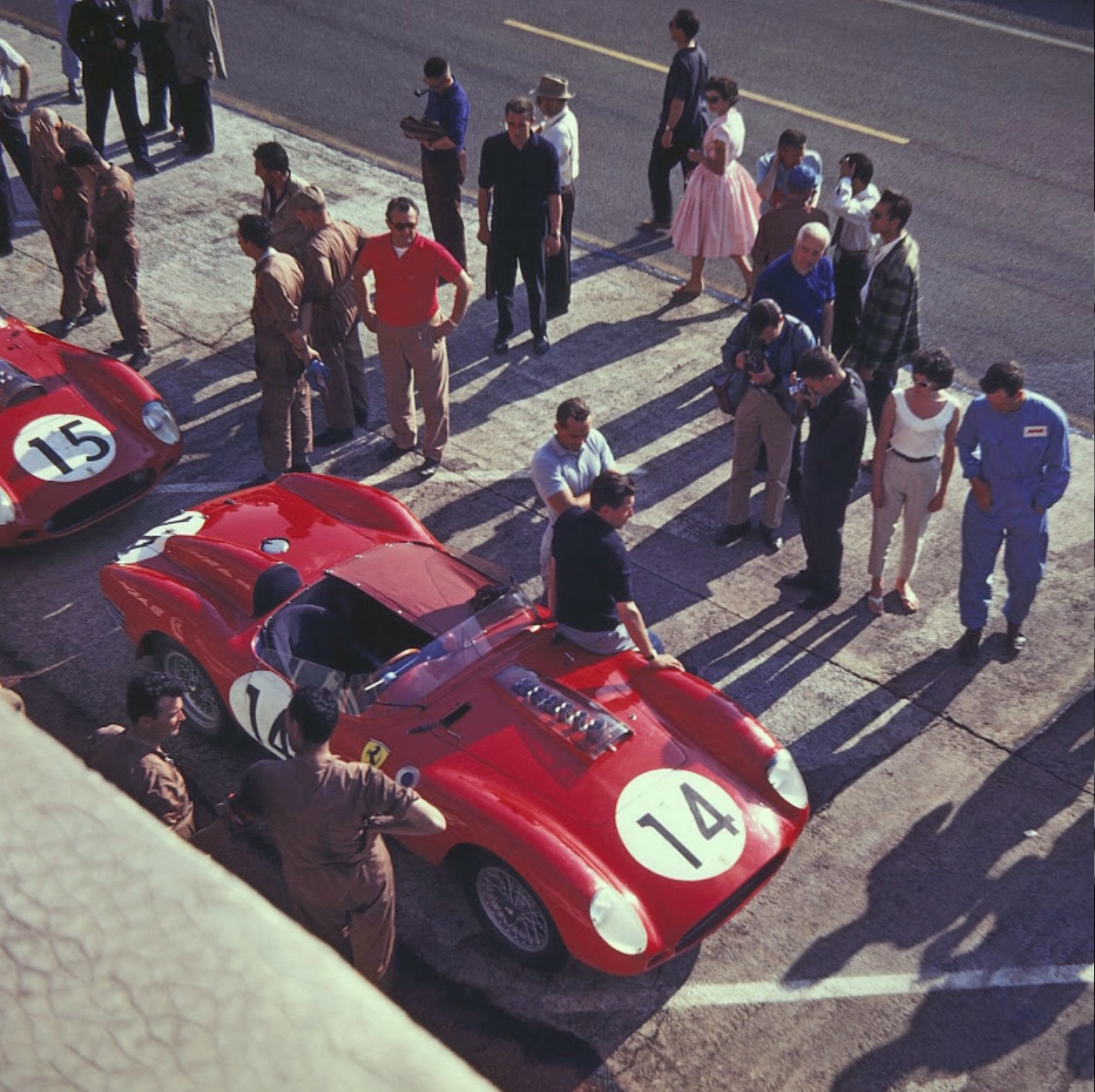
Le Mans 1959. The Gendebien/Hill Ferrari 250 TR 59, with Olivier sitting on the car talking to Phil Hill. Salvadori/Shelby won in an Aston Martin DBR1. Car # 15 is the Cliff Allison/ Hermanos da Silva Ramos TR . Both DNF(Pinterest)
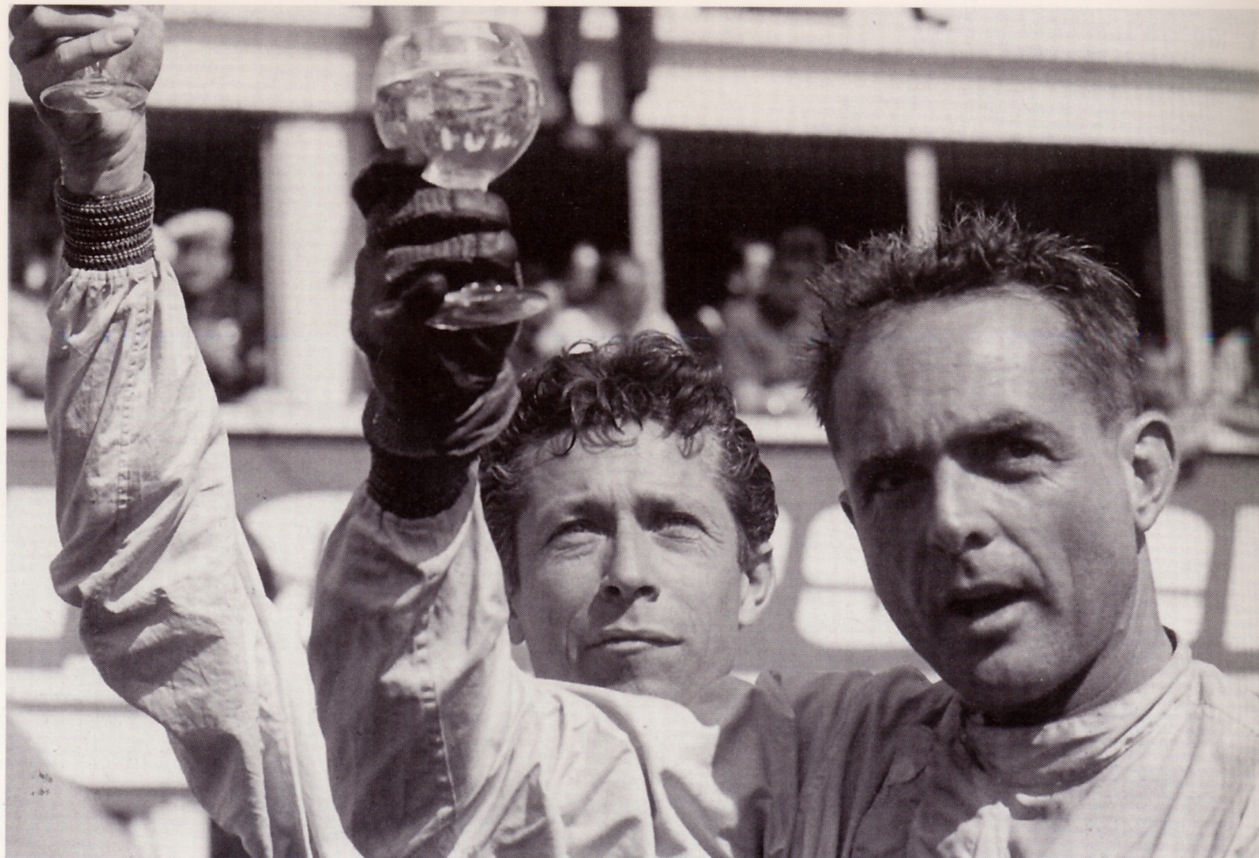
Gendebien, left, and Hill enjoy the spoils of their 1962 and last Le Mans victory together. Olivier retired shortly thereafter. Car was a Ferrari 330 TRI/LM. The last front engined car to win Le Mans. Hill competed well into the decade, his last international win the Brands Hatch 1000km in a Chaparral 2F in 1967. (Pinterest)
Etcetera…
1959 French Grand Prix in a Ferrari Dino 246. Olivier finished fourth in the race won by his teammate Tony Brooks in a similar car. Olivier made his GP debut in a much less competitive Ferrari 625 in Agentina 1956 but still finished 5th on debut (Pinterest)
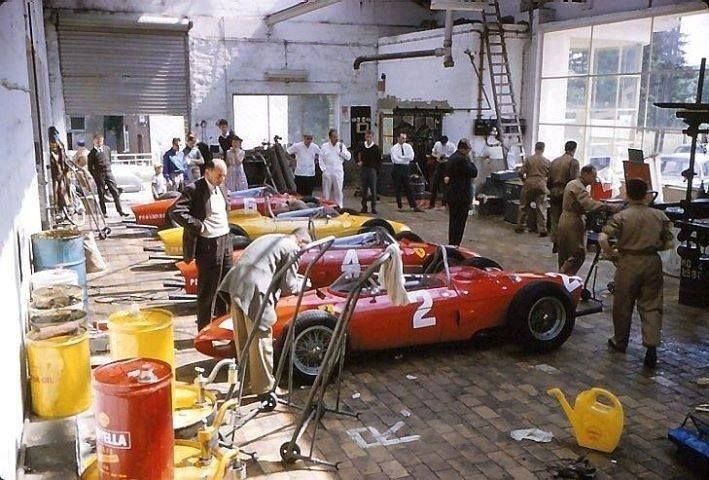
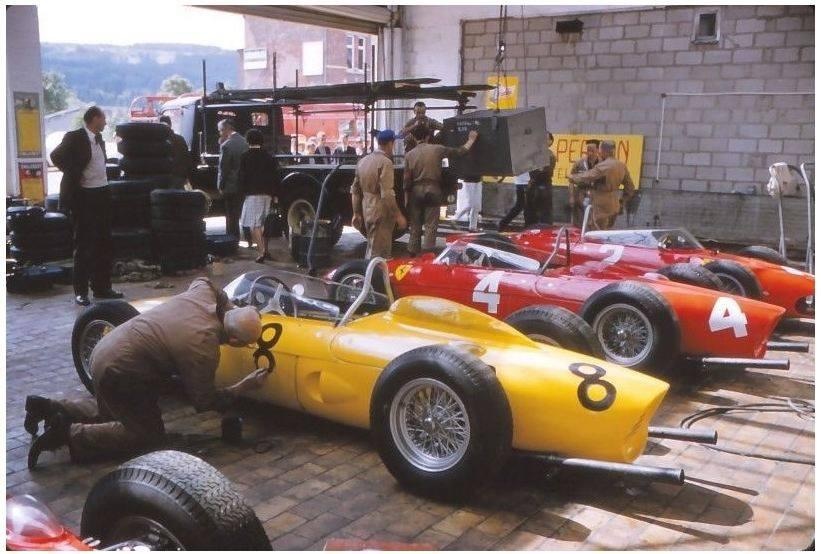
Ferrari pits Spa 1961. The 4 156 cars being prepared, Gendebiens yellow car contrasts the # 2 car of Von Trips, the winning #4 of Phil Hill, and Richie Ginthers third placed car # 6. The more you look the more you see… (Pinterest)
Same scene from the other side of the Ferrari pit (Pinterest)
Belgian butt shot..rear of Gendebiens Ferrari 156, Spa 1961 (Pinterest)
Gendebien watching the Ferrari 250 TR 61 of Ireland/Moss/Fulp/Tavano whizz past. It was disqualified for illegal refuelling. Olivier finished second in a 250GTO with Phil Hill. the race was won by the Bonnier/Bianchi Ferrari Tr 61 (Pinterest)
Brivio won the race, 7 laps of the 72Km ‘Piccolo Madonie’, 504Km, in his Scuderia Ferrari entry, ahead of 4 other ‘Monzas’…
He took 6 hours 35 minutes to complete the race at an average speed of 76.3 KMH, an endurance test to be sure!
Scuderia Ferrari had a busy and victorious weekend, running three Monza’s at the Eifelrennen at the Nurburgring, Nuvolari winning and another three in Targa.
Borzacchini lead the Scuderia Ferrari Targa assault in a Monza 2.6 but retired after hitting a wall near Collesano, Brivio winning with Carraroli third in the other SF entry, both 2.3 Monza’s .
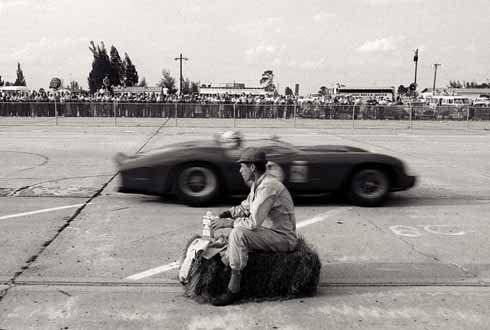
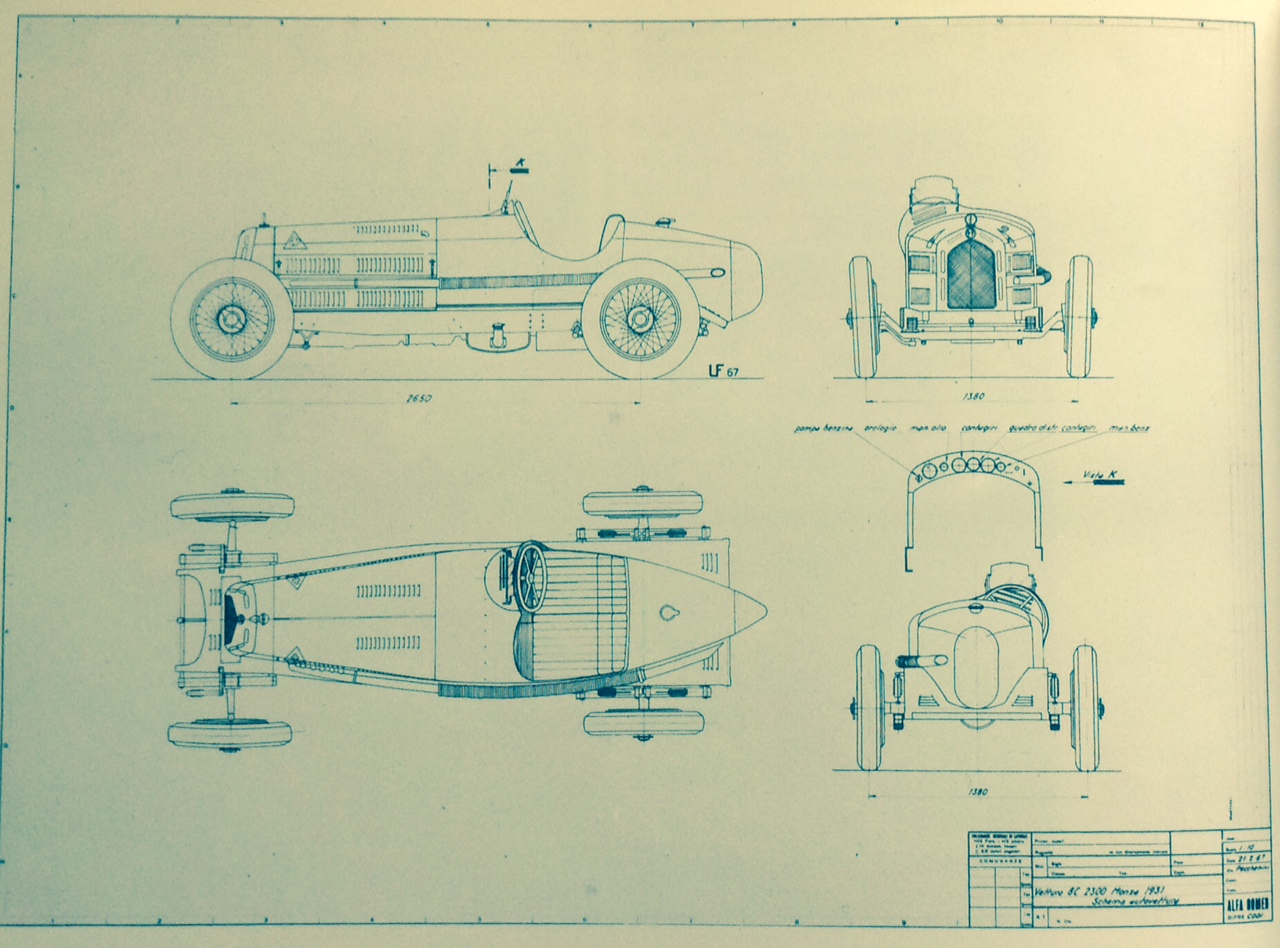
One of Vittorio Janos’ greatest designs, the supercharged straight-eight ‘Monza’ is one of the most successful racing cars of all time.
Vittorio Jano…
Vittorio Jano and Phil Hill later in Janos’ life. Pictured in Maranello in 1962, Jano designed the V6 engine which powered Hills’ 1961 World Championship winning Ferrari 156…the car was a ‘slug’ in 1962, the problem the chassis not Janos’ engine…Jano died by his own hand aged 75, frustrated by illness and his diminishing powers. He was 65. (Klemantaski Archive)
Alfa ‘pinched’ Jano from Fiat, where he was a key designer of their 804 and 805 GP cars. He was the leading figure in the design of Italian racing cars for over 30 years, Fiat in the 20’s, Alfa in the 30’s and Ferrari in the 1950’s, mind you his ‘Dino’ derived V6 engines were still winning rallies in the Lancia Stratos well into the 1970’s.
As soon as he joined Alfa he worked on supercharging the P1 GP car whilst also designing the very successful straight-8 P2 for 1924, the car immediately victorious in the French GP.
Alfa won the ‘World Championship’ in 1925 but withdrew from racing in 1926/7, allowing Jano to concentrate on a new series of road cars, the revered 6C 1500/1750 cars the result.
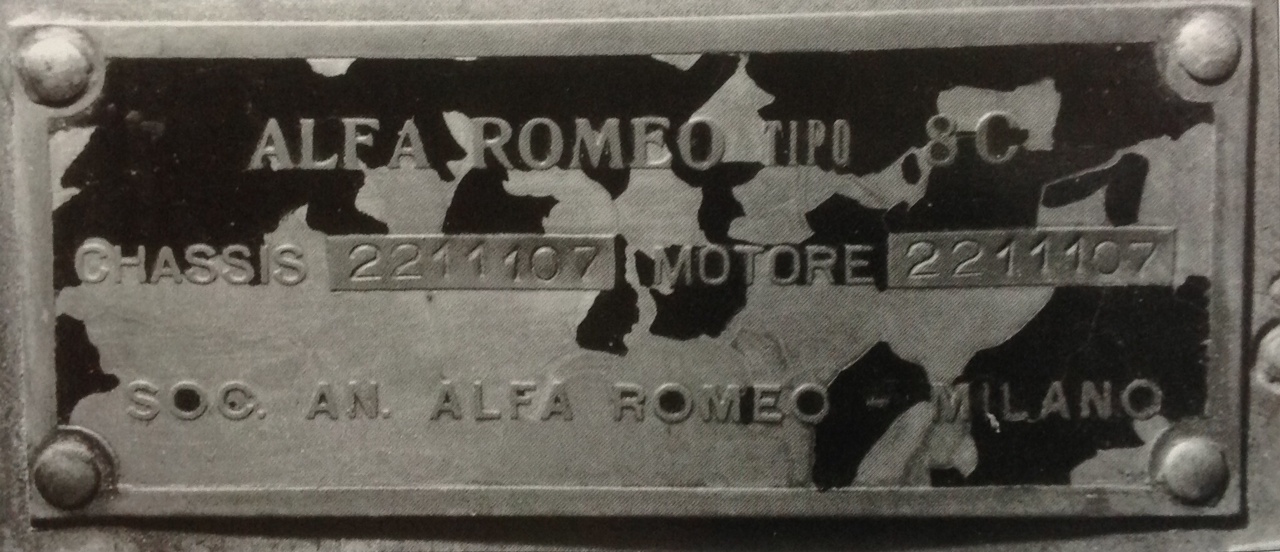
Alfa wanted to return to outright success in motor racing, the first step was the creation of the 8C2300, ‘unquestionably the ultimate sports car of its time and marked the pinnacle of the era for sports cars with cart-sprung flexible chassis and crash-gearboxes..’ according to marque expert Simon Moore.
Context of The Time…
The world was still in recession as a consequence of the collapse of the global economy after the 1929 Wall Street Collapse, Bentley were going through liquidation, Mercedes were entering the market for ‘mass-produced’ cars, whilst Alfa introduced this upmarket car.
Alfa themselves were not immune to any of this, passing through and into the hands of government agencies to make grants to aid industry, ultimately being taken over by the ‘Instituto Ricostruzione Industriale’ in 1933.
8C2300 Design…
Jano laid down a chassis which was conventional for the period in having channel side and cross members with semi-elliptic leaf springs and friction shock absorbers.
The ‘Corto’ had a wheelbase of 9 feet, and the ‘Lungo’, 10 feet 2 inches. Rod operated drum brakes were fitted of 15 3/4 inches internal diameter and were very powerful by the standards of the day. Knock-off wire wheels were standard competition fare , 5.5 inches wide and 19 inches in diameter.
The rear axle and 4 speed gearbox were of the same design as the 6C 1750.
The engine was both the heart of the car and it’s outstanding design feature.
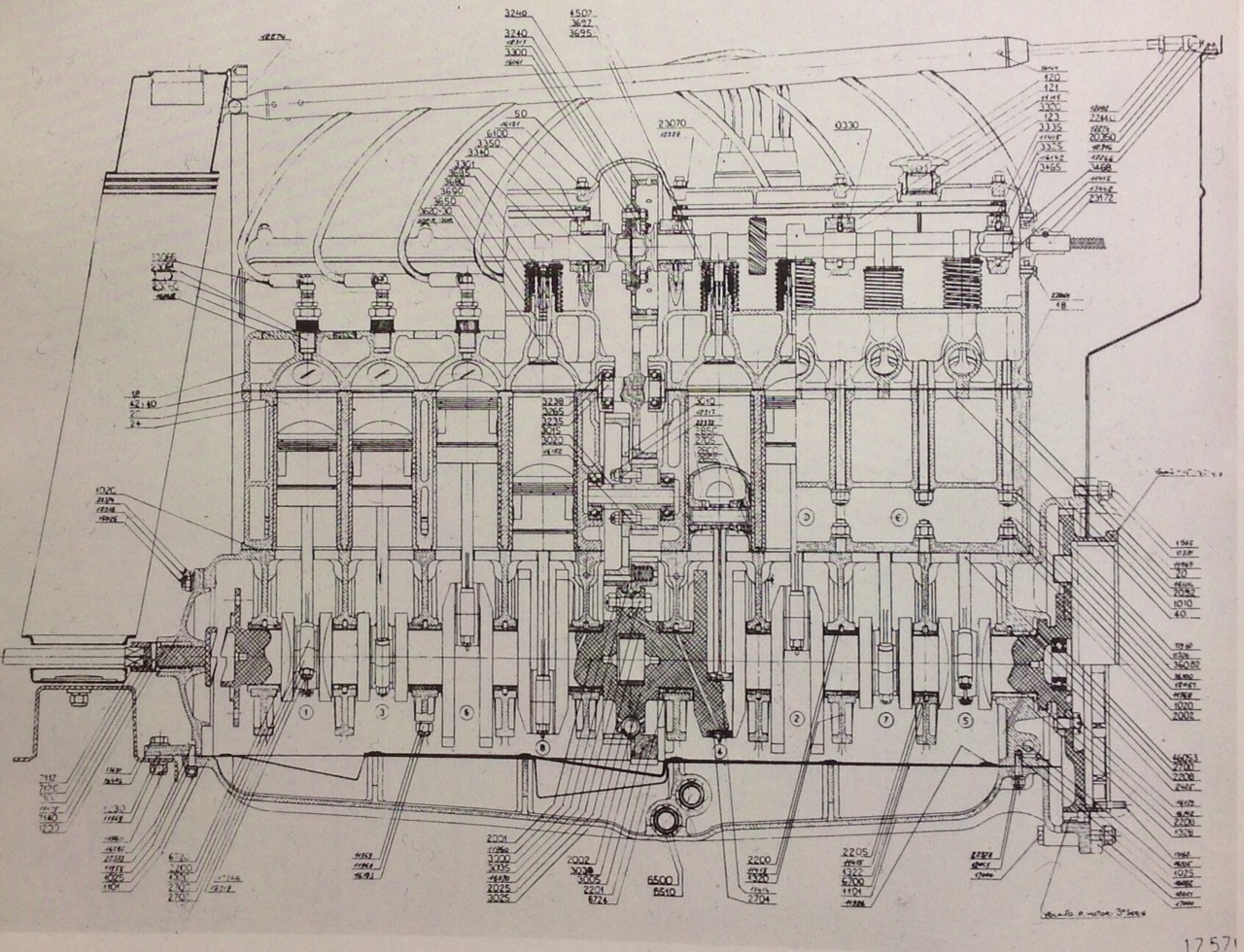
A straight 8, with a bore and stroke of 65x88mm, the cylinders were cast in two identical blocks of four to allow for a train of auxiliaries to be placed between them. The crank was supported by ten main, plain bearings.
The crank was made of two halves, with two helical gears bolted between them in the centre, one driving the (two) camshafts by two intermediaries, and the other the supercharger, oil and water pumps.
The cylinder blocks were fitted with dry liners, and had separate, alloy detachable heads. The engine was dry-sumped.
A ‘Roots type’ two lobe blower was mounted low down beside the alloy crankcase, fed by a Memini carburettor . The fuel system used two Autovacs from a twenty-four gallon rear mounted tank.
Ignition was by Bosch coil and distributor with the manual control in the centre of the steering wheel.
The engine developed between 165 and 178 BHP at 5400RPM.
Scuderia Ferrari workshop in 1933. Eugenio Siena left, and Giulio Ramponi right, working on an 8C2300 engine on the test bed. Ramponi a notable figure as a mechanic, riding mechanic and driver for Alfa. He also had a key role in the ascent of both Whitney Straight, and Dick Seaman as drivers, preparing their cars (@Zagari)
Race Record…
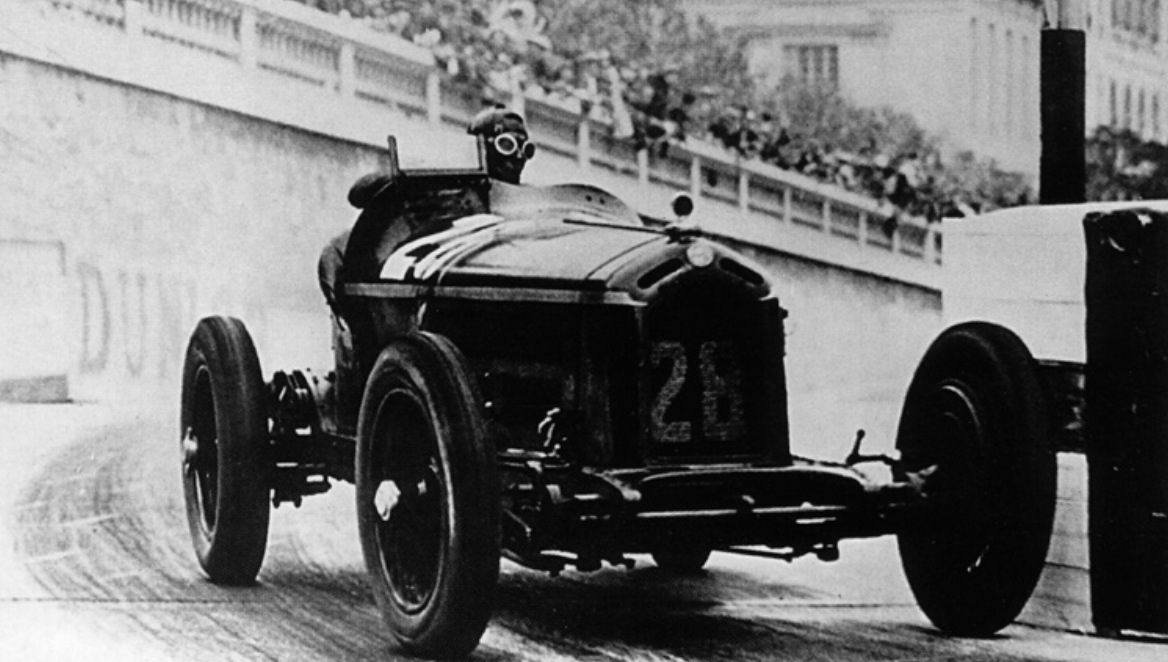
The ‘Monza’ won 2 championship Grands’ Prix, the Italian Grand Prix in 1931, a 10 hour epic won by Nuvolari and Campari, the victory from which the car took its name, and the 1932 Monaco GP. Nuvolari is pictured in his Monza in that race, he won it over a duration of 3.5 hours from Rudy Caracciola, by only 2.7 seconds!, in a similar car. (Unattributed)
The 8C2300 sports cars were incredibly successful winning Le Mans 1931-4, the Spa 24 Hour in 1932/3, Targa 1931-3, and the Mille Miglia 1932-4.
Alfa developed the P3 as it’s pure racing car, during the same period, a straight 8, twin-supercharged , fixed cylinder head car which was incredibly successful in 1932-5. As a consequence the 8C2300 based racing cars won only two championship Grands’ Prix (Italian GP in 1931 and Monaco GP in 1932) as well as many second tier events, not bad for a ‘sports car’ all the same!
Minoia was also crowned European Champion in 1931 driving ‘Monzas’.
Production History…
188 or 189 cars were produced from 1931 to 1934, in three series, with ten ‘Monzas’ officially built by the factory. The number built by Alfa according to Simon Moore is greater than that, ten works racers and a number of customer racers built to similar specifications…where definition of a Monza is ‘ a 2.3 racer with a narrow body, outside exhaust pipe, short front springs and a tail comprising a fuel tank with a pointed crush cone’.
Without doubt a landmark car and one of the very few to be both a great sports car, sports racer and Grand Prix winner…a GP car in which to do the shopping!
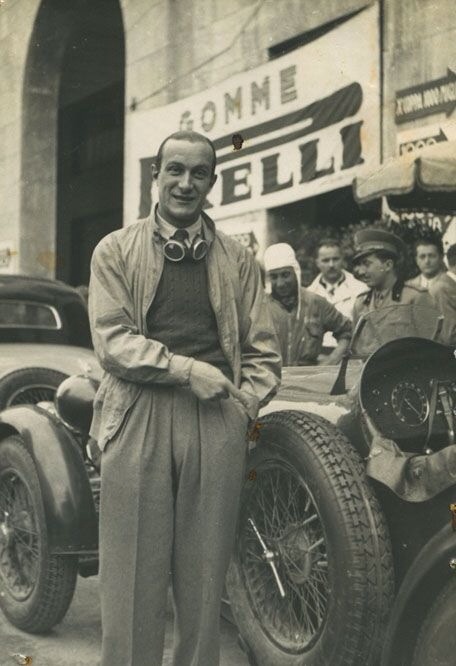
Antonio Brivio beside his Monza. He won the Targa twice, in 1933 and ’35, the Mille Miglia in 1936 and Spa 24 Hour race in 1932. He was also a world class bobsledder competing in the 1936 Winter Olympics in Garmisch. (Pinterest)
Etcetera…
Both sides of the 2.3 litre DOHC straight-8 and 4 speed gearbox. Roots type 2 lobe blower mounted low on RHSide, fed by Memini carburettor. Engine comprised 2 blocks of 4 cylinders with centrally mounted drives from 2 piece crank visible (Alfa Archives)
Section of the 8C2300 engine showing how it was divided into 3 levels; one piece cast crankcase, 2 blocks of 4 cylinders in line, and the heads. Both the cam drive, and 2 piece crankshaft are clearly seen (Simon Moore/ Alfa Archives)
Photo and Other Credits…
‘The Legendary 2.3’ Simon Moore, ‘Alfa Romeo’ Hull & Slater
Enzo Ferrari at the launch of his 1969 endurance contender the 312P…
Motorsports governing body introduced new sports car rules for 1968; Group 4 Sports Cars with a capacity limit of 5 litres and a minimum production of 50 cars, and Group 6 Prototypes with a maximum of 3 litres. In effect the CSI were making obsolete the ‘unlimited cars’ being built by Ford and Ferrari, ( the 7 litre ‘pushrod’ Ford MkIV, 4 litre ‘racing engine’ Ferrari P4) which they considered were getting too fast for the circuits of the time.
Ferrari, in time honored fashion didn’t race in 1968 in protest at this sudden rule change but returned in 1969 with the Group 6 312P, again in time honored fashion using many parts he had ‘on the shelf ‘ from other cars.
The chassis used was a downsized version of their 1968 Can Am challenger the 612P…It was a semi-monocoque, a spacefarme reinforced by aluminium sheet. The first cars were built with high downforce Spyder bodywork, but later cars were built or re-bodied for Le Mans as stunning low drag Coupes.
Aluminium semi-monocoque chassis. Double wisbones, coil springs, Koni shocks at front. Single top link, lower inverted wishbone, twin radius rods, coil springs and Koni shocks at rear. Adjustable sway bars front and rear. Rack & pinion steering. Ventilated discs all round. 680 Kg.
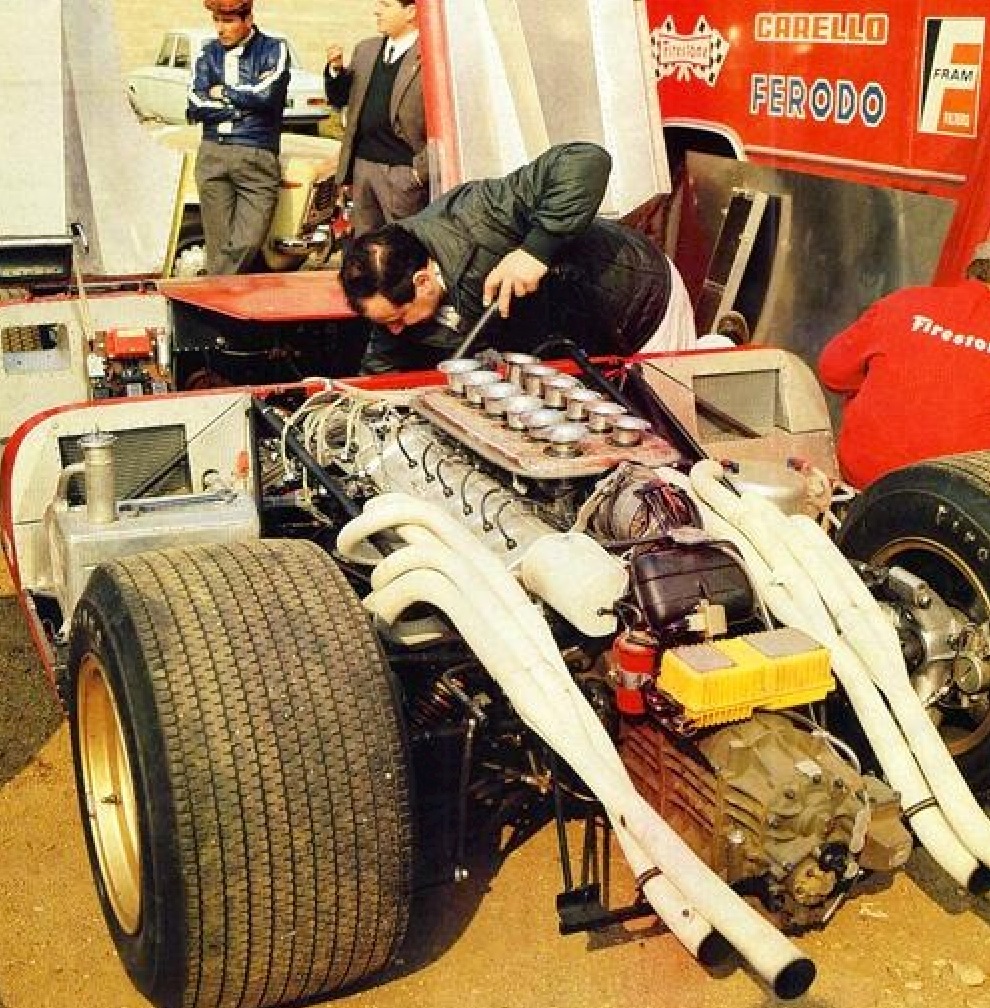
The 3 litre V12 was based on the highly successful old sports car engine albeit with 4 valve heads and Lucas fuel injection…Ferrari claimed 420 BHP, all of which hit the road through a 5 speed transaxle.
312P engine, 5 speed gearbox and rear suspension. 60 degree V12, 2.99 litres. 77X53.5mm bore/stroke. 11:1 compression ratio. 4 valves per cylinder , DOHC, Lucas fuel injection and circa 420BHP @ 9800RPM. (Tony Adamowicz)
Chassis ‘0868’ was shown to the public at the Hotel Fini in Modena in December 1968, which is probably where this unattributed shot of Enzo Ferrari with the car was taken.
From the outset Ferraris’ sports car plans in 1969 were limited as the development of the 3 litre ‘Flat 12′ engine for F1 in 1970 was Technical Director, Mauro Forghieris’ main project.
The first car was damaged in testing, but repaired and put on pole at Sebring by Mario Andretti, the car finishing second co-driven by Chris Amon despite overheating after a collision with a slower car.
Chris Amon leaps aboard the 312P he shared with Mario Andretti at Sebring 1969.
Smoky Amon. Ferrari 312P, Sebring 1969. Second outright and first in class with Mario Andretti (Nigel Smuckatelli)
The car was very fast at Brands Hatch, but the Le Mans testing weekend revealed the need for slippery coupe bodies on the Mulsanne. The bigger issue was the appearance of the Porsche 917, 25 examples of which had been built by the Germans to comply with the CSI’s new Group 4 rules, not what the rule makers intended at all…
The 312P’s were fast at Monza filling the first 2 grid positions but failed to finish with tyre problems, the Firestones not coping with the rigours of the Monza banking.
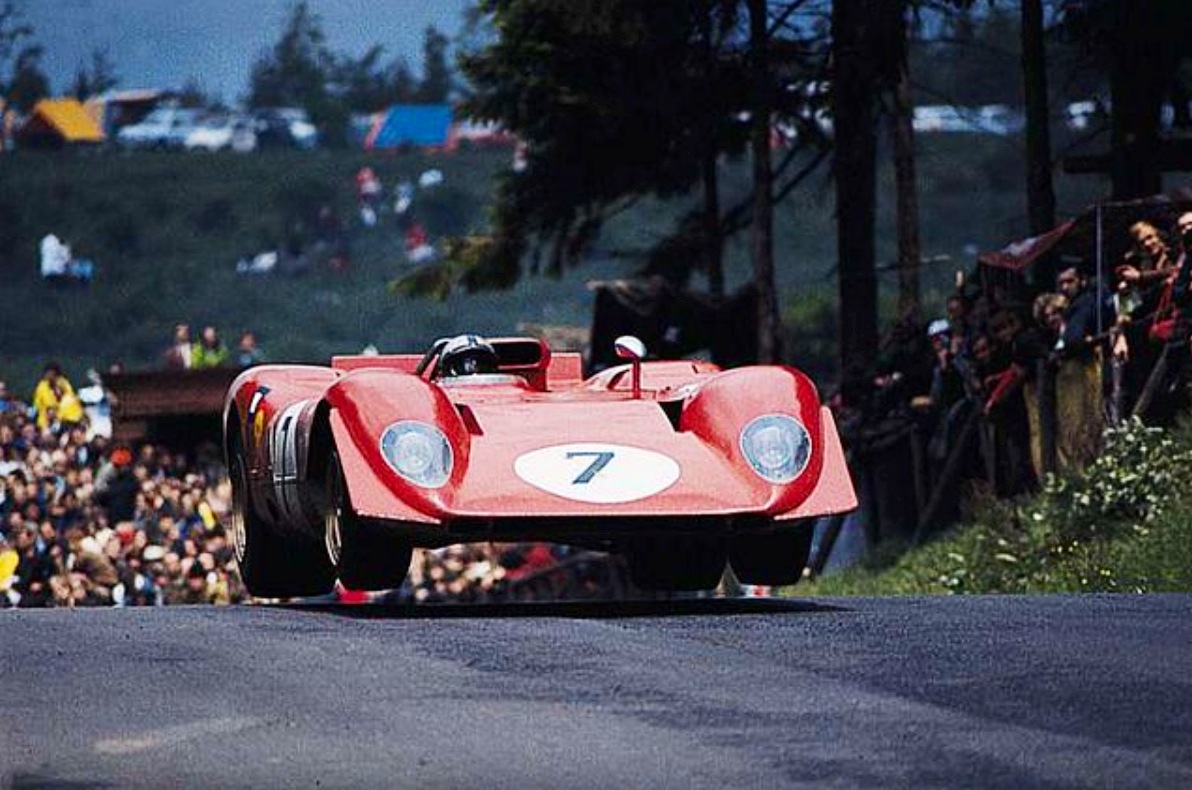
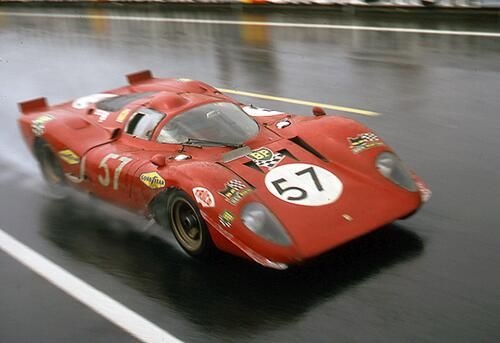
Pedro Rodriguez, Nurburgring 1000Km 1969.
The 917 was on pole at Spa, but Amon proved the 312P’s competitiveness again, he broke the lap record at The Nurburgring. At Le Mans the two cars entered were fitted with gorgeous Coupe bodies formed around shortened 206SP Dino windscreens.
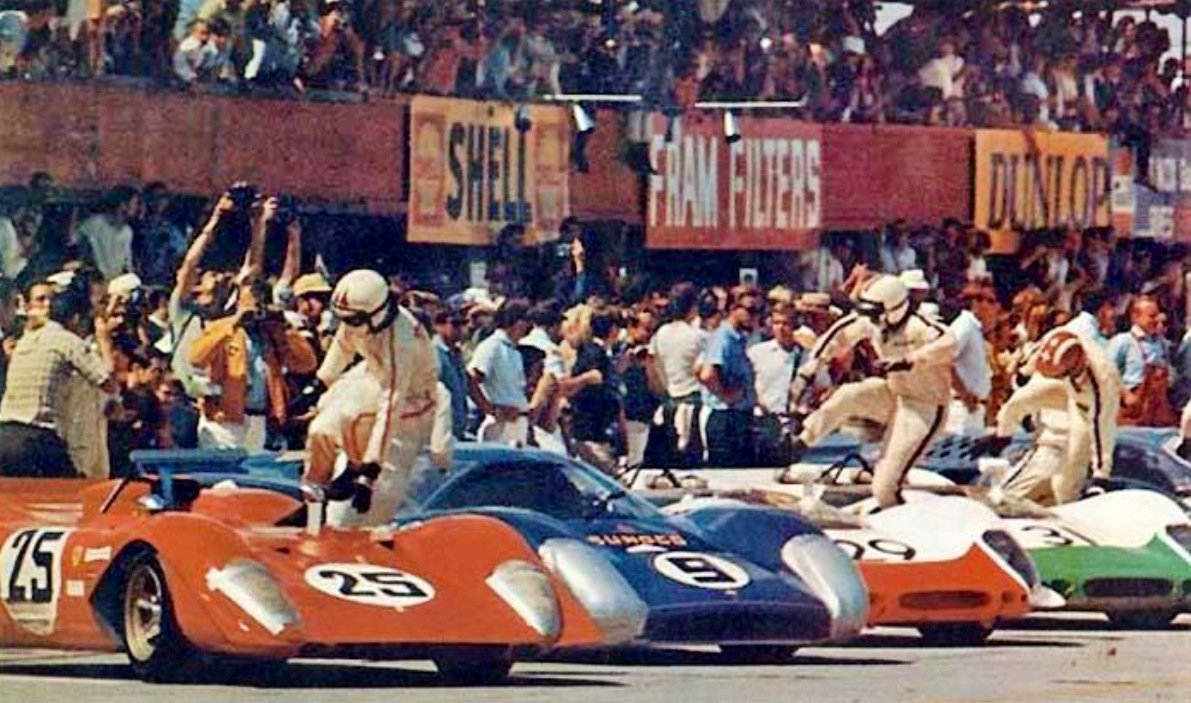
The 917 was on the Le Mans pole… but few believed they would last the distance, Amons 312P was damaged by debris from the fatal accident which befell the John Woolfe 917 on lap 1, the other car suffering gearbox failure after a retaining nut vibrated loose several times. Jacky Ickx and Jackie Oliver won the race in Ford GT40 ‘1075’ the same chassis victorious the year before.
Chris Amon behind the 312P, now with Coupe body, at Le Mans 1969 with Peter Schetty. The car was out on lap 1, running over debris from the John Woolfe 917 accident (Pinterest)
The arrival of the 917 was a game changer, Ferrari responded with some of the Lire invested in his business by Fiat, in building 25 512S 5 litre cars to go head to head with Porsche in what many say was the greatest 2 years of sports car racing ever, 1970 and 1971.
The two remaining 312P’s were sold to Luigi Chinetti’s North American Racing Team at the end of 1969, the cars scoring class victories in major races such as Daytona, and Sebring and also racing at Le Mans in 1970 where Tony Adamowicz, and Chuck Parsons were non-classified but tenth. The other car was taken as a spare and unraced.
Wet weather 1970 Le Mans shot of the NART 312P. (Bruce Thomas)
NART Adamowicz/ Parsons 312P Le Mans 1970 , tenth in the race won by the Herrman/ Attwood Porsche 917K (Pinterest)
The 312P has only a small part in Ferrari racing history but the factory learned valuable lessons from the program when it next raced a prototype, the 3 litre 312PB in 1971, this car using a variant of the F1 ‘boxer’ engine, the 312PB the dominant and championship winning sports car of 1972.
Etcetera…
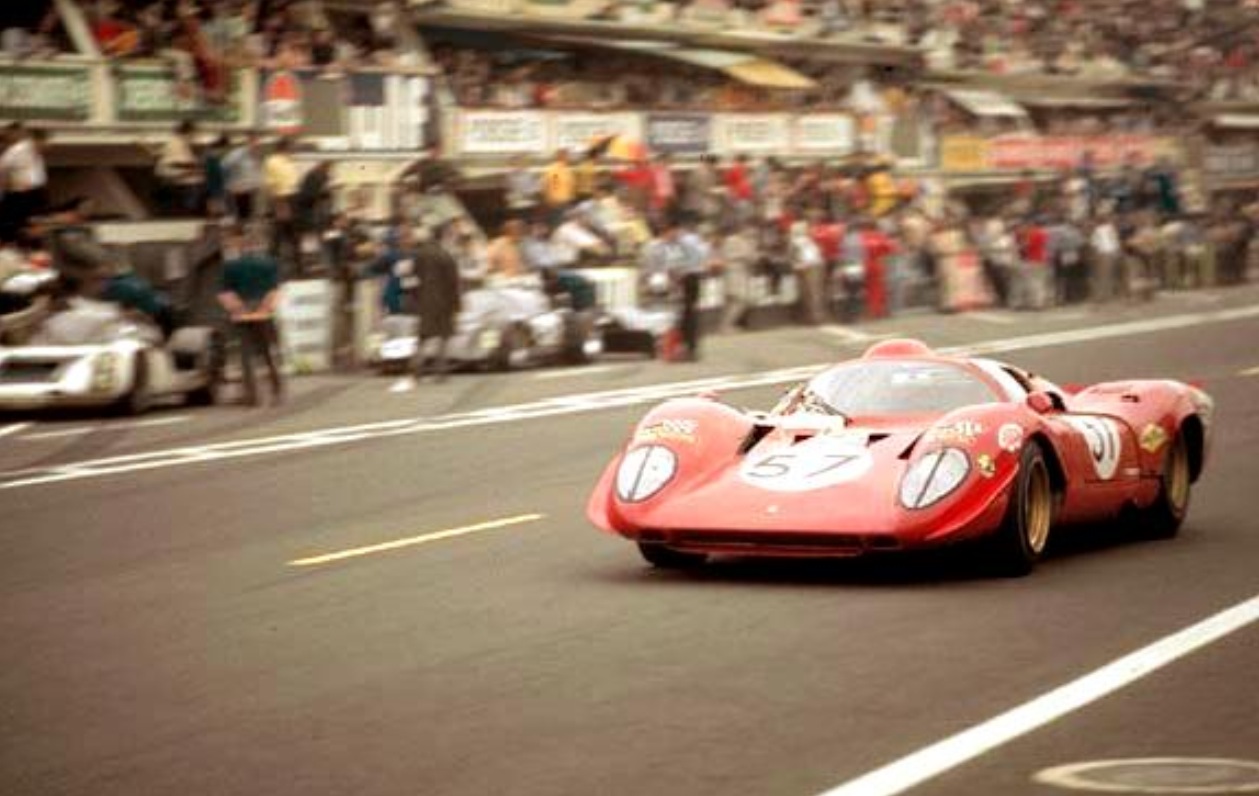
Amon/Schetty Ferrari 312P Le Mans pits 1969.(Pinterest)
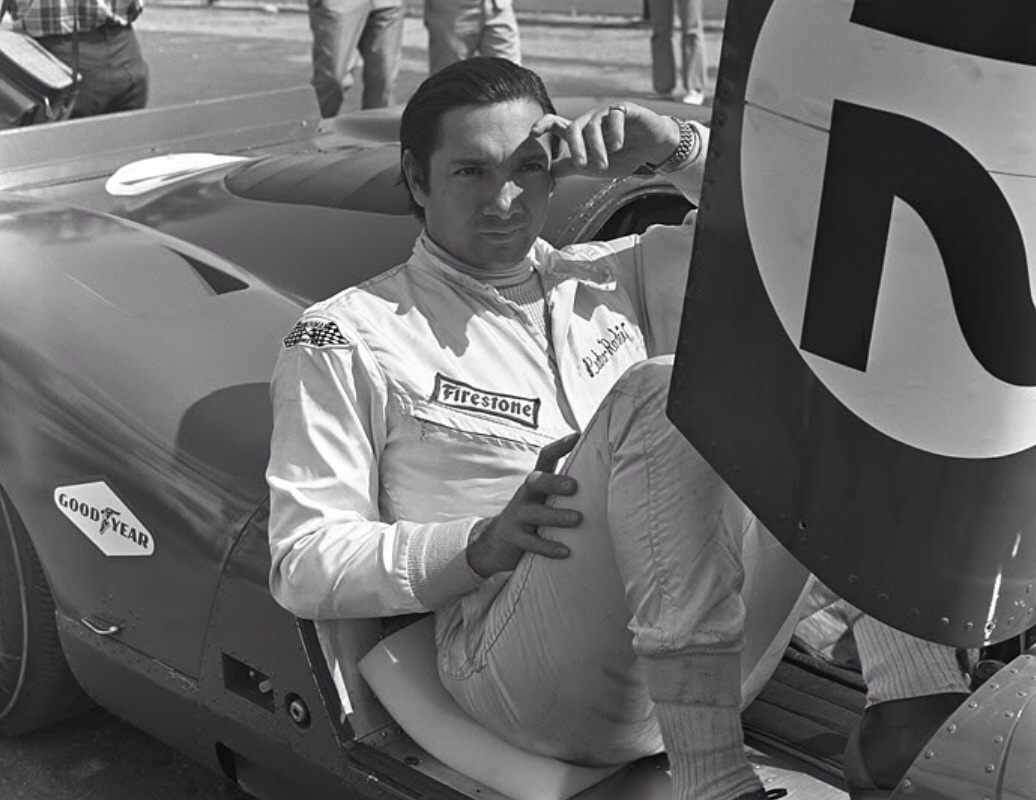
Pedro relaxes before the off, Bridghampton CanAm 1969. (Dogfight.com)
‘0870’ in the 1969 Bridghampton CanAm pitlane. Rodriguez was 5th in the heavy relatively low powered 3 litre car, Hulme and McLaren 1st and 2nd in McLaren M8B Chevs. (Dogfight.com)
Mike Parkes in the NART 312P , Daytona 1970. Tall man, and bubble as a consequence (Pinterest)
Another shot of the Adamowicz/ Parsons 312P during Le Mans 1970 (Yves Debraine)
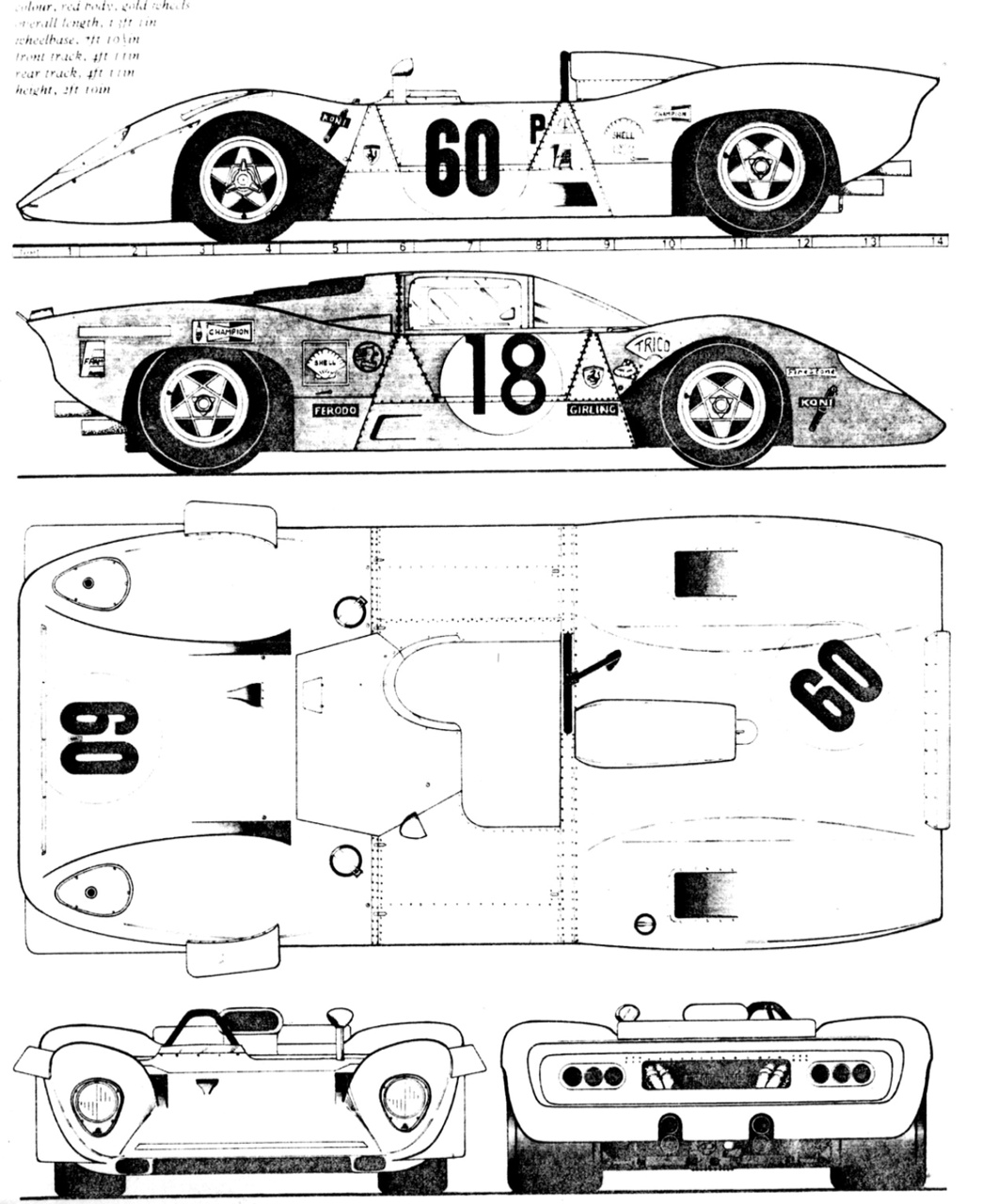
Interesting drawing showing the differences in dimensions of the Spyder and Coupe versions of the 312P (Pinterest)
Photo Credits…
Pinterest, Tony Adamowicz, Nigel Smuckatelli, Yves Debraine, Bruce Thomas
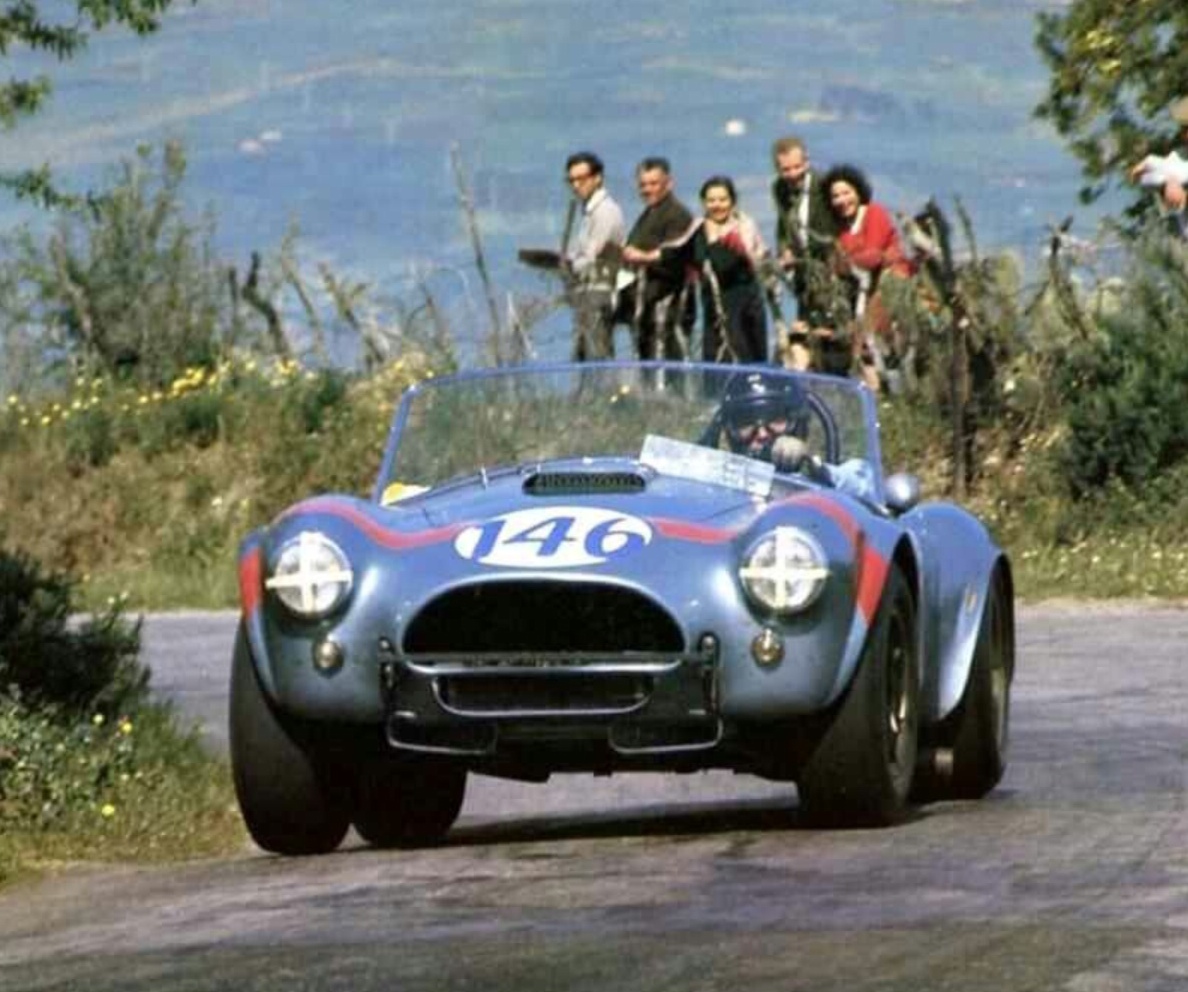
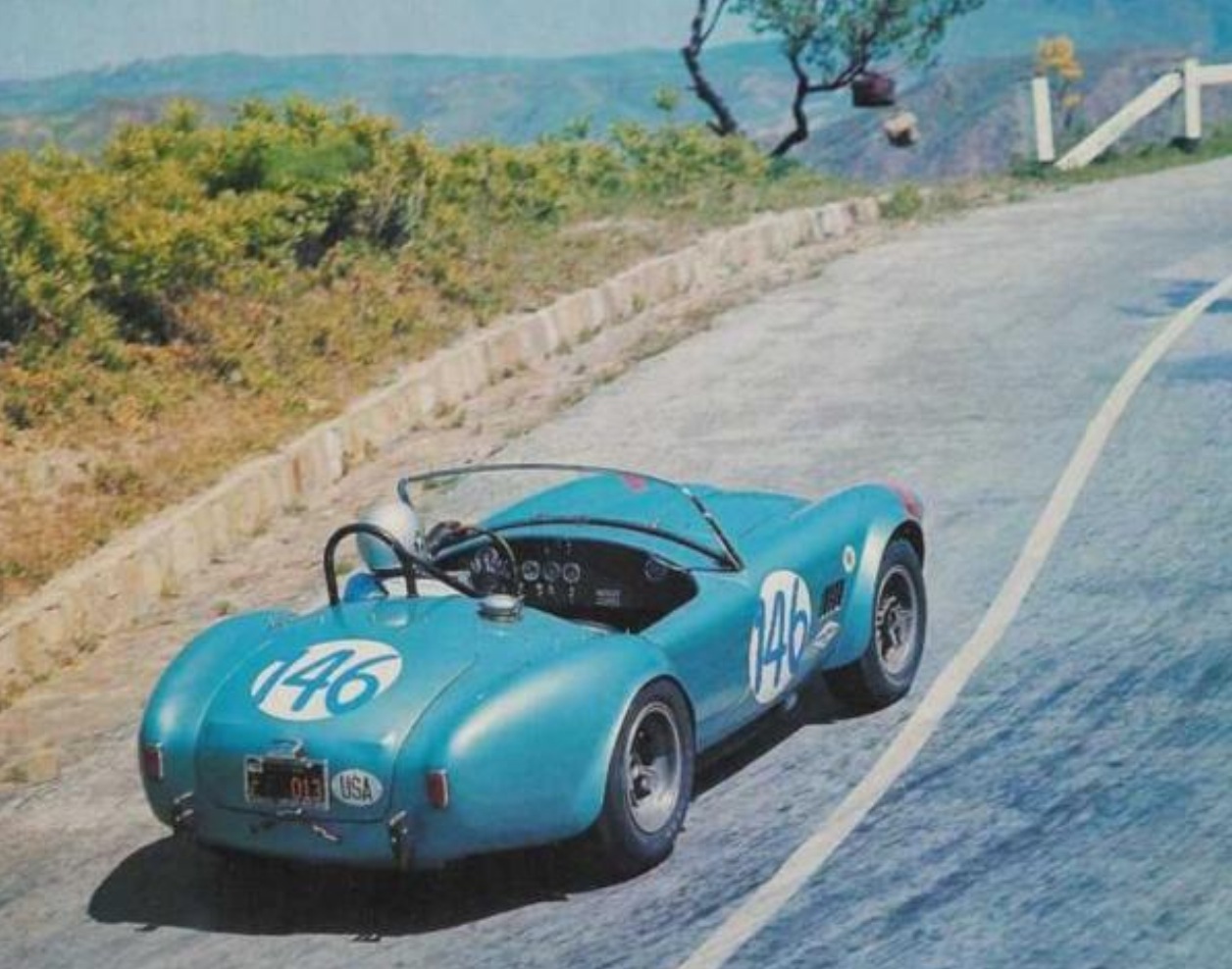
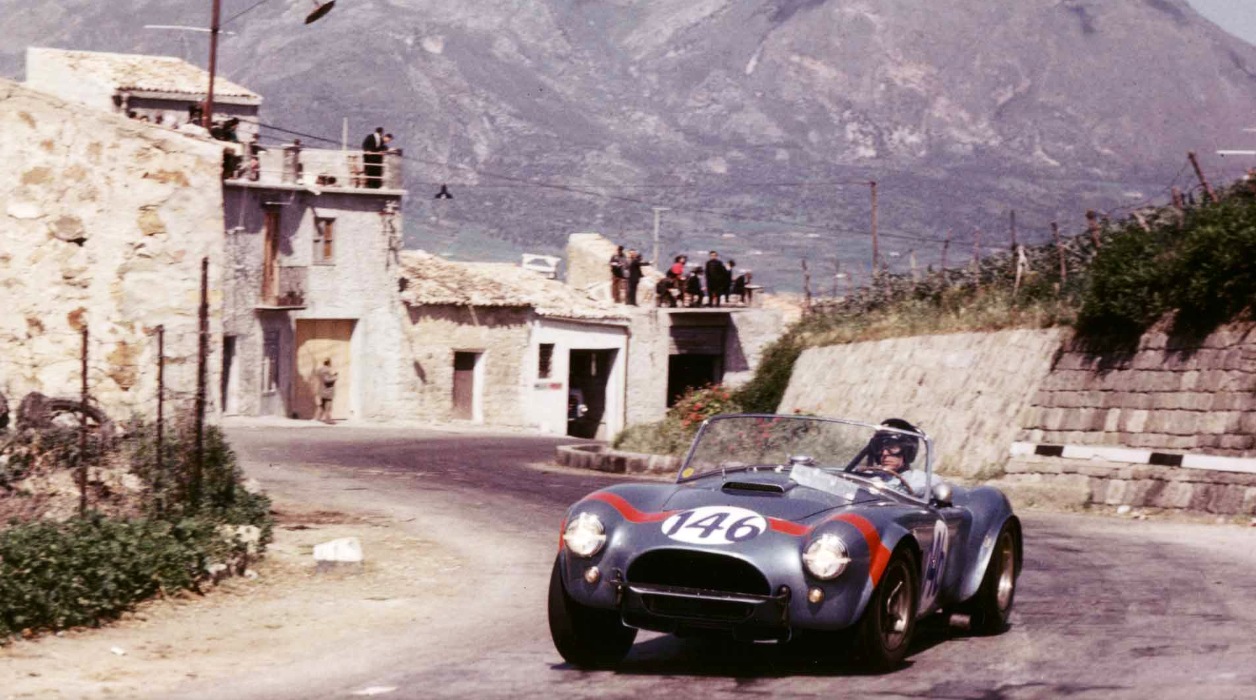
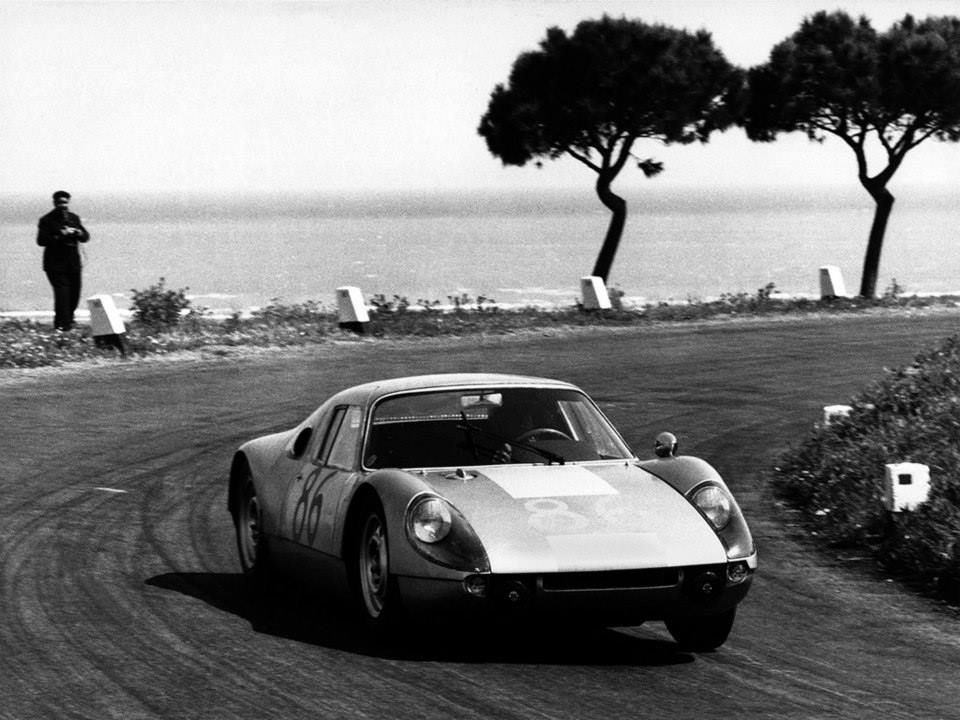
One of my Top 10 Motor Racing Shots of all time, Dan Gurney AC Shelby Cobra, Targa Florio 1964…
The photo is by Ami Guichard, he put it on the cover of his acclaimed Automobile Year # 12. It captures everything which was great about this fantastic and oh so Italian event. Dan Gurney and Jerry Grant finished eighth outright and first in class in the event won by the much more suitable Porsche 904 GTS of Colin Davis and Antonio Pucci.
The 1964 GT Manufacturers Championship was won by Ferrari with Shelby Cobra second. The advent of the Cobra Daytona Coupes ensured Ferrari would get more of a run for their money in 1965!
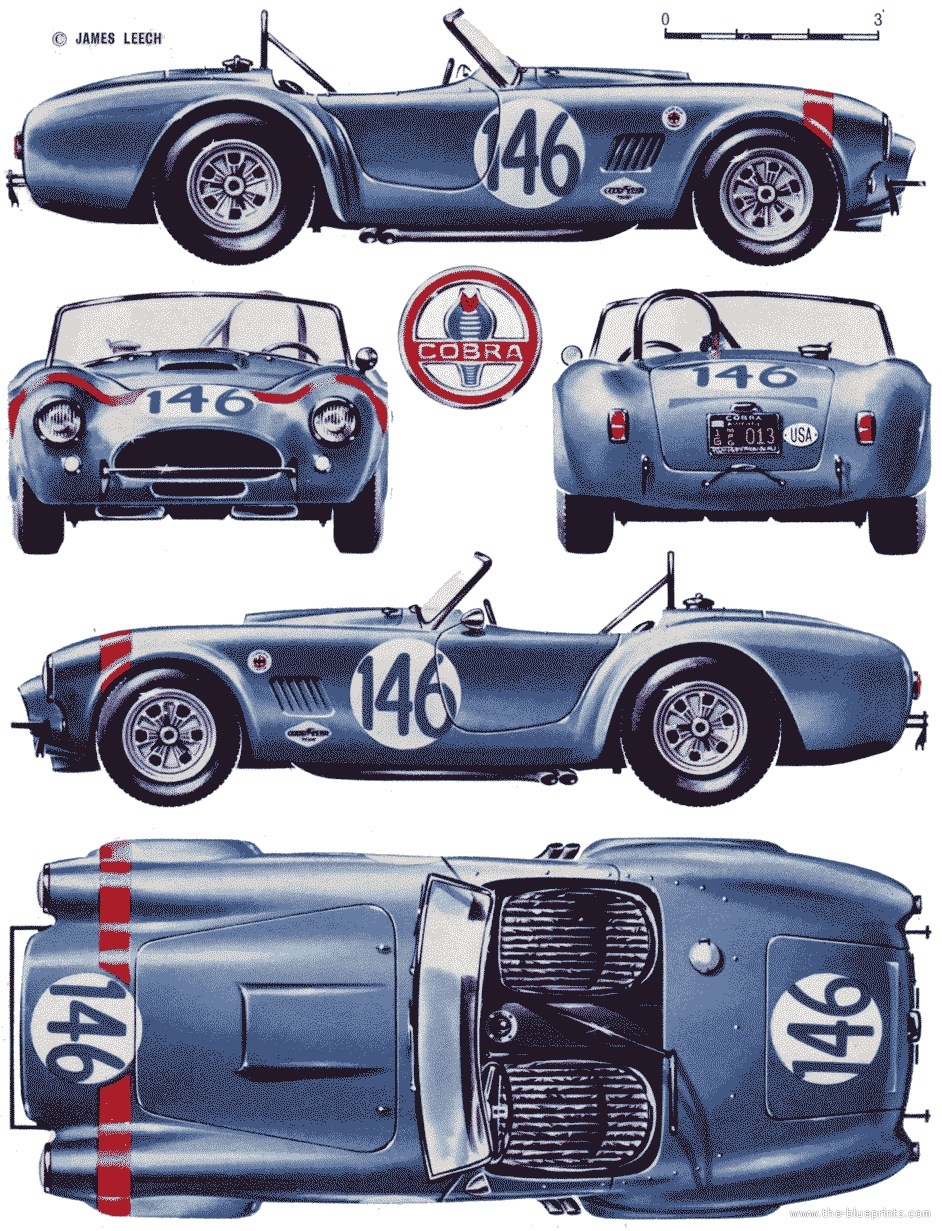
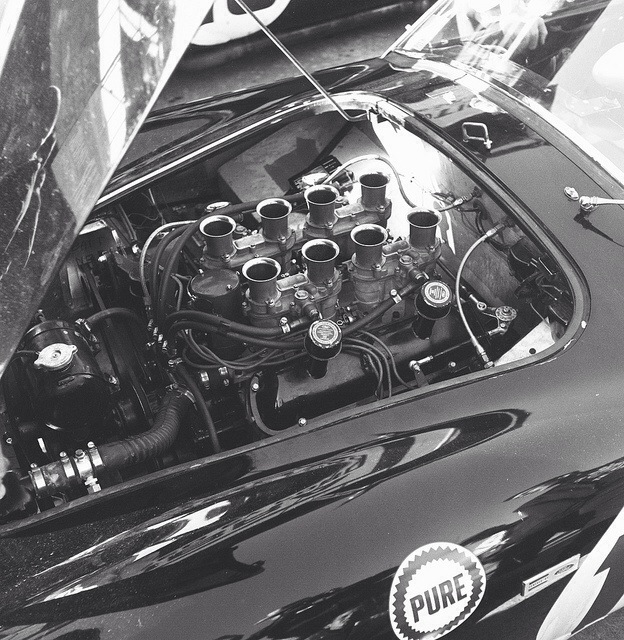
Specifications of the FIA Roadster cars in 1964 included Ford’s pushrod OHV 4.7-litre or 289 V8 fitted with four 48IDA Weber carburettors giving circa 400bhp. Borg Warner four speed gearbox, four wheel disc brakes and independent suspension using transverse leaf springs. 140-litre fuel tank, six-spoke cast alloy wheels. These cars were the ultimate development of the original small-block Cobra.
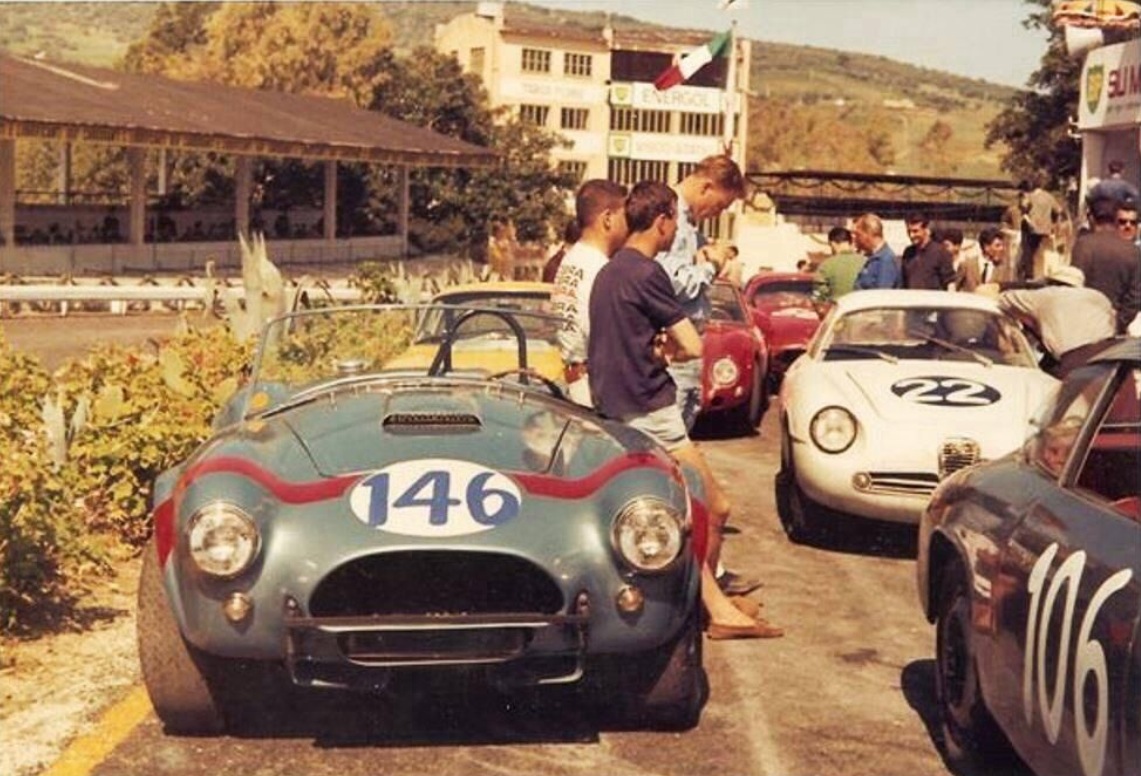
Before the off at Cerda, Targa ’64, Gurney with Shelby team mechanics. AC Cobra # 106 a Lancia Flaminia DNF and # 22 Alfa Giulietta SZ, 19th (Pinterest)Jerry Grant in the Cobra shared with Dan Gurney, Targa 1964 (Pinterest)Gurney through the Sicilian countryside, Targa Florio 1964. In addition to the Ford sportscar program he raced for Brabham in Grand Prix Racing winning the team’s first championship race that year (Pinterest)
Etcetera…
Engine of Hill’s Cobra, Sebring 1963The 1964 Targa winning Porsche 904 GTS of Colin Davis and Antonio Pucci (unattributed)
Photo Credits…
James Leech drawing, Ami Guichard Automobile Year 12
Local boy Nino Vaccarella wrestled his big Ferrari into third place around the ‘Piccolo Madonie’ circuit in 1970…
Sensational Rainer Schlegelmilch shot captures the very essence of Targa, its geography and contrast of tradition and contemporary technology.
Porsche had ‘the game covered’ in 1970/71, they had the nimble, light 908/3 for Targa and the Nurburgring and the legendary 917 for power circuits such as Le Mans, Daytona and Monza. Brian Redman and Jo Siffert won the race in a 908/3 from Pedro Rodriguez and Leo Kinnunen in the other JW Automotive Porsche.
Ferrari only entered one factory car, Vaccarella partnered by compatriot Ignazio Giunti, a promising driver who made his F1 debut with Ferrari in 1970. He perished in a tragic accident in Argentina in 1971 when his Ferrari 312P (sports car) ran into the back of Jean Pierre Beltiose’ Matra 660 which he was pushing along the track, having run out of fuel.
Nino Vaccarella was a good bet for the win though, a local, he grew up in Palermo and knew the circuit ‘like the back of his hand’. He started the season well winning the Sebring 12 Hour with Giunti, and Mario Andretti. He won Targa thrice; in 1965 in a Ferrari 275 P2 and in 1971 in an Alfa T33/3. His final win was in an Alfa TT12 after Targa became a National Italian event, Targa losing its championship status after 1973 when the cars simply became too quick for the circuit on Sicilian open roads…not too quick for an Italian event however!
Vaccarella also had some Grand Prix experience, his best GP result ninth in the 1962 Italian Grand Prix in a privately entered Lotus 24 Climax. Predominantly a sportscar driver, he also won the 1964 Le Mans 24 Hour classic sharing a Ferrari 275 P with Jean Guichet and the Nurburgring 1000Km with Ludovico Scarfiotti in another 275P. He is still alive and well living in Sicily.
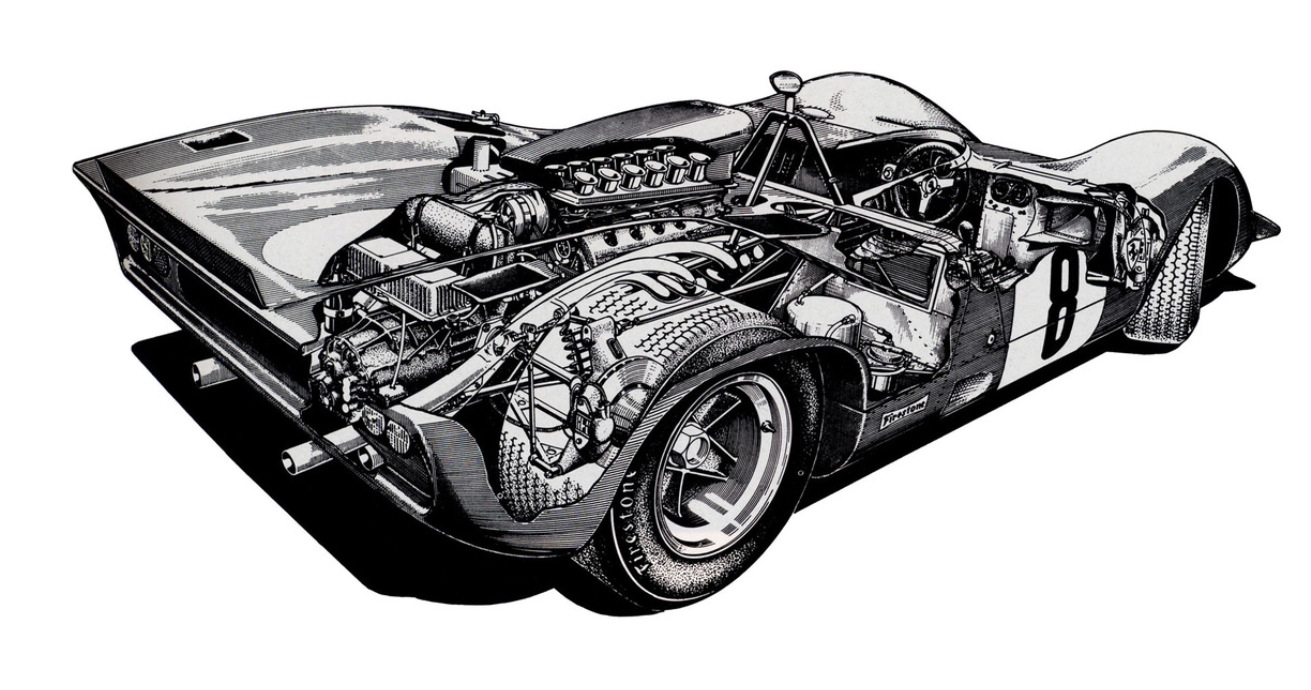
Stunning shot and an epic vantage point for the boys, Collesano. Vaccarella/ Giunti Ferrari 512S Spyder in shot (Pinterest)Vaccarella in the Sicilian countryside, the unique challenges of the circuit and driving a 5 litre 550 BHP V12 Ferrari 512S apparent (Pinterest)Vaccarella in the car he shared with Ignazio Giunti, Targa 1970 . A second Ferrari 512S was entered by Scuderia Fillipinetti driven by Herbie Muller and Mike Parkes finishing sixth (Pinterest)Vaccarella finishes his 11th lap, the event which started and finished in Cerda. The lap record for the course was set by Helmut Marko in an Alfa 33TT3 in 1972 at an average speed of 128.253 KmH for the 72Km course on Sicilian open roads. (Pinterest)Cutaway of the Ferrari 512S. Space-frame chassis, 5 litre, DOHC V12, circa 550BHP. 5 speed gearbox, independent suspension by wishbones at front with coil spring/dampers (Koni), and single top link, inverted wishbone, radius rods and coil spring/damper units at the rear. A superb car if never as successful as the Porsche 917, its direct rival. (Pinterest)
Etcetera…
Nino Vaccarella, Targa 1970 (The Cahier Archive)Vaccarella competed for Ferrari in the 1965 Italian GP in a 158. His engine failed in the race won by Jackie Stewarts’ BRM P261, the first of his 27 Grand Prix victories. (Pinterest)Jo Siffert in the 1970 Targa Florio winning Porsche 908/3 he shared with Brian Redman (Pinterest)
Photo Credits…
Rainer Schlegelmilch, The Cahier Archive, Pinterest
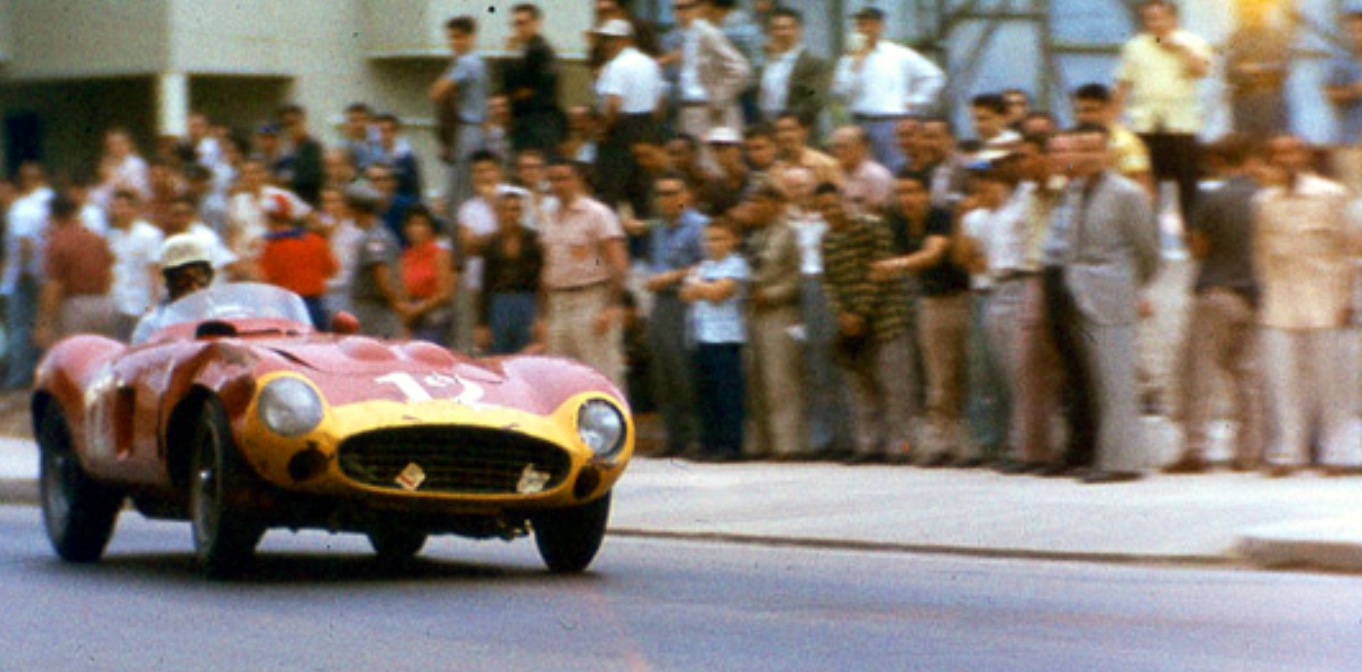
Despite its sculptured Scaglietti flanks, never has an 860 Monza looked quite so good…actress Linda Christian adorns Fon de Portago’s Ferrari
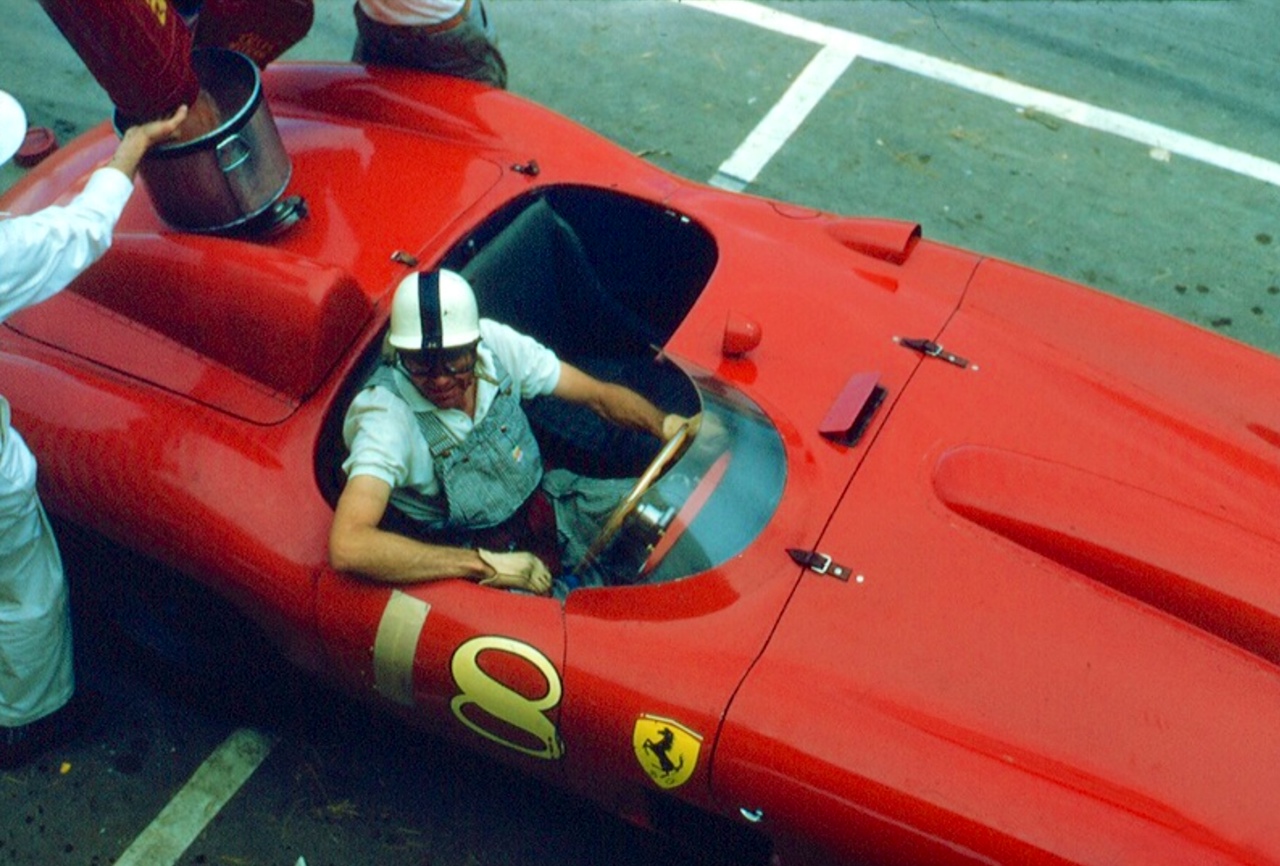
The Marquis Alfonso De Portago, Spanish nobleman and journey-man driver was accompanied by Linda Christian at the 1957 Cuban Grand Prix sports car event.
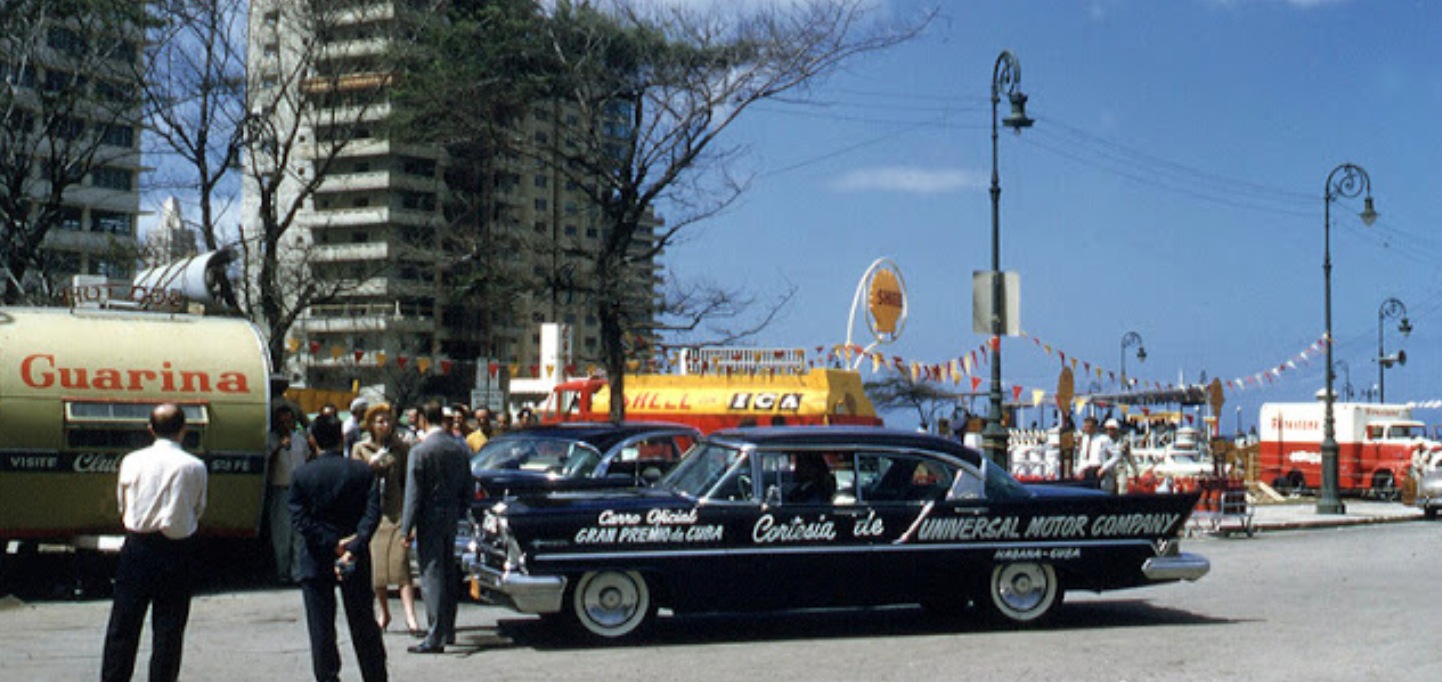
Fidel Castro’s insurgents were on the move in the countryside but for the Batista’s’ life went on. Keen to attract wealthy American tourists to the country to pump much needed funds into their moribund economy, an annual motor race was part of a plan to raise Cuba’s profile and provide an event to attract the punters.
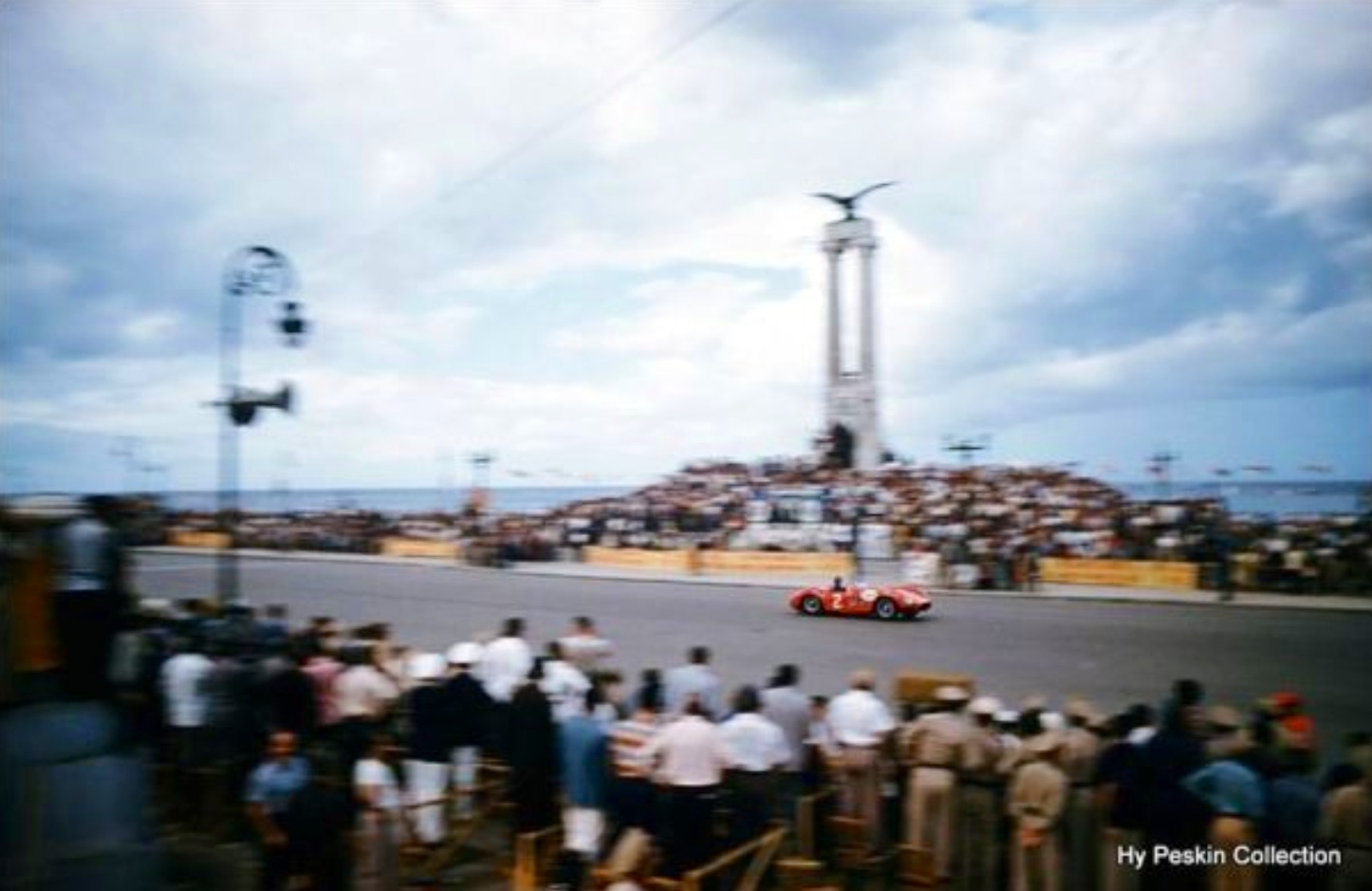
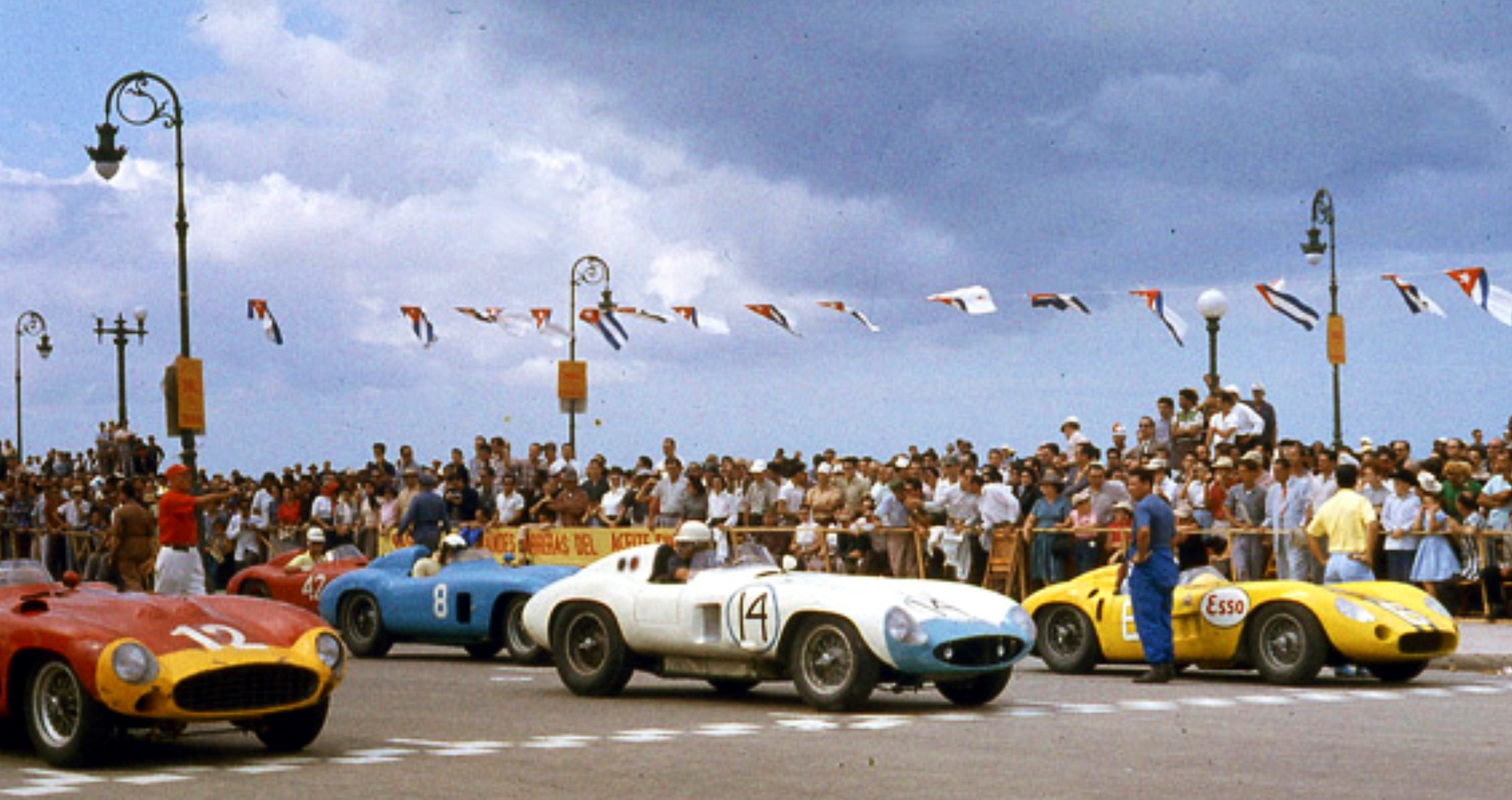
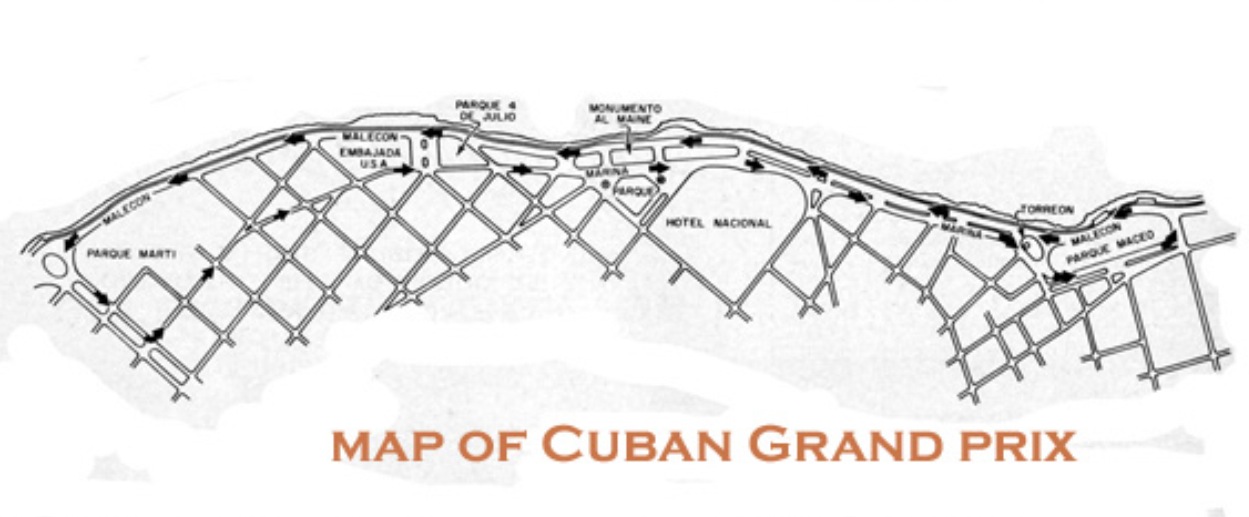
Out of focus and slightly surreal as a result…Fangio in his Maserati 300S, Malecon Boulevard, Havana, 1957 (Hy Peskin Collection)Wonderful panorama of Havanas Malecon circuit. 14 is the Phil Hill Ferrari 857S, De Portago’s Monza behind it with Linda Christian alighting. #16 also a Ferrari, driver unknown (Pinterest)
Ferrari 860 Monza…
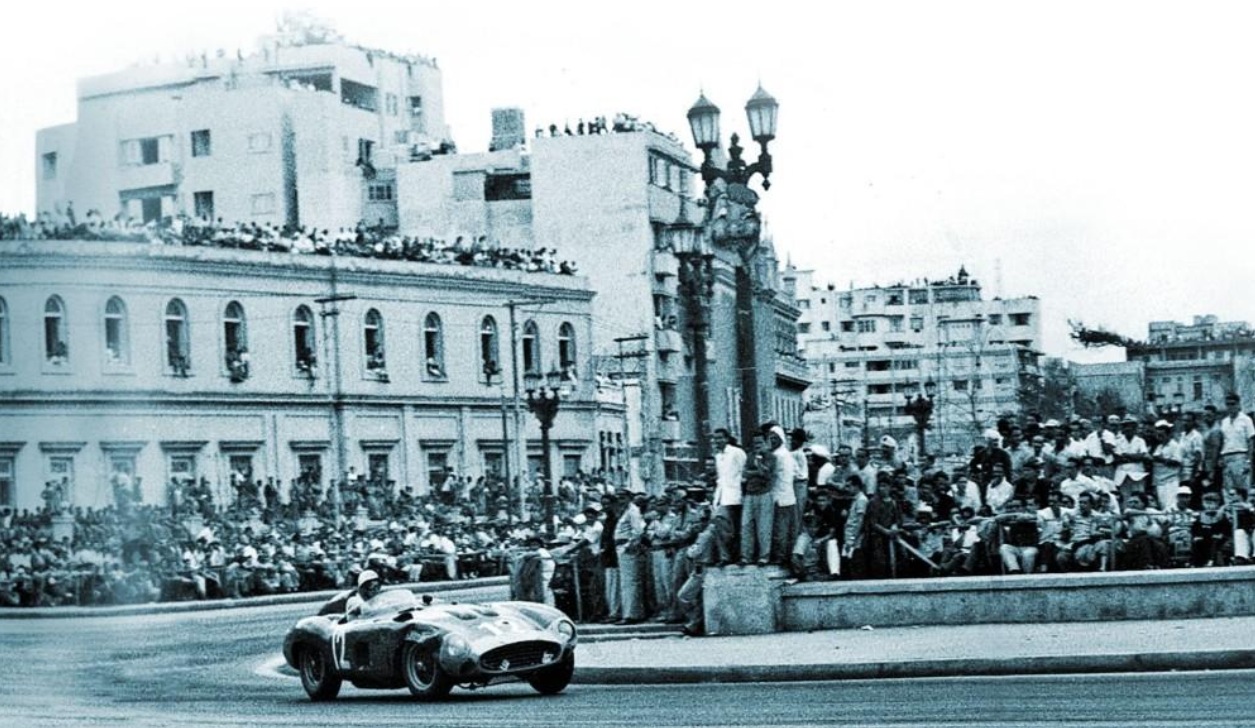
‘Fon De Portago Ferrari 860 Monza, unprotected nature of the circuit clear, seven spectators were killed in the 1958 event (Pinterest)
The 860 Monza was Ferrari’s front line sports car weapon, together with the V12 290MM in 1956.
It was part of the family of sports cars built over much of the ’50’s based on the Lampredi designed DOHC, two valve, Weber carbed four cylinder engine which first found success in the Tipo 500 F2/F1 cars. Ascari won the World Drivers Championship in 1952 and 1953 in the Tipo 500.
The engine gave circa 310bhp from its 3431cc, gearbox was four speed. The usual Ferrari ladder frame of the period was used, drum brakes all round stopped the relatively light car which tipped the scales at 860kg. The cars curvaceous body was built by Scaglietti.
Independent front suspension by wishbones and coil springs was new for the 860, and effective. A De Dion rear axle was at the rear, sprung by a transverse leaf spring.
Three cars were built, the model’s most notable victories were at the ’56 Sebring 12 Hours and the Rouen GP.
The field before lining up pre grid on Malecon Avenue, Havana
The Race and Aftermath…
On the front row, De Portago Ferrari Monza, Phil Hill Fazz 857S Monza and Schell in the yellow Maser 300S, all the fun of the fair, over 100,000 spectators (Pinterest)
De Portago fought a race long battle with Fangio’s 300S and Carroll Shelby’s Ferrari 410, finishing third on the Havana waterfront street circuit.
The public relations opportunities for Batista evaporated when the Presidential motorcade, enroute to his palace, was confronted by a relatively small group of ‘natives’ seeking favours from the President. Armed escorts beat them with unbelievable ferocity and brutality. This fueled the flames of the resistance movement further .
Start of the race, Moss Maserati 300S, D Type Jag #24 of local driver Alfonso Gomez-Mena (Pinterest)Fangio #2 passes De Portago who is slowing a bit on lap 69 in Parque Mart. Maserati 300S and Ferrari Monza (Pinterest)
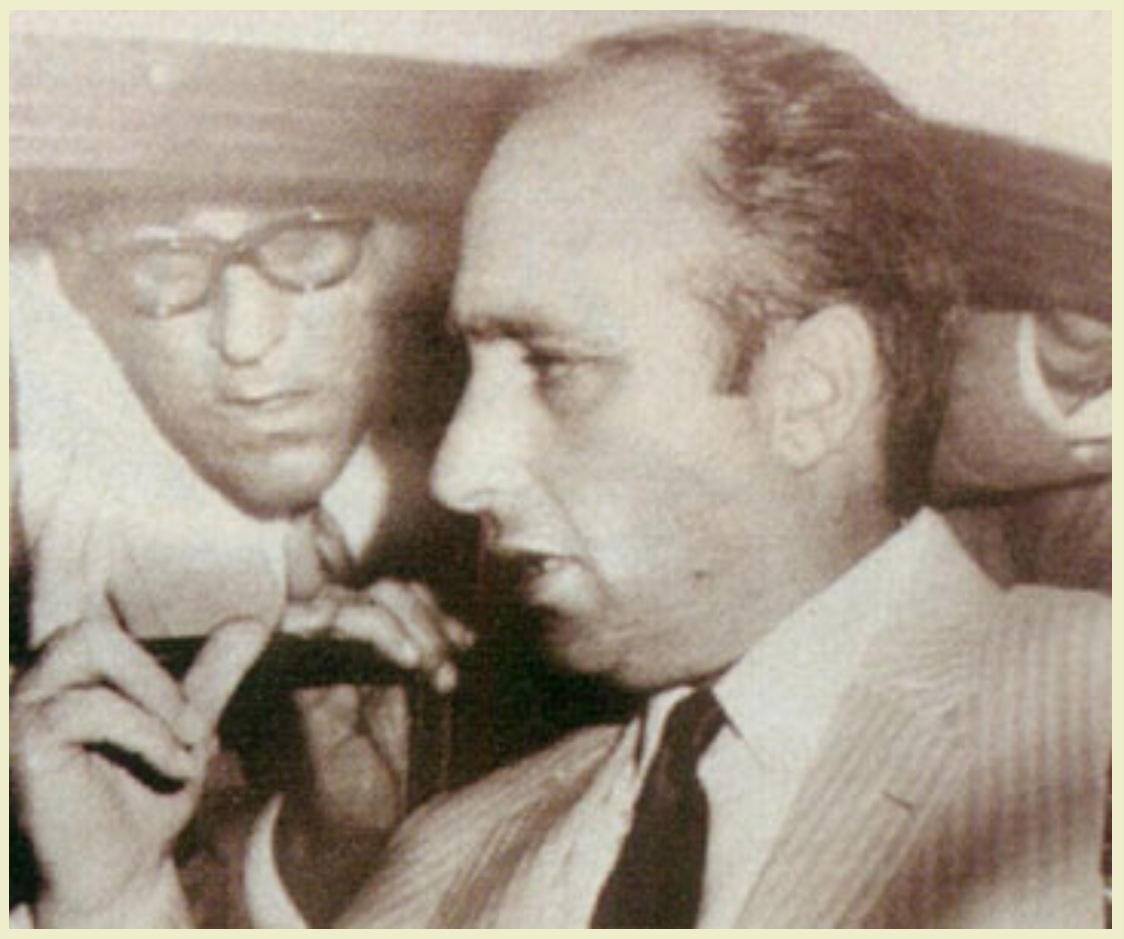
Jumping forward a year Fangio was kidnapped at gunpoint from his hotel the evening before the race by the rebels. He was returned to the Argentinian Embassy after the abortive event in which 40 spectators were injured and seven died after local driver Armando Cifuentes lost control of his Ferrari and ploughed into the unprotected crowd.
The race lasted 15 minutes or six laps, Stirling Moss was declared the winner in his Maserati 300S.
Fangio was later to say he was never concerned for his safety, he was held in a comfortably appointed apartment, was fed well, given a radio to listen to the race, and was personally apologised to by Castro’s second in command.
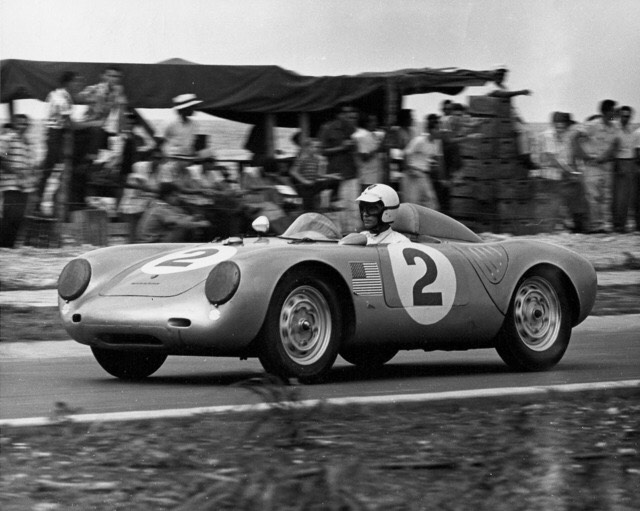
Joe Sheppard races to victory at Ala-Mar in 1959 aboard Porsche 550RS #550A-0144 (J Shea Collection)
In 1959 a four hour race held around a 2.8-mile course at Ala-Mar, a Havana suburb, was won by ‘The Tampa Hotshoe’, Joe Sheppard and Fritz Schiedel in a Porsche 550RS. It was Sheppard’s first race in his new car – very familiar though he was with 550s – so it was quite a debut! Schiedel was Sheppard’s mechanic.
With Castro’s revolution in its final stages, in 1960 he had power, anxious to create a sense of normality, the race proceeded, albeit on a circuit at army Camp Freedom, Moss was the winner in a Maserati Birdcage.
Such grubby bourgeois activities as motor racing ceased and Camp Freedom was used to house the sort of people who attended such events…
The beauty of the city and enthusiasm of the crowd, and its size come thru in all these shots! De Portago, Ferrari Monza 860 (Pinterest)
Linda Christian and De Portago…
Linda Christian was a successful Mexican/ American actor who starred in the first TV adaptation of the Bond novel Casino Royale and in Tarzan, amongst many others. She was with De Portago during that fateful Mille Miglia weekend later in 1957.
De Portago kissed Christian, jumped into his Ferrari 335S, and 70km before Brescia the car blew a tyre, ploughed into the crowd killing Portago, co-driver Ed Nelson, nine spectators and the Mille Miglia.
De Portago and Phil Hill before the race, Havana 1957 (Pinterest)
Etcetera…
Hill/O’Shea Ferrari 857S Monza, Malecon Circuit pits, Cuba 1957 (Pinterest)The Castellotti Ferrari 290MM, V12 engined compared with the Monza four cylinder engine, both were Ferrari works 1956 Sports Car Championship entries. Castellotti in yellow polo shirt (Pinterest)‘Chicken-plucker’ Carroll Shelby in trademark farmers overalls in the third place Ferrari 410, 1957 would be a great year for him (Pinterest)Military very much to the fore. Fangio Maserati 300S #2 and Castellotti Ferrari 290MM #10 (Pinterest)Juan Manuel Fangio beside his Maserati 300S in Cuba at the start of his final full season of racing in 1957. He drove for Maserati in both Sports and Grand Prix events, winning his fifth F1 World Title in the fabulous, and by that time evergreen Maserati 250F; that car finally getting the title it long deserved (Pinterest)Moss Maserati 300S beside the John Edgar owned #78 Ferrari 4.9 driven by Carini (Pinterest)Hill/O’Shea Ferrari 857S Monza, Cuba 1957. Paul O’Shea checking out the engine (Pinterest)Fangio after the 1958 Cuban Grand Prix and release by his Castro captors…(Pinterest)It is not recorded if Che and Fidel attended one of Cuba’s Grands Prix…Entry list for the 1960 event at Camp Freedom (J Shea Collection)
Photo and Other Credits…
Pinterest, Havana May Blogspot, Hy Peskin Collection, John Shea
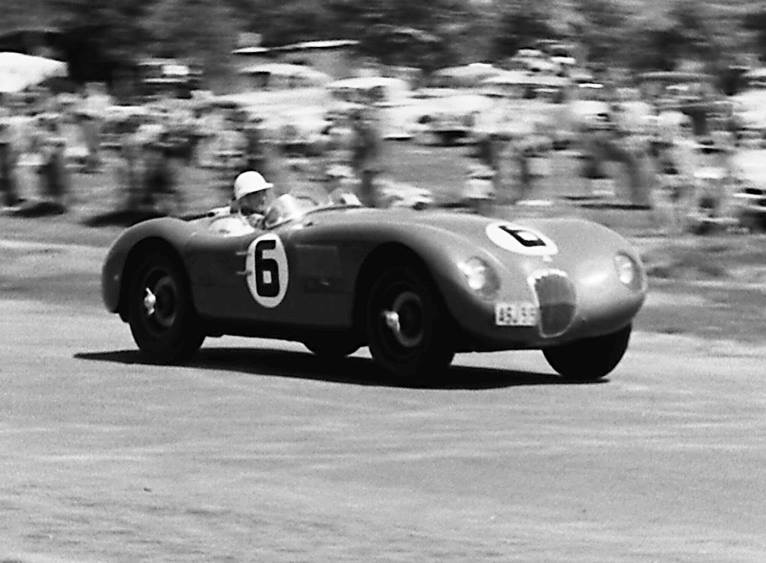
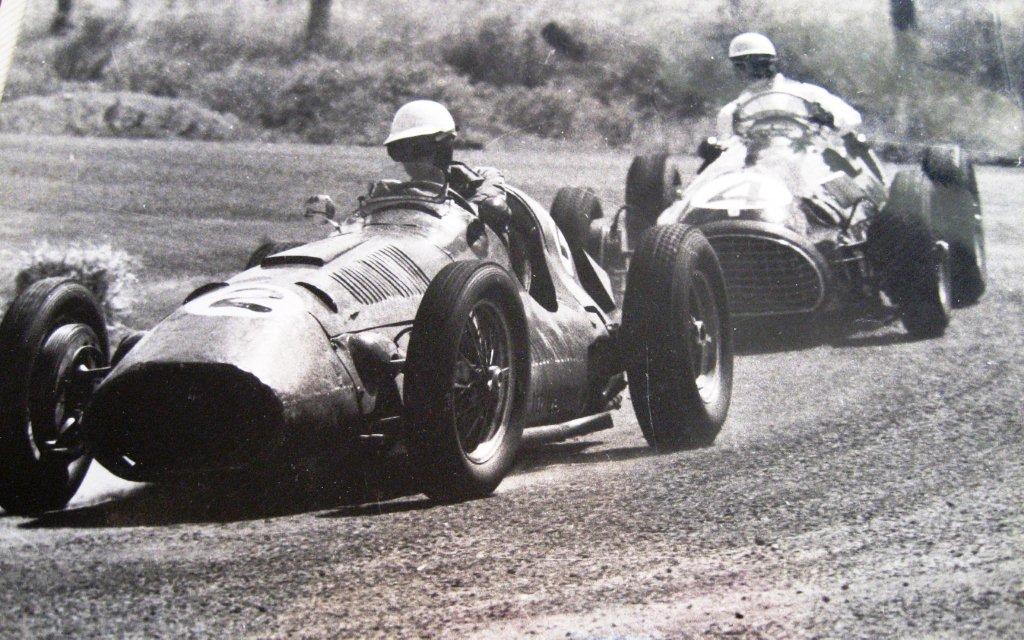
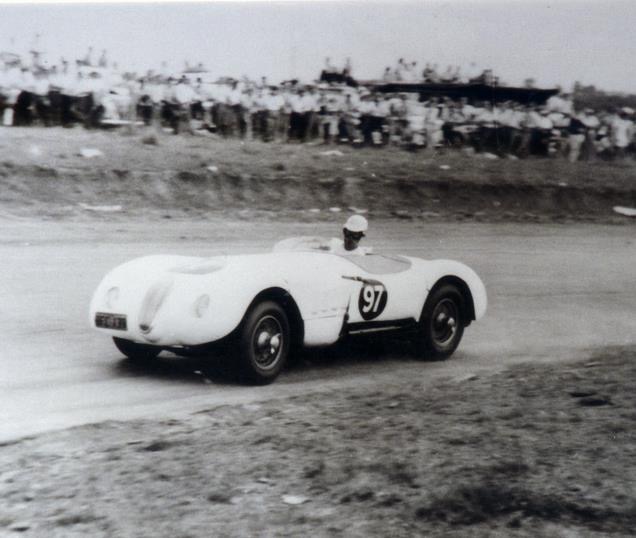
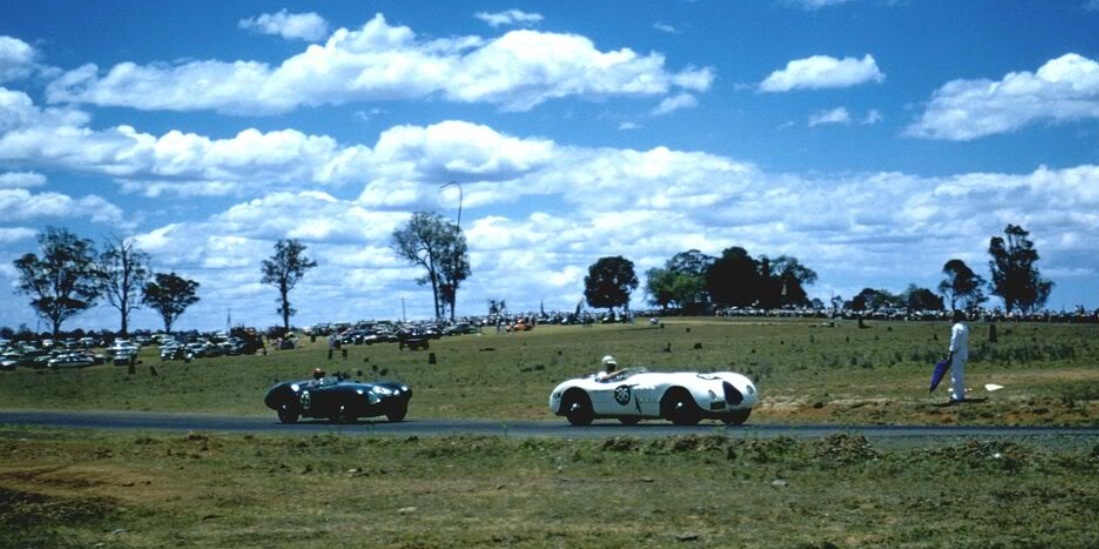
Superb, evocative Gnoo Blas shot. Ross Dalton, C-Type Jag, February 1960 (John Ellacott)
Gnoo Blas actually! Ross Dalton and his Jaguar C-Type, February 1960…
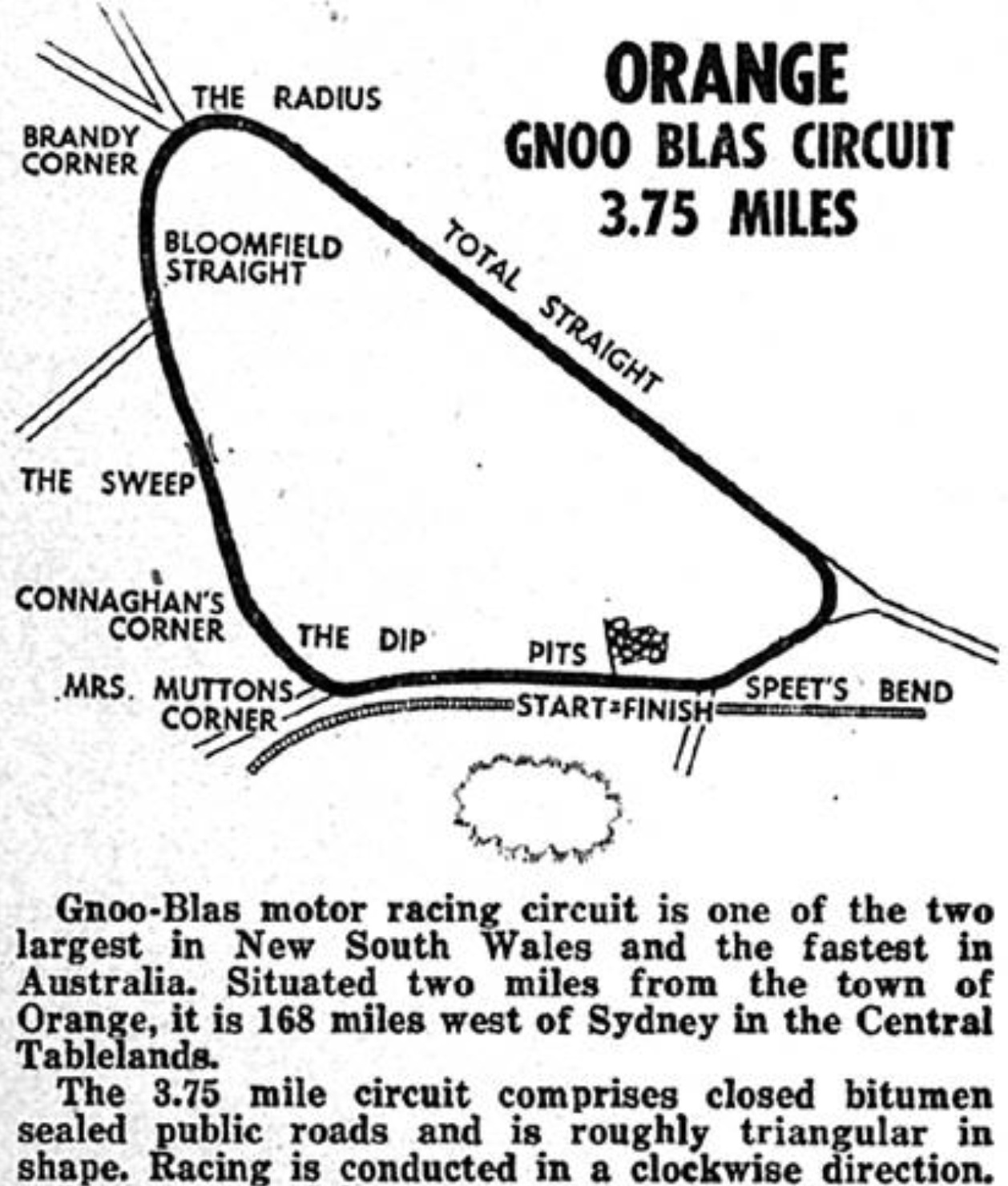
Gnoo Blas was a circuit around the public roads of Bloomfield Hospital in Orange, in the Central West region of New South Wales, 250km west of Sydney. Gnoo Blas is the aboriginal name of Mount Canoblas nearby.
The superb opening photo, taken by John Ellacott, is one of those ‘ the more you look the more you see shots’. Note the ‘fag’ between the driver’s fingers, plastic raincoat, overloaded control tower, Kombi with ‘tarp drying on top, official with ‘cuppa. All are about as far from Bernie’s ‘manicured paddocks and corporate scene’ as it’s possible to be. And thank the good Lord above for that.
As the Australian economy recovered from World War 2 and disposable incomes increased, together with the availability of consumer credit, motor racing and racing circuits were opportunities for individuals and communities alike. Circuits popped up all over the place. Oranges’ ‘Cherry Blossom Committee’ saw an opportunity to establish a circuit as the promoters of the Easter Bathurst meeting ‘up the road’, the Australian Sporting Car Club were in dispute with local Bathurst authorities and were looking for an alternative venue.
The 6.03km, triangular shaped circuit opened in January 1953, the South Pacific Road Racing Championship attracted 12,500 spectators.
All of the stars of the period raced there including Prince Bira, Peter Whitehead, Tony Gaze, Ted Gray, Doug Whiteford and Jack Brabham who made his road racing debut there in 1952 in a Cooper Mk IV and held the lap record until the circuits’ final meeting.
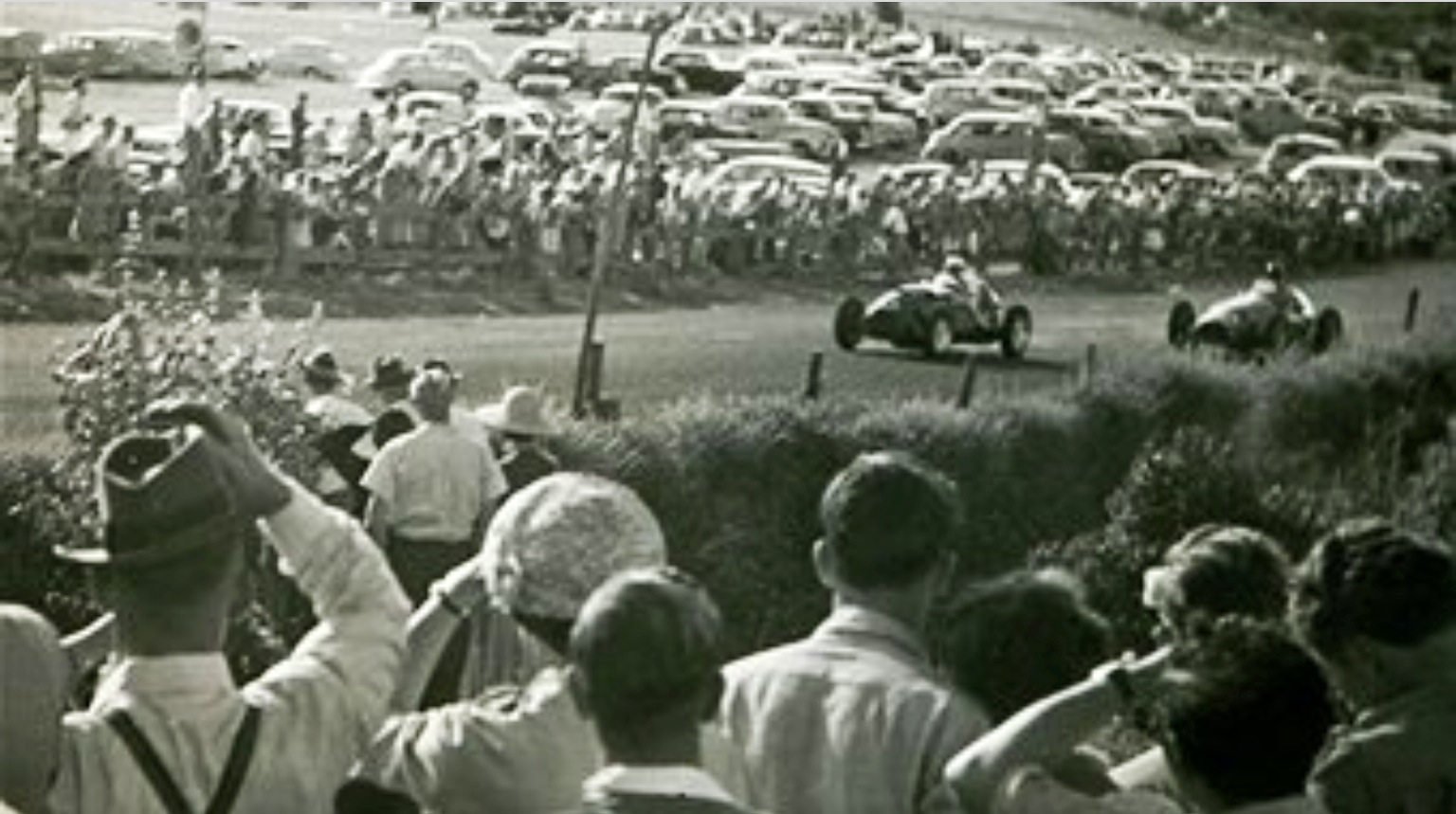
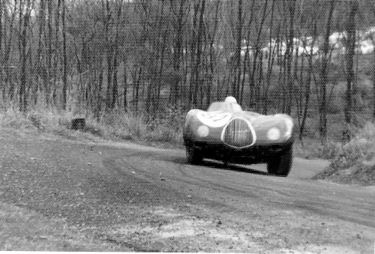
John Boorman on the way to a win in XKC037, Gnoo Blas 1955 (J Psaros)(Orange & District Historical Society)
The shot of above shows the atmosphere of the place and time. John Medley IDs the shot as lap 1 of the 1955 South Pacific Championship, ‘Brabham leading Whitehead- a remarkable performance.’ F2 Cooper T23 Bristol from Formula Libre Ferrari 500/625.
Dwindling crowds, debts owed to the original investors and difficulties in renewing the track licence with the NSW police led to the circuits closure in October 1961, the lap record was then held by Jon Leighton’s Cooper Climax at 105.2 mph. One era and circuit closed with Warwick Farm shortly to open in Western Sydney, another era commenced.
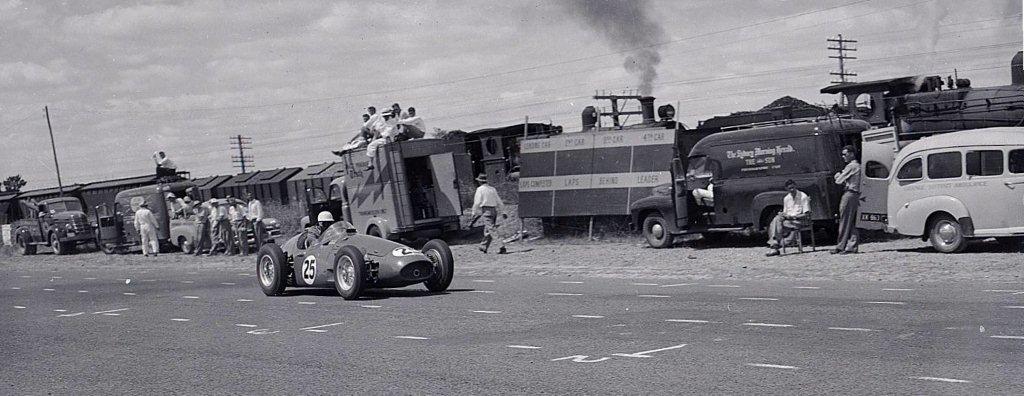
Reg Hunt on the way to victory in the South Pacific Championship on 30 January 1956. Maserati 250F. Check out the ‘steaming train’, Sydney Morning Herald van, the general oh-so-casual scene. Road racing at its best (Gnoo Blas Classic Car Club)
South Pacific Road Racing Championships 1956…
One of the best promoted meetings was the ‘South Pacific Road Racing Championship’ contested on 30 January 1956.
20,000 spectators crowded into Orange on race day to see a quality field of cars and drives; Reg Hunt in his new Maserati 250F, Jack Brabham and Ken Neal in Cooper Bristols, Curley Brydon Ferrari 125, Stan Jones in Maybach 3 and Alf Harvey in the ex-Bira Oscar V12.
Hunt dominated, he lapped the field, took the fastest lap and set the highest top speed at160mph over the Flying Quarter. Jones withdrew with a ‘leg out of bed’, a rod poking outside the block of the precious six-cylinder engine. Brabham and Neal were second and third in their Cooper Bristols.
Gnoo Blas European Exotica. Alf Harvey’s ex-Bira OSCA V12 ahead of Curley Brydon’s Ferrari 125, South Pacific Championship, January 1956 (Gnoo Blas Classic Car Club)pwoooaaah! Boys will be boys. XKC037 during John Boorman’s ownership at a meeting at Tomago Airstrip, near Newcastle NSW, 1955 (Dick Willis)
Ex-works- Frank Gardner/Frank Matich Jaguar XKC037…
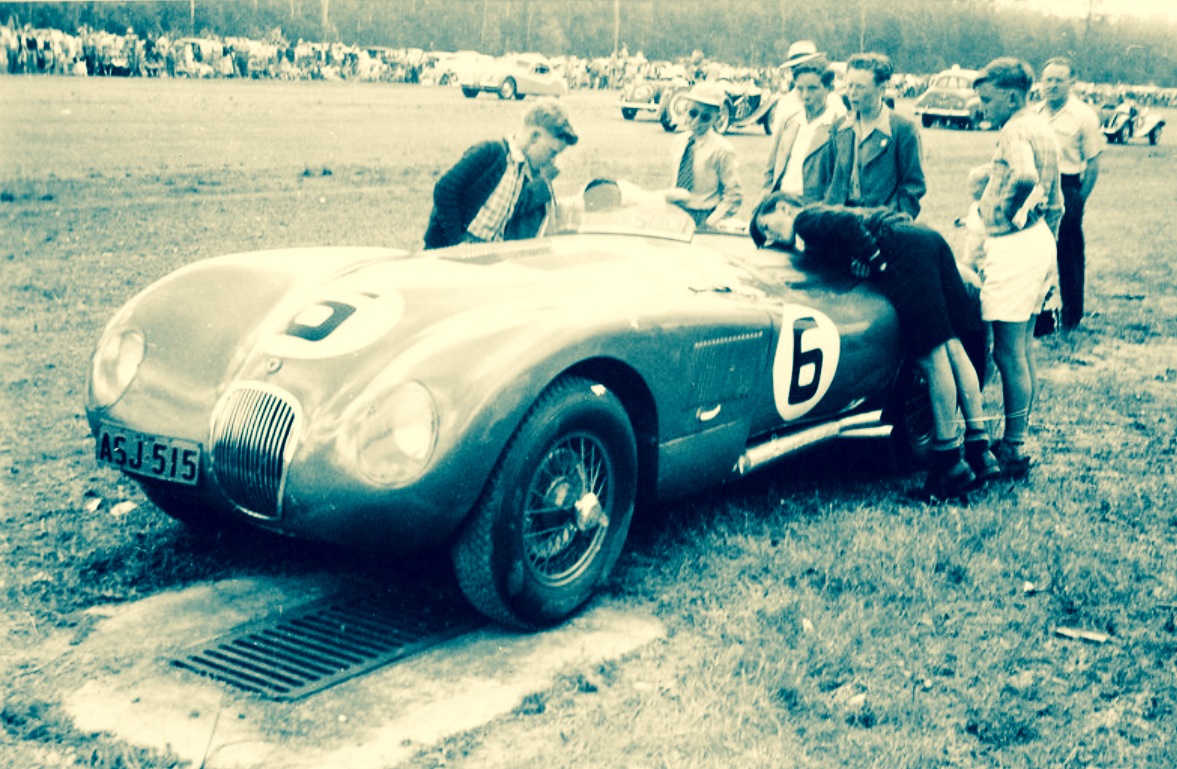
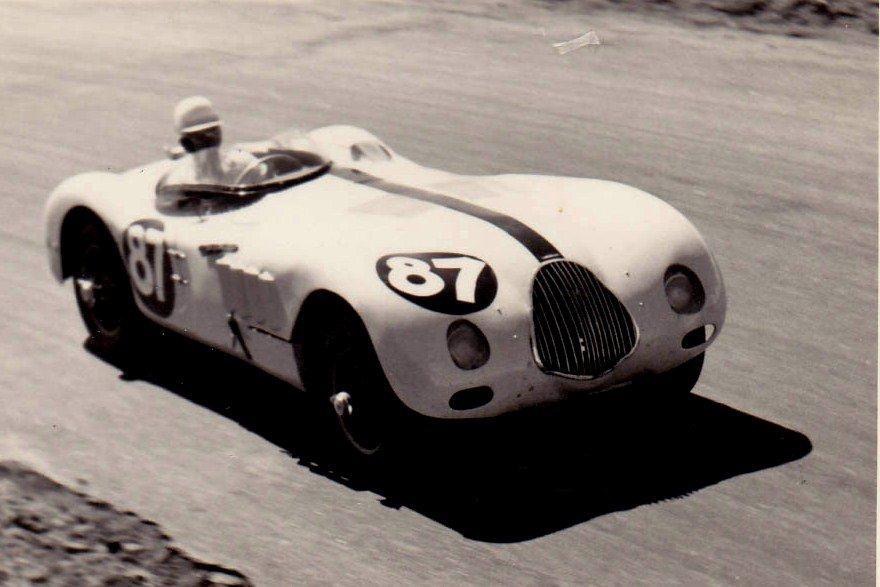
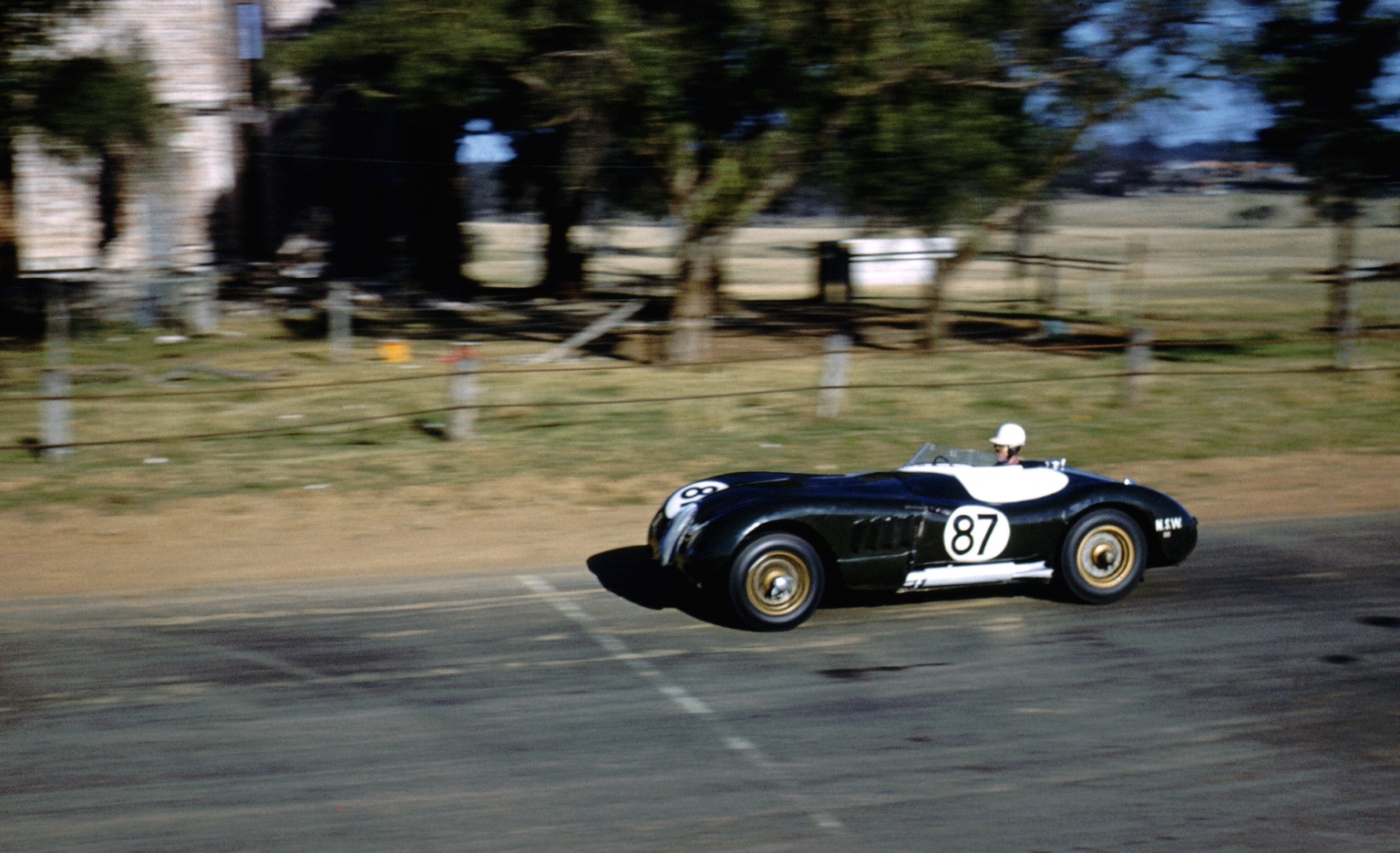
The ‘happy chappy’ in the Jaguar in the first photo at the top is Ross Dalton who acquired the car from Frank Matich. XKC037 started life as a works car. It was built as a standard specification reserve 1953 Le Mans entry in case the advanced lightweight cars under development failed in testing (XKC038 and XKC039 were built for the same purpose).
Stirling Moss raced it at Silverstone in May 1953 and rolled it. XKC037 was then rebodied and sold to the Kenyan Coca Cola bottler John Marussis who entered it at Reims but wrecked it at Dundrod.
Rebuilt again, it was then sold via 1951 Le Mans winner, Peter Whitehead to Cessnock, New South Wales doctor, John Boorman.
Frank Gardner bought the car as an insurance write-off after it was involved in a fatal accident. Gardner recalled in a ‘Motorsport’ interview ‘…Boorman hit a Ford Customline, killed the (two) occupants and ended up down a ravine (near Tamworth NSW)…I wrote to Jaguar asking for information so i could rebuild it… a few weeks later a package arrived with all the drawings so I knew which way to go to get it sorted’.
‘I did it right because even then a proper C-Type meant something and I thought if I bastardise this thing it will look like cleaning up a bloody Rembrandt with aftershave lotion! But I couldn’t get it to run cool so I altered the radiator grille a bit…’
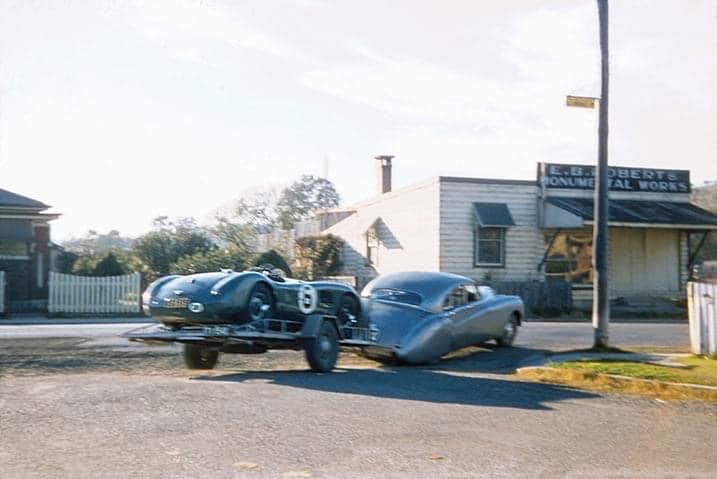
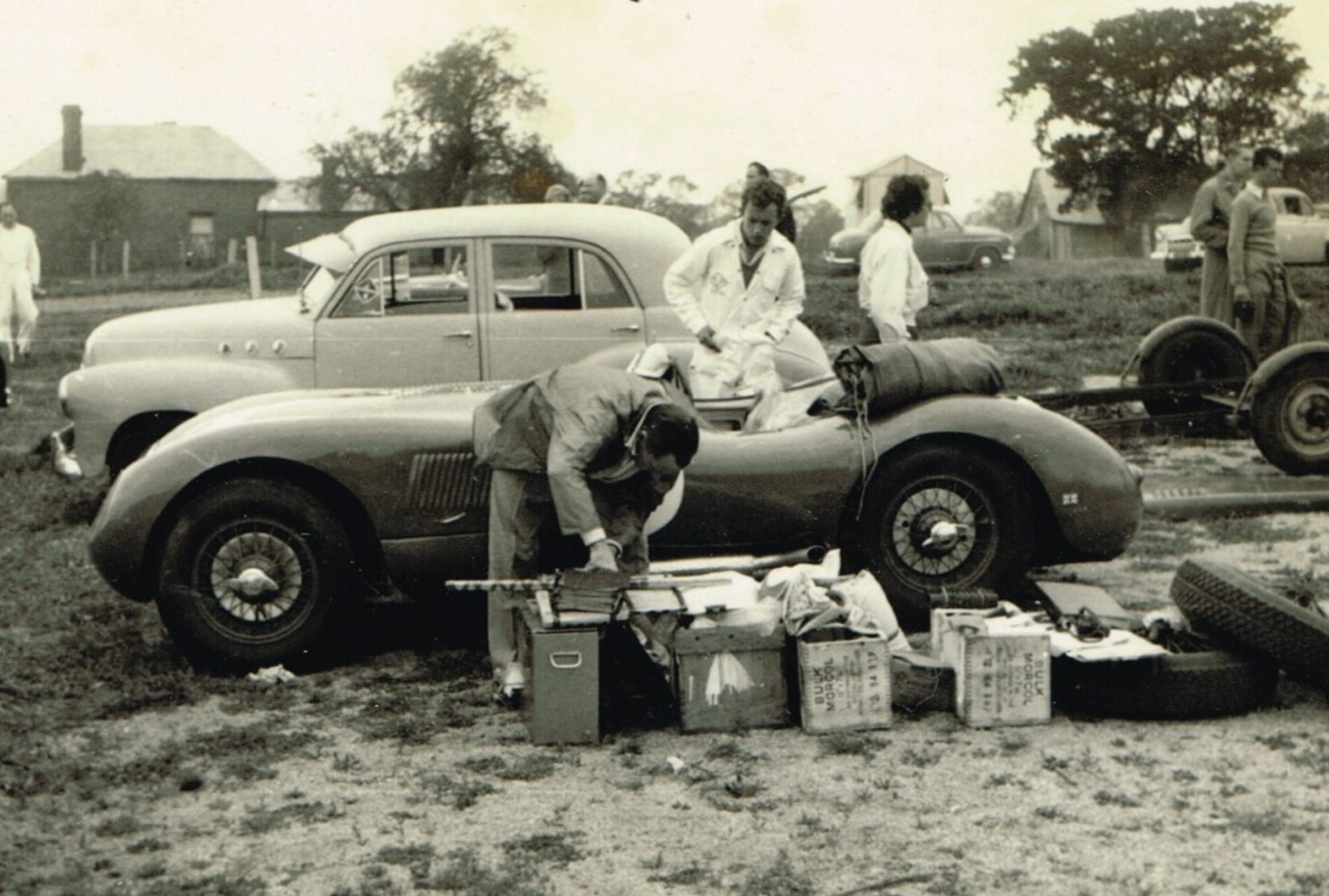
Former Cessnock resident Michael Hickey identifies this shot as Allandale Road, Cessnock. Equipe Boorman- C Type and Mk7 Jags, is on the way to Mount Panorama in 1955- he raced in both the Easter and October meetings (Jaguar Magazine)Boorman at Mount Panorama, Bathurst date uncertain (unattributed)FG in XKC037 when first rebuilt and fitted with one of Frank’s XK120 grilles and fibreglass bonnet, circuit unknown (unattributed)
The C Type replaced FG’s lightweight XK120 Jaguar and was an important stepping stone in the careers of both he and Matich, both progressed to D=Types after the C.
Years later XKC037 was acquired by Sydney Jaguar identity, Ian Cummins who completed its restoration in the mid 1970s. It left our shores in 1984 for a sum considerably greater than the £2000 Ross Dalton paid in 1960!
C-Type Jags won Le Mans upon debut in 1951 and again in ’53.
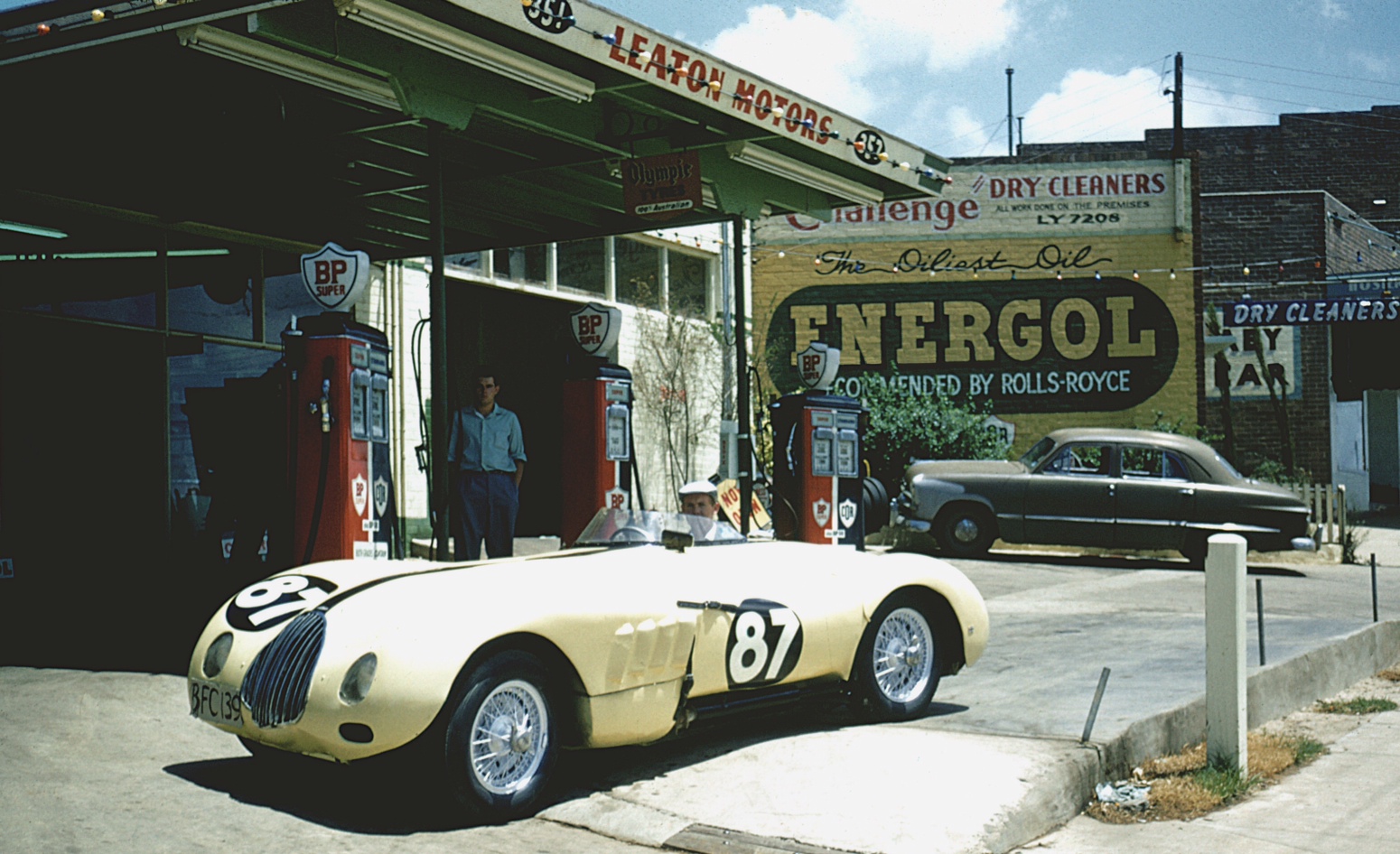
Frank Matich in XKC037 out the front of the cars owners, Leatons Motors workshop, 351 Stony Creek Road, Kingsgrove, Sydney in October 1958. What a shot! Love the Energol ‘The Oiliest Oil’ sign (John Ellacott)
Etcetera: XKC037….
(Dick Willis)
Dr John Boorman, XKC037 at Tomago Airstrip, NSW 9 April 1955.
(J Psaros)
Frank Gardner at Mount Panorama in 1957.
(John Ellacott)
Tom Sulman’s Aston Martin DB3S chases Frank Gardner’s Jag XKC037 at Mount Druitt, November 1957.
(unattributed)
FG ascending Silverdale Hillclimb during the 1957 NSW Hillclimb Championships, he won his class and was quicker than Arnold Glass in the ex-Lex Davison Australian Grand Prix winning HWM Jaguar.
(John Ellacott)
Frank Matich Jag C during private practice at Mt Druitt, Sydney in 1959.
(Kevin Drage)
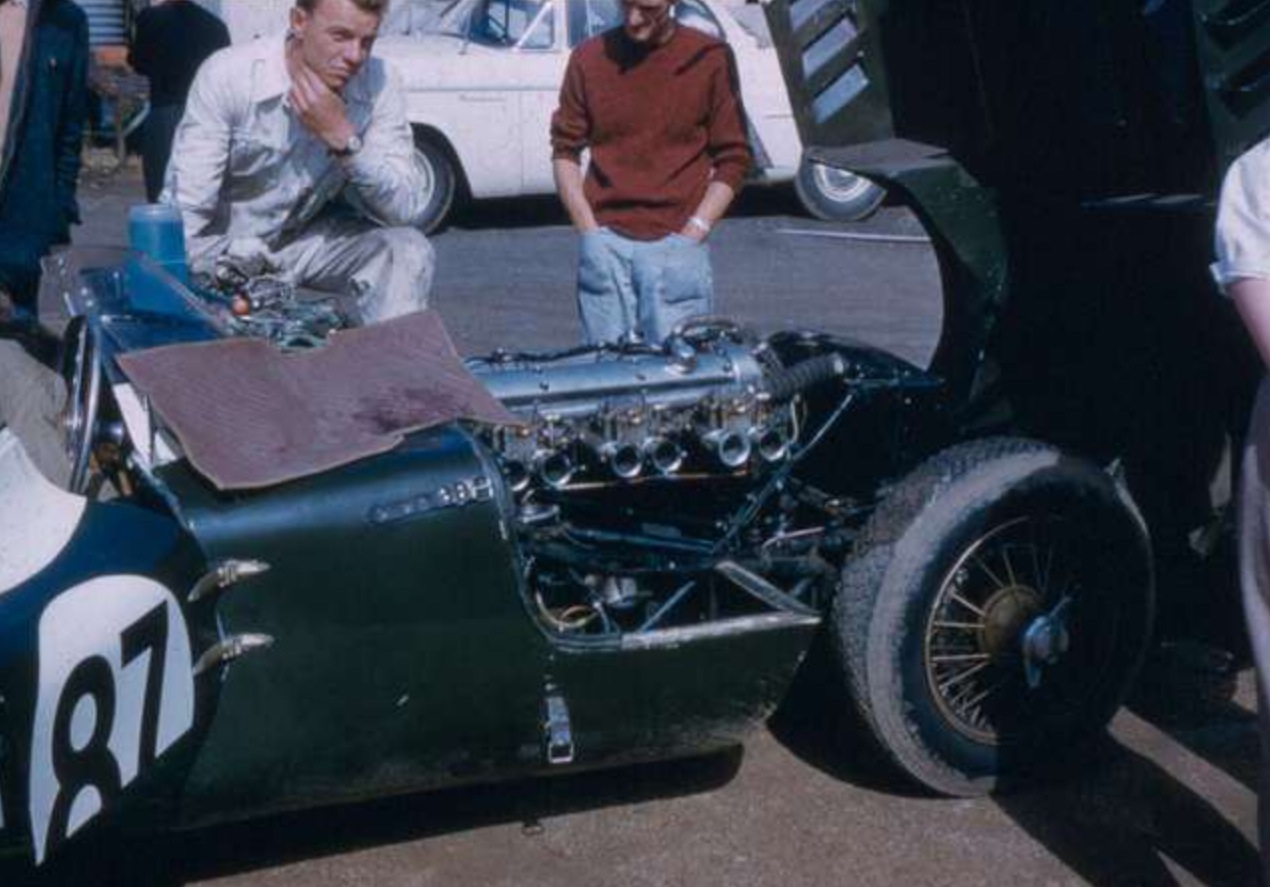
The engine of XKC037 as raced by Frank Matich for Leaton Motors at the October 1958 Bathurst meeting.
The car contested the Australian Tourist Trophy, FM finished fourth, David McKay won the race in his second, ex-works Aston Martin DB3S.
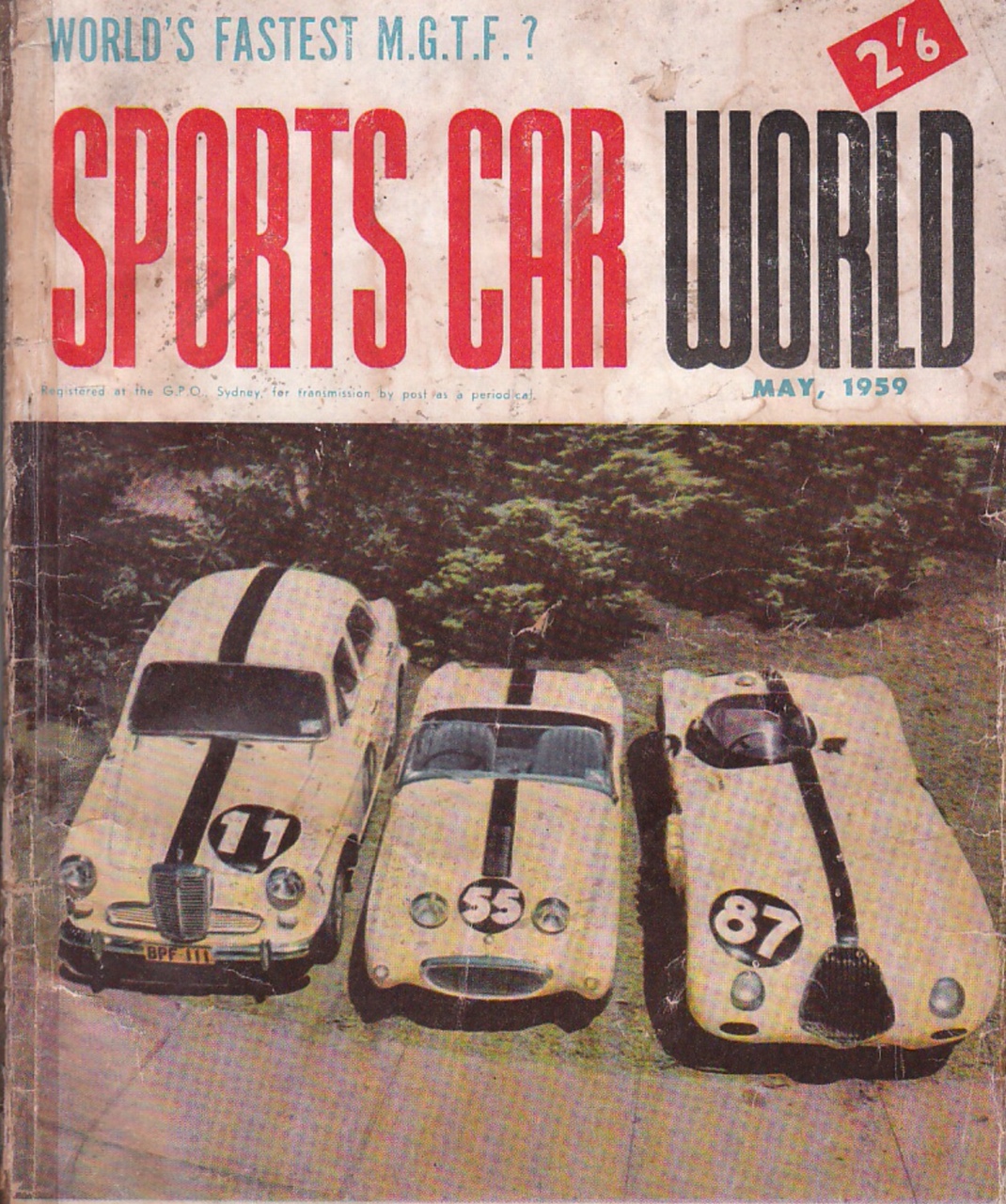
Advertorial 1950s style! The Leaton Motors Team on the cover of Australia’s Sports Car World magazine; the Austin Lancer dvr Brian Foley, AH Sprite dvr Doug Chivas and XKC037 dvr Frank Matich (Sports Car World)
The current owner of this wonderful car, John Corrie, recently (March 2015) got in touch and sent these shots of the C Type, great to see it still being raced, Messrs Gardner, Matich and Dalton would be pleased!
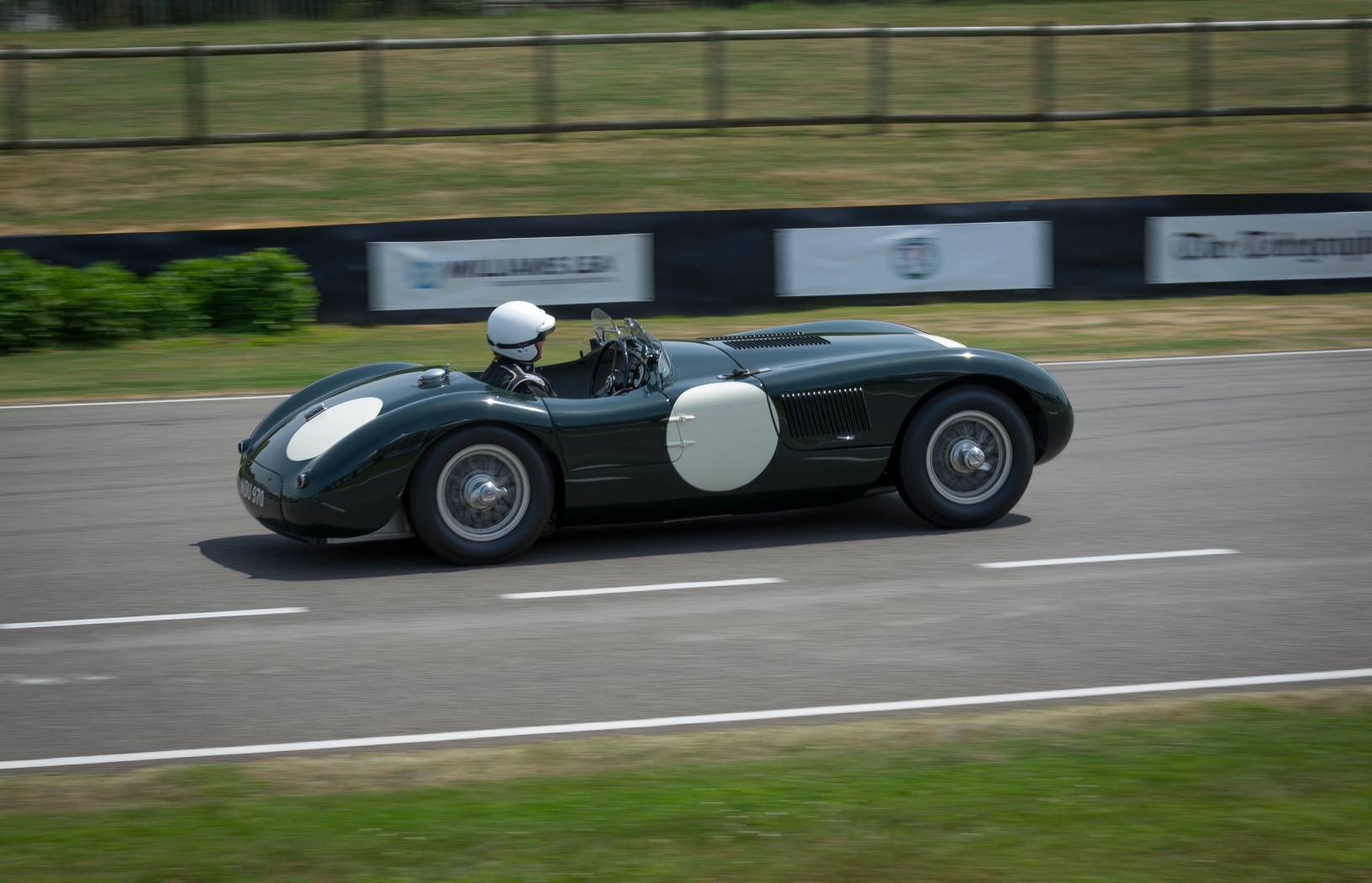
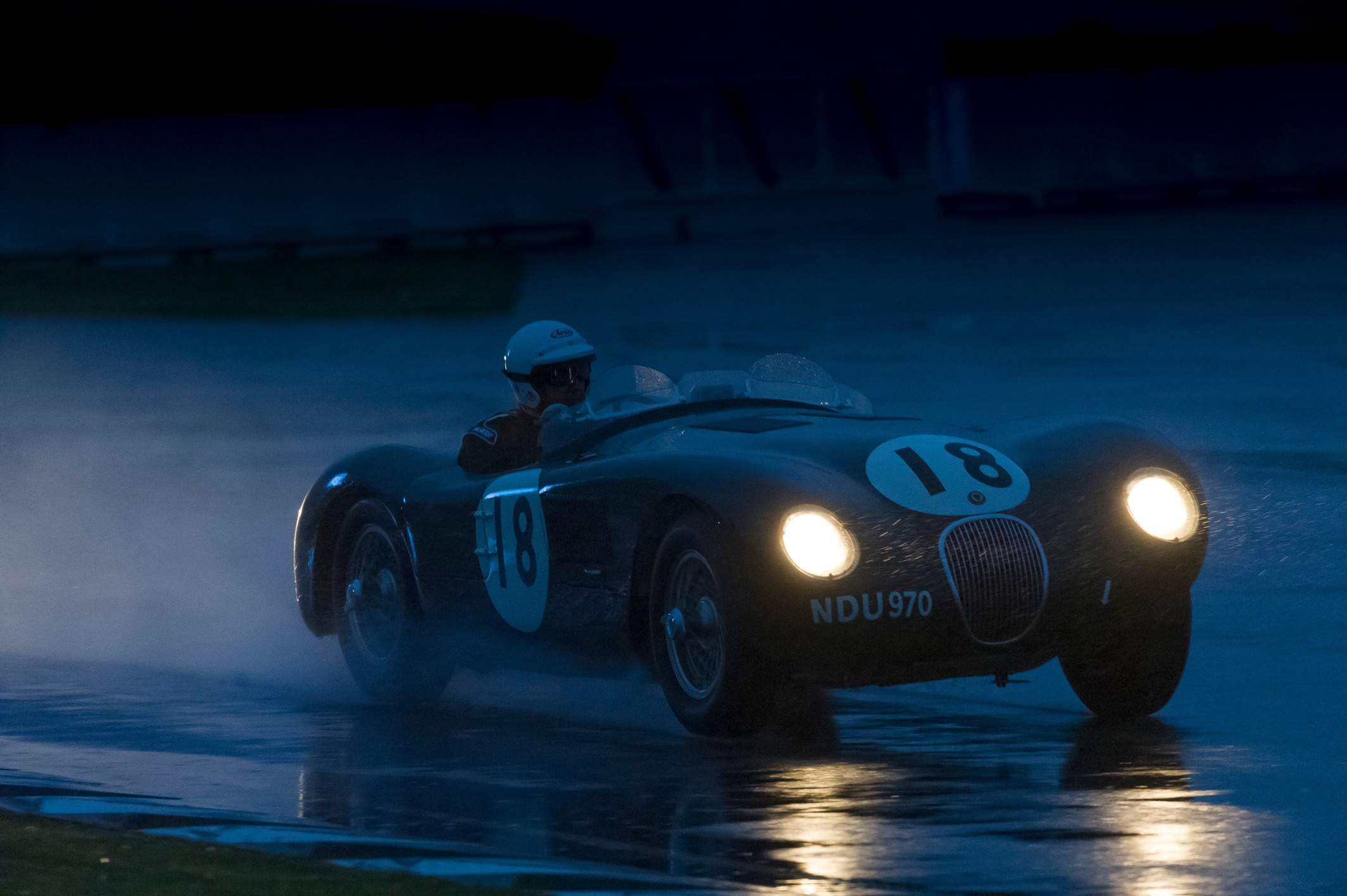
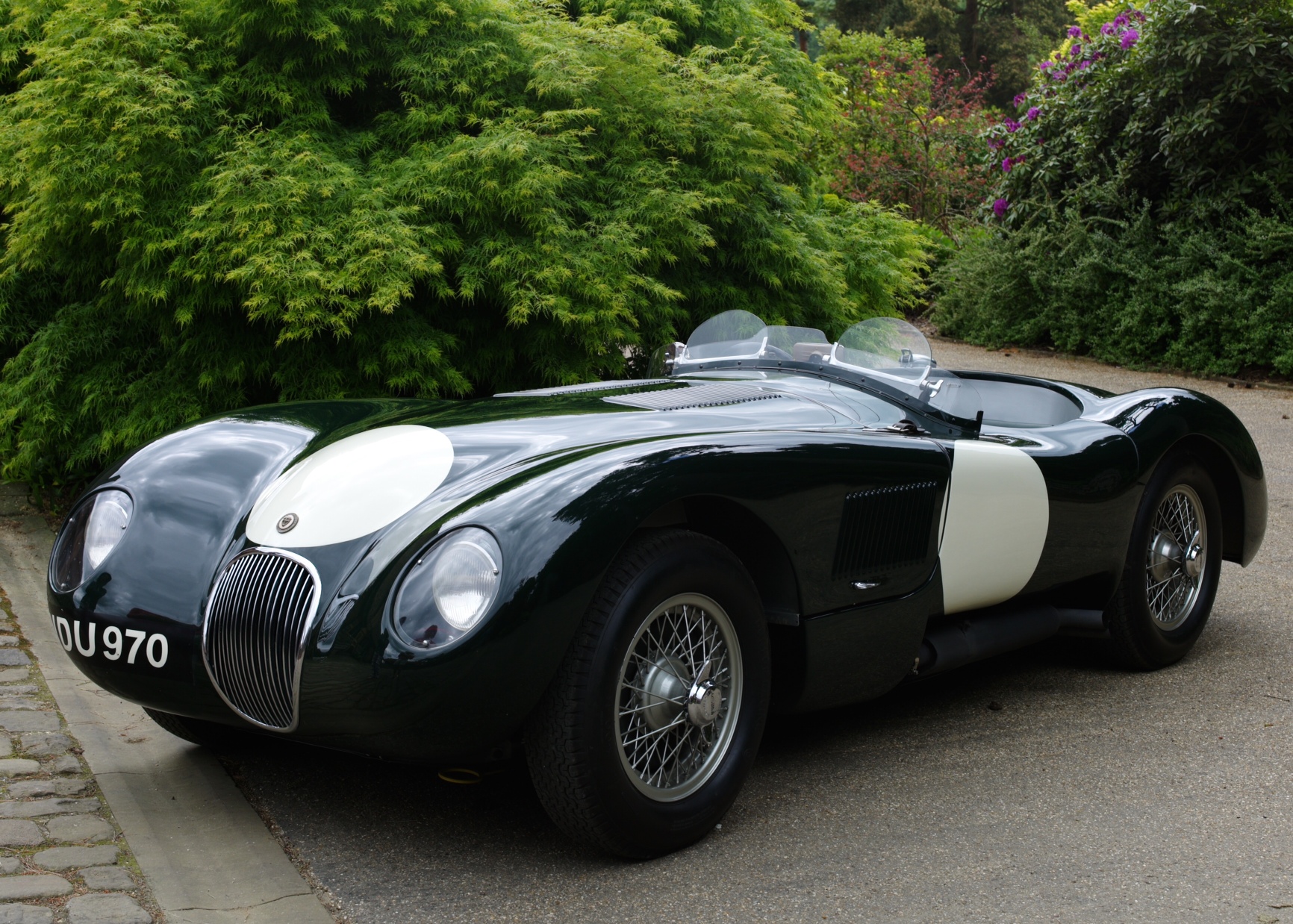
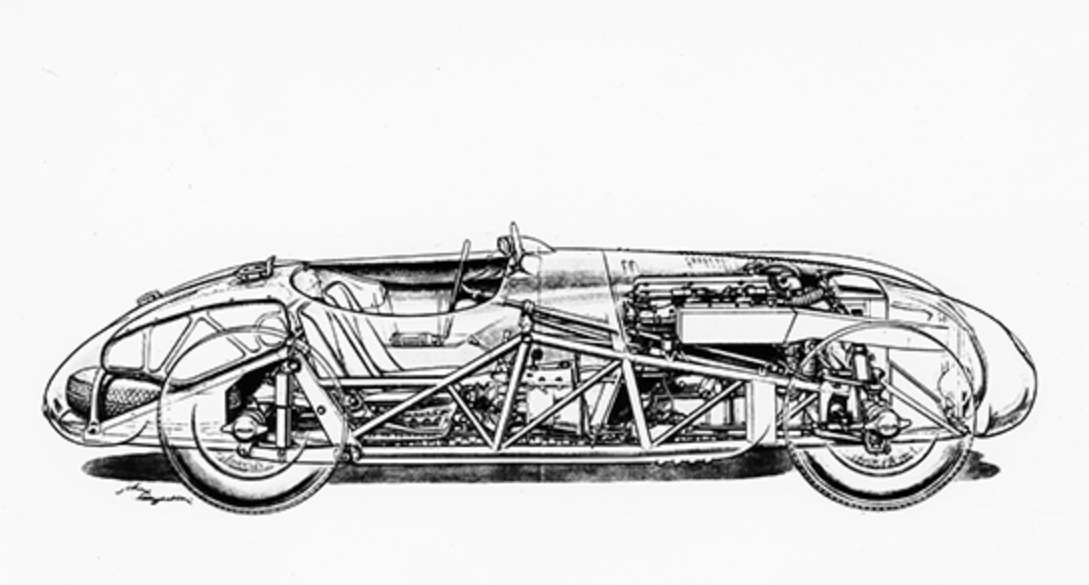
David Brazell in John Corries’, ‘XKC037’, Goodwood Track day practising for the 2013 Revival meeting (Chris Perrett)Superb shot in the English Summer…’Goodwood Revival 2013 during the Freddie March Trophy which was stopped after an hour the weather turned really bad’. David Brazell in John Corries car (Chris Perrett)XKC037 looking rather more immaculate than in its days as a workhorse for Frank Gardner and Frank Matich in Australia (John Corrie)C-Type cutaway drawing (Jaguar Heritage)(Unattributed)
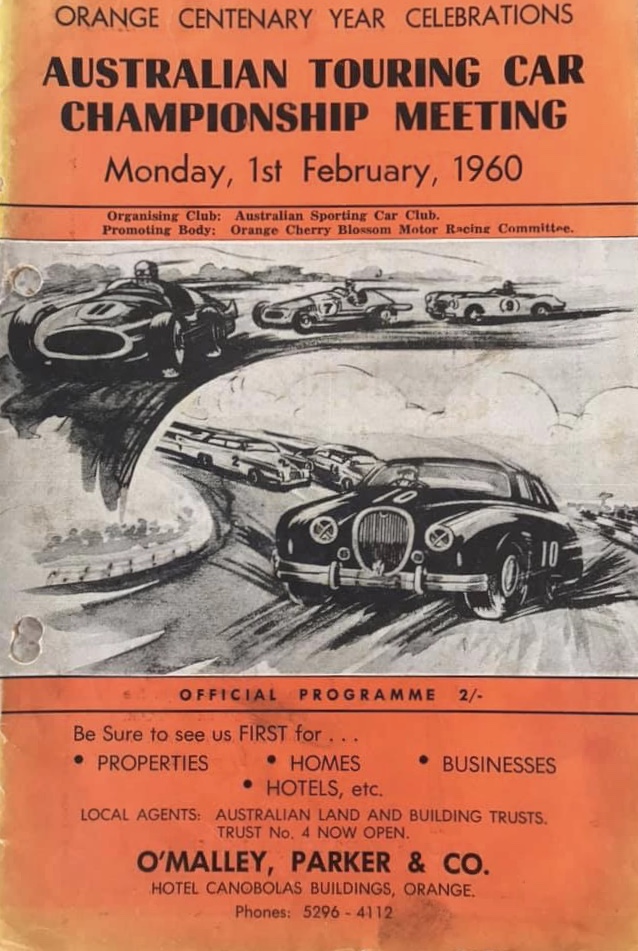
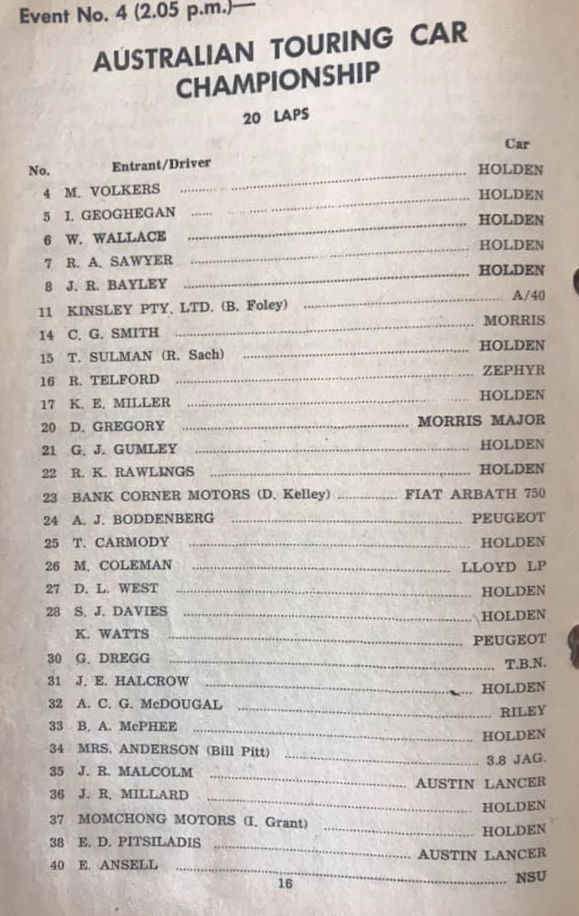
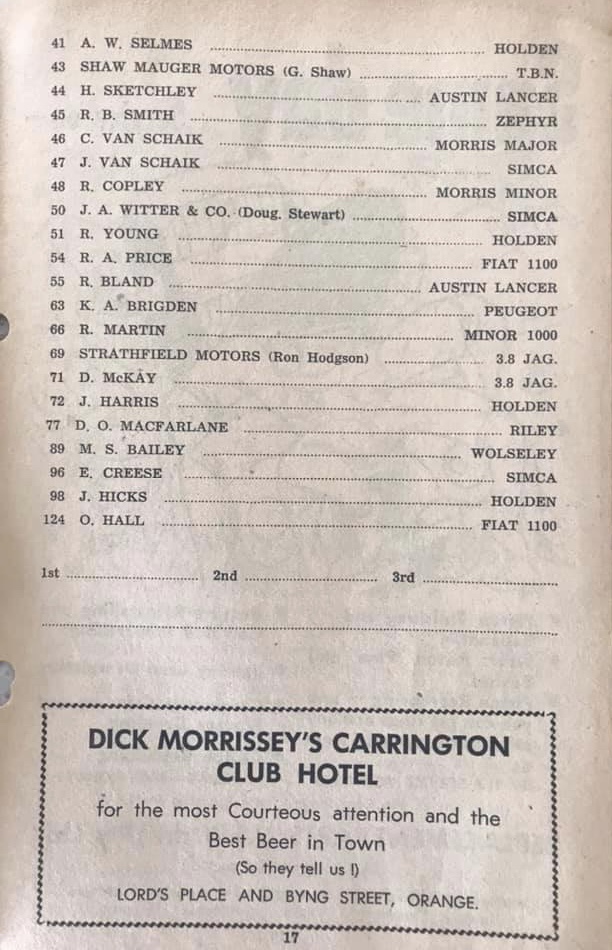
Etcetera: Gnoo Blas 1960 Australian Touring Car Championship meeting…
Start of the one race, ‘the first’, Australian Touring Car Championship at Gnoo Blas on 1 February 1960.
Left to right are the Jag Mk1s of Ron Hodgson, Bill Pitt and David McKay from pole who won the race.
Hodgson led early, the three Jags pulled away from the rest of the field, he ran wide and the other two spun at Windsock on lap 1 then he did the same on lap 2 letting McKay and Pitt through. Max Volkers was fourth in his Holden FJ and Pete Geoghegan fifth in his Holden 48-215 until head gasket failure intervened.
By lap 14 McKay had a 26 second lead over Pitt, then rain fell catching Ron Sawyer’s Holden FJ out. He spun on the crest of Connaghans Corner hitting the inside bank and rolling, help was at hand when Des West stopped to assist the hapless driver from the car. McKay’s path was blocked by a Ford Zephyr which had also stopped (driver unknown) ‘McKay used his car to move the Zephyr out of the way’.
Further excitement occurred on the following lap when McKay spun yielding the lead to Pitt but the overdrive mechanism on that car began to fail allowing David McKay to regain the lead two laps from the end. He won the race six seconds ahead of Pitt with Ron Hodgson a minute in arrears then came Max Volkers a lap down in fourth.
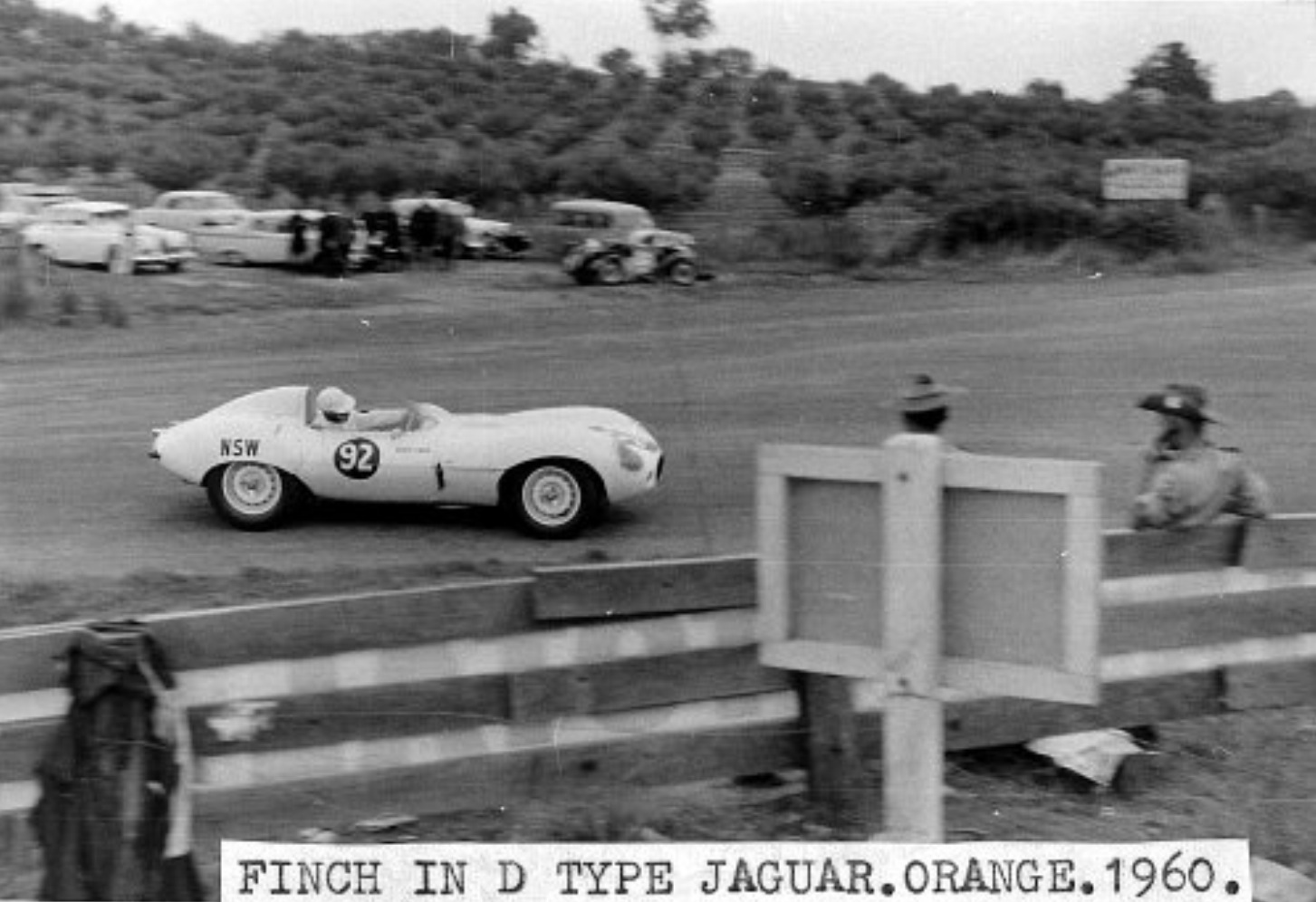
(Ian Lord Collection)David Finch, Jag XKD Type ,Windsock Corner, Gnoo Blas 1960 (Don Read Collection)
Bibliography…
‘Historic Racing Cars in Australia’ John Blanden, John Medley, Michael Hickey
Photo Credits…
John Ellacott, Jaguar Heritage, Orange & District Historical Society, Paul Cross, Don Read Collection, Dick Willis, Chris Perrett, John Corrie, Frank Gardner ‘Motorsport’ magazine interview March 2008, Gnoo Blas Classic Car Club, Jock Psaros, Jaguar Magazine, Ian Lord Collection
Gethin gently pursuades his beast to turn into Riversides’ turn 6; all 7.6 litres and 670 BHP of it, he is sitting so low spotting apexes must have been a challenge…
Denny Hulme won the 1970 series in the sister car, a fitting result for the team after Bruce McLaren was tragically killed in pre-season, M8D testing at Goodwood .
Gethin was recruited to fill Bruce’ F1 seat and later in the year scored the CanAm drive as well. Dan Gurney partnered Hulme initially until conflicting oil company sponsorships forced DG to relinquish the seat. Peter finished third in the championship despite missing the first three rounds.
Gethin thru the Laguna Seca chicane, M8D October 1970 DNF with failed battery. Difference in height between tall Dan Gurney, who used this chassis prior to Gethin apparent from the roll bar extension installed for Dan but redundant for Peter! (The Enthusiast Network)
Check out Dans set in the cockpit to illustrate the point made in the previous photo! Here Dan in chassis #M8D/3 at the season opening Mosport, Canada round, 12 days after Bruce’ Goodwood death. Tyler Alexander, Team manager/Crew Chief at right. Gurney put the car on pole and won the race, a fitting tribute to McLaren and demonstrating the crews determination and resilience (Bob Harmeyer)
Major opposition to the McLaren Team in 1970came from teams running ex-works and customer Mclarens, the factory/Carl Haas LolaT220 driven by Peter Revson, Jackie Oliver in the Ti22, and of course, Jim Halls sensational, outrageous, revolutionary ground effect Chaparrall 2J. The latter banned at years end after representations from all and sundry, including McLaren.
The McLaren domination of the CanAm Series commenced with the M6 in 1967 and still had a year to run with the M8F. Porsche were looking for something to do with its 917 program rendered obsolete by changes in World Sportscar Championship rules at the end of ’71, the CanAm series was chosen place to use the cars… The turbo-charged Porsche 917/10 rewriting the record books as the ‘orange McLarens’ had…
Chassis of riveted and bonded aluminium with fabricated steel bulkheads. Engine a stressed part of the chassis, also supported by tubular steel ‘A frames’ . Brakes Lockheed.(Profile Publications)
Suspension: single top link, inverted lower wishbone, twin radius rods and coil spring/shock unit. Gearbox: Hewland LG600. Engines prepared in-house, Chev ZL1 Aluminium block, mainly 7.6 litres or 465CID. 670 BHP @ 6000 RPM. Hulme used 430 CID engine when some overheating was experienced . Full monocoque but ‘rear sponsons’ non load-bearing the engine bolted directly to a magnesium plate at the rear bulkhead, also supported by a steel, tubular ‘A-frames’. (Autosport)
Wheelbase 239cm, track F/R 157/147cm, overall length 391cm, height to roll bar 91cm. Car christened ‘The Batmobile’ as a consequence of beautifully integrated rear wing, the high wing of the ’69 M8B outlawed along with all high wings by the FIA in all classes.(Profile Publications)
Shot of Dan Gurney with dave Friedman early in 1970 showing the cars essential elements ‘laid bare’. (Pinterest)
Peter Gethin was the son of a jockey, his compact dimensions a contrast to Tim Parnells’ whose father Reg was a farmer! Peter explains the handling of his BRM to team boss Tim at the 1972 British GP (Pinterest unattributed)
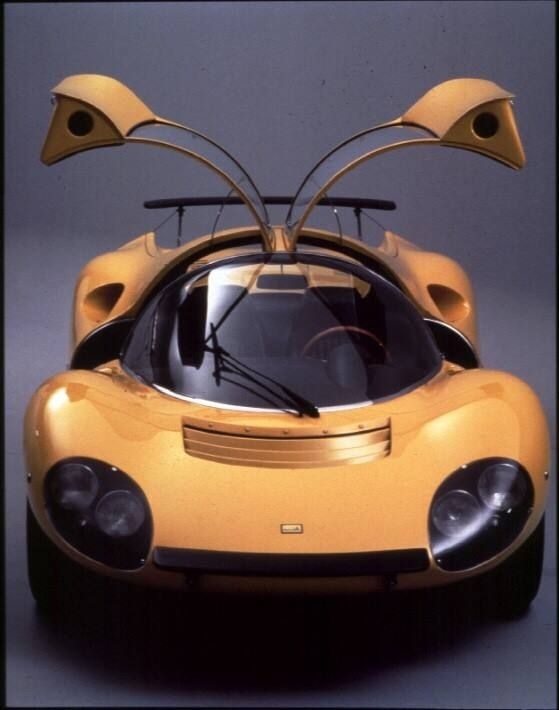
Designed by Paolo Martin, Pininfarinas’ Dino 206 Competitzione was one of the more influential designs of the 1960’s…
Based on an unused, unraced Ferrari 206 S chassis, ‘206S-034’, later renumbered ‘10523’. Pininfarina unveiled ‘The Yellow Dino’ at the 1967 Frankfurt Motor Show, after many years in ‘Farinas’ own collection it is now in private hands in the US.
Martin was 23 when he designed the car, his CV also includes the Ferrari Modulo, and Alfa 33 Roadster concept. He recalls, ‘i used to work on the 1:10 scale model on my house’s small balcony, spreading wood shavings in the underneath courtyard…i was working for Pininfarina secretly for contractual reasons’.
The final shape was created in aluminium, two prominent wings were added late in the project by Pininfarina, Paolo said, ‘they were added only at the last minute, since the management thought the design had to be enriched. I was always against it, anyway this was the final decision’.
Its a pity, the wings are ‘imposed’ on an otherwise fluid combination of compound curves. The car was widely hailed one of the show cars of the decade all the same.
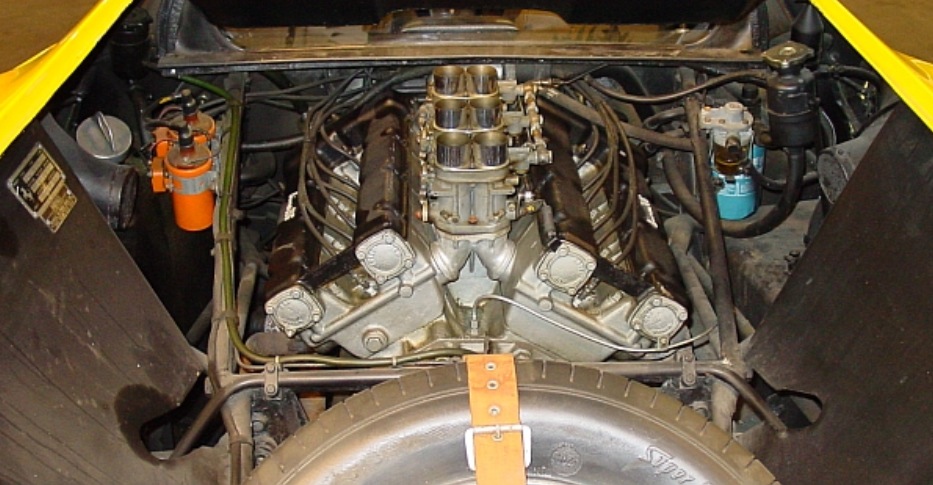
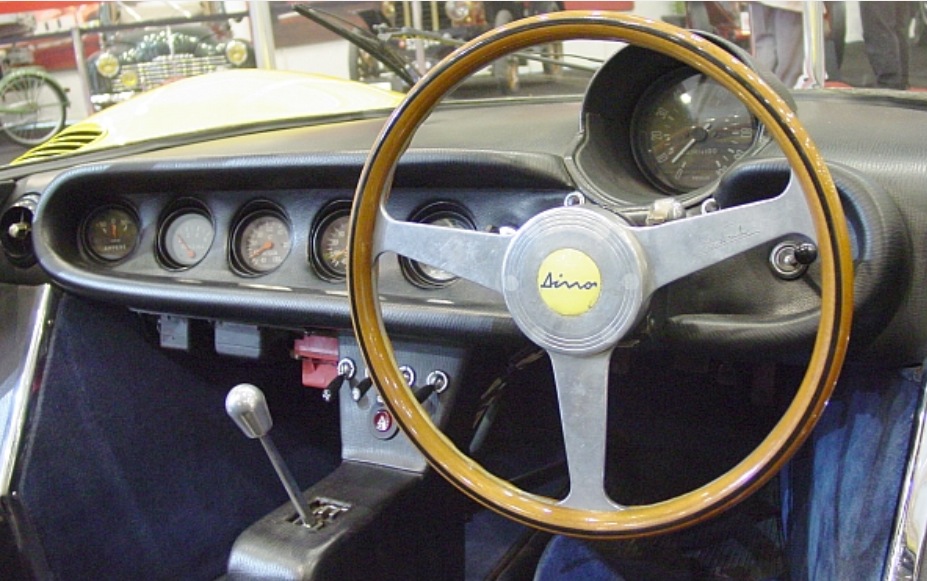
Whilst chassis ‘206S-034’ was unraced the car is fitted with an ex-Le Mans 12 valve race engine which still has its ACO affixed scrutineering tags. Circa 218bhp @ 9000rpm.Pininfarina advertisement in ‘Automobile Year 16’ 1968 year reviewVilla D’Este Concourse 2008
Ferrari 206 S…
Ferrari showed its 1966 World Sportscar Championship contenders, the P3 4 litre V12 Prototype, and 206 S, 2 litre V6 Sports Car at the 1965 Paris Auto Show.
To be eligible to race as a Sports Car, Ferrari had to produce a minimum of 50 cars, due to industrial troubles in Italy at the time only 18 were produced, the 206S was therefore forced to compete against much more powerful cars. It still sold well to privateers and was entered on occasion as a ‘Works Car’, the fastest 2 litre car of its day.
It was powered by variants of the Jano designed V6 which won the F1 Drivers Championship for Mike Hawthorn in 1958. Engine capacity was 1987cc, it was fed by Weber carburetors and later Lucas fuel injection. two, three and four-valve heads were developed, with both single and twin-plugs, the engine produced circa 218bhp @ 9000rpm.
A 5 speed gearbox was utilised, the chassis was Ferraris’ typical space frame of the time with welded on aluminium panels creating a ‘semi-monocoque’ structure. Some exterior pnaels were fibreglass.
Suspension comprised wishbones and coil spring/damper units at the front, and lower inverted wishbone,2 upper links and 1 radius rod, again with coil spring, Koni shocks at both front and rear. Disc brakes were by Girling. 7.5 and 8.5 inch wide (F/Rear) Campagnolo wheels were fitted, the whole lot weighing 654Kg. Very light!
The stunning cars were styled either in-house, or by Piero Drogo, depending on the source document, the bodies built by Piero Drogos ‘Carozzeria Sports Cars’ in Modena.
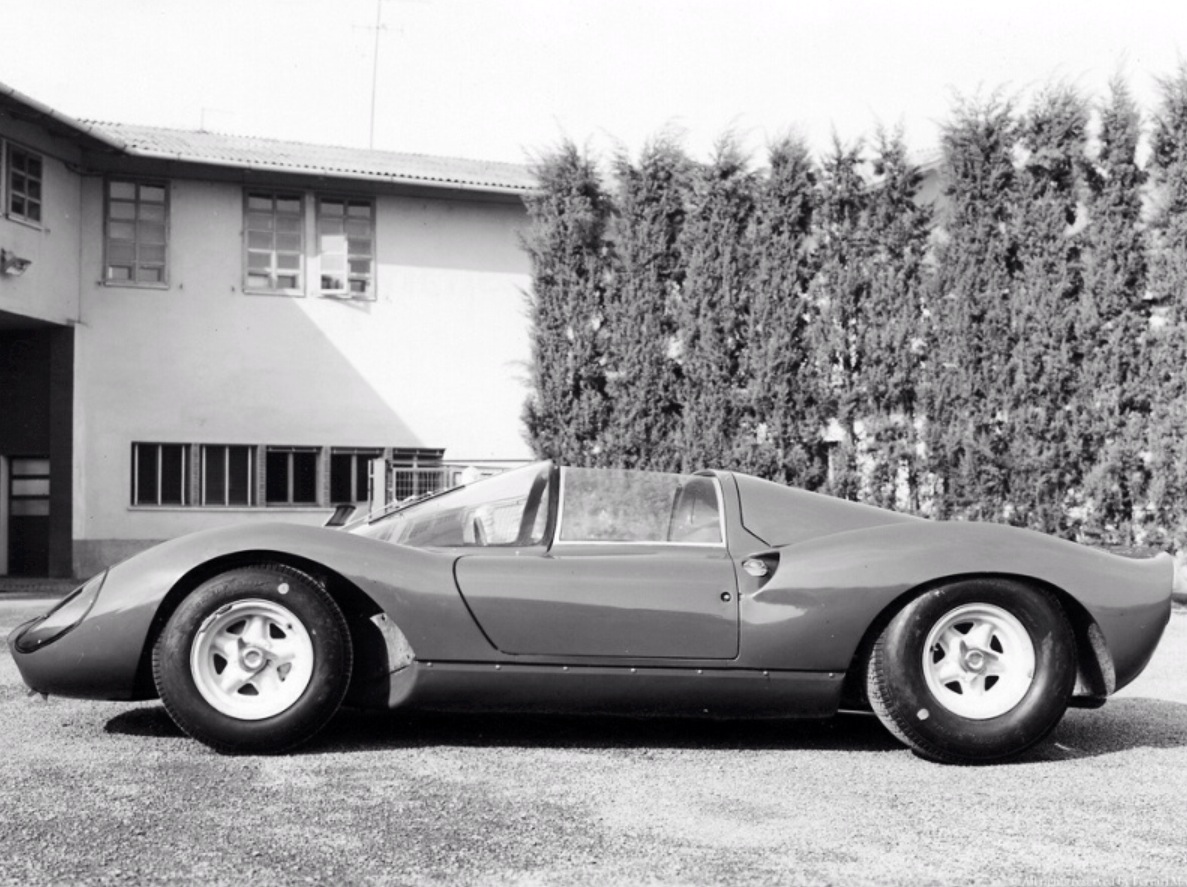
The shape is mouth-watering, the production 206/246GT road cars clearly took their styling from these cars.
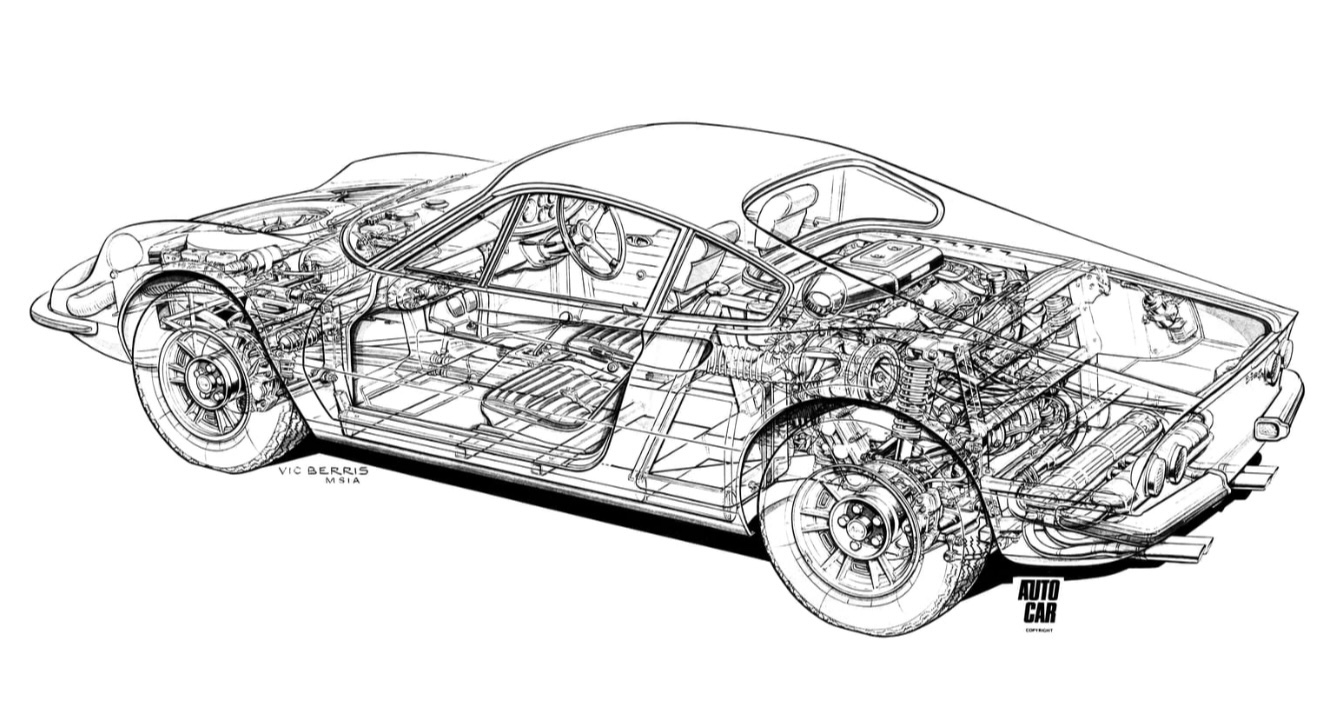
Nurburgring 1000Km, 1966. Rodriguez/Ginther 206 S (Pinterest)Targa Florio 1966. Biscaldi Ferrari 206 S (Pinterest)Ferrari factory shot at Maranello shows the 206 S stunning profile to good effect and just how close the road-going 206/246 GT was to its competition brother (Ferrari SEFAC)Ferrari Dino 206GT Prototype 1967Ferrari Dino 246GT cutaway (V Berris)
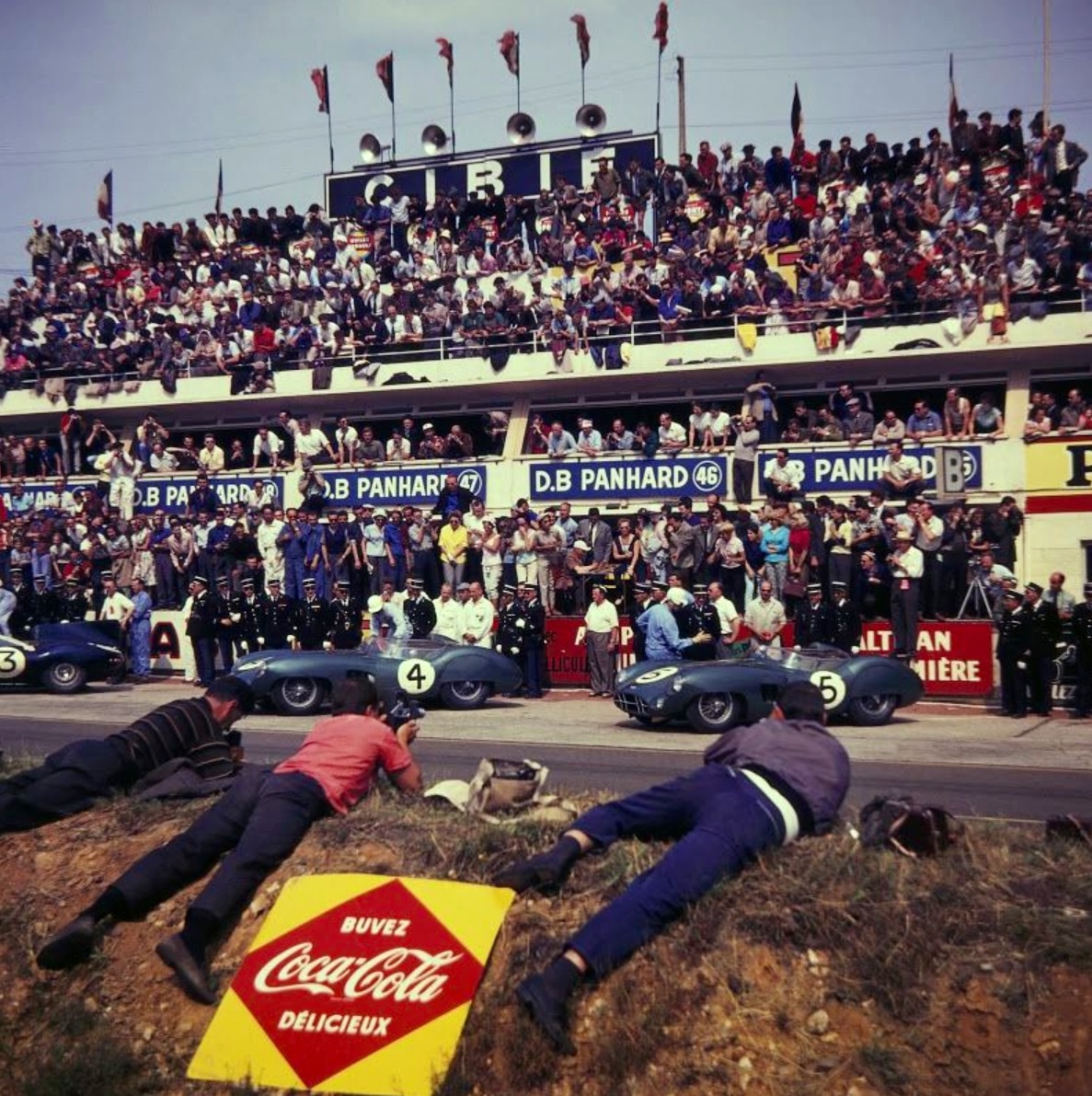
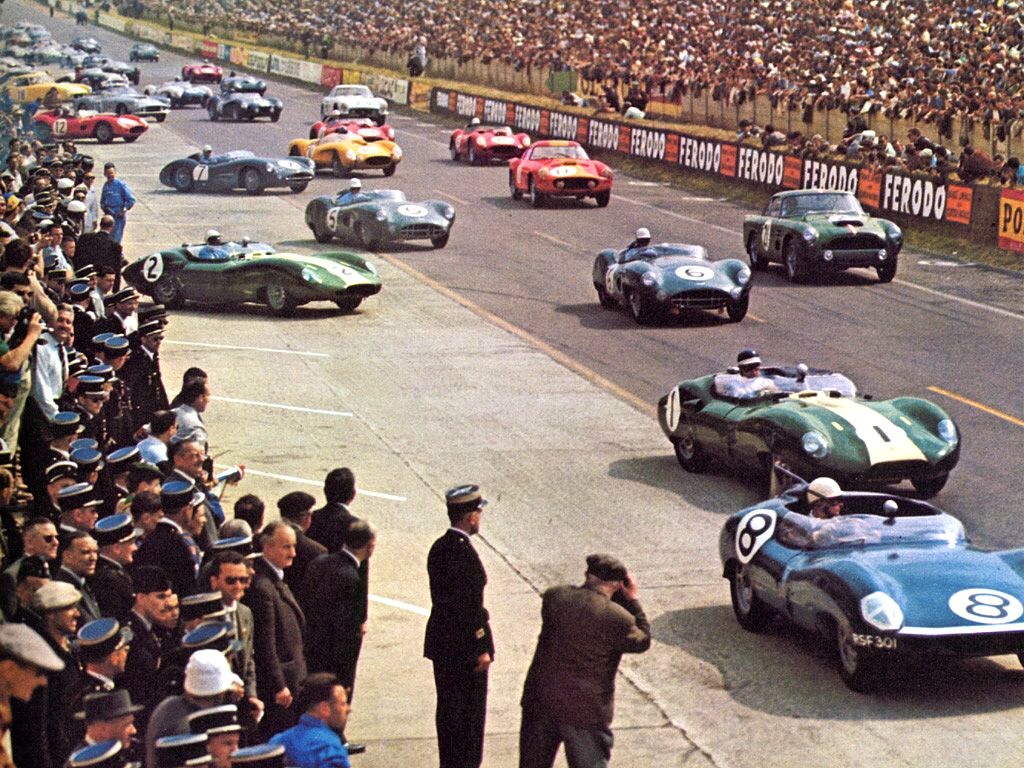
# 5 is the winning Carroll Shelby/Roy Salvadori Aston Martin DBR1/300, # 4 the Stirling Moss/Jack Fairman sister car, and # 3 the Innes Ireland/Masten Gregory Jaguar XK’D’ Type, both DNF.
1959 was the only Aston Martin Le Mans victory so far, Astons’ also won the World Sportscar Championship that year with wins in 3 of the 5 rounds; LeMans, Nurburgring 1000Km, and RAC Tourist Trophy at Goodwood. Ferrari and Porsche were second and third in the Championship respectively.
The DBR1 was one of the greatest cars produced under the 3 litre sports car formula, in addition to its 1959 successes it also won the Nurburgring 1000Km and the Tourist Trophy at Goodwood in 1958.
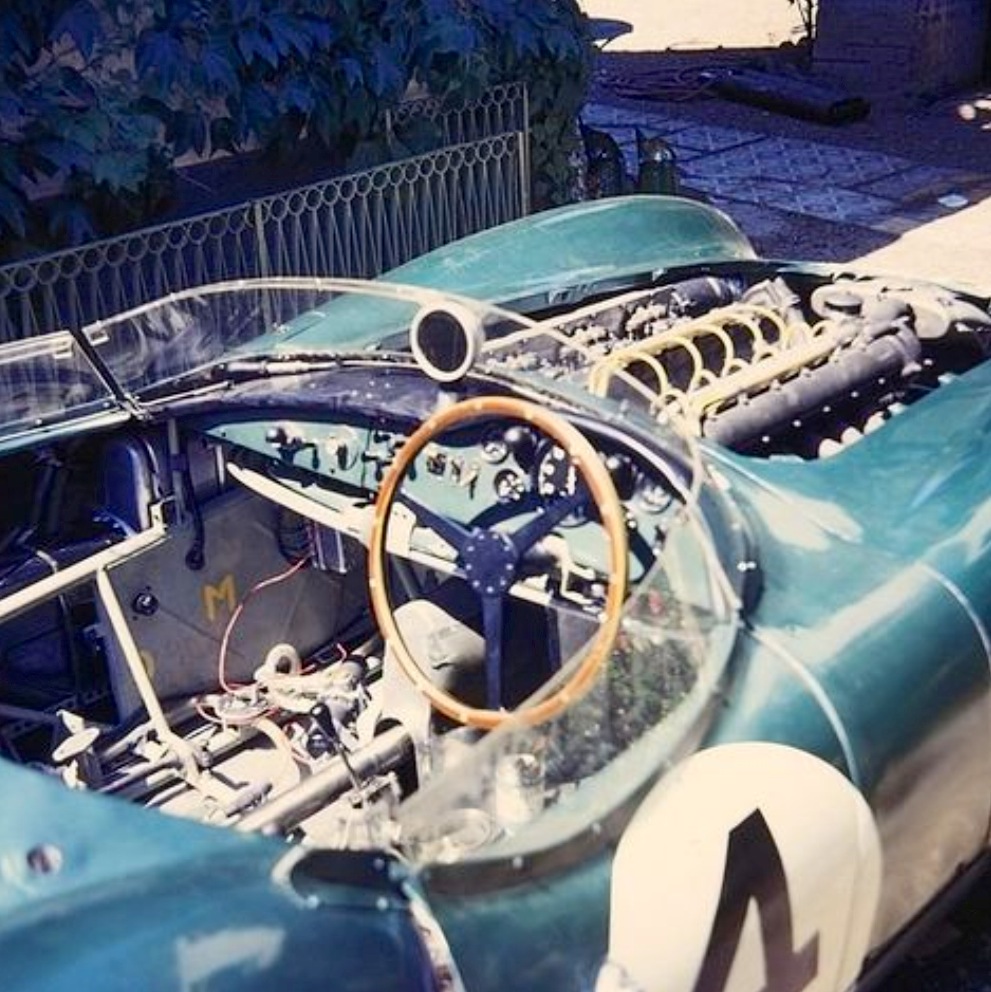
Its essential elements are laid bare in this James Allington period cutaway drawing for Automobile Year.
The engine is an inline 6, all aluminium, the crankshaft supported by 7 main bearings. Two valves per cylinder were fitted at an included angle of 95 degrees operated by twin gear driven overhead camshafts. Fuel was provided by 3 Weber carburettors, the ignition fired by 2 Lucas distributors driven off the end of each camshaft, 2 plugs per cylinder.
The engine was ‘undersquare’, bore and stroke 83X90mm for a capacity of 2932cc, the engine produced circa 265bhp@6500rpm on a compression ratio of 9:1.
Cockpit of the Moss/Fairman DBR Le Mans 1959. (unattributed)
A five speed gearbox was mounted transversely at the rear in unit with a ZF differential.
Front suspension was by twin trailing links springing by transverse torsion bars. At the rear a De Dion rear axle was used with twin trailing arms, a Watts linkage and again torsion bars were the springing medium.
Girling disc brakes were used and rack and pinion steering. The car had a wheelbase of 90 in, a track front and rear of 51.5 in, a width of 64 inches and a height to the top of the scuttle of 38.5 in…the whole lot weighing 1760lb.
The #4 Moss/Fairman and #5 Salvadori/Shelby Aston DBR/1’s at rest. Chez Aston, Le Mans 1959. (Unattributed)
Carroll Shelby, AstonMartin DBR1/300 Le Mans 1959 (unattributed)
Carroll Shelby driving, Roy Salvadori, David Brown the owner of Astons’ and Stirling Moss post victory. (unattributed)
Etcetera…
Front of the Le Mans grid 1959. #8 Flockhart/Lawrence Tojeiro Jaguar, #1 Bueb/Halford Lister Jaguar, #2 Hansgen/Blond Lister Jaguar and #3 Ireland/Gregory Jaguar D Type…all DNF. Stirling Moss is talking to the photographers priod to the ‘start sprint’. (Unattributed)
Le Mans start 1959. # 8 Flockhart Tojeiro Jag, # 1 Bueb Lister Jag, # 6 Trintignant Aston DBR/1, #2 Hansgen Lister Jag, # 5 Salvadori Aston DBR/1 and the rest. (Unattributed)
Trintignant/ Frere Aston post fuelling Le Mans 1959, the pair finished 2nd a lap behind the winning DBR/1. (Unattributed)