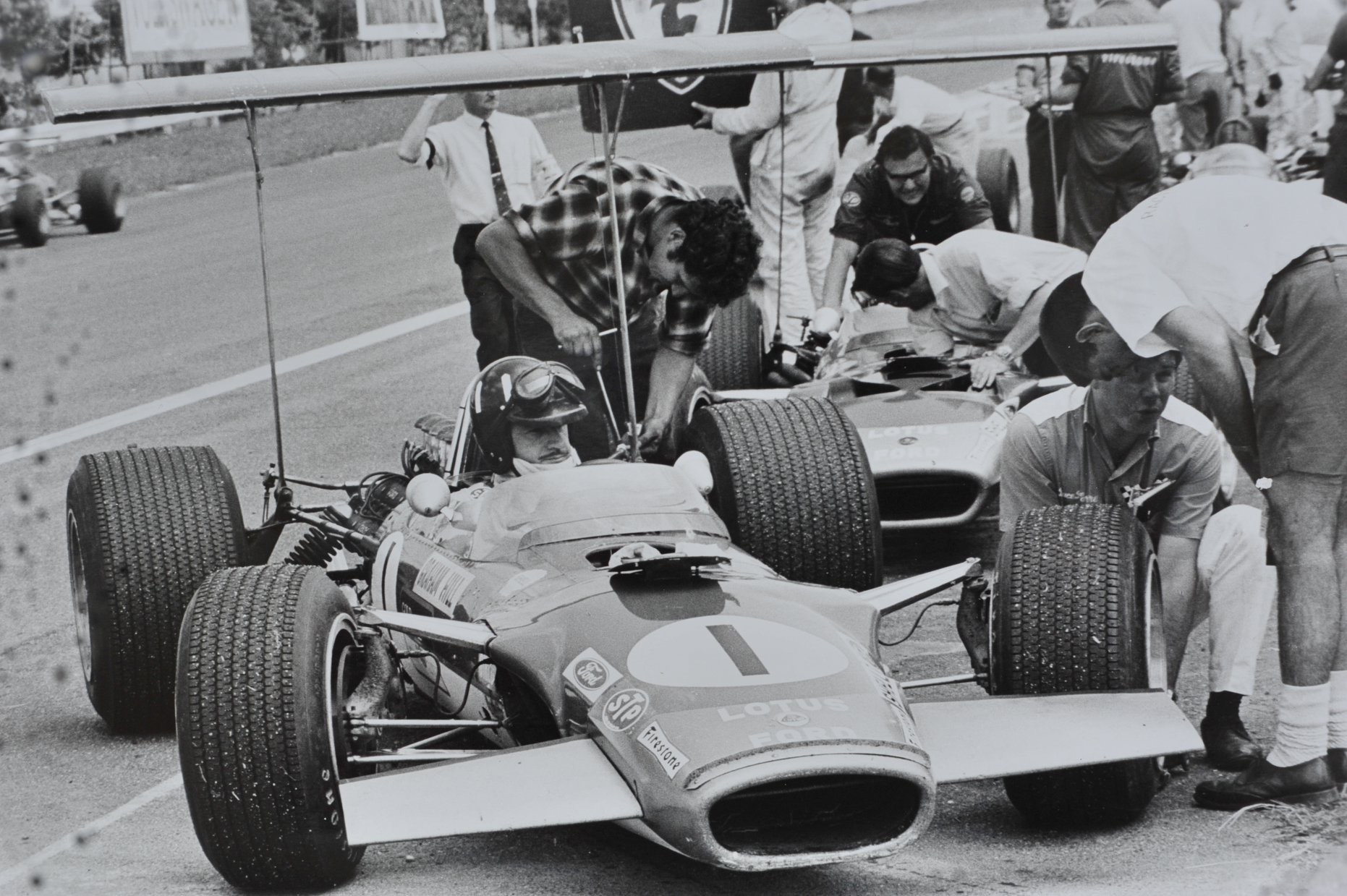
Jack Brabham aboard his Brabham BT24/1 Repco ‘Streamliner’ in the Monza pitlane during the September 10, 1967 weekend.

Lanky Dan Gurney is at right keeping an eye on his old-boss, while Jo Ramirez, in the white pants/dark top, and the All American Racers crew, tend to Dan’s erotic Eagle Mk1 Weslake #103.

Brabham, Ron Tauranac and Repco-Brabham Engines nicked the 1966 F1 World Drivers and Constructors titles from under the noses of those who were a smidge quicker, but not as well organised or reliable as the Brabham and Hulme driven Brabham BT19/20 Repco 620 V8s.

They did it again in 1967, not that it was a lucky win. Their 330hp Brabham BT24 740 Repco V8 was all new; chassis, engine and major suspension components. They got the cars running reliably el-pronto, aided and abetted by blooding the new exhaust-between-the-Vee cylinder heads during the Tasman Cup; both drivers used 2.5-litre RBE640 V8s throughout New Zealand and Australia.

Lotus ran them close of course. Colin Chapman’s Lotus 49 chassis – in truth little different to his 1966 Lotus 43 – was powered by the new 400bhp Ford Cosworth 3-litre V8, rather than the heavy, unreliable 3-litre BRM H16 engine fitted to the 43.

Driven by a couple of champs in Jim Clark and Graham Hill, they were mighty fine, quick cars, but not in 1967, reliable enough ones. That would come soon enough, of course…

Brabham, all enveloping rear body section clear (MotorSport)
Ron Tauranac, Keith Duckworth and Denny Hulme swap notes. “Have you really only got 330bhp Ron?” (MotorSport)

As Lotus and Cosworth Engineering addressed engine reliability, Brabham and Tauranac tried to squeeze more speed from Ron’s small, light BT24.

There was only so much Repco Brabham Engines could do with the SOHC 740 Series V8, they were busy just keeping up with routine rebuilds for the two BRO cars. As the year progressed the Maidstone, Melbourne crew explored the 850 radial-valve V8 as their ’68 F1 engine, and then, having spent way too much time flogging that dead-horse, on the definitive, but way-too-late 860 DOHC, four-valve V8. Click here for a piece on the RBE740; ‘RB740’ Repco’s 1967 F1 Championship Winning V8… | primotipo…

The aerodynamics of the BT24 was another thing entirely of course. That was within Ron and Jack’s control. If MRD could just make the car a little bit more slippery through the air, maybe an extra 500revs or so would make the difference between race wins, and not.

By the time the team got to Monza on September 7, the cocktail of goodies tried on Jack’s BT24 included the all-enveloping windscreen used on an F2 BT23 earlier in the year, all-enveloping bodywork extending right back beyond the endplate of the Hewland DG300 transaxle, and spoilers which were tried either side of the car’s nose, and alongside the engine. Remember, the Chaparral inspired explosion of wings in F1 occurred in 1968.

Rear spoiler, Monza (MotorSport)
Note the winglets or spoilers, Jack’s nosecone at Spa in mid-June 1967 (MotorSport)

Jim Clark started from pole, with 1:28.5 secs, ahead of Jack on 1:28.8, then Bruce McLaren, Chris Amon and Dan Gurney in BRM, Ferrari and Weslake V12 engined cars, then Denny in the other BT24 on 1:29.46.

Jack could have won of course, but the equally foxey John Surtees out-fumbled him in the final corners, bagging a popular win for the Honda RA300 V12. Denny retired with over-heating so the championship – ultimately decided in his favour – was still alive, with races in the US and Mexico to come.

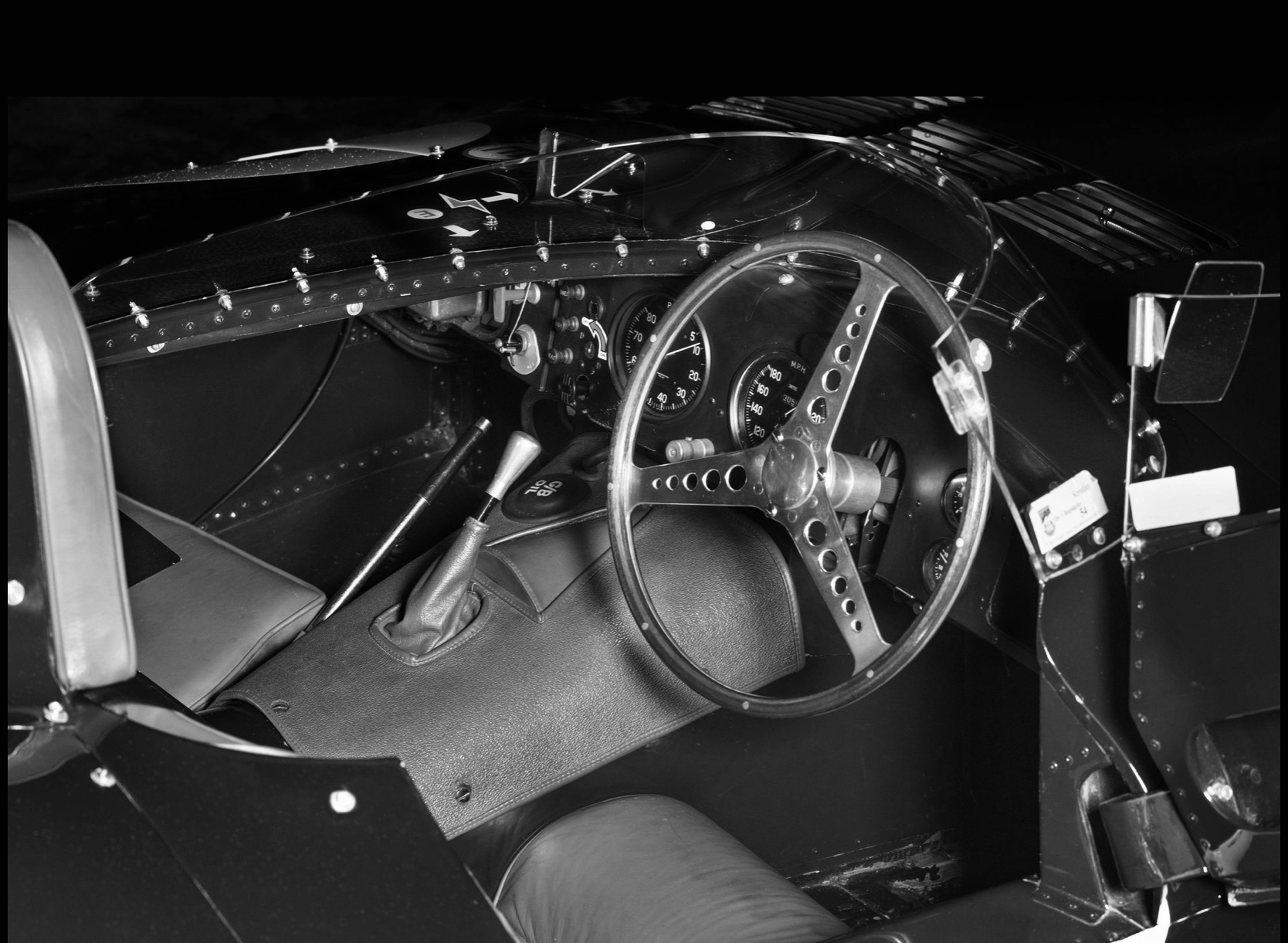
The office of BT24-1, Jack’s car. The Varley battery is in the aluminium box beneath the driver’s knees (MotorSport)

One of my favourite Grand Prix cars, the BT24, was just enough of everything, the sheer economy of the car always strikes me. See here for my last rave in relation thereto; Give Us a Cuddle Sweetie… | primotipo…

It was the first time Ron had designed an all-new F1 chassis since BT3 way back in 1962. Beautiful details abound, not least the new cast-magnesium front uprights first fitted to Jack’s BT23A Repco, his ‘67 2.5-litre Tasman Cup mount, in late 1966, the Alford & Alder/Triumph Herald uprights used hitherto were finally cast aside.

Hulme’s BT24/2 during the British GP weekend (MotorSport)
Feel the noise…Monza pit action. Brabham and Denny behind him in the distance. The queue by the Armco is headed by Mike Spence’ BRM P83 H16, Chris Amon’s Ferrari 312, perhaps then one of the Cooper Maseratis (MotorSport)

BT24/1 debuted at the same race meeting, Zandvoort 1967, as the Lotus 49 Ford DFV, albeit Jack raced BT19, his ’66 championship winning chassis. Jim Clark won famously on the debut of an engine which set the standard for a decade and a half, more if you include its many derivatives.

Denny’s BT24/2 was ready at Le Mans, when Brabham and Hulme delivered the old one-two, with The Boss in front. Clark won at Silverstone, before another BT24 one-two with Denny ahead of Jack. At Mosport Jack won from Denny. Hulme won at Monaco in May (his first championship GP win), so led the championship by nine points from Jack, with Jim further back. Clark dominated the balance of the season, winning at Watkins Glen and Mexico City, but Denny’s two third placings won him the drivers title and

Those with F2 knowledge will recall that Frank Costin’s Protos Ford FVA raced with a cockpit canopy akin to Brabham’s in 1967. BT24/1 here, again at Monza. Whatever the straight-line benefits, Jack simply couldn’t place the car as he wanted given the difficulty of seeing thru the canopy (MotorSport)
If I knew how to use Photoshop I’d get rid of ‘boots’, but I don’t…BT24/1, ain’t-she-sweet (MotorSport)

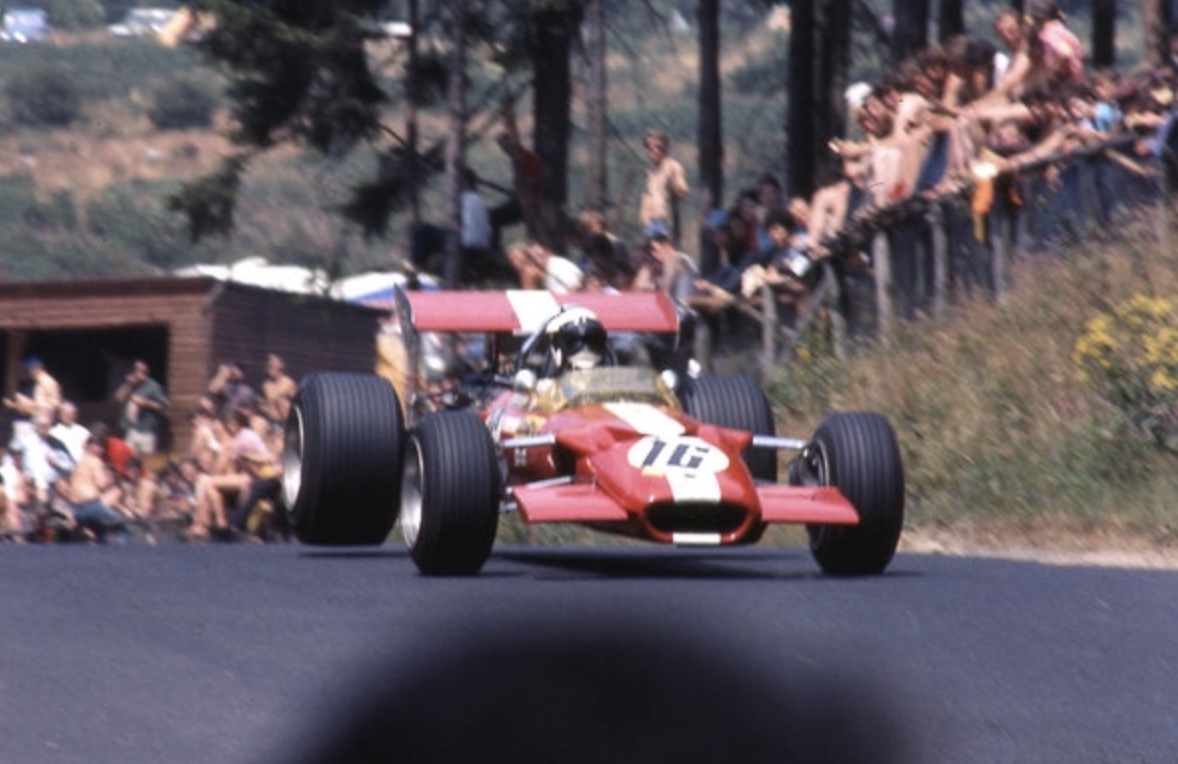
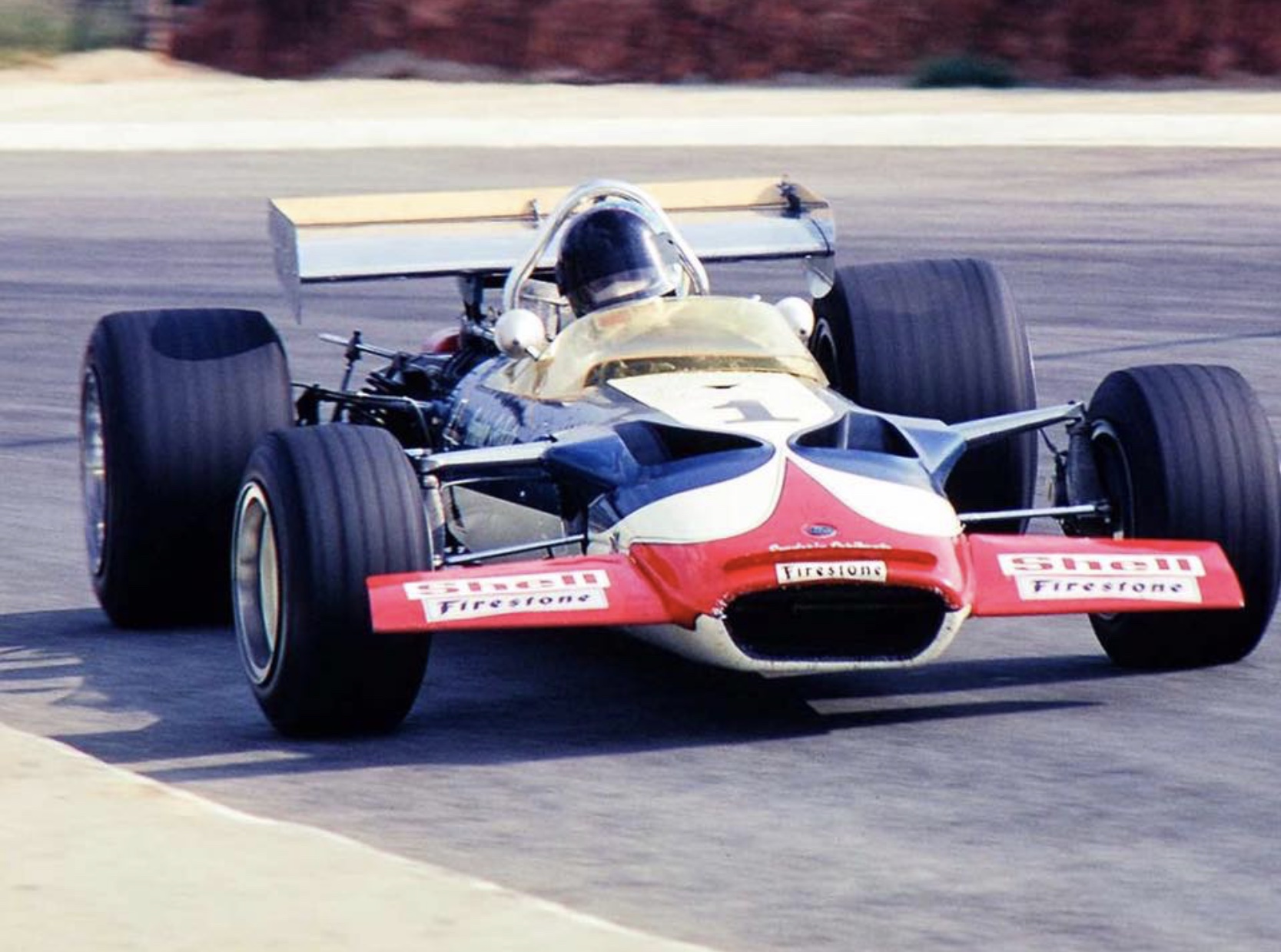
BRO sold the cars to South Africans, Basil van Rooyen (BT24/1) and Sam Tingle (BT24/2) after the end of the season. When it became clear that Jochen Rindt’s 1968 BT26 was running late, he raced BT24/3 – which first appeared at in practice, at Monza in September 1967, carrying #16T – in some of the early races of 1968. He raced BT24/2 at Kyalami (Q4 and third), and BT24/3 at Jarama (Q9 and DNF oil pressure) and Monaco (Q5 and DNF accident), before Dan Gurney had a steer at Zandvoort (Q12 and DNF throttle).

The final works-gallop of a BT24 was Jochen’s use of BT24/3 during practice over the British GP weekend at Brands Hatch in July. Before you pedants have a crack at me, for the sake of completion, German ace, Kurt Ahrens, raced the BRO tended, Caltex Racing Team entered, BT24/3 to Q17 and 12th place at the Nurburgring in 1968. Brabham BT24 chassis anoraks should click here; Brabham BT24 car-by-car histories | OldRacingCars.com

Threatening in an elegant kinda way. You can see what is being sought, ignoring the inherent streamlining difficulties of fully outboard suspension front and rear. Ron went to front inboard springs and rockers with the ’68 Indy BT25 Repco and ’70 F1 BT33 Ford (MotorSport)

Credits…

Magnificent MotorSport Images, Getty Images, Allen Brown’s oldracingcars.com

Tailpiece…

(MotorSport)

Easy-peasy, two hands are for schmucks!

Denis Clive Hulme shows us how it’s done at the Parabolica; Denny’s elegant, sublime prowess for all to see. BT24/2 Monza 1967, ‘standard’ bodywork.

Finito…
(MotorSport)

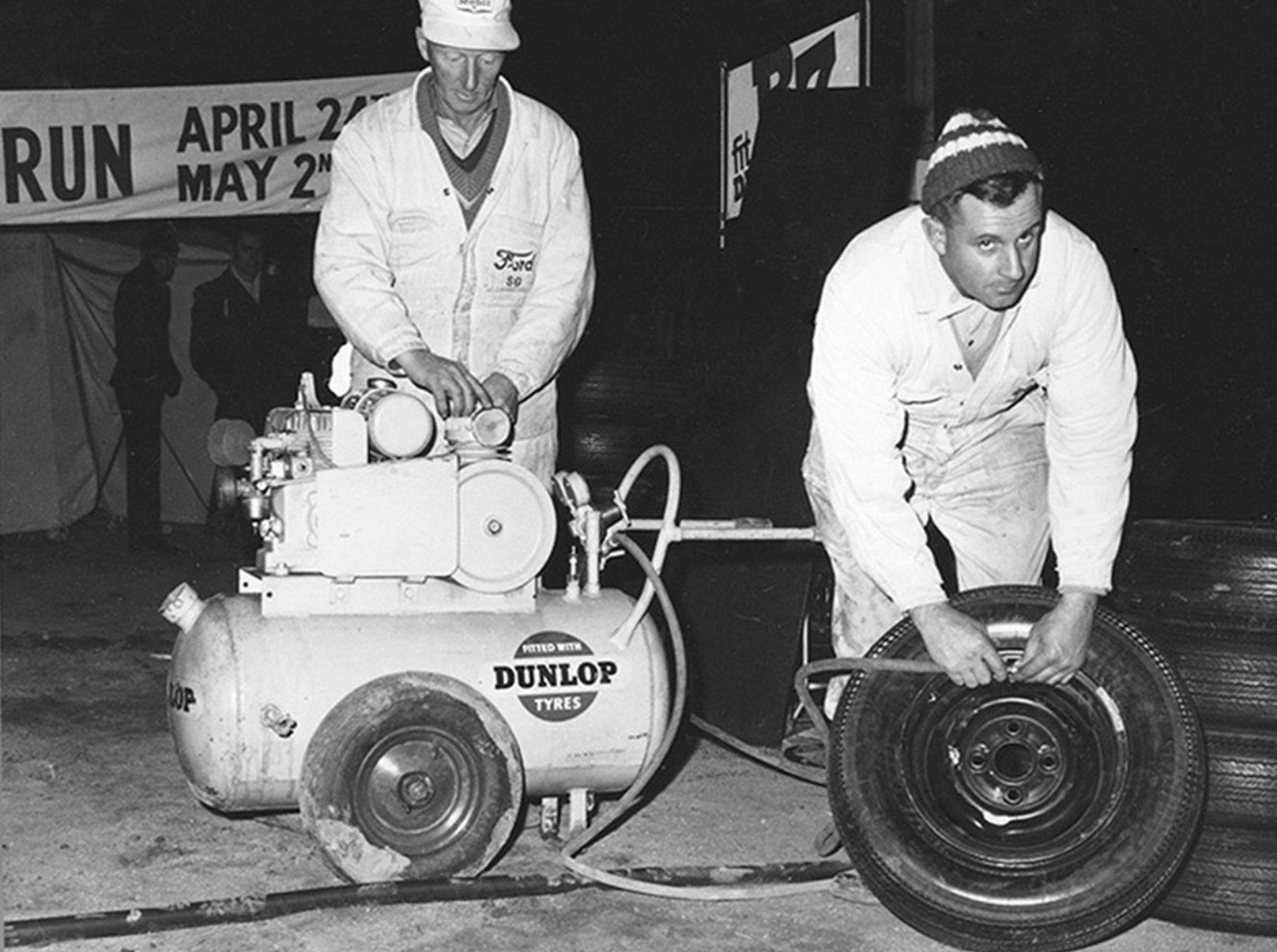
Beautiful shot of the great South Aussie in the Embassy Hill Lola T370 Ford during practice for the 1975 Swedish Grand Prix at Anderstorp.

It’s been a great pleasure working with Vern over the last month or so on a two-part ‘Living Legends’ feature in Auto Action, click here to buy the first one; AUTO ACTION 1827 – Auto Action

He is an ace-bloke with a career of great diversity; Karts, Formula Ford, Formula Atlantic, F2, F1, Indycars, Sportscars inclusive of a Le Mans win, not to forget a few taxi-races, team ownership and an amazing, but ill-fated Supercar manufacturing phase.

I’ve had a crack at him before in a couple of small bites, here; In Short Pants… | primotipo… and here; Singapore Sling with an Elfin Twist… | primotipo… oh, yes, this one in a Macau GP context too; Macau Grand Prix… | primotipo… Oops, more here too; 1977 Macau Grand Prix… | primotipo…

Success in various Formula Fords in 1969-1970 propelled him into a works FF Palliser in mid-1970, and in 1971, Formula Atlantic rides; he won the very first Formula Atlantic championship in the world, the British in 1971.

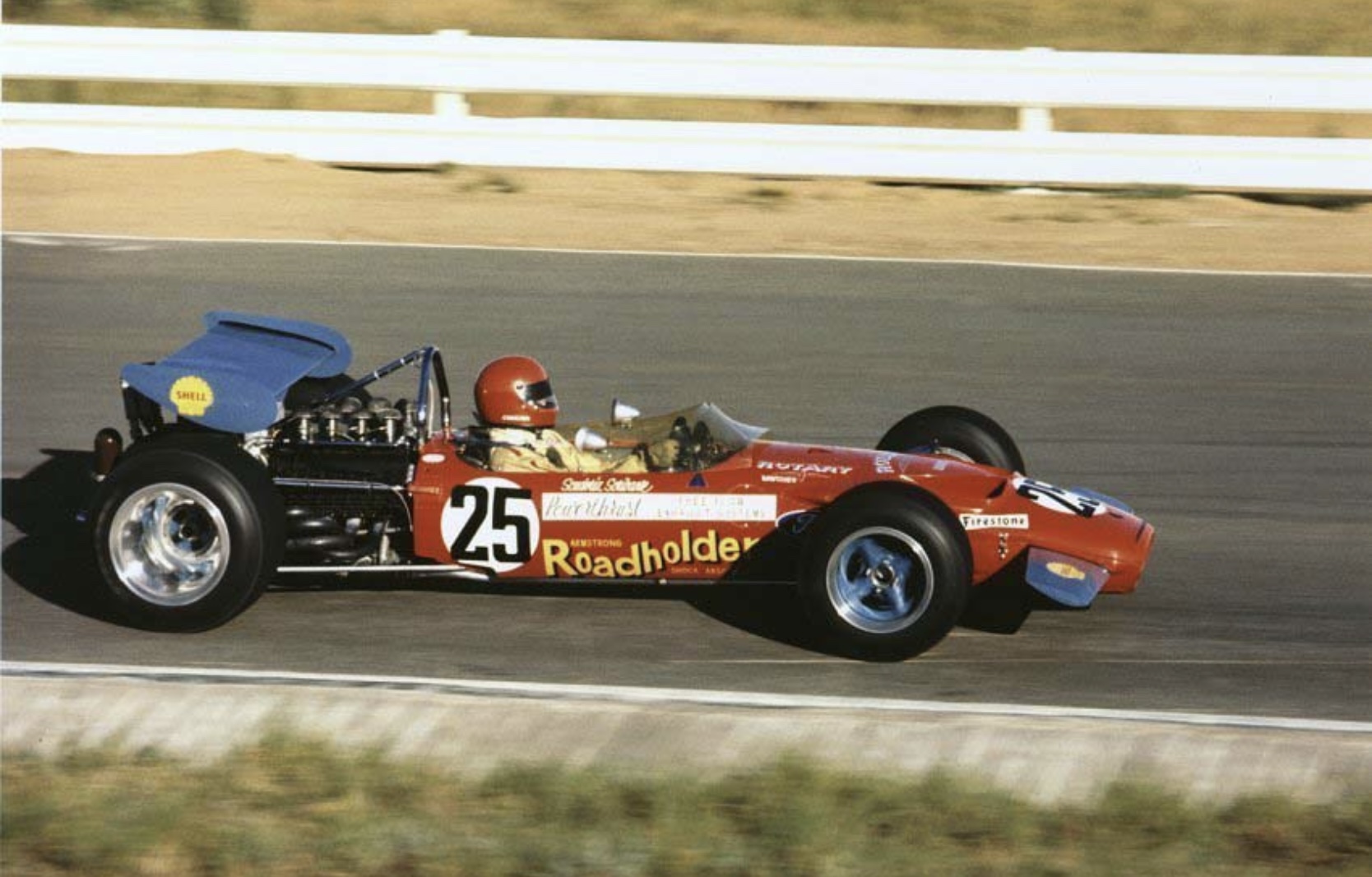
Schuppan, Palliser WDB4 BRM-Ford twin-cam at Brands Hatch on March 7,1971. He won the first round of the British Championship. I think it’s Graham Eden, Chevron B18C alongside, and #25, or perhaps #35 is not listed on my results site (V Schuppan Collection)

Of course it all started with karts in South Australia, here carrying the #1 plate, with loads of brio and intent on display, as State Champion at Whyalla, circa 1966.

Schuppan, March 722 Ford BDA F2 with Falconer body during the Rothmans 50000 at Brands Hatch in 1972 (V Schuppan Collection)

Schuppan’s March 722 (chassis 40) was bought for him by Marlboro, BRM’s sponsor, the March was to keep him busy, to supplement limited F1 drives in 1972.

He raced it in both Formula Atlantic and F2 guise in Europe and Asia. Notable victories include four British FA rounds in 1972, the 1973 Singapore GP (Ford twin-cam) and 1974 Macau Grand Prix. Teddy Yip became a long-term Schuppan sponsor, he bought the car circa 1973. Apart from Schuppan, it was raced by such notables as Alan Jones, Derek Daly, Patrick Tambay, and, when quite long-in-the-tooth, in 1981 by Roberto Moreno who raced it after boofing his Ralt RT4 in practice.

Here it is above in Dennis Falconer bodied, big-tank Formula Libre guise during the August 1972 Rothmans 50,000 500km libre race at Brands Hatch.

£50,000 was a huge prize-pool, 58 cars attempted to qualify, 30 raced with F1 cars in the top-five. Emerson Fittipaldi was up front in a Lotus 72D Ford. Vern qualified 20th in the F2-spec March, but he was the first retirement, on lap 10, after driveshaft failure.

Schuppan at Brands Hatch again, racing the March 722-40 Ford BDA. In box-stock 722 F Atlantic spec, probably on his winning way, April 16, 1972 (N Snowden)

Dennis Falconer was a Canadian born aerodynamicist employed by March who designed bodies for various smaller single-seaters. Ralph Hume worked for Vern in-the-day and describes the ever-changing modifications to keep the 722 competitive.

“Vern’s 722 was updated for 1973 with a wide nosed body kit developed by Falconer and raced in this form in England and the far east. The body was great on handling circuits but slow on fast ones. It was on the front row of an F2 race at Oulton Park and at the next race at Hockenheim we struggled for straight-line speed.”

“The body kit further evolved in 1974 to narrow nose and wings, we did a few Atlantic races in this form. At the end of the year we fitted a modified March 732 body and narrow track 732 suspension. We spaced the nose forward about 300mm and added a splitter but retained the side radiators. At the back we fitted a tweaked Lola T360 (F Atlantic) wing.”

“It’s first race in this spec was at Macau, out-of-the-box it was great. Vern put it on pole, and won the race. The car stayed at Macau and in subsequent years was raced by guests of Mr Yip…” as described above. For many years the March has been in the Macau Car Museum.

Same car folks, 722-40 in 1980, Vern was fifth at Macau behind three modern Ralt RT1s, and a March 79B. At this stage the car is described as a March 722/76B Ford BDA

Credits…

MotorSport Images, Vern Schuppan Collection, Nigel Snowden, Getty Images, Ralph Hume on tentenths.com

Tailpiece…

Brian Hatton’s cutaway of Eric Broadley’s Lola T370 Ford Cosworth DFV 3-litre V8, a quintessential British kit-car of the period

Finito…

(Ullstein Bild)

On July 28, 1935 Tazio Nuvolari defeated nine superior Silver Arrows over 22 laps, 312 miles, on the challenging, treacherous, Nurburgring in an outclassed 265bhp Alfa Romeo Tipo B/P3 during the German Grand Prix…

The foreboding, moody image above shows seventh placed Hanns Geier’s Mercedes Benz W25A 3.4-litre 302bhp straight-8 supercharged (s/c). He is ahead of one of four Auto Union B Types in the race, these machines powered by 5-litre 375 bhp V16 s/c motors.

Overnight, thousands of spectators arrived in the Eifel Mountains, what greeted them on race morning was fog and light, misty rain. It rained progressively harder as the 11am start time approached, then stopped not long before the off.

(unattributed)

In front of some 300,000 spectators, Rudy Caracciola led initially in a Benz W25B 4-litre 370-430 bhp for the first nine laps, with Nuvolari in second after one lap aboard his 3.2-litre straight-8 s/c Alfa. He fell back after a lap two spin at Bergwerk. At this stage of the race Bernd Rosemeyer, AU mounted, broke the lap record in his chase of Rudy, but he was unable to close the gap completely.

Rosemeyer then spun into the Breidscheid ditch, and arrived well back then went into the pits with a wobbly rear wheel and a throttle linkage jammed with mud. The only Alfa left in the race at the end of lap six was Nuvolari in fifth place.

Tazio made up time in the winding and downhill sections where the greater engine power of the German machines could not be successfully deployed. Nuvolari then passed Von Brauchitsch, Mercedes W25B for third on the outside of the Karussell, Brauchitsch regained the place on the following lap.

What a drive – one of the greatest in the opinions of all who matter (unattributed)

Caracciola still led on lap nine, but Tazio was now within eight seconds of him, and passed him on lap 10. The first four cars were then covered by just over 10 seconds, and the three Silver Arrows by only a few metres; the order was Nuvolari, Caracciola, Rosemeyer, and Brauchitsch.

The top three cars pitted on lap 11, Nuvolari’s stop was a shocker, the mechanics, in their excitement, broke the refuelling pump handle! He lost one minute 27 seconds to his competitors, the order at the end of lap 12 was the Luigi Fagioli Merc W25A, Brauchitsch Merc, Rosemeyer AU, Caracciola Merc, Stuck AU B-Type, and the Nuvolari Alfa.

At the end of the following lap the order was Brauchitsch, Rosemeyer, Caracciola and Nuvolari. Rosemeyer pitted at the end of lap 13 to address his throttle linkage, which was still binding, that must have been somewhat of a problem in a car of power on those tyres in such greasy conditions – this put him out of contention. Von Brauchitsch led on laps 14, 15, 16, 17, 18, 19, 20 and 21- with Nuvolari second from lap 15.

“The German had to pay for his tyre-murdering style of driving,”when the left rear tyre came apart on lap 22, only nine km from the finish. Nuvolari passed Von Brauchitsch, stricken Mercedes, heading towards a well-deserved victory for Alfa Romeo.” Stuck’s Auto Union was second, ahead of Caratch, Rosemeyer and Von Brauchitsch with his Mercedes on the rim in fifth.

Whilst the crowd cheered, the win it was not quite so popular with the Nazi mob present…

Credits…

Ullstein Bild, race report summary by Hans Etzrodt on Kolumbus.fi

Finito…

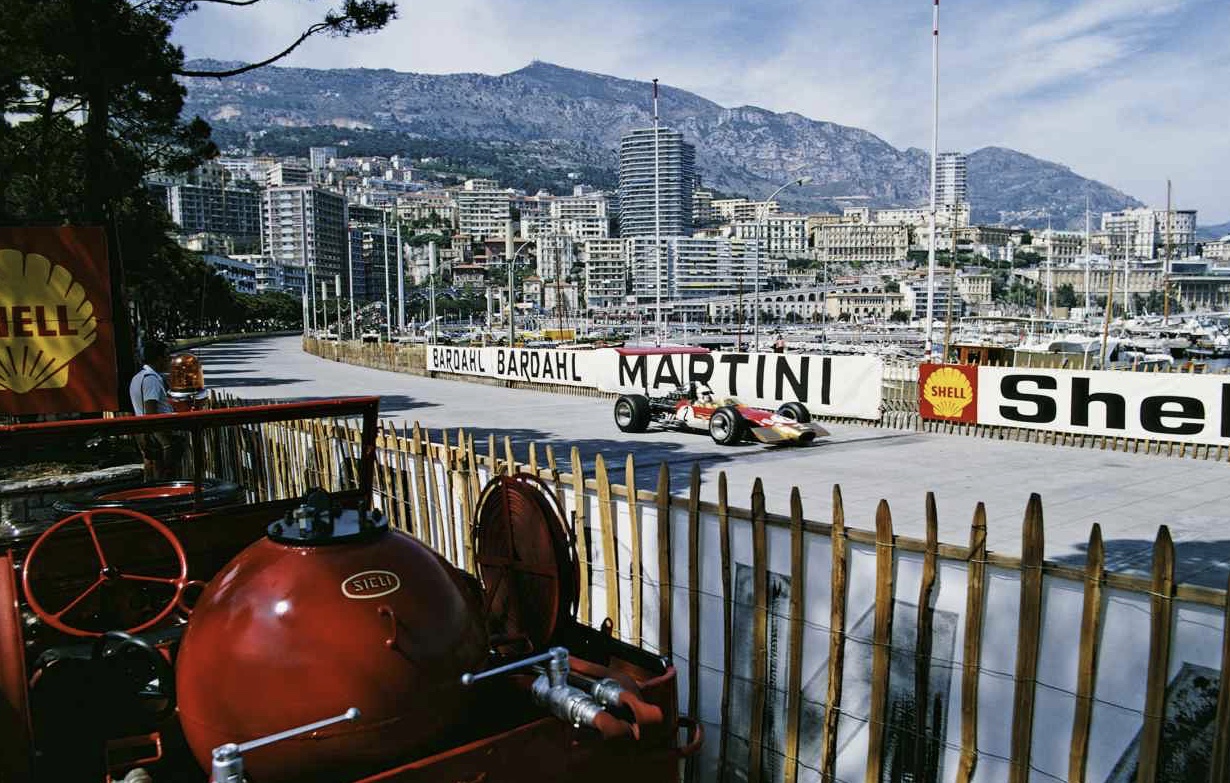
It’s amazing given that the Monaco quayside was unguarded for so many decades, that only two drivers took involuntary Monte Carlo Harbour dips, Ascari, aboard a Lancia D50 in 1955, and Hawkins in a Lotus 33 Climax a decade later.

The Australian was still making his name, while Ascari was at the top of his game, and enjoying somewhat of a renaissance at the wheel of Vittorio Jano’s masterpiece. The fates of both Monaco bathers were similar, both died aboard sports-racers. Poor Ascari in a pointless testing accident aboard a Ferrari 750 Monza at Monza on May 25, 1955, only three days after Monaco. Hawkeye died a grisly, fiery, probably component failure caused death aboard a Lola T70 Mk3B Chev at Oulton Park on May 26, 1969.

Paul Hawkins in the ex-Clark/Spence Lotus 33 Climax R8 early in the 1965 Monaco GP (MotorSport)
Alberto Ascari, Lancia D50 ahead of the Maserati 250F shared by Jean Behra and Cesare Perdisa. Monaco 1955 (unattributed)

In 1955 Ascari inherited the lead after the Mercedes W196 duo of JM Fangio and Stirling Moss dominated the first half of the race; Fangio retired with transmission trouble, then Moss blew an engine on lap 80. Ascari approached the chicane too quickly – perhaps distracted by crowd reaction to Moss’ retirement, or the lapped Cesare Perdisa behind – and burst through hay bales and sand bags into the harbour, having missed a huge steel bollard by only centimetres.

The Lancia bubbled to the bottom of the harbour while the crowd were mesmerised with fear for his safety, only three seconds passed before Ascari’s familiar blue-helmet appeared above the surface. He was taken aboard a boat, with a broken nose, but otherwise ok.

Ascari a split second before his swim (unattributed)
One shaken and plenty stirred Lancia D50 being recovered from the depths after the race (MotorSport)

Lancia had given dispensation to Ascari to race a Ferrari 750 Monza with his friend, Eugenio Castelotti in the Monza 1000km on May 29. Ascari travelled to Monza only to watch Castellotti test the car, then decided late in the day to do a few laps wearing jacket, tie and Castellotti’s helmet. On his third lap he inexplicably crashed on the high-speed Curva del Vialone, he died within minutes of having been thrown out of the somersaulting car.

All of Italy grieved.

Tin Tin Ascari cartoon

Wonderful Alberto Ascari portrait from El Grafico, an Argentinian magazine. 1950 Ferrari 125

British Boys Own Character – WW2 Spitfire pilot, highly credentialled amateur racer and man of independent means – James Richard ‘Dickie’ Stoop (July 30, 1920-May 19, 1968) acquired the first Lotus 33, chassis R8, for Paul Hawkins use in early 1965. See here for its history; Lotus 33 R8 race history | OldRacingCars.com

The Equipe’s first race was at the Sunday Mirror Trophy at Goodwood in mid-May, there Hawkins started from the rear of the grid after mechanical dramas which continued in the race, he was out after one lap with oil scavenge problems. Jim Clark won in a Lotus 25 Climax.

The BRDC International Trophy followed at Silverstone a month later. He had a better weekend, qualifying on the second last row and finishing tenth, up front was Jackie Stewart’s BRM P261 and John Surtees Ferrari 158.

Then it was off to Monte Carlo for Hawkins’ championship debut.

He qualified the car 14th and was running well, then, on lap 80 (of 100) he clipped the barrier on turn-in, causing the car to turn sharp-left – between the bollards, exactly as Ascari had managed – then sank 10 metres to the bottom. “Only when it settled on the bottom and rescue divers arrived did Hawkins extricate himself, take a huge gulp of air from the proffered mouthpiece and rocket back up to the surface,” John Smailes wrote.

The elegance of simplicity belies the deep underlying insights of Lotus 25/33 conception. Paul Hawkins flat-chat in R8 at Monaco in 1965 (MotorSport)
It ain’t perfect, but David Hudson’s shot catches Hawkins mid-flight just before splashdown (MotorSport)

“He’d had the extraordinary presence of mind to hit the engine kill-switch just as the car entered the water, saving the very expensive motor owned by the very poor team from instant destruction. It was dried out and used again in the following Grand Prix.”

R8 recovery post race. That the car is upside down makes you wonder if that is the way it settled on the bottom of the harbour. And therefore that Hawkeye made his escape on the way down – which cannot have been easy (Getty)

Well, not quite actually! While Paul was ok, the team missed both following GPs at Spa and Silverstone while the car was dried out, and carefully made-good, before reappearing at the Nurburgring on August 1.

Paul again failed to finish, having qualified 19th, he was out with undisclosed mechanical dramas after four of the 15 laps.

It was the final race for Paul aboard R8, Stoop sold it to MGM for a planned film, it then passed via Jo Siffert to Sweden’s principal museum of modern art, the Moderna Museet in Stockholm, where it remains as a prized exhibit. 

No shortage of comedians during the German GP weekend. R8 looks no worse the wear for its dunking two months before! (MotorSport)
Paul Hawkins at right, with fellow Porsche colleagues, Huschke von Hanstein, and co-driver Rolf Stommelen, after winning the 1967 Targa Florio in a Porsche 910 (MotorSport)
Dickie Stoop aboard his Porsche 911S at Snetterton, March 24, 1968 (MotorSport)

Etcetera…

Dickie Stoop : Autosport Obituary May 24, 1968.

“It is very sad to have to record the death during a club meeting at Croft last Sunday of Dickie Stoop. Apparently Dickie suffered a coronary thrombosis and died at the wheel of his Porsche 911S, which veered off the track into the bank.

James Richard Stoop had been an amateur racing driver of considerable standing for many years. His first race was the supporting F3 event at the Daily Express Silverstone in 1948, when he drove a GS1, and over the last 20 years he campaigned many types of car, but remained faithful for most of his racing to the marque Frazer-Nash.

He competed at Le Mans no fewer than 10 times: in 1950 he was 9th overall and won the 2-litre class, in 1951 he was 19th and in 1955 he was 10th. In 1958 he drove the works spaceframe AC into 8th place, again winning his class. He also took part in long-distance racing at Spa, Rouen, Montlhery and elsewhere, and in 1964 was 3rd overall in the Rand 3 hours co-driving Peter Sutcliffe’s E-type.

He performed prolifically in club racing, not only in Frazer-Nashes but also in triumphs, Healeys, a D-Type Jaguar and a Lotus 11. He also drove a Formula 2 Cooper in the late ‘50s, and with the passing of Frazer-Nash line he transferred his loyalties to Porsche. His successive Type 356 Carreras, registered YOU 4 and 5 HOT, brought him a lot of wins; having been co-victor in the 1959 Autosport Championship with the Sebring Frazer-Nash, he won the Autosport 3 hours at Snetterton the following year in YOU 4 after a tremendous battle with Chris Summers’ Elite, won his class in 1961, and then won the 2-litre division of the championship in 1962 and 1963. He also had a few races with an RS60 Porsche Spyder, and in 1964 drove a 904.

More recently he had concentrated on club production sports car racing with his silver 911S Porsche, also registered YOU 4; this car was a frequent class winner. A retired RAF officer, he was only 47.”

Credits…

MotorSport, Getty Images, Allen Brown’s Oldracingcars.com, ‘Formula One: The Australian and New Zealand Story’ John Smailes

Tailpiece…

Alberto Ascari chases teammate Eugenio Castellotti, superb MotorSport image, Lancia D50s, Monaco 1955.

Finito…
(R Schlegelmilch)

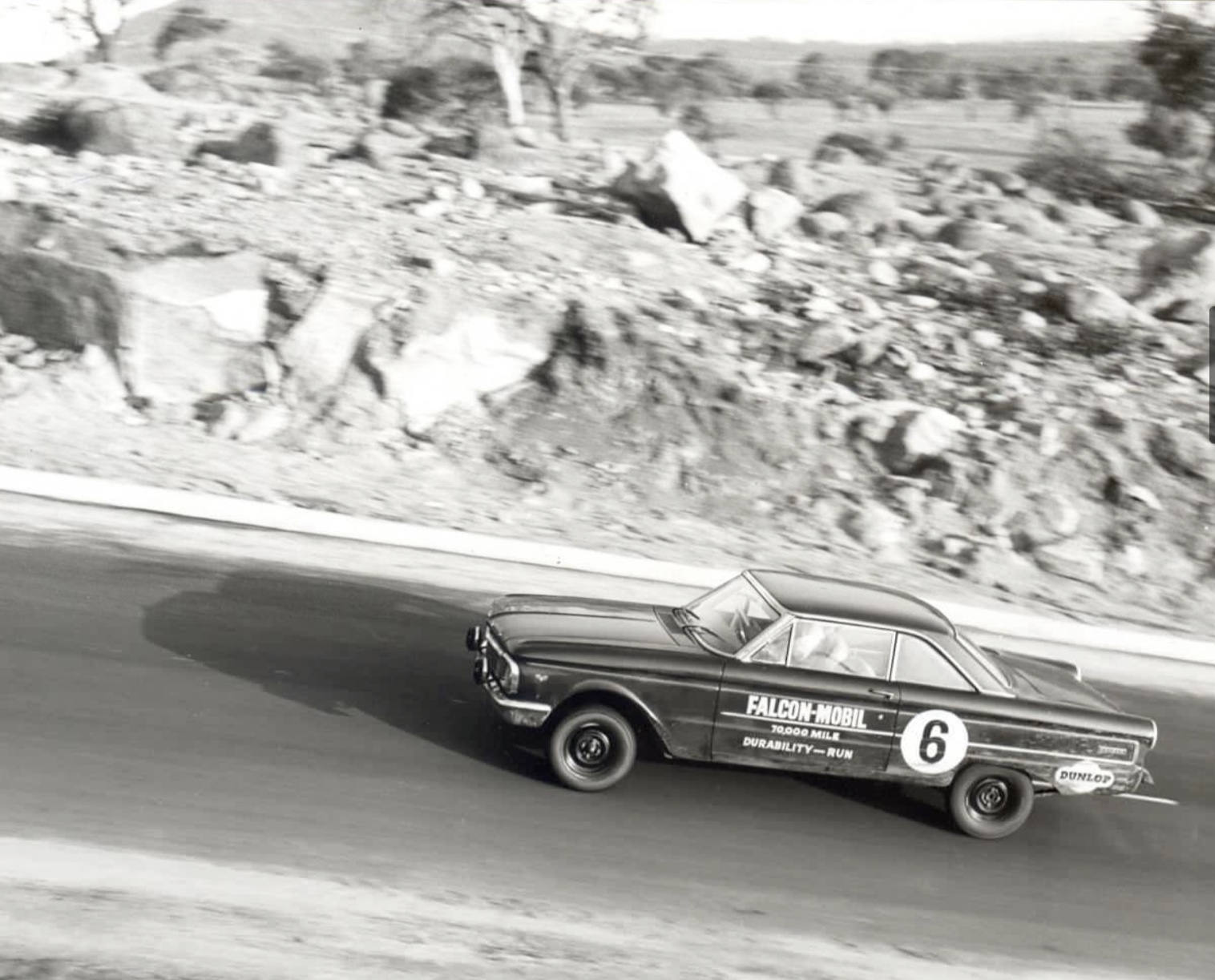
David Walker lined up for the final of the Monaco F3 GP, May 22, 1971.

He won his heat and the final in a race which was something of a metaphor of an incredible season aboard his works Lotus 69 Novamotor-Ford 1.6. Giancarlo Naddeo, Tecno 69 Ford was second, and Patrick Depailler’s Alpine A360 Renault, third.

The grid that year also included Steve Thompson, Jean-Pierre Jabouille, Roger Williamson, Rikki Von Opel, David Purley, Bob Evans and Francois Migault.

Walker’s F3 year included wins at Silverstone and Cadwell Park in April, Brands Hatch, Zandvoort (Dutch GP F3 race) and Oulton Park in May, and Silverstone in June. Early July brought victory in the French Grand Prix support race at Paul Ricard. That month got better with a win at Croft which ensured the Sydneysider was razor-sharp over the British GP weekend at Silverstone, Walker also won that blue-riband support event.

But there was no break for the team, the following day he won the the Cadwell Park BARC British F3 Championship round. August yielded wins at Thruxton and Croft, while Mallory Park fell to Walker in September and Snetterton in October.

Dave Baldwin’s F3 Lotus 69 design (there were also F2, FB and FF 69s) had a spaceframe chassis based on his Lotus 59, disguised with the bodywork and beefed up front suspension of the 69 F2 car. 1.6-litre Novamotor Lotus Ford twin-cam, Kugelfischer injected via air restrictor Walker again at Monaco (R Schlegelmilch)
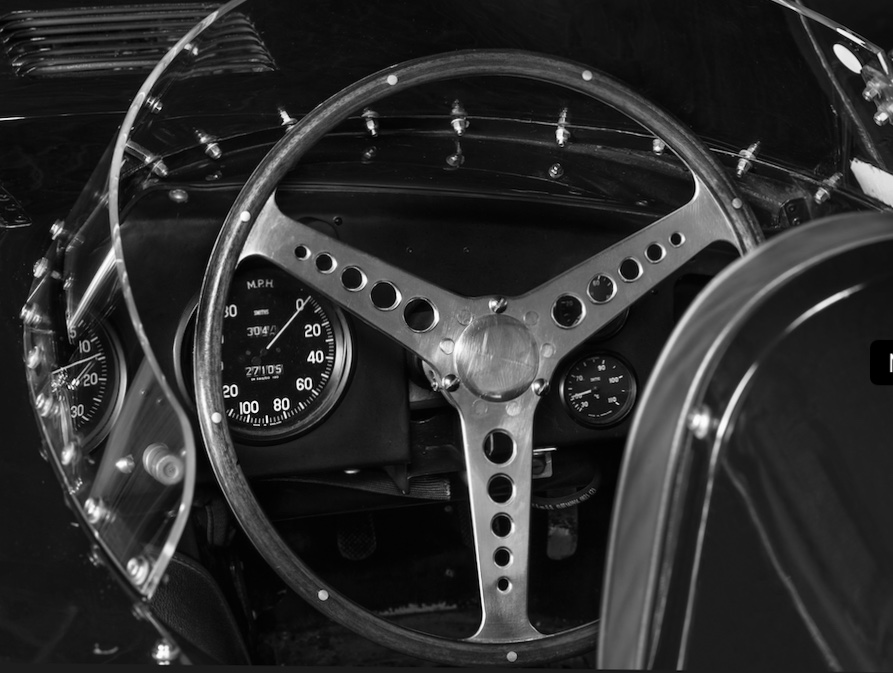
Oh-so-period cockpit! Leather bound wheel and a dash full of Smiths instruments. Wonderful. Monaco (R Schlegelmilch)

In one of the most dominant ever seasons of F3 racing Walker won most of the big races and two of the three British F3 Championships – the BRSCC/MCD and BARC – with Roger Williamson taking the other, the BRSCC/MCD Lombard.

For the sake of completeness, Walker’s season commenced with the ‘Torneio Internacional de Formula 3 do Brasil’ (Brazilian F3 championship) run at Interlagos and Taruma during January.

Dave raced his (1970) works Lotus 59A Ford to third, second, 12th and first in the four round series, placing third overall behind Wilson Fittipaldi and Giovanni Salvati in Lotus 59A, and Tecno TF70 respectively.

Walker, Lotus 59A Holbay Ford, (1-litre 100bhp ‘screamer’) Interlagos, Brazil, January (FL Viviani)

Walker was the most successful of the 1971 Gold Leaf Team Lotus drivers, Emerson Fittipaldi and Reine Wisell had a lean year in Grand Prix racing, Lotus failed to win a GP for the first time in over a decade.

F1 proved a much harder nut for Walker to crack, and that story is a good deal more nuanced than most pundits would have you believe…one for another time.

Walker during a much tougher 1972

Credits…

Rainer Schlegelmilch, Fabio Luiz Viviani https://www.flickr.com/photos/146683351@N05/, F2 Index, Allen Brown in Oldracingcars.com

Tailpiece…

Finito…
sebring e type

Sebring 1970, marvellous composition by Bill Warner

Read the rest of this entry »

(Terry Marshall)

Dennis Marwood tries to focus on the job at hand while the 2.30pm Pukekohe-Auckland express rattles past: New Zealand Grand Prix, Pukekohe, January 8, 1966.

He did well too, placing his ex-works Cooper T66 Climax 2.5 FPF – chassis FL-6-63- fourth in the race won by Graham Hill, from Jackie Stewart aboard works BRM P261s, and Jim Palmer racing the ex-Clark Lotus 32B Climax.

Cooper’s best F1 days were well-past by 1963 when the spaceframe T66 was designed and built by Owen Maddock and his Surbiton team. An advance on the prior T60, the car was still a mid-grid machine despite being lighter, stiffer and slimmer. Driven by Bruce McLaren and Tony Maggs, McLaren’s second place at Spa was the team’s best result.

1964 was even grimmer, despite ’61 World Champ, Phil Hill, joining the squad. In a season of insufficient speed and lousy reliability, Bruce was seventh (5 retirements in 10 rounds), and Phil equal 19th in the World Drivers Championship. “Poor preparation, and indifferent engines supplied by Climax who now recognised Lotus as their major client and development partner, with Brabham next in line, cost them dear”, wrote Doug Nye.

Zeltweg vista. Phil Hill leads Jim Clark’s Lotus 33 Climax and Chris Amon, Lola (MotorSport)
Ooooh-sheeeet and Holy Moses, or thoughts to that general effect. Phil examines his fried Cooper while Bruce McLaren tries not to think of John Cooper’s reaction. Wonder who the visitor with the Qantas travel bag is? (MotorSport)
F1-6-63 doesn’t look too flash but chassis damage was minimal, so not too dramatic a repair for a crew of talented Kiwis…(socalclicker@esc)

Phil’s nadir was on the Zeltweg aerodrome, Austrian GP weekend where he crashed his Cooper T73 during practice, then repeated the dose on the same corner in his replacement machine, T66 F1-6-63, during the race, albeit this time component failure may have been the cause.

The car struck the wall of straw bales on the entry to the runway section of the track, rear suspension collapsed, and caught fire. Phil escaped quickly, unscathed while the car burned to a crisp in a spectacular, frightening display of pyrotechnics. Up front Lorenzo Bandini’s Ferrari 158 won a race of constantly changing fortunes.

John Cooper fired Phil, but they later kissed-and-made up allowing Hill to finish an awful season. His confidence was restored with some stonking drives aboard a Bruce McLaren Racing Cooper T70 Climax during the ’65 Tasman Cup.

Oopsie, Bruce Abernethy deals with a Cooper T66 moment during the 1965 NZ GP at Pukekohe, while Ken Smith takes to the track fringes in avoidance, Lotus 22 Ford 1.5 – Kenny still racing and just turned 80. DNF for Bruce, 12th for Kenny, Graham Hill won in the Scuderia Veloce Brabham BT11A Climax (unattributed)

While the Cooper had been ‘thoroughly-heat-treated’, the chassis was ok, and was quickly bought by visiting Kiwi, Bruce Abernethy, who shipped it home. It was repaired and modified by Bill Hannah at his Havelock North workshop to take a Coventry Climax 2.5-litre FPF four-cylinder engine, for Tasman racing, rather than the 1.5-litre Climax FWMV V8 with which it was originally built.

Abernethy negotiated a deal whereby the car was owned and raced by the Rothmans Driver Promotion Scheme (later Ecurie Rothmans). The team overseen by Rothmans boss, Ken Simich, MANZ and Pukekohe chief Ron Frost, and former Kiwi ace, Ross Jensen.

Abernethy had a poor season and was replaced by Paul Fahey, he had some good drives in the car but decided touring cars were more his thing. In mid-1965, Morrisville dairy farmer, Dennis Marwood was tested, along with two other drivers, and got the gig.

Marwood aboard T66 F1-6-63 during the January 1966 Lady Wigram Trophy (motat.nz)
In the best of company, Marwood being lapped by Graham Hill, BRM P261 during the 1966 Lakeside 99

Despite a touring car background, Dennis took to the challenging open-wheeler like a duck-to-water in his first drive in November 1965. He was immediately on the pace of the front-running locals in Gold Star events; second at Pukekohe in December.

During the ’66 Tasman Cup, his best results were a pair of fourths at Pukekohe and Teretonga from six races, including the Lakeside and Warwick Farm Australian rounds. Later that year he won the Pukekohe and Renwick Gold Star events – and again at Timaru in 1967, but reliability and budget issues got in the way of results. The team had only one, old FPF and suggestions to ‘buy some new tyres’ were rebuffed by Jensen.

Dennis aboard the Rothmans Cooper during the Pukekohe reverse-direction meeting, September 1966 (J Inwood)

Rothmans considered purchase of a more competitive 2.1-litre ‘Tasman’ BRM P261 V8 – mighty quick machines – but decided they had had enough and sold the car to Peter Maloney.

Marwood went into business with Ray Stone, in South Auckland based Performance Developments, and a stellar career in single-seaters and big tourers. Click here for more on Dennis; Tasman Cup F5000 Racing – Dennis Marwood – Jim Barclay

T66 F1-6-63 was restored and lives a sedentary life in New Zealand. Dennis Marwood (below) reunited with his old car, at Pukekohe in April 2009. Bob Harborow is alongside in the John Sheppard built Maybach 1 Replica, winner of the 1954 NZ GP in Stan Jones’ hands.

(jimbarclay.nz)

Etcetera…

Cooper T66 Climax FWMV V8 cutaway (B Hatton)

The Cooper T66 chassis remained a spaceframe despite the monocoque onslaught around it, not that such technology was a barrier to ongoing Brabham success. Of multi-tubular construction, the frame comprised 1 3/8 and 1 1/2 inch 18-gauge steel tubing with smaller transverse and diagonal members, plus triangulation of the corners of the cockpit opening. Mild sheet steel reinforcement was welded to the floor section between the front and rear bulkheads.

Suspension used Alford & Alder (Triumph) uprights, upper and lower wishbones at the front, coil spring/dampers and adjustable roll-bar. The rear used cast magnesium uprights, fabricated upper and lower – wide based – wishbones, coil spring/dampers and adjustable roll-bar.

Brakes were Girling disc, 10.25 inches/9.75 inches in diameter front/rear. Cooper cast magnesium wheels were 13-inches in diameter and 6/7 inches wide front/rear.

The F1 engine was the ubiquitous Coventry Climax FWMV 1.5-litre, DOHC, two-valve, Lucas injected circa 200bhp V8. In Tasman spec the equally ubiquitous Climax FPF 2.5-litre, DOHC, two-valve, Weber 58DCO fed four gave about 235bhp. The transaxle was Cooper’s own C65 six-speed.

Credits…

Terry Marshall, Allan Dick in Classic Auto News, ‘History of the Grand Prix Car’ Doug Nye, Jack Inwood, Gooding & Co, socalclicker@esc, Museum of Transport and Technology, oldracingcars.com, jimbarclay.nz, Brian Hatton

Tailpiece…

(Gooding & Co)

Montage of Phil Hill’s Zeltweg accident and lucky escape. This mix excludes the mighty conflagration which followed once the fire took hold, aided and abetted by the hay-bales, there with safety in mind…

It was only when poor Lorenzo Bandini – winner of this race – perished in a gruesome firey accident aboard his Ferrai 312 during the 1967 Monaco GP that haybales were finally excluded from the standard suite of race organiser safety precautions.

Finito…
Seasonal Salutations…

Posted: December 24, 2021 in Obscurities
(NAA)

You lucky bastard Santa, a Bondi Beach smorgasbord by the look of it.

This type of wanton abuse of the female form is unacceptable these days of course, but it was kosher in 1969, thankfully.

We are a multi-cultural lot over here, Christmas seems to be ‘celebrated’ by most of the religious brands, even those where it isn’t strictly part of the worship-regime.

Thanks for reading primotipo again this year, hopefully we – Bob King and I – have provided some solace from the dreaded Covid-lurgy.

I’m off to the beach for a few days armed with my just arrived Miller Bible, ‘The Miller Dynasty’ by Mark Dees. ‘Me mate, Big-Bad-Brucie bagged it on Ebay for $A260 – a snip he tells me. It’s the poverty pack First Edition, the ducks-guts Second Edition is more like $A800, hells-bells. All I’ve got to do is find somewhere to hide from she-who-must-be-obeyed for a few days. @ 527 pages, ’tis weighty and substantive.

Racing of a different kind at Albert Park! It’s a dropkick from my doorstep, most days start with a run or walk of the joint, roll on the April 10 Australian GP. Covid permitting…

Stay well all! And thanks.

Etcetera…

The Auto Action magazine dudes have created an Historics section within their website. You may find some of these digitised (what a painful process it is!) old articles of interest, the tab is here; Historics Archives – Auto Action Keep an eye on it, expect a couple of posts a week.

This 1974 one is a beauty by the late, great Phil Irving about ‘Production Based, or Free Design Engines’; PHIL IRVING : PRODUCTION BASED OR FREE DESIGN ENGINES? – Auto Action Bob Watson’s ‘Giovanni Bracco and the Lancia B20’ is an interesting piece about a bloke I knew little; GIOVANNI BRACCO AND THE LANCIA B20 – Auto Action One for the Maxi-Taxi fans is Tony Glynn’s wonderful technical appraisal/interview with Larry Perkins on the build of his/Peter Brock driven 1991 VN Holden Commodore Group A; PERKINS’ 1991 MOBIL 1 HOLDEN GROUP A COMMODORE BUILD – Auto Action This one by Heath McAlpine was published in 2018 upon the re-entry of the Ford Mustang to Australian racing; GALLOPING MUSTANGS – Auto Action

As I say, keep an eye on the website as articles will be uploaded every few days.

Credits…

National Archives Australia

Finito…

(Getty Images)

Evocative shot of Peter Collins in his Ferrari Dino 246, 1958 #246/002, during the July 1958 British Grand Prix at Silverstone.

He won the race by 24-seconds from Mike Hawthorn who took the World Drivers Championship that year, before perishing in ‘that’ road-dice with Rob Walker shortly thereafter.

I’ve done these cars to death, both front-engined F1 jobbies and their related mid-engined Tasman cousins, but another bunch of photos got the juices flowing again.

In an enthralling, tragic season, Luigi Musso died at Reims, then Peter Collins crashed fatally at the Nurburgring only weeks after Silverstone (in this same chassis) during the German Grand Prix. Vanwall, with whom Ferrari battled all year – winners of the Constructors Championship – also lost a driver at the season’s end when Stuart Lewis-Evans died of burns sustained at Ain-Diab in Morocco several days after the race.

(MotorSport)

This Moroccan GP start-shot of Vanwall mounted Stirling Moss bolting away from a Ferrari, this time with Phil Hill at the wheel, says a lot about the rivalry between the teams during a year in which British F1 pre-eminence began. Vanwall and Cooper, to whom Tony Vandervell would pass the torch, were on the rise.

The shot below shows Hawthorn’s car (1958 #246/003) being attended to in the Silverstone paddock. Note the traditional twin-main tube Ferrari chassis, and subsidiary tubes, and powerful V6 engine canted to the right to allow the driveshaft to pass alongside the driver.

By contrast, the Vanwall had a Colin Chapman designed, light, multi-tubular spaceframe chassis, and far less sexy, but powerful, torquey, twin-cam, two-valve – same as the Ferrari – in-line four cylinder engine.

(MotorSport)
(MotorSport)

At the start of its life the Dino rear end (Collins’ car at Silverstone above) comprised a De Dion axle, transverse leaf-spring, twin radius rods, Houdaille shocks and drum brakes. By 1960 it was independent with coil springs, telescopic shocks and disc brakes, such was the relentless pace of change and level of competition wrought by the mid-engined Cooper T51 and Cooper T53 Climaxes in 1959-1960.

In late August, Hawthorn and Moss battle on the Boavista seafront in Portugal. Stirling won on the cobblestones by five seconds from Mike, settling up a nail-biting end to the season at Monza and Ain-Diab.

Brooks’ Vanwall won from Hawthorn at Monza, while Moss had a gearbox failure. In Morocco, Hawthorn put his car on pole from Moss, in the race the positions were reversed. Mike took the title by a point from Stirling in a season in which the best five placings were counted.

The stunning shot of Phil Hill below, hooking his Dino (1958 #246/004) into a right-hander in the wilds of Morocco shows all that was great – and incredibly dangerous – of Grands Prix racing compared with the (sometimes) between the white lines ‘car park’ F1 competition of today. Grand Prix Racing it ain’t…

(MotorSport)

Credits…

MotorSport and Getty Images

Finito…
(S Van den Bergh )

It’s an interesting car badge, don’t you reckon?

One of our friends in Belgium, Stef Van den Bergh, bought it recently and wants to know more about it. ” I am curious who made it. I suppose it was Honda since Brabham isn’t even mentioned on the badge. How many were made and were they sold, or given as a present?”

So there is the challenge folks. Was it made by Honda, the Albi GP organisers or their merchandise people, or perhaps a ‘renegade’ wanting to cash in on Honda’s presence in F2 as well as Grand Prix racing?

The real McCoy – and below fitted to the nose of Denny Hulme’s Brabham BT18 at Montlhery in September 1966. That weekend Jack Brabham won from Jim Clark’s Lotus 44 Cosworth SCA with Denny third, having started from pole. That season, many races were Brabham-Hulme one-two’s

When Richie Ginther won the 1965 season – and 1.5-litre formula – ending Mexican Grand Prix, Honda bagged it’s first of many F1 successes.

Honda entered F2 with Brabham that year, see here for an earlier piece I wrote about this topic; ‘XXXII Grand Prix de Reims’ F2 3 July 1966: 1 Litre Brabham Honda’s… | primotipo…

Brabham raced a BT16 powered by S800 Honda engines at four meetings in March and April 1965; Silverstone, Oulton Park, Snetterton and at Pau with poor results. Honda set to work to produce an engine which wasn’t so peaky from May to August, then Brabham reappeared at the Oulton Park Gold Cup and the GP Albi later in September. He retired with clutch dramas at Oulton but was right on the pace at Albi, finishing second to Clark’s Lotus 35 Cosworth SCA by six-tenths of a second after nearly two-hours, and 309km of racing…Honda were in town!

1965 Honda RA300E F2 engine in a Brabham BT16 chassis : 1-litre (72×61.2mm – 996cc) all alloy, DOHC, four-valve, fuel injected circa 135bhp @ 10000rpm (1965 RA302E 150bhp @ 11000rpm) four cylinder engine. Weight 145kg (Brabham Family Archive)
Jack from Denny at Goodwood during the Sunday Mirror Trophy on April 11, 1966. Brabham BT18 Hondas one-two (Honda Racing)

The calibre and depth of F2 grids then is shown by looking at the Albi field, in order of finishing (or not); Jim Clark, Jack Brabham, Denny Hulme, Jochen Rindt, Alan Rees, Mike Spence, Frank Gardner, Bob Bondurant, Jo Schlesser, Jean Vinatier, Brian Hart, Trevor Taylor, Silvio Moser, Guy Ligier, Mike Beckwith, Graham Hill, Geki Russo, Peter Revson, Henry Grandshire, Eric Offenstadt, Ludovico Scarfiotti, Paul Hawkins and Richard Attwood. Five world champs, a couple of Indy winners, three Le Mans victors and two Can-Am Cup champions.

Ron Tauranac and Jack Brabham had plenty of balls in the air during 1965, apart from the usual manufacture of production racing cars and the running of works teams (Motor Racing Developments and Brabham Racing Organisation) in F2 and F1. They had nascent engine programs with Honda (F2) and Repco Brabham Engines (Tasman and F1), and in addition were helping Goodyear develop tyres which were critical to Brabham, MRD, BRO and RBE’s two 1966 F1 championship wins; the manufacturers and drivers championships.

Jack Brabham, Brabham BT16 Honda during practice for the cancelled BARC Senior Service Trophy at Silverstone on March 20, 1965. The race was cancelled due to excessive amounts of water – visible – on the circuit
Ron Tauranac at left with stopwatch board, and Jack attend to changes during practice at Montlhery during the September 11, 1966 weekend. Brabham BT21 Honda. Brabham won by three seconds from Jim Clark’s Lotus 44 Ford SCA with Hulme two seconds behind Jim

The European F2 Championship commenced in 1967, the first year of the 1.6-litre F2. Despite the lack of a title in 1966 (although Brabham won the six round French F2 Championship) Brabham Honda were absolutely dominant. Of 16 major races held in Europe, Brabham won 10; Goodwood, Pau GP, GP Barcelona, GP Limborg, the London Trophy at Crystal Palace, GP Reims, the Kanonloppet at Karlskoga, Finland GP, GP de L’ille France at Montlhery, and the GP Albi. Six of these events were Brabham Honda one-twos, with Denny bringing his car home behind his team-leader. Hulme won two races as well, the GP Rouen and Trophee Craven A on the Le Mans, Bugatti circuit.

Credits…

Stef Van den Bergh, F2 Index, Getty Images, Brabham Family Archive, Honda Racing, MotorSport

Tailpiece…

(MotorSport)

A couple of happy-chappies after the conclusion of the Pau GP on April 17, 1966. Jack and Denny finished in line astern aboard Brabham BT18 Hondas, with five-tenths of a second between them. Back in third, nearly 1 1/2 minutes adrift was Graham Hill in John Coombs’ Brabham BT16 BRM P80. Brabhams filled six of the top ten placings.

Finito…