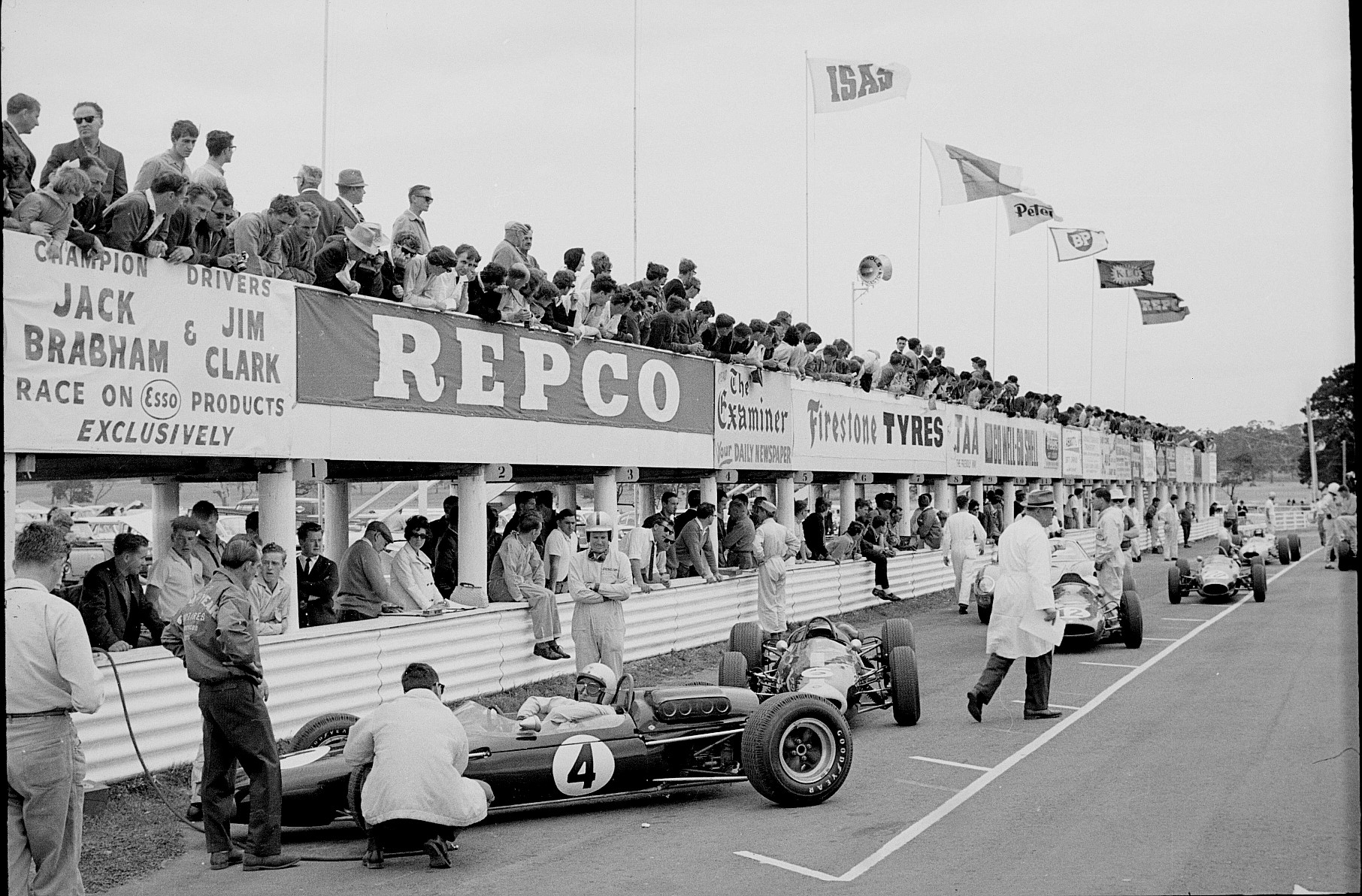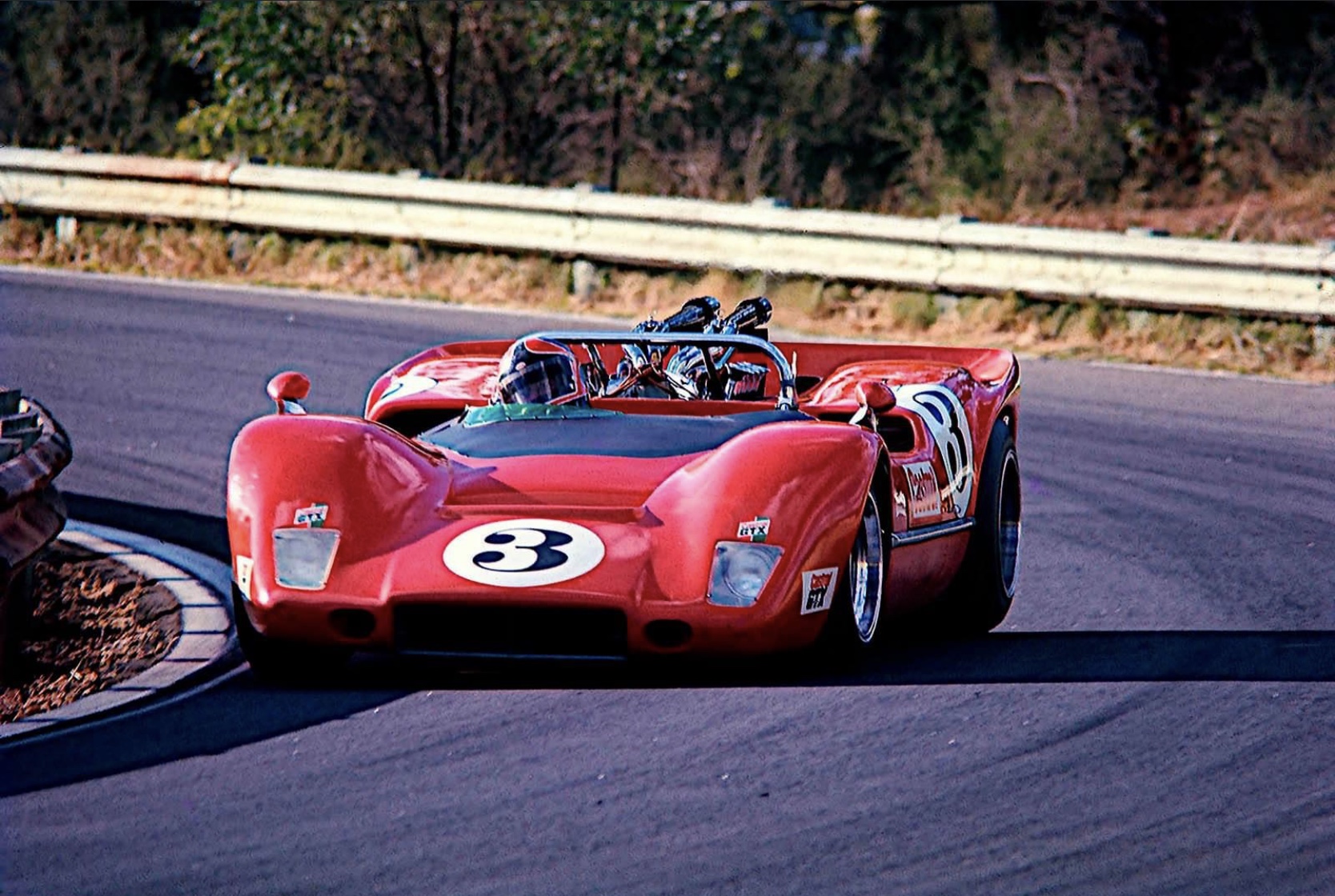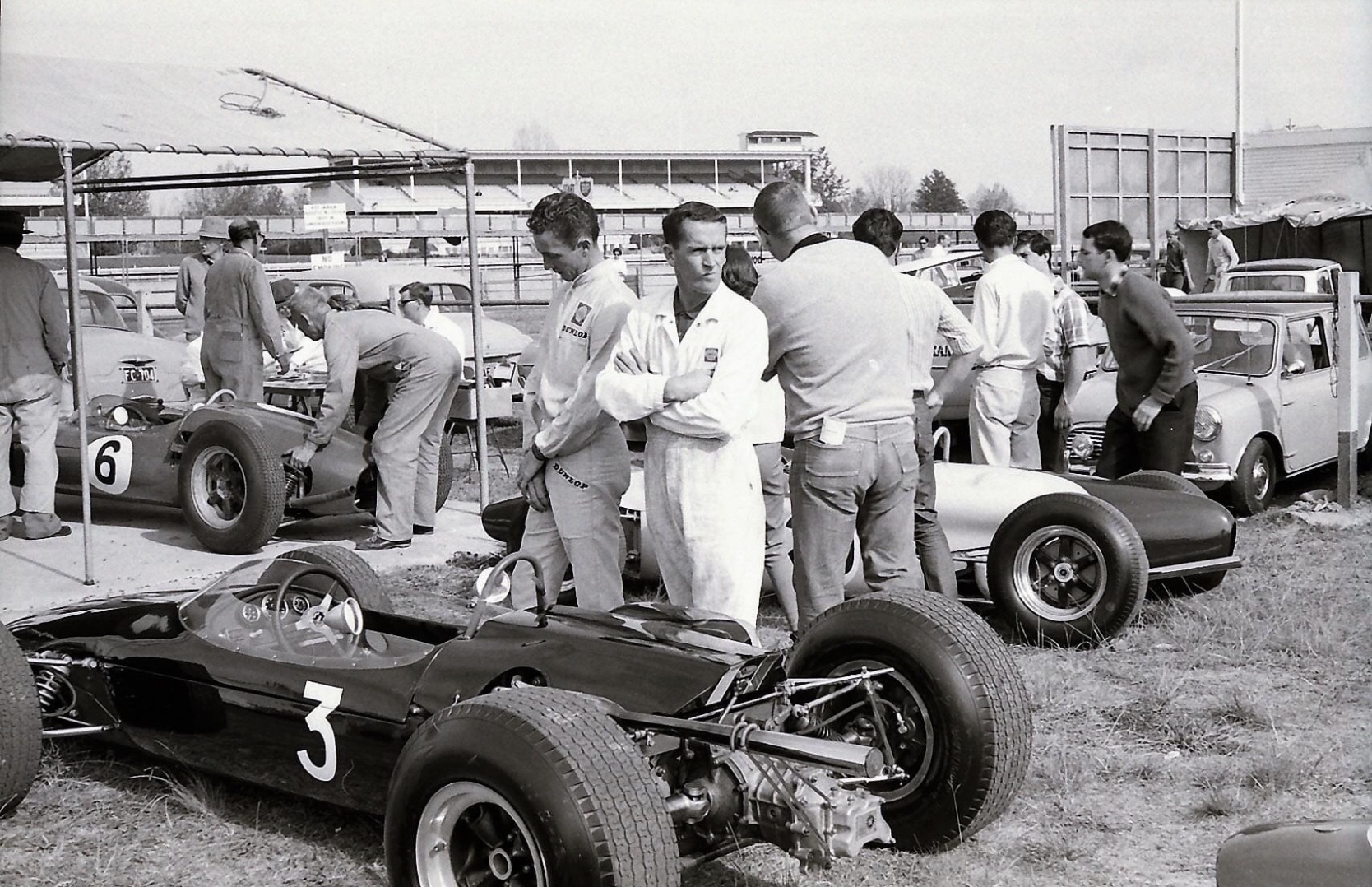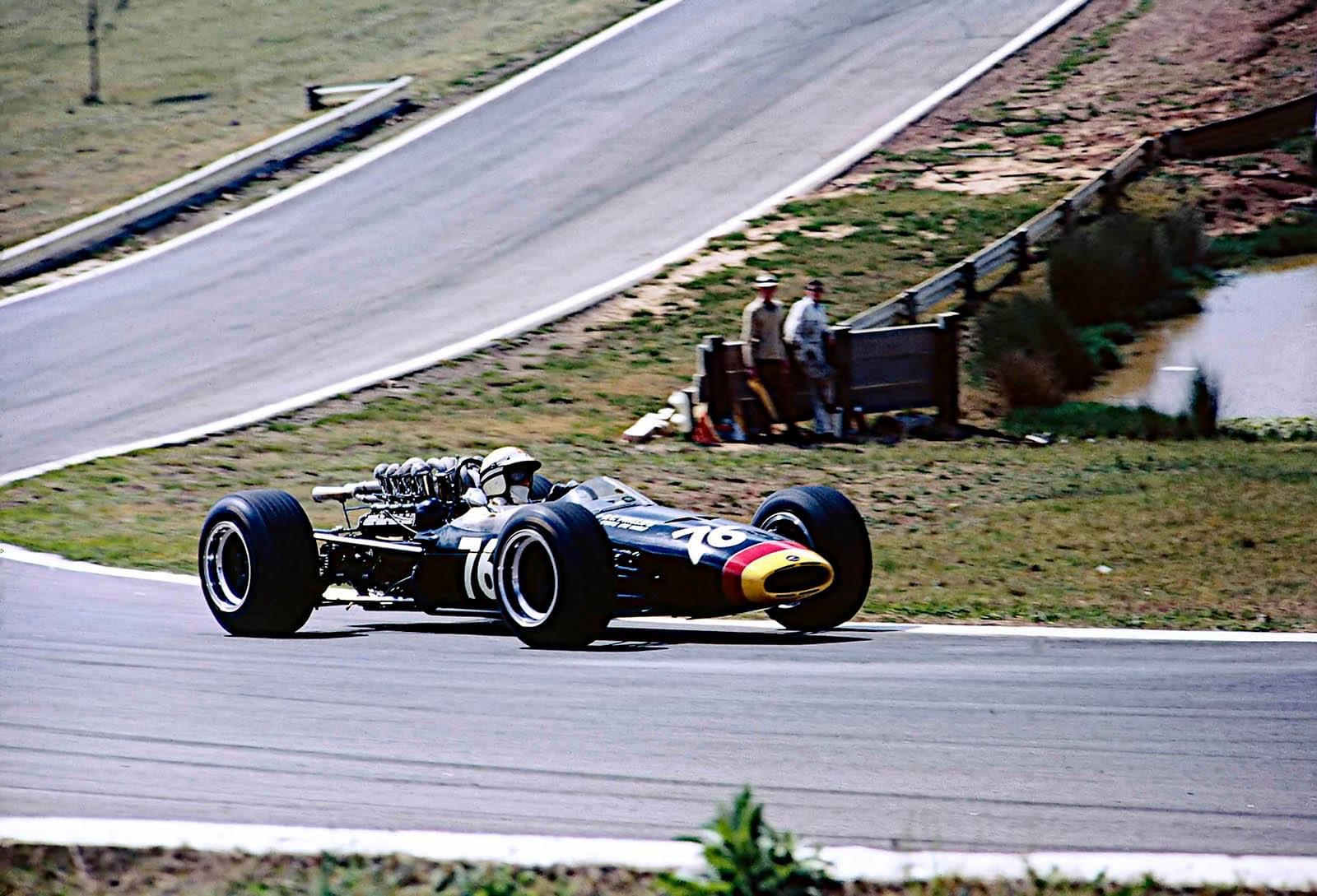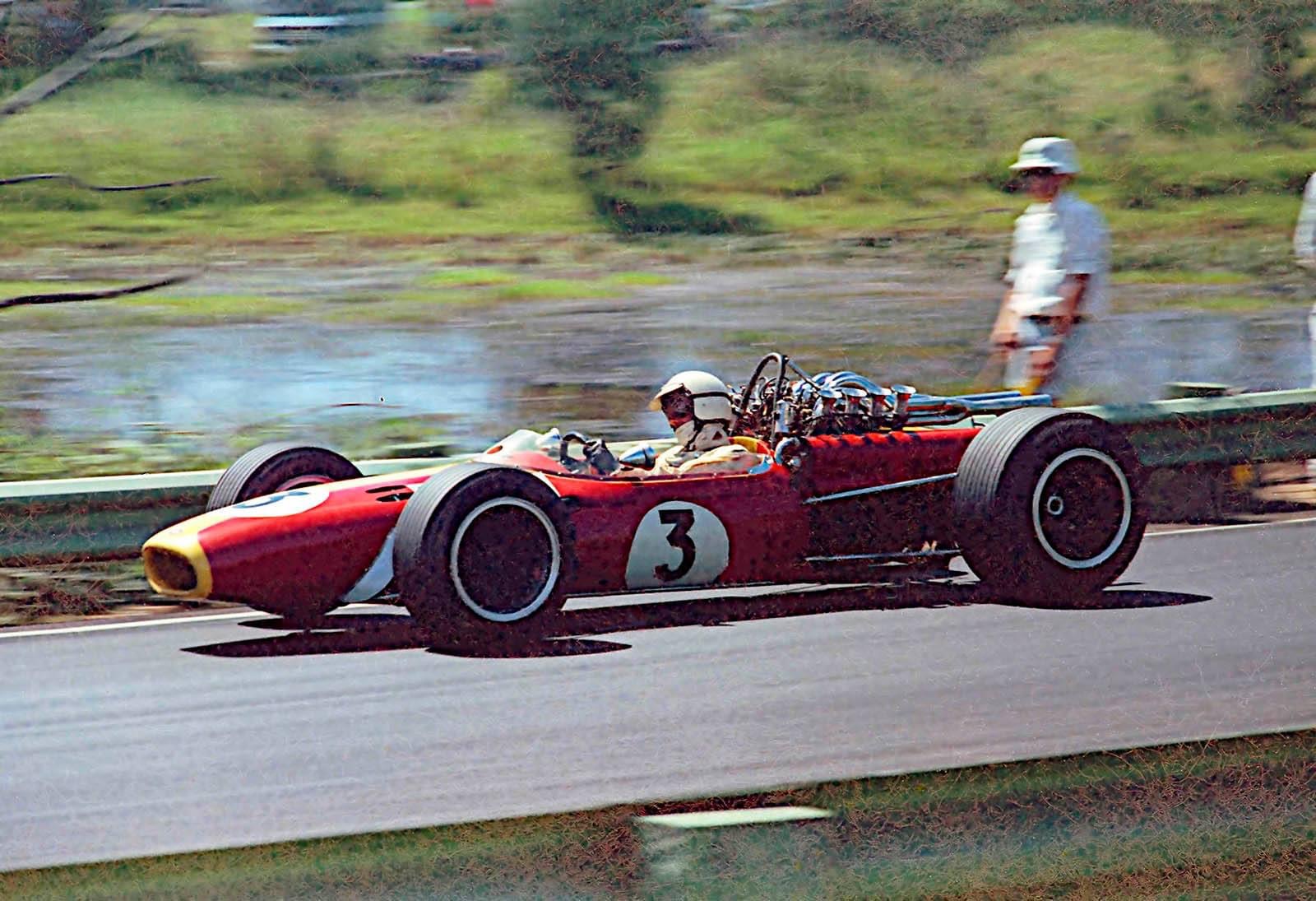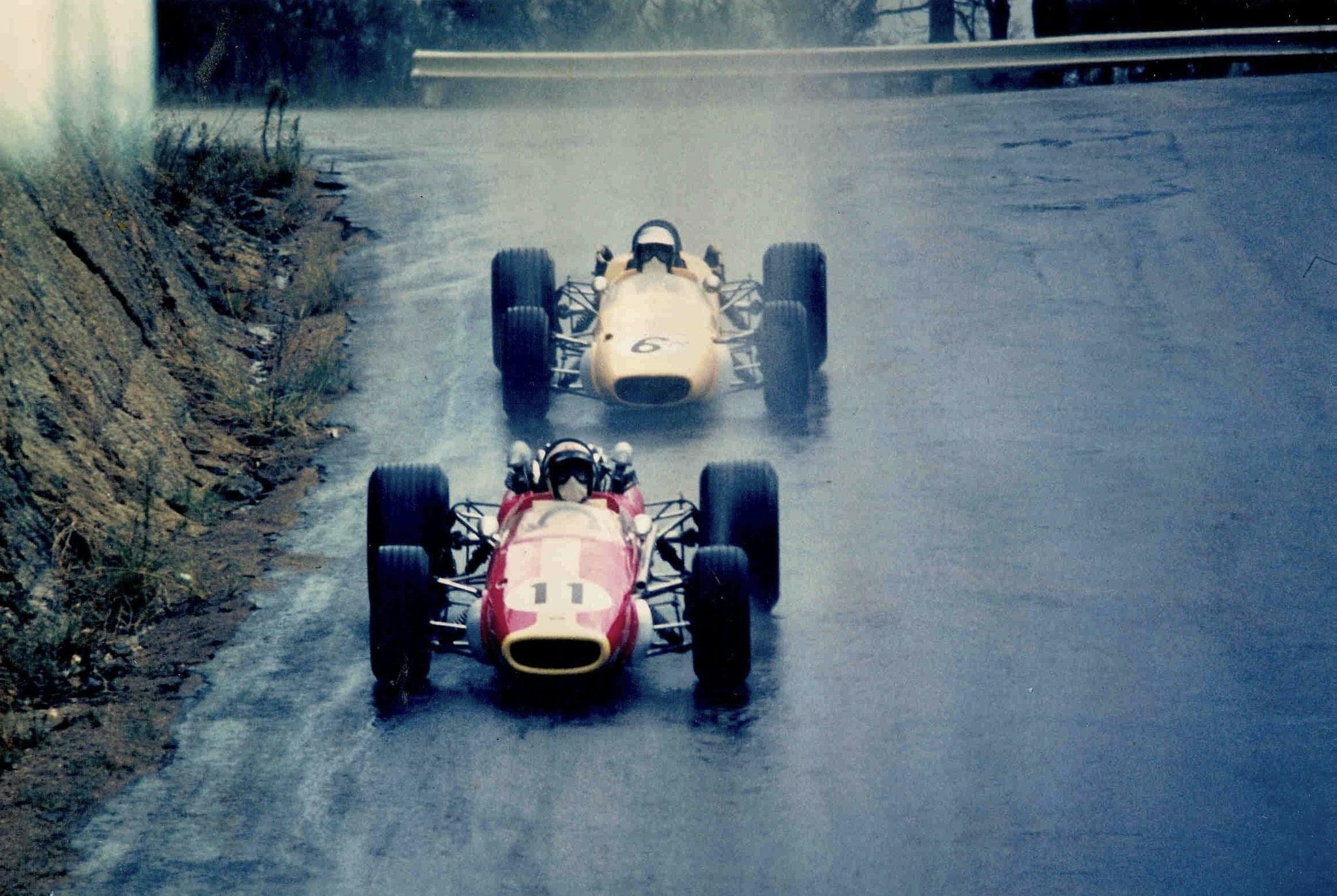
One of my favourite Facebook pages is the Repco-Brabham one Jay Bondini started for us Repco nutters yonks ago.

It’s chock full of good stuff, much of it contributed by the boys who produced the RBE V8 magic at Maidstone in the day- it has cred you might say!

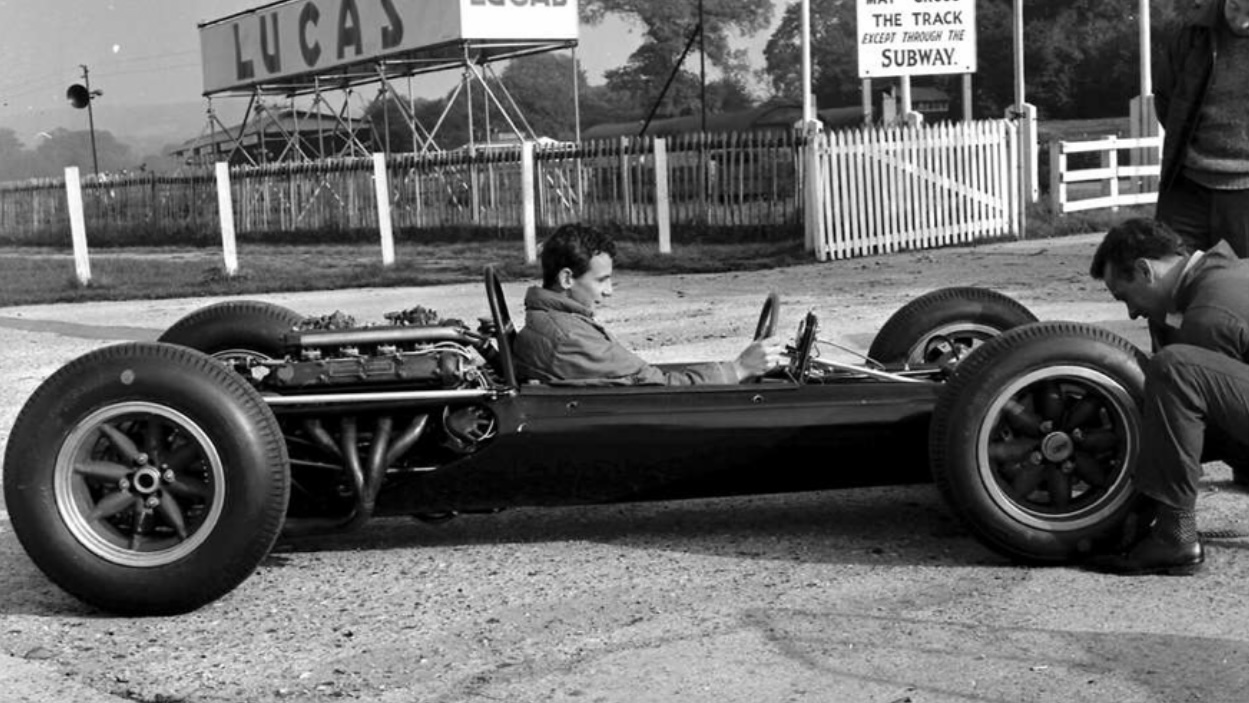
This shot gave me a chuckle.

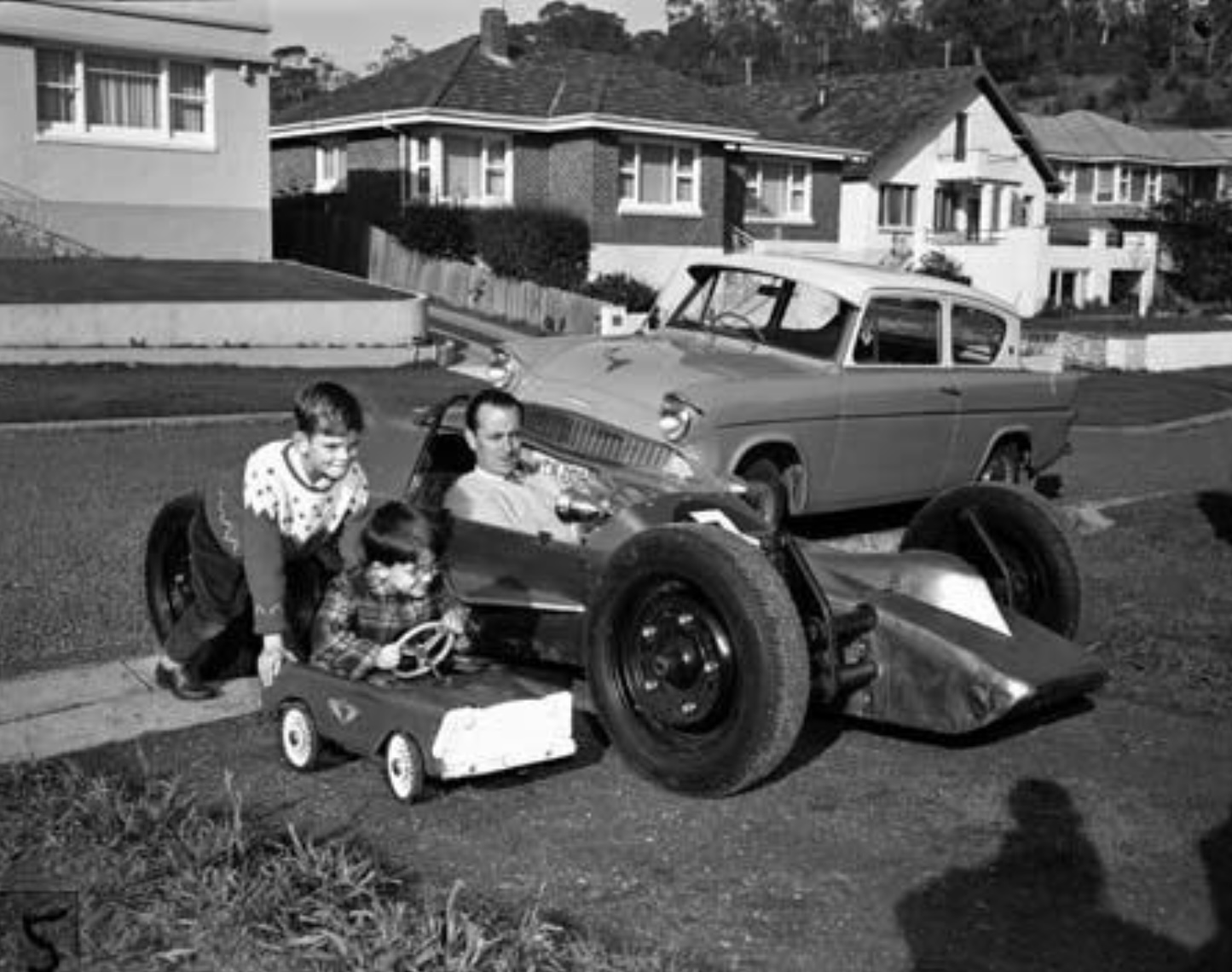
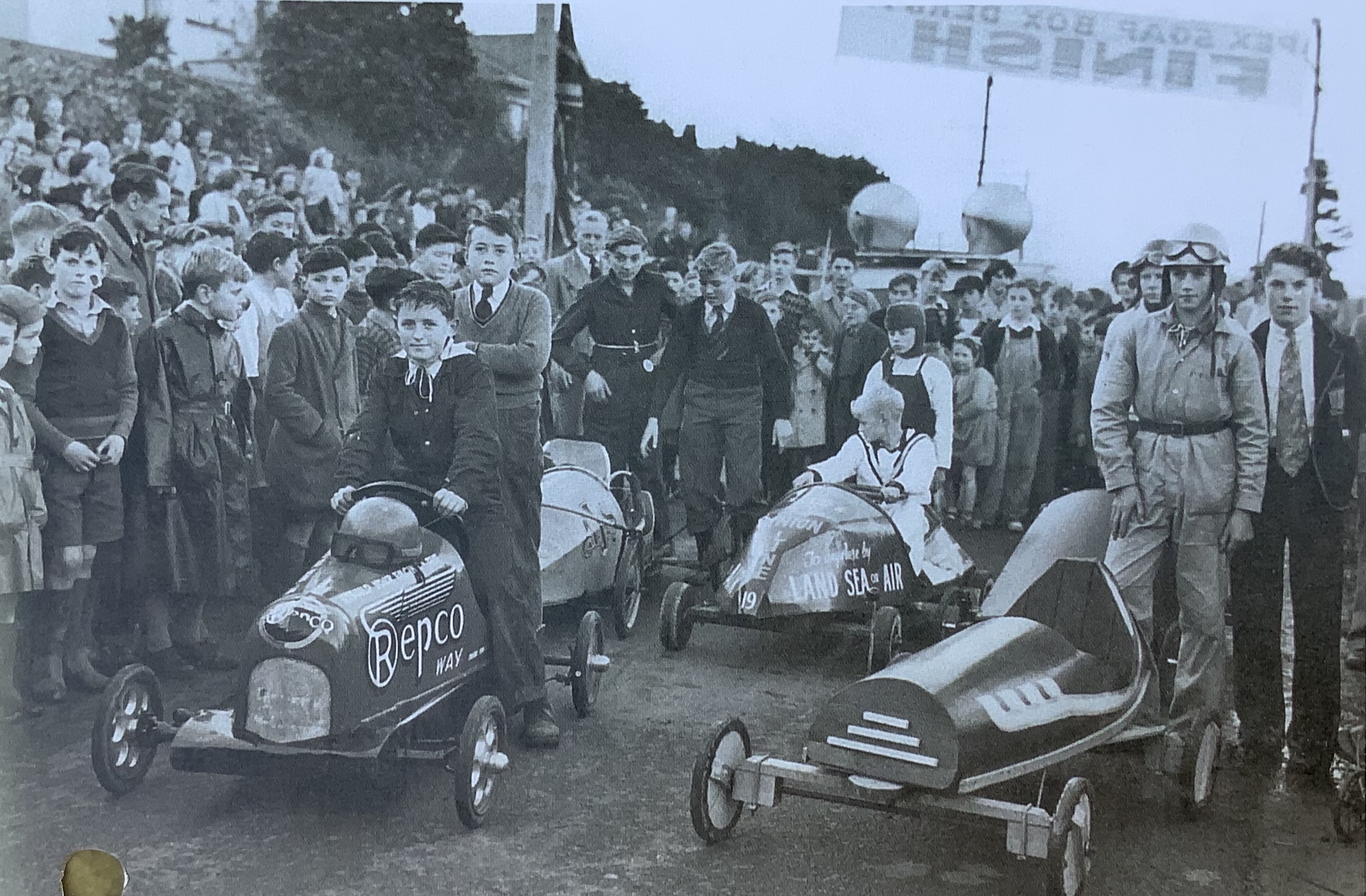
The works Repco billy-cart is poised on Bendigo’s View Street hill during the 1954’ish Easter Fair. The team’s #1 driver aboard the exotic machine is Les Holt. His old-man, Arthur Holt, worked at Repco Bendigo.

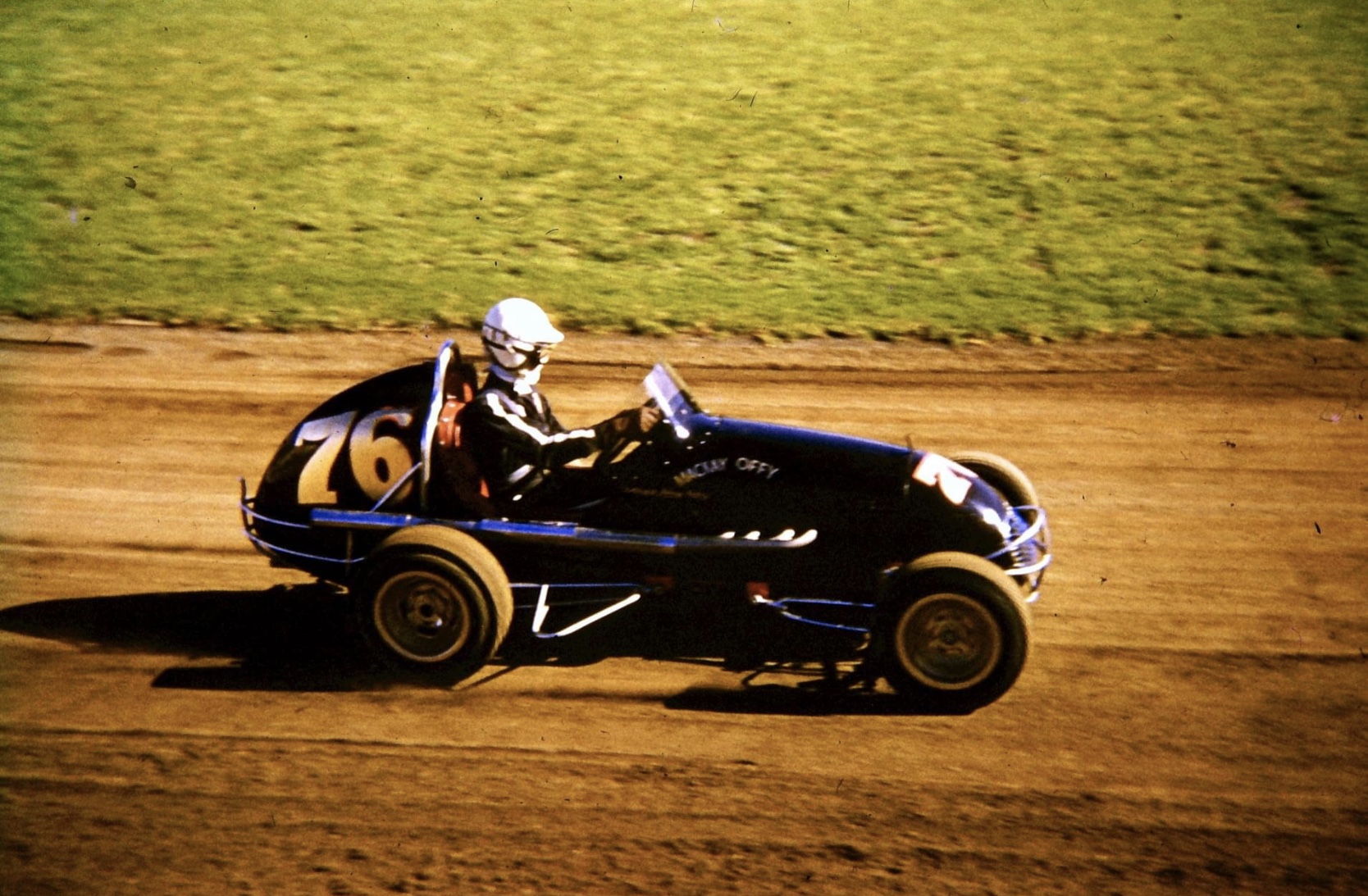
Then I thought, in the words of the great George Pell, bugger-me! that’s Mac’s machine. I’m sure I’ve seen it before somewhere!

Sure enough there is later Elfin/McLaren triple Gold Star champion John McCormack aboard the same missile at Burnie, Tasmania at roughly the same time. Dunno if he won but it seems a reasonable assumption.

You will all be pleased to know John is in great shape, sharp as a tack. I had a good chat to him at Baskerville a fortnight ago, all was good until I asked about the MR6, which was not his favourite car…

(M Preston)


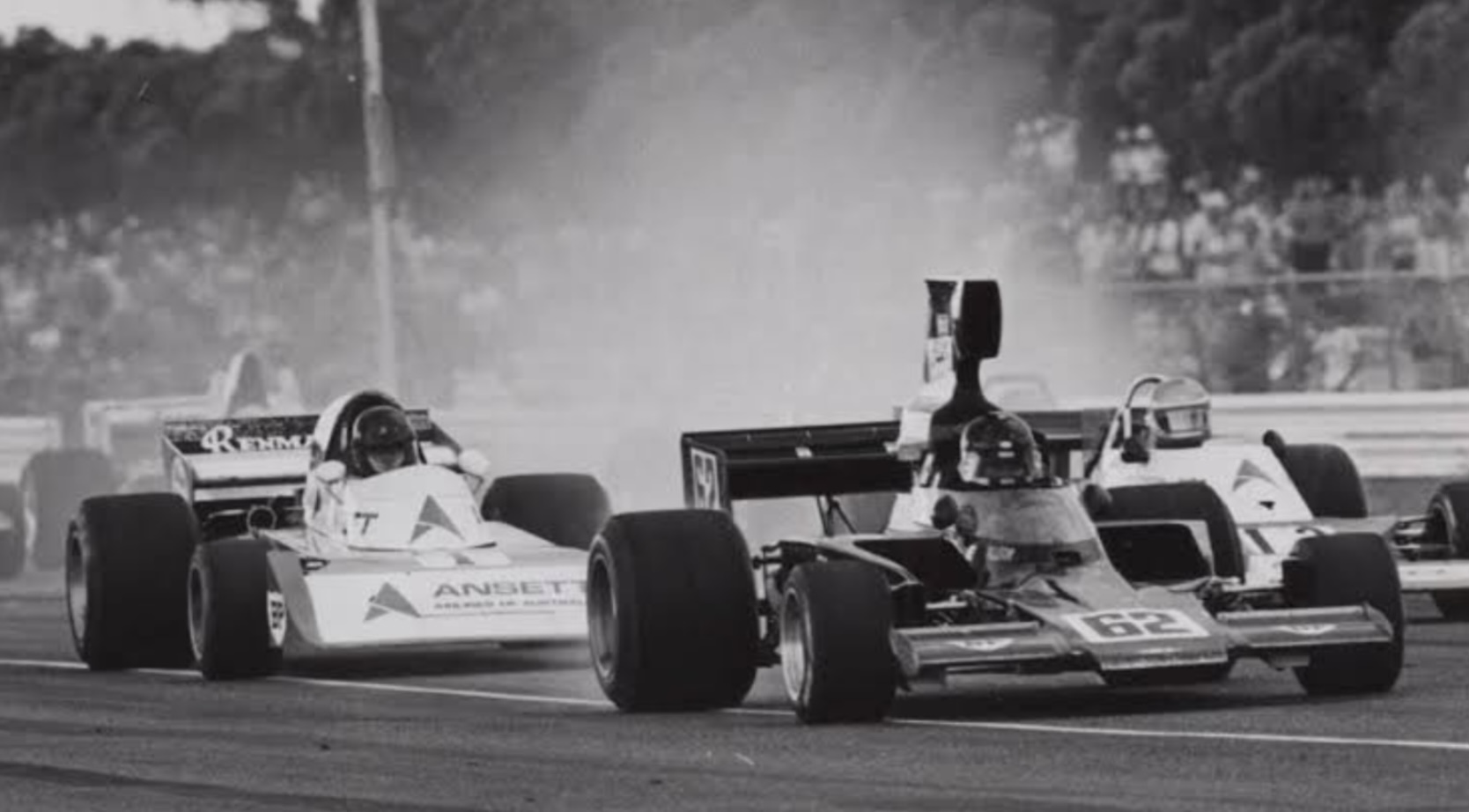
McCormack’s MR6 Repco-Holden hooks into Sandown’s Shell Corner during the 1975 Sandown Park Cup- second behind John Goss’ Matich A53 Repco (I Smith)

It begs the question of course. Why?

The MR5 may have been getting a bit long in the tooth by the ‘74 Tasman but it was very successful in McCormacks hands – the 1973 Gold Star and 1973-4 NZ GPs at Pukekohe are the most notable of the combinations victories.

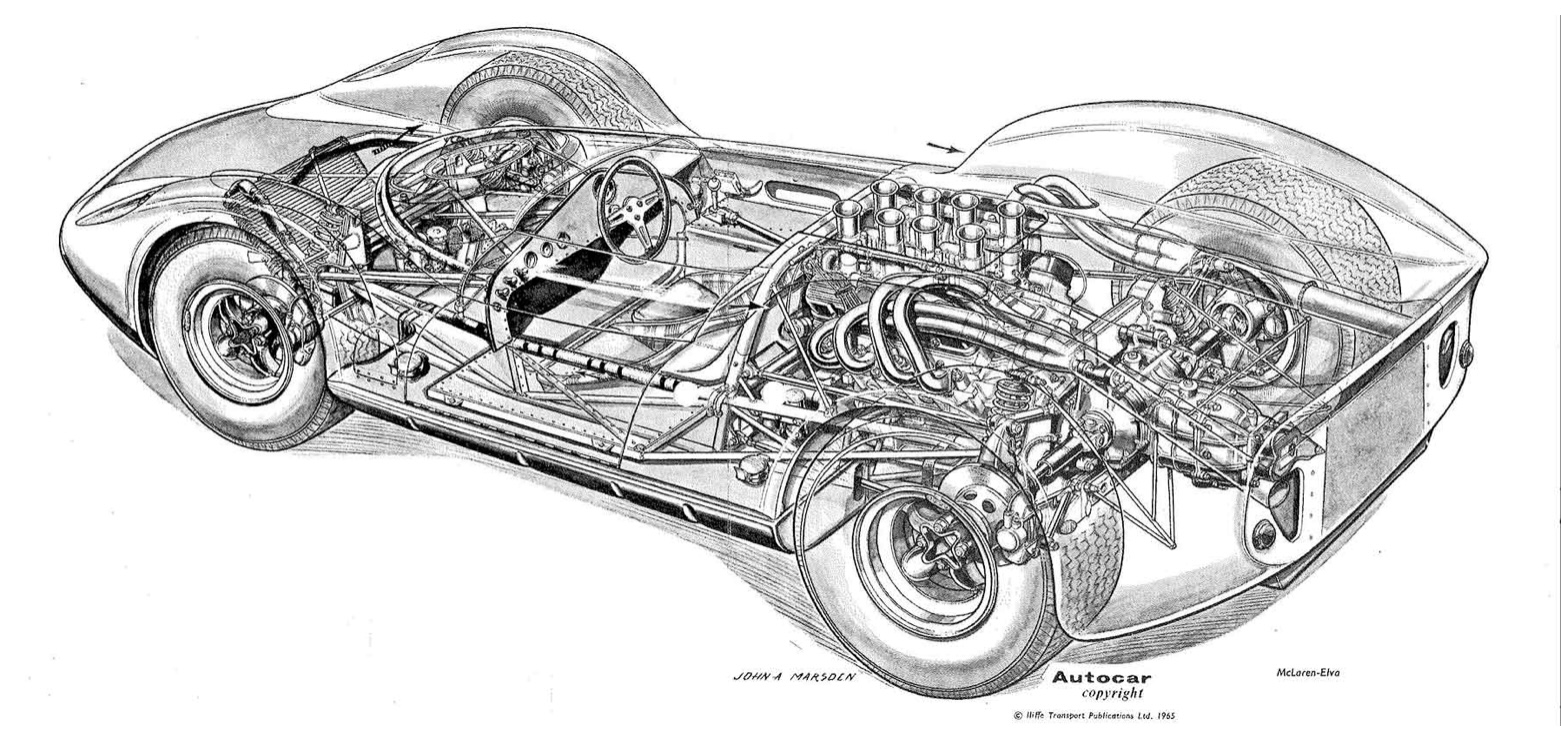
Ansett Team Elfin’s ‘unfair advantage’ was to have been the Repco-Leyland aluminium V8 fitted to a new, compact chassis designated MR6. This gave a lighter car than the opposition and handling balance those using cast-iron Chevs and Holdens could only dream of. That all turned to custard when Repco withdrew from racing in mid-1974, pretty much leaving Leyland Australia and Ansett Team Elfin high and dry.

The P76 V8 (P38 was the joke of the day ‘wannit- the P76 was only half a car) block was structurally weak, the standard nodular crank was junk for racing purposes and the ports were a poor shape which limited flow, and therefore power. Ignoring the fact the block probably couldn’t handle any extra mumbo anyway. Most of this would have been fixed had Repco applied their full engineering armoury to the problems but that was not the case. So the thing was slow and unreliable throughout the 1974 Gold Star.

On top of the engine issues Garrie Cooper repeated some of the MR5’s chassis shortcomings in his new MR6. The front bulkhead was weak, the car had bulk understeer as the front suspension geometry was sub-optimal and the critical engine to monocoque attachment wasn’t stiff enough so the whole package flexed- inspiring little confidence in its intrepid pilot.

MR6 Repco-Holden, perhaps Surfers Paradise 1975 (autopics.com)


Bruce Allison, Lola T332 Chev, McCormack’s MR6 Repco-Holden to the left and Vern Schuppan, Elfin MR8 Chev to the right. Calder ‘Soccerpools’ F5000 race, March 14, 1976. Max Stewart won both heats. Significant shot as it’s Vern’s first race drive of the MR8, having tested it at Adelaide International in early March (unattributed)

Mac and his crew, Dale Koenneke and Simon Aram fixed the chassis problems step by step. The engine dramas were solved by removing the light, gutless, unreliable Leyland and bolting in the heavy, potent, reliable Holden. Putting the smart-arse line to one side, the Repco-Holden had by then five years of development under its rocker-covers, the best of them gave a good 520bhp. The Leyland unit was a babe in the woods in terms of comparative development.

So equipped, McCormack finished fourth in the 1975 Tasman Cup behind the very quick Lola T332s of Warwick Brown, Graeme Lawrence and John Walker. He was second at Wigram, Teretonga and Sandown finishing seven of the eight rounds. At home he won the Gold Star taking victories at Oran Park and Calder. John Walker was second and Max Stewart third, both in Lola’s, again the MR6 was reliable, finishing four of the five rounds.

McCormack contested both the 1976 NZ GP and Australian Rothmans Series that summer, but the combo was off the pace of the fast boys at the very pointy end.

Mac had fallen out of love with the MR6 and Elfin more generally. He acquired a 1973 F1 McLaren M23 sans 3-litre Ford Cosworth DFV V8 from Dave Charlton in South Africa. Into that engine bay John, Dale and Simon very skillfully fitted the Leyland V8 which McCormack had not given up on!

After much test and development work from McCormack and Phil Irving, including new cylinder heads, the circa-435bhp M23 Leyland won its first Gold Star round at Calder in October 1976. He was victorious in the 1977 championship from John Leffler’s Lola T400 Chev.

The MR6 became a display car before its sale while the M23 raced on in F5000 and had a trip to the US where McCormack ran in a couple of races as a central-seat Can-Am car. See here for a feature article on the MR6 and particularly the M23; https://primotipo.com/2014/07/24/macs-mclaren-peter-revson-dave-charlton-and-john-mccormacks-mclaren-m232/

McCormack’s McLaren M23 Leyland from Garrie Cooper, Elfin MR8 Chev and Dave Powell, Matich A50/51 Repco at Dandenong Road, Sandown International Cup 1977. Max Stewart’s Lola T400 won, Cooper third, Powell fourth and Mac fifth (autopics.com)

Credits…

Gary Nichols and Robert Reid for the Bendigo information, ‘From Maybach to Holden’ Malcolm Preston, Ian Smith, autopics.com, oldracingcars.com, Repco

Tailpiece…

(Repco)

Repco publicity shot of their Repco-Leyland F5000 engine in its original form as fitted to the Elfin MR6 in 1975. See the McLaren M23 link above for engine specifications and the changes made as it evolved when fitted to the McLaren.

Finito…

(D Lupton)

Rocky Tresise’ Lotus 18 Ford with Mike Ide’s Riley Special behind during an Australian Motor Sports Club meeting at Calder circa 1964.

Every now and again Melbourne enthusiast/racer/Brabham historian Denis Lupton sends me a great colour shot or two, these are his latest, grazia Denis.

Rocky commenced racing his road-going MGA, progressing to this Lotus, chassis ’18-J-797′ in January 1963. The car was one of a batch of three imported by Sydney’s Paul Samuels in 1960. The car was featured on the Lotus stand at the Melbourne Motor Show in April 1961 before being acquired by Jack Hunnam who was very quick in it. He scored first in class results in the 1962 Sandown Cup and Victorian Road Race Championships.

Tresise raced it throughout 1963, his best result on his climb to a Tasman 2.5 drive with Lex Davison’s Ecurie Australie was fifth in the Victorian Road Racing Championship. The sad Rocky story is here; https://primotipo.com/2016/05/20/bruce-lex-and-rockys-cooper-t62-climax/

Three likely Melbourne lads- Rocky Tresise, MGA with Tim Schenken’s Austin A30 on the outside and Allan Moffat’s Triumph TR3A at Calder on February 24, 1963 (M Carr)

Tim Schenken was the next purchaser, racing the outdated machine to many firsts before he sold it a year or so later to jump a ship to the UK and international racing success.

The car passed through Don Baker, Bob Minogue and two others hands before its arrival in historic racing with Gavin Sala in 1972. Kim Shearn has owned it for a couple of decades.

The other Calder Lotus 18 shot is ‘three of the five Birchwood race school cars, four were green, the spare in the workshop was white.’ I know little about Jon Leighton’s operation, it would be great to speak to a graduate or former employee to flesh this out.

(D Lupton)

Credits…

Denis Lupton, ‘Historic Racing Cars in Australia’ John Blanden, Mychael Carr via Graham White

Finito…

Towards Hell Corner for the first time. Jones’ Maserati 250F, Gray’s blue Tornado 2 Chev with Davison’s Ferrari 500/625 at left. Mildren’s green Cooper T43 Climax FPF 2.0 then Tom Clark’s Ferrari 555 Super Squalo 3.4 and Merv Neil’s Cooper T45 Climax FPF 1.7 (M Reid)

The October 6, 1958 Australian Grand Prix was regarded as one of the great AGPs- a battle between the big red Italian cars of Stan Jones and Lex Davison and the booming blue homegrown Australian special raced by Ted Gray.

In the end Davo’s evergreen ex-Ascari/Gaze Ferrari 500/625 prevailed over the 100 miles, while the attacks of Stan’s Maserati 250F and Tiger Ted’s Tornado 2 Chev fell short.

The event took on greater significance over time as it showed the front-engined Italians at the height of their power in Australia before the full force of the Cooper onslaught bit.

Lex Davison dips his fuel level before the off, Ferrari 500/625 (R Reid)


Ted Gray during his glorious run in front for two thirds of the race. Tornado exiting Murrays (R Reid)

Lou Abrahams and his team had developed, arguably, the fastest car in the country during 1958. In addition they had improved Tornado’s reliability as they addressed, step by step, shortcomings in the machines drivetrain exposed by the prodigious power and torque of it’s fuel-injected Chev Corvette 283cid V8 fitted later in 1957.

Stan Jones found the consistency he needed to win the Gold Star in 1058 but Tornado was quicker. Lex Davison, the defending champion, wasn’t seen during the Gold Star as the AF Hollins & Co crew took a long time rebuilding the Ferrari’s 3-litre DOHC four-cylinder engine which blew after piston failure during the New Zealand Grand Prix at Ardmore in January.

Gray’s promise was proved with a win in the heat which contained the quicker cars. Not only was the car speedy over a lap, he was also considerably quicker than the opposition down Conrod – 152.54mph from Davison’s 146.74 and Jones’ 139.5

Tension mounts before the start of the second heat. #22 Clark and Davison, then Gray and Jones. The dark car on the outside of row 3 is perhaps Len Lukey’s Lukey Bristol with Ray Walmsley’s Alfa Romeo P3 Chev on his inside. The red car with the white nose-roundel is Tom Hawkes modified Cooper T23 Holden-Repco Hi-Power (R Reid)


Tail of the field thru Hell on lap 1- Alf Harvey’s light blue Maserati 4CLT OSCA 4.5 V12 with what looks like, perhaps, John Schroder’s Nota Consul. Harvey’s just rebuilt Maserati won it’s heat but ‘blew a spark plug right through the bonnet’ on lap 16. The Nota was out on lap 10 (ABC)

Early in the race the lead changed between the big three, who cleared away from the rest of the field to lead by nearly a minute at the conclusion of the first 10 of 30 laps- at this point Gray was 8 seconds up on the Jones/Davison battle.

By lap 22 Ted was ahead by a steady’ish 10 seconds but pitted to report erratic handling. A messy, unplanned pitstop ensued during which fuel was topped up and slopped all over the place. A post-race examination showed cracked rear suspension mounts were the cause of the handling misdemeanors. Ted returned to the fray determined to make up the gap but in his haste, and still with his problem, Tornado glanced off the fence on the mountain, then did a couple of slow laps before retiring on lap 24.

Stan Jones then appeared set take a race he deserved to win (he did at Longford in 1959) but he had been shifting gears sans clutch for 7 laps- during his 26th lap the 250F dropped a valve and he was out. Davo completed the remaining four laps to win from Ern Seeliger in Maybach 4 Chev and Tom Hawkes’ Cooper T23 Holden-Repco Hi-Power. It was a happy day for Ern as he prepared both cars, and Tom’s was out of oil with a split sump!

Stan The Man in one of his muscle-shirts while in the lead early on. Maserati 250F exiting Murrays (I think) into Pit Straight (R Reid)

Etcetera…

(R Reid)

Credits…

‘Bathurst: Cradle of Australian Motor Racing’ John Medley, ‘History of The Australian Grand Prix’ Graham Howard and Ors, Ron Reid Collection, Australian Broadcasting Corporation

Tailpiece…

(R Reid)

A slightly fuzzy Jones, Davison and Gray through Reid Park in the early laps before Ted cleared out- Maserati, Ferrari, Tornado.

Finito…

I’ve written a feature In the current Auto Action #1803 on Dan Gurney’s win in the 1961 Victorian Trophy aboard his works BRM P48 at Ballarat Airfield.

He and Graham Hill raced at Ardmore, NZ, Warwick Farm and Ballarat that summer. Dan’s win was an interesting one in his last BRM drive- it was his first international victory and the only one for the P48 on the last occasion the machine was raced in works hands.

It’s a nice piece, but then I would say that.

For us historic nutters there is also the first in a two-part series on Tim Schenken written by Mark Fogarty. This issue covers his formative years to F1, the next one his Ferrari sportscar drives, Tiga period with Howden Ganley and beyond.

Other standout reads in the sixty page issue are five pages on F1, four on the year ahead for F1, Indycar, F2/3, Moto GP and Taxis, two pages on Oz international Scott Andrews with whom I was unfamiliar and coverage of the Monte, Dakar and the Symmons meeting I was lucky enough to attend a week ago. Plenty of maxi-taxis too of course.

If you haven’t read fifty-years-young Auto Action for a while give us a whirl.

Hopefully the Tasmanian Back to Back Double-Banger season openers at Symmons and Baskerville become a fixture- lets hope so. It makes so much sense on all levels, get you bums down there next year if you can.

The racing was great, imbibing Longford for a cuppla days was magic not to forget some great Tassie touring, sun on the sand and a shandy or three. It was heaven on a stick really.

(unattributed but very keen to know the ‘snapper)

The more you look the more you see. All the fun of the fair. Longford AGP weekend March 1965.

Jack Brabham waits for the pressures in his Goodyears to be adjusted, Brabham BT11A Climax. That’s Roy Billington with hands on hips to the left and Bib Stillwell hovering- his new Brabham BT11A Climax is to the right. Next in line is the ill-fated #12 Ecurie Australie Cooper T62 Climax of Rocky Tresise.

Further along, obscured near the pit counter, is the Scuderia Veloce Ferrari 250LM with Lynn Archer’s #20 Elfin Catalina Ford 1.5 on the painted line. The light coloured car at the end of the queue is Frank Matich’ Brabham BT7A Climax.

Bruce McLaren’s Cooper T79 Climax  won this tragic March 1 race, see here; https://primotipo.com/2019/09/27/longford-1965/ and here; https://primotipo.com/2016/05/20/bruce-lex-and-rockys-cooper-t62-climax/

Credits…

Auto Action

Finito…

(B King Collection)

Geoff Hine’s Bugatti T23 Brescia is shown above during a meeting held on November 27, 1954.

The Tasmanian Motor Cycle Club used a stretch of road at Collinsvale, 20km north-west of Hobart for ‘demonstrations of durability and speed’ as early as October 26, 1924, it is still in use.

On that day the fastest time was set by K Sutherland aboard a 2 3/4 horsepower BSA- the smallest bike entered. ‘A word of praise is due to this young rider, for he is only a beginner’ The News reported. ‘The races were over a distance of a mile, in which there were a number of nasty bends, but except for a few minor accidents, all the events were disposed of satisfactorily.’

Hine raced the Bugatti at various Tasmanian venues including the Brighton Showgrounds where ‘long straights and wide grassy corners were perfect for high speeds’ in November 1953. At Longford he did 23.22 seconds during a Light Car Club acceleration test in May 1954.

T23 chassis ‘2467’ was owned by Herbert Hine for many years. His grandson, Michael Dunbabin, recalls the car in his Darcy Street, South Hobart home garage along with ‘Some old Bentleys and a Rolls Royce. As kids we used to jump up into the Rolls and play with all of the levers and buttons- it was such fun in that dusty, dark garage full of old cars and loads of stuff he bought at the Burns Mart auctions.’

‘After Geoff had finished racing the car it was restored to perfection over many years by my grandfather. He was really skilled, he worked for the Hobart Marine Board as a fitter and turner. He eventually moved from Hobart back to Bacchus Marsh in Victoria where he was brought up. On his death the Brescia passed to his sons, Geoff and Warwick.’

See here for a feature on Brescias, more detail on the Hine car to come; https://primotipo.com/2018/07/27/country-spin/

‘The News’ Hobart 27 October 1924

Etcetera…

I’ve included this November 3, 1951 article published in the Launceston Examiner I found fishing for information on Collinsvale.

That the newspaper felt the need to explain the history of motor racing is perhaps indicative of the local populace’ knowledge of our sport at the time. The piece makes clear the need for a racetrack in the Apple Isle. The use of Longford from 1953 and construction of Baskerville in 1958 and Symmons Plains in 1961 would solve the problem of course.

I note the article records the first road race in Tasmania as taking place in May 1911 and won by JK Heritage, does anybody have more information on this event?

Valleyfield is covered tangentially in this piece on Quorn Hall; https://primotipo.com/2020/12/17/quorn-hall-tasmania/

Credits…

Bob King Collection, Michael Dunbabin, The News

Finito…


(D Simpson)

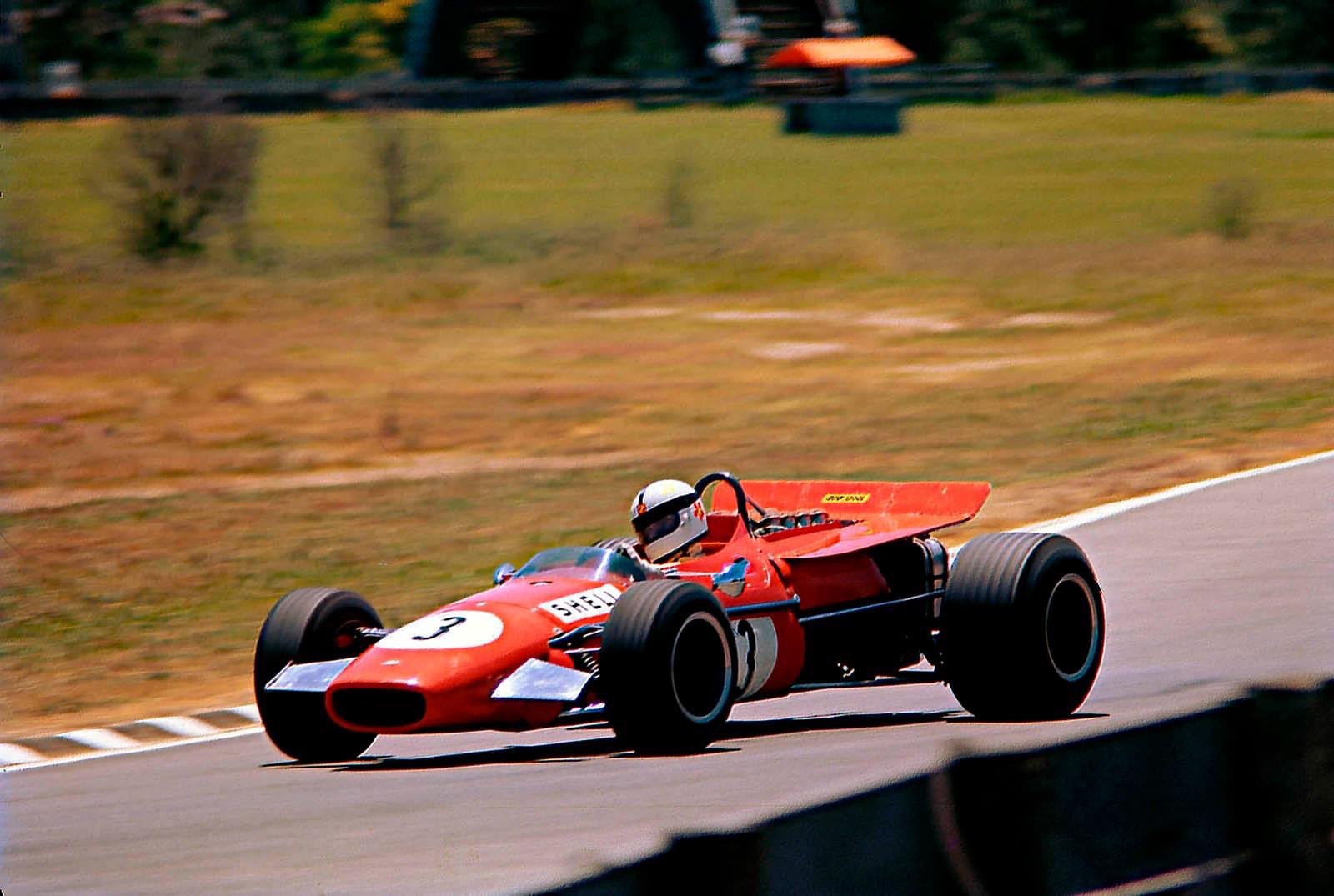
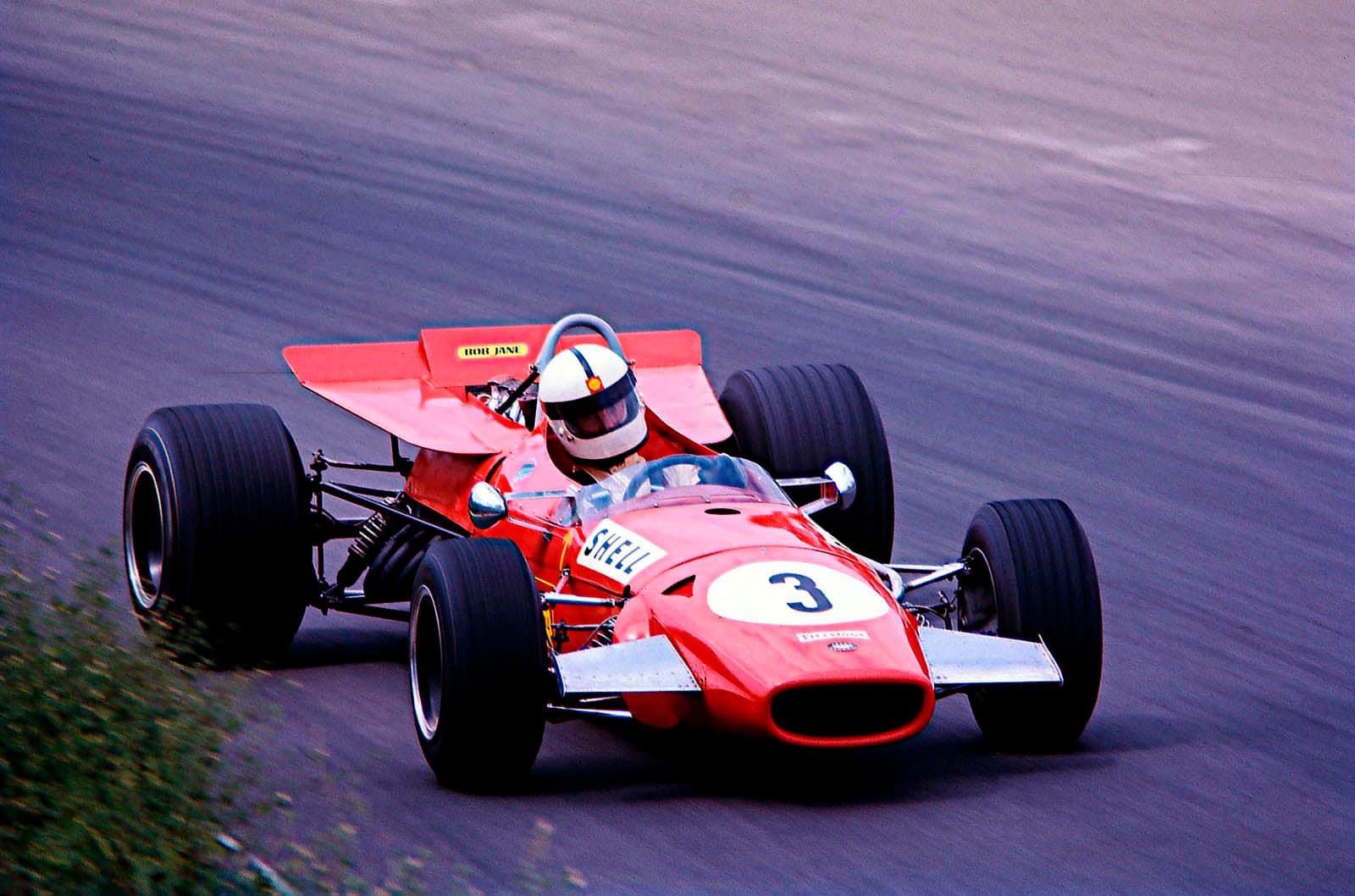
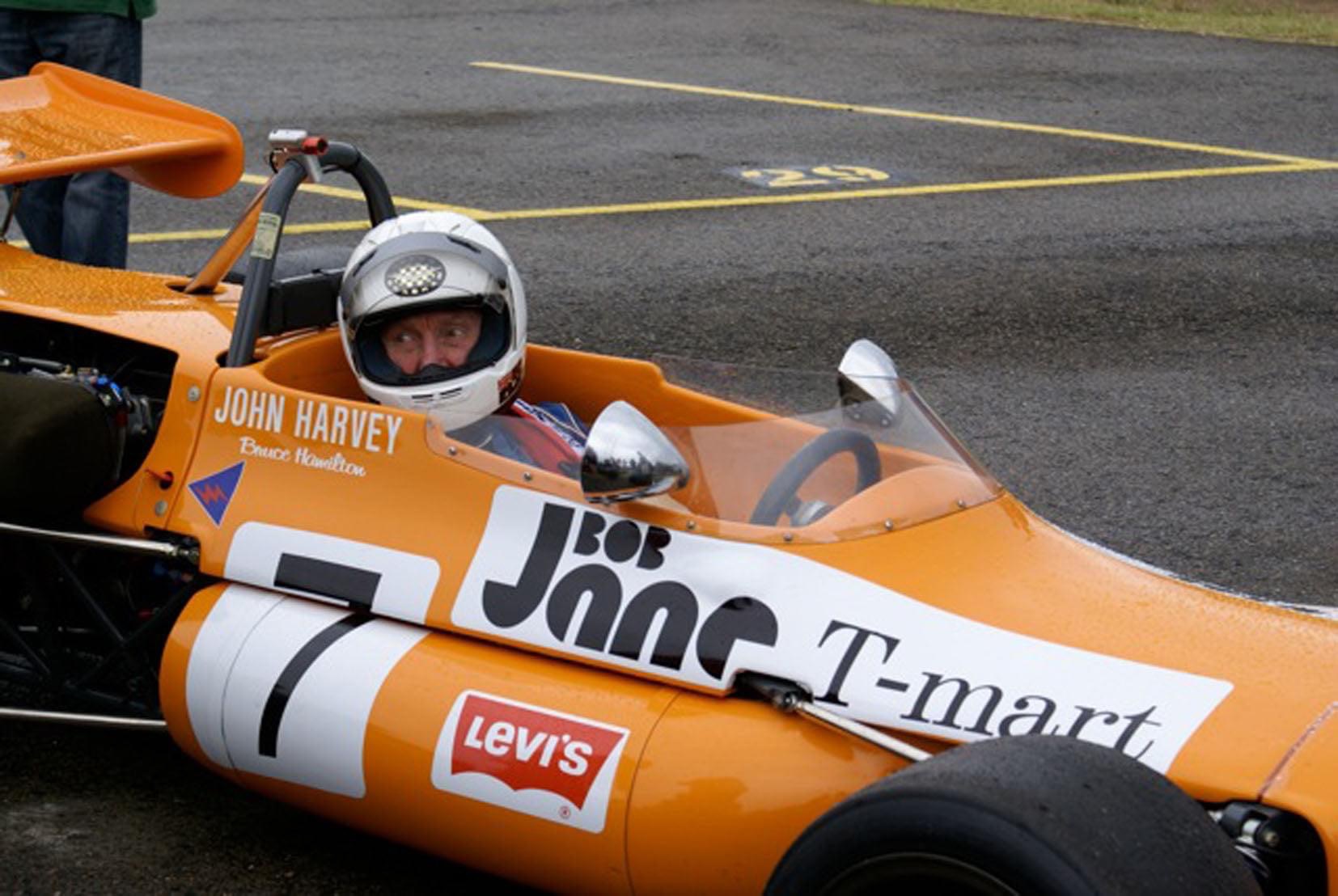
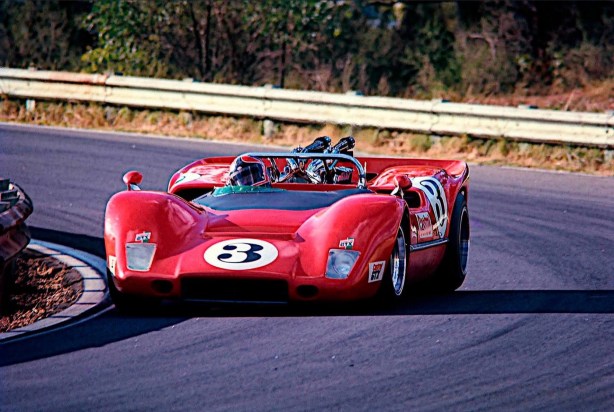
John Harvey in Bob Jane’s McLaren M6B Repco-Brabham V8 nailing Warwick Farm’s Esses on May 2 1971.

The late Australian champion, who died on December 20, 2020, raced so many different cars during a career from fifties speedway to noughties historic racing gave a big editorial challenge, what photograph to choose for the opening shot.

Dick Simpson’s shot took my breath away when i first saw it five years ago, it still does. A marvellous car being driven with precision was the John Harvey style- he won the 1971 and 1972 Australian sportscar championships with it. He applied plenty of brio albeit in a precise, economic kinda-way. Piece on the car here; https://primotipo.com/2018/09/09/sandown-sunrise/

In the weeks that followed the death of a man universally respected and liked a swag of photographs hitherto unseen popped up on social media. Treat this as a visual tribute to John rather than a distillation of a career well known to many of us. The shots play to my bias, racing and sports-cars.
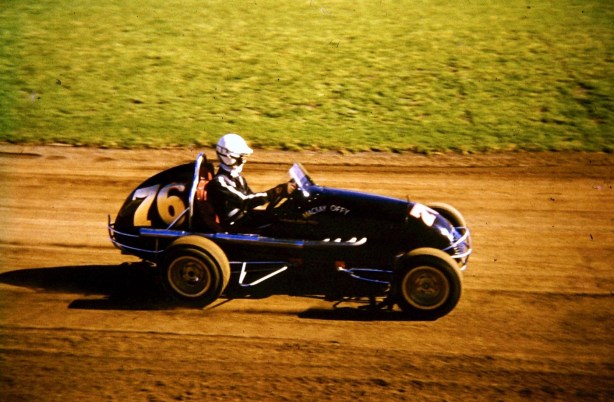
(A Howard)

Aboard the McKay Offenhauser at the Sydney Showgrounds in the early sixties.
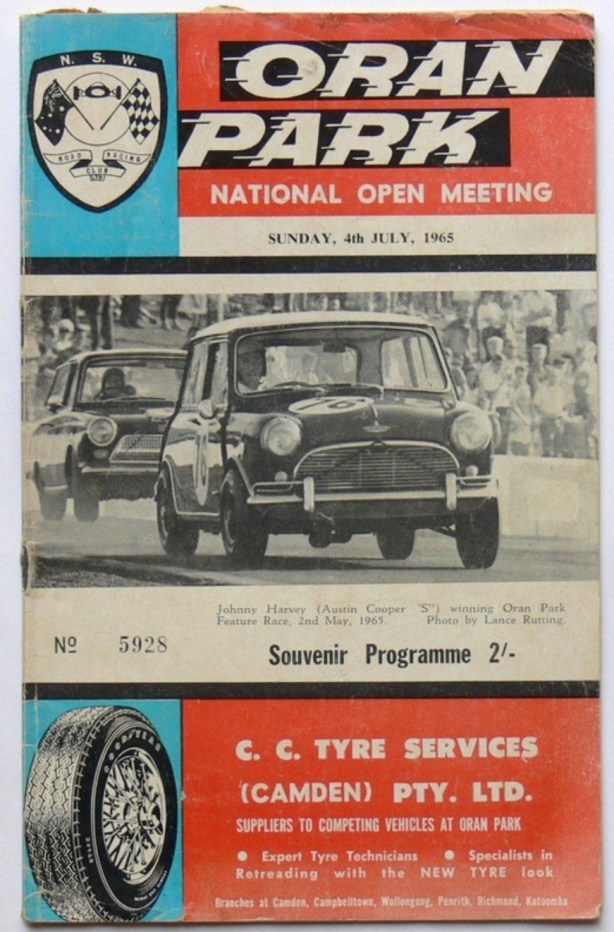
(S Dalton Collection)

Ron Phillips gave John the opportunity to transfer from speedways to circuits with a Cooper S prepared by the gifted, and soon to be great Peter Molloy. They won plenty of races in 1965-6.
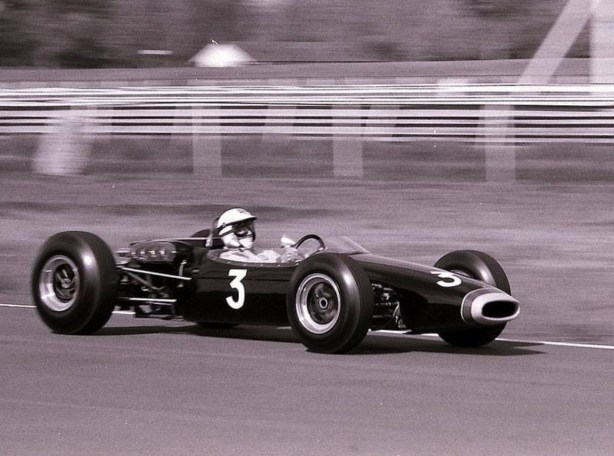
WF Pit Straight (K Starkey)
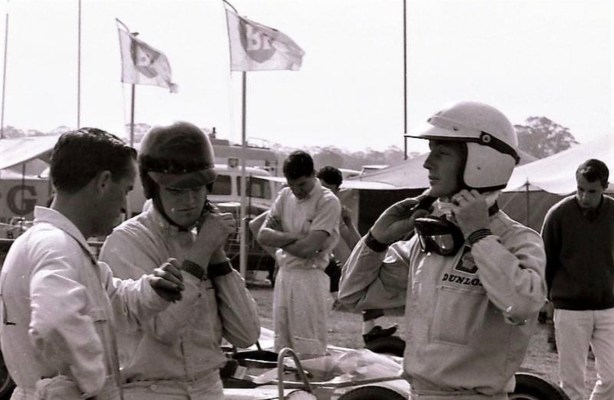
Peter Molloy, Leo Geoghegan and JH @ WF (K Starkey)

JH, Peter Molloy and BT14. Elfin Catalina behind, what is car #6? Cooper (K Starkey)

When Bib Stillwell retired from racing, his fourth Gold Star in his pocket at the end of 1965 he sold the lot, including his beautifully prepared, lightly raced Brabham BT14 Lotus-Ford twin-cam ANF 1.5 to Phillips for Harves to drive.

The fast, forgiving little jigger was initially raced at 1.5-litres, John won that years ANF 1.5 title, but the engine was gradually taken to 1860cc at which capacity Harvey gave the slower 2.5s a serious run for their money.

The three shots above were taken by Ken Starkey at Warwick Farm’s May 1966 meeting.
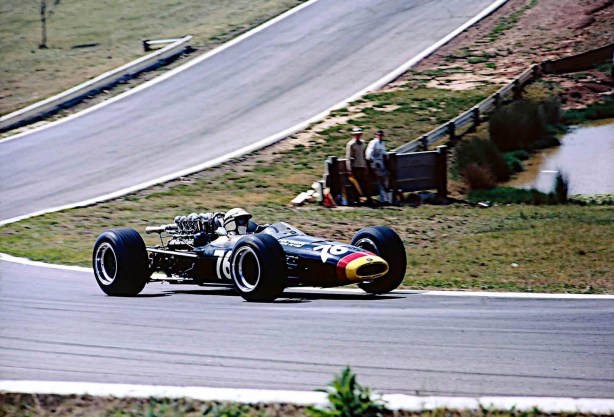
(B Simpson)

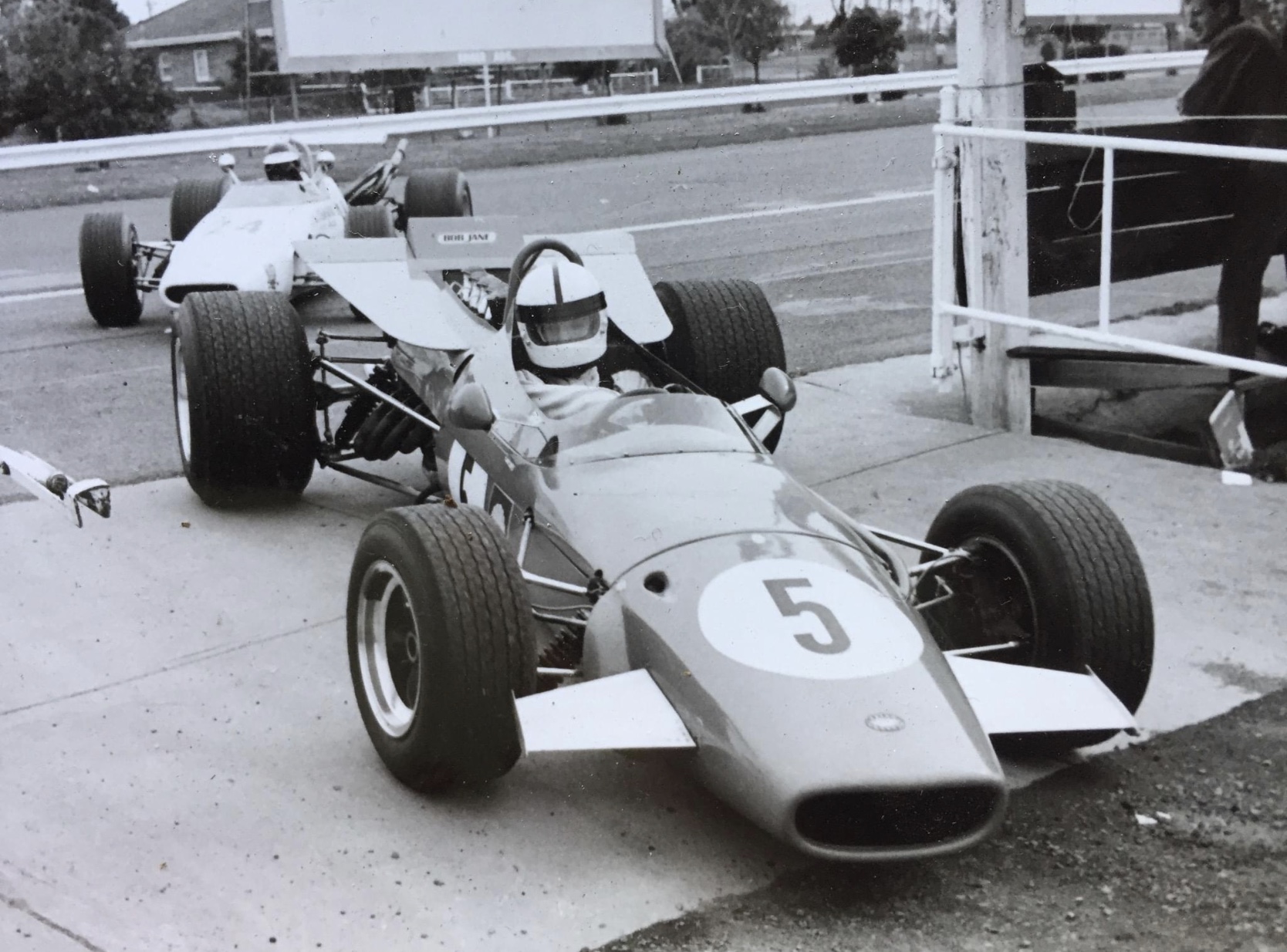
It was obvious to all that John’s rightful place was amongst the big boys so a Repco-Brabham 2.5-litre 640 (or 740?) V8 was acquired to pop into the little BT14.

Peter Molloy went to the Repco Brabham Engines Maidstone factory to help assemble the engine. With Rennmax’ Bob Britton leading the charge, Bob and Peter fitted the Repco V8 and beefier Hewland HD gearbox into the spaceframe chassis designed for an in-line small four.

It all sounds easy enough (sic), but it took a while to get the suspension geometry, springs/shocks/bars right, a process not assisted by the Repco’s haughty, flighty behaviour. This phenomena seemed to affect most Tasman 2.5 customers to a greater or lesser extent.

By the middle of the year Harves was happy with the car. Simpson’s shot above is the finest of it on a circuit where the snapper had bugger-all decent background to work with. JH is in the process of winning Oran Park’s Diamond Trophy feature in September 1967.

Ron Phillips, arch enthusiast that he was, found the cost of racing at the top level expensive. His desire to exit the sport was contemporaneous with Spencer Martin’s retirement plans at Bob Jane Racing.

And so it was that Harve’s slender frame replaced the similarly svelte Martin in Jano’s BT11A Climax in the December 1967 Hordern Trophy Gold Star event at Warwick Farm. There, John was second aboard the car with which Spencer had just won his second Gold Star on-the-trot behind Frank Gardner’s ‘spankers Mildren Racing Brabham BT23D Alfa Romeo 2.5 T33 V8.
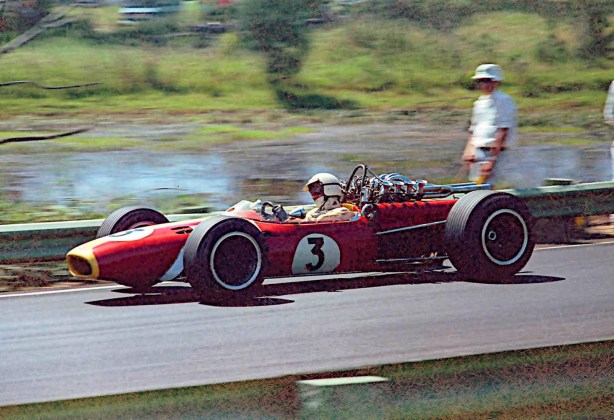
JH in Bob Janes BT11A Repco 740 crossing WF’s Causeway during the February 1968 Warwick Farm 100 Tasman round (D Simpson)
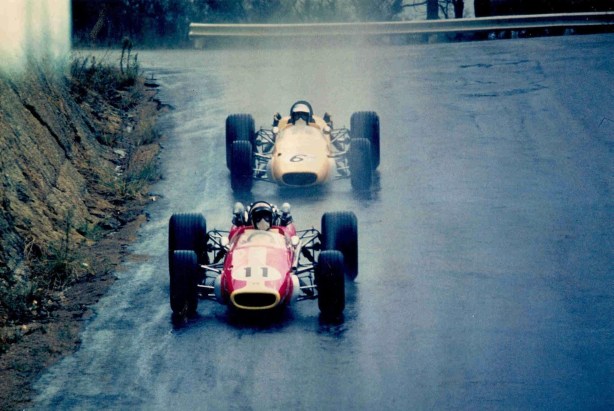
John Harvey, Brabham BT23E Repco 740 from Kevin Bartlett, Brabham BT23D Alfa Romeo T33 at Mount Panorama early in the Easter 1968 Gold Star meeting before John’s bad accident (G Toughill Collection)

Jane also bought the Brabham BT14 Repco from Phillips in a deal within the Shell Racing fold. Even though Harvey was at the end of Repco development dramas with the BT14 Bob decided to fit the Repco V8 sitting in it into the BT11A in place of its Climax 2.5 FPF. Maybe the slightly older BT11A frame was beefier than the BT14 but otherwise the plan sounds bonkers to me. Surplus to requirements, the BT14 was sold.

Harvey raced the BT11A Repco in the 1968 Australian Tasman Cup rounds, predictably, without much success. Bob Jane had a New Years present for John in the form of Jack Brabham’s ’68 Tasman mount, the Brabham BT23E Repco.

The thing nearly killed Harvey though. Despite the new car having only raced at the Surfers Paradise, Warwick Farm and Sandown Tasman rounds, a rear upright broke in practice for the opening Gold Star race of the year at Bathurst over the Easter 1968 long weekend.

John survived but was out for the year. Jane, typically, looked after him and popped him back in the car at JH’s request, a tad early really, that December. John again contested the Oz Tasman rounds and then raced the car through 1969 and into early 1970. Piece on the BT23E here; https://primotipo.com/2015/12/22/jack-brabham-brabham-bt23e-oran-park-1968/
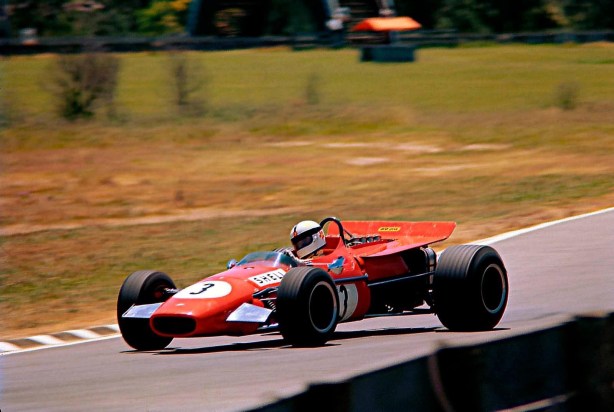
JH BT23E Repco 830 at the right-hander before the Western Crossing. WF Tasman round, February 1970. These combination engine cover cum wings were common in F1 in 1969 post the Monaco GP hi-wing ban (D Simpson)
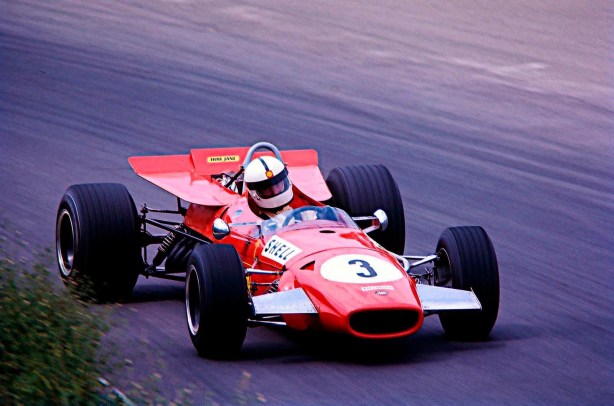
WF Tasman as above- from the Dunlop Bridge. Front wings @ stall? (D Simpson)

Jack Brabham’s two ex-works RBE830 V8’s (ex-Brabham BT31 two-race 1969 program) provided a bit more mumbo than the earlier spec 740, and the chassis was evolved with high and low wing-body packages as the rules pertaining thereto evolved. A bit like the Gardner/Bartlett BT23D, a BT23E photographic evolution from the ’68 Tasman to mid-1970 would make interesting viewing and give us all an understanding of the forces at play that the bigger local outfits were dealing with.

KB’s speed in 1968 carried him to his first Gold Star in BT23D Alfa and then on into 1969 when the superb Mildren ‘Yellow Submarine’ powered by the Alfa 2.5 V8, and then the first Waggott 2-litre TC-4V engine late in the season.
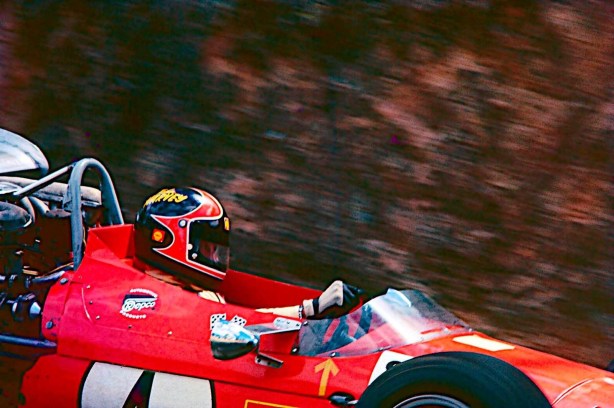
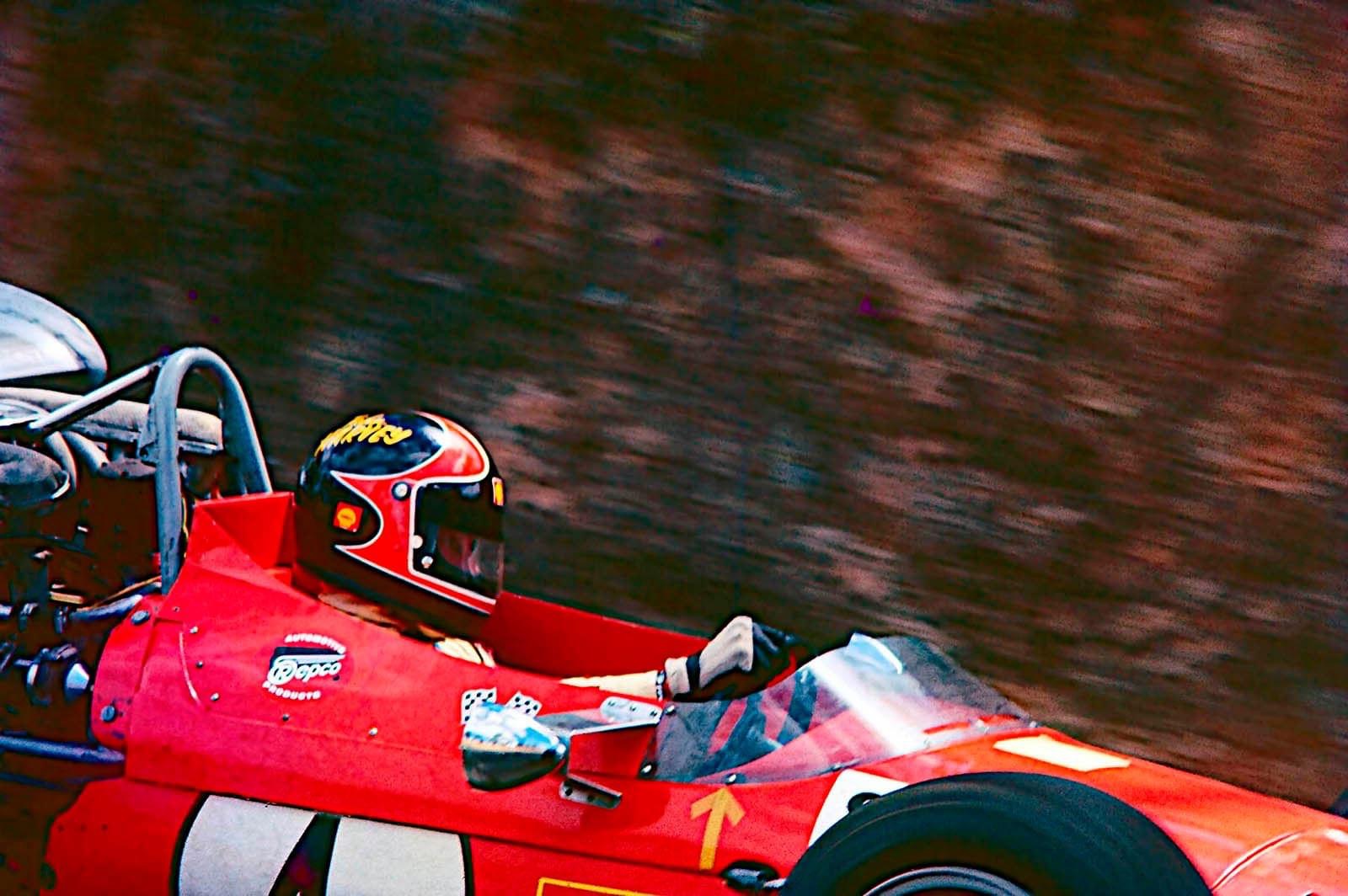
Dick’s BT23E Forrest Elbow Mount Panoarama closeup during the Bathurst Easter 1970 meeting. Right at the end of its frontline career. Loved Harve’s Peter Revson inspired helmet (D Simpson)

Harvey’s best result was a win from pole at Sandown in September and second at Bathurst, a year after ‘his biggie’. He was quick everywhere, but the Repco shat-itself at Symmons, Mallala and Surfers Paradise. At Warwick Farm he boofed the car and did not start the Hordern Trophy. He was equal fourth in the title chase with Niel Allen, behind Bartlett, Leo Geoghegan’s Lotus 39 Repco and Max Stewart’s Mildren Waggott.

By this stage of the game Bob and John realised they needed a new car. Bob Britton knew BT23E well having repaired it after Harveys ‘biggie’ and Allan Moffats ‘littleie’ at Sandown when a wheel parted company going up the back-straight. Given 1970 was the last year in which the 2.5s were Gold Star kosher, Jane engaged Britton to build an ‘updated BT23E’.

His brief was to address the suspension geometry- the width and profile of the Firestones Harvey used in late 1969 were quite different from the Goodyears Ron Tauranac had in mind when he whacked together BT23E in late 1967. The bodywork and wing-package was evolved and a tube or three inserted here and there to stiffen things up a bit.
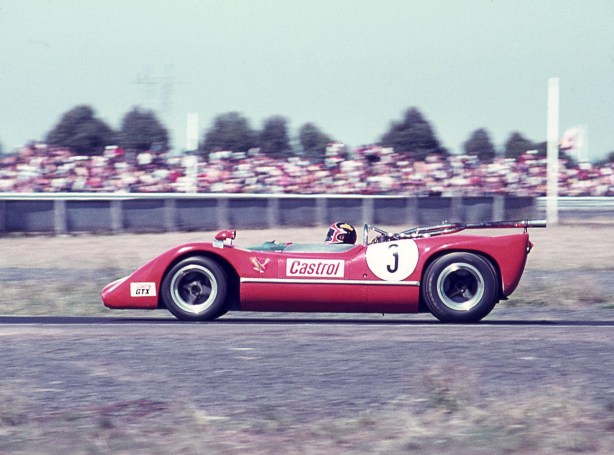
JH McLaren M6B Repco, Mallala October 1970 (J Lemm)
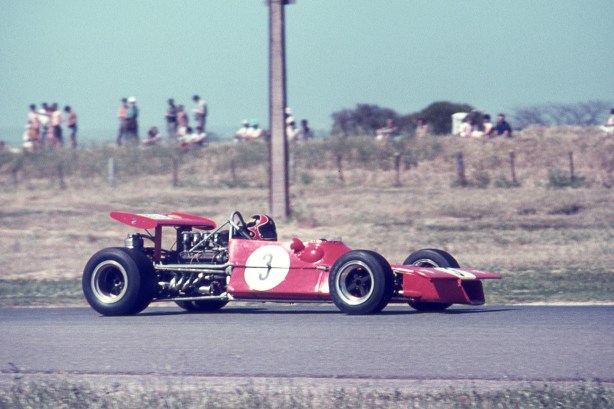
JH, Jane Repco 830 during the October 1970 Mallala Gold Star round. DNF suspension, Geoghegan’s Lotus 59B Waggott won the race and series. Nice Stobie pole behind best avoided (J Lemm)

Time is of the essence of course. Harvey’s 1970 Gold Star assault was cruelled a bit with a ‘Jane Repco’ that had insufficient testing time. Mind you, Garrie Cooper could play the same card as to his Elfin 600D Repco, one of his sexiest cars. So too could Leo Geoghegan, but once the Waggott 2-litre was popped into the back of Leo’s new Lotus 59B he had reliability he needed to lift a trophy he thoroughly deserved.

Bartlett was in the US for much of that year so the standard-setter of the last two years was ‘AWOL’, providing an opportunity for the rest. Leo won the title with two wins from six rounds with Max Stewart second and Harvey third- both also took two rounds. Harvey won at Symmons Plains and Sandown. He used BT23E in Tasmania and the Jane Repco from Lakeside where he was second but was 2 laps adrift. At Oran Park he was sixth, his fuel pump failed at the Farm and he had suspension failure at Mallala. Article on the 1970 Gold Star; https://primotipo.com/2019/07/05/oran-park-diamond-trophy-gold-star-1970/

JH, Brabham BT36 Waggott, AGP 1971 Warwick Farm Esses (L Hemer)

Bob Jane never allowed grass to grow under his feet. The Jane Repco was sold sans-engine and had an after-life as an F2 car. At around the same time he placed orders for a Brabham BT36 F2 car and a Bowin P8 Repco-Holden F5000 from John Joyce.

By the time the BT36 arrived and was fitted with a 2-litre Waggott the car was an also-ran as the F5000s by then- the ’72 Tasman, had reliability, sorta, as well as pace.

John raced it in the November 1971 AGP at Warwick Farm (Q3! DNF broken exhaust) and then at ‘home’ Sandown where Q12 and seventh was the yield.

When the Bowin P8 was ready during 1972 the Brabham was sold to Denis Lupton and Ian Cook, sadly Cook died in the car at Sandown in a practice accident in 1973.

John rated the ‘radical’ rising, or variable rate suspension, sinfully sexy Lotus 72 inspired oh-so-compact Formula 5000 car. If you can sense my Bowin bias your emotional intelligence is finely tuned.
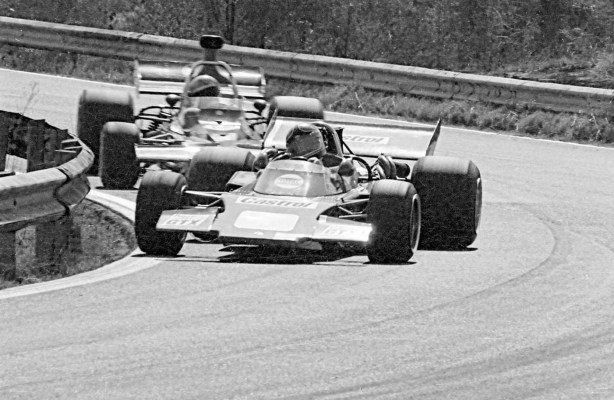
JH Bowin P8 Repco from John Walker’s similarly engined Matich A50 in Warwick Farm’s Esses on 30 September 1972 (D Simpson)

Bob Jane Racing’s primary sponsor was Castrol. Most dumb-arse punters liked/like taxis, so Castrol liked taxis. Bob Jane Racing’s best cars (the P8 and M6B) were put to one side and the taxis were given an extra cut and polish.

So we- Jane, Harvey, Bowin’s John Joyce and open-wheeler nutbags never got to see the P8’s full potential. As factory built by Joyce and his team the it was a beautifully integrated bit of kit.

It is ironic that the driver who did the most to establish the Bowin marque, the great John Leffler also, unintentionally, did the P8 the ‘most harm’.

Leffo was mighty quick in two Bowin P4A Formula Fords in 1971-2 then won the 1973 Driver to Europe Series in a rising-rate P6F. He was potentially the F2 Championship winner in 1974 in a rising-rate P8 but the car arrived late. That’s not quite right. He had the car early and then booked it early in the season requiring a rebuild around the ex-Jane P8 tub. When Joyce and Leffler sorted it mid-year it was a jet.

For 1975 John bought a cheap Chev F5000 engine to the by then rebuilt P8 he crashed at Amaroo early in 1974. His team adapted the motor to a car designed for a Repco-Holden. The tight lines of the original were buggered by exhausts up in the airstream and outsized radiators. Worst of all, the critical mating of engine to chassis gave the thing the rigidity of a centenarians-todger so the package handled badly. It nearly won the 1975, wet Surfers AGP mind you, but the reputational damage was done. Leffo went off and bought a Lola T400 and bagged a Gold Star.

Gawd! Wot mighta-been had Bob Jane Racing developed that car with Harvey at the helm!
(D Simpson)

A few touring cars to finish off.

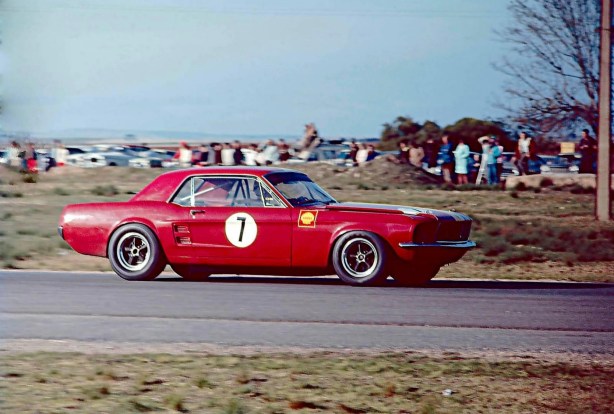
JH was quick in everything, depending on the year he may have jumped between Brabham, McLaren and a Mustang or Holden Monaro or Torana during the same weekend. Such a lucky man, what a diet.

Here it’s Jane’s second Mustang, the thing which was born as a ‘390’ but is here running at 4.7 or 5-litres during the September 1969 Mallala Australian Touring Car Championship round.
(L Hemer)

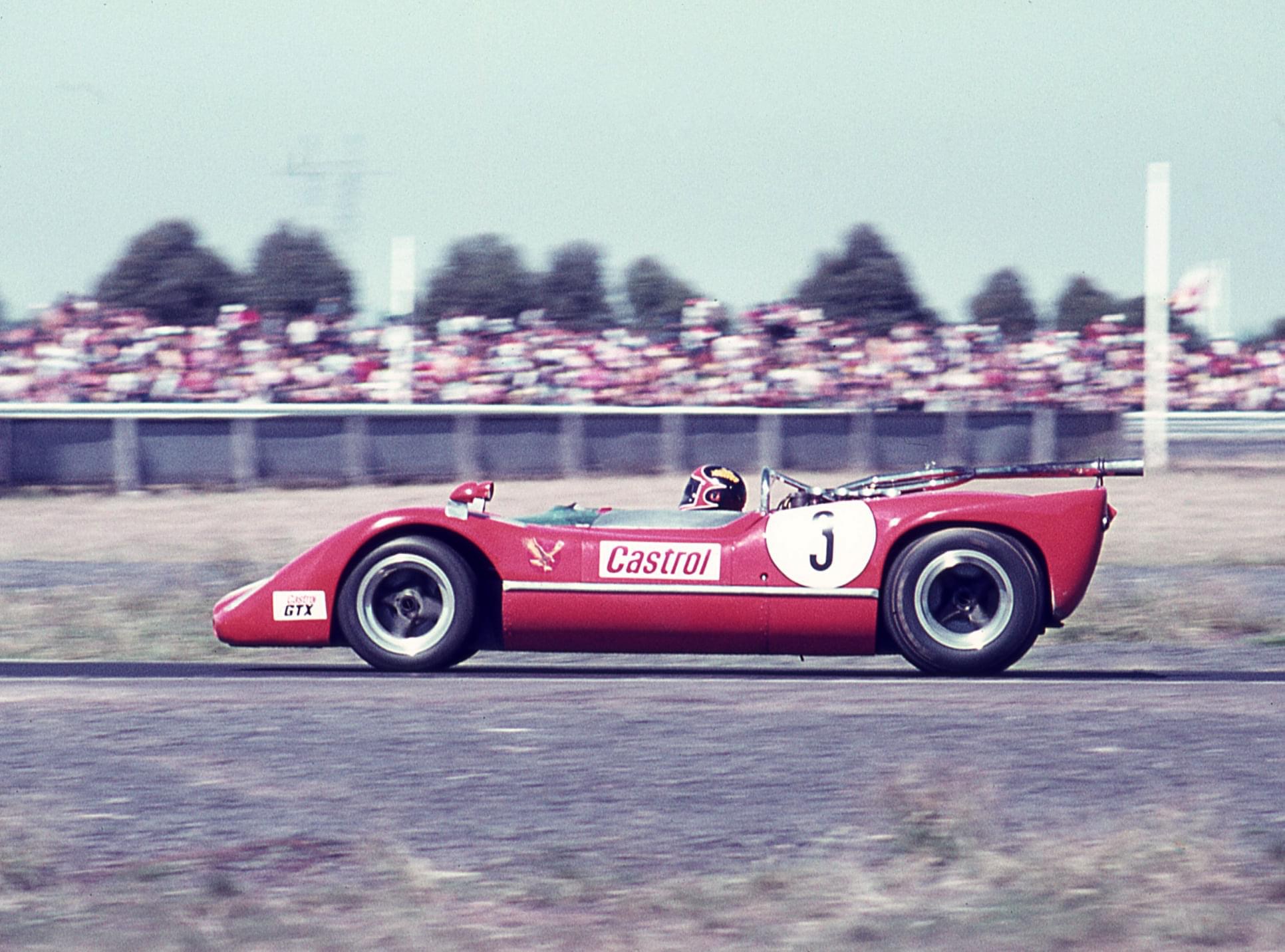
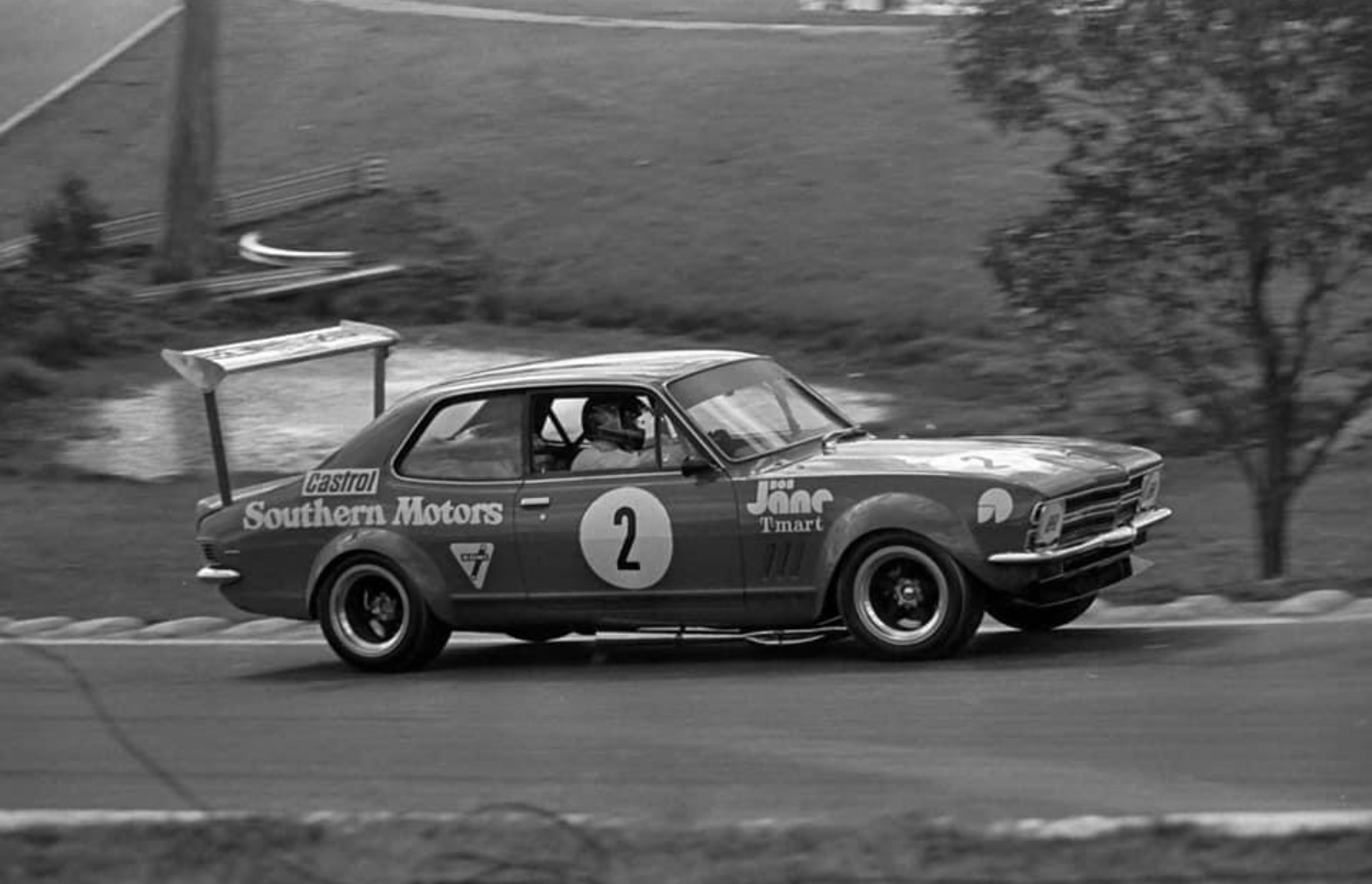
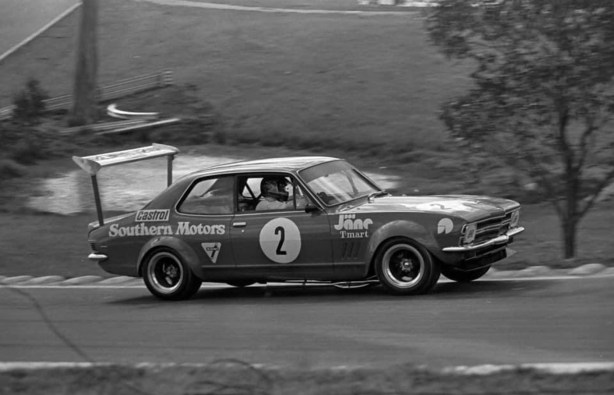
The most hunky Sports Sedan of all was Jane’s John Shepard built Holden Torana GTR-XU1 Repco-Brabham RBE620 4.4-litre V8. See here; https://primotipo.com/2015/06/30/hey-charger-mccormacks-valiant-charger-repco/

Lynton Hemer has caught John at Oran Park in 1971 in the short period the high-wing was run. It upset CAMS so was removed.
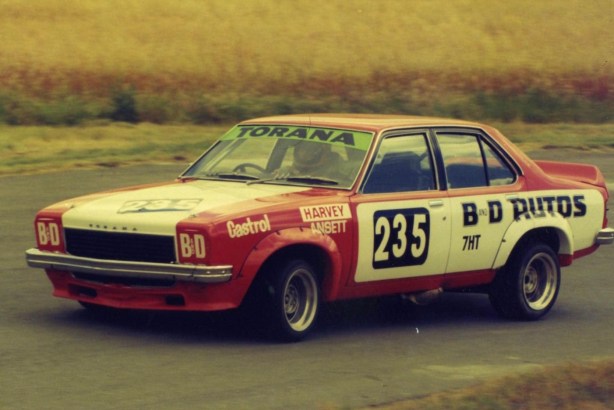
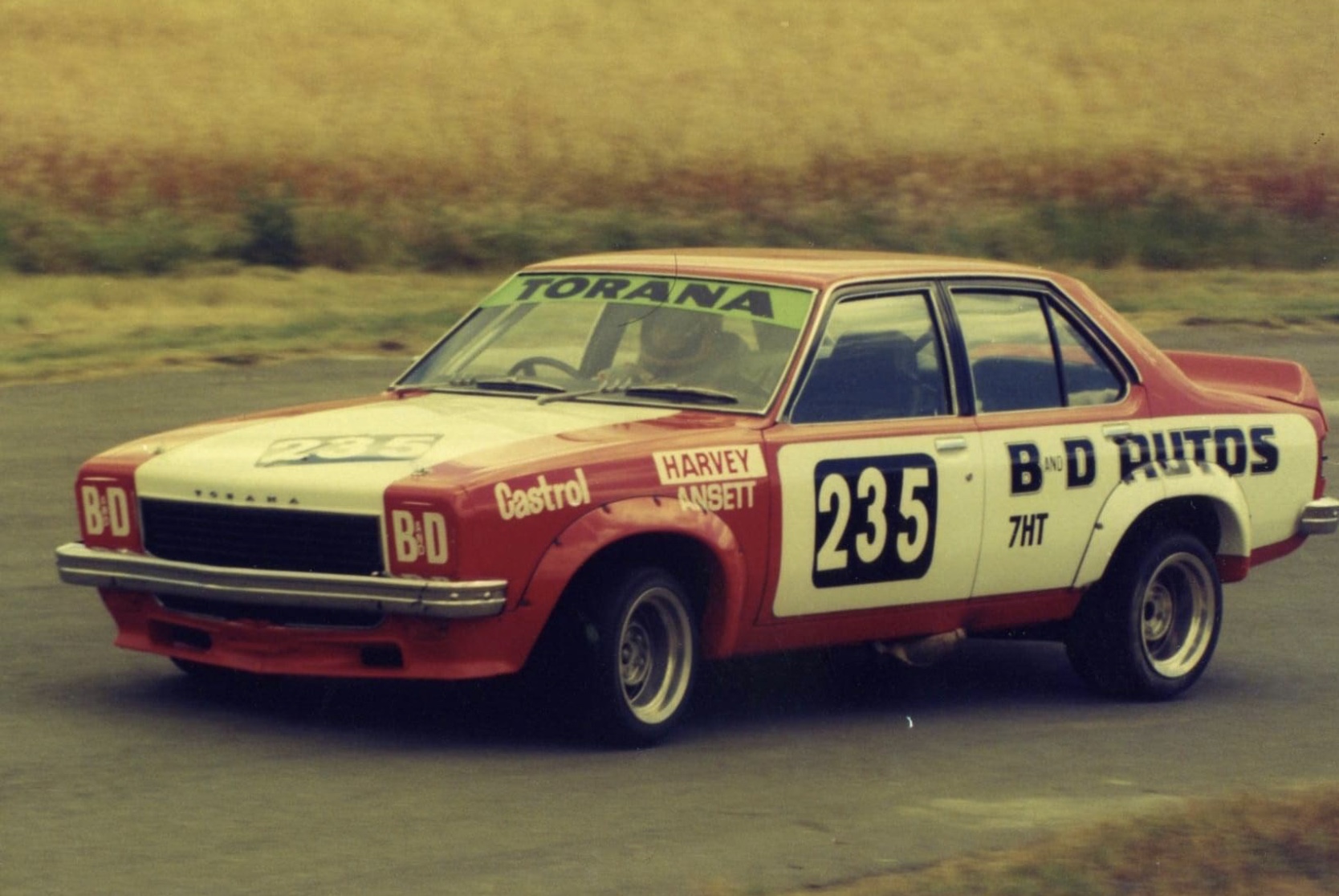
(A Lamont)

At the December 1974 Baskerville meeting in the B&D Autos Holden Torana L34 5-litre V8.

(M Thomas)

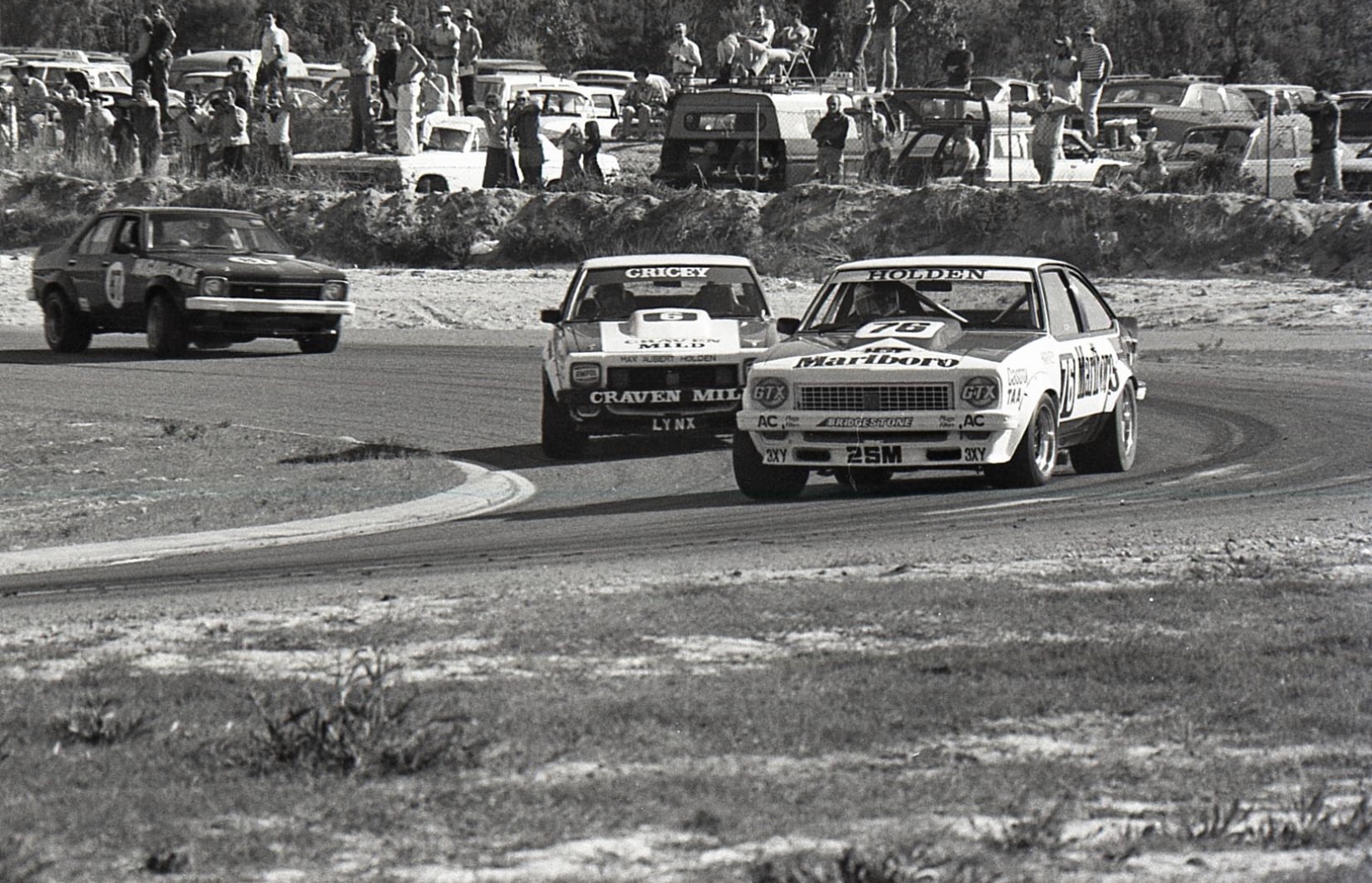
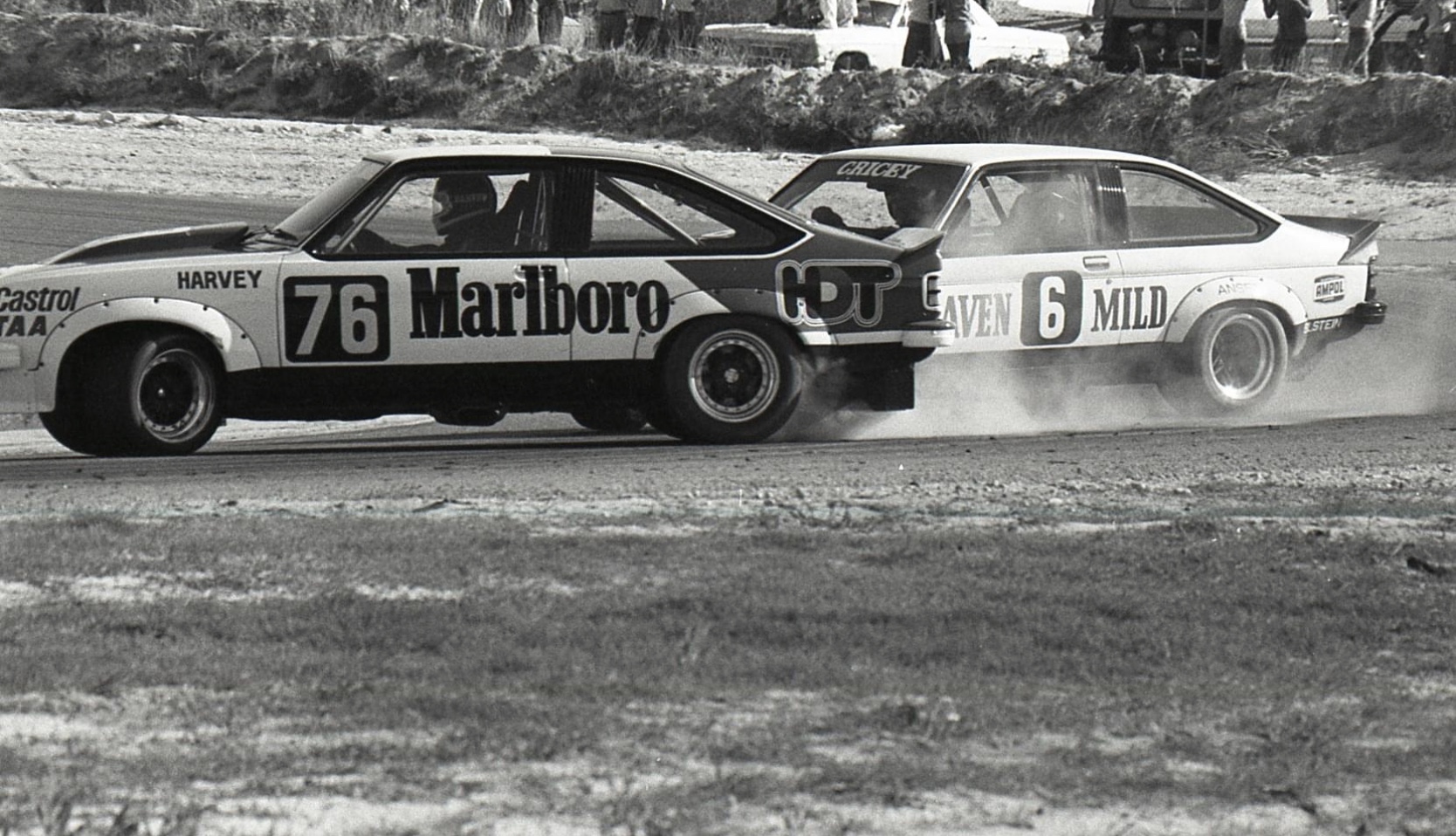
Harvey and hard-man Allan Grice extend their Holden Torana A9X 5-litre cars during the Wanneroo Park, Perth ATCC round in May 1979. Car #87 is Ric Rossiter’s Torana L34.

Peter Brock won the race in the other Holden Dealer Team car, Harvey was second and Grice third. Bob Morris won the title in Ron Hodgson’s A9X.

(M Thomas)

(oldracephotos.com/Jenkins_

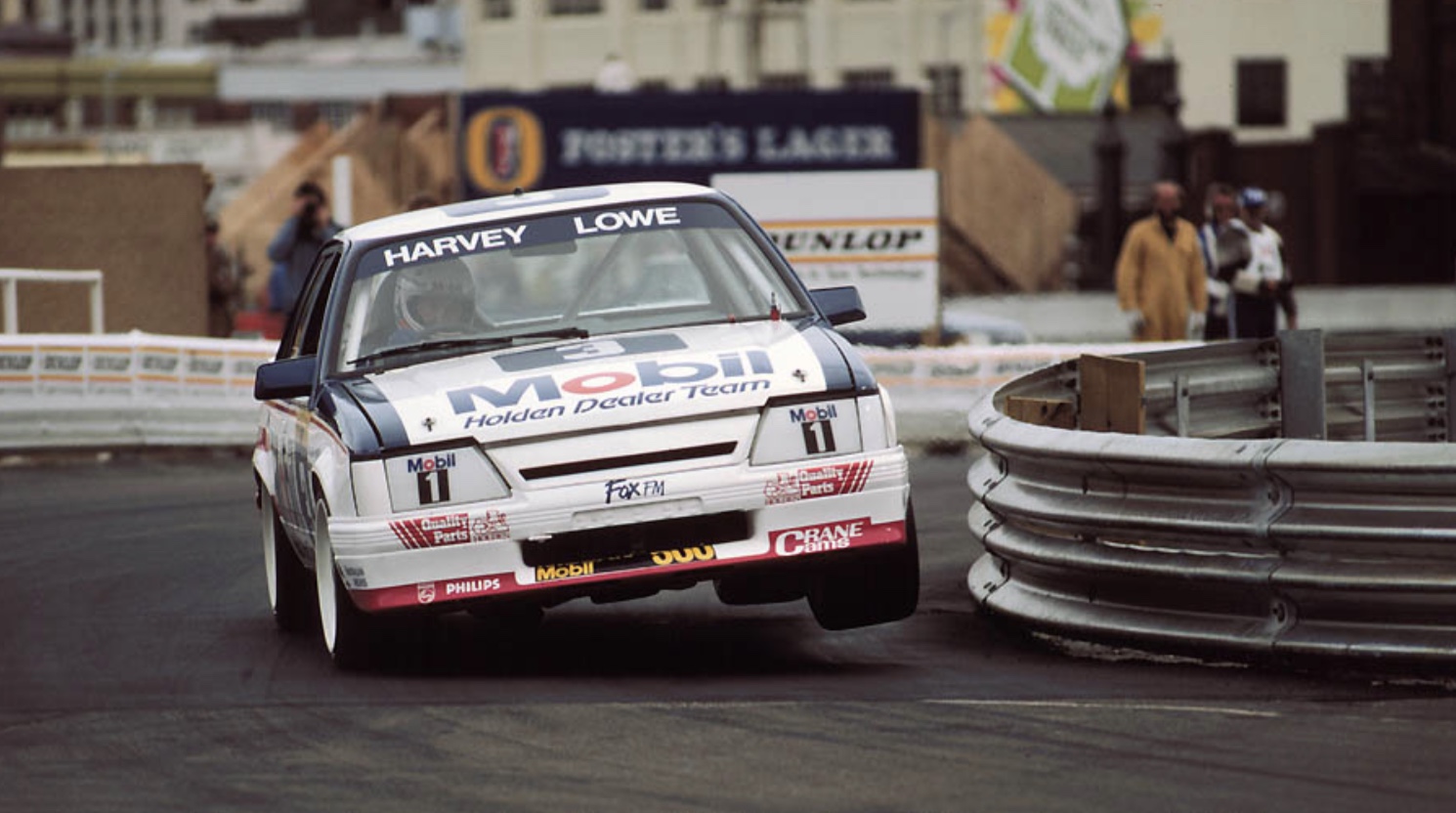
Harves blasts the Group A Holden VK Commodore 5-litre around the 3.3km Wellington Harbour track in 1987.

He and Neil Lowe were second in the first World Touring Car Championship round from their Peter Brock/Allan Moffat Holden Dealer Team teamates. It was a most impressive performance with most of Europe’s Group A topliners contesting the event.

Etcetera…
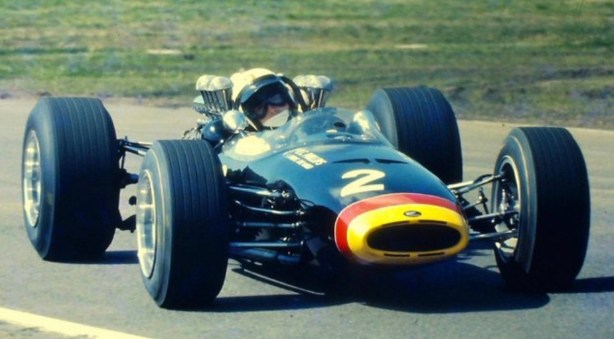
(B Pearson)

JH in Ron Phillips’ BT14 Repco 740 during 1967, circuit unknown.
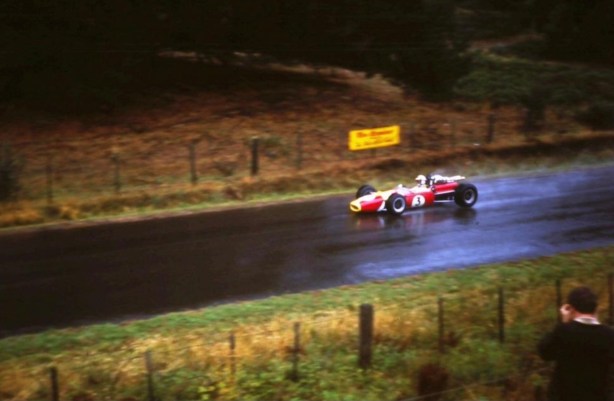
(S Dalton Collection)

No time to wave to Ron MacKinnon as John plunges past his ‘Mountford’ property on the run down to the Viaduct during the very wet final Longford in March 1968. Not a place for the faint of heart at any time let alone in the pissin’ rain. Brabham BT11A Repco.
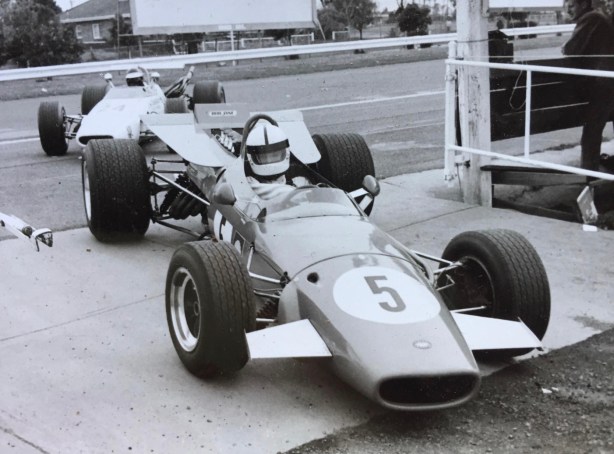
(K Bright)

Harvey in BT23E returning to the Sandown paddock during the September 1969 Gold Star meeting, an event he won. A good win too, from Bartlett’s Sub and Niel Allen’s McLaren M4A Ford FVA. That’s Henk Woelders’ Elfin 600B Ford behind.

Credits…

Dick Simpson, Alan Howard, Ken Starkey, John Lemm, Ken Bright, Geoff Toughill Collection, Lynton Hemer, Slim Lamont, Lindsay Ross’ oldracephotos.com, Murray Thomas, Bill Pearson

Tailpiece…
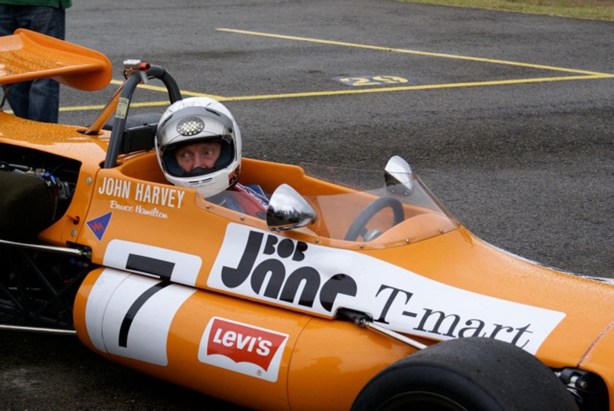
On the dummy grid at Phillip Island historics not so many years ago at all. I wonder what he made of a return-bout with a car he loved in-period despite a race program which was pretty short. Brabham BT36 Waggott 2-litre TC-4V.

Finito…

(unattributed)

Stan Jones pressing on aboard his HRG 1.5 s/c ‘Bathurst’ during the January 2, 1950 Australian Grand Prix weekend at Nuriootpa, South Australia.

Stanley had a rush of blood during a preliminary event. He was engaged in a torrid dice for the lead with fellow Melbourne purveyor of fine automobiles, Bill Patterson, as a consequence both ‘cooked’ their machines. Stan didn’t take the AGP start and Patto retired his MG TC Spl from the feature with head gasket failure.

Click here for an article on this AGP including the HRG; https://primotipo.com/2015/07/10/1950-australian-grand-prix-nuriootpa-south-australia/ and here on Patto; https://primotipo.com/2017/02/02/patto-and-his-coopers/

More Jones, I know. This photo came from a mate of a mate who snapped the print of the HRG on the wall of a most discerning Murray Bridge, South Australia bakery!

Credits…

Love to know who the snapper is, Geoff Harris and Stuart Bowes, State Library of South Australia

Stan’s HRG in the Nuriootpa paddock. Note the hacking of the bodywork necessary to accommodate the blower and associated plumbing (SLSA)

Finito…

WB during practice (B Henderson)

Warwick Brown was the star of the show but didn’t win the AGP thanks to the failure of a crankshaft torsional vibration damper in the Peter Molloy tweaked Chevy V8 of his Lola T332.

To a large extent I covered this meeting in an article about Lella Lombardi a couple of months ago but the release of these photographs by photographer/racer Bryan Henderson made it clear that a second bite of the cherry was a good idea. See the Lella piece here; https://primotipo.com/2020/09/07/tigress-of-frugarolo/

Brown was the ‘form driver’. He was the first Lola T332 customer, he raced ‘HU-27’ throughout the 1974 Tasman Cup, then did the first Gold Star round at Oran Park before heading to the US to take in three US F5000 Championship rounds in which the Lola/Molloy/Brown/Pat Burke combination were extremely competitive.

WB was Q7, second in heat and 11th overall at Ontario, Q12, fourth in his heat and fifth overall at Laguna Seca and  then finished his tour with Q9, second in his heat and third overall at Riverside. It was not bad at all coming into their season ‘cold’ in the sense that four rounds had been contested by the time WB and Peter Molloy arrived. Brown came back to Australia razor sharp, those at the front in the US included Brian Redman, Mario Andretti, James Hunt, Al Unser and Bobby Unser, David Hobbs, Vern Schuppan and the rest.

Teddy Yip, WB and another in the OP paddock (B Henderson)


KB T332 from Max T330 (B Henderson)

Max Stewart was well prepared. His Lola T330, ‘HU1’, the very first development machine raced a couple of times in England by Frank Gardner in late 1972 before its sale to Max, gave nothing away to anybody. It was increasingly reliable to match the speed present from tits debut in Max’ hands at the start of the ’73 Tasman Cup.

Graeme Lawrence raced his T332 in the 1974 Tasman whereas Kevin Bartlett’s was a newer car, first raced at Oran Park. KB had a shocker of a Tasman. A crash at the Pukekohe NZ GP opening round broke the car and a leg and hip, but he would be on the pace having built up a car around a new Lola T332 tub.

Graeme Lawrence, Lola T332 Chev with a Birrana in the background (B Henderson)


Garrie Cooper, Elfin MR5 Repco-Holden (B Henderson)

The Elfin MR5s were now long in the tooth having first raced in mid-1971.

John McCormack was back in his given the unreliability and lack of power of the Repco-Leyland V8 fitted to the compact Elfin MR6. Mac, the reigning champion had a shocker of a 1974 Gold Star, an accident at Surfers due to a structural failure ensured he missed the Calder round while repairs were effected to the front bulkhead.

McCormack ‘re-possessed’ his MR5 for the AGP. 1973 Australian Sports Car Champion Phil Moore had driven the car throughout the Gold Star with good pace and reliability despite few test miles. In fact he was the best placed of the Ansett Team Elfin pilots that year, ending the season third despite missing the final two rounds at OP and Phillip Island.

Garrie Cooper was still racing his MR5 which was a mobile test-bed for the talented designers new ideas.

The MR6 became a competitive car when the Repco-Holden engine was fitted and the front suspension geometry revised. Whilst 50kg heavier than the aluminium Leyland, the Repco-Holden’s 520 bhp was not to be denied, Mc Cormack won the 1975 Gold Star racing this combination.

McCormack’s Elfin MR5, 1973 Gold Star Champion  (B Henderson)


Jon Davison working his Matich A50 Repco-Holden hard- look at the distortion of those Goodyears. A man very much on the pace when he acquired a T332 (B Henderson)

Matich standard bearers were Jon Davison’s ex-John Walker A50 Repco, chassis ‘004’ was the car Walker raced in the 1973 L&M. John Goss raced Frank Matich’ 1974 Tasman car, chassis ‘007’ the very last Matich built. This A53 was a sensational device, A51/53 ‘005’ won the 1976 AGP in Goss’ hands at Sandown.

The A53 JG used to win at Sandown was the car raced by Lella Lombardi at Oran Park during this 1974 weekend. Then in A51 spec, it was one of the two chassis raced by Matich in the 1973 US L&M F5000 championship. The other, for the sake of completeness, ‘006’, was destroyed in a Warwick Farm testing accident in A52 spec with Bob Muir at the wheel in later 1973.

Lombardi had a big year of F5000 racing in Europe. Her primary campaign was aboard a Shellsport Lola T330 Chev. Late in the year she ran in the US and Australia when promoters could see the value in a ‘crowd-pulling chick’ amongst the fellas.

The ‘Tigress of Turin’ did not disappoint in Australia despite racing an unfamiliar car. Her crew included Frank Matich and later multiple Gold Star champion Alfie Costanzo as interpreter.

I don’t think anybody was going to beat WB at this meeting had he finished but I could easily see how Lella could have been on the podium especially if she were aboard her own T330, but it stayed in the UK.

Lombardi sitting on Matich tub ‘005’ during practice (B Henderson)


(B Henderson)

Gloomy faces all round in the Goss camp. The Repco engine has run a bearing, without a spare JG is out for the weekend. The dude in the white T-shirt is Repco’s, or perhaps ex-Repco by then, Don Halpin. The fella with his back to us is Grant O’Neill who moved across with the A53 from Matich to Goss as FM wound down his operation in Cremorne. Grant looked after Goss’ open-wheelers and Falcons for some years.

Warwick Brown was predictably quick in all sessions. After he did a 65.3, the team packed up and left the circuit but crafty Max bolted on a set of British Goodyears and nicked pole late in the final session with a 65.2. Bartlett was third on the grid with 65.9 with Lombardi fourth hampered by clutch failure. She finally did some decent laps stopping the Accusplits at 67.0 dead.

The grid was a very skinny nine cars. John Leffler made the cut with his gorgeous, very fast Bowin P8 Ford-Hart 416B ANF2 car. As mentioned above Goss lost an engine with bearing failure in the morning warm-up.

From left- Lombardi, Brown, Bartlett, Stewart and a glimpse of McCormack (HAGP)

From the off WB led convincingly all the way to his engine failure on lap 50. Lombardi got a great start and led the two amigos, Bartlett and Stewart but both passed the pint-sized Italian by the end of the first lap.

So it was Brown, Stewart, Bartlett with Lombardi and McCormack falling back, then Lawrence, Davison, Cooper and Leffler. After about 15 laps KB passed Max, aided by the Jolly Green Giant’s broken rear roll bar mount and stripped second gear- the latter damage was done at the start.

Leffo gave Garrie Cooper heaps in the little Bowin, well suited to Oran Parks new ‘twiddles’ with John well aware of the MR5’s strengths and areas of opportunity having done a few races in Max’s MR5 late in 1973. Lombardi caught Stewart but the big fella strenuously resisted her passing manoeuvres, then on lap 47 her oil pump failed causing the Holden engine to seize.

Bartlett from Stewart (B Henderson)


John Leffler, Bowin P6 Ford-Hart ANF2. Leffo did a million race miles in this car in 1974, all of the F2 championship rounds where he was amongst the class of the field headed by the Leo Geoghegan and Bob Muir Birrana 274/273, and the Gold Star rounds giving Grace Bros plenty of exposure and racegoers much pleasure given his brio behind the wheel (B Henderson)


Lombardi, Matich A51 Repco (B Henderson)

Two laps later WB’s harmonic balanced was hors ‘d combat which gave Kevin Bartlett the lead. For a while the Australian Triple Crown seemed possible- the Gold Star, Bathurst and an AGP. Then, on lap 58 of 61 laps KB’s Lola was starved of fuel, the T332’s pumps were not picking up the last 13 litres of juice!

Stewart took the lead, and despite his machine’s disabilities, won the race from McCormack’s, Elfin MR5, Graeme Lawrence’s T332, a lap down with an engine not at its best, then Jon Davison’s Matich A50 Repco and Garrie Cooper’s MR5 Repco- five finishers. There was no future in AGP’s being run other than during our summer internationals, whatever the formula, to get decent grids.

WB was ‘man of the match’ but lucked out, Lola T332 Chev (B Henderson)

Brown was the man of the meeting, getting back on the Lola horse which nearly killed him (a T300 Chev) at Surfers Paradise in 1973 was mighty impressive. WB carried the momentum forward, winning the 1975 Tasman Cup in this car, the only Australian to do so. He did get an Oran Park AGP win in 1977 too, on the day Alan Jones pumped the start bigtime.

It was a pity Lombardi didn’t return to Australasia for the 1975 Tasman but she had bigger fish to fry. Funding was in place so it was F1 in 1975 as a member of the March team together with Vittorio Brambilla.

Max Stewart takes the chequered flag, with barely a soul to see. What Covid 19 friendly meeting! Not really, just no spectators in that part of the world.

Stewart was like a fine wine wasn’t he, he got better and better with age? He was not exactly in the first flush of youth when he got the second Alec Mildren seat with Kevin Bartlett in late 1968. He won his first Gold Star in 1971 in the Mildren Waggott and then took to F5000 like a duck to water.

His Oran Park win was his fifth 1974 Gold Star victory in a row. It won him the title. Maybe he was lucky to win the AGP in the pissing rain at Surfers twelve months hence but those in front of him dropped out with drowned electrics. Max, who prepared his car together with Ian Gordon had electrics which functioned, that is, he made his own luck.

Etcetera…

(B Henderson)

Poor Susie Ransom (?) is trying to interview KB who is more interested in a glass of Pophry Pearl at the Leppington Inn after the meeting. Commonsense then prevailed with questions about tyre pressures, wing settings and roll-bar stiffness addressed.

(B Henderson)


(B Henderson)

Teddy Yip was omnipresent throughout the weekend. Here he is pointing out the Matich tacho-telltale in Mandarin. Lella’s English was not flash, I doubt Mandarin was effective so they probably settled with English.

Teddy was getting the lie of the land and perhaps starting to think about the deal which saw him bring a Lola T332 to Australia for our 1976 Rothmans International. Vern Schuppan raced a Yep/Sid Taylor Lola T332 to victory that summer.

(B Henderson)

Goss with his team bemoaning the bearing failure in his Repco-Holden engine, he knew a thing or two about that particular affliction didn’t he? Blazing the Falcon GT Hardtop Group C path in 1973 gave plenty of bottom end dramas which was eventually sorted with an engineering solution which met the good graces of the CAMS.

(B Henderson)

The Elfin MR5 is a bit maligned in some quarters. The most highly developed of the four cars built was John McCormack’s ‘works’ machine which won the 1973 Gold Star as well as the New Zealand Grands Prix in 1973 and 1974 despite Mac first racing it in later 1971.

(B Henderson)


(B Henderson)

So near but so far, Bartlett had the ‘Triple Crown’ of Australian motor racing chance but it was not quite to be!

He won a heat at Surfers and had the second in the bag until a front tyre deflated. In a season where he showed the Pukekohe accident had not cost him a tenth, he was second to Stewart at Calder and Sandown and then took victory at Phillip Island’s last round after a great dice with Stewart.

(B Henderson)

Lella ready to boogie.

Credits…

Bryan Henderson, many thanks for the fantastic photographs.

‘History of The Australian Grand Prix’ Graham Howard and Others, Getty Images, Fairfax Media

Tailpiece…

(B Henderson)

Graeme Lawrence in the ‘star car’ of F5000, the Lola T332. Engine troubles ruined his AGP weekend. The 1970 Tasman Cup champion was in a three way shootout several months later to win the 1975 Tasman together with Warwick Brown and John Walker in the Sandown final round but the cards fell Brown’s way.

Finito…
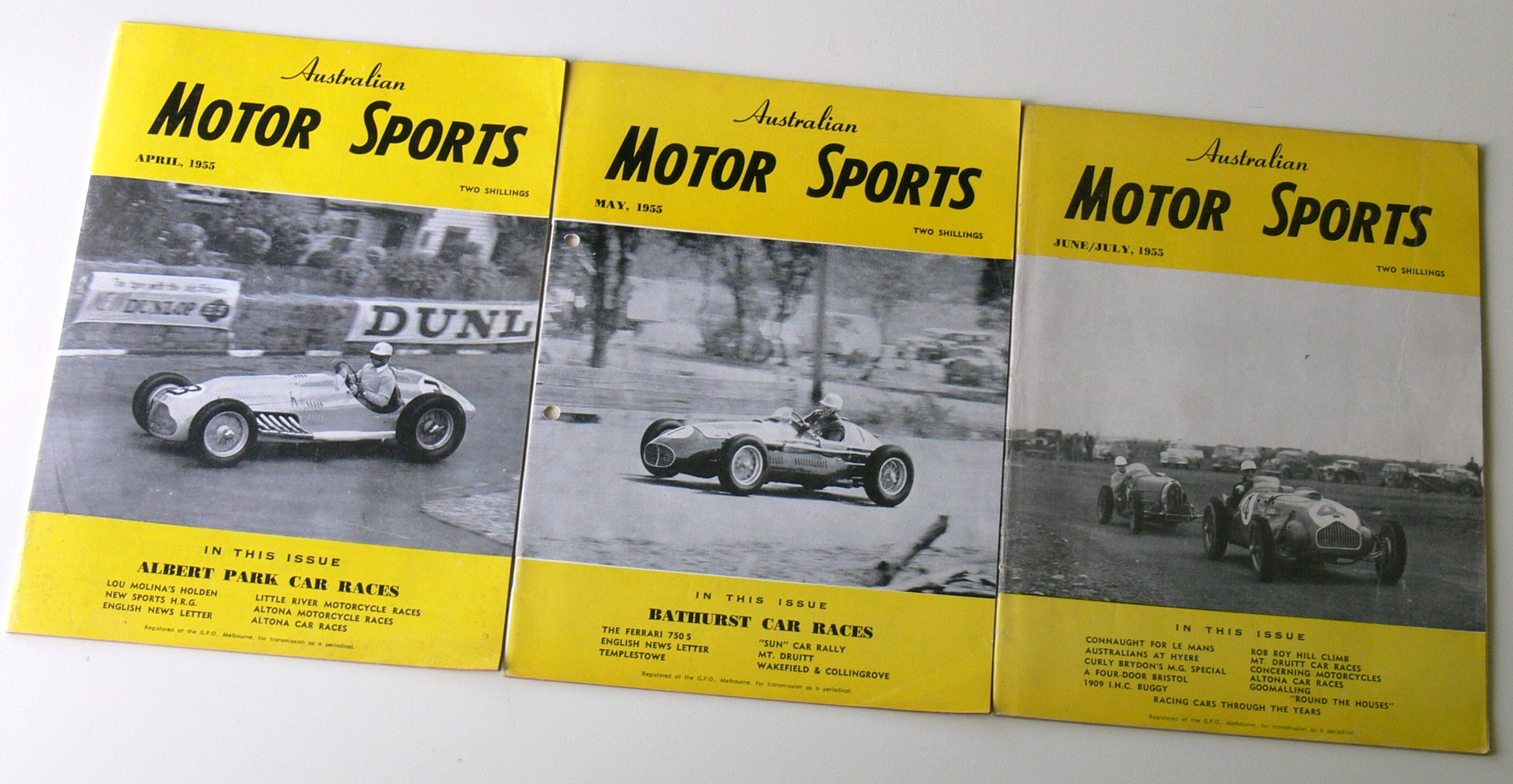
Stan Jones and his mechanic, Charlie Dean, pose for a Mobil photograph out front of one of Stan’s ‘Superior Motors’ dealerships in inner-Melbourne during 1956. Note the babes in the slips-cordon. Look at that aluminium work, love the neat fillets or scoops to allow some air into the rear tail section, surface cooling of the oil-tank.

Jones acquired his Maserati 250F, chassis ‘2520’ that year. The machine succeeded the Dean designed and built Maybach’s 1, 2 and 3. To be more precise, Maybachs 2 and 3 were built by Charlie and his merry band of artisans at Repco Research (RR), Sydney Road, Brunswick.

Charlie was appointed Repco’s chief automotive experimental engineer in 1954, general manager of Repco Research in 1957 and joined the board as a director of Repco Ltd in 1960, a position he held until his retirement.

I’ve done these two blokes to death, here; https://primotipo.com/2014/12/26/stan-jones-australian-and-new-zealand-grand-prix-and-gold-star-winner/ and here; https://primotipo.com/2016/01/08/stan-jones-agp-longford-gold-star-series-1959/

Jones in Maybach 1 from Ken Wharton’s BRM P15 Mk1 V16, Ardmore 1954. Interesting to see the way Repco used Maybach to plug its other products

The Repco/Maybach/Dean/Jones partnership ended when Maybach 3 went kaboomba at Gnoo Blas in the summer of ’56- the last of Repco’s stock of the German straight-sixes was carved in half after a major internal haemorrhage.

Of course they could have acquired another motor, but Stan said ‘Fuggit! I’m gunna buy a 250F’. So he did. And a 3-litre 300S engine as a spare, as you do.

The Maserati was initially prepared at RR. When Reg Hunt retired in 1956 Bib Stillwell bought his 250F and Stanley bagged Otto Stone, who had prepared Hunt’s A6GCM and 250F.

Stone was both a very capable racer and engineer. Stan’s most successful years followed. Notable wins included the 1958 Gold Star and 1959 Longford AGP. Jones’ mechanical sympathy was not rated ‘in period’. Stone prepared a robust car well. In addition, my theory is that Otto gave Stan a few ‘chill-pills’. That is, calmed him down a bit. ‘You have to finish races Cocko, just learn to read the play better. Play the percentages rather than win or bust’. I suspect he also called a few of those plays.

Jones and Stone shake after Stan’s 1959 Longford win. He finally bagged the win he deserved. John Sawyer in cap, Alan Jones sez ‘cheese’ (unattributed)

I am hopelessly biased in relation to Kevin Bartlett, Alec Mildren and anything and anyone related thereto (Rennmax, Merv Waggott etc, etc), Frank Matich, Elfin and Garrie Cooper, Repco, Stan Jones and Charlie Dean. So you should read what follows with due caution.

It’s hard to think of a more significant, resident, figure in Australian motor-racing from 1950 to 1976 than Charlie Dean.

His fingerprints were on Maybachs One to Four. Lex Davison’s 1953 Monte Carlo Rally Holden 48-215 was prepped by Chuck. He aided, abetted and developed Jones. Jones and Maybach 1’s 1954 AGP win was the first international GP won by an Oz car. Stan’s job behind the wheel was matched by Dean’s with the tools the night and day before.

Dean hired Phil Irving at RR, together, the Holden-Grey Repco Hi-Power head was theirs. Think of how many race and sportscars they powered. Many of the Holden (48-215, FC, FE etc) race developments were made by RR and then sold to all and sundry. In that sense Repco was in on the ground floor and assisted the explosion of touring-car racing from the mid-fifties.

The Maybach and Repco Hi-Power programs were critical incremental steps which led to Repco’s F1 world championships in 1966-1967. Frank Hallam’s early-sixties Coventry Climax FPF maintenance program was another.

Charlie Dean was not the Director in charge of Repco-Brabham Engines Pty. Ltd. Managing Director, Dave McGrath appointed Bob Brown. Charlie did provide Board level support throughout though. Critically, he was asked by McGrath who should design the first V8 engine which became known as ‘RBE620′- he recommended Phil Irving, the 1966 title was the result. Dean was made responsible for RBE Pty. Ltd. after Frank Hallam was shunted sideways in late 1968 as the F1 program was wound down.

Charlie saw F5000 as a cost-effective ANF1 and the means for Repco to remain in racing. When CAMS dithered about 2-litre/F5000 as Oz’ next F1 Dean invited CAMS President, Donald Thomson, to Repco’s St Kilda Road HQ for a long-lunch in the wood-panelled boardroom during which CAMS’ finest was re-programmed. I’m not suggesting the Repco heavies were the only lobbyists to ping CAMS around that particular pin-ball machine.

The Repco-Holden F5000 program followed. Dean and Malcolm Preston brought Phil Irving back from the Gulag to knock that engine together with the assistance of Brian Heard. Several AGP’s, an NZ GP or two, Gold Stars and plenty of individual race wins resulted.

Most of the Repco-Holden’s internals formed the basis of the Holden Torana L34 and A9X donks. There were several Bathurst taxi-race wins there I guess. And an Australian Touring Car Championship or three.

Dean was a man of many parts. Trained as an electrician, he started and sold his business to Repco, raced at elite level including the 1948 AGP, was VERY adept as a hands on engineer and rose through the corporate ranks to become a long-time director of one of Australia’s biggest public companies. And the rest.

Sure, he had Repco’s cheque book in a ‘golden era’ for the industry. The point is that he used it parlaying his influence to the benefit of Repco- and the sport.

Happy to hear other views to my biased one. It will have to be a good argument to knock him over in the period defined however!

David McKay, yeah-yeah, but nup.

Jones and Dean with Maybach 2 in 1954 (unattributed)

Credits…

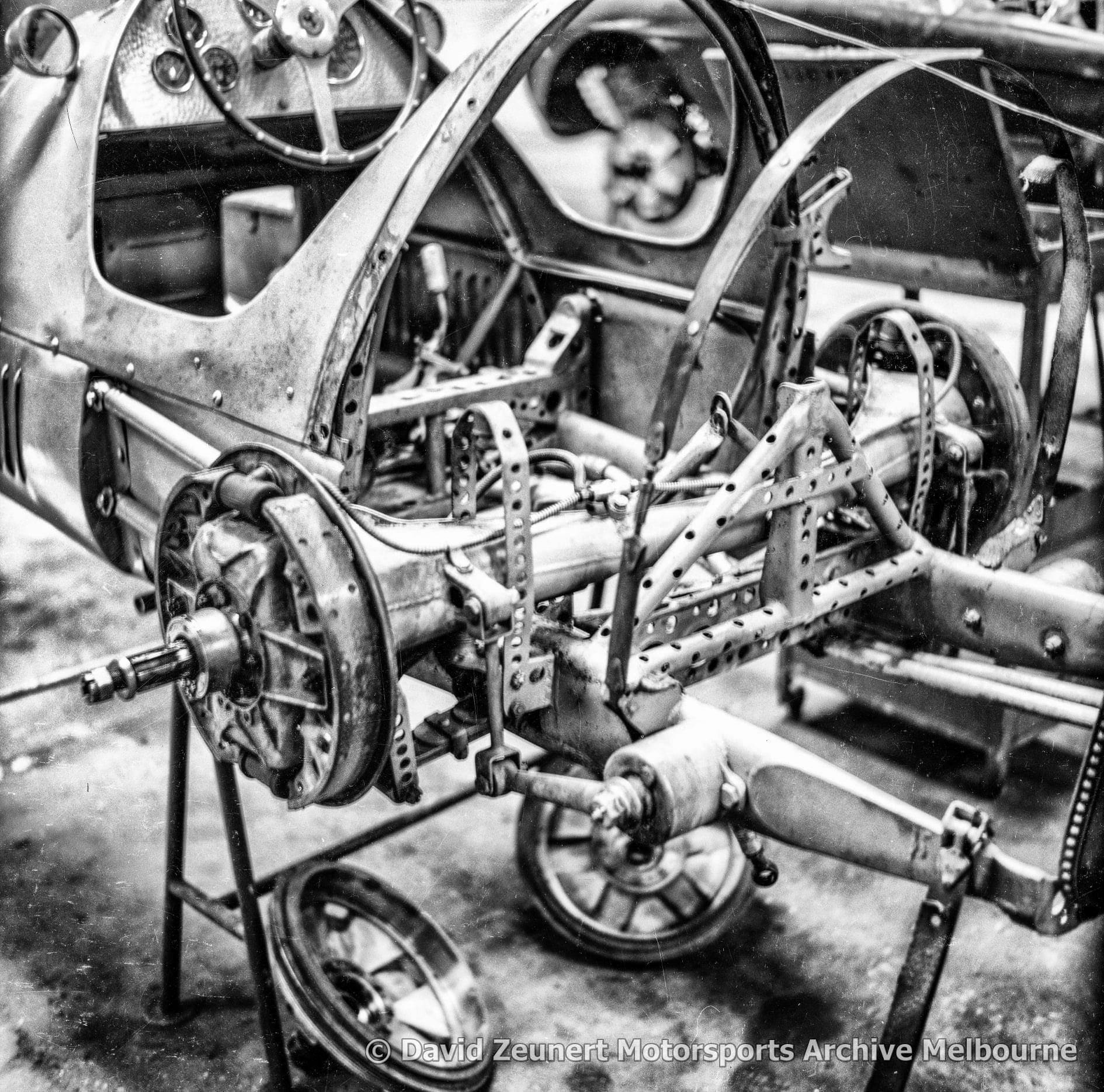
Many thanks to David Zeunert for another great shot from his archive.

Tailpiece…

(unattributed)

Jones and 250F at Albert Park circa 1956.

Finito…
(K Buckley)

Don Holland’s Cooper S from Robbie Francevic’s monstering Ford Fairlane at Bay Park, Mount Maunganui, New Zealand in April 1968.

Imagine looking at that ‘block of flats’ baring down on you at some speed in ‘yer mirrors!?

Were these things ‘sports-racing closed’, or perhaps ‘sports-sedans’ by then. The Kiwis will have called theirs something else of course- what? In any event, these highly-modified tourers have always been my favourite taxi-variants.

Alan Boyle picks up the story, ‘Don Holland came other with two other Mini-racers, light-weight and extremely quick cars – John Leffler and Lynn Brown, three nice guys, I’ve visited them in Sydney since.

Relaxing in the Pukekohe paddock after the racing, ‘John Leffler, Don Holland Lynn Brown. Margaret and Violet Mini.’ I wonder if this visit was during the Tasman rounds, it would be  interesting to know the results? How did Violet go in her car? See this piece on the Francevic Ford; https://themotorhood.com/themotorhood/2017/11/24/special-feature-robbie-francevics-fairlane

More questions than answers this time…

(A Boyle)

Credits…

Ken Buckley photo via Milan Fistonic, Alan Boyle

Finito…