image

(Heritage Images)

I’m constantly in awe of the talents of the photographers whose work is displayed in this ‘masterpiece’ of mine…

Take a careful look at the composition and execution of this shot of Phil Hill’s Dino at Monaco in 1959-the use of light, the way the shadows of the palm tree and building architecture frame the shot of the snub-Monaco nosed Ferrari 246 and the expression on the American drivers face. The shadow of the photographer gives a sense of involvement.

image

(Klemantaski)

Things were pretty tough for the front engined brigade by 1959 of course.

Jack’s first Cooper title was bagged that year. In the process of trying to keep up, Enzo’s brigade created quite the most beautiful cars in these later Dino’s. The snub nosed car not so much but checkout Tony Brooks slinky, curvaceous chassis above during the BARC 200 at Aintree on 19 April ’59. Jean Behra took the win that day in a sister car, the Scuderia may have been lulled into a sense of false security by this non-championship event result.

The 1959 Dinos had more voluptuous bodywork by Medardo Fantuzzi, clothing big-tube frames with coil-sprung de Dion rear ends rather than the transverse-leaf setup used earlier. Dunlop disc brakes and tyres were used with Armstong telescopic shocks replacing the ‘unreliable’ lever-arm Houdailles- Doug Nye wrote that some Ferrari team members blamed the Houdailles as the cause of Peter Collins fatal 1958 German GP accident.

image

Brabham on the way to his first GP win at Monaco in 1959, Cooper T51 Climax (Cahier)

It was very much a Cooper T51 Climax year.

They won three of the five non-championship events (Moss took 2, Brabham 1) with Ferrari and BRM taking one apiece (Behra and Flockhart). Ignoring the Indy 500 which was part of the world championship back then, there were eight GP events. Cooper won five (Brabham-Monaco, British and Moss-Portugal and Italy two races each for the Aussie and the Brit and McLaren-US 1 win). Ferrari won two (Brooks-French, German) and BRM won one, the break-through first win for the Bourne marque and Jo Bonnier aboard a P25 at Zandvoort.

image

(unattributed)

Its front is a little ‘fugly’, the looks only a mother could love

‘Snub nosed’ Dino, Hill rounding the Gasworks Hairpin, Quay in the background. Oooh, la, la from the rear tho. All things Italian look great from the back!? Hill hustling his Dino, thru the Mirabeau right hander below.

image

(LAT)

Have a look at Phil’s car below in August on the hugely picturesque and dangerous Monsanto road course during the Portuguese GP.

DNF when Lotus 16 mounted Hill G spun in his path taking out both cars. Moss won in a T51 Cooper Climax from Masten Gregory similarly mounted, Gurney the best placed Ferrari in 3rd.

I guess by definition these Dino’s are the ultimate expression of the front engined GP car given Enzo persevered at least a year longer than he should have.

image

(LAT)

Credits…

Heritage Images, Klemantaski Collection, LAT, Cahier Archive, Ferrari Dino article by Doug Nye in Motorsport November 2007

Etcetera- Technical Specifications…

Two rare photographs of Dinos in the semi-nude.

The first, above, is a 156 F2 in the Nürburgring pits in August 1957, both are by Bernard Cahier. The second is of the Taffy Von Trips (DNF) car during the 1960 Belgian Grand Prix weekend at Spa.

Vittorio Jano’s new 65 degree 1.5 litre V6 gave about 180 bhp @ 9000 rpm on the Maranello test-bed, it burst into life about five months after Dino Ferrari’s untimely death due to renal failure on 30 June 1956.

The cars chassis was a scaled down variant of the Lancia Ferrari 801, its tubular frame comprised of two large diameter bottom tubes braced by a welded on superstructure of thinner tubes- not a true spaceframe in a definitional sense.

The engine was angled across the frame, as you can see, this allowed the prop-shaft to run past the drivers seat to the left. The front suspension, clearly shown, is by wishbones and coil springs with the rear suspension by de Dion tube and transverse leaf spring. Drum brakes and Houdaille lever arm shocks were fitted with Scaglietti providing the sexy aluminium body.

The 1957 German GP was a famous victory for Fangio’s Maserati 250F from the Hawthorn, Collins and Musso Lancia Ferrari 801’s. The Dino, if the photo is captioned correctly, was perhaps in the transporter. Whilst entered in the F2 section, the race results show Maurice Trintignant as a ‘no-show’, Denis Jenkinson’s race report also says the car did not arrive so perhaps the date on the caption is wrong and the shot is of a 1958 246.

The first F2 Ferrari Dino, chassis #’0011′ made its race debut at the Naples GP on 28 April 1957. Enlarged engines of 1983 cc, 2195 cc were built over the ensuing months and- then the 2417 cc variant was raced by Peter Collins during the non-championship 27 October Moroccan GP- the Dino 246 was born!

Stricken by flu, Peter spun off, the 85mm bore, 71mm stroke, 2417 cc engine at that stage gave 270 bhp @ 8300 rpm burning 130 octane AvGas, the 1958 mandated fuel.

The 1960 Dino 246/60 (above) were lightened with engines angled across the frame the opposite way to 1959, with the transaxle turned around to match- providing the drivers with the challenge of a reversed gearchange gate.

They also featured pannier fuel tanks without separate covering body panelling (look closely above) smaller fuel tanks and all-independent coil-spring and wishbone suspension.

At Spa Phil Hill used the Ferrari four-cam power advantage but was still overwhelmed by a Cooper Climax 1-3 finish. Jack Brabham led home Bruce McLaren in T53’s whilst Olivier Gendebien was third in an earlier T51.

Tailpiece: And what a tail. I’m cheating really, this is the butt of Phil’s ’58 Dino, this pictorial article is mainly about the 1959 cars…

image

’58 Moroccan GP; Moss won in a Vanwall VW57 from Mike Hawthorn and Phil, both Dino mounted, Mike won the ’58 World Title at this race (LAT)

The photo is another masterpiece of composition and high-speed shutter work during the Moroccan GP at Ain-Diab, Casablanca Morocco on 19 October 1958.

Check out the different tail treatment from the later cars earlier in the article and ‘three piece’ fabrication of the Ferrari’s rear tail section comprising from driver back- the fuel tank, then oil tank and finally small curvaceous endplate, Italian panel bashing at its best.

Finito…

image

An Australian daily broadsheet newspaper ad to promote Repco’s 1967 Grand Prix successes…

Thats Michael Gasking giving the 1967 F1 RB740 V8 ‘a tug’ on the Maidstone, Melbourne dyno before shipping the usually still warm engine off to the Brabham Racing Organisation in Guildford, England.

Credit…

Michael Gasking Collection

Pierre Levegh relaxed during the 1953 Le Mans weekend beside the Talbot Lago T26GS he drove to 8th place together with Charles Pozzi…

He famously came within an ace, an hour in fact, of winning the race solo in a similar car the year before.

image

Levegh led the race from about 2am, during his long hours at the wheel the engine developed a vibration, which he felt he could nurse better than his co-pilot given he was in synch with the cars rhythm.

But an hour from the end of the classic the car coasted to a halt at Maison Blanche, about a mile from the pits. The Talbot was mortally wounded, either a conrod let go after a big over rev or a bolt holding the central crankshaft bearing came loose. What was never clear, Pierre was driving with a broken rev-counter, is whether the engine succumbed to the malady present for much of the race or whether in his exhausted state the driver missed a gear.

The Frenchman’s real name was Pierre Bouillin, his racing pseudonym Of Levegh was the surname of an uncle who was a pioneer driver who died in 1904. Alfred Levegh was a leading member of the Mors racing team at the turn of the century. Pierre assumed his uncle’s surname in 1938 but when he commenced racing in a Bugatti 57T in 1937 raced using his own name.

The wealthy Parisian brush company owner was a talented sportsman, being a world class tennis and ice hockey player in addition to his talents behind the wheel, a career he started pre-War in his early thirties but did not flourish until after the cessation of global hostilities.

Pierre, driving a factory Mercedes Benz 300SLR was an unwitting and innocent part of the tragic sequence of events which took his life, and those of 83 others at Le Mans in 1955. Not a subject I care to explore and an incredibly sad and inappropriate epitaph for a driver who was a journeyman in Grand Prix cars but good enough in Sports Cars to be invited into a team containing Moss and Fangio…

Levegh, Talbot Lago T26GS during his heroic but ultimately unsuccessful 1952 Le Mans drive (unattributed)

Credits…

Stanley Sherman, Klemantaski Collection, oldracingcars.com

Max Stephens powers his 2 litre Cooper T40 Bristol up the Domain Hillclimb, Hobart, Tasmania probably late 1959…

Its not just a T40, it’s THE T40, Jack Brabham’s 1955 Australian Grand Prix winning car- Jack took a somewhat lucky win when the more powerful cars of Stan Jones and Reg Hunt fell by the wayside or were mortally wounded.

Colour isn’t so common in Australian motor racing photography in the period- partially due to its cost and that professionals mainly shot in monochrome given good ole black and white in magazines prevailed. This is a fantastic colour photograph from Lindsay Ross’ oldracephotos.com.au archive, I’m not sure who the ‘snapper is in this particular case but his/her composition took my eye.

The 1959 Australian Hillclimb Championship was held at the Queens Domain on Saturday 14 November 1959, in fact the weekend was a ‘double-banger’ with competitors over from the mainland able to compete at the Baskerville circuit on the Sunday. Perhaps this photo is of Max during the championship meeting, i’m intrigued to know.

The journalist Rob Saward, writing on The Nostalgia Forum had this to say about T40 ‘CB/1/55’ and Stephens…

‘The gearbox was always this cars weakness…It was the usual Citroen based (ERSA modified) box Cooper were using in the early Bobtails and F2 cars, which worked ok with the FWA or FWB Climax, but 2 litres of Bristol power meant it had to be treated very gingerly. Longford was always hard on transmissions, even more so before the railway crossing was rebuilt prior to the 1960 meeting’.

‘Max Stephens never really had the chance to demonstrate his true potential in the car- he was a gifted motorcycle racer, Tasmania’s best in the 1950’s and there is no reason why he could not be good in a car also. I don’t know whether it was his (Max Stephens Motors in Moonah, a car sales, later accessories and motorcycles) business that stopped him getting more involved in car racing or whether money was the issue…he died a few years ago’.

‘The car was sold in about 1962/3 to Alan Robertson of Hobart who converted it from central seat to sportscar format and raced a few times before Bristol engine problems intervened…the car was purchased by Frank Cengia, who restored it in the original Brabham 1955 colours, but in the 1990’s it was unfortunately sold overseas…’when Pat Burke who owned the car fell upon hard times’.

Cooper T40 ‘CB/1/55’ whilst in Stephen’s ownership at Longford in 1959 or 1960. It is the car that Jack built, literally, days before his championship F1 debut at Aintree in the 1955 British GP. The car was constructed on the T39 Bobtail sports jig, with modifications. Note the curved Cooper spaceframe chassis, Bristol 2 litre engine sitting tall in the chassis, alloy wheels…such a clever car (oldracephotos.com)

Talented engineer Geoff Smedley added that ‘the car was prepared (in Tasmania) by the late Eric O’Heaney, one of the old school motorcycle mechanics who gave Max a lot of success in his bike days…Eric himself was an avid bike racer until a serious accident…In my mind Eric was an earlier version of the great Phil Irving, both with the same demeanour in their thinking and dedication to the development of the sport…’

Scott Stephens describes his father Max‘…as a respected car and motorcycle racer. He was the only Australian, whilst riding a Manx Norton 500, who successfully passed Geoff Duke for the race lead whilst Geoff held the mantle of current World Champion, this was achieved during the Australian Grand Prix held at Longford…Observed motorcycle trials was his last competitive stance. He was the Kawasaki and Maserati distributor in Tasmania…In his Hobart store he was the approved reseller of Norton, BSA, Velocette, Triumph, Laverda, Maico, Cotton, AJS, CZ, Montesa, Bultaco, Ossa, Hodaka, Italjet and Suzuki’ makes down the decades. Scott himself was a successful professional racer who rode for Kawasaki Australia, Matich Pirelli Racing and Suzuki quips that Max ‘Loved and was amazed by anything driven by fuel!

Tailpiece: Stephens and T40 on the warm-down lap, Longford…

(P Geard)

Bibliography/Credits…

The Nostalgia Forum- contributions by Rob Saward and Geoff Smedley, scottstephens.com.au, oldracephotos.com.au, Paul Geard Collection

Finito…


image

I was too young for the Lotus Cortina but drooled over its cousin, the Escort Twin Cam from the time they were released in Australia as a youngster…

‘Going Ford Is The Going Thing’ was the tagline of the day. And it was too. At the dawn of the 1970’s their product lineup was irresistible as a kid; Escort Twin Cam, Cortina GT, Capri 1600 GT and 3000 GT V6 and then came the range topping big muvvas, the Falcon GT and GTHO. Both packed the famed 351CID V8, the ‘HO’ the Bathurst homologation special was truly outrageous. All had ‘Super Roo’ decals on the front valances making the striped, candy-red devices lustworthy in a pubescent kinda way. Always a realist, I thought the Twin-Cam the pick of the litter given its cost/size/performance equation, not to mention its looks.

Local, Melbourne, Kew driver Michael Stillwell was racing a BDA powered Escort in Australian Touring Car Championship races at the time, giant killing too, I still think its one of the sexiest touring cars of all time. Others were raced by Allan Moffat, John Bassett, Bob Holden and Garry Rodgers, with plenty of tyre under extensively flared guards they really did, do, look the goods.

image

Mike Stillwell giving Don Holland’s Holden Torana GTR XU1 a love tap in the entry to Hell Corner, Bathurst during the 1972 Australian Touring Car Championship round (oldracephotos.com)

Eventually, post university, I was in the market to buy and drove a Twin Cam an old codger (about my age now) in Glen Iris had for sale. But i had been spoiled by a mates Alfa Romeo Giulia Sprint GT I had driven a lot by then. The older Alfa ‘105 Coupe’ made the little Ford seem crude by comparison. Don’t get me wrong, it was quick, but the front suspension was doing one thing, the back another, you didn’t sit nice and low like in the Alfa. The rack had that sort of ‘rattle, chatter, shimmy thing’ no amount of wheel alignments or balance weights fixed on both my Mk2 Cortina GT and Capri 1600 GT. That always gave me the shits with those cars!

The engine was great, I still love Harry Mundy’s work and drive them reasonably regularly, usually mounted in Elans. Imagine motor racing without the Ford Lotus Twin-Cam engine from mild to Hart 416B wild specification!? The gearbox was great too, Fords single-rail box is one of the production ‘trannys of the era, knife thru butter with synchro’s which, when in good nick, could not be beaten.

My heart was with the ‘Twinc but the Alfa was so much more of an integrated, cohesive package with similar performance and matching looks so that’s the way I went. But I still love Cortina’s and Escort’s, mass market for sure but Ford got the styling of the things just right as their sales volumes proved…

Etcetera: Australia’s race twin-cams…

Dick Simpson captured the best of Australia’s Escorts ‘in the day’, some of them are shown below starting with Bob Holden’s car at Warwick Farm circa 1970.

(D Simpson)


(D Simpson)

The shots below are of Bib Stillwell’s car, initially driven by Graham ‘Tubby’ Ritter and later driven with much success by Michael Stillwell after his ‘graduation’ from the teams Elfin 600 Formula Ford.

(D Simpson)

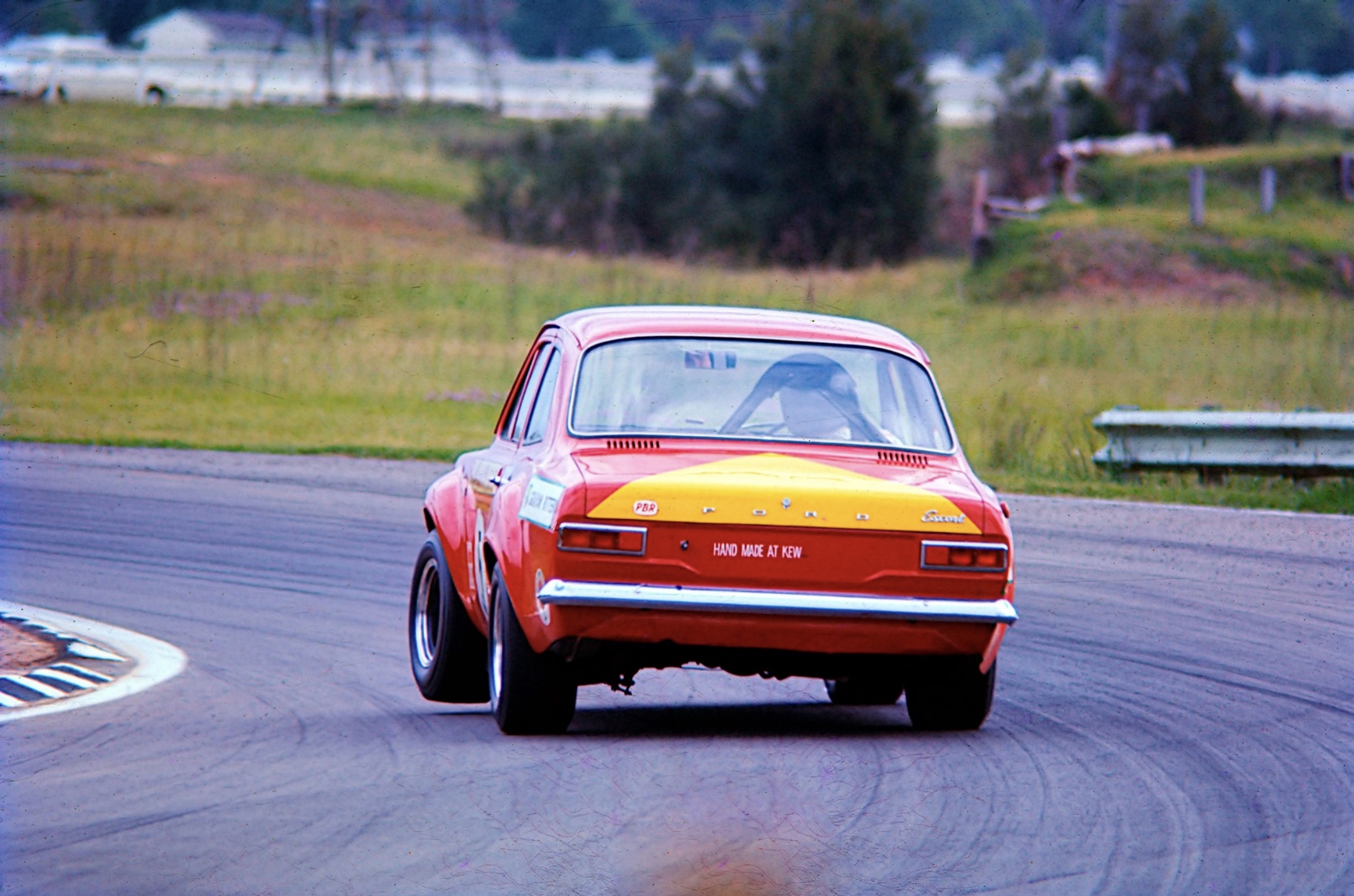
Ritter at Calder in 1970 above and below at Warwick Farm. The ‘hand made at Kew’ note on the cars boot lid refers to the location of Bib’s Ford Dealership’s location in Cotham Road Kew, Melbourne, Tubby built the car right there!

(D Simpson)

By 1972 the car was fitted with a 2 litre Ford BDG engine, in that form it was a formidable weapon indeed, Mike Stilwell easily the quickest of the 2 litre cars- here at Adelaide International Raceway.

(D Simpson)

Photo Credits…

Dick Simpson

Tailpiece…

(D Simpson)

Allan Moffat slices his Ford Australia, Alan Mann built, Ford Escort FVA into Warwick Farm’s Esses, bang on line in 1971. And exiting Creek Corner below.

(D Simpson)

Finito


image

(Ullstein Bild)

Sculptor Olaf Lemke works with Hans von Stuck on the bust of the pre-War Champion German driver, 1932…

Stuck cut his racing teeth in the hills and was soon scooped up by Mercedes Benz for whom he was a factory driver, but via the introduction of Adolf Hitler became Auto Union’s first star.

image

Stuck in the Auto Union Type A, Avus 1934 (Getty)

He did most of the early development work on the AU Type A or P Wagen and won the German, Swiss and Czech Grands Prix in 1934, his best season. Had a European Championship been run that year he would have won it. His star rose and then fell as his capabilities were put into context by Bernd Rosemeyer, a ‘Gold Standard’ of outright pace admittedly.

image

Hans Stuck leading the Italian Grand Prix at Monza in 1935, his final GP victory (Getty)

His last championship win was the 1935 Italian Grand Prix, the photos here show his Auto Union Type B 5 litre V16 machine, which triumphed over the Rene Dreyfus/Tazio Nuvolaro Alfa 8C-35 3.8 litre straight-8 and the Paul Pietsch/Bernd Rosemeyer AU B Types.

image

Stuck with the Monza crowd in 1935 (Getty)

After Rosemeyer’s death he returned to the Auto Union team from which he had not long before been fired! He raced post-war with little success having obtained Austrian citizenship to do so.

His son, Hans Joachim Stuck became a rather handy racer as well…

Click here for an interesting story on Stuck Senior; http://8w.forix.com/stuck.html

Credits…

Getty Images

Tailpiece: Auto Union ‘Tempo’ V16 Boat…

image

(Ullstein Bild)

Always interested in record breaking, Stuck took this craft to a speed of 81 or 82.5kmh on the Scharmuetzelsee in 1937. He set a new under 800Kg record with the craft which was powered by an Auto Union Type B V16 engine. It was built to Audi and Stuck’s order in Klaus Engelbrecht’s boatyard on the River Dahme, Berlin.

Tempo was sunk post-war, having survived the ravages of the conflict. After a bombing raid on 1 March 1943 the car was moved from Berlin to Southern Germany where is was less likely to be hit by allied bombing missions. It was wrecked when a joy-riding occupying forces officer lost control of the craft which sank to the bottom of a Bavarian Lake complete with V16 engine. The skipper survived!

Finito…

spanish grand prix

Maurice Trintignant’s 1953 type Ferrari 625 from Harry Schell’s Maserati 250F and victor Mike Hawthorn’s 1954 type Ferrari 553 on the picturesque Pedralbes road circuit at Barcelona, 24 October 1954…

This event was famous for the race debut of the Lancia D50’s in the hands of Alberto Ascari and Gigi Villoresi, both were quick and Alberto led convincingly from Fangio’s Mercedes W196 until a clutch hydraulic failure caused his retirement.

The three drivers above had a great dice and all led at different points with Hawthorn taking the victory. Schell retired after a spin damaged his car and Trintignant with a fractured oil pipe. Hawthorn’s win was a good one made slightly easier by the problems Fangio was dealing with in his Benz, his W196 spraying oil into the cockpit.

lancia barcelona

The Ascari #34 and Villoresi #36 Lancia D50’s, just unloaded at Pedralbes for an event which showcased Vittorio Jano’s design brilliance as well as the sublime skills of Alberto Ascari. Such a pity Lancia ran out of money! Still a world title as a Lancia Ferrari D50, and drivers title for Fangio in 1956 was a great reflection on the original design even if it had ‘evolved’ a bit by then (unattributed)

I’m leaving Australia’s winter for 3 weeks in France and Spain including Barcelona so look forward to retracing the street circuits of  Montjuic Park and Pedralbes whilst based in one of my favourite cities. My posts will be shorter over this period.

YouTube Race Footage…

Photo Credit…Yves Debraine

Donna Mae Mims…

Posted: June 18, 2017 in Compound curvature, Fotos
Tags:

image

Donna Mims prepares for the off in her MGB December 1964, no details of circuit unfortunately…

She was a prominent driver and character in the US and was the first woman to win an SCCA title in 1963 in an Austin Healey Sprite. Click here for a short article on the lady;

http://www.autoblog.com/2009/10/14/donna-mae-mims-first-female-scca-winner-and-cannonball-run-vet/

Credit…

Bill Ray

image

Racers in 1966- Anita (sister of F1 driver Trevor) Taylor, Donna Mae Mims and future Indy 500 competitor Janet Guthrie. Mims, Guthrie and Suzy Dietrich drove the #80 Sunbeam Alpine to 32nd in the Daytona 24 Hours (speedqueens)

Finito…

fazz color

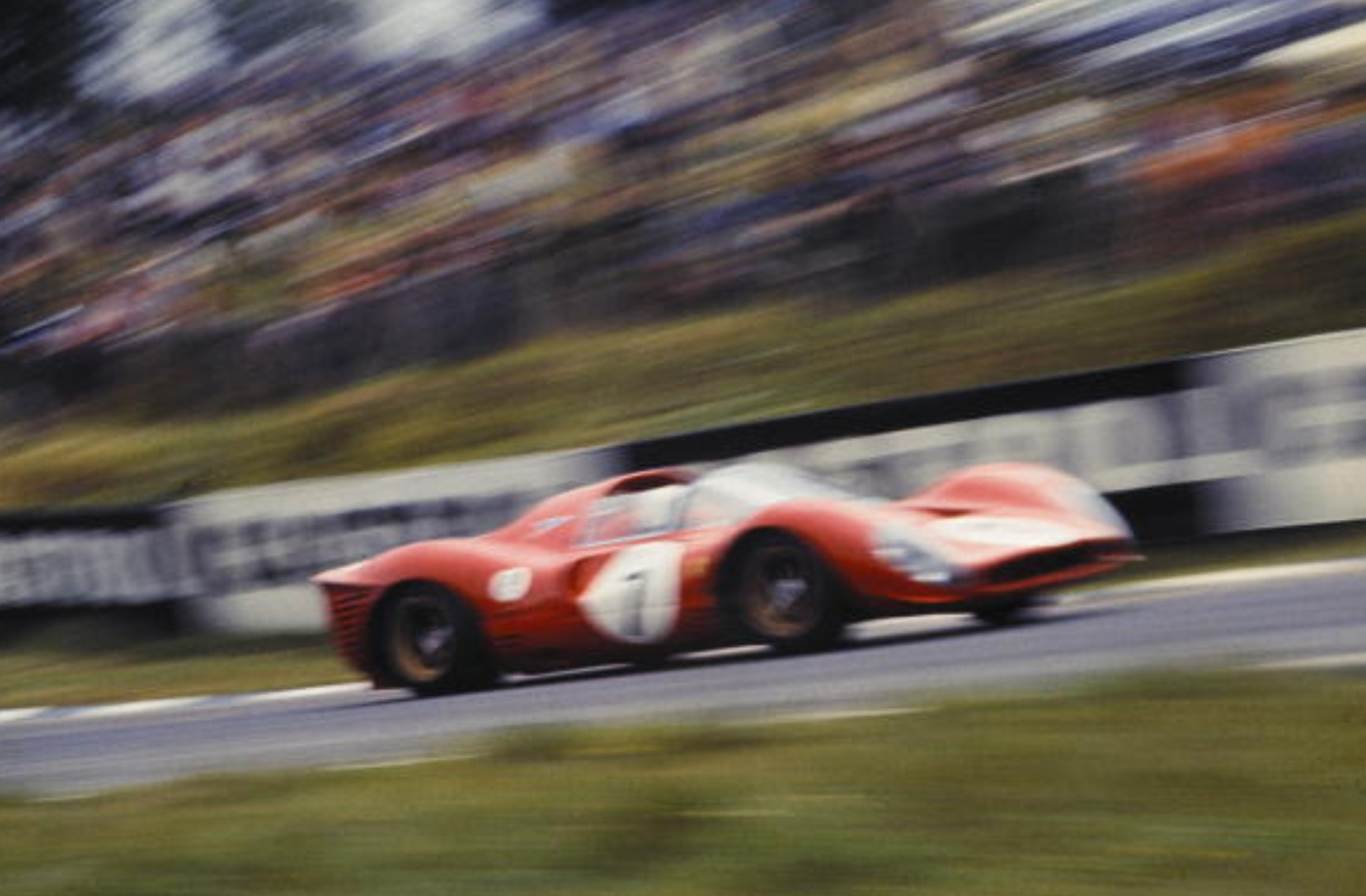
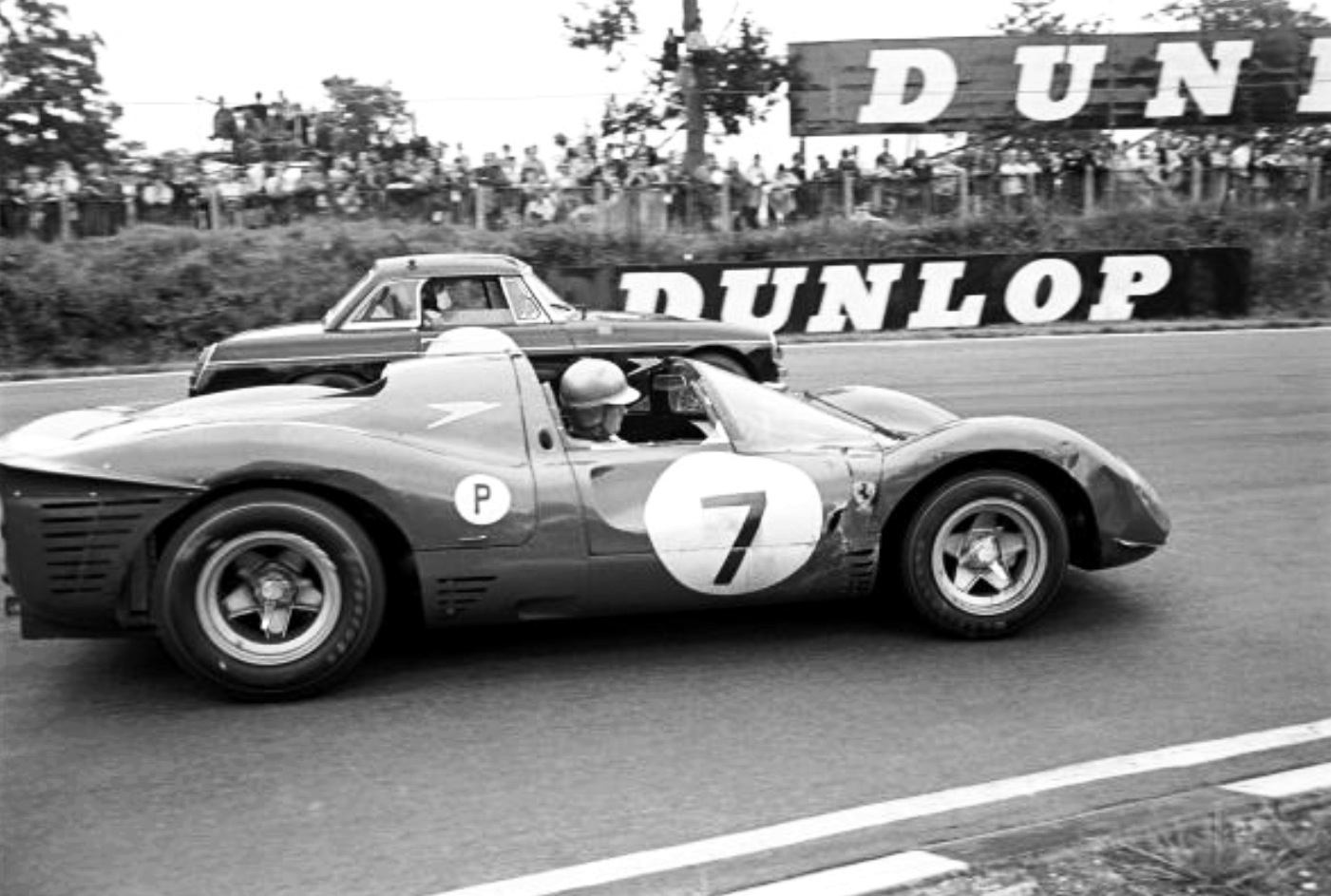
The Ludovico Scarfiotti/Peter Sutcliffe factory Ferrari P4 during the 1967 Brands Hatch 6 Hour held on 30 July…

Louis Klemantaski’s creative shot beautifully captures and ‘distresses’ the 5th placed car, Phil Hill and Mike Spence won the race in a Chaparral 2F Chev from the P4 of Chris Amon and Jackie Stewart.

fazz 1

Sutcliffe dives the P4 inside the Enever/Polle MGB (Klemantsaki)

fazz 2

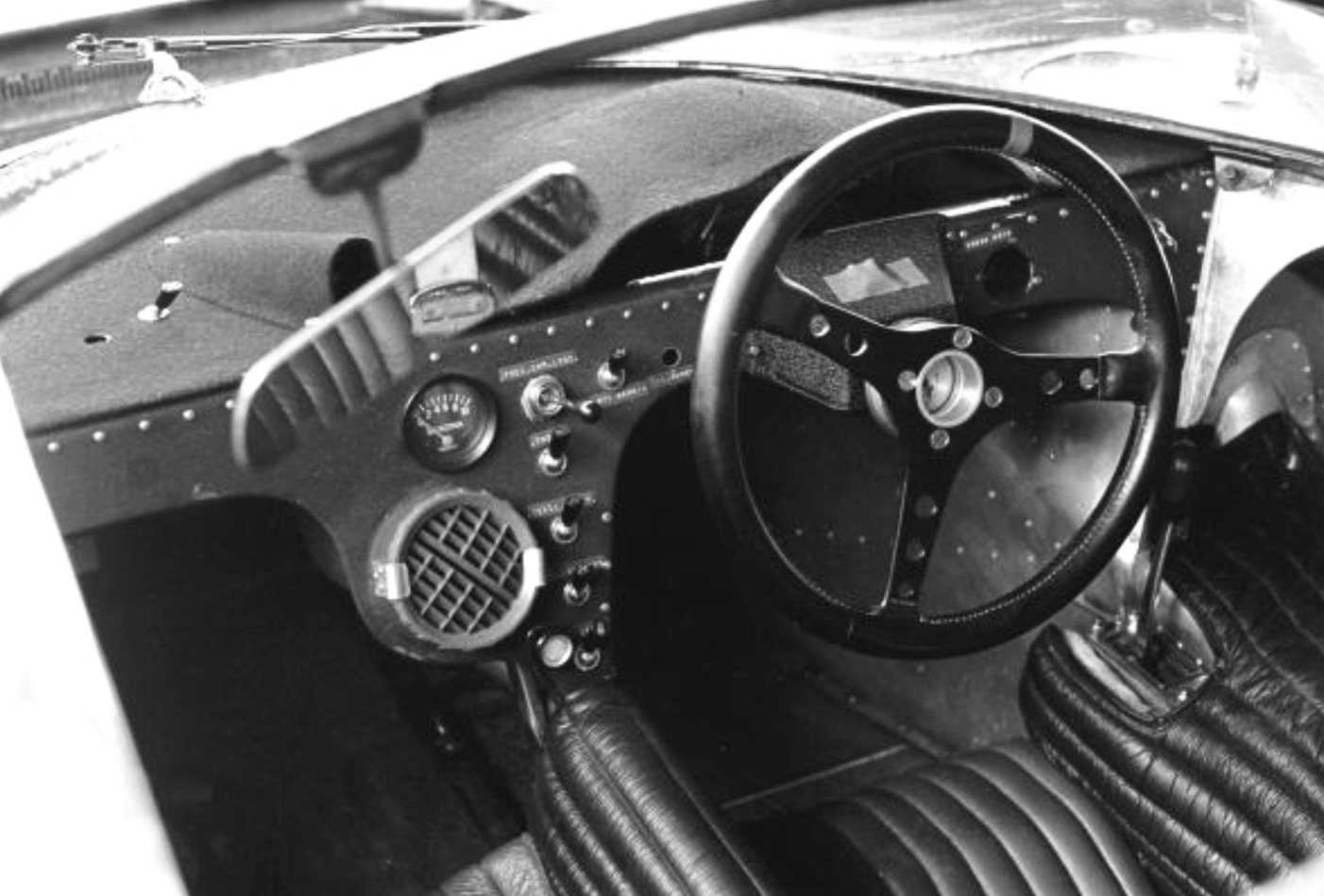
P4 Ferrari cockpit at Brands ’67. Of the period ‘innit? Momo wheel, Veglia Borletti instruments, right-hand 5 speed change, car a spaceframe chassis with riveted on aluminium panels to add stiffness, beautifully trimmed for a racer-added to driver comfort over longer distances (Klemantaski)

I wrote articles about the Ferrari P4/CanAm 350, Chaparral 2F and 1967 Le Mans which may be of interest if you are into these cars and this great era of ‘unlimited’ endurance racing, check out;

https://primotipo.com/2015/04/02/ferrari-p4canam-350-0858/ and https://primotipo.com/2014/06/26/67-spa-1000km-chaparral-2f/ and https://primotipo.com/2015/09/24/le-mans-1967/

fazz 3

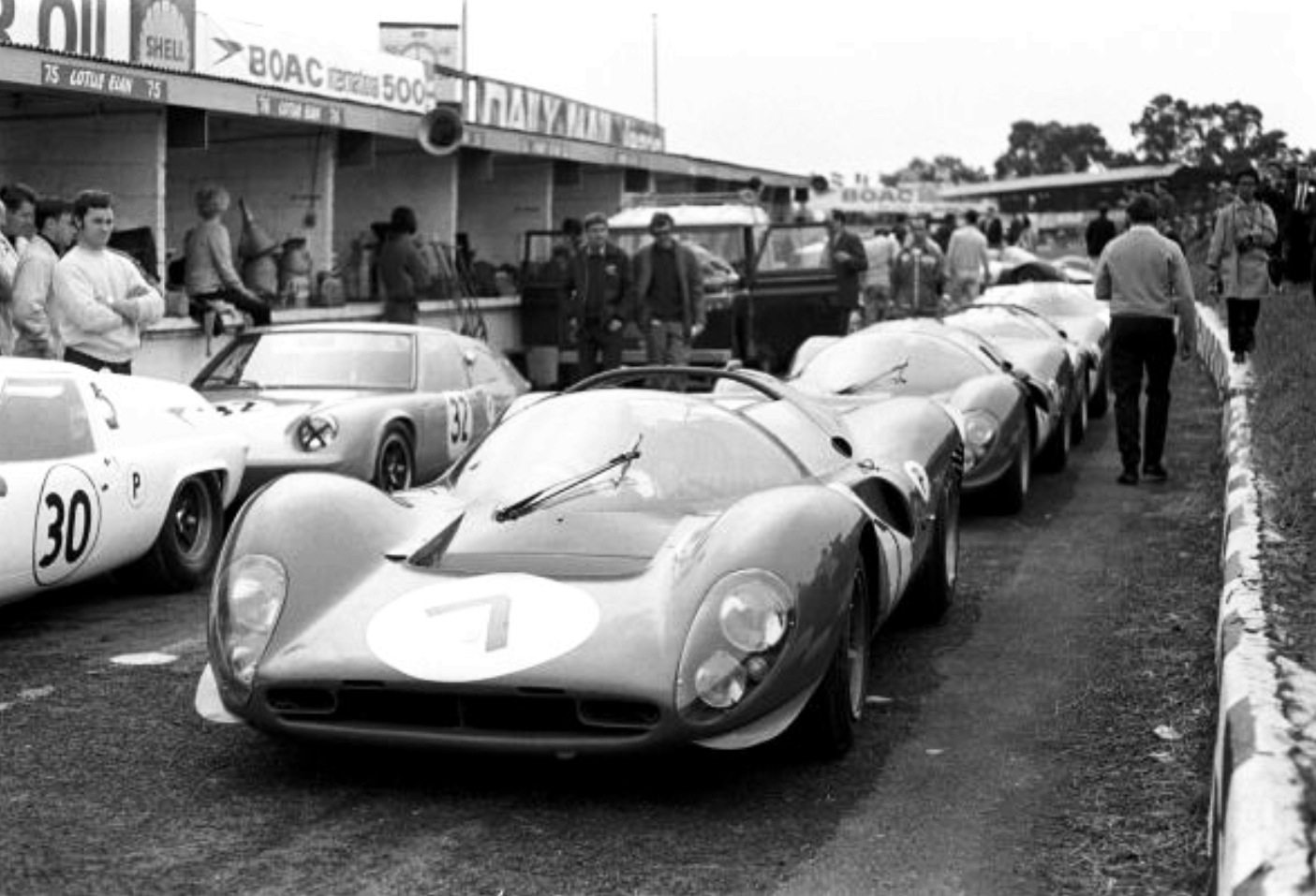
Brands pits, 6 Hours ’67; the 3 factory P4’s in line astern with the Scarfiotti/Sutcliffe car ahead of the other two crewed by Amon/Stewart 2nd and Paul Hawkins/Jonathon Williams 6th. # 30 and 32 Lotus 47 Fords are Taylor/Preston 19th and Hine/Green DNF (Klemantaski)

Credit…

Klemantaski Collection

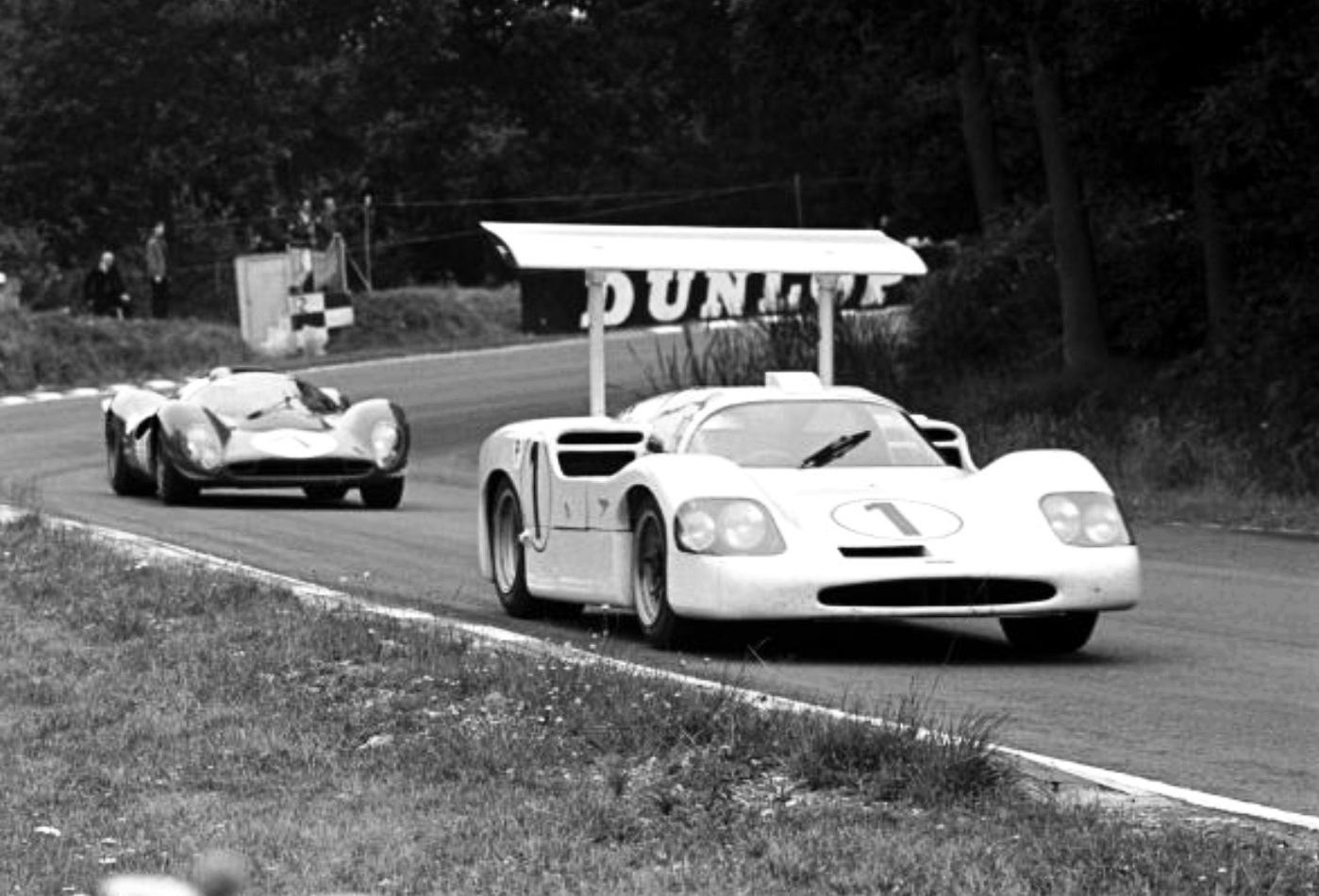
Tailpiece: Phil Hill in the winning Chaparral 2F Chev from the Scarfiotti/Sutcliffe Ferrari P4…

fazz last

(Klemantaski)


ronnie

Monaco Panorama; Ronnie Peterson eases his March 711 Ford around the hairpin at Monaco in 1971 on the way to second place, Jackie Stewart won in a Tyrrell 003 Ford…

Monaco was a happy hunting ground for the Swede, his brand of ‘balls to the wall’ driving was not necessarily the style that was rewarded in the principality but he took wins in the F3 Grand Prix in 1969 in his Tecno 69 Ford and in the F1 event in a Lotus 72E Ford in 1974.

He had a great year in the 711, an excellent Robin Herd design, he finished second to Jackie Stewart in the 1971 drivers championship, not bad for a driver in his second GP season!

The more radical 1972 March 721X made conceptual sense but was not so successful…Ronnie was then snaffled up by Lotus for ’73…

ronnie 2

Close up of Ronnie in the 711, Dutch GP 1971, he was 4th in the race won by Ickx’ Ferrari 312B2. Front suspension; top rocker, lower wishbone, inboard coil spring/Koni damper and adjustable roll bar all clear and beautifully fabricated by the Boys From Bicester (unattributed)

A couple of other posts on ‘Mad Ronald’ to look at…

His first GP season in 1970;  https://primotipo.com/2014/05/15/blue-cars-rock/

With Colin Chapman;  https://primotipo.com/2014/08/03/the-gentle-art-of-driver-seduction-colin-chapman-and-ronnie-petersen-clermont-ferrand-1972/

Photos…unattributed