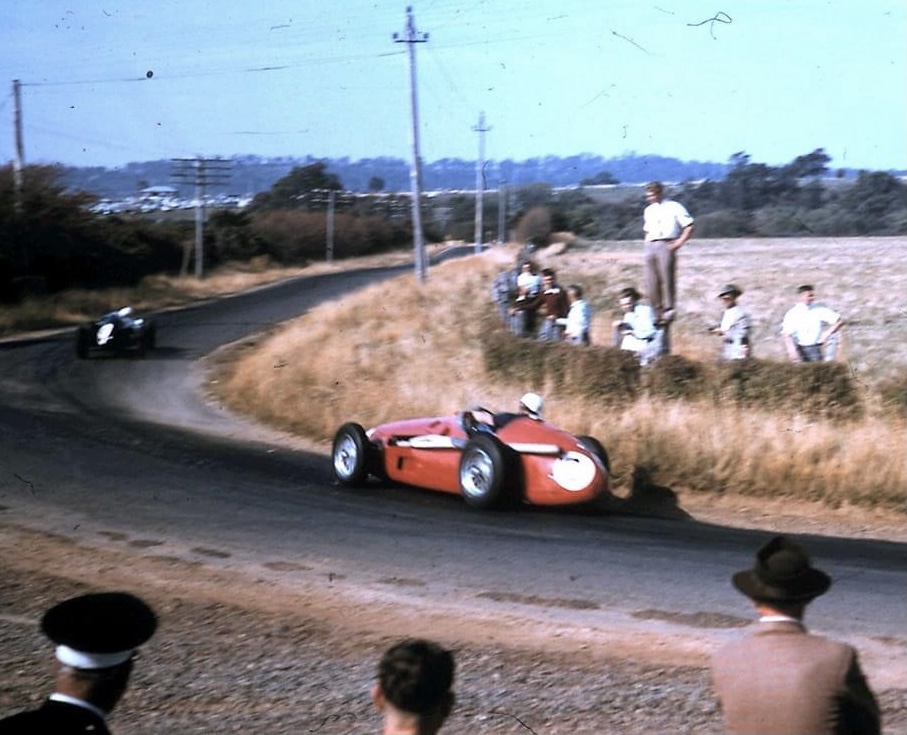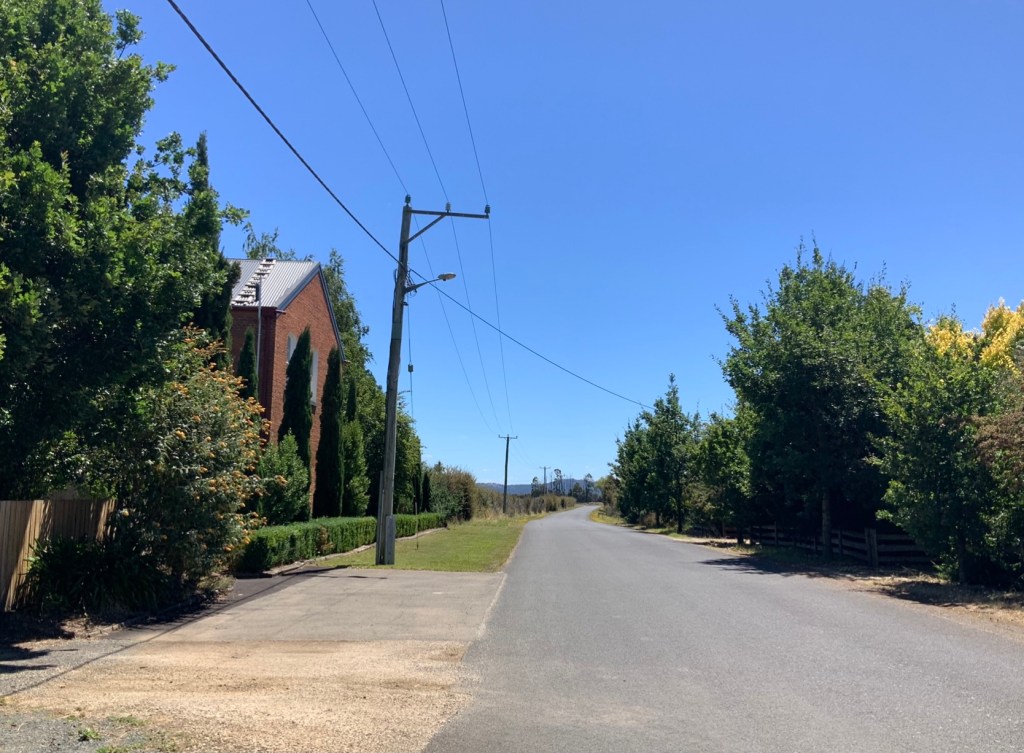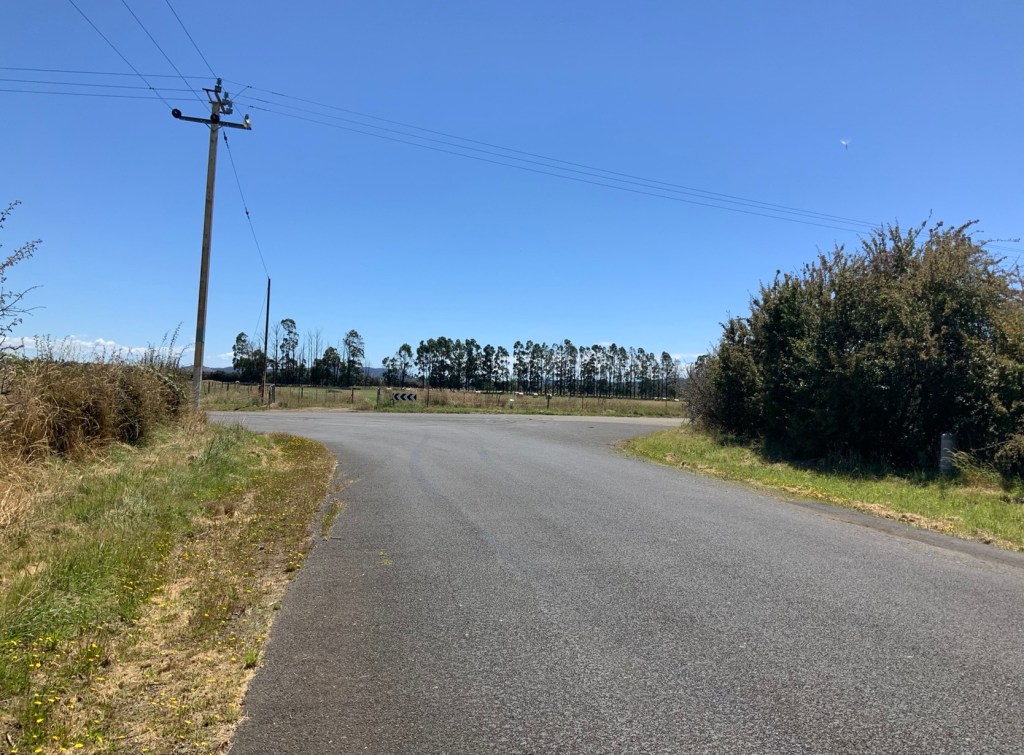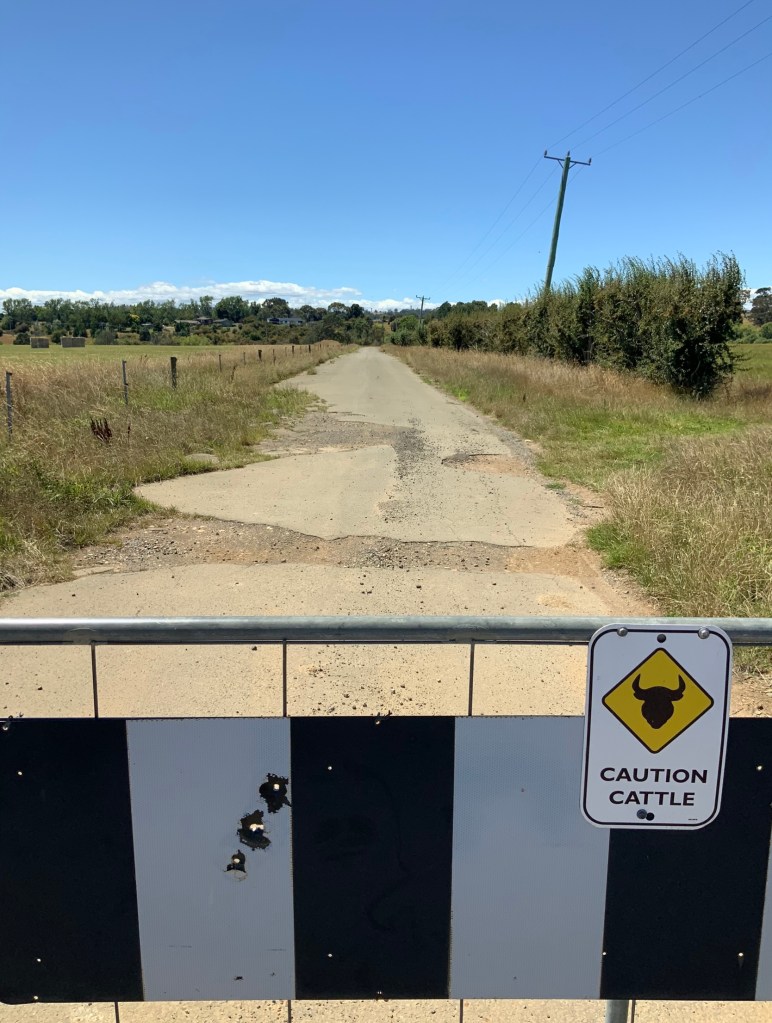
(DKeep/oldracephotos.com.au)
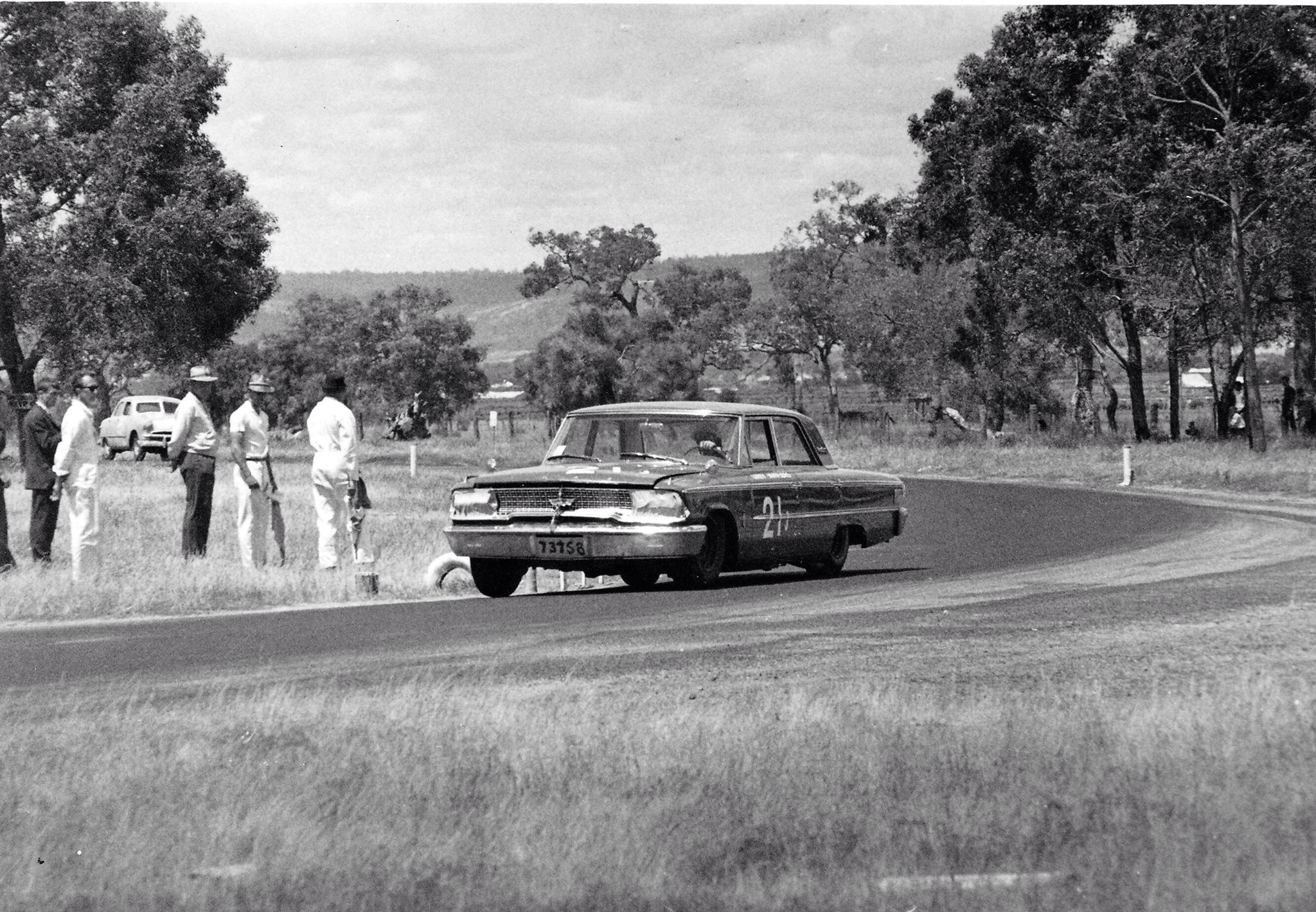
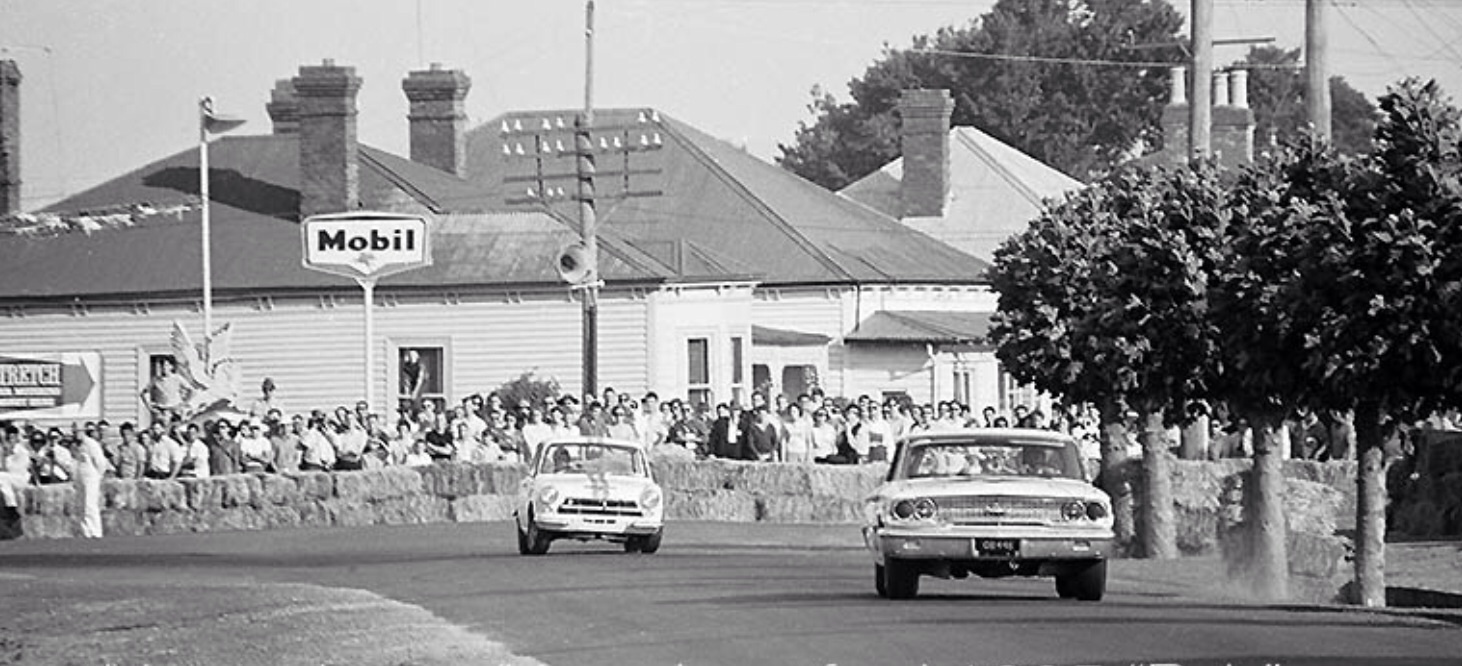
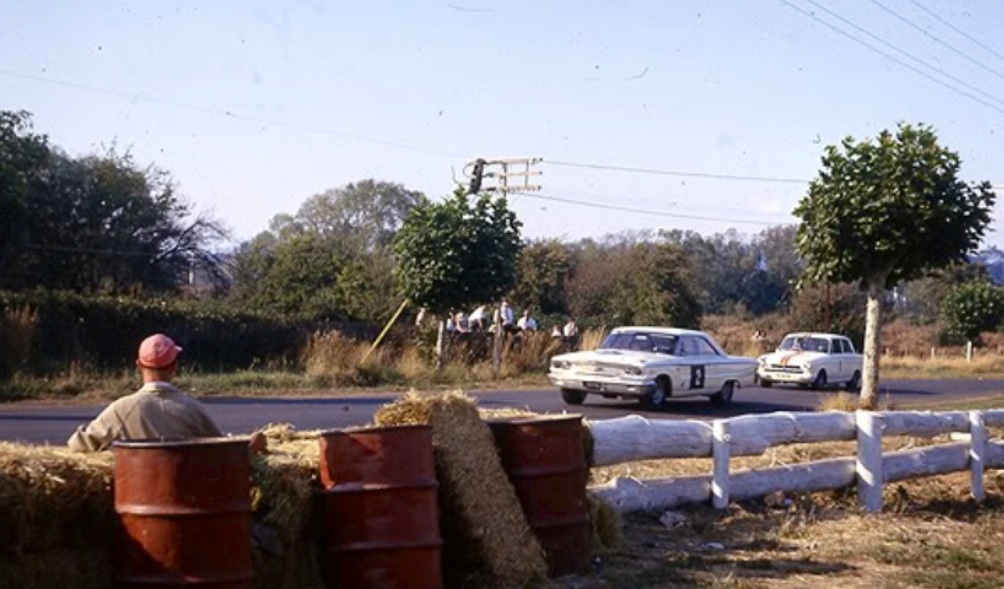
Sir Gawaine Baillie’s Ford Galaxie leads Bob Jane’s Lotus Cortina at ‘Pub Corner’, Longford in March 1965…
Four time Australian Grand Prix winner Lex Davison was a racing purist. He was very much a single-seater man having raced some classic machines to much success post-war- Alfa Romeo Tipo B/P3, Ferrari 500/625, Aston Martin DBR4/250, various Coopers and Brabham BT4 Climax to name several.
While a traditionalist he was also a realist, a successful businessman who knew that flexibility was sometimes needed so as he set his plans for 1963 they were somewhat thrown up in the air by the offer to drive just retired Gold Star Champion, Len Lukey’s brand new R-Code Holman-Moody built Ford Galaxie four-door sedan.
Lukey’s choice of driver was a surprise to many but a political coup really – what better way to neutralise an opponent of touring car racing via his monthly racing magazine column than entice them into-the-fold, so to speak?
Len’s rapidly growing, profitable Lukey Mufflers business provided the means to acquire a Holman-Moody built LHD 6.7-litre V8 engined Ford Galaxie in full racing trim. Lukey imported another RHD car in less-fierce spec as a road car and mobile parts source.
Other than, perhaps, Norm Beechey’s Chev Impala, the 405bhp Galaxie was the most powerful racing car in Australia of any sort upon its debut in November 1962. The plan was for either Jack Brabham or Bruce McLaren to race the car in the November ’62 Sandown meeting just prior to the 1962 Caversham, WA, AGP, the reason for which both GP aces were in Australia.
In the end the big beast was not going to land at Port Melbourne in time for Sandown, so the intrepid Lukey unloaded the car in Brisbane and drove it – a car of full race specification – the 1100 miles south from Queensland to Victoria. As one does!
While a relative touring car novice Lex ran second to Beechey’s Chev after Bob Jane’s Jaguar Mk2 suffered a burst radiator and spun. Lex’ best lap was an impressive one second behind Norm’s new lap record. Not a bad debut.
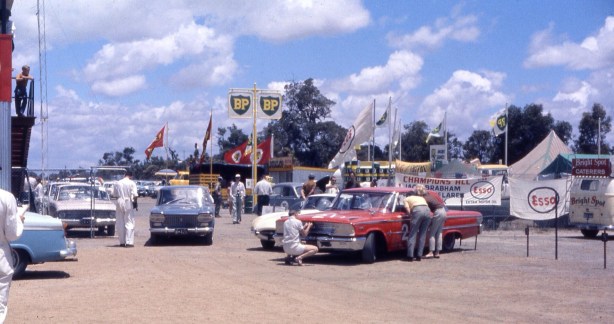
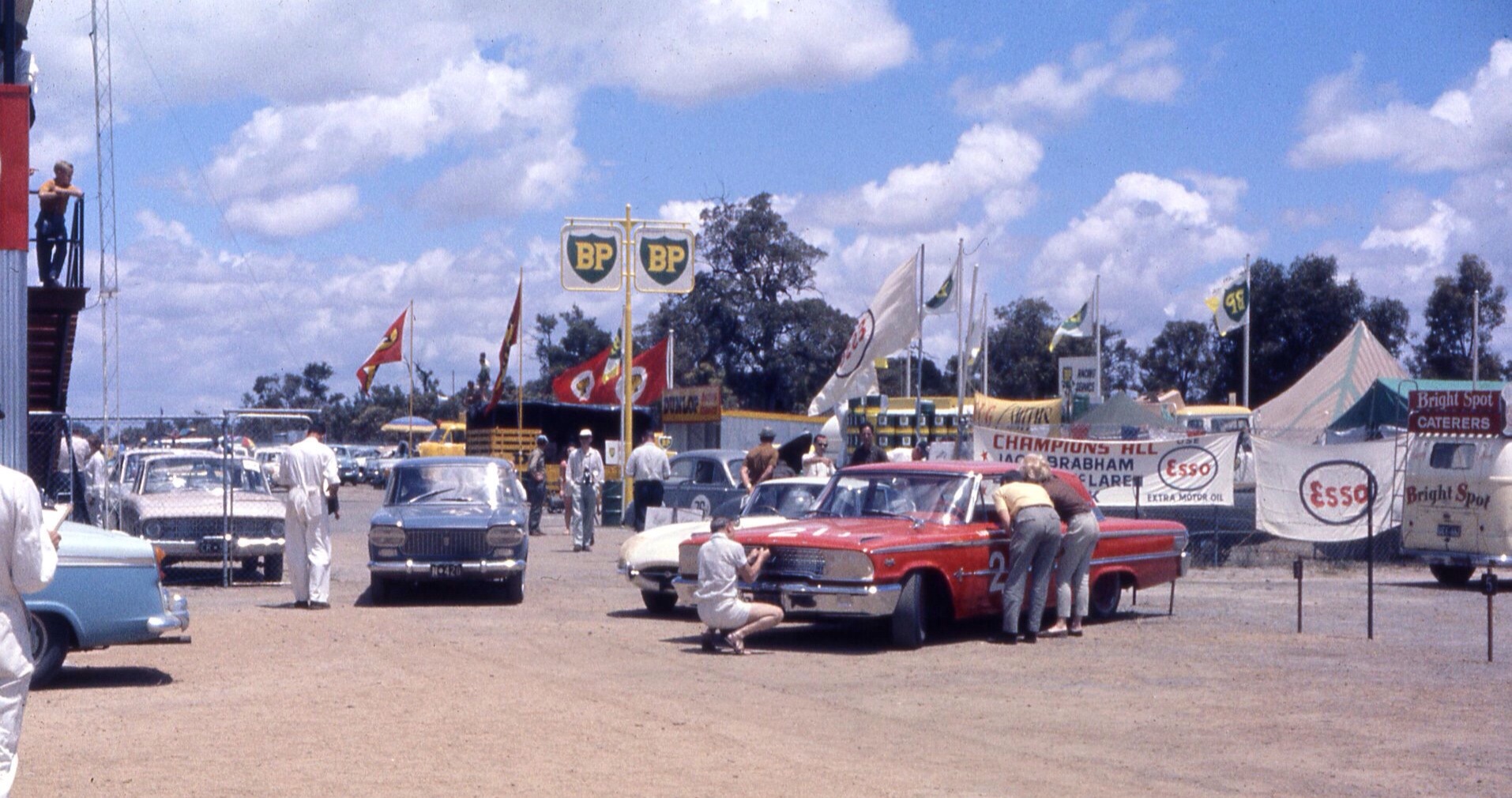
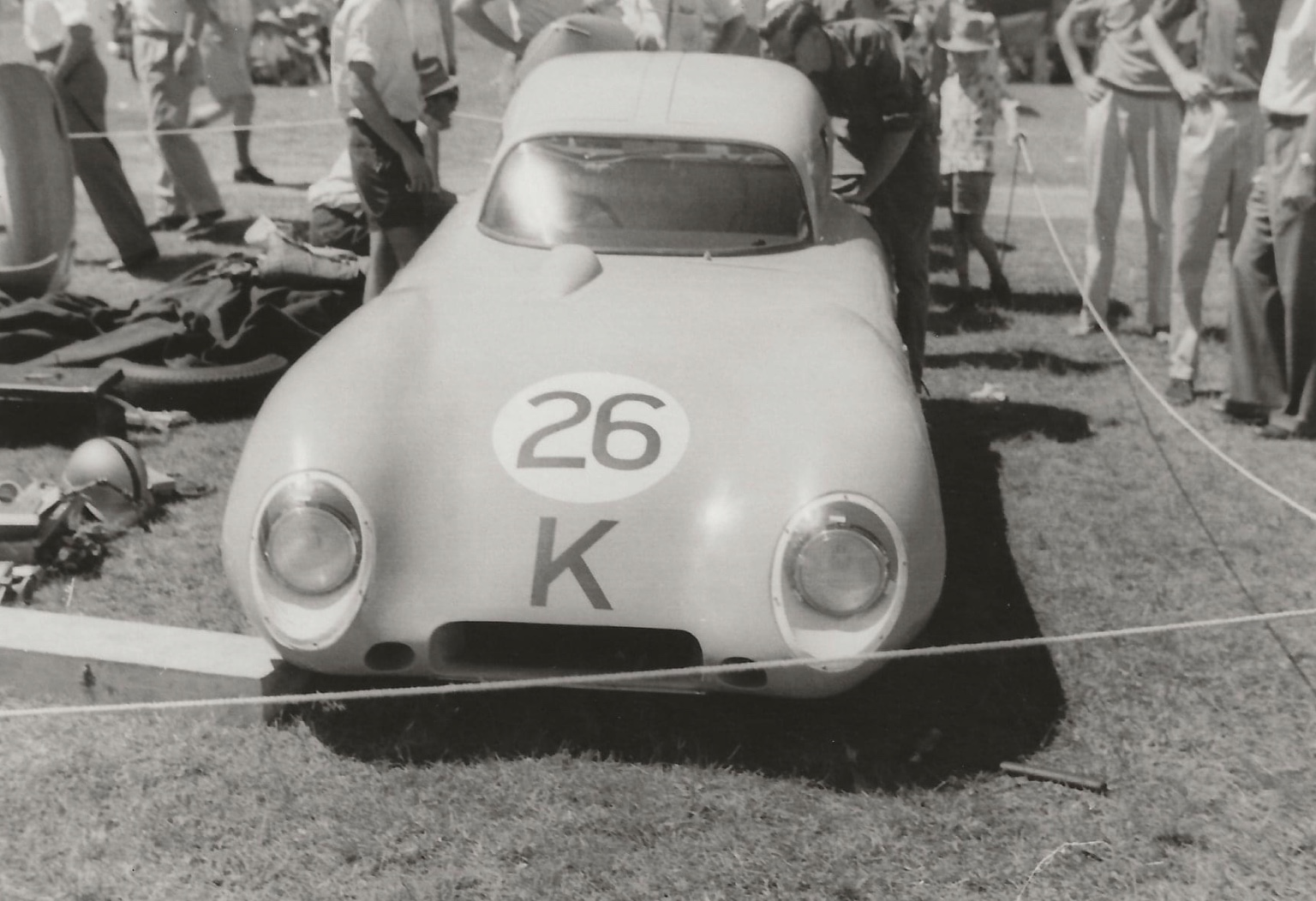
Caversham paddock during the November 1962 AGP weekend (K Devine)
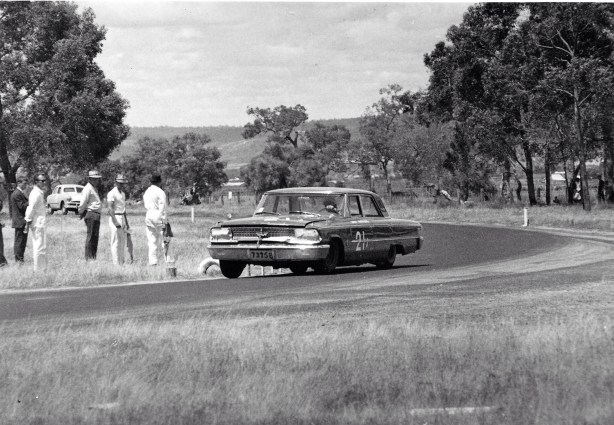
Caversham 1962 (K Devine)
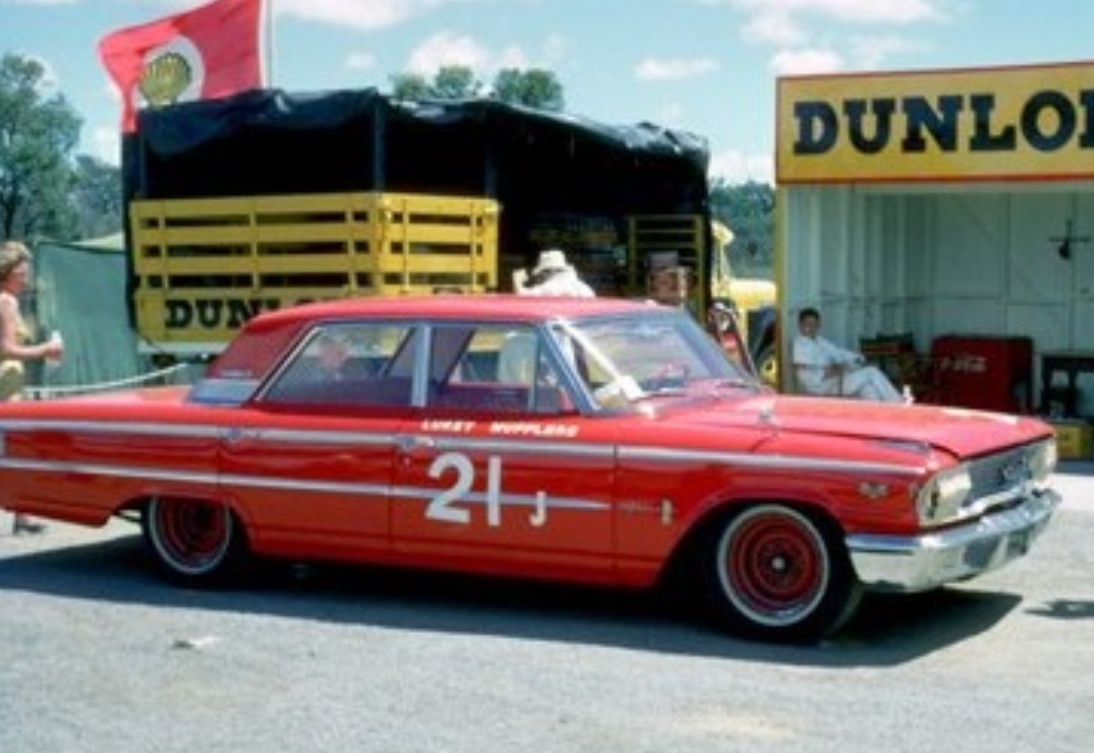
Galaxie in the AGP Caversham paddock in 1962 (unattributed)
At Caversham during the AGP weekend he was third and set fastest lap. During the GP itself he was a distant eighth. with Cooper T53 Climax dramas.
Into 1963 Lex missed the opening Calder meeting with a dodgy-back, so Norm Beechey took the Galaxie’s wheel (a compare and contrast analysis with his Chev Impala would have been interesting) but Ern Abbot’s well sorted straight-six Chrysler Valiant beat the Big Henry.
Lex took the car back for Warwick Farm’s International meeting and again proved its utility as a road car, he drove it to Mass on his way to the circuit at Liverpool that morning! Perhaps prayer assisted in yielding second place behind Bob Jane’s Jag despite Bob rotating the car.
At Longford both Jane and Lex were timed on The Flying Mile at 223kmh but the Jag had the better brakes and handling. In race one Lex won the Le Mans start, spun at the Longford Pub and later needed the escape road at the end of the main straight having endured the inherently under-braked Beastie- Davison needed to train the back of his brain the car was not a Cooper! In the handicap race to end the long weekend of racing Lex gave a start to every car in the race other than Jane and pushed the car even harder – spinning into straw bales at The Viaduct and then lost his brakes completely at the end of the straight, going down the escape road 200-metres before stopping in a drainage ditch. He quipped to the Launceston Examiner that racing the Galaxie was “like driving a haystack.”
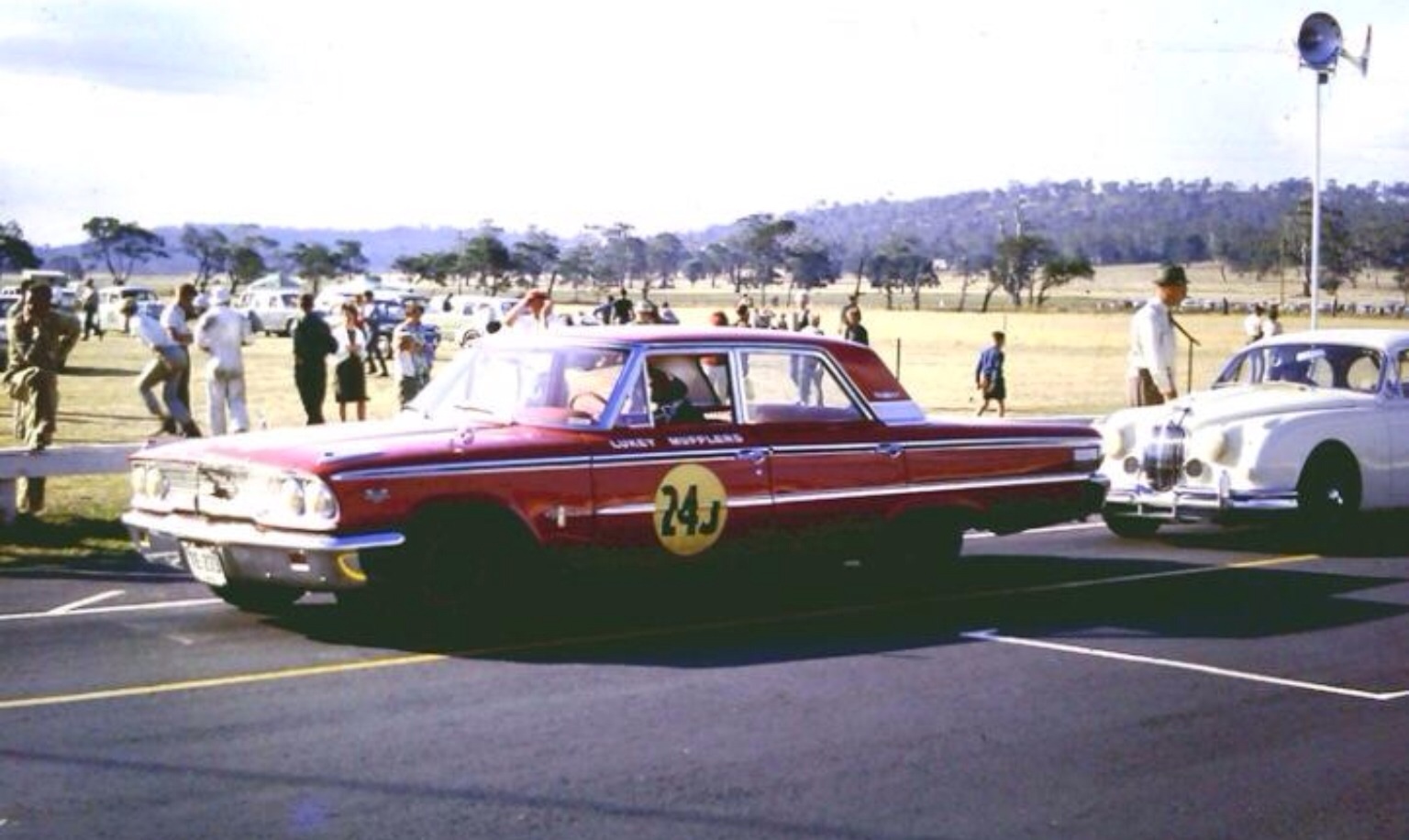
Davison and Jane at Longford, just before the off in 1963 (oldracephotos)
At Sandown during a ten-lapper he spun on the first lap, with Jane and Beechey going at it in a race long dice. Lex later spun again in the fast Dandenong Road Esses. The big Galaxie frightened the Armco with a huge thump on the outside of the track and then came back across the road to hit it on the other side. The Ford then caught fire as he sought to restart…
The Galaxie was in no condition to race again until September, no doubt Len Lukey thought that the ongoing safety of his expensive car was best served by a change in pilot.
Graham Howard wrote that “It’s (the Galaxies) absence was not greatly mourned by Diana (Davison), or by Alan Ashton, both of whom believed the big sedan did nothing to help Lex’s single-seater driving.”
Lex explained the background to the Sandown accident in a letter Lance Lowe of Peter Antill Motors, then the local Koni distributor. “Appalling rear axle tramp under braking was one of its less endearing features, and this has now been cured to such an extent that the car is un-steerable…Perhaps it (the accident) will solve the problem of me having to drive it again.”
In 1964 Len threw the keys to Beechey who raced the car with the sympathy of a specialist touring car ace. Note that when Lukey’s car arrived some of its H-M goodies were removed to comply with Australia’s Appendix J touring car regs; some panels, bumpers and brakes were amongst the changes. The R-Code car was fitted with a 427 lo-riser big-block Ford side-oiler V8. Some sources have it that the car as raced by Davo was fitted with a 406 cid engine which was replaced by a 427 by the time Beechey got his hands on it in 1964 – no doubt at the time the bonnet-hump appeared. The car survives as part of the Bowden Collection in Queensland.
To complete the summary of the Lukey cars, Len imported another Galaxie, a 1964 Holman-Moody car in parts to avoid Australian import duty but died before the car was completed. This is the car acquired by Dennis O’Brien via Harry Firth’s introduction to Lukey’s widow in the mid-seventies. O’Brien built the car up with a shell found in Canberra, a new 427 hi-riser, alloy bumpers, the right diff, gearbox, polycarbonate windows and competition roll-cage.
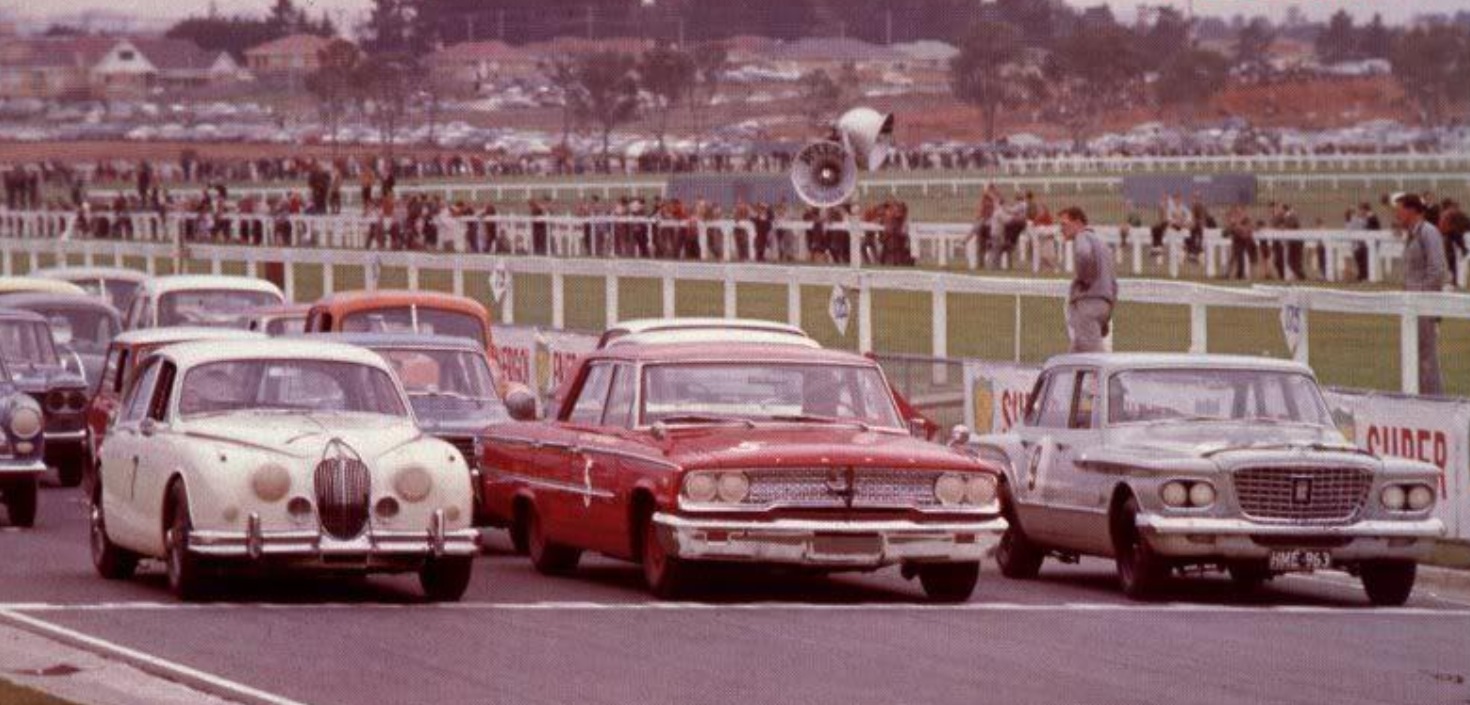
Bob Jane Jag Mk2, Norm Beechey Ford Galaxie and Ern Abbott Chrysler Valiant, Sandown 1964 (Bob Jane)
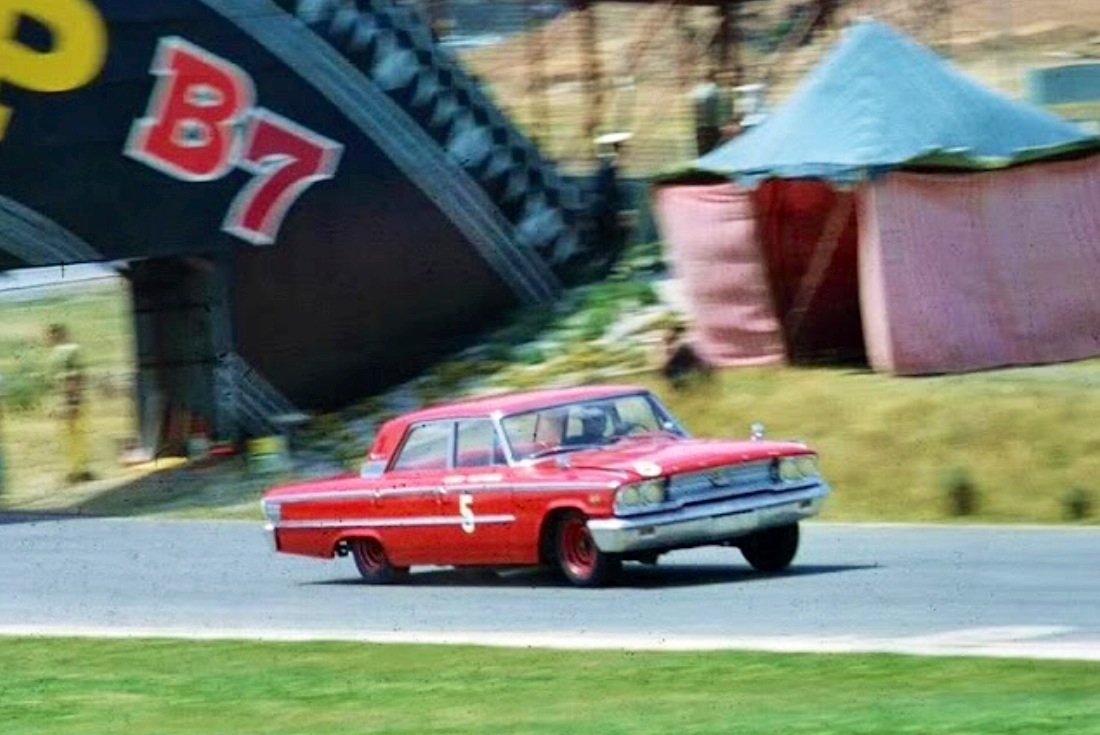
Turn in and hold on! Beechey exits the long, fast right-hander under the Dunlop Bridge, Sandown 1964 (unattributed)
Davison had a busy racing 1964 including providing valuable emotional and public relations support to Donald Campbell’s Bluebird LSR attempt at Lake Eyre, South Australia. Campbell was copping plenty of flak globally at the time for perceived lack of progress. Oh yes, Lex had a steer of Bluebird at a preset limit of 155 mph.
Davo started the season in his ex-McLaren 1962 AGP winning Cooper T62 Climax but bought a Brabham Intercontinental chassis – Brabham’s ’64 Tasman car – to remain competitive with Bib Stillwell and others.
But his touring car aspirations were not put to one side. Ecurie Australie mounted a professional, well prepared campaign together with Australian Motor Industries in a Triumph 2000 in that years Bathurst 500. Lex drove the car fast, consistently and sympathetically to eighth in the class despite being slowed by wheel bearing failure, and co-driver Rocky Tresise parking the car unnecessarily until Lex told him ‘to go and geddit matey’!
All the same, what was somewhat bizarre, given Lex’s experience with Len Lukey’s Galaxie was that he signed up for an even bigger Galaxie challenge, this time involving his own funds.
The Sandown promoters, the Light Car Club of Australia, planned a Six-Hour race for Group 1 cars in November 1964 and sought interest from teams and manufacturers from around the globe.
By September two British Galaxie owner/drivers had shown interest; Sir Gawaine Baillie and Alan Brown. Sandown planned to pair Baillie with three-time Australian GP winner Doug Whiteford, and Brown with Davison but when Brown withdrew Lex arranged to share Baillie’s car which the aristocrat then hoped to sell in Australia after a summers racing.
Lex, whatever his then view on touring cars, and the Lukey car, was keen to take on the challenge of driving the later model Holman-Moody Fastback. These cars were built at the request of British Ford dealer, John Willment, who wanted to take on the then dominant Jaguars in British touring car racing.
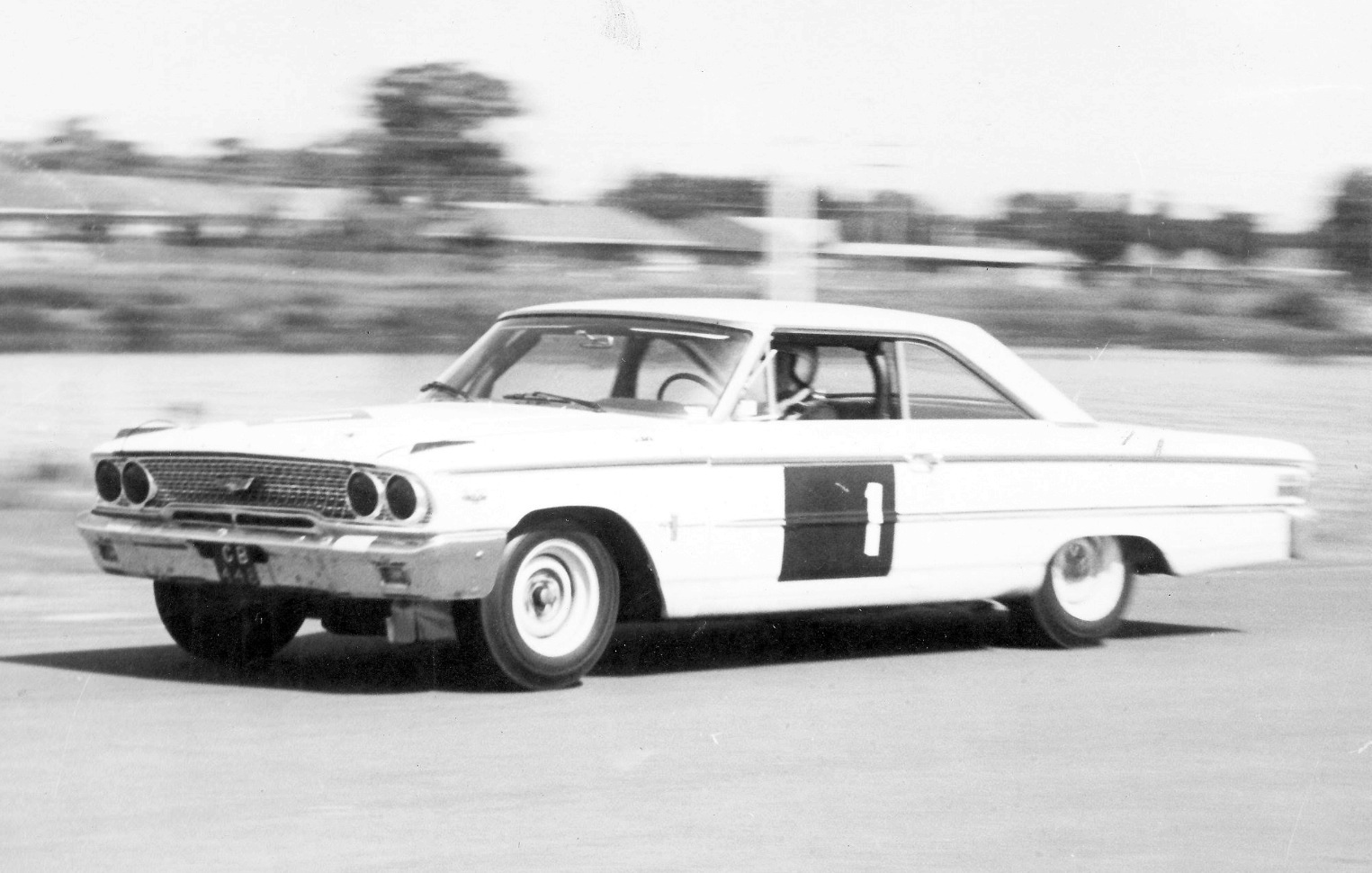
Gavin Fry’s shot of the Baillie Galaxie at Sandown in November 1964 shows the lines of the handsome big car to good effect. Note heavy steel wheels, brake duct and vestigial roll bar (G Fry)
It’s time to explore the cars build and technical specifications.
Holman-Moody were approached to produce some road racing versions of the latest 427cid Ford Galaxie factory lightweights, which had been developed for NHRA Super Stock competition on the quarter mile dragstrips throughout the US.
Except for a few early cars such as Lukey’s, these 1963½ Galaxie lightweights all emerged from the factory as white two-door Sports Hardtops with red interiors; 212 of them were made in one batch sent down the production line together.
“Some featured a Ford 300 series chassis frame made from lighter gauge steel. All body sound-deadening compounds were deleted and lightweight fiberglass replaced steel in construction of the boot lid, bonnet and front mudguards (some had fiberglass doors and inner front guards as well). They also had aluminium front and rear bumpers mounted on lightweight brackets” wrote Mark Oastler. The interiors were basic racer-specials with unpadded rubber floor mats, thin-shell bucket seats with no radio, heater or clock or other road going frills.
The engine was Ford’s 427cid side-oiler V8 from the FE big block family with 425bhp and a choice of high-riser and low-riser cast aluminium manifolds running huge dual four-barrel carbs. The high-risers ran in NHRA’s Super Stock category with the low-risers in the slightly less modified A/Stock class.
The gearbox was a butch Borg Warner T10 four-speed manual with cast-aluminium bell-housing and casing to save weight, with a set of close-ratio gears. Ford’s ultra strong, ubiquitous nine-inch rear axle was used with short 4.11:1 final drive and heavy duty leaf springs, shocks and four wheel drum brakes inside 15-inch steel wheels.
A standard 427 Galaxie Sports Hardtop tipped the scales at circa 1900kg, whereas the lightweights were a massive 290 kg less – those fitted with fibreglass doors and front inner guards dropped another 40 kg.
These Ford factory lightweights laid the foundation for the handful of cars produced by Holman-Moody for road racing overseas, one of which was the Sir Gawaine Baillie car. At around 1600kg, they were now competitive with the Jags in weight but with around 500bhp they had a bit (!) more power! The circuit racers, like the drag cars were equipped with lightweight fibreglass front guards, bonnets and boot-lids, aluminium bumpers and stripped interiors.
H-M also developed a front disc brake kit to replace the standard 11-inch drums based on Jaguar 12-inch diameter solid rotors clamped by Girling two-spot calipers mounted on heavy-duty spindles.
“Other H-M tweaks included steel wheels with immensely strong double-thickness centres developed for Grand National (NASCAR) stock car racing. The booming exhaust system was also NASCAR inspired, featuring huge three-inch diameter open pipes neatly routed through the chassis rails that exited in front of the rear wheels. Shock absorber mounting positions were altered with most equipped with two shocks per wheel. Some of the export cars, including Baillie’s, were equipped with an additional shock absorber on the rear axle which through suspension movement pumped diff oil through a remote oil cooler to control rear axle temperatures during races held in warmer climates.”
“The Holman-Moody Galaxie lightweights (with either low-riser or medium-riser 427 engines) were very successful. John Willment’s car soon shook Jaguar out of its complacency in the BTCC, proving dominant in 1960s UK tin-top racing where it was prepared by John Wyer (of Gulf GT40 fame) and driven by Jack Sears and Graham Hill. Another 427 Galaxie campaigned by Alan Brown Racing in the UK also proved highly competitive, driven by such luminaries as Jim Clark, Dan Gurney and Sir Jack Brabham. Baillie had his share of success in the UK…”
Bouyed with the success of the cars in the UK, and convinced the latest lightweight would be a better car than Lukey’s machine, Lex threw himself into the task of dealing with the arrangements to bring the car to Australia, together with a long list of spare parts including a new engine direct from H-M. A separate shipment from the UK comprised extra wheels and racing tyres.
The car was already on the boat when Sandown race organiser Max Newbold realised that the car was modified to Group 2 specs. Borrowing parts from the then dormant Lukey Galaxie would still not have brought the Baillie car within Group 1 so Newbold simply altered the race regulations to include a Group 2 class.
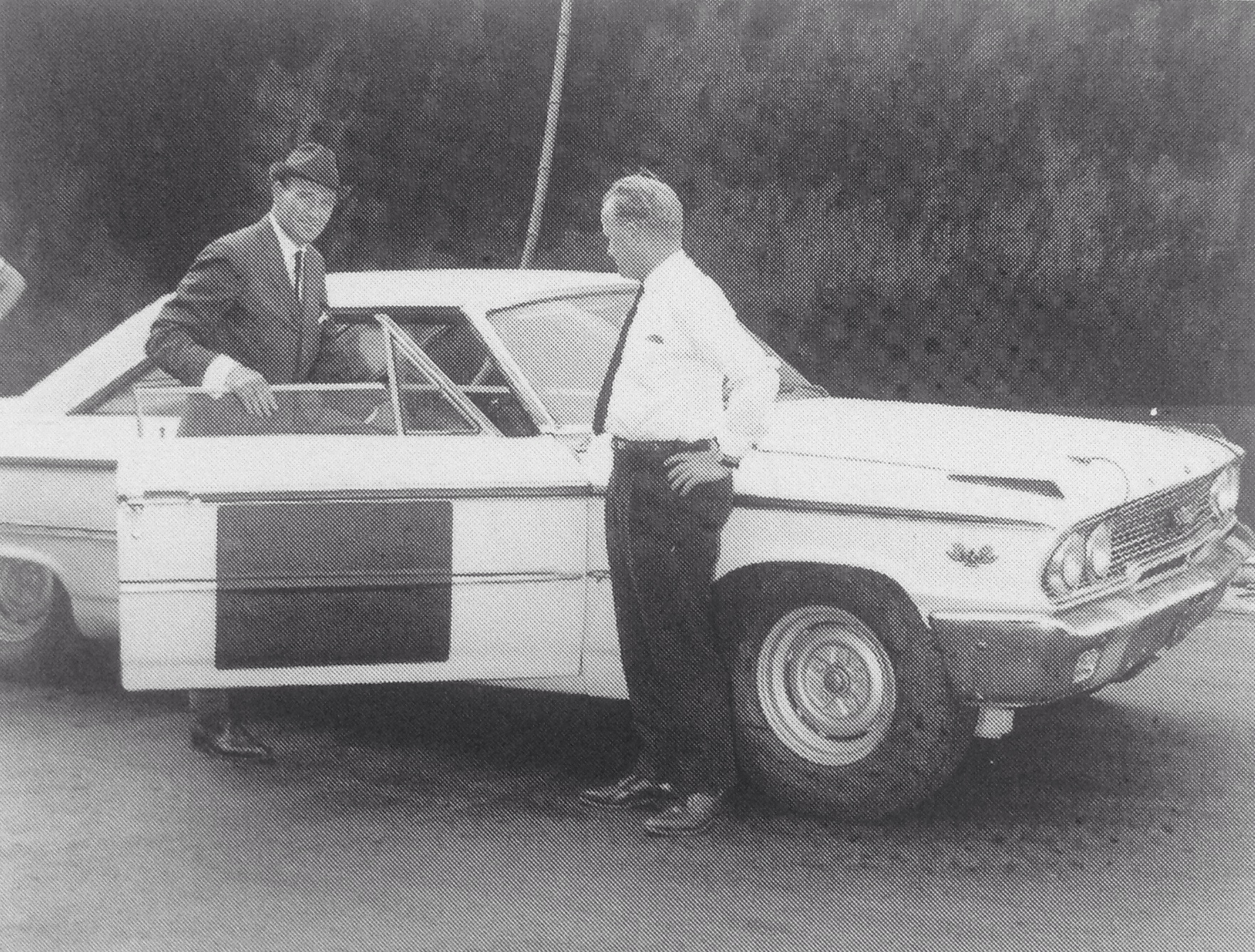
Pre race Sandown PR shot- Lex and Baillie’s Galaxie at Port Melbourne alongside the ship which brought it from Southampton (Davison)
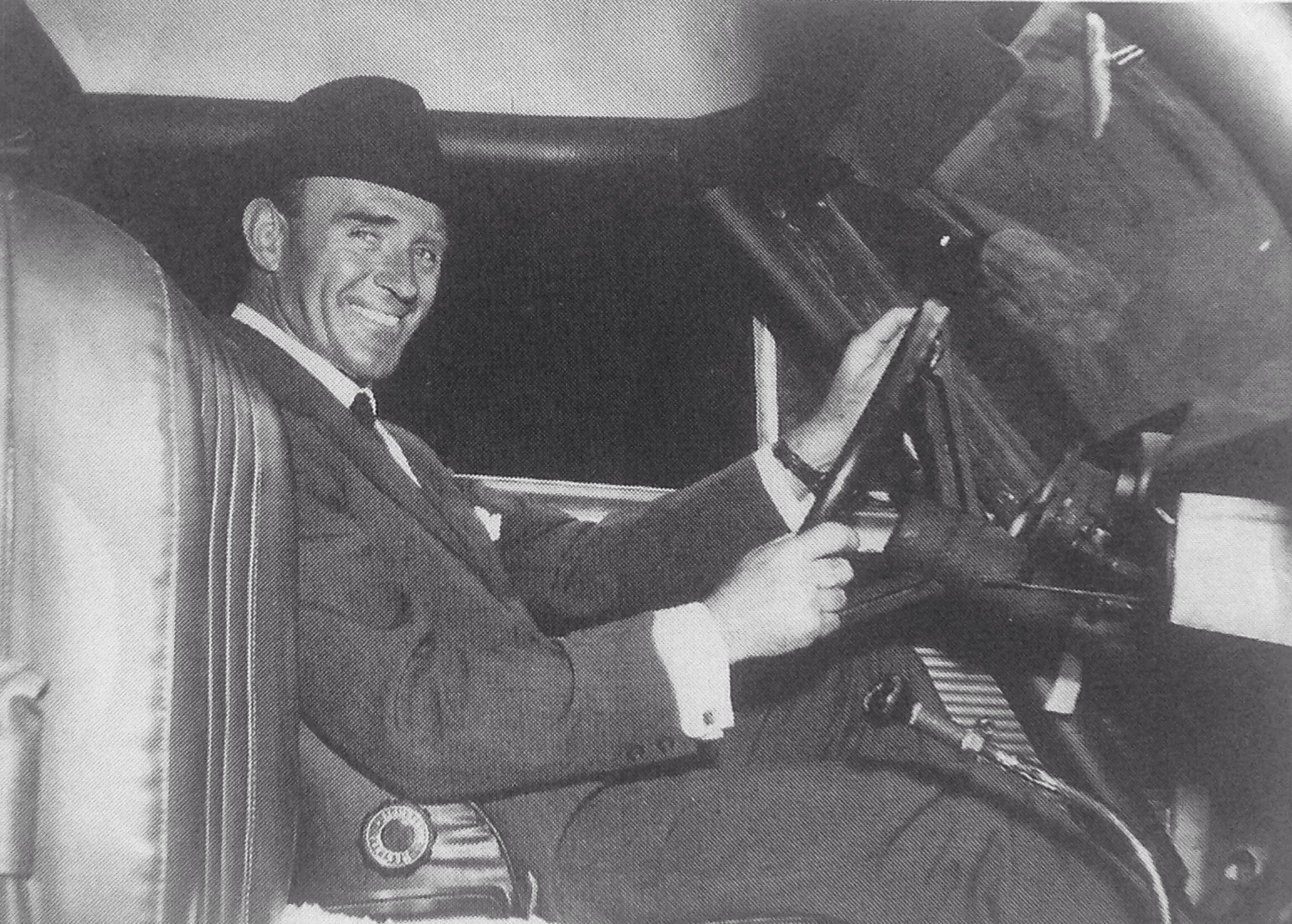
Davison with suit, tie and hat about to have some fun! A road trip in his racer from Port Melbourne to Armadale, 10 km or so on built up inner urban Melbourne roads (Davison)
When the car arrived at Port Melbourne in mid-November, Lex and Alan Ashton, Davison’s longtime engineer/mechanic boarded the vessel to see the car in the hold. Newbold was caught out when the huge trailer he organised to collect the beast was not large enough. So, the likely lads fired up the 500bhp racer, Lex jumped aboard complete with suit and tie and rumbled off in the direction of AF Hollins workshop in twee High Street, Armadale 10 km away. I wonder if Lex had a bit of a flurb along the new South Eastern Freeway to see ‘whaddl she do?!
While Lex’ new engine had reached Sydney, shipping difficulties meant it was struggling to go any further, the wheels and tyres hadn’t arrived from the UK either.
On the Saturday before the race Ashton and Lou Russo took the car to Sandown where Lex did about 30 laps, checking fuel consumption, getting the feel of the car, establishing tyre pressures. As part of the pre-event publicity build up he gave a couple of eventful laps to a Melbourne Herald reporter including a demo of the Galaxie’s loss of braking power on the drop down through the Dandenong Road Esses!
Lex got down to 1:24, Beechey’s lap record in Lukey’s Galaxie was 1:23.5. Davo reported seeing 5500 rpm in top gear, 217kmh and reported signs of brake fade after 10 laps circulating in the 1:26 mark; it was a portent of things to come.
The new spare engine reached Melbourne on the Friday and was installed overnight, but the car was still on its old tyres. Baillie jumped aboard and circulated in 1:28’s, then Lex did a 1:24.9. Baillie did 1:25.3 and finally Lex did a 1:23.7. The car completed about 50 laps all up with the crew practicing wheel and driver changes.
Allan Moffat’s Grp 2 Lotus Cortina, just acquired from Team Lotus – of which he had been a member – arrived from the US after practice had finished, while Bob Jane’s Grp 1 Lotus Cortina three-wheeled around in characteristic style in 1:30.1. During practice the Galaxie’s wheels and tyres arrived air freight from the UK- so, all was prepared with the Galaxie demonstrably the fastest car on the circuit.
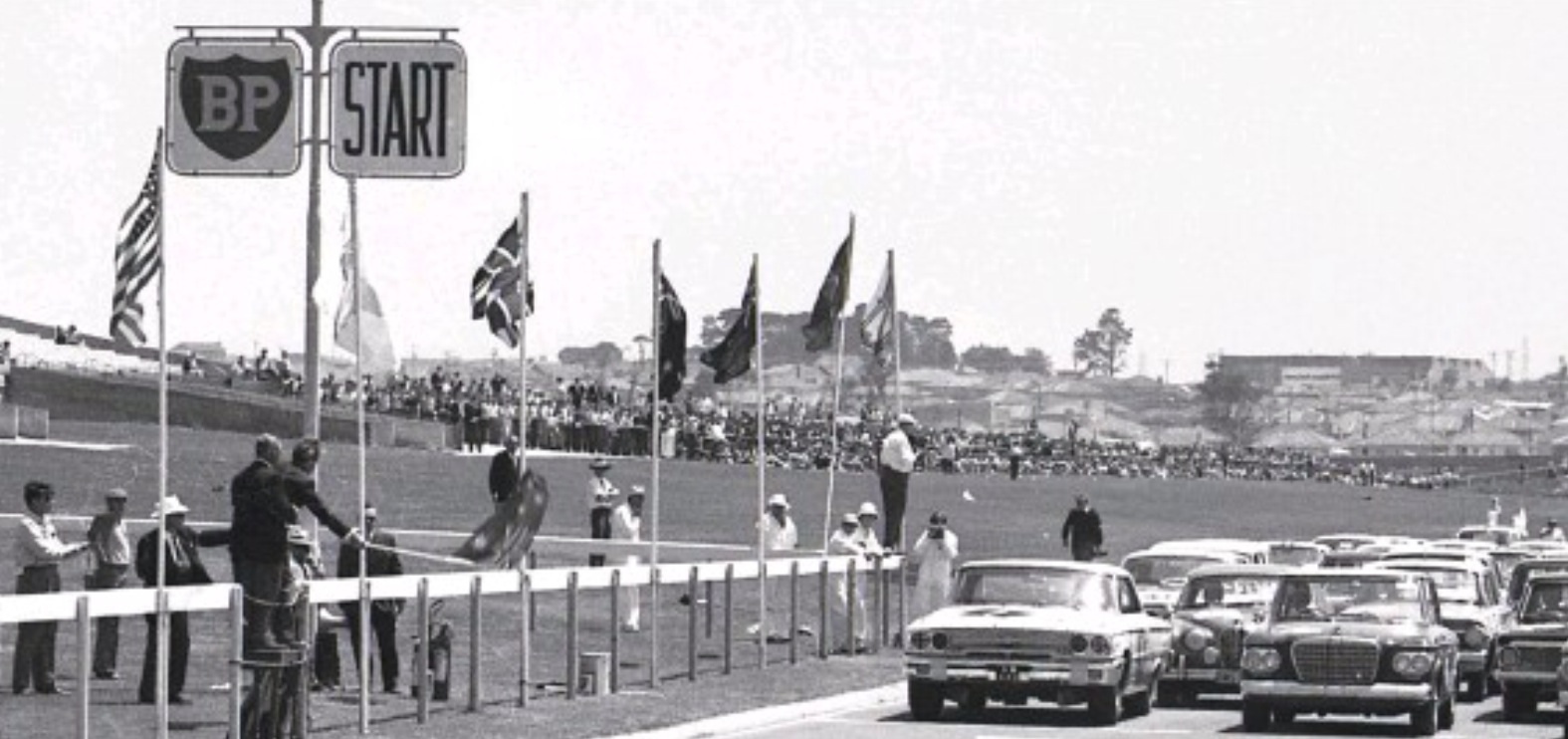
Davison’s Galaxie alongside the Studebaker Lark at the start, Sandown 6 Hour 1964 (unattributed)
Race morning was fine and sunny. 27,000 Melburnians rocked-up to enjoy what promised to be an interesting, spectacular race.
Lex was on pole amongst the Studebaker Larks, and took the first stint at Baillie’s request. At the drop of the flag Lex spectacularly bagged-’em-up and simply disappeared into the distance. He was 200 metres ahead of the second placed car at the end of the first lap and lapping the tail-enders prior to the end of lap two; lapping in the 1:24s literally in a class of his own.
The team planned a driver change at the end of lap 61, with a strategy to build up a big enough lead to be able to change all four tyres and replenish the beasts 155 litre fuel tank.
By lap 40 Lex had a three lap lead over Moffat’s second placed Lotus Cortina – at that stage he needed six-pumps of the brakes to get a useful pedal. Then, as he started his 47th lap he could get no pedal on the 170 kmh run along Pit Straight before the second gear, slow Peters left hander. “I managed to change down to second, then to first, and tried to spin the big car in this very tight corner. I managed to pull off this manoeuvre once before when driving Len Lukey’s car, but this time I did not manage it quite so cleanly and the tail whacked the fence.”
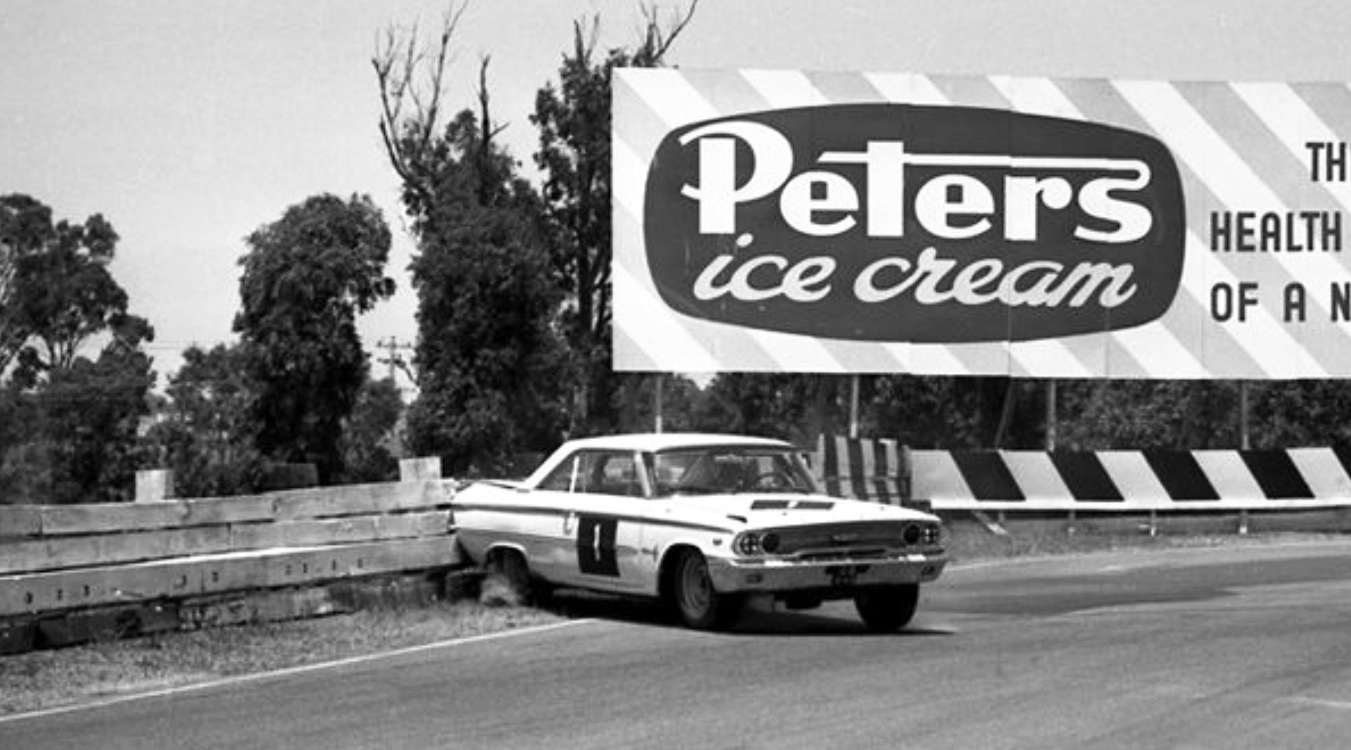
Hit 1: Lex backwards into the Peters corner fence (autopics)
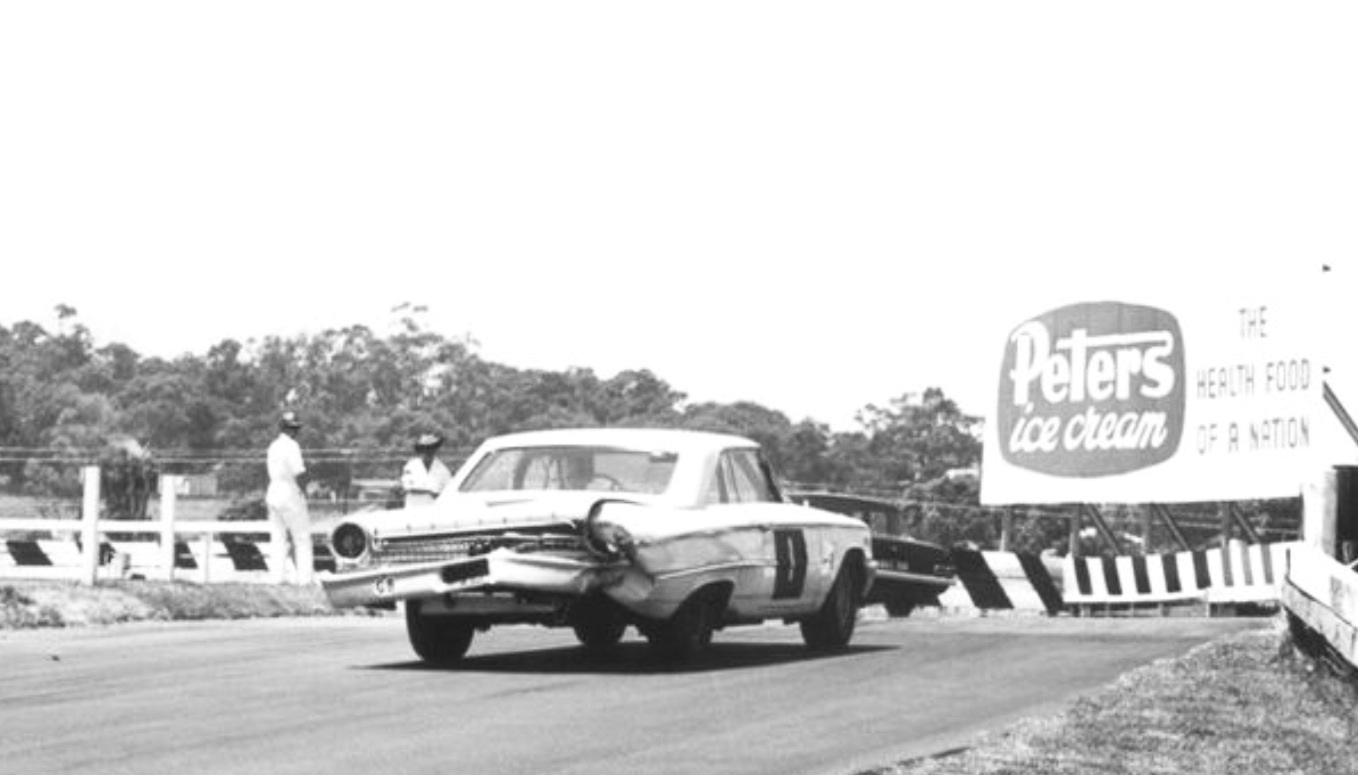
Slightly second hand Galaxie post hit 1, entry to Peters from Pit Straight (autopics)
Davo completed the lap – effectively a full lap – but still had trouble pulling the car up at the AF Hollins pit, so much smoke was coming from the offside brake it appeared to be on fire. The offside front brake had worm through both pads but also one of the backing plates allowing a piston to contact the disc, damaging both it and the caliper! It took 22 minutes to replace the caliper, then Baillie rejoined in 30th place, 8 laps behind the leader – still with the damaged disc- while a spare was tracked down.
Moffat’s Cortina had clobbered the fence too so the race was a duel between Jane’s Cortina and Alec Mildren’s Alfa Romeo Giulia TI Super driven by Roberto Businello and Ralph Sach.
Baillie was not comfortable with the car and brought it after 20 laps, Lex took over, his first flying lap was an amazing 1:24.6, he pitted after 7 laps and then pitted on his 75th lap for the car to have the disc replaced, and then took off again at undiminished pace.
And then, as they say in the classics, it happened.
On lap 91 he had the same problem at the same place as earlier but this time had total brake failure. Davison lost some speed by jamming the car into second gear but muffed the change into first – and thereby lost the opportunity to lock the rear wheels and spin the car – so, utterly a passenger, ploughed headlong into the thick planks intended to arrest cars before a 20-foot plunge into the Dam below.
The Galaxie, brakeless and in neutral at about 120 kmh smote the timbers head on an amazing impact, smashing through the planks with all the physics of a 1600kg car. He displaced a 12 inch diameter fence post which drove the right front wheel back against the firewall. “The car stopped halfway through the fence, nose down on the edge of the 20 foot drop into the reservoir, only escaping the fall because the front of the car was resting on the hefty fence post.” Lex’s door was jammed, the right hand door was locked but eventually he got out, severely shaken but otherwise amazingly ok.
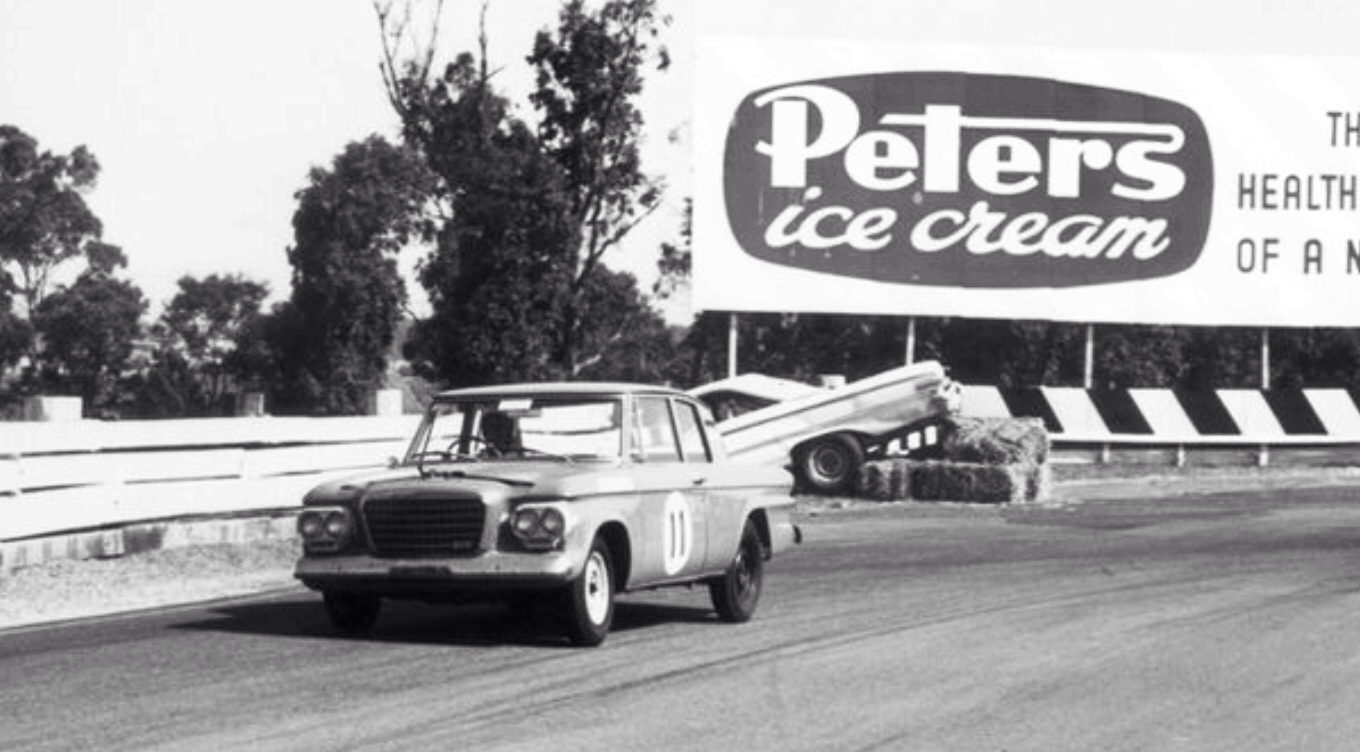
Things look innocuous enough from this angle for Lex as the Studebaker Lark passes (autopics)
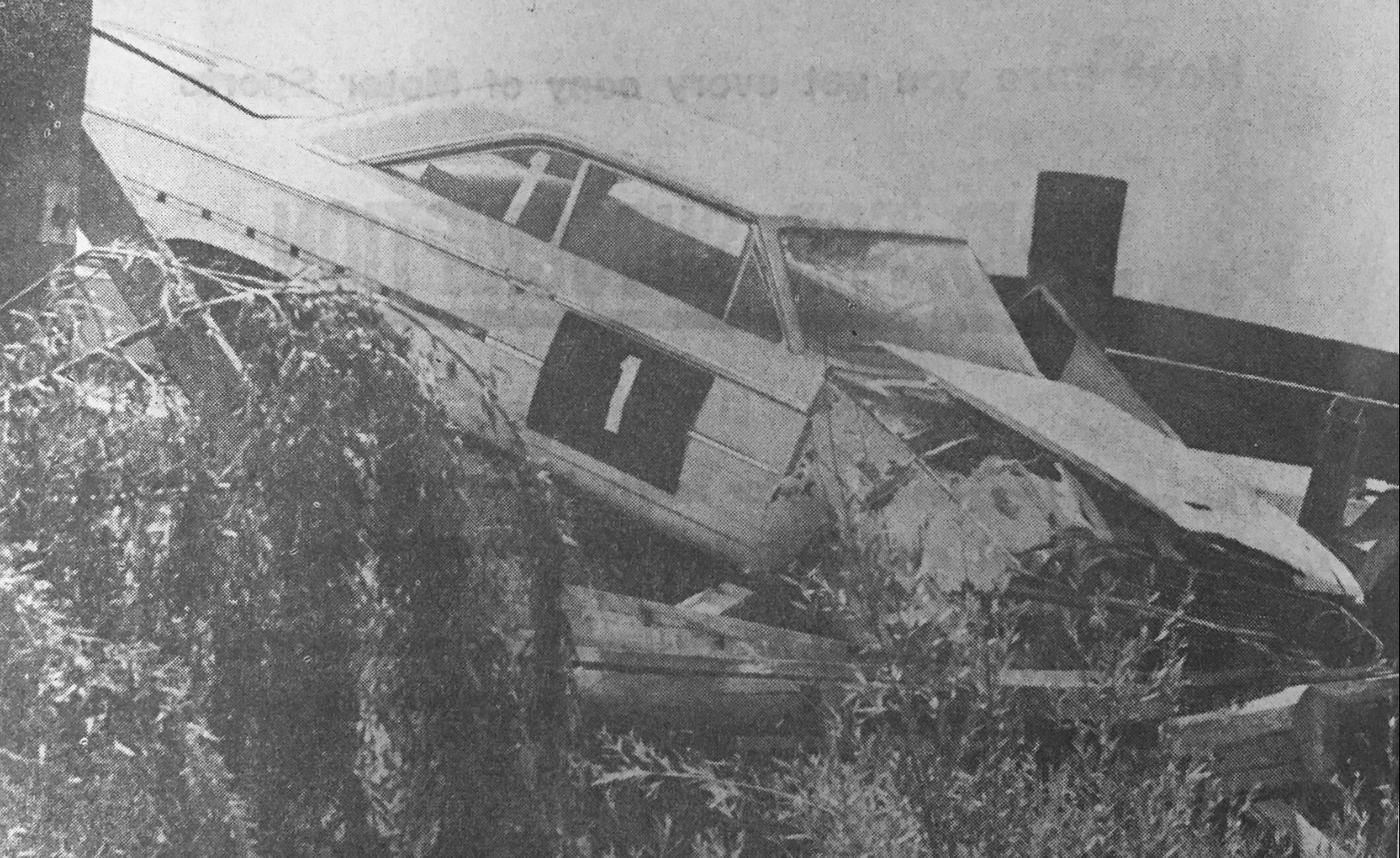
Not so good from this angle though- and it does not show the water 15 feet or so further down (G Edney)
The Ecurie Australie team, on Pit Straight, ran to Lex’s aid with all immensely relieved “Lex being supported by Gawaine Baillie and Rocky Tresise, then, with one arm holding Diana, still supported by Baillie, trying to explain the accident to Alan Ashton and Lou Russo…The big bitch nearly killed me…” Lex told Baillie.
Graham Howard notes in his Davison biography that for the 40 odd minutes it lasted, his drive after taking over from Baillie was “…another of his never give up drives from the back of the field…but this time he knew he was driving a car which he knew was suspect.”
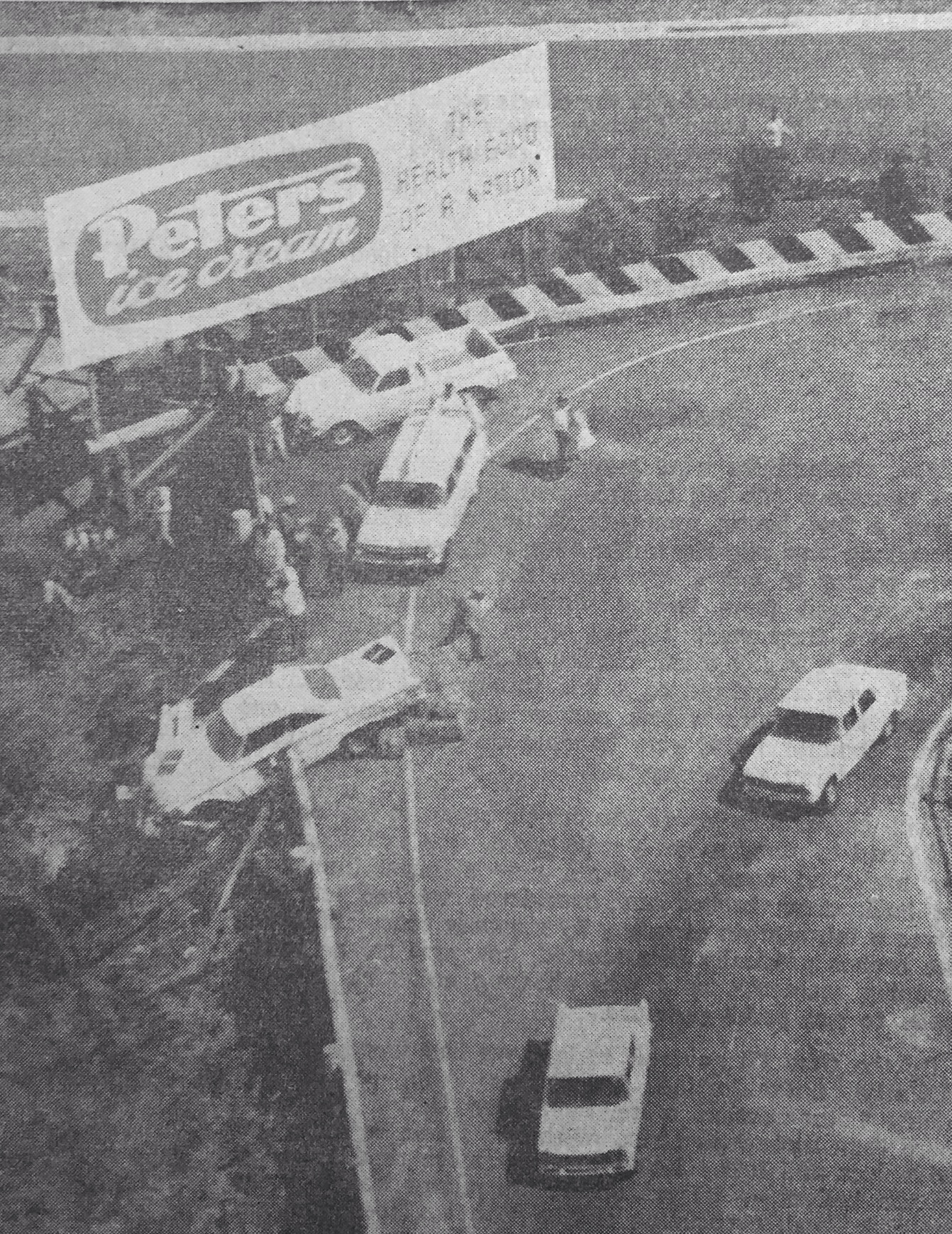
The race goes on around the stranded, mortally wounded Ford Galaxie- not the hay bales behind the car (G Edney)
“Common sense said to put the car away; so why did he keep racing? The Galaxie was a sedan car, an American made one at that, and a clumsy compromise as a racing car, and these were all the things Lex disliked about the touring car push. But at the same tine it was a big, noisy, heavy car to manage, racing car virtues Lex could never resist. Even before it reached Australia the Galaxie had excited him, and from the first drive of the car Lex was exploring its limits. Gawaine Baillie was no playboy- he had been racing since the 1950’s, had been racing the Galaxie for two European seasons, and had led the Brands Hatch 6-Hour race in June with it, setting fastest race lap – but Lex in the Galaxie was always faster. At Sandown Lex was responding to one of the primal challenges of motor racing: to show the machine the driver was in charge. But finally, provoked beyond endurance, the big bitch showed empathetically he was not.”
Howard continued “Lex had also been shown in no uncertain terms, that continuing to drive hard in a car with a known mechanical problem had been an error of judgement which went to the very heart of his personal approach to racing. So while he had big accidents before, they had not been in circumstances like this. The accident brought home to both Lex and Diana how much was at risk when he went racing: he was the valued head of a large and lively family with children aged from 5 to 17, and the leader of a minor business empire which by then extended beyond footwear manufacture and retailing and into property development and car sales. He was a few months short of his 42nd birthday, he had been racing since 1946, and now, Lex decided, it was time to stop. He would just run a few more races, he told Diana and then he would retire.”
As many of you would know the great irony and sadness of all of this is that Lex died at Sandown of a heart attack aboard his Brabham only several months later- an event which rocked his family, the sport and Melbourne to the core. But I don’t want to dwell on that fateful day, which is covered here; Bruce’, Lex’ and Rocky’s Cooper T62 Climax… | primotipo…
As Lex gathered himself up to prepare for the 1965 Tasman Series- and proved at Pukekohe during the NZ GP that he had not lost a yard, but had in fact gained several, started the race from the front row alongside Clark J, and Hill G before retiring with overheating problems.
The Galaxie returned to AF Hollins for repair, there were Tasman support races to run in Australia in January/February to prepare for.
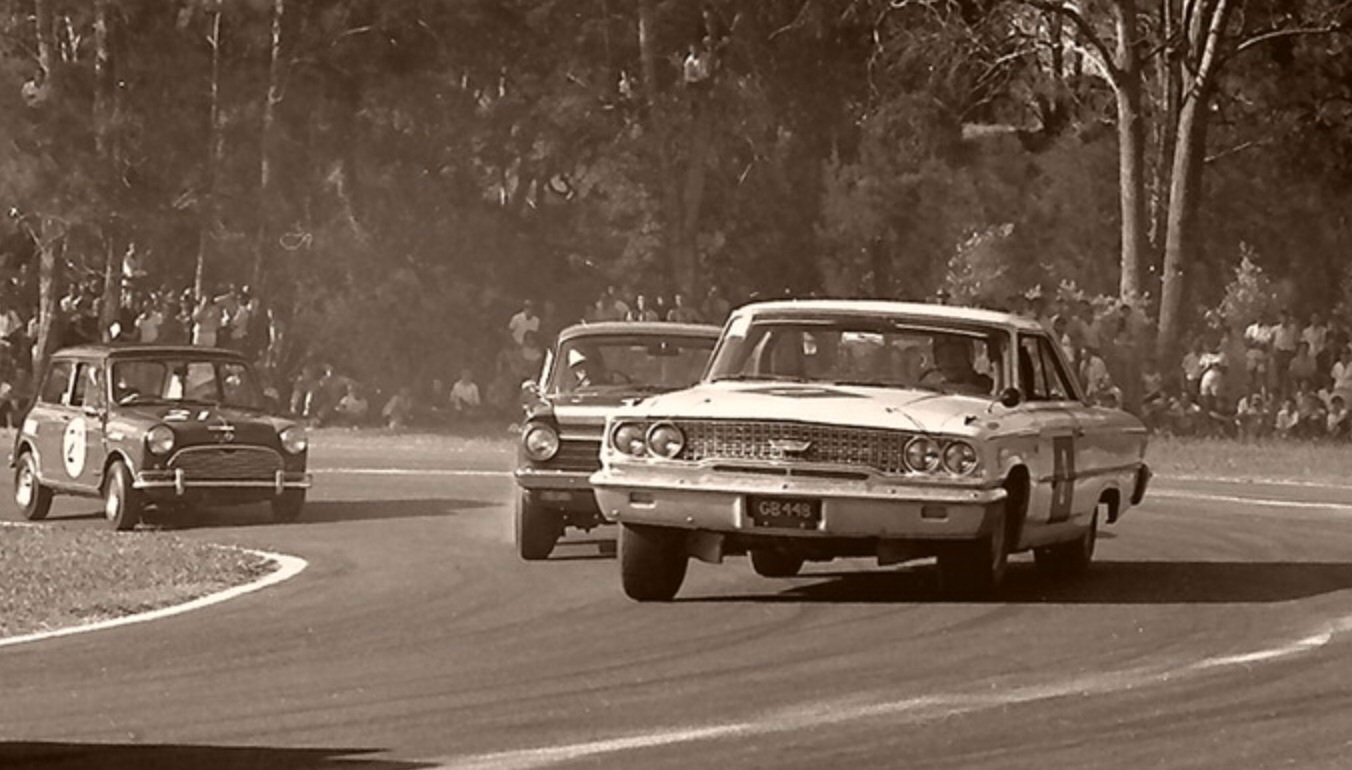
Baillie ahead of Brian Muir’s Holden S4 during the Warwck Farm International meeting in February 1965 (B Wells)
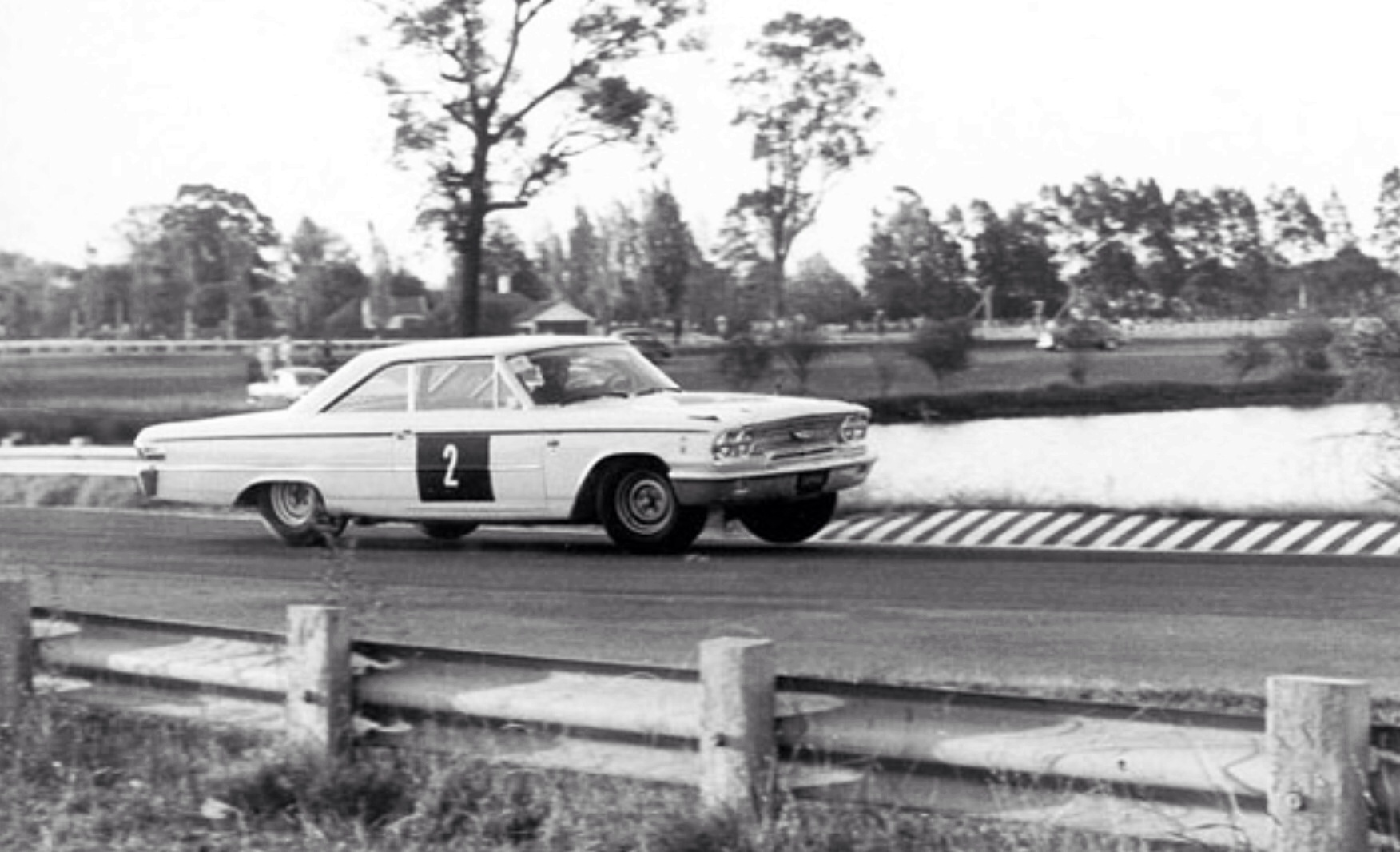
Warwick Farm again across The Causeway (autopics)
Baillie raced the car at Warwick Farm, but not Sandown out of respect for Lex, and also the tragic Longford weekend in which Ecurie Australie’s plucky young driver, Rocky Tresise perished in an accident aboard the teams Cooper T62 Climax, a race Rocky insisted he start out of respect for Lex – his neighbour, friend and mentor.
Baillie left Australia but the Galaxie remained, contesting the one-race 1965 Australian Touring Car Championship in the hands of John Raeburn at Sandown in April 1965. Run to Group C Improved Touring Car regulations, Bob Jane started from pole in his Mustang with Raeburn alongside him – the cars pace at Sandown was now rather well known. Norm Beechey aboard his new Ford Mustang from Pete Geoghegan’s Lotus Cortina and Brian Muir’s EH Holden S4- Raeburn was fifth, a lap behind.
With the Mustang making rather clear the future for outright touring cars – smaller lightweight V8 engined machines – there was little interest in the car in Australia so it was loaded up and returned to the UK. John Willment bought it, the Australian connection continued as Brian Muir was the driver. Those brakes, always the weak link caused him a big accident at Oulton Park, beyond economic repair, the car was scrapped.
While the Galaxie touring car phase of racing in Australia was short it was certainly sweet, if a 1600kg, 500bhp, big, lumbering beastie could ever be described thus!
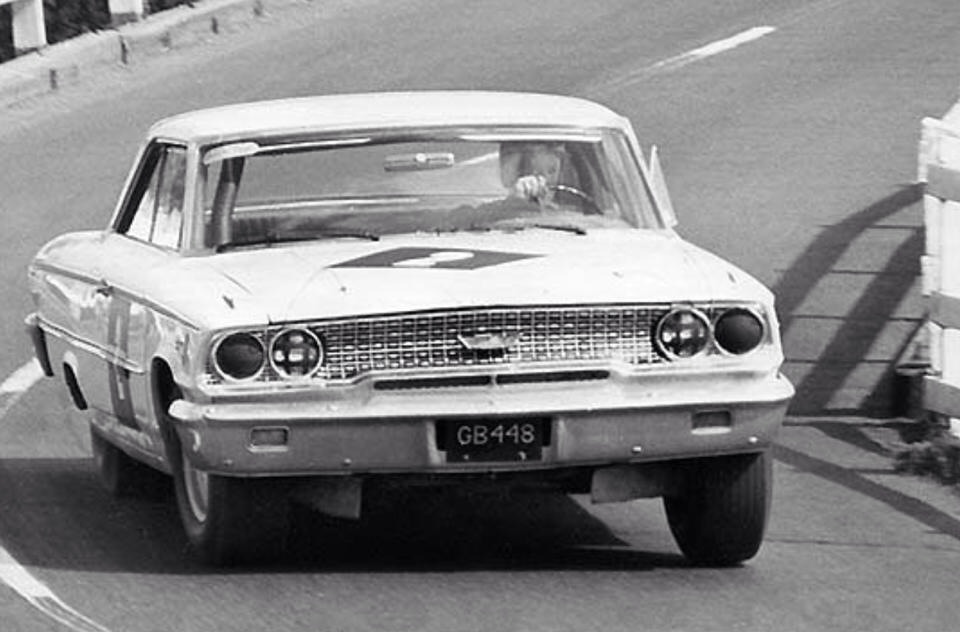
Great shot of Baillie convincing the Galaxie off Long Bridge, Longford 1965 (oldracephotos)
Bibiography…
‘Lex Davison: Larger Than Life’ Graham Howard, various online forums, Mark Oastler on Shannons.com
Photo Credits…
oldracephotos.com.au, Bob Jane Collection, Graham Edney Collection, Bruce Wells, autopics.com.au, Gavin Fry
Tailpiece…Finish where we started- Baillie ahead of Jane, Longford 1965, this lap is on the entry to Pub Corner rather than its exit…
(oldracephotos)
Finish where we started – Baillie ahead of Jane, Longford 1965, this lap is on the entry to Pub Corner rather than its exit.
Finito…