Posts Tagged ‘Australian Motor Racing History’

(S Hood)

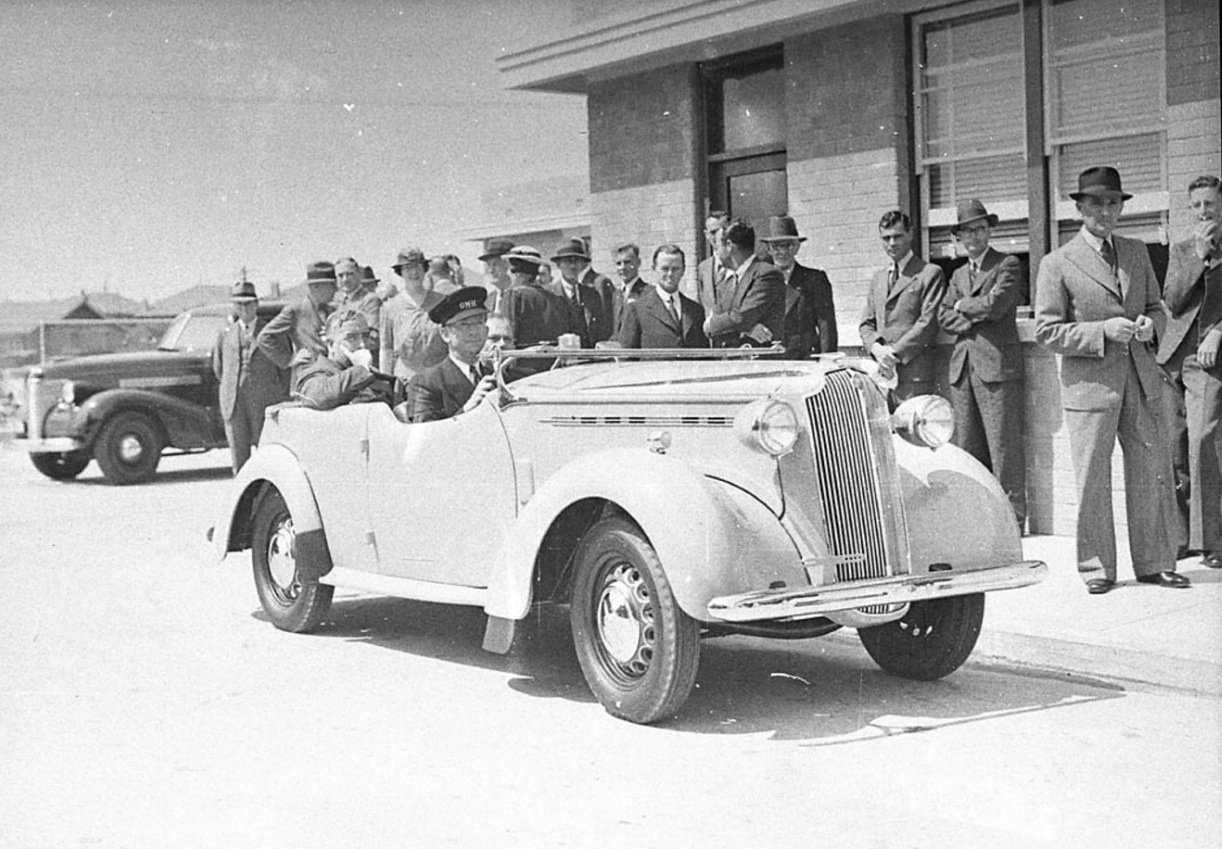
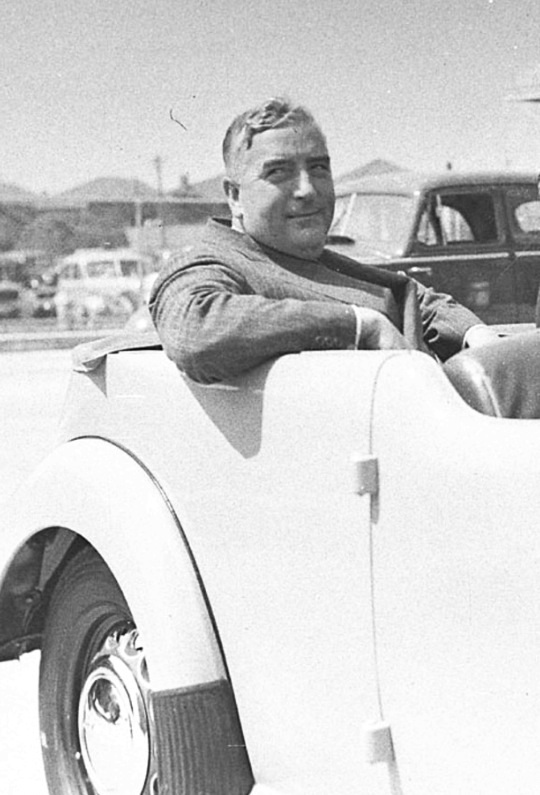
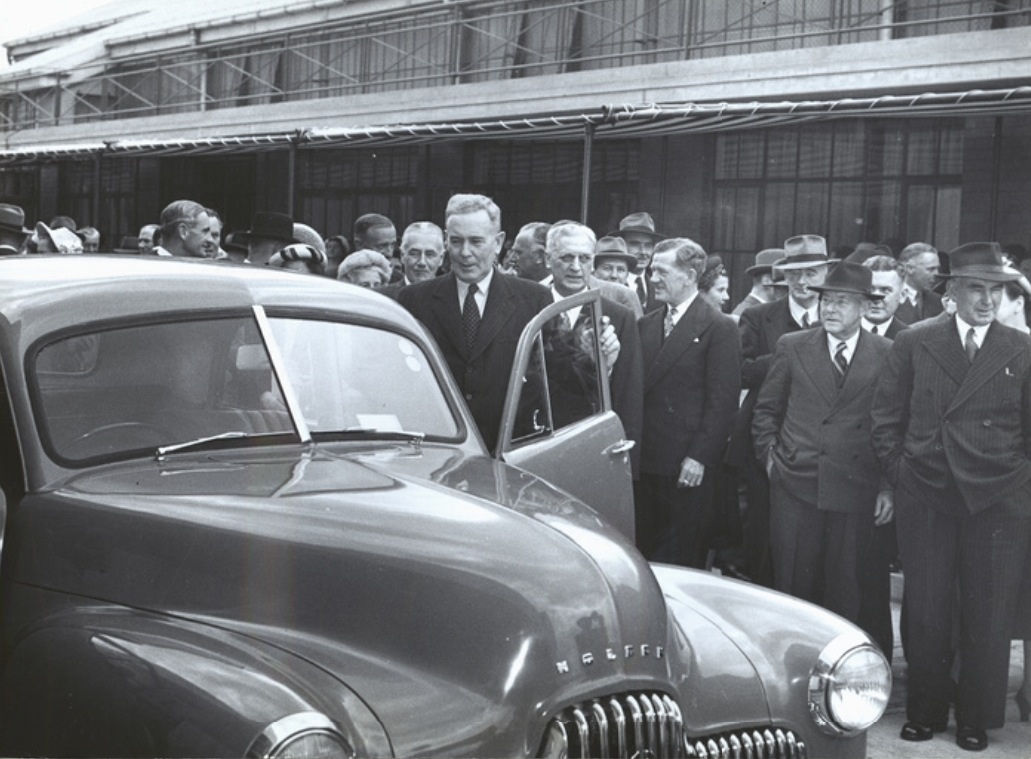
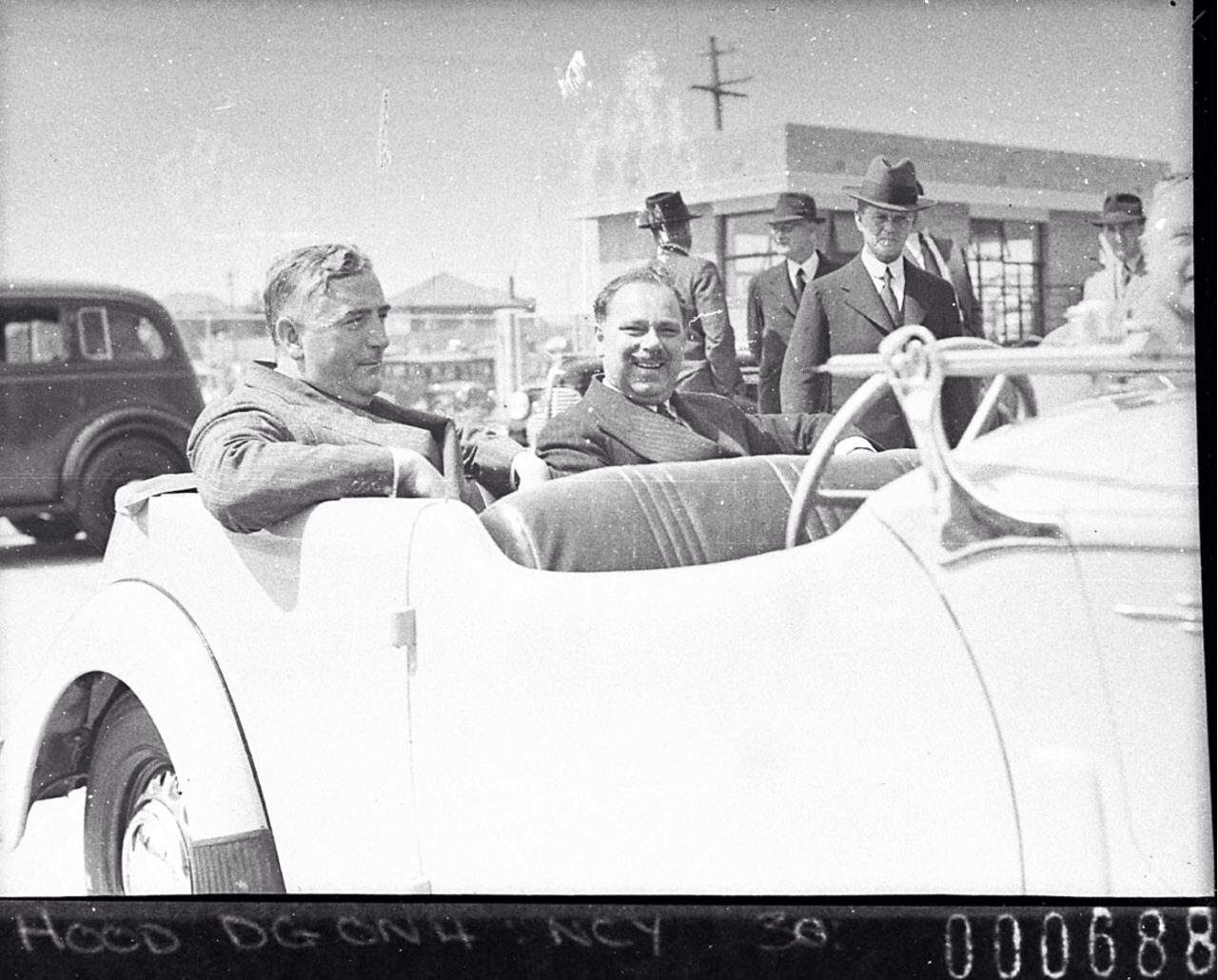
Prime Minister Robert Menzies and Laurie Hartnett in the back of a Vauxhall Wyvern Caleche Tourer having opened General Motors Holdens new factory at Pagewood, in Sydney’s southern suburbs 1940…

I know its not a motor racing shot so it would normally be outside primotipo’s focus but the photos were too good to waste, and I will get there, a racing element is here to be found in a little bit.

(S Hood)


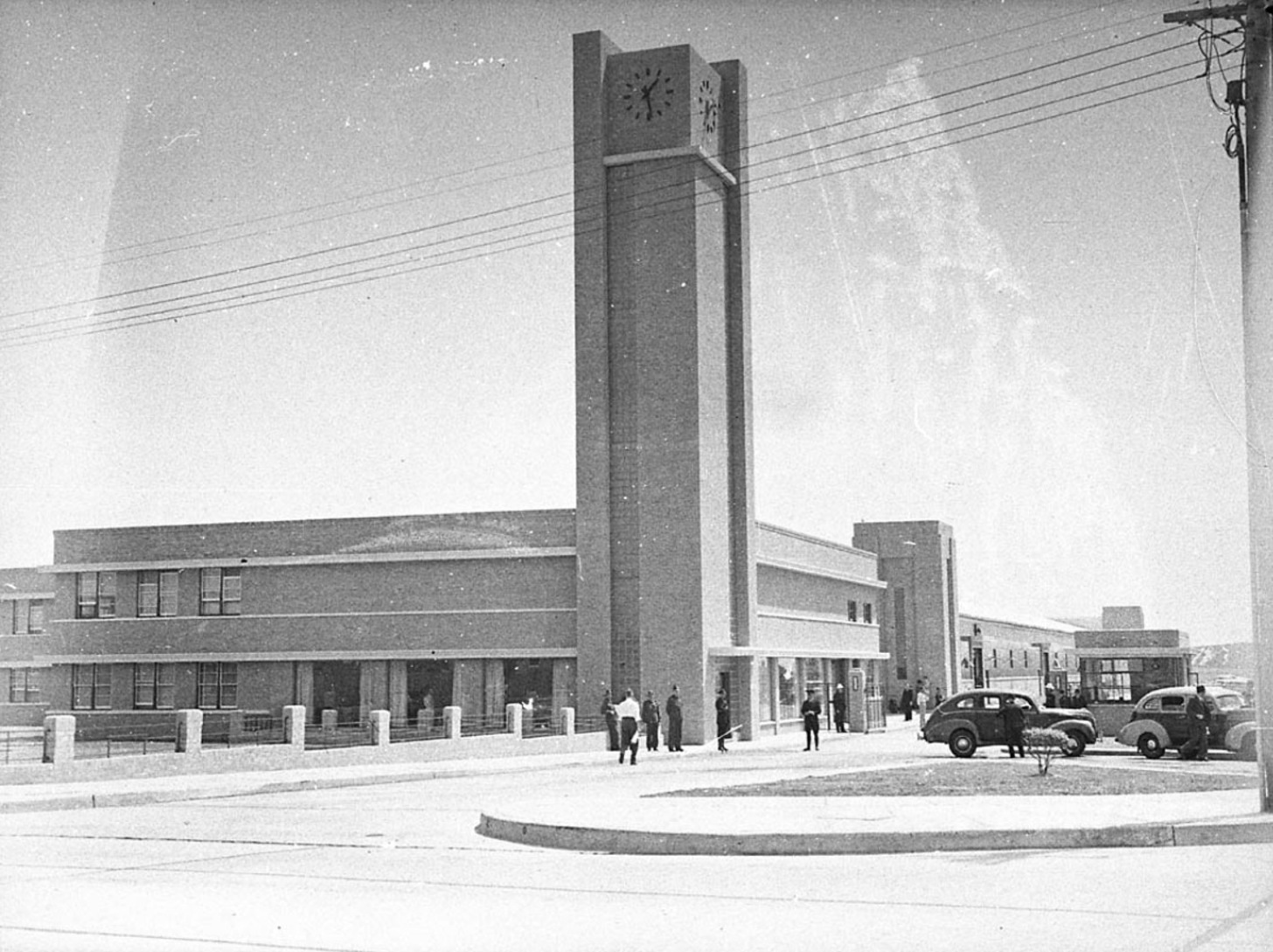
GMH Pagewood on the day of the plant’s opening (S Hood)

The merger of Holden Motor Bodies Ltd with General Motors (Australia) Pty Ltd as a result of the stress caused to the former during the great depression forged the basis of one of Australia’s great manufacturers and an iconic marque, the merged entity was named General Motors-Holden’s Ltd.

A great Touring Car Racing brand as well- there is the racing link I guess.

The new company opened its first factory at Fishermans Bend, in Melbourne’s inner west in 1936 and at Pagewood in 1940.

After World War 2 the business made coachwork for Buick, Chevrolet, Oldsmobile, Pontiac and Vauxhall.

By the mid-forties the automotive industry had the government onside to encourage the development of Australia’s own car.

Holden, led by Hartnett got the upper hand on Ford in a pitch by keeping their demands for taxpayer support to a lower level than FoMoCo.


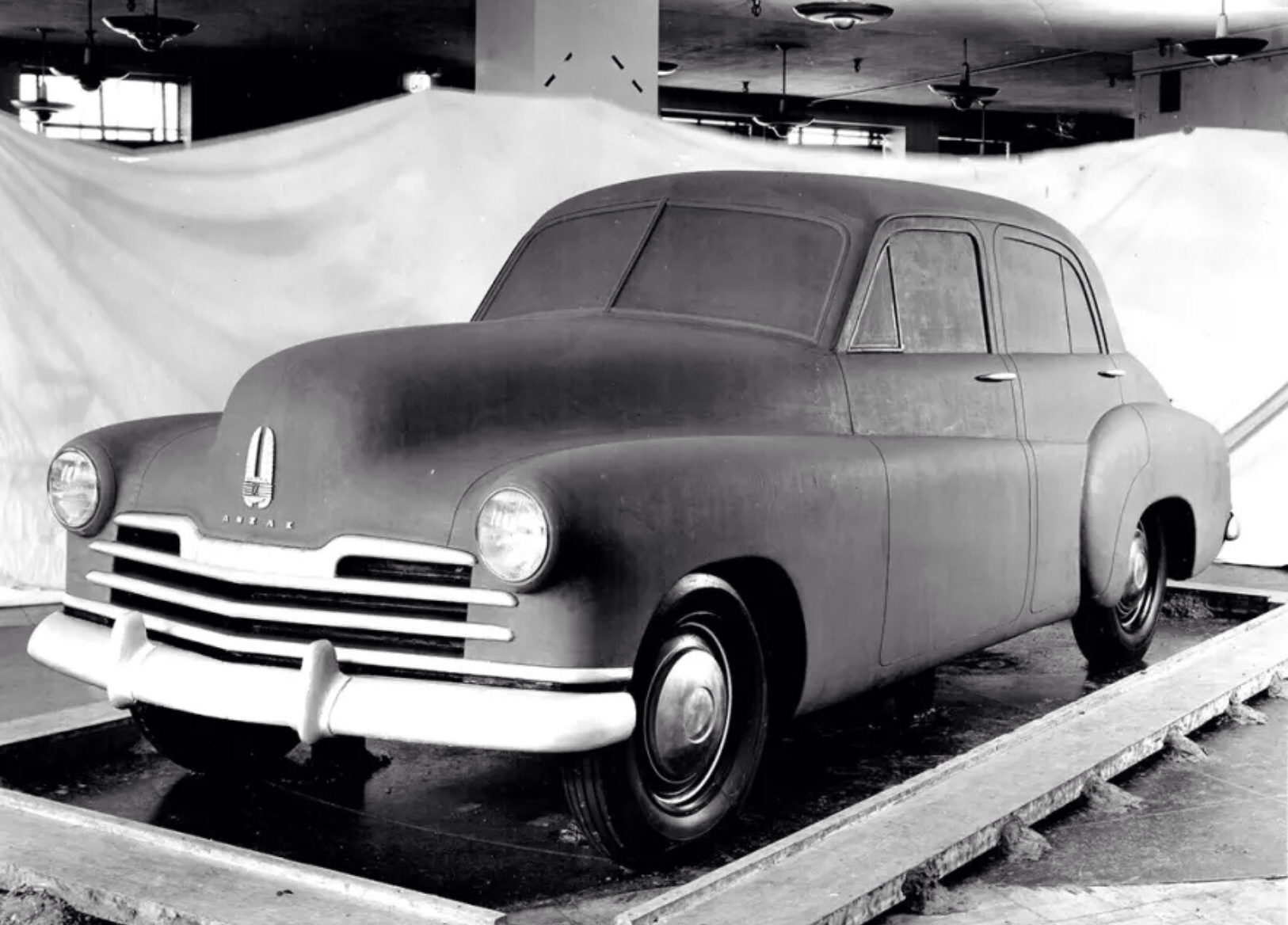
The first Holden was built to a reject 1949 model design based on 1946 Chevrolet mechanicals. The car was to sit between the bigger American’s and smaller British machines which dominated in Oz at the time. The engine was also Chev based. This photo is the 1945 clay model of the Holden 48-215, named the ‘Anzac Holden’ by its clay modeller, Frank Herschey

(SLSA)


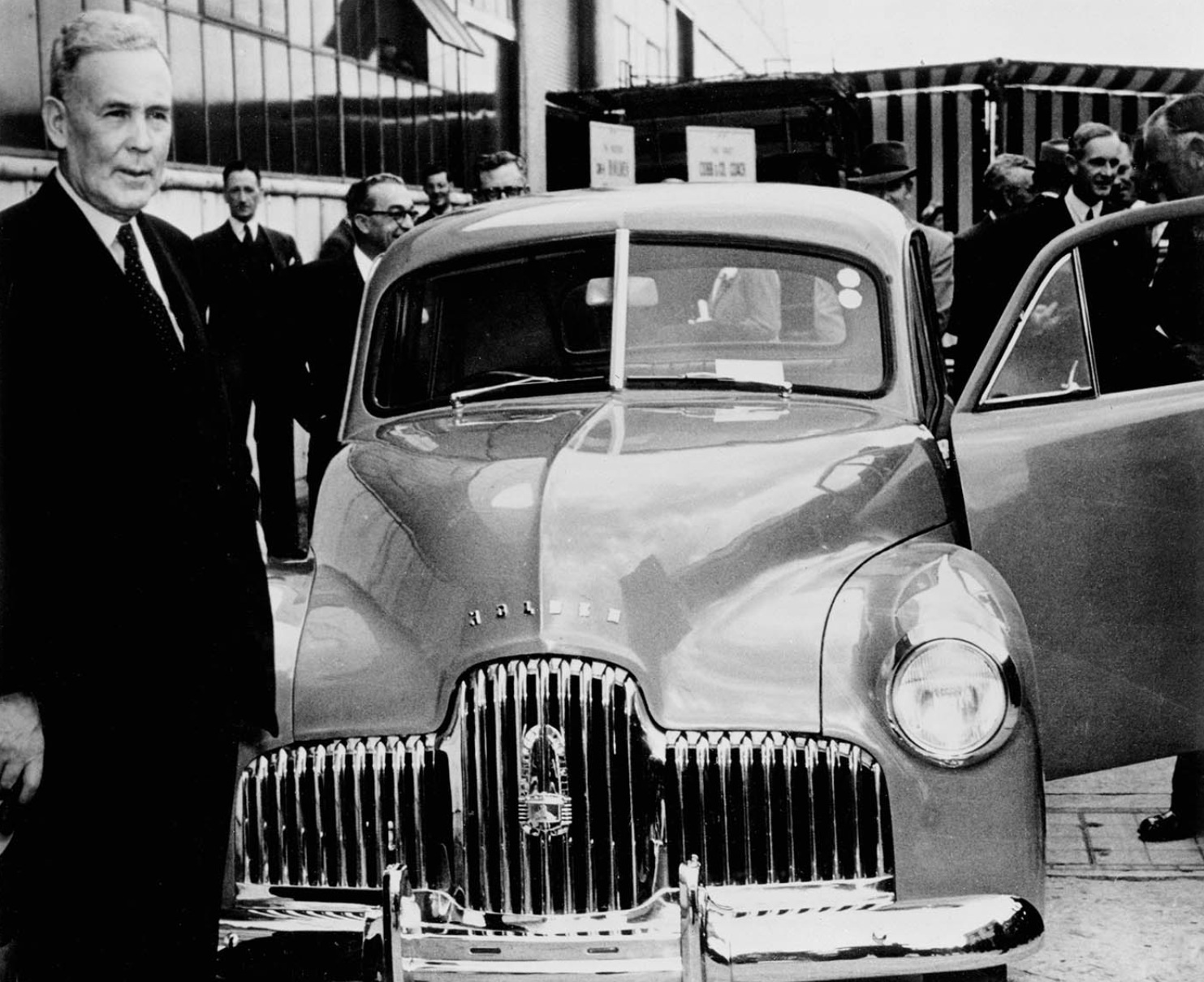
Ben Chifley at the Holden launch, Fishermans Bend, 29 November 1948 (NMA)

In 1944 the feds invited GMH to build a family car suited to our unique, extreme climatic conditions.

American and Australian engineers hand built three Holden test cars at GM’s experimental workshop in Detroit- the first, chassis ‘19525’ was completed on 30 August 1946. After months of durability tests the cars were secretly shipped back to Fishermans Bend.


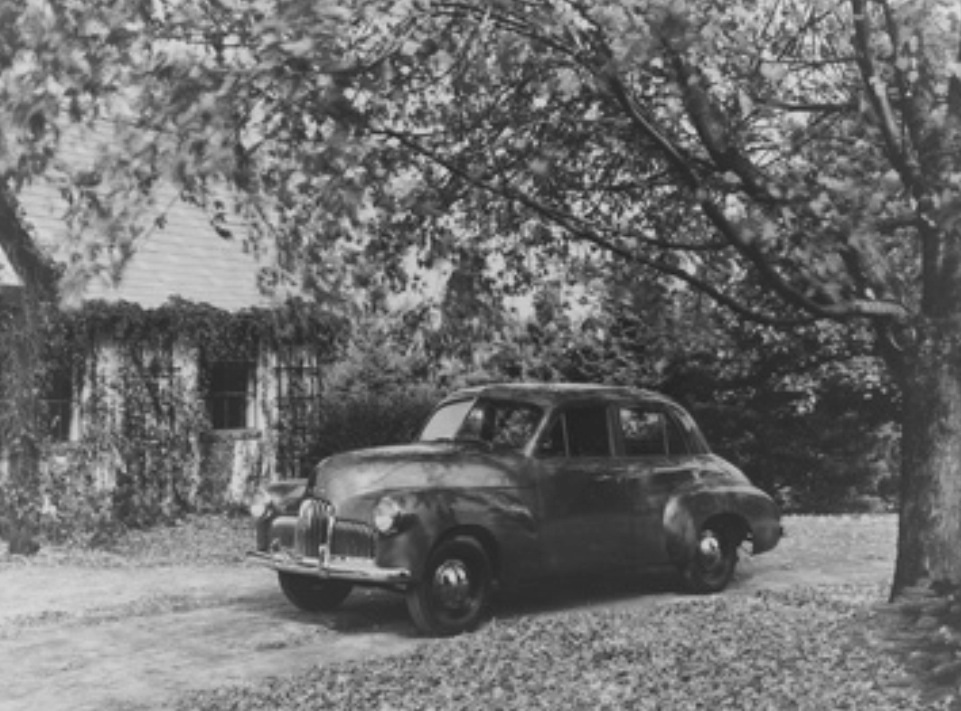
The very first Holden prototype ‘car number 19525 from Project 2000, which then became Project 320 and the initial prototype of the future 48-215 in the United States showing the cars temporary name ‘GMH’ above the ‘Holdens’ badge on the bonnet’. Rego Michigan BK-46-48 (SLSA)


Further testing took place locally and then GMH engineers and technicians built two further prototypes in Australia, the first of these was completed on 22 August 1947- these became the definitive model and shape we all know and love.

For the record, the first production Holden was completed on 1 October 1948, largely built off-line, it was a ‘Gawler Cream’ 48-215, body #6, VIN ‘8-1001-M’ and fitted with engine # ‘1001’.


In 1948 in a ceremonial scene akin to the opening image, then Prime Minister Ben Chifley pulled the covers off Holden #1, the ’48-215′ or Holden FX at Fishermans Bend on 29 November 1948, with mass production starting at the heady rate of ten cars a day!

Soon production boomed of course, and the rest, as they say is history- including the closure of the final Holden production line at Elizabeth, South Australia on Friday 20 October 2017.

The Australian motor industry as manufacturers of mass-market cars no longer exists. We now have a tiny number of niche companies- god bless Michael Borland and Spectrum Racing Cars down Mordialloc way in outer Melbourne for example.


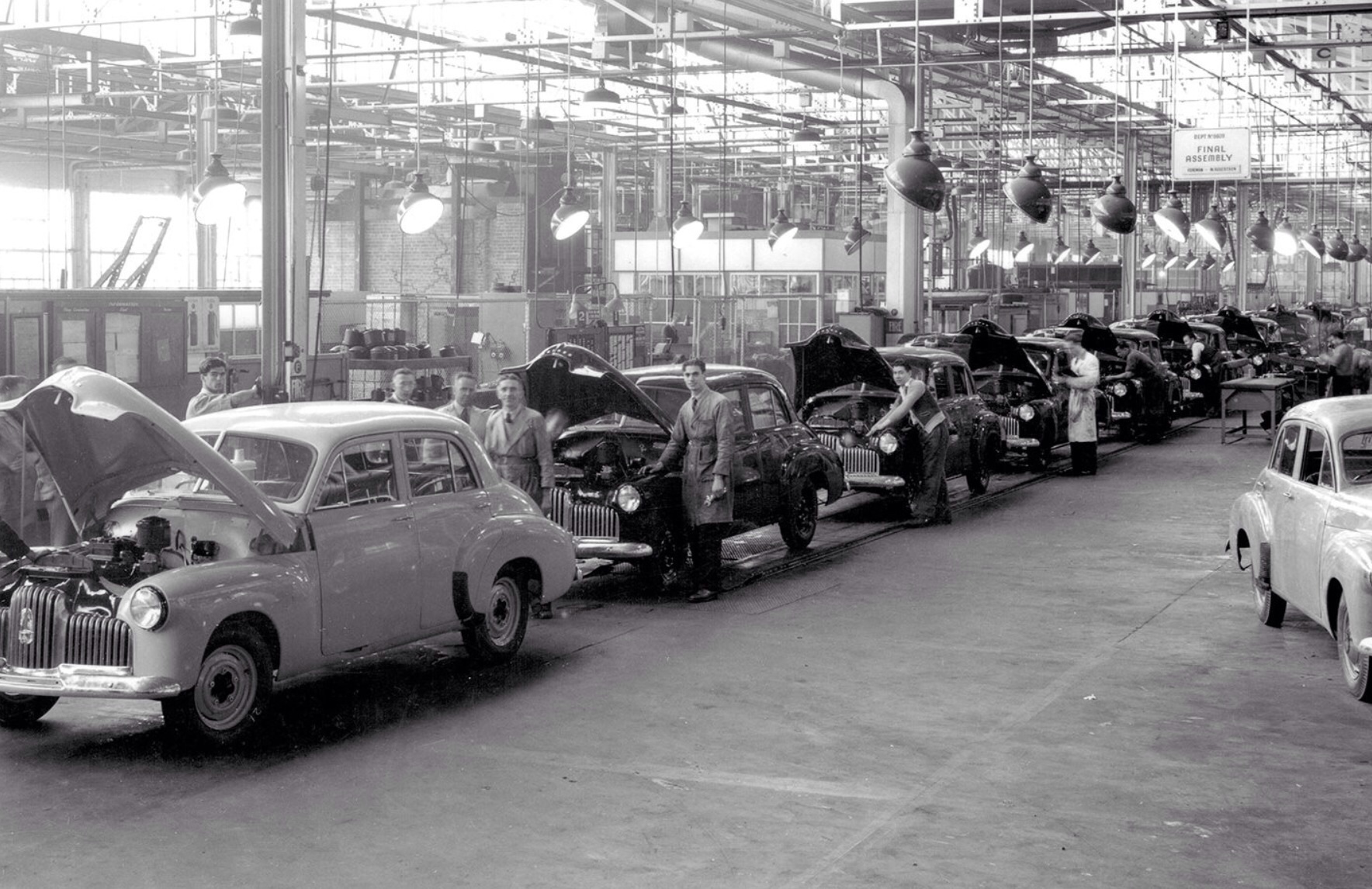
Fishermans Bend 1948 (SLV)


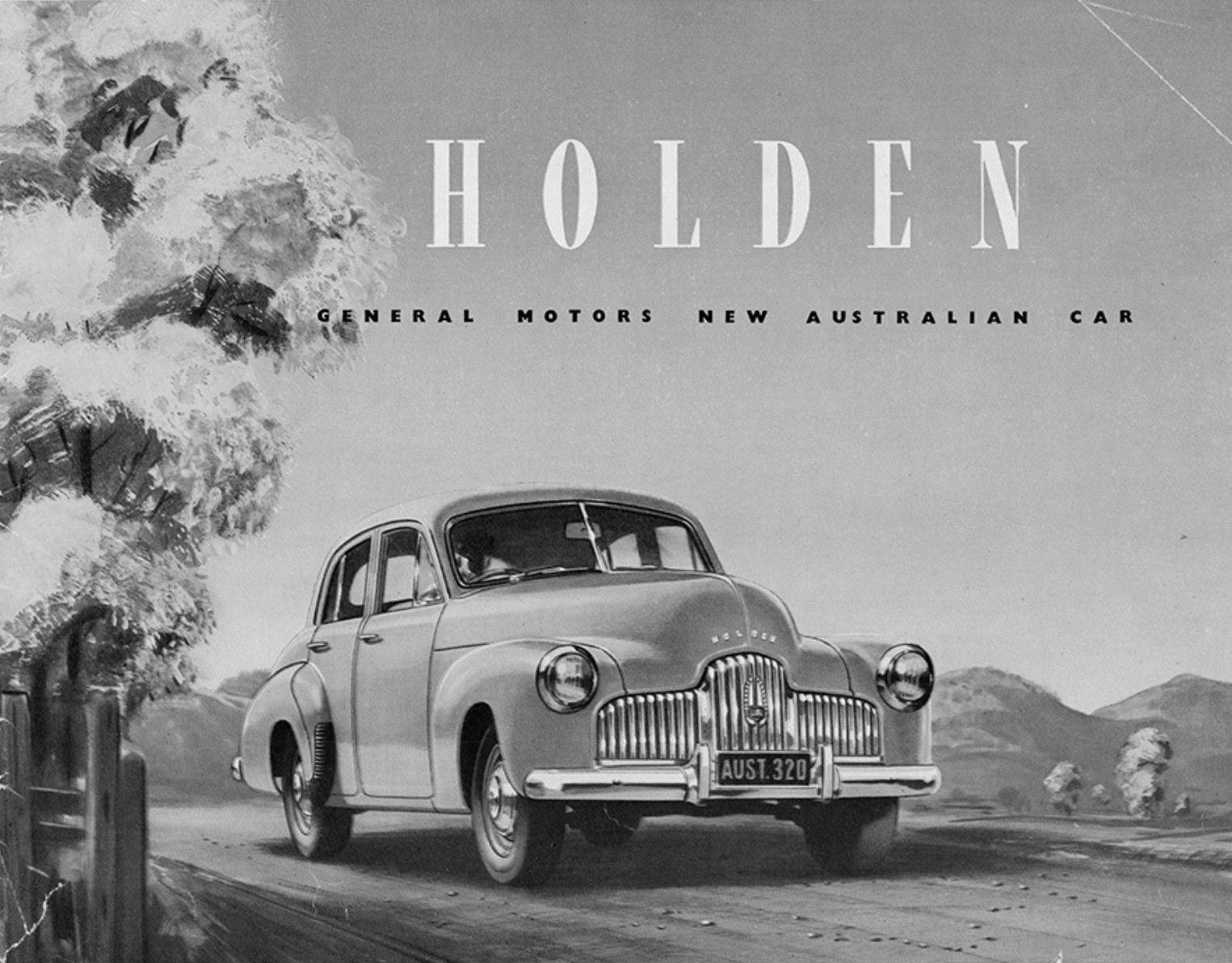
48-215 first brochure


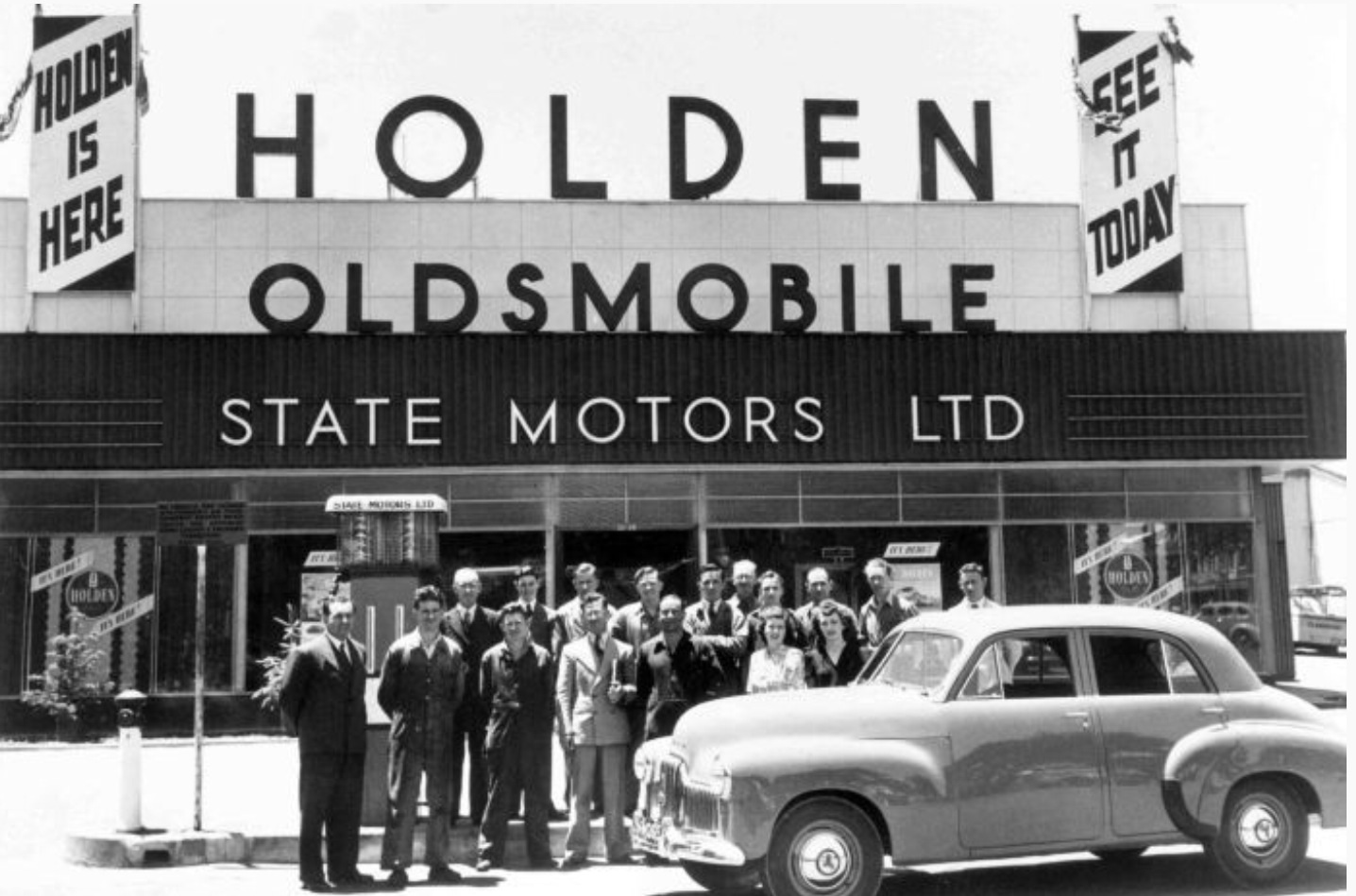
States Motors team, South Australia with one of their first two Holdens in December 1948 (D Loffler)

The ’48-215′ was economical, sturdy, stylish, light and with its modern’ish cast iron, OHV, 2171 cc/132.5 cid, in-line six cylinder engine gave better performance than similarly priced, or in some cases, more expensive cars.

In standard form the undersquare engine (bore 3 inches, stroke 3 1/8 inches) gave 60 bhp @ 3800 rpm and 100 foot/pounds of torque at a very relaxed 2000 rpm on a compression ratio of 6.5:1. The motor was fed by a single downdraft Stromberg BXOV-1 carburettor with spark provided by a Delco-Remy distributor. Gearbox was 3 speed- the shift was column mounted, the four-wheel drum brakes had a kerb weight of 2230 pounds to stop.

Amenable to tuning, enthusiasts were soon fitting twin-SU’s or Strombergs or Amals, extractors and giving the heads the usual port ‘n polish treatment to extract additional neddies which were easily found.

The post war explosion of the Australian economy with full employment, industry protected by high tariff walls and the ready availability of consumer credit made it possible for a family man or salesman to have not just day to day transport but also a car for club motorsport.

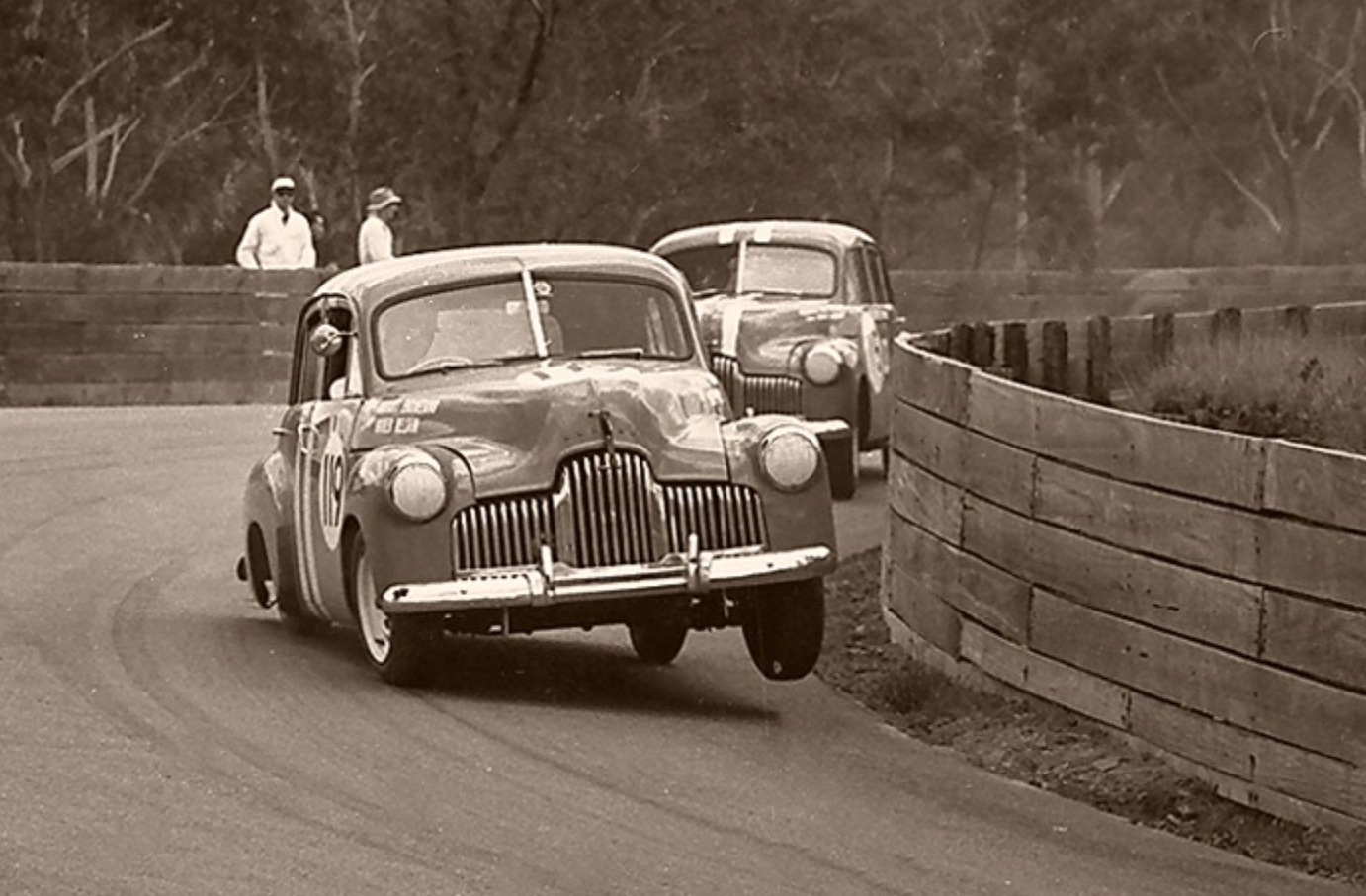
In many ways the work-horses of Australian motor-racing were MG’s of all sorts, both pre and post-war but especially T Types and the 48-215 or more colloquially the FX, and FJ ‘Humpy’ Holdens in the fifties and into the sixties- so many folks cut their racing teeth in these machines.


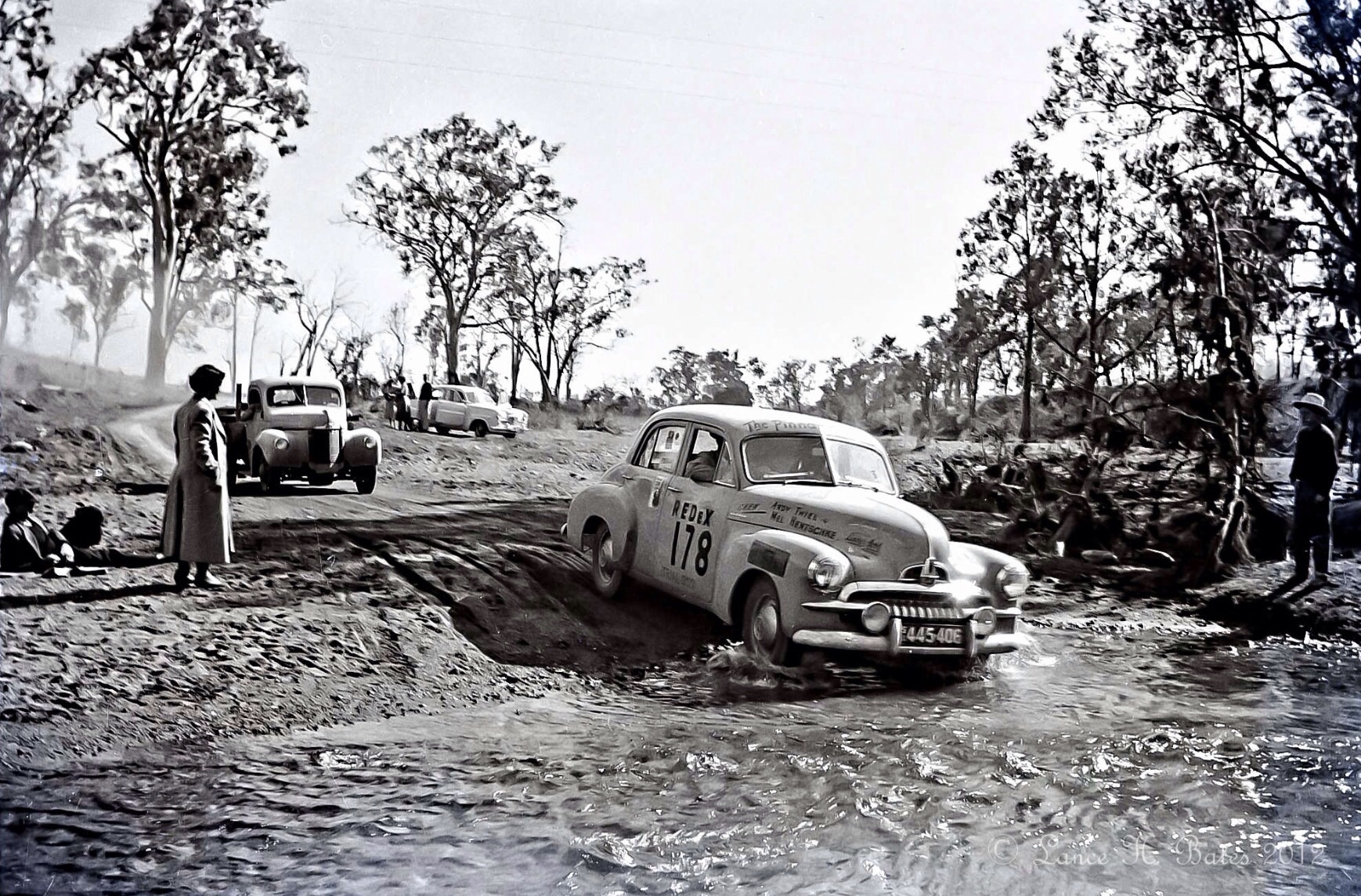
Redex Round Australia Trial Holden FJ competitor- in South Australia but otherwise intrigued to know the details (Adelaide Advertiser)


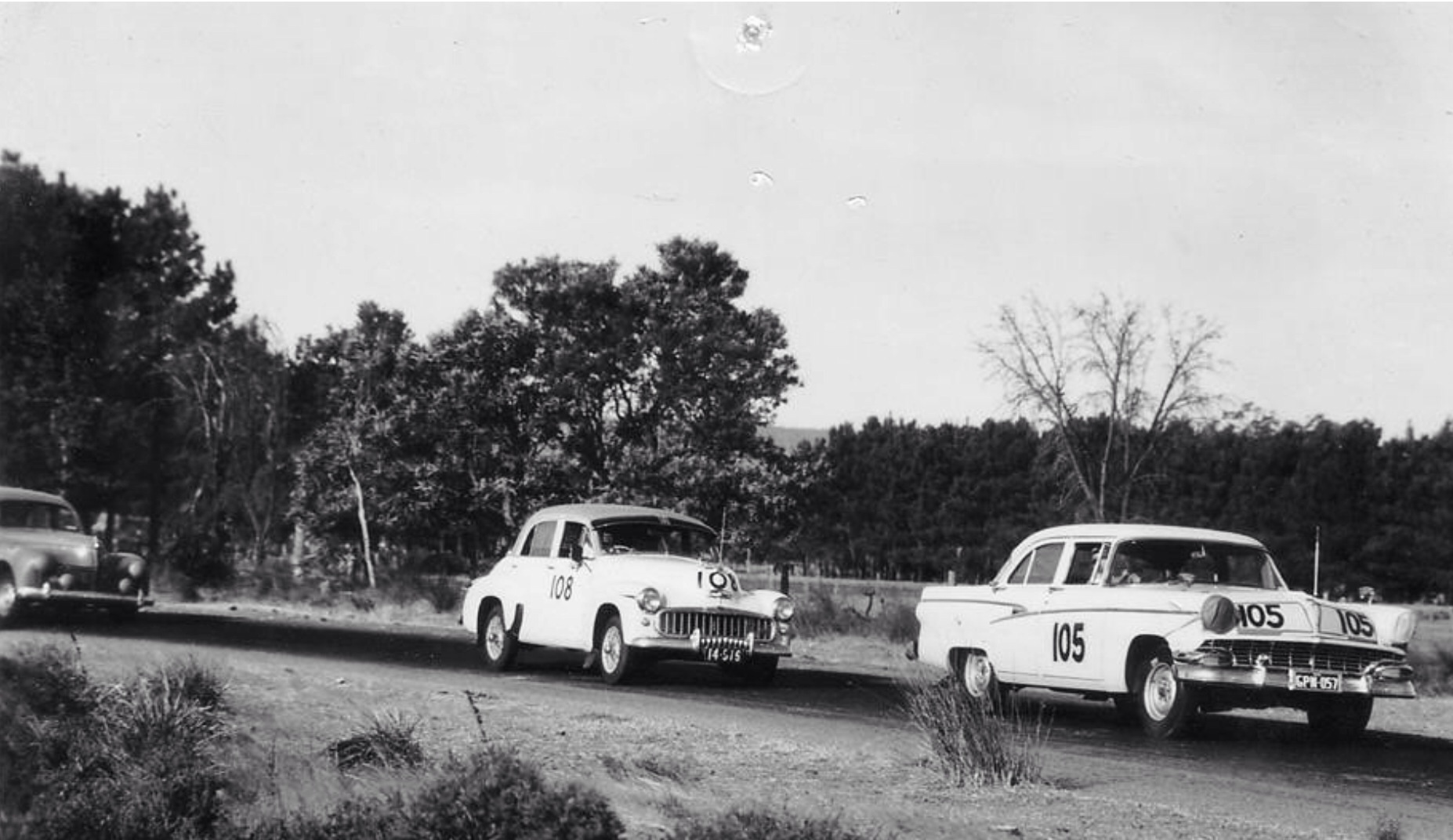
Len Lukey’s Ford Customline from Syd Anderson’s 48 Series (with non-standard grille) and Bob Holden, Peugeot during the 1957 Caversham AGP weekend (K Devine)


Touring car racing started in Australia at the sports inception, daily drivers in the earliest days were the cars which competed in trials and the timed speed events- hillclimbs and sprints within trials. The first Australian Touring Car Championship (Australian Stock Car Championship) was held during the Australian Grand Prix weekend at Lobethal, South Australia in January 1939.

The inexorable and later rapid rise of tourers over pure racing cars in Australia was largely due in the 1950’s to grids chockers with Holden’s- spectators turned out in large numbers to a growing number of race-tracks to watch blokes compete in cars outwardly similar to those in which many of the punters arrived at the race meeting.

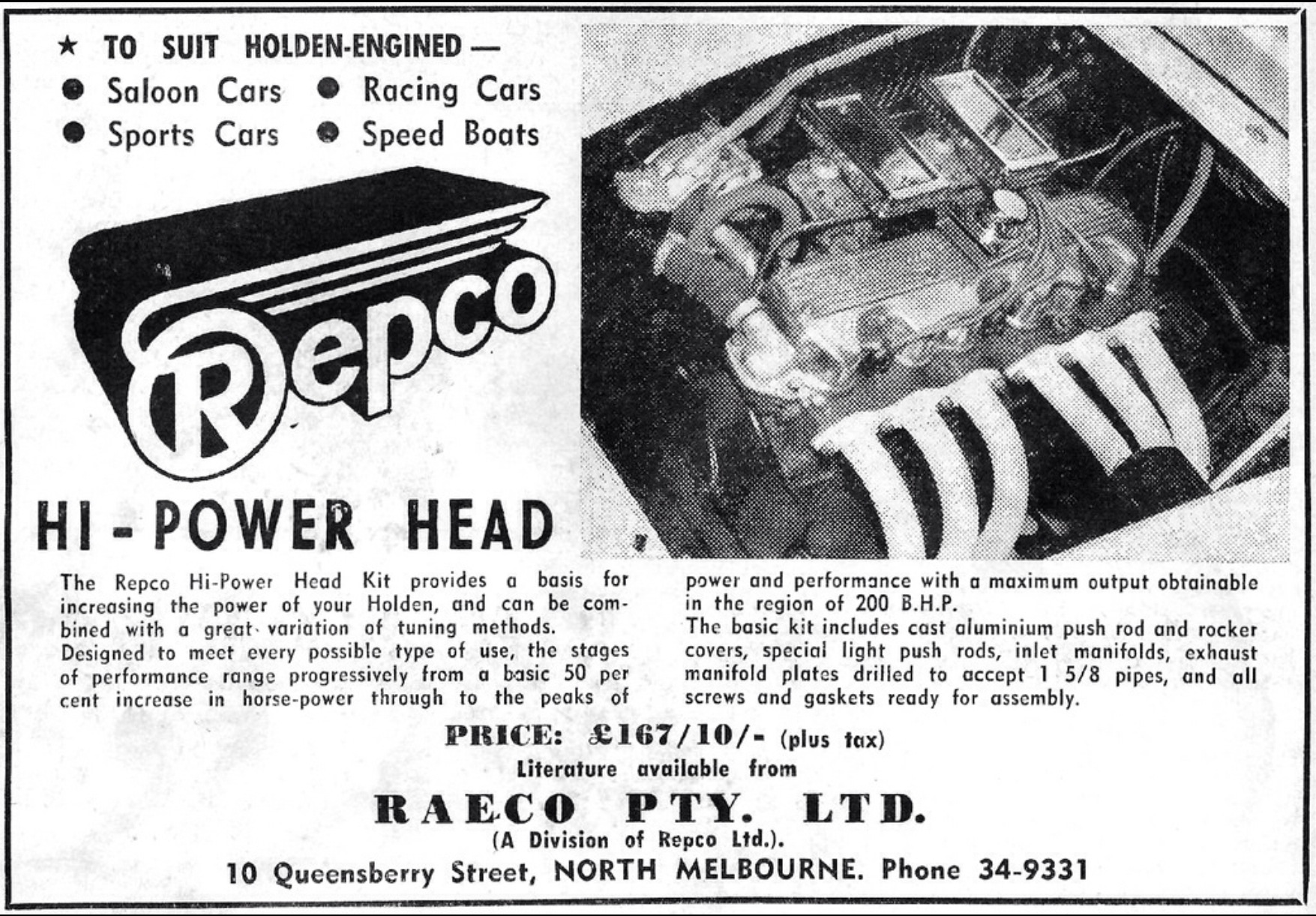
In fact by the end of the fifties the quickest of the Holdens were quite sophisticated racers incorporating Phil Irving designed Repco ‘Hi-Power’ cylinder heads, two or three carburettors with one or two cars fitted with Merv Waggott’s twin-cam heads to create an ‘ultimate spec’ Holden.

MG TC and sometimes Jaguar four speed boxes replaced the Holden ‘three on the tree’ column shift gearbox, four wheel discs replaced the standard drums, the cars were extensively lightened and all of the rest…


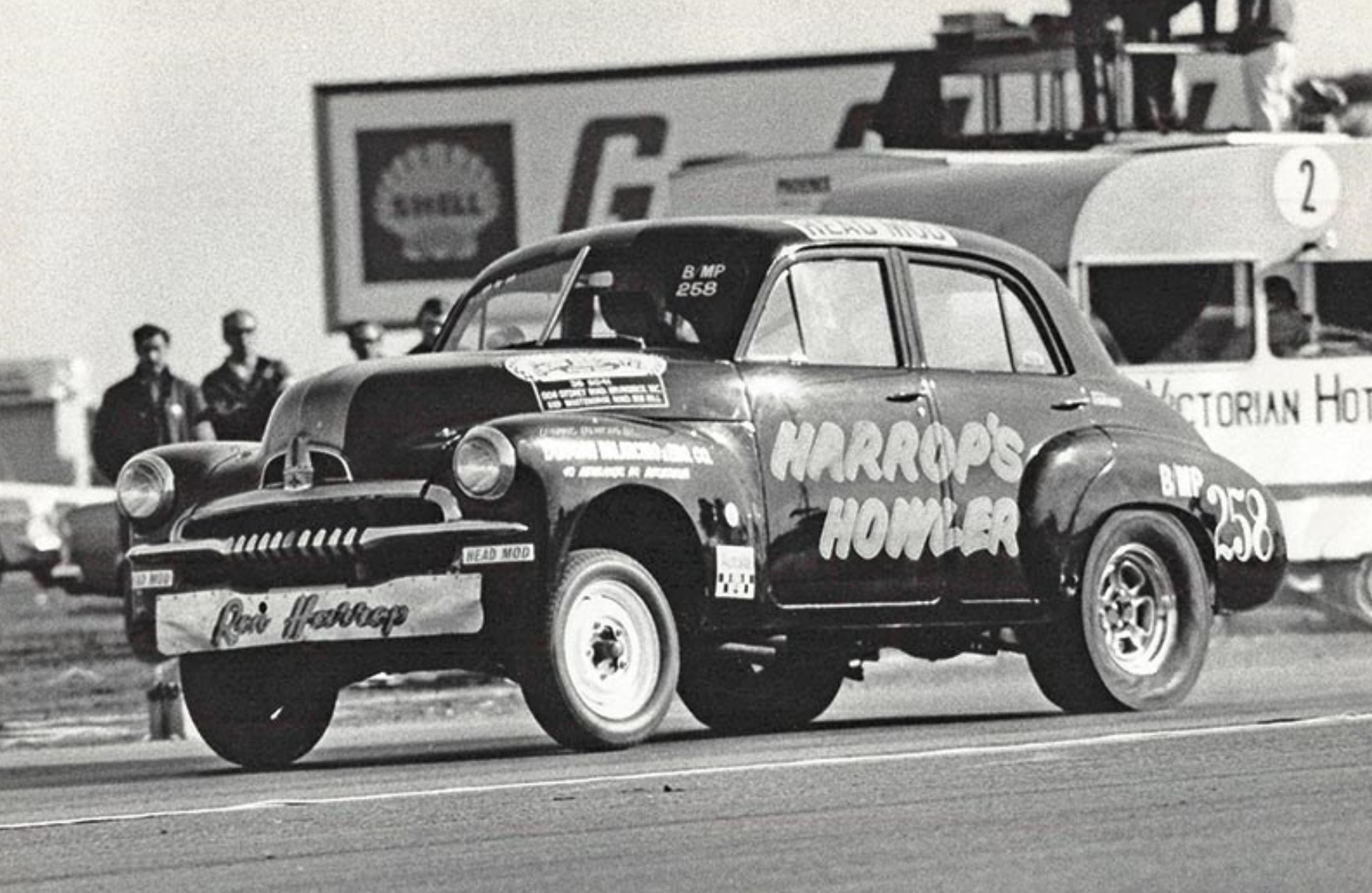
Ron Harrop’s ‘Howler’ at Calder in the early seventies- Holden FJ with highly developed Holden ‘Red motor’ successor to the ‘Grey’. Harrop became a touring car circuit ace and a Holden engineer par-excellence (unattributed)


Warren Weldon from Bo Seton, Holden FX by two: Catalina Park early sixties (B Wells)


Great names who raced ‘Humpy Holdens’ included Jack Myers, the ‘Holden King of the mid-fifties’, John French, Leo and Pete Geoghegan, Max Stahl, Spencer Martin, Des West, Norm Beechey, Brian Muir, Warren Weldon, Bo Seton, John Goss and many, many others.

Into the dawn of the sixties CAMS adoption of Appendix J put paid to the wild modifications which had started to proliferate- it became the category to which the Australian Touring Car Championship was run. ‘Series Production’ or standard road car racing provided the basis for further growth in tourers by spawning endurance classics such as the Phillip Island and later Bathurst 500, relative to racing cars which became progressively starved of sponsorship funds and less and less relevant to the ‘football, meat-pies and touring cars lovin’ Australian public.

Be in no doubt my friends, Holden Motor Bodies Ltd in 1919 begat General Motors Holdens Ltd which gave birth to the ’48-215′, the intrinsic qualities of the design created a worthy competition car in modified form, the ready availability of which gave rise to the accelerated (pun intended) growth of touring car racing in Australia.


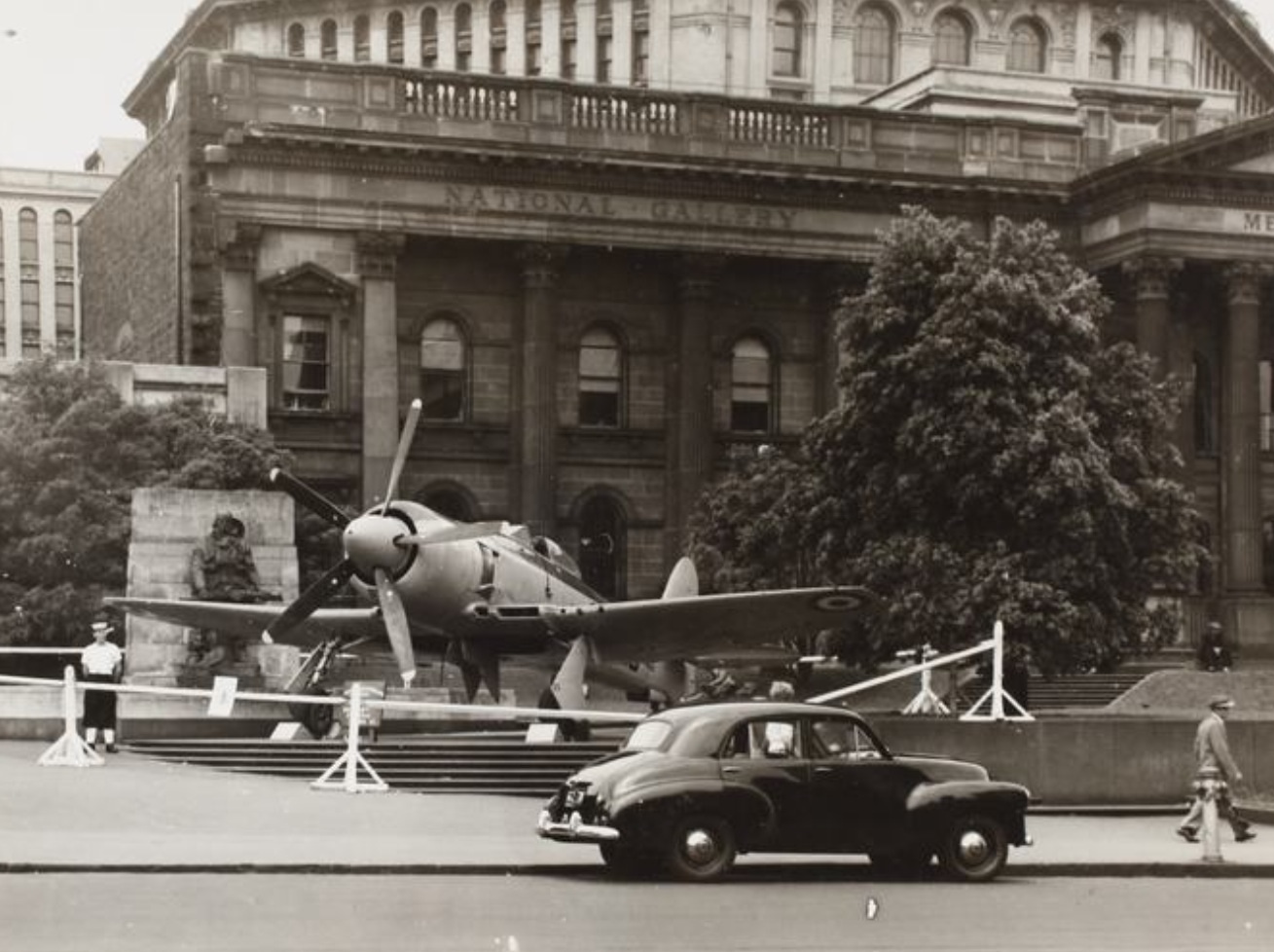
Melbourne Museum, Swanston Street. Royal Australian Navy Hawker Sea Fury (VW626) with Holden 48-215 in the foregrund during the ‘Jubilee of Flight’ exhibition in July 1953 (Museums Victoria)

After-thought: Sir Laurence Hartnett…

Laurie Hartnett strode the Australian manufacturing landscape like a colossus throughout his career but his pugnacious attitude to his American masters as to the design elements of an All Australian Holden led to his removal as Chief Executive of GMH Ltd in December 1946.

He was offered a role with the GM Corporation in the US but did not want to leave Australia- he never got to give birth to Australia’s own car- his own Hartnett was a notable achievement all the same. I’m not going to get lost in this tangent but click here to read in brief about a quite remarkable man.

http://adb.anu.edu.au/biography/hartnett-sir-laurence-john-12602

Etcetera…

Repco Hi-Power Head..

‘Repco Record’ Car and Repco ‘Hi-Power’ Head…

Holden ‘Grey’ as Racingcar and Sportscar Engine…

Whilst the focus of this article is the 48-215 and FJ as competition cars themselves the Holden Grey was adopted by many racers as replacement engines for their single-seater or sportscar originals or as the very basis of a special.

The Bristol to Holden conversions of Cooper T20 and T 23’s are examples of the former and the Lou Molina and Sil Massola ‘Molina Monza’ an example of the latter.

Click here; https://primotipo.com/2015/02/10/stirling-moss-cumberland-park-speedway-sydney-cooper-t20-wm-holden-1956/

and here; https://primotipo.com/2015/05/13/shifting-gear-design-innovation-and-the-australian-car-exhibition-national-gallery-of-victoria-by-stephen-dalton-mark-bisset/

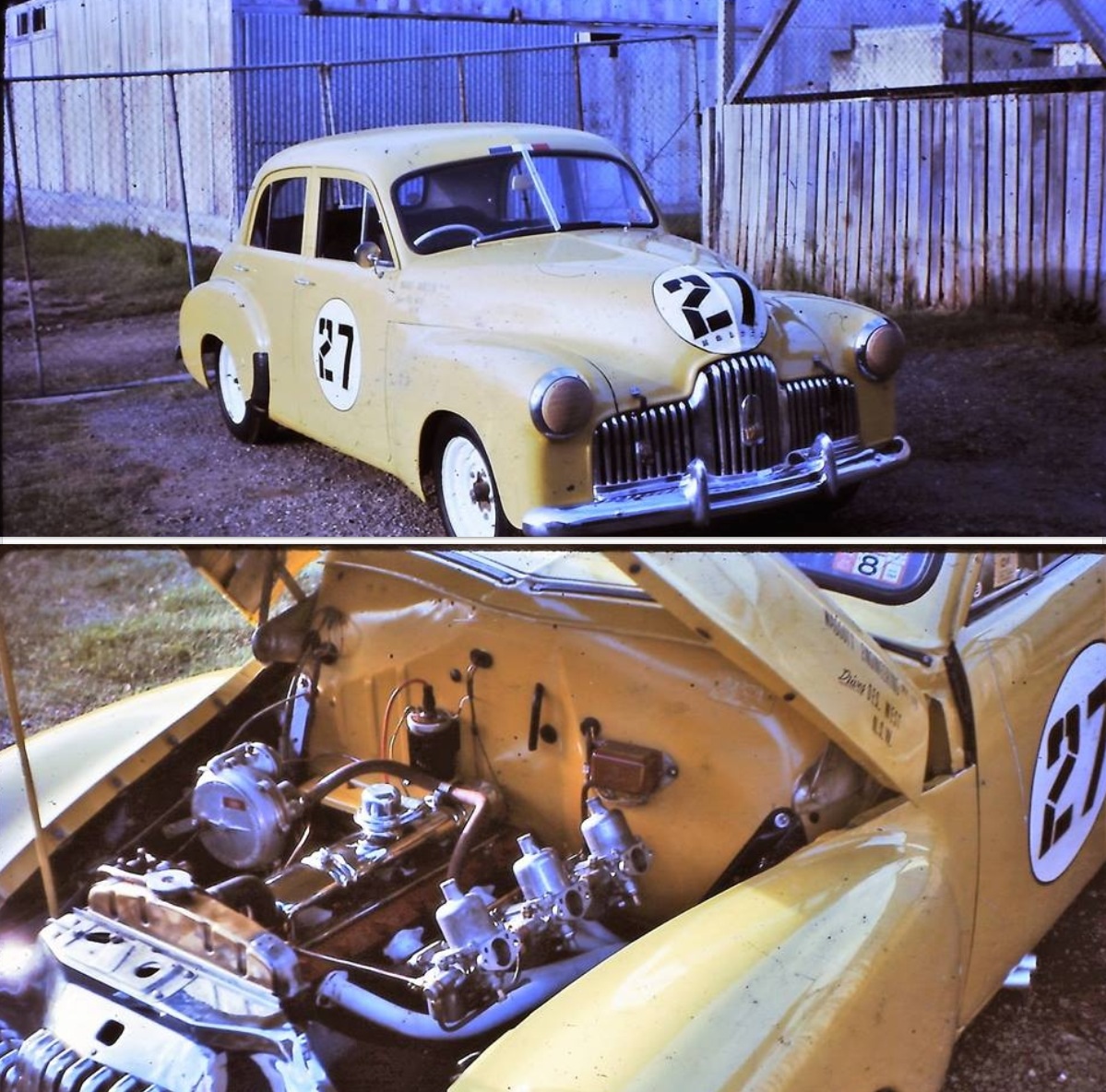
Des West’s 48-215 Racing Specifications..

http://www.thegreymotor.com/2014/11/des-west-fx-27-grey-survivor.html

Des West’s second 48-215 racer pictured at home, Wingham, NSW having set the fastest Holden record time at Lowood in 1964 (G Woodward)

Rally and Race..

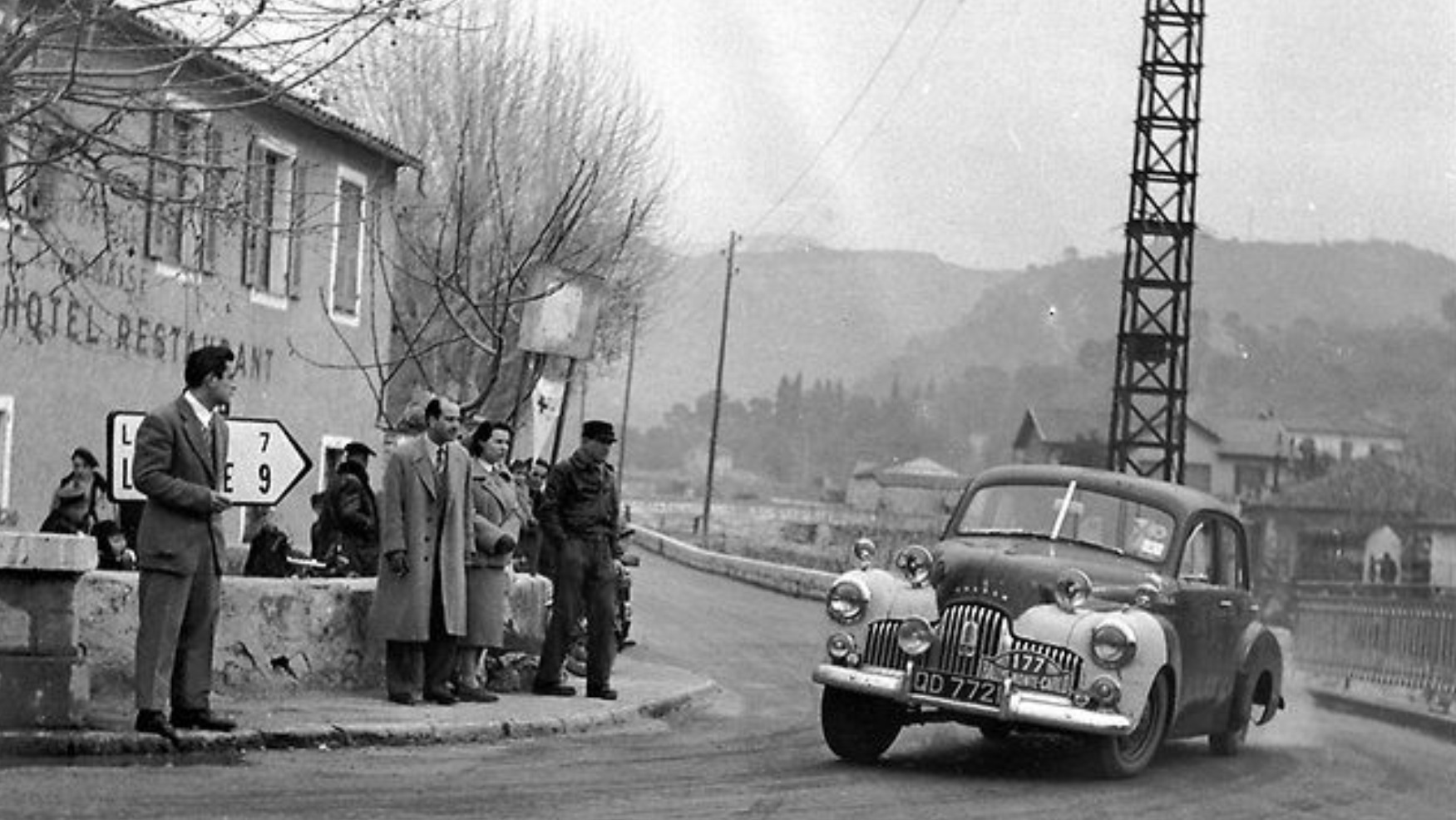
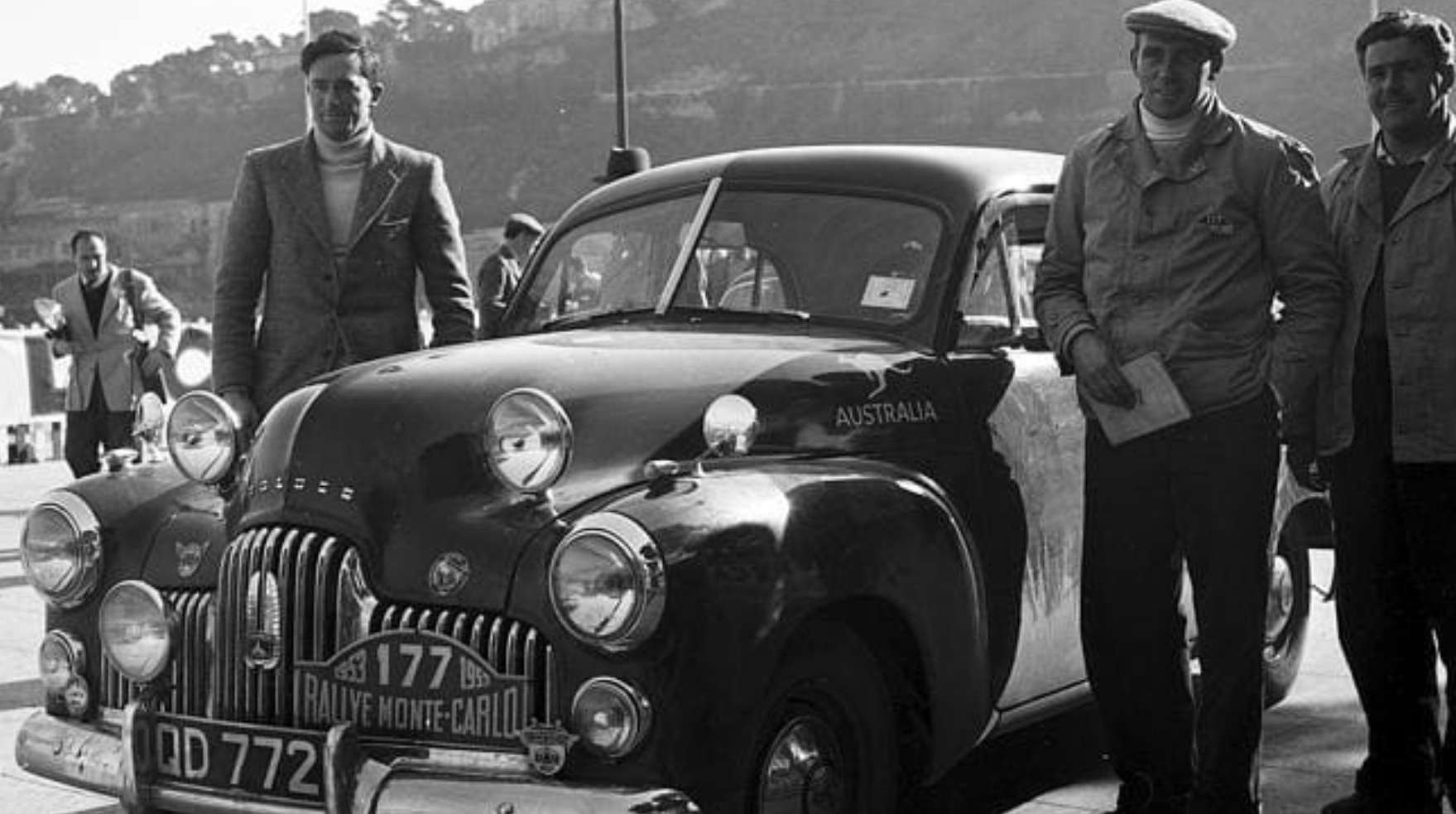
June 1953 Monte Carlo Rally, Davison, Gaze and Jones DNF. Gatsonides/Worledge won in a Ford Zephyr (unattributed)


1953 Monte Carlo Rally- Messrs Gaze, Davison and Jones- Aces All


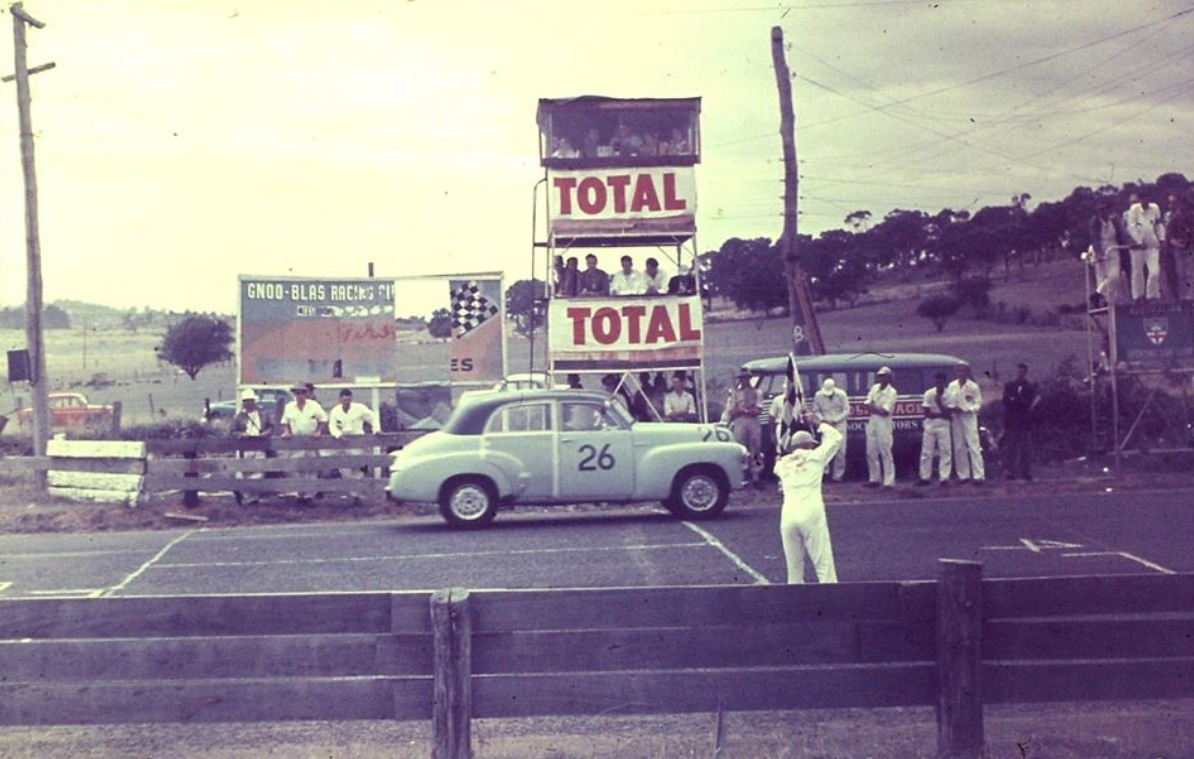
John French at Gnoo Blas, Orange circa 1960 (R Kaleda)


Chifley, Fishermans Bend, 29 November 1948 (SLSA)


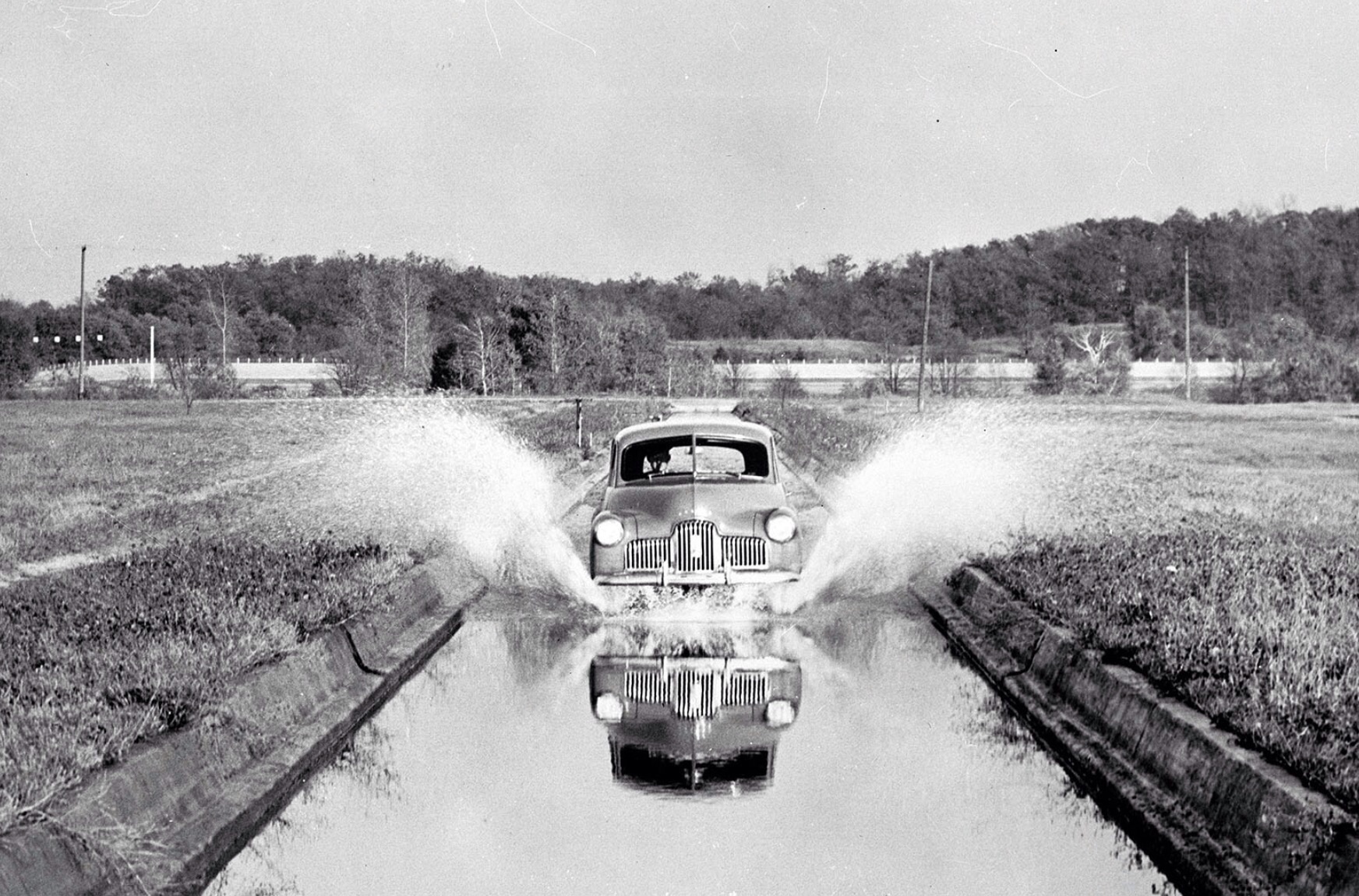
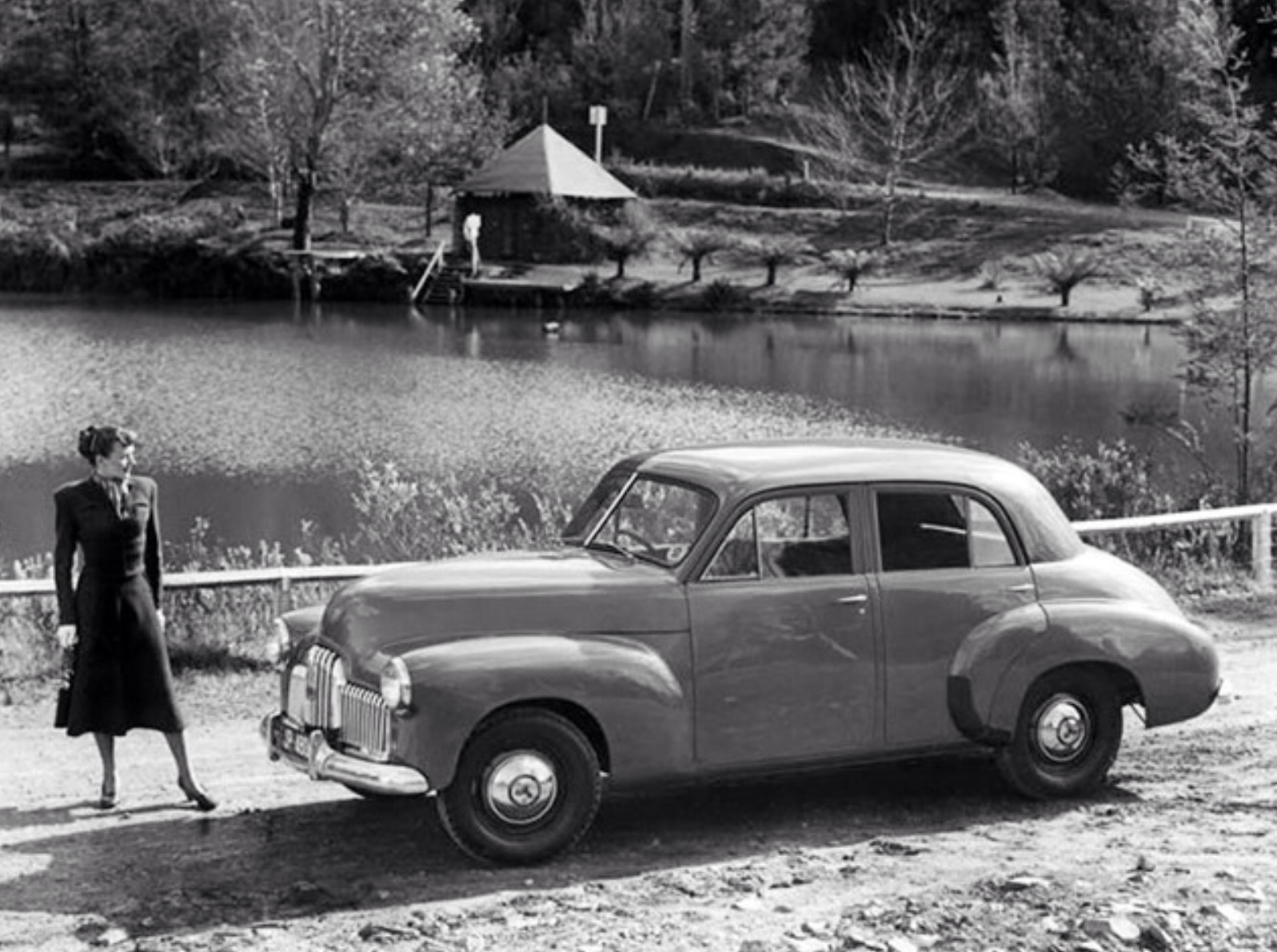
Hottie and the new 48-215. Whereizzit tho? Being lazy buggers I’m thinkin the Holden PR mob would not have travelled far to do the photo shoot so my vote is Ringwood Lake on Melbourne’s eastern outskirts?

Credits…

Sam Hood, Museums Victoria, State Library of South Australia, Ray Kaleda, Garry Woodward, General Motors Holden. australiaforeveryone.com.au, Museums Victoria, Bruce Wells

Tailpiece: ‘Told you it would be pretty painless’ Bob Menzies and Laurence Hartnett, GMH Pagewood 1940…

(S Hood)

Finito…

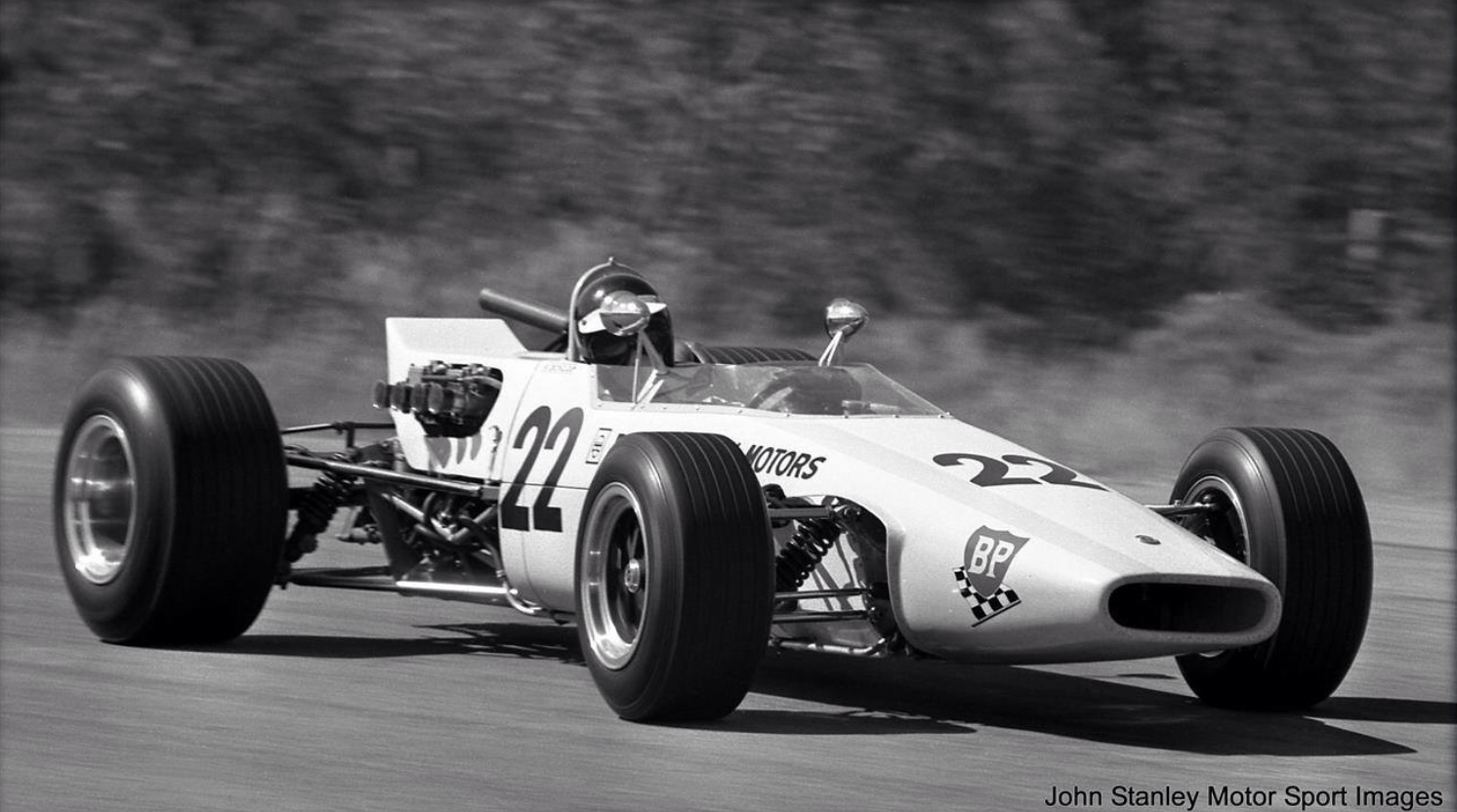
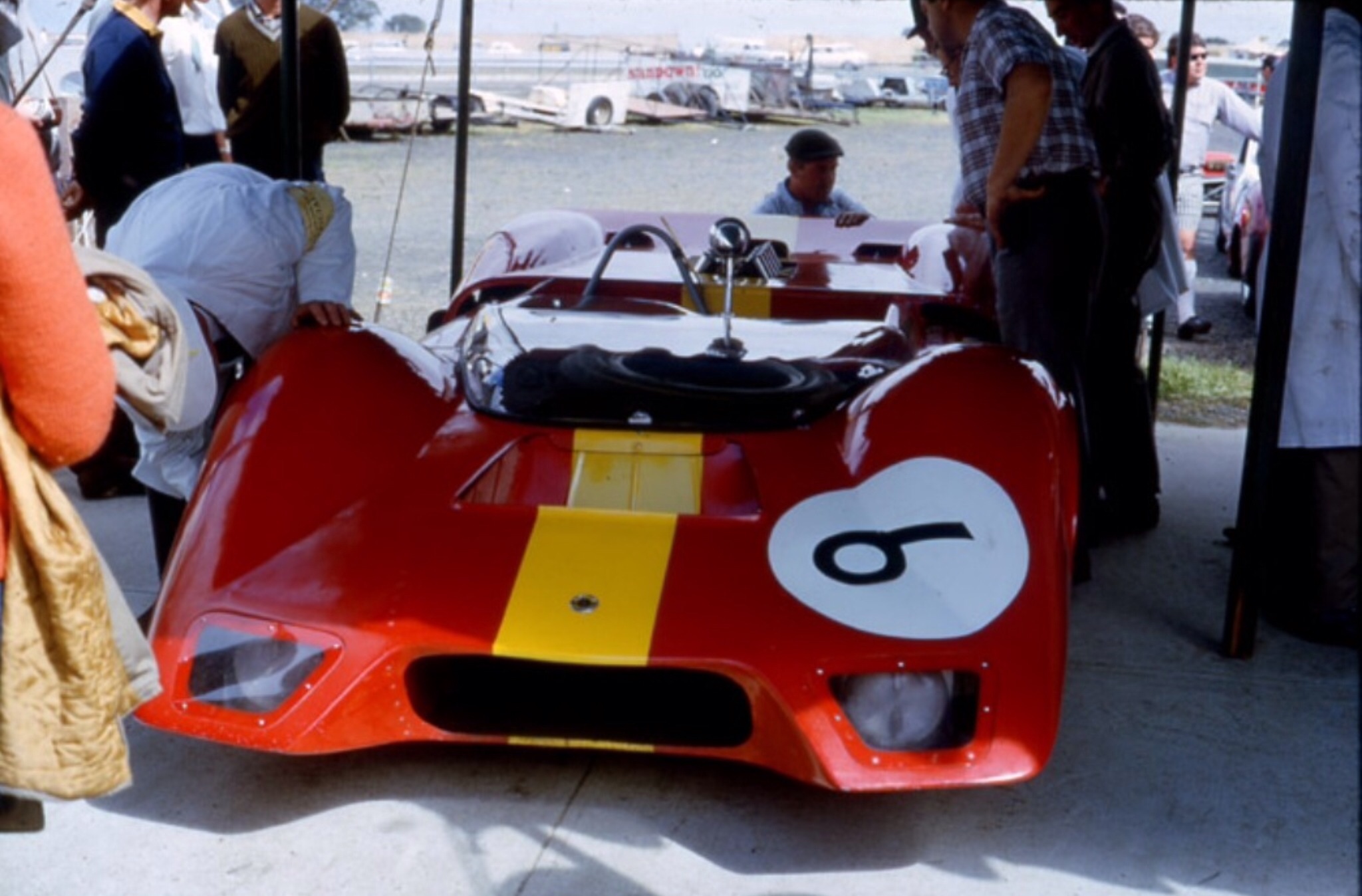
Lionel Ayers looking focussed and pensive before the off, MRC Mk2 Olds, Lakeside circa 1969…

Love these two John Stanley shots. Many Australian enthusiasts remember this car, both in its original 1968 Traco Oldsmobile engined guise as here and later when fitted with a 5 litre Repco 740 Series V8 a year later.

Whilst Queensland based, Lionel travelled a lot throughout The Great Brown Land finishing second in the four round 1971 Australian Sportscar Championship with this Bob Britton/Rennmax Racing Cars built, spaceframe chassis machine.

MRC is ‘Motor Racing Components’ see the sticker aft of the Webers- it was the pharmacist’s own company which prepared his cars. Why Mk2?- the Mk1 was the Rennmax built Lotus 23 clone which preceded this V8 engined beastie. Both cars still exist, the MRC Mk2 in Repco engined form is owned by Ian Ross and races in ‘historics’ regularly.

I wrote about Lionel in this article, click here to read it; https://primotipo.com/2017/12/21/sportscar-stalwarts/

Photo Credit…

John Stanley Motor Sport Images

Tailpiece: Ayers, MRC Mk2 Olds, Lakeside 1969…

Finito…
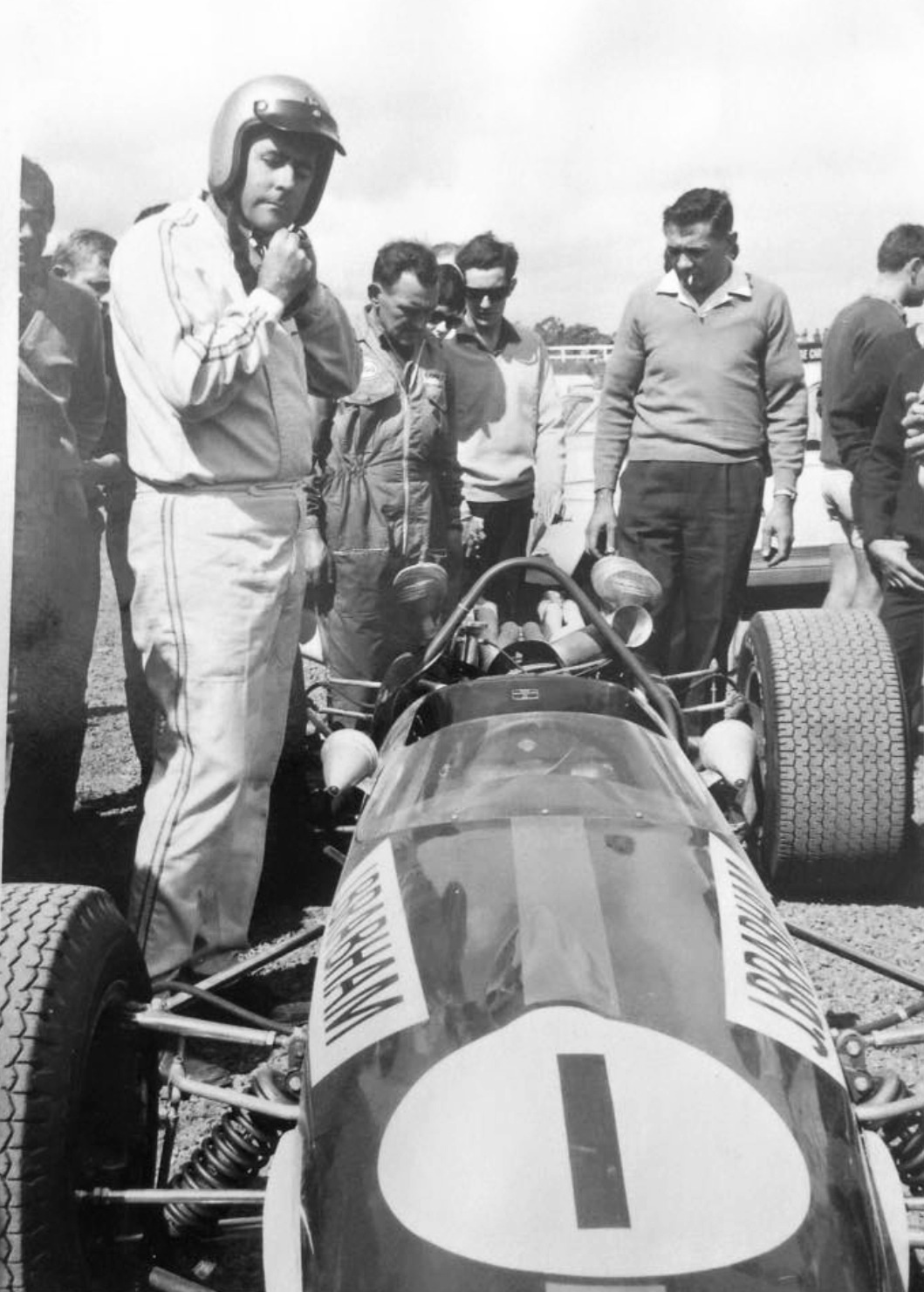
(P Maslen)

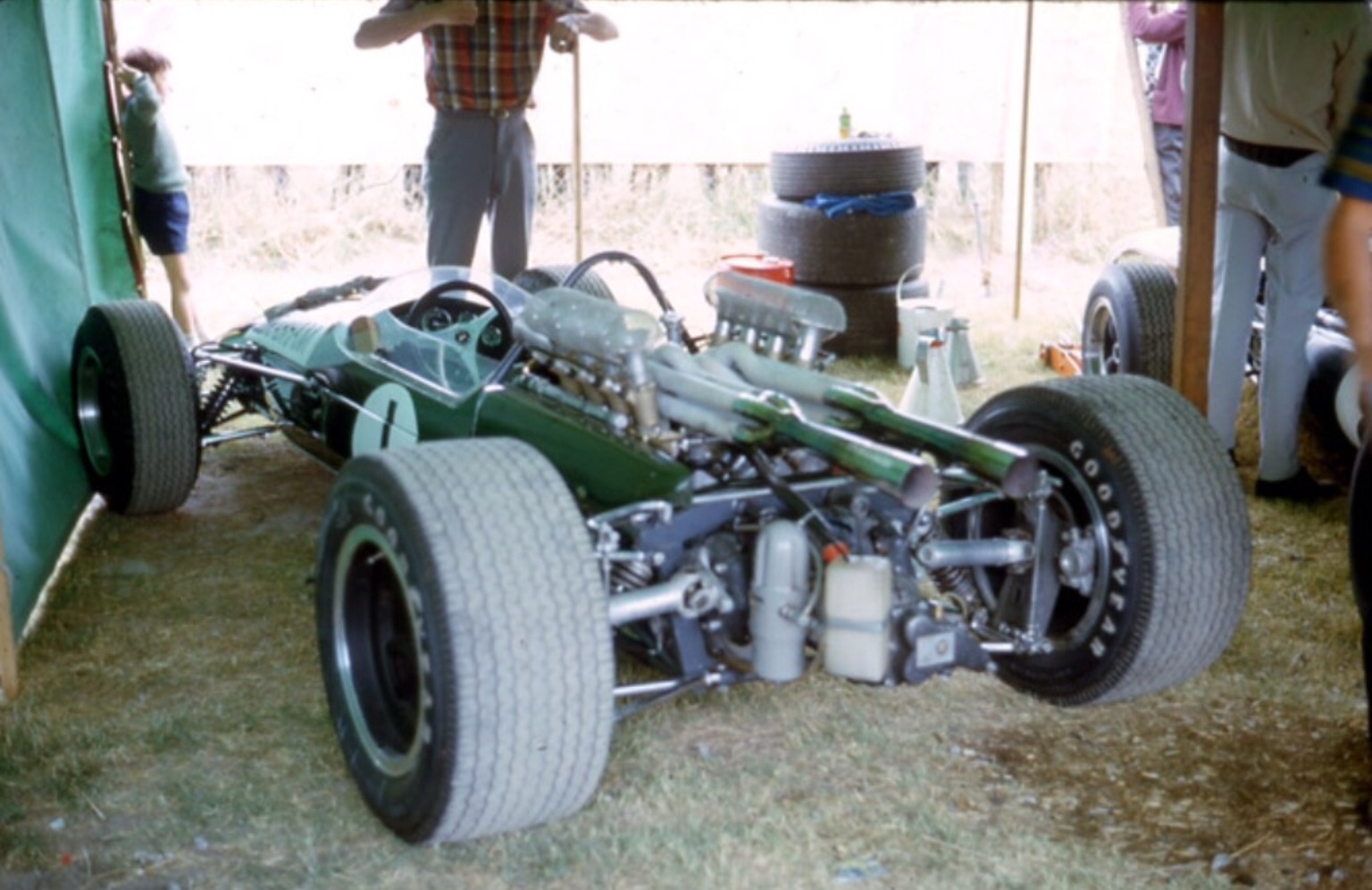
It’s probably not actually, Jack would be hitting it more vigorously and the marshals wouldn’t be so relaxed, quite aggressive little critters tigers…

What is he up to though?

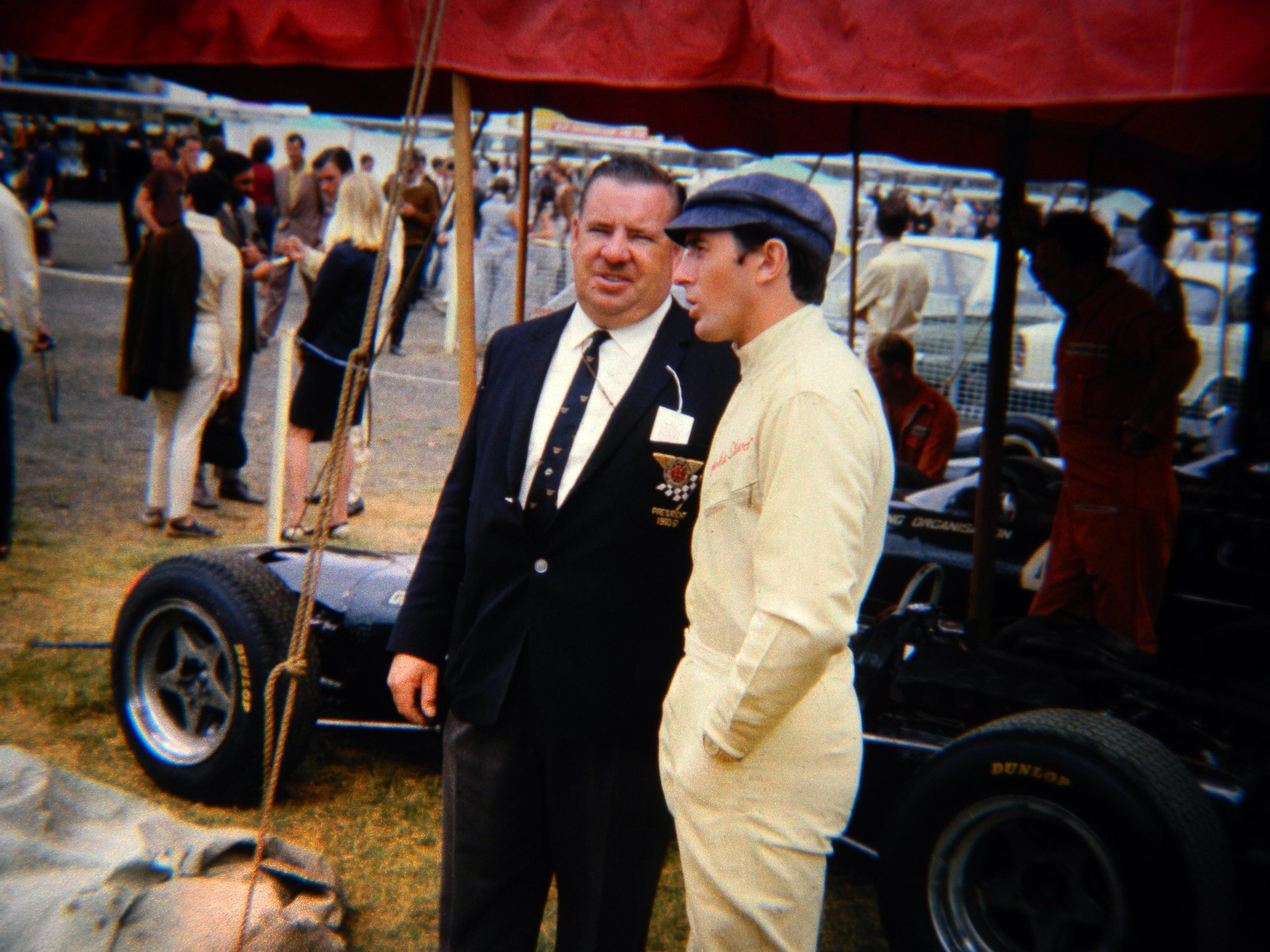
I’ve read the race reports, Jack did clip Homestead Corner during the race he finished- the 1967 Australian Grand Prix, so perhaps this is a perfunctory wheel alignment before being towed away.

Keen eyed Aussie enthusiasts will note David McKay’s presence behind Brabham, if he has the look of ‘an old chook at a christening’ about him it’s because he has done a deal to buy BT23A-1 Repco from Jack at the end of the series and is keen to see the champ has not shop-soiled the merchandise.

(P Maslen)

Jack was fourth in the race behind Stewart, Clark and Gardner in BRM P261, Lotus 33 Climax and Brabham BT16 Coventry Climax respectively.

It wasn’t a happy Tasman for the Repco boys- with a full-works effort of two cars a plethora of problems meant Jack and Denny took only one win between them- at Longford for Jack.

Still the GeePee season was in front of them, which would be an altogether different kettle of fish!

Life Magazine – The Big Wheels of Car Racing : Brabham and Hulme – 30 October 1967…

Credits…

Peter Maslen

Tailpiece: Doting David looks upon his new car, delivery only another week hence after Sandown…

(P Maslen)


Finito…
No less than the South Australian Premier, Sir Thomas Playford opens the Mallala circuit on 19 August 1961…

The marvellous venue is still with us thankfully, most Australian competitors over the years have raced there and experienced the wonderful Mallala hospitality. The track is an easy 55 km from Adelaide in flat, mainly wheat farming countryside between the Adelaide Hills and the sea.

(B Smith)

Bob Jane Jag Mk2 4.1 on pole from the Ern Abbott and Clem Smith Valiant R Types.

This race is the start of the 50 mile 1963 Australian Touring Car Championship held on 15 April and won by Jane from Abbott, Smith and Harry Firth in a factory Ford Cortina.

The South Australian motorsport community had to rustle up a circuit post-haste when CAMS ‘black-balled’ the windswept, scrubby Port Wakefield as unsuitable to hold the 1961 AGP- the South Aussies had been allocated the race that year in the one state at a time rotational system for our premier event which prevailed for decades.

(B Smith)

The photo is the start of the 9 October 1961 Grand Prix- the races ‘bolter’ David McKay is already away and out of shot.

He was pinged for the alleged jumped start which cost him the race won by Lex Davison #4 aboard one of Bib Stillwell’s Cooper T51’s. #9 is Bill Patterson, #19 Doug Whiteford and #6 Bib Stillwell all driving Cooper Climax T51 FPF’s ubiquitous as they were at the time!

Keith Rilstone is in the stunning #8 Zephyr Spl s/c and Murray Trenberth, Alta Holden alongside Keith and behind Patto. The #5 Cooper T51’between the two starters on the stand’ is John Youl, the front engined car a bit further back is, I think, Mel McEwin in the ex-Ted Gray Tornado 2 Chev. Across the road on the track’s outside is John Ampt in the Cooper T39 Jaguar and down the back is Alan Jack’s Cooper T39 Bobtail- still further in the distance are the unmistakable lines of an Elfin Streamliner sporty, entered by Peter Wilkinson.

Lets go back a step and have a look at the background of Mallala.

As with other Australian circuits Lowood and Caversham, the core infrastructure of the facility was created by the Australian Government in the form of a Royal Australian Air Force base, in this case established on land to the north of the town in 1939, and opened in 1941.

The facility operated as the ‘No 6 Service Flying Training School’ providing the next level of training- ‘medium proficiency’, to those who had gained the basics of flying at places like Parafield, to increased their experience before moving on doing more advanced training at a specialist school such as those at Port Pirie or Mount Gambier. (limiting to ourselves to South Australian bases)

Mallala was the biggest base in South Australia, at its peak it had 19 Bellman Hangars with 1900 personnel by 1942 including 285 trainees who learned to fly Ansons, Oxfords, Moth Minors and Tiger Moths. A total of 2257 trainees passed out of the school before the unit ceased to work as No 6 SFTS on 31 December 1945.

From around 1947 RAF Transport Command provided a weekly service from England to Mallala to supply the Woomera Rocket Range using Hastings aircraft- with Bristol Freighters operating a shuttle service between Mallala and Woomera.

In 1951 a Citizens Air Force squadron was formed which trained pilots on Tiger Moths, Wirraways and Mustangs. After 9 years of duty the CMF Air Squadrons were given non-flying roles and simultaneously Mallala was wound down. At about the same time the new RAAF Edinburgh opened at Salisbury in South Australia.

September 1955 Mallala Airshow, Vickers Valiant B1 flyover (Mallala Museum)

Post war migration to Australia was enormous as we took vast numbers of people from the UK and Europe, the culture shock of Australia was enhanced by ‘New Australians’ being located in camps where they were given the basics of English to equip them for work.

A portion of the existing Mallala base was converted for this purpose but ‘There were concerns about the lack of fencing around active runways and landing fields given small children were housed at the camp- the threat of bushfire was also alarming to residents…’. Accordingly the poor souls were relocated.

Mallala was used as an RAAF facility until 1960, it was put up for public auction in 1961 and acquired by a group of racing enthusiasts who recognised the potential of the facility as the new permanent home of motor racing in SA.

The original tracks lap distance of 3.38 km was reduced to 2.601 km in late 1964 when the Bosch Curve was moved closer to the Dunlop Curve Grandstand thus removing the north-eastern leg of the circuit.

The track hosted rounds of the Gold Star from 1961-1971, the Australian Tourist Trophy for sportscars in 1962 and 1968 with the single race Australian Touring Car Championship held there in 1963 and annual rounds from 1969 when the ATCC became a multi-round title.

Keith Williams moved the Mallala tectonic plates when the entrepreneur and Surfers Paradise International Raceway owner built Adelaide International Raceway at Virginia- and sought to maximise its market success by acquiring Mallala and eliminating its use as a racetrack by placing a covenant on the title limiting such future activity. A bumma.

Chrysler Australia, not too far away (70 km) in Tonsley Park and Elfin Sportscars continued to test there with Mallala coming out of the darkness when local businessman/racer Clem Smith bought the track in 1977- the covenant was deemed unenforceable with ‘Mallala Motorsport Park’ reopening in 1982.

In more recent times, May 2017, after Clem Smith’s death, the Peregrine Corporation, owners of Tailem Bend’s new ‘The Bend’ motorsport complex own the facility. Many of the photos in this piece are from Clem’s son Brentons collection circulated on social media in recent months.

In the circuits early days the airfield infrastructure remained and created a wonderful backdrop for photographs such as the one below.

It is a Victorian duel between Norm Beechey and Jim McKeown- Holden 48-215 chasing Jim in the Jewitt Holden around the aptly named Hangar Corner (turn 1). Cars in the background are perhaps Brian Sampson or the Nancarrow brothers Austin Lancer or Wolseley 1500.

(DL Brock)

The hangar was demolished in the late sixties (date would be great folks) with Brenton advising ‘the main part of the hangar was removed leaving only the northern end which was used as a workshop from around 1964. Dad used it to swap an engine between races and then demolished it when he bought the track before it’s re-opening’.

A large concrete skid pad exists where the hangar once was.

(Hawthorn)

Mallala in 1963 would have been about as far as the designers of the oh-so-late to F1 Aston Martin DBR4/250 ever expected their cars to be from the GP tracks of Europe!

Two of these cars came to Australia and were raced by Lex Davison (DBR4/250-4) and Bib Stillwell (DBR4/250-3). This chassis was raced by Lex during during 1960 and 1961 and came oh-so-close, a bees-dick in fact, of winning the 1960 AGP at Lowood in an amazing race long battle with Alec Mildren’s Cooper T51 Maserati.

Pat Hawthorn raced the car from around March 1963, here the car is on the way to fourth place in the ‘Advertiser Trophy’, the 1963 Gold Star round behind John Youl, Bib Stillwell and Wally Mitchell aboard Cooper T55 Climax, Brabham BT4 Climax and MRD Ford respectively.

(B Smith)

Neptune Racing Team in Mallala attendance.

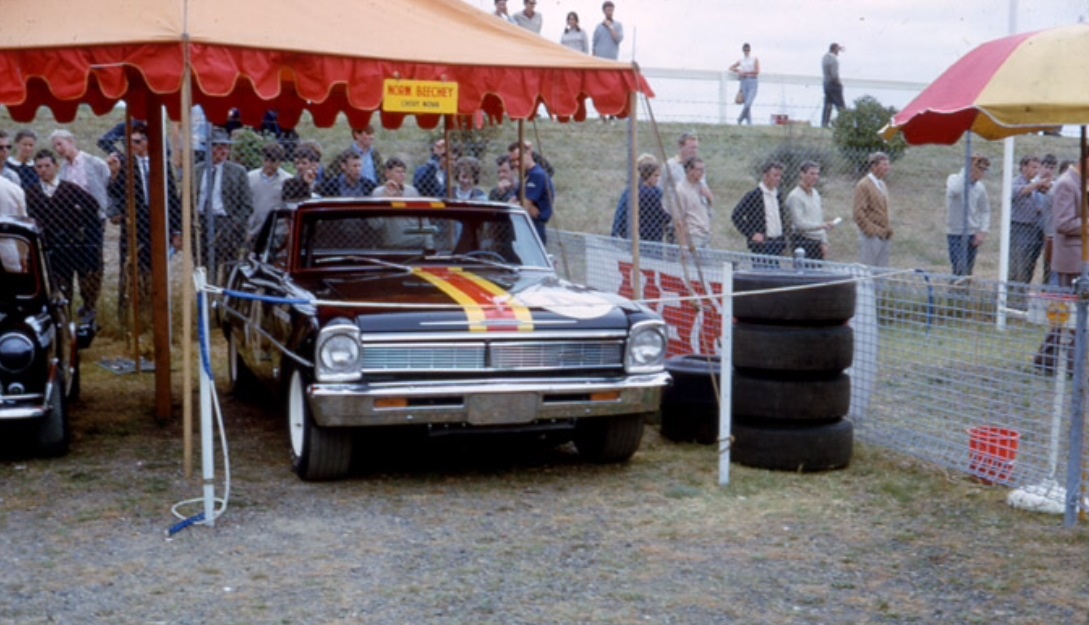
Peter Manton, Morris Cooper S, Jim McKeown, Lotus Cortina and Norm Beechey in his S4 EH Holden circa 1964. The team and drivers individually were huge crowd-pleaders at the time given the professionalism and appearance of the equipe not to forget the speed of the cars.

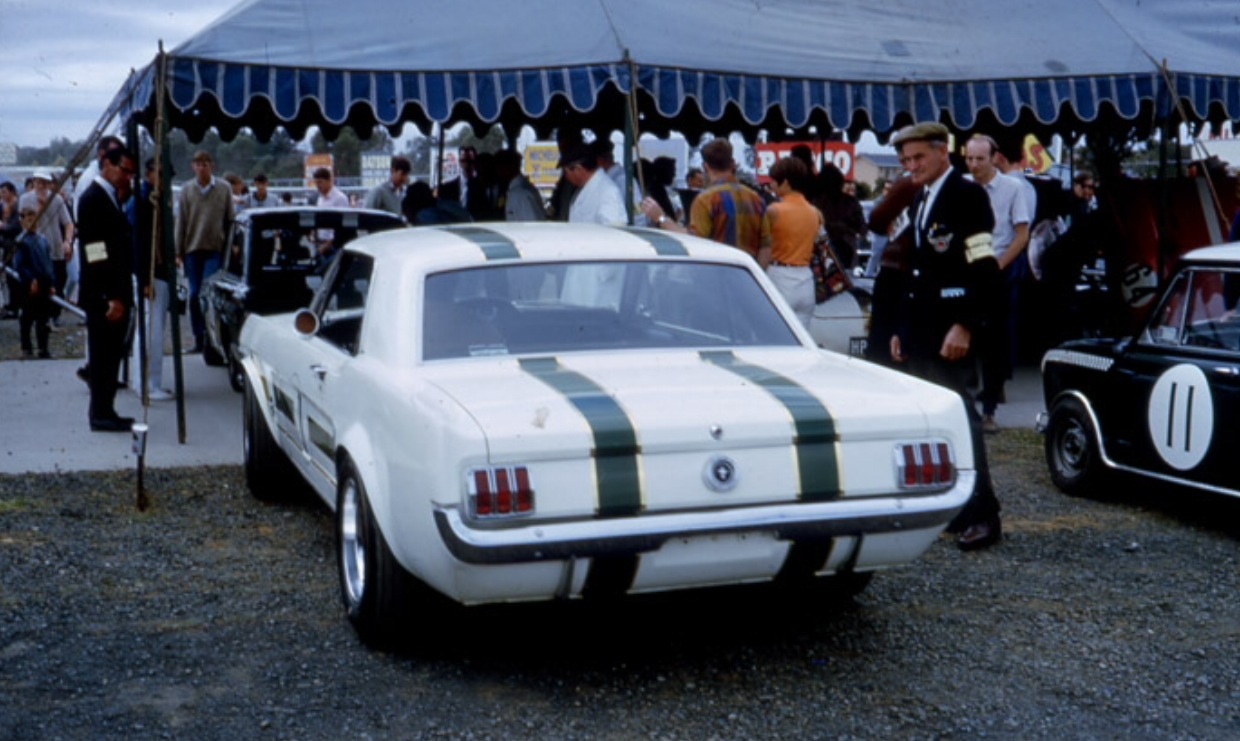
The SA Touring Car Championship was held over the. Easter break, on 19 April 1965 and won by Norm Beechey’s Mustang here taking an inside line (above) under Jim McKeown, Lotus Cortina with Peter Manton Cooper S and Clem Smith, Valiant in hot pursuit.

Norm Beechey from Clem Smith circa 1965 (B Smith)

Clem Smith is of course the very same man who acquired Mallala in 1977 referred to in the text.

(R Lambert)

Formula Libre race during the 1964 Gold Star, October weekend.

The front row comprises a couple of Melburnians- Lex Davison at left in a Brabham BT4 Coventry Climax and Bib Stillwell’s Cooper Monaco at right. Behind Bib is Garrie Cooper’s red Elfin Mono Ford t/c 1.5.

By this stage Bib’s Cooper was powered by the ex-Scarab/Daigh Traco Buick V8- my money is on Bib for the win- who won though folks?

(B Smith)

Mallala was Elfin country of course! The cars were built in Edwardstown and first tested by Garrie Cooper at Mallala so they tended to be quick in their backyard.

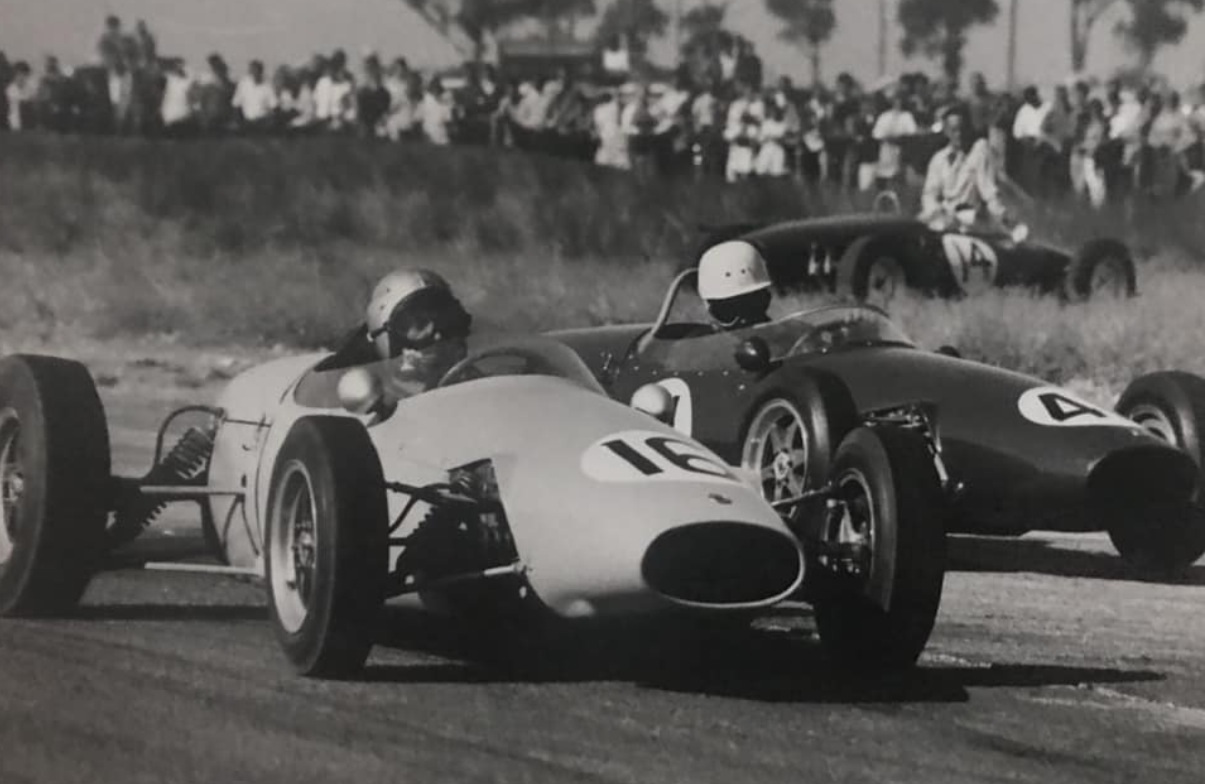
Mel McEwin #16 Elfin Ford 1500 passes Andy Brown #41 Elfin FJ Ford in the photo above during the GT Harrison Trophy, a support race over the 1963 ATCC meeting weekend. The abandoned #14 car is the BBM2 Mercedes of D Dansie.

The Trophy race was won by Keith Rilstone’s amazing Eldred Norman built fifties front-engined Zephyr Spl s/c from Wally Mitchell MRD Ford, McEwin and Garrie Cooper’s Elfin Ford 1500.

(B Smith)

Bob Jane’s E Type leads the field from the grid and provides a great panorama of the track into Hangar Corner. Flat country tends to be the norm for airfield circuits for fairly obvious reasons…

(J Lemm)

The original Officers Mess (in the background above) was re-purposed as the Clubhouse and of course the corner closeby assumed that name. As Brenton Smith observed the clubhouse existed until ‘the white ants ate it’!

Malcolm Ramsay goes through Clubhouse in his sweet Elfin 600C Repco 2.5 V8 during the October 1970 Gold Star round on the way to fourth place- Leo Geoghegan won the day and the Gold Star that year in a Lotus 59B Waggott 2 litre TC4V.

Mustangs…

Commonwealth CA-18 Mustang 23 (P51D) manufactured by the Commonwealth Aircraft Factory in Fishermans Bend, Melbourne. Aircraft are of the No 24 ‘City of Adelaide’ Squadron at Mallala in 1956.

(D Simpson)

Pete Geoghegan during the 1969 Australian Touring Car Championship meeting. He won the race on 16 June- and the championship held over five rounds.

Credits…

Brenton Smith, DL Brock, John Neddy Needs, John Lemm, Hawthorn Family, Frank Finney, Dick Simpson, oldracingcars.com, Rob Bartholomaeus for caption assistance

Tailpiece: Avro 694 Lincoln, Mallala Air Show 1956…

Government Aircraft Factory built Avro 694 Lincoln Mk30A, one of 73 built, A73-34, this plane was delivered in 1948 (F Finney)

Finito…
Hector Jenkins, Fronty Ford, Penrith Speedway, New South Wales, practice in December 1927/January 1928…

Ronald Taylor took these wonderful, evocative photographs of a much more relaxed time and place, getting on for a century ago. Above is quite possibly Peter White testing the Fronty before winning the Unlimited Scratch Race on 2 January 1928.

The car above is the Alert Special, whilst it had an Alvis radiator it was a modified Ford. It appears more of a road-racer in specification than a dirt-track machine but the racers of the day often used the same car to do road trials, dirt events and race on the concrete saucer at Maroubra. The times of specialisation are still a way off in Australia.

Jenkins, Fronty Ford

Penrith is 60 Km west of Sydney, a long way then but now a soda, depending upon traffic traversing the Western Motorway to the Blue Mountains and beyond, I wrote an article about the place a while back which provides plenty of background; https://primotipo.com/2017/06/08/penriths-world-championship-race-1930/

David Manson has researched the photographs in this piece and wrote that ‘Bridget Wynne (photo further below in the article) claimed to be an experienced racing driver in England but she never drove in or raced in this country as far as can be established’ despite that he suspects it may be her at the wheel. I am intrigued to learn more about this lady.

Alert Special and Flint driven by T Poole- or is it being tested before the meeting by Peter White who was ‘timed to cover laps at a speed of about 70 mph’ the SMH reported on 22 December 1927

It’s all happening above- capped mechanics fuelling the cars and plenty of envious onlookers, amidst the Friday practice perhaps?

T Poole contested the Unlimited Car Scratch Race run over 3 miles on 2 January 1928 in the Flint and won by Peter White’s Fronty Ford, his average speed 67 mph.

The Thomas Special, Fronty Ford and the Flint ran at Penrith Speedway at a meeting which was split between 26 December 1927 and 2 January 1928- New Years Day was on a Sunday which partially explains the odd dates.

Thomas, Thomas Ford Special

Hector Jenkins was the New South Wales agent for Frontenac hotting-up parts for Fords, operating out of the Saunders Chambers premises at 247 Elizabeth Street, Sydney, he and his family used to camp at the Penrith  Speedway for race meetings. There are hints in the photos that not much racing was going on, so maybe they were taken on practice days before the Christmas/New Year meeting.

And we have ‘lift off’ below- a practice race start for Ms Wynne.

Miss Wynne aboard the Alert Special

Etcetera…

(mfca.com)

Here is the Hector Jenkins team/family campsite, come workshop at Penrith with banner proclaiming the Australian Track Record and Dirt Track Championship of NSW held by Fronty Fords. Hector is second from the right.

Peter White’s personal Fronty Ford had the Maroubra record at 101.3 mph whilst Hector’s DO Fronty had the dirt track record at Penrith. The cars above are the R, DO and SR Fronty.

Credits…

Ronald Vernon Taylor- all but one photo, David Manson, mfca.com, various newspaper articles via Trove

Tailpiece: Yep! He is the guy we have to beat: The Jenkins Fronty Ford crew watching the action…


Finito…
(D McPhedran)

Jack Brabham’s Cooper T53 Climax during the Warwick Farm 100 on 29 January 1961…

Jack didn’t figure in the race with fuel dramas, it was won by Stirling Moss’ Rob Walker Lotus 18 Climax from Innes Ireland’s similar works machine and Bib Stillwell’s Cooper T51 Climax.

Moss, Lotus 18 Climax with body panels removed to better ventilate the cockpit (Getty)

Moss, Gurney and Hill are on the front row, the latter two fellas in BRM P48’s. Ireland and Brabham, to the right, are on row two. Row three comprises Ron Flockhart, Austin Miller and Bib Stillwell in T51’s, with row four again T51’s in the hands of Bill Patterson and Alec Mildren.

Moss and Warwick Farm supremo Geoff Sykes before the off, car to the right is Austin Miller’s Cooper T51 Climax.

Crazy men in long strides, long sleeved shirts and ties on a scorcher of a Sydney day.

(R Donaldson-SLNSW)
(WFFB)

Moss, Gurney and Hill on the front row, Lotus 18 and two BRM P48s, then Innes Ireland, works Lotus 18 Climax and Jack Brabham, Cooper T53 Climax and then Austin Miller and David McKay in Cooper T51s. #9 in the shot below is Bill Patterson in another T51.

Fourth to and fifth places were bagged by Miller and Flockhart with the rest of the starters, nine cars, failing to finish the 45 laps in a race of attrition run in scorching, humid, Sydney heat.

Etcetera…

(R Donaldson-SLNSW)

Note the left-hand shift of the 5-speed Colotti transaxle, it wasn’t the first time Moss shed body panels in the heat, but perhaps it was the last.

(R Donaldson-SLNSW)

Graham Hill qualified his BRM P48 third behind Moss and his teammate, Dan Gurney but was out after 10 laps with a fuel tank problem.

The BRM’s best result of that Australasian Tour was Gurney’s win – the only international win for the P48 – in the Victorian Trophy on the Ballarat airfield circuit a fortnight later. Moss and Brabham were absent by then mind you…

Tailpiece…

The worlds best credentialed driver coach! Stirling Moss shows Innes Ireland the fast way around Warwick Farm, here crossing the causeway. The car is Tom Sulman’s Aston Martin DB3S, a machine rather familiar Moss as an ex-works Aston pilot.

Credits…

Don McPhedran, Getty Images, oldracingcars.com, Australian Motor Heritage Foundation via Brian Caldersmith, Bob Donaldson via the State Library of New South Wales

Finito…
I love these two drawings of two of the fifties Charlie Dean/Repco Research designed and built Maybachs- 1 and 2 by Brian Caldersmith…

I’ve written about both cars before in two articles, one mainly about Stan Jones who raced both machines, the other focussed on the 1954 Australian Grand Prix at Southport Queensland where Maybach 2 (below) met a violent death under Stanley when its chassis broke, or more specifically several rather critical welds failed.

I’m not going to pop up any photos which will draw the eye away from Brian’s artistry.

Stan Jones: Australian and New Zealand Grand Prix and Gold Star Winner…

1954 Australian Grand Prix, Southport, Qld…

Credit…

Brian Caldersmith

Carroll Smith, Frank and Joan Matich (NAA)

Frank and Joan Matich confer during the Warwick Farm Tasman meeting, February 11 to 13 1972…

The ’72 Tasman wasn’t the series the Matich’s expected after the debut win of the Matich A50 Repco at the Farm in November 1971- the brand new machine built closeby won the Australian Grand Prix only days after it’s completion, and looked the goods for the Summer Internationals.

Whilst Matich and his team worked their magic in Brookvale, Kiwi Graham McRae was casting a spell or two in Poole whilst Frank Gardner and Bob Marston were indulging in some F5000 sorcery of their own over at Huntingdon- the cars alluded to are the Leda LT27 aka McRae GM1 and Lola T300.

Mind you, things came good for Frank and Joan at home- Warwick Farm is not too far from the Matich HQ in Brookvale (they moved to Military Road, Cremorne on Sydney’s leafy North Shore circa August 1972) FM was quickest in unofficial practice, qualified on pole on Saturday afternoon and won the race, leading throughout from start to flagfall.

This article is superfluous really, I’ve done Matich and his career pretty well to death, several long pieces inclusive of an 11,000 word monster on his F5000 cars- at the end of this article are links to that piece and a couple of others of potential interest.

But then I came upon this swag of photographs of the Warwick Farm weekend which were too good to ignore. I’ve no idea of the publication for which they were intended or indeed if they ever were published. The shots are from the National Archives of Australia, the photographer uncredited. The series of photos are headed ‘Australia’s Mr and Mrs Motor Sport Sets a Fast Pace’. I’ve other photos of this weekend but I decided to maintain the original intent of whoever commissioned them, keep them together and focus on ‘Team Matich’.

Frank Matich, Matich A50 Repco, Pit Straight, Warwick Farm February 1972 (NAA)

Is ‘Mr and Mrs Motorsport’ apt or a bit of PR Bullshit?…

Its a fair observation I suspect.

Frank was already racing his first competition car, an MG TC when he met Joan, ‘her parents thought the sound of the MG arriving was a plane as they lived at Mascot’ Frank recalled, in fact Joan could be said to be FM’s first sponsor as she lent him 140 pounds to rebuild the TC’s engine not long after they first started going out!

Joan went to many of the test sessions and race meetings down the decades, helped schmooze the sponsors and assisted to run the business which was not insubstantial by 1972. There was the race team chasing national titles, the production of racing cars (sportscars -several SR3 and SR4’s and six F5000’s) Firestone, and then later Goodyear race tyre and Bell Helmets importation and distribution and properties to manage, both domestic and business. Lets not forget the demands of four kids too. (Kris born circa 1958, Kim 1960, Lea 1962 and Katrina 1963)

Frank and Joan were not Mr and Mrs Motorsport in the way that Fred and Christine Gibson and Garth and Leanne Tander were in the sense that both were drivers but I think the ‘Mr and Mrs Motorsport’ label is a fair one.

Joan and Kris Matich- Kris went on to race Van Diemens in Formula Ford in the eighties

1972 Tasman Series Top Guns…

McRae, the reigning champion, Matich, Gardner, Mike Hailwood (Surtees TS8 Chev) and David Hobbs (McLaren M22) were perhaps the dudes most likely to fight for the Tasman Cup but Kevin Bartlett, hamstrung only by the age of his McLaren M10B Chev and 1970 champ Graeme Lawrence, like FG Lola T300 mounted would also be ‘thereabouts’. Then came Teddy Pilette, McLaren M10B Chev, Garrie Cooper, John McCormack and Max Stewart in Elfin MR5 Repco’s- all relative newcomers to F5000, and the rest.

In New Zealand it was all McRae- he started on pole in the first three rounds, won at Levin and Wigram, whilst Gardner took the NZ GP at Pukekohe a race in which Graeme Lawrence and Bryan Faloon had an awful accident killing Bryan and outing Graeme for months.

Derek Kneller pointing, how was it Frank? Ken Symes of Repco in the blue suit FM’s boys in the natty, very American STP togs. Note open top section of ‘bathtub’ aluminium monocoque chassis A50 ‘001/002’ (NAA)

FG boofed his Lola at Levin when the engine suddenly cut out on a high speed corner and he clobbered the fence. Gardner, a very ‘safe driver’ must have had more prangs in the 7 months to January 1972 than at any other time in his career- he wrote off the prototype T300P (akaT242P) at Snetterton in a collision with Brian Redman’s McLaren M18 Chev, when FG on pole and Brian off grid 2 had a territorial dispute, on 30 August 1971.

The quite significant in the history of F5000 cars, seminal, defining chassis T242P/T300P was rooted, destroyed.

Lola quickly built up a replacement car for Frank, ‘HU1’, the first production T300 which Gardner raced to a debut win at Hockenheim in front of Emerson Fittipaldi’s Lotus 56B Pratt & Whitney on 12 September. He took the car to another victory at Oulton and with a second place at the season ending Brands late September round nabbed the 1971 European F5000 Championship. He had been a winner in a Lola T192 earlier in the season prior to the T242/300 race debut, it wasn’t all down to the new car by any stretch.

‘HU1’ was then shipped to Australia in time for the AGP at the Farm, FG crashed it in practice, again the car was re-tubbed before shipping to NZ- only to be boofed again in an accident not of his making at Levin.

He would reappear at Surfers with the repaired car but the chances of the wily veteran winning the series were gone. A shame really as he ‘retired’ from single-seaters after the Sandown round selling the T300 to Sydney F2 pilot Gary Campbell. I say retired as he did a ‘Nellie Melba’ and contested the final round of the 1972 Euro F5000 Championship late in the year to ‘race test’ the prototype Lola T330- ‘HU1’ which became famous in Max Stewart’s hands and is of course still in Australia. A long digression!

Kevin Bartlett took a top win in the final NZ round at Teretonga, driving with a blend of speed and sure-footedness on a wet, difficult track which caught out pole-man Hailwood and McRae. David Hobbs tangled suspension with Matich.

Matich had a shocker of a time in NZ.

He qualified 5th/2nd/5th/2nd- a second at Levin and fourth and fastest lap at Teretonga his best with DNF’s at the NZ GP with engine failure- a broken conrod and a distant 12th at Wigram having only completed 34 laps- KB spun and FM hit him on the way through. Frank pitted and returned 3 laps later completing a further 13 laps before retirement. The sergent.com race report notes ‘…showing the sort of form, had fate not intervened, that would certainly have given him some Tasman points.

A50 left front suspension assembly- top link and swept back locating arm, lower wishbone, coil spring and Koni double-adjustable alloy bodied shocks, adjustable roll bar, big ventilated discs and four-pot Lockheed calipers (NAA)


All was not well in the Matich camp either.

A race team needs stability at the top, Peter Mabey had been the Matich Chief Mechanic since the SR3 period (at least), it was intended that Derek Kneller who arrived with FM’s first McLaren M10A in August 1969, (he had been building cars at McLaren Cars in 1968/9 including the first M10A raced by Peter Gethin) would replace Mabey but Peter decided to stay on to build the monocoque A50, as he wanted that experience and the two worked together well through the repair of FM’s McLaren M10B. The team rebuilt the cars aluminium monocoque rather than buy a repalcement from Trojan, to get some experience of this form of construction in advance of the build of the A50 in 1971.

After the ’71 AGP victory Kneller headed back to the UK, he was homesick, so went home to a gig with Team Surtees. Mabey stayed on but finally cried enough- and left the team after the Levin round having got tired of shouldering the load with other mechanics not pulling their weight the final straw.

Matich did Wigram and Teretonga with the other mechanics and called Derek in the UK, who agreed to return to Australia to assist. ‘I had planned and organised with Frank…to come back to Oz in the middle of the year (1972)…I arrived in Sydney on the Monday after Surfers, Joan picked me up from the airport, I went straight to Brookvale and started work on Frank’s joblist for the car’.

Normally there was a two week gap between the last NZ round at Teretonga and the first Australian one at Surfers Paradise but there was only one week in 1972 making the five day shipment of cars marginal so a group of teams hired a plane to freight the cars by air into Coolangatta, closeby to Surfers.

Derek and Scott McNaughton fitting the drink system- windscreen washer system complete with an electric pump and switch on the instrument panel. neat! (NAA)

Matich had plenty of success at the abrasive Surfers Paradise track over the years, he plonked the A50 on pole at the challenging power circuit and finished third behind McRae and Gardner- FG’s car was re-tubbed and he was back in the game. Kneller notes that the A50 rear suspension geometry was altered with a lighter rear subframe, and raced that way on the Gold Coast.

At the meetings end Frank and Joan jetted from Coolangatta back to Mascot in Sydney, with the A50 trucked back to Brookvale overnight- the team had no spare car, at the time the first customer A50 for George Follmer (Roy Woods Racing) was coming together in a corner of the Matich ‘shop with Carroll Smith assisting.

Kneller set to work preparing the A50 for the ‘Farm.

‘The rear suspension geometry was altered again after Surfers- the rear roll centre was raised…It was at this time the car was given the A50 ‘002’ moniker but it was ‘001’, the same tub, the bodywork was painted in STP colours and the roll bar chrome plated, it appeared different which was a bit of gamesmanship and kept the sponsors happy but it was, and still is the same tub which Bryan Sala now owns. This caused lots of historic (eligibility) grief in later years.’

For the sake of completeness and clarity ‘The same chassis (‘001′) was used for the rest of the 1972 Tasman Series and the 1973 Tasman, at its end it was put on axle stands at the Brookvale factory’ and is very clear photos in the article referred to earlier whilst the two A51’s were built up in advance of their 1973 US L&M Series tour.

A fresh Repco Holden V8 was popped into the rear of the A50 to replace the unit used at Surfers in addition to all of the usual pre-race checks- aided this time by operating from the teams home base rather than the garages used in other cities on tour.

A50 in the Brookvale workshop in the week prior to Warwick Farm. Repco Holden 5 litre Lucas injected V8 giving circa 480 bhp at this point in its development. 1973/4 flat plane crank Repcos the ultimate spec gave circa 520 bhp. Hewland DG300 5 speed transaxle, inboard disc brakes. Rear suspension, Matich designed- Commonwealth Aircraft Corporation cast magnesium uprights, single top link, lower parallel links, radius rods, coil spring/Koni dampers, adjustable roll bar with Aeroquip fittings throughout (NAA)


I’ve always thought Matich and McRae were a couple of peas from the same pod…

Both were from engineering backgrounds, Matich was apprenticed as a Diesel Engineer, McRae completed an Engineering Degree- both knew their way around racing cars from a drivers perspective and also as car conceptor, designer, builder, tester and fettlers. This is a very potent combination to build fast cars, or take what isn’t quick and change it and then keep changing it until the butt-cheeks and stopwatch confirm the steeds speed.

By the time both fellas had success at an international level they were not malleable youths- but rather battle hardened older racers who had cut deals to get where they wanted, with firm, battle-inspired opinions , which meant they were not naturally attractive to team managers after fast but perhaps more obedient youths.

Both proved their pace against the worlds best- lets not forget Matich’s speed against the F1 elite in his two Tasman 2.5 seasons in 1964/5 before his Elfin 400/Matich SR3/4 sportscar phase. He raced with Clark for much of a race at Lakeside and popped his Brabham BT7A, by then not the very latest bit of kit in 1965, on pole at Warwick Farm in front of Clark, Graham Hill, Brabham, McLaren, Phil Hill, Frank Gardner and the rest…

A50 Brookvale, FM at right. Note bathtub aluminium tub- 6 tubs were built, all the same design, 3 by Matich and 3 by Commonwealth Aircraft Corporation at Fishermans Bend, Melbourne- 3 A50, 2 A51’s one of which became an A52, and 1 A53. Note the way the lower suspension wishbone picks up, in part on the A-frame forward of the tub (NAA)

McRae beat the best in the F5000 world in Europe and the US- taking the 1972 US L&M Series in his self-built Leda LT27/GM1 and three Tasmans on the trot from 1971-1973.

Both had F1 offers, in FM’s case he had family and a business in Australia which was a barrier- unfortunately in McRae’s case his only F1 start was with Frank Williams Iso Ford in the 1973 British GP when he didn’t survive the first lap carnage wrought by McLaren’s new cub, Jody Scheckter’s mega first lap M23 Ford lose. McRae wasn’t involved in the shunt but the car’s throttle slides were filled with sand which prevented him taking the restart.

At their respective ‘right peaks’- say 1965 for Matich, (born 1935) and 1971/2 for McRae, (born 1940) both were surely good or better F1 material had they arrived at about those times aboard a halfway decent bit of kit!?

Matich and Bartlett before the off. Matich A50 Repco and McLaren M10B Chev. Just to the left of KB’s helmet is Frank Gardner’s silver Bell Magnum- his Lola T300 is on row 2 (NAA)

Meanwhile back in Sydney the 1972 ‘Warwick Farm 100’ beckoned…

Matich, Bartlett, Gardner and Max Stewart were probably the Warwick Farm aces in this race with perhaps Max to be discounted, his time in F5000 would arrive bigtime shortly, but he wasn’t going to win this race in his Elfin MR5.

Frank did pretty much all of his testing at the ‘Farm, he knew every blade of grass in ‘Gods Acre of Motor Racing’ and so it proved over that February 1972 weekend. The changes the team made to the car gave him the edge and additional confidence he needed, he was comfortably ahead of the field in unofficial practice.

On Saturday he was again the class of the grid popping the A50 on pole by 5/10 second from Kevin Bartlett’s McLaren M10B Chev, Frank Gardner Lola T300 Chev, the similarly mounted Bob Muir, Max Stewart Elfin MR5 Repco, McRae Leda GM1 Chev, who only did 12 laps of the slippery track.

Only the first few laps in the earlier Saturday session were dry, otherwise the track was wet or damp- a light drizzle greeted the drivers at noon as they set out for what would normally be the session in which the quickest times were set with cars by then having chassis’ nicely tweaked for the track.

Teddy Pilette McLaren M10B Chev, David Hobbs McLaren M22 Chev, John McCormack Elfin MR5 Repco and Warwick Brown McLaren M10 B Chev and the rest comprised the balance of the grid. Mike Hailwood had a shocker of a time, he missed much of practice when a tyre deflated, then in a discretionary session to test the car he muffed his entry onto The Causeway and clipped the fence breaking a wheel and causing some suspension damage. His boys had a long night ahead but did make the grid.

The Northern Crossing, formerly a series of temporary road patches laid across the top of the Warwick Farm horse racing track had neen replaced with permanent hotmix- a bump leading onto the crossing and a layer of silt across it made the going tough for the drivers, both Bob Muir and Max Stewart had spins during the day.

Pre-race build up- watching the TV feed of an earlier race. Derek ‘Frank’s gold race suit was given to him by Goodyear, they gave him a new set of race overalls every year, unalloyed Hinchman but for 1972 it was the ‘Fypro’ gold set’ (NAA)


Yerv got a hole in your sock Dad! Make sure you win but be careful all the same- FM and Kris Matich as Frank suits up (NAA)


Kneller belts Matich up so to speak- note the nickel or chrome plated roll bar- the cause of some consternation deacdes later in the ‘A50-002’ debate. There was no ‘002’ but rather a bit of gamesmanship by Matich! (NAA)


Lift off- FM gets the jump, he was never headed. Best view afforded by Max Stewart’s truck-top! (NAA)

Jack Brabham was present over the weekend and started the race at 1.30 pm- Matich led from pole winning the 45 lap, 100 mile race from European F5000 Champion Frank Gardner by 18 seconds and Kevin Bartlett another 30 seconds up the road.

FM started strongly, as did Bartlett who looked for a moment to have gotten off the line best,  and opened up a 2.5 second lead from Bartlett, Gardner, Stewart, Muir and McCormack- the latter made a blinder of a start from row 5 using the grass verge.

Matich widened the gap but the order up front remained the same with much of the race interest surrounding Mike Hailwood and his repaired Surtees TS8 who worked his way up from the back of the field- he was sixth on lap 6 passing Hobbs on lap 2, McCormack on lap 4 and Stewart on lap 5.

Pit board advising all is in hand, ease. STP sponsorship just for the Tasman, gone for the Gold Star Series which FM won convincingly in 1972 (NAA)

By lap 10 Matich was 15 seconds in front and at this early stage the race was looking like a repeat of his AGP effort in November. Bartlett was still in second ahead of Gardner in a nice tussle with a 10 second gap back to Muir, McRae with Michael The Cycle right up their clackers. In a ripper drive Hailwood passed McRae under brakes and then got Bob Muir on lap 12- by then FM up front was lapping the 2 litre Waggotts/BDA’s.

Gardner finally got past KB on lap 12 (or 13 depending upon your source), then came Hailwood, McRae ‘never really at home at the Farm’, Muir, McCormack, Pilette, Hobbs, Brown and Tony Stewart’s Mildren Waggott.

John McCormack Elfin MR5 Repco from Hailwood’s Surtees TS8 Chev, Pit Straight (NAA)

By lap 30 Matich eased the pace a smidge with only Gardner, Bartlett, Hailwood and McRae on the same lap- by lap 35 Hailwood could not catch Bartlett and succumbed to a challenge from McRae after he lost both second (early in the race) and fourth gears in his Hewland DG300 transaxle.

In the final four laps there were no changes so Matich won- setting a new record average speed for the race of 94.85 mph with second placeman Gardner setting a new lap record of 1:24.0 to take six-tenths off the mark set by Matich in November. KB was third 30 seconds behind Gardner, then McRae and Hailwood

John McCormack was 6th in his Elfin MR5 Repco, Mac was still in his formative F5000 phase but would soon be a force, then Teddy Pilette 7th in his VDS Racing M10B with Tony Stewart the best of the 2 litre cars in Max Stewart’s Milden Waggott- the car in which Max had won the 1971 Gold Star, then F5000 newcomer and later 1975 Tasman Champion Warwick Brown in his ex-Hamilton McLaren M10B Chev with American visitor David McConnell 10th in a GRD 272 Ford BDA 2 litre.

The quintessential WF victory shot, chequered flag car not quite perfectly in shot and crowded grandstand (NAA)


The win was just the fillip Matich needed, he carried the speed he had shown at Warwick Farm both to Melbourne at Sandown’s AGP the following weekend and at Adelaide International a fortnight later.

From pole at Sandown he led until lap 5 when an oil scavenge pump failed putting the A50 out, McRae took the win, and in Adelaide he started from pole but on this occasion had gearbox failure with David Hobbs taking the win in a McLaren M22 Chev.

(NAA)

No doubt a Rothmans executive handing over the goodies above as race sponsor, with the distinctive form of Brabham JA at right- he won an international race or three at Warwick Farm.

To the victor go the spoils- the much respected Australian Automobile Racing Club Chief, Geoff Sykes at right, and in the photo below Derek Kneller receives a trophy, perhaps, for the Chief Mechanic of the winning car.

Credits…

oldracingcars.com, ‘The Canberra Times’ 14 February 1972, National Archives of Australia, Derek Kneller, Alan Wood 1972 WF100 race report in March 1972 ‘Racing Car News’

Other Related Links…

Matich and his F5000 cars; https://primotipo.com/2015/09/11/frank-matich-matich-f5000-cars-etcetera/

Repco Holden F5000 engine; https://primotipo.com/2018/05/03/repco-holden-f5000-v8/

Graham McRae and his F5000 cars; https://primotipo.com/2018/09/06/amons-talon-mcraes-gm2/

Etcetera…

(NAA)

Ampol gets a fair crack of the whip in all these shots. Simpson race-boots common at the time at elite levels- FM’s Adidas jobbies are Nomex.

(NAA)

Looks like Derek Kneller at left taking a snap with his iPhone.

Never found the A50 the prettiest of F5000’s, functional and effective may be better descriptors. And successful. Both A50 ‘001’ and Bartlett’s very equally successful ex-Niel Allen M10B still extant and happily in Oz with Bryan Sala and Alan Hamilton respectively.

Debrief (NAA)

Nice shot of the top, or in part lack thereof, of the bathtub monocoque. Note steel structural element between each ally mono pontoon to which the dash is bolted- it contains the usual array of Smiths instruments. Bell Star helmet de-riguer at the time, FM the importer for Oz. The day I bought my first Bell Star circa 1975 from Ken Nancarrow at ‘Racegear’ in Ralston Street, South Yarra (Melbourne) is etched in my memory- remember him? Wonderful fella- you could never get outta the joint in less than an hour by the time he exhausted you with all of his on-point race gossip.

(NAA)

FM usually wore ‘Hinchman’ suits at this stage, remember the classic cream Hinchman of the era with vertical ‘race stripes’ on the left breast with prominent Goodyear embroidered badge? Always aspired to a set of those.

(NAA)


Nah, it’s not gunna rain, the weather comes from the direction of Liverpool.

Cockpit cowling (between Carroll Smith and FM) pretty much the same all the way through the A50-A53 models inclusive of the side-radiator A52 and A53.

I didn’t know who ‘Goodyear Cap Man’ was until reader/mate David Rees/Ray Bell identified him. Derek Kneller clarified the talented American engineer/mechanic/author’s (i’ve got two of his books purchased 20 years ago- ‘Tune To Win’ and ‘Prepare To Win’ from memory) role, which was to build up the A50 ‘003’ for Roy Woods Racing, a car initially raced by ace-racer George Follmer.

(NAA)

By the looks of it the boys are playing around with the steering rack- Matich very mechanically capable to say the least. Both he and McRae were very much in the Colin Chapman, Jack Brabham, Bruce McLaren, Derek Bennett, Garrie Cooper, Dan Gurney, Jim Hall, Frank Gardner, Howden Ganley, Larry Perkins mould of oh-so-capable, muck-in and geddit done types of driver/mechanic/engineer. A breed which no longer exists at elite level.

The A50 was an expression of the F5000 state of the art as Team Matich- FM, Kneller, Mabey and one or two others saw it in 1971. There was no ‘designer’ as such but rather draftsman who put onto paper the conceptual design of the car which was led strongly by the chief.

Tailpiece: ‘It sounds ok, great actually Ken’: Repco’s Ken Symes warms his liddl’ 5 litre baby up…

(NAA)

Repco-Holden F5000 V8 a simply glorious engine to listen to, unmuffled as they were for a few years yet.

Finito…
(NAA)

Jack Brabham testing the ‘Jack Brabham Ford’ Bowin P4X Formula Ford normally raced by Bob Beasley, August 1971…

I’ve rattled on a couple of times before about Jack’s last ‘in-period’ race victory being the Calder Raceway ‘Race Of Champions’ on 15 August 1971- he beat a stellar field.

Jack carried #1 on the flanks of the Bowin in the Calder race- its hard to know where this photo is taken, maybe its at Calder on the weekend of the meeting or perhaps Jack is putting in a few test miles elsewhere to get the hang of the car- its 100 bhp and Goodyear RR12 all weather tyres rather than the 440 bhp, slick shod F1 Brabham BT33 Ford he raced in 1970.

Maybe he is thinkin’- ‘i’ll just soften the rear bar a smidge and see if i can get a bit more bite from the back’…

Check out this article for heaps more on the Bowin Formula Fords;

Bowin P4A and Oz Formula Ford Formative…

(R Beckman)


Jack checks his times, eagle eyed Brabham watchers will note the Bell Star as the one he wore thru most of 1970, his last F1 season (R Hawthorn)


Front to rear, Stillwell Elfin 600, Brabham Bowin P4X and Matich Aztec- at right front Jane in the other Stillwell Racing Elfin 600 (Bennett)

The Calder race was a wonderful bit of promotion by Bob Jane- here is Tom Naughton’s ‘Racing Car News’ race report from the October issue of ‘The Monthly Bible’…

‘With all the pomp and ceremony of a Grand Prix, Calder staged a ‘Race Of Champions’ for their 15 August meeting.

Coming out of retirement were Jack Brabham and Bib Stillwell (Australian Gold Star National Champion 1962-1965) along with some of todays champions, and all mounted in borrowed Formula Fords, they turned on a most entertaining race. The ‘Master’ showed the way home, easing effortlessly away from the main scrap and showing that he had lost none of the skill after his period of retirement’. (only 8 months at the time!)

‘Brabham lined up in his own (Jack Brabham Ford, Bankstown, Sydney) FF normally steered by Bob Beasley, while Bib Stillwell took over his number one car (Elfin 600) usually driven by Larry Perkins (he won the Driver to Europe Series that year).

Allan Moffat (in fact the only driver without racing car experience) (not quite true, he had an outing or two in Bob Jane’s Brabham BT23E Repco Tasman car boofing it at Sandown in 1968) took over David Green’s car (Wren).

Bob Jane hopped into Mike Stillwell’s Elfin 600, Alan Hamilton into Graeme Peart’s (Wren) and Kevin Bartlett into Murray Coombs’ car (Wren). Frank Matich took over Mike Hall’s Aztec, while Leo Geoghegan slipped into Peter Edwards’ car (Elfin 600)’.

Moffat Wren, with 3 Elfin 600’s behind him- perhaps Leo G immediately behind him and Jack ranging in, partially obscured to his outside, Jack is ranging in (autopix)


Frank Matich in Mike Hall’s Aztec. In August 1971 FM is up to his armpits in the build of the Matich A50 Repco F5000, so my guess he may have preferred to stay in Sydney, in which he was to win the November AGP at Warwick Farm – wonder what he thought of the Melbourne, Ould brothers built Aztec? (AMRA)

‘That was the field and at the flag Jane was first away, leading from Moffat, Brabham, Geoghegan and Hamilton. By lap 2, the front three had closed up and on the following lap both Moffat and Brabham slipped by at Repco. Geoghegan came up to challenge Jane, while Brabham took the lead on lap 4. He started to ease away from the rest, while Jane slipped Moffat at Toyota, these next three keeping close company. By lap 6, Geoghegan took Moffat, and then inherited second spot when Jane slipped wide at Repco, dropping back behind Stillwell’.

‘Oops! The same thing happened the last time I drove one of these open-wheeler thingies’. Moffat in David Greens slightly second-hand Wren (Bob Jane)

In lap 9, Stillwell started a challenge on Moffat and Hamilton, but in front Brabham was well clear. He took the flag in true champion style, with Leo second, then a scrapping duo of Hamilton and Moffat, with Stillwell hard on their heels, then came Jane, Matich and Bartlett. Leo did the fastest lap, a 48.6.’

The three Brabham sons all had stints in Australian Formula Ford before heading off to Europe, Geoff in 1973/4 aboard Bowin P4X/Elfin 620/Bowin P6F, Gary in 1982 with the Birrana F73 and David in 1986/7 with Van Diemen RF85/86. There is a neat bit of symmetry in the ‘old man’ also having a race win in Oz FF- was it his very last race win I wonder?

Credit…

‘Racing Car News’ October 1971, Laurie and Nick Bennett Collection, Bob Jane Heritage Collection, Autopix, Australian Motor Racing Annual, Jonathon Koch Collection for the program and RCN, National Archives Australia, Lynton Hemer, Russell Beckman, Stephen Dalton Collection, Russell Hawthorn

Etcetera…

(S Dalton Collection)

From the Calder 15 August meeting program. Car in the photo is Jack’s last Tasman mount, the Brabham BT31 Repco at the Sandown Tasman meeting in February 1969

The race certainly had a great entry, for overseas readers, Stillwell, Bartlett, Matich and Geoghegan were all Gold Star Champions and Moffat, Jane and Hamilton national title holders on multiple occasions aboard Touring Cars and Sports Cars in Hamilton’s case. Jack probably requires no introduction…

For the sake of correctness, the car driver/combinations did not quite start as listed in the program.

Brabham was aboard the one off Bowin P4X- slightly different in the suspension to production P4A’s, Matich the Aztec, Jane a Stillwell Elfin 600, Geoghegan the Edwards Elfin 600 with Moffat, Bartlett and Hamilton aboard Wrens.

Brabham doing a parade lap in the P4X at Oran Park on 26 March 1972 (L Hemer)

Tailpiece: ‘It feels a bit like the ‘Stang, gearchange is on the right anyway’…

Moff saddles up in David Green’s Wren Formula Ford, these cars (not to forget his ‘Mk2’s constructed in the later 1970’s) were built in reasonable numbers by Bill Reynolds in his Carlisle Street, St Kilda workshop, not too far away from Calder.

Allan Moffat’s open-wheeler appearances, apart from this, were limited to a couple of races in the States circa 1966/7 (details please) and limited laps in Bob Jane’s Brabham BT23E Repco at Sandown in 1968.

Finito…
(Repco)

Frank Matich aboard his dominant 1969 Australian Sportscar Championship winning Matich SR4 Repco ‘760’, 4-cam, 4-valve 5 litre V8 at Calder Raceway in 1969…
Clearly the Repco PR snapper was there on the day to capture proceedings, i’m not sure of the meeting date, the championship rounds that year were at Warwick Farm, Surfers Paradise and Sandown- the photo is after the Monaco GP high-wing ban, which as you will see in the article attached is the form in which the car raced early in the year. An awesome machine in every respect.

Nigel Tait, the restorer/owner/driver of the car and i did a long feature about this wonderful machine, click here to read it; https://primotipo.com/2016/07/15/matich-sr4-repco-by-nigel-tait-and-mark-bisset/

(Repco)

Credits…

Repco Ltd

Tailpiece: Where is Meppa when I need him?…

Repco’s John Mepstead was seconded to Matich’s Sydney operation to look after the several-of-a-kind, DOHC, 32-valve, ‘760 Series’ Repco, circa 560bhp 4.8-5 litre V8’s which powered this machine.

SR4 was Matich’s proposed 1968 Can-Am contender- it ran way too late in its build so he raced it in Oz in 1969- it was like taking a sledge-hammer to crack a nut such was its local dominance!

Finito…