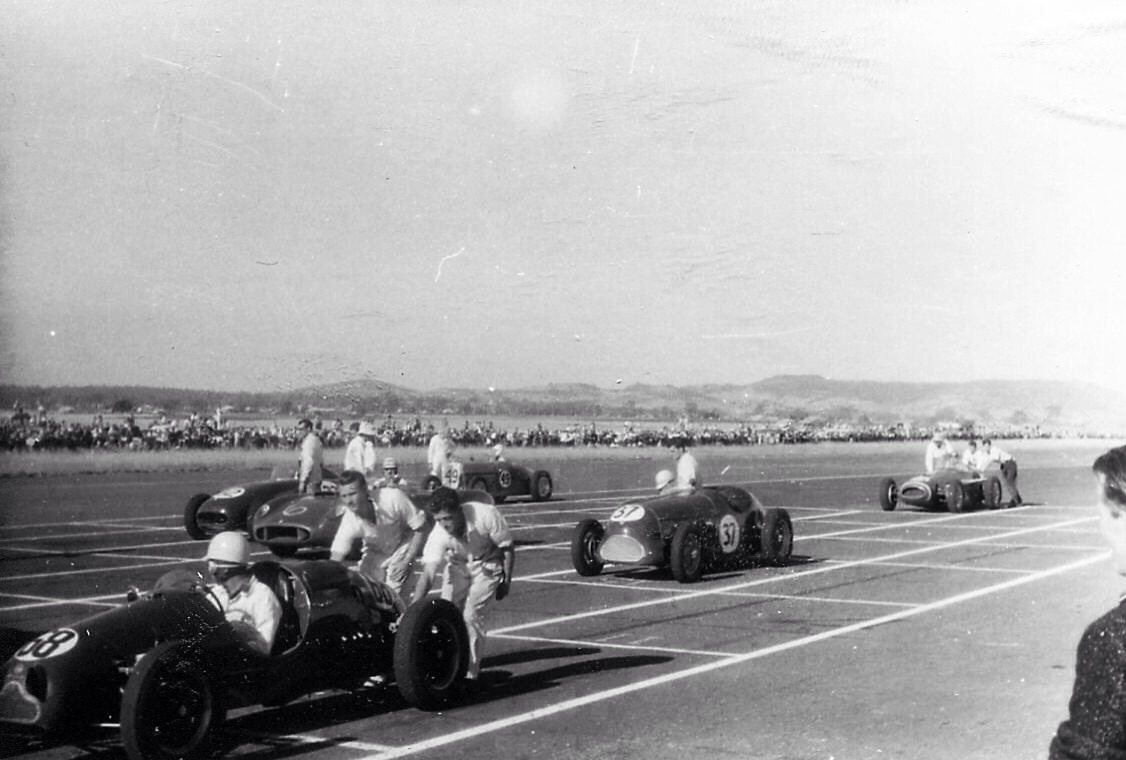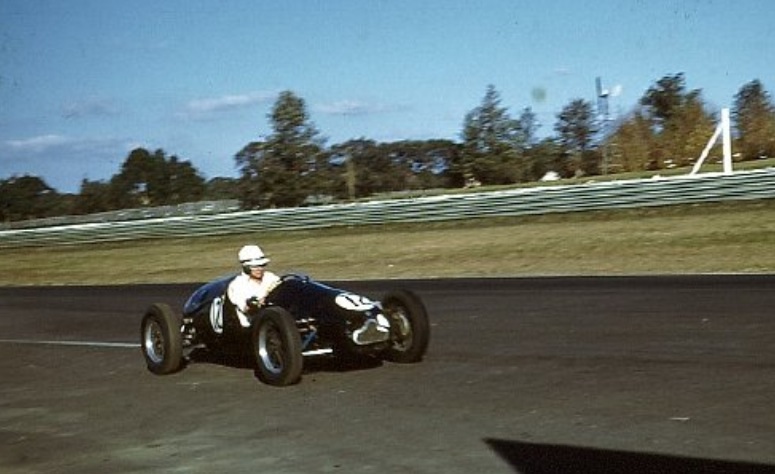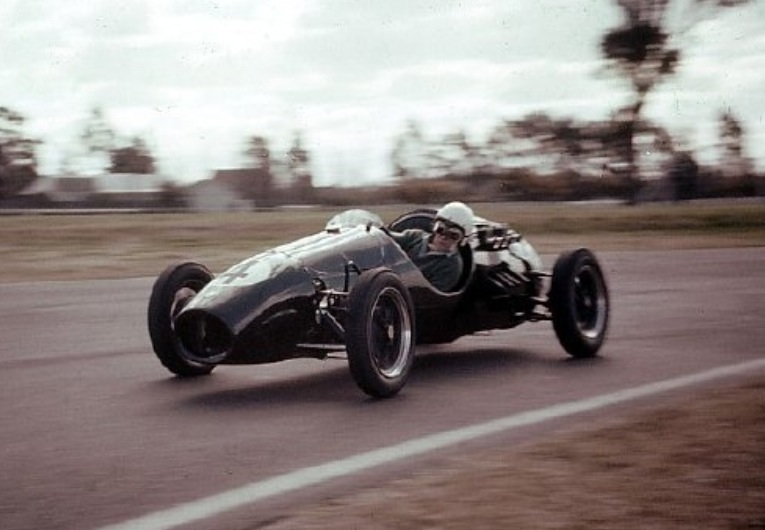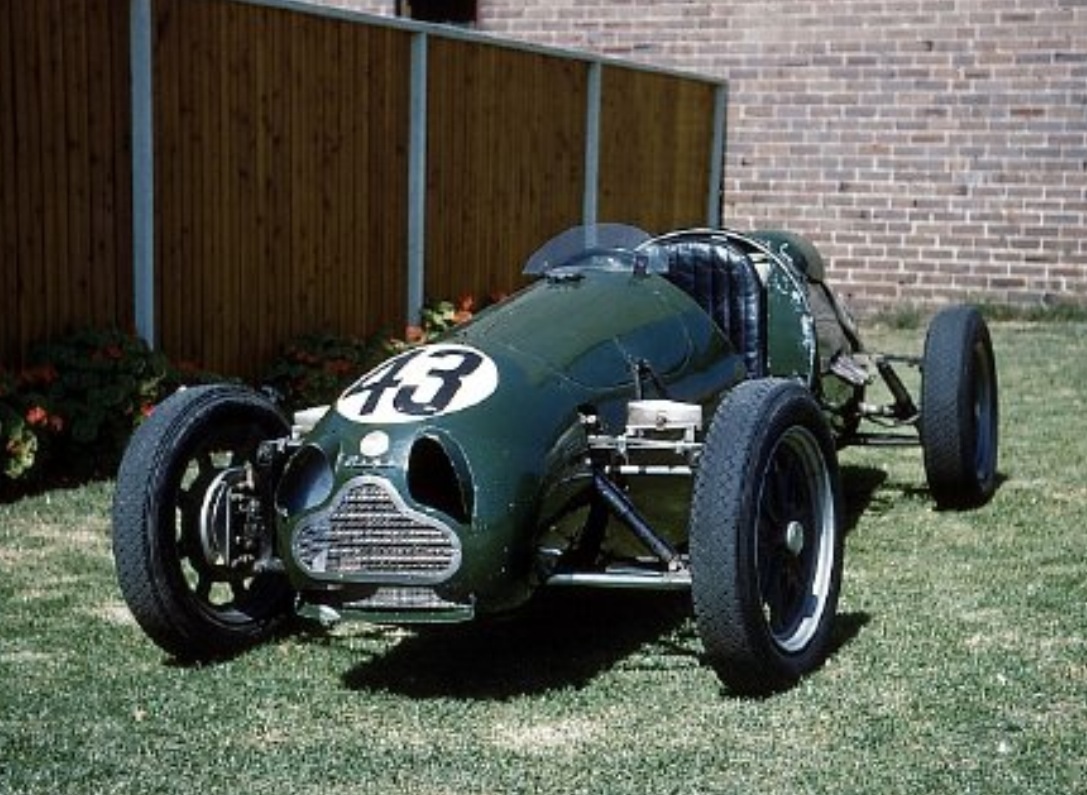
Posts Tagged ‘Australian Motor Racing History’

(P Geard)

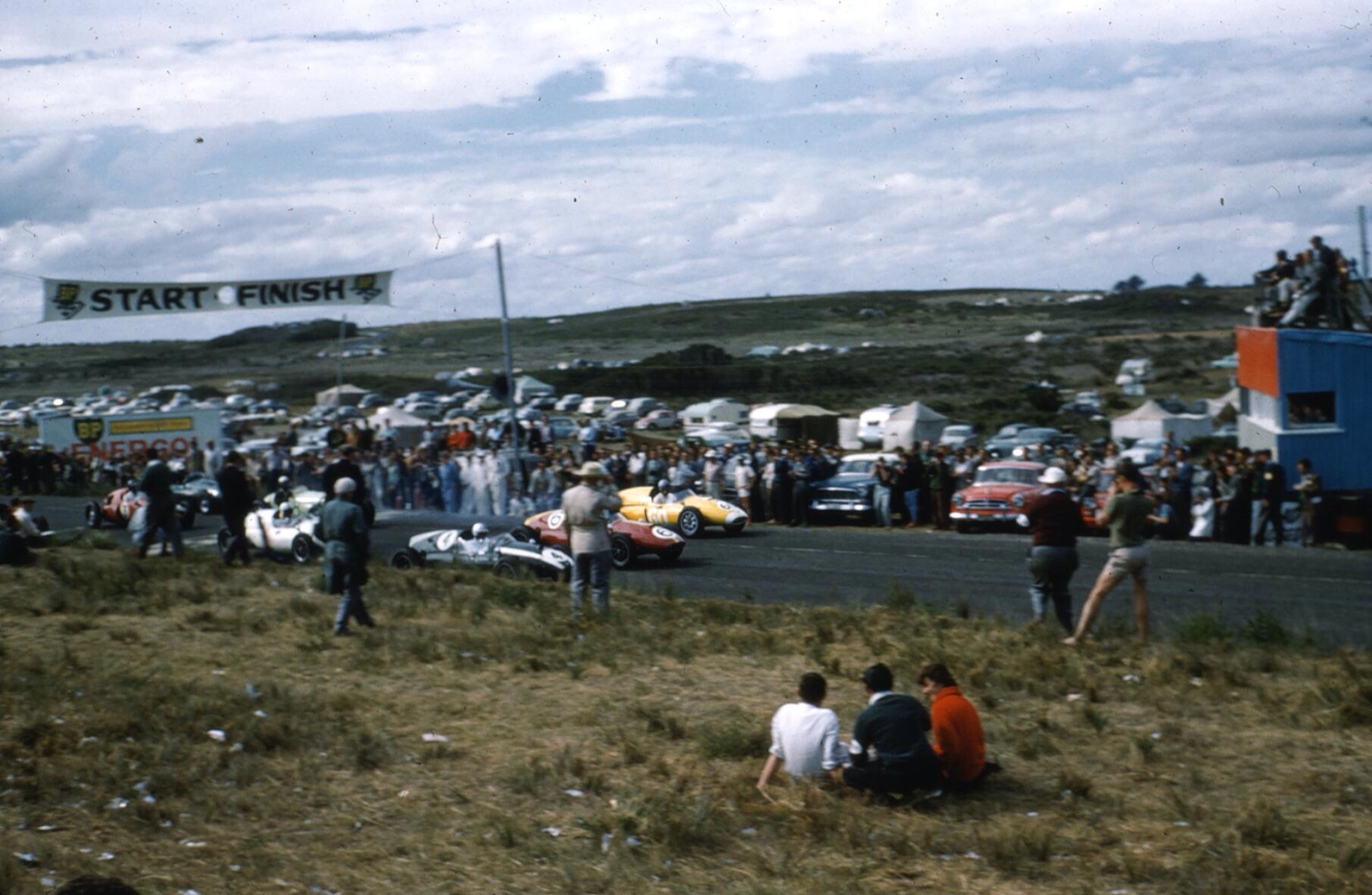
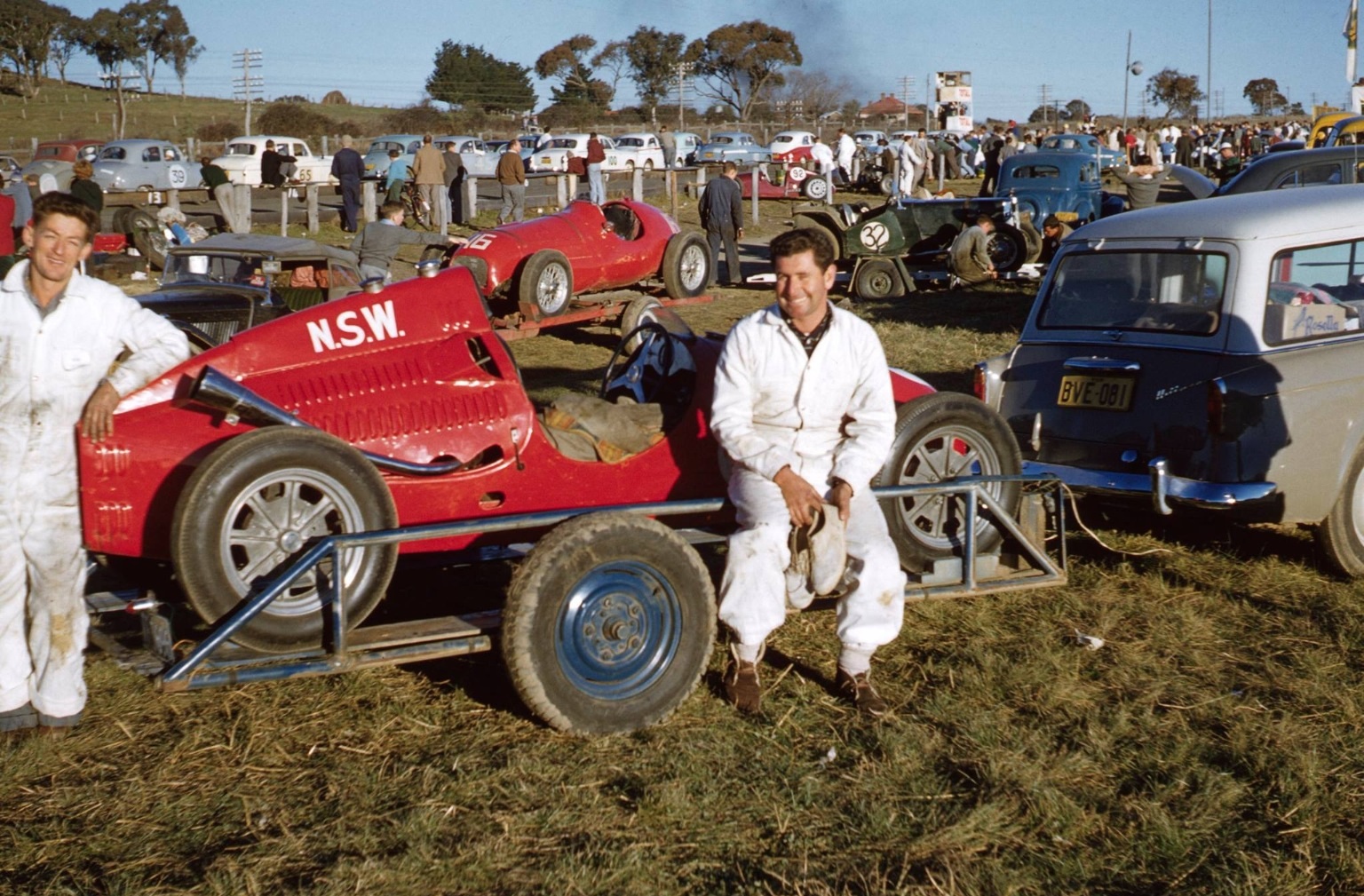
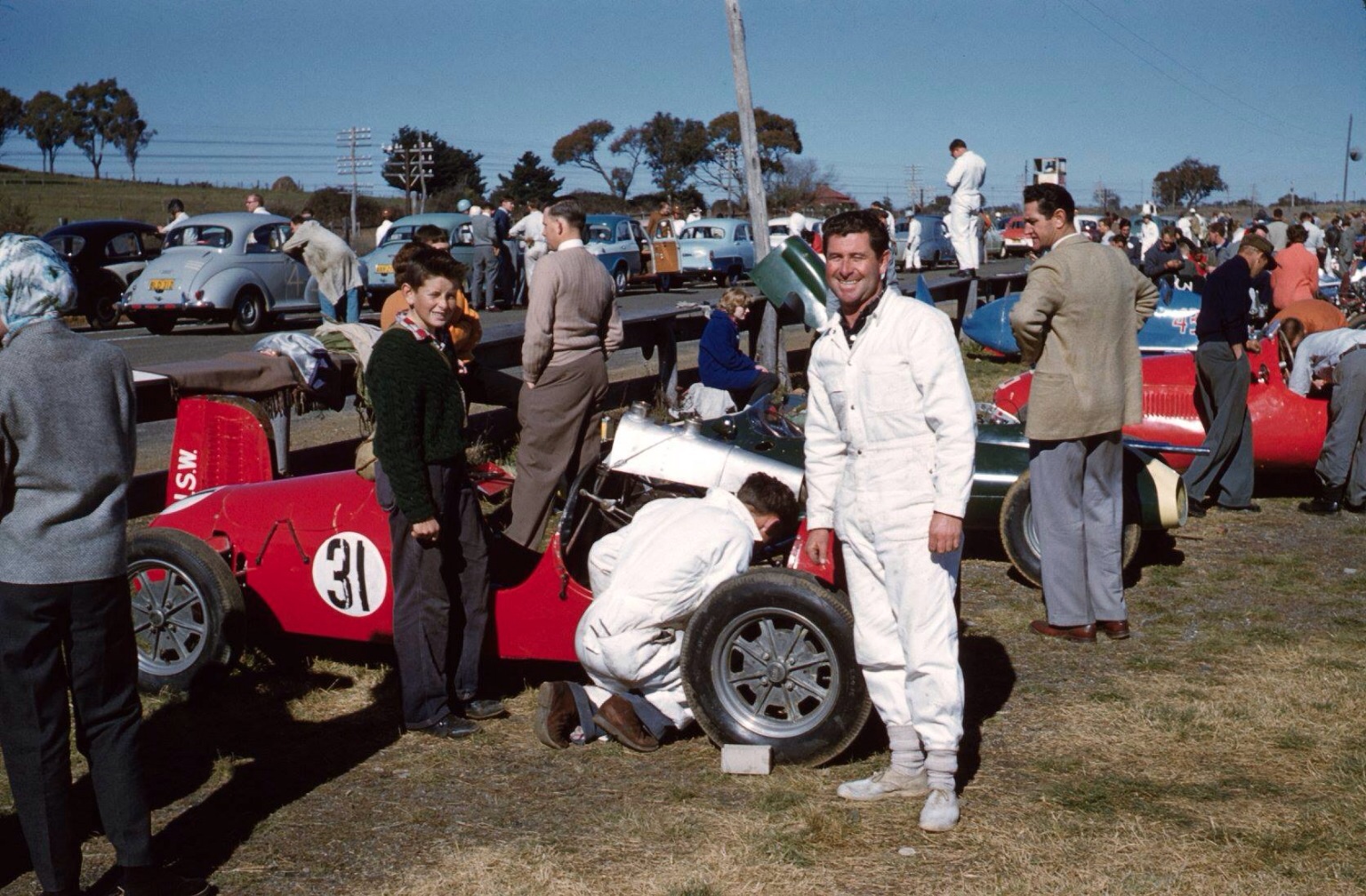
John Youl attacks Mountford Corner, Longford in his Porsche 356 during the late fifties…

John and his racer brother Gavin were scions of a prominent Tasmanian grazier family and very successful, competitive drivers until business pressures forced early retirement. Symmons Plains is a permanent legacy for the racing brothers built as it was on the family property.

(P Geard)

John proved his world level pace in several seasons aboard Cooper Climax T51 and T55 prepared by Geoff Smedley, whose just published book will be definitive on both drivers careers.

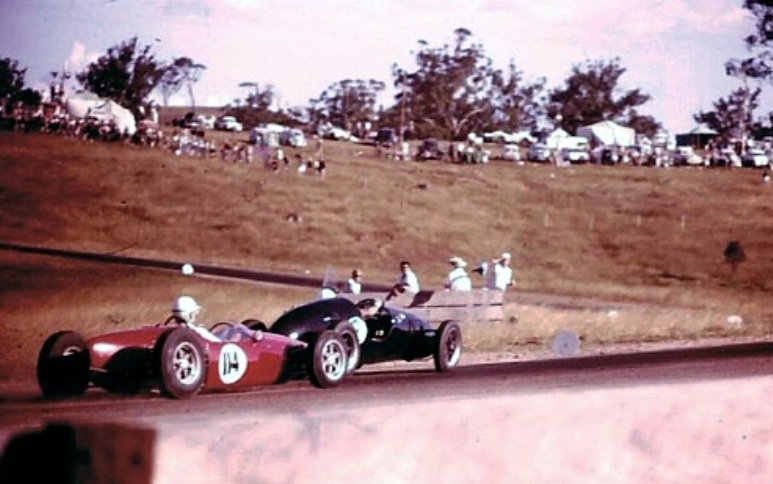
In the 1961 Longford shot below he is in the best of company (at right) aboard a Cooper T51 alongside #14 Brabham’s T53 with Austin Miller’s distinctive yellow T51 Climax behind.

(J Richardson)

Roy Salvadori won the South Pacific Trophy race that weekend from Bill Patterson and John with Austin fourth. Brabham was outed with a broken half-shaft on lap 16 of the 24 lap distance.

Here John’s appearance in the Porsche is a little earlier, the last photo below perhaps in 1957 and the others a little later- you can see the evolution from road car still fitted with hubcaps! to lowered rortier racer. I wonder what modifications were made to that 356 Super?

Credits…

Paul Geard, Historic Racing Car Club of Tasmania, Ellis French, Geoff Smedley, John Richardson

Tailpiece: Youl, White, Walkem on ‘The Flying Mile’, Longford circa 1957…

(HRCCT)

Youl in what looks like a motor-cycle racing helmet beside his Porker, the yellow machine is Graham White’s Vincent Spl and the obscured Cooper is Jock Walkem’s- the man in black. Delightful bucolic scene belies the high speeds and sound of straining engines which took place annually on this stretch of road over the March Labour Day long-weekend from 1953 to 1968…

Finito…

(P Maslen)

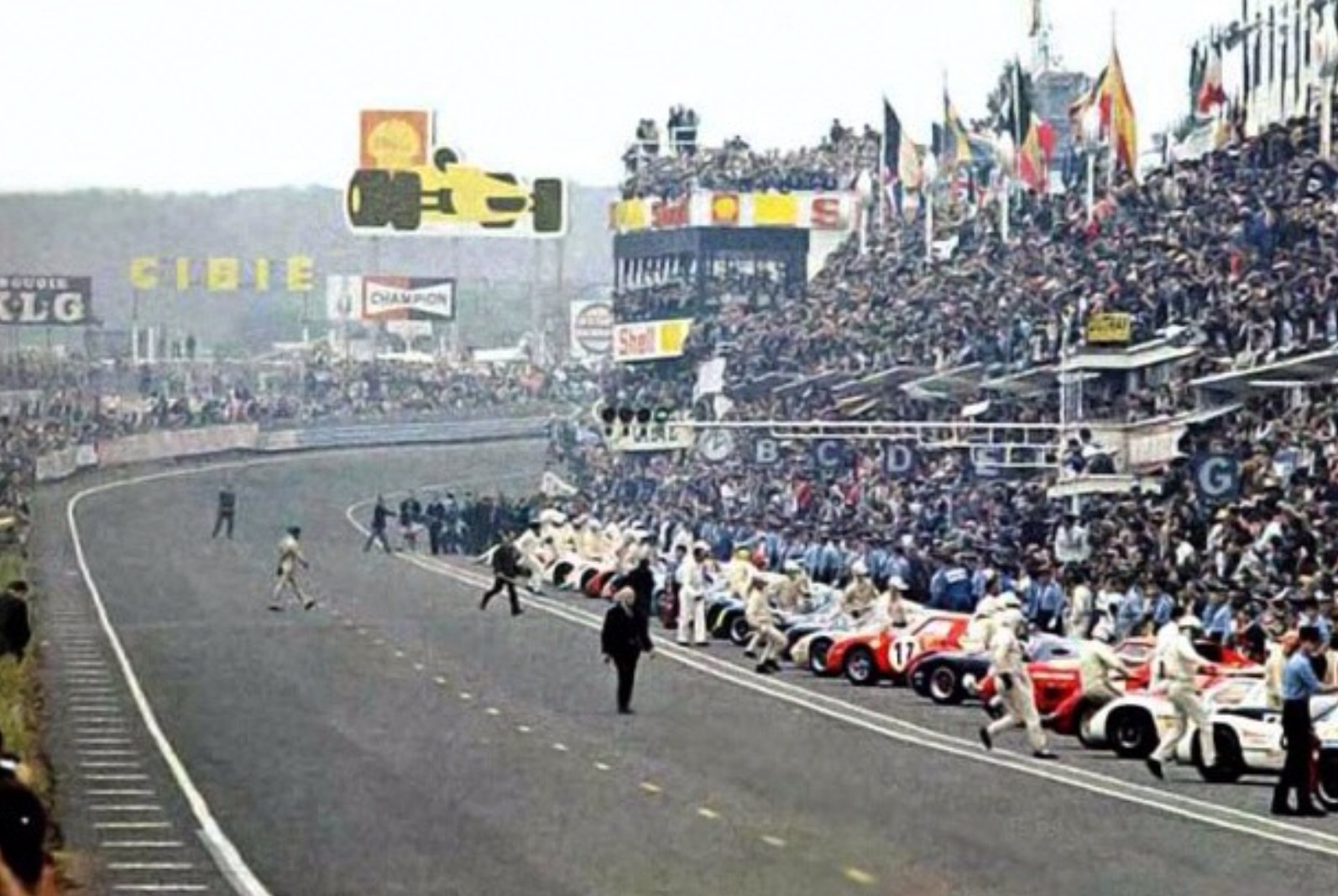
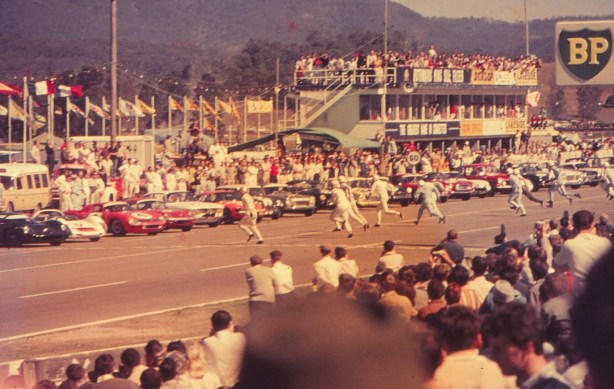
Paul Hawkins appears reasonably fleet of foot, first dude on the left…

And so he should too- the Australian international had far more experience than the locals at Le Mans run and jump starts. What great panoramic, colourful, atmospheric photographs these are.

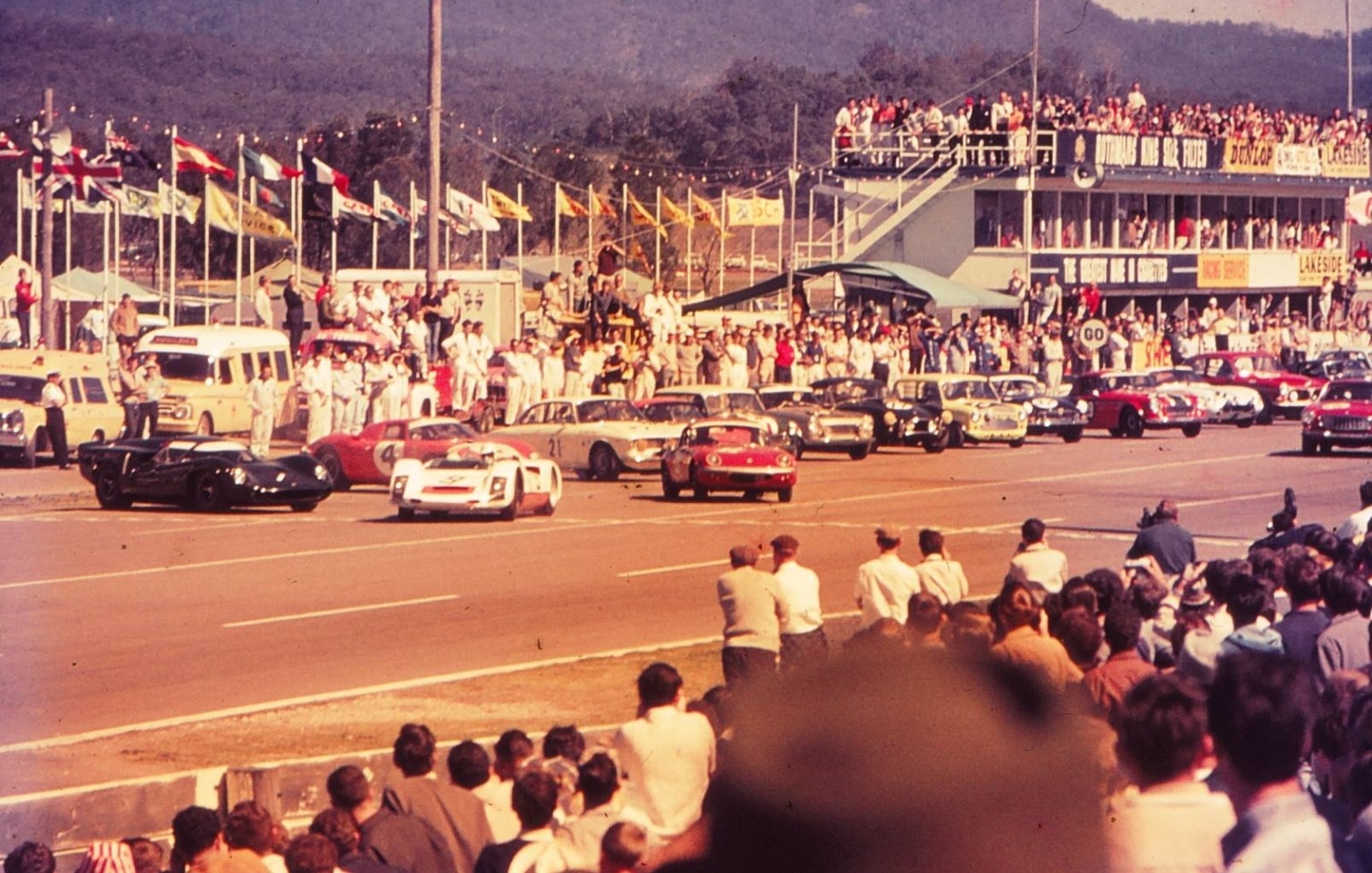
The first few cars lined up in the 3 September 1967 twelve hour enduro are the Hawkins/Jackie Epstein Lola Mk3 Chev, Alan Hamilton/Glynn Scott Porsche 906, Bill Brown/Greg Cusack Ferrari 250LM, Bill Gates/Jim Bertram Lotus Elan and then the white Kevin Bartlett/Doug Chivas Alfa Romeo GTA.

Whilst Paul was quick to the car, the task of affixing his Willans six-pointer was tricky when getting his Heavy Chevy started even in the calmness of a paddock, let alone with a schrieking 2 litre Porsche flat-6 blasting past and reinforcing his tardiness. Not that the notion of outrunning the Porsche over twelve hours should have been an issue- the Gates Lotus is also fast away whilst at far right is the red John Keran Volvo P1800S.
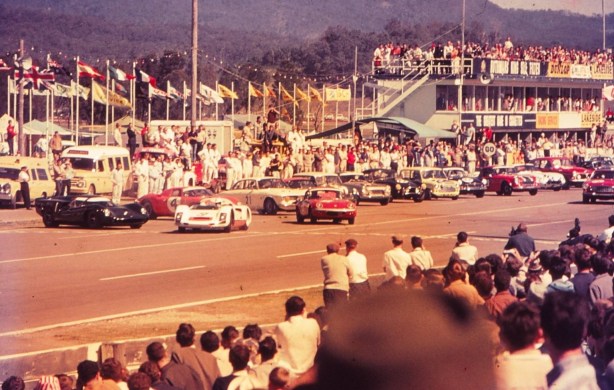
(P Maslen)
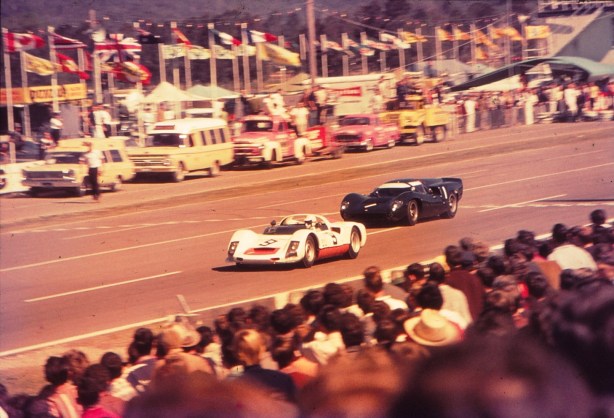
 

Hamilton from Hawkins, 5 litres of Chev V8 is hard to deny!, end of lap 1, he will grab the lead before the fast right hand swoop under Dunlop Bridge (P Maslen)

The last Le Mans 24 Hours with a running start was the 1969 event when Jacky Ickx famously walked to his John Wyer Ford GT40 before carefully fitting his belt- and winning the following day with Jackie Oliver.

The tragic irony of Ickx’ protest was that the ‘unbelted’ John Woolfe died in his Porsche 917 in a first lap accident- safety and seatbelts were the end of that bit of racing spectacle, fair enough too.
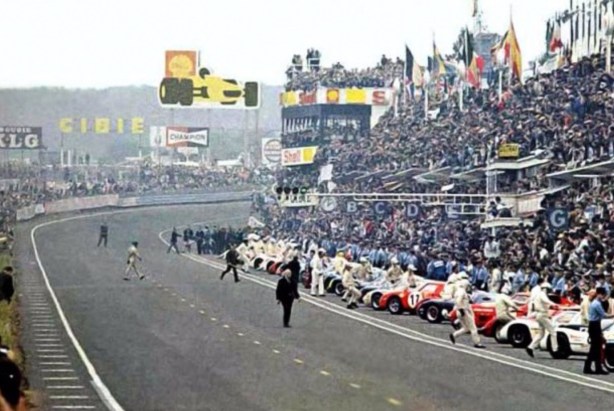
Lone ranger, Ickx, Le Mans 1969 (unattributed)

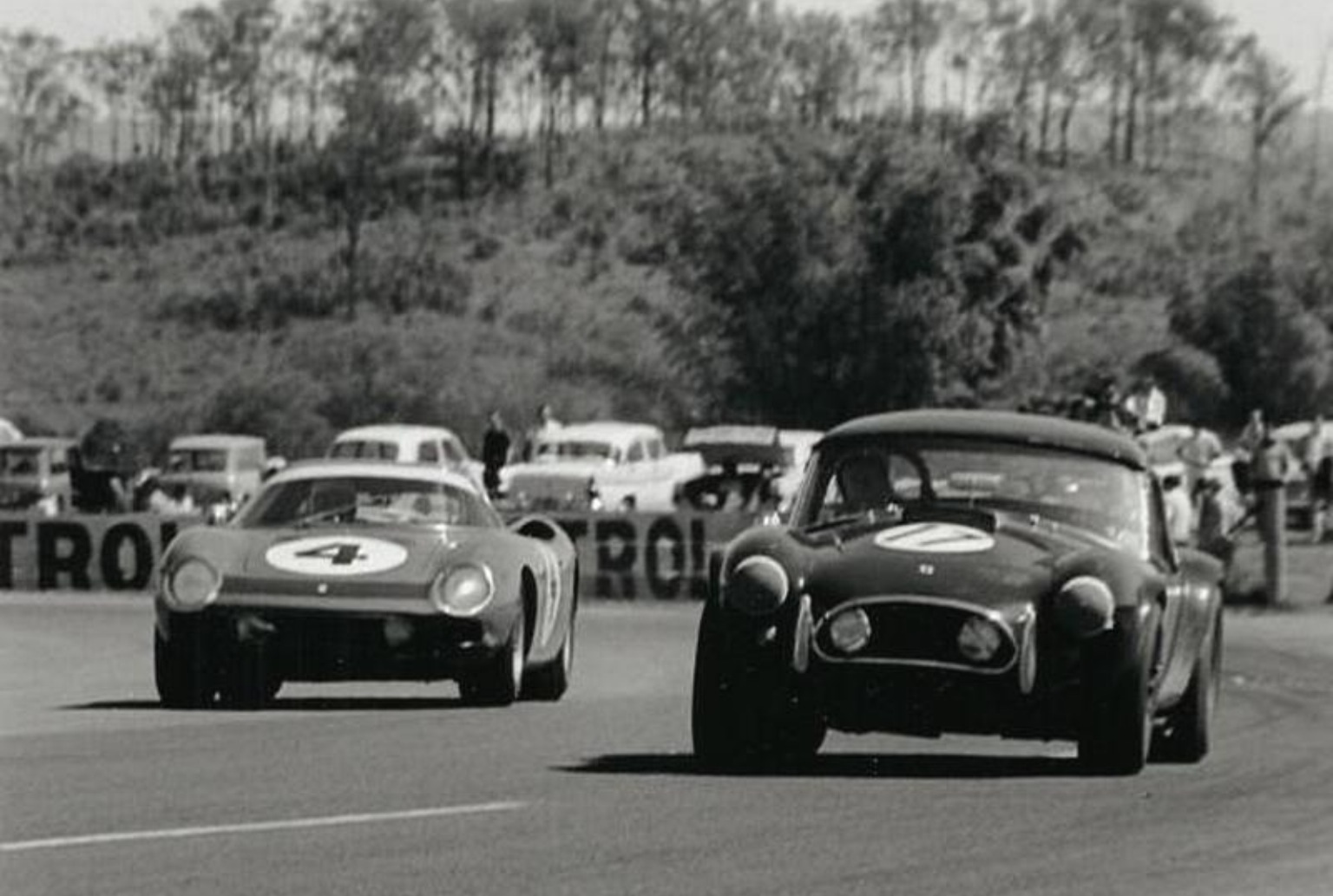
David McKay’s Scuderia Veloce 250LM was almost ‘rusted to this race’. It was never the fastest thing entered but it won in 1966- crewed by Jackie Stewart and Andy Buchanan, in 1967 with McKay’s regular team drivers of the day, Bill Brown and Greg Cusack at the wheel and in 1968 piloted by the brothers Geoghegan- Leo and Pete.

In second place behind the Brown/Cusack 250LM in 1967 was the Lola with 468 laps and third the Hamilton/Scott Porsche 906 with 460- the winners covered 490 laps of reliable, fast Ferrari motoring.
Surfers Paradise International Raceway was opened in 1966 with a bang- ‘Speed Week’ well and truly put Keith William’s circuit on the map in terms of both the motor racing community and the Queensland populace.

I wrote an article about that meeting a while back, check it out here; https://primotipo.com/2015/02/13/jackie-stewart-at-surfers-paradise-speed-week-1966-brabham-bt11a-climax-and-ferrari-250lm/

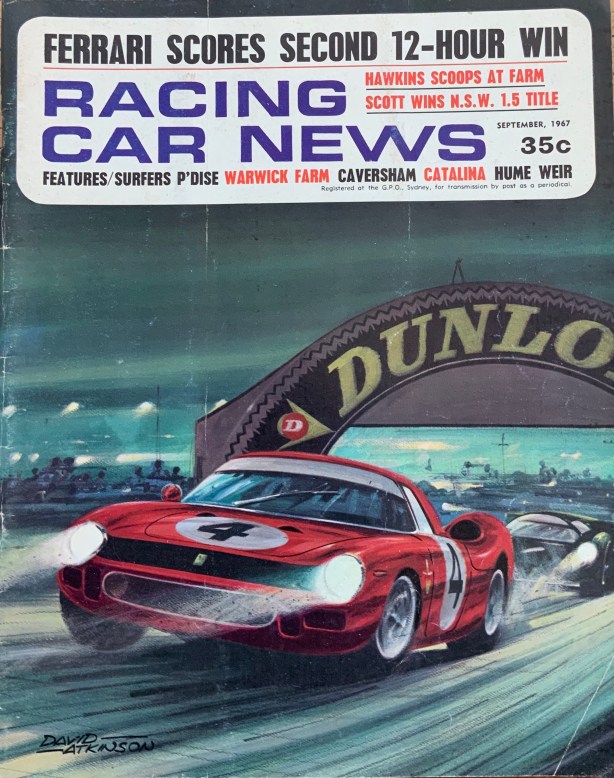
‘Speed Week’ in 1967 included the Gold Star race won by Spencer Martin from Paul Bolton, both aboard Brabham Climax’ the Sunday before, the Australian Motorcycle Grand Prix on Saturday 2 September and the Rothmans 12 Hour the following day- the race started at 10am, Des White’s ‘Racing Car News’ account of the race sets the scene, ‘Sunday dawned just perfect, sunshine, a cool breeze, and the circuit looked great after a massive clean up following Saturday’s AGP for Motor Cycles’.

‘The garbage trucks removed the rubbish, several ambulances had removed all the leather clad bodies that had been lying around under Dunlop Bridge, and some six police cars had removed many of the exuberant but unfriendly Ned Kelly types from Repco Hill.’ This article is for the most part a truncated variant of Des’ great work in the September 1967 issue of ‘Racing Car News’.

Thirty-seven cars entered the meeting with a somewhat disappointing nineteen fronting for practice- notable absentees were Australia’s large population of Lotus 23’s and local clones thereof, the three Elfin 400’s of Bob Jane, Noel Hurd and Niel Allen. Frank Matich was taking in some Can-Am rounds in his Matich SR3 Repco at the time- all of the cars mentioned were/are ‘sprinters’ rather than purpose built endurance machines so perhaps the lessons of the previous year in terms of the longevity required had been heeded and the driver/entrants therefore stayed away.
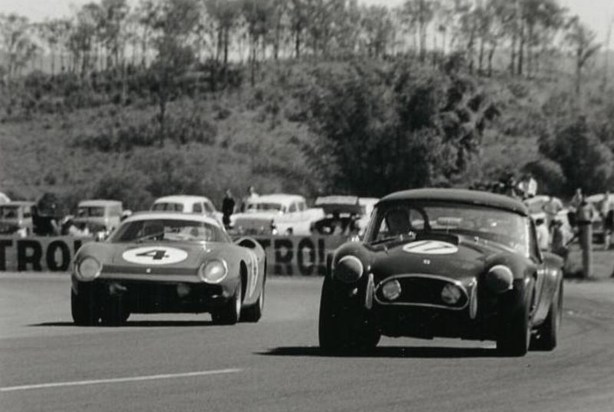
The ninth placed Ron Thorp/Ray Strong AC Cobra ahead of the Scuderia Veloce Greg Cusack/Bill Brown Ferrari 250LM, the pair completed 416 laps compared with the winners 490 (B Williamson)

In 1966 there were five ‘outright contenders’ entered- the Stewart/Buchanan and Epstein/Hawkins Ferrari 250LM, Piper/Attwood Ferrari 365P2, Sutcliffe/Matich Ford GT40 and Hamilton/Reed Porsche 906 whereas in 1967 there were only three, the Scuderia Veloce 250LM, Porsche Cars Australia 906 and Hawkins/Epstein Lola T70 Mk3 Chev- unfortunately the Scott-Davies/Harvey/Tuckey Lola T70 Chev Spyder failed to take the grid after terminal engine failure in practice. The car suffered piston and rod failure and after replacements flown in from the US were fitted on Saturday night the car dropped a valve during a practice session before the start ending a rather unpleasant weekend for the crew.

Fastest in practice was the Hawkins Lola T70 on 1:16.3 from the Hamilton 906, 1:18.7, then the SV 250LM on 1:20.6 before getting into the ‘class cars’- the Gates/Bertram Lotus Elan 1:27.0 then the Mildren Alfa GTA on 1:28.7 and Macarthur brothers Lotus Elan on 1:29.30- also under the 1:30 mark was the Bob Holden/Don Holland Cooper S Lwt on 1:29.7 seconds.

The Hawkins/Epstein Lola (chassis number SL73/112) had not long prior led the Reims 12 Hour for 3 1/2 hours but its Hewland LG500 gearbox cried ‘enough’ but not before setting a lap record on this very fast circuit of ‘147mph, done at 1 o’clock in the morning with full tanks, and included a speed of 200mph on the straight’ Des White observed. That race was won by the Guy Ligier/Jo Schlesser Ford GT Mk2B. The big Lola was clearly the quickest car in the Surfers race but over the ensuing years the success of these wonderful machines in endurance racing was hampered by the brittle nature of the Chev engines most entrants used and the Hewland box.
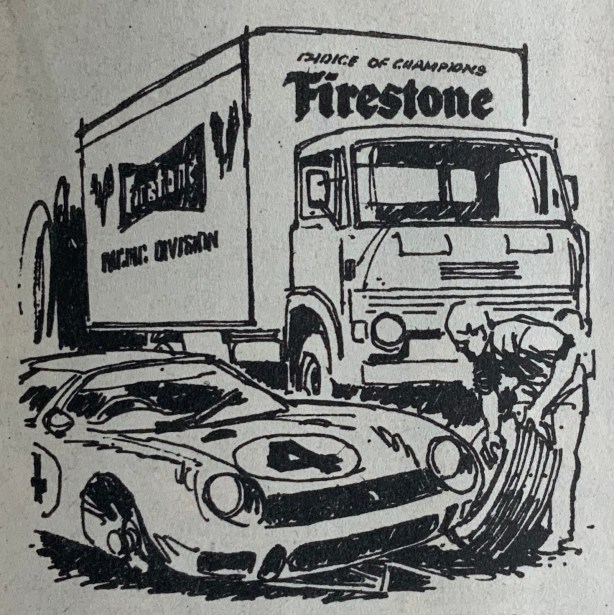
Scuderia Veloce Ferrari 250LM (C Anderson)
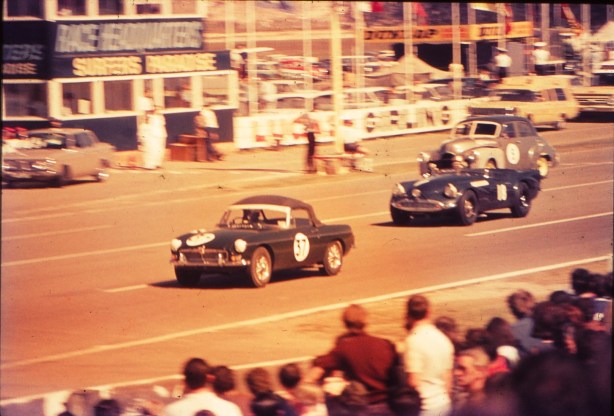
 

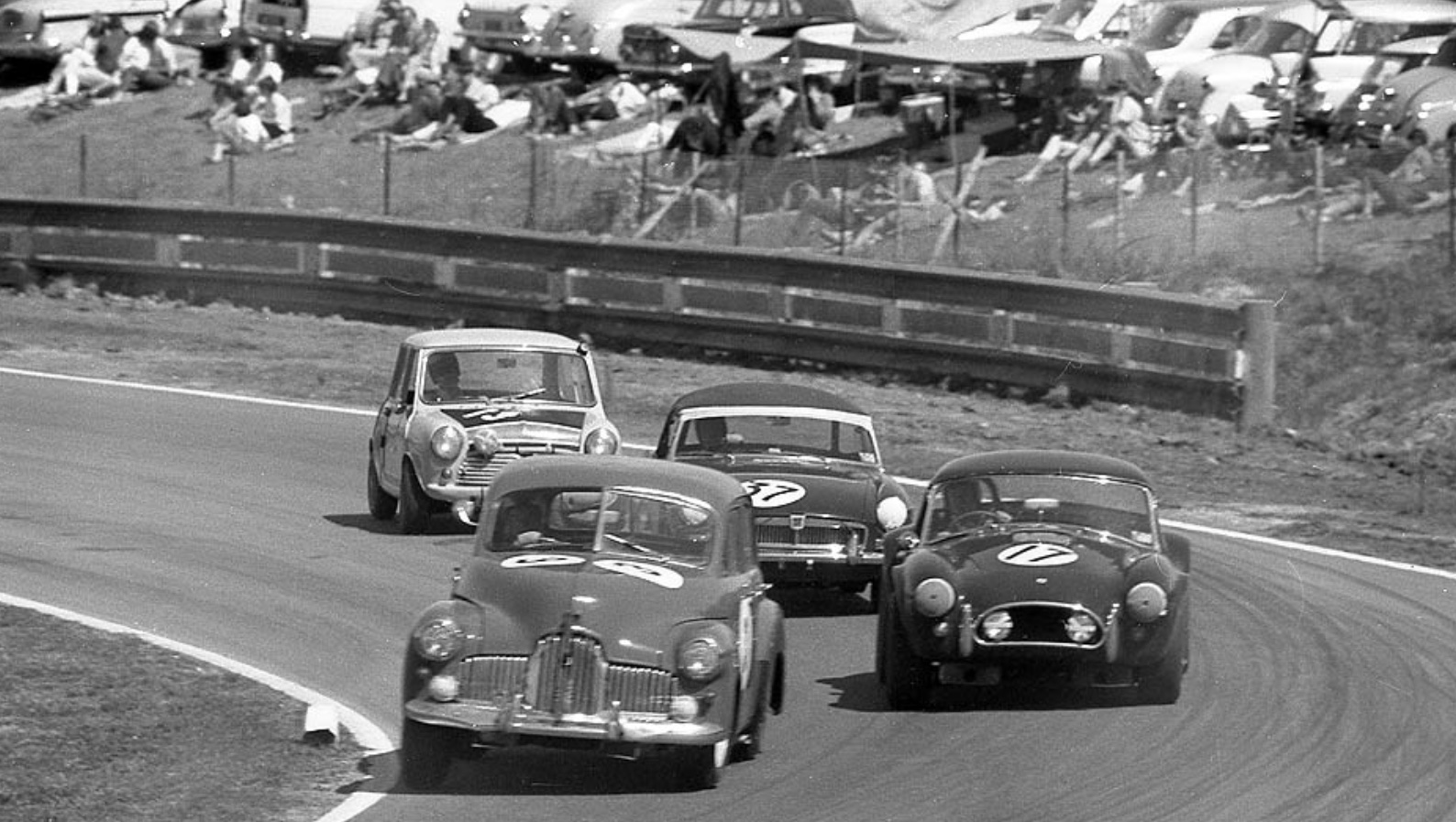
(Mixed bag here, again on the main straight- the #37 Charlie Smith/Noel Hall MGB, #18 Daimler SP250 shared by Peter Whitelaw/Ian Jenkins/Peter Ganderton and the only Holden entered- the Max de Jersey/Bill Birmingham 48-215 (P Maslen)
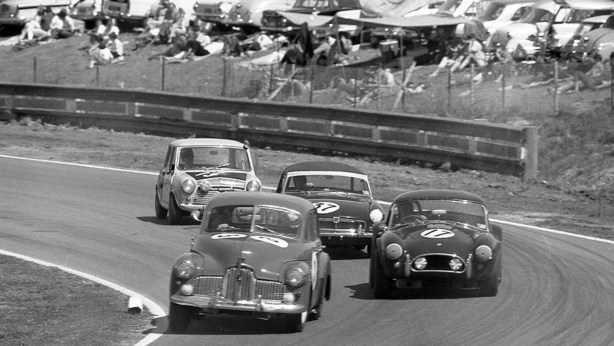
 

Its got a touch of Sebring about it in terms of variety: Calvert Holden 48-215, Ron Thorp AC Cobra, Charles Smith MGB and Phil Barnes, Morris Cooper S during the contests early laps (oldracephotos.com/Phillips)

Alan Hamilton made a great start at the flags drop- 10am, his 906 jumping sideways as he applied all of the 2 litre engines flat-6 power to the very abrasive Surfers tarmac- KB also got away well in the Mildren GTA as did the Gate’s Elan but the Porsche succumbed to the big Lola at the end of the first lap.

Bartlett slipped under Bill Gates as the 250LM eased into third place during lap 5, a dice developed between the John French driven BMC Australia MG Midget and the Elans whilst the Harry Gapps Renault 8 Gordini engine blew after 24 minutes of racing and was the first retirement.

At 10.30 the Lola led from the Porsche and Ferrari then Bartlett in the GTA, the Holden/Holland Mini Lwt and Doug Macarthur in the family’ Lotus Elan. The first of many pitstops for the Hawkins Lola took place at 10.45am when 3 pints of oil were sloshed into the oil tank- a poorly fitted rocker cover was leaking badly.

Hamilton’s leading Porsche had completed 43 laps in the first hour, a lap clear of the Cusack/SV Ferrari and Hawkins Lola on the same lap as the Italian V12. Bartlett was 4 laps back in fourth, then Holden on the same lap as KB with Ron Thorp’s AC Cobra a lap in arrears.

The T70 pitted again at 11.16am for 8 pints of oil and a replacement rocker cover gasket- the stop took 12 minutes 54 seconds. The Whitelaw Daimler SP250 pitted with lots of steam and leaking brakes whilst the class leading Thorp Cobra came in for a front end check.
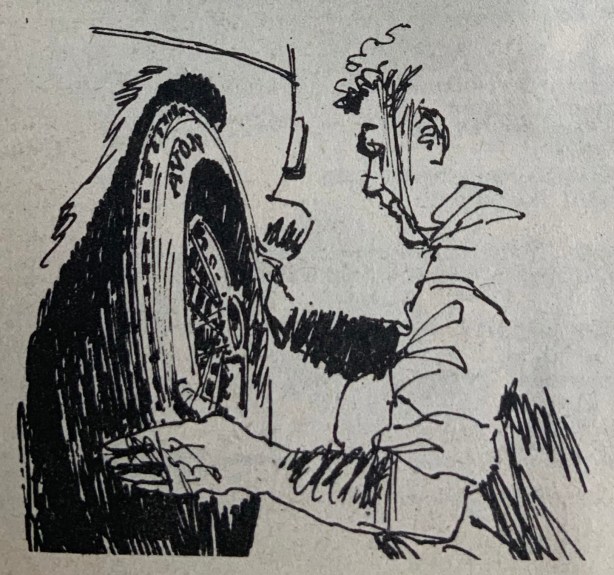
(C Anderson)
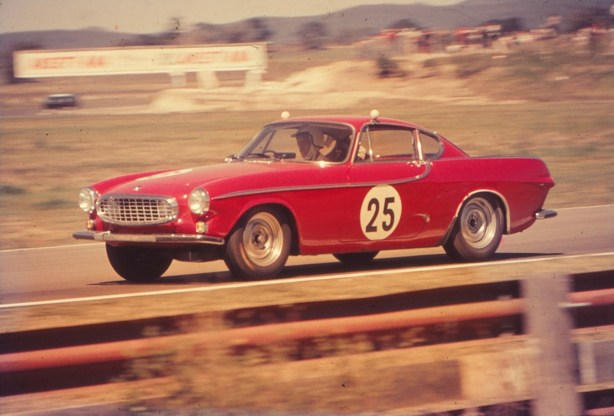
 

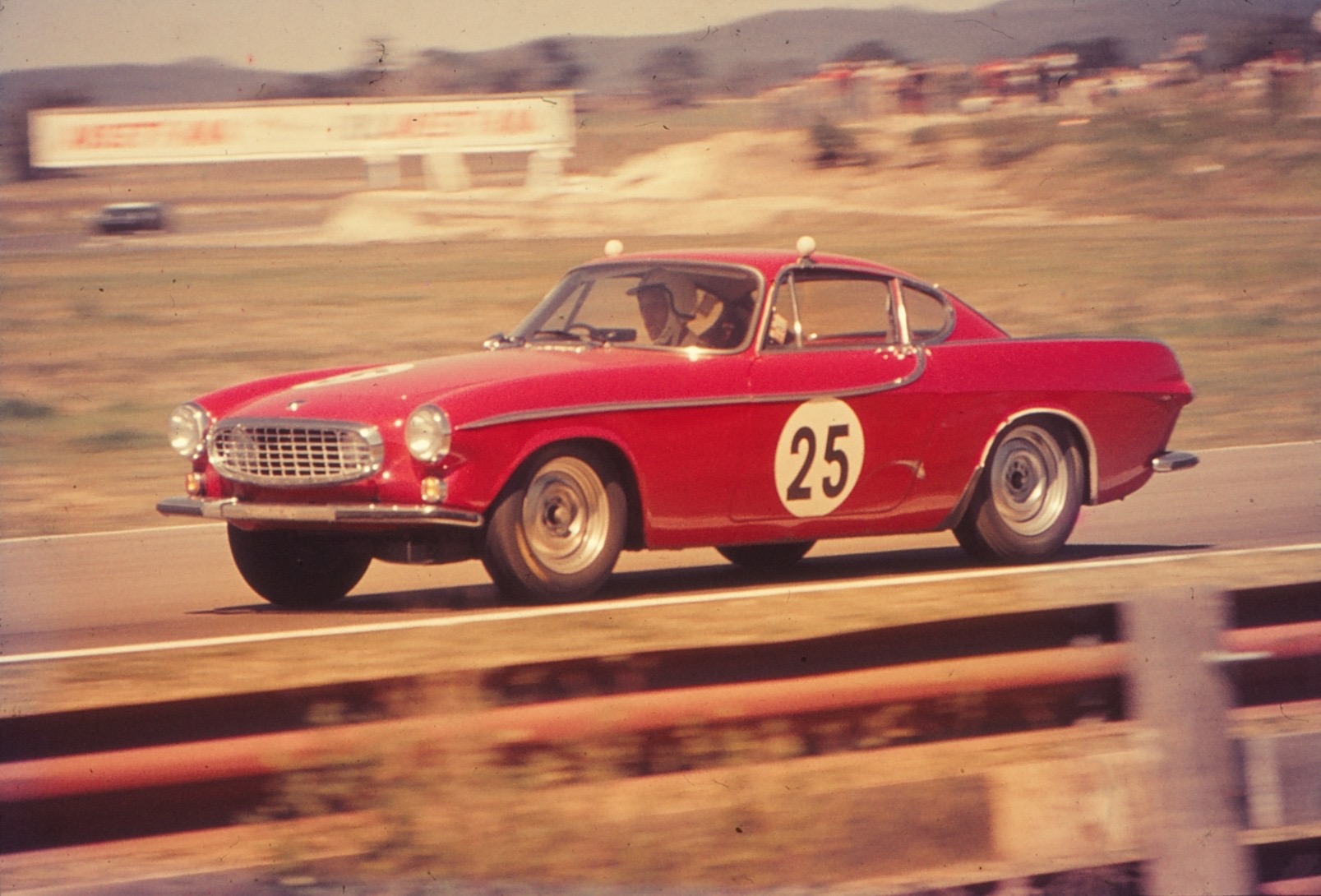
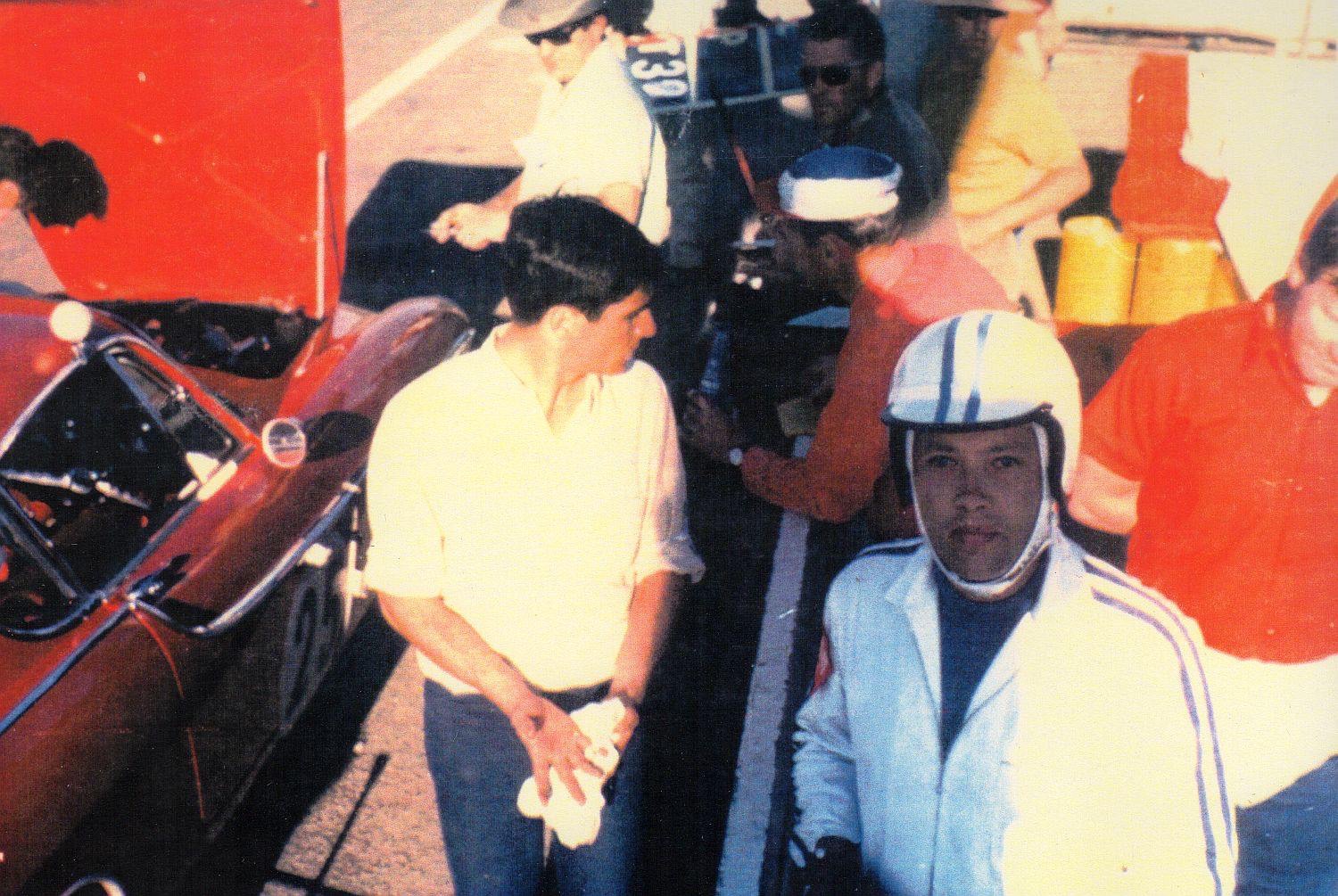
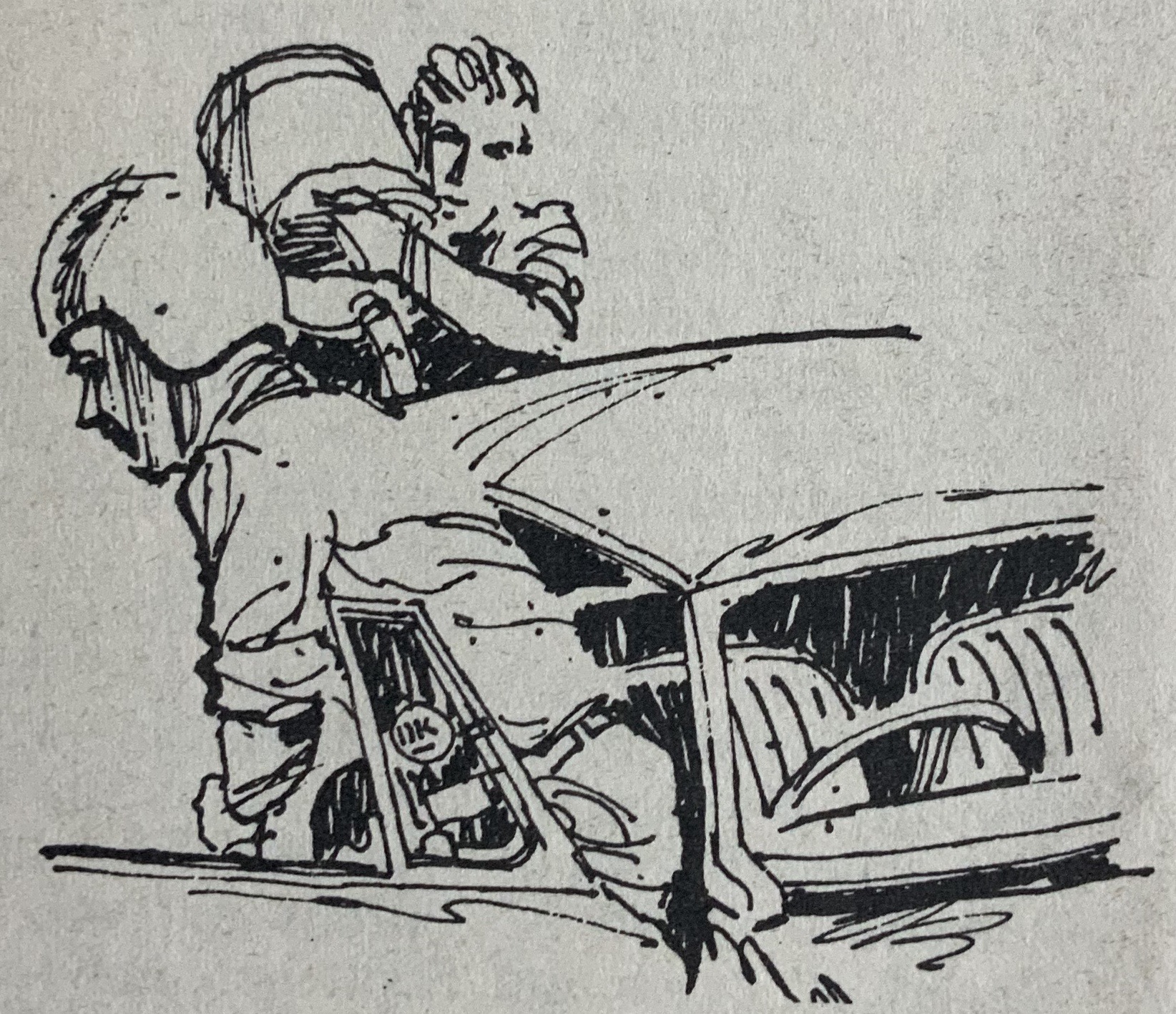
The batch of three photographs above and below are of the John Keran entered Volvo P1800S crewed by John, Colin Bond and Max Winkless. On circuit the car is driven by Keran- the two pitlane shots show John staring down the camera and he and Col Bond discussing the progress of the car.
The rally men, mind you Bond was racing on all kinds of surfaces then in tourers, sporties and his Rennmax Peugeot s/c single-seater, did well- fourth in the Improved Production under 2 litre class won by the Datsun Racing Team Datsun 1600 Sports with the Victorian pair of John Roxburgh and thrice Australian Grand Prix winner, Dog Whiteford behind the wheel (P Maslen)
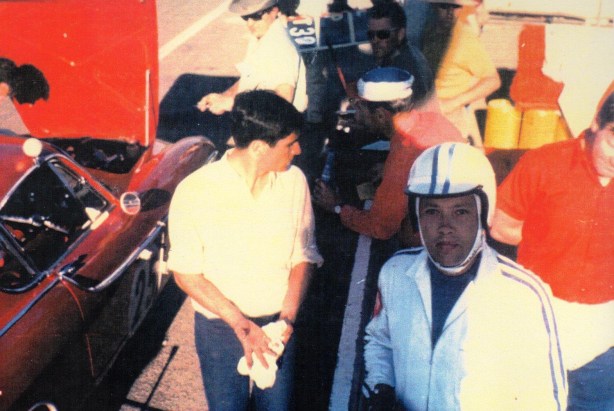
 

(J Keran)
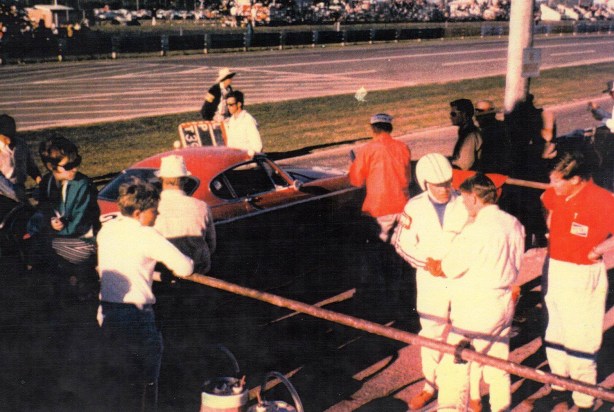
 

Keran, Bond and who is it in that Team Total shirt to the right? (J Keran)

At 11.30am the Hamilton Porsche led with 65 laps completed from the Ferrari and Bartlett Alfa GTA with the Holden Mini in fourth as the Lola hung around the pits. The John Roxburgh Datsun was in sixth on the same lap as the Thorp Cobra with the two Datsuns seemingly having a good grip on the 2 litre Improved Production class as the Barry Tapsall/Henk Woelders car headed John Keran’s Volvo P1800S.

At 11.45 Kevin Bartlett pitted for fuel and oil and handover to Doug Chivas but the little, lightweight Alfa would not answer the starter- pushed behind the pit counter for closer attention there the machine stayed, ‘the engine tighter than tight’.

Hamilton took his first pitstop bang on noon- four tyres went on and 22 gallons of fuel and Glynn Scott went in, the stop took 3 minutes 24 seconds, at that stage the 906 had done 87 laps, the Ferrari 86, then Bob Holden, Paul Hawkins, John French, John Roxburgh and Ron Thorp followed.

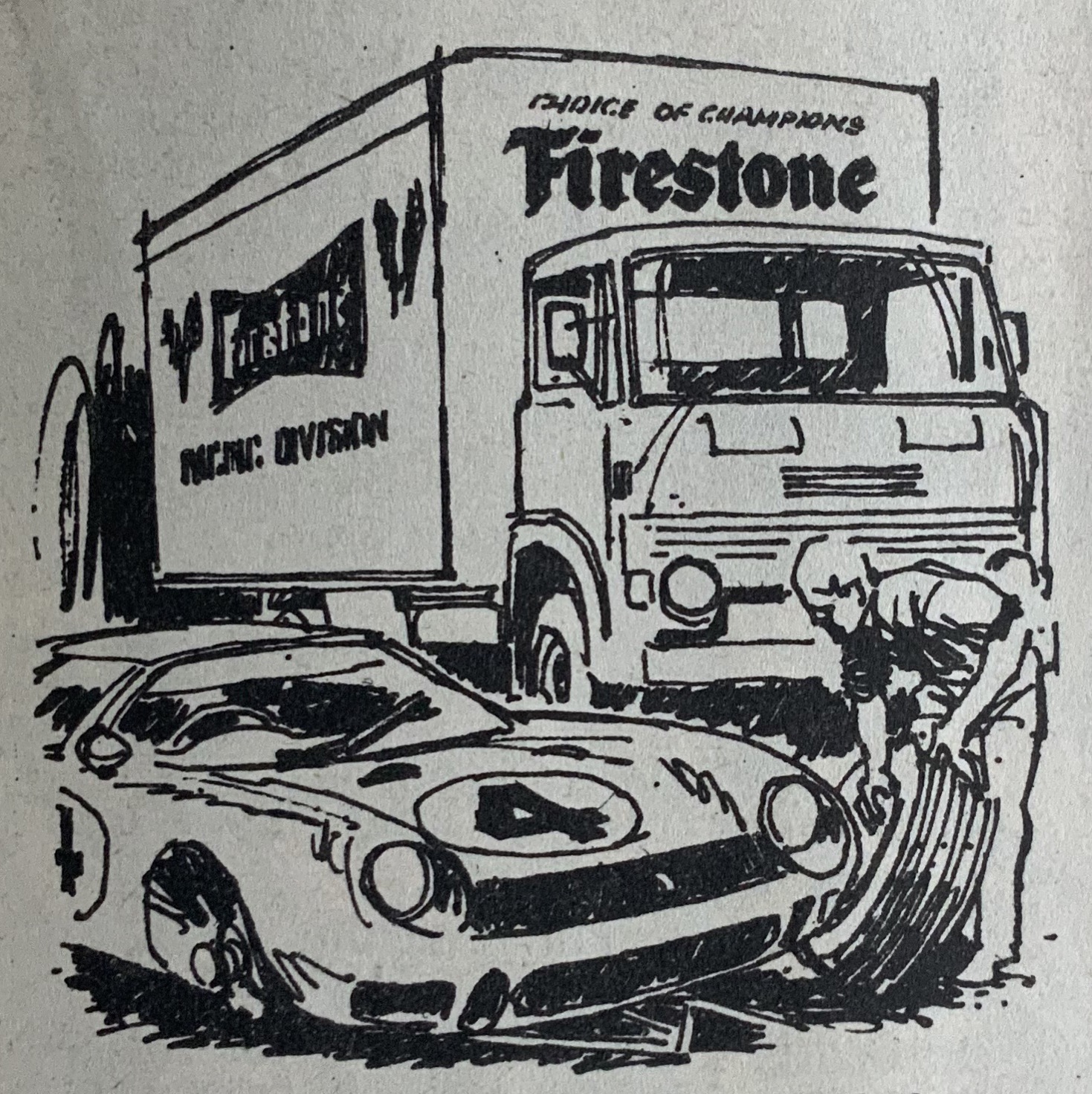
The Thorp Cobra pitted again with brake problems and at 12.16 Greg Cusack handed the SV 250LM over to Bill Brown after the Ferrari was filled with 32 gallons of fuel, 6 pints of oil and four, fresh Firestones, the slick stop taking two minutes.

Around the same time the Harry Cape Triumph GT6 pitted to have its rear light taped after a bingle and the Holden Mini Lwt had its rocker-post replaced- the Hindmarsh Elfin retired over at Firestone- the field was falling away whilst Doug Whiteford took over the class leading Datsun 1600 from John Roxburgh at 1pm together with 20 gallons of fuel and 4 tyres.
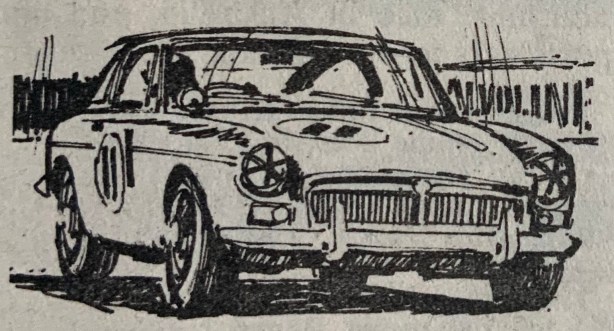
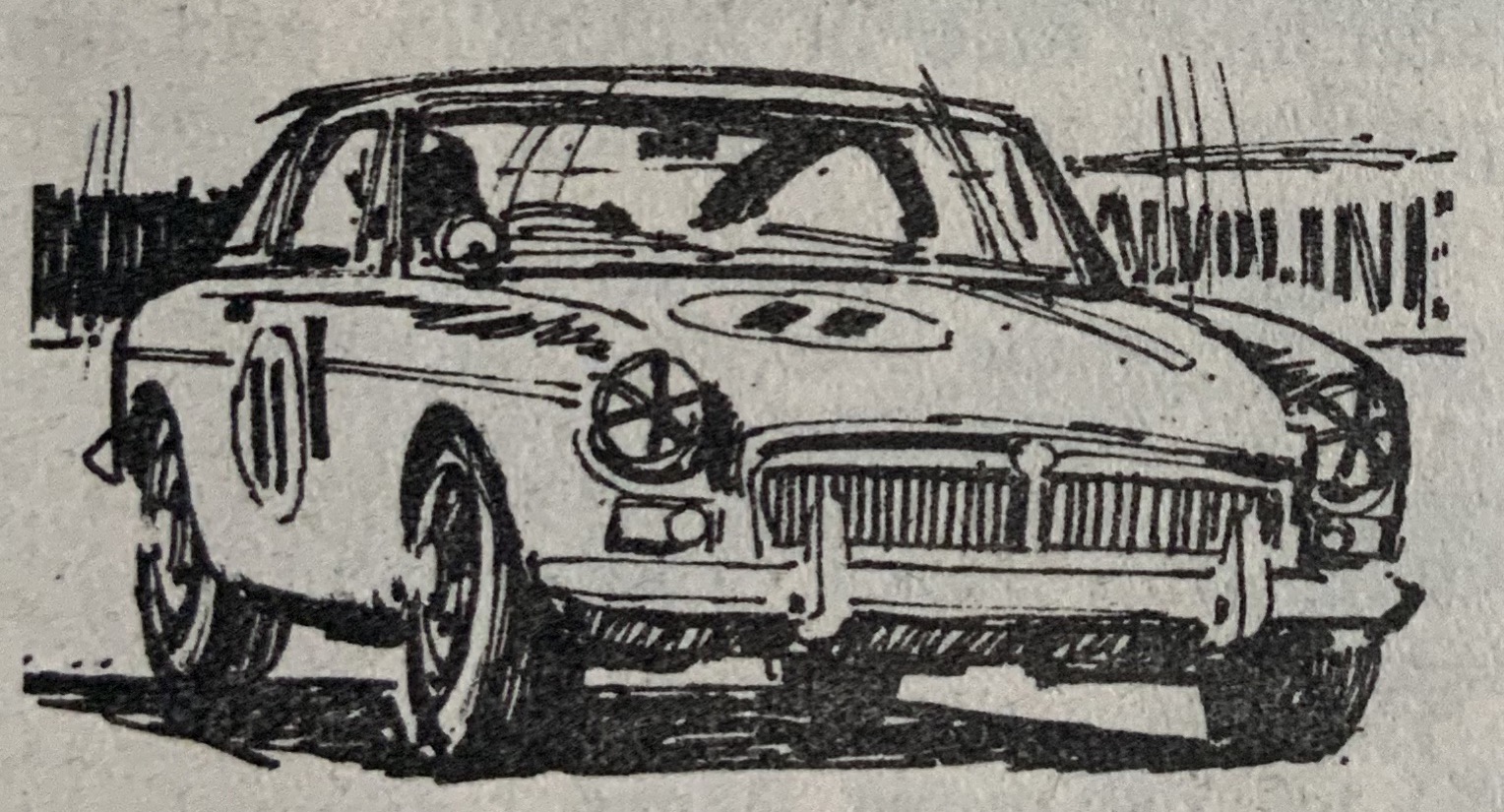
Barry Ferguson/Max Stahl ‘Racing Car News’ entered MGB, Max being the much loved racer/editor/proprietor of RCN (C Anderson)
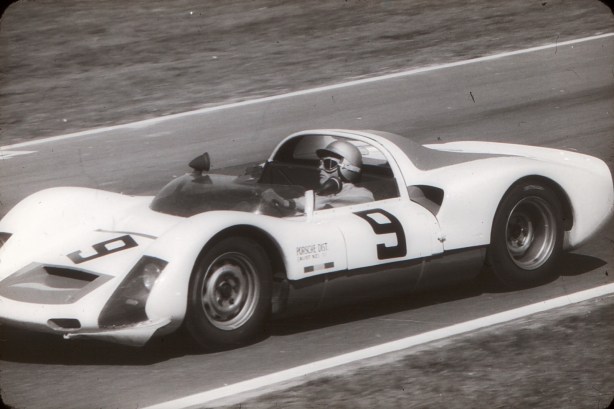
 

Peter Maslen, the enthusiast who captured these wonderful images images wrote of the photograph above as ‘One of the finest drives I ever saw. When Alan Hamilton dropped the Porsche into a ditch around the back of the circuit, he was encouraged to recover it- Glynn Scott took over and they came in third. This picture now holds pride of place on my study wall’. It is a marvellous shot of the Porsche 906- he has managed to capture the determined set of Scott’s jaw, local open-wheeler and sportscar ace rather nicely (P Maslen)
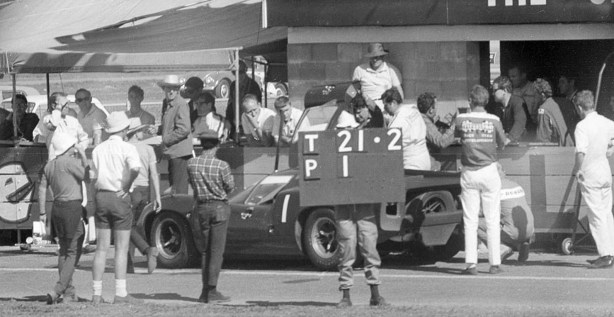
 

I suspect its the first of the pit-stops for the Hawkins Lola with the 1:21.2 being given to Alan Hamilton in the now leading Porker 906 (oldracephotos.com/Phillips)

Des White records that the Lola T70’s first ‘scheduled’ stop was made just on 1pm when 45 gallons of avgas and 4 pints of oil were taken onboard in 3 minutes 15 seconds- Paul remained at the wheel and set off at undiminished pace after the Ferrari and Porsche which was about 10 laps in front up the road.

Glynn Scott took the Porsche 906 to a 3 lap lead after three hours of racing at 1pm having completed 129 laps- he was a lap ahead of the Ferrari and ten laps ahead of the Lola on 119 laps. The works MG Midget of John French and Brian Foley was fourth on 115 laps, and doing amazingly well given its recent build and therefore hasty preparation, 3 laps clear of the Volvo Coupe now just 1 lap clear of the Whiteford Datsun 1600 after its pitstop, the Macarthur Elan was still in the race and running well.
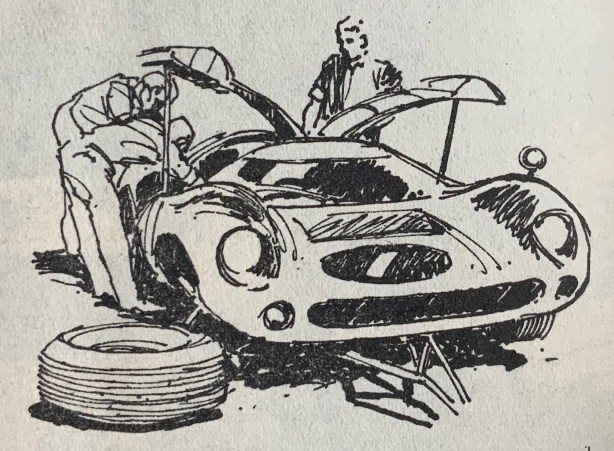
Epstein Enterprises Lola T70 Mk3 (C Anderson)
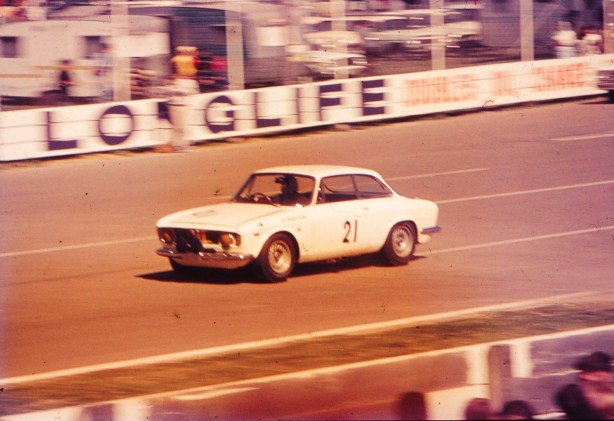
 

The Bartlett/Doug Chivas Alfa Romeo GTA ‘RHD’- the second of Alec Mildren’s two GTA’s (P Maslen)
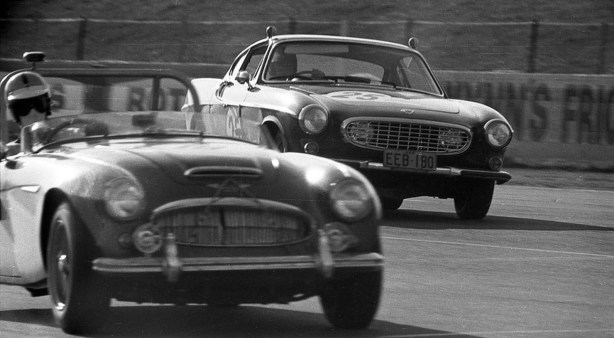
 

Ross Bond’s legendary Austin Healey 3000 in its more formative specifications in a long, successful race career and the John Keran Volvo P1800S (oldracephotos.com/Phillips)

Alan Hamilton took over the 906 at 2.03pm for a top up of fluids and driver change, losing 3 minutes 10 seconds and in so doing allowed the Ferrari 250LM into the lead- then Bill Brown pitted the Ferrari to change over to Greg Cusack, that stop took 2 minutes 45 seconds, in the process re-entering the race a lap and a half behind Hamilton- both cars were well clear of the Lola which was in Jackie Epstein’s hands after a 7 minute stop.

Alan Hamilton niggled Cusack in the 250LM for several laps looking for a way past to increase his advantage finally getting alongside on the outside of Lukey- Greg held his line, the Porsche left the road, shot over a low mound and hit the Armco. The Victorian regained the circuit after 30 seconds but as the car entered Shell Straight the rear fibreglass body panel blew open and was ‘dragged along like some weird insect in the middle of a mating dance’ as White poetically put it!

The flustered pilot pulled off at Firestone, his race seemingly run but he was pursuaded to return the car to the pits for repairs- the team made good the rear panel with a combination of rivetted aluminium, race-tape and wire, they lost 17 minutes in the process with Glynn Scott determined to make up the lost time (in one of his photo captions White wrote that the 906 lost a total of 1 1/4 hours in the pits in total- not sure what is correct).
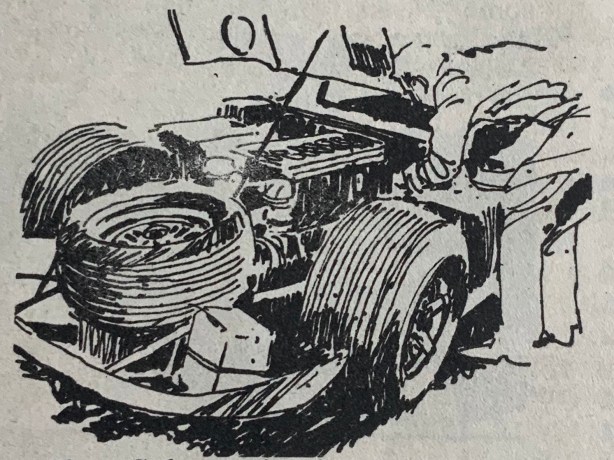
250LM at rest (C Anderson)
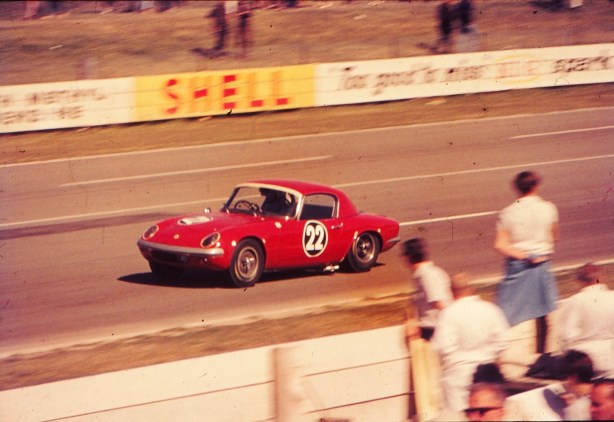
 

The Lotus Elan 26R crewed by disc-jockey Bill Gates and Jim Bertram (P Maslen)
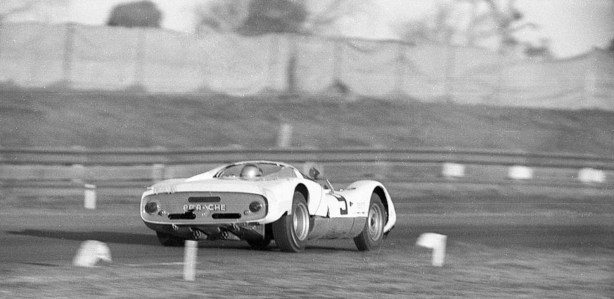
 

Mroom-waaahhhrr. Scotty on the hop 906- where on circuit folks? (oldracephotos.com/Phillips)

By this stage the ever reliable ‘Old Red Lady’ as David McKay referred to his adored car was in a lead which was all but impossible to peg back.

By 3pm the LM had completed 212 laps and had a 22 lap lead over the French/Foley MG Midget which was in a stunning second place from the Hawkins/Epstein Lola- which had also been back to the pits during the 906 time standing still. The Roxburgh/Whiteford Datsun 1600 still led its class and was fifth outright at a time the Porsche was back in ninth after going back to the pits for a further 49 seconds of repairs.

The French/Foley Midget pitted near 4pm with a broken scavenge pump whereupon the crew worked to convert the gallant little car from a dry to wet sump- this marvellous effort was in vain when the oil pump shaft broke at 4.20pm.

Scott pushed the robust 906 along very quickly- lapping in the regular 1:20’s, by 5pm he was back in sixth with 251 laps on the board, he was in sparkling form no doubt buoyed by his victory in the NSW ANF1.5 Championship aboard his old Lotus 27 Ford at Catalina Park in mid-August over Max Stewart and Phil West amongst others- Tapsall’s Datsun had completed 253 laps and Keran’s Volvo 255. With five hours to run even the third placed Roxburgh Datsun 1600 Sports looked likely to be caught by the flying Porsche.

The Tapsall Datsun pitted at 5.10pm for fuel and tyres but refused to start and was taken behind the pit wall where the battery and starter motor were replaced. Hamilton jumped back into the 906 at 5.38 pm having taken on 20 gallons of fuel and was after the third placed car- now only 4 laps away- a quick, high speed spin under the Dunlop Bridge at 6.50pm did not diminish his intent.
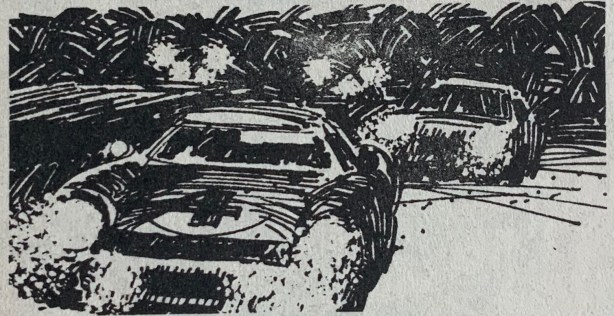
Not too hard to tell which car was artist Colin Anderson’s favourite! The winning 250LM (C Anderson)
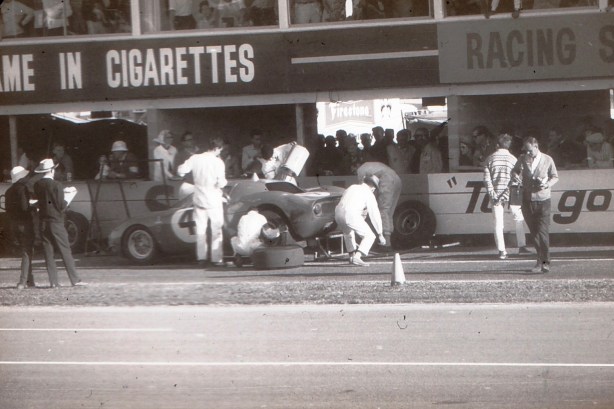
 

A routine fuel and tyre stop for the victorious 250LM and below that the rumbling Lola in the Repco Hill to Castol corner section of the circuit prior to ‘Rothmans Straight’- the main straight(P Maslen)
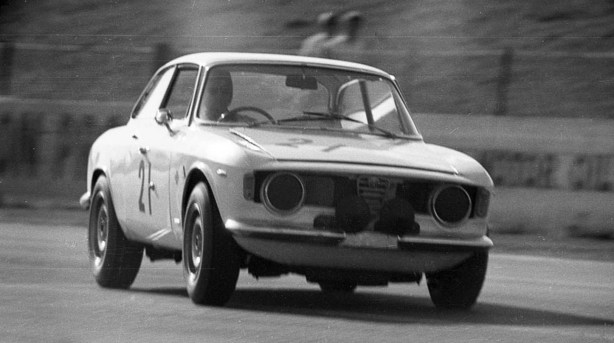
 

Hard to tell but I think its Doug Chivas in the Mildren Alfa GTA, therefore practice, perhaps KB can advise (oldracephotos.com/Phillips)

By 7 pm the Cusack/Brown Ferrari 250LM led the Hawkins/Epstein Lola T70 by over 25 laps having completed 374 circuits of the challenging Nerang layout- by then the speedy 906 was only a lap adrift of the leading Datsun and gaining fast. The Holden/Holland Cooper S Lwt followed on 326 laps, a lap clear of the Volvo.

Henk Woelder’s, later Australian F2 Champion aboard Bill Patterson’s Elfin 600E Ford, exited his Datsun after again replacing the car’s battery and starter motor- only fifteen cars remained in the battle at this point.

Glynn Scott took over the 906 again at 8pm after a 3 minute 49 seconds stop for fuel- his first flying lap in the dark was a 1:21.2, about 5 seconds quicker than the Ferrari and 10 seconds better than the big rumbling Lola- both of these machines being stroked along to the finish in ‘secure’ positions of course- Scotty had a big spin under Repco after 3 laps but kept on pushing all the same.

Woelders’ Datsun re-entered the fray but was black-flagged for running without rear tail-lights- Whiteford’s similar car (#28 rather than Woelders’ #29) was shown the flag- ‘a nasty scene was avoided’ as ‘Dicer Doug’ was not a man to be trifled with, and the Woelders machine was put away for the rest of the night.
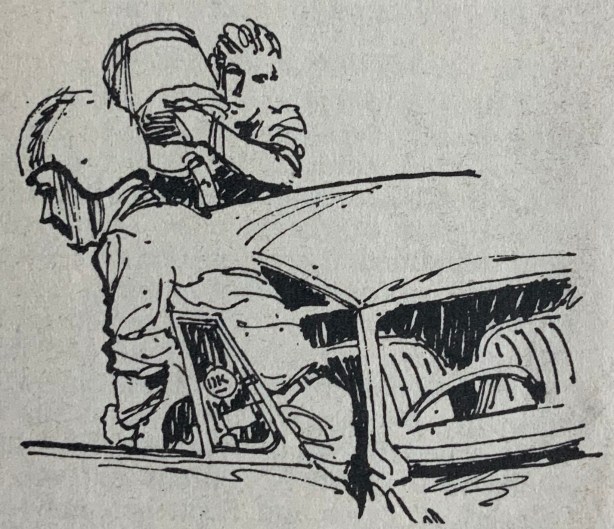
MGB pitstop, probably Max Stahl (C Anderson)
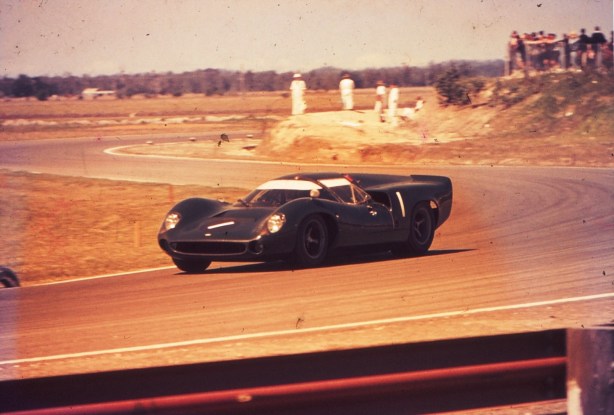
 

The rumbling Lola in the Repco Hill to Castol corner section of the circuit prior to ‘Rothmans Straight’- the main straight (P Maslen)
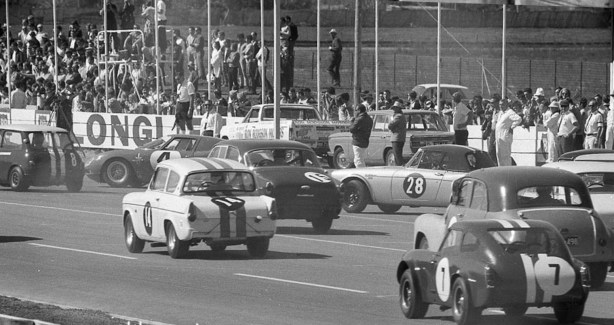
 

From right- #7 works, new French/Foley MG Midget which is extant, de Jersey/Birmingham Holden FJ, #14 Hallam/Pare Ford Anglia, #15 Lister/Seldon Volvo 122S, #28 Roxburgh/Whiteford Datsun 1600 Sports, #4 250LM, #8 Holden/Holland Morris Cooper S Lwt (oldracephotos.com/Phillips)

By 9 pm with one hour left to run the Ferrari had completed 448 laps, 20 laps ahead of Paul Hawkins who was at the wheel for the final stint, Glynn Scott was still lapping in the low 1 min 21’s in his series of inspiring stints and was by then up to third outright with 417 laps- 11 adrift of the curvaceous Lola.

Hawkins pitted for the last time at 9.25pm, the two and a bit minutes stop handed Glynn another 2 laps with Hawkins circulating in the 1:26’s to go easy on the car, Des White finished his wonderful article on the race with ‘The race finished in the cold dampness of 10pm and the Ferrari coasted into the presentation area, quickly joined by the Porsche which received and rightly deserved all the ovation it received followed by the big mean, green machine, the Lola.’

‘The results were just about what one must expect in an endurance event, the Ferrari taking out its second Rothmans 12 Hour, while both Hawkins and Hamilton vowed to be back next year with the same teams, for as Hawkins stated- ‘Its time we won this thing.’
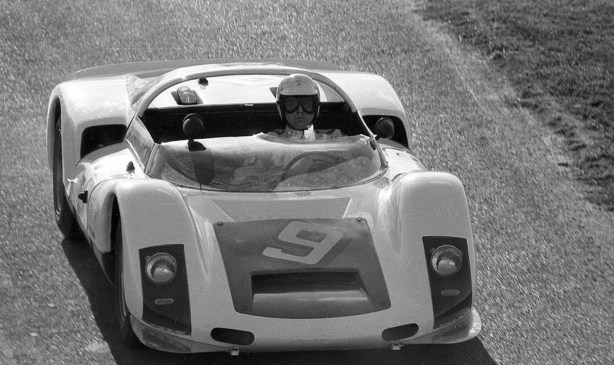
Alan Hamilton was and is a tall fella so lopping the lid off Porsche 906 ‘007’ made sense especially in an Australian sprint racing context- the bulk of our sportscar races were short. Here looking all pristine in practice entering ze pits, she looked a bit more grungy and used post-event (oldracephotos.com/Phillips)
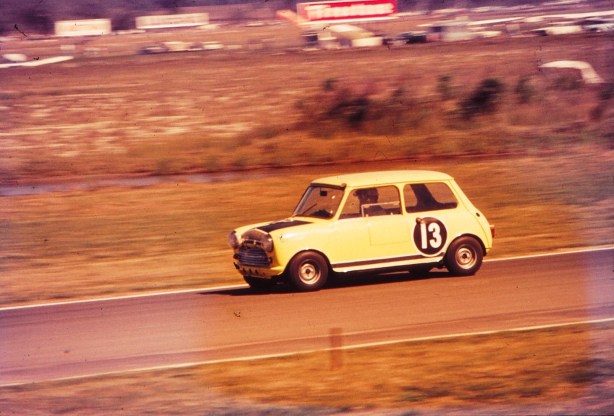
 

Three Minis were entered in the Sports Racing under 2 litre class, this one is the Phil Barnes/Jeff Leighton Morris Cooper S- they completed 238 laps and placed seventh in the class won by the Hamilton/Scott 906, the best placed Cooper S was the BMC works entry raced by Bob Holden and Don Holland to fifth with 437 laps completed (P Maslen)
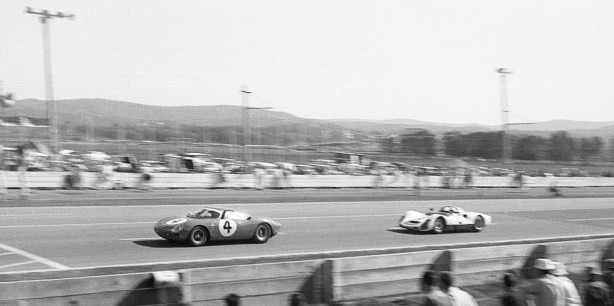
 

250LM and 906 early in the contest, main straight (oldracephotos.com/Phillips)
 

(P Maslen)

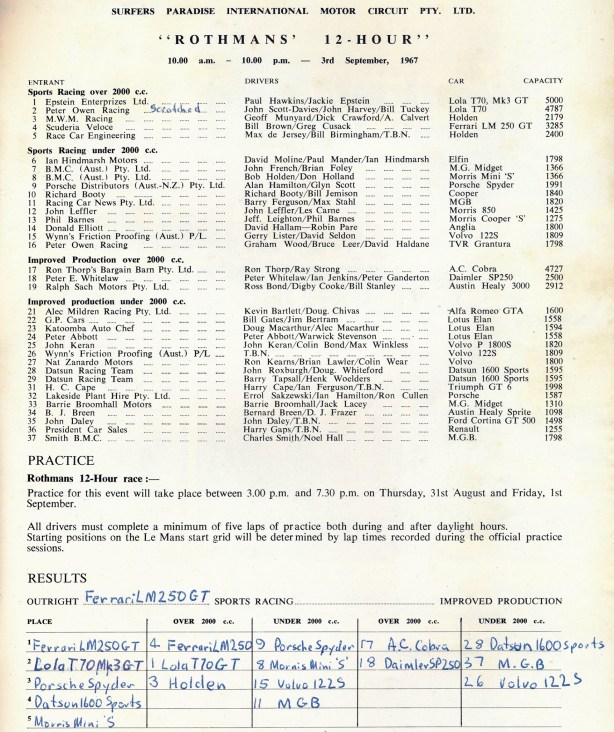
The results of the race, to the first three finishers in each class are as follows; (source RCN)

Outright

Greg Cusack/Bill Brown Ferrari 250LM, Paul Hawkins/Jackie Epstein Lola T70 Mk3 Chev, Alan Hamilton/Glynn Scott Porsche 906

Sports Racing over 2 litres

250LM, T70, Max de Jersey/A Shaw Holden FJ

Sports Racing under 2 litres

906, Bob Holden/Don Holland Morris Cooper S Lwt, David Seldon/Gerry Lister Volvo 122S

Improved Production over 2 litres

Ron Thorp/Ray Strong AC Cobra, Peter Whitelaw/Kevan Woolf/P Ganderton Daimler SP250

Improved Production under 2 litres

John Roxburgh/Doug Whiteford Datsun 1600 Sports, Chris Smith/Noel Hall MGB, Ray Kearns/Brian Lawler/Col Wear Volvo 122S
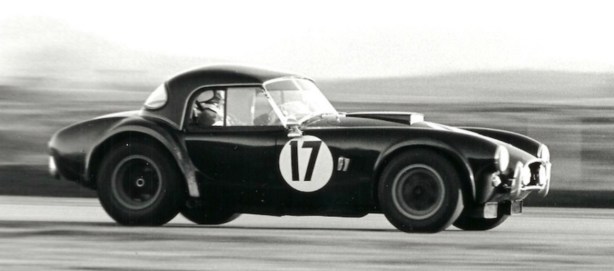
Ron Thorp on the hop, AC Cobra (Bowden Collection)

Afterthoughts…

Surfers Paradise owner/promoter Keith Williams tried very hard to establish this race, first over twelve hours duration in 1966/7 and then six hours in 1968/9 as fixtures on the Australian racing calendar.

Forty cars raced in 1966, 27 in 1967, 29 in 1968 and 23 in 1969, in the latter years Australian ‘Pony’ cars swelled the numbers and of course endurance events in Australia quickly evolved as Series Production/Group E Touring Car events in the late sixties with huge entries. ‘Sports prototype or racing sportscar’ numbers in each of the SPIR events were 8, 3, 4 and 7 from 1966 to 1969, which I understand on one level in the sense that the local population of such cars in Australia were sprinters rather than endurance racers. Having said that one could have run your twin-cam or Olds or Chev with a softer cam and used less revs for this event- all of which assumes the funds to do so of course.

The entry of cars from Europe was problematic given the distance involved without payment of generous subsidies and why would the Americans bother given the size of the Can-Am purses?

Sportscar construction spiked a bit in Oz in 1970/71 with the release of 2.5 litre Repco Brabham V8’s as the Tasman 2.5 Formula ended but so engined Rennmax’ and Elfins were fitted with motors which struggled over 100 miles let alone six hours- and so it was that Williams’ valiant attempts withered on the vine.

A pity.

Credits and References…

Peter Maslen, oldracephotos.com/Phillips, John Keran Collection, Bowden Collection, September 1967 Racing Car News

Superb drawings by Colin Anderson scanned from RCN

Tailpieces: Paul Hawkins T70 Mk3 Chev, Surfers…
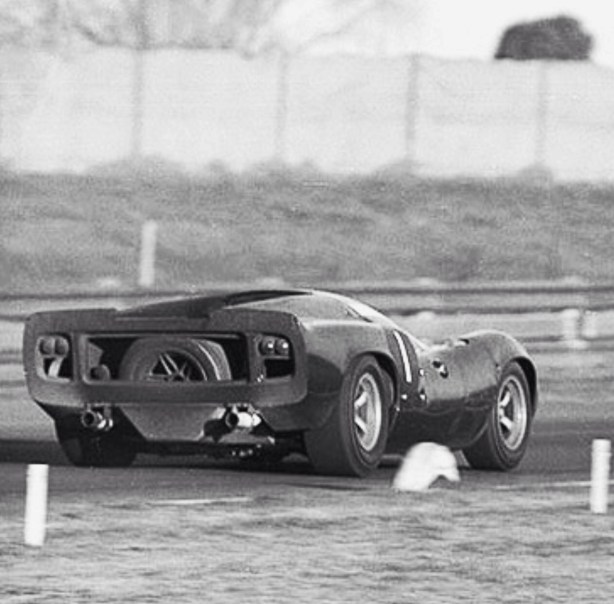
(oldracephotos.com/Phillips)

An all time Top Ten Racing Cars pick for me- been on the list for forty years too so its unlikely to slip off it. A big arsed but oh so curvaceous, busty, buxom, broad- it oozes sex if you get my drift.

Twiggy it ain’t.
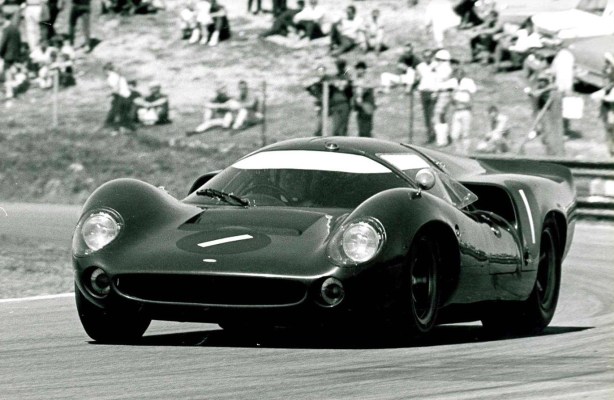
(unattributed)

Funnily enough Paul had a sprint win in the car before leaving Australia.

He contested the 34 lap, 76 mile ‘Gallaher GT Trophy’ race at Warwick Farm the weekend after Surfers on 10 September and had a terrific weekend, winning the race and a couple of five lappers as well. Niel Allen’s Elfin 400 Chev was 3 seconds a lap quicker in practice than Paul- and Glynn Scott’s Lotus 23B Ford twin-cam was half a chance too but come raceday Allen lost a tooth off the crown wheel relinquishing the lead to happy Hawkins.

Paul shortly thereafter bought the Lola from Epstein and had some club successes in it back in the UK before having a very successful Springbok tour with it that November/December 1967.

At this stage of his career Hawkins was both a sportscar ace for hire- Porsche, Ferrari and John Wyer spring to mind, and did good business racing modified GT40’s and Lolas out of his own workshops in Finchley, North London.

As most of you will be aware the gifted Australian lost his life in a semi-works T70 Mk3B Chev whilst contesting the very wet Tourist Trophy at Oulton Park on 26 May 1969- he left the track and hit a tree at Island Bend.

Finito…

(D Simpson)

Bob Muir punches his Rennmax onto the straight at Oran Park during 1970…

Muir loved this car, it was initially built around a Coventry Climax 2.5 litre FPF engine and first raced at Oran Park in September 1969 and then through the Australian Tasman rounds and a bit beyond. One of Merv Waggott’s 2 litre, 275 bhp’ish engines was installed later in 1970.

Late that year it was sold to prominent Melbourne racer/engine builder Peter Larner who fitted a Lotus/Ford twin-cam, later still passing through the hands of a couple of other drivers ‘in-period’. It has been in Barry Singleton’s hands since the early 1980’s. With only a dozen or so meetings all up it would be a very yummy thing to have especially with a 2 litre Waggott fitted.

Bob later fitted his Waggott motor to the Mildren ‘Yellow Submarine’ which he raced for a year or so and rated the Rennmax the sweeter car- which is no small statement given the race record of The Sub.

As is well established, Bob Britton/Rennmax built a series of cars based on a jig he created from Denny Hulme’s Brabham BT23-5 which was crashed during the 1968 Tasman Series and given to Britto to repair. The most successful of these ‘BN3’s is Max Stewart’s Mildren Waggott, a chassis I have written about. Perversely Muir’s car has always been referred to as a BN2 but it is a BN3 in terms of its specification.

Where is that Rennmax book Ray Bell?!, Bob Britton, his cars and adventures are certainly worthy of a book.

(L Hemer)

Wings ‘n Things…

Lynton Hemer was at Warwick Farm in December 1969 when Bob Muir first fitted wings to this car during the Hordern Trophy Gold Star round in its original Coventry Climax engined form.

The first couple of shots are those below, he reasoned that they were taken in the morning without wings and engine cover to get a base level time and feel for the car. Between sessions they fitted all of the aerodynamic goodies and then Bob went out with Lynton observing ‘no wonder he had that (grimaced) look on his face, he must have found the car completely different’- as in faster!

An oil seal failed on the car during the race won by Kevin Bartlett- making the race debut of the 2 litre Waggott engine in The Sub- the car Muir would later own. Bob didn’t race the car sans wings ever again…

(L Hemer)

Credits…

Dick Simpson- oldracephotos.com.au, Lynton Hemer, oldracingcars.com

Tailpiece: In search of a wing…

Homestead Corner, big oil tank, angle on the exhaust dangle unattractive. I wonder who he bought the FPF from? (L Hemer)

Finito…

(I McCleave)

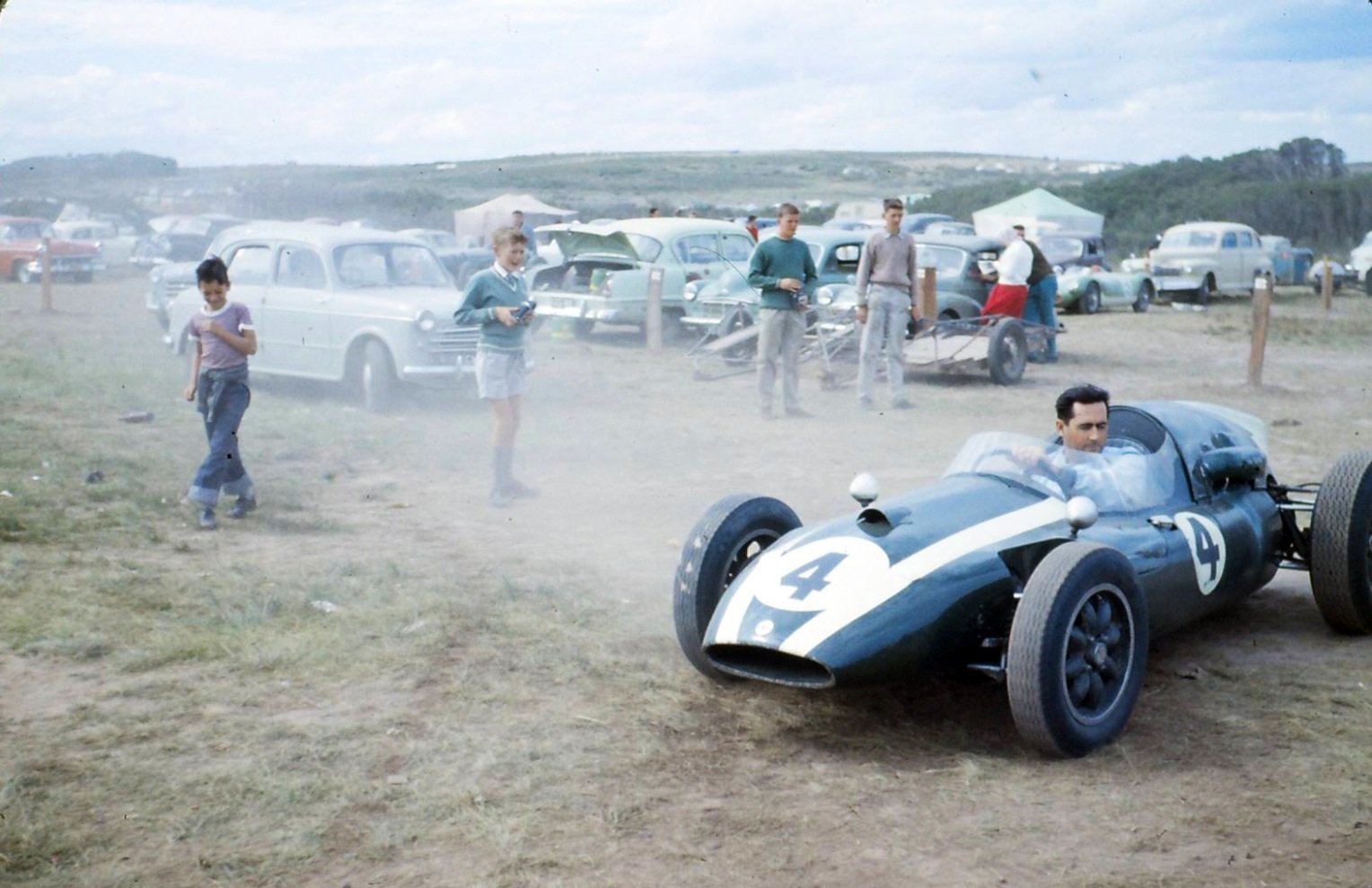
Jack Brabham playing with the kids in the Phillip Island paddock, Cooper T51 Climax, 14 March 1960…

Jack won the Repco Trophy over 16 laps in a T51 rout from Bill Patterson, Bib Stillwell and Austin Miller in similar cars. None shared the latest 2.5-litre Coventry Climax FPF fitted to Jack’s F2-4-59 said to be ‘Brabham’s main car during the early part of 1959’. Austin’s motor was 2.2-litres, Bib and Bill’s 2-litre units.

Brabham had a successful fortnight during his short 1960 Australian summer racing tour, three races from three, winning the Longford Trophy, Light Car Club of Tasmania Trophy on 5 and 7 March at Longford the week before.

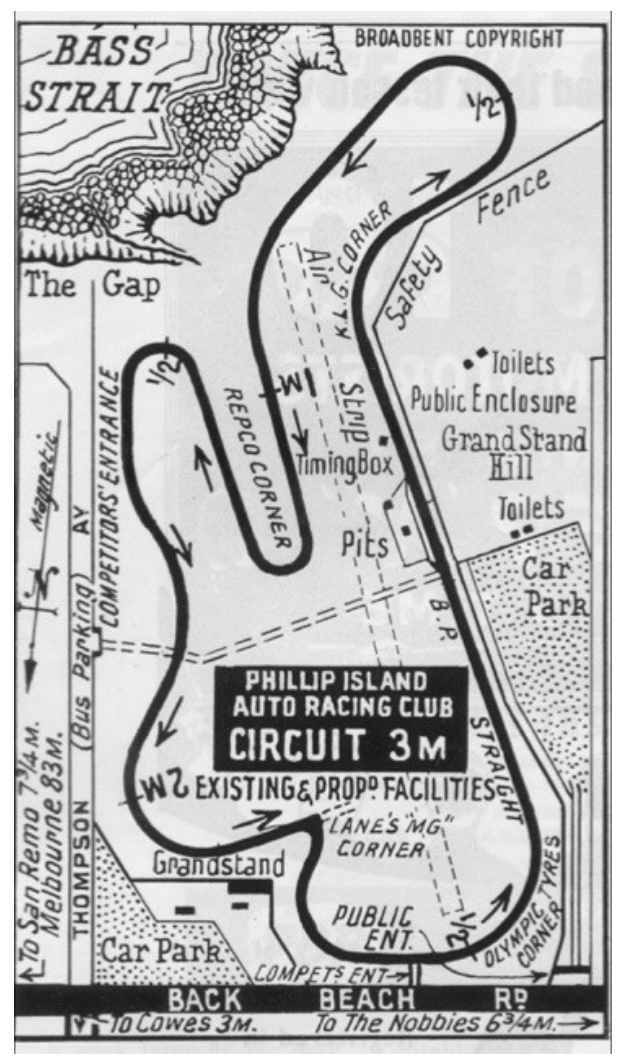
Ian McCleave took the opening photo of ‘A youthful Jack Brabham showering my younger brother in dust…I seem to recall Dad charged with adrenalin winding the Austin A95 up to 90 mph on the way back to Melbourne!’ Lukey Heights is well familiar to ‘Island regulars in the background, its a top shot and another enthusiast that day, Robert Jones caught the start of the race, below.

(T Johns Collection)

Australian Motor Sports Review 1959-60 wrote that “During these hectic two days , Brabham more than simulated his performance at the opening meeting of Phillip Island in December 1956.”

“On that occasion driving a Cooper sportscar he won the three races he entered including the Formula Libre event ahead of Ted Gray’s Tornado Ford V8 and Lex Davison’s 3-litre Ferrari 500/625. Three years later, Brabham as you would expect from a World Champion, won every scratch race he entered; but unlike the first meeting, he competed in five events, but won only four, having been beaten into second place in the Racing Car Handicap on the first day.”

(Ron Jackson)

Credits…

Ian McLeave, Robert Jones, Tony Johns Collection, Ron Jackson, Australian Motor Sports Review 1959-60

Tailpieces…

(R Jones)

The off, Brabham, Stillwell and Miller, with Bill Patterson in white, on row two.

(T Johns Collection)

Finito…

(P Ansell)

It does all get a bit serious these days doesn’t it!?

Here Jim McGuire and Alan Tatham are enjoying their Cooper Mk4 Norton at Gnoo Blas, circa 1957…

Aren’t these an amazing group of colour photographs of a race meeting at the popular, relatively shortlived Orange, NSW circuit. Such vivid images of race meetings in Oz at the time are not exactly plentiful.

These shots were posted on Bob Williamson’s Old Motor Racing Photographs – Australia Facebook page by Paul Ansell and immediately provoked a response from a swag of enthusiasts contributing information about the car and that day.

McGuire works, Tatham poses for the babes, as drivers do (P Ansell)

Australian Ace Kevin Bartlett recognised his ‘blue Morris Minor Series 2 fitted with a fibreglass top…’, that’s KB in blue standing beside the door of the car in the background. In fact Jim McGuire and his wife Carmen aided and abetted the careers of several drivers including KB, who raced the Elfin Imp for them in the mid-sixties and Peter Wherrett- the latter raced this very Cooper Mk4 with a Hillman Minx four-cylinder engine installed in the early sixties.

Here the Cooper is fitted with a Norton Manx engine. The red car over the back in the first photo is the Profilio MG Spl which still exists in historic racing as indeed does the Cooper Minx- restored by David Kerr a couple of decades ago.

By the time McGuire acquired the car, chassis # ’10/54/50′ was already a veteran of the 1954 Australian Grand Prix, Charlie Swinburne raced it, Manx Norton powered, to tenth place. Its thought when first imported to Australia the car was originally supplied to Les Taylor in Queensland fitted with a JAP 1100 motor.

Later raced by Queensland’s Ray Lewis as the ‘LPS Cooper Norton’ (Lewis/Bill Pitt/Charlie Swinburne) during 1953, Jim McGuire bought it from Tony Crick of Wellington, NSW, initially racing the machine with Tatham at the wheel.

Barry Collerson in the Cooper Minx leads an Elfin Catalina at Oran Park circa 1961 (Alan Stewart)

Later, in 1959 or early 1960, Jim mated a Hillman Minx 1500 engine and VW gearbox to the frame, the car in this form contested the 1960 Australian Grand Prix at Lowood.

The photo below shows Tatham aboard the Cooper Mk4 Hillman together with the #37 D Russell MG TD, #49 N Barnes MG TC s/c. I’m mystified by a couple of the cars but it appears to be the great Tornado 2 Chev down the back, by that stage driven and owned by Mel McEwin.

(F Pearse)

Up front a thriller of an AGP was won by Alec Mildren’s Cooper T51 Maserati by a whisker from Lex Davison’s Aston Martin DBR4/250, the little Cooper retired with an undisclosed ailment. Not so long after Lowood Tatham ceased to drive the car but it raced on, still owned by Jim at Strathpine, Tarrawingee, Hume Weir, Oran Park and Warwick Farm driven by Peter Wherrett and Barry Collerson.

Peter Wherrett, Cooper Minx, Warwick Farm May 1961 (P Wherrett)

Both Sydneysiders were talented coming-men of the day with Collerson racing an ex-Doug Whiteford GP Talbot-Lago in Australia before chasing the  FJ circuit in Europe for a couple of years. He has written a book too- i must buy ‘Mount Druitt to Monza’, been meaning to for ages.

Wherrett is incredibly prominent in the memories of several generations of us for his racing, his ‘Racing Car News’, for many years THE Australian motor racing monthly bible- race reports, ‘Peter Wherrett Advanced Driving’ school and ‘Torque’ the seminal, defining, brilliant ABC television motoring program of the mid-seventies. The genre popularised by Jeremy Clarkson much later started with Wherrett and a team at the ABC. Remember PW’s track test of Warwick Brown’s Lola T332 Chev?, it just blew my tiny, teenaged mind!

The Cooper Minx later fell into the tender, loving hands of David Kerr who restored and raced it extensively in historic racing with John Herman the last reported owner.

Lets Get Physical! Little Barry Collerson trying to stay aboard the Cooper Minx at Warwick Farm in August 1962. Note the different, later fibreglass nosecone in this shot (P Wherrett)

Credits…

Paul Ansell- photos. Dick Willis, Kevin Bartlett, Greg Smith, ‘Historic Racing Cars in Australia’ John Blanden, Fred Pearse Collection, Alan Stewart Collection and Peter Wherrett Collection on aussieroadracing.homestead.com

Etcetera: Cooper Minx, circa 1961, perhaps at the McGuire’s home in Sydney- Peter Wherrett Collection photos…

Water radiator neatly integrated given air-cooled engines originally fitted

Front transverse leaf suspension as standard Cooper Mk4

Rear suspension and wheels appear as standard Cooper Mk4

Hillman Minx 1500 four fed by a couple of downdraft Strombergs, transaxle is modified 4 speed VW

Tailpiece: Gnoo Blas officialdom, Cooper Mk4 unwell…

Never seen so many crisply laundered white overalls! Tatham in Cooper Mk4 Norton. Bucolic Gnoo Blas (P Ansell)

Finito…

(N Stratton)


Kevin Loy’s Matich A51 ‘005’ Repco F5000 departing Oran Park in Vice-Regal style, 2 February 1975…

No standing on ceremony here, although its a you-beaut ANF1 car- the Formula 5000 machine is travelling in no more comfort than my Formula Vee and considerably less so than my old Lola T342 Formula Ford. And its off to Surfers Paradise, 850 kilometres away in the hands of Ian Douglass to whom it has just been sold.

I’ll bet Frank Matich, Derek Kneller and the boys looked after the thing much more nicely in the US- this chassis was new for the US L&M Series tour Team Matich undertook during 1973. It was FM’s primary weapon, A51 ‘006’ went along for the ride as the spare. Here is a story about Matich and his F5000 cars;

Frank Matich: Matich F5000 Cars etcetera…

Matich A51 ‘005’ in the Mid Ohio paddock 1973 (T Capps)


Lella Lombardi in A51 ‘005’ during the 1974 AGP- car was overseen by Matich himself. Lella pushed Max Stewart, the winner very hard before oil pump failure ended a great run (HAGP)

In many ways this little baby would be ‘the’ F5000 Matich to own. It toured the US, was raced by Lella Lombardi at Sandown and Oran Park in 1974, and, sold to John Goss to keep A53 ‘007’ company, won the 1976 Sandown Park Australian Grand Prix modified to A53 spec.

Another shot of Lombardi, this time at Sandown Park’s Dandenong Road corner in 1974 (B Keys)

Later still French sportscar ace Henri Pescarolo raced it at Calder in 1977, so too did Jim Richards in its ‘period dotage’ in 1979.

A very nice jigger indeed, here looking a bit forlorn on an open trailer behind an XA Ford Falcon Wagon rent-a-rocket.

Still, the serious money should be spent on the car not the trailer…

Goss wins the 1976 AGP aboard his Matich A51/53 ‘005’ from Vern Schuppan’s Elfin MR8C Chev, Sandown Park (HAGP)

Credits…

Neil Stratton, oldracingcars.com, Terry Capps, Derek Kneller, ‘History of The AGP’ G Howard and ors, Bruce Keys

Tailpiece: A51 ‘005’ fitted with Repco V8 flat-plane ‘Shaker’ crank in the Watkins Glen pitlane 1973…

(D Kneller)

Finito…

(S Hood)

Goerge Barton and John Sherwood with their MG NE Magnette, in 1934, place unknown…

John Sherwood was a rather talented Australian- an elite road racer, competitor in the 1938 Australian Grand Prix and winner of the 1939 New South Wales Grand Prix/Motor Road Race, both events at Bathurst. He was also an excellent Midget speedway racer, motor sport administrator and promoter.

Sherwood was the driving force of the NSW Light Car Club and the key individual who created the Mount Panorama track at Bathurst. From a pioneering motoring family, he was a formidable competitor and later, as a Director of Empire Speedways, was a big contributor to the growth of Speedway Racing in Australia

I was researching an article on Sydney’s Parramatta Park road circuit when I tripped over this article written by Sherwood in 1953. I’ve reproduced it for its rarity- a man of the sport, in the sport and involved in the business of racing writing about its history in period having participated in many of the events he describes.

The selection of photographs to help bring the article to life are my own, otherwise Sherwood’s work is reproduced verbatim.

John Sherwood exiting Murray’s Corner, MG NE Magnette, Bathurst, Easter Monday 10 April 1939 on the way to winning the handicap NSW GP/Motor Road Race. He won from Paul Swedberg in John Snow’s Delahaye 135S and John Barraclough’s MG NE Magnette. The Sydney Morning Herald reported that ‘Sherwood drove a splendid race throughout going into the lead after the first few laps and holding it to the end, though making two stops for faulty spark plugs’ (M Stahl)

‘Generally speaking, history tends to be on the dry side, but fortunately the historical side of motor racing is anything but dry. It is rather fascinating to look back along the years to see how the sport in Australia has developed.

Motor racing in our country has grown over the years despite several retarding factors: the continued objection of officialdom to all aspects of organised fast driving, for many years the impossibility of obtaining suitable circuits and tracks on which to race and the lack of factory support for ambitious and worthy drivers. Nevertheless, motor racing enthusiasts throughout Australia have overcome all these drawbacks, and today (1953 remember) we see more of the sport than ever before.

Motor racing in Australia developed in Australia through the early reliability trials of 45 years ago, followed gradually by the inclusion in such trials of speed events such as hillclimbs, acceleration tests and short timed events over quarter and half mile distances. Then commenced the various city to city record attempts, for a long time unhindered by officialdom, in which usually big engined chassis with bucket seats, and a host of spare tyres sped from capital to capital over atrocious roads with the success of the run always influenced by the number of blowouts of the cord beaded edge tyres, and the number of tyres it was possible to carry on the vehicle.

Drivers of these cars were considered super-drivers, and such men as the late AV Turner (later killed in a hillclimb), the late Boyd Edkins and ‘Wizard’ Smith were hero-worshipped everywhere by motor enthusiasts.

The first actual racing in Australia probably occurred on the enclosed tracks at Victoria Park Racecourse (Sydney) and the Aspendale one mile dirt track (Melbourne). Mostly big-engine low revving juggernauts took part, entirely unsuitable for the job as we look back now, but in those days the last thing in racing automobiles.’

‘World Championship’ for Under 1500cc cars- Penrith Speedway, Sydney, 6 October 1930. From the outside is John Sherwood’s Lea Francis O-Type, then the Sam Aggett and Charlie East driven Bugatti T37’s and on the inside Tom Lord’s, Geoff Lowe owned Austin 7 Brooklands. On the very inside verge is Jack Field’s supercharged Lea Francis S-Type Hyper tourer slowing having paced the competitors for a lap before the championships 3 lap journey, East was the winner in his Bugatti (SLNSW)

‘The early drivers were keen, and more tracks were opened at Penrith (one mile) Maroubra (5/6 mile highly banked concrete track) and beaches at Gerringong and in Victoria came into use for racing purposes. At Gerringong, Don Harkness, driving an enormous Minerva engined chassis, was clocked at 107 mph to be the first in Australia to exceed the coveted ‘century’.

(The) First actual road racing circuit was opened at Phillip Island in Westernport Bay, 40 miles from Melbourne in 1928 and this became the mecca for motor racing enthusiasts for the next nine or ten years. At this point the dry bed of Lake Perkollili in Western Australia was the centre of motor racing in the west.

Australia’s best road circuit (more or less built specially for the purpose) at Mount Panorama, Bathurst came into being in 1938, and except for most of the war years, has been in use ever since. Other road circuits in other states have also sprung up, and since the war various ex-airforce strips have been adapted for racing with much success.

The newest circuit to come into use is in Parramatta Park, 15 miles from Sydney, a rather narrow 2 mile circuit, suitable mainly for the smaller cars, but by reason of its close proximity to a big population, is certain of success.

Down through the years cars have altered very considerably, the small high revving high compression engines now putting out power which one could not have conceived in the early days. Suspensions, brakes, steering, weight, tyres, fuel, streamlining and a hundred and one other things have combined to make the modern racing car a real thoroughbred, capable of sustaining terrific speeds over long distances.

As the years have rolled on, the scene changes, but motor racing itself does not change. Its spirit, rich in tradition and sportsmanship, linking past and present, reaches out to the future.’

Photo Credits…

Sam Hood, State Library of New South Wales, Max Stahl Collection

Bibliography…

South Coast Times and Wollongong Argus 21 September 1953, reprint of an article first published in the ‘Bentwood Review’, Sydney Morning Herald 11 April 1939, John Medley

Tailpiece: Sherwood and flock…

(Fairfax)

John Sherwood standing beside John Snow’s #4 Delahaye 135S, with the #6 Edison Waters Jaguar 100SS, Alf Barrett’s Alfa Monza and John Barraclough driven Alvis Terraplane straight-8 on the Bathurst grid in October 1939. Sherwood instrumental in the construction of this Australian racing institution- in the words of John Medley ‘Bathurst: Cradle of Australian Motor Racing’.

Finito…


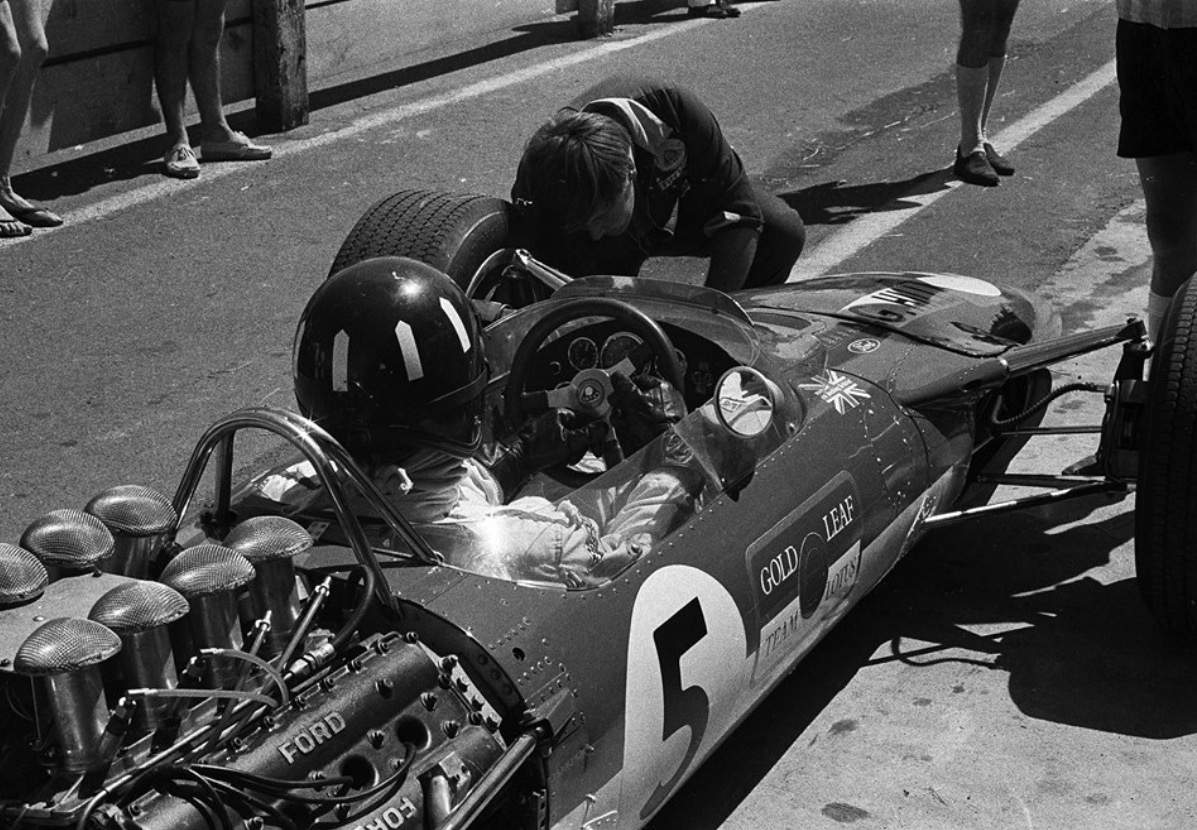
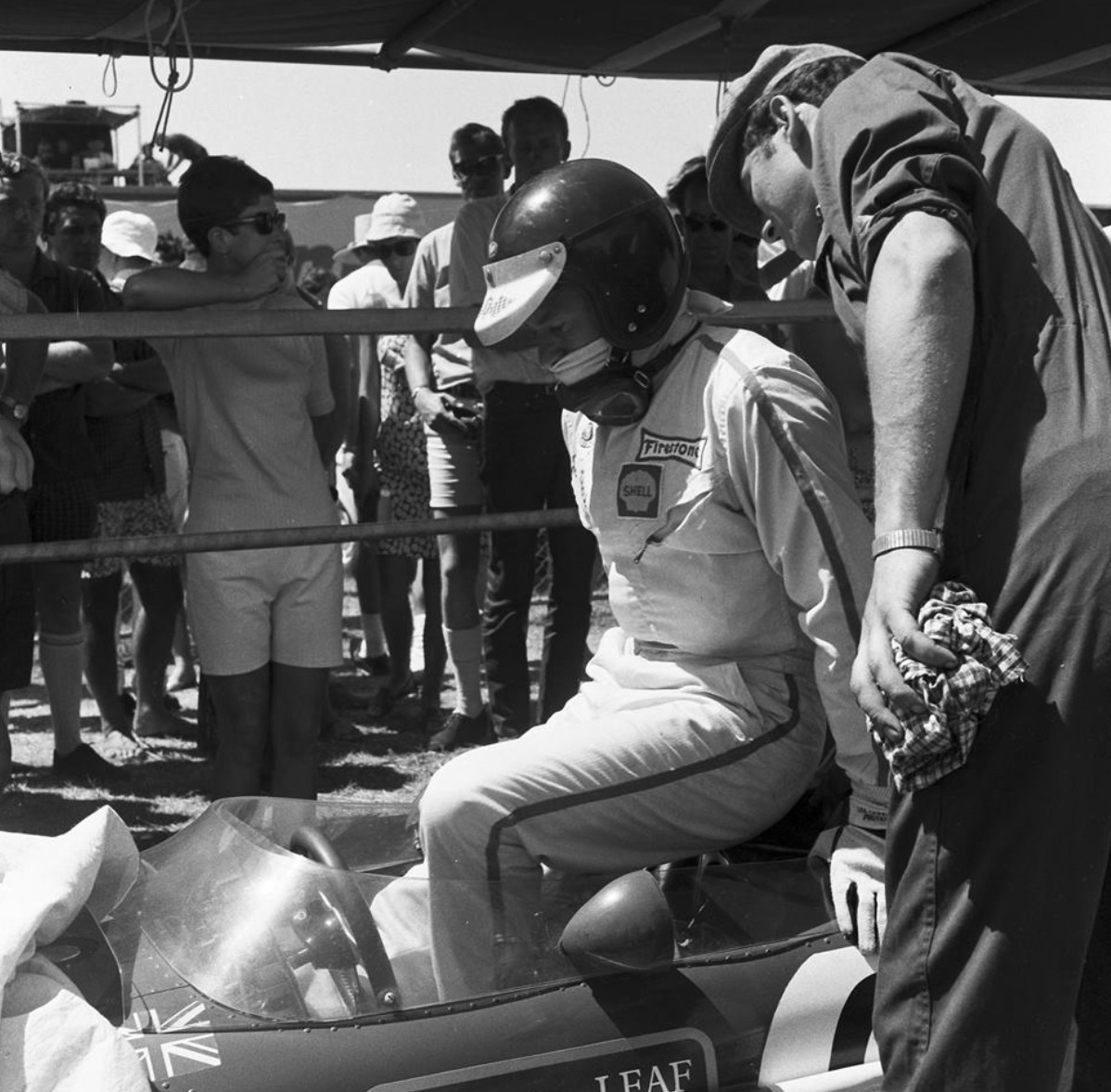
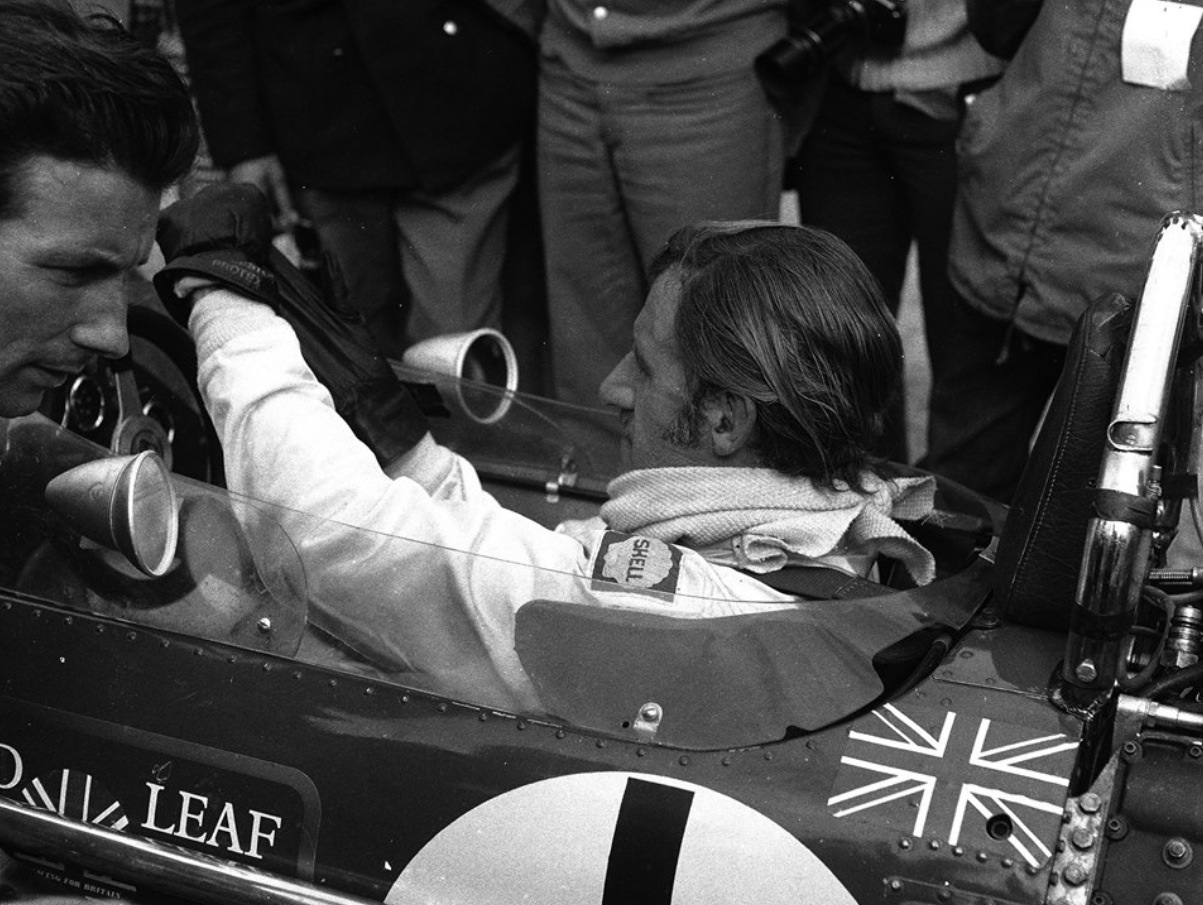
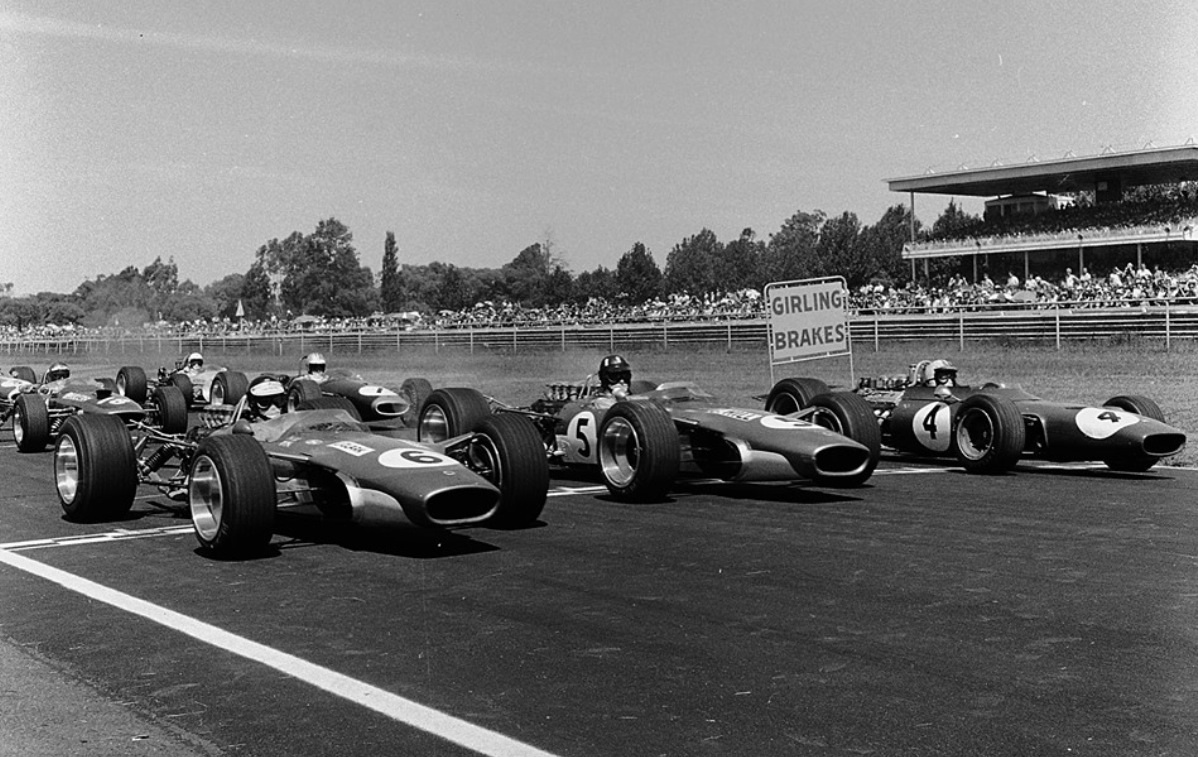
Graham Hill, works Gold Leaf Team Lotus 49 Ford 2.5 DFW in the Warwick Farm pitlane during the ‘Farm’s February 1968 Tasman Round weekend…

I’ve done the 1968 Tasman Series to death with a series of articles uploaded before including one on this particular weekend but this batch of ‘up close and personal’ photos by enthusiast Bryan Henderson are too good to ignore.

One of the reasons enthusiasts get misty eyed about that series is that both Clark and Hill had been regular, enormously popular visitors to Australasia from the dawn of the sixties pre-Tasman era, 1968 was the last we had the pair of them down south together.

Clark won the Tasman with the still very new Lotus 49 in dominant fashion and then returned to Europe after winning the series and the F1 season opening South African GP to his untimely death aboard a Lotus 48 Ford FVA during a Euro F2 round at Hockenheim. In the words of The Seekers popular song of the day ‘The Carnival Is Over’.

Hill, WF- this shot 1969


Clark and Hill, Lotus 49’s, Amon Ferrari Dino 246T, then Courage behind Clark, McLaren M4A FVA and Hulme, Brabham BT23 FVA with Gardner, Brabham BT23D Alfa  behind Denny

We all have our favourite seasons of course but arguably that summer of ’68 was the Tasman peak.

The variety of cars was truly stunning- BRM P261 V8 and P126 V12, Ferrari Dino V6, Brabham Alfa Romeo Tipo 33 V8, the Lotus 49 Ford V8’s, various Brabham Repco V8’s including Jack’s latest works BT23E Repco ‘740’ V8 and a swag of Coventry Climax FPF engined machines in the hands of locals. The driving pool included just annointed World Champ Denny Hulme, Jack Brabham, Jim Clark, Graham Hill, Chris Amon, Bruce McLaren, Richard Attwood, Chris Irwin, Frank Gardner, Piers Courage and local hotshoes Kevin Bartlett, Leo Geoghegan, John Harvey, Graeme Lawrence and others. An amazing variety of cars and depth of talent on the grid…

Etcetera…

(B Jackson)

Things go better with…

Graham and the boys bleed the Lotus’ brakes, note the use of a solid rotor rather than the vented discs used initially in 1967. Nice shot of the front bulkhead and inboard front suspension packaging.

Credits…

All photographs- Bryan Henderson, exceptions attributed on the shot

Tailpiece: To the victor the spoils…

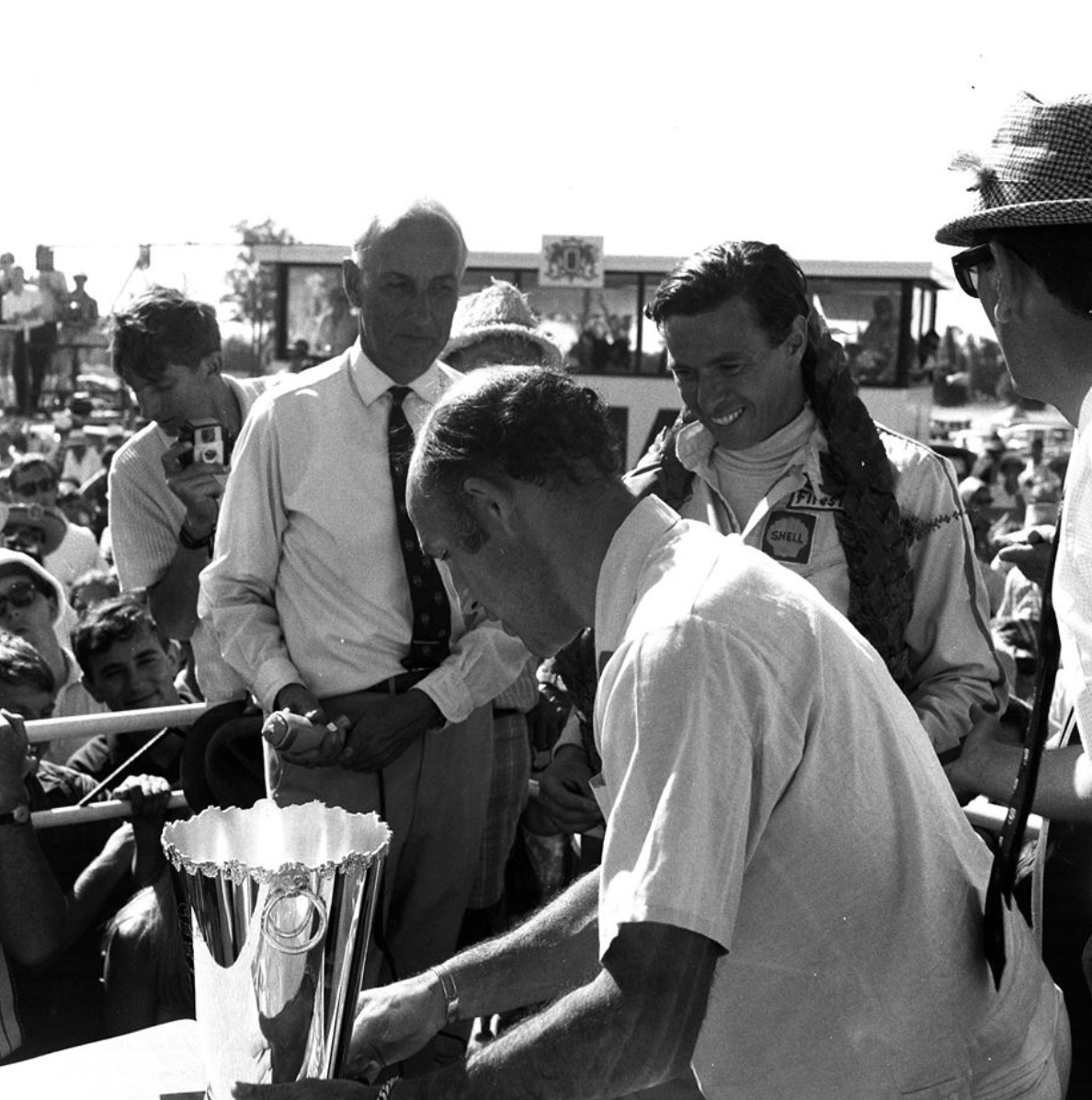
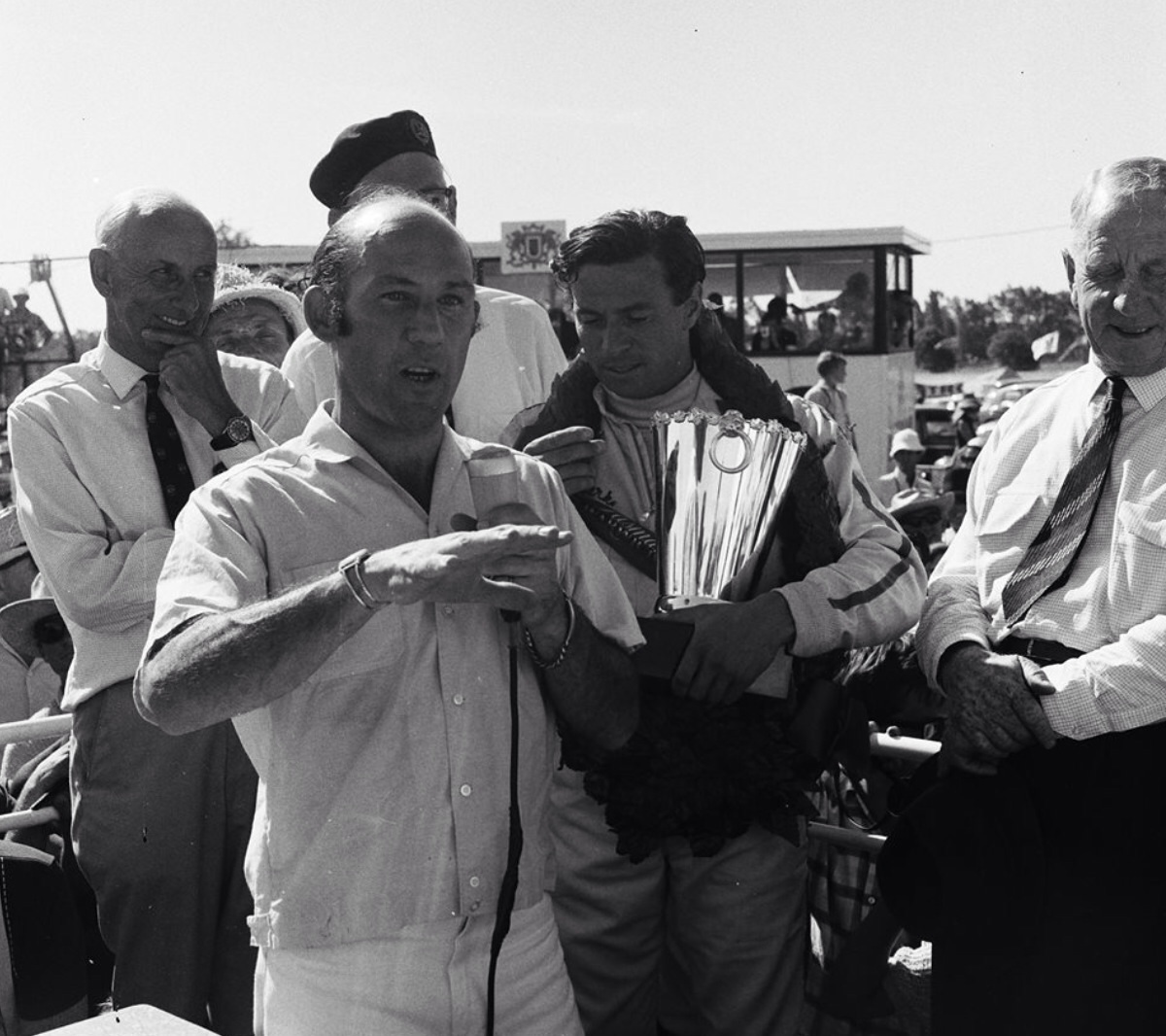
Stilrling Moss, long retired but looking disgustingly fit addresses the crowd in advance of presenting Jim Clark his trophy- he won from Graham and Piers Courage in an F2 McLaren M4A Ford FVA. The gent in the shirt and dark tie is the much respected Geoff Sykes, the AARC/Warwick Farm General Manager/Promoter.

Wonderful times…

Finito…

(Thomas)

These two blokes are aboard a Bugatti Brescia Type 23 out front of The George Hotel in Lydiard Street, Ballarat, Victoria between 1945 and 1950…

The shot is from the State Library of Victoria archive, it was taken by George Thomas, a prolific ‘snapper at motorsport events throughout Victoria at the time. Ballarat, 120 kilometres west of Melbourne is a Gold Rush town. Over 600,000 people came to Australia from all over the globe in the 1850s to chase their fortune. Ballarat was one of the main destinations of the optimistic, it’s a beautiful place with many of the stately buildings of the period still standing, including the George Hotel.

The interesting thing is of course, which particular chassis it is and who the fellows are. My recently acquired copy of Bugattis In Australasia (details in the credits below) personally delivered by the very knowledgeable, youthful, spritely 81 year old author, Bob King suggests it’s either Bill Fleming or Neil Barter, assuming the photo date range is accurate.

The car is a long-chassis Modifie. Without going into all of King’s detail, the chassis number of the car can’t be confirmed, but it came from New South Wales to Victoria in 1938 when owned by Fred Betts. He never registered it, but raced it at Phillip Island pre-war.

After the conflict it was raced by John ‘Bill’ Fleming at the Hurstbridge and Rob Roy Hillclimbs in Victoria in 1948, before being sold to Barter that October. At this stage, as shown in the opening photograph, the car was registered in Victoria JT441 and was fitted with engine number 2566.

Fleming on the startline at Hurstbridge Hillclimb in Melbourne’s outer north-east (King)
The Fleming Brescia at Rob Roy Hillclimb in Melbourne’s Christmas Hills, ‘eighteen litres of Semmering Mercedes in the background’ (King)

Barter recounts in King’s book ‘By January we were driving it around as much as petrol rationing would allow. After correcting a dismally retarded camshaft timing, we found the performance astonishing – 40 mph first gear, 60 in second, 4,300 rpm etc – we were never short of superlatives. Alas youthful exuberance led to disaster and injury when… in April 1939…the car overturned at the corner of Dendy Street and The Esplanade, Brighton’, a bayside Melbourne suburb not too far from Albert Park Lake, a place all you global GP fans will be familiar with.

‘A regular trick was to drive it as quickly as you could along Beach Road at Brighton Beach and, instead of taking the right hand corner…we would hurl it into the gravel car park opposite the monument, put it into a 180-degree slide and then drive straight out again, heading back towards Hampton. The prize for the night went to the driver who travelled the quickest and made the cleanest slide!’ What a great thing to do after a few bevvies on a Friday or Saturday night?!

‘This all came to a halt when, one night, with four up, I rolled it when turning from the beach road into Dendy Street…a very sobering experience for all and particularly me’, Neil Barter wrote. Looking at the young blokes in the car at Ballarat my guess is that it’s Barter and one of his Brighton Grand Prix accomplices!

Bob King records a bewildering nineteen owners of this car. The last was Wolf Zeuner in the United Kingdom albeit this was way back 1992. The name Brescia was applied to these cars (T13 2.0 metre chassis, T22 2.4 metre, T23 2.55 metre) after the cars placed first to fourth in the 1921 Italian Voiturette Grand Prix.

Piero Marco, Brescia T22, Brescia before the off Gran Premio delle Vetturette, 1921 (Bugatti)

de Vizcaya, Brescia T13, GP Penya Rhin 1921- is the descriptor for this Barcelona event but my race results don’t accord with this car/driver combo that year (unattributed)

This event, the ‘1 Gran Premio delle Vetturette’, held on 8 September 1921 on the Circuito di Brescia comprise 20 laps of a 17 km course, a total of 346 km. Thirteen cars contested the race, the winning Bugatti T22 of Ernest Friderich completed the race in two hours 59 minutes 18.6 seconds. He was followed home by teammates Pierre de Vizcaya, Michele Baccoli and Piero Marco all aboard Bugatti 22s, they were chased home by a group of four OM465’s.

2,000 Brescias were built from 1919-1926 more than any other type of Bugatti. ‘Being the first Bugatti made in any numbers, it was the Brescia that established Bugatti’s reputation as a builder of sports and racing cars. They were imported into Australia and New Zealand in considerable numbers…’ King wrote.

Original period sales brochure with Brescia at centre stage, the rest of the document is below

Bob continues ‘The Brescia, of 1496cc capacity, has a cylinder block with non-detachable head and four valves per cylinder operated from a single overhead camshaft via ‘banana’ tappets. In Europe the standard touring model had a four sparking plug cylinder block with ignition from a magneto mounted transversely at the front the engine. These cars had a cast aluminium firewall and were known at the factory as the ‘Modifie’. Racing versions had eight plug cylinder blocks with two magnetos mounted in the dashboard driven (noisily) by spur gears. These latter were known as ‘Full Brescias’. Surprisingly, regardless of chassis length and whether fitted with racing, sports, or touring bodywork, the majority of new imports to Australia were ‘Full Brescias’. Perhaps it was thought to have the security of two magnetos in our relatively primitive motoring environment.’

Superb Brescia 16-valve engine cutaway, technical details as below (Griggs)

In the early twenties, Bugatti didn’t build the bodies of their cars, with the exception of minimalist T13 racing coachwork, so all of the new cars imported to Australia via the London agent, Sorel, were shipped in most cases in bare chassis form. A tax or tariff was imposed on imported coachwork to help stimulate the local industry with ‘Many of the local bodies fitted to Brescias appear to have been of poor quality. This, coupled with the harsh ride of the Brescia, and the poor roads on which they were driven, ensured that the coachwork had a short life. With the need for light bodies for competition work, the discarded original bodywork was usually followed by a succession of amateur built bodies.’ King wrote.

Bugatti played a very important part in the formative years of Australian motor racing as the weapon of choice for many sportsmen on road circuits, hillclimbs, the concrete saucer at Maroubra, gravel speedways and the beaches at places like Gerringong.

A straight-eight Bugatti T30 driven by Geoff Meredith won the first Australian Grand Prix at Goulburn, New South Wales in 1927. Goulburn, 200 km south of Sydney, was also a Gold Rush town. In fact Bugatti won five of the first six AGPs creating huge brand awareness by the standards of the time.

Four cylinder Bugatti T37As – the supercharged variant of the T37 – were victorious in the Phillip Island AGPs of 1929 with Arthur Terdich at the wheel, and in 1930 and 1932 when driven by the period’s ace, Bill Thompson. Carl Junker won in 1931 aboard a straight-eight 1.5-litre T39.

Drake-Richmond’s T37 goes thru Heaven Corner ahead of the Mert Wreford Riley Brooklands during the 1 January 1935 Centenary 300 at Phillip Island. This is the cover photo of Bob King’s book (King)

The Phillip Island AGPs were handicap events, so there is no reason a Brescia couldn’t have won a race with the right mix of speed, reliability and luck, but such never the case. The best Brescia results in our premier event were Merton Wreford’s fourth in 1932 and John Bernadou’s fifth in 1929.

Mert raced chassis 2133, ex-Arthur Terdich, and ‘In practice Wreford’s straight line speed was bettered by very few cars and he was actually faster than Drake-Richmond’s Type 37. In the race Mert was given a 15 minute start by the blown Type 37A’s of Terdich and Thompson and he finished a creditable fourth place on handicap, averaging almost 65 mph for the 200 miles with his old two-wheel-brake Brescia in spite of losing four valuable minutes with clutch trouble’ Bob King wrote.

John Bernadou raced his father Albert’s 2536 in the 1929 AGP – both father and son competed extensively in Victoria in the mid-twenties – despite being delayed by a hole in the fuel tank John was third in the Under 1500 cc class and fifth overall.

Bill McLachlan at Quarry Bend, Bathurst 1952. Bug T37A Ford V8 37358 aka the  MacKellar Spl (B Gunther)

Some (not a huge number mind you) quite exotic racing cars came to Australia pre-War including several Vittorio Jano designed Alfa’s, but the faster Bugatti racing straight-eight T35 and T51’s didn’t make the trip until post-War, when they were of course beyond the first flush of youth.

In our racing, which comprised many events run to handicaps, the cars were competitive but none won a post-War AGP. All played an important role in bolstering grid sizes throughout the long Australian Special Era which in the main were MG based or Ford side-valve V8 powered. In many cases once the original Bugatti (or Alfa or Ferrari or Bristol) motor blew Ford V8s, or a bit later a small block Chev or Holden Grey-six-cylinder engine was inserted under said car’s shapely aluminium bonnets.

To reframe my shallow comment a moment ago about Australian Specials, the wonderful breed included tool-room-quality machines such as the Charlie Dean/Repco Research built Maybachs, the Lou Abrahams/Ted Gray Tornados and Chamberlain brothers Chamberlain 8. Also in the mix are outrageous in brilliant original conception cars like two of Eldred Norman’s masterpieces, the Double 8 and Eclipse/Zephyr Spl, while the rest includes anything and everything from mild-to-wild MGs and Ford V8 engined specials. Not to forget the Hudson straight-eight engined machines pre-War, the high point of those is the extant (Frank) Kleinig Spl: MG chassis, monoposto, Hudson-8 and much, much more. There was no lack of creativity among this country’s mechanics and engineers however basic the underpinnings of the machines they started with!

A game-changer was the move in AGP regulations from handicap to outright events from the 1949, Leyburn Queensland AGP won by John Crouch’s Delahaye 135S. Mind you that didn’t stop the organisers of the 1950 Lobethal, South Australia, and 1951 Narrogin, West Australia AGPs having an each way bet by placing as much emphasis on the handicap winner as the outright victor, which comes through strongly in the contemporary newspaper accounts.

1951 was the last handicap-AGP (in part) and the last won by an Australian built car (the Warwick Pratley driven, George Reed built, Ford V8 engined George Reed Special) until Frank Matich won the 1971 AGP at Warwick Farm a couple of decades later in brand new F5000 Matich A50 Repco Holden.

From 1951 those who wanted to win the AGP needed the readies to acquire a car with the speed, endurance on our rough road circuits and reliability. The balance of the fifties was the Factory Car Era. A Talbot Lago T26C won in 1952/3 (Doug Whiteford), HWM Jaguar in 1954 (Lex Davison), Ferrari 500/625 won in 1957/8 (Davison), a mid-engined Cooper T40 Bristol in 1955 (Brabham) and Maserati 250Fs in 1956/9 (Moss/Stan Jones).

John Cummins raced his T37A Holden ‘37332’ complete with Bellamy IFS until very late in the piece- here the eternal racer/raconteur is at Bathurst in 1961 (unattributed)

Among all this the pre-War Bugatti’s, whether Bugatti or black-iron-powered still played an important role. The last AGP grid of substantial Bugatti numbers was the 1952 Mount Panorama contest in which three entered. Bill McLachlan’s T37A Ford V8 finished 13th, while the T35B/51 shared by Phil Catlin and Peter Menere was 15th, but the P Lowe T37 Holden failed to finish. In fact the placings by McLachlan and Catlin/Menere were the last in an AGP for Bugattis, one was Ford V8 powered, the other still had its Molsheim motor.

For the record, the very last Bugatti AGP start was the David Van Dal/John Cummins T57 which failed to finish the very hot 1957 Caversham race outside Perth. There ended a rich contribution by the marque to Australian motor racing which commenced with substantial numbers of Brescias, and Geoff Meredith’s first AGP win aboard a T30 at Goulburn in 1927. Thirty years from start to finish, not a bad record at all!

Duncan Ord in the ex-Howe/Levegh T57 ‘57264’ 3.3 s-8 in the Patriotic GP at Applecross, Perth, WA on 11 November 1940. He is turning out of Tweedale Road (Terry McGrath))

Bibliography…

‘Bugattis in Australasia’ Bob King- Bob still has a couple of copies of this book and plenty of ‘The Brescia Bugatti’- contact rking4450@gmail.com

‘A History of Australian Grand Prix 1928-1939’ John Blanden, MotorSport July 1942, The Bugatti Trust

Photo Credits…

George Thomas, Bob King Collection, Byron Gunther, Bob Shepherd, Terry McGrath, Griggs, automobiles.narod.ru

Etcetera: Brescia/Brescia Modifie Technical Specifications…

Chassis: period typical girder, H-section front axle, weight circa 610 kg

Engine: Four-cylinder, SOHC by front bevel drive, four valve with bore/stroke of 66, 68, 69 x 100 mm for capacities of 1368/1453/1496 cc. Carburettor(s) one or two Zenith. Ignition one or two magnetos, usually SEV. Plugs one or two per cylimder. 30 plus bhp with an RPM limit of (‘prudent’) 4000 ‘or even 4500 on a good Brescia’

Gearbox: located centrally, four-speed and reverse with right-hand location, clutch wet multi plate

Brakes: Location and type – foot, transmission and right-hand for the rear. Four wheel brakes fitted from 1926

Wire wheels with original size 710 x 90

Dimensions: T13, wheelbase 2.0 metres or 1967 mm, T22 2.4 metres or 2417 mm and T23 2.55 metres all with a track of 1.15 metres

Drawing of Brescia ‘2566’ engine showing the oil drain tubes from cam-box to crankcase (B Shepherd)

Notes on The Brescia Bugatti: MotorSport July 1942…

Brescia T13 drawing (automobiles.narod.ru)

Related Articles…

1927 Australian Grand Prix, Goulburn

Tailpiece: O’Rourke Brescia, Cooper Ballot and Bartlett Sunbeam, Maroubra, Sydney, late twenties?…

(unattributed)

Finito…
(AMC)

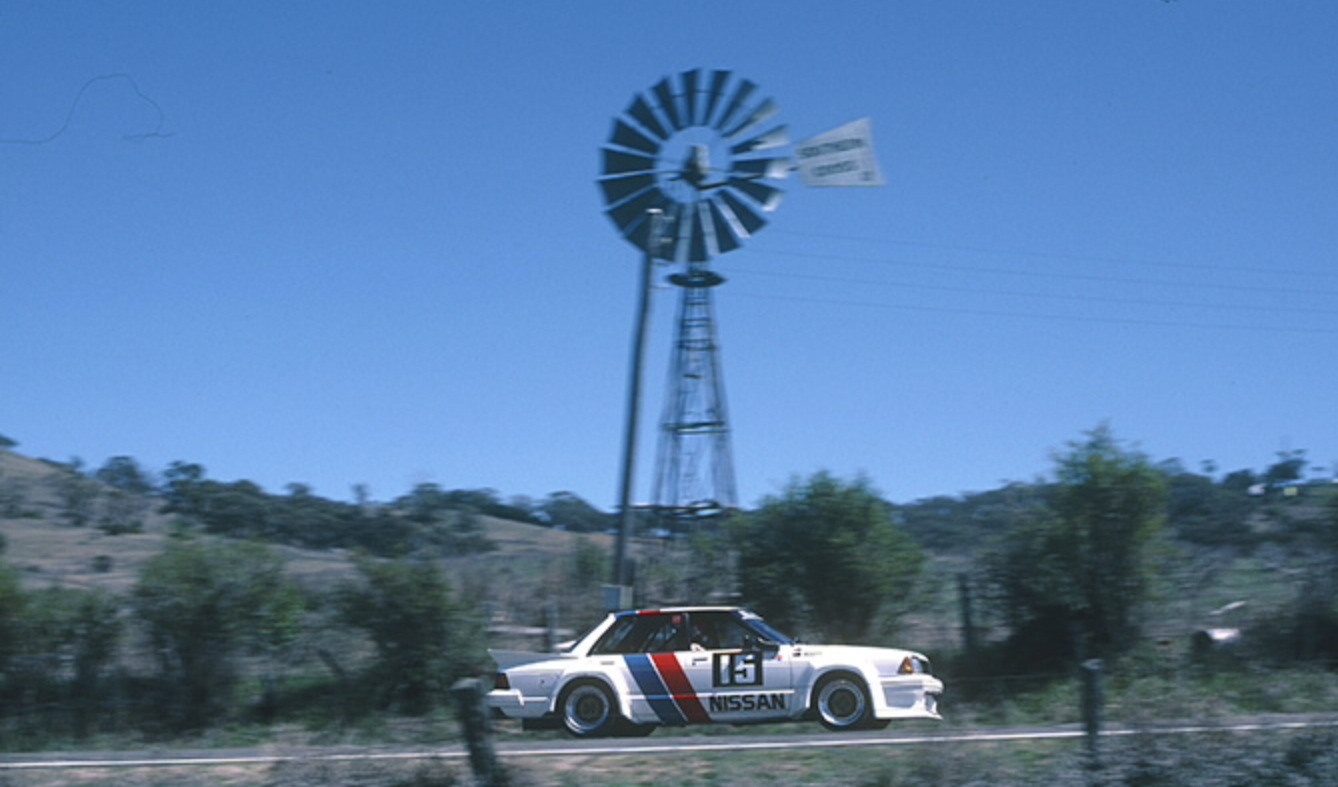
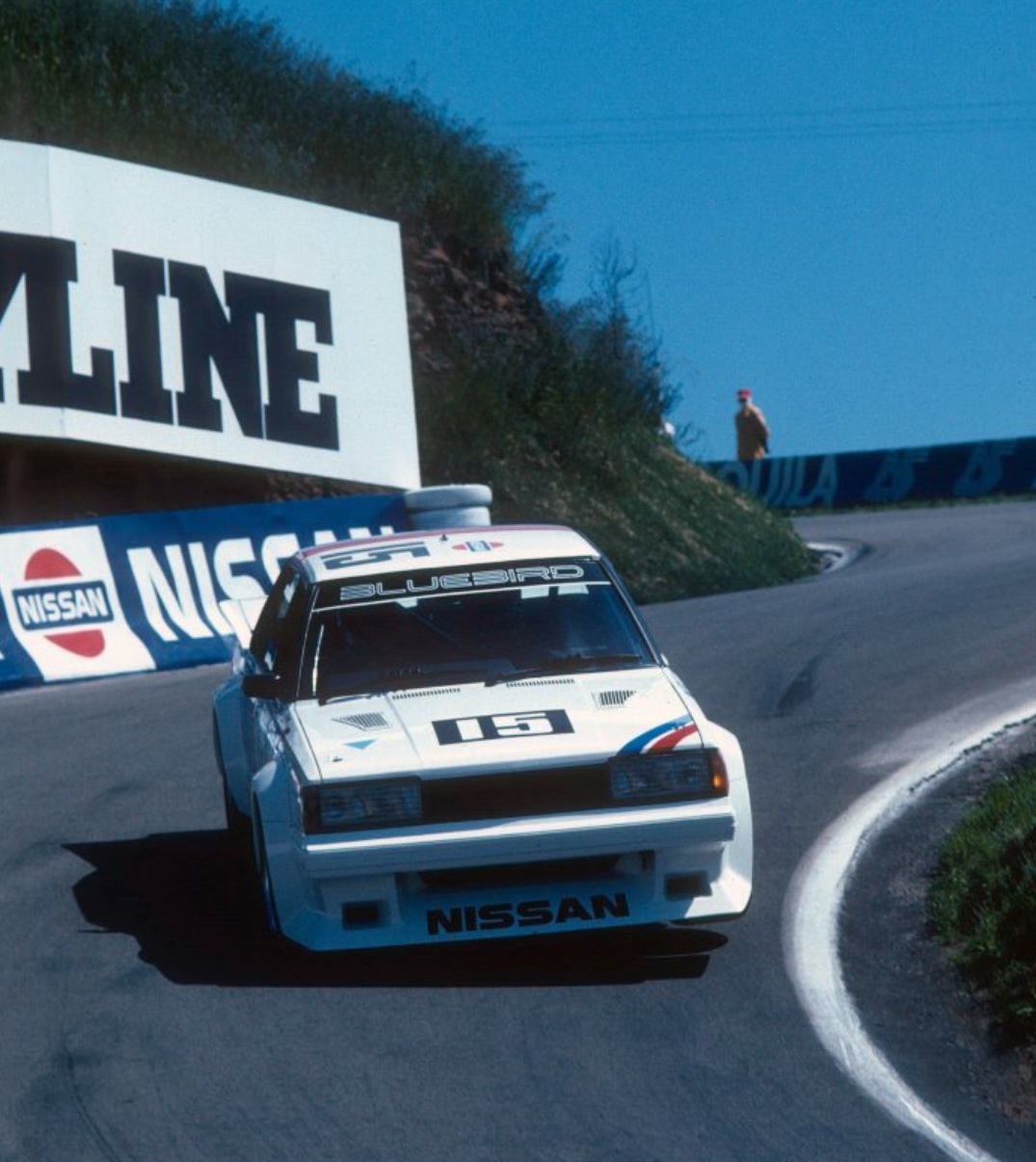
George Fury on Conrod Straight in his works Nissan Bluebird turbo during the September 1984 Bathurst 1000 weekend…

Touring Car Racing in Australia has always been tribal. From the sixties it was Holden vs Ford, later Holden vs Ford vs Chrysler/Valiant. Then there was the locally manufactured stuff vs foreign cars including ‘Rice Burners’, then a disparaging descriptor for anything from Japan. Its amusing now given Japanese dominance of our market but this kind of stuff aroused the passions as much as an afternoon at the footy, whatever your code (Aussie Rules, Rugby, Soccer).

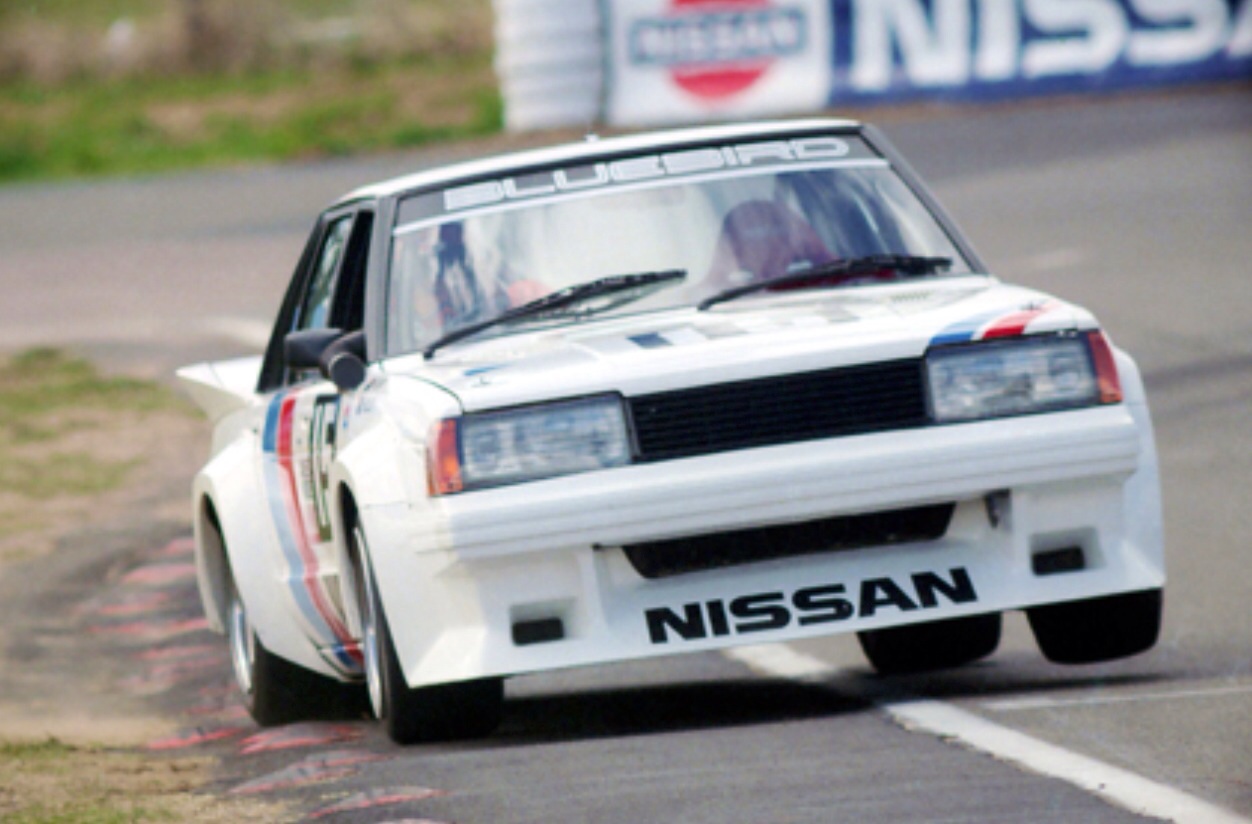
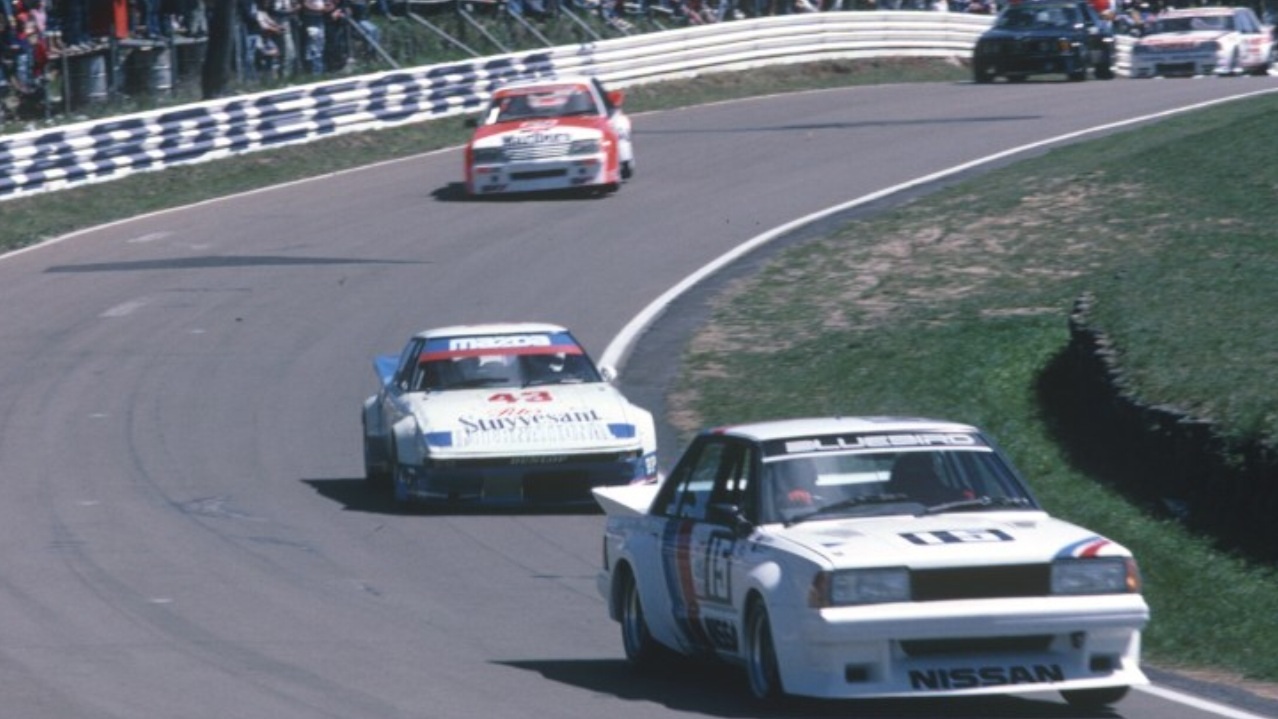
Fury/Scott Bluebird thru The Dipper, chassis the third and last Bluebird built by Nissan Motorsport Oz. Z18T 1.8 litre SOHC, 2 valve, twin-plug 4 cylinder turbo engine giving circa 350 bhp. Car still exists (supercars)


Fury exits Murray’s on ‘that lap’. It was an extremely cold day- it snowed in Bathurst that morning, getting heat into the tyres during the Hardies Heroes 2 lap top 10 qualifying format was tough for all- cold conditions suited the turbo-Nissan whatever tricks were also pulled (autopics)

Whilst the first Japanese outright win didn’t occur until the Jim Richards/Mark Skaife 1991 victory aboard a Nissan R32 GT-R ‘Godzilla’ (what a car!?) Nissan certainly signalled their intent with Australian Rally Champion turned racer George Fury’s splendid pole in the 1.8 litre, turbo-charged four cylinder Bluebird sedan on the mountain in 1984. His 2:13.850 ‘Hardies Heroes’ qualifying lap in the last season of the Group C era (Australian adopted Group A from 1985 noting their was a Group A category in the 1984 1000) was not beaten until 1991 when Skaife’s 2:12.630 R32 GT-R time bested it.

The Bluebird’s first Australian Touring Car Championship round win was at Lakeside in June that 1984 season. Pole on the mountain was a magnificent achievement, albeit the car, co-driven by Queenslander Gary Scott lasted 146 of the 163 laps in the race won by the Brock/Perkins Holden VK Commodore, the third win on the trot for that combo.

Lap 1 into Hell Corner: Fury Nissan from Brock VK Holden Commodore, Johnson XE Ford Falcon, Allan Grice white/yellow VK Commodore with Richards BMW 635 CSI and Masterton’s XE Falcon putting the squeeze on Moffat’s Mazda RX7. First start, race restarted and Brock got the jump (supercars)

Early laps Skyline: Fury, Moffat, Brock, Richards, Masterton (supercars)

Still, in some folks minds they stole pole given Fred Gibson’s admission some twenty years after the event (FG drove for the team and was Nissan Team manager by 1986) ‘that the Bluebirds had an illegal turbo-boost adjuster on the dashboard, as well as having the engine bay’s fire extinguisher spraying super-cooled Halon at the cars intercooler increasing horsepower’. It was the first time since qualifying first counted for grid positions in 1967 that a V8 had not been on pole, and a V8 would not sit on pole again at Bathurst until 1993.

Bloody rice-burners. Mind you, other than the Japanese body-shell the car was built entirely in Australia…

Credits…

Supercars Australia, autopics.com.au, Australian Musclecar

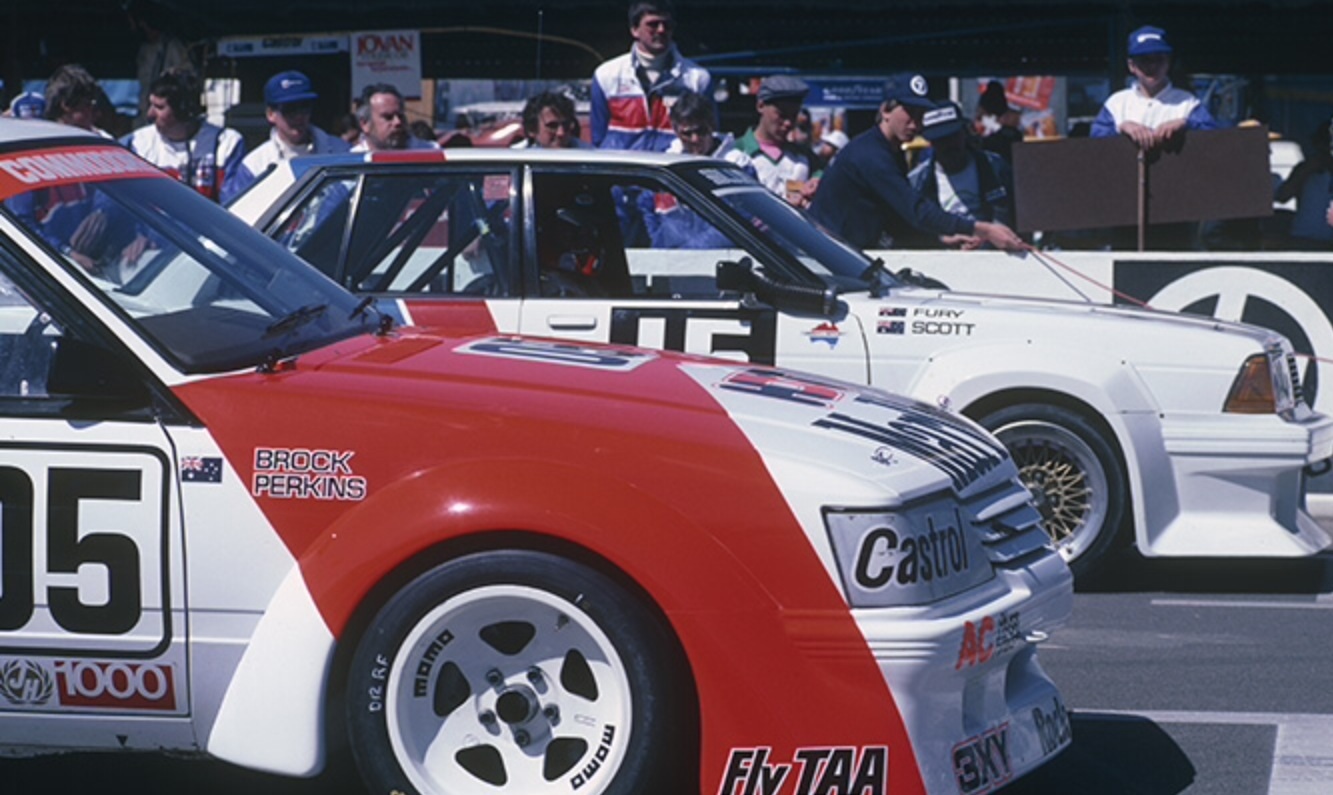
Tailpiece: Front row before the off, Bathurst 1984…

(AMC)


Finito…