Posts Tagged ‘Mike Hawthorn’

(LAT)

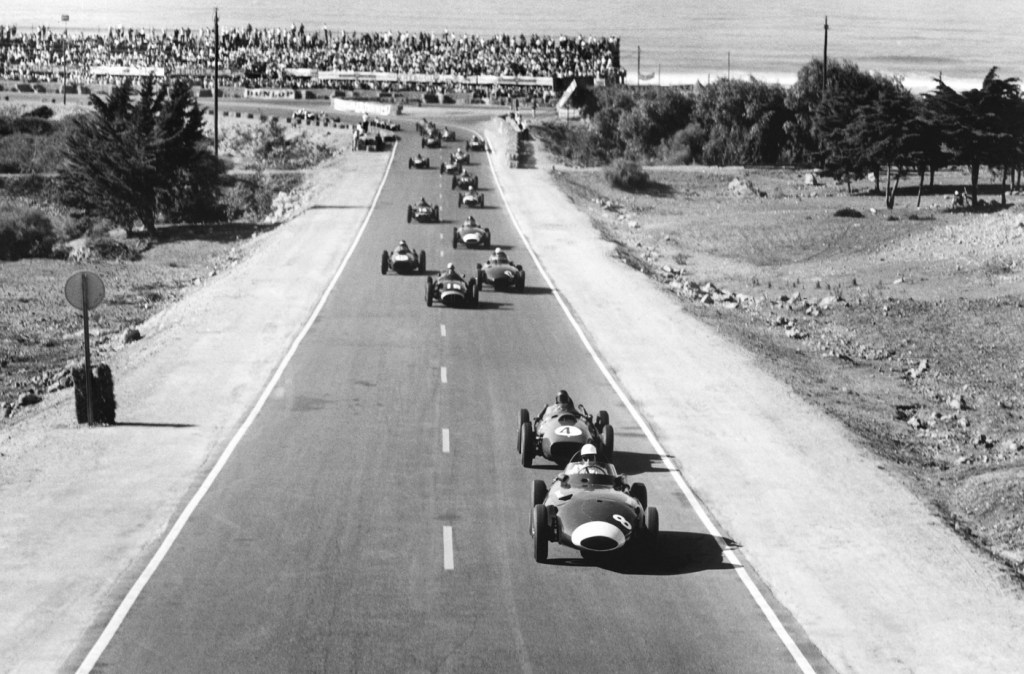
Atmospheric shot of Harry Schell’s BRM Type 25 during the August 23, 1959 Portuguese Grand Prix at Monsanto, Lisbon…

It was the breakthrough car for BRM, Jo Bonnier’s Type 25 won at Zandvoort in 1959 thereby breaking the F1 World Championship GP winning duck for the Boys from Bourne after nearly a decade of competition.

Immaculately credentialled engineer Stewart Tresilian “was largely responsible not only for the original conception and design of the BRM Project 25 2.5-litre four cylinder engine, but also of the compact P27 – or Type 25 – car (chassis) intended to carry it into battle.” Doug Nye wrote in ‘BRM Vol 1.’

“He had produced a homogeneous concept of car and engine combined, its essence being the complete antithesis of the original V16 in that it was all as small and compact and simple as possible, with the arguable exception of his projected 16-valve cylinder head for the four cylinder engine.”

BRM P15s, JM Fangio on the front row, and Ken Wharton behind him, Albi GP May 1953. Fangio won the heat and dominated the final before tyre troubles intervened, Louis Rosier won in a Ferrari 375 with Froilan Gonzalez second in another BRM P15. Car #3 is Nino Farina in the Vandervell Thin Wall Ferrari 375 (B Cahier)

The four-valve head design was subsequently over-ruled by Peter Berthon and after Tresilian left the Owen Racing Organisation to go to Bristol-Siddeley Engines in January 1953, Berthon, Tony Rudd and others brought the Type 25 to reality.

The result was a car that became increasingly fast, it not particularly reliable with each passing year from its race debut in 1955 until early in 1960. It allowed the team to develop the capabilities to win; car development, preparation and driver, they couldn’t do that with a car that never lasted too many laps. Mind you, the simplicity of Tresilian’s concept was complex in its execution…

Peter Collins crashed his Type 25 #252 during practice of the Daily Telegraph Trophy meeting at Aintree on September 3 1955, so took his bow here at Oulton Park during the September 24, 1955 International Gold Cup meeting in the same car. Q13 and DNF after loss of oil pressure after 13 laps. Stirling Moss won in a Maserati 250F from Mike Hawthorn’s Lancia D50. Oh to have been there that day!
Many thanks to Stephen Dalton for these two programme pages – studiously marked up by a knowledgeable spectator – from that BRM Type 25 failed race debut September 1955 meeting at Aintree

The P27 semi-monocoque – in the centre section – chassis was strongly influenced by Tom Killeen’s Killeen K1 sportscar which was tested extensively at Folkingham by Rudd. He was impressed and the performance of the car “confirmed PB’s interest in stiffening his basic new P27 frame with a stressed-skin monocoque centre section.

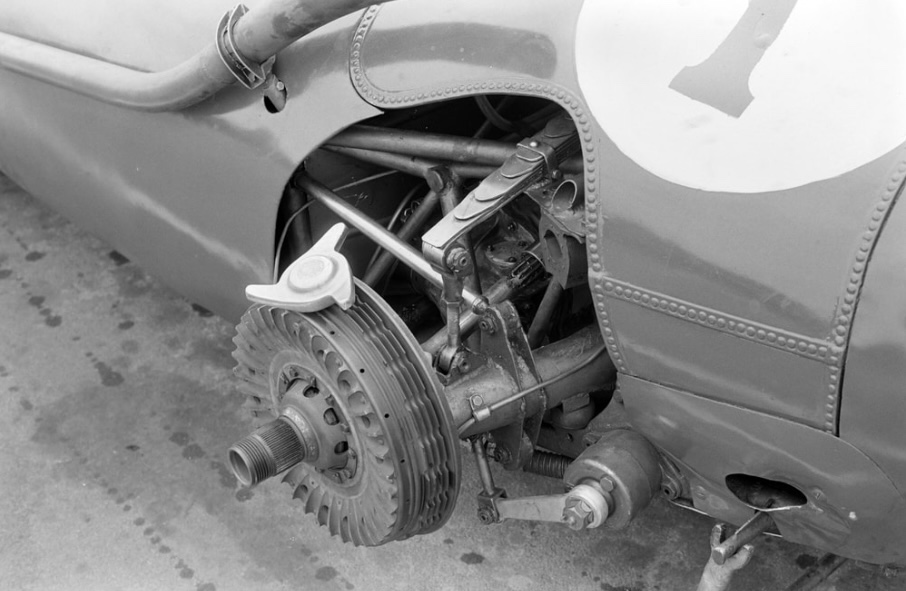
The five-speed rear-mounted gearbox was drawn by Alec Stokes, “who was destined to become BRM’s dedicated transmission specialist and one of the country’s leading gear-men.” The back of the gearbox carried the controversial single, longitudinal-axis rear disc universally known as the ‘bacon-slicer’.

With 50/50 weight distribution and 70% of the braking load at the front, the thinking was that outboard front disc brakes would carry 35% each, leaving 30% for a single rear disc. It took a long time to sort, but when that was achieved “this arrangenent worked quite well on the front engined cars.”

Rear suspension was by way of a De Dion tube with Lockheed air struts inherited from the V16 program, front suspension comprised upper and lower wishbones and coil air strut units again, with the rack and pinion steering Morris Minor based.

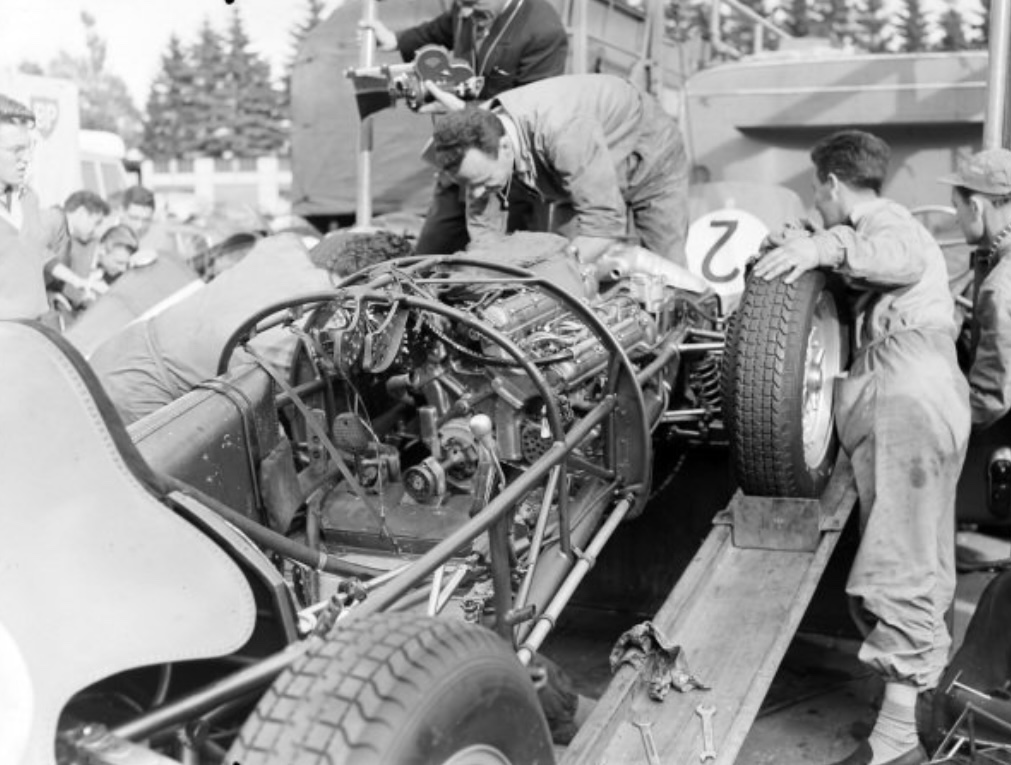
BRM P25 2.5-litre, (2491cc 102.8mmx74.93mm bore/stroke) four main bearing, DOHC, two-valve, Weber fed, twin Lucas magneto and twin-plug sparked four-cylinder engine shown in one of the cars at Monaco in 1956. That hole in the bonnet is the extent of the access my friends
BRM Type 25 1958 specification spaceframe chassis (C La Tourette)
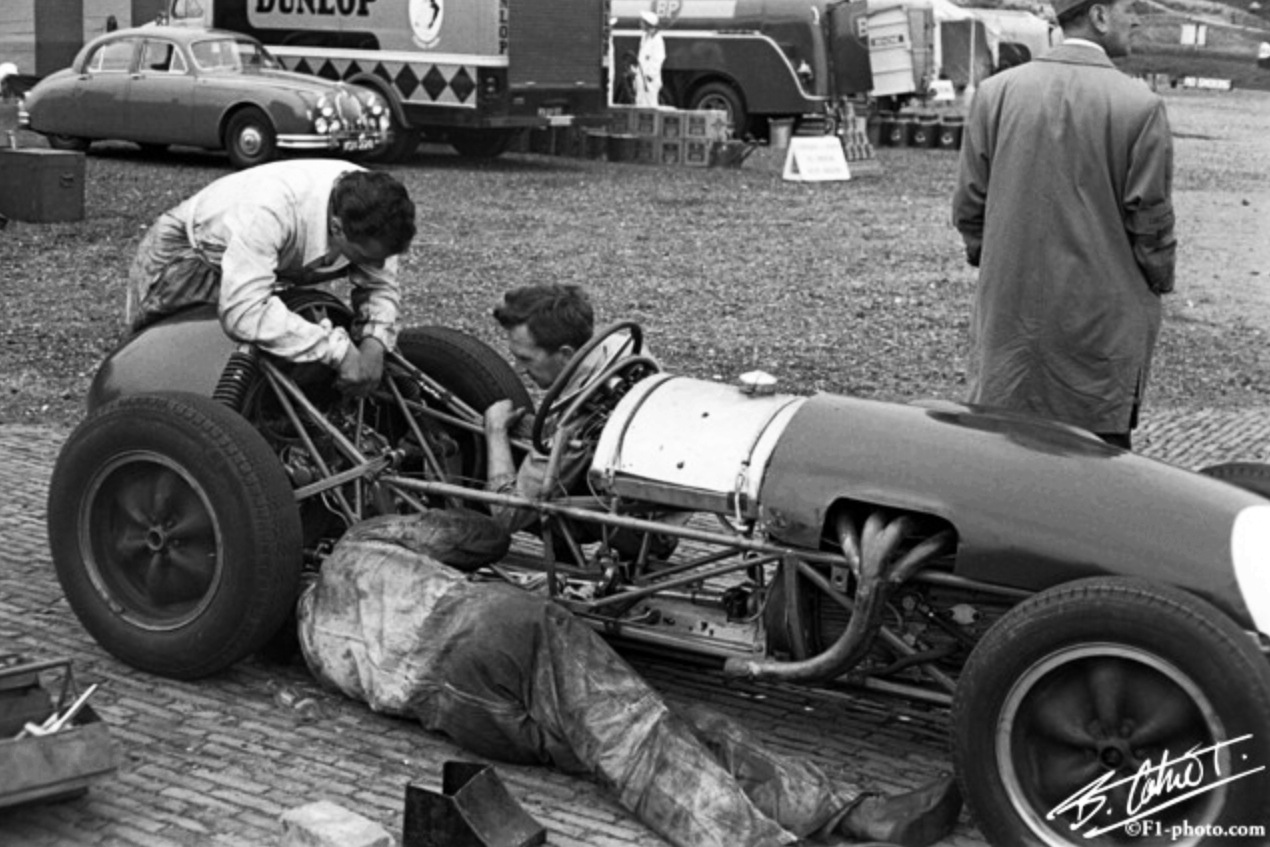
BRM Type 25 during the 1959 Dutch GP weekend at Zandvoort. Cars then spaceframe chassis with vastly superior mechanical access, note the single rear disc brake under the fuel tank at right. All that fuel sitting very high, the trade-off decisions are made clear in this shot (BRM 1)

While work progressed on the chassis there was a long test program with a single-cylinder model of the new engine. ORO were racing the V16 Mk2 and Maserati 250F during this period, with some success. By Easter 1955 the car was complete but for the engine. Finally, on June 5, 1955 the car ran for 19 laps at Folkingham with Rudd at the wheel, having given 260bhp @ 8000rpm on the test bed.

The major problem on test was the SU fuel injection system which was subseuently ditched in favour of a pair of 58DCOE Webers. After further tests by Ron Flockhart and Peter Collins, the car was entered for the September 3 Aintree meeting.

Peter Collins was chosen to race the machine but lubrication problems caused the engine to blow oil over the rear tyres causing a spin and chassis damage that prevented further running. A further run at Oulton Park on September 24 was impressive with Collins running third in front of Ferraris, Maseratis and Vanwalls etc ended when Peter noticed failing oil pressure and pitted. Thus turned out to be a dud gauge which had been shaken to death by the vibrations of the big-bore-four!

Post-meeting work involved rubber mounting the instruments, improving gearbox lubrication and gear teeth form. As Nye observed, “The new BRM was the tiniest car of its time. It was really minute, and very light, and very powerful…and very troublesome.” The eternal process of development was only just underway.

Willie Southcott tending Tony Brooks’ car, #252, at Goodwood during the Glover Trophy meeting in April 1956. DNF oil pressure in the race won by Stirling Moss’ Maserati 250F
British GP scene July 14, 1956. The Type 25 cars of Tony Brooks, Mike Hawthorn about to receive a fresh engine, and Ron Flockhart at right; DNF accident, uni-joint and engine respectively. Fangio won in a Lancia Ferrari D50 (MotorSport)
Tony Brooks’ Type 25 #252 enroute to Q6 and second in the Aintree 200 in April 1956, Moss won in a 250F (MotorSport)

Stirling Moss tested the cars in the lead up to the 1956 season but went to Maserati instead, so Mike Hawthorn and Tony Brooks stepped into the breech. Those poor unfortunates enjoyed a season of great speed laced with equal amounts of unreliability and poor preparation.

The team addressed many problems that year. They slowed the rotating speed of the bacon-slicer by use of a reduction gear, experienced ‘stiction’ in the air struts, the big valves stretched and broke, they had pot-joint seizure and so on. Then Brooks experienced a jammed throttle rod at Silverstone at Abbey corner triggering a somersault which destroyed chassis #252 by fire. To compound a diabolical British GP weekend in front of the home crowd, Ron Flockhart’s car broke its timing gears. Despite all of that Hawthorn and Brooks had qualified in the Top 10, Mike in Q3. The team withdrew from the final two championship races of the year in Germany and Italy.

The Brooks Silverstone conflagration, thank goodness the Gods of Goodnesss were smiling on Tony that day, but chassis 252 was very dead (TC March – T Johns Collection)

Alfred Owen then decreed there would be no more racing until the car had completed 300 miles of continuous running competitively. Flockhart achieved this late in the year at Monza. Three laps later, with Berthon waving him on, the car dropped a valve and ruined another engine. Nye observed, “From their debut in 1955 to the end of 1956 the BRM Type 25s had made only eight starts in just five races, and finished only once, Brook’s second in the Aintree 200.”

Over the winter Colin Chapman test drove the car twice and provided a comprehensive set of recommendations in a formal letter of advice including rear suspension changes. Fitment of tall coil spring/dampers and incorporating a Watts linkage to help locate the De Dion tube were among changes which help transform the cars.

Les Leston at Aintree during the 1957 British GP weekend, Q12 and DNF engine after 12 laps in chassis #253. Brooks/Moss won in Vanwall VW4 (MotorSport)
Herbert Mackay-Fraser’s BRM T25 #253 ahead of Mike Hawthorn’s Ferrari Lancia D50 at Rouen during the 1957 French GP

In 1957 Brazilian born American Herbert Mackay-Fraser charged at Rouen, while poor Flockhart spun on oil , rolled into a ditch and wrote 254 off. Fraser died a week later aboard a Lotus 11 Climax FPF at Reims and Flockhart was still in hospital so Jack Fairman and Les Leston raced the cars at Aintree.

Jean Behra was so impressed by the corner-speed of the Type 25 at Aintree he cadged one for the 302km Caen GP which he won! Harry Schell drove a sister car in the event at the last moment, and soon became the most consistently successful Type 25 driver.

“At the end of the season, against meagre opposition, the three surviving cars, 251, 253, and 254 finished 1-2-3 in the Silverstone International Trophy, driven by Behra, Schell and Flockhart.”

During the 1957-58 break, a fifth main bearing was incorporated into the engine to solve ongoing timing gear problems, the cost was high, additional friction losses impacted horsepower. The chassis came in for attention too, the semi-monocoque centre section was ditched in favour of a full spaceframe with fully detachable bodywork.

Schell and Behra finished two-three in the Dutch GP, the team’s best result yet. The methanol burning four-bearing engine gave over 280bhp in 1957, whereas the five-bearing on Avgas gave only 240bhp, Behra left for Ferrari at the end of the year.

Schell at Eau Rouge, Spa, Belgian GP 1958. Harry was fifth in #257, with four of the first five cars British, the only interloper was Mike Hawthorn’s second placed Ferrari 246. Brooks and Lewis-Evans were first and third on Vanwalls, while Cliff Allison’s tiny Lotus 12 Climax was fourth (MotorSport)
Onya Harry! Third (right) on the grid at oh-so-fast Reims, 1958 French GP aboard #258. The Ferrari Dinos of Mike Hawthorn #4 and Luigi Musso share the front row with him. Hawthorn won while Harry retired with overheating after 41 laps
Behra, Oporto, Portugal in 1958, fourth from Q4 in #256 with Moss the winner in Vanwall VW10 (Getty)

Fiery Harry Schell was one of the surprises of the 1958 with a series of qualifying performances and points finishes which proved just how much their ever evolving Type 25 – despite the power loss – had come. Second at Zandvoort was fantastic, so too a swag of fifth places at Monaco, Spa, Silverstone (from Q2) and Oporto. Behra’s best was third and Holland and fourth in Portugal, while Jo Bonnier’s was fourth place in the season-ending Moroccan round.

In the first season the manufacturers championship was run, BRM were fourth in the International Cup for F1 Manufacturers behind Vanwall, Ferrari and Cooper Climax. Vanwall had peaked as they led the pre-eminence of British Racing Green, while Coopers were on the rise…

Moss on the way to second place in the BRP entered BRM Type 25, Aintree, British GP July 1959. Brabham won on a Cooper T51 Climax. Bourne standards of preparation encouraged Moss to have his Type 25 #2510 fettled by his (Alfred Moss and Ken Gregory) British Racing Partnership. This chassis met a violent death at Avus the following month when Hans Hermann had brake failure on the approach to the southern hairpin during the German GP, the lucky pilot survived the monumental accident unscathed. The BRM Gods of Goodness again smiled on Hans, but former BRM racer Jean Behra was not so fortunate that same weekend
Ron Flockhart’s #2511 during Aintree Friday practice, British GP weekend in July 1959. DNF spin after 53 laps (D Williams)
Jo Bonnier in #258, in front of Masten Gregory at Zandvoort during Jo Bo’s famous May 31, 1959 BRM Type 25 victory, Masten was third and Brabham second on works-T51s (MotorSport)

While Jack Brabham and Stirling Moss rewrote the record books with their factory and Rob Walker Cooper T51 Climaxes in 1959 BRM put themselves in the annals of Grand Prix history when Jo Bonnier won at Zandvoort in May. Schell had a season of greater reliability than Bonnier but didn’t do as well as the year before.

That winter Harry Weslake had advised Bourne on improved cylinder head design, and the fifth main-bearing was machined out! BRM adopted new timing gears “with large, coarse teeth not critical to fine backlash tuning for reliability.” Further brake modifications and simpler, lighter chassis – numbers 2510 and 2511 – “made the BRM Type 25s simply the fastest front engine cars of 1959, with fantastic braking ability.” Doug Nye wrote.

Graham Hill, Dan Gurney and Bonnier drove the cars on into 1960 at which point all of the remaining Type 25s, except #258, the Zandvoort winner, were torn to bits to provide components for the new mid-engined P48 2.5-litre cars “being hastily built to follow Cooper’s rear-engined lead.”

(unattributed)

Jo Bonnier “drifting into history”, as Doug Nye beautifully put it. By April 18, 1960 JoBo could have raced a new mid-engined P48 in the Goodwood Easter Monday Glover Trophy but chose to race Type 25 #258, his Zandvoort machine instead. Graham Hill and Dan Gurney gave the P48s their race debut that weekend, Hill was fifth, Bonnier sixth and Gurney had an accident on lap 3. In a sign of the times, Innes Ireland’s works Lotus 18 Climax won, it was the fastest, if not the most reliable GP car of 1960.

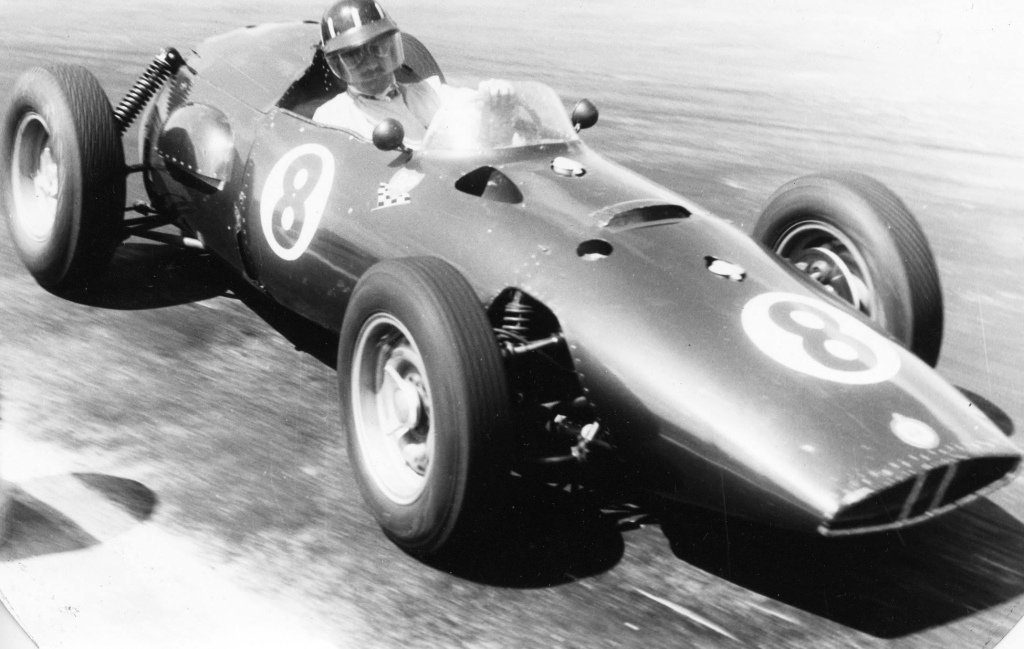
The old and new, BRMs Type 25 and P48, both 2.5-litres in September 1959. That’s #481 in shot with its unique nose on the Folkingham floor between the two cars, Type 25 chassis number unknown (BRM 2)
Graham Hill tips his BRM P48 into one of the oil-drum marked corners on the Ardmore Airfield circuit during the January 1961 New Zealand Grand Prix weekend. He was third behind the Cooper T53 Climaxes of Brabham and McLaren (M Fistonic)

See here for the first of two articles on the next phase of BRM history; https://primotipo.com/2015/03/26/tony-marsh-boness-hillclimb-scotland-brm-p48-part-1/

Eleven BRM Type 25 chassis were built – #251-259, 2510 and 2511 – during the long 1953-1960 BRM Type 25 programme, starting in 21 championship and 26 non-championship and Formula Libre events. These 47 meetings yielded the Dutch GP win for Bonnier and seven minor event victories including the two preliminary heats of the 1957 International Trophy at Silverstone and the 1959 New Zealand Grand Prix heat at Ardmore for the ever patient Ron Flockhart.

Etcetera…

(TC March – T Johns Collection)

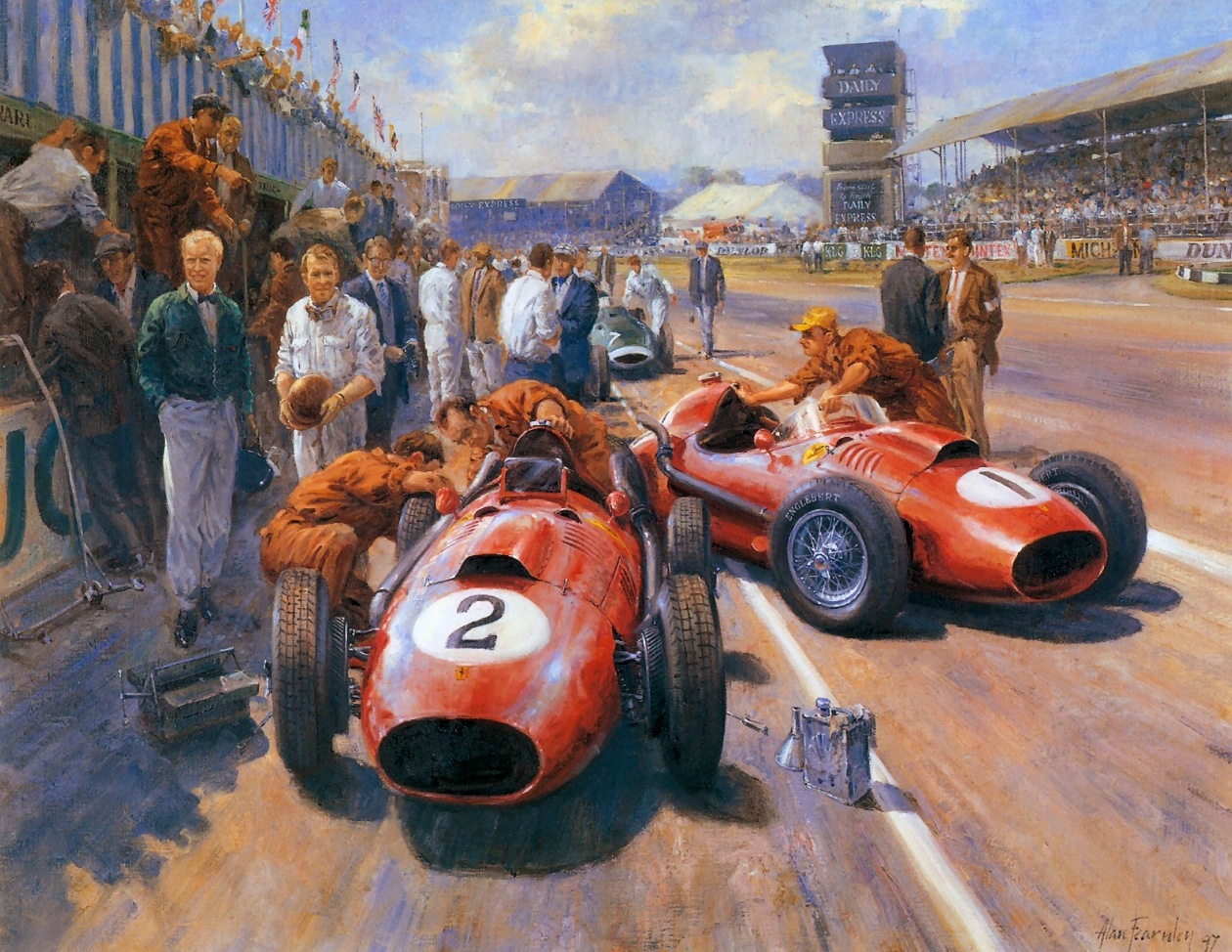
The boys; standing are Basil Putt, Team Manager, Mike Hawthorn, Tony Brooks, Peter Berthon, Tony Rudd, Raymond Mays, AF Rivers Fletcher. Who are the mechanics in front? Folkingham, Lincolnshire August 28 1956 ‘Test and view day’.

The cover and editorial of Autosport after Peter Collins made the race debut of the Type 25 at Oulton Park on September 24, 1955 says everything about Britain’s goodwill towards BRM in its fight to take on the best in the Grand Prix world.

Great shot of Les Leston with team chief Raymond Mays at Aintree during the 1957 British GP weekend. Q12 and DNF engine after 12 laps, Jack Fairman lasted two laps more before he too suffered engine dramas. Up front, Tony Brooks and Stirling Moss shared the win in a Vanwall.

Rouen pits in July 1957, the incredibly quick BRM Type 25 #253 of the oh-so-promising American driver Herbert Mackay-Fraser awaits its wheels. Q12 and DNF transmission failure after 24 laps, Fangio won in a Maserati 250F. And below with the Mike MacDowel Cooper T43 Climax shared with Jack Brabham to seventh in the race. The contrast in size between the smallest front-engined car of the era and the grids most compact is quite marked.

(LAT)

Peter Berthon and 37 years old Harry O’Reilly Schell at Monaco in 1958. Despite a wild-man reputation Harry put together plenty of fast drives and high placings just as the team needed them. He was equal fifth (with the dead Peter Collins) in the drivers championship with 14 points, a personal best. 1959 was tougher, Stirling Moss bagged his car and Harry didn’t finish a race until Reims in July, but managed fourth at Silverstone and fifth in Portugal. Schell died at Silverstone in damp practice for the 1960 International Trophy, he clipped a low retaining wall at Abbey, was half flipped out of his Cooper T51 Climax and broke his neck.

Behra at Oporto 1958. Doesn’t that BRM #256 look magnificent beside those small, very fast Cooper T45s. #12 is Maurice Trintignant, #16 Roy Salvadori with the obscured Jack Brabham copping a push start at right.

(CAN)

Ron Flockhart during the Lady Wigram Trophy, New Zealand in January 1959. If a bloke deserved a win in these cars it was Ron given the number of test and race miles he did in them. He won aboard #259 from pole in front of Jack Brabham and Bruce McLaren’s Cooper T45 Climax’.

‘Where is the starter again?’ Tony Rudd and mechanic in Harry Schell’s #257 at Monaco in 1959. Q9 and DNF accident after completing 48 laps of the race won by Jack Brabham’s Cooper T51 Climax. Bonnier’s car retired with failing brakes from Q7.

(unattributed)

Yay team, again at Zandvoort in 1959, and one more time, there is no such thing as too much BRM…

BRM Type 25 model from Stephen Dalton, “it’s a Merit with the Alastair Brookman touch, he built it.”

Credits…

Clarence La Tourette, Getty Images, John Ross Motor Racing Archive, Bernard Cahier, John Ferguson, Classic Auto News, LAT, MotorSport Images, ‘BRM 1’ Doug Nye, History of the Grand Prix Car 1945-65 Doug Nye, Dave Williams, Stephen Dalton Collection, TC March, Tony Johns Collection

Tailpiece…

(B Cahier)

Phil Hill catches Jean Behra on the way to a DNF brakes at Monaco in 1958 from a splendid Q2 in chassis #256. Tony Brooks was on pole and Jack Brabham Q3 is the upstart 2-litre Cooper T45 – with two more of the pipsqueaks behind Jack – driven by Roy Salvadori and race winner Maurice Trintignant.

While the mid-engined writing wasn’t perhaps on the wall, the sign-writers were readying the paint…

Finito…
image

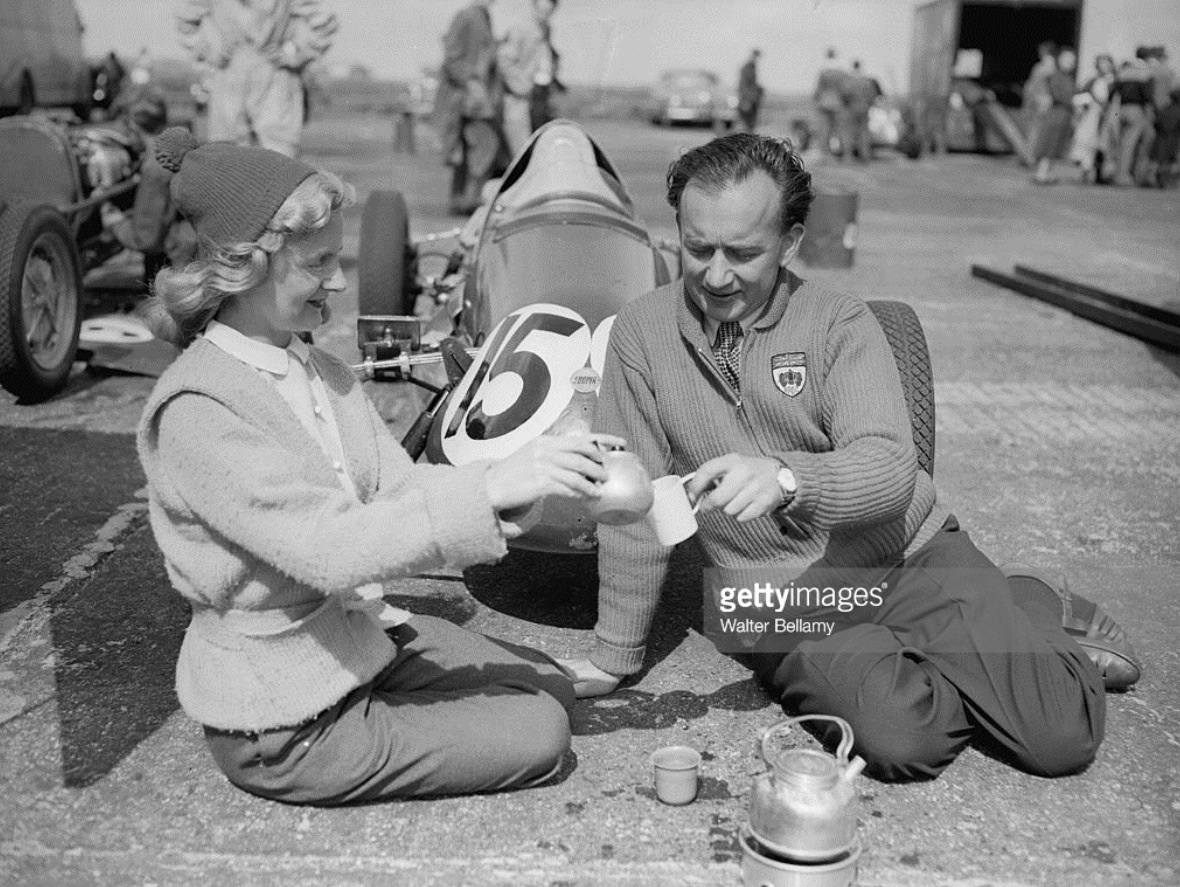
F3/500cc ace Eric Brandon gets some sustenenace with some assistance from his wife Sheila before no doubt scoring another win on 18 July 1953…

Click here for an interesting article on this very talented driver; http://500race.org/people/eric-brandon/

image (GP Library)

Coopers galore! Alan Brown, Eric Brandon, Juan Fangio and Mike Hawthorn in F2 Cooper T20 Bristols before the Lavant Cup, Easter Monday 14 April 1952. This race was one of a series of performances which vaulted Hawthorn into a GP Ferrari seat in 1953.

Hawthorn won the six-lapper from Brown and Brandon and set the fastest lap.

Equally impressive was Hawthorn’s second place behind Froilan Gonzalez’ Ferrari 375 in the Formula Libre Richmond Trophy. Duncan Hamilton placed third in a Talbot Lago T26C.

And Fangio? I have one report that says the great man raced John Cooper’s Cooper T20 to a misfiring sixth place but he doesn’t appear at all in the results for the Lavanat Cup and Richmond Trophy I have. John Cooper offer the ride after Alfa Romeo failed to appear. Happy to take your advice on this one.

Credit…

Walter Bellamy, GP Library

Finito…

(Getty Images)

Evocative shot of Peter Collins in his Ferrari Dino 246, 1958 #246/002, during the July 1958 British Grand Prix at Silverstone.

He won the race by 24-seconds from Mike Hawthorn who took the World Drivers Championship that year, before perishing in ‘that’ road-dice with Rob Walker shortly thereafter.

I’ve done these cars to death, both front-engined F1 jobbies and their related mid-engined Tasman cousins, but another bunch of photos got the juices flowing again.

In an enthralling, tragic season, Luigi Musso died at Reims, then Peter Collins crashed fatally at the Nurburgring only weeks after Silverstone (in this same chassis) during the German Grand Prix. Vanwall, with whom Ferrari battled all year – winners of the Constructors Championship – also lost a driver at the season’s end when Stuart Lewis-Evans died of burns sustained at Ain-Diab in Morocco several days after the race.

(MotorSport)

This Moroccan GP start-shot of Vanwall mounted Stirling Moss bolting away from a Ferrari, this time with Phil Hill at the wheel, says a lot about the rivalry between the teams during a year in which British F1 pre-eminence began. Vanwall and Cooper, to whom Tony Vandervell would pass the torch, were on the rise.

The shot below shows Hawthorn’s car (1958 #246/003) being attended to in the Silverstone paddock. Note the traditional twin-main tube Ferrari chassis, and subsidiary tubes, and powerful V6 engine canted to the right to allow the driveshaft to pass alongside the driver.

By contrast, the Vanwall had a Colin Chapman designed, light, multi-tubular spaceframe chassis, and far less sexy, but powerful, torquey, twin-cam, two-valve – same as the Ferrari – in-line four cylinder engine.

(MotorSport)
(MotorSport)

At the start of its life the Dino rear end (Collins’ car at Silverstone above) comprised a De Dion axle, transverse leaf-spring, twin radius rods, Houdaille shocks and drum brakes. By 1960 it was independent with coil springs, telescopic shocks and disc brakes, such was the relentless pace of change and level of competition wrought by the mid-engined Cooper T51 and Cooper T53 Climaxes in 1959-1960.

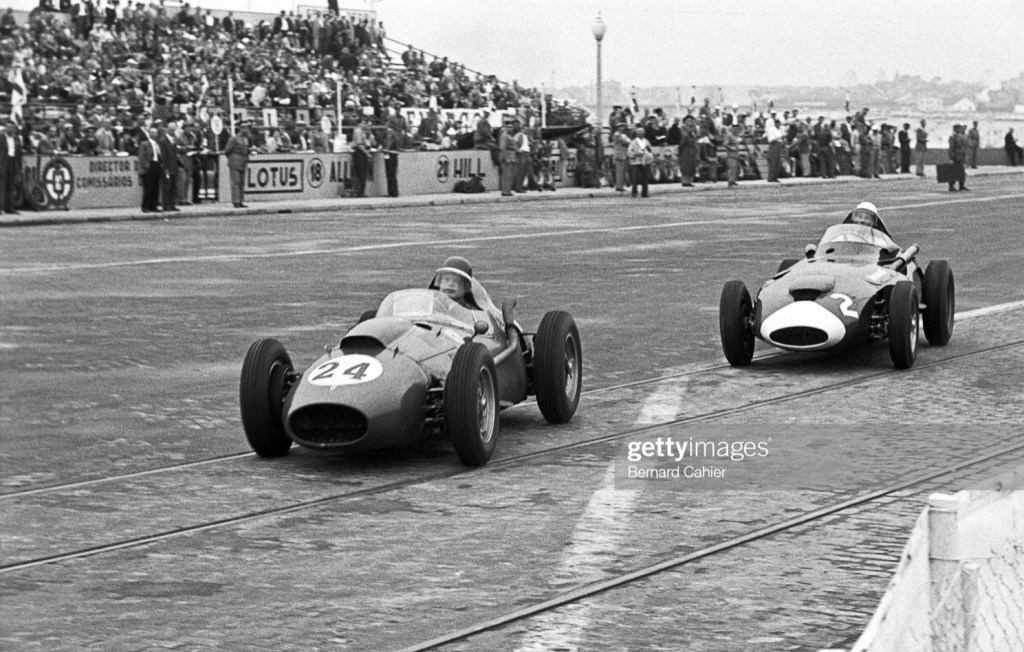
In late August, Hawthorn and Moss battle on the Boavista seafront in Portugal. Stirling won on the cobblestones by five seconds from Mike, settling up a nail-biting end to the season at Monza and Ain-Diab.

Brooks’ Vanwall won from Hawthorn at Monza, while Moss had a gearbox failure. In Morocco, Hawthorn put his car on pole from Moss, in the race the positions were reversed. Mike took the title by a point from Stirling in a season in which the best five placings were counted.

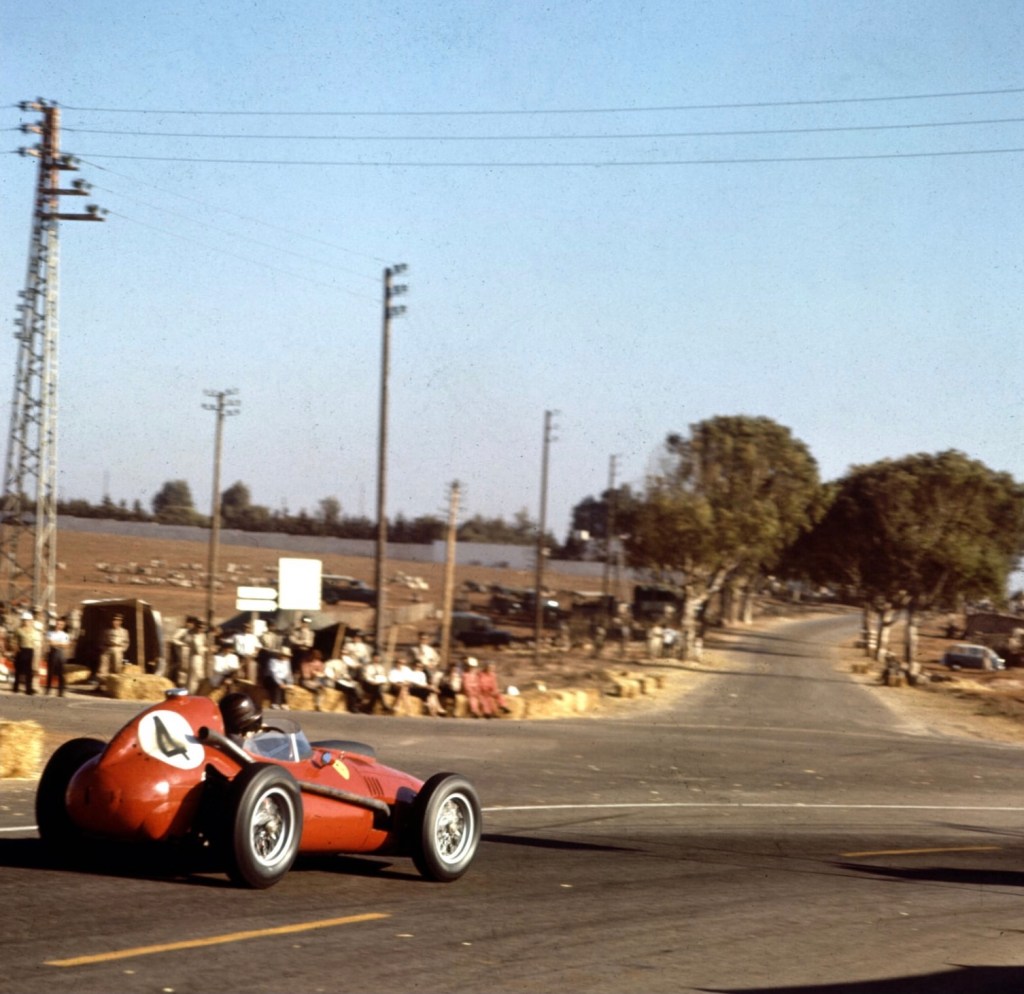
The stunning shot of Phil Hill below, hooking his Dino (1958 #246/004) into a right-hander in the wilds of Morocco shows all that was great – and incredibly dangerous – of Grands Prix racing compared with the (sometimes) between the white lines ‘car park’ F1 competition of today. Grand Prix Racing it ain’t…

(MotorSport)

Credits…

MotorSport and Getty Images

Finito…

hawt goodwood

One of the better known photographs in motor racing is Louis Klemantaski’s shot of Mike Hawthorn’s Cooper T20 Bristol attacking the apex of Fordwater at Goodwood in 1952…

The Klemantaski Collection archive describe the photograph thus; Hawthorn is obviously really on the absolute limit with this Cooper-Bristol. And of course he is aiming right for Klemantaski who had positioned himself at the edge of the track exactly at the apex of the very fast Fordwater corner on the back of the Goodwood circuit. What a dynamic image!

This race was the ‘Sussex International Trophy’ for Formula Libre racing cars on June 2, 1952. Hawthorn won, perhaps somewhat aided by his father Leslie’s long experience with nitromethane. It was Hawthorn’s third outing with a friend’s Cooper-Bristol.

On April 14th at Goodwood he came up against Juan Manuel Fangio, driving another Cooper, and won against the already famous Argentinian driver. Hawthorn won two races with the Cooper that weekend and finished second in the final race of the day to Froilán González in Tony Vandervell’s Thinwall Special Ferrari GP car.

More out of the car than in it! Cooper T20 Bristol, Belgian GP at Spa in June 1952 (M Tee)
At Silverstone a month later at the British GP in July 1952 (M Tee)
image
1953 French GP Reims July 1953. Mike Hawthorn’s Ferrari 500 and Juan Fangio’s #18 Maserati A6GCM flat out, grinning at one another, Mike won by a second after 300 miles of racing (Getty)

Then Hawthorn entered the Daily Express International Trophy on May 10th with the same Cooper-Bristol to win the first heat, but finished several laps down in the final due to gearshift problems.

His excellent showing with the Cooper at the Belgian Grand Prix at Spa-Francorchamps where he was fourth, and at the subsequent British Grand Prix finishing third, led to an offer from Ferrari for 1953- and an eventual World Championship aboard the Ferrari Dino 246 in 1958.

‘Hawthorn died in a road crash in January 1959 after retiring from racing at the end of his Championship year, is remembered by his own book Challenge Me the Race and Champion Year and in several biographies, including Mon Ami Mate and Golden Boy.

Mike Hawthorn’s grave is in Farnham, Surrey where he is still well remembered and where he and his father had run the Tourist Trophy Garage for many years’, the Klemantaski Collection wrote.

Cooper T20 Bristol cutaway by Vic Berris

Articles on the Cooper Bristol T20/23…

Stirling Moss and Jack Myers: Cumberland Park Speedway, Sydney: Cooper T20 / WM Holden 1956…

Credits…

Louis Klemantaski, Raymond Groves, Vic Berris, M Tee- MotorSport Images. Check out The Klemantaski Collection;  https://klemcoll.wordpress.com/about/

Tailpiece…

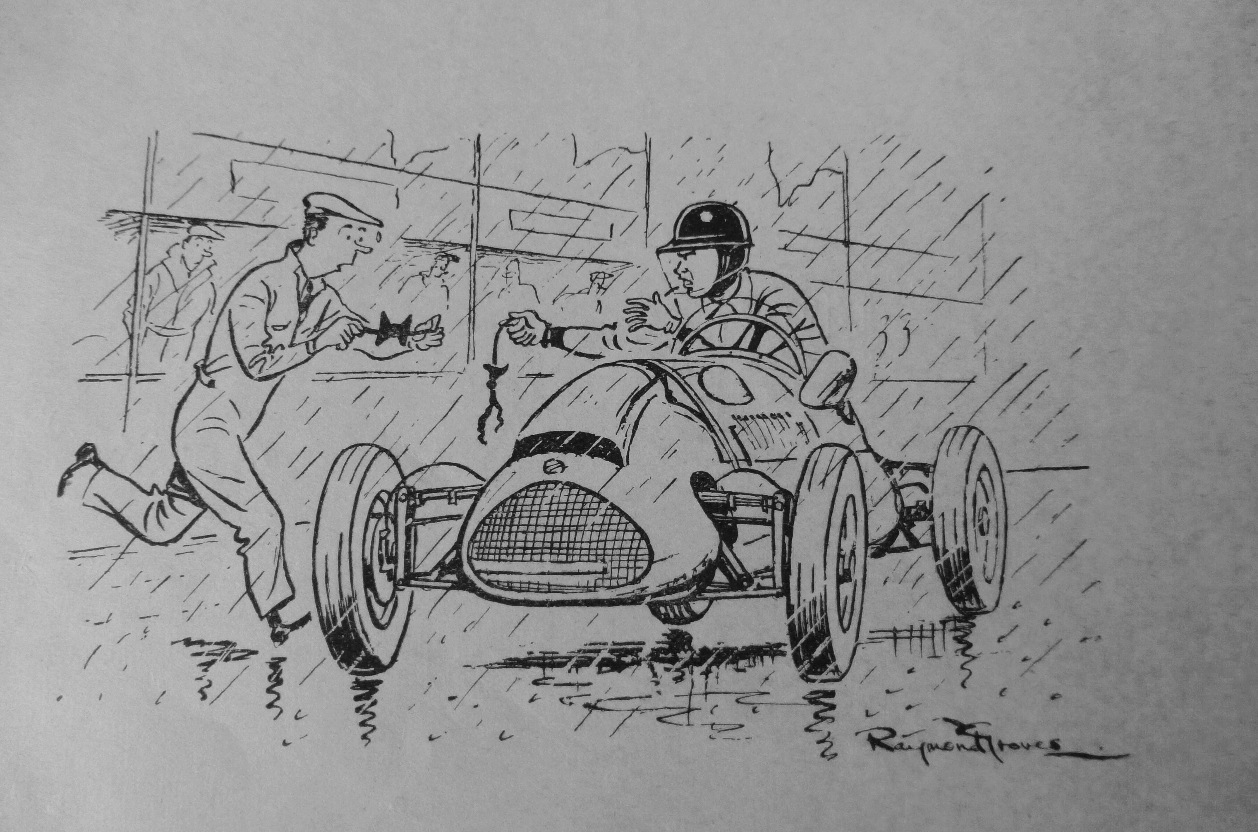
hawt funny
(Raymond Groves)

The tie dear boy, the tie…

Finito…
hawthorn fazz

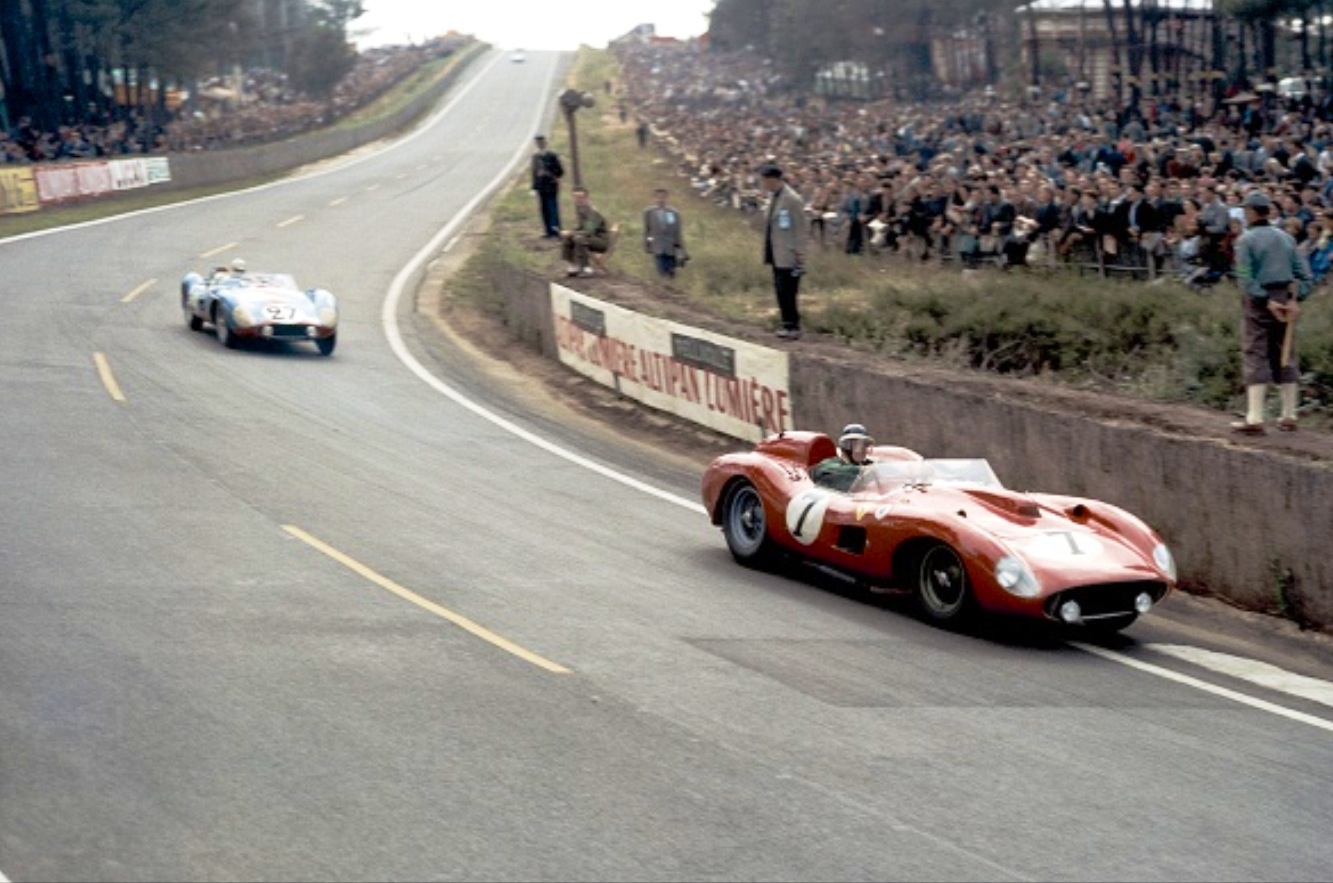
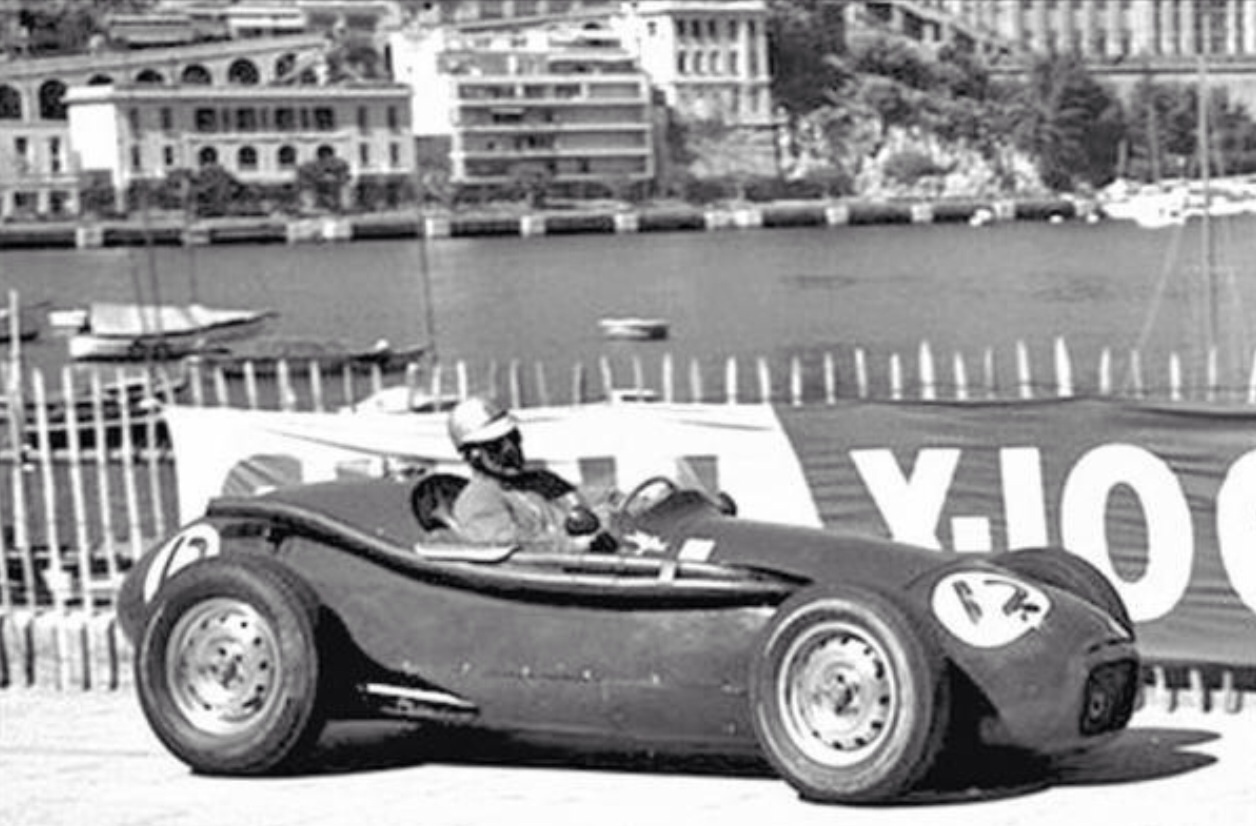
Mike Hawthorn dives his big Ferrari 335S into The Esses and past the smaller Ferrari 500TRC of Fernand Tavano and Jacques Peron early in the 1957 Le Mans 24 Hours…

Both cars failed to finish, Hawthorn shared the 335S with Luigi Musso, the cars engine cried enough on lap 56 and the 500TRC also had an engine problem withdrawing after the completion of 235 laps.

1957 was a D Type rout- the Ivor Bueb/Ron Flockhart D won from the similar cars of Lawrence/Sanderson, Lucas/Brousselet and Frere/Rouselle, all of which gave Ferrari something to think about! The best placed Ferrari was the 500 Testa Rossa driven by Lucien Bianchi and Georges Harris but it was 39 laps adrift of the winners.

Click on this link for an article about the Ferrari 335S and 1957 Mille Miglia;

Peter Collins: Mille Miglia 1957: Ferrari 335S…

Credit…

Klemantaski Collection

hawt hill

I don’t think of Mike Hawthorn as a Lotus driver but here he is with Graham Hill, rather similar in age, they were both born in 1929…

Amazing really, grafter Hill worked hard to get into motor racing, his GP career started not long before Hawthorn’s finished and went well into the 1970’s, not to forget Graham’s Le Mans and Indy wins of course. Mike’s racing entree was smoothed by his fathers wealth, it’s intriguing to guess what he may have achieved had he raced on into the 1960’s and applied his considerable skills to Chapman’s works of Lotus art.

Both Hill and Hawthorn are English to the core albeit completely different charcters. And personalities they certainly were. It’s a wonderful shot.

image

Hawthorn, Lotus 11 Climax, Oulton Park, Cheshire April 1955 (Popperfoto)

The event or reason for the Hill/Hawthorn shot is unrecorded but dated 12 April 1956 as is the photo of Hawthorn with Stirling Moss below. Its dated 11 May 1953, i am interested if anybody can assist with the places and occasions…

hawt moss

Credits…

Getty/Manchester Daily Express, Popperfoto

spanish grand prix

Maurice Trintignant’s 1953 type Ferrari 625 from Harry Schell’s Maserati 250F and victor Mike Hawthorn’s 1954 type Ferrari 553 on the picturesque Pedralbes road circuit at Barcelona, 24 October 1954…

This event was famous for the race debut of the Lancia D50’s in the hands of Alberto Ascari and Gigi Villoresi, both were quick and Alberto led convincingly from Fangio’s Mercedes W196 until a clutch hydraulic failure caused his retirement.

The three drivers above had a great dice and all led at different points with Hawthorn taking the victory. Schell retired after a spin damaged his car and Trintignant with a fractured oil pipe. Hawthorn’s win was a good one made slightly easier by the problems Fangio was dealing with in his Benz, his W196 spraying oil into the cockpit.

lancia barcelona

The Ascari #34 and Villoresi #36 Lancia D50’s, just unloaded at Pedralbes for an event which showcased Vittorio Jano’s design brilliance as well as the sublime skills of Alberto Ascari. Such a pity Lancia ran out of money! Still a world title as a Lancia Ferrari D50, and drivers title for Fangio in 1956 was a great reflection on the original design even if it had ‘evolved’ a bit by then (unattributed)

I’m leaving Australia’s winter for 3 weeks in France and Spain including Barcelona so look forward to retracing the street circuits of  Montjuic Park and Pedralbes whilst based in one of my favourite cities. My posts will be shorter over this period.

YouTube Race Footage…

Photo Credit…Yves Debraine

hawthorn

(Klemantaski)

 A study in concentration, Mike Hawthorn at work and on the way to fourth place at Aintree, Lancia Ferrari 801, British Grand Prix 1957…

But Mike was hardly ‘the main game’ in this race, a pivotal one in GP history.

Tony Brooks and Stirling Moss shared a Vanwall to win at home, thereby scoring the first world championship victory for a British car, the beginning of a period of dominance by British teams, largely undiminished for the last 50 years. Also noteworthy and equally epochal was the appearance of two Cooper T43 Climaxes driven by Roy Salvadori and Jack Brabham.

Behra led from the start but Moss passed him before the end of the first lap, then came Brooks, Hawthorn, Collins, four Brits in the first five.

Moss’s Vanwall started to run roughly so he pitted, taking the wheel of Brooks sister car, who was summoned to the pits, Moss rejoined 9th and started carving his way through the field. By this stage Jean led from Hawthorn, who was unable to challenge the Frenchie, then came Lewis-Evans, Vanwall, and Collins. Moss was soon up to 5th aided by mechanical failures which befell Fangio and Collins.

Poor, Jean, his clutch exploded whilst in the lead, Hawthorn ran over some of the schrapnel the Frenchman dropped, puncturing a Continental. Stuart Lewis-Evans then momentarily lead but was quickly swallowed by Moss, Stuart’s throttle linkage broke but it mattered not, Moss won the race from Musso, Hawthorn, Trintignant/Collins all in Lancia Ferrari’s with Roy Salvadori in the little 2 litre Cooper T43 5th

image

Credit…

Louis Klementaski, GP Encyclopaedia

58 british

(Allan Fearnley)

Mike Hawthorn and Peter Collins looking confident with the speed of their Ferrari Dinos prior to the Silverstone start…

Into 1958 the relationship between Enzo Ferrari and Peter Collins had soured a bit as the chief felt the Brit was not as competitive as he had been, he was dropped to the F2 team at the French GP. Mike Hawthorn’s intervention and Luigi Musso’s death at Reims made his position more secure. Nevertheless he was feeling plenty of pressure at the time…

image

Peter Collins takes his last win, Silverstone 1958, Ferrari Dino 246 (unattributed)

Collins started the British GP from 6th on the grid, with Moss’ Vanwall on pole, but Collins blasted through from the second row to lead Moss, Hawthorn, Schell’s BRM P25, Brooks Vanwall VW57 and Salvadori, Cooper T45 Climax.

Collins increased the lead steadily with Moss and Hawthorn comprising the lead group. Stirling’s engine blew on lap 26 leaving Peter leading from Hawthorn. Stuart Lewis-Evans was 3rd but was soon passed by Salvadori. Collins won from Hawthorn, Salvadori and Lewis-Evans’ Vanwall VW57, four Brits!

image

Peter Collins being congratulated aboard his Dino after the event. Its July 19, he was dead 3 weeks later, Nurburgring on 3 August (Hutton)

Credit…

Allan Fearnley, Hutton Deutsch

image

Cliff Allison releases his Lotus 12 Climax from the Monaco haybales on 18 May 1958, whilst teammate Graham Hill passes in the sister car…

It was a significant race for Lotus, their debut as Championship Grand Prix competitors, Allison was classified sixth and Hill’s race ended on lap 15 with engine dramas.

Coventry Climax had still not built a 2.5 litre version of their FPF 4 cylinder engine, so Lotus, like Cooper, were competing with engines of 1960cc, well below the 2.5 litre F1 capacity limit.

image

Jesse Alexander’s shot captures the atmosphere of Monaco ’58, shot taken from the ‘Milk Bar’

Times of change in racing are of immense interest to those of us with an historic bent. 1958/1959 is one of those eras with the growing influence of the ‘Green Cars’ a portent of the British dominance to come. And of course Cooper showing the mid-engined path still with us today.

allison

Cliff Allison at Monza in 1959 (Cahier)


lot 12

Lotus 12 in all its naked glory at Zandvoort in 1958. It was about as small as a front engined GP car could get, ignoring the fact it was designed as an F2 car! In 1958 ’twas as modern as tomorrow and as passe as yesterday simultaneously (Cahier)


Note the twin dual-throat SU carbs and front roll bar double-tasking as a means of locating the upper suspension top link

Indicative of  mid-engined growing superiority was the failure of all the Maserati 250F’s entered to qualify- driven by Godia-Sales, Kavanagh, Taramazzo, Gerini, de Fillipis, Testut, Gould and the great, but ageing Monegasque Louis Chiron. Lets not forget that only the year before, 1957, Juan Manuel Fangio won the race in a factory ‘Piccolo’ 250F. And Moss also won aboard a 250F in 1956 for that matter too.

Successful British motor-cycle dealer BC Ecclestone had acquired the GP Connaughts but Bernie, Paul Emery and Bruce Kessler all failed to qualify the cars too.

image

Bernie Ecclestone trying hard to qualify his Connaught Type B Alta, to no avail as was the case for his 2 teammates (unattributed)

Things were better for the Green Cars at the front of the grid with Brooks, Behra and Brabham in Vanwall VW57, BRM P25 and Cooper Climax T45 respectively. Salvadori and Trintignant were next up in Coopers, the quickest Ferrari, Mike Hawthorn, was sixth in his Dino.

image

# 18 Savadori Cooper T45 Climax, # 6 Behra BRM P25, #16 Brabham Cooper T45 Climax, # 30 Brooks Vanwall VW57, winner Trintignant partially obscured behind Brabham Cooper T45 Climax, # 32 Lewis-Evans Vanwall VW57…and the rest, turn one, lap1 (unattributed)

In a race of changing fortunes Behra, Hawthorn and Moss all led but suffered mechanical failures.

Trintignant won the race in Rob Walker’s Cooper T45 Climax from Musso and Collins in Dinos. Moss’ Argentina Cooper T43 win was no ‘flash in the pan’ by any stretch…

image

Moss, Hawthorn, Brabham and Trintignant. Ferrari Dino 246, Vanwall VW57 with Monaco ‘snub nose’ and Coopers T45 Climax x 2 (unattributed)


Graham Hill prepares for another practice lap whilst Cliff Allison looks on at left and Colin Chapman in the sunglasses at right.

The Lotus 12 was Chapman’s 1957 F2 contender powered by a Coventry Climax 1.5 litre FPF engine.

Whilst competitive the lithe, nimble, light front-engined cars took no F2 race wins that year, Allison’s second late in the season at the Oulton Park International Cup was the best result.

Fitted with 2 litre FPF’s, ‘F1’ 12’s contested the Non-Championship 1957 Glover Trophy and Lavant Cup at Goodwood and BRDC International Trophy, Silverstone as well as the 1958 Glover Trophy, BARC 200 at Aintree and the BRDC International Trophy before their Monaco Championship debut. Allison’s fourth in the 1958 Glover Trophy aboard chassis ‘357’- the same car he raced in Monaco was the best result. Graham Hill’s car was ‘353’ which has resided, beautifully restored, with Mike Bennett in Adelaide for many years.

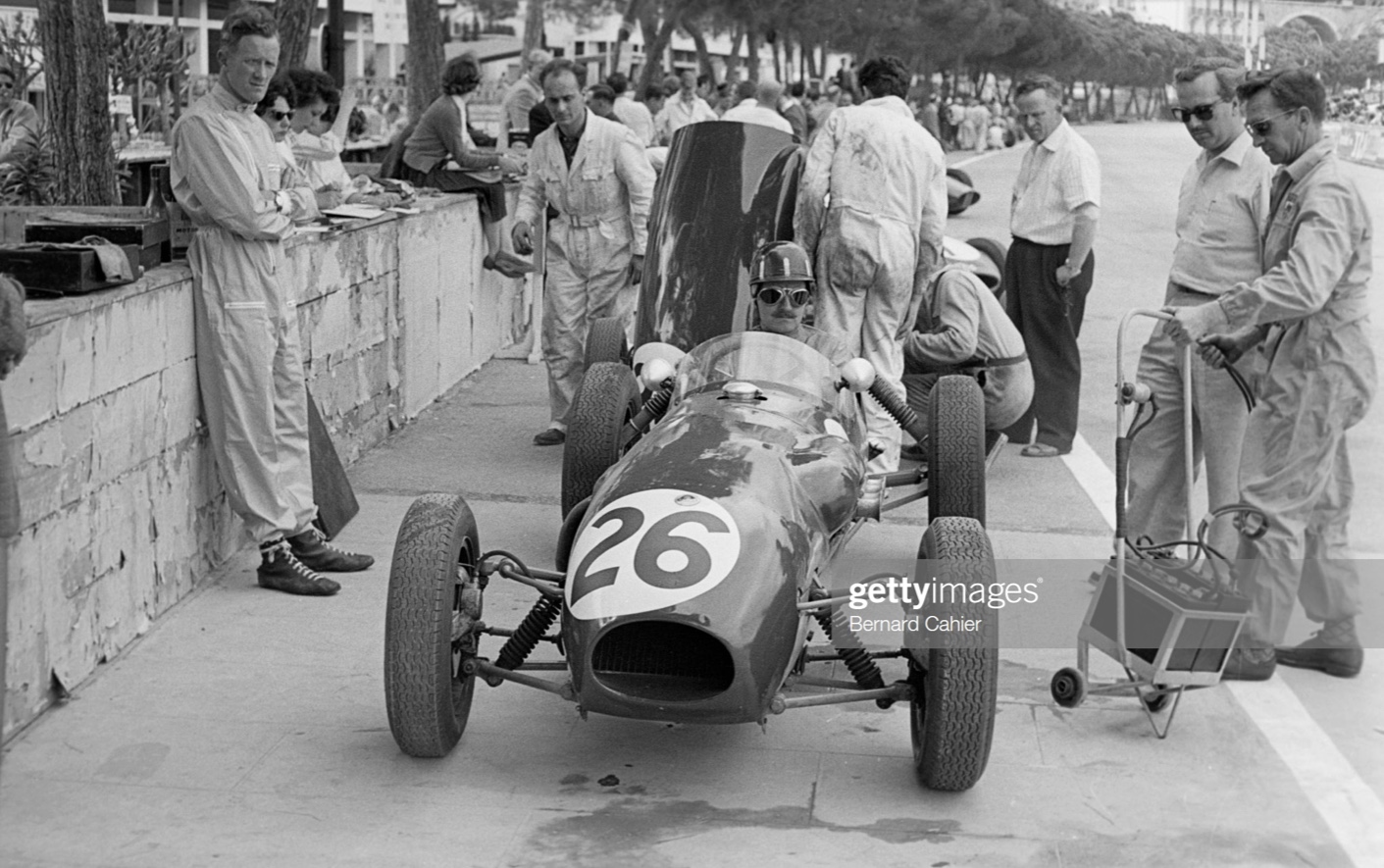
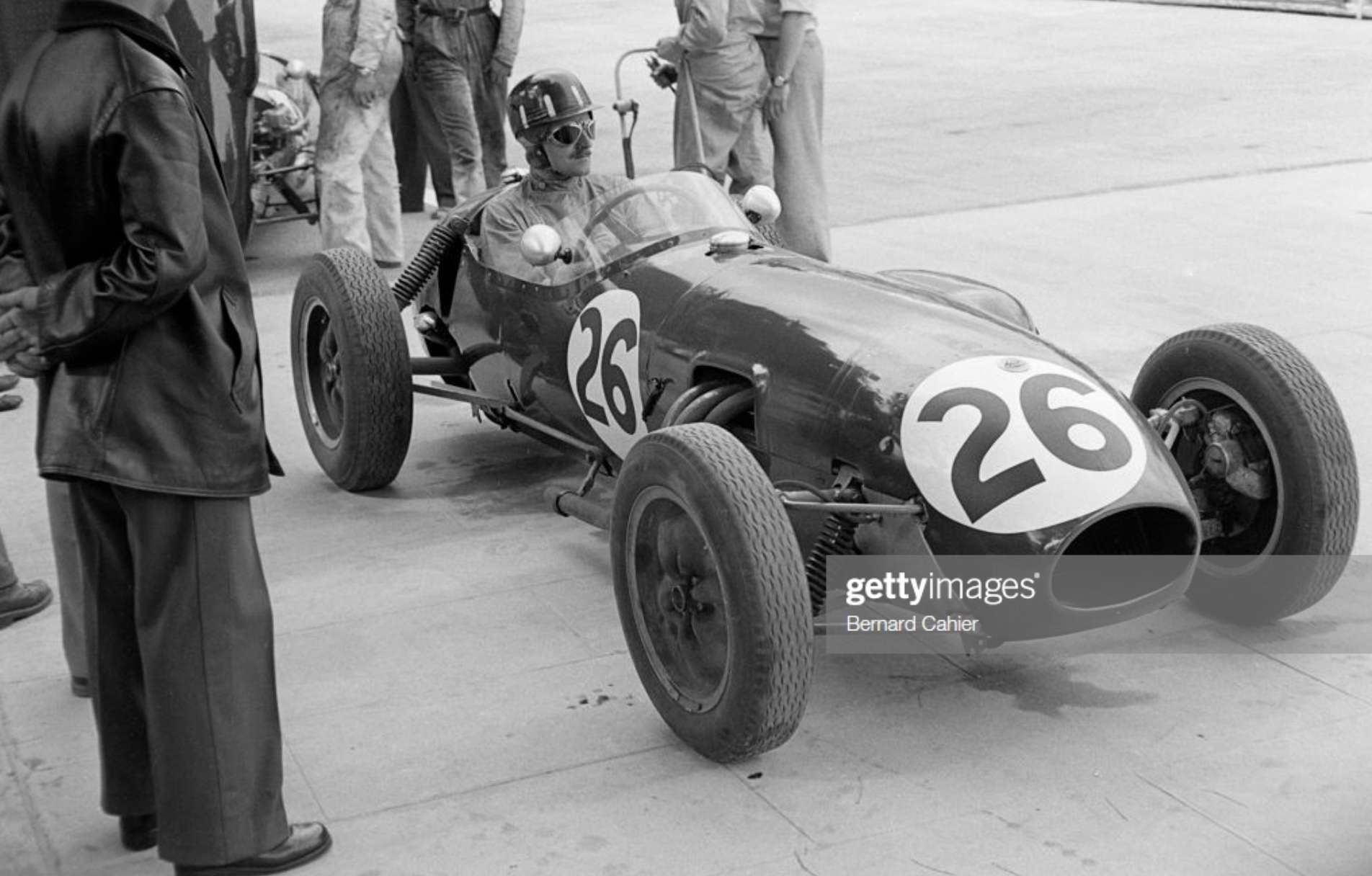
Beautiful shots above and below by Bernard Cahier shows the minimalist nature of the Hill Lotus 12 to great effect. Greatness was to come later with Lotus of course- a championship in 1968 after a remarkable stint with BRM.

In some ways its surprising that Chapman, the great innovator, didn’t go the mid-engined route with the Lotus 16, the 12’s successor but he got the hang of the mid-engined thing rather well with the 18 which followed- a machine which was rather successful in FJ, F2 and F1 in 1960.

Lotus 12 Climax cutaway


Etcetera…

image

Photo and other Credits…

Jesse Alexander, The Cahier Archive, John Ross Motor Racing Archive, John Marsden

Tailpiece: Allison made the Lotus 12 sing…

alli italy

(John Ross)

As here at Monza 1958.

He put the car fifth on the British GP grid, well in front of Hill in the new Lotus 16, finished sixth at Zandvoort, fourth in the Belgian GP at Spa and seventh at Monza. Such were his performances he was off to Ferrari in 1959 at Enzo’s invitation

Finito…