Archive for the ‘Fotos’ Category

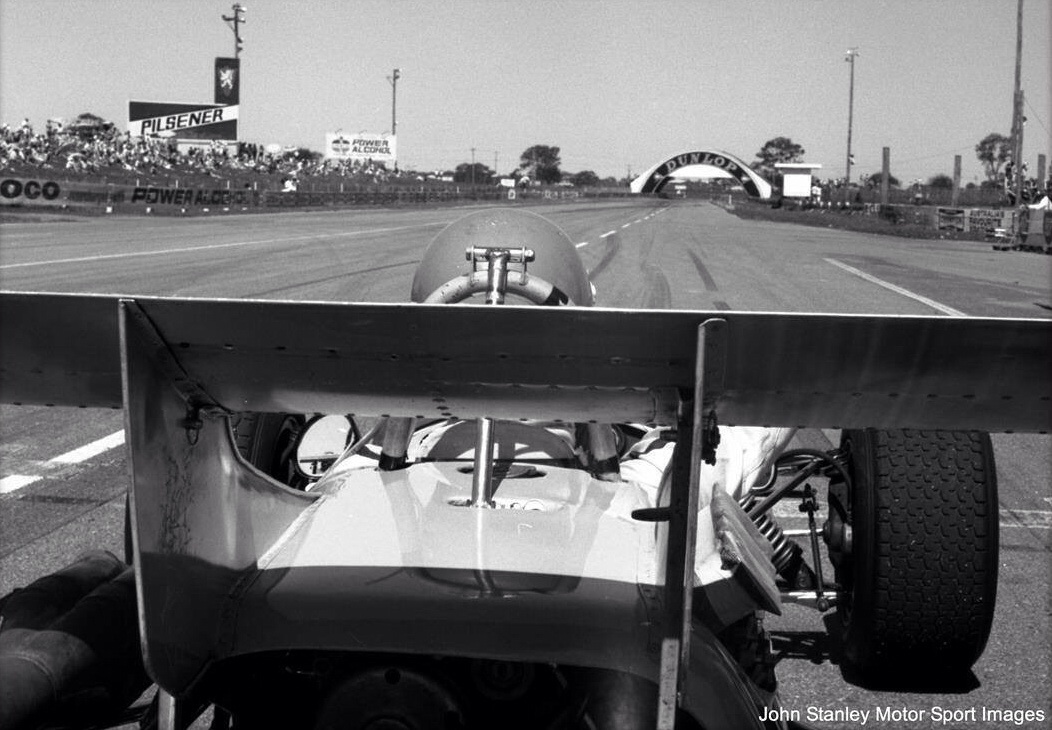
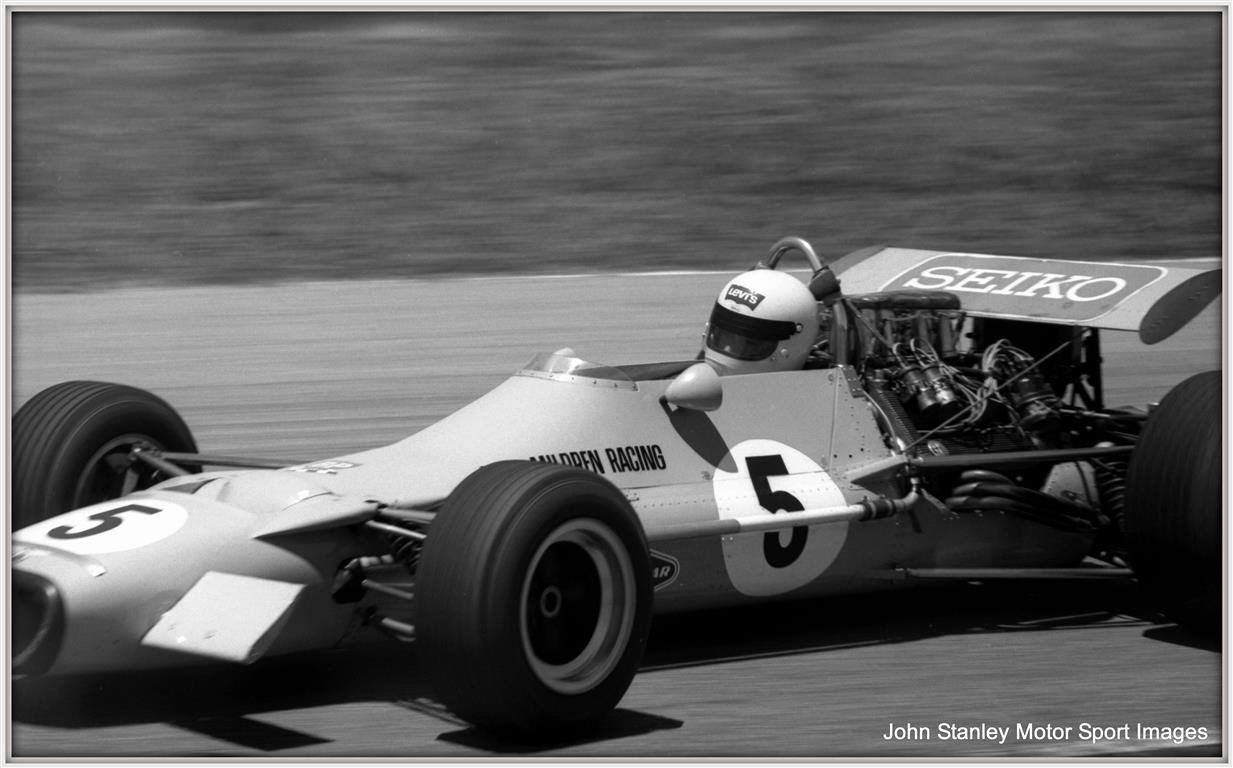
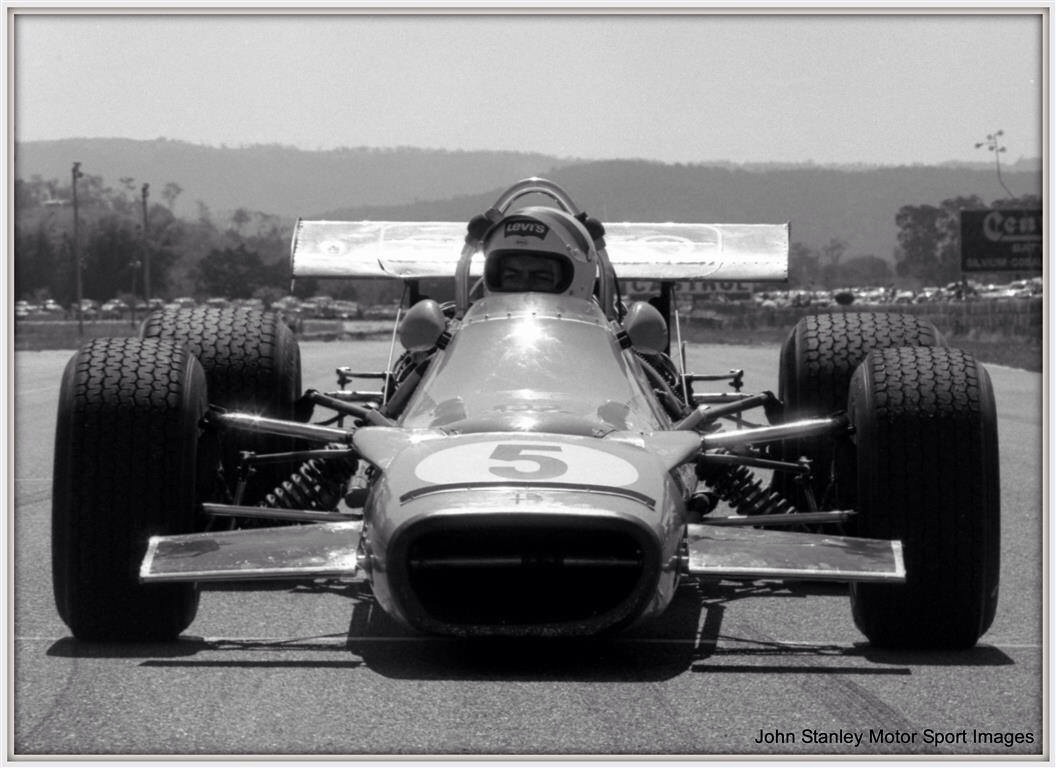
Max Stewart awaits the start of the Gold Star race aboard his Mildren Waggott.

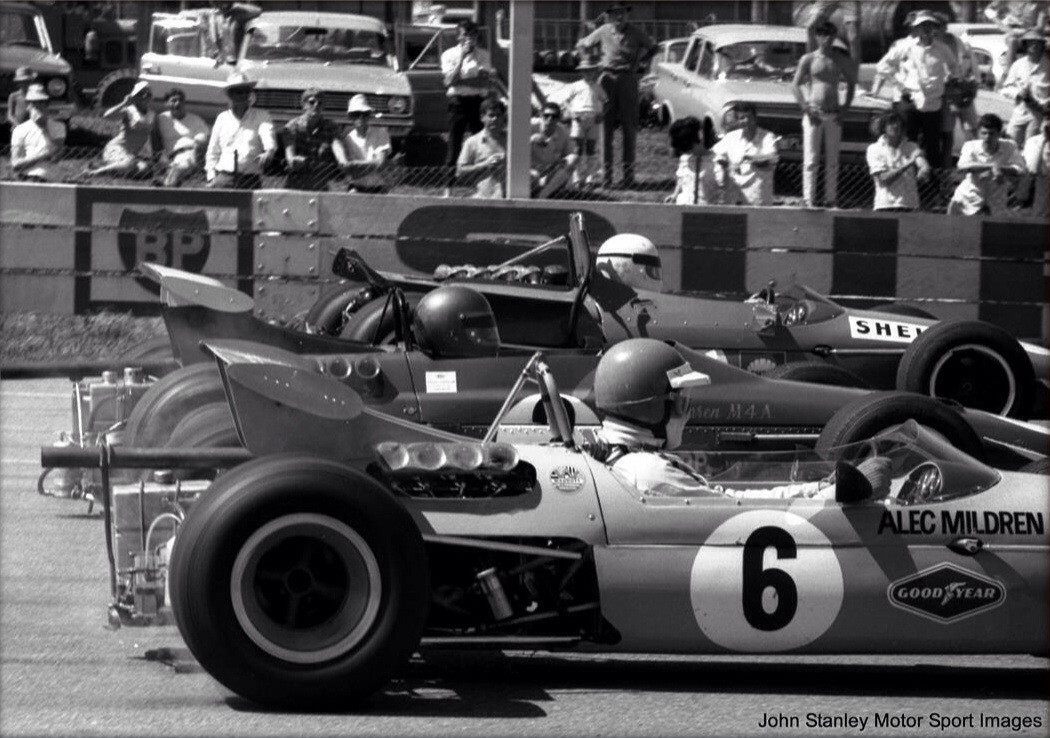
In the distance is the Harry-Flatters-In-Top-Gear entry to the right-hander under Dunlop Bridge- one of the most daunting corners in Oz motor racing, alongside (below) are John Harvey, Brabham BT23E Repco on the outside, and Niel Allen, McLaren M4A Ford FVA.

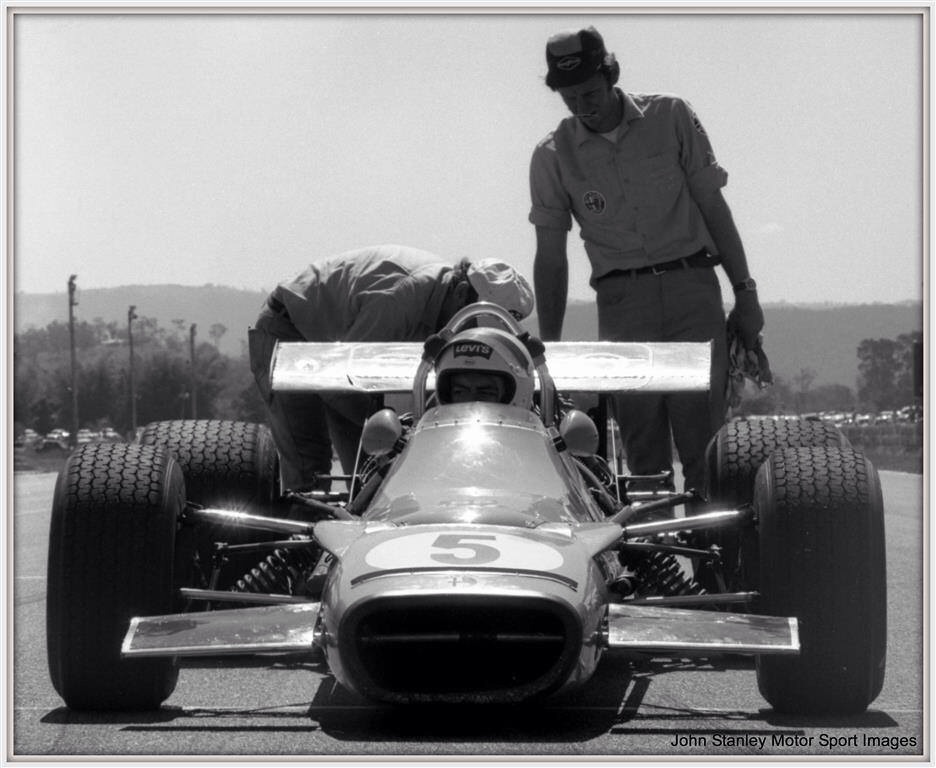
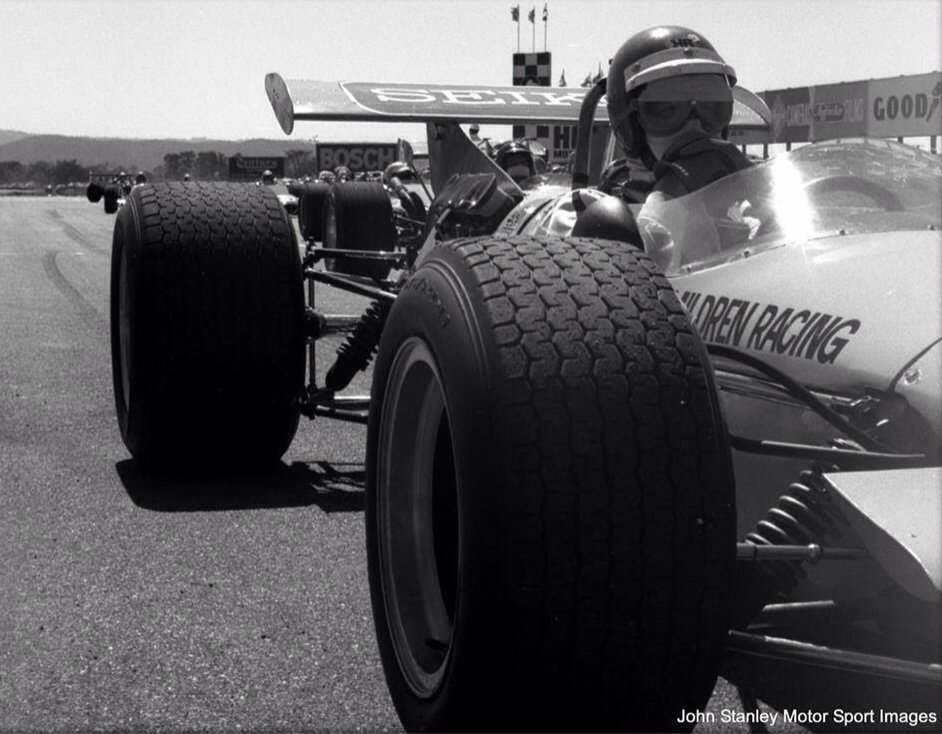
Kevin Bartlett was the race favourite but had problems in practice and as a consequence started from the back of the grid- his ex-Gardner Mildren Alfa 2.5 V8 was the class of the field in 1969 as the similarly engined Alec Mildren Racing Brabham BT23D had been the year before.

Love these John Stanley shots, they have a sort of moody quality about them?

Glen Abbey is behind KB down in grid slot 10. Bartlett won the race from Max by 1.5 seconds, then Leo Geoghegan’s venerable Lotus 39 Repco, Allen’s McLaren, Glynn Scott in a Bowin P3 Ford FVA and Ian Fergusson in a Bowin P3A Lotus-Ford twin-cam.

KB won the Gold Sar comfortably from Leo and Max, taking three of the six rounds- Symmons Plains at the seasons outset, Surfers and the final round at Warwick Farm in early December.

The latter event was significant in the history of this chassis as at the Farm the Sub was fitted with the very first of Merv Waggott’s 2 litre TC-4V engines, winning upon debut. From that point the Sub was so equipped until its ANF2 phase with Ray Winter.

Etcetera…

(unattributed)

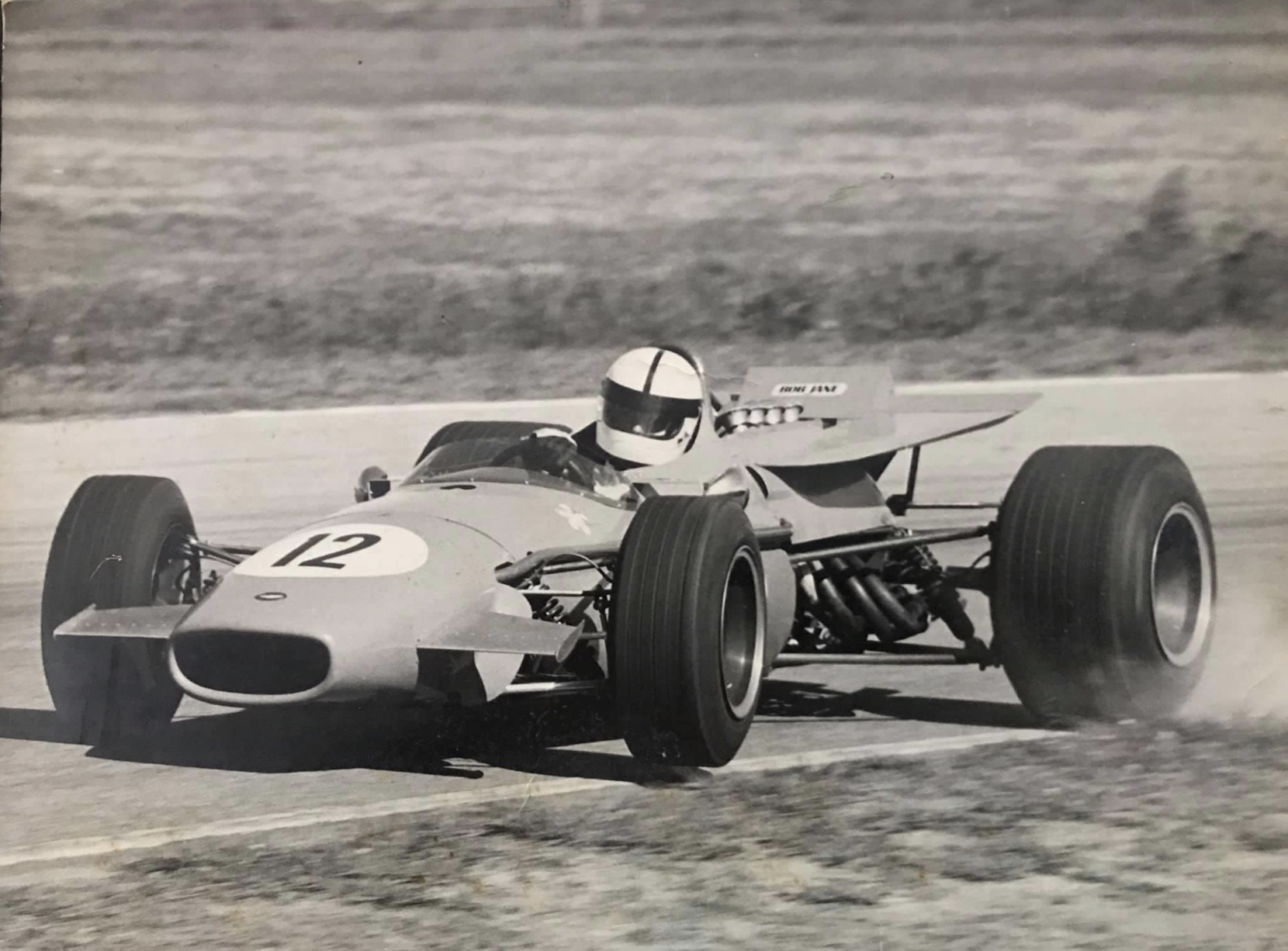
John Harvey on the hop in Bob Jane’s Brabham BT23E Repco 830 V8, he was out with cam-follower failure after completing 38 laps.

Credits…

John Stanley

Tailpiece…

Finito…

(Wheels)

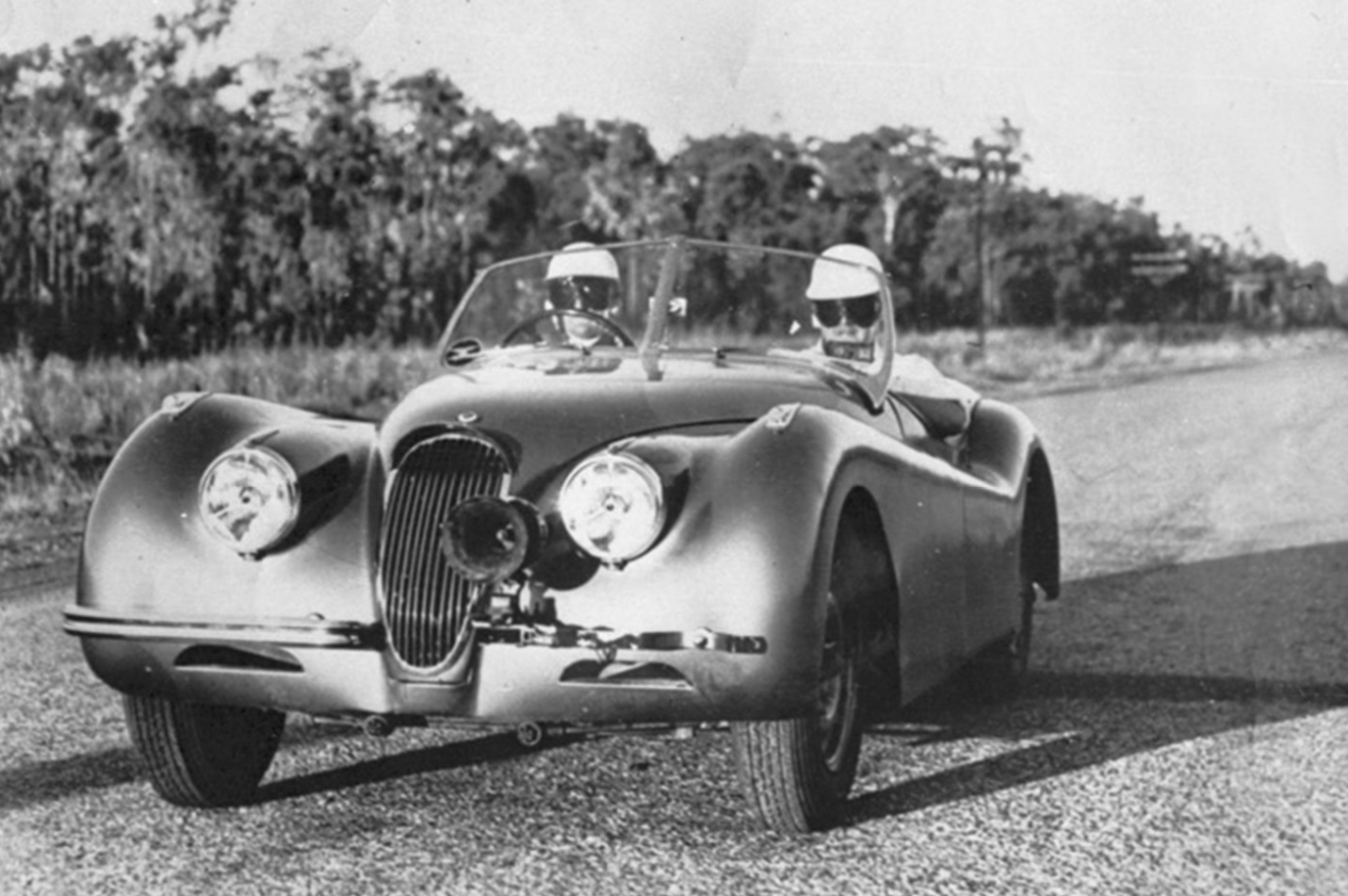
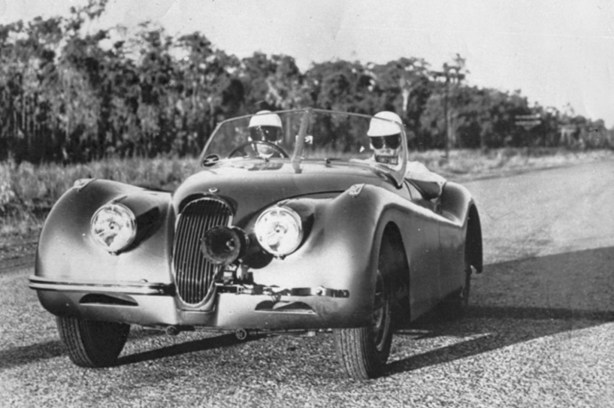
Whilst Darwin’s ‘Northern Standard’ reported that the attempt on the Darwin to Alice Springs record by Brisbane racer/motorcycle dealer Les Taylor and his salesman, ex-Spitfire pilot Dick Rendle’s Jaguar XK120 was a ‘well kept secret’, news of it soon spread.

So much so that when the duo arrived in the Alice 10 hours and 32 minutes after leaving Darwin they were greeted by the local ‘Wallopers’ who slapped Taylor in the local nick and charged him with four offences.

The pair set off at 6.30 am on Thursday 2 August 1951, arriving at 5.02 pm after covering 954 miles- an average of 90.5 mph. Plentiful telegrams of the interested enroute made the job for the police easy! The previous record was set by Jack Day in his Day Special (Bugatti T39 Ford V6 Spl) at 16 hours in 1950.

Excitement along the way was provided by cattle on the road between Pine Creek and Katherine, and a horse close to Barrow Creek, fortunately the svelte lines of Coventry’s finest remained intact. See the full story in Wheels here; https://www.whichcar.com.au/features/classic-wheels/vanishing-point
(Wheels)
 

(unattributed)

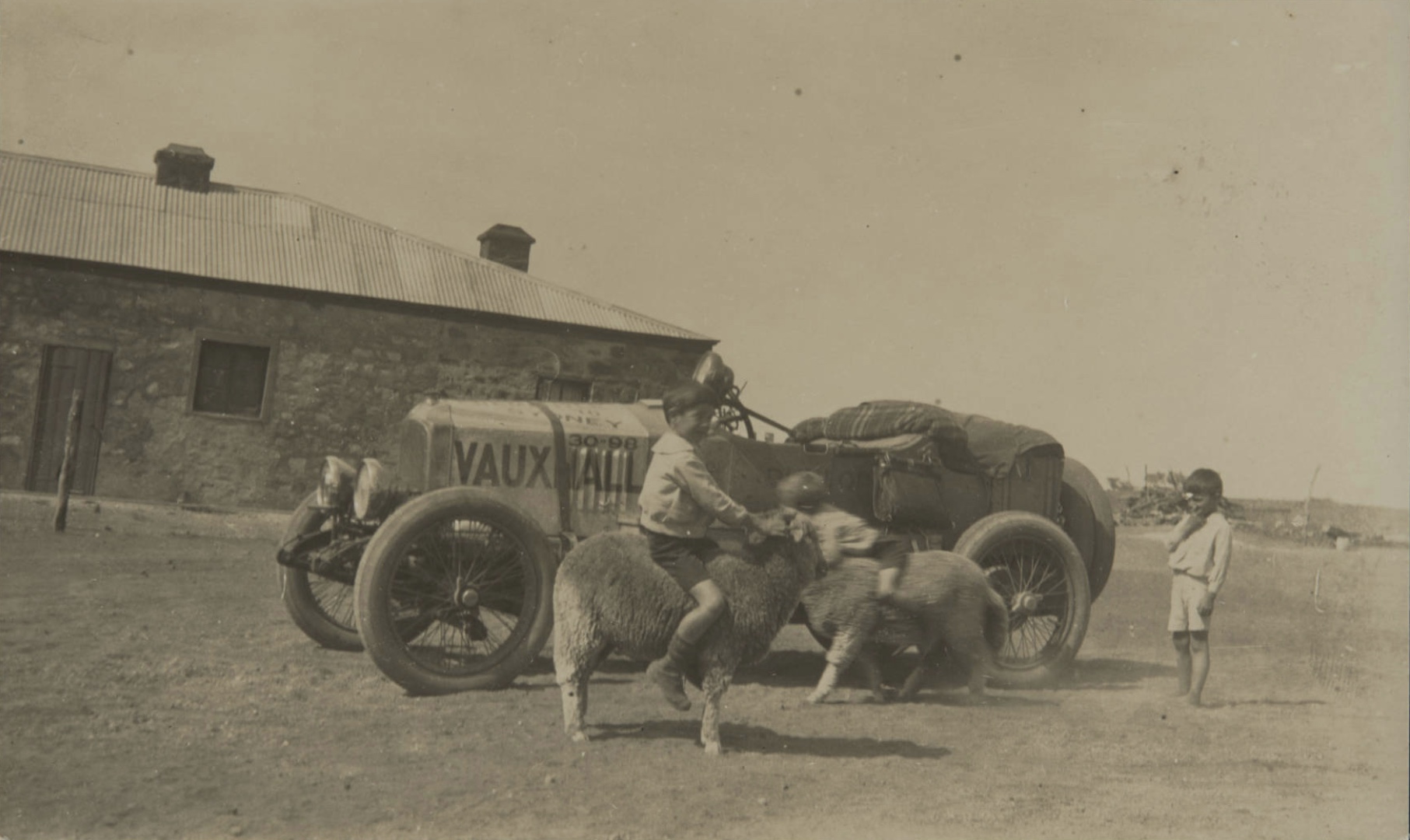
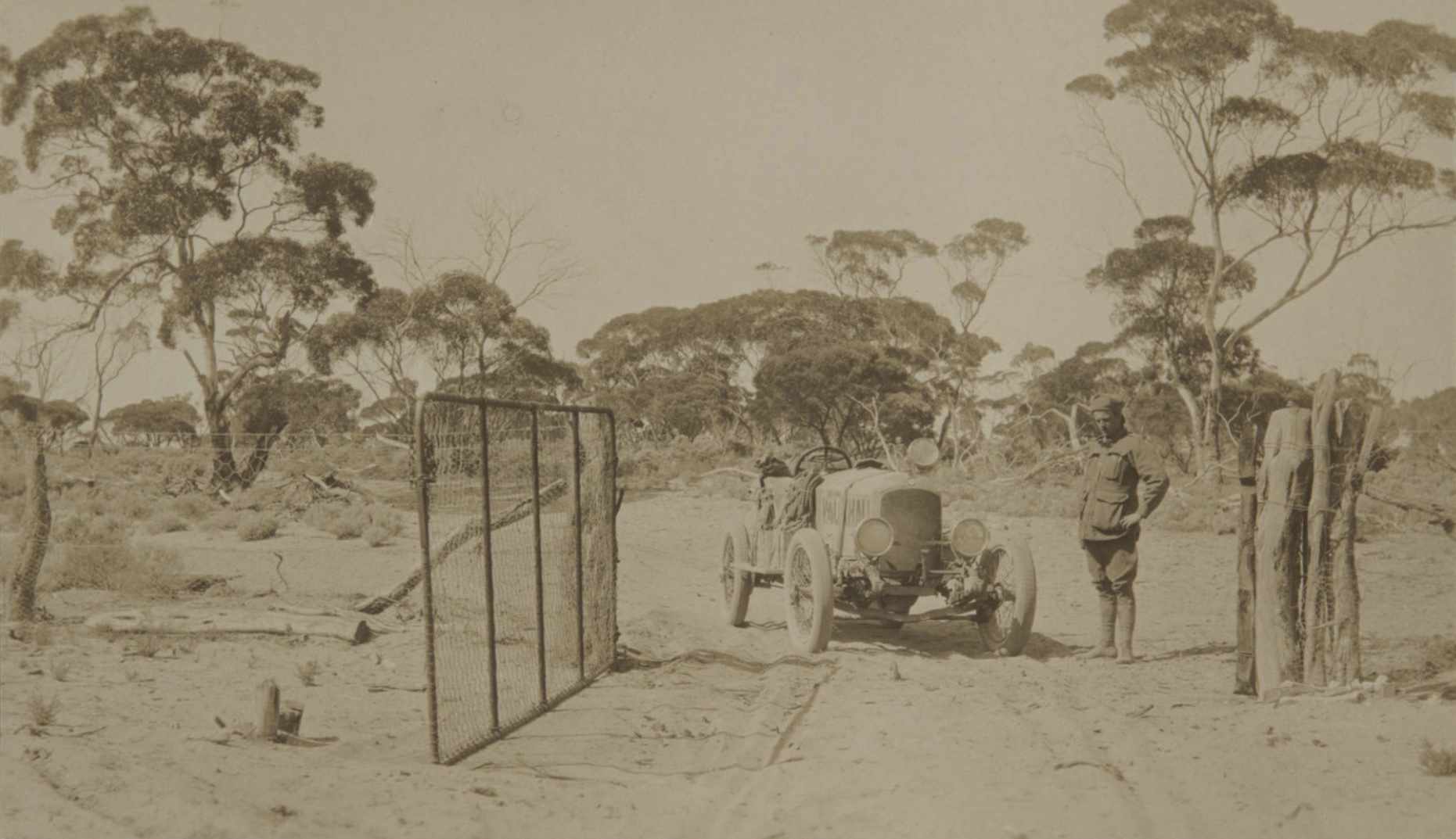
Our earliest motoring heroes, household names, were the drivers who set innumerable north, south, east and west intercity records between all sorts of weird and wonderful places, but that all became a bit dangerous so the practice was made illegal in 1930, hence the intervention of the gendarmes above. See here for a piece on these pioneers;

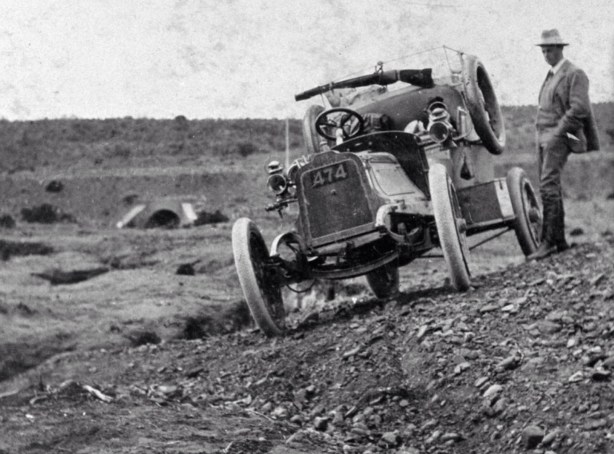
It begs the question as to who was first to cross the country by car, that honour, from north to south goes to Horace Aunger and Henry Dutton aboard a Talbot in 1908 above.

The pair left Adelaide in Dutton’s Talbot on 25 November 1907 travelling through country which could only be tackled by a modern 4WD but the cars crown wheel pinion failed south of Tennant Creek, with the wet season moving in  the intrepid duo travelled by horse to the railway line at Oodnadatta and made their way home.

The second bite at the cherry commenced on 30 June 1908, with a more powerful Talbot. Ern Allchurch joined them at Alice Springs, after repairing the damaged car at Tennant Creek the two cars drove in convoy to Pine Creek where the ‘disgraced’ Talbot was sent by train to Darwin, the trio reached Darwin on 20 August.

This car is at Birdwood in the Adelaide Hills- another reason to visit this great museum. A piece on Transcontinental competition here; https://primotipo.com/2018/12/21/city-to-city-record-breaking-and-car-trials/


(Driving & Life)

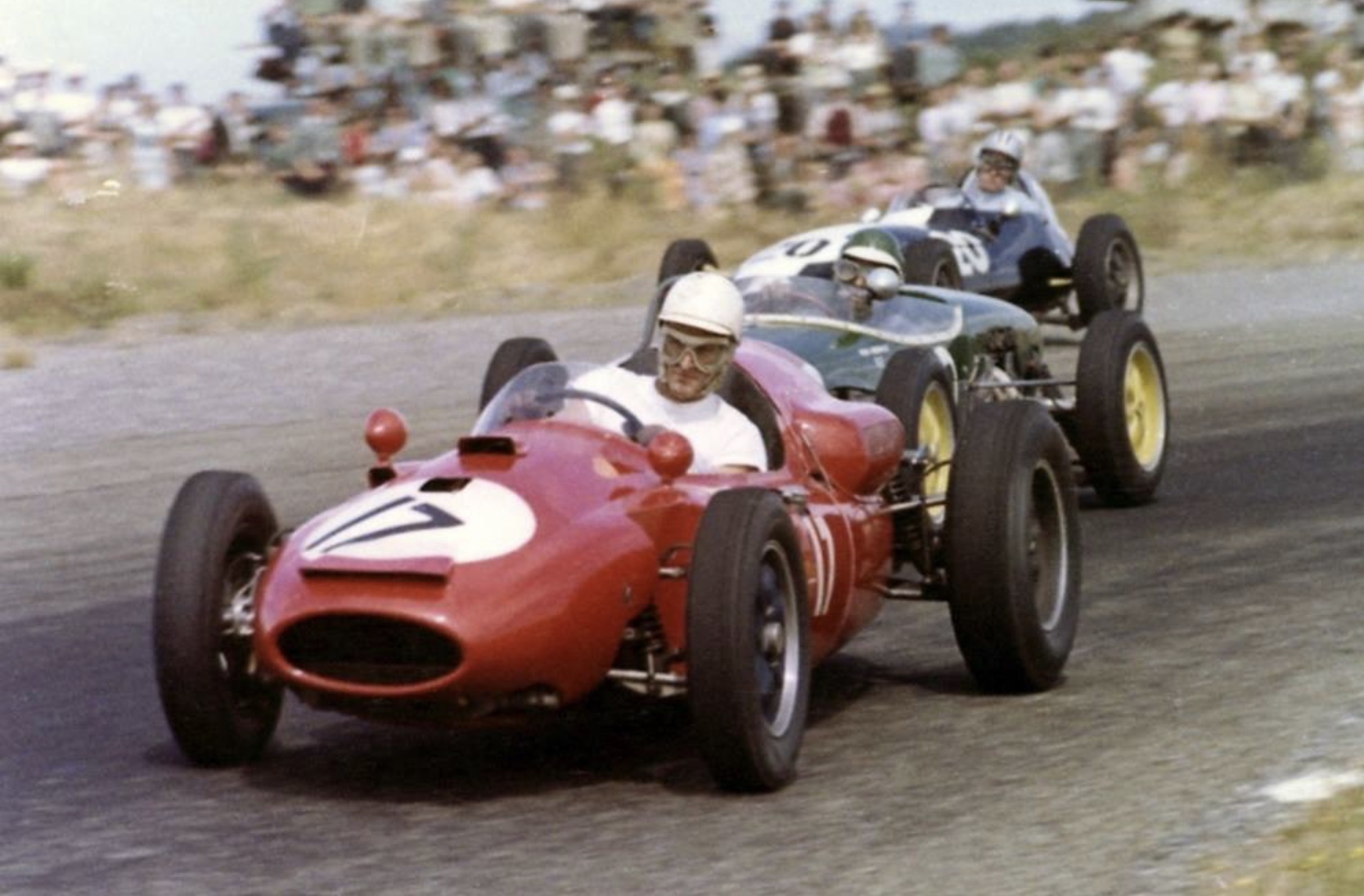
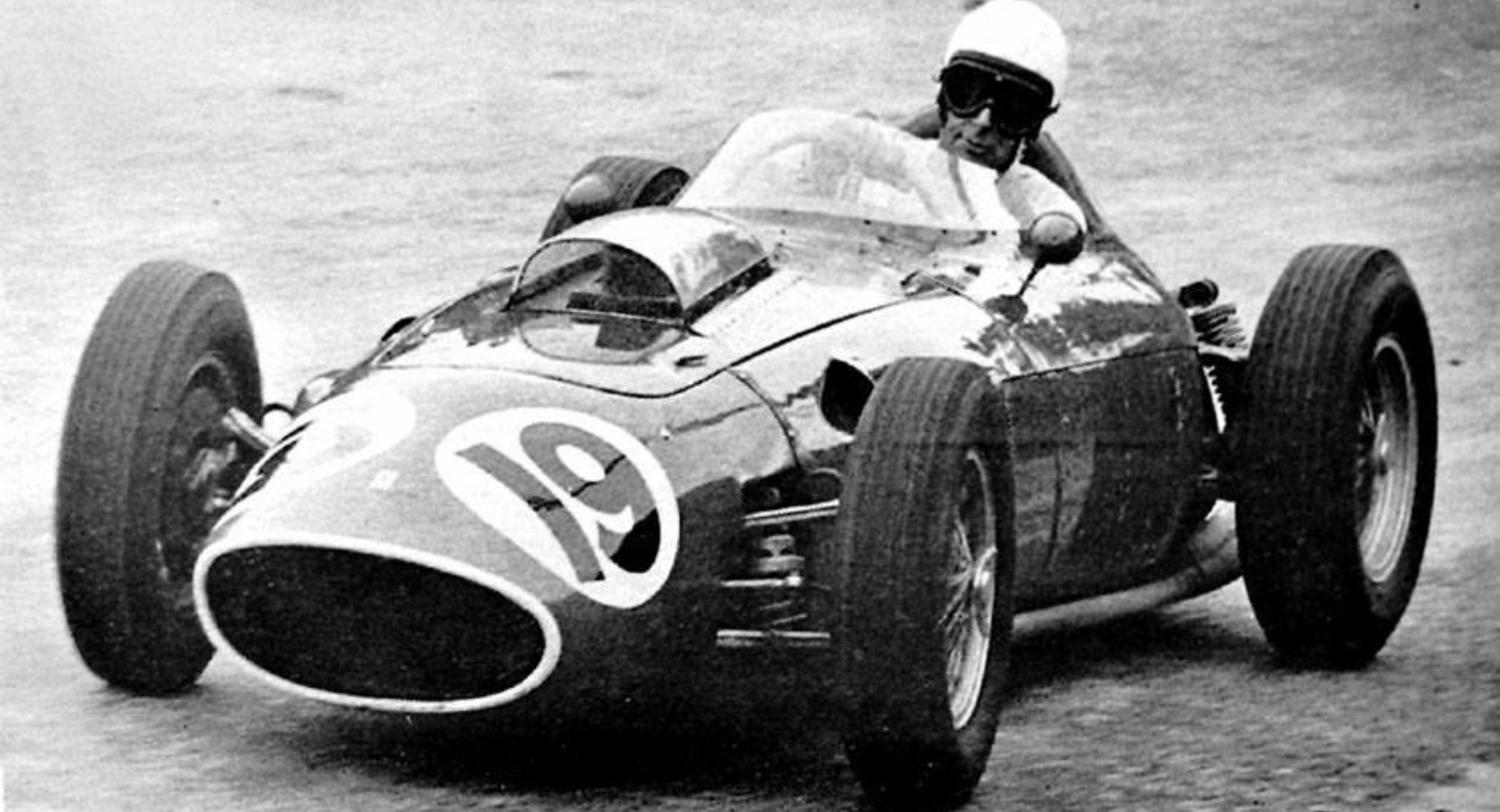
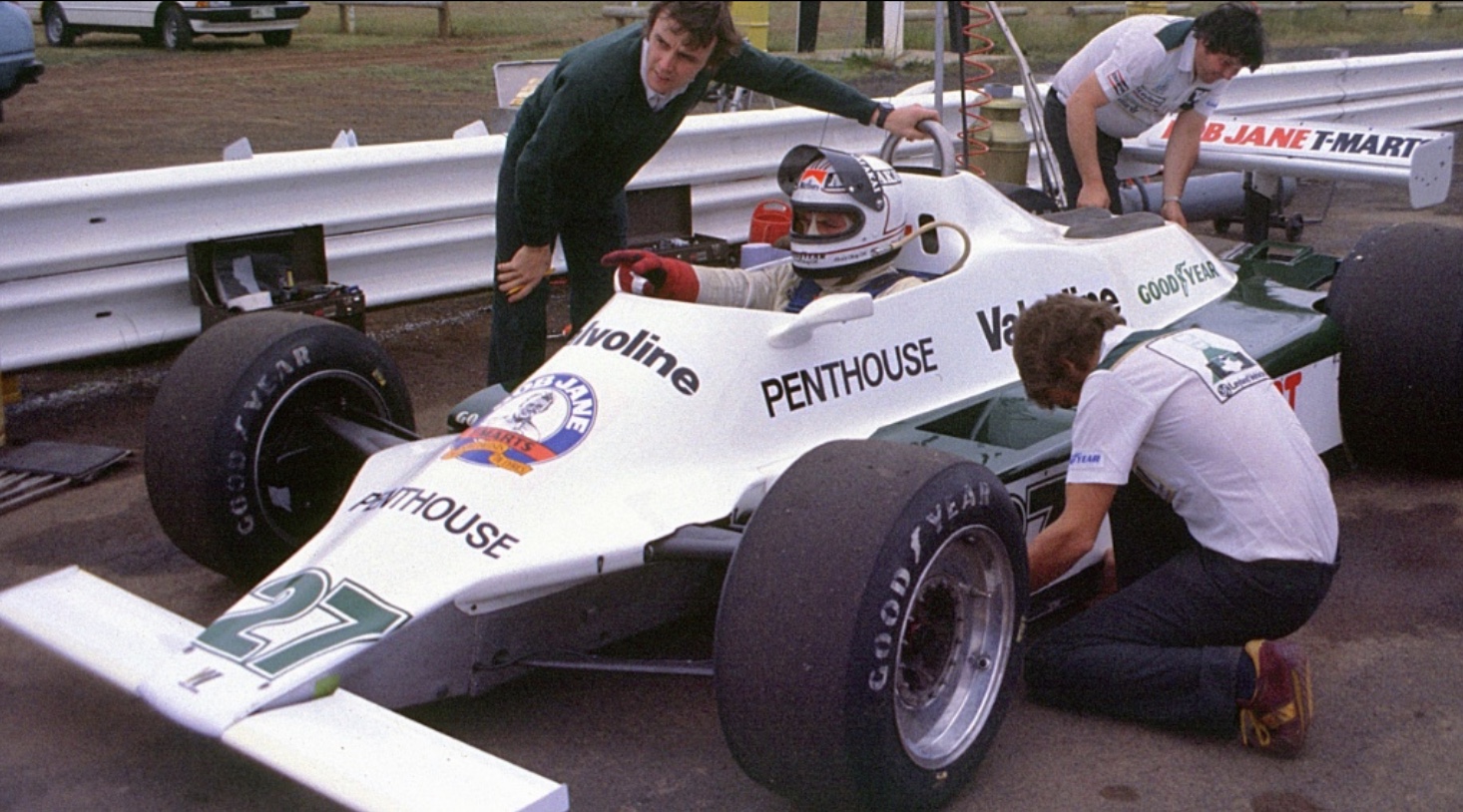
What a thrill it was to see Alan Jones win the 1980 Australian Grand Prix at Calder in his Williams FW07 Ford and match his fathers similar feat achieved aboard a Maserati 250F at Longford in 1959.

The Calder event was for F5000 and F1 cars- specifically Jones’ machine and the sensational Alfa Romeo 179 3 litre V12, my abiding memory of that weekend forty years on is the sound of the Alfa as Bruno Giacomelli worked the fabulous screaming twelve up- and particularly down the six speed ‘box.

(unattributed)


(An1images.com)

Peter Brock exits Dandenong Road during the September 1977 Sandown 400K.

Brock won from Allan Grice’s similar Holden Torana A9X in a year of slim pickings for the Fisherman’s Bend mob- it was twelve months of Carroll Smith/Moffat/Bond domination of Group C touring car sprint and endurance racing- a welcome change of fortunes for those of us with no marque based bias.


(unattributed)

Tom Bradey and Charlie Sheppard, Singer 9 Bantam on the way to winning the first Australian Touring Car Championship aka the ‘Australian Stock Car Championship’ at Lobethal in 1939.

Rewrite the record book folks, the first ATCC was run and won at Lobethal in 1939, not Gnoo Blas in 1960, see here; https://primotipo.com/2018/10/04/first-australian-touring-car-championship-lobethal-1939/


(J Ellacott)

One of John Ellacott’s signature Homestead Corner shots at Warwick Farm, circa 1963.

Its Charlie Smith in the ex-works/Frank Matich works Elfin WR275 ‘Catalina’ Cosworth Ford 1.5, he looks pretty relaxed in his short-sleeved shirt too. Below at Mount Panorama.

Matich had a pair of these cars at his disposal in Sydney in addition to a Clubman and did much to enhance the Elfin name in the important Sydney market. See here; https://primotipo.com/2019/04/12/elfin-fj-catalina-250-275-375-wr/

(T Sullivan Collection)


(VW)

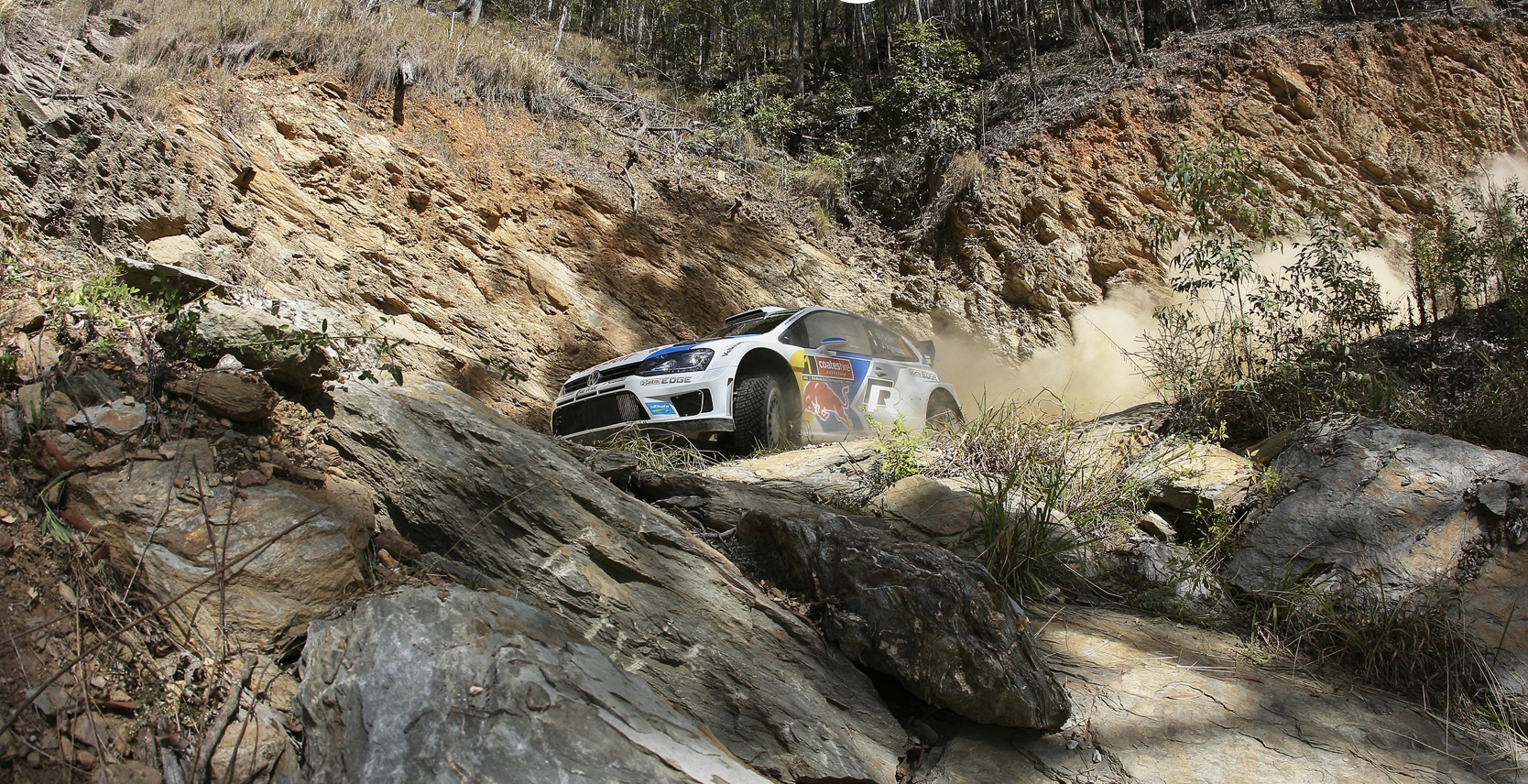
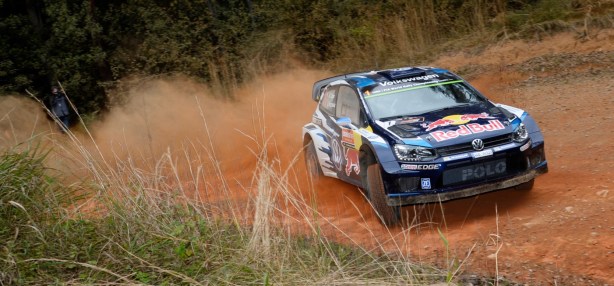
The Sebastien Ogier/Julien Ingrassia VW Polo WRC successfully defended their driver/co-driver titles in Spain having already retained the manufacturers title in Australia in 2015- for the third time on the trot.

Rally Australia was run from September 10 to 13 out of Coffs Harbour, the champs finished ahead of teammates Jari-Matti Latvala and Anttila Miika and then the Citroen DS3 WRC crewed by Kris Meeke and Paul Nagle.
(VW)


(D Foster)

The Prad Healey at Lakeside in 1961, surely it’s the best looking Healey 100/6 ever built?

This unique car was modified not long after it was acquired new by Queenslander, Doug Cavill in January 1958.

The engine was modified extensively so by racer/engineer Bill Reynolds and the body by the vastly experienced and talented Sydney ‘Prad’ boys, Barry PRyor and Clive ADams in Sydney. A fast, stunning machine was the result, the car still exists but the beauty has been stripped of her party clothes, almost criminal really, see here; https://primotipo.com/?s=prad+healey


(An1images.com)

Scott Dixon, Reynard 92D Holden leads the 1998 Sandown Gold Star round at Sandown.

He won four of the twelve races on the way to the title, including this one. In a season of great consistency he finished every race and placed second on five occasions, winning the title from Todd Kelly also aboard a 92D by 43 points with Mark Noske a further 8 points adrift in a Reynard 95D.


(D Williams)

This bunch of shots by David Williams took my eye- they were taken at Hume Weir long after the last meeting had been held at the hugely popular Albury-Wodonga border-town circuit.

Club sprints and the like were held long after the final open meeting, see here; https://primotipo.com/2016/05/06/hume-weir/

David’s camera caught some wonderful Lukey Mufflers signage, the 1959 Gold Star Champion was always a friend of motor racing throughout his life, most notably as the owner of Phillip Island for a couple of decades

(D Williams )
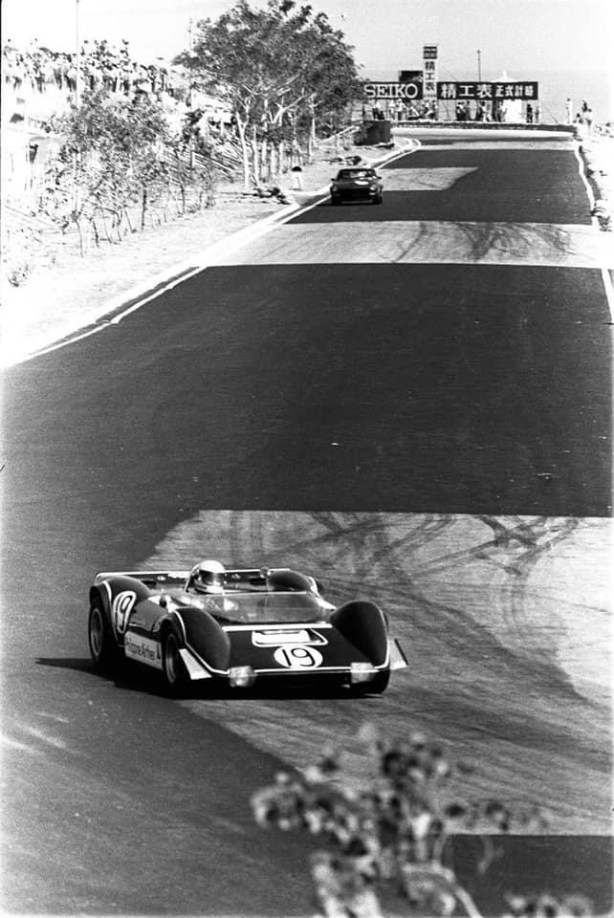
 

(unattributed)

Max Patterson’s ex-Mal Ramsay Elfin 300C chassis ‘SS67-6’ Ford during the 1973 Macau Grand Prix.

Amongst the sweetest of all of Garrie Cooper’s cars.

The Melbourne car dealer qualified the car on the second last row amongst the other sportscars but was out early in the race won by The Monaco King of the era- John Macdonald’s Brabham BT40 Ford. Piece on the Macau GP here; https://primotipo.com/2019/09/20/macau-grand-prix/


(B Williamson Collection)

A couple of Caversham shots.

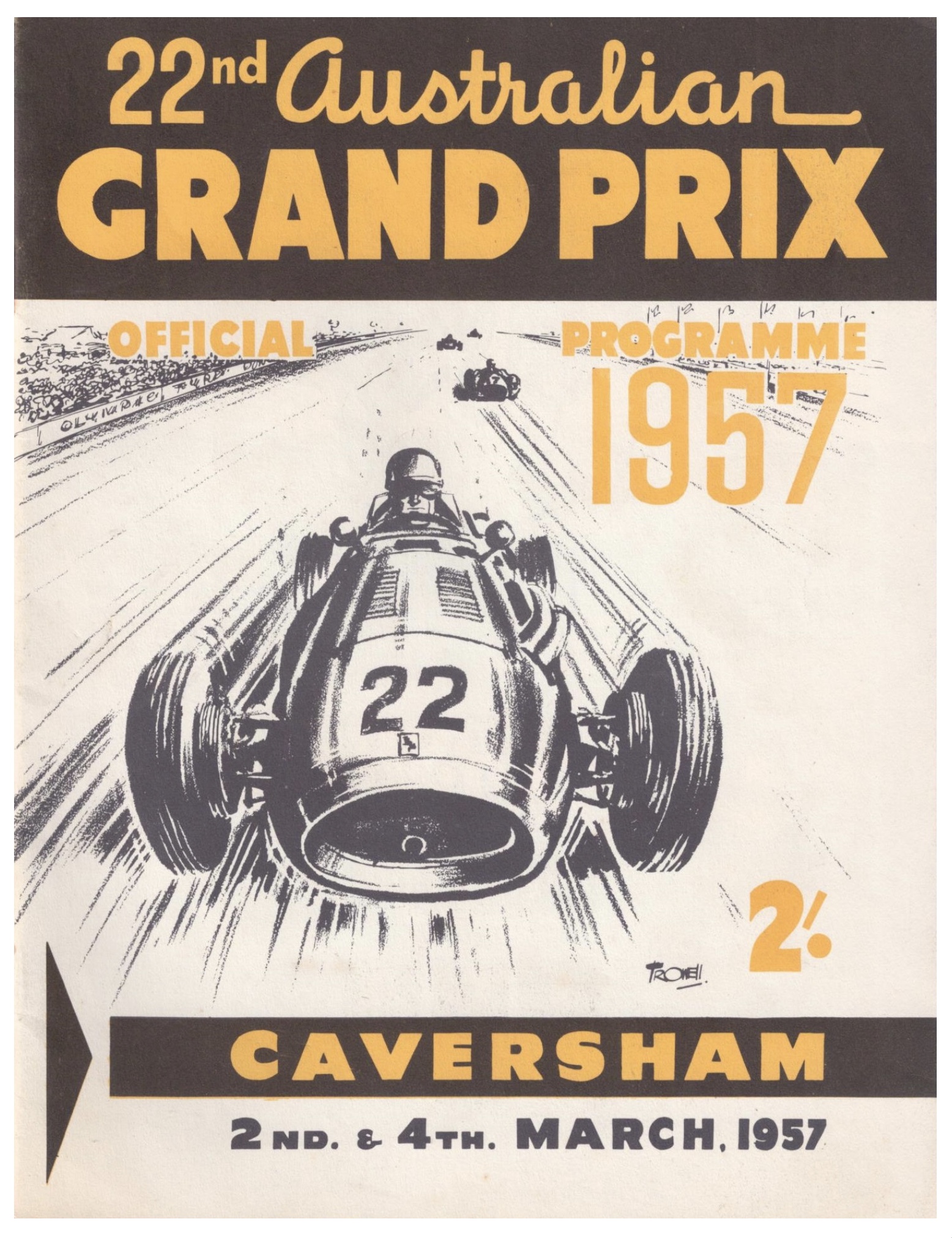
Look at the crowd above- I suspect it’s after the 1957 AGP won by Lex Davison and Bill Patterson aboard Lex’ Ferrari 500/625.

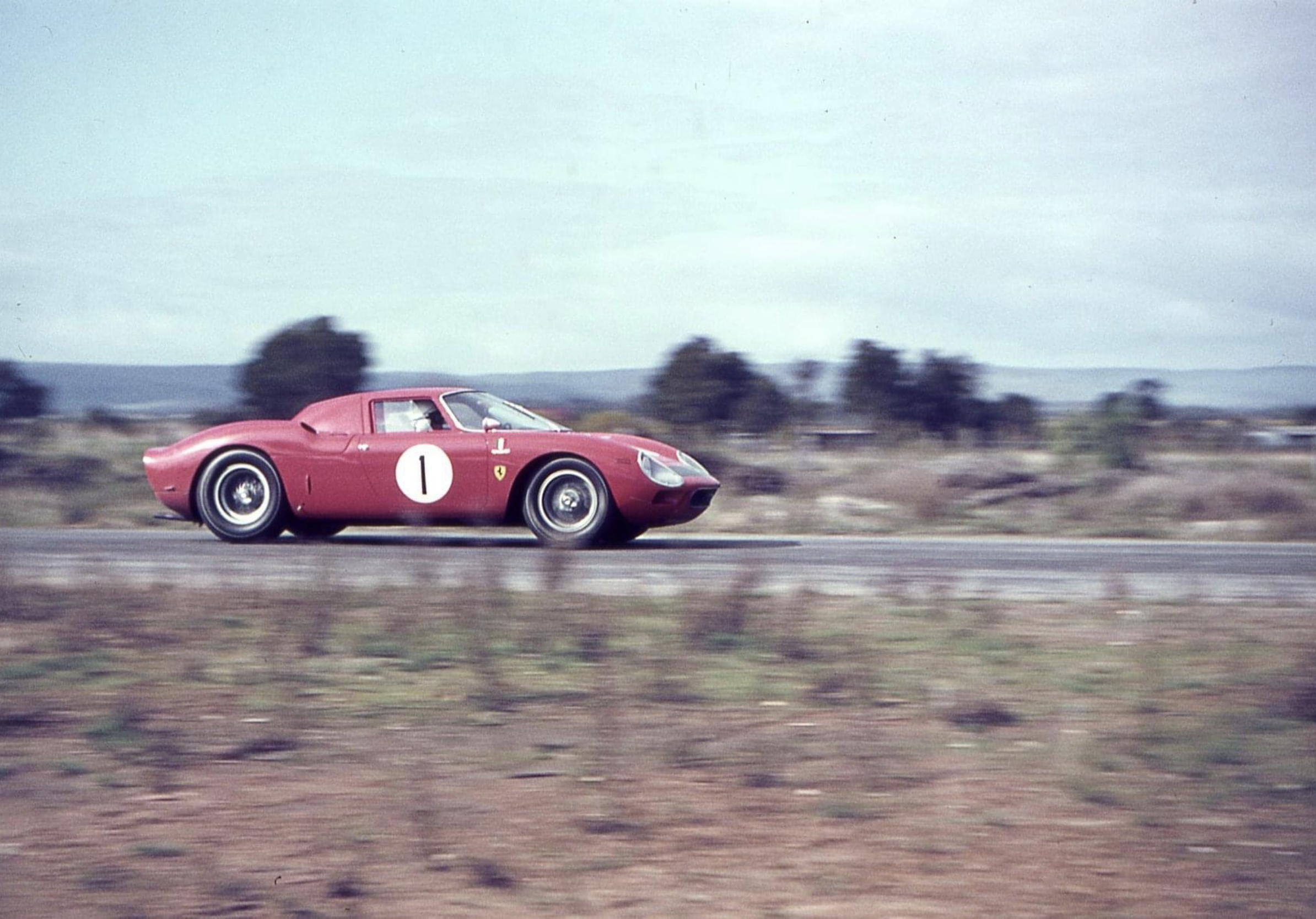
The shot of the Scuderia Veloce Ferrari 250LM could only be in Australia- superb bush backdrop to a sensational car being driven to a win of the ‘Six Hour Le Mans’ by Spencer Martin and David McKay on 7 June 1965. Feature on the car here; https://primotipo.com/2014/07/03/pete-geoghegan-ferrari-250lm-6321-bathurst-easter-68/

(K Devine Collection)


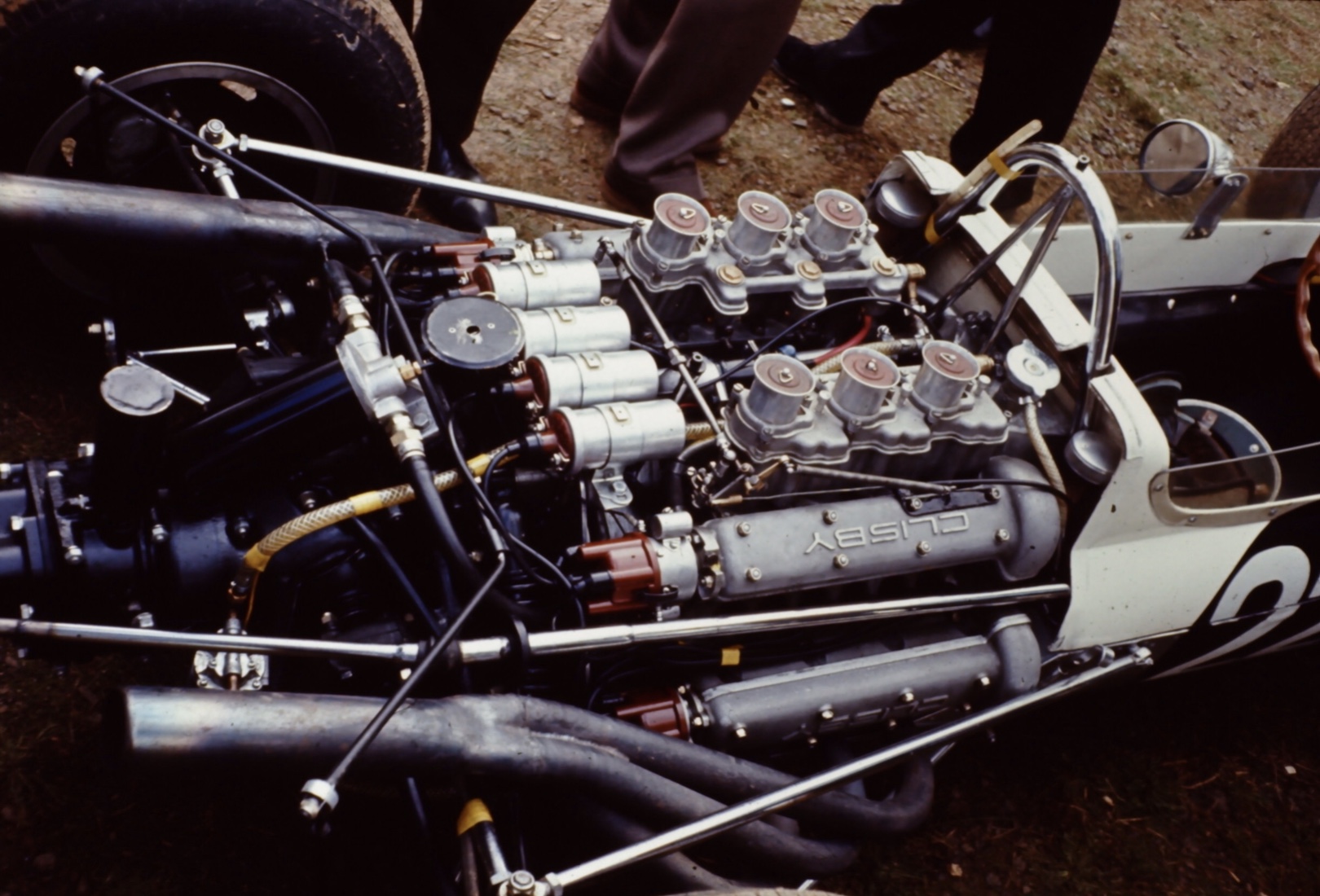
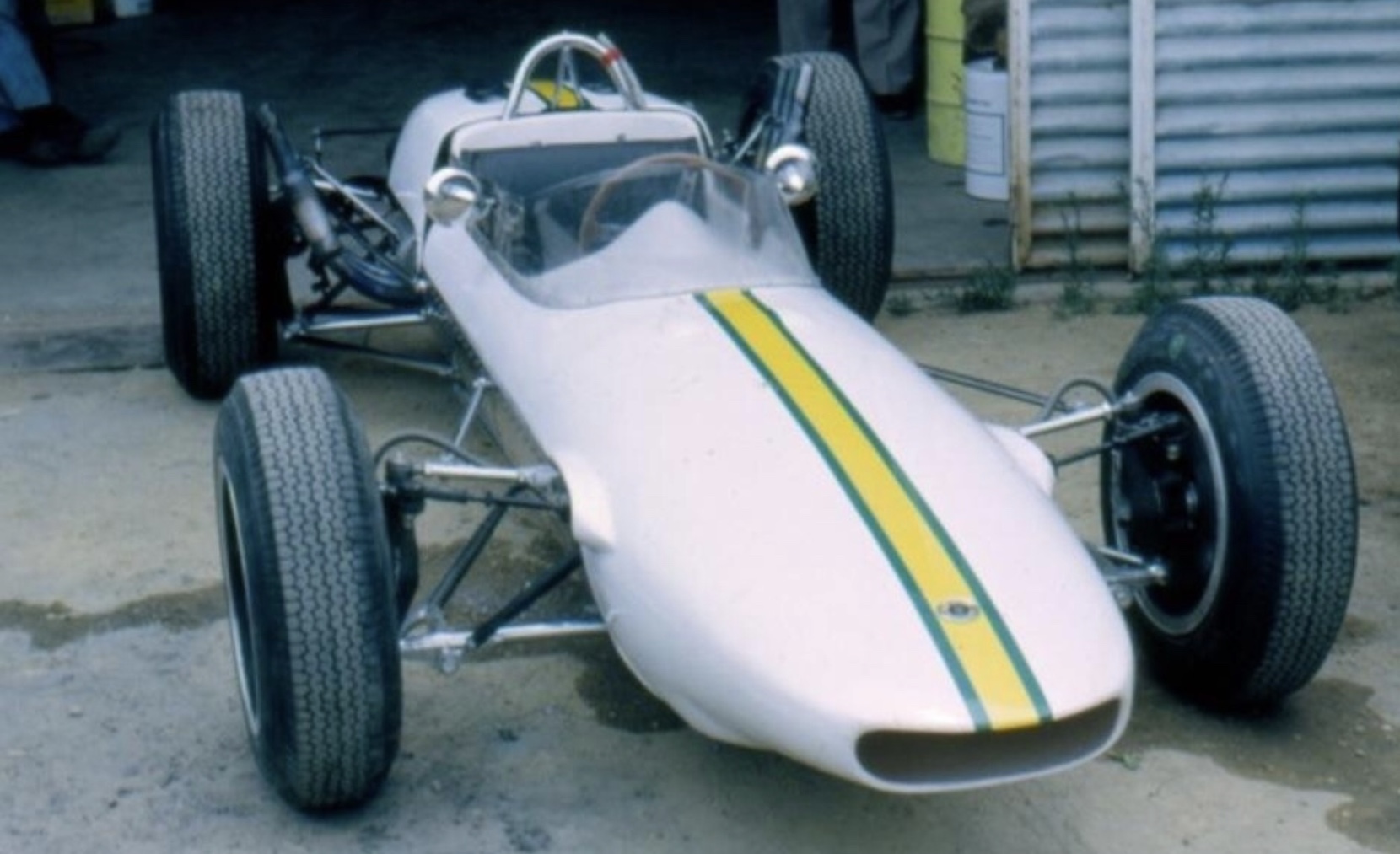
One of the most ambitious and audacious acts in Australian motor racing was Harold Clisby’s design and construction of a 1.5 litre V6 F1 engine.

At the time the engine was designed and built from 1960 to its first run on the test bench in 1964 the headcount of Clisby Industries was seventeen people. And they built almost all of it in-house. They being Harold, Project Engineer, Kevin Drage and Machinist, Alec Bailey.

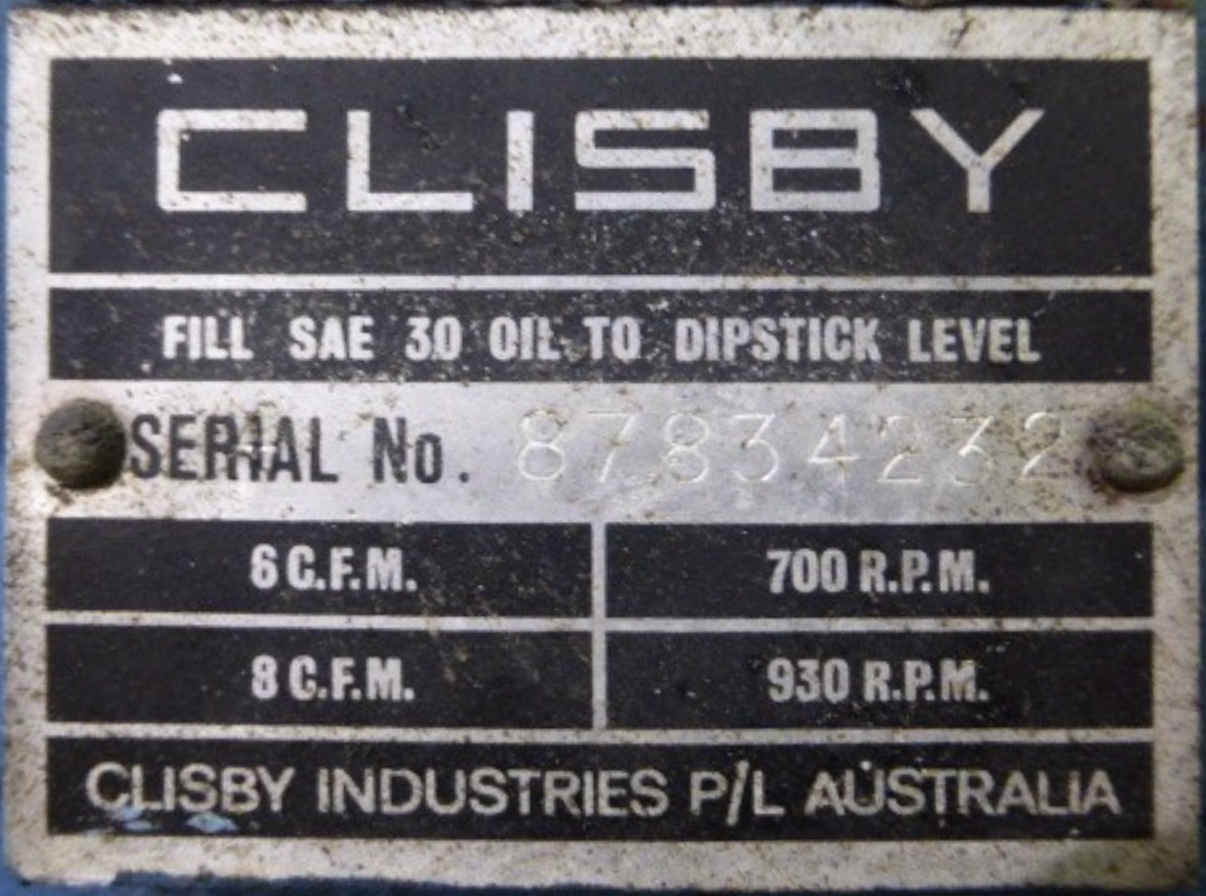
I cheated with the chassis plate by the way- its ‘orf a Clisby air-compressor.
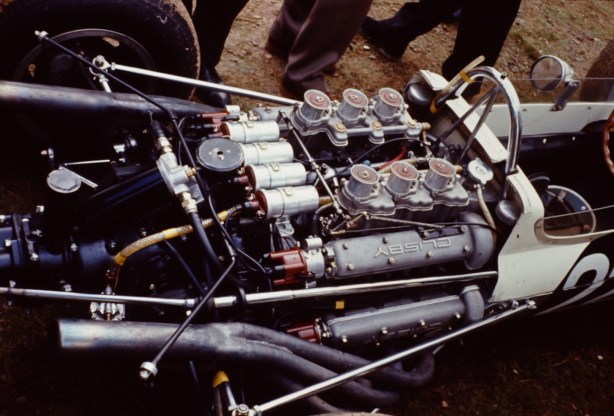
(D Lupton)

The 1.5 litre 120 degree, DOHC, two-valve, twin-Clisby triple-choke carb fed V6 was tested at Mallala for the first time, fitted to an Elfin Type 100 ‘Mono’ in March 1965.

It raced only four times before being put to one side whilst Clisby made hovercraft, steam trains, a castle and much, much more. Surely our countries greatest mighta-been? See here; https://primotipo.com/2019/03/22/elfin-mono-clisby-mallala-april-1965/

(K Drage)


(HTSA)

Bill Patterson enters Penrice Road, Nuriootpa during the Barossa Vintage Festival meeting in April 1949.

His MG TC Spl s/c is almost brand new and took two wins that weekend including the feature  event. Here it is below on its competition debut weekend at Rob Roy in January 1949. See here for the Nuriootpa weekend; https://primotipo.com/2020/08/27/barossa-vintage-festival-meeting-nuriootpa-1949/
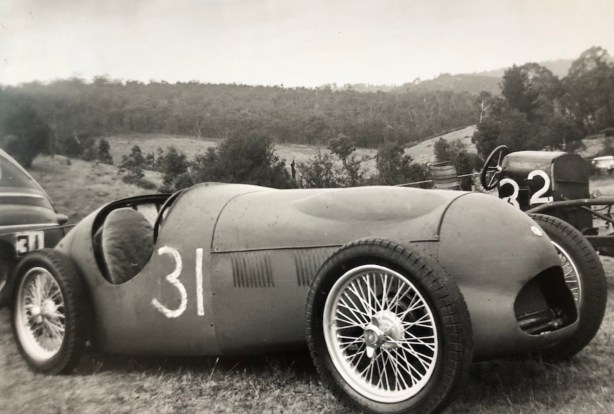
(R Townley Collection)


(D Lupton)

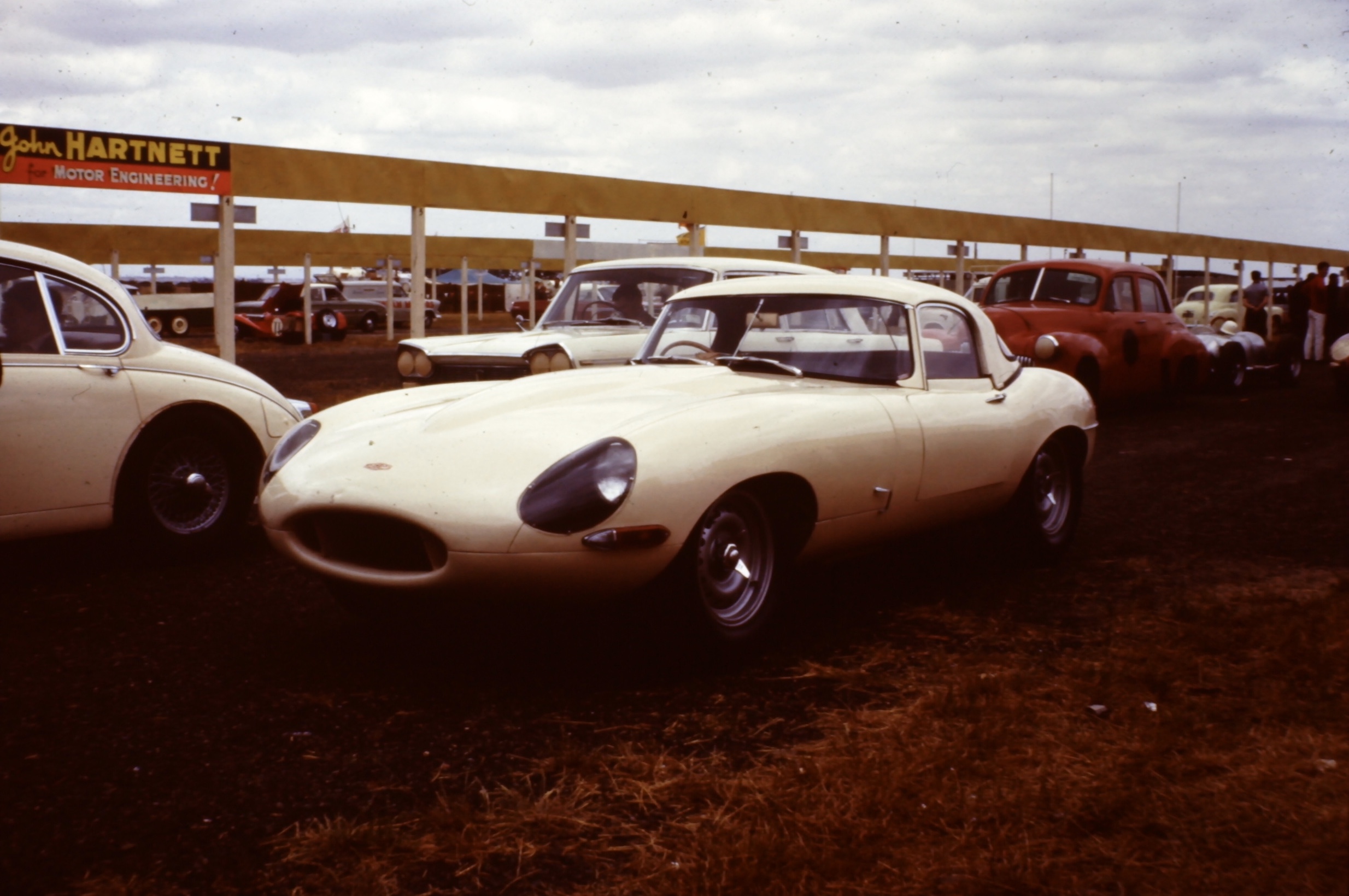
Bob Jane’s Equipe was pretty impressive right from his earliest days.

Here at Calder in 1963 are the two Jaguars- Mk2 and Lightweight E Type, the interloper is a Fiat 2300.

Stephen Dalton suggests its probably the weekend of the December 8 Australian GT Championship meeting. Click here for a piece on Bob’s cars; https://primotipo.com/2020/01/03/jano/

(D Lupton)


(I Smith)

JM Fangio and Jack Brabham aboard Lance Dixon’s 8C Alfa Romeo during the ‘Fangio Meeting’ at Sandown in 1978.

What a meeting that was! It was pinch yourself all weekend, it is such a treasured motor racing moment for all of us that saw it, let alone had a chance to be on the bill. Not that i remember the AGP or the taxi race!


(I Smith)

Magic moments- as clear now in my mind as then was JMF teasing the big booming 3 litre straight-eight (SLR engine fitted) out of third gear Shell Corner, into a big slide and holding it, with the whole of the pitlane and those perched on the pit counter roaring in approval. And delight. He did it again and again too.

Marvellous it was. See here; https://primotipo.com/2018/08/21/juan-manuel-fangios-sandown-park/

(I Smith)

Some beautiful shots by Ian Smith here.

Jack telling the press or assembled masses at the Light Car Club how hard he had driven BT19 Repco ‘620’ his 1966 F1 Championship winning tool to stay in front of the 1954/5 Mercedes W196. That’s Kerry Luckins, LCCA President at rear.

(I Smith)


(P Townsend)

John Leffler being tended by Paul and Steve Knott at Oran Park during June 1974, Bowin P8 Hart-Ford 416-B ANF2 car.

John Joyce’s Bowin P8s were amongst the most sophisticated, advanced racing cars ever built in Australia. With wedge shape, hip radiators and variable or ‘rising’ rate suspension the car picked up some of the Lotus 72’s design cues.

Leffler was the only driver to really take the fight to the tussling Birrana pilots Leo Geoghegan and Bob Muir in the 1974 Australian F2 Championship, had the car’s suspension been sorted by Leffler and Joyce earlier in the season perhaps Leffo’s yield would have been greater than one win!

This was a seriously fast racing car, John raced it everywhere in 1974 including some Gold Star rounds where he made the tail of the 5 litre cars look decidedly average. I’ll have this car in my collection please. A bit about the car here; https://primotipo.com/2018/09/20/brabs-gets-the-jump/


Leffo and Bob Muir collided at Lakeside in December causing them both to retire- that left front is punctured


Peter Brennan Collection

Repco luminaries Nigel Tait, Rodway Wolfe and Aaron Lewis were musing a couple of weeks ago about how many Repco-Brabham ‘760’ 4.2 litre, quad cam, 32 valve ‘Indy’ V8s were built for Brabham Racing Organisation’s 1968 and 1969 Indy 500 assaults. The answer is three.

My Repco history has not yet given the 3 litre 860 and 4.2/4.8/5 litre 760 a real go, but i did wonder who paid for the Indy engines. Repco’s ad in the 1968 Longford program provides the answer- Goodyear. I’d love to know how much they paid?

Peter Revson got the best results out of the 760 engined Brabham BT25s in drives which changed the direction of his driving career. He finished a great fifth at Indy in 1969 and won the two heat Indy Racing Park 200 against a field a great depth that July and proved there was nothing wrong with Repco’s quad-cam, four-valver that development could not solve.

There is some information about the four-can engines in this ridiculously long epic; https://primotipo.com/2019/02/22/rbe-by-the-numbers/

Repco-Brabham Engines Pty. Ltd. ‘RBE’ ‘760 Series’ 4.2 litre, gear-driven four cam, four valve, Lucas fuel injected V8 (Repco)


(oldracephotos.com/King)

Alan Hamilton’s Porsche 906 Spyder on the hop at at Longford in March 1967.

In the feature race he finished third behind the Matich and Jane Elfin 400s, the new car having made its race debut at Sandown the week before. See here for a piece on Hammos’ 906s, i had a looong wonderful chat to him a couple on months ago which i really must turn into words, note to self! See here in the meantime; https://primotipo.com/2015/08/20/alan-hamilton-his-porsche-9048-and-two-906s/

Bibliography…

TwistedHistory.net.au, Wheels magazine

Photo Credits…

Wheels, Russell Garth, John Ellacott, Darren Foster, David Williams, AN1images.com, Bob Williamson Collection, Ken Devine Collection, Denis Lupton, Kevin Drage, Richard Townley Collection, Ian Smith, Chris Griffiths, ‘Driving and Life’, Peter Townsend, Repco, Yogi Weller, oldracephotos.com, Terry Sullivan Collection

Tailpiece…
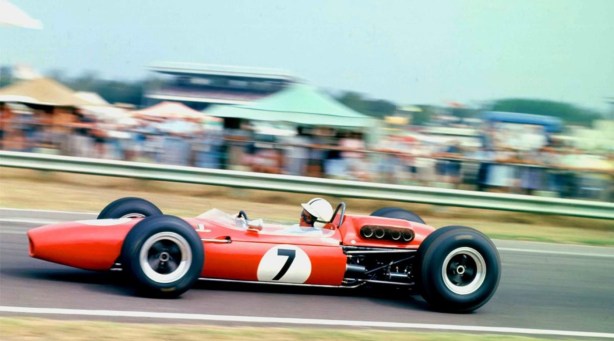
(autopics.com.au)

Spencer Martin aboard the Scuderia Veloce Brabham BT11A Coventry Climax during the 1966 Warwick Farm 100 Tasman Cup meeting.

His battles in this car, by then owned by Bob Jane, with Kevin Bartlett’s matching Alec Mildren owned car were the toast of racing in 1966-1967, the two mates and young professionals racing hard, fast and fair.

Martin won two Gold Stars in those years and then retired, too early in the minds of many but at precisely the right time for the man himself. See here; https://primotipo.com/2015/04/30/spencer-martin-australian-gold-star-champion-19667/

Finito…


David McKay framed by the shadows, eases his Cooper T53 2.5 Climax ‘Lowline’ into Hell Corner for the run up Mountain Straight, Easter 1962…

Cracker of a shot. Its practice, tents of campers have set up for the weekend in the Australian Racing Drivers Club members area in the background, a somewhat ominous sky and the marshall with the ‘brickies’ hat made up of a carefully folded hanky.

A really skinny grid fronted for the Bathurst 100 Gold Star round, an event which had been one of the countries most prestigious.

Despite the small field Lex Davison, Cooper T53 2.7 FPF and Bib Stillwell, Cooper T53 2.5 FPF staged a great battle for 15 laps with Bill Patterson, Cooper T51 2.5 FPF and McKay  a little further back- McKay got past Patterson on lap 11 with Davison’s gearbox failing leaving Stillwell in front to win from McKay, Patterson and Greg Cusack in the older Scuderia Veloce Cooper T51 2.5 FPF.

I have written about this Cooper T53 before, here; https://primotipo.com/2017/09/06/chris-amon-cooper-t53-and-the-australian-grand-prix-1963/

(P Wherrett)

David McKay in the Lowline Cooper T53 with Barry Collerson, Cooper Minx on the outside, Warwick Farm, 5 August 1962.

Credit…

Alan Howard, John Ellacott, ‘Bathurst: Cradle of Australian Motor Racing’ John Medley


Finito…
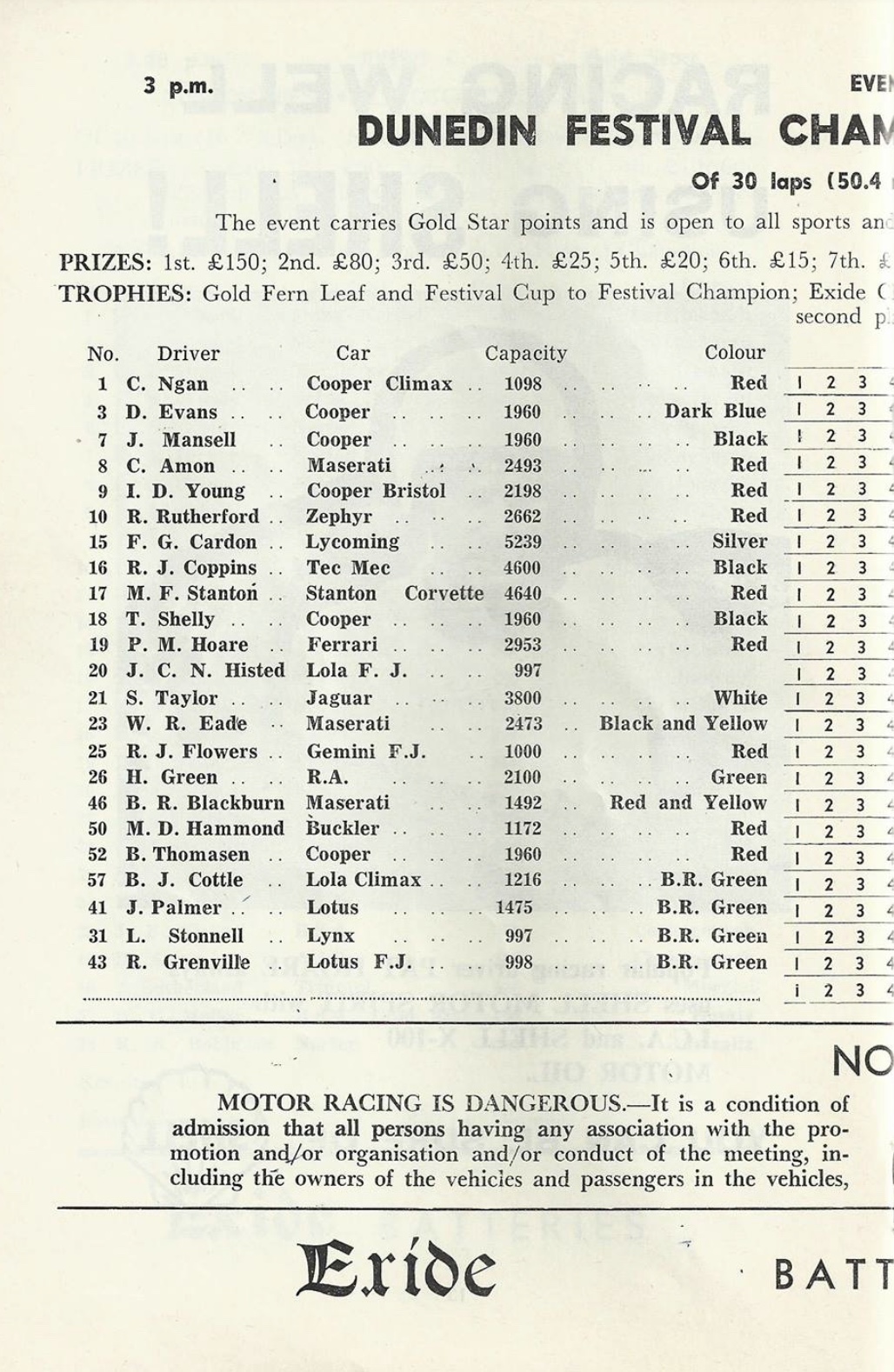
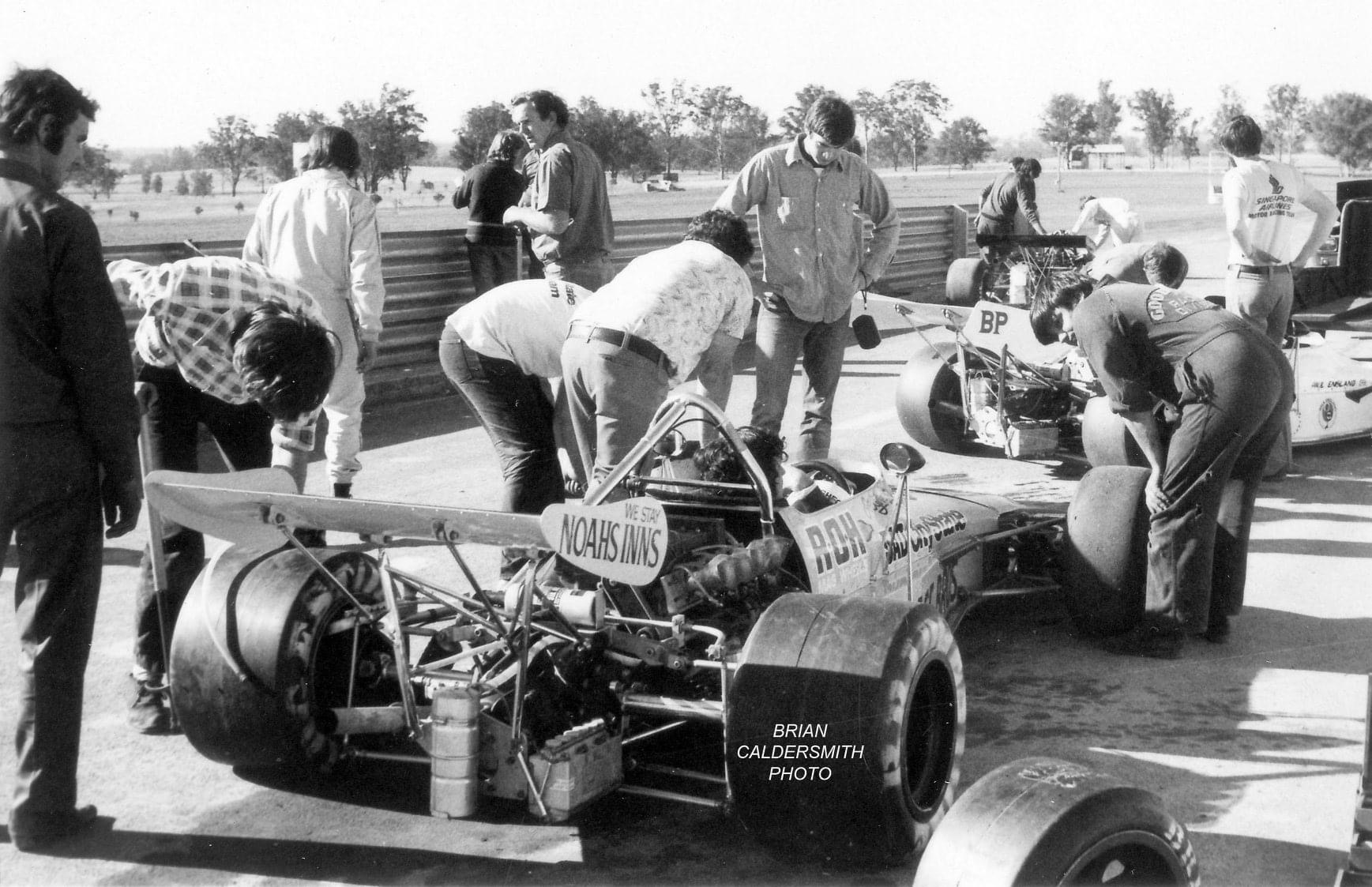
I love watching busy test sessions such as this.

It’s the Thursday or Friday before the second round of the Australian Formula 2 Championship at Oran Park, New South Wales on August 5 1973.

The Birrana Cars onslaught is underway, Malcolm Ramsay and Tony Alcock’s 272 impressed all in 1972 including Leo Geoghegan who drove the car late in the year and was happily seduced back into single-seaters with a works Birrana 273 Ford-Hart 416-B 1.6 for 1973.

Leo mopped up that year winning six of the seven Australian Formula 2 Championship rounds despite opposition from Tony Stewart and Enno Buesselmann in 273s, Bob Skelton’s Bowin P6 and Ray Winter in the old darlin’- the ex-Gardner/Bartlett Mildren Yellow Submarine. Of these Skelton was quick everywhere and led Leo at Amaroo and Symmons, missed the last two rounds and ultimately could not convert the potential of the variable-rate suspension Bowin.

But all of that is in the future, the flurry of activity centres on Leo’s car and a back to back test between Goodyear and Bridgestone tyres- who is the the Goodyear tech looking closely at the right front- i am being assertive with my identification of people but in some cases ‘i think’ should be used- just letting you know rather than write it ten times.

Check-shirt man is Bruce Cary, the driver at left is Ray Winter, to his right in the short sleeved shirt is Bruce Richardson- the car in front of Leo’s is Tony Stewarts, the guy in the Singapore Airlines T-shirt is Malcolm Ramsay and the car at the end of the pitlane is one of the black Bowin P6s- either Skelton’s or Bruce Allison- Bob liked the car more than Bruce!

Goodyears in the first shot, Bridgies here.

All of the Birranas are superb racing cars- FF, ANF3, ANF2, F Pac and the mid-engined Speedway machine, Adelaide strikes again! Those who have driven both cars either say the 273 was a better car than the tidied up in the body and bracketry 274, or its equal- Bob Muir gave Leo ‘absolute buggery’ in the 274 bodied 273 owned by Bob and Marj Brown in 1974 didn’t he?

Note the mounts on the nose to accept another small wing- in search of more front bite.

Business end with Varley battery and oil catch tank- forward of them is a Hewland FT200 five speed transaxle and the Brian Hart Ltd, Harlow, Essex built ‘416-B’ Lotus-Ford DOHC, two valve, Lucas injected four cylinder motor.

This engine was aimed at the large American Formula B market, where all of the British tuners fought a pitched battle and in much smaller numbers Australian F2.

The ‘ducks guts’ variant was alloy blocked, the late Peter Nightingale, who looked after Leo’s and Geoff Brabham’s Harts amongst others quoted 200bhp @ 8500rpm and 130lb/ft of torque @ 7500rpm for the 1973 iron block variant and a ‘minimum’ of 200bhp @ 8500rpm and 125lb/ft of torque @ 8500rpm for the 1974 alloy block.

Line ball call but the alloy block was lighter and in the very best of hands every liddl’ bit counts.

No idea who blondie is but the vertically challenged fella looking at the engine in front is ex-Repco immensely talented engineer and multiple Australian hillclimb champion Paul England looking at Tony Stewart’s Jack Godbehear built engine.

Oh yes, come raceday Leo won from Peter Brock’s 273 and Bob Skelton, i am intrigued to know what tyres the works 273 raced…

Credits…

Brian Caldersmith, Peter Nightingale on The Nostalgia Forum

Tailpiece…

Leo is ready to boogie- fuel check and off. Bearded Ramsay, tall isn’t he, wandering past.

I’ve often wondered what Tony Alcock could have achieved in his second European stint, as most of you know he was in that plane, on that day, and in those circumstances with Graham Hill in 1975.

Finito…

(D Lupton)

Not quite actually.

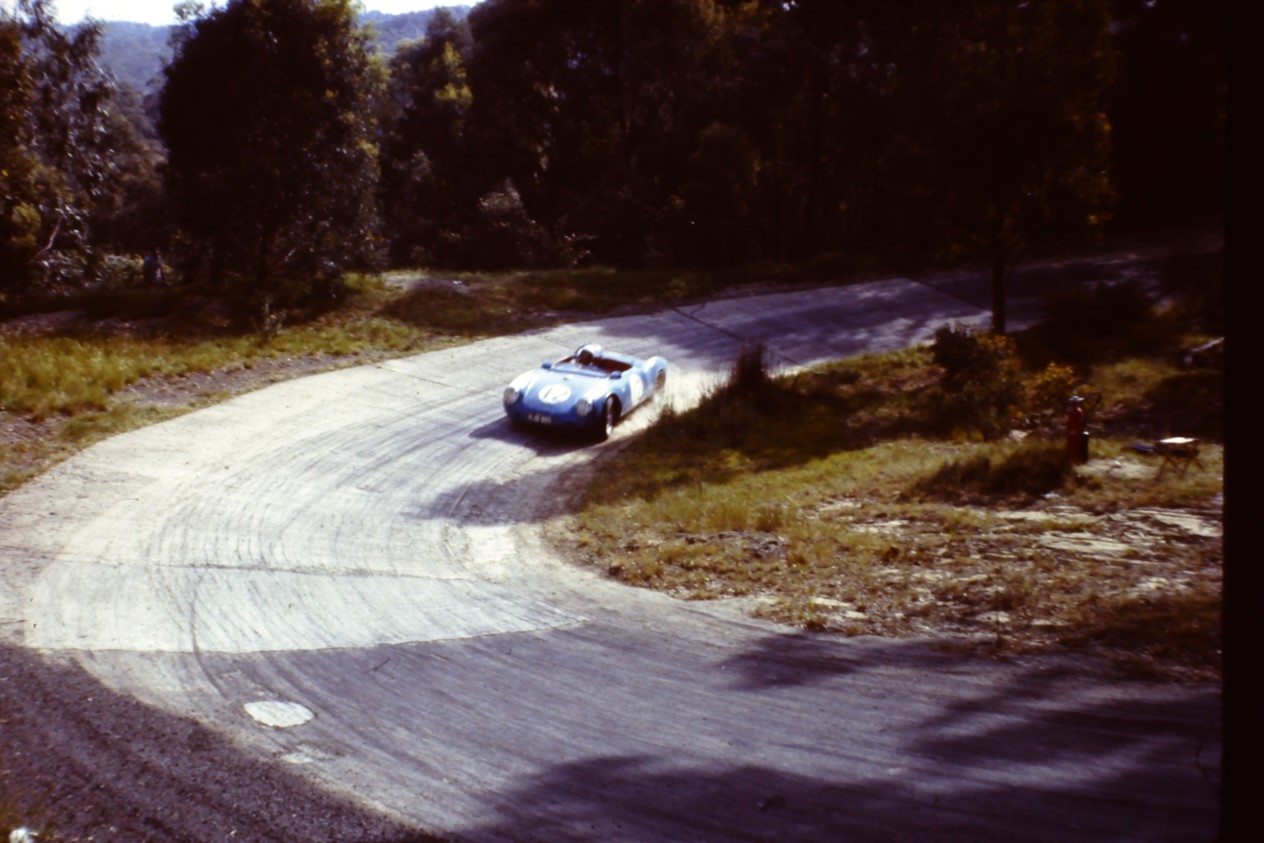
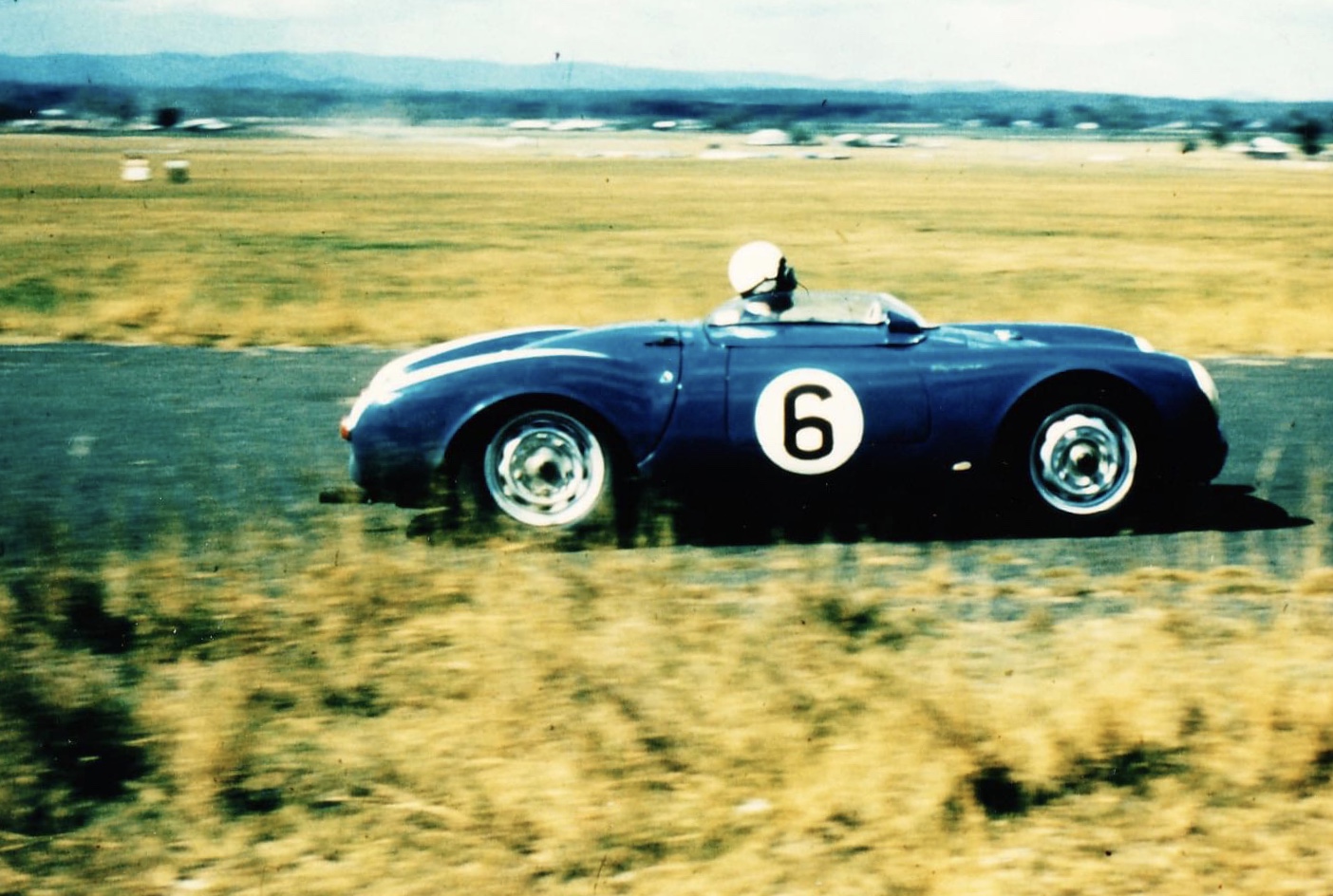
Lionel Marsh aboard Norman Hamilton’s Porsche 550 at Templestowe Hillclimb’s ‘The Hole’ on Melbourne’s eastern outskirts circa 1961/2.

Denis Lupton took a cracker of a shot- ignore the eucalypts, pretend they are pines and it could be the Eifel Mountains, sorta.

Denis was sure the pilot was Alan Hamilton, son of Porsche Cars Australia founder Norman Hamilton, but after some investigation and comment by Ron Simmonds, Gordon Dobie, Tony Johns and Stephen Dalton, Alan Hamilton resolved the ‘mystery’.

He recalls ‘Sadly, the 550 days were just a bit too early for me. That is Lionel Marsh at Templestowe. I did drive the 550 a couple of times at Fishermans Bend. Sometimes, after the races, Alan Jones and I used to disappear to a deserted end of the airstrips and drive our respective fathers, cars.’

‘I don’t recall how Lionel came to “own” the 550 other than he was a great mate of Jack Godbehear. (a renowned but low profile engine builder) I have a feeling that Jack might have been the owner, or at least, a major shareholder in it. Jack certainly did the preparation for Lionel and in many ways, this was the most successful period of the 550’s
life.’

‘My father and Frank Kleinig took the car to New Zealand to race there in 1956. Frank had difficulty coming to terms with the 550 as it handled total differently to his Hudson Special. Unfortunately, Frank earned the reputation of “hay bail Charlie” because of his habit of hitting hay bails which marked the track limits. My father asked Stirling Moss if he’d like to drive the car in the Ardmore Handicap, which he won.’

‘In about 1964, I located the car in a panel beating shop in Sydney and bought it. The engine was part disassembled, the gearbox was missing, as were the front brakes. The body work was “bruised” in various places. One of the panel beaters from Duttons (our authorised body repairers at the time) commenced work on the “bruises” and I sent the engine back to Porsche for a full rebuild.’

‘I spent six months living and working at Porsche in 1965 and came back with the 906 Spyder, chassis # 906-007. I also came back with a burning desire to race, but with no money. Part of my assets to be turned into cash, was the 550, which was sold to Lindsay Fox with the restoration beautifully completed by Brian Tanti.’

‘Lindsay also owns my 718 RSK which is also beautifully presented in the Fox Classic Car Collection. Incidentally,
the chassis number of the 550 that James Dean was driving when he died was 055, just one car earlier than my father’s car, chassis number 056.’

(D Lupton)

‘I spent 6 months living and working at Porsche in 1965 and came back with the 906 Spyder, chassis # 906-007. I also came back with a burning desire to race, but with no money. Part of my assets to be turned into cash, was the 550, which was sold to Lindsay Fox with the restoration beautifully completed by Brian Tanti.’

‘Lindsay also owns my 718 RSK which is also beautifully presented in the Fox Classic Car Collection. Incidentally,
the chassis number of the 550 that James Dean was driving when he died was 055, just one car earlier than my father’s car, chassis number 056’ Alan conculded.

The close up shot of Hamilton’s ex-works Porsche 904/8- chassis # ‘906-007’ ‘Bergspyder’ is a beauty, Calder 1966- colour too, thanks Denis!

By this stage the machine was fitted with a 2 litre 906 six-cylinder engine, click here for a piece on the car and one of the biggest friends Australian motor racing has ever had; https://primotipo.com/2015/08/20/alan-hamilton-his-porsche-9048-and-two-906s/ . The 550 Spyder is here; https://primotipo.com/2018/06/28/hamiltons-porsche-550-spyder/

(R Simmonds)

Etcetera…

As usual, a flurry of communication with others of our friends after upload of the piece resulted in a few more images.

The first above is from Ron Simmonds, again at ‘The Hole’ with then owner Lionel Marsh at the wheel, whilst below is one from Tony Johns of Stirling Moss having a steer of the car in a sportscar support race- winning the ‘Ardmore Handicap’, as Hamilton notes above, before setting off for a victorious run in his Maserati 250F in the New Zealand Grand Prix at Ardmore in 1956.

(T Johns Collection)


(T Johns Collection)

During the period Norman Hamilton owned #’0056′ it was driven by ‘every man and his dog’- the array of talent included Stirling Moss, Jack Brabham, Frank Kleinig, Bruce Walton, Otto Stone, Eddie Perkins, Ted Gray, Austin Miller and Ern Tadgell, who is shown aboard the car at Phillip Island below.

Credit…

Special thanks to Denis Lupton and Alan hamilton

Ron Simmonds, Tony Johns Collection, Dick Willis, ‘Historic Racing Cars in Australia’ John Blanden

Tailpiece…

(Dick Willis)

Ern Tadgell again, in Dick Willis’ shot, this time at Lowood, Queensland in 1957- the car worked hard all over Australia as one of Hamilton’s primary brand recognition tools all those years ago when the Zuffenhausen giant was a small family business start-up, hard though that is to imagine now!

Finito…

(B Kaine)

Bevan Kaine, Morris Minor with John Charlton in another 1000 alongside him, Longford 1965…

This photo gave me a chuckle, for every Ace who raced at Longford there were dozens of club racers enjoying their motorsport on this supreme challenge of a circuit, lucky buggers.

In fact just about everybody in Tasmania with a competition licence (sic) entered this race, which Ellis French has identified as the 1 March 1965 Sports and Touring Car Handicap, held on the Monday-main -race-day during which Bruce McLaren won the Australian Grand Prix in his Bruce McLaren Racing Cooper T79 Climax. Click here for that lot; https://primotipo.com/2019/09/27/longford-1965/

Peter Turnbull recalled Bevan, and the challenges of setting off in handicaps first, “Bevan had a radio in his car and radio station 7LA used to broadcast the races. In the handicaps Kainey was usually the first away with Bob Jane off scratch. By listening to the radio he always knew where he was in the field and where Janey was,” and therefore the point at which he needed to be on hyper-alert!

(E French Collection)

Series 2 Morrie 803cc A-Series

I’ve a soft spot for Minors, Morrises in general actually.

My Dad’s first car, the family car, was a two door, jet-black Morris Minor 1000. I remember balling my eyes out when it went down the 27 Almond Street driveway for the last time, it’s replacement, a brand new white Morris 1100 appeared that evening.

In some ways the 1100 was a more memorable car. It became Mum’s runabout when Dad got his first company car, Pete hit the bigtime in 1967! I’m saying it flippantly but two car families were not the norm in the middle-burbs like North Balwyn then. I learned to drive in it, did my first circuit laps at Sandown during a Peter Wherrett Advanced Driving course in it, and had my first decent slap and tickle in the back, so it will always be a bit special, but the black Morrie, wow, happy childhood memories.

Dad managed to get five of us with voluminous holiday luggage, three Zippy boards (remember them?) and all the shite that kids need down the beach into the shapely little car or on the packrack atop the roof, then off to Melbourne’s Mornington Peninsula we would go. Usually luck ensured the trip was on a hot Melbourne summers 100 degree day with only Mexican air-conditioning – an open window – to prevent us all becoming potato crisps.

The downhill drop from Riversdale Road and flat terrain past Toorak Road along Warrigal Road suited Morrie wonderfully through Springvale, then flat-as-a-pancake Nepean Highway from Mentone to Seaford, but steep Olivers Hill at Frankston was third gear with a decent run up or valve bounce in second otherwise, the little beastie being blown-off by six-cylinder FB Holdens and the like!

Still those little A-Series motors are tough little buggers aren’t they, just ask Bevan Kaine…

(A Morris)

Bevan was clearly a keen competitor, here he is in front of a group lining up at Penguin during the Tasmanian Hillclimb Championship in 1964, I wonder if this little Morrie still exists?

The varied group of cars includes a Morris Cooper, three Cortinas, let’s assume GTs, a couple of Humpy Holdens, a light green FE, another Humpy and an MGA.

(C McKaige)

Etcetera: A Very Special Morris…

As soon as I popped this article up Tony Johns saw it and said “You must get in touch with Chester McKaige, he has a Coventry Climax engined Minor built by Lyndon Duckett”, so here it is, in Chester’s own words, a fascinating story too.

On the 17th September 1957, Miss Phyllis Davis of North Caulfield, Victoria bought a brand new green two-door Morris Minor saloon registered GSR 580, engine number F5/H/31449 – chassis number 467583/01001. She kept the car for two years before selling it to Lyndon Duckett.

Duckett was born in 1916, his parents for many years ran a hardware store on land now occupied by Myers department store in Lonsdale Street, Melbourne. Lyndon, not interested in the family business, established a garage and workshop, “Duckett Engineering” in the premises of what were originally stables for Cobb and Co. Coaches in Sutherland Place off Little Lonsdale Street.

He was a very gifted engineer, and during the early 1940s restored a 1908 Mercedes that allegedly was built to dominate the Semmering Hillclimb in Germany that year. He also campaigned a black Type 35 Bugatti fitted with a R1 Anzani engine and a 1908 Isotta Fraschini. He owned a number of other cars including the Morris Minor he bought in 1960, a couple of Alfa Romeo 1750s, Aston Martin DB4, Isuzu Bellet and Lancia Fulvia to name a few.

(C McKaige)

He must have had an idea brewing away because in late 1959 he wrote a letter to Lotus Engineering asking if there was an adaptor ring available for mating a TA M.G. gearbox to an F.W.A Coventry Climax engine. The reply back was that adaptor rings for M.G. TCs were widely available for £9.10s and what’s more, ex stock.

At about the same time, his good friend John (Jumbo) Goddard was in England and was commissioned to visit Coventry Climax to purchase an F.W.A. engine and then the M.G. factory where he purchased a new TC gearbox and adaptor ring from Lotus Engineering. The three items were boxed and sent to Australia arriving in Melbourne in mid 1961.

The original Morris engine was removed and the F.W.A. 1100c.c stage-3 tune engine was fitted and mated to the TC gearbox. The brakes were upgraded to Morris Major specs but the rear axle ratio was left alone. Because of the state of tune of the engine (14:1 compression ratio) the car was adjusted to run on methanol through two S.U. carburetors.

It is surprising how easily the motor fitted into the engine bay. The coil and the entire auxiliary under bonnet equipment was retained except for the battery which was repositioned in the boot. The front and rear bumpers were removed and substituted for plain chrome ones. At some stage the bonnet was substituted with one from a Morris commercial van or utility, wheels remained standard.

(C McKaige)

The interior also received some subtle changes, the most obvious being the dashboard. The lid of the glovebox in front of the driver became the instrument housing for Smith’s instruments; oil pressure, amps, gearbox temperature, tachometer and water temperature.

The original Bakelite steering wheel was replaced by a Les Leston timber rimmed wheel of the day. Two horns were fitted, a standard one and a ex-Police type siren which was fitted under the dash, the noise emitting from two Lucas horns mounted on the front bumper bar mounts, the sound was most impressive!

Other small changes included replacing the headlights and the use of safety pins to re-join the Axminster carpet over the transmission tunnel which had been modified to take the M.G. gearbox.

The car was duly finished in 1962 and GSR 580 went over the weighbridge with a tare weight of 16 cwt. Testing of the car was done on Friday afternoons and the writer recalls a conversation with a friend of Lyndon’s that the noise was “something to behold”. The test track was along Dynon Street and what was then New Footscray Road and back to Little Lonsdale Street. Whilst the engine and transmission had the desired effect, the car had endless problems with overheating, so much so that the grille was extended to fit a larger aluminium radiator.

Lyndon used the car at a number of events including the Geelong Speed Trials in 1963 recording 19.10 seconds for the ¼ mile. This was a bit unfair for the car because the Class catered for cars up to 1,600cc and included a Porsche and his friend John “Jumbo” Goddard in a supercharged Morris 850. He also competed in a couple of drag races at Sandown but there are no recorded times for these events.

The addition of the bigger radiator helped somewhat to control the boiling aspect but the problem was not completely solved and the car was relegated to the back of the garage whilst the business grew in leaps and bounds. Both the Mercedes and the Bugatti were sold but he kept the Morris and the Isotta plus a number of other cars which were stored out of sight and out of mind at the rear of the Little Lonsdale Street garage and at his home in Toorak.

I came onto the scene in 1957 and Lyndon became my Godfather as he and my late father had become great friends living a stone’s throw from each other, both sharing the passion for old cars the ten years age difference not a problem in the slightest. As a child, I used to play in the Morris much to Lyndon’s consternation. It was always covered and had a place at the back of the garage.

Chester ‘This photo was taken in Lyndon’s garage off Little Lonsdale Street. He had the habit of changing oil filters and putting the old one back in the box of the new one and putting it back on the shelf. All the oil filters in the picture are used ones!’ (C McKaige)

Fast forward to 1978, I, and a couple of other chaps formed the Morris Minor Car Club of Victoria and my interest in the Morris revived itself once more. I knew Lyndon had no intentions of parting with it although he did help me fit and tune a couple of twin carburetors to a Morris Minor 1000 I had at the time.

Lyndon died in 2003 and at that stage I had a small business distributing Penrite Oil. Over a period of a week, I had numerous phone calls asking what oils should be used in low mileage cars that had been dry stored and would one day be returned to the road. Eventually it dawned on me that the cars mentioned were once the property of Lyndon Duckett.

Knowing who was looking after the estate, I found out that there had been numerous offers for the Climax engine but not for the car and that it was still available. Any thought of separation of car and engine had never entered my head. I immediately got hold of my good friend Thorpe Remfrey and we went halves in the agreed price, and on the 18th August 2003, the Morris was pushed out into the open for the first time in years and trucked to it’s new home in Moorabbin.

A couple of weeks later, we got the car running but at 14:1 compression ratio we decided to detune it to around 10:1 running on 98 octane fuel. The old problem of boiling reappeared but the fitting of a thermatic fan solved it straight away. A couple of other items on the To Do list included a new set of tyres and a complete change of fluids, she then made her first public appearance at the Geelong Speed Trials in November 2003, forty years since her last outing there. We found out later that Lyndon had purchased a ZF gearbox for the car but hadn’t got around to installing it, that would have been the icing on the cake!

So, what is like to drive? In a nutshell, fast. Ok it’s in a different league to more modern engines that are put into Minors these days but compared to contemporary cars of its day it keeps up with most of them. The engine revs freely, which hampers any fast gear changes, as the gearbox is rather slow to engage gear without crunching, the ZF gearbox would have made all the difference.

The mileage when we bought it was 10,00 miles and since 2003 we have done a further 3,000 miles. The body is still very tight with no rattles and still carries the original transfer on the back window “Yes this is a Morris Minor 1000” still in mint condition. The brakes being up-graded Morris Major stop the car very well and the distinct sound of the telemetric Smiths tachometer is very soothing. Of course no heater and radio are fitted. I have since replaced the carpet and the braided door surrounds but the rest of the interior is standard.

I use the car quite regularly here in Tasmania, the roads being so good for old car motoring and have attended numerous old car events both here and on the mainland the car attracting interest wherever parked. It is quite surprising the number of people who say, “I used to have one of them”, my reply being “Bet you never had one like this?” Chester finishes his marvellous article.

Chester comments ‘All works Climax engines were put on the dyno and the results given to the customer.Look at the RPM curve!'(C McKaige)

Credits…

Historic Racing Car Club of Tasmania – Bevan Kaine, Ellis French Collection, Peter Turnbull, Vic Wright, A Morris

Special thanks to Chester McKaige for the article about his Lyndon Duckett built Morris Minor Climax

Tailpiece…

(V Wright)

‘Goin our way?’

Barry Lloyd and Doug Stewart before the Bathurst 1000 Mile Car Trial on 20 September 1955, I wonder how they went, both teams that is?

Finito…
(JJ Dallinger)

I’ve long been of the view that one needs to see a racing car in the context of its time to be able to appreciate just how much it sat at the apex of engineering achievement of its time…

So that’s where I am going here. Trying to anyway.

Stuff is sometimes meant to be ‘doncha reckon?

I was looking for racers in a favourite hidey hole and came upon this magnificent photograph of an S Class, Art Deco styled ‘Spirit of Progress’ near Albury on the Victoria/New South Wales border in the early 1950’s.

Then Paul Cummins sent some magic Talbot-Lago T26C shots taken at Southport in 1955- Ken Richardson in Rex Taylor’s car, I popped the shot up a month or so ago.

(Cummins Archive)


(L Hemer)

On the same day, in response to seeing the S Class shot I sent him, our photographer buddy, Lynton Hemer sent his shot taken of ‘a couple of NSWGR Garratts north of Gosford dragging coal to Newcastle’ in 1967.

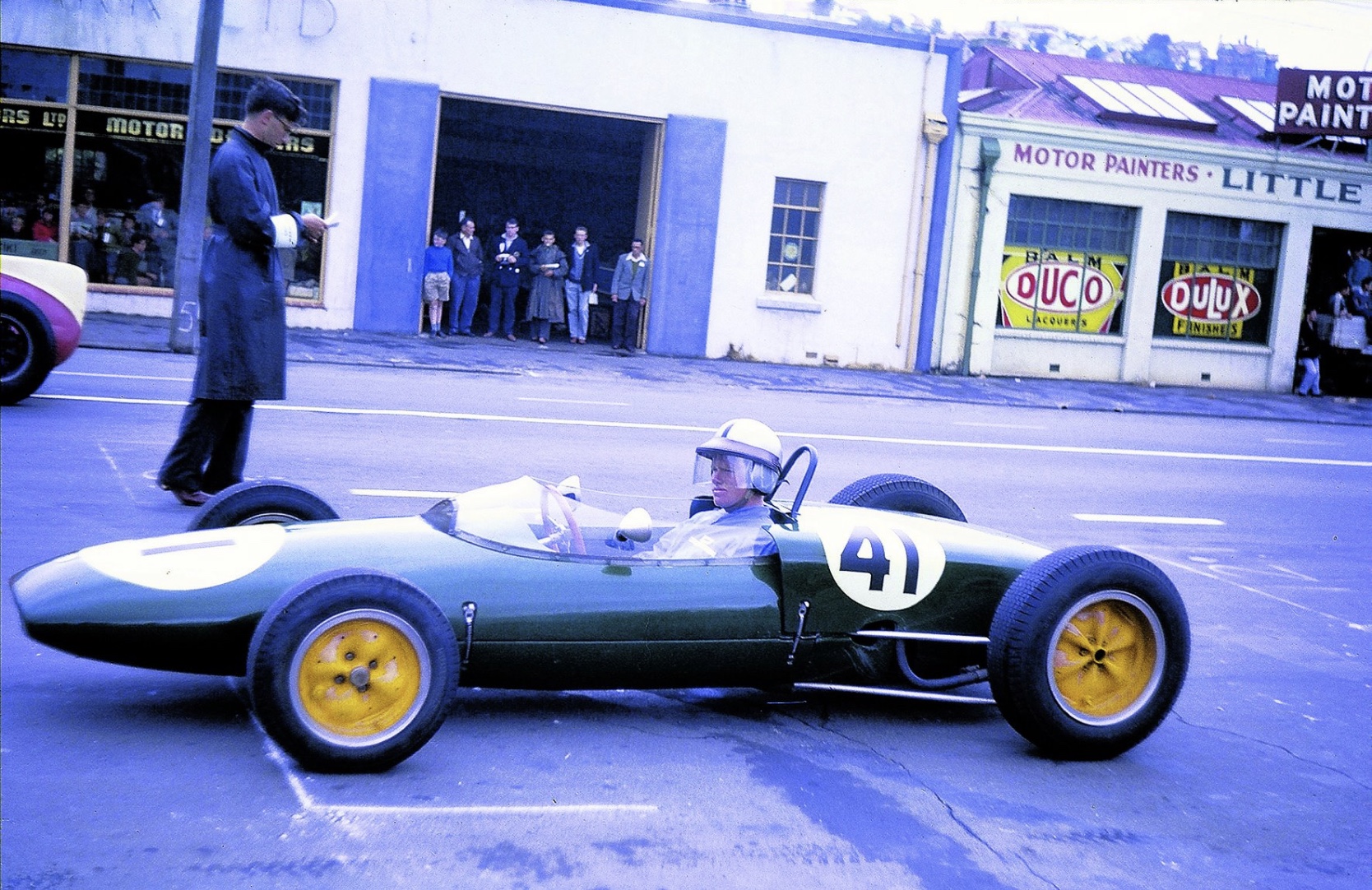
I was really surprised to see steam locos in Australia then, I thought we were all-electric close to town and diesel otherwise by that stage. At the same time I was fiddling about with the image of Jack below aboard one of his Tasman 2.5 mounts- BT22 Repco in front of the Wigram Hangars in, you guessed it, 1967.

How modern do both cars, roughly twenty years apart in conception, look in the context of, or in camparison with the trains?

Steam was at the end of a two hundred or so year reign, not a bad effort really, whilst the internal combustion engine, in its most edgy, racey form, was in the middle years of its era which will surely be at an end in ten years or so.

Then again, maybe I just have my hand on it and am merely seeking an excuse to use a couple of great non-racing car shots…

Context is everything my friends.

(Brabham Family)

Mind you, if i’m a smart-arse and some of those with strong knowledge of my inclinations may well agree with such a characterisation, the technology deployed in Jack’s 1967 Brabham is about the same or better than that used in Australia for our interstate train services NOW- none of yer ‘very high speed’ trains here that we have all travelled on in France, Italy, Japan and China.

Even the Brits with their high population densities managed better than 100 mph on my short commuter trip from Bourne End to London last year, ditto the Spaniards from San Sebastian to Barcelona, don’t even think about 100 mph plus here folks, we are well and truly rooted in train technology that Stephenson fella could relate to…

The NSW Trainlink diesel-electric ‘XPT’ entered service in 1982, the design was based on a Brit Rail High Speed Train- the current Paxman Valenta VP185 12 cylinder six-turbo engines develop 2001 horsepower. The things can theoretically do 125 mph but the tracks don’t allow it, the most recent accident in February 2020 cost the train’s driver and pilot their lives (NSW TrainLink)

I’m a big cheat really.

In 1967 that whilst Jack was sitting aboard BT23A and the Garratts were plying their trade in New South Wales the Royal Australian Air Force Dassault Mirage III’s were flying in the skies above- all of a sudden Jack and Ron’s machine does not look so edgy at all, and doubtless some of the ‘American Aviation Heavy Metal’ of the time made the Mirage look like an ‘F2’ machine.

Again, context is everything my friends.

(HARS)

Etcetera…

The S Class were the first ‘Pacific Class’ locos on the Victorian Railways, renowned for their power and speed they did the ‘broad gauge’ Melbourne-Albury run of 190 miles where passengers changed to a New South Wales train running on ‘standard gauge’- adoption of ‘standard gauge’ between Melbourne and Sydney took place in April 1962.

For international readers, Australia was comprised of separate independent colonies until Federation as a country in 1901 so lots of crazy stuff happened, different railway lines/locos/trains across the great brown land being far from the most stupid of decisions.

Only four of these three-cylinder locos were built- fitted with long-range tenders they did the trip non-stop and ran up annual mileages double that of other loco classes used by the VR. Their size and axle load made them unsuitable for regular service other than the Spencer Street-Albury North Eastern line run so within six months of the introduction of new B Class Diesel loos in April 1954 the S Class were withdrawn and scrapped.

Such a shame!- the silver lining in the cloud was the lobbying of the Victorian Government to preserve remaining examples of VR steam locos- all of us Victorian kids have had a trip or two to the Railway Society Museum at Williamstown- ‘Heavy Harry-H220’ is forever etched in my childhood mind, opened in 1962.

The ‘Garratts’ are an AD60 Class Beyer-Garratt patent articulated four-cylinder heavy goods, steam train locos built by Beyer, Peacock and Co in Openshaw, Manchester for the NSW Government Railways.

The final NSW railways steam service was operated by one of these monsters on 22 February 1973- four of them were preserved, well done!

And the Mirage.

A3-42 is a Commonwealth Aircraft Corporation built (CAC built CA-29) IIIO(F) interceptor delivered on 1 August 1966 and served at Butterworth, Malaysia, then Williamtown, NSW before retirement from service in October 1987 with 4,015 hours on the airframe, it was then used for apprentice training at RAAF Wagga Wagga. All Mirages were retired in 1988 and replaced by the General Dynamics F/A-18 Hornet.

‘HARS’- Historical Aircraft Restoration Society Museum at Shellharbour Airport, Albion Park bought the aircraft in March 2015.

Credits…

John J Dallinger, Lynton Hemer, Brabham Family, Wikipedia, HARS, oldracingcars.com, Bob King, NSW TrainLink

Tailpiece…

(B King)

A couple of Bugatti T35B replicas at the Williamstown, Victoria Railway Museum in recent times- the blue Des Dillon and black Bob King machines.

Finito…

(Cummins Archive)

Ken Richardson in Rex Taylor’s Talbot-Lago T26C, rounds a corner on the Southport road course- Queensland’s Gold Coast, 6 November 1955…

The event was the 114 mile Queensland Road Racing Championship, sometimes referred to as the 1955 Queensland Grand Prix, the second and final occasion on which the challenging layout was used for car racing- there is a bit about the 5.7 mile track in this piece on the 1954 Australian Grand Prix here; https://primotipo.com/2018/03/01/1954-australian-grand-prix-southport-qld/

Amongst the favourites for victory were Lex Davison, aboard the same HWM Jaguar in which he won the AGP twelve months before and Jack Brabham in the Cooper T40 Bristol in which he took a fortunate victory at the 1955 AGP at Port Wakefield, South Australia several weeks before, on 10 October.

Other contenders were Richardson, who was third at Southport in his Ford V8 Special the year before, this time he raced the dual AGP winning Talbot-Lago acquired by Rex Taylor from Doug Whiteford in mid-1954. Queensland youngster, Steve Ames aka Count Stephen Ouvaroff was aboard the ex-Lex Davison Alfa Romeo P3 he purchased not long before- a total of eleven cars took the start.

Davison burst into the lead from Brabham, Richardson and Ames at the drop of the flag, Jack outbraked Lex on lap 2, no doubt the nimble, light Cooper did this relatively easily but he kept his advantage for only a lap before mechanical trouble intervened.

He retired a car which became somewhat notorious for its unreliability with bent valves after the machine popped out of gear on one of the rough circuit’s many bumps causing a big enough over-rev to end Jack’s run.

Into the first corner Davison’s HWM Jag leads Brabham’s Cooper T40 Bristol, Ken Richardson’s Talbot-Lago T26C and Ames in the Alfa P3- narrowness of the road clear (Wheels)
Twenty year old Steve Ames, in the demanding Alfa Romeo Tipo B/P3 on the challenging Southport road circuit (Cummins Archive)
Brabham, Cooper T40 Bristol (Cummins Archive)

Davo’s machine then burst an oil line, shortly thereafter he arrived at the pits splattered in BP lubricant, for the balance of the event Ames and Richardson fought a close race but in the end the pre-war Alfa Romeo prevailed over its younger equally aristocratic European competitor at an average speed of 80 mph. Rex Taylor was third in his Jaguar XK120 and Barry Griffiths Triumph TR2 fourth, other finishers were the Stan Mossetter MG TC and Noel Barnes MG Spl s/c.

Jack did the fastest lap at 3 minutes 53 seconds, an average of 88 mph this was a smidge outside the record set by Dick Cobden’s Ferrari 125 V12 s/c in 1954.

The ‘Wheels’ magazine report of the meeting mentions George Pearse crashing his Cooper-MG in a 25 mile race for racing cars and stripped sportscars whilst passing Alec Mildren’s Cooper Bristol on the narrow pit straight at over 100mph, he put two wheels onto the grass. Brabham won that encounter from Davison and Mildren. Rex Taylor’s Jag XK120 won the sportscar race and Jack Myers Holden the production car race.

(Cummins Archive)

Stunning shot of Rex Taylor’s Jaguar XK120 ahead of Barry Griffiths Triumph TR2 on the dangerous swoops of Southport. The typical perils of road racing tracks of the day are readily apparent.

Cessation of Southport as a race venue left Lowood, Leyburn, Strathpine and Middle Ridge, Toowoomba as Queensland’s racetracks until Lakeside became the states ‘home of motor racing’ circa 1962.

The Cars…

(Cummins Archive)

Steve Ames Alfa Romeo Tipo B/P3- the ex-Scuderia Ferrari/Davison chassis ‘50003’ in the Southport paddock.

I wonder if this was the last in period ‘big win’ for this 2.9 litre supercharged straight-eight- it was a state title after all? The car still looks beautifully prepared in the manner of previous fettlers, AF Hollins’ Allan Ashton and team, I wonder who looked after it in Queensland?

The shot below is of Davo in the same car on Mount Panorama during Easter 1951- down Conrod at a fair old clip between the trees, posts barbed wire and cattle on a rather narrow strip of bumpy bitumen.

(Cummins Archive)
(Wheels)

Rex Taylor, Jaguar XK120 from the Barry Griffiths and Bertram Triumph TR2s and the Stan Mossetter (I think) MG TC – a battle during the championship race above, and a superb portrait hunched over the wheel below- Paul Cummins advises the chassis number as #660226.

(Cummins Archive)
(Cummins Archive)

Brabham’s central seat, all enveloping Cooper T40 Bristol GP car was largely self built at Surbiton before Jack made his championship Grand Prix debut in it at Aintree in mid-July, DNF after 30 laps, Moss won the British Grand Prix that day in a W196 Mercedes. On 10 October Brabham won at Port Wakefield, an awfully good reason for Queenslanders to get a good look at ‘our boy’ in a current Grand Prix car.

Jack raced it in Australia that summer before selling it, read about the car here; https://primotipo.com/2015/07/16/60th-anniversary-of-jacks-first-f1-gp-today-british-gp-16-july-1955-cooper-t40-bristol-by-stephen-dalton/ and here; https://primotipo.com/2017/07/04/max-stephens-cooper-t40-bristol/

(Cummins Archive)

Superb shot of Barry Griffith’s Triumph TR2 on the limit and looking very racey sans windscreen but with cream tonneau.

(Cummins Archive)

The Wylie Javelin doesn’t get a mention in the race report I have so perhaps the little minx misbehaved that weekend and did not start the race? Paul Cummins tells me the amazing little bolide was raced by Arthur Griffiths with ‘wire mesh on the grille, probably to keep the cane toads out’ not that they were in plague proportions back then but one can’t be too careful. Rob Bailey points out the red #45 Harry Firth built MG Holden, now owned and almost restored by Ian Tate.

See Bruce Polain’s article about this incredible design here; https://primotipo.com/2018/09/14/the-wylies-javelin-special/

(Cummins Archive)

Not so much a Southport shot as an atmosphere one.

Paul suspects the owner of the MG TC may be the photographer of much of the material in this piece, ‘the N Rego of the Zephyr dates it as registered in 1955’- can anybody help with identification of the drivers?

Count Stephen Ouvaroff circa 1960 (unattributed)

Steve Ames/Count Stephen Peter Ouvaroff…

Fair-dinkum blue-bloods are fairly thin on the ground in Australia but Count Stephen Peter Ouvaroff was the real McCoy, he was of aristocratic Russian background.

His parents were Count Igor Ouvaroff and Aubretia Phyllis Ames, Stephen was born on 3 September 1935, his sister, Marina Violet was born in Sussex in 1931. Stephen died in England on 13 November 2017 having lived most of his adult life there.

MotorSport lists Stephen’s birthplace as Russia and nationality as Australian.

The pieces of the puzzle, i am keen to hear from those with some facts rather than ‘i reckons’, seem to be that Ouvaroff, his sister and and his mother moved to New Zealand when Stephen was about 10 years of age, which puts it at the end of the war, then later they moved on to Australia.

Count Igor died in Sussex on 25 July 1939, a reasonable assumption is that the boy grew up in the UK- his mother was English, an open question is whether Igor and Aubretia met in the UK or Russia- i have my money on the UK, as you all know, generally those ‘high born’, were not top of the pops with the crew running that vast country after the Russian Revolution.

So my theory is that Igor decamped to England in order to hang onto his head and met Aubretia, who had no shortage of Earls and a Marquess in her family tree at a lovely society ball- he was born in Russia in 1901, she in Paddington in 1909, in 1930 she was a vibrant 21 and he a dashing 29- a match made in heaven.

The family of three settled in Brisbane, Stephen’s motor racing career started with the ex-Ken Richardson Ford V8 Special, then the P3- perhaps simultaneously racing the Alfa Romeo and an Austin Healey 100S.

The use of the nom de guerre ‘Steve Ames’ was doubtless to avoid the ‘wanker’ tag which would have been applied to the young racer in Tall-Poppy Syndrome Australia.

Despite its age, the Grand Prix Alfa was a fast, formidable bit of kit the youngster seems to have driven very well although he sold it without too many recorded events to Rex Taylor. Whilst some reports have it he moved to the UK in 1956, Ouvaroff raced the Healey 100S in a hillclimb at Burleigh Heads on the Gold Coast, that December.

The 100S, chassis ‘3701’, was the first imported into Australia arriving in August 1955 and had been through the hands of David Shmith and Stan Mossetter before Ames bought it in late 1956. John Blanden describes Stephen as a Toowoomba hotelier so perhaps his mother had acquired a pub along the way.

This shot of the P3 is at Strathpine, Queensland and dated circa September 1957- the pilot could be Ouvaroff, Rex Taylor or perhaps Keith Blicaski- if anyone can date the event and identify the driver that would be great (Cummins Archive)

It seems reasonable to presume Ouvaroff moved to the UK in 1957, Blanden does not date the sale of the Healey to its next owner, i can find no recorded events in the UK that year. In 1958 he acquired and raced an F2 Cooper T43 Climax, his best result was fourth in the 1958 Vanwall Trophy at Snetterton on 27 July behind Ian Burgess, Bruce McLaren and Henry Taylor.

Other events contested that season included the International Trophy at Silverstone where he finished well back in the 1760cc FPF engined T43. He was a DNQ in the F2 Crystal Palace Trophy, the chassis number of the T43, by then of course fitted with a 1.5 litre FPF, was cited as ‘F2-9-57’. Tenth place followed at Brands Hatch on June 8.

Much better was fifth in the Anerly Trophy at Crystal Palace on 5 July whilst noting the best bit of kit to have that season was a Cooper T45. Off the back of the fourth place at Snetterton a DNQ at Brands on 4 August was disappointing.

During that year he also tested the new Lotus 11 Climax chassis ‘538′ acquired by Charlie Whatmore for George Jamieson at Brands Hatch before its shipment to Australia and much local success here.

1959 seems to have been relatively quiet in terms of race outings, but he ran the Willment Climax 1.5 FWB sportscar to a win at the BARC Goodwood meeting on 6 June impressing Bill Boddy who wrote in his MotorSport report that ‘The fifth race was actually uneventful, Count Ouvaroff’s Willment-Climax leading unchallenged, but very fast for all of that, from Union Jack to chequered flag, as well it might, being the sole 1 1/2-litre amongst a field of 1100s in this five lap Scratch Race and with twin-cam engine at that. The Count won at 84.28 mph and set fastest lap, at 86.22mph.’

The mainstay of Stephen’s 1960 program was Formula Junior where the strategy seemed to be to step back in class from F2 to FJ and in this red-hot class attempt to do well enough to give his career some momentum- sound thinking indeed.

Amongst his best results was third place at the ADAC-Eifelrennen at the Nurburgring and the Solitude Grand Prix outside Stuttgart.

The Nurburgring was wet on that 10 July weekend, quite a challenge for a relative novice on this most daunting of circuits. There he finished behind Dennis Taylor’s Lola Mk2 BMC and John Love’s Lola Mk2 Fiat in a thirty-two car grid, the event held over 20 laps, 155 km – total race duration one hour twenty-two minutes! It amazes me that the highly tuned modified production engines, which more generally raced over ‘Brands 10 lappers’ lasted that long!

Two weeks later his little ‘Inter Auto Course’ equipe travelled to Stuttgart to contest the Tenth Internationales Solituderennen-Formel Junior- the Grosser Preis der Solitude on 24 July.

Another long race, 12 laps, 138 km of the very fast, dangerous, swooping, tree lined road course yielded the young racer second place behind Jim Clark’s works 18 and ahead of Trevor Taylor and Peter Arundell in the other two Team Lotus entries, Gerhard Mietter, Kurt Ahrens and many others in a huge 35 car grid.

Both these German races were significant international meetings, to finish so well up the field in a privately entered car on two long road circuits new to him showed he was no slouch- read about the perils of Solitude here; https://primotipo.com/2018/05/10/surtees-in-solitude/

Solitude FJ GP grid July 1960. Keith Ballisat Cooper T52 BMC, #1 Jim Clark, Lotus 18 Ford and #9 Juan-Manuel-Bordeu, Lola Mk2 Ford, #2 Trevor Taylor, Lotus 18 Ford and car #3 Peter Arundell similarly mounted (unattributed)
JM Fangio keeps a paternal eye on Steve’s #18 Lotus 18 Ford at the start of the rather soggy 1960 Eifelrennen FJ. #2 is the second placed Lola Mk2 Fiat (Getty)

Closer to home he was second in the Anerly Trophy in June behind Trevor Taylor’s works 18 Cosworth, in August he had a DNF at Aintree with gearbox problems- there is then quite a gap to Oulton Park in late September where he was way back in nineteenth.

Mixing things up a bit, Steve entered the 18 April Lavant Cup at Goodwood in an F2 Cooper T51 Climax qualifying eleventh of nineteen cars but DNS.

There were 63 Formula Junior meetings in England and 75 in Europe in 1960- a driver needed to be in the car a lot to run with the best, a works seat being optimal of course, i think we can deduce that Count Stephen had talent- he finished two seconds behind Jim Clark at Solitude after 56 minutes of racing in a privately entered car, but it was not to be fulfilled without decent support or a much better seat.

Into 1961 Ouvaroff raced one of the Tom Hawkes and Adrian Gundlach built Ausper T3 Ford FJs.

Dick Willis notes that ‘he was a real “presseronner” in the Ausper. Although he did have some success, the works Lotuses were dominant with topline drivers on their team and the very latest engine tweaks…’

The Competition Cars Australia ‘works drivers’ season seems to have been split into two, whilst noting that half the results tables for the British FJ Championship have disappeared from the F2 Index site- which is a bummer. The first half of the season was devoted to European events, the second was spent closer to home in the UK.

The team entered Monaco but Steve failed to qualify his Ausper T3 Ford, missing the cut by six cars- Peter Arundell’s Lotus 20 Ford won from the Tyrrell Racing duo of John Love and Tony Maggs in Cooper T56 BMCs. Off to Rouen for the GP de Rouen on 4 June he finished well back with mechanical dramas, just in front of him was Denny Hulme in the New Zealand Grand Prix Racing Team Cooper T56 BMC- the Kiwi’s first European season.

He was out of the money again at Reims a month later and at Solitude, Stuttgart on 23 July where he had done so well the year before.

Back in England things were tough too- at Aintree on 7 August he was twenty-fifth where Peter Procter won in year old Lotus 18 Ford, at Goodwood a fortnight later the run of poor showings continued with a DNF due to overheating.

That BARC Formula Junior Championship meeting did have an Australian flavour though, Gavin Youl in the MRD Ford was on pole for the first heat in a great run for the Brabham marque and Jon Leighton’s Lotus 20 Ford was on pole for the second heat. Alan Rees Lotus 20 Ford won from Youl and Dennis Taylor, Lola Mk3 Ford.

Eighth in the September Trophy at Crystal Place was at least a finish on 2 September, and fourth at Oulton Park in the International Gold Cup meeting was more like 1960 form- Tony Maggs was up front that weekend in the Tyrrell Cooper T56 BMC proving, as they did many times that season that a Lotus Cosworth was not essential for FJ success in 1961.

On 30 September he was fifth in the Vanwall Trophy at Snetterton amongst a strong field in number and depth, Mike Parkes was up front in a Gemini Mk3A Ford. Off to Silverstone on 1 October where the strong run home at the seasons end yielded another fourth place, this time in the BARC FJ race one place behind Frank Gardner’s Jim Russell Lotus 20, the winner was Bill Moss in another Gemini Mk3A Ford.

It was a shame to end the season, and seemingly his race career, with a DNF at Snetterton on 8 October.

In a film obscurity Stephen crashed the Lister Jaguar chassis ‘BHL126’ on the set of MGM’s 1961 ‘The Green Helmet’, the car, registered ‘WTM446’ of course lived to fight another day.

Outside the cockpit Stephen married Aprille E Brighton in a society wedding at Brompton Oratory during December 1961 and settled in Drumhouse River Lane, Petersham, Surrey.

Ouvaroff established and operated the American Carriage Company in London for over 35 years, latterly with two of his sons, it specialised in the importation and sale of RHD converted American Cars. Paul Newby advises the business imported a dozen Holden Suburbans and Commodore Wagons from Suttons in Sydney via French domiciled ex-racer, uber-wealthy Arnold Glass at the turn of the century.

He remained proud and supportive of his Russian ancestry being involved in the annual Russian Summer Ball which was held to raise funds for a Russian charity and The London Cossack Association. Upon his death in 2017 he left his wife and six children.

For sure there is an interesting life to chronicle here in full- with six Ouvaroffs from his marriage there is no shortage of folks to find and interview in relation thereto- a project for another time!

Some of you Queenslanders must recall ‘Steve Ames’? I’d love to hear from you and similarly anybody in the UK familiar with Count Stephen Ouvaroff’s racing and business career.

Steve Ouvaroff, Lotus 18 Ford FJ, Silverstone 1960 (BRDC)

Etcetera…

‘Wheels’ January 1956

Photo and other Credits…

Many thanks to Paul Cummins and the Cummins Archive- sensational photographs, colour is so rare in Australia in this period. Paul hijacked my weekend I got so lost in the Count Stephen Ouvaroff research adventure!

Wheels magazine January 1956 via the Stephen Dalton Collection, British Racing Drivers Club, ‘The Ausper Story’ Dick Willis, F2 Index, David McKinney on The Nostalgia Forum, MotorSport July 1959, ‘Historic Racing Cars in Australia’ John Blanden, Paul Newby, Les Hughes

Tailpiece…

(Cummins Archive)

Let’s finish where we started, with Lago-Talbot T26C ‘110007’ the first of Doug Whiteford’s two such cars- the machine he used to win the 1952 and 1953 AGPs at Mount Panorama and Albert Park but not before the great Louis Chiron won the 1949 French Grand Prix in it at Reims.

Whiteford sold the car to Rex Taylor in 1954- here at Southport of course driven by Ken Richardson, the car then passed to Owen Bailey in late 1956 and then to Barry Collerson in late 1958. He raced it very skilfully in its dotage into 1961 before moving into more nimble mid-engined single-seaters and then spent a year or so racing F3 cars in Europe in the mid-sixties. Graham Thompson bought the Lago as club car in 1963 from Arnold Glass/Capitol Motors, the car passed through another owner or two before leaving Australia to be scooped up as an historic racer for the growing UK scene in the late sixties.

Finito…
(Nat Lib NZ)

Who is a pretty boy then? youthful too…

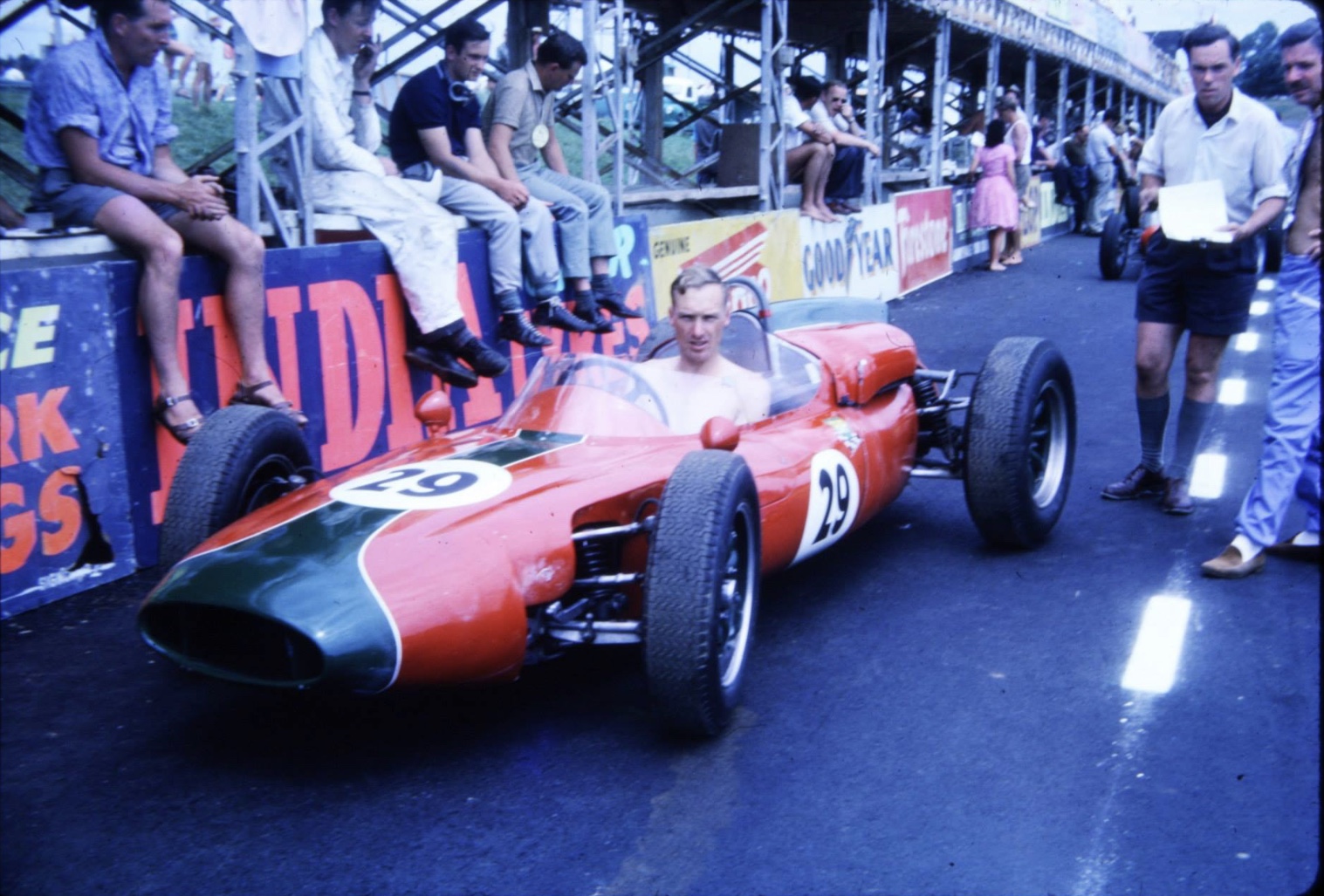
Bib Stillwell poses for the camera during the 1961 New Zealand Grand Prix meeting at the Ardmore Aerodrome, South Auckland. Bewdy’, nice cockpit shot of Stillwell’s Aston Martin DBR4/250 i thought- but upon closer inspection the negative is wrongly marked, it is not 1961 but  actually two years before- 1959 or three, 1958 or perhaps even four, 1957 and Bib is aboard his Maserati 250F. Evidence includes the different screen, see the Aston’s below, fuel filler located in different spots and the Maserati cloth badge on Stillwell’s polo-shirt, you can just see a glimpse of that under Bib’s left wrist/glove.

In 1959 Bib finished sixth behind the three Cooper T45s of Moss, Brabham and McLaren and the 250Fs of Carroll Shelby/Harry Schell and Ross Jensen.

Stillwell Maserati 250F, chassis ‘2516’ circuit unknown (Stillwell)


(TRS)

This time it is the Ardmore paddock in 1961 with Bib’s Aston Martin DBR4/250 ‘3’ taking centre stage.

To the left is the nose of the Glass Cooper Maserati, the #12 Maserati 250F is Stan Jones’ Maserati 250F raced by David McKay that weekend- DNF exhaust after completing 45 laps. The Cooper T51 in the right-rear corner of the shot is Jo Bonnier’s, the gearbox of which, repaired after practice, soiled itself again in the race after completing only half of the first lap. As to the Cooper T43(?) to the right, i shall take your advice. See this piece on the Aston Martin DBR4/250; https://primotipo.com/2020/05/08/aston-martin-dbr4-250/

Bib, sharing, almost alternating the mid and front engined collection of cars in his Kew, Melbourne workshop raced one of his Coopers the year before- 1960.

Check him out below running in fourth place just after the start behind the McLaren Cooper T45, Moss and Brabham Cooper T51s- Bib in #6 is similarly mounted as is the partially obscured car of Ian Burgess behind the Victorian.

#18 out left is David Piper’s Lotus 16 Climax, #17 is Johnny Mansel’s Maserati 250F, followed by the similar cars of Arnold Glass and obscured Ross Jensen #88 the Ron Roycroft Ferrari 375 V12- Stan Jones Cooper T51 is nipping inside the unmistakable nose of the Ted Gray driven wonderful Tornado 2 Chev. What a shame Lou Abrahams and Ted Gray didn’t take Tornado to New Zealand in 1958 and 1959, by 1960 it was well and truly all over red-rover for the big, front-engined beasties.

Brabham won from McLaren, Stillwell and Stan Jones aboard another T51.

A bit about Bib Stillwell here; https://primotipo.com/2015/03/10/bib-stillwell-cooper-t49-monaco-warwick-farm-sydney-december-1961/

(E Sarginson)


(TRS)

Love this shot above, this time 1961 of one of the Rob Walker mechanics- is it Mal Simpson?, giving the lovely Rob Walker Lotus 18 Climax a bit of a whirl on one of Ardmore’s access roads.

I never bought the ‘biscuit box’ descriptor of the 18’s appearance, i’ve always thought they were sexy little things, far nicer than the Cooper T53, the only thing between Lotus world dominance in 1960 was the pox ridden Lotus sequential gearbox…without doubt they were the fastest tool of the year but far from the most reliable, an attribute Messrs Cooper, Maddocks and Brabham worked very hard to build into their new ‘Lowline’.

The NZ GP was won by Brabham from McLaren both aboard Cooper T53s from Graham Hill’s BRM P48.

Credits…

National Library of New Zealand, ‘TRS’- The Roaring Season, Euan Sarginson, Stillwell Motor Company, sergent.com

Tailpiece…

(E Sarginson)

First corner Ardmore Airfield 1961 shot by Euan Sarginson.

Ron Flockhart, Cooper T51 from #7 Moss, Lotus 18, Bruce McLaren’s Cooper T53 with Brabham right behind Bruce in another T53, then Innes Ireland #1 and John Surtees #2 aboard works Lotus 18s- all of these cars Coventry Climax FPF powered.

#20 is the Denny Hulme Cooper T51 Climax from Graham Hill, BRM P48, then finally the two Australians, Bib Stillwell’s Aston Martin DBR4 and Arnold Glass’ Cooper T45 Maserati.

Sixty-five thousand Kiwis basked in marvellous summer sun and saw Brabham win from McLaren Hill, Flockhart, Hulme and Clark- it was Jack’s third win at Ardmore.

Finito…
(J Langdon)

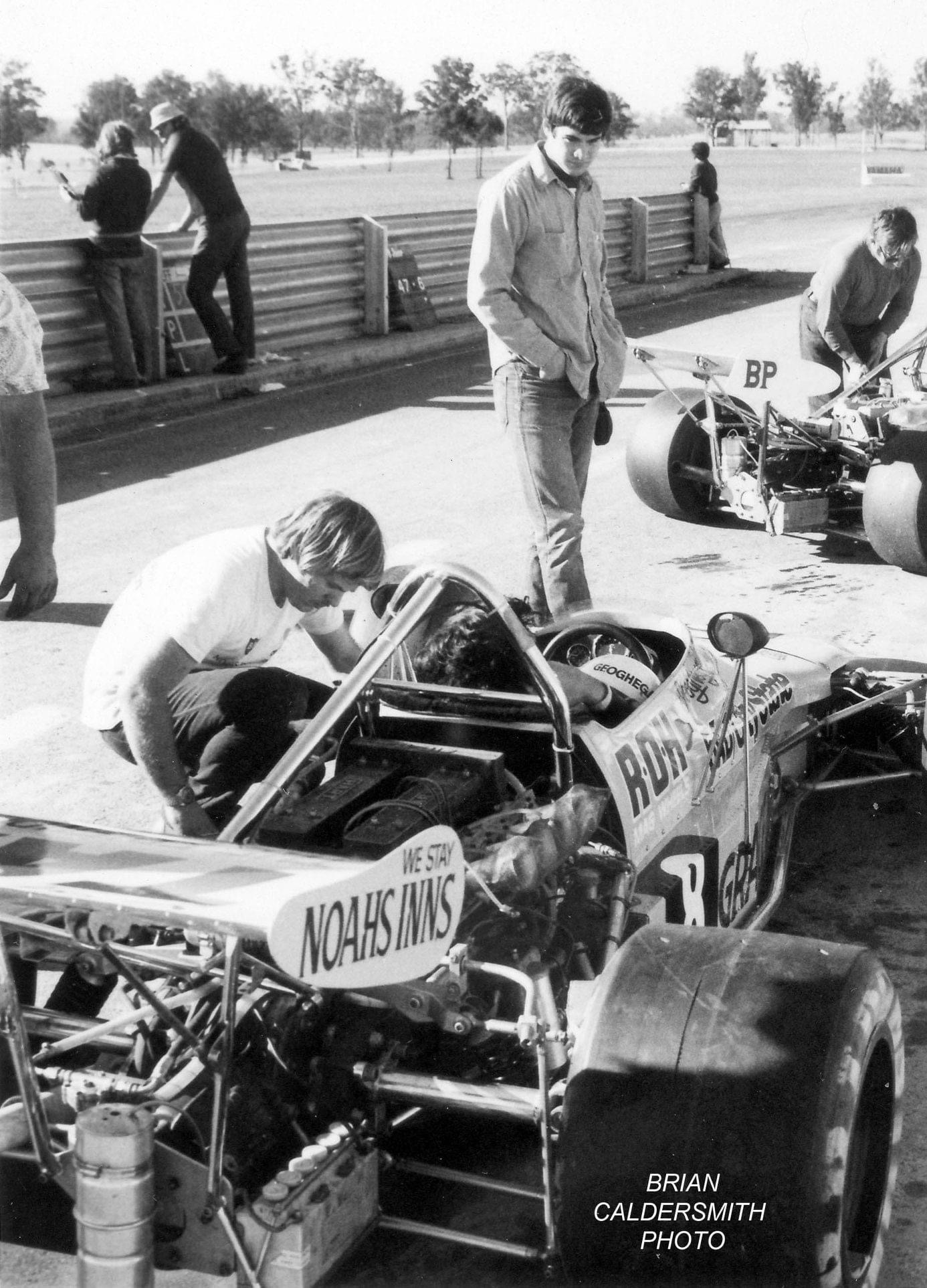
Appendix J tustle into Mountford Corner circa 1964- Alan Robertson’s Peugeot 203 dives under an FJ Holden, the finish line is only 500 metres away, perhaps this is a last lap lunge…
It’s a corker of a shot.

‘Longford 2’, who is he kidding, Longford 10 you may well reasonably say!

Everything in motor racing in moderation my friends, unless it comes to Lola, Lotus, Elfin, Rennmax, Bowin, Birrana or anything to do with Repco-Brabham, Alec Mildren Racing, Scuderia Veloce or Equipe Matich, Warwick Farm and most of all Longford where the rules of moderation simply don’t apply- just suck it up ok!?

Apart from my Longford fascination, Tasmania is one of my favourite states, on top of that I seem to be in a Covid 19 induced sixties nostalgia zone at present so I’ve mixed in some period Tassie snaps of interest- to me at least.

The wonderful racing photographs are by Lia Middleton’s mum, the ladies name would be great to know if someone can provide it, and Jim Langdon. Here we go with this Tasmanian assemblage.

(J Langdon)

Jack Brabham whistles into Mountford, Brabham BT7A Climax, South Pacific Trophy 1964…

Graham Hill won the race in the Scuderia Veloce BT4 from Bruce McLaren’s Cooper T70 and Frank Matich aboard another Brabham, this time a BT7A, all Coventry Climax 2.5 litre FPF powered.

Jack had differential failure during lap 22, all was not lost with his customer cars showing so well. Click here for a piece on the Intercontinental Brabhams; https://primotipo.com/2018/07/20/matich-stillwell-brabhams-warwick-farm-sydney-december-1963/

(Middleton Family)

Things must be going mighty goodly as Roy Billington even has time to laugh at one of Jack’s one-liners- Longford paddock with the Hewland HDS or is it HD5? and Coventry Climax FPF laid bare. This second in a series of three ‘Intercontinental Brabhams were very successful cars.

Brabham always had time for the punters didn’t he!? A smile rather than the death-ray stare of some others- a Pro our Jack.

(Middleton Family)


(C Raine)

I wonder if it was cheaper to travel by TAA Vickers Viscount or the Princess of Tasmania?

These days the plane is the ‘no brainer’ in terms of cost and convenience compared with the overnight ferry from Port Melbourne to Devonport but it may not always have been so, I wonder what the relative cost was.

The plane on the tarmac at Launceston.

(Middleton Family)

All the fun of the fair!

What a brilliant shot, doesn’t Mrs Middleton capture the mood of the meeting? Technically she has framed and cropped the shot beautifully. I wonder what year this Pit Straight bridge went in?
The shot below gives us a read in part on Don Gorringe’s business interests which funded his involvement and support of motor racing.


(Middleton Family)

1968 South Pacific Trophy field race in the dry, so it’s the preliminary ‘Examiner Scratch Race, contested over 12 laps, it rained cats and dogs on the Labour Day Monday public holiday.

The shot above is from towards the rear of the pack diving into the Viaduct- the two BRMs of Pedro Rodriguez and Richard Attwood, I can’t differentiate between the two, then the yellow Mildren Brabham BT23D Alfa Romeo of Frank Gardner on the outside, to FG’s left is his teammate Kevin Bartlett, Brabham BT11A Climax with the red/maroon car at the head of this pack, Piers Courage, winner of the very last Longford Tasman Cup event in his McLaren M4A Ford FVA.

In a short race of attrition, Graham Hill won from Jim Clark, both in Lotus 49 Ford DFWs and Frank Gardner’s Brabham Alfa- Clarkset a lap record of 2:14.7 during the race but this time was battered by Chris Amon in the Scuderia Veloce Ferrari Can-Am 350 which did a 2:12.6- Chris’ best was 10 seconds a lap better than second place man Ian Cook in Bob Jane’s Elfin 400 Repco 4.4 V8- Amon’s Ferrari was famously timed at 182mph on ‘The Flying Mile’.

Longford 1968 is here; https://primotipo.com/2015/10/20/longford-tasman-south-pacific-trophy-4-march-1968-and-piers-courage/ and the Clark, Hill and Amon cars here; https://primotipo.com/2019/11/05/clark-hill-amon-longford-1968/

(R Macfie)

The truck is heading in race direction towards Mountford Gate, Viaduct, I wonder what year this shot was taken?

(Middleton Family)

Local Longford racing club chief and landowner Ron McKinnon gives Jack Brabham and the race winner, Bruce McLaren a lift after conclusion of the 1965 Australian Grand Prix- McLaren drove a Cooper T79 Climax whilst Jack was aboard a BT11A and Ron an MGA. 1965 AGP here; https://primotipo.com/2019/09/27/longford-1965/

(D Febey)

No Australian kid’s summer holidays was complete without a holiday at the beach or in the local pool- you really were ‘posh’ if yer folks had a pool back then.

Just looking at this brings back so many memories, not the least of which was the difficulty of executing a ten outta ten dive whilst not landing on top of some schmo in the process- this is the pool at The Bluff in Devonport.

(Middleton Family)

Graham Hill looking a bit more earnest and focused than Jack in a similar car- a Repco Brabham BT4 Climax owned by David McKay’s Scuderia Veloce.

That’s him in the cap on the right with Bob Atkin and another fella pushing- Hill’s focus was rewarded, he won the 1964 South Pacific Trophy as mentioned earlier. Brabham BT4 here; https://primotipo.com/2016/10/16/point-of-sale/

Kings Pier, Port of Hobart in the mid-sixties. Salamanca Place and the Port is these days a wonderful place to stroll around and dine whilst still a working port (R MacFie)


Scuderia Veloce again, this time the great Spencer Martin kicking the tail of the Ferrari 250LM about with gay abandon in 1965, it’s one of the machines very first meetings- the exit of Mountford Corner with a very appreciative crowd.

These cars, production sports-racing Ferrari won Le Mans in 1965 after the top gun Ford GT40, Mk2 and Ferrari P2s dropped by the wayside, Jochen Rindt and Masten Gregory raced the winning NART entry.

The 3.3 litre 250LM V12s were notoriously driver friendly, forgiving machines which contested Le Mans as late as 1969, perhaps even 1970, I’m too lazy to check. Click here for a piece on the 250LM; https://primotipo.com/2014/07/03/pete-geoghegan-ferrari-250lm-6321-bathurst-easter-68/

(M Stephens)


(M Stephens)

I blew my tiny mind upon seeing these photographs of Minuet Stephens- they pinged ‘Queenstown’ in my mind but some of you Tassies can set me straight if I have that wrong, it’s only two years since the last time I swung through, it’s circa 1963 given other shots in this collection.

Isn’t ‘the rig’ amazing, what make and model is the home built caravan’s tow car or truck? The wow factor was succeeded by memories of long interstate trips Australian style before dual-lane highways became common in the eighties- Melbourne to Sydney then, about 500 miles now, was ‘a lot longer then’ on the Hume Highway as yer Dad’s 186cid HK Kingswood wagon was stuck behind outfits like this one and semi-trailers which did not gobble up the road as they do now. ‘How much further Dad?!’ every thirty minutes,  its a wonder he didn’t strangle the three of us really.

I imagine on the relatively quiet roads of the Apple Isle this kind of touring would have been very pleasant indeed.

(J Langdon)


(J Langdon)

Bib Stillwell turns in for Mountford with Pit Straight, the Control Tower and Water Tower in the distance- Brabham BT4 Climax in 1964.

By this stage the ‘late blooming’ Melbourne car and aviation businessman had been a front-runner for a halfa decade, in fact he won his third Gold Star on the trot in this chassis that year, having won it in ‘IC-3-62’ as well in 1963.

A quick glance suggested BT11A to me- the airbox led me there but tell tales of BT4 are the external radiator pipe- it looks like a pinstripe and the location of the top front wishbone rear pickup.

The Aston Martin DB5 is rather nice too.

(J Buddle)

Groometals scrap metal warehouse and lead smelting establishment on the corner of Harrington and Warwick Streets Hobart and looking very much in 1998 just before its demolition, as it did in 1965.

The nostalgic observation here is that so many of our inner urban main arteries looked like this until these streets filled with restaurants and retail outlets instead of small business ‘workshops’ as the inner suburbs became places many of us wanted to live.

I gave my Formula Vee a birthday at the end of 1979- amongst other things the suspension was nickel plated and chassis sand-blasted and then stove-enameled in two different ‘shops in Bridge Road, Richmond which these days is all restaurants and retail outlets- many with ‘to lease’ signs reflecting the decade old on-line retail revolution and of course forty-five thousand coffee shops. Still it was forty years ago, so some change should be anticipated I guess!

(Middleton Family)

Look at that crowd on Pit Straight.

Look very carefully to the left and you can just see a couple of jousting Scots- Jim Clark’s Lotus 39 Climax is just in front of South Pacific Trophy winner, Jackie Stewart in a BRM P261 1.9 litre V8.

Jackie won the race and the series in 1966- see here; https://primotipo.com/2016/05/19/jackies-66-longford/

In the shot below Arnold Glass has neatly popped the nose of his ANF1.5 Lotus 27 Ford twin-cam into the Mountford haybales during the 1964 meeting- hopefully no great damage has been done in ‘The Mercury’ 10 lapper for racing cars.

It was a small but classy entry of one and a halves- Frank Gardner, David Walker and Greg Cusack were in Brabham Fords whilst Mel McEwin was aboard an Elfin Catalina Ford. Jack Brabham won from Bib Stillwell and John Youl with Greg Cusack the best of the 1.5s. See articles on Arnold and ANF1.5 here; https://primotipo.com/2019/09/13/anf-1-5-litre/ and here; https://primotipo.com/2015/08/25/arnold-glass-ferrari-555-super-squalo-bathurst-1958/

(J Langdon)

Below is the business end of the monocoque Lotus 27 which very much apes the F1 Lotus 33 in basic specifications- chassis, suspension whilst noting the 1.5 litre FWMV V8 gave circa 210bhp whereas this 1.5 litre Cosworth built Lotus-Ford four cylinder engine gave circa 125bhp. Hewland gearbox of course, lovely Ron Lambert shot in the Longford paddock, the cockpit/nosepiece is off the car, perhaps being repaired…

(R Lambert)


The lighthouse supply ship SS Cape York off Maatsuyker Island on Tasmania’s southwest coast, mid-sixties (Nat Arc Oz)


(Middleton Family)


(Middleton Family)

A couple more shots on the approach and downhill plunge to The Viaduct.

The touring car experts can probably date the event- two EH Holdens chasing a trio of Morris Coopers- Barrett, Smith, Bromfield, Boot and Evan Thomas are the tips of racers Danny Newland and Barry Cassidy- as to the single seater race, who knows?

(M Stephens)

‘You muck around like a pack of old chooks at a Christening’ was one of my Dad’s sayings!

This group of ladies reminds me of my grandmother and her four sisters frocking up, hats and all for a family ceremonial occasion- like a Christening!

It reminds me how ‘white’ we all were too- Gough Whitlam finally repealed the ‘White Australia Policy’ in 1973 for chrissakes- Asian immigration was negligible until President Ford rang Malcolm Fraser and said ‘you pricks helped us create the mess in Vietnam so you malakas have to help mop it up’ or diplomatic weasel words to that effect anyway.

So now we have a wonderful, mainly harmonious multi-cultural mix rather than the mono-cultural Anglo society reflected in the scene of matrons above.

(Middleton Family)

Montford Corner again with a gorgeous Elfin Streamliner confronting a big special- wotizzit?

Huge crowd again, year uncertain.

( Middleton Family)

Ron McKinnon again this time aboard a Datsun Fairlady- his passengers appear to be Bruce McLaren and Graham Hill, so first and second in the 1964 Sou-Pac Trophy.

Never drove a Fairlady but did have a drive of its big-brother Datsun 2000 and couldn’t believe how much better a car it was than the MGBs i was looking at at the time.

(Libraries Tasmania)


(Libraries Tasmania)

I sorta missed the whole steam engined thing- Puffing Billy excepted, ten years older and it would have been front and centre for me in a way that it no doubt was for many of you.

These eight H Class locos are sitting aboard the ship ‘Belpareil’ at the Hobart docks, I cheated with the decade though, it’s October 1951. I wonder who the manufacturer was/is?, wonderfully five of these trains still exist.

(Middleton Family)

It’s rotating so hopefully the driver of the Humpy Holden missed the Mountford trees, the physics of it all is working in his favour I think. Who is it?

(Middleton Family)

The wonderful thing about Longford is that for every international who raced there the bulk of the weekends entertainment was provided by local/national drivers who got to play on one of the greatest, most challenging and dangerous road racing tracks in the world, as our Sprite friend, Chris Tapping is doing just here.

(C Broadfield Collection)

The gent in the hat does not seem phased at all by the sight of the yacht ‘Heemskerk’ being shifted by road from Sandy Bay, where it was built to the Hobart Port closeby where the owner Edney Medhurst launched the sleek hulled craft in 1953.

Credits…

Jim Langdon, Chris Raine Family, Lia Middleton Family, Rob MacFie, Daryn Febey, Minuet Stephens, Jeremy Buddle, National Archives of Australia, Libraries Tasmania, Craig Broadfield Collection, Ron Lambert

Tailpiece…

(M Stephens)

Another Queenstown shot i think, the most recent car is an EJ Holden so let’s date the queue of cars on the steam train as being circa 1963.

Finito…