Archive for the ‘Who,What,Where & When…?’ Category

(M de Lang)

No Australian racer comes close to owning and racing as many interesting cars as Bob Jane…

The tough nut from Brunswick developed a used car business initially, and shortly thereafter took on new car franchises before creating ‘specialist tyre retailing’ in this country- Bob Jane T-Marts are as iconic now as they were novel in the late sixties when Jane initially rolled the arm over with what was a new concept here.

Bob was the embodiment of ‘living life to the full’, he did not die guessing. Calder Park’s owner collected wives with as much enthusiasm as he did racing cars but found that they are not as easy to unload as last years Holden, the complications of his various ‘families’ screwed the later decades of his life comprehensively, which was a great shame as someone who gave much to many.
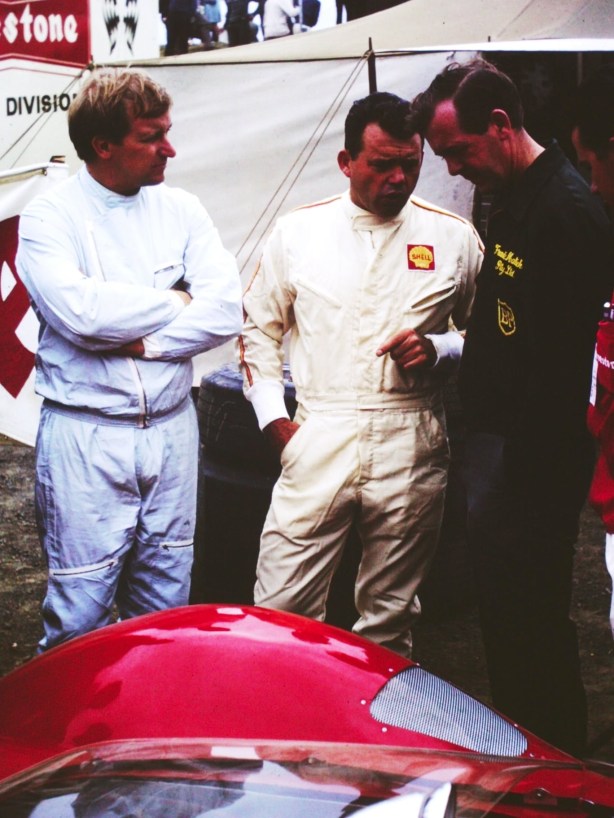
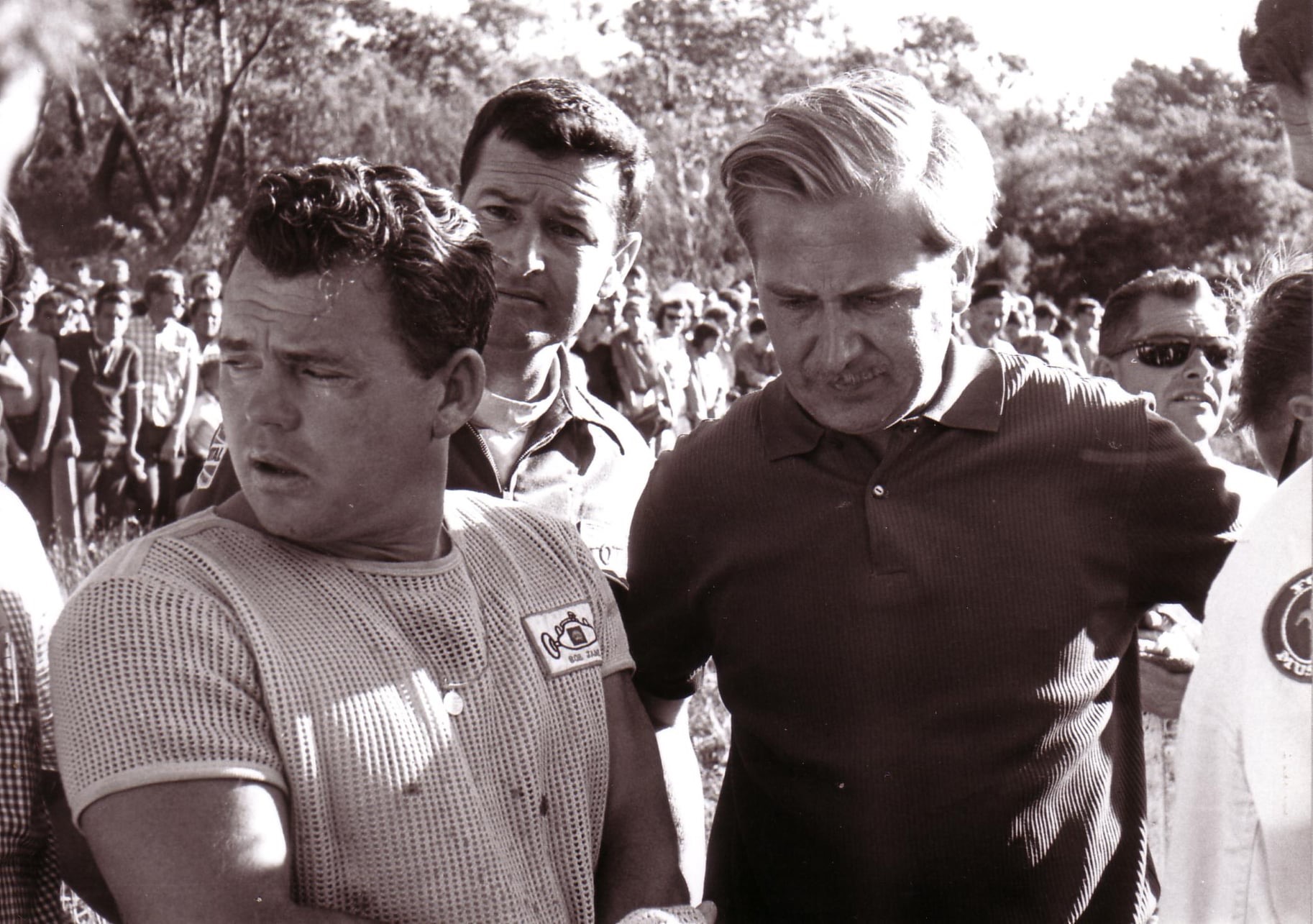
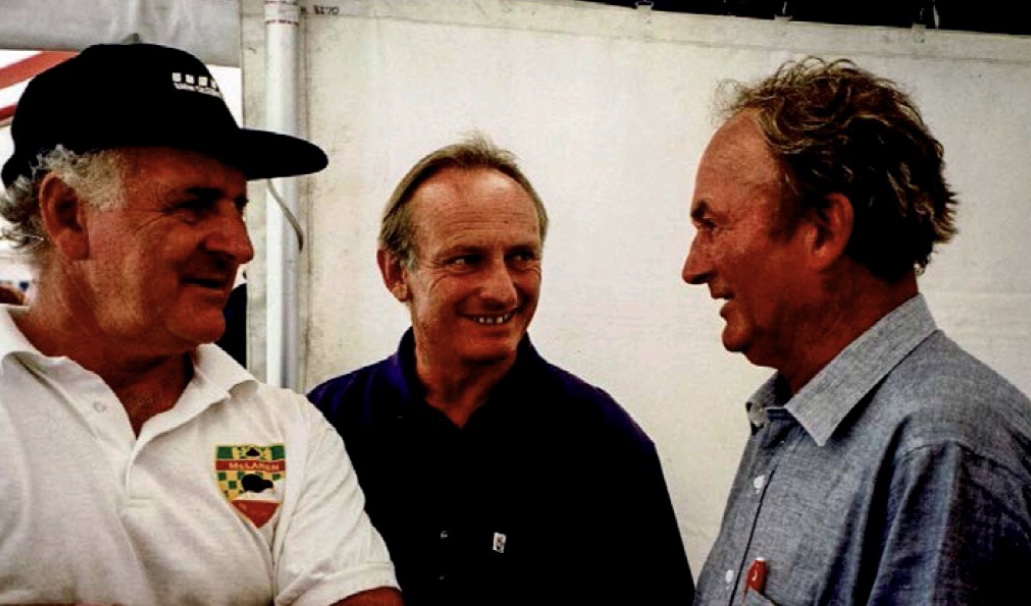
Big hitters. Niel Allen, Bob Jane and Frank Matich in Matich’s Firestone Racing Tyres tent at Sandown, circa 1967/8 at a guess. The vented guard belongs to Bob’s Elfin 400 Repco (M Kyval)

I’m not suggesting the man was perfect i might add, but in a motor racing sense he put far more into the sport than he ever took out.

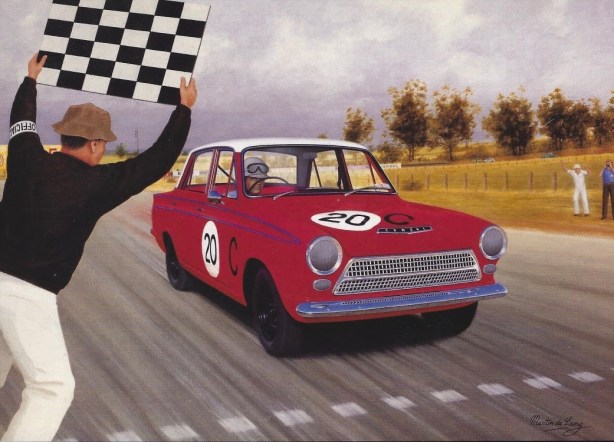
This series of paintings were commissioned of Martin de Lang to celebrate the fortieth anniversary of Bob and Harry Firth’s Ford Cortina GT, Bathurst 500 win in 1963. I’ve set them more or less in the chronological order Bob raced them, there were plenty more Jane owned racing cars than this though, check out the list at the end of the article.

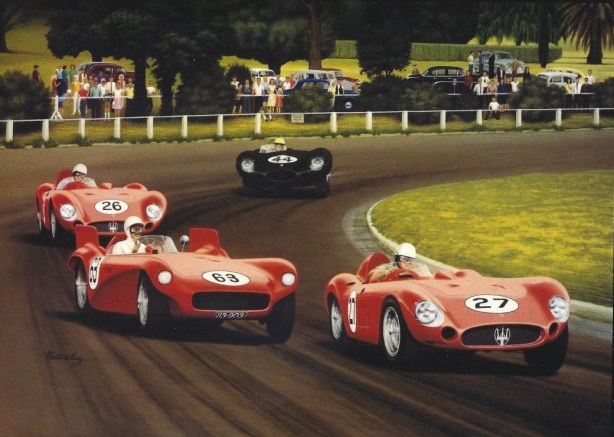
The painting at the article’s outset shows Bob’s Maserati 300S in front of his great mate, Lou Molina’s Molina Monza Holden-Repco from Doug Whiteford’s Maserati 300S and then Bill Pitt’s Jaguar D Type at Albert Park on 23 November 1958- Bob and Lou are about to be lapped by the other duo during the 32 lap, circa 100 mile Victorian Tourist Trophy won by Whiteford from Ron Phillips’ Cooper Jaguar and Pitt, Bob was fifth and Lou unplaced.

(K Drage)

In the beginning.

Kevin Drage’s shot of Bob is at Fishermans Bend on the race debut of his ex-works 300S ‘3059’ in October 1958. Doug Whiteford and Jane (in Bob’s case after Reg Smith had it briefly first) acquired the Officine Maserati cars raced by Jean Behra ‘3055’, and Stirling Moss ‘3059’ during the 1956 Australian Grand Prix/Australian Tourist Trophy weekends in late 1956.

Bob was initially rough and ready in it, even inspiring Reg Hunt to move his boat further out into Albert Park Lake to keep it out of harms way- he did get the hang of this racing caper mind you. Stephen Dalton’s first competition outing for Bob Jane, he believes, was in a Ford Customline at Hepburn Springs hillclimb in October 1956. See here for an article on the 300S;

Bob Jane: Maserati 300S: Albert Park 1958…

(B Jane)

Another shot of Bob at Albert Park on the same weekend depicted in the opening painting. In a decade of stunningly beautiful racing cars as curvaceous as Sophia Loren, surely the 300S is up there for the title of the prima-donna sportscar of the fifties?


(M de Lang)

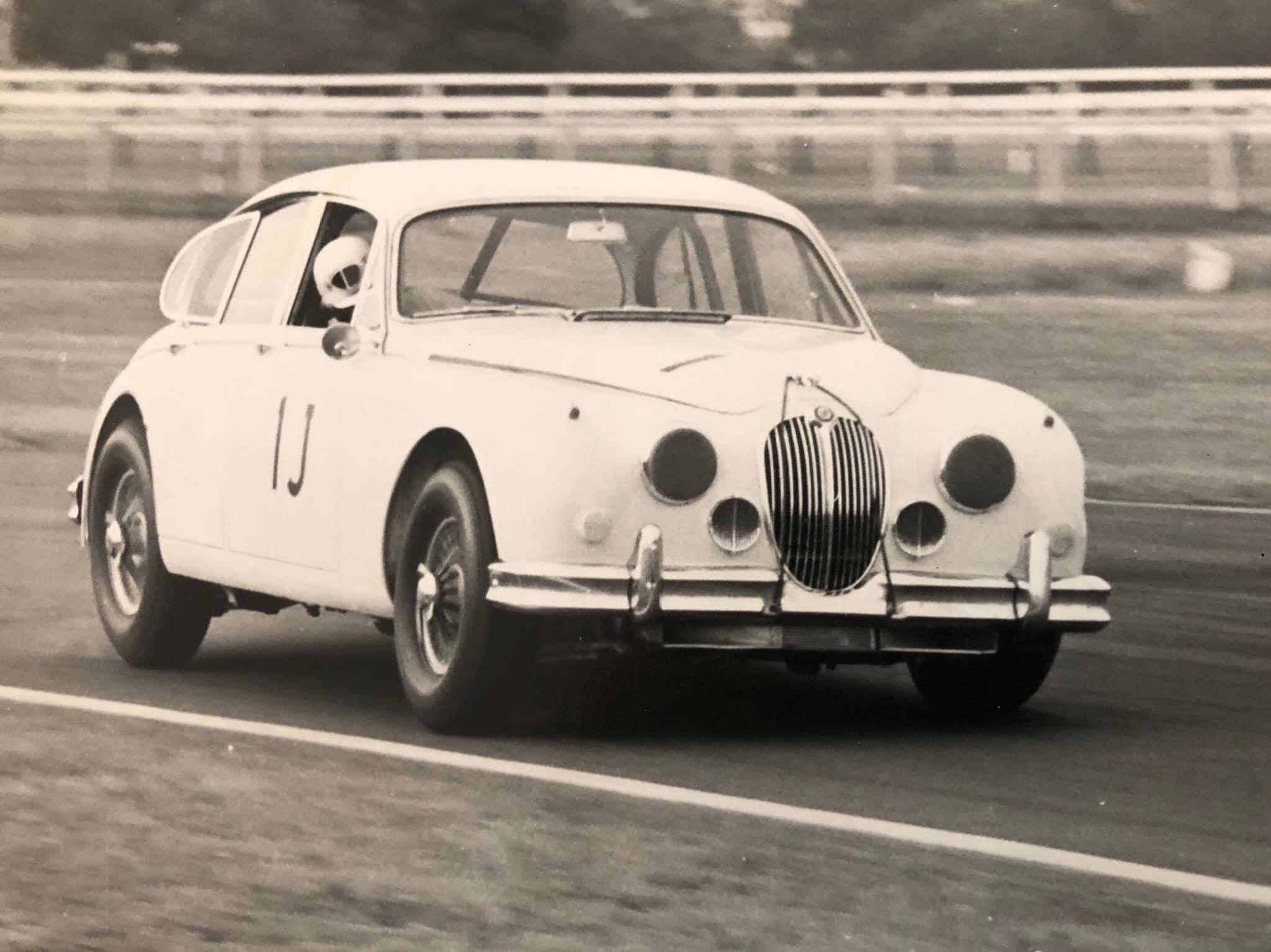
Jane’s locally developed Appendix J Jaguar Mk2, ultimately raced at 4.1 litres, won his first couple of Australian Touring Car Championships (ATCC) in the days the title was decided in one race- in 1962 at Longford and 1963 at Mallala.

See the article here about the car; https://primotipo.com/2014/10/20/australian-touring-car-championship1962-longford-tasmania-battle-of-the-jag-mk2s/

Warwick Farm circa 1962 (J Psaros)


(M de Lang)

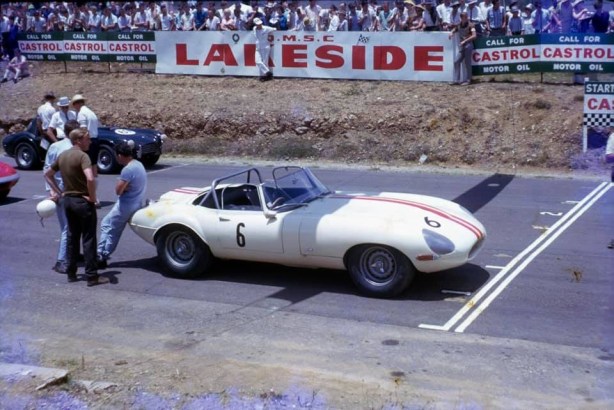
The factory Jaguar E Type Lightweight didn’t make a lot of sense given the way it fitted into our local class structure at the time, and given the lack of endurance events in Australia of the type for which the car was built, but who can argue with the beauty and spectacle it provided all the same. Mind you, Bob did win the one race Australian GT Championship at Calder in December 1963, I rather suspect 10 miles could not really be characterised as an endurance event.

This machine, like Bob’s 300S and D Type, he retained for decades but was ultimately sold, global cars that they are- all left Australia, which is a bummer.
(B Miles)

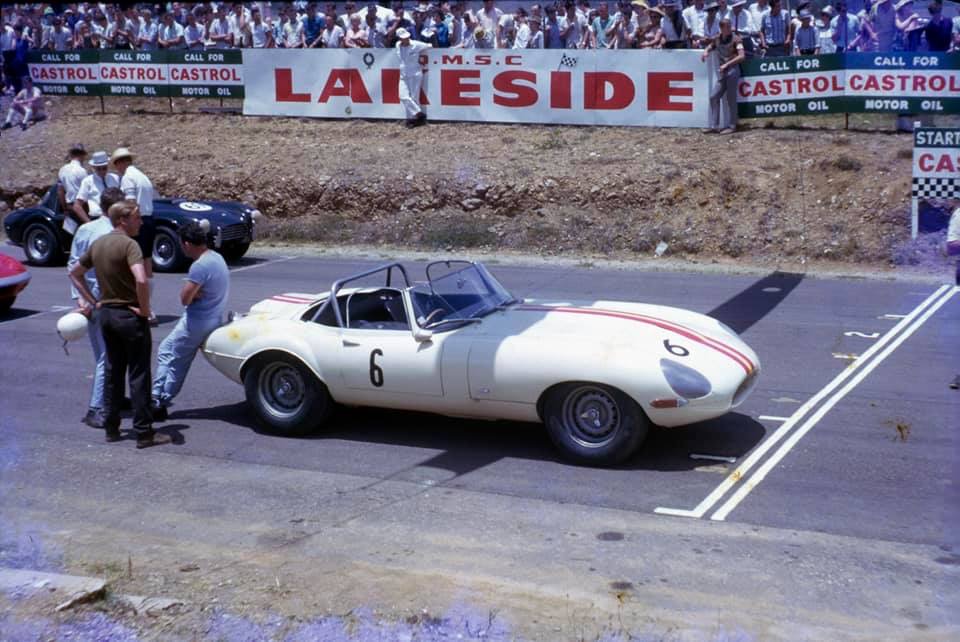
Spencer Martin with the white helmet in hand, John Sawyer and Bob leaning on the delicate aluminium panels of his car at Lakeside before the start of a heat of the Australian Tourist Trophy in 1965- Ron Thorp’s AC Cobra is on the row behind. See here for a piece on Bob’s E Types, he had a couple, as one does; https://primotipo.com/2018/04/15/perk-and-pert/
 

(M de Lang)

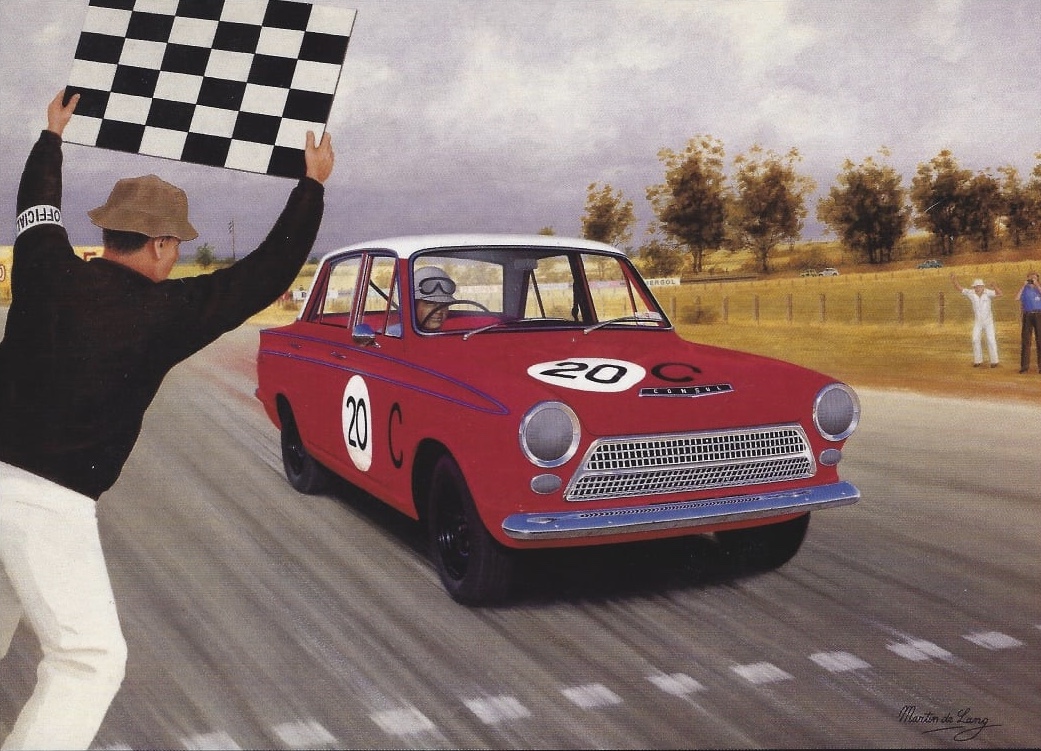
Whilst Jane raced single seaters and won in sportscars he was most formidable in all types of touring cars from Series Production machines such as the Cortina GT in which he won at Bathurst in 1963 together with Harry Firth, through to the animal savagery of the Chev Monza Sports Sedan shown further on.

The Jane/Firth pair won three of these 500 mile production car enduros on the trot, the first was the 1961 Armstong 500 at Phillip Island aboard an ‘Autoland’ Mercedes Benz 220SE-they then followed up in a ‘works’ Ford Falcon XL in 1962.


Harry Firth behind the wheel of the winning Cortina GT, Murrays Corner, Mount Panorama 1963- that’s Max Volkers in a FoMoCo Cortina 1500 behind (unattributed)

In 1963 the event moved to Mount Panorama as the ‘Islands track surface was too badly damaged by the ’62 event to continue to stage the race- in fact racing came to an end there until Len Lukey bought the facility circa 1964, reopening it in 1967. At Bathurst they won in a ‘works’ Ford Cortina GT.

In 1964 Jane won again in a ‘works’ Cortina GT but this time shared the drive with George Reynolds- all of these ‘factory Fords’ were prepared by Harry Firth and his team in his ‘Marne Garage’ on the corner of Burke and Toorak Roads, Glen Iris in Melbourne’s twee inner east.


(unattributed)

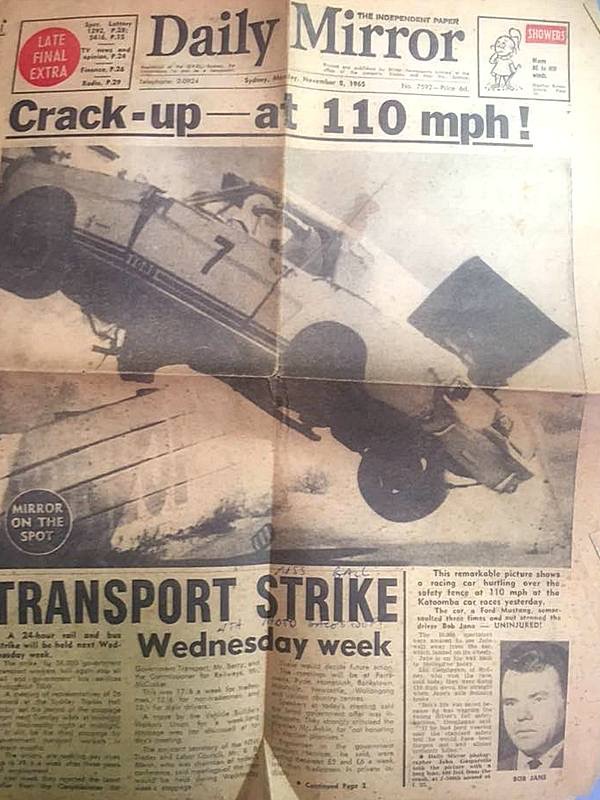
Jane’s first 1965 Ford Mustang was locally developed with plenty of goodies bought over the counter in the US, it met an untimely end at Catalina Park in an accident the young entrepreneur was extremely lucky to walk away from.

The shot above shows it in rude good health at Warwick Farm entering Pit Straight, whereas it is in its death throes in Martin’s painting below, 7 November 1965.

(M de Lang)
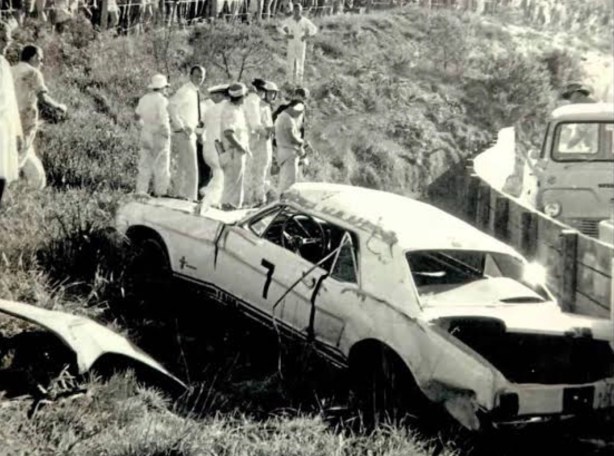


(unattributed)

She is well and truly rooted- the angle from the other side is worse but I don’t have a clear, sharp shot from there to pop up. It was a case of pull all the good bits off and start again- Bob is clear with the white blotch on his head, I think its a flaw in the photo rather than Nurse Ratched gone berserk with bandages.
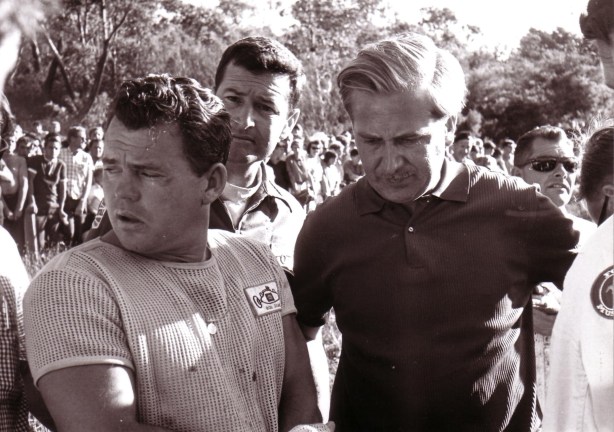
‘Cripes, its gunner need more than bog to fix this lot!’

RF Jane with Nomex shirt reflects upon the remains of a Mustang which was pristine ten minutes before. Leo Geoghegan looks on from behind whilst Bob Jane Racing Chief John Sawyer ponders gathering up the pile of shrapnel and popping it into the truck before the long trip back to Melbourne.


(M de Lang)

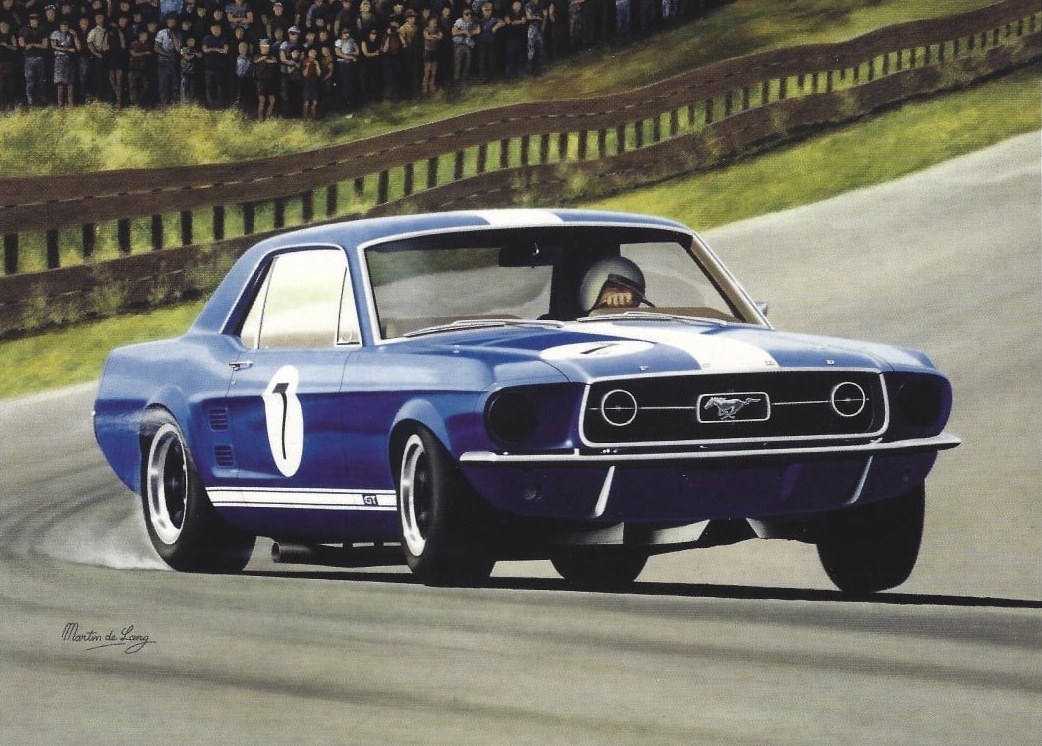
Bob certainly had a penchant for Mustangs, this is his second, a 1967 GT fitted with a big-block 390cid V8 and also raced later with small-block engines.

It met its maker when Chris Brauer had a very nasty career ending accident in it at Lakeside in 1970. Bob replaced this one with the 1968 Shelby built Trans-Am factory car, it still exists in the US.

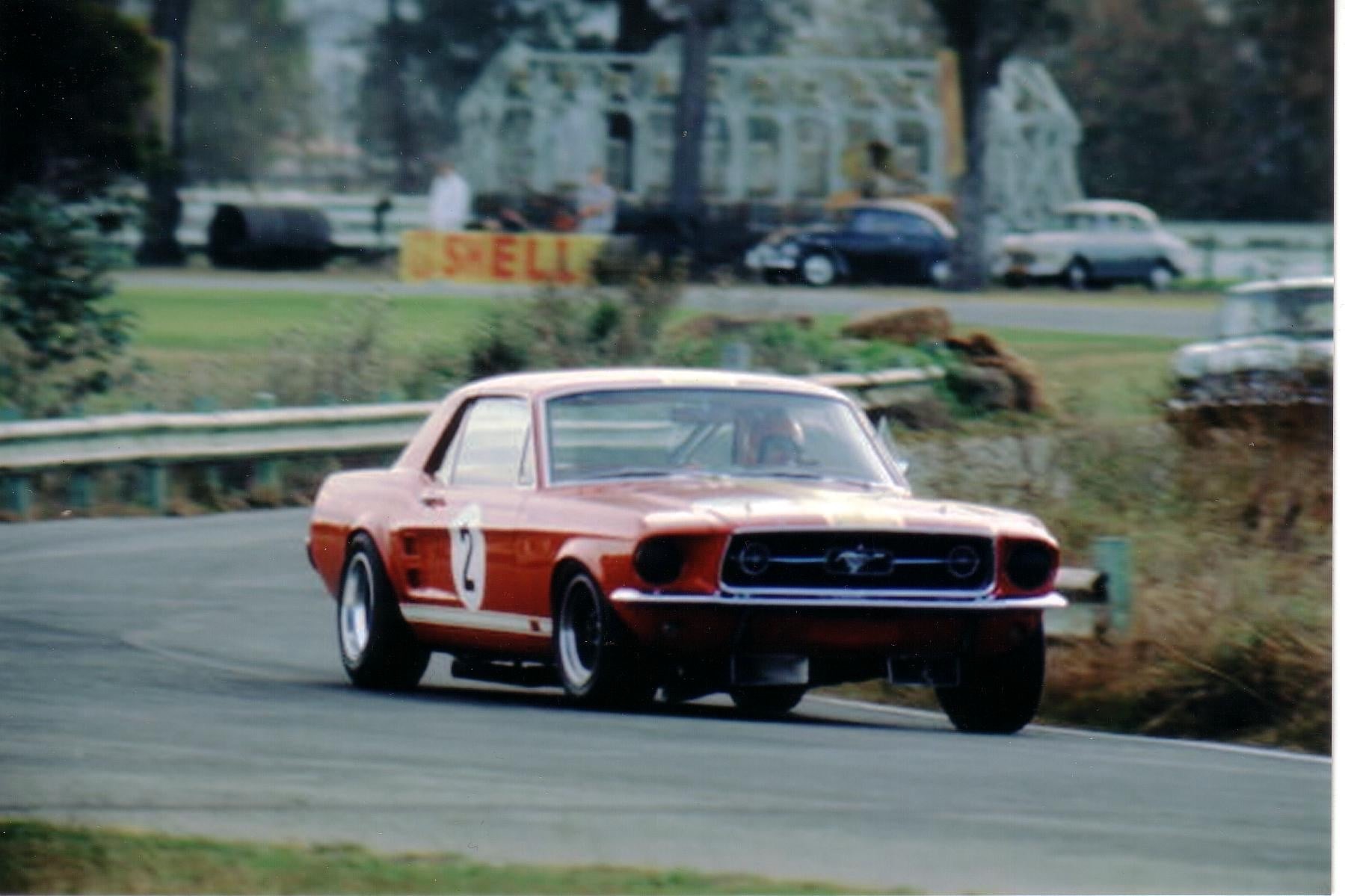
The livery and specifications of this car evolved a lot over a short space of time not least driven by the needs of ever widening tyres with the photograph below in the machines at Warwick Farm in 1967.

(B Williamson)

If any Mustang enthusiast can give me details of the evolution of this car’s specifications from 1967 to 1970 please get in touch and i will add them in.

Jane is blasting across the top of Mount Panorama in de Lang’s photo above at a guess, whereas in the photograph below he is exiting Hell Corner, after a change to Shell colours, circa 1967. Perhaps this photo is a Shell shot given the background. The grille evolved to a simpler, later look too making identification of the car and year tricky, especially in monochrome!

(unattributed)


(M de Lang)

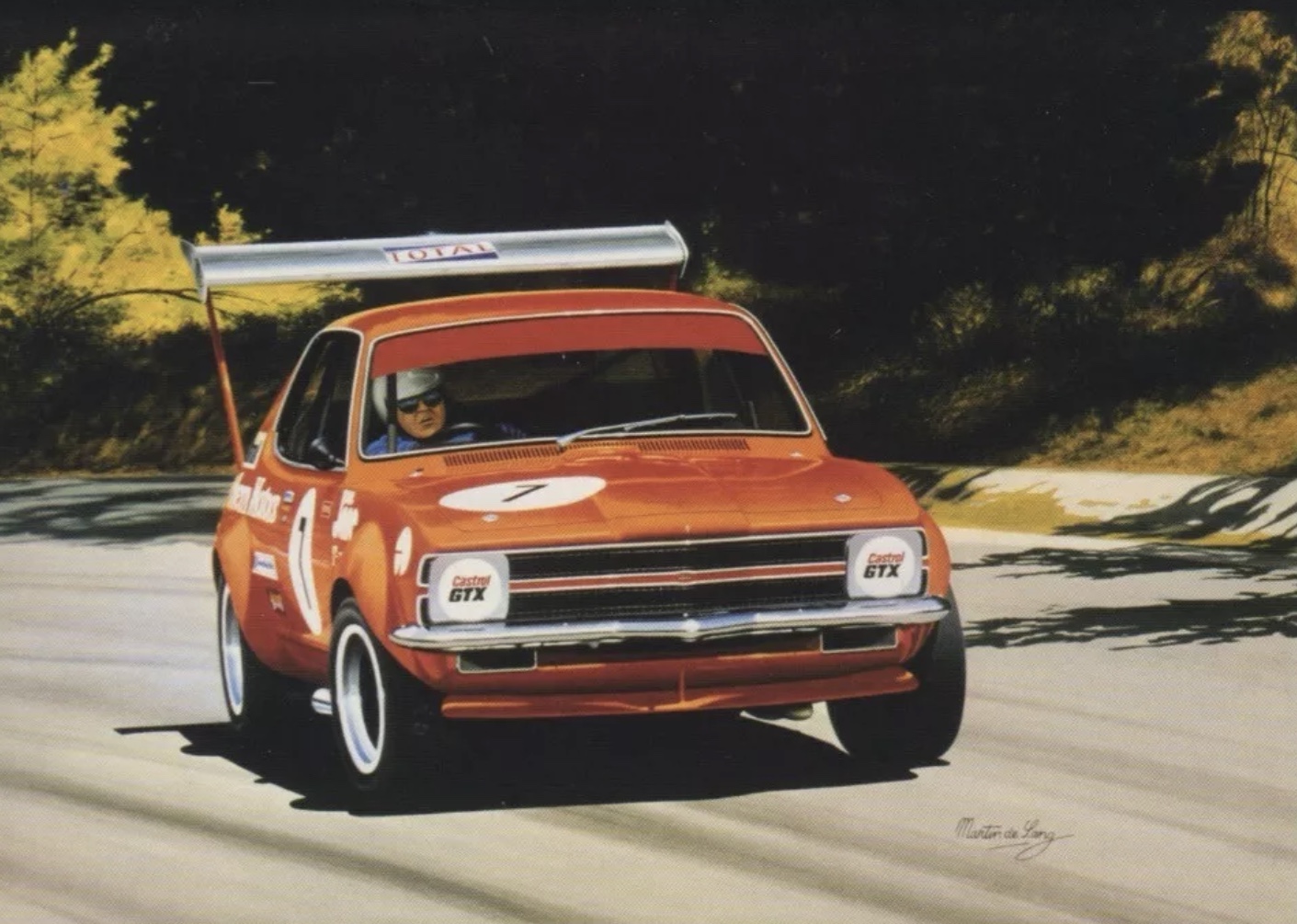
Pure touring car sex on wheels. Moffat’s Trans-Am, Foley’s GTaM and this John Sheppard built LC Holden Torana GTR-XU1 Repco ‘620’ 4.4 V8 Sports Sedan are my favourite Taxis.

This jigger was brilliant in conception and exquisite in the detail of its execution right down to the ‘standard interior trim’ and an engine compartment which looked as though it was made for a Repco V8 rather than an inline-six. The art shows Bob at Hume Weir circa 1971.

Just brilliant, not to forget the shedload of races Bob and John Harvey won in the thing circa 1970-1972. Bob should be shot for allowing Frank Gardner to commit automotive rape upon the little sweetie when he shoved a 5 litre Chev into it in 1975- although FG did squeeze an extra season up front despite said atrocity…
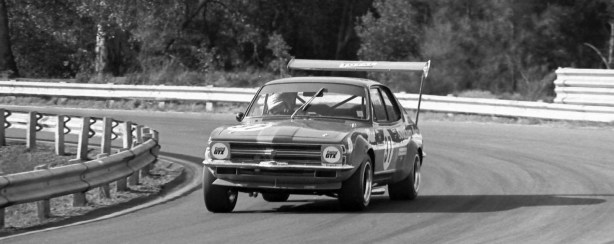
Warwick Farm, 5 September 1971 (L Hemer)

CAMS took exception to the wing, which was fair enough, it was outside the rules, but didn’t it look even more of a menace in this specification?

Extant but not likely to see the light of day until someone with very deep pockets scoops it up- there is a bit about this car in this article about McCormack’s Charger Repco and Sports Sedans more generally; https://primotipo.com/2015/06/30/hey-charger-mccormacks-valiant-charger-repco/


(M de Lang)

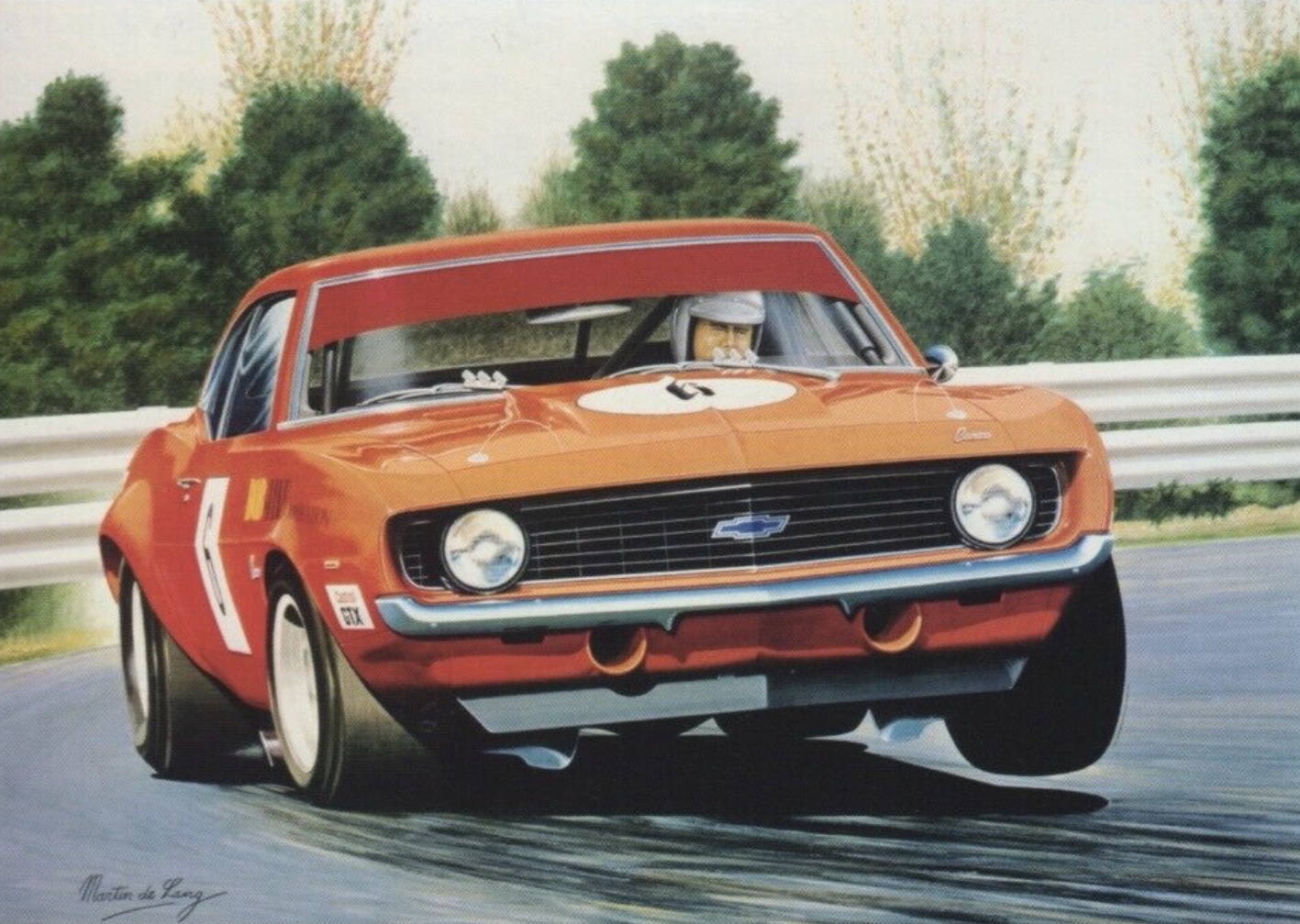
Didn’t Jane put the cat amongst the pidgeons with this Chev Camaro ZL1 427 ally blocked weapon! The painting depicts the car at Dandenong Road corner, Sandown 1971.

Looking at it reminds me of the spectacle of ‘full on body contact’ between Bob and Allan Moffat’s Mustang Trans-Am in 1971-2. Bob won the ATCC in 1971 with the big fella fitted and when shafted by CAMS, who changed the rules to eliminate the 427 motor, stuck it up the regulator and won again fitted with the ‘liddl 350 cast iron engine in 1972.  ‘Nice one’, i thought at the time, plenty of lawyers improved their billings for the year by being involved in some serious litigation between RF Jane and the CAMS down the decades.

(unattributed)

Ere we go again…

Did Moffat lose it or did Bob give him a Rock Hudson to assist?

With the splendour of Springvale ‘Triple Fronted Brick Vanilla Slices’- 1950’s cream brick-veneer houses of the type I was brought up in, in the background, Moffat and Jane engage in a territorial dispute under brakes into Sandown’s Dandenong Road- meanwhile Graham ‘Tubby’ Ritter takes avoiding action at right. Cooper S pilot folks? Jane won this race.

‘I still don’t know if he hit the Armco?’ quipped Lynton Hemer @ the precision of this particular apex, 9 July 1972 (L Hemer)


(M de Lang)

The HQ Holden Monaro GTS 350 started life as an Improved Tourer in late 1972- its race debut was in John Harvey’s hands that year at Surfers Paradise, but morphed into a most formidable Sports Sedan when Group C replaced Improved Touring as the class to which the ATCC was run from 1973- Pat Purcell modified the car further as the Sports Sedan rules allowed.

Another Sheppo built car originally, it raced in Bob’s hands until 1978 and still exists restored to its original form, the art depiction is probably Oran Park whilst noting the signage isn’t correct.
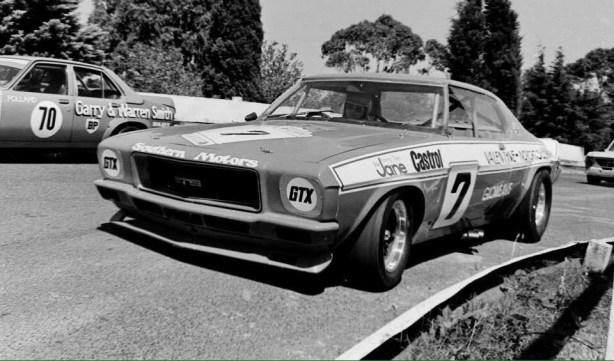
(B Keys)

Nice and close at ‘Torana’ as it then was or ‘Peters’ as it originally was, corner at Sandown circa 1974/5.

Bob has the Monaro tucked inside John Pollard who has given the faster car room in his Holden Torana L34.

Hallmarks of all of Jane’s cars, whoever was Boss Cocky of the team at the time was the immaculate standard of presentation and preparation. I’ve always been fond of the look of HQ’s, surely one of the most harmonious and fully resolved of all of GMH’s styling exercises- lowered and with plenty of wheel and tyre under the ample guards they were/are mighty fine looking road cars with this beast, and Mal Ramsay’s HQ Kingswood Repco visual delights as racing cars.


(M de Lang)

One can easily imagine the excitement around the Jane transporter at race meetings circa 1971 with their bit of the paddock occupied by the Camaro, Torana, Brabham BT36 Waggott 2 litre and this McLaren M6B Repco ‘740’ V8 5 litre- which won a pair of Australian Sportscar Championships in 1971 and 1972.

Excitement around the Bob Jane transporter, or Shell tent anyway, circa 1965. Nose of the Mk2 Jag at left, first Mustang, E Type Lwt and nose of the Elfin Mono at right (M Kyval)

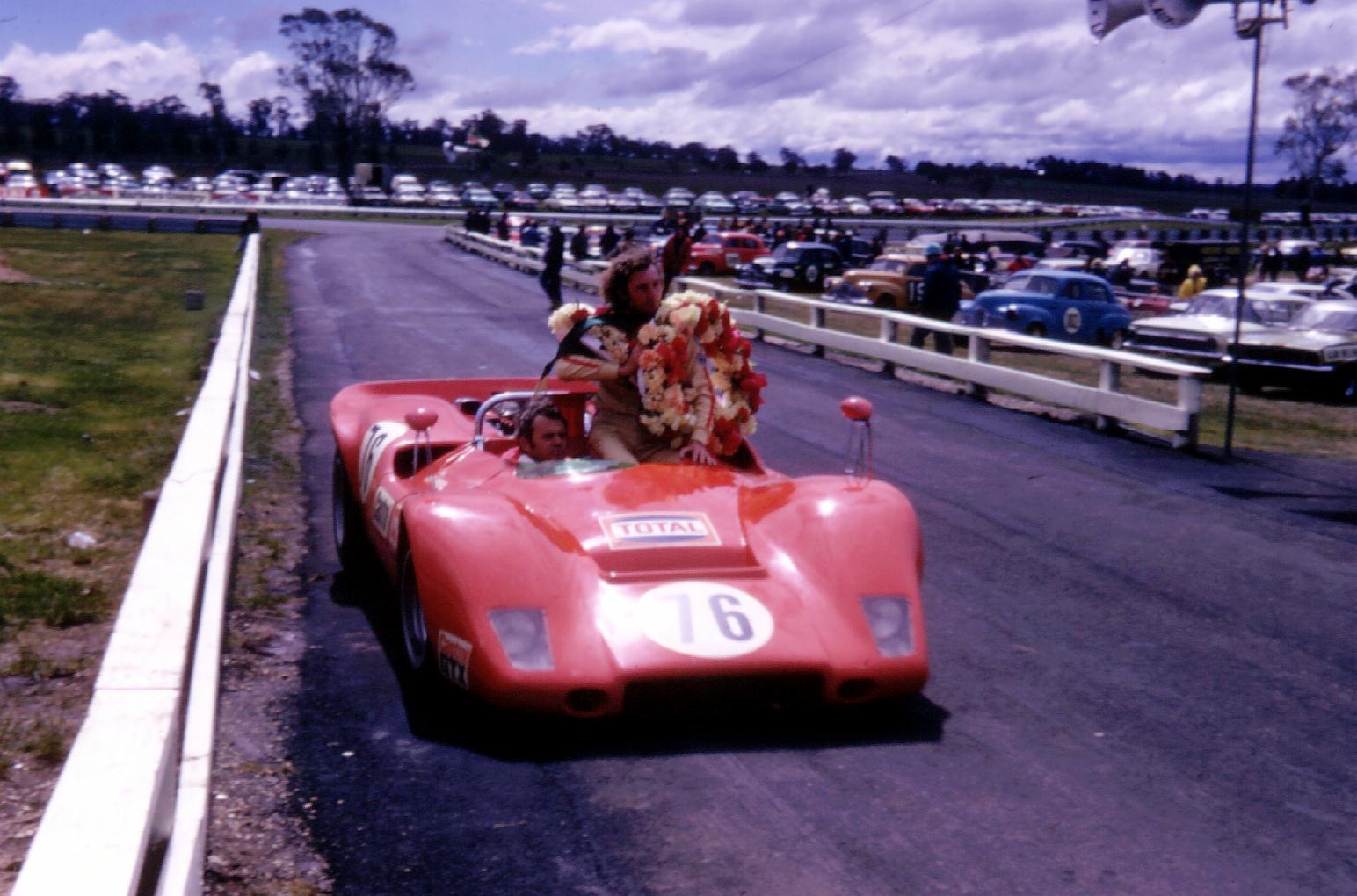
The story of this thing, one of the best looking Can-Am cars ever built, is told here; https://primotipo.com/2019/10/16/sex-on-wheels/ ,the art is of Bob at the wheel, circuit who knows, it could be anywhere, whereas the shot below is of Bob giving John Harvey a lift just after Harves won the Symmons Plains round of the 1972 ASCC- and the championship itself.
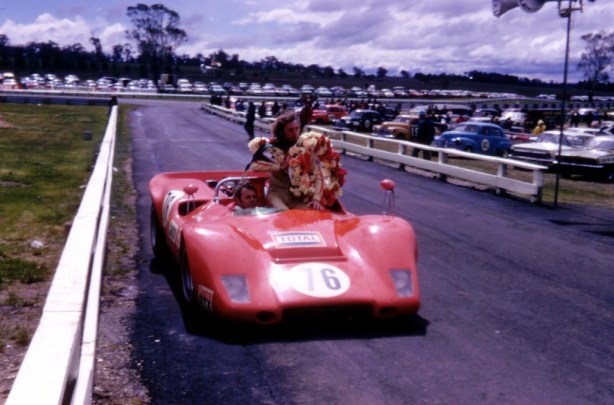
(E French)


Who could ignore Sports Sedans, even as a devout open-wheeler woofda, with savage beasts like this thing providing quite a show.

Watching Bob drive this car was magic, seeing Peter Brock race it after Bob retired was sensational- he teased everything out of Pat Purcell’s magnificent racer, another painting at Sandown’s Dandenong Road corner.
(C Parker)

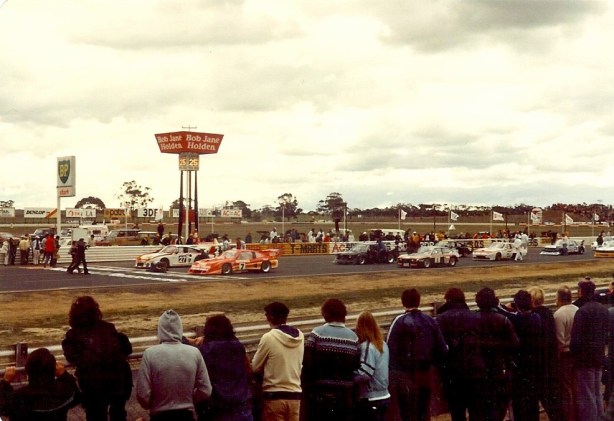
Chris Parker caught all the heavies on the grid at Calder August 1982- Australian GT Championship round 6, heat 1- Alan Jones won every race of the nine round championship.

Alan Jones is on pole in the Porsche Cars Australia Porsche 935 alongside Peter Brock in Jane’s Monza, on the row two is Jim Richards’ black BMW 318i turbo and alongside him Tony Edmondson’s Alfa Romeo Alfetta GTV Chev and then the white Colin Bond driven PCA Porsche 944 GTR turbo- on his inside is Rusty French’ Porsche 935. On the back row on the inside is Brad Jones’ Mercedes SLC and on this side the Bob Jolly Holden Commodore. They really were the most exciting grids of things at the time even if the 935’s rained on everybody else’s parade…

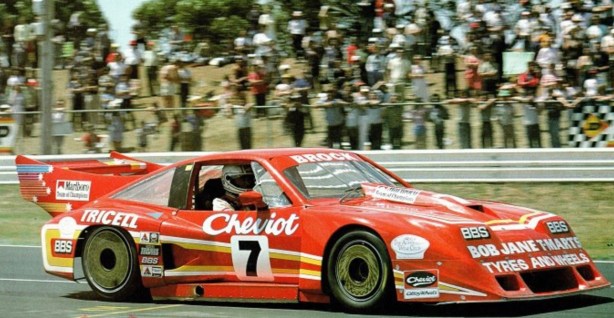
Everything about this car was big! Originally built by a team led by Pat Purcell it was raced by Bob from 1980, then rebuilt by Pat and Les Small before being raced by Peter Brock in 1982/3, then Allan Grice raced it in 1984 to an Australian GT Championship and then Bryan Thomson to the title the following year. It morphed into a Toyota Supra in 1989- where is it now? Click here for a summary of the car; http://www.scharch.org/Cars/Monza_Racecars/Cars_MonzaAU_Purcell-Jane.htm
(B Jane)

Peter Brock awaits the start at Calder circa 1983- the formidable size of the car evident in this shot- 6 litre Chev V8 upfront and a transaxle at the rear.

Etcetera…

The list of cars Bob owned and raced, or were raced for him by others is as below. It isn’t complete, it’s out of my head, i am happy to add others to the ‘good stuff’, no road cars only racers he owned…

Sportscars

Maserati 300S, Jaguar D Type, Jaguar E Type 3.8 FHC, Jaguar E Type Lwt, Elfin 400 Repco 4.4, McLaren M6B Repco 5 litre

Single-seaters

Elfin T100 ‘Mono’ Ford twin-cam 1.5, Brabham BT11A Climax 2.5, Brabham BT23E Repco V8 2.5, Jane Repco V8 2.5, Brabham BT36 Waggott TC-4V 2 litre, Bowin P8 Repco-Holden F5000, Ralt RT4 Ford BDA F Pac, McLaren M26 Chev F5000

Tourers

Ford Customline, Holden ‘Humpys’, Jaguar Mk2 4.1, Mercedes Benz 220SE, Ford Falcon XK, Fiat 2300, Lotus Cortina, Ford Mustangs- three of em- 1965, 1967 and 1968 Shelby Trans-Am, Ford Falcon GT ‘XR’, Chev Camaro ZL1, Holden Torana GTR-XU1 Repco 4.4, Holden Torana GTR-XU1 Series Prod/Group C, Holden Monaro GTS 350 Imp Tourer/Sports Sedan, Holden Monaro GTS 350 Series Prod, Chev Monza, BMW 635Csi, Holden Torana L34, Holden Torana A9X, two Mercedes Cosworth 190. In addition there were numerous ‘Thunderdome’ thingies

Not bad is it- in one lifetime.

The ‘Jane Estate’- those two words are a catch-all of ‘Jane Family individuals, corporate entities and trusts’, i think, still own the Brabham BT11A, Ralt RT4 and McLaren M6B. I am happy to take advice from those who have the facts rather than ‘i reckon’…

Image and other Credits…

Martin de Lang- artist, Stephen Dalton

Mike Kyval, Kevin Drage, Bill Miles, Chris Parker, Jock Psaros, Ellis French, Lynton Hemer, Bruce Keys, Bob Williamson Collection, Bob Jane Heritage Collection

Tailpiece…

(M de Lang)

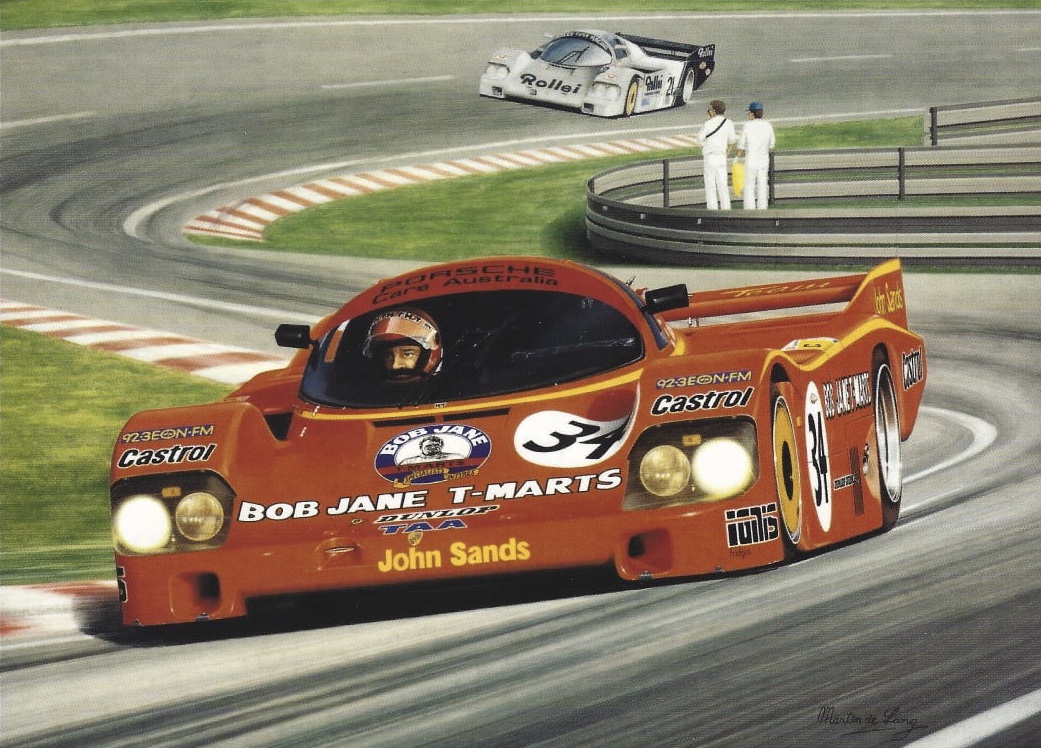
Peter Brock in the Porsche 956 he shared with Larry Perkins at Silverstone and Le Mans in 1983- didn’t this ‘Aussies taking on the world attack’ capture us all at the time.

It symbolises a few things not least Bob’s world view and a couple of blokes in a very long list Jane supported from the early sixties…

Finito…

(P Coleby)

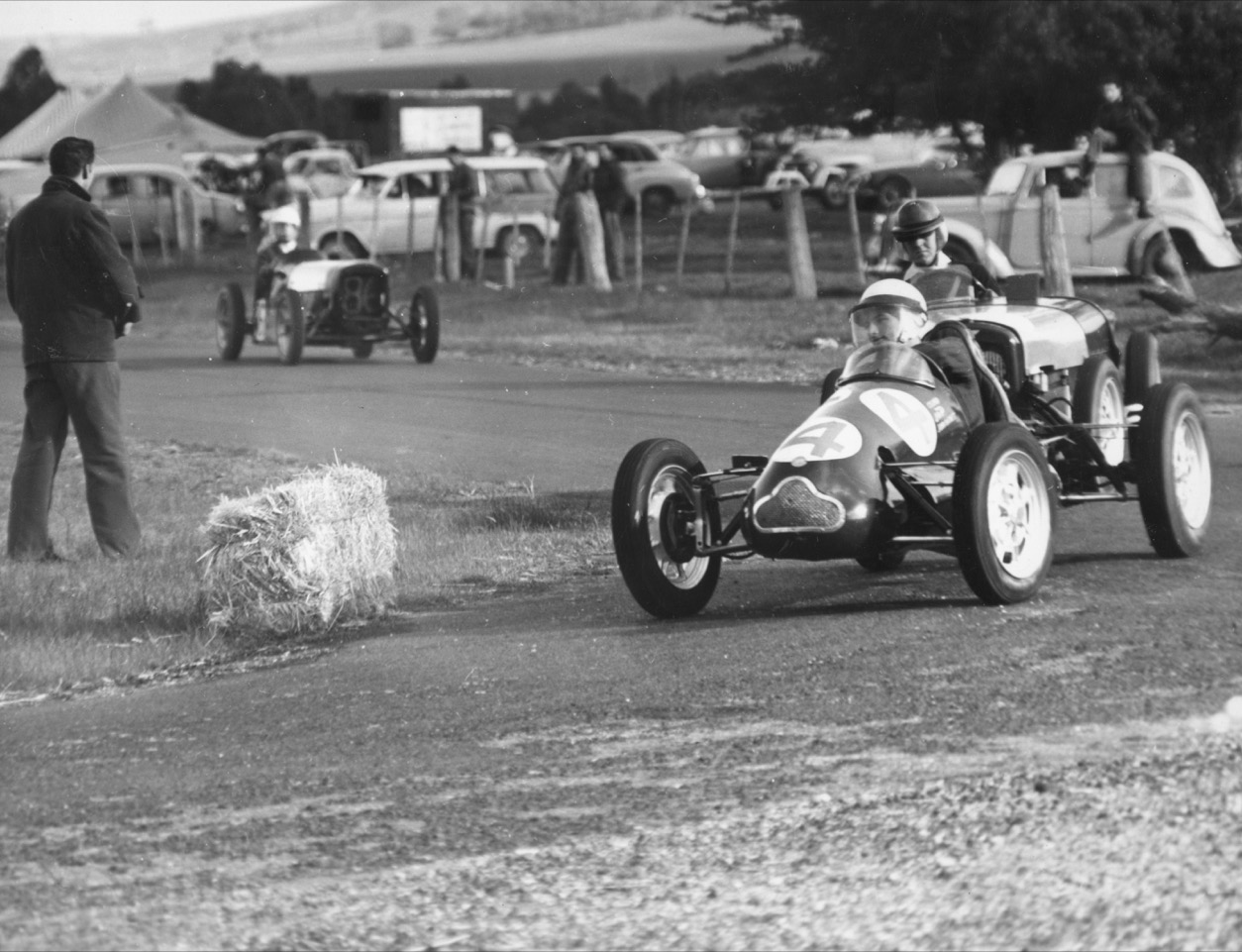
Ray Porteous’ JMW leads the John Fleming Austin 7 Spl at Darley, Queens Birthday weekend June 11 to 13 1960…

Darley Army Base, 8km from Bacchus Marsh is a reasonably obscure motor racing venue so Hugh Coleby’s upload of some photographs from his late  father, Peter Coleby’s collection on social media is hugely welcome. Gordon Dobies’s contribution in identifying the cars and drivers is gold too ‘one of the advantages of being old enough to have raced at those meetings and never throwing anything away’ he quipped.

The Preston Motorcycle Club conducted the meeting, whilst I have vaguely heard of the place I thought it was a ‘bikes only venue- clearly that is not so, members of the 250cc and 500cc car clubs were also invited along.

Bacchus Marsh was a tiny rural hamlet when I played in some tennis tournaments there as a kid, I still remember the wonderful lawn courts and Avenue of Honour as you drive into the town which is 60km from Melbourne on the Western Highway- the main road from Melbourne to Adelaide for you internationals.

These days its a big commuter town to Melbourne but when the 4000 members of 4th Infantry Training Brigade, the U.S Marines and others occupied the place they must have wondered what they had struck, Bacchus Marsh let alone Darley would have been microscopic!

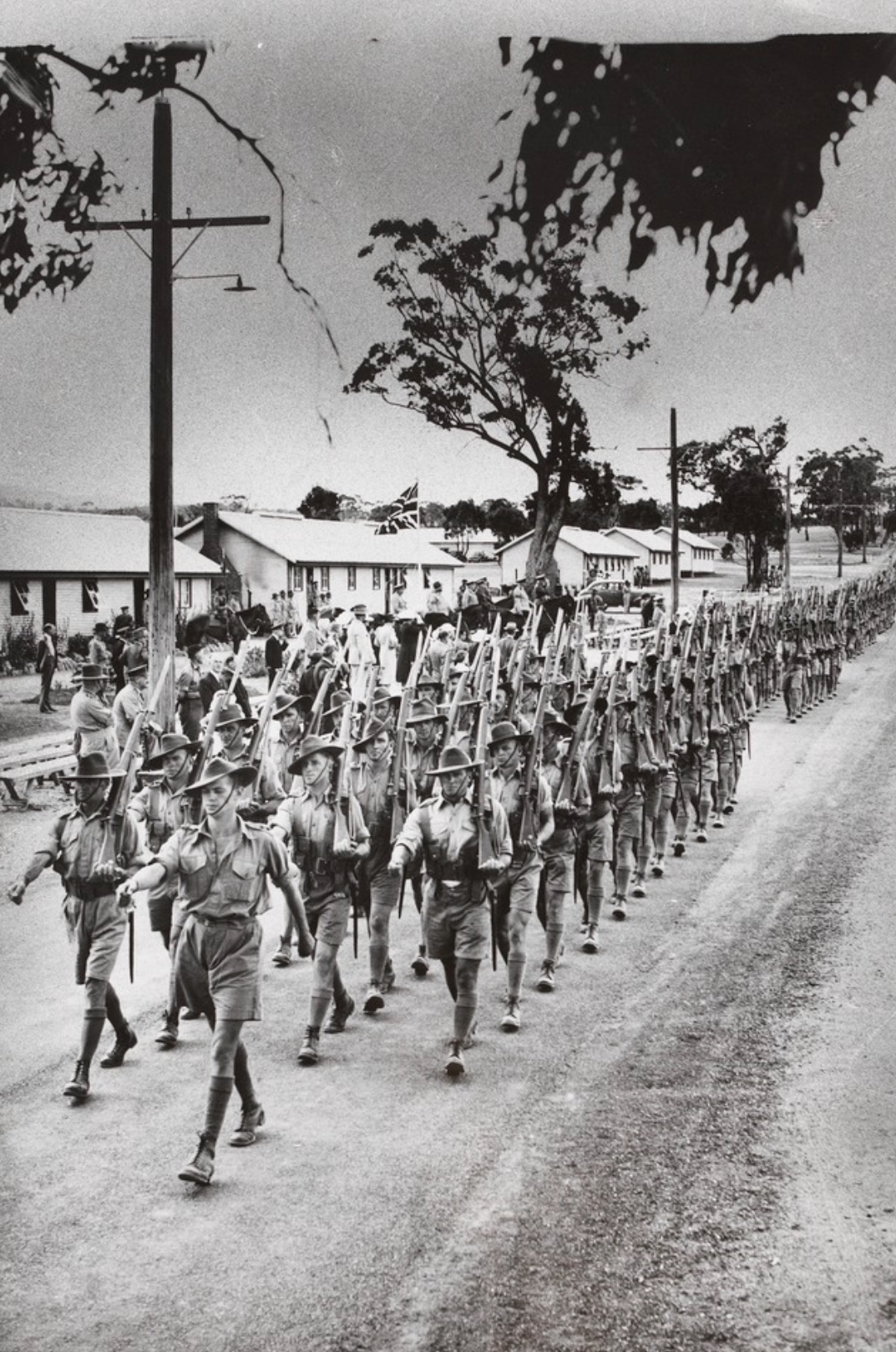
Australian, American and Dutch (from the Dutch East Indies/Indonesia) soldiers trained at the camp located on a plateau with rolling hills in the background, before being shipped overseas many of them marryied local gals, the area was used for Citizen Military Force (remember the CMF?) training until the 1970’s.

(AIF)


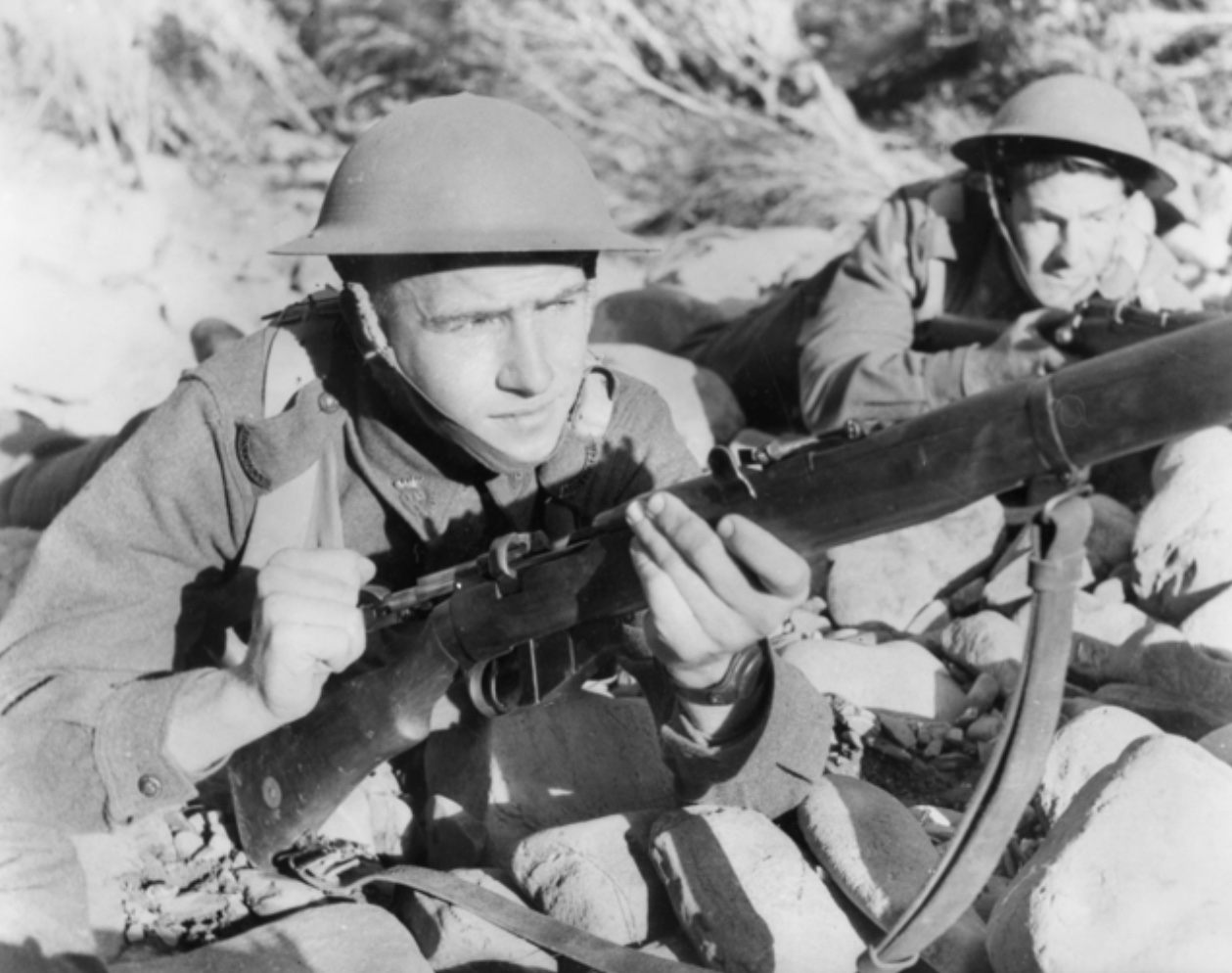
Rifle training at Darley, trusty Lee Enfield 303’s by the look (AIF)


(AIF)

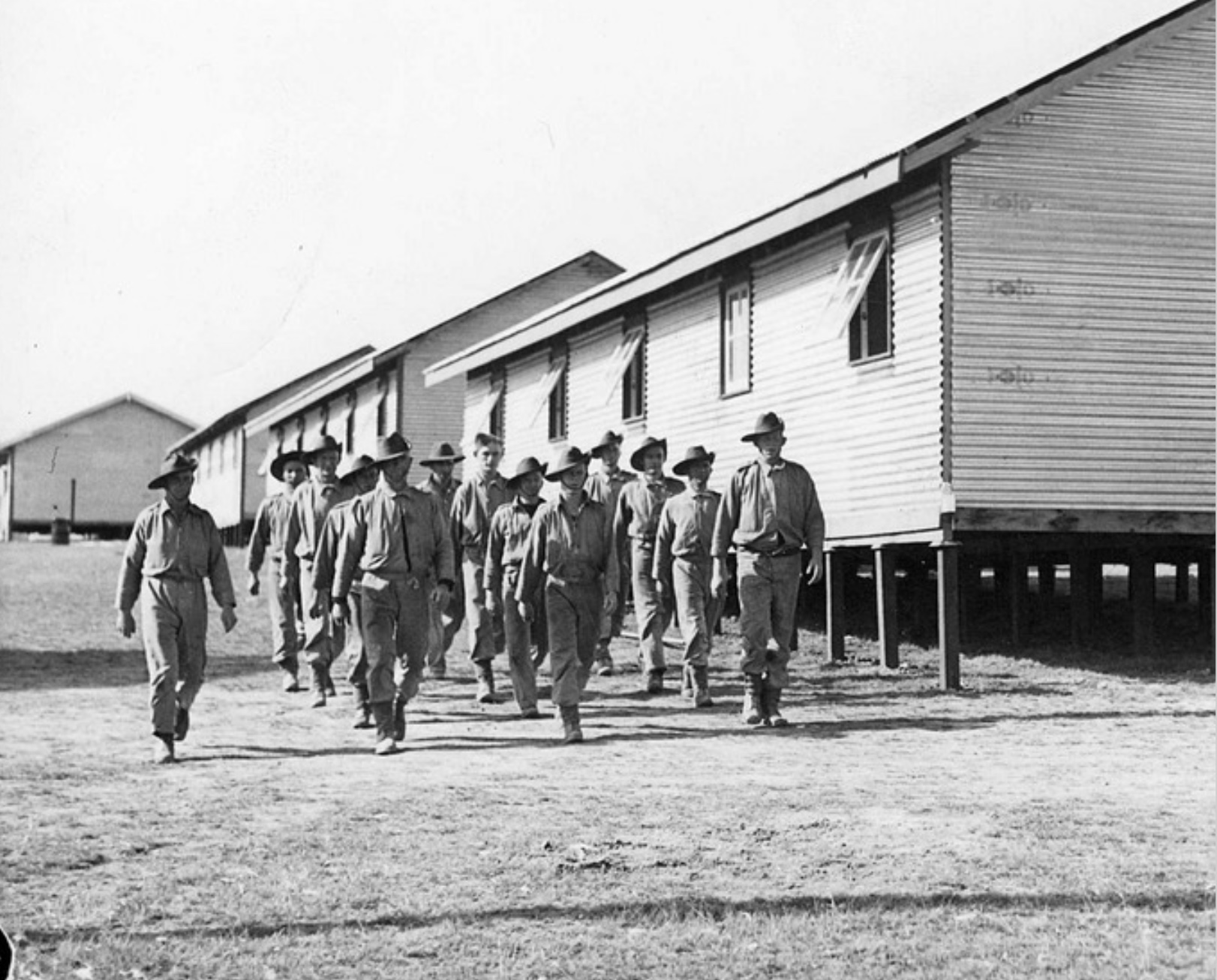
Robert Thompson wrote that his late grandfather, Lou Thompson built the camp in 1939- Thompson and Chalmers Pty Ltd took on Simmie & Co as an associate on the large project, Darley Military Camp had over 360 buildings including recreation huts, a Post Office and a 68 bed hospital on 160 hectares of land located at Camerons Road.

When the military moved out post-war most of the infrastructure went as well inclusive of buildings, but, critically, the roads remained, the site soon came to the attention of the Preston Motorcycle Club who were eagerly looking for a venue on which to race.

Ray Porteous, Austin 7 Spl (P Coleby)


Extreme narrowness of Darley evident in many of these shots, this one the start of the 1959 Junior A Grade- L>R Eric Hinton AJS 7R, #64 Owen Archibald Norton, #82 Ron Miles Norton, #1 Tom Phillis Norton, #2 Jack Ahearn Velocette. On row 2 are #25 Ray Blackett and Geoff Curley #14 (E Miller)

Working bees of club members soon filled trenches left by the removal of cabling, re-coated the road surface, cleared scrub and removed junk left behind by retreating military forces. By late 1947 the place was ship-shape with the first meeting held on 29 February 1948- the Hartwell and Kew clubs were invited along to join in the fun.

Open meetings soon followed, ‘the main straight, which had a left-hand kink in the middle, was only as wide as a two lane road, while the rest of the rack was even narrower. It made for shoulder to shoulder racing on solos and even closer encounters on outfits’ recorded Old Bike Australia.

Peeling off the Main Straight (Camerons Road) is #8 Alan Osborne, Honda and Tom Phillis Ducati in 1959 (MCN)


John Hartnett, Cooper Jap 497cc 1960 (P Coleby)

The Preston club guys were happy to hold a couple of well run meetings a year, fitting many races onto the card without chasing the major titles such as the Australian Tourist Trophy with all of the stars of the day racing there- Frank Mussett, Maurie Quincey, Bert Flood, Jack Ahearn, Keith Brien, Max Stephens, Rex Tilbrook, Alan Wallis, Ken Rumble, Kel Carruthers and others with Quincey the ‘local ace’ in the mid-fifties- he switched to cars later in life remember folks, an ANF2 Elfin 600B Ford twin-cam springs to mind. Max Stephens was another who tried four wheels, he owned and raced the ex-Brabham Cooper T40 Bristol, with some success out of Tasmania.

Easter Monday meetings were common early, the club then settled into a mid-year date on the Kings/Queens Birthday weekend which was usually a frosty, wet experience for both the riders and the punters. The Preston guys were also innovative in running the first one hour race for production machines during the June 1959 program.

Over the years various high profile car racers had a crack at the lap record,  Reg Hunt’s Maserati 250F did a 1:14.1 in 1955 which was bested by multiple Australian Hillclimb Champion Bruce Walton aboard a Cooper Mk9 JAP 1 litre twin in 1960 with a 1:10.8. At that stage the quickest of the bikes was the 1:13.5 achieved by both Eric Hinton and Tom Phillis.

Maurie Quincey and Matchless G80 (C or CS?) on the Darley grid, rider of #1 more interested in the babe behind than the race start!

And below is Quincey aboard an Elfin 600B Ford twin-cam during the 1971 Sandown Tasman meeting, it was after some involuntary aerobatics in this car at Sandown at about this time that he called it quits on his competition career.

By then Maurie was in his late thirties, well after his international bike racing career, inclusive  Isle of Man appearances and running a successful Honda dealership in Moonee Ponds, Melbourne. He died on July 19, 2019 six months ago- see a very interesting article about Maurie here; https://www.oldbikemag.com.au/maurie-quincey-victorian-dominator/

(L Hemer)


Maurie Quincey on Bray Hill during the 1955 IOM Junior TT- a splendid fifth aboard a spare works Norton Manx 350. He was offered the bike after going so well on his ‘customer’ 350 and 500 during practice (unattributed)

Back to Darley.

Kel Carruthers appearance on the Honda 250/4 in 1961 would have been really something to see and hear- i bet he frightened the kookaburras flying above the citrus trees in the valley below the track bigtime!  Kel won the Harvey Wiltshire Trophy Lightweight race slicing four seconds off the lap record in the process.

The final meeting took place in 1962, in a thriller of a race Trevor Pound and Ken Rumble passed and re-passed for the whole 15 laps with Pound winning by a bike length, both being credited with a new outright lap record of 1:12.8. Trevor Pound raced in the Manx classic too and never lost his passion for competition, he raced Formula Vees in his dotage.

Whilst plans were being made to race in 1963, on 10 June the farm owner withdrew his permission saying the continued rain in the region had flooded the pit and spectator areas and damaged sections of the track- at late notice the meeting was held at Calder, 30km away.

‘Racing never returned to Darley. A combination of primitive facilities, the narrow and uneven road surface and the remorseless march of civilisation spelled the end of the happy little track. Despite its shortcomings, the circuit had an enviable record for safety and a reputation for slick organisation. With nary a backward glance, the infield area was soon subdivided into building lots and small farms.’

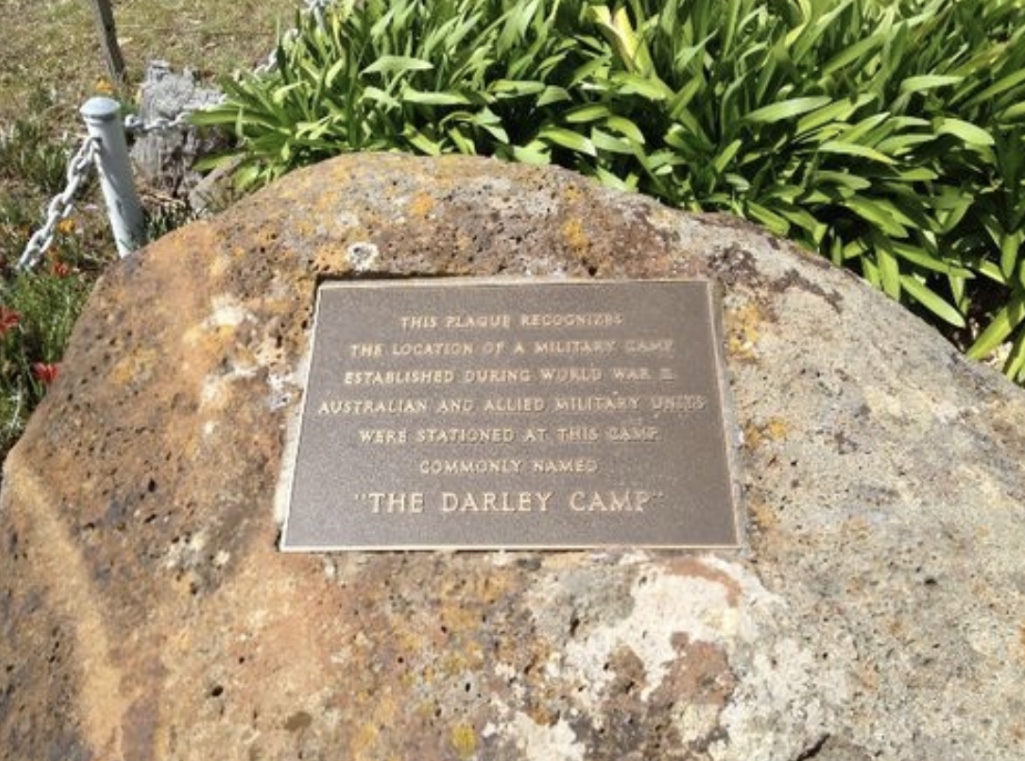
To see the place, drive up Camerons Road, at the top of the hill you are on the plateau, about 100 metres on the right are the remnants of the final corner named ‘St Kilda Junction’ poking at you from a vineyard. At this point you are on the Main Straight with the former pit area- still dotted with concrete slabs from the place’s military past on your left. The straight is about 600 metres long- halfway along is a kink, and opposite that is a monument to Darley Military Camp.

Old Bike Australia concluded a great article with this ‘It takes a little imagination if you weren’t there…but if you stand on the kink and close your eyes, you can still hear the sound of a hundred motorcycles and a dozen or so cars from the 250cc and 500cc Racing Clubs, most with open exhausts warming up.’

‘Wafting through the air is the fragrant  mix of Castrol R and methanol, mingled with the aroma of Hines “Kerosene” pies. The pointed tents of the Hines Catering Company…appear in many of the period photos of Darley, and those who sampled the wares will tell you the kerosene stove that heated the pies produced a pastry of unique taste. A section of canvas behind the servery contained a special nook where the course announcer Frank “Farmac” McDonald and selected others could lubricate their tonsils with a cold ale between races.’

‘Fortunately, on the run back to Melbourne, you won’t have to cope with “Cunningham The Camera Cop”- the notorious plod who used to hide his Thunderbird beside the old stone bridge out of Bacchus Marsh and photograph any who transgressed by crossing the double centre-lines.’

Hasn’t the Old Bike Australia writer painted a wonderful, evocative picture of times long gone?

‘Moe’s Nose’ approach June 1960. South Aussies Ian Hogg and Peter Morgan


(C Rice)

Roger Barker leading Ron Miles, note the hay bales and beautiful Darley bush setting.

Barker is on a bike with a ‘Rimond’ fibreglass fairing, a product he helped develop in tests at Ballarat and Darley- these were made in Melbourne by former top clubman racer, Charlie Rice and Bob Edmonds, ‘Rimond’ a combination of their names, about 30 fairings were built. Barker was quoted in the English press as saying they were good for about 12mph or 200rpm using tall gearing. The bike could be a Norton.

The Mudgee born rider, having scored points at the Isle of Man and Assen on Nortons in June, died at Schleiz, Thuringia, East Germany in July 1957 having blacked out in the intense heat of the 500cc race whilst leading aboard a Matchless G45, the conditions were made worse by the engine heat the Rimond fairing trapped. He slid off the bike, hit a tree and died instantly from the impact.

Etcetera…

What to look for on your visit, Camerons Road, Darley 3340.


(J Bowring Collection)

A couple of photographs from the John Bowring Collection via Tony Johns.

We are not clear on the date yet but the shot above is John Hartnett’s Cooper Mk5 JAP from the Doc Grosvenor and Allan Tyrrell Austin 7 Specials.

It’s the great Bruce Walton’s Cooper Mk8 JAP below, perhaps on his 1960 record breaking run.

(J Bowring Collection)


(J Bowring Collection)

No idea who this committed crew are folks- thoughts?

Bibliography…

‘Old Bike Australasia’ 5 February 2018, Stephen Dalton, Gordon Dobie, Jim Scaysbrook article on Roger Barker in ‘Old Bike Australasia’

Photo Credits…

Hugh Coleby, the late Peter Coleby, Eric Miller, Lynton Hemer, Motor Cycle News, John Wynne Collection, John Bowring Collection via Tony Johns

Tailpiece…

(P Coleby)

John Fleming, Austin 7 Spl leading followed by Mel Mason with a couple of unidentified JMW’s in the mix, June 1960. There was a big field of at least eleven cars on this narrow track- intrigued to know the full grid if any of you have a record of the race.

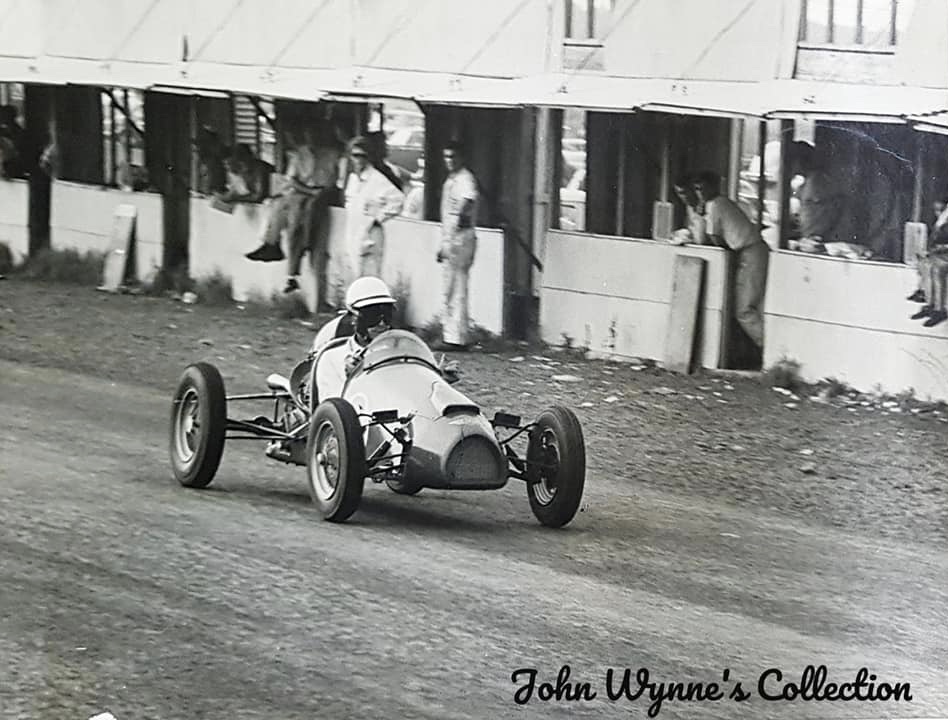
JMW’s were built by John Wynne and his father to fuel John’s passion for racing, click here for an interesting site about the cars; http://members.optusnet.com.au/~pwstone/jmw/jwstory/jmwstory.htm

John Wynne below at Tarrawingee in 1960, the other final shot is of the car at Phillip Island circa 1962.


Finito…

(B Miles)

Look at that packed grandstand, grid for the first Lakeside International, 11 February 1962…

Jack Brabham is on pole from Bib Stillwell, Cooper T55 Climax 2.7 ‘Slimline’ and T53 2.5 ‘Lowline’ respectively, a great performance by the Melbourne Holden dealer. On the second row in the blue #10 Cooper T53 2.7 is Bruce McLaren and alongside the very quick John Youl in a now ageing Cooper T51 2.2. Then its Angus Hyslop’s white Cooper T53 2.5 and a smidge further back you can just see the red nose of Lorenzo Bandini’s Cooper T53 Maser 2.8. Other top-liners on the grid were Lex Davison’s T53, Ron Flockhart Lotus 18 and Arnold Glass in a BRM P48.

Brabham won the short 30 lap race in 30 minutes by a second from Stillwell, Hyslop, Davison, Youl and Bandini.

This photograph is another by Bill Miles, an enthusiast with a fine talent for composition. The eyes of Brabham and Stillwell are riveted on the starter, who is just about to commence his flag upswing with the hatted Judge of The Start ready to pounce on anybody with a jittery clutch foot…

Angus Hyslop with microphone in hand accepts the Presidents Cup for winning the 1962 Renwick 50 (MCC Inc)

I didn’t realise Kiwi up-and-comer Angus Hyslop had raced in Australia. He was sixth at Warwick Farm, fourth at Longford and ninth at Sandown that summer off the back of a pair of sixths at Wigram and Teretonga and seventh in the NZ GP at home.

Even more impressive was his 1963 season in the same Cooper T53, not exactly the latest bit of kit by then.

Q8 and second behind John Surtees’s Lola Mk4A Climax at Pukekohe in the NZ GP was a stunning start, buoyed by that performance he was Q2 behind Brabham’s new Brabham BT4 Climax in the following round at Levin for DNF halfshaft, a rare non-finish. Q5 and fourth at Wigram and Q6 and fifth down south at Teretonga were strong results- in addition all the fast boys were running 2.7 ‘Indy’ Climaxes whereas Hyslop’s FPF was only an ‘F1’ 2.5.

Clearly a driver of promise, the Hastings sheep farmer went on to win the NZ Gold Star Championship in 1963 and then retired which is a shame as he was clearly a very fast racer who finished motor races.

(MCC Inc)

The shot above is a better one of Hyslop’s Cooper T53 Climax, this time it’s the start of the Renwick 50, a road race held about 6 miles west of Blenheim in New Zealand’s South Island in November 1962.

Angus’ white Cooper T51 Climax is on pole from Maurie Stanton’s Stanton Chev and then Tony Shelly’s partially obscured Lotus 18/21 Climax. Bob Eade’s Maserati 250F dwarfs the Barry Cottle Lola Mk1 Climax sports, the distinctive nose between and back a bit from these cars is the youthful Amon C, Maserati 250F.

The front-engined car behind Eade’s Maserati is John Histed in a Lola Mk2 Ford FJ and finally at right the Bob Smith’s Ferrari 555 Super Squalo 3.5. Angus won from Chris Amon and Barry Cottle.

Angus Hyslop’s Jag D-Type sandwiched at left by the Roy Billington Elfo Special (yes, as in the famous Brabham mechanic) and Graham Pierce’ Austin Healey 100S at the Levin Spring meeting in December 1958 (Natlib NZ)
Bill Hanna, Angus Hyslop and Ross Pederson before Angus’ 1961 European season (Hawkes Bay Digital Archives Trust)

Hyslop, born 1928, first rose to prominence in a Jaguar D-Type (XKD534 ex-Jack Shelly/Sam and Bob Gibbons/Hyslop/Taylor/Bremer/Foster) he raced from October 1958 to 1961, successes included twice finishing second in the national Sports Car Gold Star competition.

After the 1961 internationals at home in a Cooper T45 Climax 2-litre FPF he before travelled to Europe to race in a half-dozen or so British FJ events in a ‘New Zealand Grand Prix Racing Team’ Lotus 20 Ford running immediately in the top ten- fourth behind Allan Rees, Gavin Youl and Dennis Taylor on 19 August at Goodwood was indicative of his pace.

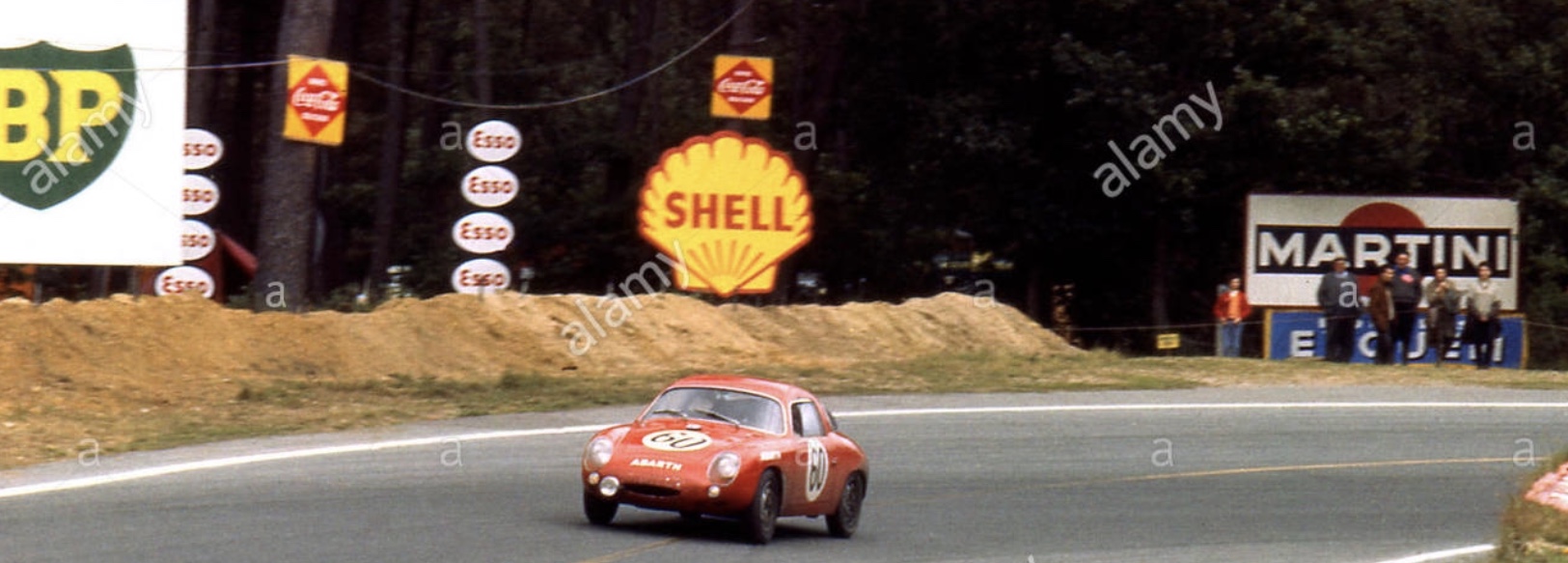
During that year he also shared a works Fiat Abarth 850S with Denny Hulme at Le Mans- the pair finished fourteenth in the little car and won their class.

He returned to New Zealand and continued to raced the Cooper T45 in 1961/62 towing it behind the D Type!

The other apocryphal Hyslop/D-Type story is that after the wet 1961 Wigram meeting in which Angus finished third behind Brabham and Moss in his 2-litre Cooper T45 but ahead of the 2.5-litre Coopers of McLaren and Hulme his bank manager, who had been staying in the same hotel as Angus to watch the race, complimented him on his wet weather driving whereupon Hyslop responded that he thought the skill had been learned by using the D-Type to round up the sheep on his farm…

Looking contemplative aboard the Tourist Motors of Hawkes Bay Cooper T53 Climax during the 1962 NZ GP weekend at Ardmore, seventh and first man home after the internationals (Bay of Plenty Times)
Again the summer of 1962, enroute to sixth in the Lady Wigram Trophy (P Basire)

He ‘hit the bigtime’ when the New Zealand International Grand Prix Executive Committee approved a loan to allow him to buy an ex-Yeoman Credit Parnell Cooper T53 – the car carried the same chassis plate as Angus’ T45 in the usual Antipodean manner to avoid import duty- the Cooper was sold to Jim Palmer after Hyslop retired.

I’m intrigued to know how far he strayed from the sport though- not far is my guess given his fourth place in the 1972 New Zealand International Heatway Rally in an Abingdon prepared Group 2 Mini 1275GT- Andrew Cowan won in the sister car crewed by Jim Scott.

Hyslop died in 1999, aged 71.

Hulme, Amon and Hyslop at Hampton Downs circa late eighties (NZ Classic Car)

Etcetera…

Angus Hyslop and Mike Langley in their works Mini 1275GT, Heatway Rally 1972 (unattributed)

Angus Hyslop and Mike Langley in their works Mini 1275GT, Heatway Rally 1972.

BLMC/New Zealand Motor Corporation went all out to win the event, entering four cars- two 1275GT’s and two Morris Marina 1800TC Coupes, one of which was driven by Jim Richards finished 61st, the other 52nd, both the updated ‘Morris Minors’ had suspension problems.

Jim was unlucky- Cowan had been allocated a Marina to rally but he was having none of that so Jim got the bum seat and Andrew the car he wanted, which he put to rather good effect!

(CAN)

Hyslop at Dunedin in 1961, D-Type in a support race. He qualified second behind Denny Hulme’s Cooper T51 Climax in the feature Dunedin Road Race on the ‘Oval Circuit’ finishing third in his Cooper T45 behind Denny and Pat Hoare’s Ferrari 256 3-litre V12.

Credits…

Bill Miles, Allen Brown’s oldracingcars.com, Bay of Plenty Times, Peter Basire, Marlborough Car Club Inc, Alamy, NZ Jaguar D-Type History ‘Nostalgia Forum’ thread, Hawkes Bay Digital Archives Trust

Tailpiece: Hulme/Hyslop works Fiat Abarth 850S, Le Mans 1961…

Finito…


(R MacKenzie)

When shots of a bloke at the same circuit pop up randomly a week apart whilst looking for other stuff its an omen right?…

The photographs of Bob Muir a year apart at Warwick Farm aboard his Mildren ‘Yellow Submarine’ Waggott and Lola T300 Chev (below a bit) say much about his fast ascent during this career phase.

The first shot is during the F5000 Tasman 1971 ‘Warwick Farm 100’ in The Esses- he is on the way to sixth amongst the 500bhp beasties in the little, lithe, nimble 275’ish bhp 2 litre Waggott powered ‘Sub- the speck in the distance is, I think, Ken Goodwin’s Rennmax BN3 Ford DNS, it must be practice as he didn’t race. Frank Gardner won come raceday in his works Lola T192 Chev.

Bob raced a Rennmax Formula Vee initially after a dabble in a road Austin Healey Sprite and after showing immediate pace progressed through a Lotus 23B Ford in 1968/9 to a Rennmax BN3 which was raced with a Coventry Climax 2.5 litre FPF and later a 2 litre Waggott TC-4V acquired from Alec Mildren as the long time team owner and patron wound down his race operations.

The Waggott was then transferred to the Sub, when he bought it- his first meeting with that motor fitted appears to be the Mallala Gold Star round in 1970.

Jack Bono, Elfin, from Bob Muir, Mako then Elfin, Nota, uncertain and then probably Ken Goodwin, Rennmax back up the road Warwick Farm 1967 (oldracephotos.com/Phillips)


Muir, Lotus 23B Ford, Warwick Farm 1968 (oldracephotos.com/DSimpson)


Muir, Rennmax BN3 Waggott during practice for the Oran Park 1970 Gold Star round- Q4 but DNS after a run bearing (oldracephotos.com/DSimpson)

Money was always tight as Muir’s motor-dealership provided the funds to race, he did so when he could afford to.

Throughout 1970 he ran his Waggott engined BN3 at Warwick Farm and Sandown for strong thirds stepping into the Sub for the first time at Mallala in October and then the AGP at Warwick Farm in November where a blown tyre caused an accident in the race won by Frank Matichs’ McLaren M10B Repco-Holden.

He sensibly did not contest the Kiwi 1971 Tasman rounds as by then the ‘more modern’ F5000’s had eclipsed the 2 litre cars which could still, in the right circumstances, give a good account of themselves the year before- he raced at the Farm for sixth

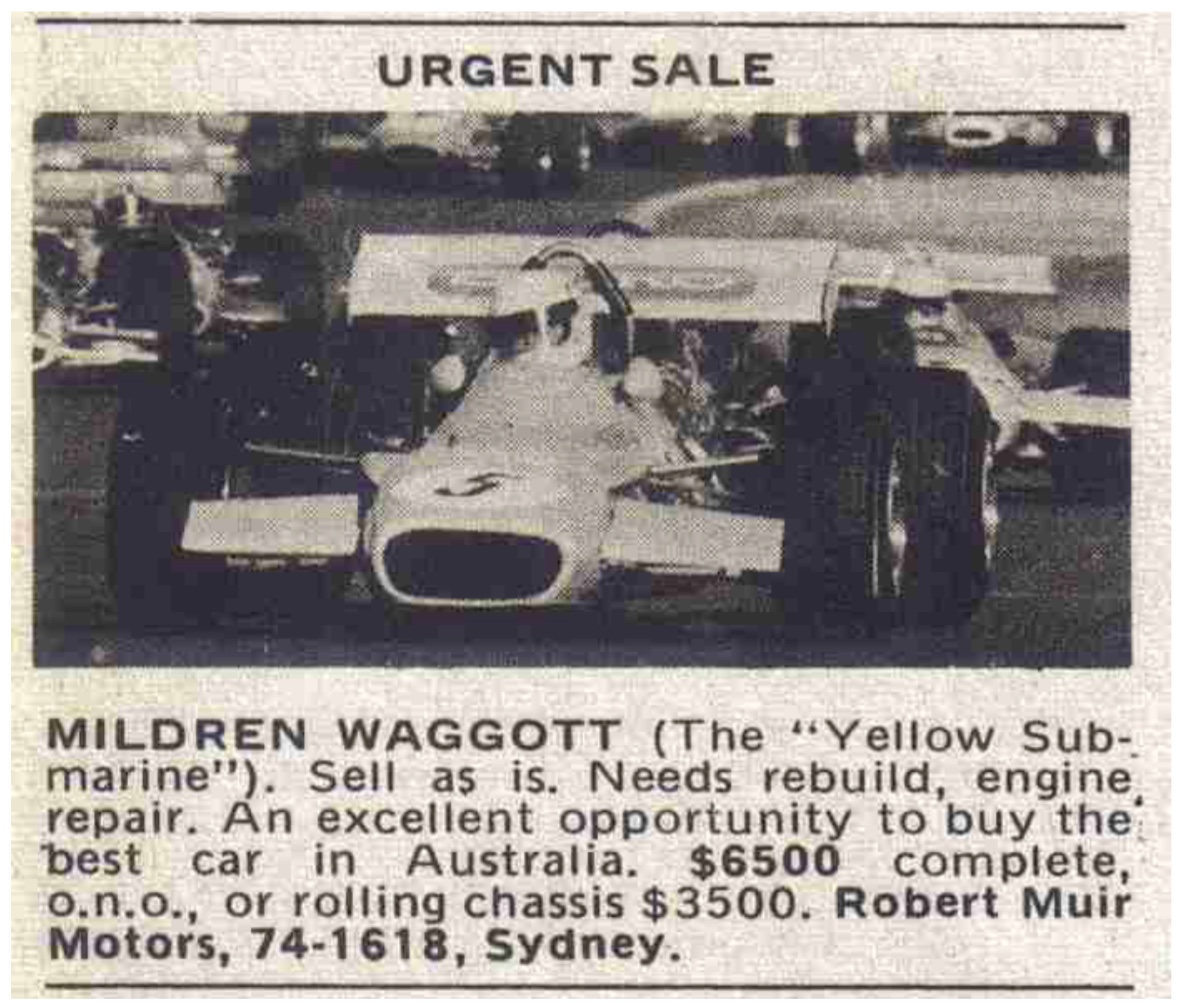
Contradicting myself, Max Stewart won the 1971 Gold Star in the Mildren Waggott despite Bartlett’s McLaren M10B being demonstrably the quickest car that season- reliability let him down, and Bob would have given Max a shake had he the wherewithal to run the Mildren. His sole GS 1971 appearance was at Oran Park in Ken Goodwin’s BN3 fitted with his Waggott which blew in testing so he didn’t race, by June the Sub was advertised for sale in Racing Car News ‘Sell as is. Needs rebuild, engine repair’- Ray Winter bought it and did very well in it as an ANF2 car fitted with, in time, a Hart 416-B Lotus-Ford twin-cam. The Sub in period only had aces behind the wheel- Gardner, Bartlett, Muir and Winter.

Bob had bigger plans to have a crack at F5000 with a new car rather than the ‘hand me downs’ he had raced hitherto.

Muir’s Lola T300 Chev, DNF battery from 1972 Tasman Champ Graham McRae, Leda GM1 Chev 4th. Matich won from Gardner and Bartlett- Matich A50 Repco, Lola T300 Chev and McLaren M10B Chev (L Hemer)

Niel Allen’s misfortune created an opportunity for Bob.

Allen missed racing after his retirement at the end of the 1971 Tasman so he acquired a new Lola T300, chassis ‘HU-4’.

Whilst testing the car he lost control of the twitchy jigger- quite a different beast to the McLaren M10B had jumped out of twelve or so months before. Muir bought the car when Niel said ‘enough’ and rebuilt it around a new tub- he was ready for the Australian 1972 Tasman rounds where he was immediately quick- Q4 at both Surfers and Warwick Farm.

This was mighty impressive as the competition were ‘match fit’ having done four rounds over the five preceding weeks so the fact that a young fella had jumped right into these thoroughly demanding machines and was immediately on ze pace was a mighty strong effort.

Great Dick Simpson shot shows Bob hoiking an inside left at Oran Park with Kevin Bartlett’s T300 up his clacker during the 1972 Gold Star round. Bob Q2 behind Matich and DNF tyre/brakes. Matich, A50 Repco won from Bartlett and Max Stewart, Elfin MR5 Repco (oldracephotos.com/DSimpson)


Lynton Hemer’s shot of Muir heading thru BP and onto Oran Park’s main straight during the 1972 Gold Star round highlights some key aspects of the T300 design- the F2 T240 derived aluminium monocoque chassis, mid-ship, hip mounted radiators the ducting of which gives this whole series of cars (T300/330/332) their thoroughly sexy look- the cars worked rather well too. 5 litre Chev sits reasonably high, in this case fed by four 48IDA Weber carbs (L Hemer)

He spun at Surfers, had a battery problem at the Farm and an engine failure at Sandown’s AGP from Q5 but a point had been made despite not having the dollars to do the final Adelaide round.

His Gold Star appearances were similarly sporadic- Sandown Q2 and second behind the dominant Frank Matich A50 Repco, Q2 and DNF at Oran Park and that was it apart from some ‘Repco Birthday Series’ events at Calder.

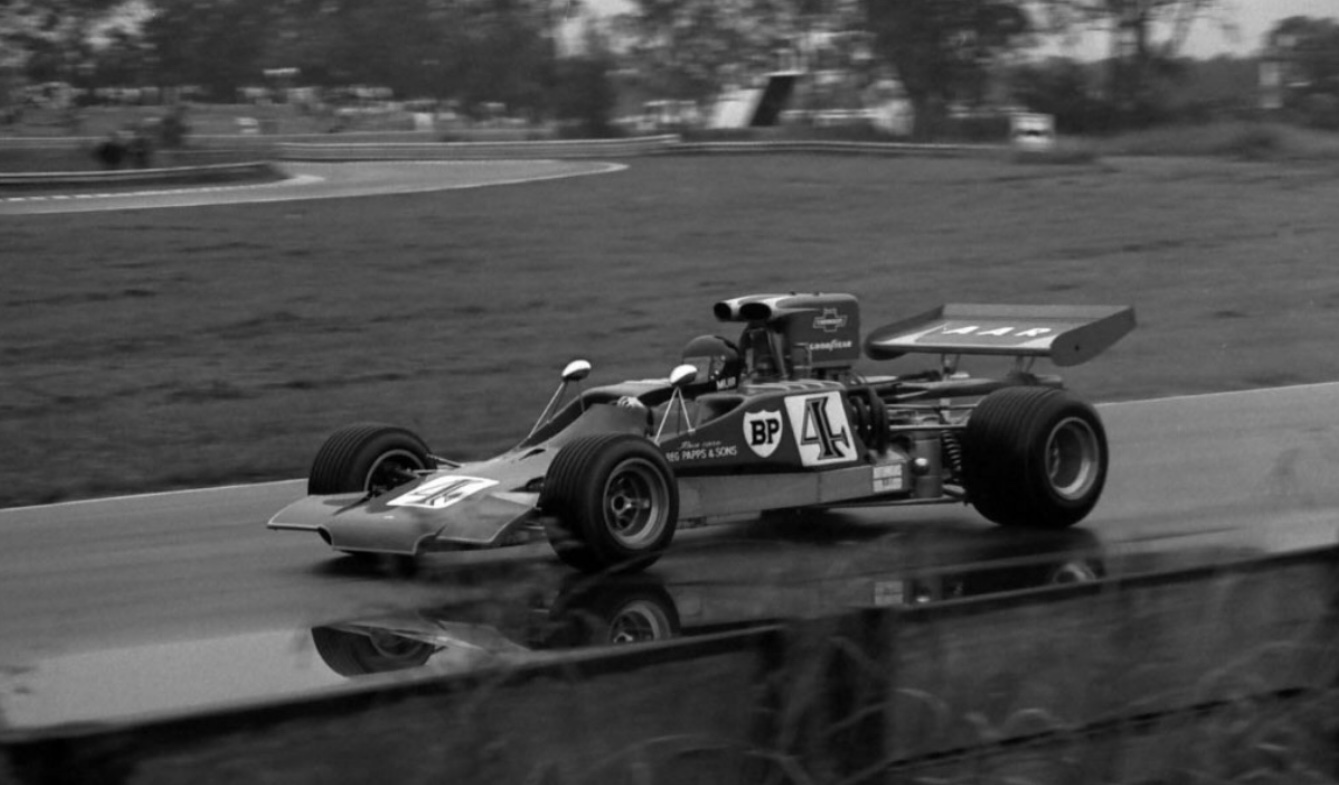
He went jumped up into the big league in 1973 contesting most of the US F5000 ‘L&M Championship’ in a new Lola T330 Chev. The car was bought by Australian Garry Campbell and, a bit like the Allen Lola twelve months before, Campbell crashed in testing at Oran Park- Bob repaired it with the assistance of John Wright, later to be a very fast F5000 driver himself and shipped it to the US with a couple of nice, strong Peter Molloy 5 litre Chevs.

He hooked up with Chuck Jones and Jerry Eisert (the exact nature of the commercial relationship is not entirely clear) and together ‘Jones-Eisert-Racing’ attacked the L&M.

In an amazing run of raw pace Bob qualified fourth at Michigan International on 20 May for third in heat and DNF final, then off to Mid Ohio for Q3 and DNS heat and final and then off to the demanding Watkins Glen, a circuit on which he had not competed before for Q2 behind Jody Scheckter and ahead of Brett Lunger, Brian Redman, Peter Gethin, Mark Donohue, Tony Adamowicz, David Hobbs, Kevin Bartlett, John Walker, Vern Schuppan, Frank Matich and others.

Whilst Jody Scheckter was THE find of the series Bob’s performance was amazing, to say the least

His seasons in the US and the UK in F5000, Formula Pacific and a fleeting but impressive F2 appearance or two- is a story for another time.

Michigan International during the 1973 US L&M F5000 Championship, 20 May. Lola T330 Chev- a Peter Molloy Chevy at that. Scheckter, Trojan T101 Chev won from Derek Bell, Lola T330 Chev and Peter Gethin, Chevron B24 Chev. Muir Q4 3rd in heat and DNS final (M Windecker)


Etcetera…


(J Lemm)

Still wearing Bartlett’s usual #5, Bob sets to work on the Sub during the October 1970 Mallala Gold Star round- his first meeting in the car. Rare photo semi-nude.


‘Racing Car News’ June 1971 read it and weep…


(oldracephotos.com/Hammond)

Cruisin’ the Calder paddock during one of the ‘Repco Birthday Series’ (fiftieth) F5000 races during 1972, Lola T300 Chev. KB won this four or so championship rounds title from Frank Matich and Muir- all events held at Calder title.


(L Hemer)

Bob during the 1972 Warwick Farm Tasman round, not sure if it was practice or the race which was wet- Lynton has captured the reflections beautifully.

Credits…

Rod MacKenzie, oldracephotos.com/Dick Simpson/Hammond, Lynton Hemer, John Lemm, David Cutts

Tailpiece…

(oldracephotos.com/DSimpson)

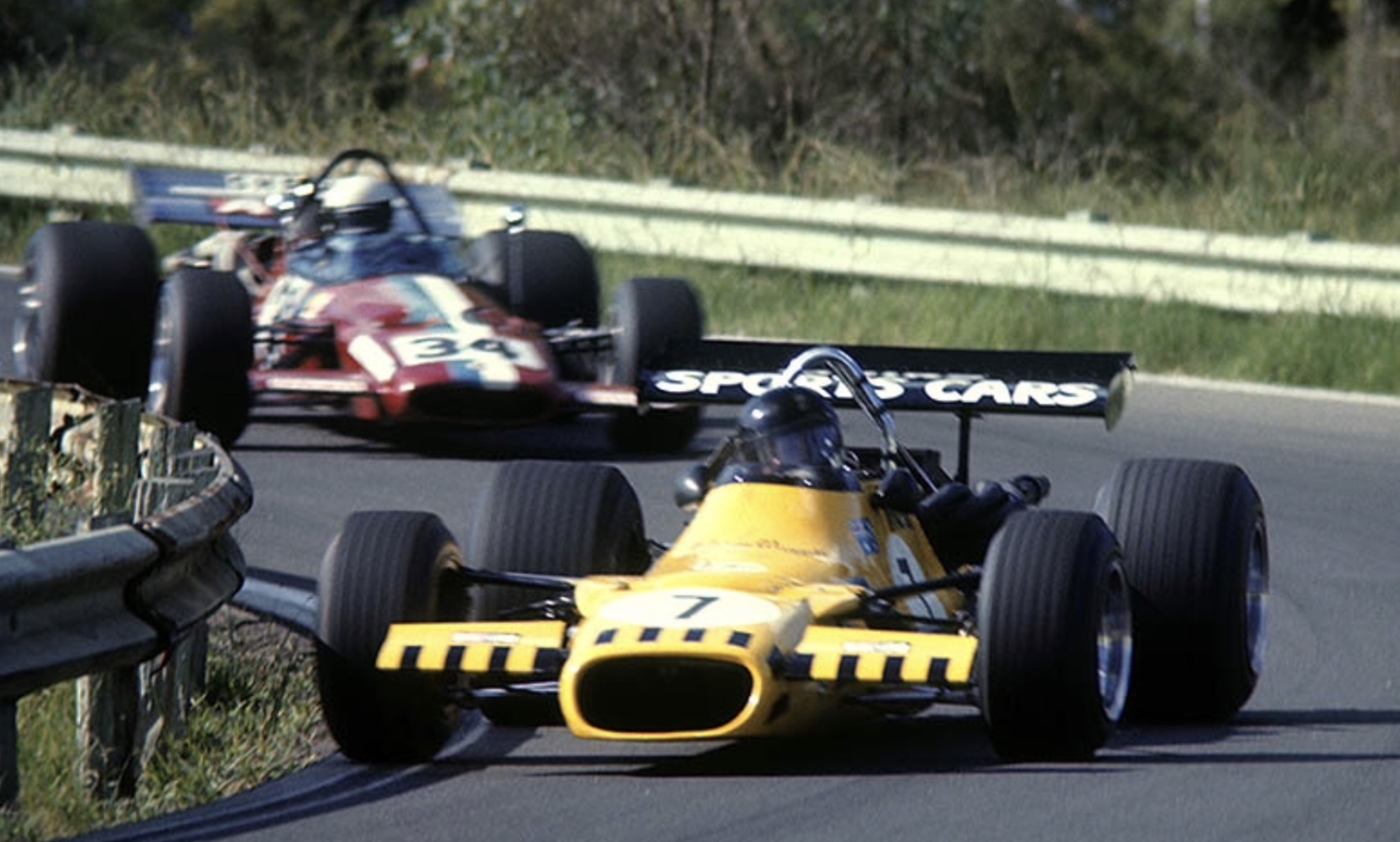
The Muirs Sports Cars Mildren Yellow Submarine leads Teddy Pilette, Team VDS McLaren M10B Chev through the Warwick Farm Esses during the 1971 ‘100’ Tasman round- sixth and fifth respectively- a good dice, there were two seconds between the cars at the races end. Gardner won in his works Lola T192 Chev from Chris Amon, Lotus 70 Ford and Bartlett’s Mildren Chev.

Finito…

(B King)

Yes, there is such a place, and a good deal of carnage seems to have befallen this Nar Nar Goon race competitor…

It is a small hamlet of a little over one thousand people 65km east of Melbourne in Gippsland- the name is an Aboriginal expression meaning ‘native bear’ or ‘water rat’ the degree of certainty implied is hardly reassuring on a government website!

The Light Car Club ‘ran a surprisingly successful race meeting on a nine furlong grass track at Nar Nar Goon, 40 miles from Melbourne on Sunday 23 November 1947’ MotorSport reported in its February 1948 issue. It covered both this meeting and the 1947 Australian Hillclimb Championship won by Arthur Wylie’s Ford A Model Special ‘Wyliecar’ at Rob Roy, 75km from Nar Nar Goon on 2 November.

Arthur Wylie in his Ford A Spl, ‘Wyliecar’ at Rob Roy, whether these two shots are during the 1947 Oz Title meeting I’m not sure (L Sims)


(L Sims)

Owing to doubtful weather, practically no publicity was given to the Nar Nar Goon meeting, but about 3000 spectators turned up to see thirty competitors. At that time, the local population would have been tiny in an area focussed on timber growing, felling and milling. Ideal for motor racing really- out of harms way and the scrutiny of officialdom!

I’m not suggesting the LCCA were ‘hackers’ in any way at all- they were for decades, lets say 70 or so years, one of the continuously premier motor racing clubs in Australia. At one time or other they owned or operated venues such as Rob Roy, Albert Park, Sandown, Balcombe, Ballarat Airfield and others, including the little known Nar Nar Goon.

It isn’t clear to me how many meetings were run at the villages racecourse but cursory research shows LCCA/Junior Car Club/Light Junior Car Club competitions dated back to at least April 1932 when it appears the owner of the course, a Mr Coombes, first gave consent for cars to use his horse racing facility. By November 1933 a range of cars from the pedestrian to Brescia Bugatti’s were being put to the test.

On the wet grass many of the 1947 entrants had incidents during the time trials which preceded the races, ‘spinning with great abandon on one corner in particular’. No damage occurred and by race-time the track had dried out.

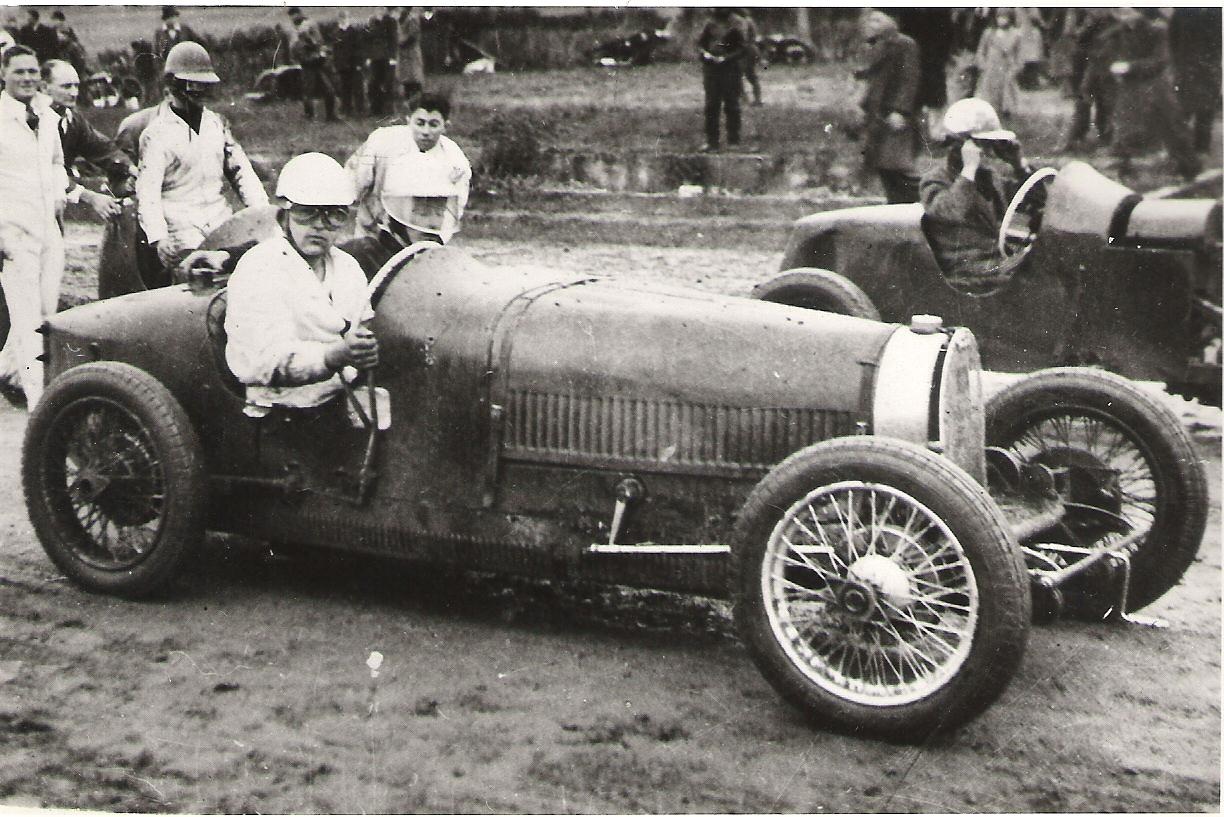
Arthur Wylie, racer and founder of Australian Motor Sports magazine at Nar Nar Goon in a Bugatti T37 ‘#37145’. Easter 1934 meeting (A Wylie via L Sims)

‘It was decided to run (love the organisation on the fly, can you imagine that today?) four handicaps, each of two or three heats and a final. At first four competitors were on track at a time, but it was found six was safe, so some events were run with six starters. Finishes were close and spectators were treated to eighteen 5 lap events.

‘The LCCA prides itself on organisation, at this meeting the average period between finishing one race and starting the next was less than five minutes’. Happy days indeed.

The LCCA should rightly be proud of its history of race organisation, I can attest to it as a competitor and spectator during the ‘glory years’ which all came crashing down as a consequence of the financially crippling burden of the two World Endurance Championship events the club ran very unsuccessfully in 1984 and 1985.

Sandown lived on of course thanks to the tenacity and entrepreneurship of racer Jon Davison but the LCCA sadly, was no more. A story for another time, not one I really want to tell when I think about it!

‘Racing Ron’ Edgerton in his ex-Charlie East/Advanx Tyres Bugatti T37 ‘#37104’ at Nar Nar Goon (B King)

Etcetera…

(JO Sherwood)

The car above is Les Jenning’s MG Magna L-Type contesting a handicap during the Easter Monday meeting in 1934- 1087cc six, four speed non-synchro box, less than 600 built in 1933 and 1934.

He achieved some great results with this car in the Australian GP- finishing third outright and setting fastest time behind Bill Thompson’s Riley and Harold Drake-Richmond’s Bugatti in the 1933 AGP at Phillip Island. The following year he was fourth outright and set second fastest time behind Thompson’s MG K3 and in 1935 he was third outright and again set second fastest time to Thompson’s MG K3.

Before he raced the MG he ran a Morris Cowley in the 1928 race supported by his employers, Lanes Motors (who were still Morris dealers in the sixties, my Dads Morris 1100 was supplied by them) but he failed to finish as he did also in 1930 and 1931 in Morrises.

‘The Car’ 16 April 1934 issue covered the meeting above and brings the flavour of the times to life, ‘Houdaille’ wrote that ‘The track was in excellent condition for cornering, albeit exceedingly dusty. The great rolling clouds must have been a nightmare to following drivers, but it thrilled the spectators tremendously.

The sight of the leader hurling his car into a corner and tearing up a walloping cloud of multi-coloured dust brought acclamation from the men and shrieks from the ladies. These gurgles and shrieks grew or decreased in intensity according to the ferocity with which other begrimed and determined pilots flung their machines at the leader.’

‘ How those racing behind managed to see the corners through the soupy pall astonished everyone. Their guiding sense must be naturally developed, for surely their eyes could have been of little use. Their were no accidents, which proves the ability of the drivers, to fly blind.’

‘It is not the intention of the article to detail events but rather give some impression of an enjoyable programme. The test trials were pursued with remarkable vigour, for it be known that no man shall exceed his test time by more than ten-percent lest he incur the displeasure of the organising committee which could mean disqualification should he win a race.’

‘Competitors drove all manner of makes, powers and vintages of cars. Posh MG’s sang around. Bugattis, some quite venerable in years, boomed along at high speeds. George Pocket, of course, brought the deceptive Ford A of his. That very long, very snaky and most odouriferous Ballot of Fred Bray’s did the fifteenth-shall act many times…’

And so the report went on- a good time was had by all. The article pronounced the end of Victorian Junior Car Club meetings at the venue but clearly satisfactory arrangements were entered into by them or other club(s) later.


(The Car 16 April 1934)


Bibliography…

MotorSport magazine February 1948, Trove, Leon Sims Collection, Bob King Collection, Arthur Wylie Collection, ‘Half a Century of Speed’ Barry Lake, John O Sherwood Collection, ‘The Car’ 16 April 1934 via Bob King

Tailpiece…

Competitor names and cars folks? The leading car is the one which come to grief in the opening shot.

Finito…


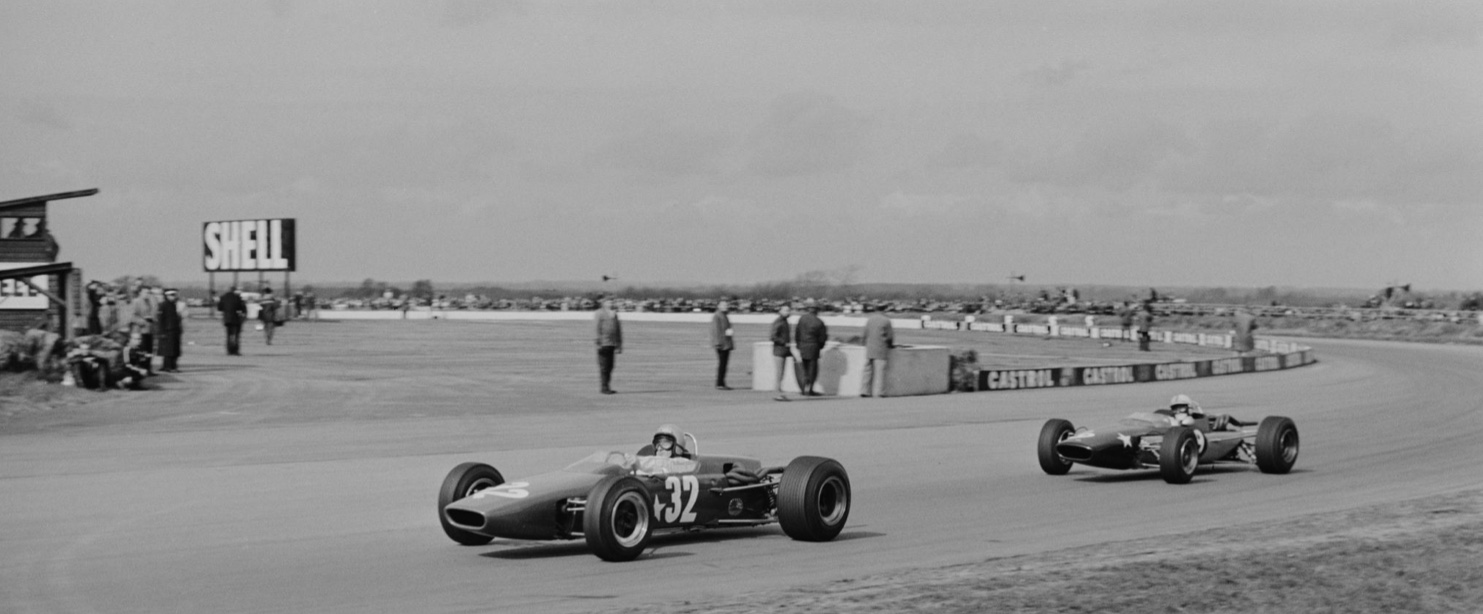
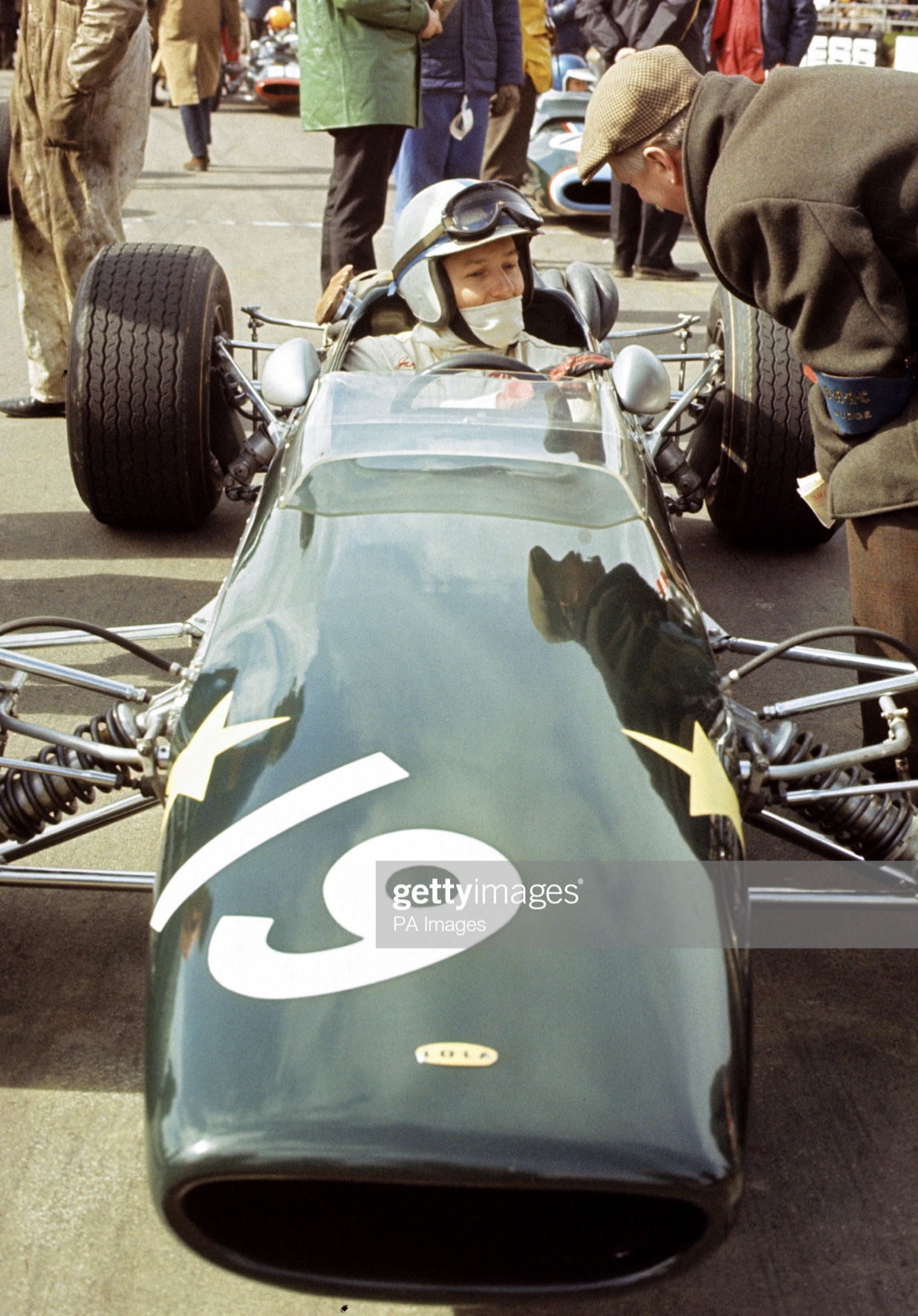
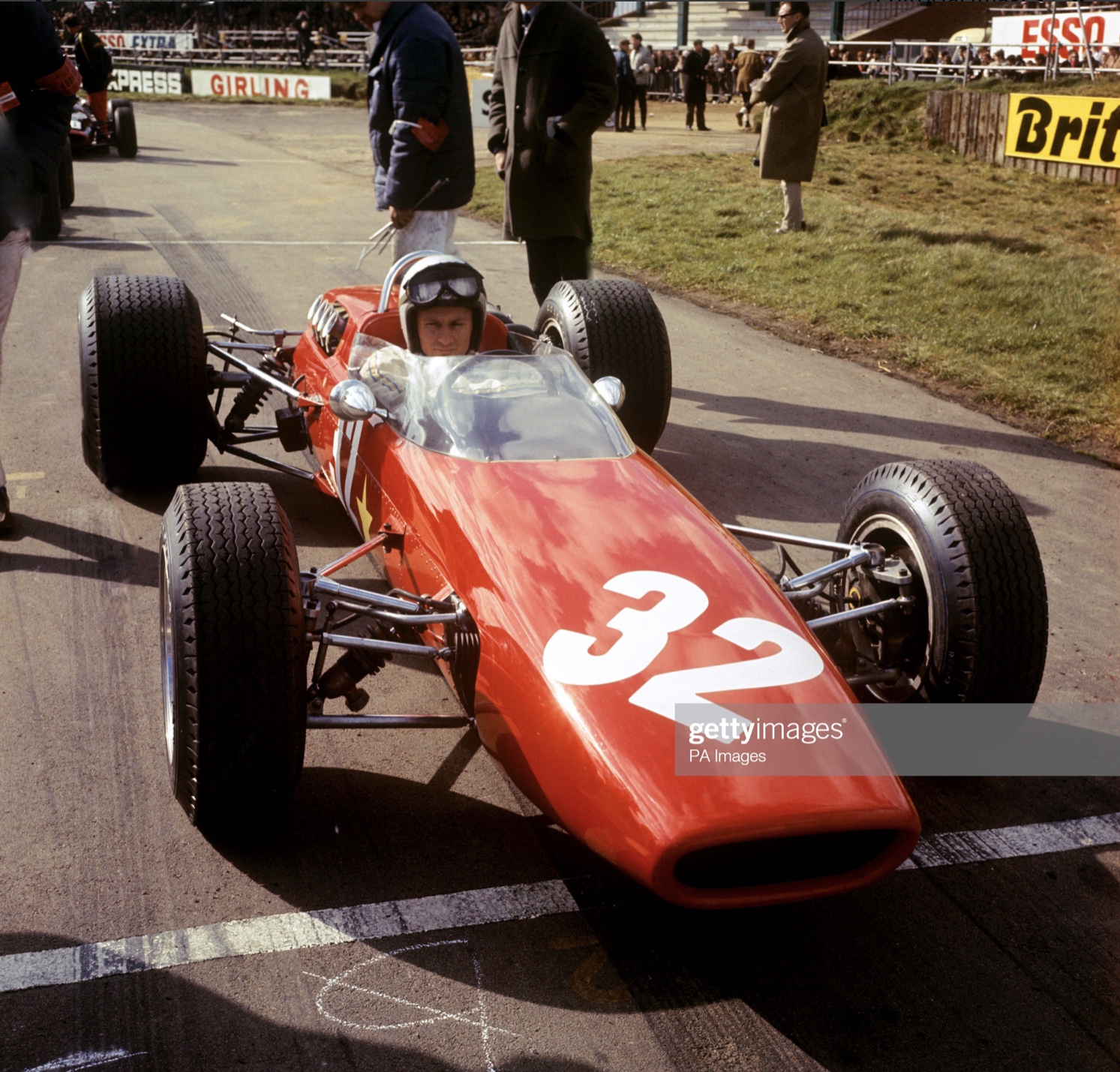
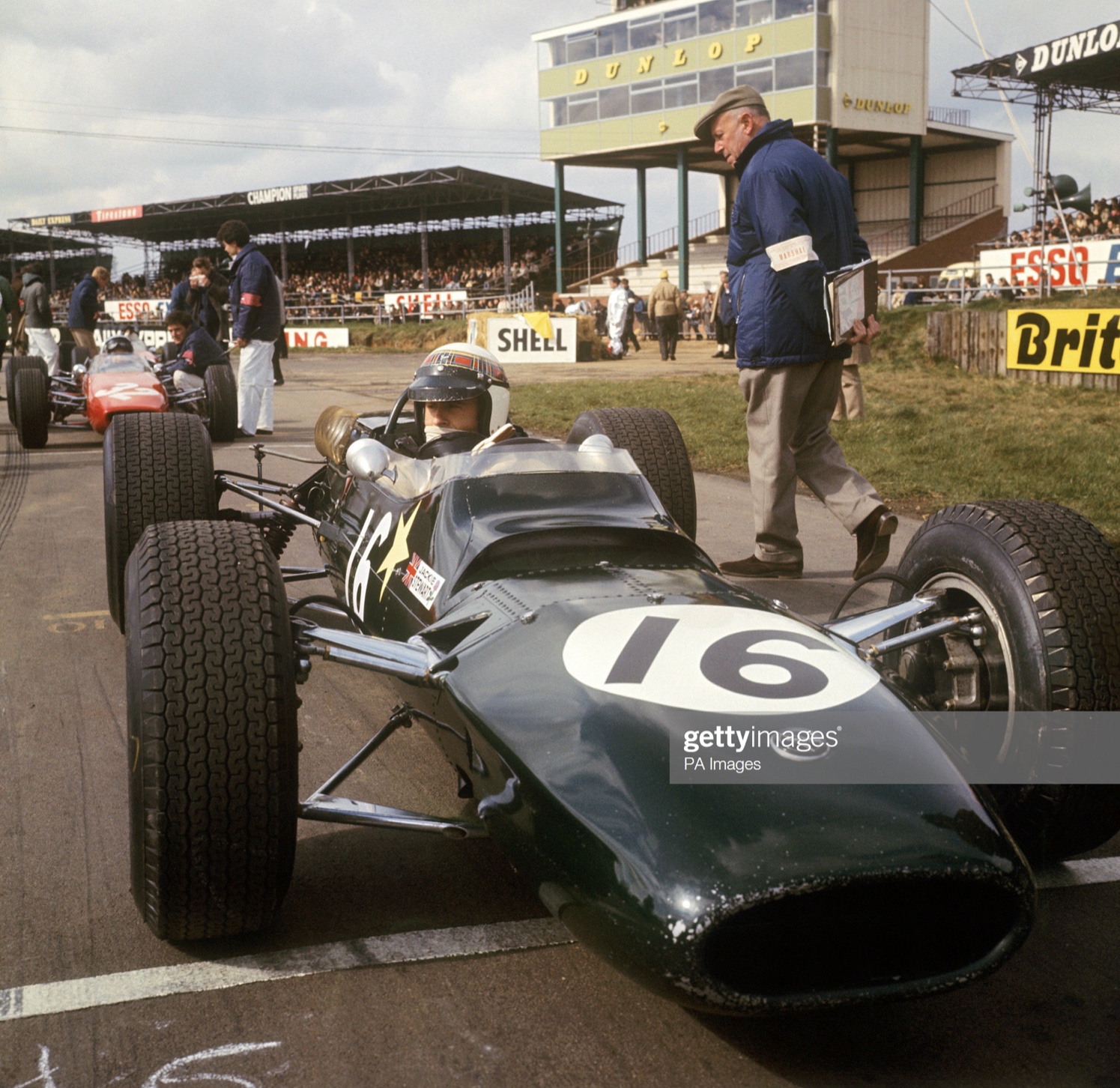
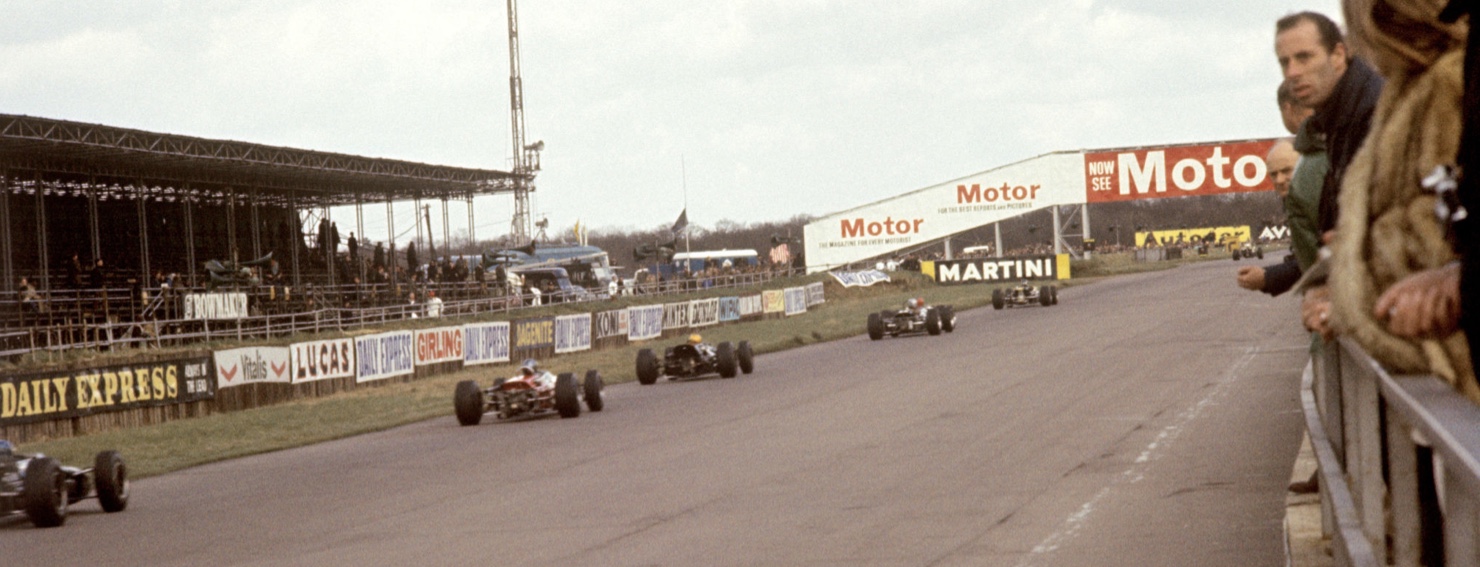
Jack Brabham awaits the start of one of the ‘Wills Trophy’ heats at Silverstone on 27 March 1967…

Is that John Cooper saying gedday before the off?

Jack is aboard BT23 chassis number 1- the very first in a long line of successful F2 and Tasman Formula cars- let’s not forget the BT23 spawned Ron Tauranac’s F1 Championship winning BT24 Repco design too.

Denny Hulme’s Brabham BT24 Repco during the 1967 US GP at Watkins Glen- he was 3rd behind the Clark/Hill Lotus 49 Ford duo (LAT)

Weren’t British enthusiasts blessed with championship F2 choice over Easter 1967?

They could have watched Jochen Rindt win at Snetterton on Good Friday and see him do it all again at Silverstone 180 Km away on Easter Monday aboard the same BT23-5 he used throughout a dominant 1967.

In a small tangent of Australian motor racing history this chassis is the one Denny Hulme raced in the 1968 Tasman Series- he boofed it at Pukekohe in a terrible accident involving Lawrence Brownlie’s Brabham and replaced it with BT23-2 in time for the Lady Wigram Trophy two weeks later.

Feo Stanton and Alec Mildren bought the remains less suspension and sent them off to Rennmax Engineering in Sydney for Bob Britton to built a jig and a run of new cars, the ‘Rorstan’ for Feo and ‘Mildren’ for Alec. Numerous cars really, the Rorstan, Mildren and Rennmax BN3’s all owe their lives to Jochen’s dead BT23-5.

Jochen blasts off at the start of heat 1- wheel on the right is Rees. Stewart’s Matra MS5 behind his Austrian buddy, Brabham’s BT23 #1- behind Brabham is Gardner, BT23 and alongside him in the red helmet is Widdows’ similar car with the red/orange tipped nose to the right on the same grid row, Mike Spence Parnell ex-F1 Lotus 33 FVA (Getty)

The Snetterton ‘Guards 100’ was the first championship race for the new 1.6 litre Formula 2 which commenced on 1 January that year, the category was enormously popular and successful even if, from the off it was ‘Formula FVA’, with special mentions for the Ferrari Dino V6 and BMW M11 in-line four.

Rindt came into 1967 as the acknowledged F2 King and left it with his crown polished ever more brightly, a quick perusal of ‘F2 Index’ results suggests he won all of the rounds in which he started and finished- Snetterton, Silverstone, the Nurburgring and Tulln-Langelbarn.

He had a DNF, a puncture at Jarama, that race was won by Clark’s Lotus 48- whilst he was occupied elsewhere the other race wins were taken by Stewart at Enna, Gardner at Hockenheim and 1967 European Series Champion, Jacky Ickx in a Ken Tyrrell Matra MS5 FVA was victorious at Zandvoort and Vallelunga.

McLaren and Surtees, McLaren M4A and Lola T100 (V Blackman)


Surtees in Lola T100 ‘SL/100/4’ given I am bandying chassis numbers around. Surtees primary programs that year were leading Honda’s F1 campaign and his Team Surtees Can-Am Lola program in the US- busy boy. That’s Ickx’ Matra MS5 behind and Mike Spence, Lotus 33 further back

As a ‘Graded Driver’ Jochen was ineligible for F2 Championship points, so Ickx won in 1967 from Gardner’s works BT23 and Jean-Pierre Beltoise’ works Matra MS5, Piers Courage in John Coombs McLaren M4A, Alan Rees in the other Roy Winkelmann BT23 and Chris Irwin’s works Lola T100 FVA and T102 BMW.

Creation of a new category brings forth a wonderful commercial opportunity with Cosworth Engineering flogging heaps of FVA’s (putting aside the derivatives of the motor which followed and the DFV proof of cylinder head design concept Duckworth’s FVA in part represented), Hewland Engineering dozens of FT200’s and of course availed the chassis manufacturers a great opportunity too.

Jack’s new BT23-1 and new Hewland FT200- in front of that 5 speed transaxle is a Ford Cortina blocked, Cosworth four-valve, Lucas injected 1.6 litre circa 210 bhp powerhouse. Tauranac’s typically simple combo of spaceframe chassis and outboard suspension provided a phenomenally fast, chuckable, robust, winning combination year after year. I don’t think he ever built a dog- Brabham or Ralt?


Bruce McLaren is aboard chassis number 1 too. M4A-1 was the first car designed by the McLaren/Robin Herd combo

The class of 1967 included the monocoque Lotus 48, Matra MS5/MS7, Lola T100 and McLaren M4A but arguably the car of the year, even putting aside Rindt’s dominance as a driver, was the spaceframe Brabham BT23- bias hereby declared by the way! Perhaps the BT23/23C are the ‘winningest cars’ of that 1967-1971 1.6 F2 period?

I really should prove that assertion statistically I guess, when and if I can be bothered. ‘Nicer cars’ in my book are the Lotus 59 and 69, Matra MS5/MS7 and Ferrari Dino, but more successful, I’m not so sure.

Whatever the case, in this immediate pre-wing year these cars were and are a mouth watering, very fast selection of single-seater racing cars.

Jackie Stewart above and below in one of the two Tyrrell Racing Organisation Matra MS5’s-Ickx in the other car.

Another year of the GP BRM H16 in 1967 was one too many for Jackie, and so it was that Ken Tyrrell stitched together a winning F1 combination of Matra, the Ford Cosworth DFV, Stewart and of course his own team’s preparation and organisational skills.

Bruce McLaren is behind Jackie in the shot below.

Silverstone’s BARC 200 was run over two heats of a little over 30 minutes in duration, Rindt won both with John Surtees third in the two events, Alan Rees was second in one and Graham Hill runner-up in the other.

The aggregated results gave Rindt the round from Rees’ BT23, Surtees T100, Bruce’s M4A, Stewart’s MS5, Gardner’s BT23 and Jacky Ickx’ MS5.

The entry lists right from the get-go of the new category were top notch, other drivers who raced at Silverstone included Robin Widdows BT23, Mike Spence in a Tim Parnell ex-F1 Lotus 33 fitted with an FVA, Denny Hulme BT23 (DNF with a busted conrod in heat 2), Piers Courage M4A, Jean-Pierre Beltoise MS5, Jo Siffert in the BMW factory Lola T100 BMW (all three of whom had injection dramas) Mike Costin, Brian Hart and Trevor Taylor. The list of Did Not Arrives was equally impressive.

Siffert, Lola T100 BMW M11, fuel injection dramas brought an end to Jo’s run (unattributed)

Of twenty-four starters, four were fitted with Lotus-Ford twin-cam motors, Siffert’s Lola (above and below) the very interesting BMW M11 Apfelbeck, the balance were toting Ford FVA’s so Duckworth and the lads had the production line in Northhampton humming along nicely.

There were a couple of FVA users with Lucas injection dramas, but Denny’s buggered rod was the only example of greater mechanical mayhem in a package which proved a paragon of reliability over the ensuing years.

(unattributed)


This has to be the most distinctive, simple piece of personal branding ever- in colour or black ‘n white Hill G or Hill D are so easy to pick in their London Rowing Club colours aren’t they? Lotus 48 Ford FVA.

Sydneysiders had the chance to see a Euro F2 1.6 car earlier than most, Warwick Farm promoter Geoff Sykes did a one race deal for Graham to race Lotus 48 ‘R1’ in the Australian Grand Prix that February.

Having come all that way the car’s FT200 expired after 25 laps of the race, Jackie Stewart’s BRM P261 2.1 prevailed, the series was won that year by Jim Clark racing an F1 Lotus 33 Climax FWMV 2 litre V8.

Graham raced ‘R2’ back in Europe with Jim Clark using ‘R1’ as his mount in 1968.

Stewart, BRM P261, Clark, Lotus 33 Climax and Hill, Lotus 48 Ford FVA, row 2 Brabham left Brabham BT23A Repco and Leo Geoghegan, Lotus 39 Climax and against the fence, Denny Hulme, Brabham BT18/22 Repco. AGP, Warwick Farm, February 1967 (B Wells)


Rindt and Hill- and Rees to the right jump similarly at the start of heat 2.

Thats Brabham, Surtees and McLaren on row two and Hulme, Gardner, Ickx and far right in the red McLaren- Piers Courage. The result was Rindt, Hill, Surtees.

(V Blackman)

Jochen with a delicate slide out of Woodcote, the proximity of ‘snappers to the action back then never ceases to amaze.

Rindt’s car control is right up there with the rest of the Gods of that art- Nuvolari, Fangio, Peterson, Villeneuve et al.

Etcetera…

Jack looks happy enough before the off.

Its only several weeks after the end of the Tasman Series- Brabham finished a pretty skinny series for the full on Repco-Brabham two car works assault on the championship that year well, he won the Longford final round in his one off Brabham BT23A on 5 March.

Two Repco ‘640’ engined cars were raced by Jack and Denny in all eight meetings of the six round championship- that season Levin and Teretonga were not championship rounds.

In fact there were a whole swag of blokes on that Silverstone grid who had raced in Australasia that summer- Stewart, Brabham, Gardner, Irwin, McLaren, Hill and Hulme- Clark was the only absentee from the roll-call.

(L Ruting)

Brabham fries a set of Goodyears and proves just how chuckable a BT23 can be in the hands of an Ace- AGP Warwick Farm 1967.

Its BT23A-1, JB’s 1967 Tasman weapon, a one-of-a-kind BT23 variant powered at that stage by a 640 Series Repco 2.5 litre Tasman V8, this machine is still in Australia, it was acquired by the National Motor Museum in 2018.

Article on the Tasman Brabham Repco’s here; https://primotipo.com/2016/09/29/bathurst-1969-and-jacks-tasman-brabhams/

(Getty)

An imperfectly executed pan of Hill’s Lotus 48 chasing Brian Hart’s Protos 16 FVA. Now there is a interesting marque topic to explore one day!

Who are those fellows looking after Bruce?

Piers Courage in John Coombs M4A behind McLaren, and in the photograph below. This car, ‘M4A-2’, Piers acquired from Coombs and raced in the 1968 Tasman and brained everybody with his speed and commitment.

He capped off an amazing summer with a blinding wet weather drive at Longford, his deft pace won the race from the 2.5’s which were hampered in their ability to put their power down on the slippery, bumpy bitumen.

The car was bought by Niel Allen at the end of the series, he did well in it and survived an almighty car destroying accident in it at Lakeside, it was rebuilt around a Bowin Designs built tub and then was one of the cars in which Warwick Brown made his name when owned by Pat Burke. Not so sure its still in Oz?

Article on Piers @ Longford here; https://primotipo.com/2015/10/20/longford-tasman-south-pacific-trophy-4-march-1968-and-piers-courage/

(LAT)

The photographs of the Courage McLaren in Australia below are during the Warwick Farm 100- he was second in the race won by Clark’s Lotus 49 Ford DFW.

The two monochrome photos below are during his victorious Longford weekend in March 1968, the great circuit’s final meeting.

(P Hudson)

Piers nipping the right front brake of M4A-2 on the entry to Mountford Corner during the dry, earlier over the Labour Day long weekend.

Courage ran the car on a shoestring assisted by Australian ex-Lotus mechanic Ray Parsons with two FVA’s, his performances that summer in many ways re-launched his career.

(oldracephotos.com.au)

It really did piss down on raceday, sadly for all, not least for the venues future, crowd numbers were way down although better than the ‘three men and a dog’ perspective provided by the shot below.

The hardy natives saw one of the great drives, Courage won from Pedro Rodriguez’ BRM P261 and Frank Gardner’s Brabham BT23 Alfa with Richard Attwood’s BRM P126 fourth.

(oldracephotos.com.au)


(unattributed)

‘And to think Jack pays me to do this shit! Its such a blast!’

Denny having a ball at Silverstone, he seems to have lost his front number but no doubt this was addressed by race day. The stars affixed to the cars are part of the Wills corporate identity i guess, sponsorship became less subtle from 1 January 1968!

Denny is racing BT23-2, his regular mount during 1967, although his primary commitments that year were winning the World Championship, which he managed nicely, and running the second of McLaren Cars, McLaren M6A Chevs in the Can-Am Challenge Cup- he was second to Bruce.

(D Simpson)

Max Stewart is shown above in the Mildren Waggott during the 1970 Sandown Cup, Tasman round.

Niel Allen won that day in his F5000 McLaren M10B Chev from Graeme Lawrence’s ex-Amon Ferrari Dino 246T, Ulf Norinder, Lola T190 Chev and then Max in the 2 litre Waggot TC-4V engined car- Max ‘won everything’ in Australia in this jigger including the 1971 Gold Star.

The photo is included for the sake of completeness to show one of the seven cars built by Bob Britton from the jig created from Rindt’s dead BT23-5, which these days of course is alive and well and racing in Europe.

Speaking of which, the photo below is of Denny ranging up on Lawrence Brownlie at Pukekohe during the 1968 NZ GP on 6 January in BT23-5, Lawrence’s car is a Brabham BT15/23 Ford t/c.

In a move which is still hotly debated by Kiwi enthusiasts decades later, Denny and Lawrence collided destroying both cars and ending Brownlie’s career.

(Classic Auto News)

1.6 F2 Reference Resource…

Most of you know Allen Brown’s oldracingcars.com is a primary reference source for me inclusive of F2 1.6, click here for his F2 homepage and then navigate the site easily to look at seasons, individual races and in many cases car and individual chassis histories; https://www.oldracingcars.com/f2/

Here is one of my own pieces on the Lotus 48;

Lotus 48 Ford FVA: AGP Warwick Farm 1967: Graham Hill and Jim Clark…

Credits…

Getty Images, LAT, F2 Index, oldracingcars.com, LAT, Lance Ruting, Paul Hudson, Dick Simpson, oldracephotos.com.au, Victor Blackman, Bruce Wells, Classic Auto News

Tailpiece: Six 210 bhp F2 Missiles whistle into Copse at speed…

(Getty)

Finito…
(unattributed)

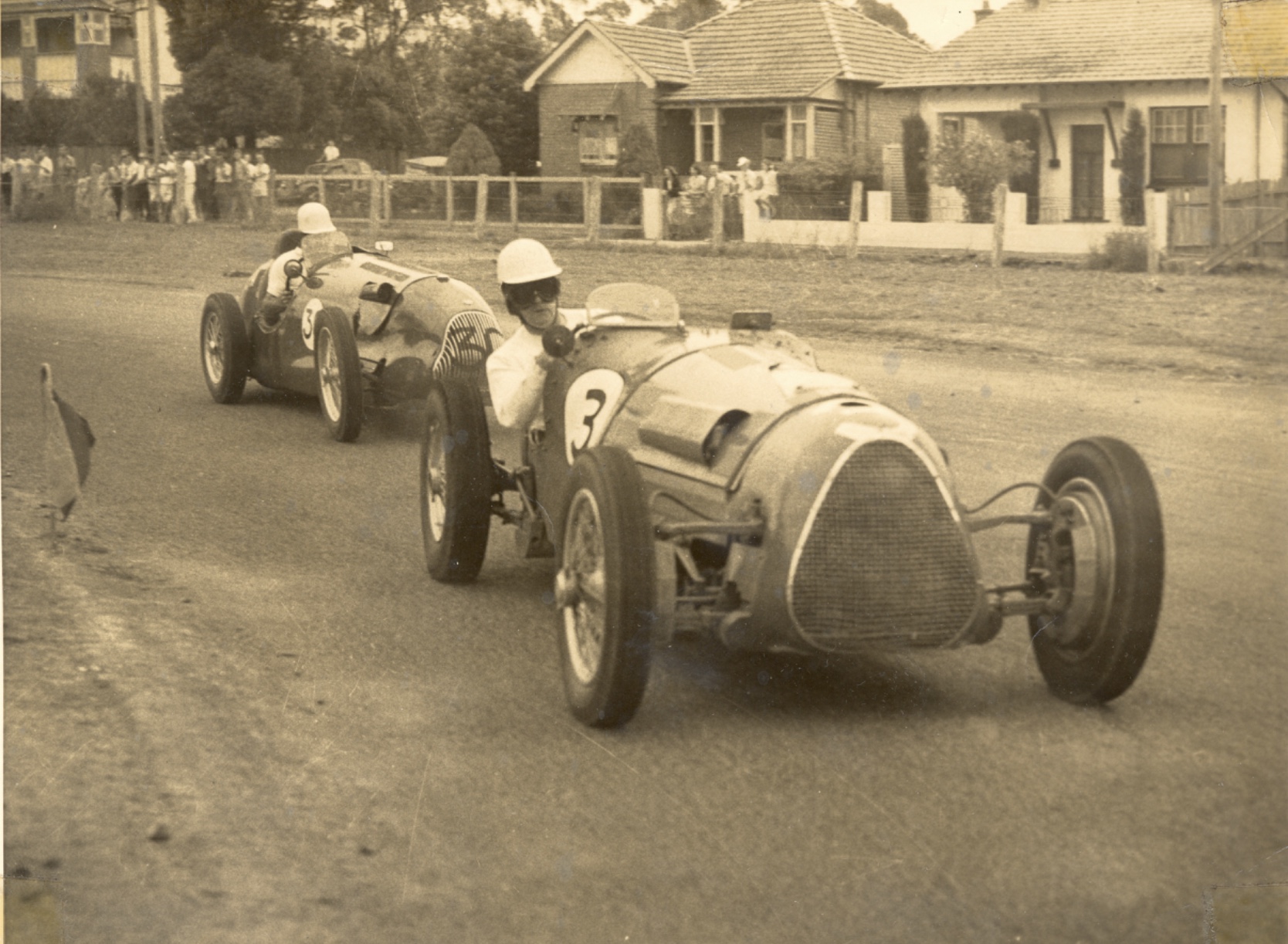
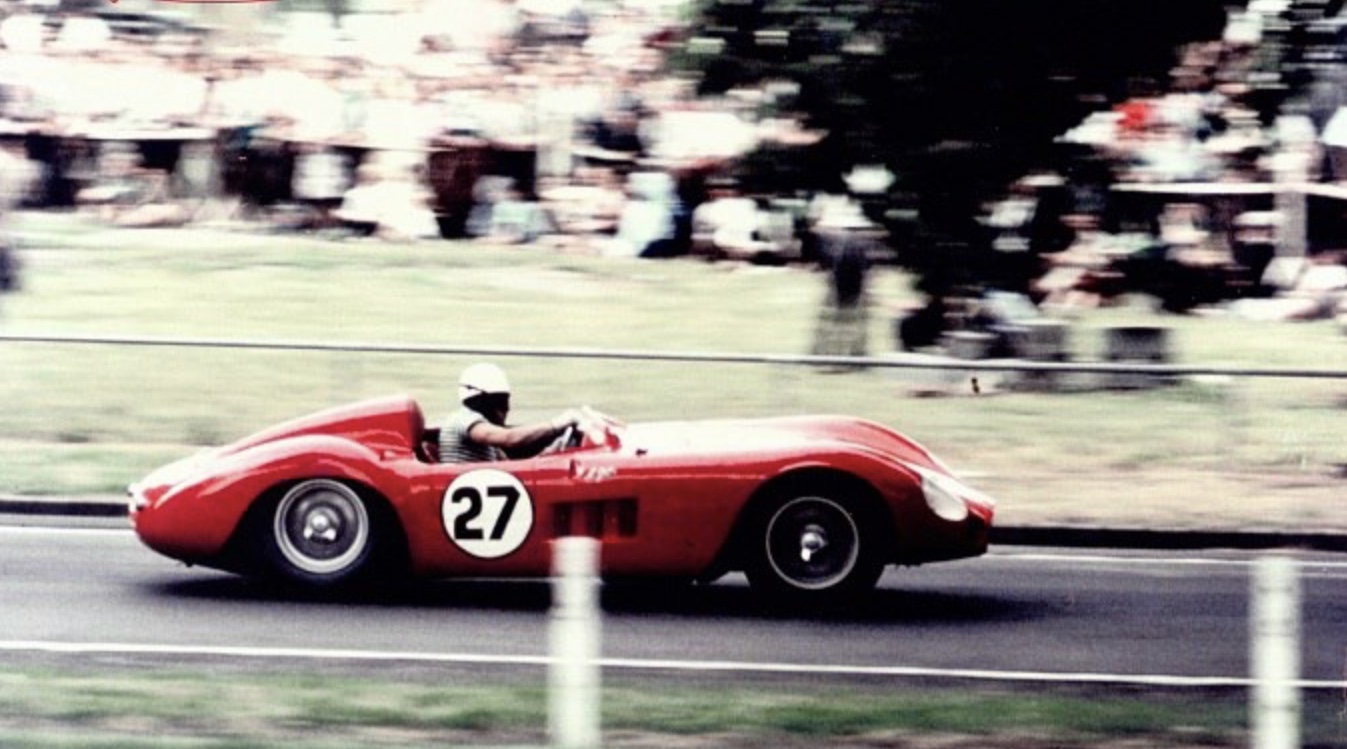
Stan Jones, Maybach 1 and David McKay, MG TC Special at Parramatta Park, Sydney on 28 January 1952…

I’ve done theses fellas to death really, here; https://primotipo.com/2014/12/26/stan-jones-australian-and-new-zealand-grand-prix-and-gold-star-winner/ and here; https://primotipo.com/2018/01/12/bert-and-davids-lola-mk1-climax/

Ditto the track, which as the name suggests, was through a public park in Parramatta only 30 km from Sydney’s CBD- here; https://primotipo.com/2018/02/27/parramatta-park-circuit/

The track didn’t last long, which is sad, it is very much a place I would like to have attended or raced! I’ve dropped the photos into the linked PP article too but they were too good not to put front ‘n centre given my bias in favour of the track, the drivers and their mounts!

(unattributed)

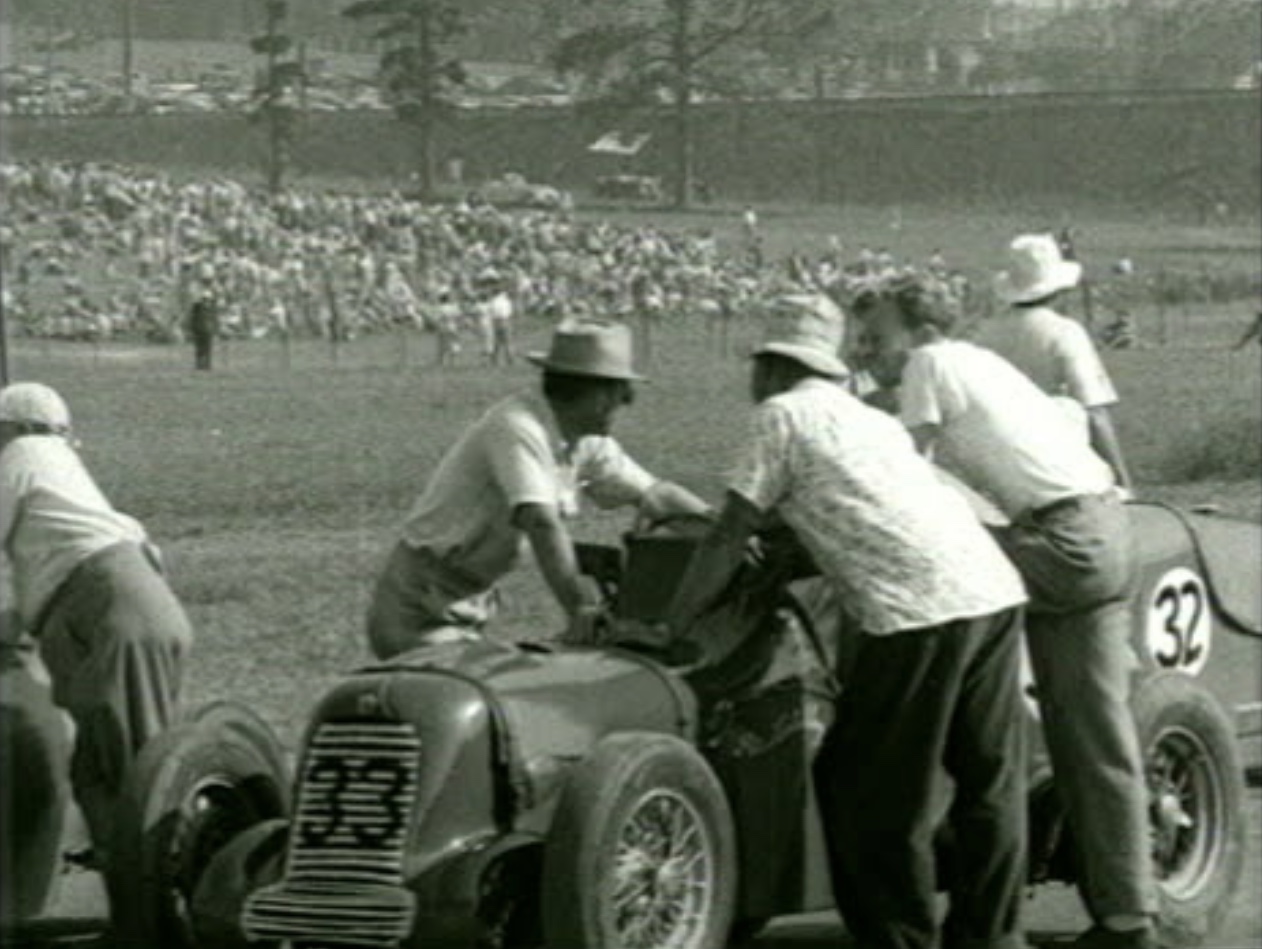
Parramatta Park again folks- see the railway line in the background, the car shown is the ex-Alf Najar MG TB Spl driven by E Critchley, with #32 Ron Ward’s TC Special.

See the most impressive entry of cars and drivers of the day.

(P Tilley Collection)


(P Tilley Collection)

Credits…

Flickr, Greg Diprose Collection, Terry Smith, Paul Tilley Collection

Tailpiece…

(G Diprose Collection)

Sensational very rare colour photograph of Stan Janes doing his stuff in the suburban streets of Sydney, Parramatta to be precise- the access roads out front of Government House which is now a restaurant and museum.

Finito…

(J Wright)

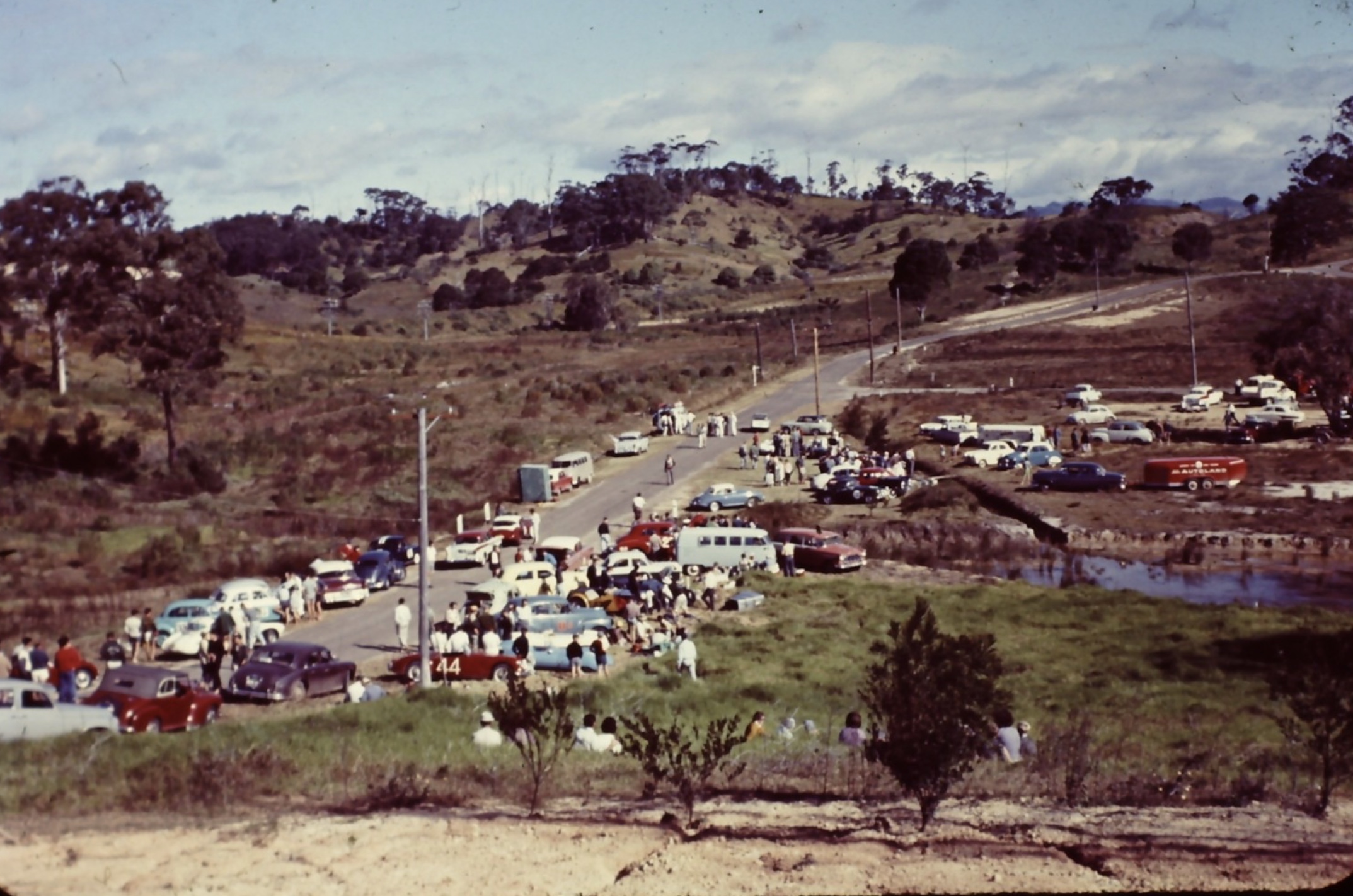
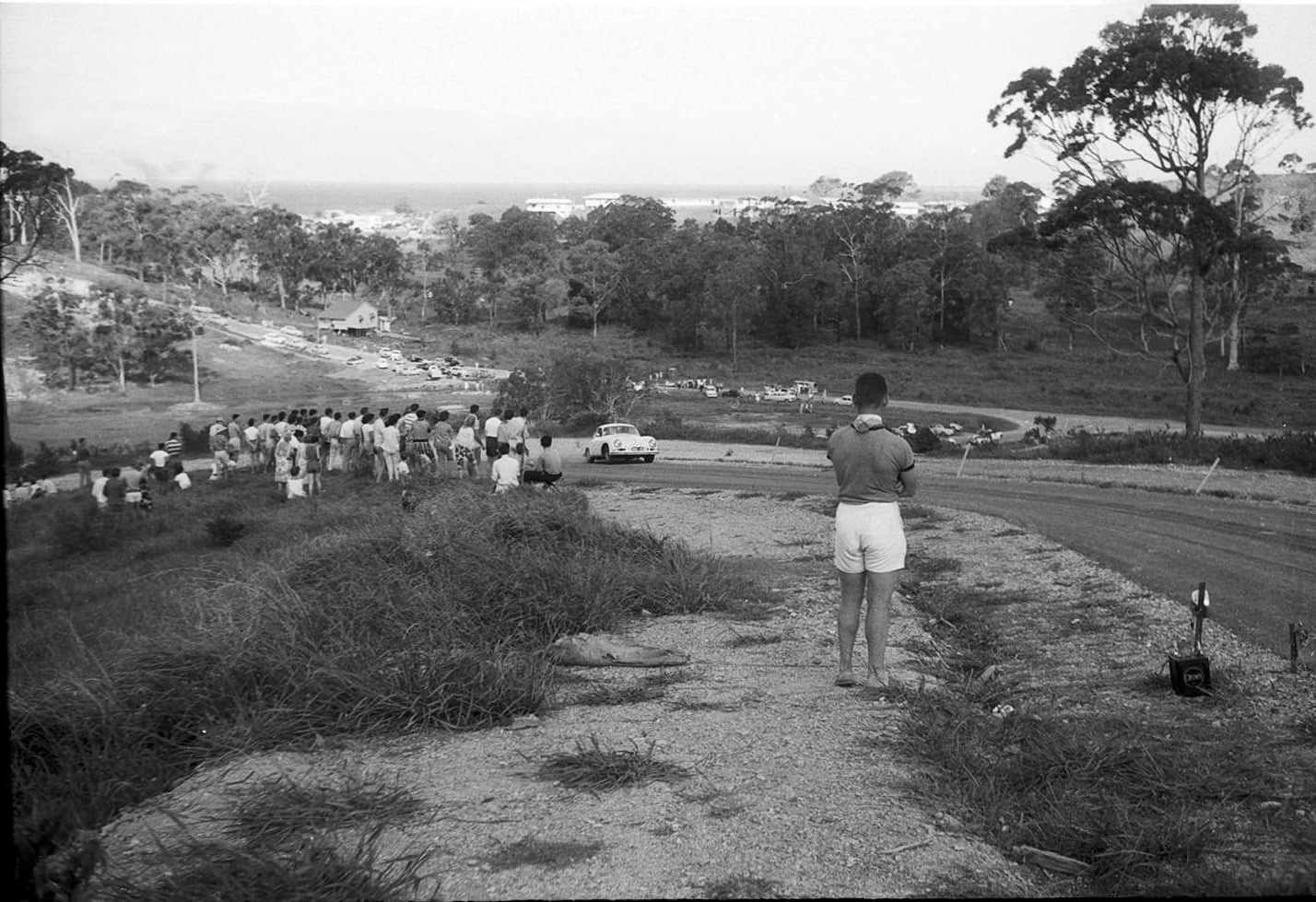
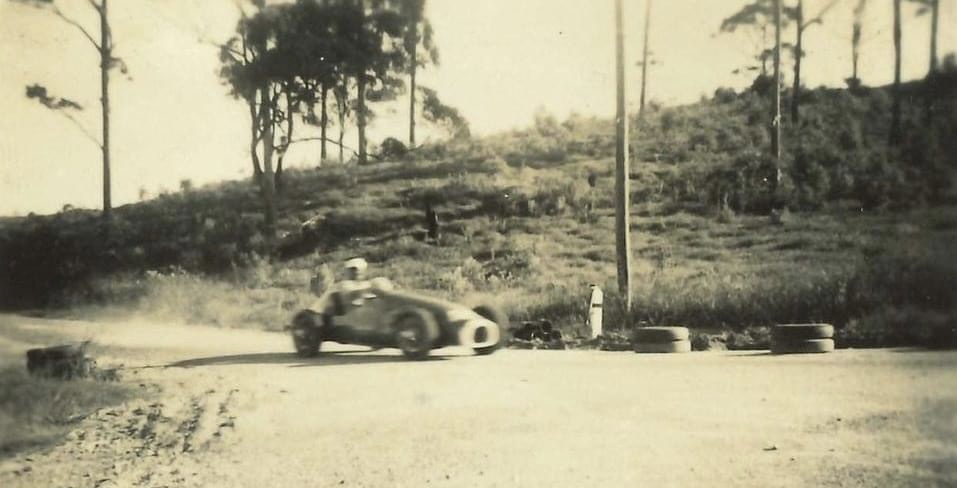
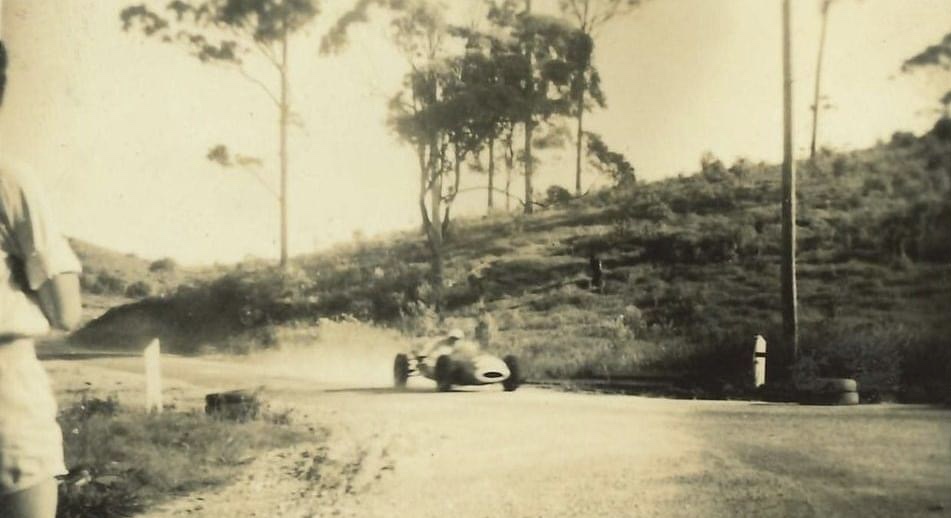
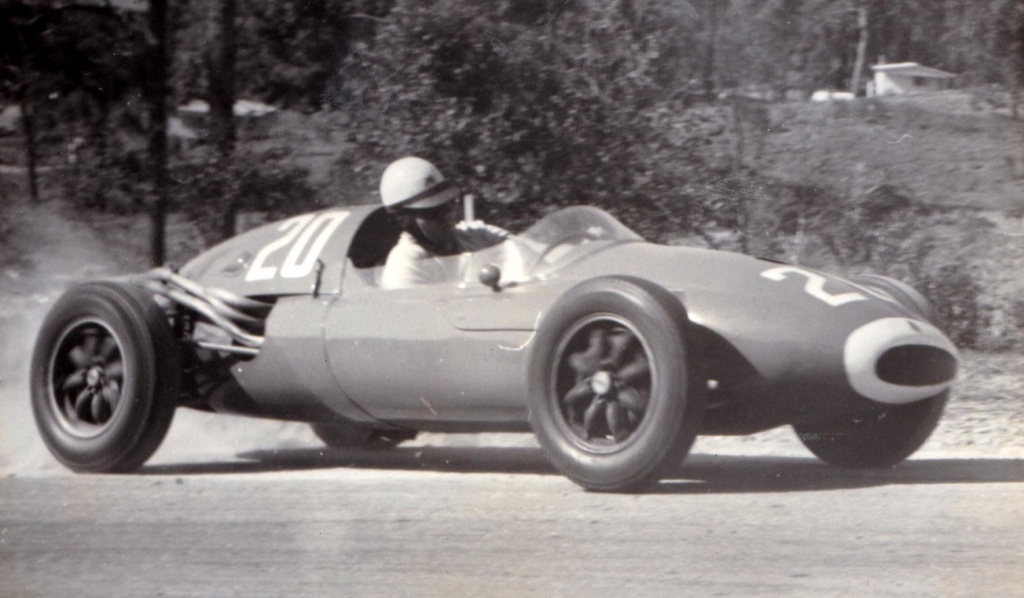
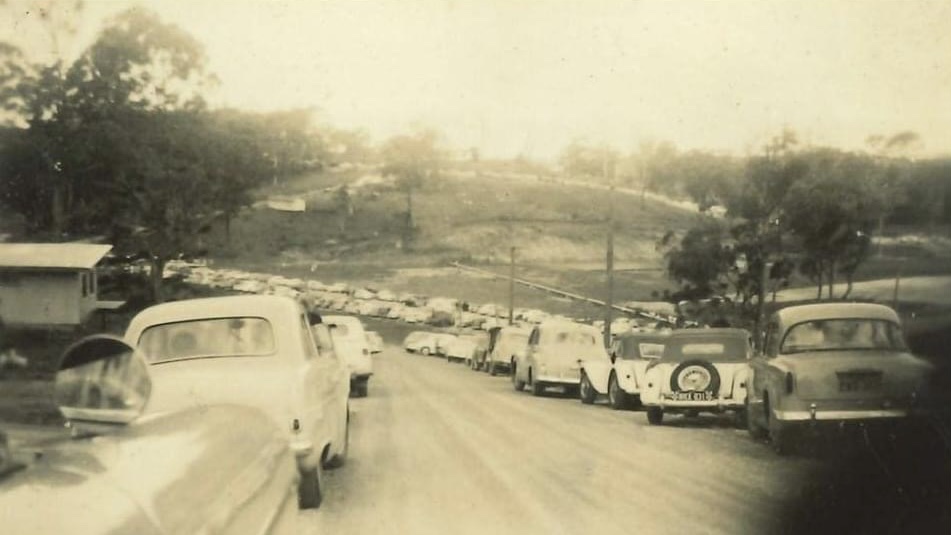
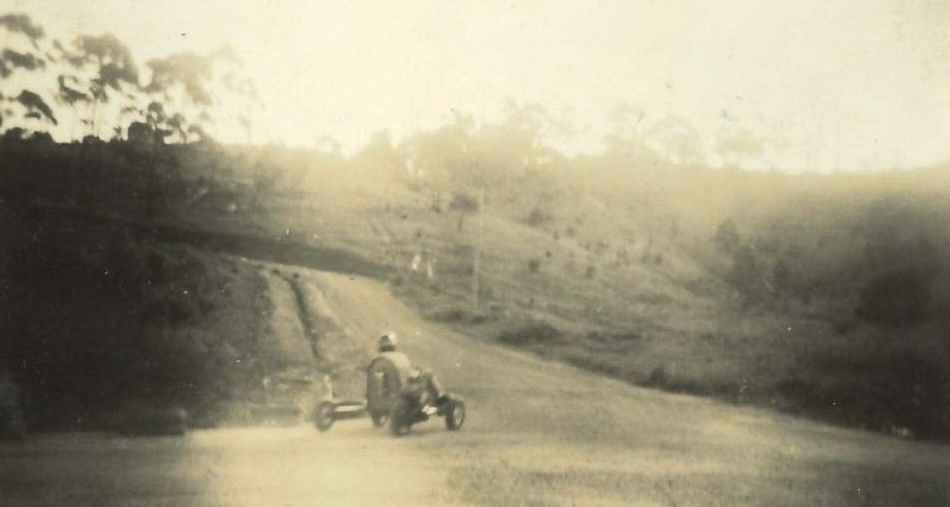
Competitors assemble for a Queensland Motor Sport Club Currumbin Hillclimb, Monday 12 June 1961…

Most east coasters have holidayed on Queensland’s Gold Coast, visited the Currumbin Bird/Wildlife Sanctuary and no doubt had a surf on the beach close by. Currumbin is 20km from Surfers Paradise and a dropkick from Tweed Heads – the Queensland/New South Wales border.

This photograph has proved a bit of a mystery though.

I popped up an article on Lakeside circuit up last week but was uncertain about the photograph above given the wise owls of The Nostalgia Forum could not reach a consensus on where it was, a very rare occurrence I might add. I then uploaded the photograph onto the primotipo and Old Australian Motor Racing Photographs – Australia Facebook pages, the Lakeside article is here; https://primotipo.com/2019/09/23/lakeside-early-days/

After four or five days and 8,027 FB hits/views Quentin Miles is the winner with photographic evidence to back up his nomination of place – Currumbin.

Porsche 356 on full assault. Note the corner marshal in safety overalls and the sea in the distance (B Miles)
(B Miles)

Racer/restorer Dick Willis believes the roads used were created for a housing estate and that the Gold Coast club got some events in before the influx of residents precluded further motorsport use. Brian Lear’s records show events were run in December 1958, 1960 and 1962. Stephen Dalton’s discoveries indicate the strip of bitumen used was 750 yards in length with Ivan Tighe the record-holder in 1959, he did a time of 47.5 seconds in his Vincent Special.

In Quentin’s case his father Bill attended a meeting and took these shots, its not the first time I have used the late Bill’s great material.

Several folks have identified the red Rice-trailer in the opening shot as Autoland – one of Bob Jane’s enterprises – contained therein is Bob’s voluptuous Maserati 300S. It’s a long way from Melbourne to Currumbin to contest a club ‘climb though. My theory is that Bob would have been racing not too far away, at Lowood and did the Currumbin event whilst in the ‘hood.

Roll forward to June 2020 and Andrew Lake, a Queensland MG Car Club member emailed to advise the meeting was the 12 June 1961 Queensland Hillclimb Championship. ‘As identified it is Bob Jane’s trailer…he competed in the event in his Maserati 300S and also his Jaguar sedan…Stan Jones did FTD with a time of 45.22 seconds in his Cooper T51 Climax.’

Some further work by Stephen Dalton established that Stan contested the Lowood Gold Star round – the Queensland Road Racing Championship – the day before, Bill Patterson won from Alec Mildren and then Stan, all driving Cooper T51s.

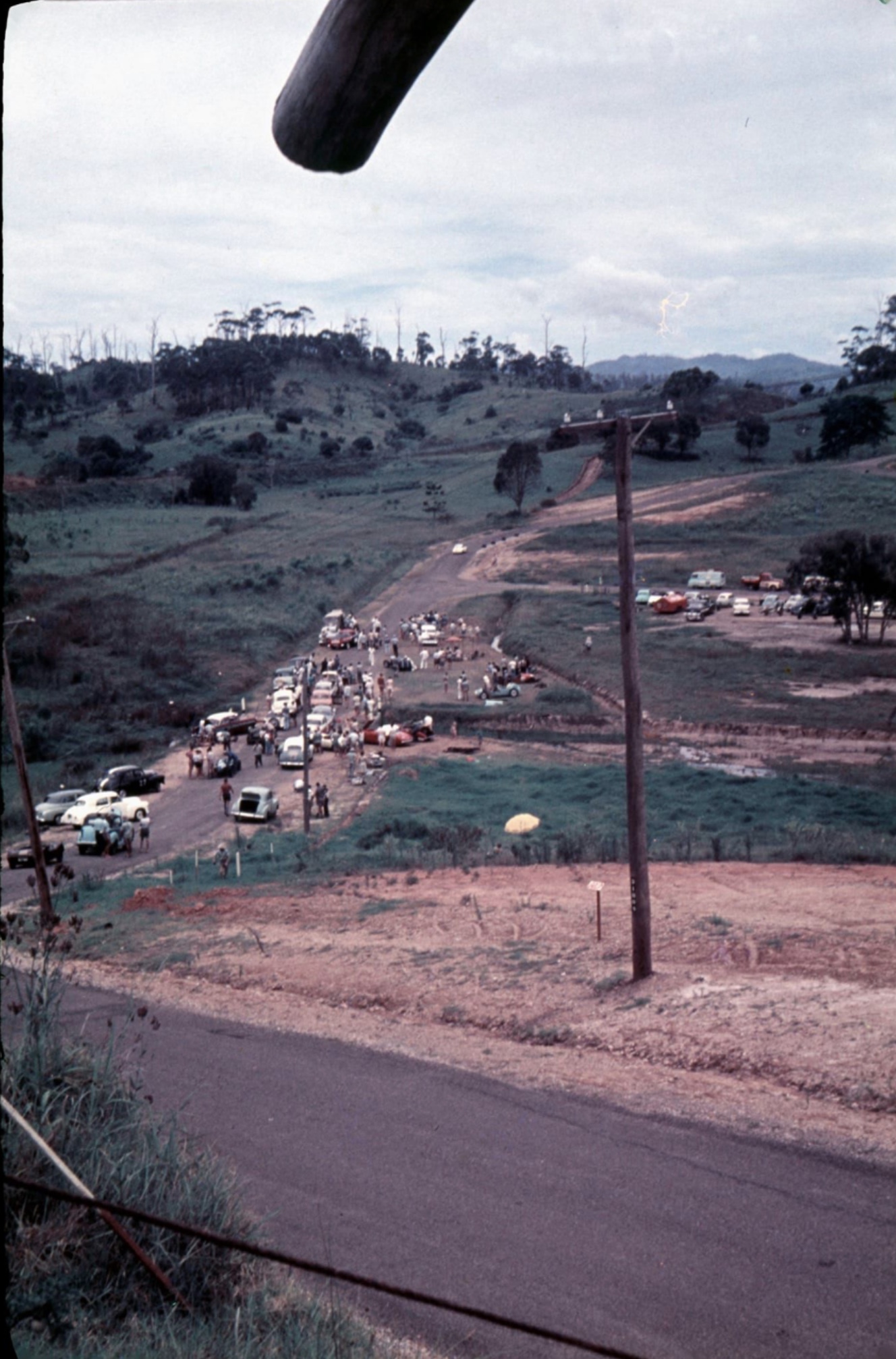
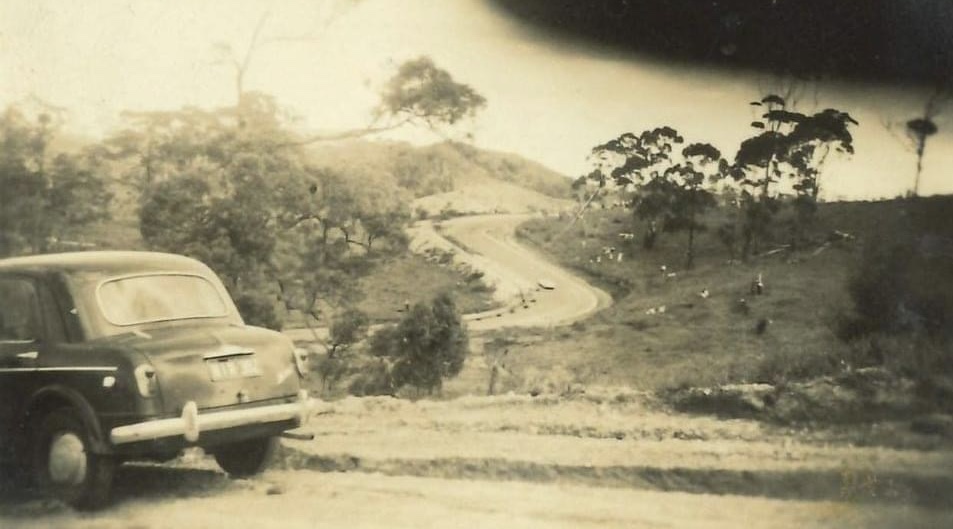
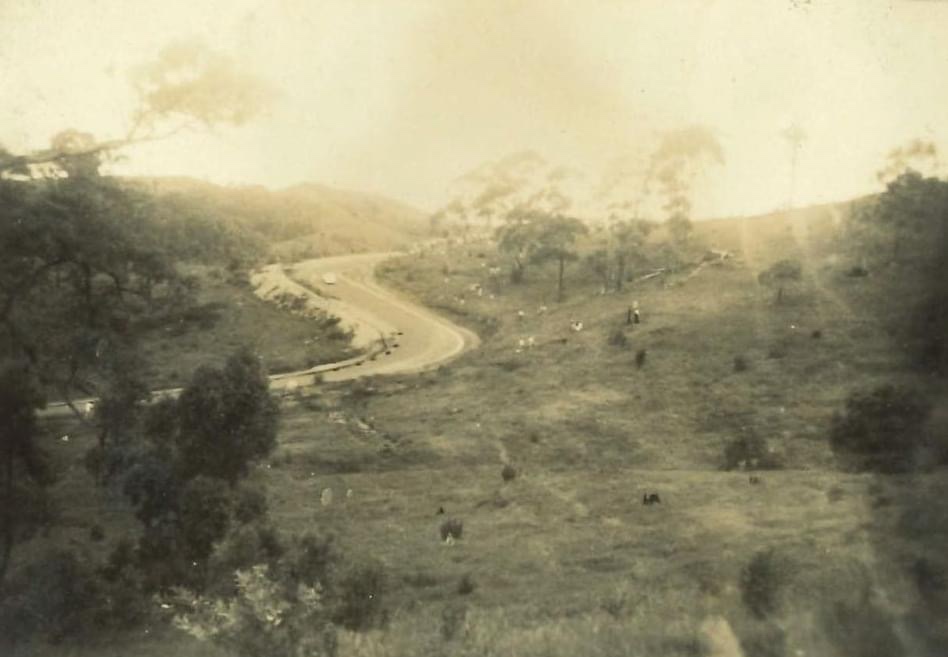
Roll forward again, this time to January 2024, and the bunch of photos taken by Peter Button’s grandfather shown below. Pauline Burrows Booth recalled, “I remember the climb well, going to watch the hillclimbs was very exciting. The hill was Currumbin Hill, on the east side that wasn’t allowed to be built on as it was a dangerous slip area.”

‘The street was on the crest, Crest Drive – it wound around the top of Currumbin Hill to the Shell Museum corner corner to Millars Drive – winding down to Millars Drive and past the now Currumbin Wildlife Hospital. The other side of the hill, Alpha Drive, we used to ride down with our go carts-billy carts

Anyway, many thanks to Quentin and his late father Bill, Stephen, Dick, Brian, Terry, Andrew, Peter Buttons and those who responded to his FB post, a team effort indeed!

Etcetera…

(T McGrath)

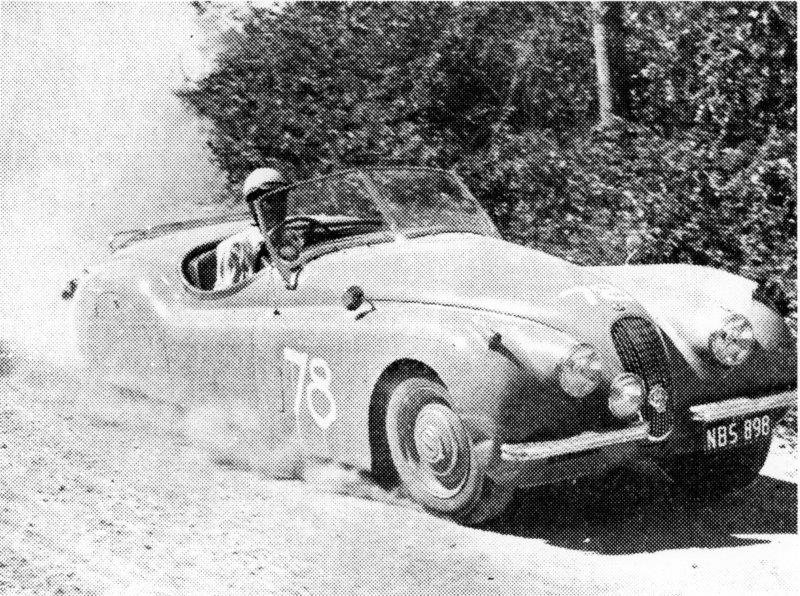
Terry McGrath tells us there was a hillclimb closeby on the Gold Coast at Burleigh Heads or Waters held on a short stretch of road with times of between 50 and 56 seconds recorded. The Dick Hamilton Jaguar XK120 is shown in full flight on 30 December 1956.

(P Button)

This bunch of shots at the ‘Currumbin Heights Hill Climb’ were spotted by Doug Grant on the Old Gold Coast Facebook page in January 2024.

They were posted by Peter Button whose “Grandad was a keen amateur racer at the time.”

(P Button Collection)

Dick Willis, “The Glynn Scott (Cooper T23 replica) Repco Holden driver by Roy Morris, now raced by Victorian, Nick McDonald.”

(P Button)

The shots above and below are of Glynn Scott’s ex-Alec Mildren Cooper T43 Climax.

(B James)
(P Button)

“Crest Drive looking across Miller’s Drive to where the wildlife hospital is now and the park across the road with the old water pipe running through it. Blamey Drive is running up and over the hill…” Glenn Bycroft.

(P Button)

Ivan Tighe, perhaps, on his Vincent Formula 500.

(P Button)

Andrew Lake advises hillclimbs were held on the Gold Coast as follows;

Burleigh Heads

01/01/1956, 22/04/1956, 17/06/1956, 30/12/1956, 21/04/1957

Terranora

29/12/1957

Currumbin

28/12/1958, 15/11/1959, 27/12/1959, 14/08/1960, 26/12/1960, 12/06/1961

Credits…

Quentin Miles and the late Bill Miles, John Wright, Stephen Dalton, Dick Willis, Brian Lear, The Nostalgia Forum, Terry McGrath, Andrew Lake, Peter Button Collection, Bruce James

Tailpiece…

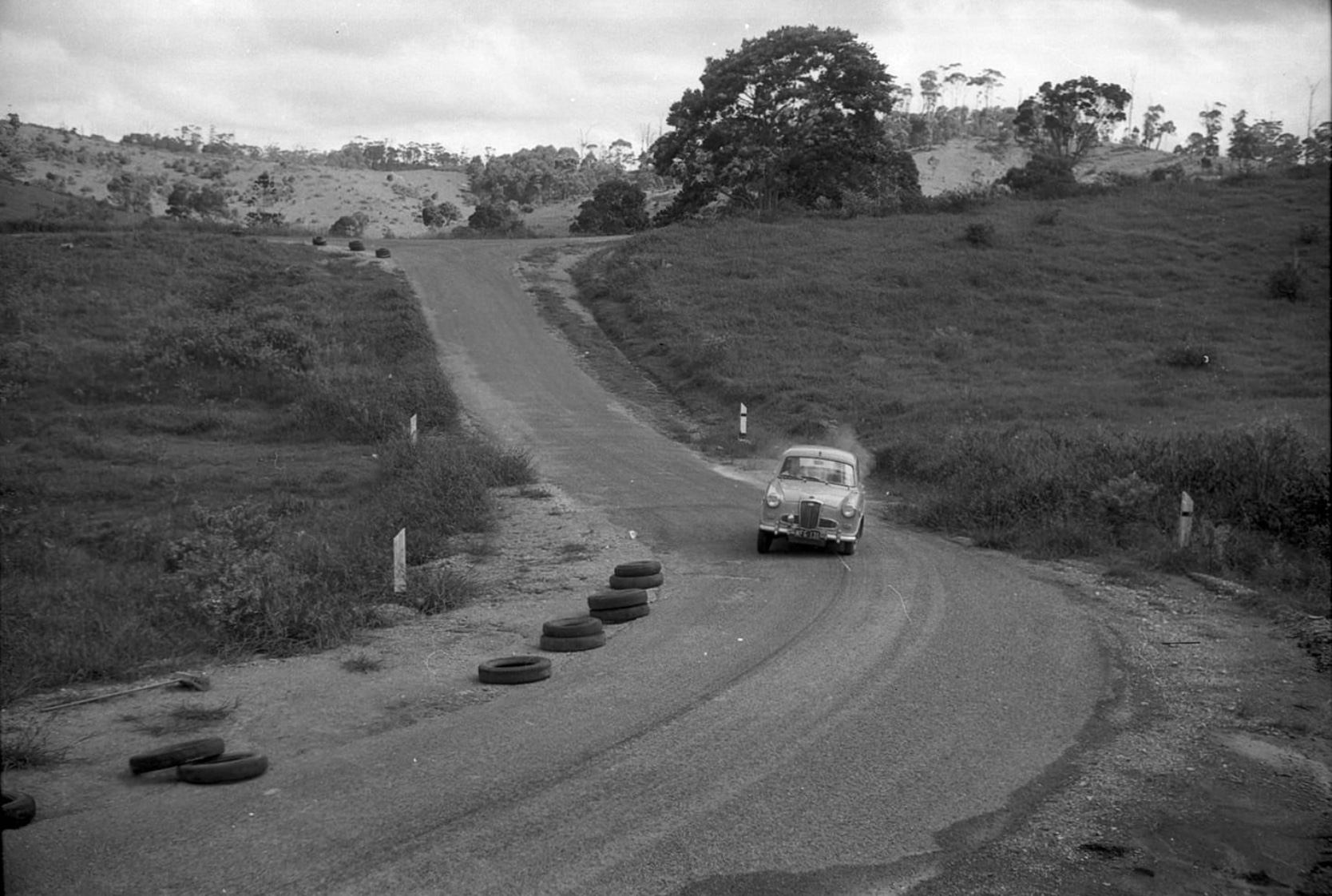
Wolseley 1500 attacking the downhill right-hander, tyres mark the apex (B Miles)

Finito…
John Surtees, the reigning World F1 Champ, aboard his Cooper T75 BRM P80 during the ‘London Trophy’ weeekend at Crystal Palace in June 1965…

He was a busy boy that year, fitting in F2 races around his primary programs for Ferrari in F1 and Endurance events.

Ken Tyrrell entered two Coopers that weekend, the other for Jackie Stewart, above, very much on his career ascent- he scored his first GP win with BRM that season at Monza in September aboard a P261 after a great dice with his teammate Graham Hill.

Surtees, Cooper T75 BRM

The London Trophy comprised two heats of 25 laps, the top four in each race were the same, Jim Clark, Lotus 35 Cosworth SCA, Graham Hill, Brabham BT16 BRM, Richard Attwood, Lola T60 SCA and Jochen Rindt, Brabham BT16 SCA.

(Getty)

The off, Heat 1.

Stewart at left and Clark right, Brabham on the inside of row 2.

Clark won both heats, the Tyrrell Coopers had problems in this heat which were fatal for their chances of a start in the second race- Stewart had half-shaft failure after completing 16 laps and a rod let go in the BRM engine after 21 of the 25 laps in Surtees case.

There was plenty of depth on the grid, other starters included Mike Spence, Trevor Taylor, Chris Amon, Denny Hulme, Jack Brabham and Peter Revson with the DNQ list including Jo Siffert, David Hobbs and Chris Irwin.

Credits

Getty Images

Tailpiece: Jim Clark, Lotus 35…

Jim Clark aboard his Lotus 35 SCA, final chat to his mechanic who has a tyre pressure gauge at the ready. I’m not sure this is Crystal Palace, if it is, the car behind is Bill Bradley’s Brabham BT10 SCA.

Finito…

(G Morris)

Ralph Morris about to leave the line in his 1937 Riley Sprite, Bacchus Marsh, Victoria 19 September 1937. He won the half-mile sprint with a time of 22 4/5 seconds…
The event is being conducted on the road between Bacchus Marsh and Gisborne. Bacchus Marsh is 60 Km to Melbourne’s west on the Western Highway- the road to Adelaide and beyond.

The TT Sprites were a series of cars built to take part in the Tourist Trophy races run in the UK in the mid thirties, it is thought that as many as 10-12 were built, with a variety of engines- 12/4, 15/6 and at least one with a six-cylinder engine.

The chassis was either the 22T or 44T. The 12/4 engine was an undersquare 1496 cc 4 cylinder unit fed by two SU carbs and gave 61 bhp @ 5500 rpm. A 4 speed pre-selector gearbox was used and semi-elliptic solid axle suspension front and rear. Top speed was quoted as 88 mph.

The Melbourne ‘Argus’ announced the arrival of the first Sprite in Australia in its 4 May 1937 issue, has to be this chassis surely?

Rileys were popular light sporting cars in Australia, the ‘lineup’ from front to rear above are ’37 Kestrel, probably a ’34 Sedan and a 1931/2 Australian bodied Riley 9 Coupe.

The photo below is of the same group of cars- the car in the centre is the Kestrel owned by Club President Norman Horton who is doubtless at the wheel, he was second with a time of 26 3/5 seconds. Ralph Morris is standing next to the car. To the far left is the front of the Imp and to the right the Riley 9.

(G Morris)

Click on this link for an excellent website on Rileys in Australia, it is amazing just how many of these light, sporting and robust cars came to Oz.

http://www.phil.soden.com.au/ria.html

I am also intrigued to know the whereabouts of any of the cars featured.

Photo Credit…

G Morris

Finito…