Frank Matich, Jaguar C Type, Leaton Motors forecourt, Kinsgrove, Sydney 1958…
One of the wonderful things about this blog are the folks I have met along the way; racer heroes like Kevin Bartlett, John McCormack and Bruce Allison. Those with archives such as Martin Stubbs and Stephen Dalton who has been an invaluable researcher and more recently written an article or three. Also generous photographers Rod MacKenzie, David Blanch, Lindsay Ross, Ian Smith, Dick Simpson and here John Ellacott.
The C Types current custodian, John Corrie saw his car on the blog and with some help from Stephen put me in touch with John Ellacott, whose work always blows my mind. Here is another of John’s shots given to Corrie to complete his archive of the car. It’s of the late, great, recently departed ‘Frantic Francis’ Matich looking youthful and debonair in flat hat aboard ‘XKC037′ out front of Leaton Motors workshop in 1958, such an evocative period shot isn’t it?!
Leatons’ are a story in themselves; the Sydney business formed by George Leaton and Joe Robinson in 1959 were supporters of many racers including Matich who raced their C Type Jag, a D Type and Lotus 15 Climax in his early years; the years in which he became a Pro.
I wrote this article about ‘XKC037’ in August last year but have ‘freshened it’ with a lot of new shots, click on the link to have a read.
‘Austin Cooper always drove with enthusiasm’, here it’s written all over his face as he extracts all his Cooper T41 Climax has to offer on the way to achieving FTD at Trevallyn hillclimb, Launceston, Tasmania in 1959…
The quote is attributed to noted Australian historian John Blanden, this car was one of six T41s built for F2 racing in 1956. Chassis F2-2-56, fitted with a 1.5-litre SOHC Coventry Climax FWB engine was raced with some success by Ken Wharton before being shipped to Australia together with his Ferrari 750 Monza and Maserati 250F for the ‘Olympic’ Grand Prix meeting at Albert Park in 1956. It was later taken to NZ for the 1957 GP meeting at Ardmore, near Auckland where Wharton was tragically killed in the sports car support event when his Monza rolled.
The Cooper returned to the UK and was acquired from the Wharton Estate by roving Aussie engineer/racer Paul England who was on a racing holiday. He contested F2 events at Snetterton and Mallory Park as well as the 1957 German GP at the Nurburgring. England is shown in the two shots below, contesting the German classic in the Cooper. DNF with distributor troubles after completing four of the race’s 22 laps, famously won by JM Fangio’s Maserati 250F.
(K German Collection)(unattributed)
England was a Repco trained engineer, builder of the Ausca a fabulous Holden engined sports car in which he had a circuit racing career ending accident at Phillip Island. He later formed a very successful engineering business, won multiple Australian Hillclimb Championships in self built cars and entered cars for, and assisted drivers such as Larry Perkins.
At the end of 1957 the car was bought by Aussie Miller who was also visiting Europe.The Cooper came into Australia in bits along with various aircraft parts, Miller was an agricultural pilot. As in a very good crop-dusting pilot who originally flew in the RAAF! A Lotus 12 was also imported in bits for Ern Tadgell, the cars taking on the names ‘Miller Special’ and ‘Sabakat’ in the best traditions of motor racing, thereby avoiding the fiscal-fiend’s punitive import taxes otherwise applicable to imported racing cars…
Aussie Miller kissing the kerb in the Miller Spl Cooper T41, Albert Park, November 1958 (Guy Miller)Business end of the car at Templestowe Hillclimb in November 1958. 1.5-litre FWB Climax and modified Citroen gearbox
The Miller Spl first raced in Australia at Phillip Island in 1958, Aussie competed in circuit racing, sprints and hillclimbs achieving class firsts in the Victorian Road Racing Championships and the Victorian Trophy.
Miller then progressed to an ex-Stan Jones Cooper T51 Climax, the T41 then passed through many hands and I believe is still in Australia. Miller fitted a Chev V8 to the Cooper T51 and set an Australian Land Speed Record, that is another vastly interesting story about this amazing racing character, driver, publican and pilot…
Credits…
‘History of Racing Cars in Australia’ John Blanden, Ken German Collection, Guy Miller, Walkem Family, Spencer Wills
Tailpiece…
Finish as we started, Miller, same car, Trevallyn, but not the same day, could be though, wearing a jumper in the cool of the day…
Doug Whiteford’s Ford V8 Spl ‘Black Bess’ leads the MG T Specials of I. Jackson and J. Martin in the Woodside Handicap on the Woodside, Adelaide Hills road circuit on 10 October 1949…
Whiteford commenced his racing career on motor bikes and prepared cars for others. He decided to convert an ex-Victorian Forestry Commission Ford ute which he bought for £67. Based entirely on parts salvaged from the utility, it was carefully rebuilt in an Albert Park, Melbourne back yard utilising sophisticated building materials including bed iron frames and panelling from the Footscray tip!, with the chassis lowered and a 2 seat body made.
A coat of black paint provided its name.
John Blanden reported that Bess ran for the first time at Albert Park on 15 December 1939, it’s first meeting was at Lobethal, SA on New Years Day 1940. The car popped an engine at Wirlinga, Albury, having boiled at Lobethal as well and was placed into storage during the War, Doug enlisted.
When Whiteford returned from service a Mercury engine was fitted, initially standard, it was progressively modified, benefitting from US Hot Rod experience. From 1946-52 the car was one of the fastest in the country as it was continually developed, winning 29 races from 40 starts, the statistics vary with the source, inclusive of the 1950 AGP win at Nuriootpa.
Doug Whiteford and Bess at Rob Roy Hillclimb in Melbourne’s Christmas Hills, early 1950’s SLV)
Graham Howard wrote in his summary of Bess in his ‘History of The Australian Grand Prix’…’Whitefords’ successes with Black Bess came as a direct result of his fanatical devotion to preparing, modifying and maintaining the car, which was complemented by his outstanding driving ability. Progressively, Whiteford changed the braking system of the race car from mechanical to hydraulic operation, added telescopic shock absorbers, bored out the engine, fitted twin carburettors, a Scintilla Vertex magneto and high compression cylinder heads. A modified camshaft was imported from America, the cooling system was improved to stop overheating, brake fade was reduced by fabricating special air scoops and the steering gear was reworked to provide a faster response for racing.
Clocked at Bathurst exceeding 210kmh Black Bess was now a formidable and reliable race car, nobody was really surprised when Whiteford won the 1950 AGP at Nuriootpa…’
Ford Mercury V8; 84.1 bore X 95.2 mm stroke, 4236cc. Sidevalves, 2 vp cylinder, 95 Kw@4500rpm. Ford 3 speed gearbox. (G Howard ‘History of The AGP’)
As imported racing cars appeared in greater numbers Bess became steadily obsolete, Doug started to drive a Lago Talbot T26C owned by Geelongs’ Tom Hawkes in 1951 eventually buying the car and winning the 1952 Bathurst and 1953 Albert Park AGP’s in it.
Whiteford retained the car, it appeared occasionally in his hands and sometimes others, having sold the Lago he drove it in the 1954 AGP at Southport on Queenslands’ Gold Coast. ‘Bess’ raced in 3rd for many laps, amazing given its age and the improved quality of the field, engine maladies eventually caused its retirement in the race won by Lex Davisons’ HWM Jaguar.
‘Bess was sold to Granton Harrison who raced it in both Victoria and South Australia and then passed through many hands deteriorating progressively. After many years in the wilderness, ‘Bess’ was tracked down by Greg Veitch and sold to the very same Granton Harrison who raced it years before…and was restored before her debut in the 1977 ‘City Of Sydney Trophy.’
The car is still very much a part of the local historic racing scene.
‘Bess’ in the Woodside paddock, the formal fashion of the day in evidence. Bolt on wire wheels, 1934 Ford mechanical brakes converted to hydraulic operation. Weight 991kg. (State Library of SA)
‘Woodside Handicap’…
Woodside is a village 40 kilometres from Adelaide. The race, as so many in Australia were at the time, was a handicap, 12 laps, 36 miles in total. In this day and age of a lot of ‘one make racing’, diversity of cars and their differential performance and the need for handicaps to ‘make a race of it’ seems odd. But in the immediate post-war years when money was tight and racing cars scarce across a big continent, it was necessarily the approach.
‘Australian Motor Sports’ report of the event has Whiteford lapping very fast as one of the limit men, finishing 2nd, and Jackson, the car behind Whiteford above ‘…lost his brakes at the Pines and had to extricate his car from the strawbales costing him a lap’. The race was won by the MGTC of W Smith, Whiteford 2nd and D Harvey in another MGTC 3rd…MG’s and MG Spl’s the lifeblood of Australian racing for so long and a good future story in itself.
Of some interest for those who read my article on Stan Jones a while back. https://primotipo.com/2014/12/26/stan-jones-australian-and-new-zealand-grand-prix-and-gold-star-winner/ . Stanley made his road racing course (as against circuit) debut in his new HRG ‘Bathurst’ 1500 at this meeting, this car perhaps convincing Jones he had the makings of a future champion…Stan, relatively inexperienced diced with Tony Gaze’ similar HRG for much of the race. Gaze was 4th, Stan DNF with steering dramas.
(State Library of SA)
Whiteford Ford V8 Spl, ‘Black Bess’.
Derived from a Ford Ute or Utility, simple beam front axle suspension located by trailing radius rods, transverse leaf spring and telescopic shock absorbers. Rear suspension comprised a live rear axle located by leading radius rods and torque tube, transverse leaf spring and telescopic shock absorbers.
Doug was a talented driver and fettler, the car continually evolved over a decade or so and was indecently fast beyond the sum of its parts- it gave many more exotic imports a hard time. Whiteford raced this car to a 1950 AGP win and then the more aristocratic Talbot-Lago T26C for his 1952 and 1953 AGP wins at Bathurst and Albert Park respectively.
‘Bess’ restored cockpit. (G Howard ‘History of The AGP’) Black Bess at a recent Australian GP at Albert Park. Car a regular historic event attendee. (Falcadore)
Etcetera…
(T Johns Collection)
Advertisement for Whiteford’s businesses published in the Australian Motor Sports Review 1958-1959.
The photograph is Doug in his Maserati 300S leading Len Lukey, Cooper T23 Bristol under the Viaduct at Longford during the March 1958 Gold Star round won by Ted Gray’s Tornado 2 Chev.
Photo and Other Credits…
State Library of South Australia/Victoria, John Blanden ‘Historic Racing Cars in Australia’, Graham Howard ‘History of The Australian GP’, Falcadore, Lobethal Museum, Tony Johns Collection
Stephen Dalton for the research and AMS article
Tailpiece: Bess at Rest…
(Lobethal Museum)
Black Bess at roadside during the 1948 ‘South Australian 100’ meeting at Lobethal.
After setting the pace Whitefoed was out after completing three laps, the race won by fellow Victorian, Jim Gullan’s Ballot Oldsmobile.
Spencer Martin tips his Ferrari 250LM into the fast Homestead Corner at Warwick Farm before unleashing the cars 3.3-litre V12 on the long Hume Straight, what a sound it must have made! August 1965…
Spencer Martin was one of Australia’s champion drivers of the 1960’s winning the Gold Star, the Australian Drivers Championship in 1966 and 1967 in a Brabham BT11A Climax.
His career could be summarised thus; he saw, he came, he conquered from 1960-1966, retired to marry and have a family, focus on business and then returned many years later…
Spencer Martin in his racing heyday, Lakeside 1965. (Bruce Wells)
I don’t cover Spencer’s career in detail but rather introduce an interesting article i discovered in a rally guide for an event held in memory of David McKay. Martin outlines his experiences as a driver/mechanic with McKay and Scuderia Veloce, if not the first, then certainly one of the first of Australia’s professional racing teams formed in 1959…
Martin commenced racing at Gnoo Blas, Orange NSW in 1960 in a Nota, he built from a kit himself, then progressed through the Prad Holden, a very successful sportscar and into ‘Appendix J’ sedans. He beat some of the heroes of the day in his ’48-215′ or FX Holden and was approached by McKay to join SV. Martin picks up the story…
Spencer in the ‘Boomerang Service Station’ Holden FX, Catalina Park, Katoomba 1963. It was consistent ‘giant killing’ performances against Norm Beechey and the like which attracted McKay to Martin. (Autopics.com.au Collection)
‘Work on the racing cars was carried out in a garage at the rear of his (McKay) house in Wahroongaon Sydney’s upper North Shore. We later moved to new premises beneath the Shell Service Station on the Pacific Highway at Wahroonga.
At this time I was driving the ‘Boomerang Service Station Holden’ for Joel Wakely and was keeping Norm Beechey very busy around Catalina Park, Warwick Farm and Sandown Park. In 1963 David brought Brian Muir back from the UK to drive in the Hardie Ferodo at Bathurst and I was to be Brian’s co-driver. Brian had been driving a Ford Galaxie in the UK and had won the British Touring Car Championship
David was, thankfully very impressed by my driving with Brian and told me he was about to retire and would I like to take over driving his Brabham. (Ex Jack Brabham BT4 Climax) Well you may imagine how I felt getting out of an EH Holden into an F1 Repco Brabham! We took the car to the short circuit at Warwick Farm for a few familiarisation laps where I was shocked by how much power the car had, especially how the far the nose lifted when you put the ‘pedal to the metal’.
It was not long before David entered the car at Bathurst. It was now 2.7 litres and running on methanol. He told me to keep it under 4500rpm down the straight for a few laps and be careful over the hump. I ‘pulled the string’ on the third lap and was doing 172mph over the hump. The car became completely airborne with a very much nose up attitude. I was wearing a Les Leston helmet with a small peaked visor to help keep the sun out of your eyes. Well the wind at this speed would catch under the visor which gave the effect of lifting you out of the car. It didn’t take long for me to remove the peak!’
Its 1967 as the painted date on the Longford Viaduct says. Martin eases his Bob Jane Racing Brabham BT11A Climax ‘IC-4-64’ into the right hander to exit the turn, ’67 Tasman ‘South Pacific Trophy’ 5 March 1967. He only lasted a lap of the race, his Climax FPF suffering ring failure. Jack Brabham won the race in his Brabham BT23A Repco. Clark took the series win in his Lotus 33 Climax FWMV 2 litre V8. Love the local ‘topography’, sturdy stone viaduct!, hay bales, painted, slippery white ‘no passing’ lines on the public roads. (oldracephotos.com/David Keep)Spencer Martin exercising all of his Coventry Climax’ lusty 235 horses through Leger Corner, Warwick Farm, December 1966. ‘Hordern Trophy’ Gold Star round won by Frank Gardners’ Brabham BT16 Climax from Kevin Bartletts’ Brabham BT11A and Martins’ similar car in 3rd. (Autopics.com.au Collection)
‘The biggest difference in driving the cars of David’s and my time was the safety aspect.
No seat belts, no fuel cells, no on-board fire extinguishers, no roll cages, no fireproof clothing. I was driving the Tasman Series in New Zealand and was wearing a polo-shirt made of nylon. When Jim Clark saw me in this he explained how dangerous nylon was in the event of a fire. Jim gave me a pair of his Dunlop Racing overalls. Boy, did I think I was smart wearing these and they were fireproof so I could go faster! Actually they gave you about 5 extra seconds in the event of a fire. They were made of cotton and soaked in a fire retardant. Rather different from today’s suits.
Another extremely dangerous factor was the aluminium fuel tanks which were placed either side of the drivers seat. We needed to have over 18 gallons of Avgas for a long race, so we packed dry ice around the tank prior to the race on hot days.’
Spencer Martins’ Ferrari 250LM ‘6321’ leads the ‘Country Club GT Race’ at Warwick Farm September 19 1965. The chasing Lotus Elan 26R’s are Niel Allen and Fred Gibson. (Heinz Federbusch)Graham Hill and a quizzical Spencer with the SV Brabham BT4 Climax Hill raced during the 1964 Tasman- here in the Warwick Farm pitlane (unattributed)
‘Graham Hill was driving our new Brabham (BT11A Climax) at Warwick Farm in 1965.When we fuelled the car, an hour before the race, one tank was leaking through a crack in its top edge. I went into panic mode, Graham, however, asked me to go to the toilet and bring him back a bar of soap. He made this into a putty mixture and plastered it into the crack. As he explained, the leak was on the top of the tank, so after a few laps the fuel would be below the problem area. I used this fix a few times over the years. Can you imagine this sort of thing happening to an F1 Ferrari or McLaren?!
One of the biggest events to materialise at SV was when David talked Archie White, the Shell Racing Manager, into buying the 250LM Ferrari. I was not allowed to go to the wharf to bring it home as I had work to do on the Brabham. However I’ll never forget seeing it for the first time and David saying it was mine to drive!’
‘David was the best motoring journalist at this time. Not only was he able to write about cars, he could also drive them.
David was at the front of the grid for the 1963 Australian Grand Prix at Warwick Farm alongside Surtees and McLaren. He was the first Aussie home and all this on a 40 degrees Celsius day when many of the younger drivers stopped due to heat exhaustion. The temperature inside his car was measured at over 50 degrees.
Front row of the AGP grid, Warwick Farm February 1963. Surtees on pole, Lola Mk4a Climax, McLaren Cooper T62 Climax and McKay Brabham BT4 Climax. Jack won in his BT4 Climax from Surtees, McLaren and McKay.(Autopics.com.au Collection)
David, in his motoring column, was very critical of the cars which Ford, GMH and Chrysler were building at that time. Sir Frank Packer allowed David to continue his reports in the Sydney Telegraph because his column was selling newspapers. When News Ltd took over the Tele, they would not allow him such a full hand as they explained they needed the advertisers money from the motoring industry so David left.’
Spencer Martin in one of his early drives of the SV Ferrari 250LM at Murrays Corner, Bathurst, Easter 1965. (Autopics.com.au Collection)‘Australian Autosportsman’ magazine July 1965. Shell ‘Advertorial’! Martin on the cover in the SV Fazz 250LM, picture taken probably on the same day as the one above, but this time, i think, ‘Hell Corner’, which leads onto the uphill ‘Mountain Straight’ having gone past the pits. (Stephen Dalton Collection)
‘The first race for the 250LM was the Sandown Park Tasman round sports car race in February 1965…
Graham Hill was to drive the Brabham in the Tasman race, however he put it on David to allow him to also drive the LM. David kept his word to me and told Graham that ‘the boy’ was going to drive it. Well, Frank Matich was leading (in Elfin 400/ Traco Olds) then suddenly we did a ‘Stephen Bradbury’ as Matich blew up and we went on to win it’s very first race. In reality it was no match for the more powerful Elfins and Lola’s. It did however win every long distance race in which it was entered.
The ‘Old Red Lady’ as David affectionately called the LM, was a fantastic car to race. With the V12 very low slung in the engine bay behind the driver, and with 8000rpm, the noise inside and out was certainly something to remember for driver and spectator alike.
David was a vary hard taskmaster. He expected me to work on customer road cars during the day and maintain the Brabham and Ferrari after hours. I was made an offer by Bob Jane which I decided was better for my future so I moved on. Years later David wrote me a letter saying he was sorry for being so hard on me. This lead to a rekindled friendship where we travelled overseas together to many of the F1 races.
I really miss ‘The Old Man’. He was a true Ferrari-ist, and gave us all the true pleasure of seeing the two best cars ever to race in this country, the 250LM and P4 Ferraris!’
This ‘RCN’ cover David Atkinson painting depicts Spencer winning the 10 July Gold Star race at Lakeside, Queensland 1966 ahead of Kevin Bartlett #14 Brabham BT11A Climax and John Harvey Brabham BT14 Ford 1.5…1-3rd in the race en route to Martins 1966 Gold Star title. (Racing Car News)
David McKay had this to say about Spencers’ departure and career in his wonderful autobiography, ‘David McKays Scuderia Veloce’…
’I was both surprised and disappointed but in retrospect I had expected too much and had been too hard on the young man. I had treated him as I would a son and no doubt Martin thought ‘the son’ had had a lucky escape. Sadly I had planned to take Martin to Maranello where I was sure Mike Parkes would have got him a drive at Le Mans and he would eventually have graduated to F1.
However, instead of telling me he’d been waiting for this chance and had his bags packed, Martin said he didn’t fancy Le Mans with its dangerous mix of cars and drivers and thank you but no thanks. I still consider to this day Martin would have achieved a successful career with Ferrari and we have often joked about what might have been. Martin argues that he has all his arms and legs in place and that his successive Australian Championships in 1966 and 1967 fulfilled his motor racing ambitions. It was twelve years before we were to speak again and it was the LM which brought us together’.
Front row of the Symmons Plains, Tas 1966 ‘Gold Star’ grid. #7 the winning ex-Clark Lotus 32B Climax of Greg Cusack, #5 Brabham BT11A Climax of Kevin Bartlett and on the near side Spencer in his Brabham BT11A Climax. The nose of John Harveys’ Brabham BT14 Lotus/Ford TC is on row 2. Cusack won from Harvey and John McCormack, Brabham BT4 Climax. (oldracephotos/David Keep)Martin on the way to 6th place in the SV Brabham BT11A ‘Warwick Farm 100′ Tasman race 13 February 1966 won by Clarks’ Lotus 39 Climax. This is not long before Martin left SV for Bob Jane Racing, this same chassis ‘IC-4-64’ won his 1966/7 Gold Star titles. (Autopics.com.au Collection)
As Spencer says he left SV and Sydney to join Bob Jane Racing in Melbourne, both Shell sponsored teams at the time and a controversial move albeit a very successful one for both driver and team…
Jane acquired the Brabham BT11A Climax Spencer had been racing for SV, it was this car in which he won the Gold Star in 1966 and 1967. His toughest competitor was Kevin Bartlett in a similar car entered by Alec Mildren, the pair having many close dices with Bartlett famously setting the first over 100mph lap of Bathurst during their Gold Star encounter at Mt Panorama in 1967.
A touch of understeer for Spencer in his Bob Jane Brabham BT11, ‘Hordern Trophy’, Warwick Farm in December 1966. Race won by Frank Gardner from Kevin Bartlett. This shot is from a ‘period’ Shell magazine ad. (Spencer Lambert Collection)
In 1967 Repco’s 2.5 litre Tasman ‘740 Series’ V8’s powered the cars of Greg Cusack (SV Brabham BT23A), Leo Geoghegan (Lotus 39) and John Harvey (Brabham BT14 ) even though these cars were all competitive they lacked the consistent reliability which prevented Repco ever achieving a Gold Star Series win…Martins’ Climax engined Brabham won 2 rounds, winning his second title by 7 points from Cusack, his replacement at Scuderia Veloce and promptly retired.
Years later he re-established his relationship with McKay as he outlined above, he owned a share in McKays’ LM for a while and raced a range of exotic racing cars in historic racing in both the US and Europe. He still lives in Australia and is in happy retirement with a large extended family to keep him busy…and the occasional competition drive.
Spencer Martin and David McKay pictured on 27 October 2004. Chris Haigh took this shot having just taken David for a lap of Wakefield Park, Goulburn, NSW in McKay’s original Jaguar Mk1 ‘The Grey Pussy’. David died on December 26 2004 at 83 of cancer. (Chris Haigh)
Etcetera…
Spencer Martin stands by the front ‘guard of the SV 250LM, his second meeting in the car, Longford Tasman meeting February 1965. Yellow car is the Mildren Maserati, driven by Ralph Sach (built by Rennmax’ Bob Britton on his Lotus 19 jig) the yellow shirted Mildren mechanics are (L) Stewart Randall and (R) Glen Abbey, the latter behind many Mildren/Gardner/Bartlett/Stewart victories. Driver behind the Fazz perhaps Les Howard. (oldracephotos.com/David Keep)Martin leading and winning the Surfers Paradise Gold Star round in 1966. Shot taken below Repco Hill, Brabham BT11A Climax. (John Stanley)
The ‘Guvnor David McKay steers his 250LM through the Longford paddock in March 1965, the second meeting for the Ferrari driven by Martin. Graham Hill drove the SV Brabham BT11A Climax in the final ’65 Tasman race, the AGP, to 4th place, Bruce McLaren won in a Cooper T79 Climax. (Ellis French)Martin being congratulated before the start of the Gold Star race at Symmons in November 1967. DNF with cam follower failure, race won by Greg Cusack, his replacement at Scuderia Veloce, in a Brabham BT23 A Repco. #2 is Garrie Coopers’ Elfin Mono Ford TC. Its Martins’ final race of ‘his serious career’, he had wrapped up the Gold Star for the 2nd time in succession and retired, the car driven by John Harvey for Bob Jane Racing from then. (oldracephotos.com/David Keep)Martin in the SV Brabham BT11A ahead of Leo Geoghegans’ Lotus 32 Ford 1.5 TC, Lakeside ‘Gold Star’ race July 1965. Martin won from Leo and John McDonalds’ Cooper T70 Climax. (The Roaring Season/Bruce Wells)Car owner, the stocky, strong Bob Jane tests the rear spring rates…whilst driver Martin does his best to ignore the chief. Symmons Plains Gold Star round November 1966. Brabham BT11A Climax, ‘box is Hewland HD5. (Ellis French)Spencer pictured beside the Brabham BT23D Alfa Romeo raced by Frank Gardner in the ’68 Tasman and then Kevin Bartlett to Gold Star success in 1968. Car restored by Paul Moxham and driven by Spencer here at the Eastern Creek, NSW Tasman Revival Meeting in December 2006. (Stephen Dalton Collection)Spencer Martin signed program of the Catalina Park cover on which his Holden starred! (Stephen Dalton Collection)
Bibliography…
‘David McKay Memorial Rally 2012: Rally Guide’, ‘ David McKays’ Scuderia Veloce’ David McKay, The Nostalgia Forum
Photo and Other Credits…
John Ellacott, Bruce Wells, autopics/Richard Austin, The Roaring Season, Chris Haigh Collection, Racing Car News, Heinz Federbusch, Ellis French, John Stanley, Racing Car News, Chris Haigh
Pat Hoares’ Ferrari 246/256 V12 being towed into Ardmore for the 1961 New Zealand Grand Prix, open trailer towed by an ‘FB’ Holden…
I blew my tiny mind when sent through this post of another time and place on ‘The Roaring Season’, check it out! One of the wonderful things about blogs and websites is how amateur shots which would never see the light of day like this ‘cache’ can now be shared for all to see.
It was raced by Gendebien, Von Trips, Gurney and Phil Hill who won the 1960 Italian GP in it.
It was converted at Maranello to 3 litre V12 ‘Testa Rossa’ power, re numbered ‘0788’ and raced successfully in NZ amongst the ‘mid-engined hordes’ and ultimately restored to its original specs by Crosthwaite and Gardiner many years ago.
(Gearbox Grinder/The Roaring Season)
1961 NZ GP start, Ardmore January 1961. Jack Brabham won from Bruce McLaren and Graham Hill in works Cooper T53 Climax x 2 and BRM P48.
(The Roaring Season/Gearbox Grinder)
Pat Hoare on his way to seventh and first of the front engined cars in the ’61 NZGP. Ferrari 246/256.
In an interesting sign of the times ten front engined cars failed to qualify, the first six finishers were mid engined, other front engined finishers were ninth placed Malcolm Gill in the amazing aero-engined Lycoming Spl, eleventh Frank Shuter Ferrari 625 and twelfth Bib Stillwell Aston Martin DBR4-300. Three Maser 250F’s DNF’d.
Credits…
The Roaring Season/Gearbox Grinder, Barchetta, Stephen Dalton Collection
Bonnier/Abate Porsche 718GTR in the Sicilian Hills. (Yves Debraine)
Jo Bonnier victorious in the Porsche 718GTR together with Carlo Abate…
The 718 Porsche was a development of the earlier, successful 550A/RS61, the GTR coupe the ultimate expression of the 718 was developed for the 1961 Le Mans classic. It was fitted with either the earlier 1.5 litre 4 cylinder or as here, a 2 litre variant of Porsches’ flat 8, quad cam F1 engine developing around 210bhp all of which hit the road through a 5 speed gearbox. Disc brakes were used, torsion bar suspension, the car very light at circa 570Kg.
The 904 followed the 718 as Porsches’ next racer hence the family resemblance…
Very successful, 718 variants won Targa in 1959/60/63 and the Sebring 12 Hour enduro in 1960.
The Bandini/Scarfiotti/Mairesse Ferrari Dino 196SP looked a certain winner until Willy lost the car on the last lap, he recovered but fell short of victory by 12 seconds.
It wasn’t Willy Mairesse’ race, he had started in a 250P 3 litre 12 cylinder Ferrari co-driven by Ludovico Scarfiotti and managed to hit a bump which flattened a fuel line, ultimately putting the car out of the race.
John Surtees then blotted his copybook, chucking the leading 250P co driven by Mike Parkes into the bushes leaving Lorenzo Bandini to uphold Ferrari honours with the 2 litre V6 Dino.
Scarfiotti/Bandini/Mairesse Ferrari Dino 196SP. Nowhere quite surpasses the rugged majesty of this place? (Yves Debraine)
Scarfiotti was enlisted to assist in the Dino to uphold Maranellos’ honour, the Bonnier Porsche very competitive in the cool, experienced and fast hands of the Swede.
Abate wasn’t as quick as Bonnier, slowly the Ferrari gained the lead, Ferrari team-manager Eugenio Dragoni putting Mairesse into the car as a fresh driver for the last two laps. A fresh driver but perhaps not the most ‘calm’!
The Sicilian weather deteriorated, rain began to fall and poor Mairesse goofed under brakes as he approached the finishing straight and off the road he went. He gathered up the car, dragging the engine cover along the ground as Bonnier looked on, the Ferrari just falling short of Bonniers time by 12 seconds…
The Ferrari boys watch their clocks! Bonnier has finished, it’s all down to Willy Mairesse as the weather deteriorates. Bandini in the pale blazer beside the ‘Wallopers’ and Scarfiotti to the left of Lorenzo. (Bernard Cahier)
Mairesse finishes the race dragging the engine cover of his Ferrari behind …(Bernard Cahier)
Ferrari Dino 196SP: multi-tubular spaceframe chassis, 690Kg, 1983cc 60 degree V6, SOHC per bank, 3 Weber carbs. 210bhp @ 7500rpm, 5 speed transaxle. (Unattributed)
‘Ludovico Scarfiotti shakes the quiet Sicilian village of Campofelice in his 3 litre Ferrari 250P’, the first of 2 Ferraris’ crashed by Willy Mairesse, this one on on lap 4… (Stephen Dalton Collection)
Bibliography…
Automobile Year 11, Yves Debraine, Bernard Cahier, Stephen Dalton Collection
Peter Whitehead kicks the tail of ERA R10B out on the dirt surfaced Mount Panorama circuit, Bathurst AGP 1938…
It was said in those far away pre-synthetic fabric days that Australia ‘rode on the sheep’s back’ :120 million of the critters roamed Australia in 1938, we clothed the world, with 50% of the wool clip sold to the United Kingdom.
Peter Whitehead was a member of a wealthy Bradford family with extensive interests in the textile industry including Australia. The family company, W & J Whitehead were worsted wool spinners making yarn for products ranging from clothing to furniture. Whitehead lived on a farm near Reading, ‘Motorwork’ of Chalfront St Peter was the base for his racing activities.
He was despatched to the Colonies in 1938 to help expand the family empire, his ‘tour’ creating enormous press and public interest as, in addition to his ‘sheep shears’ he brought with him ERA R10B the ‘fastest car in Australia’. During his visit he ran the car at every opportunity in addition to his well known victory in the 1938 Australian Grand Prix at Bathurst including several attempts on the Australian Land Speed Record.
Whitehead and his crew at Bathurst. Nice cockpit detail of R10B. ‘Although Whitehead dominated the AGP in terms of speed and equipment, he had to drive hard all the way, and vastly impressed onlookers with his style. He was allowed to drive bareheaded so he might better listen to his engine’ (History of the AGP G Howard)
Whitehead, born in Yorkshire on 12 November 1914, started racing in a Riley progressing to an Alta and soon the ERA,acquired new from Raymond Mays and Humphrey Cooks’ concern in 1936.
Peter was a ‘wealthy amateur’ but also a fast world class driver, a lifelong enthusiast who won Le Mans in a C-Type Jaguar in 1951 in a long, varied career in sports cars and single seaters. His life was cut short by a 1958 Tour de France crash, he was a passenger in a Jaguar Mk1 driven by his half-brother Graham.
But back to the start…he commenced racing a Riley, quickly progressing, he finished third in the Limerick GP, a Formula Libre race, which was the first major result for Geoffrey Taylor’s Alta firm. In 1936 he finished third in the Donington Grand Prix, sharing his ERA, with his driving partner in the car throughout, Peter Walker.
During the war he joined the RAF as a pilot. Once the war was over he was back racing, taking his ERA to second place in the British Empire Trophy on the Isle of Man in the summer of 1947. Later that year he raced at Lausanne as well. In 1948 he survived a plane crash at London’s Croydon Aerodrome being seriously injured. He had been preparing to fly to Milan to arrange the purchase of a Ferrari 125.
In 1949, after convincing Enzo Ferrari to sell him the car, he became the first Ferrari F1 privateer. With the green painted 125, he won the Czech GP, becoming the first Briton to win a major race abroad since Seaman. He almost won the French GP as well but gearbox problems pushed him back to third.
Victory at Le Mans in 1951 with Peter Walker, Jaguar XKC (unattributed)
In 1950 he won the Jersey Road Race and the Ulster Trophy at Dundrod and achieved a career highlight at Le Mans in 1951 sharing the winning Jaguar C-Type with Peter Walker.
He continued to race and win in Formula 2 events across Europe in 1951 and 1952 with an Alta, a Cooper-Alta and his Ferrari. In 1953 he shared victory with Stirling Moss in the Reims 12 Hour in a C-Type Jaguar winning the race again the following year in a D-Type, sharing with Ken Wharton, it was the ‘D’s first win.
Whitehead 7th in the Italian GP, Monza 1950. Ferrari 125 (unattributed)
In 1953 he won the French 12 Hours of Hyeres and added Ferrari single-seater victories in the Lady Wigram Trophy in New Zealand and in the Rand GP in South Africa. He returned to Australia in 1956 contesting the ‘Olympic Grand Prix’ at Albert Park finishing third in his Ferrari Super Squalo in the race won by Stirling Moss’ works Maserati 250F.
At Le Mans in 1958 he shared the second-placed Aston Martin DBR1 with his half-brother Graham then, a couple of months later, Peter lost his life during the Tour de France. Their Jaguar, with Graham at the wheel, crashed over a bridge parapet into a ravine, injuring Graham and killing Peter.
Lovely portrait of a happy driver, Peter Whitehead. Car, Alta? date and place unknown (unattributed)This is not R10B…or even a ‘B Type’, its actually a ‘C Type’, ignore the Porsche type front IFS and pretend it’s the beam axle of the A/B Types…otherwise the overall look is captured, too nice a drawing by Bob Shepherd of ‘Australian Motor Sports’ not to use I reckon! (Bob Shepherd)
ERA R10B…
ERA was founded by Humphrey Cook, Raymond Mays and Peter Berthon on November 6 1933 and established in Bourne, Lincolnshire next to Eastgate House, Mays family home.
Their ambition was to build a team of single-seaters capable of upholding British prestige in European racing. Given the cost of Grand Prix racing, they focussed on the smaller voiturette, 1500cc supercharged class, the Formula 2 of the day.
Humphrey Cook financed the operation. Peter Berthon was responsible for the overall design of the cars, while Raymond Mays became its principal driver, he had most recently raced the White Riley, the success of which inspired Cook to back its creators in founding ERA.
It’s said the first design drawing by Reid Railtons’ assistant Ralph Beauchamp was dated 23 October, before ERA was formally incorporated. The chassis, a channel section frame, was designed by Railton who had also successfully designed the Bluebird Land Speed Record cars for Malcolm Campbell. The frame was built by Thomson & Taylor at Brooklands.
The wheelbase was 96 inches, the front and rear track 52.5 and 48 inches respectively. Panel-beating brothers George and Jack Gray hand crafted the bodywork, to a design credited to a Mr Piercy who had previously designed ‘Bluebird’s body.
Peter Whitehead warming up the engine and transmission of R10B before his unsuccessful attempt on the Australian Land Speed record on the 90 Mile Beach, Victoria in September 1938 (EH Price)
Suspension front and rear (A & B types, the works team raced the A-Type in 1934/5, the B-Type had a slightly revised chassis and more reliable engine) comprised H-Section live axles forged by Hadfields, sprung by semi-elliptic leaf springs, dampers were Hartford friction type.
The engine was based on the well proven Riley 6-cylinder unit, modified in a number of significant ways. A stronger forged crankshaft with a large centre Hyatt roller bearing, three main bearings in all, was made and an entirely new aluminium cylinder head designed. The engine used a bespoke supercharger designed by Murray Jamieson which was fed by a single SU carburettor. One plug per cylinder was ‘sparked’ by a Lucas magneto. The engine was designed in three capacities: a base 1488cc, 1088cc and 1980cc. It ran on methanol, in its 1500cc form it produced circa 220-240 bhp with in excess of 275 bhp in 2000cc form.
The cars were fitted with Wilson four-speed pre-selector gearboxes, Girling mechanical brakes and 16X5.25 inch tyres, total dry weight was 2016 pounds.
The unveiling of ERA, R1A took place at Brooklands on 22 May 1934. After initial handling problems, which required a number of modifications, ERA had a winning formula. By the end of the year ERAs had scored notable victories against many more established marques.
R10B was built to Peter’s order in 1936 with a capacity of 1.5-litres. The price quoted was £1500. R10B remained 1.5-litres in capacity until Whitehead fitted a 2-litre engine and two-stage blower in 1949, but for the period we are covering was a standard-spec 1.5-litre B-Type ERA.
Supercharged 1.5-litre inline six cylinder, cast iron block, alloy head Riley based engine of R10B at the 90 Mile Beach, Victoria in September 1938. Steering column and box, throttle linkage, magneto, super-charger, engine rocker cover detail and chassis rails all visible (EH Price)Cutaway drawing nicely shows the key elements of the very successful design (DMJ Illustration)
England to Australia : Maroubra Speedway: Sydney, NSW April 1938…
It’s not recorded from whence the Whitehead crew set sail in England but the first event for the car in the Southern Hemisphere was the Australian Grand Prix held at the new Mount Panorama circuit on the Easter Sunday weekend, 18 April 1938
That Whitehead tested his ERA or ‘ran in his engine’ on what remained of the Maroubra Speedway’s concrete bowl whilst in Australia does not seem to be in doubt. Perhaps it was prior to travelling to Mount Panorama. This is plausible if the car was shipped from the UK to Sydney, docking at King Street’s ‘Hungry Mile’, infamous as the place where thousands of unemployed labourers sought a days work in the long years of The Depression or Jones Bay Wharf in Pyrmont.
To test the car with the resources of the Sydney ‘fettlers’ closeby makes ‘racers sense’ after the ERA’s long voyage. The other possible time of the Maroubra test was perhaps after the failure of a piston and the engines rebuild or replacement after the car’s failed Australian Land Speed attempt at Gerringong Beach, NSW on November 10. That seems to have been the cars last event in Australia, R10B needed to be race ready for the two events in South Africa Whitehead contested in January 1939 on the way back to the UK.
Maroubra is a Sydney Southern Beaches suburb adjoining internationally known Bondi. Speedwayandroadracehistory describe the history of ‘Olympia (Maroubra) Speedway’ as follows…’The paved bowl Maroubra Speedway opened on the 5th of December 1925. It had the reputation as Australia’s most notorious ‘Killer Track’
‘Situated South of Sydney in a natural hollow in the Maroubra sandhills, it was an ideal area for the track as the natural landscape lent itself to a huge saving on the cost of earthworks and the large population of Sydney was just down the road. Once the track was completed claims of up to 70,000 spectators were made. The track was that steep through the turns that it was impossible to walk up the track face.’
‘Snakes were a major problem as they would come out during the heat of the day to soak up the sun’s rays on the race track, a bit of a worry with no protection from another cars wheels flicking up a Dugite snake into the open cockpit’. Hmm, yep!
‘Five competitors would lose their lives in just two years during the 1920s. In 1927 the great Phil Garlick driving his super-charged Alvis, blew a tyre and rode over the top edge of the race track, hitting a light pole and died instantly.’
Plagued with problems the short 5/6th of a mile venue closed in 1927, long gone were those two years of large crowds looking on in amazement at the motorcycle racers reaching speeds of up to 100mph side by side on the big banked oval.
Less sensationally, Graham Howard in an article for Motor Racing Australia remarked on the bravery of the promoters in building a facility unlike any in Australia before, the short concrete track having curves of 16 degrees and dizzying 48 degrees elevation built by contractors with no expereince in anything like it.
Crowds never matched any more than one third of the 60000-90000 estimated on the opening day, many spectators avoided paying for the entertainment on offer by making use of the local surrounding sandhills which attracted the investors in the first place. The original entrepreneurs went bust in 1926, subsequent management tried night racing for both cars and ‘bikes. The danger of the place caused competitor entries to decline, all the racer fatalities occurred on the same section of track after the north-east curve.
Maroubra’s last race meeting was held in November 1934, the original crown lease was assumed by the Housing Commission, by 1951 construction of dwellings had commenced and by 1961 the area was occupied by 4000 people. Sydneysiders can check out the area bounded by Anzac Pde, Malabar Rd and Fitzgerald Avenue as the site of actions of derring-do in the 1920’s…
I’ve not uncovered any photographs of Whitehead at Maroubra but have chosen a couple of period photos’ to provide the flavour of the place.
This shot of Hope Bartlett’s Bugatti Brescia chosen to show the steepness of the concrete bowl. 22 December 1926 (unattributed)Harry Cooper Ballot 2LS and Hope Bartlett, one of the stars of the day, Bugatti Brescia. Big crowd, date uncertain (unattributed)
Whitehead timed his stay in Australia around The Australian Grand Prix, held that year at Bathurst, Easter in April…
The daunting circuit was newly built and had a gravel surface. Whilst Whitehead’s ERA was the most advanced new car in the race, the AGP was held to Formula Libre and handicapped until 1953 due to the paucity of equivalently competitive cars, the sport very much an amateur activity at the time.
John Medley wrote the 1938 chapter of Graham Howard’s magnificent ‘History of The Australian Grand Prix’, Medley records…’The new circuit over Bald Hills near Bathurst was the sene of the 150 Mile AGP…The first ‘real’ AGP outside Victoria, it drew the largest field so far, 39 entries, it continued the trend towards larger engines, it had a multi-state entry (and two from the UK), it produced the first overseas winner of an AGP, and was run on the only one of the great traditional old circuits to survive to the present day’.
AGP field awaits the start, R10B in shot (History of The AGP)
The ERA dominated the entry list, the car had been raced by both Whitehead and Peter Walker, having finished third in the 1936 Donington GP, the 1936 Nuffield Trophy, the 1937 Junior Car Club 200 Mile event at Donington and the 1937 Empire Trophy also at the Leicestershire circuit.
Medley reports the quickest Australian cars entered were the McIntyre owned, Frank Kleinig driven Kleinig Special an eight cylinder Terraplane powered car based on an MG L-Type Magna chassis; the development of this amazing car over 15 years is a story in itself. Tom Peters was entered in the Ford V8 powered Bugatti T37A which won both the 1930 and 1932 AGPs at Phillip Island in Bill Thompsons’ hands. Colin Dunne entered an ex-Bira MG K3, Jim Fagan another K3, ex-Birkin/Don/Hall, and Lyster Jackson the final K3 ex-Hall.
Fellow Englishman Alan Sinclair joined Whitehead racing an ex-Winterbottom Alta 21S 1100…’The Alta an infrequent starter in Australia, being a temperamental beast-apparently like its owner who had a lively time whilst in Australia. The Alta non-started at Bathurst too, but that may have had something to do with Sinclair spending the previous Friday night in the cells on sundry drunk and disorderly charges’ Howard reports.
Other entries included Tim Joshua’s Gough engined Frazer Nash, the Mrs Jones owned Alfa Romeo 1750SS to be driven by future AGP winner John Barraclough, George Martin’s BMW 328,(this 328 won the 1948 AGP in Frank Pratt’s hands) Barney Dentry in the Riley which won the 1932 Brooklands 500 Mile Race, Dentry having competed in all but one AGP.
Limit man Ron Uffindells Austin 7 is away. AGP start 1938 (John Blanden Collection)
The importance of Australian Specials at the time is highlighted by the entry of George Bonser’s and Harry Beith’s Terraplane Spl’s. Wangaratta’s Jack Phillips’ entered his Ford V8 Spl, so too were Queenslander Charlie Whatmore and Arncliffe, Sydney garage proprietor Fred Foss similarly mounted.
Shanghai born Bob Lea Wright was remakable chracter, a WW1 fighter pilot, national swimming champion and a good boxer who rose to the rank of Major during WW2 in the Service Corps. He was in a Terraplane Spl as was Bowral, NSW, Hudson/Terraplane dealer Les Burrows.
Alf Barrett, about whom I wrote not so long ago entered his Morris Bullnose Spl for Colin Anderson and the ex-Jack Day 1927 supercharged Lombard AL3 for himself. New MG ‘T’s were entered for John Crouch, Alan Crago and R Kerr stripped of ‘guards and lights as was the 1934 Riley Imp of George Thame.
On the face of it the ERA was easily the fastest car in the race but the AGP was a handicap, anything can and did happen over the years the event was held to the F Libre/Handical format.
John Medley reported that, ‘Despite the bitterly cold morning over 30000 spectators thronged all parts of the circuit…After a grand parade, the limit marker, Ron Uffindell’s Austin 7 was away on its long journey. Over the next half hour the rest of the field left the line, scratch marker Whitehead leaving a blanket over the ERA radiator until the last moment’.
34 minutes after limitman Uffindell’s Austin 7 set off Whitehead is away, past the St Johns Ambulance. Grey, cold Easter Bathurst day (History of The AGP)
‘Already by the time of Whitehead’s raucous departure there had been pitstops and retirements’: Thames Riley Imp broke its crank, Barretts Lombard was out with either magneto trouble or run bearings but Alf was impressed by the ERA, the purchase of an Alfa Monza via Thomson and Taylor shortly thereafter the result of a desire to get a competitive, reliable car. Les Murphy lost time with a long stop and Frank Kleinig retired after throwing a fan-belt.
‘So through the dust and ruts and the flying stones Uffindell lead with Anderson and Pike in pursuit…the battling MG T’s were next from Crouch, Keir…further back Burrow’s Terraplane, the McKellar V8 but already Whitehead was looking the likely winner, lapping faster than expected’.
Shot shows the challenges of high speeds on the narrow, dirt surface of Conrod Straight, perhaps the Dentry Riley behind Whitehead’s ERA. The Esses/Forrests Elbow in the distance (Dave Sullivan Album)
On lap 20 Peter pitted for oil, fuel and water, by then the Norman Aubin Ford V8 Spl, Williamson Chrysler, Joshua Frazer Nash and Weir MG had retired.
‘According to the Bathurst Advocate…this intrepid Englishman apparently does not know the meaning of fear. Once or twice his car slid badly and began to waltz about on the road but he just smiled unconcernedly and set it racing on a perfect course again with the utmost simplicity’.
The Crago/Sherwood stripped MG T Type lead at the halfway mark. Here he is at the top of Mountain Straight turning into Quarry. Bathurst countryside as far as the eye can see (Bob King Collection)
At the 100 Mile mark, the Crago MG, driven now by John Sherwood, led Uffindell by a minute, Crouch and Burrows side by side across the line in third and fourth. ‘But the writing was on the wall-either Whitehead or Burrows would win’.
‘The race continued with the corners badly rutted and increasingly dangerous. The Foss Ford V8 Spl, Pike and Beasley Singers and Fagan’s noisy megaphoned MG K3 also fell out and the Burton Alvis in a race punctured by incidents spun again at the Esses’.
Paul Burton was a WW2 test pilot. His 1482cc supercharged FWD Alvis was ‘driven with enterprise’, the car survives today (John Blanden Collection)Ron Uffindell, Austin 7 Spl (GB Bevan)
‘On lap 30 Burrows lead by 8s from Sherwood with Whitehead in sixth place and 3m 40s behind…rapid calculations suggested that Burrows might beat the black ERA home-but it was not to be; a disappointed Burrows slowed, the Terraplane sounding woolly, and Whitehead, despite a windscreen broken by a flying stone 5 laps from the end, passed him during lap 35 to forge away. Burrows maintained his distance ahead of Sherwood in the Crago MG’.
Whitehead received the chequered flag from Whatmore and Sherwood. Many pitcrews disagreed with the official results, after protests the placings were: Whitehead in R10B, Les Burrows in the Terraplane Spl, Crago in MG T, T Peters in the MacKellar Spl s/c, John Crouch MG T and Jack Phillips, Ford V8 Spl.
Beith’s 3455cc straight-eight Terraplane Spl leads Kerr’s 3621cc V8 Ford Spl – his passenger working hard! Australian Specials were the essence of this race for so long. Hell Corner, the run onto Mountain Straight (Wheels)
Medley…’Whitehead received a tremendous ovation at the finish and afterwards was surrounded by a huge crowd. Dusty, dirty and deaf in a dark blue shirt, spotted tie and grey slacks, mug of beer in hand, he praised the circuit, fellow competitors, and the race itself: ‘I think it is a really fine track. It has the fast corners and the slow corners and a long straight that enables cars to make up lost time…when tar paving is carried out it will be hard to better it…some nasty bumps appeared down the Mount during the latter part of the race’. He said he had not been troubled by spectators walking on the track!
In the best traditions of motor racing Whitehead and Sinclair led the celebrations. Jim Leech in the Light Car Club of Australia History ‘…at the prize presentation His Worship The Mayor had just finished his address to the multitudes and was on the point of handing the winner’s trophy to Whitehead when he was squarely hit on the head by a large cauliflower. This being followed by a shower of similar vegetables resulting is His Worship, his two daughters and other Councillors retiring in disordered haste’.
John Medley, ‘The sporting newspaper The Referee had earlier predicted that ‘Englishmen Whitehead and Sinclair will add tone to the event…’
Peter Whitehead takes the chequered flag in Pit Straight in cold, dusty conditions, love the salute of the bloke on the right! (Frank Wetton in ‘Bathurst: Cradle of Australian Motor Racing’)Amazing photo of Peter Whitehead fettling R10B in between runs, first hand accounts suggest he would have attained the record had the timing equipment done its thing. Canberra in June is bloody cold! hence the cardboard – by the look of it – blind to assist in retaining some water temperature (Ted Hood)
Land Speed Record Attempt : Canberra, ACT June…
The Canberra Speed Trials were annual events conducted during the 1920s and 1930s featuring standing start and flying start time trials along a rural road which is now Northbourne Avenue, literally Canberra’s main street. I can find little reference to these events but the photos in Ted Hoods’ Collection in the State Library of NSW make up for the paucity of information otherwise.
Racer Arthur Rizzo, in an article about his Rizzo Riley Spl said of Whitehead’s attempt, ‘1938 saw us in Canberra to watch the attempts on the Australian records. Peter Whitehead’s ERA sounded terrific and was hand timed to around 150mph.’ (the timing gear refused to record his time)
‘Later the same year we saw the ERA at Bathurst on a circuit that was all dirt. We were at the top of Conrod looking up at The Esses and I remember the ERA coming down into Forrests Elbow in the deep wheel tracks, the fixed crank handle digging into the mound between the tyre tracks and making a noise like a machine gun’.
Tiny crowd, at least from this angle watching the record attempts. Its a hazy shot but its Whitehead on one of his runs. Road now Northbourne Ave, a main Canberra artery (Ted Hood)Whitehead in Canberra. Nice detail shot of forged ‘H Section’ beam axle, Hartford friction dampers, finned brake drum, fixed crank handle which received a serious workout on Bathursts’ late race rutted surface! (Ted Hood)R10B Rob Roy, June 1938 (Leon Sims/MGCC)
After the AGP the ERA journeyed from Central New South Wales to the outskirts of Melbourne to contest the Australian Hillclimb Championshipat Rob Roy in the Christmas Hills on 13 June…
Peter needed to run in some engine parts so did part of the journey in R10B from Canberra on the Hume Highway, the main road between Melbourne and Sydney! It’s hard to imagine Lewis Hamilton doing something similar in his ‘Benz whilst he was in Oz for the 2015 AGP. Mind you, according to one report the ERA was locked up for a bit due to this escapade. Such were those wonderful far away days.
Rob Roy is still in use, it’s a short climb and was then, as so many of our venues were, unsealed until the following year. The Melbourne Argus reported that 3500 people attended the pretty little hamlet and watched Whitehead clip 3.94 seconds off the previous record. His best time was 31.48 seconds, winning both the Australian and Victorian Hillclimb Championships from Jack Phillips’ Ford V8 Spl and Arthur Terdich’s Bugatti T37A.
Rob Roy, Christmas Hills panorama in 1947, looking down to the start. Not that much different today, its still rural despite being (longish) commuting distance from Melbourne (George Thomas)Whitehead at Rob Roy, Victoria (MG Car Club)Peter Whitehead battles an unfavourable tide. 90 Mile Beach September 1938. The relatively narrow patch left for the ERA of ‘solid’ sand is clear between the soft sand and the shallows (EH Price)
Land Speed Record Attempt : 90 Mile Beach, Woodside, Victoria Sunday 4 September…
The Perth Sunday Times expected the Australian record of 92mph to be surpassed at the 90 Mile Beach – as the name suggests – a long expanse of coast at Woodside near Yarram 210 kilometres from Melbourne. The attempt was made under the auspices and control of the Australian Automobile Association and a top speed of over 120 mph was expected over the four miles of pristine beach chosen for the attempts of Whitehead and others.
The Adelaide Mail in its pre-event report described Whitehead ‘as a pleasant young Yorkshireman, a shock headed wool buyer and amateur racing motorist’.
Whitehead was quoted as saying ‘ The car can do it if the conditions are good…You just sit there and tread on the gas, and hold tight to the wheel. On a good test run particularly, it is not the driver that counts but the engine. The ERA is good class here, but in England she is pretty slow. At the beach on Sunday I am not going to be a Segrave or a Campbell!! So do not be disappointed’.
Crowd scene at the 90 Mile Beach near Woodside, Victoria, September 1938. 6000 people a large number at this remote location far from any City of substantial size (EH Price)
That 6000 people ‘conveyed by nearly 2000 motor vehicles ‘attended the event at the time is remarkable given the distance from Melbourne, the small local population and the lack of public transport to access the then relatively remote location.
The Melbourne Argus reported that the attempts were stymied by a strong south easterly wind which prevented the usual fall of the tide. After Whitehead achieved 118.8 mph in the ERA waves washed over the track preventing any further serious attempts. As Peter’s speed was in one direction, the rules requiring a two way average, a new record was not recognised, the existing record set in Canberra some years before, by Bill Thompson’s Bugatti at 112.5mph remained. The report noted that Thompson was an interested onlooker.
‘The Sunday Times’ Perth 4/11/38.
I love the terminology of the day ‘…the crowd began to throng the sand hummocks along the picturesque track many hours before the events were timed to begin. Trials were impossible owing to the tide. When Whitehead warmed his engine up for the first run at 2pm officials expressed keen disappointment at the failure of the tide to fall to within 20 yards of the usual mark’
‘With only a few yards of wet sand between the flags and the waves on the four mile course, Whitehead pluckily started up so as not to disappoint the crowd. He was obstructed by water in his first run however, and although he averaged 118.8 mph in his next run, his car plunged through the lip of a wave, tearing away the apparatus for cooling the brakes, ripping off the oil filler cap, and partially flooding the crankcase with salt water. He maintained control but it was evident that he had no chance of putting the record up to 135mph which was his hope’.
Whitehead gently warms up the cars engine and Wilson pre-selector ‘box prior to a 90 Mile Beach run. The shot shows the packaging of car and driver in the day – collar and tie a nice touch! (EH Price)
Officials decided to allow other drivers some runs whilst Whitehead attempted repairs but the day was abandoned ‘with waves lapping the tent containing the electric timing apparatus and washing completely over the finishing point…there was a rush to get cars off the beach before the tide rose further’.
In an indictment of the morals of the men of the day The Argus on the same page breathlessly reported that ’55 men were arrested in Flinders Lane, Melbourne having been in a ‘common gaming house’, punting on the horses not allowed off course at the time!
Surfs not really up. Whitehead thwarted by bad luck, weather conditions, engine or timing gear failure at all four of his attempts on the Australian Land Speed Record in 1938 (EH Price)Peter Whitehead winning the feature event at Aspendale Speedway, Melbourne, Victoria in October 1938. ERA R10B. He also set the lap record (EH Price)
Aspendale Speedway : Melbourne, Victoria 1 October…
That Whitehead would run the car everywhere was shown again when he contested a ‘feature race’ at Aspendale Speedway in October. The venue was conceived as a horse racing track by James Crooke in 1891 but incorporated a track for ‘new fangled automobiles’ from 1906. In fact one of the very first races in Australia was contested at the venue that year.
Aspendale is a suburb 25 Km from Albert Park, also on Port Phillip Bay, which you can see from the AGP telecasts. When built, the facility was on Melbourne’s fringe but growing urban encroachment meant the track was subsumed for housing, the venue was used for motor racing into the 1940s.
The Argus reported that ‘The success of Peter Whitehead, the English racing car driver was a feature of the motor races conducted at the Aspendale Speedway on Saturday by the Light Car Club of Australia. Whitehead displayed the amazing acceleration and power of the car on the straights, especially the back stretch where he attained about 100 miles an hour. In the invitation race of 10 laps he completed 1 lap in 43.45 seconds at 82.79 mph. This established a lap record for the track.’
Whitehead won the feature from R Curlewis, MG and P Chain, Frazer Nash.
Other unidentified competitors at Aspendale Speedway during the 1938 meeting at which R10B competed (EH Price)Peter all loaded up and ready to go, Parramatta Park. His was one of a couple of practice accidents which gave ‘the coppers the wobbles’ and caused the events cancellation (unattributed)
Parramatta Park Grand Prix : Sydney 5 November…
It was the first time such an event was to be held in Sydney, a Grand Prix in Parramatta Park, an inner city suburb 25 kilometres from Sydney’s centre. The event, conducted by the NSW Light Car Club and Empire Speedways was to be held on 5 November 1938, the finale of a series of events which were part of Parramatta’s 150th Anniversary celebrations.
Interest from drivers and the public was enormous. Twenty five entries were received including Whitehead, Frank Kleinig, Les Burrows and Hope Bartlett. Jack Saywell’s Alfa Romeo and John Snow’s Delahaye, two of the fastest cars to have been brought into Australia were also set to oppose each other at the Parramatta Park track, described as being ideal with a good straight and challenging corners.
A grandstand with a capacity for 1100 spectators was built at the start-finish line, one thousand reserve tickets had been sold and about 50,000 people were expected to turn up to watch the event, which comprised three 20 lap heats and a 50 lap final.
Leading up to the race the safety of the track was reviewed. Graham Howard reported ‘some corners had been protected with sandbag walls, and spectator fences erected and at police request resited further back from the road. In practice Whitehead hit a sandbag wall, more worrying was Reed’s collision with an off course tree after the steering jammed in his Willys 77’
Peter Arfanis wrote ‘However, all the excitement of the event was transformed to astonishment then fury by 5.30pm Friday 4 November. At the eleventh hour Police Commissioner Mr. MacKay decided to ban the race. The decision immediately caused an outcry with the Mayor of Parramatta, Alderman Irwin, calling for a public inquiry into the decision. Crowds had begun gathering on race day unaware that the race had been cancelled. It was a major disappointment for the people of Parramatta.
The organisers were adamant that the race should continue and placed a fresh application for the race to be held on the following Saturday. Organisers were prepared to protect the public by erecting a ‘stout wire-meshed safety fence’ at any point that the police felt it necessary.
The police stood firm stating that the track with its difficult bends would have been dangerous to both the public and the participants’.
Graham Howard in his article in Motor Racing Australia about the circuit speculated, I suspect accurately, that the ‘twitchiness’ of the authorities about circuit safety was probably a consequence of the death of spectators at the privately owned Penrith Speedway (in Sydneys outer west) five months earlier. ‘Not on my watch etc!’
In practice Whitehead lapped the track in 1m 4.5 seconds ahead of Frank Kleinig (Hudson Spl) 1:7.6 and Jack Saywell’s Alfa P3 1:9.0, the circuit was 1.1 miles long. Several events were run post war. Stan Jones did 1.01 in Maybach 1 in 1952 and Jack Brabham 59.5 in his Cooper T23 Bristol in 1954 with no quicker car beating his time at the final meeting in the Park in 1955.
Not Whitehead’s ERA… but a group from 16 November 1929 to give the flavour of the place…L>R; Studebaker 8, Chrysler with outside exhausts, W Thompson Bugatti T37A and Hope Bartlett Bugatti T43. (MC Hinder, Sydney Morning Herald)
Land Speed Record Attempt : 7 Mile Beach, Gerringong, NSW 10 November…
‘Seven Mile Beach’ became known as the Gerringong Speedway, it was a popular outing to attend the races, and was the scene of a significant event in Australian motor sport history when the 100 miles per hour barrier was broken.
There were regular races throughout the 1920s and early 1930s. Around 2000 spectators were present at the Royal Automobile Club speed trials in March 1925, hoping to see the 100mph barrier broken. Don Harkness did so on October 7, 1925, his official speed was 107.75mph in a Hispano-Suiza V8 powered Minerva.
The crowds were excited by the car racing and land speed trials on Seven Mile Beach but in 1933 an entirely new era of transport began there. Local cars used their headlights to provide extra illumination for the first commercial flight between Australia and New Zealand. Sir Charles Kingsford-Smith used Seven Mile Beach as the runway for this flight between Australia and New Zealand and several thousand people came to watch the 2:30am take off.
The Canberra Times reported on 11 November 1938 of another attempt at the Australian LSR which continued to elude Peter ‘An attempt to establish an Australian Land Speed record by the English racing driver, Peter Whitehead on the Seven Mile Beach at Gerringong, yesterday failed at 132 mph when a piston broke.’
It would be interesting to know who rebuilt the engine in Oz, or perhaps he had a spare, probably did given the professionalism involved.
Whitehead returned to the UK…
I’ve not been able to ascertain exactly when Whitehead shipped R10B back to England, he travelled via South Africa on the way home. R10B contested two races, DNF with piston failure in the 5th South African GP at East London on 2 January 1939, the race was won by Luigi Villoresi in a Maserati 6CM. On January 14 he raced in the Grosvenor GP at Capetown again suffering piston failure, Franco Cortese won in another 6CM.
His third place in the Nuffield Trophy at Donington Park on 10 June 1939, the race won by Bira’s ERA R12C, appears to be his last success in the car before it was laid up for the long years of the War…
Peter returned to Australia to race post war as recorded earlier, he was a welcome visitor, but few racers have made the impact Whitehead and R10B did throughout 1938…
R10B Returns to Oz in 1978…
1978 was the 50th anniversary of the first AGP held on the dusty public roads of Phillip Island in 1928, fittingly there was a fantastic weekend of celebrations to recognise what is one of the oldest continuous Grands Prix in the world. A championship event only since 1985 granted, but a GP with a long history all the same.
I was a young university student at the time and camped there for the weekend, the Phillip Island circuit had not long since been reopened. In addition to the re-enactment runs on the public roads there was a fantastic weekend of historic competition bringing together many of the cars which contested the event, including the 1938 victor, R10B. At the time the cars custodian was Joel Finn, he provided a great demonstration of the sight and sound of these fabulous cars.
R10B returns to Oz again in 2015…
The current custodian of the car Paddins Dowling raced in the Phillip Island Classic in 2015, Stephen Dalton took these shots of the car.
Etcetera : Whitehead in Oz…
From the 1948 Bathurst program via Stephen DaltonThe ERA at the 90 Mile Beach , Victoria in September 1938 (Stephen Dalton Collection)‘The Mail’ Adelaide
Etcetera : Whitehead…
Whitehead warms up the engine and transmission of his ERA E-Type in the pits of the 1947 Jersey International Road Race. Charlie White standing beside the cockpit. Eighth on the grid, DNF on lap 1 ‘cracked tank’. Race won by Reg Parnell’s Maserati 4CL (adam@forgham.com)1950 JCC Jersey Road Race ‘Jersey GP’. Whitehead Ferrari 125 victorious. His half-brother Graham was seventh in good ‘ole R10B, then 14 years old. 9 July 1950 (George Thomas)Whitehead’s (pants tucked into his socks) Ferrari 125 alongside #11 Bob Gerards’ ERA R14B, 4th. Jersey Road Race 1950. Lord Freddy March sitting on the shooting stick (Doug Nye-The GP Library)Peter Whitehead races to victory in his Ferrari 125 # ’10-C’. Ulster Trophy, Dundrod, 12 August 1950. (unattributed)Whitehead #17 Ferrari 125 on the Silverstone grid alongside Giuseppe Farinas’ Alfa 158, 3rd and 1st respectively in the final. BRDC International Trophy, 26 August 1950 (unattributed)L>R The 1951 Le Mans winning #20 Whitehead/Walker Jaguar XK120C Type beside the #23 Biondetti/Johnson DNF oil pump and #22 Moss/Fairman DNF oil pressure, cars (Autosport)
Bibliography…
John Medley’s 1938 Chapter in Graham Howard’s ‘History of The AGP’. Howard’s Motor Racing Australia article on ‘Closed Circuit-Maroubra Speedway’, Arthur Rizzo interview via Ray Bell TNF, Illawarra Shire website, Parramatta City website/Peter Arfanis, ‘Closed Circuit:Parramatta Park’ article by Graham Howard in Motor Racing Australia, Whitehead career summary historicracing.com, vintagespeedway.com, ERA Club, The Nostalgia Forum, Guy Bond Bevan, ‘The Mail’ Adelaide 3/9/38, ‘The Argus’ Melbourne 5/9/38, 14/6/38, 3/10/38, ‘Sunday Times’ Perth 4/9/38, ‘The Canberra Times’ 11/11/38, Sydney Morning Herald 4/11/38
Research Assistance…
Stephen Dalton, enthusiast/historian for the advice, photos, sourcing some of the references, and ‘post posting’ errors detection!
Photo Credits…
Ted Hood, John Blanden Collection, Bob King Collection, Graham Howard ‘History of The Australian GP’, State Library of NSW, Leon Sims/MG Car Club, Stephen Dalton, Bob Shepherd, DMJ Illustration, Dave Sullivan Album, The GP Library, Autosport, Wheels magazine, Frank Wetton, John Medley ‘Bathurst: The Cradle of Australian Motor Racing’
Martin Stubbs of the Dacre Stubbs Collection for securing the use of the 90 Mile Beach and Aspendale Speedway images of the late EH Price from the Collection of John Hazelden. Thanks Martin and John for the use of these rare images.
The little Alfa Duetto’s DOHC 1570cc would have struggled ferrying this lot, even for a lap…
It’s the victory parade after the 1968 ‘Warwick Farm 100′ won by Jim Clarks’ Lotus 49 Ford DFW from teammate G Hill, with Piers Courage third in his little McLaren M4A Ford FVA.
What driving talent aplenty in this car!
Driving the car is 1960 Australian Gold Star Champion Alec Mildren, Mildren also an Alfa Dealer and incredibly successful and generous race team owner of the 1960-1970 period, the Dutto immaculate in white and wearing a set of ex-GTA wheels, I wonder who owns it now?
Behind Alec is a youthful Alfredo Costanzo, first local home in an Elfin Mono Ford 1.5 and later to be very successful in Australia’s latter F5000 days and the Formula Pacific era in cars owned by Porsche Cars Australia’s Alan Hamilton, another very generous benefactor of the sport.
Brabham, Moss and Clark needing no introduction…
Clark won the race, the Lotus 49 was the F1 standard from its 1967 Dutch GP launch, reliability cost Lotus the titles that year- the light, nimble beautiful handling Brabham BT24’s did the trick, Denny Hulme pipping Jack for the Drivers Championship and Brabham Repco winning the Constructors laurels.
In 2.5 litre ‘DFW’ spec the Ford Cosworth powered cars were formidable Tasman weapons, Clark won the 1968 title and Jochen Rindt was the fastest man of the series in 1969, if not the most reliable.
Jim Clark, Lotus 49 DFW, WF 1968. (Peter Windsor)
The Tasman Cup entries in 1968 were as interesting and diverse as ever
Moreso than previous years in fact- the interesting shot below was taken as the cars lined up for practice in Warwick Farm’s pit lane and shows the business end of the new Len Terry designed 2.5 litre V12 BRM P126. Its Hewland DG300 gearbox is just visible behind the Lucas fuel pump mounted to the rear of the ‘box, the Shell ‘el cheapo’ oil catch tank is a nice ‘in the field’ touch! Richard Attwood in the hotseat retired from the race with gearbox dramas.
Two of the P126’s were entered in the Tasman, Bruce McLaren raced a car in the New Zealand rounds and took a win at Teretonga, the cars were in the Southern Hemisphere to be race proven, after the abortive H16 program, before the European F1 season but there was always a scramble to drive the old, light, nimble and reliable 2.1 litre V8 P261.Pedro Rodriguez raced it at WF finishing sixth in a car which had so much Tasman success, Jackie Stewart took the title in a P261 in 1966.
In front of the BRM is Frank Gardner’s Alec Mildren Racing, one off, Brabham BT23D Alfa. This magic little car was powered by a 2.5 litre V8 developed via Alfas’ endurance racing Tipo 33 program. Its twin vertically mounted distributors fired two plugs per cylinder- a distinctive visual element of the little DOHC, two valve, injected engine. Later in 1968 the car won the Australian Drivers Championship in Kevin Bartlett’s capable, quick hands.
Forward of Frank is Piers Courage’ McLaren M4A Ford FVA- he came to Australasia with this car and two engines and did incredibly well, perhaps its not unfair to say he re-launched his career with this self funded Tasman effort. Numerous podium placings were surpassed by an heroic win in hopelessly wet conditions on one of the ‘biggest balls’ circuits of the world, Longford a fortnight after his strong third at WF ahead of many more powerful and equally nimble cars as his little F2 McLaren.
This McLaren stayed in Australia after the Tasman being bought by Niel Allen, and was also raced successfully by Warwick Brown in the formative stages of his career.
WF pitlane Tasman Series 1968. (Brian McInerney)
Graham Hill and friends, Warwick Farm paddock 1968. (Brian McInerney)
Graham Hill was perhaps not as focussed on a win as teammate Clark…get your hands off that young woman you bounder!
Was there ever a bloke from ‘central casting’ who looked more like a dashing, debonair driver than G Hill? He did not have the absolute pace of teammates Clark, Stewart or Rindt but was a driver of incredible ability, the only winner of motor racings World F1 Title/LeMans/Indy ‘Triple Crown’ of course.
His greatest moments were to come in 1968 when he picked Team Lotus up by the scruff of the neck, despite the loss of his good friend Jim Clark, providing the leadership the team needed whilst Colin Chapman recovered from his own grief at losing his driver, friend and colloborator in April, only months after this race meeting.
Lotus’ wins in the Drivers and Constructors Titles in 1968 owe a lot to Hill’s character as well as his determination and speed.
Hill from Amon and Courage. Lotus 49 DFW, Ferrari Dino 246T, and McLaren M4A FVA. 2nd, 4th and 3rd respectively. WF 1968, the majesty of the place clear in this shot. (Unattributed)
Jack Brabham had a short 1968 Tasman.
His Brabham BT23E was powered by Repco’s latest 740 Series SOHC V8 and competed in only the Warwick Farm and Sandown rounds.
In fact Repco, for all their F1 success didn’t ever have much Tasman glory in their own backyeard…to be fair the primary reponsibility of the Repco Tasman program each year was to sort out the engines for the coming Grand Prix season, but all the same, a few local wins should have been achieved given the resources deployed?
This fabulous car stayed in Australia, acquired by Bob Jane at the Tasmans’ duration, it was raced for him by John Harvey who was always fast in it, but also unlucky, surviving a high speed accident at Bathurst after a component failure, the low point for the team.
Brabhams BT23E Repco all ready to qualify with a fresh set of Goodyears. Car in front is the BRM P261 V8 of Rodriguez, Courages’ McLaren body on the deck behind Jack. WF pitlane 1968. (Brian McInerney)
Stirling Moss tells Clark about the fast way around ‘The Farm, both drivers loved the place and won there. ‘Lucas Opus’ spark-box prominent between the Vee of the Cossie DFW. Ford DFV famous as a load bearing member of the car, this shot showing the suspension componentry and its attachment to the engine and ZF ‘box. Suspension itself conventional for the day; inverted lower wishbone, single top link, twin radius rods and coil spring/damper, adjustable roll bar. Front suspension inboard; top rocker visible. Nice. WF Tasman 1968. (Brian McInerney)
The Eyes Have It.
Chris Amon (below) absolutely focussed on the task at hand. He came back with another two Dinos he ran with the assistance of David McKay’s Scuderia Veloce in 1969, lifting the title in a tremendous and very popular fashion.
In 1968 he was very competitive, winning the first two Kiwi rounds at Pukekohe and Levin but did not ultimately have the speed of the Lotuses of Clark and Hill. The car was a Ferrari 166 F2 (1.6 litre formula at the time) to which was fitted the 2.4 litre DOHC, two valve, injected V6 engine from the cars used at the start of the 3 litre Formula 1 in early 1966.
In the 1968 Australian Tasman Rounds Amon mixed the racing of the Dino single seater with McKay’s P4/CanAm 350 Ferrari i wrote about a week or so back.
Chris Amon, Ferrari Dino 246T, WF, Tasman Series 1968. (Brian McInerney)
This shot captures the atmosphere of the Tasman Series generally and Warwick Farm specifically…
There is no hassle of the drivers by the appreciative crowd and vice-versa, there would be uproar these days of course.
Piers Courage is looking relaxed and happy about his third behind the Lotuses of Clark and Hill, and Amon fourth, is still figuring he could take the title with two rounds remaining at Melbourne’s Sandown and Tasmania’s Longford- ultimately he fell short of Clark by 8 points, Amon taking two wins to Clark’s four.
Piers Courage and Chris Amon on the WF warmdown lap. McLaren M4A FVA and Ferrari Dino 246T. Australian summer male ‘fashion’ of the day on full display. (Bruce Thomas)
Jim Clark savouring the plaudits of the crowd and one of his last wins, Lotus 49 Ford DFW, 18 February 1968…
Jim Clark, Lotus 49 WF 1968. (wirra)
Grid and Results…
Etcetera…
(B Jackson)
Get a move on chaps…
And things go better with Coke it seems- brake bleed in process. Note the solid front rotor on Graham’s Lotus 49 rather than the vented ones first used in 1967. Nice shot of the front bulkhead and inboard front suspension mounting treatment.
(Peter Windsor)
Chris Amon in the Warwick Farm pitlane, Ferrari Dino 246T, 1968 was a useful exploratory season for the successful two car assault in 1969.
(Brian Jackson)
Piers Courage alights his McLaren M4A Ford FVA as Ray Parsons, in ‘Australian summer mechanic’s clobber’ awaits instructions for the next round of tweaks before the next session, one of which is to increase the size of the nose mounted duct to get a bit more cool air into the cockpit.
(John Ellacott)
Superb John Ellacott shot of Frank Gardner in the one-off Alec Mildren Racing Brabham BT23D Alfa Romeo Tipo 33 2.5 V8- she is puffing a bit of blue smoke in best Alfa tradition!
(Brian McInerney)
‘See you after the race then?’ Hill G dealing with another admirer of the feminine type.
(Brian Jackson)
First local driver home was Alfie Constanzo in his Elfin Mono Mk2B Ford twin-cam in eighth place, here shielding his eyes from the late afternoon sun- that’s Ian Fergusson in a Lotus 27 Ford twin-cam behind Alf, both of these cars are ANF 1.5s.
Photo and Other Credits…
Bruce Thomas, Peter Windsor, Brian McInerney, Wirra, John Ellacott, Brian Jackson
Stephen Dalton for the race program and ‘Racing Car News’ material
Terraplane Special at Lobethal in January 1939, with three enthusiasts watching from the ‘Grand Stand’ whilst sheltering from the hot summer sun…
Some of these older shots blow me away and take me back to a time of racing well before my own…It’s not possible to identify actually which car this is. The shot is more about the ‘atmospherics’ of the most challenging ‘race track’ in Australia than the car in any event.
It’s a photo i found in the State Library of South Australia Archive marked ‘Terraplane Lobethal 1939’. Ace researcher/historian Stephen Dalton reckons its the AGP meeting held at Lobethal on 1 January 1939, ‘The SA Junior GP’ had 3 Terraplane Specials entered for Les Burrows, H Beith and Bob Lea Wright..take your pick…
Terraplane Spl…
Terraplane was a car brand built by Hudson between 1933 and 1938 and were ‘rich pickings’ for special builders throughout the world as the 8 cylinder cars were supposedly the highest power to weight ratio production cars of the day…and favoured transport of US Gangsters John Dillinger and Baby Face Nelson.
From AMS December 1947
Photo Credit…
State Library of South Australia, Stephen Dalton research
This fantastic shot of Lex Davisons’ Alfa Romeo P3 ahead of Doug Whitefords’ Ford V8 Spl ‘Black Bess’, Nuriootpa, in South Australia’s’ Barossa Valley on 23 April 1949…
Look at the hay bales, stone houses characteristic of South Australia, the ‘Stobie’ light poles are still a feature of SA streets and the relaxed crowd. Captures the flavour of the day doesn’t it?
It’s funny where you find stuff. I was researching my article on Alf Barretts’ career and Alfa Monza a while back and tripped over this shot of Davo on the ‘South Australia History Hub’, but no details were provided. I knew who it was but not exactly when or where, Stephen Dalton fellow enthusiast/historian identified the place, date as well as the event.
‘The Vintage (as in wine vintage, the Barossa is a world renowned wine region) Festival Championship’ was a 25 mile event, 8 laps of the Nuri road circuit, it was reported in Graham Howard’s biography of Lex Davison, from which this article draws heavily.
As you will see from the cars described, the bulk of our elite fields were Australian Specials in the main, we are still several years away from a reasonable number of European GP cars on our grids and 5 years away from the ‘Red Car Period’ of the mid to late fifties, the factory cars then dominant.
The last AGP win for an Australian Special was the 1951 Narrogin event in WA…
It was won by Warwick Pratley’s Ford ‘Flathead’ V8 powered George Reed Special.
The last AGP win for an Australian built car was John Goss’ victory at Sandown in 1976 in a Matich A53 Repco F5000 car- Australian built but not a ‘Special’ in the sense meant above!
‘The Vintage Festival Championship…’
‘Non-starters included Jack Days Talbot Darracq, Barracloughs Delage and Alfa Mercury. Cars were marshalled with the fastest at the back, Whiteford made the cleanest start. On his hammer was Jim Gullan Ballot Olds with Davison, Neale Ford V8 Spl, Wilcox Dodge Spl and Robinson Sunbeam Mercury, his car the 1922 GP Sunbeam fitted with a Ford V8 and with a body reminiscent of the Segrave 200mph car.’
‘In the next lap Davison passed Gullan and was right behind Whiteford, whose Ford V8 Spl was going very well, this car winning the 1950 AGP at this circuit, I covered this car a while back. Wilcox was close to Neale and behind Robinson.
Davo passed Whiteford by lap 4, the order remained unchanged from then. ‘Doug Whiteford did everything but tie knots in the Ford keeping up with the Davison Alfa and it was the first time he has been seeing really trying. The two leaders outstripped the rest by over a minute and a half and lapped the last man home…’
A great race and a portent of things to come from the two Melburnians…
Davison the wealthy industrialist from Clendon Road, Toorak in the aristocratic GP Alfa and Whiteford the garage proprietor from Carlisle Street, St Kilda in the self built/developed but incredibly clever, quick Ford V8 Spl…several suburbs and poles apart but very much racing enthusiasts and champion drivers both.
4 AGP wins for Davison and 3 for Whiteford, some splendid racing was to follow in the ensuing decade from these two great competitors…
Credits…
SA History Hub, Graham Howard ‘ Lex Davison:Larger Than Life’, Stephen Dalton research


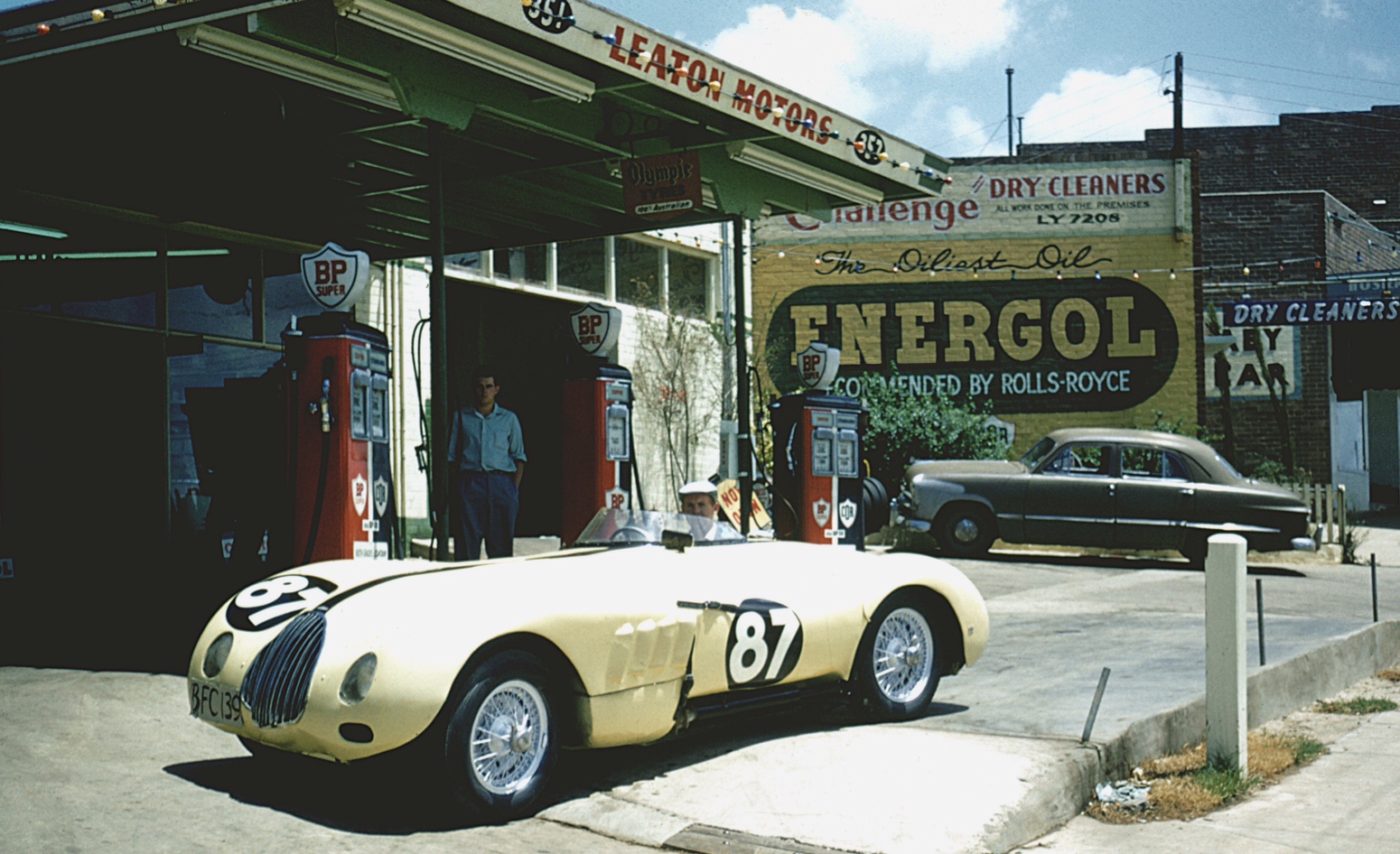


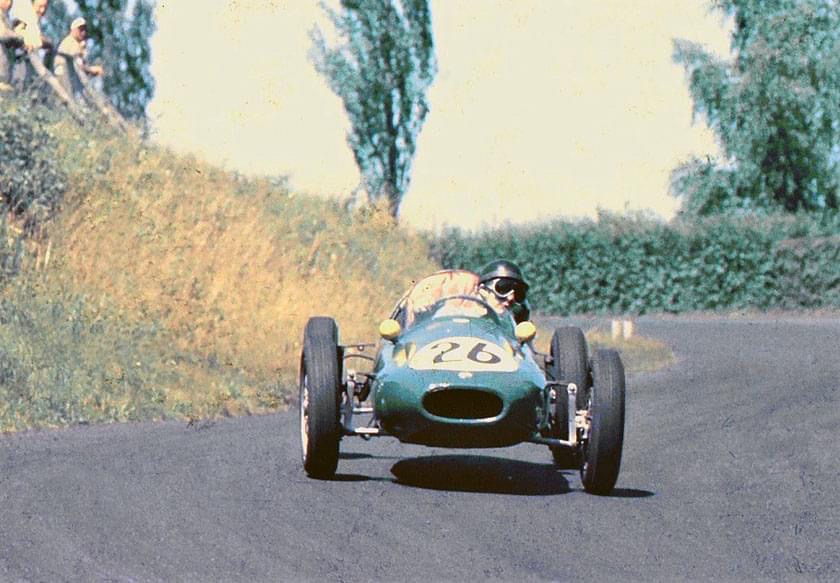
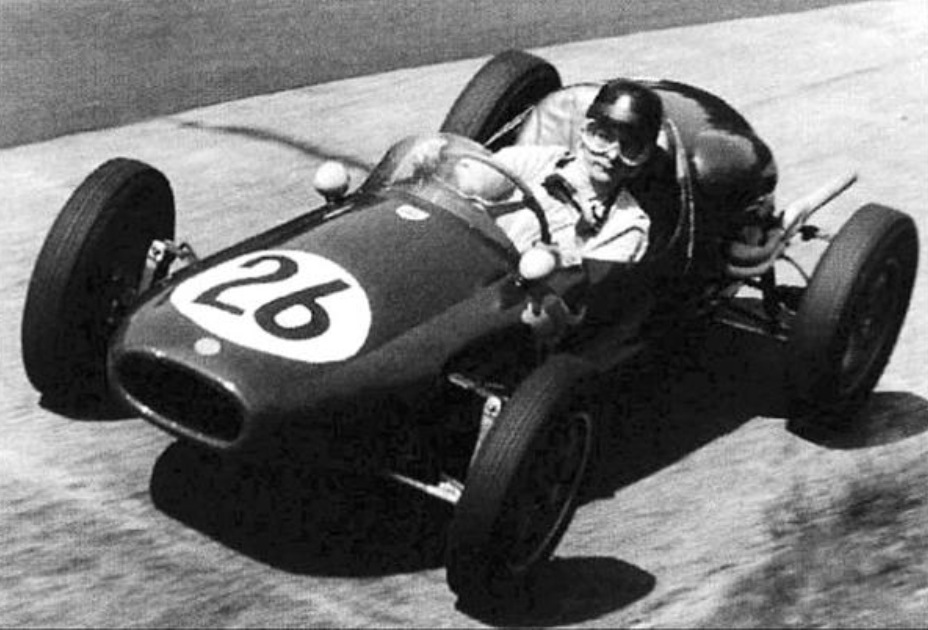


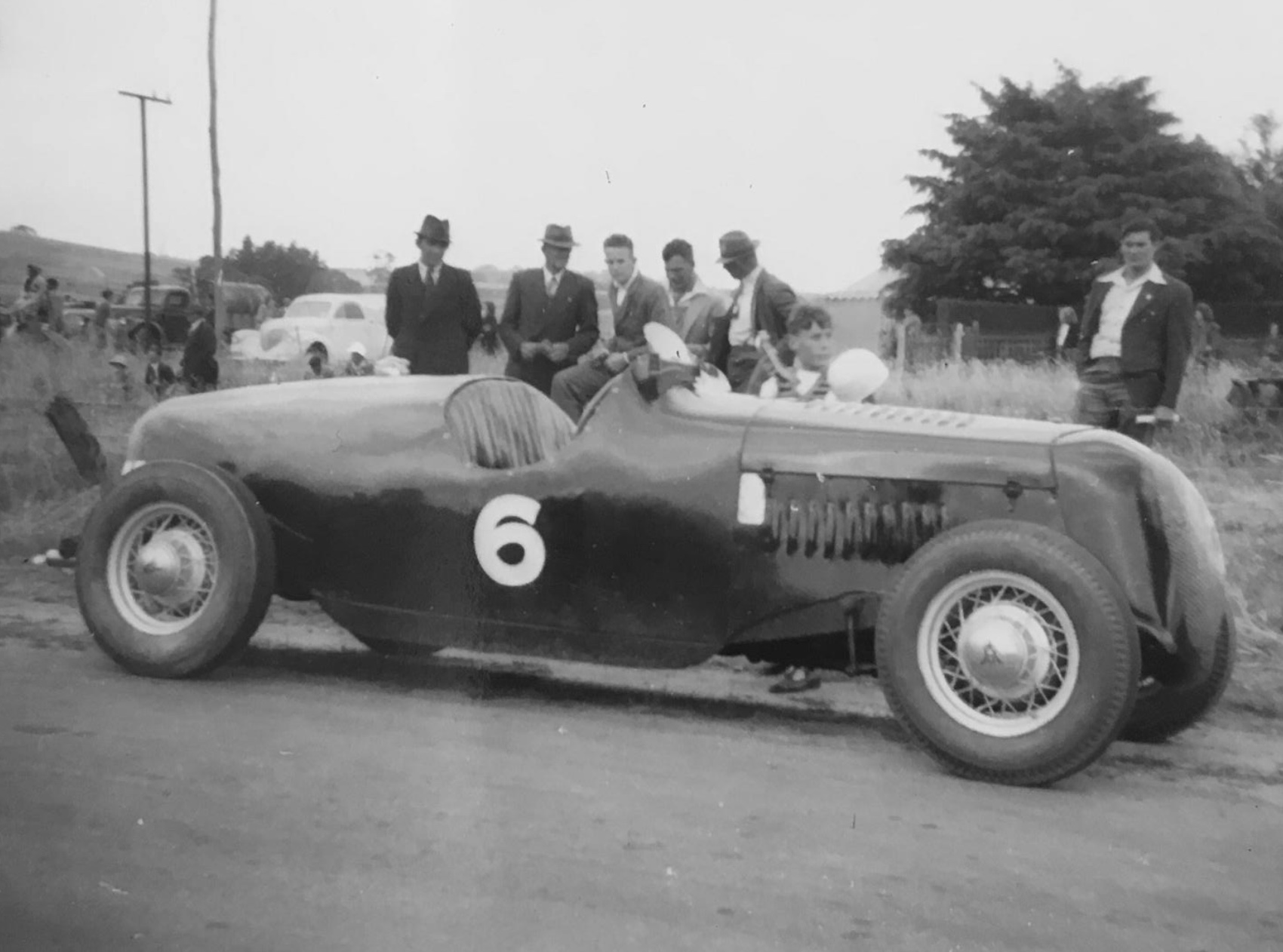
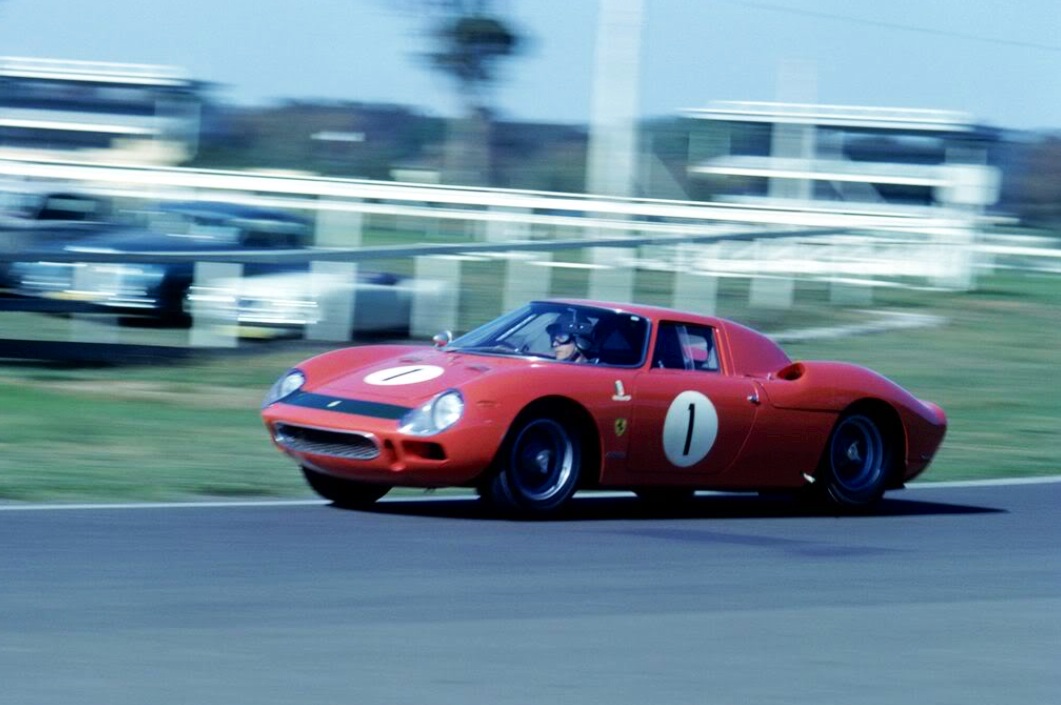

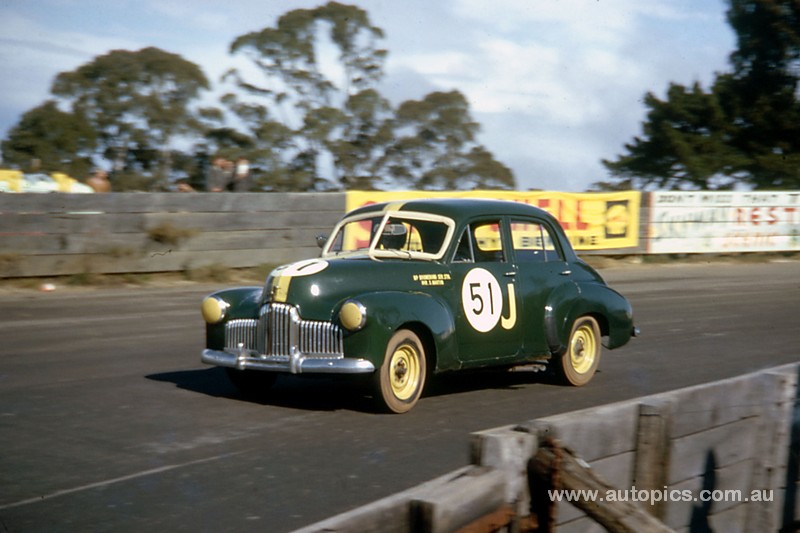


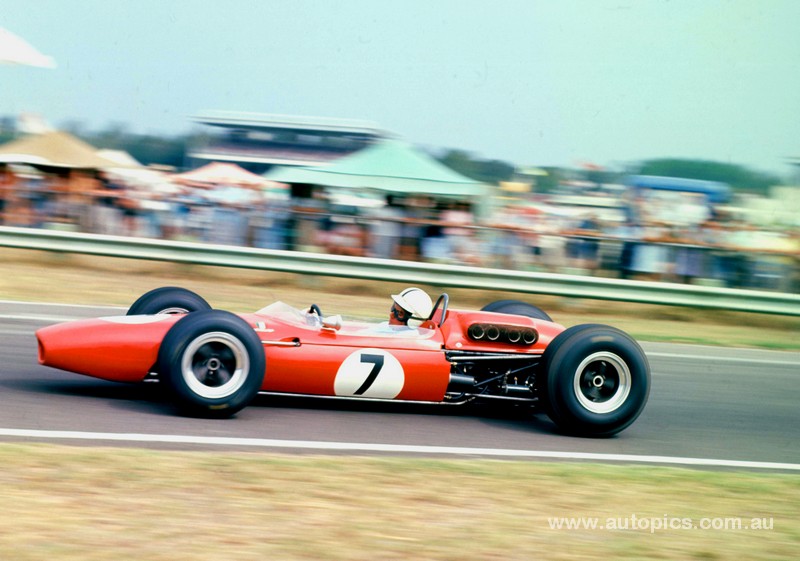

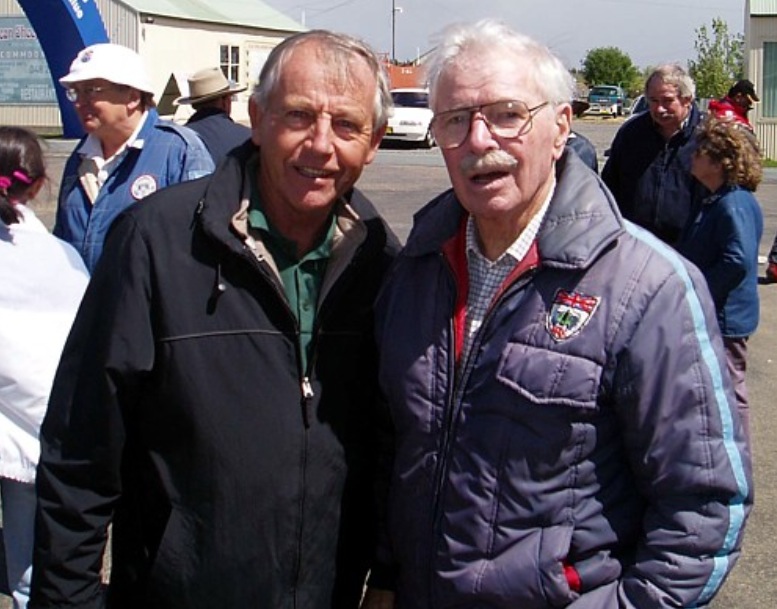

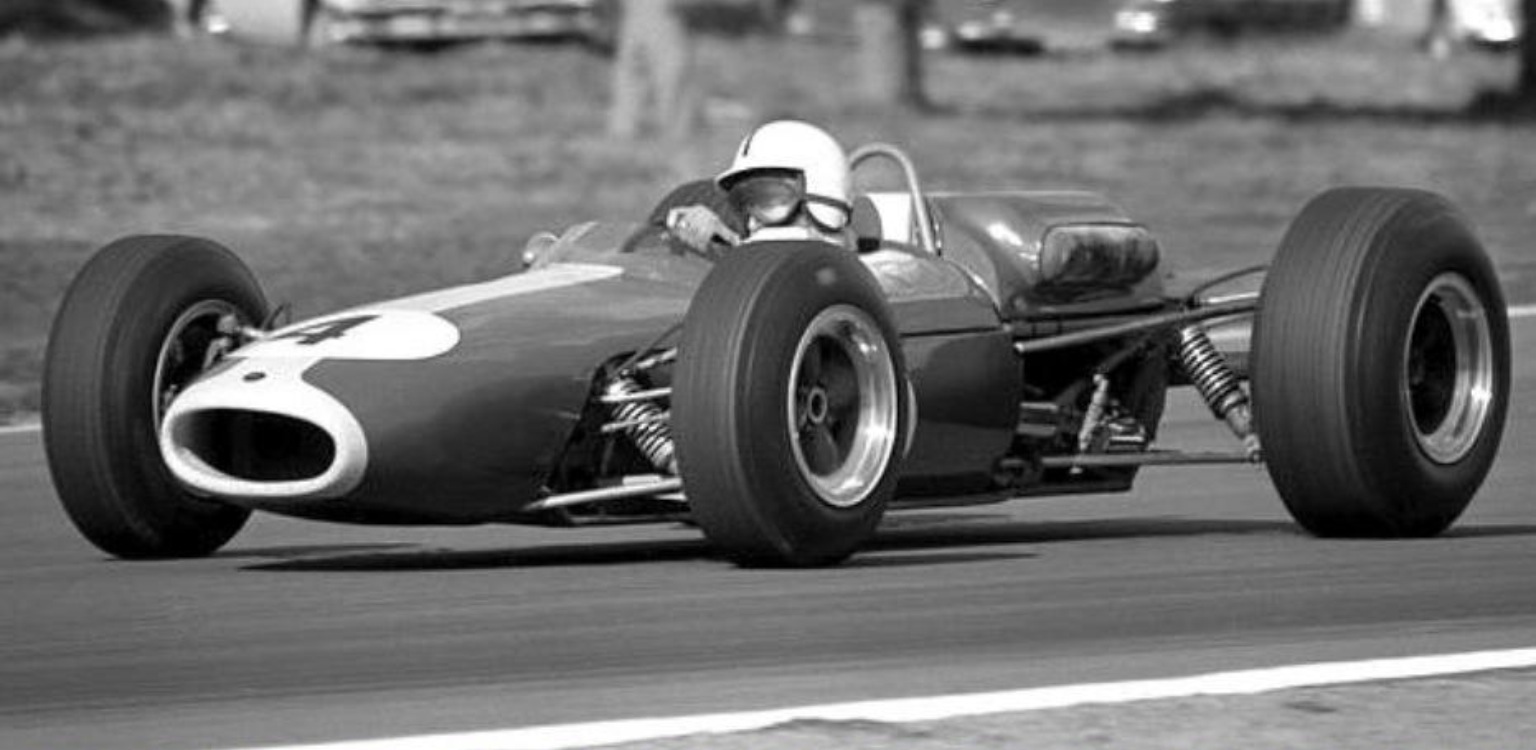


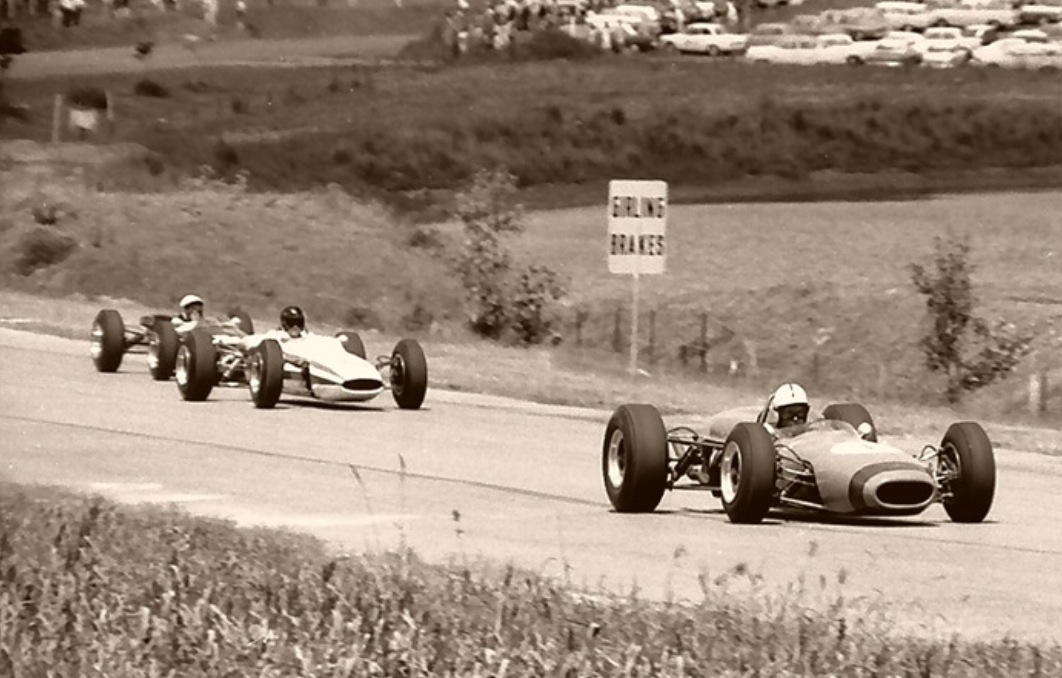
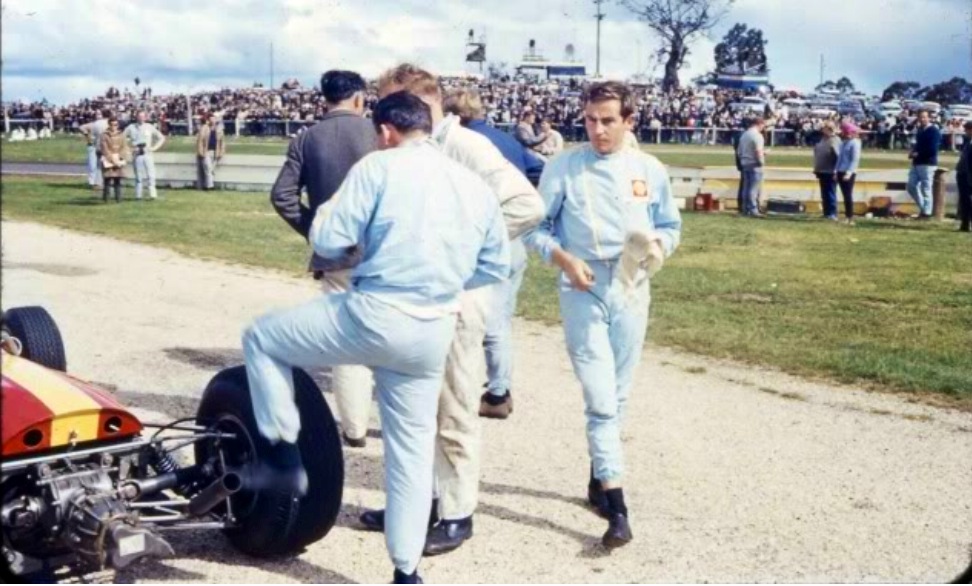
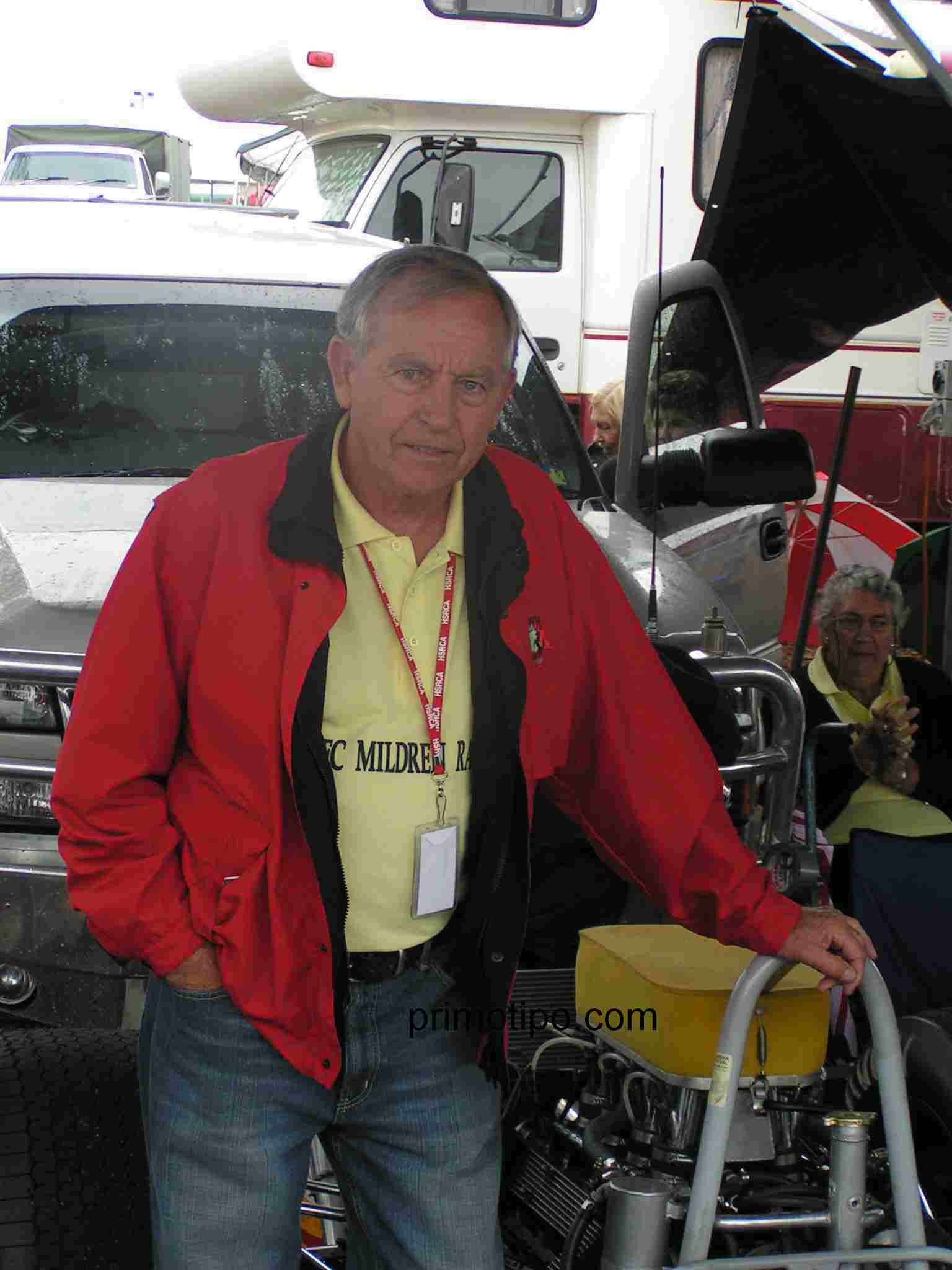


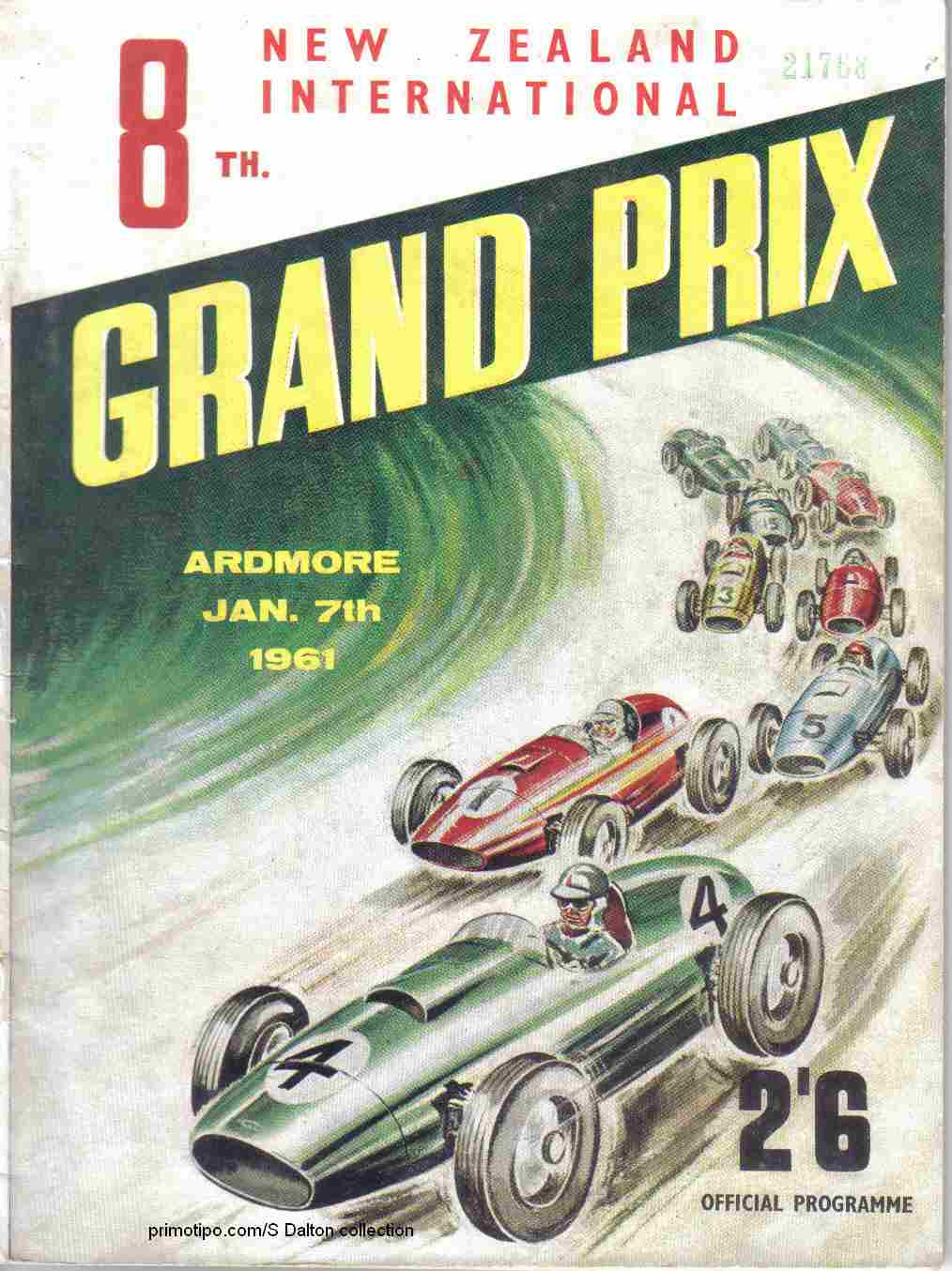

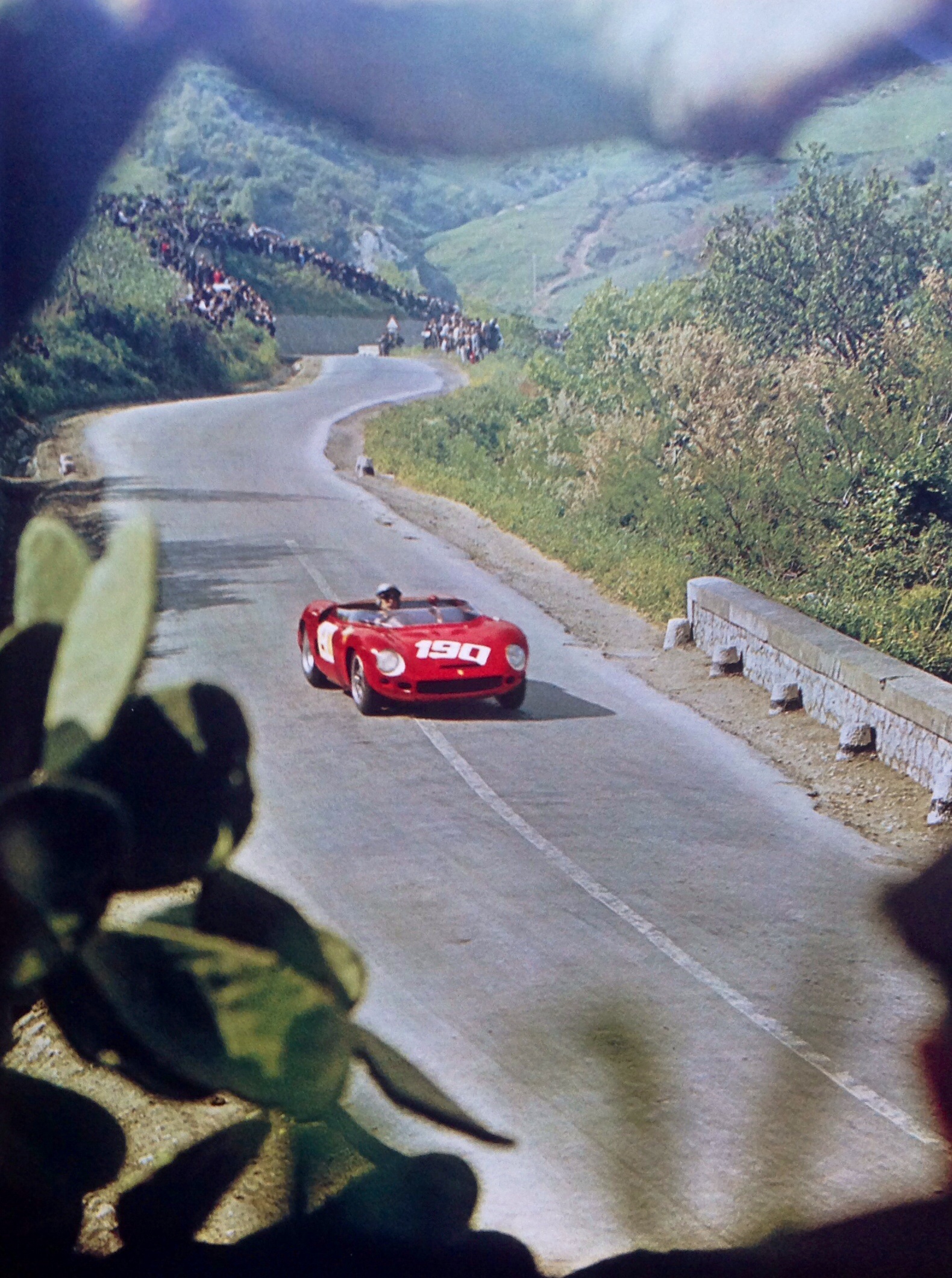


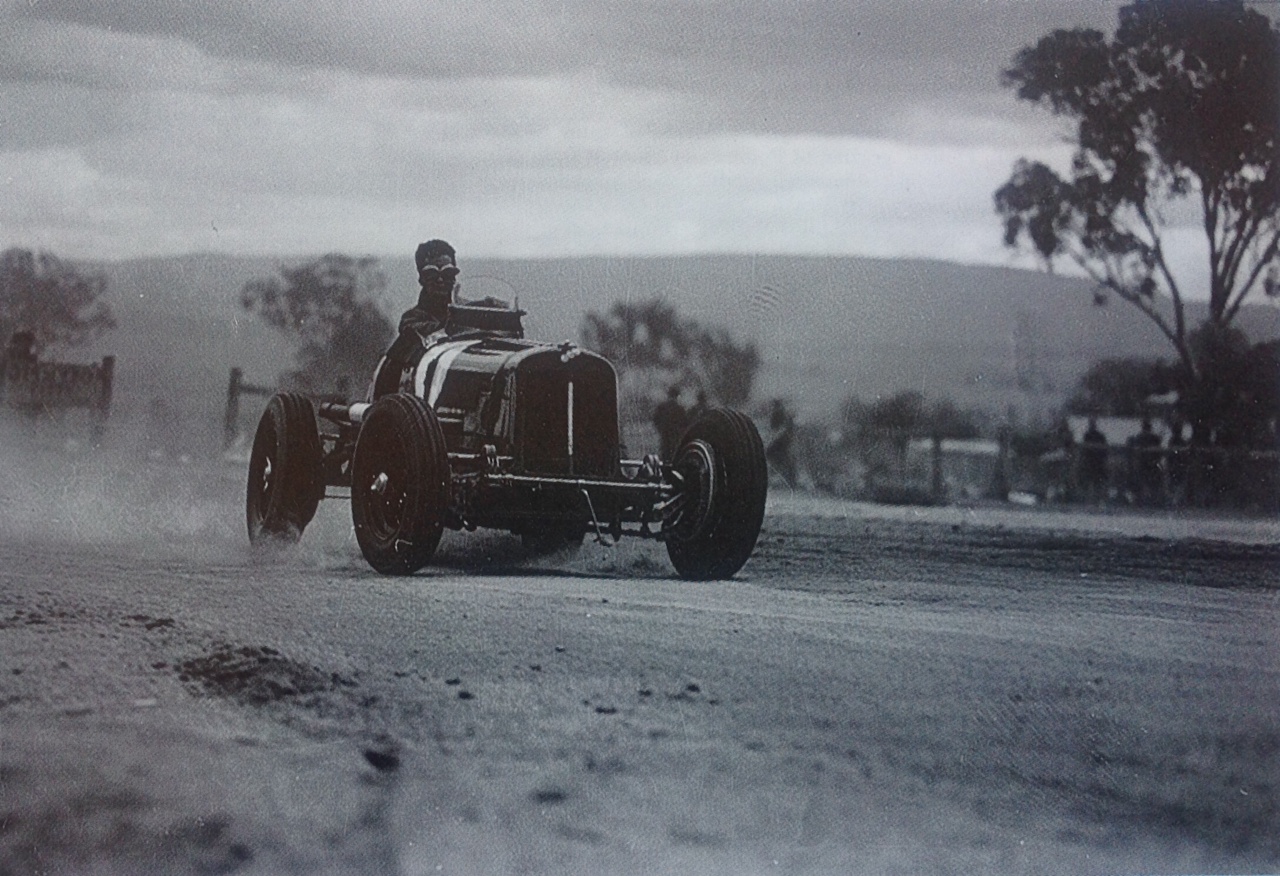


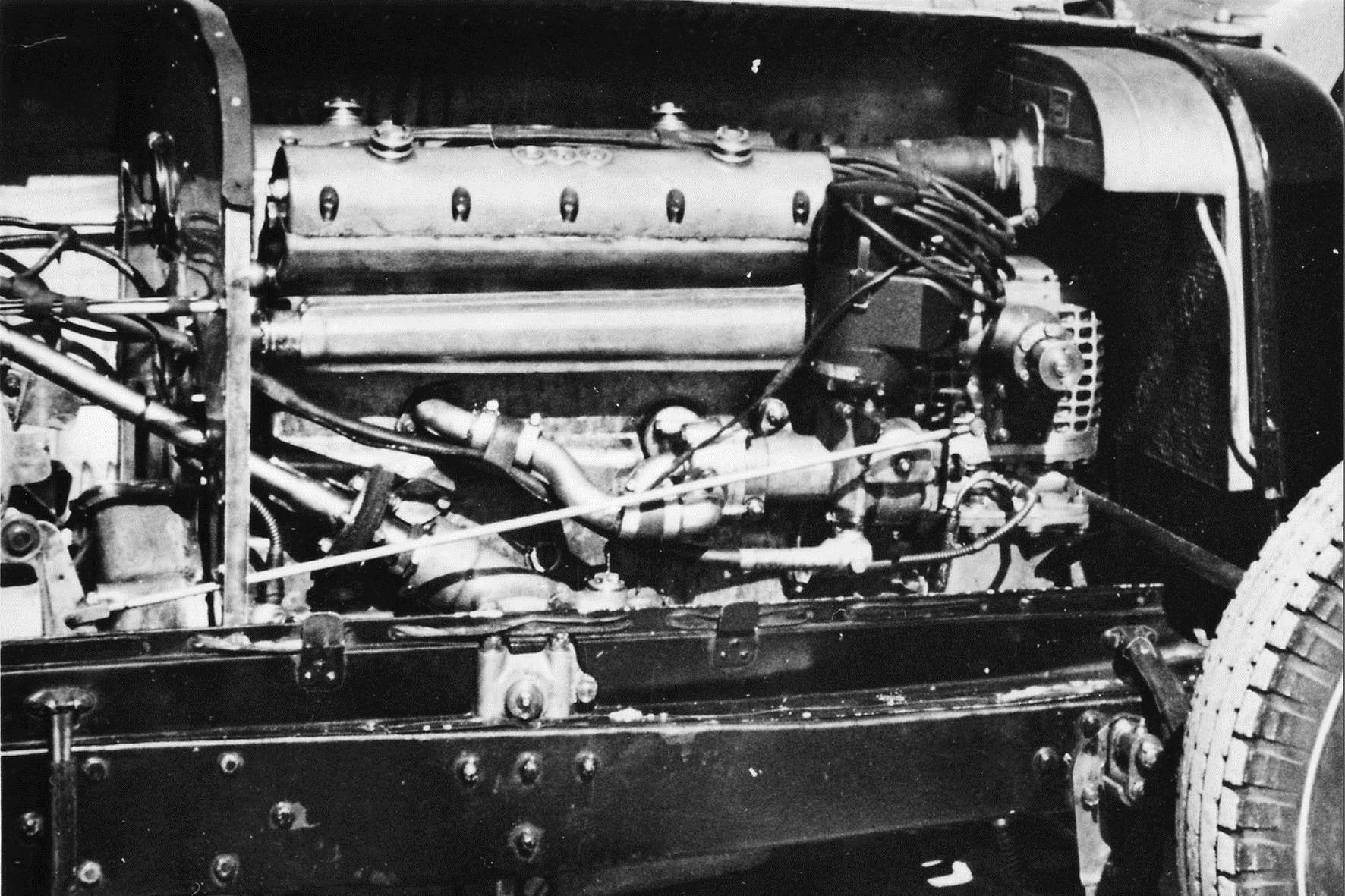


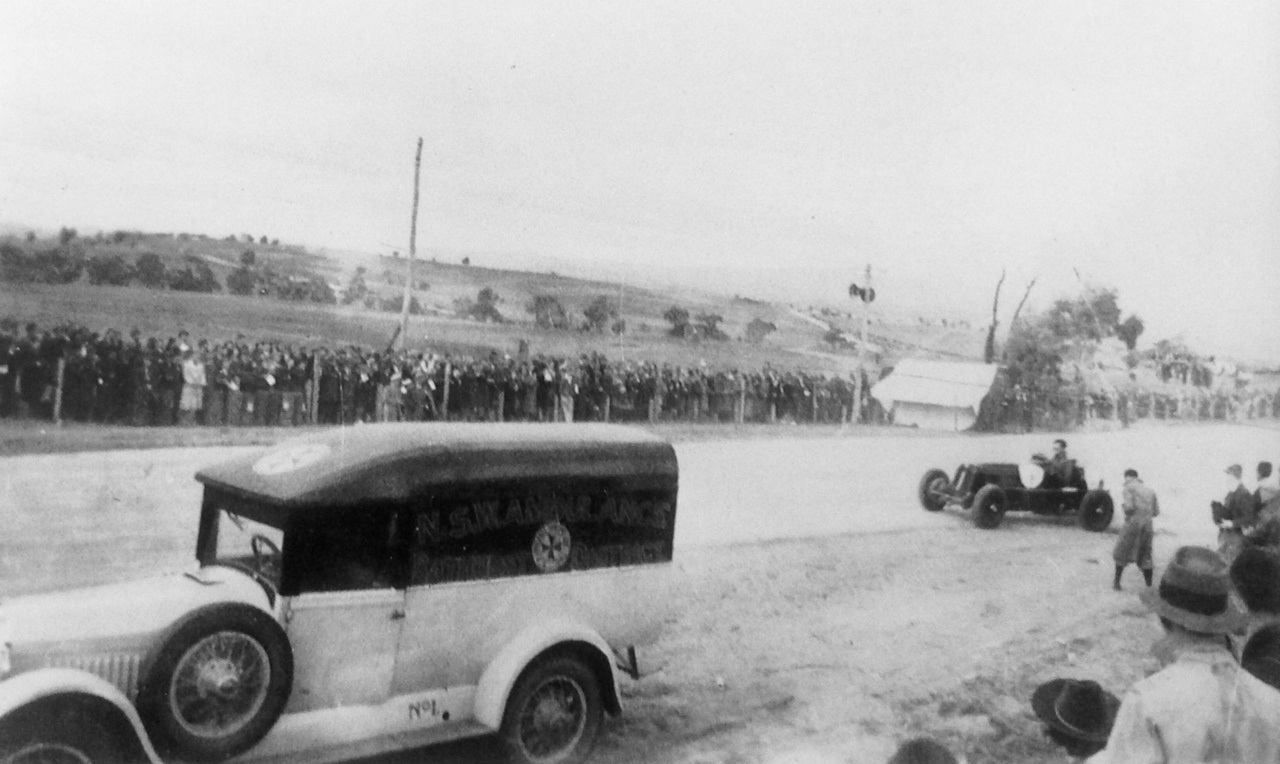
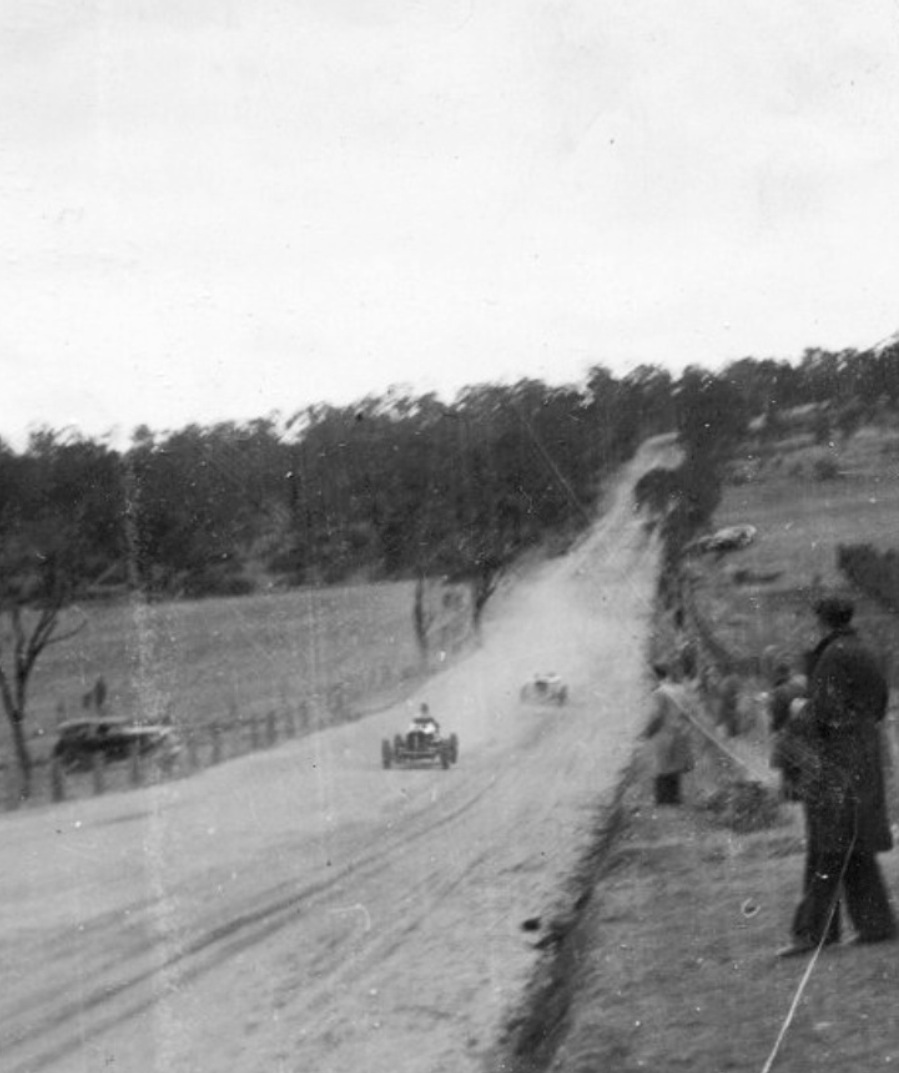
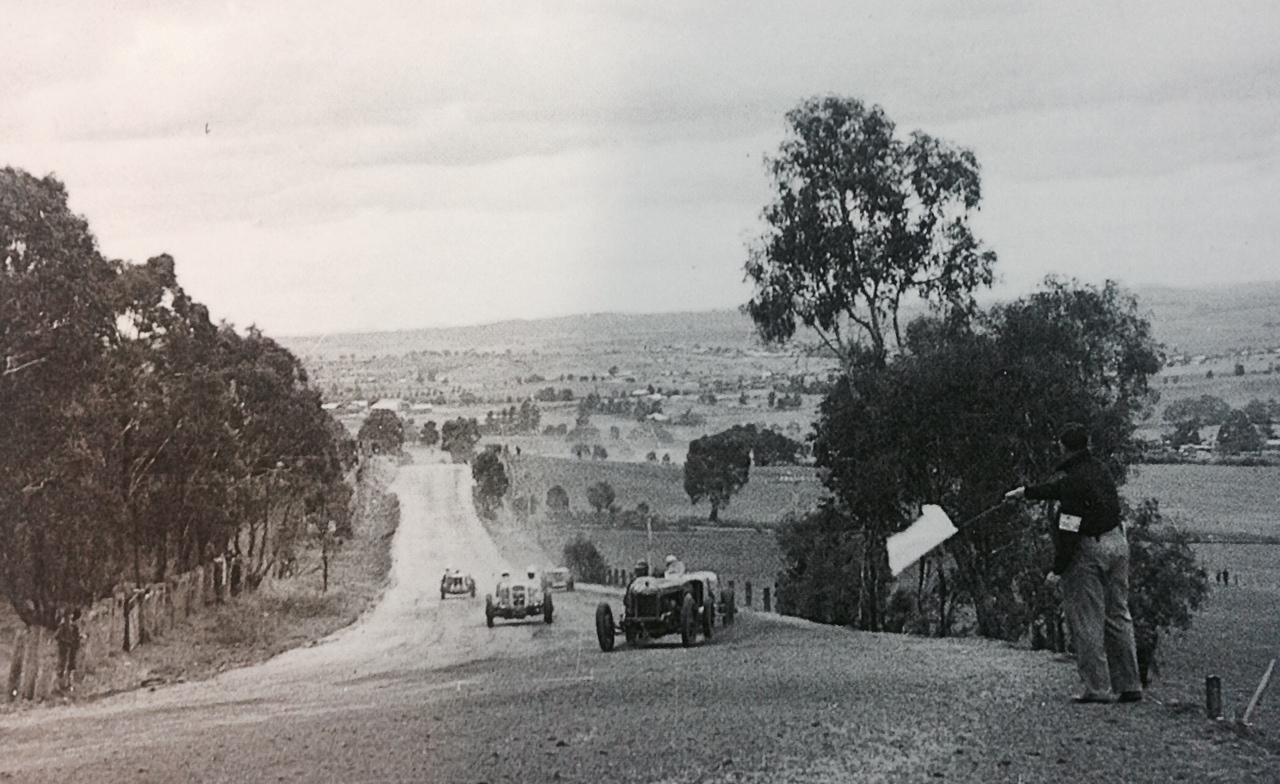
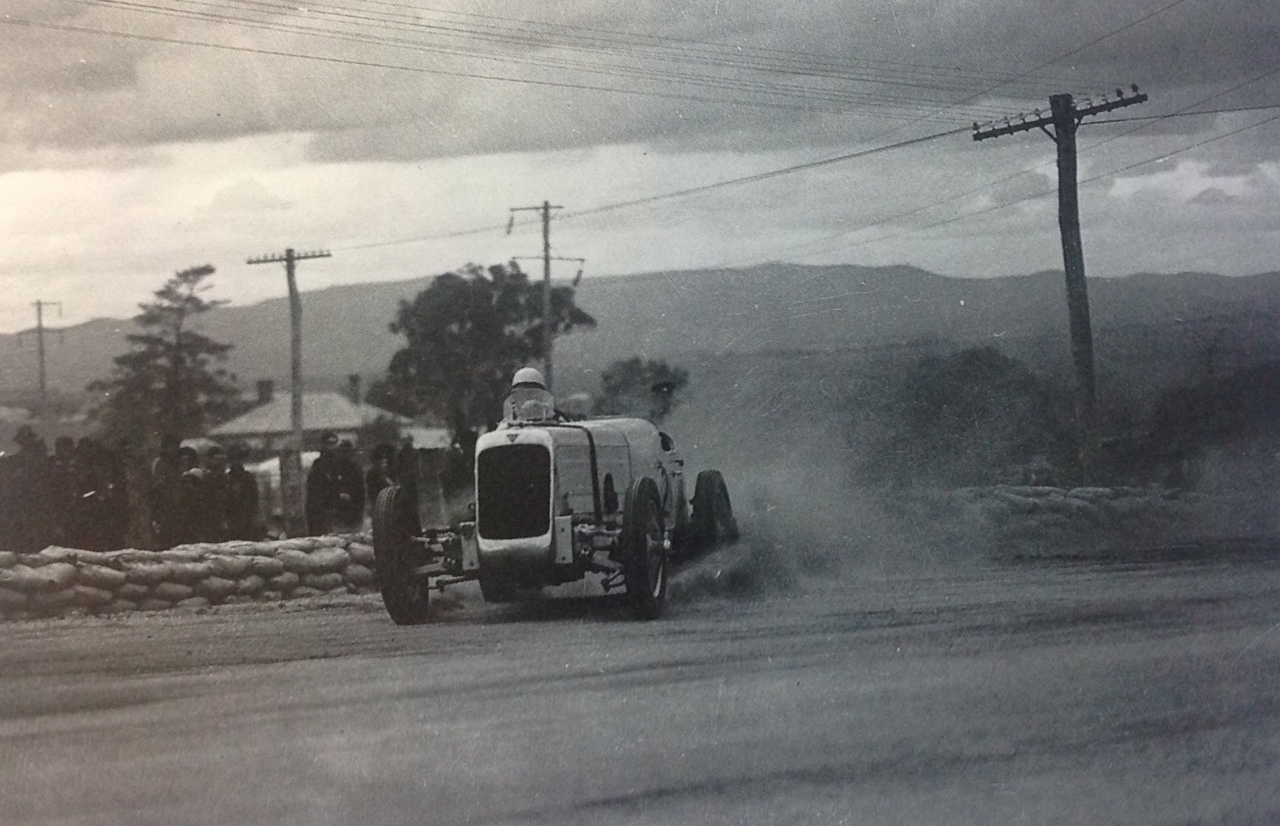


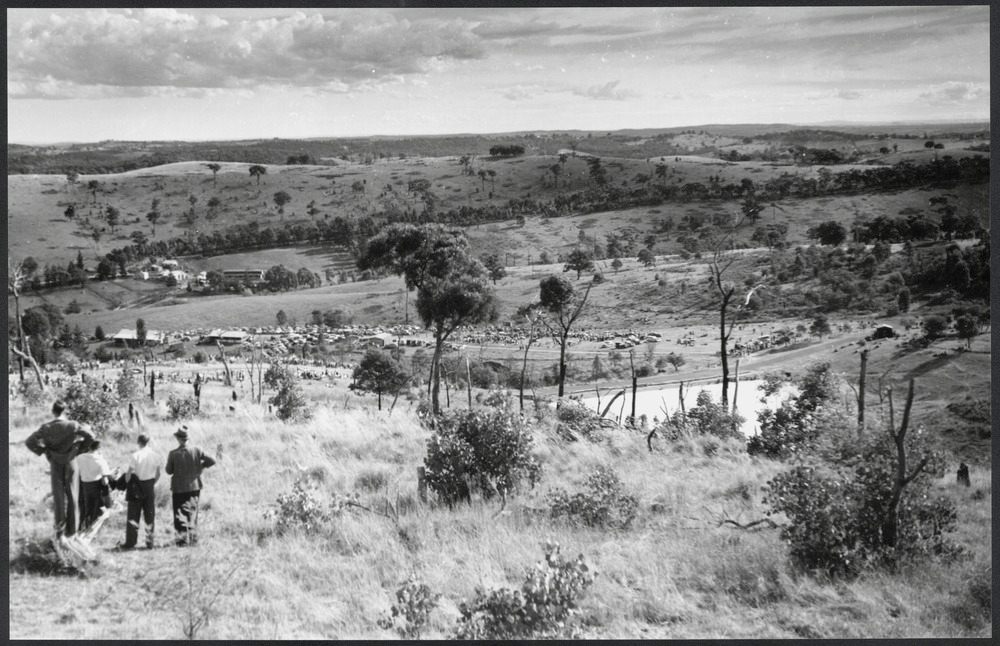


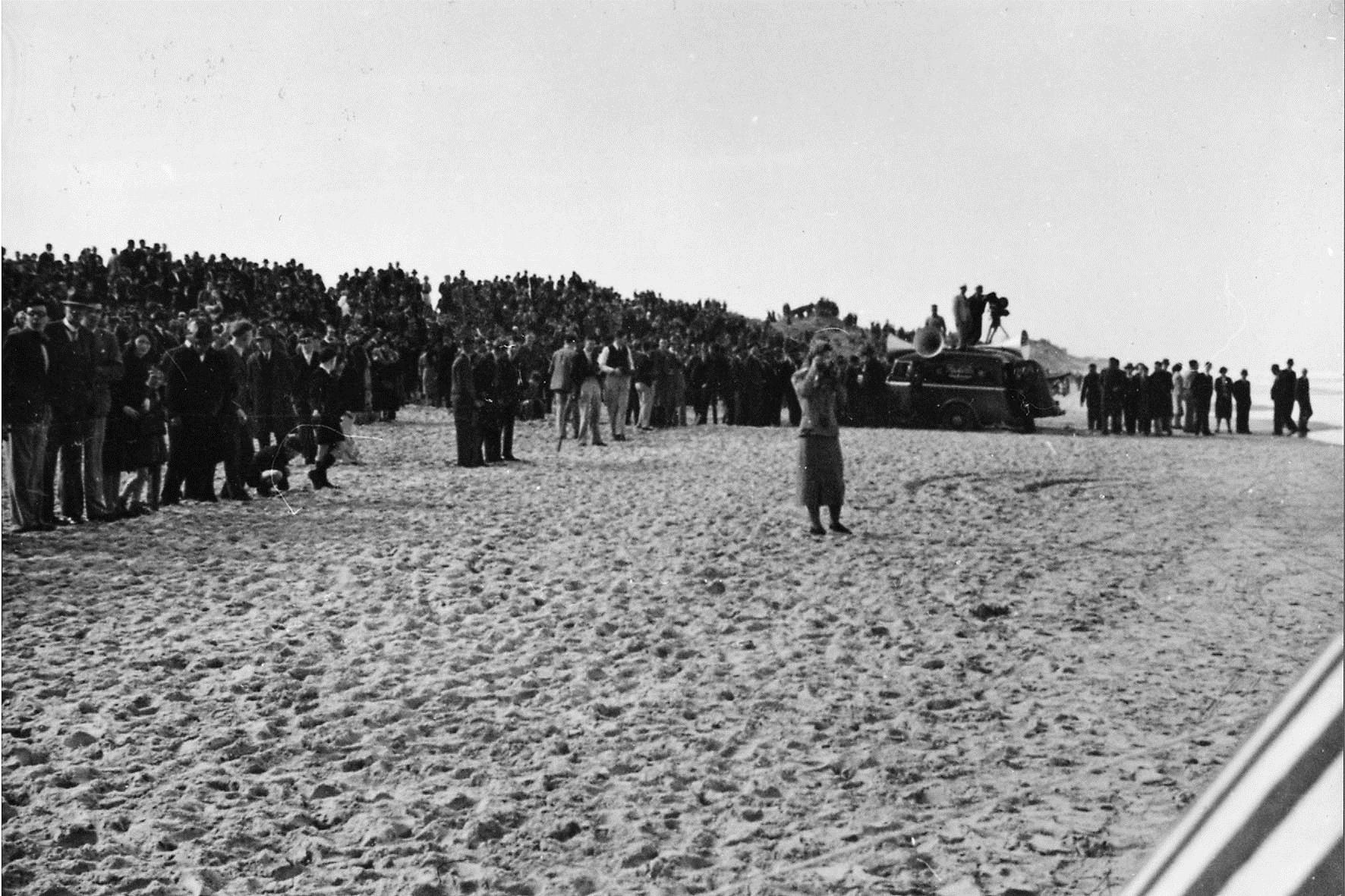

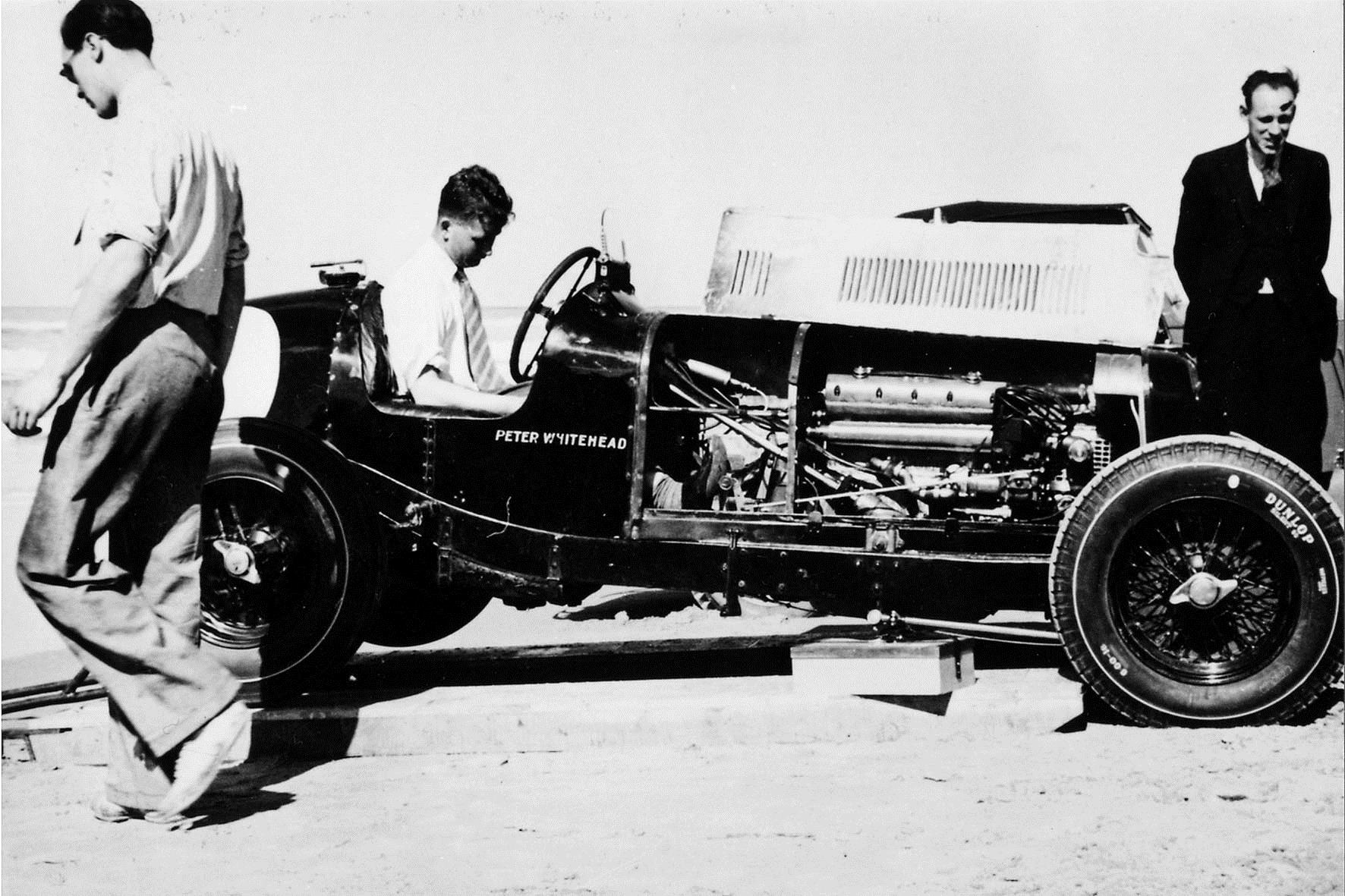


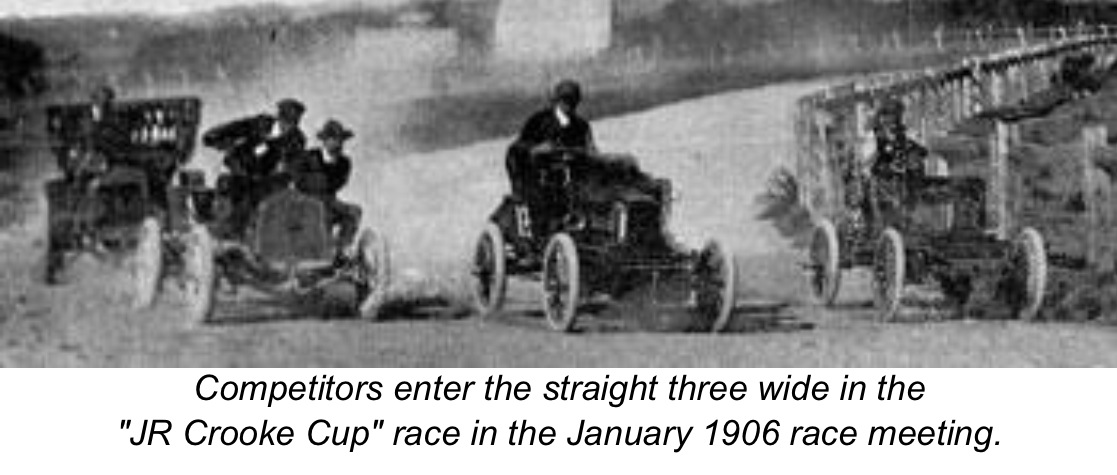


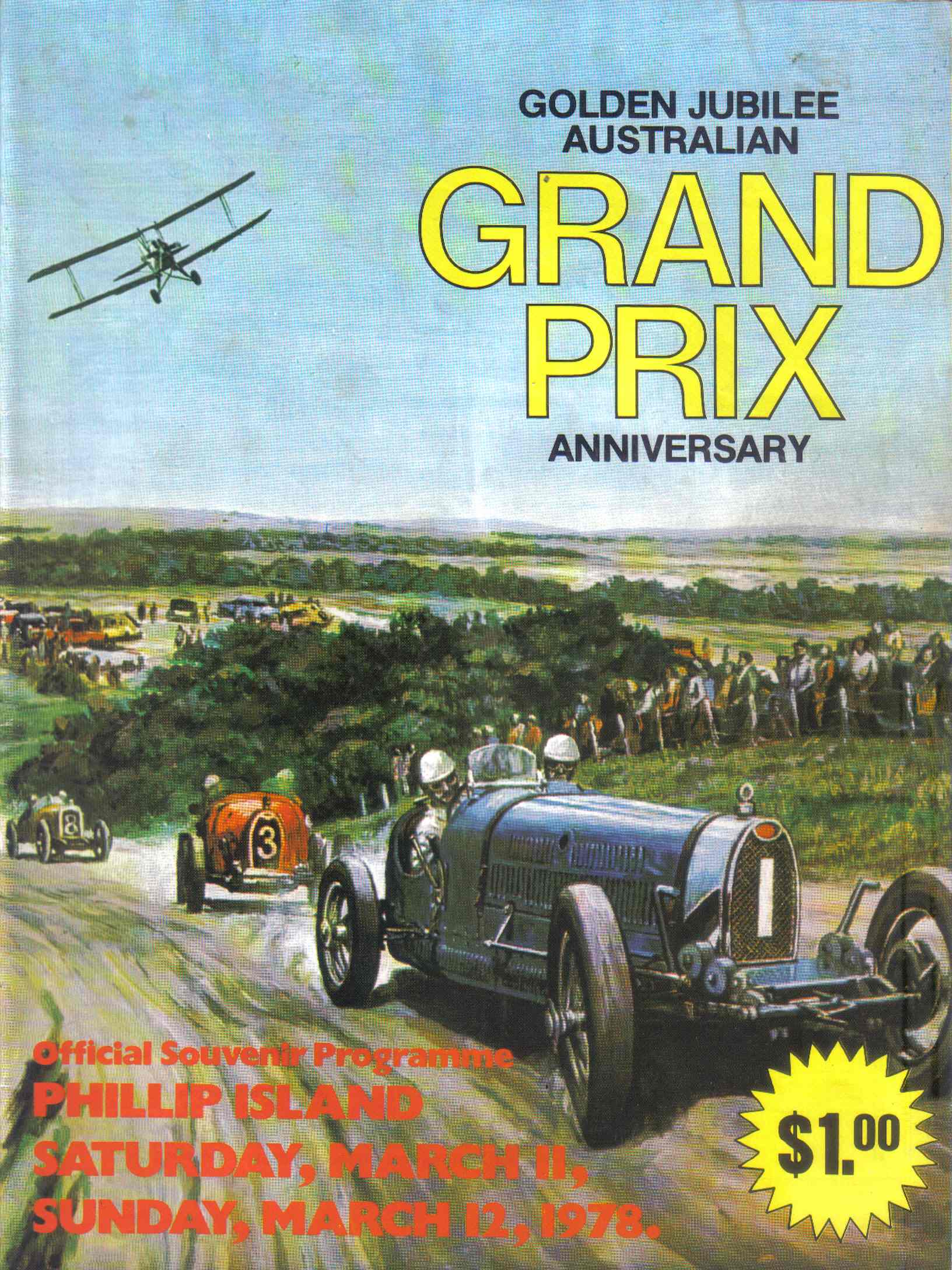

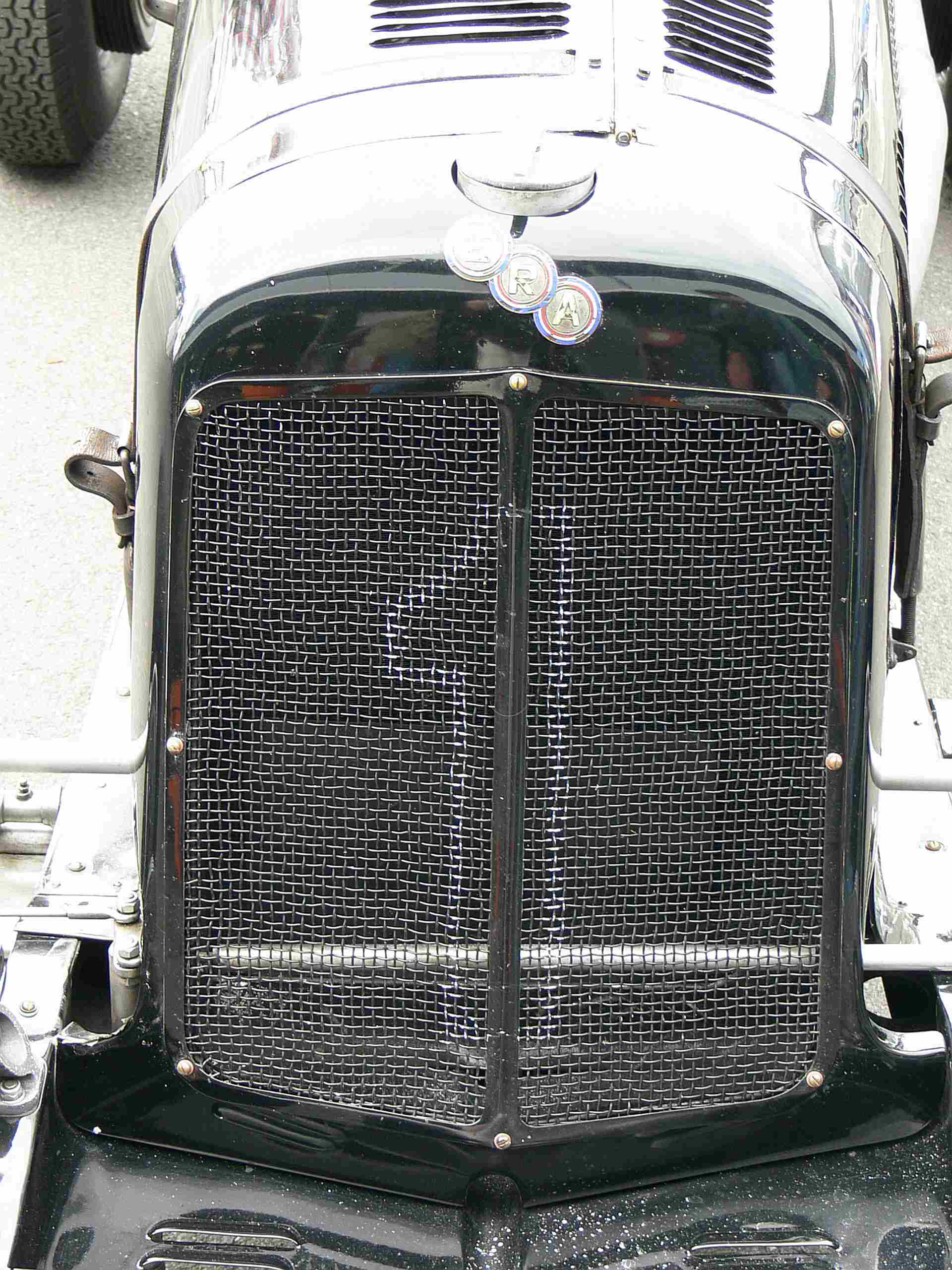


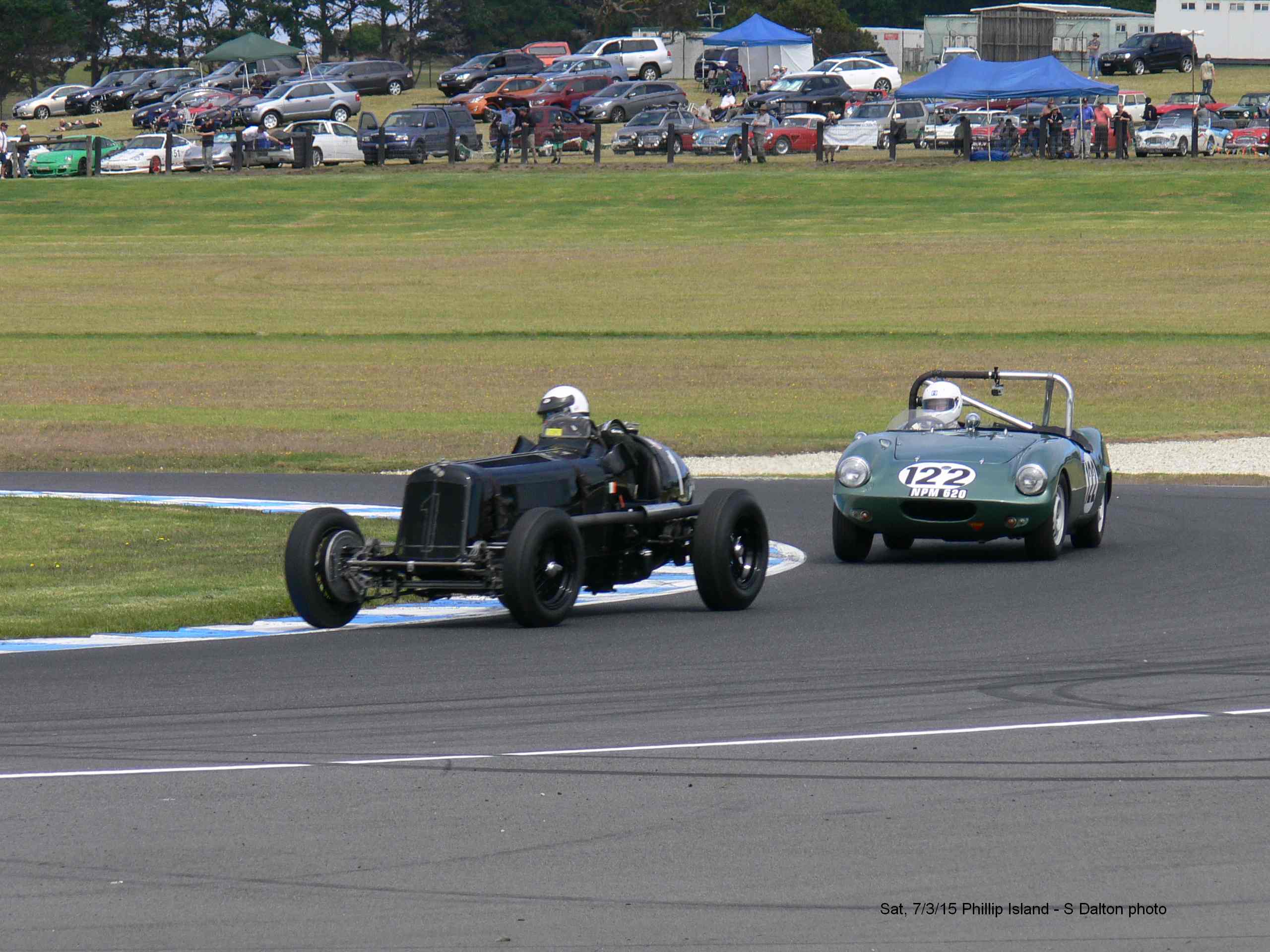


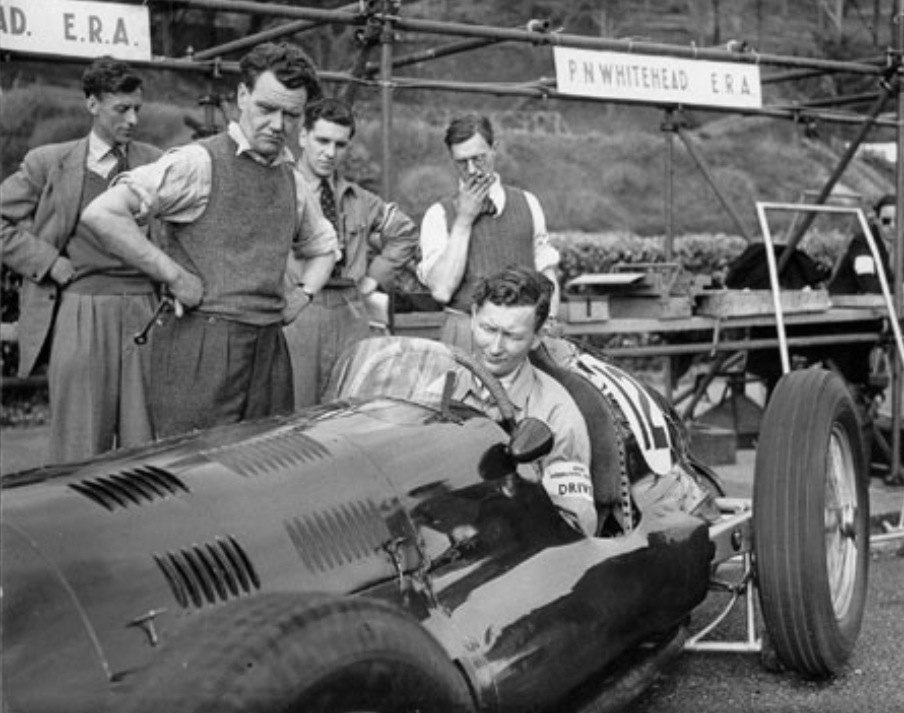
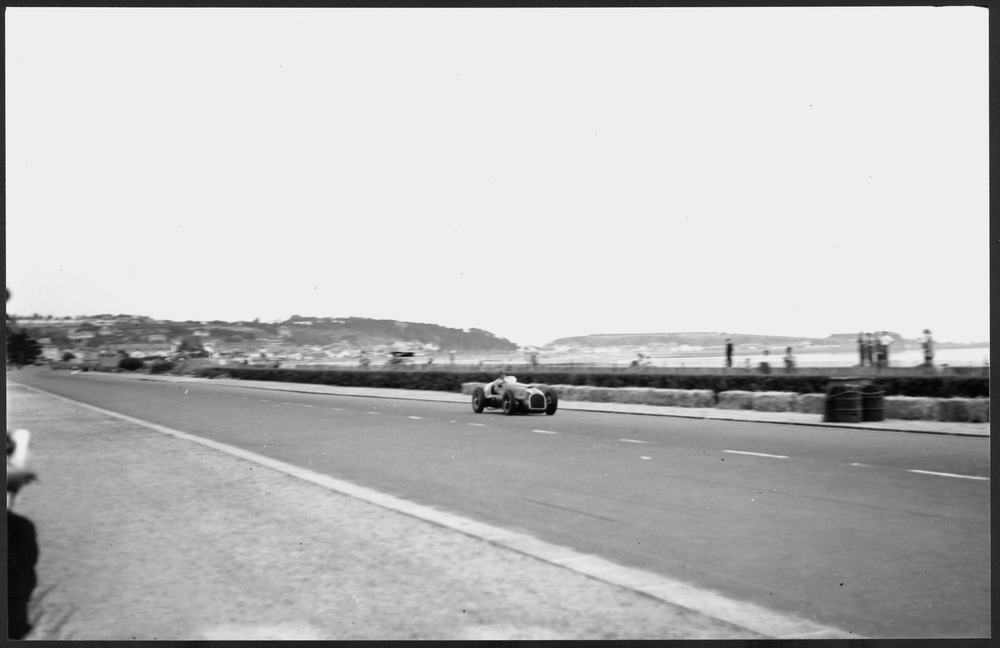
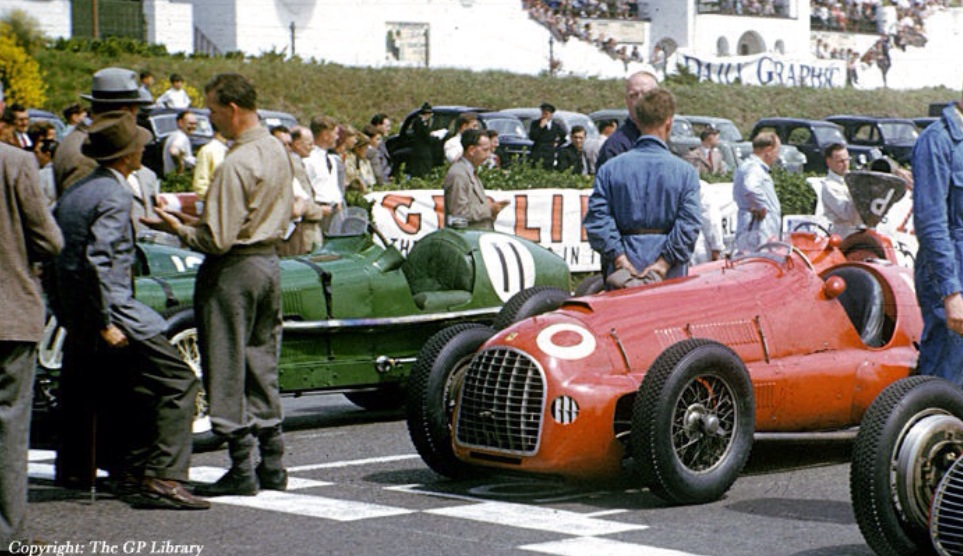
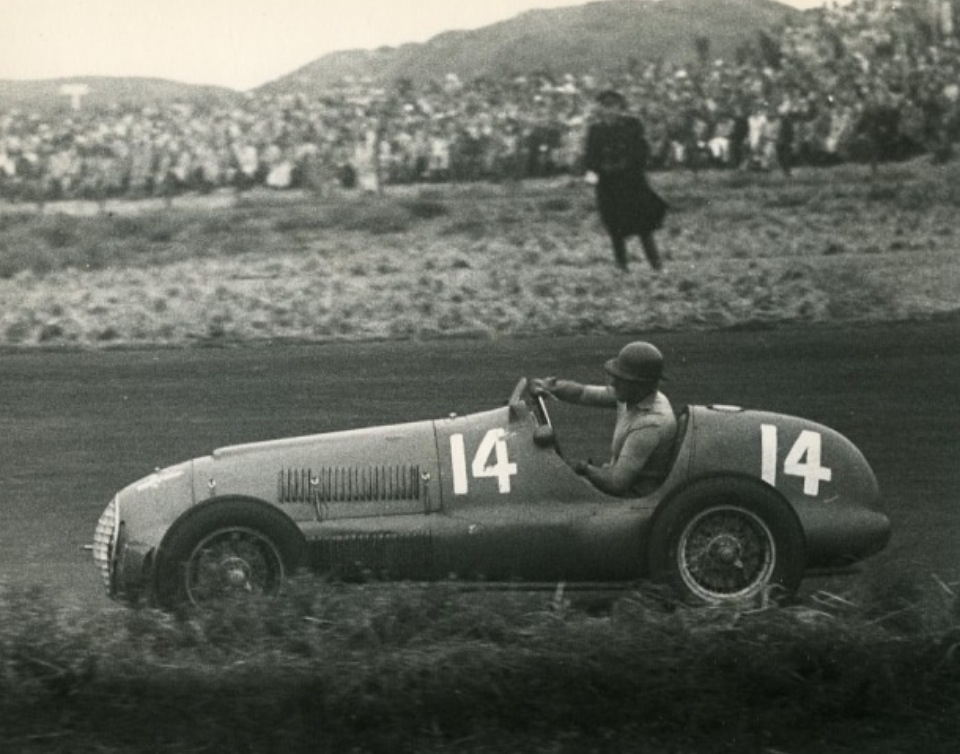

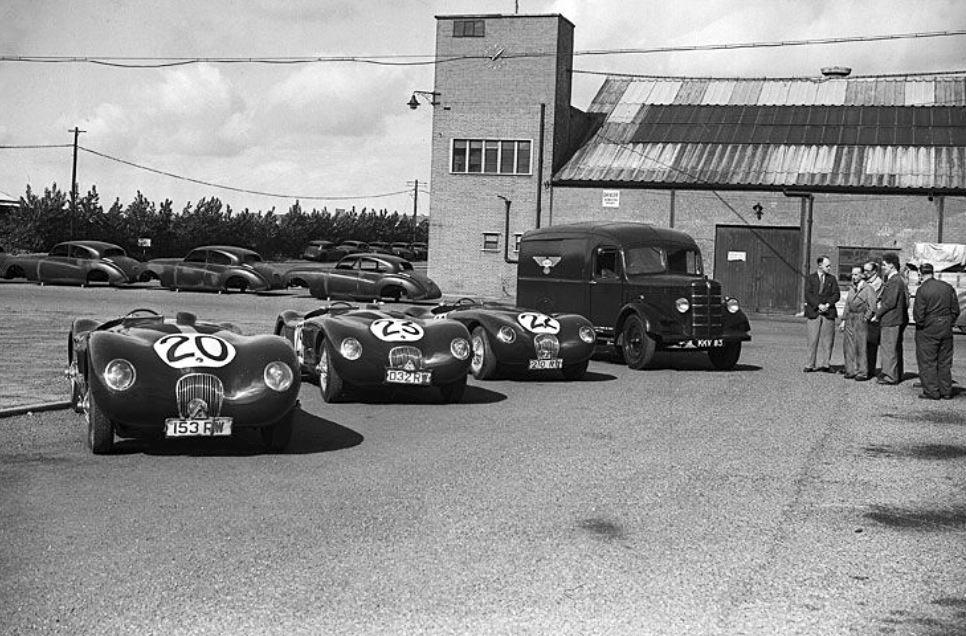
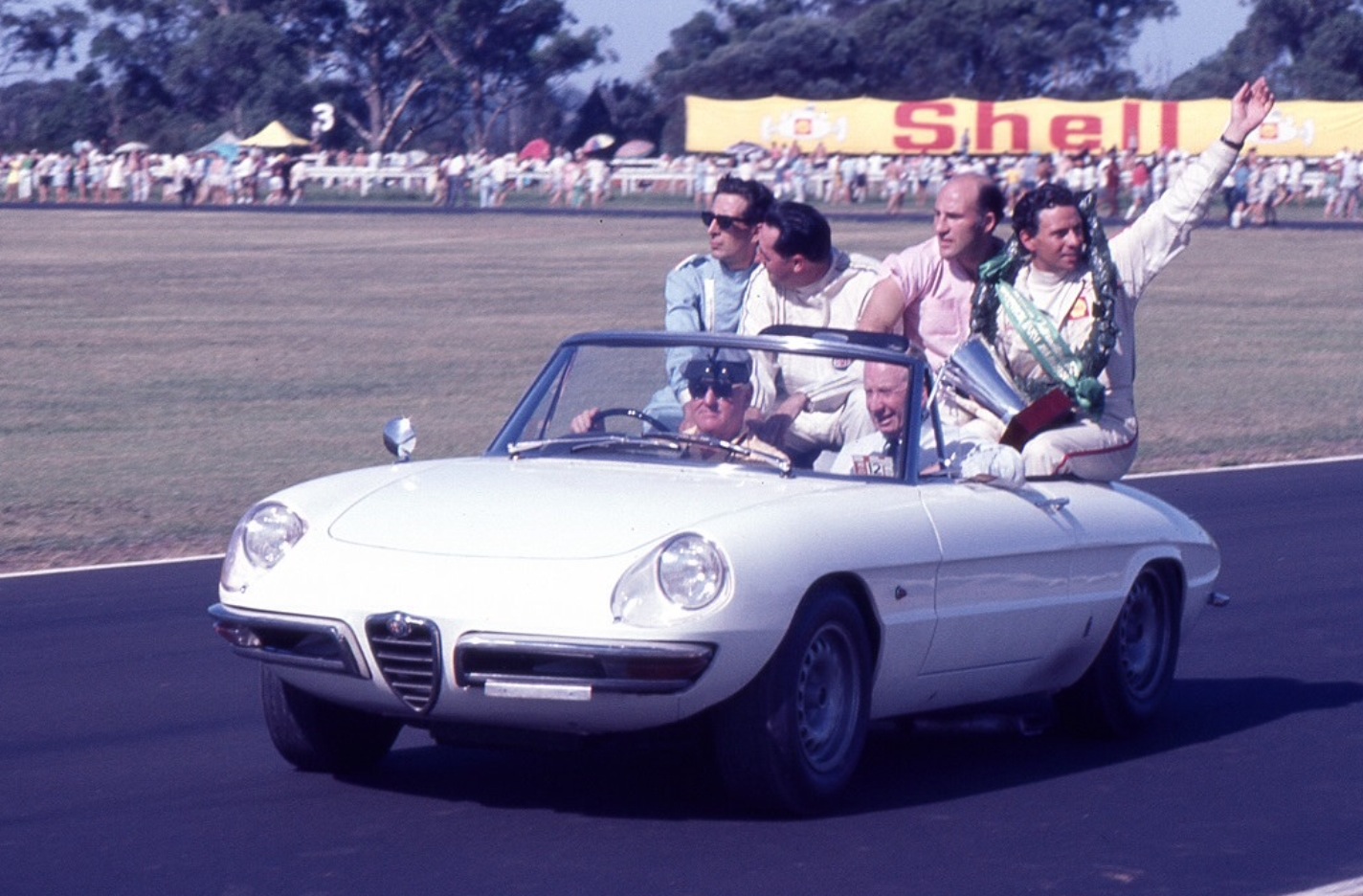


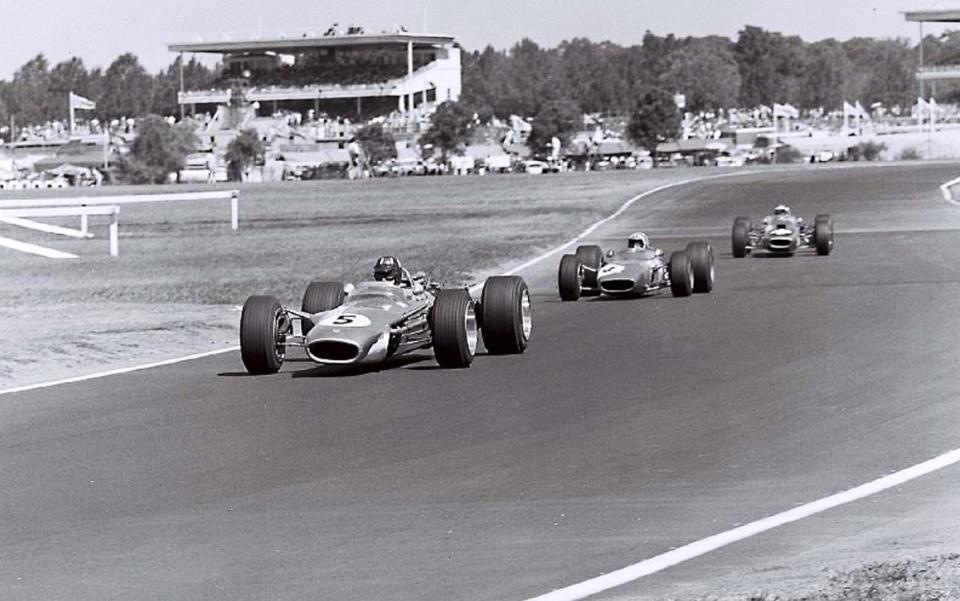
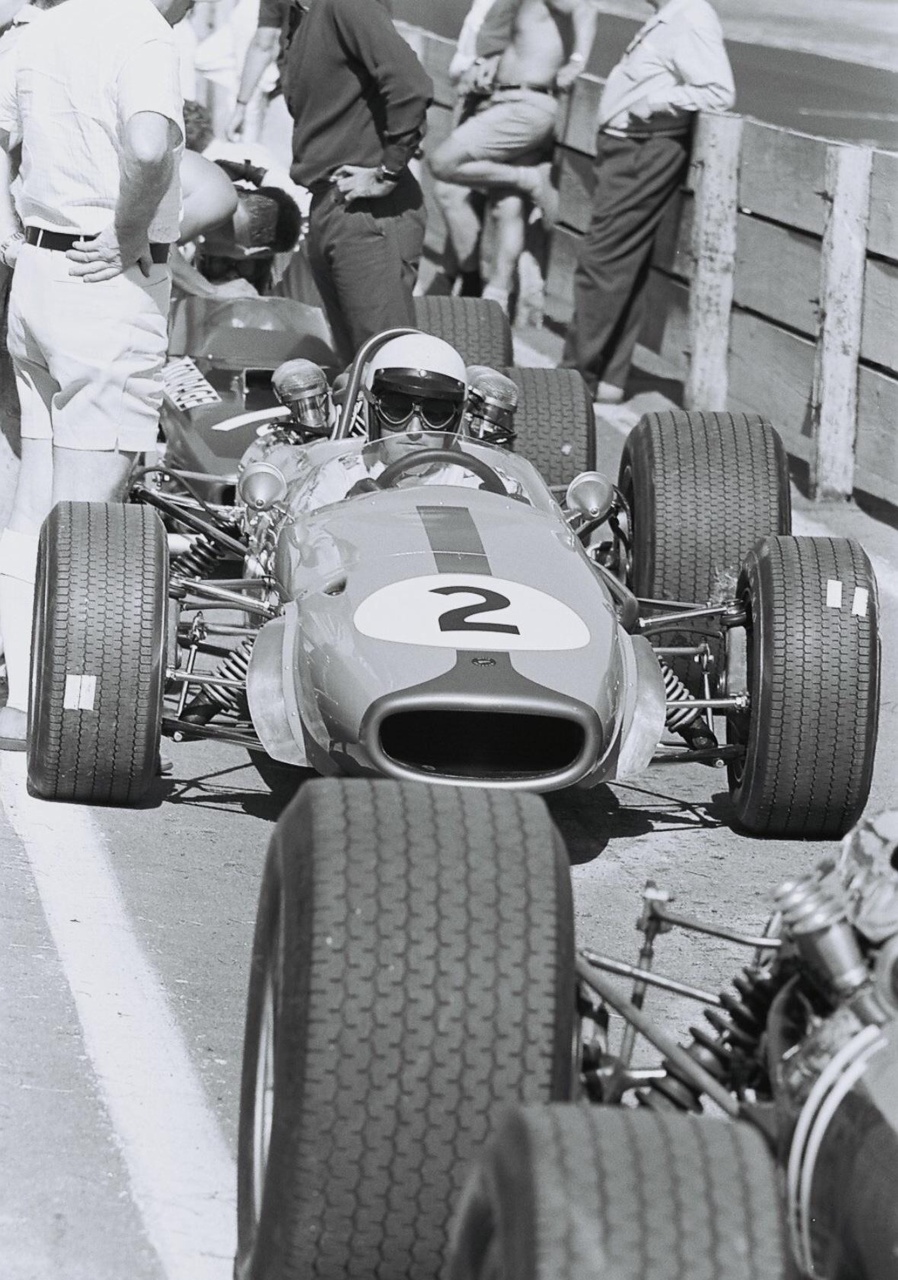
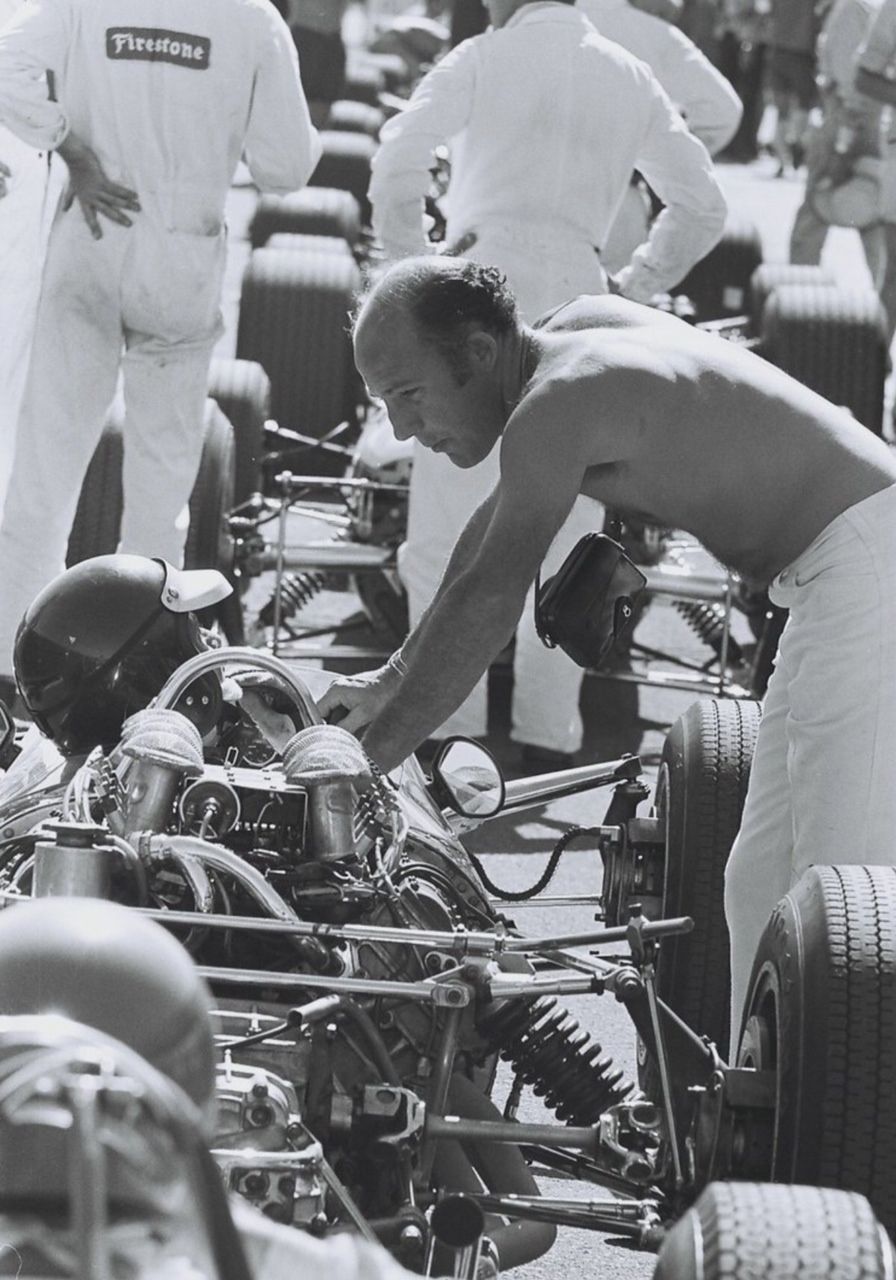

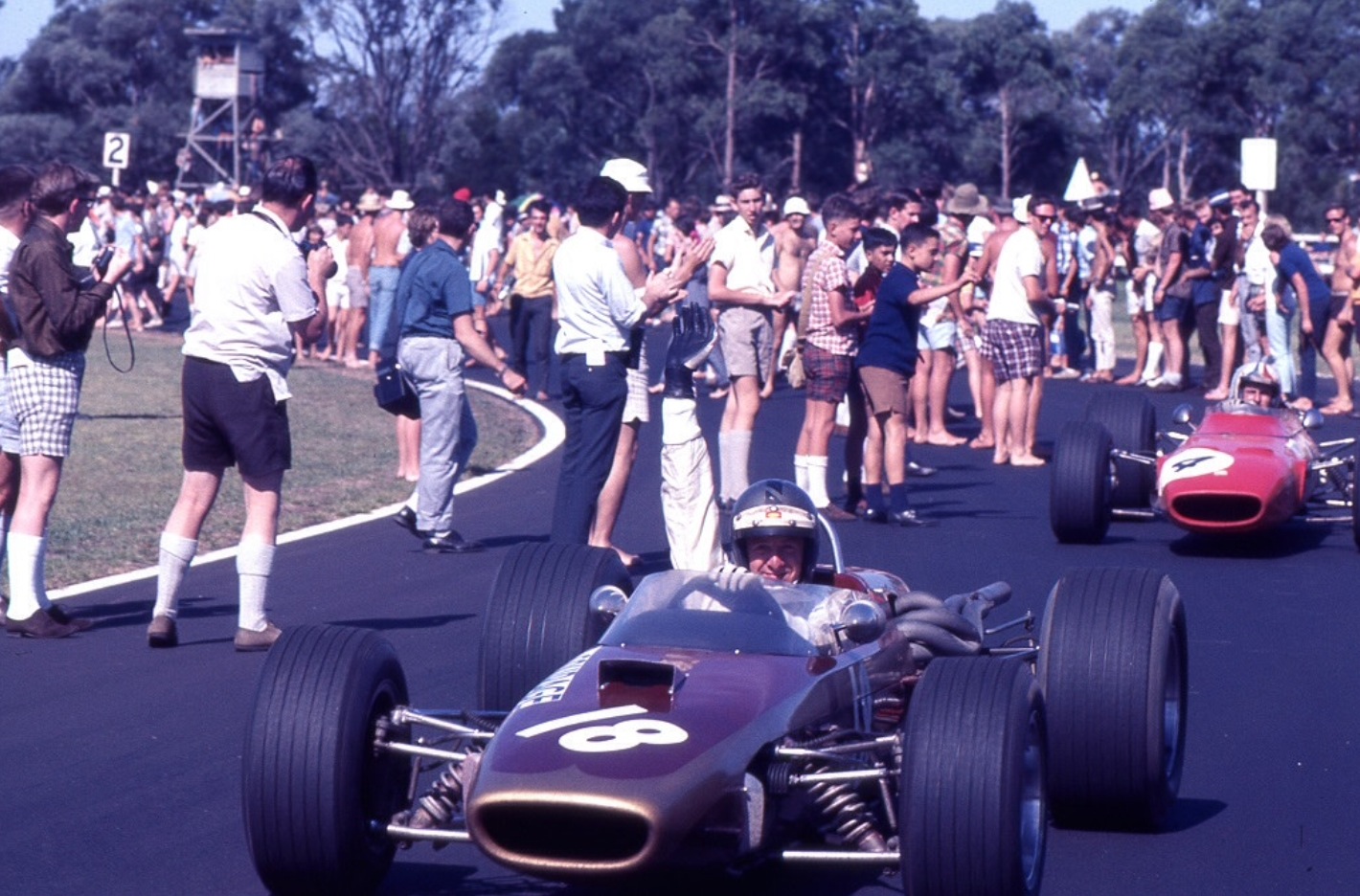


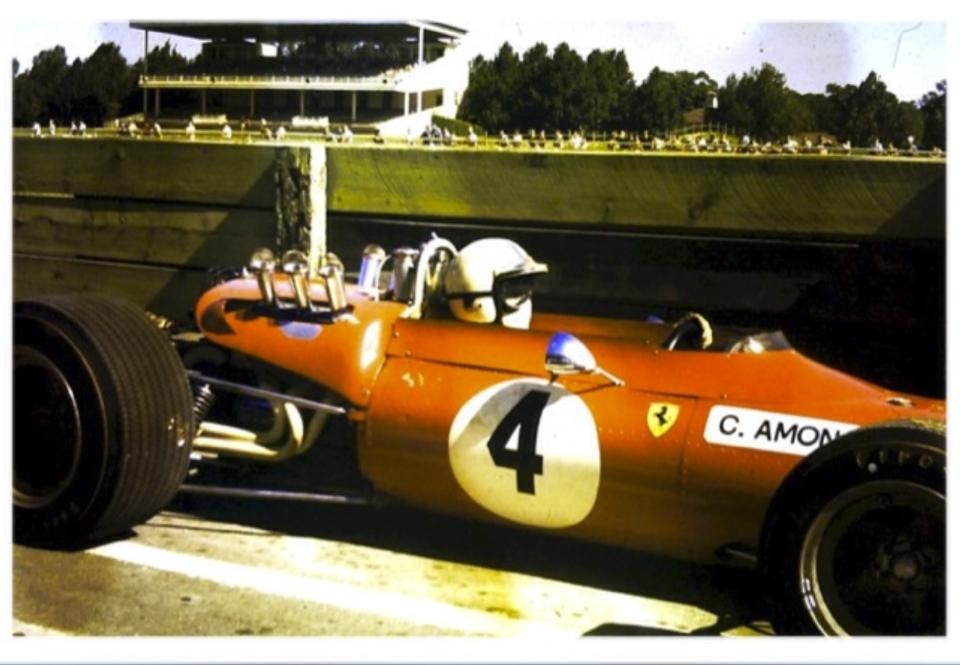


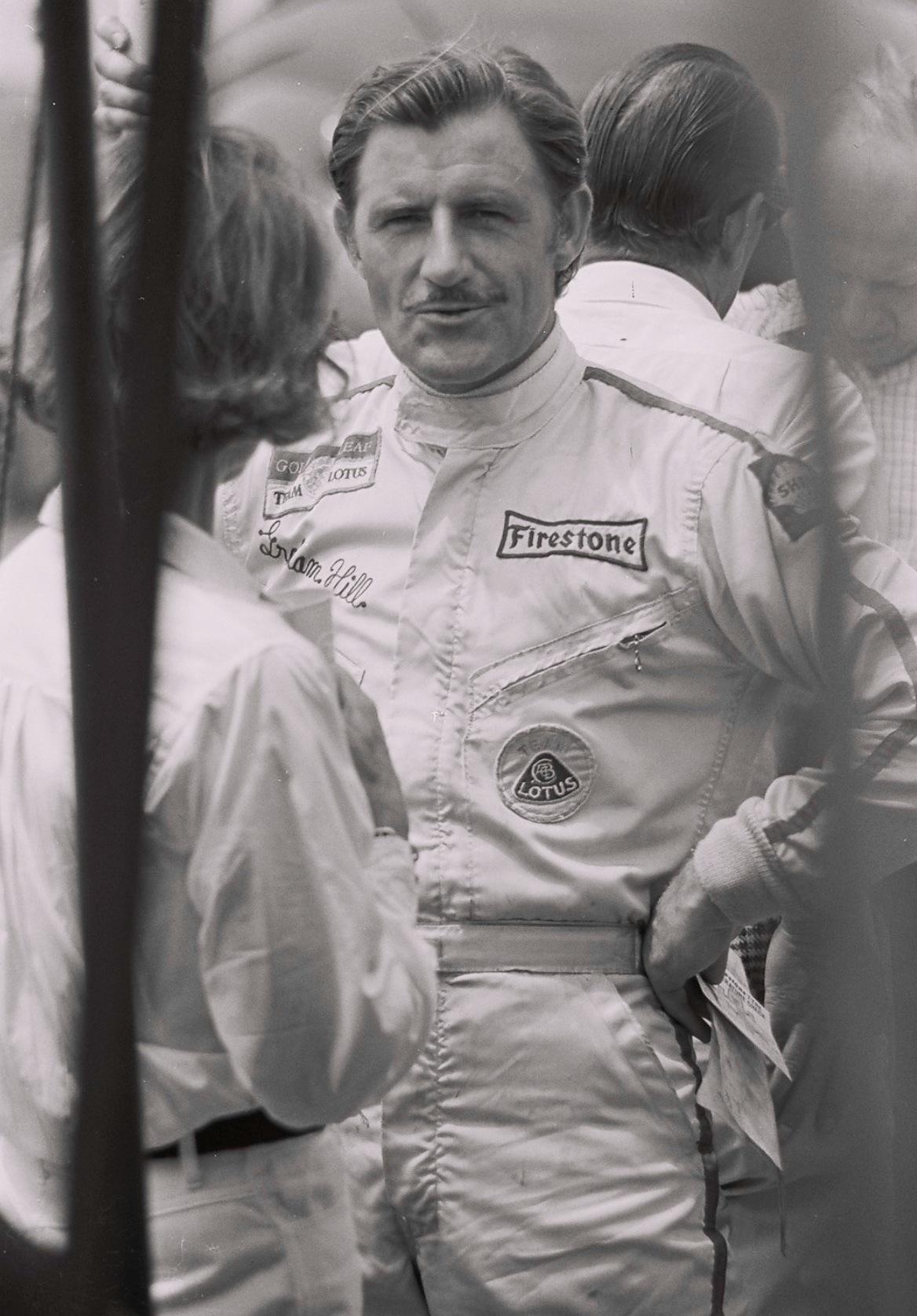

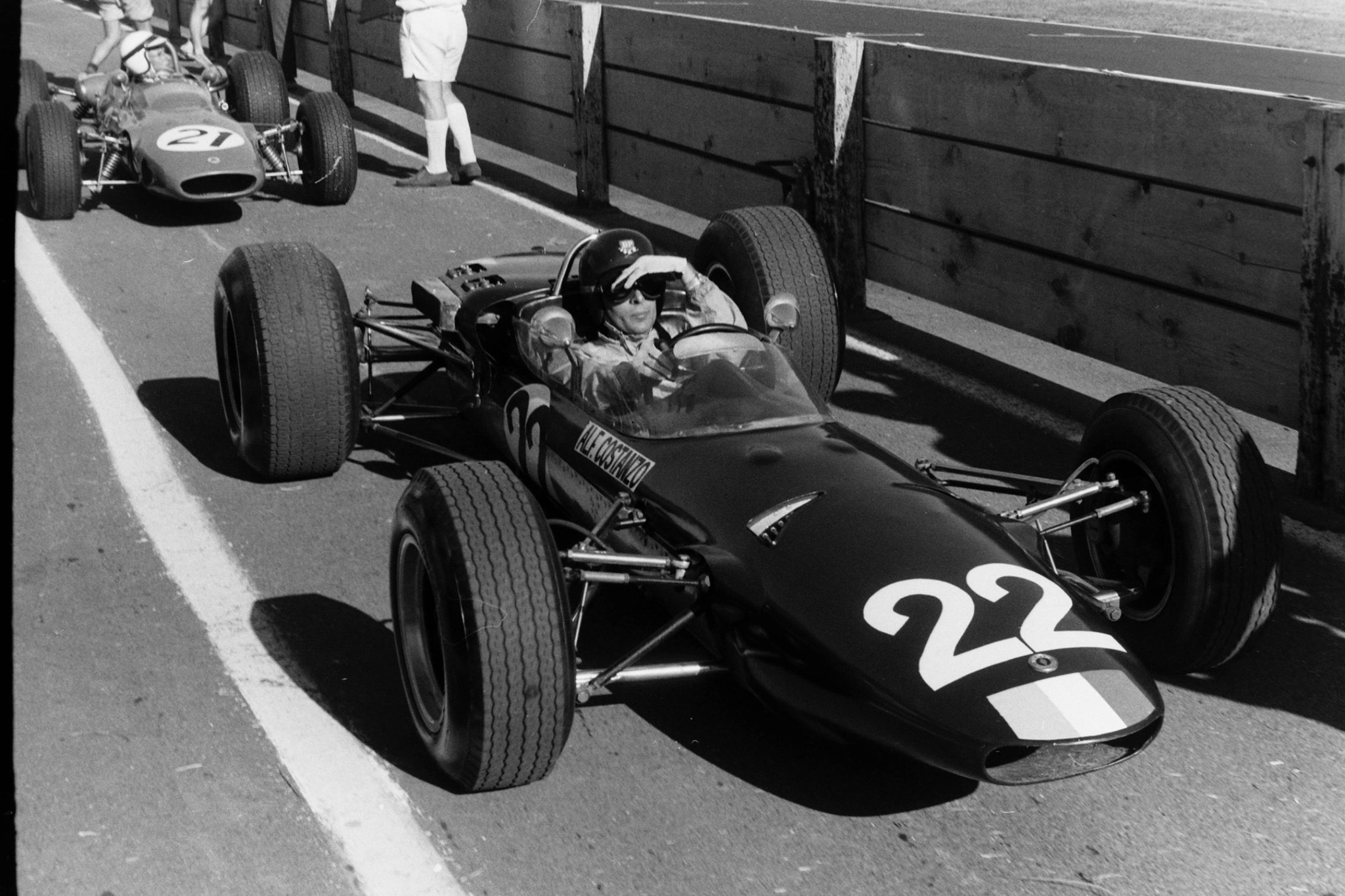
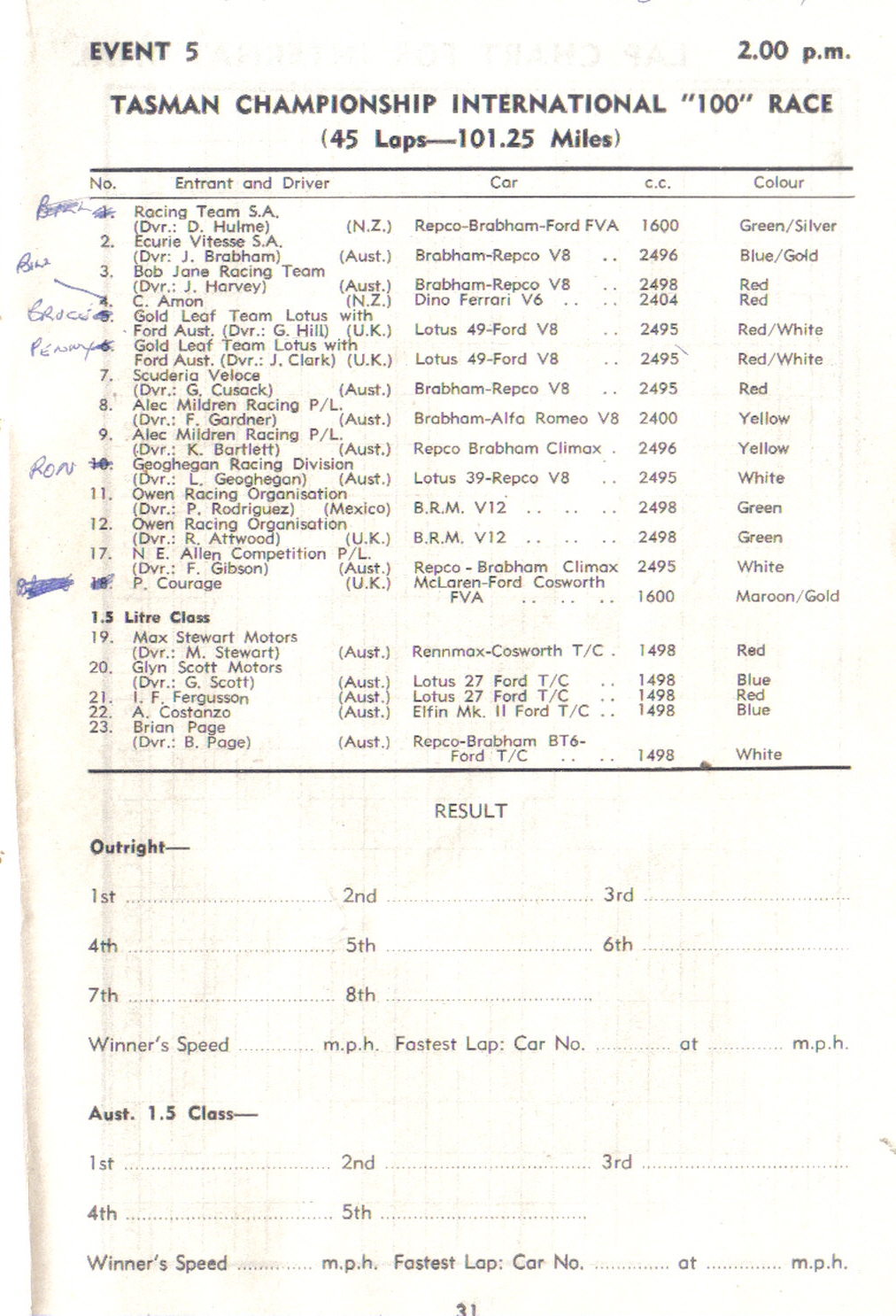
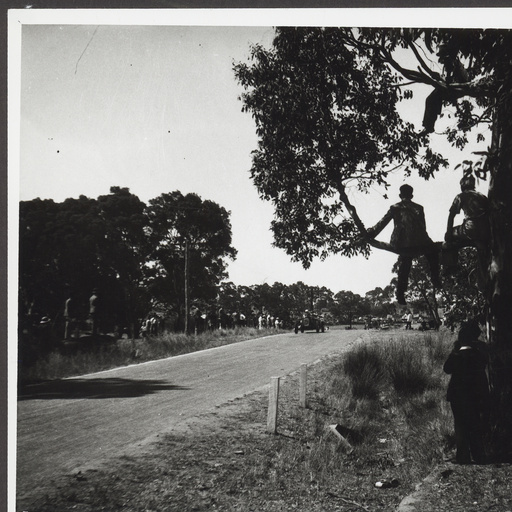


 primotipo...