stew laguna

Jackie Stewart and his ‘Cowcatcher Winged’ Lola T260 Chev, Laguna Seca 1971 (Pete Biro)

It was always going to be tough to beat the dominant McLaren team, but the combination of World Champion Jackie Stewart and Lola, who had a strong Can-Am track record looked a good combination to give them a run for their money in 1971…

team meeting

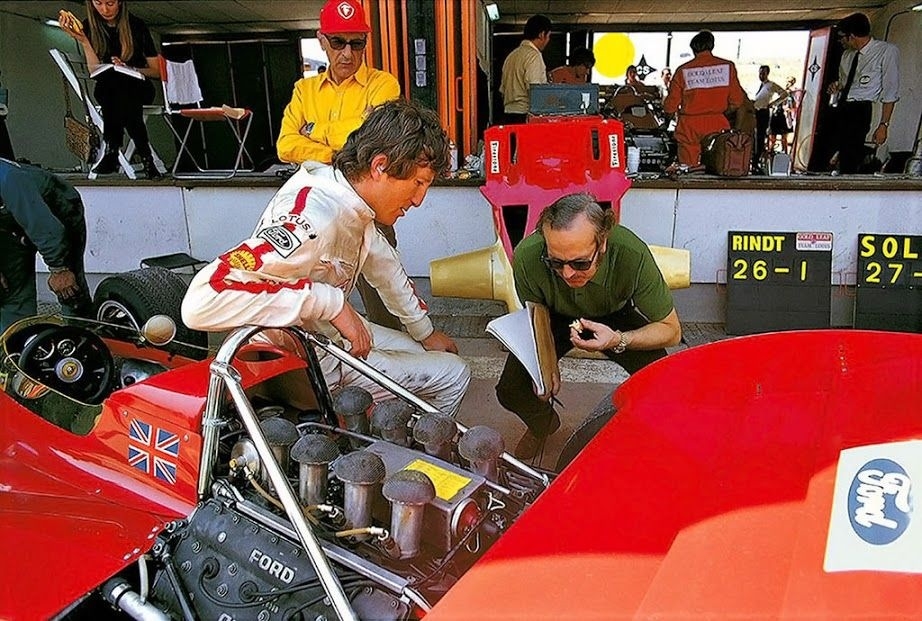
JYS convening a team engineering and set-up meeting in the Road America paddock, August 1971. Bob Marston in red shirt, JYS and in the green hat George Woodward (Jim Buell)

Part 1: Lola and the Can-Am Challenge…

john and bruce

John Surtees, Lola T70 Mk2 Chev leads Bruce McLaren’s McLaren M1B Chev at St Jovite, Mont Tremblant, 11 September 1966, they finished in this order. (unattributed)

The Can-Am morphed out of a series of professional level sports car races which had taken place for over a decade, in 1965 this comprised four events, three were won by the Chaparral 2 and one by a Lola T70.

surteees monterey

John Surtees, Lola T70 Mk2 Chev at The Corkscrew, Laguna Seca, 1966 (Dave Friedman Collection)

The first Can-Am series held in 1966 was won by John Surtees in a quasi-works Lola T70; ‘Big John’ won three races, Dan Gurney and Mark Donohue one apiece in Lola T70s, with Phil Hill taking a solitary win aboard a Chaparral 2E.

While Colin Chapman designed the first modern-monocoque single-seater, the Lotus 25, which made its debut at Zandvoort in 1962, it was Eric Broadley who first applied the new construction technique to a sports-racer with his 1963 Lola Mk6 Ford.

lola mk 6

Augie Pabst’s John Mecom owned Lola Mk6 Ford, Road America 500 1964 DNF (unattributed)

Chapman was convinced the backbone chassis which worked so well in his Elan road car would migrate to sports-racing success but the Lotus 30/40 chassis were as floppy as a centenarians todger with results reflecting same; even Jim Clark could not make those cars sing.

So impressed were Ford with Eric’s Mk6 he was famously contracted to lead the design team of its GT40, a car with a steel tub.

monterey vista

Monterey Grand Prix, Laguna Seca, 16 October 1966. Phil Hill won in a Chaparral 2E Chev. Bottom left is Dan Gurney with his Ford powered Lola T70 (Dave Friedman Collection)

surtees

#7 John Surtees Lola T70 Mk2 Chev 12th and #30 Dan Gurney Lola T70 Ford DNF, Laguna Seca, October 1966 (Dave Friedman Collection)

The aluminium tubbed T70 was one of his first designs after his Ford sabbatical, that design process was useful in terms of evolving the car Eric thought Ford should have built in the first place!

In all its variants the T70 remained a competitive tool in both Group 7 (Can-Am) and Group 5 World Sports Car Championship events into the dawn of the 1970s. Teddy Pilette qualified his Team VDS Mk3B 19th at Le Mans in 1971, not bad for an old car with a pushrod OHV V8 against the might of the 5-litre, 12 cylinder Porsche 917 and Ferrari 512!

In endurance racing the T70 was really only held back by a suitable engine, the 12/24 hour longevity or lack thereof of the Chev engines usually chosen to power it. The small block Chev didn’t have the benefit of factory investment in its development in the same way Ford’s Le Mans winning small block Windsor V8 did.

sebring

Roger Penske’s Donohue/Parsons Daytona winning Lola T70 Mk#B Chev at Sebring in 1969. Here DNF driven by Ronnie Bucknum and Mark Donohue (unattributed)

interview

Top Guns interviewed for the TV, Las Vegas 1966: McLaren, Parnelli Jones and Surtees (Dave Friedman Collection)

start

Stardust Grand Prix 13 November 1966, Las Vegas 1966 start. #7 Surtees Lola T70 Mk2 Chev first, #65/66 Phil Hill seventh, Jim Hall DNF both Chaparral 2E Chev, #5 Chris Amon McLaren M1B Chev DNF (Dave Friedman Collection)

surtess 2

Surtees from Jim Hall’s Chap 2E Chev early in the race. Vegas 1966 (Dave Friedman Collection)

gals

Las Vegas 1966 (Dave Friedman Collection)

surtees and hall

Surtees from Jim Hall’s Chaparral 2E Chev, first and DNF. Las Vegas 1966 (Dave Friedman Collection)

surtees 3

Surtees, Lola T70 Mk2 Chev, Las Vegas 1966 (Dave Friedman Collection)

surtees happy

Happy Chappy. Surtees after his race and Can-Am series win, Las Vegas, November 1966 (Dave Friedman Collection)

Things would get tougher for Lola, Chaparral and the rest of the grid for the 1967 Can-Am.

surtees bridge

Surtees Lola T70 Mk3B Chev in the Bridghampton pitlane, September 1967, fourth (Dave Friedman Collection)

Jim Hall made it tough for himself  in ’66/7 by chasing championships in both Europe and the US, Chaparral sought titles in both the World Sportscar Championship and the Can-Am. They were always a threat with their unique blend of factory Chev engines, stunning chassis and aerodynamic innovation and quasi General Motors support.

Click here for an article on his 2F and it’s 1967 endurance campaign; https://primotipo.com/2014/06/26/67-spa-1000km-chaparral-2f/

But Bruce McLaren was the dark horse challenger.

McLaren had been racing in US sportscar events since his Cooper days, he became more serious with the acquisition of Roger Penske’s Cooper/Zerex Special, click here for an article on that car;

Roger Penske’s Zerex Special…

The Zerex became a test-bed for his own cars, the M1 which he raced in the UK and US until 1966. These light spaceframe cars handled well but the aluminium Oldsmobile V8s deployed – which provided weight and balance advantages – were limited by their power. The blocks maxxed-out at about 4.5-litres so the cars gave away plenty of mumbo to those running 6-litre engines.

McLaren and Chris Amon ran Chevs in their factory M1Bs in 1966 so Bruce had clarity about the bigger engine and its packaging needs, the Kiwi had a clear fix on what was needed to win in the Can-Am. He couldn’t match Jim Hall’s innovation but perhaps he could with a mix of sound design, engineering and good aerodynamics.

In essence this was the design brief McLaren gave to Robin Herd, the 6-litre monocoque McLaren M6 was the result. The M6 started the Bruce and Denny Show with five wins and Bruce deservedly taking the championship.

las vegas

Class of ’67 at Las Vegas, 12 November. Jim Hall’s Chaparral 2G Chev from #4 McLaren’s McLaren M6A Chev, #21 Parnelli Jones’ Lola T70 Ford…all DNF, the race won by Surtees Lola T70 Mk3B (unattributed)

The dominance of the McLaren was a function of several elements. The design and execution of simple well engineered cars. Shaking them down thoroughly in England meant they were race-ready when the short season began. The team comprised three cars and world class drivers every year. They had a US base in Livonia, Detroit and their own engine program, its 6-litre Chevs were built by George Bartz and tuned and assembled in-house under Gary Knutsen’s supervision. Finally the team had adequate sponsorship to do things properly.

The 1968 McLaren M8 was a clean sheet design built from the learnings of the M6; the M8B, M8D and M8F works cars of 1969/70/71 were all evolutions of the M8A with sufficient change to stay ahead of the pack.

The dominance of McLaren was enhanced by ex-works cars passing into the hands of the best privateer drivers at the end of each season and customer cars available to whoever wanted one. Last years works-car became this year’s customer car, such bolides were built by Trojan Industries so the works team didn’t have to worry about pesky customers! By the end of 1968 at least, Lola’s dominance of grid numbers was over.

Such was the challenge Lola, Chaparral, John Surtees, Dan Gurney and the other best team owners faced.

Eric Broadley updated the T70 into the Mk3B for 1967, Surtees and Donohue were third and fourth in the Championship with John taking a win at Las Vegas at the seasons end.

bridge start

Bridghampton September 1967 start; the McLaren M6As of McLaren and Hulme are in front of this group headed by #7 Surtees and #52 Revson both in Lola T70 Mk3B Chevs, #11 Motchenbacher’s T70 Chev, Jim Halls winged Chaparral 2G Chev clear. Hulme won (Dave Friedman Collection)

lola ts

John Surtees much developed Lola T160/TS Chev at Bridghampton, September 1968, DNF having qualified 10th (unattributed)

The T160, Lola’s 1968 car was in essence a development of the T70. Surtees only raced in several rounds of the championship, Sam Posey was the best placed Lola T160 driver, finishing ninth in the drivers championship.

la times 1

Surtees in his modified Lola T160/TS Chev. LA Times GP, Riverside, 27 October 1968. DNF water pump in the race won by McLaren’s M8A Chev (Dave Friedman Collection)

For Surtees it was time to do his own thing, his first customer car was the Surtees TS5 F5000 car for 1969. In the Can-Am he jumped out of the fat and into the flames, Jim Hall’s 1969 Chaparral 2H was not his best car. Surtees got a taste of the M8 McLaren when Hall realised he had built a clunker and bought an M12 customer McLaren for John to drive whilst the team sorted the 2H, Surtees revelled in the car on the few occasions he raced it!

la times 2

Surtees T160 at Riverside from the rear. Top left Surtees in the pits, right Mark Donohue talking with his crew (Dave Friedman Collection)

Commercially for Broadley the appointment of Carl Haas as the Lola importer in 1967 was an astute move and provided the base for both firms success for decades with Haas having the required attributes above to take on the papaya McLarens.

chuck

Chuck Parsons in Carl Haas ‘factory’ Lola T163 Chev at Laguna Seca in 1969. 3rd in the race won by Bruce’s McLaren M8B Chev (T Ferrari)

In 1969 Chuck Parsons proved the Lola T163 was not too bad a car, he finished third in the points chase, while the Chaparral was not a threat, and Porsche first appeared with the 917PA, the Can-Am variant of its dominant in 1970 and 1971, 917 endurance racer.

chap 2 j

Painting depicting Vic Elford’s Chaparral 2J Chev leading Peter Revson’s Lola T220/2 during 1970 (unattributed)

1970 was one of the great years of the Can-Am. The sound, conservative engineering of the McLaren M8D was juxtaposed by Jim Hall’s outrageous Chaparral 2J Chev, one of the most stunning, original, innovative, epic racing cars ever built. The two stroke engines which created the vacuum for its ground effects were its weak link and the cause of too many retirements but the car was stunningly fast while it lasted in Jackie Stewart’s and Vic Elford’s hands.

The Establishment had it banned at the end of the season of course; ‘movable aerodynamic devices were illegal’ but the Can-Am lost its soul and it’s ‘unlimited nature’ in making that decision, Hall told the organisers to go jam it and with it the Can-Am lost its biggest draw if not its most successful team.

revson

Peter Revson destroyed his Lola T220 Chev after a 180mph tyre blowout at Road Atlanta in 1970. He raced a new 10 inch longer wheelbase car, 98 inches, the T222 for the rest of the season. Here at Watkins Glen he was third (Automobile Year)

Haas convinced Broadley to design a new Lola for 1970 and signed Peter Revson, just peaking as a world class driver, to get the best from it.

The gorgeous, swoopy T220 had a very short 88 inch wheelbase which made it difficult to drive, a tyre failure at 180mph at Road Atlanta destroyed it, but fortunately not Revson. It was a blessing in disguise as the replacement T222 had an additional 10 inches added to its wheelbase which made it a much more competitive car.

t220

Revson’s T220 at Road Atlanta and destroyed that weekend. ‘Fence’ an addition from original body spec (Jim Hayes)

Having said that the T220 was fast if unreliable. Revvie qualified it second at Road America, third at Mid Ohio and fourth at Watkins Glen and Mosport, his best finish was second to Hulme at Mid Ohio.

With the longer wheelbase T222 he immediately banged the car on pole at Donnybrooke, finishing third behind the two McLarens and qualified third at both Laguna Seca and the final Riverside round for a third and DNF respectively.

So, by the end of the year the Lola car/driver combination was close to the McLarens, Hulme took the 1970 title with Revson sixth. He was off to McLaren for 1971, all Lola/Haas had to do was build a better car and hire a driver of the required calibre.

Part 2: The Lola T260…

t260 cutaway

Lola T260 Chev cutaway (Tom Strongman)

Having had a taste of the Can-Am in 1970 and earlier years Jackie Stewart was keen to return. TThe professionalism of the Carl Haas team and Lola, a marque familiar to him having raced a T90 successfully at Indy together with Graham Hill in 1966, had appeal. He could fit the series into his 1971 F1 program with Tyrrell, or so he thought. Click here for an article on the Lola T90 and the 1966 Indy 500;

Graham Hill’s ‘American Red Ball Spl’ Lola T90 Ford: Indy Winner 1966…

Lola’s mount for Stewart was designated the T260 which was designed by Bob Marston with Eric Broadley’s guidance.

Lola Heritage; ‘The chassis was a…Lola full monocoque in L72 and NS4 light alloys bonded and riveted together with the fuel bags in either side of the tub with a total capacity of 60 gallons. The oil tank was contained in the rear of the left-hand fuel section. The rear of the monocoque extended to the back of the engine which was sandwiched between two bulkheads, a bell-housing supported the gearbox and absorbed suspension loads.

Cooling was via two brass-finned Serck radiators mounted behind the driver’s shoulder level and fed by two large NACA ducts on the top of the bodywork, the radiators vented through large louvres in the rear bodywork. Two oil coolers were mounted behind the water radiators and used the same ducts, an additional transmission cooler lay flat over the gearbox.

The bodywork was evolved following extensive tests in the Specialised Mouldings wind tunnel and featured a short, bluff nosecone with gauze-covered holes on the top to equalise pressure. At the base of the nose were two air ducts to feed air to the front discs, at the rear two ram pipes on the top of the rear body section collected the cooling air for the rear discs’.

Pete Lyons described the cars aerodynamic approach ‘The T260…was built to an aerodynamic theory already embodied in a few small-bore sports cars of the day. The intent was a shape that would bullet through the air on the straights and also remain stable as the car’s pitch attitude, ride height and positioning behind other cars changed everywhere else. In particular…a more conventional downforce-producing wedge nose, such as McLaren’s…could abruptly change from downforce to lift under certain conditions…’

t 260 aero

CAD sketch showing the T260 aero treatment. (unattributed)

‘The front suspension on the T260 comprised unequal length wishbones, the upper ones were triangulated to form bell-cranks that operated Bilstein dampers and coil springs which lay almost horizontally across the front of the tub. The unusual spring-medium location freed space for the front brakes to be mounted inboard. Eric Broadley’s intention was to reduce the unsprung weight of the front wheels by moving the brakes inboard from their conventional hub location. This would have permitted the lighter wheel assemblies to ride better over the often bumpy Can-Am circuits. Jackie Stewart was adamantly opposed to inboard brakes after the death of his close friend Jochen Rindt due to the failure of an inboard-brake driveshaft on his GP Lotus 72 at Monza in September 1970. Conventional outboard brake mountings were used on the finalized T260 instead.’

A tangent is the fact that later JYS was comfortable enough with Engineer Derek Gardner’s approach to inboard front brakes, his 1973 Championship winning Tyrrell 005/006 being so equipped.

front

T260, Stewart up, Road America. Shot included to show the unusual location, for the time, of the spring/shocks referred to in the text. Graviner fire extinguished ‘bomb clear in shot. Chassis aluminium full monocoque (Jim Buell)

Rack and pinion steering was ahead of the front suspension.

Lola Heritage; ‘At the rear there was a short top link and a long radius arm attaching to the front engine bulkhead, a lower member extended rearwards to a cross-member bolted to the rear face of the gearbox. The springs and dampers fixed to the lower member and transmitted their load to tubular outriggers on the gearbox bell-housing.

Lola-made centre-lock, peg-drive magnesium wheels were fitted, their diameter 15 inches with 10.5 inch front and 17 inch wide rear Goodyears. The battery was mounted in the nose and a Graviner onboard fire extinguisher was fitted behind the dashboard’.

Two cars were built for Haas, chassis HU1 was Stewart’s race chassis, HU2 was an unused spare  in 1971.

The engine was a 496 cu in (8.1-litres) V8 Chevrolet tuned by George Foltz, it produced circa 700 bhp and 618 lb/ft of torque, Lucas fuel injection was fitted with a Scintilla Vertex magneto and a Hewland LG600 four-speed gearbox transmitted the power.

engine

Aluminium block 8-litre engine of the T260 at Mosport. June 1971 (Jerry Bendl Collection/The Roaring Season)

lola t260

(Werner Buhrer)

gardenr back

Frank Gardner testing the Lola T260 at Silverstone in May, note how far forward the rear wing is in relation to shots taken later in 1971 (LAT)

When completed the car was tested by Lola racer/tester/development engineer Frank Gardner at Silverstone in May, FG was also turning his mind and skills into getting more speed from Lola’s F5000 T190/2; no doubt the F5000 was a kiddy-car compared to its 8-litre big brother!

Stewart drove the car in a rain soaked run at Silverstone prior to the cars shipping to Canada for the season opening Can-Am round at Mosport, Canada.

gardner side

Gardner in T260 HU1 at Silverstone, the shortness of the car and different to anything else in the Can-Am aero-treatment, clear in this shot (unattributed)

stewart sikverstone

Ropey shot of Stewart sheltering from the Silverstone weather during his brief drive of the T260 prior to shipment to North America, June 1971 (Sutton Images)

Other 1971 Can-Am Contenders…

hulme and stewart

Denny Hume and Jackie Stewart at Mid Ohio 1971. Stewart in his T260 office (Ron Laymon)

road mclaren

Denny Hulme, McLaren M8F Chev, Road America, August 1971. DNF engine. Engine 494cid Reynolds aluminium block Chev, circa 740bhp @ 6400rpm (Jim Buell)

In reality the likely outright contenders in 1971 were the factory McLaren M8Fs, Stewart’s T260 and Jackie Oliver’s Shadow Mk2 Chev, designed by Peter Bryant.

road shadow

Jackie Oliver’s Shadow Mk2 Chev, Road America 1971, 12th in the race (Jim Buell)

Jo Siffert’s Porsche 917/10 was gathering valuable data for a serious tilt in 1972. In exceptional circumstances (the wet) it was a contender as were a number of the best privateers in either ex-works or carefully developed M8’s: Lothar Motschenbacher, Vic Elford and Tony Adamowicz the most likely.

road pors

Siffert’s Porsche 917/10, Road America 1971. Spaceframe chassis, 5-litre flat 12 (Jim Buell)

road revvie

Peter Revson, Jackie Oliver in the helmet and front suspension detail of a McLaren M8F in the Road America paddock, August 1971 (Jim Buell)

The detailed specification of the McLaren M8F I wrote about a while back; click on this link to read the short article; https://primotipo.com/2015/03/08/peter-revson-mclaren-m8f-chev-1971/

watkins grid

1971 Mid Ohio rolling grid. #5 Hulme, #7 Revson, #1 Stewart, #2 Jo Siffert,Porsche 917/10, #51 Dave Causey Lola T222 Chev, #54 Tony Adamowicz, McLaren M8B Chev, #88 Hiroshi Kazato, Lola T222 (Ron Laymon)

Part 3: Racing: 1971 Can-Am Round by Round…

mosport 1

Mosport 1971 vibe, looks fantastic! (Jerry Bendl Collection/The Roaring Season)

Round 1: Mosport, Ontario Canada 13 June 1971
Stewart grabbed pole position from the works McLaren M8Fs of Hulme and Revson then led the race from Hulme, an oil leak from the LG600 Hewland ‘box resulted in its seizure on lap 18.

Hulme won from Revson and Lothar Motschenbacher in one the 1970 ex-works McLaren M8Ds.

mosport 2

Pan of Stewart at Mosport shows the cars original aero treatment before ongoing modifications and experiments. Rear wing far forward and nose devoid of appendages (Jerry Bendl Collection/The Roaring Season)

Rounds 2 and 3: St Jovite, Quebec Canada 27 June and Road Atlanta, Georgia, 11 July
Stewart put the T260 on the front row next to pole sitter Hulme’s McLaren M8F at St Jovite. Denny led from the start but Stewart sat in second until lap 52 when Hulme, tiring from a stomach bug, had to slow due to exhaustion. Stewart won from Denny and Peter.

st jovite

Stewart a race winner at St Jovite, here beside Hulme with Revson just behind (Lola Heritage)

Stewart recalled in an interview with Gordon Kirby, ‘St Jovite was a good win because with that car, that track was hard work! The other race where we did quite well was at Road Atlanta. We led the race then had a puncture and a whole series of other problems but still turned the fastest lap of the race, quicker than Hulme’s pole time’.  Revson won from Hulme and Motschenbacher.

road atlanta

Stewart had great pace at Road Atlanta, wonderful high speed shot of the short, squat, original T260 (unattributed)

watkins glen

Stewart ahead of Revson, Mario Cabral Porsche 917K and Hulme in the distance, Watkins Glen, 1971 (unattributed)

Round 4: Watkins Glen, New York, 25 July
The T260’s speed was not in doubt, it was back on pole again with Hulme and Revson right behind. Stewart got the drop putting the T260 into the lead from Revson, the Lola and McLaren diced until Stewart pitted with another puncture, losing a lap while the wheel was changed.

Stewart returned to the race and began to fly, setting the fastest lap but on the 56th lap he retired the car after detecting vibrations which proved to be a failing transmission. Revson won from Hulme and Siffert’s factory Porsche 917/10.

stew watkins

JYS at Watkins Glen, site of the US GP in upstate New York, it was a circuit he knew well (LAT)

jackie

Stewart loaded up and all ready to go in the Mid Ohio pitlane (Terry Capps)

Round 5: Mid Ohio, 22 August
Stewart, famously a successful campaigner for better circuit safety, was unhappy with the track; its surface was excessively bumpy and the presence of trees and telegraph poles surrounding the course meant mistakes would be punished severely.

Much overnight work was carried out to remove some of the trees and poles, and add straw bales where possible, but after looking at the result Stewart declared he would ‘run but he wouldn’t race’. Stewart’s position could be appreciated after the bumpy track caused three rear suspension failures to the T260 during qualifying.

front f

Bucolic Mid Ohio paddock. Team busy this meeting, several suspension failures over the bumpy circuit. Standard-aero at this point (Terry Capps)

Stewart qualified third and was second behind Revson at the end of lap one but the McLaren drew away as Stewart drove well within himself. On lap 72 Revson’s driveshaft universal joint failed (the same problem sidelined Hulme) and Stewart took the lead and race win from Siffert’s Porsche and Tony Adamowicz’ 1969 ex-works McLaren M8B Chev.

back

Mid Ohio paddock, this time a butt shot. Neat brackets to support beefy exhausts and lights, black ducts are cooling for inboard discs located beside the Hewland ‘box. Note also ducts/louvres on the rear of the bodywork to exhaust hot air (Terry Capps)

From this point on, the continual development of the McLarens told while the Lola effort didn’t improve enough. McLaren were a well drilled team and both drivers were  experienced campaigners with whatever changes needing to be made could be done quickly in their Detroit workshop or back at Colnbrook.

While the T260 was effectively a works effort run by the marques US importer, Lola were at their core a manufacturer of customer racing cars with many customers, not a race team with only one focus.

stew m10b

Included in JYS program for 1971 was the Questor Grand Prix at Ontario Speedway in March. He was second in his Tyrrell to Mario Andretti’s Ferrari 312B…but here Jackie is putting in a few laps in AJ Foyt’s McLaren M10B Chev in his only F5000 drive?? (Getty Images)

Jackie Stewart on driving the T260 and stresses of two major campaigns, F1 with Tyrrell and the Can-Am Lola in 1971…

Stewart related to Gordon Kirby and Adam Cooper in separate MotorSport magazine interview’s; ‘There were no wind tunnels in those days and Eric (Broadley) would suddenly arrive and under his arm was a new front wing. There was one we called ‘the cowcatcher’. It was hung out front of the car and what it was doing I just don’t know’

‘The car was very short wheelbase and very difficult to drive. In comparison to the McLarens, (Stewart was approached to drive for them in 1972 and actually signed to do so but withdrew when the extent of his health problems were clear) the car was just a monster to drive and we were just trying to keep up’.

‘I tested the McLaren and it was just like a passenger car compared to the incredibly nervous, pointy, short wheelbase Lola where you were a millisecond from an accident all the time.’

Stewart said the Lola T260 was the most physically demanding car he raced in his career ‘On the very fast circuits like Riverside it was awfully tricky because you never knew where you were going’. In order to make up for its shortcomings ‘I sweated more. It was just a difficult car to drive. There are some cars which are easy to drive and others not and that was one of the ones that was not’.

In a contest for the worst car he ever drove; ‘The Lola T260 Can-Am car would probably make that one…the H16 BRM runs it a close second’.

The main problem was dire understeer in addition to ultimate twitchiness at speed. The Lola’s blunt nose was dotted with mesh covered holes through which the underbody air could pass. In theory this helped provide some downforce. In its initial guise the shape of the front didn’t seem to have any obvious way of providing grip. Broadley deliberately opted not to have a fashionable chisel nose. But the lack of downforce at the front was borne out by the position of the giant rear , which was usually far forward, just behind the injection trumpets  in an attempt to achieve some sort of balance.

A combination of racing around the world in two series and lots of promotional work gave Stewart mononucleosis. ‘I was flying back and forth from Europe to do F1, I won the world championship that year and two Can-Am races, but I also got mononucleosis (glandular fever), a really debilitating disease that took your energy away. You couldn’t sleep and yet you were overly tired. So it was a tough year, a really exhausting year’.

stew montjuic

Stewart racing his Tyrrell 001 Ford to victory in the Spanish GP, Montjuic Park, Barcelona on 18 April. He took six wins in 1971 and his second drivers title (unattributed)

It’s interesting to reflect on Jackie’s comments on the differences between the two cars. In fact both the T260, which retained the same wheelbase as the T222, and the M8F had 98 inch wheelbases.

The front/rear track of the Lola was 58 inches, of the M8F 60/57.75 inches, while the overall length of the Lola was 139 inches compared with the much longer M8F’s 167 inches. The aero treatment was radically different of course, a lack of downforce something the team chased progressively throughout the season.

road america

Stewart in the T260 at Road America and trying a different aero configuration comprising; a new profile ‘clip’ on the lower nose at the cars front and McLarenesque wing and integrated mounts, wing now much further back than the original (Jim Buell)

Round 6: Road America, Elkhart Lake, Wisconsin, 29 August
Stewart was third fastest in qualifying but his engine, also used at Mid-Ohio, was tired.

A new Chev was fitted for the race but high temperatures during warm-up were hoped to be vapour lock in the cooling system.

road am 1

Stewart ready to rock at Road America and a close-up of the configuration pictured above (Jim Buell)

Stewart ran second early on but after 10 laps the engine was smoking so Jackie parked it. Later examination showed a dropped cylinder liner was responsible for the high engine temperatures.

Revson won from Siffert and Vic Elford’s McLaren M8E Chev.

stew road am

Stewart T260 Road America, note that in this shot he is running the original nose and rear wing setup (Carl Knopp)

Round 7: Donnybrooke, Minnesota
The T260 had revised rear suspension but the McLarens were continually being developed as well, Stewart’s third fastest time was two seconds adrift of the factory M8Fs.

Stewart got away well and led for two laps until Revson found a way past, Hulme was unable to pass Jackie as the McLaren was losing grip in the Lola’s slipstream. The positions remained until lap 22 when Stewart felt something amiss and pitted, nothing could be found, he resumed in 10th a lap and a half down.

The Scot raced the T260 back to fourth but another puncture saw Stewart back in the pits, the T260 finished sixth, two laps down. Revson again won from Hulme and Gregg Young’s McLaren M8D/E Chev in third.

edmonton

Stewart about to load up on the wet Edmonton grid, September 1971. #11 is Motchenbacher’s McLaren M8D . See another variation of the T260 nose, the front ‘clip on’ less bluff than the original and more ‘scooped’. Rear wing mounted back (Jerry Bendl Collection/The Roaring Season)

Round 8: Edmonton, Alberta Canada, 26 September
The T260 featured a revised nose shape designed to give more downforce while the rear wing was moved back to balance the new nose.

Stewart qualified third again and had a great start on the wet track and led. The T260 was handling well in the rain, the Scot extended his lead over Jackie Oliver’s Shadow and Hulme’s McLaren. Stewart was still leading at half distance but a trip onto the grass when lapping Motschenbacher’s M8D lost the Lola’s handling balance.

Gradually Hulme closed the gap and he suddenly found himself in the lead with 13 laps remaining, the deteriorating handling caught Stewart out and he spun. The T260 resumed in second but with it’s competitiveness lost Stewart settled for a safe second. Jackie Oliver finally got the Shadow Mk2 into the points in third place.

cow catcher

Stewart runs the cow-catcher set up at Laguna Seca, in search of downforce or what! Far forward wing and much larger rear wing to balance things up (Tony Ferrari)

Round 9: Laguna Seca, California, 17 October
At Laguna Seca the T260 had lost its high downforce nose from Edmonton and now featured a huge, front cow-catcher wing projecting out in front of the nosecone.

Stewart managed fourth on the grid behind the McLarens and David Hobbs in the Ti22 Chev.

Stewart soon passed Hobbs – David raced the Carl Haas factory Lola T310 in 1972 – and after 10 laps passed Hulme who had some broken valve springs.

Revson seemed secure 25 seconds ahead of Stewart but a collision with a backmarker required a pit stop to secure a loose door. Stewart was now nine seconds behind. Revson started to pull away again but with 20 laps to go Revvies engine lost power, he nursed it over the remaining laps but with two to go the M8F was puffing blue smoke.

He drove the last two laps cautiously to win and but Stewart took the chequered flag as Revson had been shown a black flag, Revson claimed he hadn’t seen it.

The Carl Haas team protested Revson, the results were pending for some hours, but eventually Revson got the win but received a $250 fine. Hulme was third.

corkscrew

Stewart ahead of David Hobbs Ti22 Chev, Jackie Oliver Shadow Mk2 Chev, another unidentified car with Jo Siffert Porsche 917/10 at rear. Corkscrew, Laguna (Hal Amarantes)

riverside

riverside 2

Stewart at Riverside, again with the cow-catcher aero setup. Side on profile shot gives an idea of just how far forward the front wing was and how big the rear one was! Lola T260 Chev (MP Hewitt)

Round 10: Riverside, California, 31 October
The series’ final round was at Riverside on October 30, only 3 1/2 short months since its commencement in mid-June.

Stewart again qualified third, the T260 now had bigger sideplates on its rear wing.

Hulme took the lead at the start but Stewart got up to second as Revson, looking for points to clinch the Championship, didn’t make it difficult. Unable to challenge Hulme, Stewart was running happily in second until a piston failed in the big aluminium Chevy on lap 27.

Hulme won from Revson and Howden Ganley in the BRM P167 Chev.

The end of the 1971 Can-Am Championship resulted in Peter Revson as champion with five wins to Hulme’s three, Stewart finished an honourable third to the two McLarens…

As Lola Heritage puts it ‘He had been their only consistent competitor over the ten rounds and there was a certain ‘what may have been’ feeling over the whole series, if only reliability had been better and punctures had been less’.

In addition to that it’s a shame the car hadn’t been finished earlier and tested extensively at Goodwood and Silverstone prior to crossing the Atlantic, but it wasn’t and the dominant McLaren’s reaped the rewards.

t310 front

David Hobbs in the Watkins Glen pits 1972, Lola T310 Chev (unattributed)

For 1972 Lola again contested the championship with a new car, the T310, McLaren built a new car, the M20 Chev to take on the pride of Stuttgart, but the mighty turbo-charged Porsche 917/10 was battle ready in the hands of the Penske Team and Mark Donohue in a way the 1971 Lola/Carl Haas/Stewart combination were not…

t 310 watkins

David Hobbs Lola T310 Chev fourth ahead of Jackie Oliver’s Shadow Mk3 Chev DNF and the dominant Porsche 917/10 turbo of George Follmer fourth. Hulme won this round in an M20 McLaren. Watkins Glen 1972 (unattributed)

Etcetera…

dimensions

Bibliography…

Lola Heritage, MotorSport October 2000 article by Adam Cooper and December 2013 article by Gordon Kirby, Automobile Year 19, ‘Can-Am’ Pete Lyons

Photo Credits…

Lola Heritage, Ron Laymon, Getty Images, LAT, Jerry Bendl Collection/The Roaring Season, Automobile Year, Jim Hayes, Tom Strongman cutaway drawing, Carl Knopp, Jim Buell, Terry Capps, Hal Amarantes, Tony Ferrari, MP Hewitt

Tailpiece…

Turn in Biiitch!

bitch

Stewart Lola T260, Road America 1971 (Jim Buell)

Finito…
taffy

(Archie Smith)

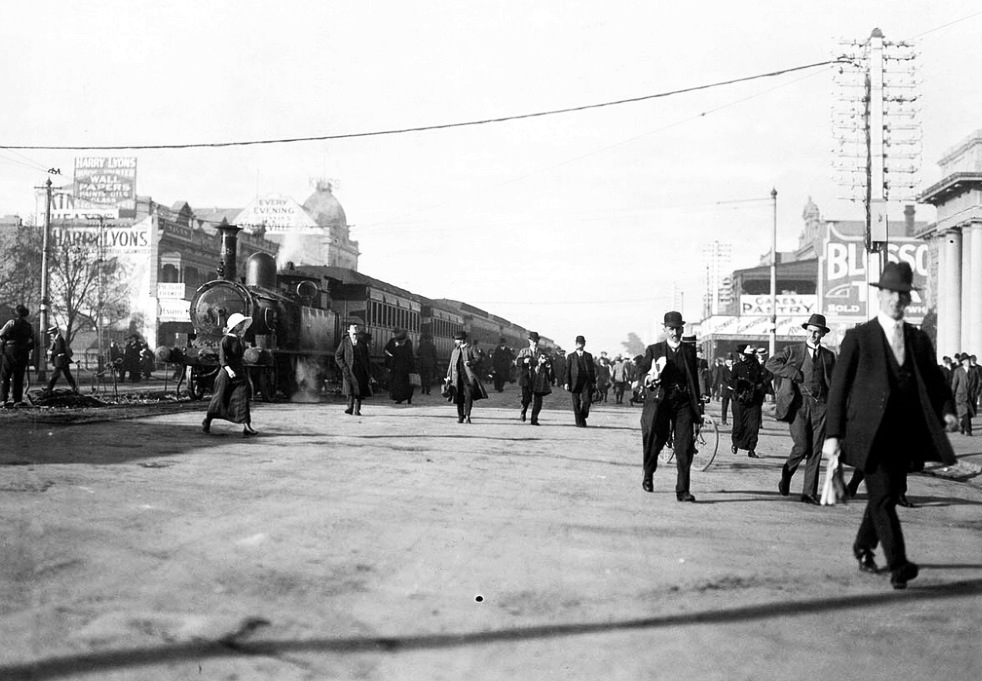
Taffy von Trips settles himself into his F2 Ferrari Dino 156 #0008 on the grid of the 1960 Italian Grand Prix, Monza, September 6…

The cars designer, Carlo Chiti looks on. Click on the link below to my article, I’ve converted a 100 word quickie on a Monaco vista in 1960 into a feature on a significant Ferrari thanks to a tangent introduced by reader Grant Perkins for reasons which are clear in the text; https://primotipo.com/2015/10/04/monaco-panorama-1958/

This car, Ferrari Dino 246P/156 0008, is the Scuderia’s first mid-engined car.

severi

(unattributed)

Ferrari factory test driver Martino Severi drives the brand new, mid-engined 246P 0008 on 22 May 1960 at Modena. Ginther and Hill also drove it that day, it’s a week before its Monaco GP debut. It’s not as gorgeous as it became in Fantuzzi bodied 1961 156 form, but luvverly all the same

Dino 246P 0008’s evolution from 2.5-litre mid-engined GP prototype in Ginther’s hands at Monaco 1960 to 1.5-litre Dino 156 Syracuse 1961 GP winner for Giancarlo Baghetti within 12 months is an interesting story.

richie

(unattributed)

Richie Ginther at Monaco 1960 for his, and Ferrari Dino 246P 0008’s GP debut.

Photo Credits…

Archie Smith

Finito…

clark

Rod MacKenzie’s moody, foreboding, evocative image of Jim Clark’s Lotus 49 at Longford in 1968 is one of my favourites…

Clark is exiting Newry Corner on the run towards the ‘Flying Mile’. He started from pole, winning 100 bottles of champagne in the process and finished second in the Saturday preliminary race in beautiful weather but the clouds opened on Monday morning for the Tasman Championship event, ‘The South Pacific Trophy’.

Star of the show was Piers Courage who drove a gutsy, skilful race in the most challenging, treacherous conditions to win the event in his little F2 McLaren M4A FVA ahead of the big Tasman 2.5’s of his close competitors. Pier’s car was self run, his performances in it that summer reignited his career.

courage

Piers Courage in his McLaren M4A F2 car, Newry Corner, Longford 1968. Power was not all on this fast circuit in such wet conditions, but the plucky Brit was giving away at least 130bhp to his 2.5 litre V8 powered opponents (R MacKenzie)

Pedro Rodriguez and Frank Gardner were second and third in BRM P261 2.1 V8 and Brabham BT23D Alfa 2.5 V8 respectively. Clark was fifth in his Ford Cosworth DFW engined Lotus 49, the 2.5 litre variant of the epochal 3 litre DFV GP engine.

Jim Clark chewing the fat with BRM’s Tim Parnell- all the fun of the fair, Longford 1968, Clark’s Lotus 49 Ford DFW ready for action (oldracephotos/Harrisson)


Clark and the boys with Denny Hulme’s Brabham BT23 FVA behind (HRCCT)

Lets go back to the start of the meeting, marvellous from the Tasmanian’s perspective as the series went down to the wire, Chris Amon was still a potential series victor with only six points between he and Jim Clark with Piers Courage’s third place within Graham Hill’s grasp depending upon how he fared.

Chris Amon blew the sealing rings in the Ferrari’s little V6 keeping his crew busy for the evening whilst Pedro Rodriguez popped an engine too- the BRM mechanics therefore readied the P261 V8 for the race rather than the P126 V12 the Mexican raced in the Saturday preliminary. Piers Courage tapped the nose of his pristine McLaren M4A when the flaggies got so enamoured of the cars they forgot to signal oil on the track! All was well at Gold Leaf Team Lotus.

Lap 1 of the preliminary on Saturday, Geoff Smedley’s amazing colour shot- Clark from Hill, Amon, Gardner and one of the BRM’s- Lotus 49 by two, Ferrari 246T, Brabham BT23D Alfa and BRM P261 0r P126 (G Smedley)

Practice times didn’t mean too much as the teams were focused on race setup for the twelve lap Saturday preliminary race ‘The Examiner Racing Car Scratch’ which also counted for grid positions. In the second session of practice Clark did a 2:12.8, Hill 2:13.6 and Amon 2:13.8. Clark was under Jack Brabham’s record set on the way to his win the year before in his BT23A Repco, Jim won 100 bottles of champagne for pole as stated earlier.

In the preliminary on Saturday the grid formed up with Clark on pole. Hill comfortably won the event run in fine, dry weather from Clark and Amon. Both Lotuses were timed on the Flying Mile at 172 mph but Amon’s 182 mph in David McKay’s ex-works Ferrari P4/Can Am 350 sportscar rather put the single-seaters in the shade! Lets not digress about that car now, follow the link at the end of this article for a long piece about the P4 which Chris raced in the sportscar support events in each of the Australian Tasman rounds.

Hill G leads the pack off Long Bridge on lap 1 of the Saturday preliminary. Hill, Clark, Amon, Gardner, Leo Geoghegan Lotus 39 Repco, a BRM and perhaps Kevin Bartlett Brabham BT11A Climax (R MacKenzie)


Exit from Newry, lap 1 of the preliminary- Hill, Clark, Amon, Gardner, Geoghegan’s Lotus flirting with the tracks edge, and Attwood. Great shot shows how the circuit rises at this point into the right hand kink up the road (S Geoghegan)

Only a couple of supporting races had been run on the Monday raceday when light rain started to fall at about 10am, this soon became heavy. As the rain got harder and the clouds more threatening it was obvious that it was not likely to abate before the 2.15 pm race start time

The track was almost under water at some points where hay bales had broken up and straw was blocking the drains. Efforts by track officials soon had most of the drainage system under control.

A large crowd was of course present on the Labour Day long-weekend. Crews brought the cars out onto the circuit in front of the pit counter and stood together under umbrellas as the drivers went into a huddle with the promoters of the meeting and the CAMS stewards to determine if the race should go on.

Leo Geoghegan and Lotus 39 Repco return to the Longford pits after some exploratory laps. DNS with unsuitable tyres. Its the Courage McLaren by the pit counter (oldracephotos)

Sergent.com report that first it was decided that the cars should do a couple of exploratory laps then report their findings.

Geoghegan, Amon, Clark, Hill, Attwood, Gardner, Bartlett and others went out and after looking like motor boats ploughing through the water delivered their thoughts to the meeting. The conditions were so bad various drivers with unsuitable tyres elected not to start having driven some ‘sighting laps’.

Kevin Bartlett recounted his experience in the Alec Mildren Racing Brabham BT11A Climax; ‘I did two exploratory laps and the old BT11 couldn’t find traction anywhere. I had an absolutely terrifying 4th gear 720 degree spin across the short Kings Bridge, the one after the Viaduct, missing all the obstacles at the tracks edge. After exiting Pub and in a straight line i did a 360 degree loop. She nearly escaped me over the rail line on the way to Long Bridge. Out of Newry and up the hill to the straight slithering along with no touch felt between me and the bitumen, so i suppose I thought at that moment to do another lap at a very reduced speed then pit’.

Packed car park: Amon’s Dino, the BRM’s of Attwood and Rodriguez, Pedro’s P261 fully covered, the two Lotus 49’s, Piers McLaren, then Leo G’s Lotus 39 and John Harvey’s Brabham BT11A (oldracephotos)

long

‘What are we going to do boys?!’ Drivers considering their options before the race, the pouring rain exacerbated by drains beside the track which couldn’t cope with the deluge; Clark facing us, Hill’s distinctive helmet clear. Courage with his back to us in helmet, Gardner’s lanky frame partly in shot to the right. Amon in the ‘Firestone’ suit, Harvey? at left with head down (oldracephotos)

‘Once back in the tent Alec, Frank (Gardner) Denny (Hulme Brabham BT23 FVA F2) and i had a talk about the tyres that Denny and i had and after trying to come up with a better tread pattern, such as the ones fitted to Franks car (Brabham BT23D Alfa) but with no result. It was agreed that Denny and i shouldn’t risk a start. I was happy with the call and Leo (Geoghegan Lotus 39 Repco) followed suit. Most of the top guys had the latest Firestone, Dunlop or Goodyear wets but none were available to suit the BT11’s. I consoled myself with the fact that if the new world champion (Hulme) didn’t like the risk i certainly shouldn’t!’

Longford, wonderful circuit that it was, provides no runoff area for a driver to go in the wet (or dry!) should a driver lose control or suffer a bad attack of aquaplaning, and this was the main point in contention.

The ill fated Brabham BT23A Repco ‘740’ of Greg Cusack on Friday or Saturday (oldracephotos)

Greg Cusack in David McKay’s Scuderia Veloce Brabham BT23A Repco (Brabham’s victorious Longford mount from 1967) had left the road that morning. He lost the car on the greasy road as he went over the hump/bump on the approach to The Viaduct. The car left the road, hit a bank, somersaulted and crashed into a ditch, he was then pinned under the it before being quickly released by officials.

The 37 year old Canberra motor dealer, who had intended Longford to be his last race meeting, was taken to Launceston Hospital with chipped bones to both knees, stretched ligaments and a fractured left wrist. He was lucky it was not a good deal worse. Bib Stillwell organised for one of his planes to fly Cusack and his wife home to Canberra on the Tuesday where he was admitted to hospital.

Whilst Cusack lay in hospital the other drivers were trying to explain the difficulties of Longford which were exacerbated hugely in the wet. ‘Motoring News’ reports at length about the cordial discussions between the drivers and officialdom and all of the competing issues of safety, providing a show and running a race to determine the winner of the Tasman Cup.

The Stewards finally ruled that the race should go ahead but be shortened to 15 laps of the 4.5 mile circuit, (128 miles to 68 miles) and put the starting time back to 4pm hoping the rain would ease and the situation be safer as a consequence. At 4.15pm the sodden cars and their game, uncomplaining drivers were facing the soggiest start ever seen at Longford, one of the most challenging road circuits in the world.

Front row- Amon Ferrari 246T and the two Lotus 49 DFW’s of Hill and Clark, that’s Frank Gardner’s Brabham BT23D Alfa nose (oldracephotos)


Soggy start: L>R Amon Ferrari Dino 246T, Hill Lotus 49 and unsighted to the right Clark. Then Rodriguez BRM P261 #11 and alongside Gardner in the light coloured Brabham BT23D, #12 behind him Attwood BRM P126 and alongside him the winner Courage McLaren M4A. L>R in the back row John Harvey’s Brabham BT11A, John McCormack Brabham BT4 and Mel McEwin Lotus 32B (oldracephotos)

Clark’s Lotus 49 got away well, somehow finding traction with the wide Firestones, and he was followed into the right-hander before The Viaduct by Amon and Hill. The drivers took the opening laps cautiously under race conditions and each car was leaving a gap to the other so they could see through the flying spray.

At the end of lap one the order was Clark, Rodriguez BRM P261 V8 on Dunlops, Gardner Brabham BT23D Alfa on Goodyears, Courage Mclaren M4A Ford FVA using new narrow-section 970s, Hill Lotus 49 Ford DFW on Firestones, Attwood BRM P126 V12 on Dunlop, Amon Ferrari 246T back in seventh owing to a run down the escape road at Newry Corner, then John Harvey Brabham BT11A Repco John McCormack Brabham BT4 Coventry Climax FPF and Mel McEwin Lotus 32B Coventry Climax FPF, this car the ex-Clark/Palmer 1965 Tasman Championship winning chassis.

Richard Attwood, a very good 4th in the big BRM P126 V12 on Pit Straight. BRM was testing, by way of eight Tasman race weekends in a row, this new F1 design in 2.5 litre capacity in advance of the ’68 GP season (oldracephotos/DKeep)

‘Attwood found he had more traction on Dunlops than Hill had with the wide Firestones and he slipped under the Lotus for fifth place on lap 2. Both Attwood and Rodriguez had hand-cut drainage grooves in their tyres. A lap later Courage really got his foot in it to take Gardner on lap 3. He then jumped past both Rodriguez and Clark on the next lap while Gardner followed him through and waited for another lap behind Clark before taking the plunge and heading for second. Amon had taken Hill and now, on lap 5, the order was Courage 9.6 secs ahead of Gardner, Clark, Rodriguez, Attwood, Amon, Hill and Harvey. McEwin and McCormack were already in danger of being lapped by the flying Courage.

Hill from Gardner, not sure who and one of the BRM’s, Long Bridge (R MacKenzie)

Courage, driving like a young Stirling Moss in the blinding rain, somehow gained another 9.5 secs on lap 6, putting him 16 secs ahead of second man Gardner in the Brabham-Alfa. Rodriguez had pulled past Clark and on the next lap Attwood whizzed past Clark to take fourth. On lap 9 Courage was 32 secs ahead of Gardner and having a ball out on his own, right foot hard in it. Gardner was 3.5 secs ahead of Rodriguez who was followed by Attwood, Clark, Amon, Hill and Harvey losing a lot of ground’.

Pedro raced the little 2.1 litre BRM P261 V8 having raced the new P126 V12 in the preliminary and had engine failure. 2nd a minute behind Courage just sneaking past Gardner in the final stages (oldracephotos/DKeep)

‘Rodriguez started to close up on Gardner in the closing laps, but nothing could touch Courage. This was his day, it was he who had the best gear on his car and he was darned sure he was going to make it a race to remember. He had pulled 45.5 secs on Gardner by lap 12 while Rodriguez had got within 2.5 secs of Gardner. Hill challenged Amon on the same lap and finally squeezed past in a daring effort on the greasy track to make the Lotus-Fords fifth and sixth’.

Frank Gardner on the exit of Newry, Alec Mildren’s Brabham BT23D Alfa Tipo 33 2.5 V8. 3rd a minute behind Courage (R MacKenzie)

‘As Courage screamed down the straight heading for the flag he was over 55 secs ahead of Gardner and he came past the pits jubilantly waving his hand. Gardner by this time, heading for the braking area at Mountford, had Rodriguez looking right at the Alfa V8 pipes. There seemed no way that Rodriguez could slip past, but suddenly a gap appeared as Gardner went a shade wide on Mountford and Rodriguez poured on the power into the short straight and took the flag about 25 yards ahead of the Alec Mildren car. Attwood finished his race fourth after a very steady drive, followed by Clark, Hill and Amon’.

John Harvey coming off Long Bridge in Bob Janes Brabham BT11A Repco ‘740’ V8. This is the car in which Spencer Martin won the ’66/7 Australian Gold Star. Converted to Repco power just prior to the Tasman (R MacKenzie)

Hill, Lotus 49 DFW, 5th on the Flying Mile (R MacKenzie)

‘Courage had the rubber, just the right amount of power for the job and the ability to keep the car straight on a very dicey and greasy circuit. He finished the Tasman Cup Series in a wonderful third place behind Clark and Chris Amon. Then came Hill and Gardner 17, McLaren 11, Rodriguez and Hulme 8, Jim Palmer 7, Attwood 4, Roly Levis and Leo Geoghegan 3, Paul Bolton, Red Dawson and Kevin Bartlett 2, Graeme Lawrence and Ross Stone 1 each’.

Like a duck to water- Courage, right tyres, set up, enough power, precision and bravery. McLaren M4A FVA F2 machine (R MacKenzie)

It was very much the end of an era, the last Longford, the speed of the cars and advancing track safety rules caught up with the place and an inability of the club/government to make the requisite investment. Most importantly Jim Clark, a very popular visitor to Australasia since the early sixties and twice winner of the series in 1965 and 1968 died at Hockenheim in an F2 Lotus 48 in April.

Lotus returned in 1969 but it was not quite the same without the magic and personality of the great Scot.

photo (15)

A very happy but cold and soggy Piers Courage, with wife Sally after his Longford ’68 win. It was a might fine drive which is still remembered by those fortunate enough to see it. (oldracephotos)

Etcetera…

Practice and Saturday Preliminary

Richard Attwood, BRM P126, The Viaduct (oldracephotos/Keep)


Lap 1 bunch behind the lead group- Gardner Brabham BT23D, Geoghegan Lotus 39, Attwood BRM P126, Bartlett Brabham BT11A, Rodriguez BRM P126 into The Viaduct (oldracephotos)


Leo Geoghegan, Lotus 39 Repco 740. Leo frightened the internationals in his ‘old bus’ more than once that summer- Clark’s ’66 Tasman mount Coventry Climax FPF engined. Non starter on Monday tho (R MacKenzie)


Chris Amon, Ferrari 246T. Chris learned a lot from his ’68 tour, and applied those learnings well in 1969 winning the title in an updated, four valve, winged  Dino (oldracephotos


Pedro Rodriguez, BRM P126. The V12 engine in this car failed during the race so Pedro raced the ‘backup’ P261 V8 in the championship event- cars which had become wonderful Tasman machines from 1966-8. Winner in ’66 in Stewart’s hands (oldracephotos/Keep)


Graham Hill, Lotus 49 Ford DFW. Perhaps not the best of Tasmans- 2nd at Surfers and Warwick Farm his best results (R MacKenzie)


Pedro Rodriguez, BRM P261 V8 during practice (oldracephotos/Keep)


Pedro Rodriguez, BRM P126, The Viaduct (oldracephotos/Keep)


Richard Attwood, BRM P126. Drove the Oz rounds in the car vacated by McLaren- 4th at Longford deserved, DNF’s @ Surfers and Sandown, overall the P126’s were not blessed with great reliability in the ’68 Tasman (R MacKenzie)

Photo and Other Credits…

Roderick MacKenzie Collection;  http://www.racephotoaustralia.com/

oldracephotos.com;  http://www.oldracephotos.com/content/home/

The Nostalgia Forum/Ellis French/Rod MacKenzie and Kevin Bartlett.  Sergent.com race report. Geoff Smedley. ‘Canberra Times’ 6 March 1968

Ellis French Collection/Archive

Scuderia Veloce Ferrari P4/Can Am 350…

Ferrari P4/Can Am 350 #0858…

Tailpiece: Practice- Rodriguez BRM P261 from Courage McLaren M4A Ford FVA and Kevin Bartlett Brabham BT11A Climax FPF. Variety is the spice, braking into The Viaduct…

(oldracephotos/DKeep)

Finito…

keke 1

(Terry Marshall/The Roaring Season)

Terry Marshall’s shots capture the zesty, attacking style which made Keke Rosberg a crowd favourite throughout his career. Here in his Chevron B39 Ford at Pukekohe during the New Zealand Grand Prix on January 7 1978…

The Kiwi’s changed their national formula from F5000 to Formula Atlantic/Pacific from the 1977 International Series whilst we Aussies persevered with the big V8’s.

Rosberg won the 1977 Series in a Fred Opert Chevron B34 from American Tom Gloy in a Tui BH2 and Aussie Grovewood Award Winner, Bruce Allison’s Ralt RT1.

He returned again in an Opert Chevron B39 in 1978 and took that championship as well; 6 wins of 10 races, 1 at Bay Park, both NZ GP rounds at Pukekohe and 1 apiece at Manfield, Teretonga and Wigram.

Aussie ex-F1 driver Larry Perkins was 2nd in a ‘Scuderia Veloce’ Ralt RT1, Bobby Rahal was 3rd in the other Opert Chevron entry and Danny Sullivan 4th in a ‘March Cars’ March 77B.

The fields were of great depth and included Kiwi Internationals Ken Smith March 76B, Brett Riley March 77B, Steve Millen Chevron B42 and David McMillan Ralt RT1.

Later in 1978 Rosberg contested many European F2 rounds in another Opert Chevron, a B42 Hart 420R 2 litre and critically his Grand Prix career commenced…

His first race was the South African Grand Prix in a Theodore TR01 Ford on March 4, he qualified 24th of 30 entrants and retired with a range of maladies.

The car was a clunker (an F2 Ralt acquired by Yip into which a Ford Cosworth DFV was bolted) with many non-prequalifications to follow later in the season, but things came together nicely a fortnight after Kyalami for his first F1 win, a stunning wet weather drive in the non-championship ‘BRDC International Trophy’ at Silverstone on 19 March.

Whilst many fell off in the streaming conditions Keke drove a fast, consistent race to win from from Emerson Fittipaldi in one of his own Fittipaldi F5A Ford’s and Tony Trimmer, McLaren M23 Ford. The field included Peterson, Andretti, Ickx, Hunt, Regazzoni, Lauda, Depailler, Mass and Arnoux.

theodore

Rosberg winning the ‘International trophy’ at Silverstone in March 1978. Theodore TR01 Ford. (unattributed)

Later in the season he had some drives in Wolfs’ WR3 and WR4 acquired by Teddy Yip given the lack of pace of their own Theodore. 10th in the German GP at Hockenheim in one of these cars was his best result of the year.

He also drove an ATS Ford in 5 events and whilst still not a competitive car he showed what he could do, and the rest as they say is history, Keke achieved ‘ a toehold in F1’ with Fittipaldi in 1980!

For sure his Antipodean Formula Pacific wins against strong competition enhanced his reputation by beating his peers in equivalent cars and made him ‘race fit’ by the time he returned to Europe.

keke 2

Rosberg on the Wigram grid, 29 January 1978. Chevron B39. (Terry Marshall/The Roaring Season)

Terry Marshall said of this shot; ‘Keke Rosberg what a star, always goofing around.

Here on the grid at Wigram. He had just pulled me down into the cockpit to tell me if i came to Germany with him he would jack me up a job as a magazine photographer there. I had a lovely wife and two kids, so i had to say no.’

keke 3

Rosberg, Chevron B39 Ford, Bay Park, NZ. 2 January 1978. 1st place. (Terry Marshall/ The Roaring Season)


keke 4

Rosberg relaxing in the Teretonga paddock, 22 January 1978. ‘Motoring News’ maybe?! Beautiful all enveloping body of the B39 helped it slip thru the air nicely. (Kevin Thomson Collection/The Roaring Season)

Chevron B39 Ford and Formula Atlantic/Pacific…

The Chevron B39 was Derek Bennett’s 1977 Formula Atlantic car, 11 were built, Keke’s Fred Opert Racing (the US importer of the cars) chassis was # ’39-77-08′.

Typical of the period, we are just before the ‘ground effects’ era remember, the car used an aluminium monocoque chassis, independent front suspension with upper and lower wishbones and coil spring/Koni shocks. Adjustable roll bars were fitted front and rear. Rear suspension comprised a single upper link, two lower links, two radius rods for lateral location, and coil spring/Koni shocks.

Steering was rack and pinion and brakes disc all round, inboard at the rear beside the ubiquitous Hewland 5 speed FT200 transaxle.

keke 5

Rosberg’s B39 being prepared for the Bay Park round of the series on January 2 1978. (Mike Feisst Collection/The Roaring Season)

The engine was the Ford Cosworth BDA, originally homologated for rally use in Ford’s Escort RS1600 to replace the ageing Lotus Twin Cam, which was also based on a Ford block. Other engines were eligible for Formula Atlantic, the class ‘morphed’ out of the SCCA’s 1600 Formula B which commenced in 1965, but the BDA soon became the engine of choice. Formula Atlantic/Pacific soon became a truly global class which was contested in North America, UK, Australasia and South Africa.

bda cutaway

Ford Cosworth BDA engine cutaway. Engine designed by Mike Hall, the original 1969 variant spawned engines successful in Rallies, F2, F Atlantic/Pacific and much more. (unattributed)

The ‘BDA’ had many variants, all were successful, the Formula Atlantic kit was called the ‘BDD’ and like many of the ‘BDA’s was based on the Ford Cortina/Formula Ford ‘711M’, 5 bearing cast iron block.

The head was DOHC the 4 valves per cylinder driven by a toothed rubber belt, one of the the first race engines to do so and one of the first production engines so specified as well. The engine was fed, as mandated by the class rules, by carburettors, usually 48DCOE Webers. The 1590cc BDD developed a reliable 205bhp plus @9000 rpm, one of lifes true pleasures is to drive one of these cars powered by this engine.

Rosberg’s performances were meritorius as, arguably, the B39 was not quite as quick a car as the contemporary Ralt RT1 or March 76/77B, but the dude behind the wheel more than made up for whatever the chassis gave away.

(Peter Brennan Collection)

Credits…

Terry Marshall, Kevin Thomson, Mike Feisst/The Roaring Season. Click on this link to take you into TRS, all three collections are well worth trawling through for all sots of cars.

http://www.theroaringseason.com/showthread.php?863-Photos-The-Terry-Marshall-Collection

oldracingcars.com, Peter Brennan Collection

Finito…
pete
(D Simpson)

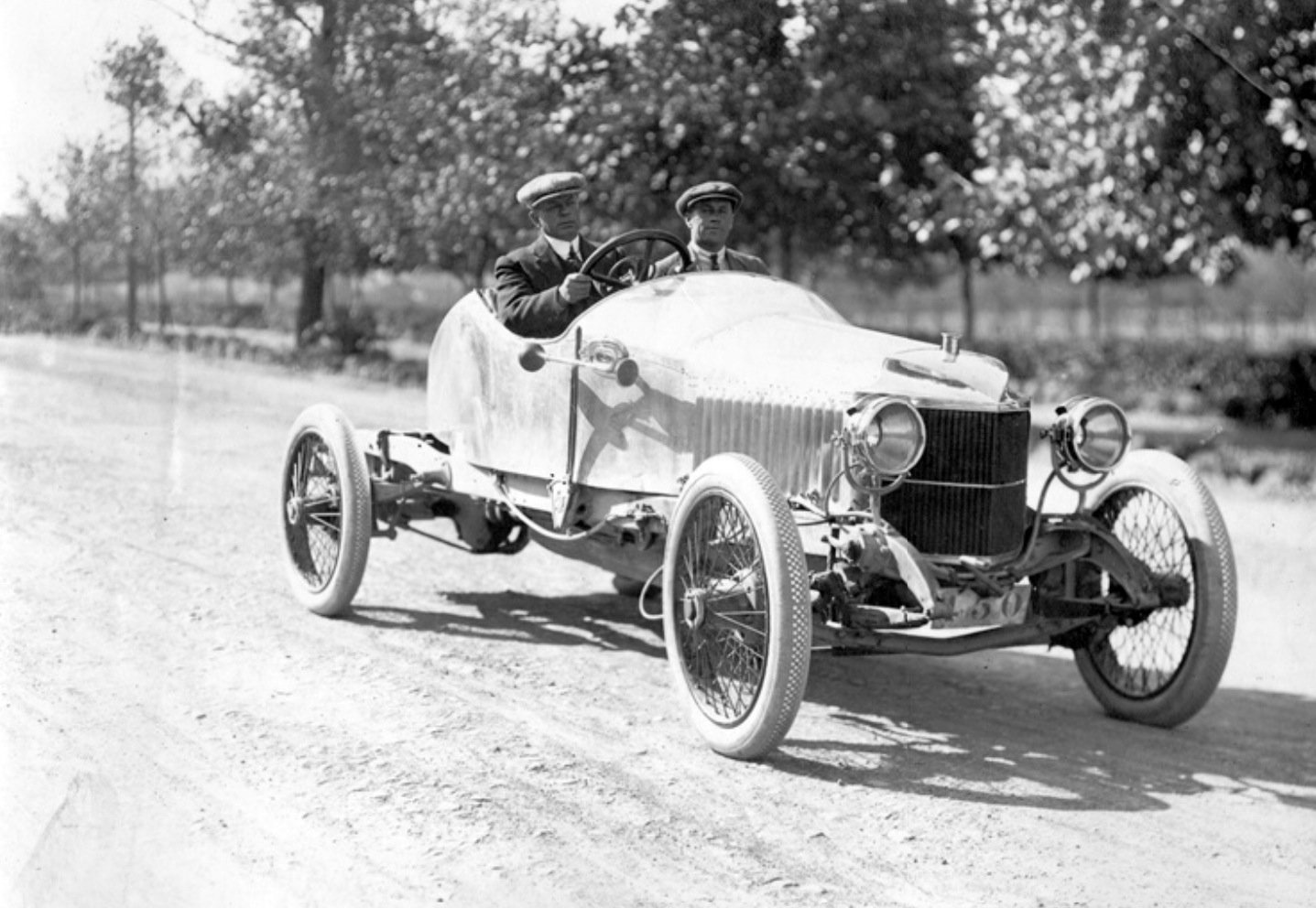
Pete Geoghegan blasts his Ford ‘Super Falcon’ GTHO across the top of Mount Panorama with the millimetre precision and finesse for which he was famous, harnessing all 600 plus horses of his demanding 351cid steed on this oh-so-demanding and unforgiving of road circuits…

The 1972 Australian Touring Car Championship was one of the greatest contests ever, the Bathurst round one of the best races in a series full of close events in its 60 year history.

The late, respected motoring journalist Mike Kable wrote ‘The third round at Bathurst’s Mount Panorama on Easter Monday won by five times former champion Ian Geoghegan by six tenths of a second from Allan Moffat was the finest touring car race I have seen in 25 years of watching Australian motor racing which started as a small boy when I lived just a few more paddocks away from the famous old mountain circuit’.

‘It was an absolute spellbinder, the sort of race you dream about with Geoghegan in his Falcon and Moffat in his Mustang fighting a slipstreaming and braking duel right around the spectacular track and tearing side by side down the 1 1/2 mile long Conrod Straight at more than 160mph and becoming airborne over the humps’.

The race ended in controversy as Pete’s Super Falcon was losing oil from its catch-tank, Moffat copping so much Castrol on his windscreen he dropped back for a bit to try and clear it with his wipers. Towards the end of the race he undid his shoulder harness to see out the drivers window, during all this he took seven seconds from from Geoghegan’s previous record set in his evergreen Mustang.

Moffat protested, after 90 minutes of deliberation the steward determined that the results stood on the basis that it could not be confirmed that the oil spill cost Moffat the race. Further, Moffat’s speed late in the race didn’t tend to support the Canadians argument!

In fact Moffat lost the championship after intense competition and biffo at a number of meetings resulted in Bob Jane, his Melbourne arch rival, protesting being shoved aside by Moffat during the Warwick Farm round of the championship.

Sadly, the protest was heard on the virtual eve of the title decider at Oran Park, Moffat’s exclusion from the results at Warwick Farm gave the series win to Jane, the plucky, tough entrepreneur took the title again in the Chev Camaro in which he won in 1971. The car was powered by a cast iron 350cid engine in ’72 rather than the ZL-1 427cid Can-Am aluminium block Chev used in 1971.

031 Bob Jane
Bob Janes Chev Camaro ZL-1, 350cid cast iron powered in 1972, thru Hell Corner during the ATCC race, Easter 1972. BJ Racing’s cars always superbly prepared and presented (D Simpson)

What made the late 1960s-1970s ATCCs magic and still spoken about in reverential terms by those who were there were cars such as Jane’s…

Moffat’s Mustang was a factory Trans-Am racer, he first ran it in 1969, despite many race wins, he never took the ATCC. He achieved that for the first time in a Ford Falcon GTHO Phase 3 Group C car when the regs changed from 1973. In Mike Kable’s view at the time ‘There’s not much doubt about who is Australia’s finest all round tin-top driver. If he proved it once he proved it a dozen times in both his venerable Trans-Am Mustang and works Phase 3 Falcon GTHO’.

In 1972 Moffat tried both the 351cid V8 (at Calder he raced it and at Surfers used it in qualifying) and Boss 302 engines but the Cleveland 351 engine was never reliable and much heavier than the ‘small-block’ Boss which buggered the cars balance. It was with the 302 fitted that he gave Geoghegan so much curry at Bathurst, Pete’s factory built Super Falcon, Moffat was built one as well of course in 1970, 351 equipped and seldom reliable.

Norm Beechey was back for one final crack at the championship in the gorgeous Holden Monaro HG 350 V8 in which he won in 1970 and had been continually developed by Norm and Claude Morton in their Brunswick, Melbourne base.

norm
Norm Beechey, two wheels off the deck, Murrays Corner, Bathurst 1970. He won the title, and the Bathurst round that year in this fabulous, injected 350 Chev V8 engined Holden (unattributed)
kingswood
Malcolm Ramsay’s Holden Kingswood Repco V8, 1972, not sure which paddock this is. 1971/3 HQ Holden Kingswood a great contemporary bit of sedan styling, i saw this car at its race debut at the ’72 Sandown Tasman meeting. Look, sound and speed impressive! (Perry Drury/The Roaring Season)

Later Birrana co-proprietor and single seater driver Malcolm Ramsay ran an HQ Holden Kingswood powered by a Repco Holden F5000 engine, the big orange, ROH ‘Dragmag’ wheeled thing looked and sounded sensational.

The ‘Kingsy bristled with the clever engineering ideas of Ramsay and Tony Alcock, the Birrana designer: fabricated front wishbone suspension, carefully evolved rear suspension with better location of the standard live axle/coil spring setup, removable front guards to ease access to the injected Repco lump and much more. It deserved another season of development but unlike many of the cars pictured in this article which became Sports Sedans after the Australian Touring Car Championship rules changed from 1973, the Kingswood was dismantled and components sold as the Birrana boys focusssed on their main game, which was building winning ANF2 and F3 cars, a story for another time.

Big Pete’s Super Falcon was fully rebuilt by Bowin’s John Joyce after the Adelaide International round of the championship. The openwheeler specialist rebuilt it around a new shell, both lightening it and giving it the rigidity lacking in the original. The front and rear suspension geometry was modified. Note that some reports say the car was re-shelled, but the Bowin drawings don’t suggest this. In addition, Geoghegan claimed 608bhp for the engine by seasons end. For those interested in the work Joyce and his team performed, click on this link; http://www.bowincars.org/mediawiki-1.6.12/index.php?title=Car_Drawings#Bowin_P7

stillwell
Mike Stillwell, son of former multiple Australian Gold Star Champion Bib Stillwell at Bathurst in his Ford Escort BDA (D Simpson)

Apart from the front runners there were other cars to salivate over. Mike Stillwell’s Ford Escort BDA was a jewel of a thing, at one stage class wins made it a possibility that he would win the title. Clive Green’s ex-Geoghegan Mustang was great to look at and well driven by the Balwyn, Melbourne car dealer when he appeared.

Towards the end of the season Bob Jane’s John Sheppard built Holden Monaro HQ Chev 350 V8 appeared, John Harvey drove it in the final ATCC round at Oran Park, like all of Sheppo’s cars it looked too good to race and had the performance to match.

Harvey was second on the grid and ran in second until brake dramas slowed him. This car had a very long, successful life as a Sports Sedan after it’s short one as an Improved Tourer ATCC contender.

harvey
John Harvey makes the series debut for Bob Jane’s Holden Monaro HQ 350 Chev, here ahead of the always scrapping Jane and Moffat. Oran Park ATCC round 1972 (autopics.com)
grid
Front 2 rows of the grid before this great Bathurst ’72 ATCC race; Moffat on pole, Mustang TransAm from Geoghegan, Ford Falcon GTHO, then Jane’s partially obscured Camaro and Norm Beechey’s yellow Holden Monaro HG350 (Bob Jane Racing Heritage)

Back to That Race at Bathurst…

From pole, Moffat, three seconds faster than Pete in practice, was slow away, Bob Jane was first to the top of the mountain from the second row, he held the lead until passed by Moffat on the first run down Conrod, losing a further place to Pete as the cars went up Mountain Straight the second time.

The crowd roared as Sydney’s ‘Goody Pete’ chased Melbourne ‘Baddy Moffat’, the Falcon passed the TransAm on lap 4, the torque of the 351 carrying the Falcon past the Mustang up the mountain, only to lose the lead on Conrod.

Pete from Bob- off row 2, then Moffat and Beechey towards Hell Corner for the first time (oldracephotos.com)
ray
First lap drop into The Dipper, Ray Bell’s shot captures both the cars and excitement of the crowd atop the mountain. Jane from Moffat and Geoghegan (R Bell)

And ‘So it went on for lap after lap, the two cars passing and re passing each other, circulating at record speeds and literally running nose to tail in their gladiatorial battle. The last lap was almost unbearably exciting and Geoghegan scrambled across the finish line a bare cars length ahead of Moffat after a frantic side by side dash along the whole of Conrod Straight’.

lap 1
From the rear down thru The Dipper for the first time its Jane from Moffat and Geoghegan but Moffat blasts the 302 Boss Mustang past Janes 350 Chev on Conrod, piston failure for Bob not far away (L Hemer)
pete and al
Geoghegan ahead of Moffat…(L Hemer)

Dick Simpson, the photographer of most of this articles shots recalls the closing laps ‘I was standing on the corner post of what was the Australian Racing Drivers Club (Bathurst promoting club) members/competitors camping area, these days its the middle of pit exit lane’.

‘Pete suckered him through the race by braking earlier and earlier at the end of Conrod Straight as the race went on as if the big Falcon had brake problems. I think Marvin was happy that he could get him whenever he wanted, but on the last lap Pete stayed over on the right (on the outside of the track) leaving the gap for the dive under brakes but he didn’t brake! I think he went way deeper than even Moffatt had been going. I don’t know if he was saving the brakes for the last lap or just setting Moff up’.

‘I do know that when he went past me he had a massive grin and tapped the side of his head!’

pete
Geoghegan in the view of some Australia’s greatest ever Touring Car driver (D Simpson)
gibson
Ford factory driver Fred Gibson was 4th in his own, as against his factory, GTHO Phase 3 Series Production car, just ahead of John Goss’ similar car (D Simpson)

John Goss and Fred Gibson were third and fourth in their Series Production (less modified) Falcon GTHO Phase 3’s after a race long duel with Doug Chivas’ Series Prod Valiant Charger RT and Stillwell’s 2-litre Escort. Jane was forced out with piston failure and Beechey with a shagged gearbox, always a weak link in these big, powerful cars.

1972, a season to remember, and wow, to have been there at Easter Bathurst to see ‘Marvin The Marvel’ and ‘Big Pete’ woulda been really something!…

moffat 2
Alan Moffats ‘Super Falcon’ Ford Falcon XW GTHO Phase 2. Calder 1970 (Bob Jane Collection)

The Ford Australia 1970-71 GTHO ‘Super Falcons’…

Ford were pretty much on top of the global motorsport world in the late sixties; their Cosworth DFV 3 litre V8 was at the start of building its reputation as the most successful GP engine ever, they won Le Mans with the venerable Mk1 GT40 in 1968 and 1969 (in fact from ’66 to ’69 in Mk1, 2B and Mk4 GT40’s), their DOHC Indy Ford V8 was still winning its share.

The Escort was at the start of a run which made it one of Rallying’s greatest, in TransAm the Mustang was a winner and in Australia local ‘Pony Cars’ powered by a succession of V8’s progessively increasing in capacity were winning many of the very popular Series Production events for essentially Showroom Stock cars.

‘Win on Sunday, Sell on Monday’ was the adage, the advertising tagline of the day was ‘Going Ford Is The Going Thing’!

So, wins at Bathurst and in the Australian Touring Car Championship were important in the local sales race. All Big Three subsidiaries of the American automotive transnationals (Ford, GM-Holden, Chrysler-Valiant) were manufacturing cars locally and up to their armpits in racing whatever company policy said!

Whilst Ford had a winning presence in the local ATCC, the Mustangs of Moffat, Geoghegan and others were not cars sold locally and therefore the promotional value of said wins was limited.

Norm Beecehey ran competitively with two Holden Monaros winning the title in his fabulous yellow HG Monaro 350 in 1970. Holden were getting a benefit Ford wanted, that is winning in cars the public could buy road variants of. All they needed to do was build the right car.

donk
Injected Ford Cleveland 5.7-litre/351 cid, OHV, fuel injected, circa 600bhp V8 in one of the factory Super Falcons (I Smith)
Al Turner and David McKay circa 1970 (I Smith)

Popular American ‘Big Al’ Turner was El Presidente of Ford Australia at the time and a racing enthusiast. He decided to build two Super Falcons, modified versions of the then current 1969-70 Ford Falcon GTHO Phase 2, a four door sedan powered by a Windsor/Cleveland 351 cid or 5.7-litre, four barrel Holley carbed engine.

These Falcon GTHOs were successful Series Production racers already taking outright Bathurst 500 wins in Moffat’s hands in 1970-71.

The cars were built at Fords race workshop, Lot 6 Mahoneys Road, not far from the Ford factory at Broadmeadows, an outer Northern Melbourne suburb.

Howard Marsden managed the team, the cars were built by John Whynne, the engines by Ian Stockings and Bill Santuccione. Cars were built for Geoghegan and Moffat, the shells were extensively lightened, although the regulations did require the cars to be fully trimmed. The engines were highly modified including fitment of fuel injection.

falcon 2
Moffat’s Super Falcon at Calder, March 1971 ATCC round. Flared guards to cover the big Minilites, additional lip below the standard GTHO’s spoiler all clear. White car behind is Geoghegan’s Ford Mustang (Perry Drury Collection/The Roaring Season)

Moffat raced his Falcon at the final 1970 ATCC round at Symmons Plains, Tasmania, the car took pole before the engine blew. The cars reappeared in 1971 trimmed as XY models but the problems continued.

Steve Holmes summarised the 1970-71 racing of the two Super Falcons in a The Roaring Season article he wrote’…the Moffat Super Falcon started out as an XW and made its one and only appearance in XW guise at the final round of the 1970 Australian Touring Car Championship,(at Symmons Plains, Tasmania) where Moffat drove it briefly in practice before the motor expired. It was, however, very fast in a straight line!’

‘For 1971, neither Super Falcon appeared at the opening round as development continued, but Moffat’s made an appearance at Calder Park, Victoria Round 2. Once again, this car suffered engine dramas in practice and Moffat opted to qualify and race his Mustang. Kevin Bartlett practiced the Mustang and was set to race it had Moff run the Falcon. Both Super Falcons were at Sandown, Victoria for Round 3, where both drivers also brought along their Mustangs. In the end, they both chose to race their Mustangs, after putting in faster times in practice’.

This shot and the one below are of Kevin Bartlett practising Moffat’s Trans-Am at Calder whilst Allan focused on the Falcon. It would have been very interesting to see KB race this car – I wonder what his impressions were? (D Simpson)
(D Simpson)

‘Again, at Surfers Paradise, both drivers raced their Mustangs. Indeed, Geoghegan didn’t even bother hauling the Falcon up to Queensland. Moffat was again faster in his Mustang. His Super Falcon, however, did race, in the hands of local John French, who fought race-long with Geoghegan’s Mustang for third, before eventually settling for fourth place. Moffat tested his Super Falcon at Mallala, but instead raced the Mustang, while again Geoghegan only brought his Mustang. At Lakeside, Queensland both Super Falcons appeared, but again, both drivers decided to race their Mustangs, which were faster. Once again, John French was drafted in, this time to race the Geoghegan Falcon, and finished fifth.

‘Neither Super Falcon went to the final race at Oran Park, NSW as both Moffat and Geoghegan were in the hunt to win the championship in their Mustangs.’

moffat
Moffat in his Super Falcon, ATCC Calder round 21 March 1971. Aussie fans will pick the XY trim lights and striping as against the XW trim spec the car was built with; mechanically identical of course. Moffat practiced the Falcon but raced his Mustang which DNF. Beechey’s Monaro won the round (R Davies)

In 1971 Pete’s Mustang was already past its useby date, his talents kept it in front longer than it deserved so he stuck with the Falcon as a Mustang replacement whereas Moffat, a professional racing driver, (Pete had a share in the families Sydney car dealership as well as his racing income) stuck with his ’69 Boss Trans-Am which was still very competitive, its long life extended into 1975.

What both cars needed was a concentrated period of development by the factory with the full support of the drivers. Moffat’s Mustang was his, he raced to win, to live, he could win more money with the Mustang so his decision was an easy one. Ford provided some support for the Mustang, but his paid Ford drive was for the Series Production events in the HO’s. It kinda makes you wonder why Ford didn’t get someone like Fred Gibson to do development work on the Super Falcons, he was well equipped for the role, a factory driver and didn’t have the distraction of the ATCC campaign which was critical to both Moffat and Geoghegan.

The Falcons were never were going to succeed with the drivers juggling two cars, Super Falcons and Mustangs as both Allan and Pete did at several meetings.

Moffat’s Falcon was eventually scrapped, although the 351 engine he flirted with in the Mustang was the injected engine from the car. Unwanted bits went to Pete for his car, the body of Moffat’s was believed dumped.

Geoghegan’s car has been superbly restored and is part of the Bowden family collection. Click here for a link to a tremendous article on the Geoghegan car’s race history and its restoration by them;

http://www.bowdensown.com.au/collection/ian-pete-geoghegans-super-falcon

super falcon
Ford factory promotional shot of the Moffat ‘Super Falcon’ 1970 (FoMoCo)

Articles on competing cars…

Moffat’s Mustang Boss TransAm; http://www.bowdensown.com.au/collection/allan-moffats-1969-ta-mustang ,Beecheys Holden Monaro GTS 350; http://www.bowdensown.com.au/collection/norm-beecheys-ht-gts-monaro, Jane’s Chev Camaro ZL-1; http://www.tradeuniquecars.com.au/feature-cars/1109/bob-jane-camaro-zl-1-review/

Etcetera: Moffat and Geoghegan…

moff and geoghegan
Moffat ahead of Geoghegan at Bay Park, NZ , December 1972 (Terry Marshall/The Roaring Season)
moff lakeside
Moffat and Geoghegan, again in 1972, this time at Lakeside, Queensland. ‘Hungry’ corner (unattributed)

Tailpiece: The Pete Geoghegan the fans knew and loved…

pete
(Terry Marshall/The Roaring Season)

Pete at Bay Park in New Zealand, December 1972.

Bibliography…

Australian Motor Racing Annual 1973, article by Mike Kable on the 1972 ATCC, article by Steve Holmes in ‘The Roaring Season’ http://www.theroaringseason.com/showthread.php?1828-Photos-The-Perry-Drury-Collection, ‘Fast Thats Past’ TNF article by Ray Bell on the Ramsay Holden Kingswood Repco

Photo Credits…

Dick Simpson, autopics.com, Bob Jane Racing Heritage, lyntonh, Ian Smith, Ray Bell, Perry Drury Collection/Terry Marshall The Roaring Season, Robert Davies, FoMoCo

Finito…
cibie

Jacky Ickx and Gijs van Lennep won the race by 11 laps in their Porsche 936 from Jean-Louis Lafosse and Francois Migault in a Mirage GR8 Ford and British pair Chris Craft and Alain De Cadenet in the latters De Cadenet Lola T380 Ford…

The multi-tubular spaceframe chassis was based on the 908/3 and 917 designs with some of the running gear from the 917 program. The car used a 2 valve 2142cc single-turbocharged 540 bhp flat 6 engine variant of the roadgoing ‘930 Turbo’ the teething issues of which had been sorted the year before in the back of a 911 RSR.

Competing in Group 6, the derivation of the name 936 is clear, the engine was 2142cc to fit into the 3 litre class when the equivalency formula of ‘1.4 times’ was applied to turbocharged engines.

The cars were very successful winning Le Mans in 1976, ’77 and 1981 and the World Sportscar Championship in 1976.

Alpine Renault in their new turbo-charged DOHC 4 valve V6 engined A442 cars were favourites for the ’76 title but Porsche stole the series with their amazing ‘parts bin special’, winning the Monza 4 Hours, Imola 500Km, Le Mans, Enna 4 Hours, Dijon 500Km and the Salzburgring 200 Miles. The Alpines didn’t win a round despite a roster of mainly French GP drivers…

936

Multi tubular spaceframe chassis based on the 908/3 and 917 designs. Engine Type 935/73 B6 2142cc, 2 valve SOHC Bosch fuel injected, single KKK-turbo with intercooler, circa 540bhp@8000rpm in 1976. Gearbox Porsche 5 speed with LSD. Double wishbones and coil spring/dampers with adjustable roll bars front and rear. Ventilated steel disc brakes, rack and pinion steering, weight 700Kg. (unattributed)

936 2

Jacky Ickx in the winning Porsche 936. Le Mans 1976. (unattributed)

ickx

Jacky Ickx again, Le Mans 1976. (Automobile Year)

Photo Credits…Automobile Year


dors

Diana Dors displays her undoubted goodies and hangs on bloody tight during the classic car parade lap before the 1967 Sebring 12 Hours…

The actress’ movie career needed a publicity boost, this ride on ‘the bonnet’ of a Ford GT40 Mk2B deemed a good idea at the time, one wonders at the risks involved. The gorgeous 38/24/36 bombshell would have made a hell of a mess of a nice car had she parted company with it…

Photo…Tom Bigelow

merc staub
(Max Staub)

Mercedes Benz returned to Grand Prix racing with a vengeance at Reims in 1954, here Fangio leads Karl Kling in the W196 Streamliners…

Mercedes had a habit of re-entering racing in the French Grand Prix every twenty odd years, when doing so bringing new standards of engineering excellence with them.

In 1914 the four cylinder, SOHC 4483cc engined Mercedes 18/100 of Sailer, Lautenschlager, Salzer, Pilette, and Wagner crushed the opposition at Lyon just before The Great War. The course was 37.6 Km long, 20 laps of it took the winner Christian Lautenschlager 7hr 8 min!

1914
Three of the 1914 French GP winning Mercedes team cars at Unterturkheim post event. L>R #28 Lautenschlager first, #39 Salzer third, #40 Wagner second. (unattributed)

In 1934 Auto Union and Mercedes came to Monthlery with cars which would largely sweep the board until war again intervened.

Although on that day an Alfa Romeo triumphed – Louis Chiron won in a Scuderia Ferrari Alfa P3 from Achille Varzi similarly mounted – the three 2.9-litre supercharged straight-eight Mercedes W25s of Rudi Caracciola, Manfred von Brauchitsch and Luigi Fagioli retiring with a variety of maladies.

1934
1934 French GP, Montlhery. Rudy Caracciola Mercedes W25 DNF, from Avhille Varzi Alfa P3/Tipo B, second (unattributed)

And so it was that Mercedes returned to racing after a break of fifteen years at Reims on the weekend of July 4th 1954 – 40 years after Lyon and 20 after Monthlery – with the W 196 R, as the car is designated internally…

fangio reims
JM Fangio, Mercedes Benz W196, Reims victor 1954 (Jesse Alexander Archive)
(Mercedes Benz)

The W196R was a triumph of complex engineering, the 2.5-litre straight eight cylinder car had a swag of new features.

Direct injection (Bosch) of fuel into the M196R’s cylinders (76×68.8mm) for more precise ignition of the incoming fuel charge was the first of many, the engine lay on its side 53 degrees from the horizontal to the right to allow a lower bonnet line and the driveshaft to pass beside the driver rather than have him sitting on it. Desmodromic, or mechanical operation of the valves allowed higher rpm than the valve springs of the day could handle.

Downstairs, in traditional Mercedes fashion, there were/are two blocks of four cylinders with welded on cooling water jackets. The Hirth type crankshaft was supported by 10 roller-bearings, with central power take-off. Mercedes quoted 256bhp @ 8260rpm with maximum potential revs 9500. The transaxle is 5-speed and mounted behind the rear axle.

M196R 2.5-litre straight-eight (Mercedes Benz)
W196R chassis, inboard brake drums and 5-speed transaxle. Rear suspension is swing axle, tubular dampers and longitudinally mounted torsion bars, hidden in this shot (Mercedes Benz)

The chassis is a multi-tubular spaceframe with upper and lower wishbones, telescopic shocks and torsion bars. At the rear there is a single-joint swing axle, longitudinal torsion bars and again telescopic shock absorbers. Inboard drum brakes front and rear (350/275mm in diameter) to lower unsprung weight and a streamlined all enveloping body helped the car to be quicker thru the air. Steering was worm and sector, wheel/tyres 6-inch and 7-inch wide and 10-inch diameter

The very experienced pre-war engineering team of Dr Fritz Nallinger and Rudy Uhlenhaut were in control of the conception, design, development and testing of the new car.

french paddock
Reims 1954 paddock shot. #18 Fangio and #22 Hans Hermann Mercedes W196 Streamliners being prepared for the race. Open bodies were used from Nurburgring 1954 onwards, Streamliner body about 60 pounds heavier than the ‘Nurburg’ slipper/open wheeler bodies (unattributed)

The purpose of this article is not to write in detail about a car which has had everything written about it, rather the words are a support to the wonderful painting and cutaways originally published in that splendid annual, Automobile Year, in this case in the 1955 edition.

cutway 2
(Automobile Year)

In his Automobile Year technical review of the 1954 season noted journalist/Le Mans Winner/GP driver Paul Frere explains in great detail the technical advances of the car, but also makes clear that in his view all of the Benz victories that season were scored by Fangio, in that the car’s speed was in large part a factor of Fangio’s dominance as a driver rather than it being a function of the cars outright pace; JMF and Alberto Ascari were the standout drivers at the time.

The W196 won four of five 1954 races entered, impressive with a new car, Frere also makes it clear that the development potential of the car was obvious, that point subsequently reinforced in their 1955 season!

french start
French GP Start; #18 Fangio, #20 Kling Benz W196, #10 Alberto Ascari Maser 250F #2 Gonzalez Ferrari 553, #12 Marimon Maser 250F, #46 Prince Bira Maser 250F, #22 Hans Hermann Benz W196, #6 Hawthorn Ferrari 553, #4 Maurice Trintignant Ferrari 625, #34 Robert Manzon Ferrari 625, #14 Luigi Villoresi Maser 250F (unattributed)

At Reims Fangio was on pole with his young German teammate Karl Kling alongside and Alberto Ascari in a factory Maserati 250F.

Alberto and Onofre Marimon were ‘loaned’ to Maserati by Gianni Lancia given his new D50 GP car was still not raceworthy and the drivers were otherwise unemployed for the weekend.

Ascari’s race was over on lap 1 due to either gearbox or engine failure depending upon the report you read, this left Fangio and Kling to run away with the race. Hawthorn and Marimon scrapped for third before the Argentinian stopped for a plug change and dropped to the back of the field.

start 2
Fangio left, and Kling Mercedes W196 well clear of Ascari’s Maser 250F shortly after the start (unattributed)

Pre-war Thai driver Prince Bira drove a great race in a customer 250F dropping from third to fourth having run out of fuel and losing time switching to his auxiliary tank, so Robert Manzon was third in a Ferrari 625.

Hans Herrman in the other W196 took fastest lap early in the race before over-revving the engine and leaving its telltale at 9100rpm!

So, a dominant Mercedes start to a run which sadly only lasted until the end of the 1955 season before their modern era return and the dominance of 2014/5…

fangio thillois
Fangio, Thillois Hairpin, Reims 1954. MB W196 (unattributed)

Etcetera…

(Mercedes Benz)
grid shot
(unattributed)

Front row prior to the Reims start. Fangio and Kling taking a sideways glance, and Ascari’s new but somehow antiquated looking 250F in the company of the Mercedes Streamliners whilst Hawthorn fiddles with his goggles on row three.

(Mercedes Benz)

M 196 R – Mercedes Benz when publishing the car and engine type use the spacing shown, albeit short-form will do me – engine being dyno tested Unterkükheim in 1954. From the left, Engineers Karlheinz Göschel and Heinz Lemm, Werner Wolf and Eckstein.

cutaway 3
(Automobile Year)

Fangio’s car being ministered to between sessions. What stands out is the quality of the Streamliner’s build and finish and the enormous inboard brake drums both front and rear – JMF’s seat has been removed allowing a peek at the rear units.

The straight-eight Type 32 Gordini was the last Grand Prix car fitted with an engine of this layout, but the W196 was the last successful one. The compact nature of Vittorio Jano’s 2.5-litre V8 engined 1954-55 Lancia D50 was a reminder of the advantages of engines in Vee formation and was highly influential as such.

(Mercedes Benz)
merc w 196
(Automobile Year)

Nice cross section of the W196 cylinder head showing the operation of its desmodromic valve gear.

(Mercedes Benz)

Another detail front end shot sans radiator; the hollow bars either side of the drums are the ends of the torsion bars, note also the short upper suspension links.

Tailpiece…

(unattributed)

Majestic and atmospheric Reims as JMF takes his position on the grid.

Credits…

Max Staub, Automobile Year, Jesse Alexander Archive, Getty Images-Maurice Jarnoux, Mercedes Benz Archive

Finito…

oliver pan

Jackie Oliver’s Shadow DN6 Chev on its way to 2nd place, Road America, 27 July 1975. (Richard Dening Jr)

ollie 2

Exactly 12 months later Oliver goes one better in the Dodge engined DN6B, winning the Road America race on July 25 1976. (Richard Dening Jr)

Jackie Oliver takes an historic win in his Shadow DN6B Dodge at Road America on 25 July 1976…

Chev engines won every championship F5000 race in the US from Riverside on 25 April 1971 when Frank Matich took a Repco Holden win in his McLaren M10B through until Oliver’s long overdue Shadow victory, the Lola T332 Chevs of Al Unser and Vern Schuppan were second and third.

Whilst the Dodge was more powerful than a Chev it was also heavier making the packaging of the car and its big cast iron V8 a challenge for designer Tony Southgate.

The Lola T332 was their 1974 production F5000 but was continually developed, the subsequent Lola T400 and T430 not quicker cars, a good 332 was as quick as an F1 car on the common circuits upon which both categories raced in North America. ‘Twas a remarkably good, very fast racing car the Shadow was competing against driven by the likes of Brian Redman, Mario Andretti, Alan Jones, Al Unser and others…

shadow nude

Shadow DN6 Chev. Car based on Tony Southgate’s very quick DN5 1975 F1 contender. Aluminium monocoque chassis. Front suspension lower wishbone and top rocker actuating inboard mounted coil spring/damper. Rear single top link, lower twin parallel links, two radius rods and coil spring/dampers. Adjustable roll bars front and rear. 5 litre cast iron OHV Chev here, Dodge V8 from the Road Atlanta round in August 1975 , Hewlands TL200 gearbox, developed as an endurance racing tranny used rather than the F5000 standard, the ‘brittle’ DG300. Road America July 1975. (Richard Dening Jr)

dodge engine

5 litre cast iron, mechanical fuel injected, OHV Chev V8 engine developed circa 530bhp@7800rpm. Rocker covers removed here for Road America July 1975 prep, one rocker missing. Magneto, its yellow ignition leads and fuel metering unit all visible. (Richard Dening Jr)

The Shadow DN6 was based on Tony Southgate’s very competitive DN5 F1 design and was first raced in 1975 powered by the ubiquitous Chev V8. Oliver took 4th place in the championship won by Redman’s T332, the car raced well at both Watkins Glen and Road America.

Gordon Kirby in his 1975 season review in Automobile Year said; ‘Almost immediately the Shadow proved to be competitive and in the last part of the season (the last 4 races) it became even more of a threat when after a long development program the team switched to Dodge engines, based on the same powerplant used in NASCAR by Richard Petty’. (in 1975 the Grand National Stockers were compelled by a carburetion ruling to use 355 cubic inch or 5.8 litre engines). The Dodge developed some 30 bhp more than the Chevys’ but was much heavier. The Shadows were not completely tuned and set up and did not win a single race. The whole of the 9 races were taken by the Lola Chevrolets.’

jpj

Jean-Pierre Jarier lines up on the Watkins Glen grid with Brian Redman 13 July 1975. Shadow DN6 Chev and Lola T332 Chev. JPJ DNF with a broken oil line, Brian was 1st, Oliver in the other Shadow also DNF with a blown Chevy. (Gary Gudinkas)

F1 drivers Jean Pierre Jarier, Tom Pryce and Jody Scheckter each raced a second car in three rounds at Watkins Glen, Long Beach and Riverside respectively.

All three qualified in the top 5 but retired with mechanical maladies.

shadow mechanic

Business end of the Shadow DN6 Chev. Engine magneto and fuel metering unit, Hewland TL200 gearbox to which the wing is mounted, neat duct for inboard disc and additional oil cooler all visible. Road America July 1975. (Richard Dening Jr)

1976 Season…

The following Shadow press release written by Rob Buller prior to the Mosport round, the second of the 1976 season, reproduced on the My Formula 5000 website outlines changes to the car and program over the 1975/6Winter.

Development work on the DN6 5000 car has continued over the winter under the direction of Chief Mechanic Ed Stone and Engine builder Lee Muir.

Stone joined the 5000 effort late in 1975 and immediately set about making chassis and suspension changes.’Basically the 1975 season progressed with little development, there wasn’t much time.’ Stone said in a recent telephone interview, ‘I was asked to make some suspension changes and the car was more competitive at the last 1975 race at Riverside with Jody Scheckter driving.

ollie 3

Oliver in the Road America pitlane, July 1976. Shadow DN6B Dodge. (Richard Dening Jr)

‘But the heart of the Shadow development is the new Chrysler power-plant, a joint venture between Shadow and Chrysler’s Plymouth Division. The engine starts life as a 340 cu. in. stock block that is down-stroked to 305 cu. inches. It is fitted with the same injection system that is used on Richard Petty’s NASCAR Dodge.

Chrysler, which is heavily involved in NASCAR and Drag Racing, is new to F5000 racing, a class that has been dominated by the rugged Chevrolet 5 litre engine. As a part of their new kit-car package now under development, Chrysler has contracted with Shadow to do the engine development and sorting.

They supply the engine components to Shadow engine expert Lee Muir, who then hand builds and dyno tests each engine. Chrysler also helps with technical information and advice to Muir, who came to Shadow from McLaren’s engine department.

dodge

Race debut of the Dodge engined Shadow DN6 chassis ‘2A’ at Road Atlanta 31 August 1975. Oliver 4 th, race won by Al Unser’s Lola T332 Chev. Specs; Dodge 340cid V8 taken back to 305cid by reducing the engines stroke. 5 litre cast iron, OHV, mechanical fuel injected V8. Bore/stroke 4.04 inches/2.96 inches, power circa 550bhp@7800rpm. Hewland TL200 ‘box. (unattributed)

‘The first outing in 1976 for the Shadow Dodge DN6 was at Pocono, Pennsylvania for the Series opener. Although they weren’t quite ready for the Pocono race, they were very encouraged with the results. Oliver was lying third in his qualifying heat when a connecting rod developed terminal stretch. As they only had one dyno’d engine a spare practice unit was installed for the feature. However, a fuel pump seal split on the grid and  it took 5 laps to change. By the time he joined the fray Oliver was hopelessly behind but by charging hard he was able to run with the leaders.

With that encouraging performance Stone and Muir returned to Phoenix Racing headquarters in Chicago and started preparation of the Shadow for the Mosport race. Further chassis mods have been made utilizing new springs, roll bars and revised suspension settings. To help weight distribution, the water rads have been moved forward a la McLaren Indy car. Muir will have three completely dyno’d engines ready for Mosport’.

don

‘Sponsorship for the F5000 effort is a problem for Shadow. Since the departure of UOP, Nichols has been unable to get the full 5000 program underwritten. Various sponsors are now supporting the Formula One effort on a per race basis while only Goodyear, Valvoline and, of course, Chrysler are behind the 5000 effort. Thus Shadow must watch their budget closely and this, the team feels, will restrict the amount of development they can attempt. Nonetheless the 5000 effort has Don Nichols full support and he won’t field cars unless he can be competitive. And with the driver, new engine and chassis changes he plans to be competitive’.

Oliver lead at Mosport but was held up by a backmarker, Alan Jones snaffling the win, inevitably in a Lola T332 Chev.

Three weeks later he lead at Watkins Glen but a cracked sump ended his race, the Shadow finally won at Road America, Elkhart lake, Wisconsin. It was a good win as Ollie had to overcome diff and flat tyre problems in his heat which meant he started 14th on the grid of the final.

ollie 1

Oliver on the way to victory, Road America July 1976. Shadow DN6B Dodge. Behind is Al Unser’s 2nd placed Lola T332 Chev. (Richard Dening Jr)

After 16 laps he was 3rd, within 3 laps he was past the Lolas of Al Unser and Brian Redman and took a strong win for the team.

ollie mid ohio

Oliver took 2nd place at Mid Ohio on 8 August 1976, Shadow DN6B Dodge. 1976 champ Brian Redman won in a Lola T332C Chev. (Richard Dening Jr)

Two second places at Mid Ohio and Watkins Glen secured third place in the championship again won by Redman’s Haas/Hall Lola T332.

With the demise of F5000 in the US at the end of 1976 and its evolution into 5 litre central seat Can Am from 1977 the Shadow’s raced on into 1977 and 1978 but without success, Lola’s T332/T333 the dominant cars in the early years of the class.

oliver and helmet

Jack Oliver ready to go Road America 1975. CanAm Champ for Shadow in 1974. (Richard Dening Jr)

road am vista

Road America pitlane on a beautiful July 1975, Wisconsin day. Redmans Lola T332 at front. (Richard Dening Jr)

Etcetera…

comparo

Comparison of the specs of the F1 Shadow DN5/7 and F5000 DN6 from the 1975 Long Beach GP race program. (Fred Bernius)

Tailpiece…

popsie

Jackie Oliver Fan Club President? Road America July 1975. (Richard Dening Jr)

Photo and other Credits…Richard Dening Jr, Gary Gudinkas, Fred Bernius, My Formula 5000 website,   http://www.myf5000.com/index.html, Peter Brennan and Glenn Snyder for research assistance

Other F5000 Articles…

Elfin MR8 Chev & James Hunt.

James Hunt: ‘Rose City 10000’, Winton Raceway, Australia,1978: Elfin MR8 Chev…

Frank Matich and his F5000 cars.

Frank Matich: Matich F5000 Cars etcetera…

Finito…
b schumi and mansell

Michael Schumacher’s Benetton Ford just in front of Nigel Mansell’s Williams Renault. He took his first GP win having made his Championship debut at Spa with Jordan 12 months before…
Schumacher’s 1991 Belgian Grand Prix debut was in a Jordan 191 Ford. His Sauber Mercedes sportscar performances didn’t make it clear that ‘The Next Superstar’ had arrived but he qualified 8th and ran 4th retiring his car with clutch dramas, his brief drive was enough to convince Flavio Briatore to sign him up on the spot.

Roberto Moreno lost his Benetton seat to the German, swapping across to Jordan, Schumacher took a 5th and two 6th placings by seasons end.

1992 would be a tough year for all but Williams.

‘Active suspension’ experiments which started at Lotus with Colin Chapman tasking his engineers to explore it as far back as 1981 with the Esprit road car and in F1 from 1987 met an ‘apex’ with the Williams FW14B/15C Renault’s in 1992/3.

noige

Nigel Mansell, Williams FW14B Renault, the dominant car of 1992, here at Spa. (unattributed)

The Patrick Head/Adrian Newey designed cars were powered by a 3.5 litre Renault V10 considered to have around 760bhp, 30bhp more than the Honda V12 by seasons end.

But the key to the cars dominance; Nigel Mansell became the first driver to achieve 9 wins, and the title that year, was the cars carbon fibre chassis which incorporated active suspension. The advance of computer technology finally allowed the exploitation of suspension actuators to deploy the system effectively.

The Williams 6 speed gearbox incorporated traction control and was of the semi-automatic type pioneered by the Ferrari 640 in 1989. The car also incorporated anti-lock braking for a time. The promise shown later in 1991 was now converted into stunning, consistent race winning pace.

Benetton B192 Ford…

b cutway

(Terry Collins)

The Benetton B192 was a conventional, well engineered, ‘chuckable’ chassis developed by Ross Brawn and Rory Byrne.

The chassis was carbon fibre, suspension by wishbones front and rear with coil spring/dampers actuated by pushrods. The gearbox was Benetton’s own transverse design 6 speed manual.

The Ford Cosworth HB 75 degree 3.5 litre V8 developed around 700bhp @ 130000rpm, well short of the Honda and Renault’s output but the car was consistently fast and ‘best of the rest’ after the dominant Williams and the McLaren with which Senna took 3 wins.

b monaco

Jean Alesi, Ferrari F92A and Schumacher collide after an attempted Schumi pass on lap 12 of the 1992 Monaco GP. Jean’s car was damaged taking him out of the race, MS 4th in the race won by Senna’s McLaren. (unattributed)

Schumacher’s 1992 Season..

b kink

MS Benetton B192 Ford, Spa 1992. (unattributed)

Schumacher was 3rd in the drivers championship in a season of speed and consistency; he took 2nds in Spain, Canada and Australia and four 3rds, his breakthrough first win was at Spa, exactly 12 months after his GP debut.

schum la source

THE classic Spa shot, MS La Source hairpin 1992. (unattributed)

In a race of changing fortunes and variable conditions good or lucky pit work put him on dry tyres at the right time; Mansell and Patrese in the other Williams chased him down but both had cracked exhausts which took the edge of their engines performance. Schumi took the win from Mansell, Patrese, his Benetton teammate Martin Brundle, Senna’s McLaren MP4/7A Honda and Mika Hakkinen’s Lotus 107 Ford.

schum alesi hakk

Remember the skid plate sparks!? L>R; Hakkinens 6th placed Lotus 107 Ford, Schumacher and Alesi’s Ferrari F92AT, he spun on lap 7 so its early in the race. (unattributed)

The Schumacher/Benetton/Ford combination took the drivers (but not the manufacturers) title in a season of tragedy and controversy in 1994, the 1992 B192 was an important stepping stone in that evolution…

b victory dais

Spa 1992 victory dais; the first of 91 GP wins. (unattributed)

Credits…Terry Collins