andretti surfers 94 reynard

Michael Andretti aviating his Reynard 941 Ford over the Surfers Paradise kerbs. Andrettis’ victory in The Australian Indycar Grand Prix in March 1994 was just the fillip the American needed after his abortive McLaren F1 season the year before…

Nigel Mansell started ’94 where he left off, the Brit a winner in the 1993 ‘Indy championship in his Lola Ford, the season after his F1 World Championship victory for Williams in 1992. Nige was on pole with Andretti alongside in the brand new Malcolm Oastler designed Reynard 941 Ford, the marques first Indycar.

The race was restarted 3 times, first lap contretemps famous on the Surfers circuit. In the final restart Michael got the jump on Nigel and lead all 55 laps, the race shortened by 10 laps due to lack of light.

Michael won again in the Reynard later in the season at Toronto but the Penske PC23 was the best car of the season and the ‘Dream Team’ of Al Unser, Emerson Fittipaldi and Paul Tracy extracted all the car had to offer winning most rounds and Unser the drivers title.

By seasons end Mansell had returned to F1 albeit briefly, with Michael competitive again with 2 victories and 7 top 5 finishes in a year where the pickings were slim for all but Penske.

andretti surfers 94

Same car, driver and kerb but lower altitude…Reynard a lovely car and the first of many successful Indycars by the late, lamented marque. (Unattributed)

So what Went Wrong in F1 for Michael?…

Andretti came into racing via Karts, Formula Ford, Super Vee and Formula Atlantic. Before long he was an established Indycar Star and after a dominant season in CART 1991, on pole 8 times, winning the title and demonstrating his versatility with a Porsche drive at Daytona, he was looking to F1 as the next challenge.

Joining McLaren for 1993, alongside established team leader and candidate for the Greatest Grand Prix Driver ever was always going to be a tough ask, the Brazilian famous for taking no prisoners and intimidating his teammates in all ways possible.

Into 1992 things were looking a bit grim for McLaren…the teams performances were down, Honda were withdrawing from F1 and Ron couldn’t achieve the alternative factory engine deal he wanted. He attempted to buy Ligier to get the Renault engines, a deal vetoed by sponsors. The best he could achieve was Ford customer engines, one spec below those used by Benetton, who had the factory Ford deal, Michael Schumacher of course the driver.

Ayrton was watching all of this but couldn’t get a better drive, the best seat was with Williams, and engine supplier tipped Alain Prost into it rather than arch rival Senna.

andretti british gp 1993

Andretti, European GP Donington Park 1993. McLaren MP4/8 Ford. (Unattributed)

Ron needed a name driver in the event Senna decamped and signed Andretti…on paper a driver with potential albeit unfamiliar with both the cars and circuits. His announcement was made at the 1992 Italian Grand Prix to a bemused media.

The plot thickened somewhat with the signing of Mika Hakkinen, lately of Lotus, who was to be either test driver or race driver in 1993 depending upon what Senna decided, the Brazilian ultimately signing for the team again but on a race by race basis.

andretti kyalami

Michael optimistic early in the season at Kyalami, South African GP. (The Cahier Archive)

For Andretti things started badly with rule changes which limited testing…he badly needed seat time in both the car and on as many circuits as possible, the differences in characteristics between the relatively heavy single turbo 2.65 litre V8 Indycars, and 3.5 litre normally aspirated peaky, light, nimble and ‘very nervous’ Grand Prix cars immense.

The delivery of the Ford engine was late, only a month before the season opener at Kyalami, so was completion of the car and critical systems testing and checking which became clear with many failures particularly on Andrettis’ chassis during the year.

His season could be summarised as a series of own goals, accidents of his own making and mechanical or electrical failures which were entirely beyond his control.

Mixed in with that was his sheer pace which justified Andretti a second season in F1, at least.

F1 wisdom seems to be, including McLarens website, that the American didn’t really commit to F1. Indicative, in this view is continuing to live in the US, commuting by Concorde to the UK and the races as required. The theory is that living closeby to Woking, shootin’ the breeze with the Ronster and technicians would have helped.

It probably would have, as he would have done the testing miles Hakkinnen did but it’s too simplistic a view.

andretti helmet

Andretti started the season behind the eightball, noting he was ‘silly enough’ to sign for McLaren alongside Senna in a team ‘he owned’…

Jackie Stewart was smart to sign with BRM not Lotus for his debut F1 season in ’65, he had the choice but figured the lower pressure environment at BRM would be better for him, and allow him to come up to speed without the pressure of going head to head with Jim Clark, the standard by which all other drivers assessed themselves at the time. Noting that his BRM team leader, Graham Hill, the ’62 World Champ was at the top of his game at the time.

But these guys aren’t like you and I, they have towering self belief, why not go up against Senna in a great team, the chance may never come again? In that sense Andretti is be admired for putting his balls on the line, he was not the first or last Ace to be blown off by the Brazilians mesmeric other worldly skill.

On balance, looking from everyone’s viewpoint; McLarens’, Andrettis’ and the sponsors’, the deal made sense.

The McLaren MP4/8 Ford was a competitive car, Senna took victories at Monaco, Donington (one of his best) Brazil and Suzuka in the rain and in Adelaide, his last GP for McLaren and final victory.

During the rest of the season the Williams of Prost and Hill were the class of the field, Prost taking the title and retiring.

mclaren mp4 8 cutaway

McLaren MP4/8 Ford 1993. Neil Oatley designed Carbon fibre monocoque, suspension active with wishbones all around actuating coil springs and dampers. Carbon ceramic brakes. Ford HBE V8 ‘customer spec’ 3494cc circa 640bhp. McLaren 6 speed semi-automatic gearbox. 505kg. (Unattributed)

Let’s look at Andrettis’ year race by race…

andretti interlagos prang

Interlagos contretemps with Gerhard Bergers’ Ferrari. Could have been a lot worse. (Unattributed)

.Kyalami clutch failure on the line, fundamental preparation or lack of testing issue. He then ran into Derek Warwick on lap 4 trying to make up for lost time.

.In Brazil he goosed the start having muffed the 1-2 shift, qualified 5th (Senna 3rd), Wendlinger jigged one way, Michael the other collecting Bergers Ferrari initiating a spectacular shunt with the two cars cartwheeling thru the air.

.At Donington for the European GP. Q6 whilst Senna disappeared into the gloom in a sublime drive, from 5th to 1st in 10 corners and a lead of over 4 seconds at the end of lap 2. Andretti again took out Wendlinger  leaving the Sauber and McLaren beached in the Leicestershire mud.

european gp 1993 first lap

European GP, Donington Park 1993 lap1. Prost & Hill Williams, Wendlinger Sauber, Senna McLaren, Schumacher Benetton, Andretti McLaren, the Ferraris’ and the rest…Senna to the front and gone in 10 corners from Q4. (Unattributed)

.At Imola for the San Marino GP Q6 again, he completed 32 laps before spinning, whilst dicing for fourth with, you guessed it, Wendlinger. The spin was induced by a brake or suspension balance problem.

.In the Spanish GP Andretti finished fifth behind Prost, Senna, Schumacher and Patrese, the latter duo Benetton Fords with the factory engines.

. At Monaco Q9, his clutch did its own thing, up shifting early, losing revs and power, he was engulfed by the field, then hit Barbazzas’ Minardi up the chuff at Loews. He pitted to replace his front wing but then had a great run from last to 8th…but Senna won.

andretti mc laren monaco 93

Andretti Monaco 1993. (Unattributed)

.In Canada the car again ‘cacked itself’, this time a dead battery, he started the race 3 laps down and was classified 14th, Senna also had electrical gremlins that day, finishing 18th with alternator failure. Whilst in more recent times (2008) there have been claims by Marco Andretti that McLaren ‘sabotaged his fathers career’, the claims don’t hold water as Senna had as many gremlins as Michaels’ cars did. Hakkinen was ‘standing in the wings’ but McLaren had every commercial and sporting reason for Andretti to succeed not fail.

Andretti was the only American F1 driver at the time, their was no USGP either, the US is the largest global economy which McLaren was keen to tap into via the interest provided by their American driver…the conspiracy theory makes no sense to me at all and contradicts the facts.

.In France at Magny Cours the semi-automatic shift misbehaved resulting in Q16 but a strong showing, finishing 6th and getting valuable mileage.

.Michael looked forward to Silverstone as he had tested there pre-season, but his qualifying run was spoiled by rain, Q11. He started well but spun on lap 1 again going too hard too early.

.German GP, Hockenheim he qualified 12th after more mechanical dramas unrelated to him. But he thumped Berger on lap 4, DNF.

.At the Hungaroring, his fly-by-wire throttle failed in a run as high as 4th. Senna experiencing similar problems 2 laps later.

.Belgian classic, Spa. He had a long tyre change during which the engine stopped, Andretti 8th

.Monza, Italy. Andrettis’ final GP. He qualified 9th, Senna 4th. In the race both cars had brake balance problems, both spinning, Senna into retirement. Andretti continued after having grass removed from the radiators, fighting his way back through the pack from 20th to 3rd, a great run and his only podium finish, ironically in his last race, Michael being sacked, the drive going to Hakkinen.

andretti san marino

San Marino GP, Imola 1993. (Unattributed)

Andretti returned to Champcars successfully…he was competitive throughout his career but didn’t win another title and famously lead the Indy 500 for 431 laps in multiple 500’s the most of any driver without taking victory…

There are so many ‘Ifs, Buts and Maybes’ in life and racing…

If McLaren had done a better engine deal or installed the Ford earlier, maybe the glitches both drivers experienced all year would have been sorted in pre-season testing.
If the testing rules hadn’t changed Andretti would have driven the miles he needed in cars alien to him rather than doing his testing and familiarisations in the full glare of race weekends…and as worked so well for Villeneuve at Williams 2 years later who did a million miles in the car on all sorts of circuits.
If he had lived in the UK maybe his intent and commitment to McLaren would have been clearer.
Hakkinens’ signing added to the pressure on Michael, if he hadn’t been signed, the imminent potential replacement would not have been there.
If Andretti had started some of his races less agressively the DNF’s would have been reduced giving him the miles he needed and making him look less of a novice.

But, as the saying goes, ‘if yer Aunty had balls she’d be yer Uncle’ …

At the end of the day none of the above happened and it made more sense for McLaren to sign Hakkinen to partner Senna for 1994 albeit Senna went to Williams and Martin Brundle got to race the McLaren Peugeot in 1994, a combination which made the ’93 cars look like paragons of speed and reliability. In short had Andretti raced on with the team in 1994 he would not have had a car capable of running at the front.

Michael Andretti and F1 is still one of racings intriguing ‘mighta-beens’ all the same?

andretti in car close up 1993

Etcetera…

Short History of the Surfers Indycar Grand Prix

http://www.goldcoastbulletin.com.au/sport/special-features/look-back-the-indy-300-glory-years-to-v8s-at-gold-coast-600/story-fnpctu9f-1227096490438

McLaren MP4/8 Ford…

http://www.mclaren.com/formula1/heritage/cars/1993-formula-1-mclaren-mp4-8/

Adrian Reynard and Reynard Racing Cars…

http://www.adrianreynard.com/reynard_motorsport.htm

Credits…

The Cahier Archive

Finito…

Reims 1958

Jesse Alexanders’ great shot from the rear of the Reims grid, French Grand Prix July 1958…

Down ze back its the #24 Lotus 16 of Graham Hill to the left,  #30 Maser 250F of American Troy Ruttman to the right and at the rear the Lotus 12 Climax driven by Cliff Allison. The race was won by Mike Hawthorn in a Ferrari Dino 246 from Moss in a Vanwall and Von Trips in another Dino.

Very sadly this was the race in which Luigi Musso lost his life, chasing teammate and championship rival Hawthorn through the flat out Muizon corner he lost control at 150mph, crashed and died later from injuries sustained in the accident.

cliff allison french gp 1958 lotus 12

Allisons’ Lotus 12 amongst the Champagne-Ardenne fields, i wonder what that crop is!? The 12 was built as an F2 contender originally  but quickly evolved into a GP car, Lotus’ first, as the capacity of the Coventry Climax FPF engine progressively edged its way towards 2.5 litres. (Unattributed)


Reims 1958 panorama

Gerino Gerini Maser 250F 9th, Jean Behra BRM P25 DNF, Stirling Moss Vanwall, 2nd and Francisco Godia-Sales Maser 250F DNF French GP 1958. (unattributed)


Behra and Collins French GP 1958

Peter Collins Ferrari Dino 246 5th and Jean Behra BRM P25 DNF start of French GP 1958. (unattributed)


Ferrari Dinos' French GP 1958

Ferraris’ Dino 246 X 3 French GP 1958; #4 Hawthorn, ill fated #2 Musso and #6 Von Trips. (unattributed)


Fangio French GP 1958 Maser 250F

Juan Fangio finished 4th is his last grand prix in the ‘Piccolo’ lightweight Maserati 250F, car now past its prime. (unattributed)

Photo Credit…

Jesse Alexander Archive

Nissan GT-R LM…

Posted: February 3, 2015 in Sports Racers
Tags:

nissan gtr lm

A car of the future for a change!

Nissans radical front mounted and front wheel drive 3 litre V6 twin turbo 2015 LMP1 Le Mans contender…sinfully ugly but audacious and gloriously different…yet again sports car racing shows how lacking in technical innovation F1 is…

http://www.motorsportmagazine.com/race/sports-cars/nissans-radical-le-mans-attack/


jim clark wf lotus 49 1968

Jim Clark enjoying the plaudits of the crowd after his Warwick Farm win, 18 February 1968…

Its a wonderful shot on his victory lap, the crowd wandering onto the track, absolute joy on Jims’ face after a stong win, a man at the top of his game, he still hadn’t peaked as a driver and only 31 years old…

He is at the wheel of his Lotus 49 Ford DFW, the DFW the 2.5 litre variant of Cosworths’ dominant DFV 3 litre GP engine. Clark won by 10 seconds from his teammate Graham Hill, he left our shores at the end of the Tasman Series 2 weeks later as the 1968 Champion and sadly never returned.

Clark was a regular and immensely popular visitor to Australasia, the gentlemanly Scot admired and respected by fellow competitors, the media, fans and the general public alike.

His final GP win was the 1968 season opening South African GP at Kyalami, he perished in a Lotus 48 F2 car, after a tyre failure at Hockenheim on April 7 1968.

Photo Credit…Wirra TNF

Graham Hill Ferguson P99

(John Ellacott)

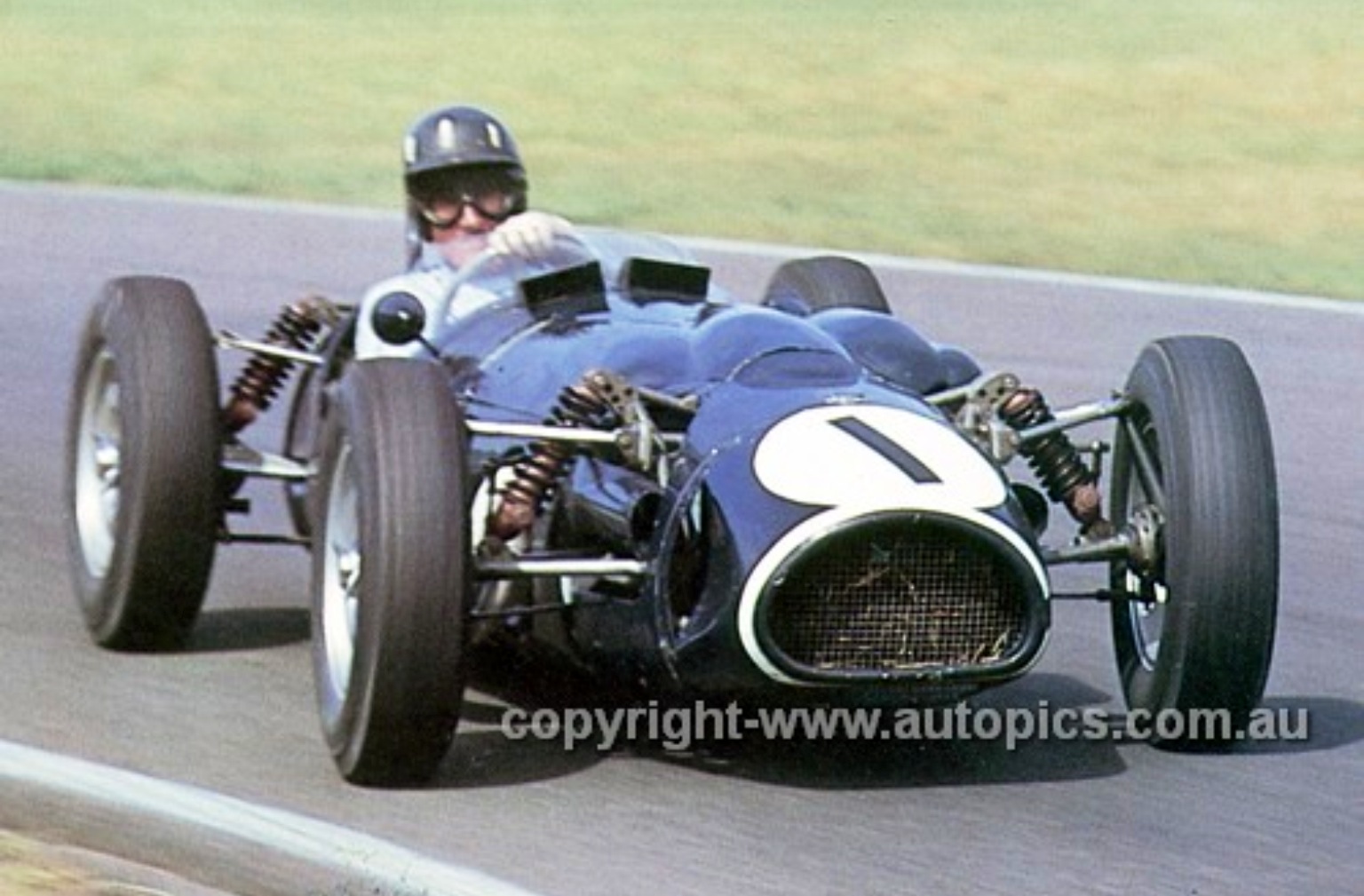
Graham Hill working his radical four wheel drive Ferguson P99 Climax hard to stay in front of the mid-engined paradigm, Homestead Corner, Warwick Farm, Sydney…

Jack Brabham won the race from John Surtees and Bruce McLaren in Brabham BT4, LolaMk4A and Cooper  T62 respectively, all powered by Coventry Climax FPF 2.7 litre ‘Indy’ engines. Bored versions of Climax’ successful 2.5 litre F1 Championship winning motors. Hill finished 6th in his 2.5 litre FPF powered car. At the time Australian National F1 was Formula Libre, the ‘2.5 Tasman Formula’ commenced in 1964.

agp prizegivig 1963

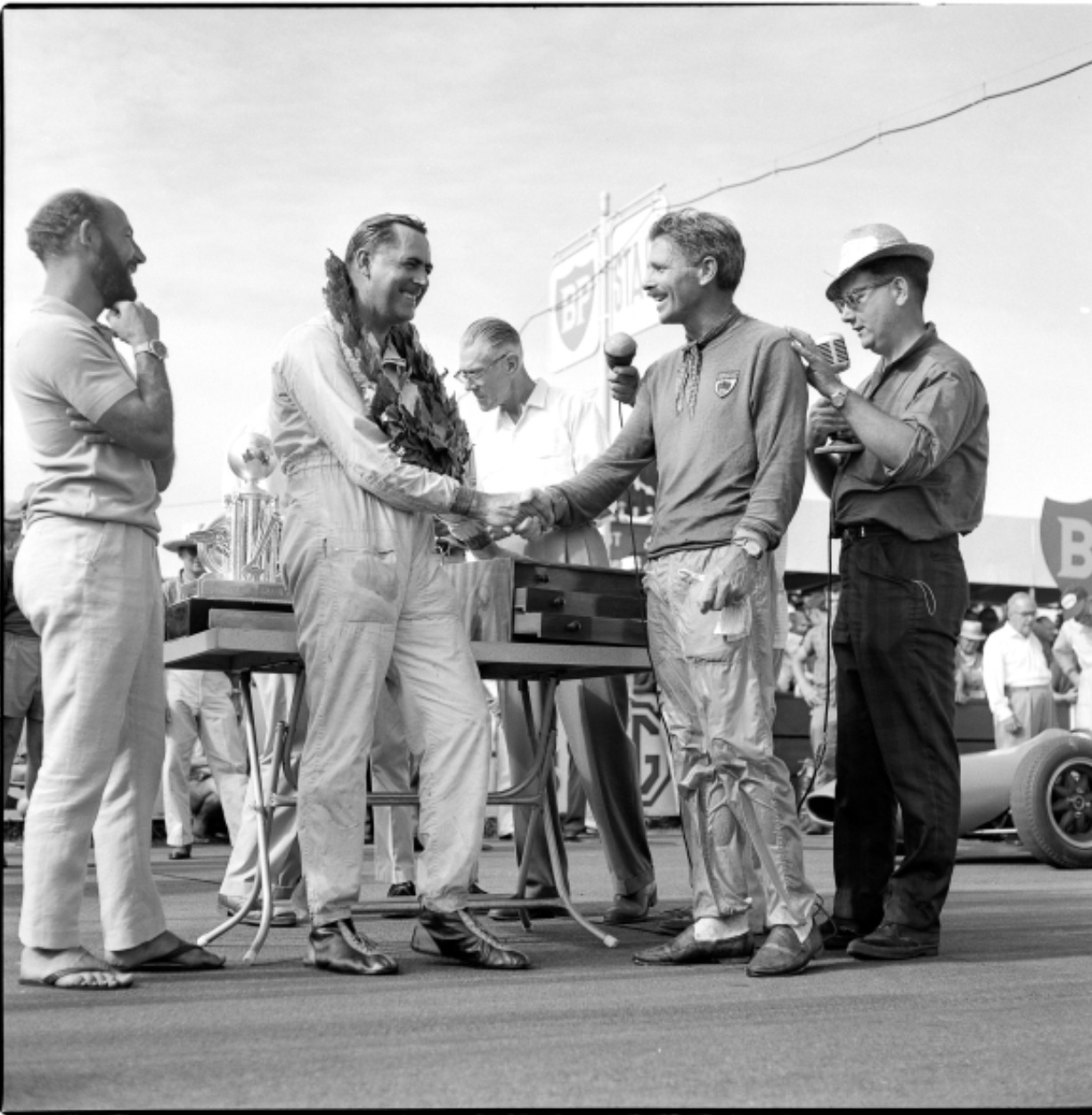
David Mckay congratulates Jack Brabham, Brabham victorious in his BT4. A very relaxed, bearded Stirling Moss wearing that great Australian footwear fashion icon, rubber ‘thongs’ looks on. Moss still recovering from his Easter Monday, 23 April 1962, near fatal and career ending Goodwood Lotus crash. Mckay a great Australian driver and ‘Scuderia Veloce’ team owner/patron. McKay finished 4th in the race also Brabham BT4 Climax mounted. (David Mist)

Hill also raced the Rob Walker entered, 2.5 litre FPF engined car at the ‘Lakeside International’, in Queensland the following weekend finishing second to Surtees on this very fast track, not necessarily the sort of circuit on which one might expect the car to shine. Hill was victorious in a wet preliminary race on the Saturday, the car excelling in the wet conditions.

hill lakeside p99 in the wet

Graham Hill in the wet Lakeside preliminary event he won in P99. Lakeside. (John Stanley)

P99’s ‘Summer Sunshine Tour’ started in New Zealand in January the car being campaigned by ‘newly minted’ World Champion Graham Hill, victorious in his BRM P57 in 1962, and Innes Ireland.

I posted this short article a while back about Hills’ 1962 Championship winning car; https://primotipo.com/2014/10/12/graham-hill-brm-p57-german-gp-1962/

Hill drove in the NZGP, held at the brand new Pukekohe circuit on January 5, DNF with gearbox dramas on the second last lap, Surtees won in his Lola.

nz gp 1963

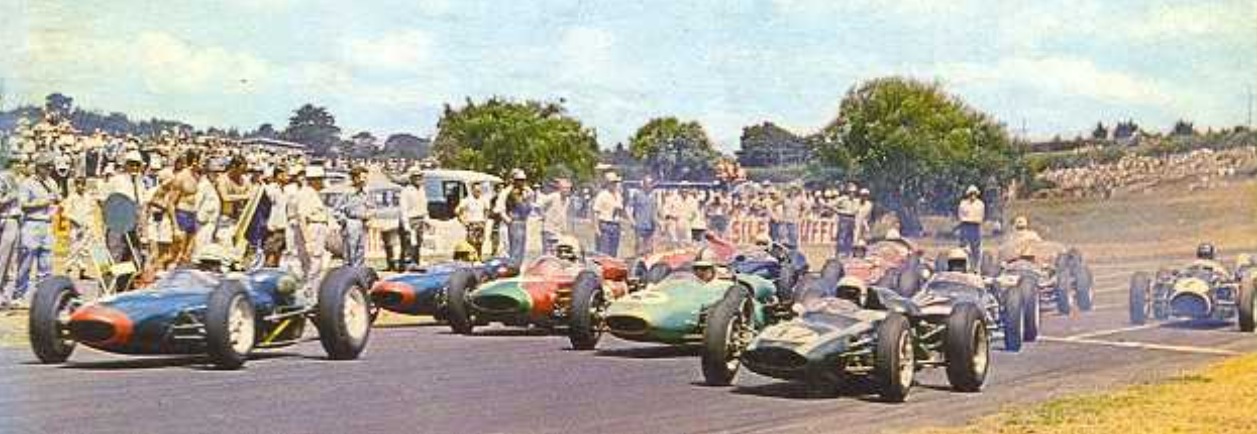
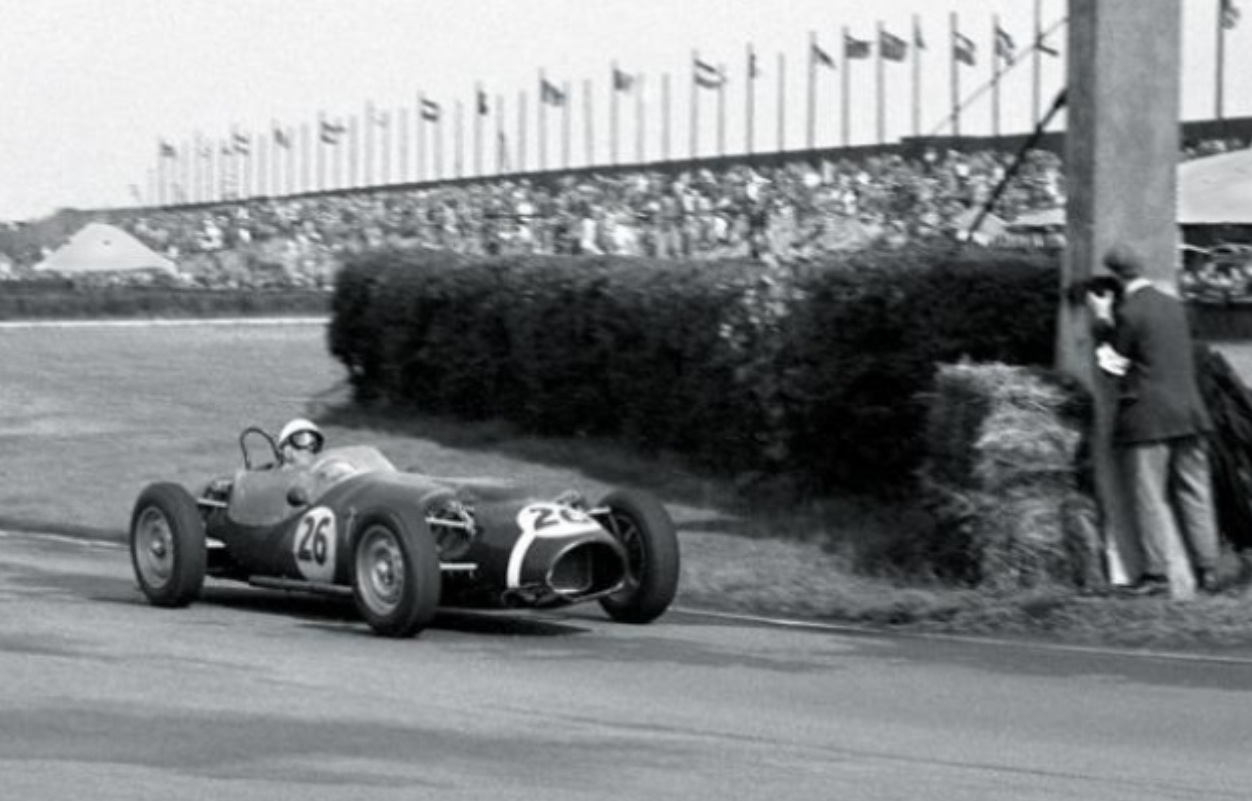
Start of the ’63 NZGP at Pukekohe. Surtees left and McLaren right LolaMk4a and Cooper T62 get the jump at the start. Hill is on the far right in P99. Beside Surtees and back is his teammate Tony Maggs LolaMk4a, the green nose of Amons’ Cooper T53 and Brabhams turquoise Brabham BT4…all Coventry Climax powered. (sergent.com)

Hill then returned to the UK, Ireland handling the car at Levin, Wigram and Teretonga on the 12th, 19th and 26th of January respectively. Innes was third at Wigram, victory going to Brabhams’ BT4, he retired with overheating at Wigram, the race won by Bruce McLarens’ Cooper T62 and was third at Teretonga, McLaren again victorious.

The car was then shipped to Sydney for the Warwick Farm AGP and finally north to Brisbane by road before returning to the UK.

lakeside on ute p99

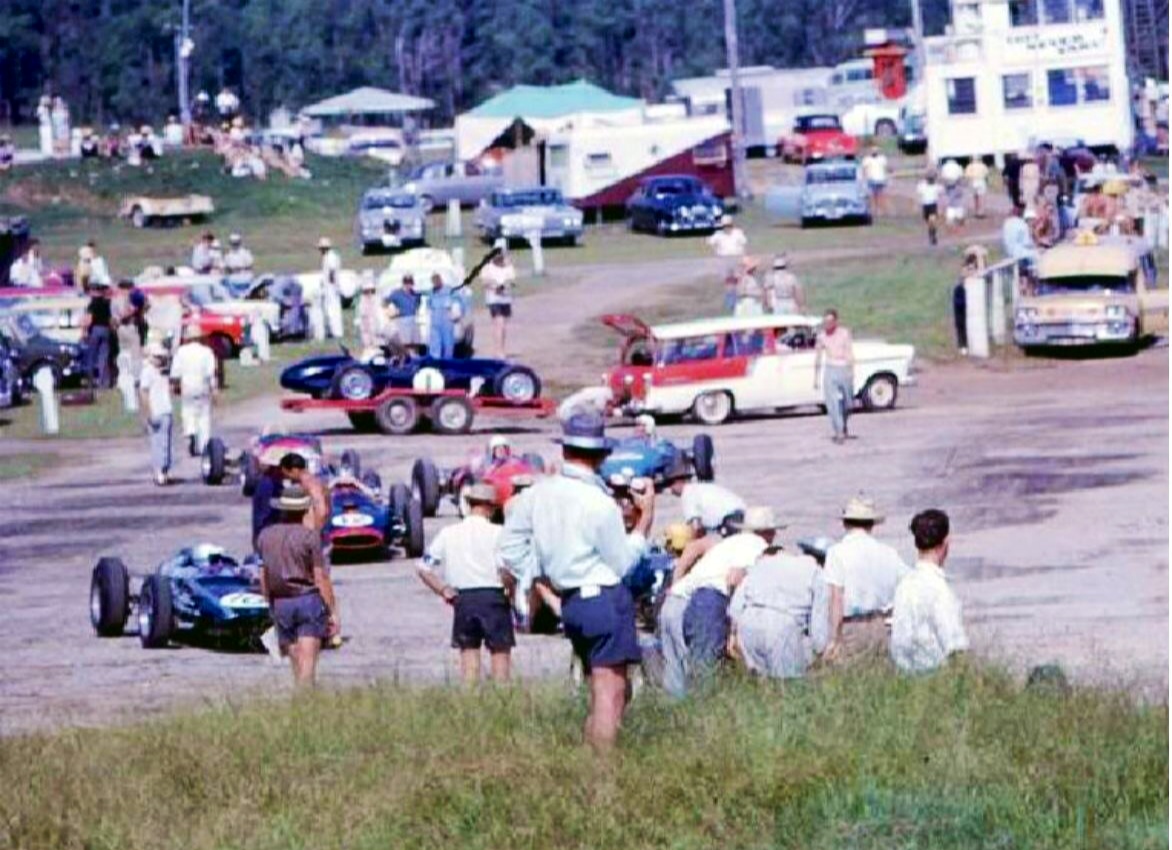
Lakeside Queensland paddock scene 1963. P99 middle of shot lashed onto an open trailer behind a Holden FC ‘Station Wagon’, as we call an ‘Estate’ in Oz. The car travelled the 950 Km from Warwick Farm on Sydneys’ outskirts to Lakeside, north of Brisbane. McLarens Cooper T62 is at the front of this group, and the red nose car is Maggs’ Lola Mk4a. (Ray Bell)


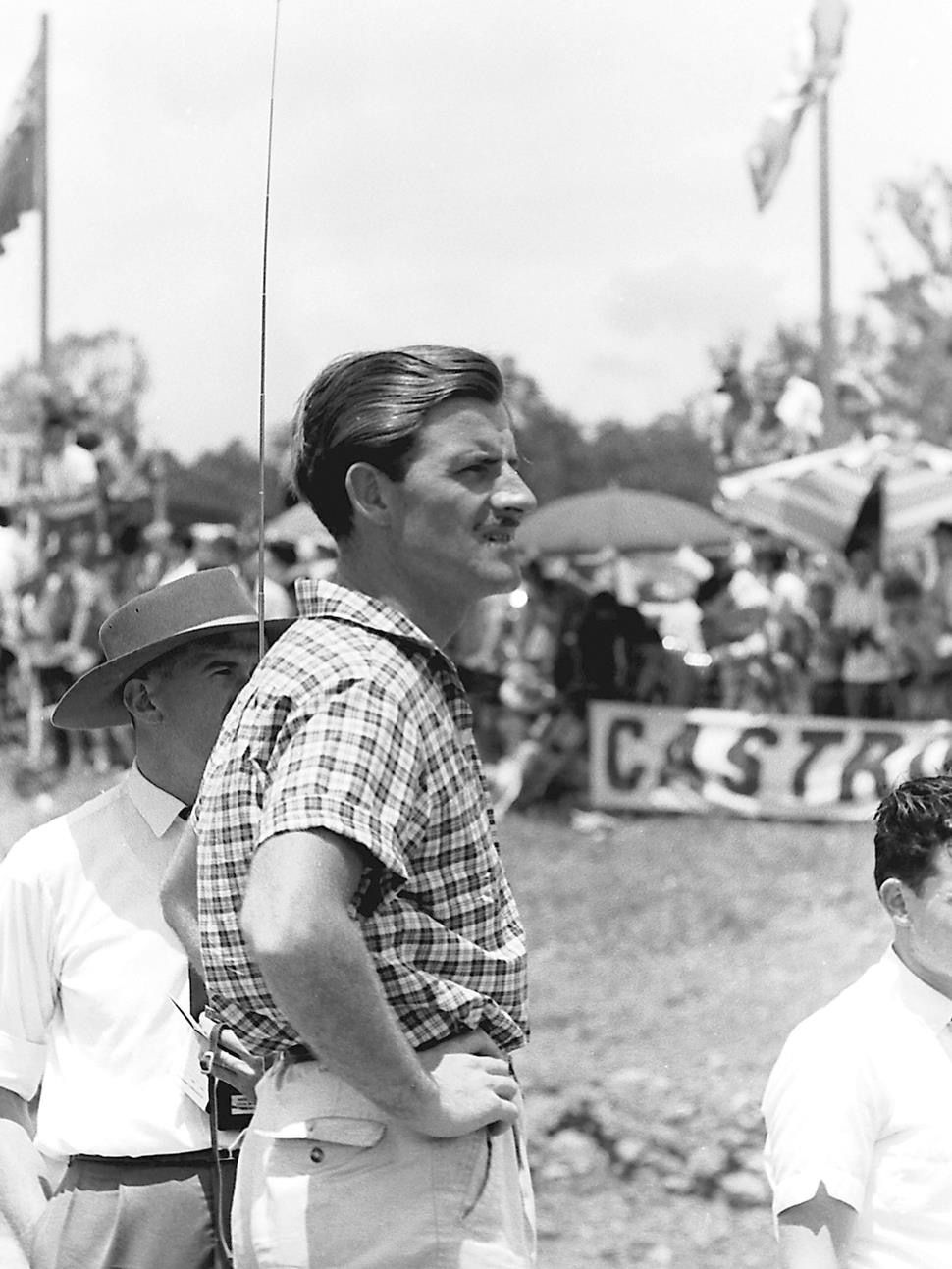
Graham Hill looking pretty relaxed at Lakeside in 1963 (J Psaros)

Ferguson Research…

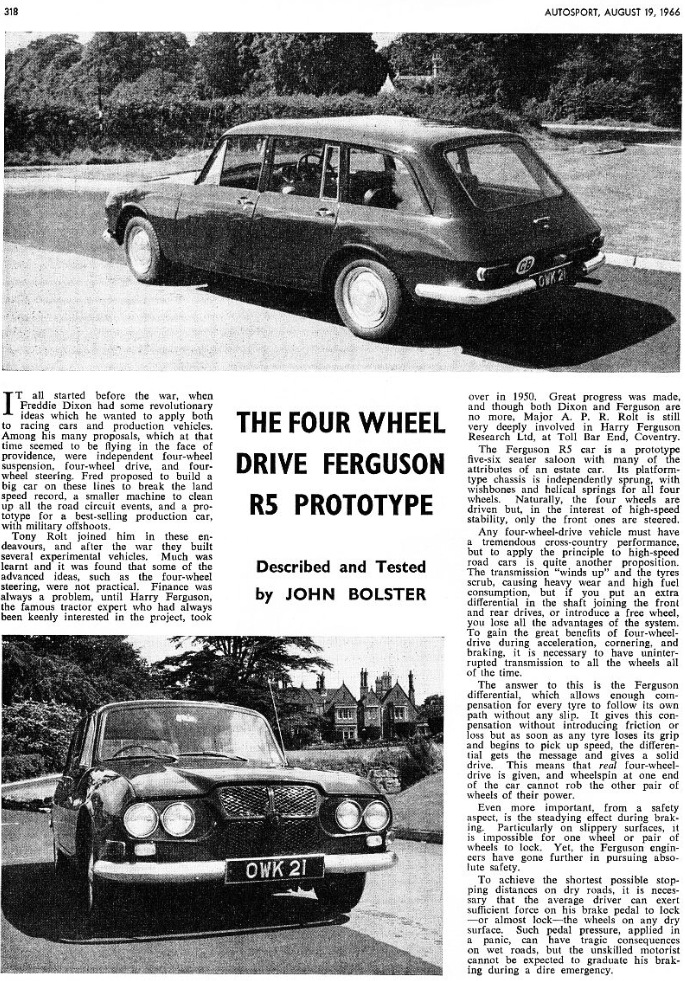
The Ferguson Family Museum summarises the P99 as follows…’The creation of the Ferguson Formula four wheel drive system began shortly after World War II.

Harry Ferguson had always loved the world of motorsport and had a vision of creating a four wheel drive system with the purpose of improving road safety. The Ferguson car, ‘the R5’, was 40 years ahead of its time. It featured four wheel drive, anti-lock braking, electric windows, disc brakes and a hatchback design, it was the forerunner of the modern car.

ferguson r5

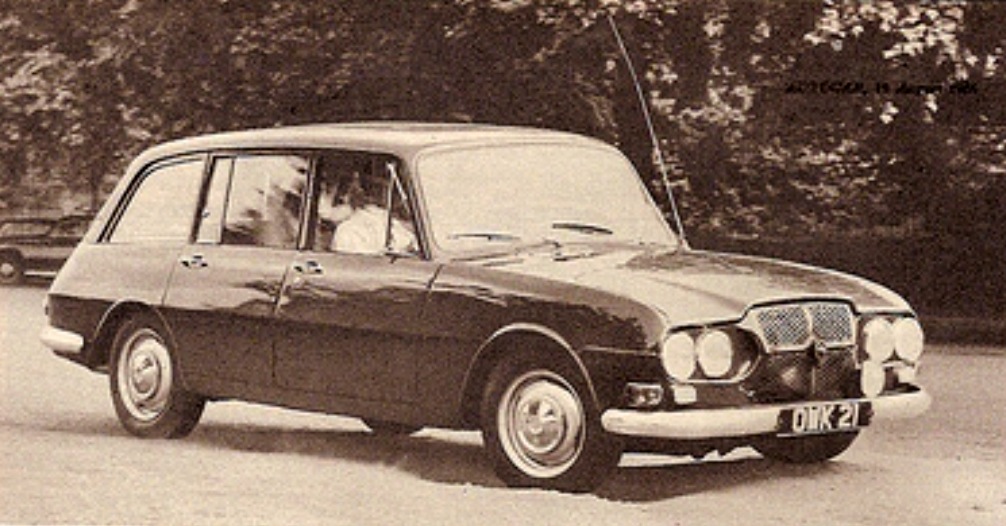
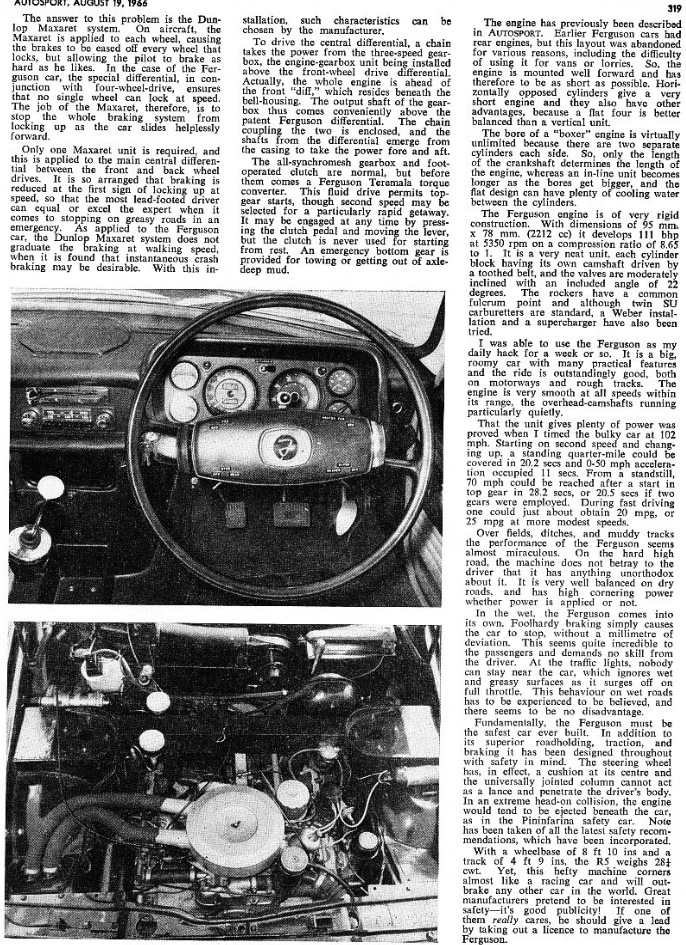
Not the prettiest of things but 4WD, powered by belt driven SOHC 2.2 litre engine, 4 wheel discs, ABS…all at the time of the Cortina Mk1. This car has escaped me, i have included John Bolsters’ Autosport road test of the prototype at the bottom of this post. (Autocar)

Harry Ferguson decided the best way to prove the importance of four wheel drive and anti-skid braking was to demonstrate it on a successful Formula 1 car.

In 1950 designer, Claude Hill, Brooklands Riley racer, Fred Dixon and Tony Rolt, a POW escapee and 24 hour Le Mans winner, teamed up with Harry Ferguson to start development on what was later to become the world’s only Formula 1 winning four wheel drive car – Project 99.

Later the Ferguson Formula four wheel drive system was widely adopted by rally cars and the motor industry worldwide in the form of the viscous coupling. Although designed as a racing car P99 was also a research vehicle intended to show the advantages and reliability of the four wheel drive system. What better way to generate public interest than to successfully race a car using the Ferguson Formula four wheel drive’.

p 99 fettled lakeside

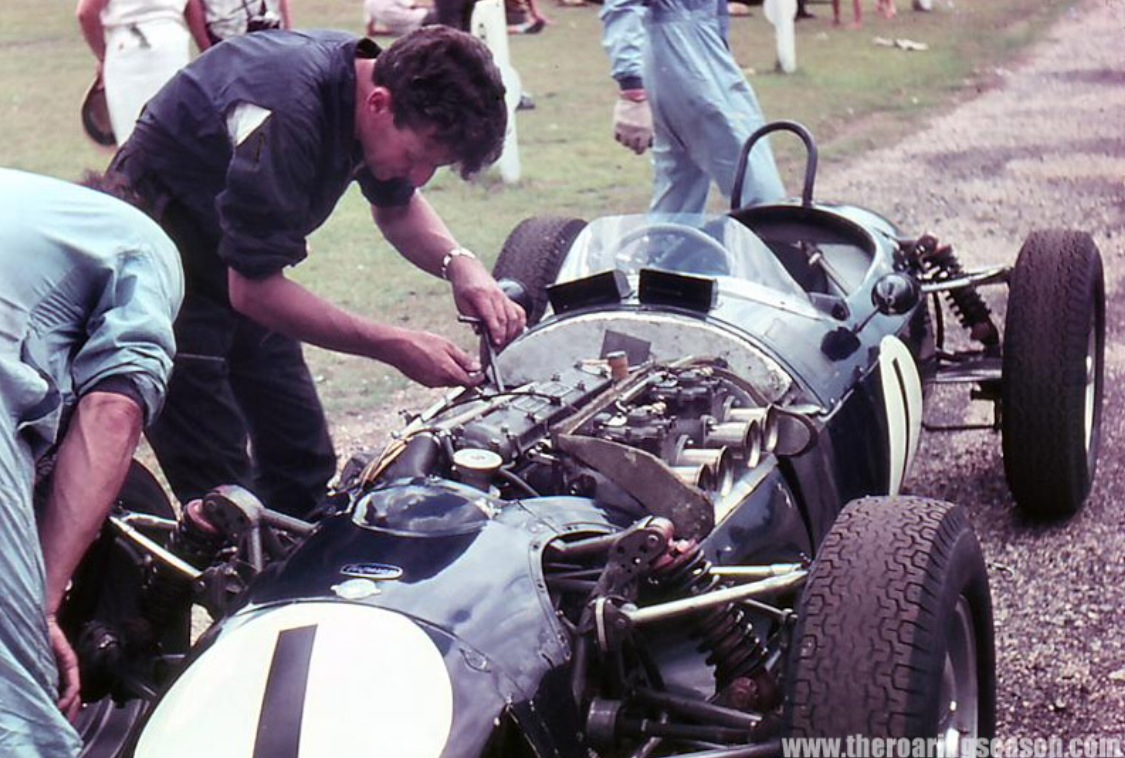
P99 being fettled by Rob Walkers team at Lakeside, February 1963. Thats’ G Hills legs in the driving suit at rear of the car. Lovely alloy body, Climax 2.5 FPF 4 pot engine, spaceframe chassis and upper and lower wishbone/ coil spring damper units, alloy Dunlop wheels,vestigial roll over bar all clear in this shot. (Peter Mellor)

P99 Design and Specifications…

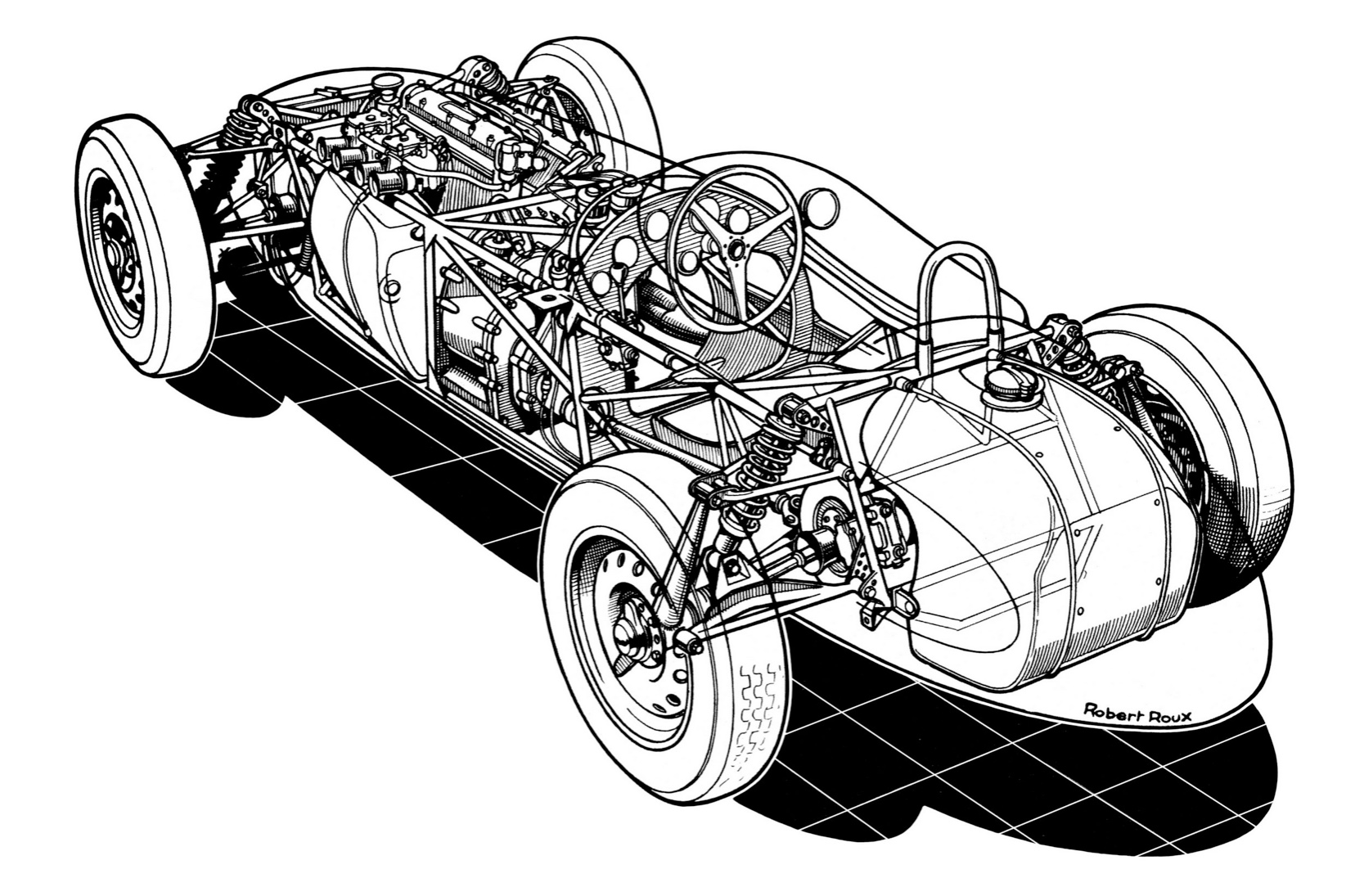
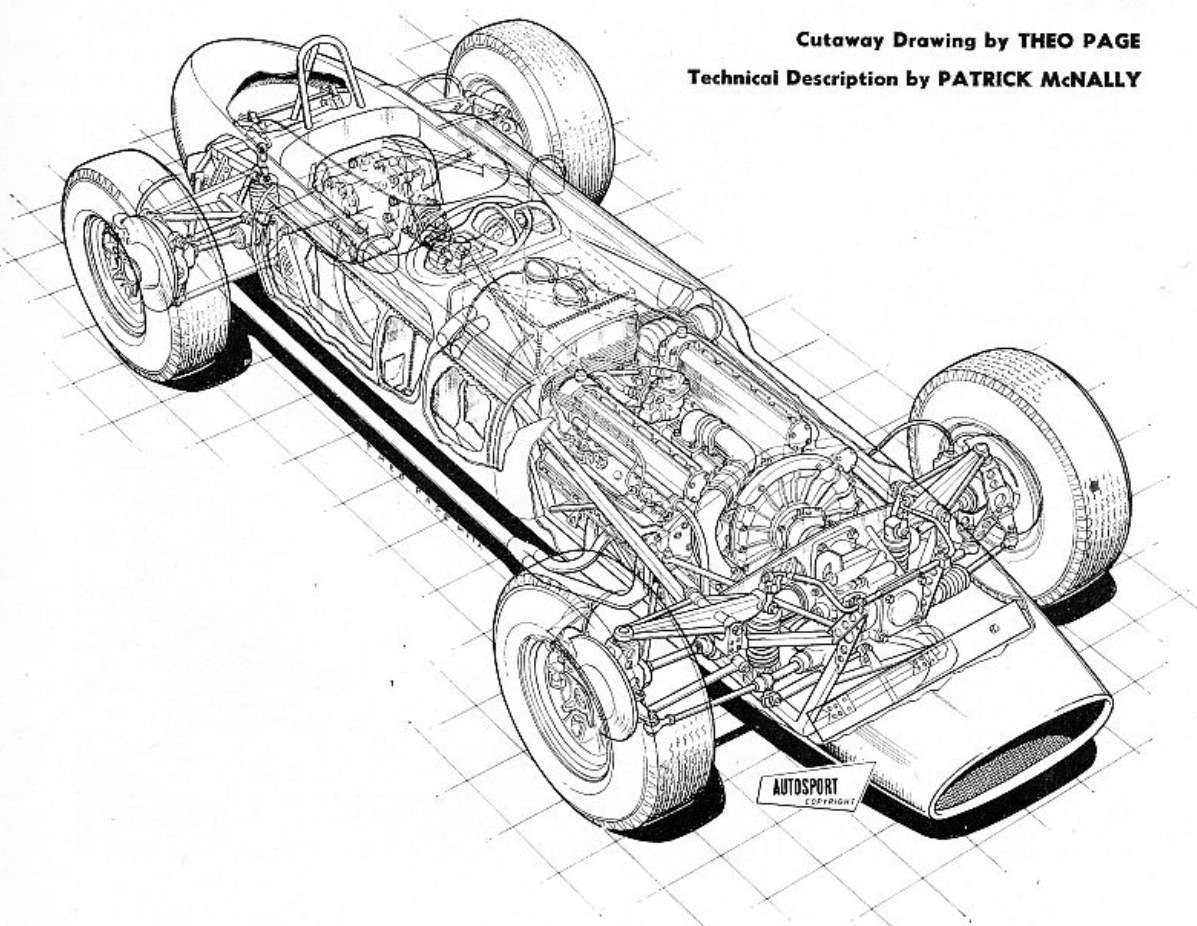
p 99 cutawy

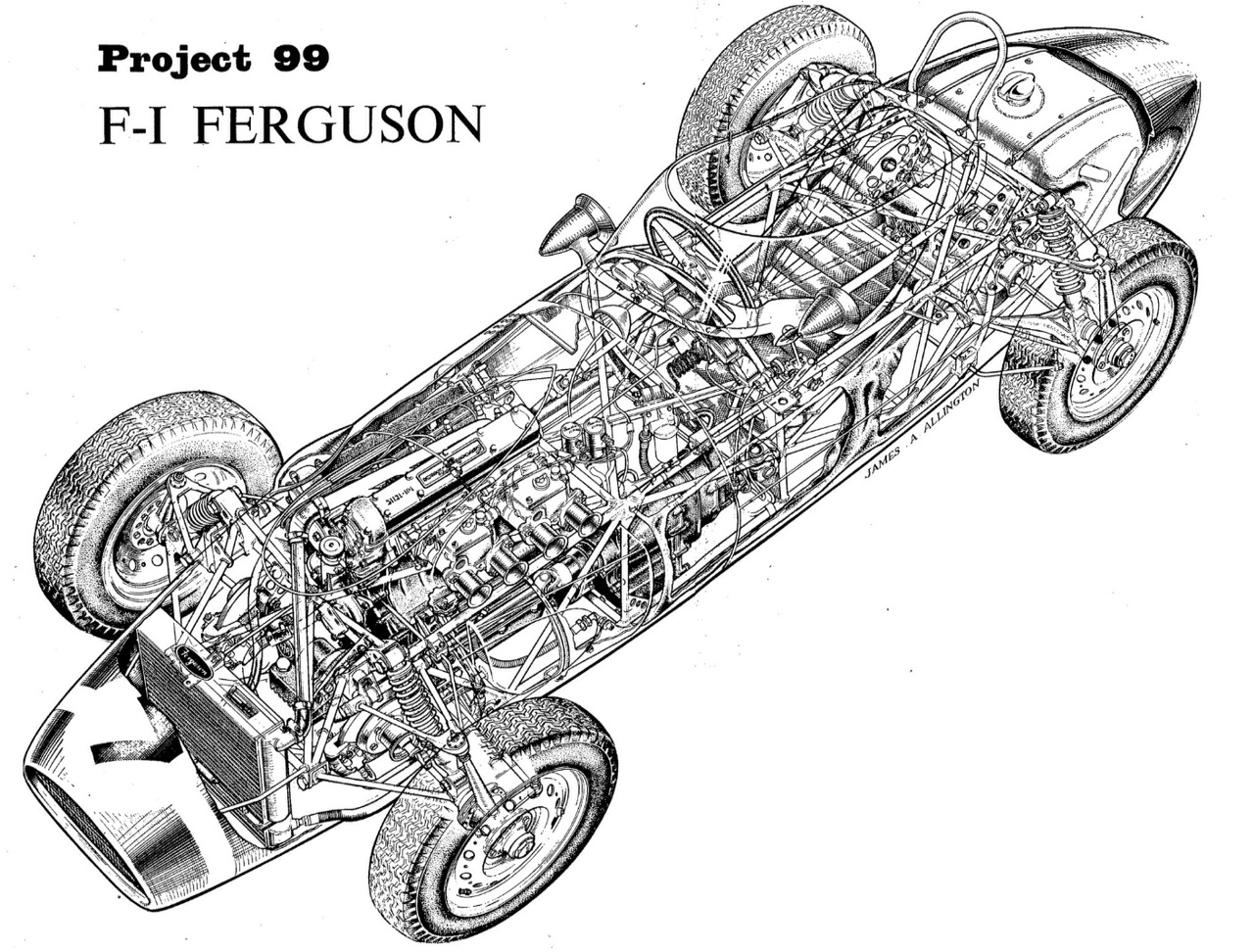
Spaceframe chassis, 2.5 litre Coventry Climax FPF 4 cylinder engine circa 235bhp. Suspension front and rear by upper and lower wishbones and coil spring/damper units. Rack and pinion steering. Dunlop disc brakes and alloy wheels. Ferguson 5 speed box and 4WD transfer case…(James Allington)

Ferguson hired Claude Hill from Aston Martin to design the car. He used a then ‘state of the art’ space-frame chassis, front and rear suspension comprising upper and lower wishbones and coil spring/Armstrong damper units and adjustable sway bars. Brakes were Dunlop anti-lock, which was tested but unraced.

Lightweight Dunlop alloy wheels were used, steering is rack and pinion.

The clever bit was of course the 4WD system. It comprised a transfer box bolted directly to the 5 speed gearbox. The Climax engine was installed at an angle to allow space for the driveshaft to the front differential. The rear driveshaft was installed on the left side of the chassis, the driving position slightly off centre to the right. Similar to the weight balance, the torque was evenly divided between the front and rear wheels.

P99 was planned for the 2.5-litre F1 utilising the championship winning Coventry Climax FPF 235bhp, DOHC, four-cylinder engine. The rules changed and Formula 1 was restricted to 1.5-litres from 1961, which meant the extra weight of the four-wheel-drive system was a handicap. The Intercontinental series was established for the old 2.5-litre engined F1’s, to be raced in 1962, the Ferguson was therefore built to accommodate both the Climax 1.5 (151bhp) and 2.5 litre (235bhp) FPF motors.

The whole project took less than a year.

There were to be no concessions in relation to tolerance. Perfection would only just be good enough. Dixon was right when he calculated that differentials, bearings, gears and other drivetrain parts could be lighter if the energy was dispersed to four wheels rather than two.

Ferguson’s central differential system, which would be the key to Peugeot’s and later Audi’s rally success in the 1980s, could balance out the delivery of that power to the wheels.

Ferguson were keen to try the Dunlop Maxaret anti-lock brake system, the whole assembly would eventually find its way into the automotive mainstream some 30 years later. Sadly, Harry Ferguson died before his dream took to the track and it was Rolt who eventually became the projects’ driving force.

P99 rear shot

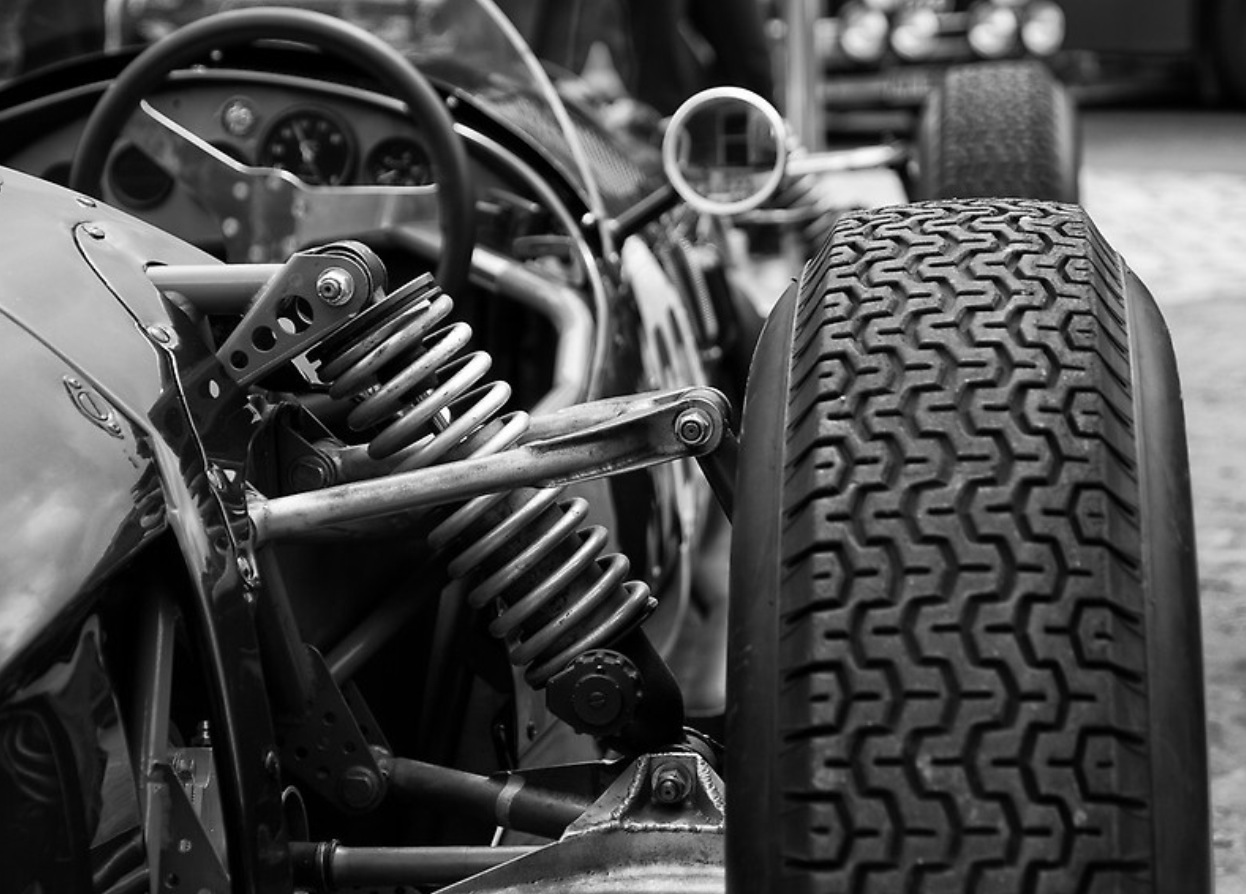
P99 from aft. Rear suspension detail; upper and lower wishbone and adjustable Armstrong shock. You can just see the driveshaft below the upright. Beautiful ally bodywork of pretty car. Driving position offset to the right, gearchange for 5 speed box to drivers left, right side more conventional in a single seater. (Unattributed)

By 1961 Mid-Engined cars were de-rigeur the Front-Engine GP car obsolete, so the Ferguson P99 was a complete dark horse…

moss aintree

Stirling Moss, Aintree British GP 1961. On a charge and soon to be disqualified. The photograph below is of Jack Fairman earlier in the race before he pitted to allow Moss to take over the car (Unattributed)


(Simon Lewis Transport Books)

Launched at the 1961 British Empire Trophy at Silverstone, Jack Fairman drove the car which was entered by Rob Walker. The P99 had mechanical problems and didn’t finish.

Its next outing was at Aintree in the British Grand Prix. Rob Walker entered a Lotus 18 for Moss and the P99 for Jack Fairman, when the Lotus 18/21 brake pipe broke Moss took over the P99. The P99 was under investigation by the Stewards when Moss took it over because Fairman had a push start from the pits, which was not allowed by the rules- as a consequence the car was black-flagged on lap 57, his progress to that point had been swift…

For the September 1961 Oulton Park Gold Cup, Moss returned in the P99 and to his delight, it was a classically British summer’s day – 57 degrees, steady drizzle and a wet track! Moss won the race by 46 seconds from Jack Brabham’s Cooper T51 Climax, the only F1 race ever won by a four-wheel-drive car.

moss oulton gold cup

Moss wins the 1961 Oulton Park “Gold Cup’ in P99. The only GP win for a 4WD drive car, albeit Non-Championship F1 race. Greasy conditions tailor made for the fabulous, innovative car. (Unattributed)

The CSI then banned four-wheel-drive from F1.

Moss had the option of using the Dunlop Maxaret anti-lock brakes but preferred to turn them off and use his own judgment. They would reappear in 1967 on the Jensen FF- the Chrysler-power coupé that was a four-wheel-drive version of the Interceptor utilising both the Ferguson four-wheel-drive and anti-lock brakes.

The Ferguson P99 then raced in New Zealand and Australia in 1963 as outlined above fitted with a 2.5-litre engine in our 1963 F Libre International Series. It would have been interesting to see how the car would have performed with a 2.7 Litre FPF equivalent in capacity to the engines of the other front runners that summer.

hill lakeside p99 loading up

World Champ Graham Hill about to board P99. Lakeside, Queensland again. He was keen on the car, with his support BRM developed a 4WD variant of their P261/57 GP car, the BRM P67 1.5 V8 in 1964, using Ferguson technology, well ahead of the ‘1969 4WD pack’, comprising Lotus, Matra, McLaren and Cosworth. BRM P67 qualified in Richard Attwoods’ hands, second last on the British 1964 GP at Brands Hatch grid but was withdrawn from the race, circa 7 seconds off the pace. (Peter Mellor)

P99 returned to England and was lent to hillclimb racer Peter Westbury, who won the 1964 British championship with it, it also ran competitively in 1965 and 1966 and was retired in 1968.

p westbury p99

Peter Westbury, P99. Harewood Hillclimb 1964, he won the British Hillclimb Championship in the car that year. (Unattributed)

P99 also played a key role in the resurgence of 4WD at Indianapolis.

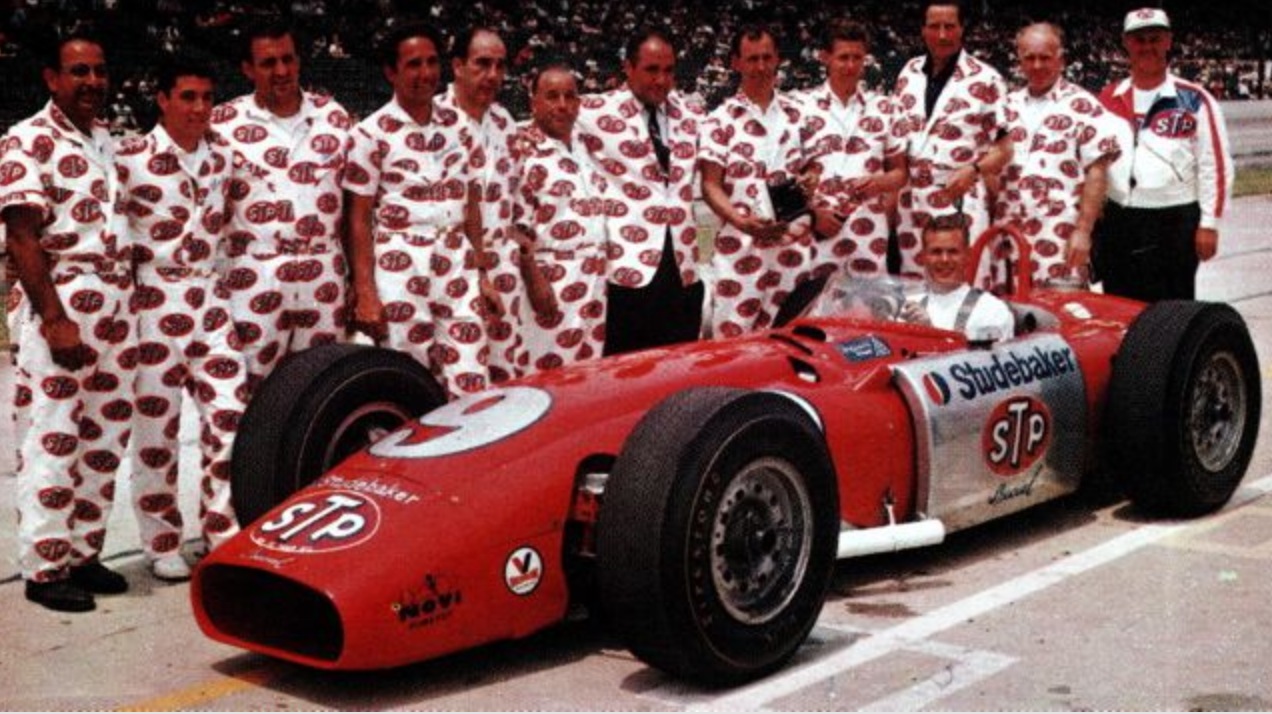
There had been a lot of activity both immediately pre and post war with Harry Miller’s 4WD specials. STP’s Andy Granatelli, on one of his trips to Europe was regaled by the recently retired Stirling Moss, his career ending accident was at Goodwood in 1962, about the dominance of his damp Oulton Park 1961 victory in P99.

Granatelli then approached Tony Rolt at Ferguson to try P99 at Indy, Jack Fairman shortly thereafter put in some impressive 140mph laps in the 2.5 litre car around the famous ‘Brickyard’.

Andy was convinced and ordered a car from Ferguson powered by the Novi V8, the 4WD setup the same FF system as used on P99 but with the split being variable from 70/30 to 60/40 rear/front instead of the P99’s fixed 50/50 split.

Bobby Unser qualified the car sixth at Indy 1964.

This is a tangent too far for this article (see ‘Etcetera below for a cutaway drawing and further details) but for those with an interest in 4WD in motor racing click on this link to a great forix.autosport article on the subject; http://8w.forix.com/4wd.html

novi studebaker 1964

Ferguson Novi ‘STP Studebaker’ with Bobby Unser at the wheel. Indy 1964. Q6, DNF after hitting the wall seeking to avoid the fatal McDonald/Sachs accident. (Unattributed)

Four-wheel drive made another appearance in Formula 1 in 1969…

As teams struggled for more traction- the Ford Cosworth engine was developing well in excess of 400bhp at this stage, putting the power down was key to improved performance.

At the time 4WD was being used successfully at Indianapolis, it was therefore a natural direction for the F1 teams to explore, particularly Lotus who had been racing at Indy since 1962 and using 4WD competitively, putting accidents to one side, in their 1968 and 1969 contenders, the Lotus 56 Pratt & Whitney gas turbine powered car, and Lotus 64 Ford, powered by a Turbo Ford engine.

Matra, Lotus and McLaren all tried the Ferguson system and Cosworth devised their own 4WD car. The introduction of wings, which could achieve the same traction outcomes without the weight penalty, and advances in race tyre technology and widths provided simpler cost-effective solutions than persevering with 4WD.

Overall, only eight four-wheel-drive F1 cars were ever built.

Robin Herd’s Cosworth 1968 4WD design (Bennet)

In 2004  following a period of 35-plus years in the Donington Collection…

The ‘one of a kind’- only 1 chassis was ever built Ferguson P99 was retrieved by the Ferguson family to the Ferguson Family Museum on the Isle of Wight and overhauled.

The car was stripped and was in remarkably good order, it was re-assembled using all of the original parts, including the extremely rare twin-choke Weber 58 DCO carburettors and re-fitted with the totally original bodywork which still wears original Rob Walker team paint and livery.

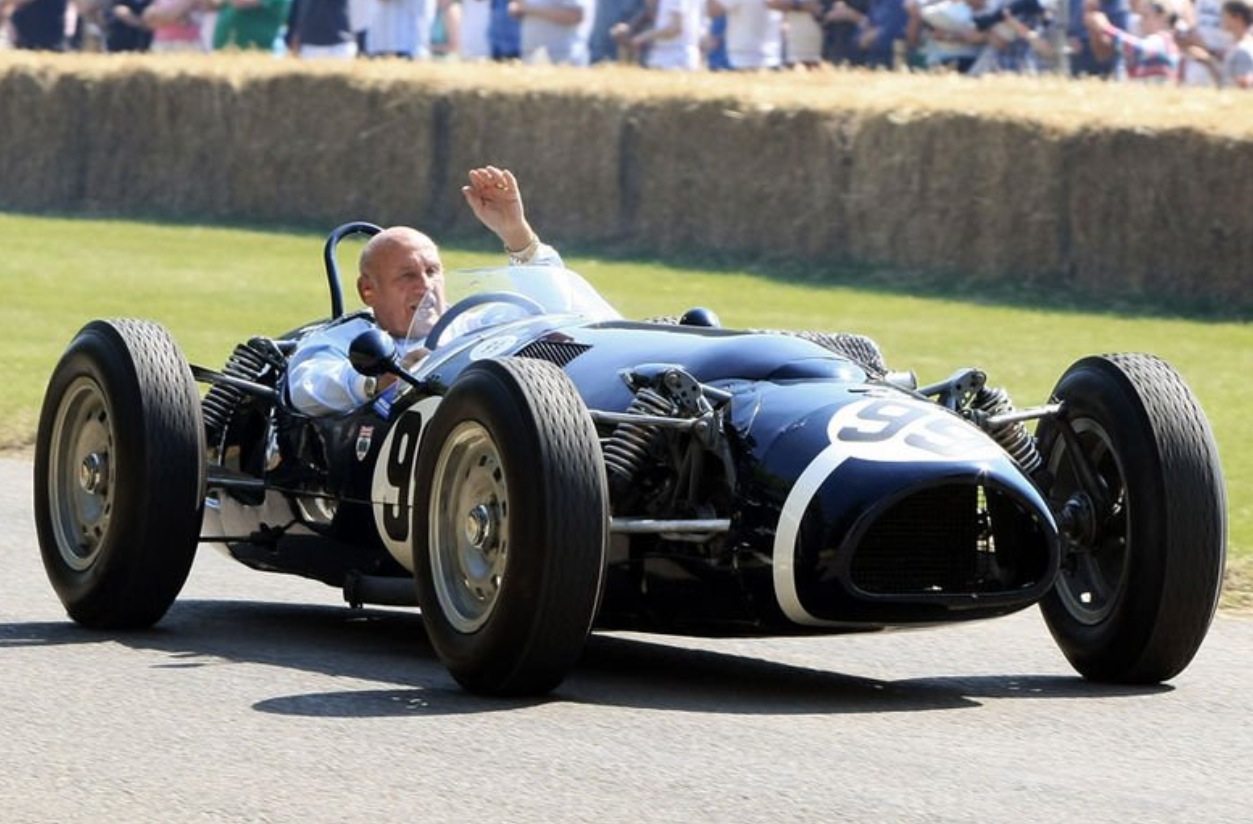
Sir Stirling Moss drove it at the 2005 Goodwood Revival and at the Monaco Historic Grand Prix in 2008. In 2006 Moss handed it over to Barry “Whizzo” Williams at Goodwood, who started 18th and had worked his way up to third before his brakes faded, he finished in that position.

P99 still appears regularly in suitable events, its historic significance enormous.

moss p 99 in recent times

Stirling Moss in P99 at the Goodwood Festival of Speed. (Unattributed)

Etcetera…

P99

P99 (R Roux)


p99 british gp

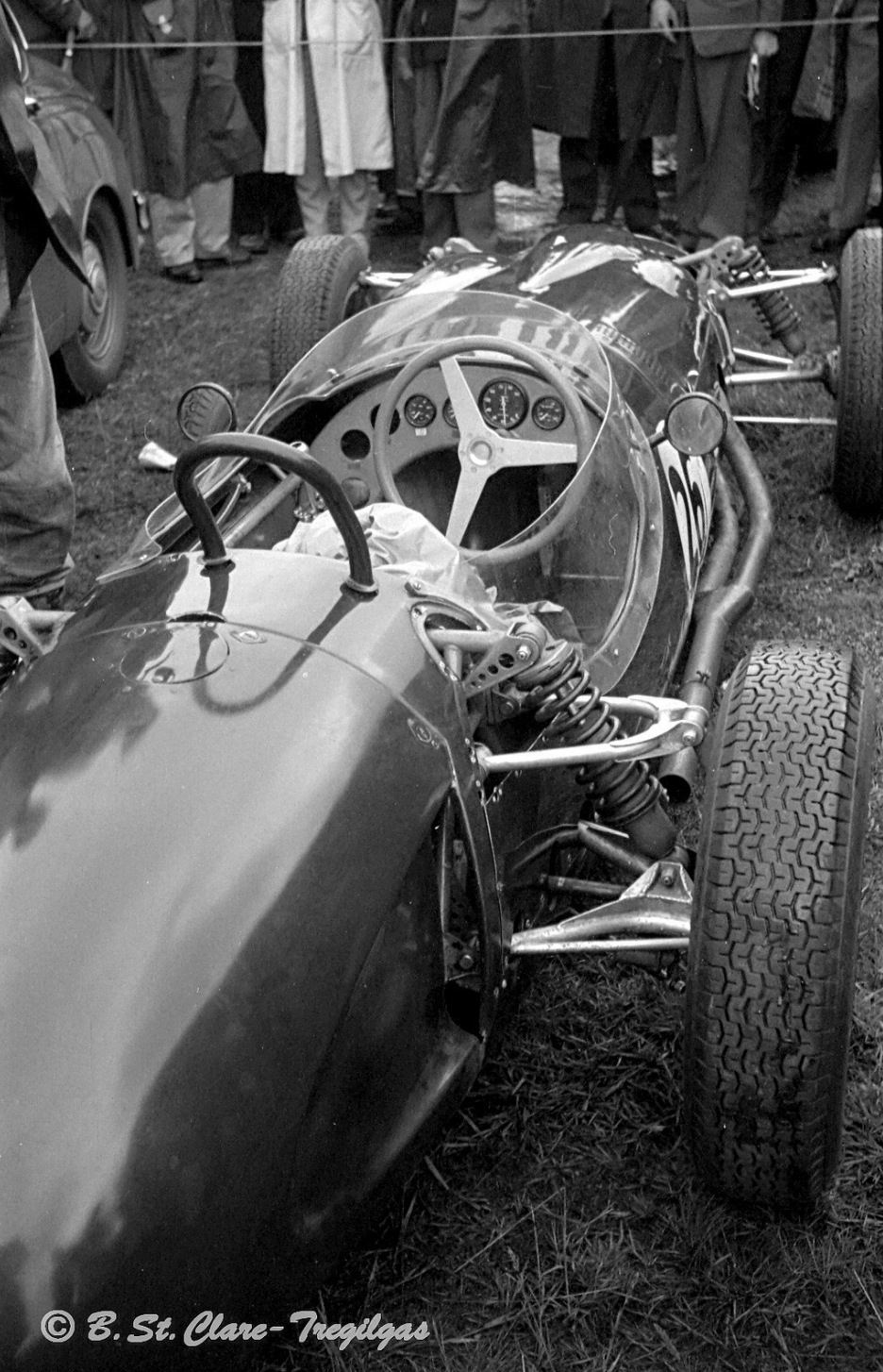
Cockpit shot British GP, Aintree 1961. Driving position offset to the right, gearchange for 5 speed box to the left. 1.5 litre FPF powered Climax engine in the last year of the 1.5 Litre Formula. (B St Clare-Tregilgas)


hill wf push start p99

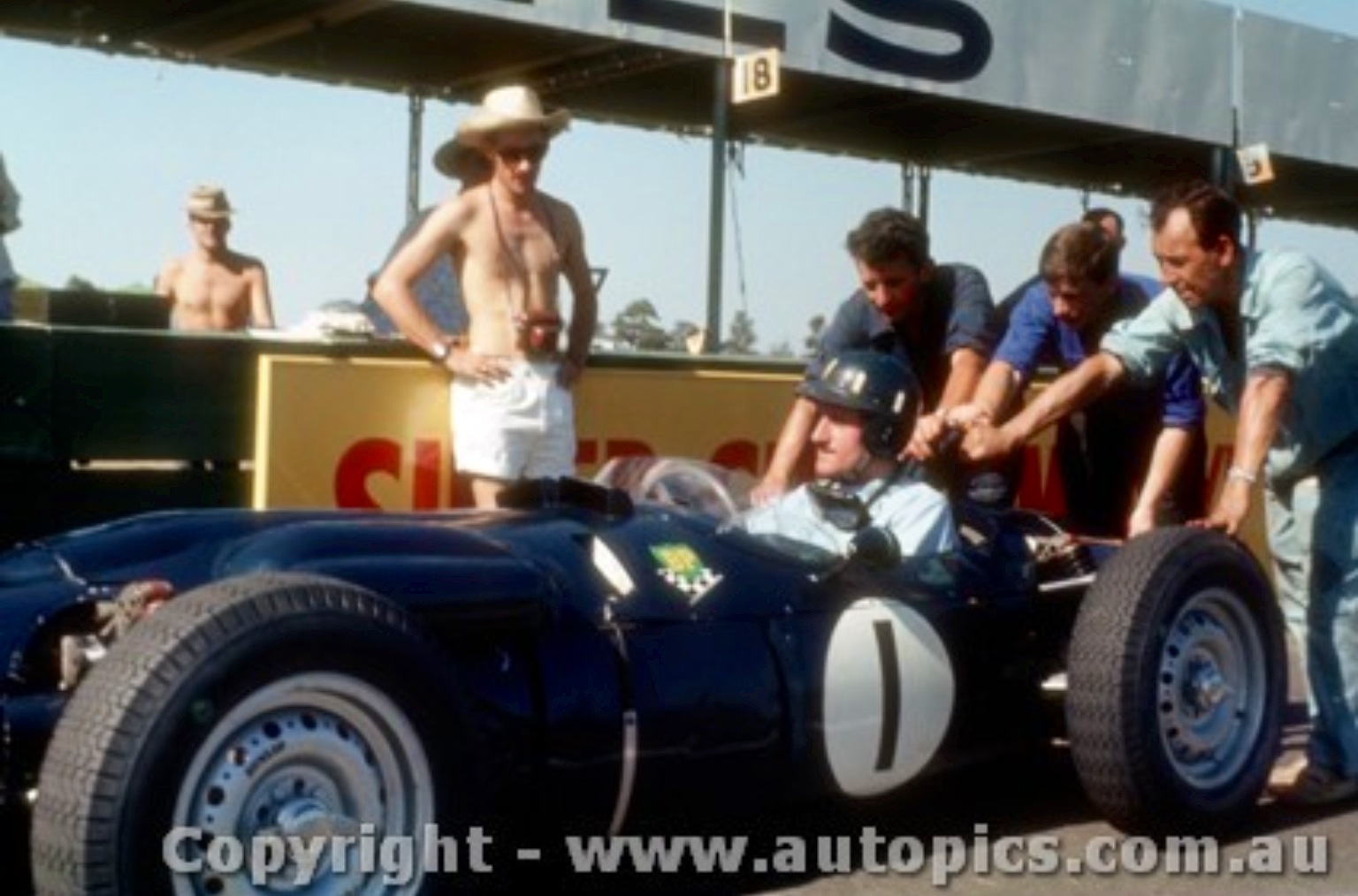
Push start for Hill from the Warwick Farm pit counter, P99. AGP meeting 1963. (autopics)


hill wf butt shot

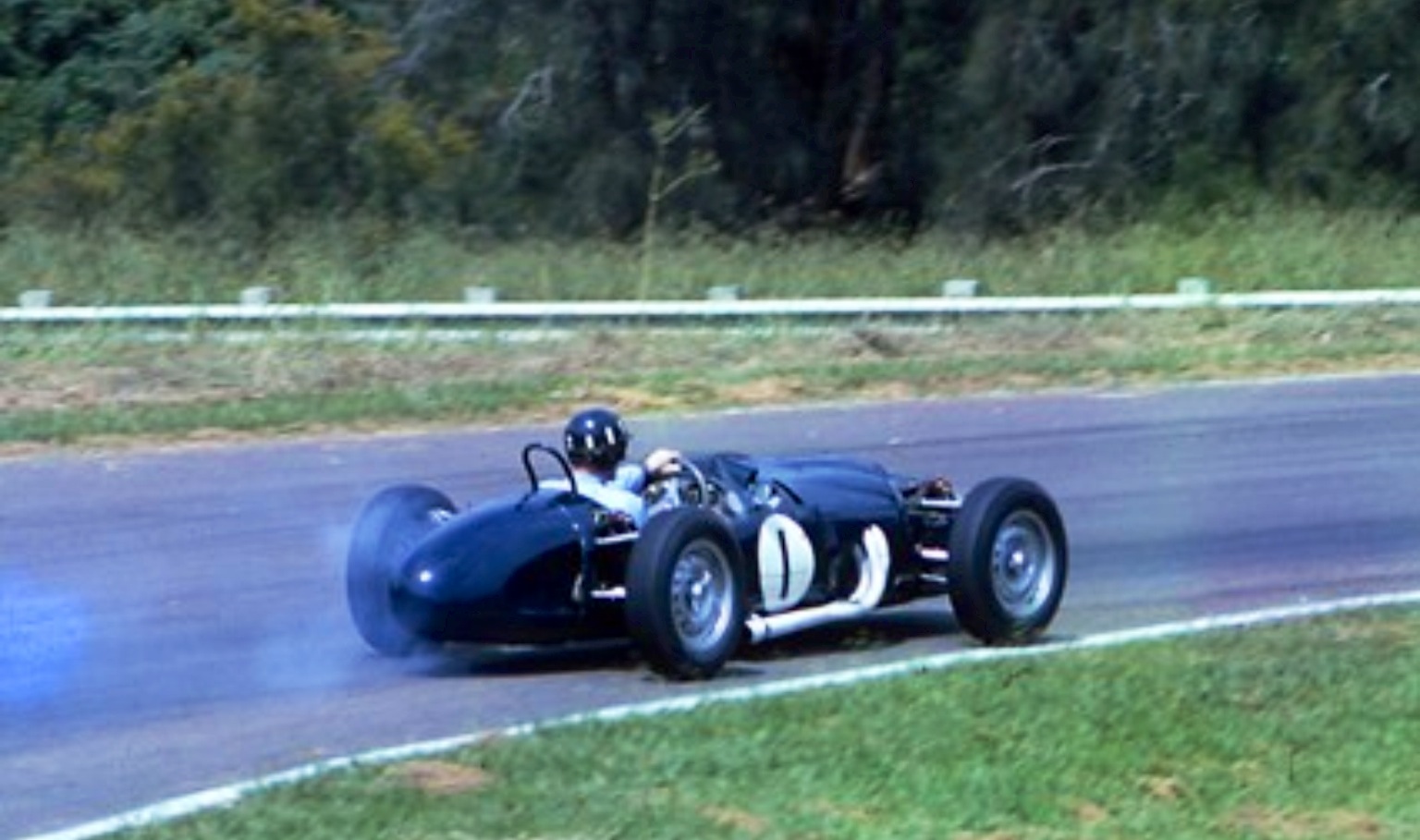
Hill at Warwick Farm trailing smoke from the rear. Probably practice as the car finished the race. (Adrian Schagen)


hill p99 wf mist

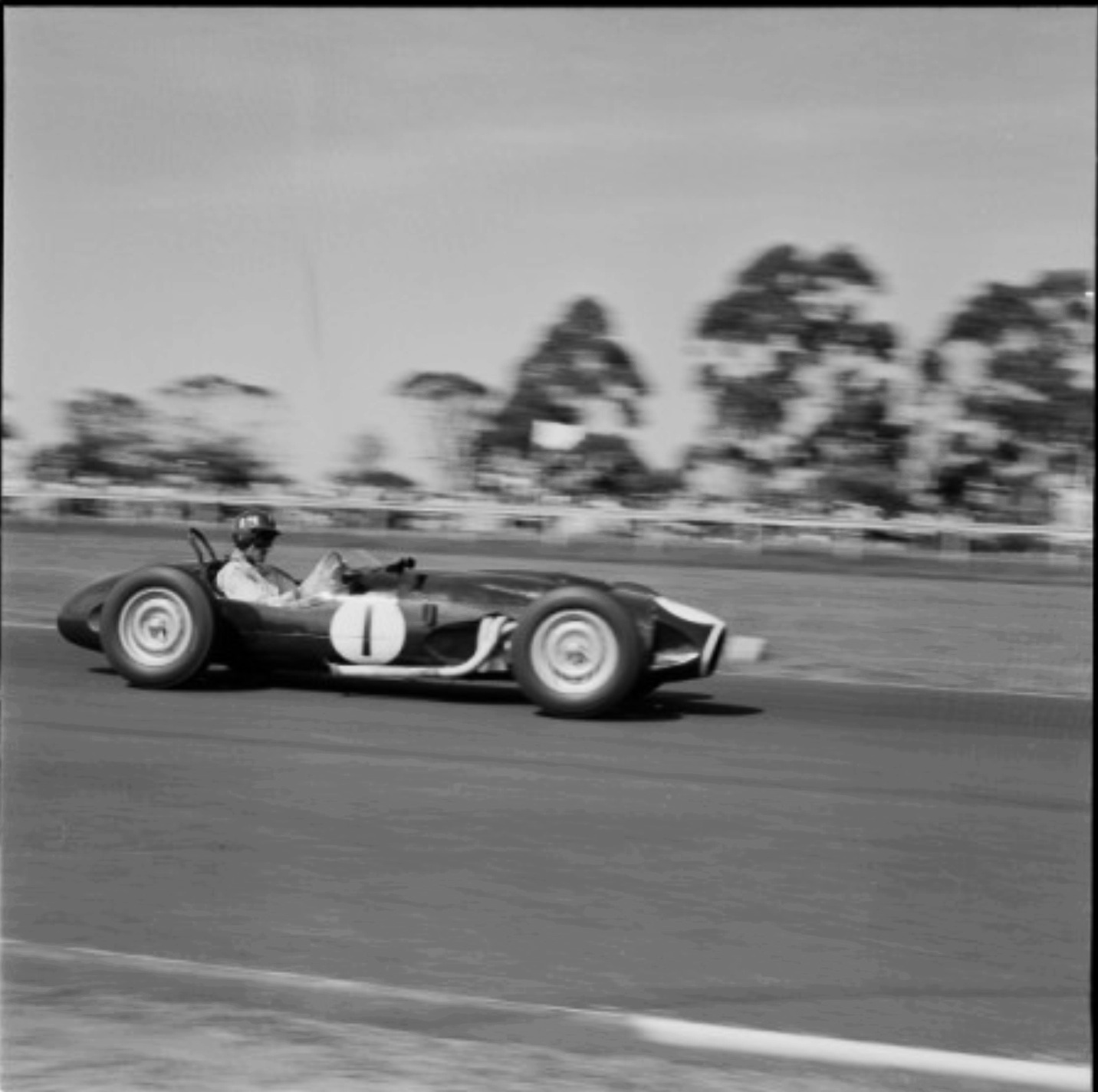
Evocative David Mist shot of Hill during the 1963 AGP Warwick Farm. P99. (David Mist)


p99 wf frontal rea

Hill again at Warwick Farm during the ’63 AGP, this shot showing the not inconsiderable frontal area of P99. Weight and width of car a function of ‘4WD hardware’. (autopics)


Ferguson Novi

ferguson novi page

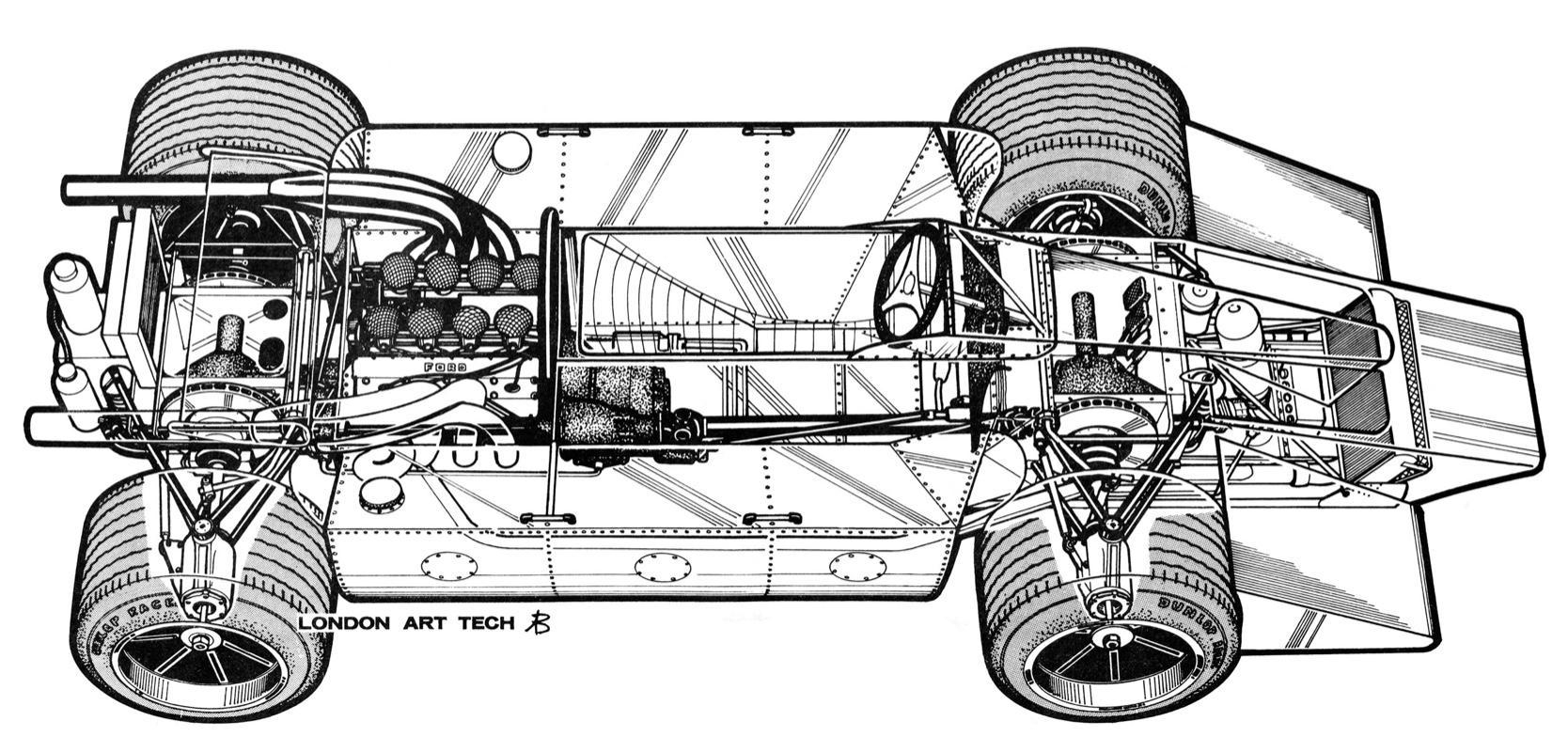
What a wild car this is! Conceptually similar to the P99, the chassis was a spaceframe with a monocoque centre section. As you can see the suspension is inboard with rockers actuating the spring/dampers, P99 is outboard. Contrary to common Indy practice then the suspension was not offest, but the engine and transmission were, a simpler solution. Novi used Dunlop 7X15 inch tyres fitted to alloy wheels and disc brakes using alloy calipers.

The Novi engine was designed pre-War by Bud Wingfield and Leo Goossen and built by Fred Offenhauser. It was a 90 degree, DOHC V8, 2741cc in capacity. Bendix fuel injected and using a Paxton 2 stage centrifugal blower power was circa 830bhp @ 8200rpm.

The engine never won Indy but the engine and its unique sound remain iconic to this day.

R5 Prototype

fergy road car 1

Ferguson R5 road car prototype. Autosport Road Test P1.


fergy road car

R5 Road Test P2.

Credits…

John Ellacott, Bruce Wells, B St Clare-Tregilgas, James Allington, Adrian Schagen, John Stanley, autopics.com, David Mist, Peter Mellor, theroaringseason.com, Theo Page, Robert Roux, Autocar, Autosport, Jock Psaros, Simon Lewis Transport Books

Finito…
 

image

Jim Hall and Innes Ireland chewing the fat, no doubt swapping notes on the setup of their British Racing Partnership Lotus 24 BRM’s…

The Texan took a sabbatical from his growing Chaparral Sports Car program program at home to sharpen his skills in Grand Prix racing, fortunately for motor racing innovation he decided to focus more on the engineering aspects of his programs than his driving, having said that he was a driver of absolute world class, perhaps losing his ultimate edge after his big CanAm shunt late in 1968.

Ireland, the more experienced driver and a Grand Prix winner qualified an excellent 5th, DNF after an accident, Hall qualified 13th and retired on lap 20 with gearbox failure.

Graham Hill won the first of his 5 Monaco victories after Clarks’ Lotus 25 Climax gearbox locked. Richie Ginther, Hills’ teammate was second in another BRM P57 with Bruce McLaren 3rd in a Cooper T66 Climax.

Jim Clark won the drivers championship in the Lotus 25 Climax in 1963, Halls’ best results a 5th and 6th in Germany and Britain respectively. For Ireland, 4ths in both Holland and Italy yielded 6 championship points, 3 in total for Hall.

Hall had the ability to continue in Grand Prix racing but committed to the Chaparral programs in the domestic US sports car series which would become the CanAm Championship, and two fabulous years when his innovative cars wowed fans globally in the World Sports Car Championship in 1966 and 1967.

image

Jim Hall cruising thru the Nurburgring paddock, German GP 1963. Lotus 24 BRM (unattributed)


jim hall mexico 1963

Jim Hall 8th in the 1963 Mexican GP, Lotus 24 BRM. Race won by Jim Clark, Lotus 25 Climax. (The Cahier Archive)

Credits…

The Cahier Archive


irvine monaco 1998

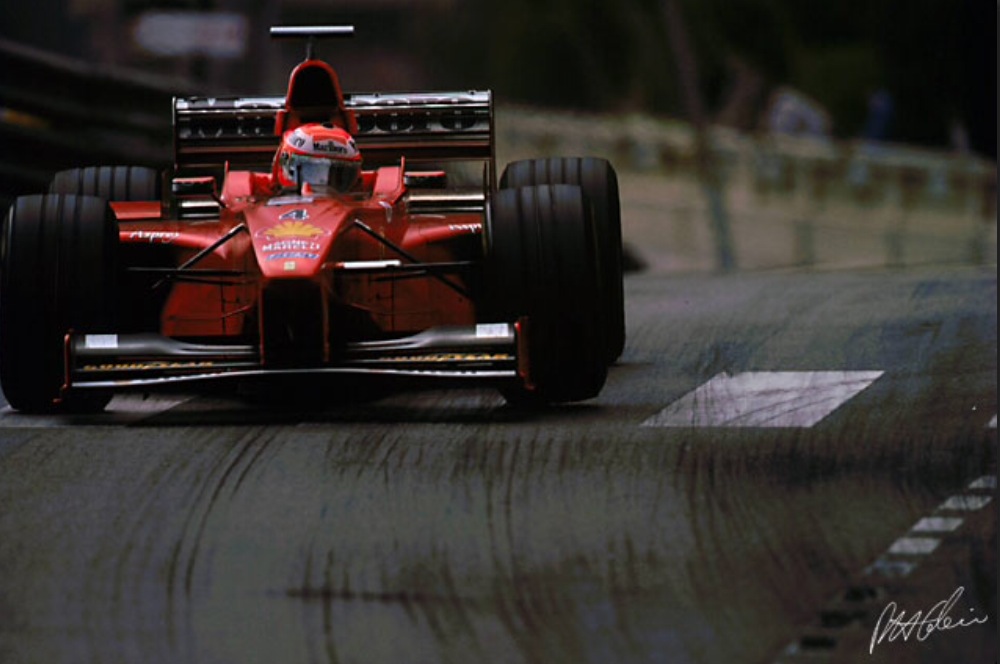
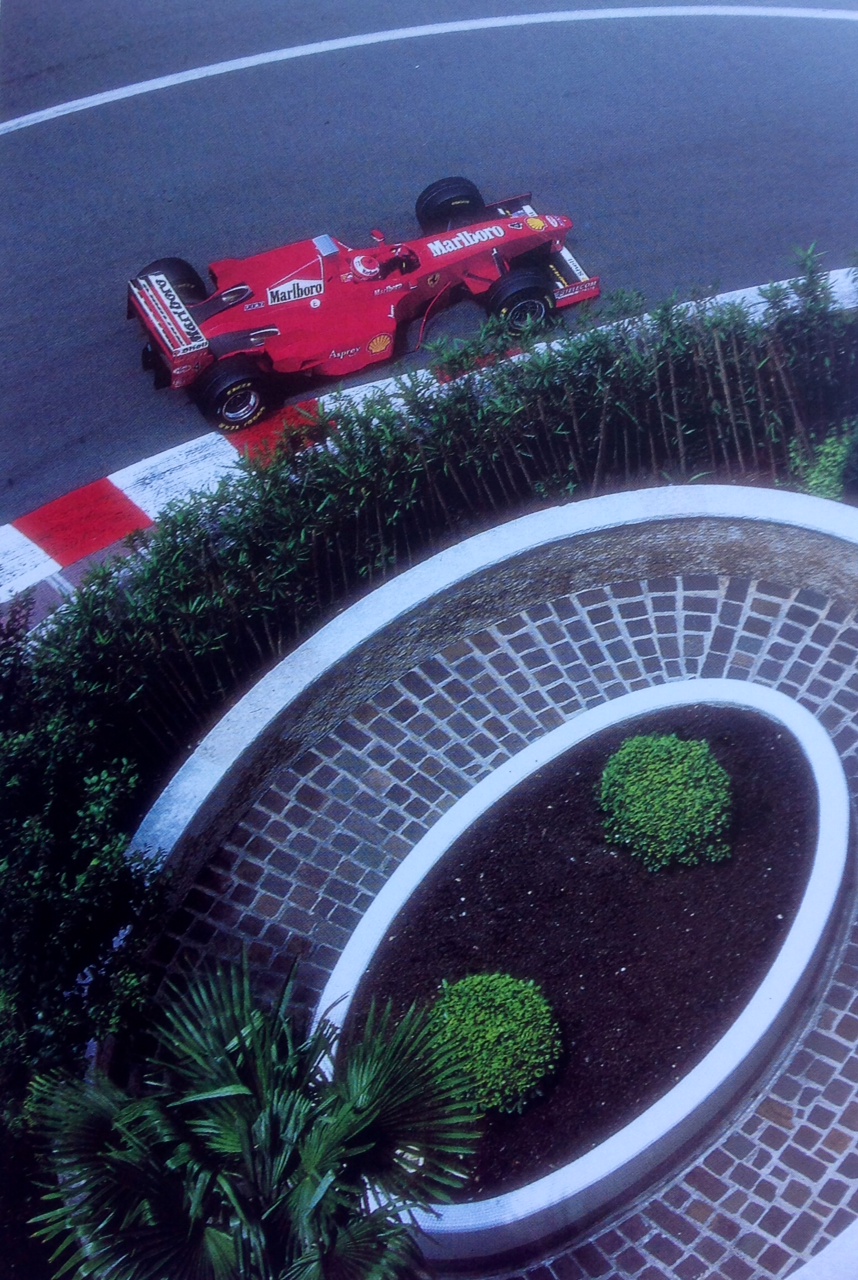
Eddie Irvines Ferrari F300 nicely juxtaposed with the topography of a Monaco Apartment…

He is on the way to 3rd place in the race won by Mika Hakkinens’ McLaren MP4/13 Mercedes, Mika also winning the title that year. Eddie didn’t take a win but was on the podium eight times finishing 4th in the drivers championship behind Hakkinen, his teammate Schumacher and Coulthard in the other McLaren.

F300 Specifications…

f300 drawing

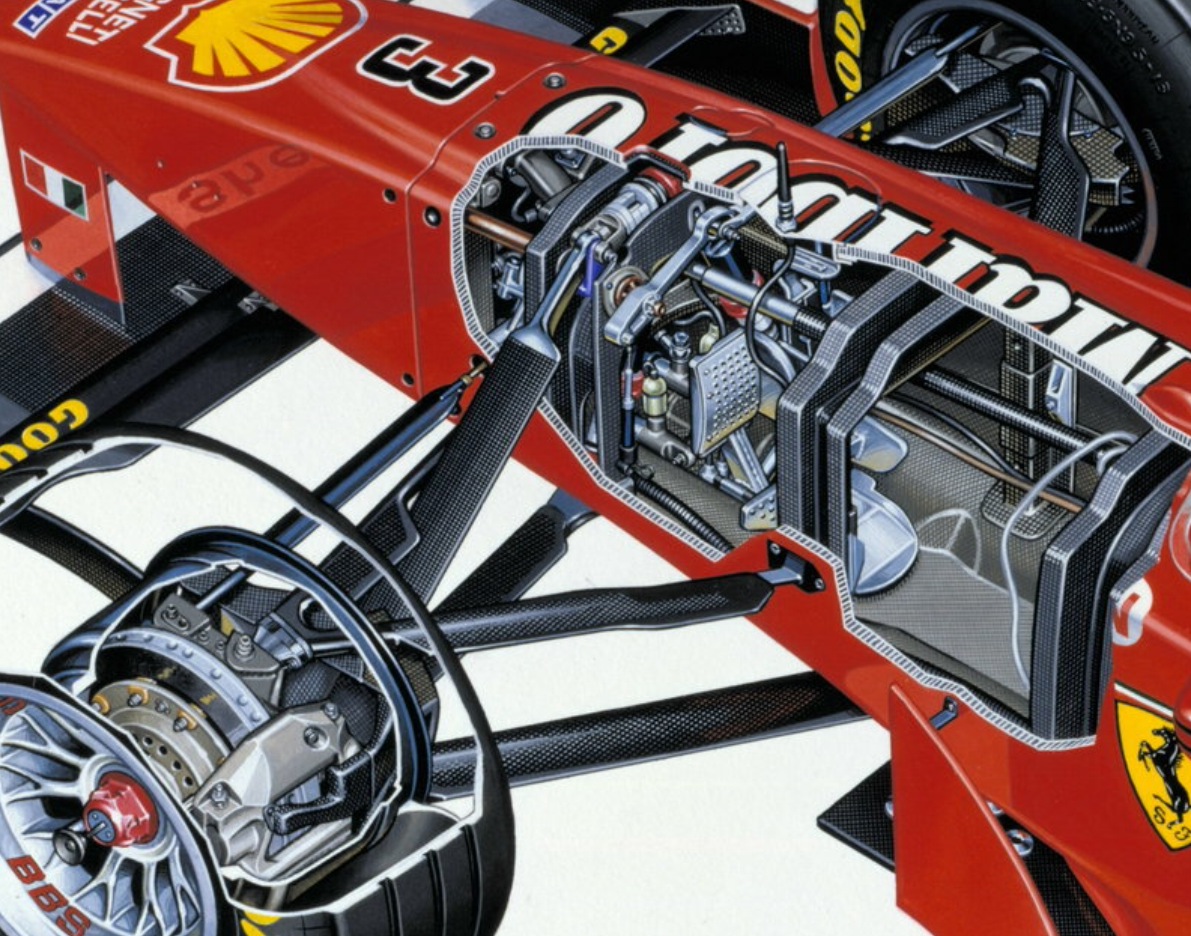
The F300 was designed by Rory Byrne to the narrower track regulations mandated by the FIA that year. The chassis was of course carbon fibre honeycomb, suspension comprising upper and lower wishbones front and rear with pushrod actuated coil spring/damper units. Brakes are ventilated carbon fibre discs. Weight 600kg with driver.

The engine was Ferrari Tipo 047, a 2997cc normally aspirated 80 degree, 40 valve V10 delivering circa 700bhp. Transmission is a longitudinally mounted semi-automatic sequential 7 speed transaxle incorporating a ‘slippery’ diff.

irvine monaco f300

Paul Henry Cahiers’ shot of Irvine at Monaco during the race…F300 considered aerodynamically inferior  to the McLaren MP4/13 but Schumacher won 6 races the car setting up the dominance of Ferrari in the decade to come. Ferrari 2nd to McLaren in the constructors championship in ’98.

f300 cutaway

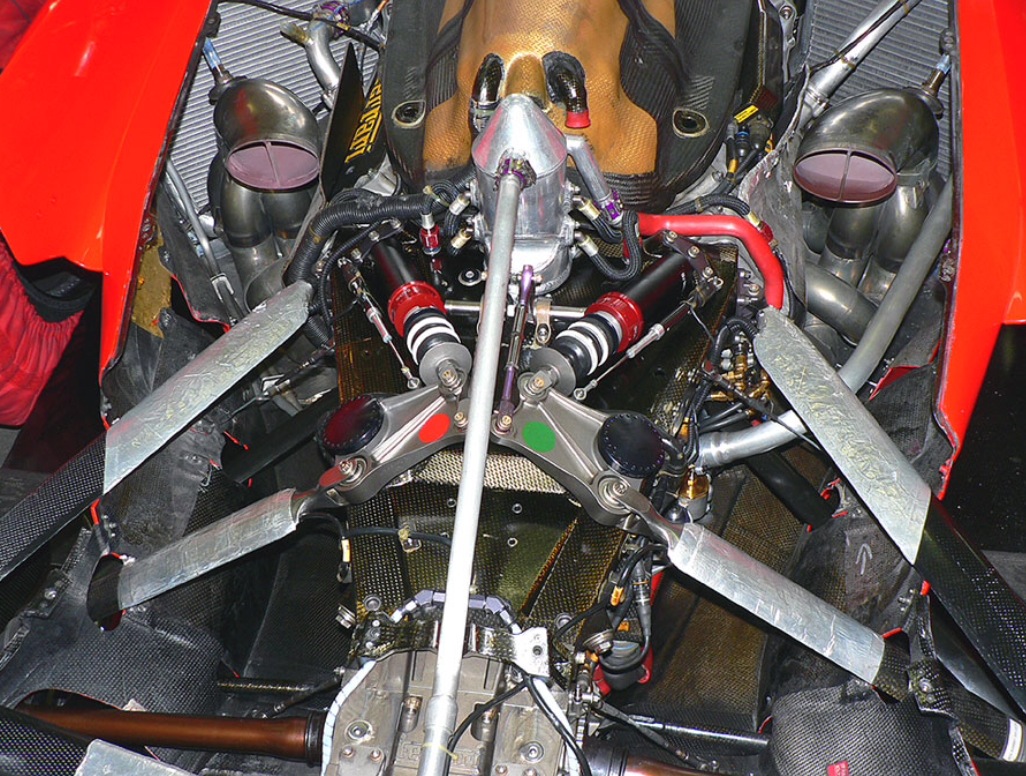
Rear end detail here…upper wishbones and push-rods, springs and shocks. Car pioneered ‘periscope’ exhausts up thru the bodywork to get exhaust pipe lengths right for optimum power. Aussie Willem Toet Ferrari aerodynamicst at the time said the ‘periscopes’ were ‘not the best solution aerodynamically as the side exits, but benefits flowed from tighter rear bodywork’.

Extensive use of heat reflective materials, gearbox and driveshafts, carbon fibre undertray and V10 all clear. The cars are not necessarily pretty to look at but the engineering detail is exquisite.

cockpit f300

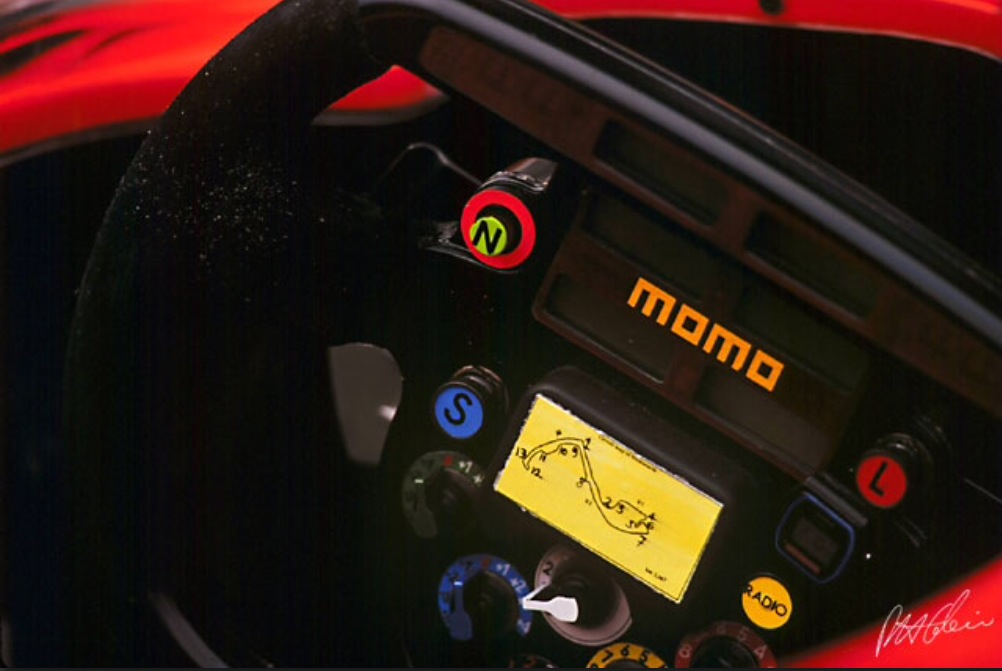
90’s Momo wheel of the F300. Circuit map just in case Eddie gets lost at home! (Cahier Archive)

Tony Matthews’ superb F300 cutawayshowing honeycomb carbon fibre monocoque, pedals, 7 speed semi-auto box remember. Pedal detail including master cylinders, roll bar link for adjustment. Upper and lower wishbones, pushrod and top of the spring. Front upright, disc, caliper, Goodyear tyre on 13 inch BBS wheel…tis all there!

matthes f300 cutaway

irvine top shot f300 monaco

Photo/Credits…

Automobile Year, The Cahier Archive, Tony Matthews

Finito…
 

lex balcombe

Lex Davison’s ‘Little Alfa’ leads Lyndon Duckett’s Bugatti Type 35 Anzani, the brand new body of the Alfa gleaming in the winter sun, Balcombe Army Camp, Victoria, Australia 12 June 1950…

The ‘race meeting’ at Balcombe was a small but historically significant part of Australian Motor Racing history, this wonderful shot is from the Dacre Stubbs Collection.

Balcombe paddock with Lyndon Duckett’s Bugatti T35 Anzani and the Davison Little Alfa in foreground (G McKaige)

It goes something like this, as reported in Barry Greens fine book ‘Glory Days’ which records the history of Albert Park in the 1950’s.

The army were keen to raise money for their canteen fund and asked the Light Car Club of Australia (LCCA) to run a race meeting using the grounds of their camp. The race meeting was a financial success, but key to the creation of a circuit was closure and use of a section of the Nepean Highway, the main road between Melbourne and the Mornington Peninsula- permission was not forthcoming from the relevant authority

So the Balcombe meeting occurred as more of a sprint event given track limitations with two cars on the track at a time, and a series of eliminations on the day to determine the winners of the various classes.

Charlie Dean in Maybach 1- handsome and fast beast that it was, sold to Stan Jones a year or so later but maintained and developed by Charlie and his boys at Repco Research in Brunswick in the years which followed. Winner of the 1954 New Zealand GP in Jones’ hands. Recreated by John Sheppard in the eighties (G McKaige)

‘The Royal Australian Signals Corp Sprint’ for under 1500cc, ‘The Survey Corps Sports Sprint’ for over 1500cc and ‘Balcombe Apprentice School Trophy’ for outright cars were catchy names indeed!

Doug Whiteford won the outright final in his 1950 Australian Grand Prix Winning Ford V8 Spl, ‘Black Bess’, from Bill Patterson’s supercharged MG TC and Stan Jones HRG. All three were subsequently Australian champions and AGP winners.

Reg Hunt’s Hunt JAP ‘Flying Bedstead’ Spl, it’s engine installation pictured below. By 1955 he had raced 500’s for a year in the UK and was one of the fastest combinations back in Australia aboard a Maserati A6GCM- stiff not to win the AGP that year at Port Wakefield (G McKaige)


(G McKaige)

The historically significant bit is that when Bill Leech, lifelong competitor, car collector and LCCA President at the time discussed the meeting and its shortcomings as a circuit sans Nepean Highway with the Commander of Army Southern Command, he was asked ‘what can we use as an alternative’? Whereupon Leech replied ‘what about here?’. Here being Albert Park where Southern Command were based, and the rest as they say is history and covered a while ago in another post.

1956 ‘Argus Trophy’ Albert Park: Reg Hunt and Lex Davison: Maserati 250F and A6GCM: Ferrari Tipo 500…

Hobart Mercury 14 June 1950

In an amusing end to the weekend the Hobart ‘Mercury’ reported that the Melbourne Traffic Police Chief described many motorists returning from Balcombe as ‘reckless road-hogs’- harsh language indeed.

‘Many of them drove like whirlwinds’ in attempts to emulate the skilled drivers with several booked for speeding at 75 miles an hour. The racers themselves were spared the blame- perhaps the ‘need for speed’ stretch was the straight road from Mornington along past Sunnyside to Mount Eliza? I guess Pt Nepean Road is what we now know as the Nepean Highway.

Little Alfa aroca concourse

‘Little Alfa’ engine bay at AROCA Spettacolo, 2014. (M Bisset)

Balcombe will be well known to Melburnians of a certain age…

It was towards the top of the hill on the Nepean Highway as you leave Mornington and enter Mount Martha and these days is the site of a school, Balcombe Grammar and housing. The last army training units left the area in 1983.

For international readers Mount Martha, of which Balcombe is a part are on the shore of Port Phillip Bay, the vast expanse of water one can see in the distance on the AGP telecasts from Albert Park. The Mornington Peninsula, both it’s beaches and wineries are worthy additions to your tourist agenda when you visit!

The US Marines also played a part in construction of the circuit being credited with building both Uralla Road through the camp and Range Road locally to access a rifle range.

As World War 2 approached countries globally prepared for the inevitable, the 4th Division of the Australian Army were located at a camp in Balcombe on 209 acres of land compulsorily acquired from local landowners to defend Port Phillip and the Morninton Peninsula.

Tony Gaze, Alta Sports (G McKaige)


Derek Jolly, Austin 7 Spl over from Adelaide- road registered, I wonder if he drove his racer across? (G McKaige)

The army presence had a huge local impact, at the time their were 104 houses in Mt Martha- by mid 1940 over 3000 militia soldiers of the 4th division- trainees were located at four temporary campsites between the Nepean Highway and the coast just south of Bay Road.

Press reports at the time the camp was built said it was the most pleasant site for an army camp in the country, a point not lost on the ‘Army Brass’ one suspects, the Peninsula then as now is a popular summer playground.

The 1st US Marine Division, relieved from the strategically critical Coral Sea campaign at Guadalcanal, arrived in 1942 and used Balcombe Camp as a rehabilitation centre.

It became headquarters for the 1st Division of the USMC in 1942, the corp trained in the area including carrying out beach landing exercises using the ship ‘HMAS Manoora’.

Post war the Army Apprentices School was located there until 1983, and once, just once, it was used as a race track!

Davison ‘Little Alfa’…

duckett and davison rob roy 1946

Lyndon Duckett and Lex Davison, right, with their collections of cars at Rob Roy Hillclimb, Christmas Hills, Melbourne 1946. L>R. Ducketts’ 1908 Isotta Fraschini, Bug T35 powered by an R1 Anzani DOHC engine and Davisons’ ‘Little Alfa’ in 2 seater form as first modified by Barney Dentry, Mercedes SSK (Culture Victoria)

Lex Davison was one of Australia’s greatest drivers, the winner of four Australian Grands’ Prix and father and grandfather of two generations of racing drivers- grandsons Will and Alex are V8 Supercar Drivers and James an Indycar racer competing currently in Australia and the US respectively.

In 1950 Lex was still four years away from his first AGP win, he competed in everything everywhere and had just acquired an Alfa P3 in a progression which would take him to be a consistent front runner in the decade to come.

‘Little Alfa’ started life as a Tipo 6C 1500 ‘Normale’- chassis #0111522 was imported by Lex’ father in 1928 in chassis form as a road car. The original fabric body by Martin and King was replaced with a steel body built by Terdichs’ in 1945, both Melbourne firms.

Lex took over the car after the death of his father, Barney Dentry, a top driver of the day himself, stripped it and Kellow Falkiner built a two-seater body.

lex davo little alfa 11 th rob roy

Always an exciting driver, Davo contests the 11th Rob Roy 1946. This wonderful shot by George Thomas shows the lines of the car to good effect after its first evolution from Tourer to Racer (George Thomas)


lex cape schanck

Lex slightly! sideways at the second hairpin, Cape Schanck Hillclimb on Victoria’s Mornington Peninsula in 1946. ‘Little Alfa’ here in ‘evolution 2’ not its final spec (Cars and Drivers #1)


Little Alfa, Balcombe 1950 (G McKaige)

John Blanden records that the car became well known over the following years and was set aside when Davison acquired a Mercedes SSK. Dentry again ministered to the car and before it was completed the P3 arrived from the UK…as a consequence the 6C1500  became henceforth the ‘Little Alfa’.

Dentry shortened the chassis, lightened the brakes, replaced the rear axle with one from a 1750 SS Alfa, fitted a Rootes cabin mounted blower and moved the engine back 6 inches.

The chassis was then taken to renowned race body-builder Bob Baker who constructed a derivative but distinctive aluminium single-seater body with a pointed tail.

The cars first outing was at Balcombe as recorded above, coming second in its semi-final. The Alfa didn’t race much, the P3 was the front line car until the AGP winning HWM Jag was acquired/built later.

The Little Alfa was retained by the Davison family and moved from property to property before finally being restored by Nick Langford’s restoration business in Castlemaine. It made its debut in December 1979.

little alfa amaroo

Lex’ son Chris driving in the car, with daughter Claire, post restoration, Amaroo Park Historics 1986. (Gordon Graham)

Little Alfa’ was run in historic events by Diana Davison, Lex’ widow and quite a driver in her own right, son Chris and WW2 Spitfire Ace and post war racer Tony Gaze, who married Diana in 1977. Chris, a very quick Formula Ford racer in period and historic competitor now, recalls with great fondness the car…

‘It was a massive honour for me to drive ‘Little Alfa’. The car was purchased by my grandfather in 1928 and used as the family car until his death in 1942. It was only then that Lex got hold of it and started racing it. Of course this is the same car that Lex and Di drove to Bathurst for their honeymoon and also became one of his first racing cars. But he only did a handful of races in it. I am not sure that it was going to be competitive and he got the opportunity to purchase the P3, or ‘Big Alfa’ as it was known in our house. This is why the cars were known as the ‘Little Alfa’ and the ‘Big Alfa’.

‘In terms of actually driving it, i am taller and broader than average so it was a real squeeze to fit in. We took out the seat and I sat on the floor on an old sheep skin. The first thing you notice is that it has an accelerator pedal in between the brake and the clutch, and this does take some time to get used to. With no actual fuel pump, you must ‘pump up’ the air pressure in the fuel tank with a dash mounted pump and if you get busy around the circuit its easy to forget to do this and next thing the engine starts to die from lack of fuel. The alcohol fuel used to cause problems with the supercharger freezing up, so it was very important to get the fuel mixture right’.

‘Being a tight fit in the car, I used to feel the chassis rails flex whenever I went around a corner or hit a bump.With no seat belts or roll bar, driving the car flat out up the back straight at Sandown was one of the most dangerous things I have done in motorsport, especially as I was virtually held in the car by a low piece of bodywork and hanging onto the steering wheel for grim life’.

‘The term ‘brakes’ could be described as an overstatement, ‘restrainers’ more accurate. The car weighed 1500kgs and with a blown 1500cc engine on alcohol, you picked up quite a bit of pace down the long straights. I did give the fence a whack at Sandown once when I arrived at the end of the old pit straight and had ZERO brakes. The mechanic had forgotten to adjust the length of the brake cable and the shoes were barely even touching the brake drums’.

‘The best the car ever drove was at the 1986 Amaroo Historic Meeting, i could actually get some attitude and drift going. Frank Gardner spoke to me after one of the races, he had been standing right on the start of the pit apron, where you would aim the car at the turn in point for the corner onto the straight. He commented that seeing the car in a full drift coming straight toward where he was standing sure got his attention!’

‘The biggest problem I had at that meeting was once I really got the car going well, the speed up the straight and through the kink was such that both front wheels vibrated very badly, which was a real concern when you were so close to the old quarry wall. In the wet the car was a nightmare with levels of understeer that could only be described MASSIVE. With very old tyres and little adjustment on the car, I used to use the handbrake on turn in to try and get the rear end to generate some changes of direction. But I walked a fine line and really had to get the timing right, requiring a flick into the corner, quick pull on the handbrake to get the rear to slide and power on to keep up some attitude. If you got it slightly wrong it was back to uncontrollable understeer and all I could see from the cockpit was a VERY long red bonnet and two front tyres wasting their time with massive levels of lock’.

‘It was fabulous to see Mum and Tony on the circuit in the ‘Little Alfa’ but Mum did find it difficult to drive. So we ‘retired’ the car after the 1986 Amaroo meeting satisfied that we had actually seen the car fire a shot in anger’.

davo amaroo 86 little alfa

Chris and Claire Davison in the ‘Little Alfa’ at the 1986 Amaroo Park meeting Chris speaks about in the text. These days Claire is a mum, she, husband Johnny and Chris race a team of 3 Reynard FF’s in Australian Historic Racing. Lex’ ‘Ecurie Australie’ races on…(Chris Davison)

http://www.theweeklyreview.com.au/geelong/well-read/cover-story/7082-motorsport-bloodline/?nav=Y2F0X2lkLzIyNg==

‘Little Alfa’ remained in the Davison family until sold some years ago but thankfully remains in Australia in the hands of a caring Alfista, the car has an entirely Australian history since it’s departure from Italy in 1928.

Chris Davison…’I know that all of our family are delighted to see Trevor Montgomery now driving the car at most of the historic race meetings in the south. I feel that he understands and respects our family’s connection to this unique car and unique piece of Australian motorsport history’.

gaze nd davisons rob roy

Paddock scene from gentler more relaxed times, Tony Gaze, Diana Davison and Lex, Rob Roy Hillclimb 1950. (Dacre Stubbs Collection)


little alfa sandown 2009

‘Little Alfa’ current custodian Trevor Montgomery and Chris Davison at Sandown Historics November 2009…looking as pristine as it did in 1950. (Chris Davison)

Etcetera- Balcombe…

(G McKaige)

Derek Jolly’s Austin 7 Spl, he later won the 1960 Australian Tourist Trophy- a decade hence aboard an ex-works Lotus 15 Climax. I wrote about he and his cars a while back.


(G McKaige)


(G McKaige)

Love these these two shots above of Lyndon Duckett and George McKaige preparing the Anzani Bugatti before the event on a frosty Melbourne day in ‘Duckett’s Lane’- Towers Lane behind Duckett’s Towers Road, Toorak home. Road car is a Rover P3.

(G McKaige)


(G McKaige)

MG K3 and Engine above- here unsupercharged.


(T Johns)

Race Program courtesy of the Tony Johns Collection…


(T Johns)


(T Johns)


(T Johns)


(T Johns)


(T Johns)


(T Johns)


(T Johns)


(T Johns)


(T Johns)


(T Johns)


(T Johns)

Credits…

Chris Davison, many thanks for the recollections of driving the car and photos from the family collection

John Blanden ‘Historic Racing Cars in Australia’, Barry Green ‘Glory Days’, ‘Cars and Drivers’ magazine, Dacre Stubbs Collection, Culture Victoria, George Thomas, Gordon Graham, Hobart Mercury 14 June 1950, George McKaige via his son Chester, Tony Johns Collection

(G McKaige)

Tailpiece: The New and the Old…

The Keith Martin (John Medley thinks) Cooper Mk IV JAP 1000- which must have looked ‘other worldly’ to the good citizens of the Peninsula in 1950.

The modern as tomorrow Cooper is nicely juxtaposed with Doug Whiteford’s self-built #4 pre-war ‘Black Bess’ Ford V8 Special which won that years AGP at Lobethal six months before- and on the day at Balcombe. There were no Coopers at Lobethal but two made the long trip to Narrogin, down south of Perth for the 1951 AGP, Martin’s car and a later MkV driven by John Crouch.

#1 is Tony Gaze’s Alta and to its right Maybach with the bonnet covered- there was plenty of life in the front-engined cars at that stage of course, but the mid-engined era was underway from that little factory in Surbiton.

Finito…
image

Jack Brabham dipping under brakes as he approaches ‘Pub Corner’ in his Cooper T51 Climax on the first lap of the ‘Longford Trophy’ in  March 1960, wonderful Ellis French shot…

Jack retuned to our Australian summer as the reigning World Champion, he didn’t disappoint the Tasmanian crowd winning the race from the similar MkIV T51s of Alec Mildren and Bib Stillwell.

In those pre-Tasman 2.5 formula days Australian National Formula 1 was run to Formula Libre rules, but 1960 Coopers of various models and capacities were the dominant marque. There were still sportscars amongst the single-seaters including Doug Whitford’s ex-works Maserati 300S, sold to Doug after the 1956 Australian Grand Prix at Albert Park when Officine Maserati brought five Maseratis to Melbourne- thee F1 250F’s and two 300S.

The ‘Australian Motor Sports Annual Review 1960/61’ has a report of the 1960 Longford Trophy and notes with superb understatement that ‘Possibly no circuit in Australia offers so many scenic attractions and quite so large a variety of racing hazards as that at Longford in Northern Tasmania.’

The article continues ‘Although racing has been carried out at Longford for several years, it was only after the selection of the circuit for a Gold Star race in 1958 that Longford became known to Australians outside Tasmania…One of the advantages Longford holds over any other mainland circuit is full government and community support. Unlike other states where motor racing is viewed with concern for safety or as a noise disturbing nuisance and a Sabbath breaker, Tasmania views motor racing as a vital tourist attraction and as such, gives it the fullest support’.

Improvements to the track since the 1959 meeting resulted in a faster, more even surface with a softened approach to the railway crossing in Longford township.

Longford 1960 grid shot

John Ellacott shot of the front 2 rows gridded up: Brabham #4, Stillwell #6, Miller in yellow, all Cooper T51 Climaxes and Arnold Glass in the Maserati 250F, evocative!

Australian Tourist Trophy contenders with the J Wright Aston Martin DB3S and Doug Whiteford’s Maserati 300S up front with Harry Cape’s MGA Coupe and the #18 Gorringe/Watt MG Holden on grid 2 (J Barnes)

The 1960 meeting was a double-header with both the Formula Libre Longford Trophy and Australian Tourist Trophy for sportscars, won by Derek Jolly’s ex-works Lotus 15 Climax FPF 2 litre, the ATT was a great race with a big field, check out this photo heavy feature; https://primotipo.com/2018/05/17/1960-australian-tourist-trophy/

Jack Brabham’s Cooper T51 Climax FPF 2.5 had been secured by the promoters and was the same chassis with which he had won the NZ GP at Ardmore in January from Bruce McLaren’s Cooper T45 and Stillwell’s T51- click here for that NZ7 GP; https://primotipo.com/2019/09/16/chief-mechanic/

Brabham had a good summer also winning The Lady Wigram Trophy, Light Car Club of Tasmania Trophy at Longford, the Repco Trophy at Phillip Island in mid-March before heading back to Europe.

Jack’s practice time of 2:38 was a second clear of Bib’s 2.2 litre T5, a welcome addition to the grid was Alec Mildren’s new Cooper T51 Maserati, the frame of the car was adapted by Mildren and mechanic Glenn Abbey to fit a four cylinder, DOHC Maser 250S sportscar engine running on methanol- the soon to be 1960 Australian Gold Star champion did 2:46. An article about this car is here; https://primotipo.com/2018/06/08/mildrens-unfair-advantage/

Longford Trophy 1960 start

Stillwell gets the jump off the line, Glass at rear, Brabham on this side (John Ellacott)

Stillwell got the jump from the start and led for the first three-quarters of a lap before Brabham passed him in his more powerful Cooper. On lap 3 Jack did a 2:34, an average of 105.19 mph and on the following tour recorded a top speed on the Flying Eighth of 157.9 mph. Brabham reduced his pace and led comfortably from Stillwell, Mildren and Arnold Glass’s ex-Hunt/Stillwell Maserati 250F.

The punch of Mildren’s Maserati engine was demonstrated when he sailed past Stillwell’s Coventry Climax engined T51 on the Flying Mile, at about the same time Bill Patterson’s 2 litre T51 passed Glass with Jon Leighton’s Cooper T45 Climax being challenged by Glynn Scott’s similar ex-Mildren machine- both of these cars were powered by 2 litre Climaxes. Towards the end of the 17 lap 45 minute 40 second race Brabham allowed Mildren to close up to within 100 yards of his car, magneto failure spoiling Patterson’s good run.

Brabham won from Mildren, Stillwell, Glass, Leighton and Scott, the Glass Maserati was the only front-engined interloper amongst the dominant mid-engined Coopers.

Glynn Scott, Cooper T43 Climax 1.7 with Jon Leighton’s Cooper T45 2 litre behind him- the red car is Ern Tadgell’s Lotus 12 Climax aka Sabakat (J Barnes)

Allen Brown’s wonderful archive ‘oldracigcars.com’ states that the car Jack drove at Longford was probably the first of two cars he used during his successful 1959 F1 season, chassis ‘F2-4-59′- he drove it in the early part of the year, it then became a spare when ’27-59’ appeared at Zandvoort.

When Jack’s Australian season ended the car was sold to Bib Stillwell who then had two Cooper T51’s to choose from, his Gold Star campaigns had started to become more serious and ultimately were very successful from 1962 to 1965- four titles on the trot in Cooper and Brabham chassis.

Brabham returned to Europe to successfully defend his world title whilst the Gold Star championship was won by Alec Mildren’s Maserati engined T51.

Brabham Cooper T51 Longford 1960

Brabham in his Cooper T51 Climax at Longford in 1960. I think the gent in braces at the rear is Jacks’ father, this chassis 1 of 2 he used in his successful 1959 GP season (oldracephotos)

Allen Brown’s wonderful archive ‘oldracingcars.com’ states that the car Jack drove at Longford was probably the first of two cars he used during his successful 1959 F1 season, chassis ‘F2-4-59′- he drove it in the early part of the year, it then became a spare when ’27-59’ appeared at Zandvoort.

When Jack’s Australian season ended the car was sold to Bib Stillwell who then had two Cooper T51’s to choose from, his Gold Star campaigns had started to become more serious and ultimately were very successful from 1962 to 1965- four titles on the trot in Cooper and Brabham chassis.

Brabham returned to Europe to successfully defend his world title whilst the Gold Star championship was won by Alec Mildren’s Maserati engined T51.

Longford scene 1960

Kevin Drages’ panoramic view of part of the Longford paddock in March 1960, looking across to Mountford corner with the Pit Straight on the right. Cars are green Derek Jollys’ Lotus XV Climax and the ‘Kenley Vincent Spl’.

Etcetera…

Brabham Longford media interview 1960

(Kevin Drage)

‘Modern media scrum’, Jack tells the press how it was post race.

JB’s British Racing Drivers Club badge proudly worn on his overalls, the car is a Humber ‘Super Snipe’, in those days British prestige cars were very popular in Australia, the Germans steadily whittled them back by the early seventies.

Bill Patterson Cooper T51 Longford 1960

(Ellis French)

Bill Patterson’s Coopers T51 by two.

Patterson went on to win the Gold Star in 1961 and soon after retired from driving but supported others for decades via his Ringwood, Melbourne, Holden dealership, click here for a feature on Patto and his many Coopers; https://primotipo.com/2017/02/02/patto-and-his-coopers/

Jack Brabham and BIb Stillwell, Longford 1960

(Kevin Drage)

Jack Brabham and Bib Stillwell swapping Cooper set-up notes…or Bib is buying Jacks car!?

Stillwell was a good Brabham customer over the years acquiring many Coopers including the car Jack drove at Longford that weekend and, later, Brabhams, both men very successful drivers and businessmen. Bib feature article here; https://primotipo.com/2018/07/20/matich-stillwell-brabhams-warwick-farm-sydney-december-1963/

Bib Stillwell Cooper T51 Climax Longford paddock 1960

(Ellis French)

Bib Stillwell’s Climax engine being fettled in the Longford paddock.

(J Barnes)

Tornado 2 Chev won the 1958 Gold Star round at Longford with Ted Gray at the wheel, but by 1960 the marvellous 283 cid Chev engined beastie was an also-ran amongst the hordes of Coopers typified by Stillwell’s T51 at right- Ted didn’t start in the Longford Trophy feature and was unclassified in the LCCT Trophy a couple of days later. The D Type Jaguar without a rear wheel is David Finch’s car- note to the left Doug Whiteford’s Maser 300S ‘Rice’ trailer.

(J Barnes)

All the fun of the fair- who can help with the bike/rider identifications?

(J Barnes)

Ron Hodgson and David McKay in their Jaguars before the touring car race- who won this encounter?

(J Barnes)

Alan Jack cruises through the Longford paddock in his ex-Patterson Cooper T39 Climax whilst in the distance you can see Doug Whiteford’s Maserati 300S and trailer and further still Arnold Glass’ 250F.

Sticking with the T39 theme, the Jack and Lynn Archer cars sandwich Ron Phillips’ ex-Whitehead/Jones Cooper T38 Jaguar which raced so well in the Australian Tourist Trophy.

(J Ellacott)

(J Barnes)

Its a pity John Barnes got the shakes because this Light Car Club of Tasmania Trophy start shot really would have been a cracker but I still like it for its atmospherics.

Red #13 is Ern Tadgell’s Sabakat or more correctly Lotus 12 Climax ‘351’ about which I have written a lot. #9 and #20 are the Patterson and Scott Coopers Types 51 and 43- the Cooper in front of Scott’s is Mildren’s Maserati engined machine. The front engined car at left is the Glass Maser 250F and yellow machine to its right is Austin Miller’s distinctive Cooper T51.

Meanwhile in the simply superb panorama below we can take in the starters stand and beach umbrella, anxious mechanics, the old tram which served as race HQ, the flags and wonderful casual, bucolic air of this wonderful part of the world.

The cars- Sabakat at left, then Gray’s Tornado and one of the Coopers at right.

(J Barnes)

(J Barnes)

What a great shot, probably the grid of one of the Tasmanians only events perhaps, Ellis French identifies the cars as the #12 Gerald Tattersall, Buchanan, #14 R Ward, MGA Twin-Cam and #30 on row 2 the Mel McEwin in the Melmac Healey Spl, green car alongside the Hines #11 MG Special, red #18 is Mick Watt MG Holden Spl and #101 a Triumph TR not listed in the program.

(J Barnes)

She looks unbelievable!

I wonder what, or who it is which has captured the attention of Brabham’s crew. Who are they BTW?

Brabham Senior- Tom, and Esso’s Reg Thompson watch proceedings from the far left- look at those monster 58 DCO Webers, circa 235bhp from a 2.5 FPF tops at the time.

(J Barnes)

Photo and Reference Credits…

Ellis French, John Ellacott, oldracephotos.com, Kevin Drage, ‘Australian Motor Sports Annual 1960/61’, John Barnes

oldracingcars.com

Jack Brabham Cooper T51 Climax on the approach to Pub Corner Longford 1960

Tailpiece…

Lets finish on the same note as we started, an Ellis French shot of Brabham, this time ‘panned’ into the braking area on the entry to ‘Pub Corner’, Longford 1960…

For international readers Tasmania is a wonderful place to visit.

The scenery is stunning on all of its coasts, the mountains in the middle worth climbing, the ‘Overland Trail’ in the Cradle Mountain- Lake St Clair National Park worth walking. Hobart, a centre of culture and ‘Foodie Stuff’ is worth a stop for ‘Mona’ alone, a gallery of contemporary art and you can still see a lot of the Longford circuit, not far from Launceston, including the ‘Country Club Hotel’ with heaps of racing memorabilia.

Finito…
image

The victorious Ron Flockhart/Ivor Bueb Ecurie Ecosse entered D-Type Jaguar during the 1957 Le Mans 24 Hours, it was the third and last win for the fabulous car which reigned supreme at la Sarthe from 1955-1957…
The winning car covered 4397km, an average speed of 183kmh, a record which remained unbroken for four years. D-Types also finished second, third, fourth and sixth, an unparalleled result to that time. Ninian Sanderson/John Lawrence were second, Jean Lucas/ Jean-Marie Brussin third, Paul Frere/’Freddy’ Rouselle fourth and Mike Hawthorn/Masten Gregory sixth. Flockhart also won the race in 1956 partnered with Ninian Sanderson.

The car on its back is the Tony Brooks/Noel Cunningham-Reid Aston Martin DBR1/300. Brooks ran wide on the exit of Tertre Rouge, rolled and was hit by Umberto Maglioli’s Porsche, the cars were running second and seventh respectively at the time. Both drivers escaped without serious harm, the incident happened during the twelfth hour of the race.

Le Mans 1957 lap 1

XKD606, Bueb up leading the Lewis-Evans/Marino/Martino Ferari 315S (fifth), #4 behind the Ferrari is the Hamilton/Gregory D Type (sixth)(unattributed)

image

Undated unattributed shot of the ‘Browns lane’ factory, a C-Type being fettled as well as the Ds. (unattributed)

Technical Specifications and XKD606…

The summary technical specifications of the ‘XKD’ were included in this earlier post on its close brother the ‘XKSS’; https://primotipo.com/2014/05/30/72/

The winning car was XKD606, the last long nosed 1956 works car built, it was unraced that year as Desmond Titterington crashed it in practice. Jag withdrew as a factory team from racing at the end of 1956, 606 was delivered to Ecosse in November 1956 and was successful in 1957 with a 3.8-litre fuel injected engine at Le Mans with plenty of works support. This engine gave circa 306bhp@5500rpm and 312lb ft of torque@4500rpm.

Flockhart and Bueb post 57 win

Flockhart in red alongside Ivor Bueb post victory with the Ecosse Team and XKD606. (unattributed)

The car was raced at Buenos Aires later in 1957 by Flockhart and Galvez, but was crashed by Flockhart and rebuilt with a new chassis and bonnet.

The car remained in Ecosse’ hands in 1958-1960 and raced again at Le Mans by Flockhart and Bruce Halford in 1960, it failed to finish. The car raced on into 1961 in the hands of privateer Jack Wober and was split into two after a crash – the body and rear suspension, and front subframe and engine, both halves were then completed with replica parts creating two ‘original cars’.

The Louman Museum in The Hague acquired both cars in 1994. XKD606 was recreated by repair and uniting its original components, these days it is used frequently in historic events.

image

Le Mans 57 finish

Flockhart returns the car post finish, Le Mans 1957. (unattributed)

Ron Flockhart…

Ron Flockhart BRM Goodwood 1954

Ron Flockhart at the wheel of the awesome, wild but unsuccessful BRM Type 15, the 1.5-litre supercharged V16 racer by then running as a Formula Libre car in the UK. In essence the car was late and largely missed the Grand Prix formula for which it was designed. Goodwood, Easter Monday 1954. (John Ross Motor Racing Archive)

Flockhart began racing motor bikes in Italy and the Middle East after the War before being de-mobbed by the British Army, having served in WW2.

He commenced in cars with the the ex-Raymond Mays ERA R4D in 1952, progressed to a Connaught and was picked up by the Owen Organisation where he was essentially their third driver. He contested fourteen championship Grands Prix between 1954 and 1960, the last aboard a Cooper T51 Climax in the US Grand Prix at Sebring. He was very competitive in sports cars, inclusive of the two victories at Le Mans.

Daily Express Int Trophy Silverstone 1956

# 6,8,7 Jean Behra, Ron Flockhart and Harry Schell in BRM P25’s and #2 Masten Gregory Maserati 250F, #15 Horace Gould Maser 250F. Daily Express Trophy, Silverstone 1957. Behra won from Schell and Flockhart, Gregory was 5th. (John Ross Motor Racing Archive)

Ron Flockhart BRM P25 Monaco 1959

Flockhart in his BRM P25 Monaco GP 1959. He spun on lap 64 having qualified well in 10th. Jack Brabham won in a Cooper T51 Climax, his first Championship GP victory.(unattributed)

Like many drivers of the period, Ron Flockhart was a pilot who flew to and from the circuits of Europe more quickly than commercial airline or car travel allowed.

He used an Auster for a long time to places such as Folkingham, Snetterton and Silverstone while testing for BRM in the UK, and introduced Jack Brabham to light aircraft.

His racing injuries restricted his activities somewhat, but his love of flying and passion for speed led him to decide to attempt the Sydney-London record for petrol powered planes. The attempt was backed by the United Dominions Trust who wanted publicity for their racing team ‘UDT Laystall’, a noted equipe of the period.

His first attempt in 1961 fell 1500 miles short of London when his Mustang suffered serious engine failure, rain having seeped into the engine whilst on the ground in Greece. Flockhart enjoyed Rock-star fame and attention in Australia before and during the attempts. To add insult to injury the first plane was written off after suffering a cockpit fire before take-off.

Ron Flockhart Cooper Climax Ballarat

Ron Flockhart in his ‘Border Reivers’ Cooper T53 Climax, Ballarat Airfield, Victoria 1961. He raced well, 3rd behind the factory BRM P48’s of Dan Gurney and Graham Hill. He also raced in Australia the following summer in a Lotus 18. (autopics)

Ron competed in New Zealand and Australia that summer before setting off for London in a second ex-RAAF Commonwealth Aircraft Corporation built Mustang G-ARUK on 12 April 1962.

He left Moorabbin Airport in Melbourne’s southern outer suburbs enroute to Sydney where he was heading to have additional fuel tanks fitted. The Mustang had only been in the air 10 minutes, heading east over the Dandenong Ranges when he radioed in to report ‘I’ve got trouble. I’ve lost my compass, I’m at 3000ft and in heavy cloud’, immediately after this, contact with the plane was lost, the aircraft crashed into bush on the Monbulk hillside in thick cloud and light misty rain. Flockhart was still in the aircraft debris which was spread around the crash site, strapped to the remains of his seat with his parachute attached.

Flockhart Mustang 1962

Ron Flockhart in the hours before his death. P51 Mustang CA-18 Mk21 frame # ‘A68-113’ was one of many built by the Australian ‘Commonwealth Aircraft Corporation’ in Melbourne during  WW2 (Geoff Goodall)

A Ministry of Aviation Report did not conclusively determine the cause of the accident but it was considered a possibility ‘that the pilot temporarily lost control of the aircraft whilst circling in cloud, and that it subsequently stalled during the recovery and turn to avoid the high terrain…’

Etcetera…

Flockhart portrait

Lovely portrait of Ron Flockhart at the 1959 Silverstone ‘Daily Express International Trophy’ meeting in May. RF finished 3rd in his BRM P25, the race won by Brabhams’ Cooper T51 Climax. (John Ross Racing Archive)

Flockhart obit

Etcetera…

Flockhart Le Mans 57

Flockhart Le Mans 1957 (Automobile Year)

Flockhart Le Mans 1957

Nice shot of Flockhart cornering the D Type during the ’57 race. ‘XKD606’ works supported with factory 3.8-litre injected engine, last of the ‘long-noses built’ (unattributed)

Mintex 57 Le Mans ad

Flockhart Le Mans 1956

Ron Flockhart in the D Type he shared with Ninian Sanderson to win Le Mans in 1956 (Automobile Year)

Le Mans 1957 finish

Flockhart leads the second placed sister Ecurie Ecosse D Type of Sanderson/Lawrence over the line, record distance travelled which stood for the next four years (unattributed)

Flockhart WF 1961

Flockhart fifth in his Cooper T51 Climax, Warwick Farm 100 January 1961. The race was won by Moss in a Lotus 18 Climax (John Arkwright)

Photo Credits…

Motorsport Magazine, autopics, Geoff Goodall, John Ross Motor Racing Archive, John Arkwright, Automobile Year

Finito…