Archive for the ‘Obscurities’ Category

ascari

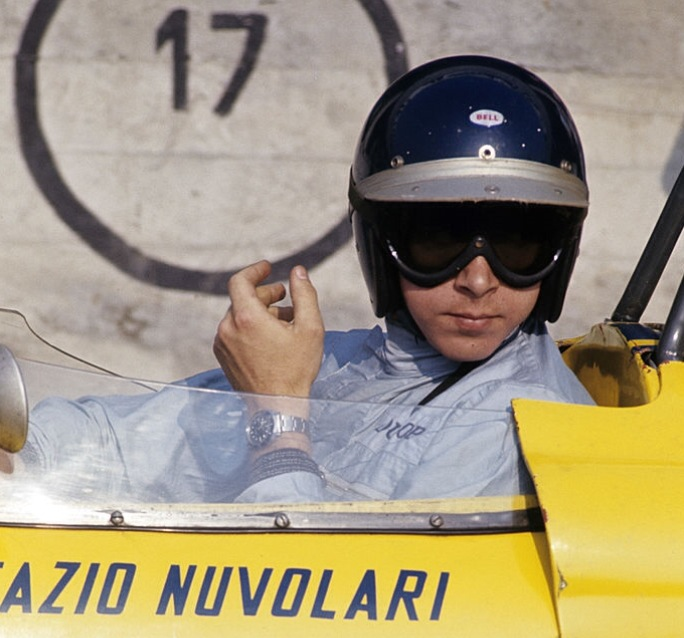
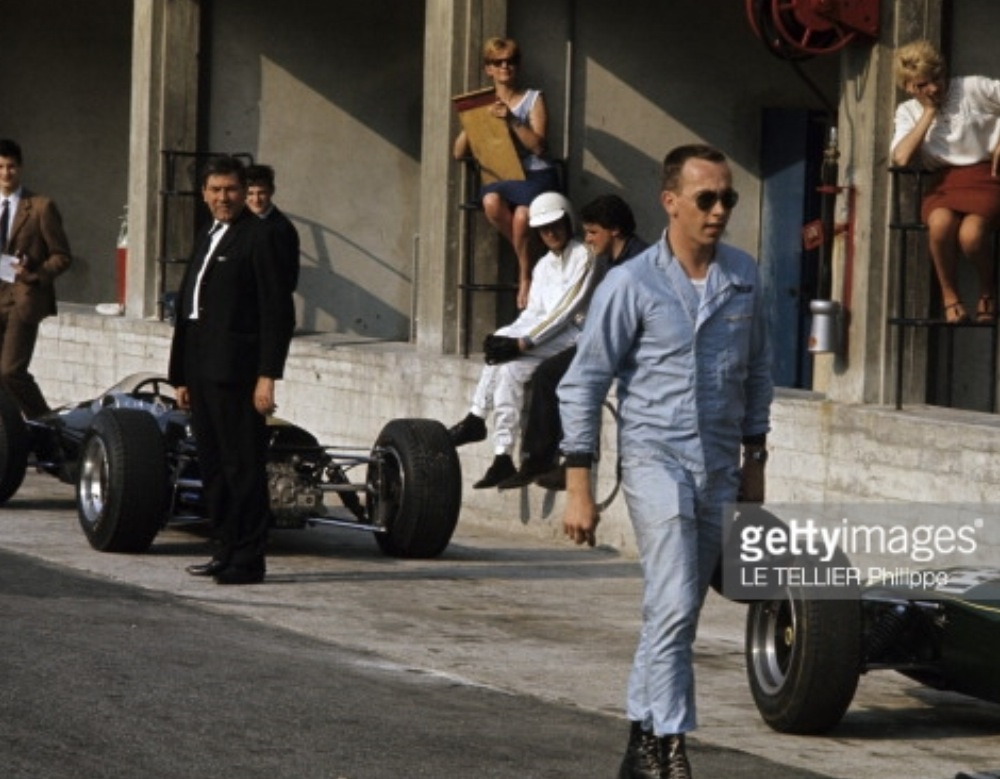
(Le Tellier)

Tonino Ascari attends a race-drivers school at Monza, 3 May 1966…

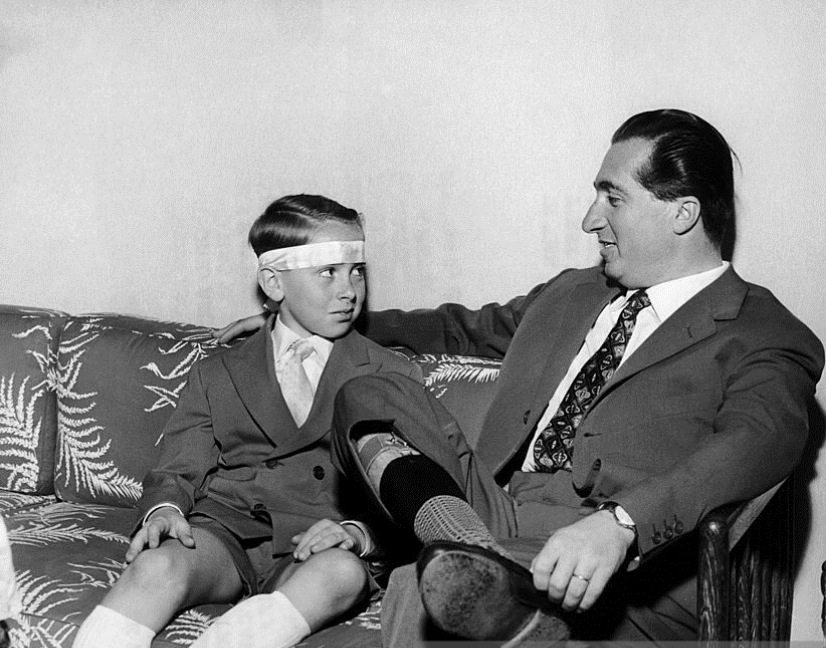
Tonino was the son of 1952-3 World Champion Alberto Ascari and grandson of pre-war great Antonio Ascari, here pictured with his dad at Modena in November 1953.

ascari and son

(Keystone)


ascari smiling

Tonino Ascari, Monza 1966

Inevitably the lure of racing with such a background is strong…

In 1960, aged 18- 5 years after Alberto’s death at Monza in a Ferrari sports-car testing accident Tonino’s mother sent him to work for Jaguar at Coventry to learn English.

He returned to Milan and was employed in Gigi Villoresi’s Innocenti-Mini Agency, he then became involved in the construction of FJ 1 litre cars incuding Stanguellini and Foglietti.

In August 1963, upon turning 21, he inherited some money and drove a Formula Junior belonging to Angelo Dagrada at Monza. By October he was at the Vallelunga race school driving a 2.5 litre Ferrari, a month later Tonino was at Modena taking lessons in a 2 litre Cooper-Maserati sportscar owned by his father’s old rival, Piero Taruffi, whose idea it was to create a small stable of young pilots- Scuderia Centro-Sud. Also taking lessons at the time was Farina’s nephew.

Ascari in the Foglietti Ford in 1964, circuit unknown (f3history)


Ascari, Foglietti Ford, Monza during the 28 June 1964 GP Lotteria di Monza weekend- DNQ (unattributed)

Ascari ‘had just one season of serious racing’, on April 15 1964 Enzo Vigorelli announced that Tonino would race a Foglietti-Holbay F3 car for two years for Scuderia Madunina.

In 1964 he was entered at Monza in a Foglietti, a ‘Brabhamesque’ spaceframe car on 7 May for DNA and on 28 June at the ‘Monza Lotteria’, DNQ. He was twelfth at Monza’s ‘Coppa del Autodromo’ on 27 September 1964, Geki Russo won this race in a de-Sanctis Ford.

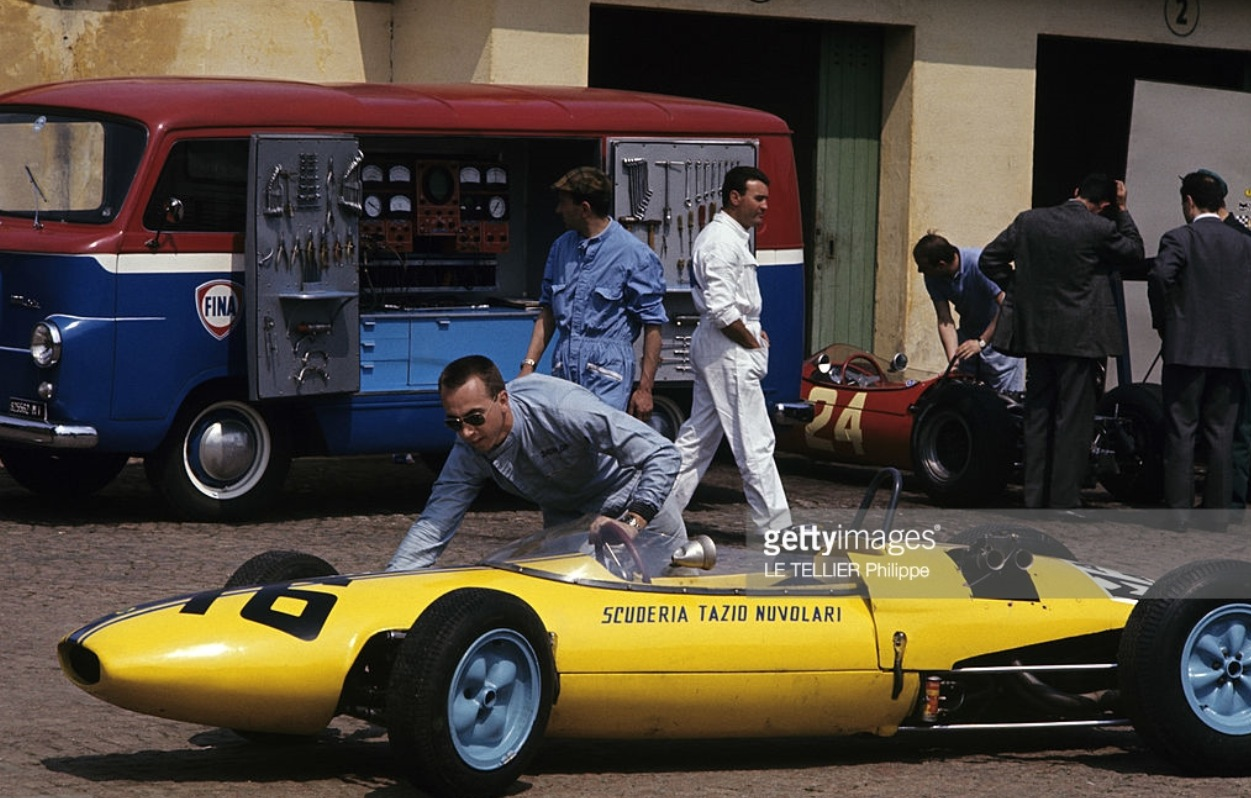
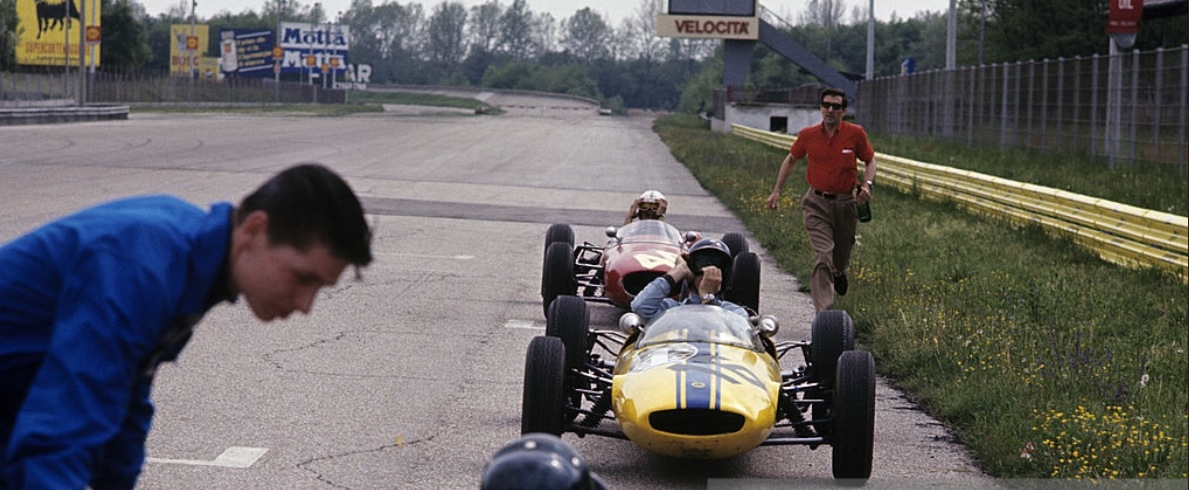
ascari pushing car

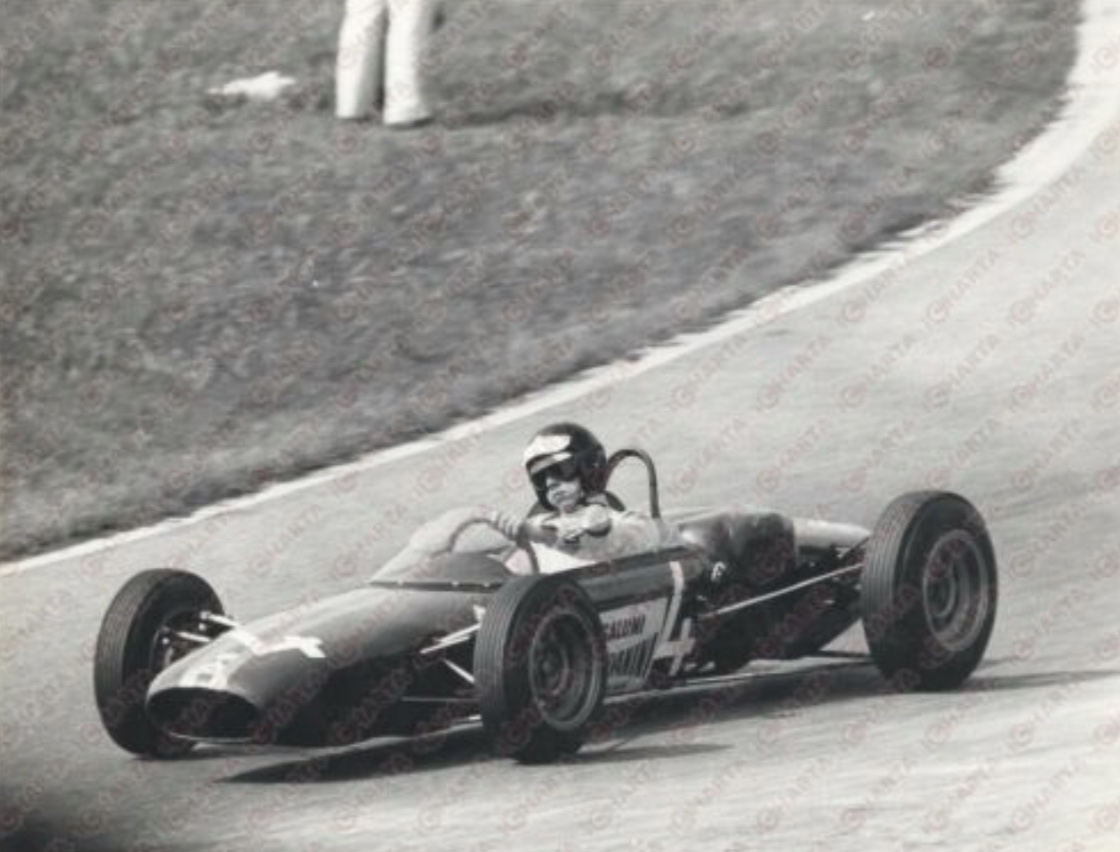
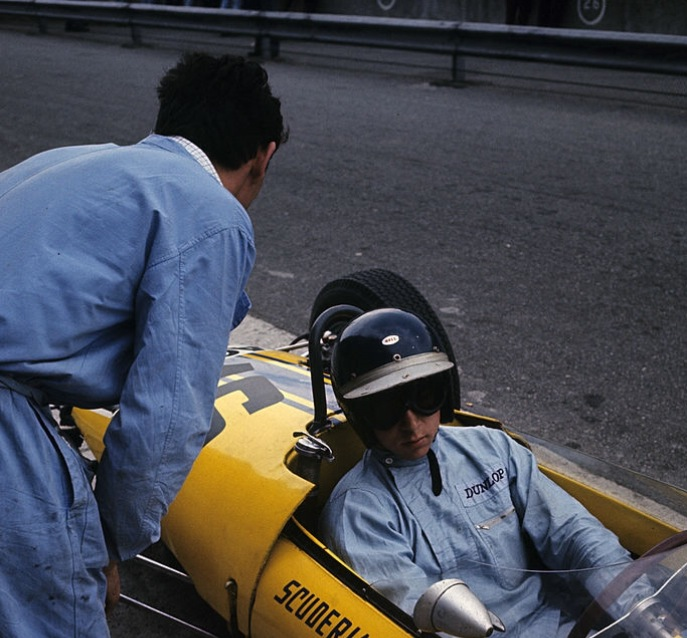
In 1966 Ascari raced a self entered Lotus Ford (the car shown perhaps) at Monza in the Trofeo Vigorelli on 1 May, DNQ and the same car a week later in the GP del Garda, at Garda again DNQ- that seems to be the end of his racing.

‘The pressure to live up to the family name, his mother keen for him to quit and a dislike of his sponsors desire to exploit the Ascari name, led to him quitting’ wrote historicracing.com.

ascari walking

Born 2 August 1942 in Milan, he died of cardio-respiratory problems in Gazzada Schianno on 24 August 2008.

La Gazzetta dello Sport reported Tonino’s death on 25 August 2008 and wrote that ‘he spent his life in the motor world in FJ and F3, then motocross. A great friend of Mario Andretti, a supporter of his father, he was among the partners of Hiro, which produced cross-country engines and followed the family tradition of car dealership, two weeks ago he participated in an historic rally at the Nurburgring.’

ascari in queue

Credits…

Phillippe Le Tellier, historicracing.com, La Gazzetto della Sport

Tailpiece…

ascari in car

Etcetera…

(unattributed)

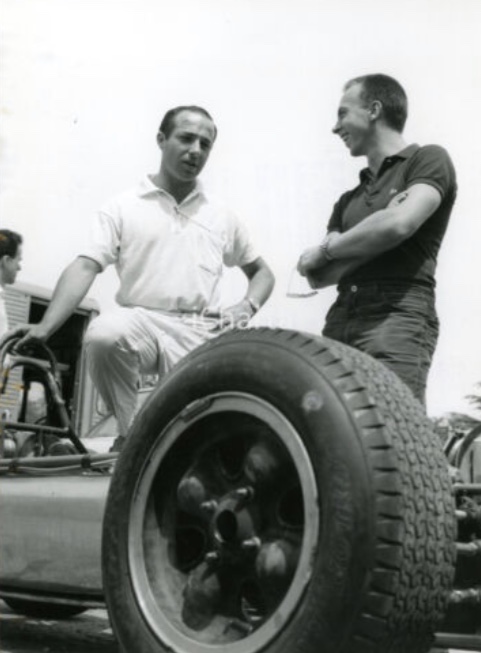
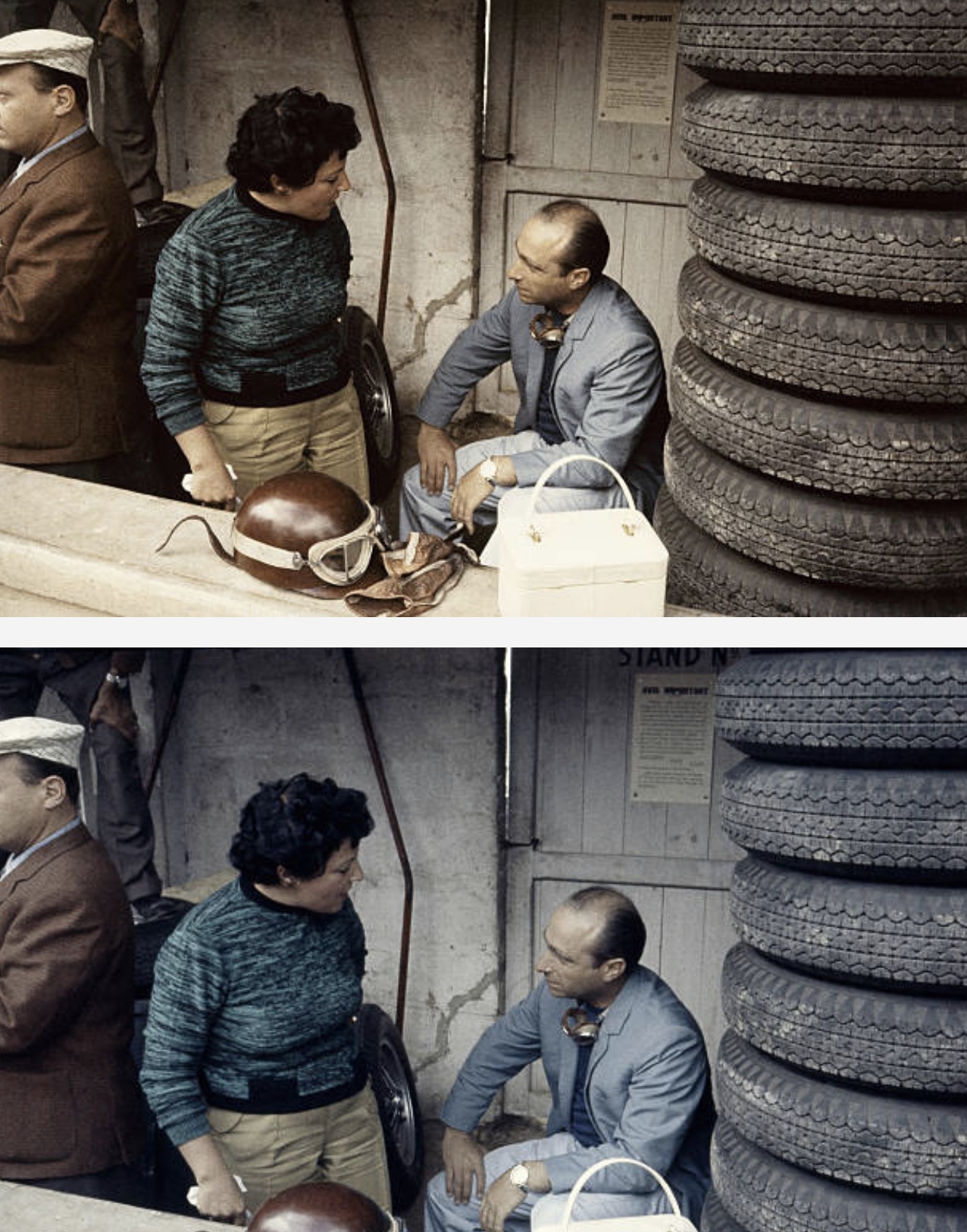
Oscar Cesar ‘Cacho’ Fangio, left, with Tonino at Monza in 1966.

Fangio, in an extensive racing career did some F3 racing in Europe in 1966, this is perhaps the Monza Lotteria meeting on 26 June when Fangio was thirteenth in a Charles Lucas Brabham BT15 Ford- one place behind Frank Willams Brabham BT15. Up-front Jonathon Williams won in a de-Sanctis Ford on his way to a Ferrari ride.

Fangio and his girlfriend Andreaina Berruet, with whom he broke up in 1960, had a son, Oscar Cesar Espinosa.

‘Yeah-yeah, I’ll close the dunny-lid next time Babe!’ Andreaina and JMF @ Reims in 1957- he won the French GP in a Maserati 250F (Getty)

Whilst close to Oscar for some time the relationship between father and son soured in the years prior to JMF’s death in 1995. He was acknowledged, after exhumation of JMF’s body, as Fangio’s son by an Argentinian court in December 2015.

For the sake of completeness, Ruben Vazquez born four years after Espinosa to another woman was also recognised by the same court as Fangio’s son.

(unattributed)

‘Cacho’ Fangio and Chas Lucas Brabham BT10 Ford Cosworth F3 during the 1966 Argentinian Temporada Series, he was seventh overall, his best  placing third in the final round, the series won by Charlie Crichton-Stuart’s BT10.

And below with JMF lending his support.

(unattributed)

Finito…

(SLSA)

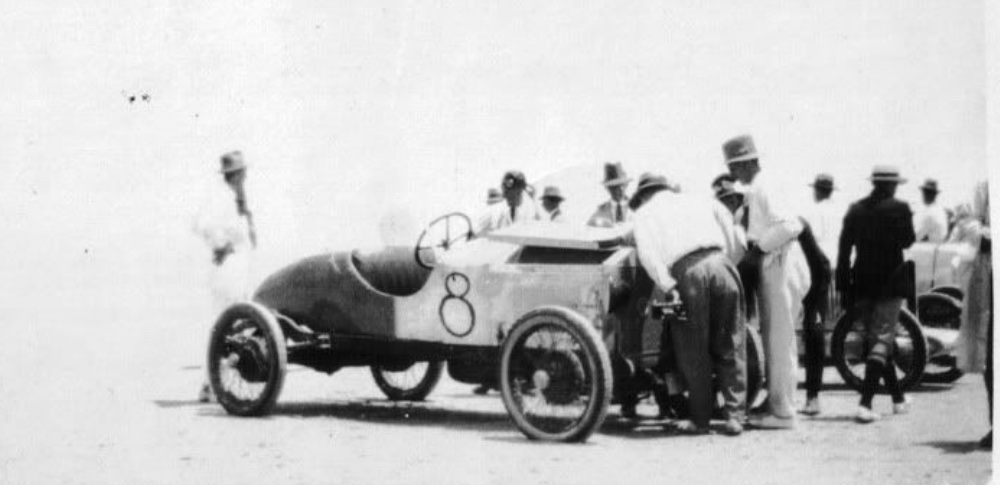
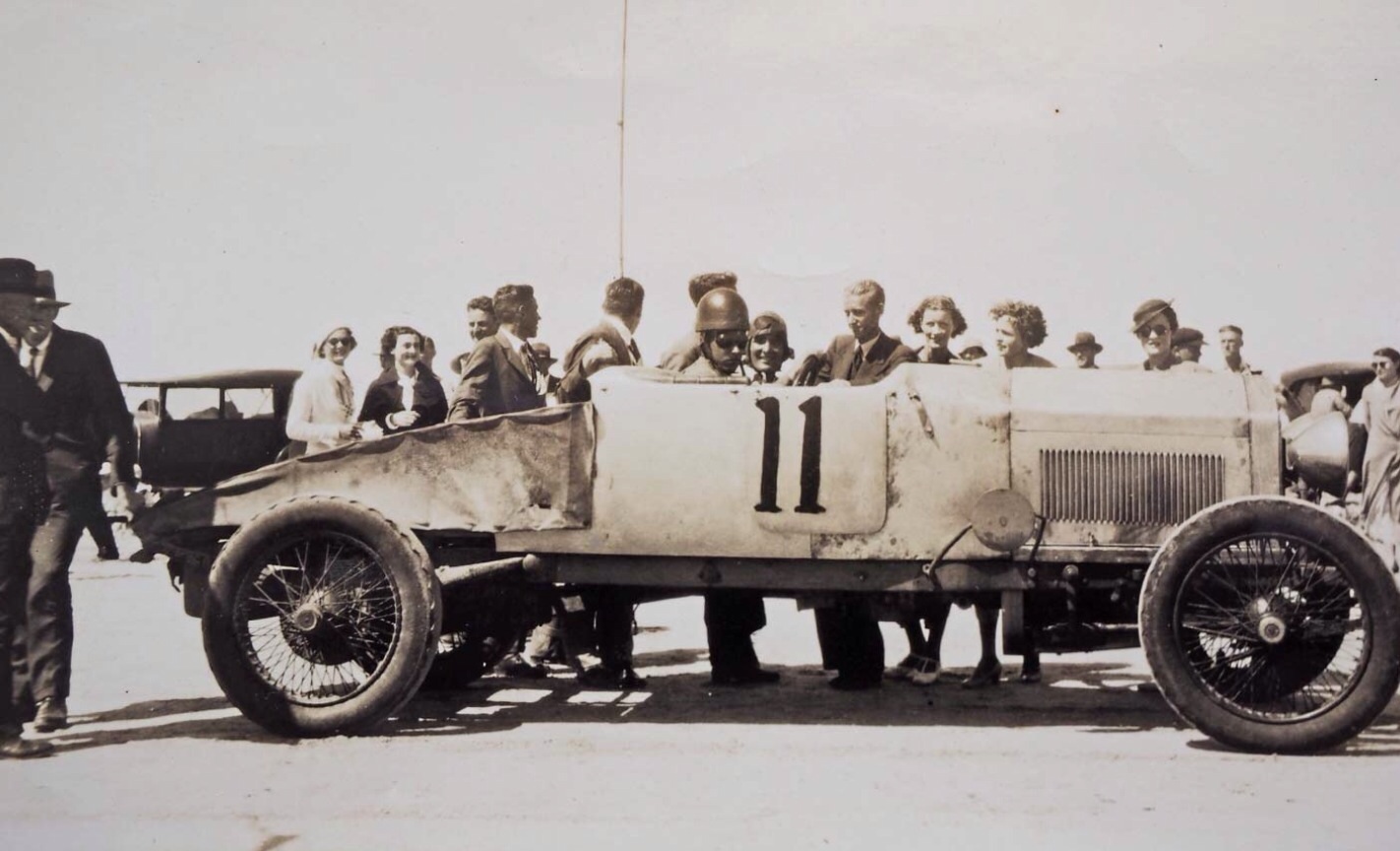
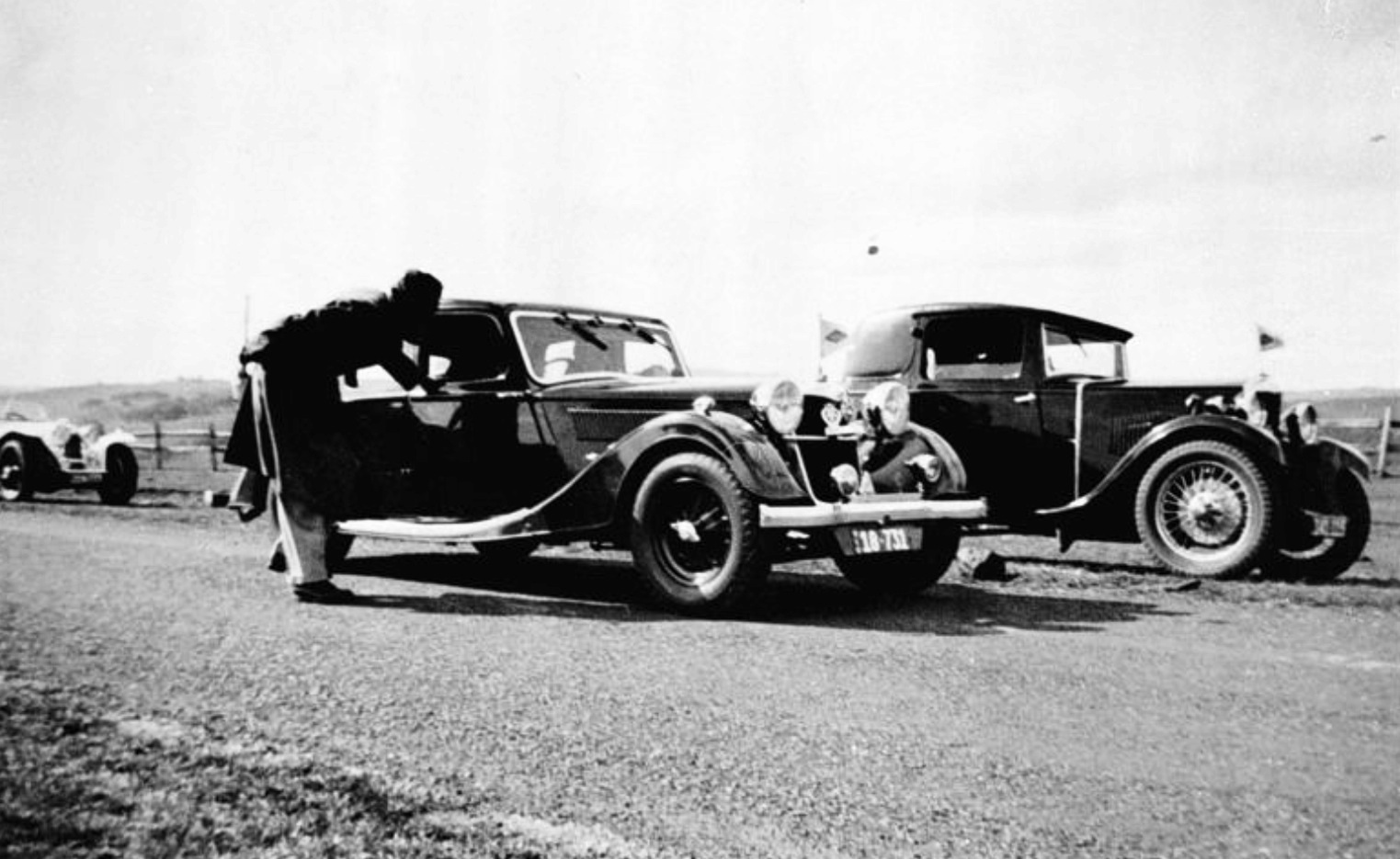
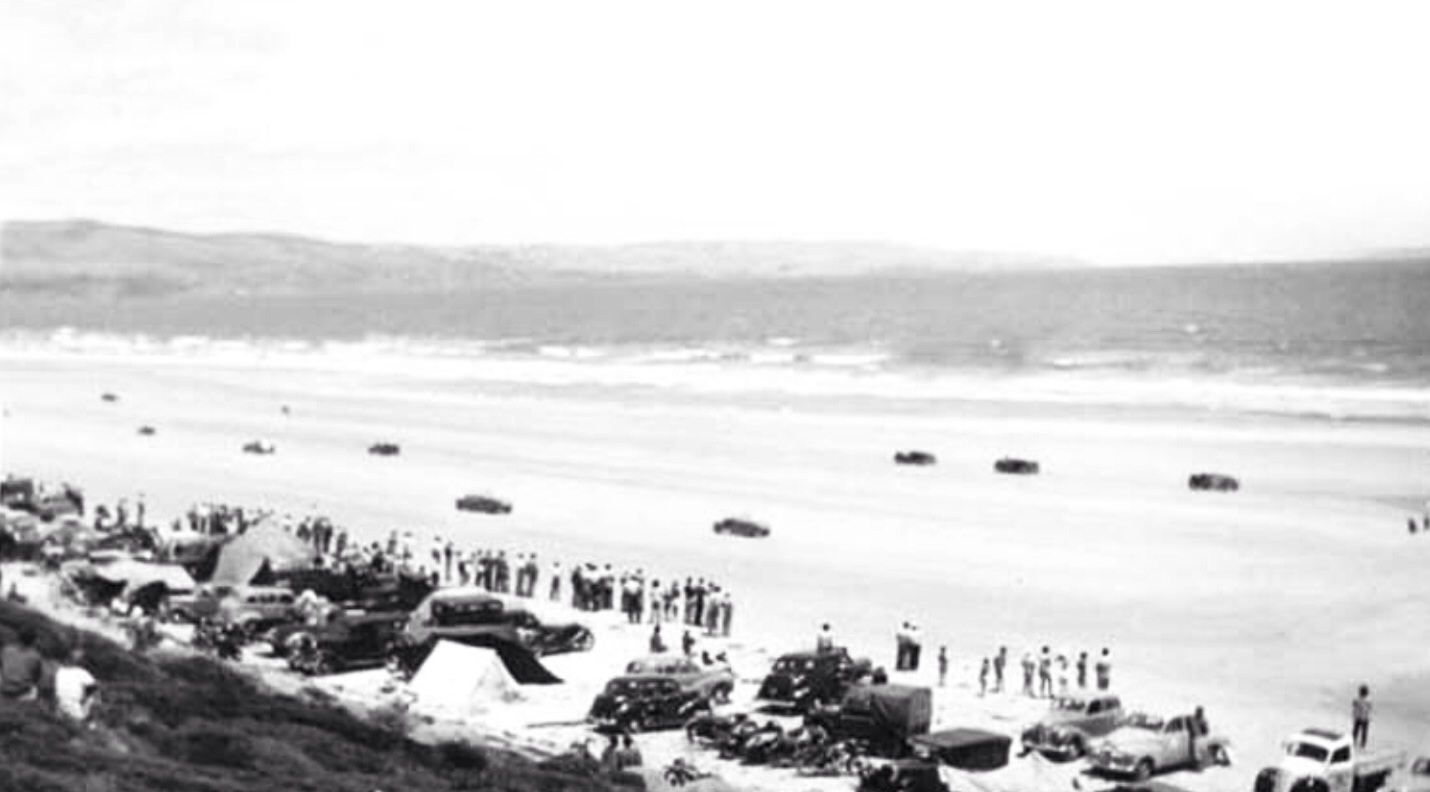
A group of cars await the start of the New Years Day 1926 Light Car event at Sellicks Beach, 55 km from Adelaide on the Fleurieu Peninsula. It is a photograph but almost painting like in its softness…

Many thanks to reader ‘hoodoog53’ for helping to identify the cars, drivers and date.

Competitors from the left are the #8 NA Goodman Ceirano N150, also in the shot below, then the PM Pederson Amilcar and HH Young, Amilcar Grand Sport’s, F Beasley’s Gwynne and D Dunstan, Austin 7.

‘Pederson, Young and Bowman made regular appearances on the sand at Sellicks and also on the local speedway tracks in the 1920’s. Pederson also broke the Broken Hill to Adelaide Speed Record in May 1925 using an earlier Grand Sport Amilcar.’

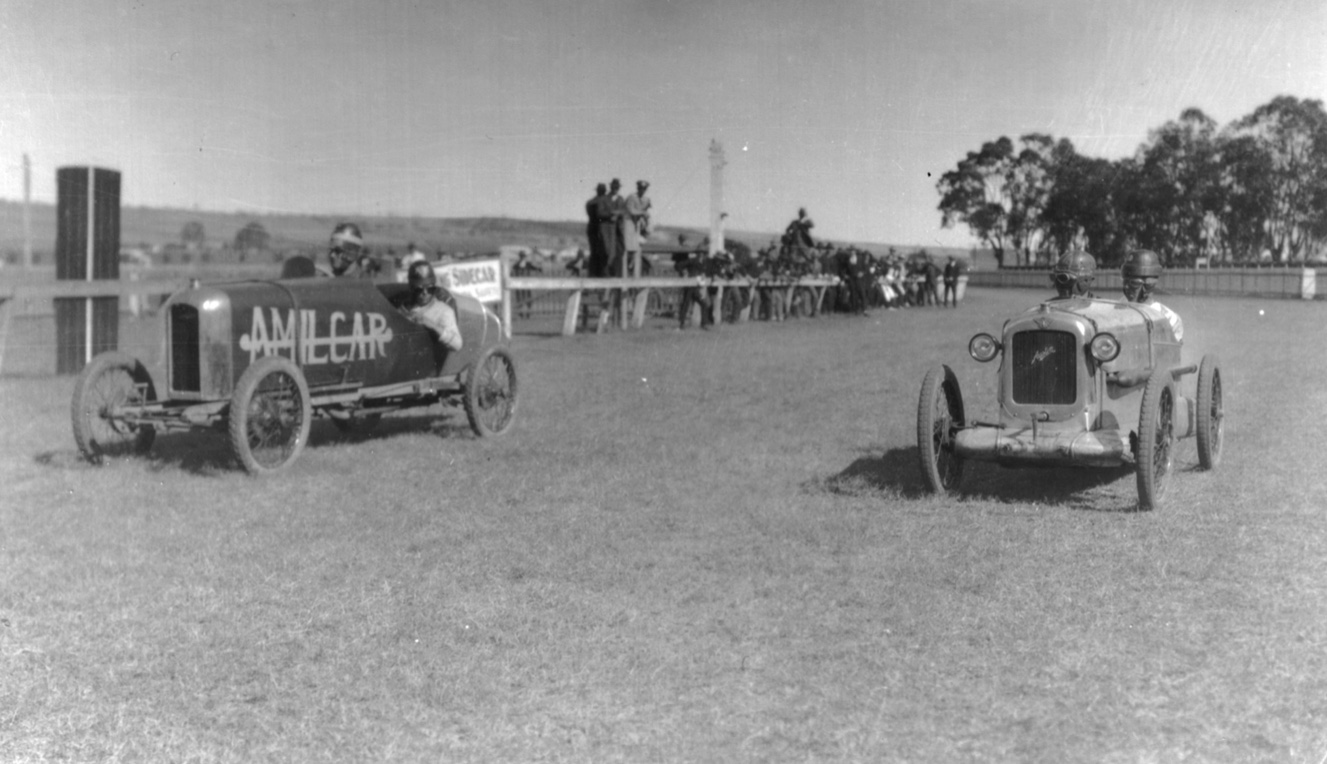
(Jennison)

Doug Gordon writes ‘I’m pretty sure this photo was taken on the same day in 1926- H Young racing the Grand Sport Amilcar with a small Amilcar roadster and motorcycle spectating on the sand’

The ever reliable Adelaide newspapers consistently provided the best local coverage of early Australian motorsport events in their state right into the post WW2 period in my opinion.

Adelaide’s ‘The Register’ reported the Twenty Mile Light Car Handicap- ‘Young won by about a mile. F Beasley’s Gwynne had a front tyre blow out at the north end of the beach, and the car skidded and overturned in the sea. The passenger (Miss Watt) was severely shaken and suffered a few bruises, while the driver was not injured. Miss Watt, when asked about how she felt, showed a sporting spirit by saying that her injuries did not matter if the car were all right.’

H Young Amilcar 1074cc, off 90 seconds, won the race from P Pederson Amilcar 1074cc off 50 seconds, then D Dunstan Austin 7 748cc, off 240 seconds. Other starters were F Beasley, Gwynne, 130 seconds and NA Goodman, Ceirano 1460cc off scratch.

‘Percy Pederson was the Service Manager and did the car demonstrations to customers at Drummonds, who held the Amilcar franchise in Adelaide’ wrote Amilcar GS owner and enthusiast Doug Gordon. ‘He was called upon to prepare Amilcars for competition and drive them for sales promotions. He used the same car in May 1925 to set a Broken Hill to Adelaide speed record. Anecdotally Pederson had these cars running at ridiculous compression ratios and burning methanol like the mororcycles- his job was to win, high demand for such cars was created by events such as these.’

Motorcycle racing or hill climbing first took place in the area on the rough road above the Victory Hotel on Sellicks Hill, in the early 1900’s but the activity was banned in 1913 as the sport was interfering with what was then the main arterial road from Adelaide to Cape Jervis.

The Victory Hotel is a mighty fine place for a meal by the way- and affords wonderful panoramic views of the surrounding countryside and coast towards Aldinga Beach and beyond. Whilst being tour guide, and its all coming back to me, do suss the ‘Star of Greece’ at Willunga Beach, an Adelaide standard and make a day of it- you can have some fine food and wine at a McLaren Vale winery and within 20 minutes hit the beach at Aldinga or Sellicks for a swim. Not many places in the world you can do that, Victoria’s Mornington Peninsula and Western Australia’s Margaret River regions duly noted.

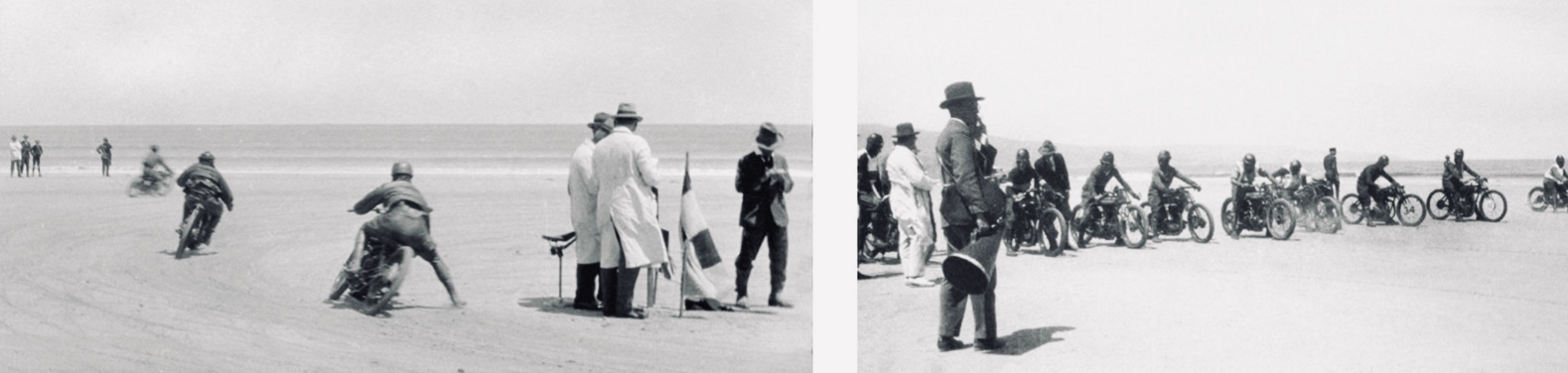
The intrepid South Australian motorcyclists then turned their attention to the wide, hard expanses of the Sellicks Beach sand, the location was used either on the January Australia Day, Christmas and October Labour Day long weekends for time trials and racing continuously from 1913 to 1953 on a very simple ‘up and back’ circa 3 km course around drums at each end of the course.

During the 1930’s light aircraft also used the beach during raceday to provide joy flights for spectators- now that would have been something, to see the racing from the air!

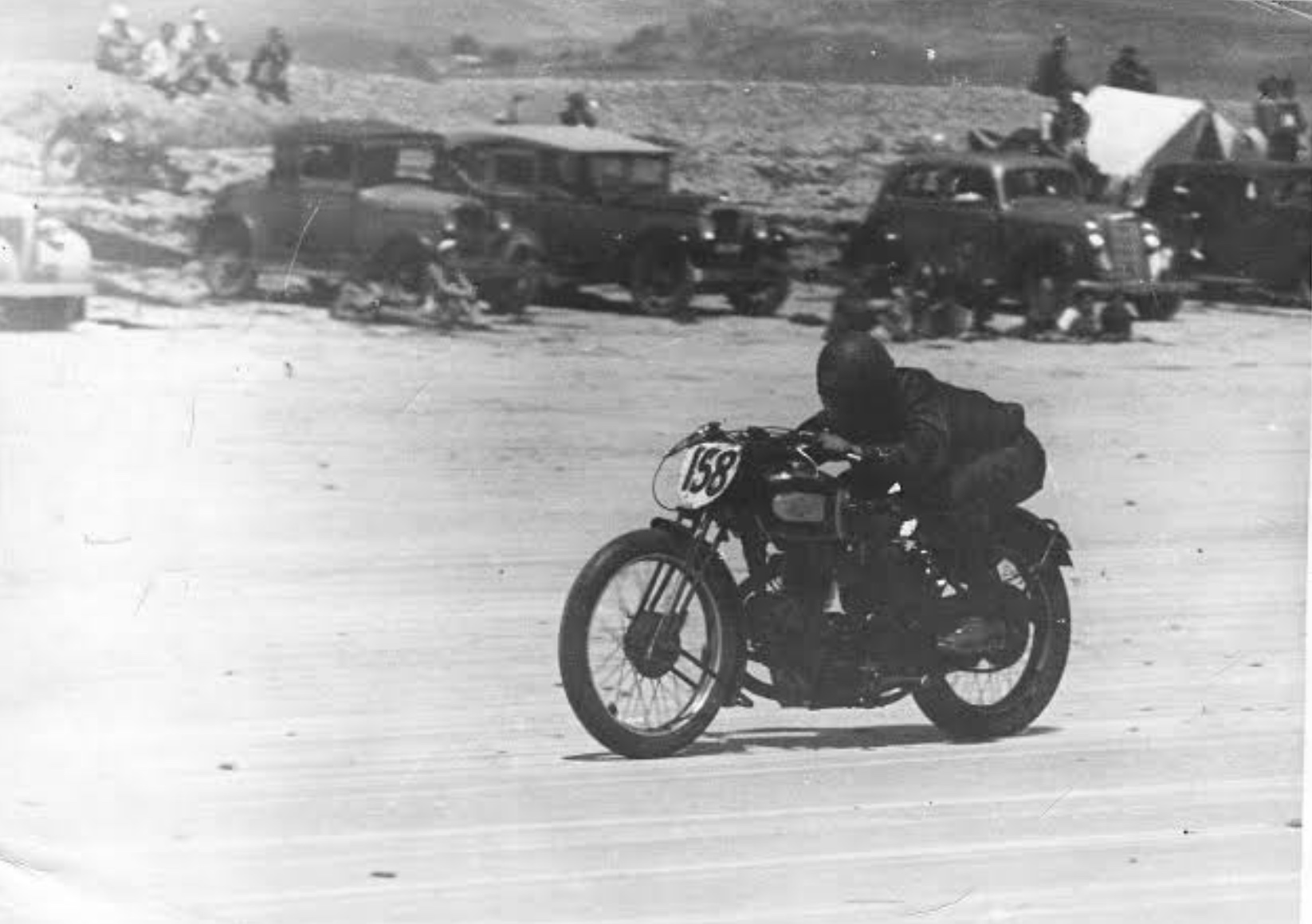
Unknown and undated bike racer but the twenties feels good as an approximation (Advertiser)


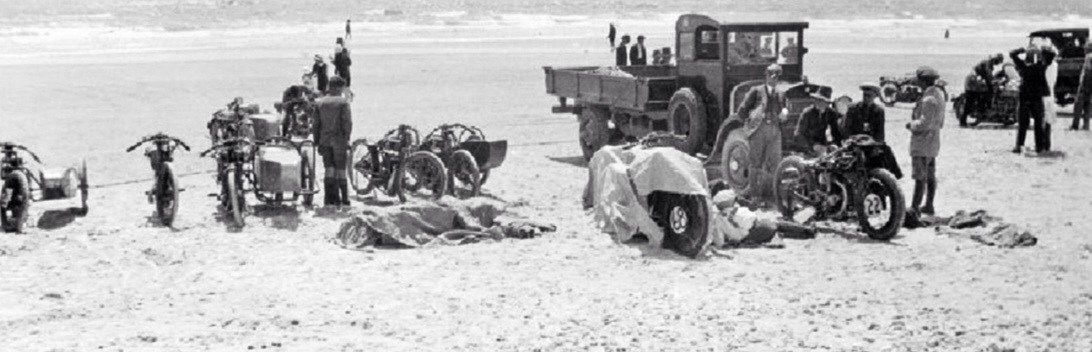
Racing paraphernalia and truck at Sellicks, date unknown (K Ragless)

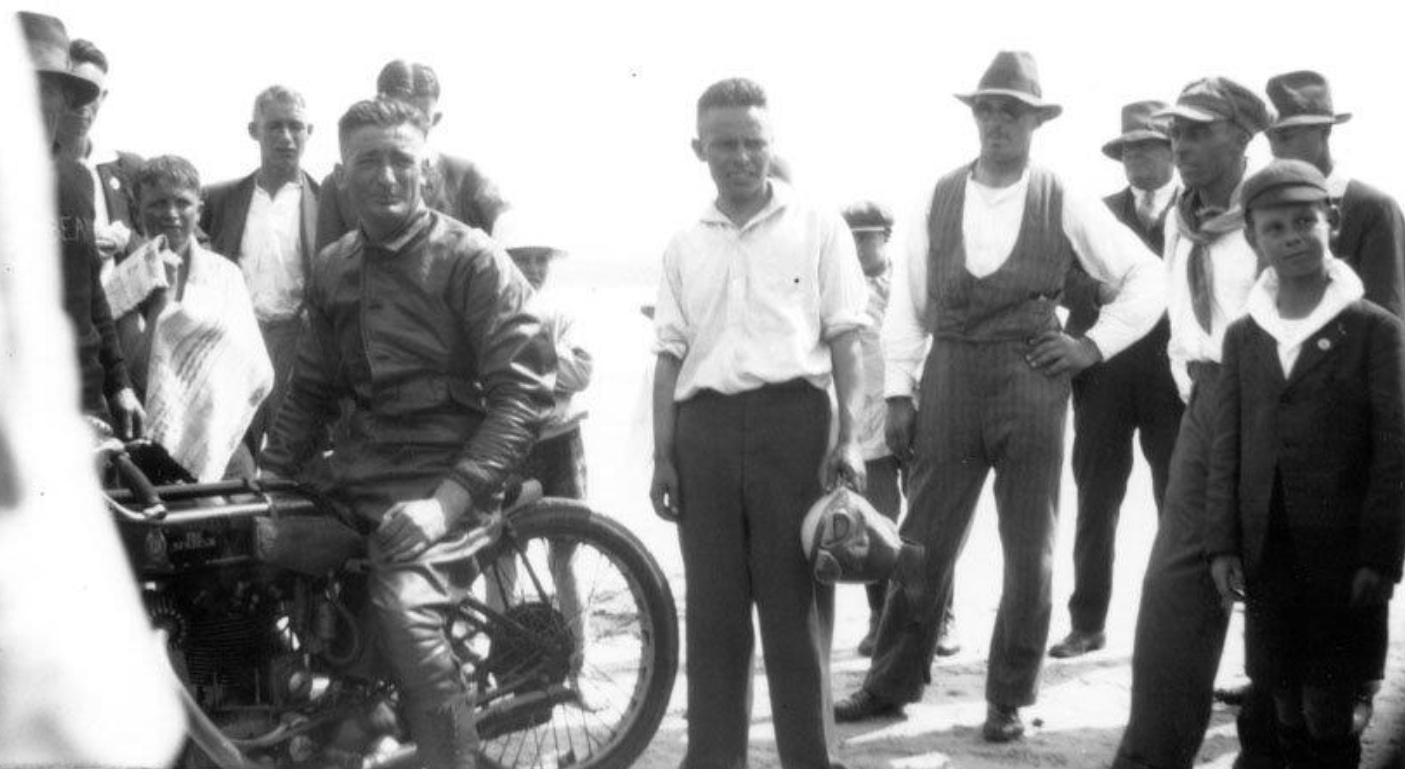
Sellicks attracted international attention for record breaking in 1925 when American rider Paul Anderson topped 125 mph over a half-mile aboard an eight-valve Indian taking ‘Australia’s One Way Speed Record’, the Rockhampton Morning Bulletin reported in November 1925.

Whilst many of the Sellick’s bike meetings included an event or two for ‘Light Cars’ (read small cars), ‘…that trend started at the Gawler racetrack in April 1925, this comprised a demonstration or match race between the Pederson Amilcar and an Austin 7. The first Grand Sport Amilcars arrived by ship in Adelaide in October 1924, the bodywork on this car appears to have been hastily prepared for the Gawler match race, with the rear tail not yet painted. By the start of the beach racing season in 1926 Pederson had a new GS Amilcar ready to go with a beautiful, locally made polished aluminium body. The Austin 7 was driven by Jack Moyle who was better known for his exploits on an AJS 350 at the Isle of Man, so he had a lot of track experience. The Austin won but the lead changed a number of times and the spectators loved it’ said Gordon.

Percy Pederson Amilcar and Jack Moyle Austin 7, Gawler April 1925 (D Gordon)

‘As with Jack Moyle’s move from the AJS to the Austin from time to time, so it was to become a trend for ageing speedway motorcyclists to gradually transition to light-car racing with Fergusson, McGillvray and McLeod being others who moved from two to four wheels- in the case of these three riders to Amilcars.’

‘Amilcars were popular on dirt tracks and on beaches because they had no differential- just a locked rear axle that didn’t lose traction on loose surfaces. It is for this reason that Jack Brabham built his first speedcar using Amilcar axles, he wasn’t the only one to do it in the early development of Australian speedway midgets’ said Doug Gordon.

‘The trend to include light-cars at motorcycle events continued from that Gawler day with fields gradually increasing over the years- this led directly to cars racing at Sellicks.’

The first meeting exclusively for cars was organised by the Sporting Car Club of South Australia and took place on 10 October 1934.

Billed as the ‘Grand Opening Speed Meeting’ over the Labour Day long weekend the entry list included Ron Uffindell who later successfully contested the 1938 Australian Grand Prix at Mount Panorama, Bathurst- he finished the handicap event eighth in his Austin 7 Special- and drove the little car to Bathurst and back from his home in Adelaide.

Other stars of the day entered that pioneering weekend- it was actually the very first speed meeting organised by the wonderful SCCSA, included Ash Moulden, Tony Ohlmeyer, John Dutton, Judy Rackham, Ron Kennedy with Cec Warren making the long trip from Melbourne in his supercharged MG.

The ‘Bryant Special’ at the SCCSA’s Buckland Park Beach meeting in January 1935- it ran with engine troubles but still did good times and in one race lapped the course at more than 70 mph. If anyone has a clearer picture of this car it would be gratefully received (Advertiser)

The ‘Adelaide Advertiser’ estimated the crowd at 10,000 people, the largest ever to a Sellicks meeting at that point. Niggles included a late start due to a breakdown of the electrical timing gear and as a consequence a rising tide!

Whilst Ron Uffindell won the 20 Mile Handicap feature race, the sensation of the meeting was the twin-engined Essex Special which owner-driver Peter Hawker, variously named the ‘Bryant Special’, after its builder, or more fondly, the ‘Bungaree Bastard’- Bungaree being the name of his family’s sheep station (farm) first established in the north of South Australia by Hawker’s forebears in 1840.

Despite conceding 7 minutes 20 seconds to Uffindell, Hawker finished second only a few yards behind Ron’s little Austin 7. The Advertiser reported that ‘…whilst the beach only permitted a 2 mile straight, and in consequence (Hawker) had to negotiate nine hairpin turns in the race, he averaged more than 73 mph for the distance…reaching about 100 mph on the straights.’

‘The big car scared spectators badly when it developed severe front wheel patter…for a moment it appeared the car would get out of control as the front see-sawed rapidly, making the wheels wobble and lift six inches off the ground in quick succession…slowing down cured the problem with A Moulden coming third, within a hundred yards of the winner.’

This extraordinary special was built by Max Bryant at Clare together with Hawker in 1934 and had two Essex ‘L’ or ‘F’ head 2371cc/2930cc four-cylinder engines- both of which were rated at 55 bhp.

The car was raced by both Bryant and Hawker at Buckland Park Beach, Sellicks and the SCCSA’s first hillclimb at Newland Hill’s Waitpinga in 1935 (another great but dangerous beach not too far from Victor Harbor) before being sold to the incredible Eldred Norman who was very competitive in it. This intuitive engineer, racer, specials-builder and raconteur was to be a mainstay of Sellicks throughout the venues long existence.

(Norman)

Norman is shown above in his stripped 1920’s Lancia Dilambda- 4 litres of OHC V8 power at Sellicks in the mid-thirties- what became of it I wonder? Its said Eldred got his passion for V8 grunt from this machine.

In a February 1935 record breaking exercise for cars saw three members of the Adelaide Establishment tackle the Sellicks sand.

John Dutton achieved 92.34 mph in his Vauxhall 30/98 ‘Bloody Mary’, so named for its blood red duco.

It was a car which achieved local fame and notoriety in February 1936 when the young, wealthy racer was forced off the road whilst returning to his home by an oncoming drunk driver. The Vauxhall plunged 60 feet into the icy waters of Mount Gambier’s Blue Lake whilst the intrepid pilot watched his beloved car gurgle downwards from above- he had been thrown clear of it and clung to a tree on a cliff until rescued. Lets return to that amazing story towards the end of this article.

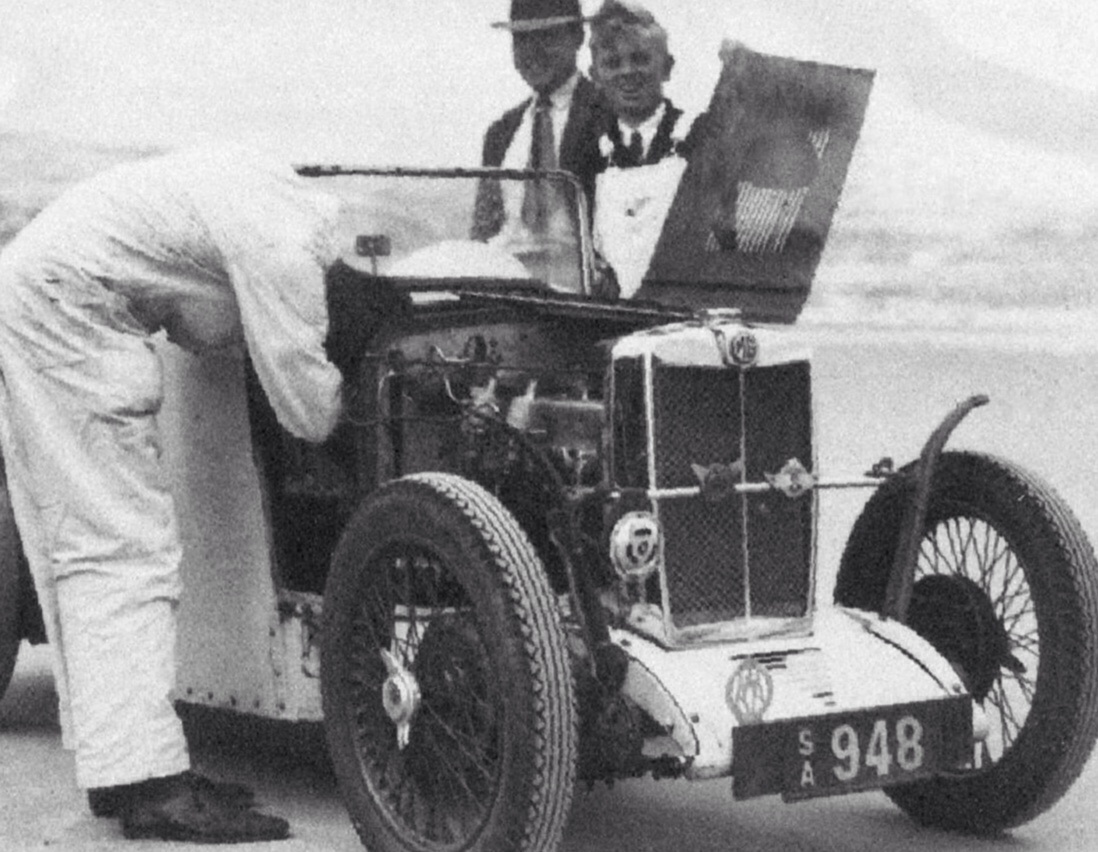
Warren Bonython extracted 76.49 mph from his little 748cc MG J2, ‘the first MG sportscar in South Australia’ whilst the ‘Bungaree Bastard’ topped 110 mph before a broken piston put an early end to Peter Hawker’s day.

Warren, John and Kym Bonython preparing for Warren’s record run at Sellicks in 1935- MG J2 (SCCSA)

I’m not sure how many meetings involving ‘bikes and cars took place down the decades but Rob Bartholomaeus’ research at the Sporting Car Club of South Australia library uncovered many programs and the newspaper reports are extensive for the best part of fifty years.

Rob recalls seeing Jack Brabham listed amongst the entrants for one of the early fifties meetings but a trawl through ‘Trove’ has not yielded any evidence that the great man actually raced at the venue in one of his Speedway Midgets or Coopers.

(B Buckle)


(B Buckle)

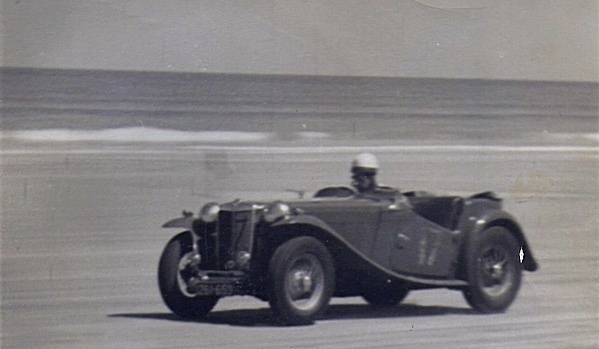
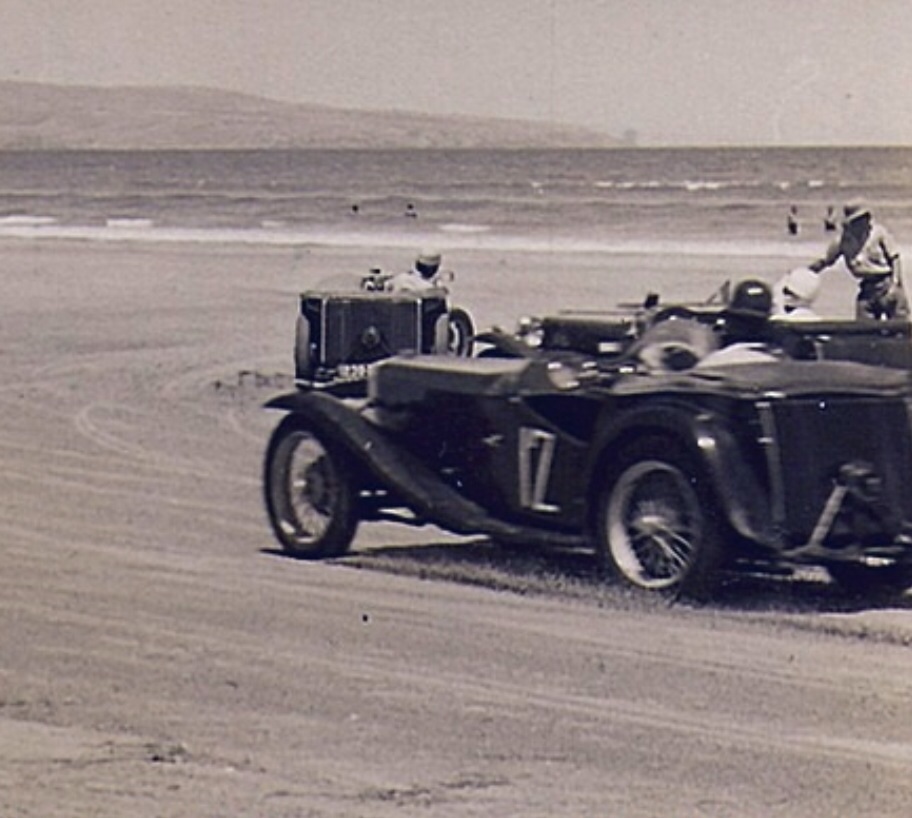
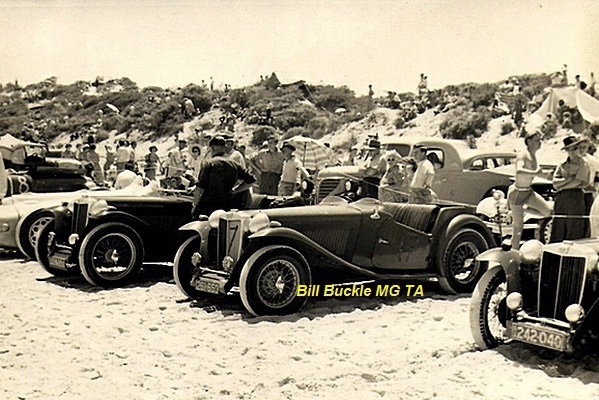
Two photographs above of MG T Types during a meeting in 1947- it’s summer, check out the people swimming in the shallows beyond the cars, not everyone was there for the racing! Bill Buckle, MG TA is in car #17.

The course was not without its challenges, whilst start times were of course programmed by the organising club, ultimately the elements determined things.

Officials arrived early in the morning and asessed the likely conditions for the day with the vagaries of the tide sometimes bringing an early end to proceedings- the position of the mile or more long course itself changed dependent upon the prevailing sand and other conditions, weather forecasting being not quite as sophisticated as it is today!

(D Gordon)


(D Gordon)

Proceedings were not as serious as today either, ‘…it appears to be have been very much a picnic atmosphere with wives and girlfriends in attendance showing off the ‘fashions of the field’ almost like a Melbourne Cup day. The article above focuses almost entirely on the girls fashions and nothing to do with the racing!’ Doug Gordon observes.

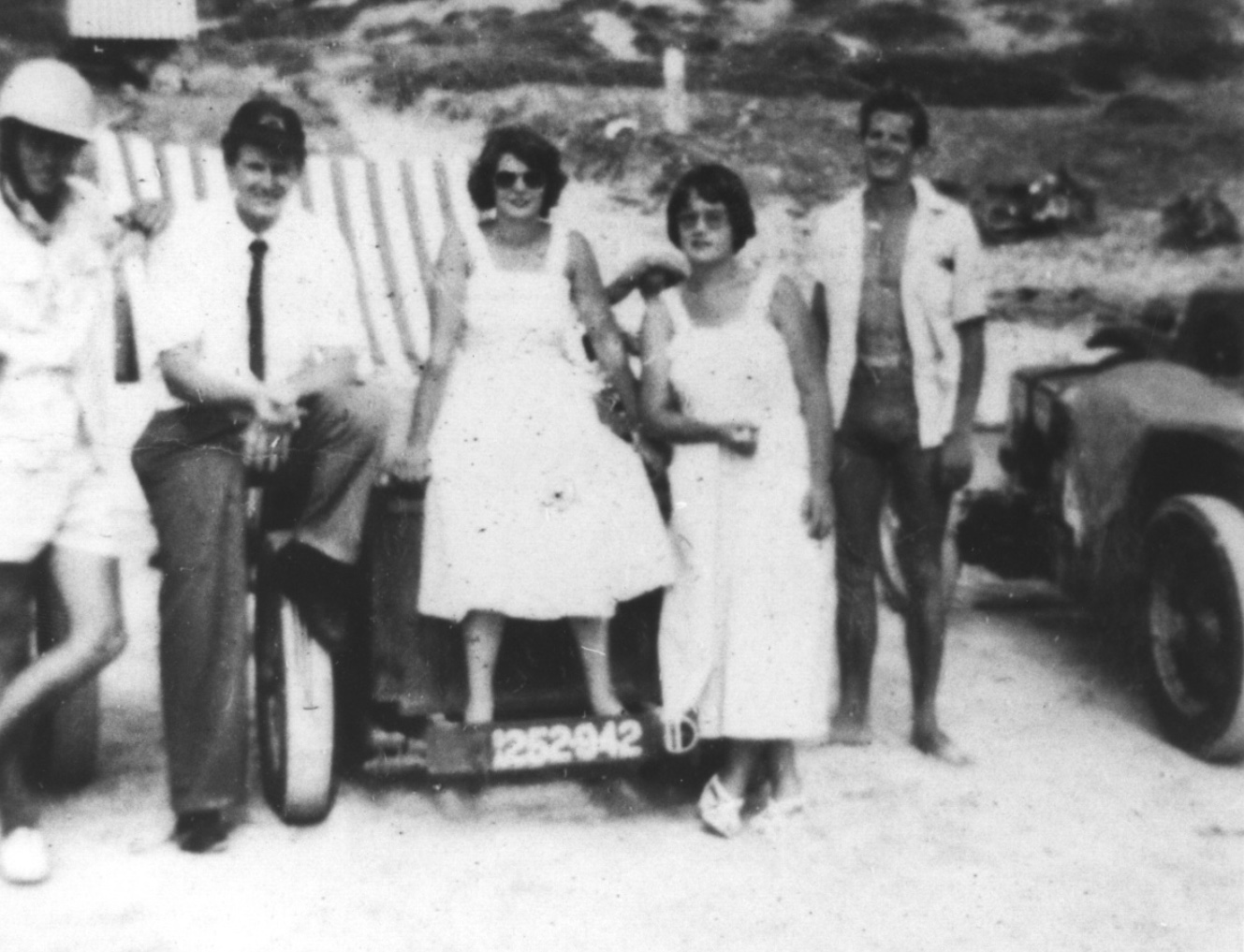
‘The casual drivers attire gives an idea that it was nothing like the professional racing we see today, certainly not in the sportscar ranks anyway. The group shot on the back of Don Cant’s MG TC is typical of a group of friends out for a fun picnic on the beach with racing to add a bit of excitement to the day.’

Don Cant in helmet and racing shorts, no socks and tennis shoes, Don Shinners in old school cap, Molly Foale on the tank, Jill Cant and Max Foale in togs ready for a dip (D Gordon)


(unattributed)

The photograph above appears to be during the 1950’s given the spectators cars, the panoramic view looking towards Myponga Beach gives us a bit of an idea of a spectators view back in the day.

(A Wright)

Harry Neale, above, during the Easter Monday meeting in 1950 driving Eldred Norman’s formidable Double Eight Special.

This extraordinary twin Ford sidevalve 239 cid Mercury V8 powered beastie based on a Dodge weapons carrier chassis must have been mighty quick out of the stop-go type corners with its prodigious 7800 cc of torque and 200 bhp’ish pushing it along the two straight bits. Putting the power to the ground even on the hard sand cannot have been easy, to say the least.

Click here for some information on this car;

1950 Australian Grand Prix: Nuriootpa, South Australia…

In an interesting tangent it seems that the Bryant Special’s sale by Hawker to Norman in 1936/7 was precipitated by poor Peter contracting cancer, from which he died way too young shortly thereafter. Clearly Eldred Norman’s thinking in concepting the post-war Double Eight was influenced by the Bryant/Hawker machine he owned and raced earlier.

At this Easter Monday 1950 meeting the Double Eight was driven by speedway legend Harry Neale who was well in front of the pack when he lost control. Albert Ludgate wrote in ‘Cars’ magazine, ‘Before the crowd realised what was happening, the Ford was out of control and with a mighty splash charged into the sea. Such was the force of the water that the body was ripped off the chassis, leaving Harry sitting on the chassis, unhurt, but very wet.’

Turning to Eldred Norman, he was a larger than life character in every respect.

He once retrieved the telephone cables laid out for communication between officials at each end of the beach by fitting a bare wheel rim to the Double Eight’s rear axle, jacked up the car, fired it up, cracked open the throttle and post-haste reeled in a mile or so of line. The sheer efficiency of the process is to be admired even if modern O,H & S folks would be aghast at the dangers!

Hang on Harry. Neale in, or more particularly on the Double Eight at the South Australian Woodside road circuit in 1949. Look at that way back driving position- two engines to package of course! Note the big, heavy truck wheels and tyres (unattributed)


(D Cant)

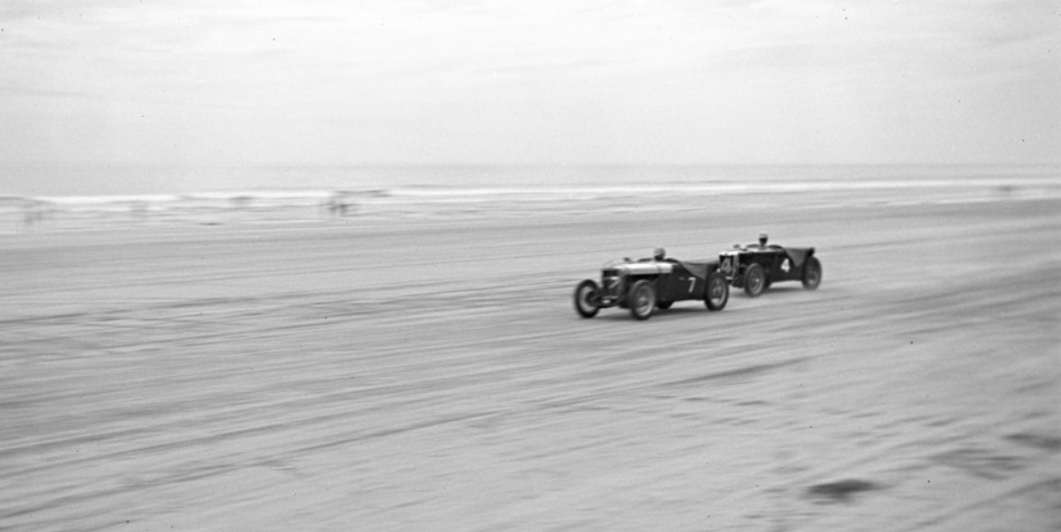
Don Cant #7 and Steve Tillet In MG TC Spls with Eldred Norman just ahead, lapping them no doubt, in the Double Eight, 1952. In the later Sellicks years Norman also raced his Maserati 6CM and a Singer 1500 production tourer there, often with success.

During the same October 1952 meeting Eddie (father of Larry) Perkins’ Lancia Special leads Greg McEwin’s HRG around a drum which marks one of the two hairpin bends in the photo below.

(Advertiser)

All good things come to an end of course.

Mixed car and bike meetings were run until the local Willunga Council cried enough in 1953.

Sellicks was a long way from Adelaide in 1915 but a ‘lot closer’ by 1950 with the cities burgeoning population and mobility of its populace as car ownership grew exponentially post war- and most of those motorists wanted to use the beach for traditional aquatic pursuits not have them interrupted by motorsport.

The sport was changing more broadly in South Australia as well.

The state had a great tradition of road racing on closed public roads at Victor Harbor, Lobethal, Nuriootpa and Woodside but the death of a rider and spectator at Woodside in 1949 was a catalyst for the State Government banning road racing until the relevant act was repealed or amended to allow the Adelaide Grand Prix to be conducted on the city streets in the eighties.

In short, South Australia needed a permanent circuit, a role Sellicks could never of course fulfil. Initial work on putting this in place began with the incorporation of a company named Brooklyn Speedway (SA) Pty Ltd in August 1952.

Local racing heavyweights involved in the venture were determined not to let the sport die in South Australia included Steve Tillet, RF Angas, ES Wells, Keith Rilstone, TC Burford and of course Eldred Norman.

They soon secured a lease on 468 acres of flat salt-bush scrubby land at Port Wakefield on the Balaklava Road, 100 km from Adelaide.

Plans for a 1.3 mile circuit were drafted by Burford and circulated to the SCCSA and amongst drivers with the plans then modified and a circuit and support infrastructure built

The tracks first meeting was held on New Years Day 1953, star attractions included Melburnians Stan Jones in Maybach 1 and Lex Davison who brought over his Grand Prix Alfa Romeo P3. Lex rolled the car without injury only days before he and Jones jetted off to join Tony Gaze in Europe to contest the Monte Carlo Rally in a Holden 48-215.

Significantly, the circuit was the first permanent race-track constructed in Australia putting aside Speedways and appropriated airfields. South Australia had a new home for motor racing, hosting the 1955 AGP which was won by Jack Brabham’s self-built Cooper T40 Bristol ‘Bobtail’.

In more recent times their have been several ‘bike Sellicks re-enactments, the first in 1986 attracted over 40,000 spectators! and involved some racers who had run at the beach in period.

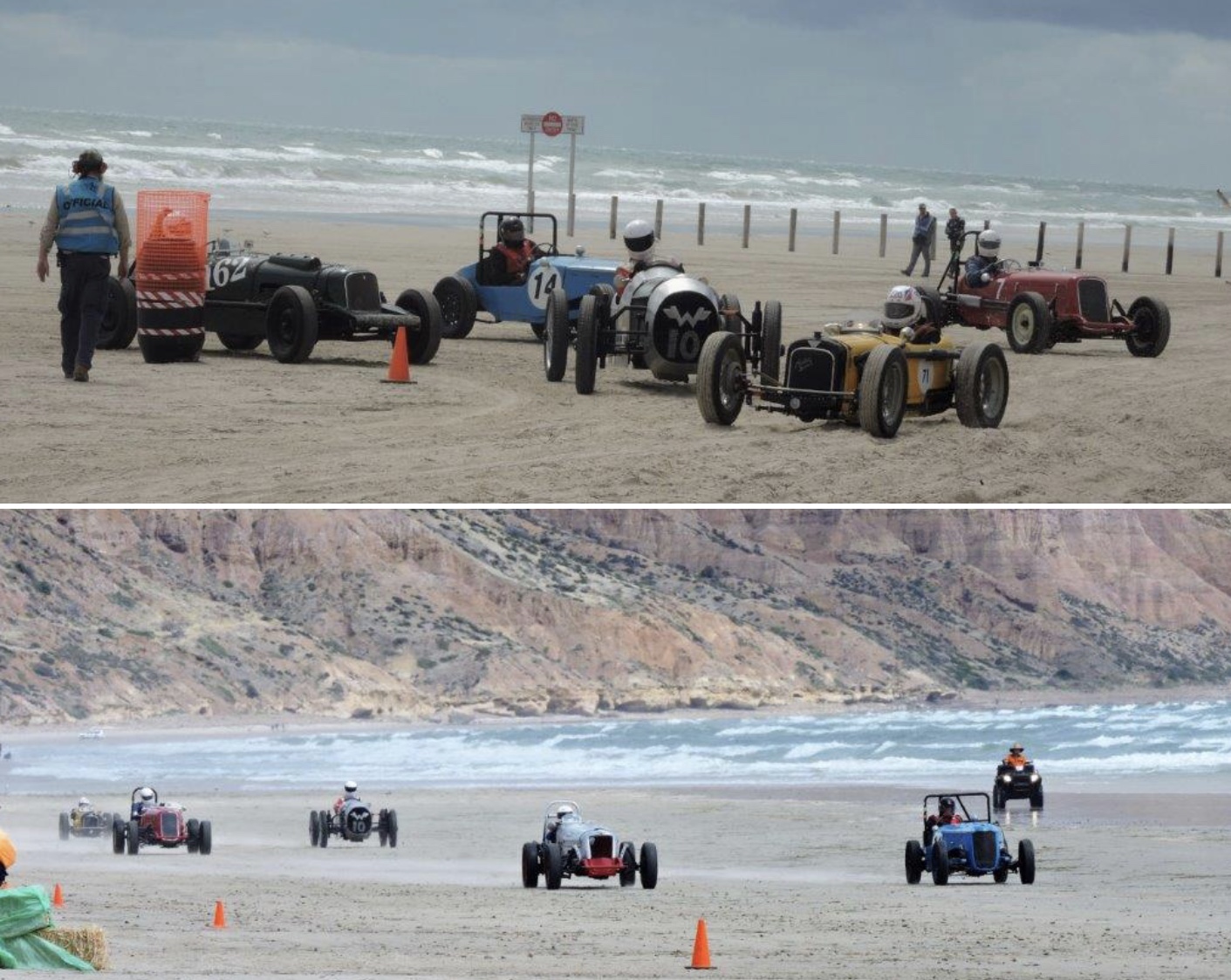
Eric Cossiche provided these photos from the February 2017 Levi Motorcycle Club run at Sellicks and commented that it was a bad move ‘salt and sand took forever to get sorted’ from the car, but fun no doubt!

Car is Eric Cossiche’s wonderful 1954 Wolseley Flying W Special (E Cossiche)

Postscript…

A couple of days after uploading this article Adelaide enthusiast/racer/historian Doug Gordon got in touch with some more photos and information which I have reproduced below- many thanks to him.

‘I have a particular interest in these early SA venues – Sellicks, Smithfield Speedway, Gawler Speedway (Racetrack), Lobethal, Woodside, Nuriootpa, Victor Harbor, Glen Ewin Hill Climb, etc.
Some are very hard to find information about – especially Smithfield Speedway (from October 1926- built and run by the Motor Cycle Club of SA) which was also one of the earliest speedway venues in the country and the first purpose built, but usually overlooked.
I have a couple of Grand Sport Amilcars and also own Don Cant’s MGTC from the photos you have. Don placed fourth on handicap in the AGP at Nuriootpa in 1950 and was also at Sellicks in October 1952, along with my Amilcar (driven by Max Foale).

(D Gordon)

The other interesting SA beach racing venue (for motorcycles) was Hardwicke Bay, about which I have found very little, except for speaking to the old locals (we have a place there) and a couple of photos from the community centre. I have a 1924 Douglas and have made contact with the Yorke Peninsula V & V Motorcycle Club and hope to find out more about Hardwicke in future – one of my buddies over there is trying to track down some more photos before the old fellows die out!
Hardwicke Bay racing – both official and “UN-official” (both on and OFF the beach, apparently – not too many cars on the roads back then- boys will be boys, went on for years, whilst the better-known venue at Sellicks was still going in Adelaide.
This was on a beautiful stretch of hard white sand stretching from Longbottoms Beach to Flahertys Beach (named after local landowners) for about 4 kilometers. I’m not exactly sure where the track layout was, but in many ways it was better than Sellicks and the boys from all over Yorkes would come down for it, along with the Adelaide mob. Possibly more a clubby arrangement with very little publicity!

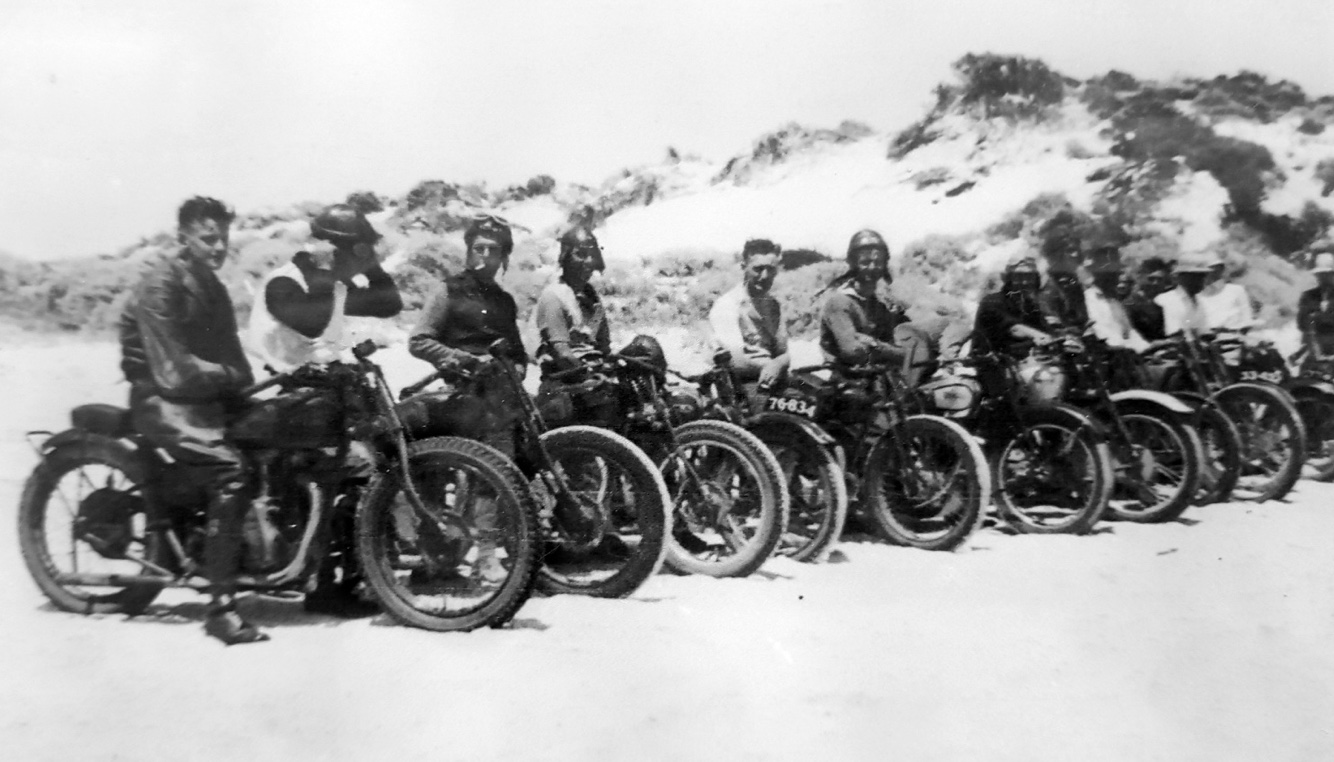
Ready for the off at Hardwicke Bay (D Gordon)

Jake Cook at Hardwicke Bay in the 1930’s (D Gordon)

Boys looking pretty casual and ready for the off at Hardwicke Bay (D Gordon)

It is also widely known that not ALL the racing on Sellicks Beach was “officially sanctioned” events, but motorcycles pre-dated cars there by more than a decade. The early motor-cycle clubs invited “Light-Cars” in the mid-1920s, but the Sporting Car Club of SA did not invite motor-cycles after they started their car meetings in 1934.
The precedent for this was set at Gawler racetrack in April 1925, when the motor-cycle speedway invited an Austin-7 and an Amilcar to a match race on the turf track there. After this, Light Cars often appeared at motor-cycle racing events and speedway – principally at Sellicks and Smithfield, along with a few night trials and reliability trails. So these early venues were a critical link in the formation of motor sport in this SA as well as Australia as a whole.

(D Gordon)

Its also interesting that the Harley-Davidson MCC had their club-rooms high on the Sellicks cliffs overlooking the beach in the 1920s – known colloquially as “The ‘Arley ‘Ut”.
Note that both the Sellicks and Hardwicke venues were only used in the early months of summer from late October to February, owing to the tides going out further at these times to keep the sand exposed for most of the days. If tides came in too far, the racing had to be abandoned.
Eldred Norman was said to ease the big Double-V8 into very shallow water at times to cool off the brakes in the spray after serious fading following some panic stops at the hairpin bends at the end of each long straight! Later he fitted windscreen washer spray jets with push-button control to squirt the brakes when needed to provide the same effect in long road-races.
Sellicks IS a very special venue and it has been packed for the modern re-enactments run by the Levis Motorcycle club in recent times – bikes and riders come from every state. It’s huge and you have to get tickets pre-booked and paid through Venutix etc- there are only a limited number available and are sold-out in days! These events are now fully backed by local councils and environmentalists are (sort-of) OK with it, because no damage has been proven to result – Sellicks has a unique layer of pebbles just under the sand to keep the surface very stable, which is why it lasted so long and even into the present day.’

Etcetera: Sellicks…

(unattributed)


Bill Buckle’s MG TA during the 1947 meeting, the racer/businessman made the long trip from Sydney for the event, casual nature of the beach clear from this shot as is the importance of MG’s to Australian motor racing- and not just at Sellicks Beach.


(Levis)


Harry Cossiche getting ready to boogie in the 1930’s (E Cossiche)


(D Gordon)

The Don Cant and Steve Tillet MG TC’s hard at it during 1952. By the look of the soft sand in the foreground one needed to not stray too far up the beach- or down it.

Cars on beaches is a strongly entrenched Adelaide tradition- parking ones car on the beach before popping up the beach umbrella and knocking back a couple of tinnies continues to this day on some of their coastline, a practice very strange to we east-coasters.


(Norman)

Eldred Norman’s much modified Maserati 6CM chasing Tom Hawkes’ Allard J2 above at the first all-car Sellicks meeting post-war in October 1952.

Norman had a dim view of this car which was never very fast and had an insatiable appetite for pistons, inclusive of this race meeting!


(Jennison)

Etcetera: Mystery ‘Sellicks’ car…

John Alfred Jennison built this racer at his garage in Salisbury, South Australia, which sold and serviced Chevs in the twenties. The clever Engineer was later a pioneer of caravan construction in Australia.

The car raced at Sellicks in the late twenties but I can find nothing about its mechanical specification, in period race record or its ultimate fate.

It would be great to hear from any of you who may know something about it. Neat isn’t it?

(Jennison)


(ABC)

Etcetera: ‘Bloody Marys’ 300 foot Blue Lake plunge…

The story of John Dutton’s lucky escape from the seeming death of his Vauxhall in February 1936 is too good to leave alone and is well told by Kate Hill in this ABC South East’s ‘Friday Rewind’ published on 7 November 2014.

‘Wealthy young racing driver John Dutton owned a property on the outskirts of Mount Gambier when he purchased one of the last Vauxhalls produced in 1927, nicknamed ‘Bloody Mary’ for it’s blood red duco and known for its speed and racing pedigree.

In fact, Dutton and the Vauxhall landed the Australian National RC Speed Record over one mile on Sellicks Beach in February 1935 and he was booked to compete in the 1936 Australian Grand Prix with another car, a supercharged MG (he finished tenth)

The Mount Gambier resident used his cars for both competition and daily transport, frequently spotted at hill climbs and tearing the cars around country roads.

On the Blue Lake Aquifer Tours website, Linton Morris, who purchased the Vauxhall in 1993 obtained what he calls the most ‘accurate version of the incident’ in a letter from John Dutton’s younger brother Geoffrey.

Sometime after 2am one wet February morning, Dutton was driving the Vauxhall around the lake home, when a drunk man came around the tight bend on the wrong side of the road.

The Vauxhall was forced through a fence and tipped over the edge but luckily the seriously injured Dutton had been thrown out, landing some way down the cliff before his fall was stopped short by a tree.

Watching his beloved car plunge past him into the depths of the Blue Lake, John later told his brother Geoffrey how the car spun around in the water with the headlights still on, ‘leaving an eerie lemon light’ cutting through the murky water.

Dutton, clinging to life with severe internal injuries, was stretchered back up the cliff in a dangerous night operation by police and rescue services and taken to Mount Gambier Hospital.

(ABC)


The restored ex-Dutton Vauxhall 30/98 at its point of entry into the Blue Lake crater in 1958. Armco barrier more substantial than the 1936 variant and doubtless it is even more substantial now (SLSA-Arthur Studio)

There are varying reports of whether Mr AC MacMillan, the veterinary surgeon who caused the crash, drove straight to the Mount Gambier police station to report the crash, or as a later report suggests, simply drove into town and had another few beers at the Jens Hotel.

The Border Watch newspaper reported the sensational crash with the front page of next edition screaming: Racing car drives 300ft into Blue Lake – Driver’s miraculous escape from death.

With Dutton recovering in an Adelaide hospital, the city’s council was left with a problem – how to salvage the car from the city’s famous ‘bottomless’ water supply.

In fact it would be over 13 months before a plan of action was put into place, including construction of a pontoon to support the vehicle at the lake’s surface and a 10-tonne road roller to haul the car to the top.

A steel cable was attached to the rear springs of the car, which had been stripped of its wheels and bolted to wooden cross bars to stabilise the vehicle.

A huge crowd gathered around to watch the spectacle, which was not without incident.

A workman’s fingers were crushed after he was distracted by the crowds and his hand drawn under the steel rollers.

When the car reached the top, onlookers noted the clock inside had stopped at 2.40am, probably the exact time of the accident.

The Vauxhall was put on display at local garage May & Davis and became a popular attraction for tourists and locals alike.

Believe it or not, after nearly a year underwater, the car went on to have a further racing career in Victoria and South Australia under a succession of owners.

Bought by Morris in 1993, the famous car that went into the Blue Lake has now been fully restored and lives a quiet life.’

(ABC)

Bibliography…

Adelaide Advertiser 11 October 1934/9 October 1954, Adelaide ‘The Register’ 2 January 1926, article by Tony Parkinson in the Spring 2014 issue of ‘Fleurieu Living’, Rockhampton ‘Morning Bulletin’, ‘The Nostalgia Forum’ Eldred Norman threads, communique from Doug Gordon

Photo and other Credits…

State Library of South Australia, Rob Bartholomaeus, Arnold Wright, Ken Ragless, Sporting Car Club of South Australia, Don Cant Collection, Bill Buckle Collection, Doug Gordon, K Ragless, Jennison Family Collection, Norman Family Collection, Australian Broadcasting Corporation, Eric Cossiche, Doug Gordon

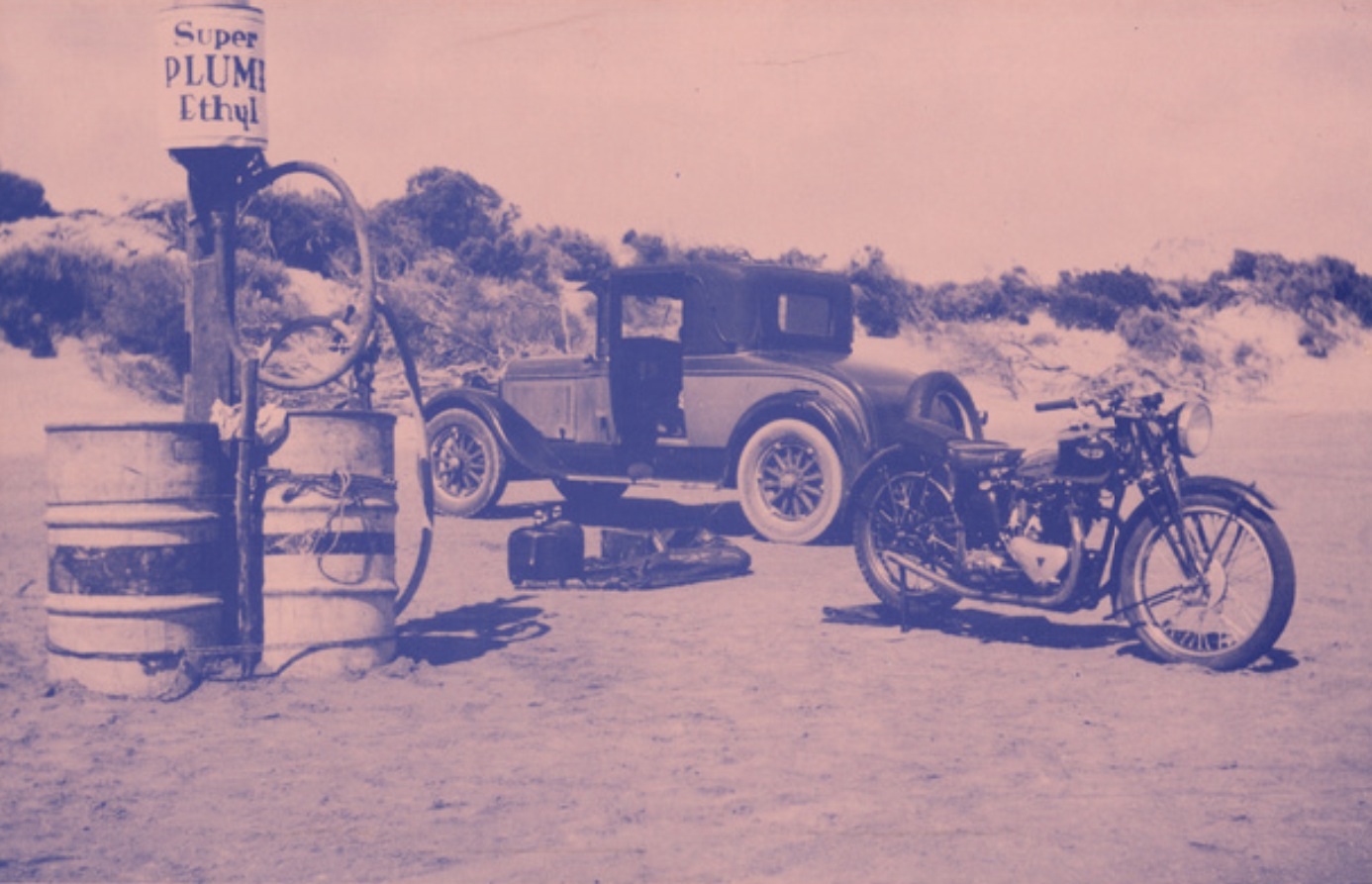
Tailpieces: Sellicks Beach fuel depot ‘in period’ and the drivers view in 2019…

(unattributed)


(D Gordon)

Finito…

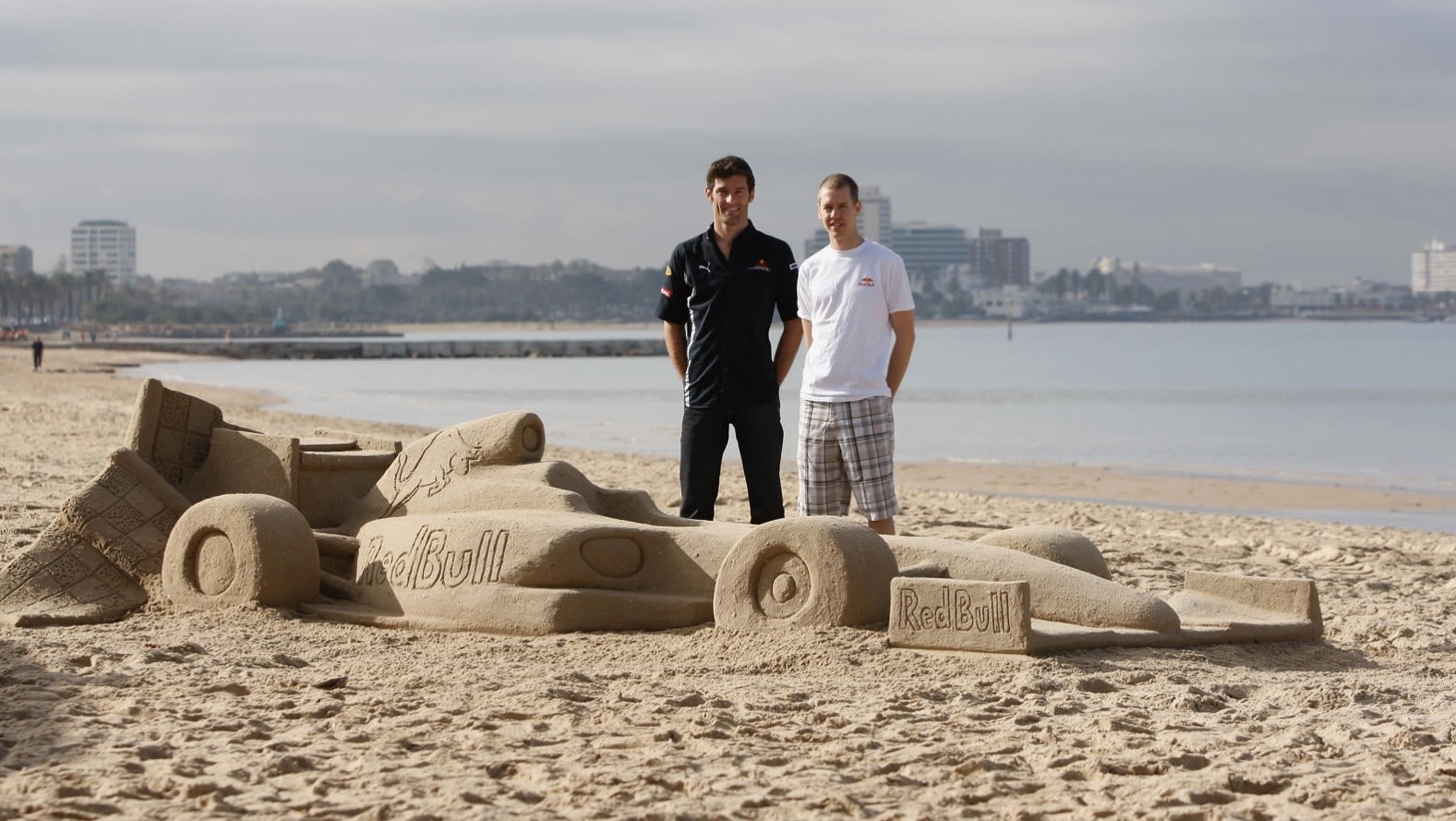
Who said Webbo and Sebbo can’t play nicely in the sandpit together?…

Cheesey Australian Grand Prix promotional shoot prior to the 2010 Albert Park weekend taken at St Kilda Beach close by.

Mark Webber and Sebastian Vettel had a few territorial disputes along the way didn’t they?, it did get a bit nutty I spose but I’ve always liked a lack of team orders- or drivers obeying them anyway!

At Albert Park in 2010 the pair qualified their Red Bull RB6 Renault’s 1-2 with Seb in front, he failed to finish with brake problems whilst Mark gave Lewis Hamilton’s McLaren a tap up the bum late in the race ruining a podium for both.

Jenson Button’s McLaren MP4-25 Mercedes won from Robert Kubica, Renault R30 and Felipe Massa in a Ferrari F10.

Credits

Getty Images- Peter Fox

Tailpiece

Finito


(G Morris)

Ralph Morris about to leave the line in his 1937 Riley Sprite, Bacchus Marsh, Victoria 19 September 1937. He won the half-mile sprint with a time of 22 4/5 seconds…

The event is being conducted on the road between Bacchus Marsh and Gisborne. Bacchus Marsh is 60 Km to Melbourne’s west on the Western Highway- the road to Adelaide and beyond.

The TT Sprites were a series of cars built to take part in the Tourist Trophy races run in the UK in the mid thirties, it is thought that as many as 10-12 were built, with a variety of engines- 12/4, 15/6 and at least one with a six-cylinder engine.

The chassis was either the 22T or 44T. The 12/4 engine was an undersquare 1496 cc 4 cylinder unit fed by two SU carbs and gave 61 bhp @ 5500 rpm. A 4 speed pre-selector gearbox was used and semi-elliptic solid axle suspension front and rear. Top speed was quoted as 88 mph.

The Melbourne ‘Argus’ announced the arrival of the first Sprite in Australia in its 4 May 1937 issue, has to be this chassis surely?

Rileys were popular light sporting cars in Australia, the ‘lineup’ from front to rear above are ’37 Kestrel, probably a ’34 Sedan and a 1931/2 Australian bodied Riley 9 Coupe.

The photo below is of the same group of cars- the car in the centre is the Kestrel owned by Club President Norman Horton who is doubtless at the wheel, he was second with a time of 26 3/5 seconds. Ralph Morris is standing next to the car. To the far left is the front of the Imp and to the right the Riley 9.

(G Morris)

Click on this link for an excellent website on Rileys in Australia, it is amazing just how many of these light, sporting and robust cars came to Oz.

http://www.phil.soden.com.au/ria.html

I am also intrigued to know the whereabouts of any of the cars featured.

Photo Credit…

G Morris

Finito…


Nice bit of promotional artwork, I wonder what car is being characterised though?…

The image is a crop from a London Midland & Scottish Railway poster to promote the Crystal Palace 21 May 1938 meeting. The Sydenham Trophy, the car feature event of the day, was won by the John HT Smith, MG at an average speed of 52 mph.

It seems possible the inspiration is the Alfa Romeo 308C, although the bodywork is not an exact fit, mind you maybe its a stylised Mercedes W125 or an Alfa 8C-35 or perhaps something else?

(forix.com)

The image above is of Manfred Von Brauchitsch taking some air on the Melbourne Rise during the October 2 1937 Donington Grand Prix weekend.

Bernd Rosemeyer won in an Auto Union B Type from the Mercedes W125’s of Von Brauchitsch and Rudy Caracciola, perhaps the artist, a ‘Mr Light’ attended the weekend with his art an impressionist interpretation of the car, but in red?

(Getty)

Mechanics attend to one of the W125’s in an unidentified paddock. Click here for an article about this great car;

Mercedes Benz W125: 1937’s Dominant GP car and Rudy Uhlenhaut…

How about the Alfa 308 or 308C then?

Four of these Colombo engineered cars, with independent front suspension and 2991 cc versions of Vittorio Jano’s long-lived straight-8 were built and first raced by Tazio Nuvolari at Pau in 1938. A leaking fuel saddle-tank caused the accident which was the catalyst for the great Mantuan to leave Alfa.

(unattributed)

Raymond Sommer, above Alfa Romeo 308C during the July 1939 French Grand Prix.

Sommer and Chinetti in two of the machines were fifth and eighth. The race was won by Herman Muller from George Meier, both aboard 3 litre V12 Auto Union Type D’s- third was a Talbot MD 4.5 litre straight-6, the driver Rene Le Begue.

It is possible Mr Light used these cars as inspiration but the two vents either side of the radiator aperture are missing.

(unattributed)

Qsqui Jarillo advises ‘The photo was taken in Buenos Aires city in 1949 and is probably the car being moved in front of the Automobile Club of Argentina building. In the background is the ‘Bosque de Palermo’ park, the place where pre-F1 age Grand Prix cars were raced.’

‘The car is the 1938 Alfa Romeo 308 Tipo C, chassis number 50017, engine 80017 and raced by local driver Oscar Galvez, now displayed in the Fangio Museum.’

image

Etcetera: 1938 Sydenham Trophy…

Credit…

Light, Fox Photos, forix.com, ‘Alfa Romeo’ in kolumbus.f1

Tailpiece: Alfa Romeo 8C-35 perhaps?…

Light’s car could be I guess, the Alfa 8C-35- the donor chassis for the four Alfa 308C’s were ‘old 8C-35/12-C36 tubular chassis used with only minor updates’.

The car above is the Hans Ruesch Alfa Romeo 8C-35 cruising through the Brooklands paddock past the Clubhouse and about to be tested by wealthy Australian John Snow in 1938.

John Medley in ‘John Snow: Classic Motor Racer’ wrote that after the Brooklands test Snow hired the car for meetings at Crystal Palace, Donington, Brooklands and Cork. Unfortunately the car, with Buddy Featherstonhaugh at the wheel crashed badly during practice at Donington and was then sent back to the factory for repair.

In a sidebar of Australian motor racing history Snow brought another of Ruesch’s cars to Australia, the Alfa P3/2900 Tipo B #5002 which he sold to his friend Jack Saywell.

It’s possible Mr Light saw the 3822 cc car in the UK and liked it so much he used it as a base for his poster? The 8C-35 was Alfa’s post Tipo B response to the Silver Arrows onslaught.

(unattributed)

Hans Ruesch in his Alfa Romeo 8C-35 during the 1937 Monaco Grand Prix.

He was seventh, five laps adrift of the three W125’s at the head of the field raced by Von Brauchitsch, Caracciola and Christian Kautz. Three of the four 8C-35’s contested the event and finished line astern from sixth to eighth places- Giuseppe Farina, Sommer and Ruesch, ‘best of the rest’ behind five German cars…

Finito…

image

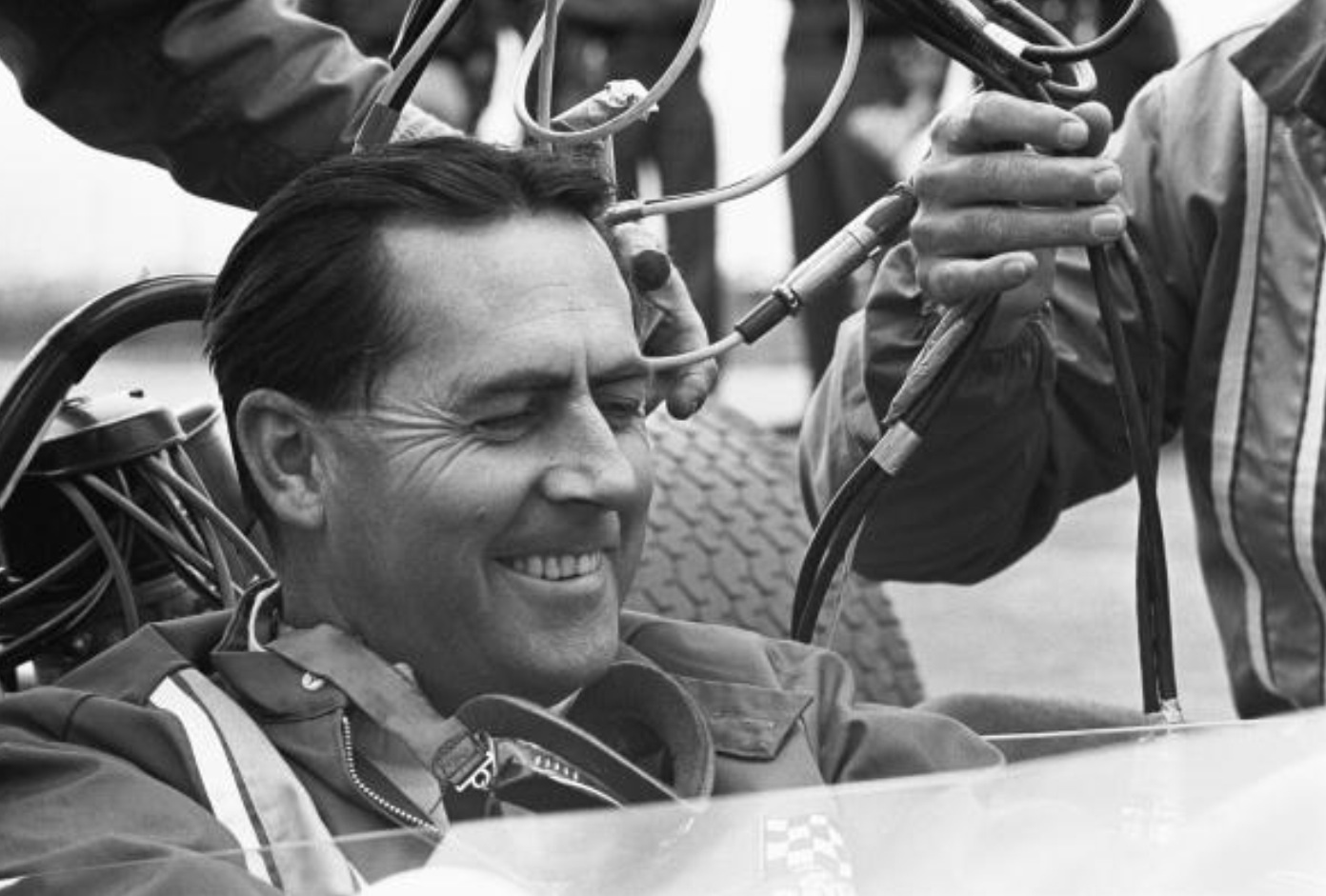
Jack Brabham looking very comfy in his Brabham BT20 Repco with ‘lightweight’ head-cam attached during practice at Watkins Glen in 1966…

When looking at this shot it’s amazing to reflect on such equipment, every man and his dog have ‘GoPros’ to capture their sporting triumphs these days whatever they might be.

What Jack was up to is interesting, and not covered in the MotorSport report of the race. ‘Grand Prix’ was released on 21 December 1966, the date of this footage is the Watkins Glen weekend of October 1/2 that year.

Given James Garner’s presence is this some late footage for the classic which would have been in the final production stages or some other sort of promotional activity?

I’m interested to know from you ‘Grand Prix’ anoraks or any of you who were there.

image

image

Brabham, Bandini and Surtees at the start. Brabham BT20 Repco, Ferrari 312 and Cooper T81 Maserati respectively (Upitis)

Jacks car is not his regular 1966 mount, the one-off 1965 BT19 chassis but rather a BT20, the 1966 F1 design raced by Denny throughout the year.

Brabham put the Repco V8 engined car on pole, a good effort as he was experimenting with both Lucas and Bosch ignition systems during practice which hampered him putting sequences of quick laps together.

He led the race convincingly until a cam follower broke, jamming the camshaft and breaking its drive chain. Jim Clark lead from that point, lap 55 in the Lotus 43 BRM. The engine of Jim’s car, BRM’s spare, was still being fitted and finessed right up to the start of the race.

It was a famous win, the H16’s only victory and ironic that the complex, heavy, powerful lump was in the back of a Lotus rather than the BRM chassis the Bourne boys had laboured so long and hard to perfect. Tony Rudd’s mob deserved the win more than Chapman’s but that’s motor racing! Cooper Maserati were second and third, Rindt in front of Surtees after the 1964 World Champs T81 tangled with Peter Arundell’s Lotus 33 Climax early in the race.

Click here for an article on the Lotus 43; https://primotipo.com/2015/02/17/jim-clark-taking-a-deep-breath-lotus-43-brm/

Clark heads to the dummy grid whilst Richie Ginther walks behin- #5 is the nose of Jack’s car

Credits…

Alvis Upitis

Tailpiece: Jack being plumbed for the camera before the off, the new World Champ has everything to smile about…

image

Finito…


Fantastic cover of Australian Motor Manual’s Yearbook Number 2, 1952…

An article inside features the Autocrat Special, a Ford flathead V8 engined racer which ace engineer/body builder Terry Cornelius advises was bought by his father, Arthur, from Ken Cox in Benalla, Victoria, and raced at Wahgunyah and other ‘outlaw’ (non CAMS certified) tracks until it was sold to a couple of fellas near Albury and never seen again.

Before Arthur took possession of the machine it had passed through the hands of the Stilo brothers and was fitted with a Holden ‘Grey’ six bolted to a Lancia four speed ‘box.

As the page above indicates the car was originally built for Jim Skinner, the chassis made by Melbourne’s Eddie Thomas of ‘Speed Shop’ fame with motive power originally a by way of a Willys Jeep engine which was later replaced by a Ford 60 V8.

See the ‘Border Morning Mail’ article and images of the 1 November 1959 dirt circuit meeting at Hume Weir below.

(C McQuillen)

I had completed the article as above but not uploaded it when Adelaide enthusiast Dean Donovan posted both the magazine cover online and some photos of cars featured in the magazine, including the ‘TS Special’, a superb Australian Special i shared garage space with at Phillip Island in March.

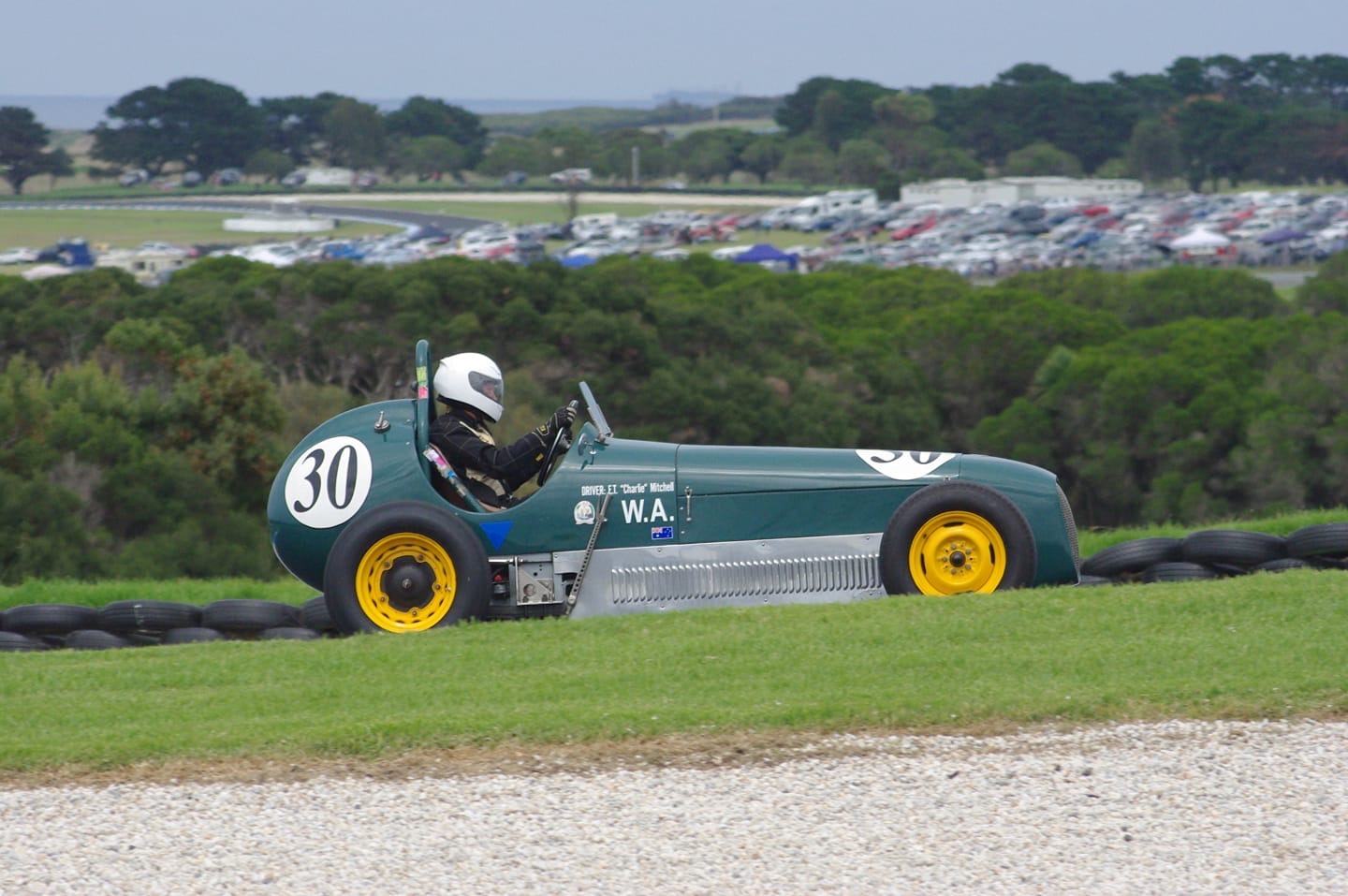
Charlie Mitchell in the TS Special GMC at Phillip Island, he is heading up the rise before the drop into MG (M Williams)

Whilst originally built by the Styles Brothers in Western Australia- Rod Styles was an instructor at the old Carlisle Technical College in Perth, for Syd Taylor and now owned by Sandgroper Charlie Mitchell- it resides in Victoria for the first time in its long life spent in the west. Pat Ryan’s bus depot houses the car with Charlie making regular trips east to race it.

TS Special with original body and Dodge powered, probably Syd Taylor at the wheel (Motor Manual)

Noted West Australian racing historian Ken Devine advises that the car was rebuilt in 1952 taking on the appearance it has now, Ken’s photo below is of Taylor on the Bunbury ‘Round The Houses’ road course in 1960. I wrote an article about Bunbury a while back;

‘Bunbury Flying 50’, Allan Tomlinson, Ferrari Tipo 500 et al…

The TS Special is now fitted with a highly modified 6 cylinder GMC truck engine- I was speaking to the car’s young engine builder at the Island, I wish I had taken notes!, it has a steel crank, roller cam and highly modified cylinder head. Mitchell and his offsider prepare the car beautifully, and Charlie, who has owned it for some years, drives it very well.

Credits…

Leon Sims, Terry Cornelius Collection, Chris McQuillen, Dean Donovan, Ken Devine, Max Williams

Finito…

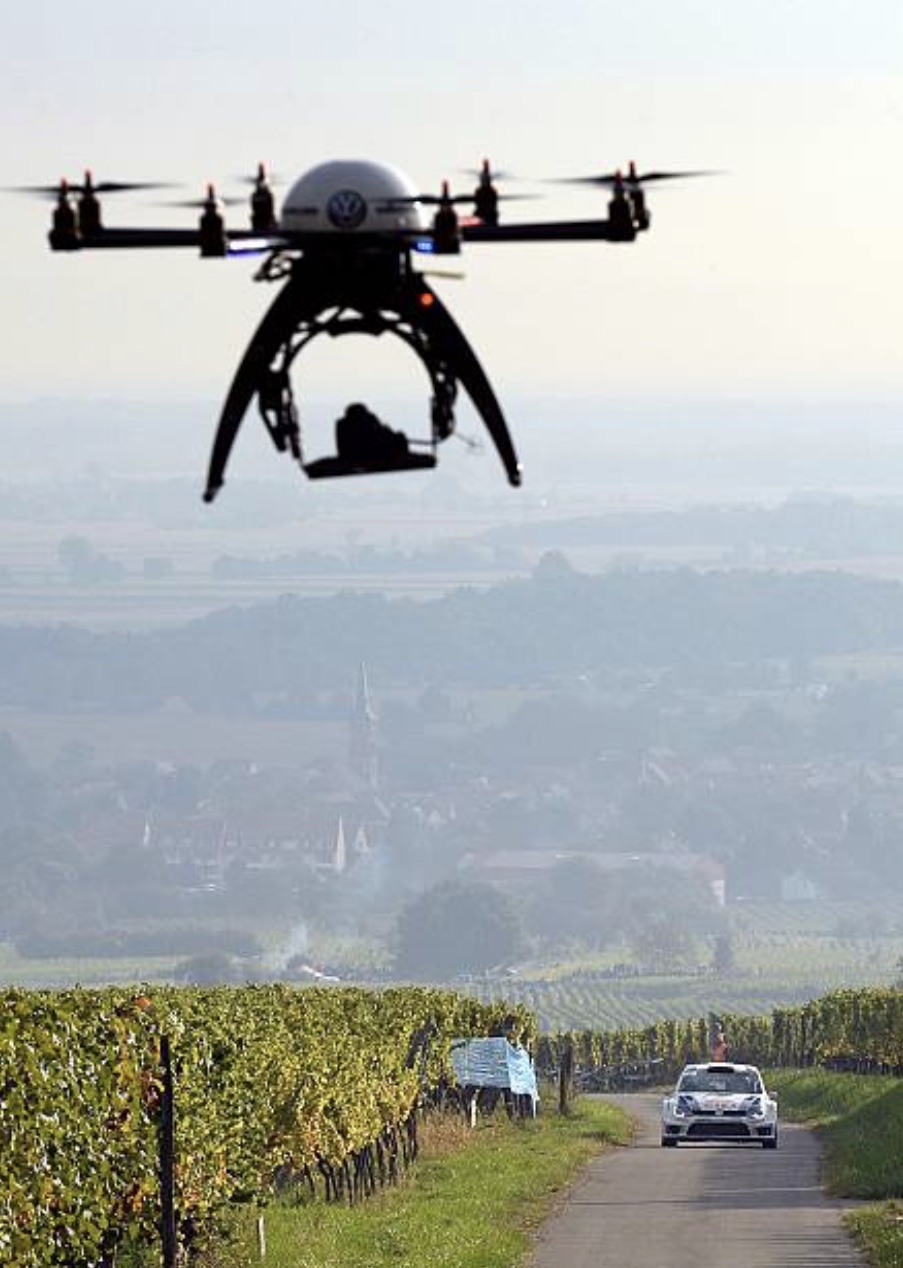
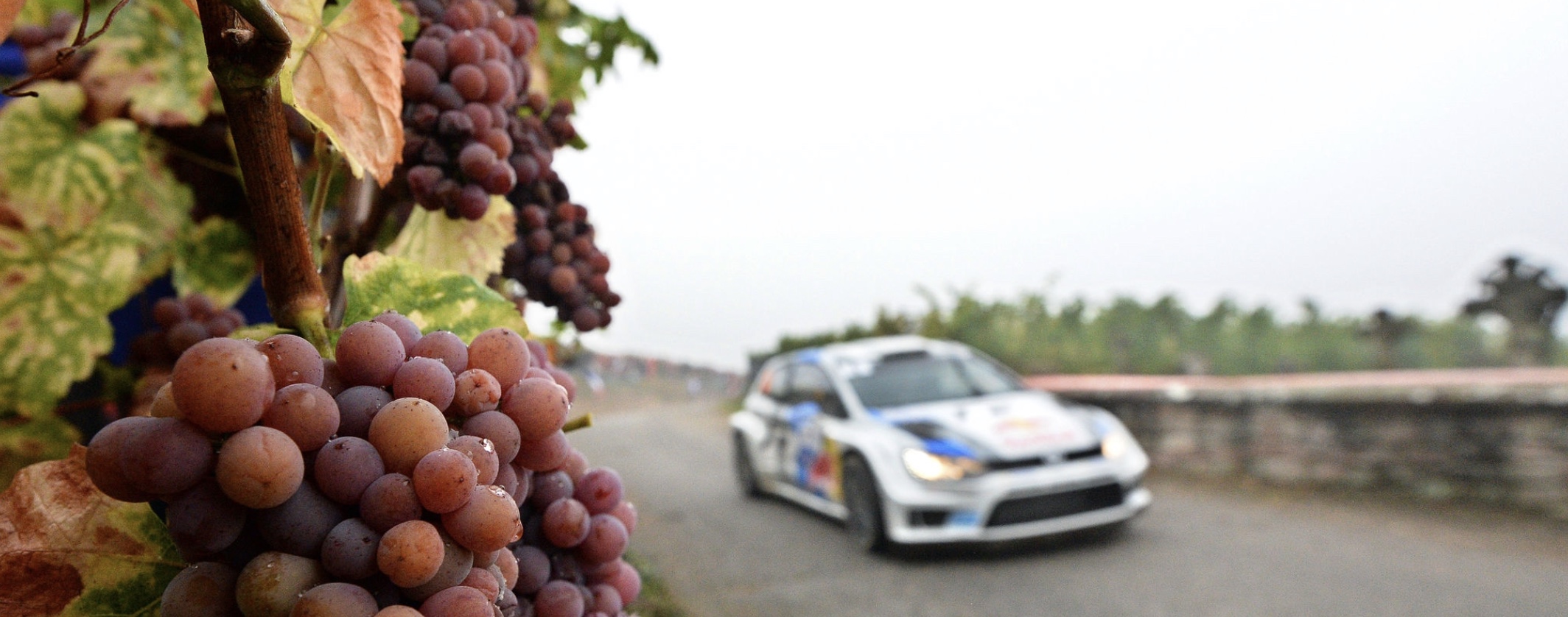
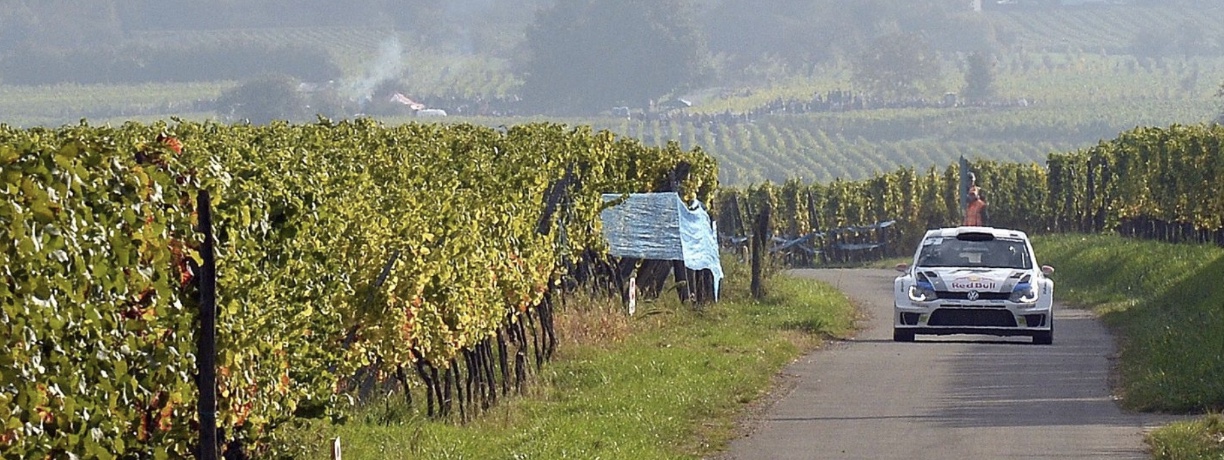
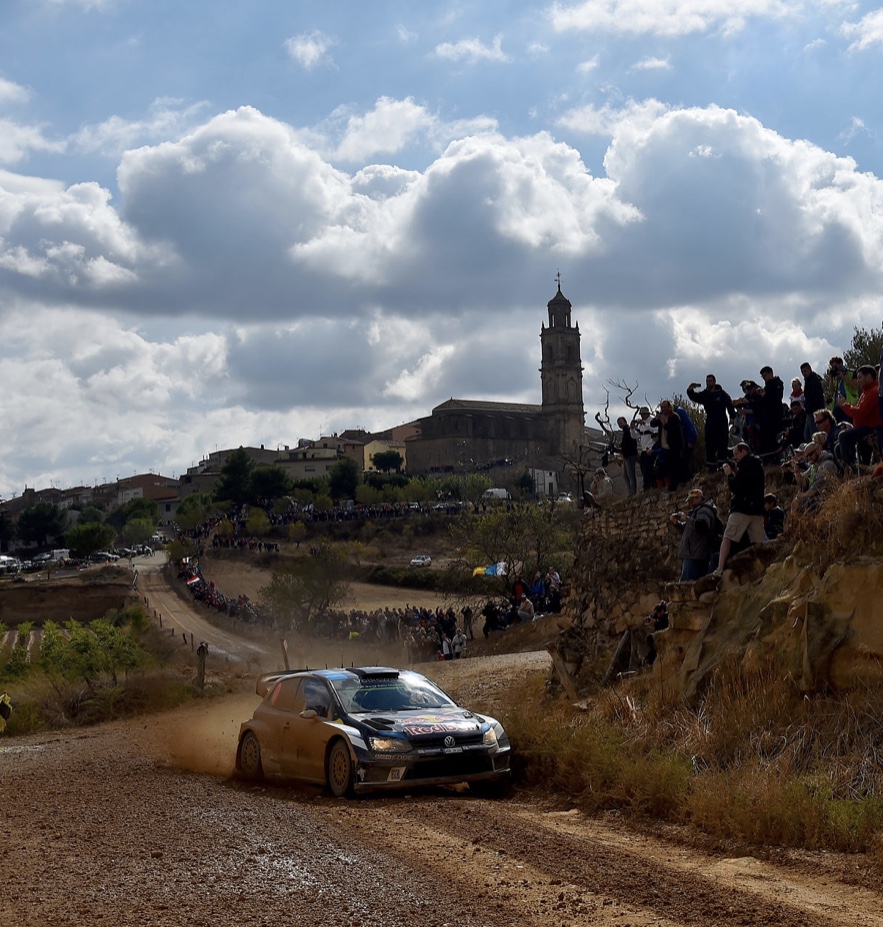
Finland’s Jari-Matti Latvala and co-driver Miikka Anttila blast through a French vineyard in their VW Polo R WRC during the October 2013 Rallye de France…

They are in the Heiligenstein, Alsace area of Eastern France.

Photographer Patrick Hertzog has brilliantly framed his shot to capture the drone in the foreround to give it that ‘Out Of This World’ factor!

Rally Australia, Coffs Harbour, November 2016, the Ogier/Julien Ingrassia Polo R WRC on day 1. The pair won the event and again in 2013, 2014 and 2015 with the Andreas Mikkelsen/Anders Jaeger winners in another Polo R WRC in 2016 (M Bettiol)

VW first contested the WRC to the ‘second generation’ of World Rally Car rules in 2013 although the Polo WRC was launched in May 2011 and tested extensively for eighteen months by Carlos Sainz, Sebastien Ogier and VW’s test and development driver Dieter Depping evolving a very quick, reliable package before it was blooded in battle.

The four wheel drive 1.6 litre, DOHC, turbocharged four cylinder engined car developed circa 318 bhp @ 6250 rpm through its regulation 33mm air restrictor finally made its competition debut at the 2013 Monte Carlo Rally where Ogier was second.

He won in Sweden, Mexico, Portugal, Sardinia, Finland, Australia, and in France- he took the title from Thierry Neuville in the event pictured in this articles opening shot. He was also victorious late in the year in Spain and Great Britain, taking the first of four titles on the trot in the car in 2013.

(P Hertzog)


Hi-res version of the opening shot- same pair above on the hop (P Hertzog)

Ogier won again in 2014 and entered 2015 with a second generation Polo R WRC, changes comprised a new VW 6 speed sequential manual ‘box with front and rear multi-plate slippery diffs, revised hydraulics system, larger rear wing and a big decrease in weight.

The cars were again dominant in 2015 and 2016, Ogier winning in both years thereby becoming one of four drivers to win four championships, the others are Juha Kankkunen, Tommi Makinen and Sebastian Loeb.

VW developed a new car to meet the changed technical regulations which commenced for 2017 but withdrew from the sport in November 2016.

The Polo R WRC CV includes winning 43 of the 53 rallies it entered and four consecutive WRC’s for drivers and manufacturers- not bad.

J-P Clatot/AFP/Getty)

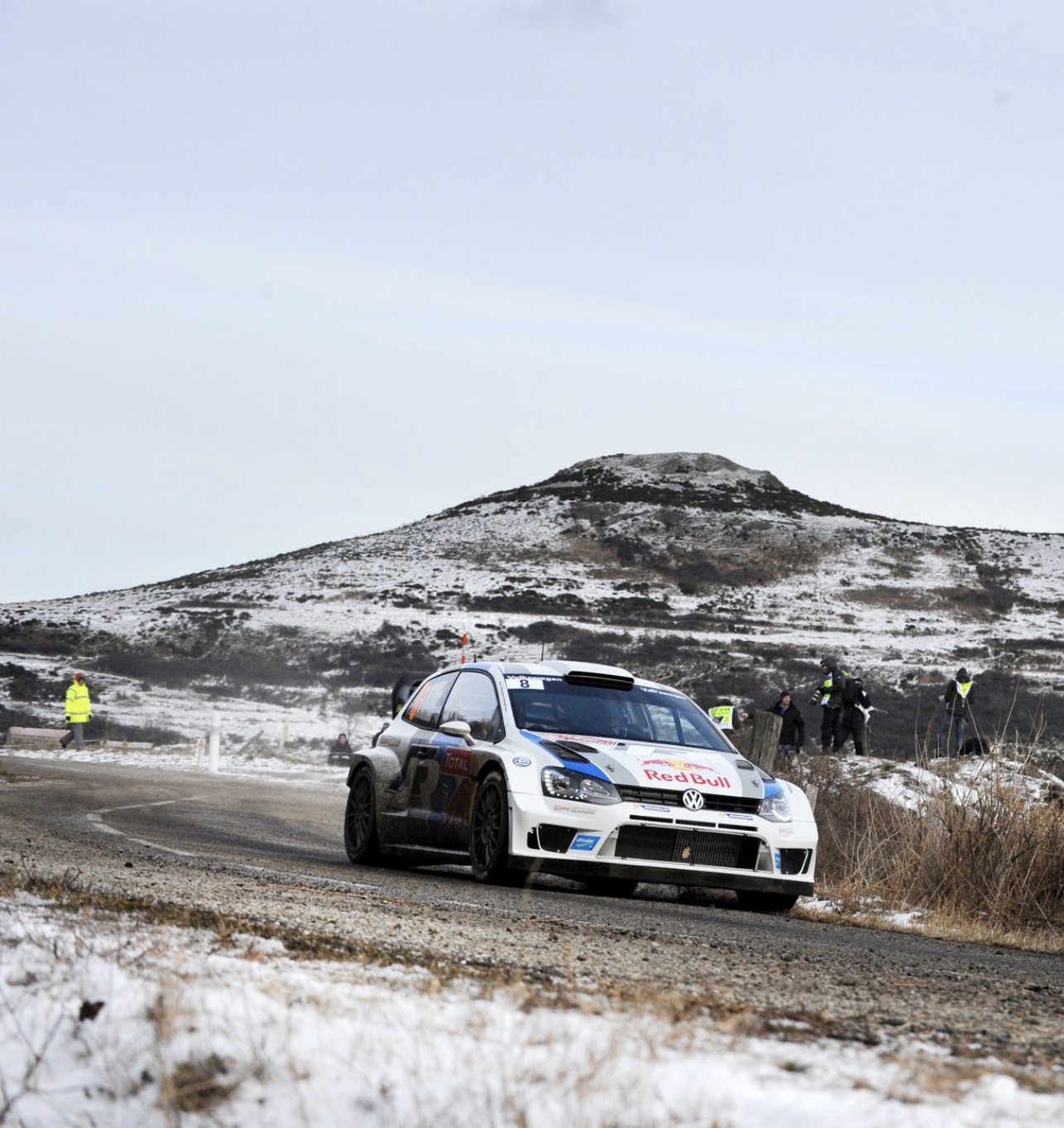
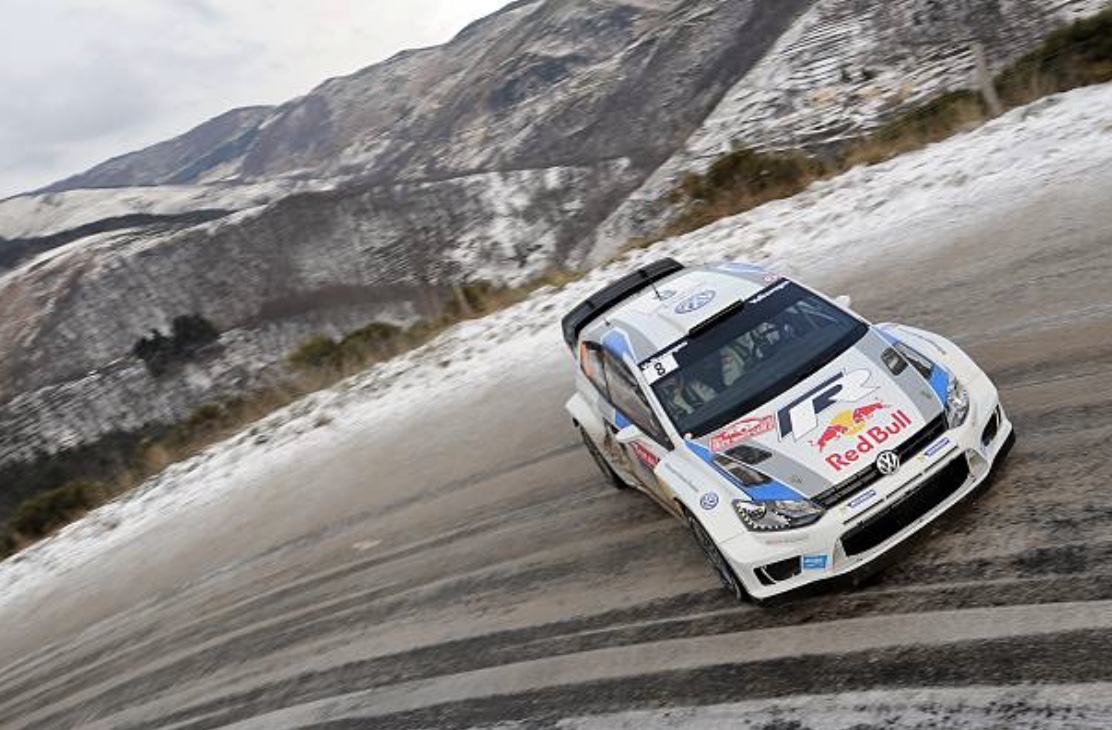
VW Polo R WRC competition debut in the 2013 Monte Carlo Rally- photos above and below.

Ogier and are Ingrassia are shown on stage 3, Col de la Fayolle, between Le Moulinon and Antraigues.

Seb Loeb/Daniel Elena won the event in a Citroen DS3 WRC by two seconds from Ogier/Ingrassia with another Citroen DS3 third crewed by the Daniel Sordo/Carlos del Barrio combination.

Ogier/Ingrassia took the first Polo WRC win a month later in Rally Sweden.

(Getty)

Credits…

Patrick Hertzog, Massimo Bettiol, Jean-Pierre Clatot

Tailpiece…

Rally Championship of Spain, Rally Catalunya, Salou, October 2016. Anders Mikkelsen and Anders Jaeger, VW Polo R WRC- the Ogier/Ingrassia combination won with Mikkelsen unplaced (M Bettiol)

Finito…

Whilst Clarence La Tourette’s superb cutaway drawing is dated 1938 I think the car shown- with intercooler and underbody oil cooler but devoid of its sidepod fuel tanks is drawn to 1941 or later specifications (Clarence La Tourette)

Harry Miller’s stunning, brilliant, innovative, Gulf Miller mid-engined, four-wheel drive Indianapolis racer…

By 1938 this prodigiously talented of engineering aesthetes greatest days of motor racing and commercial success were behind him.

He was bankrupted in 1933 and left his native California for New York where there remained plenty of opportunities for Miller to deploy his talents, the scale of which had taken on almost mythical proportions.

For those unfamiliar with the American, one of the greatest race design engineers of the twentieth century, click on this link for a brief, concise summary of Harry’s life- important context for this article. http://milleroffy.com/Racing%20History.htm

Lee Oldfield with his self constructed Marmon engined car at Indy in 1937. Said to be ‘rough or agricultural’ this car is worthy of an article on its own given its historical Indy significance (IMS)

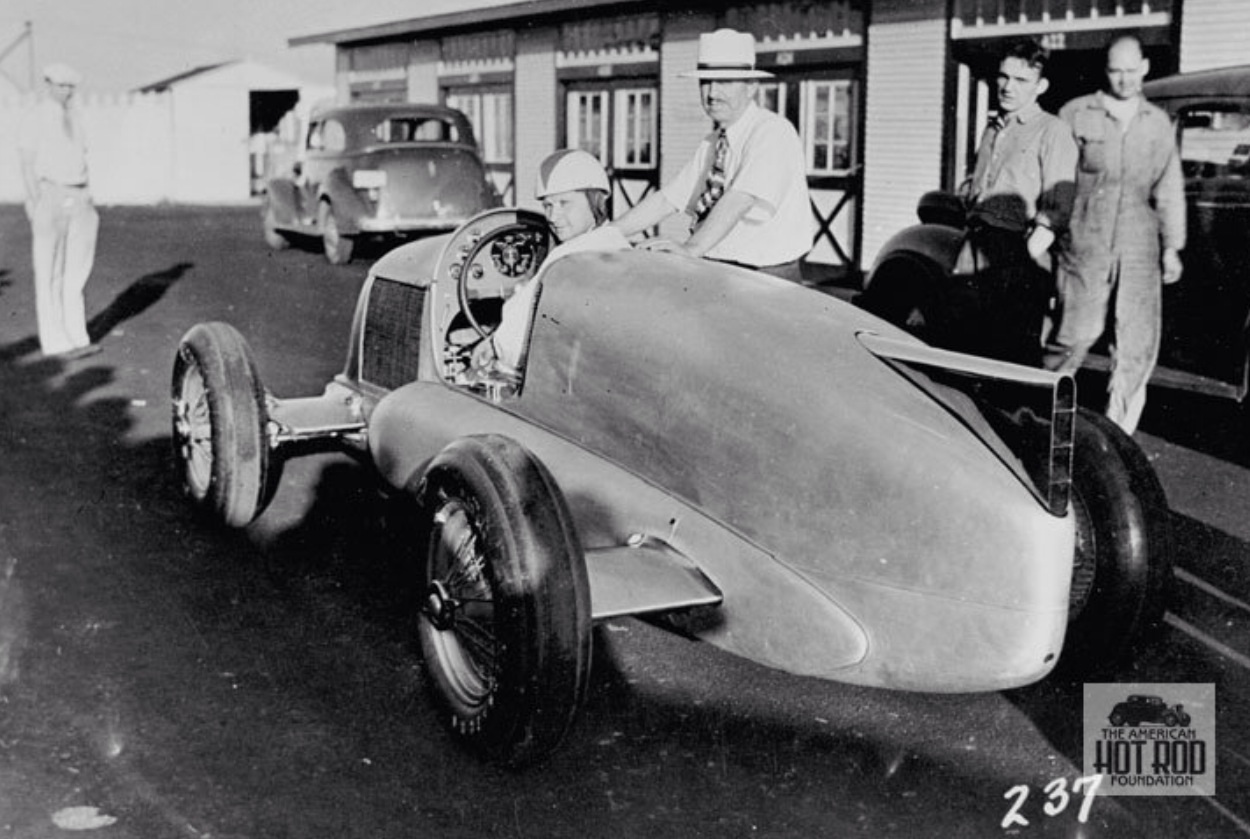
Miller was not the first to build and race a mid-engined machine at Indianapolis, that honour went to Lee Oldfield who built and attempted to qualify a 6 litre Marmon V16 engined, self constructed car in 1937. It featured all independent suspension and inboard mounted drum brakes in its specification.

Oldfield, no relation to Barney, a racer/engineer/businessman was entered by the Duesenberg brothers in one of their cars, a Mason, in 1912, the car failed to qualify after engine problems. He later found fame in aviation as the founder of Labeco, a company formed to work on aviation engines, the firm still exists today as Renk Labeco. The Oldfield Marmon is beyond the scope of this piece, an interesting story for another time perhaps.

But we are getting ahead of ourselves, there was a radical front engined rear drive four cylinder Miller Gulf before the even more edgy mid-engined six cylinder Miller Gulf.

In 1937 Ira Vail, years before Miller’s first client for a straight-8 engine, commissioned him to design and build two new four-cylinder cars to compete against the pre-World War 1 technology which still prevailed at Indy.

Shortly after his design process had commenced- Harry had a design ‘in stock’- he had Everett Stevenson draw a lightweight twin-cam aluminium, two valve four cylinder engine of 255 cid circa 1933, which, with a 0.125 inch overbore was teased to 270 CID. The engines used Coffman cartridge style starters typical of the type used on aircraft where an exploding blank shell drove a piston, which in turn engaged a screw thread to turn the engine over.

The Gulf Miller four had plenty of Miller’s advanced thinking, with a split crankcase and wet cylinder liners, but was an update of a design he had worked up prior to his 1933 bankruptcy

Miller, by then 61 years of age and suffering from diabetes launched into the last great couple of designs of his career.

From 1938 the Indy 500 was to be run under the Grand Prix formula laid down by the Association Internationale des Automobile Clubs Reconnus (AIACR, the forerunner of the FIA) specifying engine limits of 3 litres supercharged and 4.5 litres unsupercharged or 183.06 and 274.59 cubic inches of displacement.

By definition this marked the return of single-seat racers which removed the inherent danger of riding mechanics. Additionally, any type of fuel could be used, the supply of which was unlimited, this encouraged the use of supercharged engines fed by alcohol fuel.

The 95 inch wheelbase chassis of Ira’s cars was of the ladder or girder type of the period, but different in that it used deep, rolled steel side members which were intended to be very stiff.

‘Teardrop’ side fuel tanks were fitted to either side of the car to locate the fuel mass centrally, additionally they were interconnected so that the cars weight distribution would remain in equilibrium regardless of fuel load.

The engine and clutch were at the front of the car, the four speed transaxle, which used Cord 810 gearsets and final drive was at the rear.

The suspension was independent on all four wheels, a refinement of the Miller-Ford type he used in 1935. The hydraulic shocks were driver adjustable. In another Miller first the car was fitted with disc brakes on all four wheels. Not of the type we know mind you but rather a design based on an entirely different principle, that of the disc clutch and its pressure plate.

Further innovation extended to the radiators which resisted a traditional core but rather comprised a ‘trellis type’ of arrangement of chromed plated copper pipe tubing which was deployed around the cars nose and sides.

At this point, as the construction of the two cars was progressing, but it is not clear exactly when in early 1938, the direction of the project changed completely.

Harry Miller’s son Ted told Griff Borgeson, the famous journalist researching one of his books, that Harry visited Colonel Drake of Gulf Oil a couple of years before Vail’s project was acquired by Gulf.

Borgeson ‘The story goes that the construction of these two cars was just getting nicely underway when the son of Gulf’s board chairman…dropped in at Miller’s shop, and the rest is history.’

’Ira Vail was bought out and the entire project was moved to the headquarters of Gulf R&D at Harmarville, a suburb of Pittsburgh. As work continued on the fours, a program was launched immediately for the design and construction of a team of much more ambitious four-wheel-drive, rear engine Gulf sixes. They too, would run exclusively on 81 octane Gulf No Nox gas.’

The first four cylinder front-engined Miller-Gulfs (above) had the radiator tubing on the nose of the car ‘presenting an avant garde streamlined visage’ wrote Borgeson. ‘The Gulf cars used Miller-Ford type suspension as well as disc brakes, which at least were beautifully ornamental’ (Borgeson)

Before dealing with the mid-engined Gulf Millers sixes lets look at how the fours fared at Indy in 1938.

When the cars were launched to the press in April 1937 Miller predicted speeds of 126 mph, 2 mph faster than the current Indy record. In early tests at Langhorne the engines overheated and the brittle radiator tubing broke, by the time the cars appeared at Indy the radiators were small square conventional fittings mounted either side of the cars front body section.

Front engined Gulf four with ‘the intermediate type external radiator core. This radiator development also proved to be inadequate’, car very high. Driver is Bill Winn, note IFS suspension fairings, date and circuit not recorded (Borgeson)

1924 Indy winner LL ‘Slim’ Corum had been away from racing for three years but was engaged by Miller as a mechanic to assist driver Billy Winn with the new design. During early Indy tests on 21 April 1938 Winn escaped injury when the car stopped in the pit area with an engine ablaze.

Winn tried both cars on the last day of time trials but abandoned both ten mile runs due to lack of speed, the cars were two of thirteen non-qualifiers that year- poor Bill Winn died three months later during the ‘Governors Sweepstakes’ at the Illinois State Fairgrounds in Springfield.

The Gulf fours story from 1939 is told at the end of this article.

One of the Millers in 1938. Dumpy little jigger- note the IFS, and aero section side pontoon tanks which made a whole lot of sense in terms of weight distribution, from a safety perspective not so much. Whenever I research articles on Speedway Racing of the day it reminds me just how many fellas died on the boards, dirt and bricks (IMS)

Miller’s response to the opportunities of the new rules, with Gulf financial muscle was to embark on design and construction of a mid-engined, four-wheel drive, all-independent suspension car…

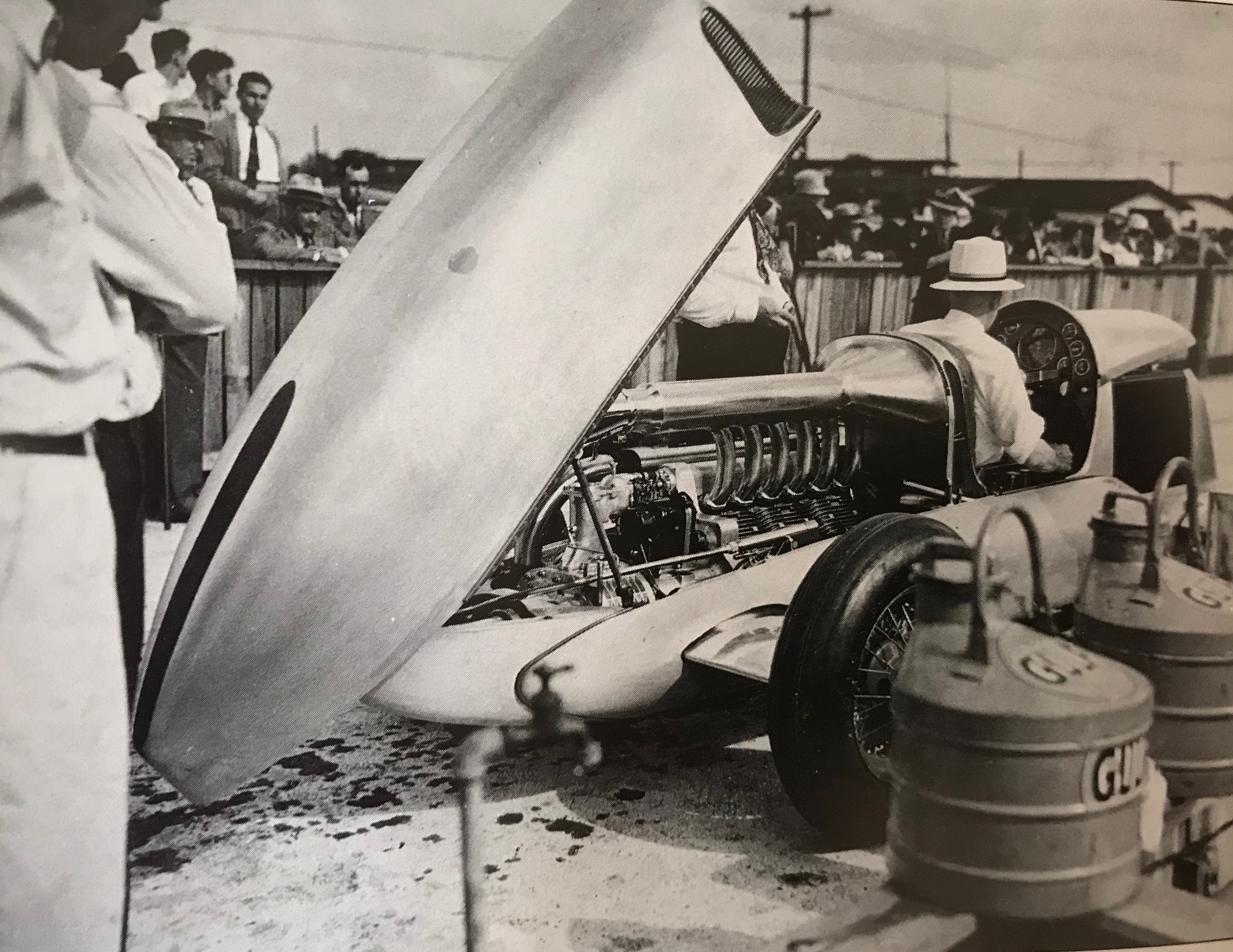
To this chassis he fitted a canted, short-stroke- said to be the very first oversquare engine, with a 3 inch bore and 3.125 inch stroke, supercharged, 3-litre, in-line six cylinder engine, a type he had not designed before.

In typical Miller style the engine was cast as one piece in aluminium- a finned cylinder block casting with integral head with housings for the twin overhead camshafts and dry sump made of magnesium. Fed by two carburettors, the supercharger used pressures of 18 pounds per square inch.

The fuel mass was located centrally in side fuel tanks and the car was fitted with disc brakes on all four wheels, as per the Ira Vail car.

Lets remember the year is 1938 folks, it was a truly avant-garde, complex, ambitious motorcar which makes the 1938 Auto Union Type D look mundane in terms of specification!

Harry’s cars were generally exquisite to look at in terms of their individual componentry and the sum of their parts- the completed machine, contrary to that normal state, was the ‘fugly-sister’ of the Miller litter, not that ugliness is necessarily a barrier to on-track success.

If the pre-war Auto Unions set the mid-engined paradigm- they did in that Coopers followed their lead post-war, John Cooper’s first cars featured the AU cocktail of ladder frame chassis, mid-mounted engine with gearbox behind, all independent suspension and drum brakes all around- Harry Miller, predictably, took an original approach.

Focus on the top drawing as to how things work. Drive goes forward to the gearbox at the front of the car via the lower driveshaft and to the front wheels- and to the rear along the top ‘shaft. The rear diff is aft of the engine with the supercharger behind it. The tube from the ‘charger attaches to the intercooler. You can see the top leaf spring of the rear suspension. Fuel tanks drawn are early pontoons (JF Drake)

The chassis was the ladder or girder type of the period, but different in that it used deep, rolled steel side members which were intended to be very stiff. The suspension was independent, a refinement of the Miller-Ford type.

The Miller 3 litre engines flywheel and clutch faced the driver, rather than the rear of the car with the four speed manual gearbox mounted at the front of the car aft of the radiator and oil tank. The large supercharger was located at the very rear of the machine rather than more directly connected to the six-cylinder DOHC, 2 valve motor. The full length ‘majestic pipe-organ’ full length exhaust was replaced from 1939 with short ‘machine gun’ stub pipes.

As the engine was developed to produce more power- and given the Gulf mandated use of its ‘pump petrol’ for marketing purposes- a large intercooler was fitted to the left engine cover from 1939.

‘Teardrop’ side fuel tanks were fitted to both sides of the car to locate the fuel mass centrally, as was the case with the four cylinder car. To shelter the driver the bodywork was high, the seating position similarly high to clear the driveshafts which ran fore and aft.

The car was heavy for all of the obvious reasons in terms of its 4WD componentry relative to a conventional two wheel driven car.

‘Continuing his experiments with engine cooling, he tried a new type of surface radiator on each side of the little cabin which occupied the place of an engine hood.’

‘There was a distinct aircraft feel to the car as a whole, which may have been a clue to Miller’s longer-range interests. The car was rushed to some semblance of completion in time to command the fascinated attention of the automotive world on the occasion of the Indy 500 in 1938’ Borgeson wrote.

Ralph Hepburn, Indy 1938, love the original ‘orchestral’ exhaust system, I wonder how effective it was. Rear diff is aft of the engine with supercharged behind it- engine fed by 2 carbs (IMS)

The car was not finished with sufficient time to be adequately tested and developed and therefore somewhat predictably, both drivers, George Bailey and Ralph Hepburn, failed to qualify due to cooling and fuel delivery problems for the 1938 Indy race.

The 1938 rule changes adopted, that is their liberalisation, brought forth other exotic cars in addition to Harry’s- Louis Meyer’s Winfield supercharged Maserati 6, Jimmy Snyder’s and Ron Householder’s Sparks Little 6’s being examples.

The race had a silver lining for Miller personally though- Floyd Roberts won the event in an utterly conventional four-cylinder Miller 270 beating Wilbur Shaw, Shaw Offy, 3 laps behind Roberts, and Chet Miller aboard a Summers Offy to the flag!

Floyd Roberts, winner of Indy 1938 in a conventional 4 cylinder DOHC Miller 270 (IMS)

Miller convinced Gulf Oil to stay the course and refined the car, three were entered for the 1939 race, they were driven by George Barringer, Zeke Meyer and George Bailey.

The car was radically redesigned, the Rootes blower replaced by a Miller centrifugal supercharger with an impeller which had working surfaces on both sides instead of only one. It delivered double the charge to a beautiful new alloy intercooler.

New cylinder heads with individual inlet ports were made and the distinctive exhaust extractor system was replaced with long, curved, individual vertical pipes. A conventional radiator core was used as well as bodywork changes.

Gulf still didn’t assist the competitiveness of the package by insisting upon the use of their street petrol- the six-cylinder engines produced circa 245hp whilst Miller’s old DOHC fours – now in the hands of Fred Offenhauser, who had acquired the commercial rights to the design, produced 300hp using the usual Indy alcohol-based cocktail fuel.

The team were better prepared than the year before though, MotorSport reported that ‘Miller…has been ready in good time with his cars, one of which was the first to try out the new asphalt paving on the back stretch. George Bailey was the driver, and he was timed to do 118 mph, at which speed he reported that the throttle was only half depressed. Ralph Hepburn has been out and about in one of the cars.’

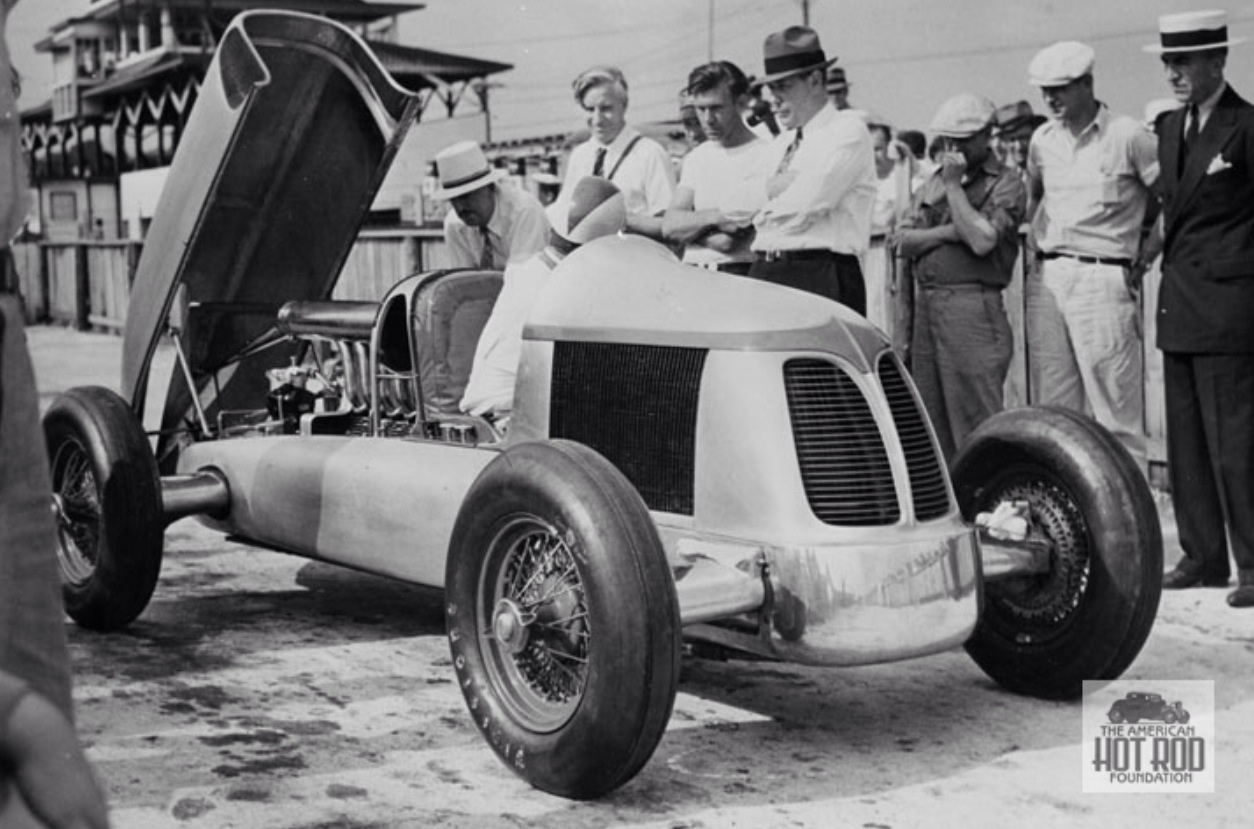
Barringer, 1939 surrounded by Gulf Oil officials, nice intercooler detail, note heat shield between ‘cooler and stub exhausts (unattributed)


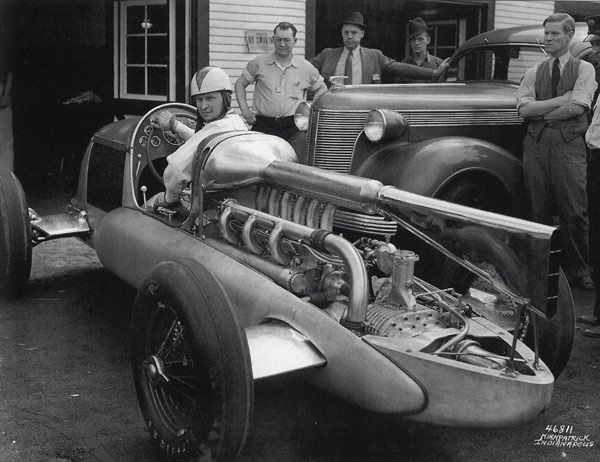
George Bailey at Indy in 1939, great shot of the aero section pontoon fuel tanks, intercooler added from that year and stub exhausts (IMS)

During qualifying on 19 May Barringer’s car dropped a cylinder, he was out of the field. He later qualified the Bill White Spl Offy fifteenth, finishing sixth.

A day later Johnny Seymour hit the turn 4 wall during practice, the car burst into flames and was destroyed, Seymour sustained severe burns but lived. George Bailey qualified his machine, and as a result became the driver of the first mid-engined car to qualify for Indy. The frightening accident to Seymour led to Zeke Meyer’s decision to withdraw from the race. Bailey qualified an encouraging eighth, but lasted only 47 laps, retiring with valve failure.

Things went from bad to worse the following year, 1940, when Harry returned with three rebuilt Gulf-Millers ‘in tip-top shape’.

George Bailey wasn’t so lucky this time, his Miller was involved in a similar accident to Seymour’s the year before. On 7 May Bailey was practicing the car, initially he completed 15 laps before returning to the pits.

After some adjustments he went back out and by the end of the fourth lap was up to 128.5 mph, as he entered turn 2 he either got up into the marbles or his engine seized, locking all four wheels.

Whatever the cause, the car started to slide sideways, as he fought to correct the car the Miller shot into the inside rail, his left-side fuel tank was then punctured and exploded. The unfolding disaster worsened when the car spun and the right side tank was hit and it too exploded.

Drenched in fuel and alight, the plucky, terrified driver jumped out of the car and ran towards speedway photographer Eddie Hoff who did his best to beat out the flames. The poor man fell three times on his journey, he had a fractured hip and leg injuries. The end to this grisly accident was his death 45 minutes later from third-degree burns.

Bailey, born in Cleveland in 1902, parlayed a job as a test driver with the Hudson Motor Company eventually to competing in the Indy 500- he raced five times without finishing, his best result was twelfth in a Barbasol in 1938 after missing the qualifying cut in his Miller.

The two other Millers, upon the ‘suggestion’ of the officials to the team were withdrawn from the race.

One of the cars as substantially modified for the 1941 race. Still retains the Miller drivetrain and general layout ‘but had drastically reduced frames, bodies and suspensions- all for the worse other than safety’. Fuel contained within chassis frame rails- oil cooler under the car removed after 1941 due to its vulnerability (vanderbiltcupraces.com)

For the 1941 Indy 500 the cars were further modified as a result of rule changes which banned the side tanks, major factors in the Barringer and Bailey accidents.

The two surviving cars now carried boxed steel side sections in which the fuel tanks were housed and cushioned- the bodies were again reworked.

MotorSport in an article (published in July 1941 about the annual classic) its reporter writing in May said that ‘New or redesigned cars which will attract the interest of the railbirds this year are led by the four-wheel drive, rear motor ‘guinea pigs’ which the old master Harry Miller designed three years ago, but have just been brought to a point of perfection.’

‘Now handled by the expert mechanic, Eddie Offutt, the cars were given exhaustive tests in Utah this summer, with one of them chalking up an official 500 mile record (AIACR International Class D) average of better than 143 mph.’

In April 1941 the MotorSport reporter observed that ‘Offutt had…been experimenting with (the cars) during the last two years earned its spurs on the salt beds of Bonneville, Utah, when it ran the full 500 miles, under official sanction and timing, at an average of 143 mph.’

‘The late Floyd Roberts set the existing 500 mile record at Indianapolis in 1938 when he completed the distance at an average of 172 mph, and although Indianapolis is a far more difficult course than the ring-around-the rosy- course over which the Offutt car ran, a 143 mph car is a definite challenger, particularly when it has a sister car just as capable.’

The point to be taken from the above is that the cars were fast- and reliable it seemed.

With Barringer and Al Miller (no relation to Harry) driving, the cars were fourteenth and fifteenth on the grid. Both crews were optimistic about their chances with Barringer having a qualifying speed of over 122 mph, but things were again to take a turn for the worse, the Gulf Millers and flames seemed to be an ongoing curse.

(E Hitze)

‘There seemed to be a strange foreboding at the Brickyard early in the day of the 1941 500. Maybe it was due to the cold drizzle that met incoming fans the night before or maybe it was the national worry about Hitler’s action in Europe.’

‘In any case, just as lines formed at the ticket booths, a huge fire swept through the garages. Apparently fumes from fuel in George Barringer’s car were ignited by a welding torch being used in the next stall. Fire trucks were unable to access the inferno quickly because of the huge crowds, and half of one of the two garage structures was completely destroyed.’

The event, down two cars, started an hour late, and Mauri Rose eventually won the show’ wrote Terry Reed.

Barringers cars remains after the 1941 race day dawn fire. At this point only 1 of the 4 cars built remained- Al Miller’s ’41 car. Shot does show the substantial bulkhead in front of the driver (IMS)

In the Miller garage, at about 3 am Barringer was filling his cars fuel tanks when the fumes of the fuel were ignited by a welder in an adjacent pit-Barringer’s was destroyed.

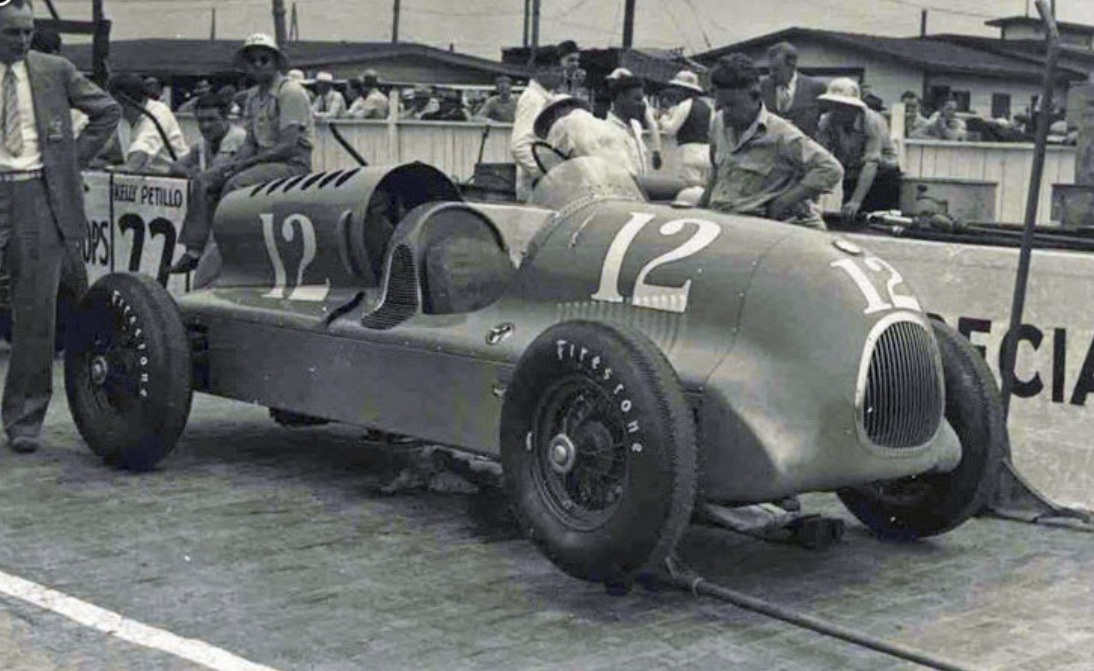
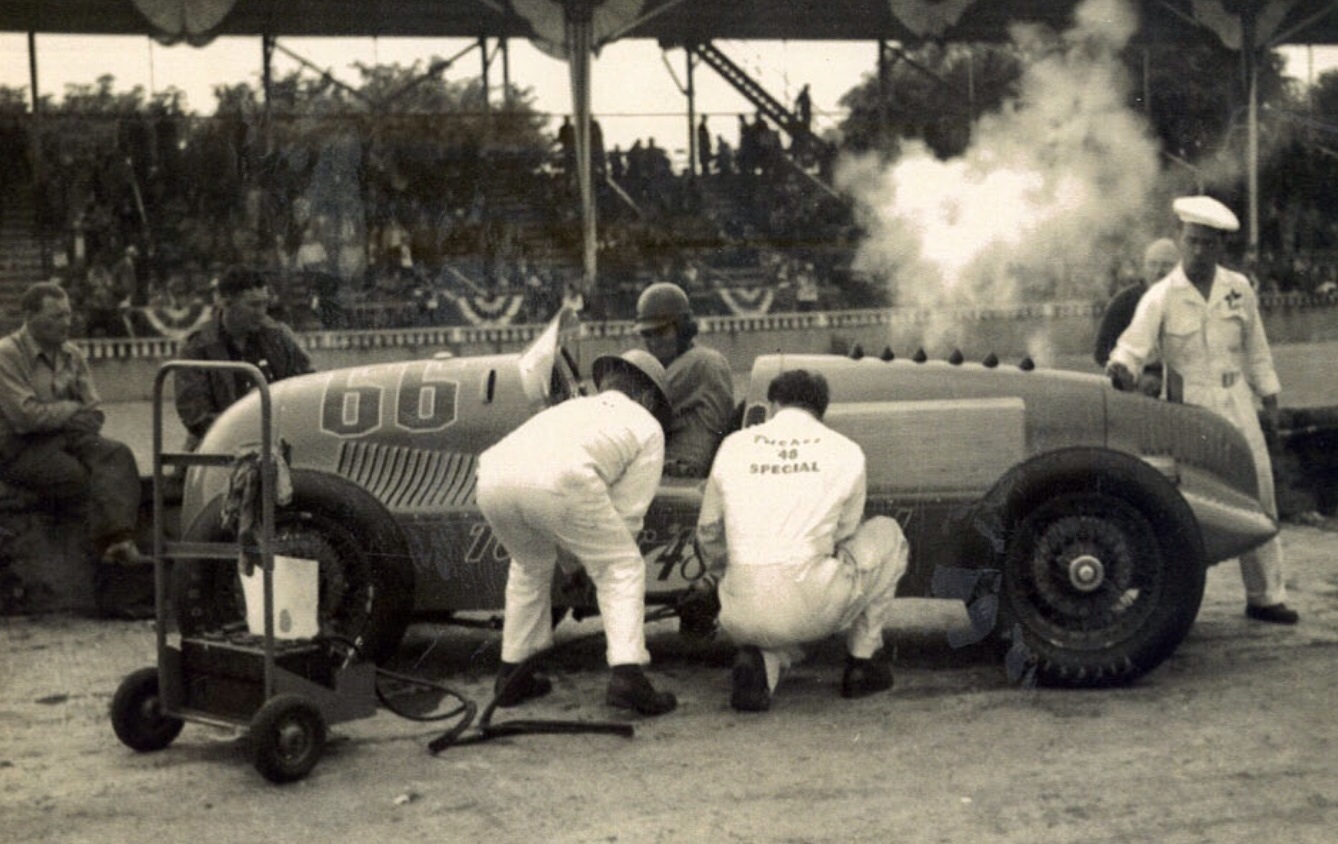
Al Miller’s No.12 car was salvaged by Barringer and helped onto the grid, but after multiple ignition problems its engine either seized, or its transmission failed after a mere 22 laps.

With that, Gulf tired of the partnership with Miller, a great deal of time, effort and money had been spent for little in the way of commercial return. There was also a war to be fought of course.

In a desperately sad, final stage of his life, Harry separated from his wife, moved to Indianapolis and then on to Detroit where he died of a heart attack whilst living in very modest circumstances on 3 May 1943 aged 65.

Al Miller’s car in the pits Indy 1941, 28th after transmission failure on lap 22 (IMS)

The post-conflict postscript of these trail-blazing amazing racing cars were Indy performances in 1946, ’47 and ’48…

By the start of the War only one of the four cars built still existed. One each were destroyed in Indy accidents in 1939 and 1940. George Barringer’s became a corn-chip in the Indy garage fire on the dawn of the 1941 race which left the car raced that year by Al Miller as the only remaining Miller RE 4WD chassis, it was owned by Gulf Oil.

During the 1939-45 conflict George Barringer and his family lived in a home in Indianapolis, Barringer worked nearby in a war related machinery plant.

Born in 1906 in Wichita Falls, Texas, his father was a blacksmith, as a young kid George picked up lots of mechanical skills.

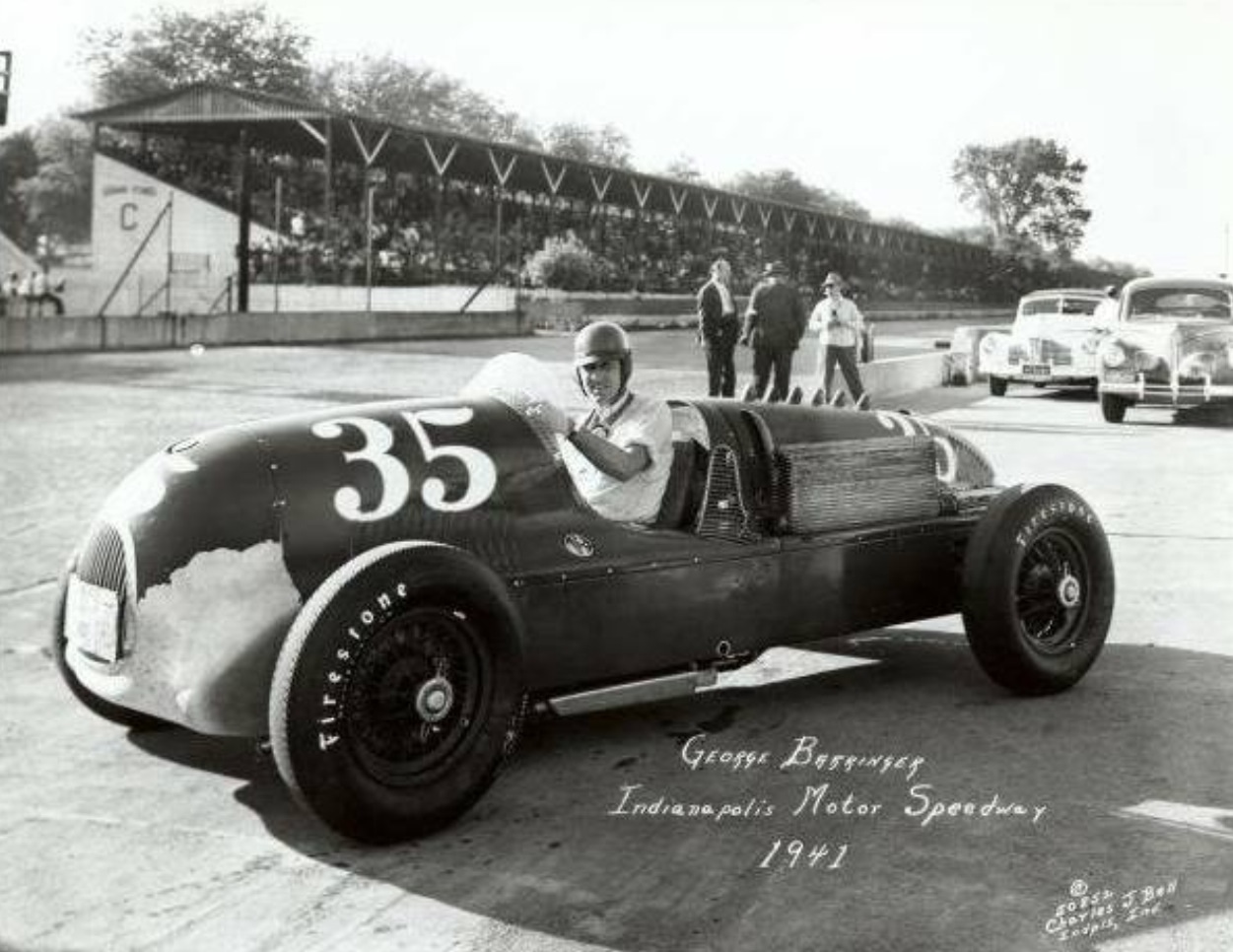
He started racing in Texas circa 1925, little is known about his early racing albeit he appears in newspapers in 1928 as an owner in a Texas AAA race and was a successful driver in what were probably outlaw races. By 1933 he had enough experience to win an Indy ride, his finishes include sixth in 1939 and eighth in 1936. He first drove for Miller in 1941 as we have covered.

His son, Bill Barringer recalled an amazing phone call during the War’s latter stages- ‘In the winter of 1945 Dad got an evening phone call at home, he seemed very excited and after hanging up said to Mom “We just bought a racecar”. Mom was not too happy!’

’The next evening in the wee hours of the morning, during a snowstorm, a truck arrived from Gulf headquarters in Pittsburgh with the un-numbered last remaining Gulf Miller RE 4WD- the driver only said “Heres your racecar”.

Soon after they towed it to George’s garage in Indianapolis.

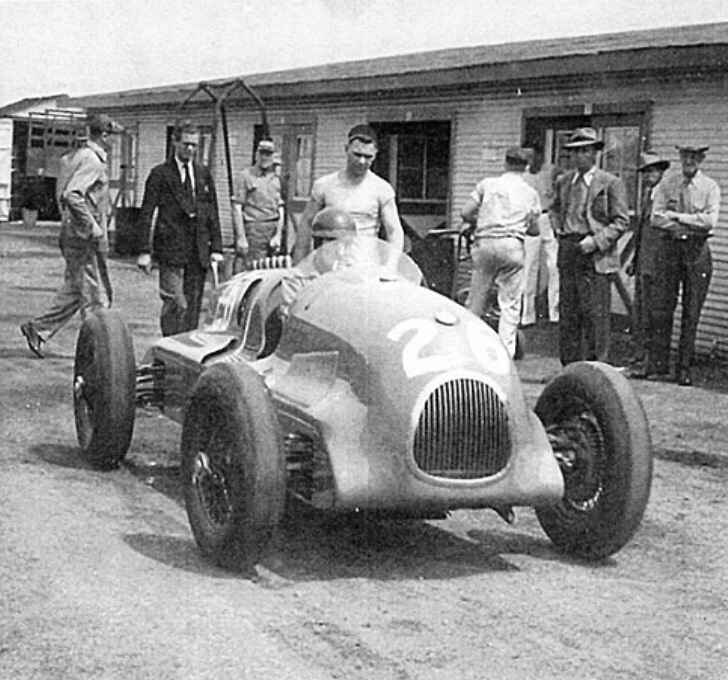
Barringer aboard his Miller in the garage area, mid May 1946 Indy (IMS)


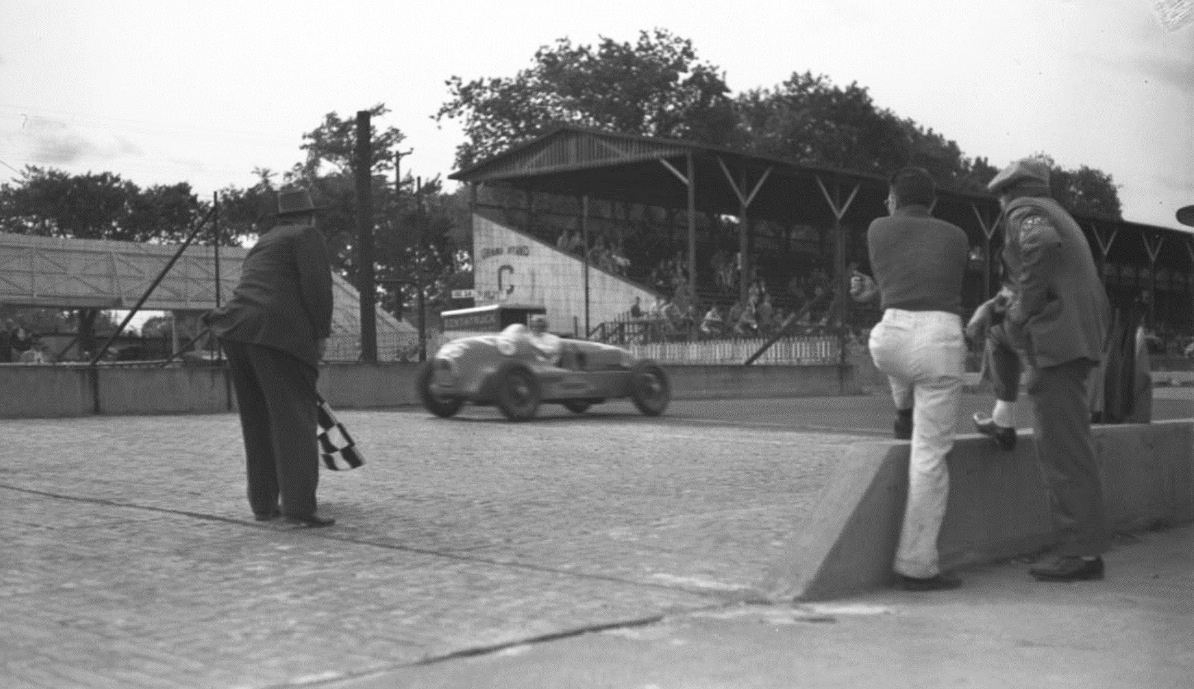
Barringer qualifying in 1946, too good an evocative photo not to use (IMS)


Barringer, Indy 1946 (IMS)

Barringer, who did far more miles in the cars than anyone else must have been a ‘true-believer’ in the concept.

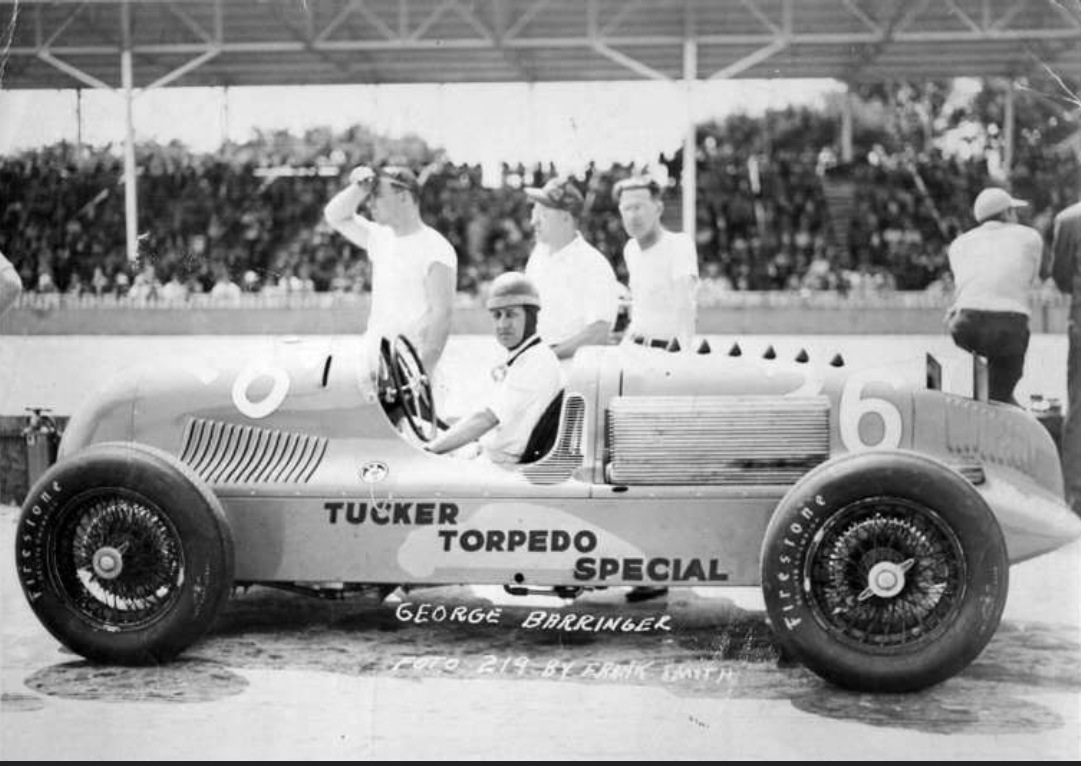
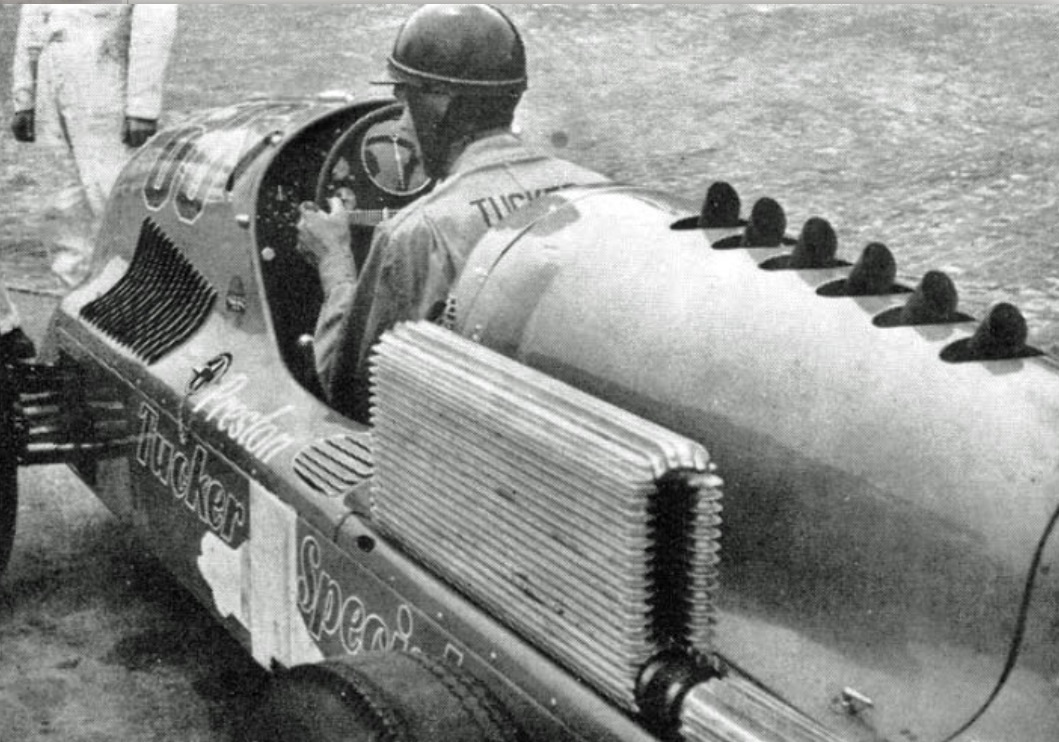
In the Preston Tucker sponsored Miller he finished twenty-fourth in the 1946 Indy having retired on lap 27 with a broken gear from grid slot 24.

George Barringer only raced on one other occasion in 1946, at the ill-fated Lakewood Speedway 100 miler in Atlanta on Labor Day.

There, driving an ancient two-man car that Wilbur Shaw used to win the 1937 Indy, he, together with 1946 Indy winner George Robson collided with the slower car of Billy Devore- they simply did not see Devore through the thick dust which characterised the track. The awful accident cost Barringer and Robson their lives- one which could have been averted had Devore been black-flagged for going too slowly or had the dust been controlled.

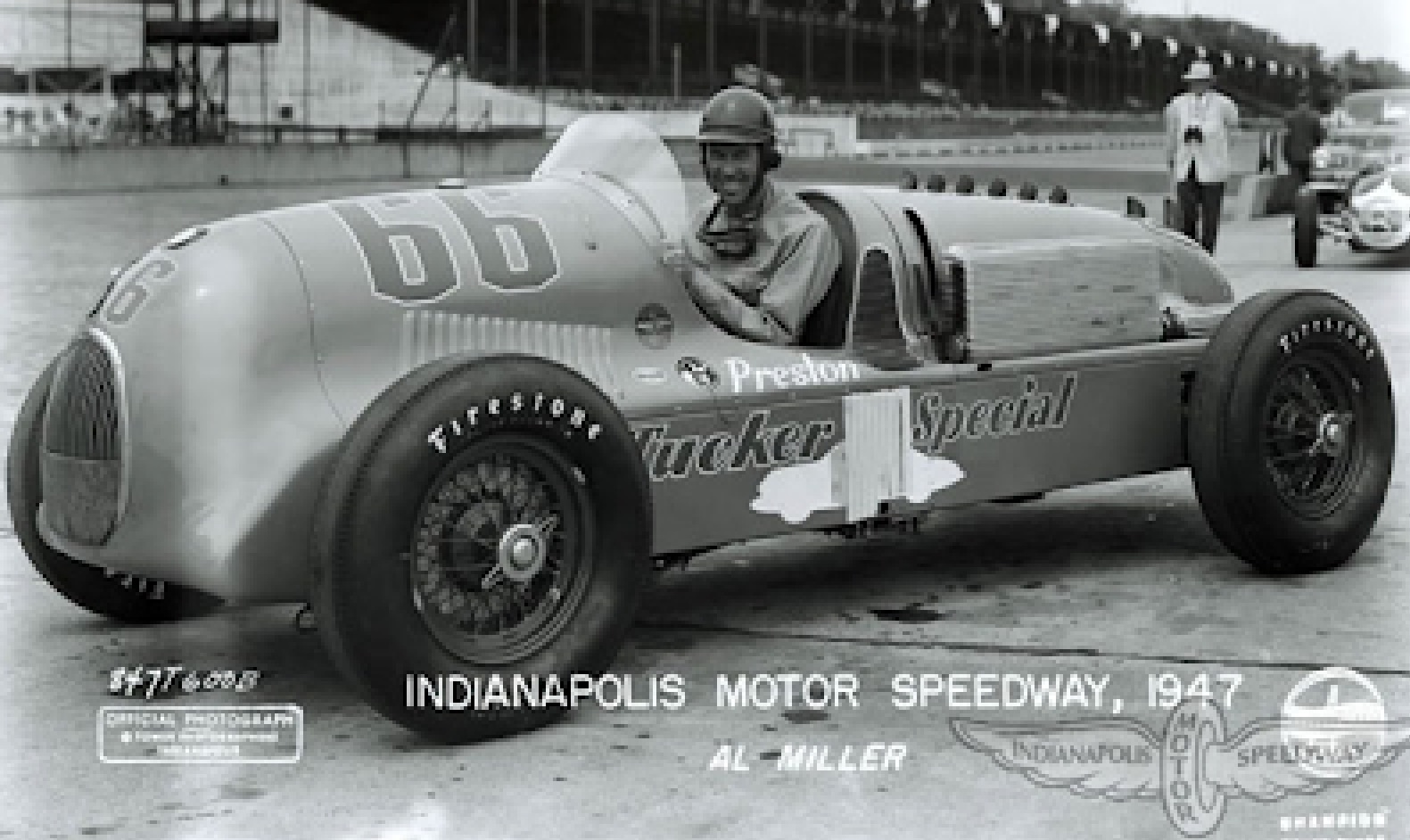
With continued sponsorship from Tucker, Barringer’s wife ran the car for Al Miller in 1947, he qualified nineteenth and DNF’d with magneto failure.

Immediately after the race Velma Barringer sold the car to Tucker who ran Miller again in 1948, that year he missed the qualifying cut.

In 1951 the Preston Tucker owned car developed an incurable crack in the last remaining block and was off to the Indy Motor Museum, where, no doubt, many of you have seen it.

Bibliography…

milleroffy.com, ‘Miller’ Griffith Borgeson, ‘The Rear Engined Revolution’ Mattijs Diepraam in forix.autosport.com, MotorSport June 1939, July 1941, vanderbiltcupraces.com, Clamshack on Flickr, Article by Brian Laban in The Telegraph June 2014, ‘Indy: The Race and Ritual of The Indianapolis 500’ Terry Reed, indymotorspeedway.com, article by Don Radbruch on georgebarringer.com. ‘The Forgotten 500 Champion-LL Corum’ Kevin Triplett

Al Miller, 1947

Photo Credits…

Clarence La Tourette, Indianapolis Motor Speedway, Ed Hitze, American Hot Rod Foundation, Pinterest-unattributed, James F Drake

Etcetera…

1938

Rutherford with Harry Miller (IMS)


Harry warming up the car before the 1938 race. Rootes type supercharger and churns of Gulf ‘No Nox’ clear to see (Borgeson)


Rutherford (IMS)

1939

The wreck of Johnny Seymour’s Miller after his 1939 qualifying crash (IMS)

1947

Al Miller, Indy practice in 1947, DNF after 33 laps (IMS)


Gulf Miller Fours…

After failing to qualify for the 1938 500 both cars were extensively rebuilt.

The pontoon style fuel tanks went and were replaced by a single tank mounted high in the tail and the noses changed to conventional front radiators. After testing at the Altoona Pennsylvania dirt track the cars were not entered at Indy in 1939 and later sold to Preston Tucker.

He didn’t race them but used the engines in a failed high-speed landing craft project.

‘Years later the rolling chassis were reportedly found in a Chicago basement and after multiple sales and trades, one of the cars was rebuilt with a Miller ML-510 engine development of the original 255 cubic inch engine’ Kevin Triplett wrote.

(Gulf)

The photograph above is a period Gulf press shot of the two cars after the rebuild described above.

It is a shame they weren’t practiced at Indy in 1939 if only as a fall-back position to their advanced but moody and accident prone six-cylinder brothers. Attractive cars if still with a tall stance.

Tailpiece…

We started the article with an old cutaway, so why not finish it with a modern one, by Mr Ouchi?

The image troubled me though, not the engineering detail but the number, sponsor and colour scheme, I couldn’t make sense of it so decided not to use it. But then by a stroke of Google luck, ‘Clamshack’ on Flickr provided the answer and the narrative from Bill Barringer above as well.

‘The xray illustration is probably taken from the last remaining Gulf Miller RE 4WD…in the IMS Museum…The museum car has a combination livery (why I don’t know) of Al Millers #12 from his running at the 1941 Indy 500 and the signage ‘Preston Tucker Special’ from Al Miller’s run in 1947. I don’t know where the colour is derived from, the 1941 car shows a lighter blue and the 1946 a reddish colour…’

So there you have it. What to make of the cars though?

By 1935 Gulf Oil had assets of more than $US430 million with annual production of more than 63 million barrels of crude oil. Despite that, no amount of money, laboratory, engineering time and expertise, ‘Gulfpride’ Oil and ‘No-Nox’ ethyl gasoline could get Harry’s wild, edgy combination of a mid-engine, four-wheel drive, independently suspended, ‘disc braked’ racer to survive 500 miles at Indianapolis.

What an extraordinary motorcar, one which pointed the way to the future- it promised so much, delivered so little but deserved so much more?…

Finito…


(D Gordon)

Ron Uffindell on his way to FTD at Adelaide’s Glen Ewin Hillclimb in 1948, MG K3, chassis ‘K3030’. He is applying a bit of opposite lock as he negotiates an early kink in the steep section between the sheds at Glen Ewin shortly after the start line at the bottom of the hill…
MG enthusiast Doug Gordon recalls of Ron that ‘he was an exceptional fellow and built up the Austin 7 Special himself (photo below), it wasn’t the quickest racing car, but was incredibly reliable…he was often the limit man on handicap sometimes starting 20 to 30 minutes behind the scratch-men and would simply grind out the laps till the job was done.’

‘Uffindel was also the custodian of the ex-Bira MG K3 for a while’, he looked after and raced the car when it was owned by the family of Russell Bowes, an Australian RAF and RAAF pilot killed in action in Burma during the war.

‘He was the one who lowered the radiator and bodywork a few inches- a configuration that has endured to this day.’ He also lightened the car and removed the twin fuel filler caps and mounted only one in the top of the tank.’

‘Here is “Uffy” in the K3 taking out FTD at the Glen Ewin Hillclimb just out of Houghton, in the Adelaide Hills in November 1948.’

‘The track was the steep driveway down to the workshops and warehouses at the old Glen Ewin jam factory, owned and operated by the McEwin family since 1844.’

‘Cars raced up to the Lower Hermitage Road and finished on the main (North East) road to Adelaide, which was not closed to general traffic in the early days- an observer at the top would signal down to the starter with a flag that the road was clear for a run!’

‘In later years the road was closed for the hillclimb events run by the Vintage Sports Car Club of South Australia, but the venue closed in December 1951 when car racing on public roads in South Australia was banned by an Act of Parliament- hillclimbing moved to the new venue at Collingrove from 1952.’

‘This very Act had to be revoked to establish the Formula 1 track through the streets of Adelaide!’ in time for the first F1 AGP in 1985.

One the good citizens of Adelaide’s East Terrace, 8.30am Sunday early morning watering being interrupted by an Elfin MR8 Chev driven by Vern Schuppan gathering film footage of the proposed street circuit for discussions with BC Ecclestone & Co. 1983, the move to overturn the ban on racing on South Australia’s roads was underway (CAMS)

Doug’s final quip ‘Note Ron’s bald head- no helmet- bare hands- no gloves. From all reports Glen Ewin was very friendly, more casual, “clubby” type of social event, even though the competition could be quite fierce!’

‘Greg McEwin, son of the old, very conservative owner and patriarch, set up the venue. He owned an HRG and was an early member of the VSCCSA- he was more interested in sportscars and racing than he was in making wine and jam!’

‘His father DID, at one stage. decide to make wine, but later decided that it was a “demon drink” and took to all the barrels with a sledge-hammer and pick-axe and the wine flowed down the gully never to return again! After that it was butter, jam and sauces!’

Bob Williamson’s Australian Motor Racing photos FB page continues to give and give, a whole swag of photos posted by Doug Gordon and Dean Donovan together with the badinage with Australian racer/historian/author John Medley is providing some significant snippets of Australian Motor Racing History- I have simply lifted them from FB to primo to make sure we capture it before it disappears into the FB ether.

Ron Uffindell was a legendary racer and tuner, his exploits during the 1938 Australian Grand Prix weekend involved driving his little special to Mount Panorama and back- and finishing in eighth place behind Peter Whitehead’s victorious ERA R10B Voiturette.

(H Cullen)

The photo above shows Ron racing to victory at Lobethal in 1939.

He won the handicap South Australian GP, one of the support events over the 1939 AGP weekend, that race won in amazing fashion by Alan Tomlinson’s MG TA Spl s/c- a story for another time very soon.

Uffindell assisted many with their racing, not least Derek Jolly with his 7 Special- this association led to Jolly’s visits to the UK, ultimately, acquisition of a Lotus 15 and Colin Chapman exploiting Ron’s Austin 7 tuning and preparation secrets in his early days. This story is told in this article about Derek here;

Derek’s Deccas and Lotus 15’s…
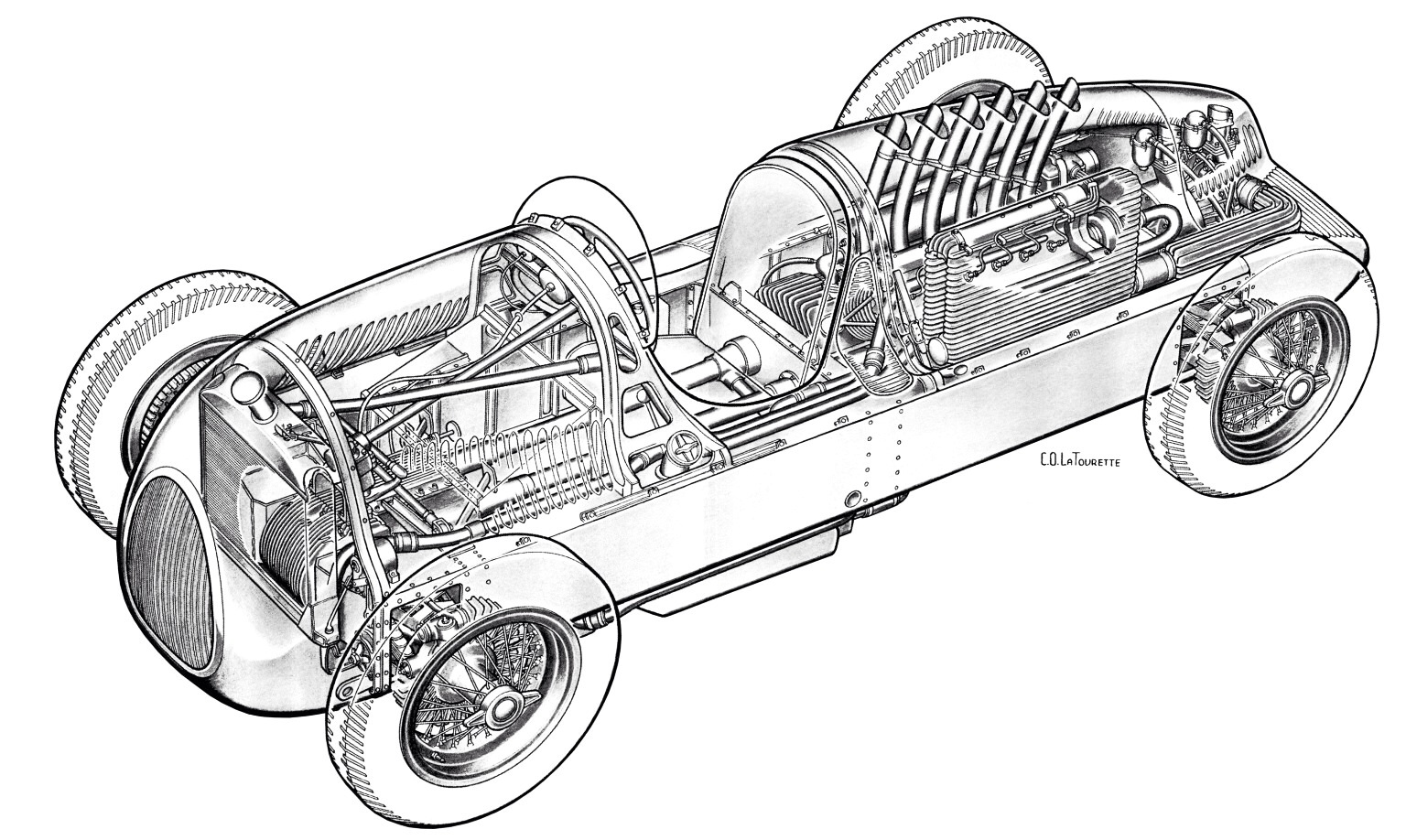
Credits…

Doug Gordon, John Medley, Hedley Cullen

Finito…