Archive for the ‘Who,What,Where & When…?’ Category

nurburgring 1000 km 1963

Surtees races through the ‘Green Hell’ to victory, Nurburgring 1000Km, his Ferrari 250P shared with Belgian Willy Mairesse, 1963…

It was a Ferrari 1-3 with a 250GTO and 250 Testa Rossa in second and third driven by Noblet/Guichet and Abate/Maglioli respectively.

The 250P was Ferrari’s first mid-engined V12 sports prototype and the class of the year, comprehensively winning the championship for the Scuderia.

The 3 litre V12 engined cars won the Sebring 12 Hour, Nurburgring 1000Km and Le Mans 24 Hour classics and spawned the 250LM, effectively a 250P with a roof and 3.3 litre engine. The 250/275LM won Le Mans in 1965 after the GT40’s and Ferrari P2’s fell by the wayside. https://primotipo.com/2014/07/03/pete-geoghegan-ferrari-250lm-6321-bathurst-easter-68/

Credit…

(Automobile Year 11)

Finito…

image

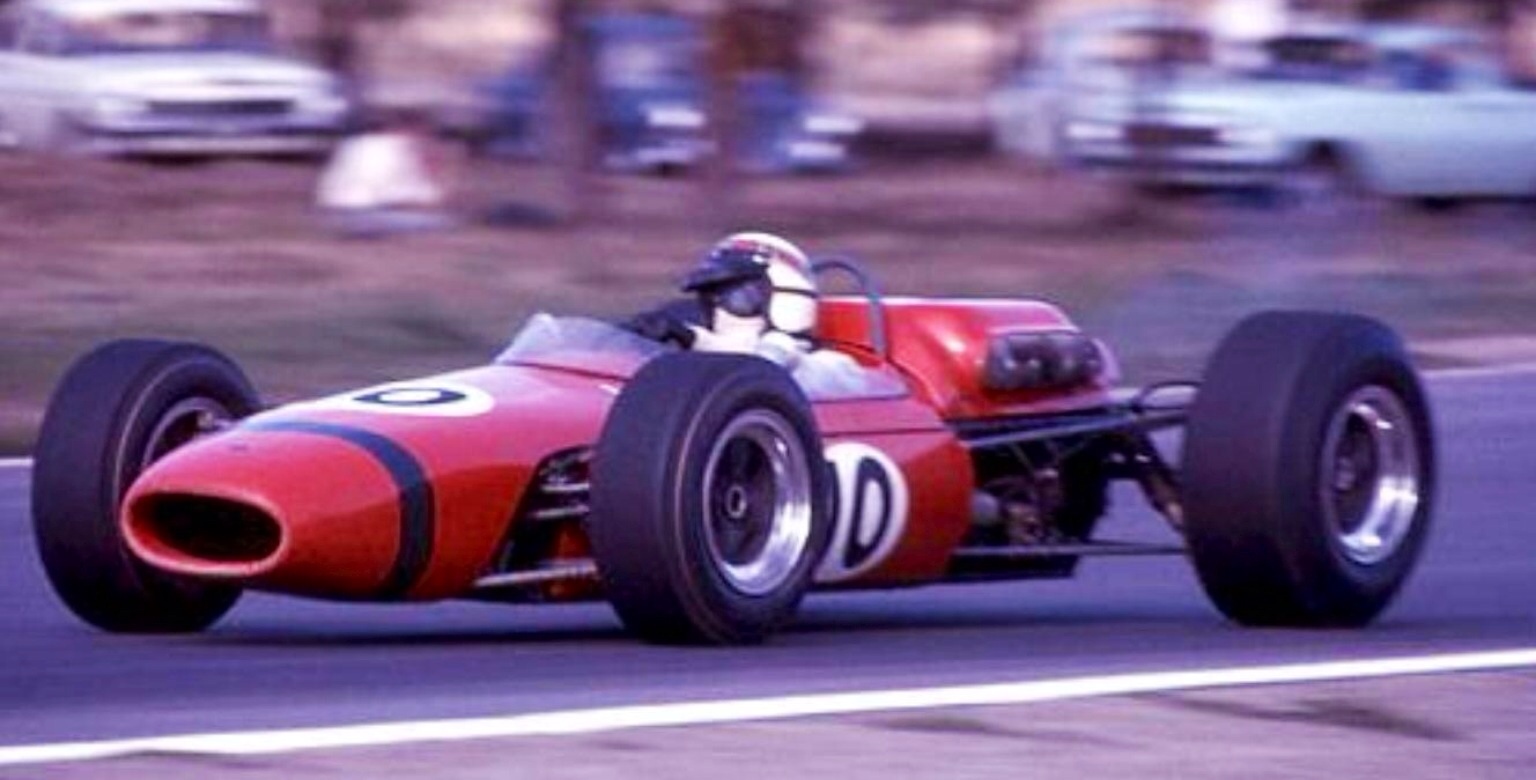
Jackie Stewart sets up his Brabham BT11A for ‘Castrol Corner’ the right hander leading onto Surfers main straight…Holdens in the background and his Climax engine puffing oil before his retirement due to oil loss (John Stanley)

Jackie Stewart in the ‘Scuderia Veloce’ Brabham BT11A Climax ‘Tasman Formula’ car during the Surfers Paradise ‘Gold Star’ Australian Drivers Championship Round on 14 August 1966…

Jackie squeezed in a visit to Australia to drive in both this event and the ‘Surfers 12 Hour’ a week later in between the German and Italian Grands Prix on 7th August and 4 September respectively.

The visit was a welcome respite from the World Championship that year, Jack Brabham dominating in his Repco engined Brabham BT19, with BRM for whom Stewart drove, struggling with their new uncompetitive, complex and heavy P83 ‘H16’.

Jackie won the Monaco Grand Prix in a ‘Tasman Spec’ BRM P261, his 1.5 litre F1 car squeezed to about 2.1 litres, well short of the 3 Litre capacity limit which applied in Grand Prix racing from that year, the nimble car producing the goods on this tight circuit.

monaco

Stewart wins the 1966 Monaco Grand Prix in the BRM P261 1.5 litre F1 car bored to circa 2.1 litres. This was the first Championship race of the new 3 litre F1, the first 4 cars all ‘big bore’ 1.5’s…no 3 litres finishing the race (Unattributed)

In the Belgian Grand Prix three weeks later he experienced an horrific accident on the first lap Spa race, conditions having changed from wet to torrential on this long track, leaving the circuit at high speed on the Masta Kink.

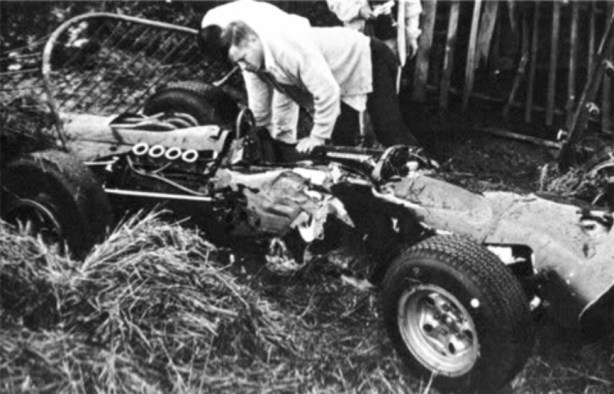
He was trapped upside down in the car, the monocoque twisted around him covering him with fuel with a broken shoulder, cracked rib and internal bruising whilst Graham Hill and Bob Bondurant, who had also crashed, freed him with tools borrowed from spectators. From that moment Stewart started his crusade for driver, car and circuit safety which are amongst his many racing legacies.

No doubt Jackie was looking forward to some racing and the recuperative powers of the Gold Coast sun and surf.
rooted

The rooted monocoque of Stewarts’ BRM P261 after the Masta Kink shunt. The shot clearly shows how the chassis twisted around his body trapping him…he was extremely lucky not to have been killed outright or ‘barbecued’ in a fire, he was liberally doused with petrol, the cars fuel tanks within the monocoque ruptured…no ‘bag tanks’ in those days. 8 drivers crashed without completing a lap…4 at Burnenville and 4 on the Masta Kink (Unattributed)

Keith Williams…
image

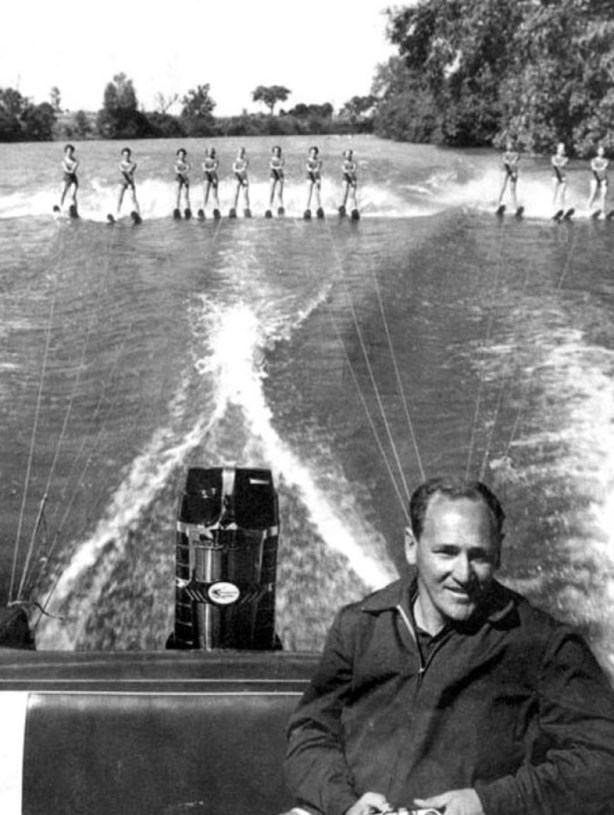
Keith Williams at ‘Surfers Paradise Gardens’ Carrara in the mid-1960’s

Jackie enjoyed his successful championship winning 1966 Tasman Season in our summer, campaigning a BRM P261, his 1.5 litre F1 car V8 engine bored to around 2.1 litres, as outlined above, so he was happy to return to Australia to race Jack Brabham and the locals in the ‘Gold Star’ round and Sports Car enduro which comprised Keith Williams ‘Speed Week’.

Williams was a remarkable entrepreneur, he left school at 13 to help supplement the family income pumping fuel at a local ‘Servo’, formed his first business making leather products three years later and soon employed fifty people manufacturing Disney licensed products.

He was an Australian Water Skiing Champion in the late 1950’s, via that sport both making industry products and forming ‘Surfers Paradise Water Ski Shows’ together with Jack Joel.

He built Surfers Paradise and Adelaide Raceways in 1966 and 1970 respectively. Williams was a leader in the tourism industry building ‘Sea World’ on the Gold Coast in 1971 and started the development of Hamilton Island as a global tourist destination in 1978. His remarkable life ended in 2011 after a series of strokes aged 82.

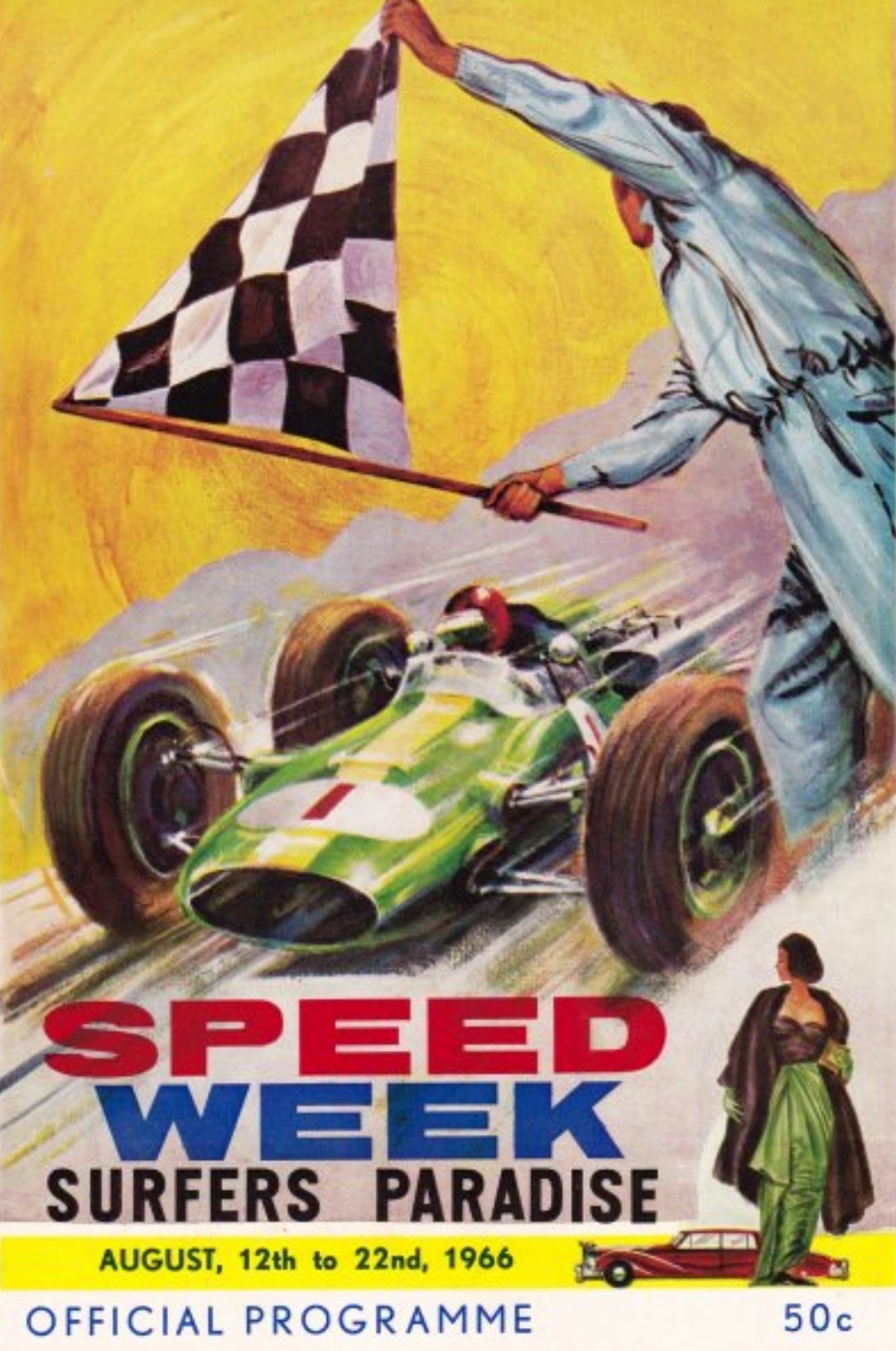
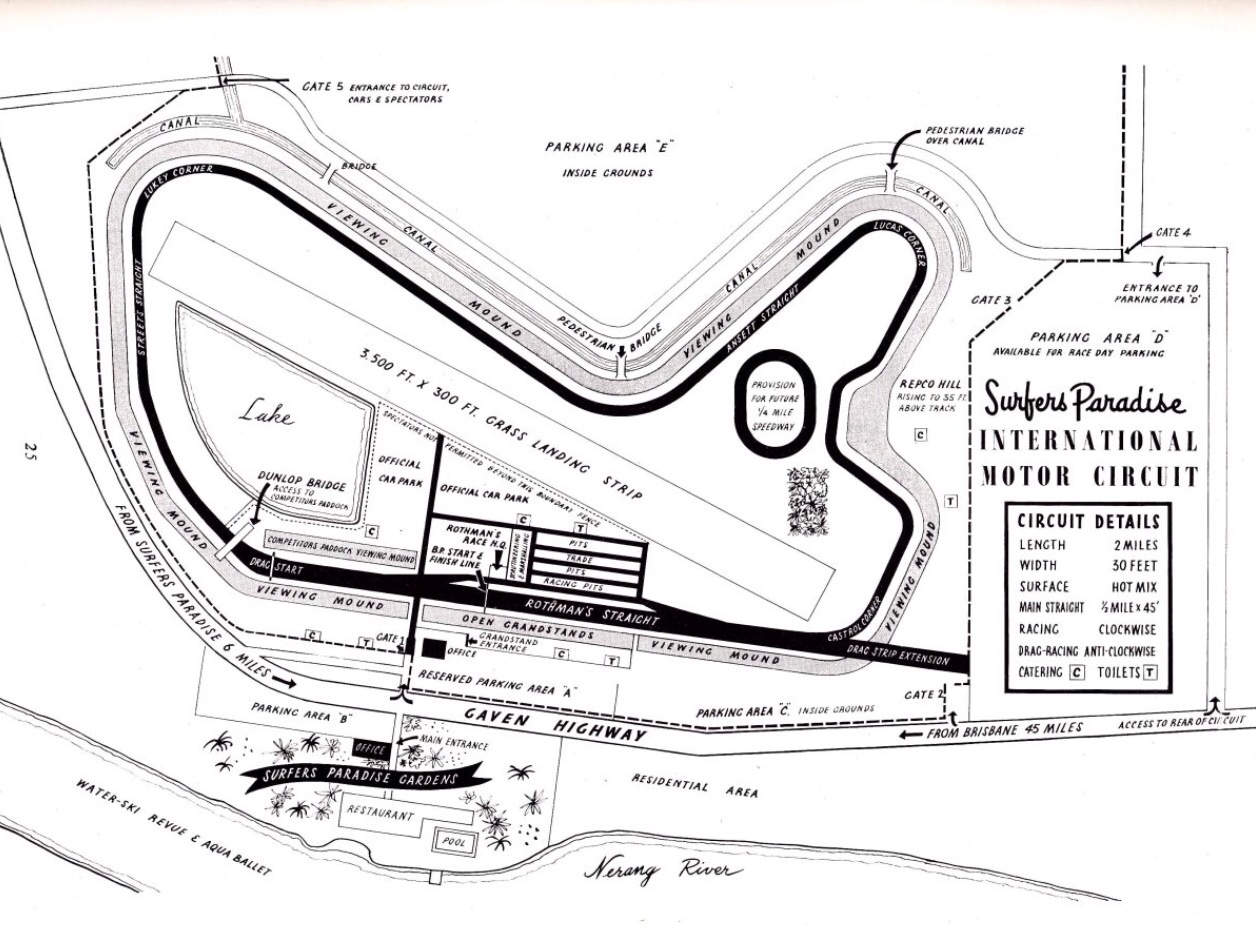
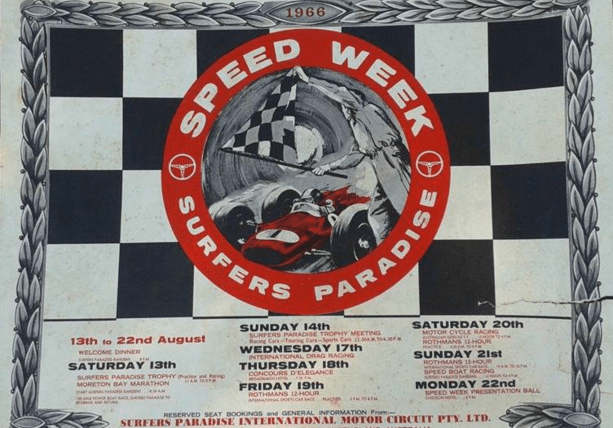
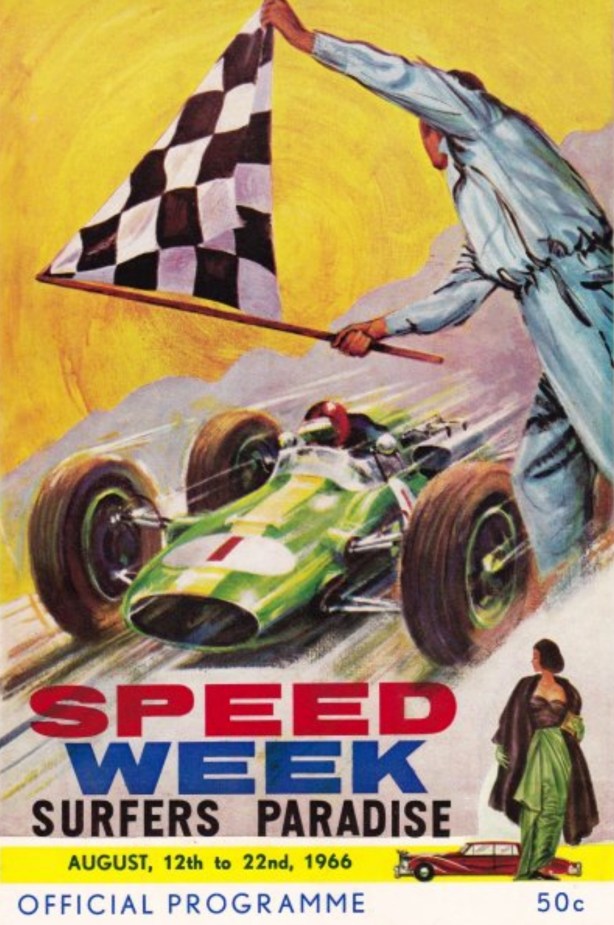
The Surfers circuit was finished in early 1966, the first meeting held on 22 May. The Grand Opening though was ‘Speed Week’ in August, the great promoter holding a number of events over ten days including two weekends of circuit racing described in this article, drag racing, Concours D’ Elegance, motor cycle and speedboat racing- the latter event held on the nearby Gold Coast Broadwater.

Surfers immediately became a drivers and crowd favourite, its fast flowing nature a challenge for drivers and their machines, the circuit facilities and viewing mounds providing a world class amenity at the time to we ‘punters’.

My only visit was as a spectator on a family holiday, i convinced my dad to deposit me at the circuit for the day of the ‘Glynn Scott Memorial Trophy’ in September 1973, the feature event a round of the ‘Gold Star’, the Australian Drivers Championship, contested by F5000 cars.

The sight and sound of these fabulous cars bellowing through the fast right hander under the Dunlop Bridge, a true test of ‘gonad dimensions’, ‘flat knacker’ at 7500RPM in fifth, unmuffled Chev and Repco V8’s roaring away into the distance, was truly a sight and sound to behold and feel!

Frank Matich was running away with the race in his brand new Matich A52, until the ‘flat plane crank’ experimental Repco V8 ‘shook the shitter’ out of the Varley battery, no spark, no go. John McCormack won the race in his Elfin MR5 and the Gold Star that year, the inherently dangerous nature of the track clear to anyone seeing Warwick Brown hobbling around on crutches that day. Brown joining the ‘Lola Limpers Club’ having comprehensively destroyed his T300 and his legs in the Surfers Tasman meeting earlier in the year.

But wow! What a circuit it was!

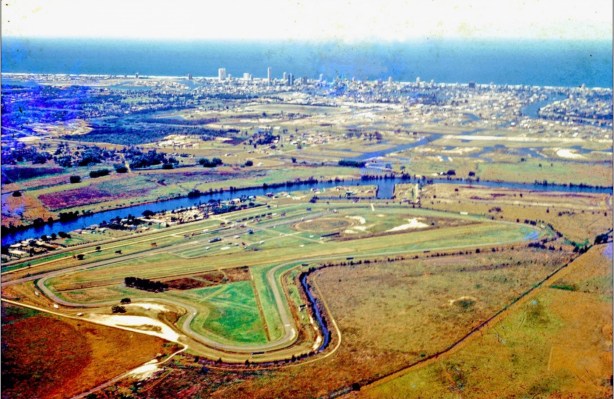
Williams sold it in 1984, the circuit closed in 1987 and is now part of the ‘Emerald Lakes’ canal estate, like so many of our circuits given over to advancing urban encroachment, but that was a long way away in 1966.
(A Favenchi)
image

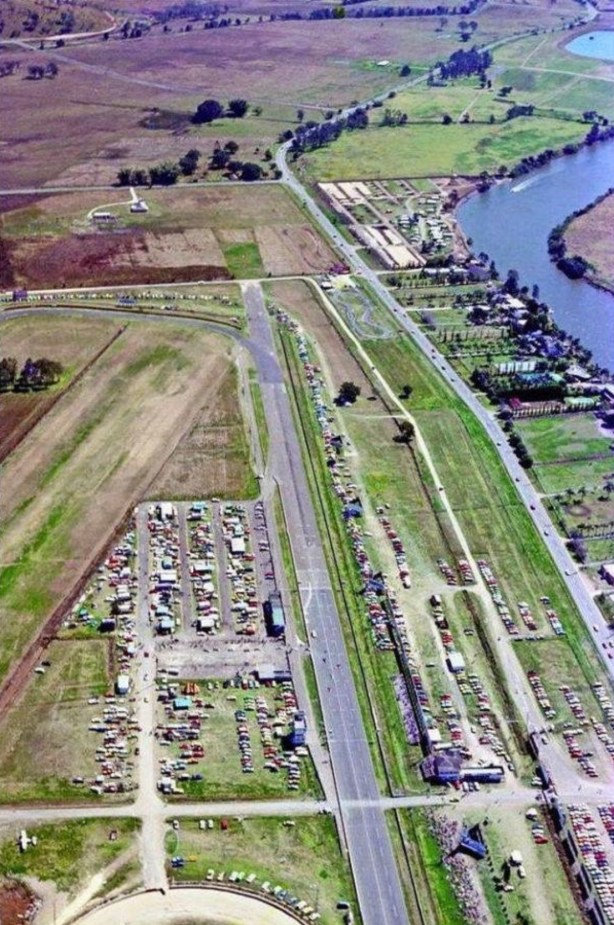
Wonderful aerial shot of the raceway and airstrip looking back to Surfers Paradise in 1977 (A Favenchi)

Gold Star Meeting…

Jackie had some idea about the local talent from his very successful Tasman Tour early in the year, he won the series in his P261 BRM taking four wins, but probably got more than he bargained for.

Kevin Bartlett had stepped up since the Tasman Series from the Mildren Teams Brabham Ford 1.5 Brabham BT11A 2.5 Spencer Martin also racing a Brabham BT11A Coventry Climax for Bob Jane.

Jack Brabham was there, in BT19, the chassis which carried him to victory in that years World Championship, fresh from his German GP win a week before, the car still fitted with its 3 litre ‘620 Series’ Repco V8.

Leo Geoghegan and Greg Cusack were entered in ex-Clark Lotus 39 and Lotus 32B respectively- both cars also Coventry Climax FPF 2.5 engined.

Jack Brabham Brabham BT19 Repco, Surfers Paradise 1966

In the middle of his successful 1966 F1 campaign, Jack brought BT19 to Oz for the opening of Surfers Paradise…Repco wanted the car there but all the same i expect Wlliams paid handsomely for Brabhams’ presence! Here surrounded by admirers in the Surfers paddock (Unattributed)


brabham surfers 1966

Jack here fettling his Brabham’s Repco ‘620’, rotor button the cause of his DNF (Unattributed)
 

(P Cadell)

Ray Bell, ‘Racing Car News’ magazine reporter at the time recalled the meeting on ‘The Nostalgia Forum’…

‘Jack had pole, from KB, JYS and Spencer Martin. KB led the way, this to be the drive that made everybody sit up and take notice, he’d not been long in 2.5’s and was leading a Grand Prix Winner and pretender to the World Championship throne.’

‘Brabham managed a lap and a half before the rotor button went and he dropped out…Stewart hounded KB for five laps before outbraking him at Lukey…Bartlett finishing two-tenths behind the Scot.’ (in an identical car)

‘With KB on pole for the main event, Stewart had something fail in the clutch mechanism and dragged away badly…Martin got the jump, leading KB for seven laps before Bartlett went past into Lukey, Stewart looming in a comeback drive all the while.’

‘On lap fourteen they set a new lap record of 1:13:0, a few laps later JYS passing KB under the bridge…KB coming back at the clutchless Brabham…there was more passing and re-passing until the magneto in Bartlett’s car failed. Stewart blew his engine giving Martin the win having shaken off Leo Geoghegan to do so.’

If there was any doubt, Kevin Bartlett ‘arrived’ as a Top-Liner that day…serving it up to a Grand Prix winner in absolutely equal cars.

Kevin Bartlett recalled recently…’The dices that weekend live in my mind forever. I knew him well before that meeting, his SV Brabham was the equal of mine. We both knew the cars capabilities, the dice was not out of the ordinary as far as we were concerned, the cars were very close but we gave one another room but if you got the line you would slipstream past. We respected each others abilities, we both DNF’d the feature race but laughed about it later. He had no ego.’

image

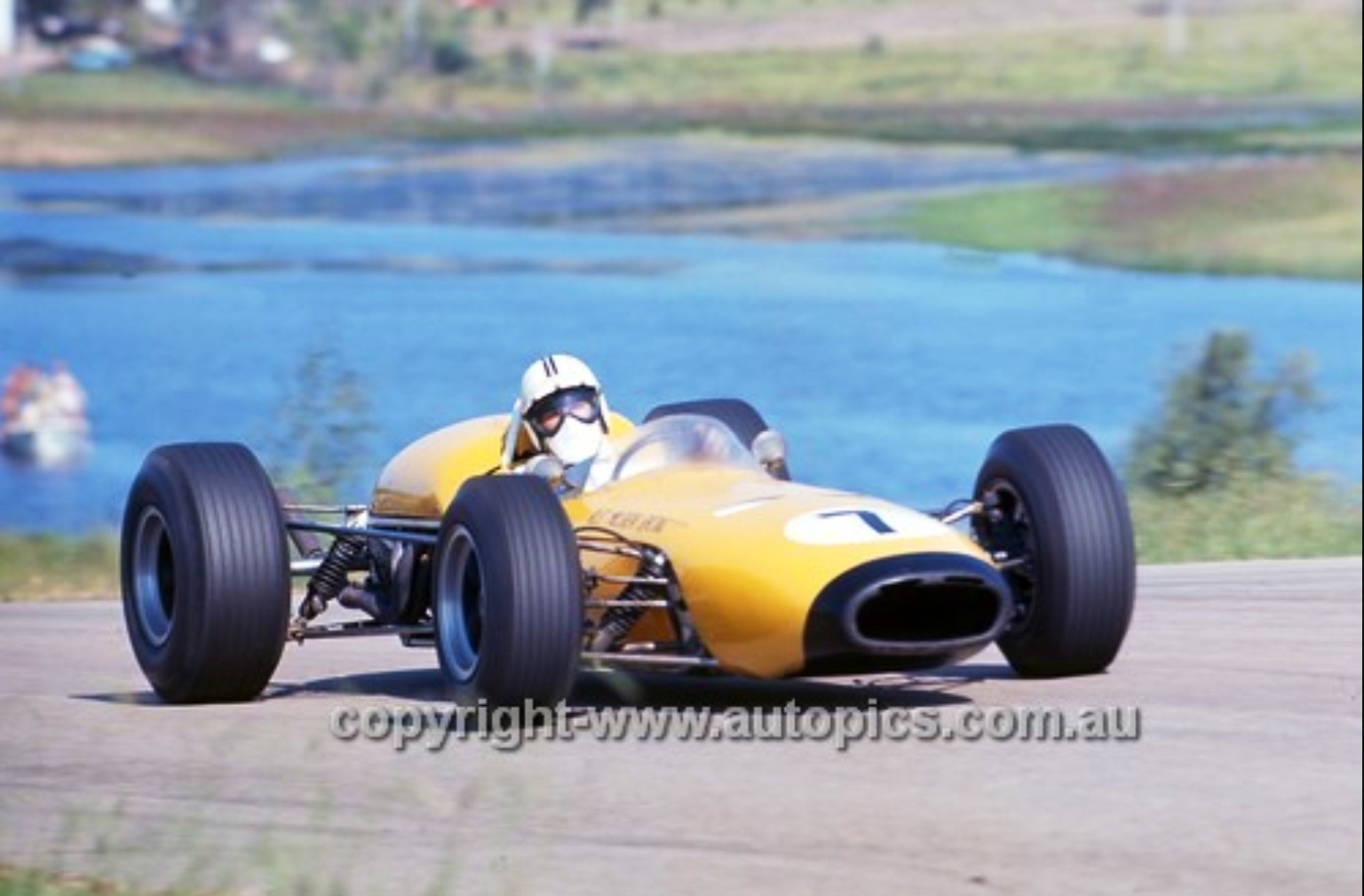
Kevin Bartlett shown in the Mildren Brabham BT11A in the ‘Lakeside 99’ Tasman round, February 1967. He placed fifth in a race won by Clarks Lotus 33 Climax. (autopics)

Surfers Paradise 12 Hour…

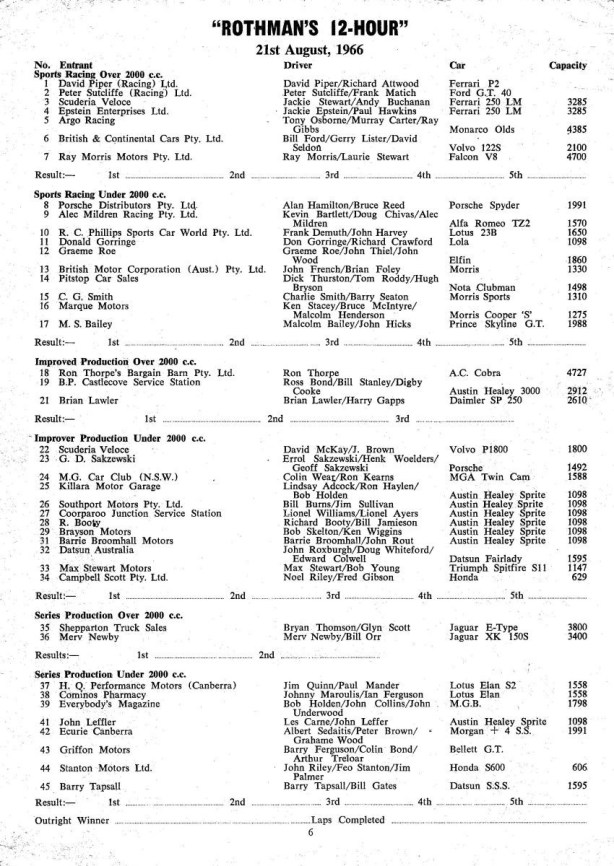
Stewart returned from the beach for the second weekend of Williams ‘double header’ to drive the Scuderia Veloce Ferrari 250LM with Kiwi Andy Buchanan, I wrote about this car a while back….https://primotipo.com/2014/07/03/pete-geoghegan-ferrari-250lm-6321-bathurst-easter-68/

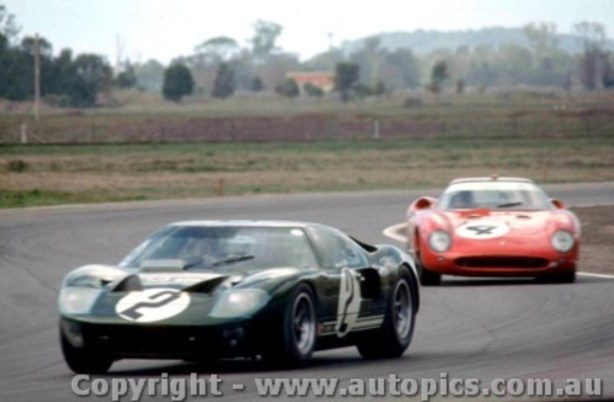
The entry also included a Ford GT40 for Frank Matich and Peter Sutcliffe, another LM for Jackie Epstein and Aussie International Paul Hawkins, David Piper and  future Le Mans winner Richard Attwood raced Pipers’ ex-works Ferrari P2.
image

Peter Sutcliffes’ Ford GT40 ahead of the Jackie Epstein/ Paul Hawkins Ferrari 250LM (autopics.com)

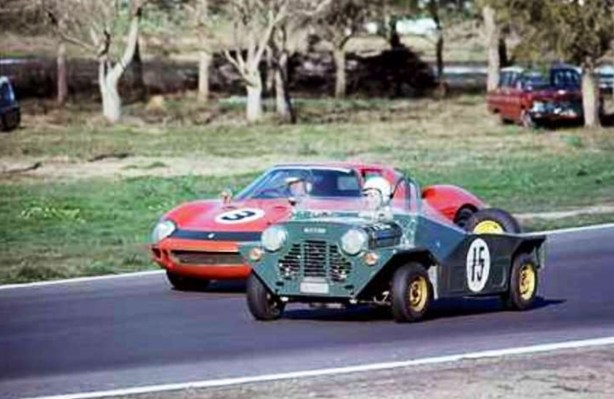
Given the paucity of top-line sports cars in Australia of this type, the grid was bolstered by sprint sports cars such as Lotus 23’s, production sports cars and touring cars…including a Mini Moke entered by later Touring Car Ace ‘Bo’ Seton and Charlie Smith. The closing speed of Stewarts LM and the like would have been well over 80MPH!, the Moke having little power and the aerodynamic efficiency of a ‘dunny-door’.
image

Jackie Stewarts Ferrari 250 LM blasts past the Charlie Smith/ Bo Seton Mini Moke, the Fazz did 493 laps to win, the Moke 311…lapped just a few times. Speed differentials an issue not just at Le Mans! (autopics.com)

The chequered flag was shown to the Matich GT40, but Scuderia Veloce boss David McKay successfully protested the result giving the win to the Stewart/Buchanan LM.

It was not the first time a major event in Australia was clouded by lap-scoring disputes these things not uncommon in those far off, pre-digital days!
image

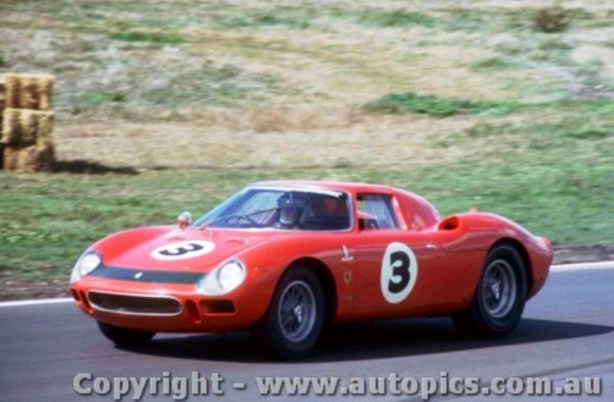
The winning Scuderia Veloce Ferrari 250LM ‘6321’driven by Jackie Stewart and Andy Buchanan, the car winning the race in 1966/67/68 (autopics.com)

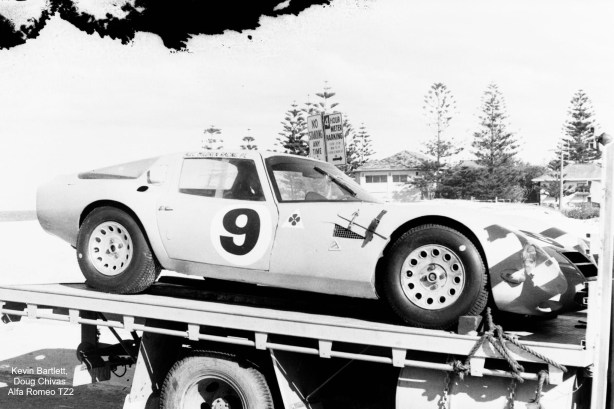
Kevin Bartlett and Doug Chivas finished third in the Alec Mildren racing Alfa Romeo TZ2, Kevin Bartlett again recalls…

‘The 12 Hour was tough going for a little 1600, but Doug was on top of his game, a helluva driver who was kind to the car and did the times. It was a tactical race for us, Alec had worked out a plan and the times we needed to do, which we did consistently.’

’I drove a TZ1 years later at an AGP support event but the TZ2 was areodynamically better, it was quicker in a straight line and had a better track and wheelbase which got it out of corners better. The TZ1 handling was not as good, the tyre and wheel package wasn’t as good.’
image

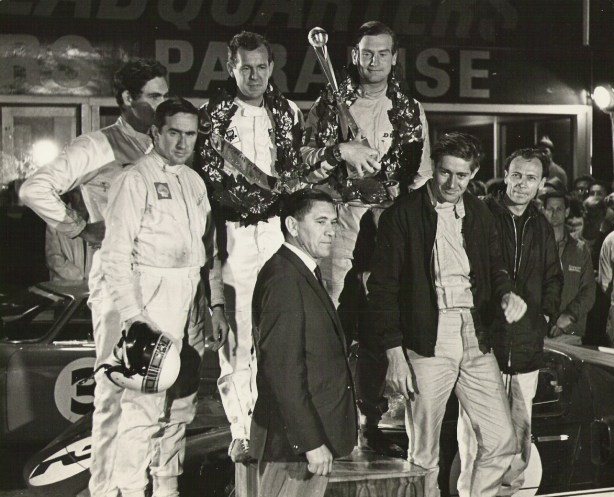
Andy Buchanan, Jackie Stewart, dignitary, Frank Matich, Peter Sutcliffe, Kevin Bartlett, Doug Chivas. Matich and Sutcliffe happy at this stage but tears were not far away! KB and Chivas piloted the third place Mildren Team Alfa TZ2 (Kevin Bartlett)

Etcetera…
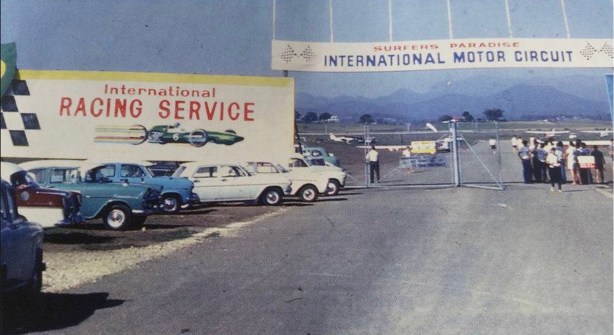
The front gate (D Strong)
 

(G Paine)
 

image

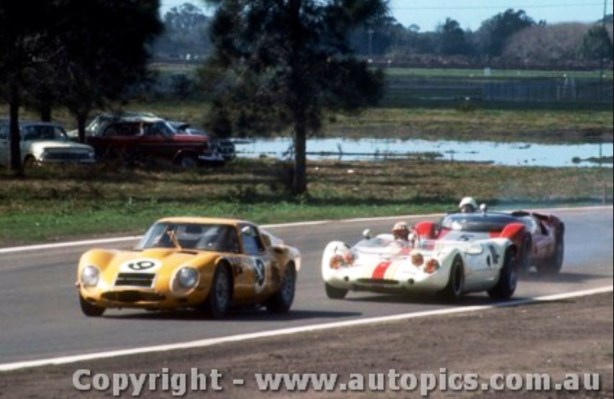
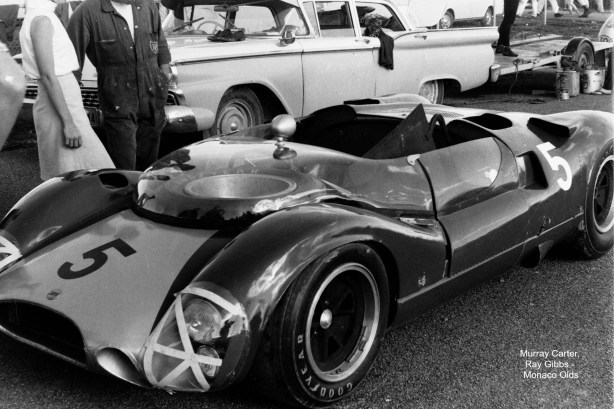
Bartlett/Chivas Alfa TZ2, ahead of the John Harvey/ Frank Demuth Lotus 23 and the Cooper T49 Monaco Olds of Tony Osborne/Murray Carter/Ray Gibbs (autopics)
 

(G Paine)


image

David Piper/Richard Attwood Ferrari P2 (autopics.com.au)
 

(G Paine)


image

Peter Sutcliffes’ Ford GT40 was a customer car owned by Sutcliffe, co-driven by Frank Matich, at the time the outstanding sports car driver in Australia, make that one of the the most outstanding drivers in Australia, his competitiveness in open-wheelers proven in the Tasman Series until he (sadly!) went down the sports car path, finally again seeing the light in the days of F5000…(autopics)
 

(G Paine)
 

image

Early pitstop for the Piper/Attwood Ferrari P2, only 45 laps completed (autopics)
 

Don Gorringe/Dick Crawford Lola Mk1 Climax (G Paine)


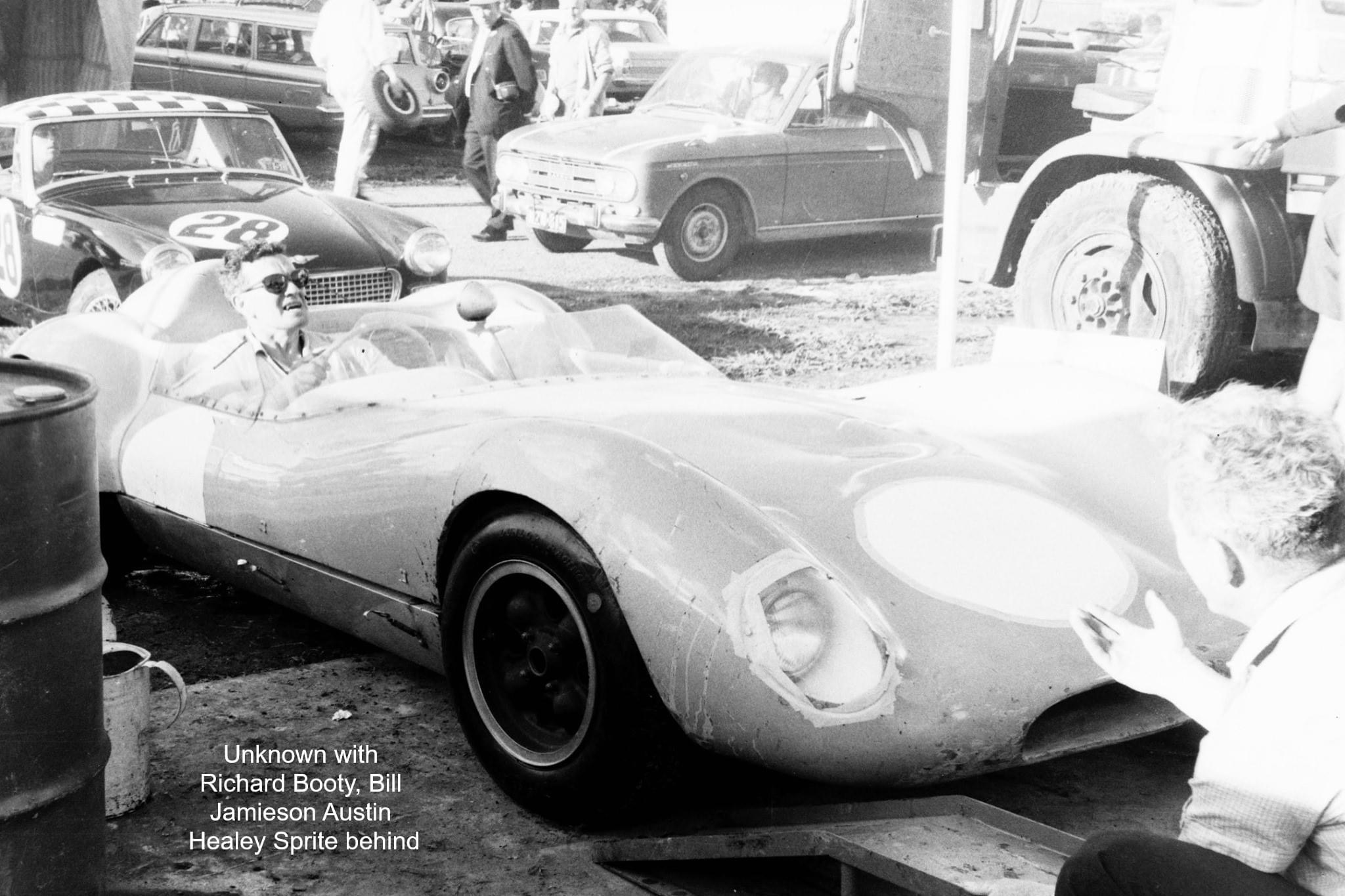
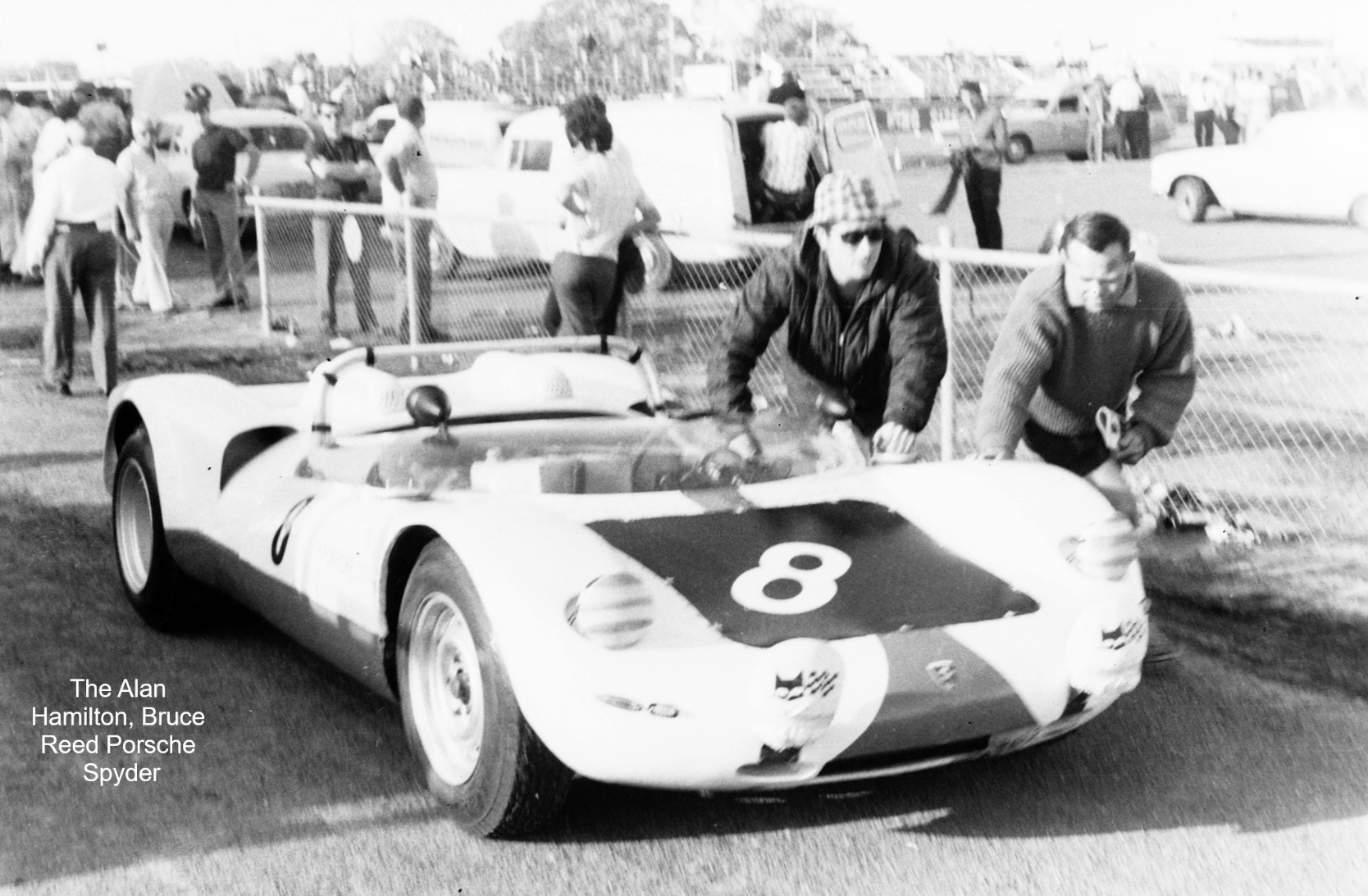
Alan Hamilton and Brian or ‘Brique’ Reed (G Paine)
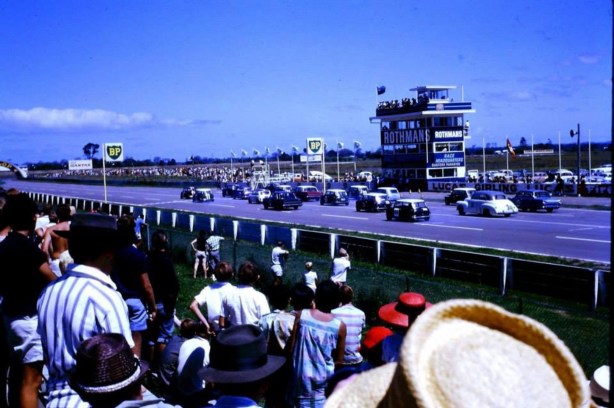
 

Touring Car race circa 1966 (J Dwyer)
 

(G Paine)
 

image

Photo and Other Credits…

autopics.com.au, John Stanley Collection, Alexis Favenchi, Darren Strong, Peta Cadell, Glenn Paine

Many thanks to Kevin Bartlett for sharing his recollections of both events

Finito…

image

Jack Brabham dipping under brakes as he approaches ‘Pub Corner’ in his Cooper T51 Climax on the first lap of the ‘Longford Trophy’ in  March 1960, wonderful Ellis French shot…

Jack retuned to our Australian summer as the reigning World Champion, he didn’t disappoint the Tasmanian crowd winning the race from the similar MkIV T51s of Alec Mildren and Bib Stillwell.

In those pre-Tasman 2.5 formula days Australian National Formula 1 was run to Formula Libre rules, but 1960 Coopers of various models and capacities were the dominant marque. There were still sportscars amongst the single-seaters including Doug Whitford’s ex-works Maserati 300S, sold to Doug after the 1956 Australian Grand Prix at Albert Park when Officine Maserati brought five Maseratis to Melbourne- thee F1 250F’s and two 300S.

The ‘Australian Motor Sports Annual Review 1960/61’ has a report of the 1960 Longford Trophy and notes with superb understatement that ‘Possibly no circuit in Australia offers so many scenic attractions and quite so large a variety of racing hazards as that at Longford in Northern Tasmania.’

The article continues ‘Although racing has been carried out at Longford for several years, it was only after the selection of the circuit for a Gold Star race in 1958 that Longford became known to Australians outside Tasmania…One of the advantages Longford holds over any other mainland circuit is full government and community support. Unlike other states where motor racing is viewed with concern for safety or as a noise disturbing nuisance and a Sabbath breaker, Tasmania views motor racing as a vital tourist attraction and as such, gives it the fullest support’.

Improvements to the track since the 1959 meeting resulted in a faster, more even surface with a softened approach to the railway crossing in Longford township.

Longford 1960 grid shot

John Ellacott shot of the front 2 rows gridded up: Brabham #4, Stillwell #6, Miller in yellow, all Cooper T51 Climaxes and Arnold Glass in the Maserati 250F, evocative!

Australian Tourist Trophy contenders with the J Wright Aston Martin DB3S and Doug Whiteford’s Maserati 300S up front with Harry Cape’s MGA Coupe and the #18 Gorringe/Watt MG Holden on grid 2 (J Barnes)

The 1960 meeting was a double-header with both the Formula Libre Longford Trophy and Australian Tourist Trophy for sportscars, won by Derek Jolly’s ex-works Lotus 15 Climax FPF 2 litre, the ATT was a great race with a big field, check out this photo heavy feature; https://primotipo.com/2018/05/17/1960-australian-tourist-trophy/

Jack Brabham’s Cooper T51 Climax FPF 2.5 had been secured by the promoters and was the same chassis with which he had won the NZ GP at Ardmore in January from Bruce McLaren’s Cooper T45 and Stillwell’s T51- click here for that NZ7 GP; https://primotipo.com/2019/09/16/chief-mechanic/

Brabham had a good summer also winning The Lady Wigram Trophy, Light Car Club of Tasmania Trophy at Longford, the Repco Trophy at Phillip Island in mid-March before heading back to Europe.

Jack’s practice time of 2:38 was a second clear of Bib’s 2.2 litre T5, a welcome addition to the grid was Alec Mildren’s new Cooper T51 Maserati, the frame of the car was adapted by Mildren and mechanic Glenn Abbey to fit a four cylinder, DOHC Maser 250S sportscar engine running on methanol- the soon to be 1960 Australian Gold Star champion did 2:46. An article about this car is here; https://primotipo.com/2018/06/08/mildrens-unfair-advantage/

Longford Trophy 1960 start

Stillwell gets the jump off the line, Glass at rear, Brabham on this side (John Ellacott)

Stillwell got the jump from the start and led for the first three-quarters of a lap before Brabham passed him in his more powerful Cooper. On lap 3 Jack did a 2:34, an average of 105.19 mph and on the following tour recorded a top speed on the Flying Eighth of 157.9 mph. Brabham reduced his pace and led comfortably from Stillwell, Mildren and Arnold Glass’s ex-Hunt/Stillwell Maserati 250F.

The punch of Mildren’s Maserati engine was demonstrated when he sailed past Stillwell’s Coventry Climax engined T51 on the Flying Mile, at about the same time Bill Patterson’s 2 litre T51 passed Glass with Jon Leighton’s Cooper T45 Climax being challenged by Glynn Scott’s similar ex-Mildren machine- both of these cars were powered by 2 litre Climaxes. Towards the end of the 17 lap 45 minute 40 second race Brabham allowed Mildren to close up to within 100 yards of his car, magneto failure spoiling Patterson’s good run.

Brabham won from Mildren, Stillwell, Glass, Leighton and Scott, the Glass Maserati was the only front-engined interloper amongst the dominant mid-engined Coopers.

Glynn Scott, Cooper T43 Climax 1.7 with Jon Leighton’s Cooper T45 2 litre behind him- the red car is Ern Tadgell’s Lotus 12 Climax aka Sabakat (J Barnes)

Allen Brown’s wonderful archive ‘oldracigcars.com’ states that the car Jack drove at Longford was probably the first of two cars he used during his successful 1959 F1 season, chassis ‘F2-4-59′- he drove it in the early part of the year, it then became a spare when ’27-59’ appeared at Zandvoort.

When Jack’s Australian season ended the car was sold to Bib Stillwell who then had two Cooper T51’s to choose from, his Gold Star campaigns had started to become more serious and ultimately were very successful from 1962 to 1965- four titles on the trot in Cooper and Brabham chassis.

Brabham returned to Europe to successfully defend his world title whilst the Gold Star championship was won by Alec Mildren’s Maserati engined T51.

Brabham Cooper T51 Longford 1960

Brabham in his Cooper T51 Climax at Longford in 1960. I think the gent in braces at the rear is Jacks’ father, this chassis 1 of 2 he used in his successful 1959 GP season (oldracephotos)

Allen Brown’s wonderful archive ‘oldracingcars.com’ states that the car Jack drove at Longford was probably the first of two cars he used during his successful 1959 F1 season, chassis ‘F2-4-59′- he drove it in the early part of the year, it then became a spare when ’27-59’ appeared at Zandvoort.

When Jack’s Australian season ended the car was sold to Bib Stillwell who then had two Cooper T51’s to choose from, his Gold Star campaigns had started to become more serious and ultimately were very successful from 1962 to 1965- four titles on the trot in Cooper and Brabham chassis.

Brabham returned to Europe to successfully defend his world title whilst the Gold Star championship was won by Alec Mildren’s Maserati engined T51.

Longford scene 1960

Kevin Drages’ panoramic view of part of the Longford paddock in March 1960, looking across to Mountford corner with the Pit Straight on the right. Cars are green Derek Jollys’ Lotus XV Climax and the ‘Kenley Vincent Spl’.

Etcetera…

Brabham Longford media interview 1960

(Kevin Drage)

‘Modern media scrum’, Jack tells the press how it was post race.

JB’s British Racing Drivers Club badge proudly worn on his overalls, the car is a Humber ‘Super Snipe’, in those days British prestige cars were very popular in Australia, the Germans steadily whittled them back by the early seventies.

Bill Patterson Cooper T51 Longford 1960

(Ellis French)

Bill Patterson’s Coopers T51 by two.

Patterson went on to win the Gold Star in 1961 and soon after retired from driving but supported others for decades via his Ringwood, Melbourne, Holden dealership, click here for a feature on Patto and his many Coopers; https://primotipo.com/2017/02/02/patto-and-his-coopers/

Jack Brabham and BIb Stillwell, Longford 1960

(Kevin Drage)

Jack Brabham and Bib Stillwell swapping Cooper set-up notes…or Bib is buying Jacks car!?

Stillwell was a good Brabham customer over the years acquiring many Coopers including the car Jack drove at Longford that weekend and, later, Brabhams, both men very successful drivers and businessmen. Bib feature article here; https://primotipo.com/2018/07/20/matich-stillwell-brabhams-warwick-farm-sydney-december-1963/

Bib Stillwell Cooper T51 Climax Longford paddock 1960

(Ellis French)

Bib Stillwell’s Climax engine being fettled in the Longford paddock.

(J Barnes)

Tornado 2 Chev won the 1958 Gold Star round at Longford with Ted Gray at the wheel, but by 1960 the marvellous 283 cid Chev engined beastie was an also-ran amongst the hordes of Coopers typified by Stillwell’s T51 at right- Ted didn’t start in the Longford Trophy feature and was unclassified in the LCCT Trophy a couple of days later. The D Type Jaguar without a rear wheel is David Finch’s car- note to the left Doug Whiteford’s Maser 300S ‘Rice’ trailer.

(J Barnes)

All the fun of the fair- who can help with the bike/rider identifications?

(J Barnes)

Ron Hodgson and David McKay in their Jaguars before the touring car race- who won this encounter?

(J Barnes)

Alan Jack cruises through the Longford paddock in his ex-Patterson Cooper T39 Climax whilst in the distance you can see Doug Whiteford’s Maserati 300S and trailer and further still Arnold Glass’ 250F.

Sticking with the T39 theme, the Jack and Lynn Archer cars sandwich Ron Phillips’ ex-Whitehead/Jones Cooper T38 Jaguar which raced so well in the Australian Tourist Trophy.

(J Ellacott)

(J Barnes)

Its a pity John Barnes got the shakes because this Light Car Club of Tasmania Trophy start shot really would have been a cracker but I still like it for its atmospherics.

Red #13 is Ern Tadgell’s Sabakat or more correctly Lotus 12 Climax ‘351’ about which I have written a lot. #9 and #20 are the Patterson and Scott Coopers Types 51 and 43- the Cooper in front of Scott’s is Mildren’s Maserati engined machine. The front engined car at left is the Glass Maser 250F and yellow machine to its right is Austin Miller’s distinctive Cooper T51.

Meanwhile in the simply superb panorama below we can take in the starters stand and beach umbrella, anxious mechanics, the old tram which served as race HQ, the flags and wonderful casual, bucolic air of this wonderful part of the world.

The cars- Sabakat at left, then Gray’s Tornado and one of the Coopers at right.

(J Barnes)

(J Barnes)

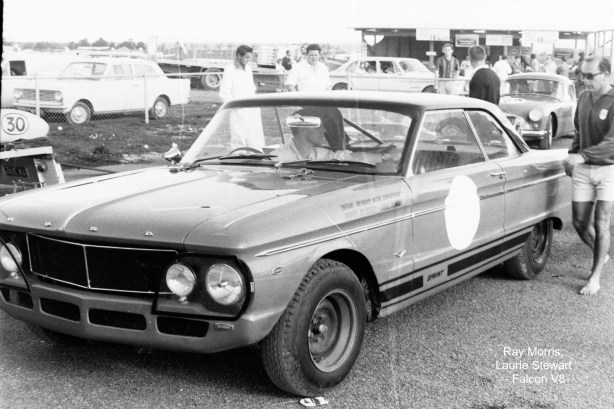
What a great shot, probably the grid of one of the Tasmanians only events perhaps, Ellis French identifies the cars as the #12 Gerald Tattersall, Buchanan, #14 R Ward, MGA Twin-Cam and #30 on row 2 the Mel McEwin in the Melmac Healey Spl, green car alongside the Hines #11 MG Special, red #18 is Mick Watt MG Holden Spl and #101 a Triumph TR not listed in the program.

(J Barnes)

She looks unbelievable!

I wonder what, or who it is which has captured the attention of Brabham’s crew. Who are they BTW?

Brabham Senior- Tom, and Esso’s Reg Thompson watch proceedings from the far left- look at those monster 58 DCO Webers, circa 235bhp from a 2.5 FPF tops at the time.

(J Barnes)

Photo and Reference Credits…

Ellis French, John Ellacott, oldracephotos.com, Kevin Drage, ‘Australian Motor Sports Annual 1960/61’, John Barnes

oldracingcars.com

Jack Brabham Cooper T51 Climax on the approach to Pub Corner Longford 1960

Tailpiece…

Lets finish on the same note as we started, an Ellis French shot of Brabham, this time ‘panned’ into the braking area on the entry to ‘Pub Corner’, Longford 1960…

For international readers Tasmania is a wonderful place to visit.

The scenery is stunning on all of its coasts, the mountains in the middle worth climbing, the ‘Overland Trail’ in the Cradle Mountain- Lake St Clair National Park worth walking. Hobart, a centre of culture and ‘Foodie Stuff’ is worth a stop for ‘Mona’ alone, a gallery of contemporary art and you can still see a lot of the Longford circuit, not far from Launceston, including the ‘Country Club Hotel’ with heaps of racing memorabilia.

Finito…
Pleasure and pain

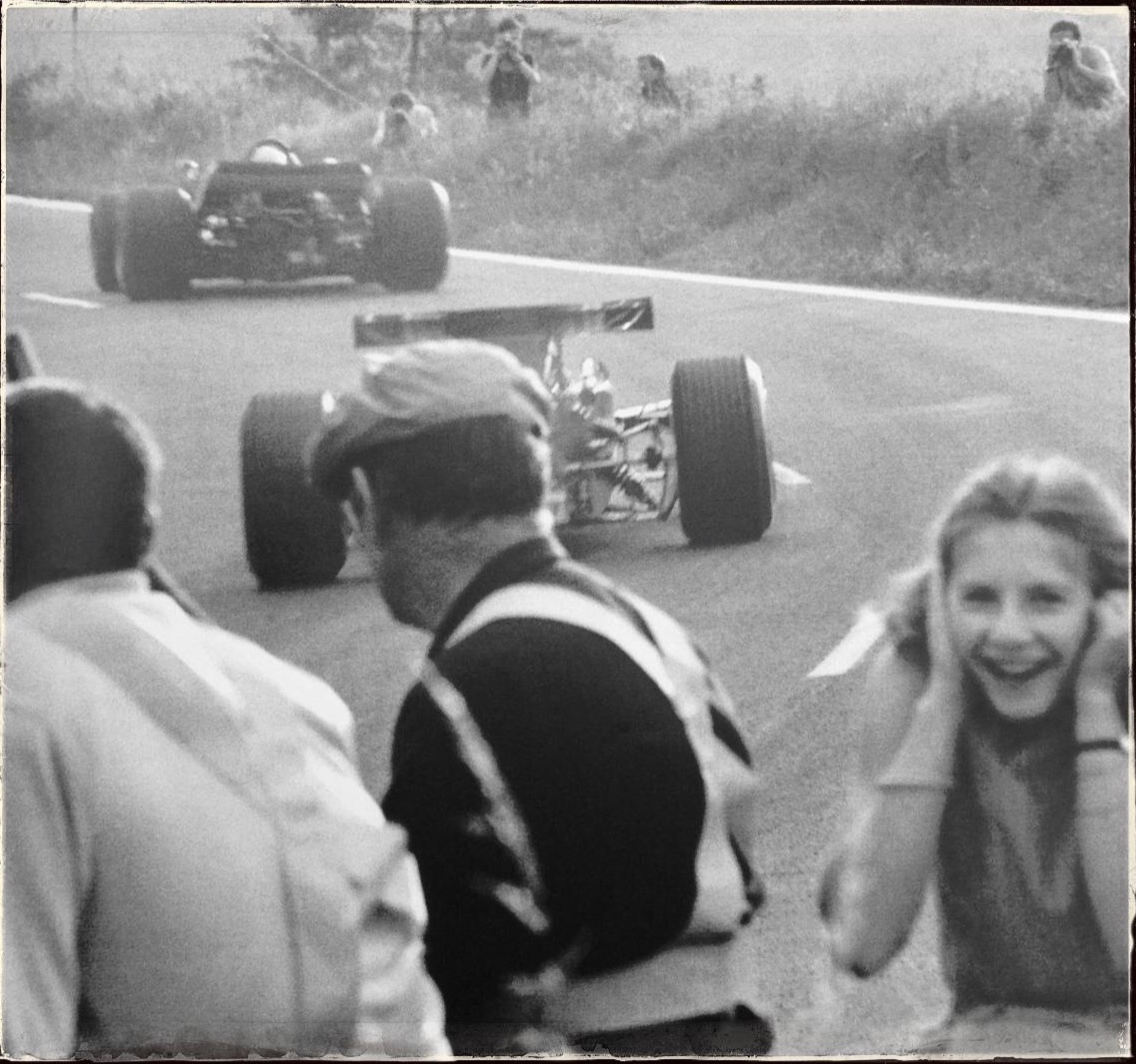
This great shot shows the sheer excitement of ones’ first Grand Prix…

The photo has amazing ‘people factor’, the cars are superbly placed amongst the crowd, the shot rare in that sense. The composition is great; from the joy and excitement on the teenagers face, the marshalls presence giving a sense of crowd and the sheer lunacy of the photographers handily placed on the exit of the corner where they can nicely cushion the impact of an errant car!

The question is where and when it is?

I lifted the shot from a photographic annual some years ago, the photographer may have been identified but not the place or date as it wasn’t a racing publication and therefore the important stuff to us wasn’t there.

High wings came in later in 1968 and were banned from Monaco ’69, the tyres on the car in front at least, are wider than in ’68 so i think its post Monaco 1969 and either Zandvoort or Clermont Ferrand that year. Dutch and French GP’s respectively.

But i am guessing! An educated guess but a guess all the same.

Any thoughts on who, what, where and when anyone?

Rally of The Midnight Sun

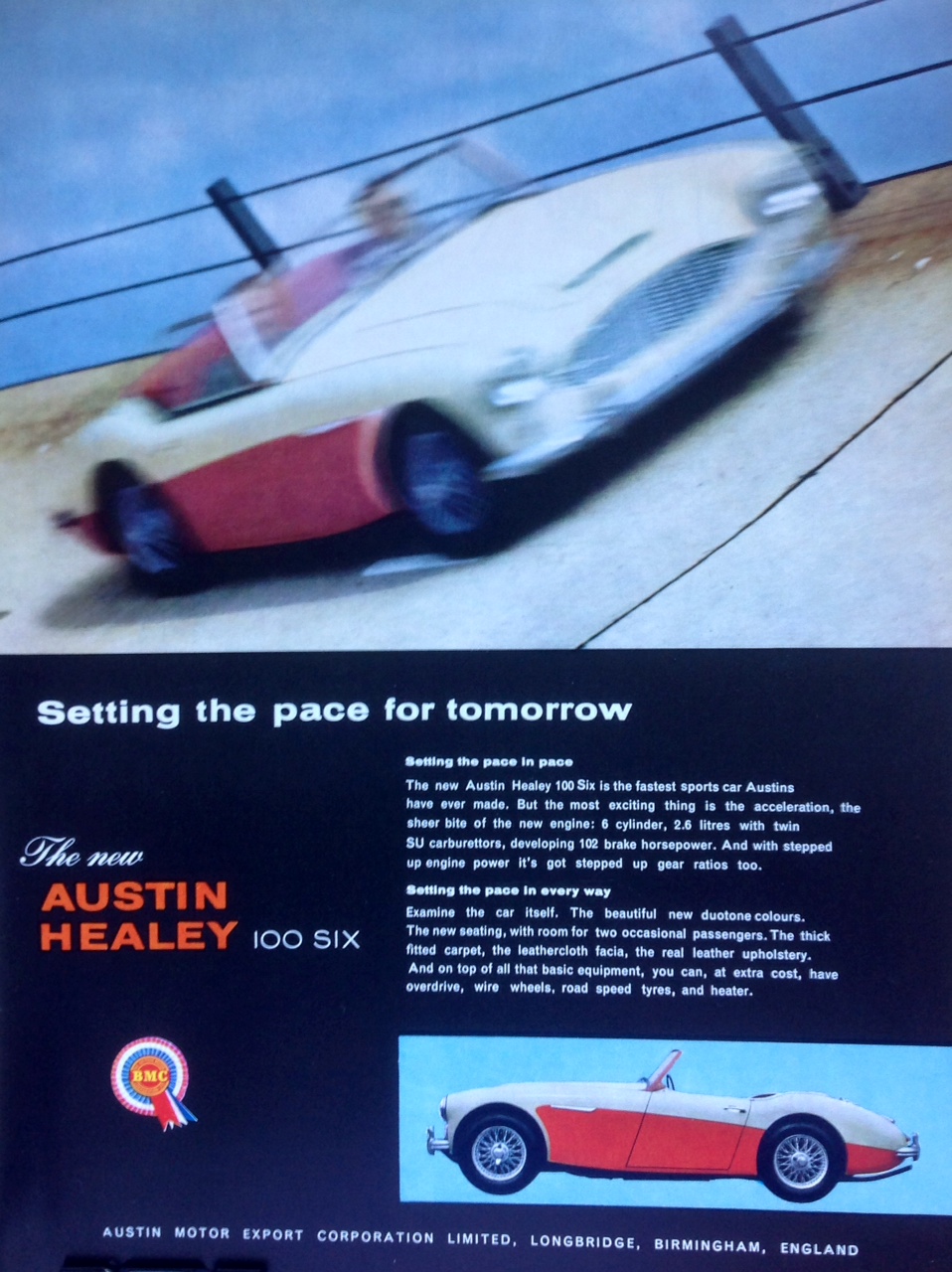
Frolander and Lundstrom jumping their Austin Healey 100-6 in the 1956 Swedish ‘Rally to The Midnight Sun’…

The rally was first held in 1950 and is the antecedent event of ‘Rally Sweden’, since 1973 a round of the World Rally Championship, the ’56 event was won by Harry Bengttsson in a VW.

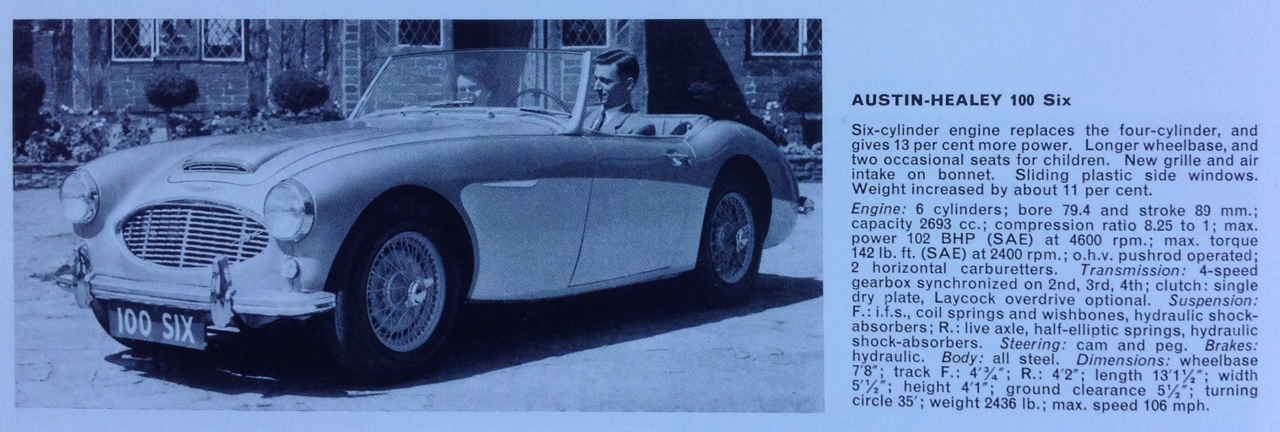
The big Healeys were effective rally tools, never European or British Championship winners mind you but an Austin Healey Sprite won the RAC British Rally Championship in 1959 in the hands of John Sprinzel and Stuart Turner.

Healey 100 6

Healey 100 6 specs

Credits…

Photo B Grunlund, Automobile Year 4

sebring

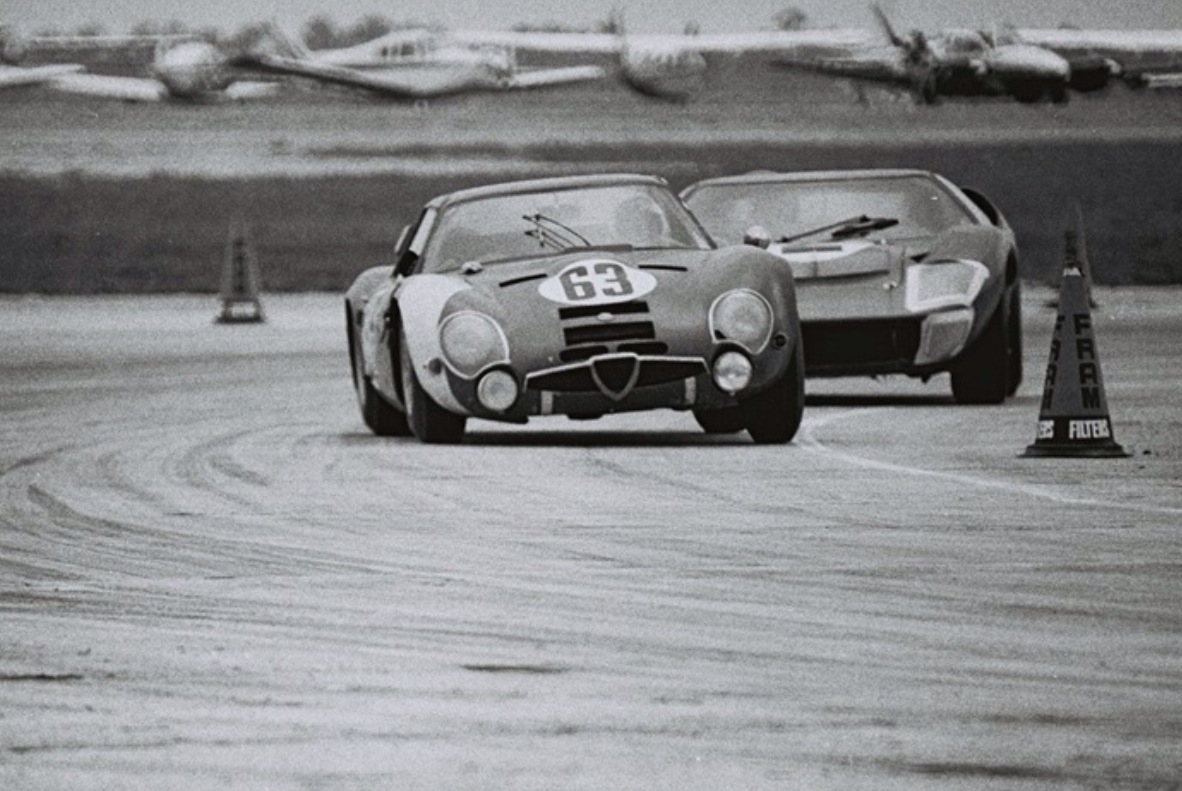
Wonderful Sebring airfield shot of the Autodelta TZ2’s of Russo/Andrey and Bianchi/Consten…

The Ford GT40 X-1 Roadster of Ken Miles and Lloyd Ruby won the race, Russo/Andrey winning their class and placing fourteenth outright, not bad for a 175bhp car, the Bianchi car did not finish.

Autodelta and TZ1…

zagato
Zagato press release of TZ1, the car for both road and track (Carrozzeria Zagato)

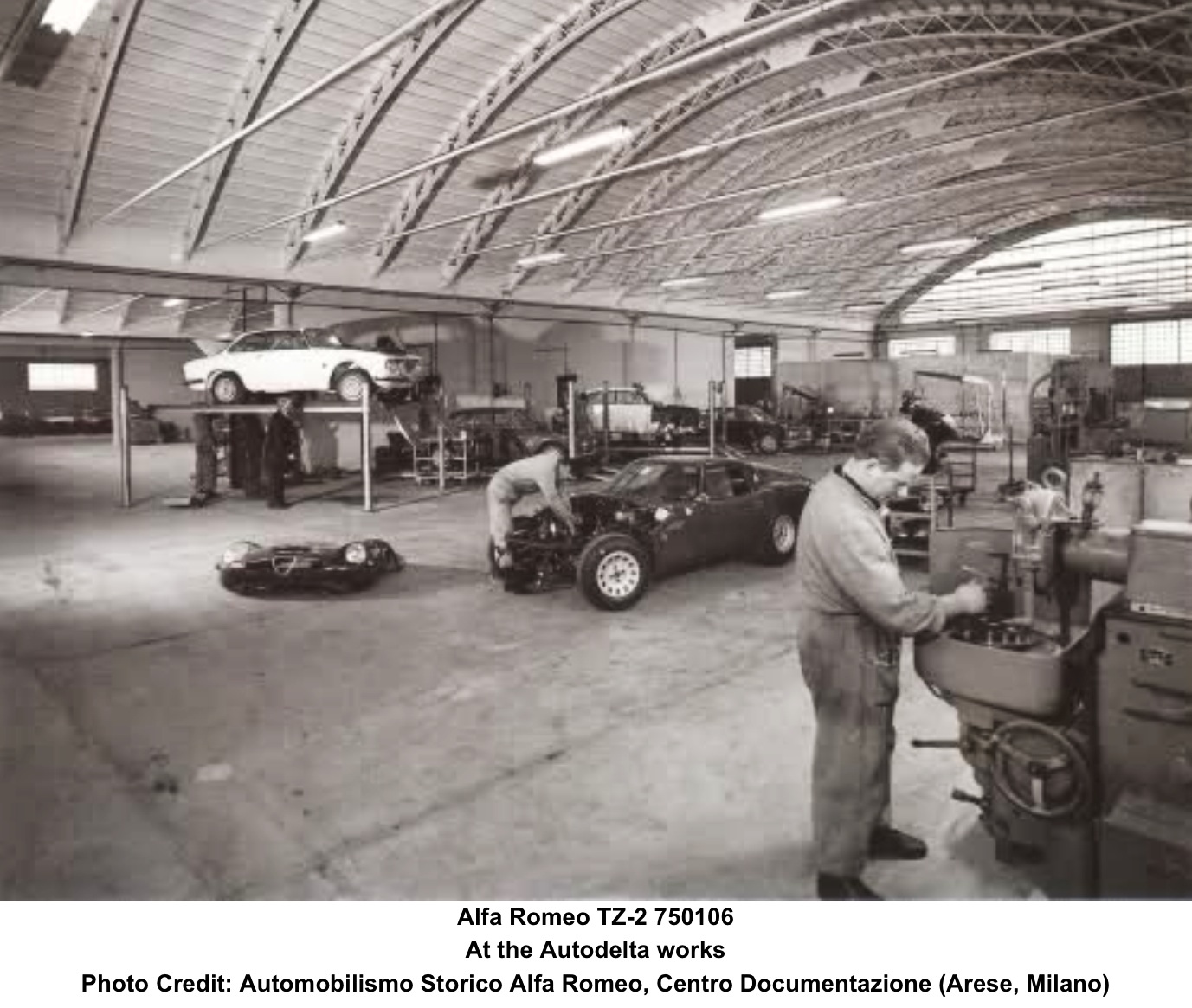
Autodelta was formed by Carlo Chiti after the failure of ATS, the Grand Prix team formed by Chiti and other ex-Ferrari staff after the Commendatore’s purge of Ferrari senior-staff in 1961.

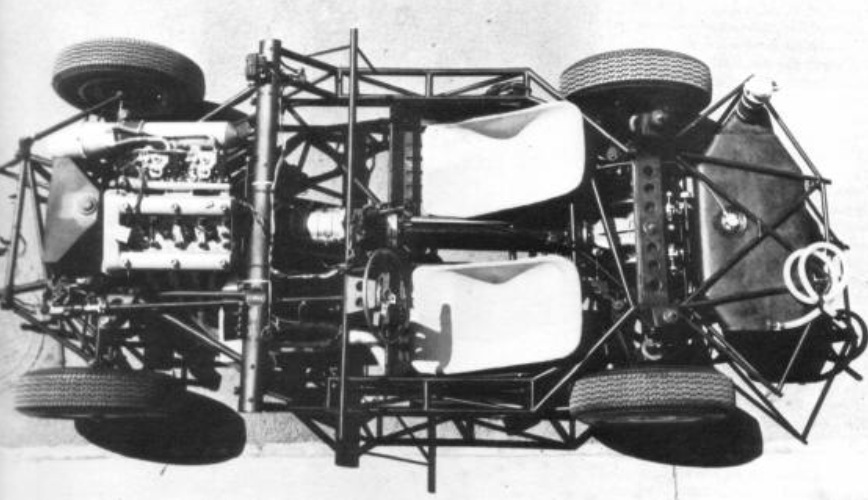
The TZ1 was a collaboration between Autodelta, Alfa Romeo and Zagato. It was designed by Autodelta using  familiar 105 Series Alfa components including the engine, five-speed gearbox and differential. The car was clothed by Ercole Spada at Zagato. Autodelta used a lightweight multi-tubular spaceframe for the chassis, specifying an aluminium body, disc brakes and independent suspension, it weighed 660Kg.

112 Z1s were built for road and track, the car was quickly homologated into the 1600 GT category by the FIA’ becoming a class winner on both sides of the Atlantic. Alfa realised the importance of Autodelta to build their brand image via racing and acquired the company in 1964, moving it to Milan.

TZ2…

alfa 1

In 1965 the design was refined, creating the TZ2.

It was lighter, fibeglass was used for the body rather than aluminium, tipping the scales at just 620 Kg and lower at 41 inches high. Z2 was also more powerful, using a 1600 twin-plug engine which gave around 170bhp @ 7000rpm. The engine was dry-sumped to allow it to sit lower in the chassis. Z2 engines were prepared by Autotecnica Conrero in Turin, this engine was homologated for use in the last of the TZ1s and would be very effective in the GTA 105 Series touring cars in the years to come.

13 inch Campagnolo wheels were used to make better use of the racing rubber of the day, rather than the 15’s of the Z1. The chassis were built by Ambrosini, 12 were built, 10 racers plus a chassis each given to Bertone and Pininfarina to create ‘catwalk models’!

In standard form the car is sensational to look at, it’s low, swoopy and curvaceous with one curve merging into the other until ended abruptly with the chopped-off Kamm tail.

The TZ2 was raced five times in international events by Autodelta finishing first in class in all of them, Sebring inclusive. After 18 months of dominating the 1.6 litre GT class it was time for Autodelta to move on to bigger challenges but the TZ played a pivotal role in Alfas re-entry to sportscar racing. The Tipo 33 sports-prototype program picked up where the TZ’s finished, in fact the prototype T33 was powered by a TZ2 engine.

sebring 2
The Russo/Andrey TZ2 being monstered by a Ford GT40 Mk2 (Pinterest)
ford
(Pinterest)

The 1966 Sebring winning Shelby American entered Ford GT40 X-1 above driven by Ken Miles and Lloyd Ruby. The machine was a heavily modified GT40 Mk1 comprising an aluminium rather than steel chassis, Mk2 nose, no roof and a 7 litre/427 CID V8 as per Mk 2 specifications.

Zagato TZ Register…

http://www.zagato-cars.com/contents/en-us/d166_Alfa_Romeo_TZ_1_TZ2_Register.html

Etcetera…

chassis
(Unattributed)

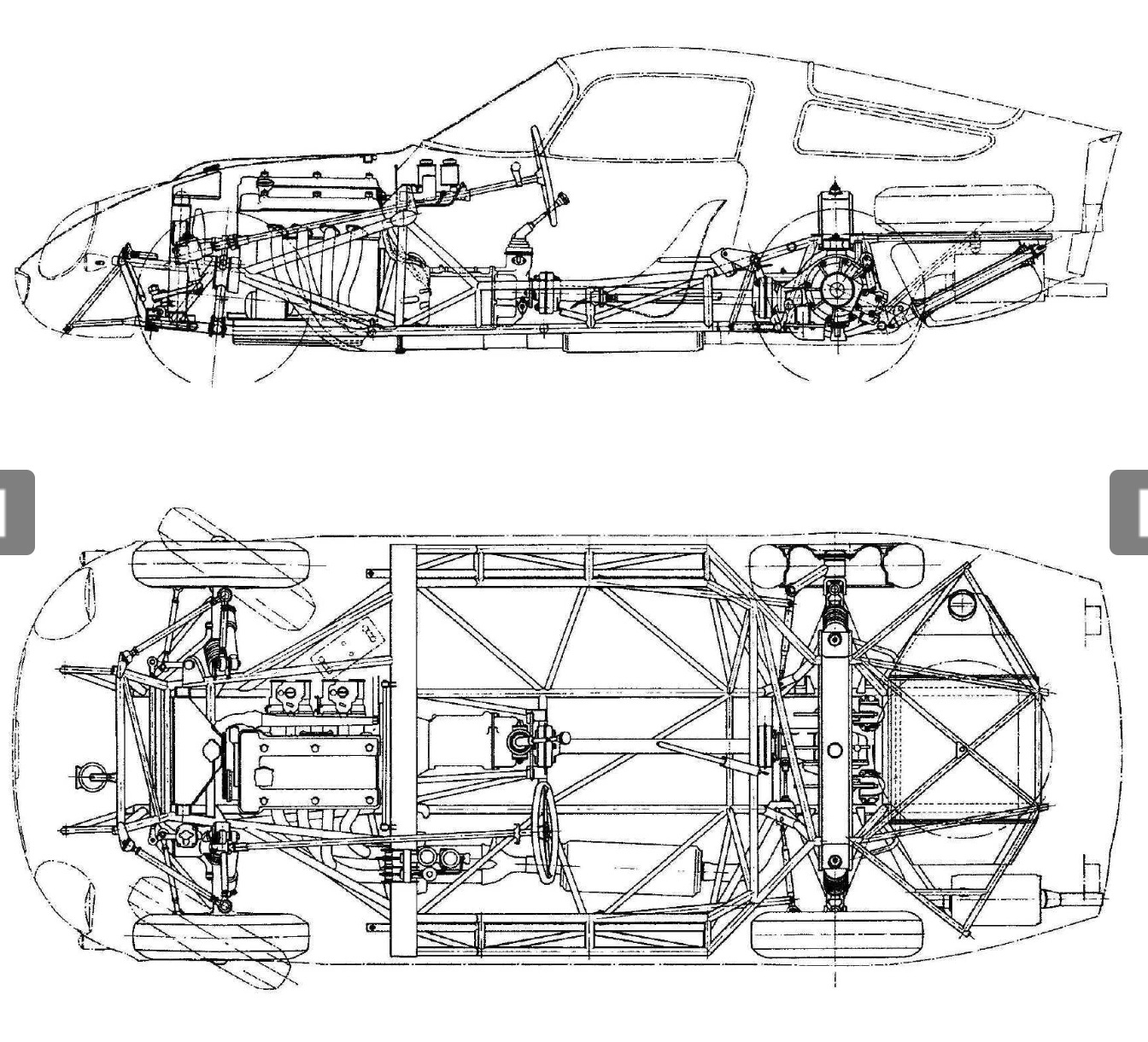
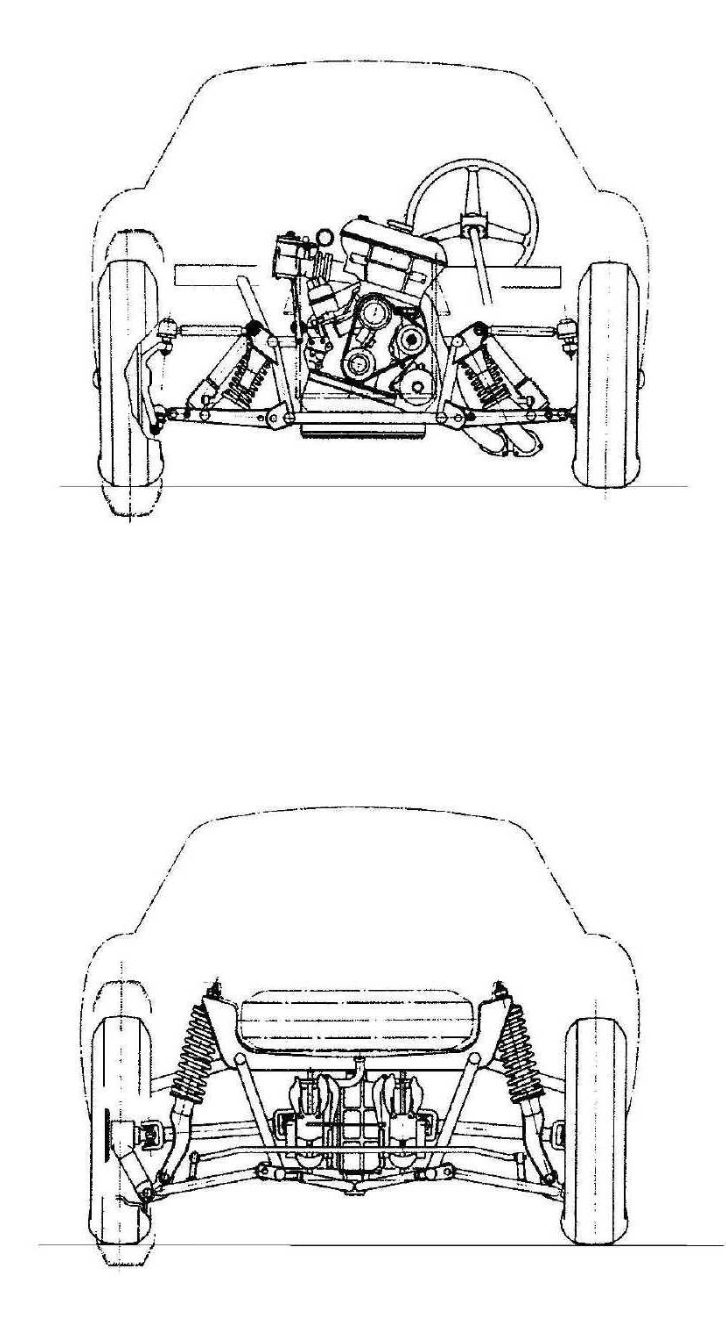
TZ essential elements were a multi-tubular spaceframe chassis, 105 Series engine, gearbox and differential, about 170bhp in TZ2 GTA specification, disc brakes and independent suspension front and rear.

tz 1 cutaway

TZ1 Cutaway, but essentially the same elements in both cars as above, Alfa engine, gearbox and diff, spaceframe chassis all clad in a gorgeous Zagato body.

tz 1 cutaways
interior
Interior of a restored TZ2 (Pinterest)
autodelta 2
testing 2
The tough life of an Autodelta test drive! Balacco 1966, TZ2 (Pinterest)
targa
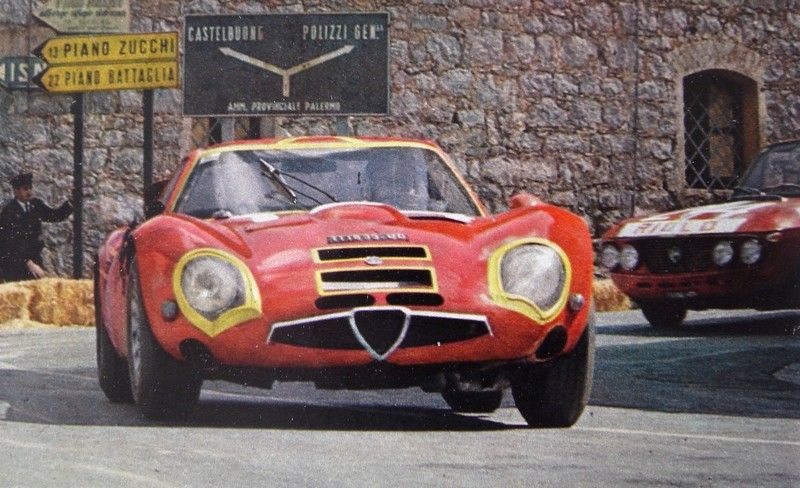
Targa 1966 was won by the Mairesse/Muller Porsche 906, highest placed TZ2 was the Pinto/Todaro car in fourth place outright, and first in class. Car # 114 in shot is the Zeccoli/Russo car which finished thirteenth (Pinterest)
targa 1
TZ2 Targa Florio 1966 (Pinterest)
canguru
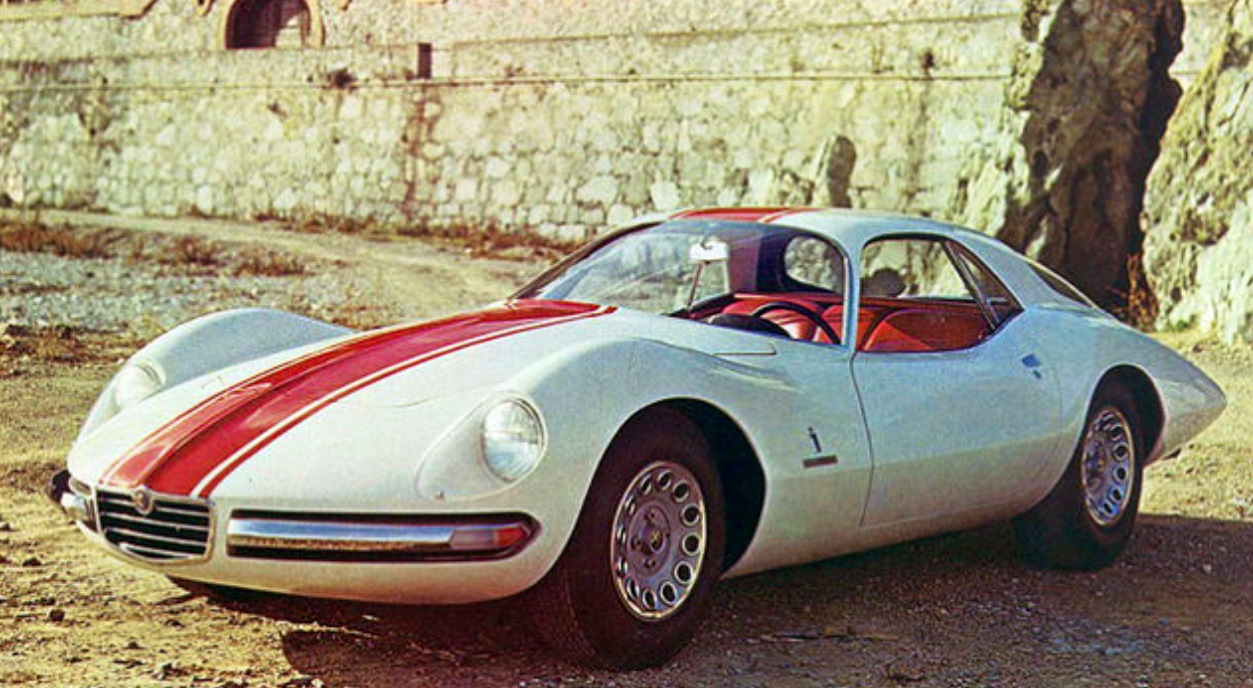
It’s generally regarded that 12 TZ2 chassis were built with two used as show cars. This is chassis # 750101 the Canguro, designed by the young Giorgetto Giugiaro whilst at Bertone in 1964. (Pinterest)
pinin
The other show car chassis # 750114 was allocated to Pininfarina, who built the ‘Alfa Romeo Giulia 1600 TZ2 Coupe Pininfarina’ in 1965
arese

Tailpiece: Surfers Paradise 12 Hour 1966…

(S Johnson)

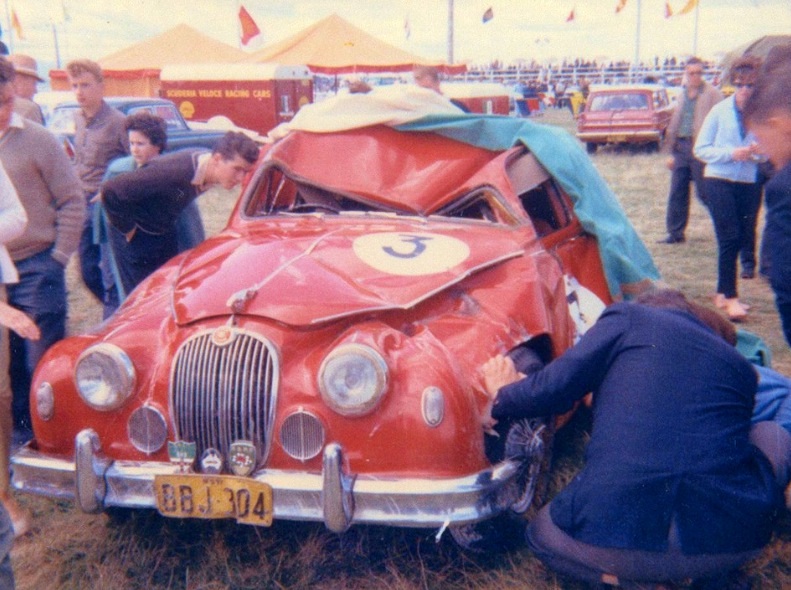
Alec Mildren imported and raced two TZs to Australia, a TZ1 and TZ2, the latter is shown above looking all moody and evocative during the inaugural twelve hour race at Surfers Paradise in 1966. Kevin Bartlett and Doug Chivas raced it to third place in amongst the top-guns, the race won by the Scuderia Veloce Ferrari 250LM driven by Jackie Stewart and Andy Buchanan.

Photo Credits…

Nigel Smuckatelli, Pinterest, Carozzeria Zagato, Alfa Romeo, Stewart Johnson

Finito…

1962 Longford touring cars

Start of the 1962 Championship race held during the Longford Tasman Series meeting, an all Jaguar  front row. Bob Jane Mk 2, Bill Pitt and Bill Burns in Mk 1’s from left to right…

The race was close fought with Jane winning from Pitt and Burns. Jaguar dominated the early years of the ATCC, winning the championship in its first four years. In those far away days the event was decided in one race!, a huge difference to the contemporary ‘V8 Supercars’ title which is decided over fourteen rounds, using three different race formats in Australia and New Zealand.

longford

Fantastic and unusual shot of Bob Jane in the winning Jag Mk2 entering ‘The Viaduct’ at Longford. Hay bales and the ‘stout’ (its still there) brick structure encouraging purity of line and application of power on entry! (Geoff Smedley)

jane

Bob Jane Mk2 ahead of Pete Geoghegan Mk1, 3.8 and 3.4 respectively in the Monday, Longford touring car race, Mountford Corner. Jane won, Pete DNF after leaving the road near The Viaduct. (Keverell Thomson Collection)

The inaugural championship was held at Gnoo Blas, Orange NSW, with victory going to David McKay’s Mk1, Bill Pitt prevailed at Lowood, Qld in 1961, similarly mounted and Bob Jane at Longford and Mallala, SA Mk2 in 1962/3.

1969 was the first year the title was decided over multiple rounds in five states, ‘Pete’ Geoghegan winning in his famous, second Ford Mustang.

Touring cars are not my thing, but these shots well and truly capture the ‘fun of the fair’ and a sense of Longford which is spoken about in reverential terms, if also in awe of its danger and technical difficulty by those lucky enough to have been or raced there.

As a postcript, Bill Burns very luckily survived a high speed multiple rollover in those pre-seat belt and rollbar days, two years later, 1964 at the end of the ‘Flying Mile’ just before Mountford Corner.

Burns Jag Longford 1964

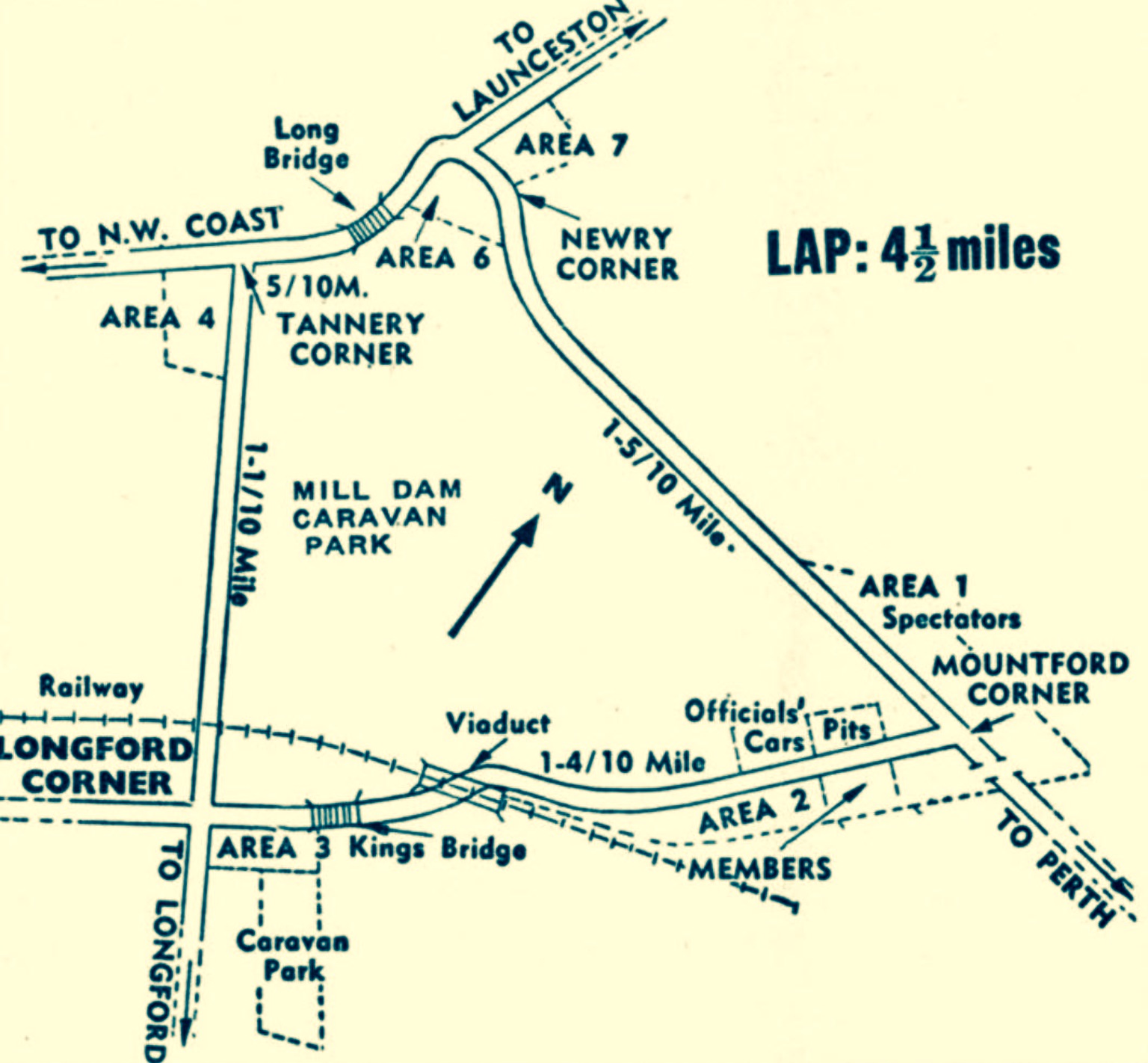
Longford map

Photo Credits…

Unattributed shots via Ellis French, Geoff Smedley, Keverell Thomson Collection

image

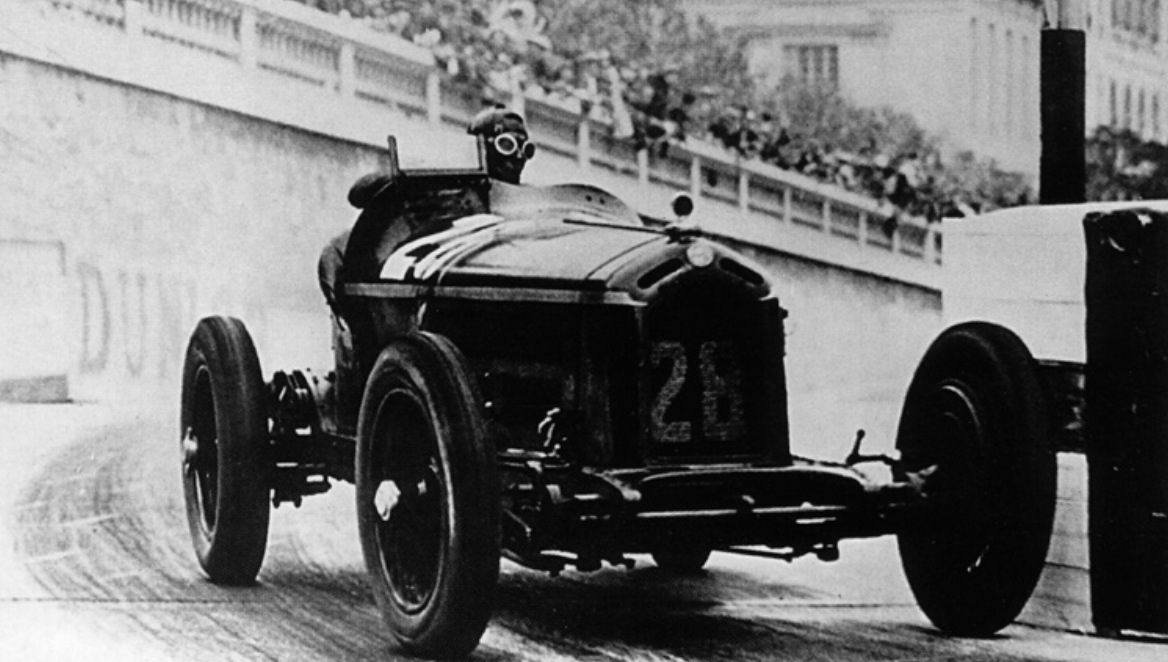
Brivio won the race, 7 laps of the 72Km ‘Piccolo Madonie’, 504Km, in his Scuderia Ferrari entry, ahead of 4 other ‘Monzas’…

He took 6 hours 35 minutes to complete the race at an average speed of 76.3 KMH, an endurance test to be sure!

Scuderia Ferrari had a busy and victorious weekend, running three Monza’s at the Eifelrennen at the Nurburgring, Nuvolari winning and another three in Targa.

Borzacchini lead the Scuderia Ferrari Targa assault in a Monza 2.6 but retired after hitting a wall near Collesano, Brivio winning with Carraroli third in the other SF entry, both 2.3 Monza’s .

One of Vittorio Janos’ greatest designs, the supercharged straight-eight ‘Monza’ is one of the most successful racing cars of all time.

Vittorio Jano…

vittorio

Vittorio Jano and Phil Hill later in Janos’ life. Pictured in Maranello in 1962, Jano designed the V6 engine which powered Hills’ 1961 World Championship winning Ferrari 156…the car was a ‘slug’ in 1962, the problem the chassis not Janos’ engine…Jano died by his own hand aged 75, frustrated by illness and his diminishing powers. He was 65. (Klemantaski Archive)

Alfa ‘pinched’ Jano from Fiat, where he was a key designer of their 804 and 805 GP cars. He was the leading figure in the design of Italian racing cars for over 30 years, Fiat in the 20’s, Alfa in the 30’s and Ferrari in the 1950’s, mind you his ‘Dino’ derived V6 engines were still winning rallies in the Lancia Stratos well into the 1970’s.

As soon as he joined Alfa he worked on supercharging the P1 GP car whilst also designing the very successful straight-8 P2 for 1924, the car immediately victorious in the French GP.

Alfa won the ‘World Championship’ in 1925 but withdrew from racing in 1926/7, allowing Jano to concentrate on a new series of road cars, the revered 6C 1500/1750 cars the result.

Alfa wanted to return to outright success in motor racing, the first step was the creation of the 8C2300, ‘unquestionably the ultimate sports car of its time and marked the pinnacle of the era for sports cars with cart-sprung flexible chassis and crash-gearboxes..’ according to marque expert Simon Moore.

Context of The Time…

chassis plate

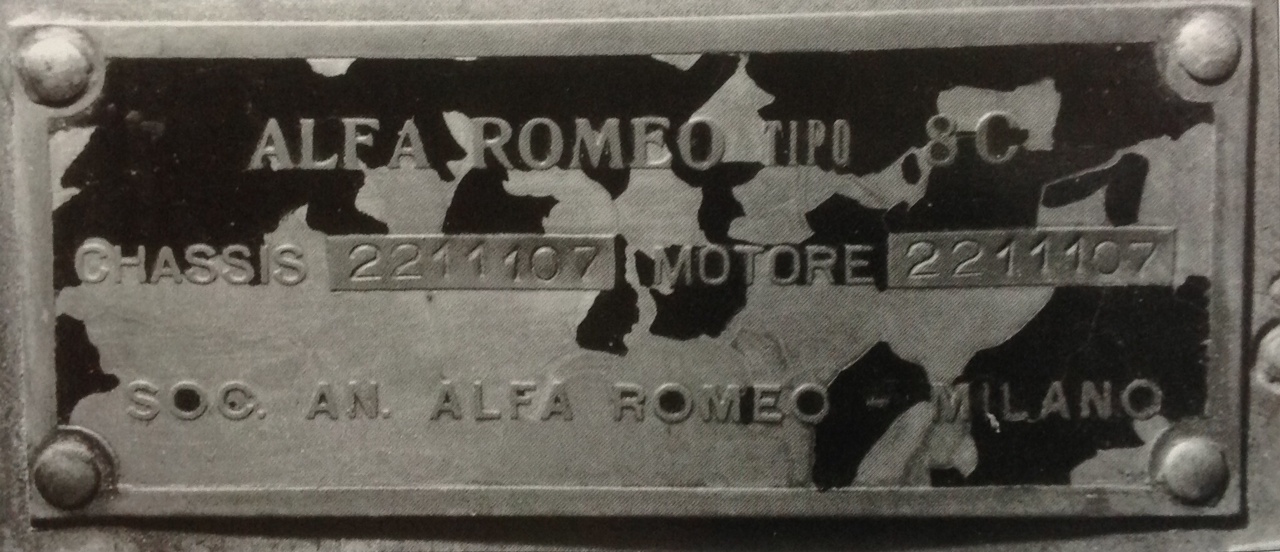
The world was still in recession as a consequence of the collapse of the global economy after the 1929 Wall Street Collapse, Bentley were going through liquidation, Mercedes were entering the market for ‘mass-produced’ cars, whilst Alfa introduced this upmarket car.

Alfa themselves were not immune to any of this, passing through and into the hands of government agencies to make grants to aid industry, ultimately being taken over by the ‘Instituto Ricostruzione Industriale’ in 1933.

8C2300 Design…

monza outline

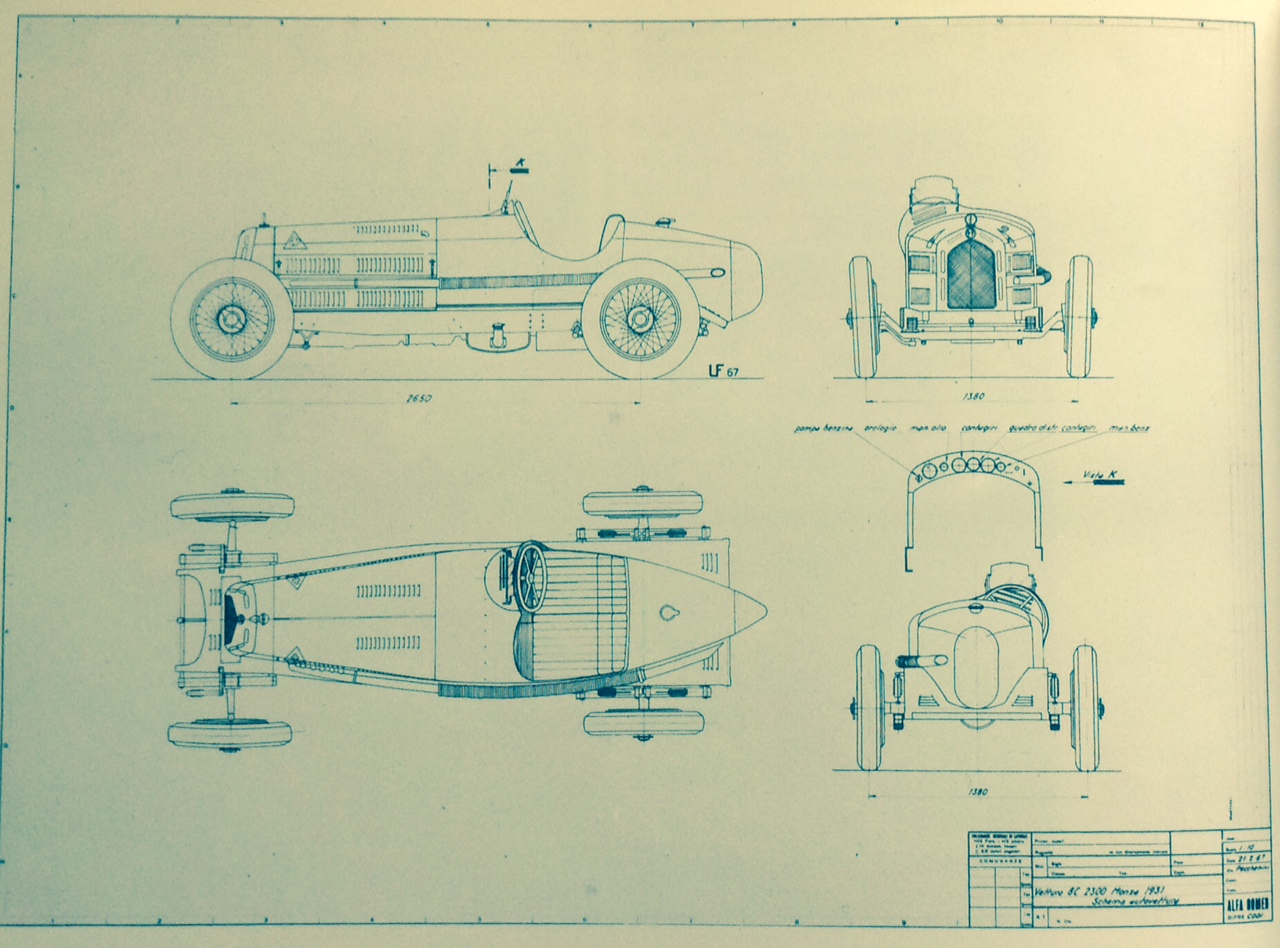
Jano laid down a chassis which was conventional for the period in having channel side and cross members with semi-elliptic leaf springs and friction shock absorbers.

The ‘Corto’ had a wheelbase of 9 feet, and the ‘Lungo’, 10 feet 2 inches. Rod operated drum brakes were fitted of 15 3/4 inches internal diameter and were very powerful by the standards of the day. Knock-off wire wheels were standard competition fare , 5.5 inches wide and 19 inches in diameter.

The rear axle and 4 speed gearbox were of the same design as the 6C 1750.

The engine was both the heart of the car and it’s outstanding design feature.

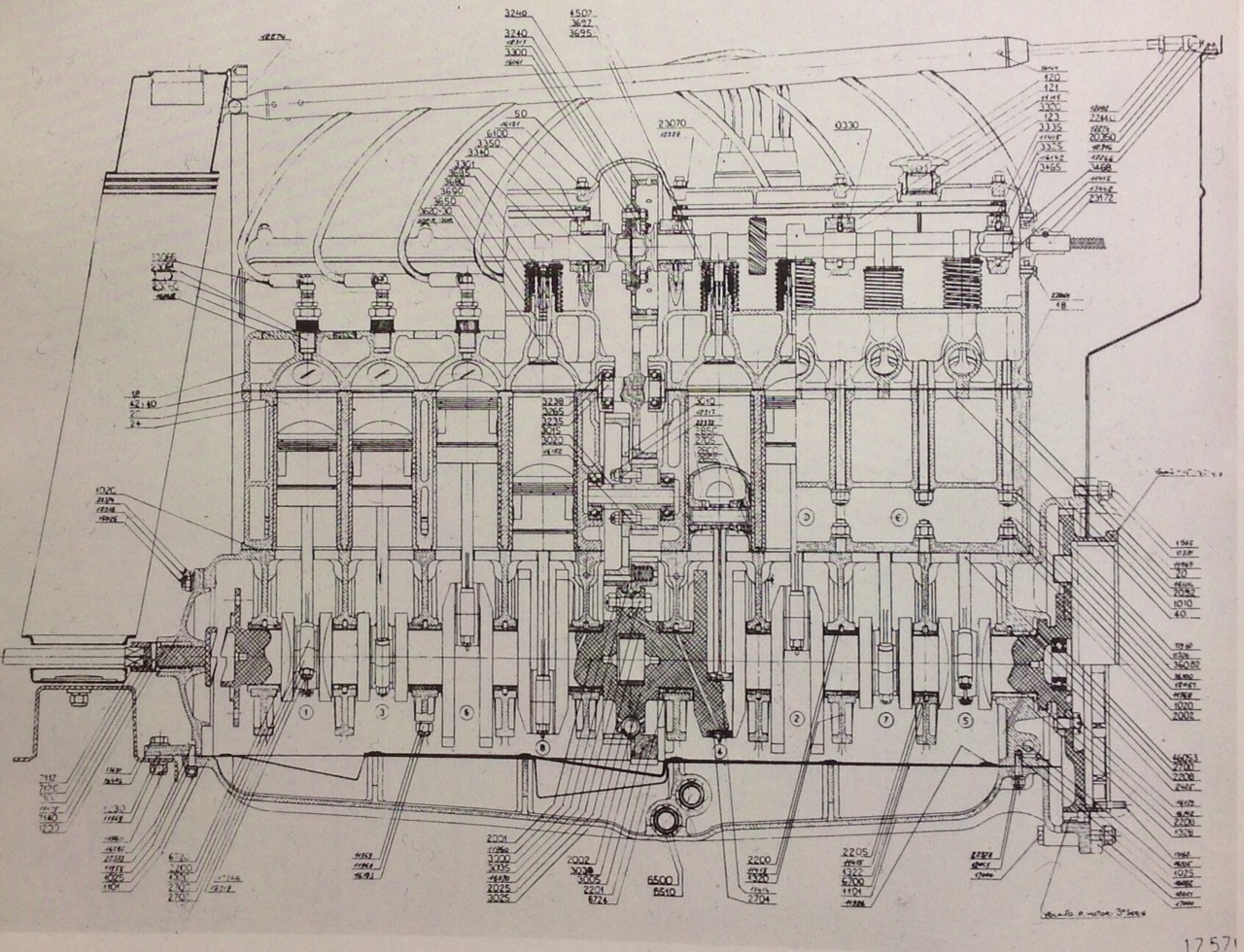
A straight 8, with a bore and stroke of 65x88mm, the cylinders were cast in two identical blocks of four to allow for a train of auxiliaries to be placed between them. The crank was supported by ten main, plain bearings.

The crank was made of two halves, with two helical gears bolted between them in the centre, one driving the (two) camshafts by two intermediaries, and the other the supercharger, oil and water pumps.

The cylinder blocks were fitted with dry liners, and had separate, alloy detachable heads. The engine was dry-sumped.

A ‘Roots type’ two lobe blower was mounted low down beside the alloy crankcase, fed by a Memini carburettor . The fuel system used two Autovacs from a twenty-four gallon rear mounted tank.

Ignition was by Bosch coil and distributor with the manual control in the centre of the steering wheel.

The engine developed between 165 and 178 BHP at 5400RPM.

monza engine

Scuderia Ferrari workshop in 1933. Eugenio Siena left, and Giulio Ramponi right, working on an 8C2300 engine on the test bed. Ramponi a notable figure as a mechanic, riding mechanic and driver for Alfa. He also had a key role in the ascent of  both Whitney Straight, and Dick Seaman as drivers, preparing their cars (@Zagari)

Race Record…

nuvolari

The ‘Monza’ won 2 championship Grands’ Prix, the Italian Grand Prix in 1931, a 10 hour epic won by Nuvolari and Campari, the victory from which the car took its name, and the 1932 Monaco GP. Nuvolari is pictured in his Monza in that race, he won it over a duration of 3.5 hours from Rudy Caracciola, by only 2.7 seconds!, in a similar car. (Unattributed)

The 8C2300 sports cars were incredibly successful winning Le Mans 1931-4, the Spa 24 Hour in 1932/3, Targa 1931-3, and the Mille Miglia 1932-4.

Alfa developed the P3 as it’s pure racing car, during the same period, a straight 8, twin-supercharged , fixed cylinder head car which was incredibly successful in 1932-5. As a consequence the 8C2300 based racing cars won only two championship Grands’ Prix (Italian GP in 1931 and Monaco GP in 1932) as well as many second tier events, not bad for a ‘sports car’ all the same!

Minoia was also crowned European Champion in 1931 driving ‘Monzas’.

Production History…

188 or 189 cars were produced from 1931 to 1934, in three series, with ten ‘Monzas’ officially built by the factory. The number built by Alfa according to Simon Moore is greater than that, ten works racers and a number of customer racers built to similar specifications…where definition of a Monza is ‘ a 2.3 racer with a narrow body, outside exhaust pipe, short front springs and a tail comprising a fuel tank with a pointed crush cone’.

Without doubt a landmark car and one of the very few to be both a great sports car, sports racer and Grand Prix winner…a GP car in which to do the shopping!

image

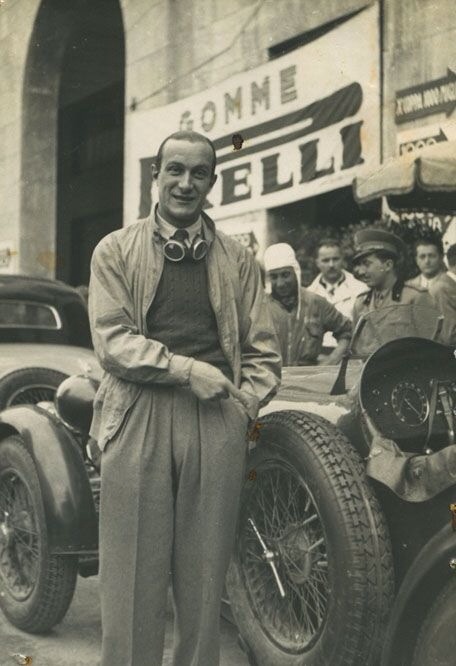
Antonio Brivio beside his Monza. He won the Targa twice, in 1933 and ’35, the Mille Miglia in 1936 and Spa 24 Hour race in 1932. He was also a world class bobsledder competing in the 1936 Winter Olympics in Garmisch. (Pinterest)

Etcetera…

monza

monza engines by 2

Both sides of the 2.3 litre DOHC straight-8 and 4 speed gearbox. Roots type 2 lobe blower mounted low on RHSide, fed by Memini carburettor. Engine comprised 2 blocks of 4 cylinders with centrally mounted drives from 2 piece crank visible (Alfa Archives)

monza engine cutaway

Section of the 8C2300 engine showing how it was divided into 3 levels; one piece cast crankcase, 2 blocks of 4 cylinders in line, and the heads. Both the cam drive, and 2 piece crankshaft are clearly seen (Simon Moore/ Alfa Archives)

monza zoom

Photo and Other Credits…

‘The Legendary 2.3’ Simon Moore, ‘Alfa Romeo’ Hull & Slater

Pinterest unattributed, tintoyslife, @zagari, Klemantaski Archive, Alfa Romeo Archive

Finito…


image

Reg Hunt, Kevin Neal and Lex Davison launch their ‘Italian Stallions’ off the line at the start of  Albert Parks’ 150 mile ‘Argus Trophy’…

Hunts’ #2 Maserati 250F won the race from Davisons’ #4 Tipo 500 Ferrari with Neal #3 third in Hunts’ old Maser A6GCM. Thats Tom Hawkes in the ex-Brabham ‘Redex Special’ #7 Cooper Holden Repco making its debut with that engine at this meeting. Arthur Griffiths in the ex-Davison 1954 AGP winning #5 HWM Jaguar is on row two. Further back is Bill Wilcox in the ex-Jeff Scorer, ex-works/Gaze #9 Alta and Bill Craigs’ ex-Whitehead, Holden engined and rebodied # 11 Alta.

There were two racing carnivals at Albert Park in 1956. This ‘Moomba’ Meeting (Moomba is still a marvellous annual Melbourne late Summer festival) in March and the Australian Grand Prix meetings after the Melbourne Olympic Games in the last weekend of November and the first in December. Similarly, the ‘Moomba’ meeting was held over two weekends, race days were Sunday 11 and 18 March 1956.

In  many ways the image symbolises an era of single seater racing just underway in Australia, the dominance of the current ‘Red Cars’ from Italy ending a period when the Australian Special, and older ex-works European cars held sway.

Racing at Albert Park…

Barry Green in his wonderful book ‘Glory Days’, writes that their was a strong push to race at Albert Park in 1934. The Light Car Club of Australia, (LCCA) the promoter of race meetings at Phillip Island were aware of the ‘Islands growing unsuitability with its loose gravel surface as speeds increased. Extensive negotiations secured Albert Park as the venue for a race meeting to celebrate the Centenary of Victoria in 1935.

The ‘Sun News Pictorial’ one of the Melbourne daily tabloids, and then as now a good thing in which to wrap ones fish n’ chips, announced the event on June 4 1934.

In doing so the ‘paper lit the fuse of naysayers who brought about the events cancellation, but not before racers Arthur Terdich, Bill Lowe, Barney Dentry, and Cyril Dickason in Bugatti, Lombard, and Austins respectively, lapped the track with mufflers fitted to prove noise wasn’t the issue…

Post war things were a little different and a partnership between the LCCA, the Army who had a facility at Albert Park, and Victorian Labor Senator Pat Kennelly were more successful.

The three provided the combination of race organisation and promotional ability, logistical capability, the Army being able to ‘man’ Albert Park, a site of some 570 acres, and political power and influence.

For all three groups the ability to raise funds in the aftermath of World War 2 was important. For the army funding for war widows and orphans, for Kennelly the ability to finance much needed improvements to the park to improve the local amenity for the working class community, and for the LCCA, the improvement of motor racing.

And so, the 1953 Australian Grand Prix held at Albert Park over 64 laps, 200 miles in total was won by Doug Whiteford in a Lago-Talbot, the last AGP win for French Racing Blue…

1953 was the commencement of Albert Parks ‘first phase’ as a race track lasting five short years until November 1958 when the naysayers again held sway…until 1996 when again the political pendulum swung in the sports and business’ favour, Victorian Liberal Premier Jeff Kennett ‘snatching’ the race from Adelaide…

image

Lex Davison #3 HWM Jag, Stan Jones #2 Maybach, and Doug Whiteford in the winning Lago-Talbot at the start of the 1953 Australian Grand Prix at Albert Park, the venues first race meeting on November 21. Cec Warren #6 Maserati 4CLT, Frank Kleinig #7 Kleinig Hudson 8, W Hayes #10 Ford V8 Spl, and a badly smoking  Ted Gray #11 Alta Ford V8 (AGP website)

The Big Red Italian Cars…

I wrote about Reg Hunt a while back, https://primotipo.com/2014/07/19/reg-hunt-australian-ace-of-the-1950s/ .He was an Englishman with a family background in the motor-trade, who came to Australia in 1949. By 1953 his ealerships were doing well enough to return to the UK for a season of F3, in a 500cc  Cooper Norton Mk8 in 1954. He did well against the best and arrived back in Oz, razor sharp and with a big, red, modern, ex-works Italian car…

His ex-Gonzalez Maserati A6GCM started life as 1953 2 litre chassis # 2041 but was renumbered # 2503 after a 250F engine was fitted for the new 2.5 litre F1 which commenced in 1954. Sold to Harry Schell for that season it arrived in Australia late in the year and was first tested by Hunt at Fishermans Bend before being raced at Ardmore for the 1955 NZGP where he popped it on the front row along with Prince Biras’ 250F. Bira lead the race from start to finish, Hunt fifth in a field which included the Whitehead and Gaze Ferrari 500/625’s.

Hunt was stiff not to win the 1955 Australian Grand Prix in the A6GCM at Port Wakefield, a broken cam-follower slowing him and handing victory to Jack Brabhams Cooper Bobtail.

Not to be outdone, and needing to remain competitive, Lex Davison, the 1954 AGP winner acquired his good friend Tony Gazes’ Ferrari 500/625, the car fitted with a 625 engine enlarged to 3 litres. These Lampredi designed, big-bore 4 cylinder DOHC engines a mainstay of Ferrari single-seaters and sports cars throughout the 50’s.

In recent years, having passed into the ownership of the ‘Wheatcroft Collection’ in the early 60’s, the car has been identified as Tipo 500#5, Alberto Ascaris’ 1952 and 1953 World Championship winning chassis, the ‘winningest’ chassis of all time with at least ten Grands’ Prix victories…but at the time Davo had just acquired a competitive car which would be very kind to him in years to come.

It was Lexs’ first meeting in the car, a change in gearing a mistake in set-up which blunted the cars performance, but the promise of the combination was undeniable.

Having made such an impression with the A6GCM Hunt had no trouble convincing Maserati to part with a more recent mount, securing Jean Behra’s 1955 factory 250F, chassis #2516, the car winning non-championship Grands’ Prix in Pau and Bordeaux in that year.

Hunt won both the feature racing car events of the Moomba meeting. Davison second in both and Neal third in one, DNF in another, in the car the Melbourne transport business man was to buy from Hunt.

Before long Stan Jones also acquired a 250F, a more recent spec car than Hunts’.

The mid-engined F1 Coopers were not far away, but for the moment, a wonderful era of modern ‘Big Front Engined Red Racing Cars’ had arrived in Australia…ending with the 1959 Australian Grand Prix, but we will come to that !

al park

Reg Hunt leads Lex Davison , Maserati 250F and Ferrari Tipo 500, Albert Park ‘Moomba Races’ March 1956. Check out the trees, kerbs, and very thick chain wire fence on these everyday suburban roads within the park! Crowd of over 70,000 in attendance (museumvictoria.com.au)

park map

Albert Park Road Circuit 1950’s. Length 3.13 miles, direction of travel the opposite to the modern circuit which is true to, if not identical to the spirit of this fabulous, historic venue. Barry Green ‘Glory Days’

british gp

Alberto Ascari #5 in the Gaze/Davison Ferrari Tipo 500/5, alongside Froilan Gonzalez #24 in the Hunt/Neal Maserati A6GCM/2041/2503 at the start of the 1953 British GP at Silverstone which Ascari won. #8 is Mike Hawthorn, behind him #7 Luigi Villoresi both in Ferrari Tipo 500’s. The wheel on the far right is Fangio in a Maser A6GCM. The blue car beside Hawthorn is Onofre Marimon also in a Maser A6GCM. The green car behind Villoresi is Tony Rolts Connaught Lea Francis , and beside him the green car with white noseband is Ken Whartons’ Cooper Bristol. (Mirror Archive)

Credits…

‘Glory Days’ by Barry Green; oldracephotos.com, museumvictoria.com.au, AGP Website, Mirror Archive

Finito…

porto

Stirling Moss, Vanwall VW10 correcting a delicate slide on the cobblestones of the Boavista Circuit, Portuguese Grand Prix 1958 (LAT Archive)

The Perils of Grand Prix Racing in the days of Yore…

Casually placed haybales the only barrier between the cobblestoned road surface, tramlines and decorative telephone poles, Sunday 24 August 1958. This was a very dangerous circuit even by the standards of the day.

The circuit was in Oporto, it began on the harbour front esplanade, continued onto the ‘Avenida da Boavista’, then through small neighbourhoods and back to the start/finish line. It was also used for the GP in 1960.

moss 1

Moss’ Vanwall leads Hawthorns’ Ferrari Dino , Behras’ BRM P 25 on the inside, then 2 more Vanwalls of Brooks and Lewis-Evans and the other Dino of  Von Trips..challenges of the circuit apparent (‘restos’)

50000 people attended the event held in treacherous conditions, the track damp after earlier rain.

It had been a tough couple of months for the motor racing world as Luigi Musso and Peter Collins died in Ferrari Dino’s in the French and German Grands’ Prix respectively.

hill

Graham Hill, Lotus 16 Climax, lands atop the haybales after a spin on lap 25, DNF. Hill made his Grand Prix debut in a Lotus 12 at Monaco that May, starting a long, wonderful, successful, ‘Triple Crown Winning’ career. His final GP was also at Monaco in 1975, unfortunately not qualifying (Pinterest)

hill 2

Gee Hill beached from either angle!

In a fantastic display of sportsmanship Stirling Moss intervened in a post race protest against Mike Hawthorn, who it was alleged had driven a short distance in the wrong direction on-circuit, having restarted his car. Moss advised the stewards Mike was on the footpath at the time, therefore not breaching the rules and keeping the points which ultimately won him the 1958 Drivers Championship by 1 point…from Moss.

moss 2

All the fun of the fair…Moss leads teammate Stuart Lewis-Evans through the Oporto suburbs. Moss won with Hawthorns Ferrari Dino 246 second and Lewis-Evans third (Pinterest)

brooks

Tony Brooks and Stirling Moss swap notes during practice, note Brooks’ ‘kidney belt’ to cope with the rigors of the rough circuit(s) (‘restos’)

circuit

Circuit of Boavista panorama…(‘restos’)

hawt

This shot of Hawthorn amongst the tramlines shows the delicacy of car control required on that day given the combination of rain, cobblestones, slippery steel tram lines and the hard, narrow race tyres of the day! (‘restos’)

moss

Moss’ Vanwall leads Hawthorns Ferrari Dino 246 early in the race…Moss post race intervention in a protest about Hawthorns’ diqualification critial to him holding second place and the points which ultimately won him the 1958 Drivers Title from Moss (Pinterest)

vitor

Moss victorious in Vanwall VW10 (Pinterest)

victors

Vanwall Team lap of honour…L>R Vandervell, waving Moss and Lewis-Evans (‘restos’)

Photo Credits…

LAT Archive, Pinterest

Many of theses shots are from a blog: restosdecoleccao.blogspot.com .Well worth a look even if your Spanish is not flash!

Etcetera…

roy

Roy Salvadori ponders the 2 litre Coventry Climax FPF engine of his ‘works’ Cooper T45, Roy was ninth, and last, Jack Brabham in the sister car seventh (‘restos’)

start

Start from the rear this time. #14 Brabham Cooper T45 Climax, # 4 Brooks Vanwall, # 10 Schell BRM P25, # 8 Behra BRM P25. Up front its Moss Vanwall, then Hawthorn Ferrari to the left of Moss, Lewis-Evans Vanwall outside on the right, and Von Trips Ferrari also right behind Lewis-Evans…the nose just appearing in shot is one of the Maser 250F’s entered…Shelby, Bonnier or Maria de Filippis (‘restos’)

behra

Jean Behra BRM P25 ahead of Jack Brabhams’ Cooper T45 Climax, now at 2.2 litres capacity, and tiny in comparison to the BRM. Fourth and seventh respectively, a Vanwall, Brooks perhaps, following (Pinterest)

hawthorn oporto

Mike Hawthorn enroute to second place in his Ferrari Dino 246 (Pinterest)

moss 3

Moss’ Vanwall nose up under acceleration (Pinterest)

poster

Finito…